After accomplishing my goal of 100 United Nations Countries and as a wonderful consequence, all 7 Continents before my 70th birthday…so, now what?
For one thing, I have no interest in setting another travel goal for myself. Does that mean I won’t be traveling? I laugh at that notion. Does that mean I won’t be adding new countries to my list? Perish the thought.
I’m at DFW Airport now waiting on my 4 or 5 times delayed flight to Chicago to connect with my flight to Rome. I’m Italy bound. And yes, I’ve been to Italy but truthfully I can’t ever get enough of that country. And I’ll be meeting up with my traveling friends Alice, Rosie and Janet. We will be leisurely exploring the Amalfi Coast starting in Salerno then Sorrento and Naples. John, Alice’s hubby and our only ever male traveling buddy will join us in Naples.
In Naples we say goodbye or ‘arrivederci’ to our dear Janet then Alice, Rosie, John and myself fly to Kraków to begin our travels thru Poland, to include Warsaw and Gdansk with other towns along the way. After saying goodbye or ‘do widzenia’ to John then Alice, Rosie and I fly to Moldova, my 101st U.N. Country.
It will be a full 6-weeks of traveling and I’m so excited. You’d think I never traveled before.
I’m doing the exact kind of traveling I want to do, digging into a place and getting to know it.
Come join me and my traveling friends in Italy, Poland and Moldova.
Welcome to Italy. Finally! And what a gorgeous day!
After a delayed flight out of Dallas to Chicago then the canceled direct flight to Rome…after hours of making us wait and then…spending the night in Chicago, plus two more delayed flights, sending us to Athens, Greece before landing in Rome, Rosie and I finally made it to Salerno a day late, but we made it.
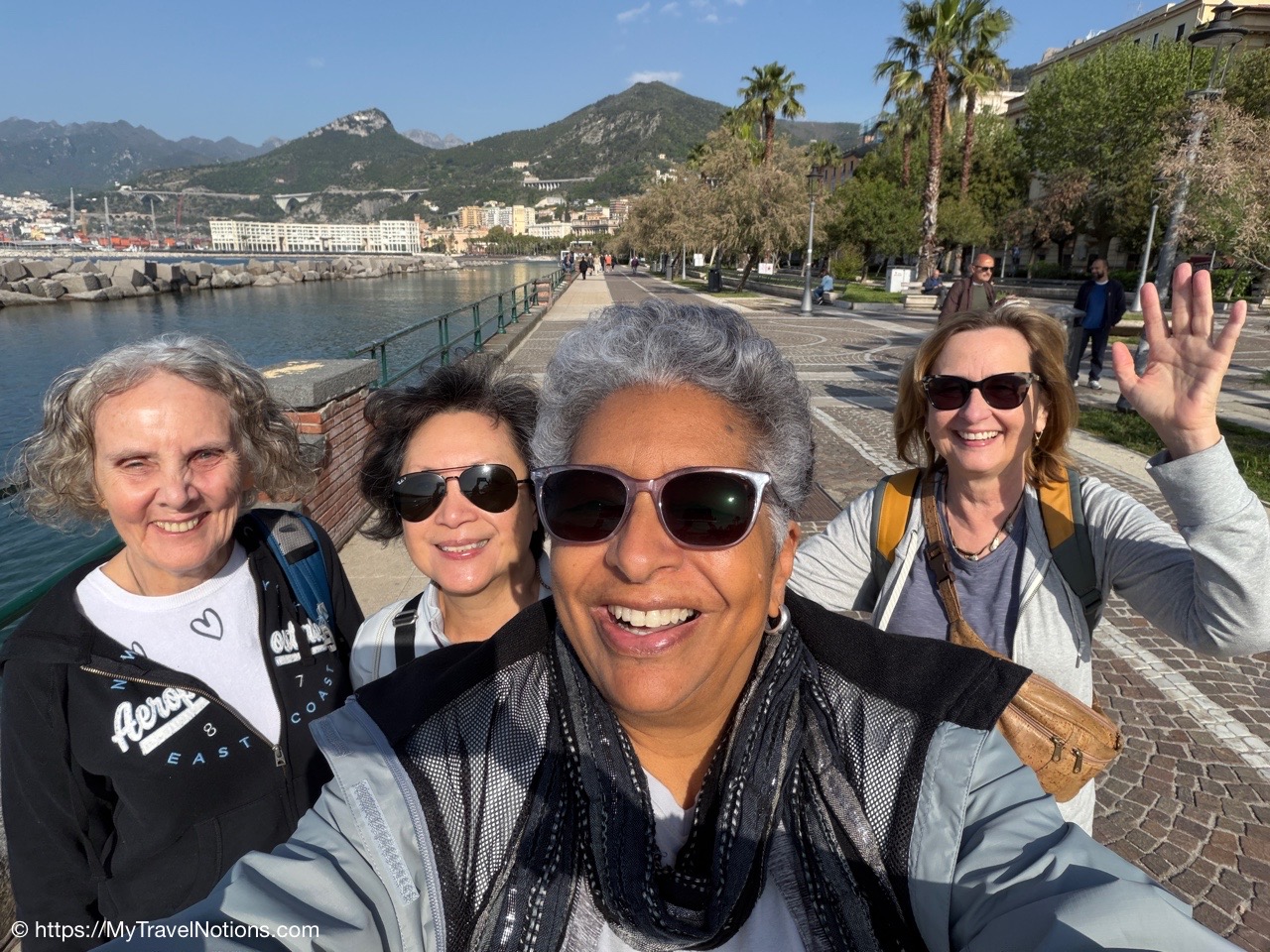
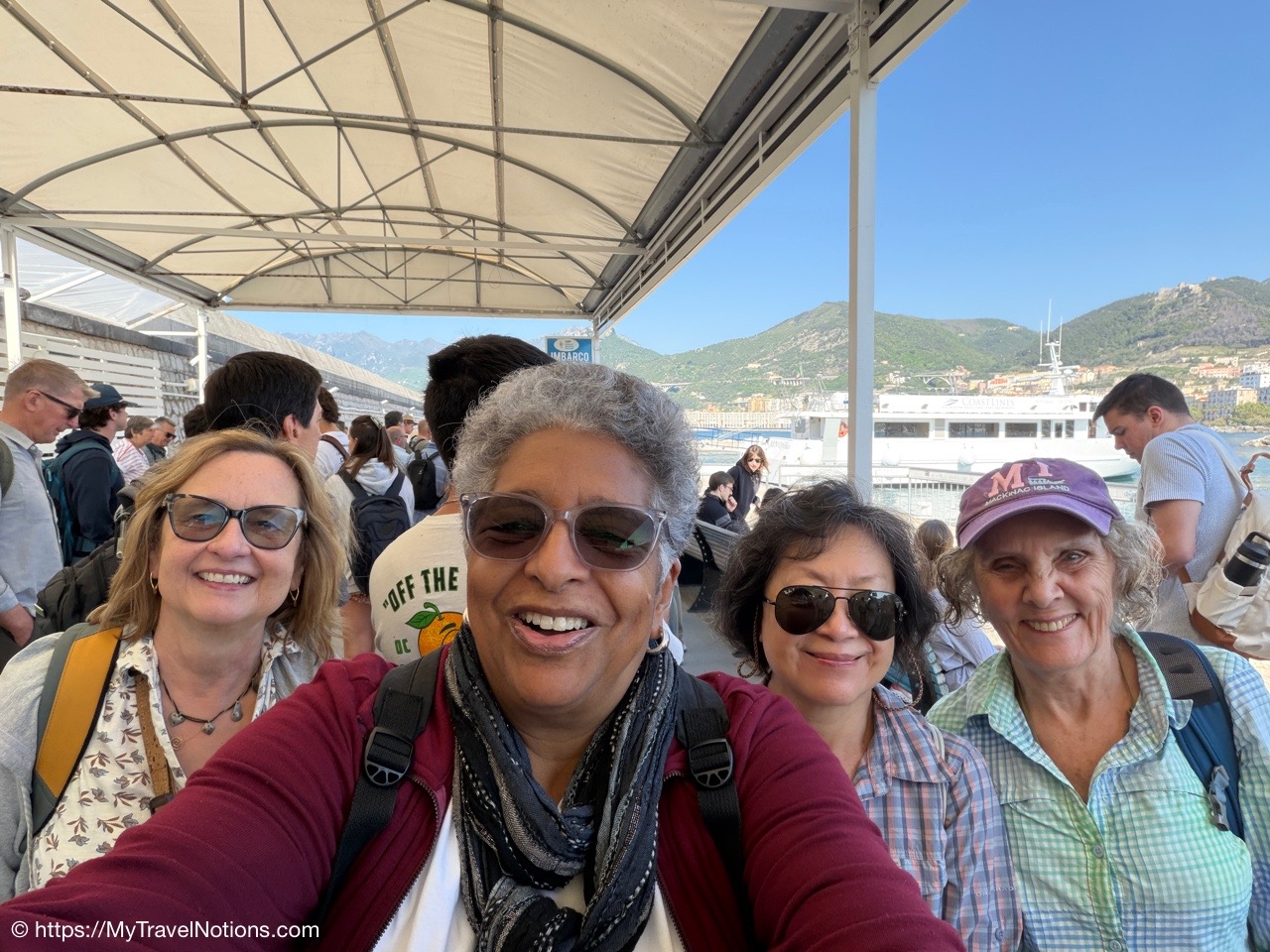
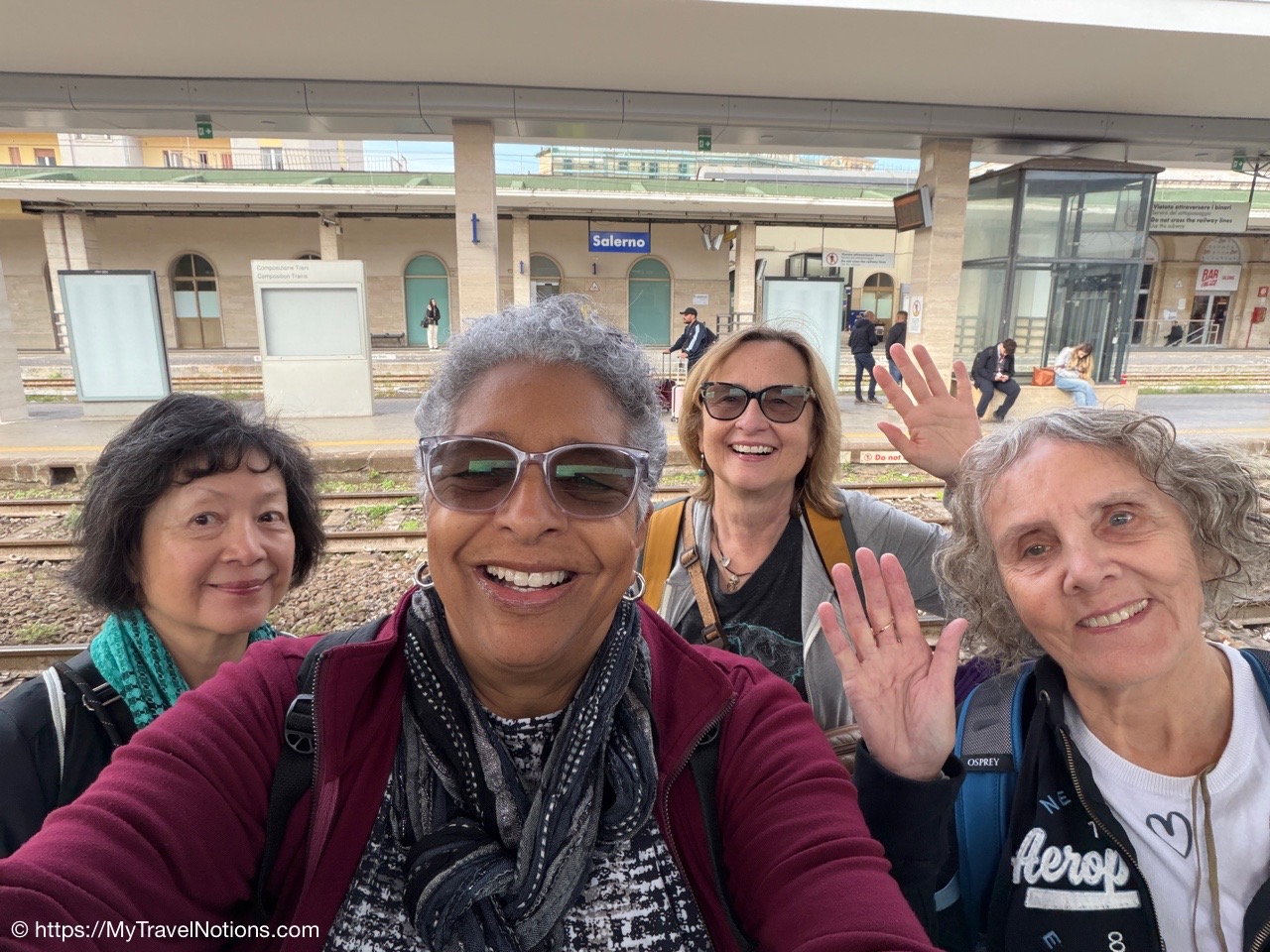
Here we are, the four of us, Rosie, Alice, myself and Janet heading to the Salerno pier to take the morning ferry to the town of Amalfi for a walking tour of Amalfi and Atrani.
The Amalfi Coast consists of some13 official municipalities (comuni) in Italy. They are:
Positano, Praiano, Furore, Conca dei Marini, Amalfi, Atrani, Scala, Ravello, Minori, Tramonti, Maiori, Cetara, and Vietri sul Mare.
More to come on a few of these Amalfi Coast towns but for now, let’s see Amalfi and Atrani.
I’m not sure if it was finally arriving in Italy, getting a good night’s sleep or finally being able to start our travels together with Alice and Janet but I’m thrilled to start our Amalfi Coast adventures from our home base of Salerno to the towns of Amalfi and Atrani on a walking tour. From left, Rosie, Alice, me and Janet. (April 17, 2026)
The Town of Amalfi
This is not my first foray into the Amalfi Coast. I spent several days in Sorrento in May 2017 when I stayed there and visited some of the towns along the Amalfi Coast on bus rides and then taking the train to Naples for the day.
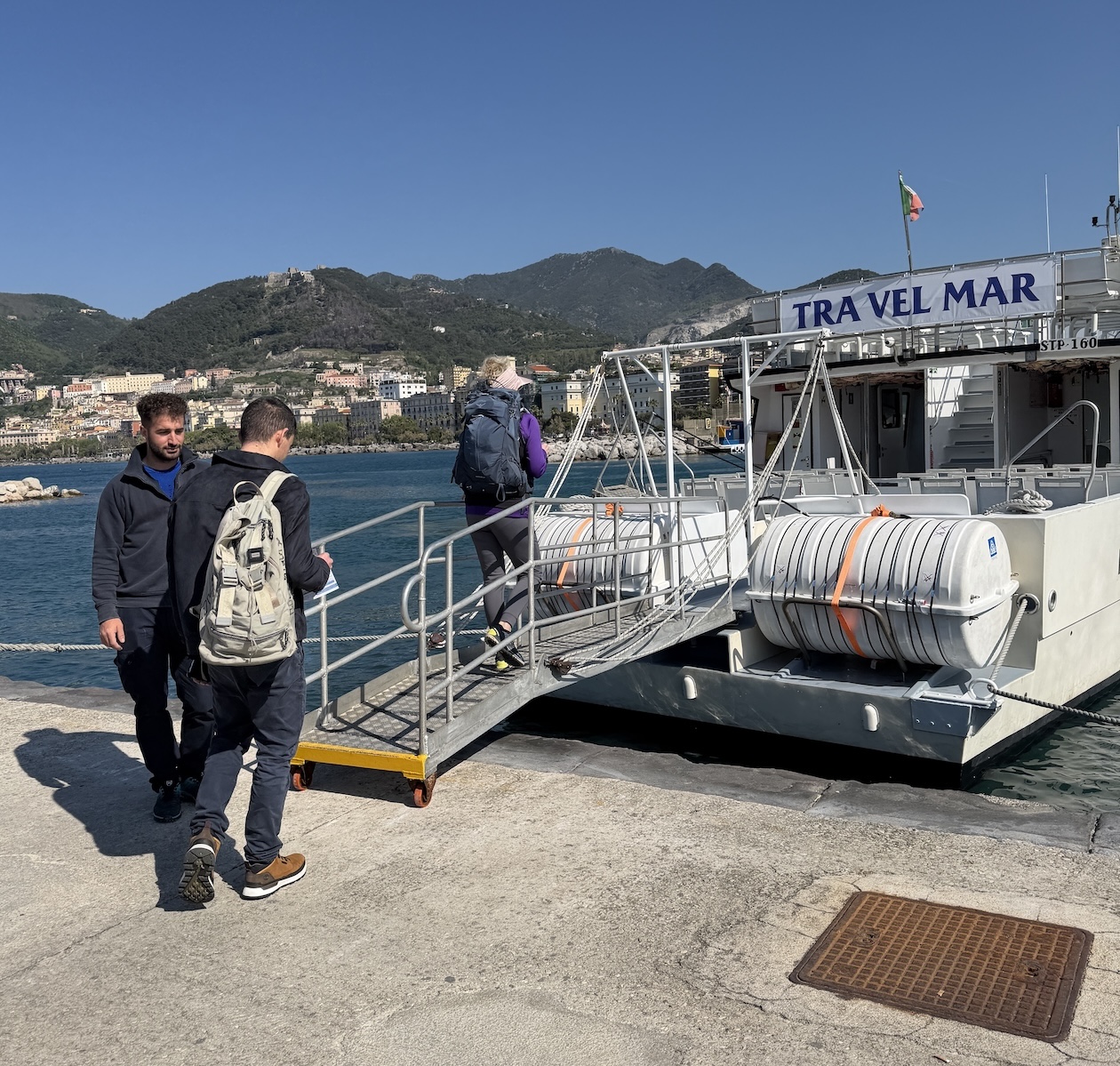
This time, the four of us decided to stay in Salerno, one of the quieter, no less stunning towns of the Amalfi Coast but this time instead of taking a bus along the narrow cliff hanging main winding road of Strada Statale 163 Amalfitana (SS 163), commonly known as the Amalfi Drive passing through the various towns along the coast and connecting Salerno to Sorrento, we decided to the ferries were our best way to get around. With an average cost of around 10 euros each way, the ferries allowed us to see the various towns along the way.
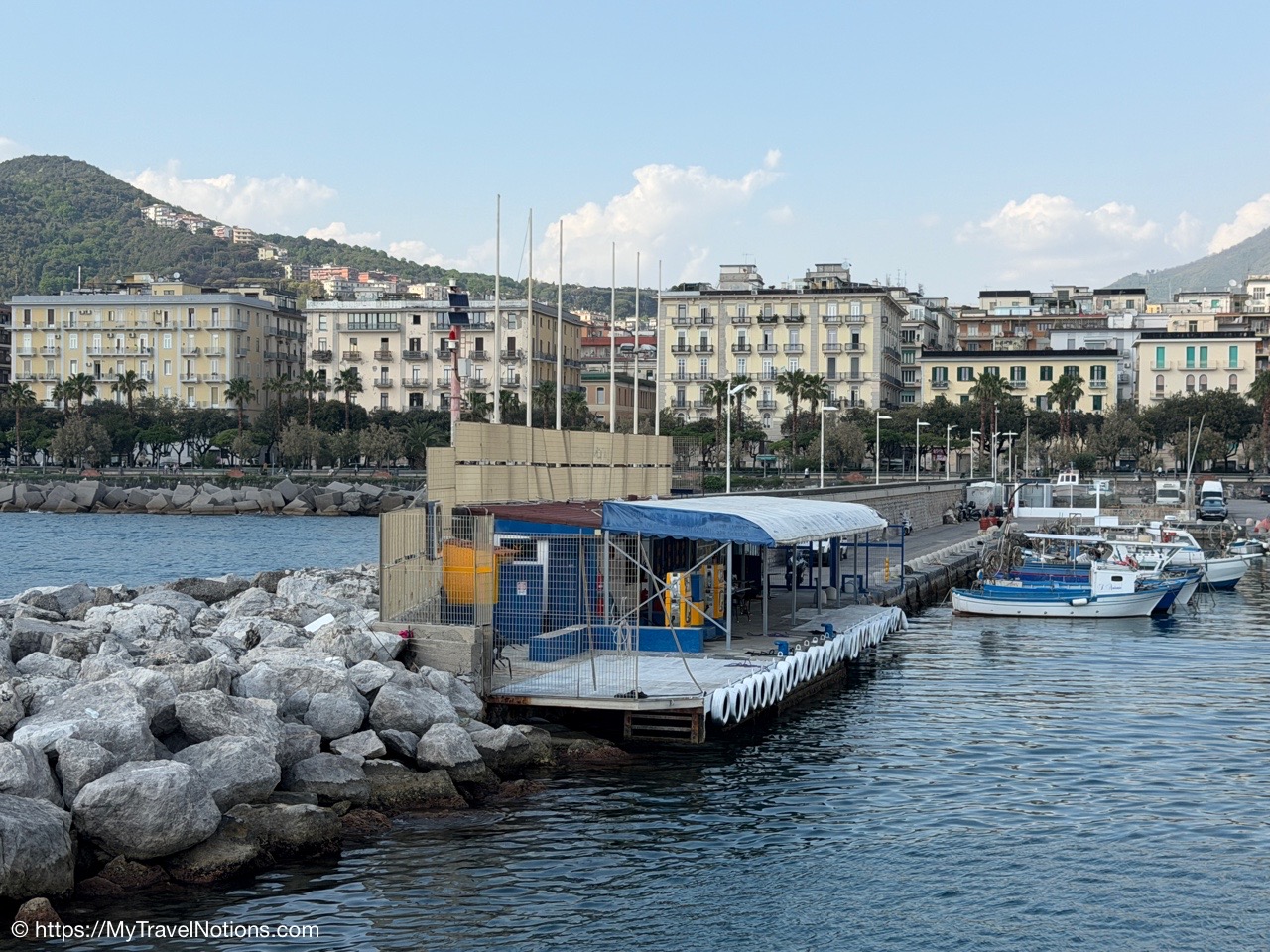
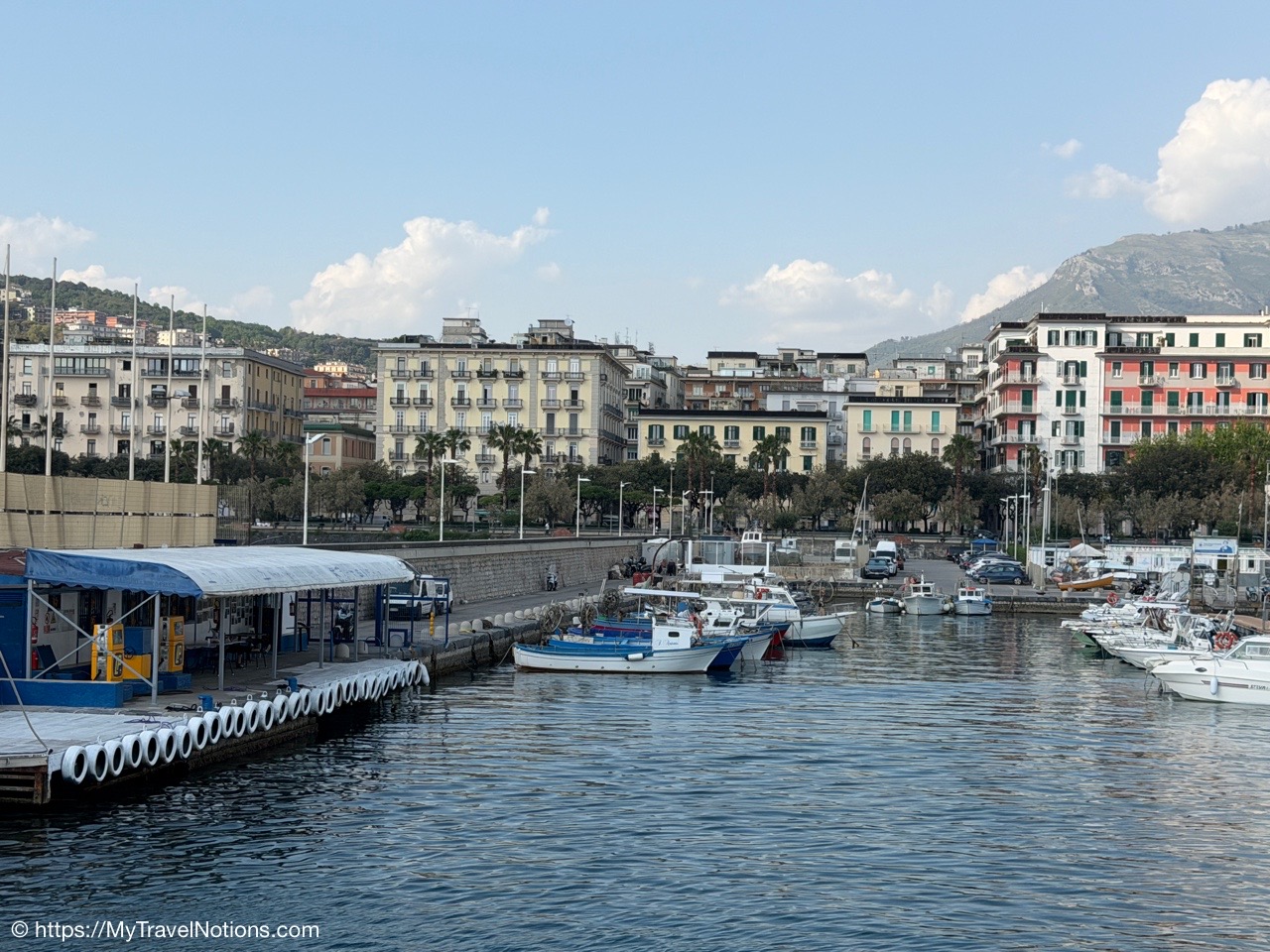
Tickets can be purchased online or at the port of Salerno, Molo Concordia, which we walked to this morning. From there, it’s sit back, relax and enjoy the stunning Amalfi Coast views.
Michele, our wonderful, thoughtful walking tour guide, met us at the Amalfi port to introduce us to both Amalfi and Atrani. But for this post, I’ll be concentrating on Amalfi, its landmark the Cathedral of Saint Andrew and more with Atrani having its own post.
Just a brief history lesson, Amalfi, now a UNESCO World Heritage Site, was founded around the 4th century AD and thrived as a commercial powerhouse, establishing warehouses across the Mediterranean to trade goods like silk and spices.
Although the town of Amalfi has a population of less than 5,000, its tourist population swells to about 5 million annually which could be why many of the locals work in tourism, its biggest industry.
Let’s take a walk through the bustling touristy town of Amalfi along the Amalfi Coast of Italy.
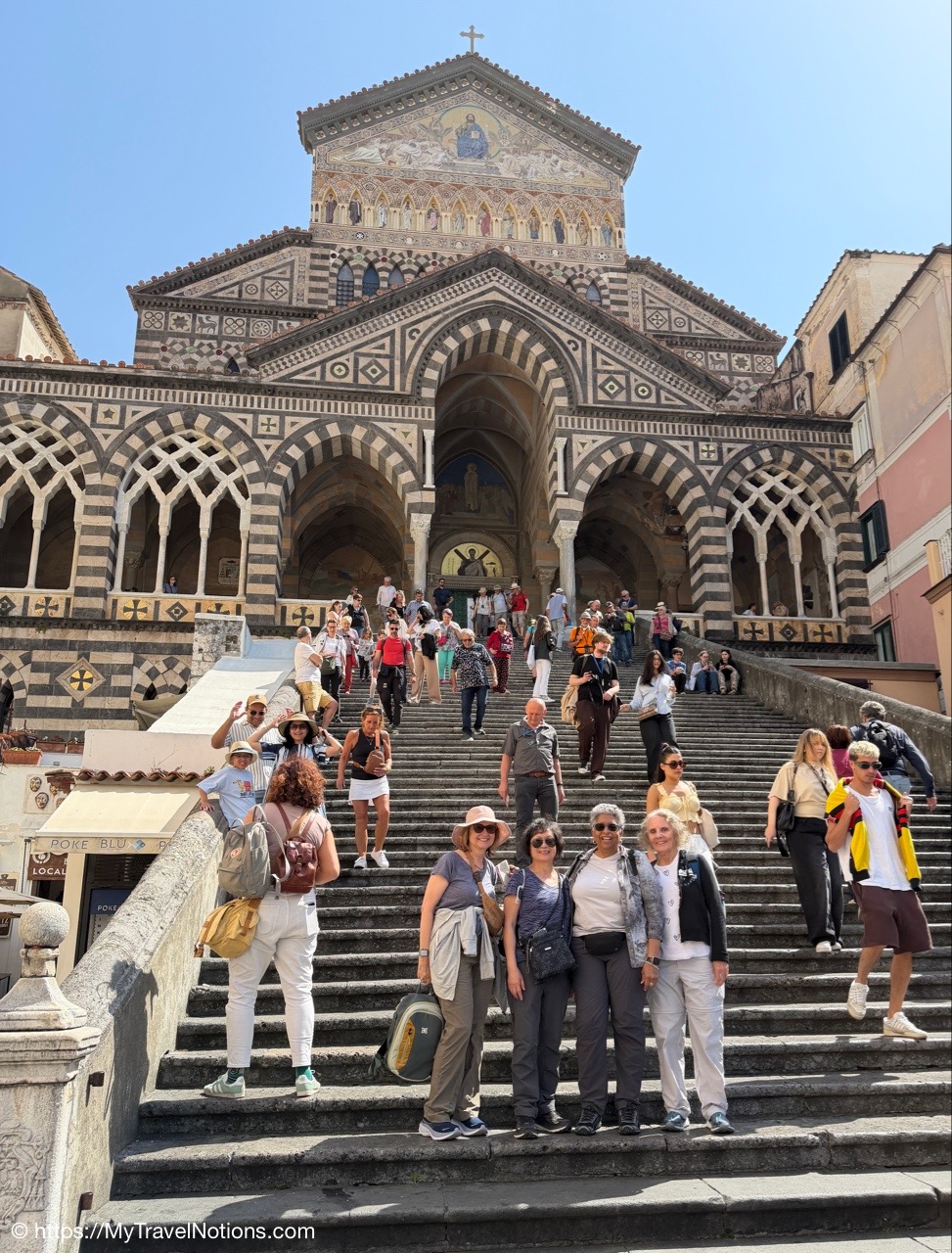
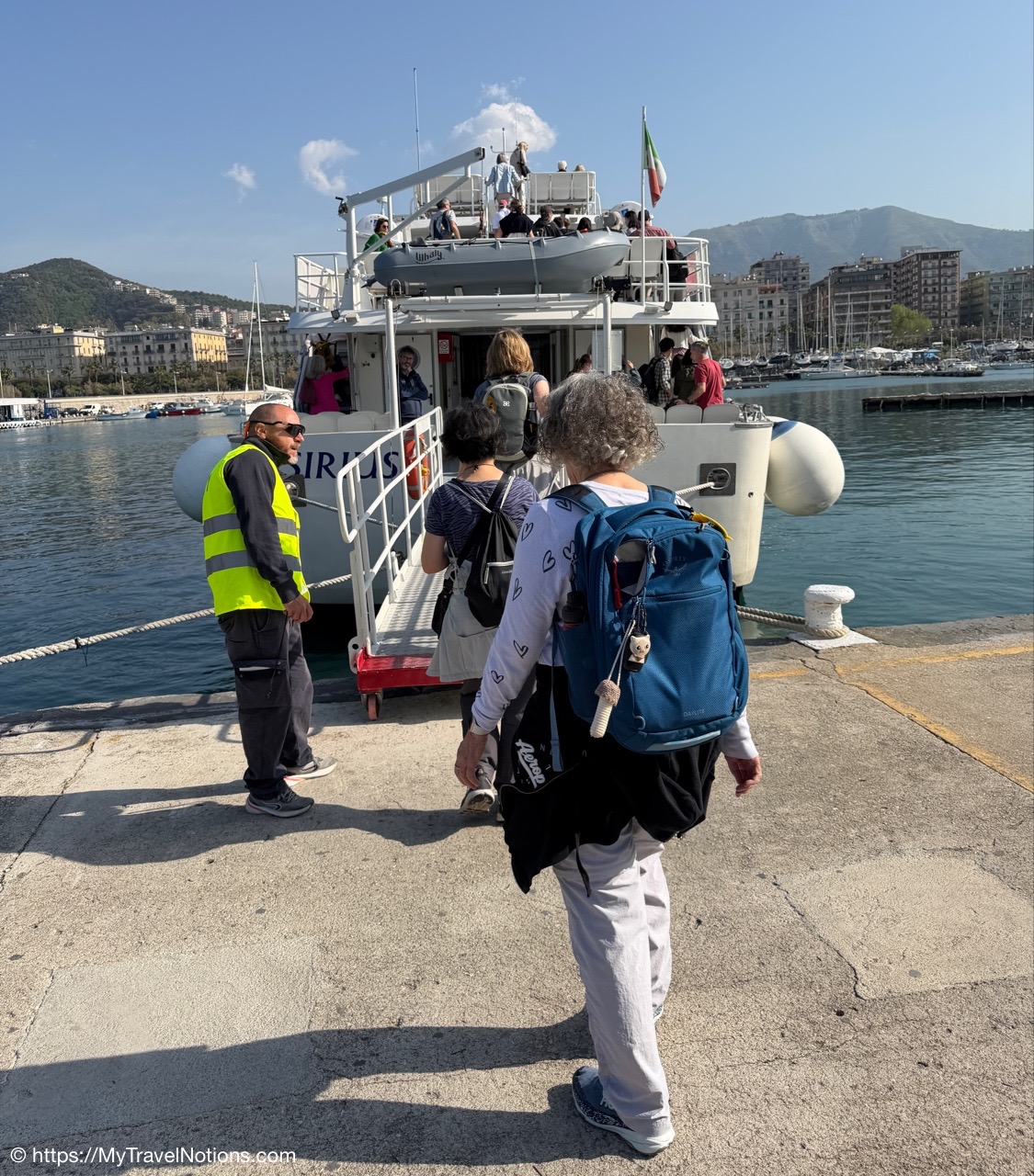
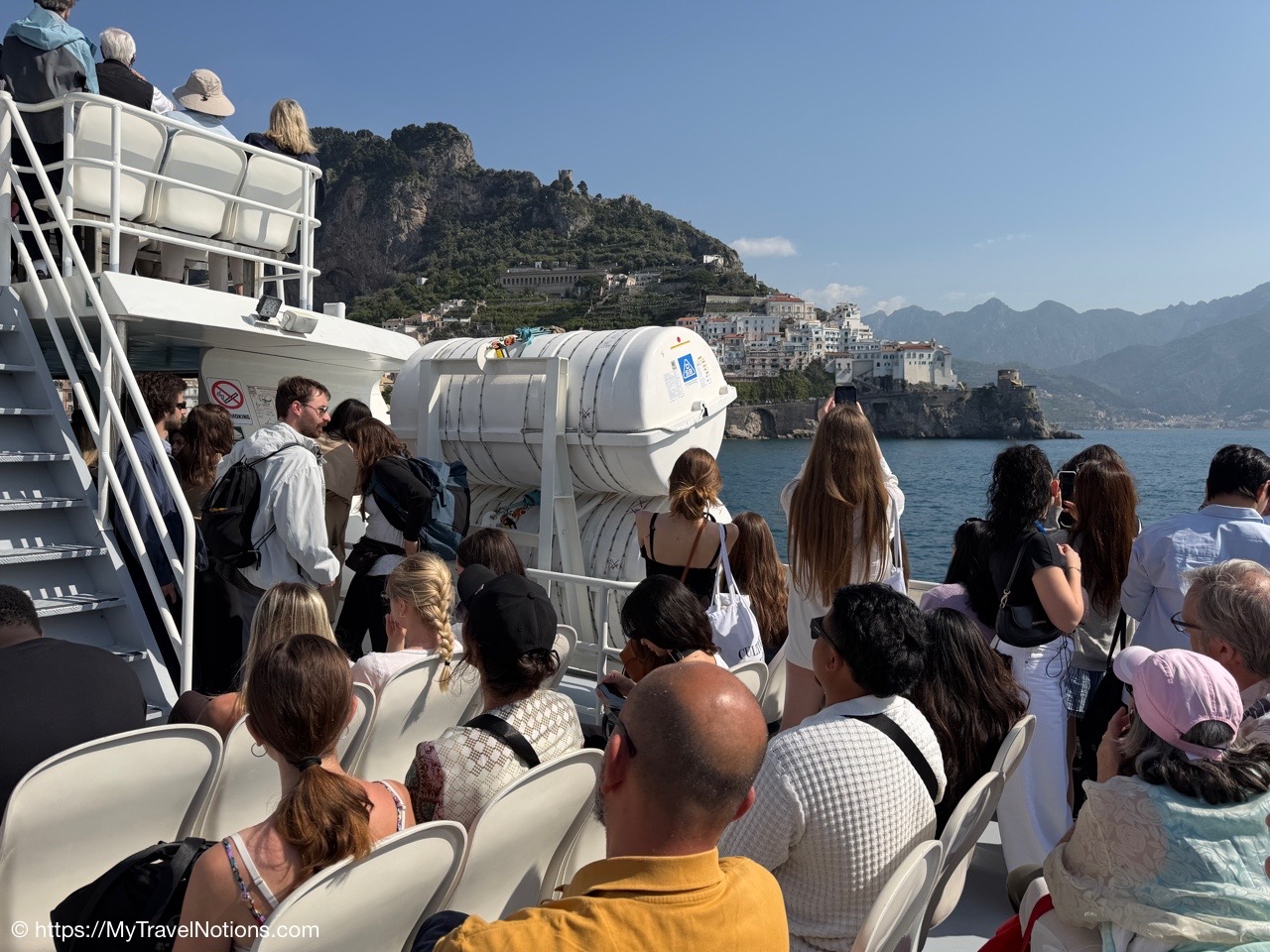
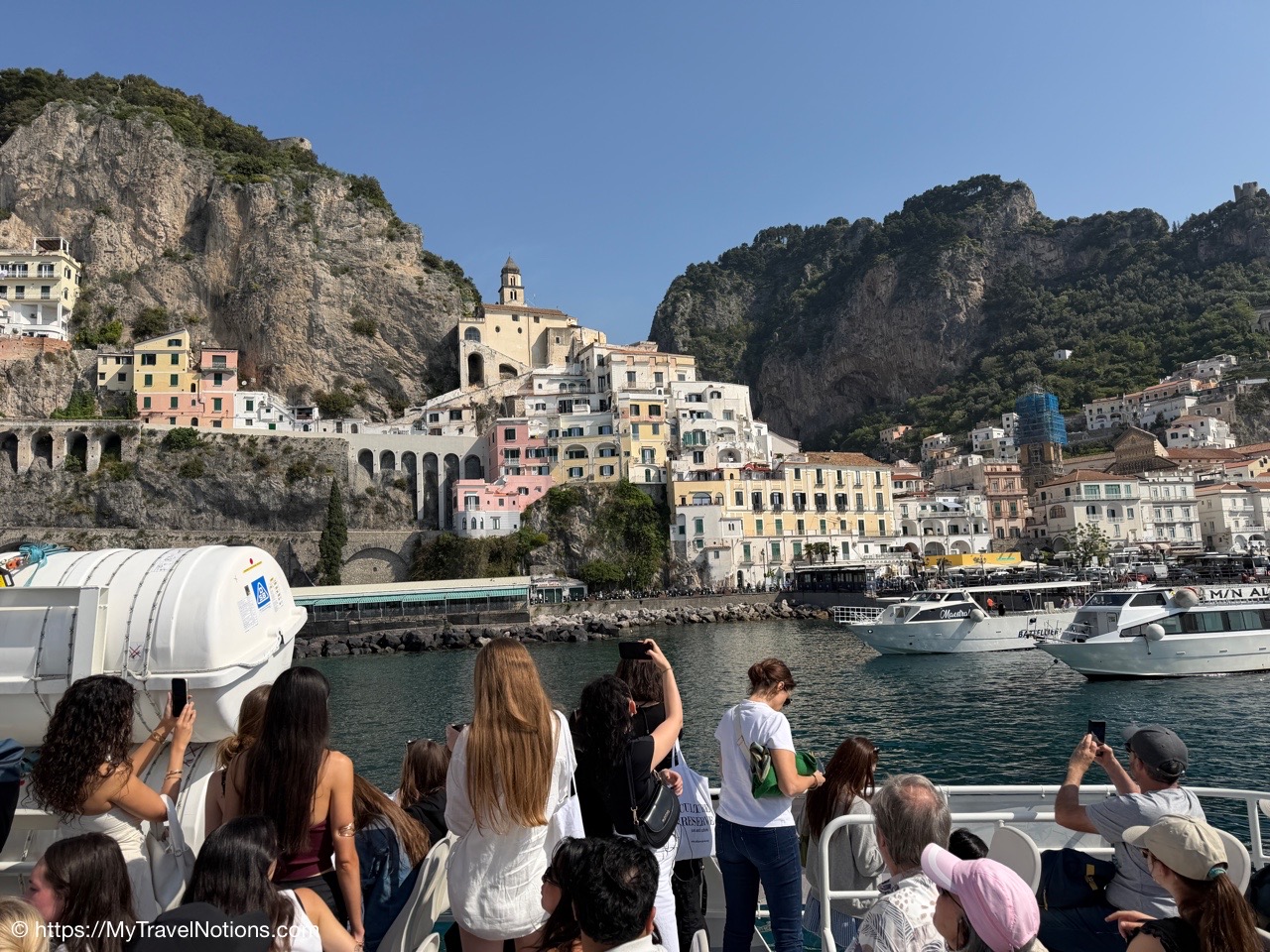
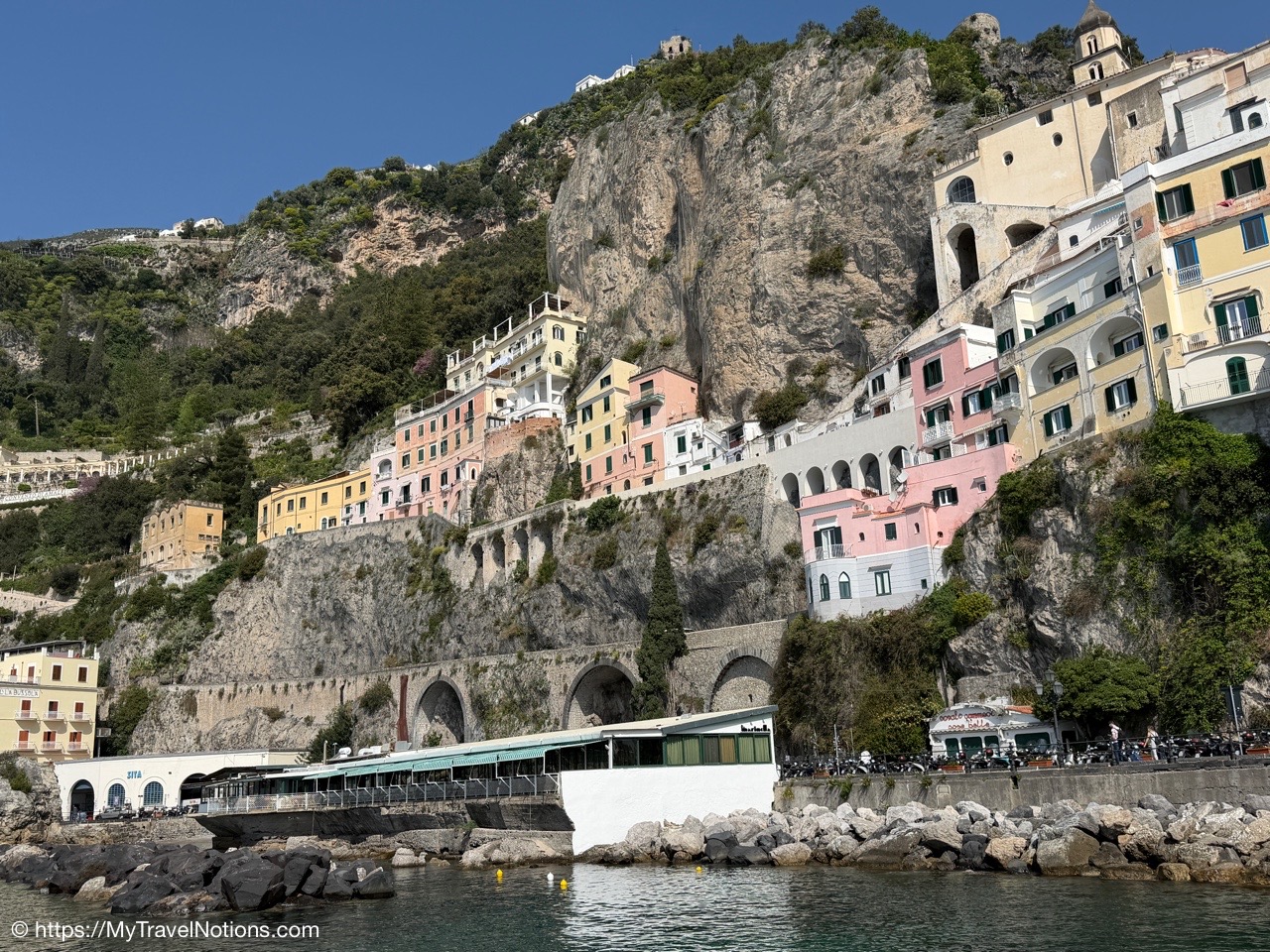
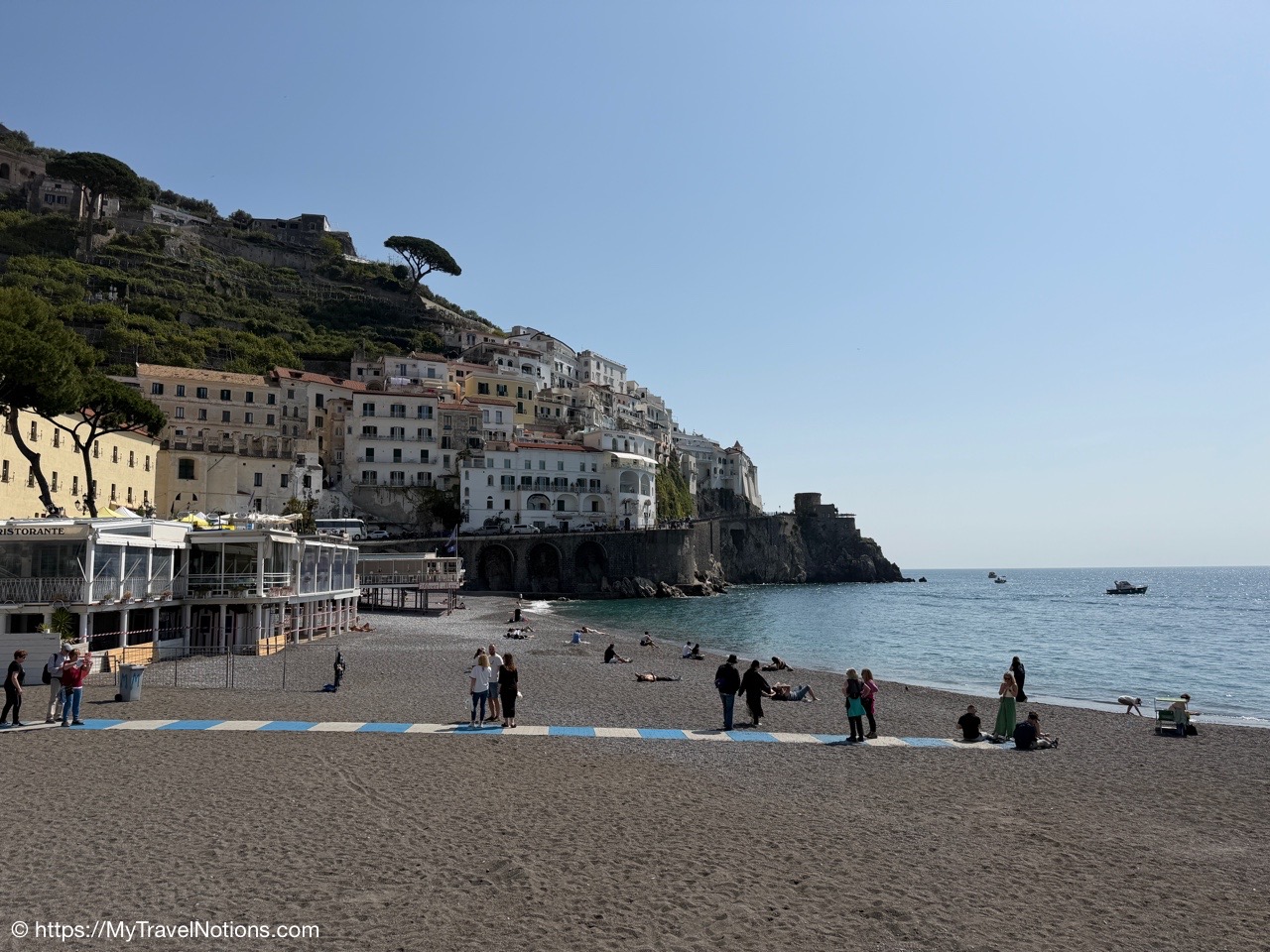
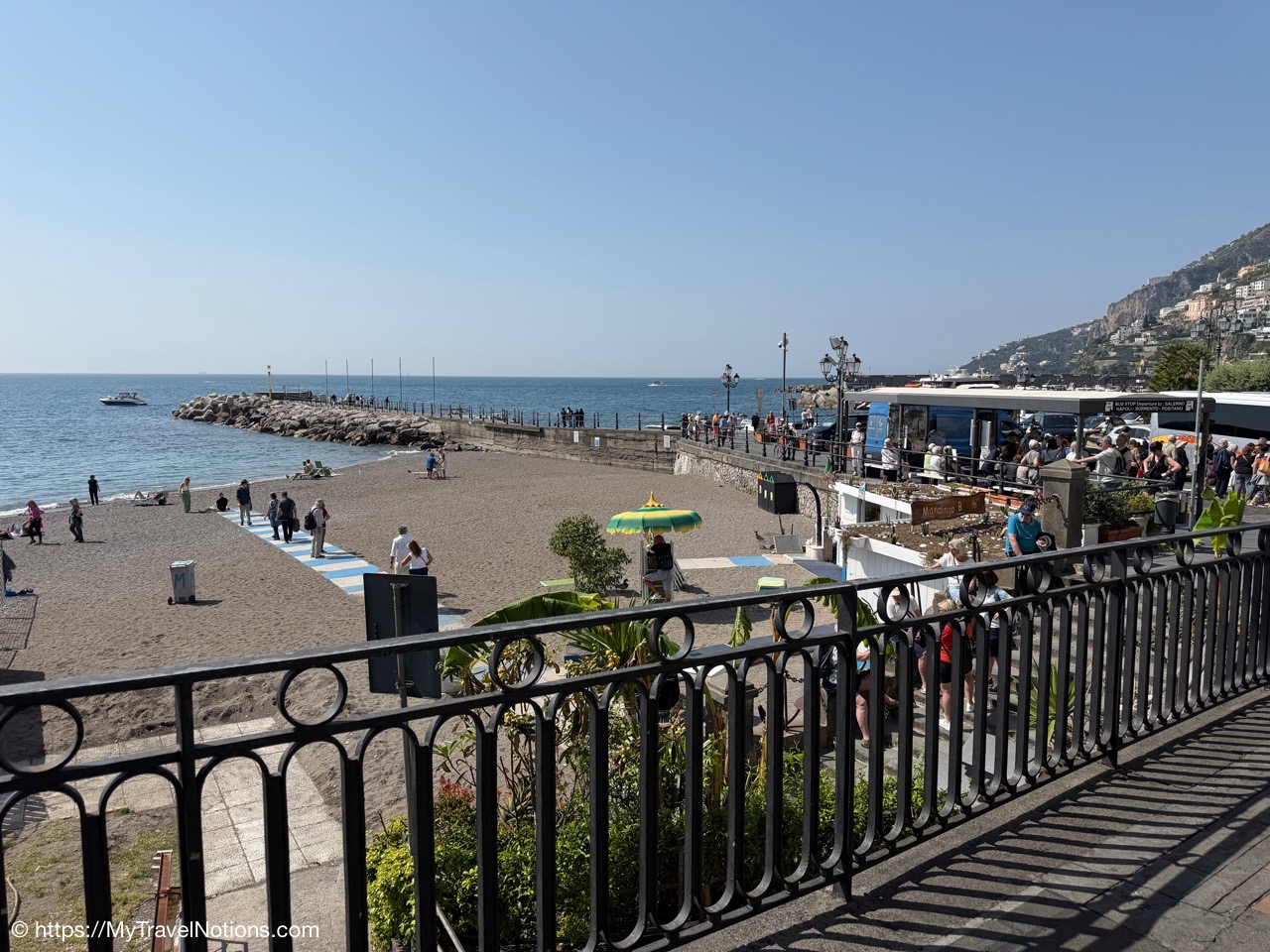
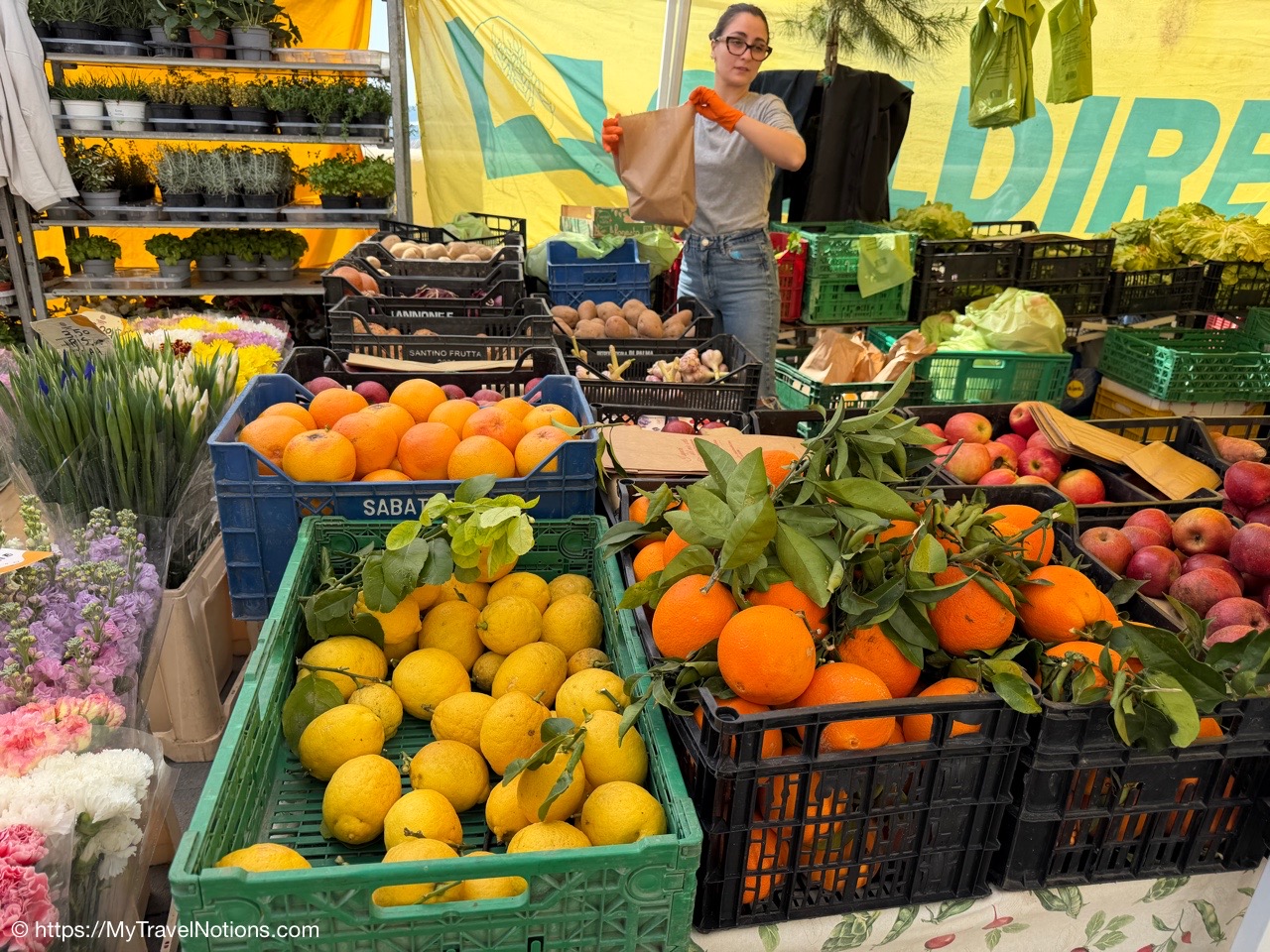
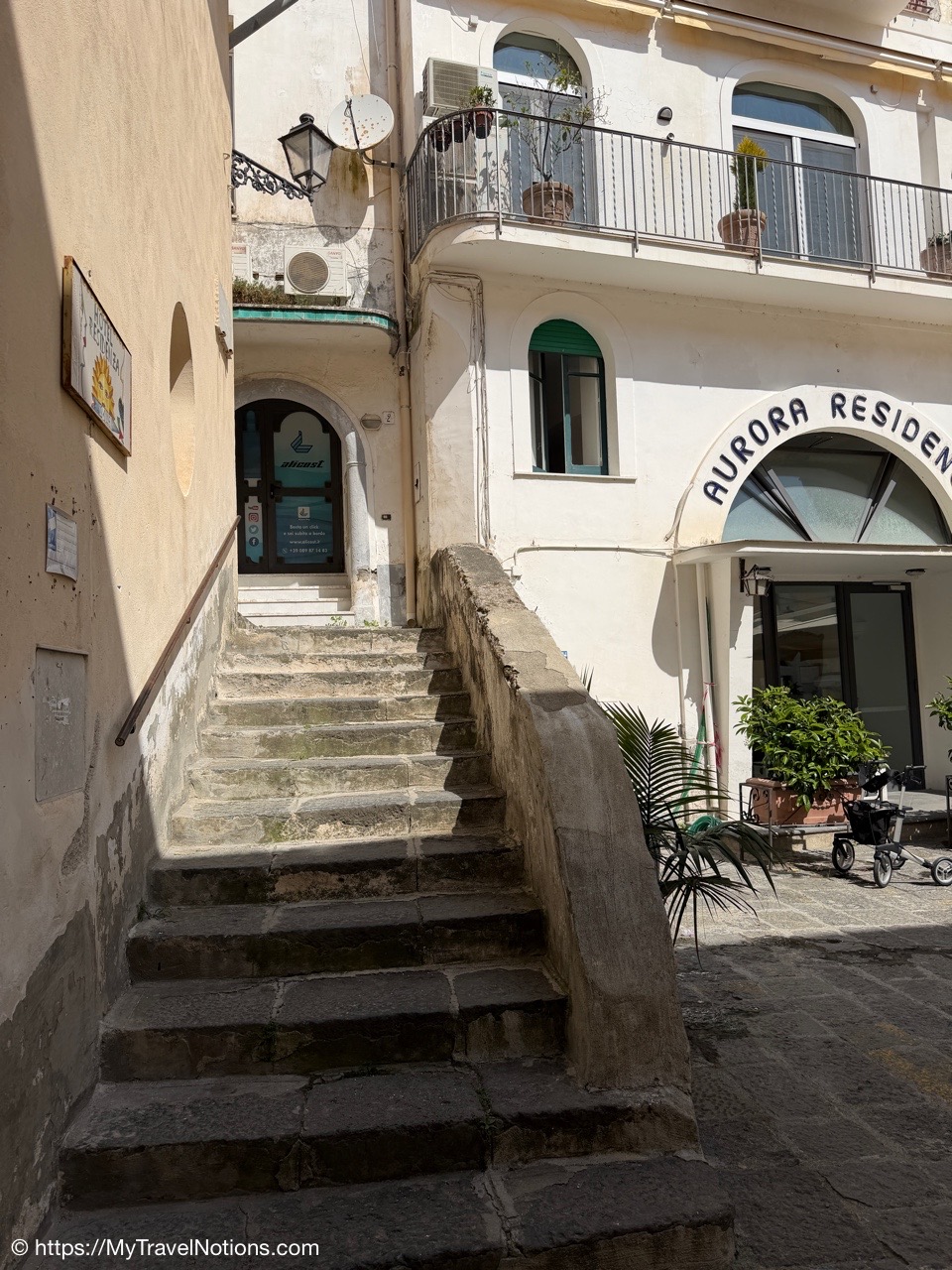
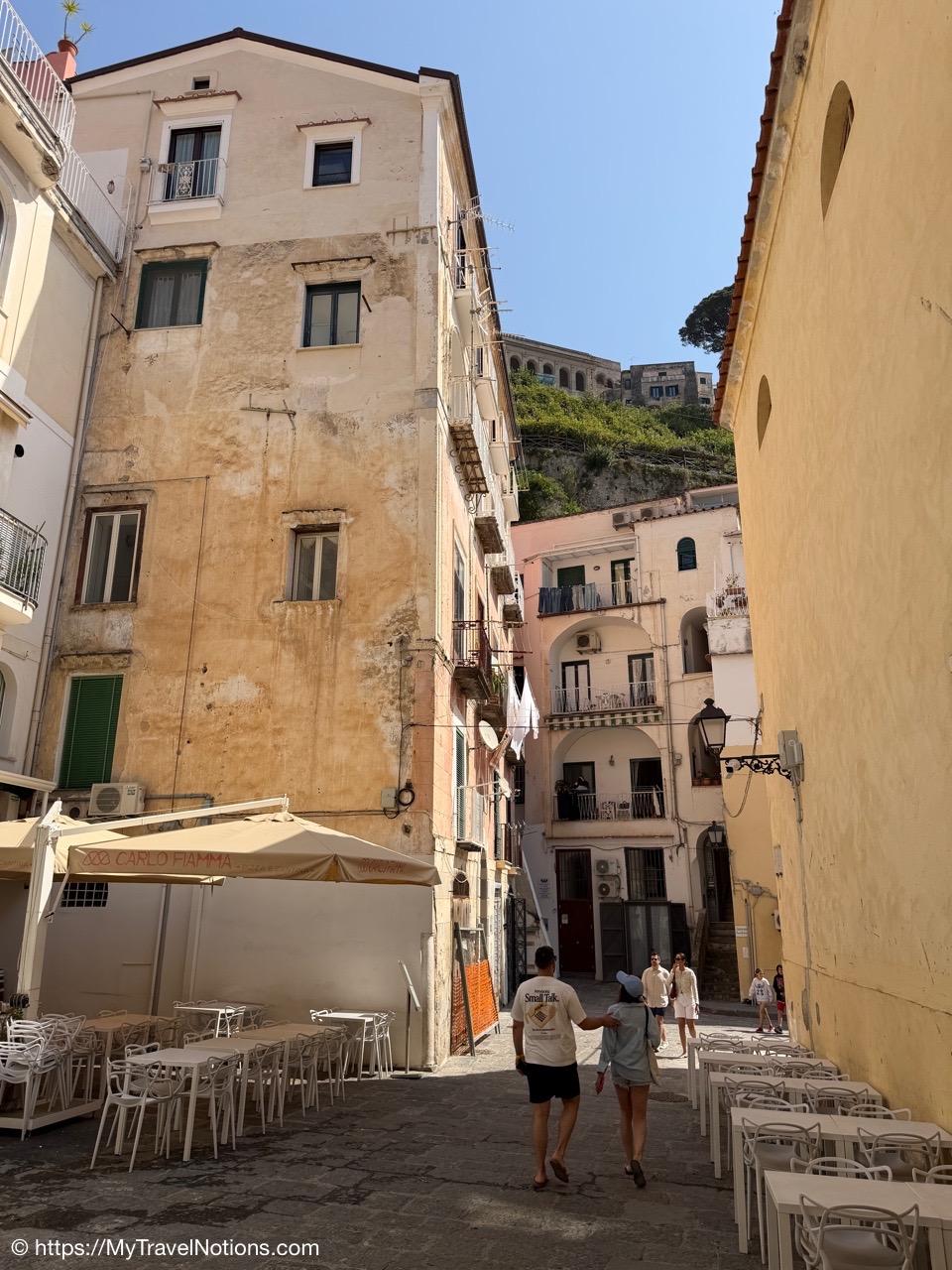
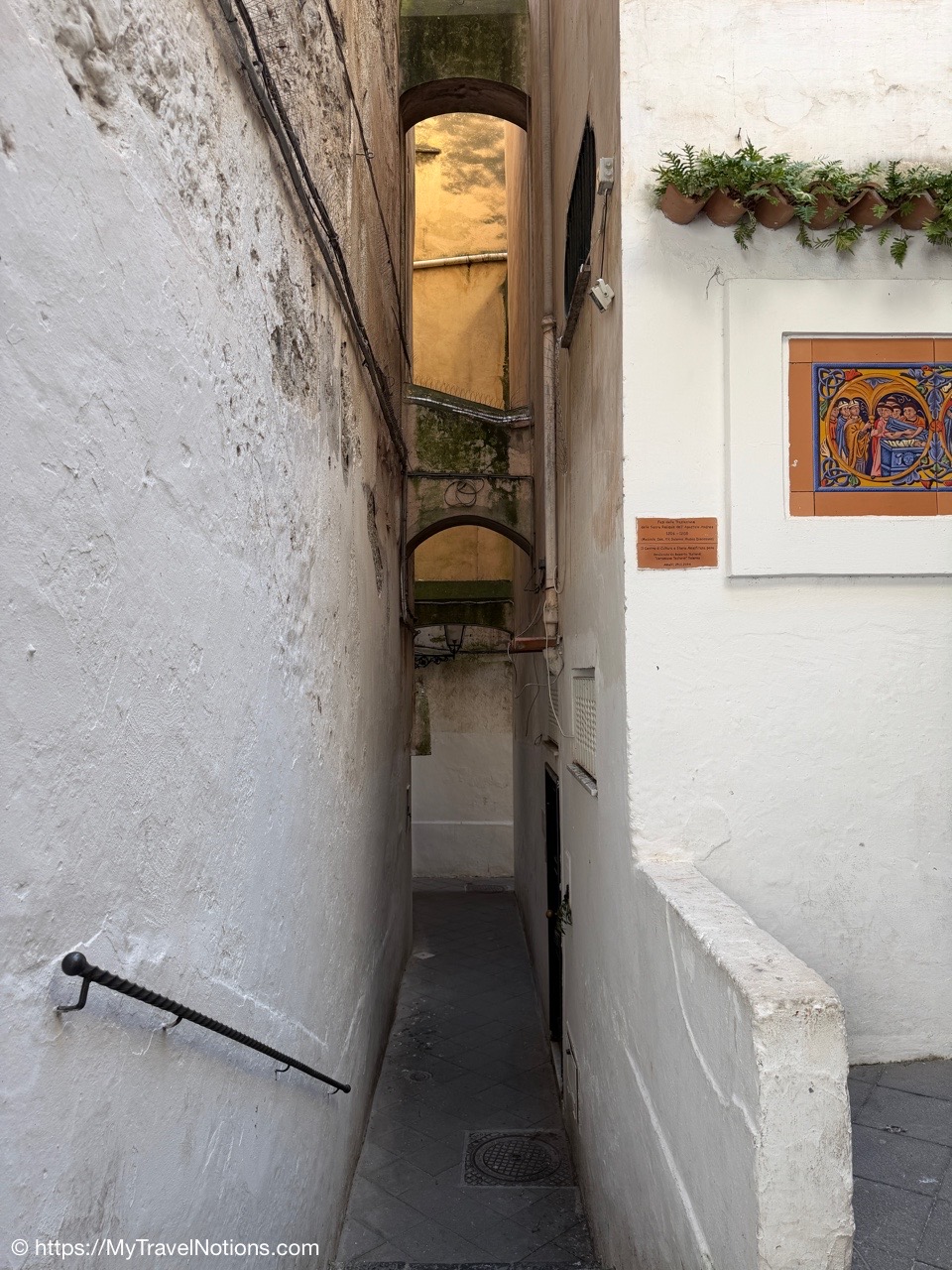
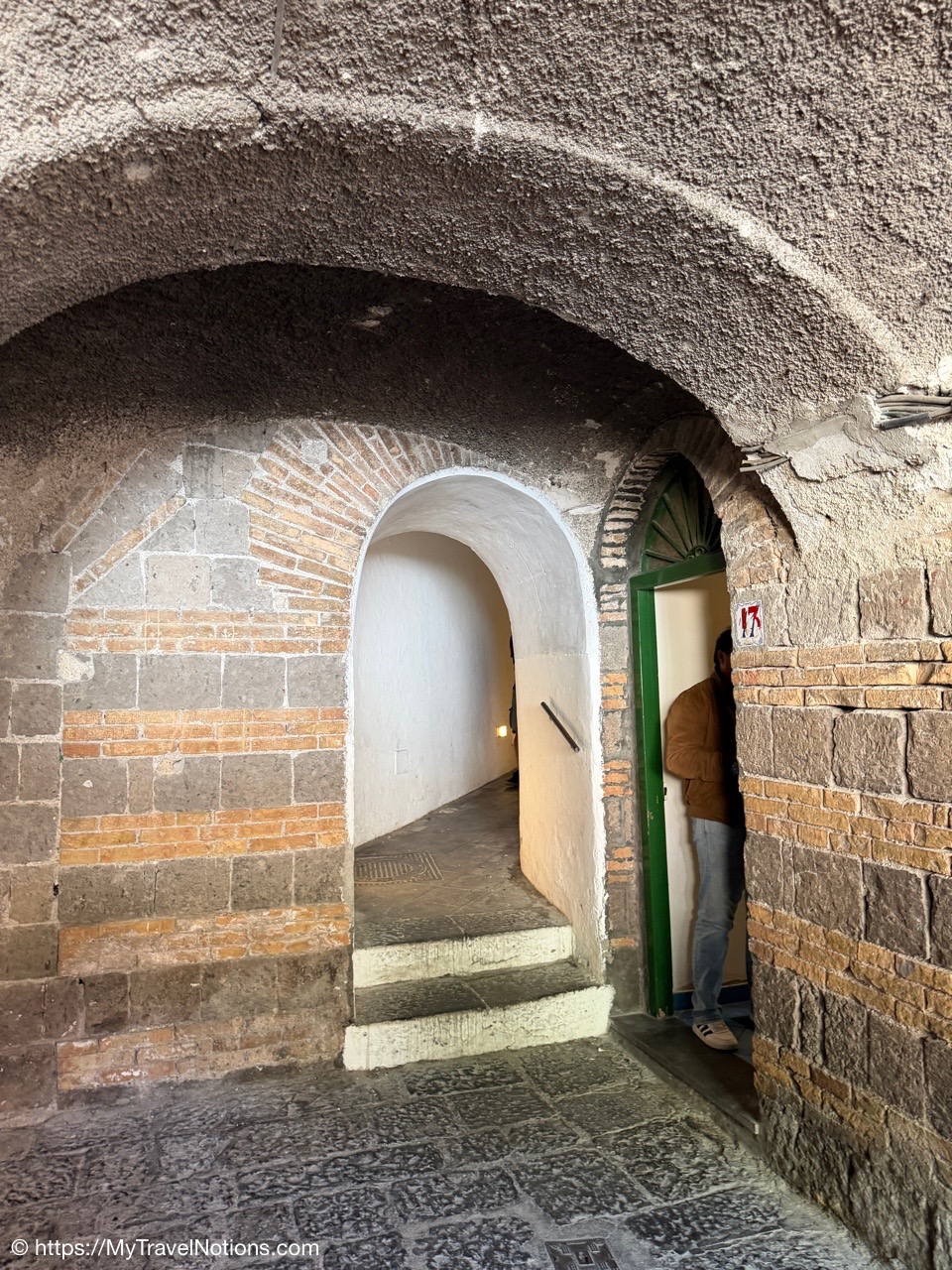
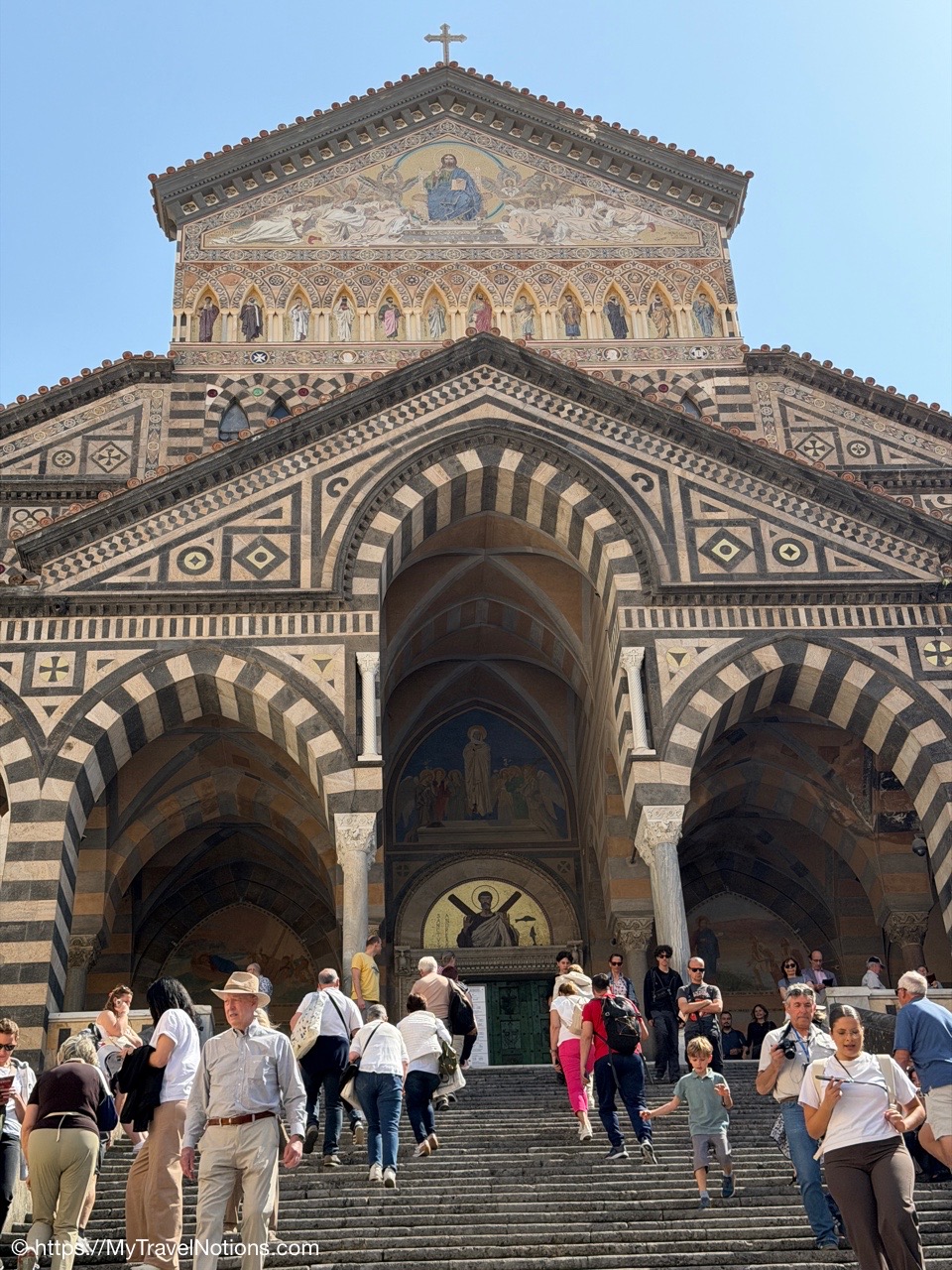
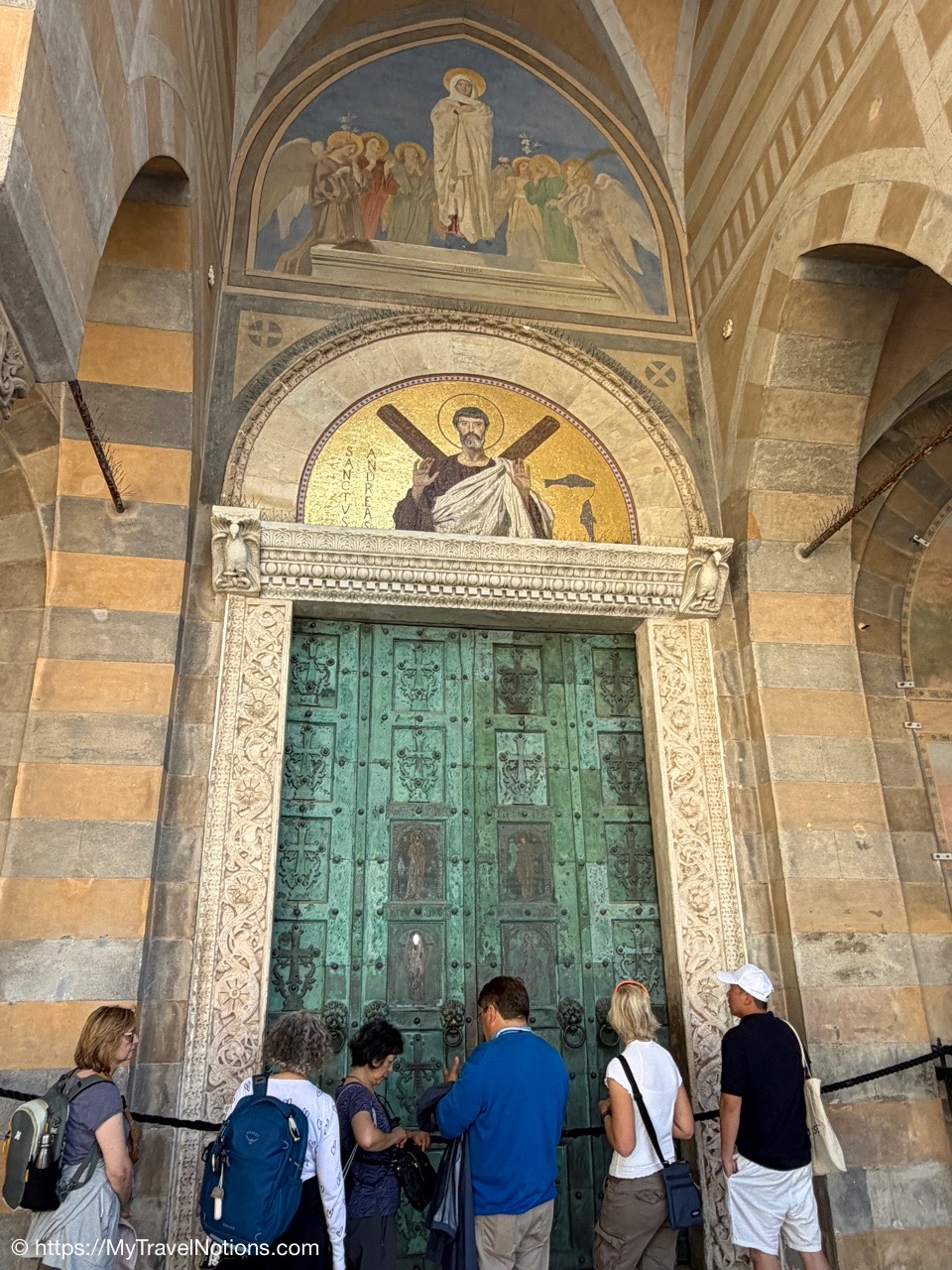
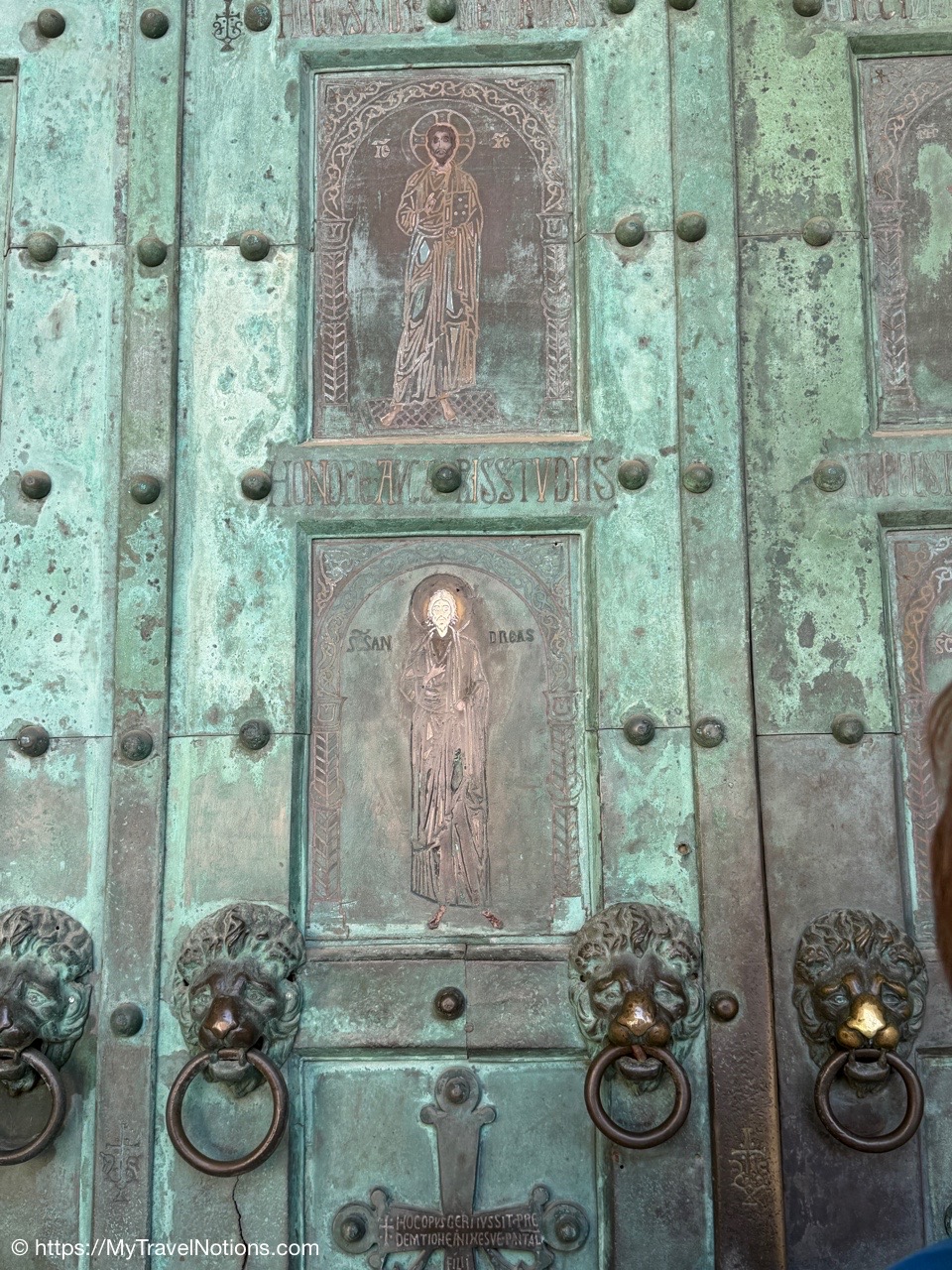
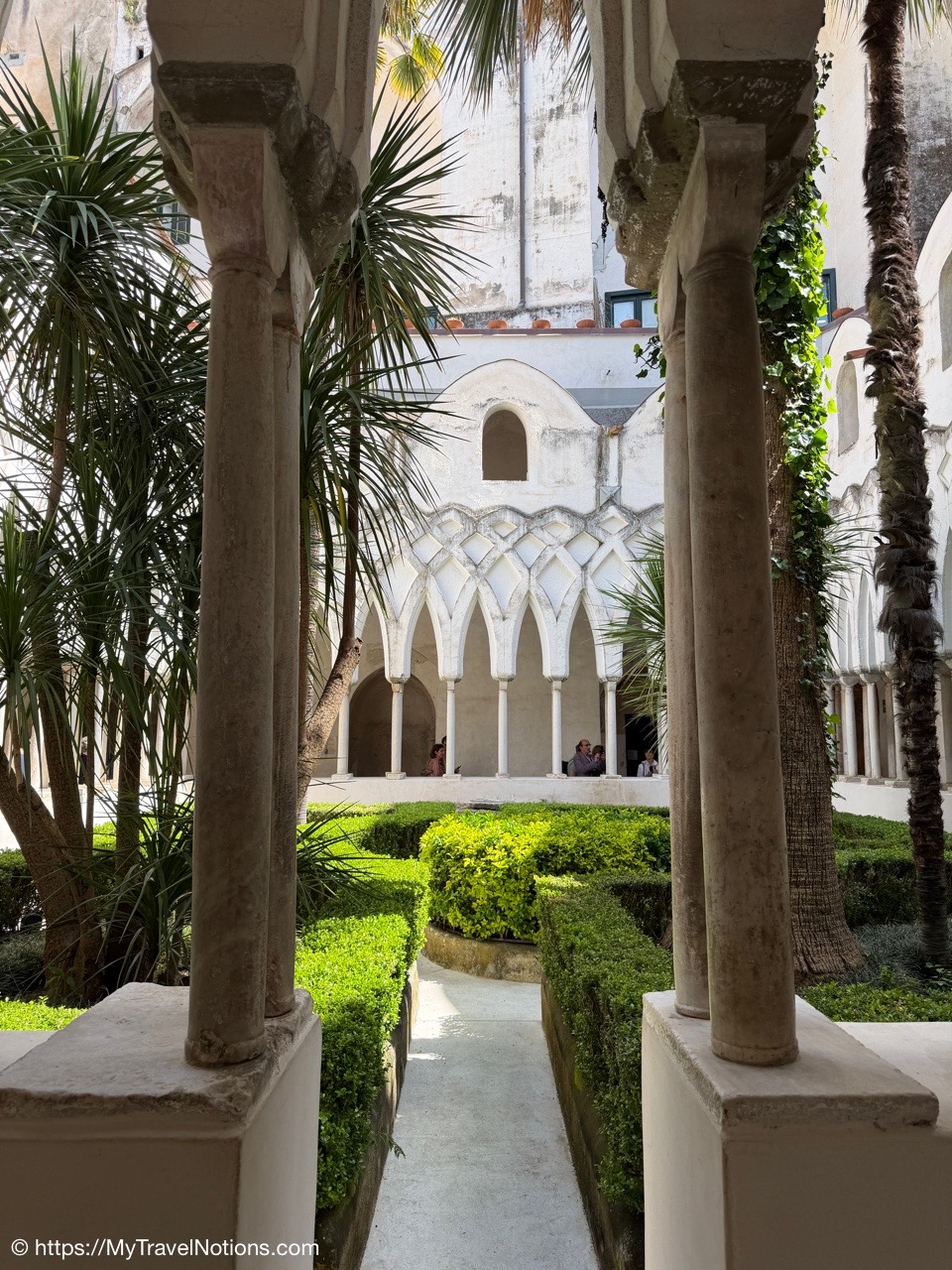
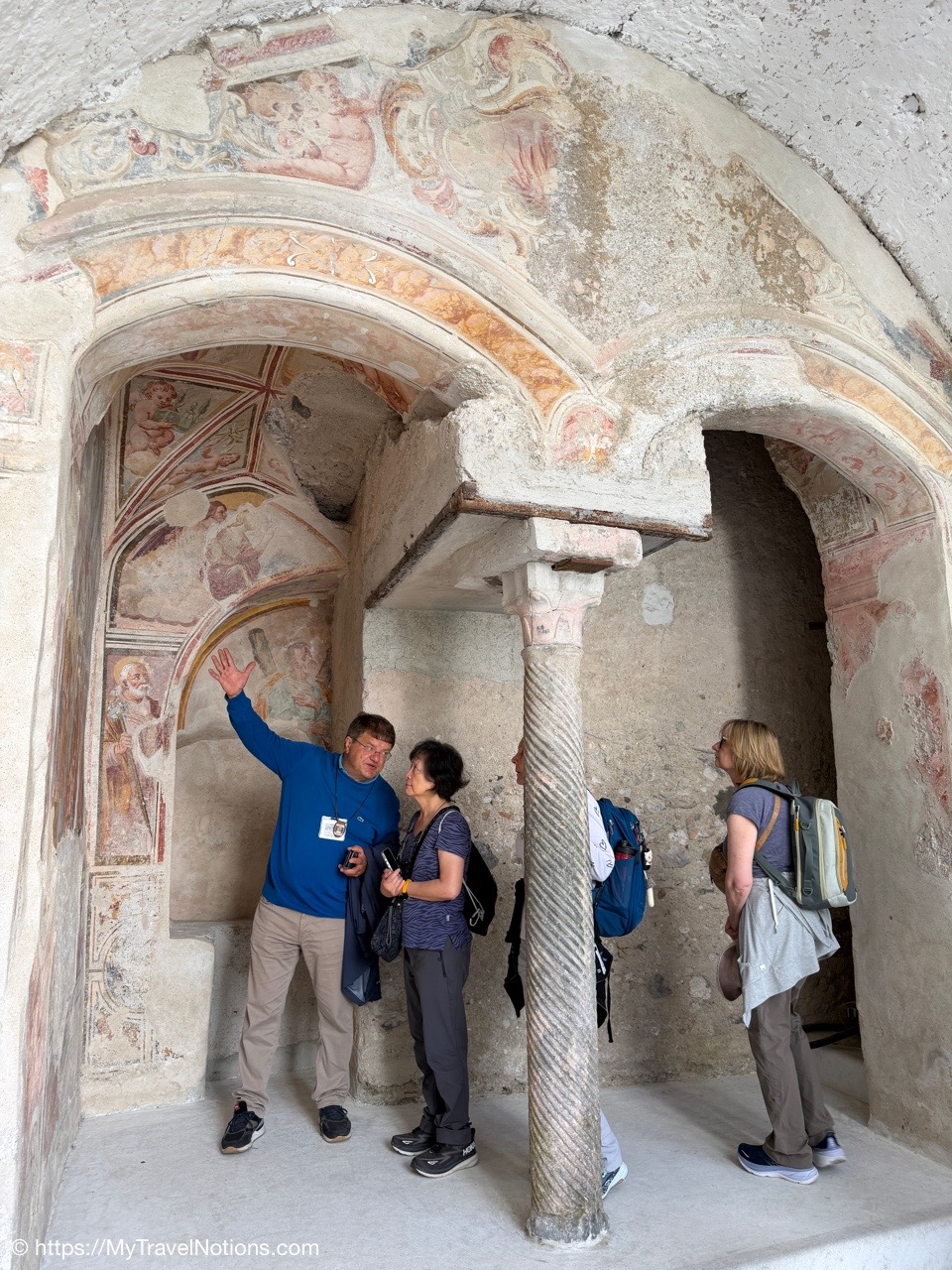
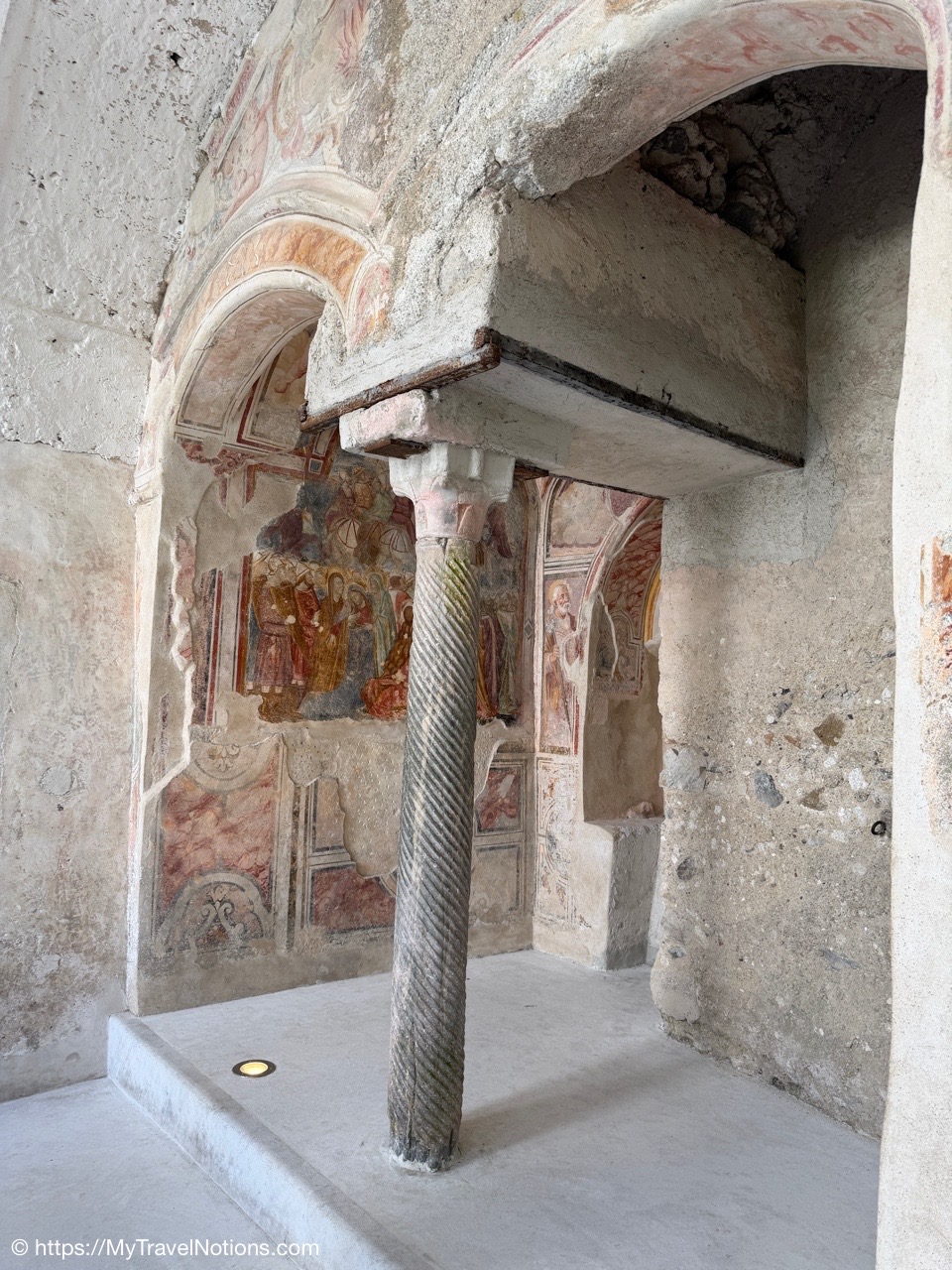
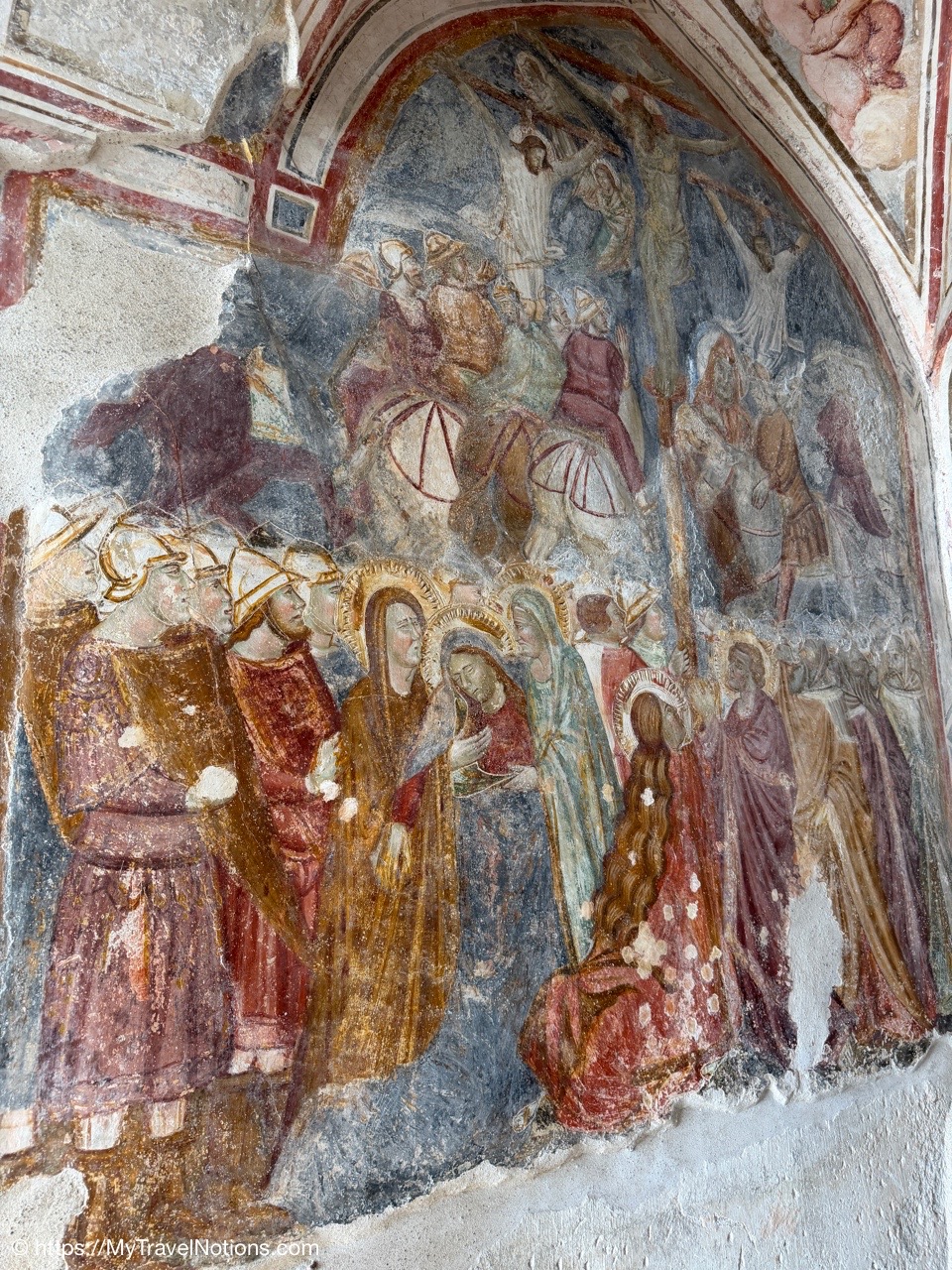
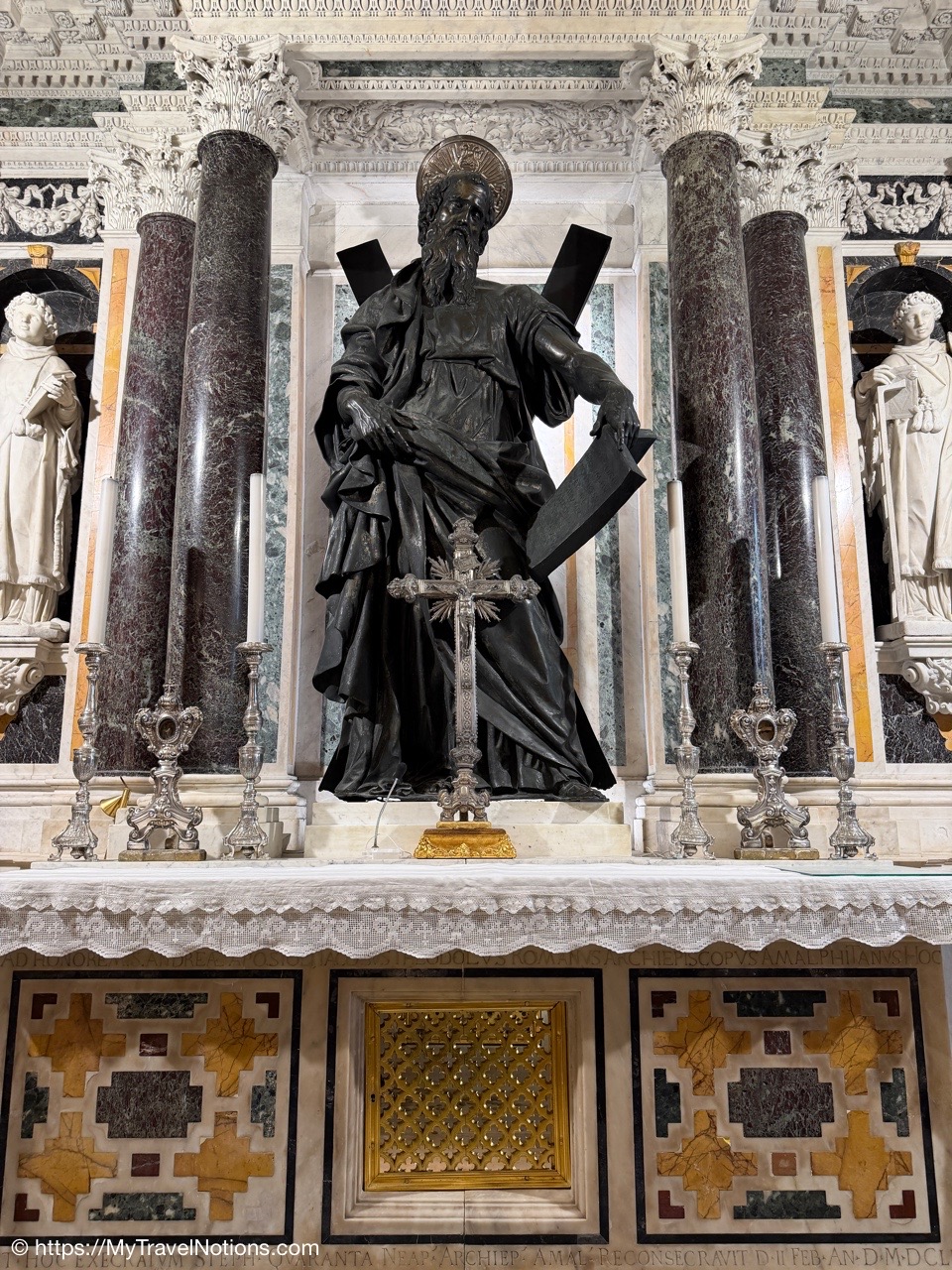
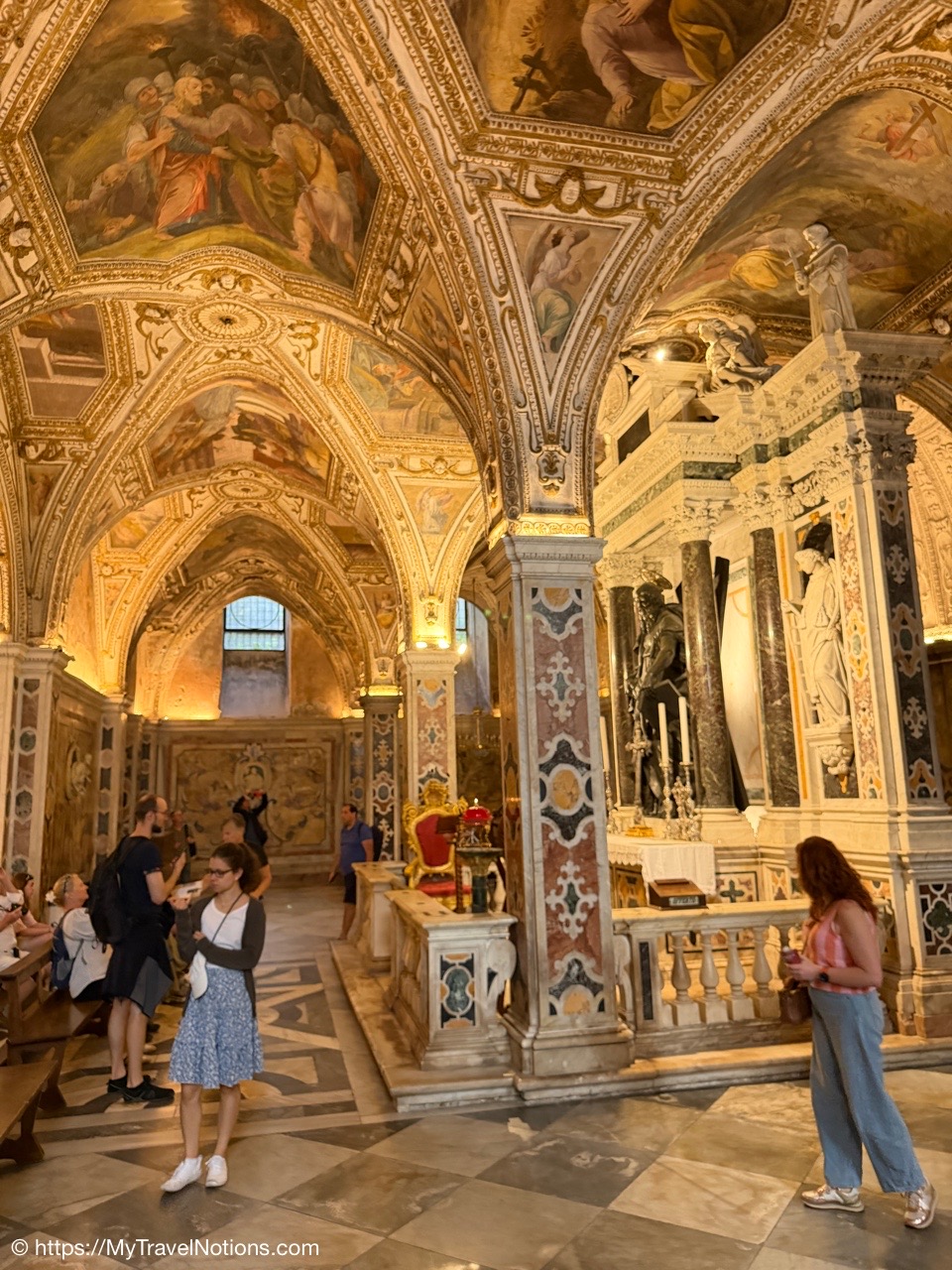
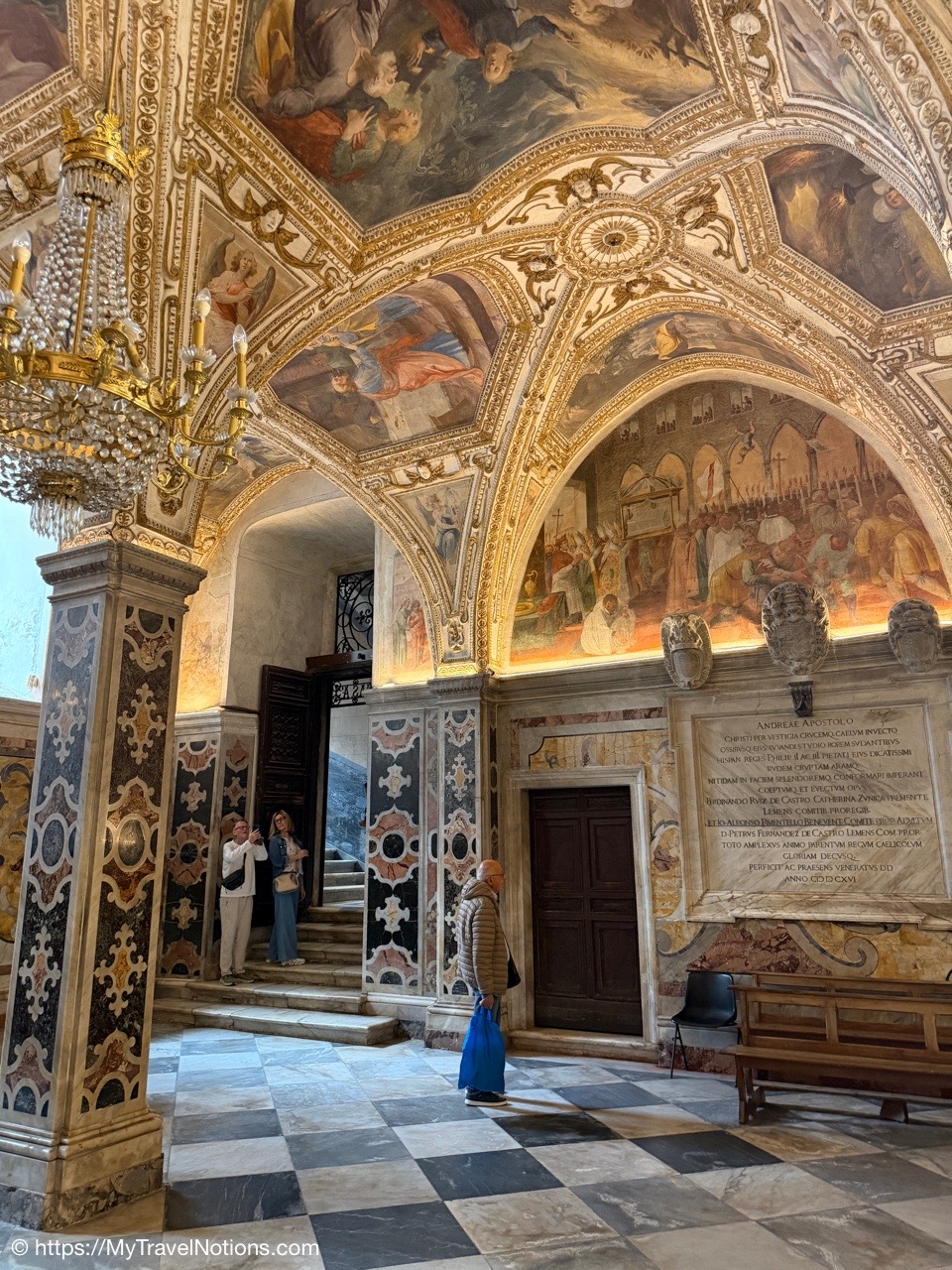
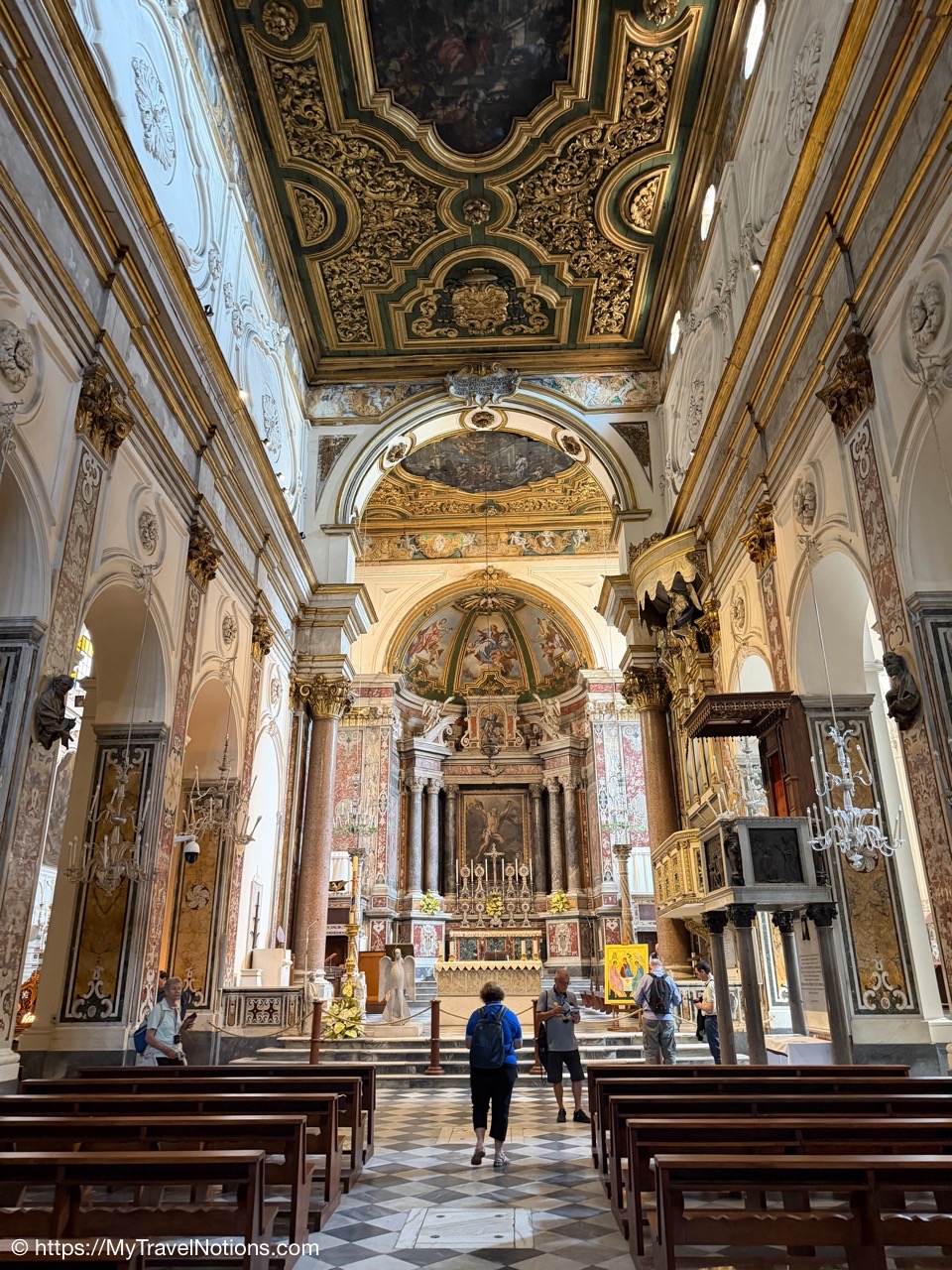
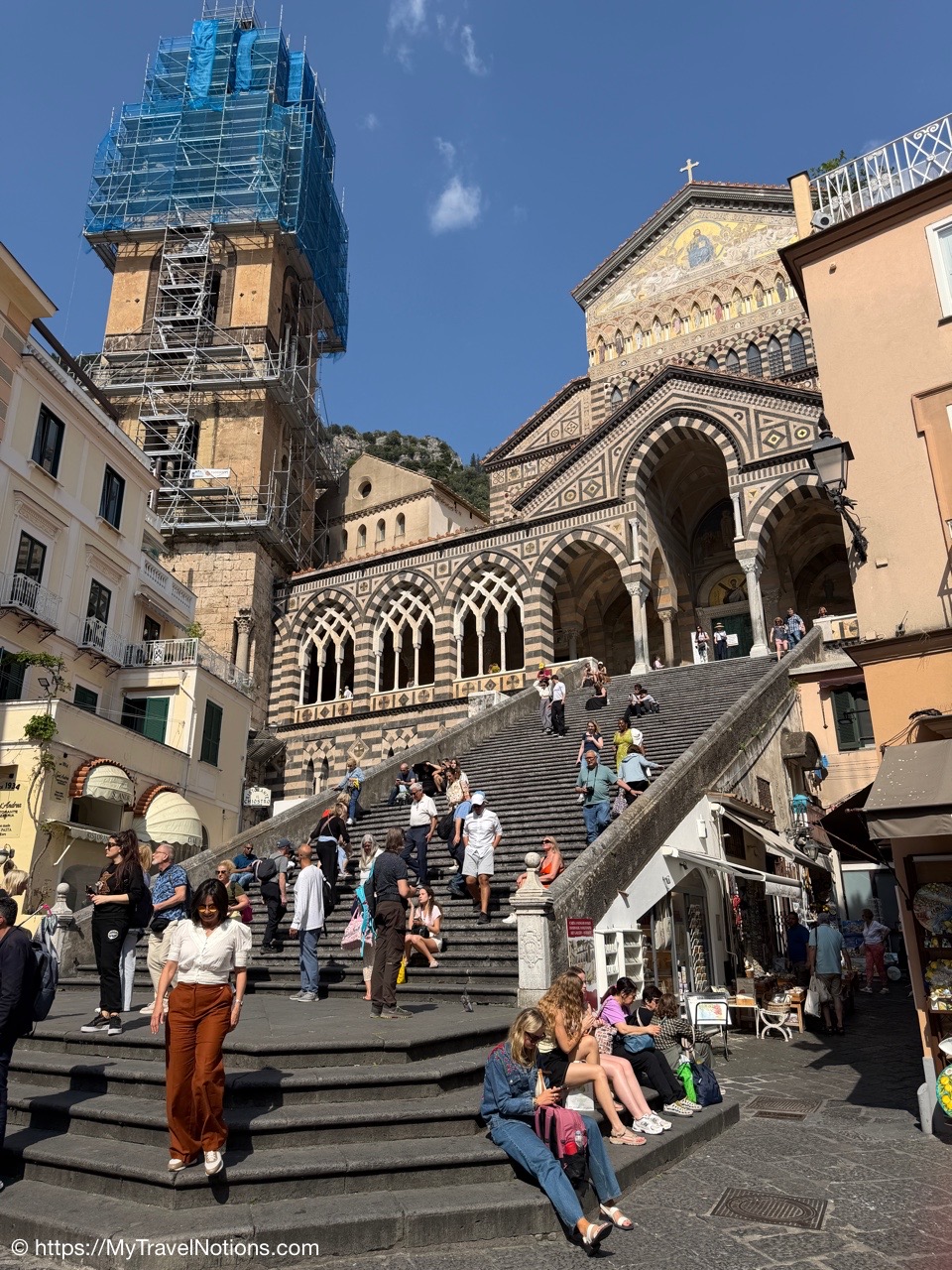
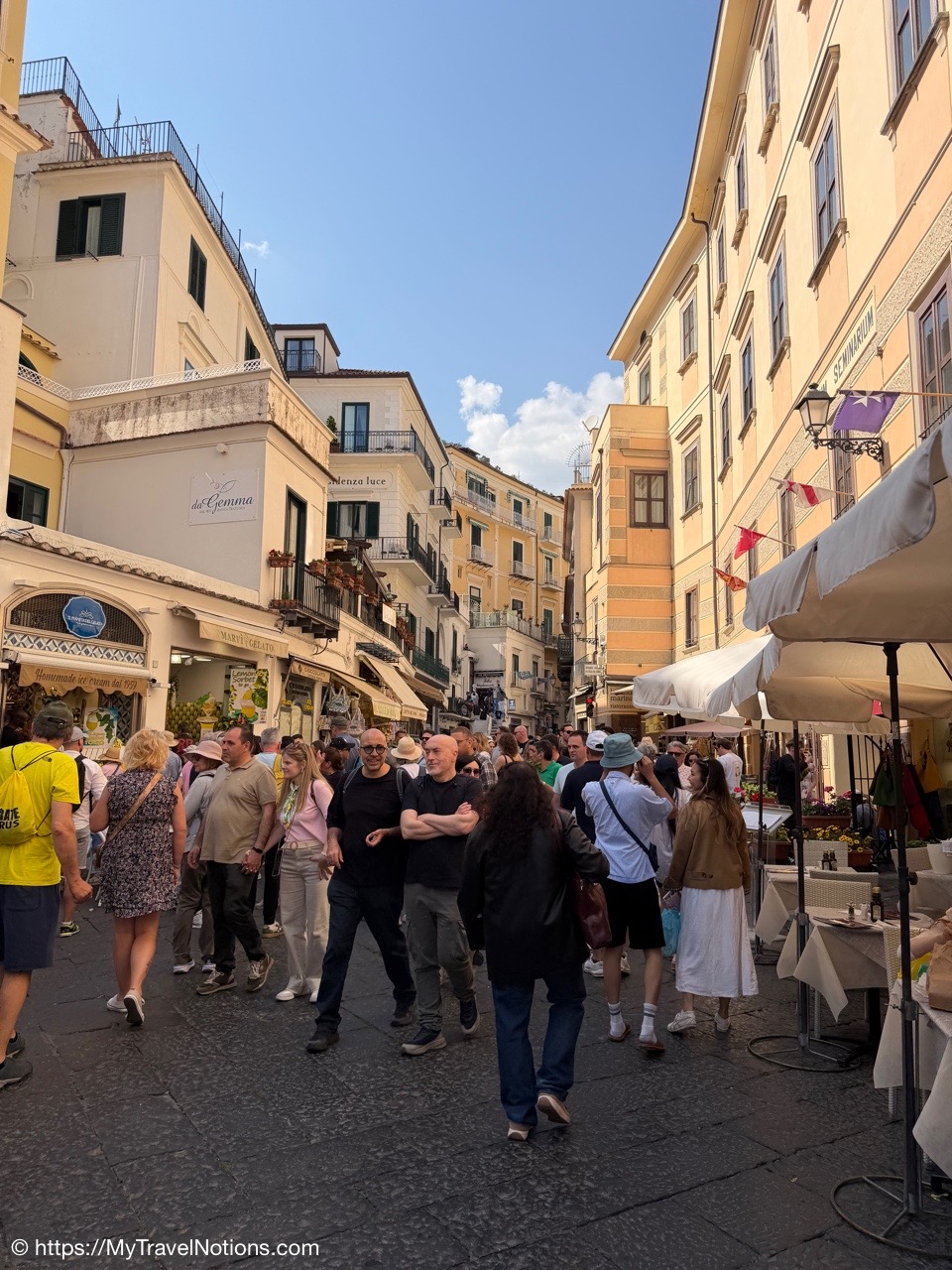
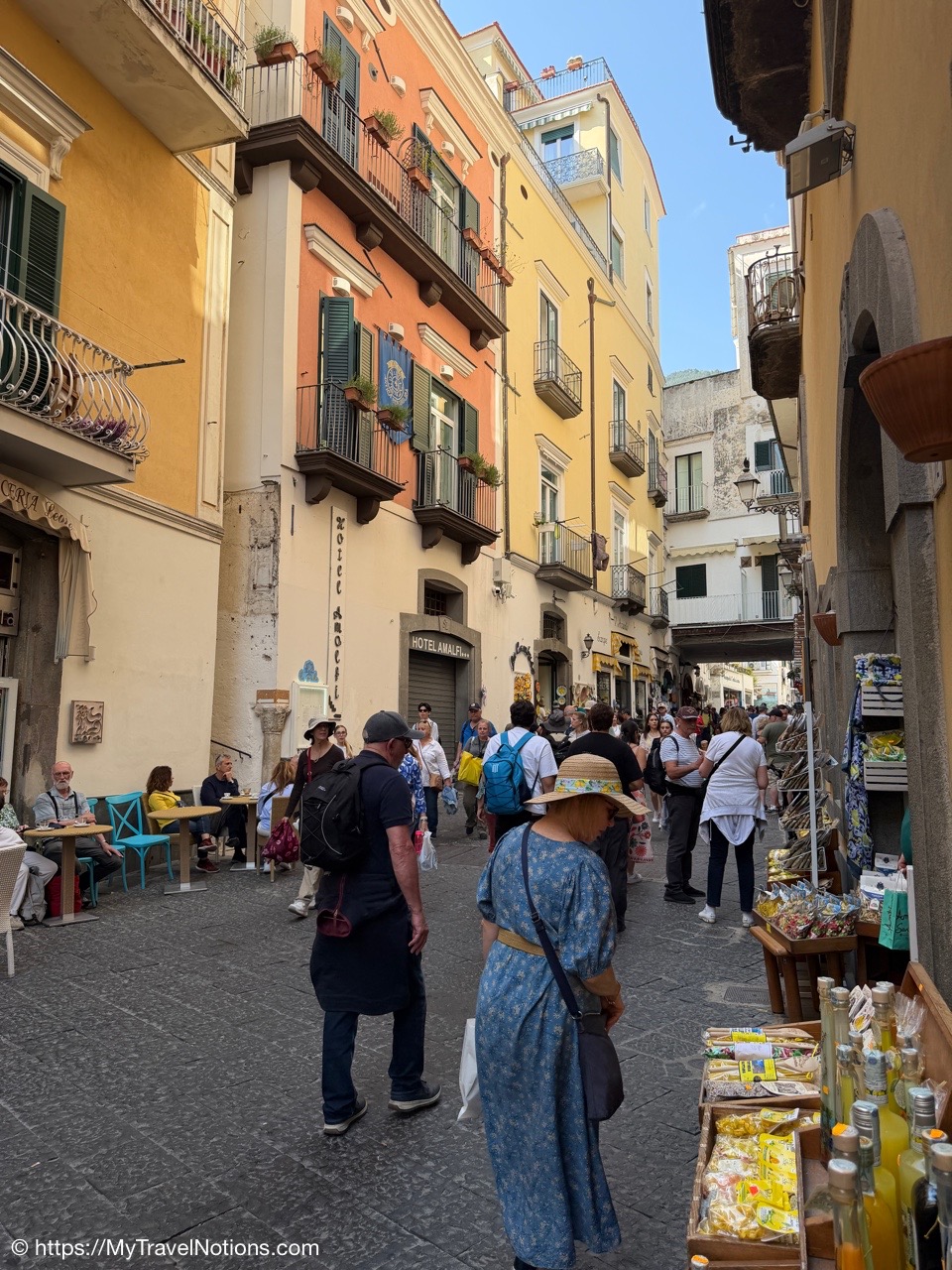
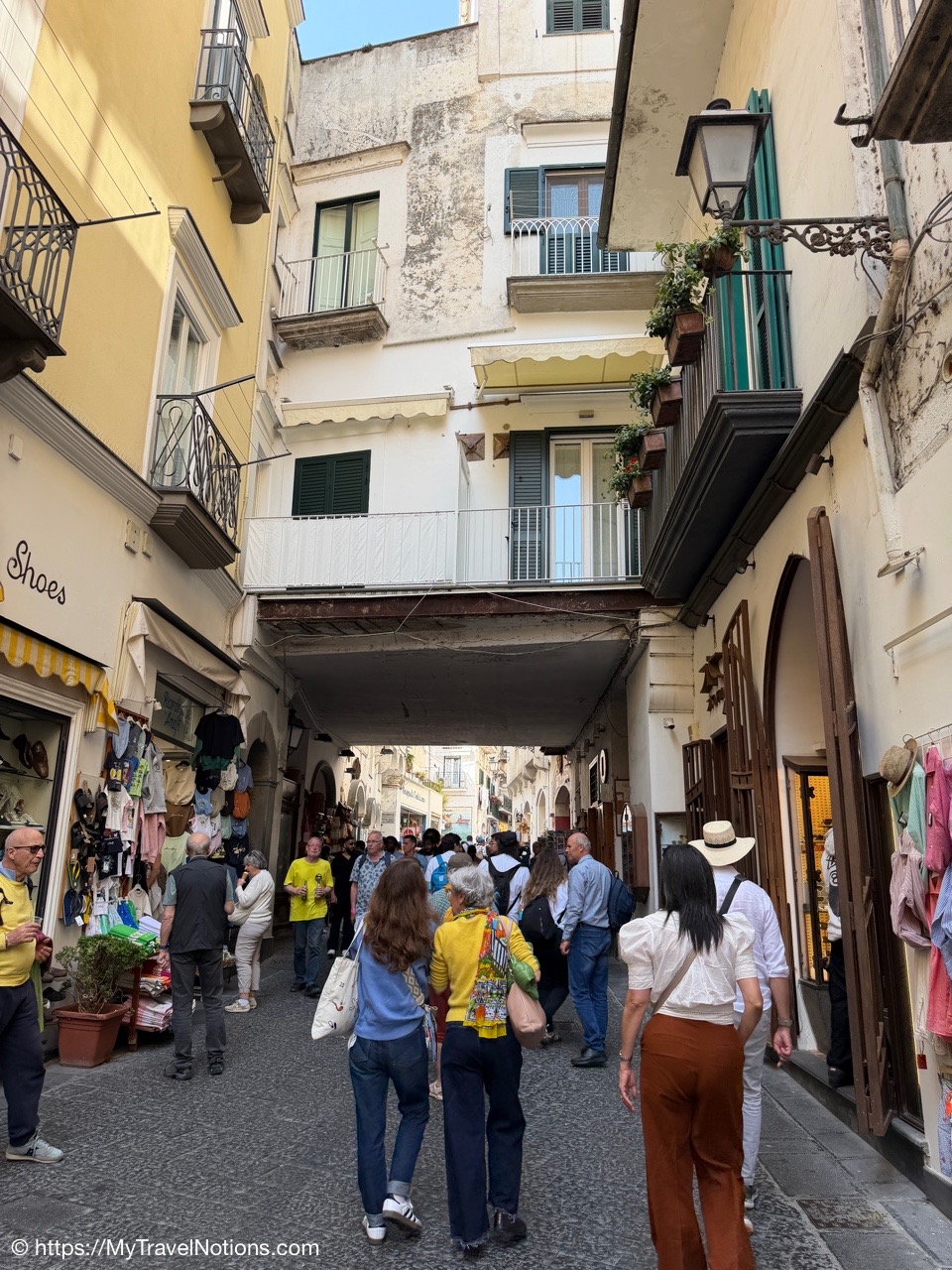
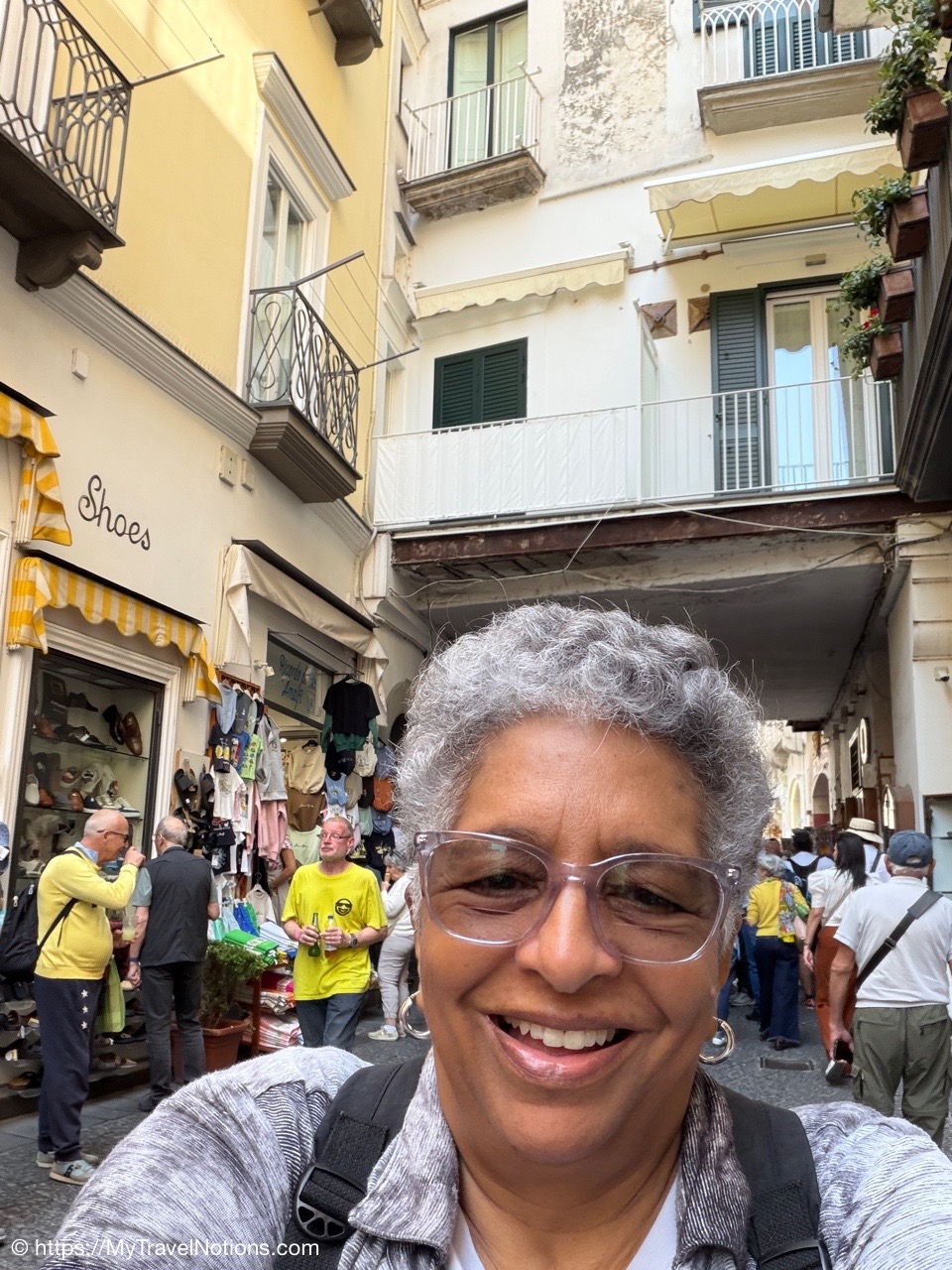
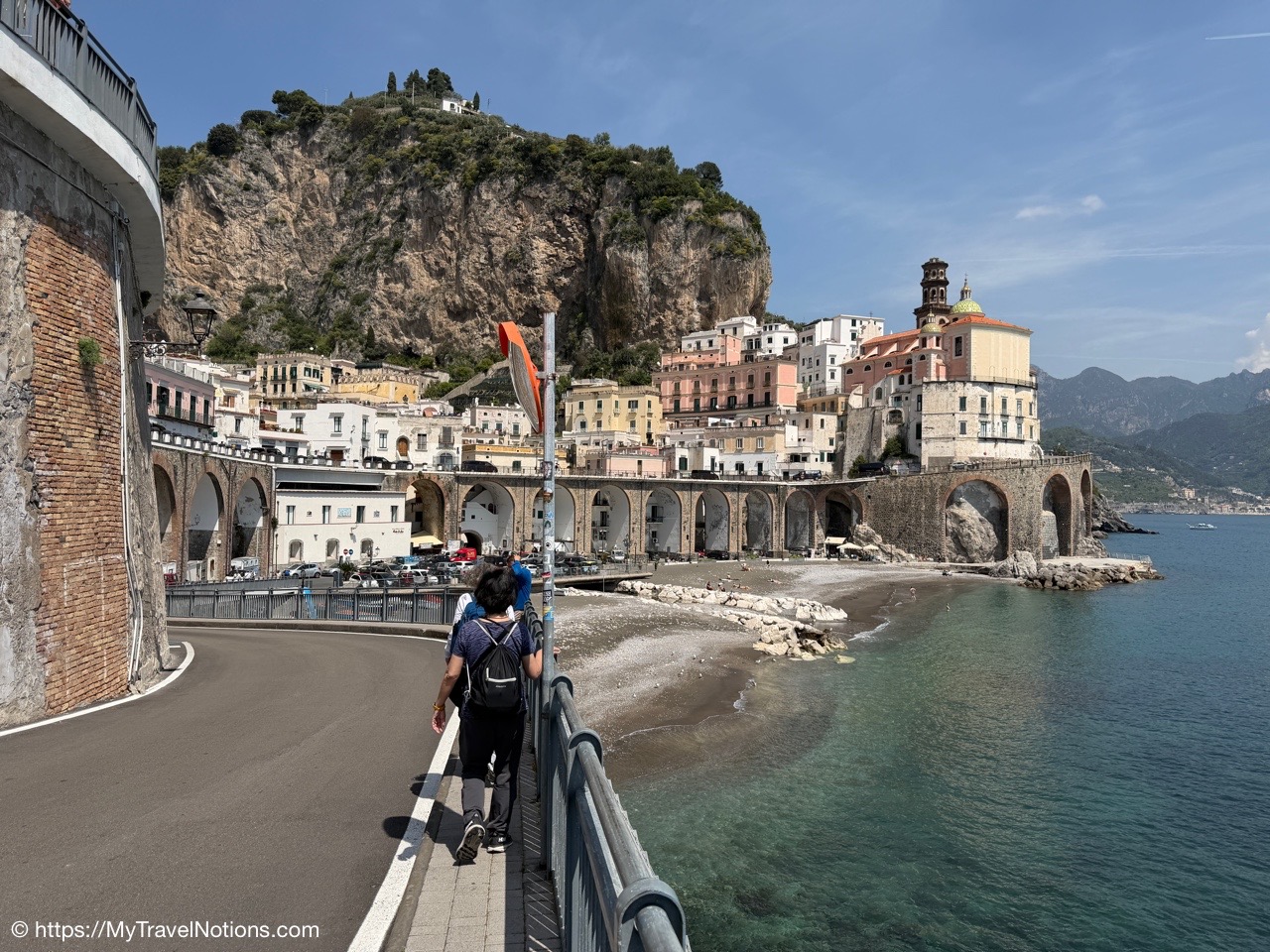
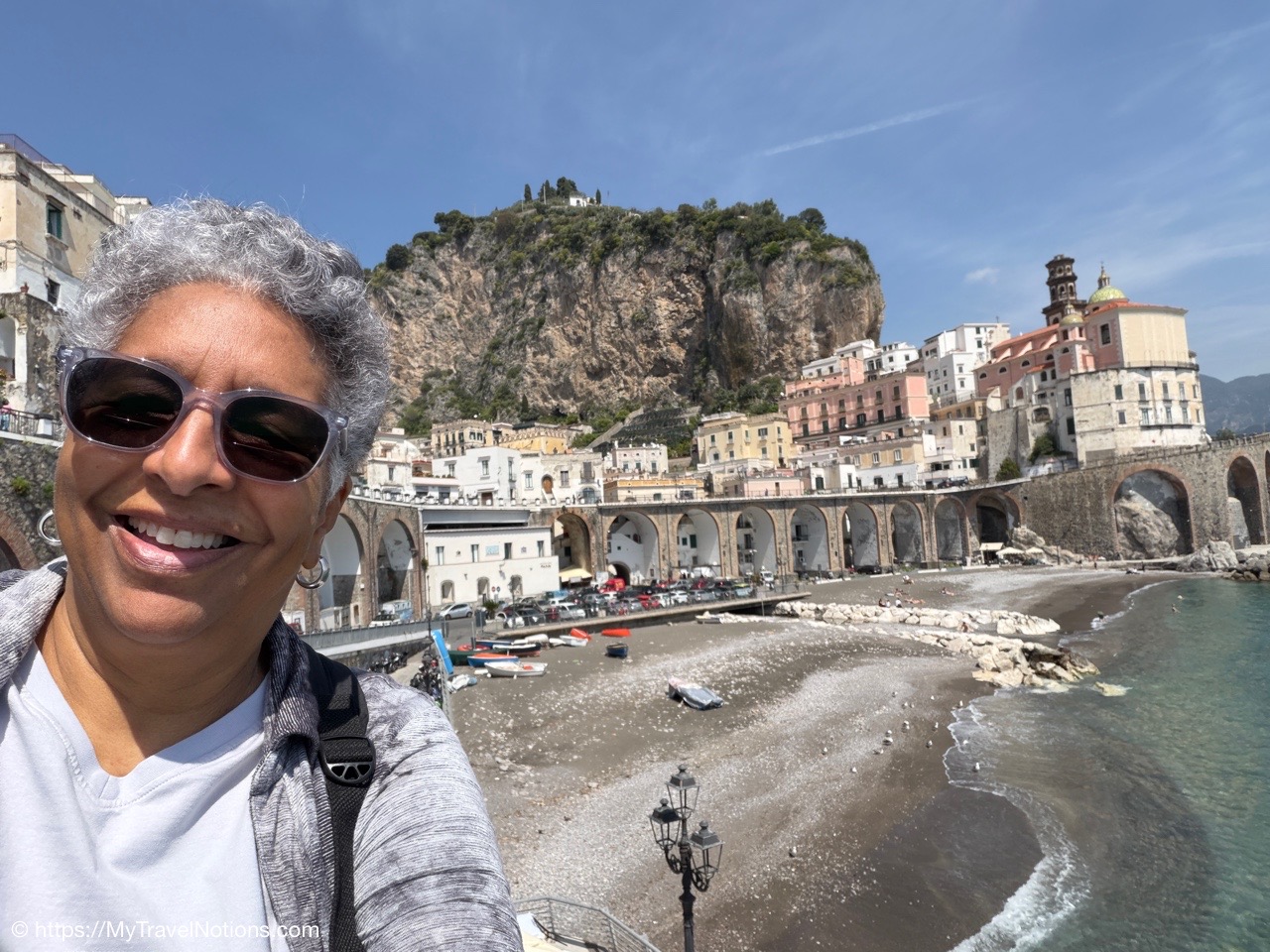
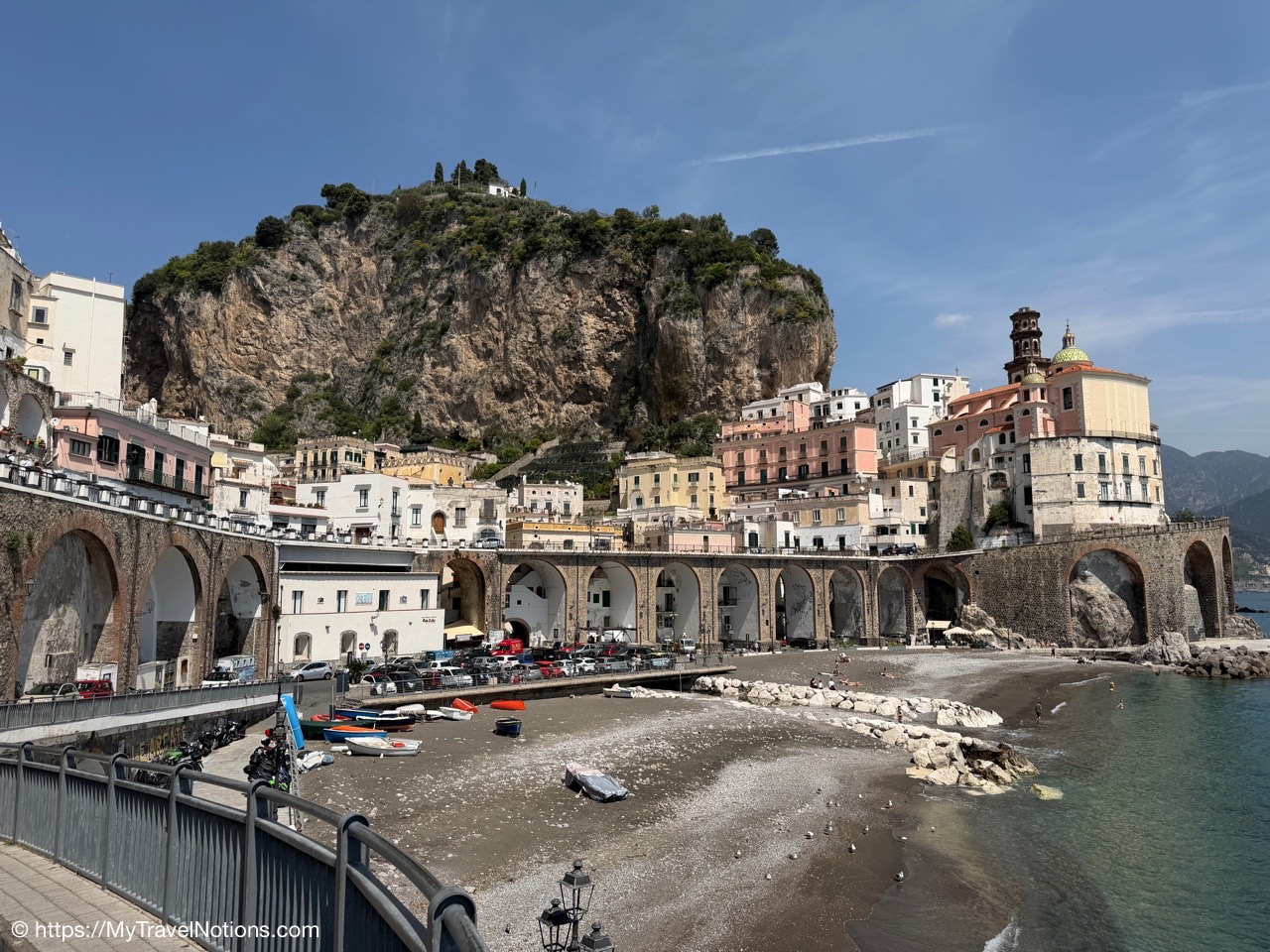
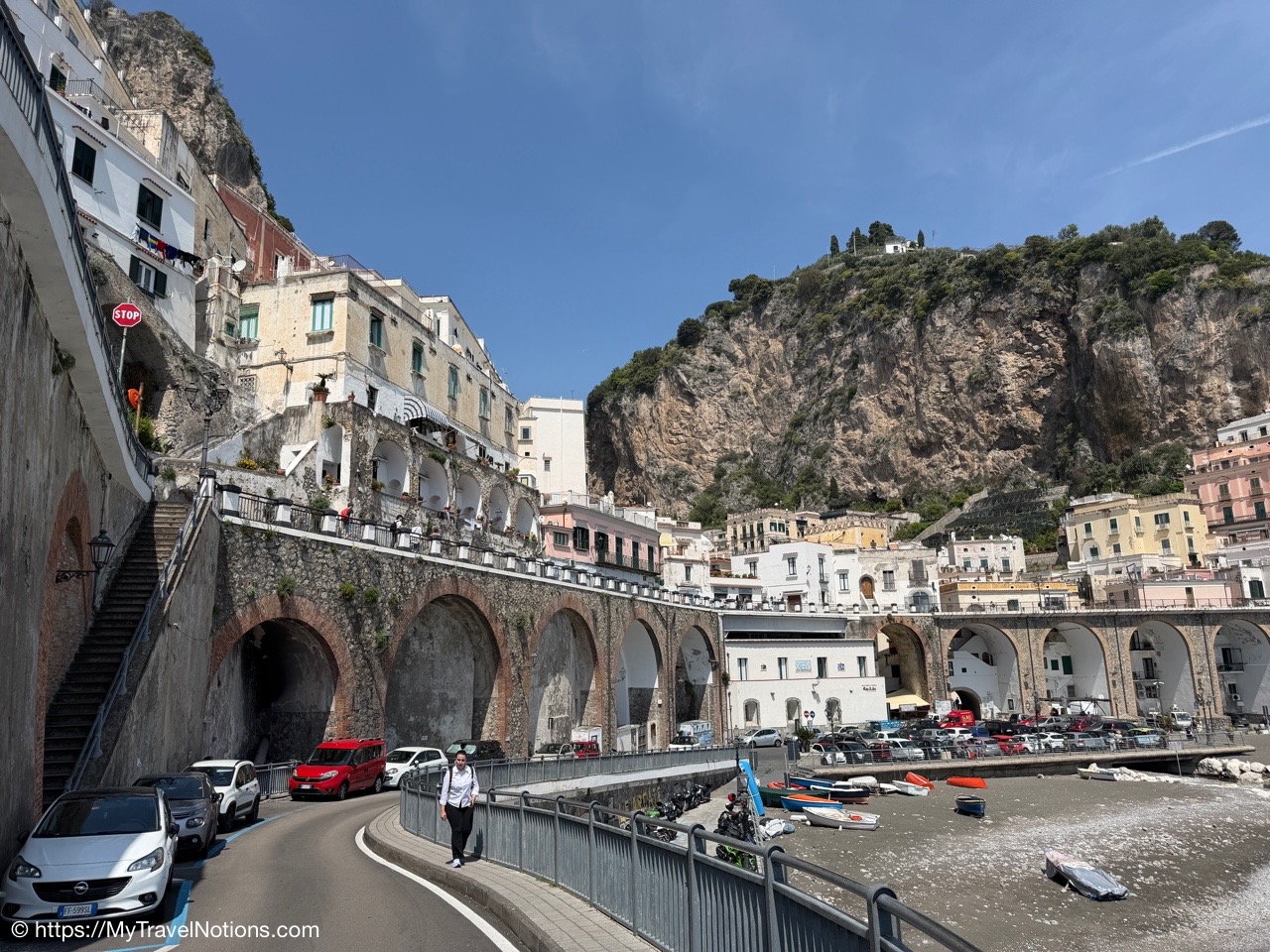
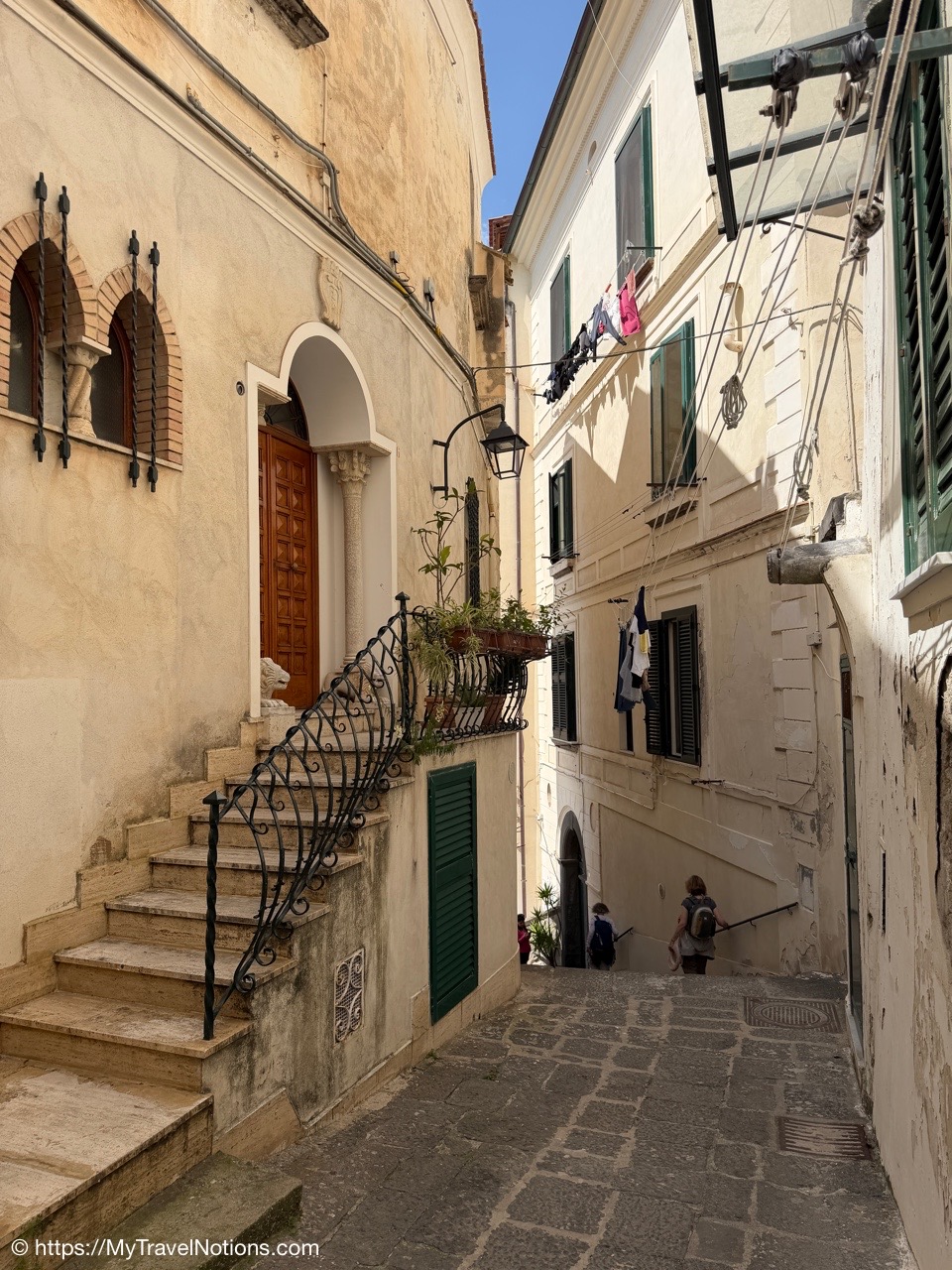
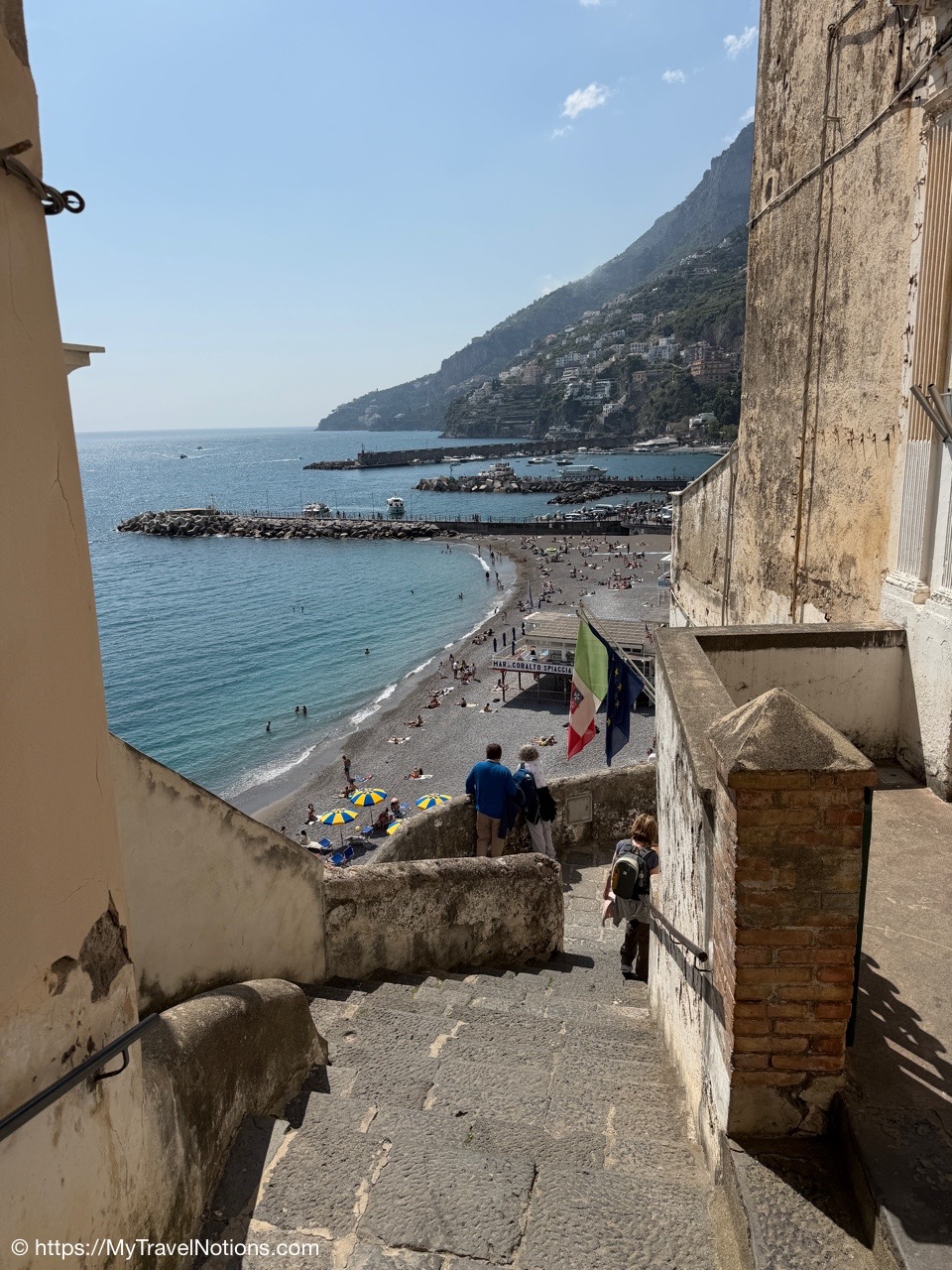
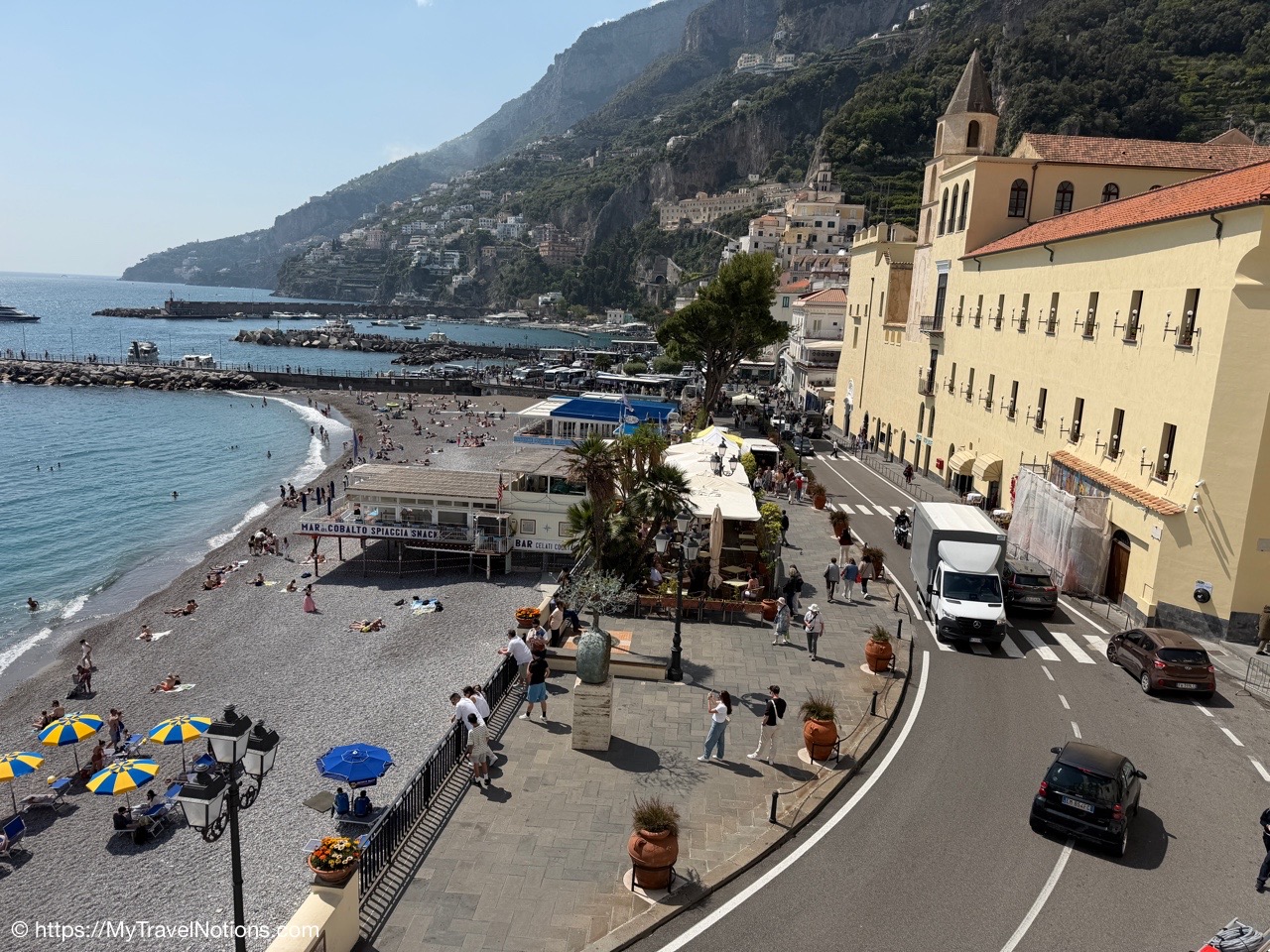
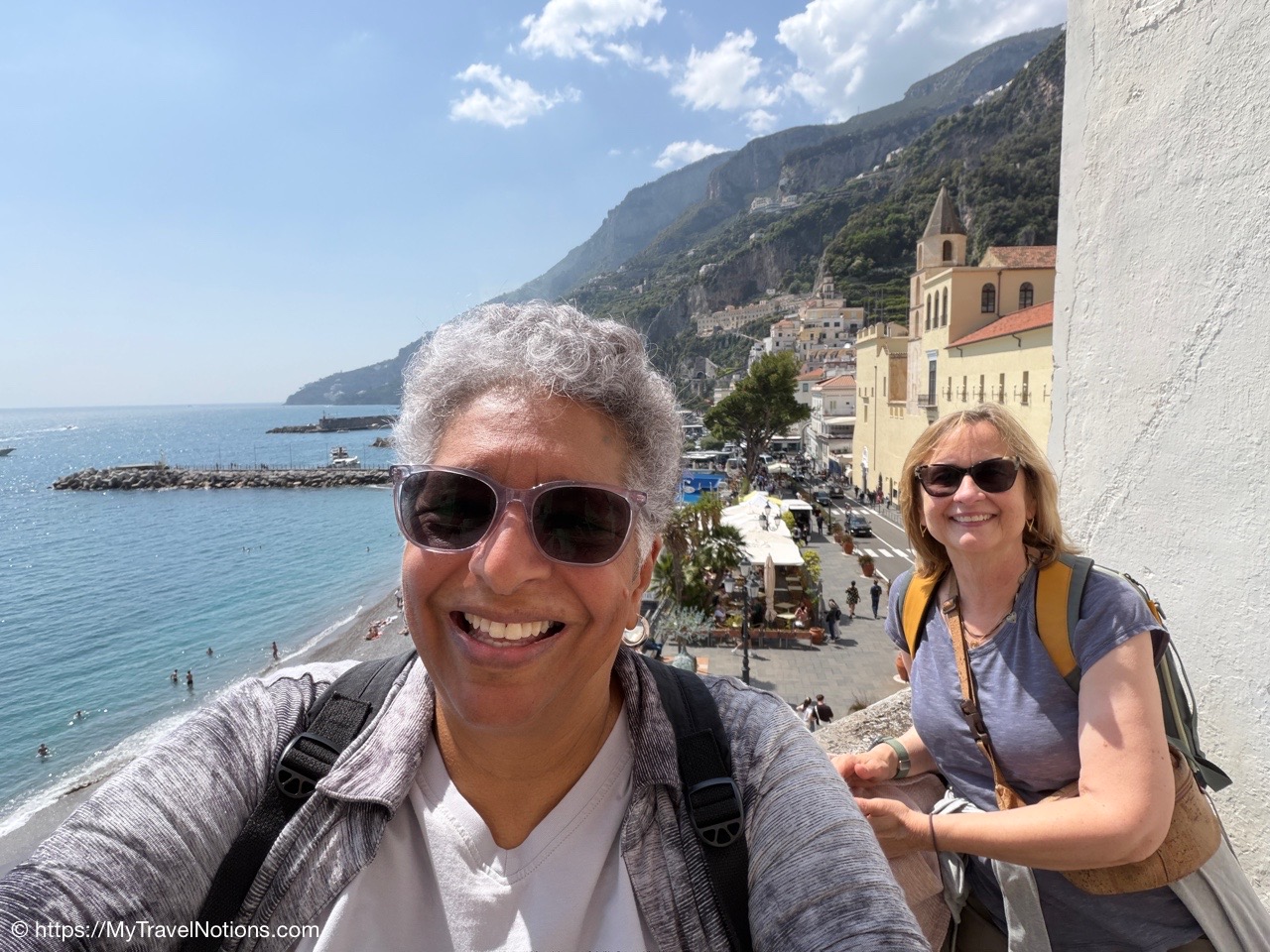
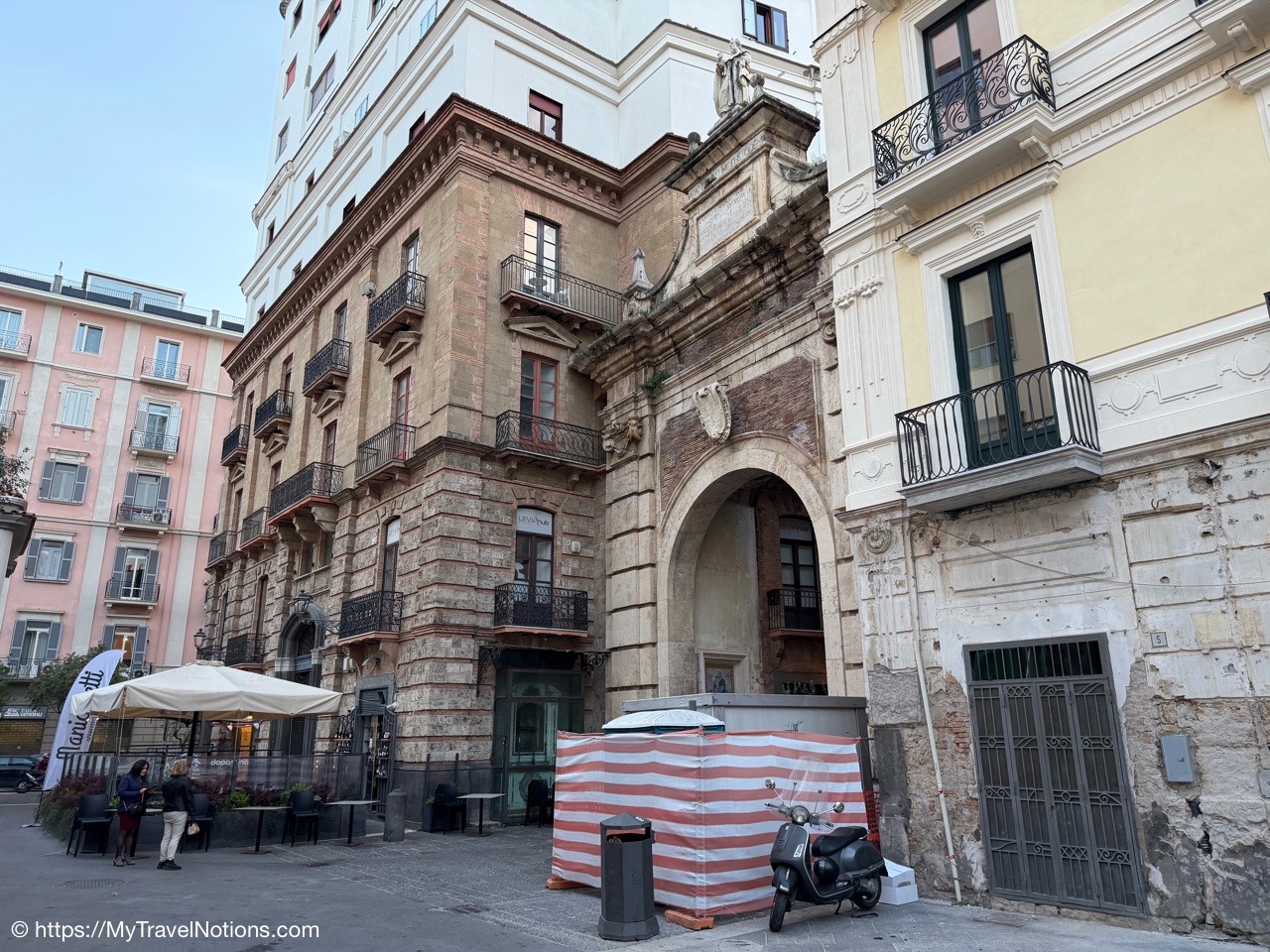
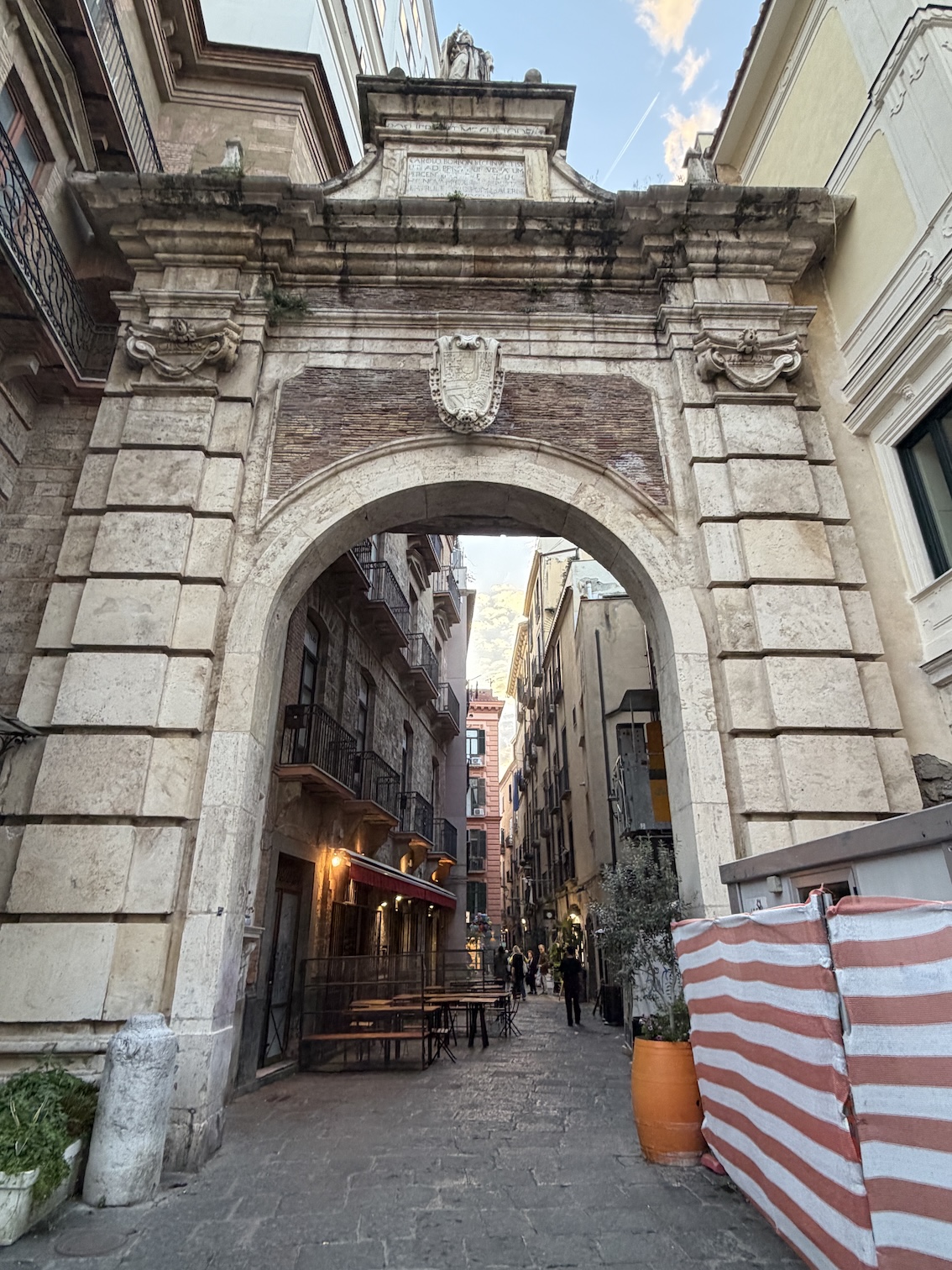
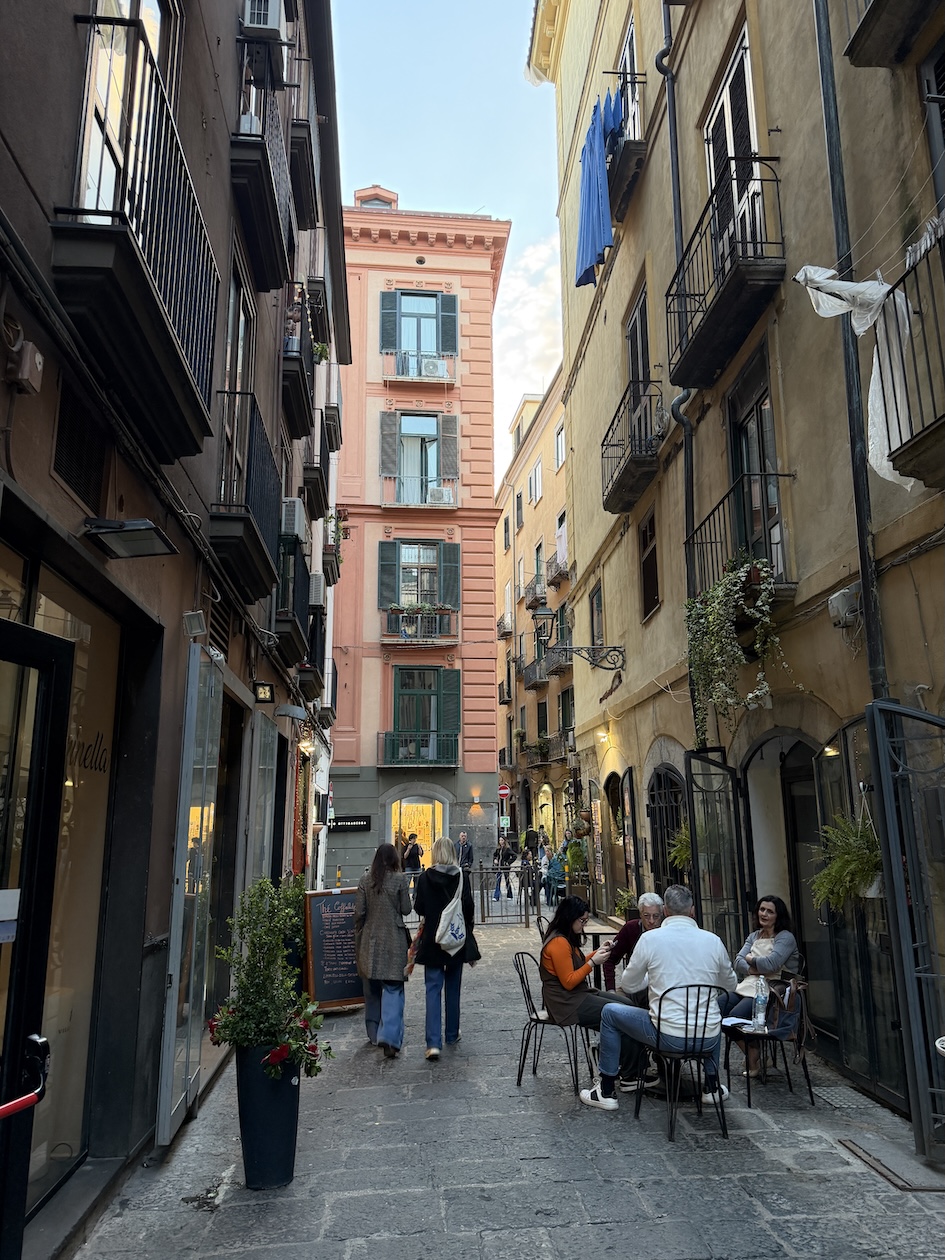
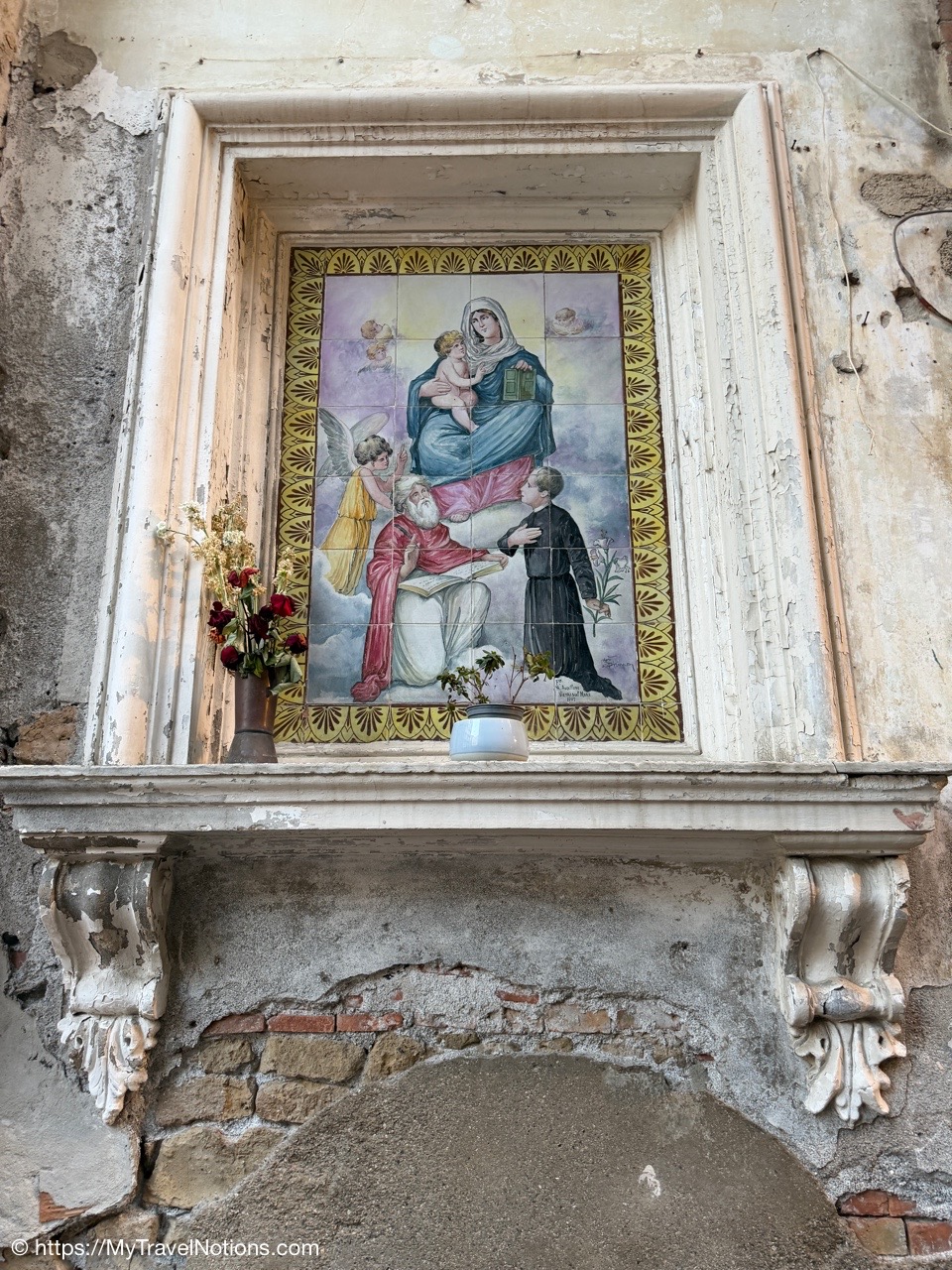
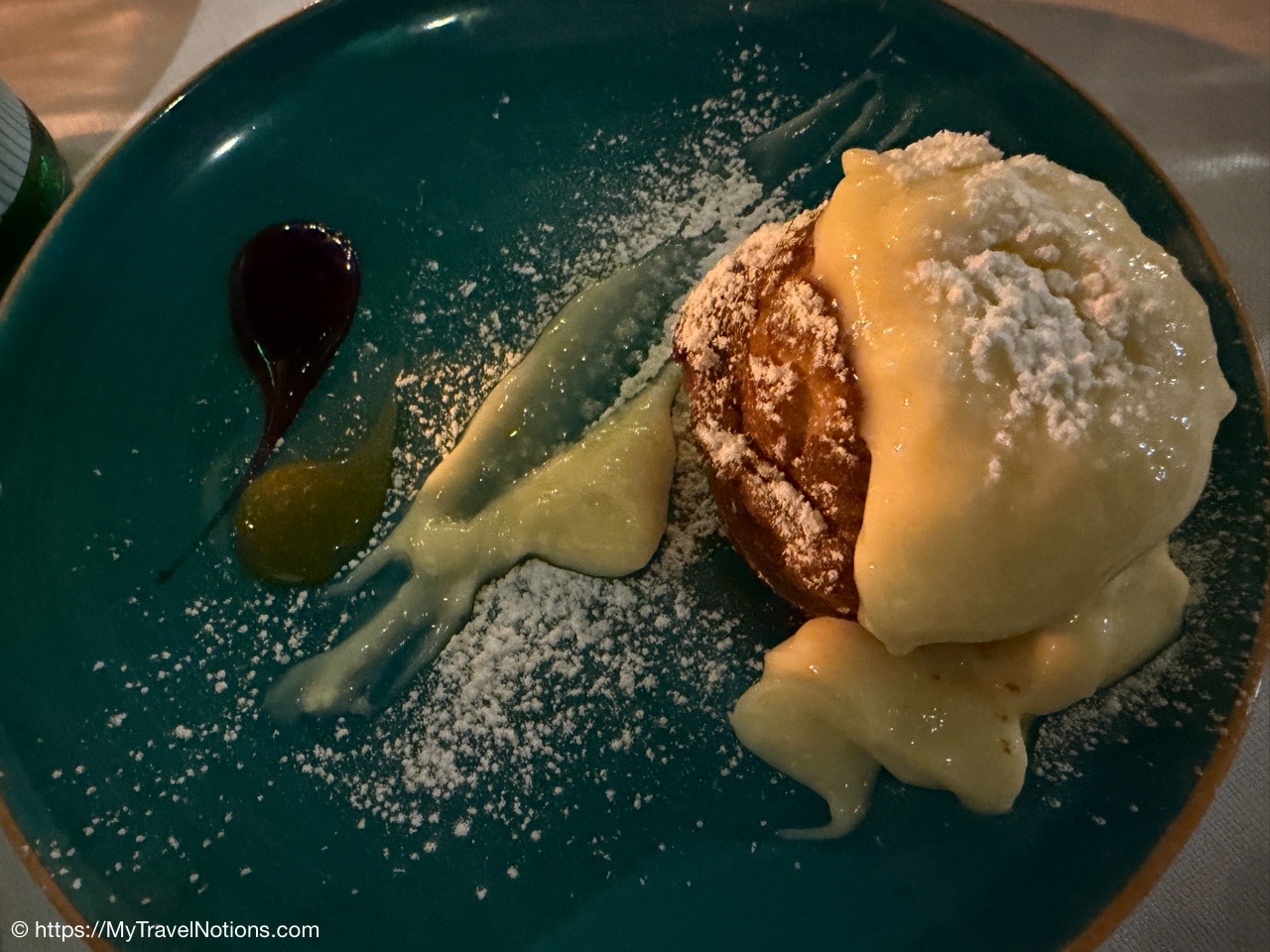
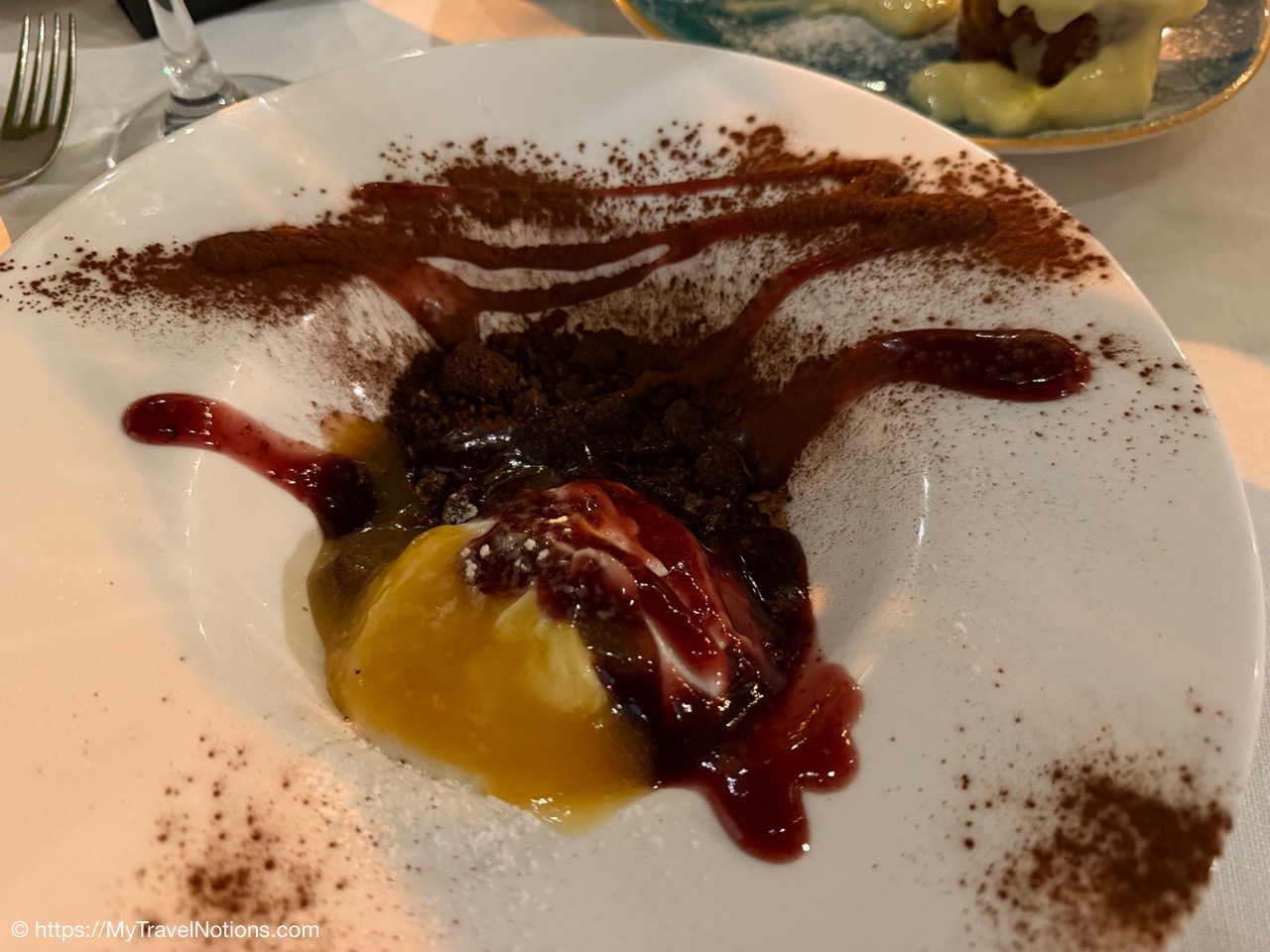
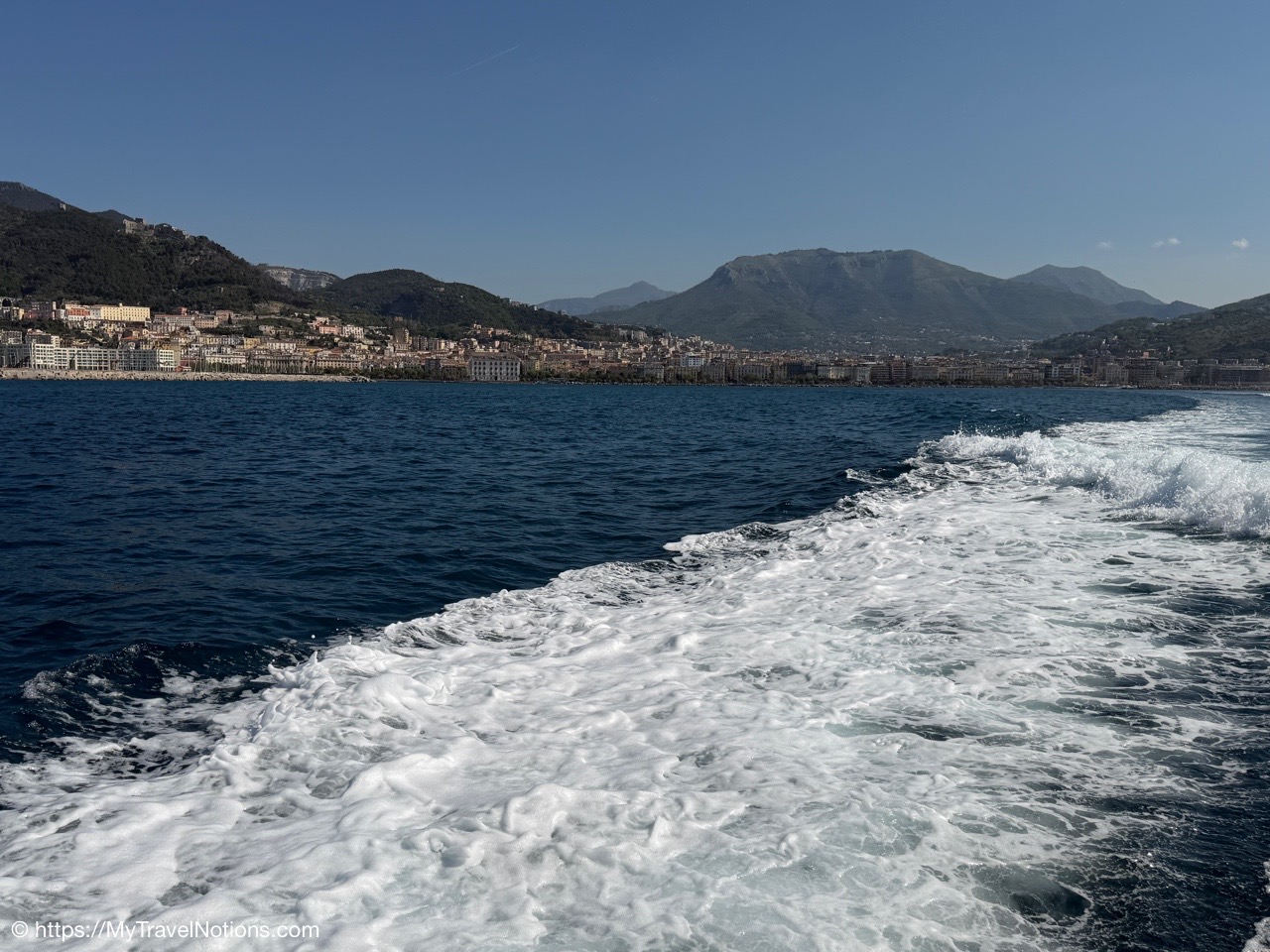
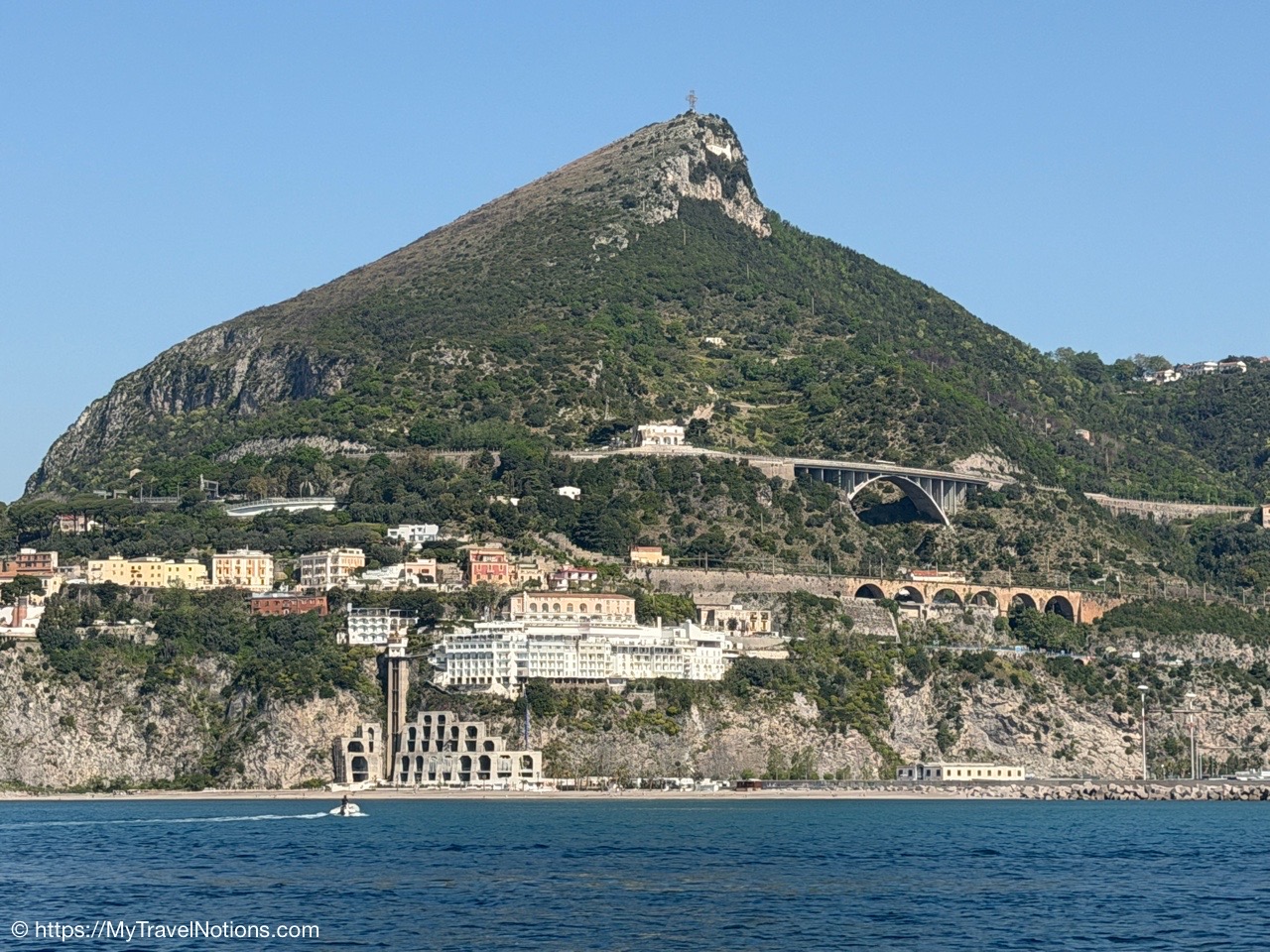
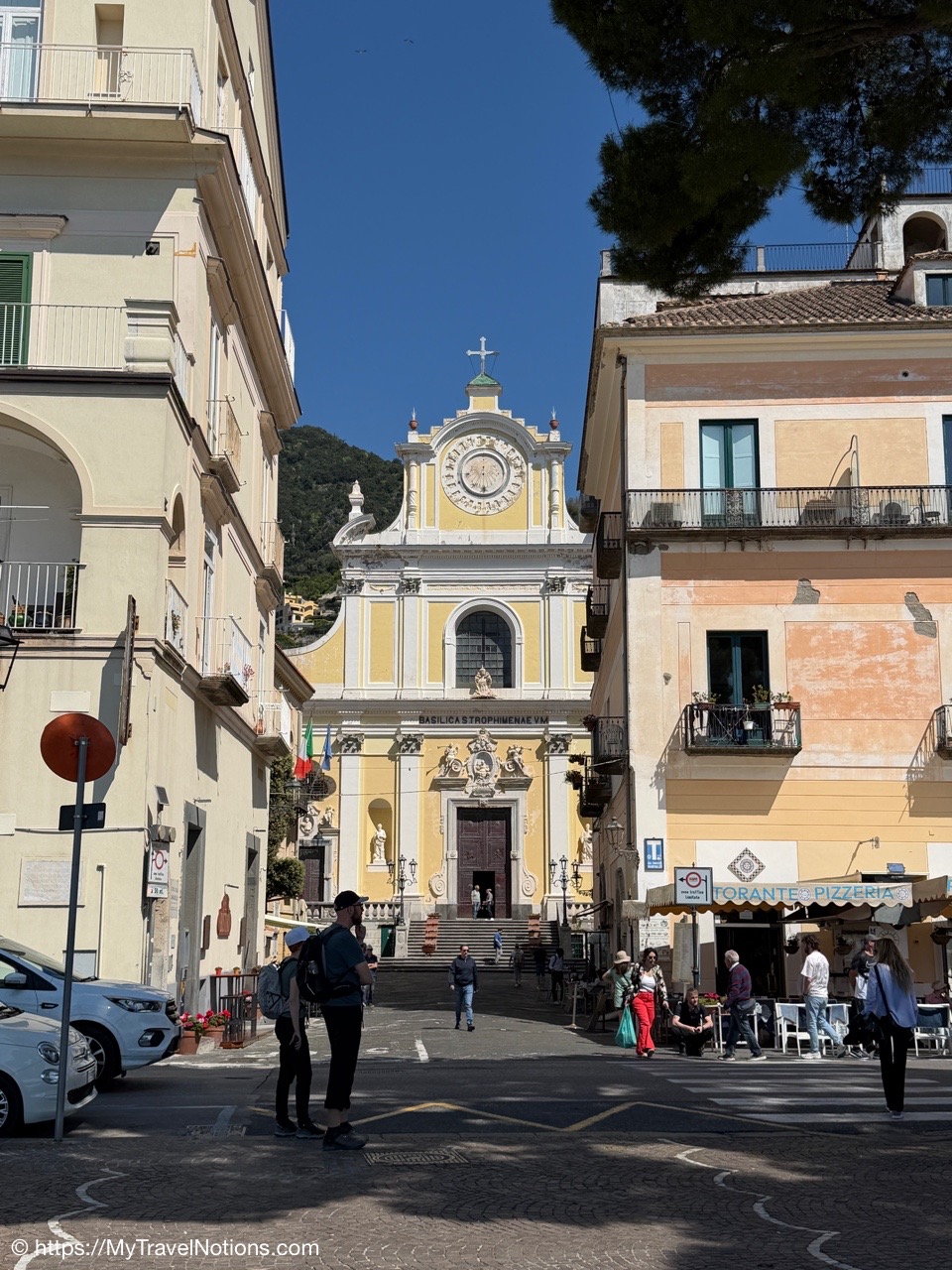
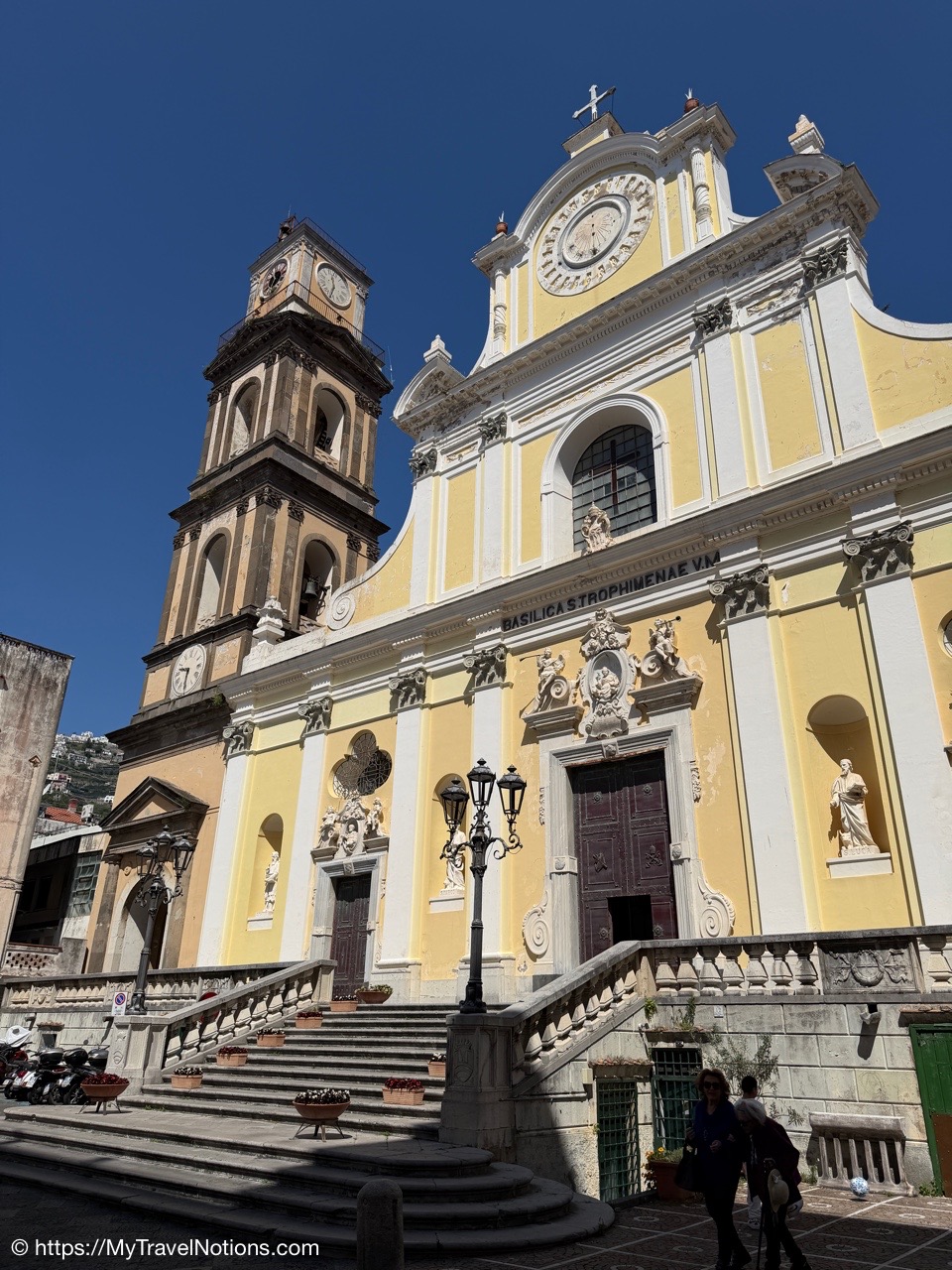
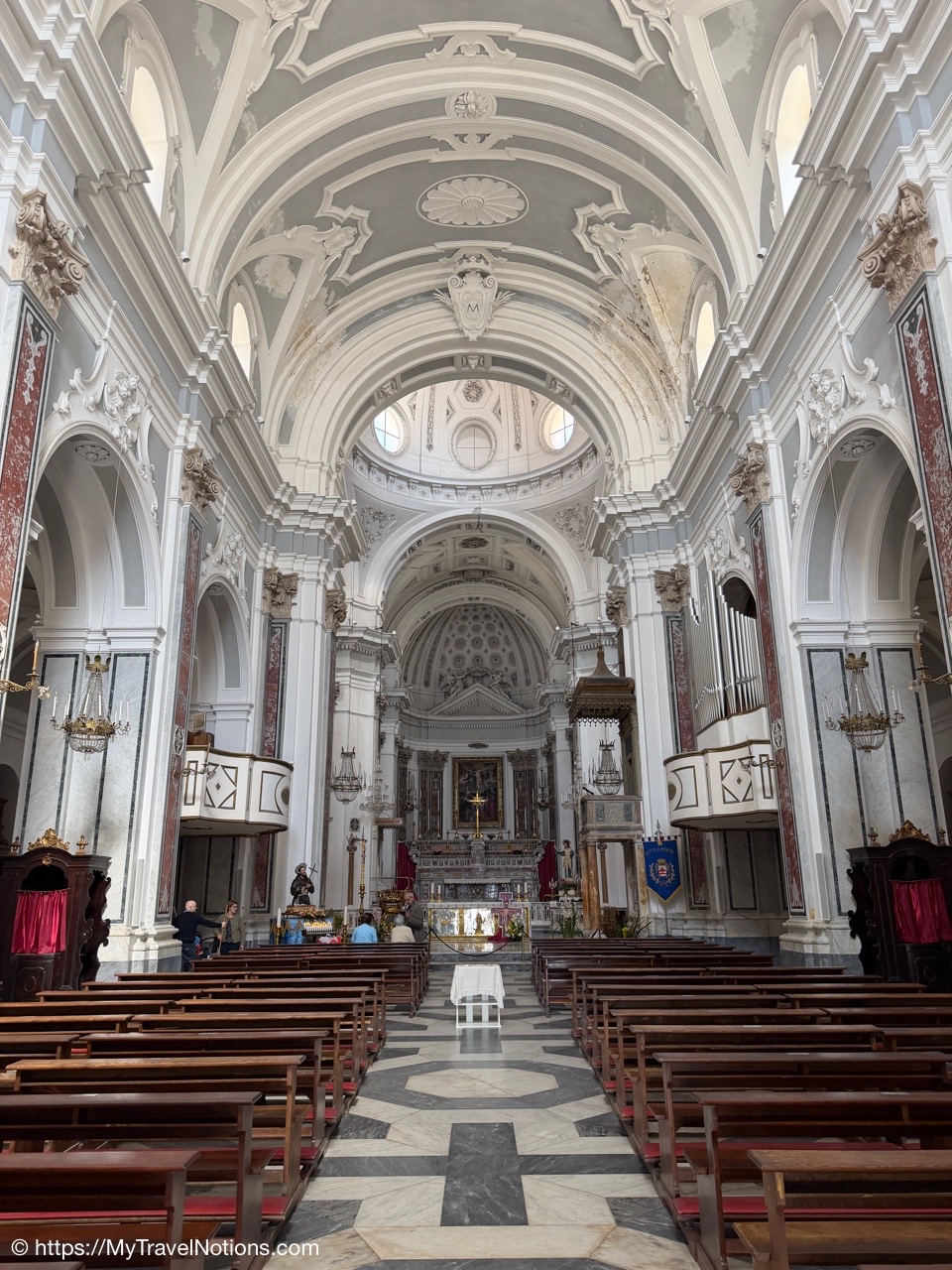
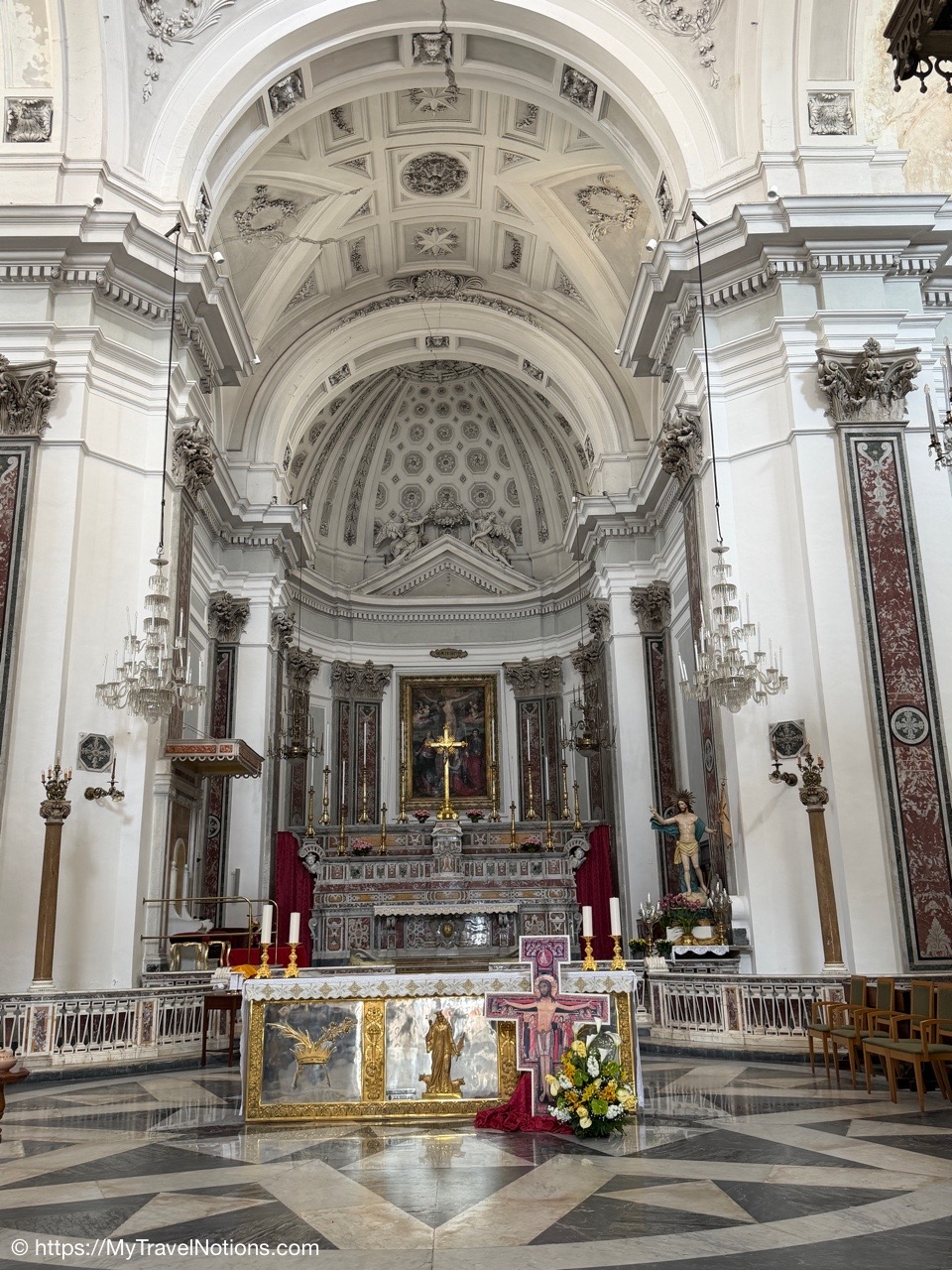
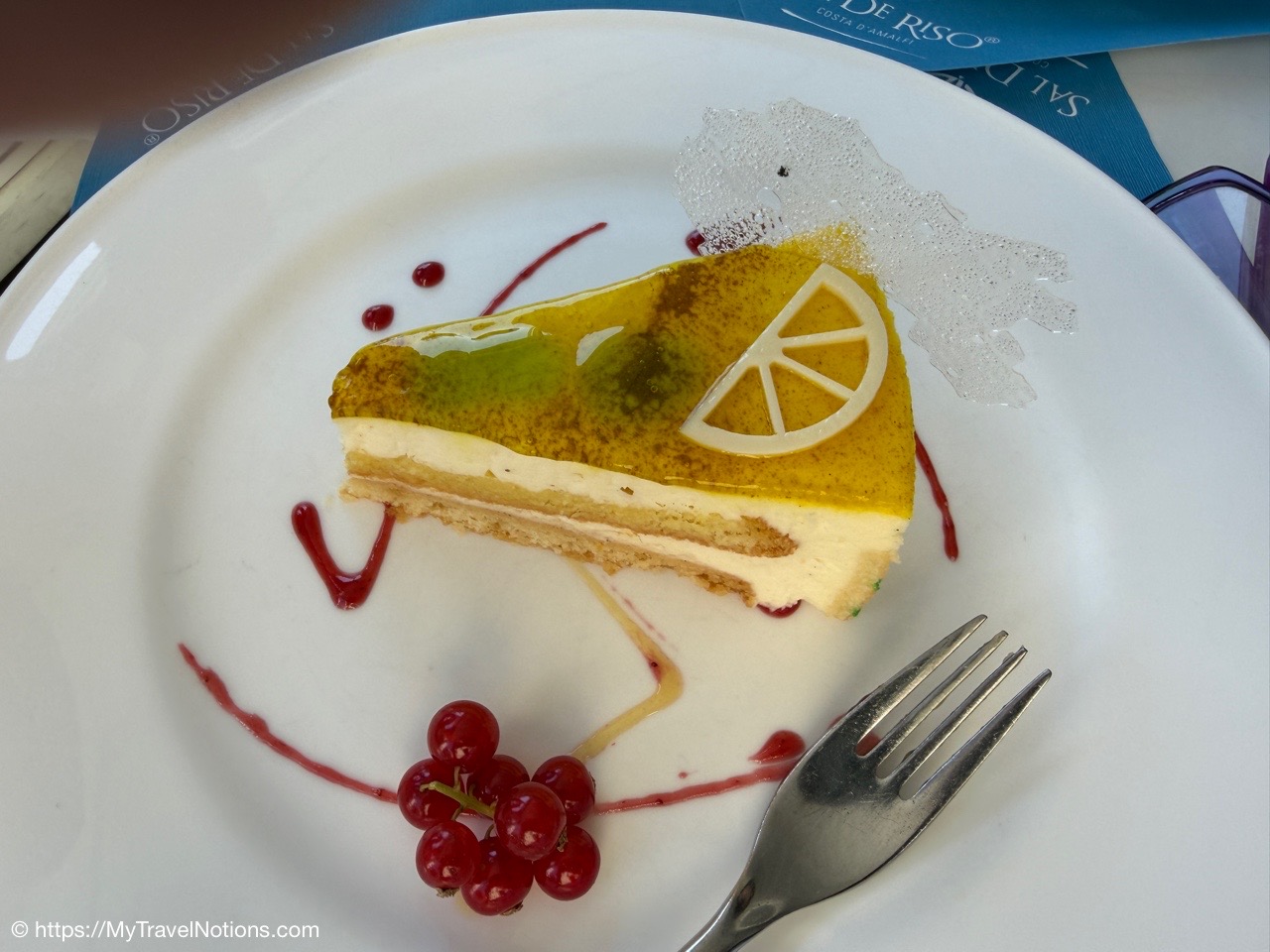
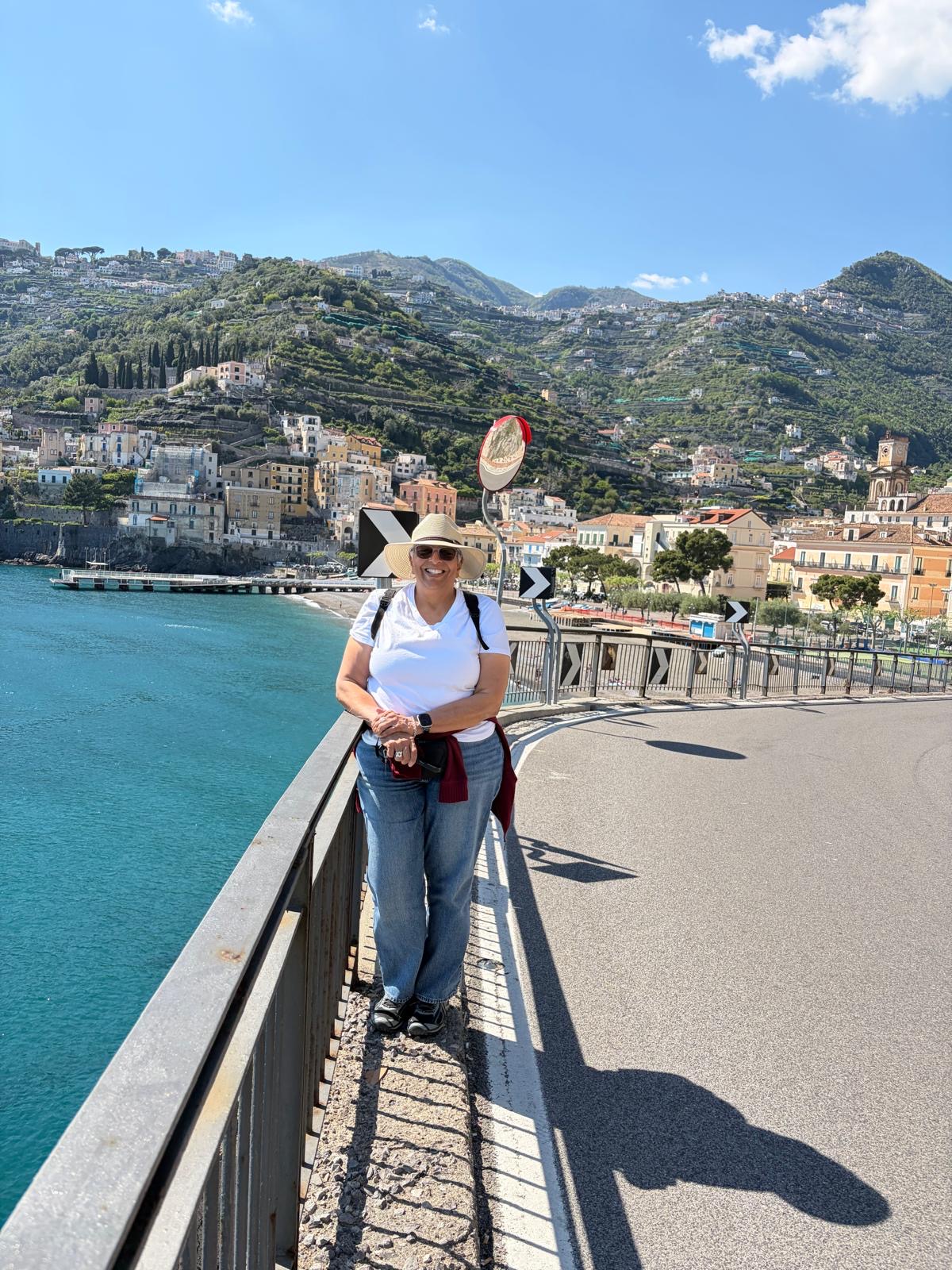
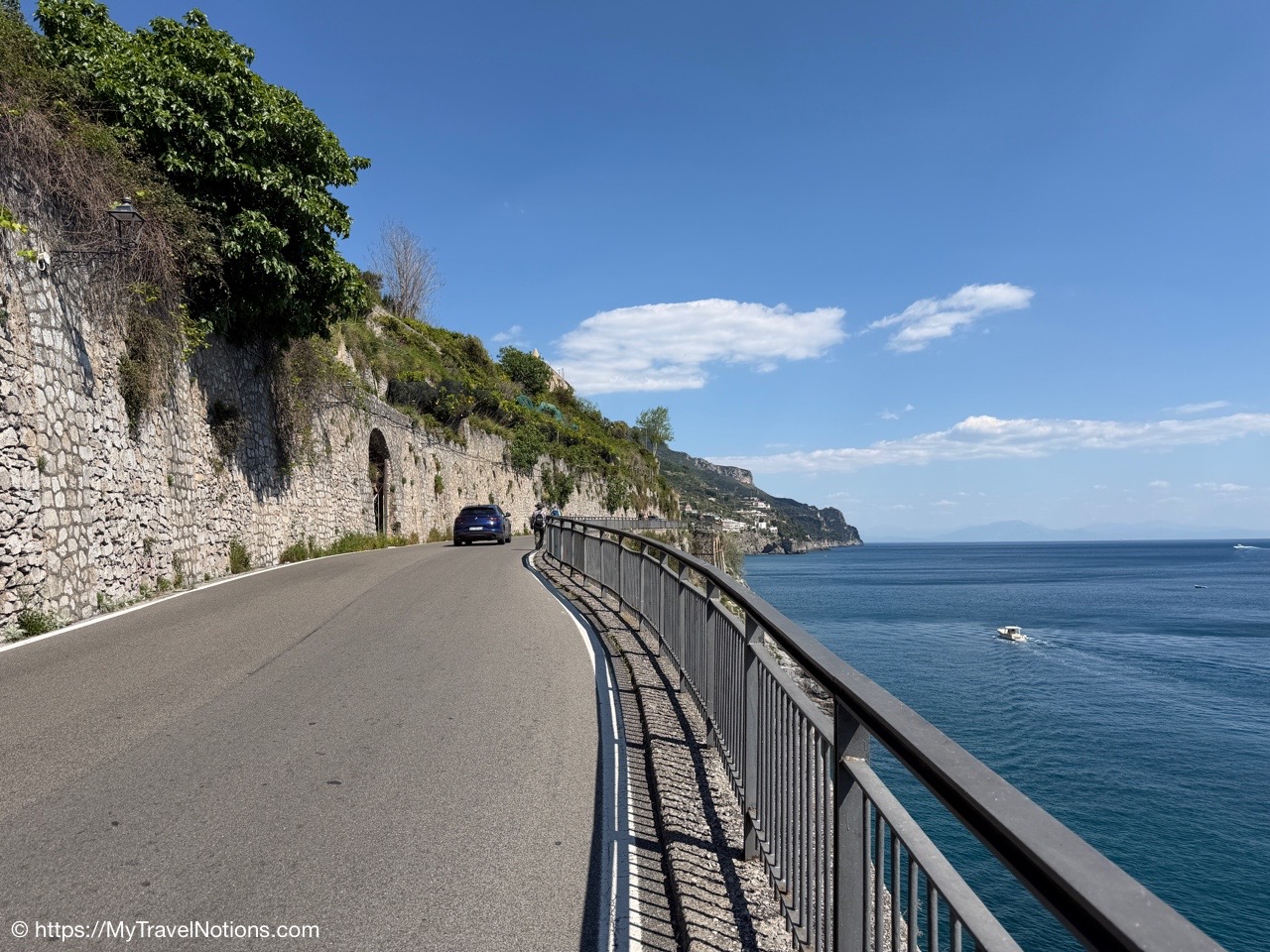
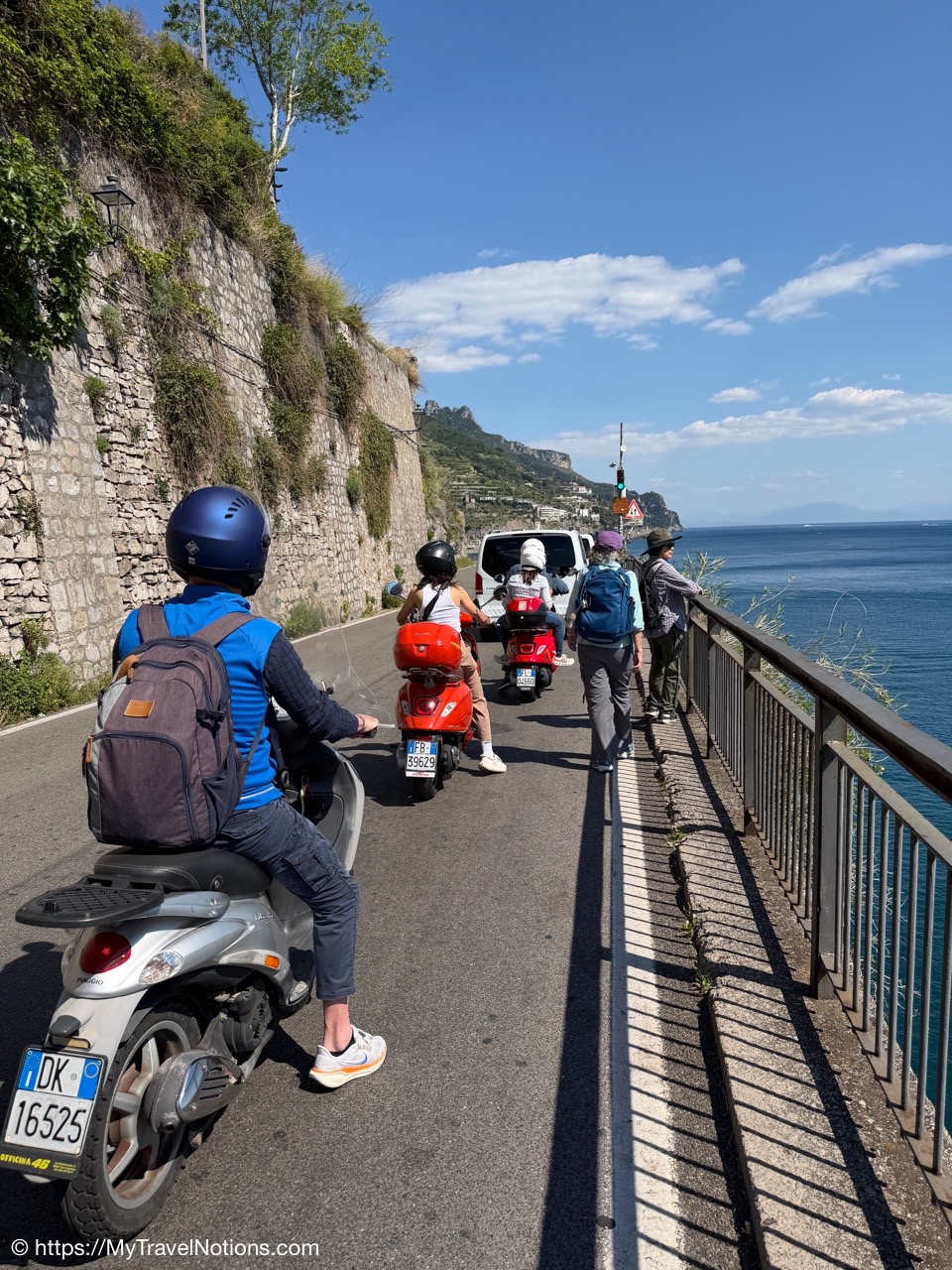
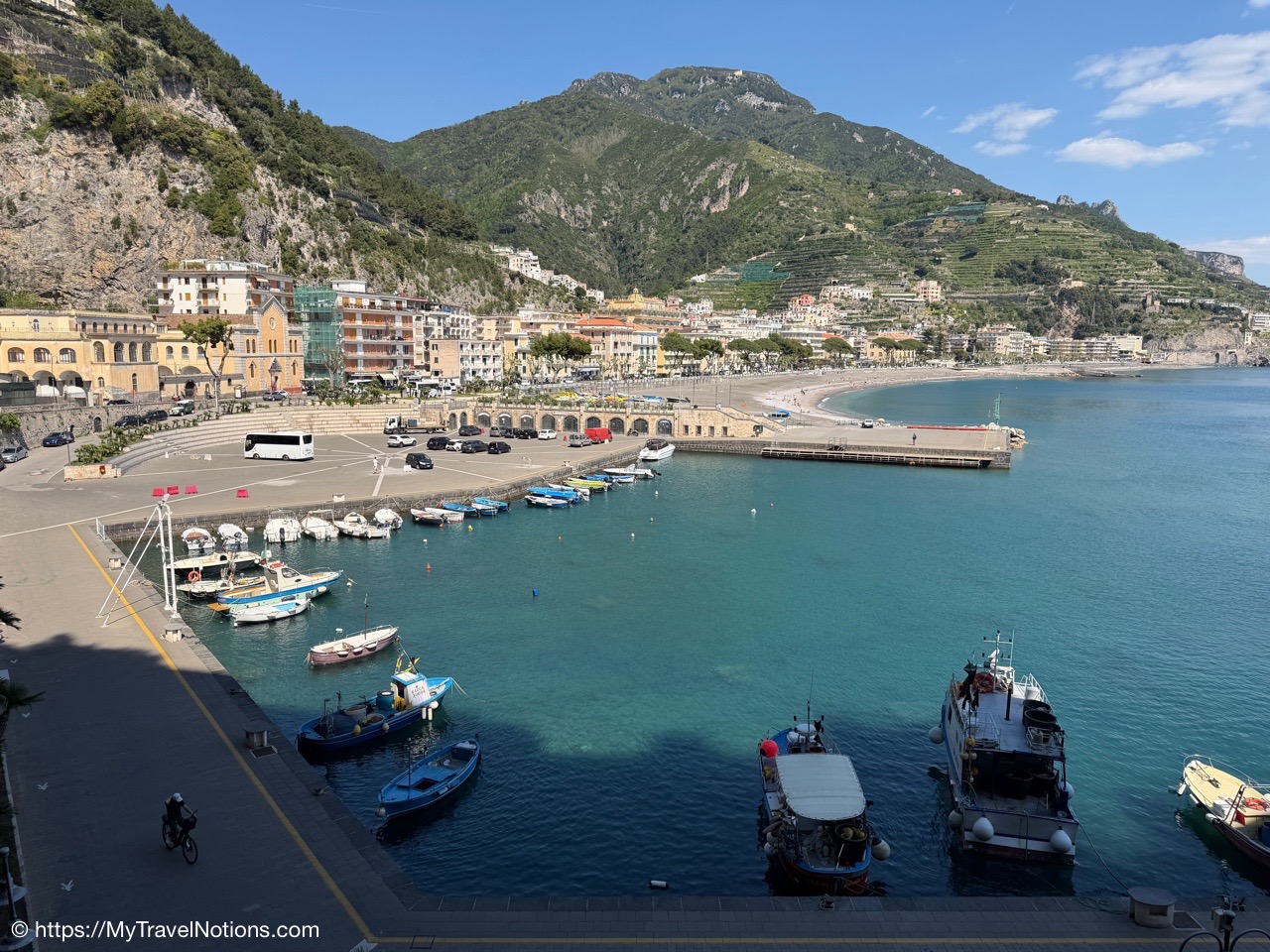
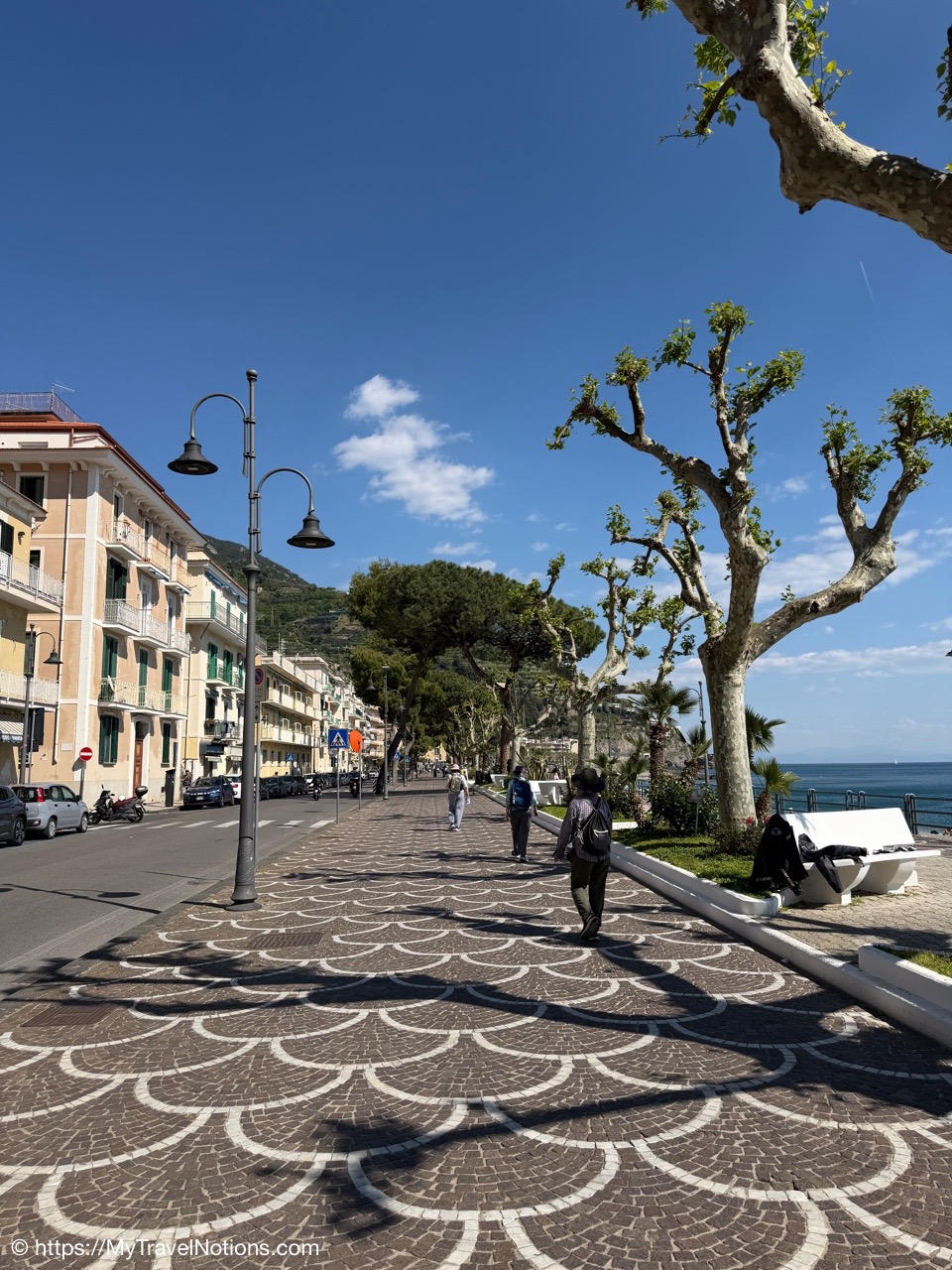
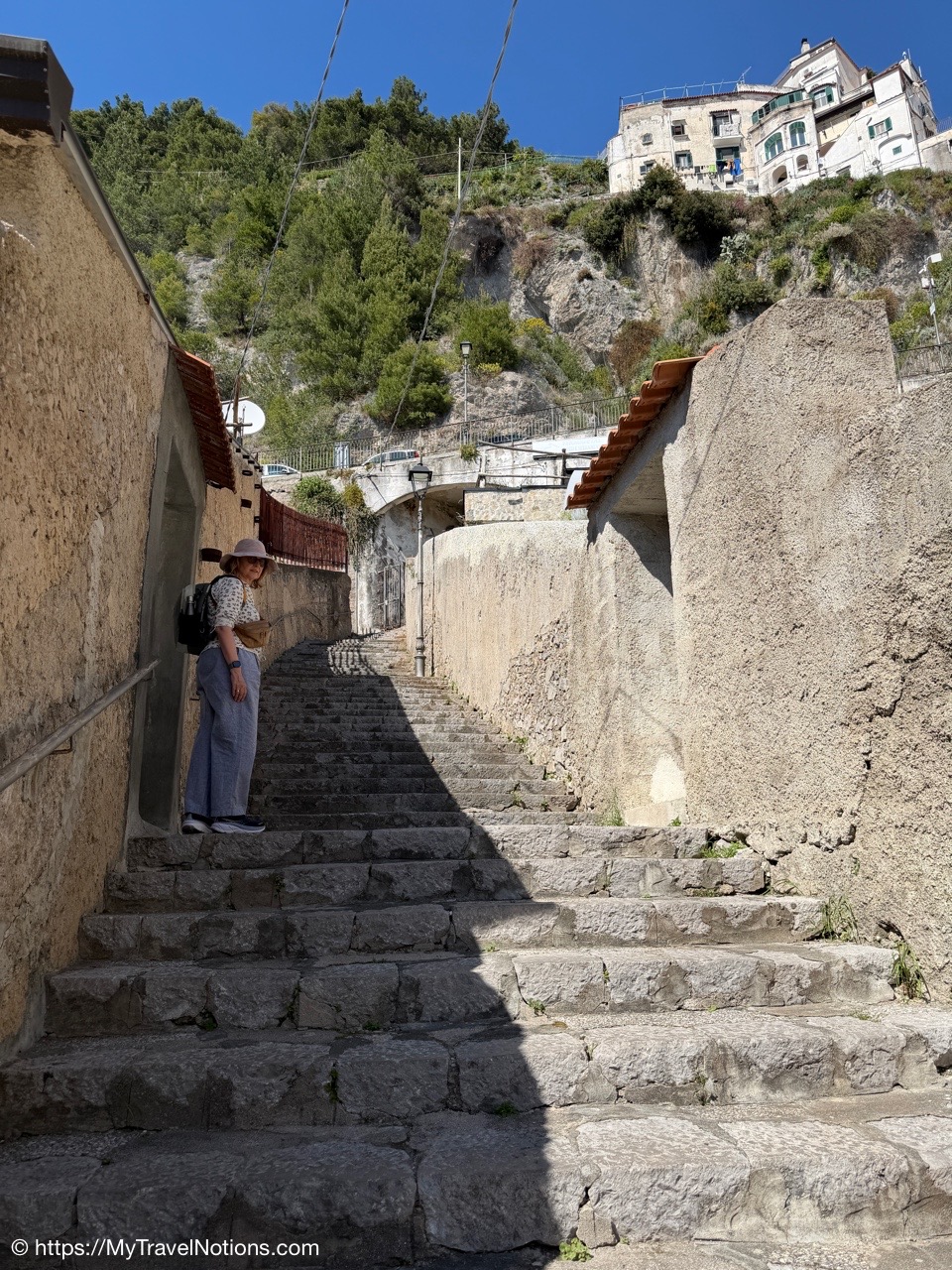
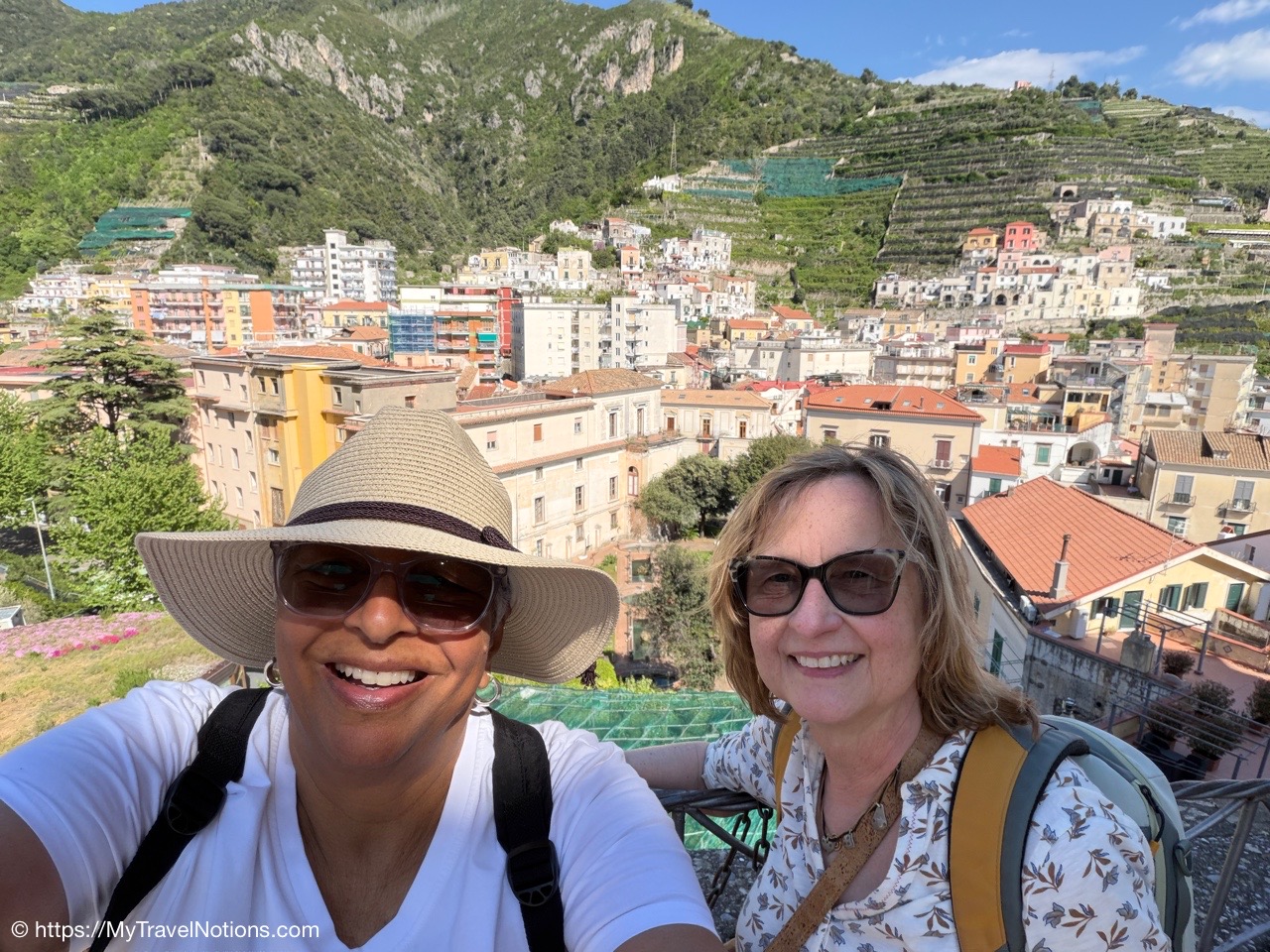
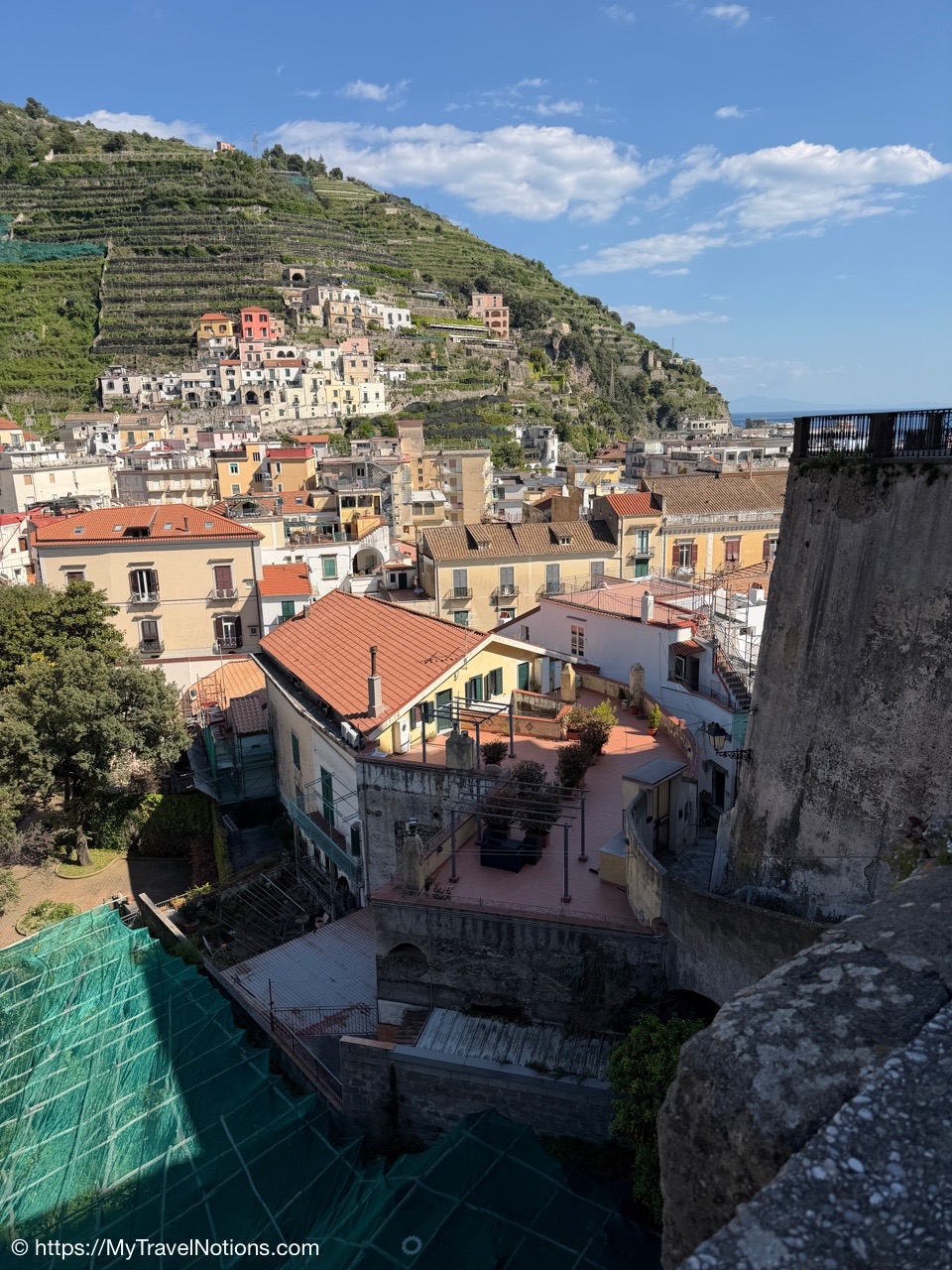
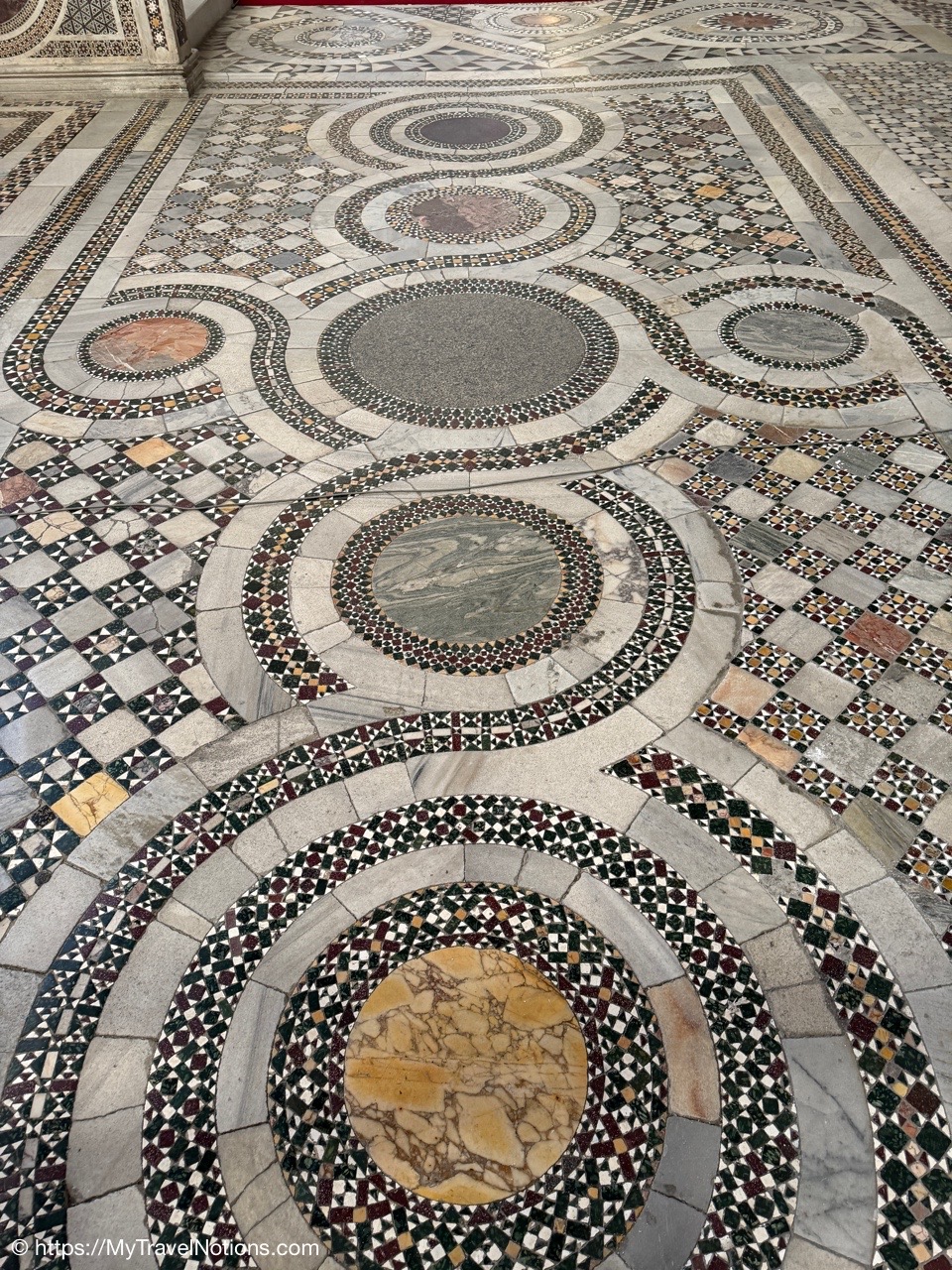
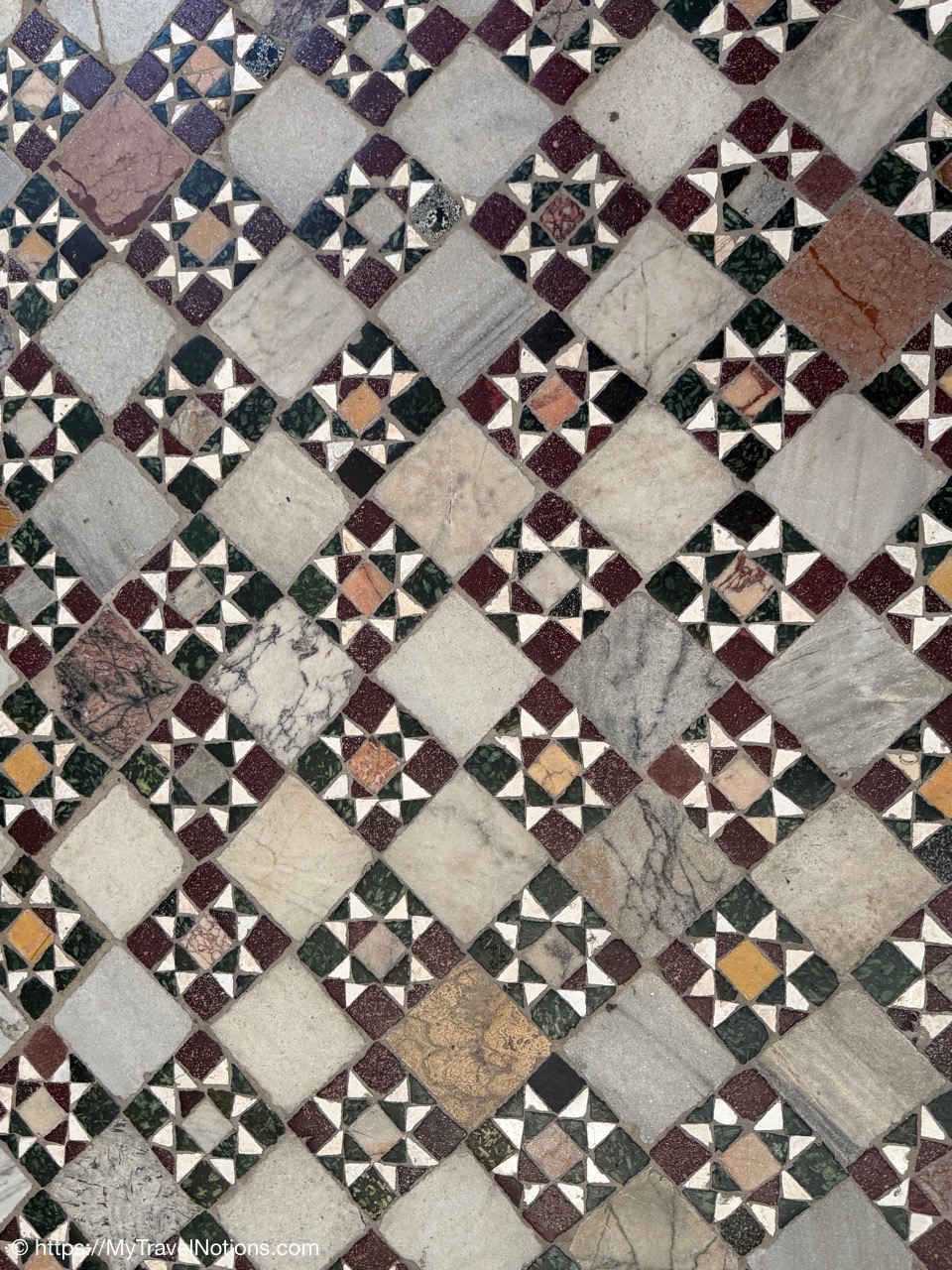
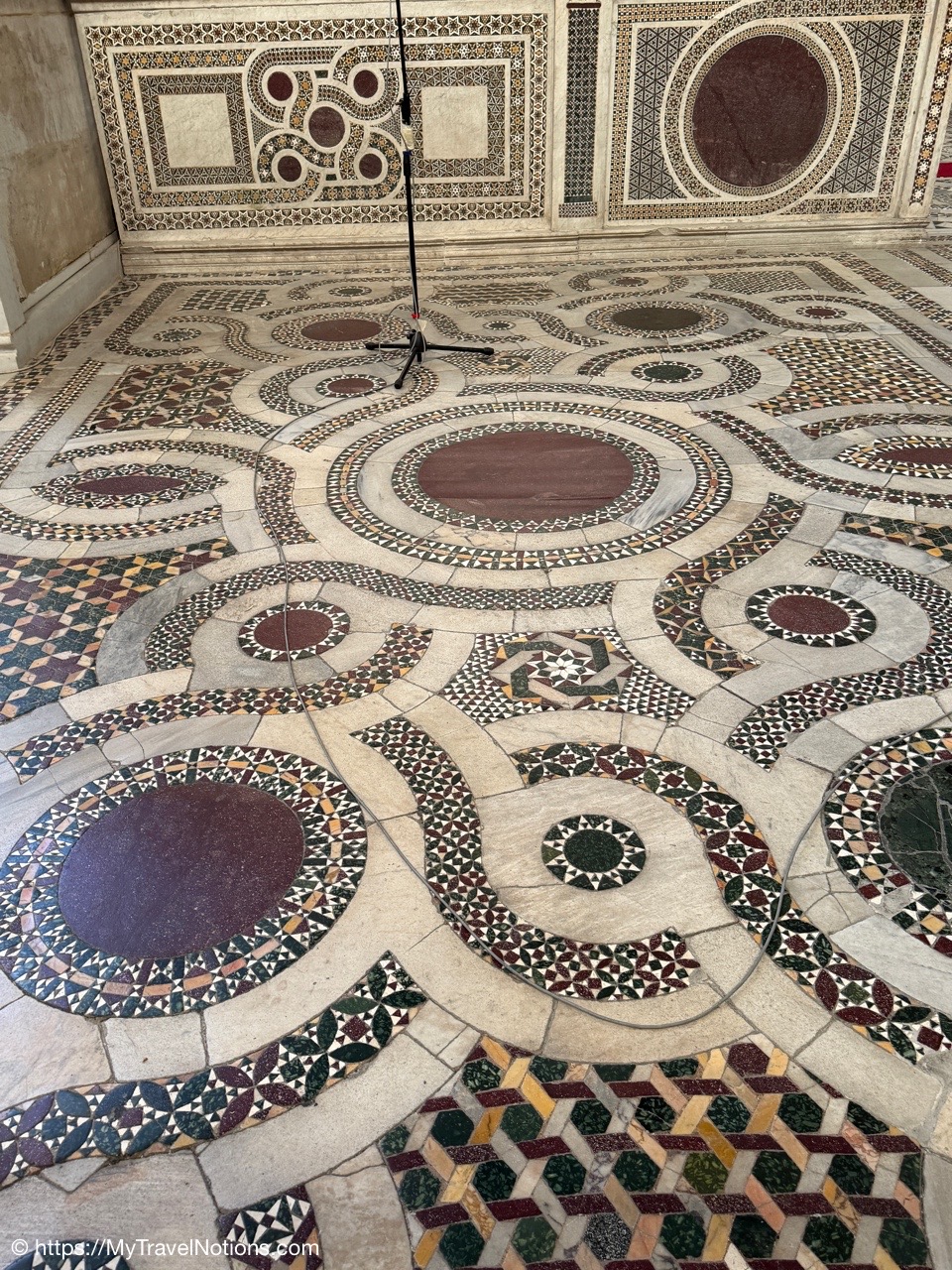
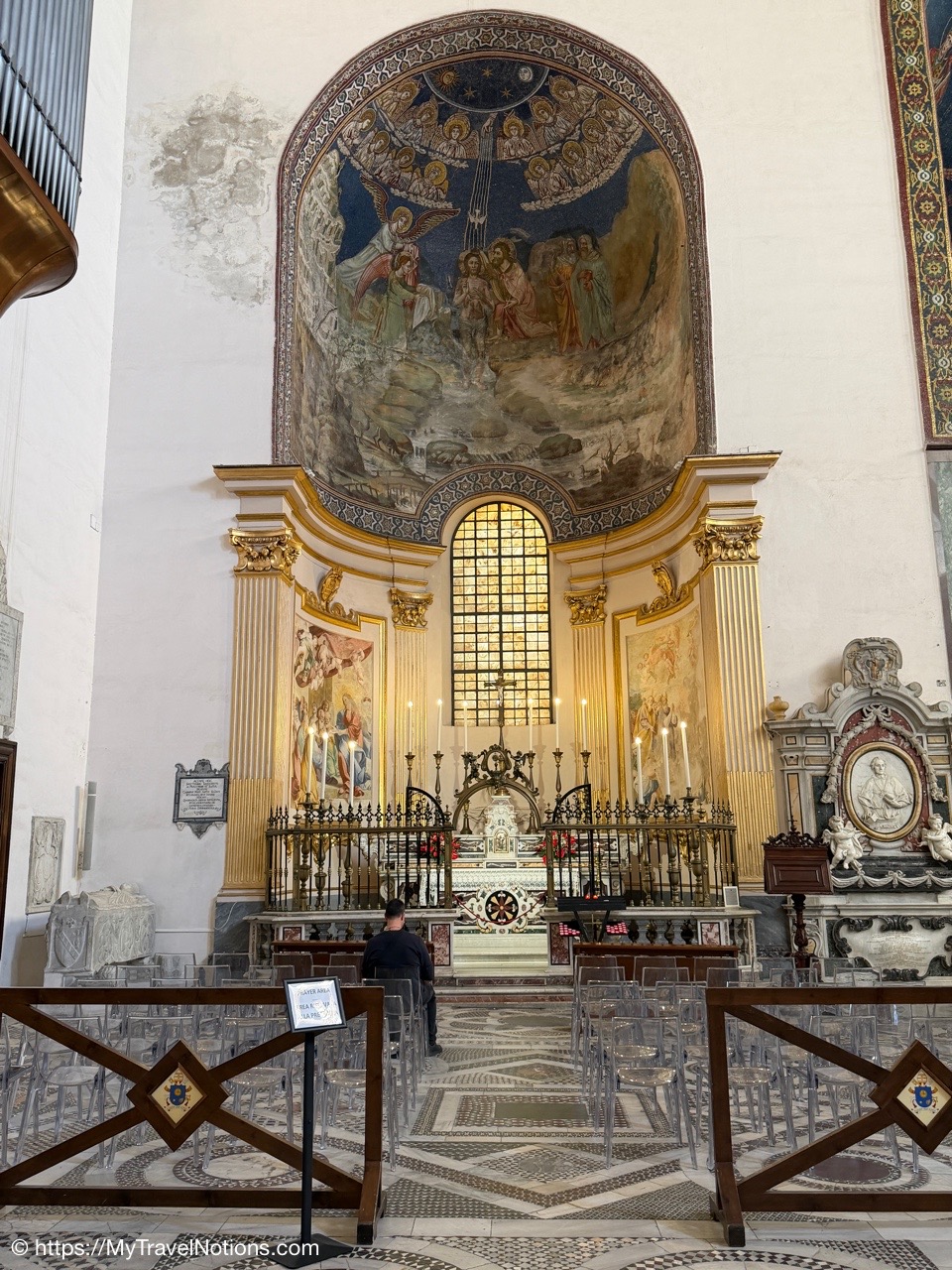
Getting in a group photo in front of the 62 steps that lead up to the Cathedral of Saint Andrew from the Piazza del Duomo in the town of Amalfi. The cathedral is considered as the town’s main landmark. (April 17, 2026)Boarding our ferry at the port of Salerno, for the 35-minute ride in beautiful weather, to the town of Amalfi. (April 17, 2026)The ferry ride from our home base in Salerno to the town of Amalfi was pretty much full. Here we are, arriving in the town of Amalfi. (April 17, 2026)The ferry ride from our home base in Salerno to the town of Amalfi was pretty much full. Here we are, arriving in the town of Amalfi. (April 17, 2026)The beautiful terraced views of the town of Amalfi from the port of Amalfi. (April 17, 2026)The beach area of the town of Amalfi. (April 17, 2026)The beach area of the town of Amalfi. (April 17, 2026)The narrow Amalfi Drive where vehicles can get from Sorrento to Salerno on this winding narrow road through the towns of the Amalfi Coast. (April 17, 2026)The narrow Amalfi Drive where vehicles can get from Sorrento to Salerno on this winding narrow road through the towns of the Amalfi Coast. (April 17, 2026)An outdoor market for the locals of the town of Amalfi. (April 17, 2026)An outdoor market for the locals of the town of Amalfi. (April 17, 2026)Look at the size of the fruits and those lemons which the Amalfi Coast is known for. (April 17, 2026)There are plenty of stairs to climb in the town of Amalfi. (April 17, 2026)The inner area of the town of Amalfi. (April 17, 2026)And many narrow lane ways in the town of Amalfi. (April 17, 2026)Before entering the Cathedral of Saint Andrew, our guide Michele took us through the various passageways to first enter the cathedral’s Cloister of Paradise. (April 17, 2026)Before entering the Cathedral of Saint Andrew, our guide Michele took us through the various passageways to first enter the cathedral’s Cloister of Paradise. (April 17, 2026)The Cathedral of Saint Andrew is dedicated to Saint Andrew the Apostle whose relics are kept inside the Crypt of Saint Andrew. Begun in the 9th and 10th centuries, the cathedral has been added to and redecorated several times during its lengthy lifespan. (April 17, 2026)The Bronze portal doors of the Cathedral of Saint Andrew in the town of Amalfi. (April 17, 2026)A close-up of a portion of the Bronze portal doors of the Cathedral of Saint Andrew in the town of Amalfi. (April 17, 2026)The first part of the Cathedral of Saint Andrew’s complex that we saw was the Cloister of Paradise once used to house the bodies of Amalfi’s nobles. (April 17, 2026)Our guide, Michele, explaining one of the many frescos inside the Cloister of Paradise, part of the Cathedral of Saint Andrew’s complex. This one is the Chapel of Crucifixion. (April 17, 2026)This is the stunning 14th century fresco at the Chapel of Crucifixion inside the Cloister of Paradise of the Cathedral of Saint Andrew. (April 17, 2026)
This is the stunning 14th century fresco at the Chapel of Crucifixion inside the Cloister of Paradise of the Cathedral of Saint Andrew that Michele was showing us. (April 17, 2026)
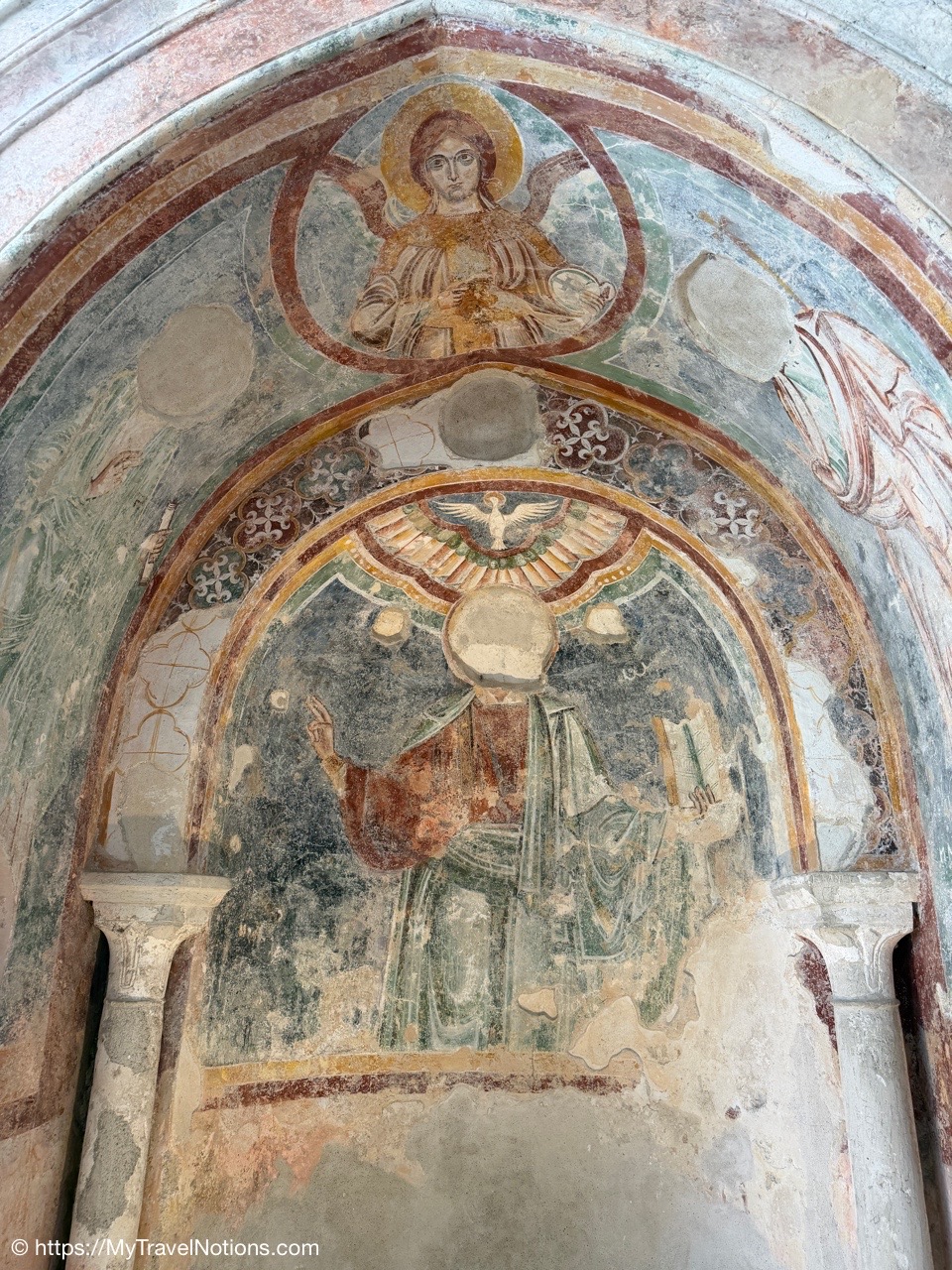
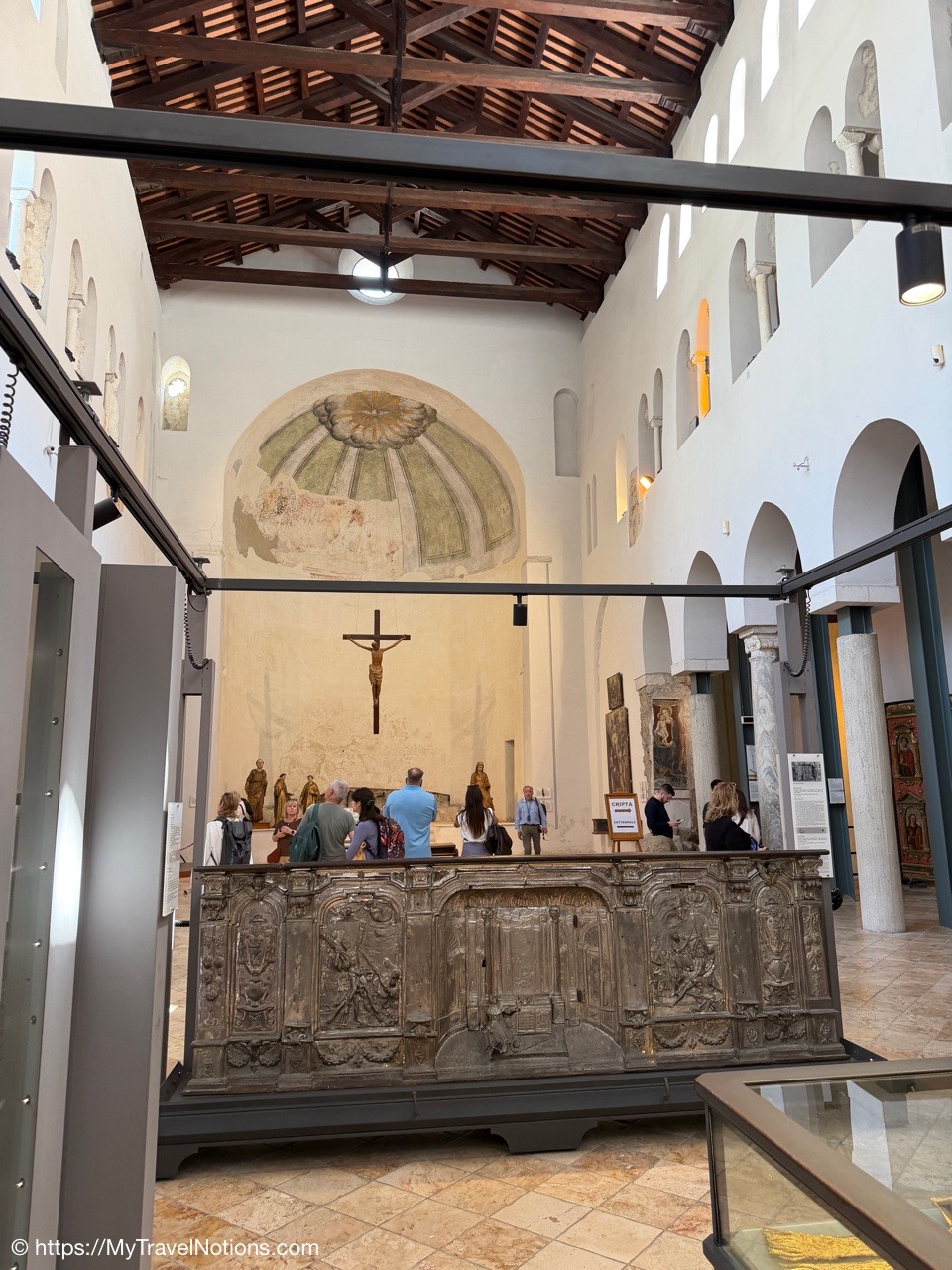
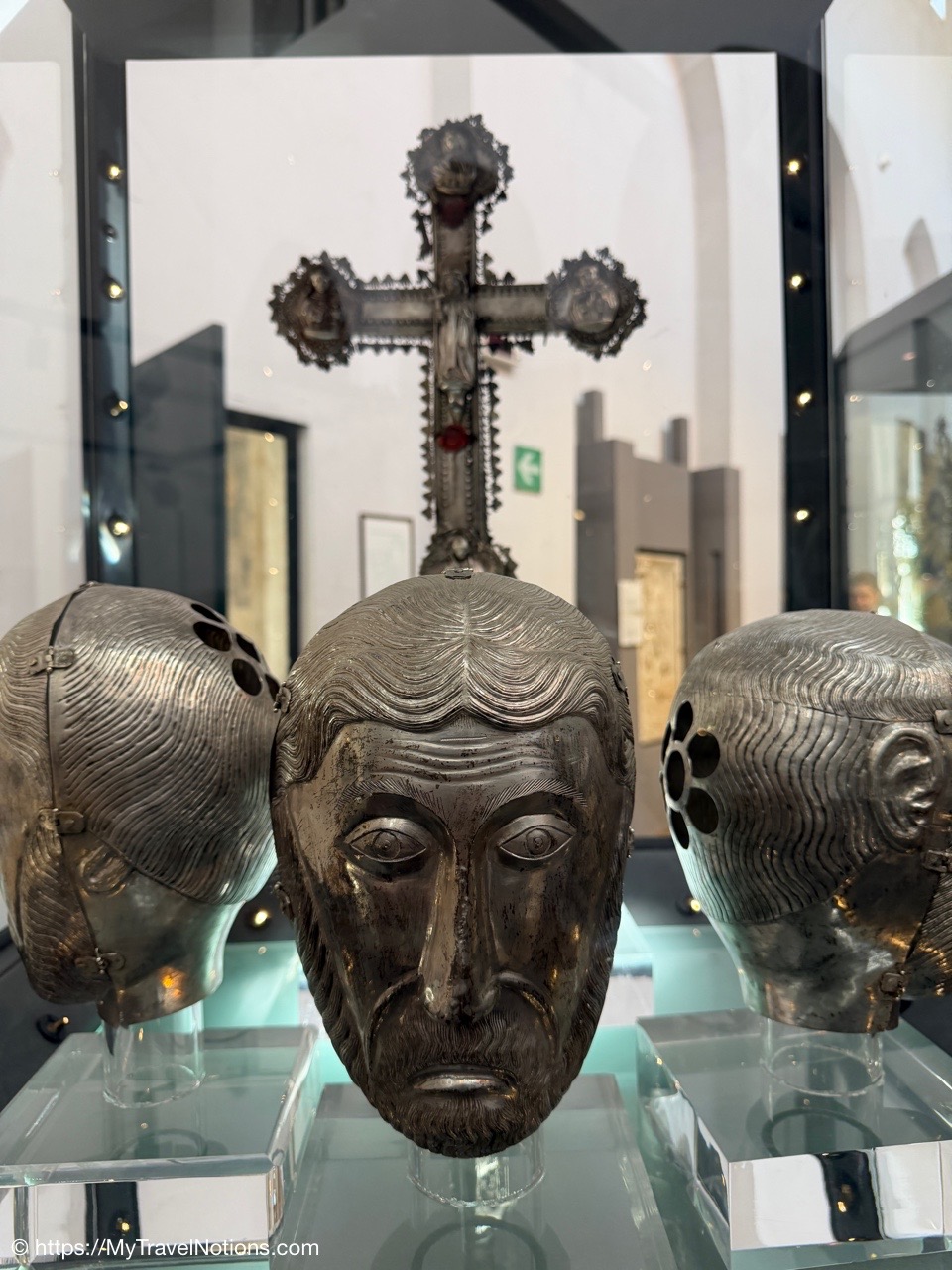
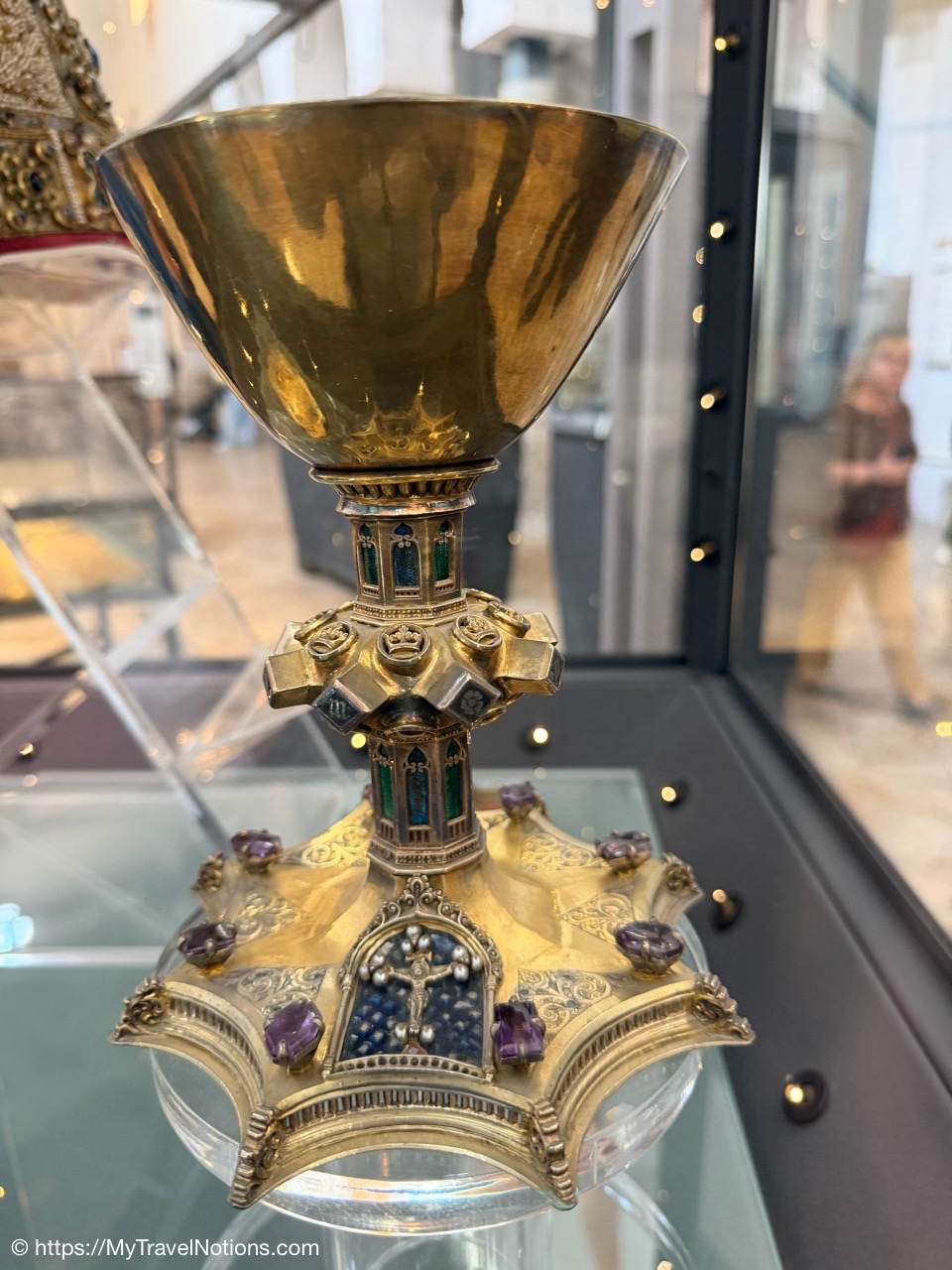
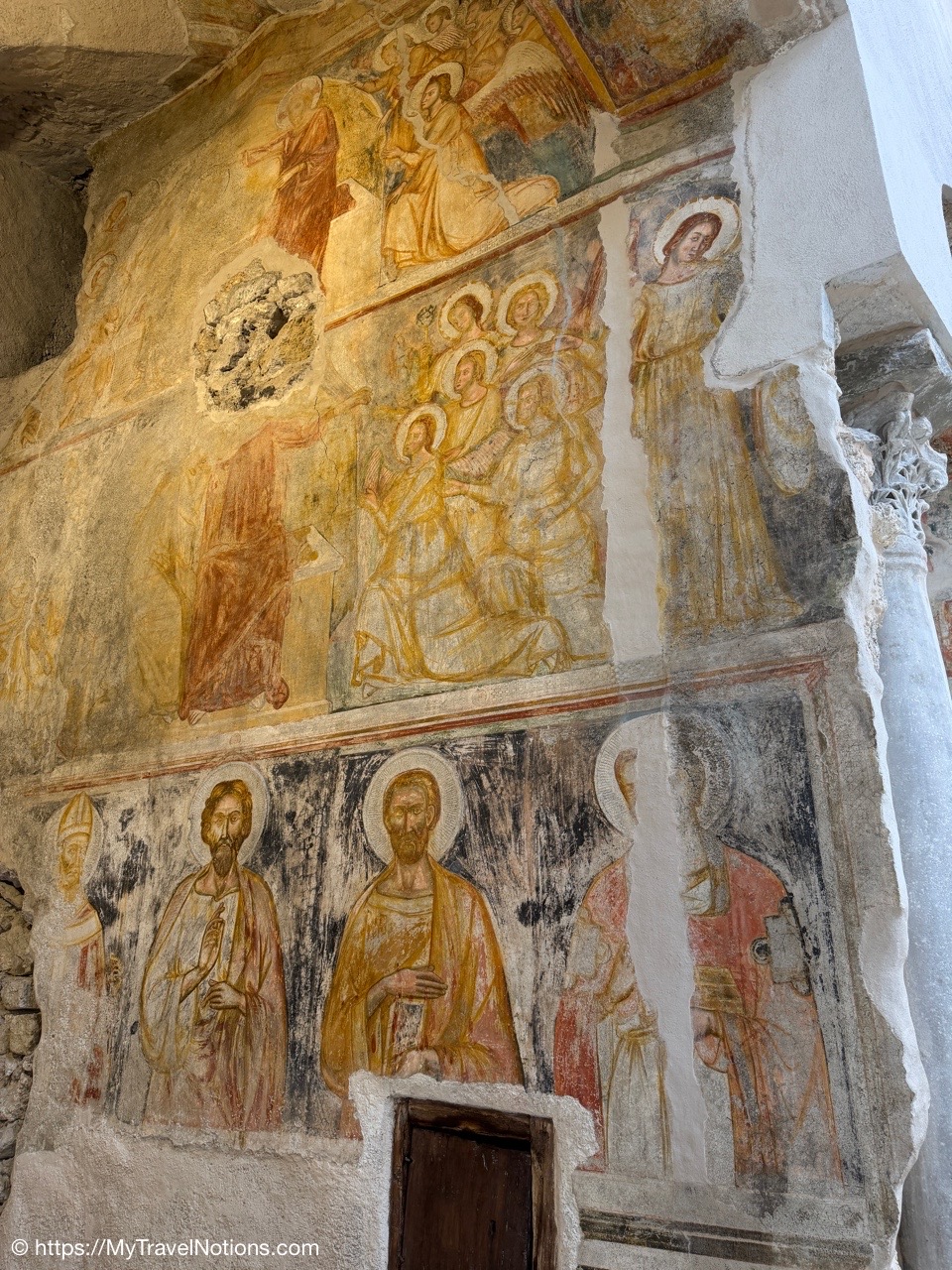
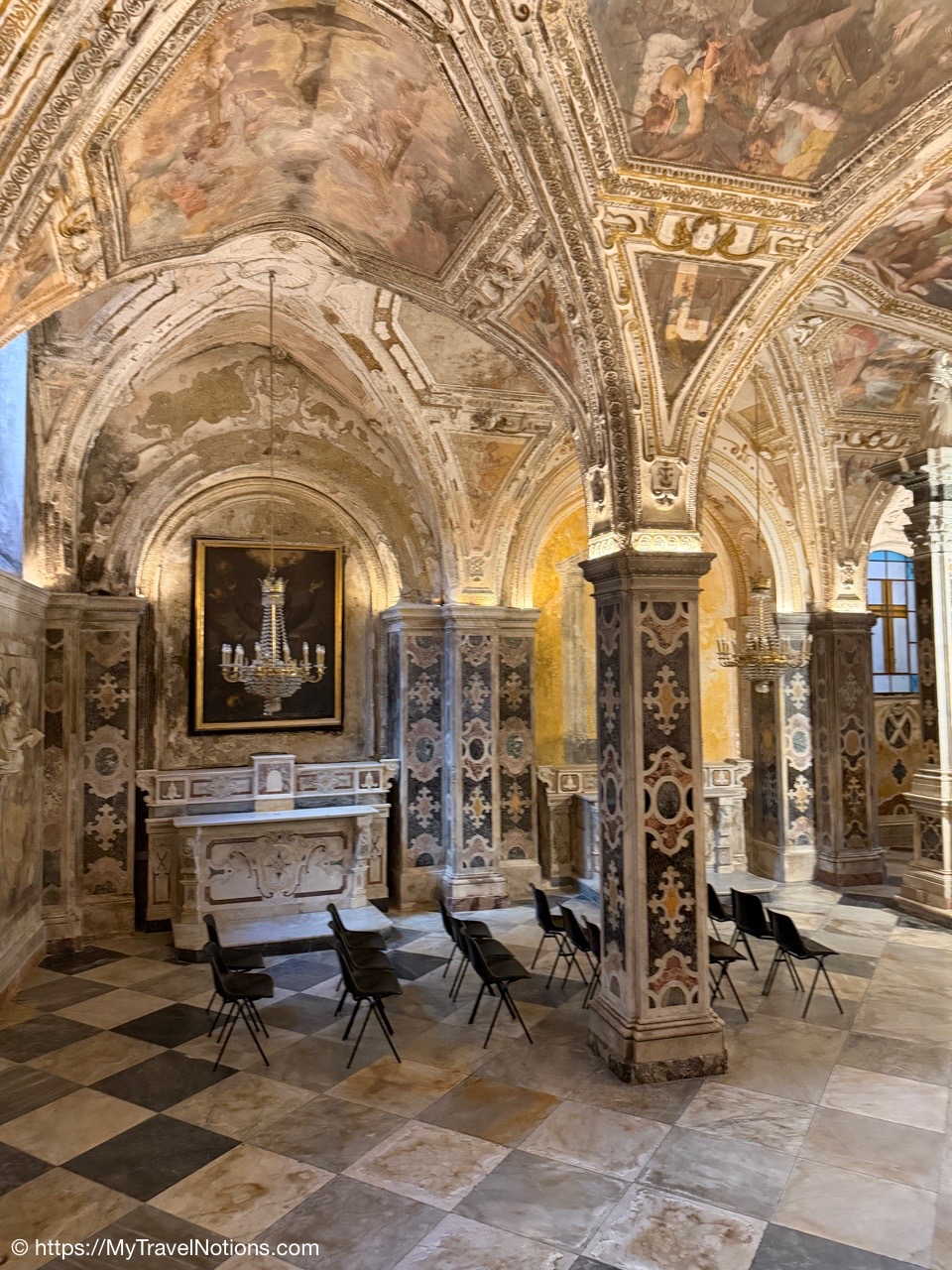
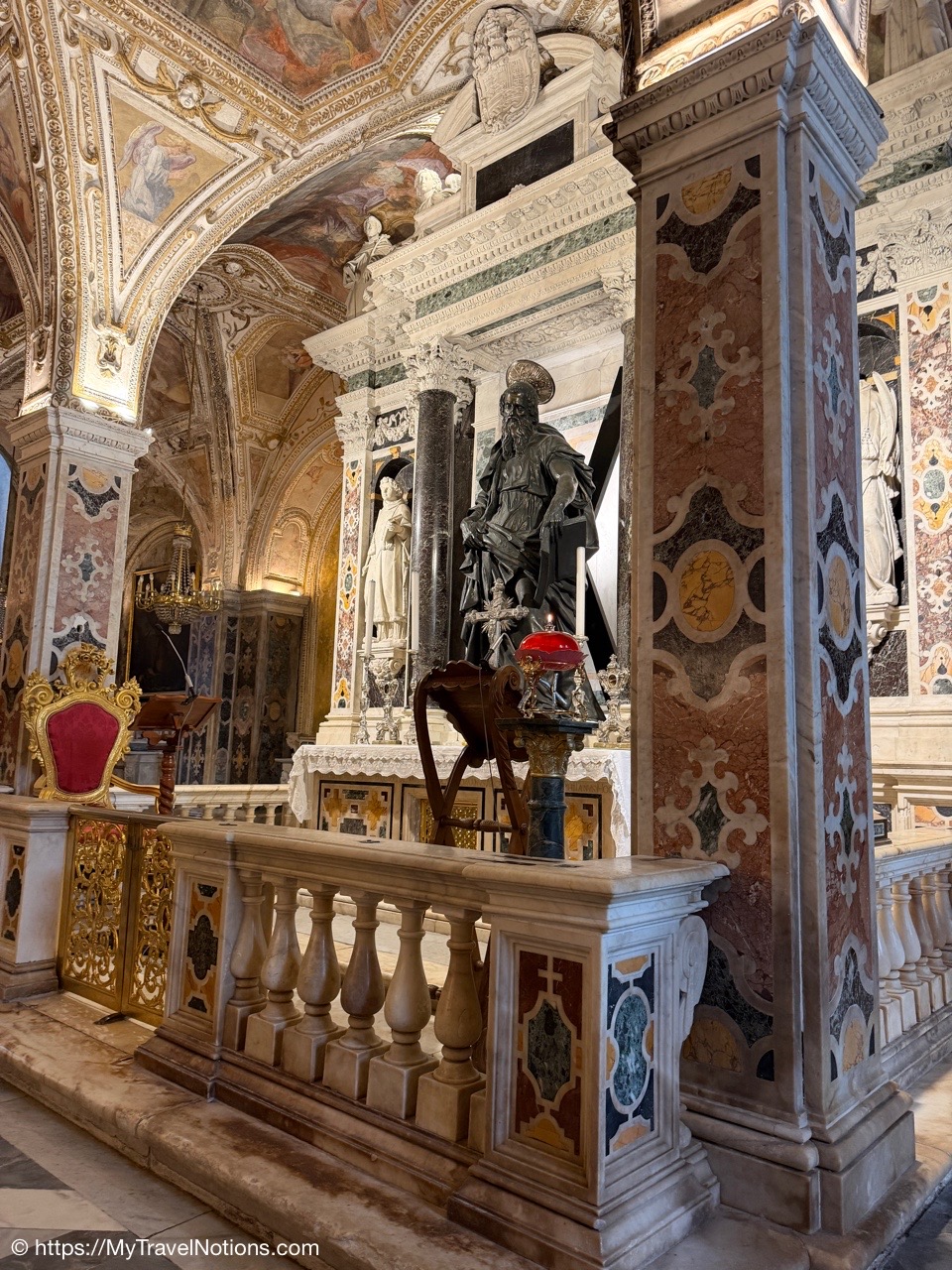
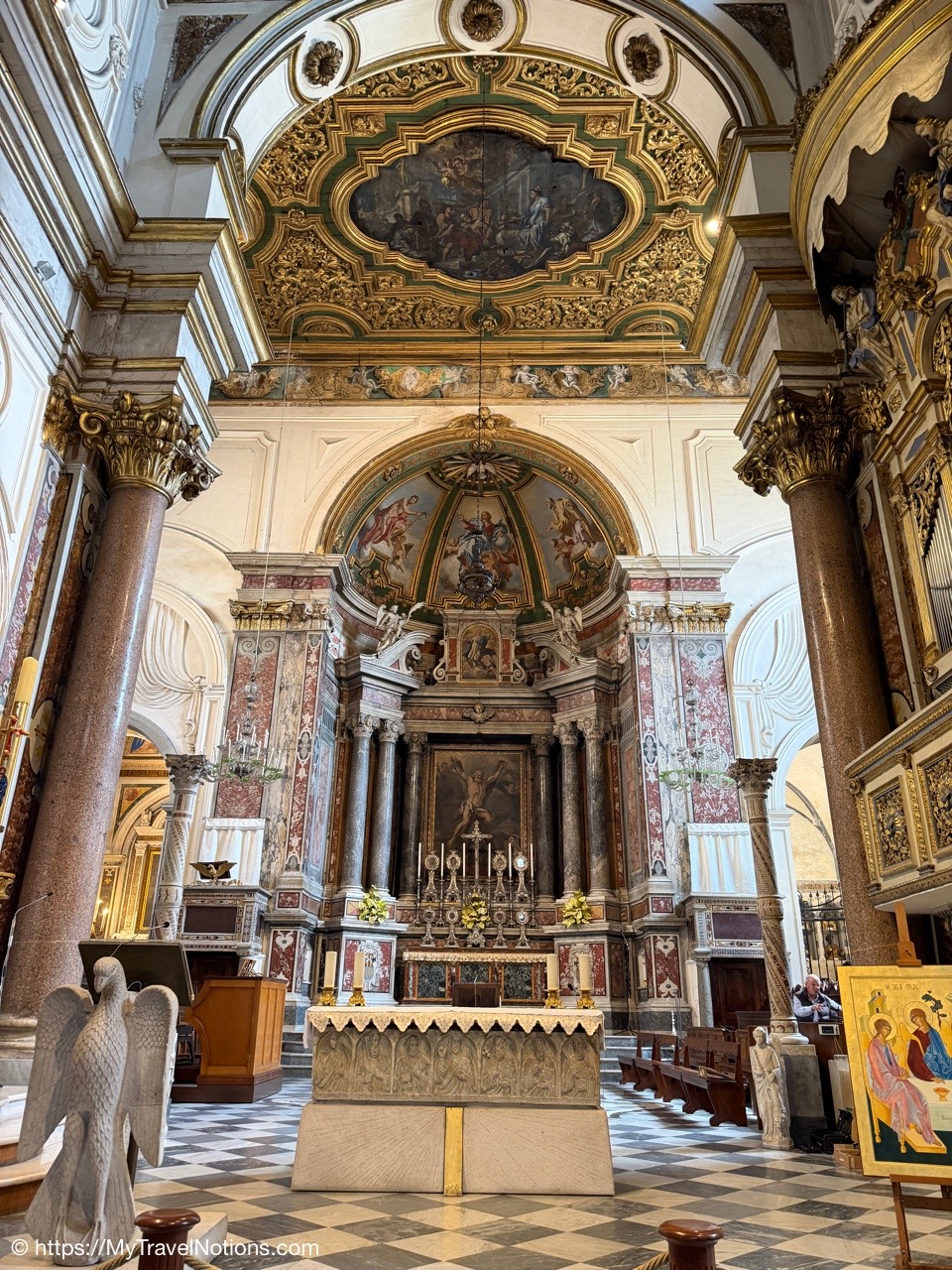
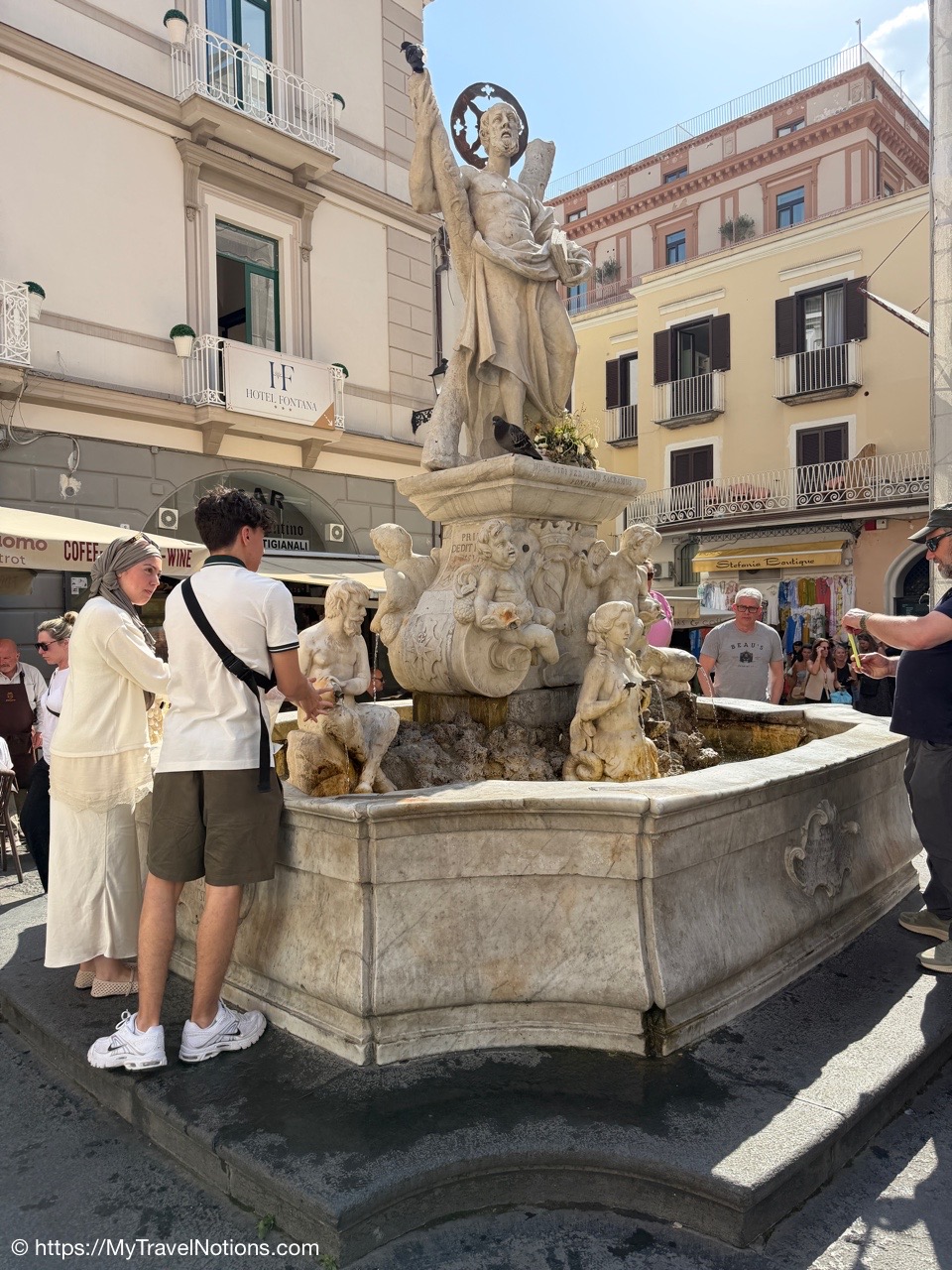
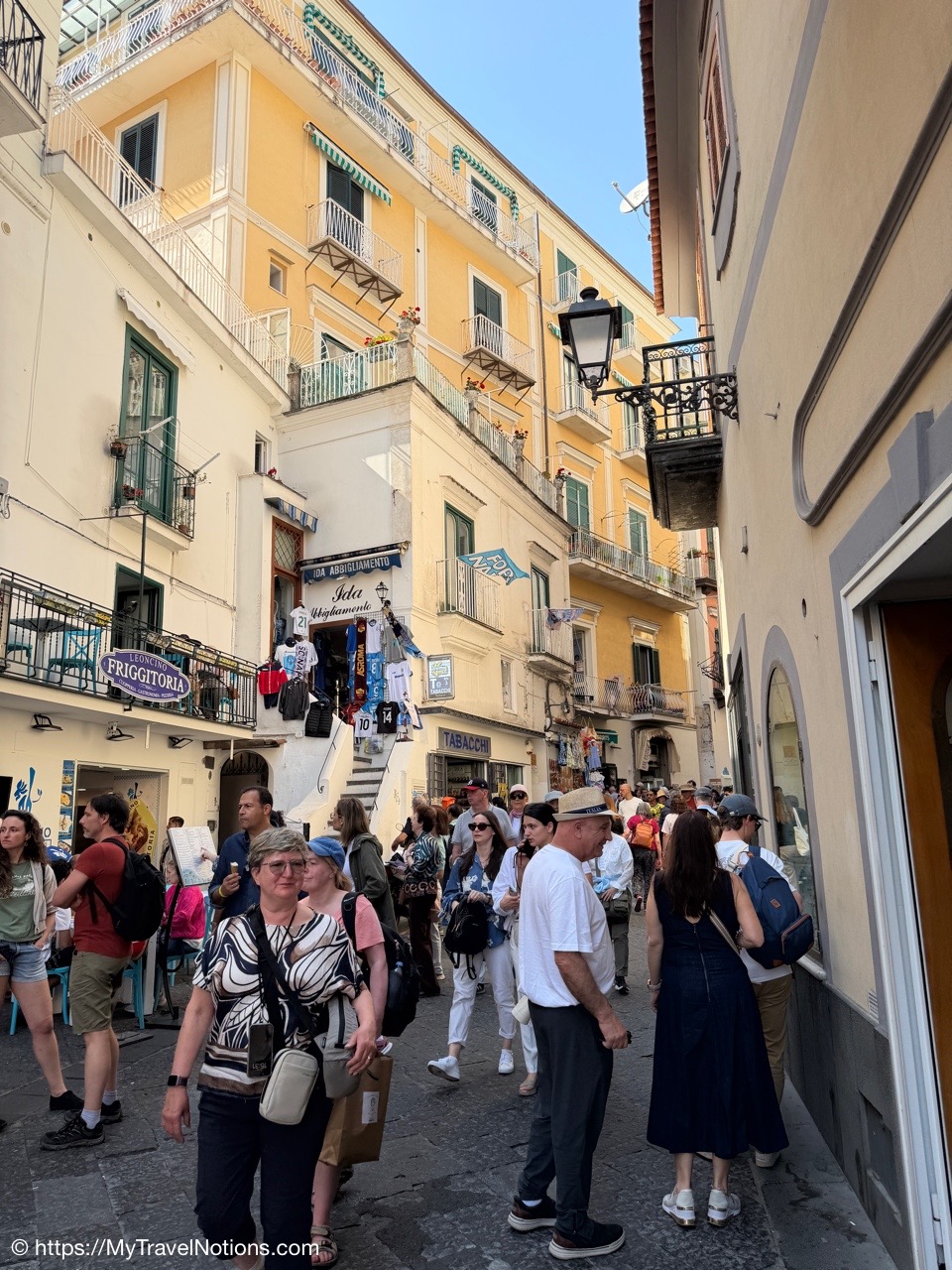
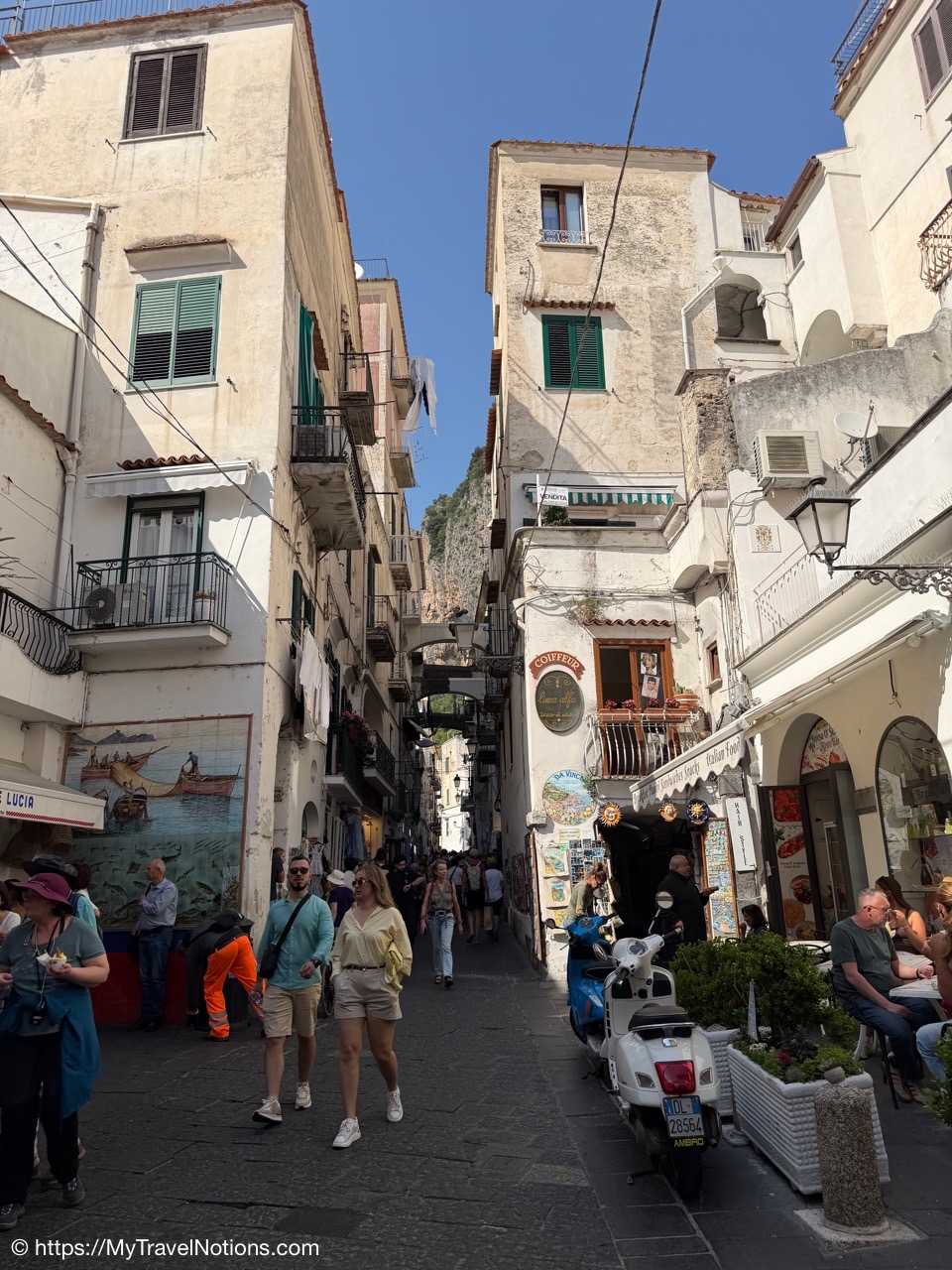
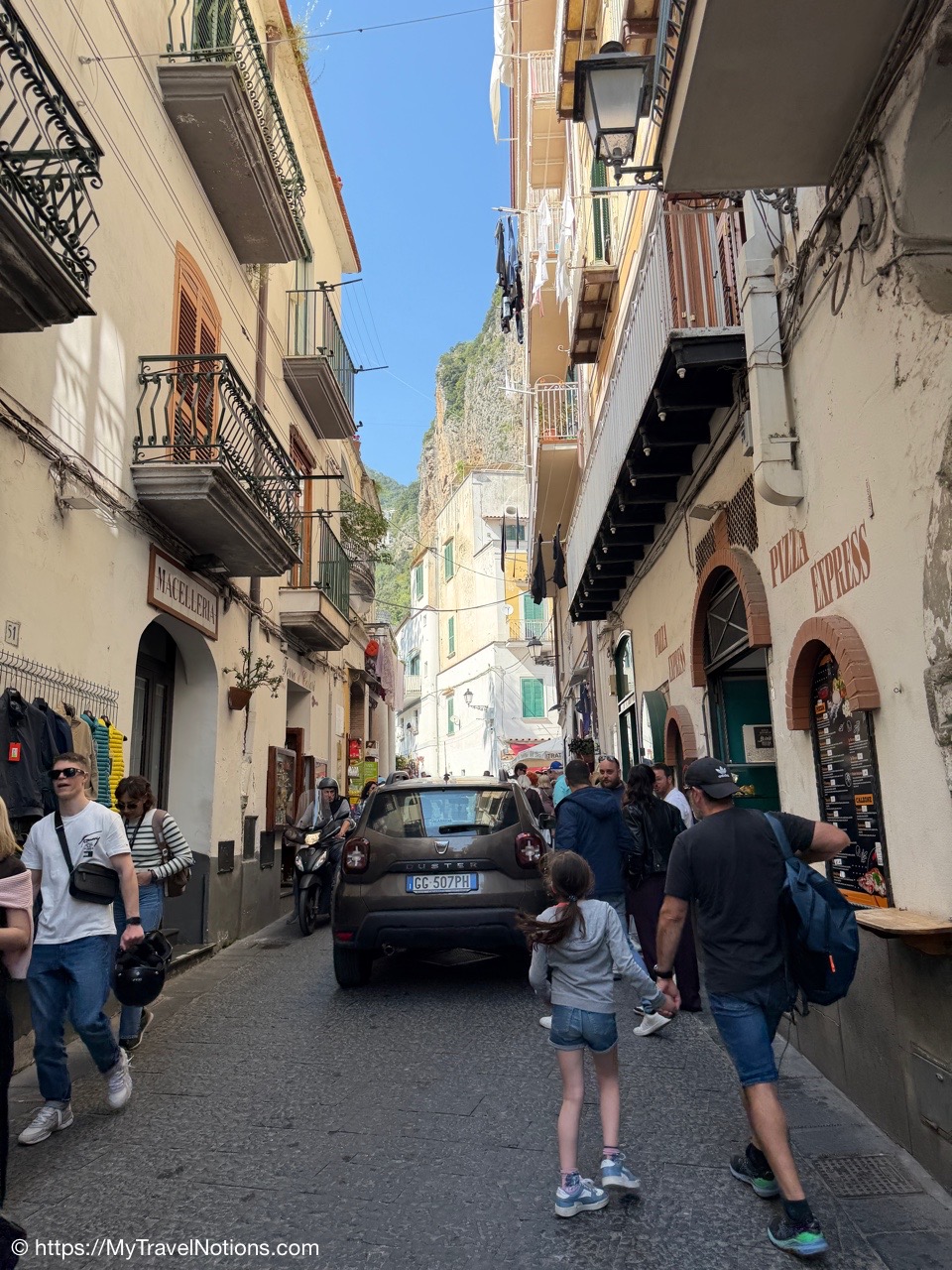
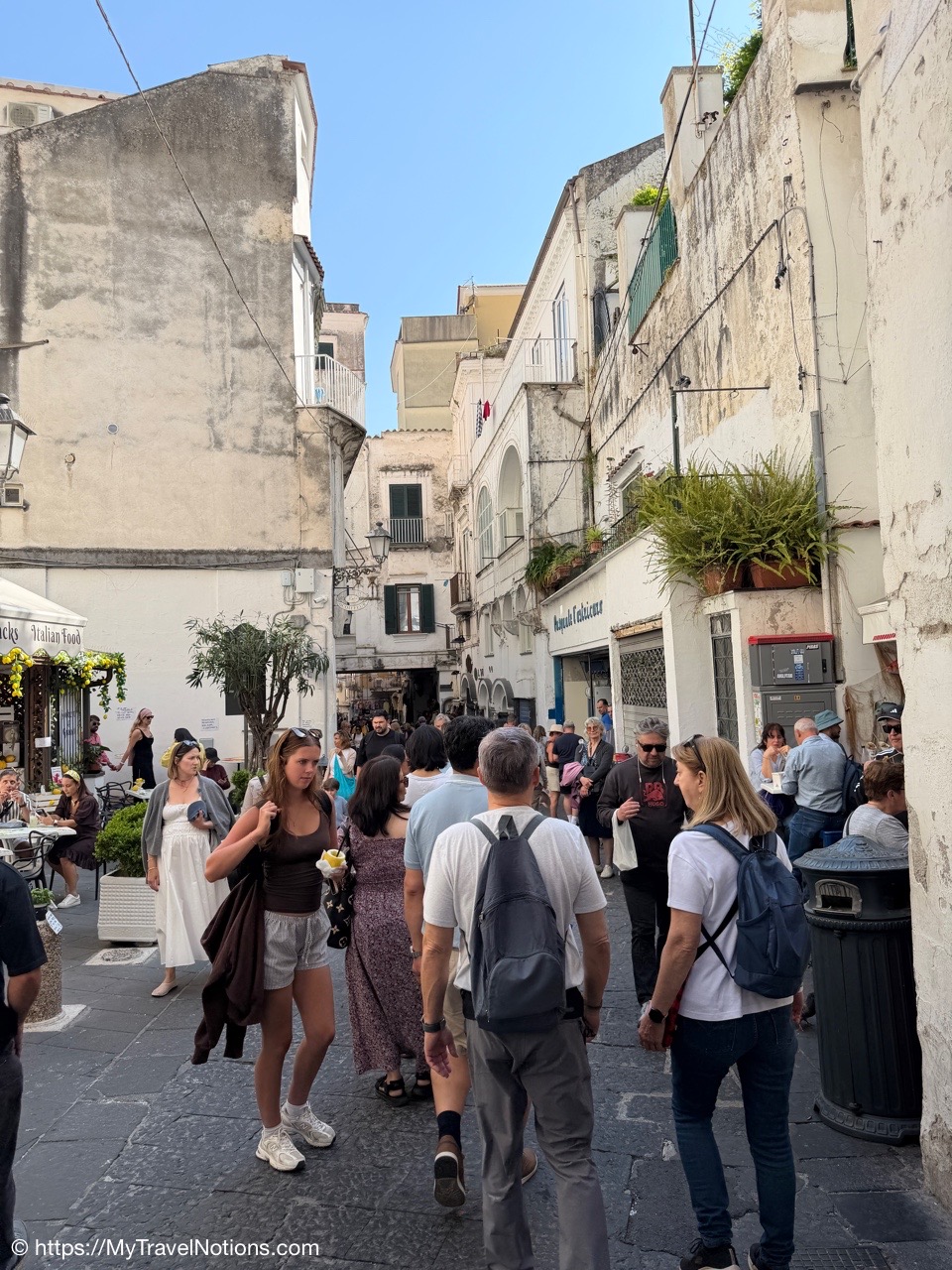
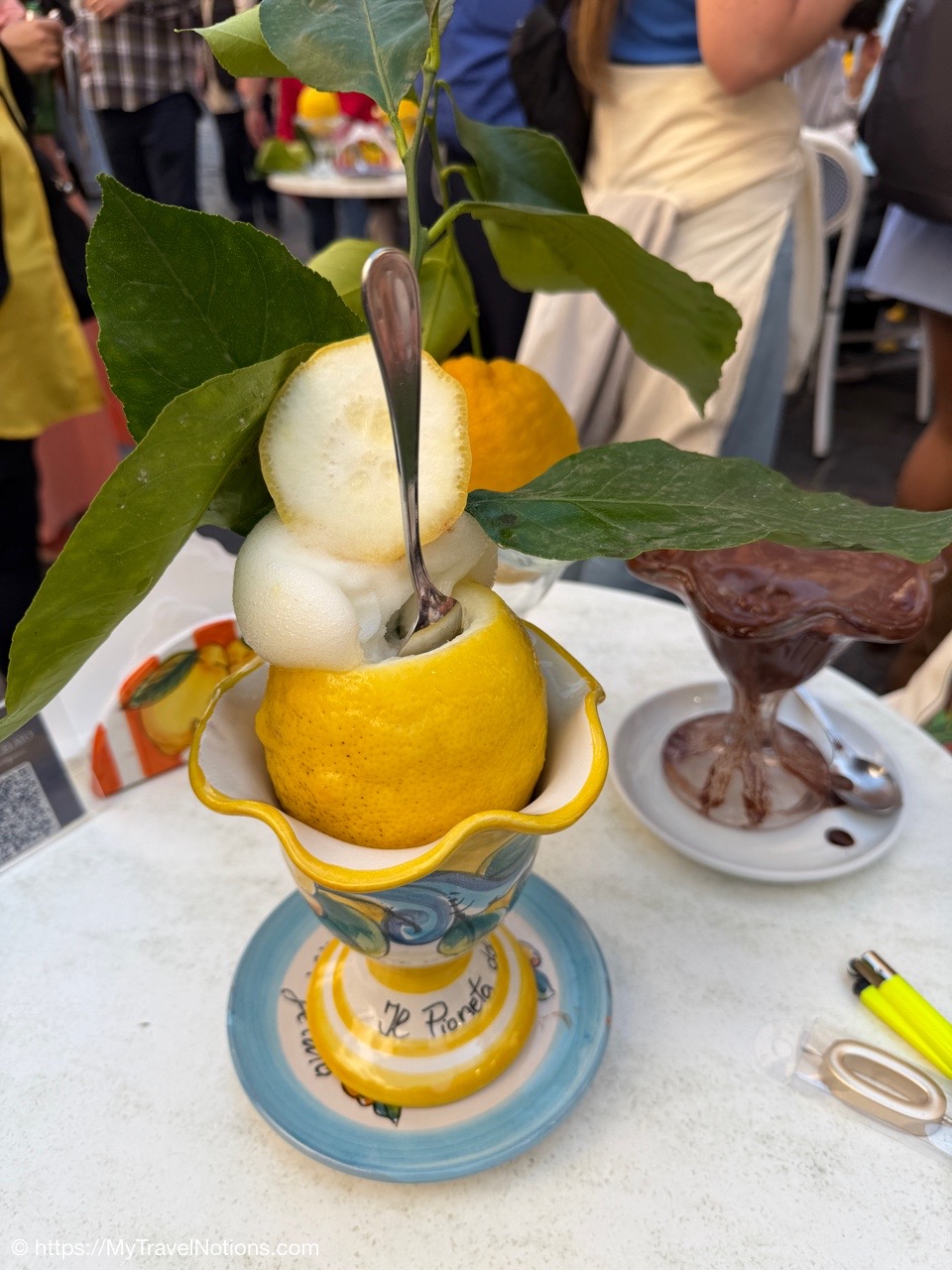
One of the many frescos inside the Cloister of Paradise, part of the Cathedral of Saint Andrew’s complex. (April 17, 2026)From the Cloister of Paradise, we entered into the first church, the Basilica of the Crucifix, now the Diocesan Museum of Amalfi, built in the 9th century on the ruins of a previous temple. (April 17, 2026)These 13th century Reliquary heads, inside the first church, the Basilica of the Crucifix, from the 9th century and now the Diocesan Museum of Amalfi are Saint Basil the Great Bishop, Saint Philip, Saint Diomedes. The new, adjacent Cathedral of St. Andrew was begun around 987, eventually replacing the older basilica as the primary place of worship. (April 17, 2026)The 14th century Chalice with French gilded silver, enamels, pearls and gems displayed inside the first church, the Basilica of the Crucifix, from the 9th century and now the Diocesan Museum of Amalfi are Saint Basil the Great Bishop, Saint Philip, Saint Diomedes. (April 17, 2026)A 14th century fresco inside the first church, the Basilica of the Crucifix, from the 9th century and now the Diocesan Museum of Amalfi. The new, adjacent Cathedral of St. Andrew was begun around 987, eventually replacing the older basilica as the primary place of worship. (April 17, 2026)Leading down from the Basilica of the Crucifix are steps into the Crypt of St. Andrew, where the saint’s relics can be found. (April 17, 2026)The remains of Saint Andrew are buried below the statue of him (in black) inside the Crypt of Saint Andrew as part of the Cathedral of Saint Andrew in the town of Amalfi. His relics were reportedly brought to Amalfi from Constantinople in 1206 during the Fourth Crusade. (April 17, 2026)The statue of Saint Andrew inside the Crypt of Saint Andrew where his remains are buried underneath the statue and underground of the golden gate. (April 17, 2026)Inside the Crypt of Saint Andrew, part of the Cathedral of Saint Andrew in the town of Amalfi, where his remains are buried under his statue in black. (April 17, 2026)Inside the Crypt of Saint Andrew with a staircase in the corner leading into the Cathedral of Saint Andrew in the town of Amalfi. (April 17, 2026)The central nave of the Cathedral of Saint Andrew built as a second church around the year 987. (April 17, 2026)The altar of the Cathedral of Saint Andrew built as a second church around the year 987. (April 17, 2026)Another exterior view of the Cathedral of Saint Andrew from the Piazza del Duomo in the town of Amalfi. (April 17, 2026)The Piazza del Duomo also features the St. Andrew’s Fountain in the town of Amalfi. (April 17, 2026)From the Piazza del Duomo is this crowded and touristy shopping street, Via Lorenzo d’Amalfi. (April 17, 2026)From the Piazza del Duomo is this crowded and touristy shopping street, Via Lorenzo d’Amalfi in the town of Amalfi. (April 17, 2026)The crowded touristy shopping street of Via Lorenzo d’Amalfi in the town of Amalfi. (April 17, 2026)The crowded touristy shopping street of Via Lorenzo d’Amalfi in the town of Amalfi. (April 17, 2026)Me on the crowded and touristy shopping street of Via Lorenzo d’Amalfi in the town of Amalfi. (April 17, 2026)The crowded touristy shopping street of Via Lorenzo d’Amalfi in the town of Amalfi. (April 17, 2026)Even cars try to make their way through the crowded shopping street of Via Lorenzo d’Amalfi in the town of Amalfi. (April 17, 2026)The crowded touristy shopping street of Via Lorenzo d’Amalfi in the town of Amalfi. (April 17, 2026)It’s a treat that I did not have but so many others were enjoying this lemon dessert featuring gelato or sorbet inside a hollowed-out lemon. It’s most commonly called Sorbetto al Limone (Lemon Sorbet) or simply Limone Ripieno (Stuffed Lemon). A very kind young woman let me take a photo of her Lemon Sorbet and said it was quite rich tasting. Lemons are prevalent in the Amalfi Coast so this makes for an iconic Italian dessert found on the Amalfi Coast. (April 17, 2026)
The Town of Atrani & Our Home Base of Salerno
I was absolutely taken in by our walk from the town of Amalfi to Atran. And it wasn’t because Atrani was depicted as the fictional village of Altamonte in American actor Denzel Washington’s 2023 movie, Equalizer 3, but the dynamic Amalfi Coast views while approaching the less touristy, picturesque and more authentic Atrani.
While Amalfi is the largest of the two towns and a central tourist hub, Atrani is renowned as Italy’s smallest town, with deep Roman-era roots, likely founded as a refuge in the 5th century.
Come take a walk with me fromthe town of Amalfi to Atrani along the magnificent Amalfi Coast in Italy.
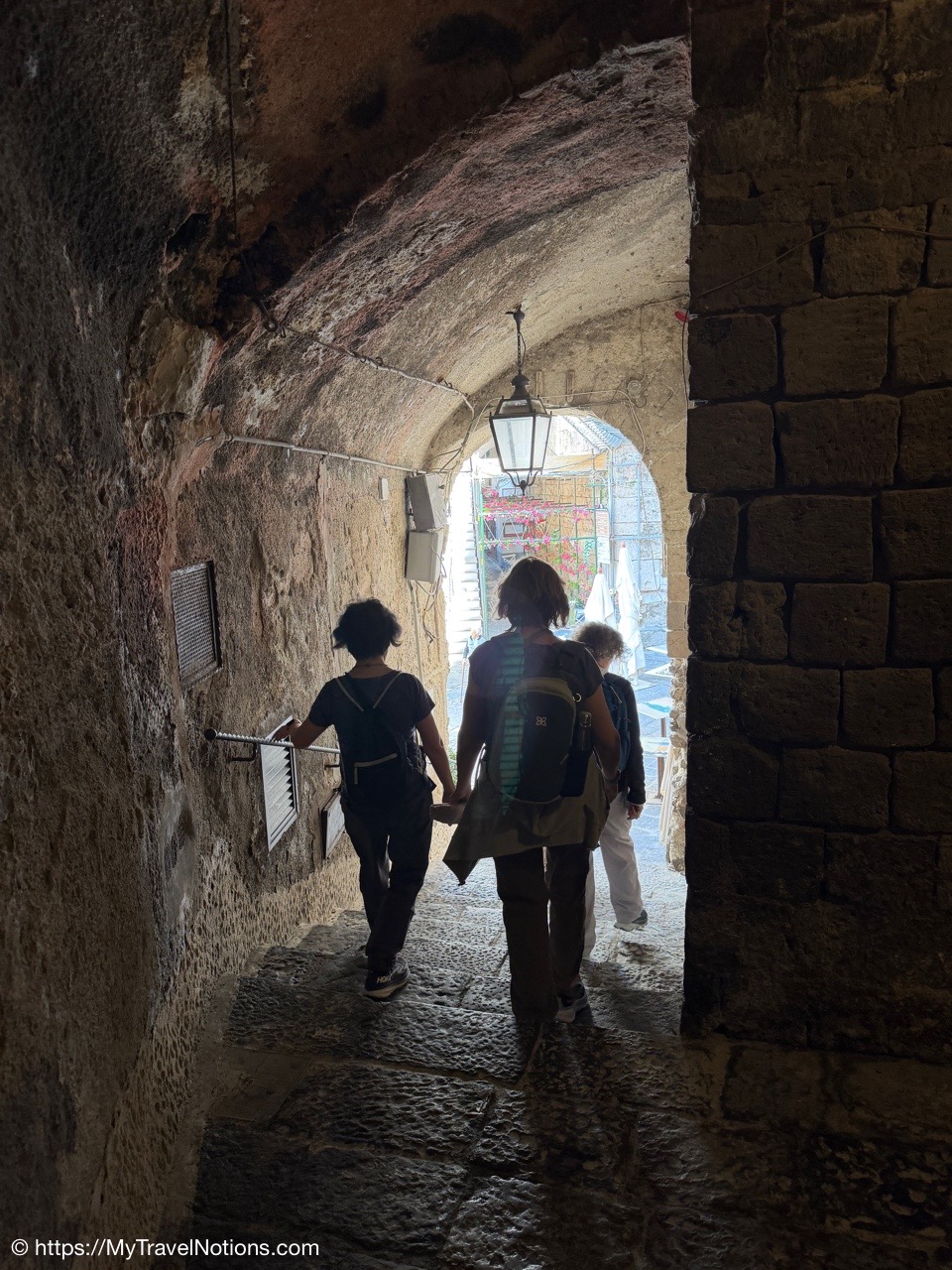
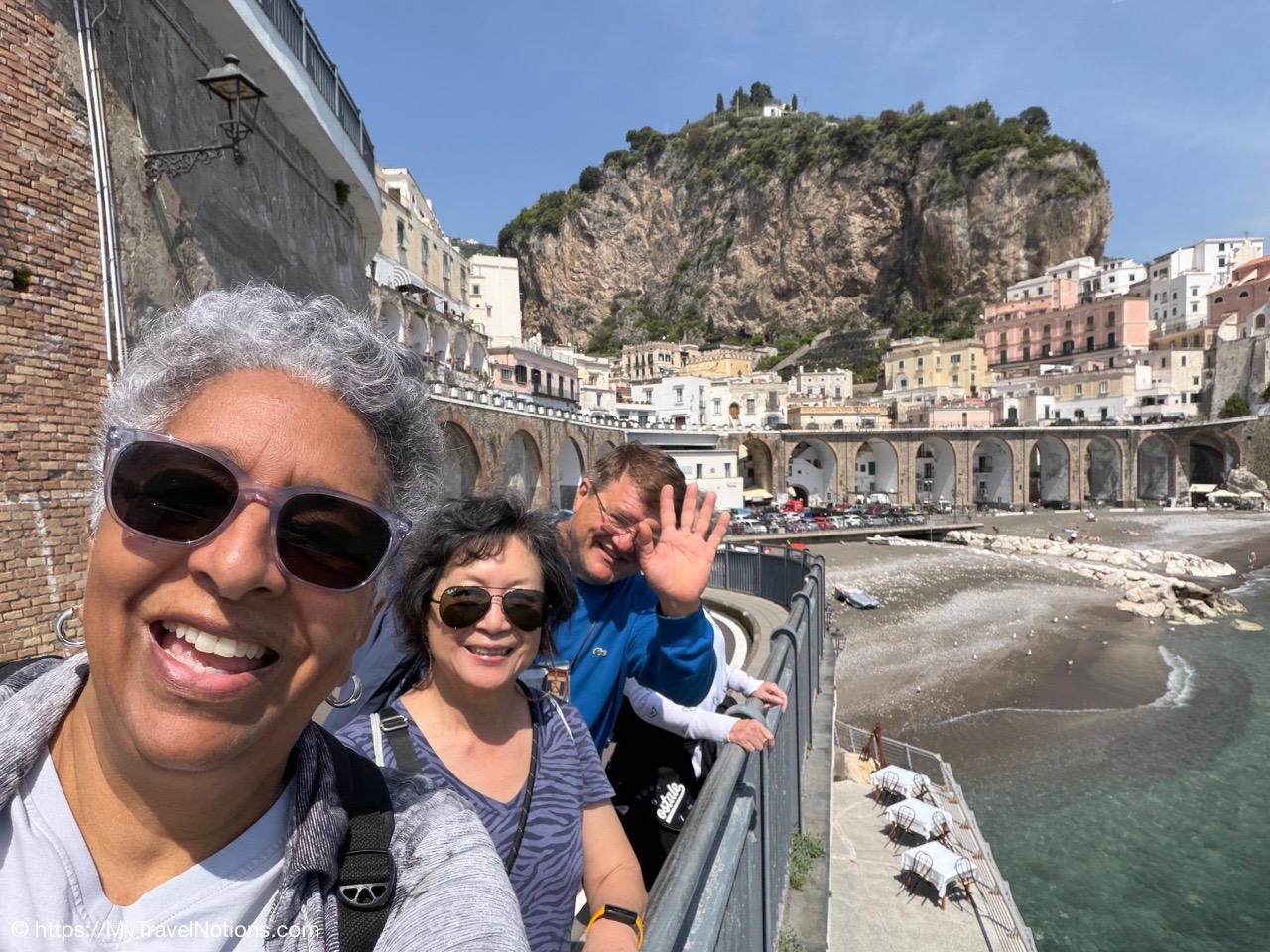
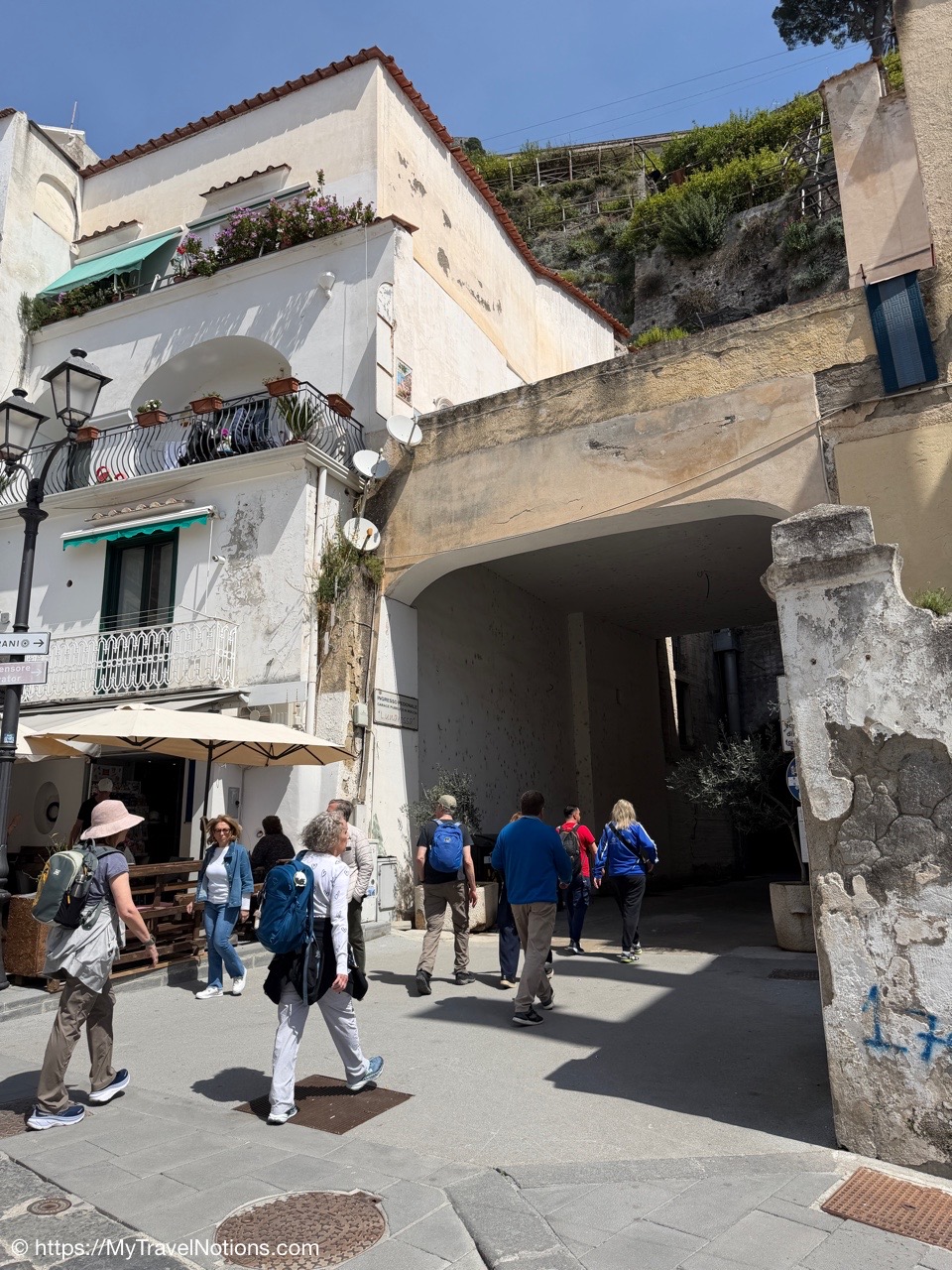
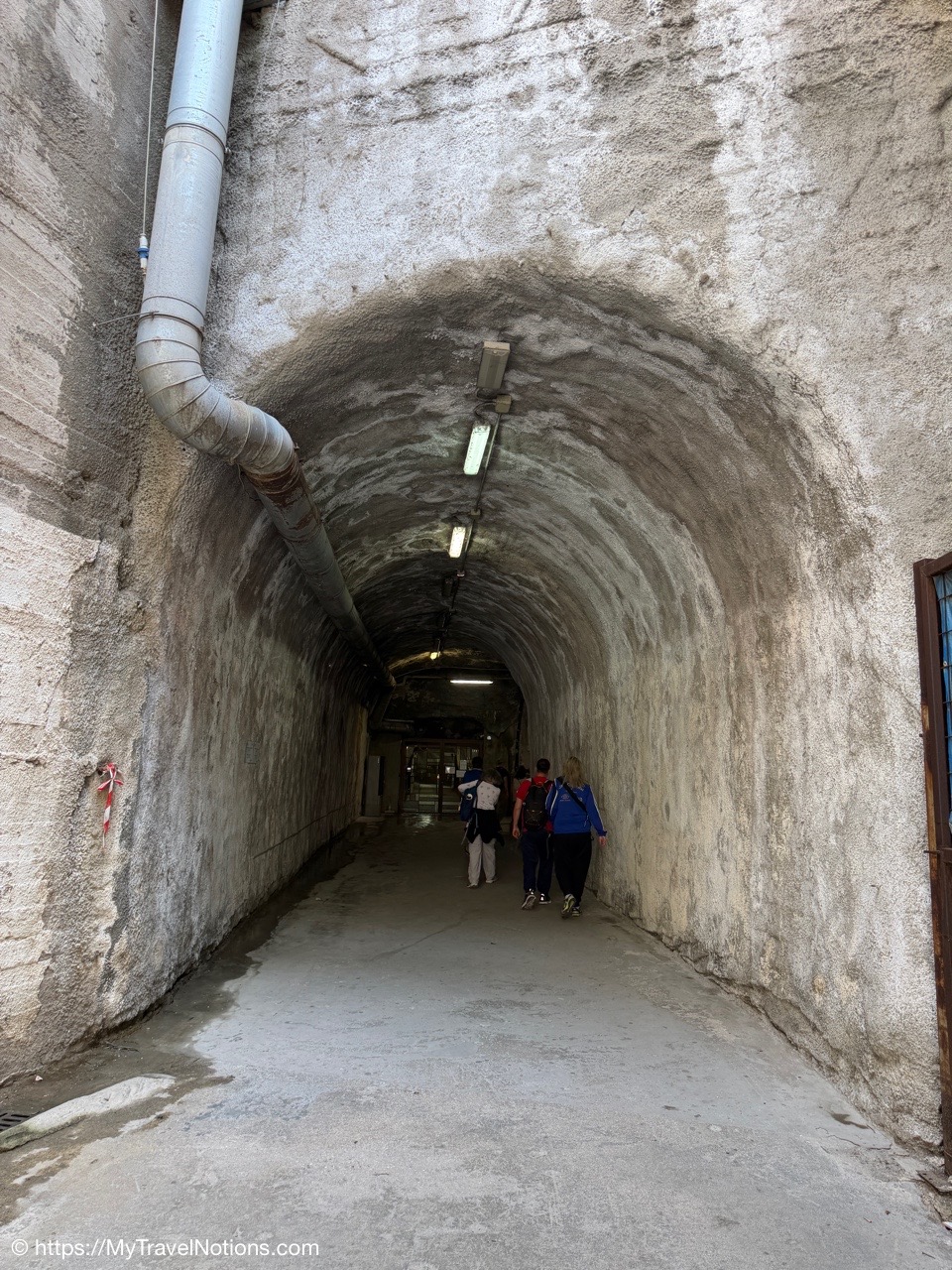
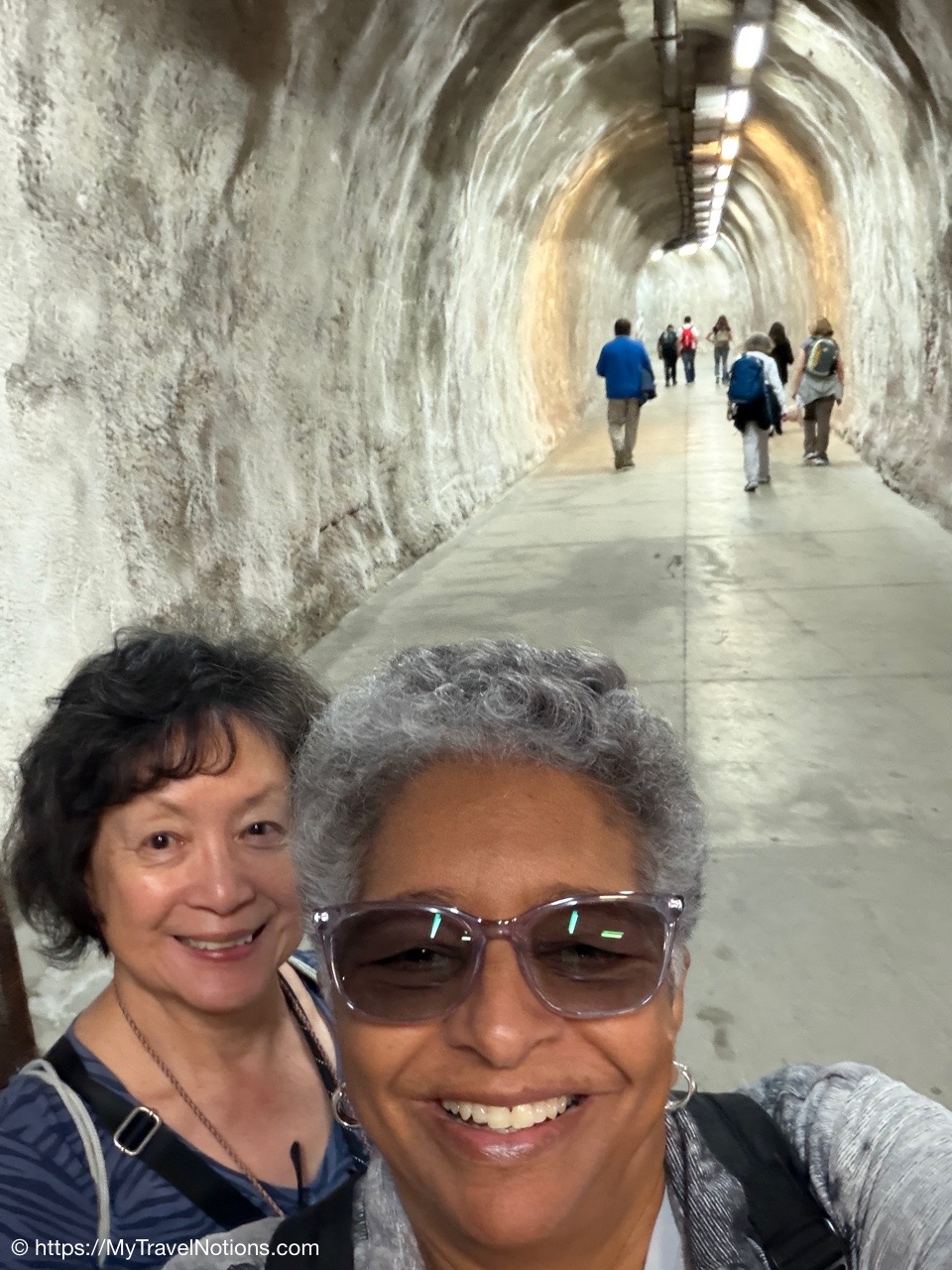
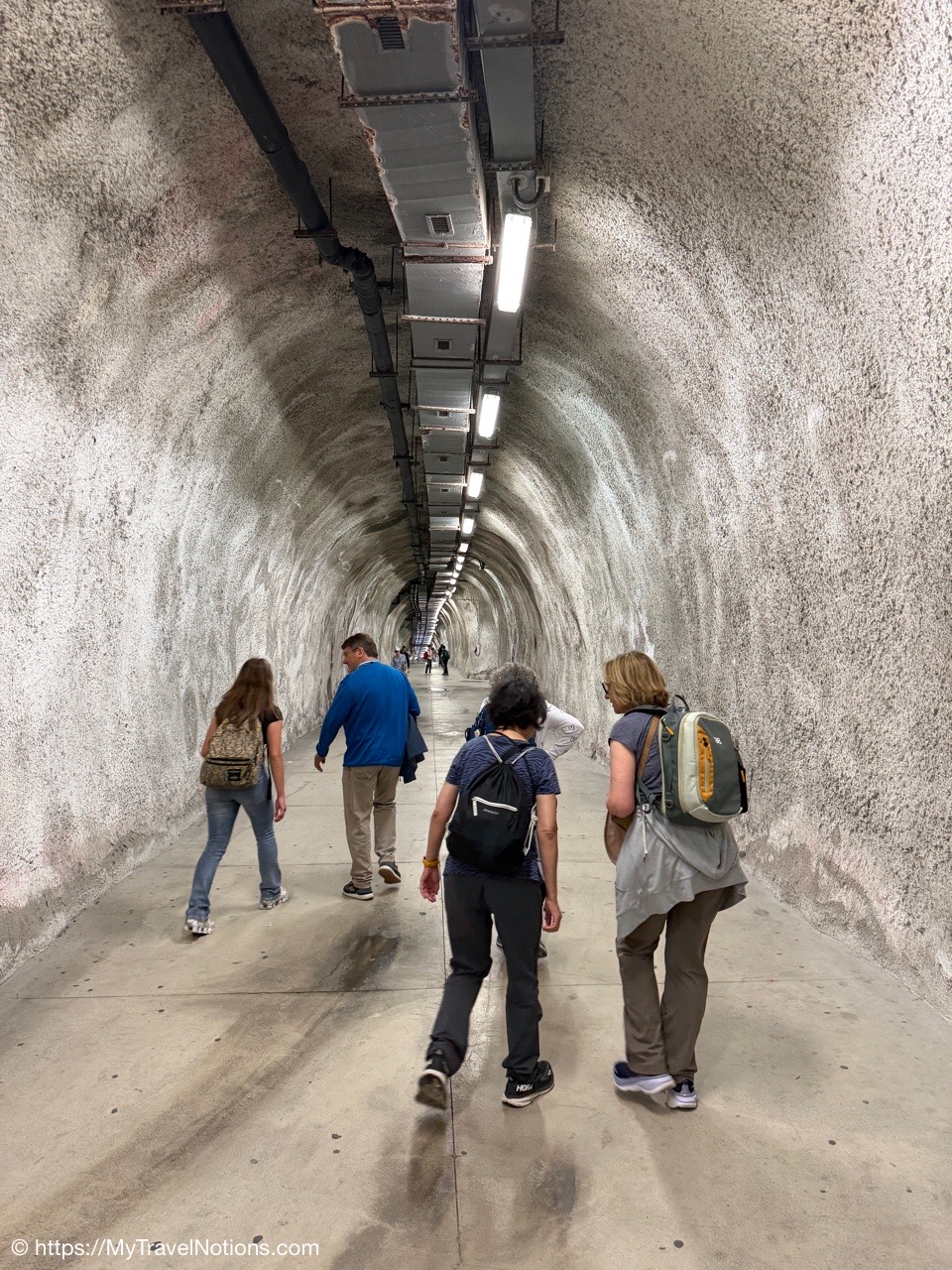
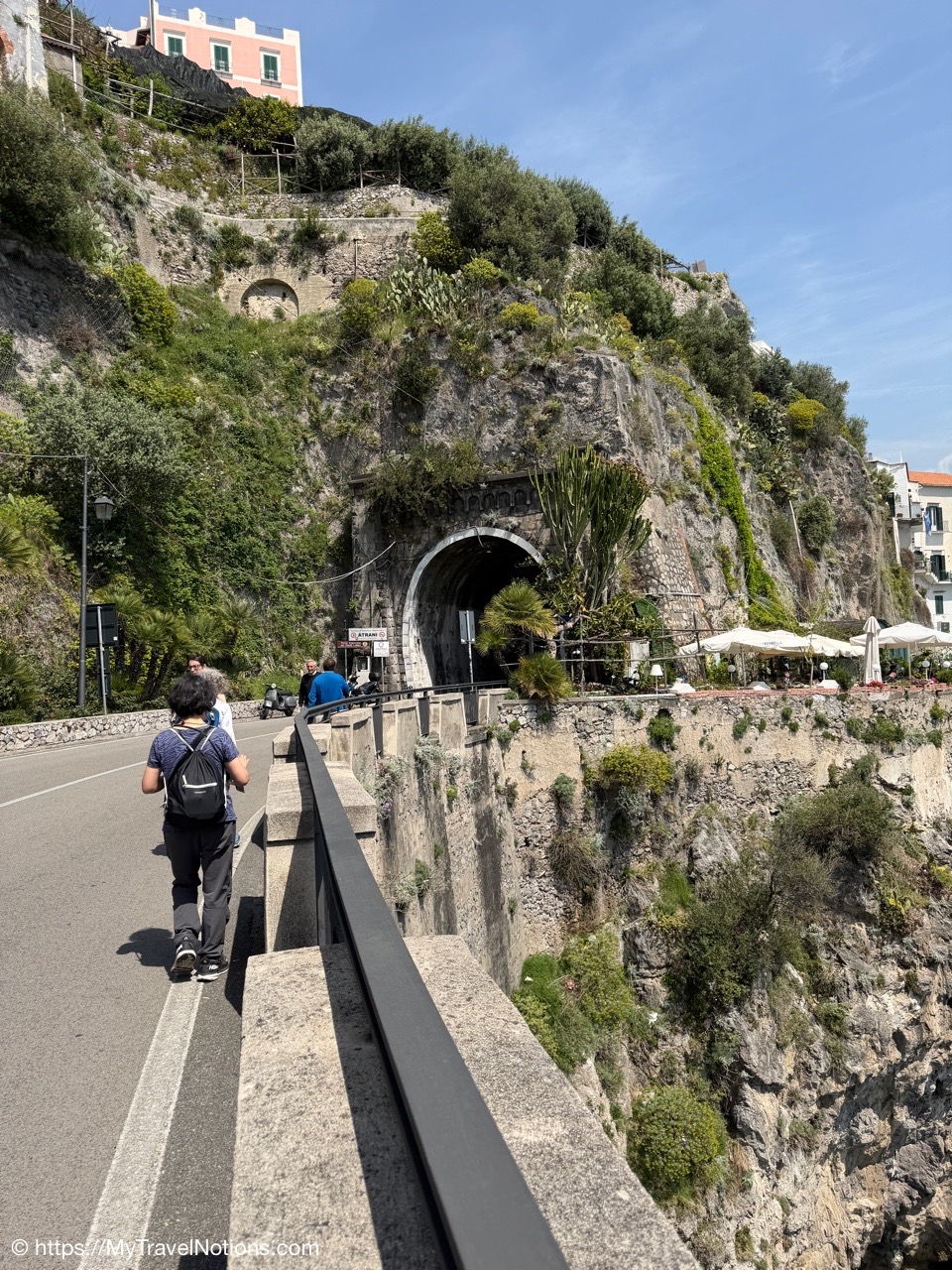
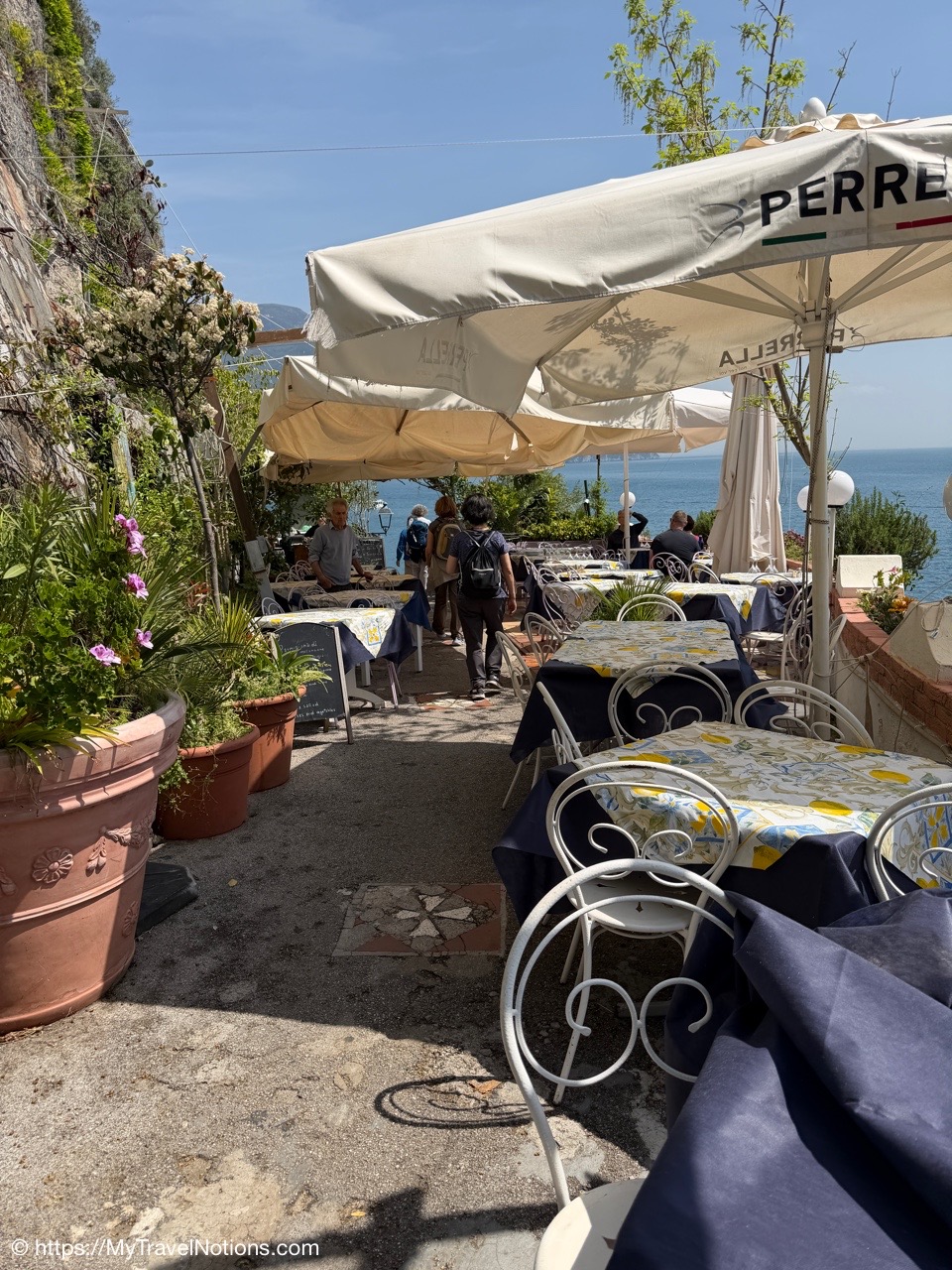
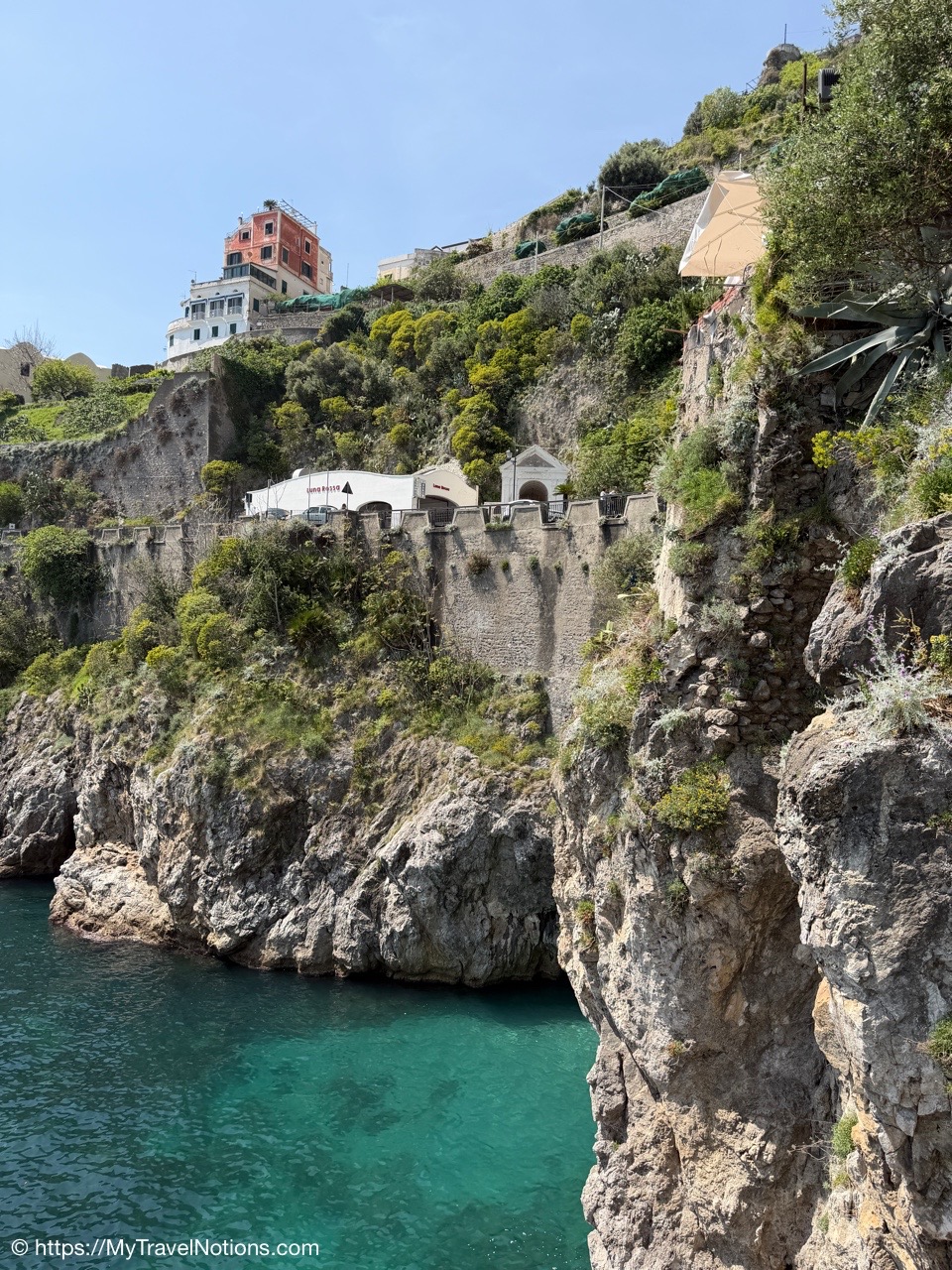
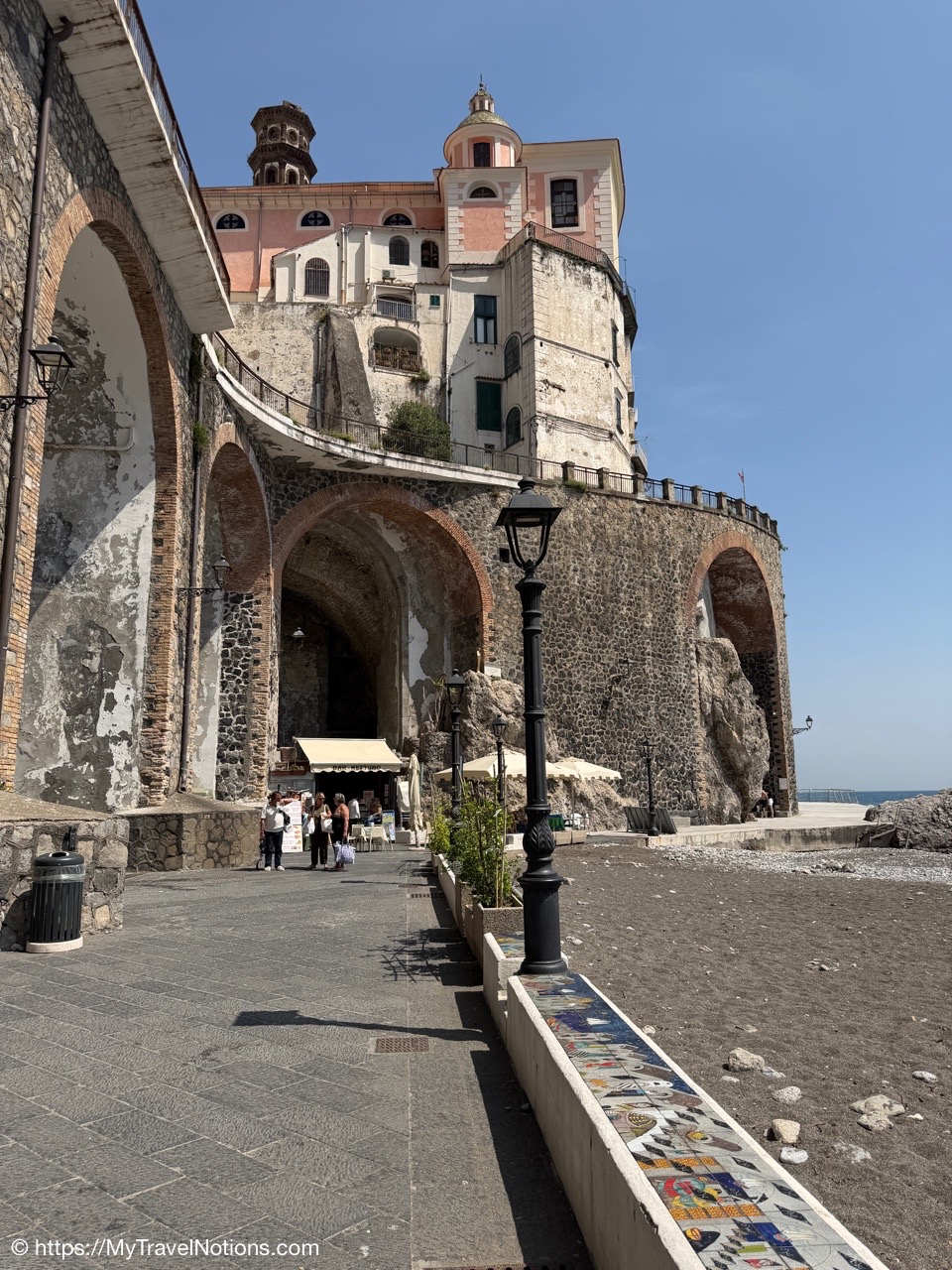
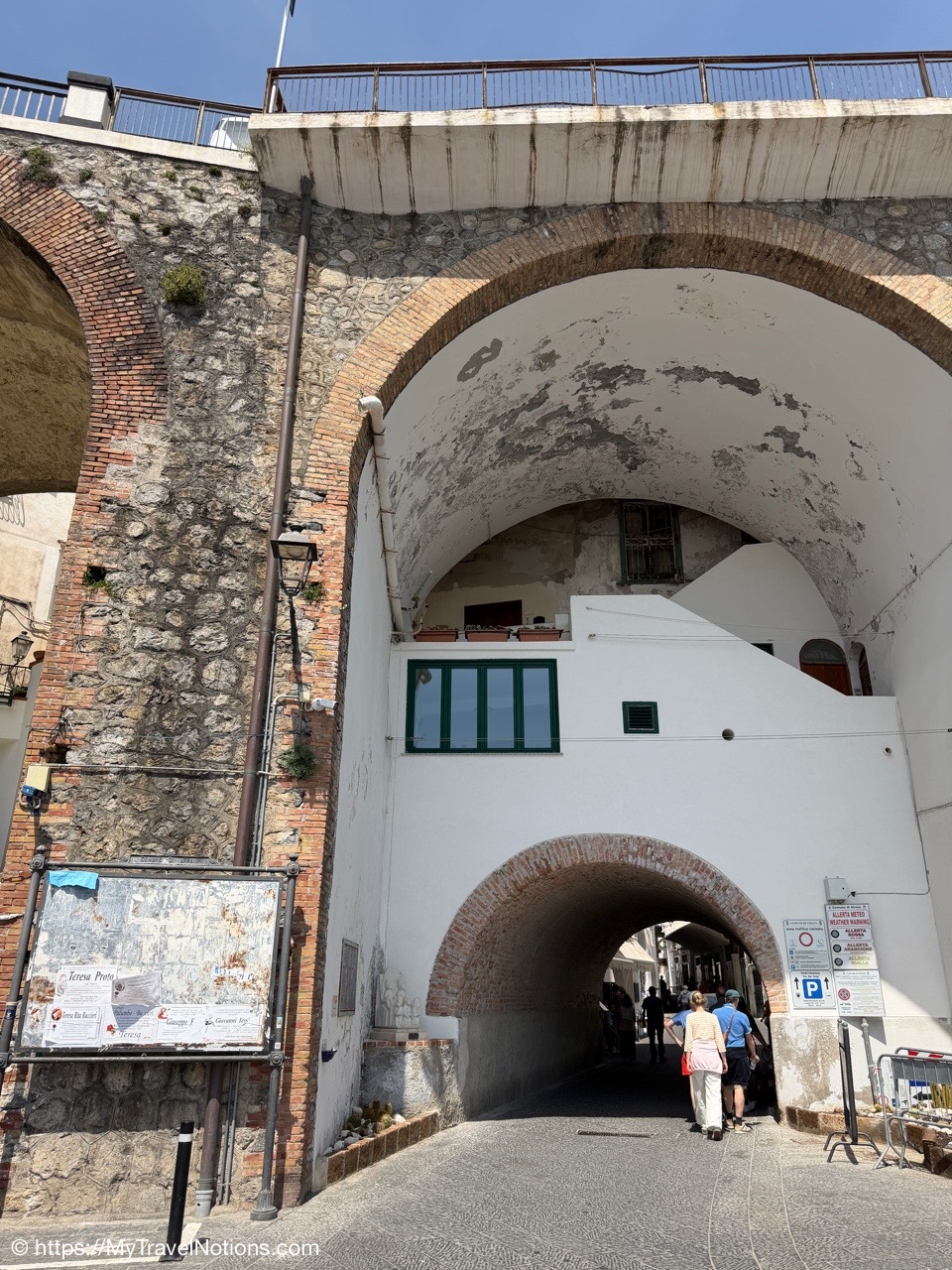
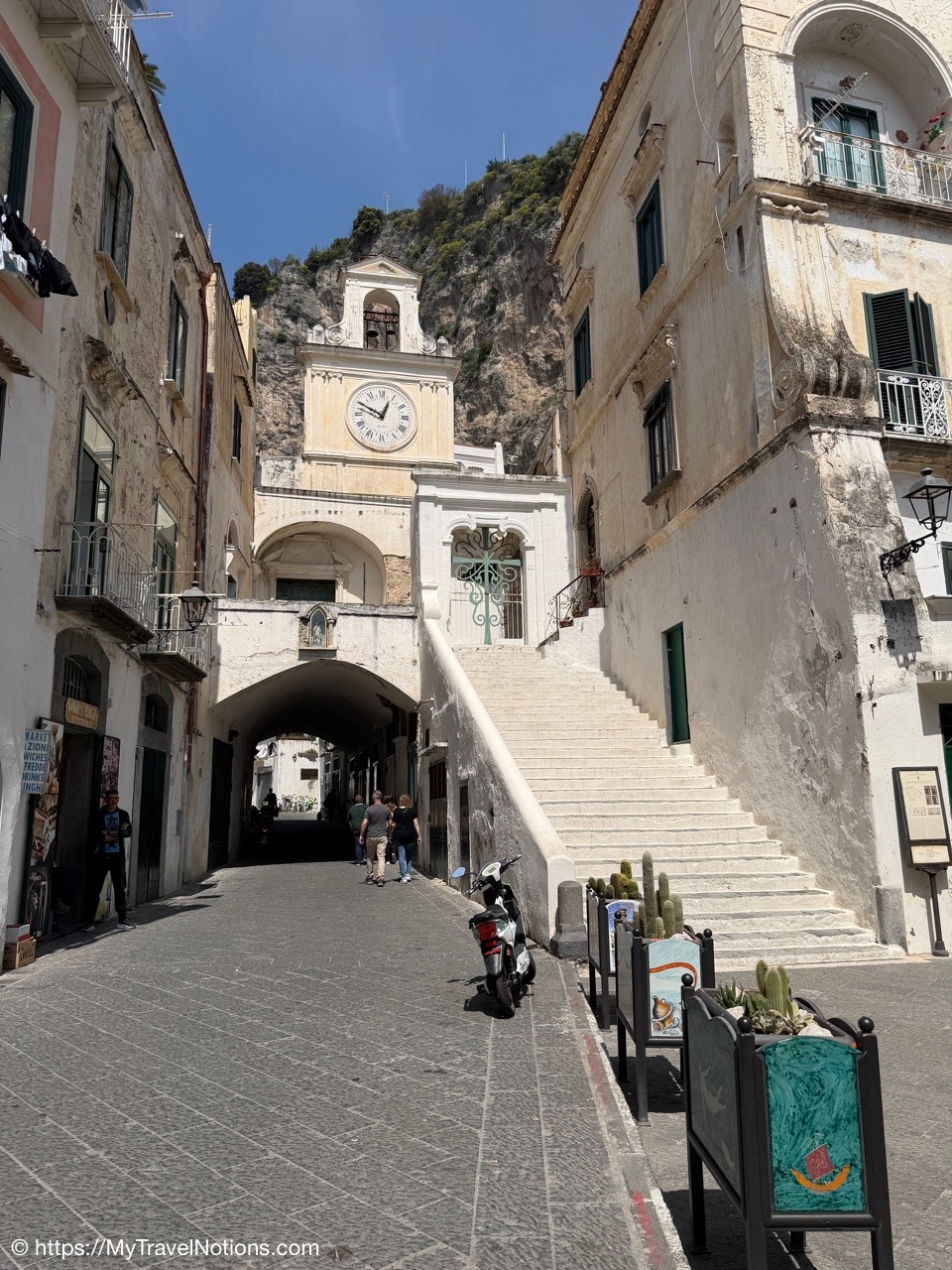
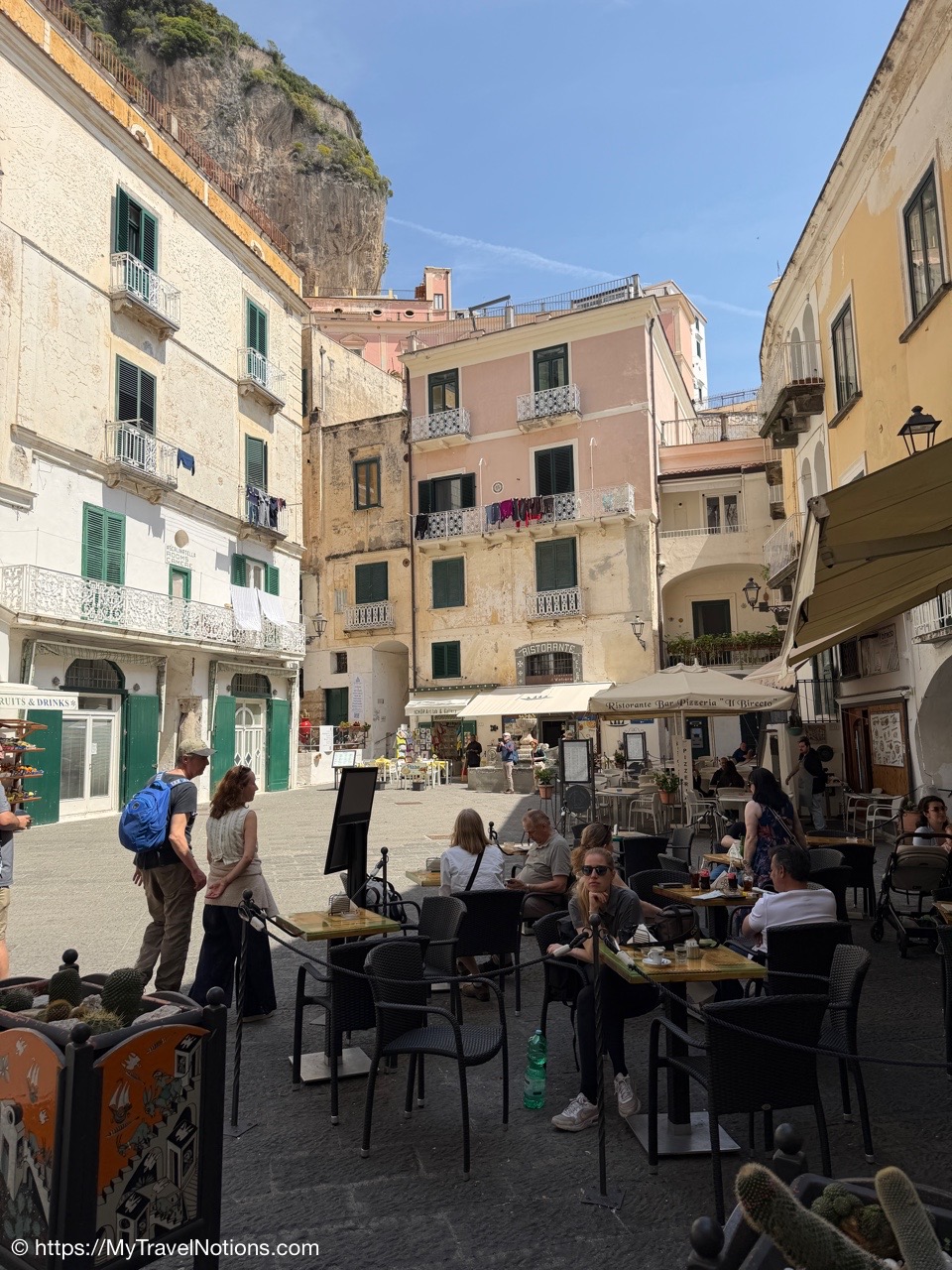
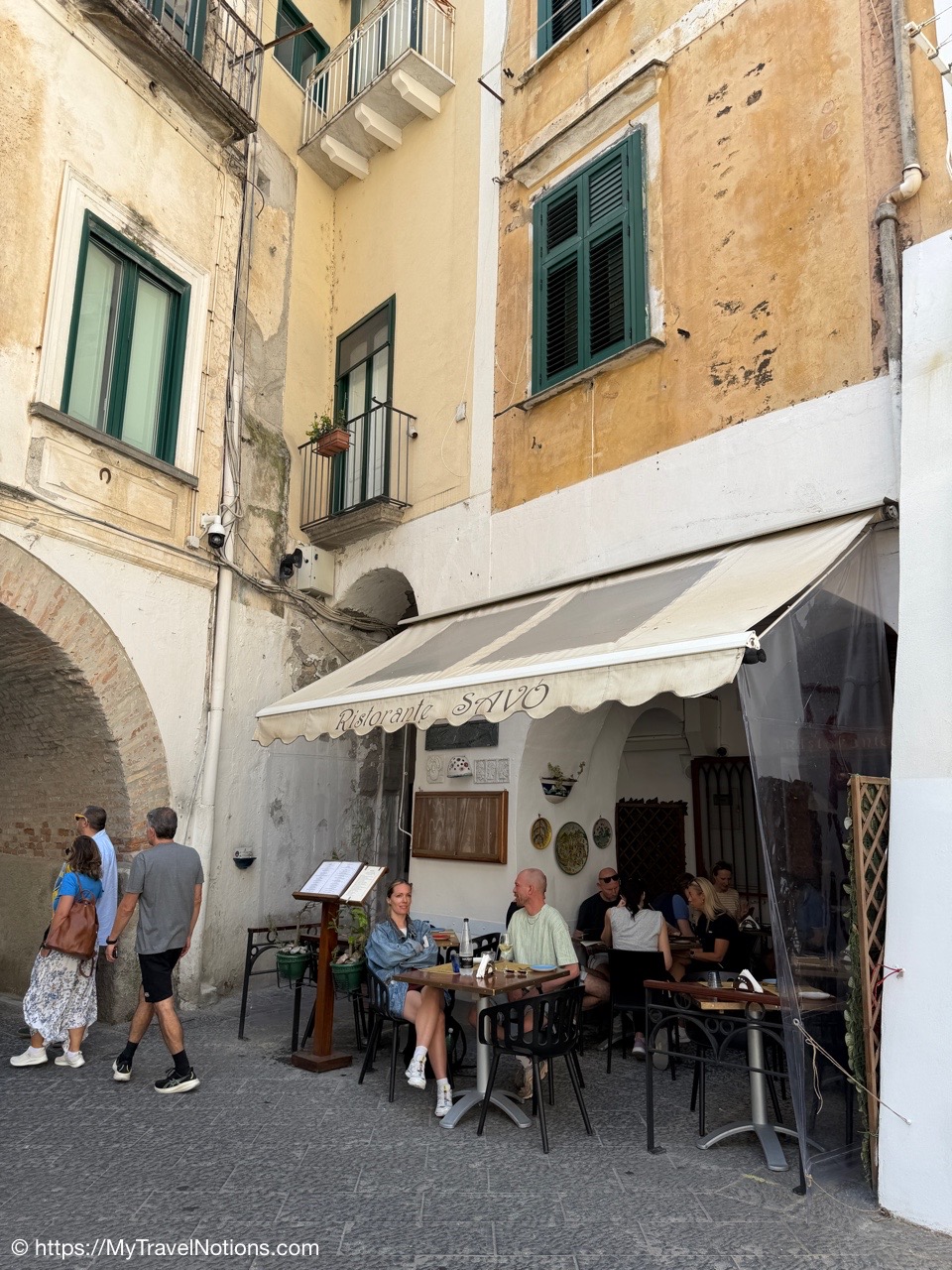
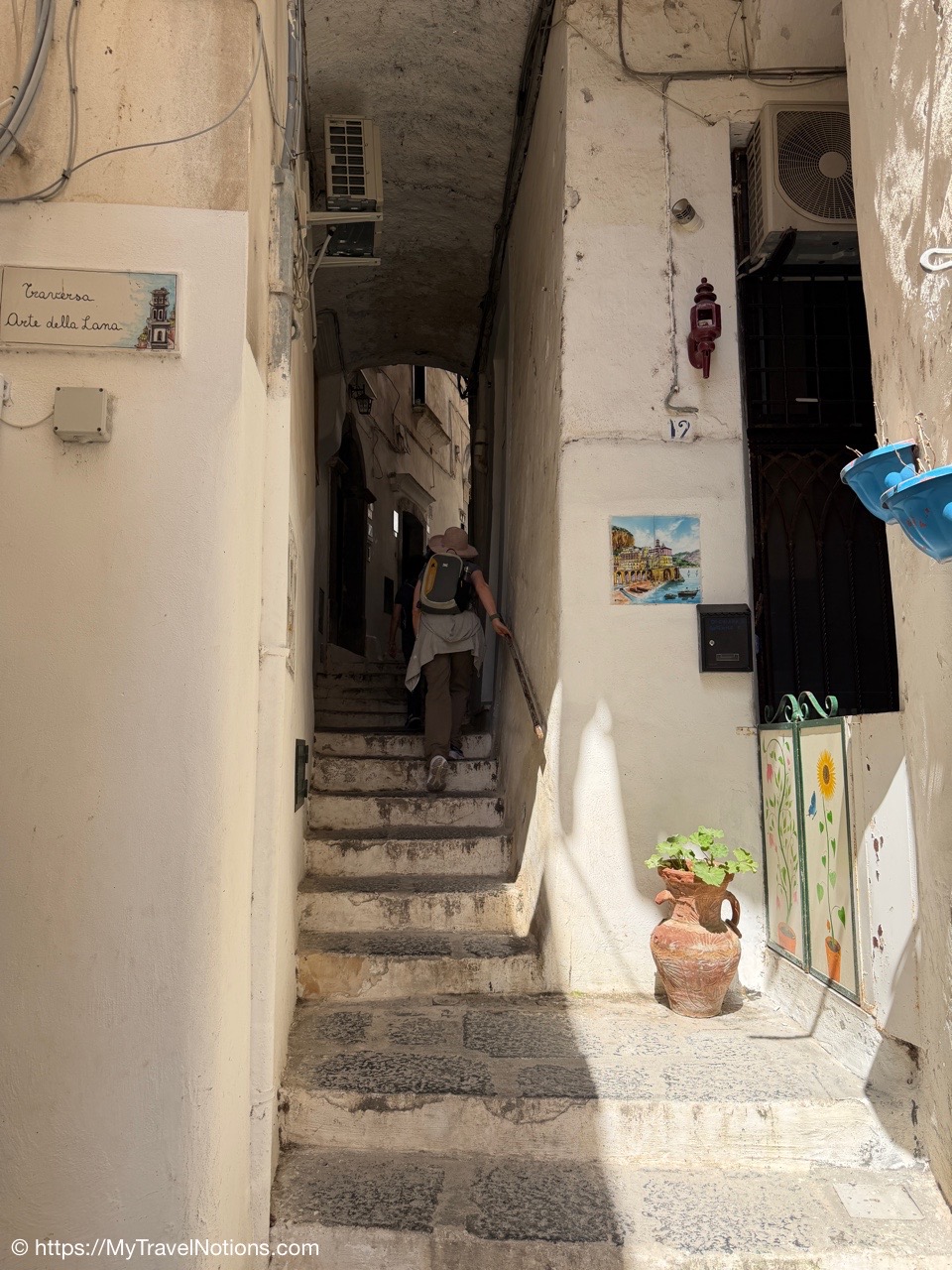
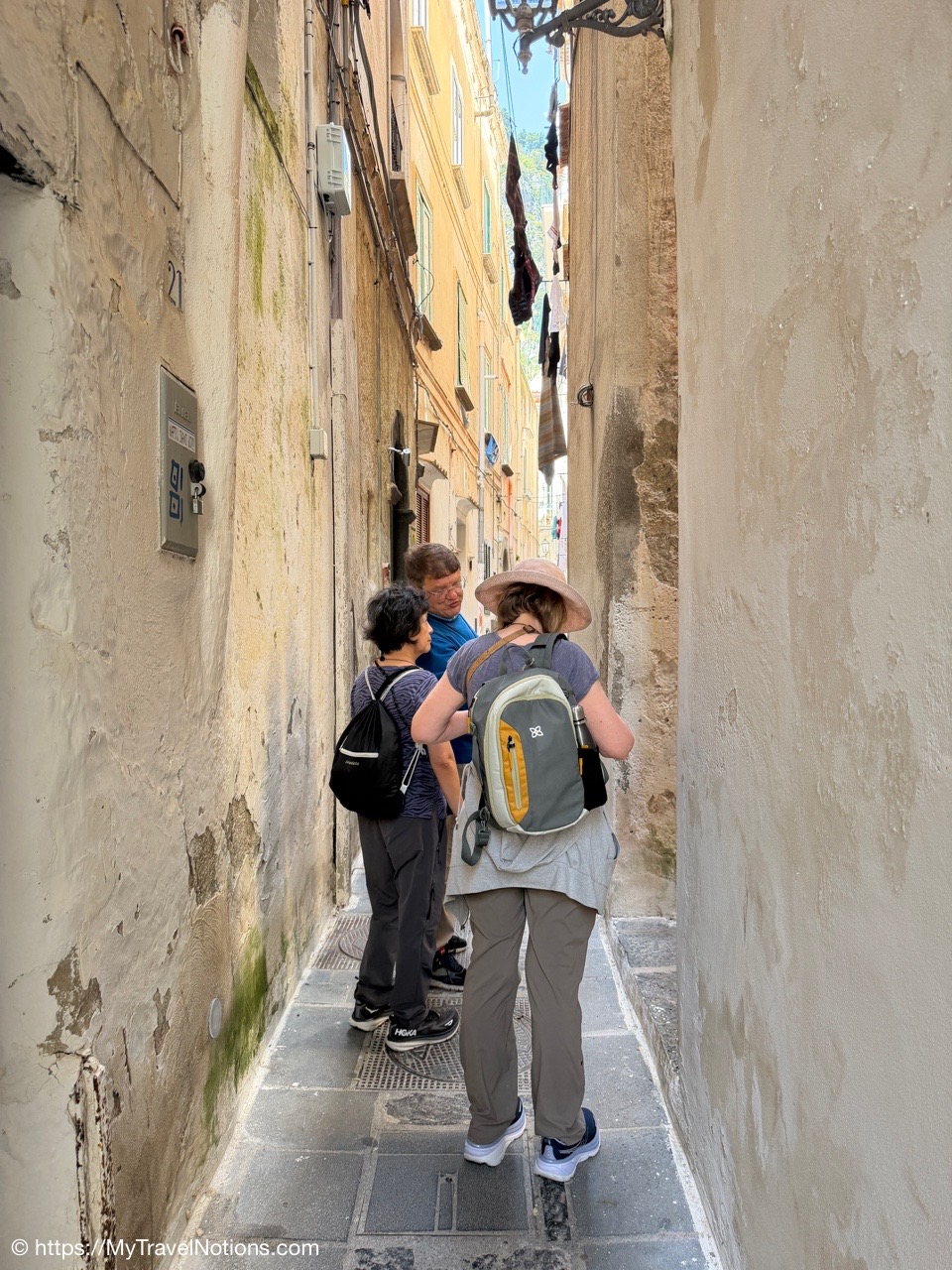
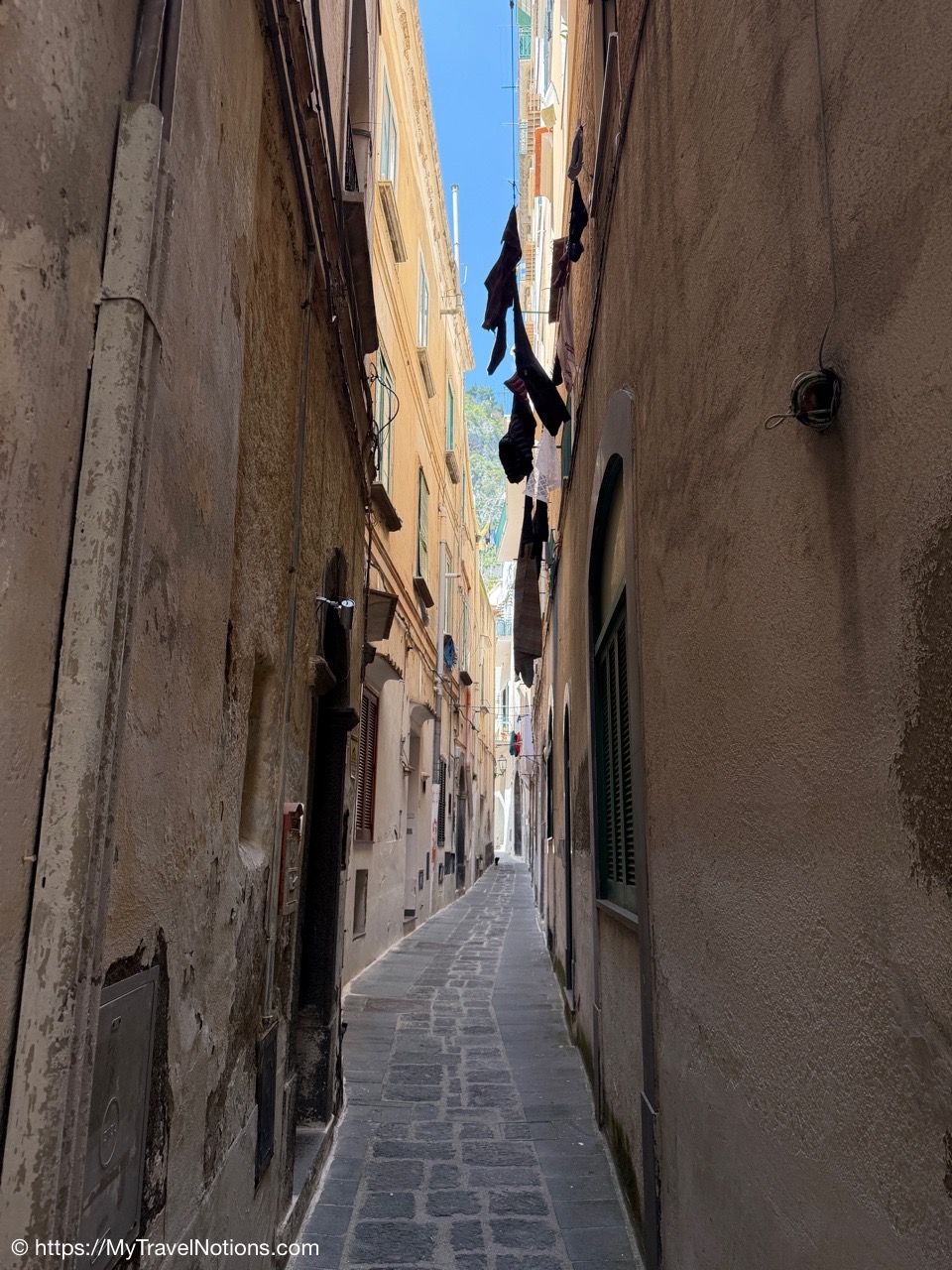
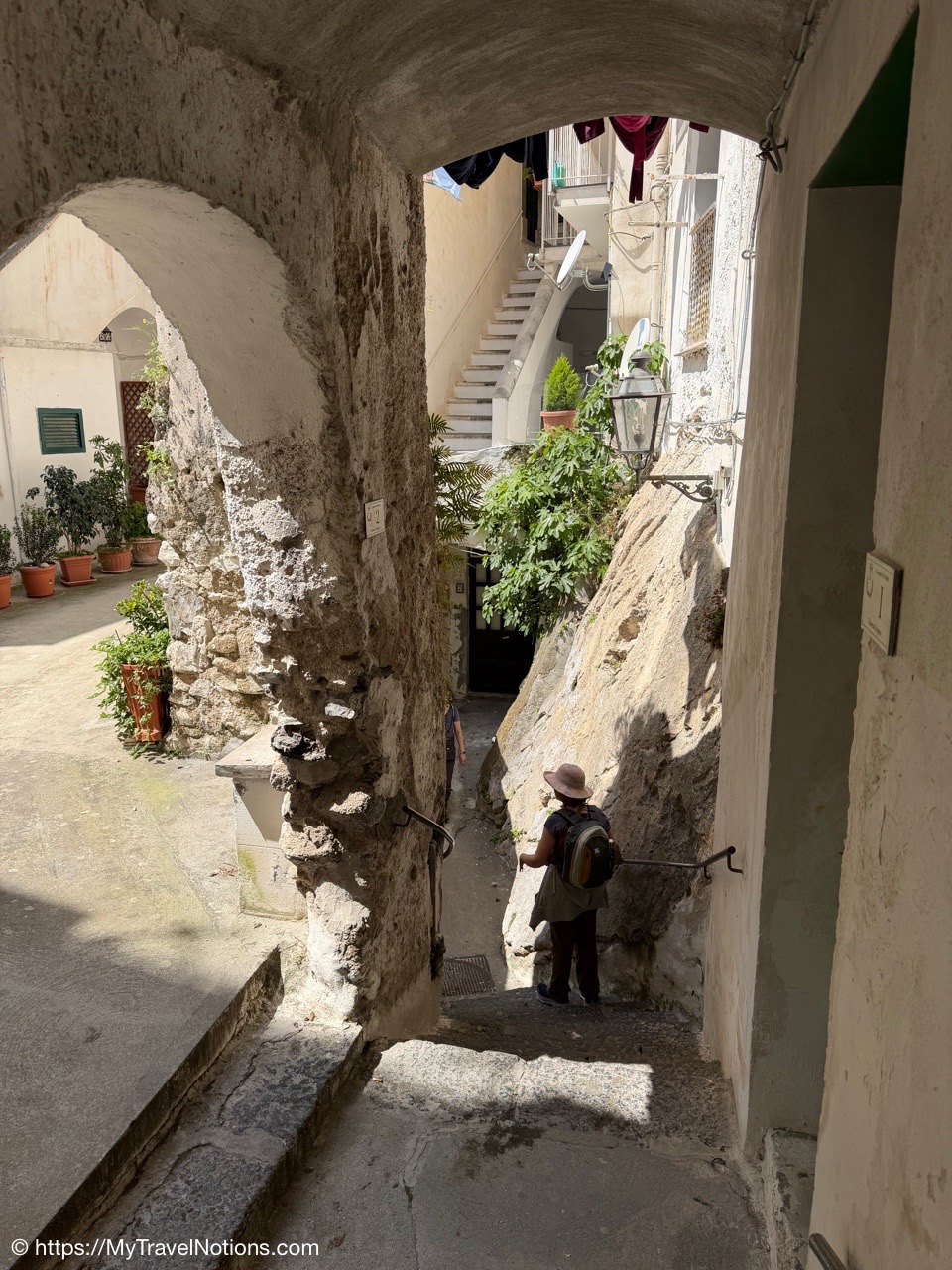
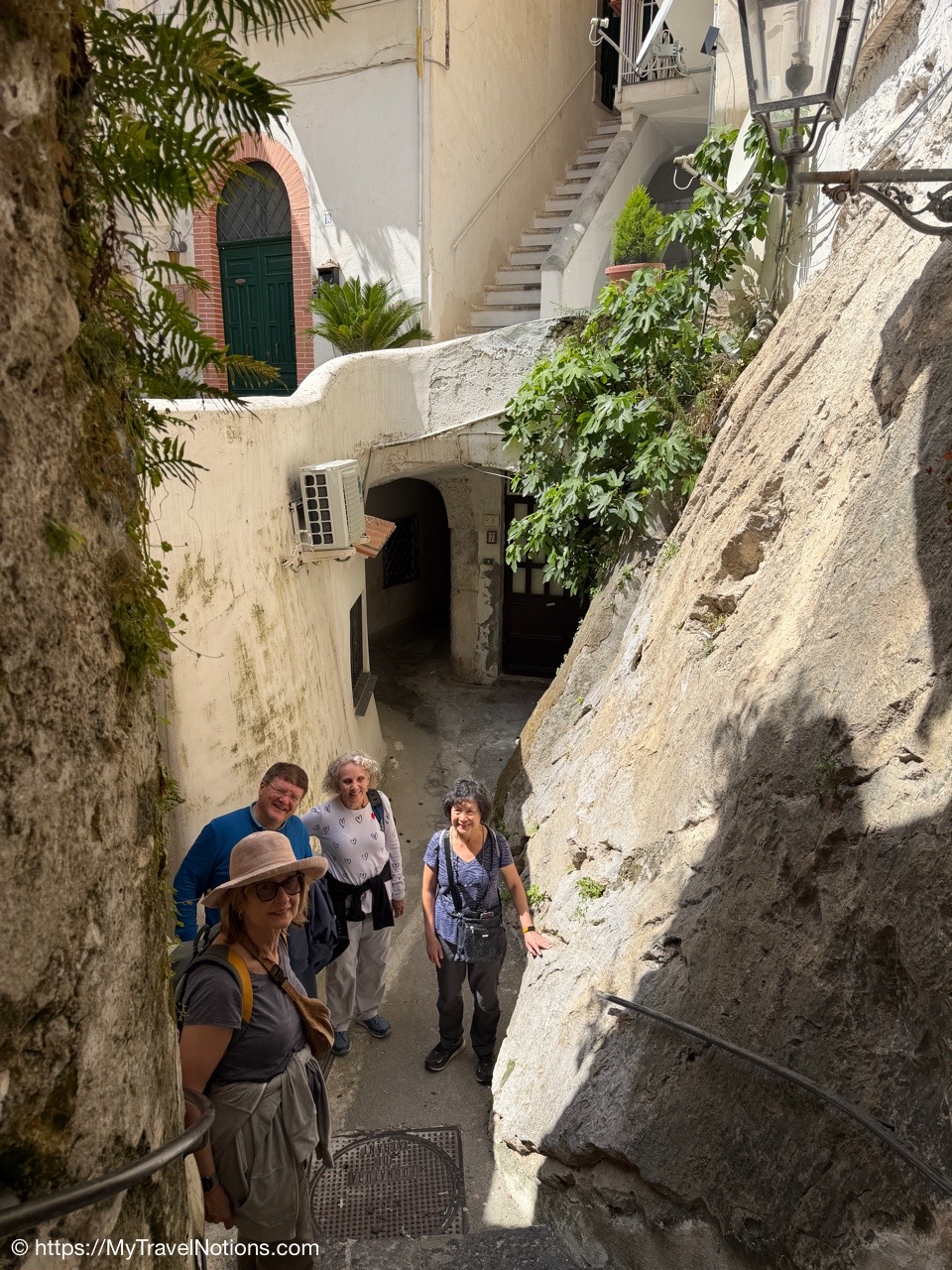
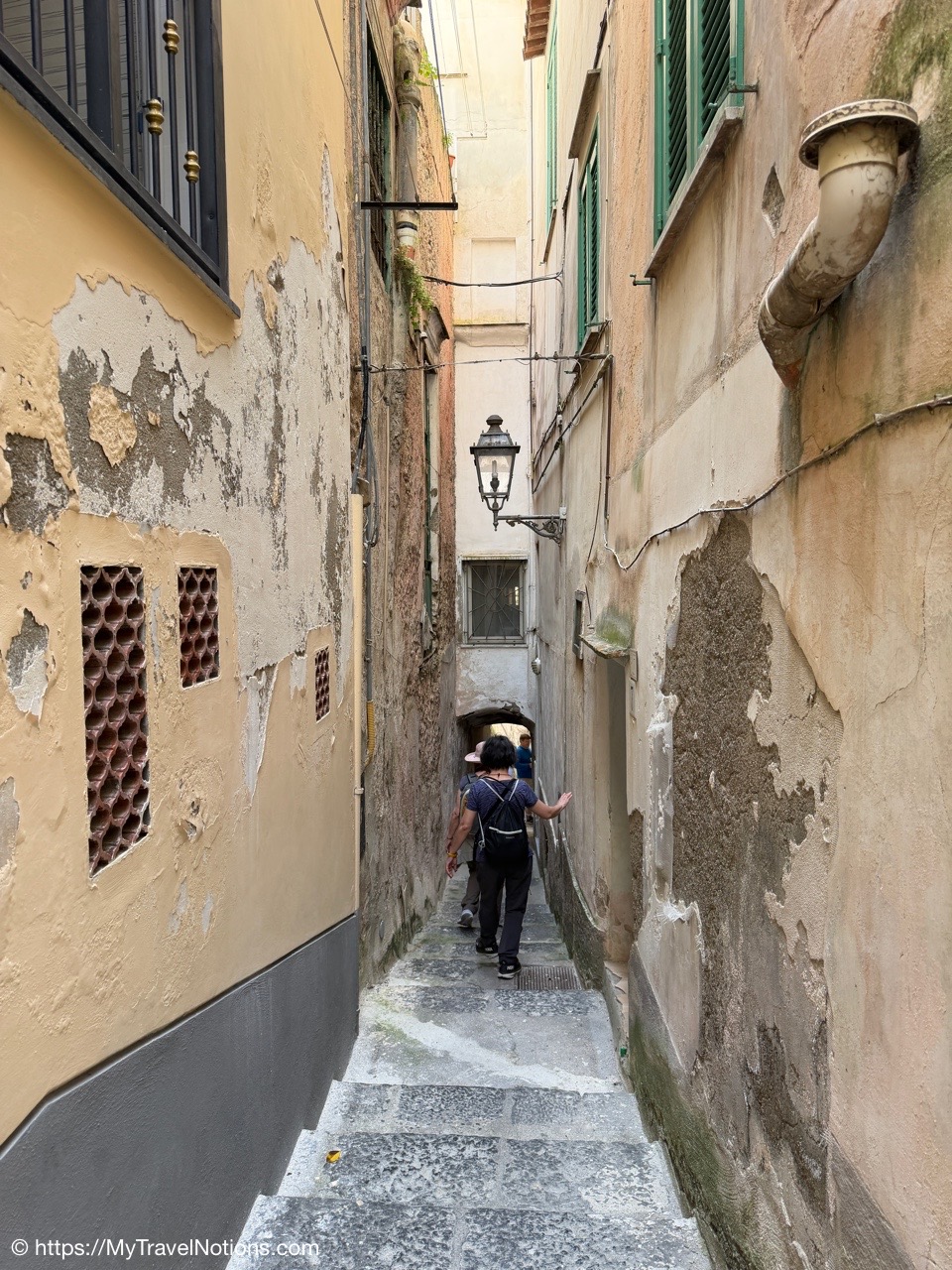
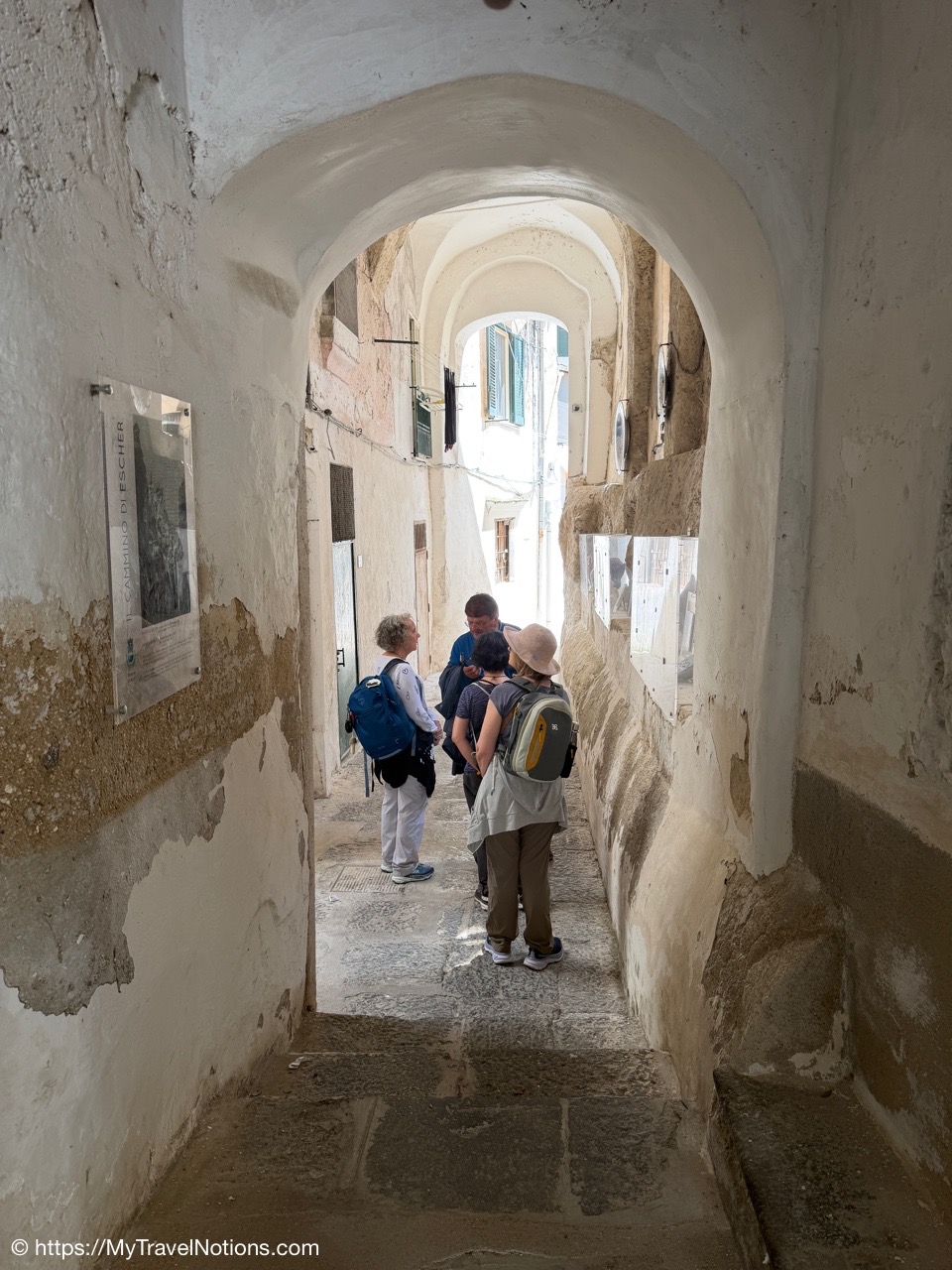
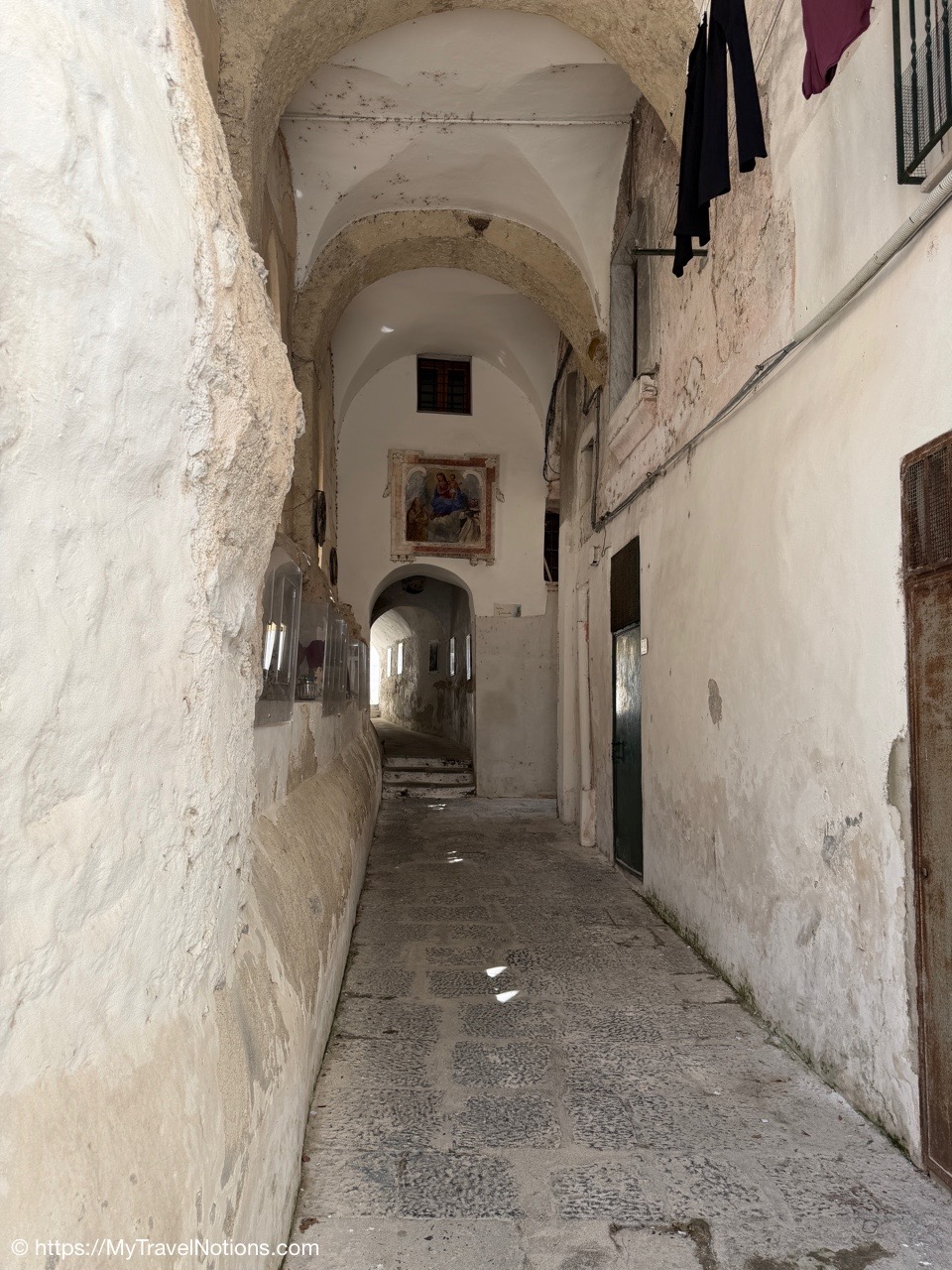
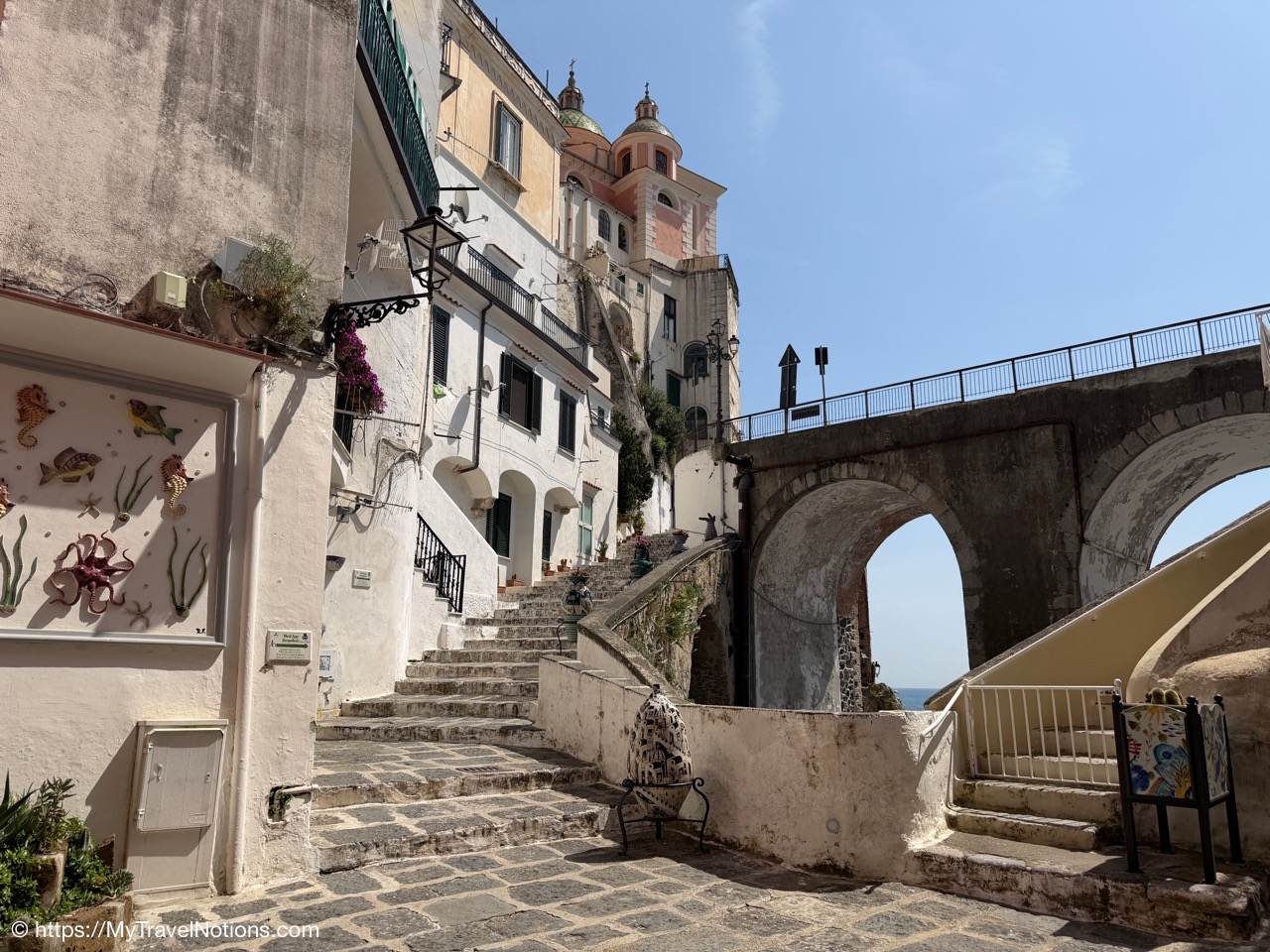
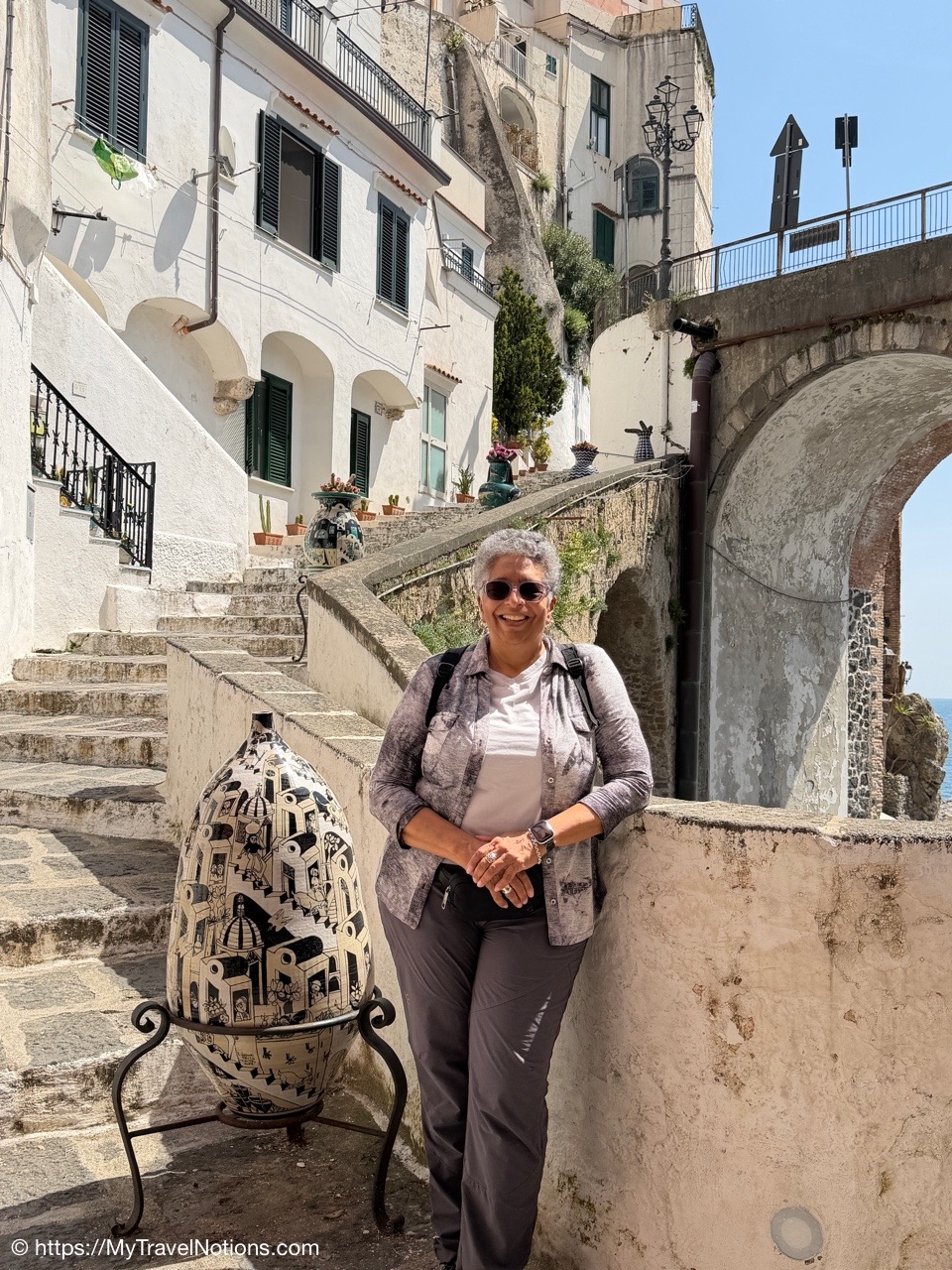
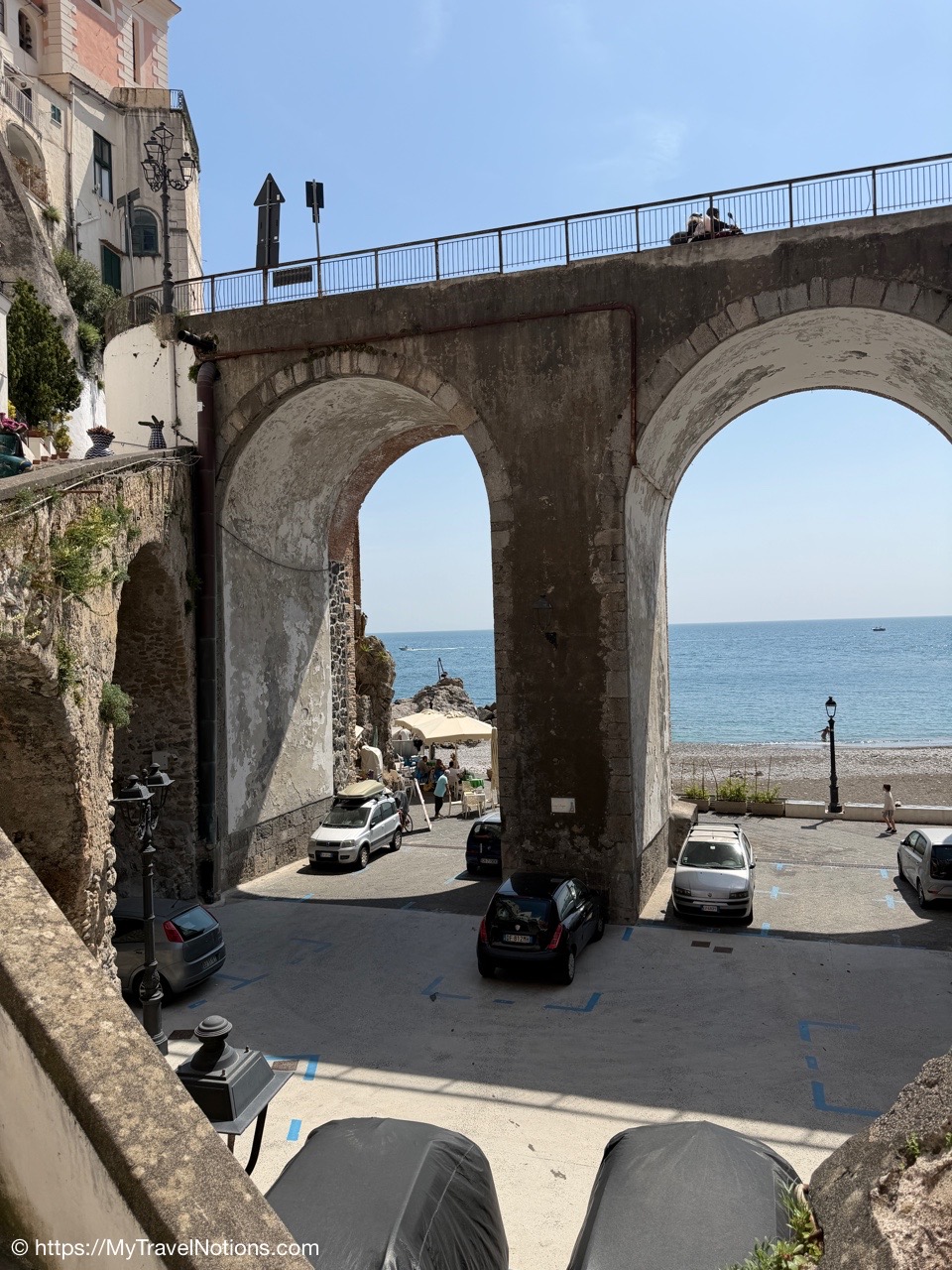
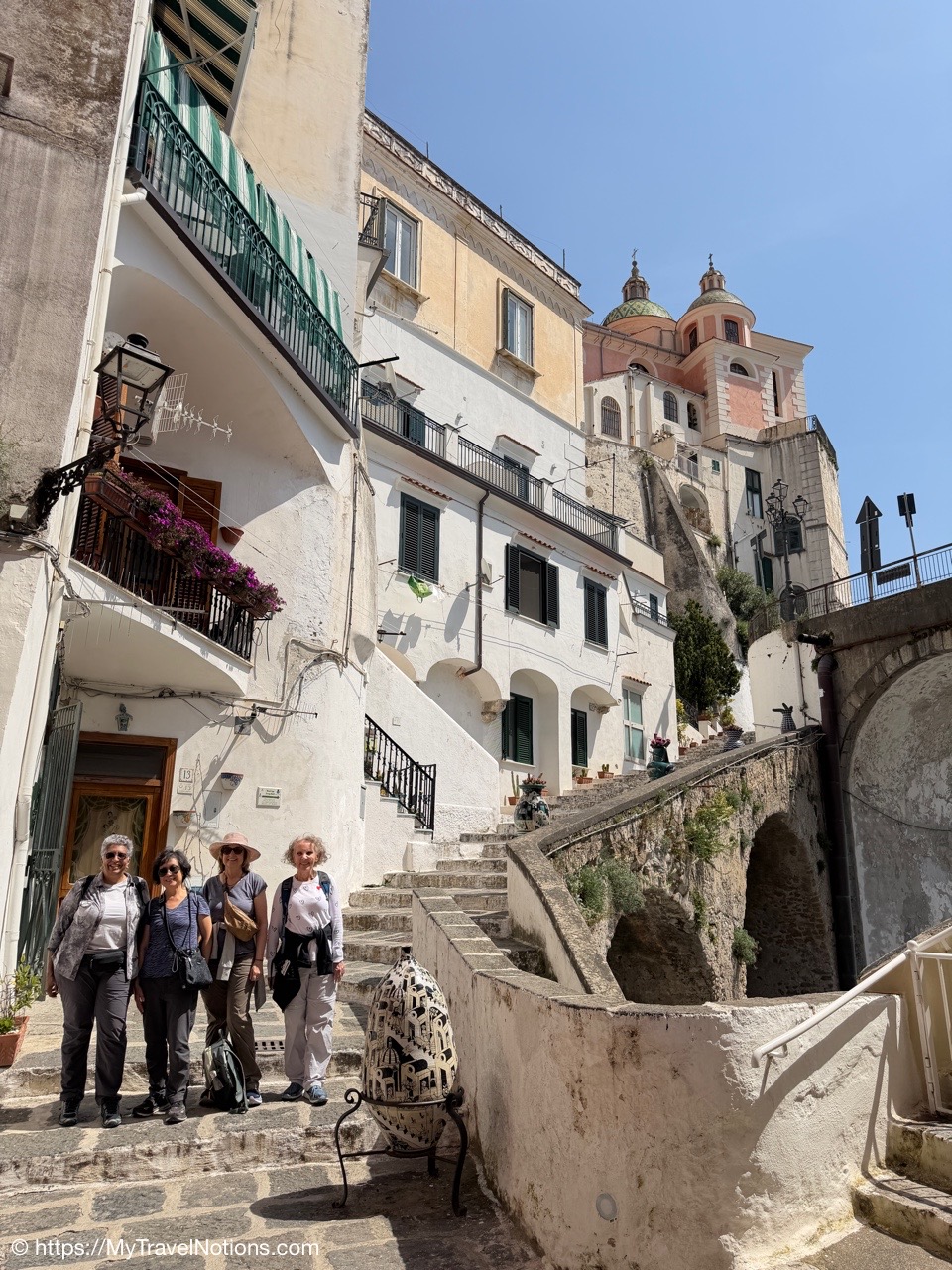
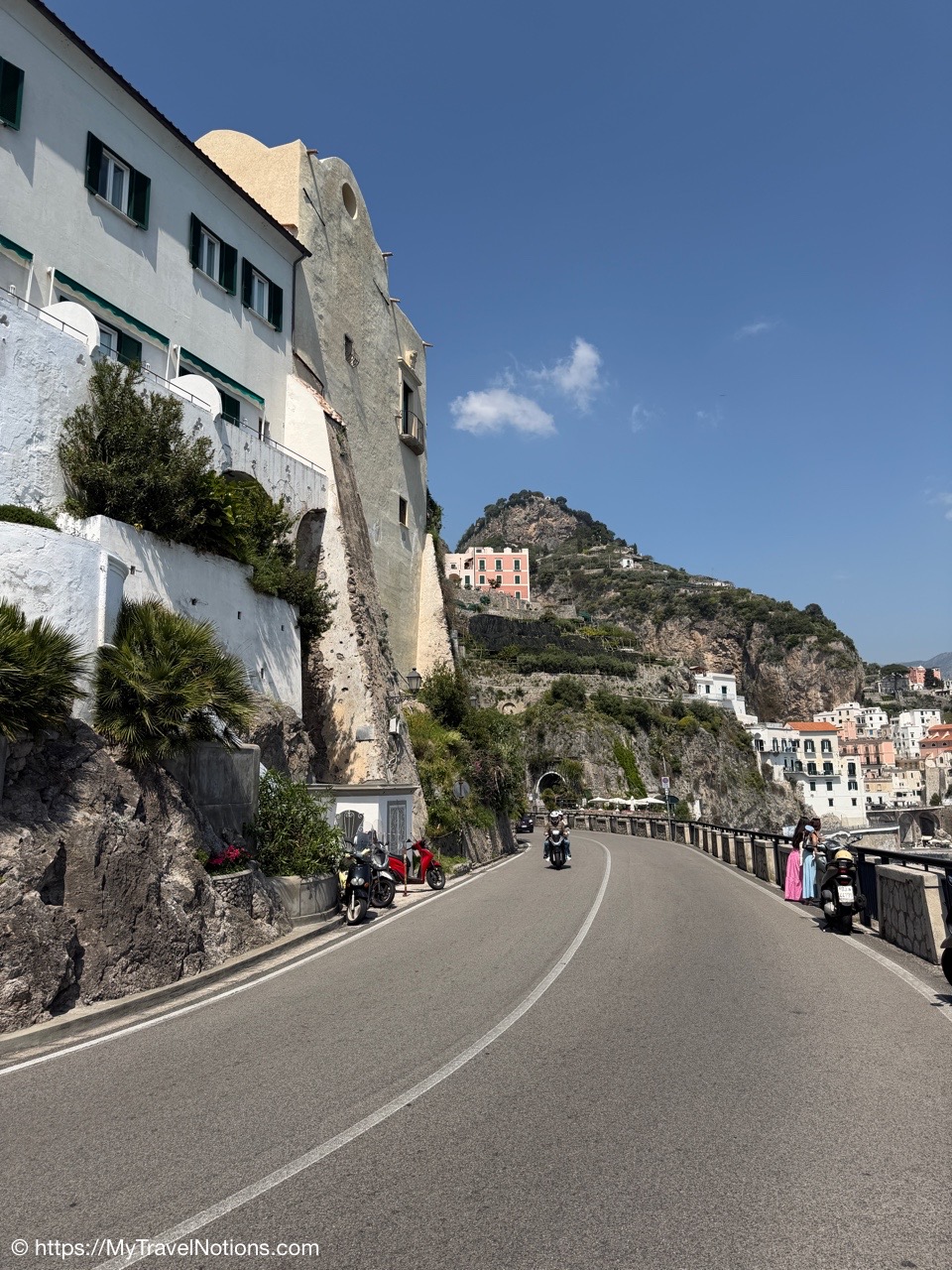
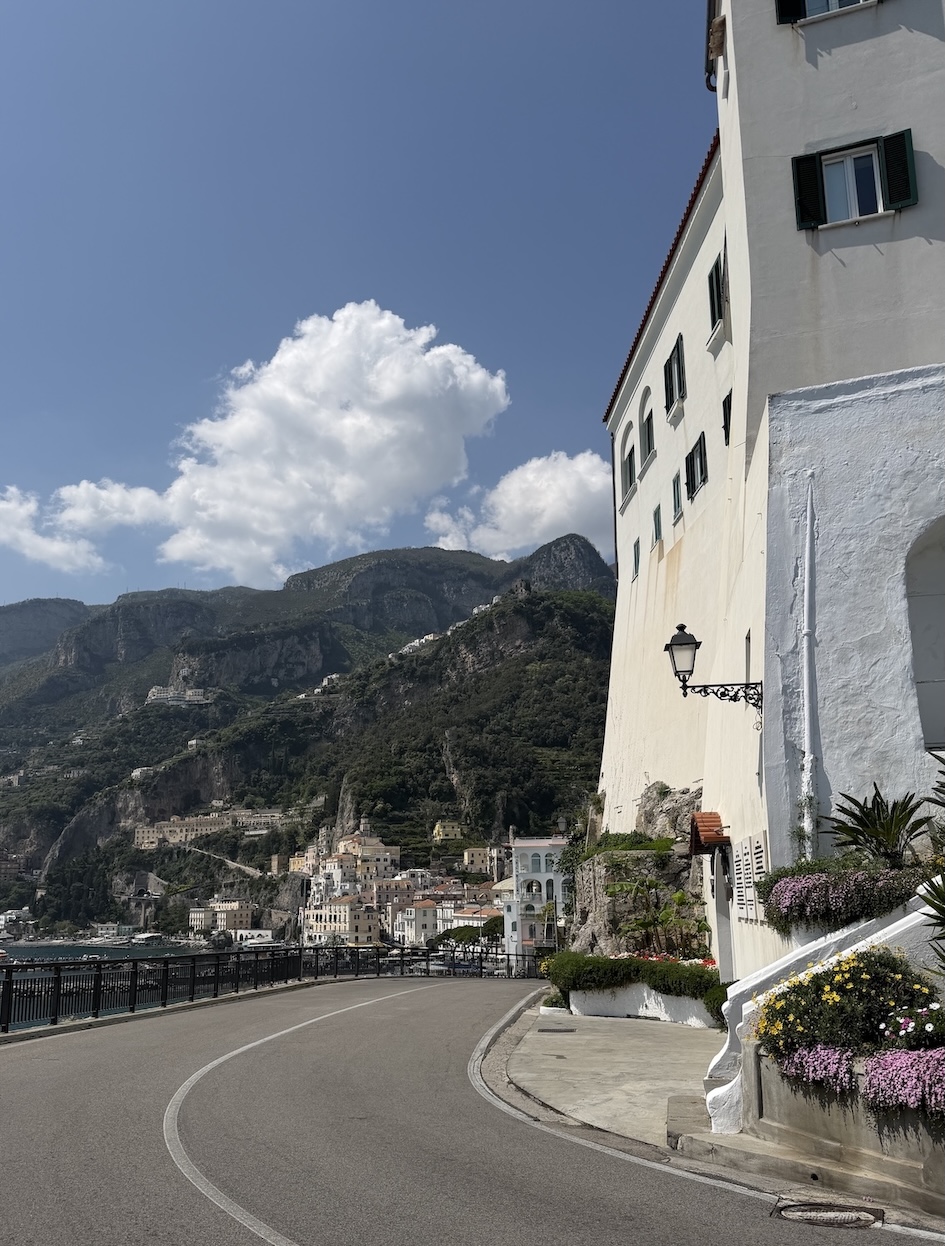
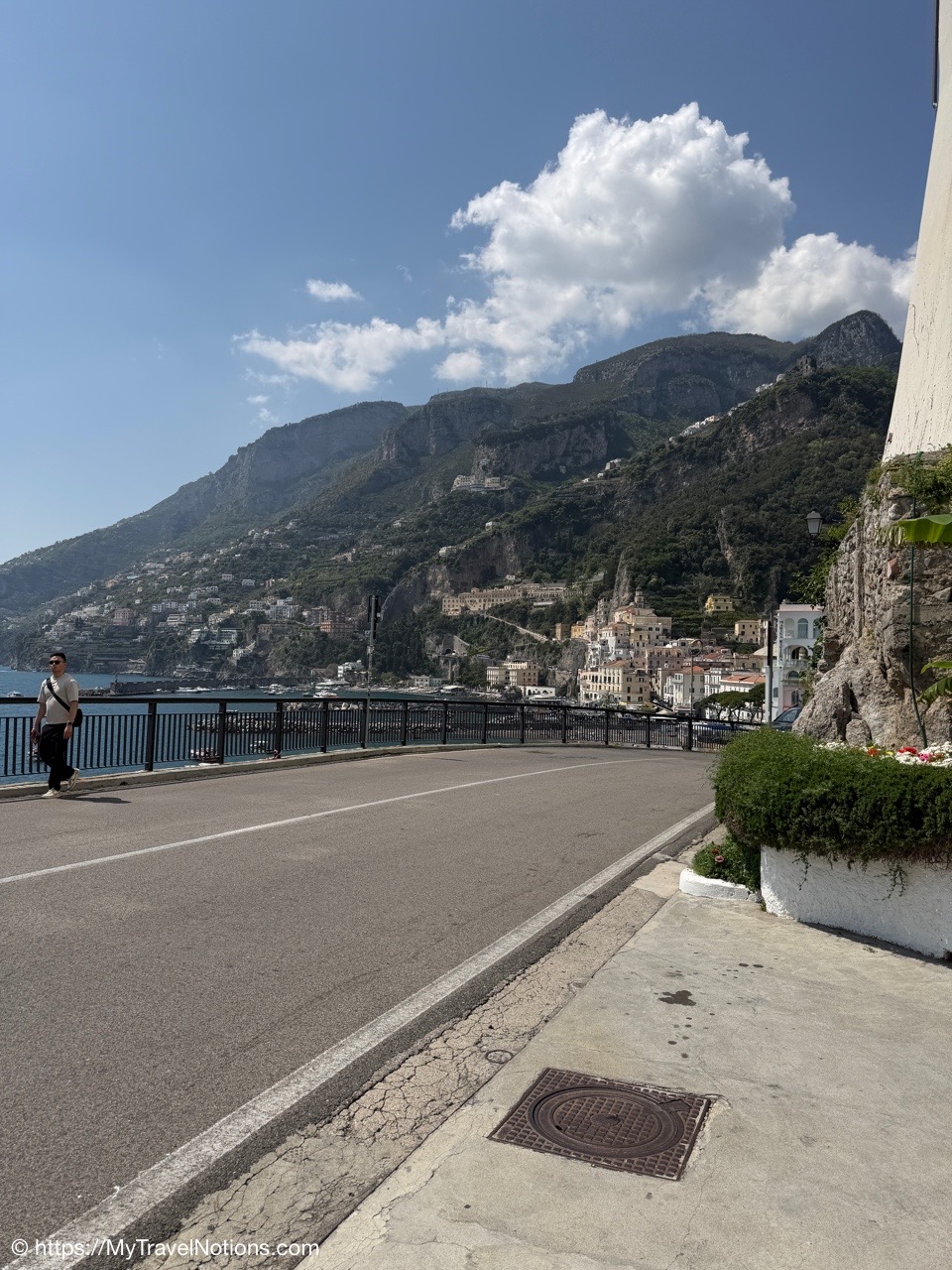
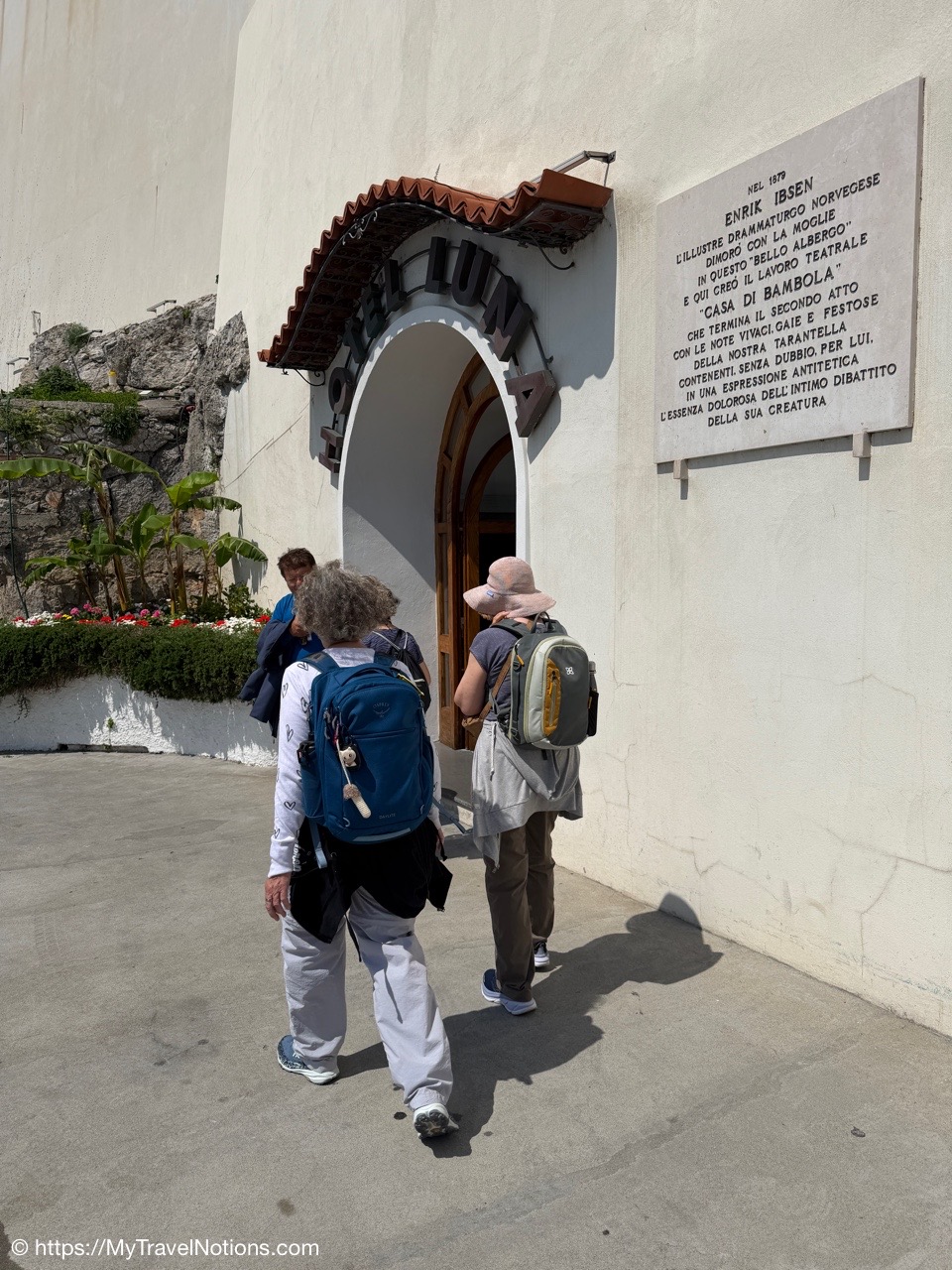
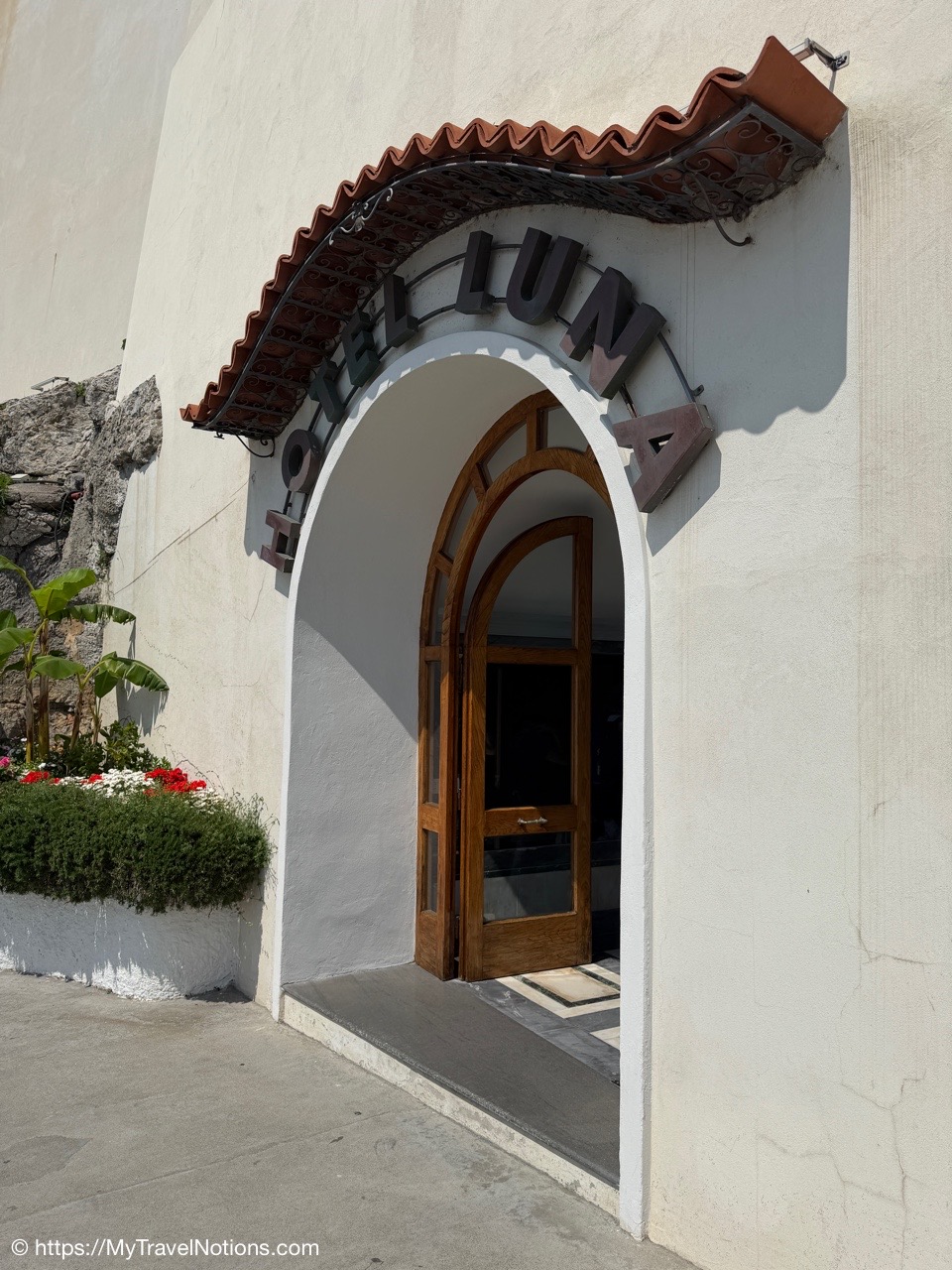
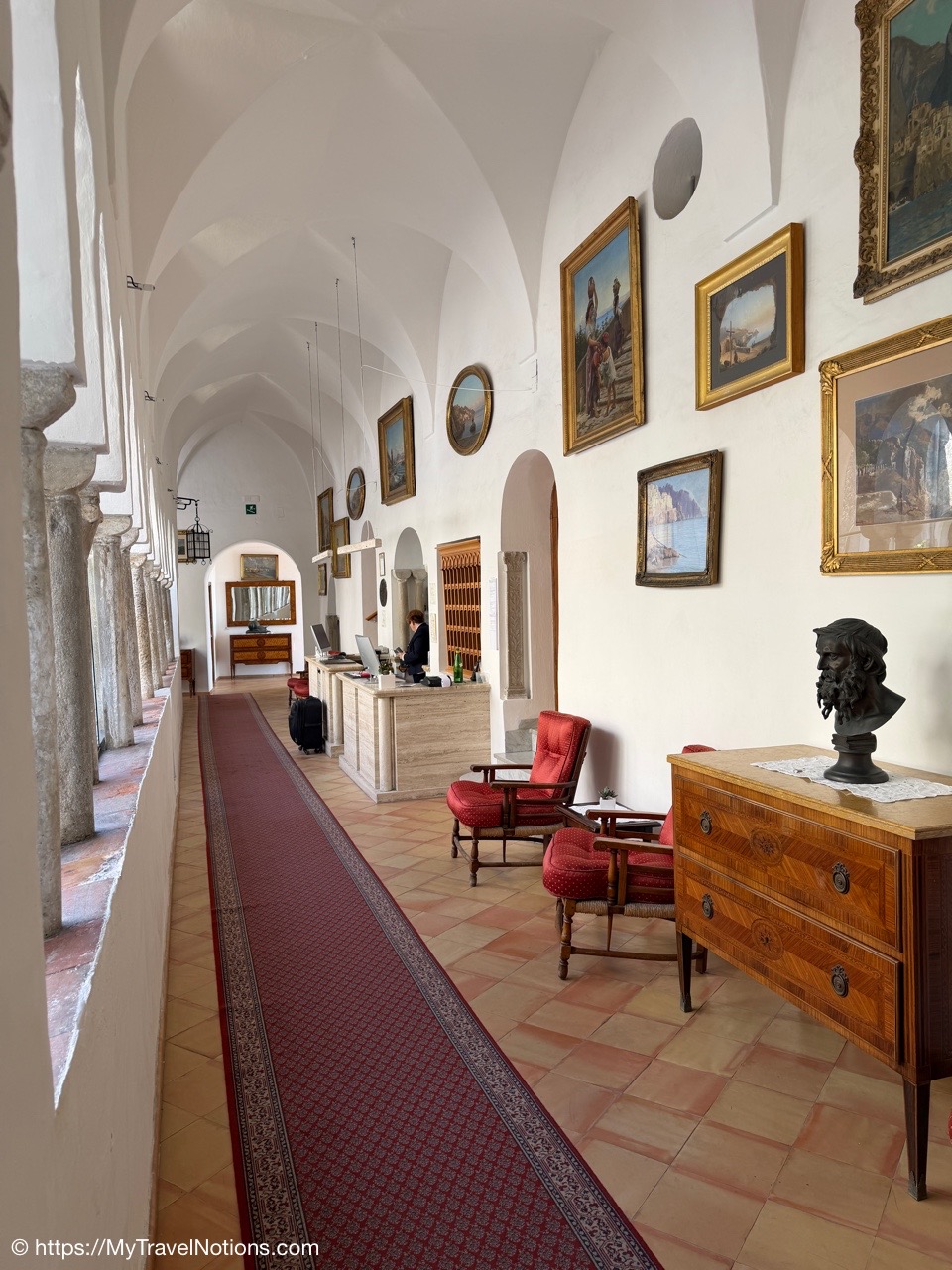
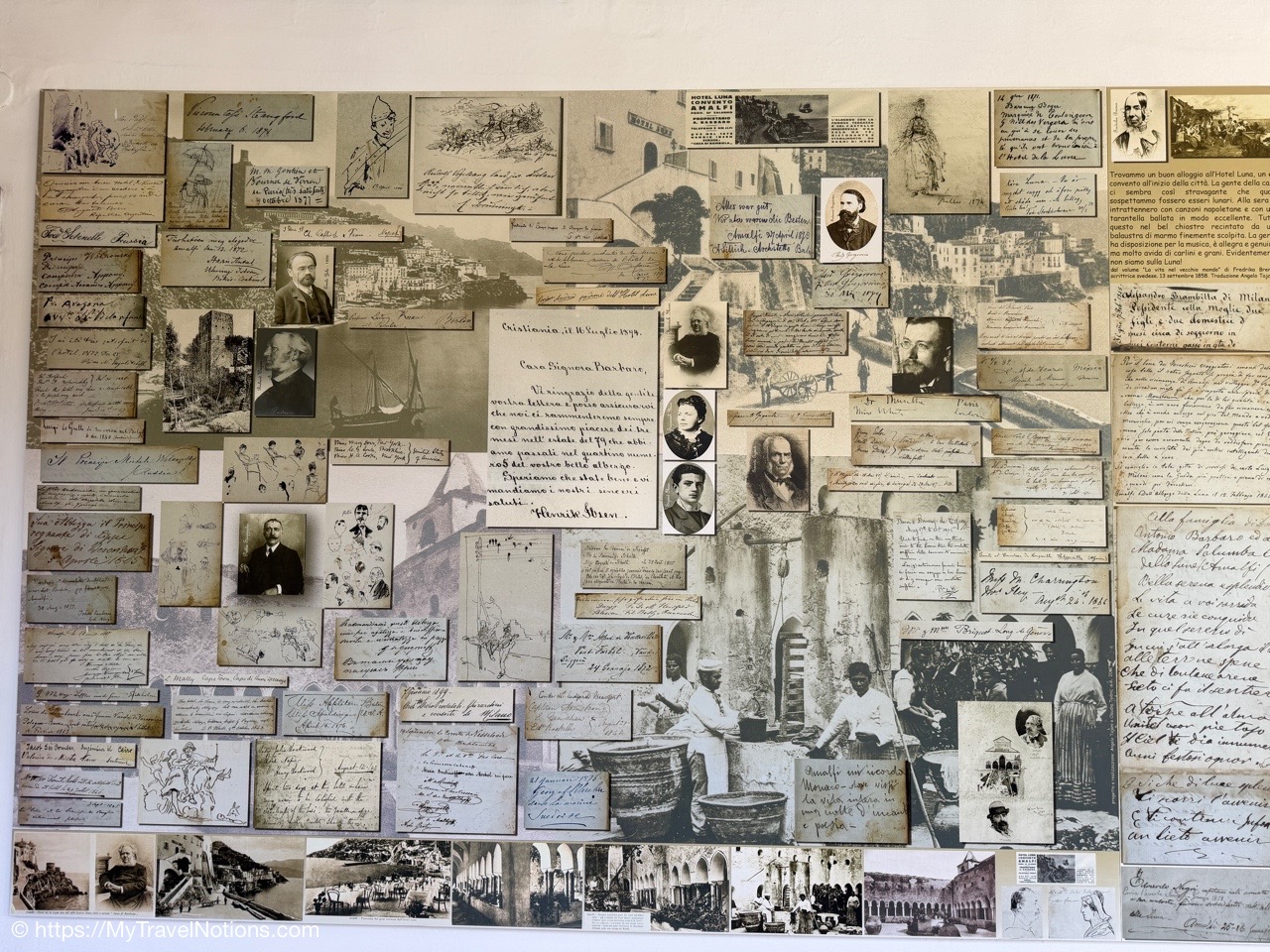
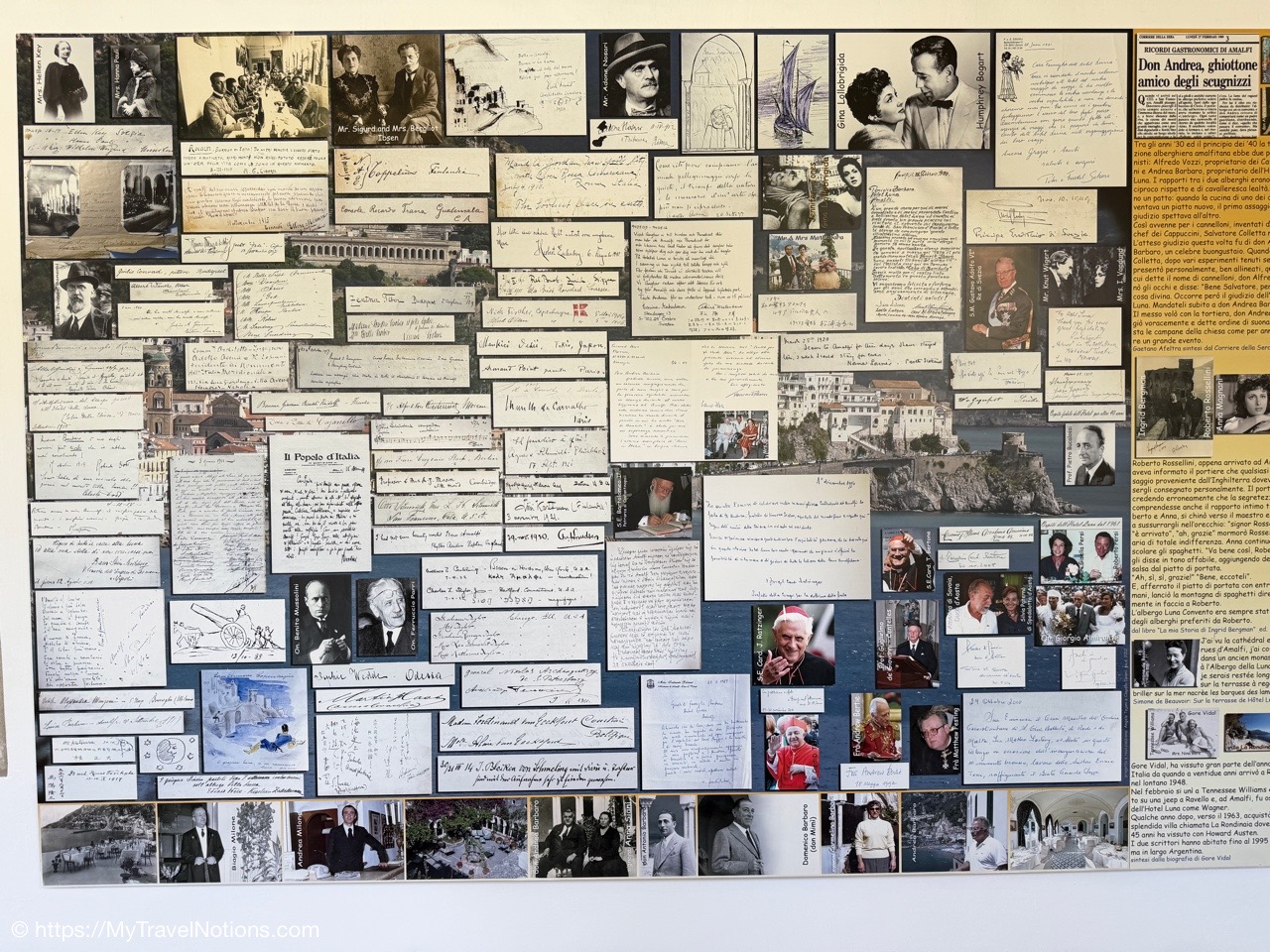
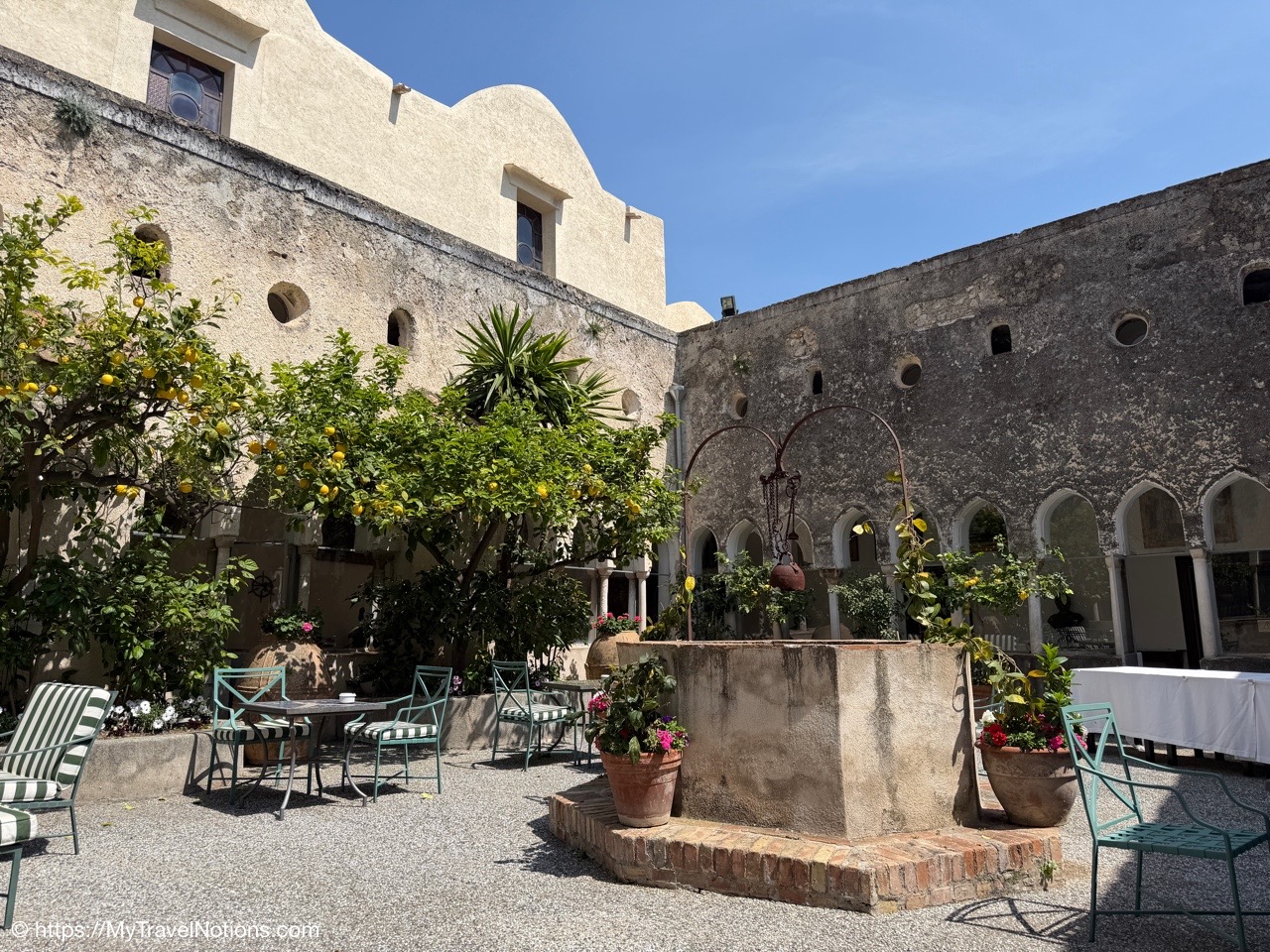
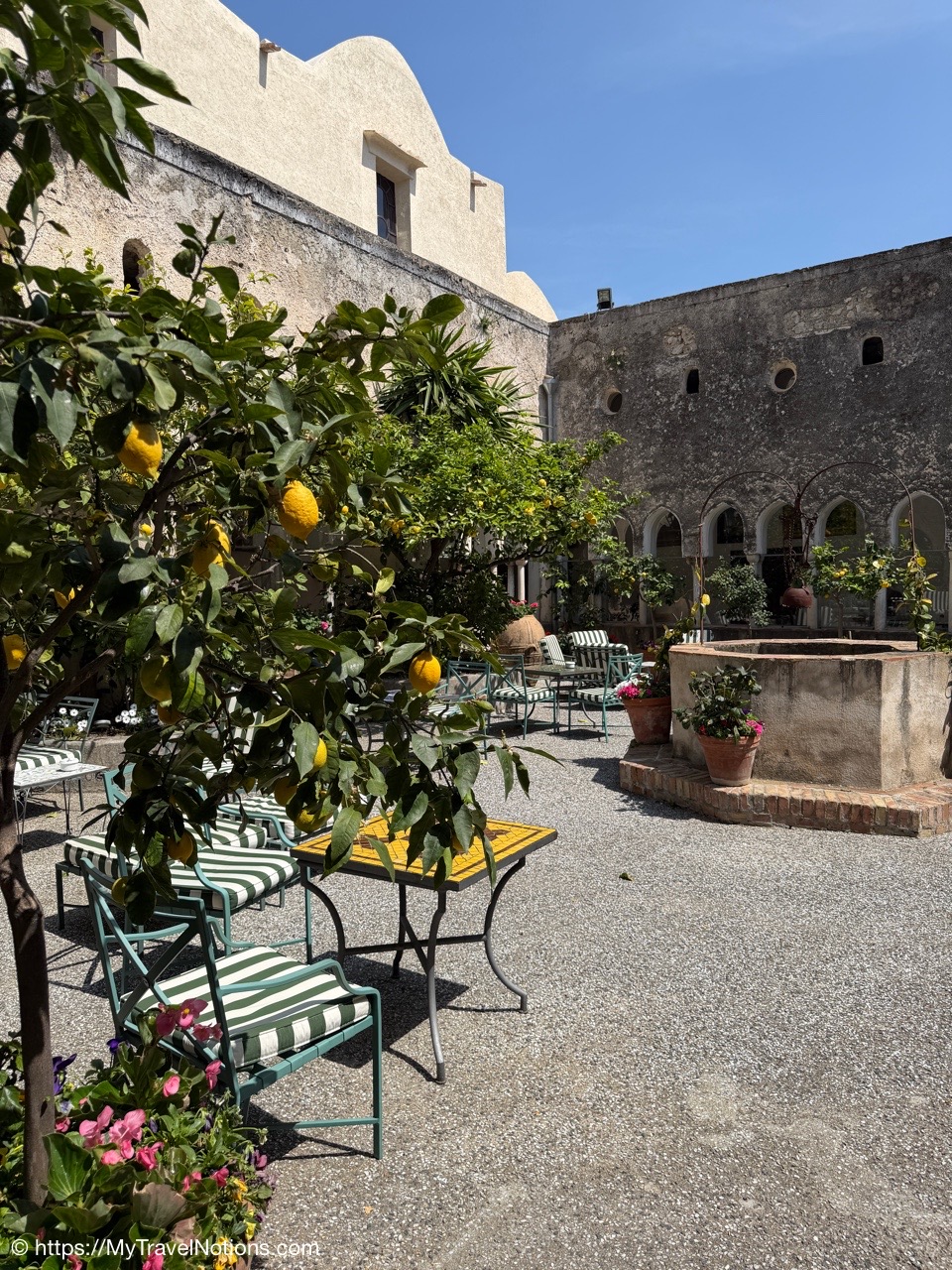
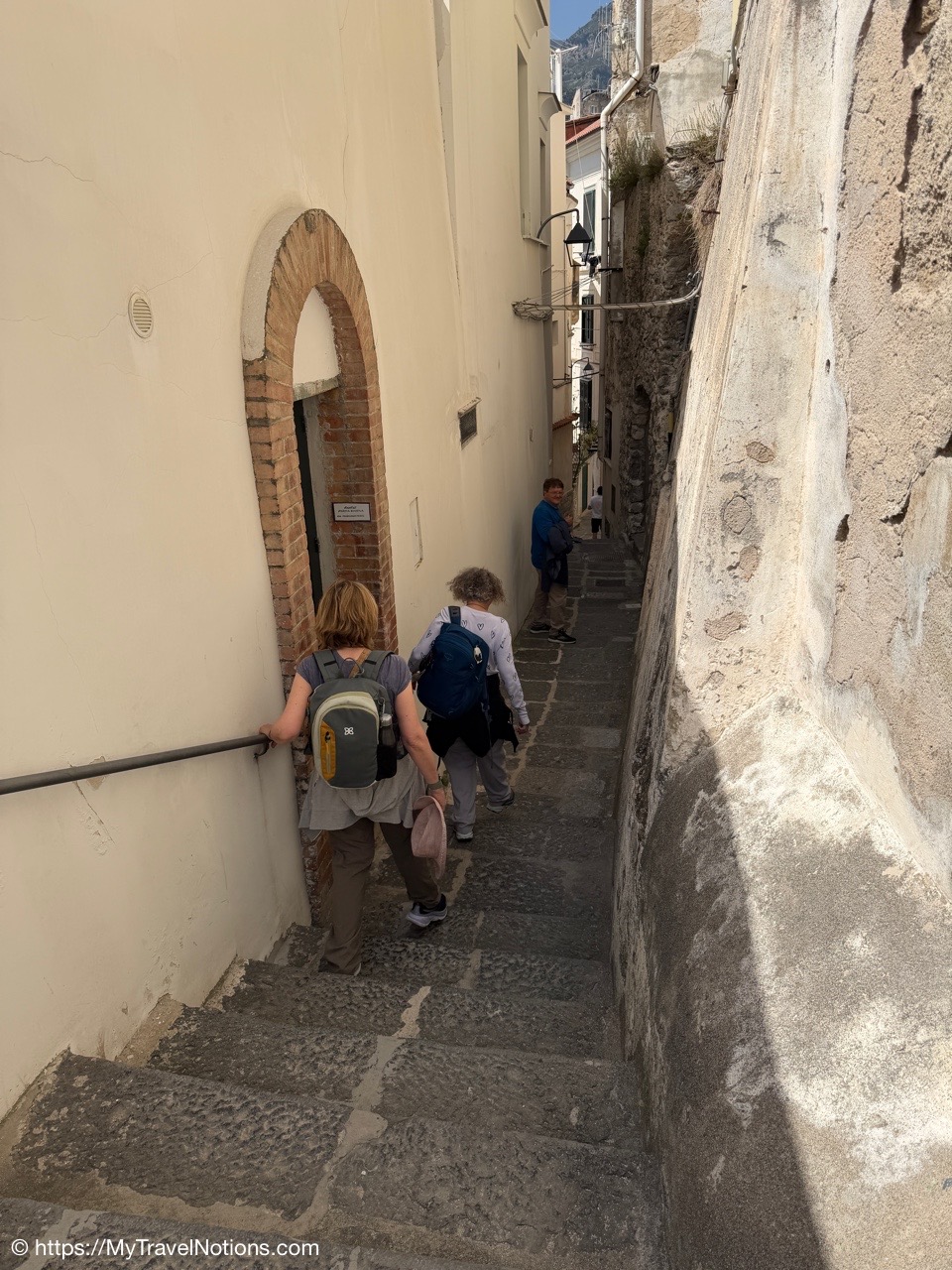
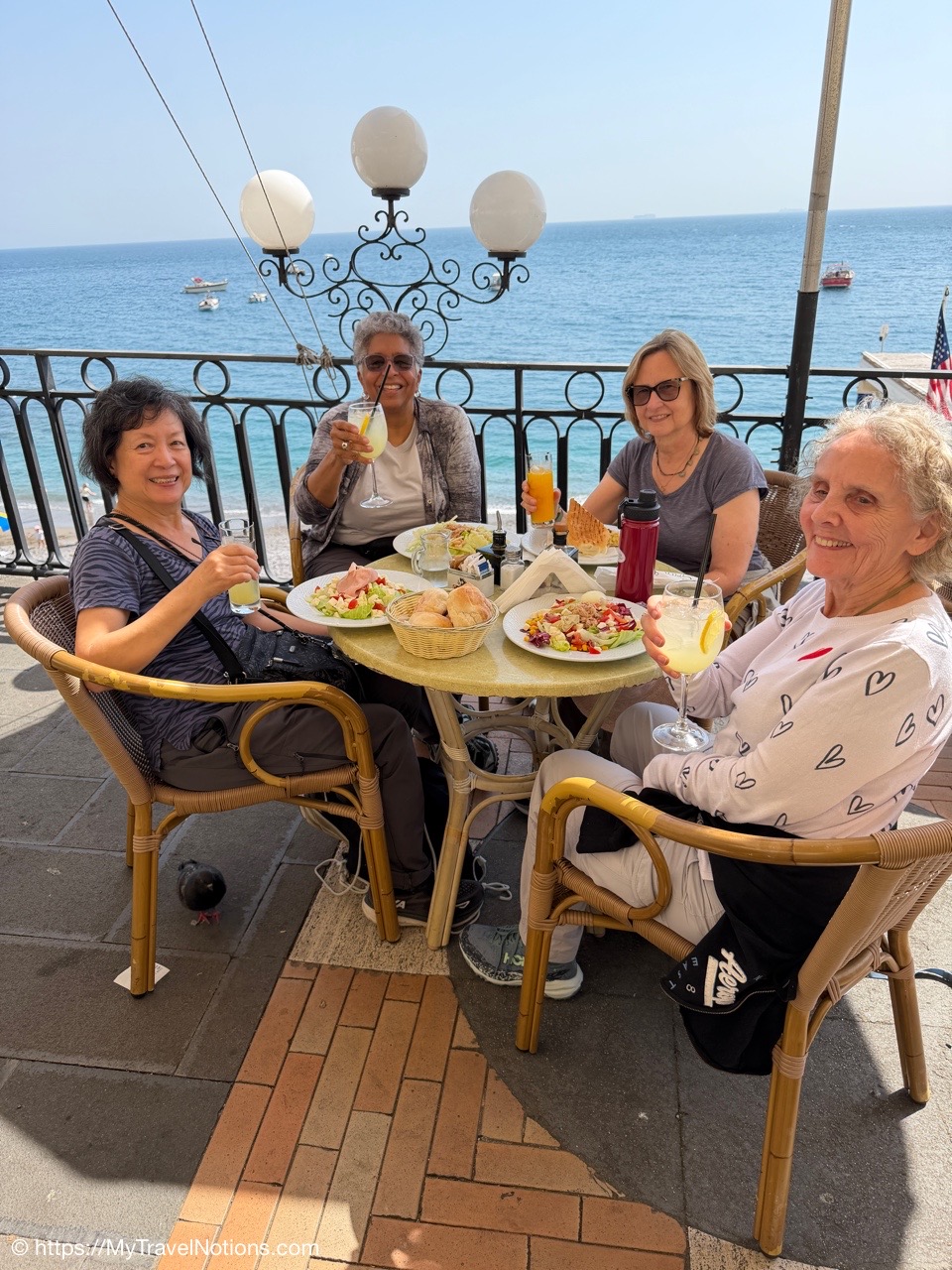
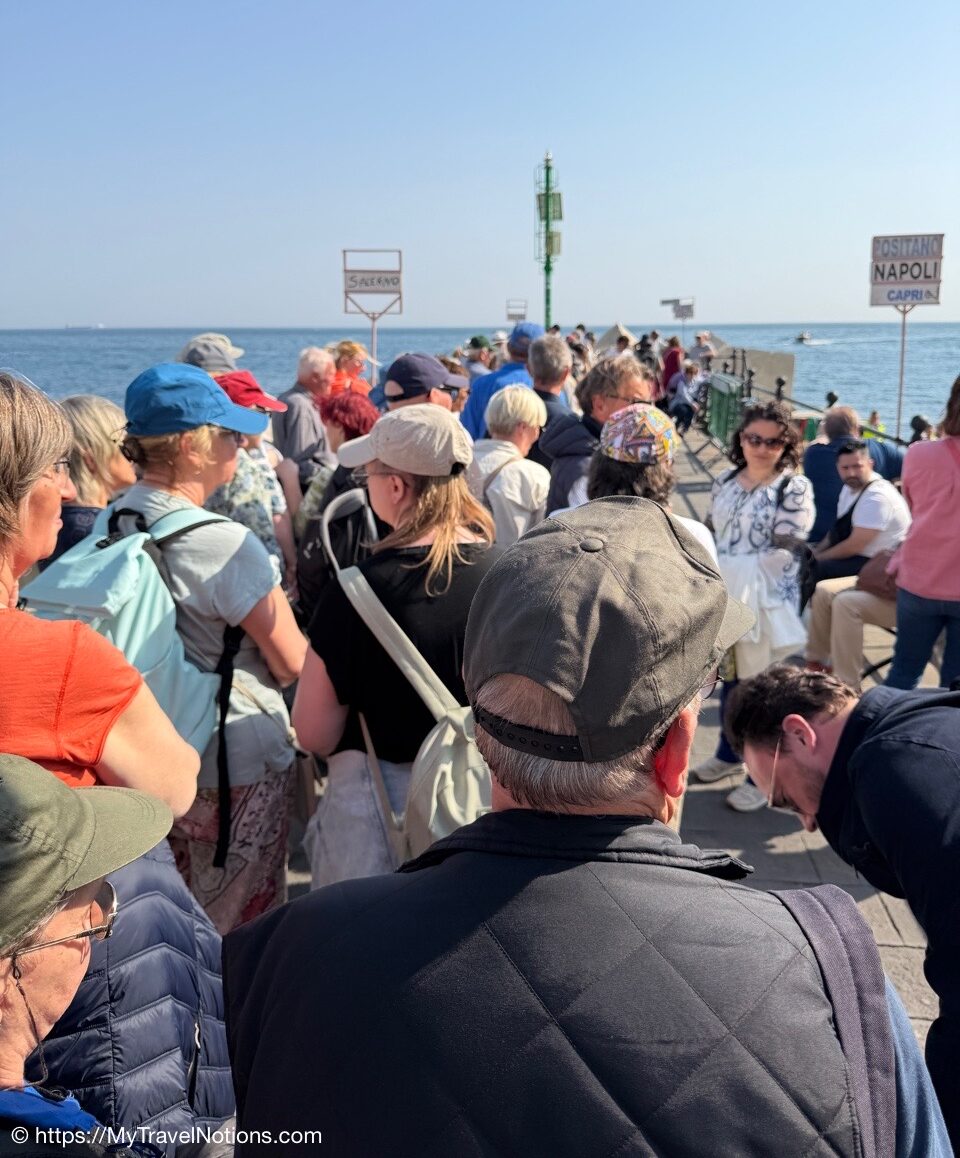
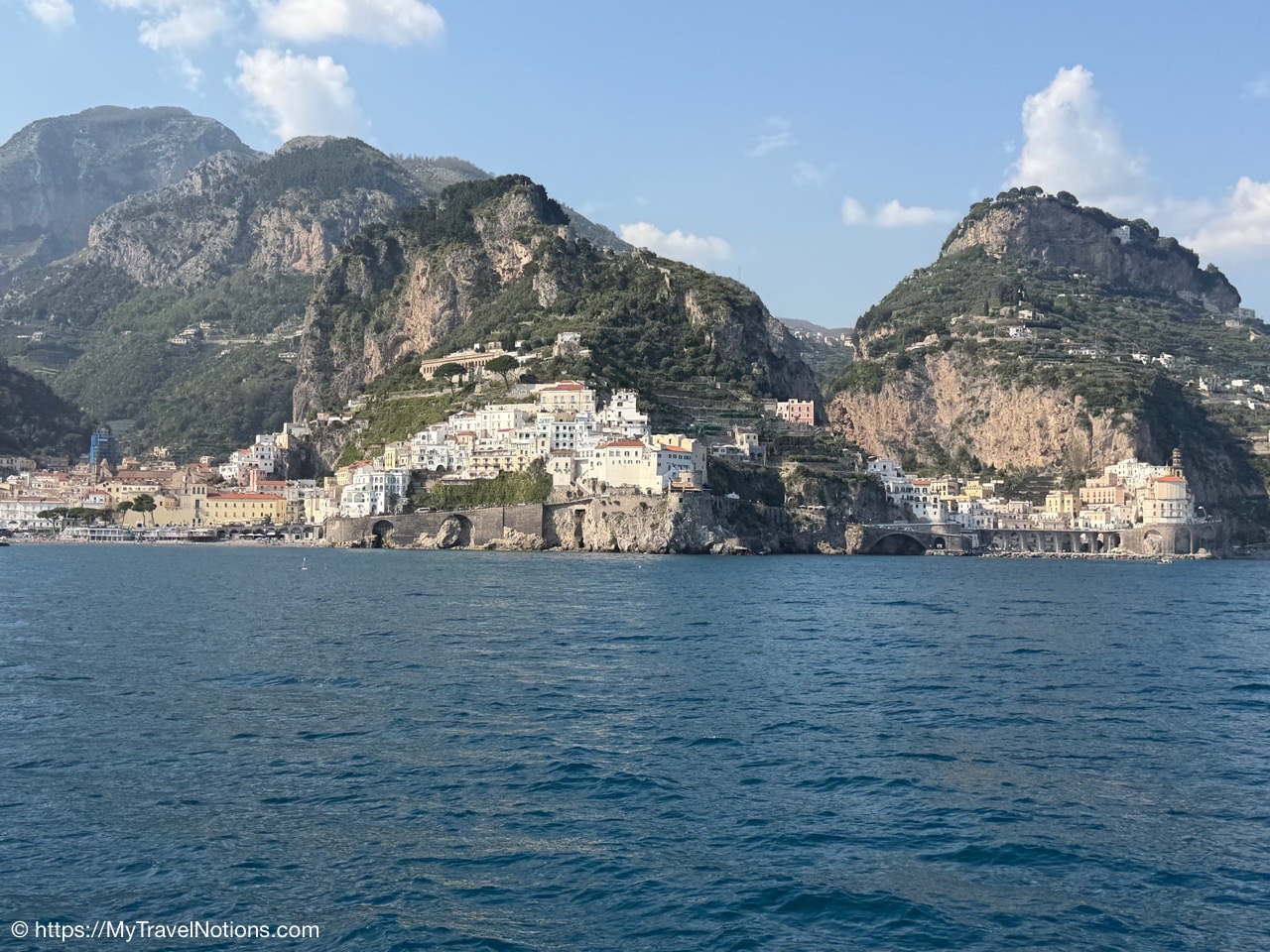
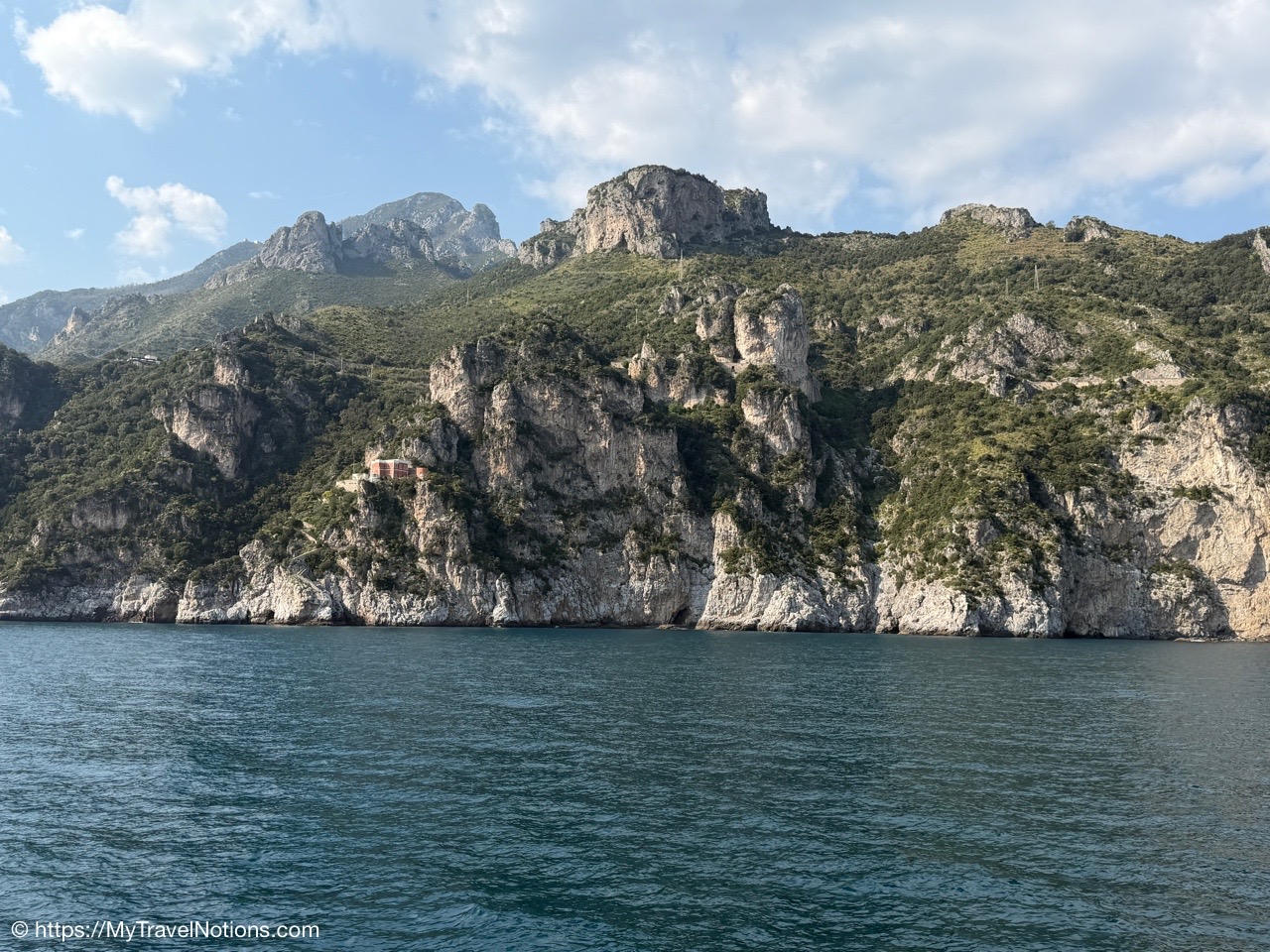
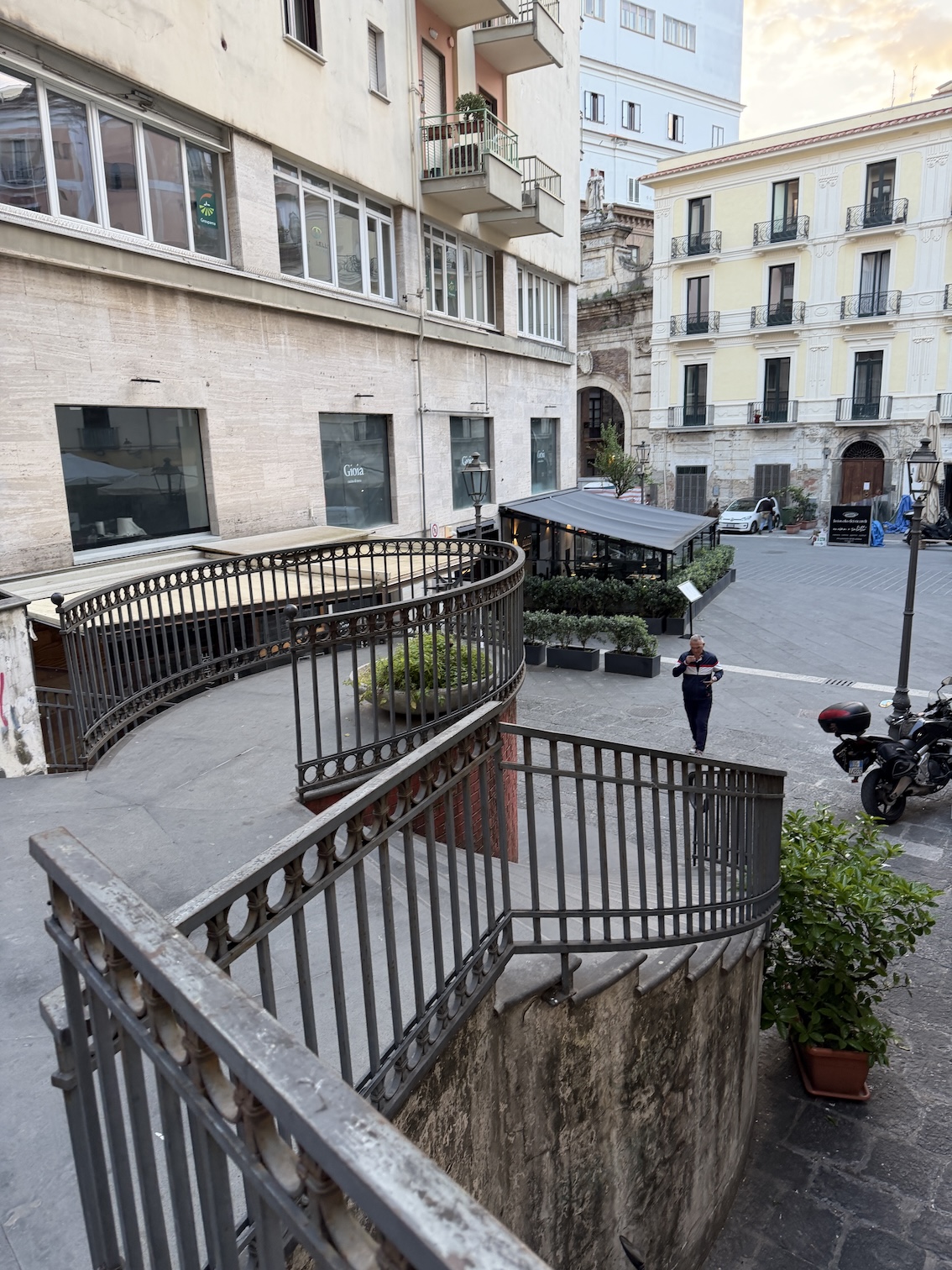
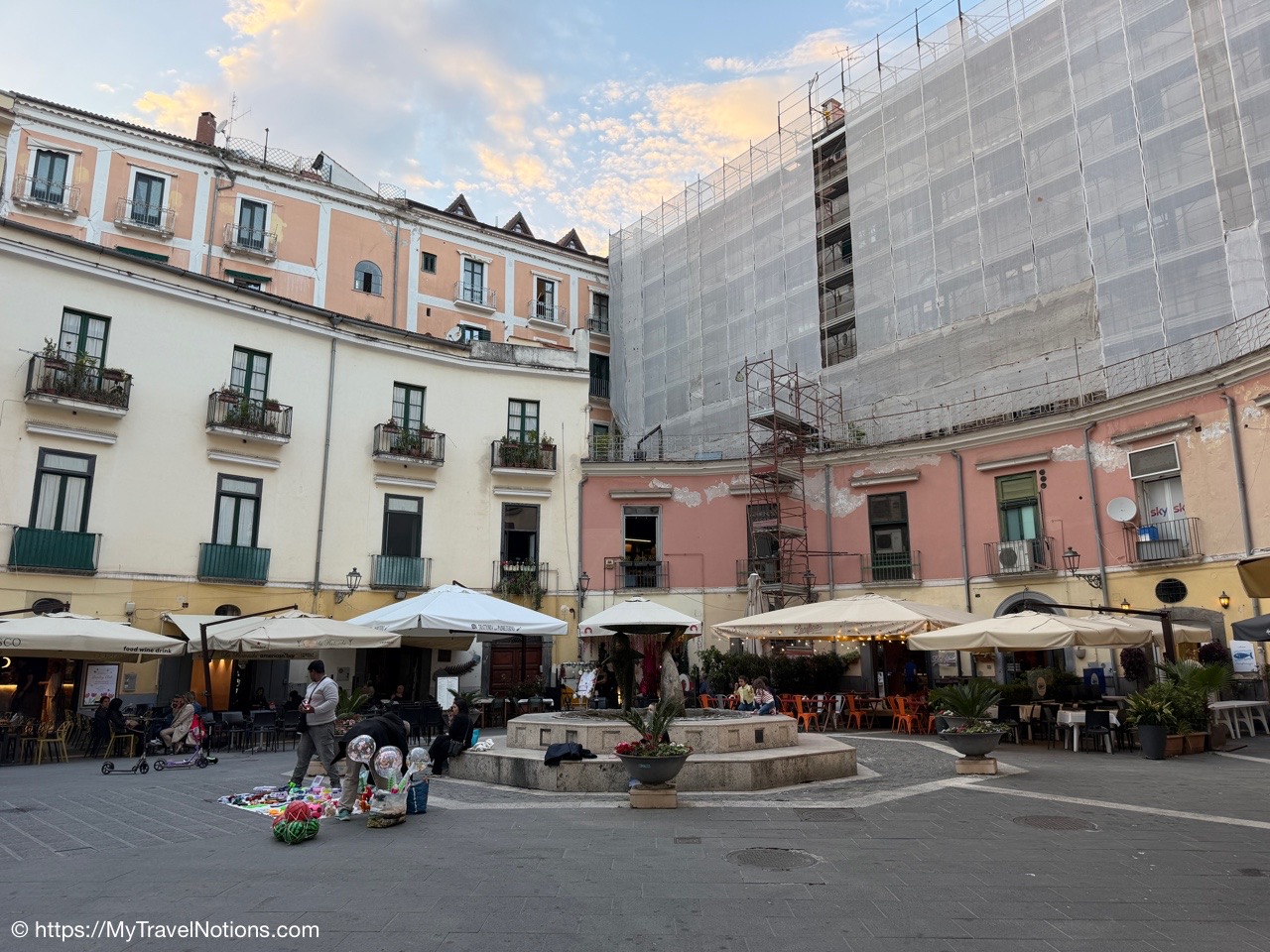
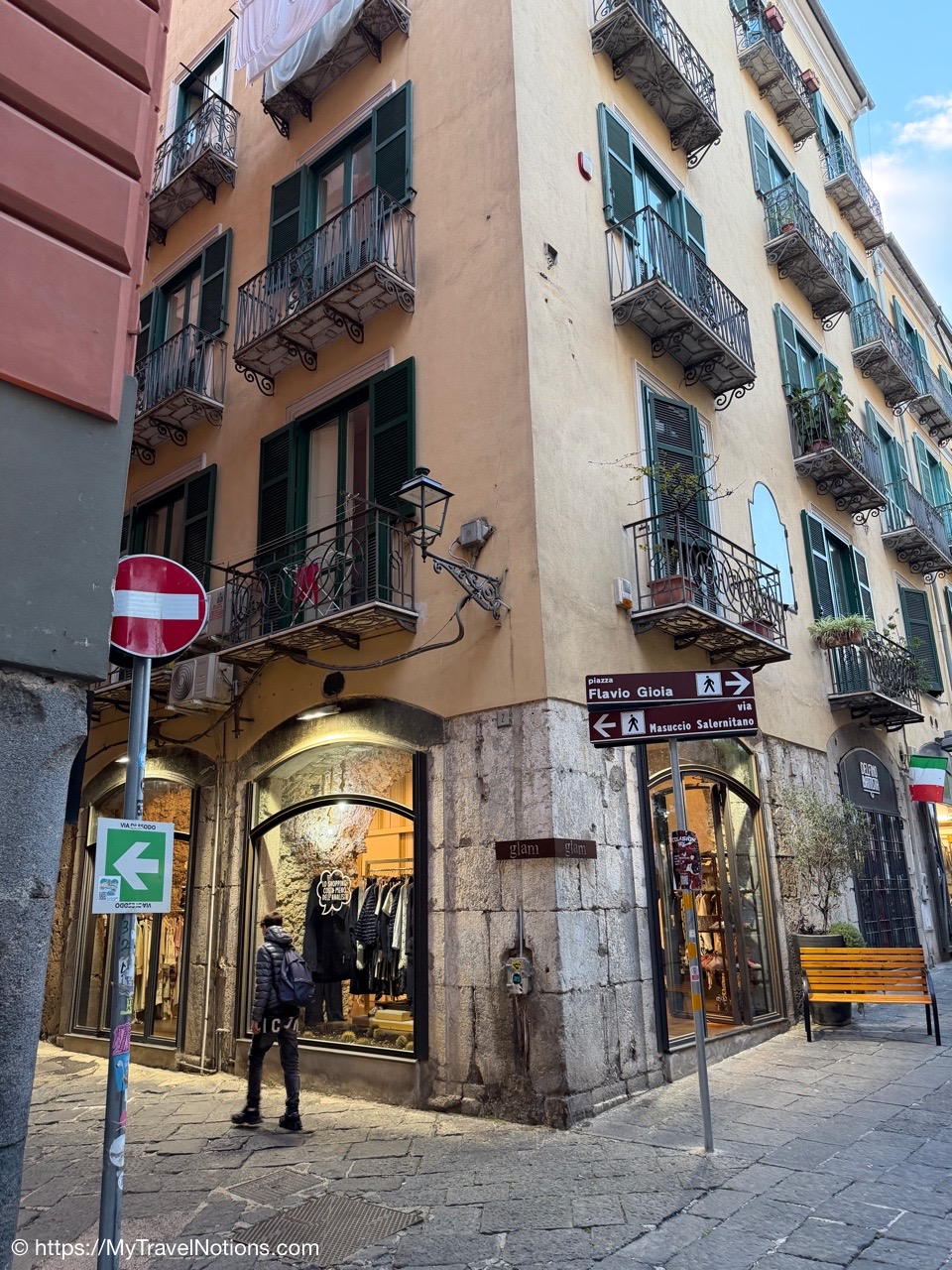
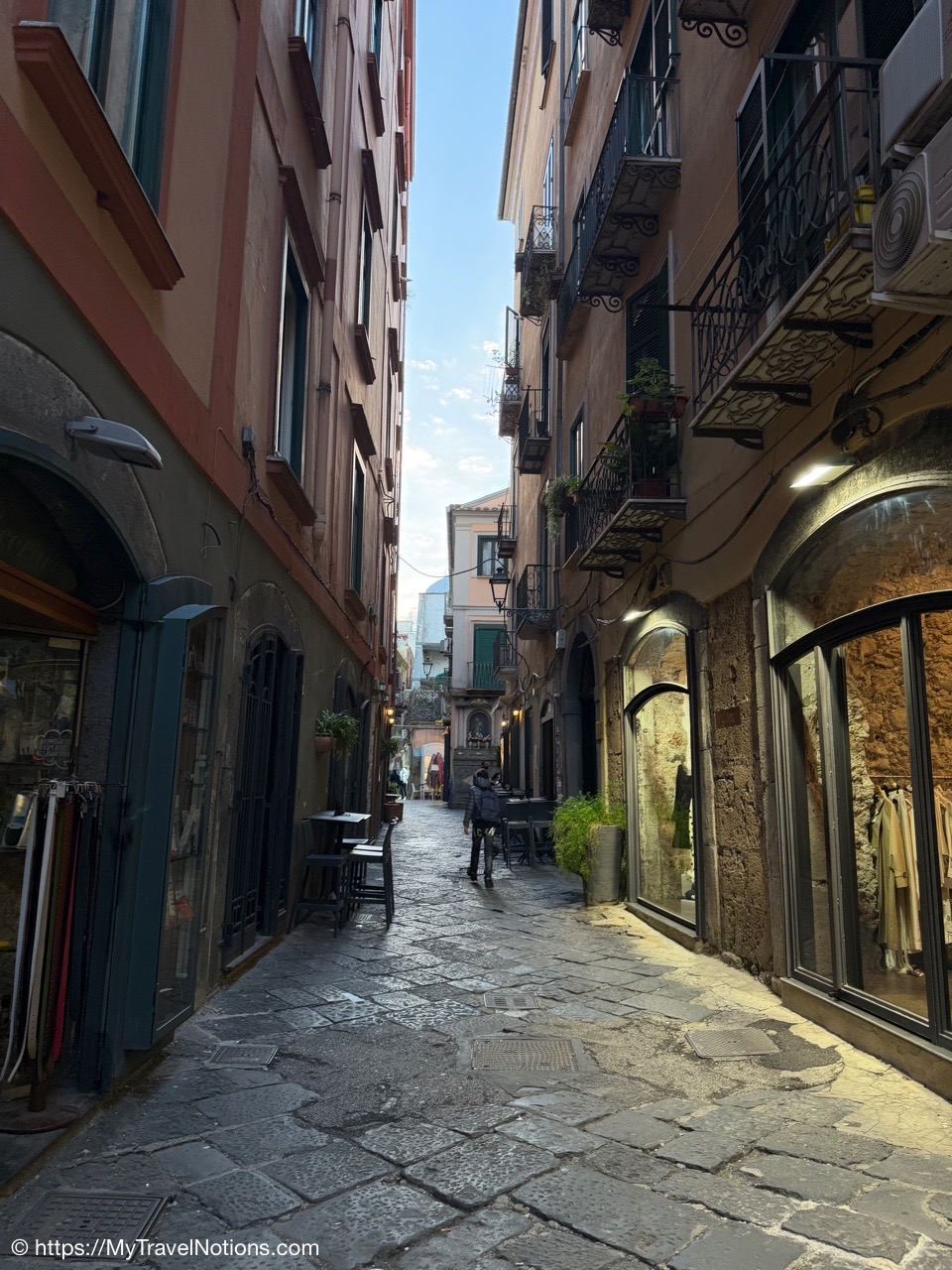
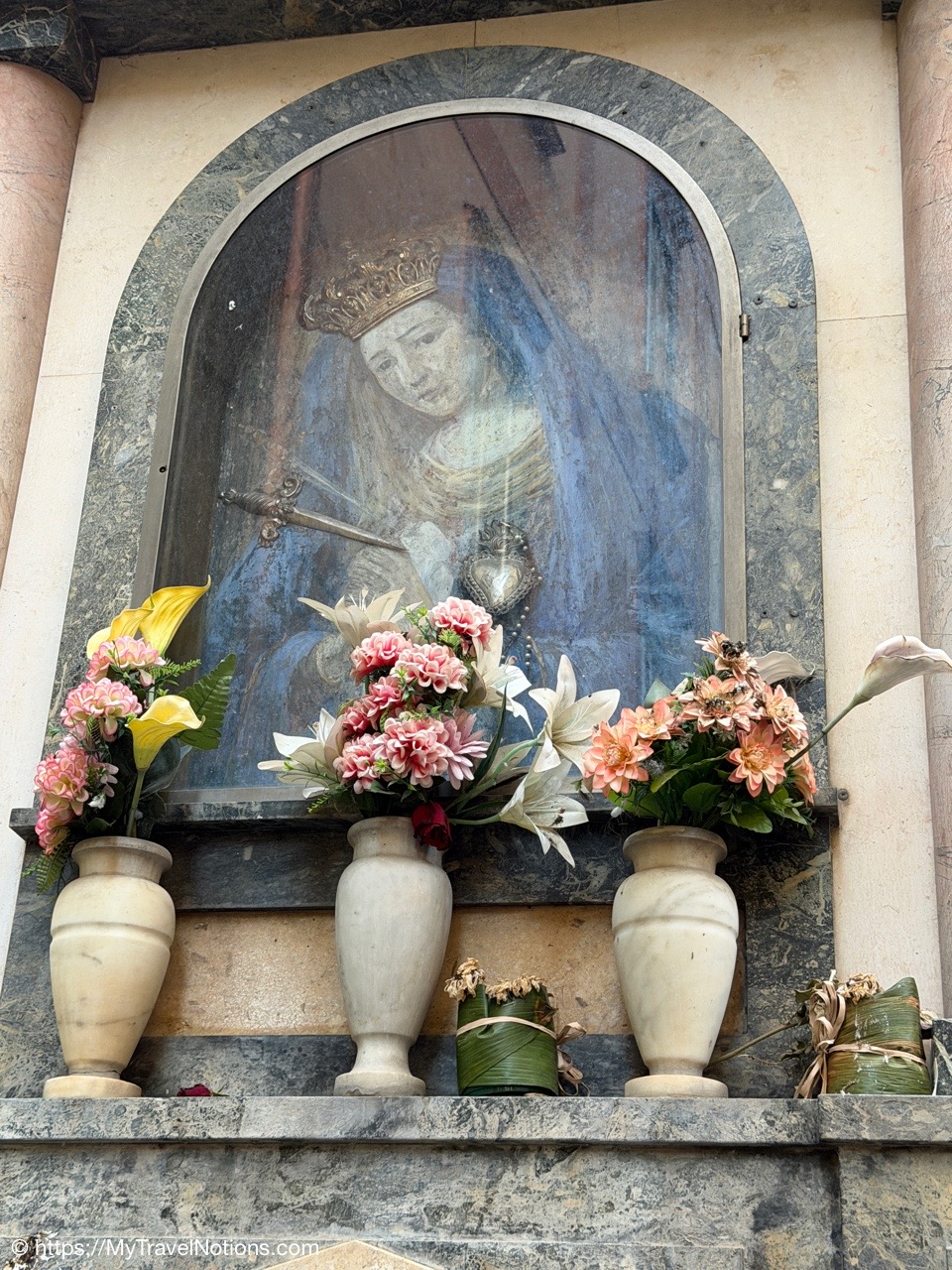
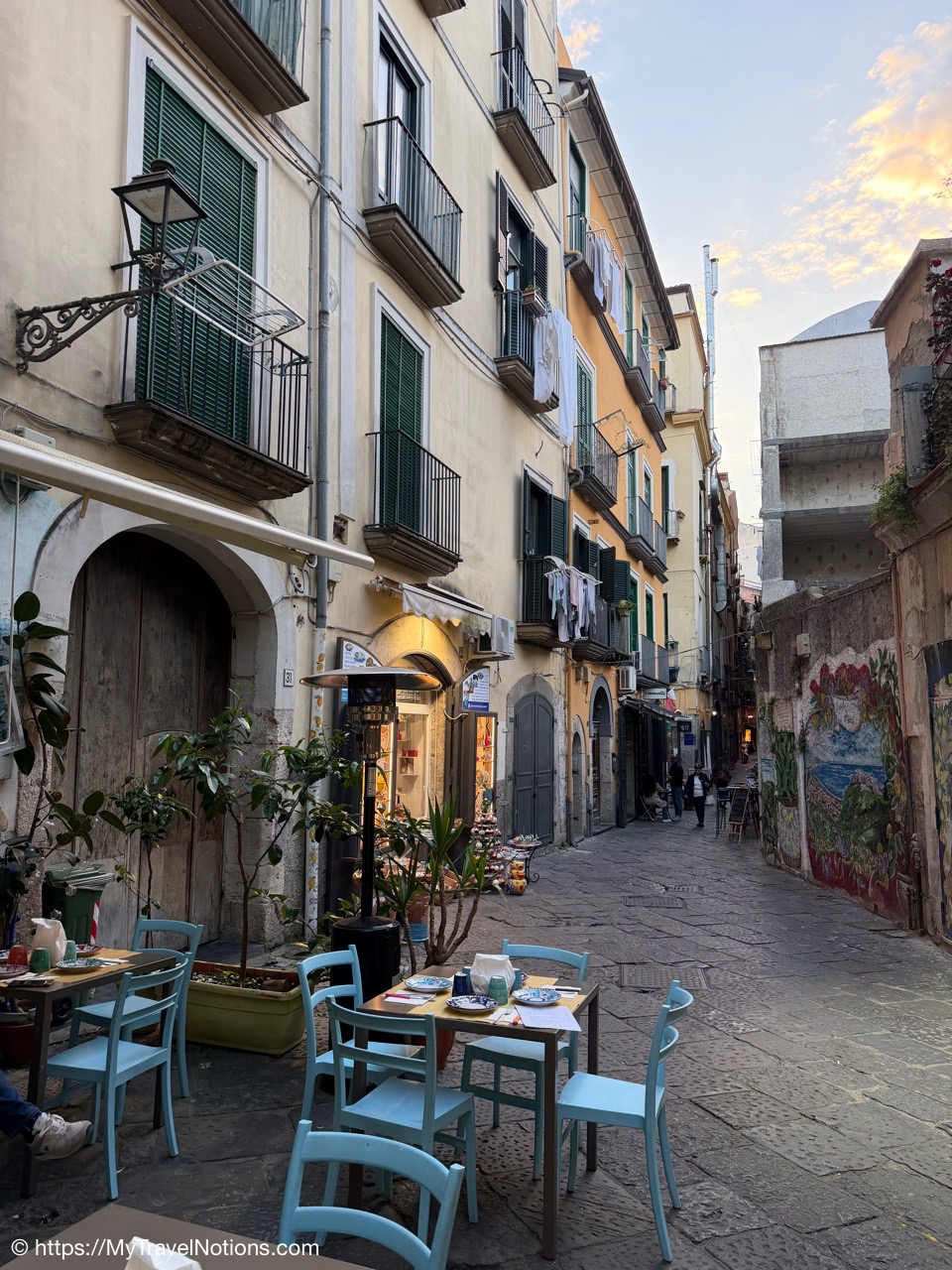
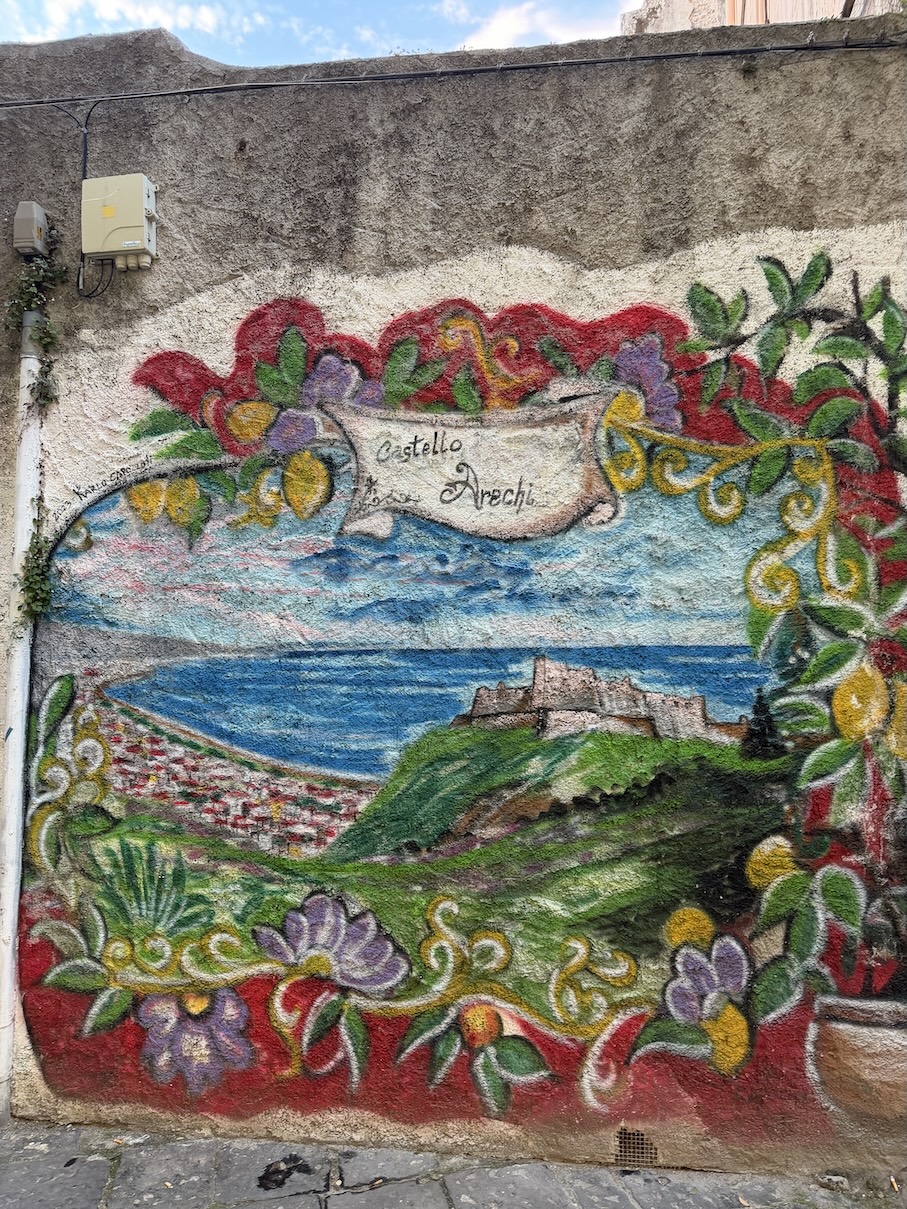
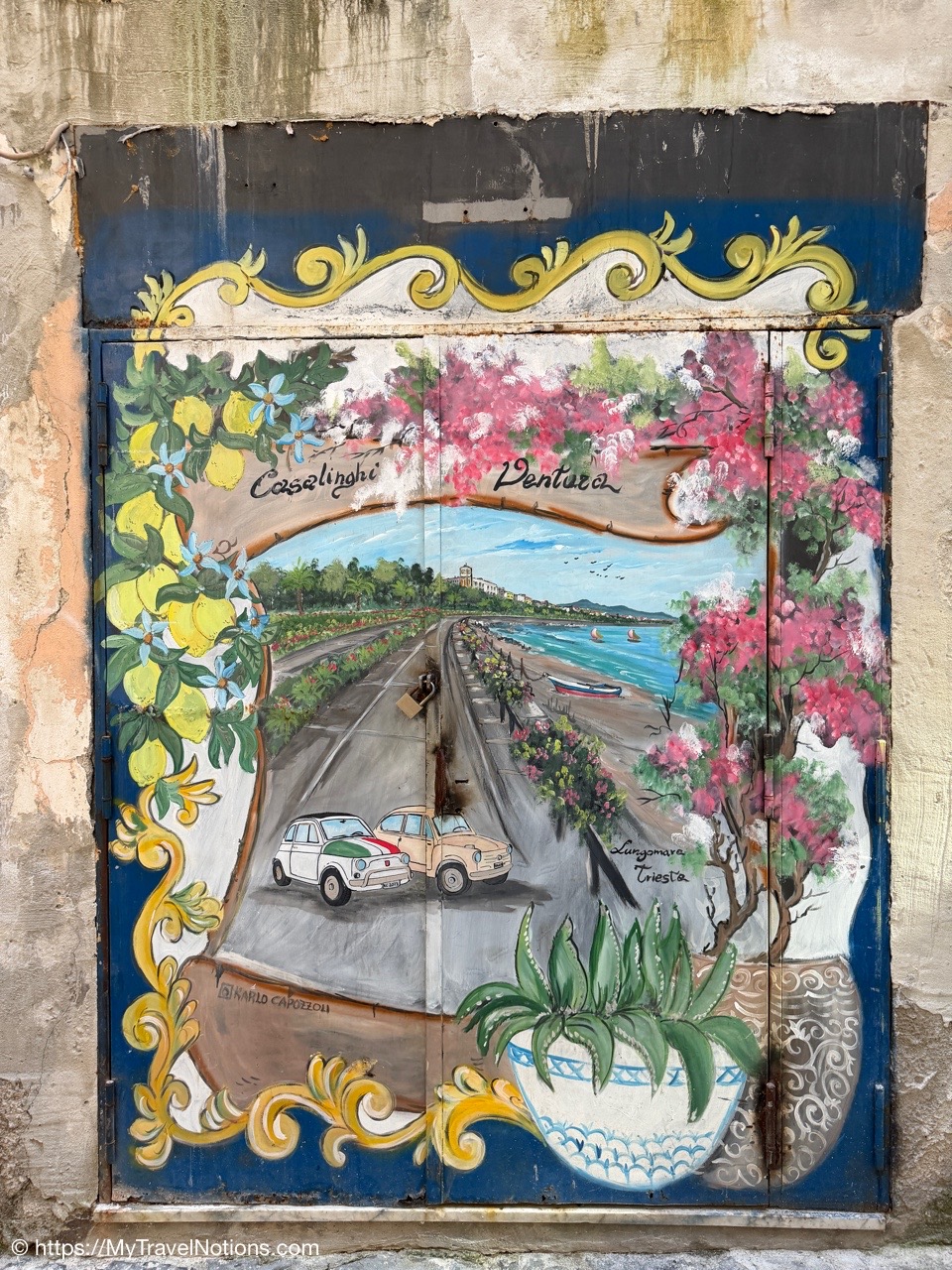
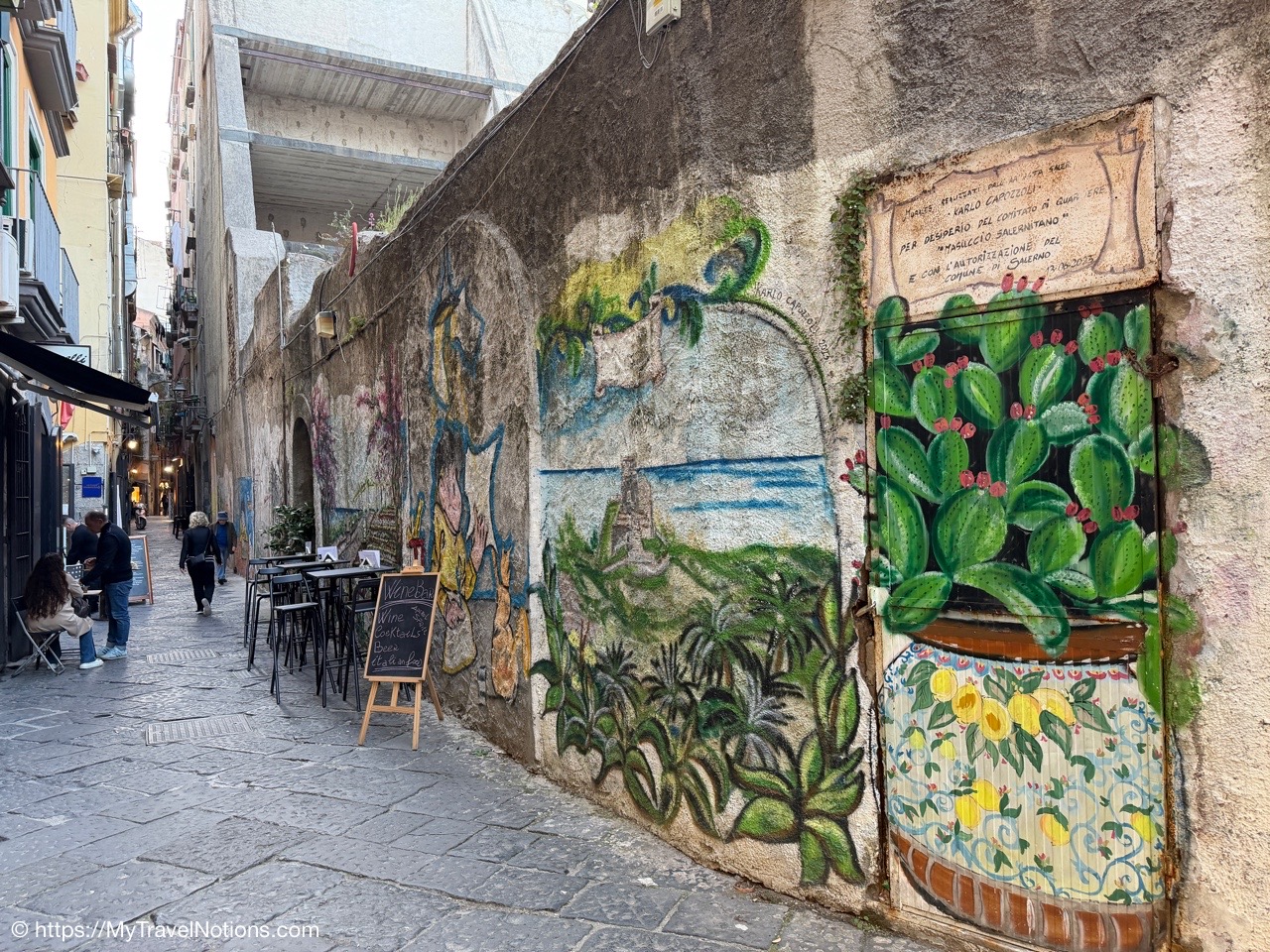
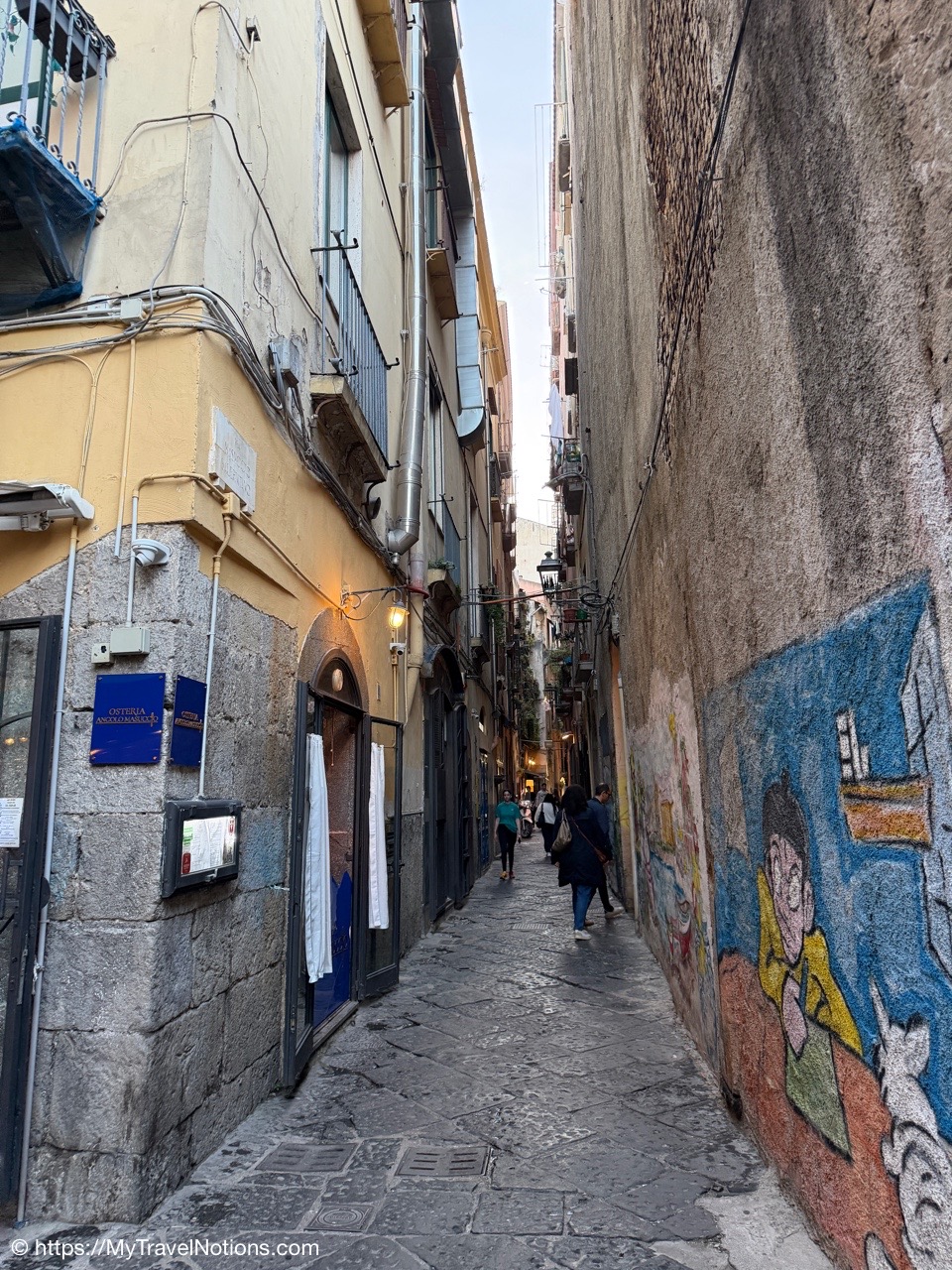
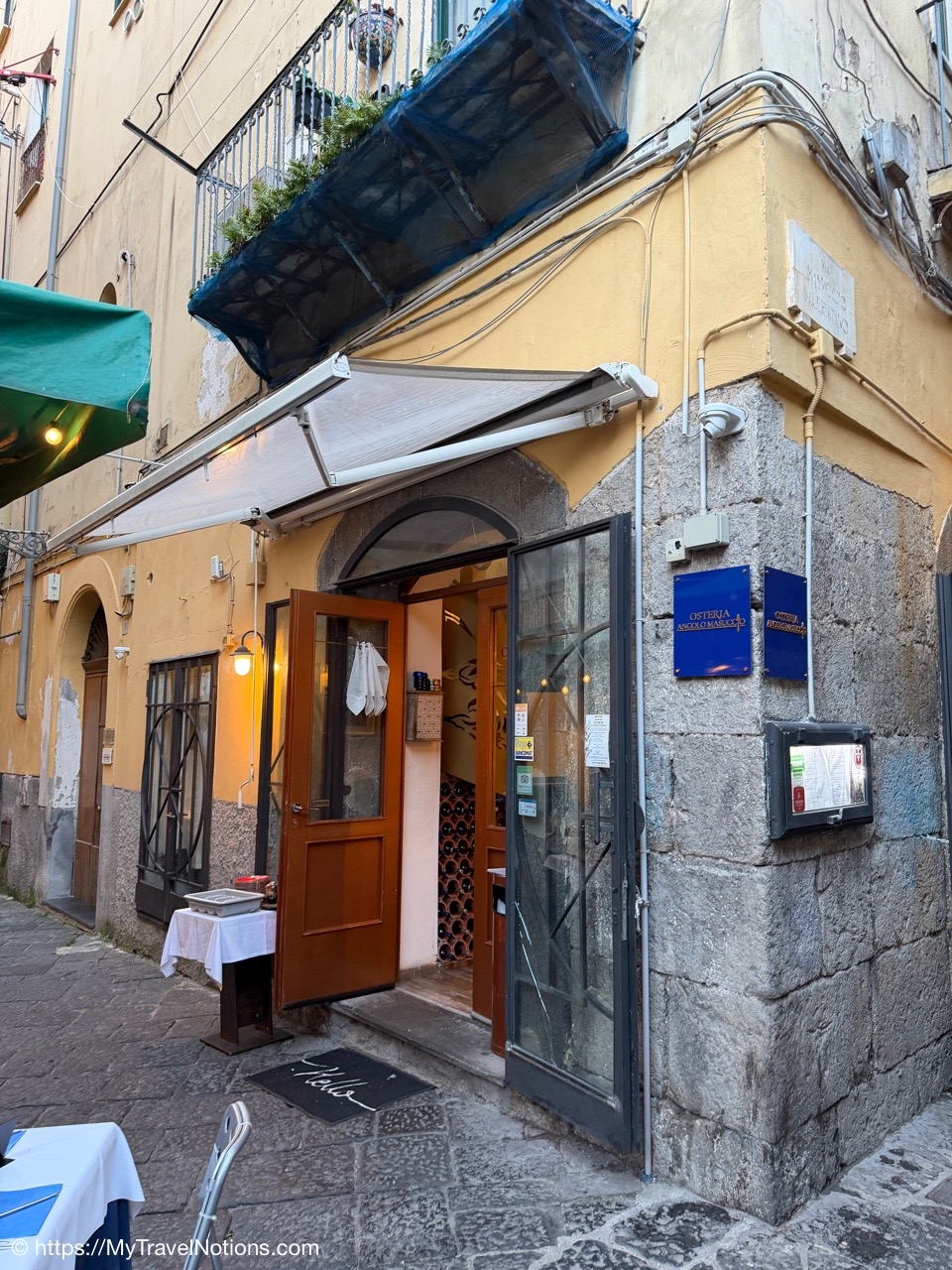
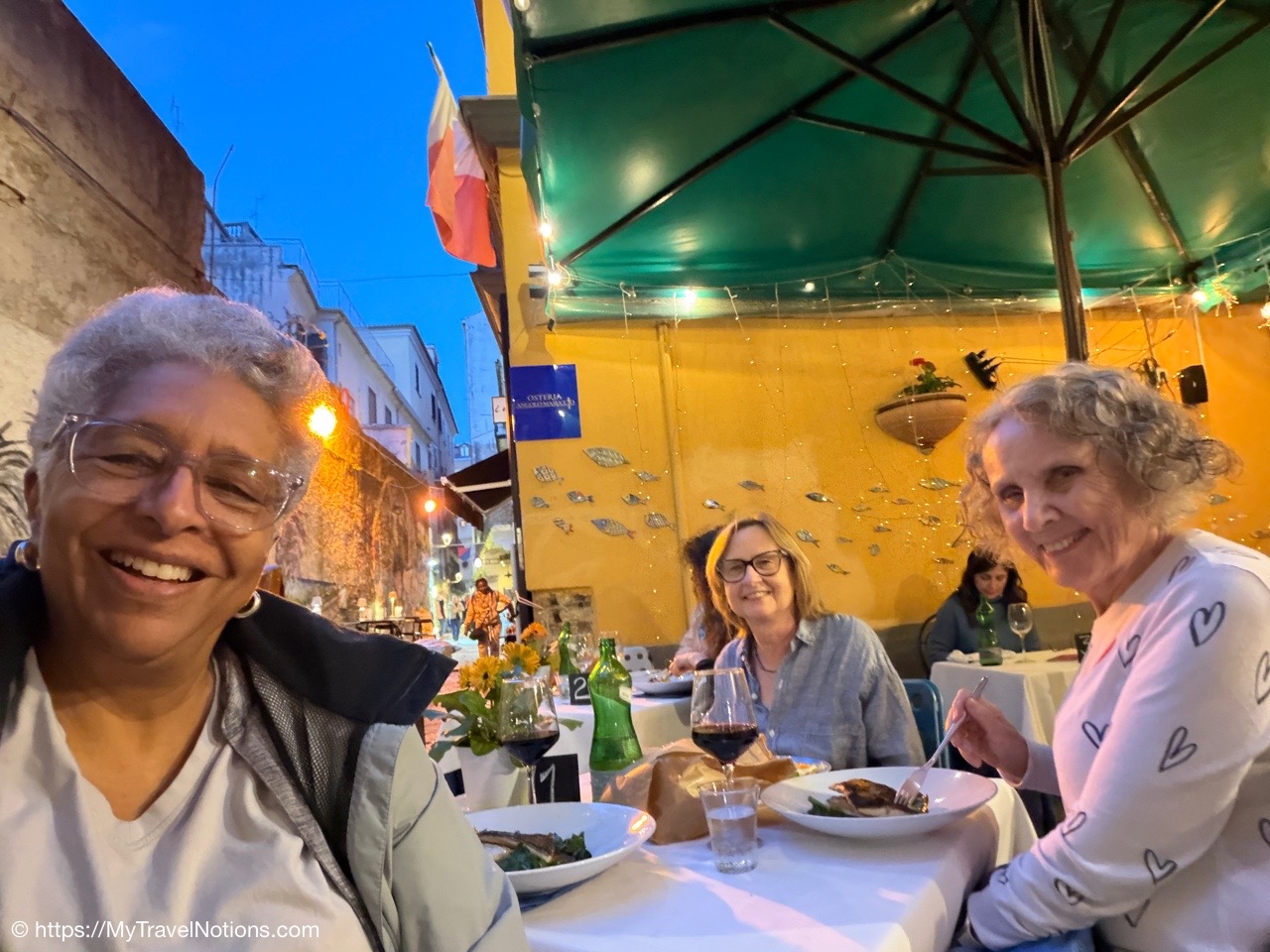
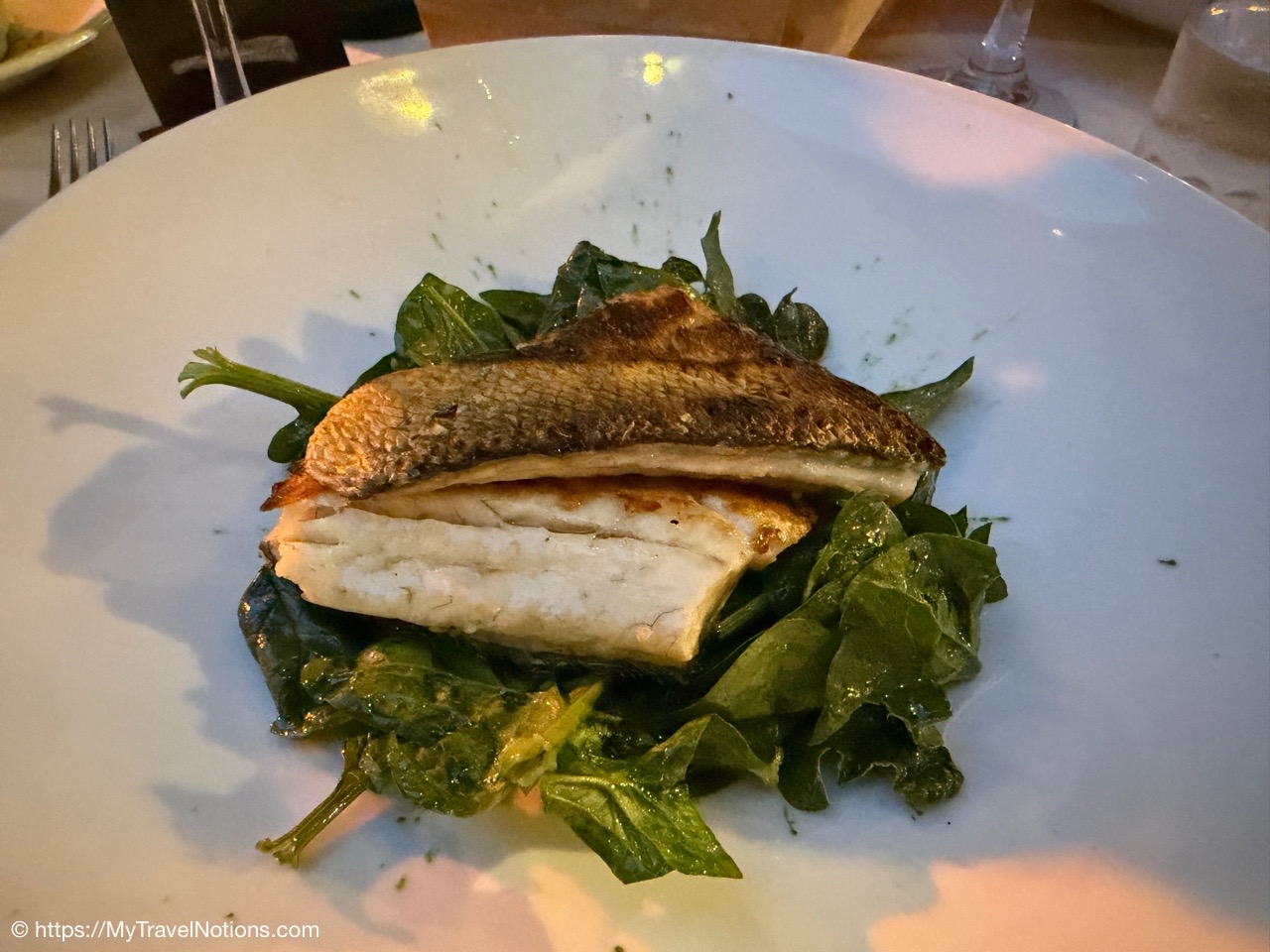
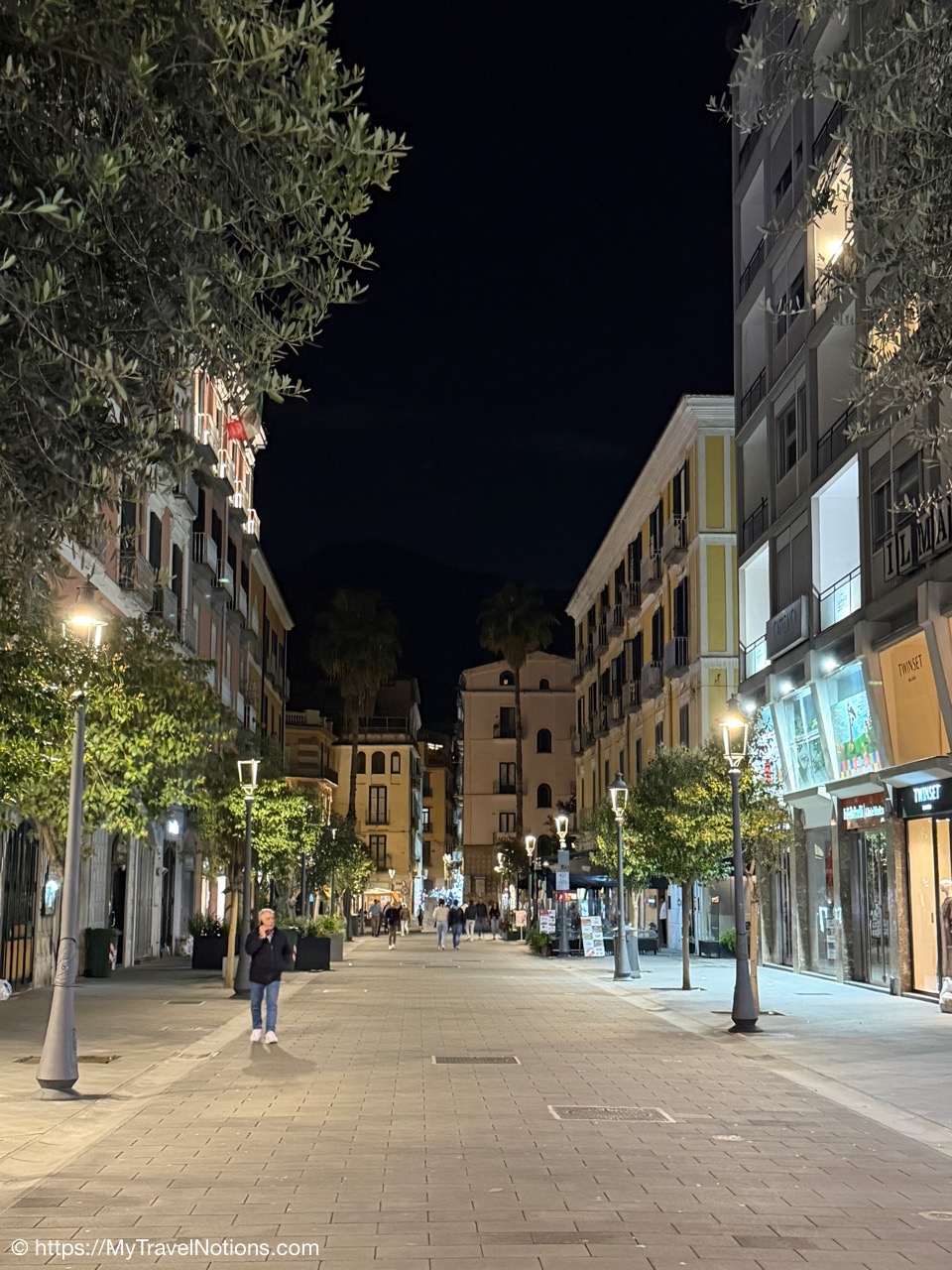
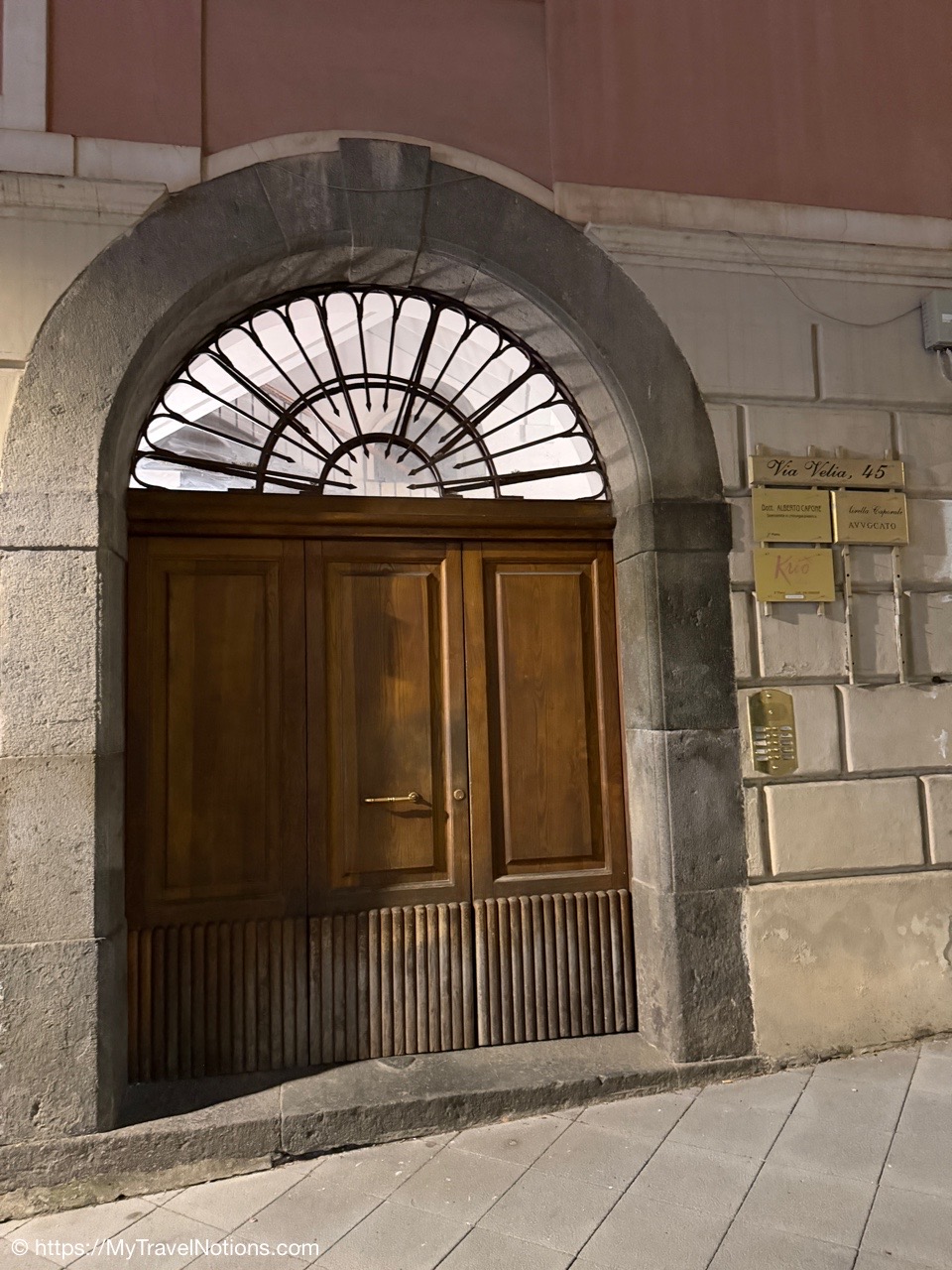
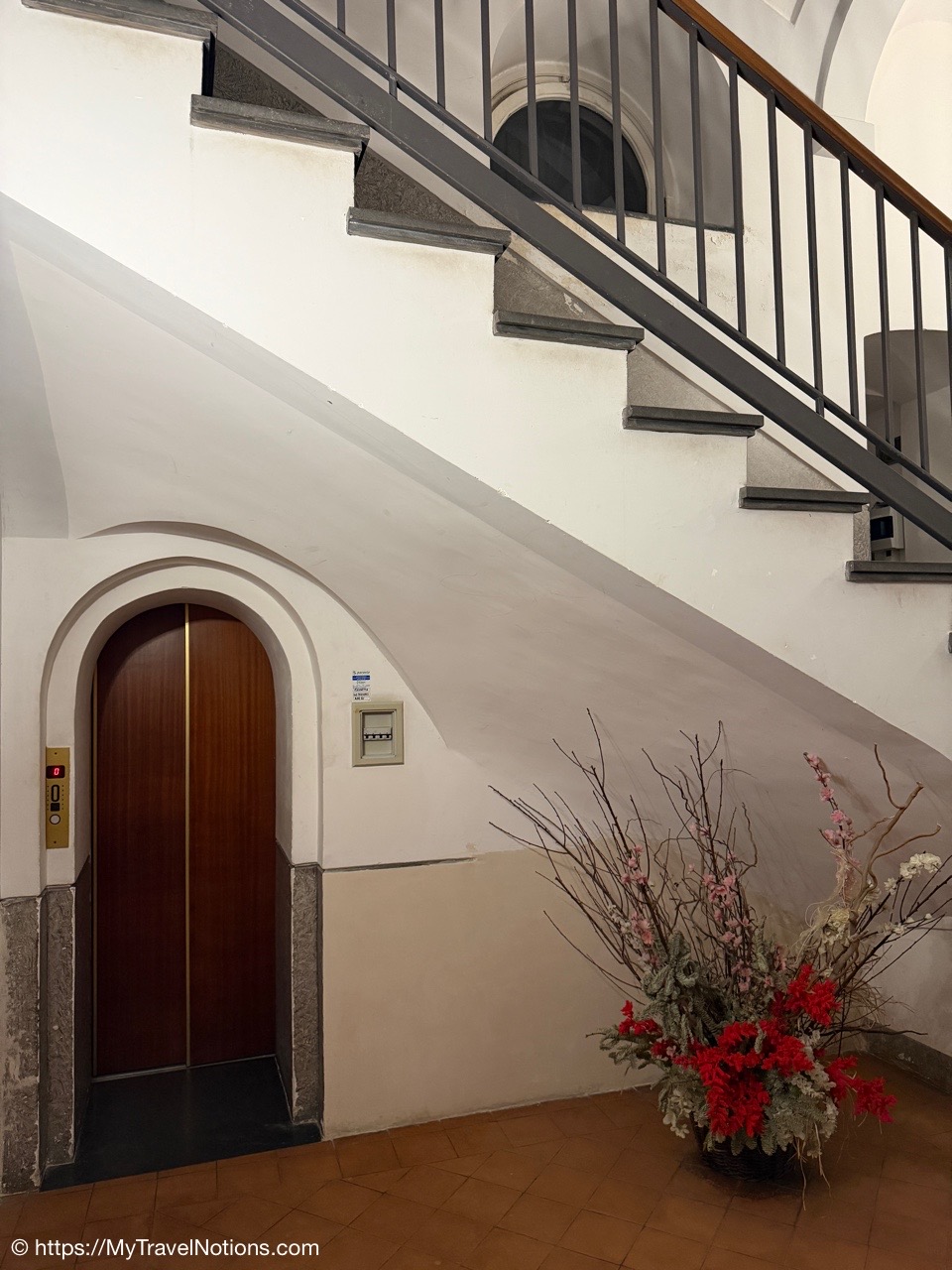
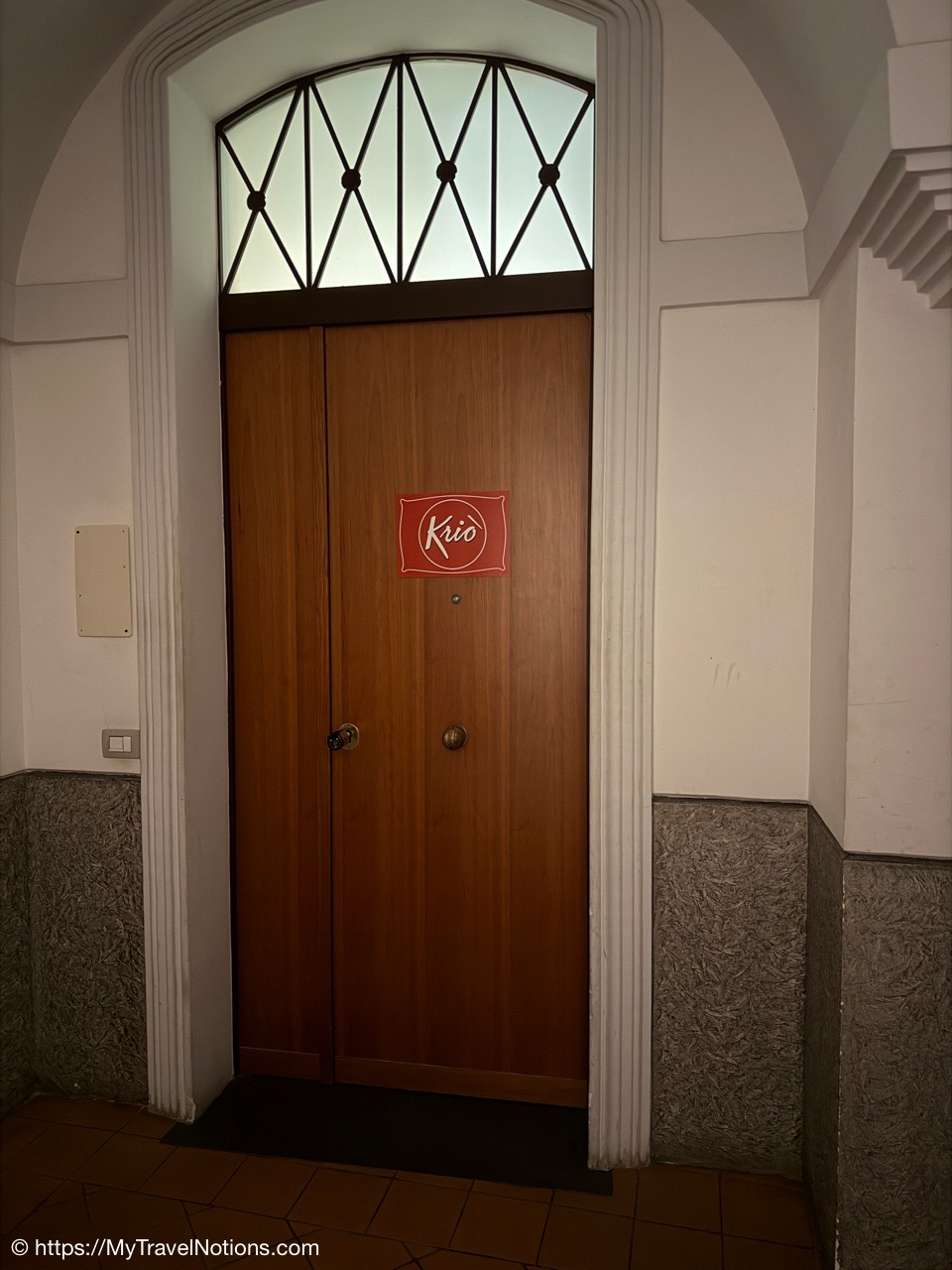
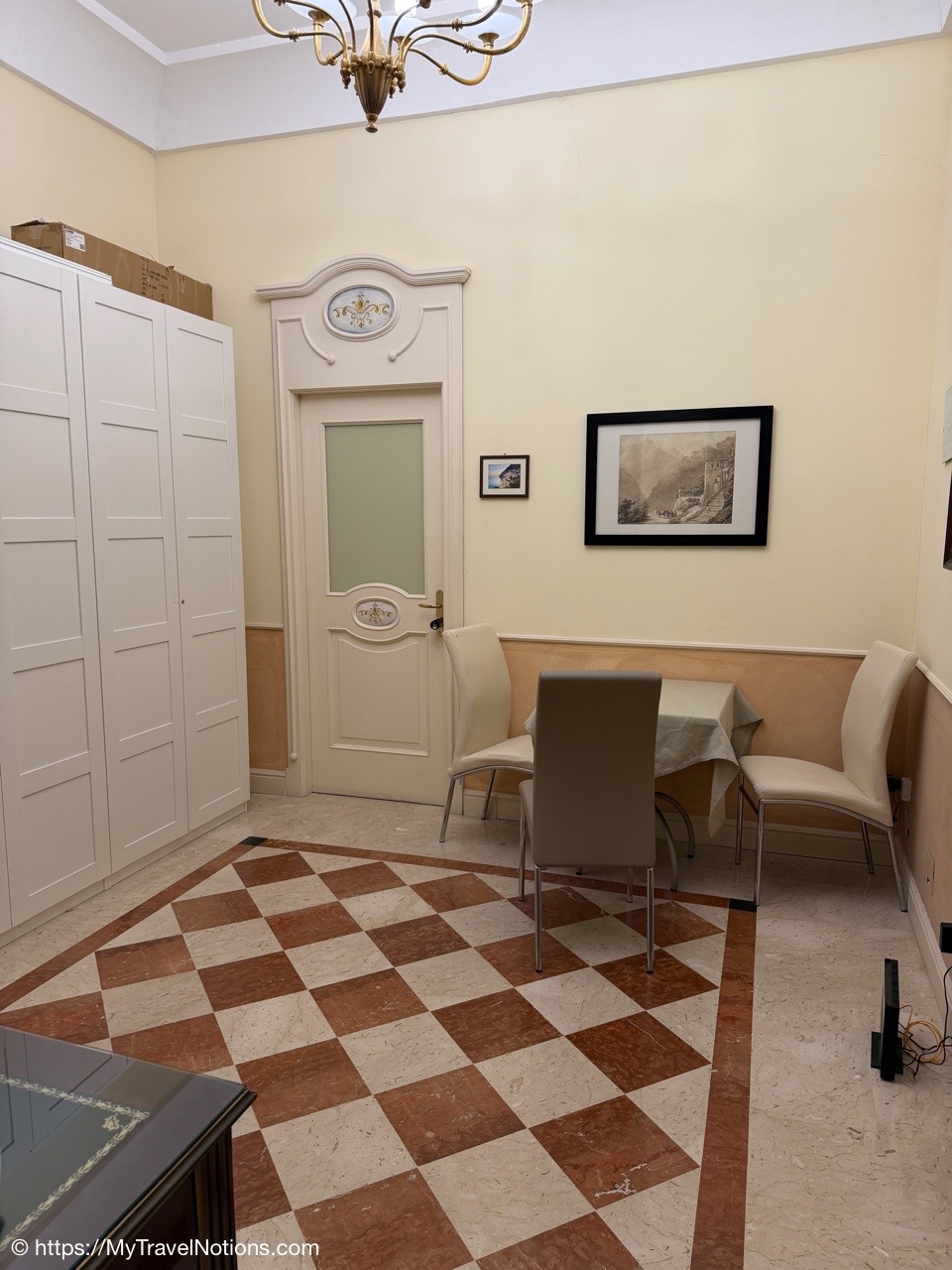
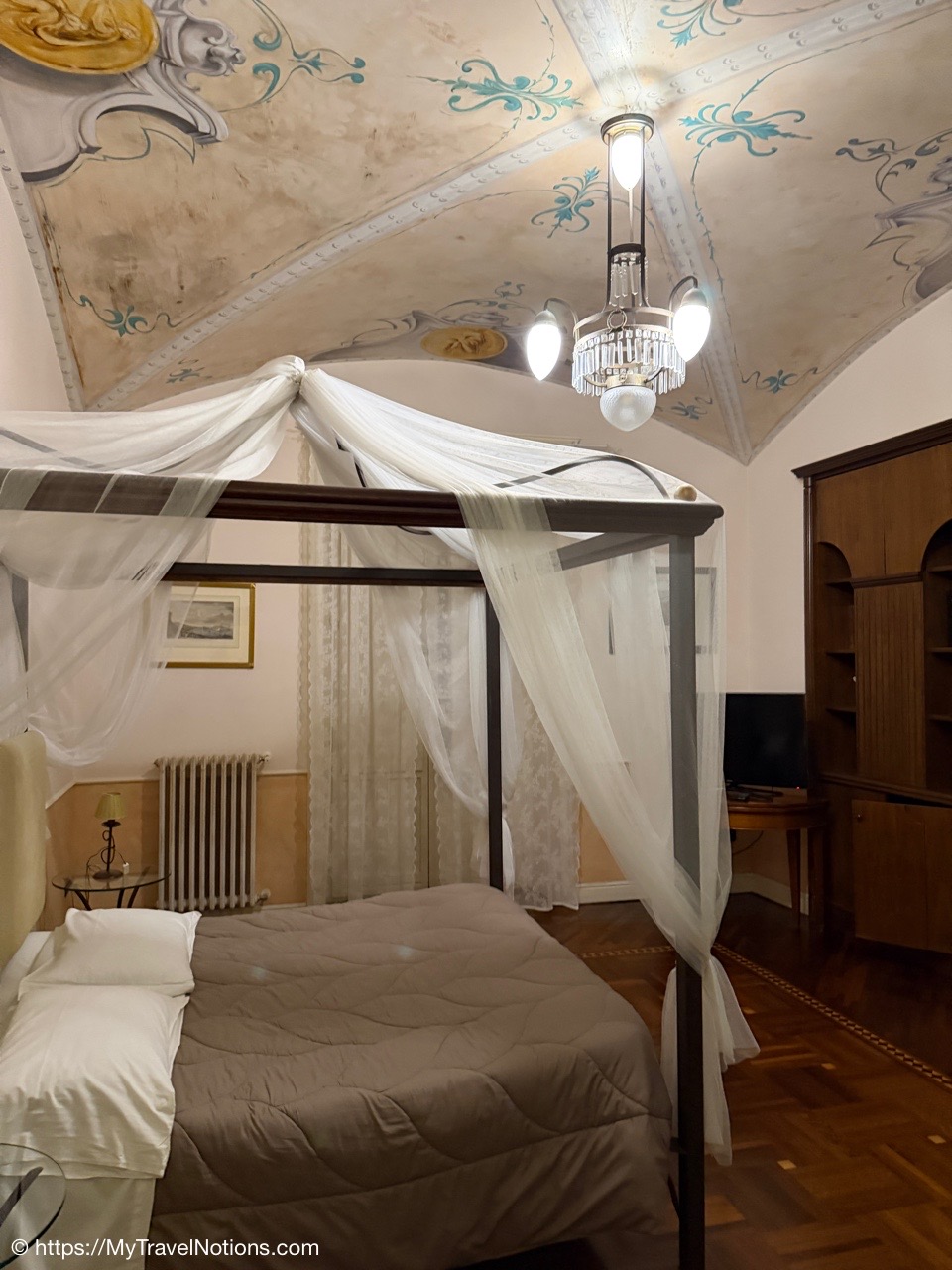
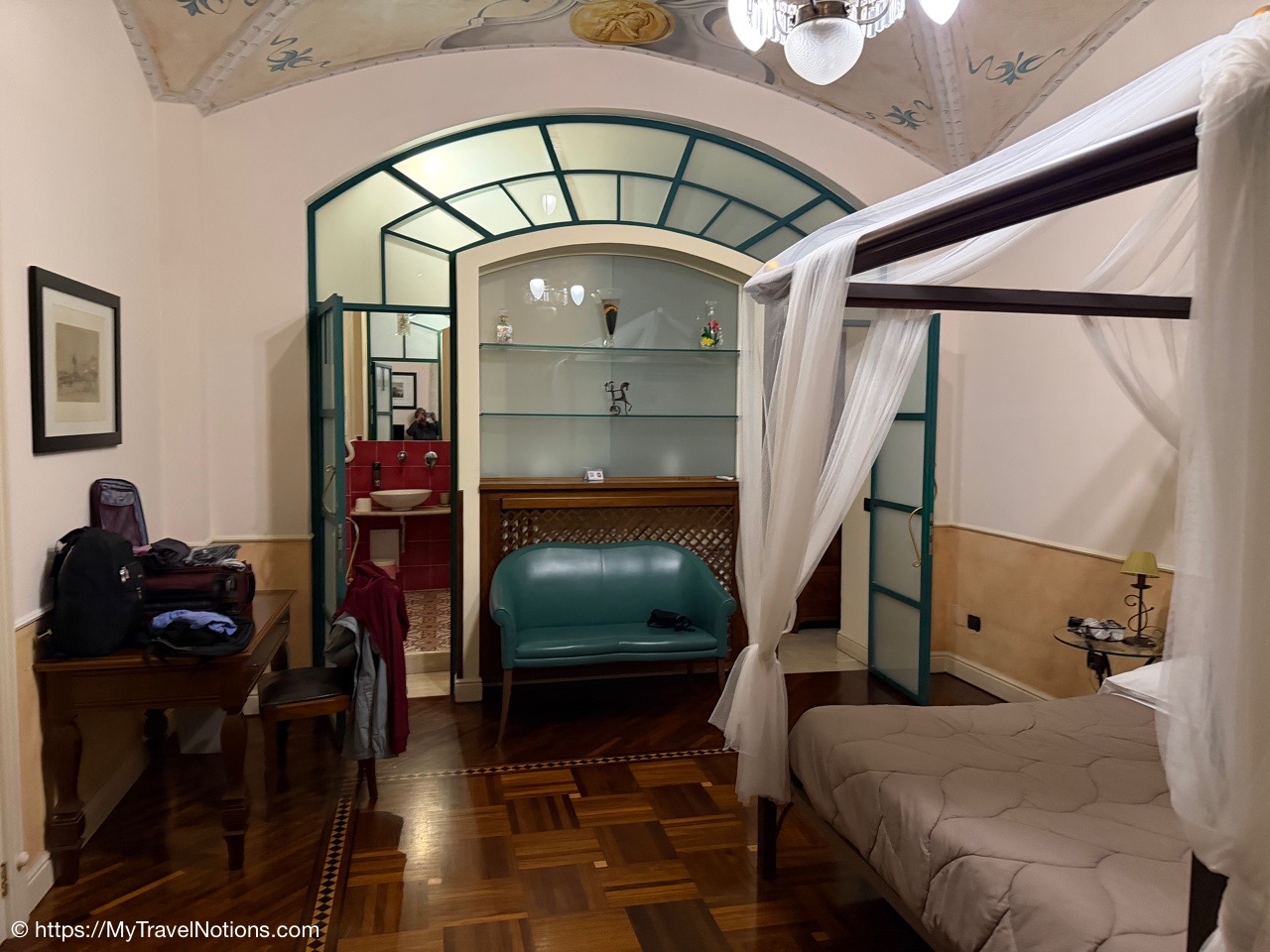
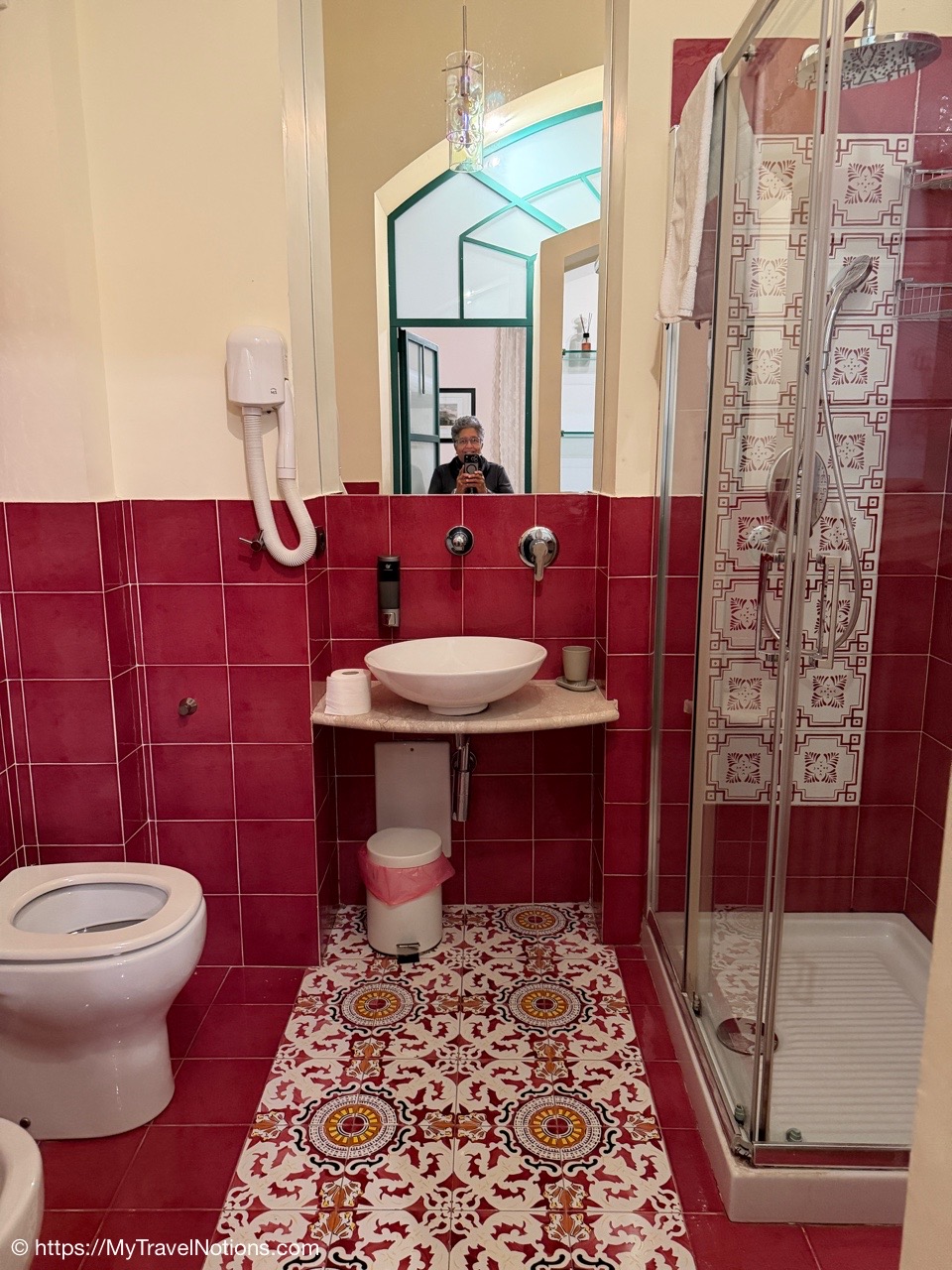
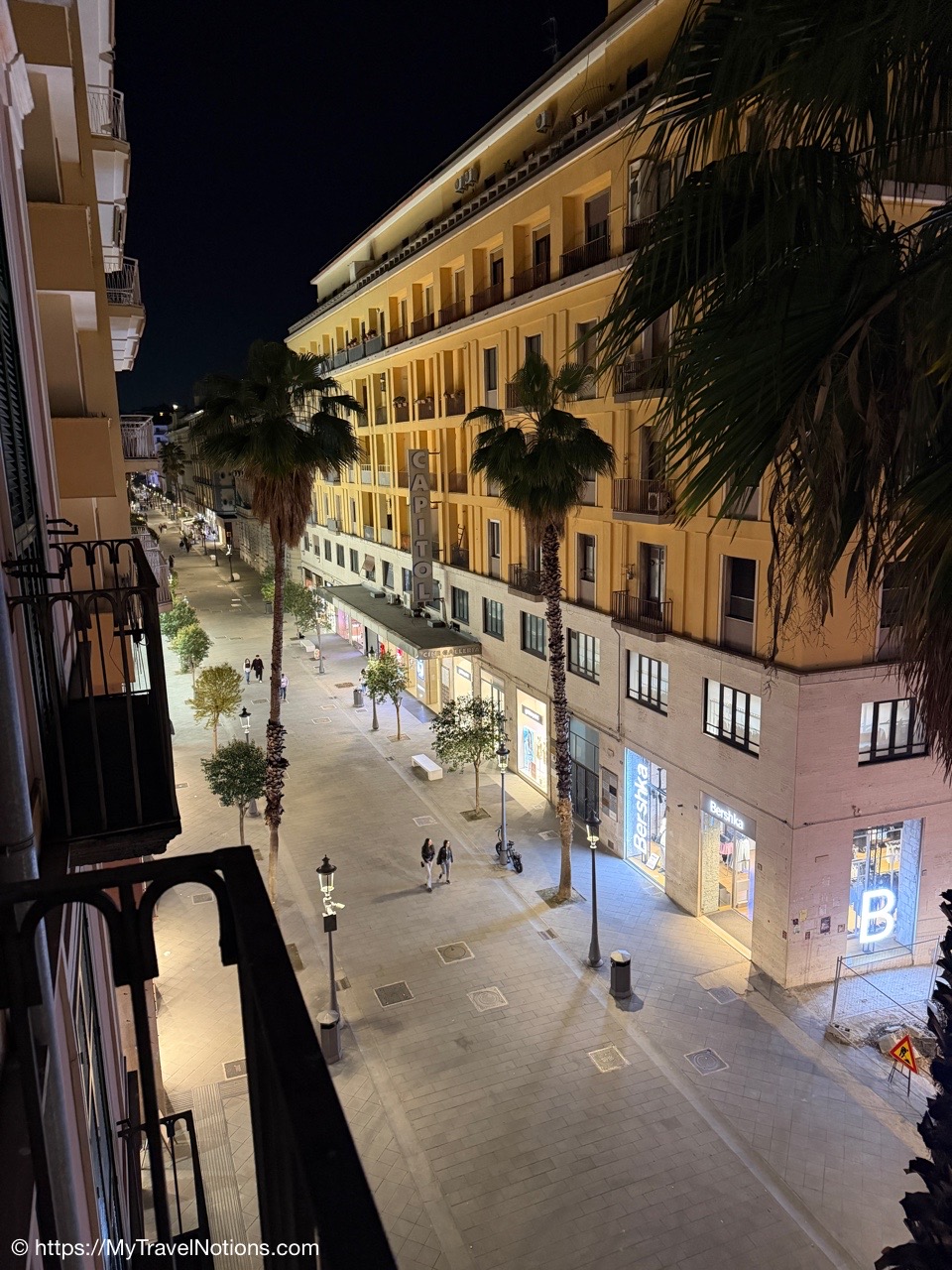
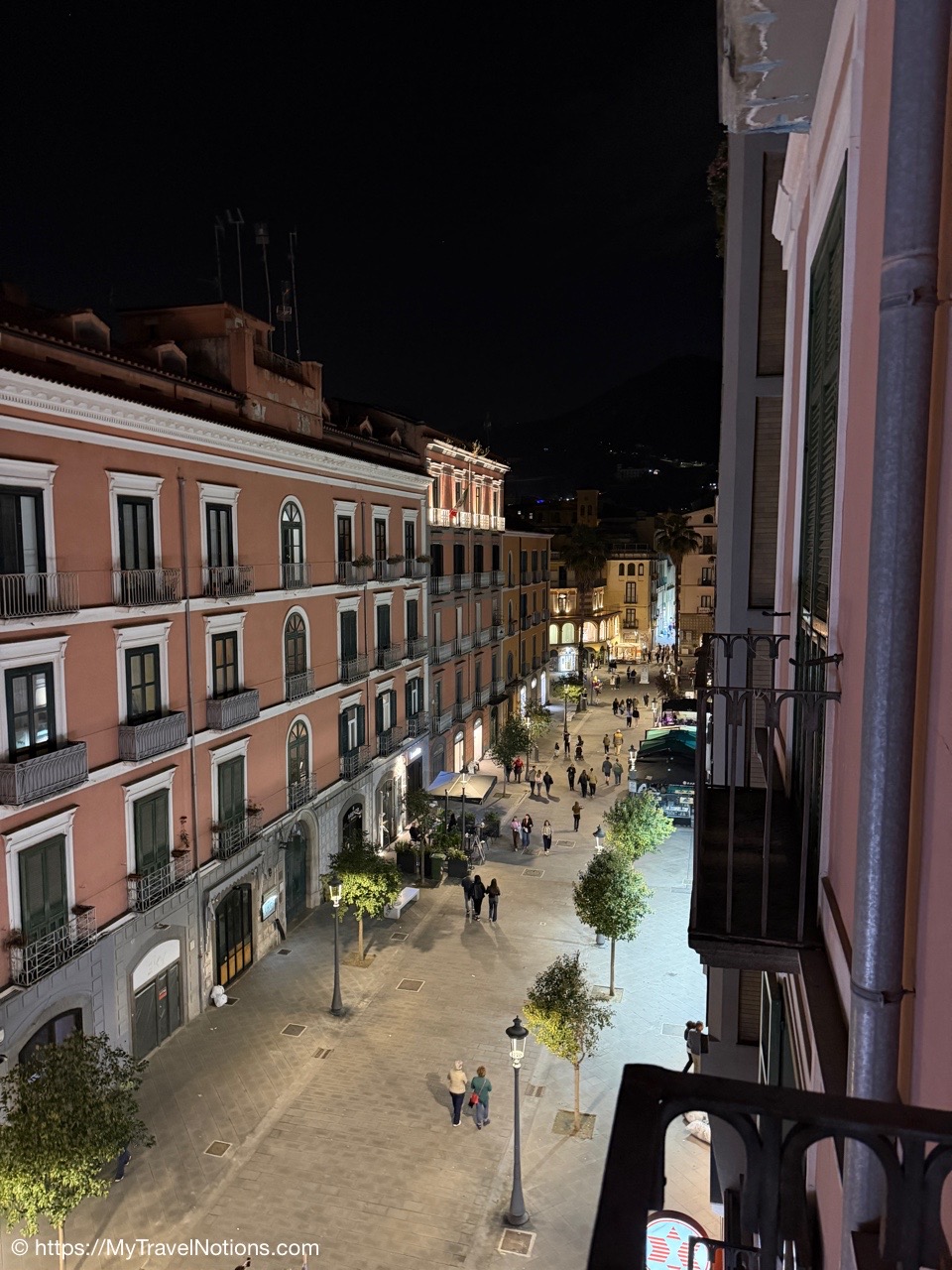
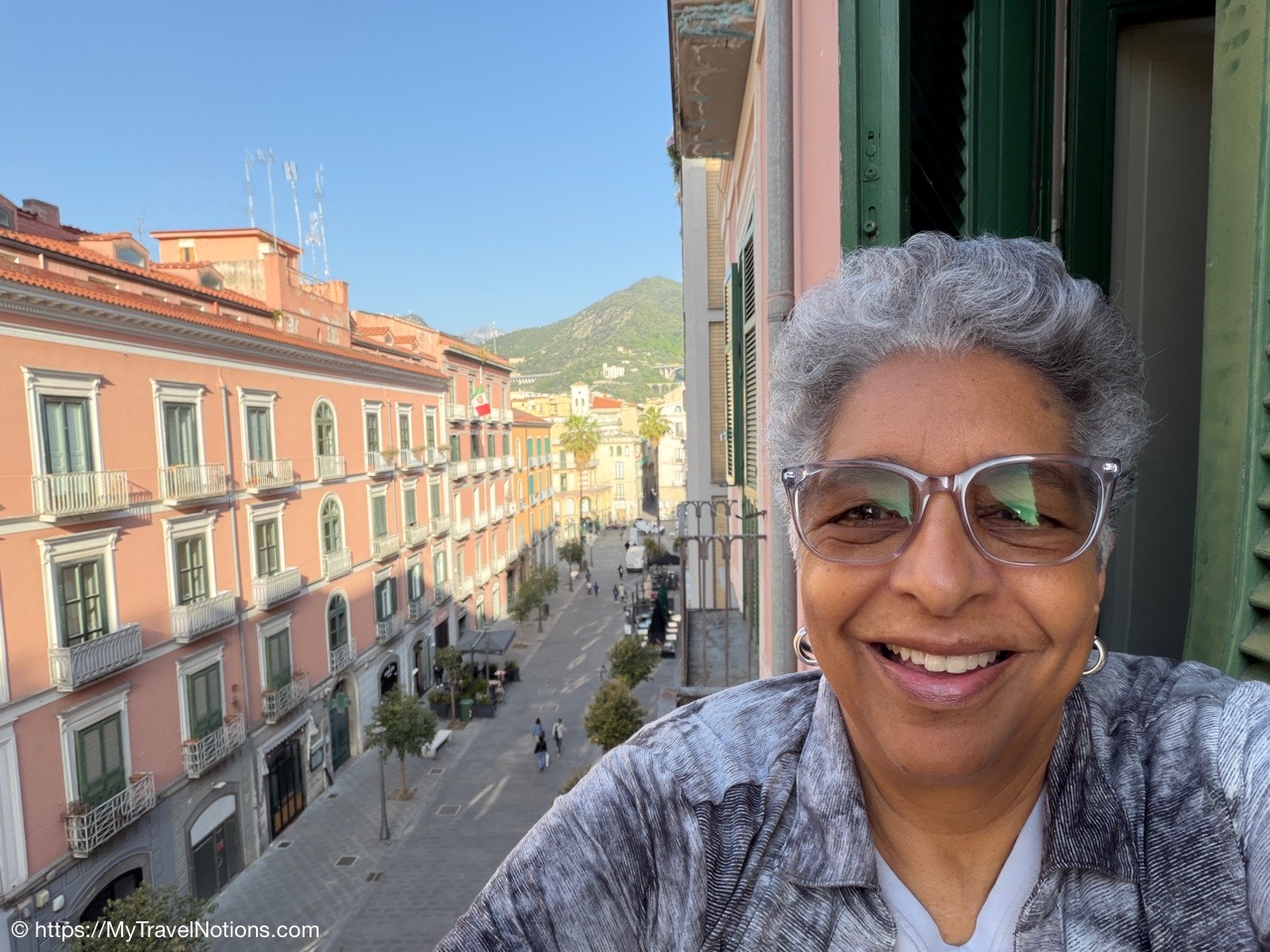
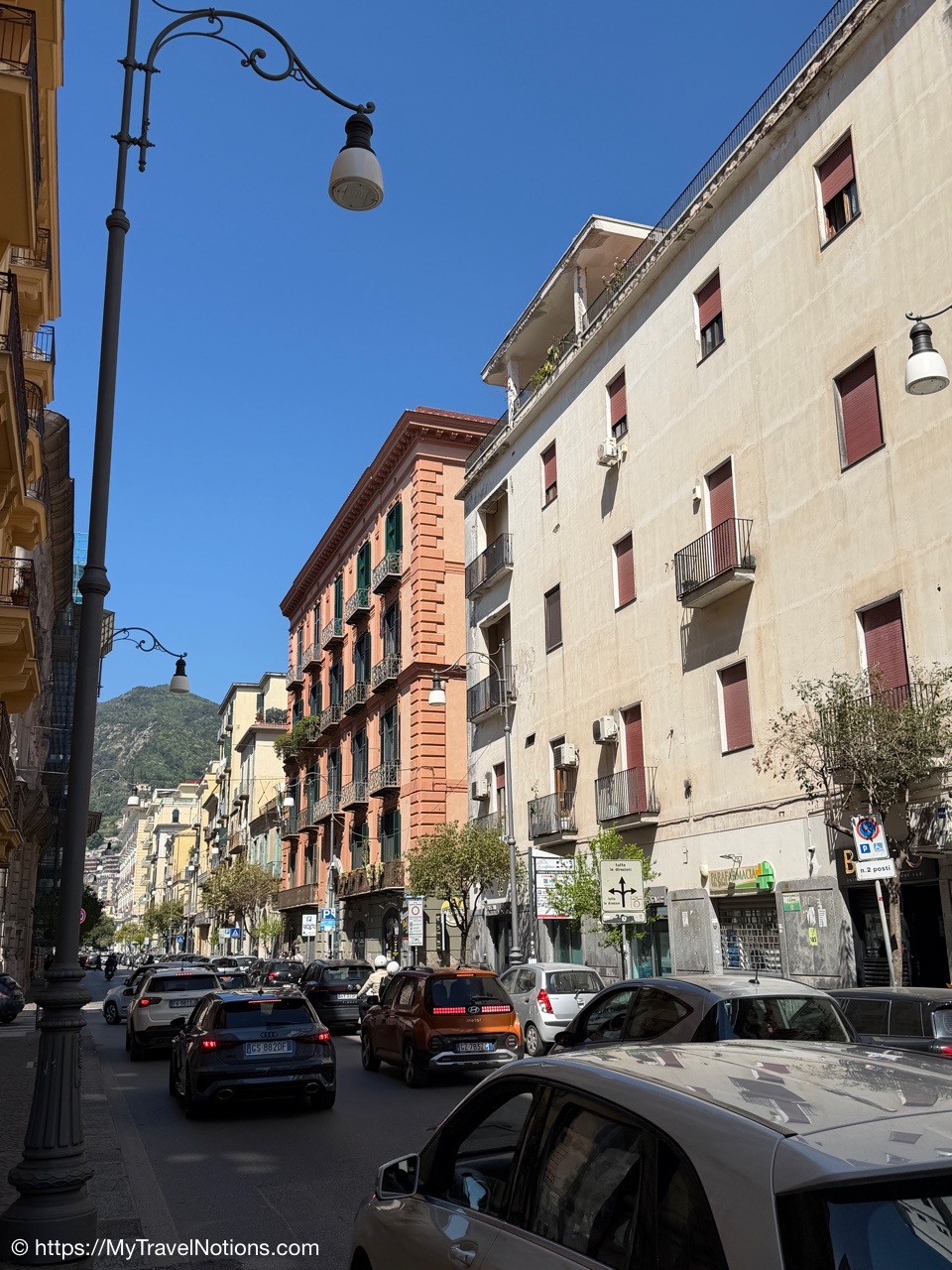
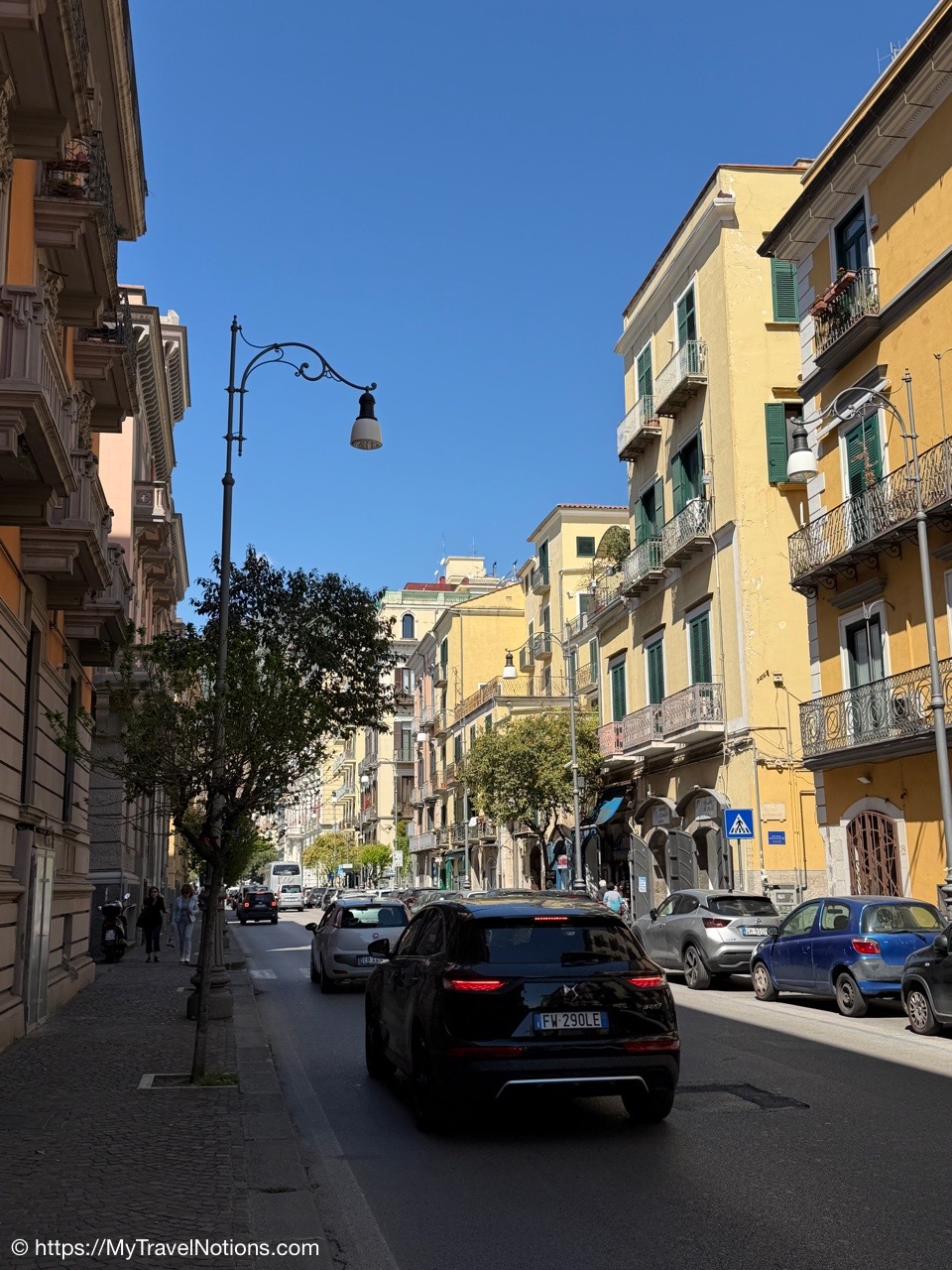
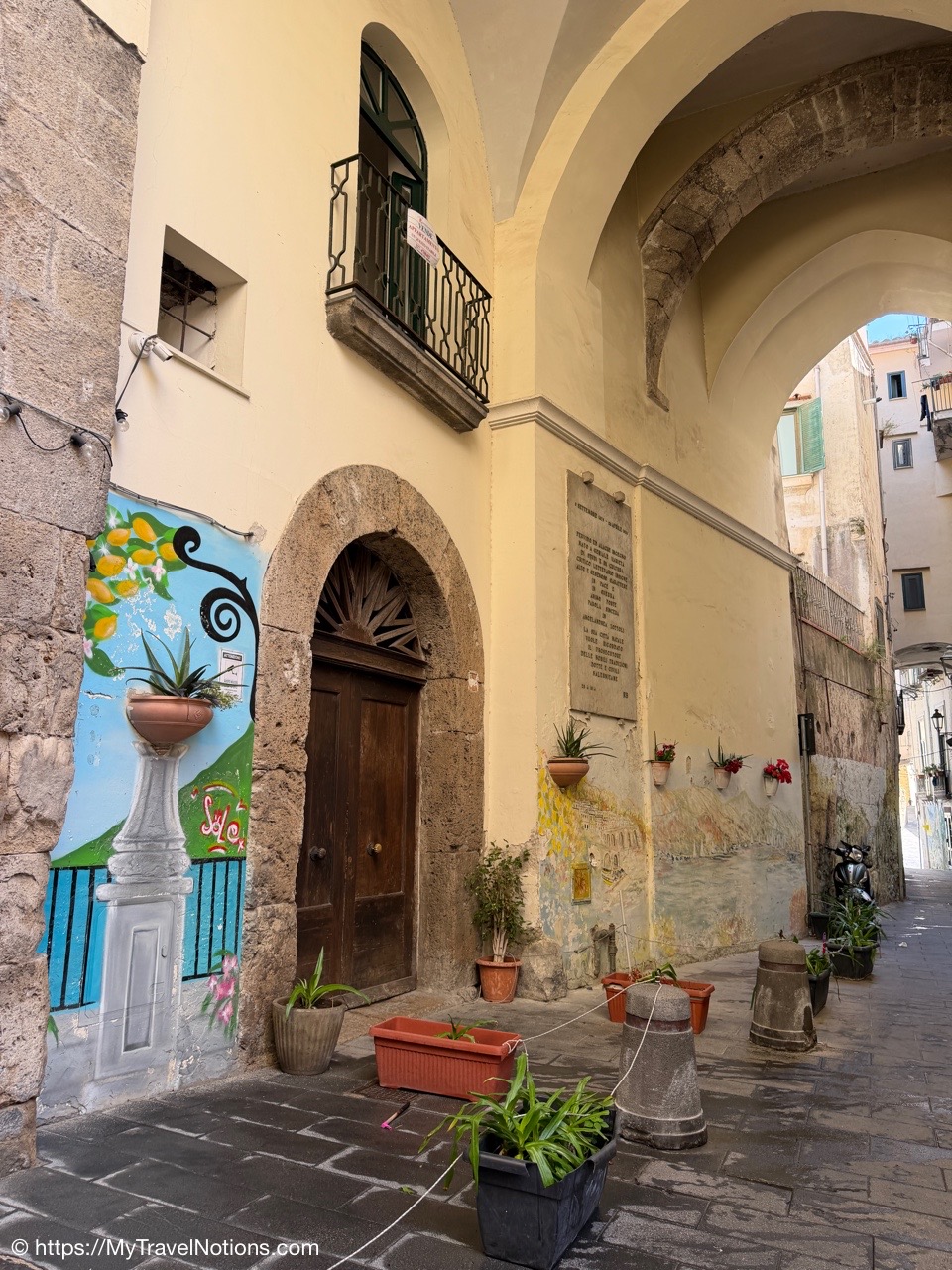
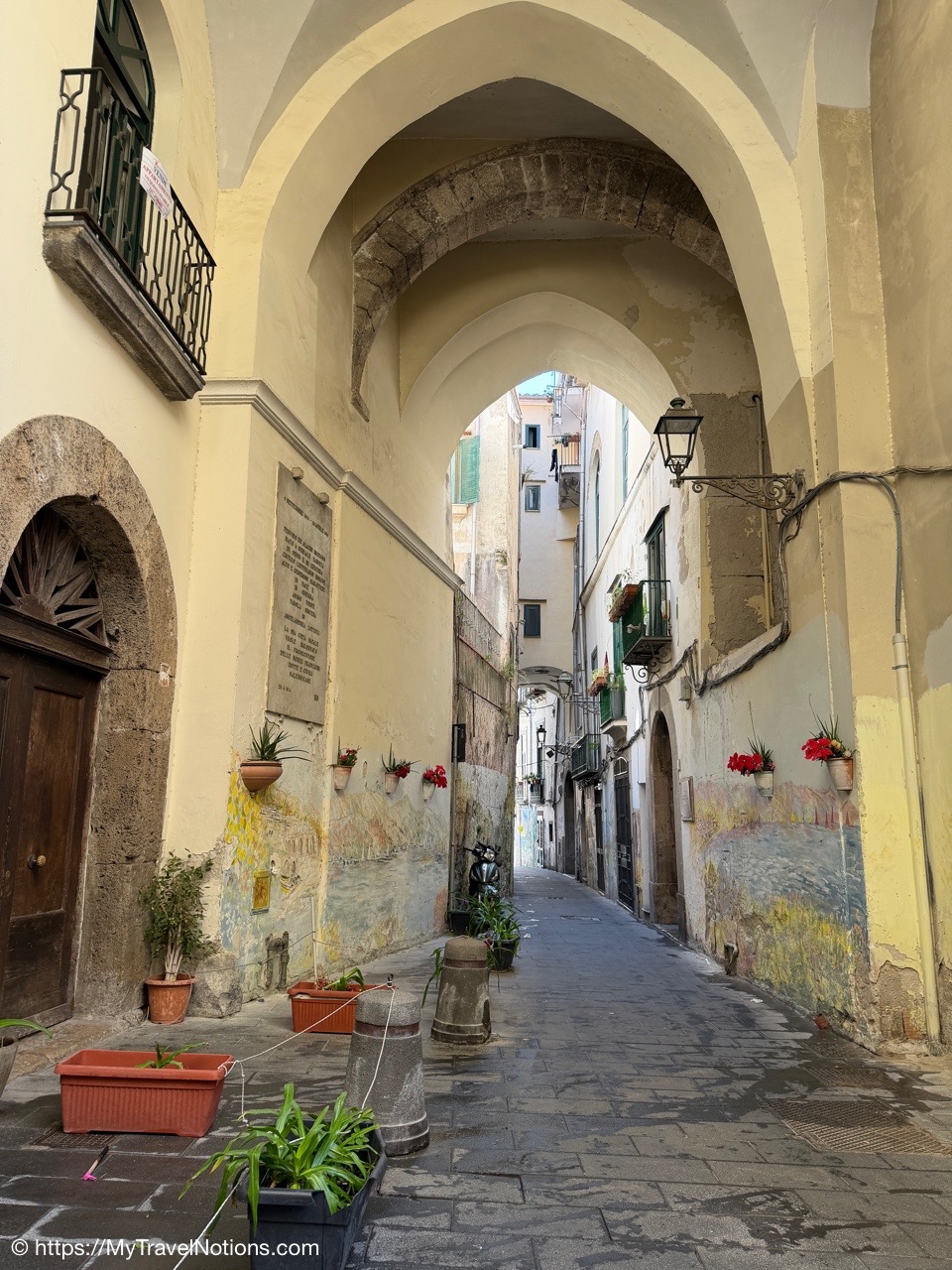
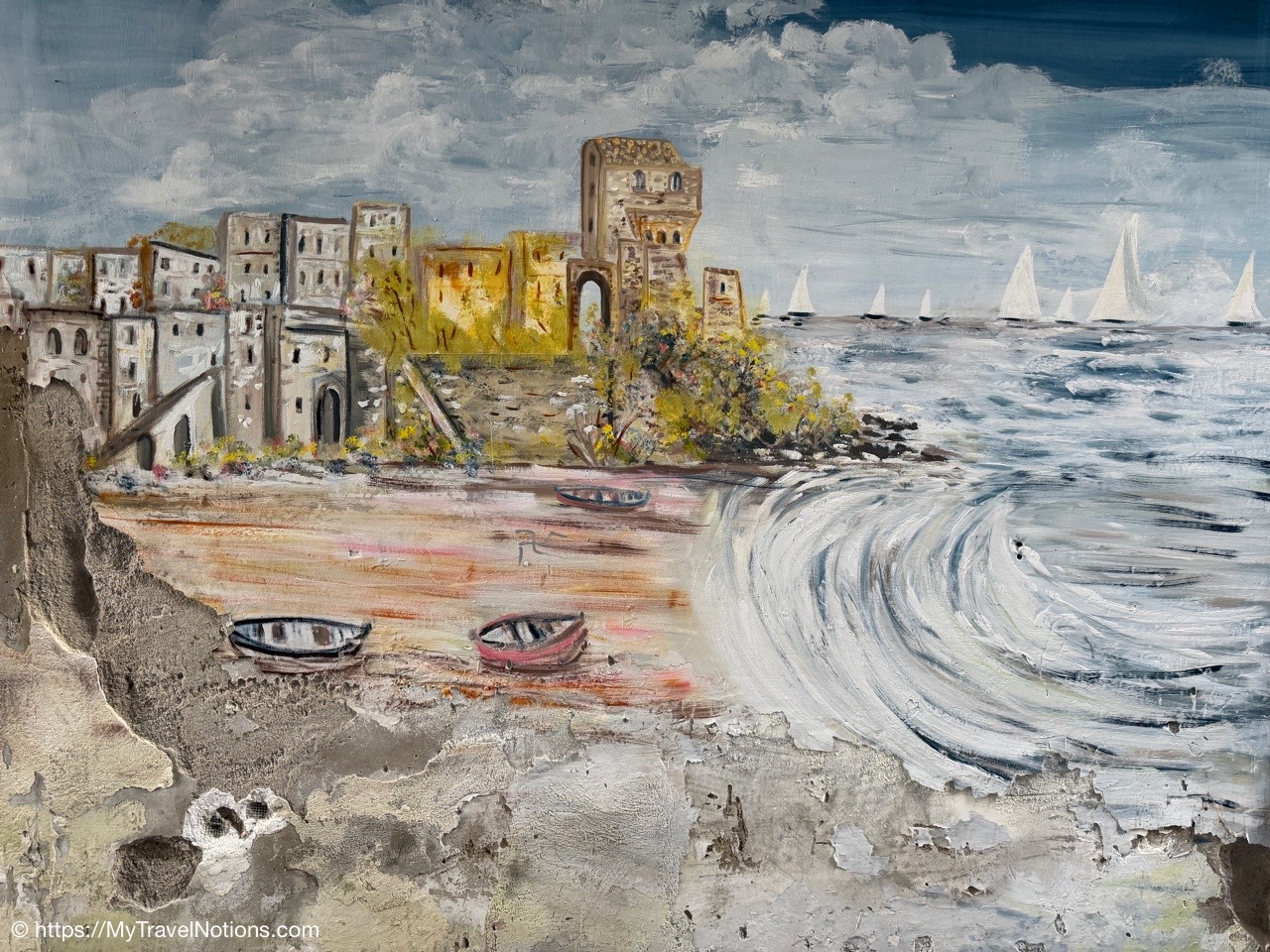
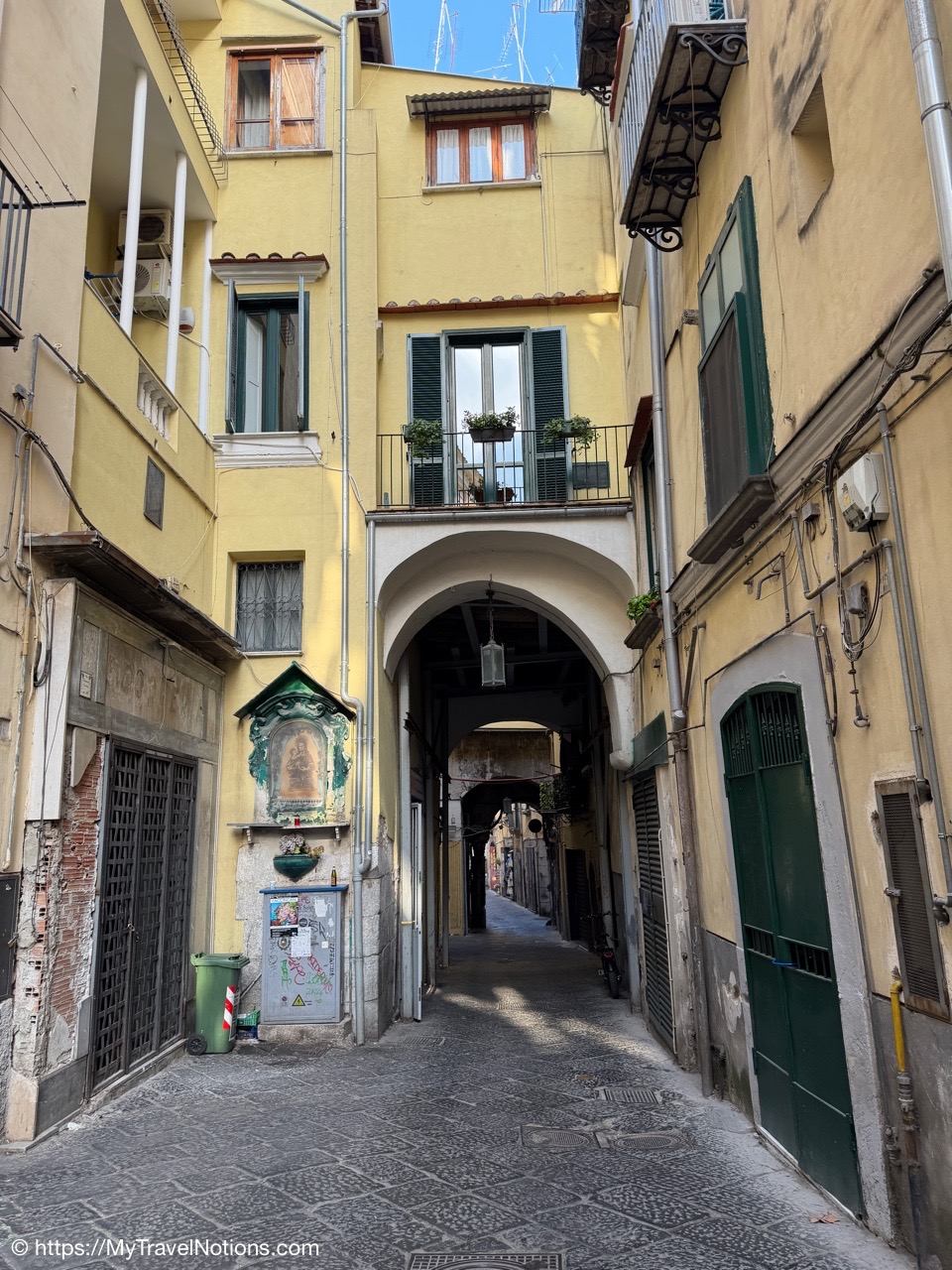
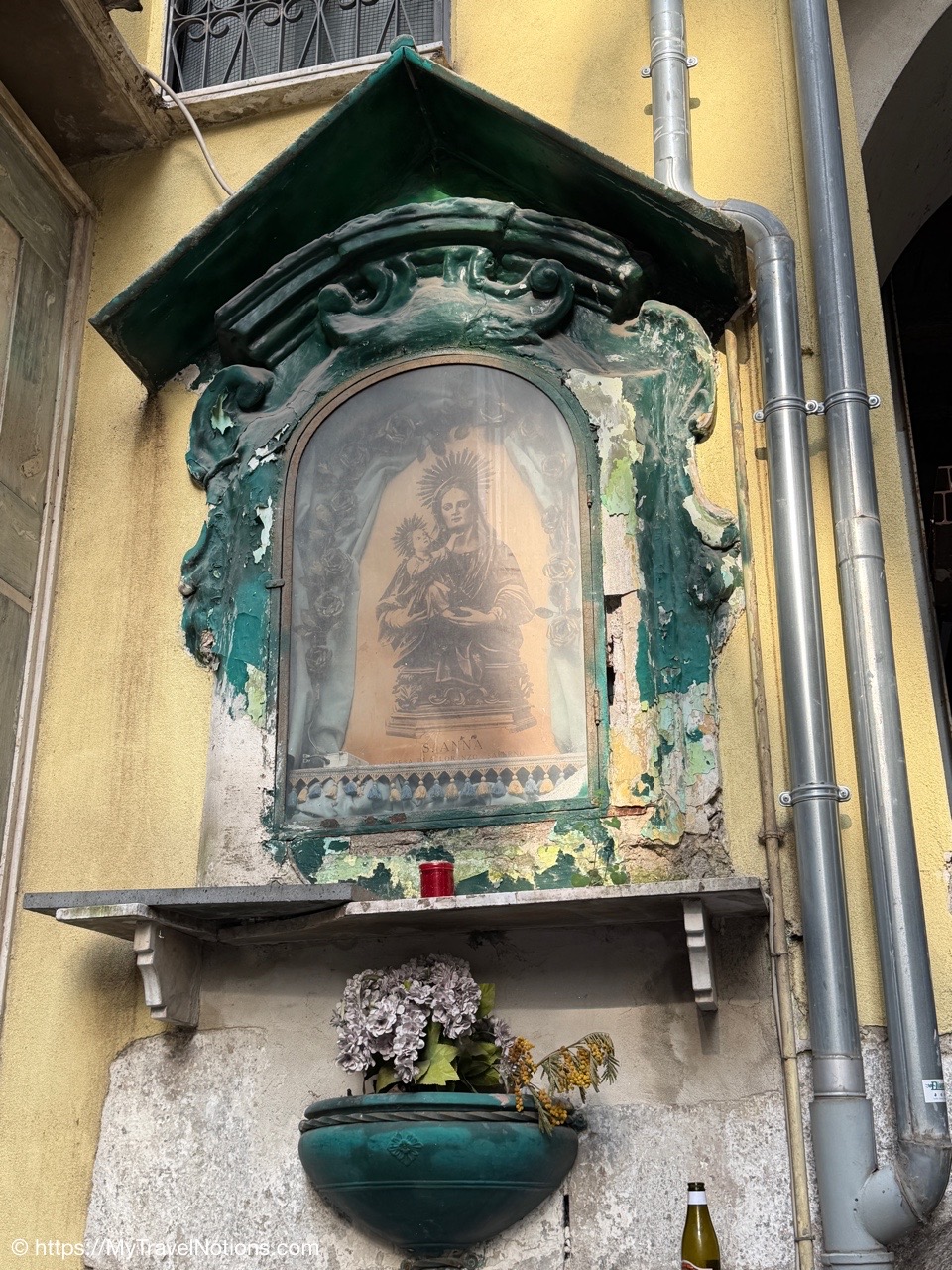
Our guide Michele, with myself and Alice, approaching Atrani while walking along a narrow walkway from the town of Amalfi along the Amalfi Coast. (April 17, 2026)Before even glimpsing a view of Atrani, we made our way to the pedestrian tunnel, which we are entering near Piazza Municipio in Amafi, that connects the towns of Amalfi and Atrani. (April 17, 2026)Walking into the pedestrian tunnel from the town of Amalfi to visit the towns of Atrani along the Amalfi Coast. It’s a safe 10-minute walk that helps to avoid the main, busy, and narrow coastal road. (April 17, 2026)Alice and I inside the pedestrian tunnel on our way to Atrani from Amalfi. It’s an easy no vehicle 10 minute or so walk through the tunnel connecting these two coastal Amalfi Coast towns. (April 17, 2026)Walking through the tunnel connecting the two coastal Amalfi Coast towns of Amalfi and Atrani. (April 17, 2026)After exiting the tunnel, connecting the towns of Amalfi and Atrani, we walked along the Strada Statale 163 Amalfitana, frequently referred to as the SS163 or the Amalfi Drive. It’s the long windy road that connects Sorrento to Salerno. Then we literally walked through the cliffside Ristorante Da Zaccaria borders both Amalfi and Atrani, to the right, for a staircase down to the narrow pedestrian walkway down into Atrani. (April 17, 2026)The Ristorante Da Zaccaria borders both Amalfi and Atrani, which walked through then followed the stairs down to the road and narrow walkway towards Atrani. (April 17, 2026)Looking back at the town of Amalfi as we continue our walk into the town of Atrani. (April 17, 2026)On the narrow pedestrian walkway, with cars and motorcycles passing us by on this one way road. But checkout those stunning views as we continue to approach Atrani. (April 17, 2026)Me with views of the town of Atrani on the narrow pedestrian walkway. (April 17, 2026)Atrani is one of the 13 municipalities or towns of the Amalfi Coast. And this town is an important supporting castmate in Denzel Washington’s movie, The Equalizer 3, as the fictional town of Altamonte. (April 17, 2026)Atrani is one of the 13 municipalities or towns of the Amalfi Coast. And this town is an important supporting castmate in Denzel Washington’s movie, The Equalizer 3, as the fictional town of Altamonte. (April 17, 2026)Approaching the massive stone arches of the viaduct that support the SS163 Amalfi Coast Road overhead in Atrani and across from the beach and leading to the town’s main piazza, the Piazza Umberto I. (April 17, 2026)Walking into the town of Atrani through a tunneled archway of the stone viaduct built in 1822 alongside Atrani to support the Amalfi Drive coastal roadway (SS163). (April 17, 2026)Entering the Corso Garibaldi, the main walkable street at the entrance into Atrani. And the church at the top of the impressive staircase at the main entrance of Piazza Umberto I is the Church of San Salvatore de’ Birecto (or San Salvatore del Birecto). (April 17, 2026)The main square of Piazza Umberto I in Atrani is surrounded by cafes and restaurants like Ristorante Savo where Denzel Williams’ character in the Equalizer 3 drank his tea and interacted with the locals. (April 17, 2026)The Ristorante Savò in Atrani played the main café/restaurant where Denzel Washington’s character Robert McCall spends time drinking tea and getting to know the locals in the movie Equalizer 3. It’s located in the Piazza Umberto I and entrance into Atrani from the beach. (April 17, 2026)Walking up the narrow staircase of Atrani, just one of a labyrinth of narrow staircases and pathways that climb vertically into the cliffs. (April 17, 2026)Walking through the narrow pathways of Atrani. (April 17, 2026)Walking through the narrow pathways of Atrani. (April 17, 2026)Walking through the narrow pathways of Atrani. (April 17, 2026)Walking through the narrow pathways of Atrani. That’s Janet, our guide Michele, Rosie and Alice. (April 17, 2026)Walking through the narrow pathways or alleyways of Atrani. (April 17, 2026)Walking through the narrow pathways of Atrani. (April 17, 2026)Walking through the narrow pathways of Atrani. (April 17, 2026)The Amalfi Coast town of Atrani. (April 17, 2026)Me with a view of the massive stone arch of the viaduct that support the SS163 Amalfi Coast Road overhead in Atrani. (April 17, 2026)The massive stone arches of the viaduct that support the SS163 Amalfi Coast Road overhead in Atrani. (April 17, 2026)And, at the tippy top to the right are the distinctive green and yellow majolica-tiled domes of the Collegiate Church of Santa Maria Maddalena rising from the hillside in Atrani. It was built in 1274, and heavily renovated in the 18th century, to honor the patron saint of the town. The its majolica dome is an iconic Amalfi Coast landmark. And, on the steps, that’s me, Alice, Janet and Rosie. (April 17, 2026)Looking back at Atrani while walking along the Strada Statale 163 Amalfitana, frequently referred to as the SS163 or the Amalfi Drive, back into the town of Amalfi for a late lunch before heading back to our home base of Salerno. (April 17, 2026)Walking towards the the Hotel Luna Convento for a short-cut and to see its beautifully preserved central cloister on our way back into the town of Amalfi. (April 17, 2026)Looking ahead to the town of Amalfi as we take a shortcut into the Hotel Luna Convento (to the right and not in the photo) with its cave-like entrance along the Strada Statale 163 Amalfitana, frequently referred to as the SS163 or the Amalfi Drive. (April 17, 2026)The simple cave-like entrance into the Hotel Luna Convento along the Strada Statale 163 Amalfitana, frequently referred to as the SS163 or the Amalfi Drive as we take take a shortcut to get back down into the town of Amalfi. The hotel, situated on a rocky promontory between Amalfi and Atrani, was founded as a Franciscan monastery by St. Francis of Assisi in 1222. It was transformed into a hotel in 1821. (April 17, 2026)The simple cave-like entrance into the Hotel Luna Convento along the Strada Statale 163 Amalfitana, frequently referred to as the SS163 or the Amalfi Drive as we take take a shortcut to get back down into the town of Amalfi. The hotel, situated on a rocky promontory between Amalfi and Atrani, was founded as a Franciscan monastery by St. Francis of Assisi in 1222. It was transformed into a hotel in 1821. (April 17, 2026)Inside beautiful reception area of the Hotel Luna Convento which was founded as a Franciscan monastery by St. Francis of Assisi in 1222. It was transformed into a hotel in 1821. (April 17, 2021)Notes, photos and autographs are on display featuring the distinguished guests starting from around 1818 including composers, clergy, playwrights, artists, politicians, members of the aristocracy and even Hollywood legends who stayed at tHotel Luna Convento in Amalfi. (April 17, 2026)Notes, photos and autographs are on display featuring the distinguished guests starting from around 1818 including composers, clergy, playwrights, artists, politicians, members of the aristocracy and even Hollywood legends who stayed at tHotel Luna Convento in Amalfi. (April 17, 2026)An example of Moorish architecture, the cloister of the Hotel Luna Convento is one of the oldest cloisters in the Amalfi area dating back to the 13th century when the hotel was once a convent. Founded in 1222 by Saint Francis of Assisi. (April 17, 2026)An example of Moorish architecture, the cloister of the Hotel Luna Convento is one of the oldest cloisters in the Amalfi area dating back to the 13th century when the hotel was once a convent. Founded in 1222 by Saint Francis of Assisi. (April 17, 2026)After making our way through the Hotel Luna Convento, our guide Michele showed us through more stairs as we continued back into the town of Amalfi. (April 17, 2026)Continuing our walk through the hidden alleys and stairs into the town of Amalfi. (April 17, 2026)And, look at what the stairs open up too, views of the Amalfi beach. (April 17, 2026)Views of the beach and the town of Amalfi along the Amalfi Coast. (April 17, 2026)Janet and I taking a view break of the town of Amalfi (after walking from Atrani) and a bit of a rest before heading down our last set of stairs with visions of good food, chairs and drinks dancing in our heads. (April 17, 2026)After spending my fabulous first day walking through around the towns of Amalfi and Atrani, we enjoyed our leisurely lunch back in Amalfi before taking the ferry back to our home base of Salerno. (April 17, 2026)Getting in line to eventually board our ferry from the town of Amalfi back to our home base of Salento. (April 17, 2026)Views of the Amalfi Coast towns along the Gulf of the Tyrrhenian Sea as we make our way back to our home base of Salerno, the second-largest town of the Italy’s Campania region. The Tyrrhenian Sea is the section of the Mediterranean Sea that washes against the western coast of Italy. (April 17, 2026)Views of the Amalfi Coast towns along the Gulf of the Tyrrhenian Sea as we make our way back to our home base of Salerno, the second-largest town of the Italy’s Campania region. The Tyrrhenian Sea is the section of the Mediterranean Sea that washes against the western coast of Italy. (April 17, 2026)Views of the Amalfi Coast towns along the Gulf of the Tyrrhenian Sea as we make our way back to our home base of Salerno, the second-largest town of the Italy’s Campania region. The Tyrrhenian Sea is the section of the Mediterranean Sea that washes against the western coast of Italy. (April 17, 2026)Views of the Amalfi Coast towns along the Gulf of the Tyrrhenian Sea as we make our way back to our home base of Salerno, the second-largest town of the Italy’s Campania region. The Tyrrhenian Sea is the section of the Mediterranean Sea that washes against the western coast of Italy. (April 17, 2026)Approaching our home base of Salerno. (April 17, 2026)Approaching our home base of Salerno. (April 17, 2026)Approaching the port of Salnero, our home base for our travels to a number of towns along the Amalfi Coast. (April 17, 2026)Approaching the port of Salnero, our home base for our travels to a number of towns along the Amalfi Coast. (April 17, 2026)Back at our home base in Salerno and taking the short walk from my room at the Kriò Suites to dinner with Janet and Rosie (Alice had her fill at lunch) to the Osteria Angolo Masuccio. (April 17, 2026)Passing by the Piazza Flavio Gioia, known as “La Rotonda,” the circular open square in Salerno. It serves as a lively gateway to the city’s historic center. (April 17, 2026)Walking towards the Porta Nuova (commonly referred to as Porta Nova), the only remaining intact ancient gateway to the historical center of Salerno. Originally constructed to regulate movement through the city’s medieval defensive walls, the current monumental arch was rebuilt in 1754. (April 17, 2026)The Porta Nuova (commonly referred to as Porta Nova) the only remaining intact ancient gateway to the historical center of Salerno. Originally constructed to regulate movement through the city’s medieval defensive walls, the current monumental arch was rebuilt in 1754 under the direction of master Francesco Ragozzino. Crowning the top of the arch is a striking statue of St. Matthew, the patron saint of Salerno, which was sculpted by Francesco Pagano in 1756. (April 17, 2026)Walking past the Porta Nuova (commonly referred to as Porta Nova) down Vicolo Portanova in Salerno. (April 17, 2026)One of the many Madonna votive shrines or Madonnelle along the street corners of the historic center in Salerno. These kinds of architectural shrines dedicated to the Virgin Mary date from medieval to modern times and traditionally served as physical protectors of neighborhoods while also providing vital street illumination before the advent of electricity. (April 17, 2026)Walking down Via Masuccio Salernitano, a charming, narrow medieval street in the historic center of Salerno on my way to dinner at the Angolo Masuccio. This historic and lively pedestrian alley is known for its traditional architecture, local seafood restaurants and old-world charm. (April 17, 2026)Walking through Via Masuccio Salernitano with its shops, restaurants and old world charm in Salerno’s historic center. (April 17, 2026)Passing another beautiful Madonna votive shrine or Madonnelle along the street corners of the historic center in Salerno. (April 17, 2026)Walking through Via Masuccio Salernitano, a charming, narrow medieval street in the historic center of Salerno on my way to dinner at the Angolo Masuccio. (April 17, 2026)Walking through Via Masuccio Salernitano, a medieval street in Salerno that serves as an open-air art gallery, lined with colorful murals depicting Amalfi Coast scenes, landscapes, and tributes to local poets. (April 17, 2026)One of the murals along the Via Masuccio Salernitano, a medieval street in Salerno that serves as an open-air art gallery, lined with colorful murals depicting Amalfi Coast scenes, landscapes, and tributes to local poets. (April 17, 2026)One of the murals along the Via Masuccio Salernitano, a medieval street in Salerno that serves as an open-air art gallery, lined with colorful murals depicting Amalfi Coast scenes, landscapes, and tributes to local poets. (April 17, 2026)The murals along Via Masuccio Salernitano, a medieval street in Salerno’s historical center serves as an open-air art gallery, lined with colorful murals depicting Amalfi Coast scenes, landscapes, and tributes to local poets. (April 17, 2026)Walking through Via Masuccio Salernitano, a medieval street in Salerno’s historical center serves as an open-air art gallery, lined with colorful murals depicting Amalfi Coast scenes, landscapes, and tributes to local poets. (April 17, 2026)The Osteria Angolo Masuccio along the medieval street of Via Masuccio Salernitano in Salerno’s historical center is famous for its ultra-fresh seafood and unique sweets which we enjoyed eating in its outdoor dining area. (April 17, 2026)Enjoying dinner outdoors at Osteria Angolo Masuccio, along the medieval street of Via Masuccio Salernitano in Salerno’s historical center, with Janet and Rosie (Alice had her fill at lunch) at the Osteria Angolo Masuccio. The restaurant is known for its authentic Southern Italian and Mediterranean cuisine, particularly fresh seafood, flavorful pasta dishes and sumptuous sweets. My goal, at least food-wise along the Amalfi Coast, is to enjoy the fresh seafood. (April 17, 2026)I had the delicious sea base with spinach salad with this too lemony salad dressing, but it was all good at Osteria Angolo Masuccio in Salerno. (April 17, 2026)We also ordered two different desserts and shared them at Osteria Angolo Masuccio in Salerno. This one is the Apple cake with vanilla cream. My favorite. (April 17, 2026)And, this desert, which we shared at Osteria Angolo Masuccio in Salerno, is the Ricotta cheese with berries and apricot. (April 17, 2026)Walking back to my room at the Kriò Suite on Via Vella with views along the Corso Vittorio Emanuele at the edge to entering Salerno’s old town. (April 17, 2026)The front, entrance door to my room at the Kriò Suites in Salerno. When I checked in late last night, the management company had to buzz me into this street entrance door. (April 16, 2026)An elevator, quite a luxury item, to my 3rd floor room inside the Kriò Suites in Salerno. (Sept. 16, 2026)The entrance door to the three rooms, one of which is mine, of the Kriò Suites in Salerno. The door handle actually has a combination lock on it to which I was given the numbers in advance. (April 16, 2026)The little reception area leading to the door of my room at the at the Kriò Suites in Salerno. (April 16, 2026)My king suite with balcony at the Kriò Suites in Salerno. (April 16, 2026)My king suite with balcony at the Kriò Suites in Salerno. (April 16, 2026)My colorful red bathroom at the Kriò Suites in Salerno. (April 16, 2026)My evening balcony views of the Corso Vittorio Emanuele from my room at the Kriò Suites. This primarily pedestrian thoroughfare and central shopping hub of Salerno stretches about 1.24 miles or 2 kilometers from the central train station to the edge of the historic center. (April 17, 2026)My evening balcony views of the Corso Vittorio Emanuele from my room at the Kriò Suites at the edge to entering Salerno’s old town. (April 17, 2026)
The Towns of Minori and Maiori
We ventured out on our own with loose plans to visit the towns of Minori and Maiori. Although we love plans, visiting these towns was really just about savoring the beauty of the Amalfi Coast and that’s what we did. From the food to the views, the only plan was to savor.
Although known for the Path of the Lemons (Sentiero dei Limoni), connecting the towns via lemon groves for the scenic views, we all decided to pass on the path because of the hundreds of stairs required to get from one town to the next.
Come take a leisurely stroll with us through the towns of Minori and Maiori along the Amalfi Cost.
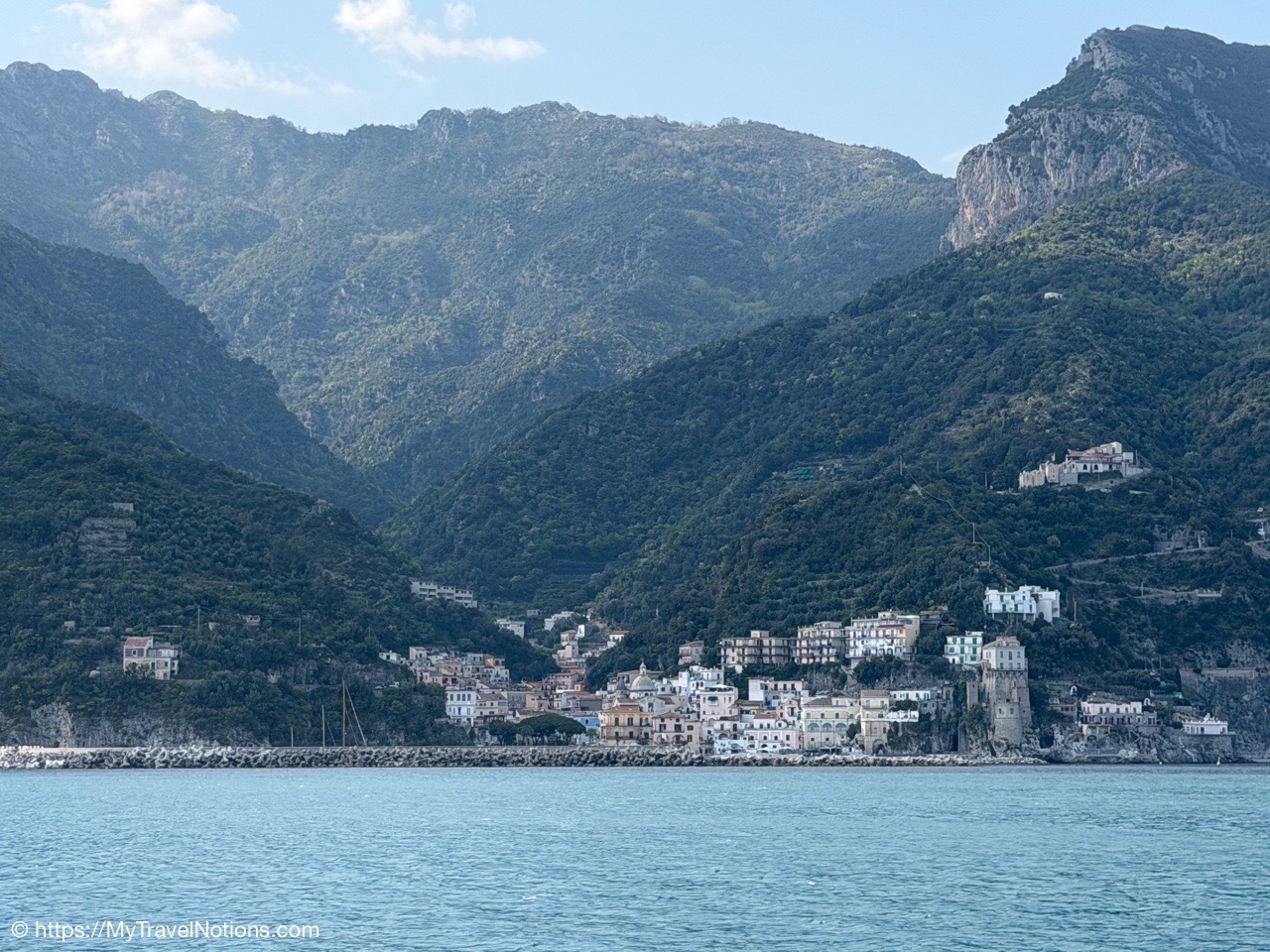
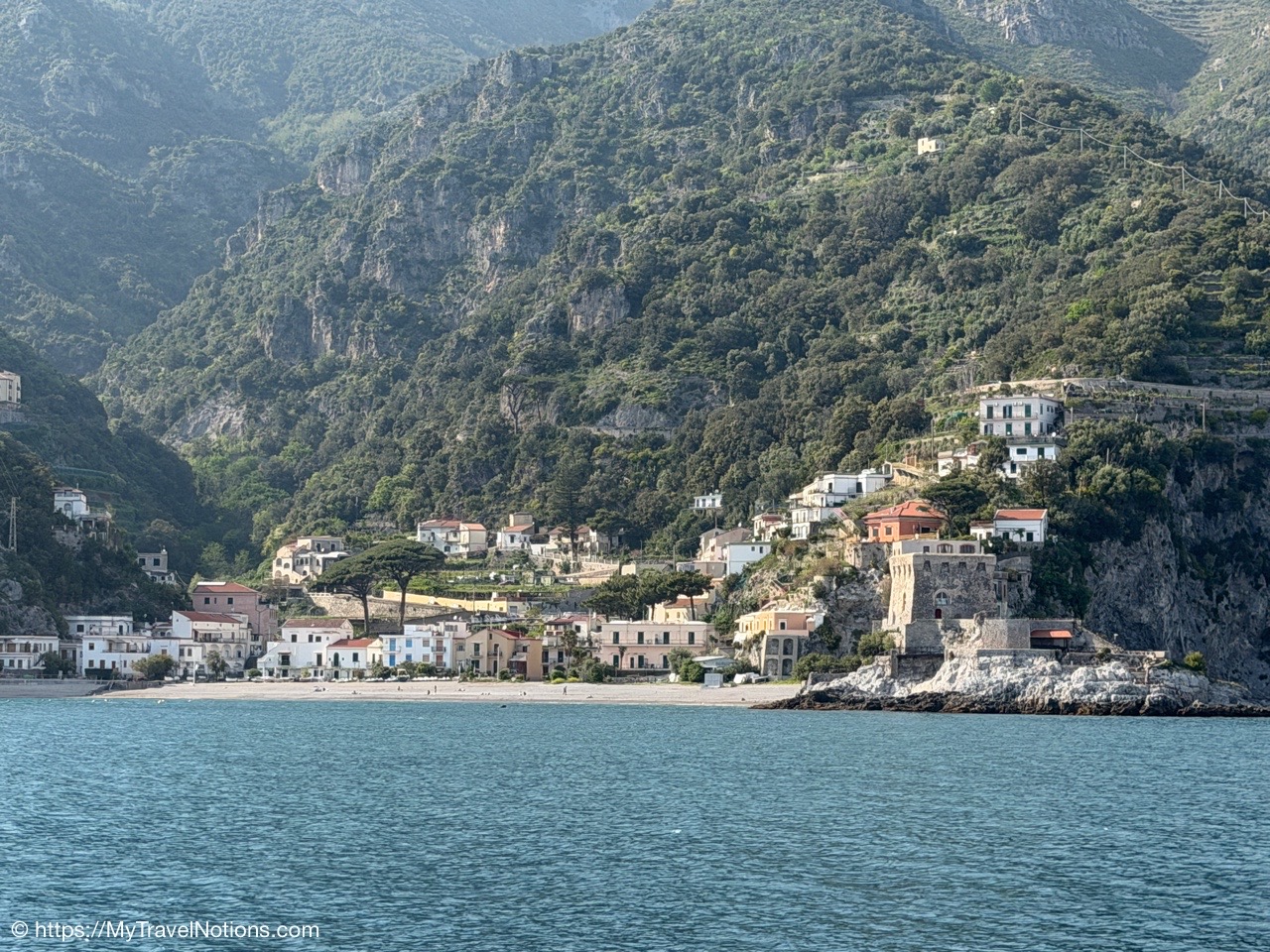
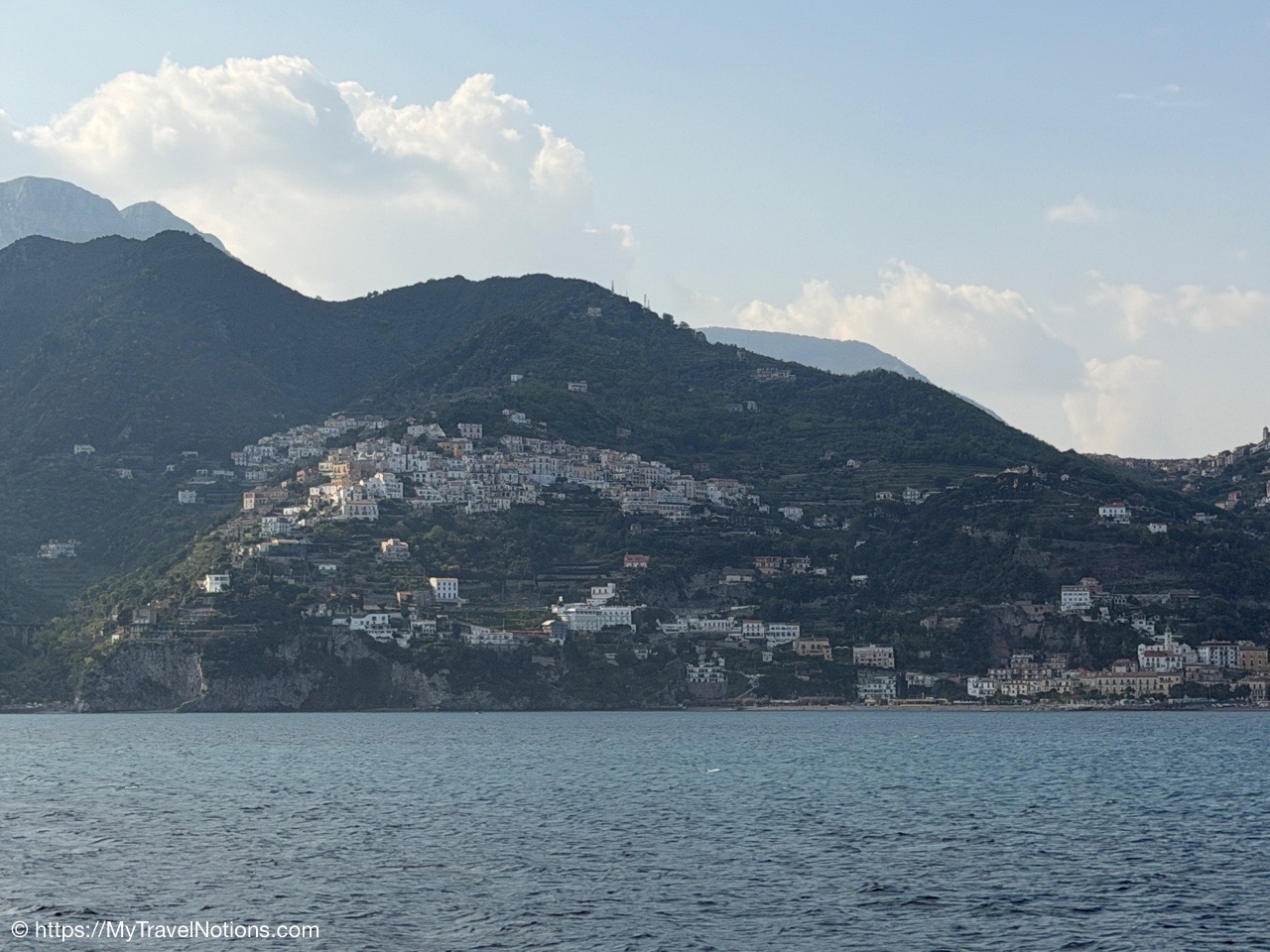
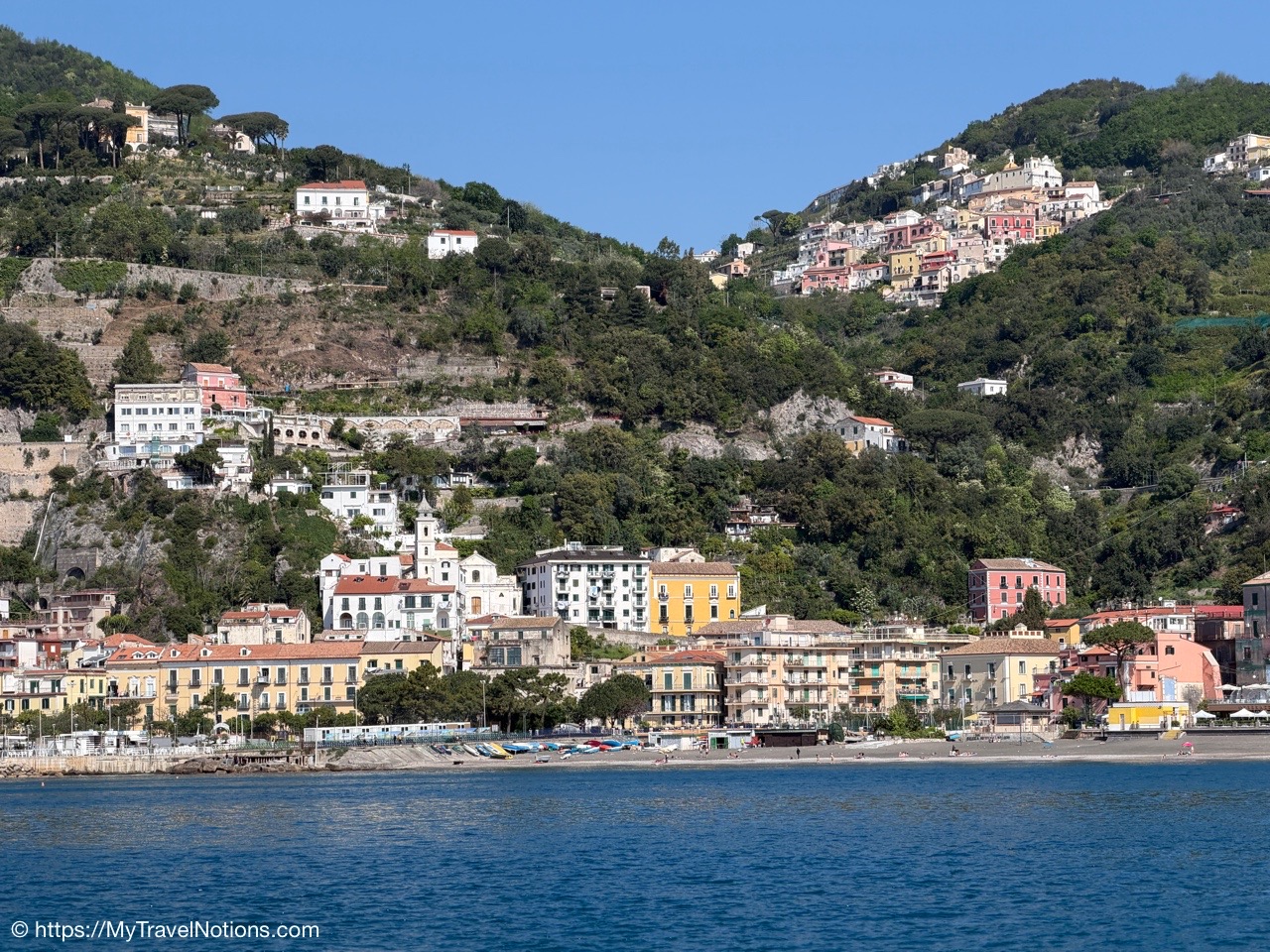
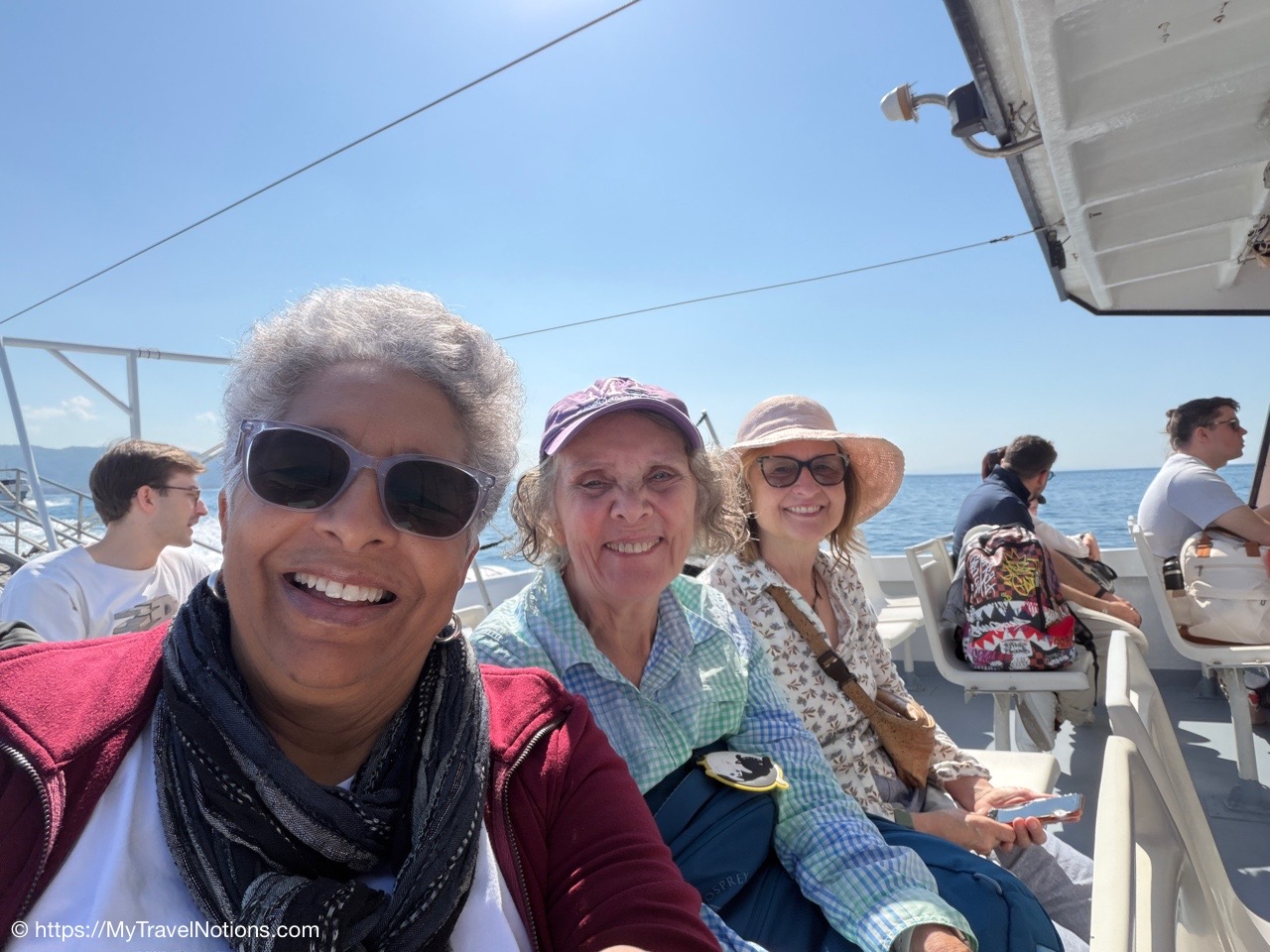
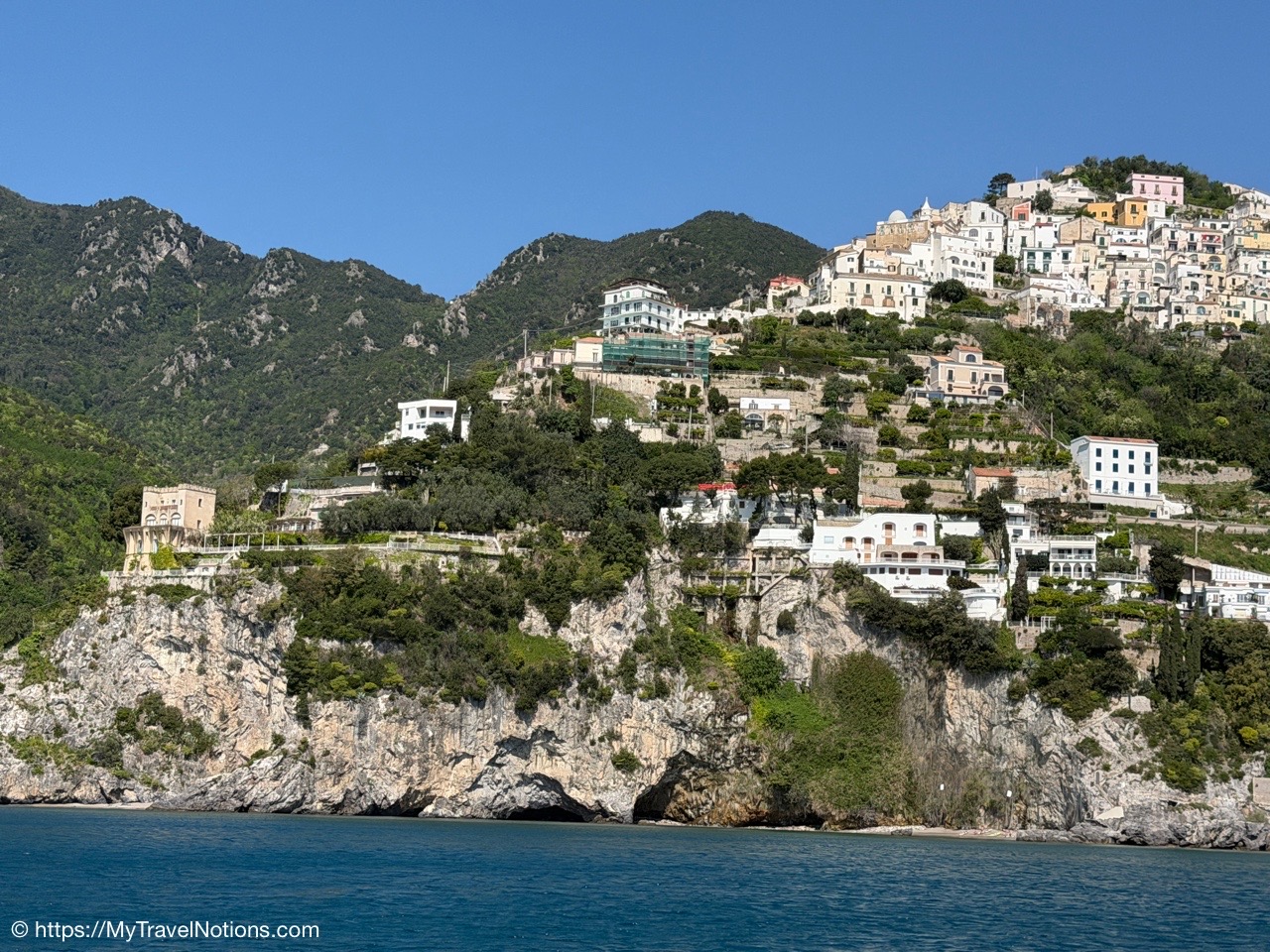
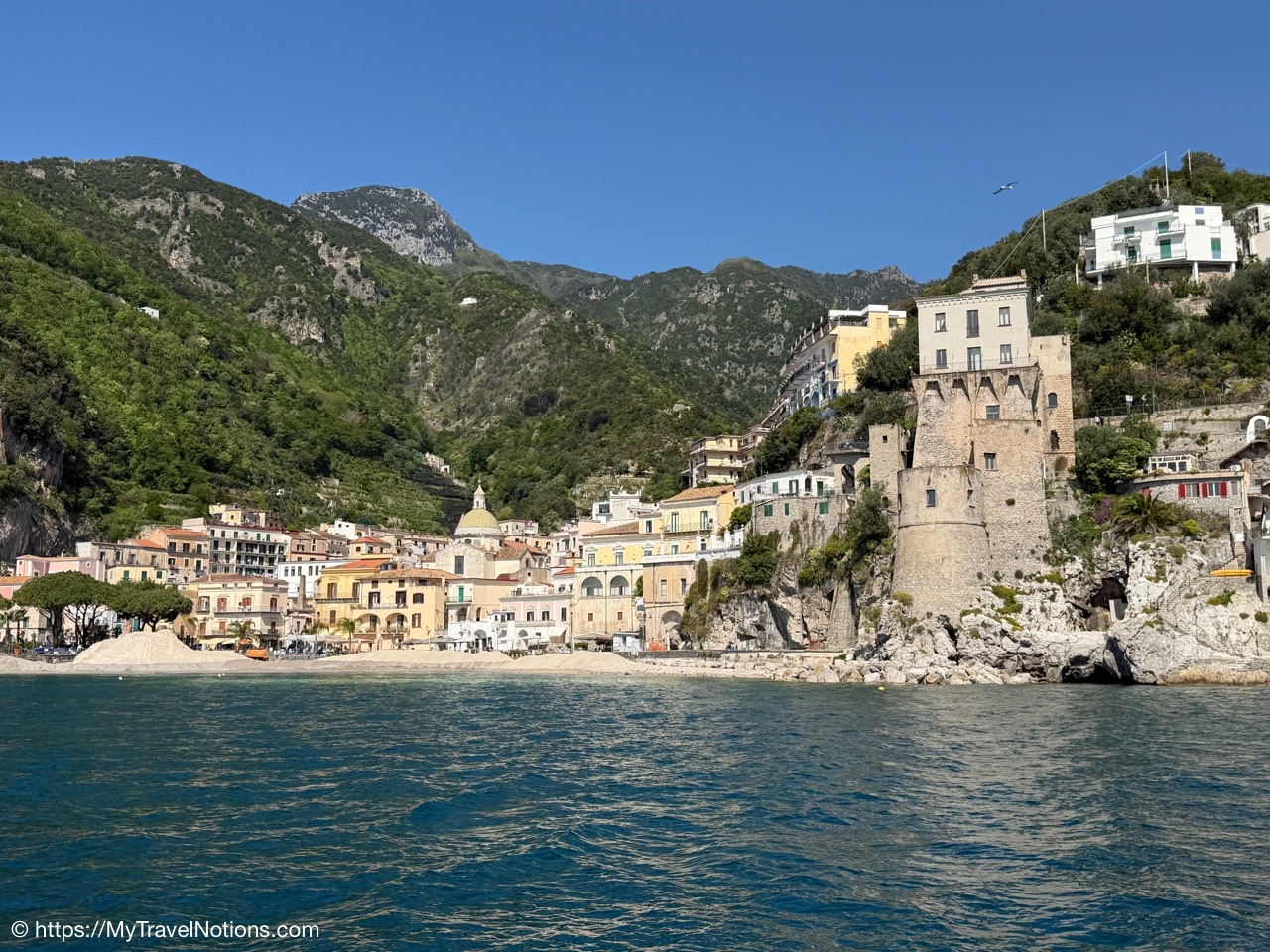
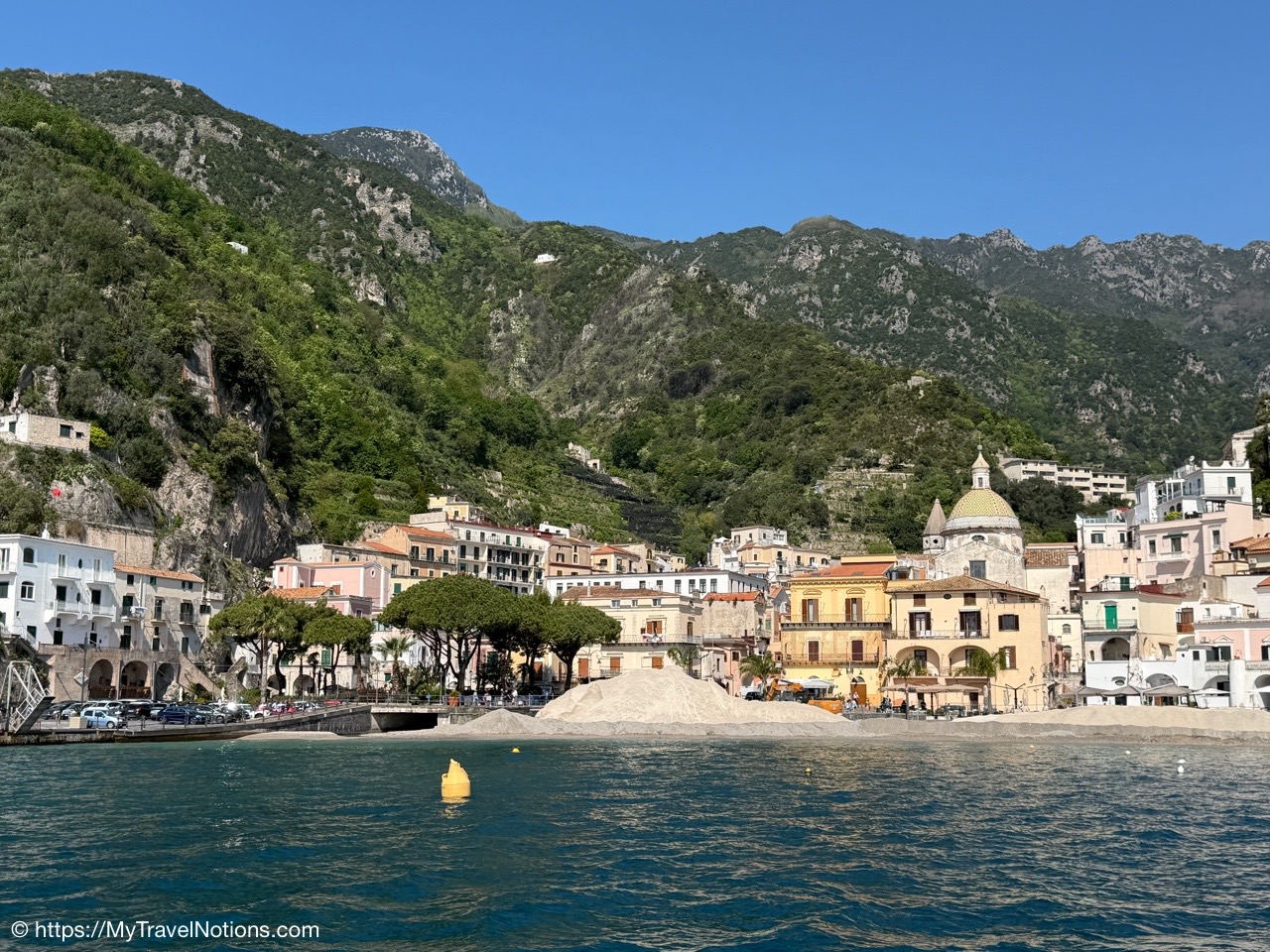
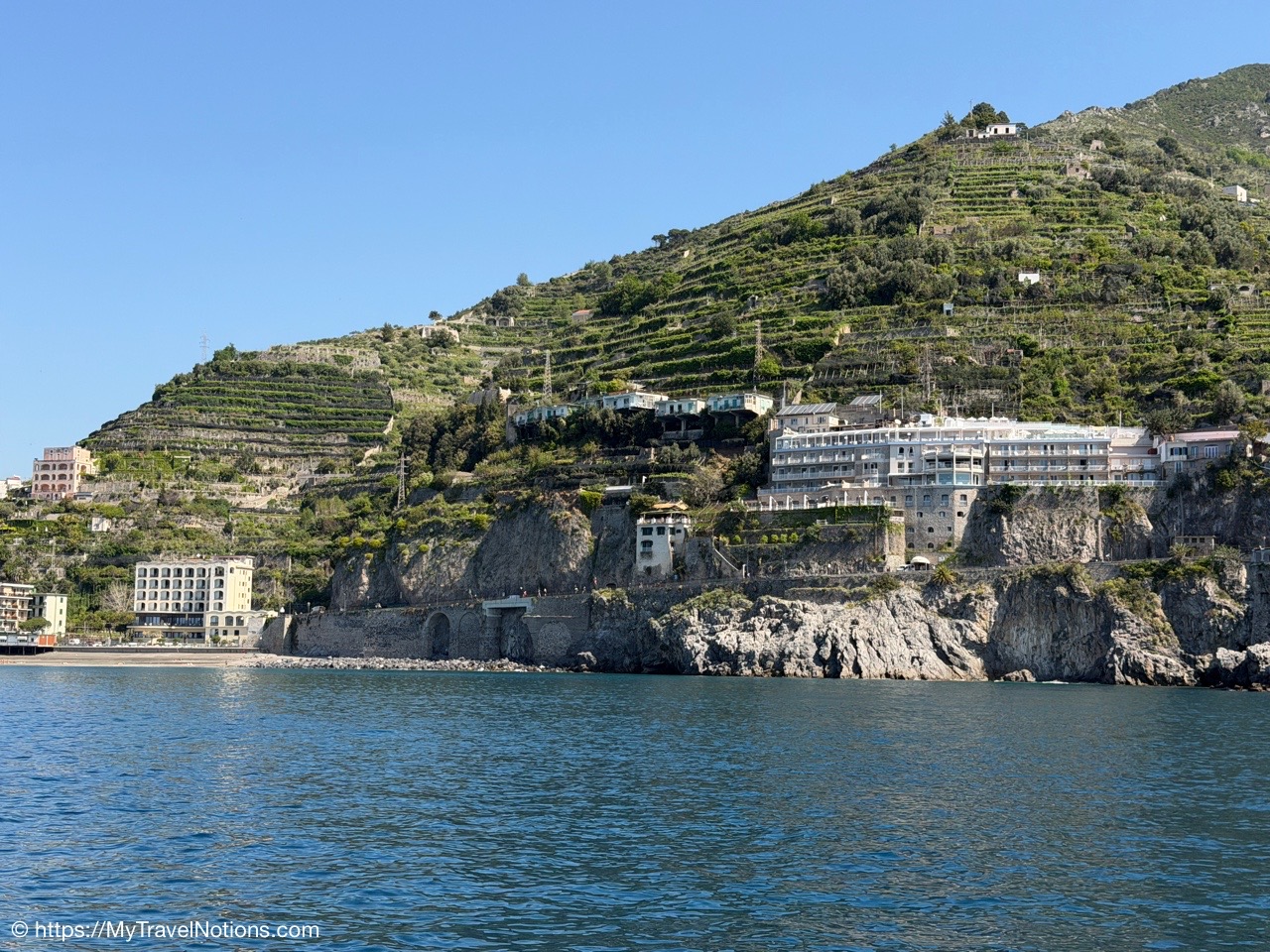
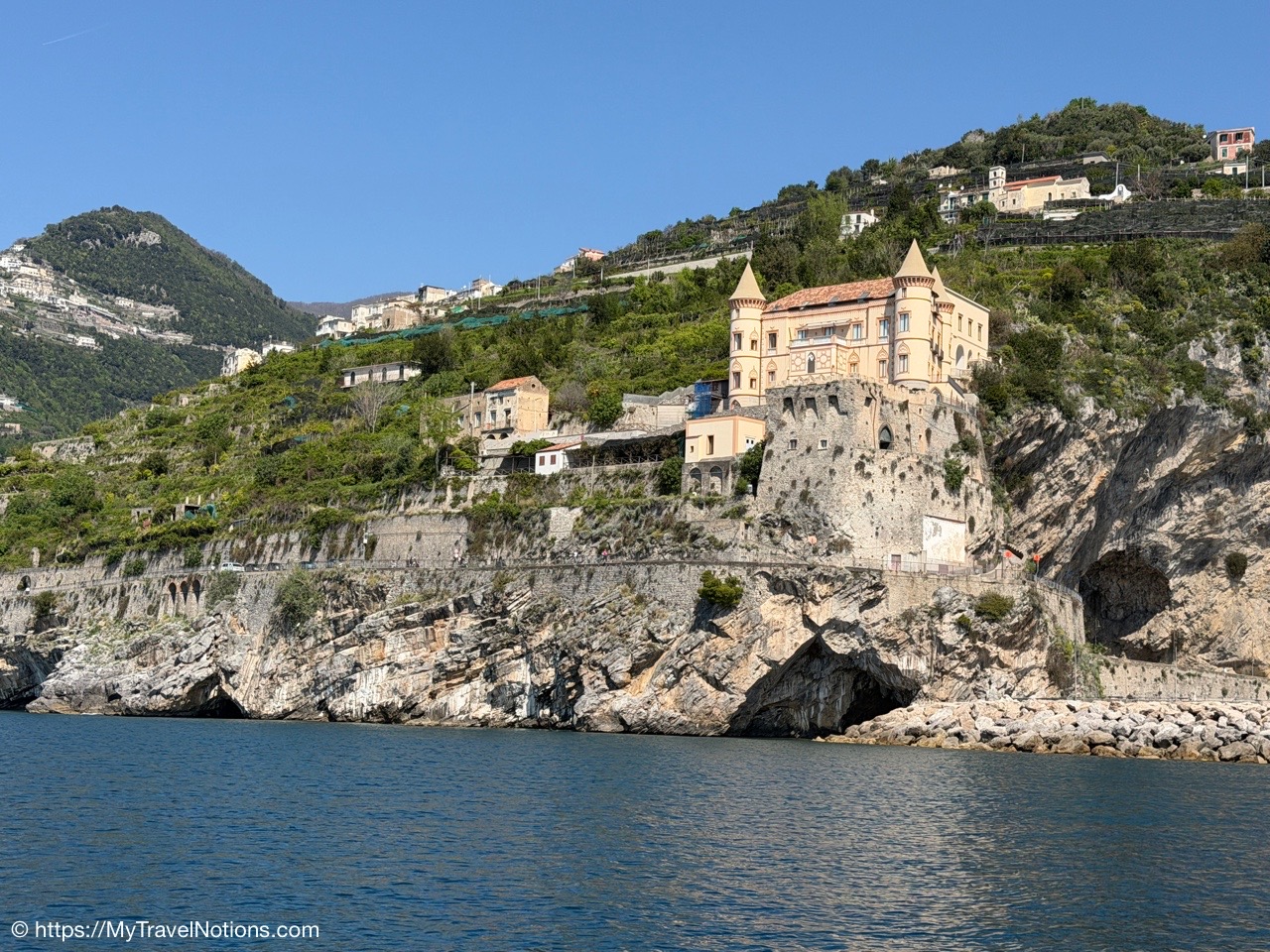
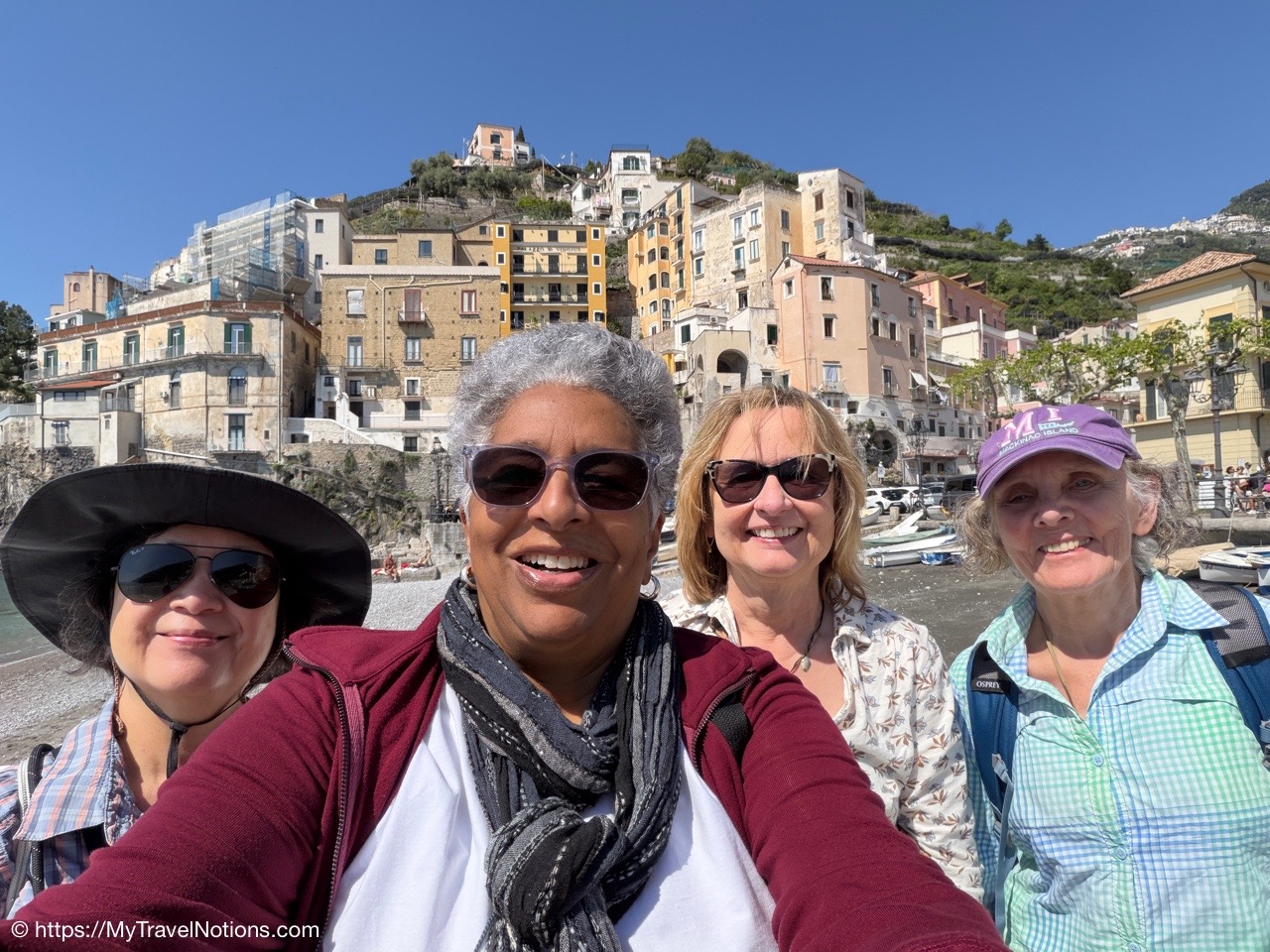
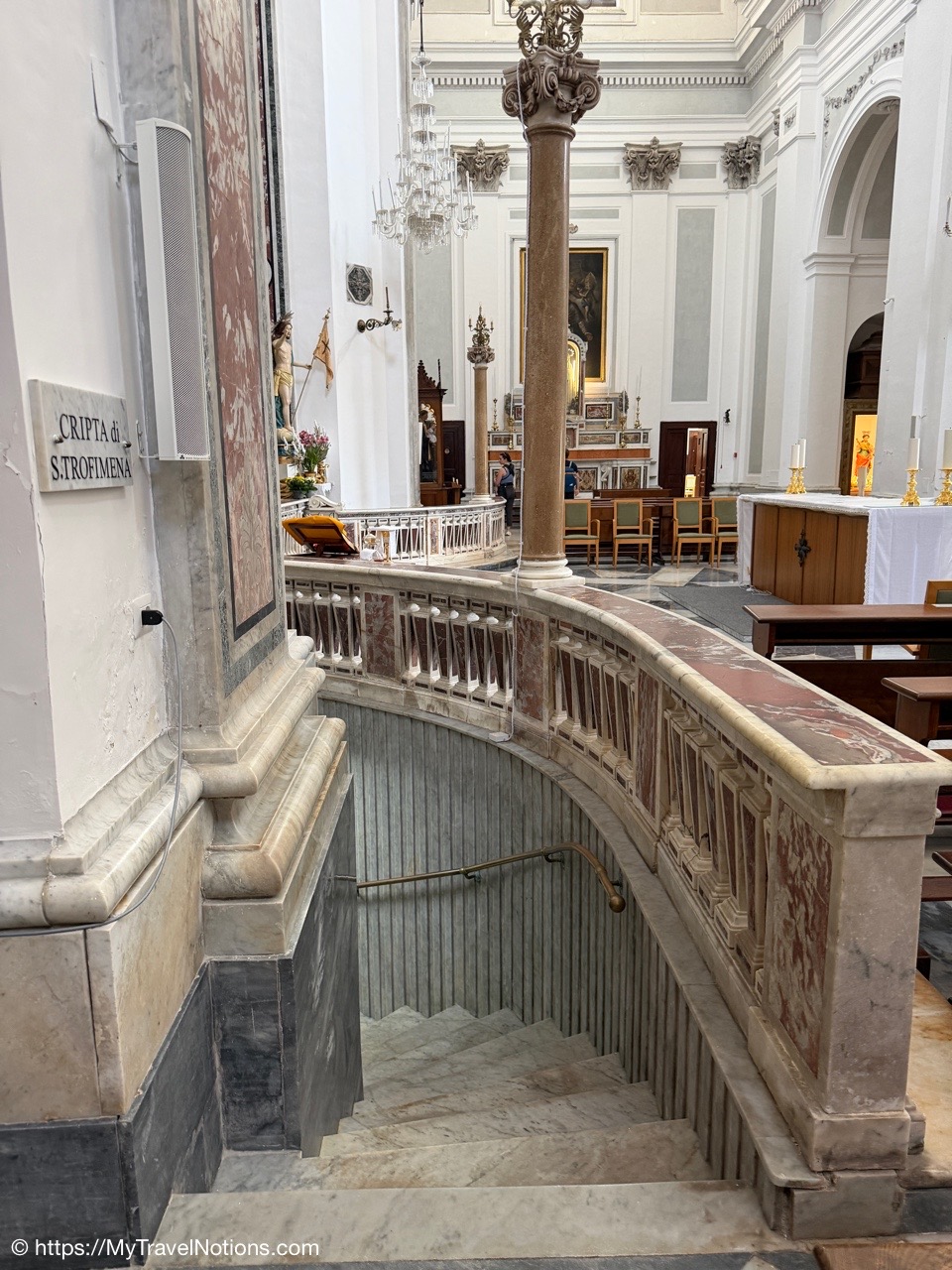
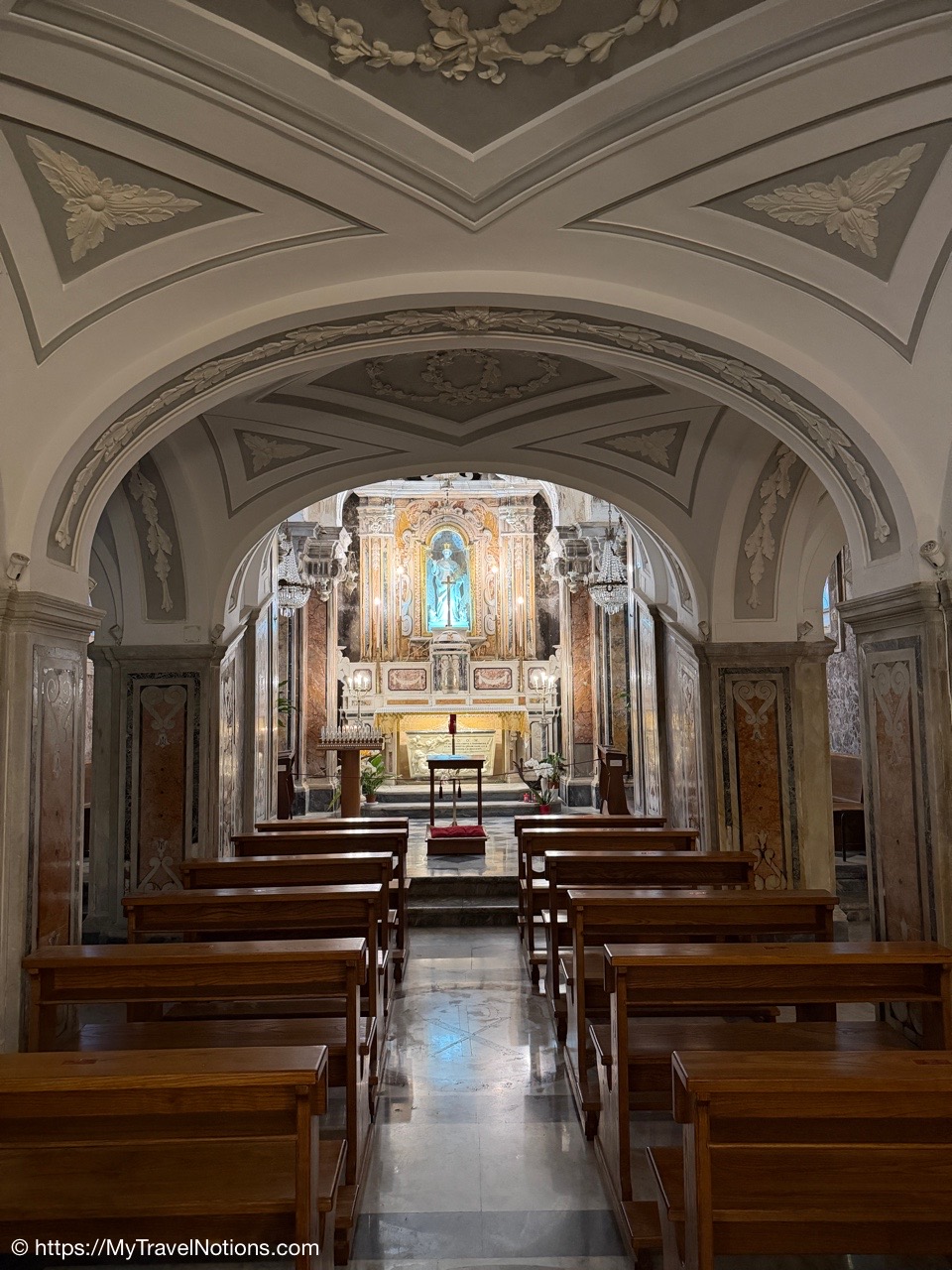
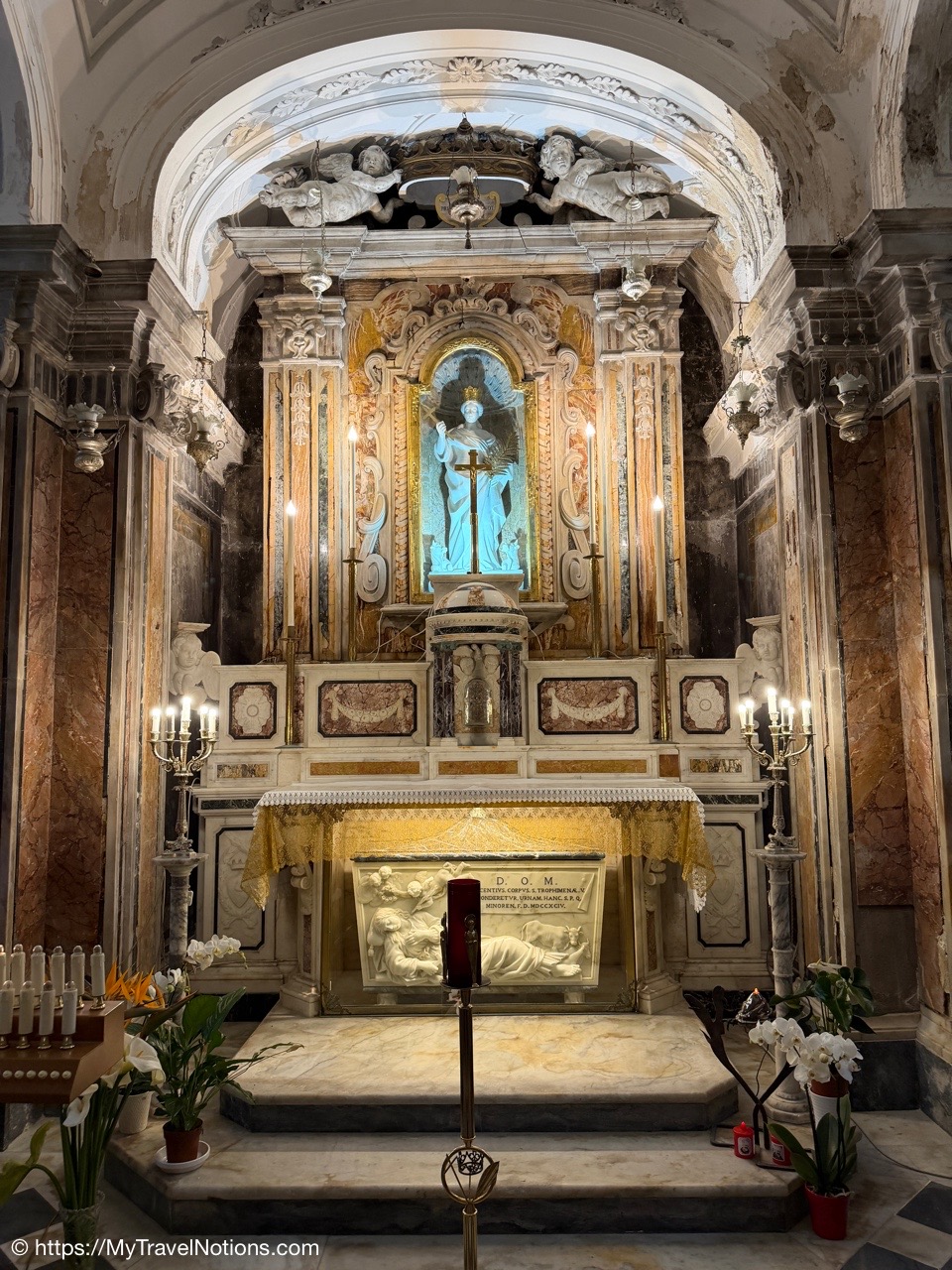
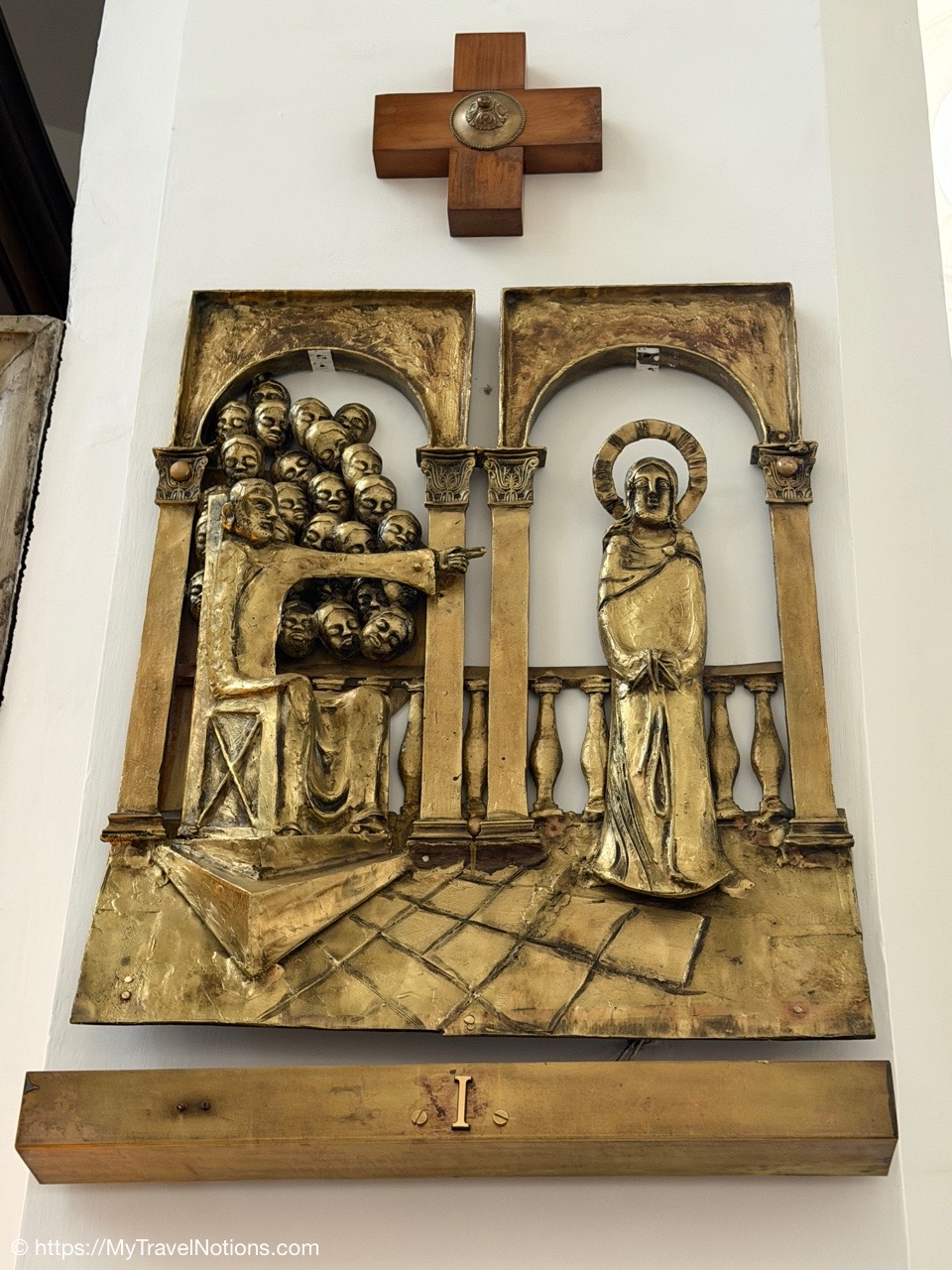
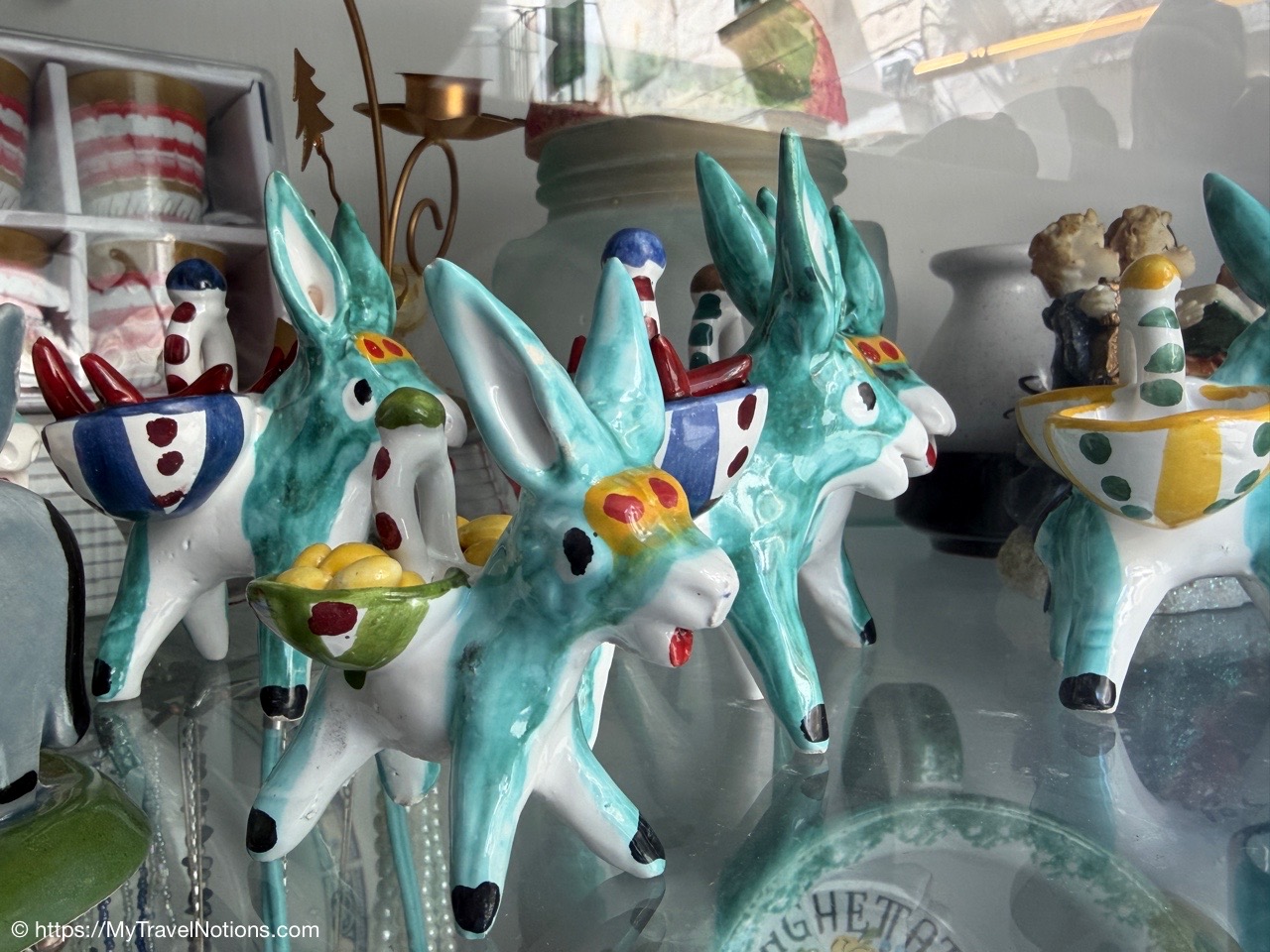
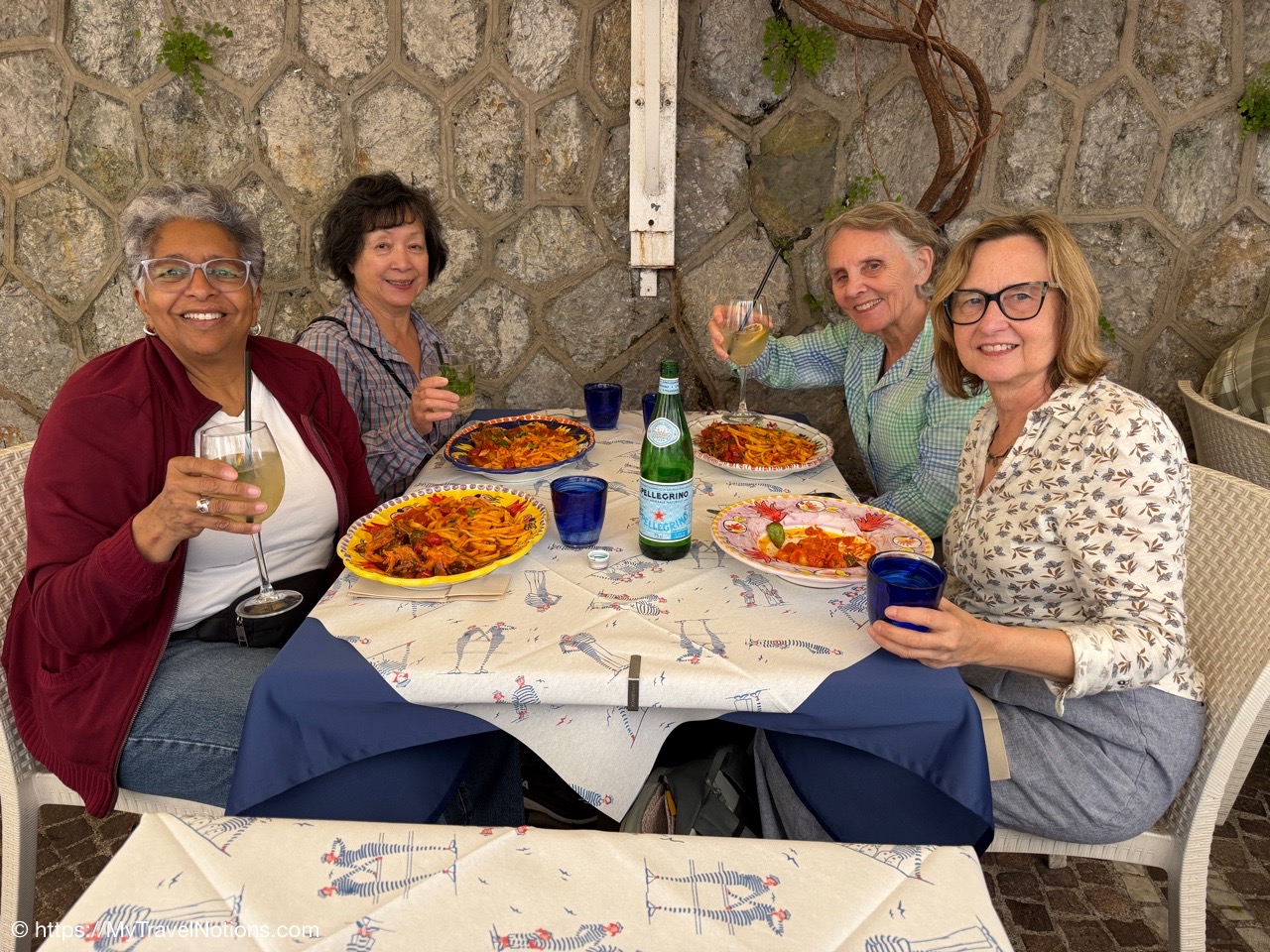
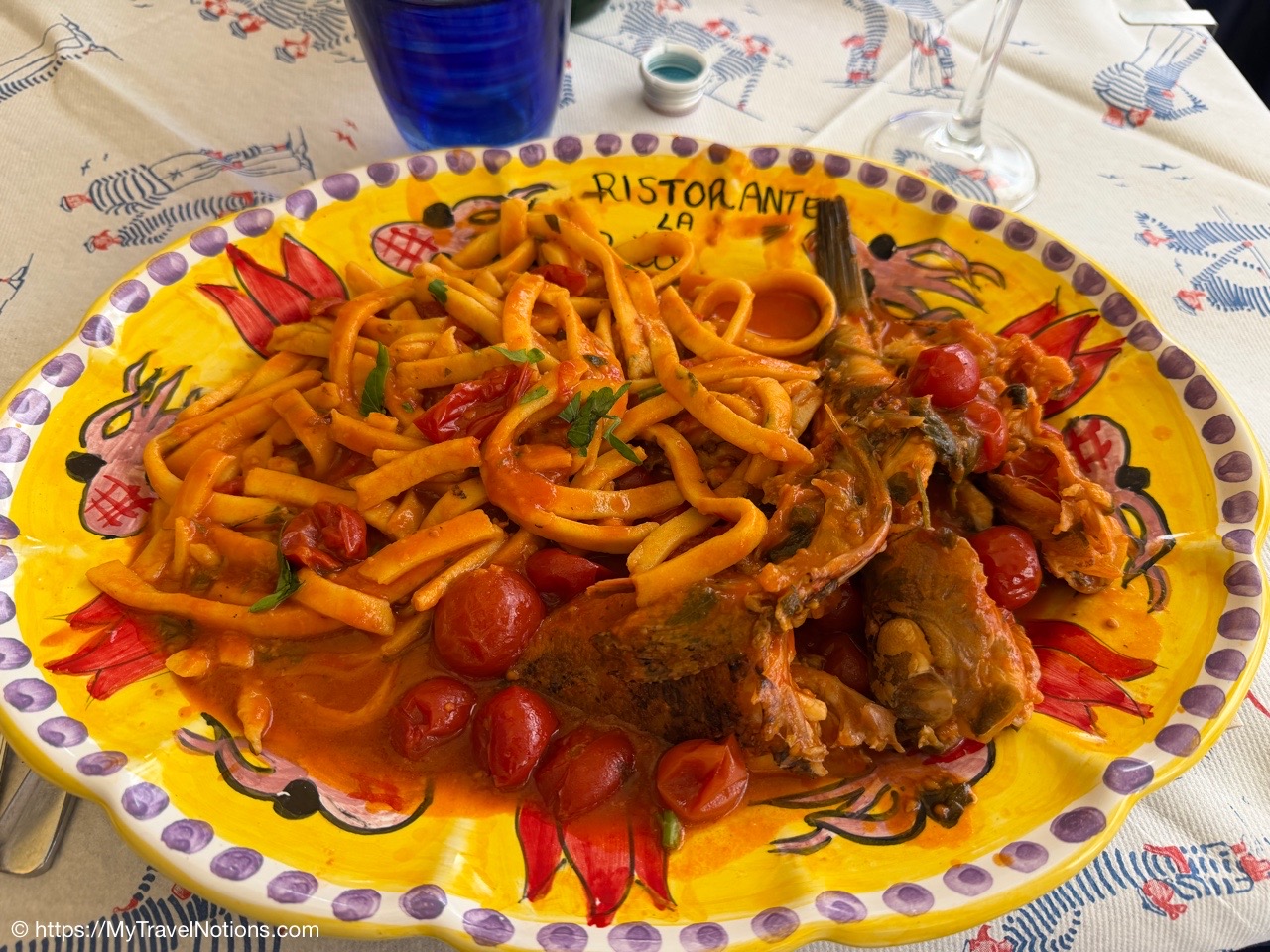
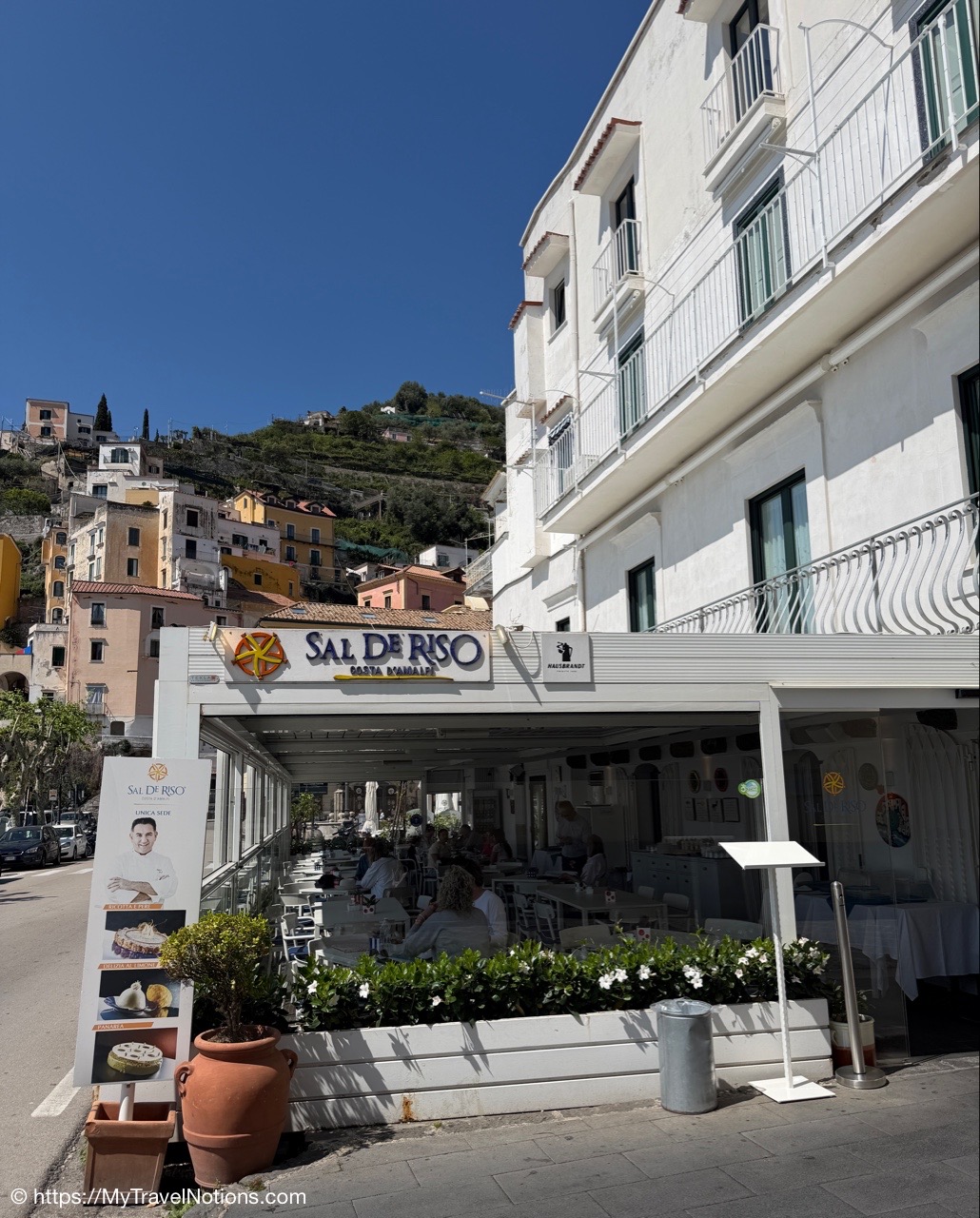
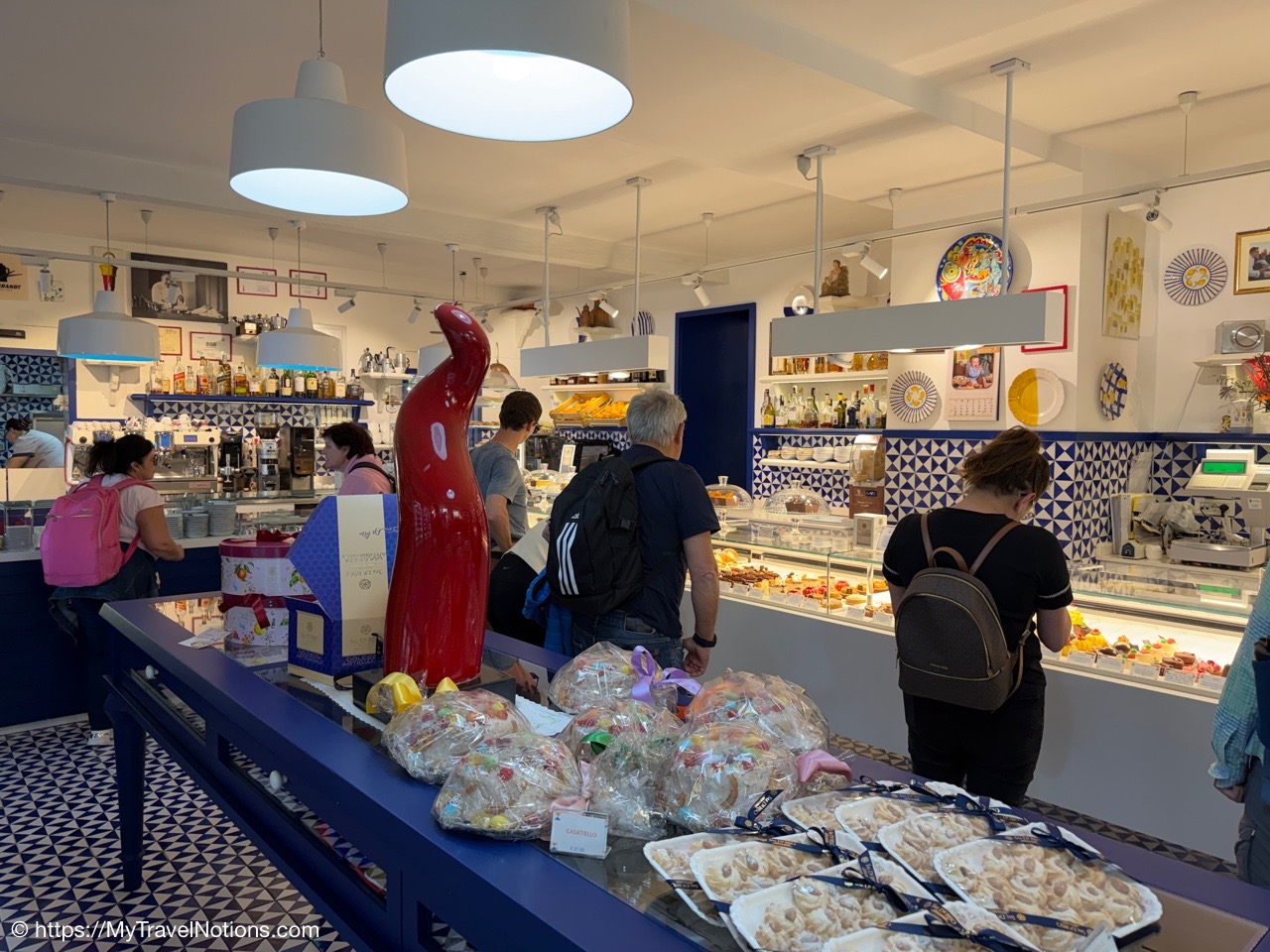
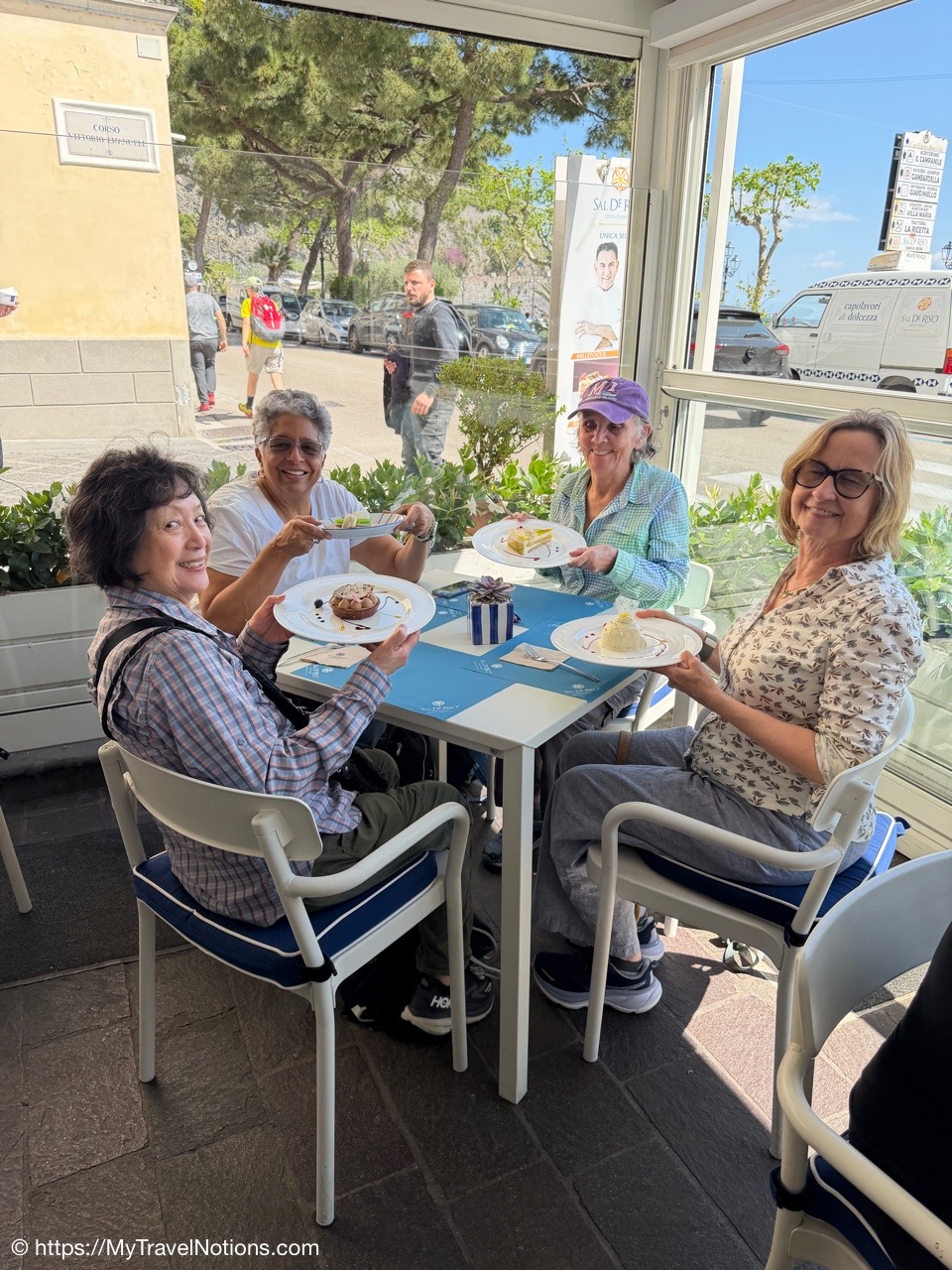
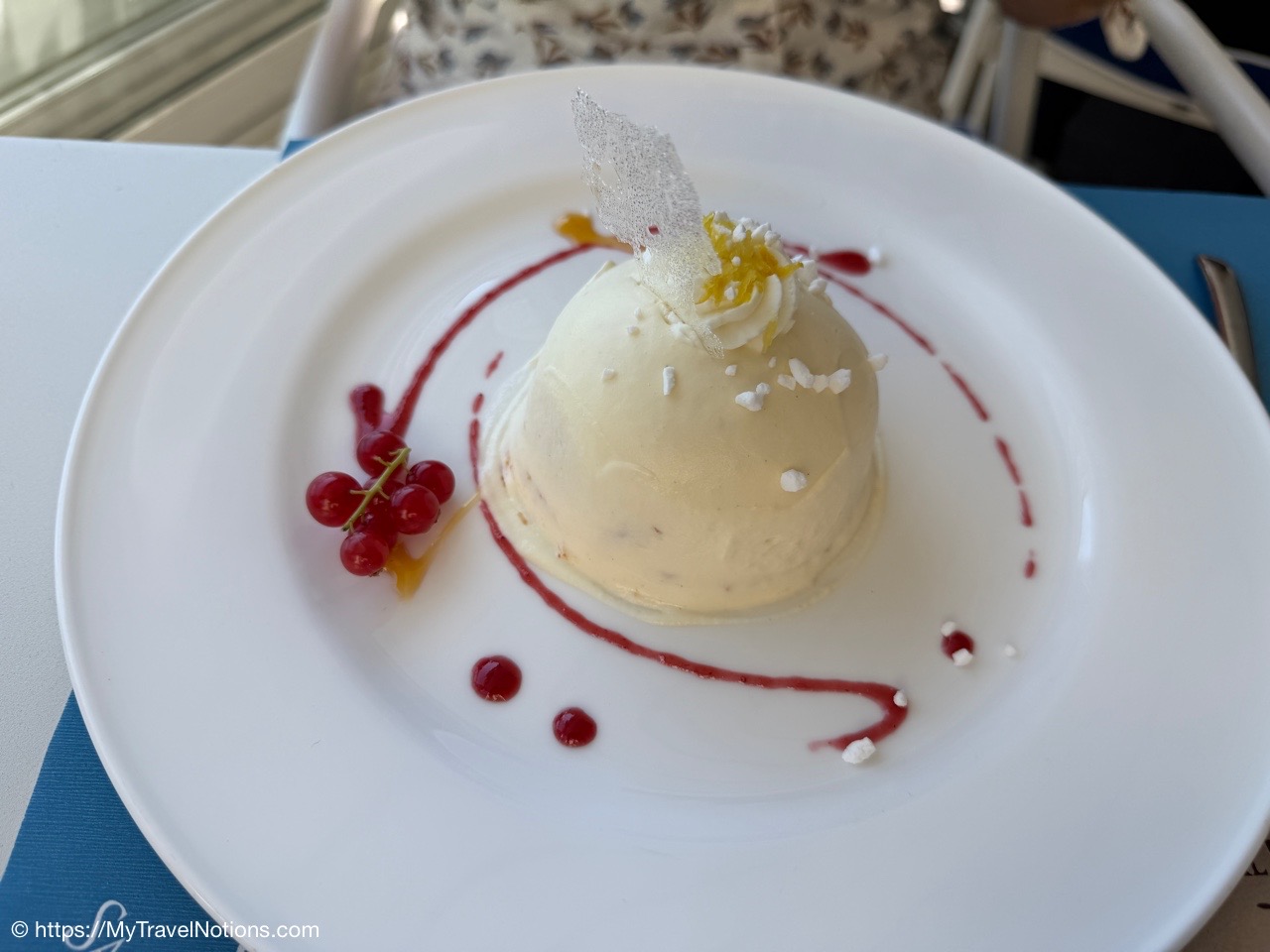
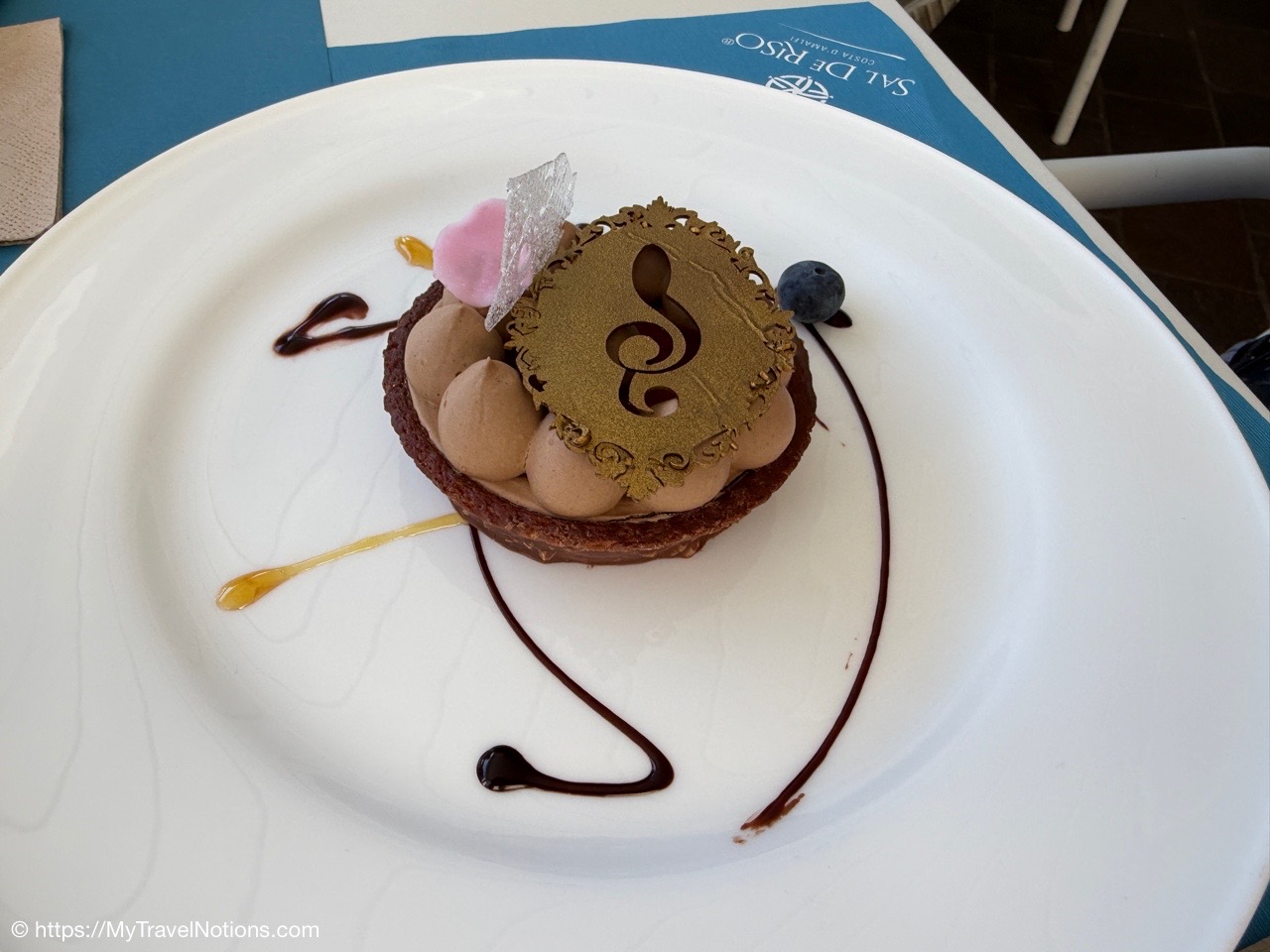
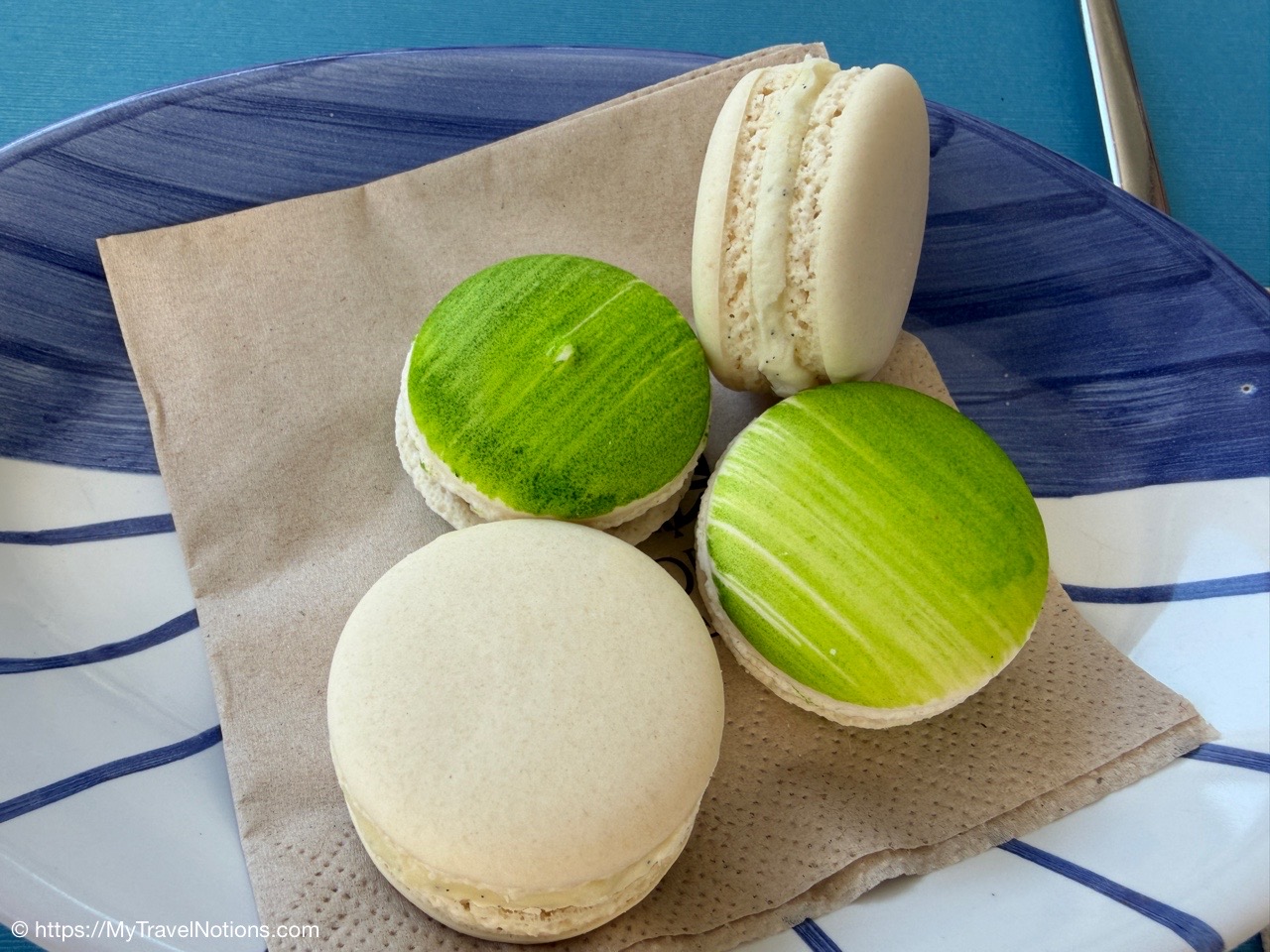
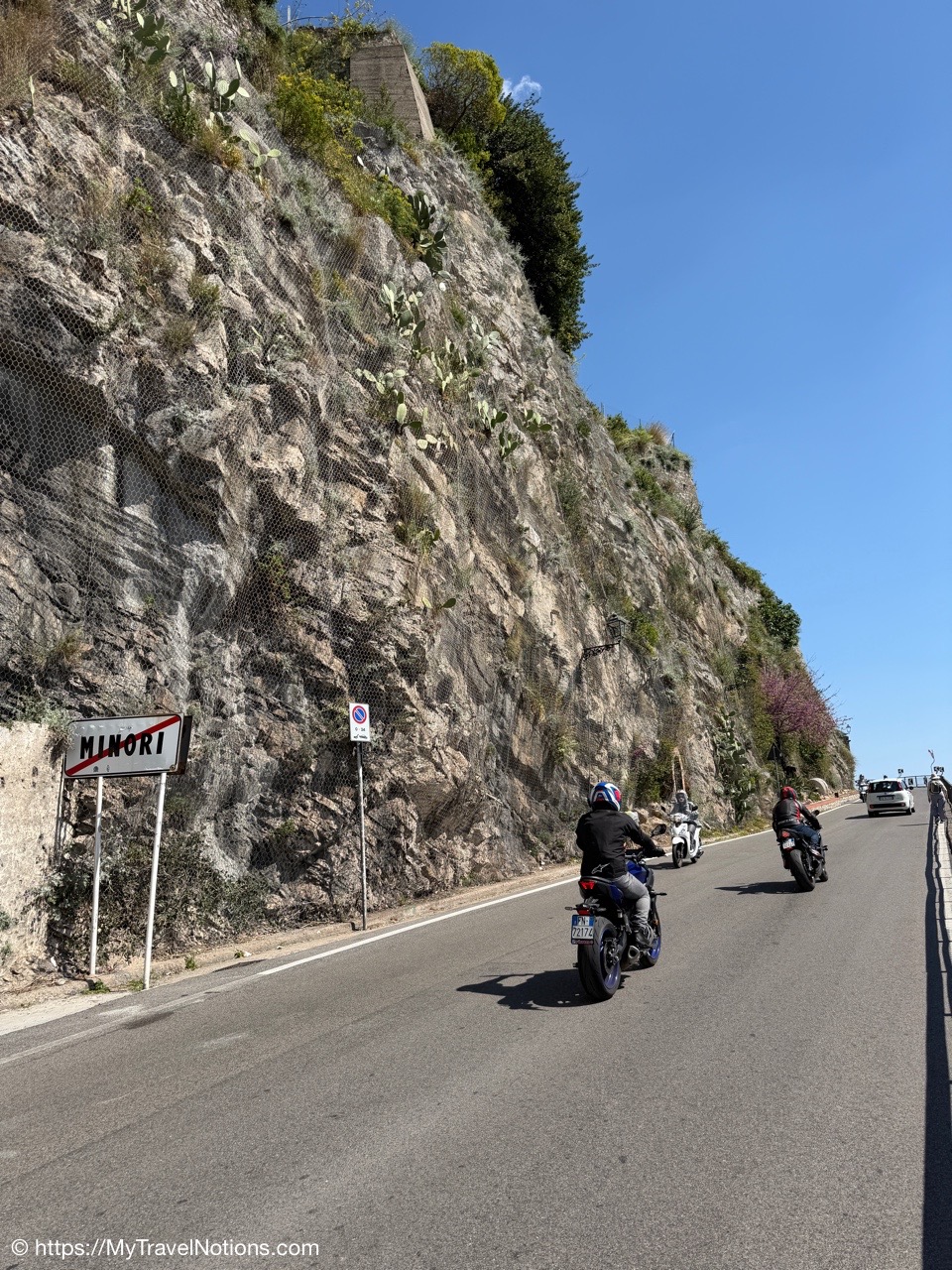
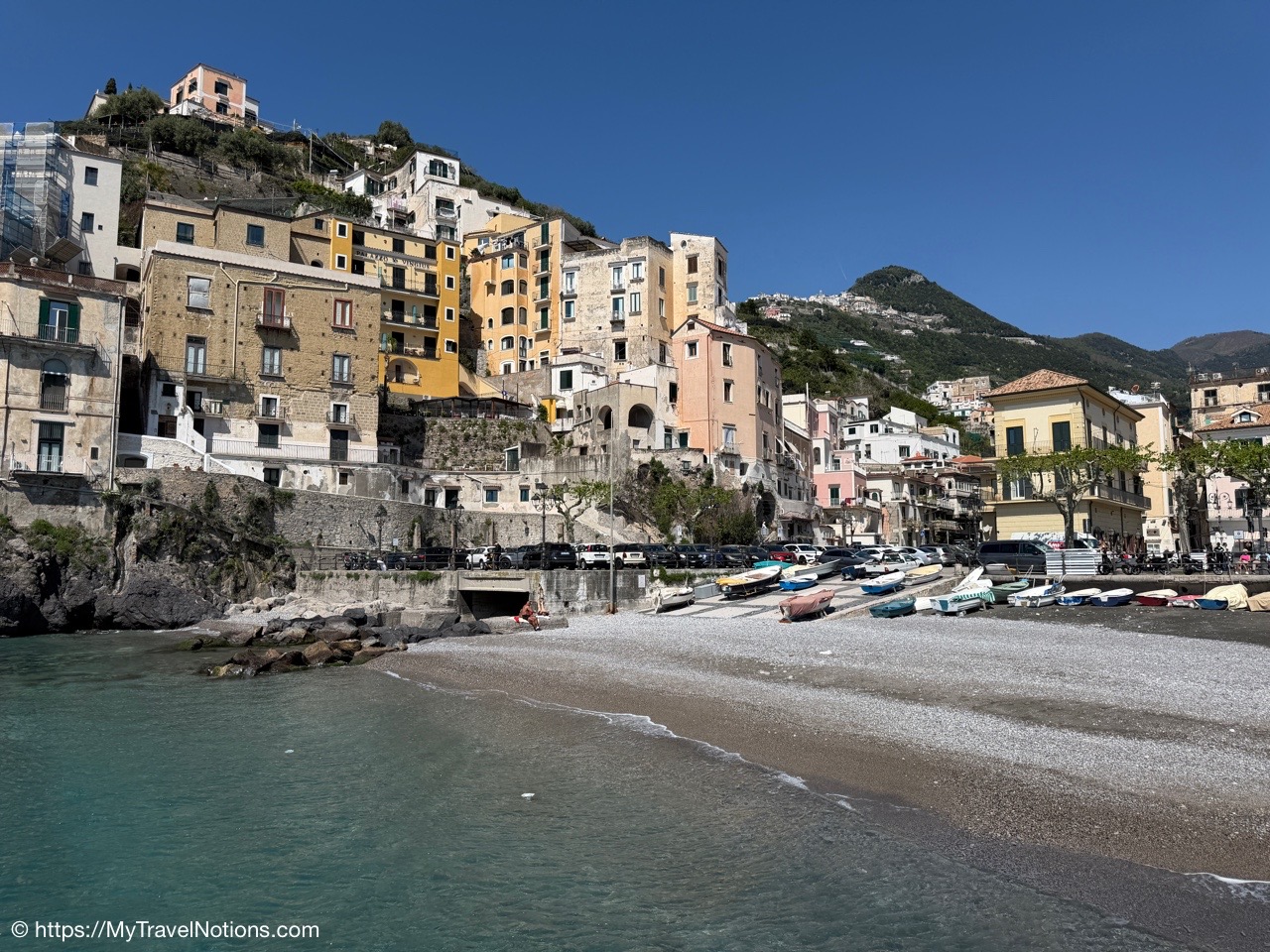
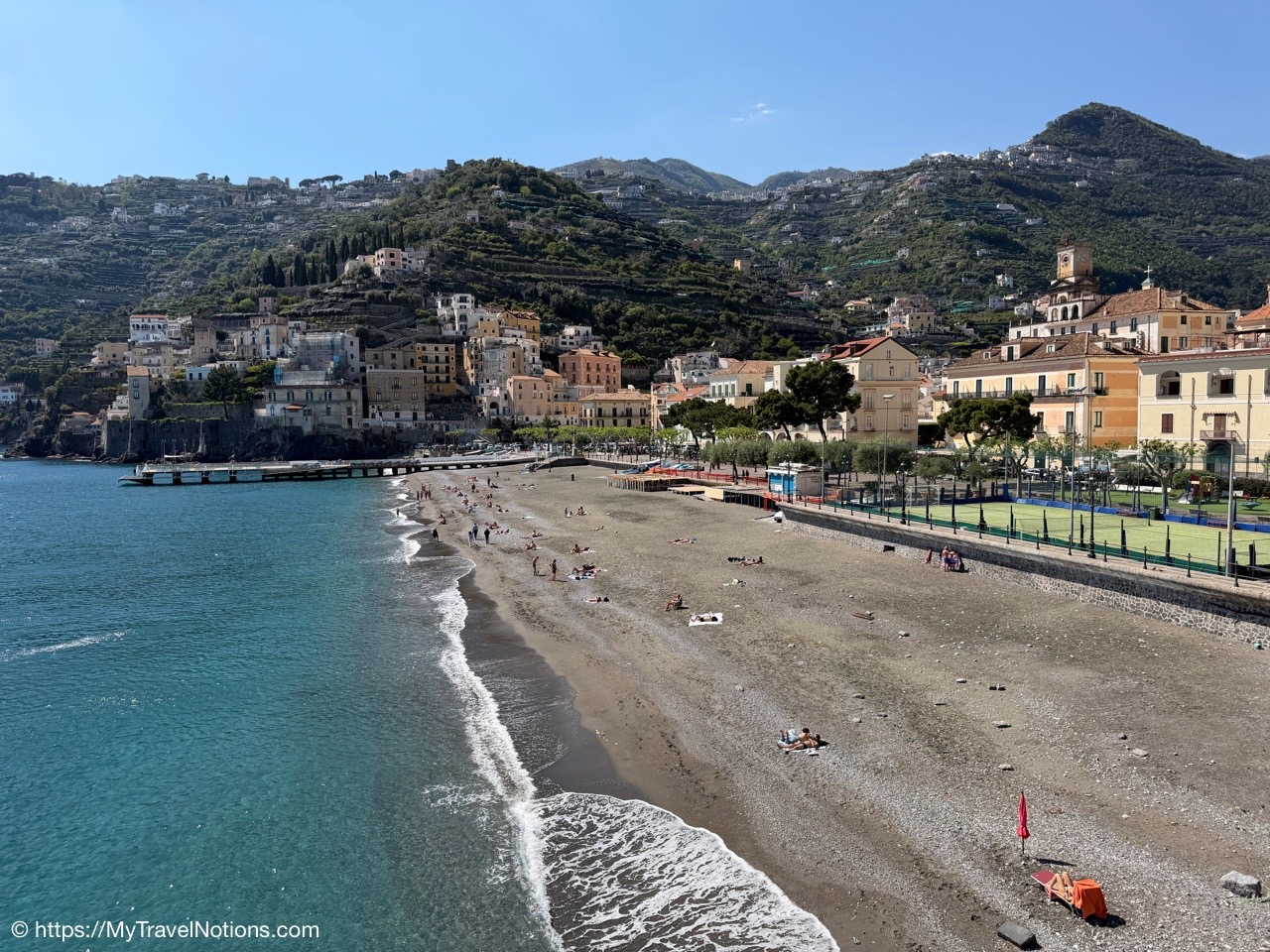
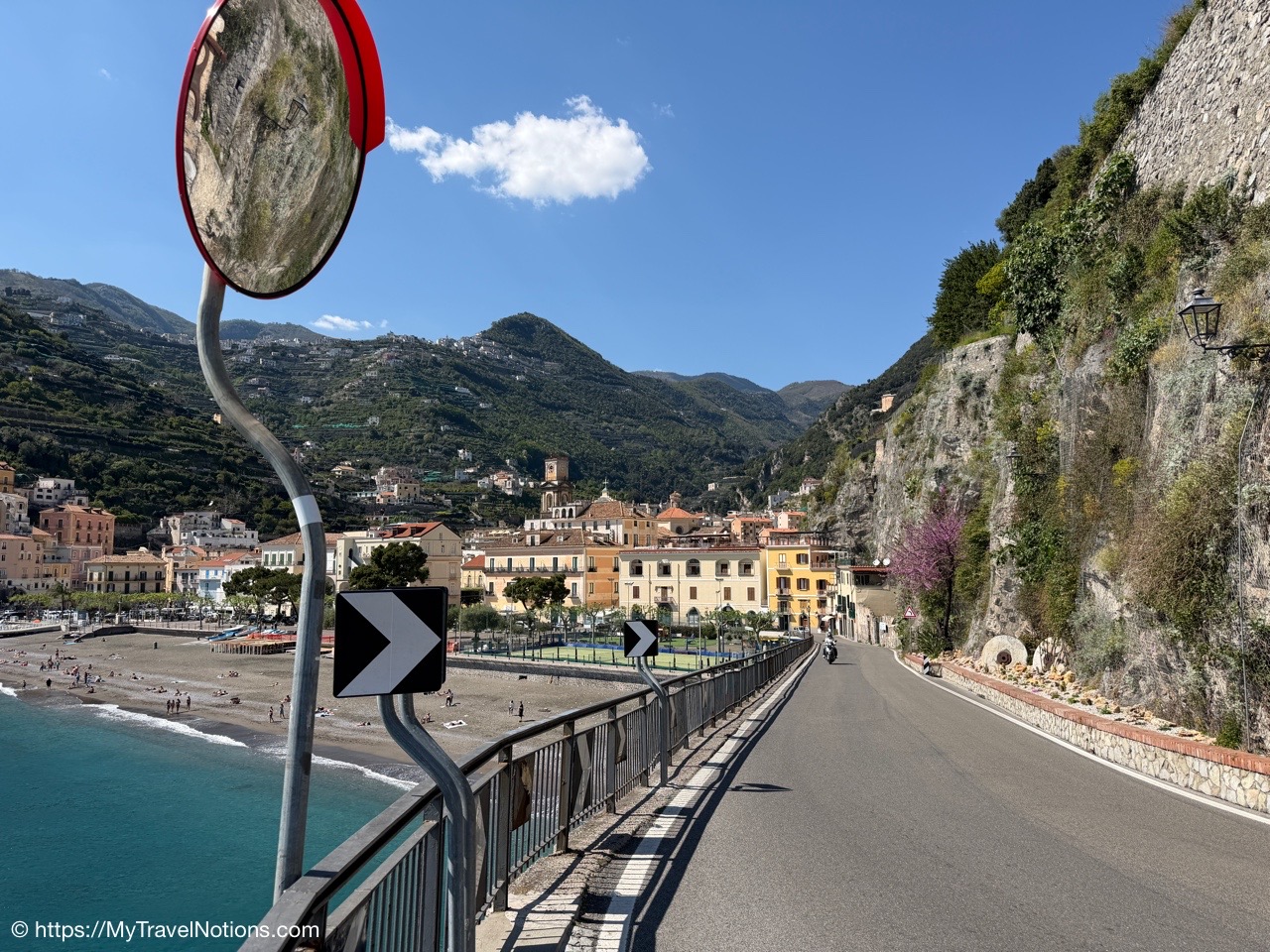
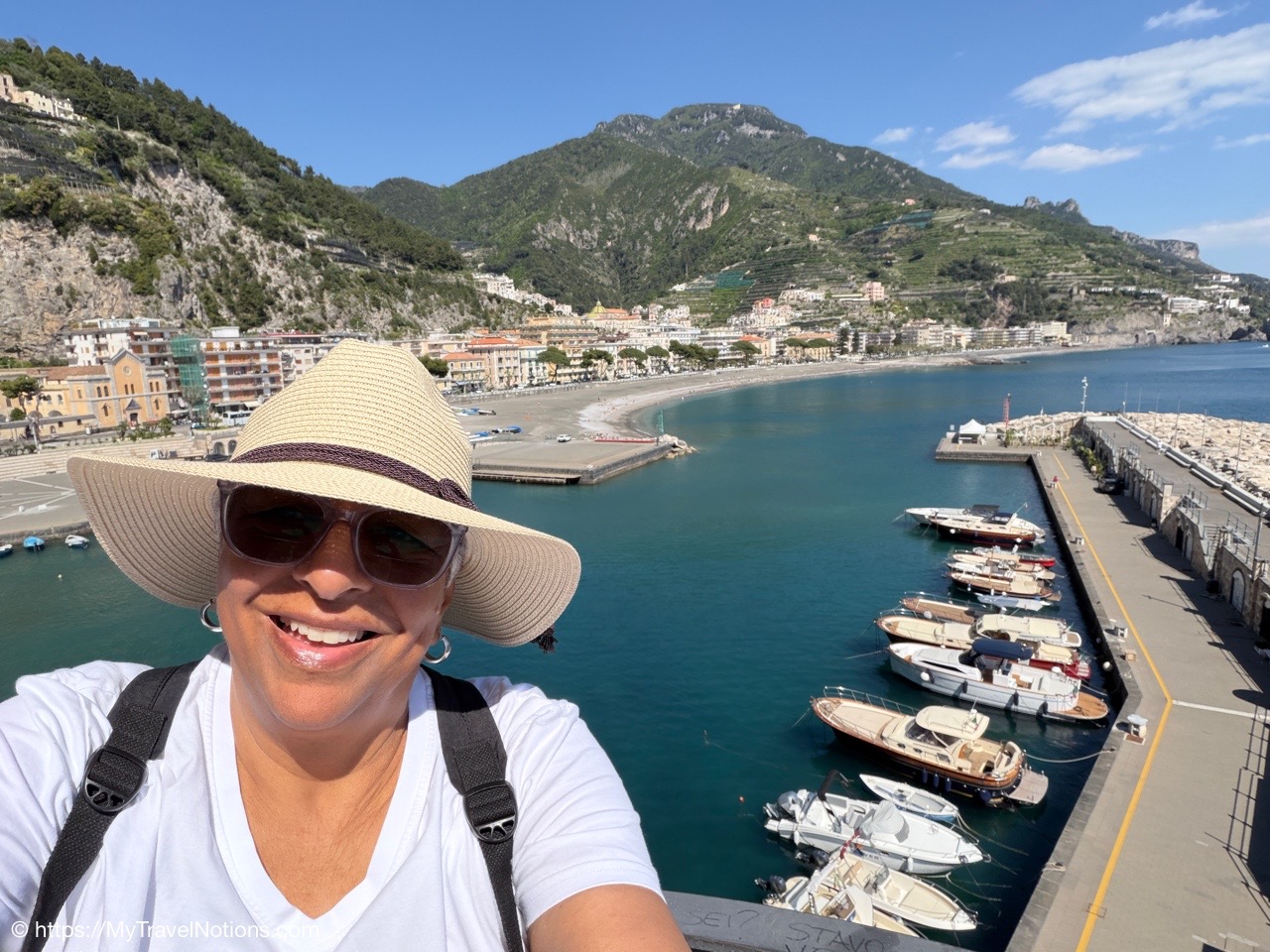
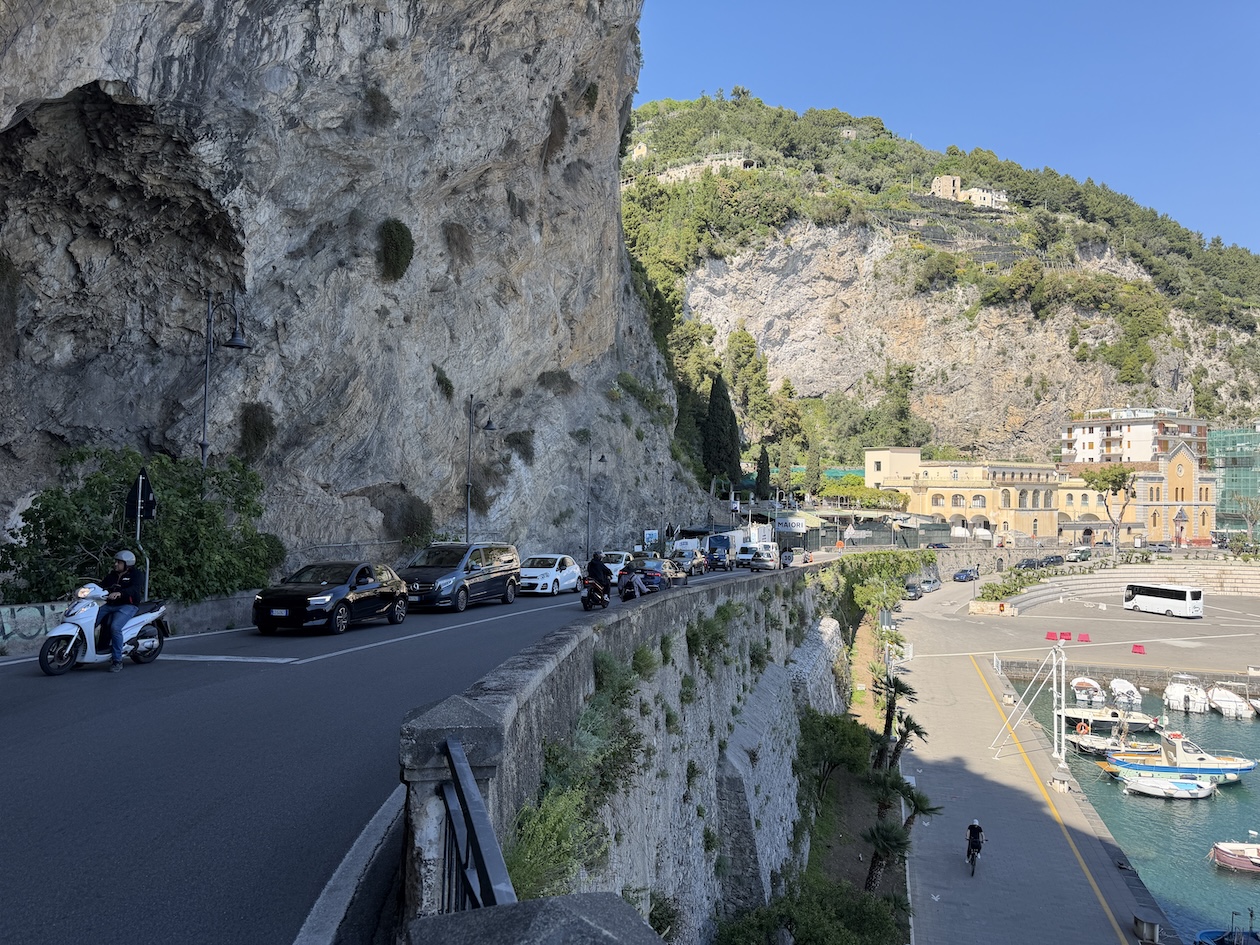
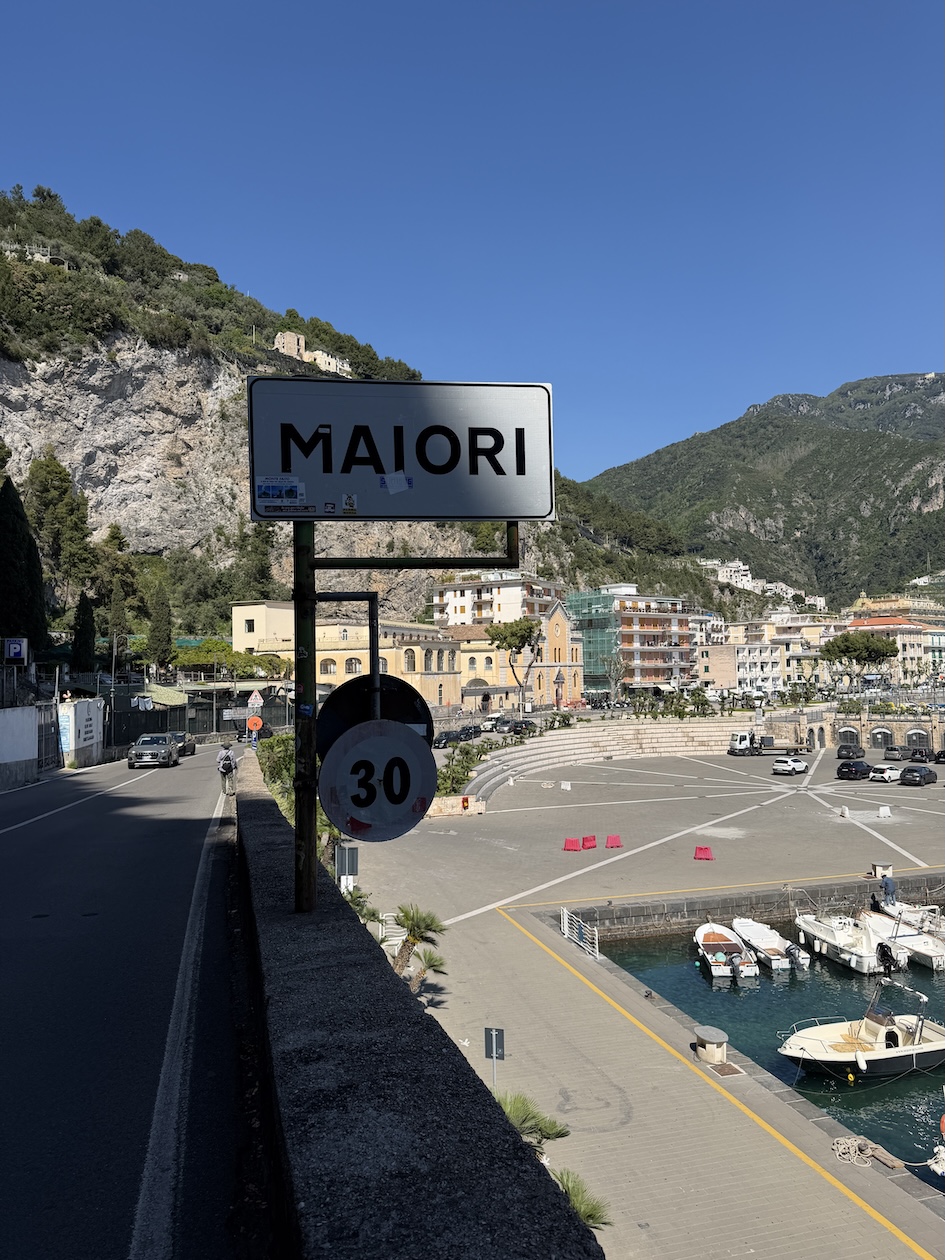
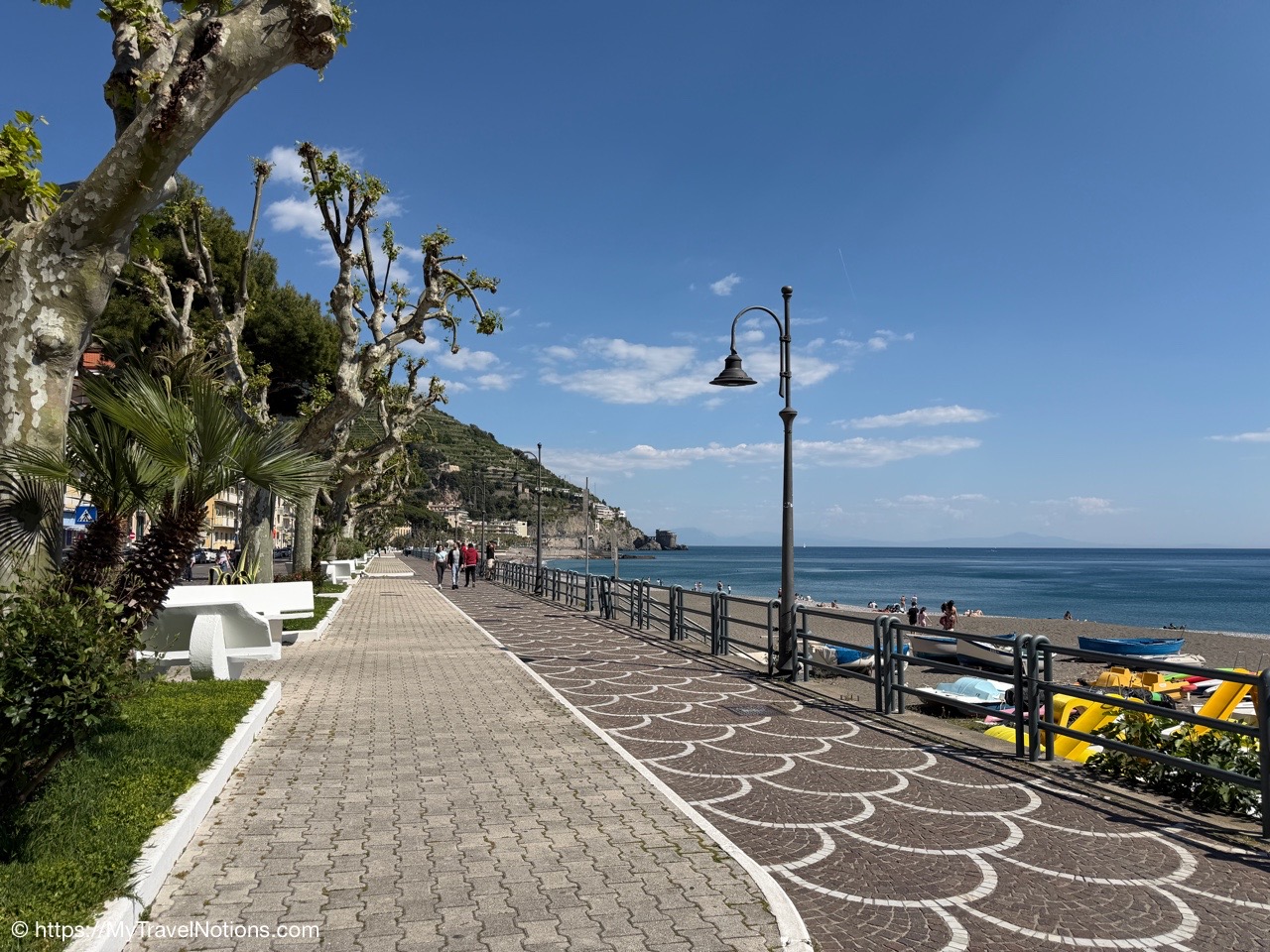
Good morning! At the Port of Salerno waiting for our ferry to arrive to take us to Minori where we’ll then walk to Maiori and come back to Salerno from there. (April 18, 2026)Boarding our ferry from Salerno to Minori. We figured out that sitting on the right side gets us the beautiful Amalfi Coast views. The ferries cost about 10 euros, about $11.76 USD. (April 18, 2026)Leaving Salerno for Minori, about a 50-minute ferry ride with three quick stops in between. The sea of the Amalfi Coast is the Tyrrhenian Sea, which is part of the Mediterranean Sea. Specifically, the coastline is located on the southern side of the Sorrentine Peninsula and runs along the Gulf of Salerno. (April 18, 2026)Views of Salerno along our Amalfi Coast ferry ride to Minori and the coastal roadway, the SS163 also known as Amalfi Drive which connects Sorrento to Salerno. (April 18, 2026)The first ferry stop along the Amalfi Coast on our way to Minori was here in Vietri sul Mare. (April 18, 2026)Myself, Rosie and Janet on our ferry ride along the Amalfi Coast from Salerno to Minori. (April 18, 2026)The first ferry stop along the Amalfi Coast on our way to Minori was here at Vietri sul Mare. (April 18, 2026)The second ferry stop along the Amalfi Coast on our way to Minori was here at Cetera. (April 18, 2026)The second ferry stop along the Amalfi Coast on our way to Minori was here in Cetera. (April 18, 2026)Approaching Maiori with its landscaped lemon grove terraces along the Amalfi Coast on our ferry boat ride to Minori. (April 18, 2026)The town of Maiori and the bridge we will walk on from Minori to get to Maiori. (April 18, 2026)Arrived in Minori, one of the 13 towns along the Amalfi Coast. That’s Alice, me, Janet and Rosie. (April 18, 2026)The main church in Minori on the Amalfi Coast is the Basilica di Santa Trofimena, a 18th-century Neoclassical church located near the seafront. Dedicated to the town’s patron saint, it features a light yellow facade, a Latin cross plan, and a crypt holding the saint’s relics. (April 18, 2026)The Basilica di Santa Trofimena, a 18th-century Neoclassical church located near the seafront in Minori. Dedicated to the town’s patron saint, it features a light yellow facade, a Latin cross plan, and a crypt holding the saint’s relics. (April 18, 2026)The 18th-century Neoclassical church located near the seafront in Minori, the Basilica di Santa Trofimena. (April 18, 2026)The high altar inside the Basilica di Santa Trofimena, an 18th-century Neoclassical church located near the seafront in Minori. (April 18, 2026)The limestone stairs behind the high altar of the Basilica di Santa Trofimena leads to the Crypt of Saint Trofimena, the patron saint and revered protector of Minori. She is believed to be a young Sicilian virgin-martyr from the 3rd or 4th century. (April 18, 2026)The Crypt of Saint Trofimena inside the Basilica di Santa Trofimena containing the remains of the patron saint and revered protector of Minori. She is believed to be a young Sicilian virgin-martyr from the 3rd or 4th century. (April 18, 2026)A close up of the Crypt of Saint Trofimena’s crypt, inside the Basilica di Santa Trofimena houses the alabaster urn containing her remains. She is considered the patron saint and revered protector of Minori and is believed to be a young Sicilian virgin-martyr from the 3rd or 4th century. (April 18, 2026)The beautiful brass Stations of the Cross inside the Basilica di Santa Trofimena in Minori. This is the First Station of the Cross, Jesus is Condemned to Death. (April 18, 2026)Views of Minori from the exterior staircase of the Basilica di Santa Trofimena, an 18th-century Neoclassical church located near the seafront. (April 18, 2026)Views of Minori. (April 18, 2026)Views of Minori. (April 18, 2026)Views of Minori. (April 18, 2026)Evidently, the Donkey is venerated in a variety of ceramics and is considered as the mascot of the Amalfi Coast. The Donkey has become the icon of hard work but also acts as the spirit of the people of the Amalfi Coast. (April 18, 2026)Views of Minori. (April 18, 2026)Views of Minori. (April 18, 2026)Having lunch at a restaurant in Minori. (April 18, 2026)Although my Scialatielli con frutti di mare or Scialatielli with seafood looks good, I was not impressed with the fish. It was rather tasteless. But the Scialatielli, the short thick pasta had a good taste to it. Evidently Scialatielli originated in the Amalfi Coast in the 1960s. Typically served with seafood, Scialatielli is made with flour, milk, and cheese. It’s a heavy tasting pasta, which was chewy but had a good taste to it. Fish, zero. Pasta, a 5 out of 10. (April 18, 2026)Thankfully, dessert saved the day. Sal de Riso in Minori is a world-renowned pastry shop, bistro, and restaurant located on the seafront (Via Roma, 80) founded by master pastry chef Salvatore De Riso. Each of us ordered our own pastries and my goodness, they were delicious. (April 18, 2026)Inside Sal de Riso in Minori is a world-renowned pastry shop, bistro, and restaurant located on the seafront (Via Roma, 80) founded by master pastry chef Salvatore De Riso. (April 18, 2026)Here we are with our pastries at Sal de Riso in Minori, world-renowned pastry shop, bistro, and restaurant located on the seafront (Via Roma, 80) founded by master pastry chef Salvatore De Riso. (April 18, 2026)Rosie had Mousse al Limone Della Costiari at the infamous pastry shop of Sal de Miso in Minori. (April 18, 2026)Janet had the yummy Delizia di Limone, Italian sponge cake filled with lemon cream, at the infamous pastry shop of Sal de Miso in Minori. (April 18, 2026)Alice had this little chocolate doozy Crostata al cioccolato at the infamous pastry shop of Sal de Miso in Minori. (April 18, 2026)And me, these might look like your regular macarons but these tasty bites were rich and packed a delicious punch. That Sal de Miso in Minori knows how to fix that sweet tooth. I had Vanilla and Pistachio and they were both yummy. (April 18, 2026)Views of Minori. (April 18, 2026)Views of Minori. (April 18, 2026)Views of Minori. (April 18, 2026)Ready to walk to Maiori, along Amalfi Drive, SS163 coastal road, to see a little of the town and take the ferry back Salerno. While the Path of the Lemons is more scenic, this seaside route is significantly shorter and avoids the steep stairs. (April 18, 2026)The fastest way to walk between Minori and Maiori is this Amalfi Drive, SS163 coastal road, with the motorcycles and cars. (April 18, 2026)Views of Minori. (April 18, 2026)The beautiful views of Minori and its turquoise beach as I made my way up the bridge Amalfi Drive, SS163 coastal road, to Maiori. (April 18, 2026)The fastest way to walk between Minori and Maiori is this Amalfi Drive, SS163 coastal road, with the motorcycles and cars. But oh my, the views, that’s Minori. (April 18, 2026)Me on the small walking area up the bridge of Amalfi Drive, SS163 coastal road, from Minori to Maiori. That’s Minori in the distance. Thanks Alice for the photo. (April 18, 2026)Views of the Amalfi coastline as we walked across the Amalfi Drive bridge, SS163 coastal road, from Minori to Maiori. (April 18, 2026)Sharing the Amalfi Drive bridge with motorcycles and cars as we walked from Minori to Maiori. (April 18, 2026)Views of Maiori, with its long turquoise beach. along the Amalfi Coast. (April 18, 2026)Views of Maiori’s beach and port areas. Me, with my newly purchased 20 euro hat from Minori. (April 18, 2026)Continuing our walk into Maiori from Minori. (April 18, 2026)Continuing our walk into Maiori from Minori. (April 18, 2026)Walking through Maiori’s beautiful boardwalk. (April 18, 2026)Walking through Maiori’s beautiful boardwalk. (April 18, 2026)Janet, ahead of me, as we climb the stairs up to Mount Torina, to see the collegiate church of Santa Maria a Mare in Maiori and the views. (April 18, 2026)Well Janet and I made to the top of the hill for these lemon grove terraced views at Mount Torina in Maiori. (April 18, 2026)The lemon grove terraces and views at Mount Torina Maiori in Maiori. (April 18, 2026)The lemon grove terraces and views at Mount Torina Maiori in Maiori. (April 18, 2026)The lemon grove terraces and views at Mount Torina Maiori in Maiori. (April 18, 2026)At first, the door to the collegiate church of Santa Maria a Mare in Maiori, was closed but just as we were about to leave and head back down, the door was opened. (April 18, 2026)Inside the collegiate church of Santa Maria a Mare in Maiori at the top of Mount Torina was founded in the 13th century after a statue of the Virgin Mary was found on the beach in 1204. (April 18, 2026)A close-up of the altar inside the collegiate church of Santa Maria a Mare in Maiori was founded in the 13th century after a statue of the Virgin Mary was found on the beach in 1204. (April 18, 2026)Walking to the Maiori port for our ferry ride back to our home base of Salerno. That’s the Mezzacapo Castle at the top of the hill. Placed on a rocky spur overlooking the sea, it was built at the end of the 19th century. (April 18, 2026)Walking to the Port of Maiori to catch our ferry back to Salerno. (April 18, 2026)Here’s our ride back to Salerno from Maiori. (April 18, 2026)Since I did not enjoy lunch, I decided I needed to at least enjoy lunch…and I did. Delicious wings with rich and vegetables at Ichiraku Ramen, just a few steps away from my B&B in Salerno. (April 18, 2026)
The Town of Salerno, Our Home Base
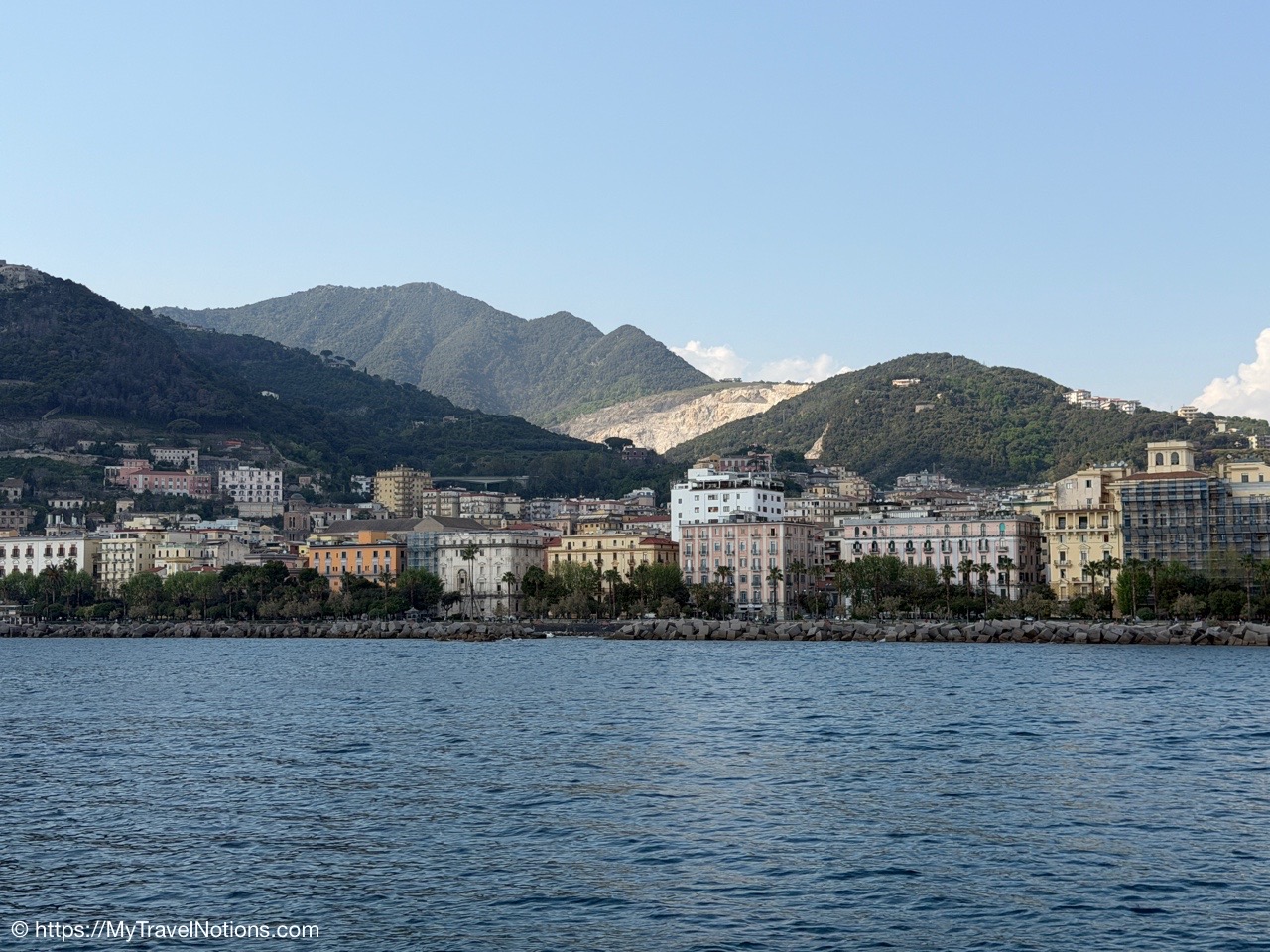
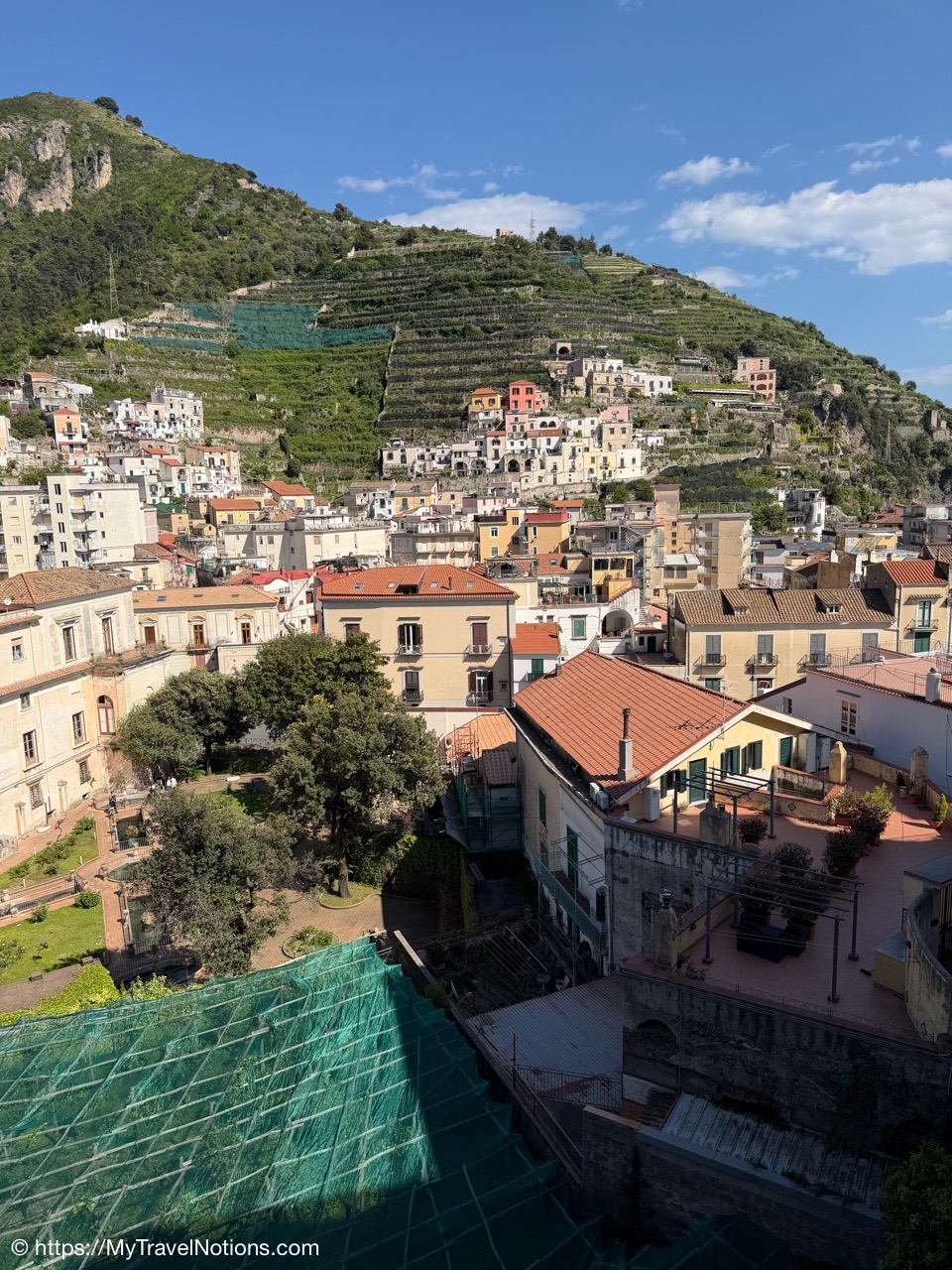
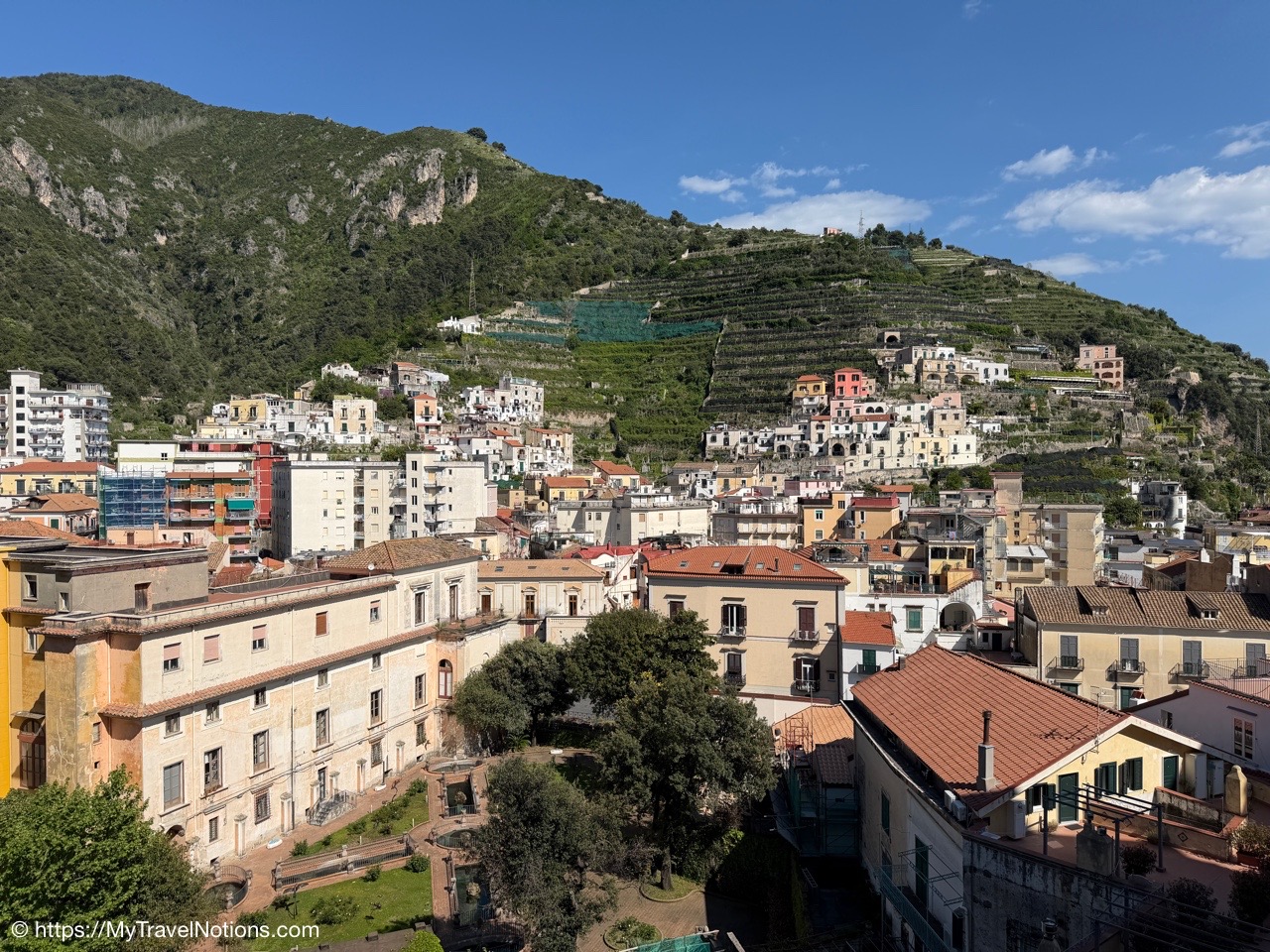
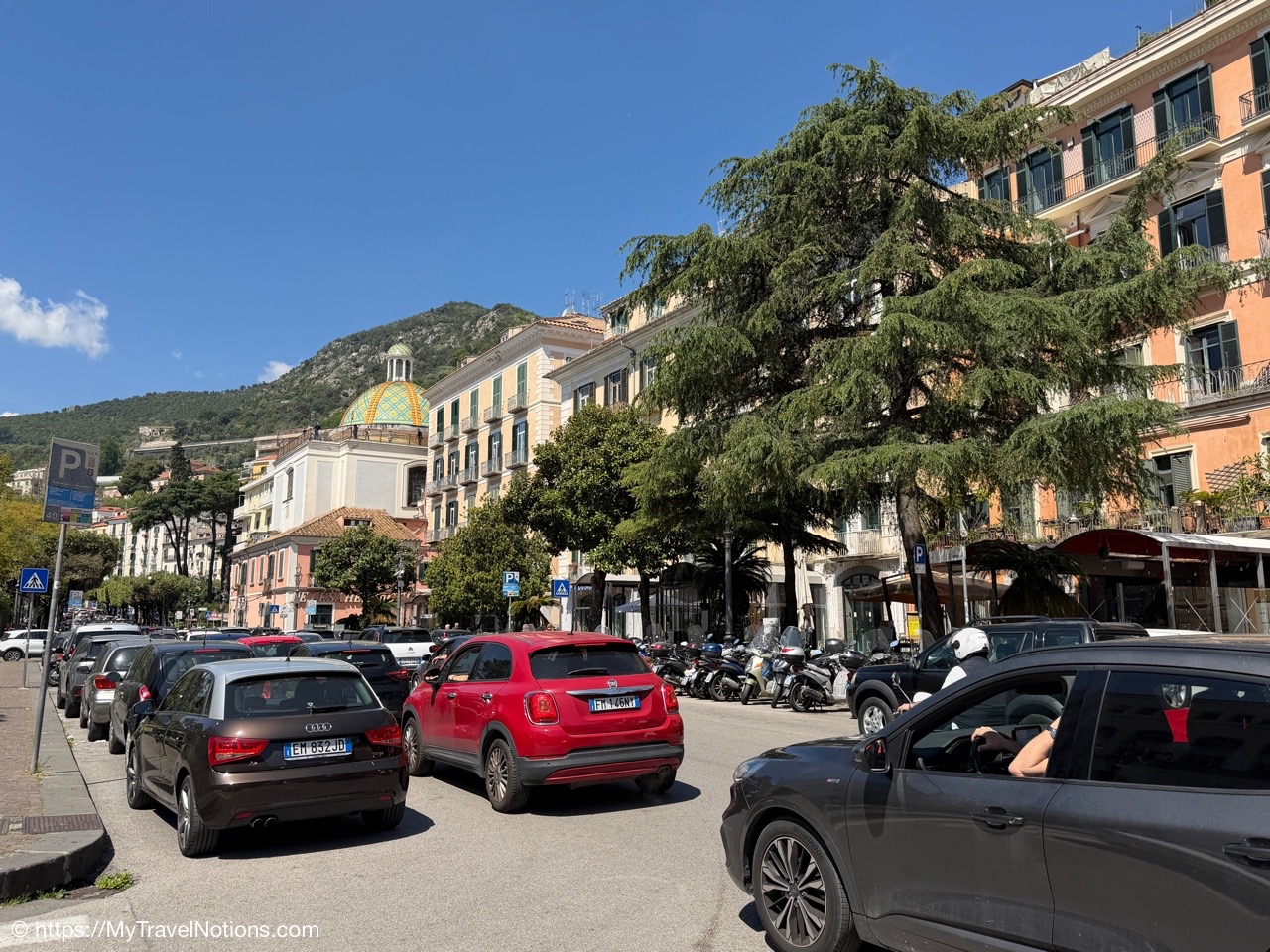
Staying in Salerno, located at the eastern end of the Amalfi Coast, has given us a comfortable, not as touristy home base that’s also within ferry or train ride distance of a variety of towns along the Amalfi Coast.
Plus, the city itself just has a comfortable ease to it. And, even though we’ve been busy enjoying day trips elsewhere, I still had time to explore Salerno.
A vibrant port city, on the Tyrrhenian Sea, Salerno has a rich history spanning from ancient times through the Middle Ages to World War II. Originally an Etruscan settlement, it officially became the Roman colony of Salernum in 197 BC, serving as a strategic military and trading outpost.
Come explore some of Salerno’s sights with me.
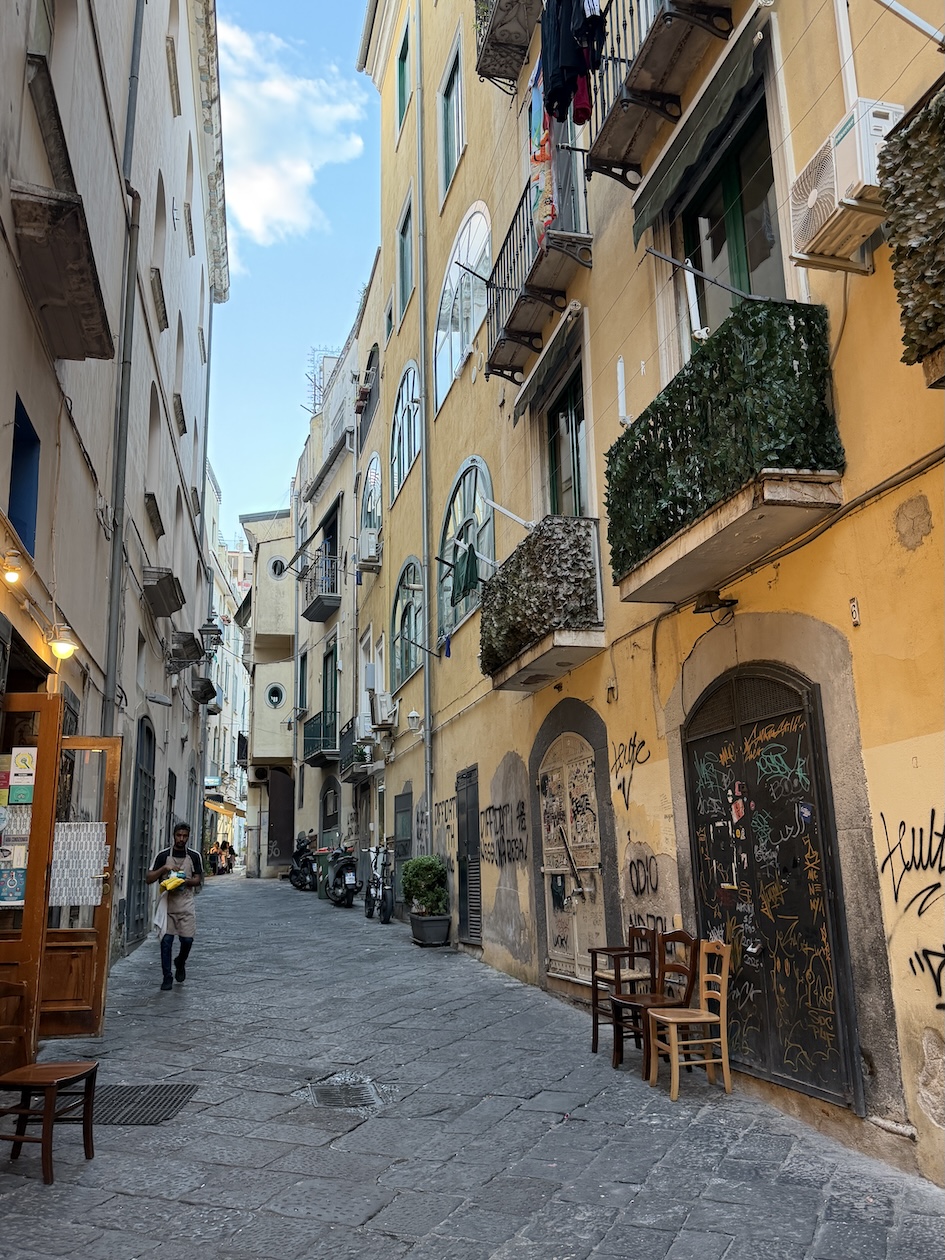
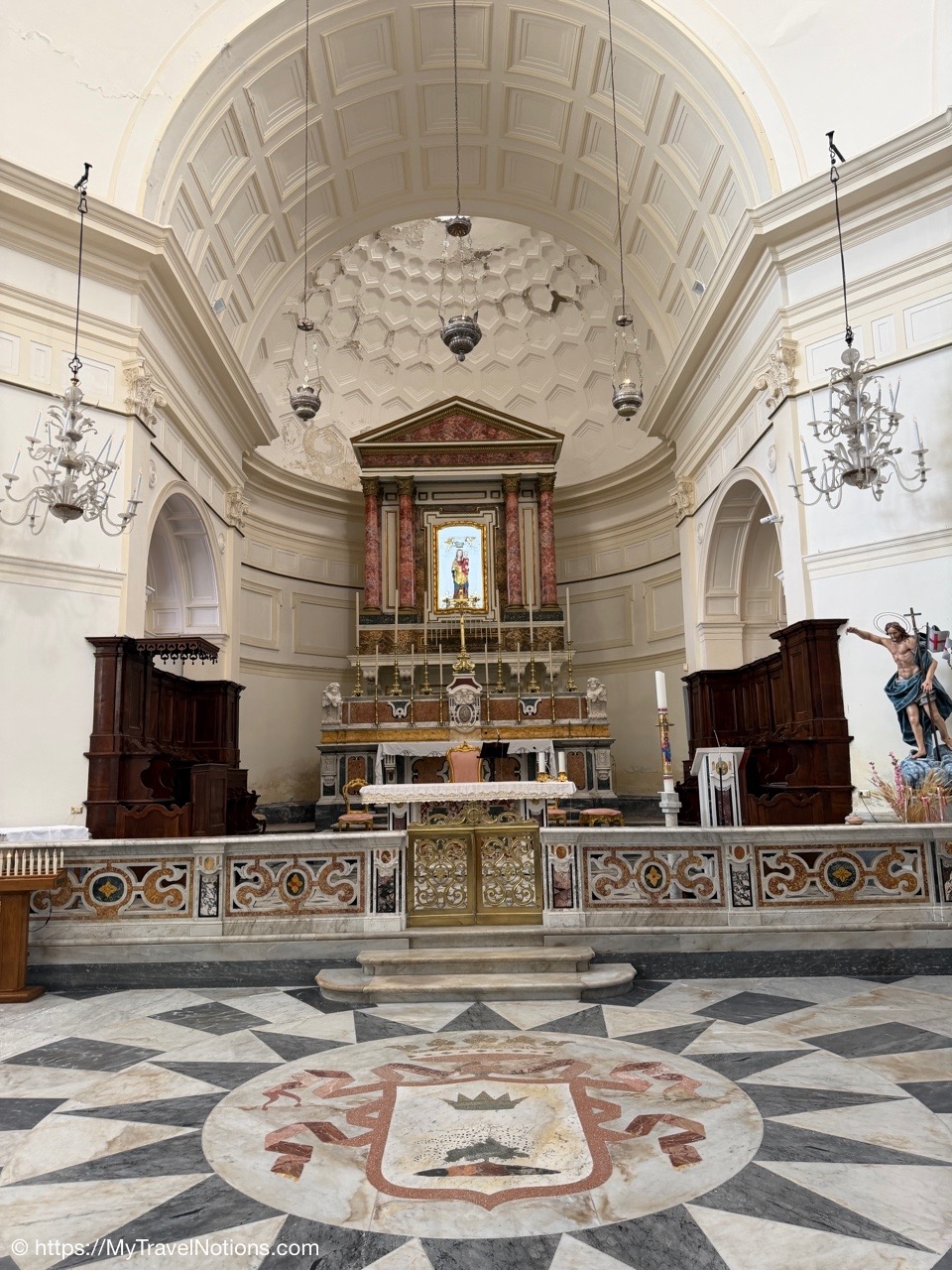
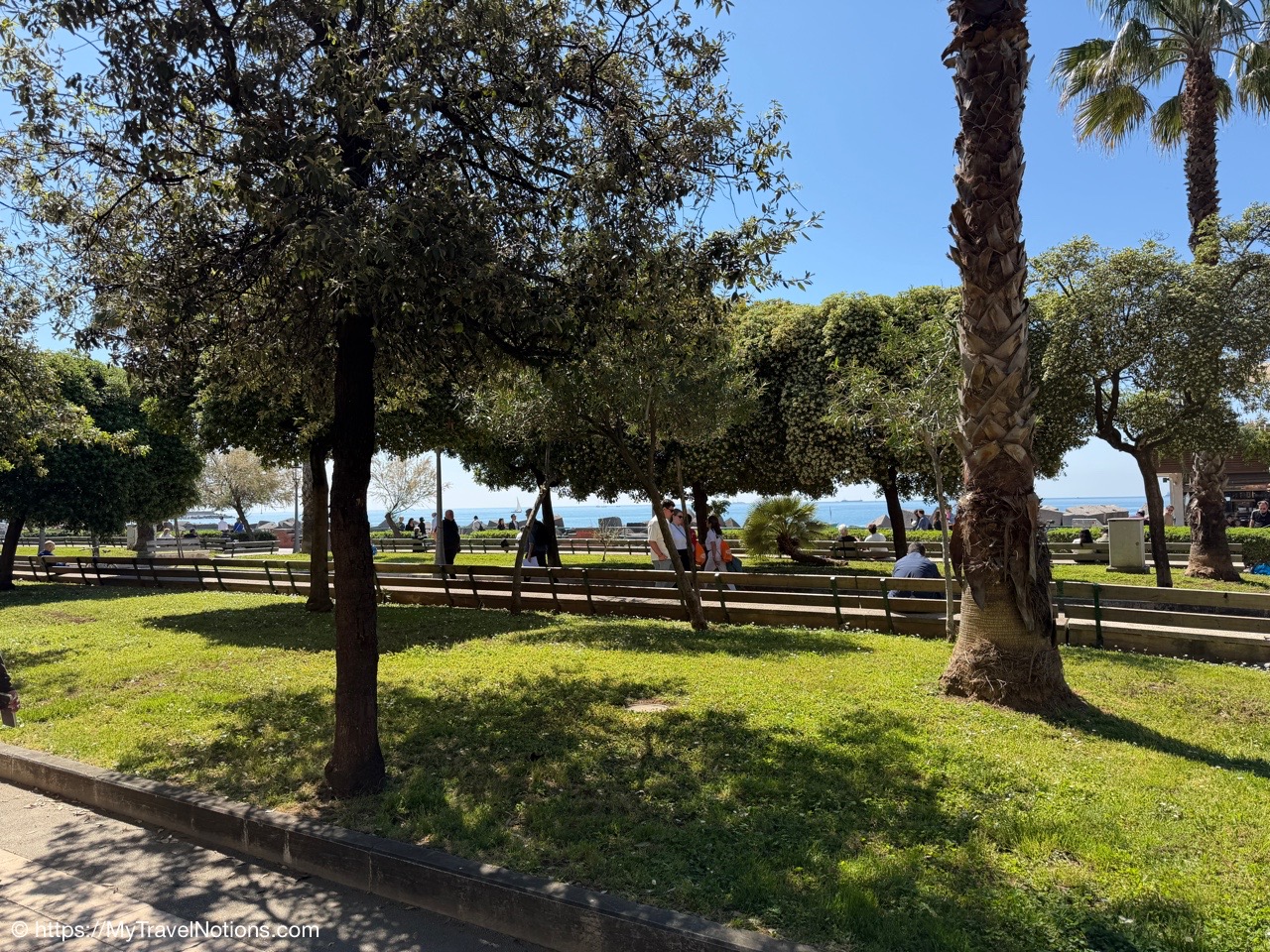
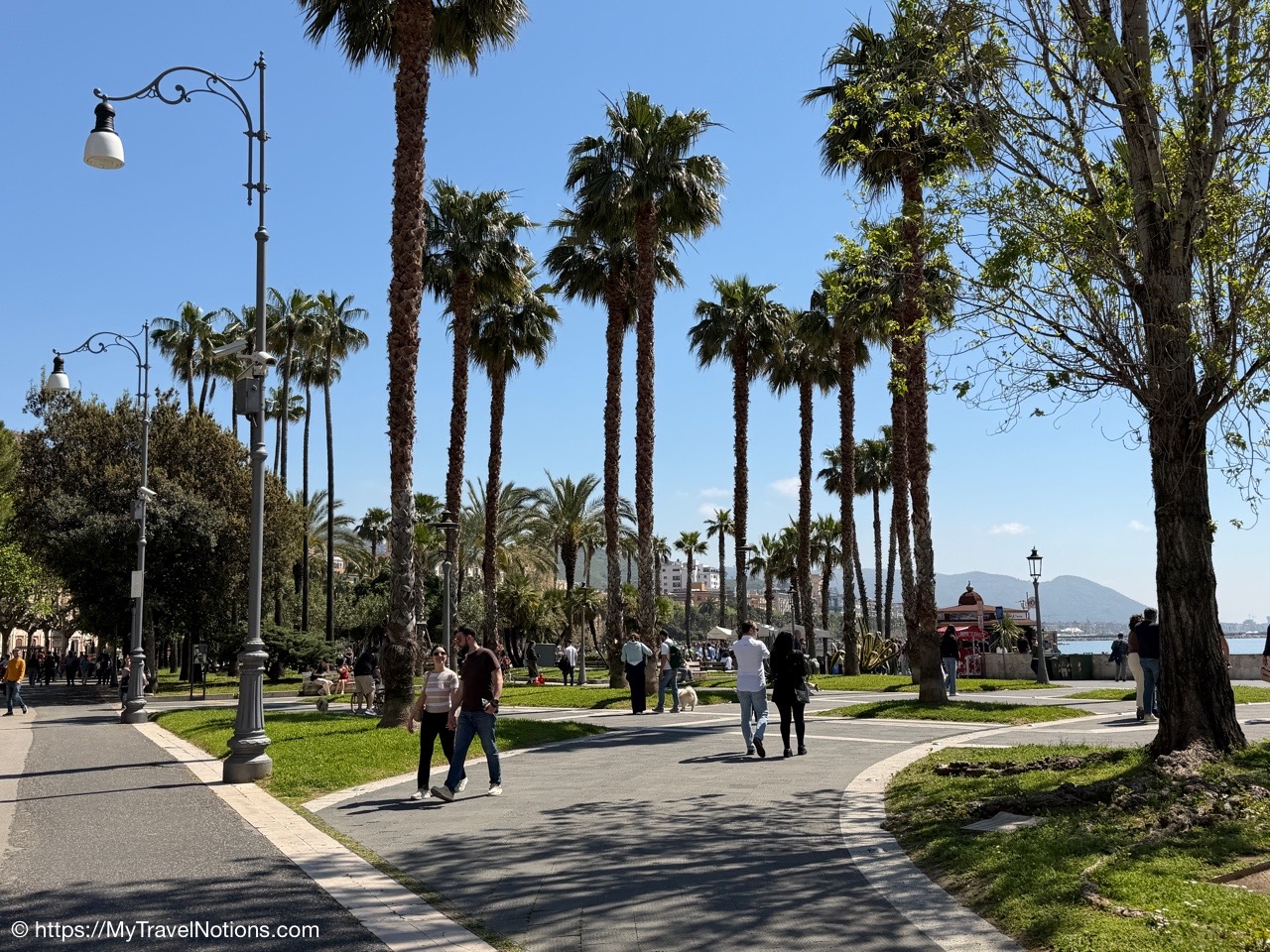
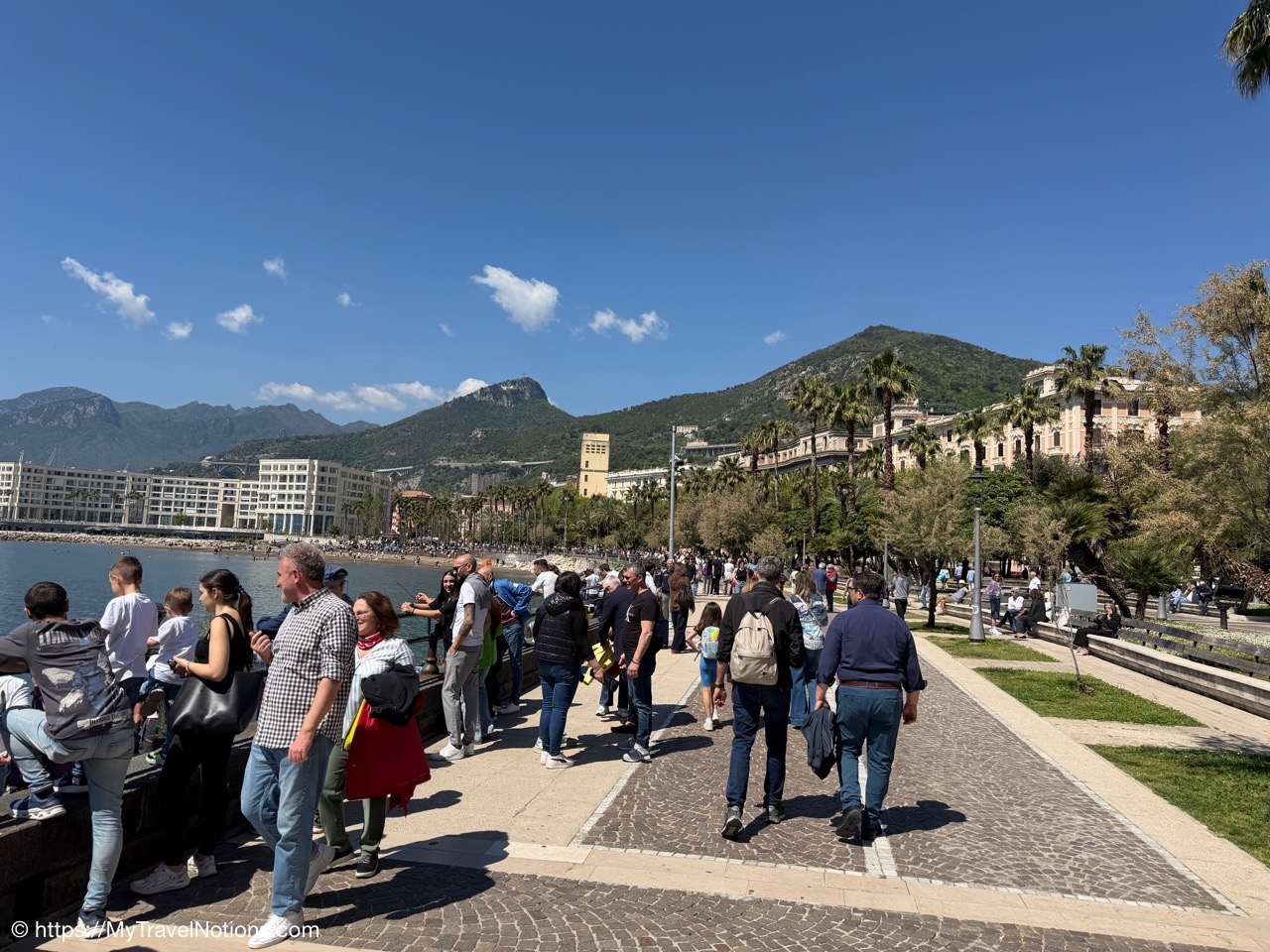
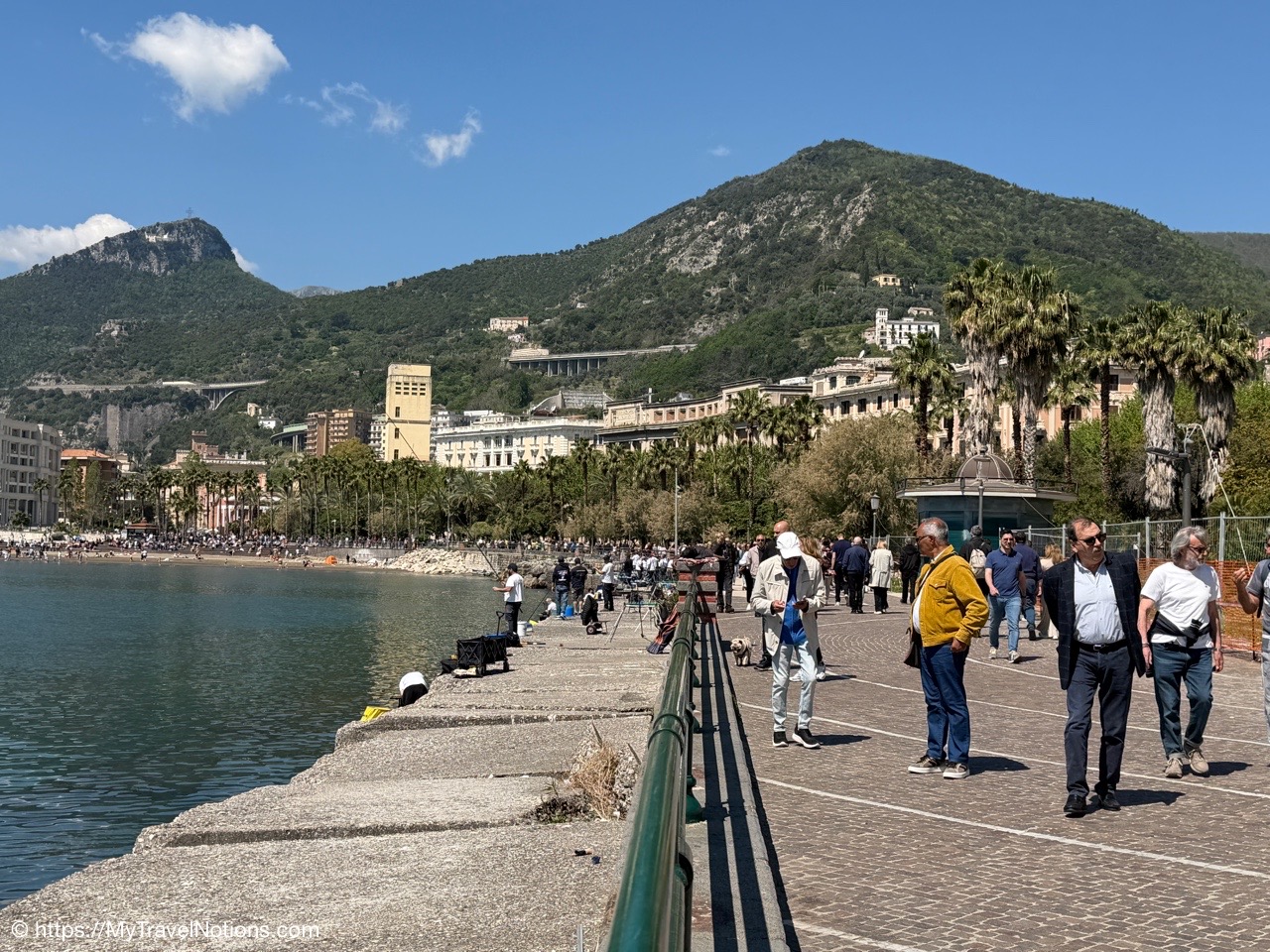
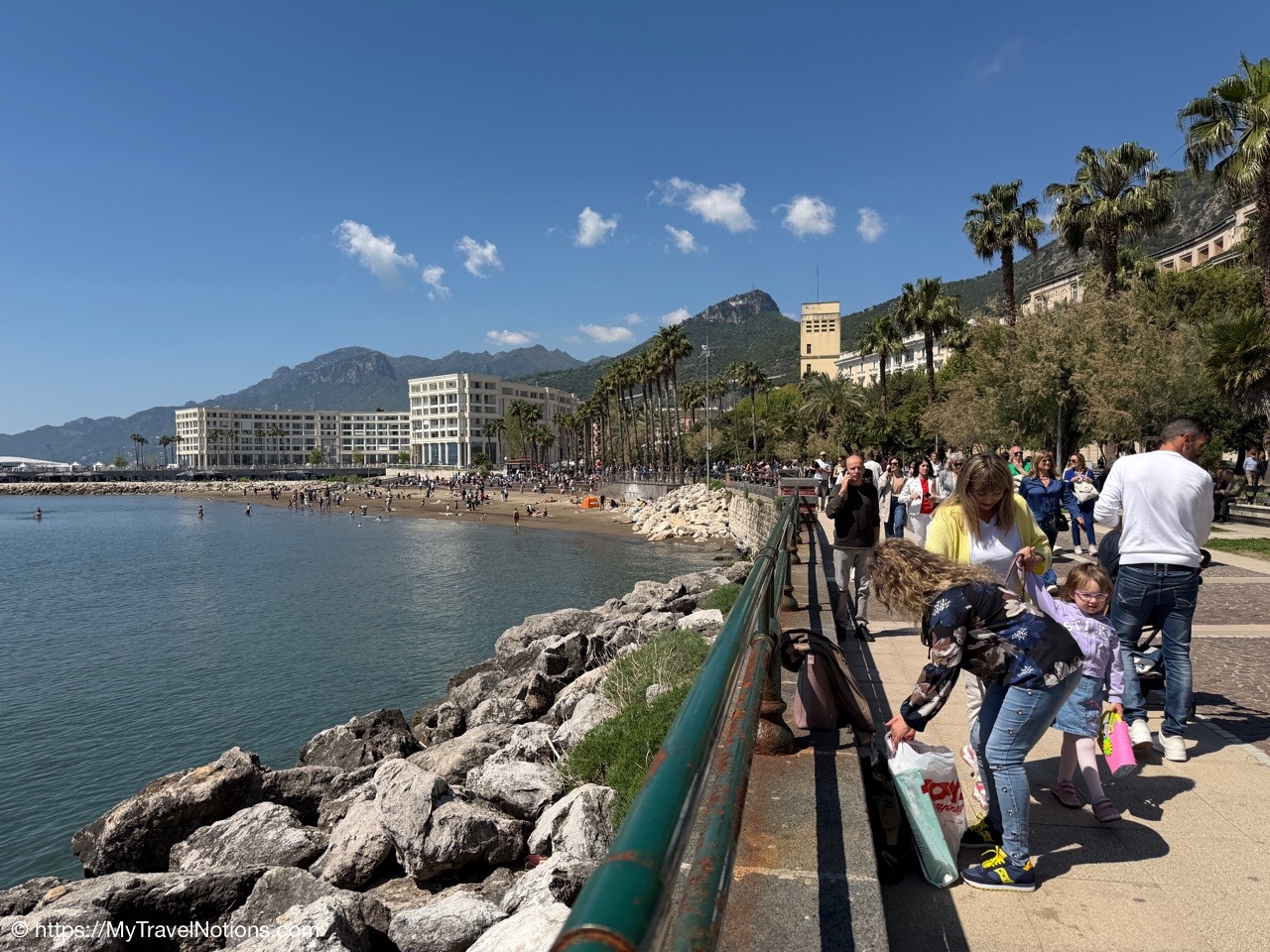
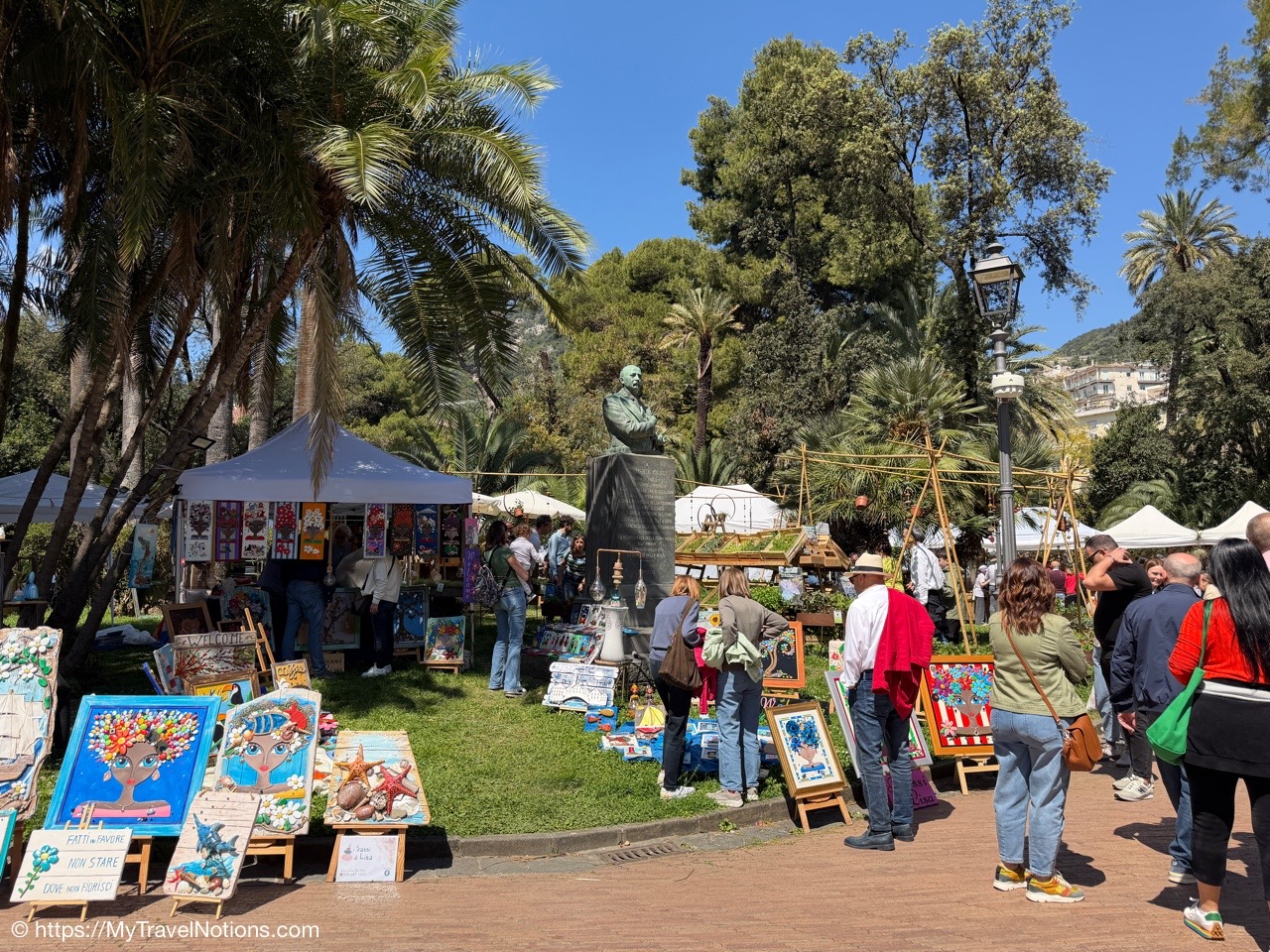
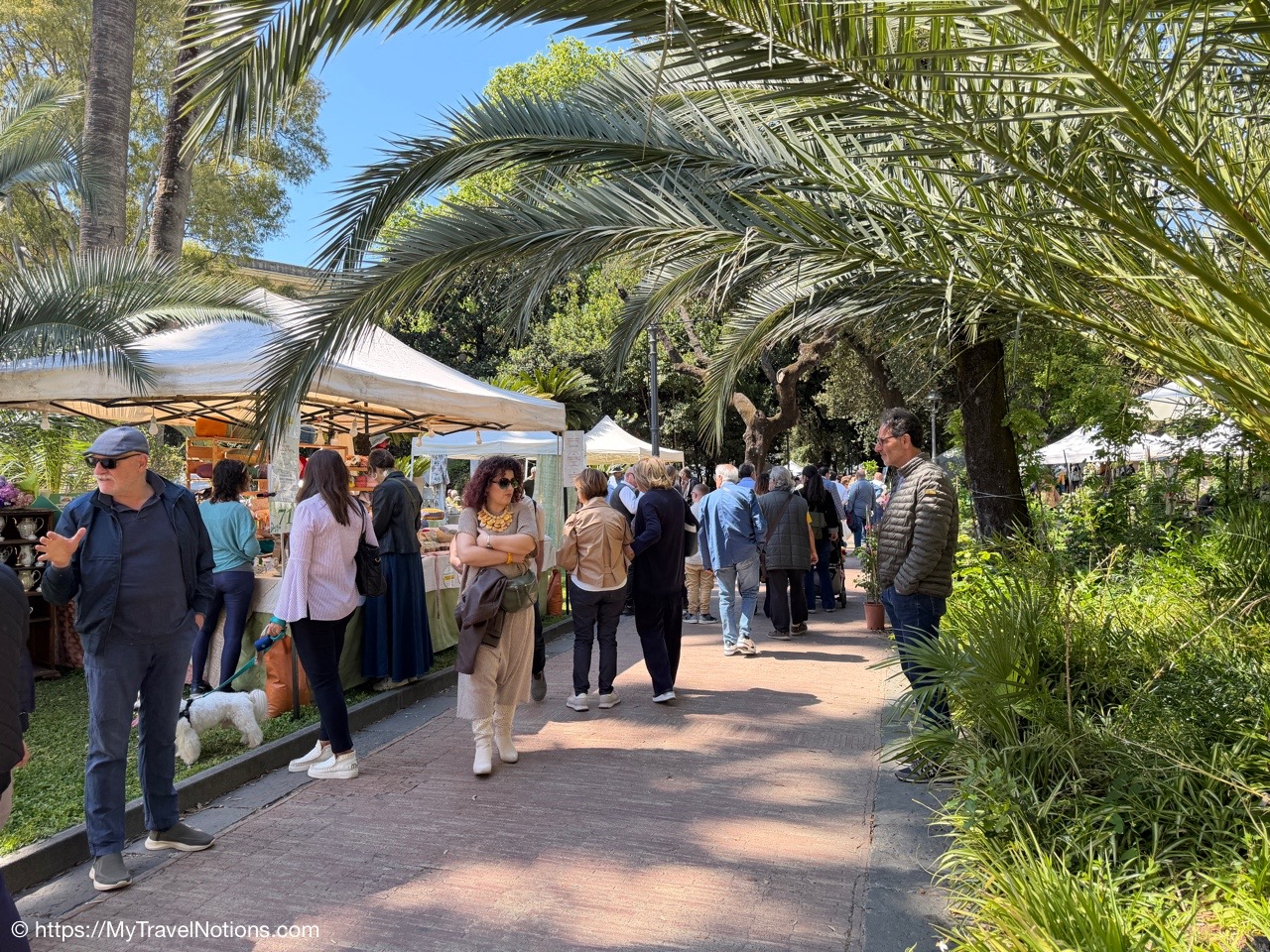
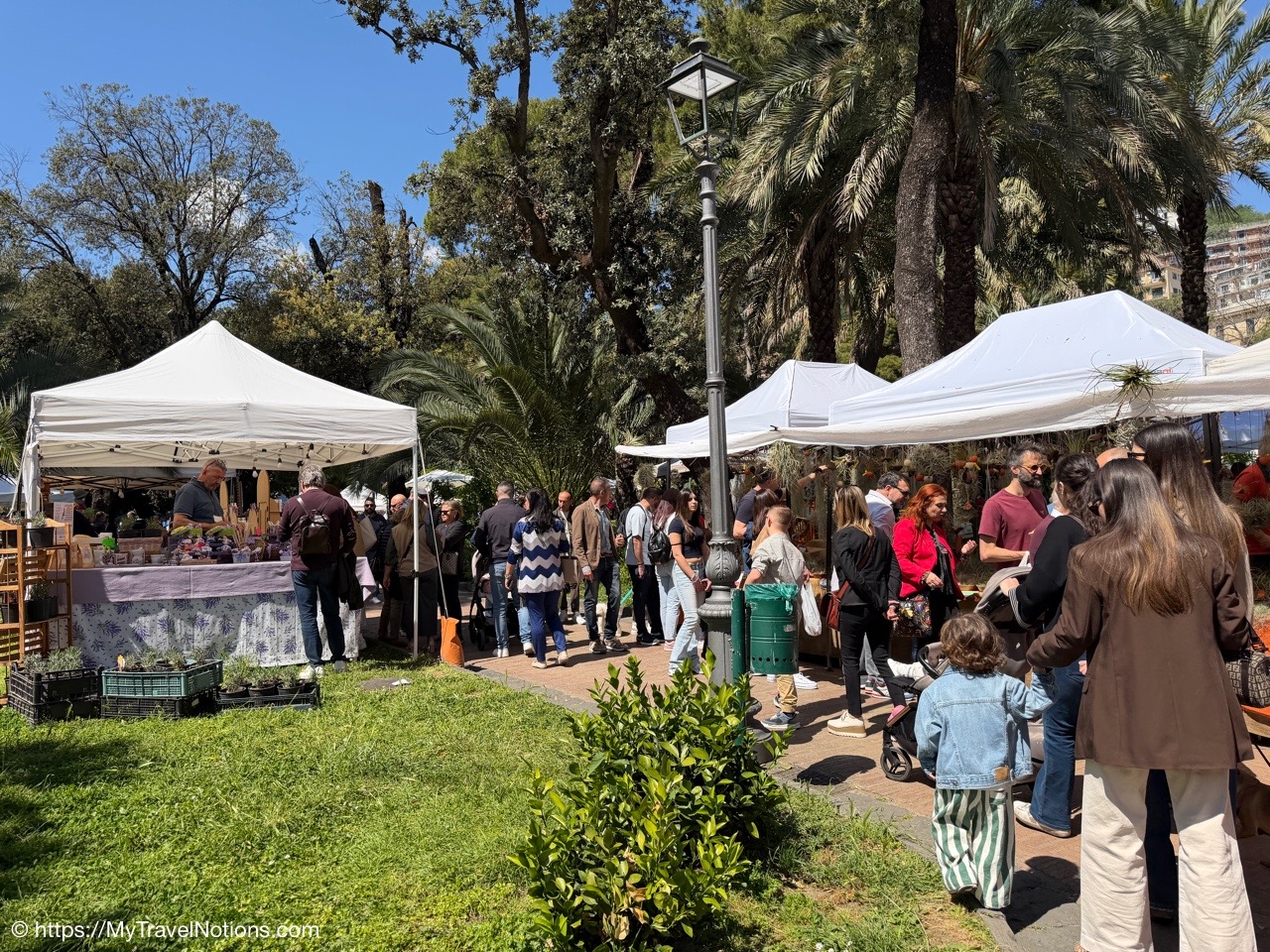
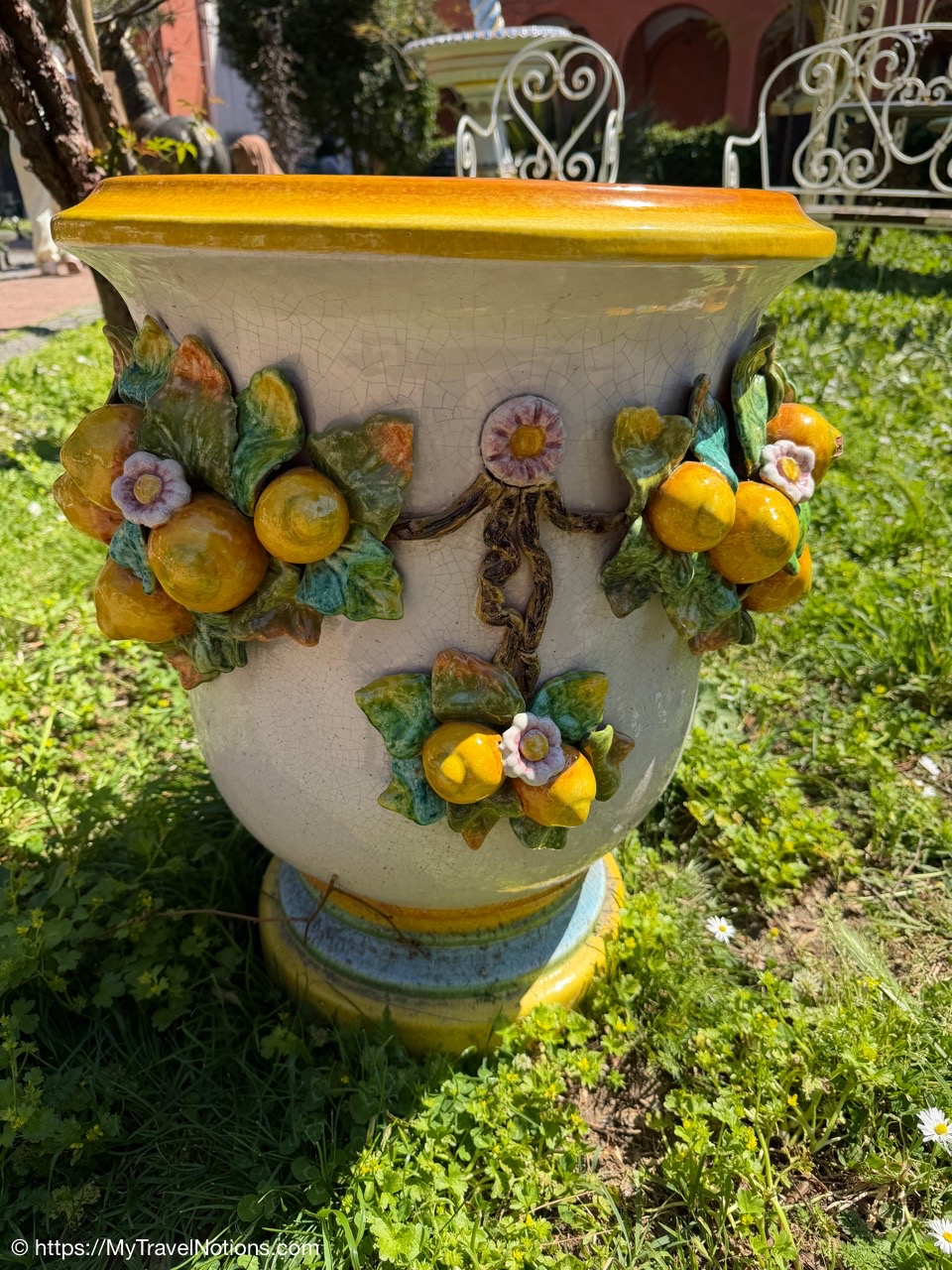
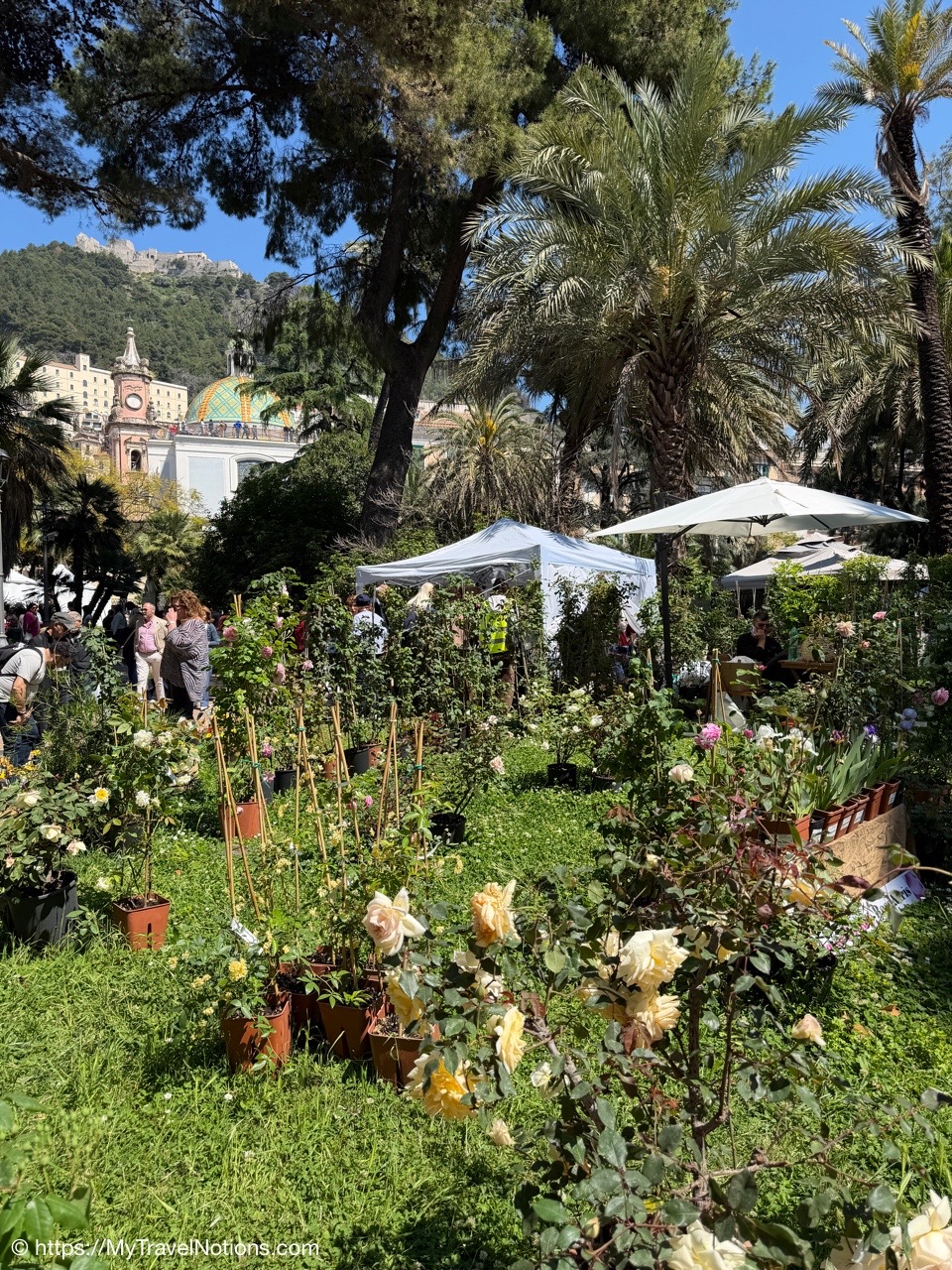
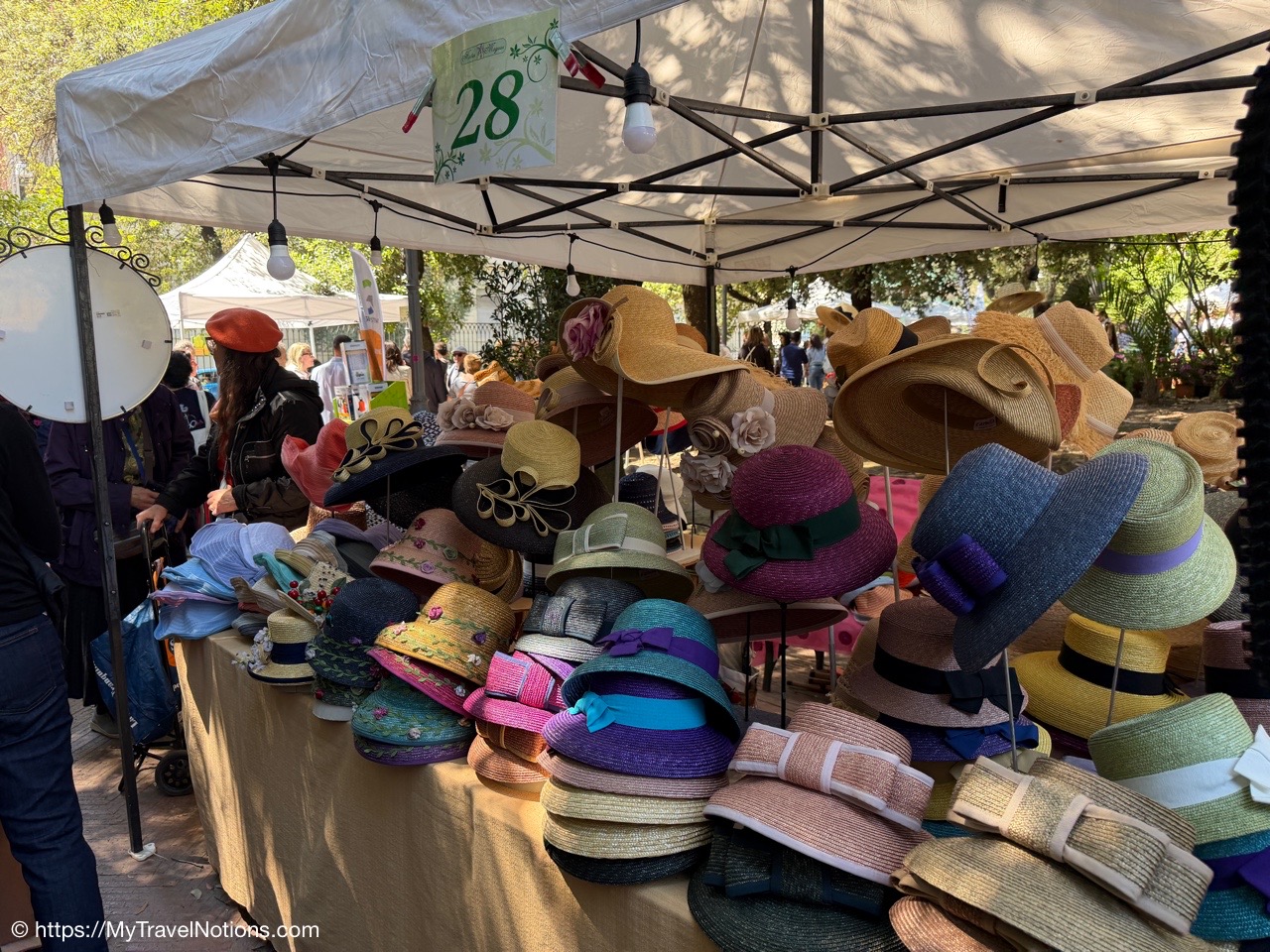
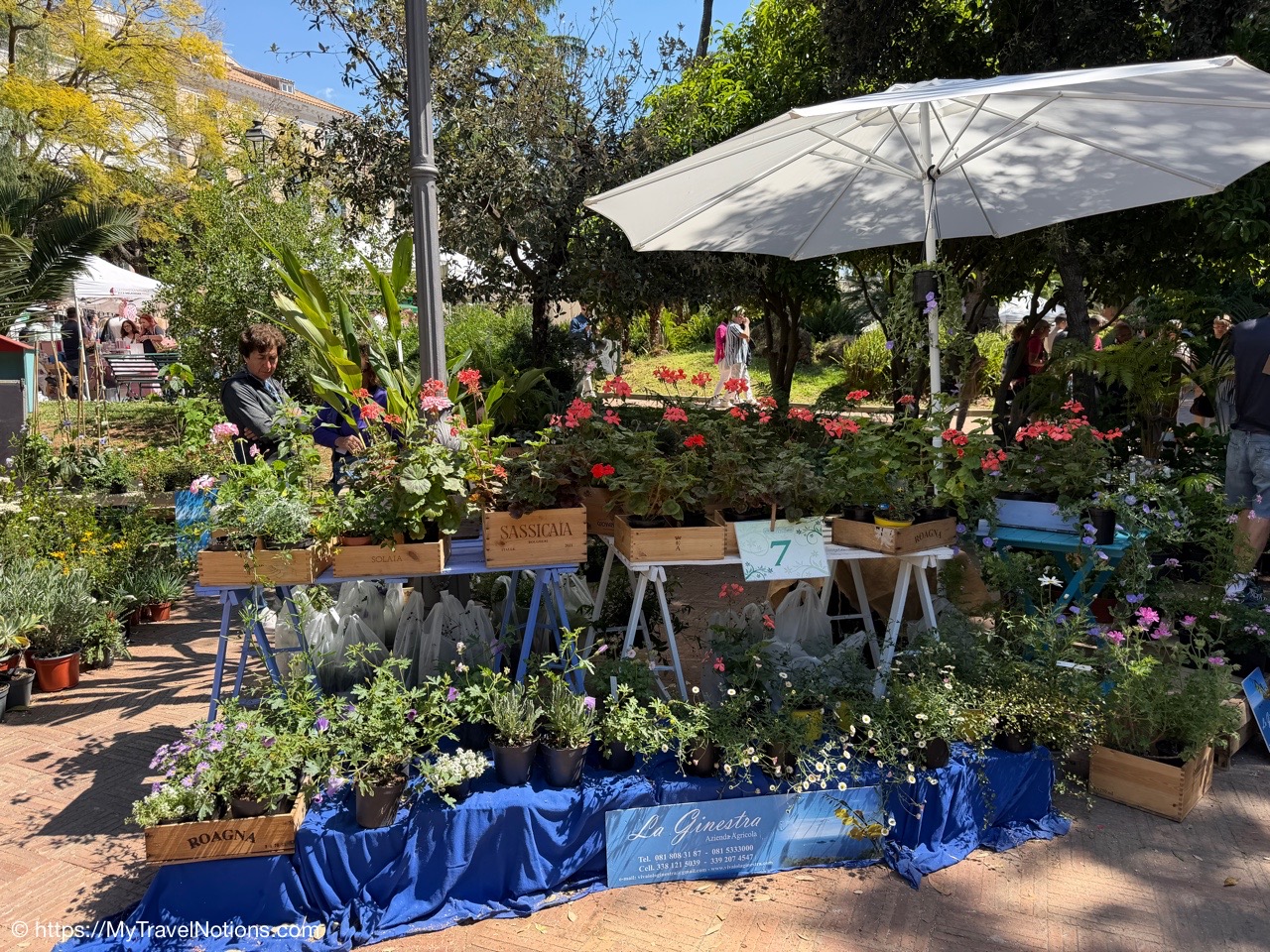
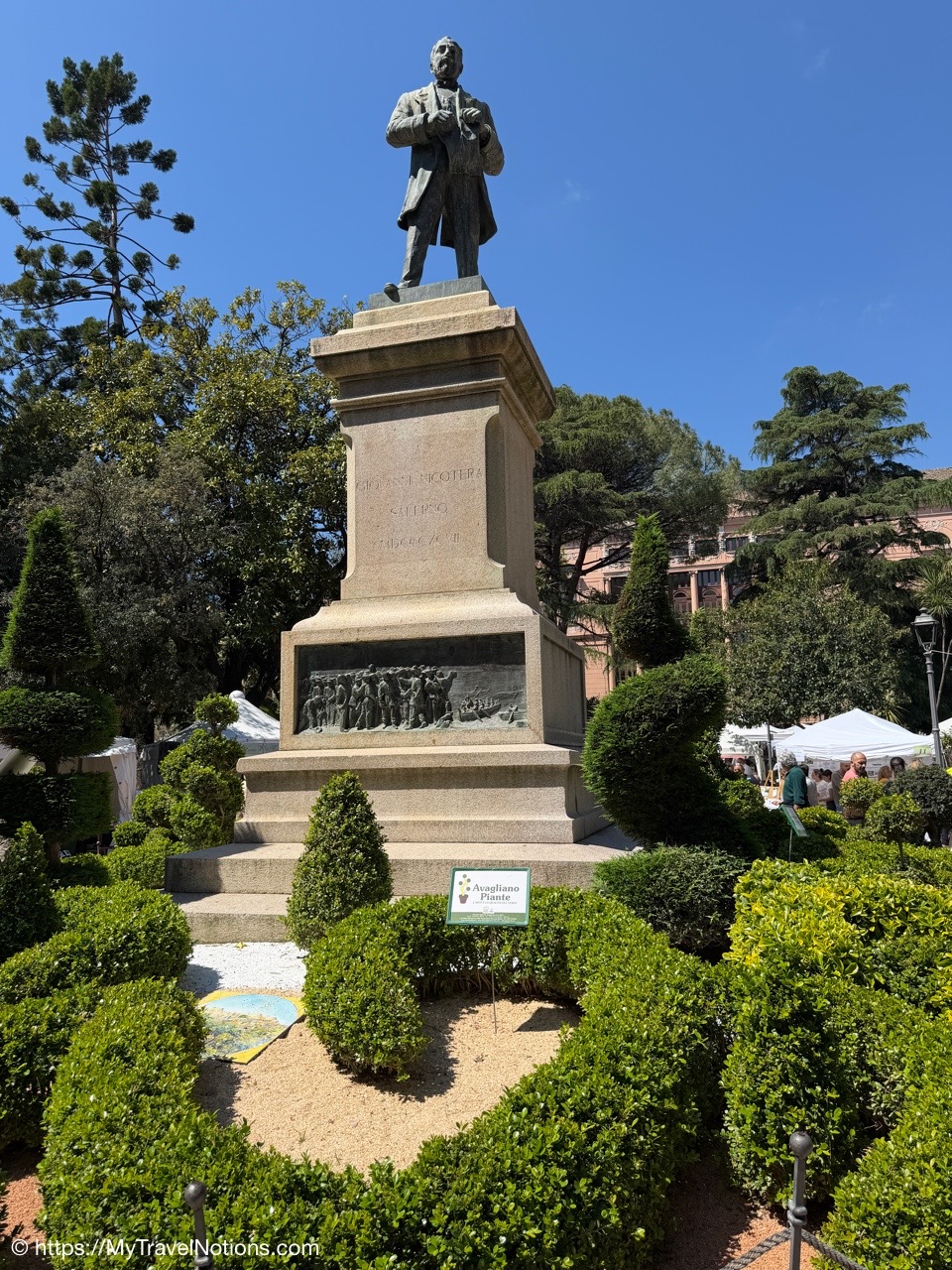
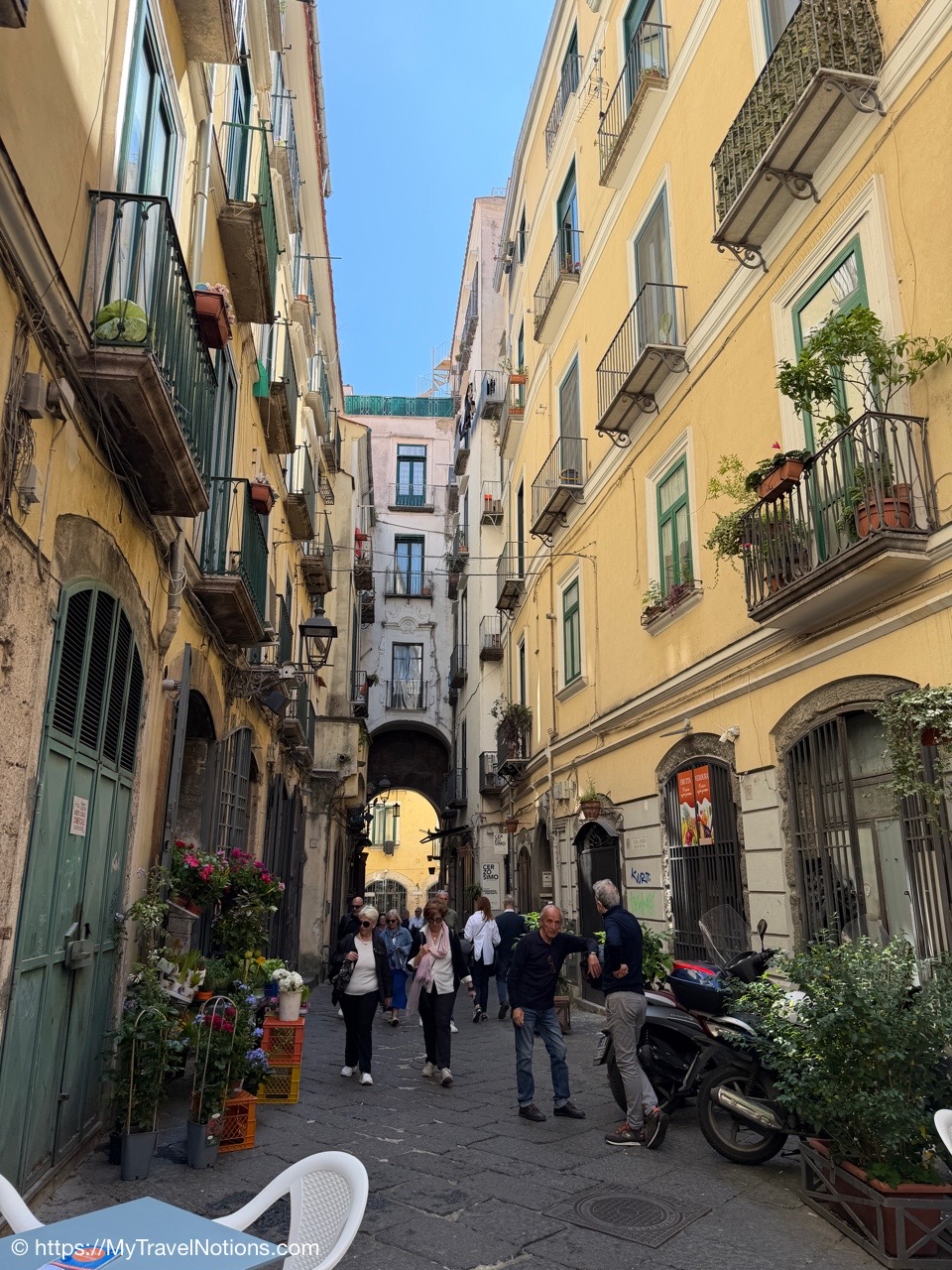
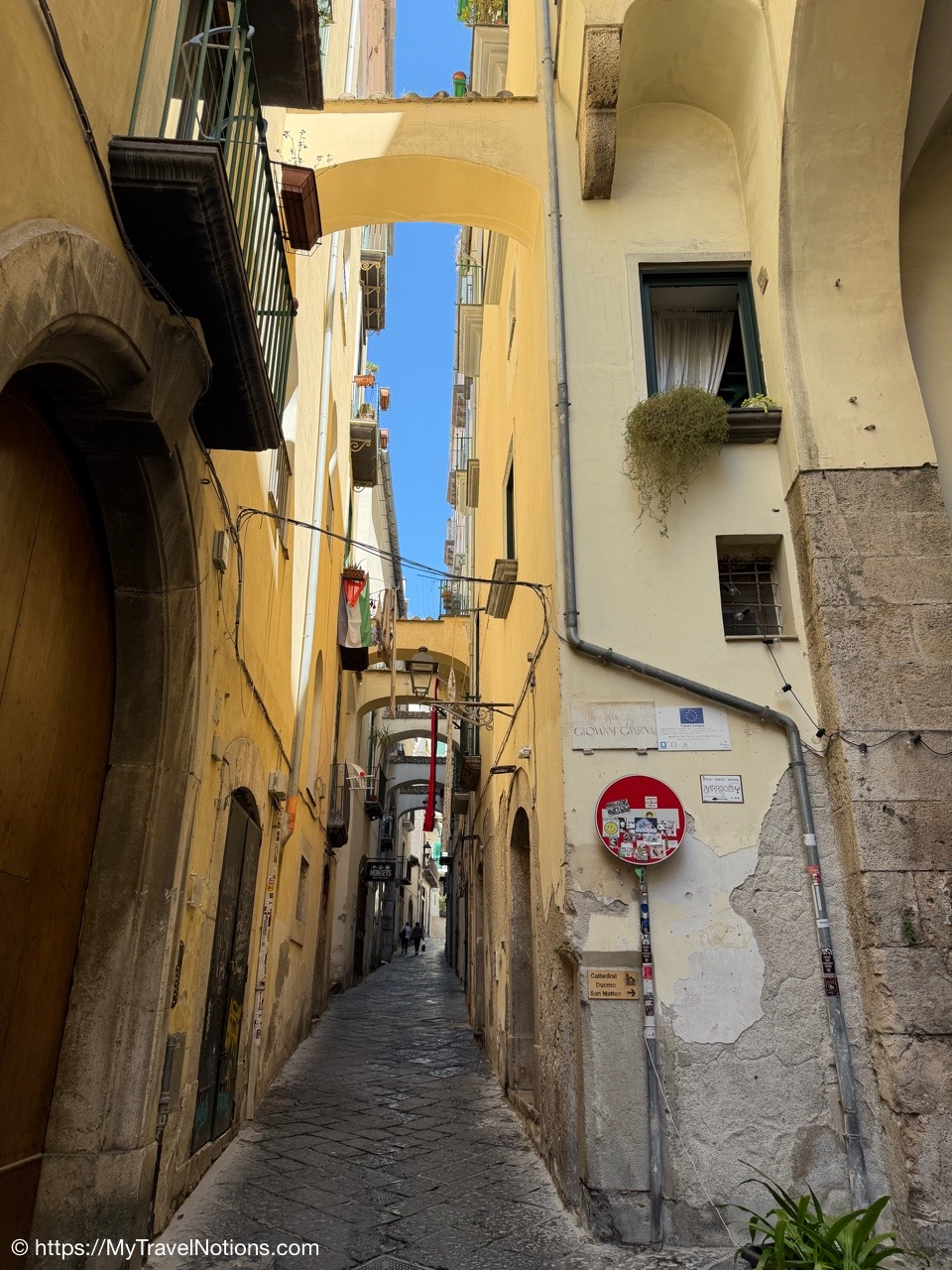
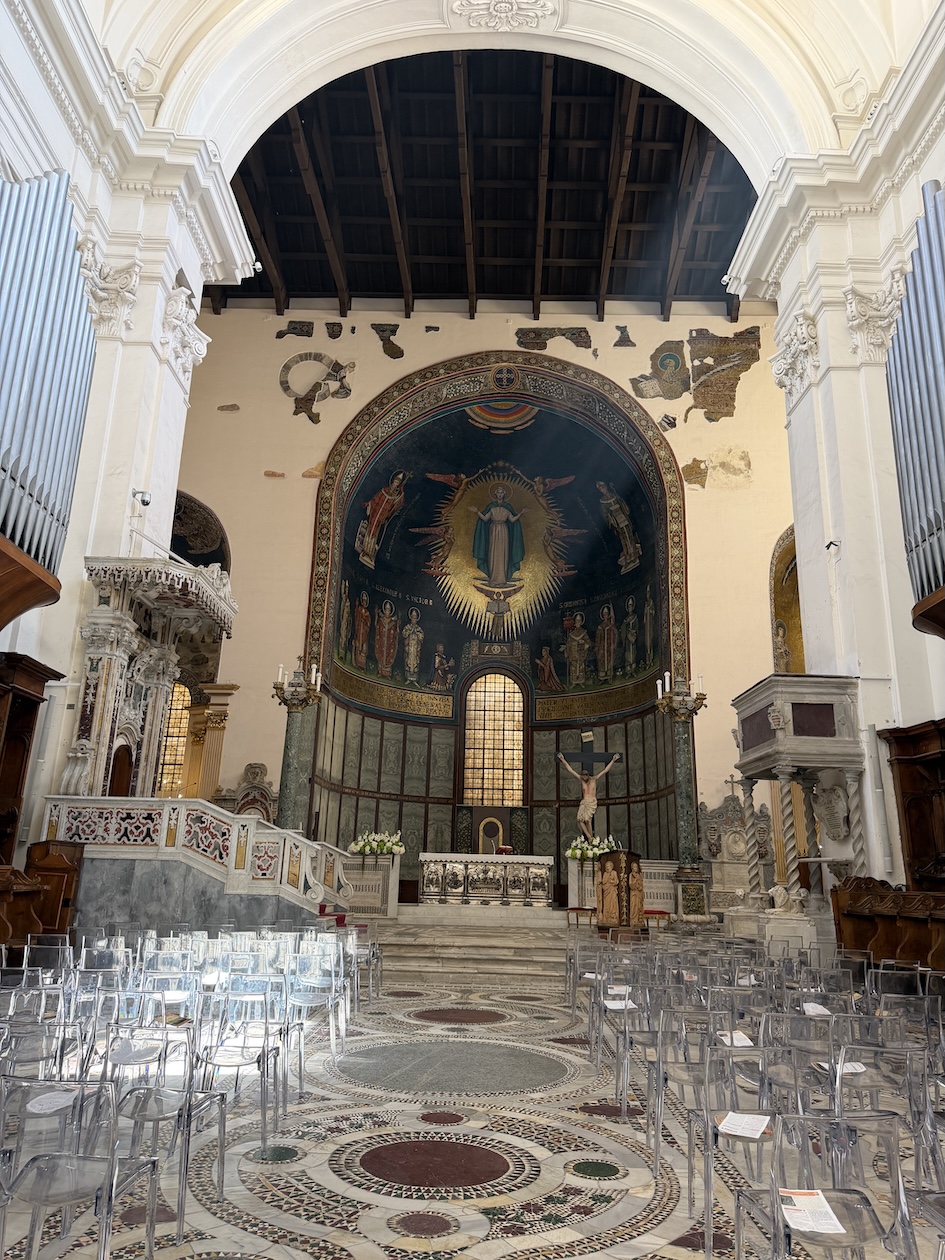
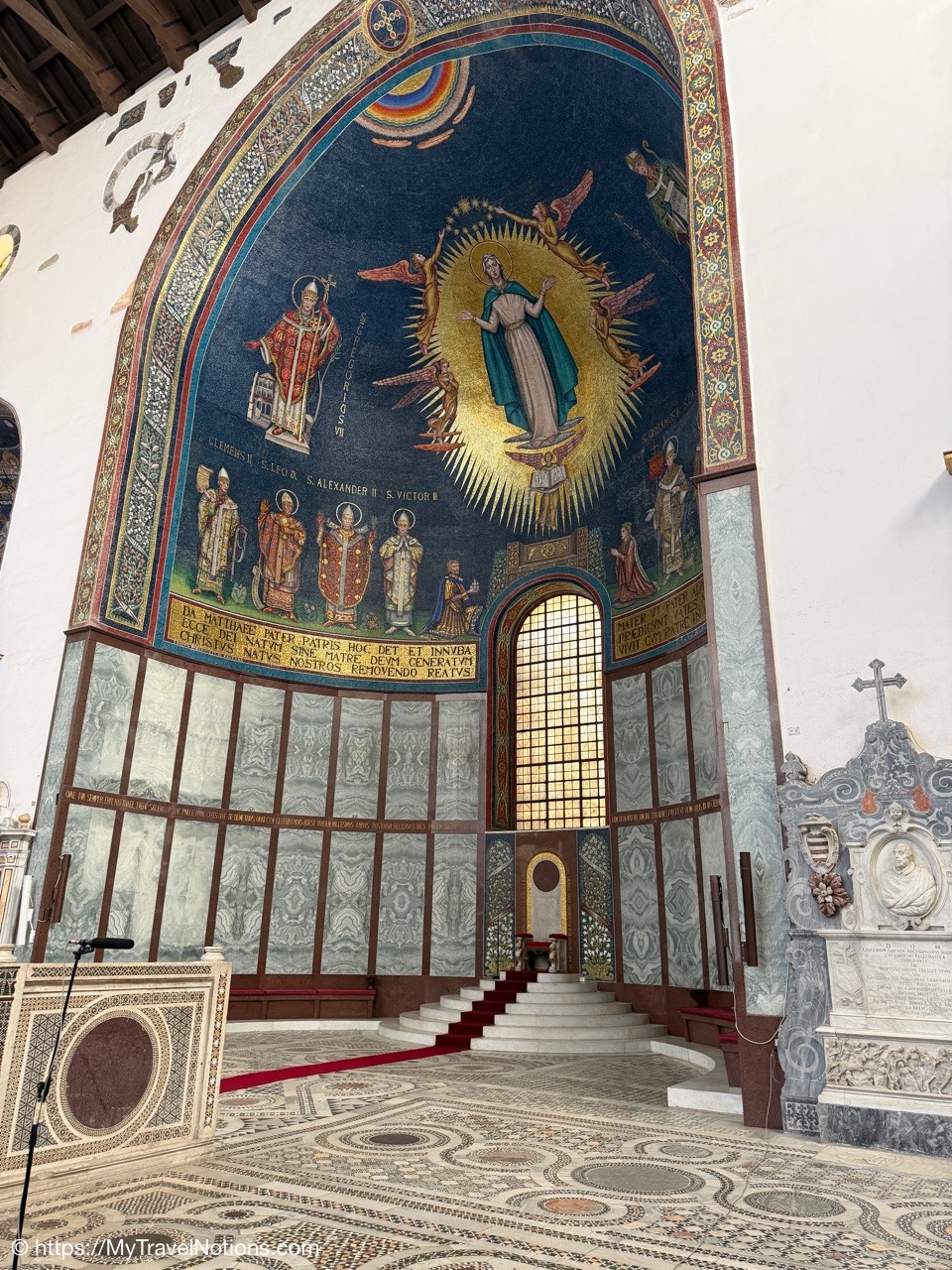
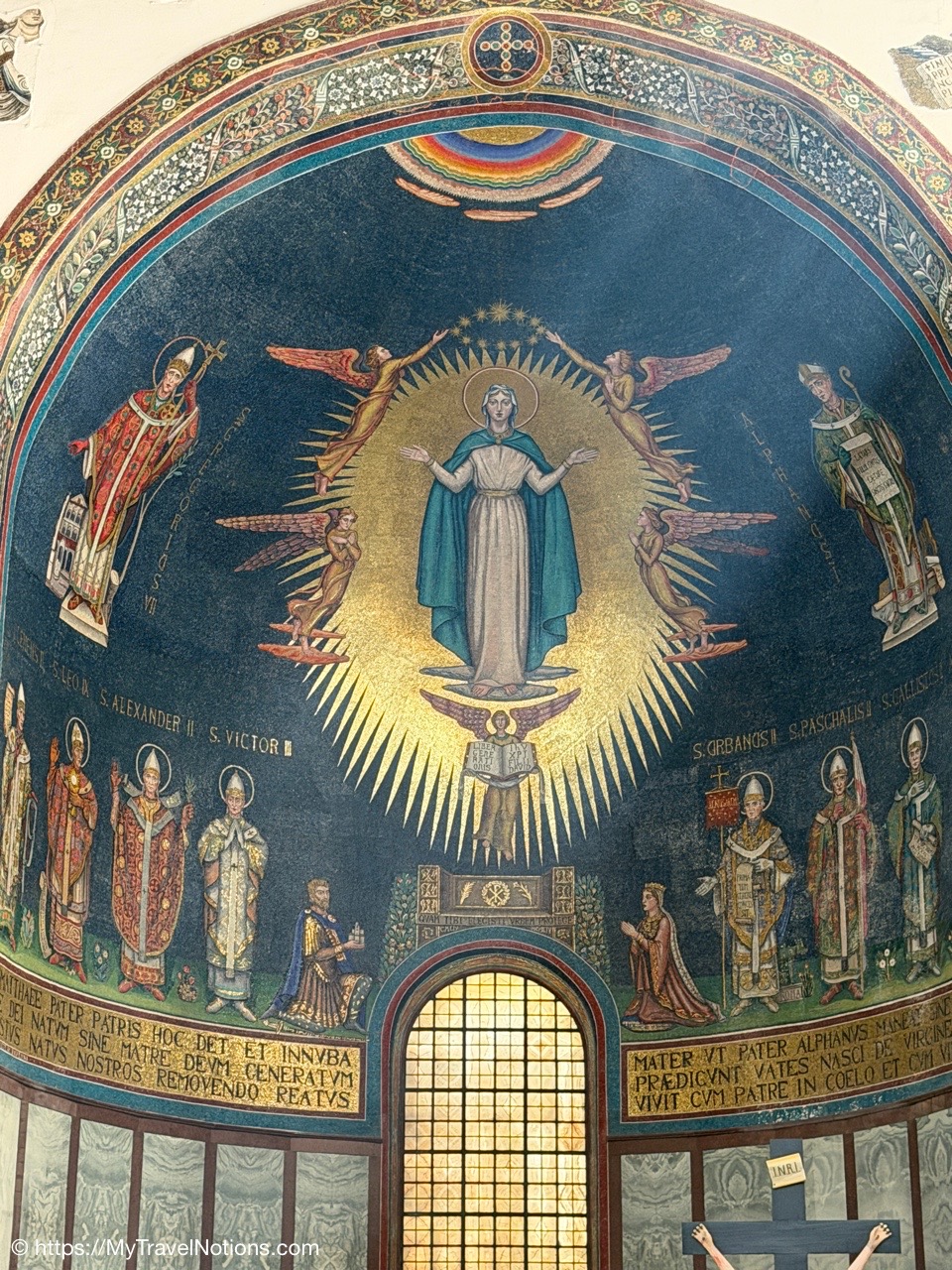
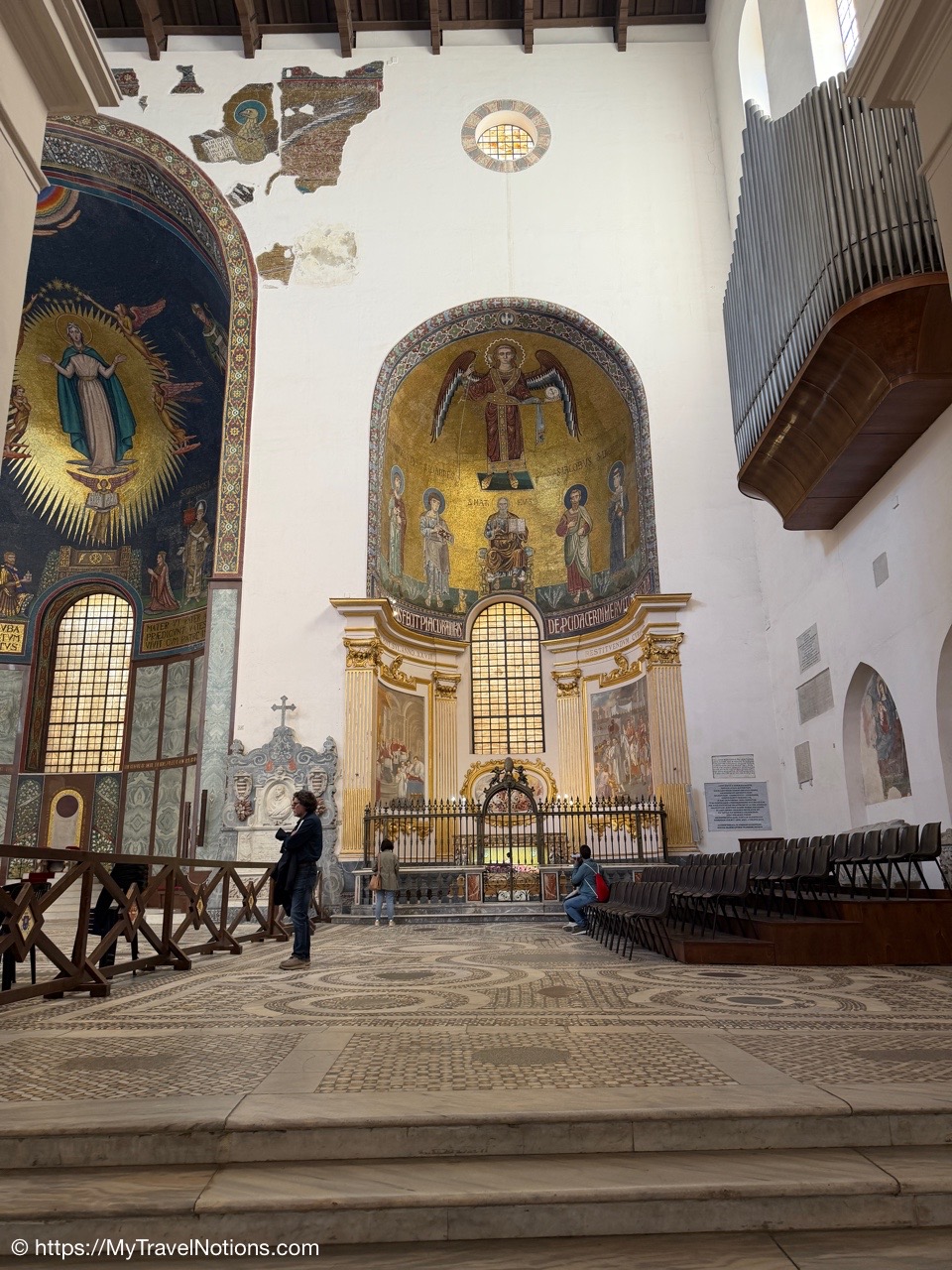
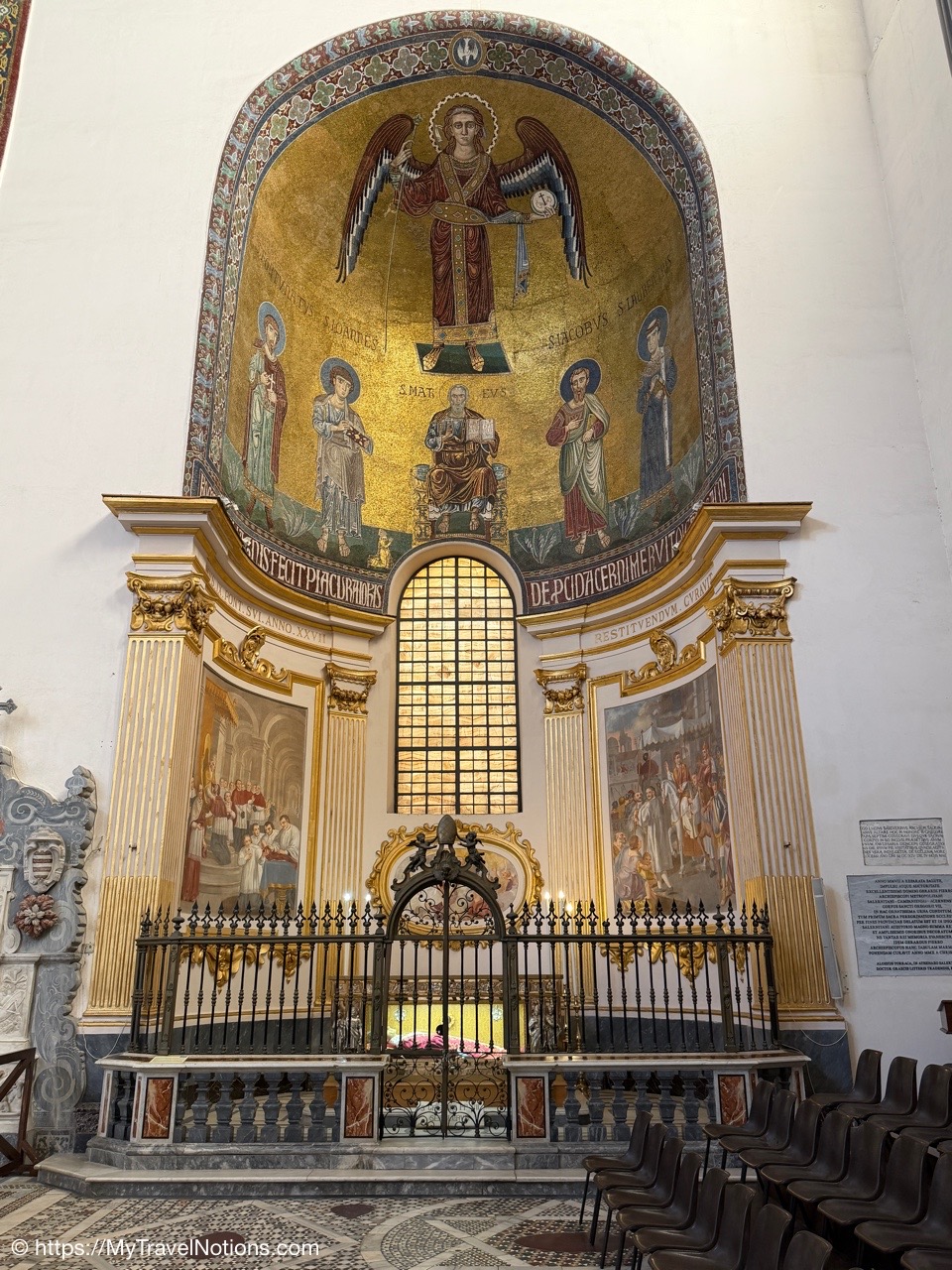
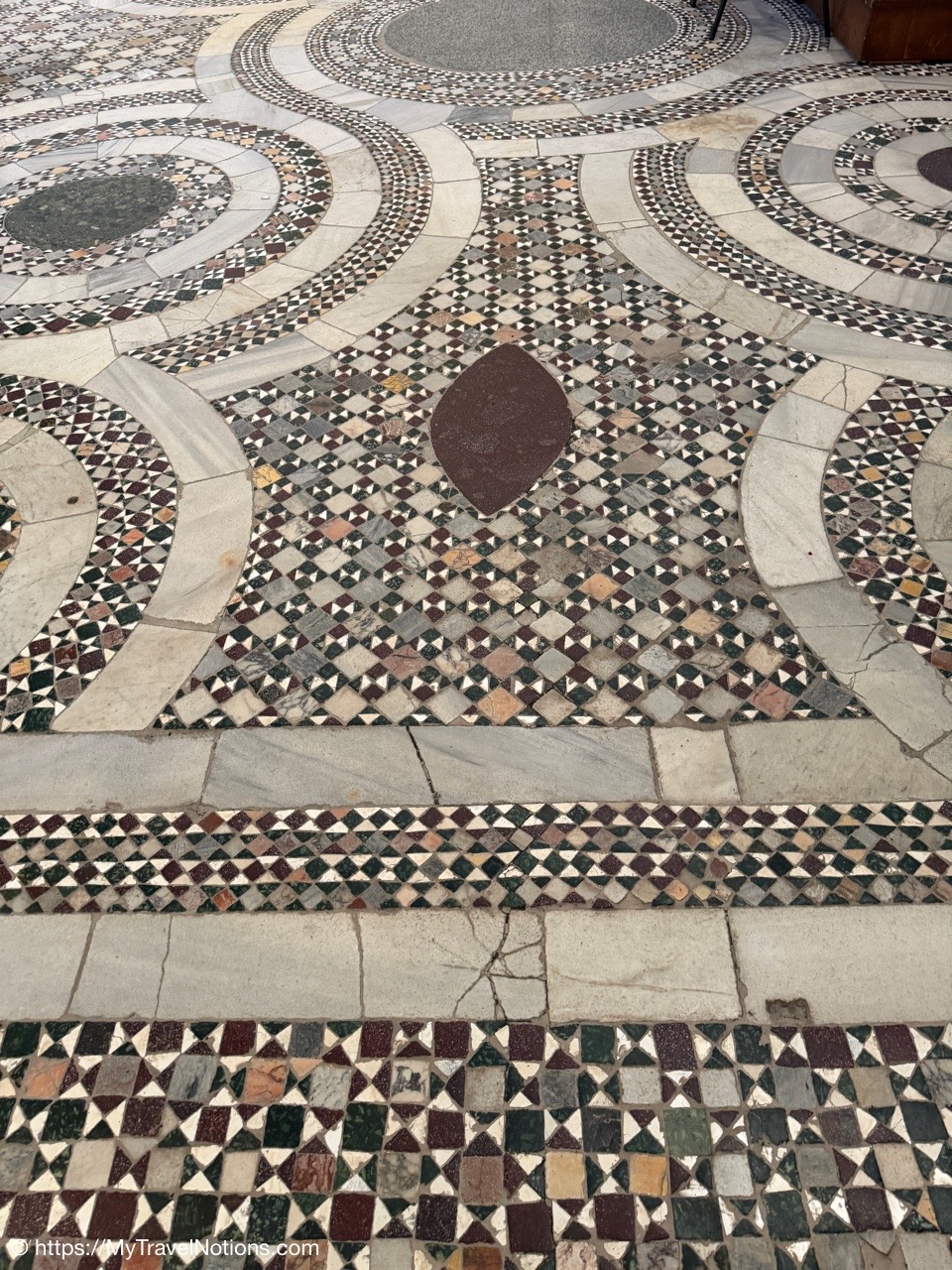
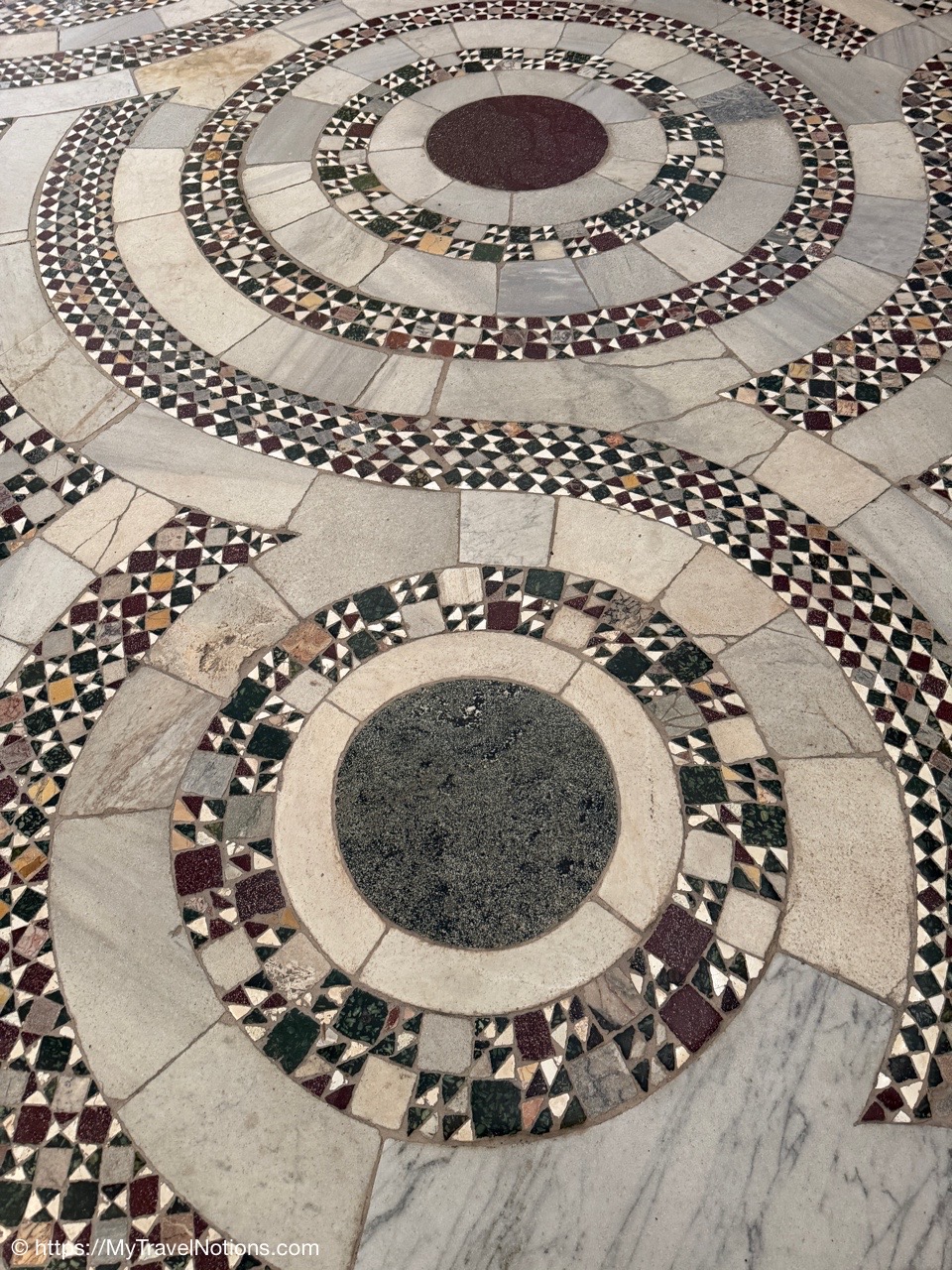
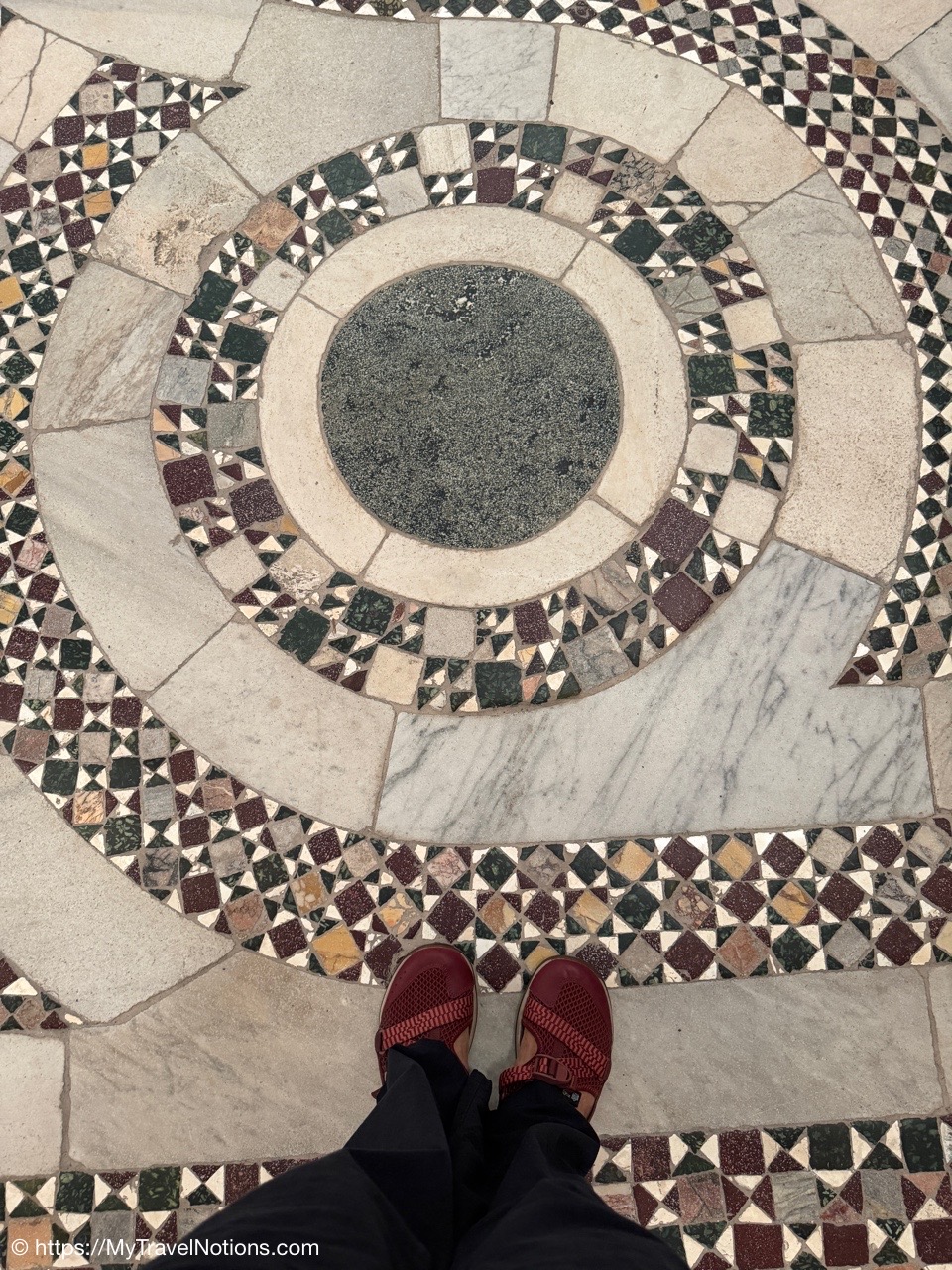
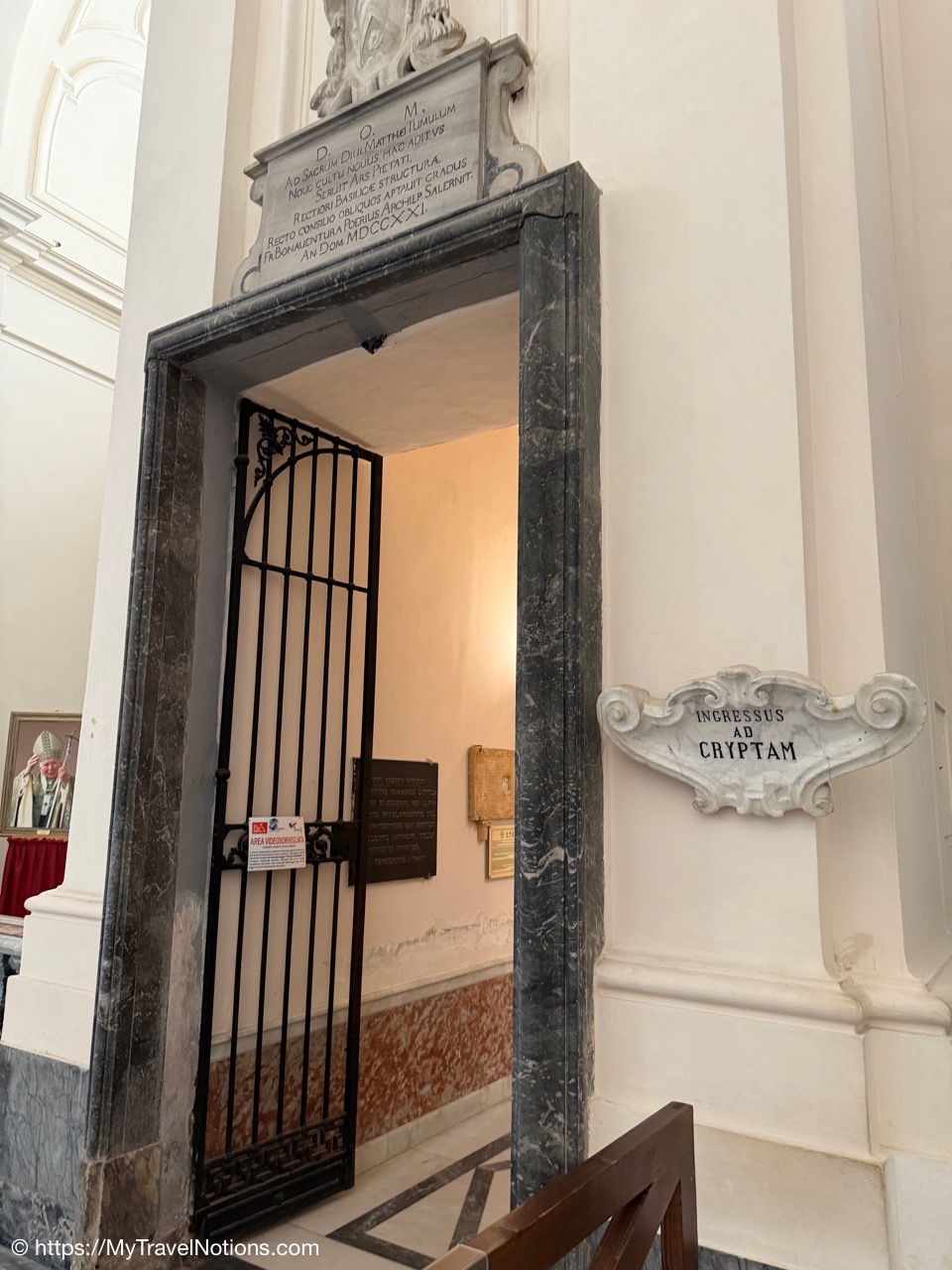
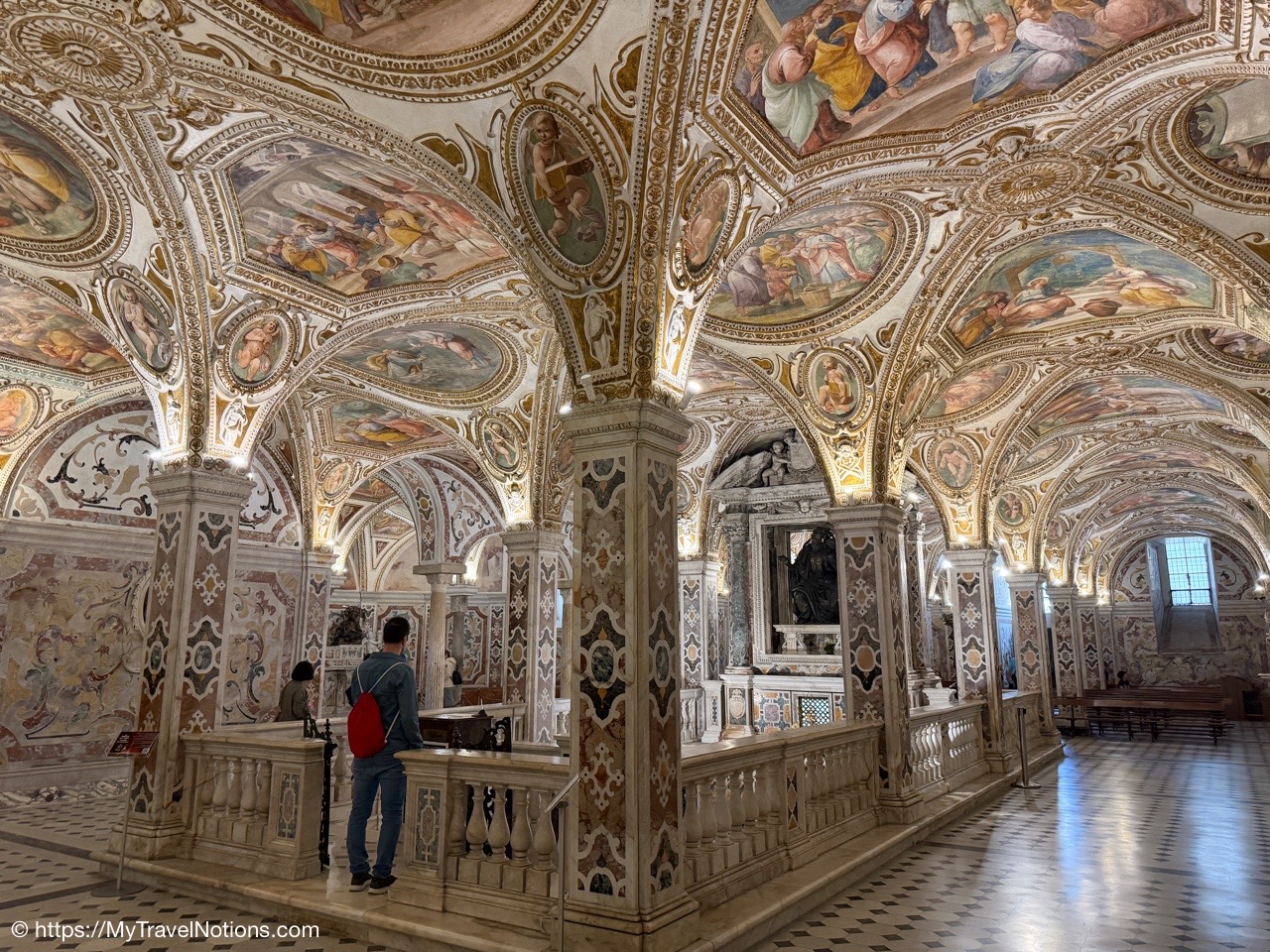
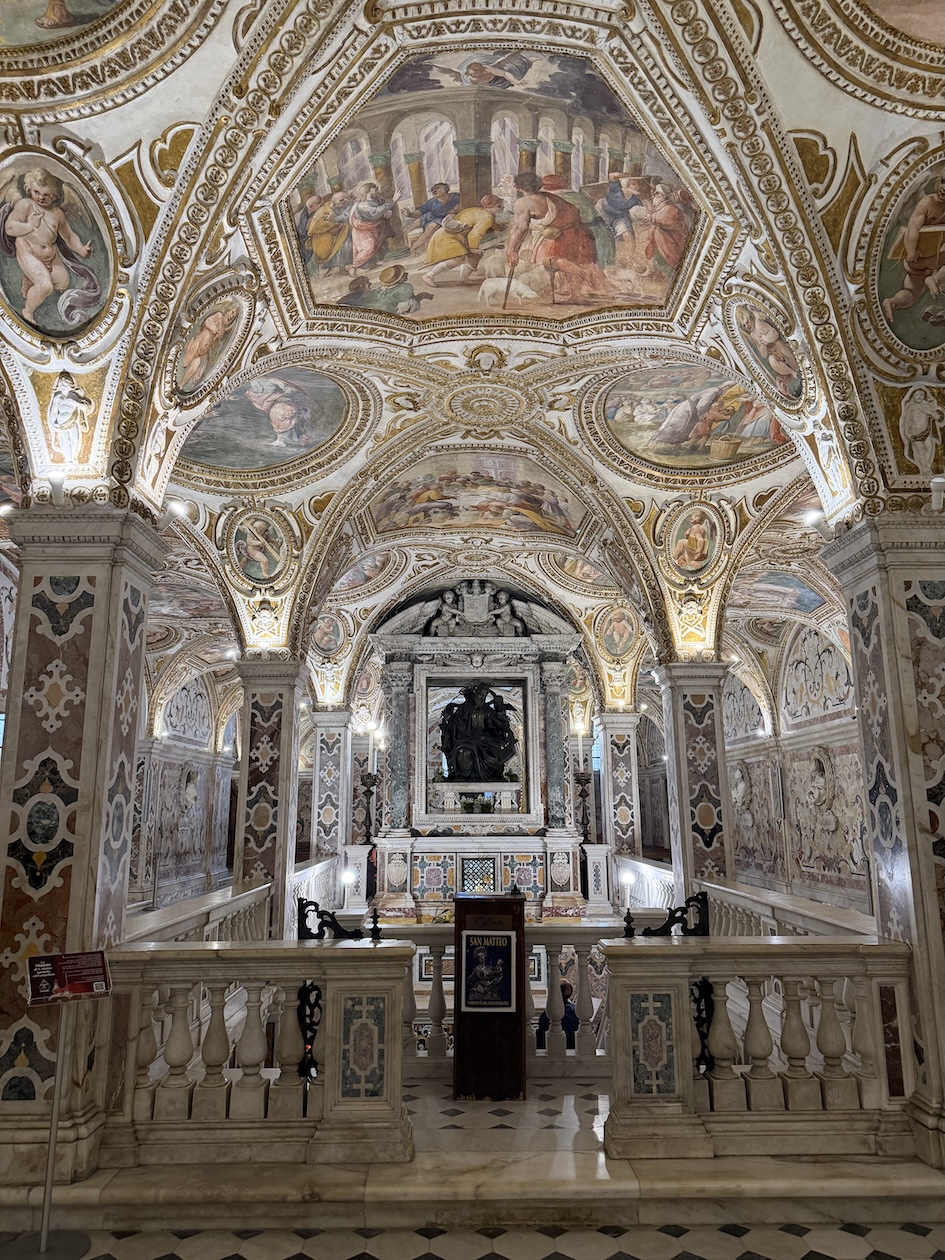
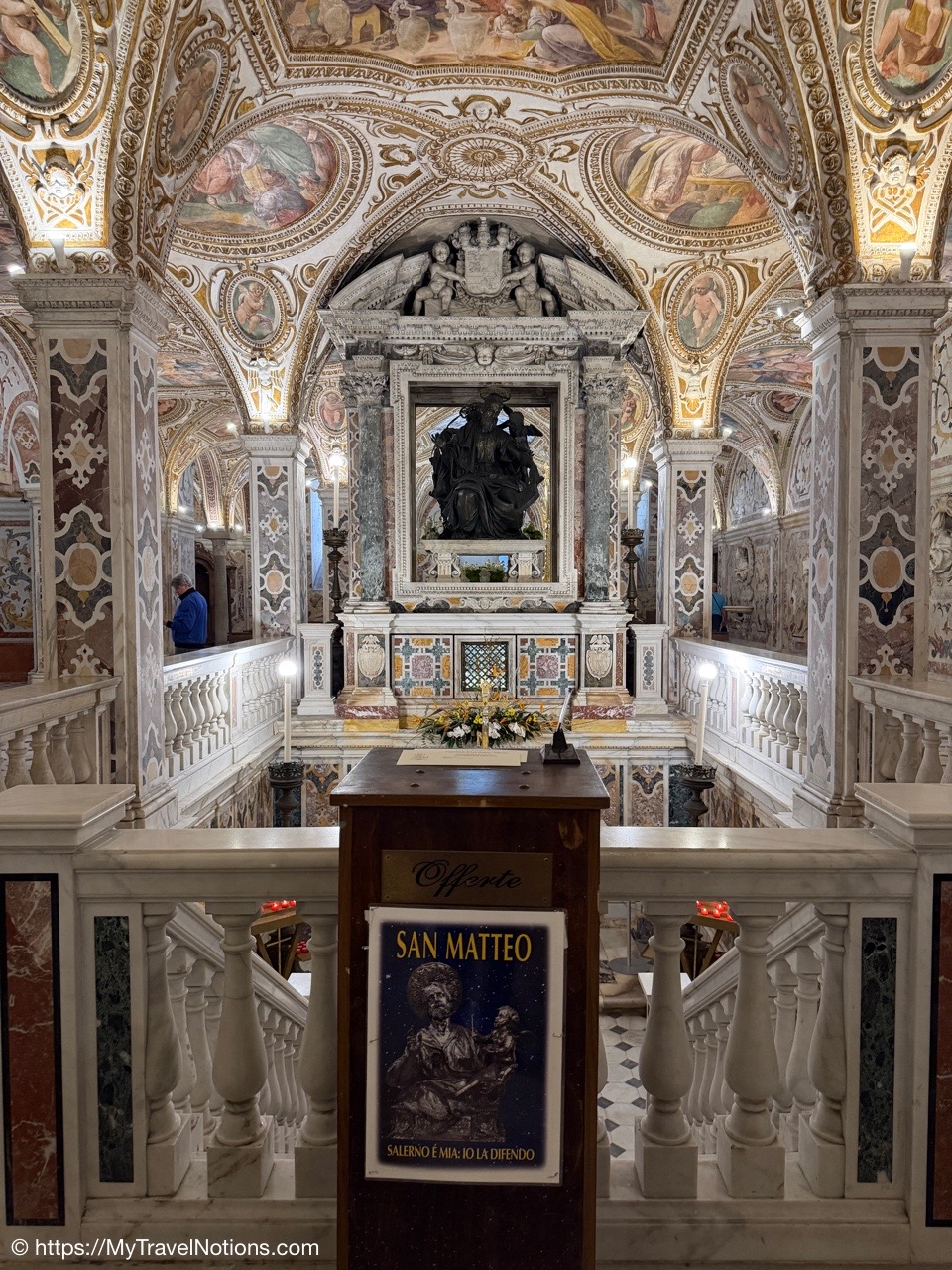
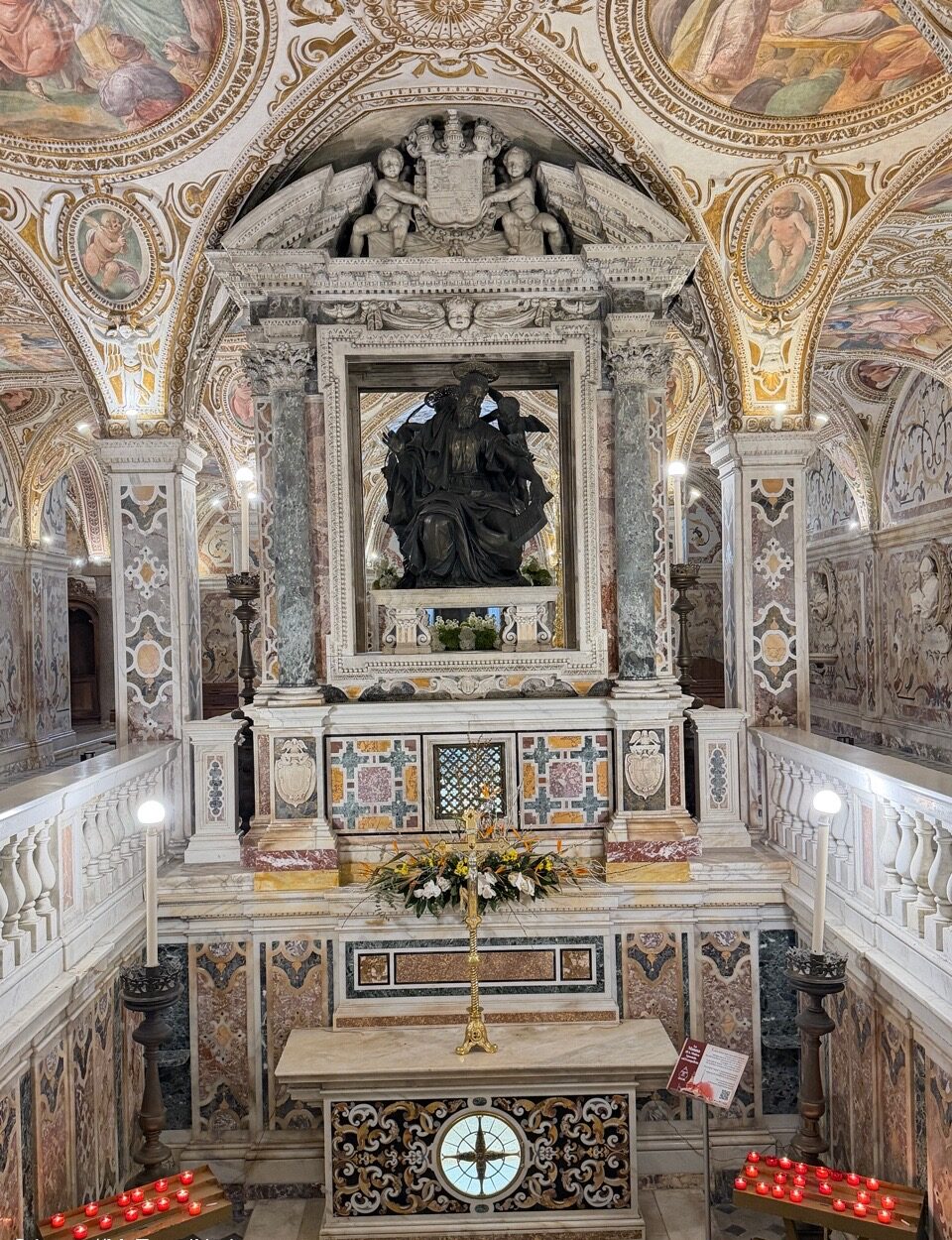
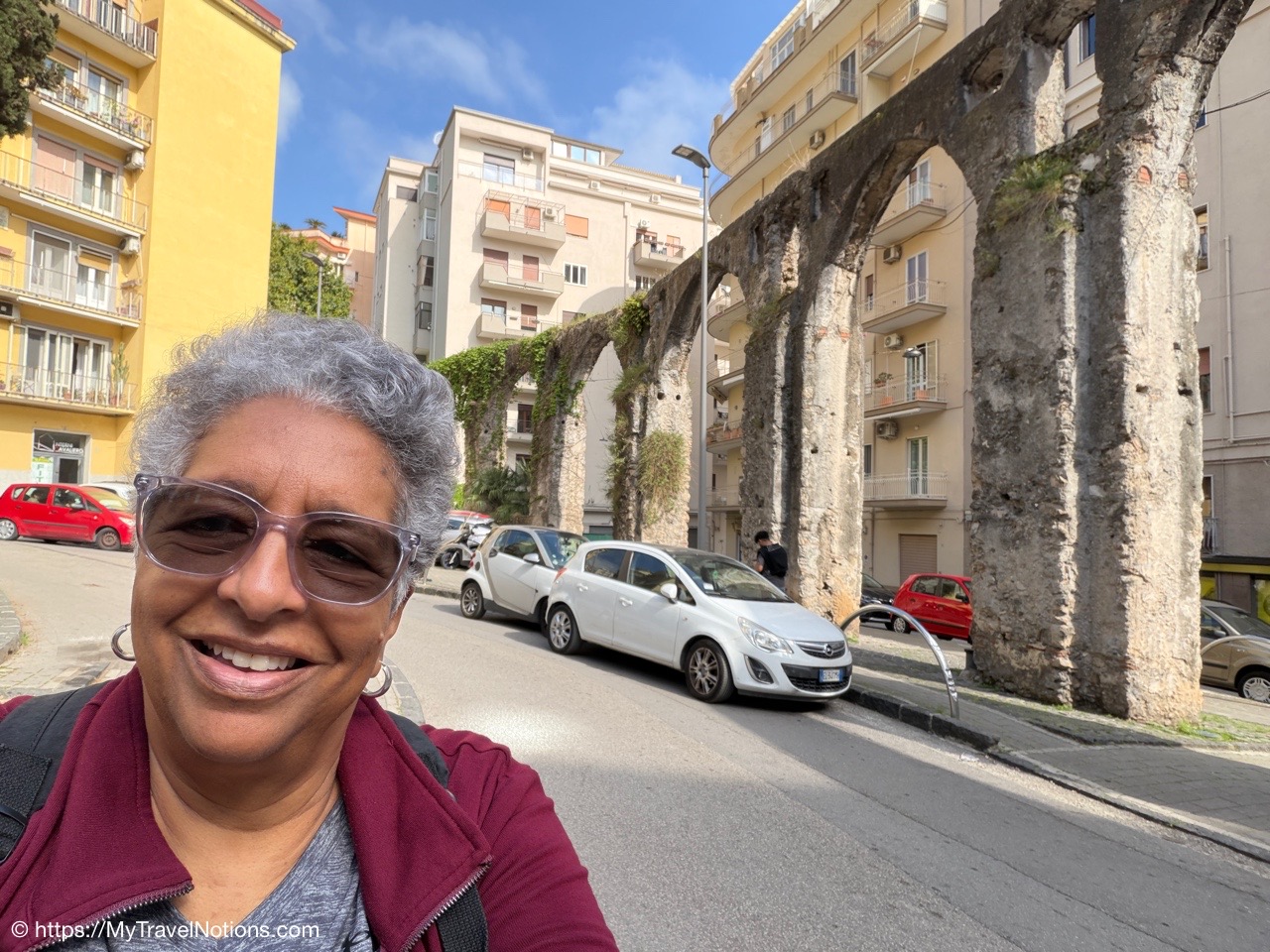
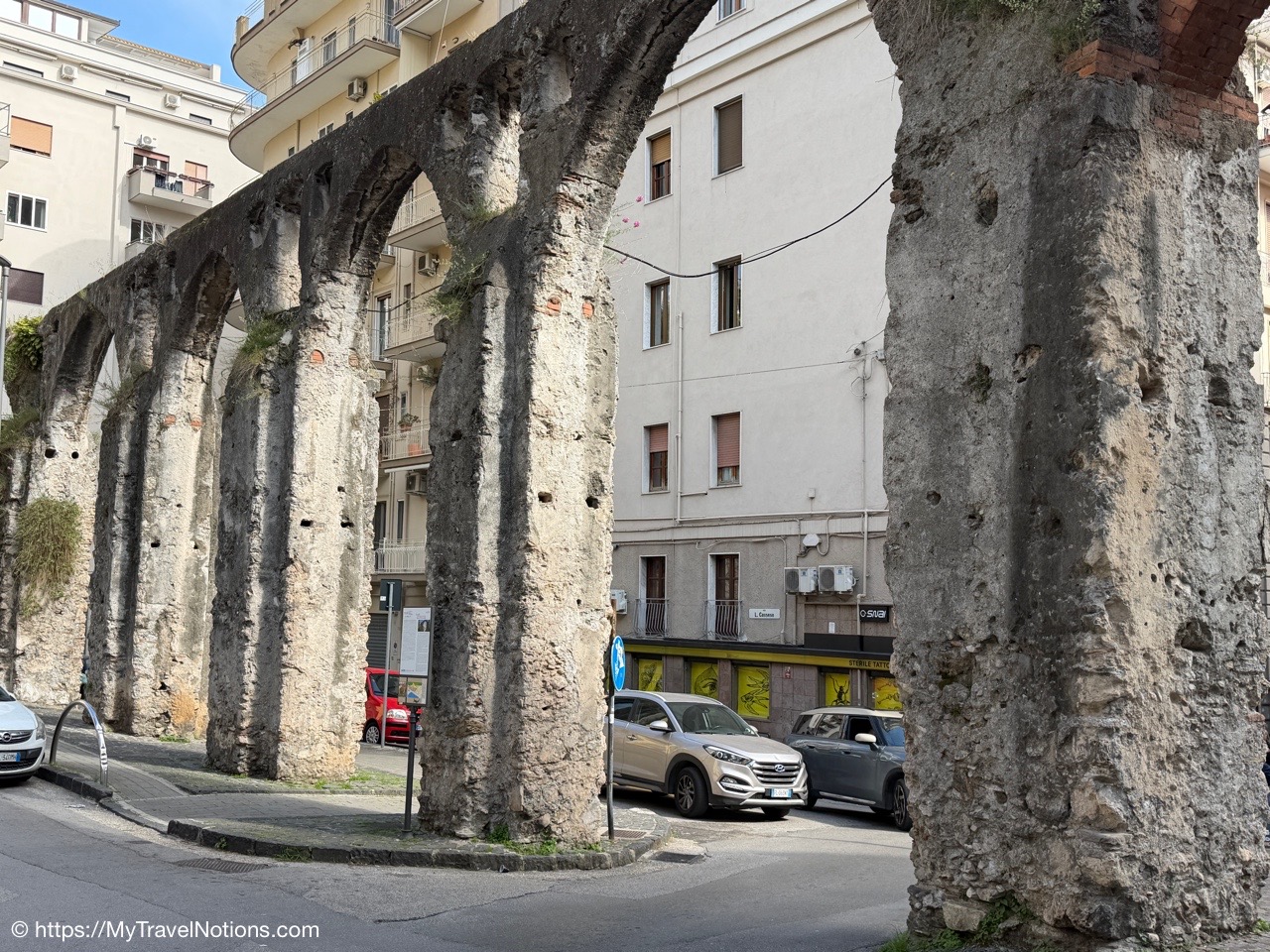
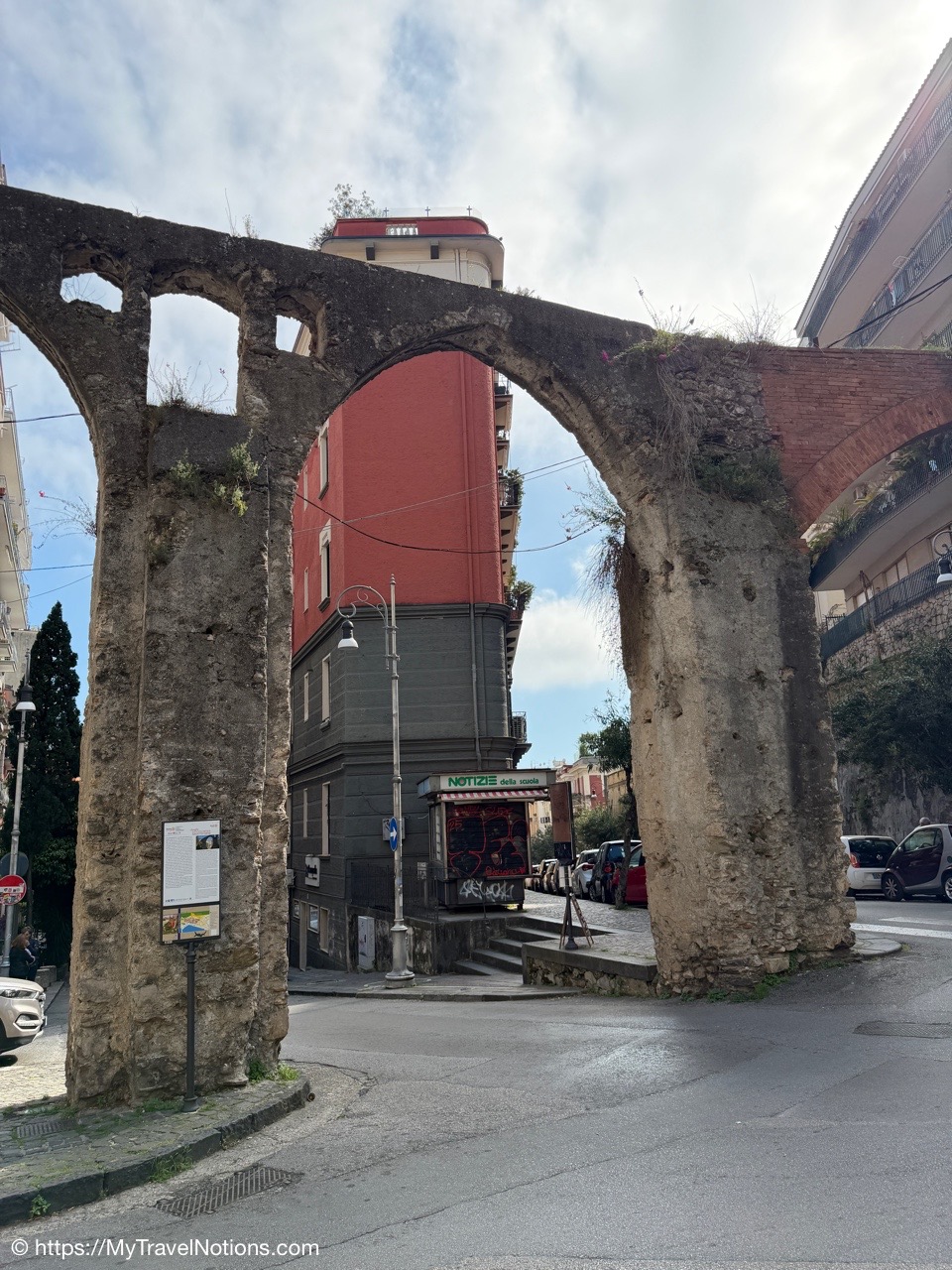
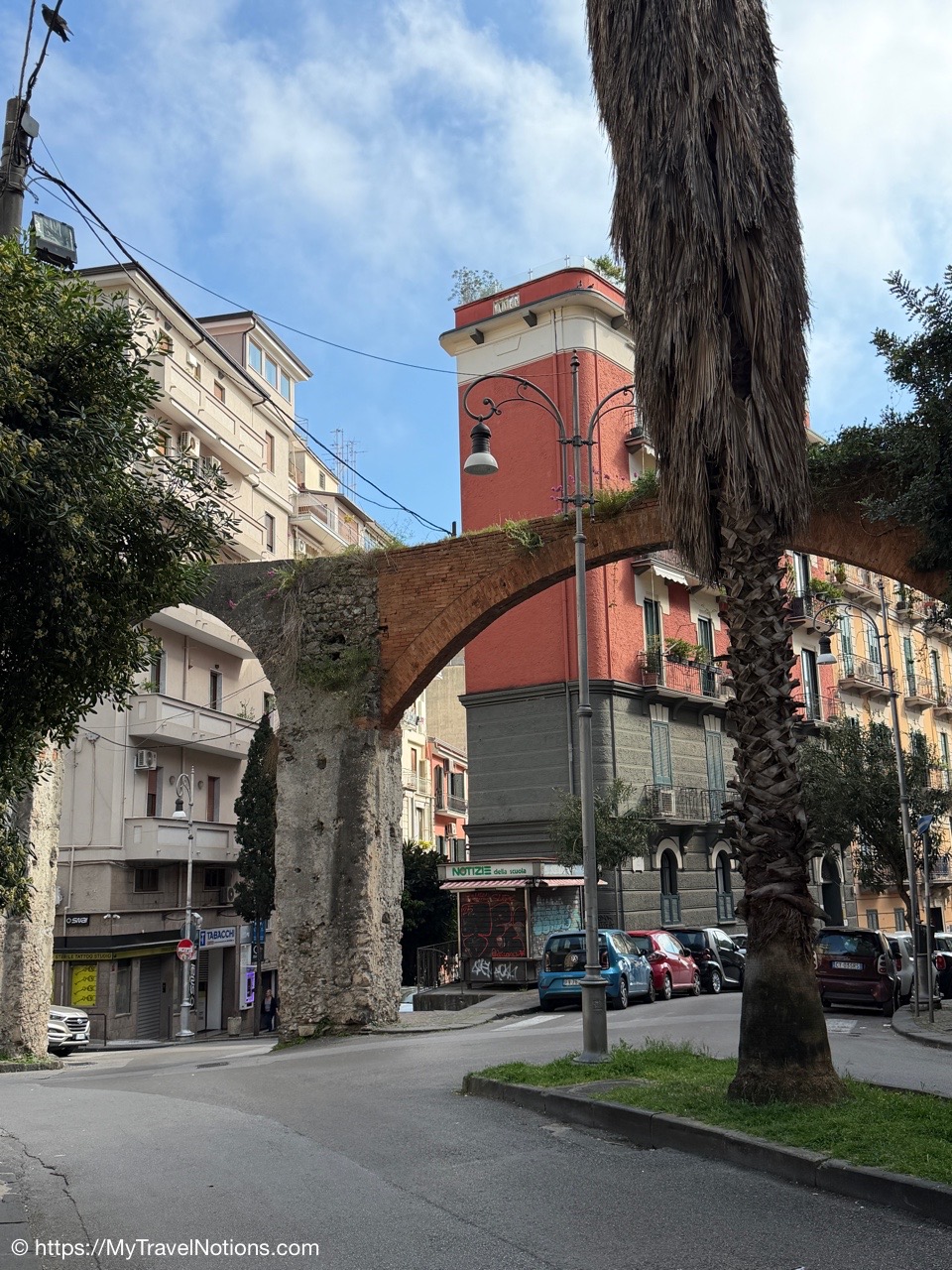
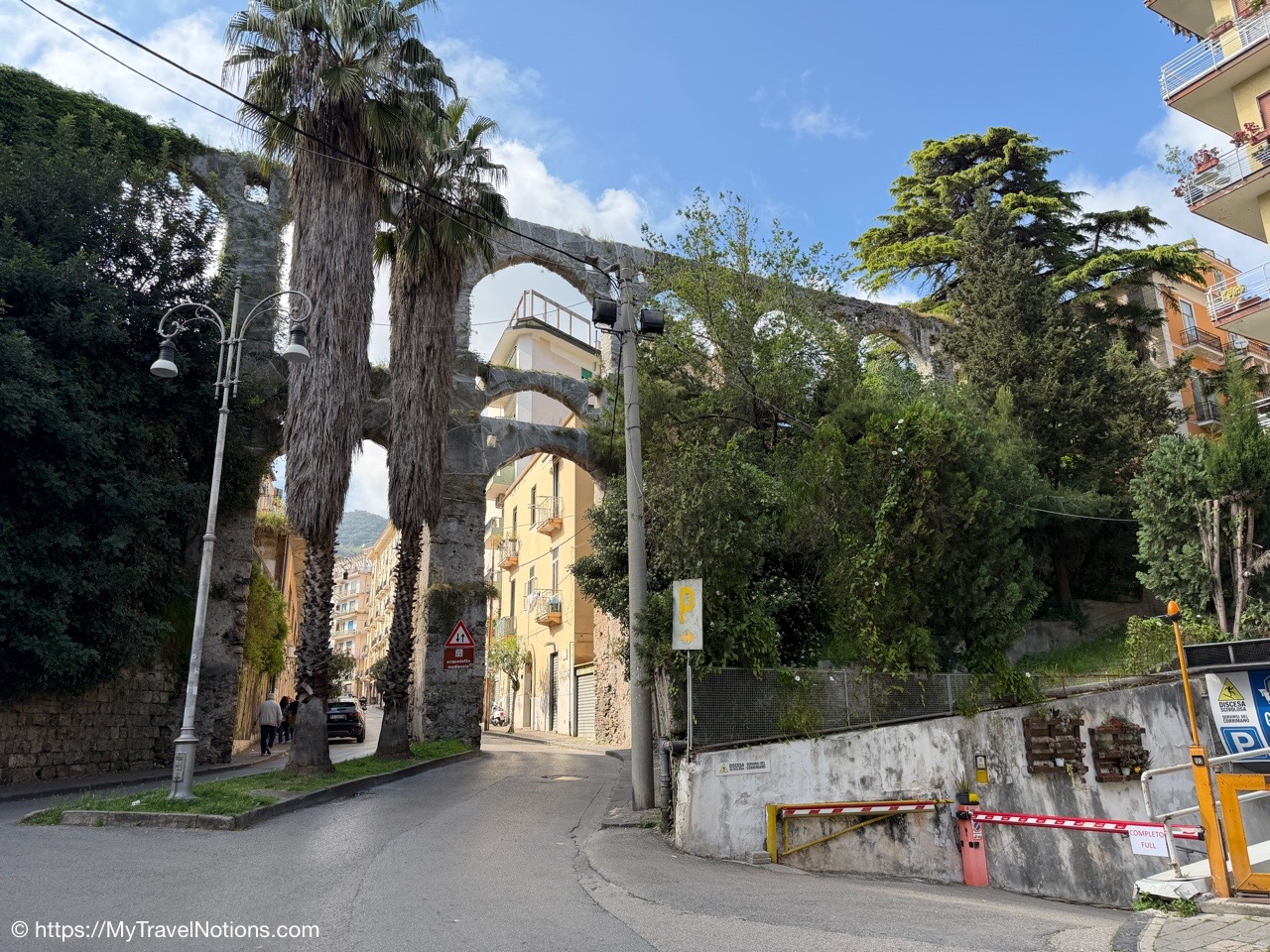
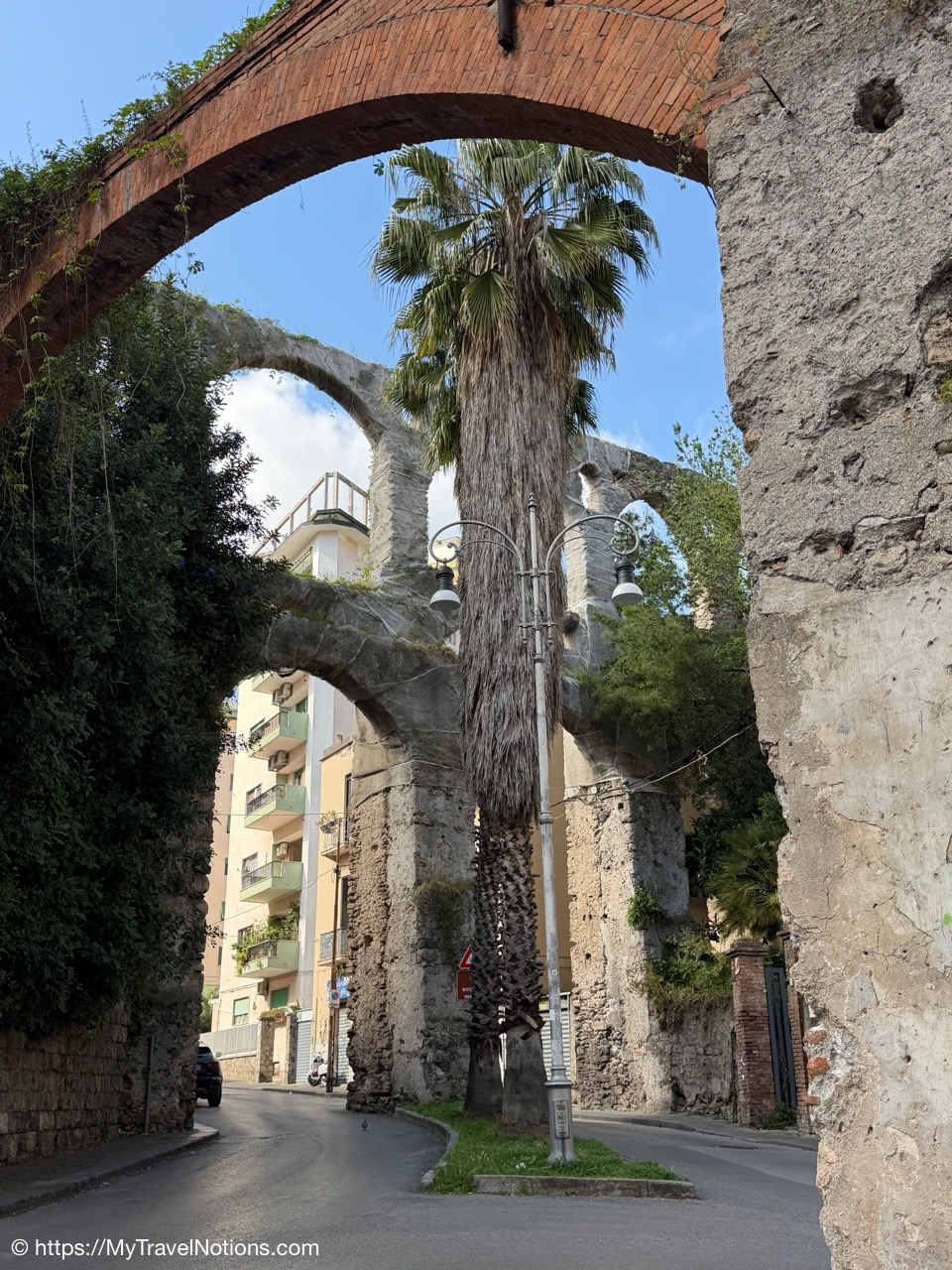
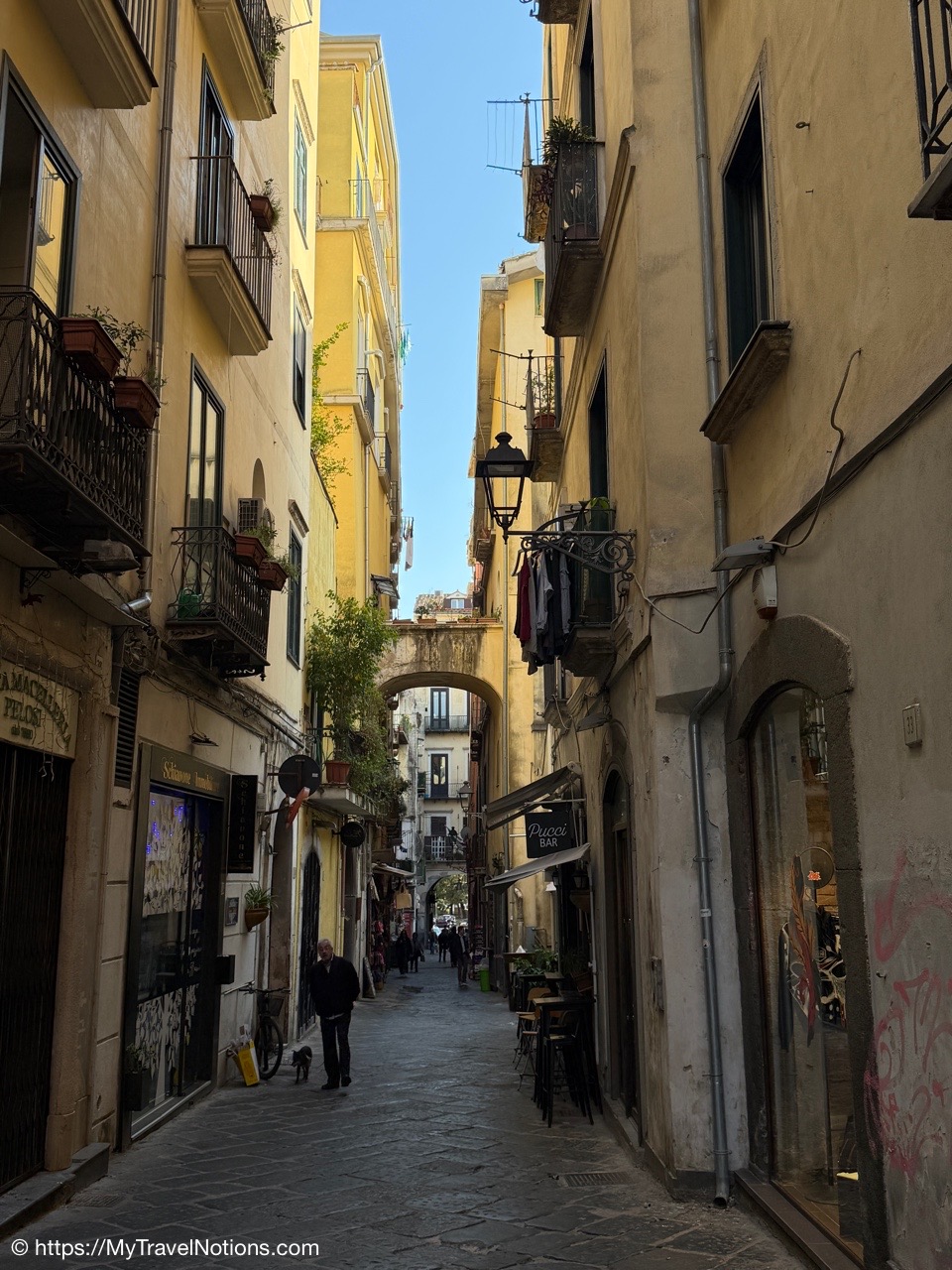
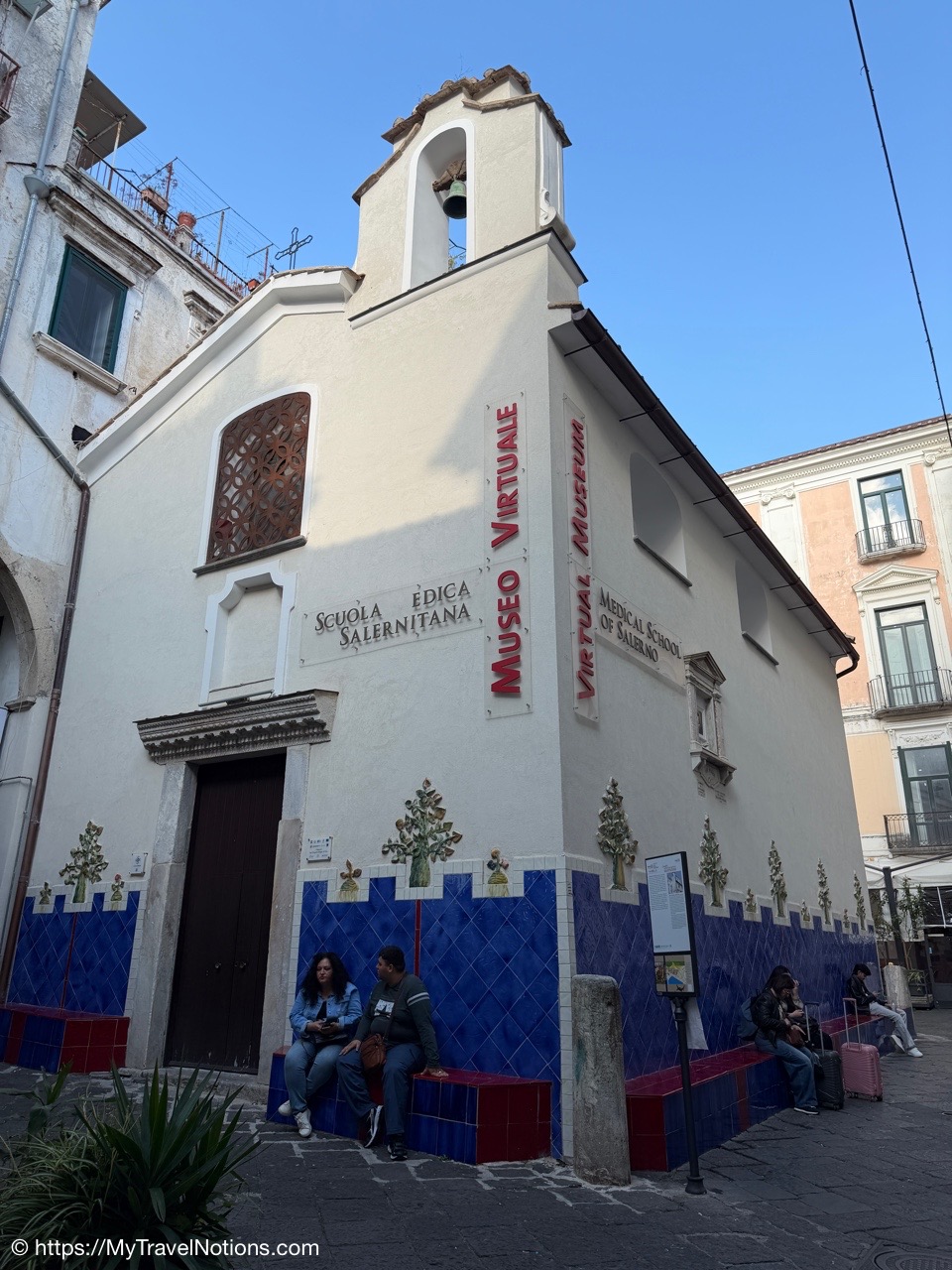
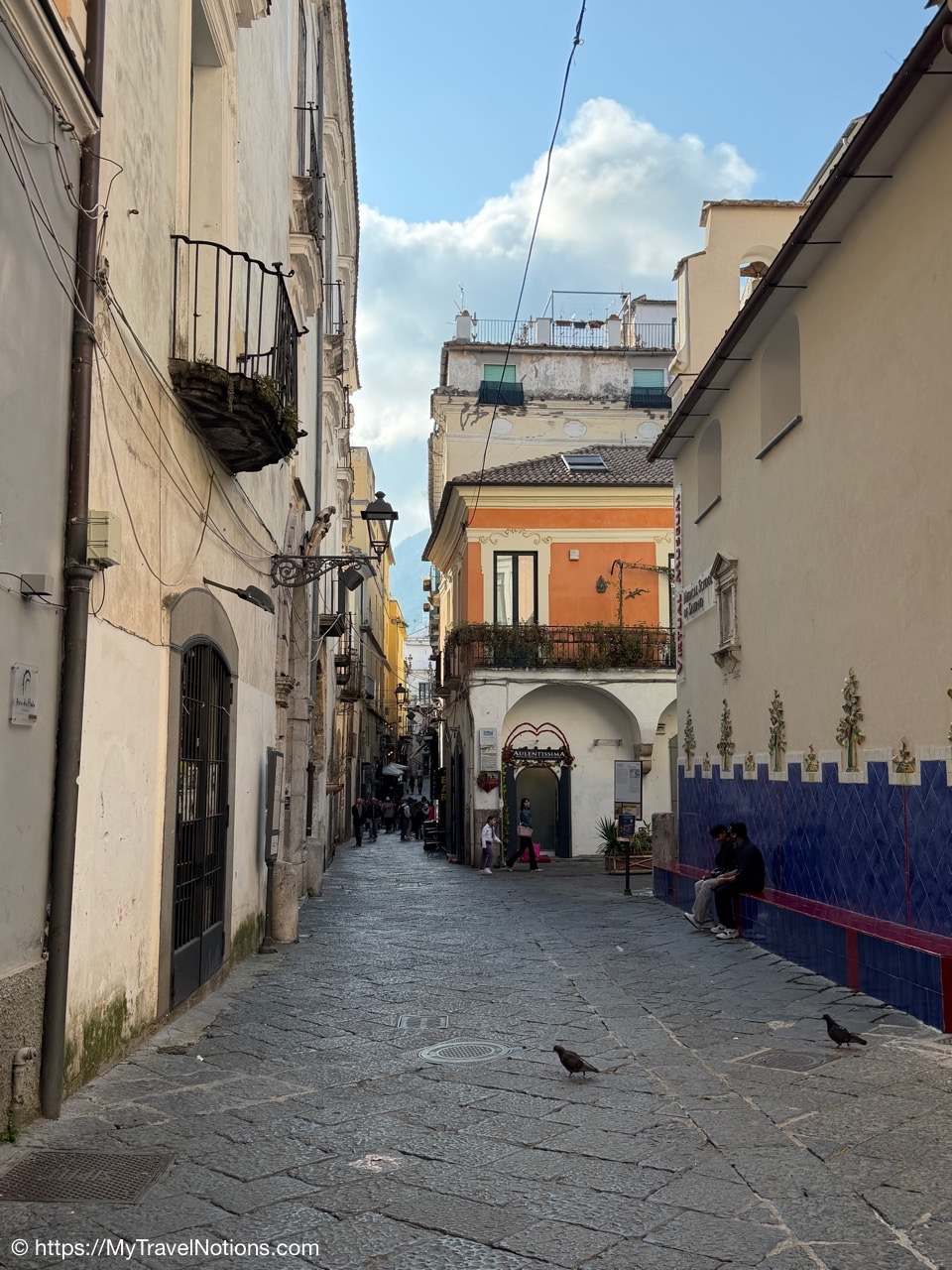
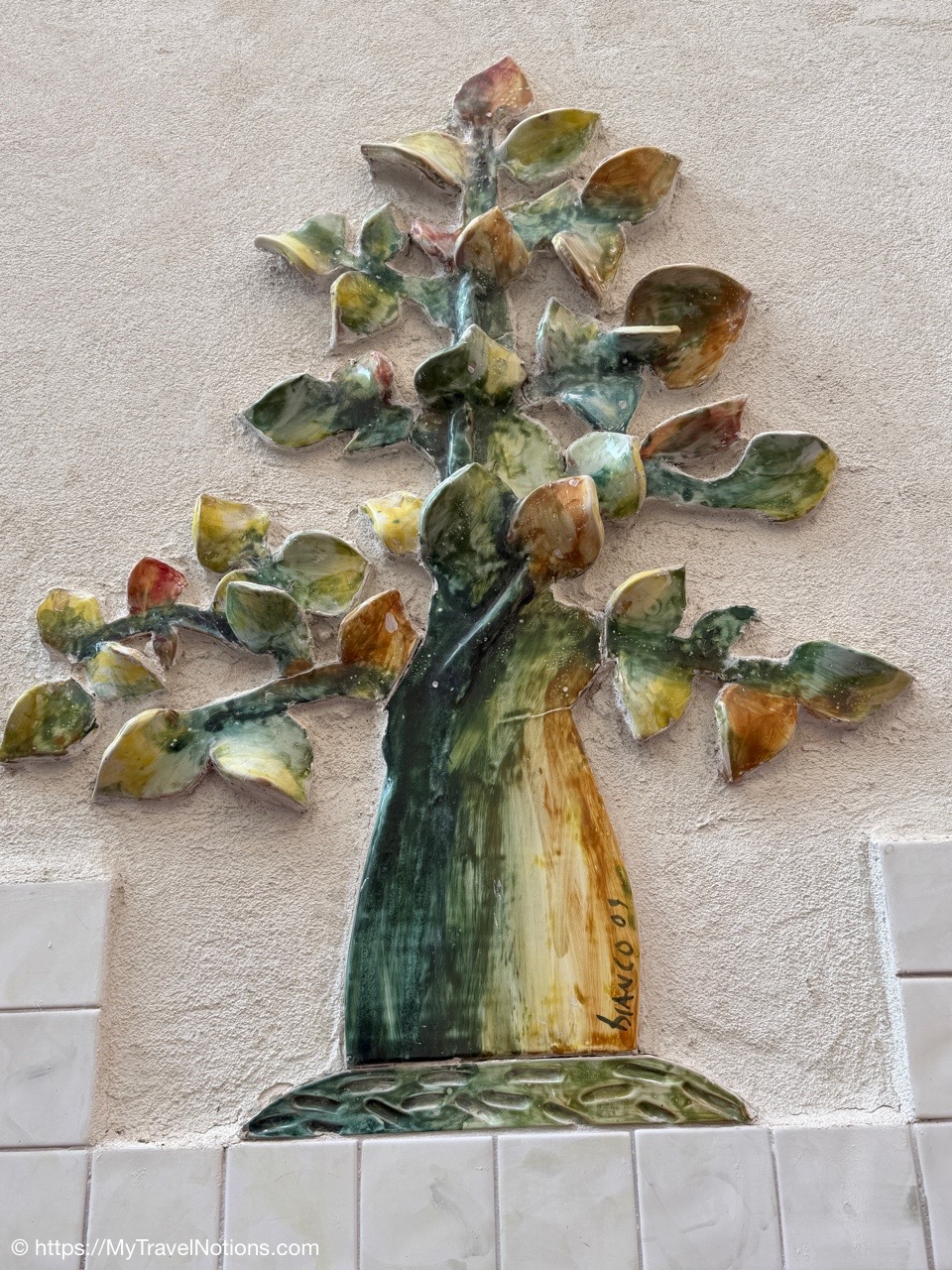
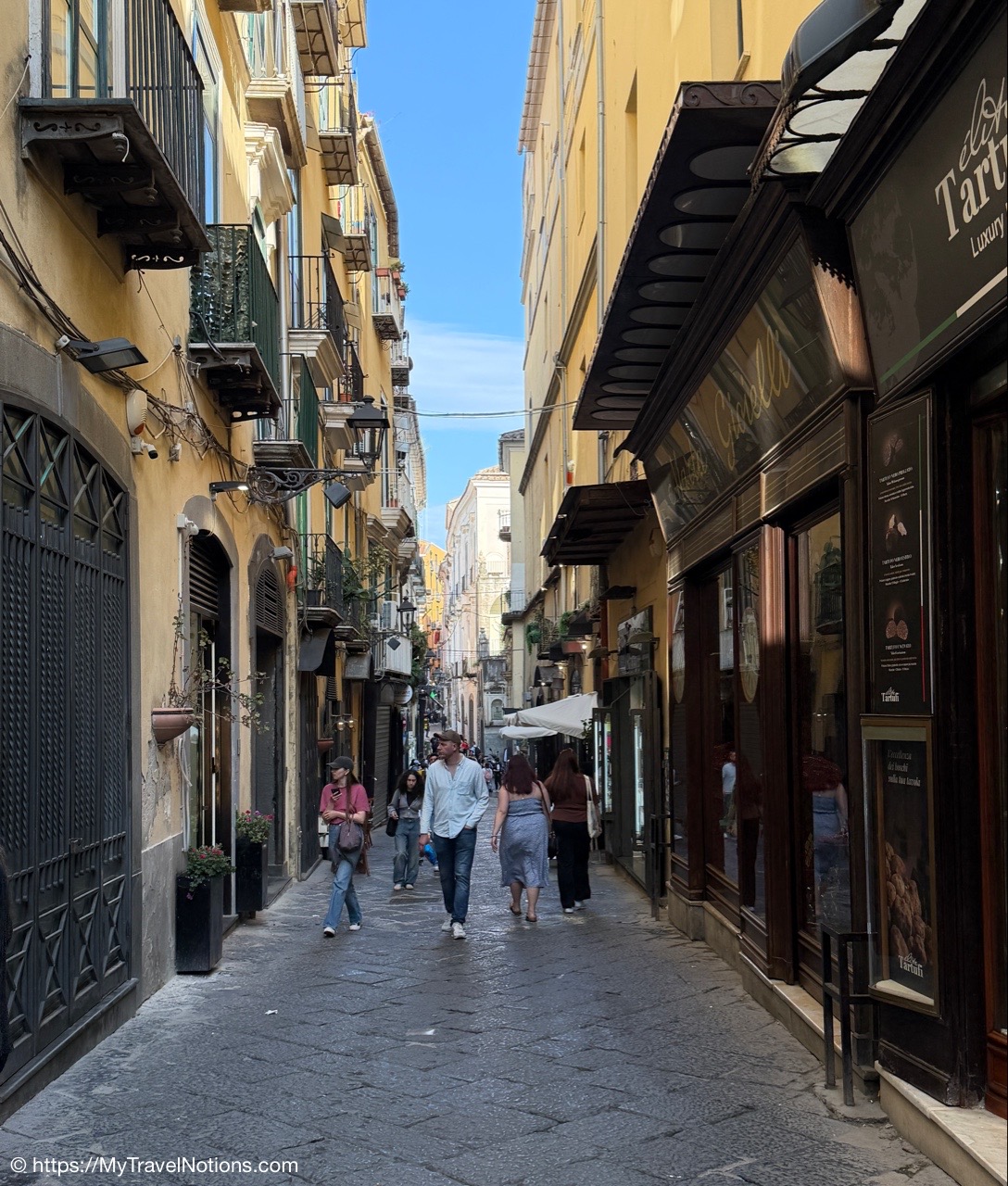
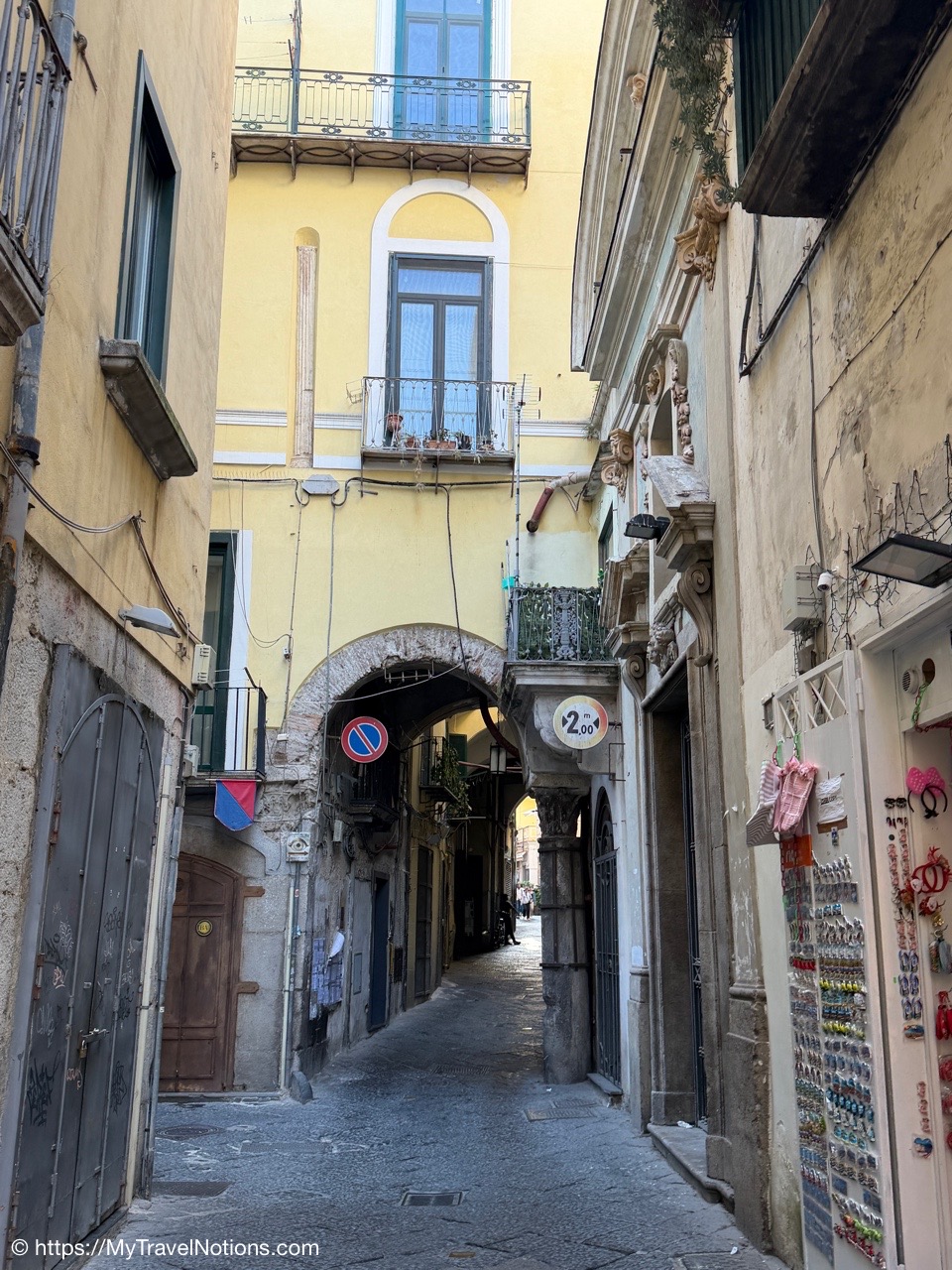
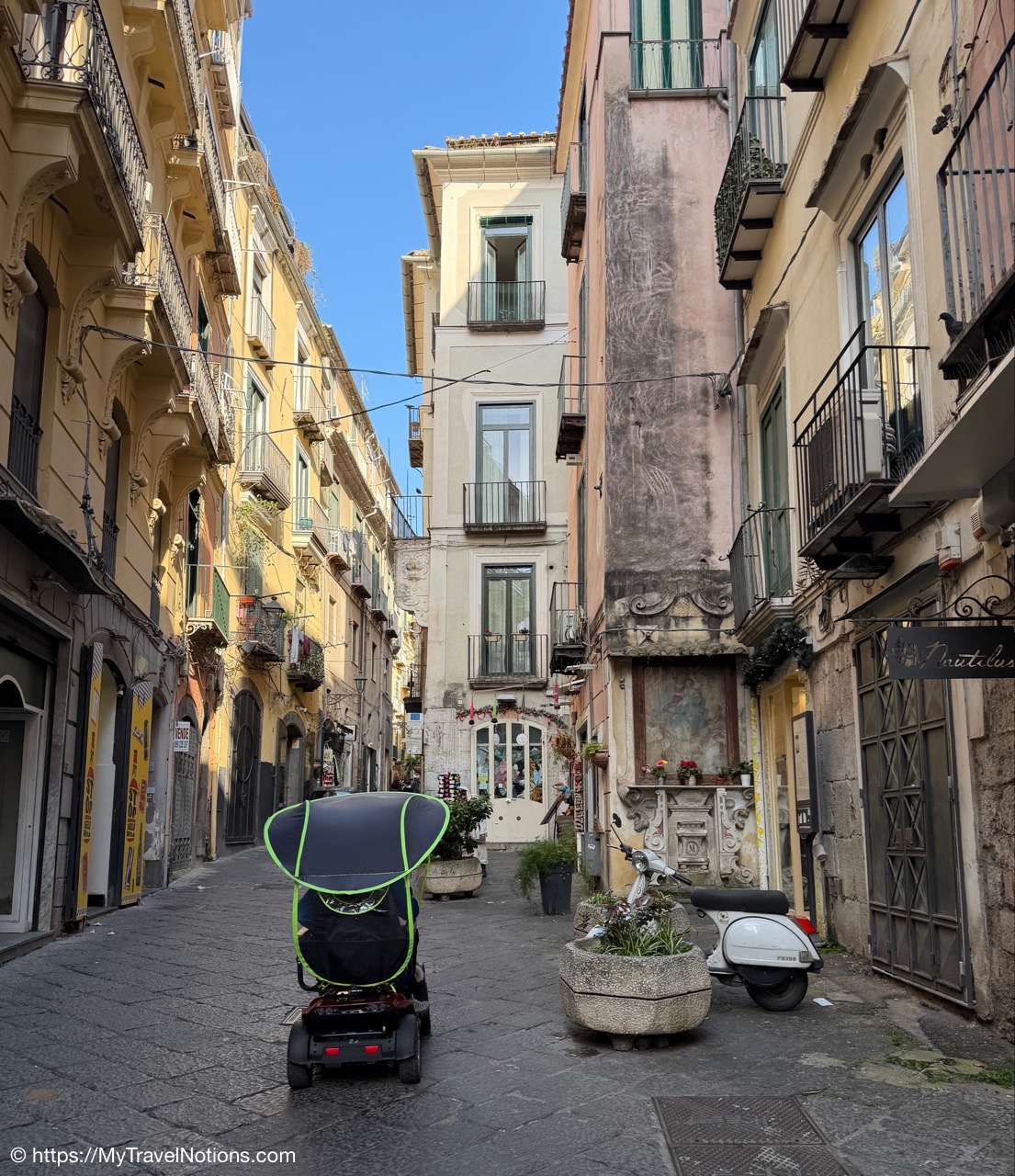
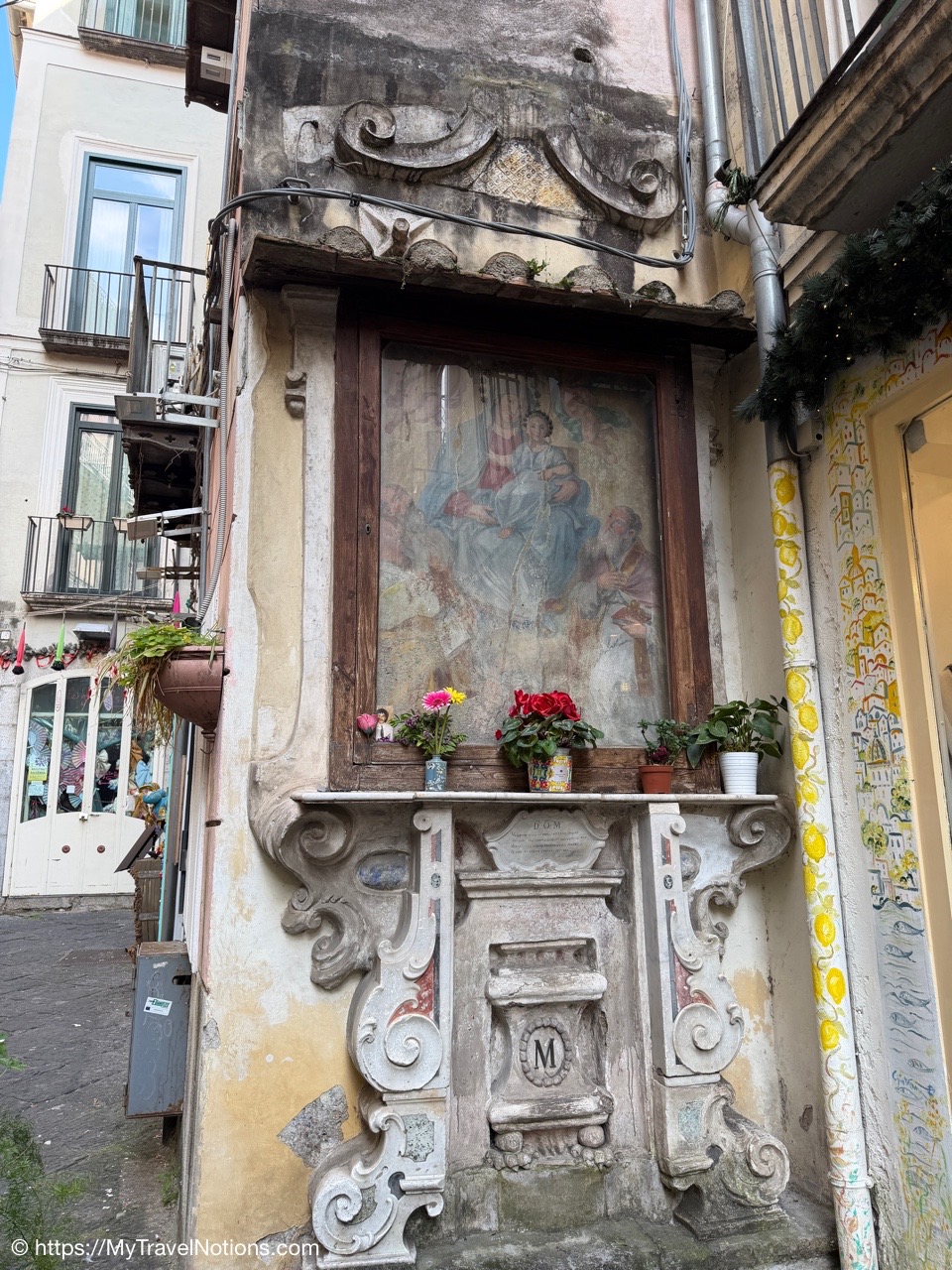
Me standing on the balcony of my room at the Kriò Suite on Via Vella in Salerno with views of the Corso Vittorio Emanuele down towards the historic center of Salerno into Via Mercanti. (April 17, 2026)Walking along the Via Roma towards the seafront and oldest urban park in Salerno. (April 19, 2026)Walking along the Via Roma towards the seafront and oldest urban park in Salerno. (April 19, 2026)Walking along the Via Roma towards the seafront and oldest urban park in Salerno. (April 19, 2026)Walking along the Via Roma towards the seafront and oldest urban park in Salerno. (April 19, 2026)Walking through the park-like promenade of the Lungomare di Salerno or Salerno Seafront. (April 19, 2026)The palm trees of the pedestrian walkway as I head to the oldest urban park of the Villa Comunale di Salerno. (April 19, 2026)Walking along the promenade of the Lungomare di Salerno or Salerno Seafront. (April 19, 2026)I walked along the promenade of the Lungomare di Salerno or Salerno Seafront with the Spiaggia Santa Teresa beach in the distance. (April 19, 2026)I walked along the promenade of the Lungomare di Salerno or Salerno Seafront with the Spiaggia Santa Teresa beach in the distance. (April 19, 2026)A market at the Villa Comunale di Salerno, the oldest urban park in Salerno, by the seafront. (April 19, 2026)A market at the Villa Comunale di Salerno, the oldest urban park in Salerno, by the seafront. (April 19, 2026)A market at the Villa Comunale di Salerno, the oldest urban park in Salerno, by the seafront. (April 19, 2026)A beautiful lemon-encrusted ceramic vase at the Villa Comunale di Salerno, the oldest urban park in Salerno by the seafront. (April 19, 2026)A market at the Villa Comunale di Salerno, the oldest urban park in Salerno, by the seafront. (April 19, 2026)A market at the Villa Comunale di Salerno, the oldest urban park in Salerno, by the seafront. (April 19, 2026)A market at the Villa Comunale di Salerno, the oldest urban park in Salerno, by the seafront. (April 19, 2026)The bronze statue of Giovanni Nicotera at the historic public park along Via Roma in the Villa Comunale di Salerno. The original statue from 1897 was later melted down during World War I to produce ammunition. Nicotera (1828-1894) was a prominent Italian patriot, revolutionary and politician who was a central figure in local southern Italian politics during the early years of a unified Italy. (April 19, 2026)Walking through the Via Dei Canali in Salerno’s historic center towards the Salerno Cathedral. (April 19, 2026)Walking through Via Della Botteghelle in Salerno’s historic center towards the Salerno Cathedral. (April 19, 2026)Walking along Via Giovanni Guarna towards the Salerno Cathedral in the city’s historic center. (April 19, 2026)Walking along Via Giovanni Guarna towards the Salerno Cathedral in the city’s historic center. (April 19, 2026)A ceramic painting on the alleyway along Via Giovanni Guarna towards the Salerno Cathedral in the city’s historic center. (April 19, 2026)Approaching the Duomo di Santa Maria degli Angeli, San Matteo e San Gregorio VII or for short, the Salerno Cathedral. Constructed in 1080, the cathedral is dedicated to San Matteo, known as Saint Matthew the Evangelist the patron saint of the city. Its most famous feature is the underground Crypt of Saint Matthew with its highly elaborate decoration. (April 19, 2026)The Salerno Cathedral built in 1080 upon the ruins of a 9th century Christian church and, beneath that, a Roman temple. The cathedral was dedicated to Saint Matthew the Evangelist. (April 19, 2026)The portico of the Salerno Cathedral. (April 19, 2026)The portico of the Salerno Cathedral. (April 19, 2026)Inside the nave of the Salerno Cathedral with its beautiful grand apse and mosaic-decorated pulpits . (April 19, 2026)The grand central apse of the Salerno Cathedral is flanked by two smaller apses. All three are decorated with 12th century mosaics in vivid hues of blue, red and gold. (April 19, 2026)The floor is decorated floor of the grand central apse with itsinlaid marble and beautiful mosaics inside the nave, choir and transept of the Salerno Cathedral. Originally installed in the 11th and 12th centuries, these colorful geometric patterns were crafted using precious stones like red and green porphyry, serpentine and limestone. (April 19, 2026)The grand central apse of the Salerno Cathedral features the medieval mosaics of the Virgin Mary, angels, church donors and bishops. She is traditionally depicted as the Queen of Heaven, frequently flanked by other significant figures such as the patron saint of the church (the Apostle St. Matthew) and Archbishop Alfanus I, or surrounded by a choir of angels. (April 19, 2026)The tomb of Pope Gregory VII, who rejected German domination of the Holy Roman Empire, is housed in a chapel to the right of the grand central apse inside the Salerno Cathedral. Gregory VII (reigned 1073–1085) was a fiercely reformist medieval pontiff who championed the supremacy of the Church over secular rulers. (April 19, 2026)The tomb of Pope Gregory VII, who rejected German domination of the Holy Roman Empire, is housed in a chapel to the right of the grand central apse inside the Salerno Cathedral. Gregory VII (reigned 1073–1085) was a fiercely reformist medieval pontiff who championed the supremacy of the Church over secular rulers. (April 19, 2026)The floor is decorated with inlaid marble and beautiful mosaics inside the nave, choir and chapels of the Salerno Cathedral. Originally installed in the 11th and 12th centuries, these colorful geometric patterns were crafted using precious stones like red and green porphyry, serpentine and limestone. (April 19, 2026)The floor is decorated with inlaid marble and beautiful mosaics inside the nave, choir and chapels of the Salerno Cathedral. Originally installed in the 11th and 12th centuries, these colorful geometric patterns were crafted using precious stones like red and green porphyry, serpentine and limestone. (April 19, 2026)Feet selfie on the beautiful mosaic floors across the nave, choir and chapels of the Salerno Cathedral. (April 19, 2026)The floor is decorated with inlaid marble and beautiful mosaics inside the nave, choir and transept of the Salerno Cathedral. Originally installed in the 11th and 12th centuries, these colorful geometric patterns were crafted using precious stones like red and green porphyry, serpentine and limestone. (April 19, 2026)The floor is decorated with inlaid marble and beautiful mosaics inside the nave, choir and transept of the Salerno Cathedral. Originally installed in the 11th and 12th centuries, these colorful geometric patterns were crafted using precious stones like red and green porphyry, serpentine and limestone. (April 19, 2026)The floor is decorated with inlaid marble and beautiful mosaics inside the nave, choir and transept of the Salerno Cathedral. Originally installed in the 11th and 12th centuries, these colorful geometric patterns were crafted using precious stones like red and green porphyry, serpentine and limestone. (April 19, 2026)The left chapel of the grand central apse of the Salerno Cathedral is dedicated to the Holy Virgin and historically served as the chapel for relics. (April 19, 2026)The door leading down to the crypt of the Salerno Cathedral where the relics of Saint Matthew are housed and decorated with frescoes by Belisario Corenzio depicting scenes from the Gospels. (April 19, 2026)The most famous and important section of the Salerno Cathedral is this basilica-like crypt, containing the remains of one of the twelve apostles: Saint Matthew. The remains of Matthew the Apostle were brought here in 954 AD. The crypt was heavily renovated and redecorated in the lavish Baroque style between 1606 and 1608 under the designs of architect Domenico Fontana, with final marble embellishments wrapping up around 1763. (April 19, 2026)The lavishly decorated underground crypt of the Apostle Matthew features 17th-century Baroque marble, sweeping frescoes, and an ornate bronze statue of the saint. The ceiling frescoes were painted by Belisario Corenzio and depict scenes from the Gospel of Matthew, as well as some episodes of the history of Salerno (such as the siege of the city by the French). (April 19, 2026)The lavishly decorated underground crypt of the Apostle Matthew features 17th-century Baroque marble, sweeping frescoes, and an ornate bronze statue of the saint. The ceiling frescoes were painted by Belisario Corenzio and depict scenes from the Gospel of Matthew, as well as some episodes of the history of Salerno (such as the siege of the city by the French). (April 19, 2026)The original remains of Saint Matthew can be seen inside a hole of the crypt’s main altar of the Salerno Cathedral. (April 19, 2026)Me at the Aqueduct of via Arce from the Middle Ages in Salerno. April 19, 2026)The Aqueduct of Via Arce from the Middle Ages in Salerno. It was fundamental to the system that supplied Salerno with water and branched out in three main directions. The stretch of the aqueduct in Via Arce was part of this last supply line and had two branches: a low one, the older of the two and a higher one. (April 19, 2026)The Aqueduct of Via Arce from the Middle Ages in Salerno. It was fundamental to the system that supplied Salerno with water and branched out in three main directions. The stretch of the aqueduct in Via Arce was part of this last supply line and had two branches: a low one, the older of the two and a higher one. (April 19, 2026)The Aqueduct of Via Arce from the Middle Ages in Salerno. It was fundamental to the system that supplied Salerno with water and branched out in three main directions. The stretch of the aqueduct in Via Arce was part of this last supply line and had two branches: a low one, the older of the two and a higher one. (April 19, 2026)The Aqueduct of Via Arce from the Middle Ages in Salerno. It was fundamental to the system that supplied Salerno with water and branched out in three main directions. The stretch of the aqueduct in Via Arce was part of this last supply line and had two branches: a low one, the older of the two and a higher one. (April 19, 2026)The Aqueduct of Via Arce from the Middle Ages in Salerno. It was fundamental to the system that supplied Salerno with water and branched out in three main directions. The stretch of the aqueduct in Via Arce was part of this last supply line and had two branches: a low one, the older of the two and a higher one. (April 19, 2026)Walking from the Corso Vittorio Emanuele into the historic center of Salerno along Via Mercanti. This side street, along Via Mercanti is the Piazza Sedile di Porta Nova. (April 20, 2026)Walking along Via Mercanti in the historic center of Salerno. (April 20, 2026)Walking along Via Mercanti in the historic center of Salerno. (April 20, 2026)Walking along Via Mercanti in the historic center of Salerno. (April 20, 2026)Walking along Via Mercanti in the historic center of Salerno. (April 20, 2026)Walking along Via Mercanti in the historic center of Salerno. (April 20, 2026)The Virtual Museum, housed in the former Church of San Gregorio Magno, situated along Via Mercanti in the heart of Salerno’s historic. (April 20, 2026)Walking along Via Mercanti in the historic center of Salerno with the Virtual Museum, housed in the former Church of San Gregorio Magno to the right. (April 20, 2026)One of the colorful ceramic trees on the exterior of the Virtual Museum, housed in the former Church of San Gregorio Magno, situated along Via Mercanti in the heart of Salerno’s historic. (April 20, 2026)Walking along Via Mercanti in the historic center of Salerno. (April 20, 2026)Walking along Via Mercanti in the historic center of Salerno. (April 20, 2026)Walking along Via Mercanti in the historic center of Salerno. (April 20, 2026)One of the many Madonna votive shrines or Madonnelle along the street corners of the historic center in Salerno. These kinds of architectural shrines dedicated to the Virgin Mary date from medieval to modern times and traditionally served as physical protectors of neighborhoods while also providing vital street illumination before the advent of electricity. (April 20, 2026)Walking along the alleyway of Via Dogana Vecchia in the historic center of Salerno. (April 20, 2026)One of the many Madonna votive shrines or Madonnelle along the street corners of the historic center in Salerno. These kinds of architectural shrines dedicated to the Virgin Mary date from medieval to modern times and traditionally served as physical protectors of neighborhoods while also providing vital street illumination before the advent of electricity. (April 20, 2026)
The Ancient Town of Paestum
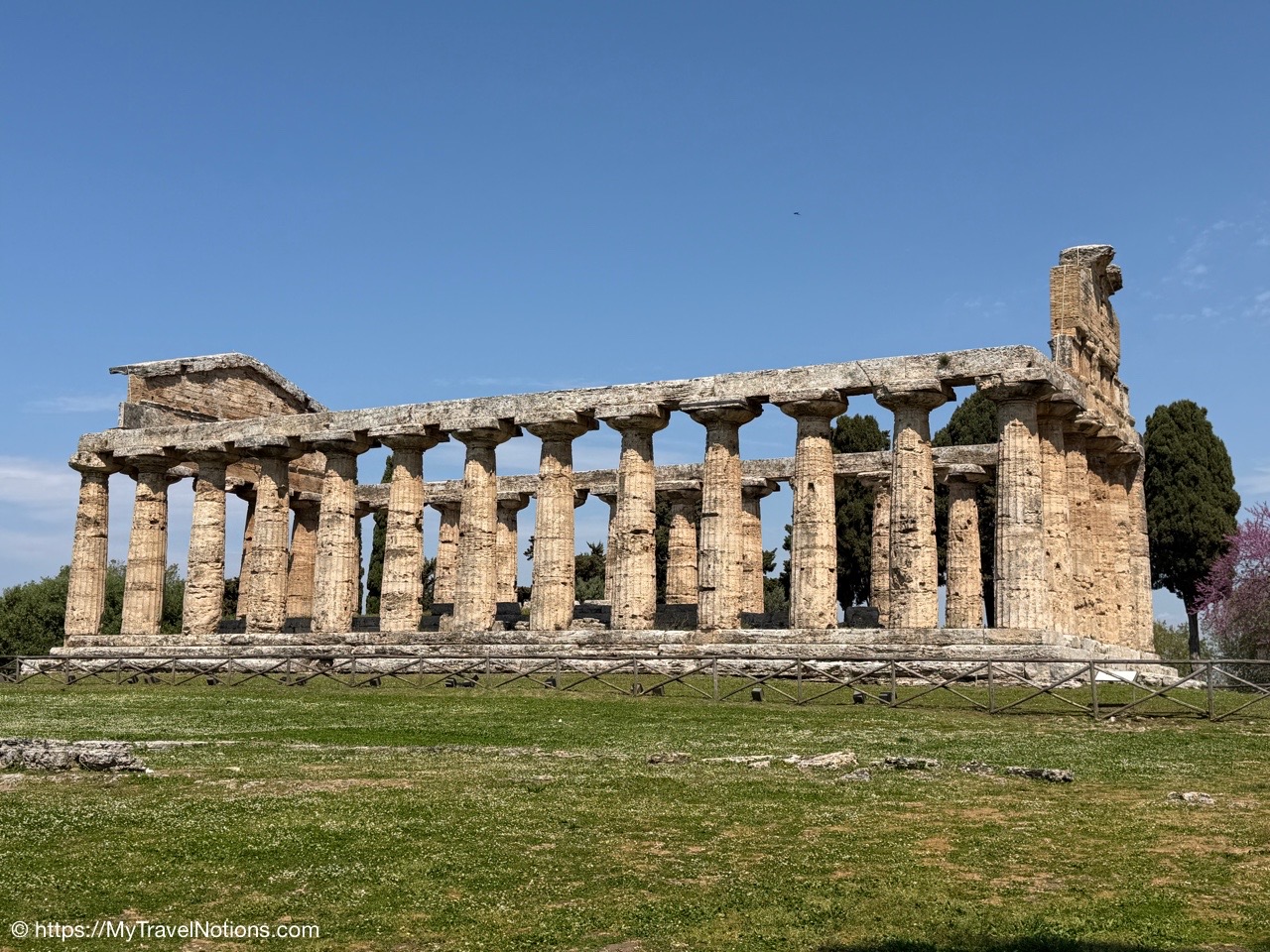
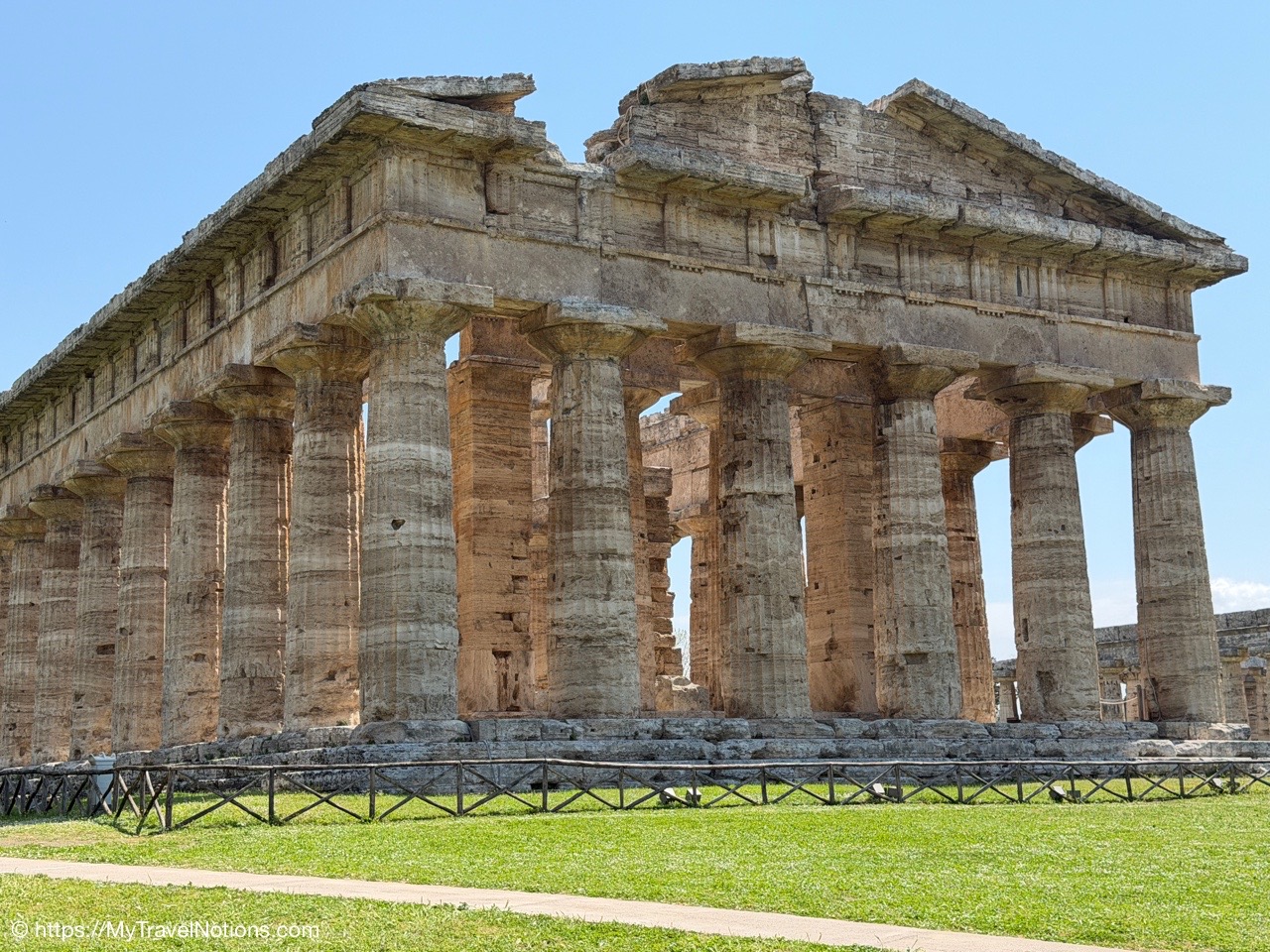
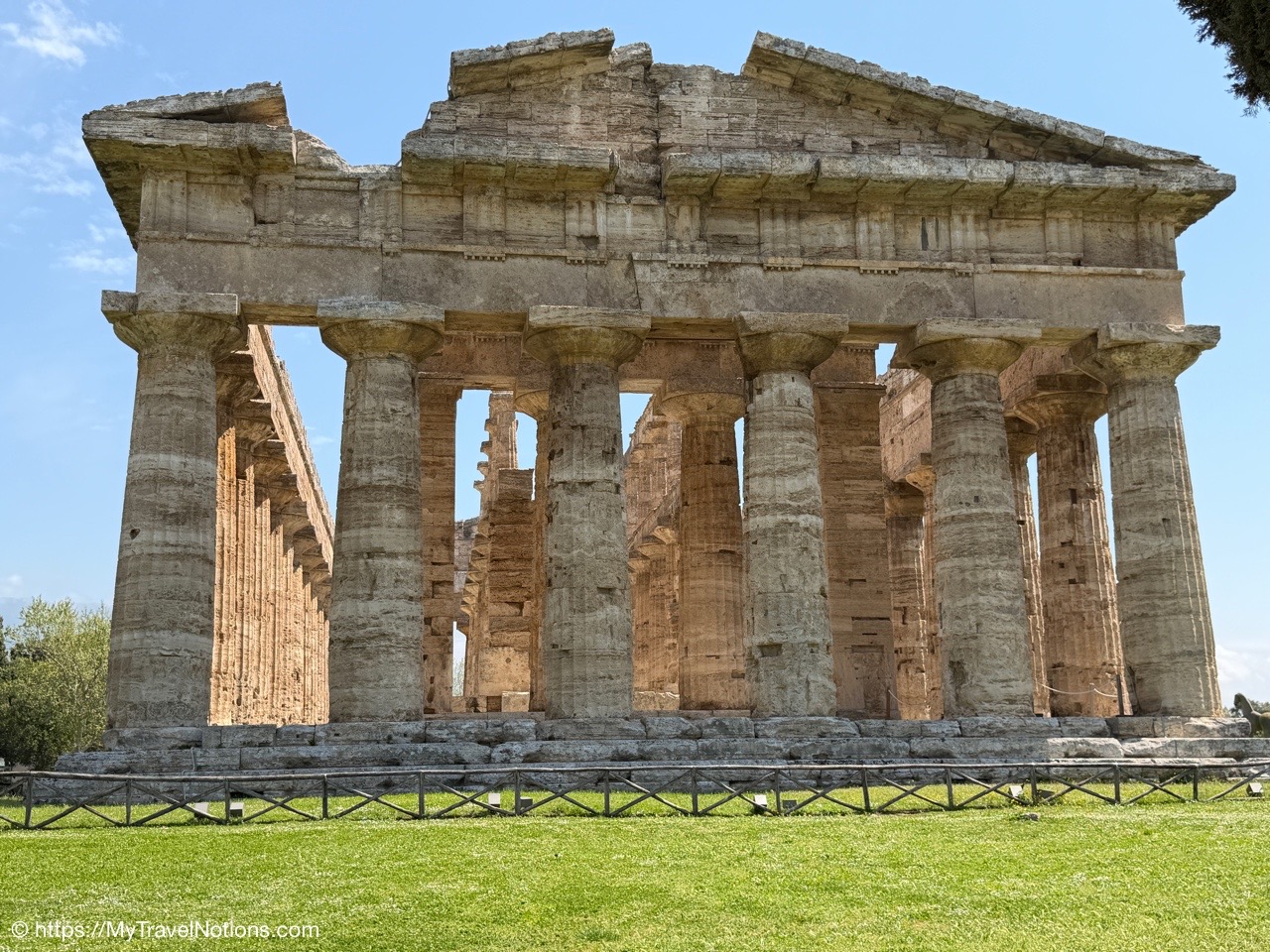
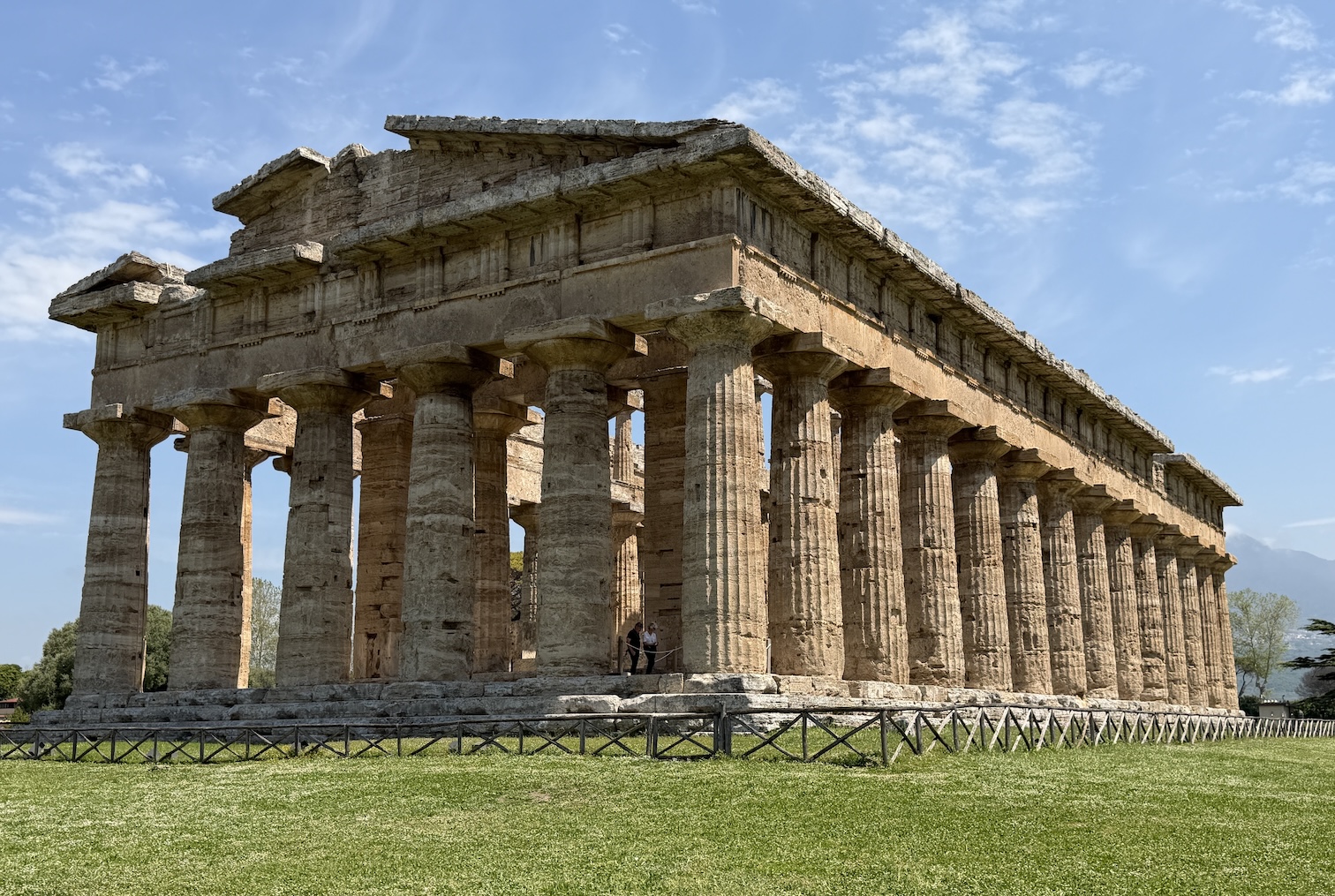
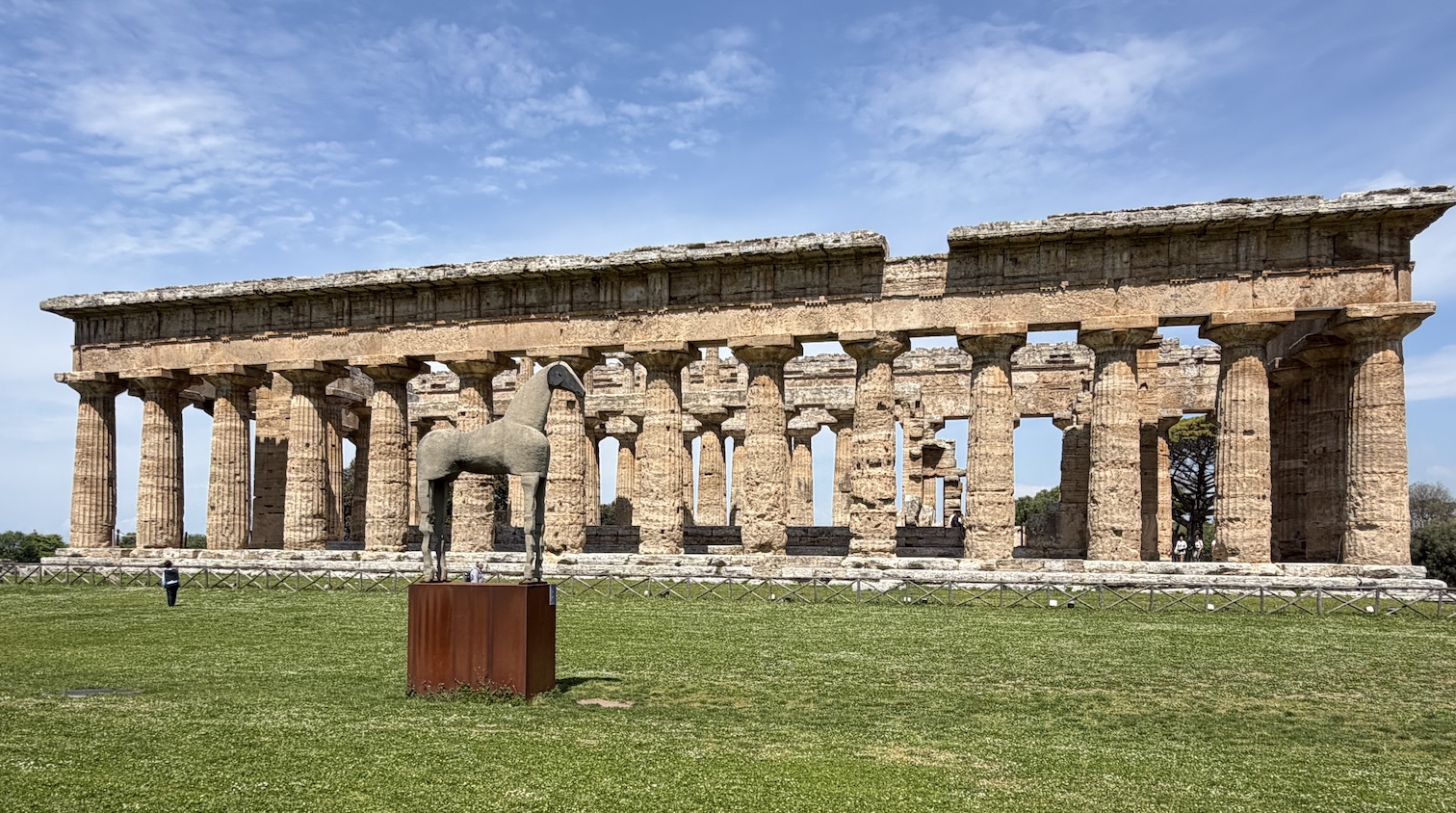
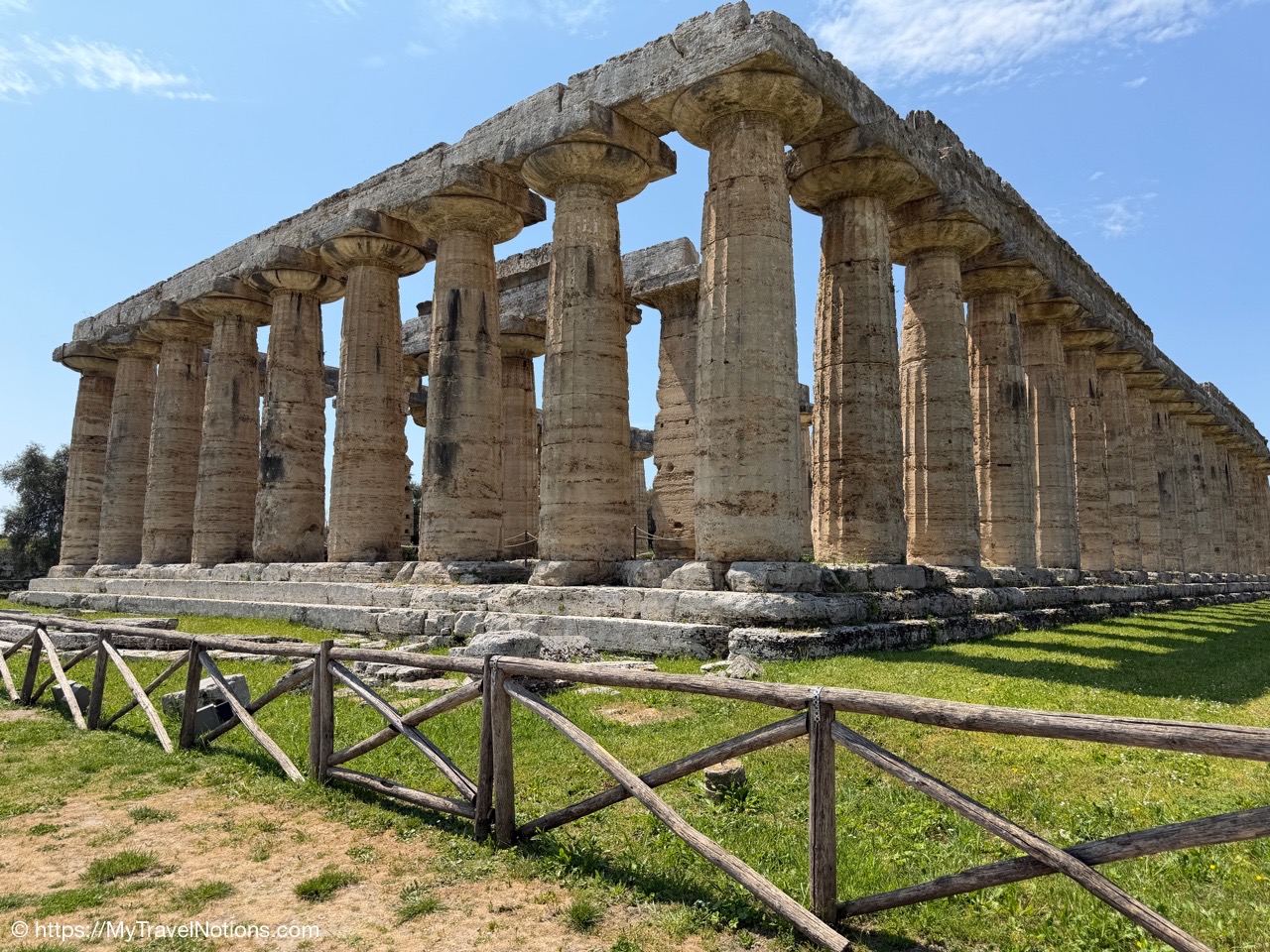
Paestum contains three of the best-preserved ancient Greek temples in the world and I knew I wanted to see them. It was easy to do. About a 30 minute train ride from Salerno and then a short walk from the Paestum train station into the ancient and archaeological city. These archaeological ruins, a UNESCO World Heritage Site, is located within the Capaccio-Paestum municipality of the Campania region. It sits just south of the modern town of Paestum, a seaside resort.
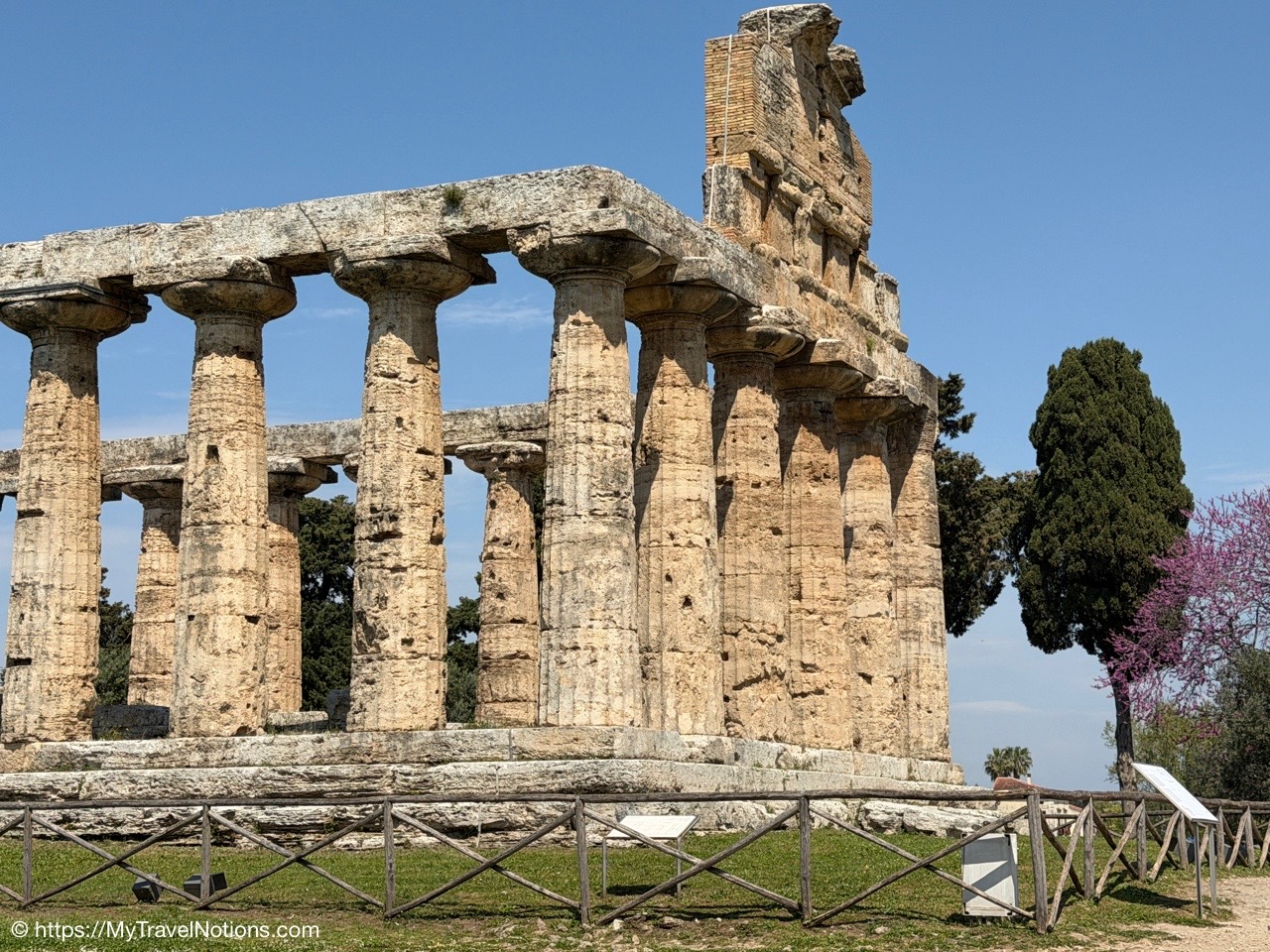
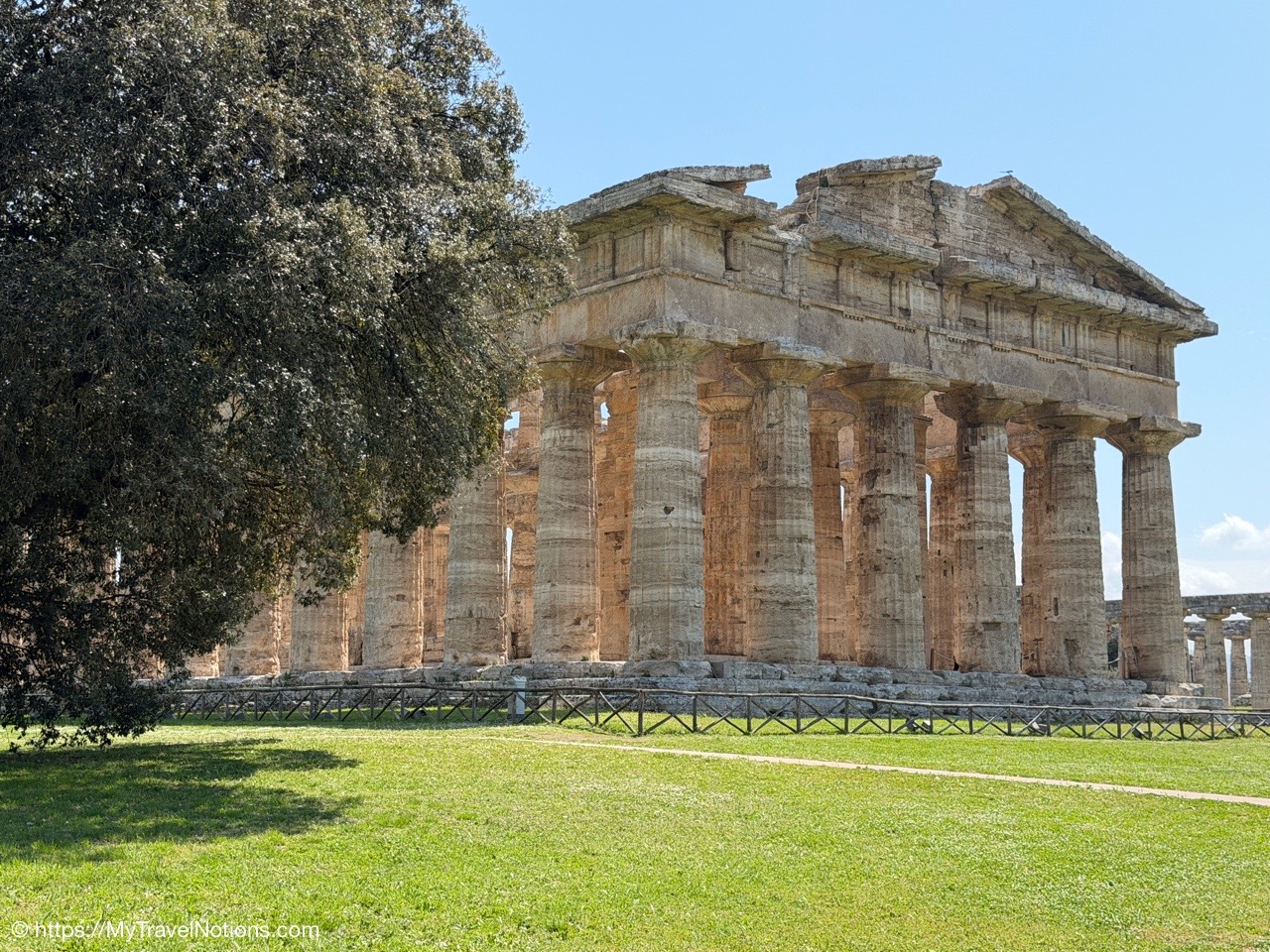
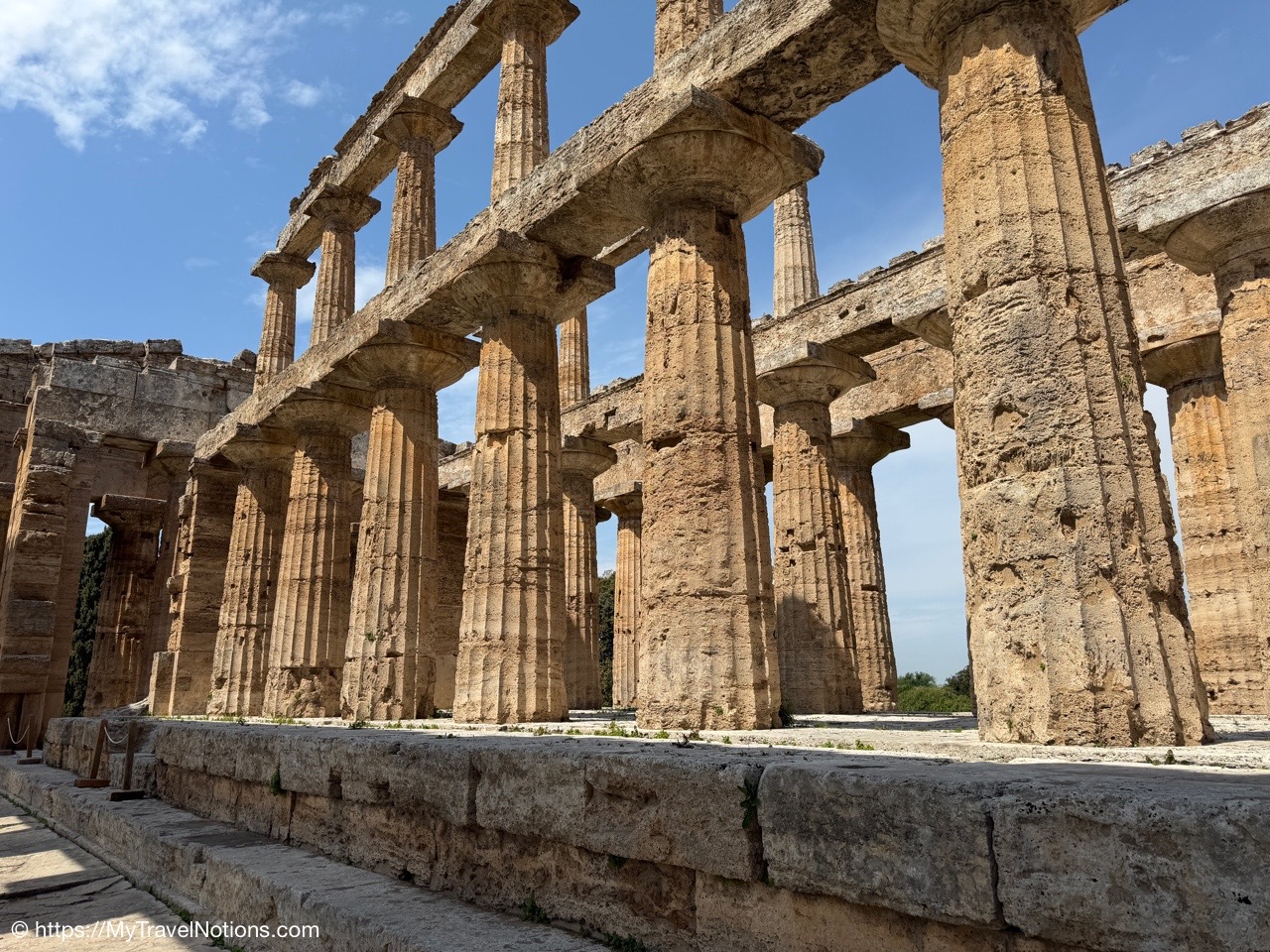
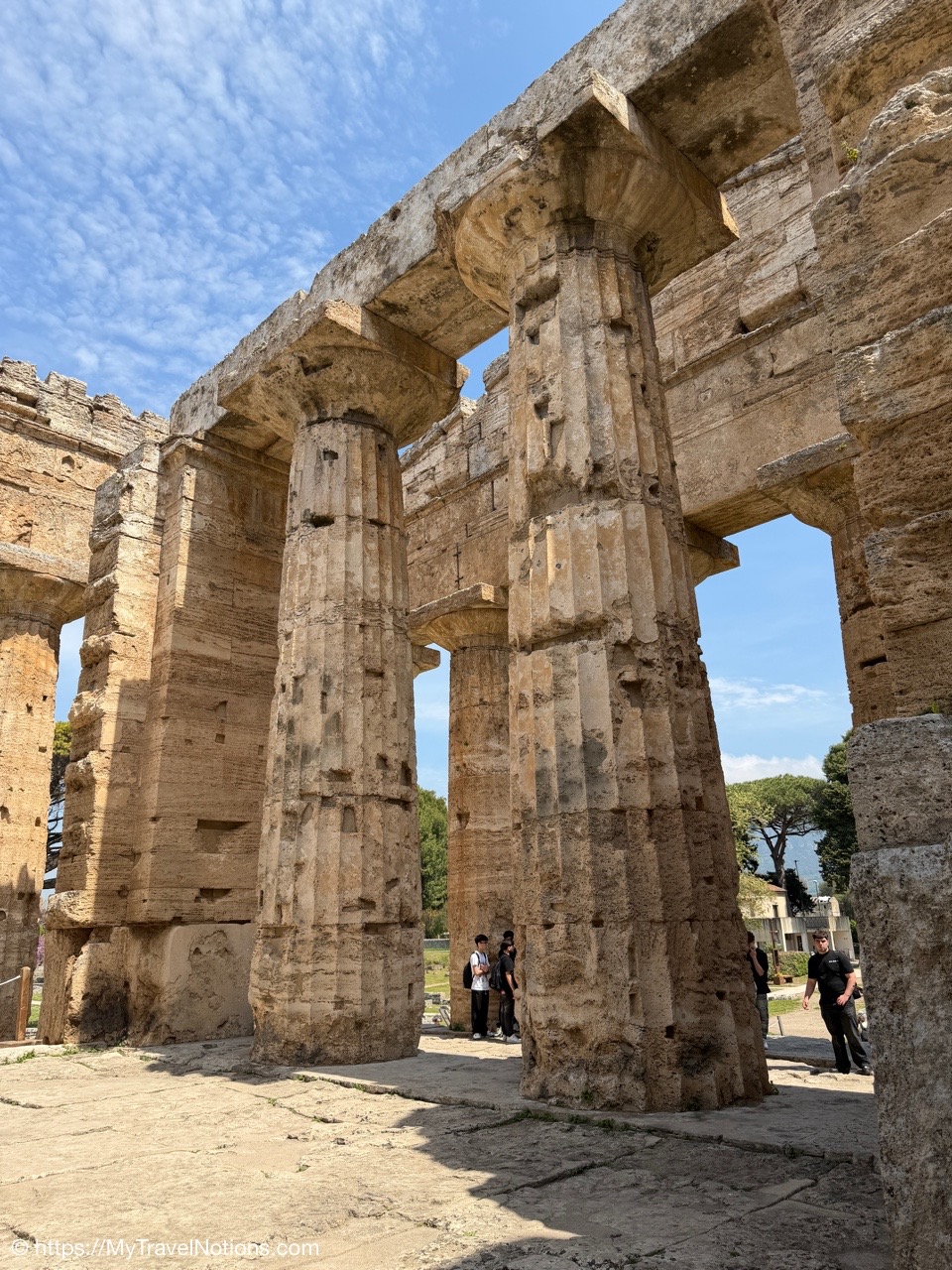
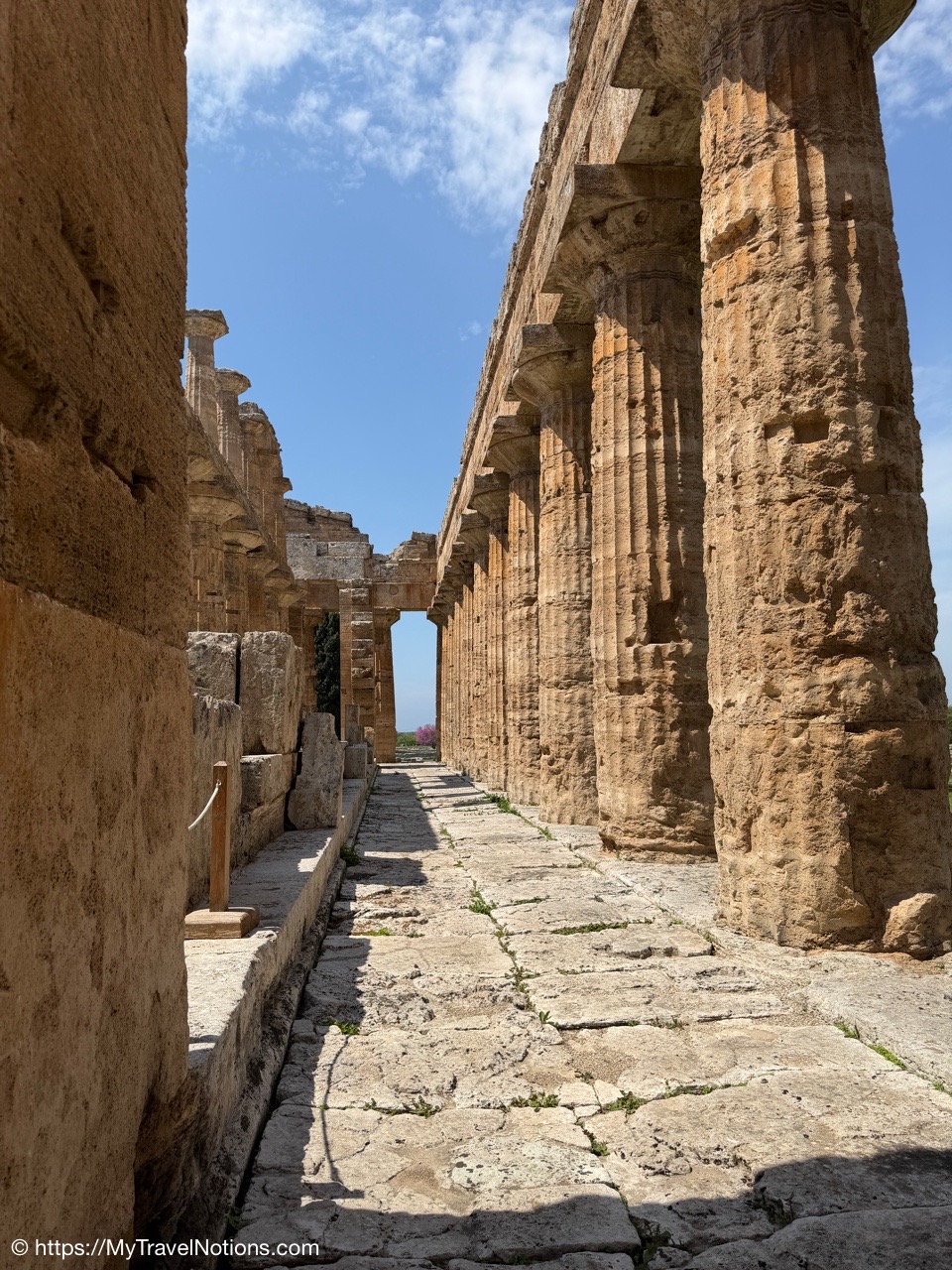
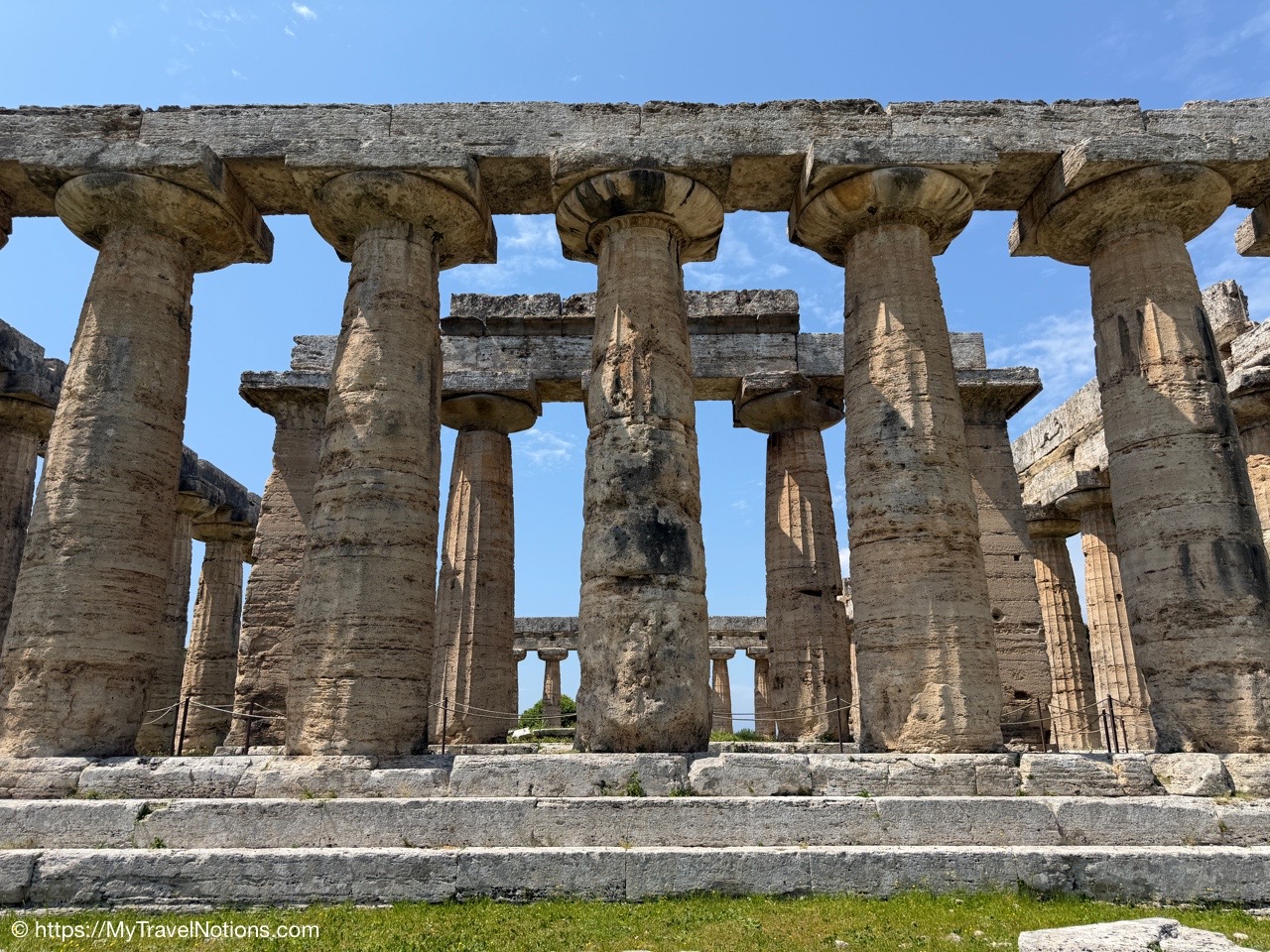
The temples in the Doric order, a classic Greek architectural style, date from about 550 to 450 BCE and are in an incredible state of preservation. The Doric order is one of three ancient Greek orders and later Roman architecture; the other two were the Ionic and the Corinthian. Doric columns have a simple, rounded capital at the top; a heavy, fluted or smooth column shaft; and no base.
The three temples are dedicated to Athena, Neptune and Hera.
Paestum represents a blend of both the Greek and Roman cultures. Founded by Greek colonists around 600 BCE as Poseidonia, they built the now standing temples.The city was later conquered by the Lucanians, and finally became a Roman colony in 273 BCE, at which point it was renamed Paestum.
Come check out this ancient town with me.
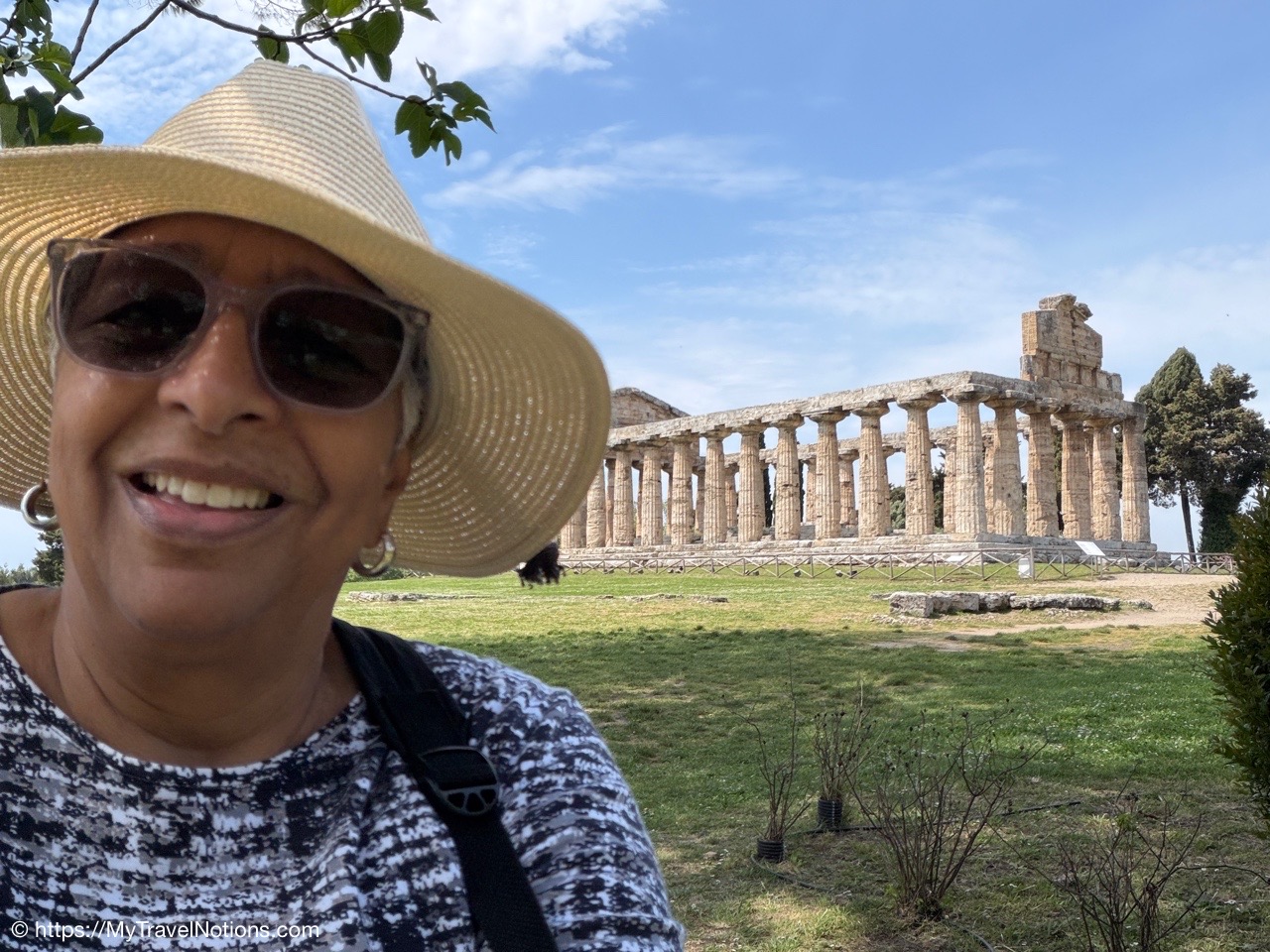
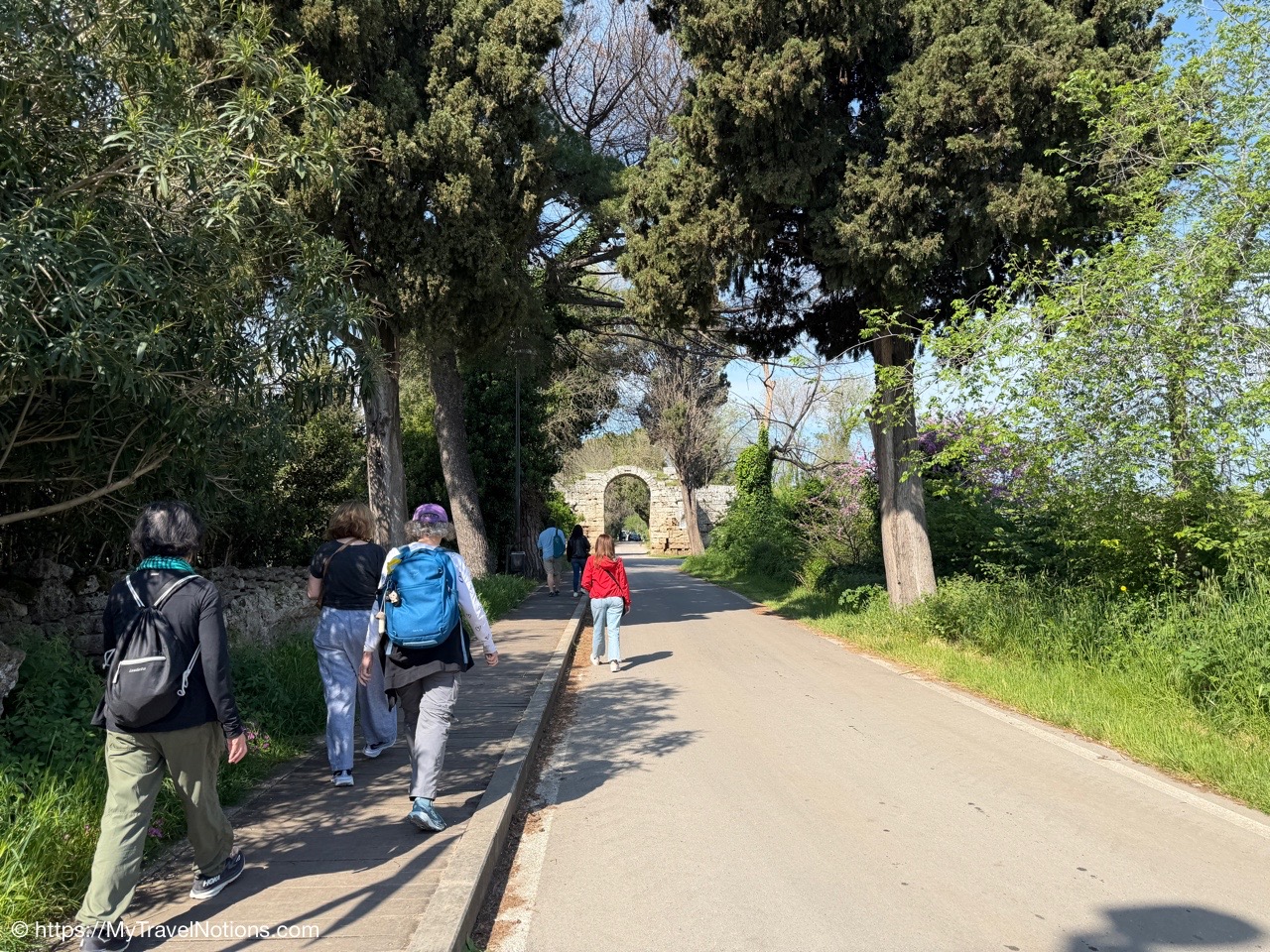
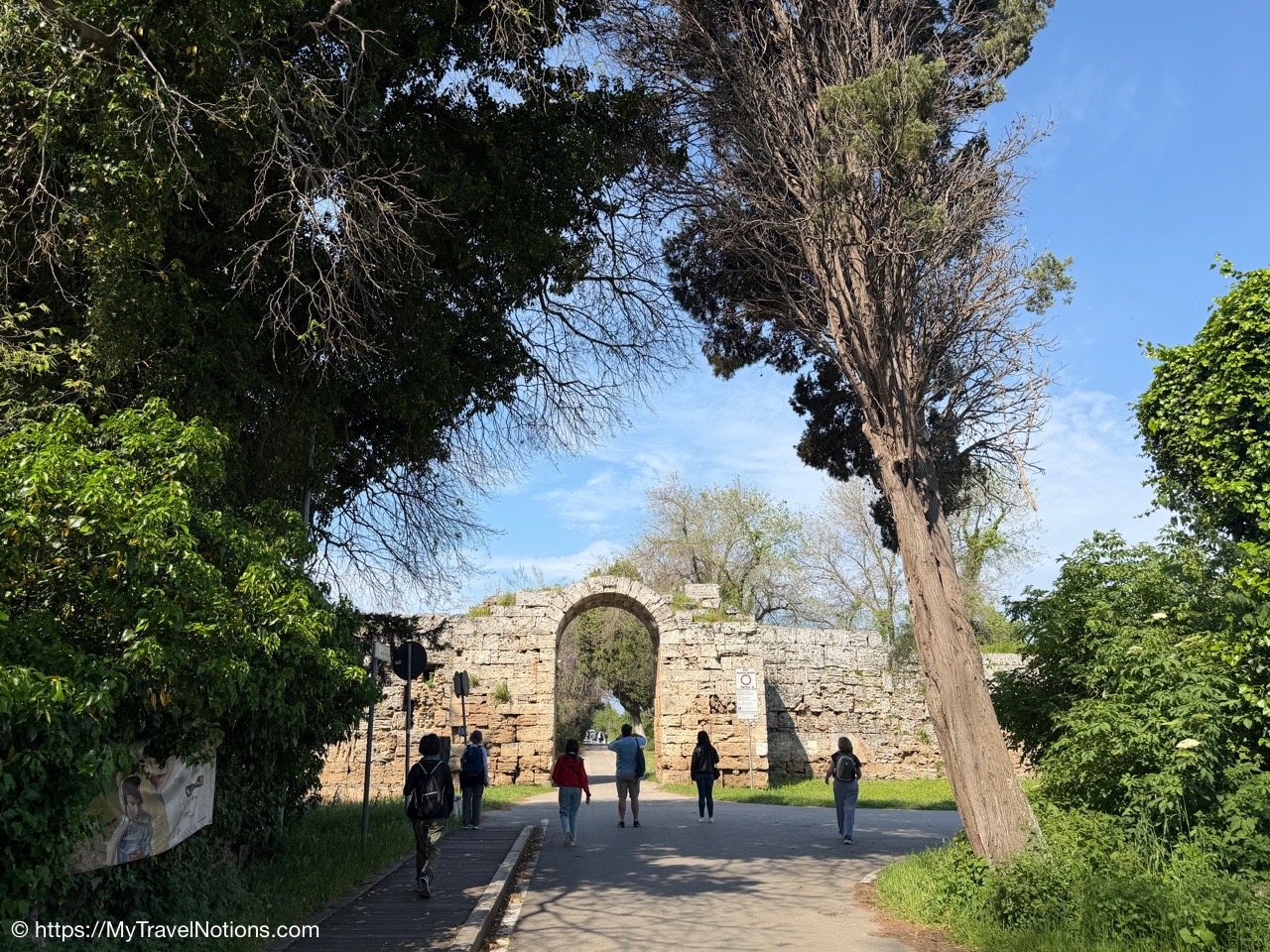
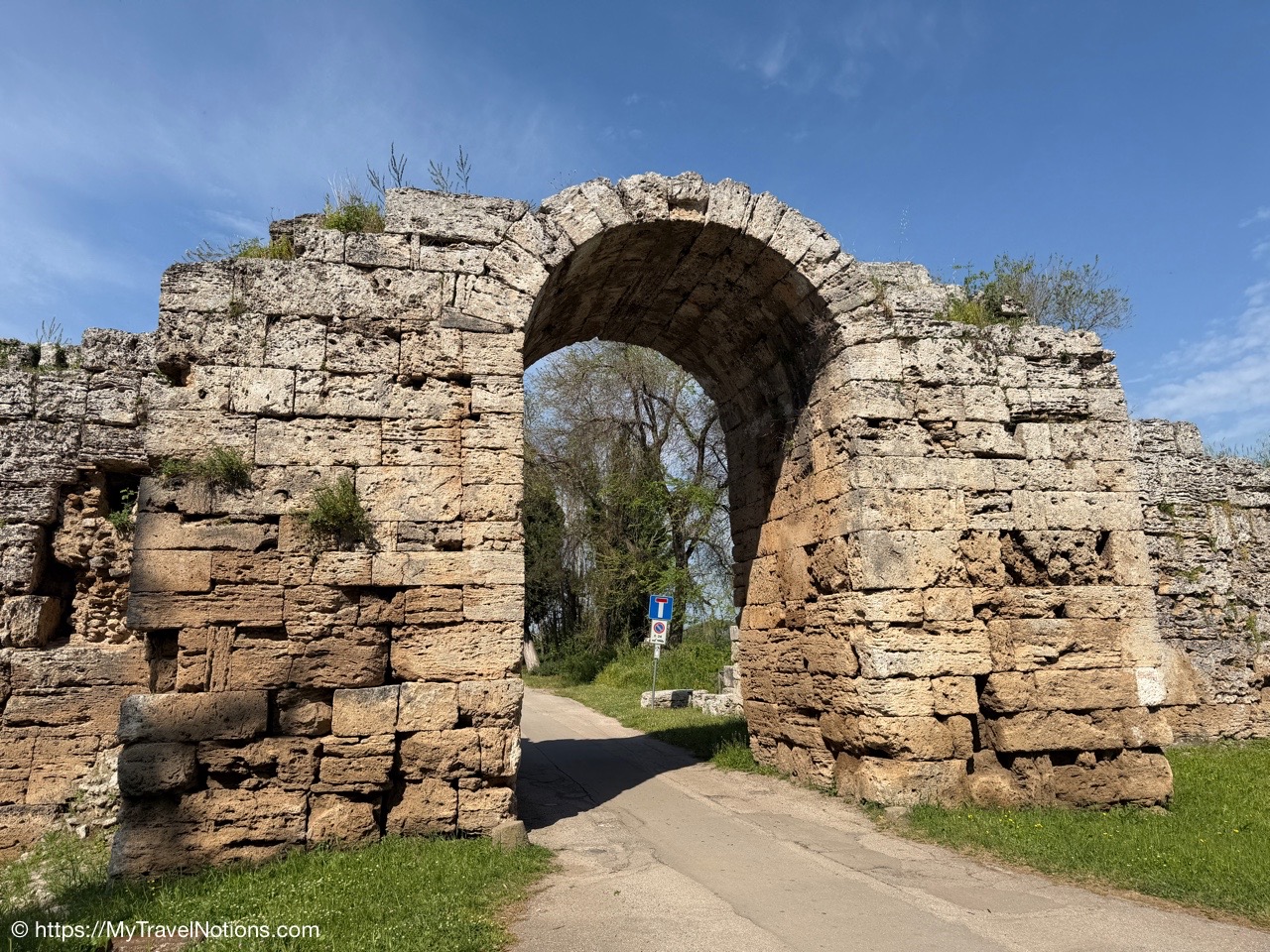
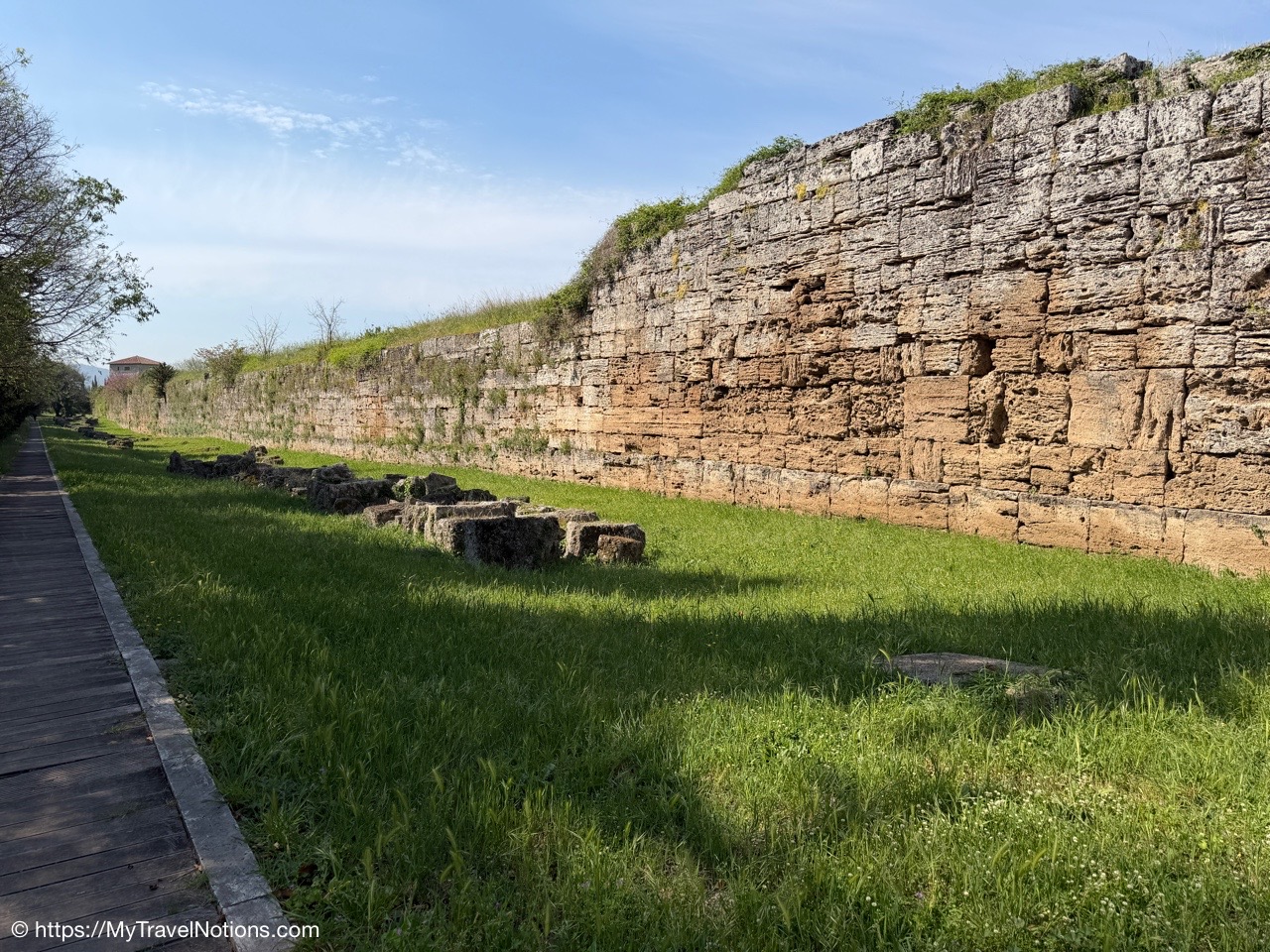
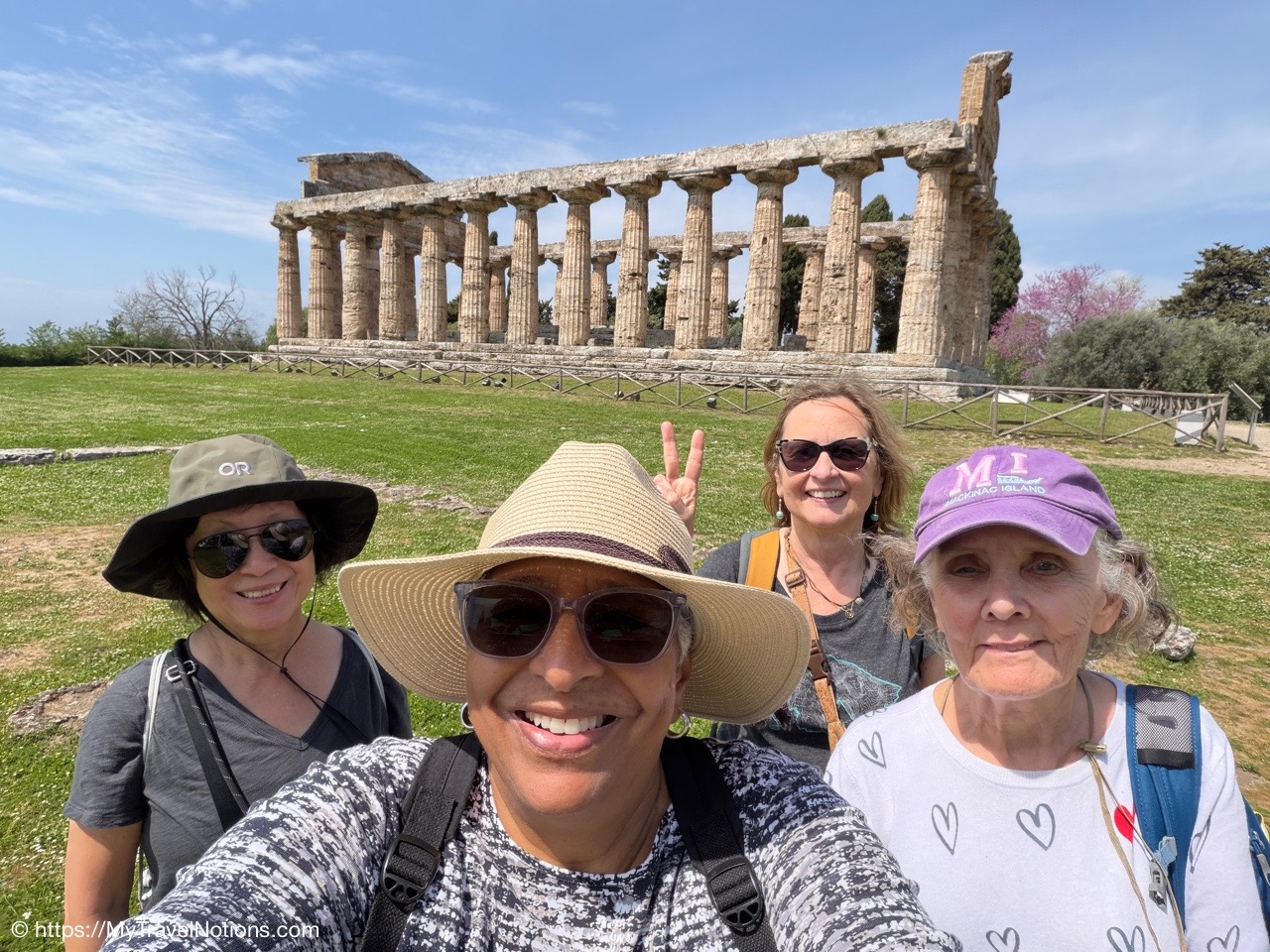
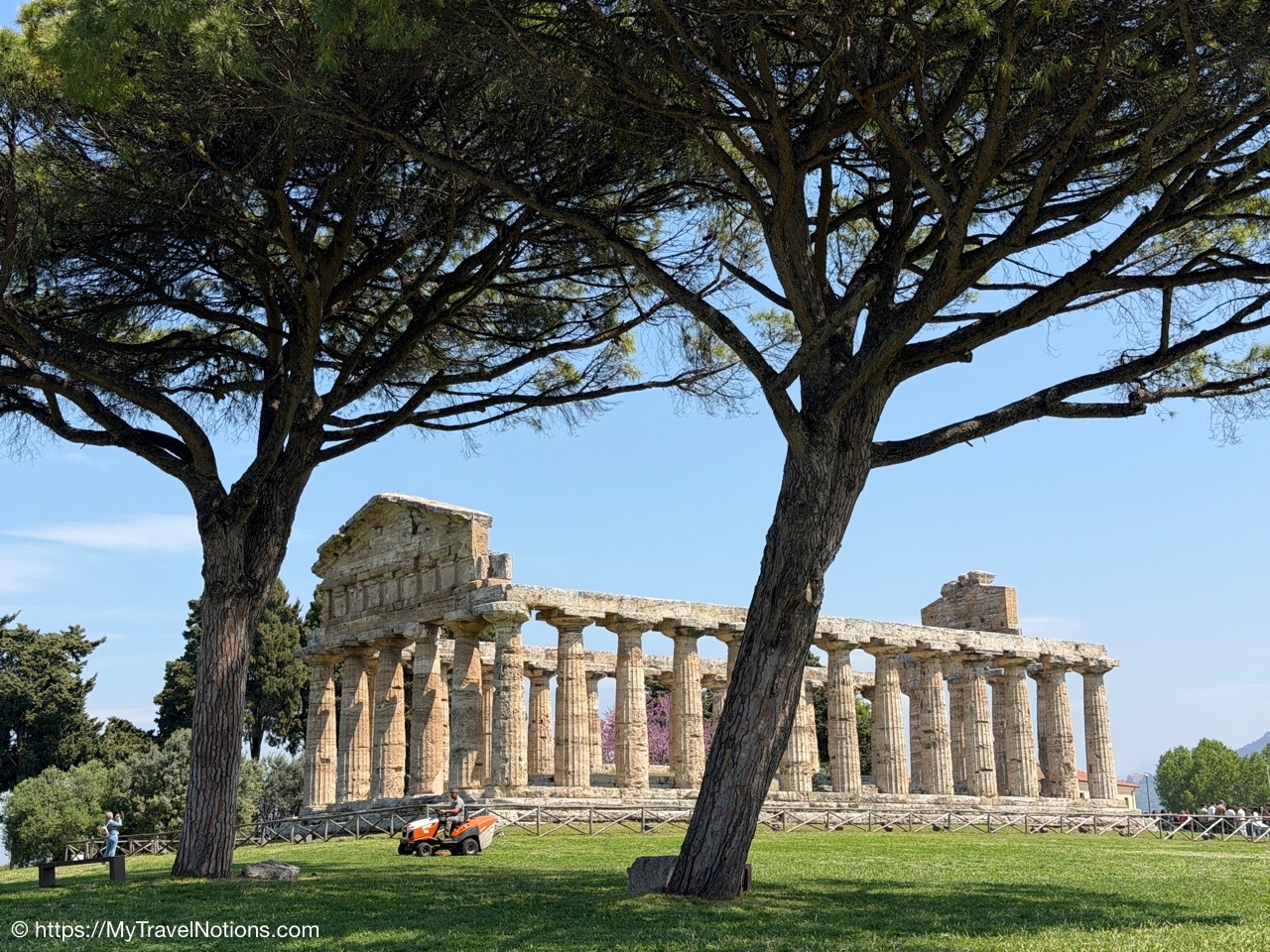
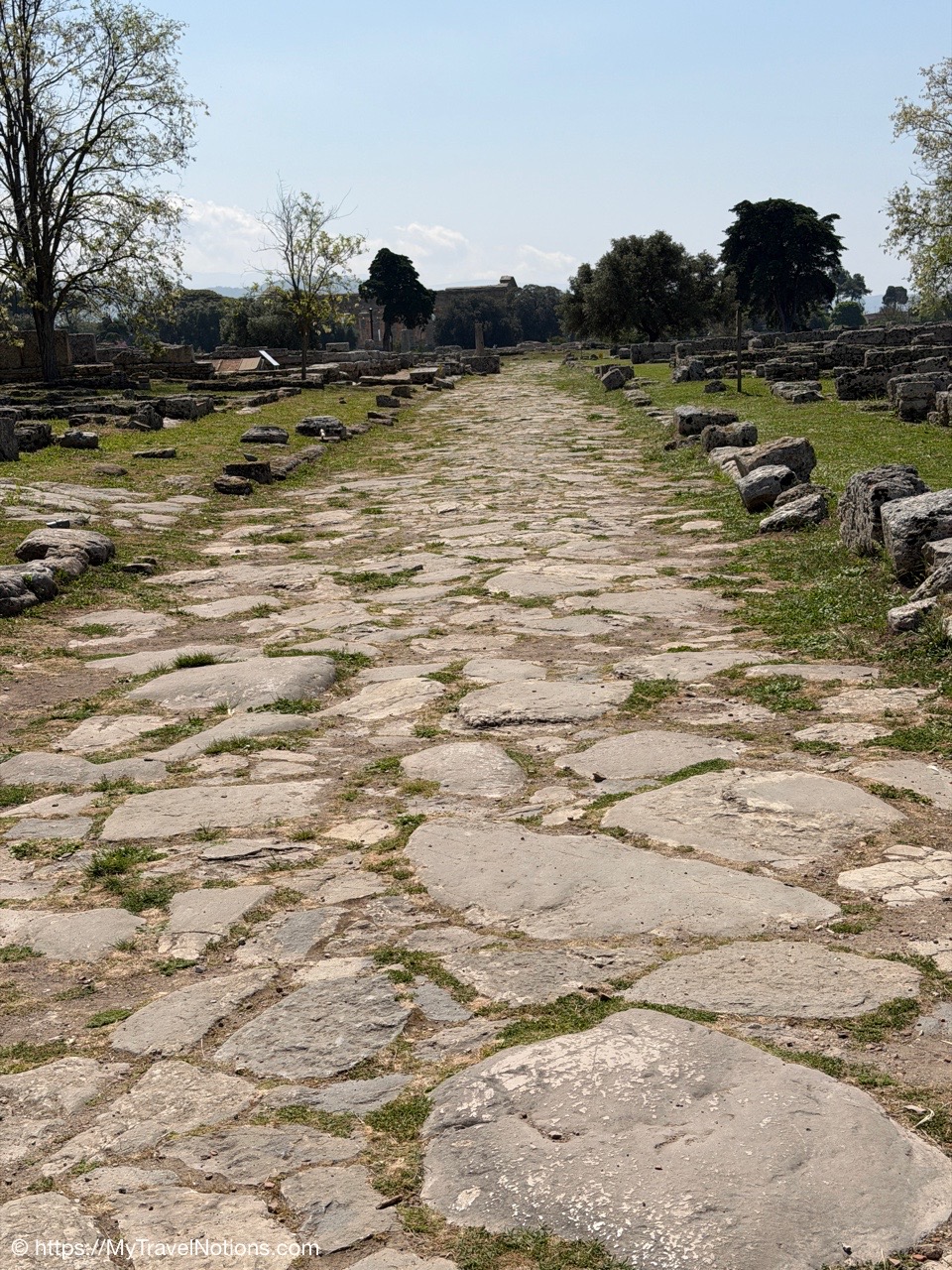
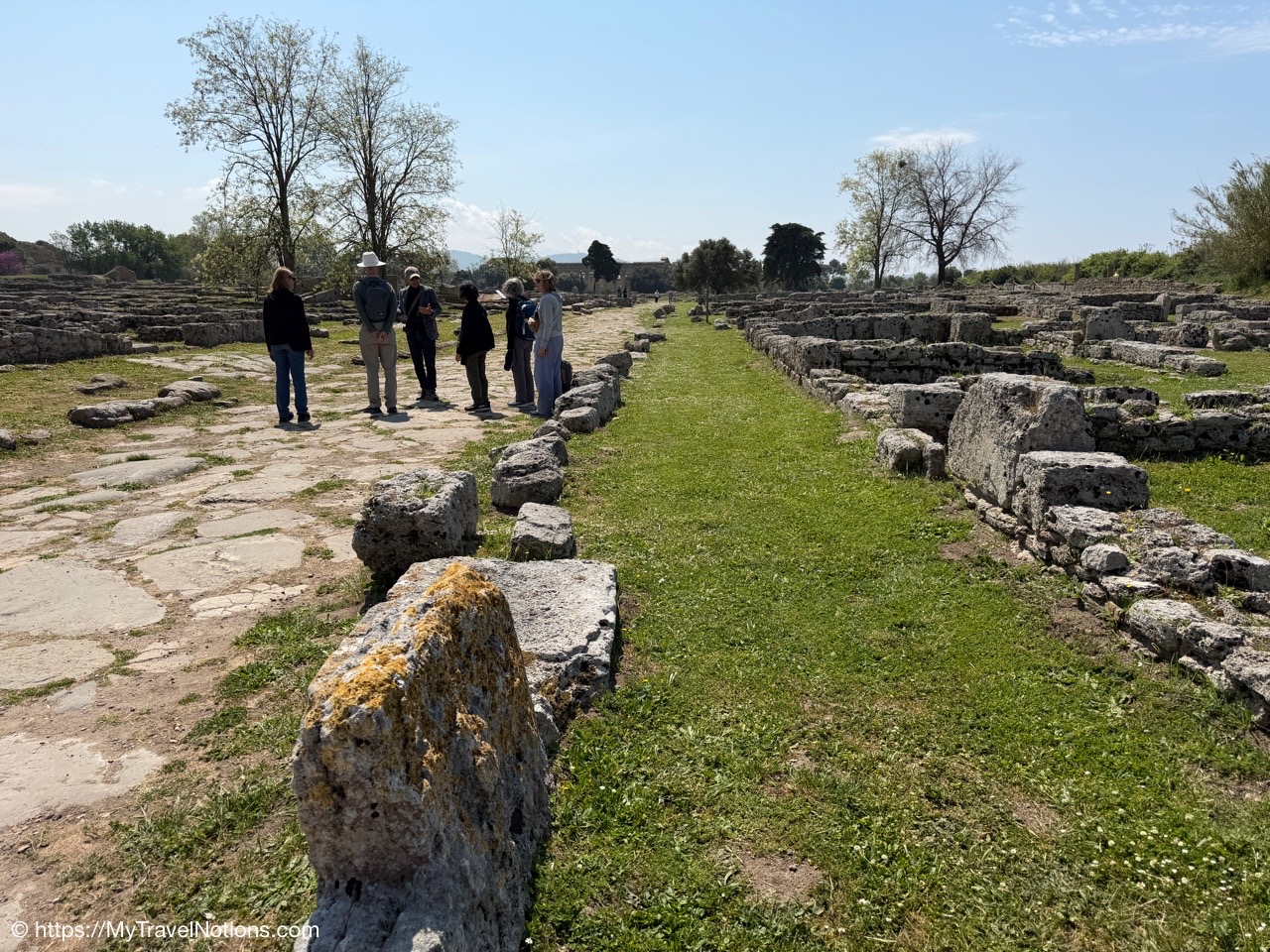
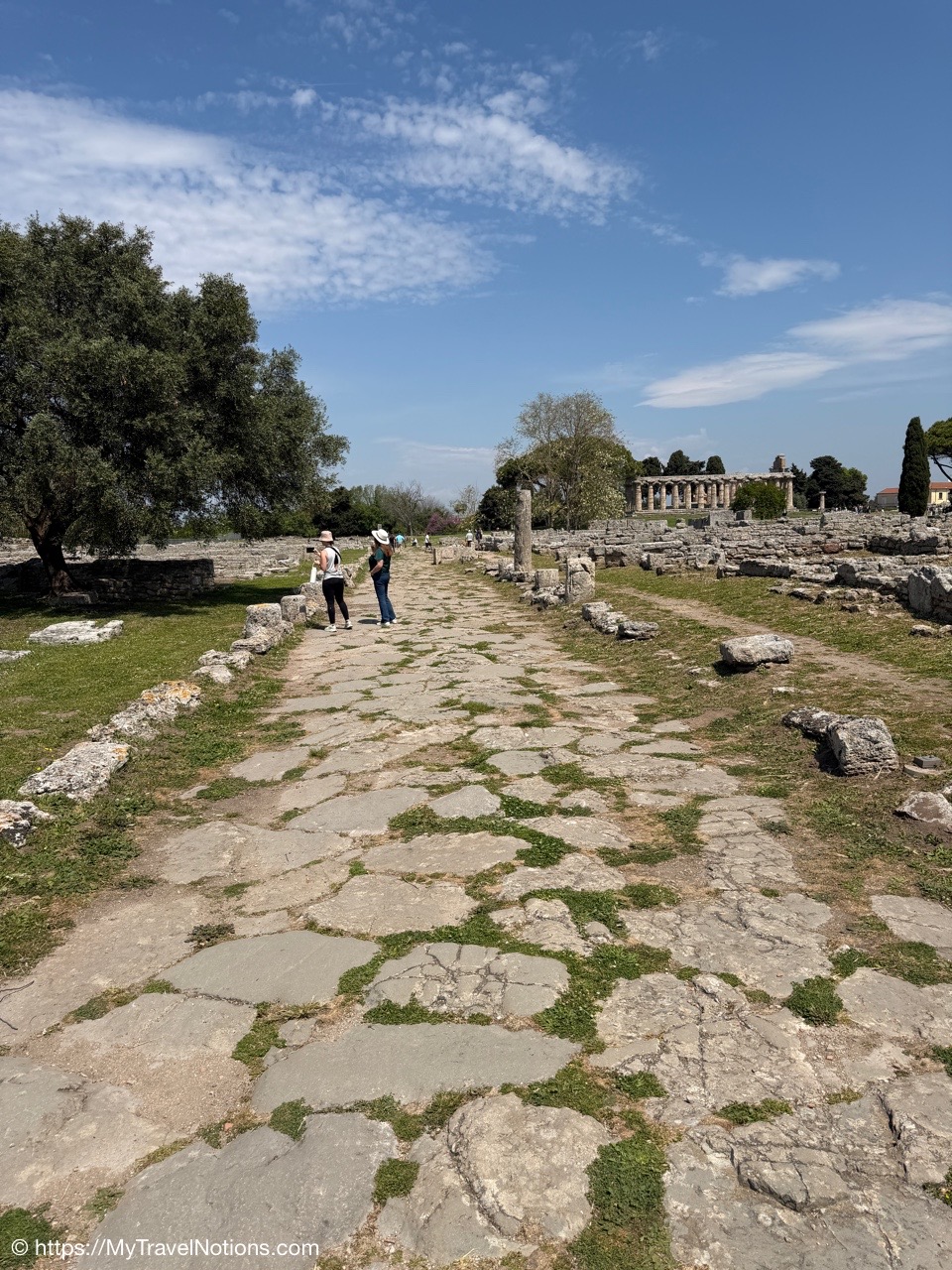
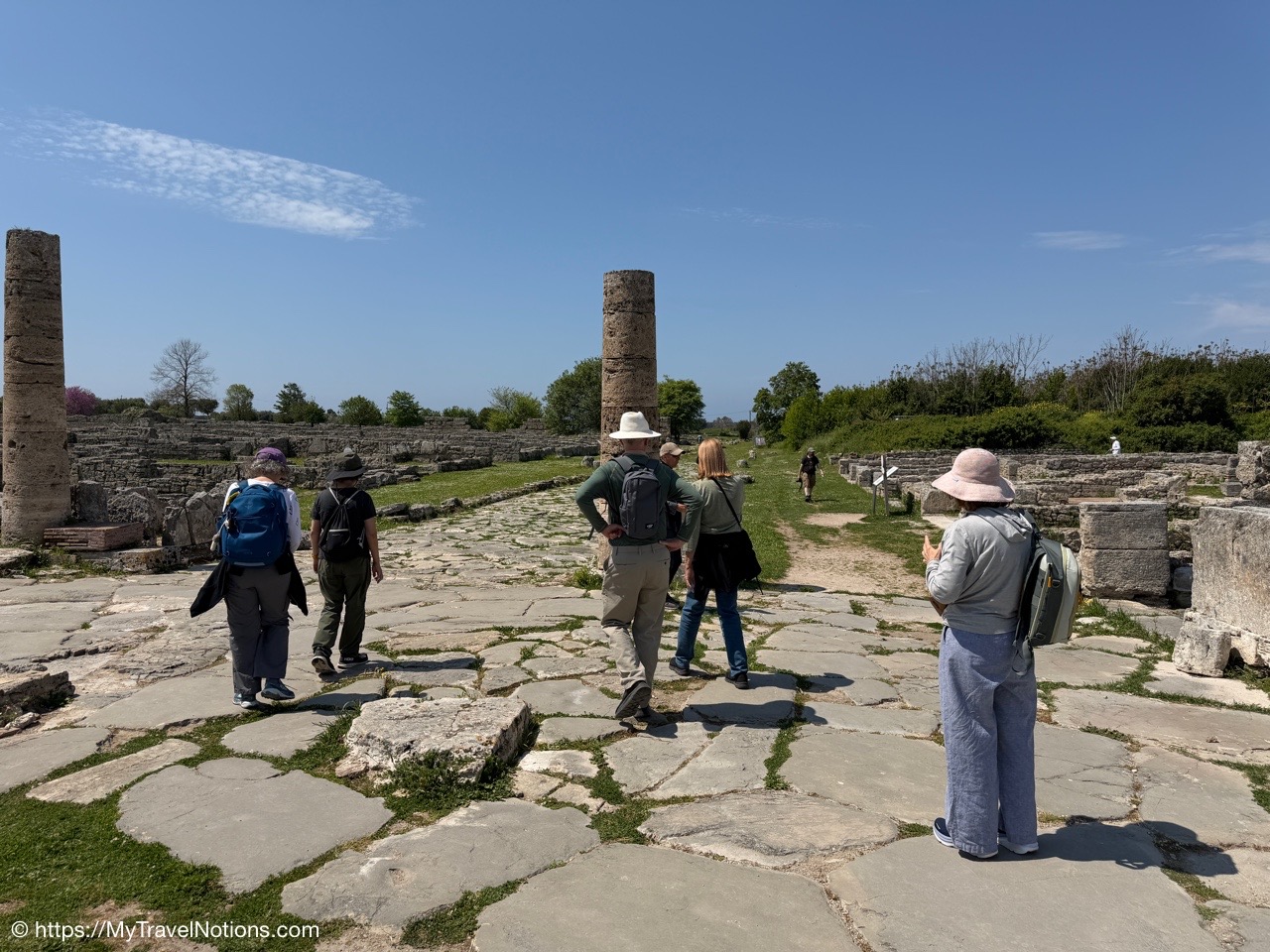
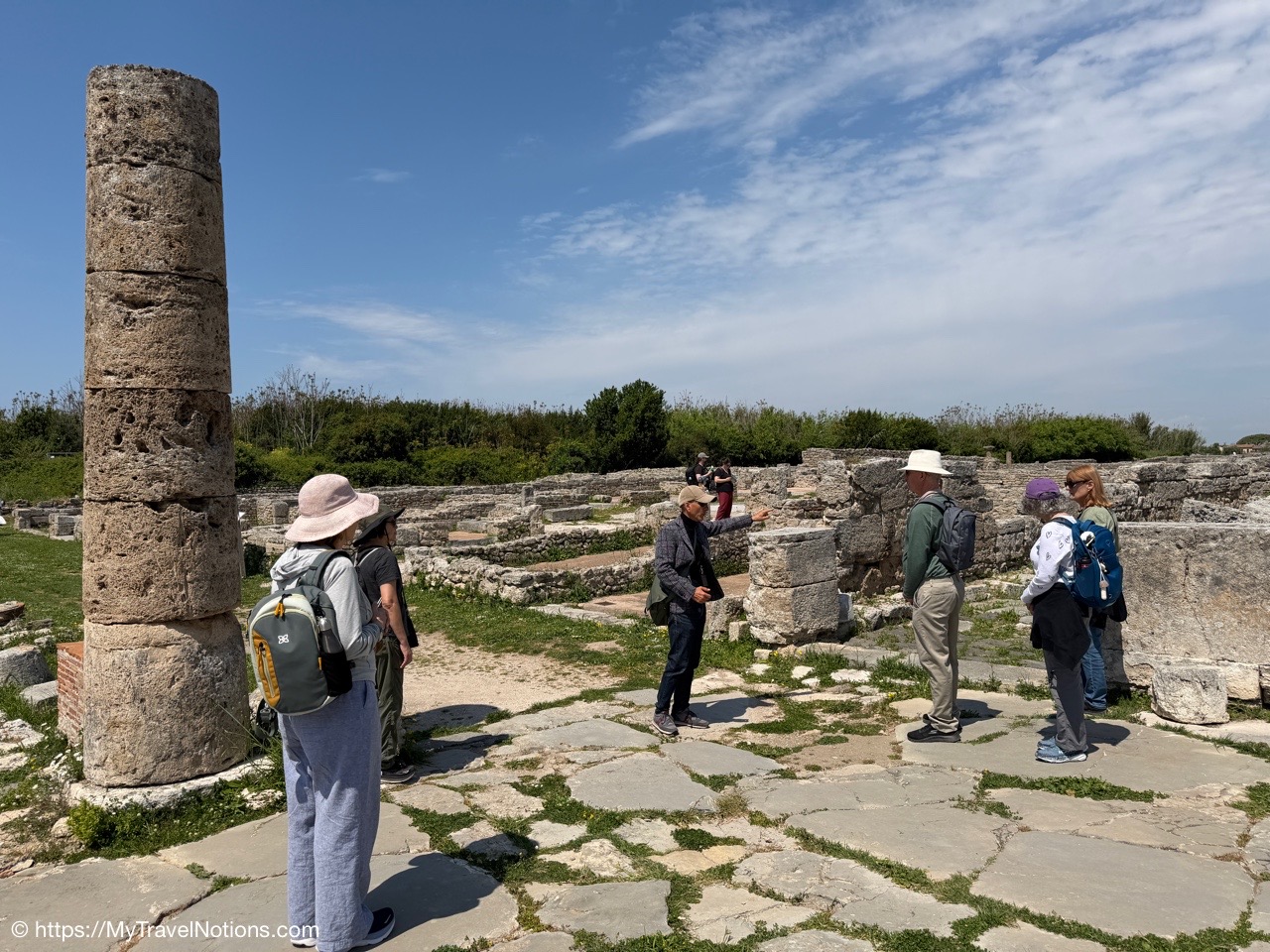
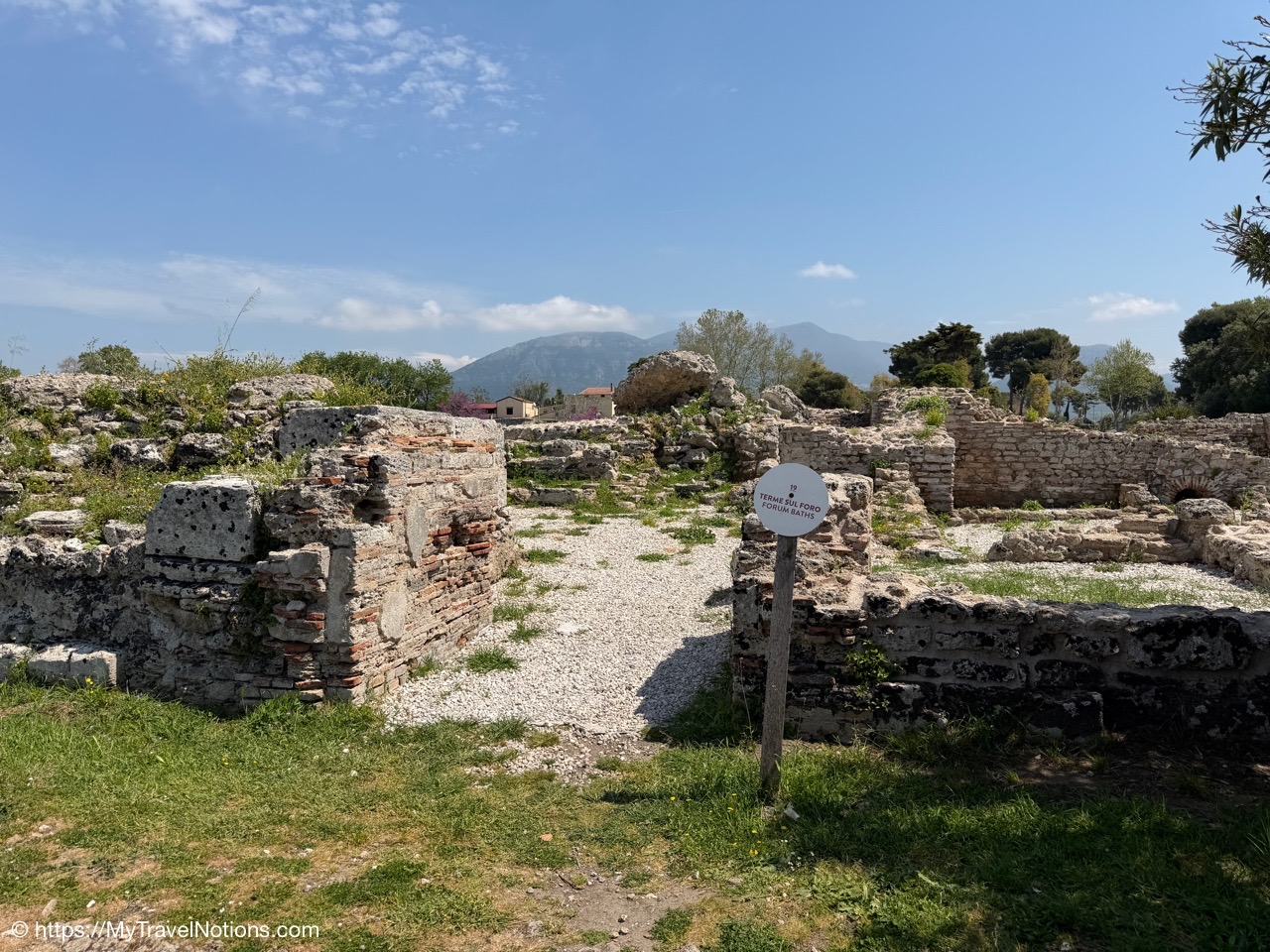
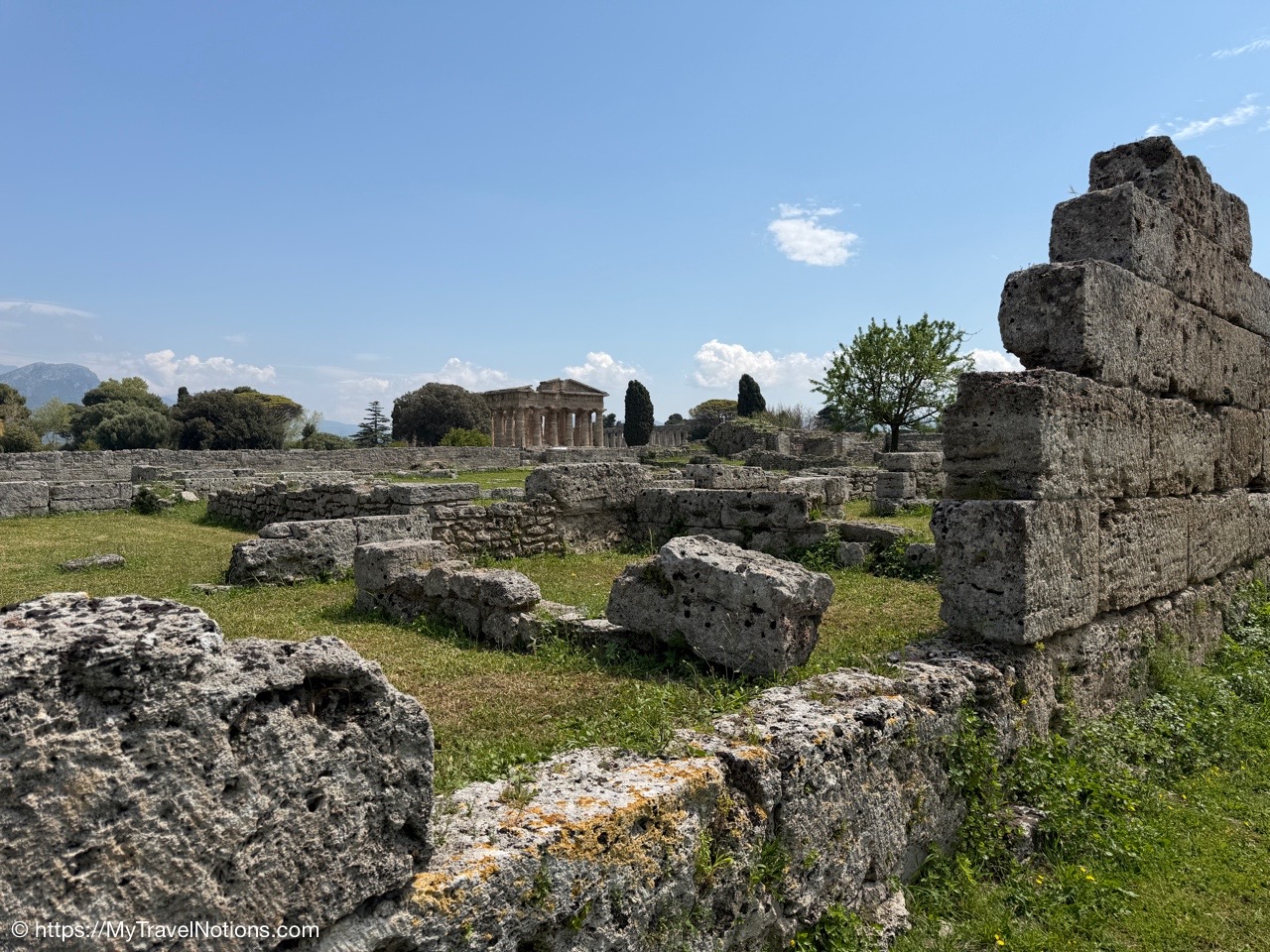
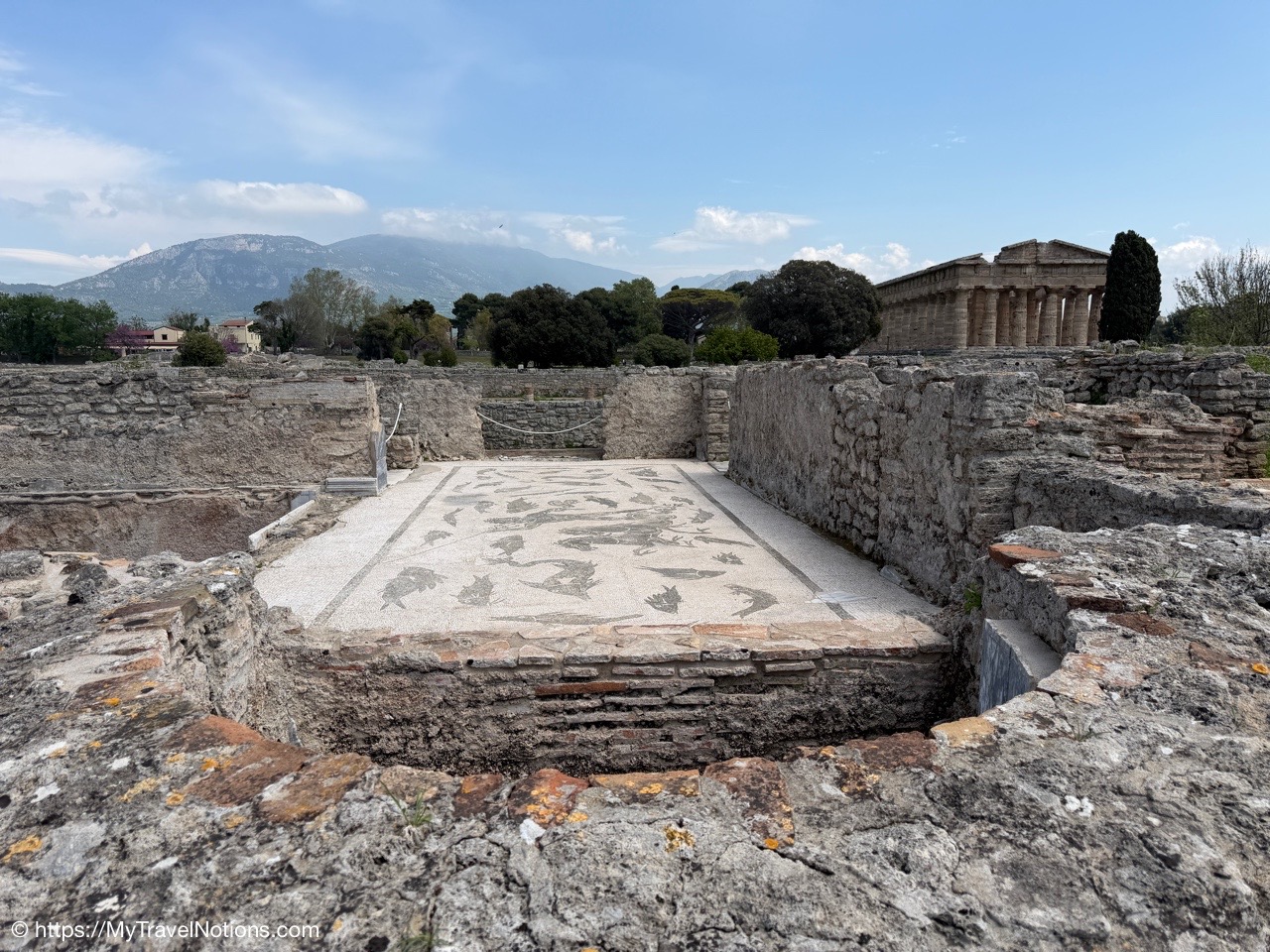
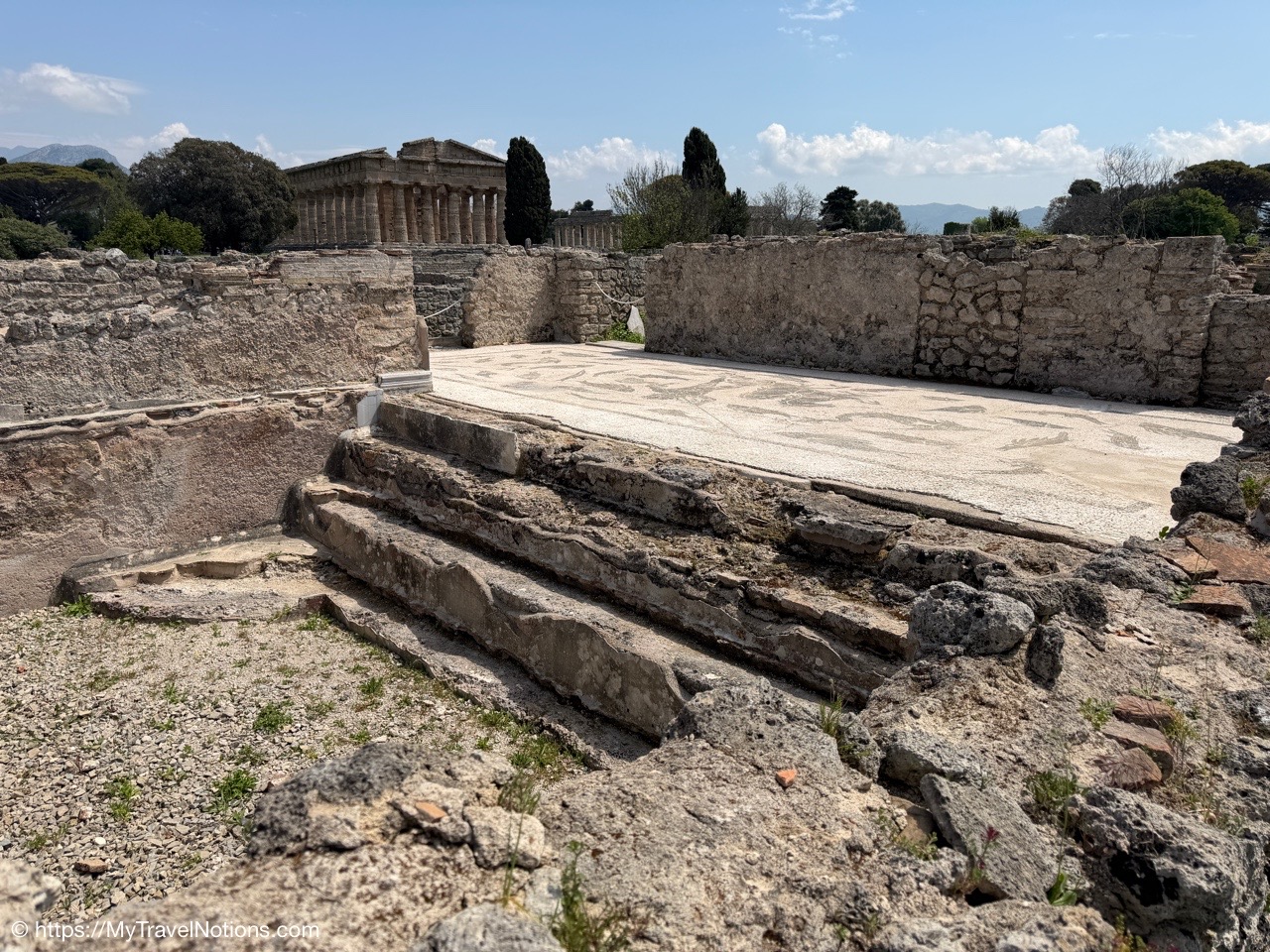
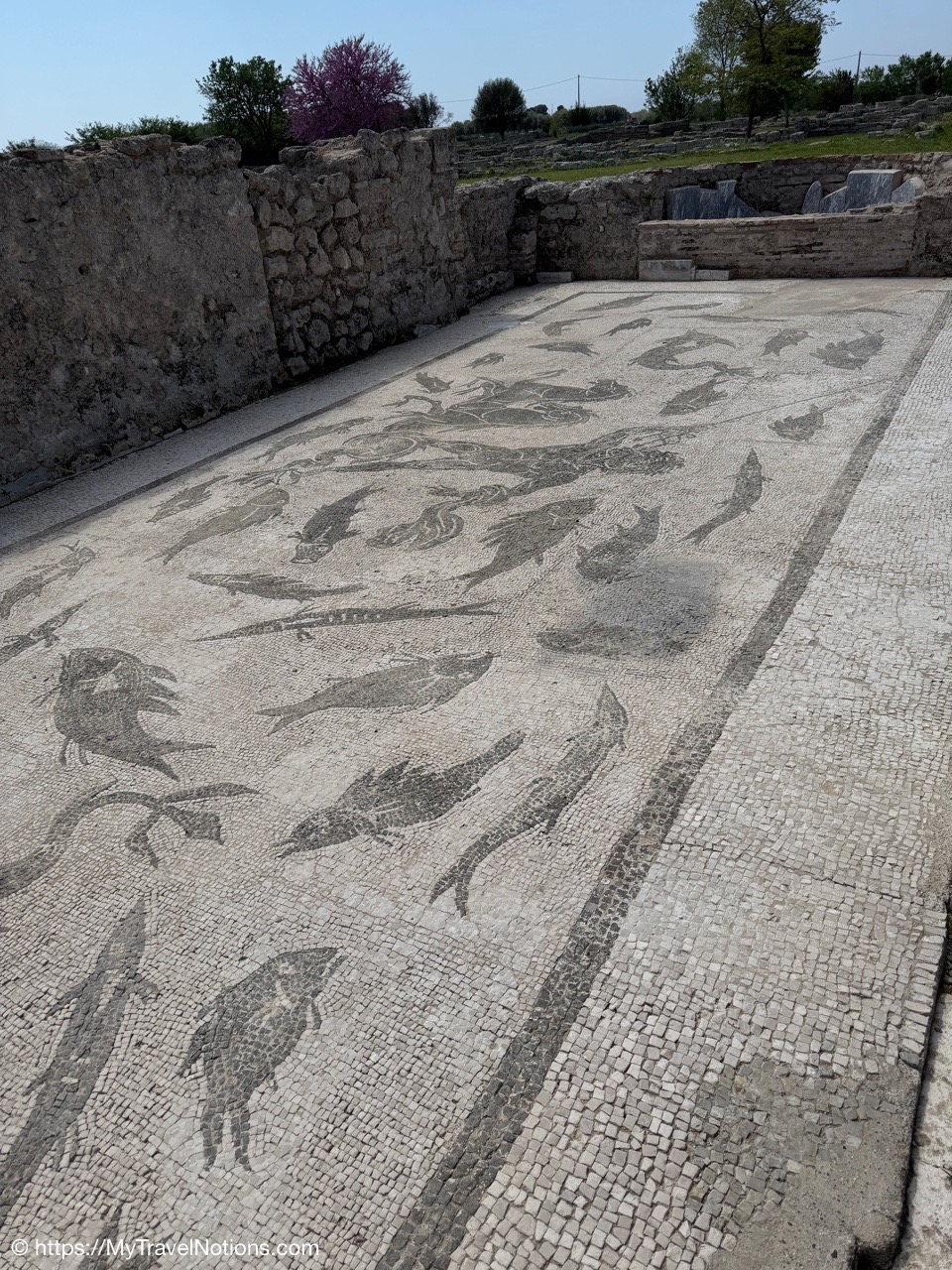
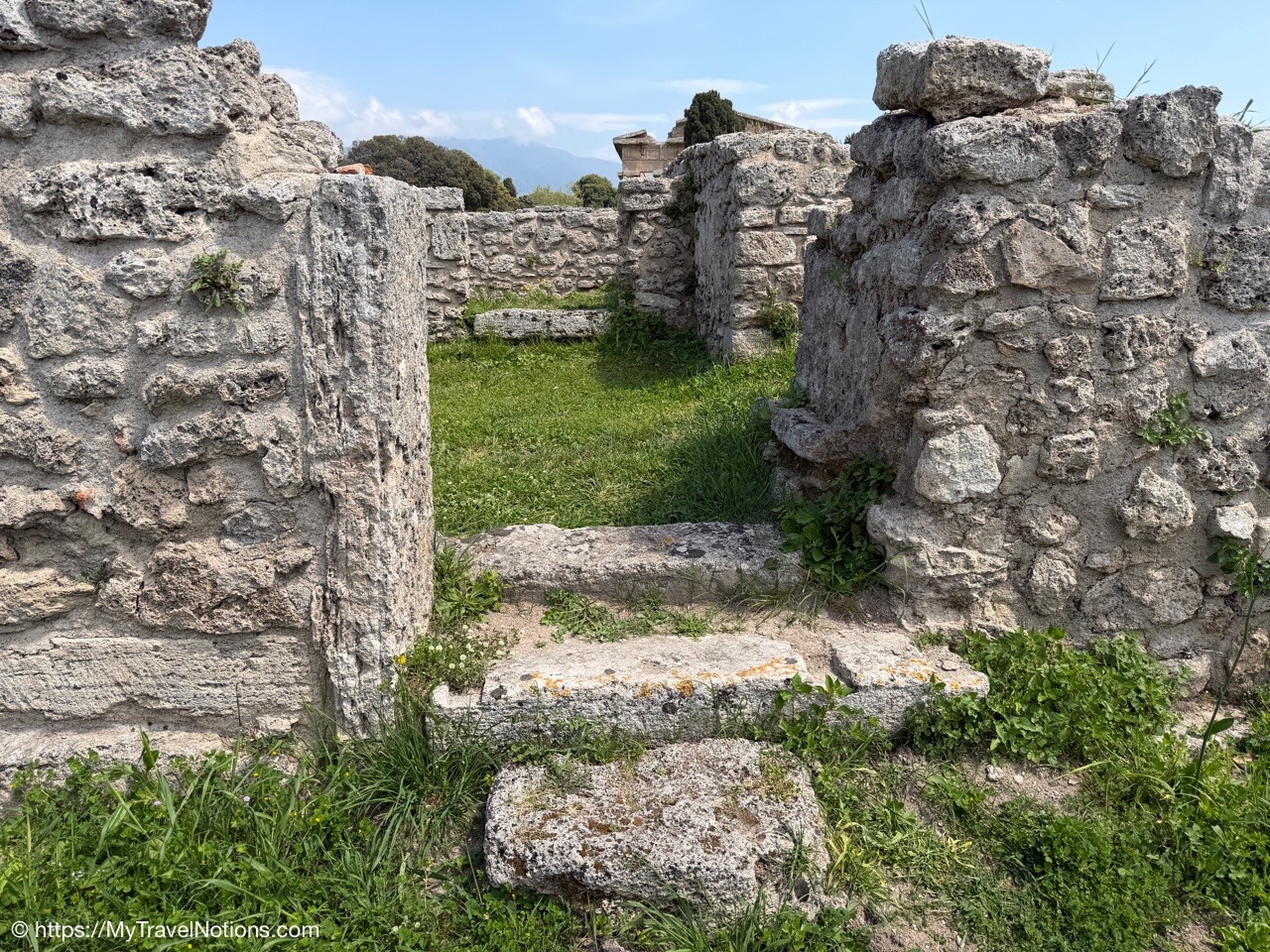
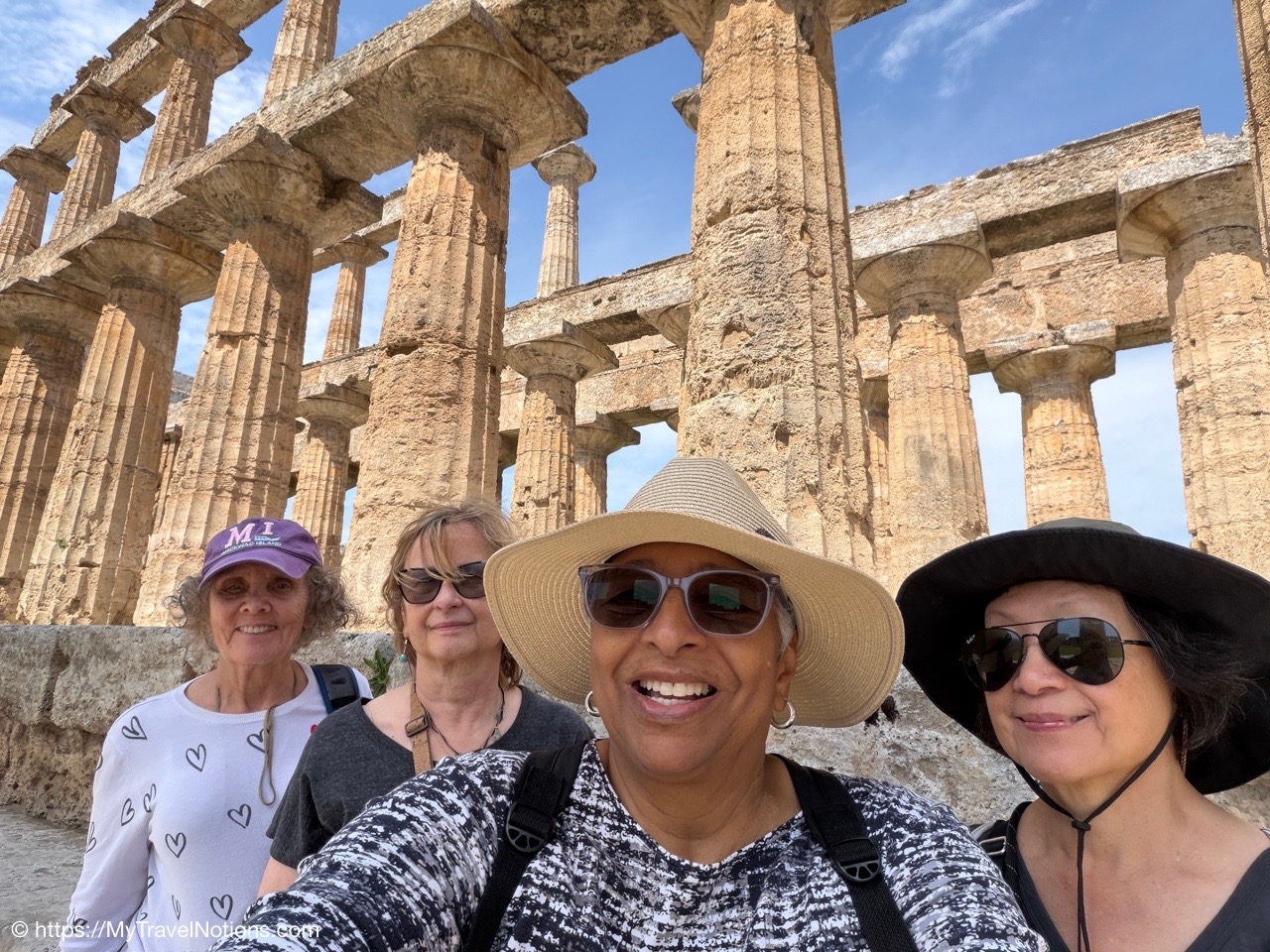
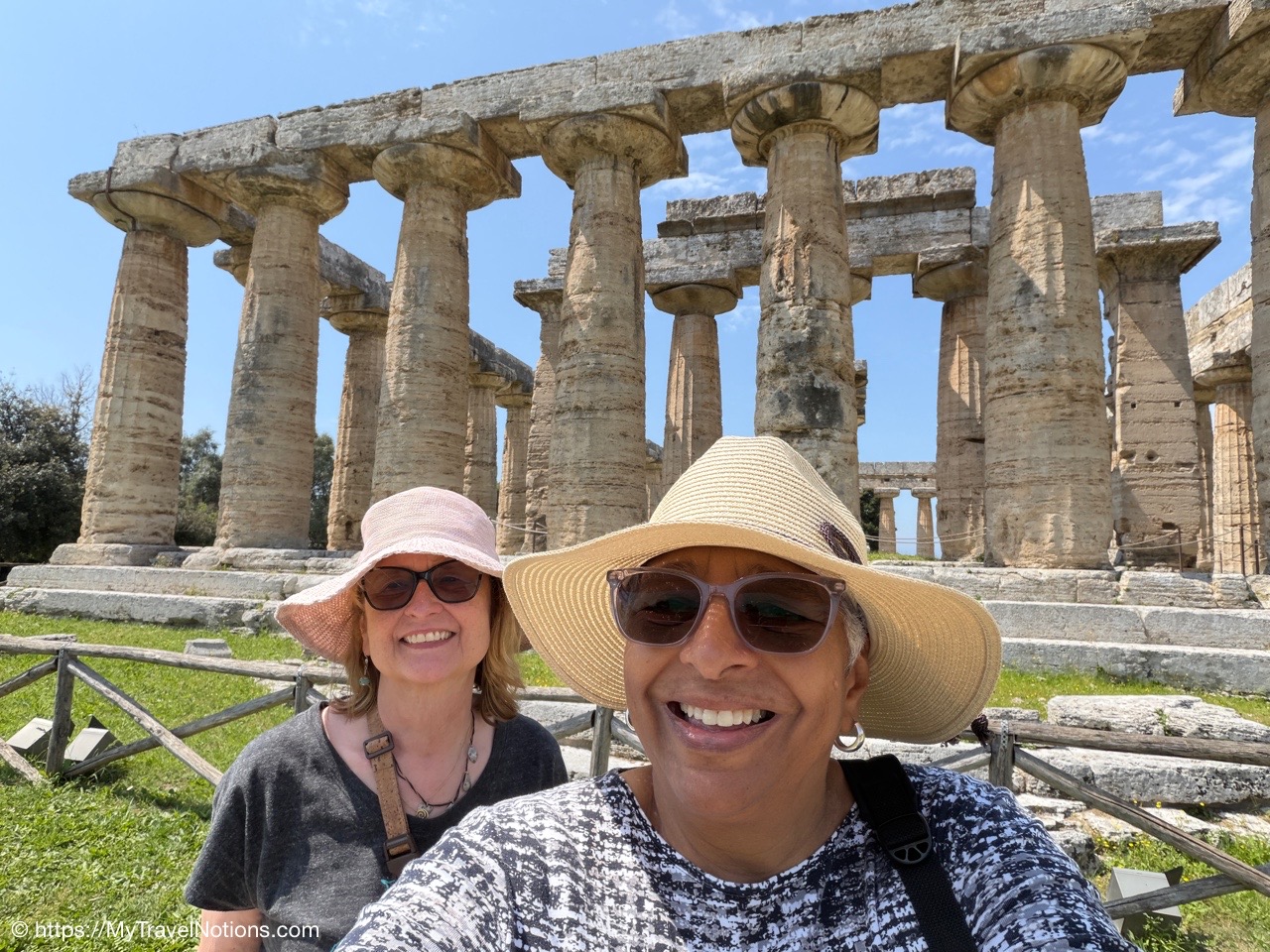
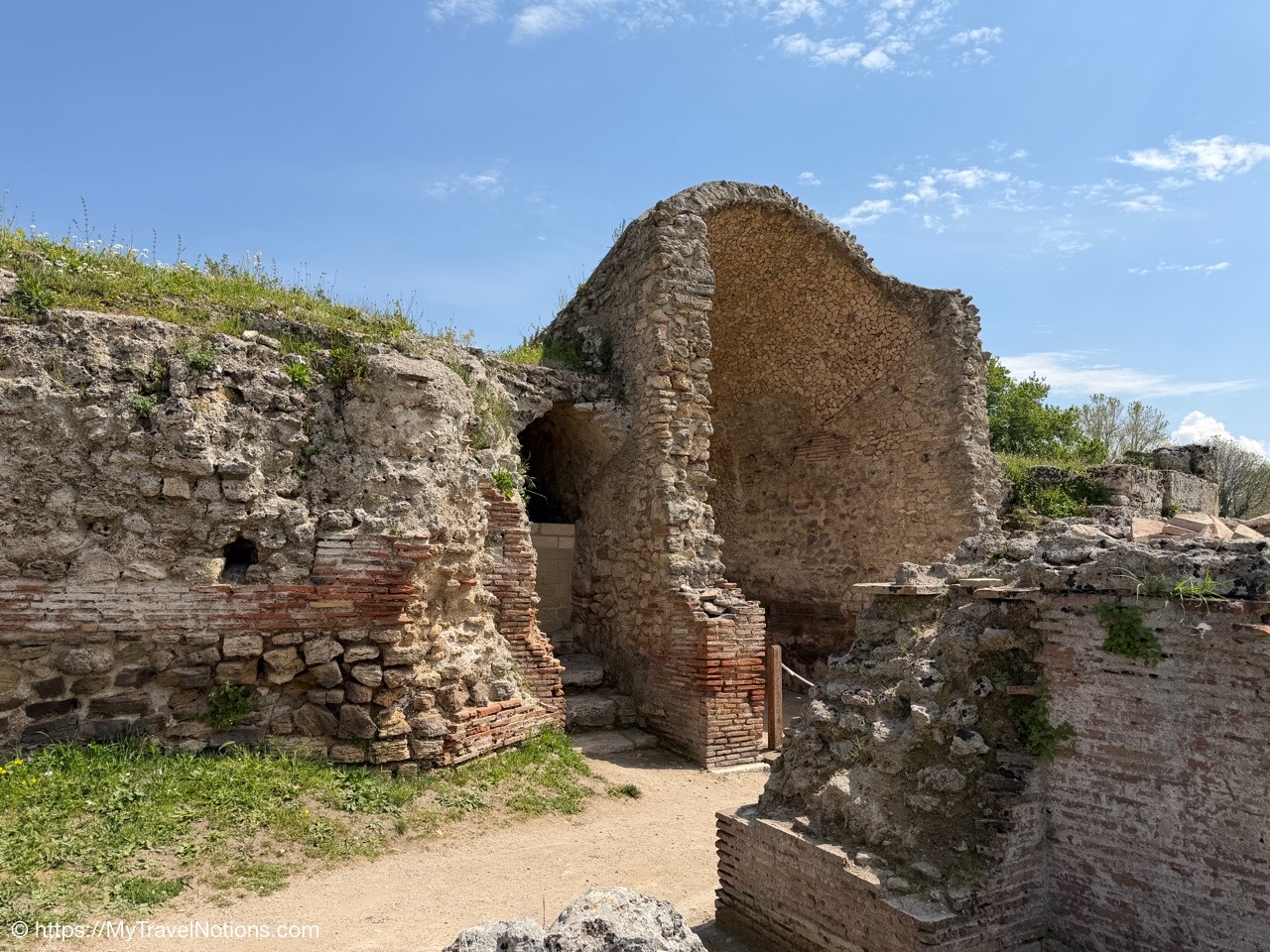
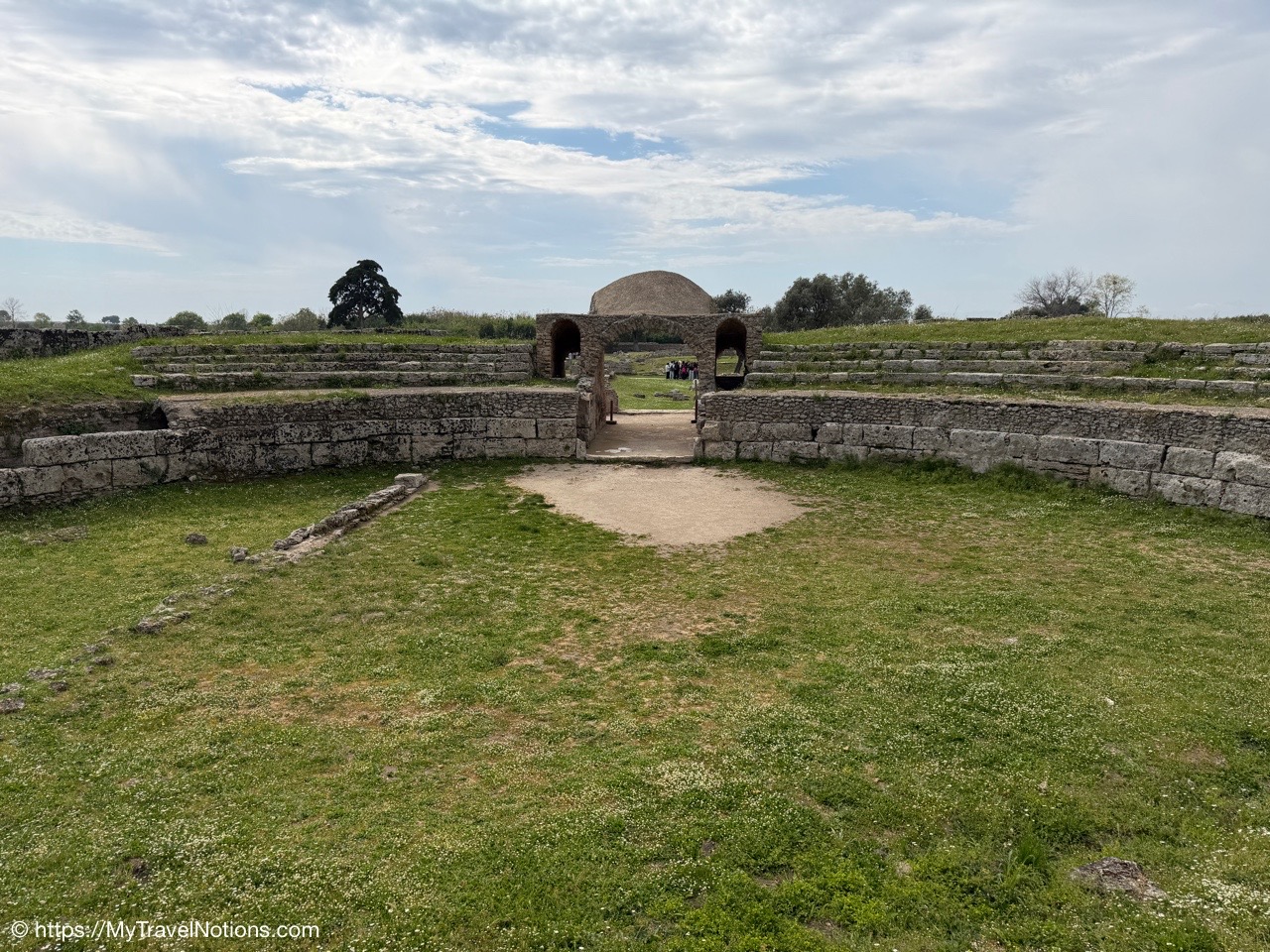
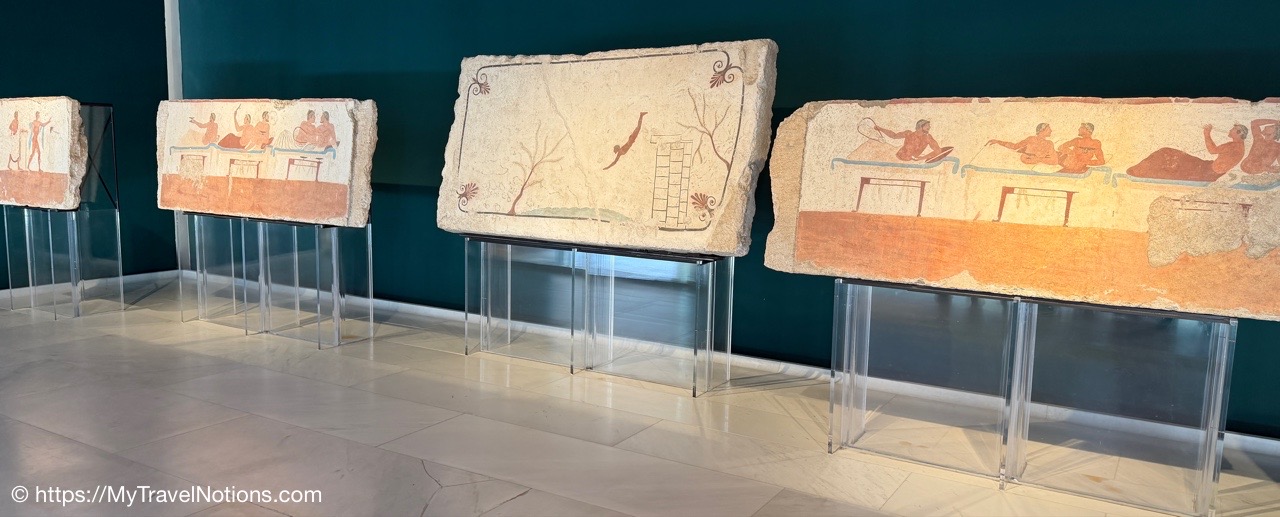
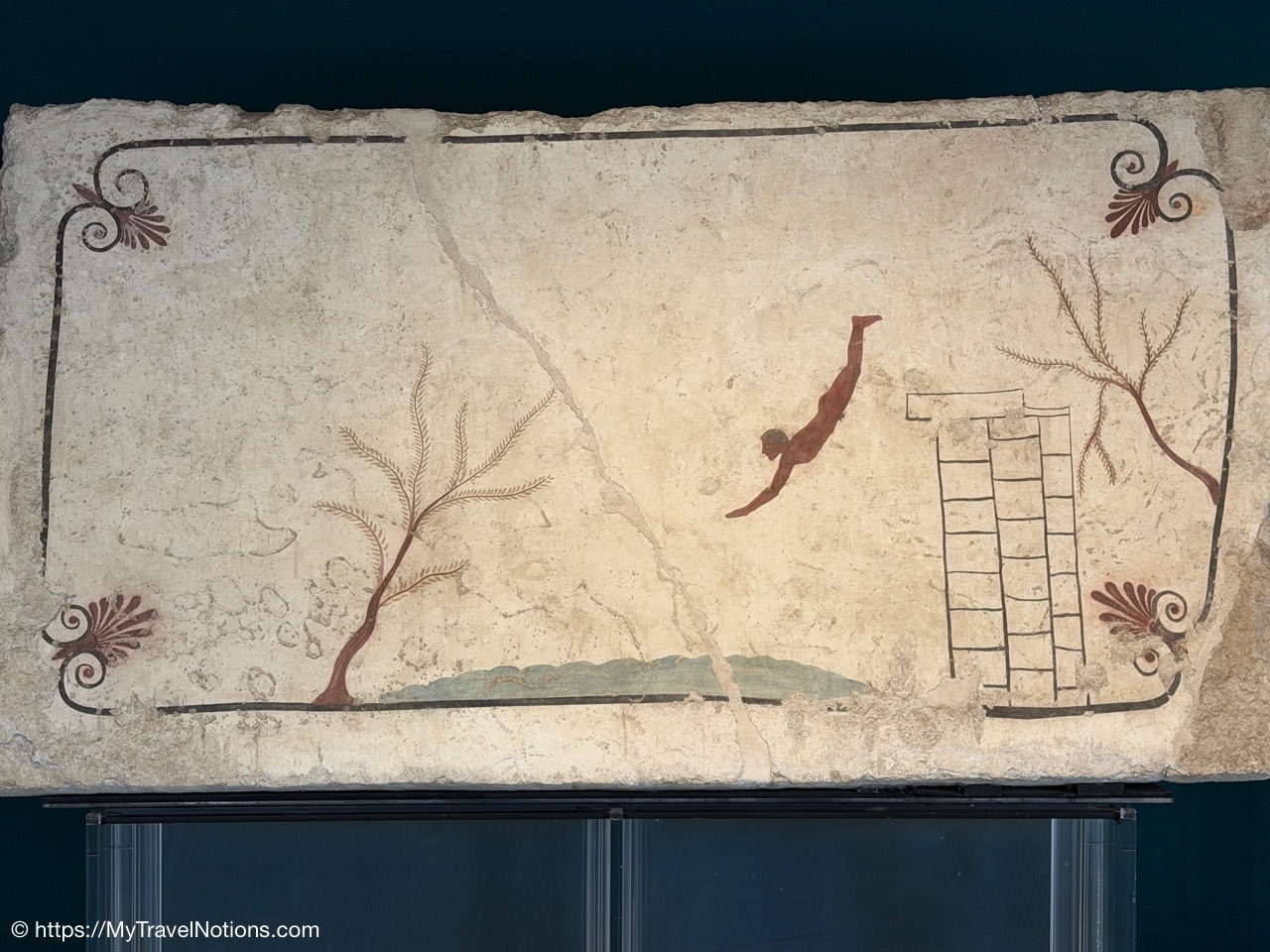
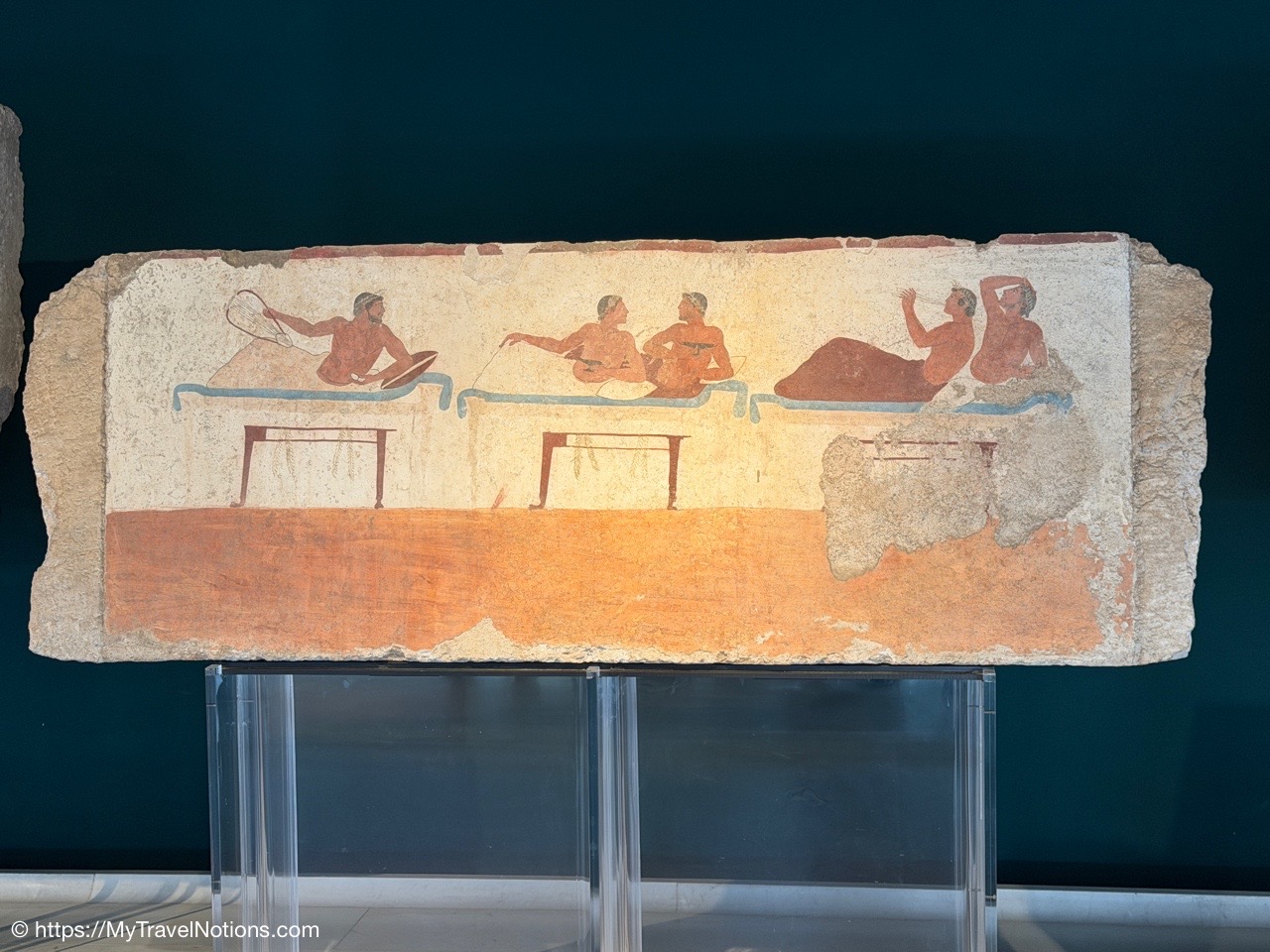
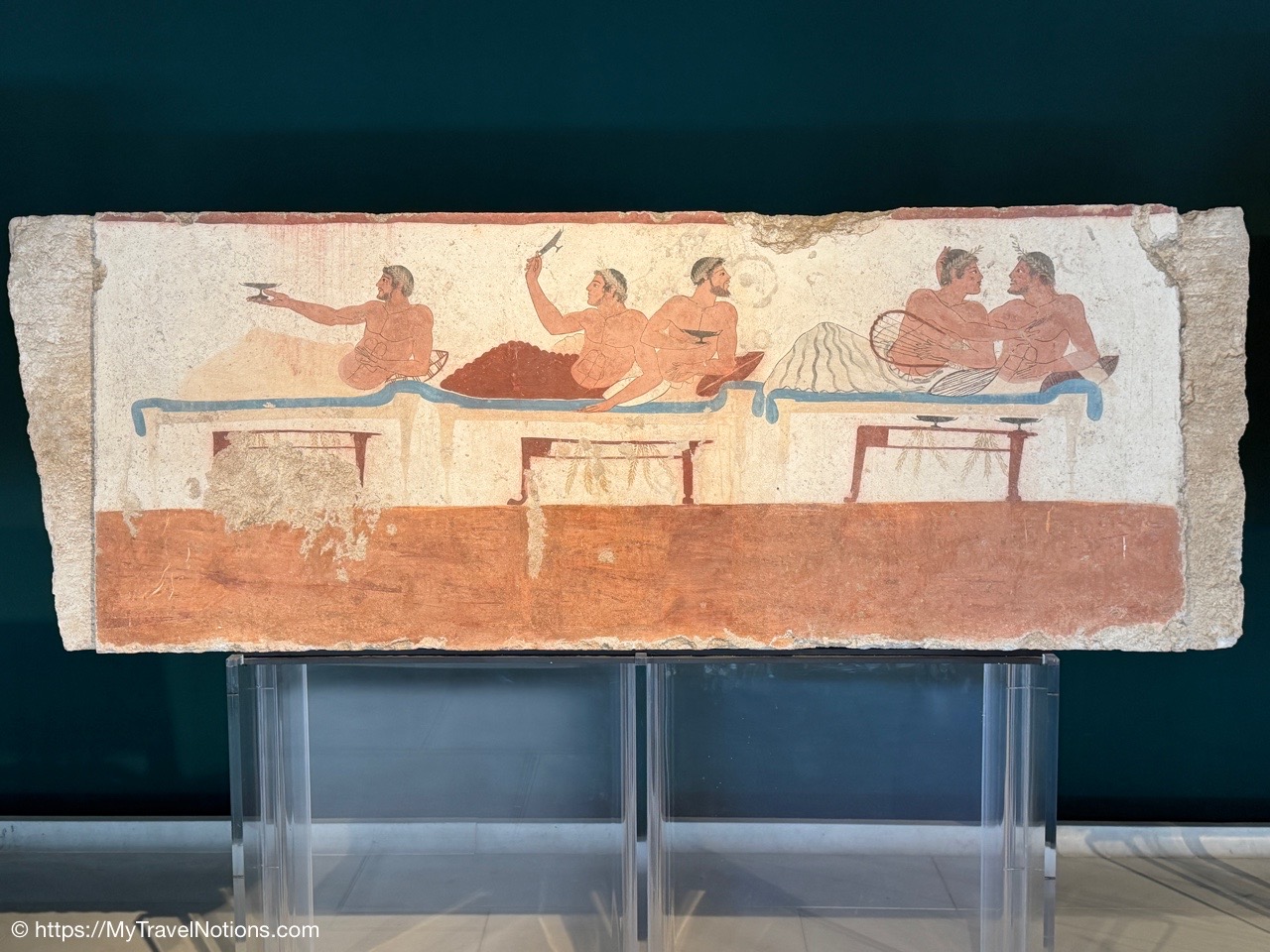
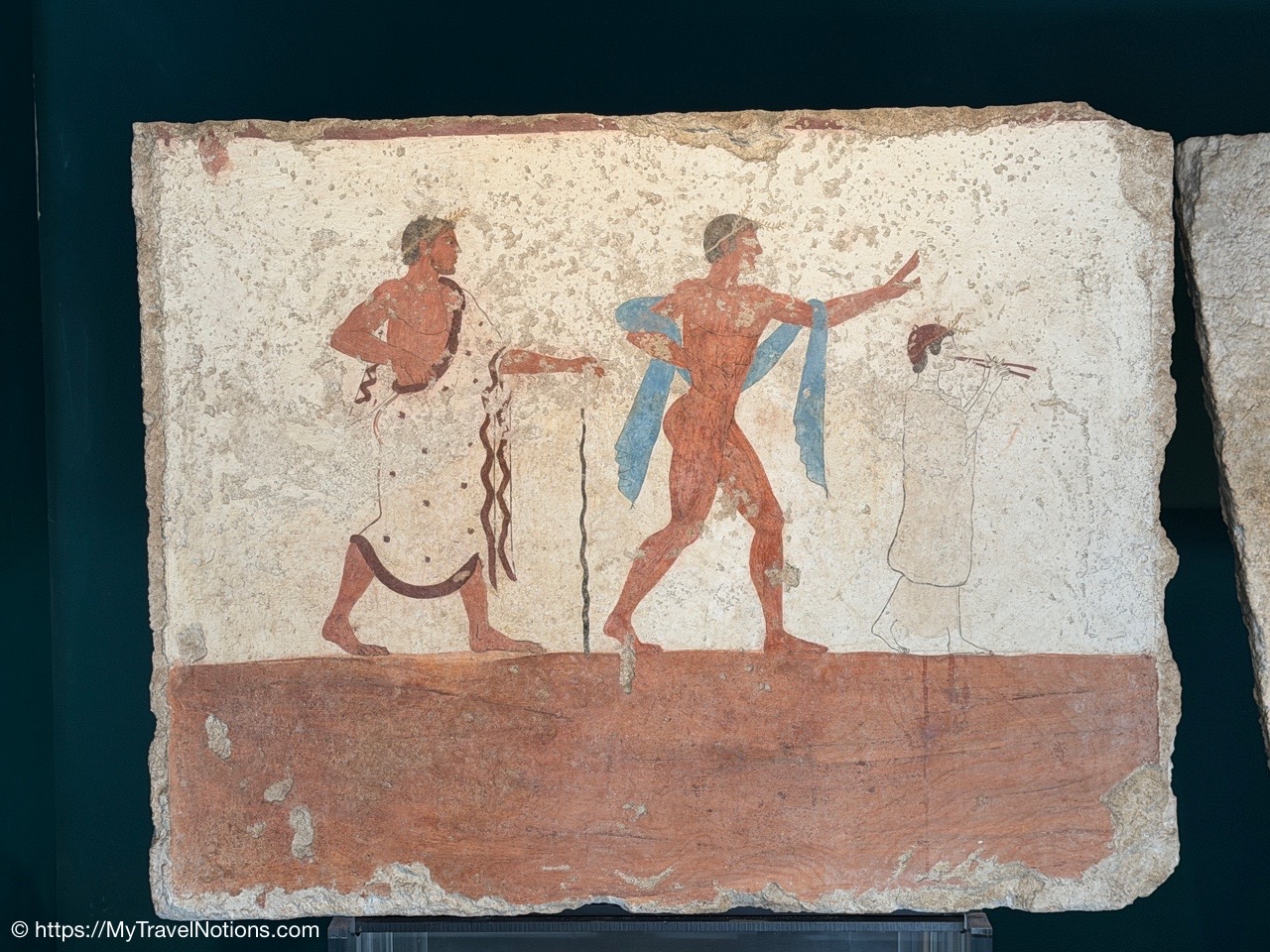
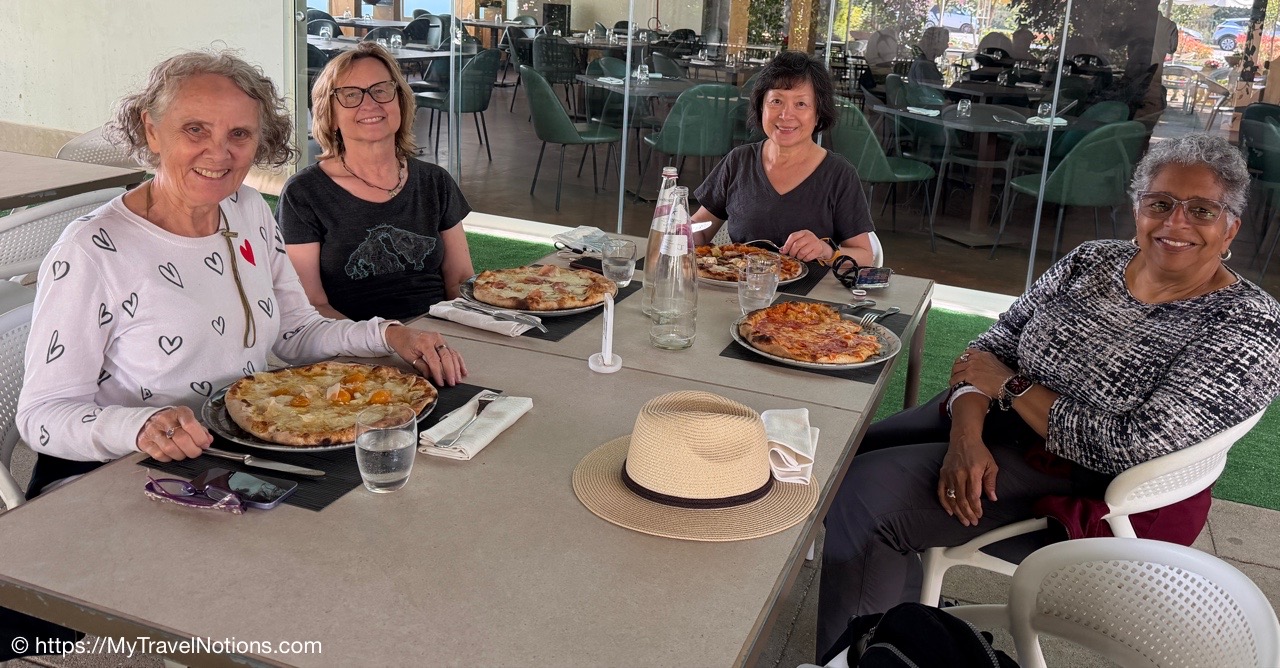
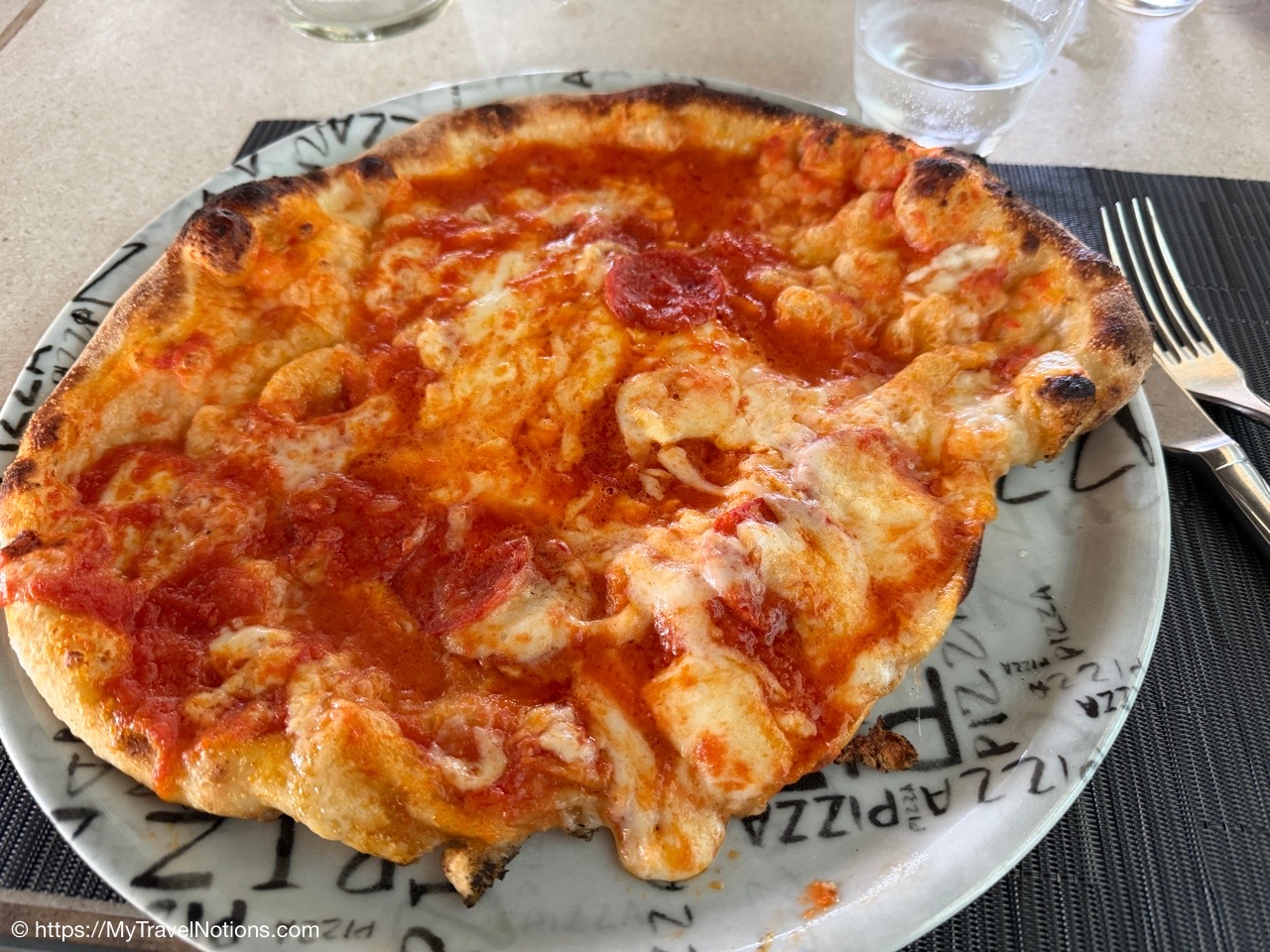
Me in Paestum with the Temple of Athena built around 500 BC. Athena was the ancient Greek goddess of wisdom, strategic war, handicrafts, and reason, ranking among the most powerful of the 12 Olympian gods. (April 20, 2026)It’s train day, just a quick 30-minute ride, instead of the ferry for our day trip from Salerno to the ancient town of Paestum. From left, Alice, me, Janet and Rosie. (April 20, 2026)Made it to the Paestum train station from Salerno in about 30 minutes and it’s just a short walk from the train station to the city walls and gate of the ancient town of Paestum. (April 20, 2026)Made it to the Paestum train station from Salerno in about 30 minutes and it’s just a short walk from the train station to the city walls and gate of the ancient town of Paestum. (April 20, 2026)The walls and gate of the ancient town of Paestum. (April 20, 2026)The walls and gate of the ancient town of Paestum. (April 20, 2026)Here we are at the Temple of Athena in the ancient town of Paestum. That’s Alice, me, Janet and Rosie. (April 20, 2026)The Temple of Athena in Paestum is named after the Greek goddess of wisdom and war, Athena. Built around 500 BC, the temple is sits at the highest point of the ancient town and is one of three remaining Doric temples. (April 20, 2026)The Temple of Athena in Paestum. (April 20, 2026)The Temple of Athena in Paestum. (April 20, 2026)The stone paved Roman road in Paestum. (April 20, 2026)In the heart of the Roman community with its stoned paved roads and homes where wealthy Romans lived in ancient Paestum. (April 20, 2026)The stone paved Roman road in Paestum with a view of the Temple of Athena in the distance. (April 20, 2026)At an intersection of stone paved Roman roads into Paestum’s residential community. (April 20, 2026)At an intersection of stone paved Roman roads into Paestum’s residential community. (April 20, 2026)The Roman bath ruins in Paestum. (April 20, 2026)The remains of the homes of wealthy Romans in the once thriving ancient city of Paestum with views of the Temples of Neptune and Hera in the distance. (April 20, 2026)The fish mosaic at the ruins of a wealthy Roman’s home in Paestum. In the distance is the Temple of Neptune. (April 20, 2026)The fish mosaic at the ruins of a wealthy Roman’s home in Paestum. In the distance is the Temple of Neptune. (April 20, 2026)The fish mosaic at the ruins of wealthy Roman’s home in Paestum. (April 20, 2026)Although in ruins, here’s an entrance into a once wealthy Roman family’s home in the ancient Greek and Roman town of Paestum. (April 20, 2026)This massive, well-preserved Doric structure is commonly known as the Temple of Neptune and was built around 470–460 BCE. It’s also the largest of the three main temples in Paestum. (April 20, 2026)The Temple of Neptune in Paestum was built around 470–460 BCE. (April 20, 2026)The Temple of Neptune in Paestum was built around 470–460 BCE. (April 20, 2026)The Temple of Neptune in Paestum was built around 470–460 BCE. (April 20, 2026)The Temple of Neptune in Paestum was built around 470–460 BCE. Neptune was not actually a Greek god; he is the Roman counterpart of the Greek god Poseidon. While Neptune originates from Roman mythology, by 399 BC, the Romans identified him with the Greek Poseidon, adopting his role as the god of the sea, earthquakes, and horses. (April 20, 2026)A group selfie inside the Temple of Neptune, built around 470–460 BCE in Paestum. From left, Rosie, Janet, me and Alice. (April 20, 2026)Inside the Temple of Neptune was built around 470–460 BCE in Paestum. (April 20, 2026)Inside the Temple of Neptune was built around 470–460 BCE in Paestum. (April 20, 2026)Inside the Temple of Neptune was built around 470–460 BCE in Paestum. (April 20, 2026)Janet and me at the Temple of Hera in Paestum. (April 20, 2026)The Temple of Hera was built around 550–525 BCE in Paestum. It is the oldest of the three major ancient Greek temples in Paestum. Hera was the Queen of the Gods, wife and sister of Zeus, and a prominent Olympian goddess in ancient Greek religion. She was the goddess of marriage, women, childbirth, and family. Known for her fierce jealousy of Zeus’s affairs, she frequently tormented his lovers and illegitimate children, most notably Heracles. (April 20, 2026)The Temple of Hera in Paestum. (April 20, 2026)The entrance of the Roman amphitheater, built around 50 BC, in the ancient town of Paestum. (April 20, 2026)The partially preserved Roman amphitheater from the ancient town of Paestum shows only half of its remains while the rest is buried under a road construction from the 1930s. It was used for gladiatorial games, sports and, at times, public executions. (April 20, 2026)Before seeing the temples, we went to the National Archaeological Museum of Paestum to see these ancient frescos from ‘The Tomb of the Diver’. It’s consists of Detail from the underside of the top slab of the grave, showing a man diving into waves and four walls decorated with scenes of a symposium, a banquet gathering, which was uncommon for a funerary. (April 20, 2026)The fresco Tomb of the Diver, the underside of the top slab, shows a man diving into waves and dates from around 500 to 475 BCE at the National Archaeological Museum of Paestum. (April 20, 2026)A symposium scene on a fresco slab from inside the Tomb of the Diver from around 500 to 475 BCE at the National Archaeological Museum of Paestum. (April 20, 2026)A symposium scene on a fresco slab from inside the Tomb of the Diver from around 500 to 475 BCE at the National Archaeological Museum of Paestum. (April 20, 2026)A symposium scene on a fresco slab from inside the Tomb of the Diver from around 500 to 475 BCE at the National Archaeological Museum of Paestum. (April 20, 2026)We were all hungry and thirsty from the exceptional tour through the ancient ruins of Paestum that we needed a respite. Thankfully Janet found a place that was open, worked for all of us and delicious, Ristorante Pizzeria Oasi in Paestum. That’s Rosie, Janet, Alice and me ready to dig into our individual pizzas. (April 20, 2026)I had this cheesy, tasty Diavola pizza at Ristorante Pizzeria Oasi in Paestum. When I asked the server about the size of the pizza, he said ‘normal’. And so for 8 euros and normal, one would expect a nice slice of pizza and definitely not a whole pie. It was made with tomato, mozzarella and spicy salami. Delicious! Couldn’t eat it all but I was pleasantly stuffed. (April 20, 2026)
(Our next home base, along the Amalfi Coast is Sorrento.)


Thank you for reaching out.