It’s travel day as we made our way from Warsaw to Gdańsk, our last country in Poland.
We ordered an Uber to take us to the Warsaw Central train station for our 11:29 departure to the Gdańsk Glowny train station, about a 2 and a half hour train ride.
Before leaving Warsaw, I made my way to my neighborhood Costa Coffee for my plain croissant and Carmel Macchiato coffee with almond milk and extra caramel. It’s been a pleasure having this Starbucks-like coffee shop so close to my guest house.
Although staying at the Pokoje Gościnne Dom Literatury in Warsaw has been an interesting stepping back in time experience. I am happy to be saying goodbye especially now that the elevator wasn’t working. That meant 80 steps down and 80 steps back up again. Two men were working on it when I left for my Costa run and they were still at it when I got back.
I was hoping it would be repaired by the time I left to meet Alice and Rosie at our McDonald’s Uber meet up spot, but no such luck. Thankfully the cleaning woman stopped me, saw that I was hesitant to go downstairs with my suitcase so she called the receptionist, speaking in Polish asking about the elevator and then requested he help me with my suitcase. He came all the way up the 80 stairs and took my luggage back down the 80 stairs.
Arriving to our hotel, the Artus, was definitely less dramatic than our arrival into Warsaw with the corrupt taxi services. This time, the three of us, Alice, Rosie and myself, took Uber from the Gdańsk train station to Hotel Artus where the three of us are staying while getting to know Gdańsk.
Here’s to our arrival inGdańsk.
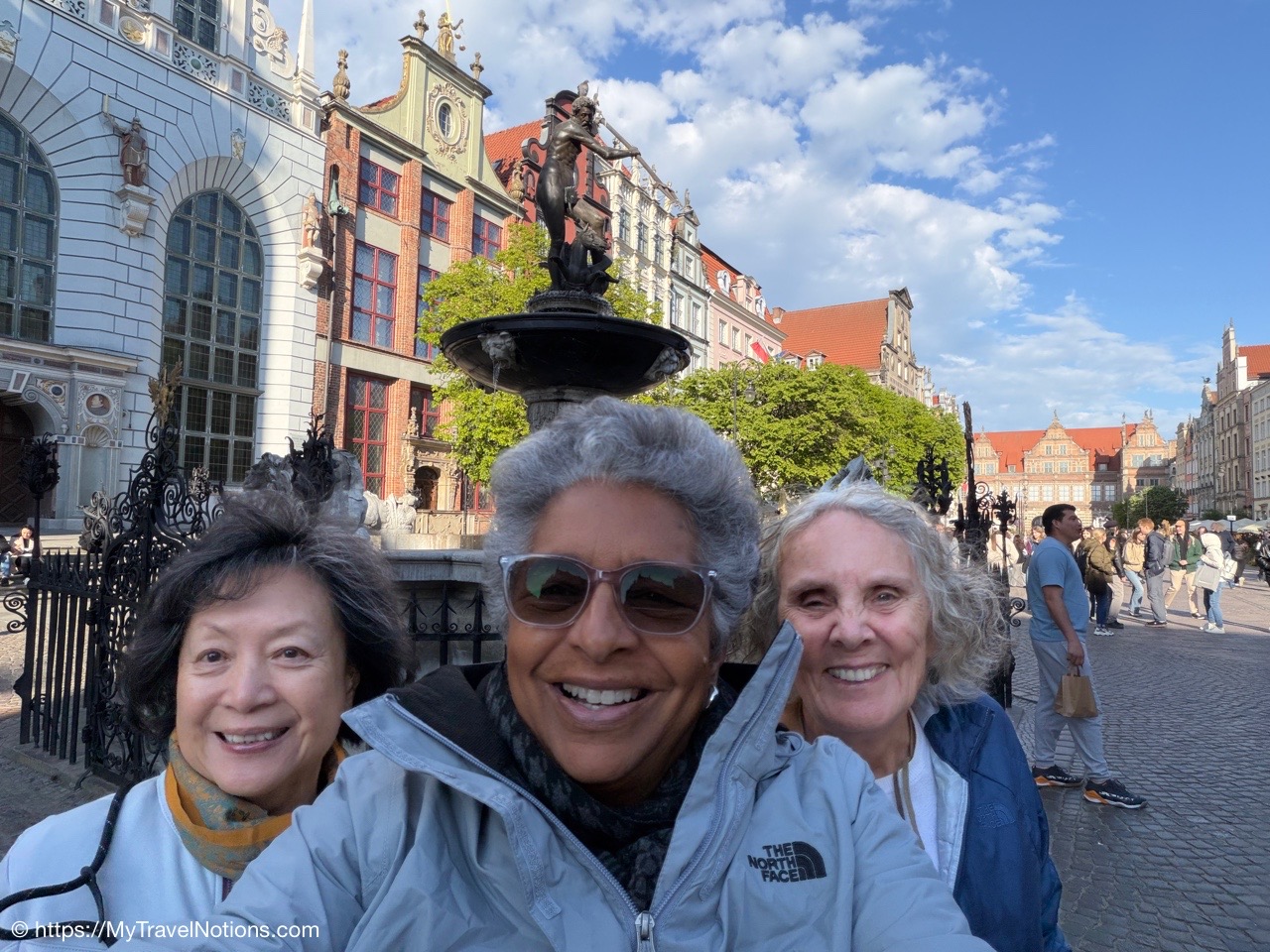
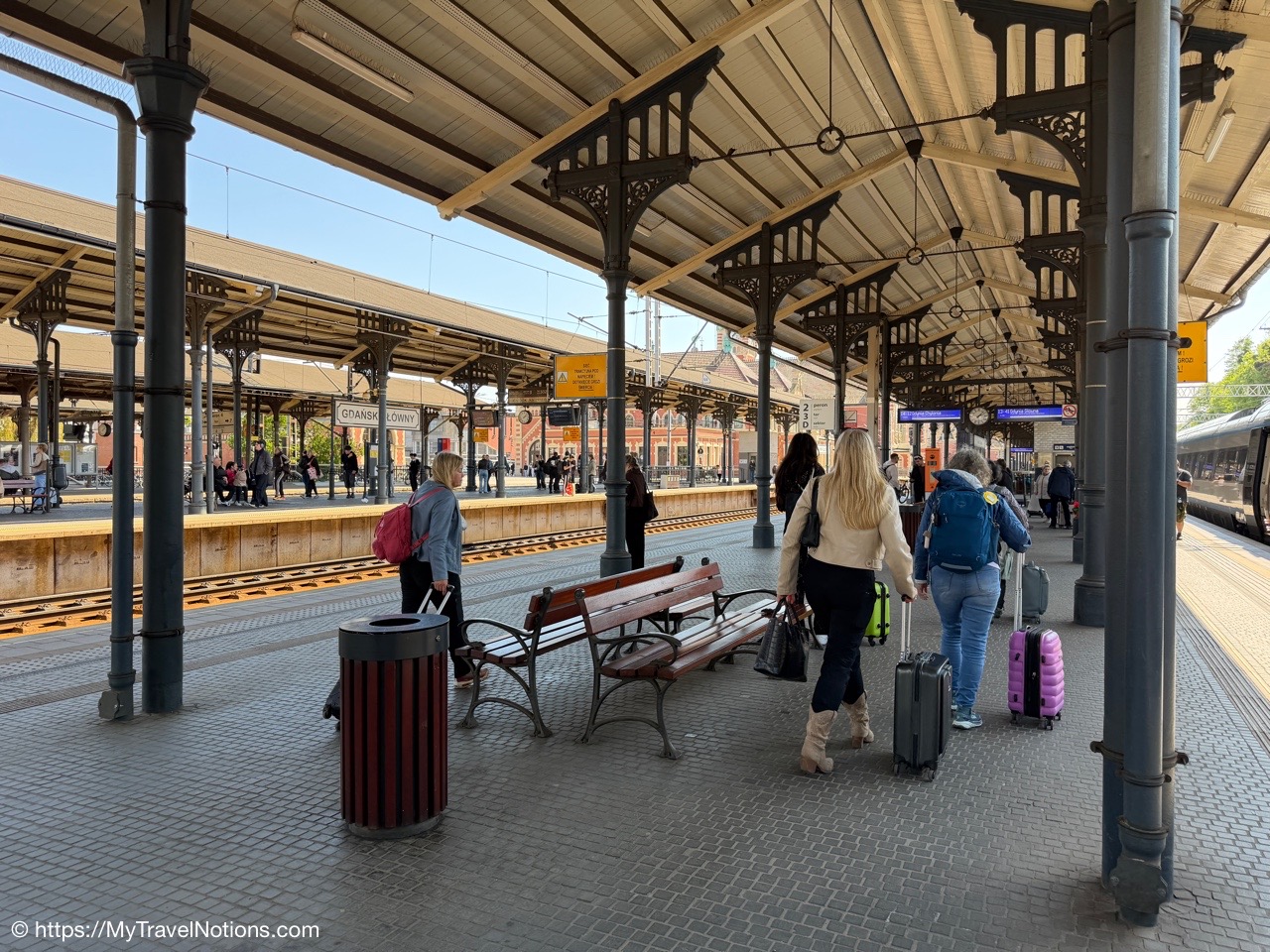
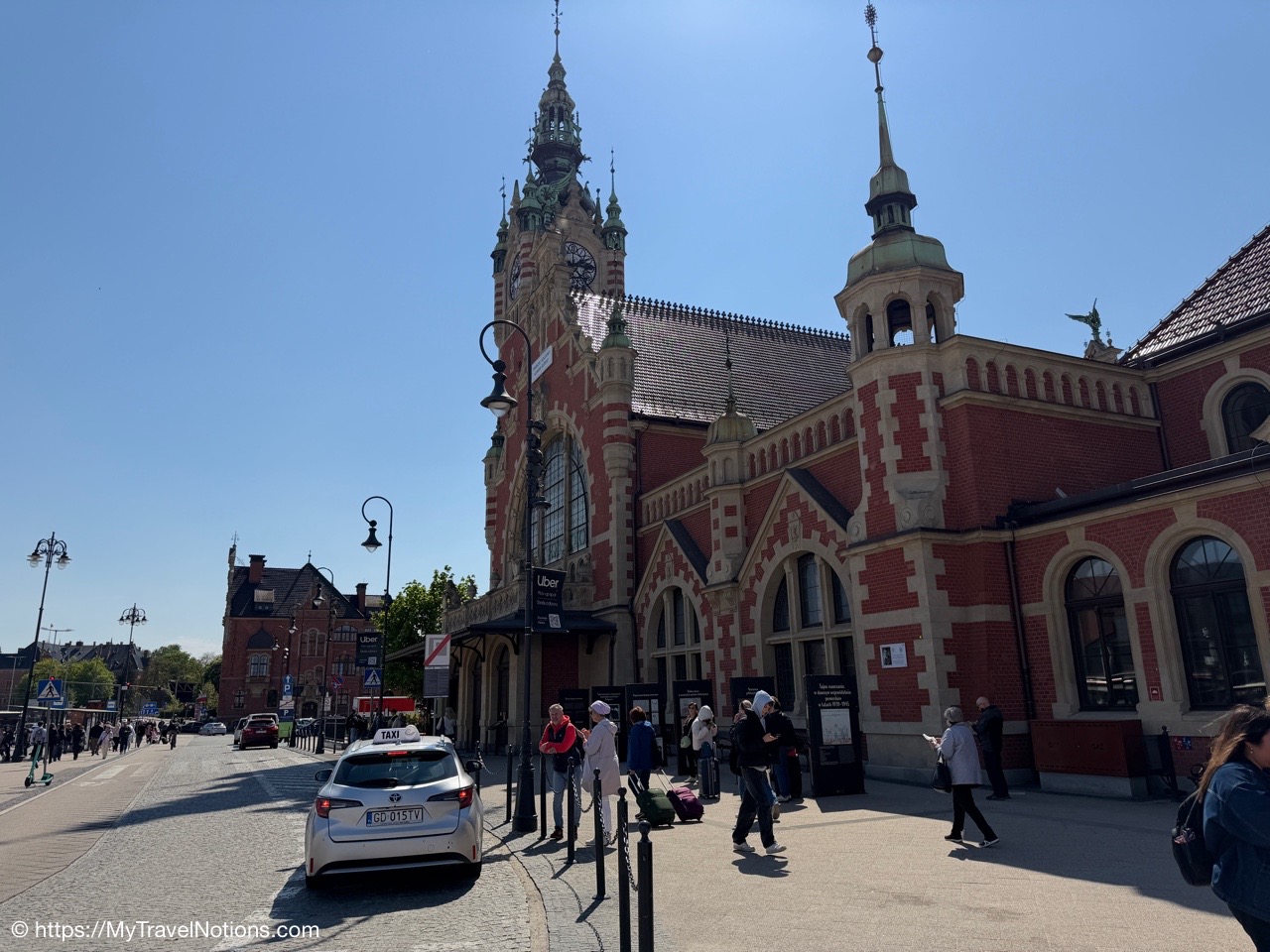
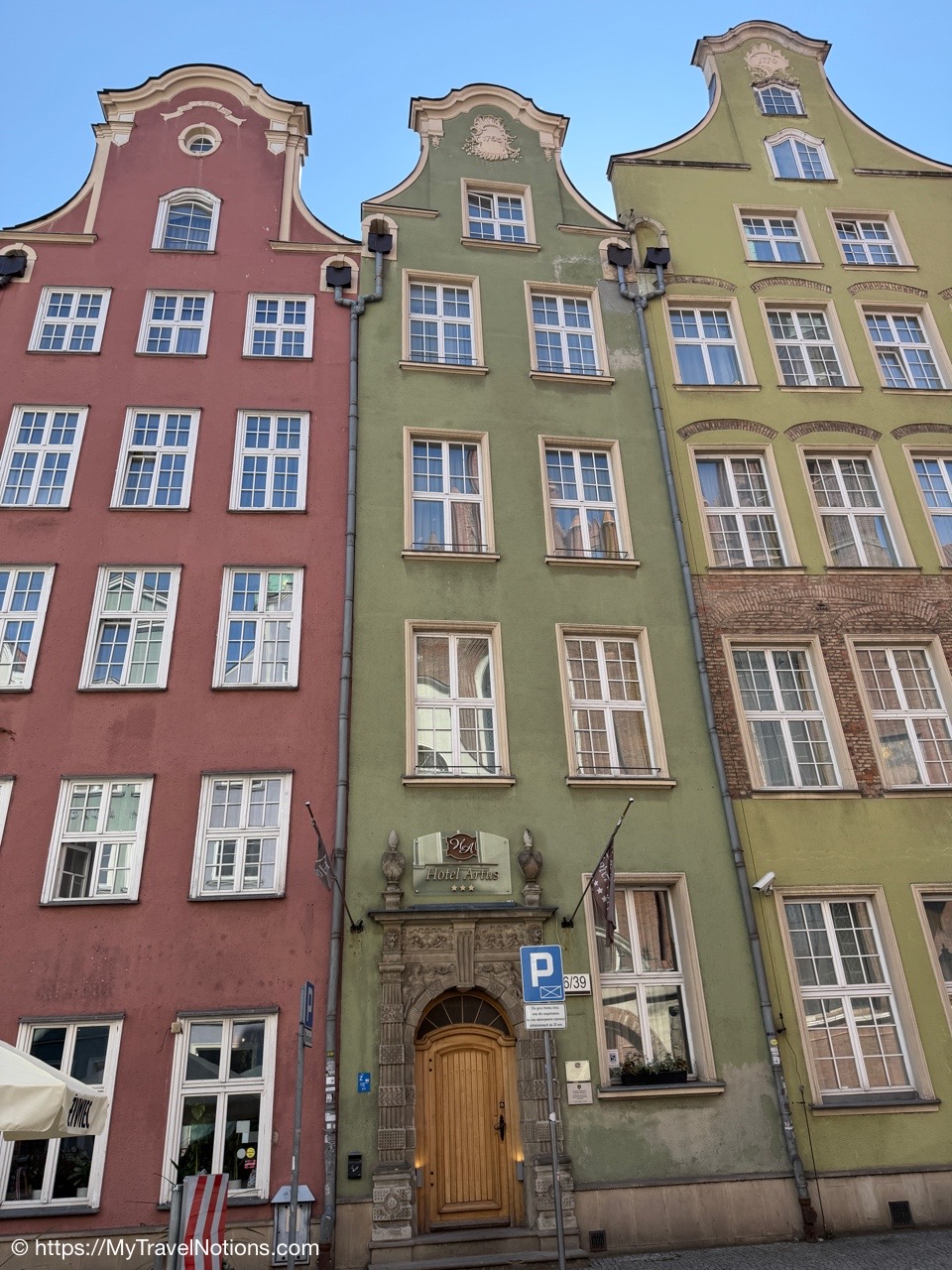
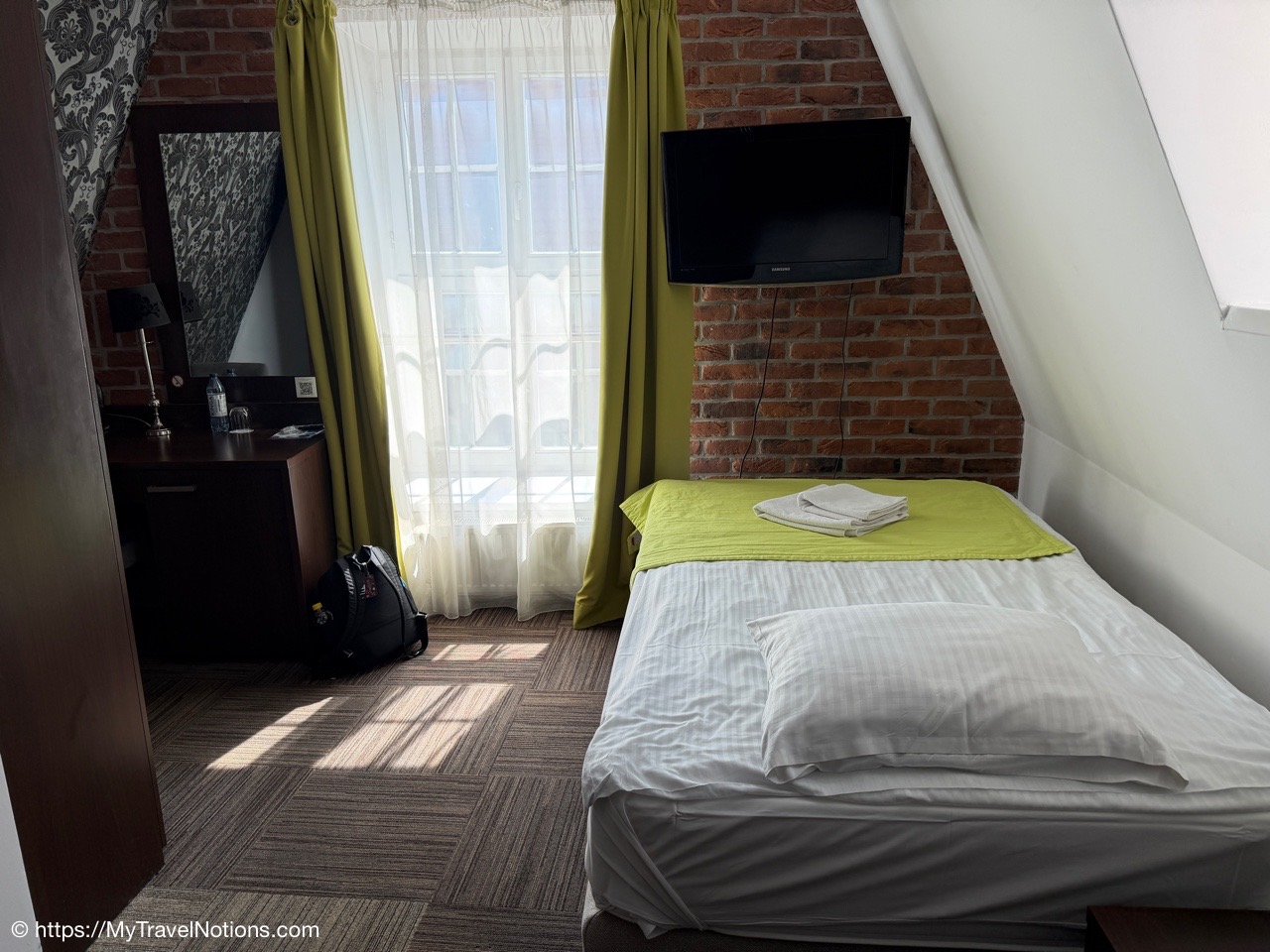
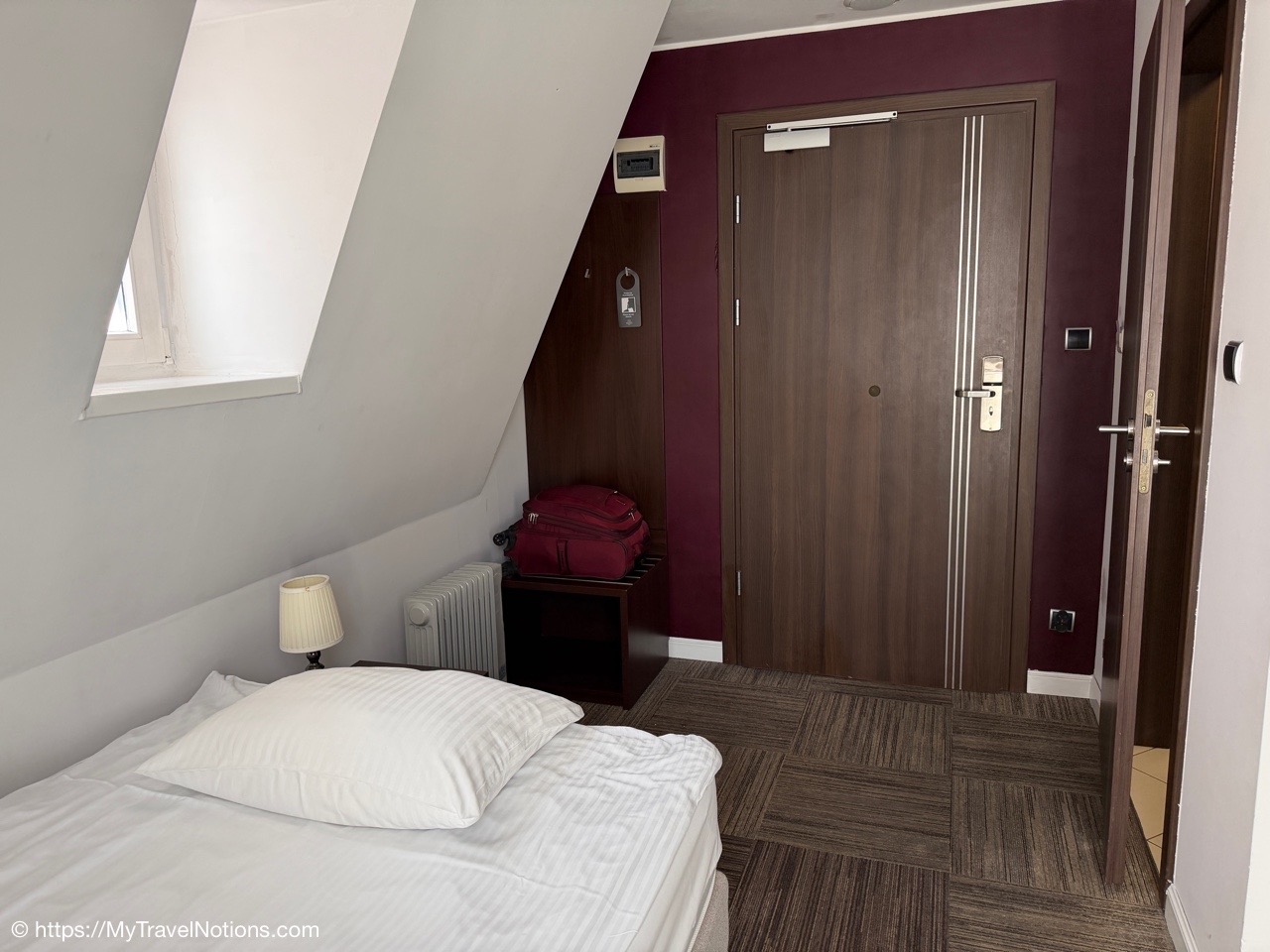
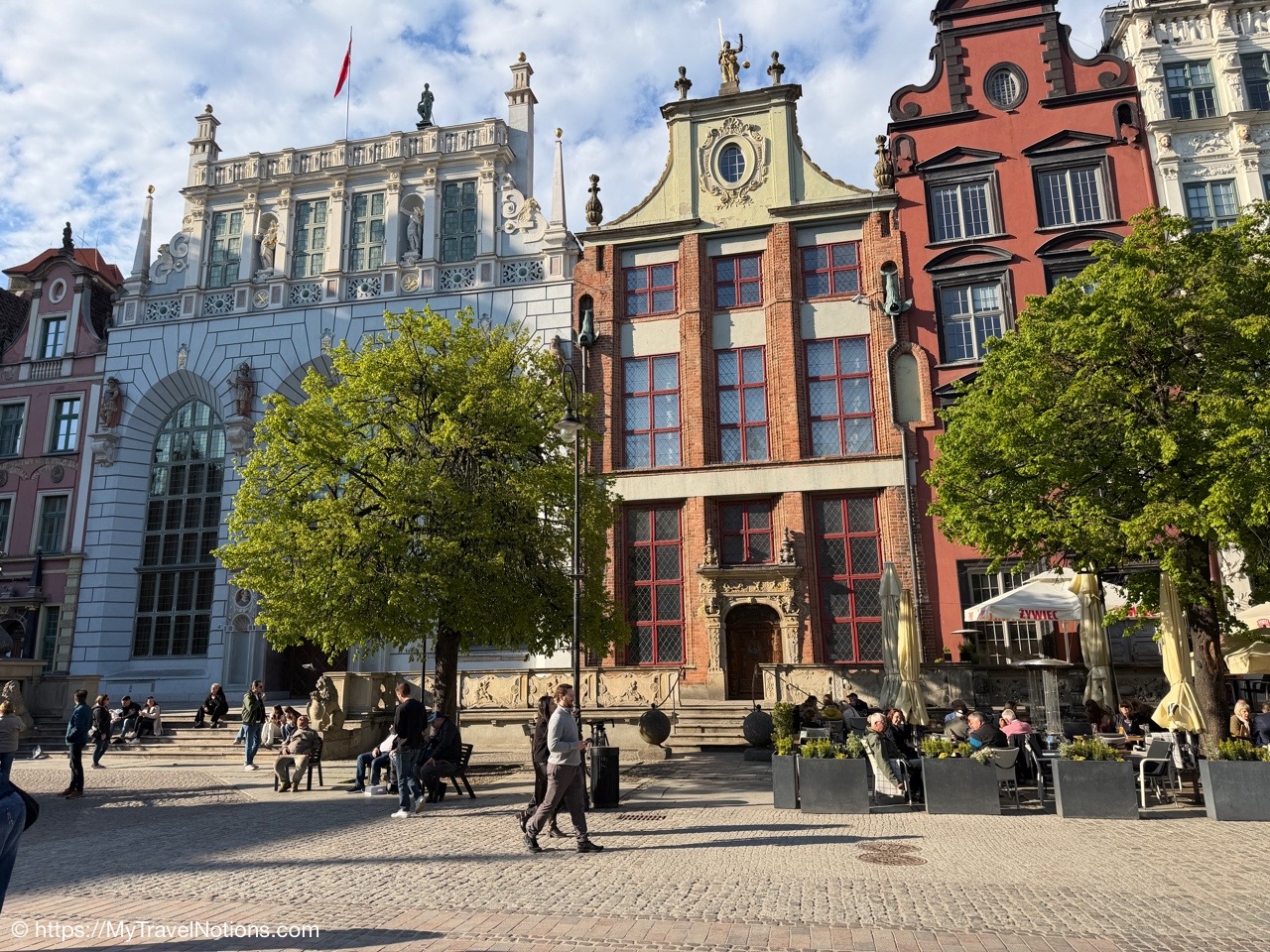
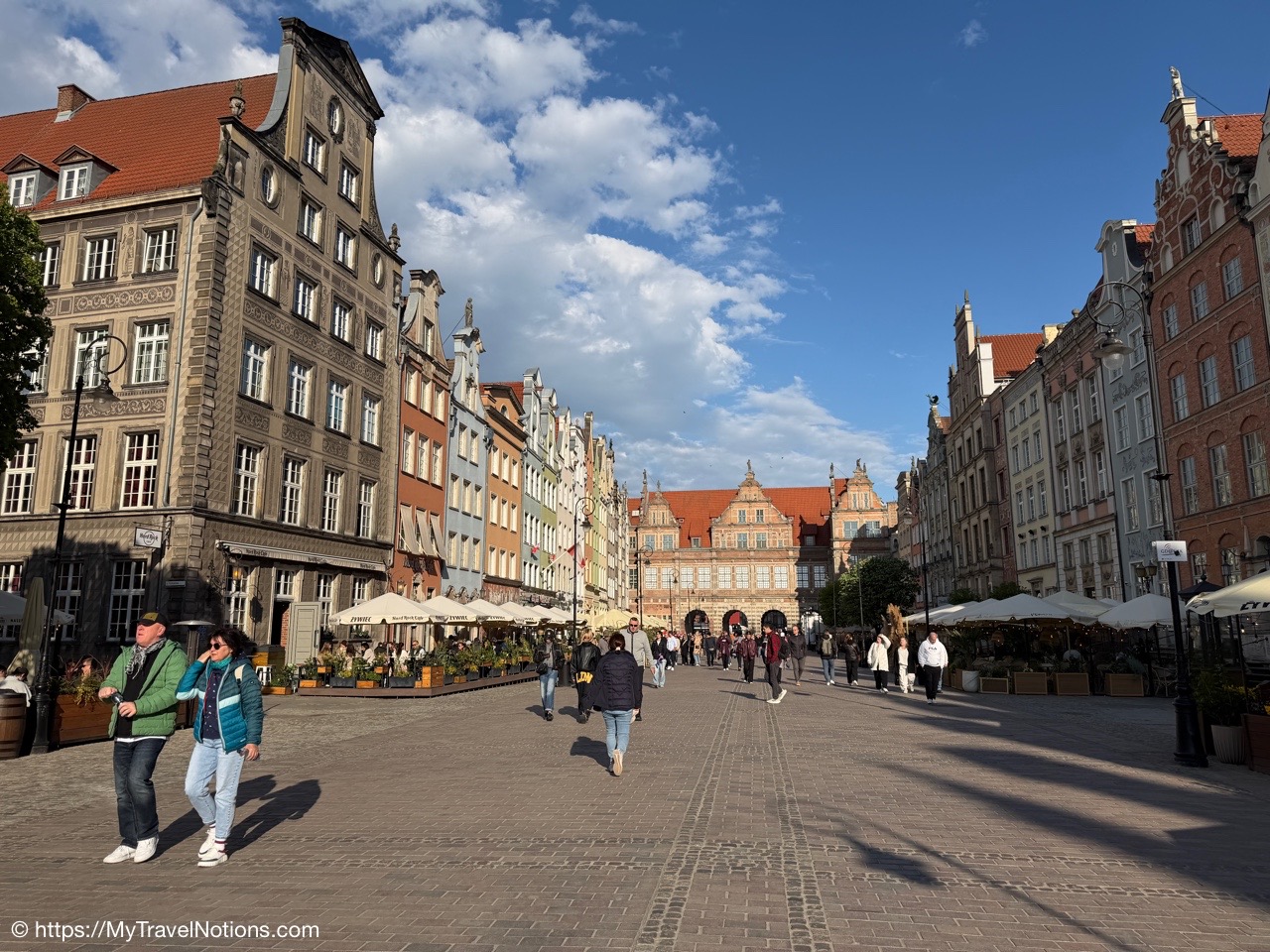
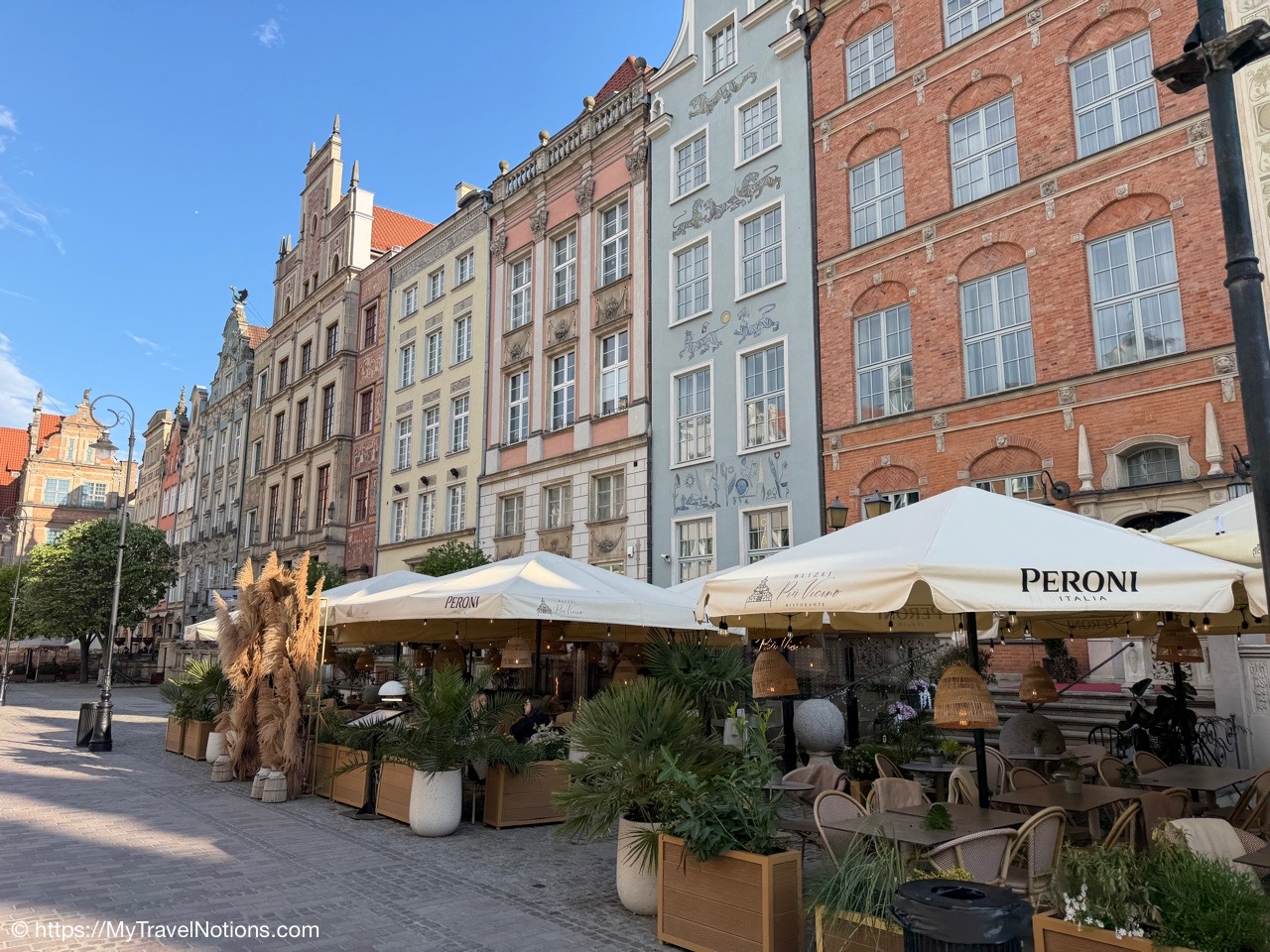
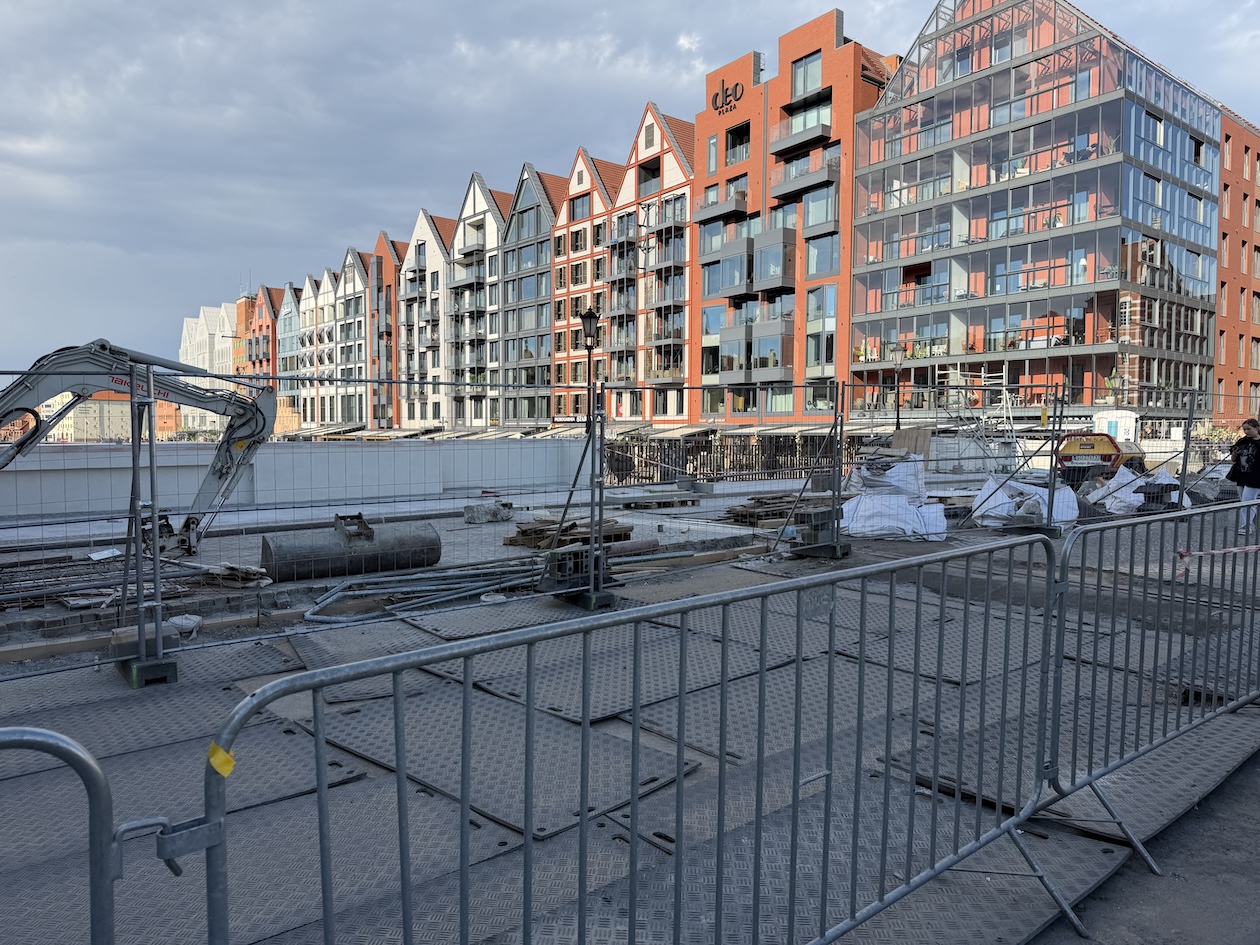
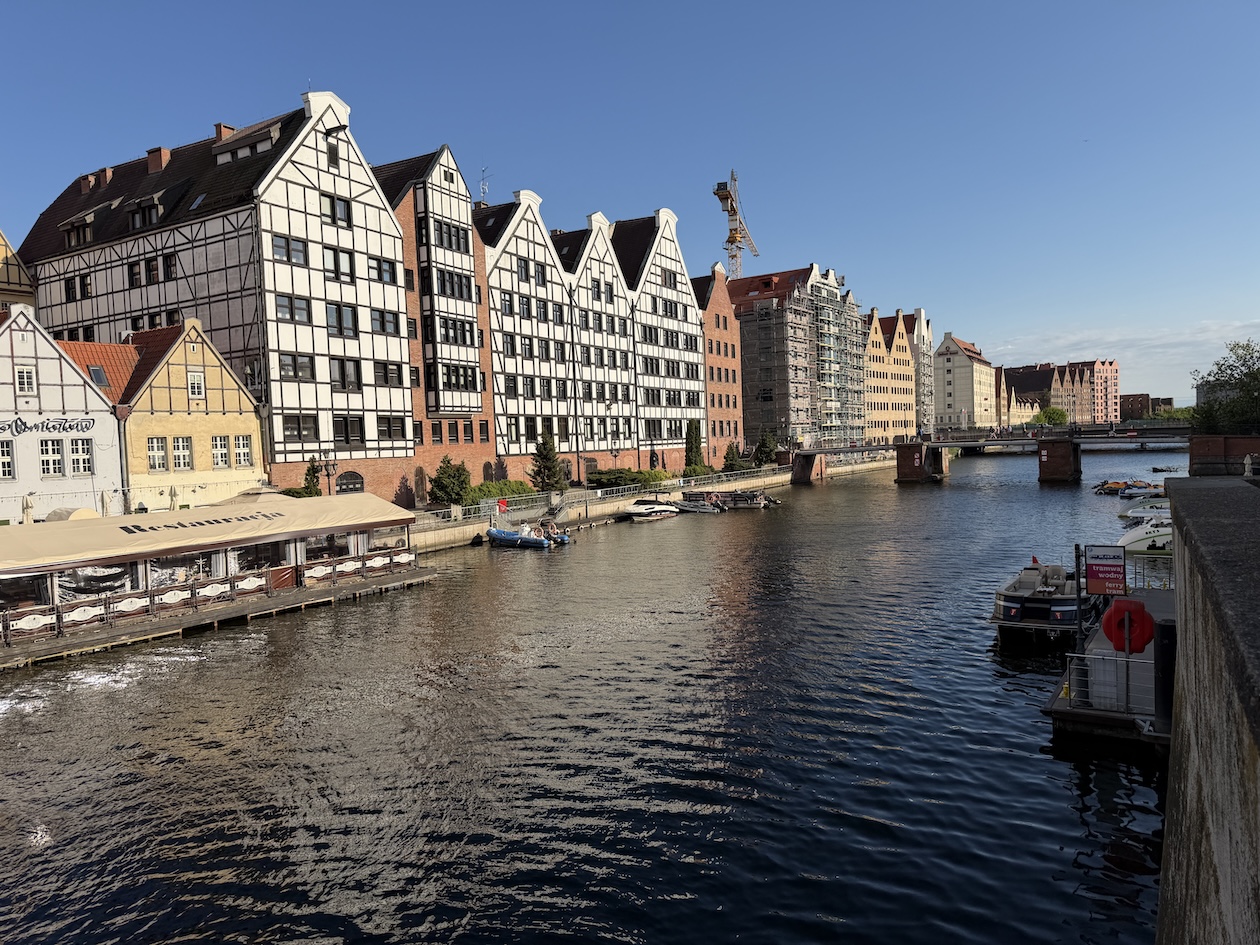
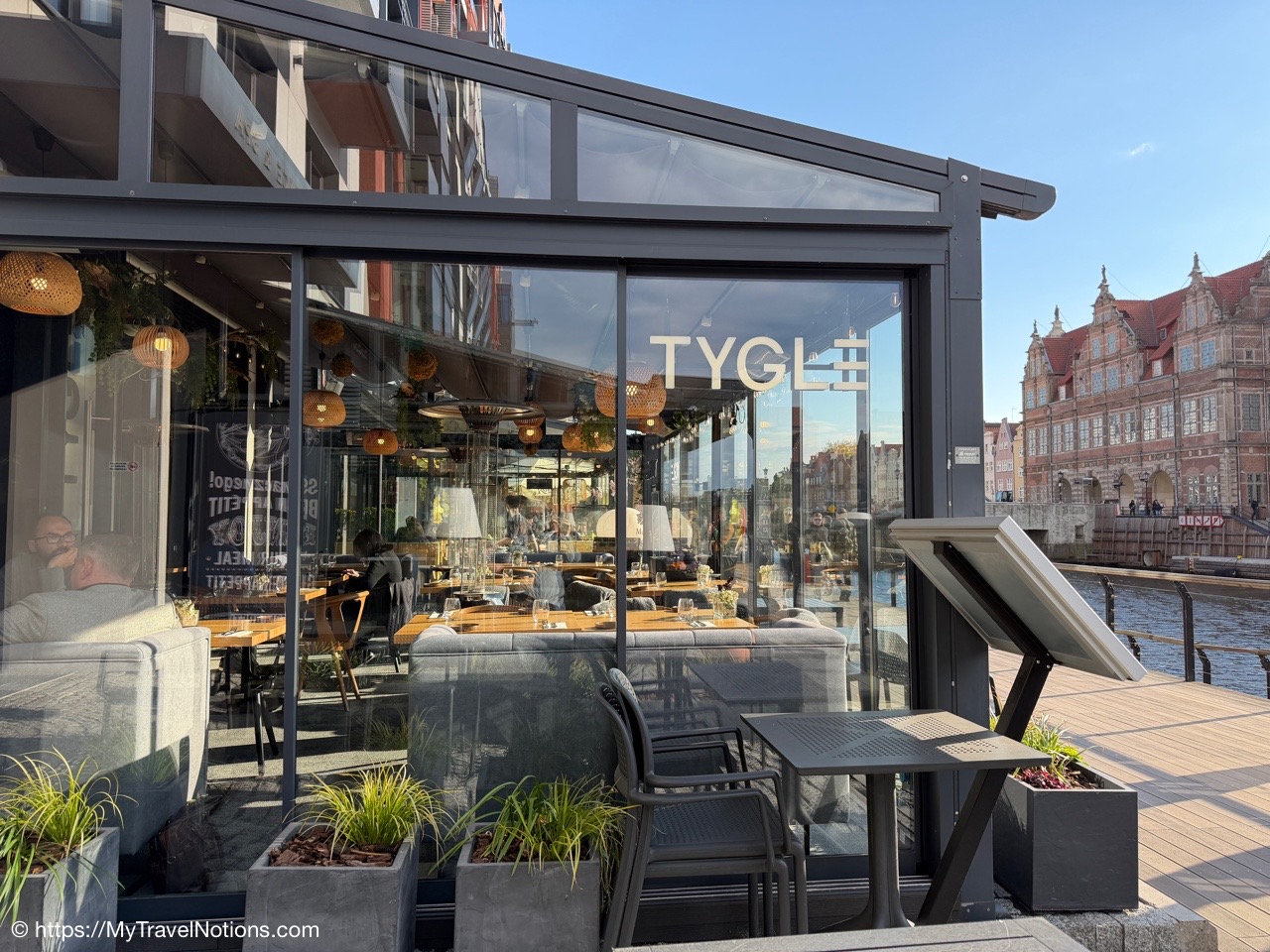
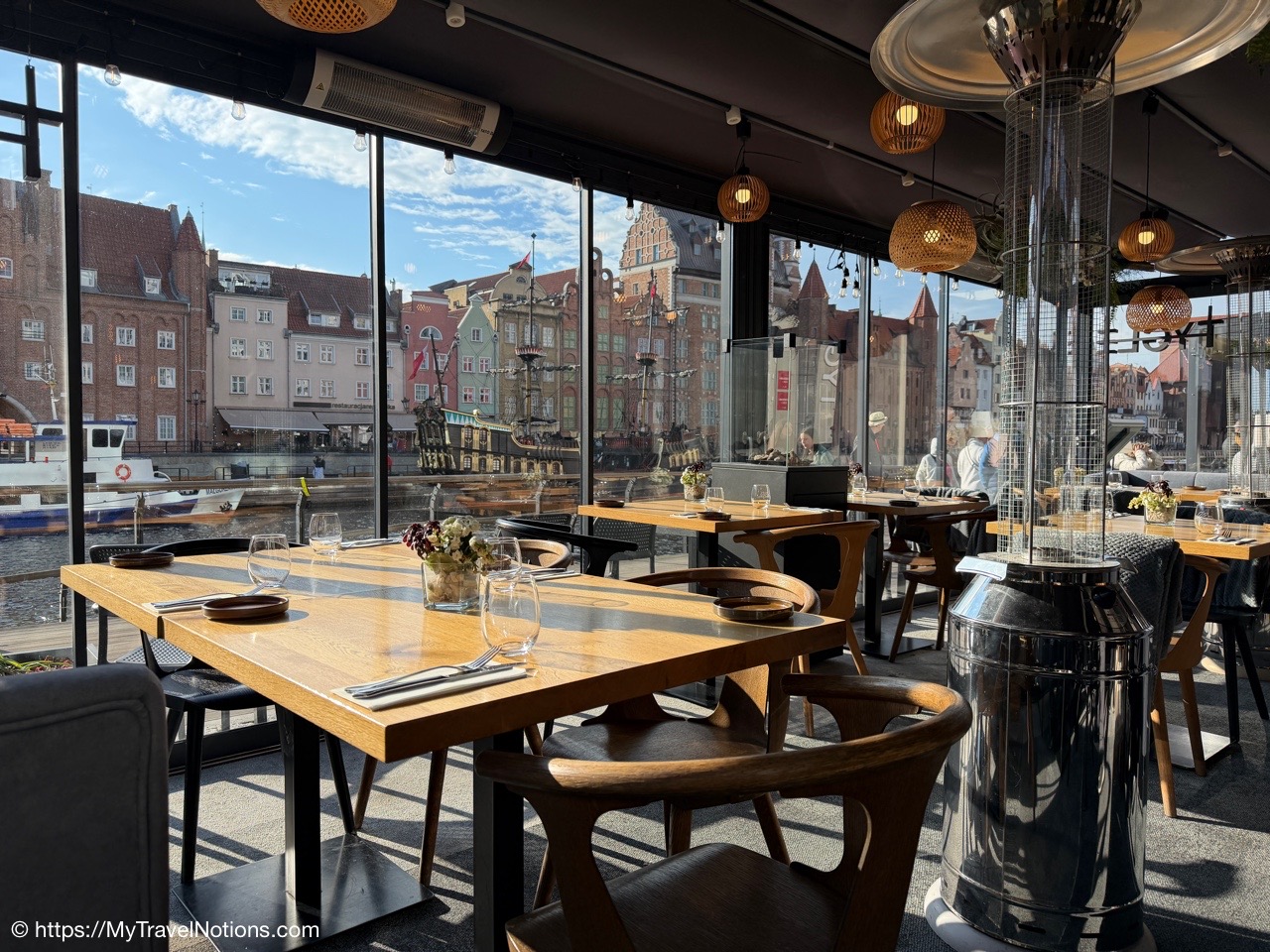
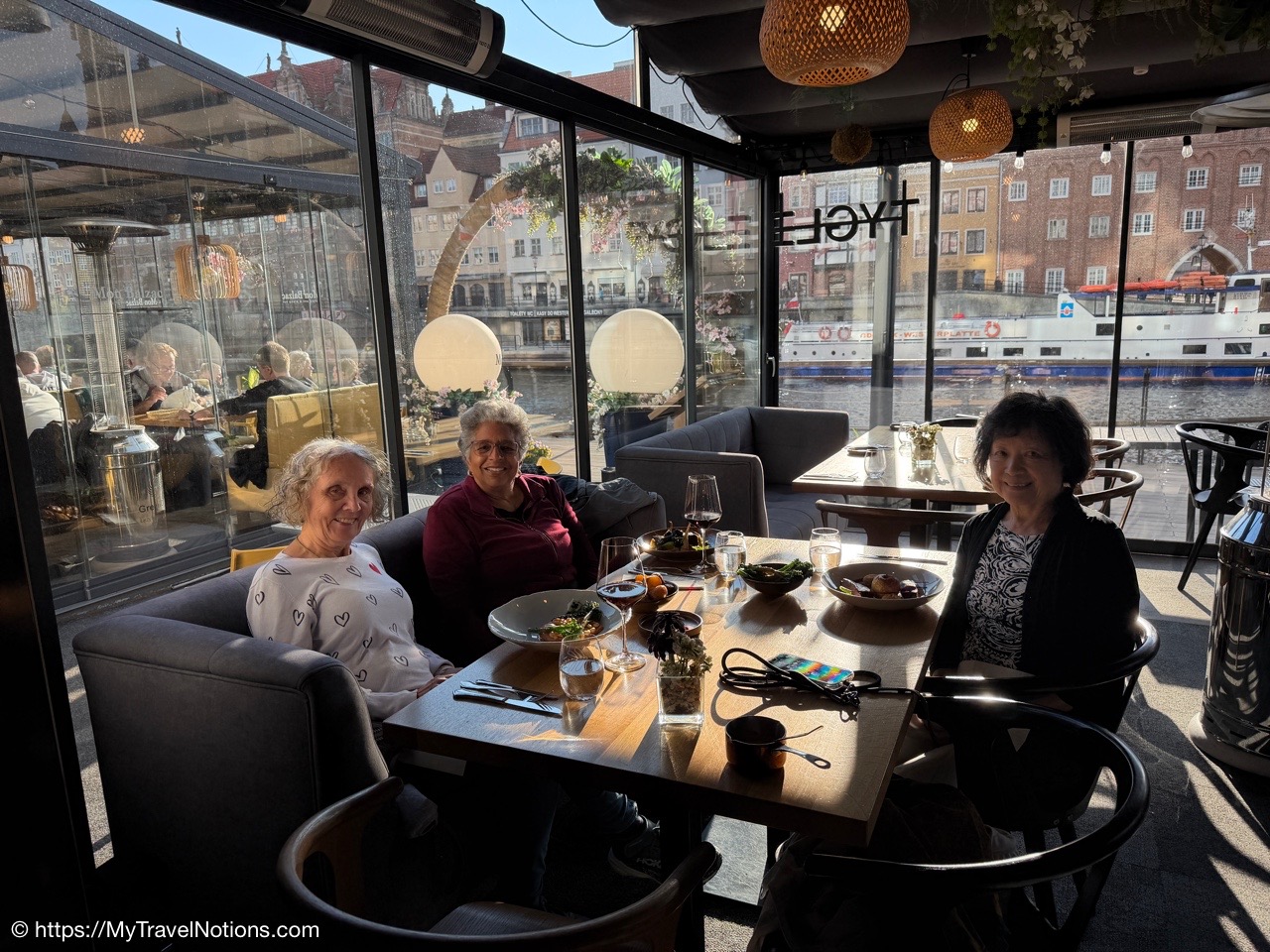
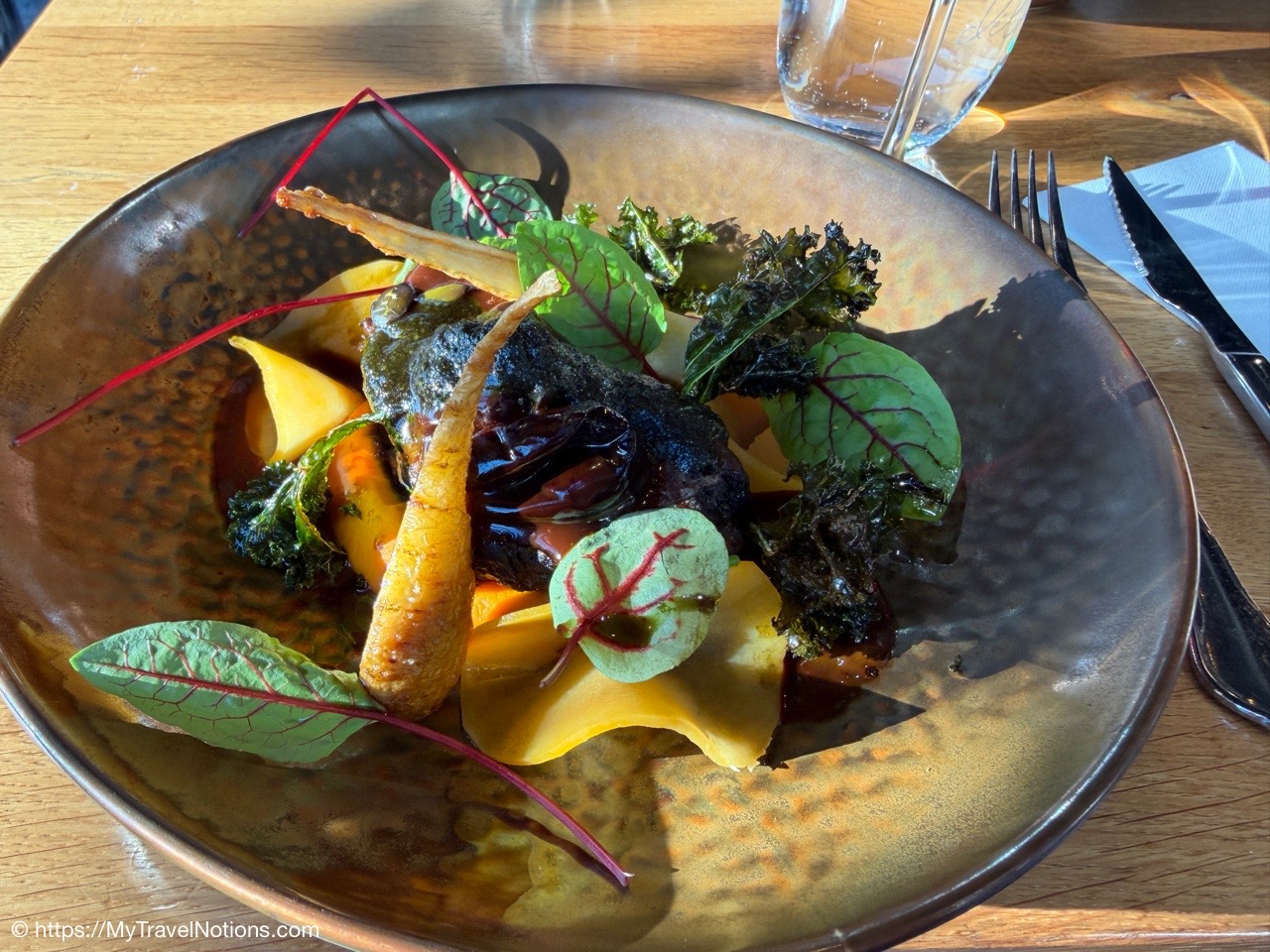
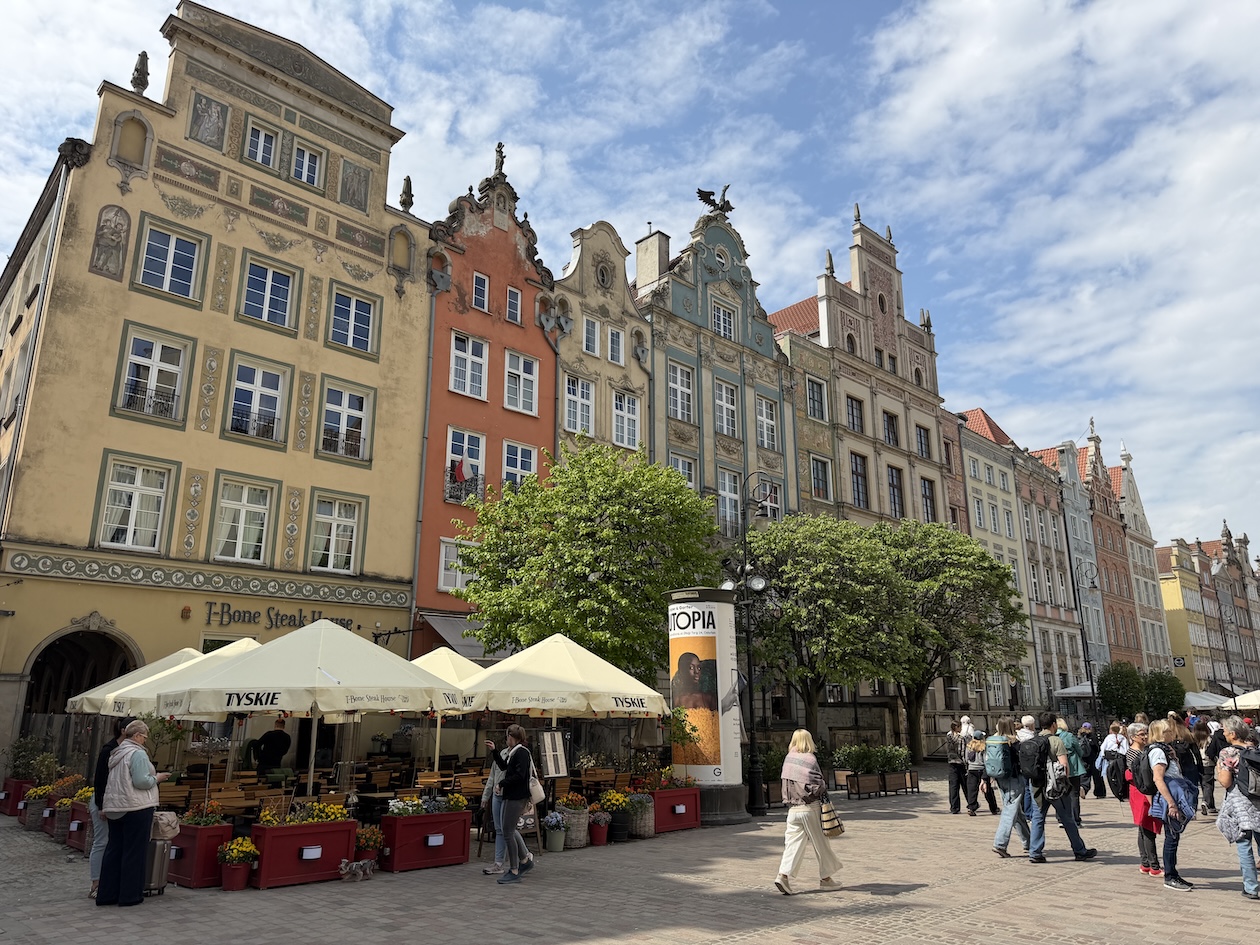
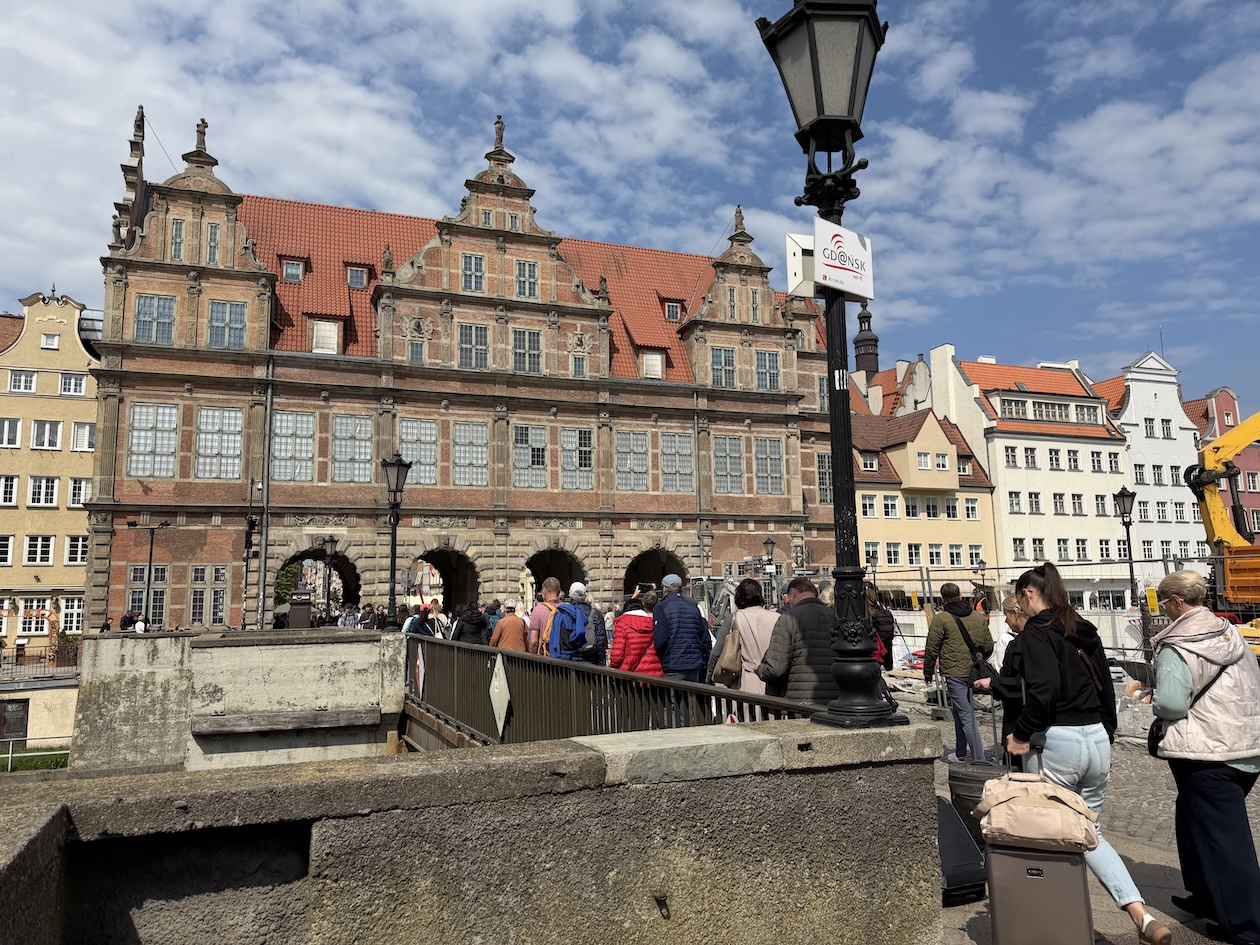
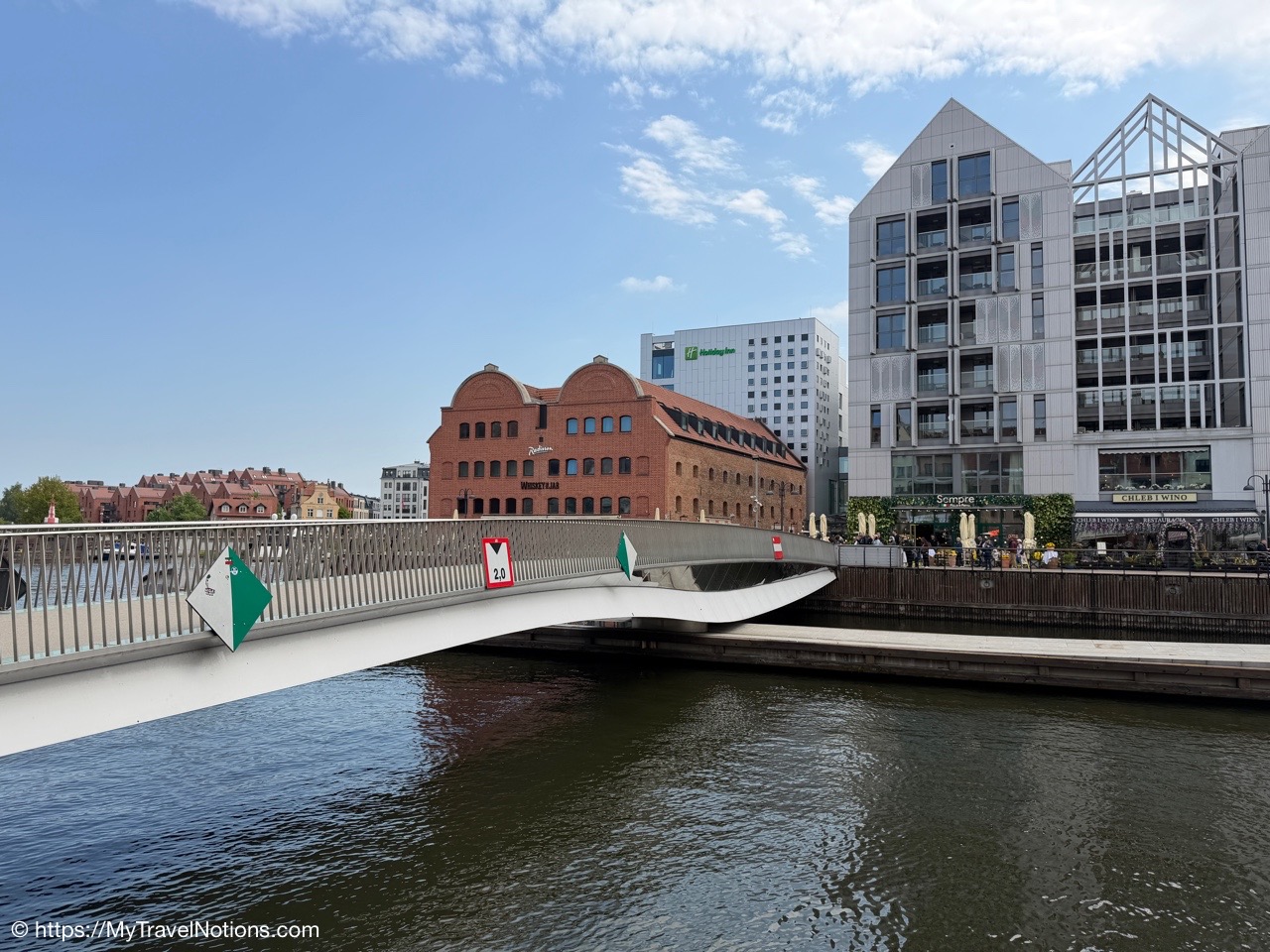
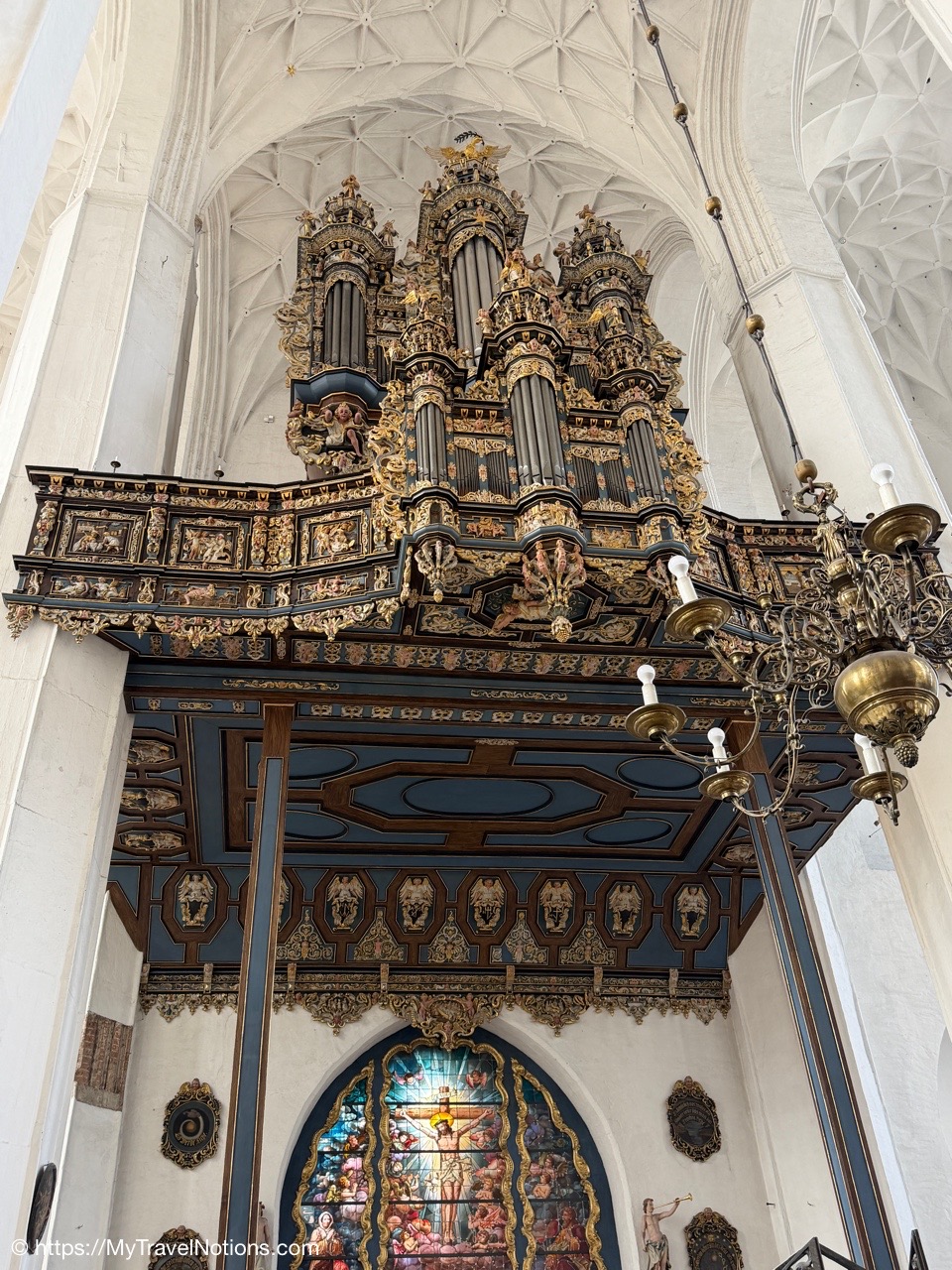
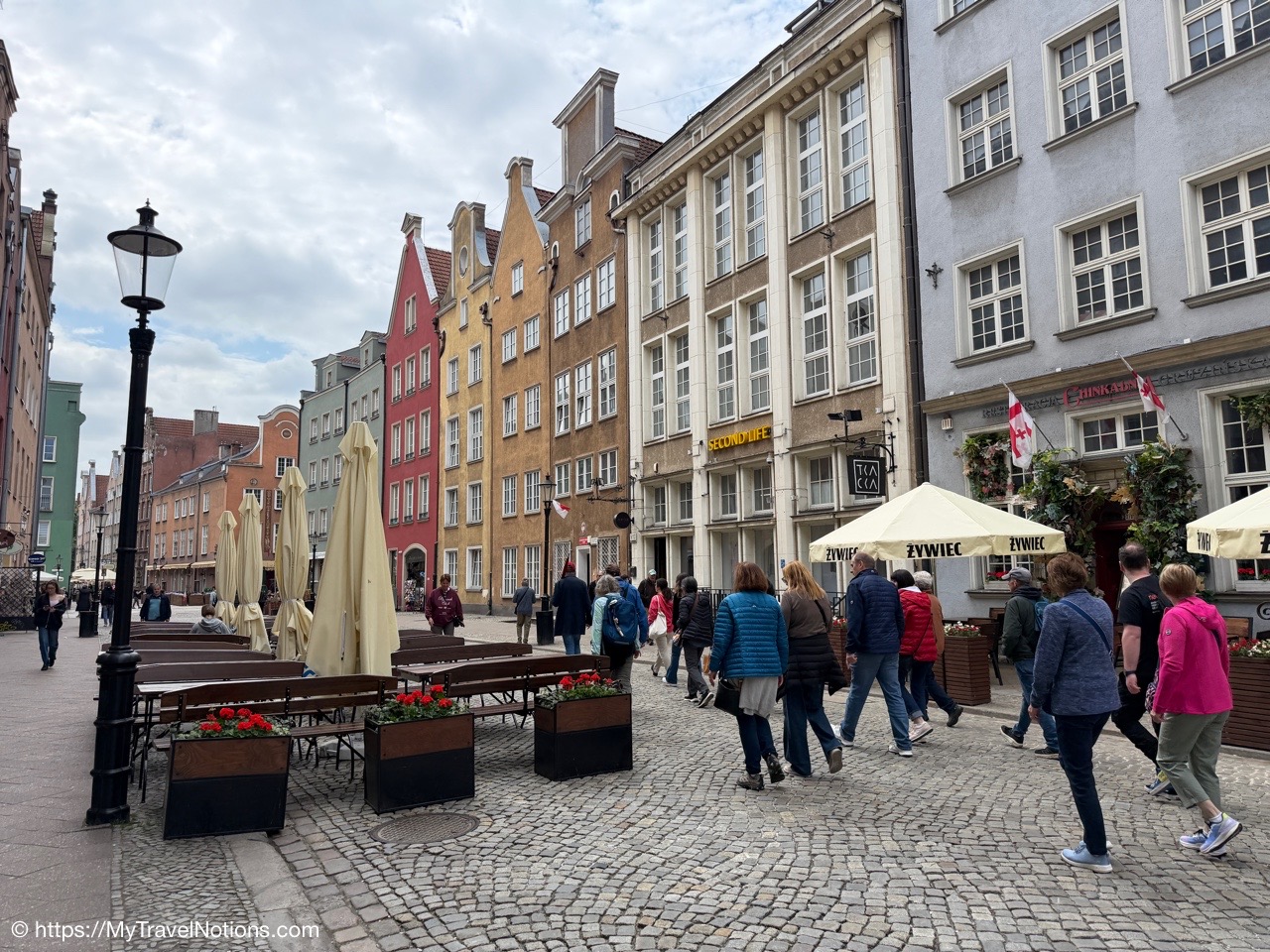
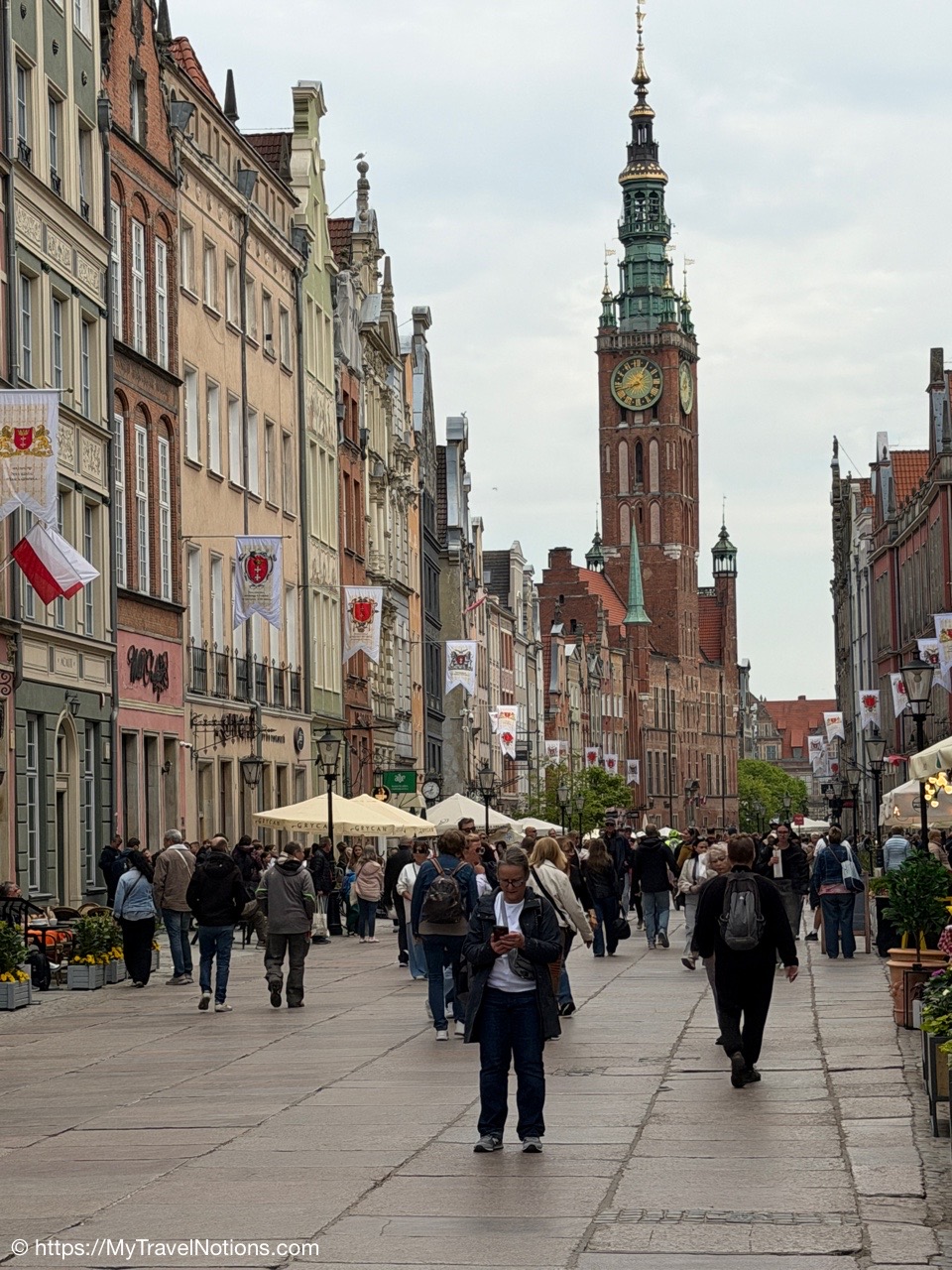
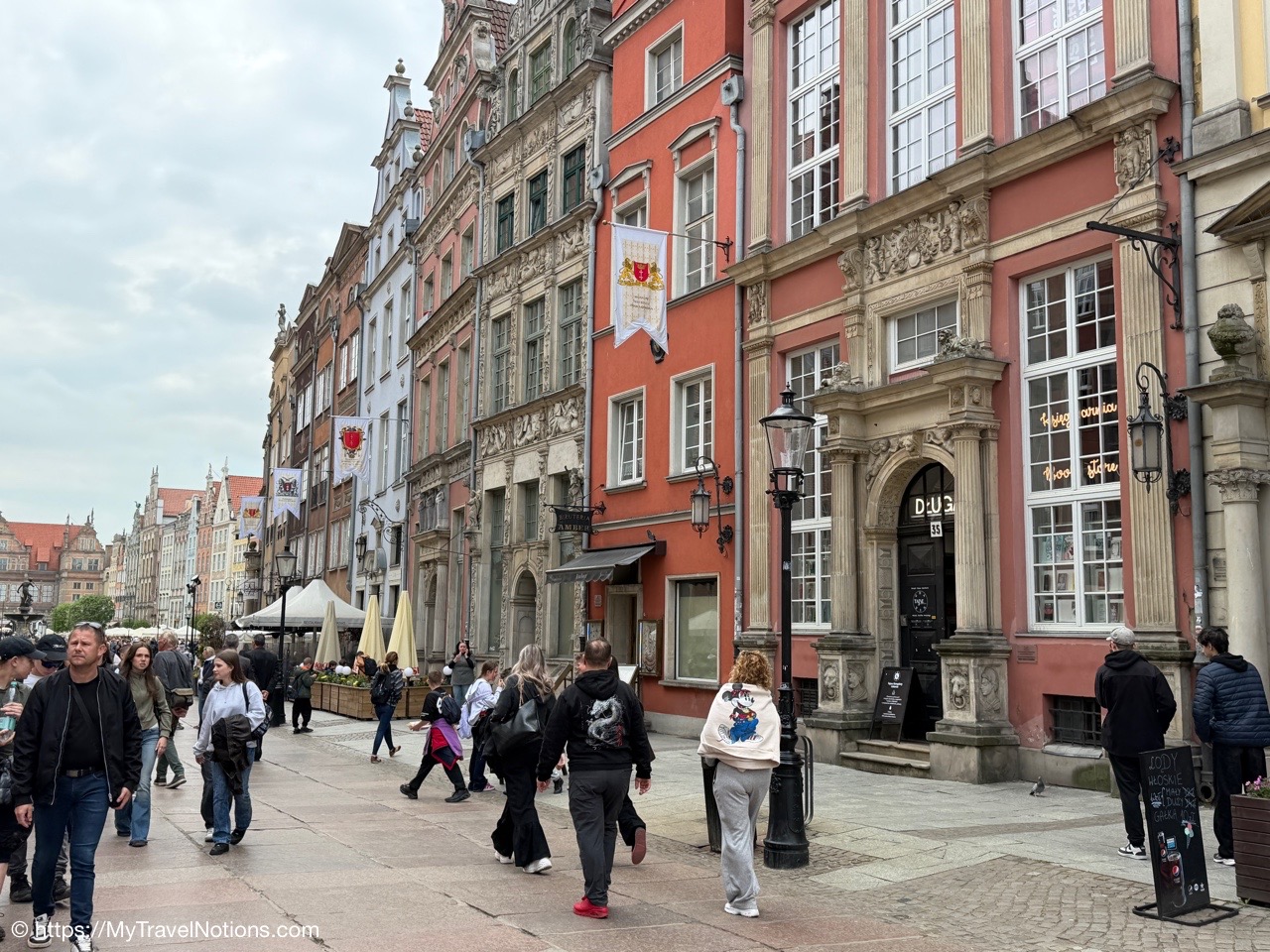
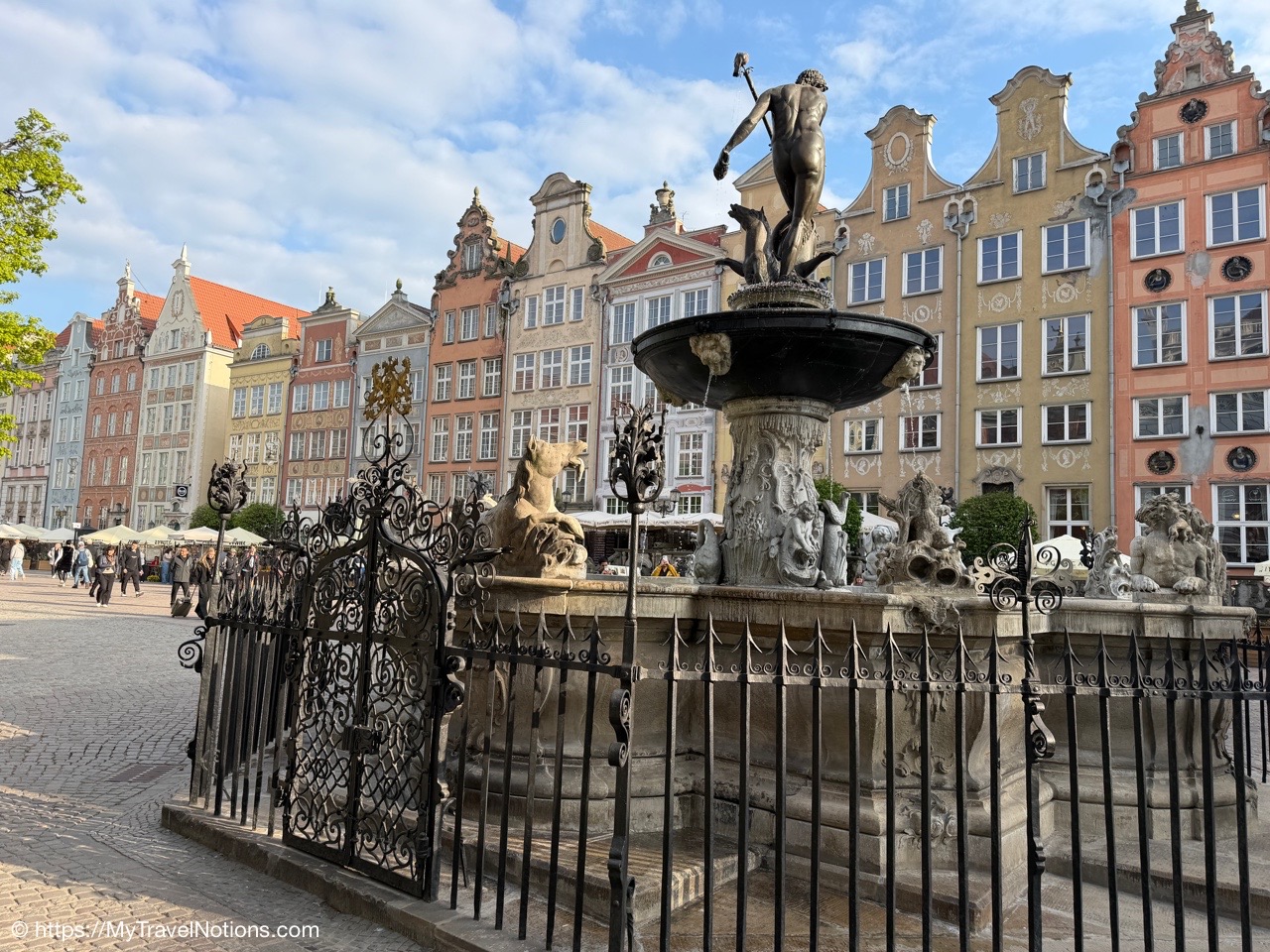
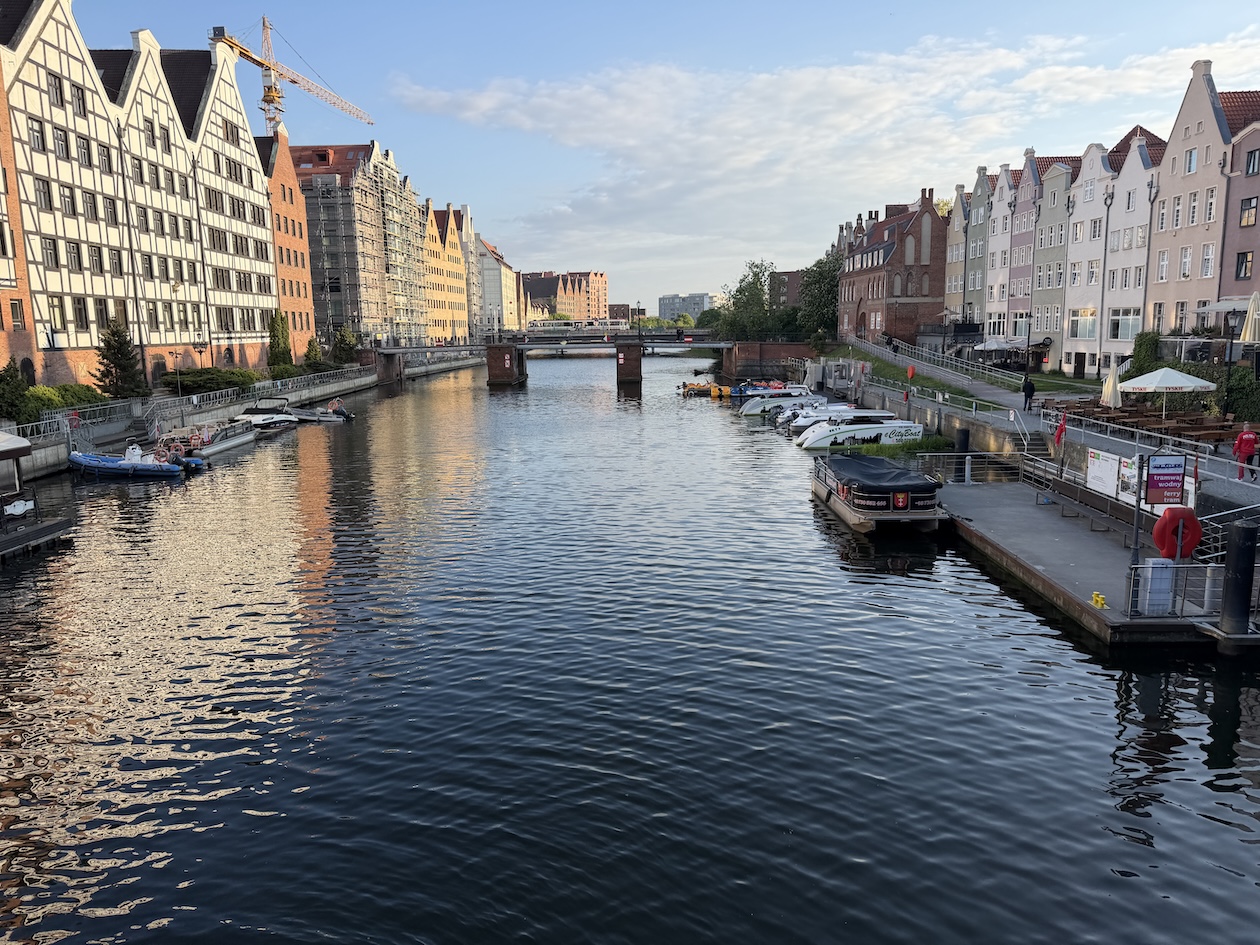
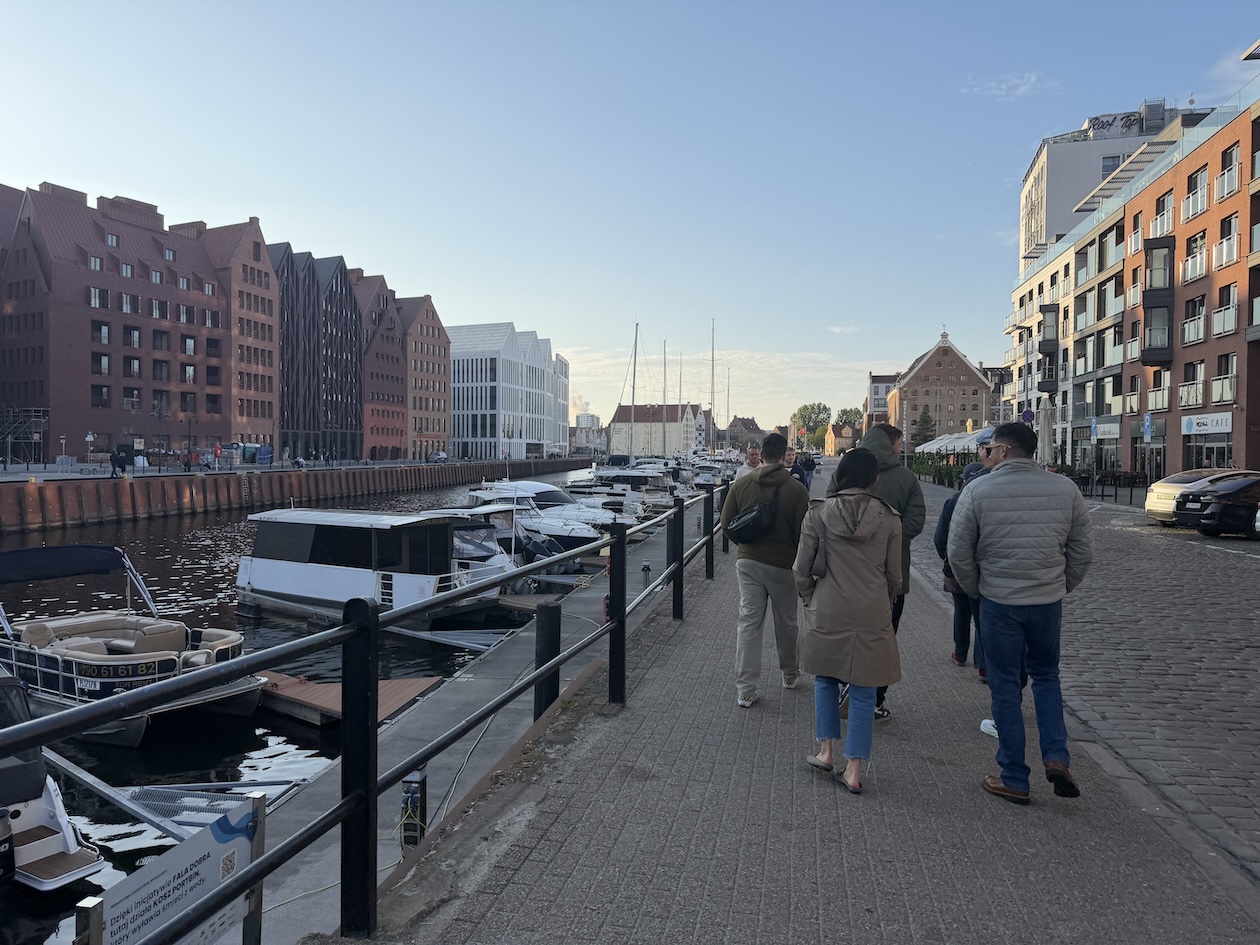
Alice, Rosie and me by the Neptune Fountain along Dlugi Targ, the Long Market, a historic, central square and main artery in the Old Town Gdańsk. (May 18, 2026)Arriving at the train station in Gdańsk. (May 18, 2026)Walking towards the entrance of the Gdańsk train station where we ordered an Uber to take us about 15 minutes into the Old Town. (May 18, 2026)Our home, the Hotel Artus, for the next six days during our stay in Gdańsk, Poland. And, what a fabulous location, literally just around the corner from ‘Dlugi Targ’ which translates as Long Market, a grand, historic pedestrian avenue and vibrant heart of the city’s Old Town. (May 18, 2026)My small but cozy room at the Hotel Artus in Gdańsk. (May 18, 2026)My small but cozy room at the Hotel Artus in Gdańsk. (May 18, 2026)Heading out to dinner along Dlugi Targ, the Long Market, a historic, central square and main artery in the Old Town Gdańsk flanked by beautiful, historic architecture. (May 18, 2026)Walking along Dlugi Targ, the Long Market, a historic, central square and main artery in the Old Town Gdańsk flanked by beautiful historic architecture. (May 18, 2026)Walking along Dlugi Targ, the Long Market, a historic, central square and main artery in the Old Town Gdańsk flanked by beautiful historic architecture. (May 18, 2026)Walking along Dlugi Targ, the Long Market, a historic, central square and main artery in the Old Town Gdańsk flanked by beautiful historic architecture. (May 18, 2026)Construction along the the Zielony Most or Green Bridge, a pedestrian bridge that connects the historic Long Market (Dlugi Targ) with Stągiewna Street on Granary Island with views of the Motława River. Granary Island, nearly completely destroy during World War II, historically served as the primary storage and warehouse hub for the port. (May 18, 2026)Crossing along the Zielony Most or Green Bridge, a pedestrian bridge that connects the historic Long Market (Dlugi Targ) with Stągiewna Street on Granary Island with views of the Motława River. Views of Granary Island which was nearly completely destroyed during World War II, historically served as the primary storage and warehouse hub for the port. (May 18, 2026)Having an early dinner at Tygle, located on the restored Granary Island in Gdańsk is a Michelin star restaurant that Alice where Alice reserved a table for us. (May 18, 2026)Views of Granary Island, in the historic center of Gdańsk, along the Motława waterfront from our dinner location at Tygle restaurant. (May 18, 2026)Dinner at Tygle restaurant at Granary Island, in the historic center of Gdańsk along the Motława waterfront with Rosie and Alice. (May 18, 2026)Since beef cheeks were on the menu at Tygle restaurant in Gdańsk, I thought I would try it. This version, in gingerbread cause, included smoked plum, pickled pumpkin and kale pesto. It was okay, definitely fancier than the beef cheeks I had in Kraków, which continues to be my favorite. Cost: 104 zl or $24 USD. (May 16, 2026)
Today was all about discovering the history and the food of Gdańsk through a morning free history walking tour and an early evening food walking tour.
As for a brief history of Gdańsk, a medieval trading hub, the city was extensively rebuilt after World War II primarily in a pre-19th century Dutch Mannerist and Flemish-influenced Renaissance style combined with its Hanseatic Gothic Roots into a vibrant tourist and cultural hub.
One of Poland’s most beautiful cities, Gdansk, on the Baltic Sea, has played major roles in history, especially in the 20th-century. It was the 1939 flash point of World War II, and then in 1980, the birthplace of the Solidarnosc labor movement, ushering the end of Communist domination in Eastern Europe.
Here’s beautiful Gdańsk and samples of its culinary delights.
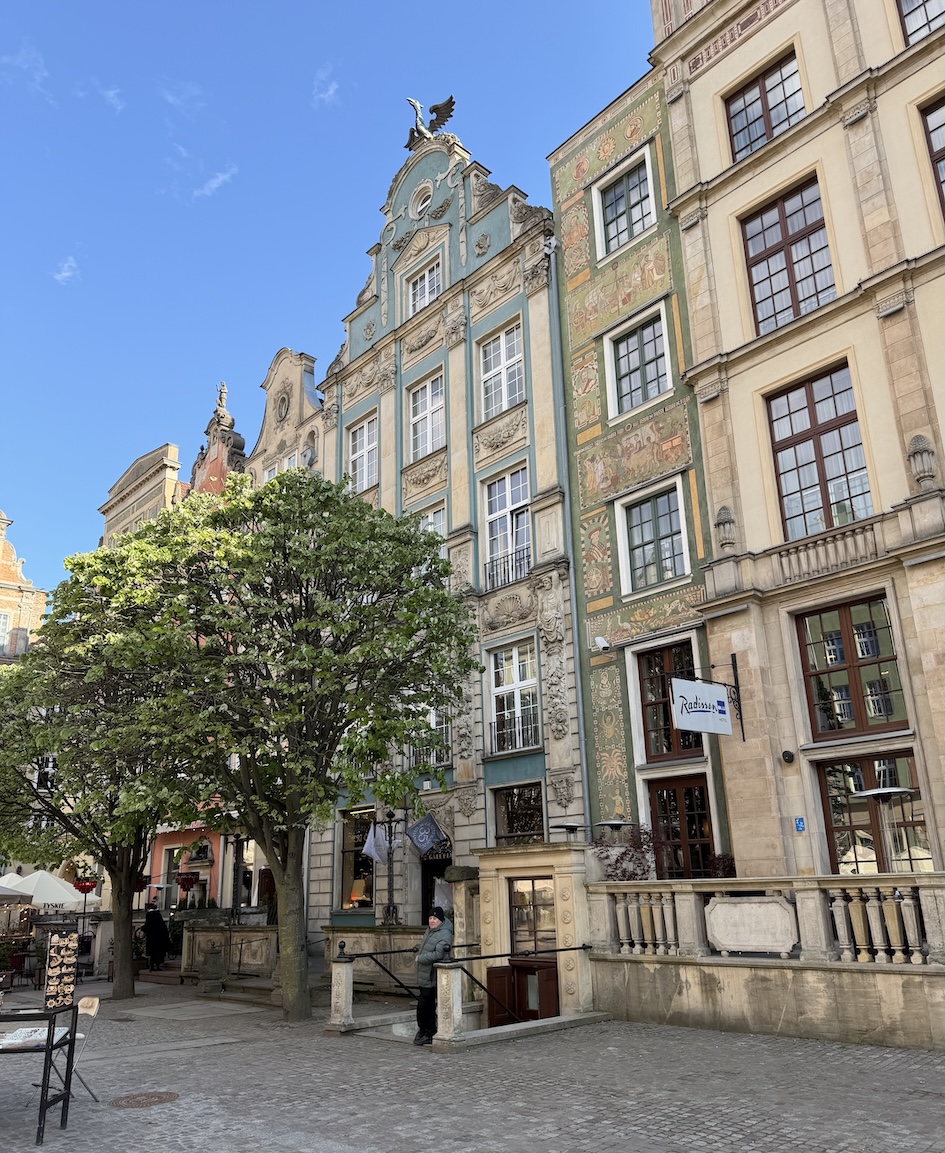
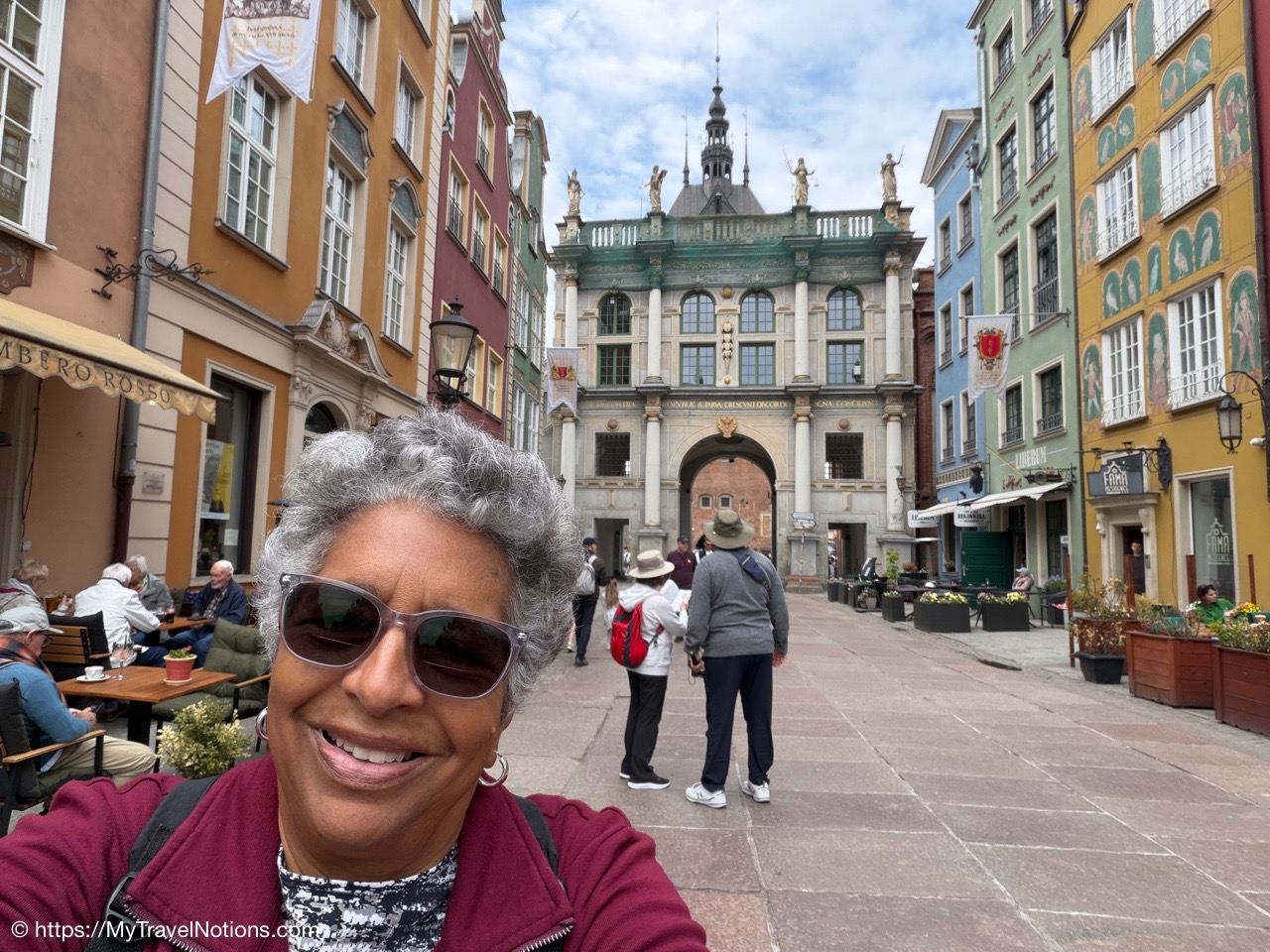
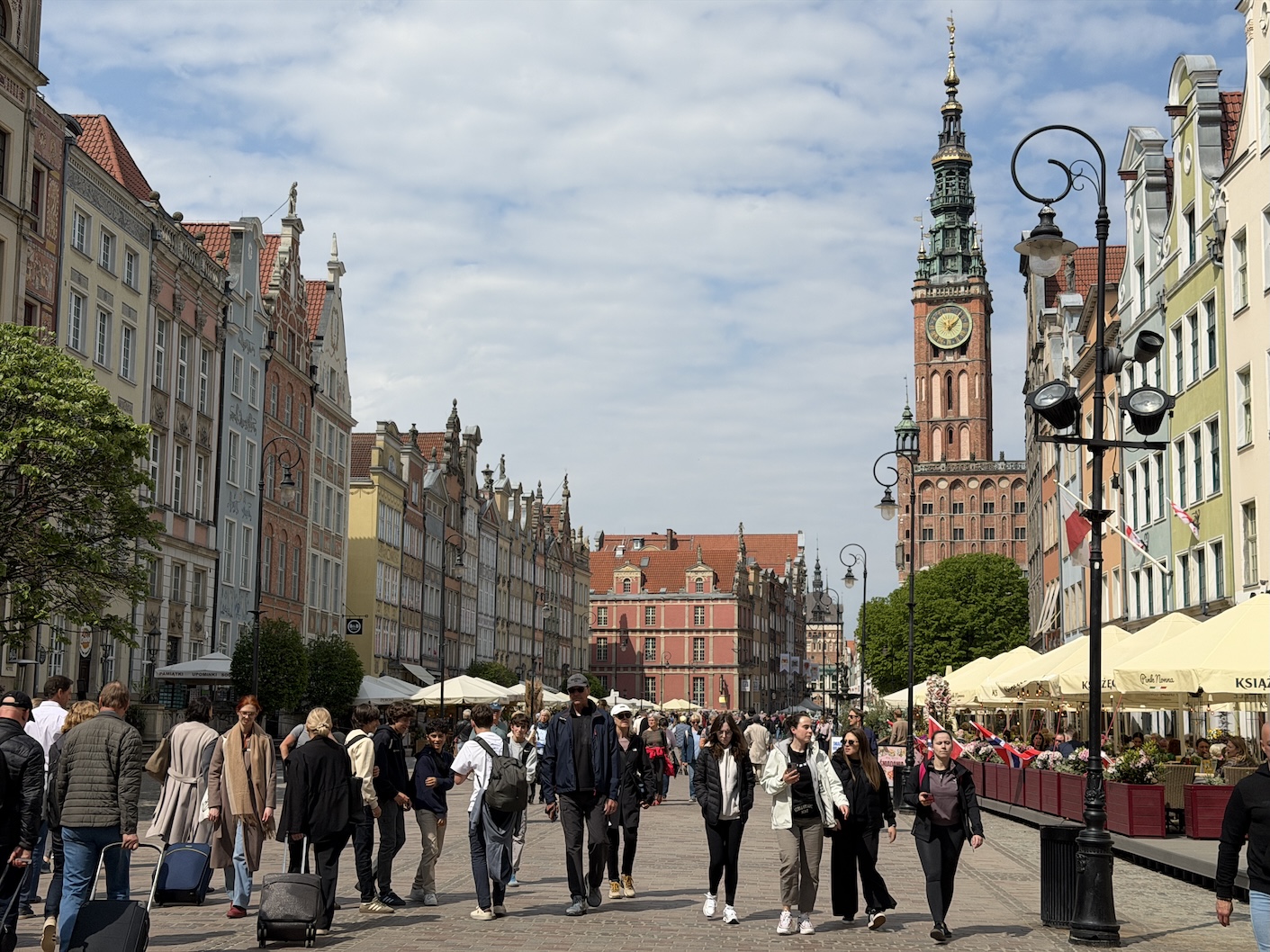
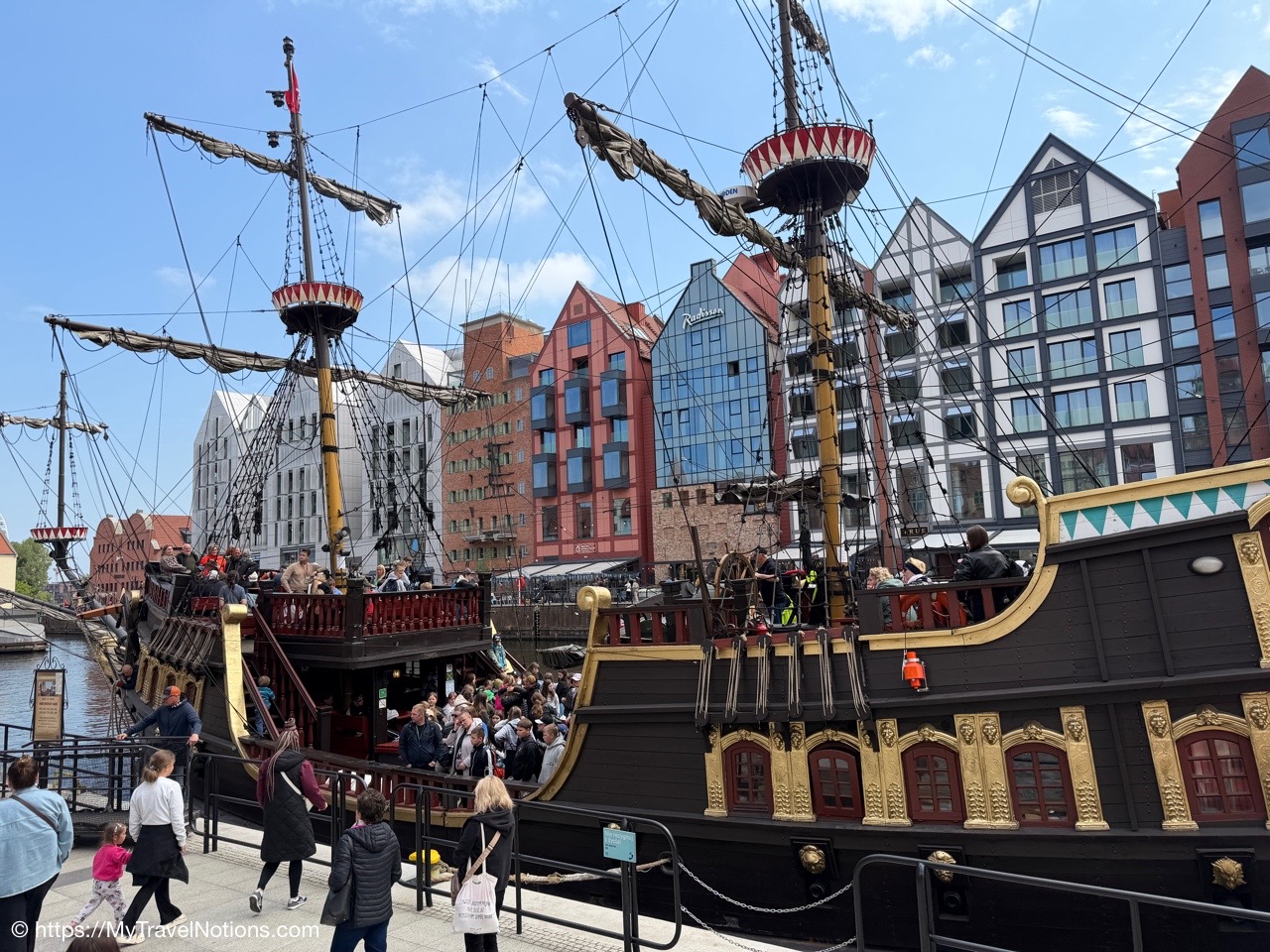
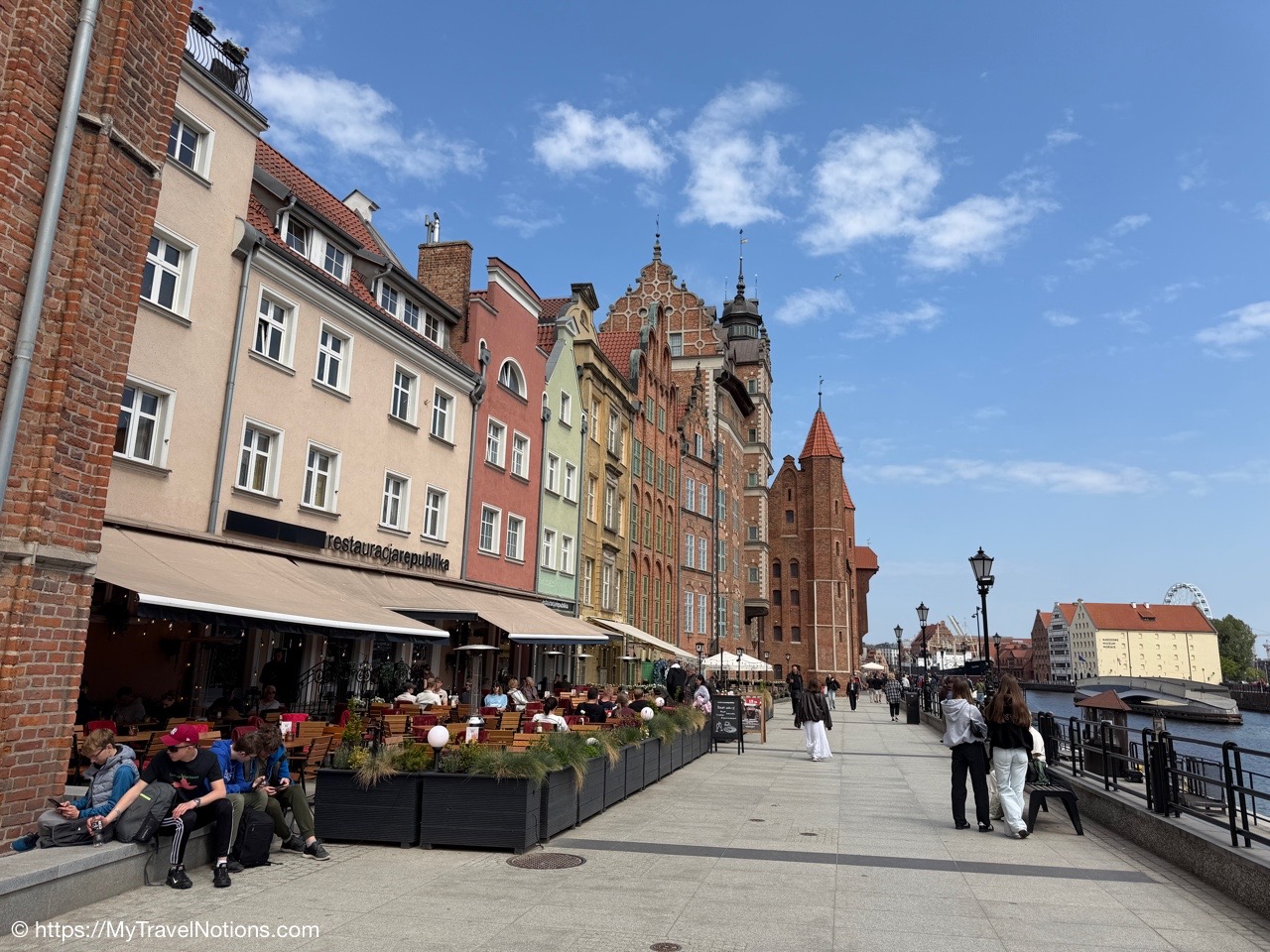
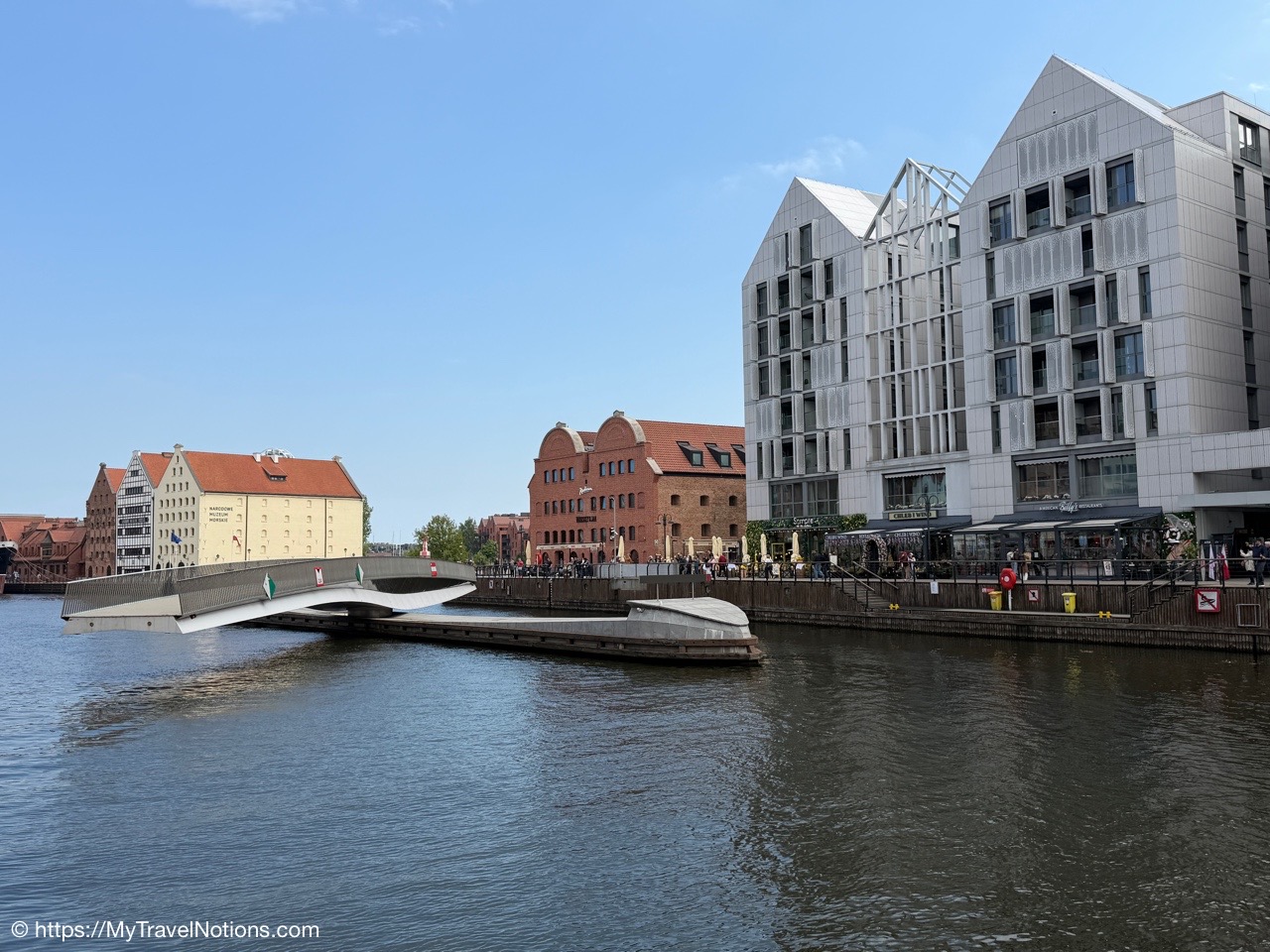
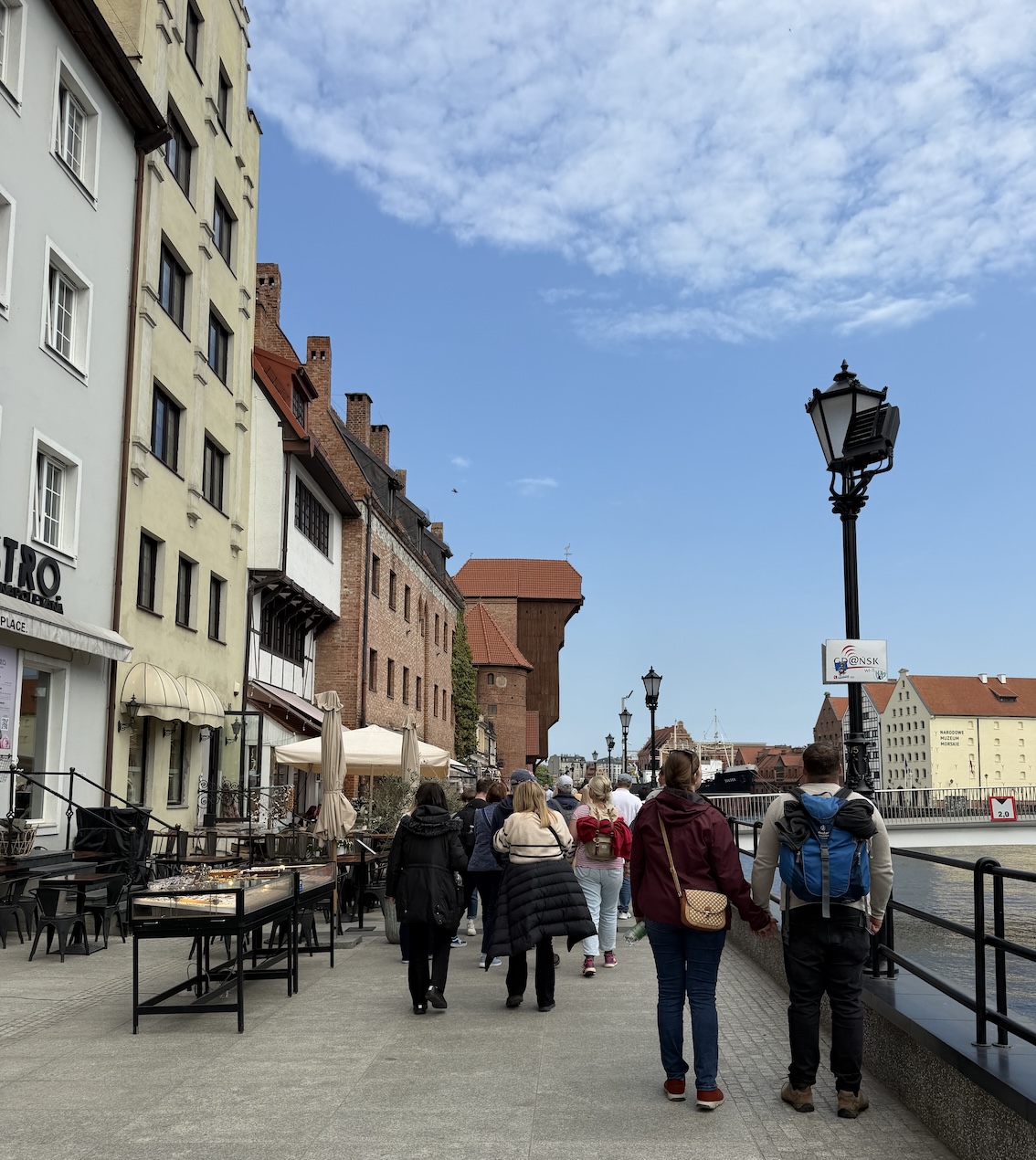
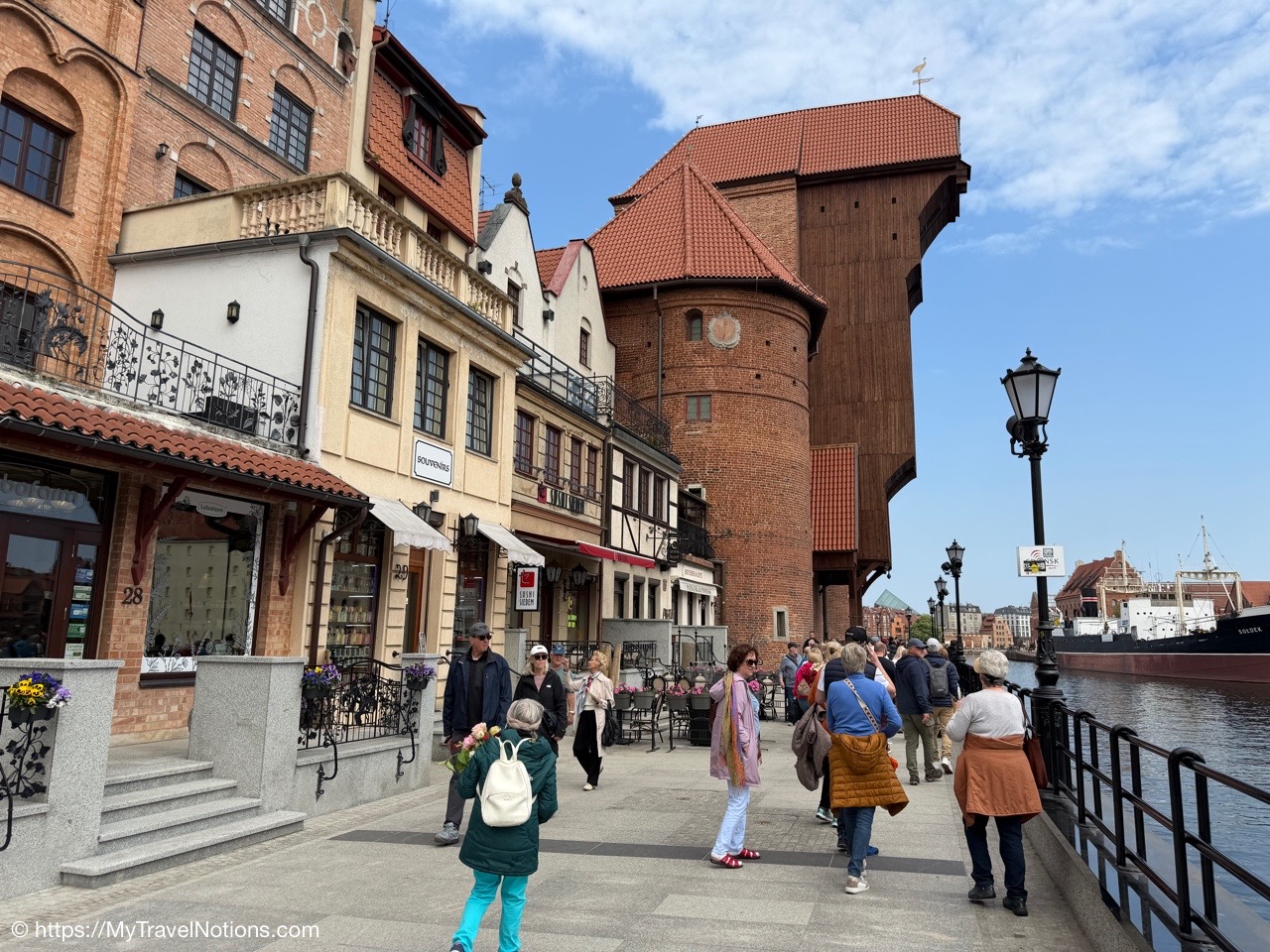
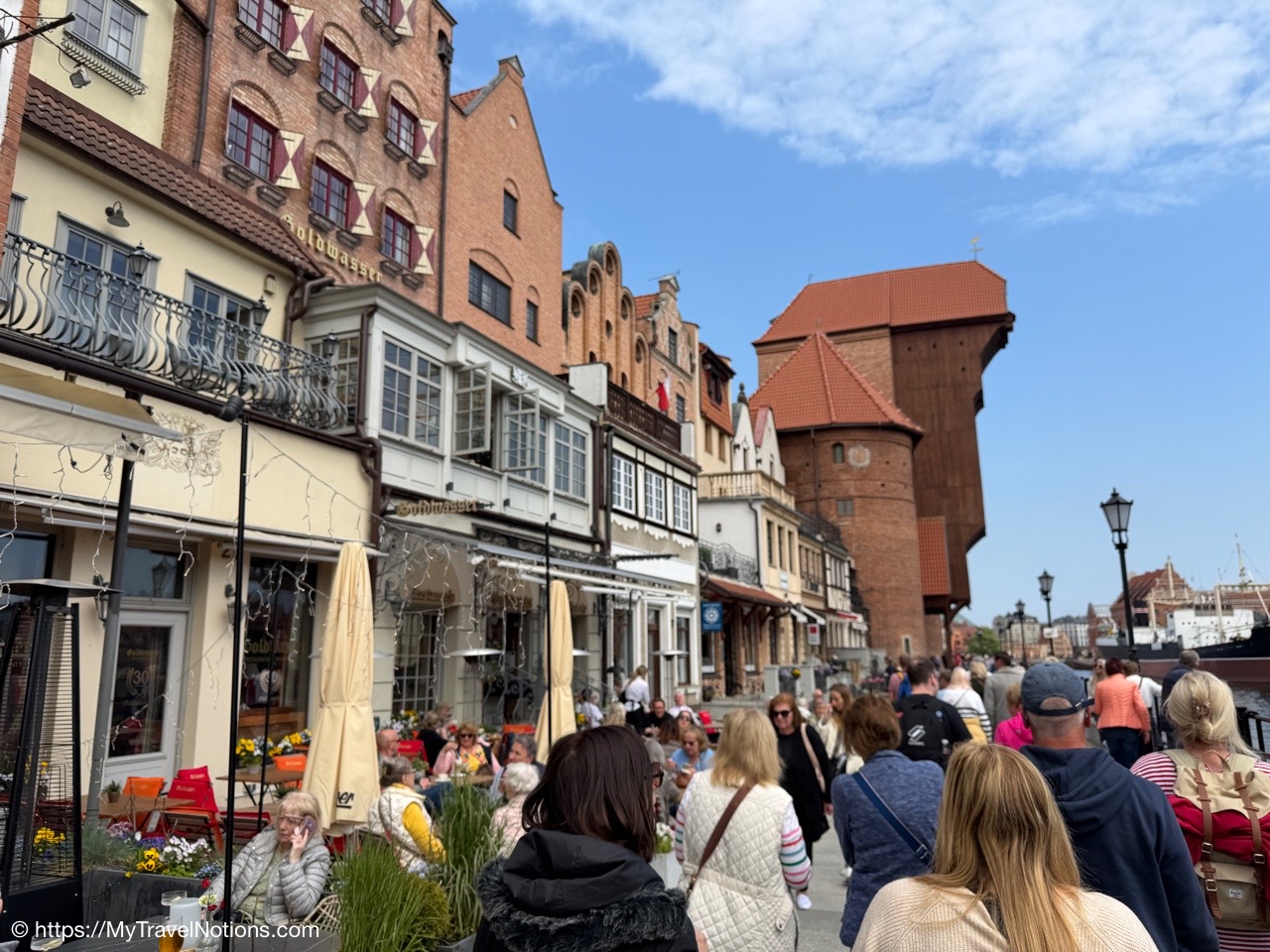
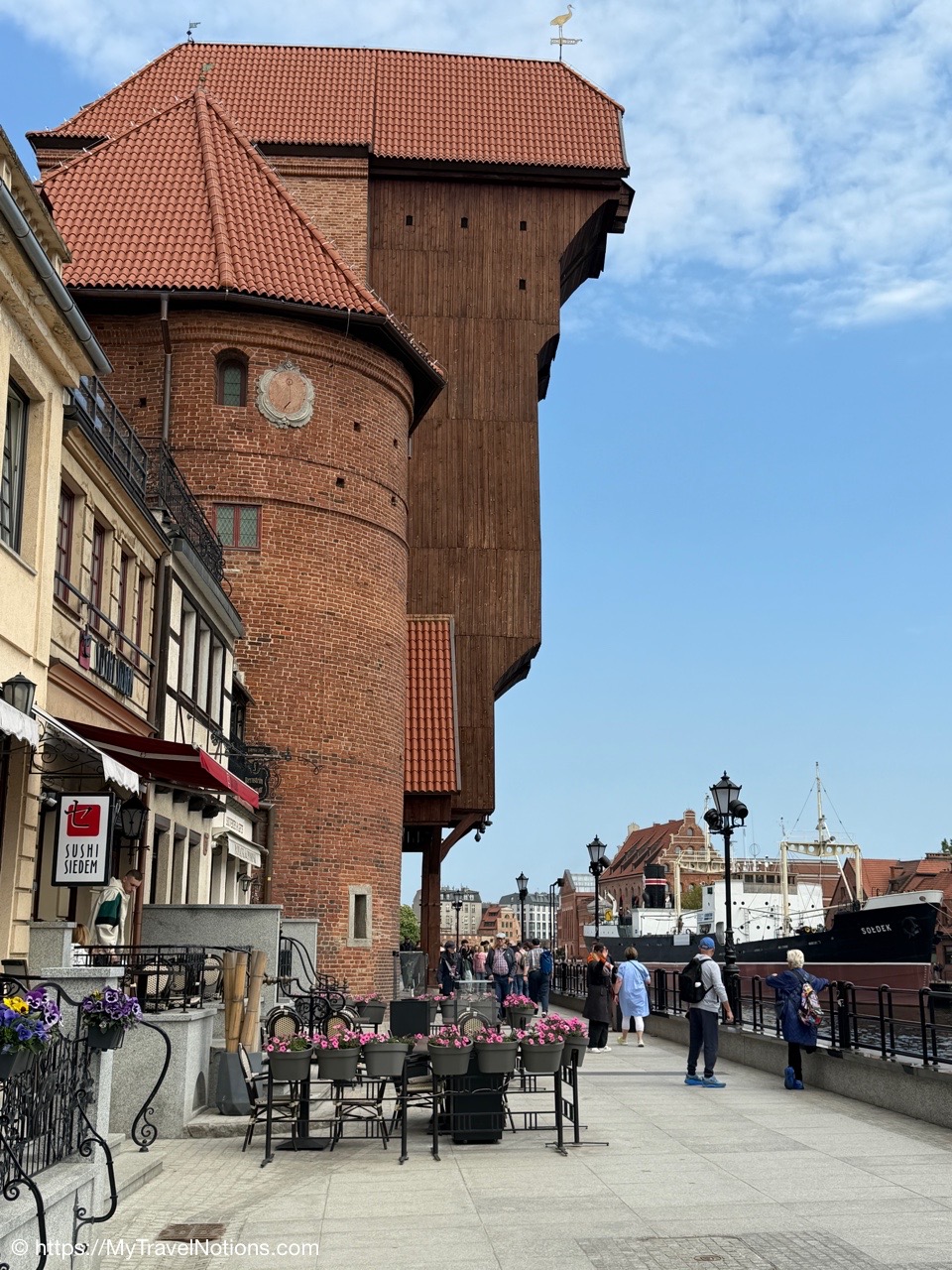
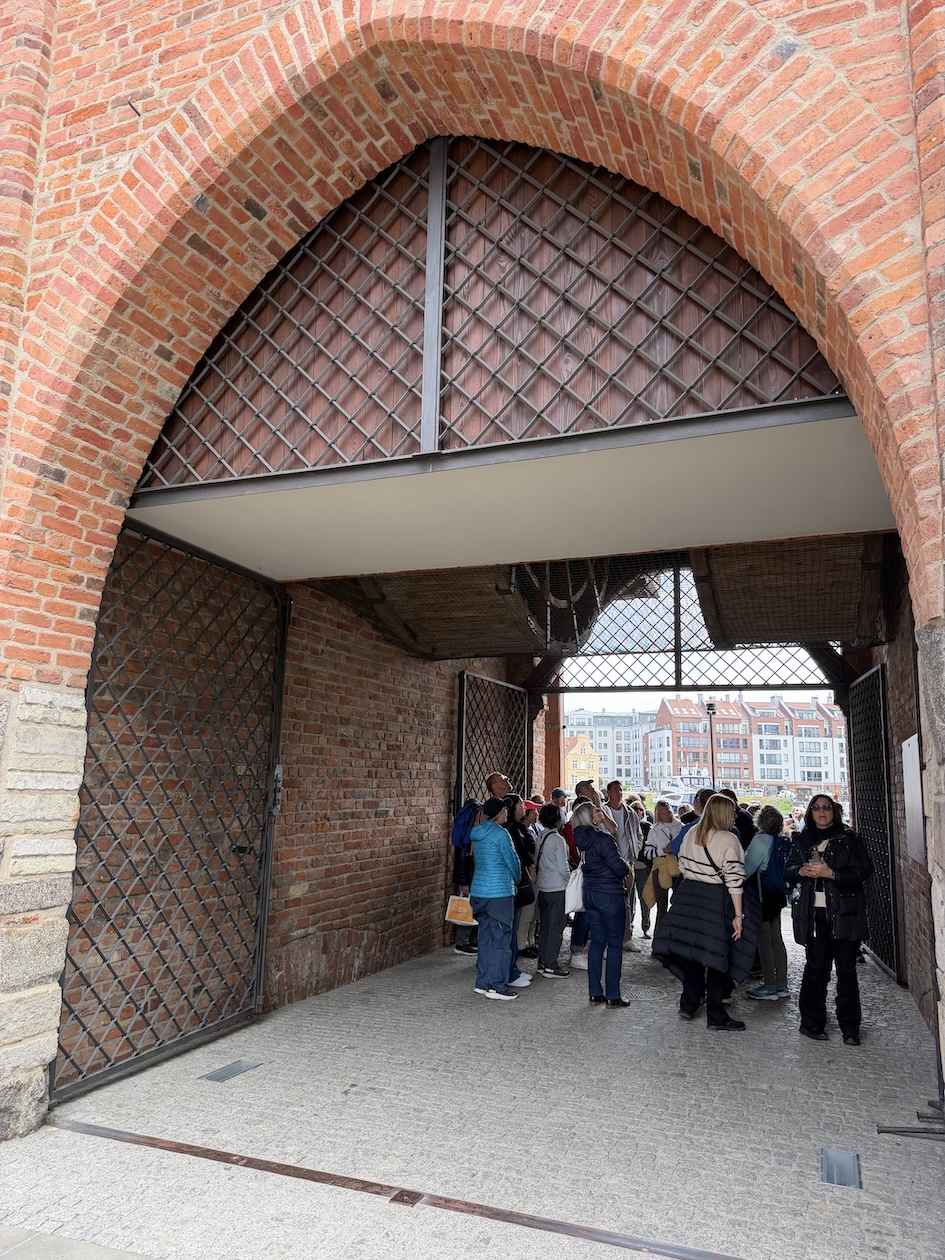
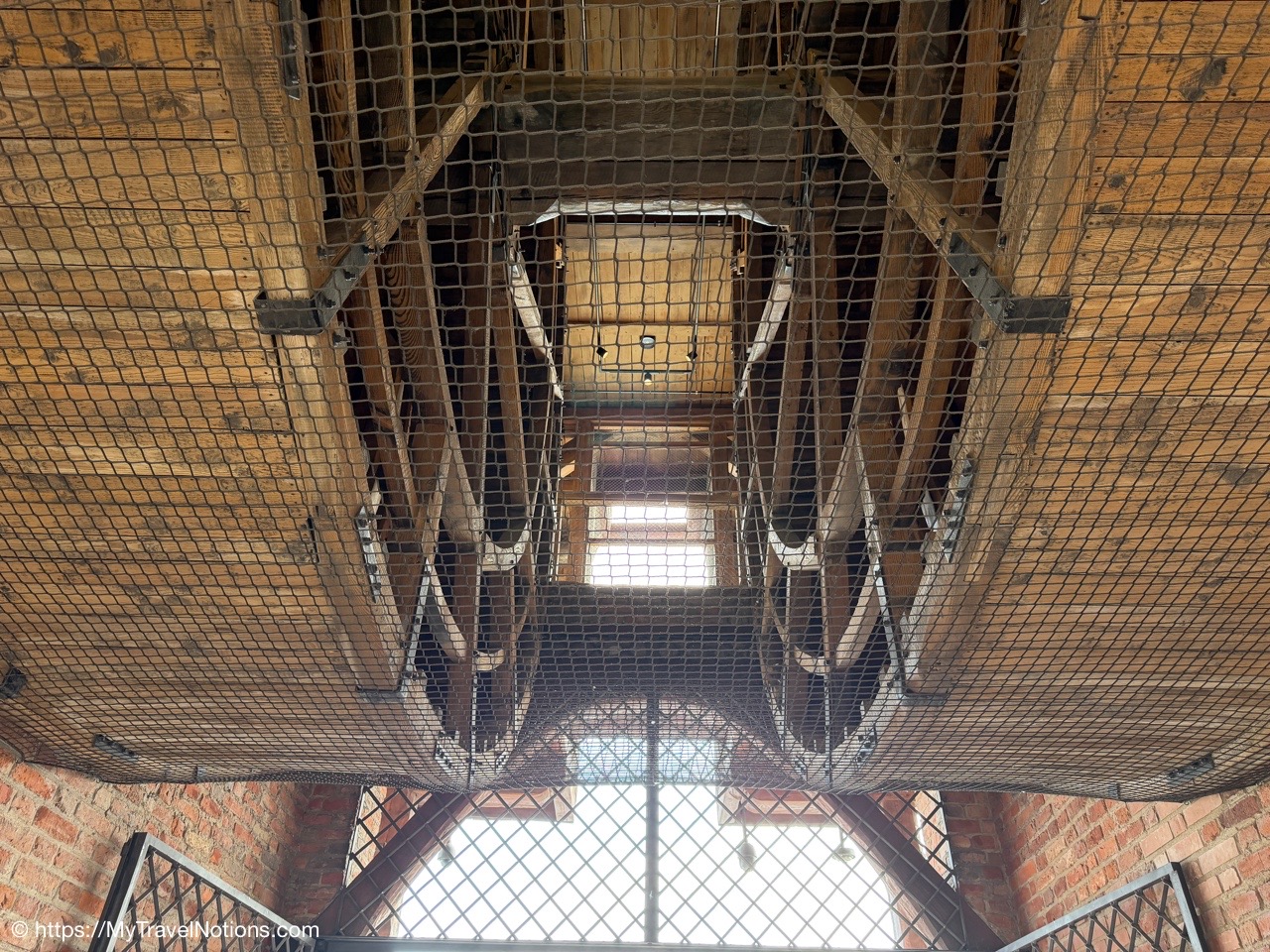
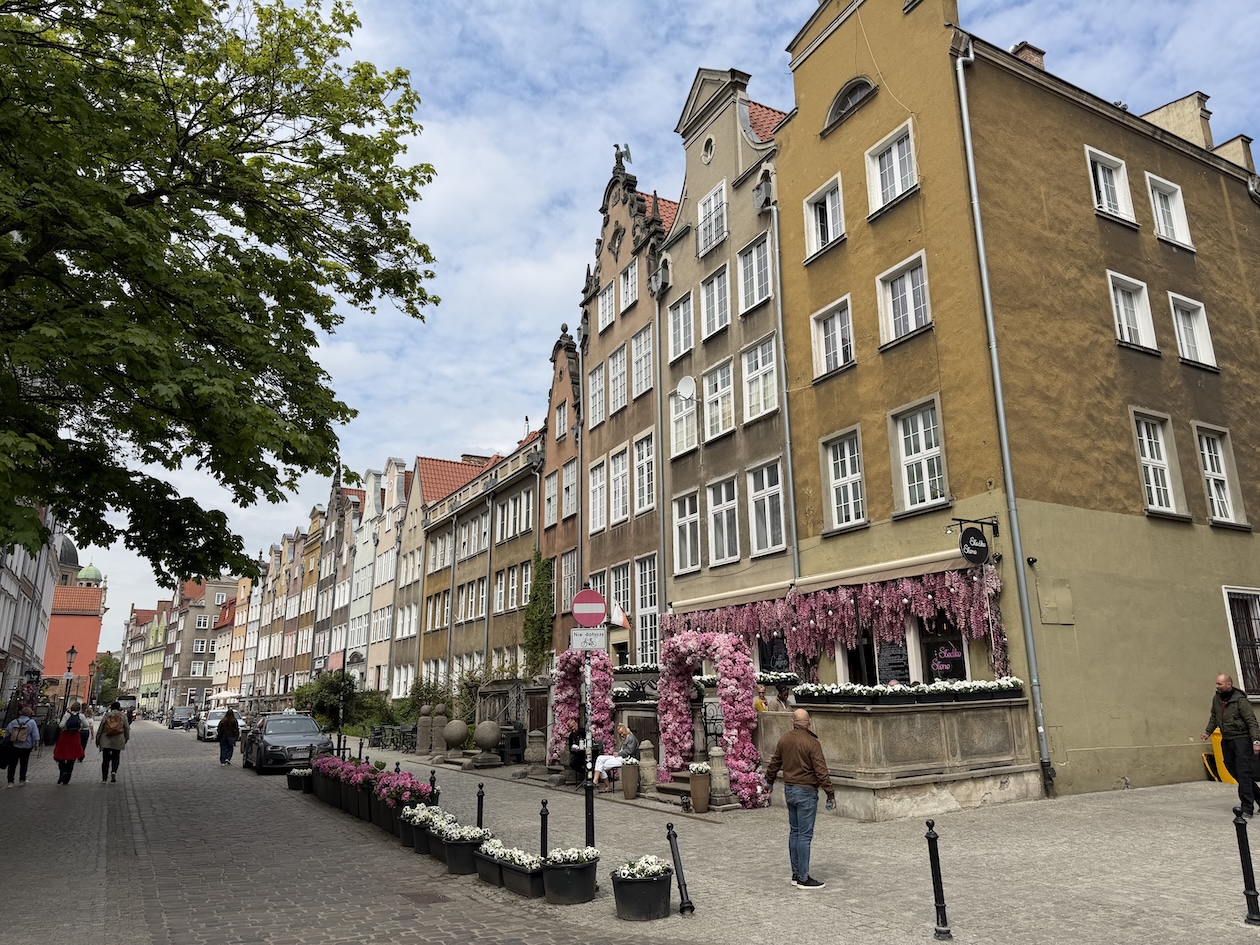
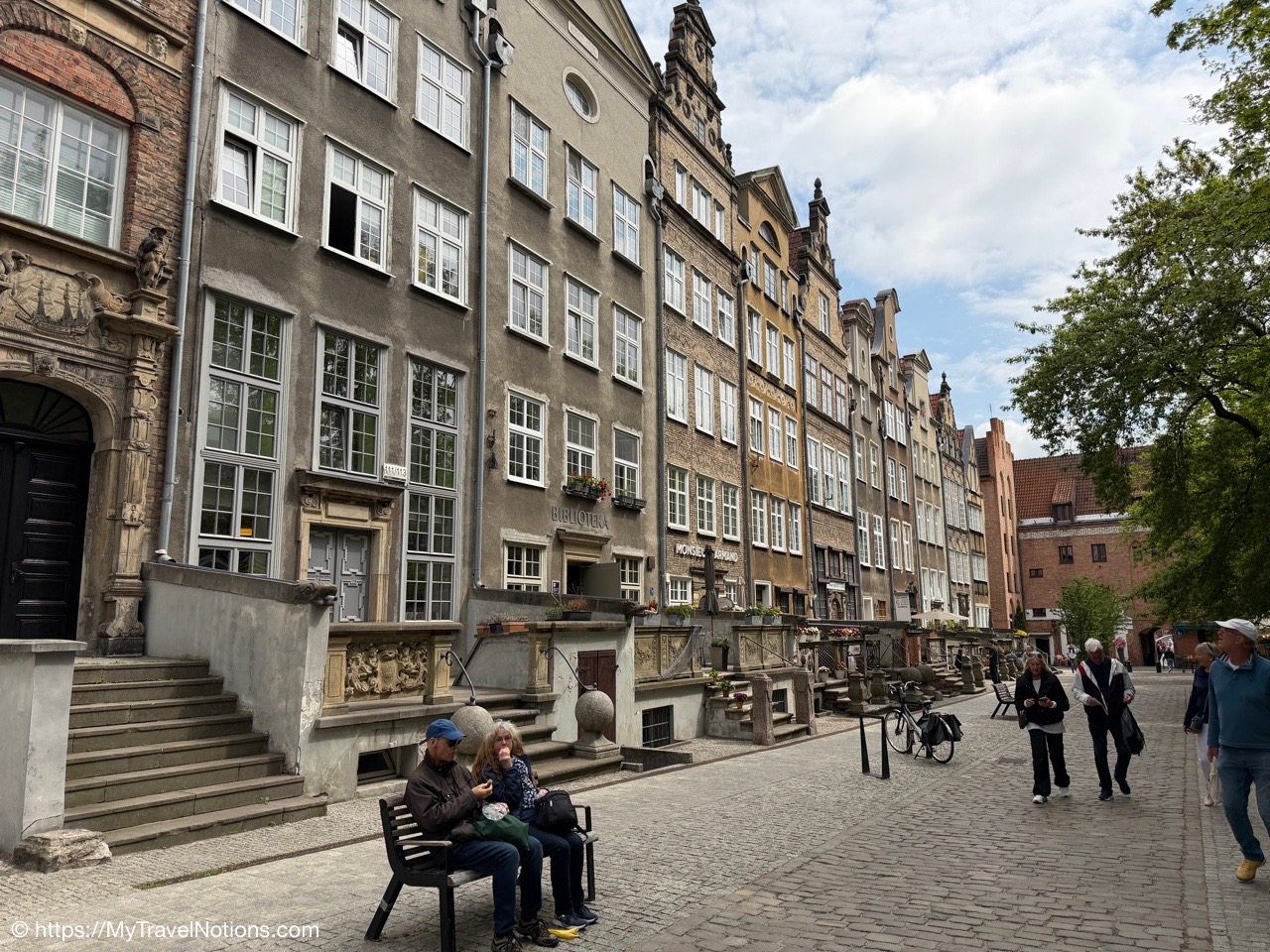
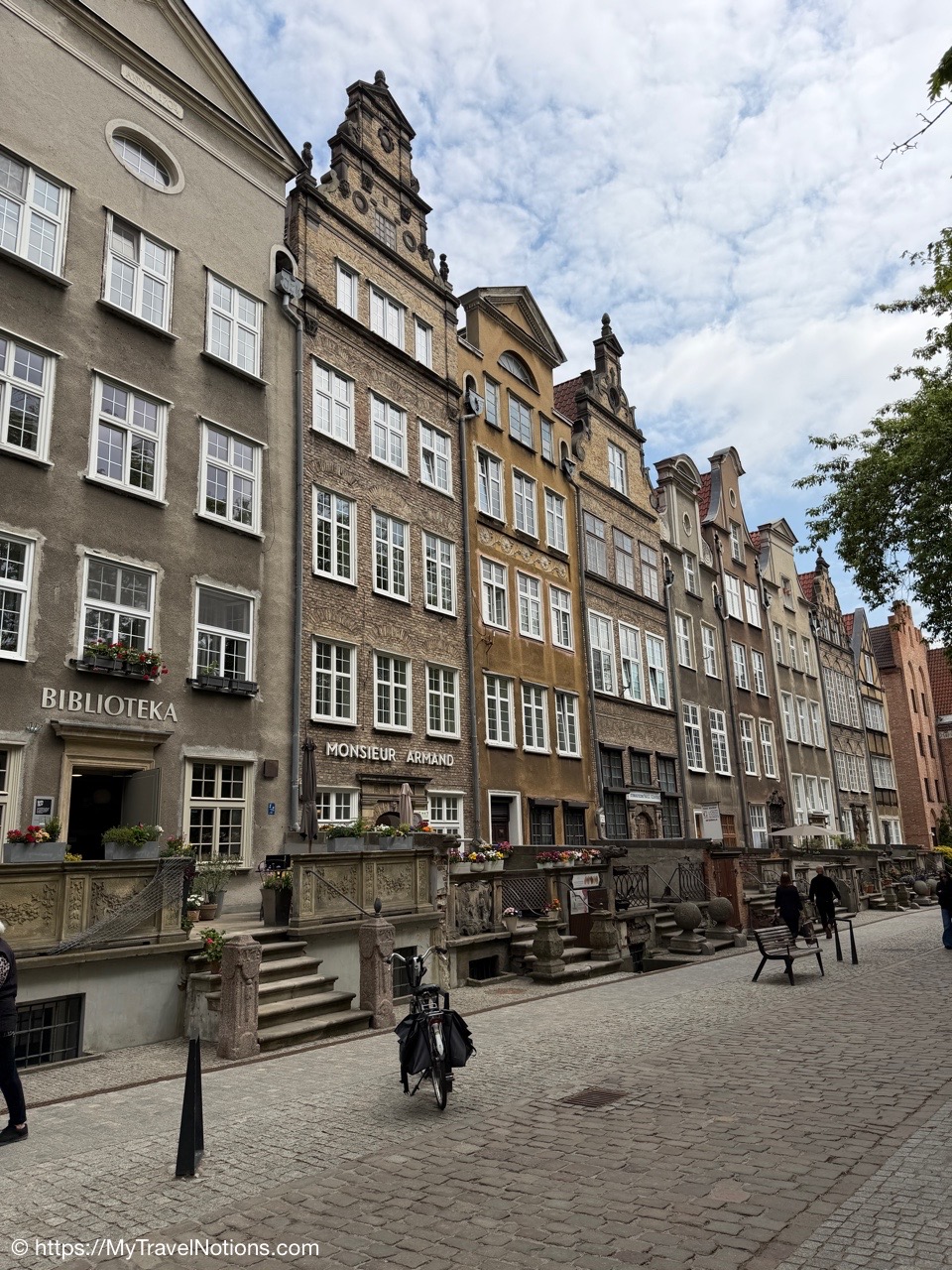
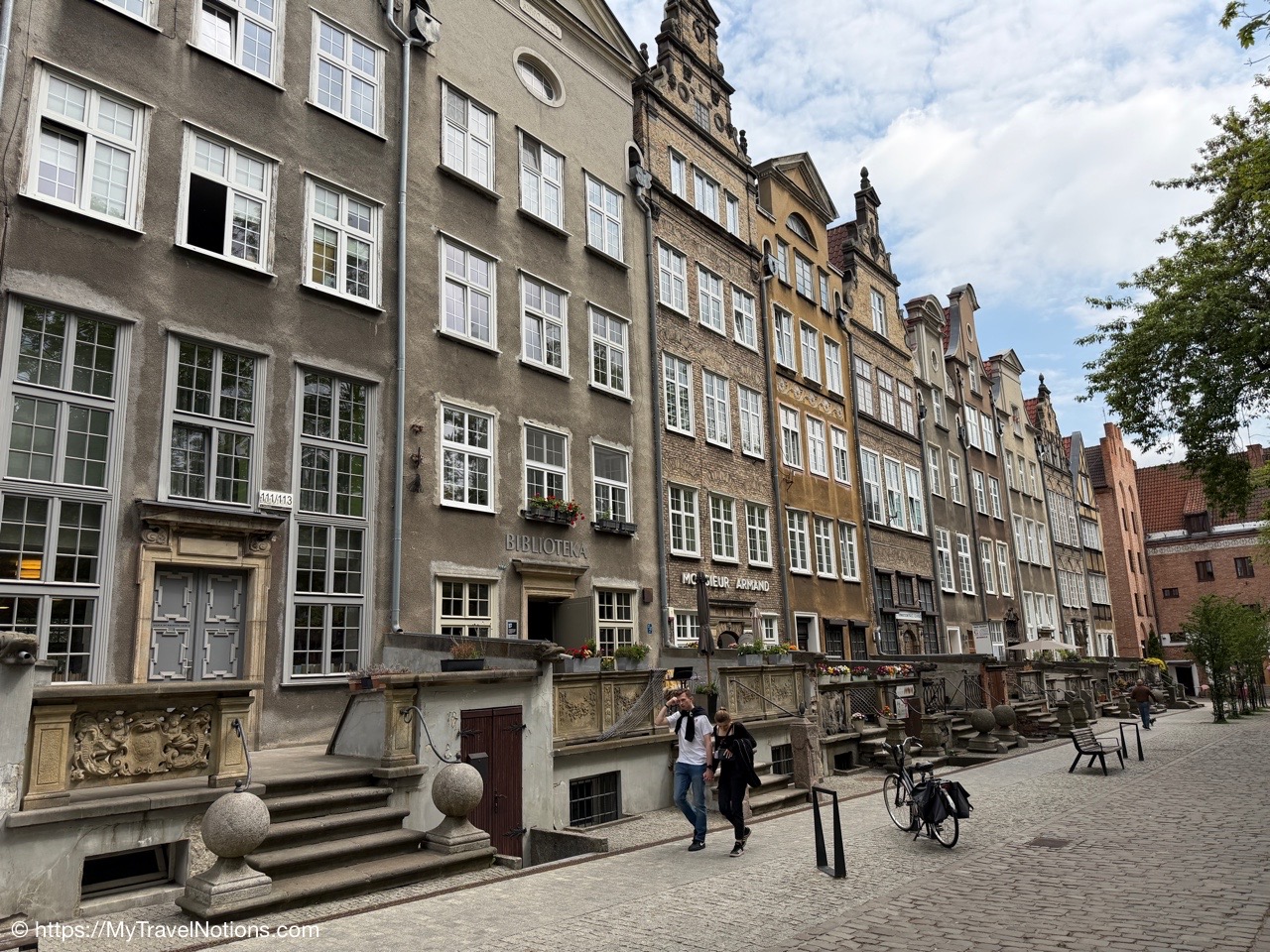
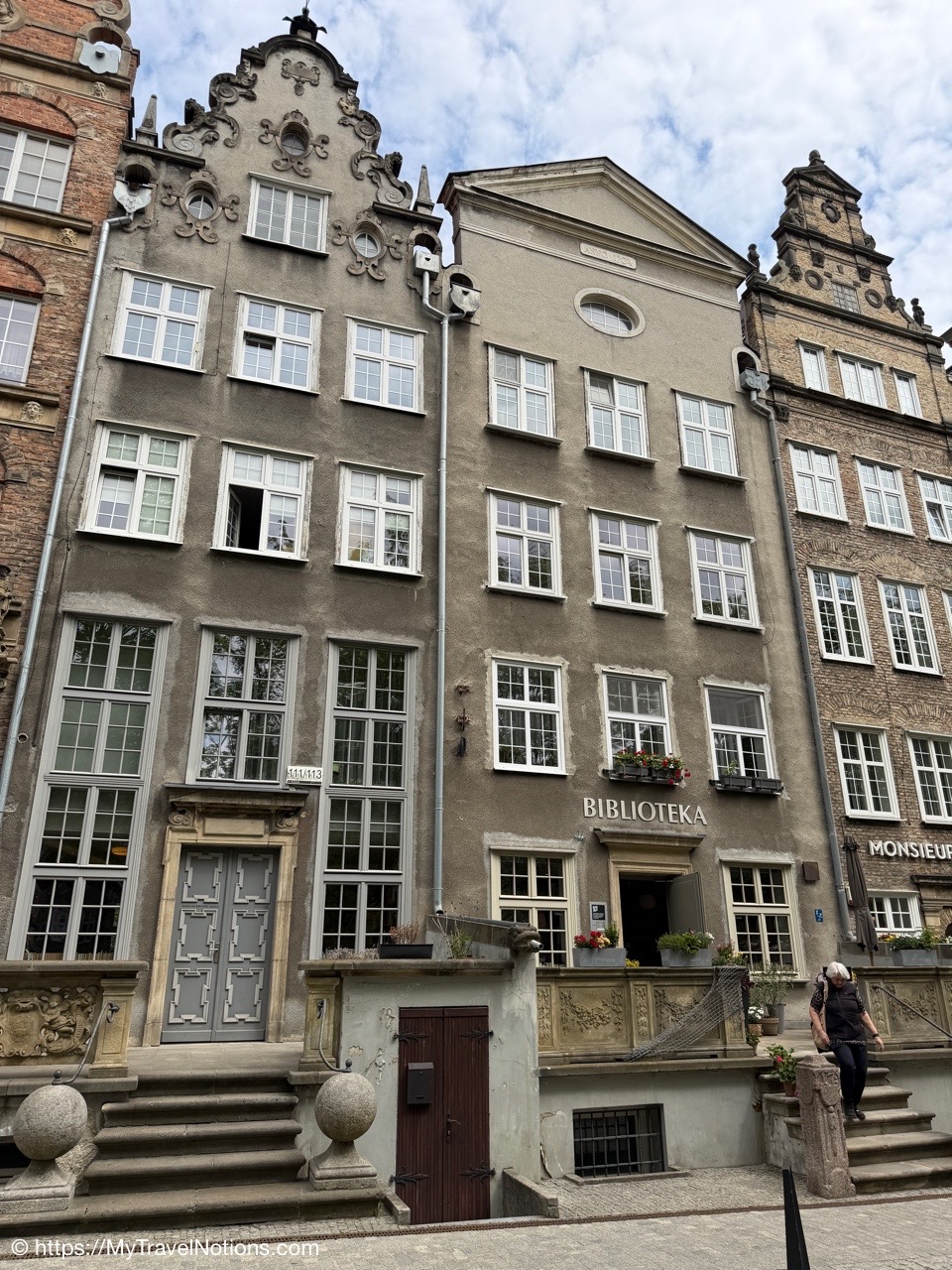
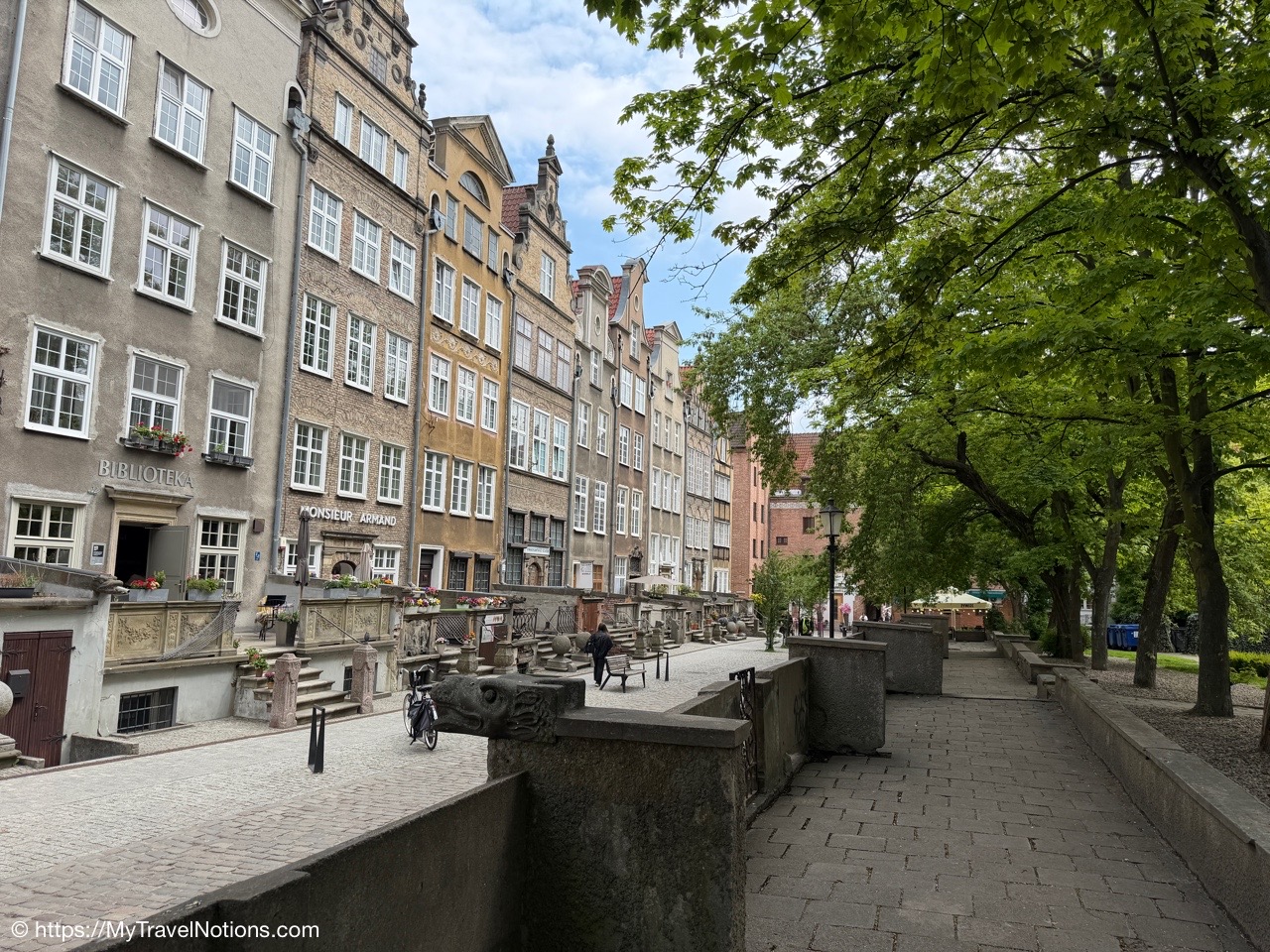
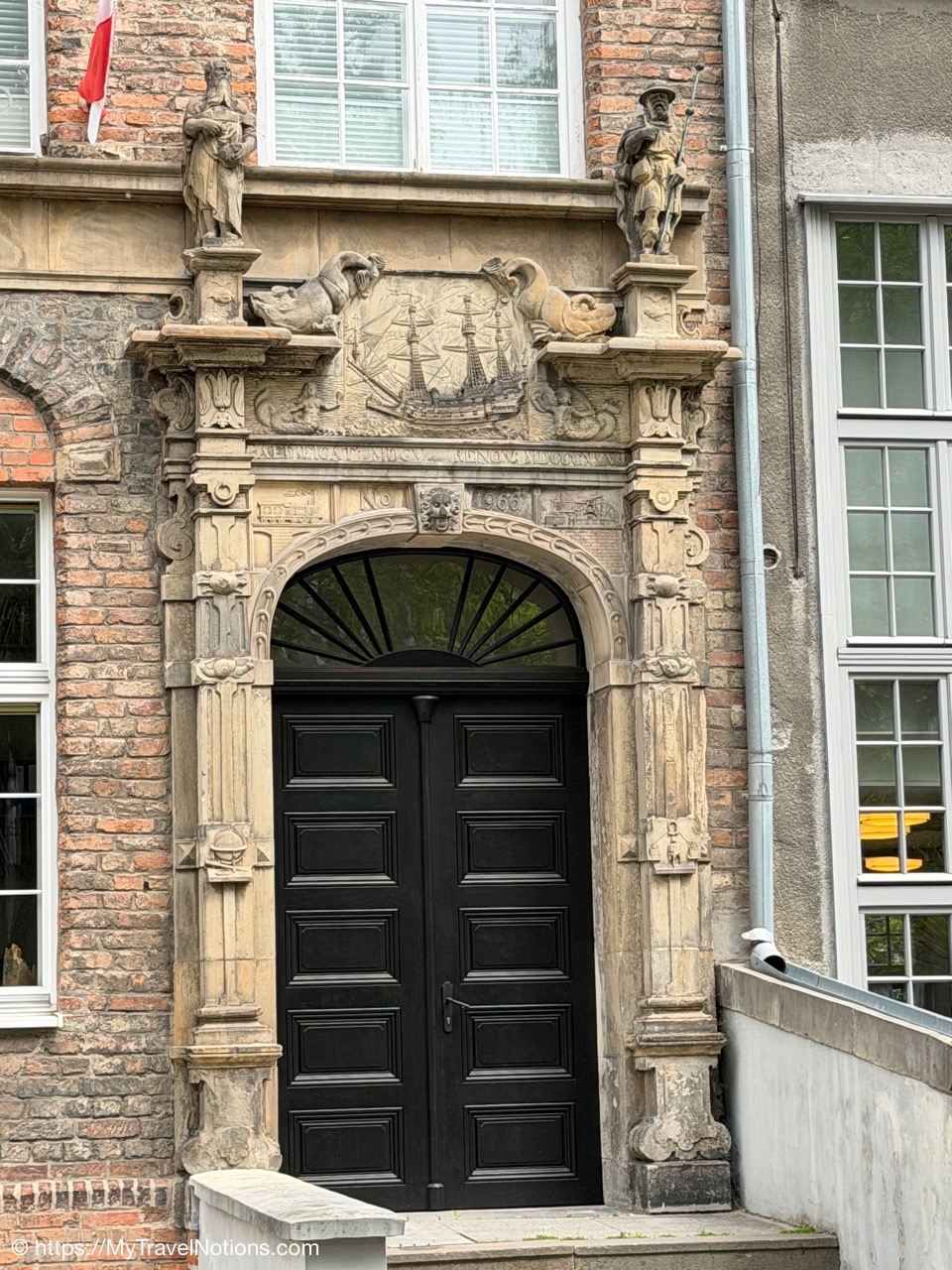
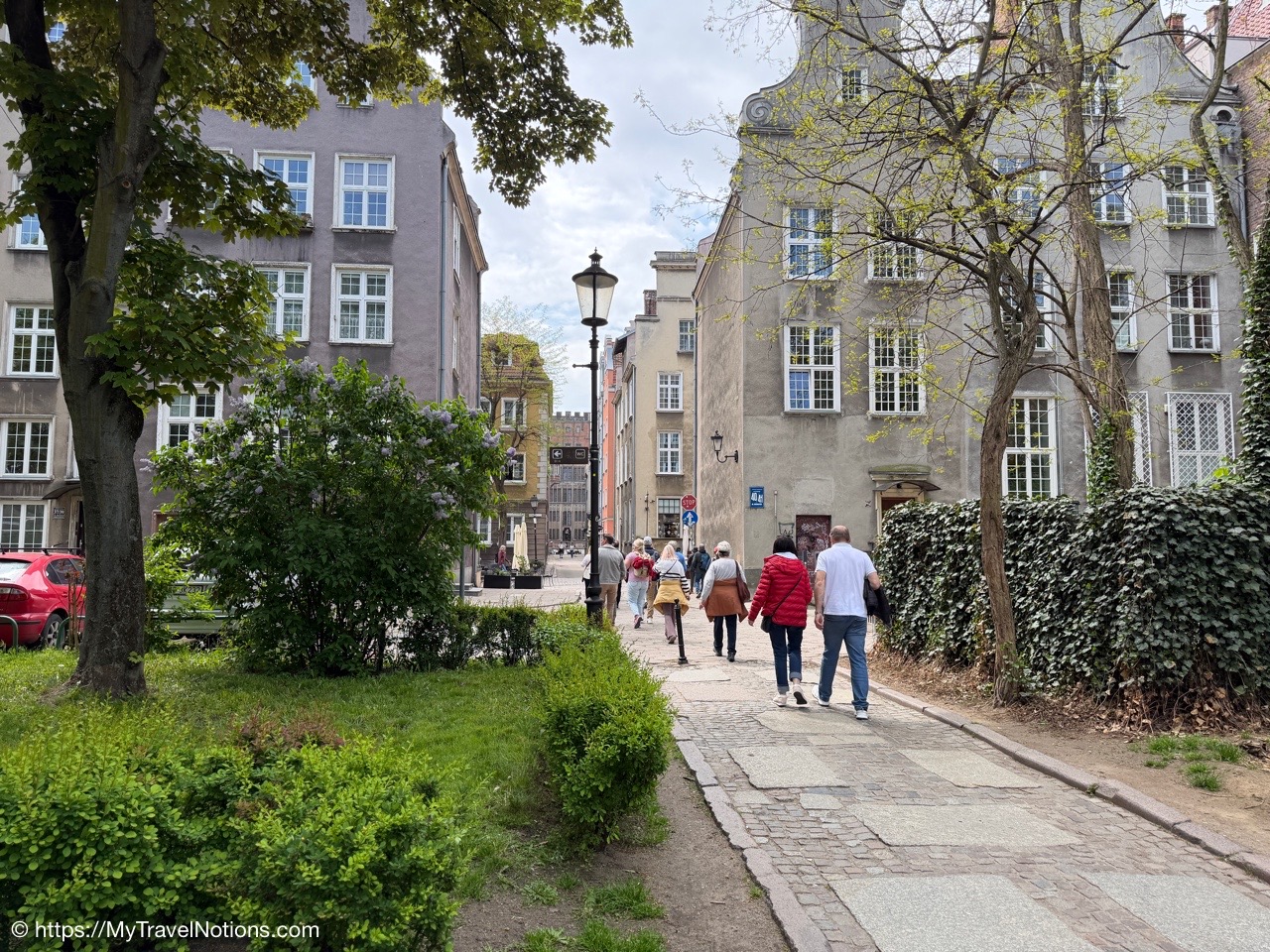
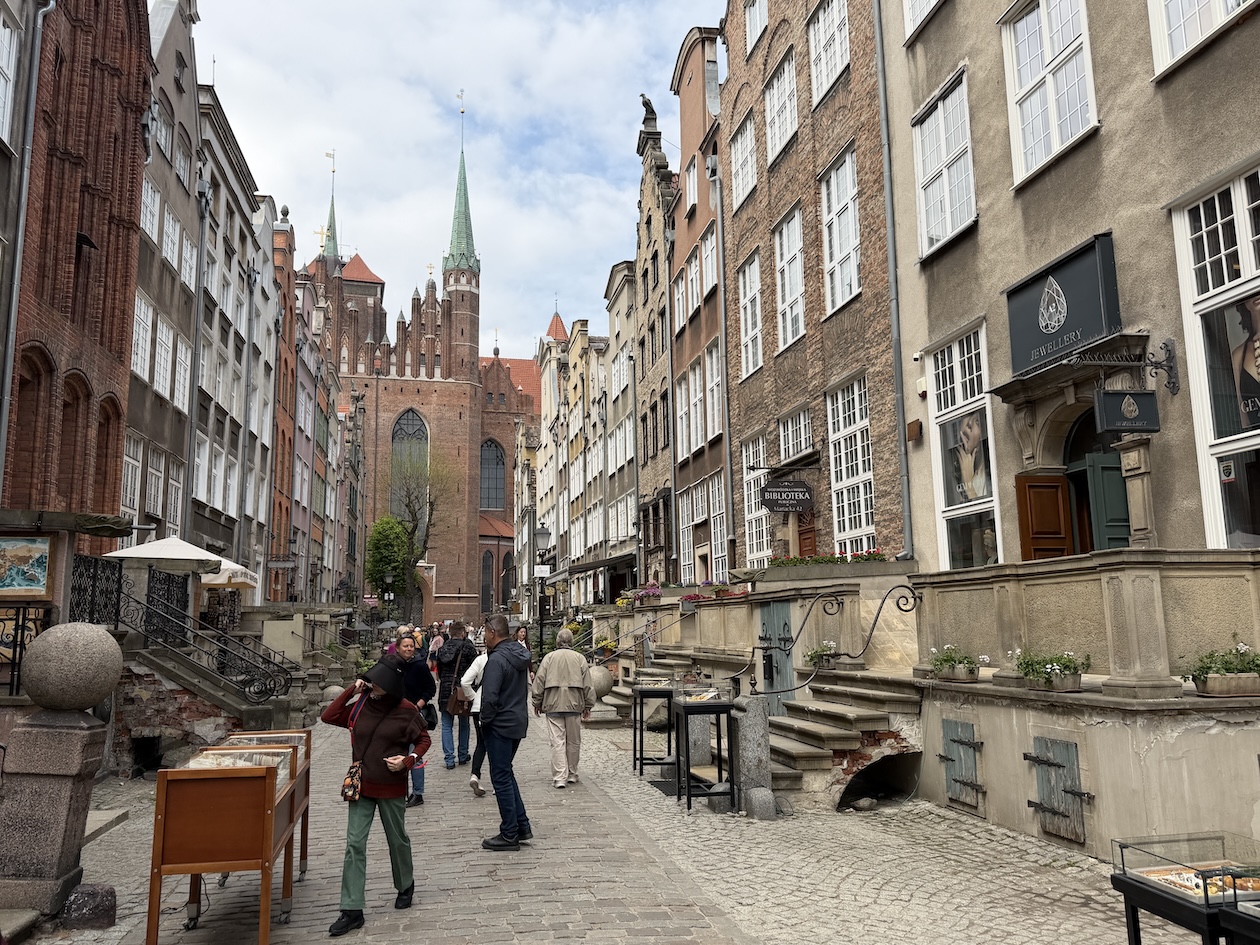
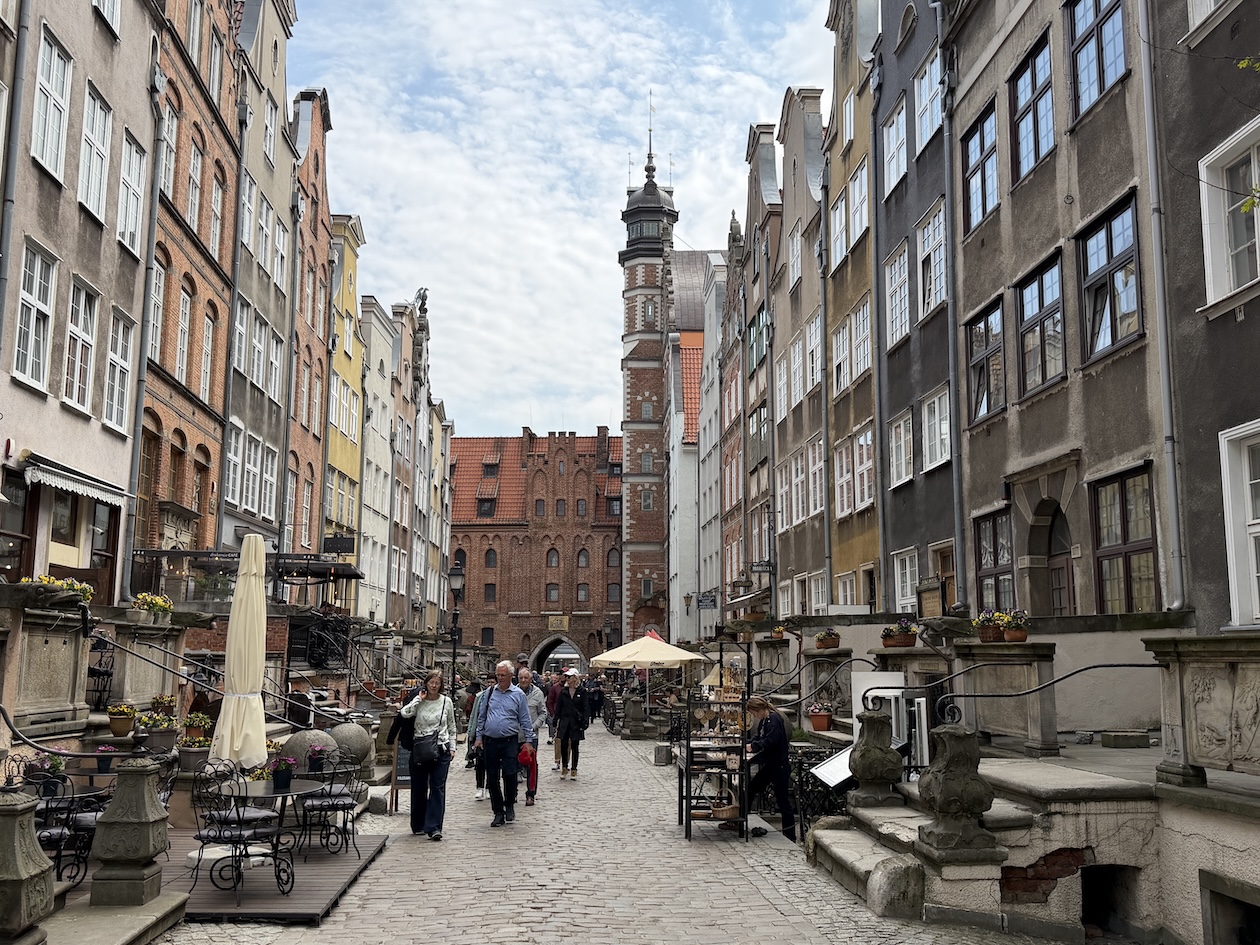
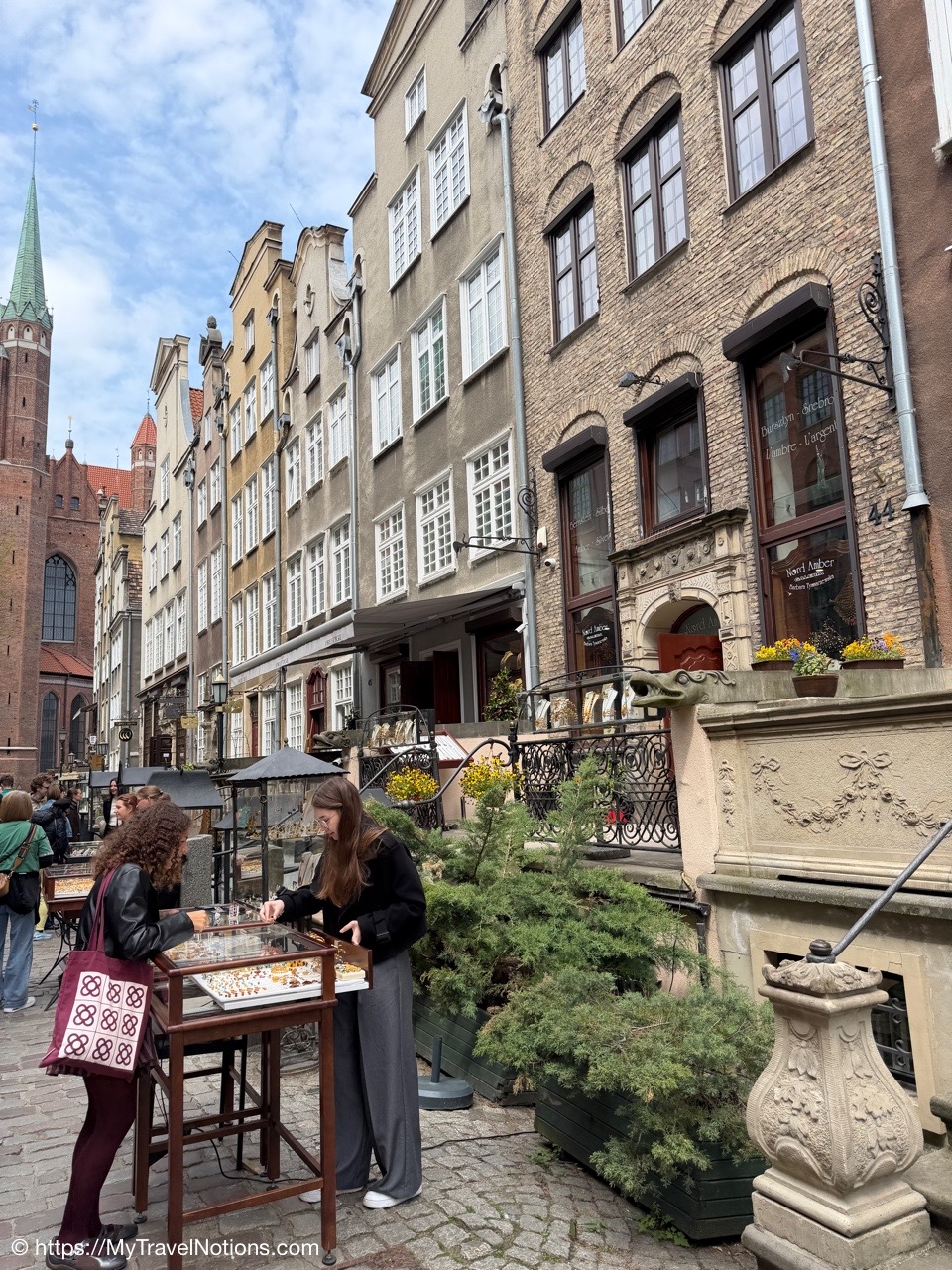
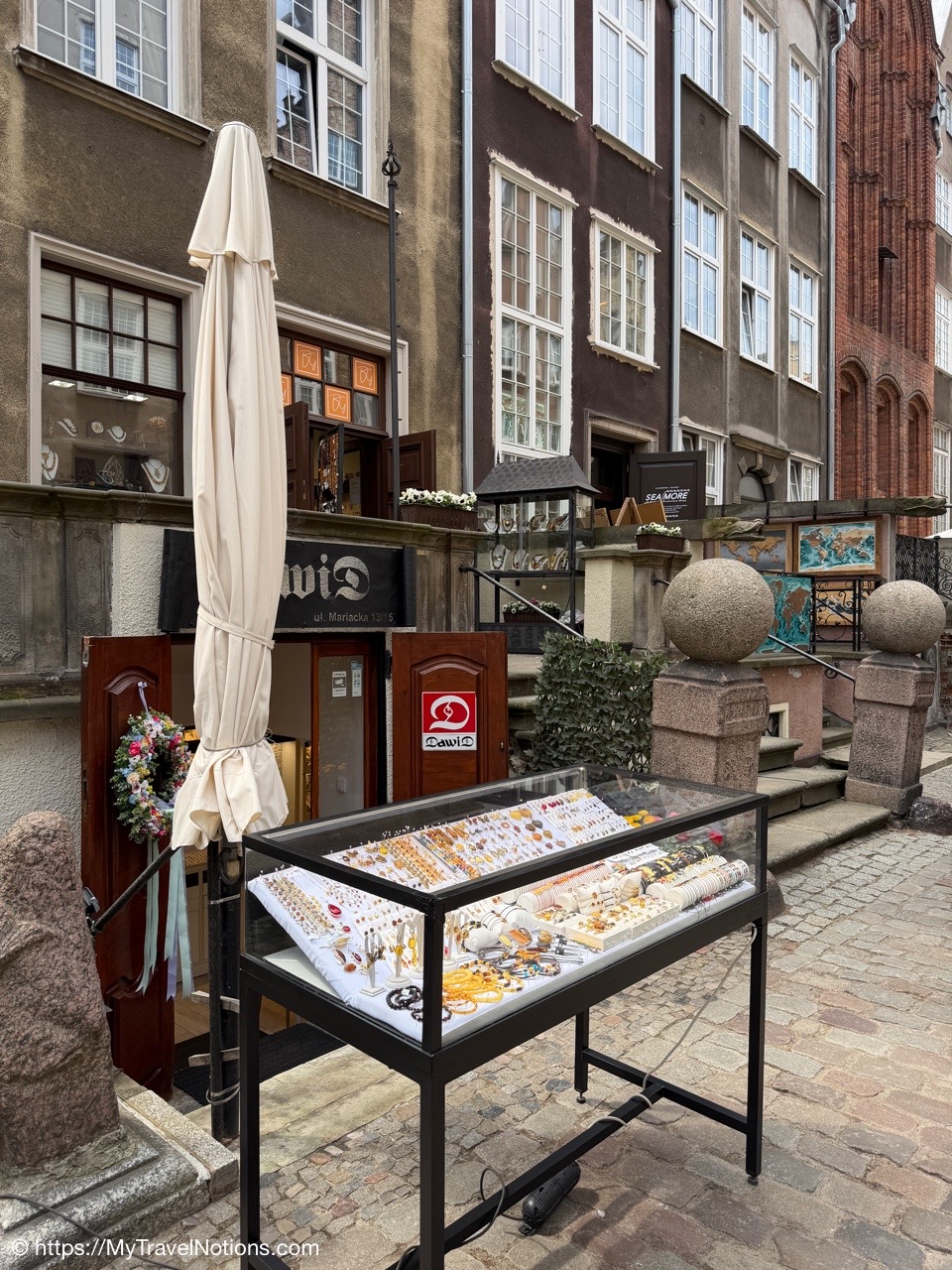
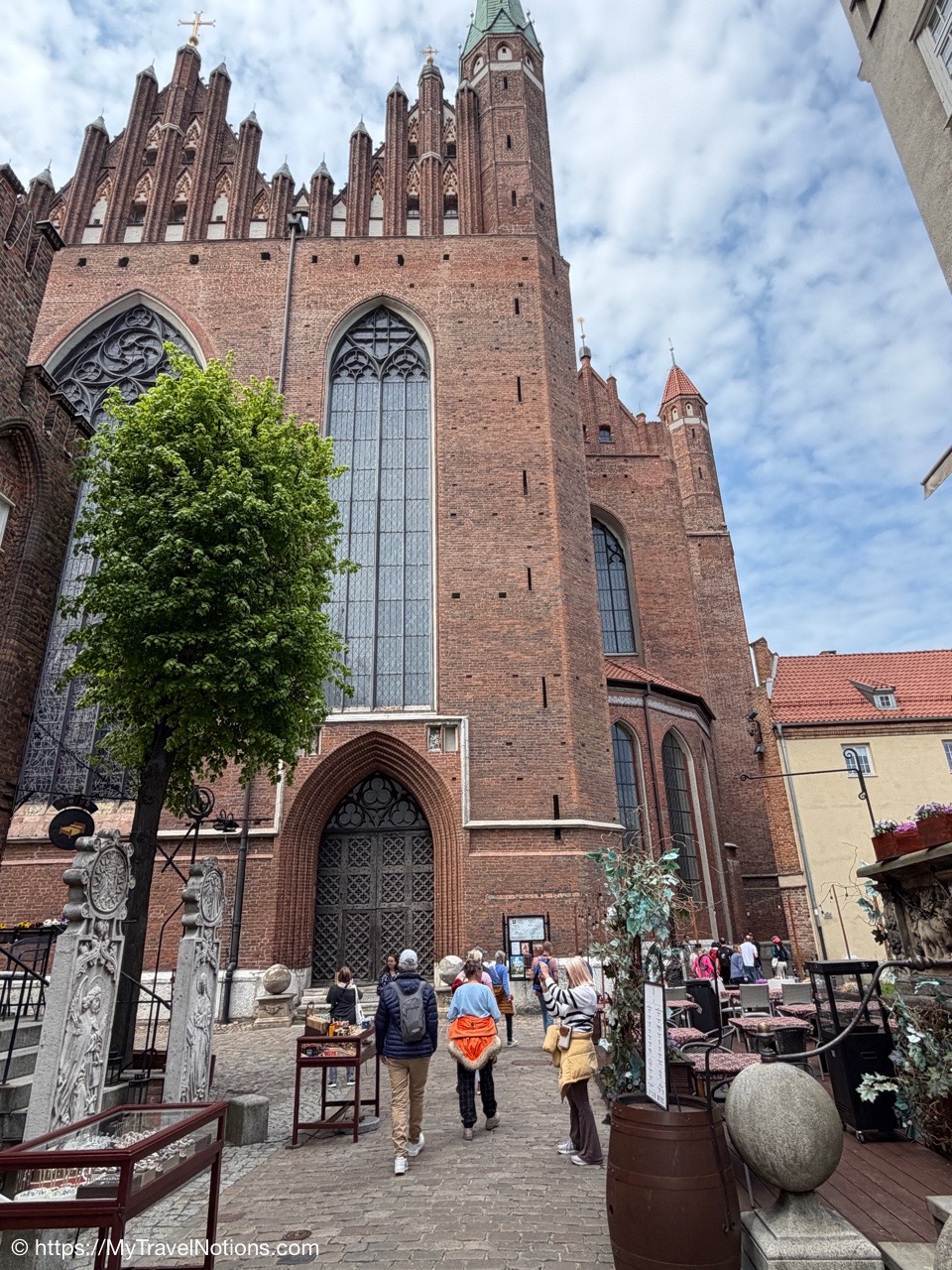
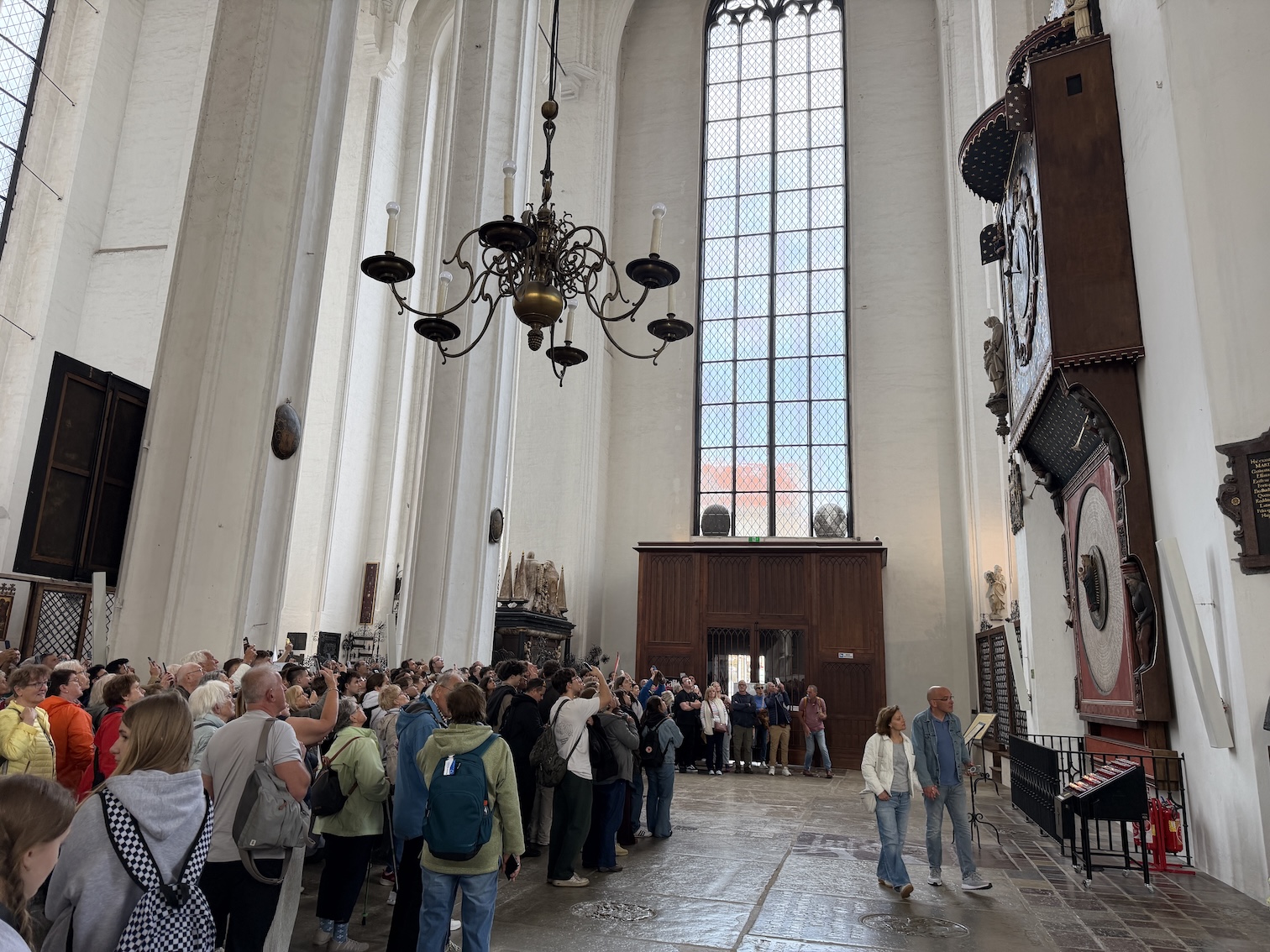
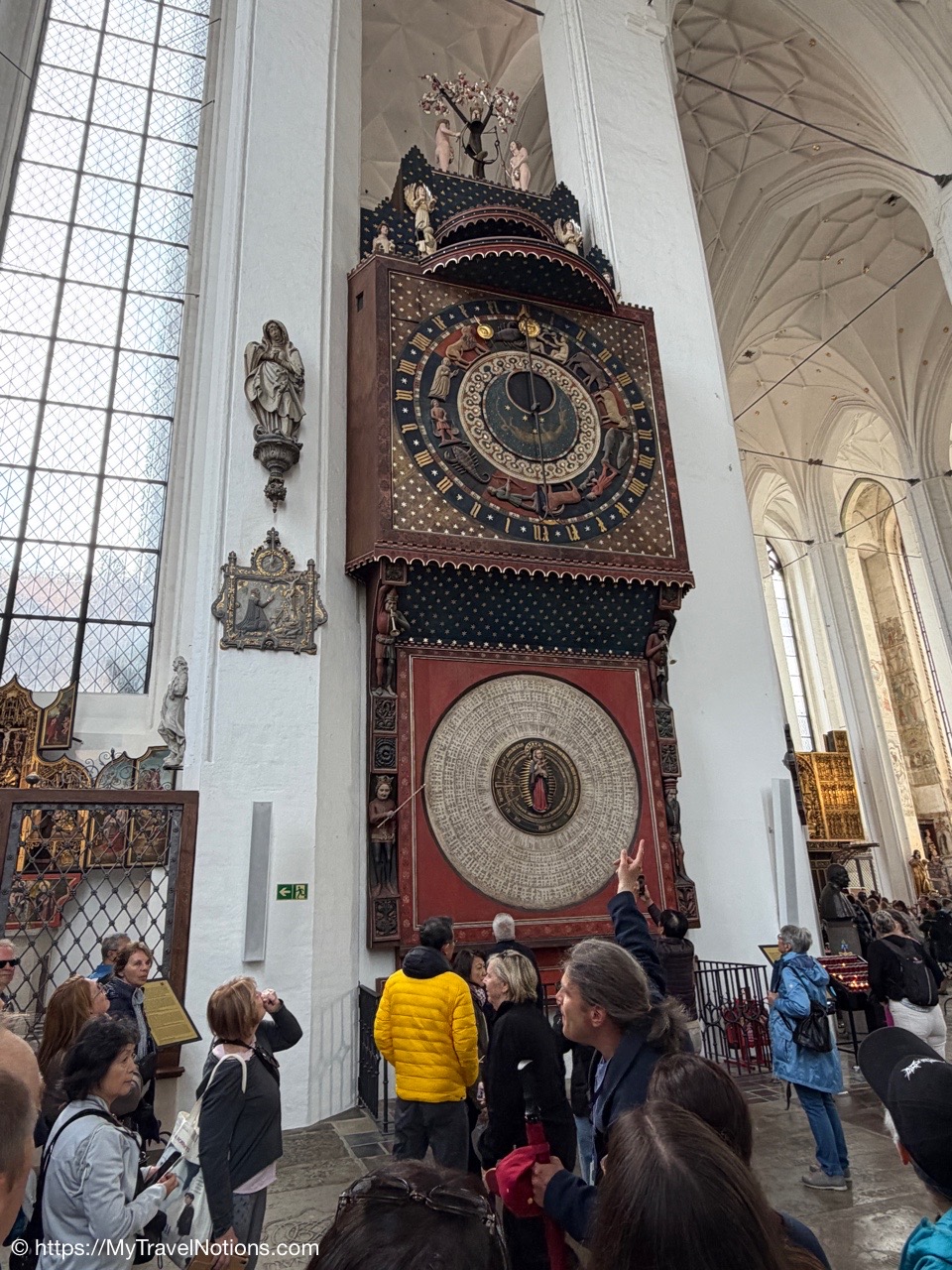
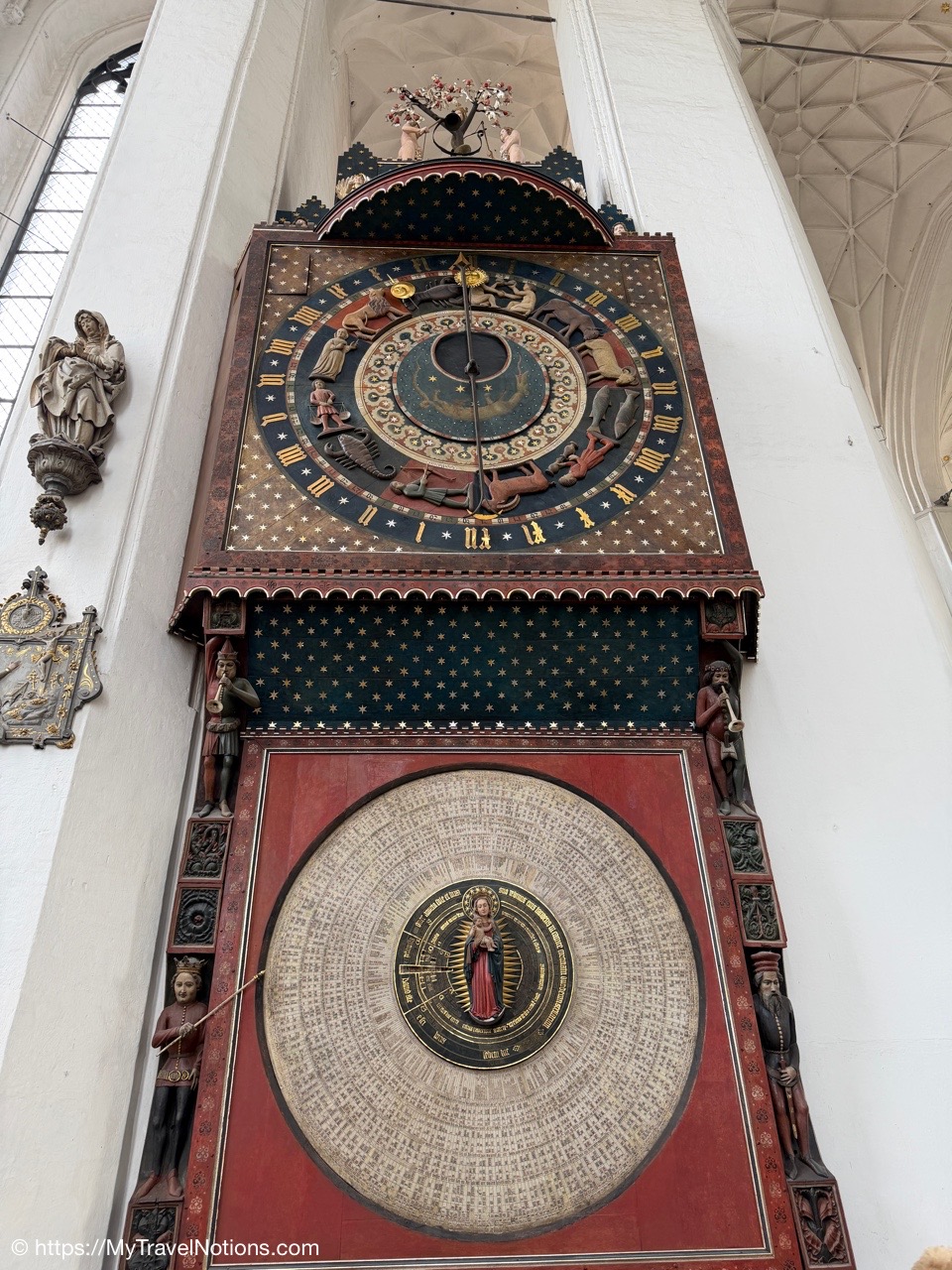
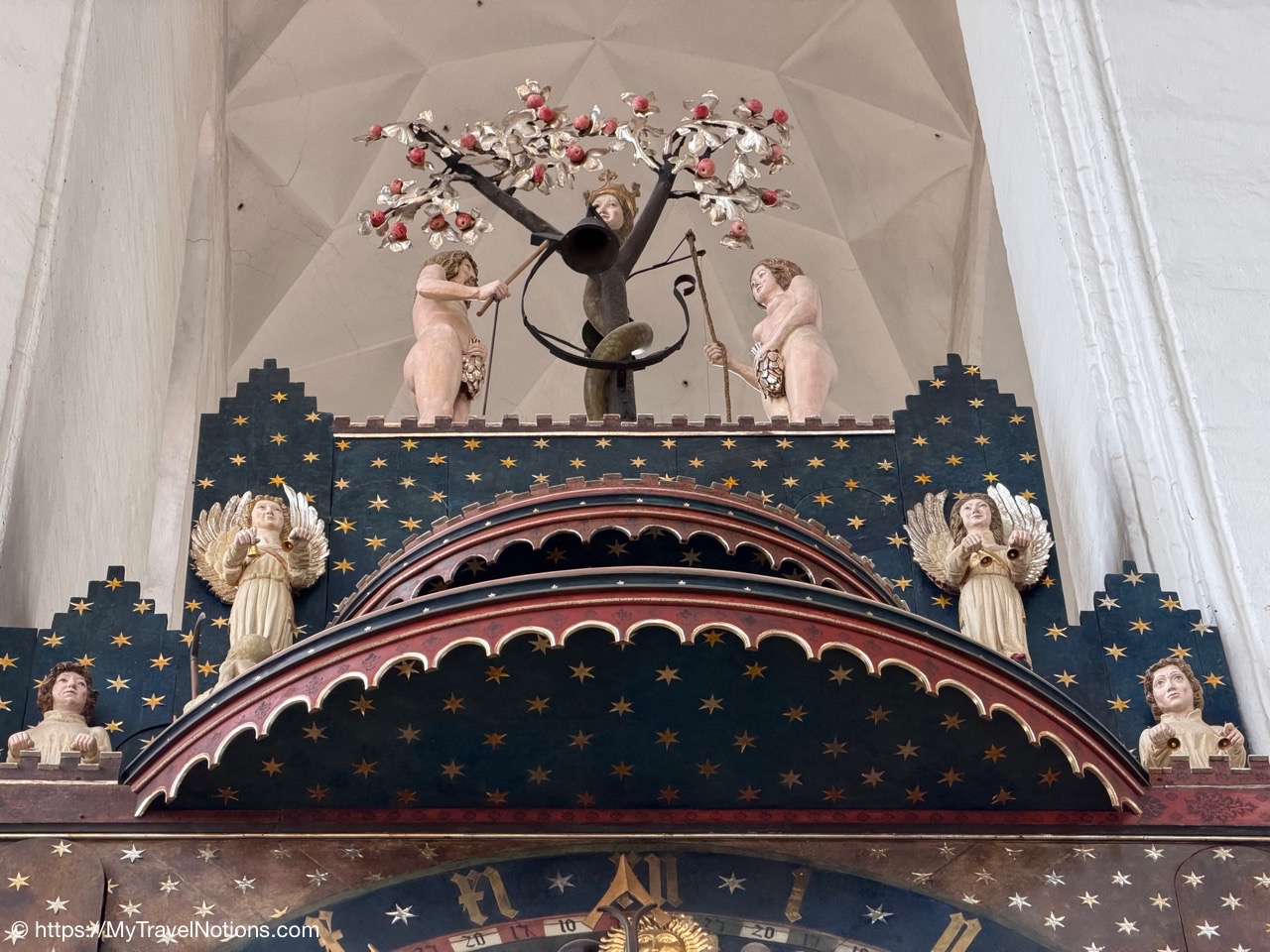
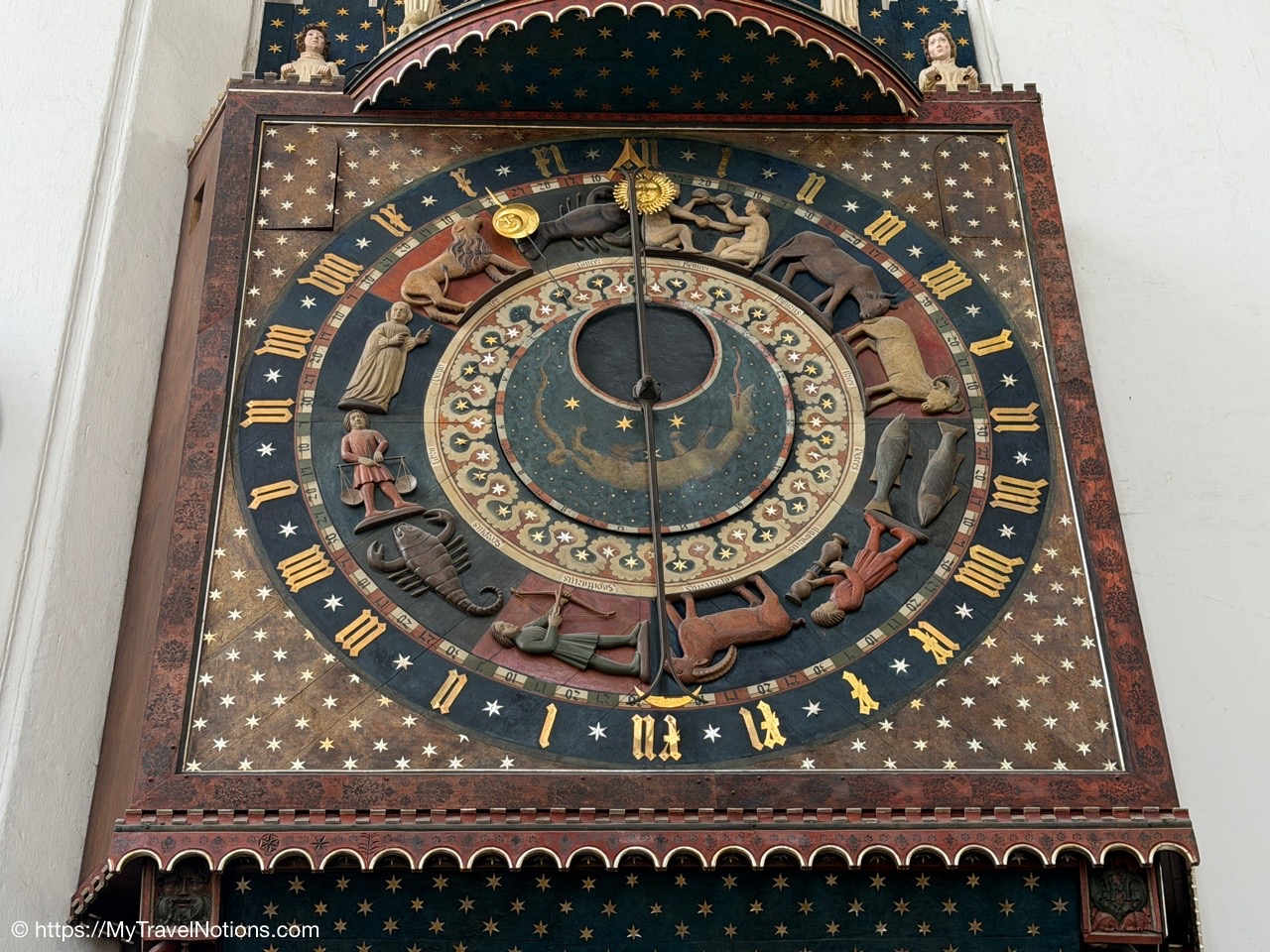
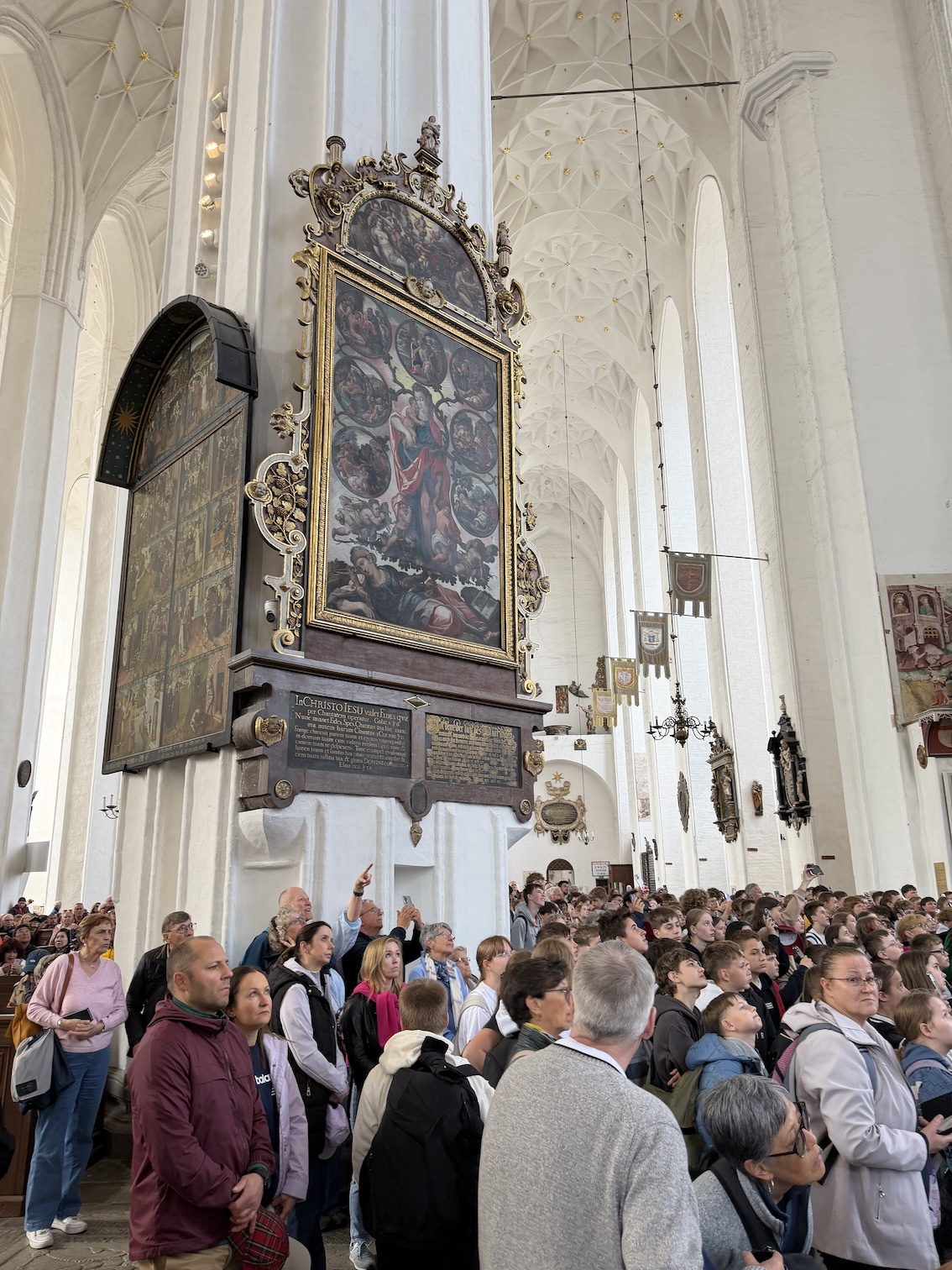
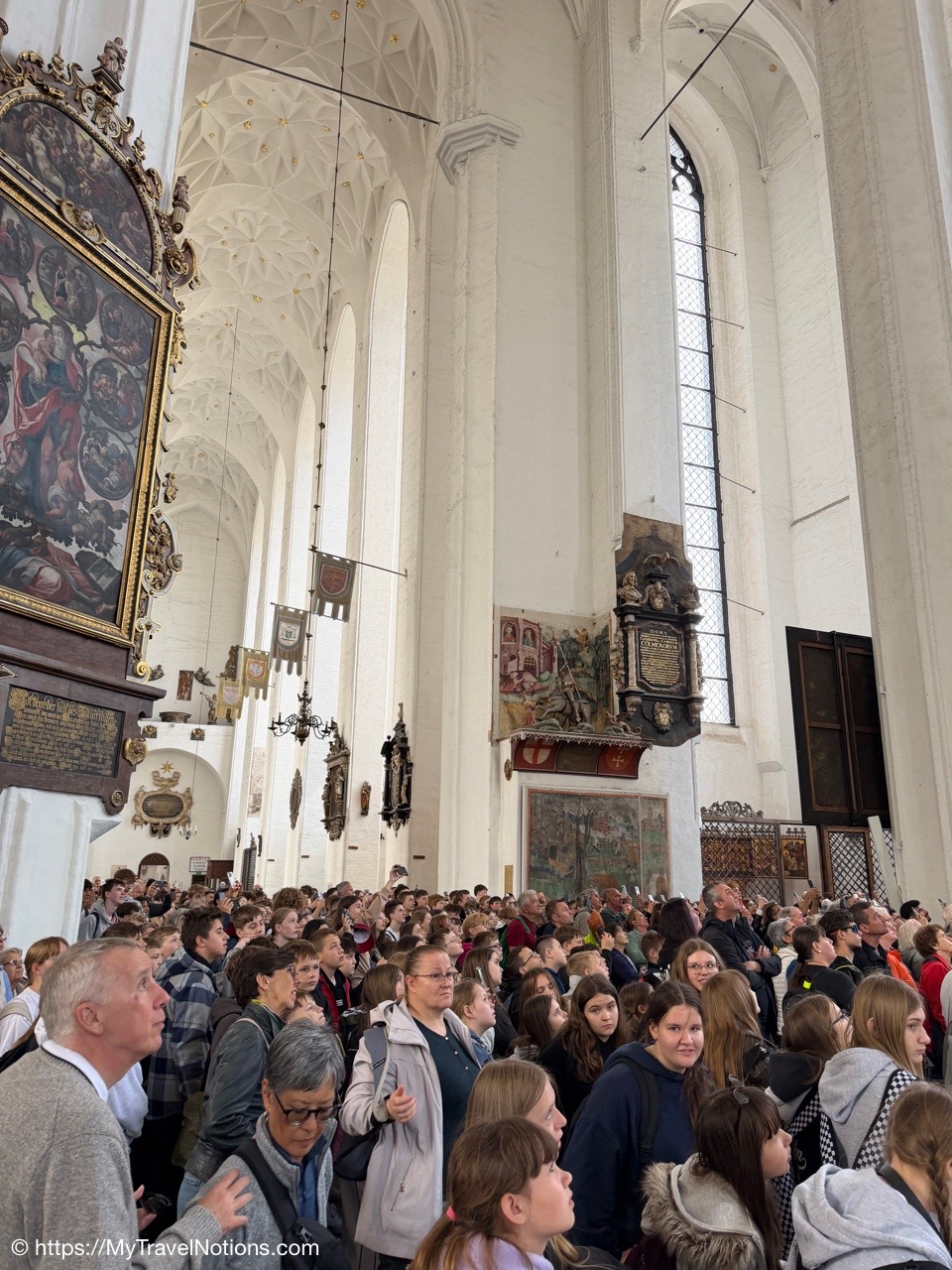
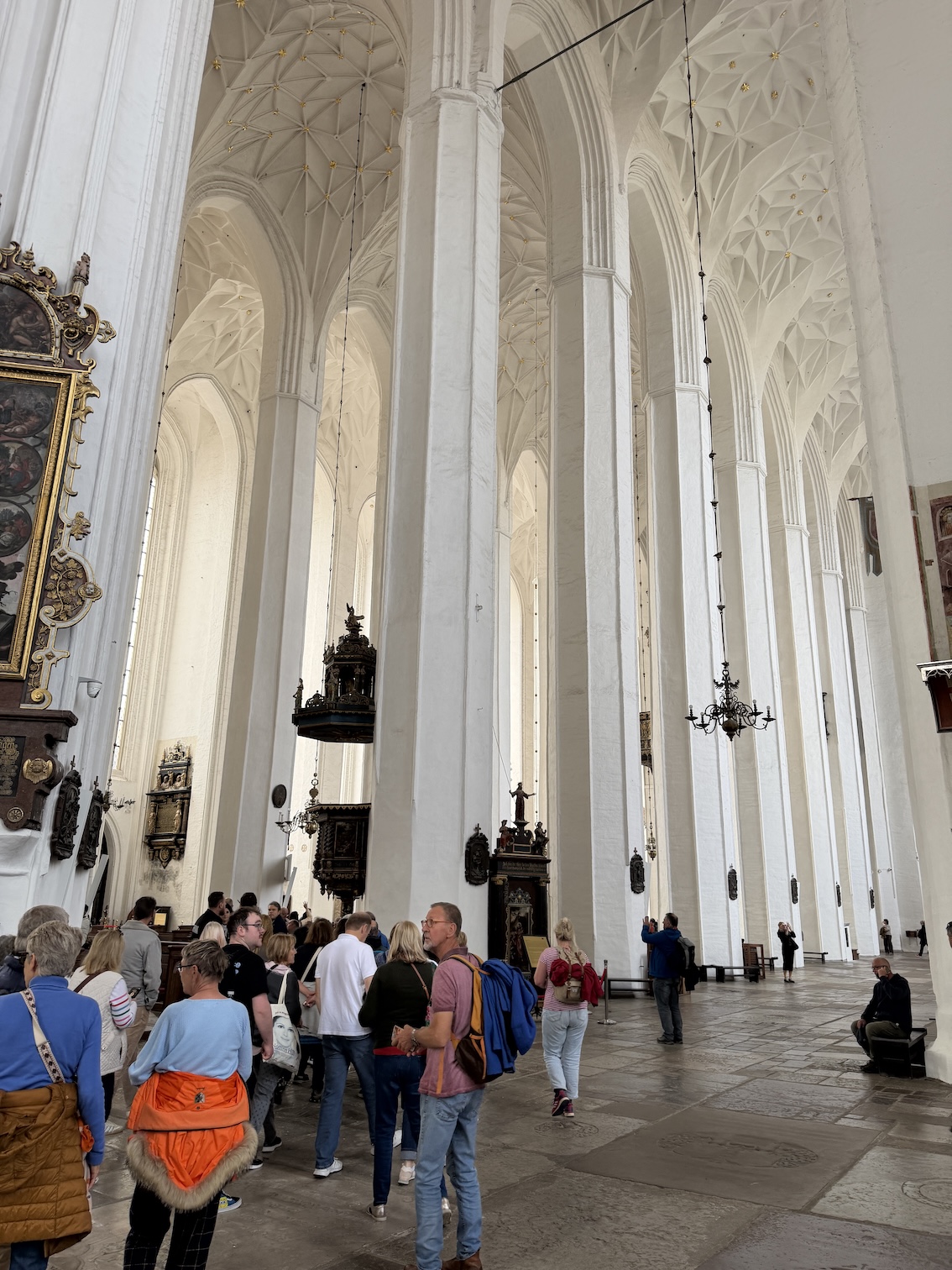
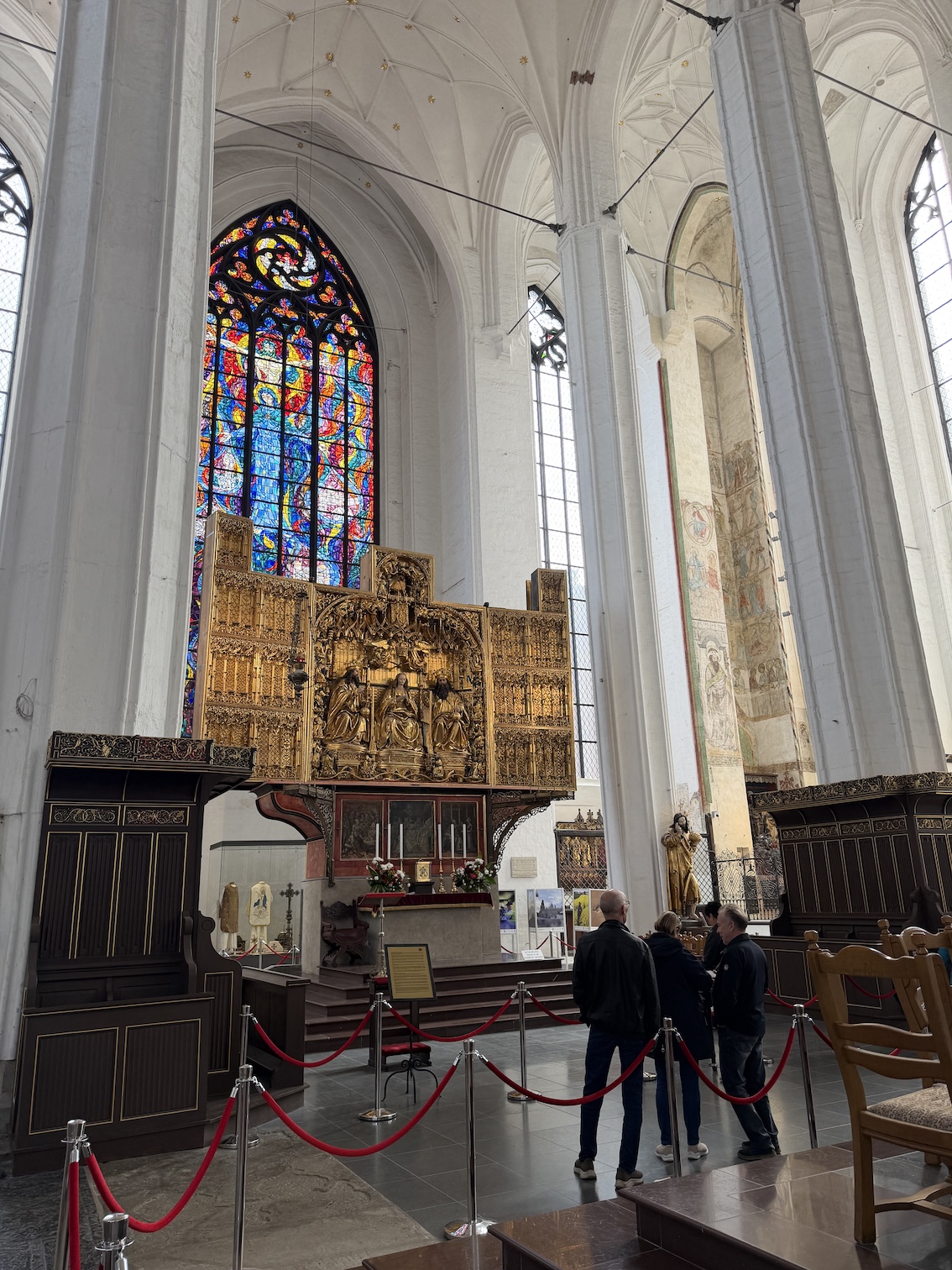
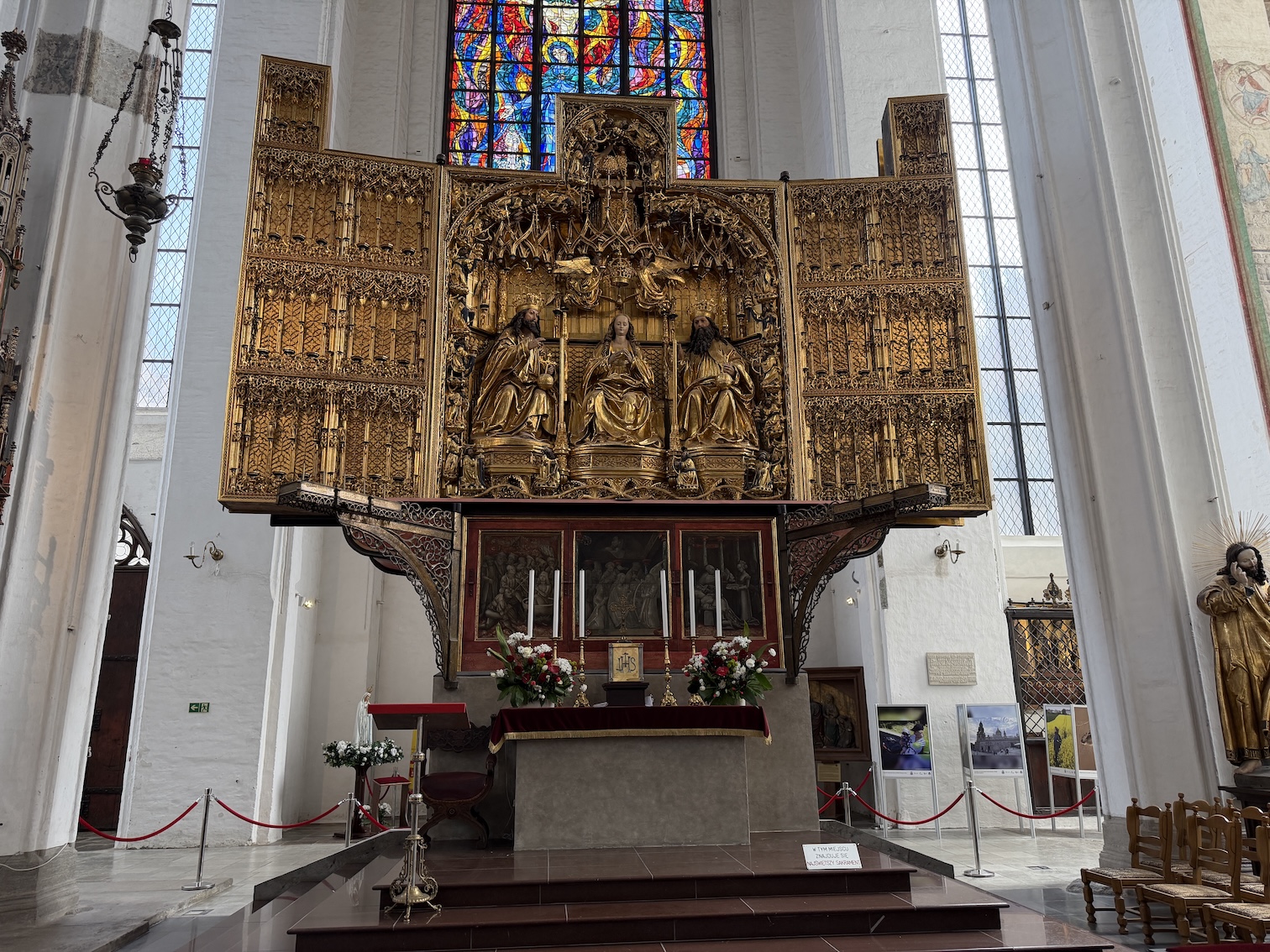
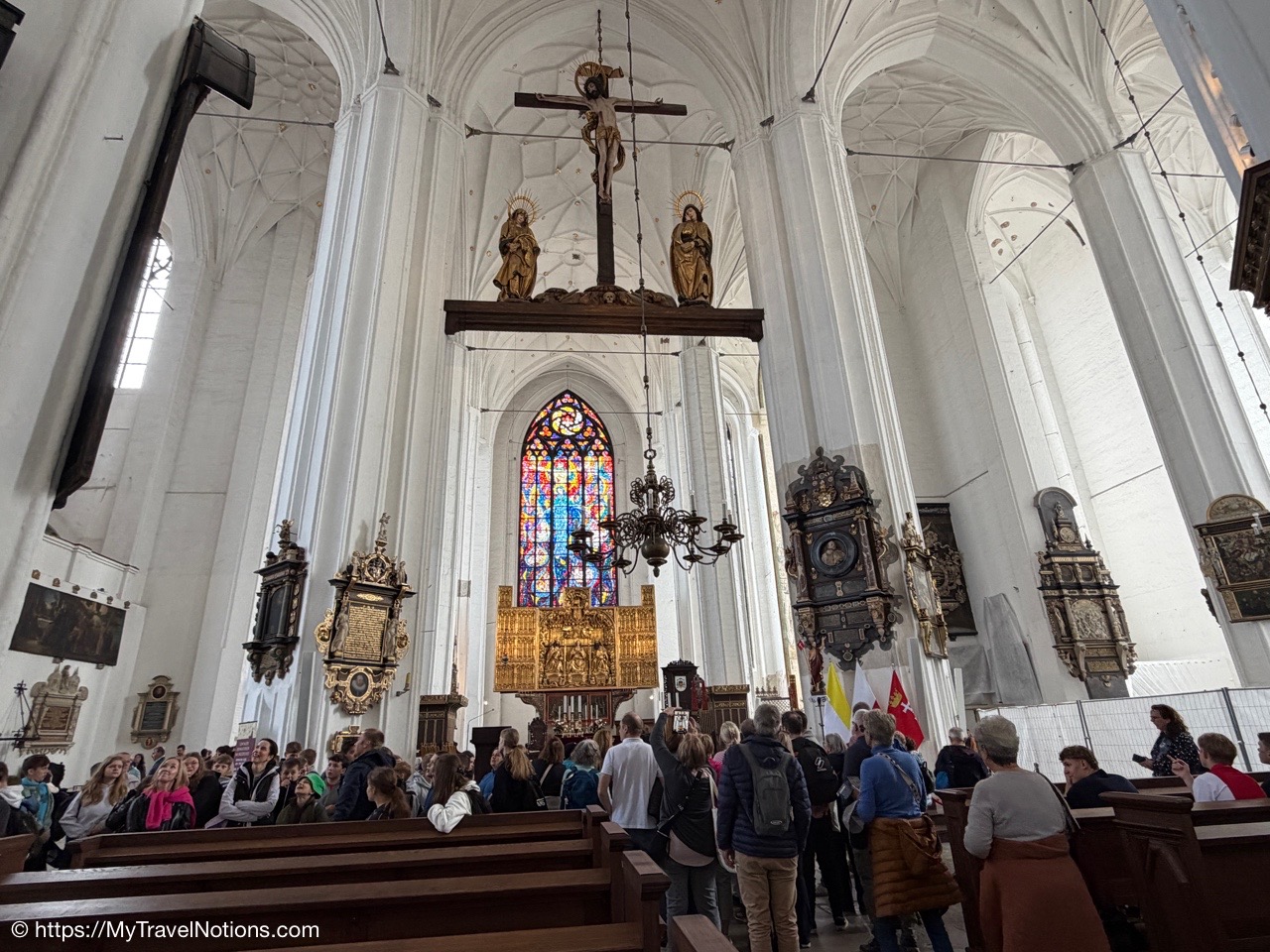
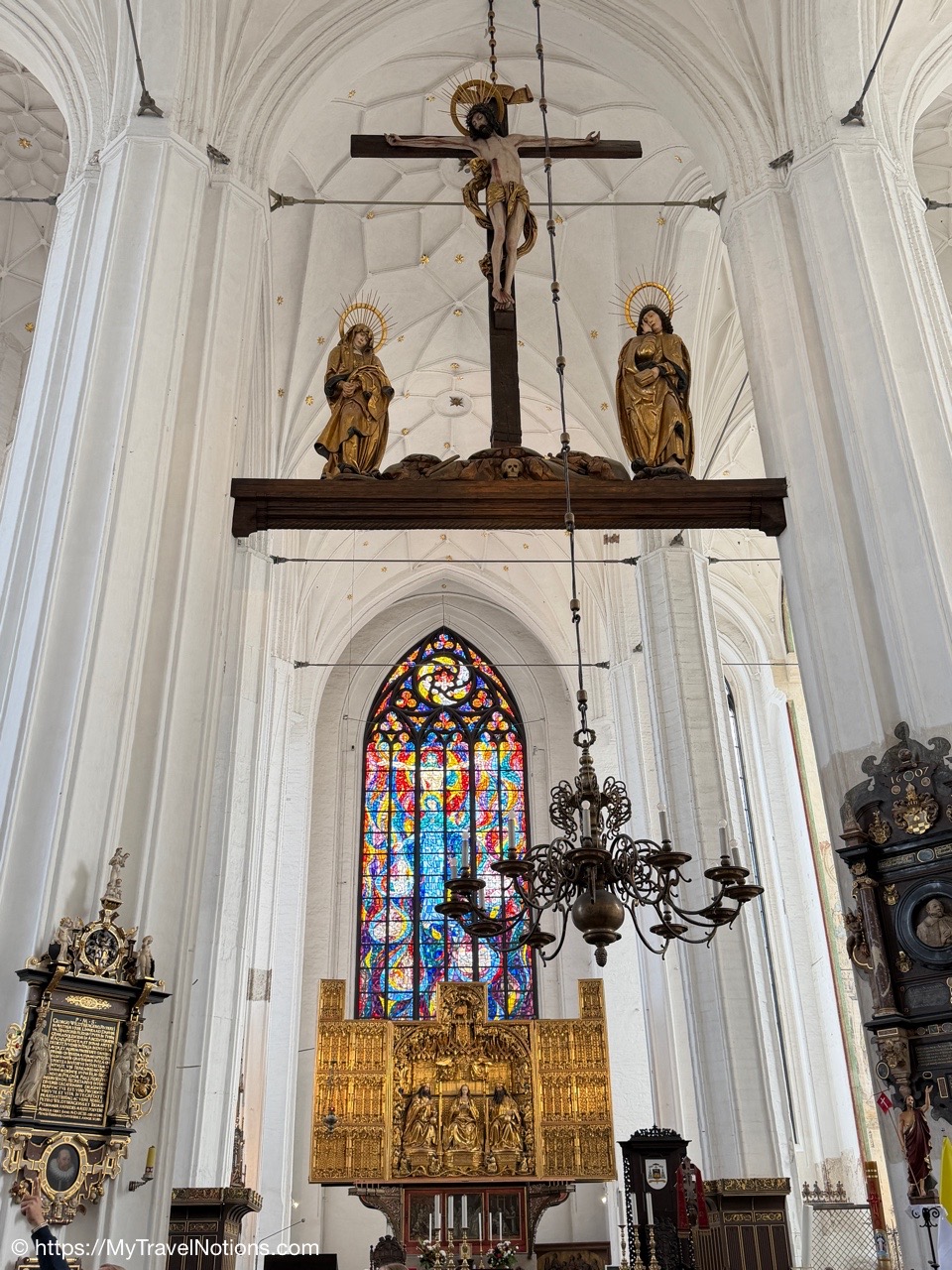
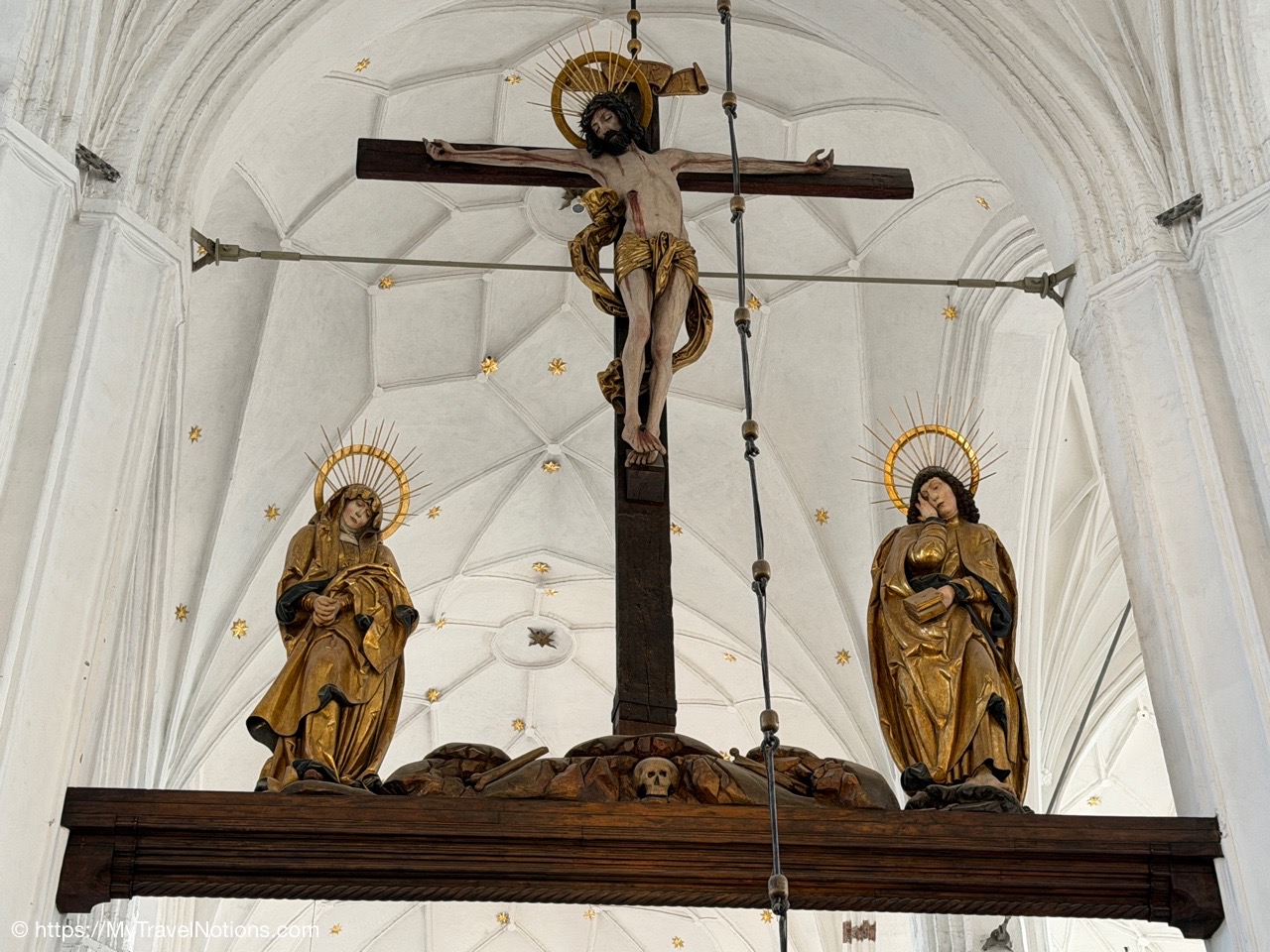
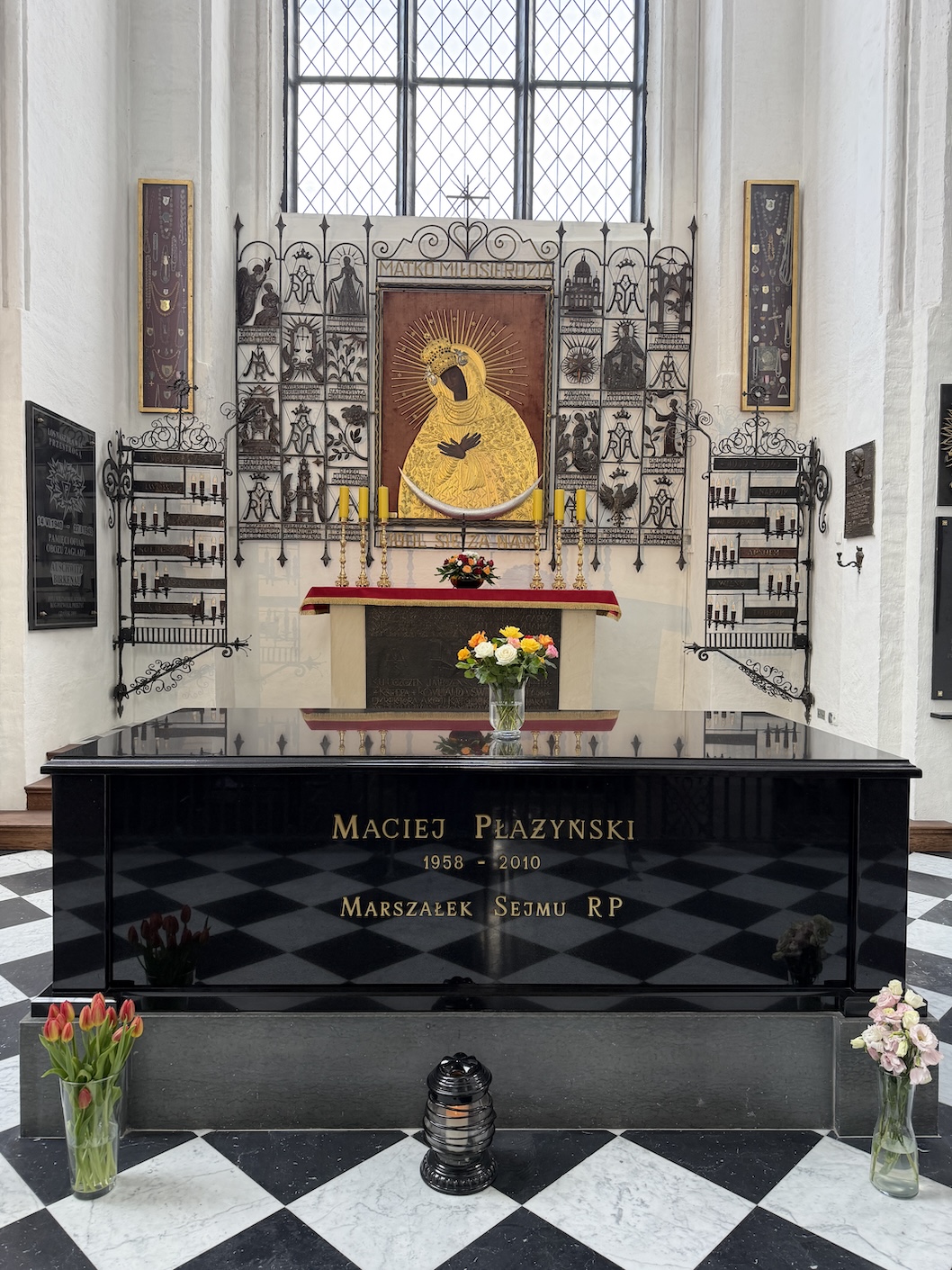
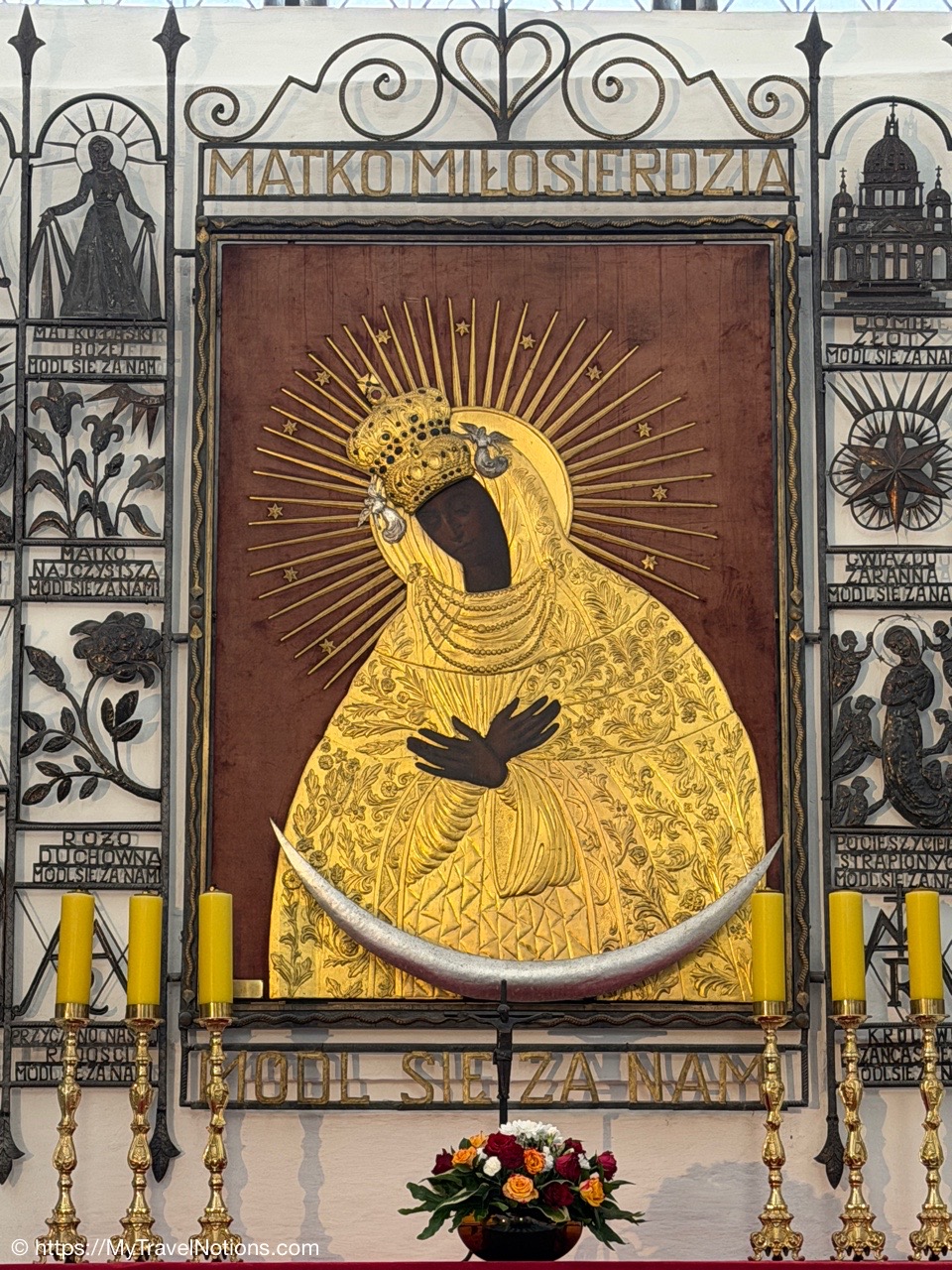
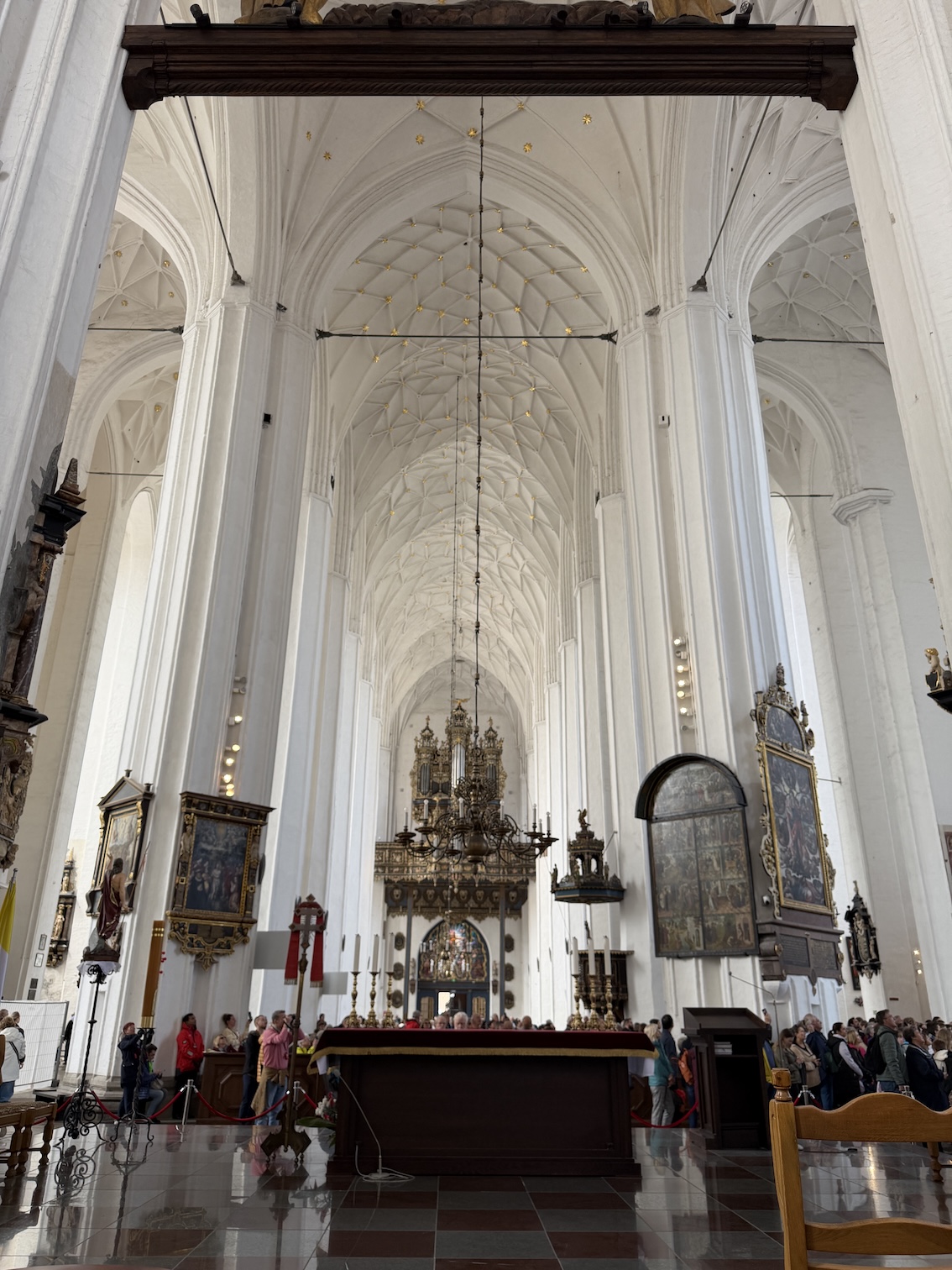
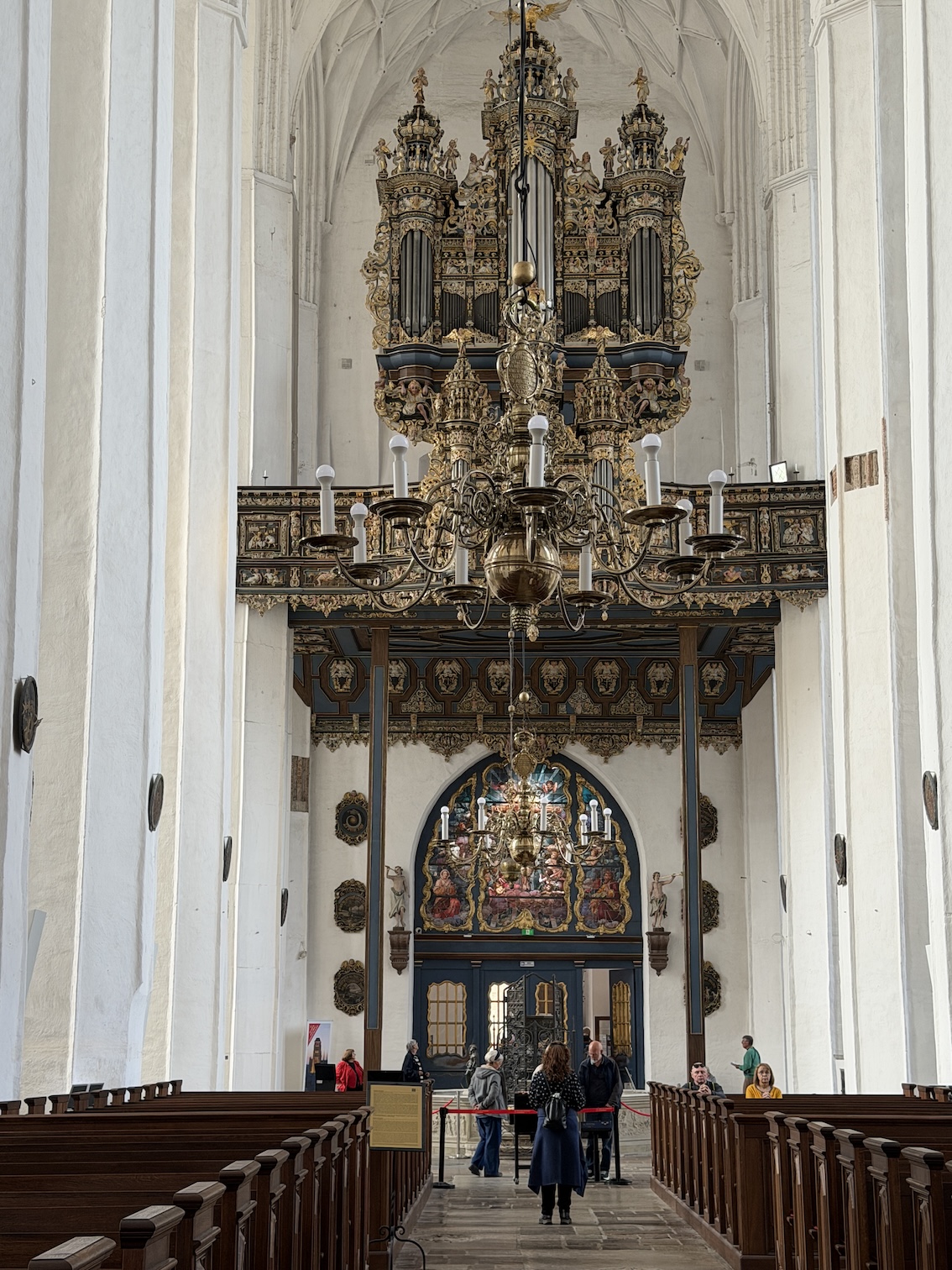
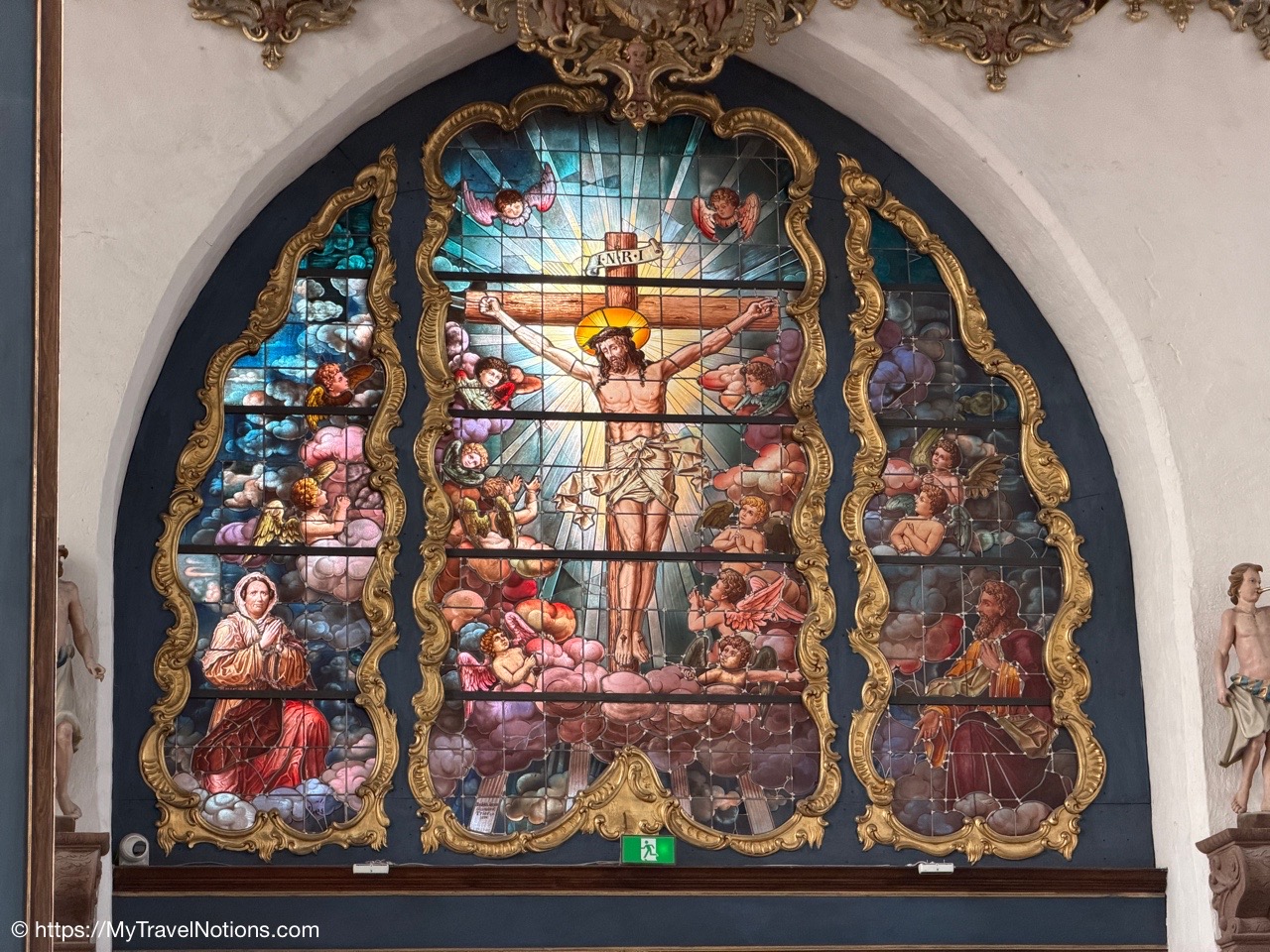
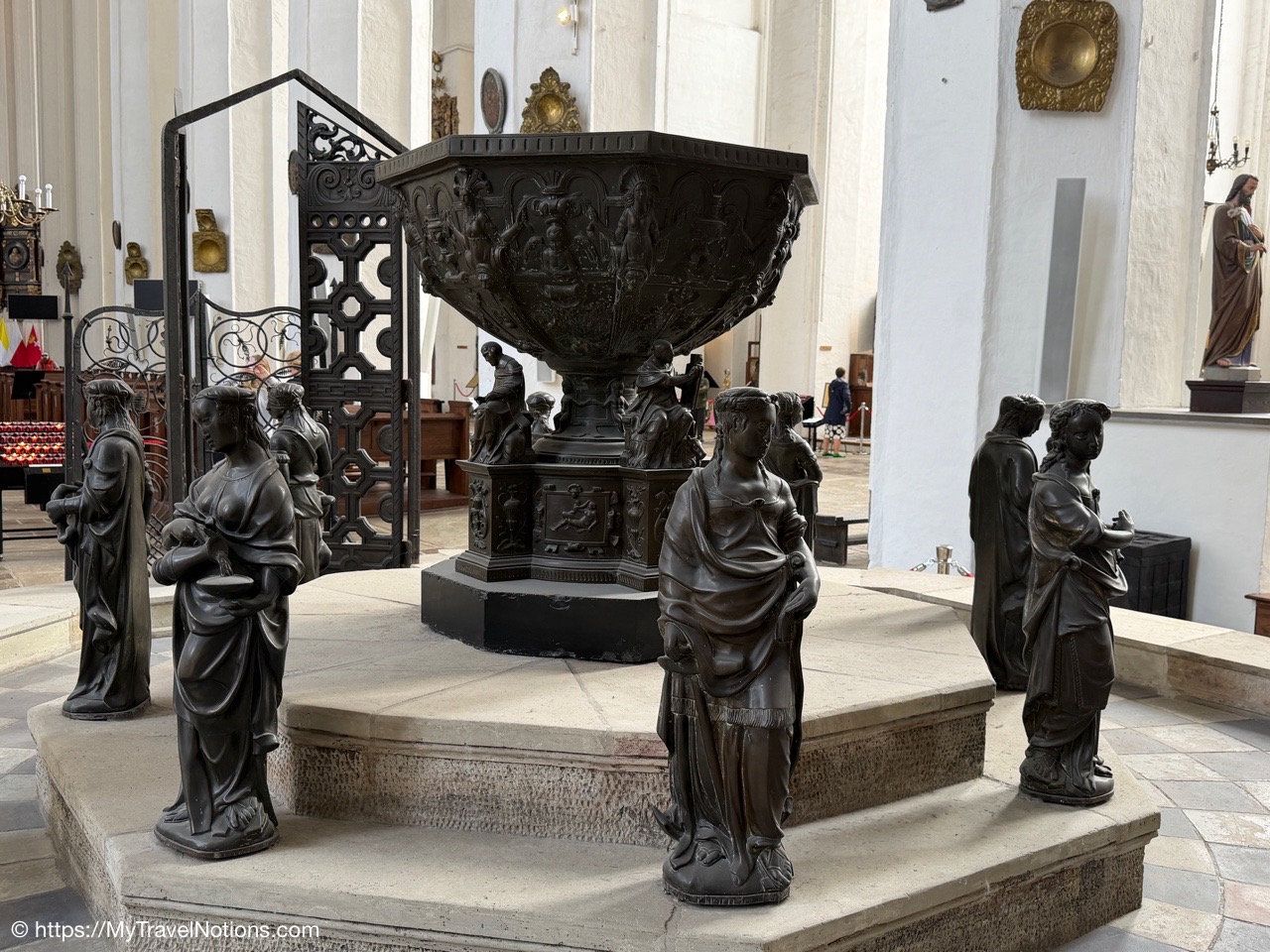
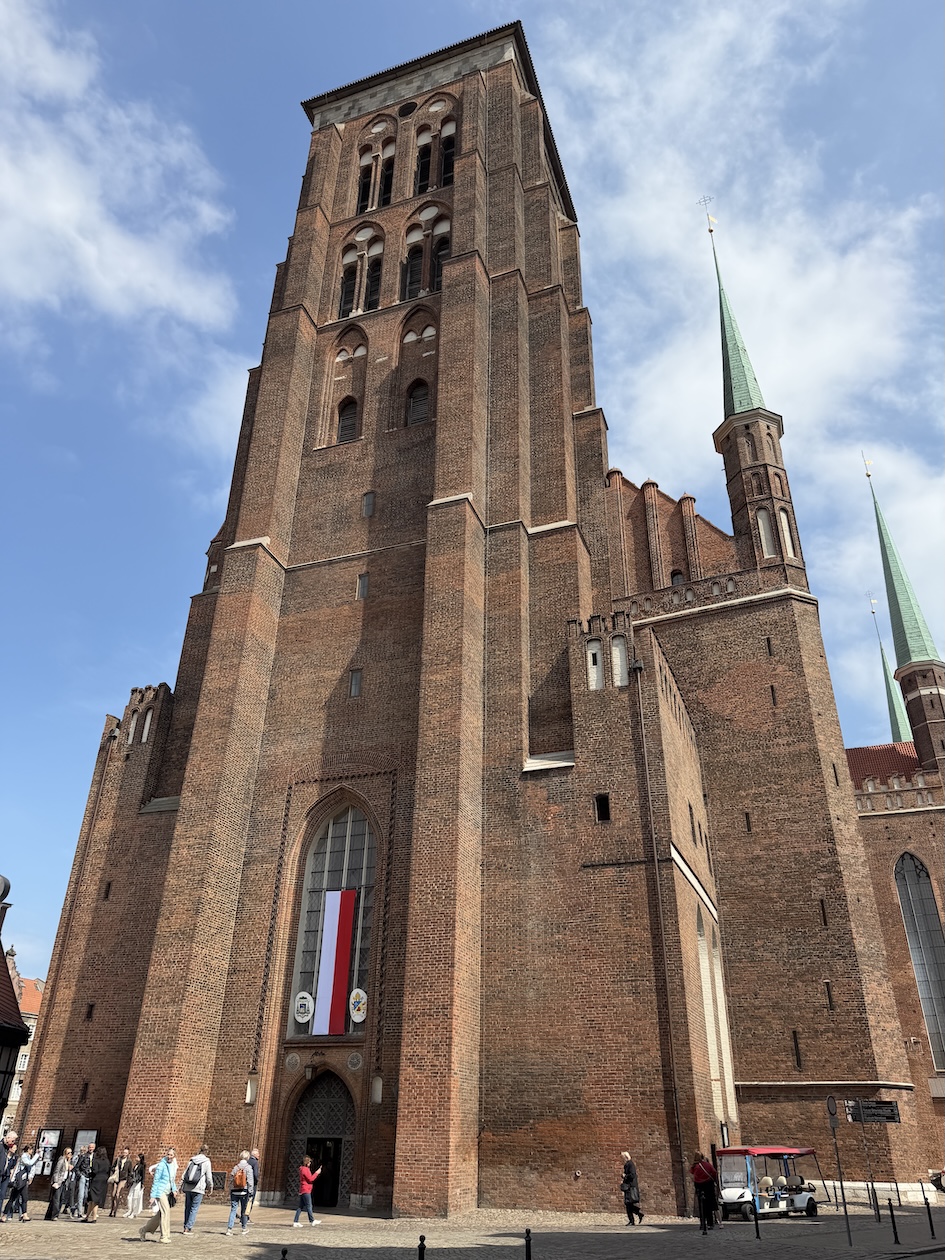
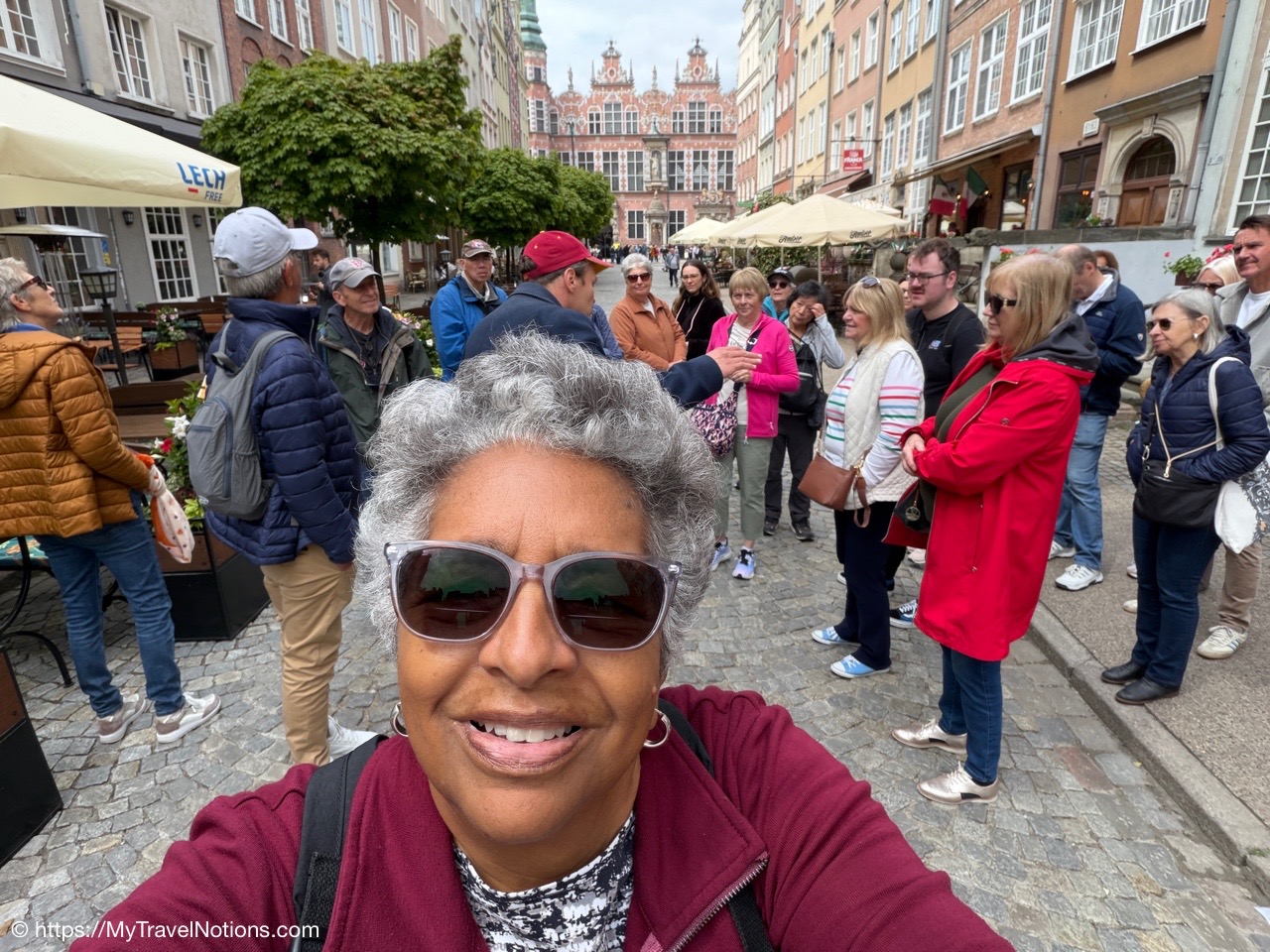
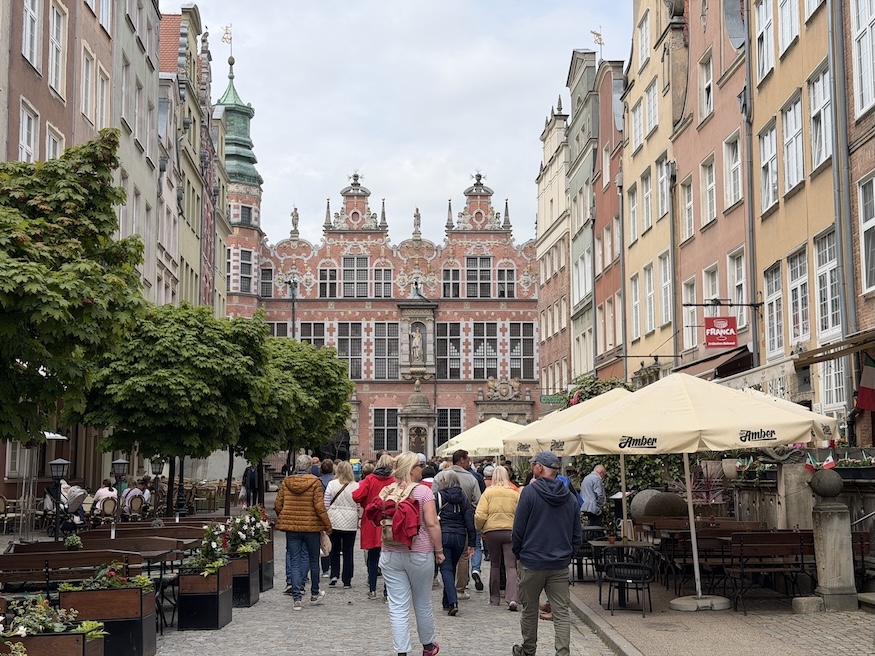
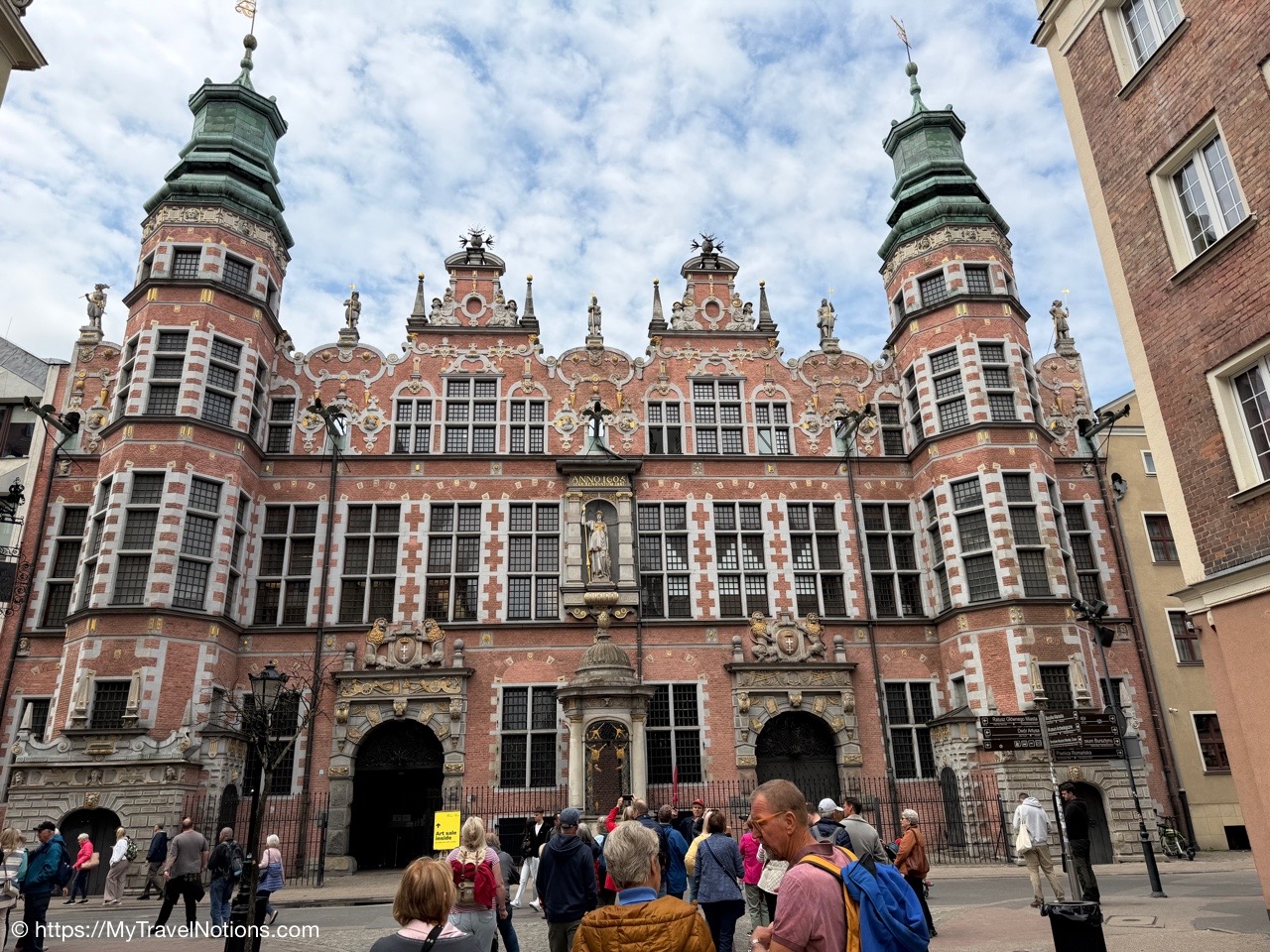
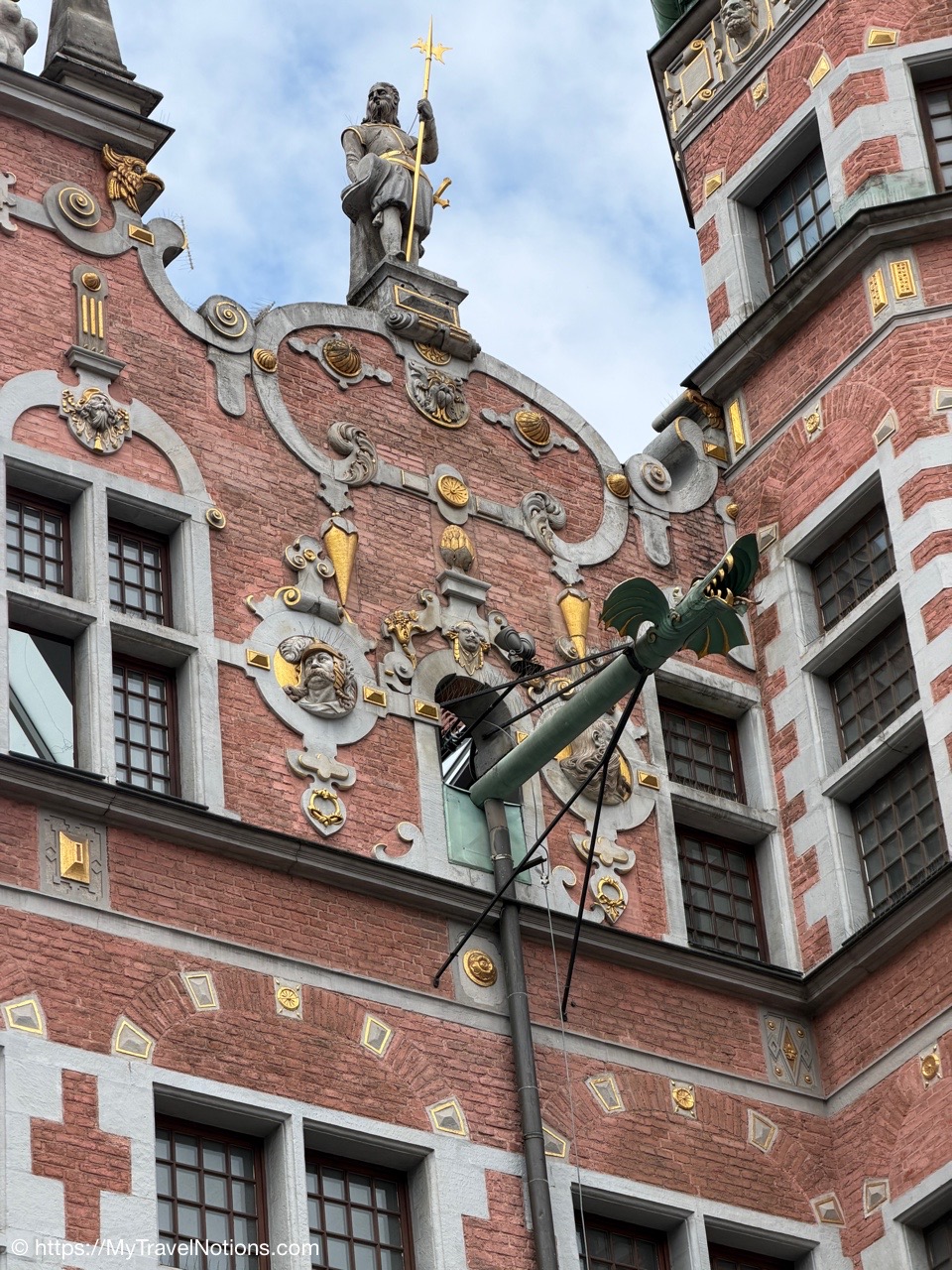
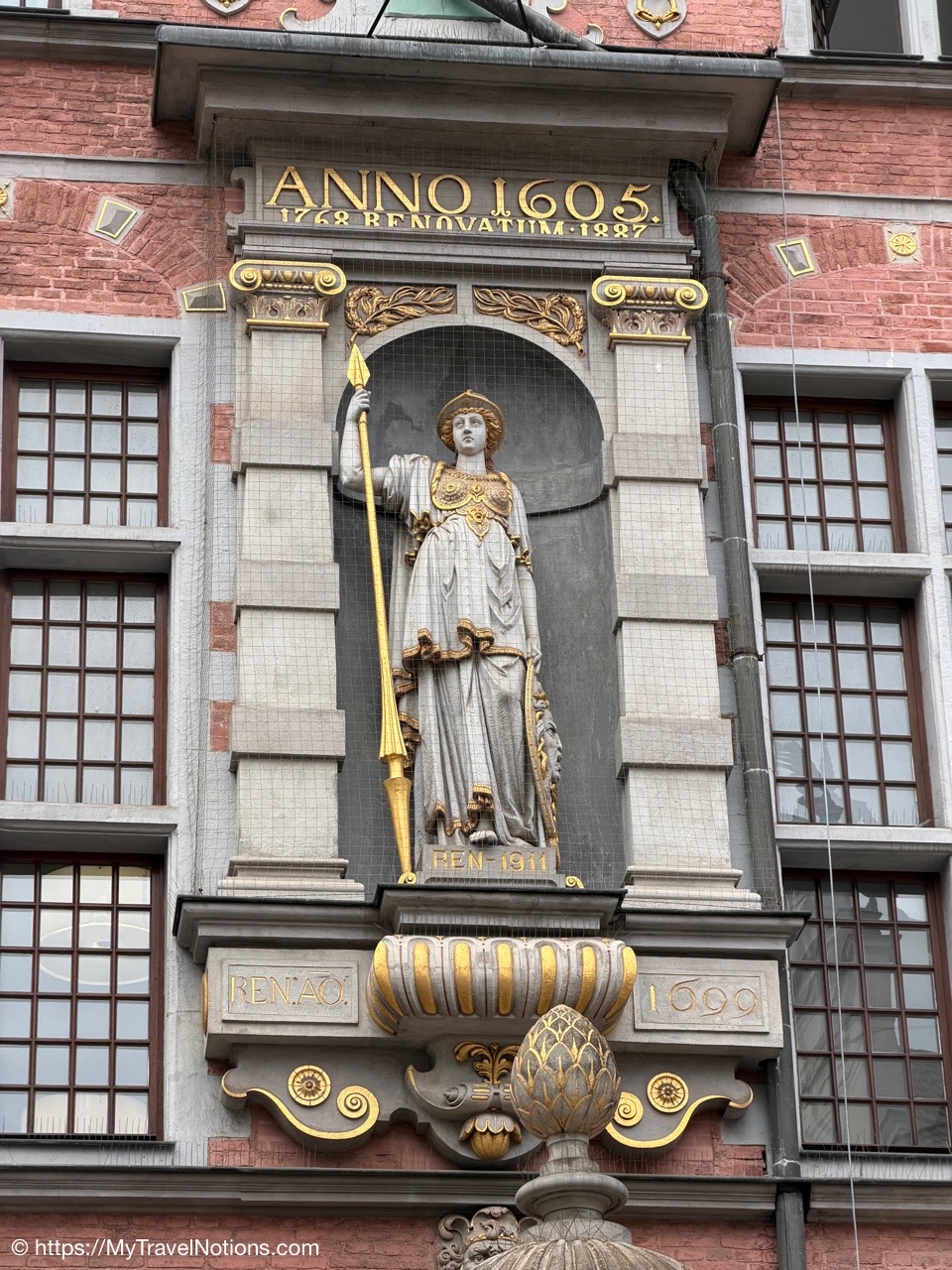
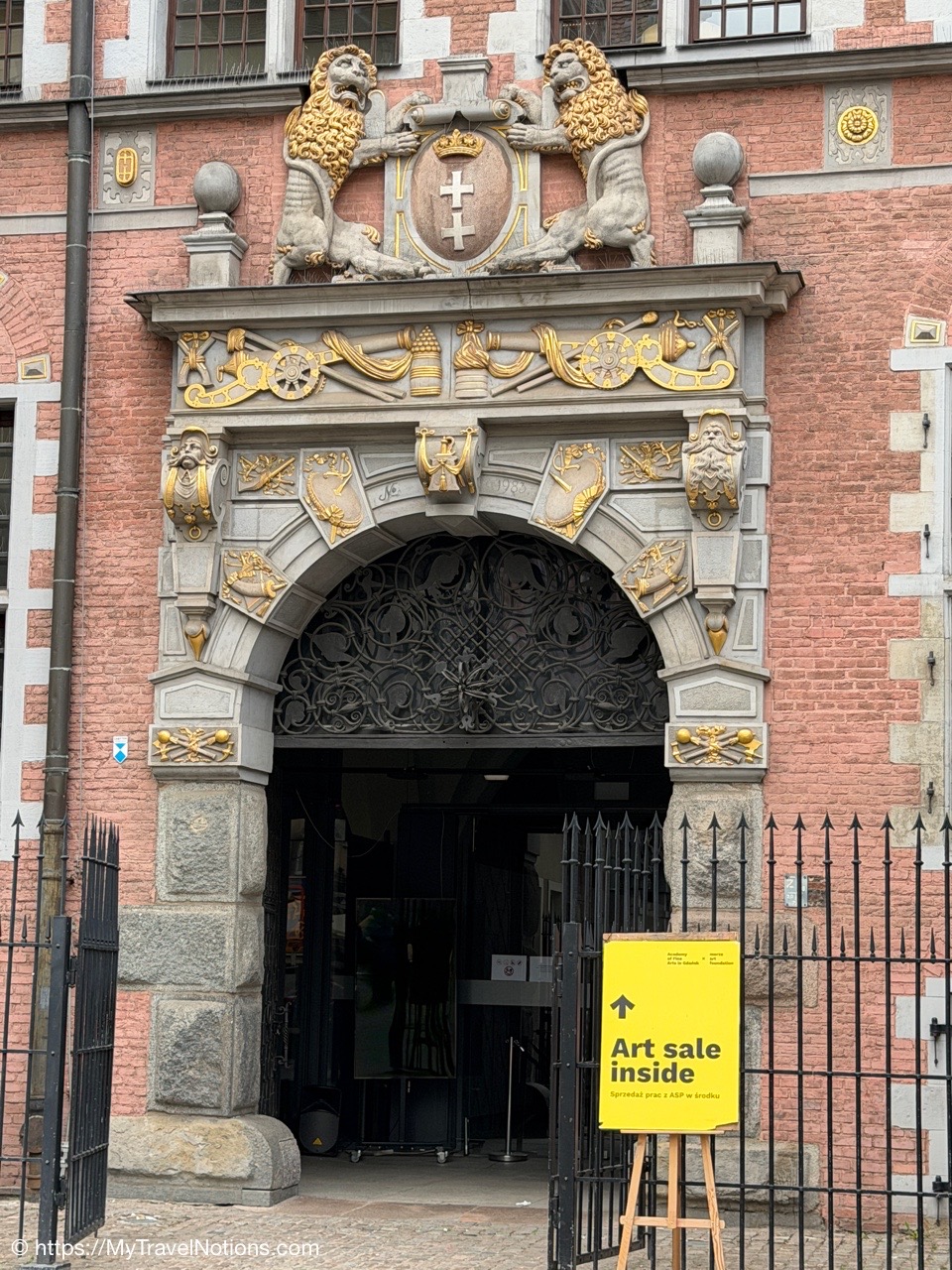
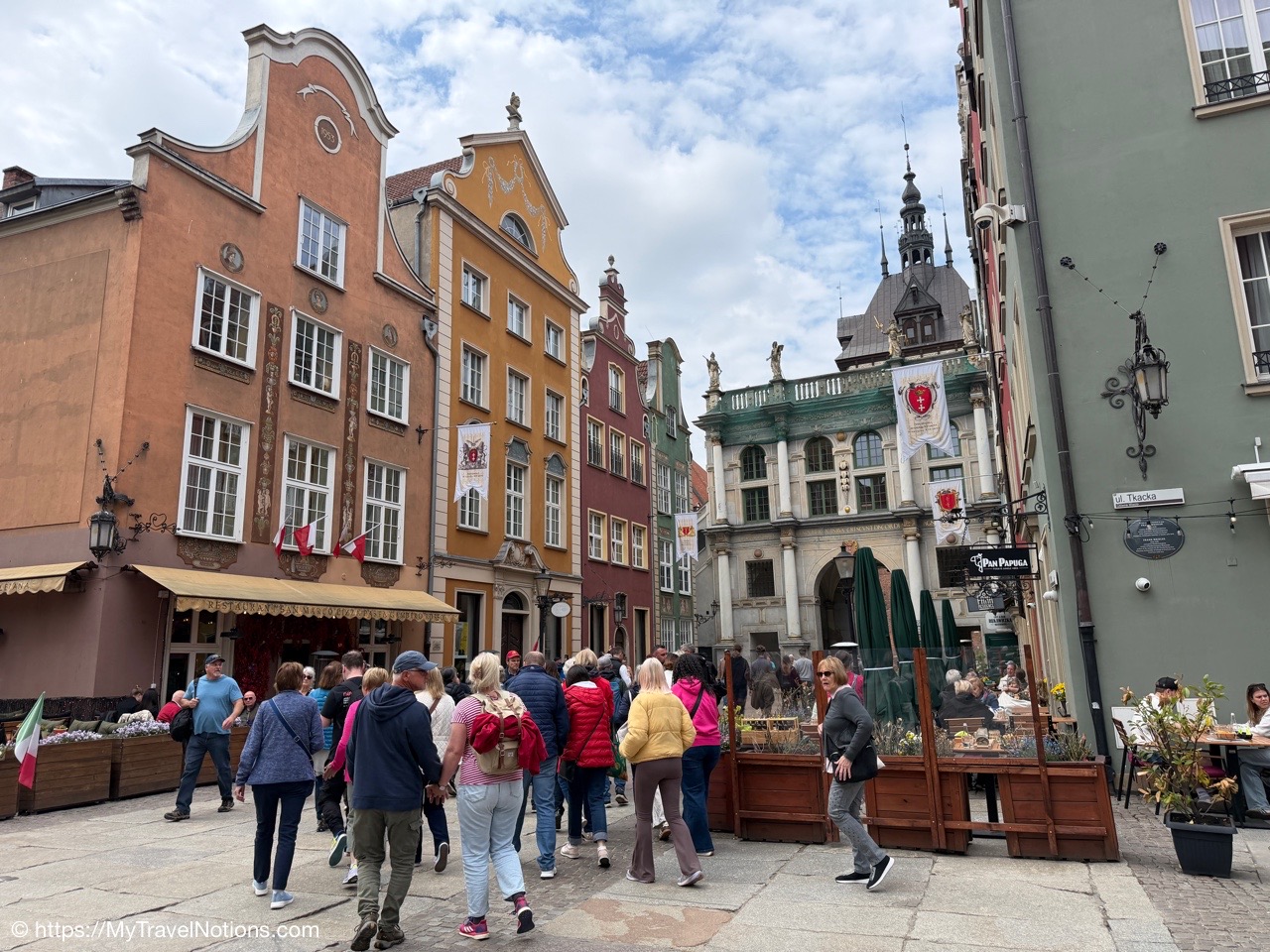
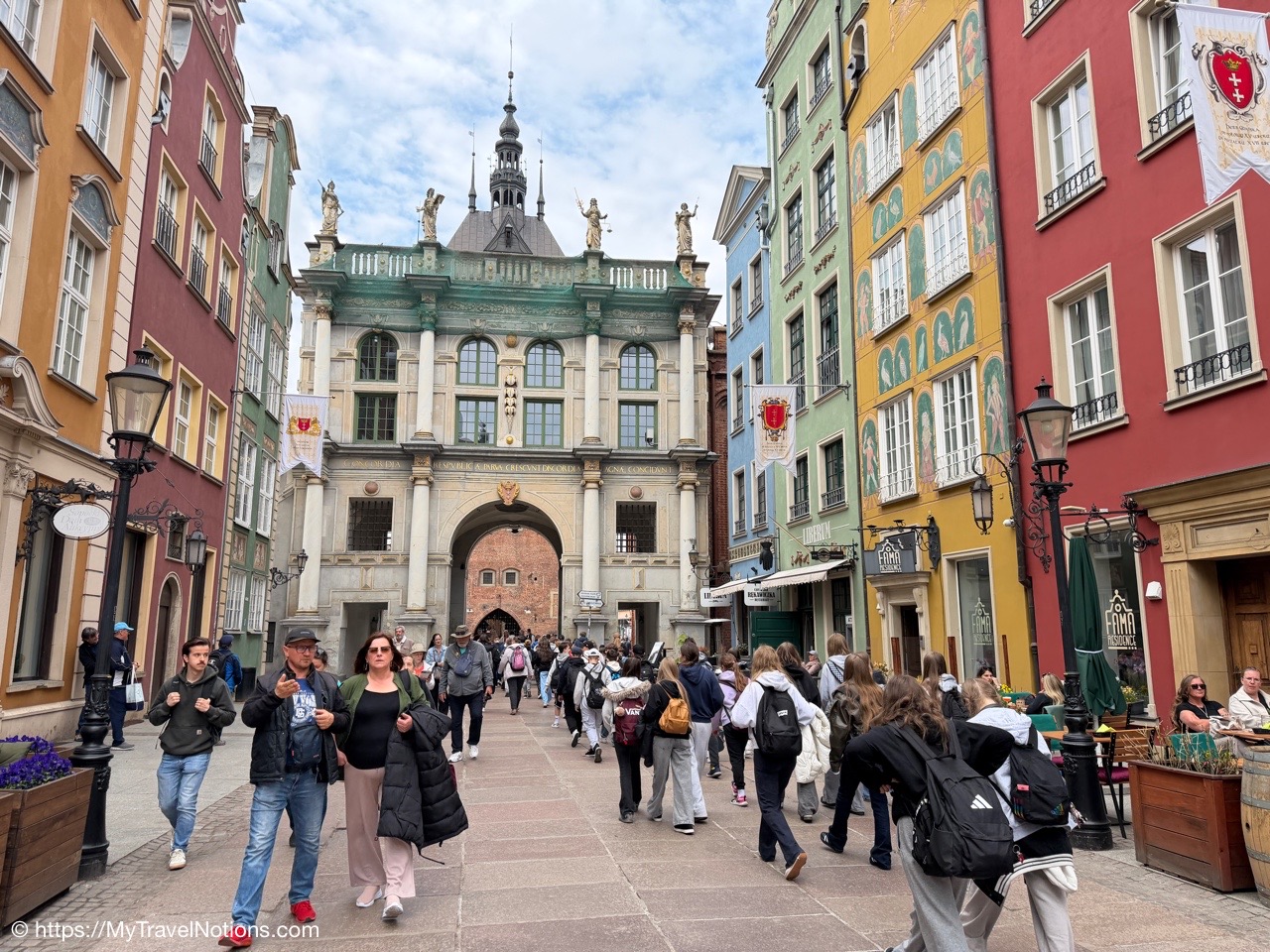
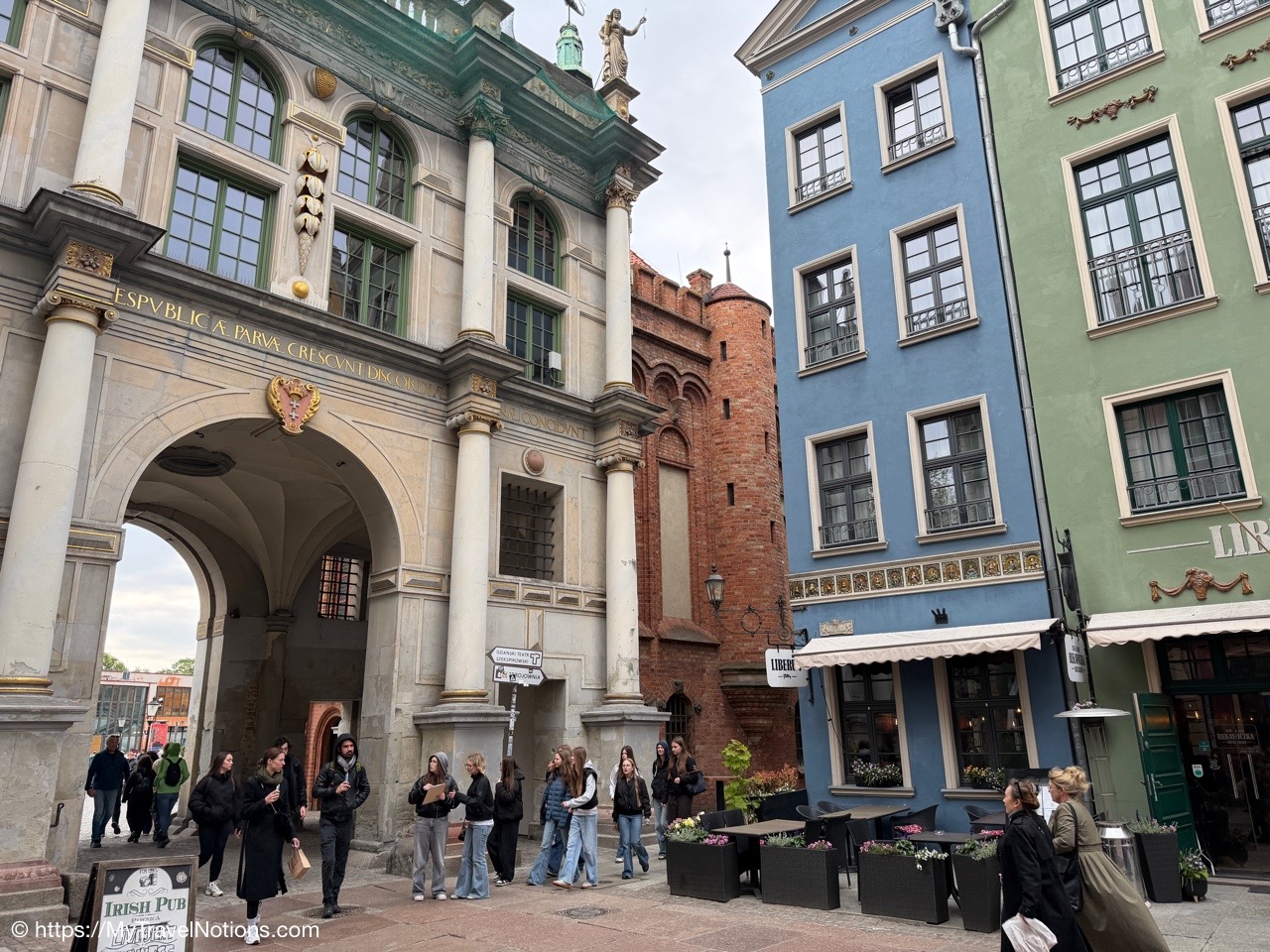
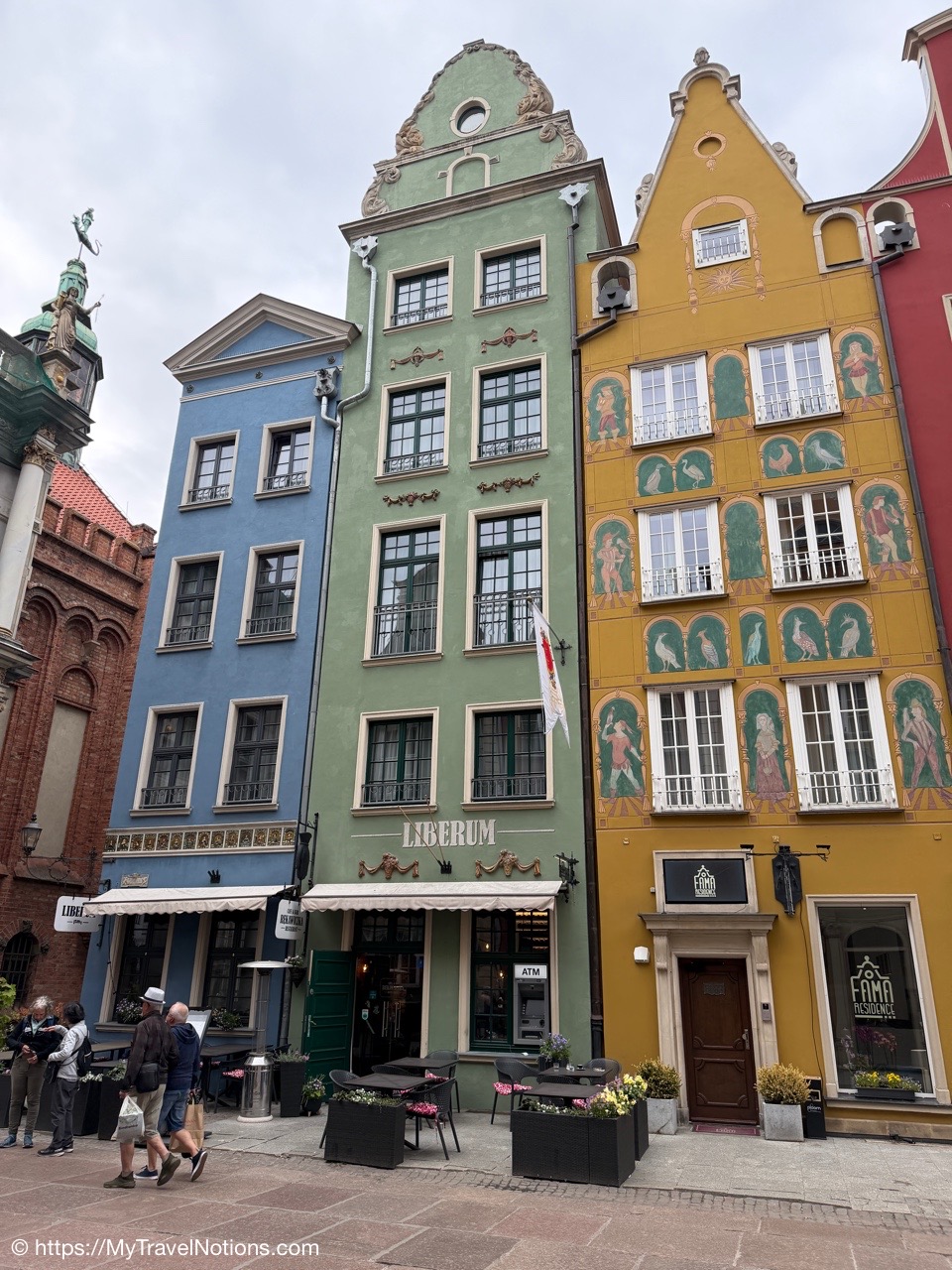
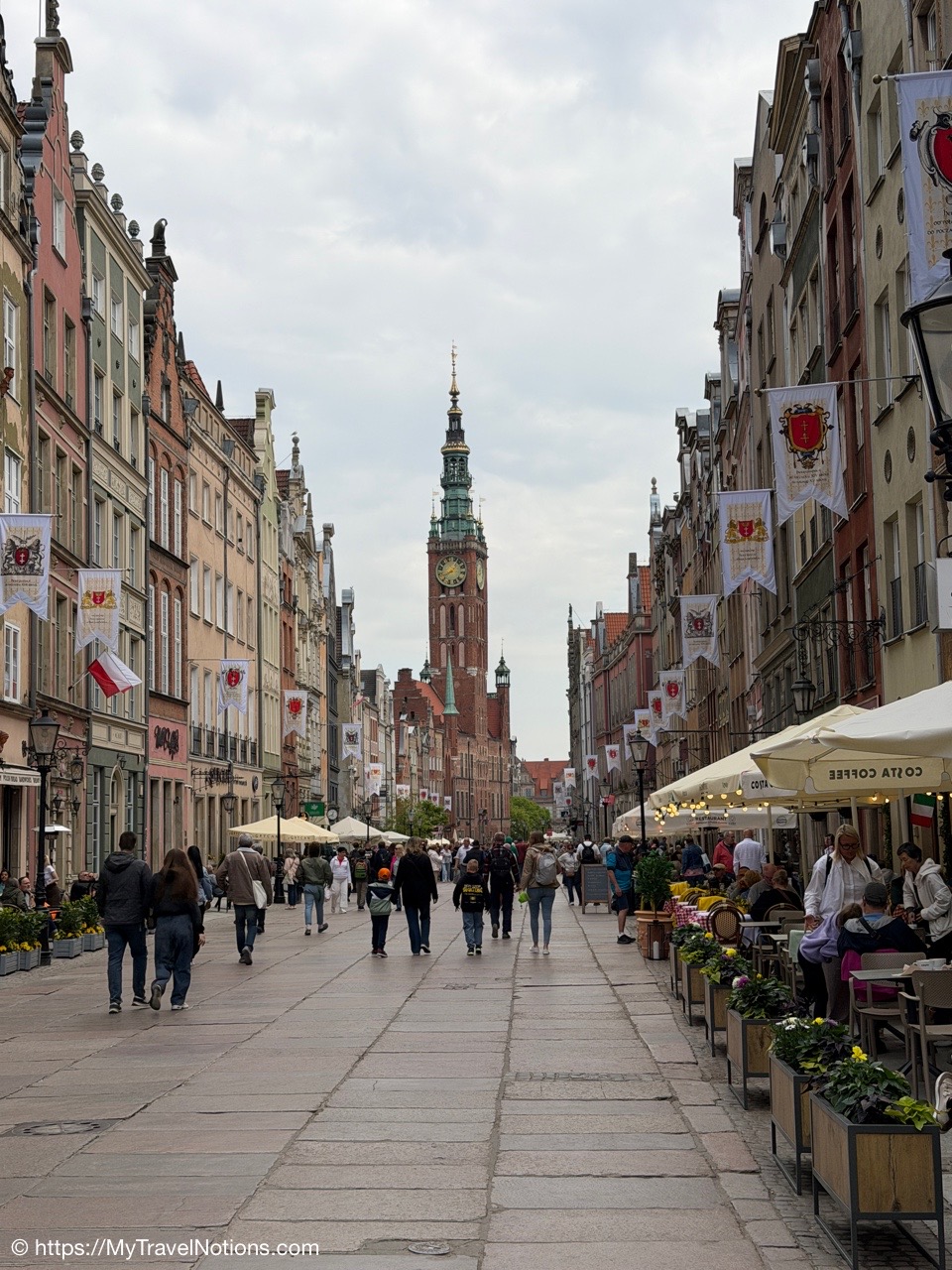
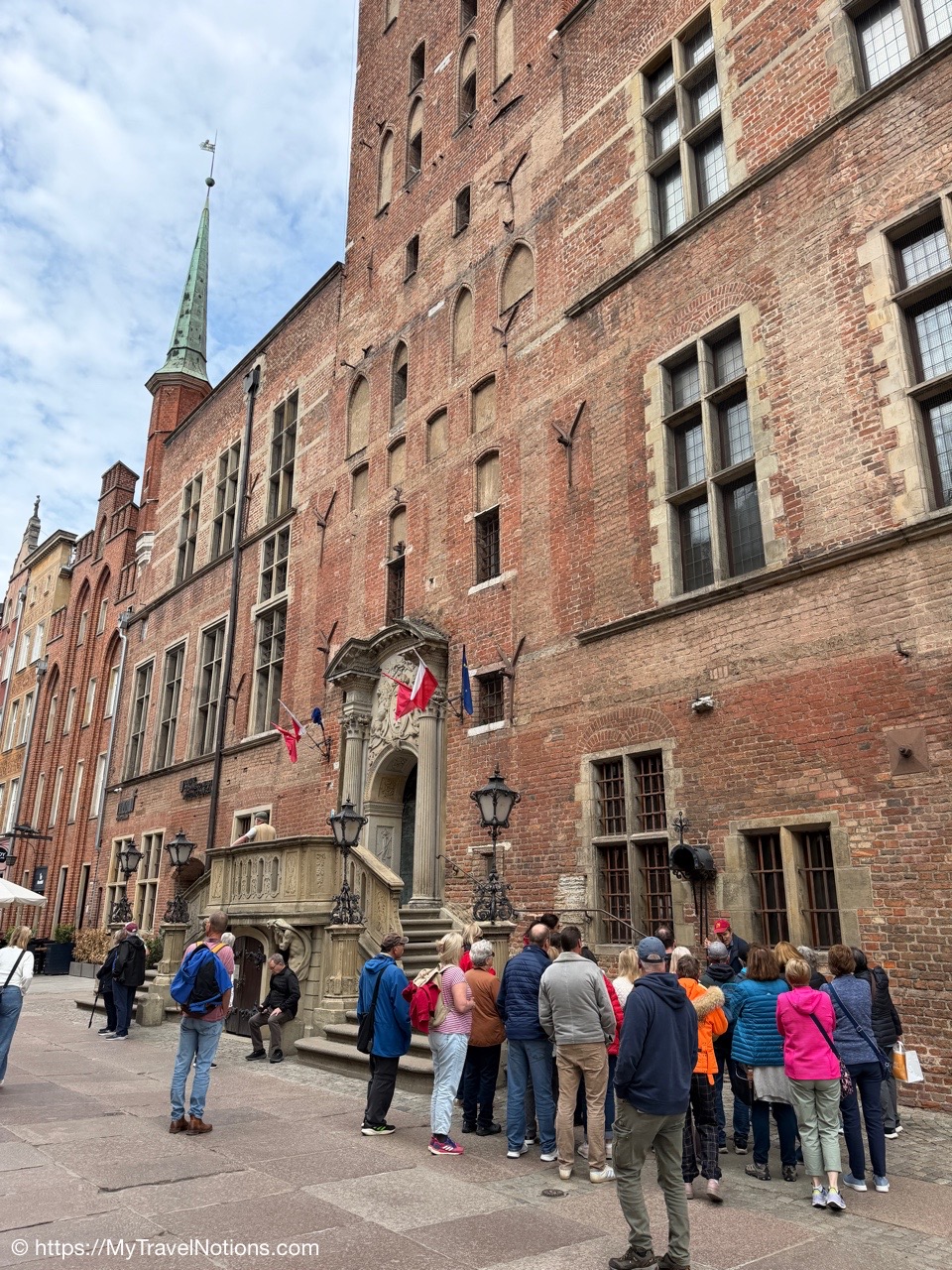
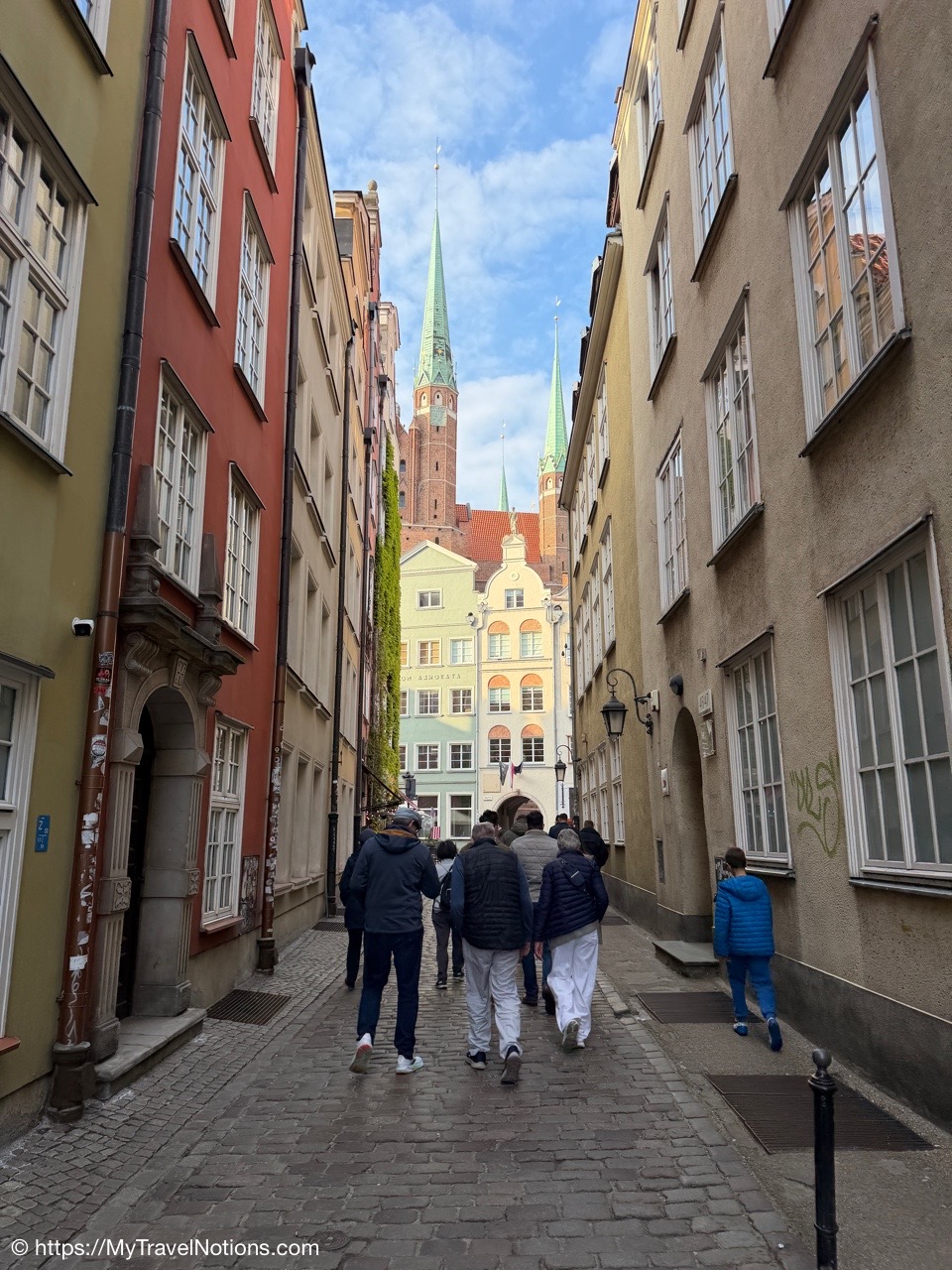
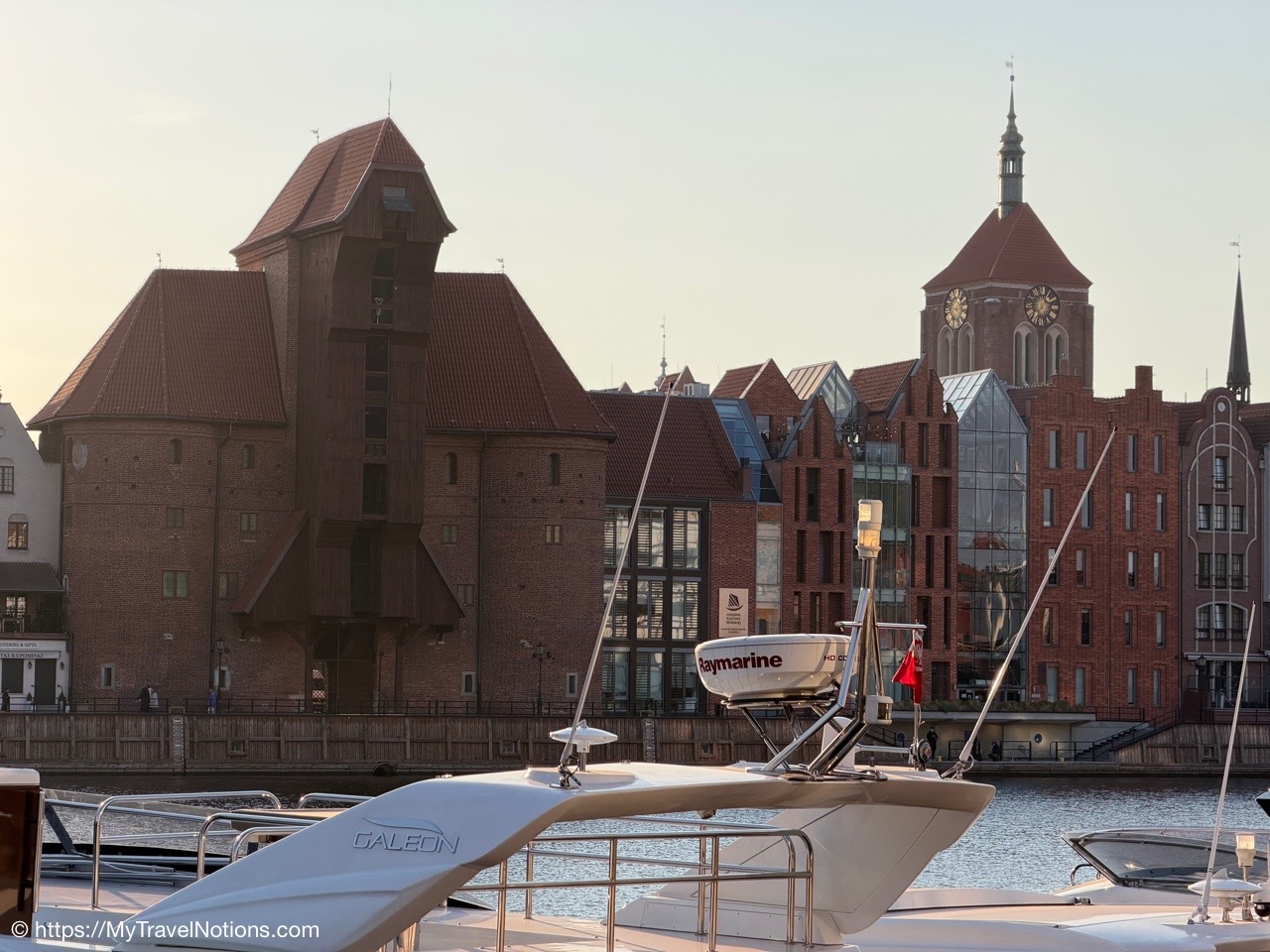
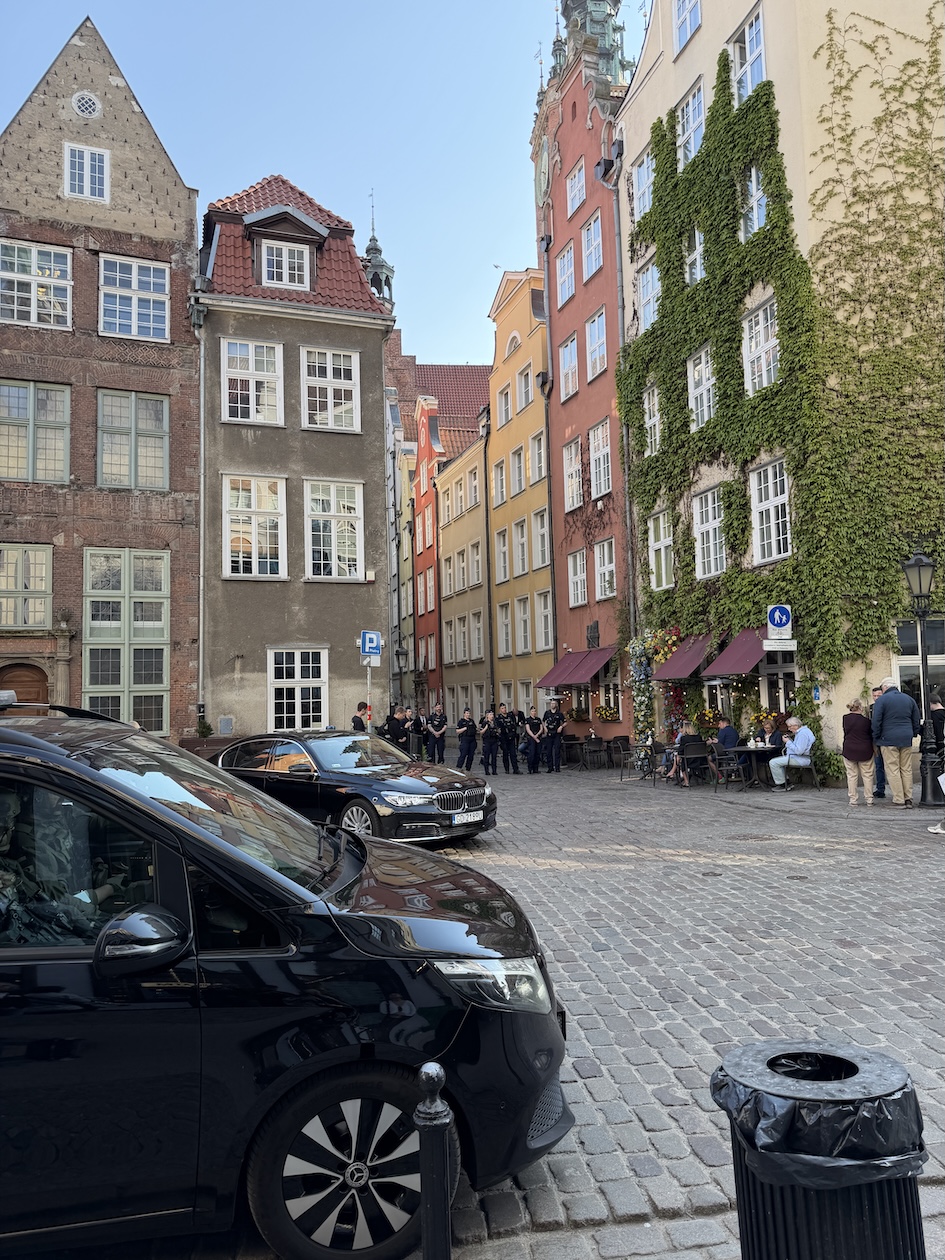
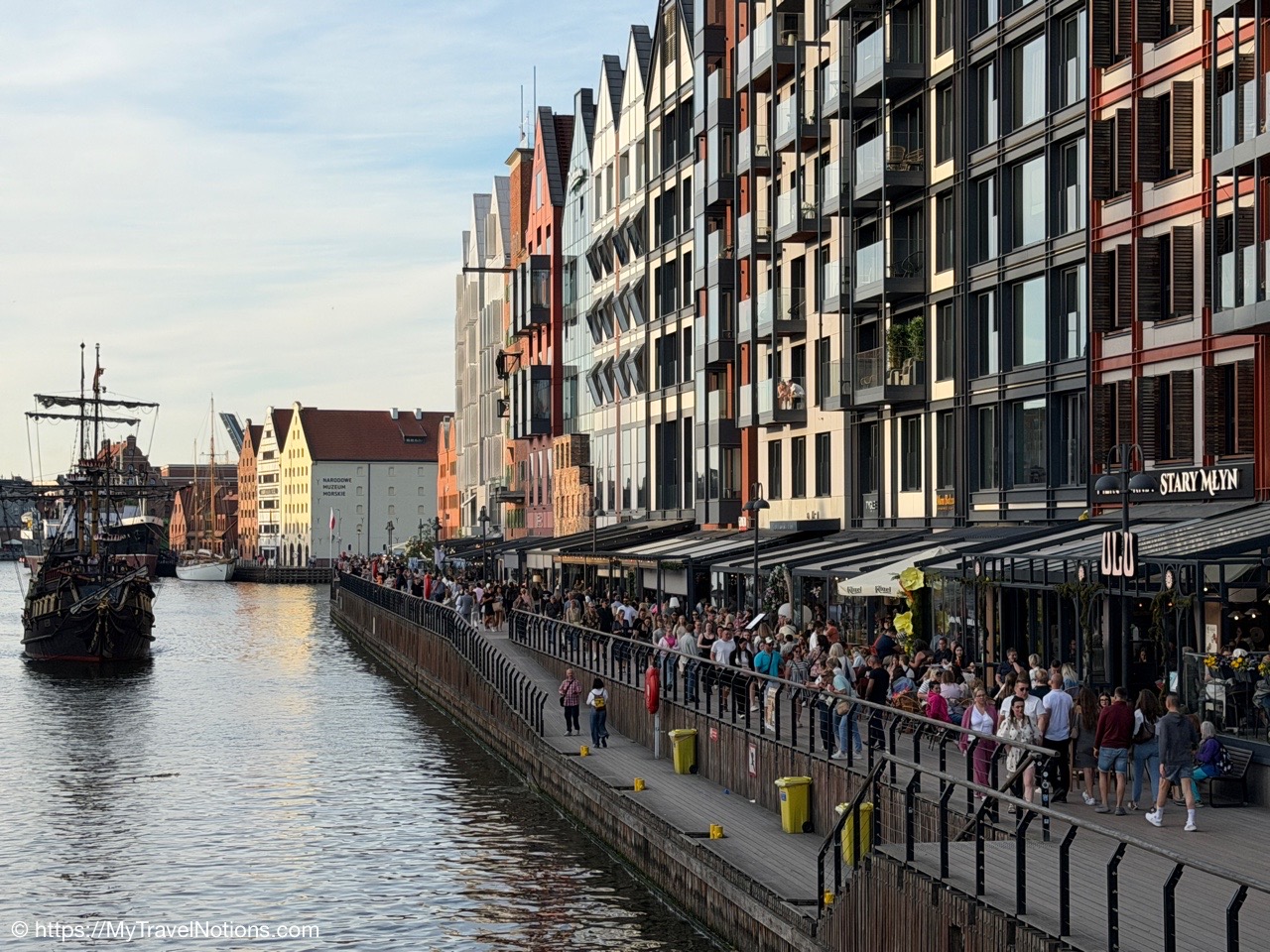
Me, during our free history walking tour, at the Golden Gate, or Złota Brama in Polish, a historic 17th-century triumphal arch and former city gate located at the western end of Long Street (Ulica Długa) in Gdańsk. (May 19, 2026)Walking through the Long Market (Długi Targ) the historic heart of Gdańsk with its colorful merchant houses. (May 19, 2026)Walking along Dlugi Targ, the Long Market, a historic, central square and main artery in the Old Town Gdańsk flanked by beautiful historic architecture. (May 18, 2026)Walking through the Long Market (Długi Targ) the historic heart of Gdańsk with its colorful merchant houses. (May 19, 2026)Views of the Green Gate situated between Long Market (Długi Targ) and the River Motława in Gdańsk. (May 19, 2026)Walking on the Long Embankment along the Motława River in Gdansk. The famous historic ship docked near the medieval historic Crane (Brama Żuraw) are replica galleons like this one, the Galeon Lew (Lion) designed to look like old wooden pirate ships or 17th-century galleons, complete with masts, rigging, and decorative carvings. (May 19, 2026)Walking on the Long Embankment along the Motława River towards the historic Crane (Brama Żuraw) in Gdańsk. (May 19, 2026)The closing of the pedestrian drawbridge on the Motława River located right next to the historic Crane, the Brama Żuraw in Gdańsk. The bridge is known as the Kładka na Ołowiankę. (May 19, 2026)Walking on the Long Embankment along the Motława River towards the historic Crane (Brama Żuraw) in Gdańsk. (May 19, 2026)The closed pedestrian drawbridge on the Motława River located right next to the historic Crane, the Brama Żuraw in Gdańsk. The bridge is known as the Kładka na Ołowiankę. (May 19, 2026)Walking on the Long Embankment along the Motława River towards the historic Crane (Brama Żuraw) in Gdańsk. (May 19, 2026)Walking on the Long Embankment along the Motława River towards the historic Crane (Brama Żuraw) in Gdańsk. (May 19, 2026)The 15th century Crane (Brama Żuraw) by the Motława river in Gdańsk. It was the largest port crane in medieval Europe that was used to lift ships for repairs. (May 19, 2026)Walking under the opening of the 15th century historic Crane (Brama Żuraw) by the Motława river in Gdańsk. It was the largest port crane in medieval Europe that was used to lift ships for repairs. It also served as a defensive city gate. (May 19, 2026)Walking under the 15th century historic Crane (Brama Żuraw) by the Motława river in Gdańsk. It was the largest port crane in medieval Europe that was used as a port cargo handler, a ship mast installer, and a defensive city gate. (May 19, 2026)Walking through Swietego Ducha, known historically for its notable residents, in Old Town Gdańsk that runs parallel to the famous Mariacka Street. (May 19, 2026)Walking along Swietego Ducha, known historically for its notable residents, in Old Town Gdansk that runs parallel to the famous Mariacka Street. (May 19, 2026)Walking along Swietego Ducha, known historically for its notable residents, in Old Town Gdansk that runs parallel to the famous Mariacka Street. (May 19, 2026)Walking along Swietego Ducha, known historically for its notable residents, in Old Town Gdansk that runs parallel to the famous Mariacka Street. (May 19, 2026)Walking along Swietego Ducha, known historically for its notable residents, in Old Town Gdansk that runs parallel to the famous Mariacka Street. (May 19, 2026)Walking along Swietego Ducha, known historically for its notable residents, in Old Town Gdansk that runs parallel to the famous Mariacka Street. (May 19, 2026)The Sailors’ House with its decorative doorway along Świętego Ducha Street (Holy Spirit Street) was build in 1603. It is the former site of the Skippers’ Guild, which was established in 1386. (May 19, 2026)Walking through a side street full of of greenery to the historic, cobbled stone Mariacka Street in Old Town Gdansk. (May 19, 2026)Mariacka Street in Gdańsk is a historic, pedestrian cobblestone-stoned lane is famous for its amber shops, Gothic architecture and terraced houses. Destroyed in 1945 during World War II, the street was meticulously pieced back together using original salvaged debris from the neighborhood. (May 19, 2026)Mariacka Street in Gdańsk is a historic, pedestrian cobblestone-stoned lane is famous for its amber shops, Gothic architecture and terraced houses. Destroyed in 1945 during World War II, the street was meticulously pieced back together using original salvaged debris from the neighborhood. (May 19, 2026)Amber artisan shops along Mariacka Street in Gdańsk with its Gothic architecture and terraced houses. (May 19, 2026)Amber artisan shops along Mariacka Street in Gdańsk with its Gothic architecture and terraced houses. (May 19, 2026)From Mariacka Street, we ventured to St. Mary’s Church, completed in 1502 it is considered to be one of the world’s largest brick churches and an important landmark in Gdańsk. According to tradition, a wooden Church of the Assumption existed as early as 1243 and the foundation for the new brick churches was placed in 1343. (May 19, 2026)People gathered to watch the 15th century Gdańsk astronomical clock inside of St. Mary’s Church for the procession of Adam and Eve alongside the Three Kings, the Apostles and Death on the hour and at noon. (May 19, 2026)The Gdańsk astronomical clock inside St. Mary’s Church was constructed between 1464–1470 by Hans Düringer, a clockmaker from Nuremberg, Germany. Standing at 14 metres (46 ft) tall, upon completion, the clock was the largest in the world. The clock’s dials show the time and date, phase of the Moon, the position of the Moon and Sun in relation to zodiac signs, and a calendar of saints. Adam and Evering the bell on the hour, and at noon, a procession appears that features Adam and Eve alongside the Three Kings, the Apostles, and Death. (May 19, 2026)The Gdańsk astronomical clock inside St. Mary’s Church was constructed between 1464–1470 by Hans Düringer, a clockmaker from Nuremberg, Germany. The top tier are the figures that perform a daily show at noon, the middle tier display the 12 zodiac signs along with the time of day, the date and the current phase of the moon and the bottom tier tracks traditional medieval chronological cycles. (May 19, 2026)The wooden figures of Adam and Eve at the top of the Gdańsk astronomical clock in St. Mary’s Church strikes the bell on the hour. (May 19, 2026)The middle tier of the Gdańsk astronomical clock in St. Mary’s Church displays the time of day, the date and the current phase of the moon along with tracking the precise positions of the sun and the moon relative to the 12 signs of the zodiac. (May 19, 2026)People looking up towards the astronomical clock inside the interior of St. Mary’s Church in Gdańsk. The church also features 26 or 27 soaring white pillars, dividing three wide naves, that support vaulted ceiling 98 feet or 30 meters above the stone floors. (May 19, 2026)People looking up towards the astronomical clock inside the interior of St. Mary’s Church in Gdańsk. The church also features 26 or 27 soaring white pillars, dividing three wide naves, that support vaulted ceiling 98 feet or 30 meters above the stone floors. (May 19, 2026)The interior of St. Mary’s Church in Gdańsk features 26 or 27 soaring white pillars, dividing three wide naves, that support vaulted ceilings 98 feet or 30 meters above the stone floors. (May 19, 2026)The main altar inside St. Mary’s Church in Gdańsk. (May 19, 2026)The main altar inside St. Mary’s Church in Gdańsk is a monumental late-Gothic oak polyptych created between 1511 and 1517. The central panel of the golden altarpiece depicts the Coronation of the Blessed Virgin Mary. (May 19, 2026)The central nave with the main altar and the Crucifixion Group on the Chancel Arch of St. Mary’s Church in Gdańsk. (May 19, 2026)The central nave with the main altar and the Crucifixion Group on the Chancel Arch of St. Mary’s Church in Gdańsk. (May 19, 2026)The Crucifixion Group on the Chancel Arch inside St. Mary’s Church in Gdańsk was carved in 1517. It features a larger-than-life crucifix a little less than 15 feet or 4.5 meters tall flanked by towering wooden statues of the Virgin Mary (about 11.5 feet or 3.5 meters) and Saint John the Evangelist (about 11.8 feet or 3.6 meters). (May 19, 2026)The Black Madonna chapel and tomb of Maciej Płażyński, a prominent Polish politician, inside of St. Mary’s Church in Gdańsk. He was a key figure in the Polish anti-communist democratic opposition and a leader in regional politics around Gdańsk. The Black Madonna holds deep spiritual and national importance for Polish Catholics, symbolizing resilience and faith. (May 19, 2026)The Black Madonna chapel inside of St. Mary’s Church in Gdańsk. She holds deep spiritual and national importance for Polish Catholics, symbolizing resilience and faith. (May 19, 2026)Looking towards the front/main entrance of St. Mary’s Chuch in Gdańsk and its soaring white pillars, dividing three wide naves, that support vaulted ceilings 98 feet or 30 meters above the stone floors. (May 19, 2026)The monumental Baroque pipe organ with ornate gold carvings and a dark exterior, the Crucifixion stained glass and the 16th century Baptistery at the front/main entrance of St. Mary’s Church in Gdańsk. (May 19, 2026)The monumental Baroque pipe organ positioned above the front/main entrance area of St. Mary’s Church in Gdańsk with its large modern stained glass window featuring the Crucifixion. (May 19, 2026)A close-up of the large modern stained glass window positioned above the front/main entrance area of St. Mary’s Church in Gdańsk featuring the Crucifixion. (May 19, 2026)The 16th century Baptistery located separately from the grand Baroque organ inside St. Mary’s Church in Gdańsk features an immersion pool design that was safely dismantled and hidden during World War II. (May 19, 2026)The front/main entrance of St. Mary’s Church in Gdańsk. Completed in 1502 it is one of the world’s largest brick churches. (May 19, 2026)Getting in a selfie during our walking tour of Gdańsk as we head towards the Great Armoury, a grand 17th-century arsenal and secular example of Netherlandic Mannerist architecture in the Gdańsk. (May 19, 2026)Walking towards the Great Armoury, a grand 17th-century arsenal and secular example of Netherlandic Mannerist architecture in the Gdańsk. (May 19, 2026)The Great Armoury in Gdańsk was built between 1600 and 1605 during a time of growing threats of foreign invasion. It served as a weapons and armor storehouse until 1793. (May 19, 2026)A close-up of the striking red brick and rich sandstone details, decorative gables, gold ornaments, and statues of the Great Armoury in Gdańsk. (May 19, 2026)On the exterior of the Great Armory in Gdańsk is the statue of Athena (also referred to as Minerva) holding a spear. The Ancient Greek and Roman goddess of wisdom, handicraft and strategic warfare. (May 19, 2026)The lion-decorated doorway at the exterior of the Great Armoury in Gdańsk is part of the building’s richly ornamented Mannerist portals. (May 19, 2026)Walking through Old Town Gdańsk. (May 19, 2026)Walking through Old Town Gdańsk towards the Golden Gate. (May 19, 2026)Me, during our free history walking tour, at the Golden Gate, or Złota Brama in Polish, a historic 17th-century triumphal arch and former city gate located at the western end of Long Street (Ulica Długa) in Old Town Gdańsk. (May 19, 2026)The Golden Gate, or Złota Brama in Polish, a historic 17th-century triumphal arch and former city gate located at the western end of Long Street (Ulica Długa) in Old Town Gdańsk. (May 19, 2026)The Golden Gate, or Złota Brama in Polish, a historic 17th-century triumphal arch and former city gate located at the western end of Long Street (Ulica Długa) in Old Town Gdańsk. (May 19, 2026)The pastel-colored houses by the Golden Gate in Gdańsk were narrow merchant and burgher houses featuring The narrow merchant and burgher houses feature bright pastel facades, ornate gables, and Dutch-Flemish Renaissance influences that reflect the city’s rich Hanseatic trading past. Many of these gorgeous buildings were carefully rebuilt after being destroyed in World War II to match their original 16th- and 17th-century appearances. (May 19, 2026)Walking back along the Long Market (Długi Targ) street in Old Town Gdańsk towards the Main Town Hall. (May 19, 2026)Walking along the Long Market (Długi Targ) street in Old Town Gdańsk towards the Main Town Hall. (May 19, 2026)Walking along the Long Market (Długi Targ) street in Old Town Gdańsk towards the Main Town Hall. (May 19, 2026)The Main Town Hall along Long Market (Długi Targ) street in Old Town Gdańsk. The Gothic and Renaissance building functions as a branch of the Museum of Gdansk showcasing local history exhibitions. I plan to visit the town hall in the days to come. (May 19, 2026)
After our morning free walking tour and a restful afternoon, Alice, Rosie and I met up with our Gdańsk Food and Sightseeing Tour guide Bart and our small tour group.
I know I’ve mentioned this before but we really enjoy doing food walking tours. There have been a few times where the food choices were not to my liking but for the most part, I’ve been able to learn a lot about the local cuisine and enjoyed the guide’s selections.
Let’s continue to enjoy seeing Gdańsk while also enjoying some delicious food.
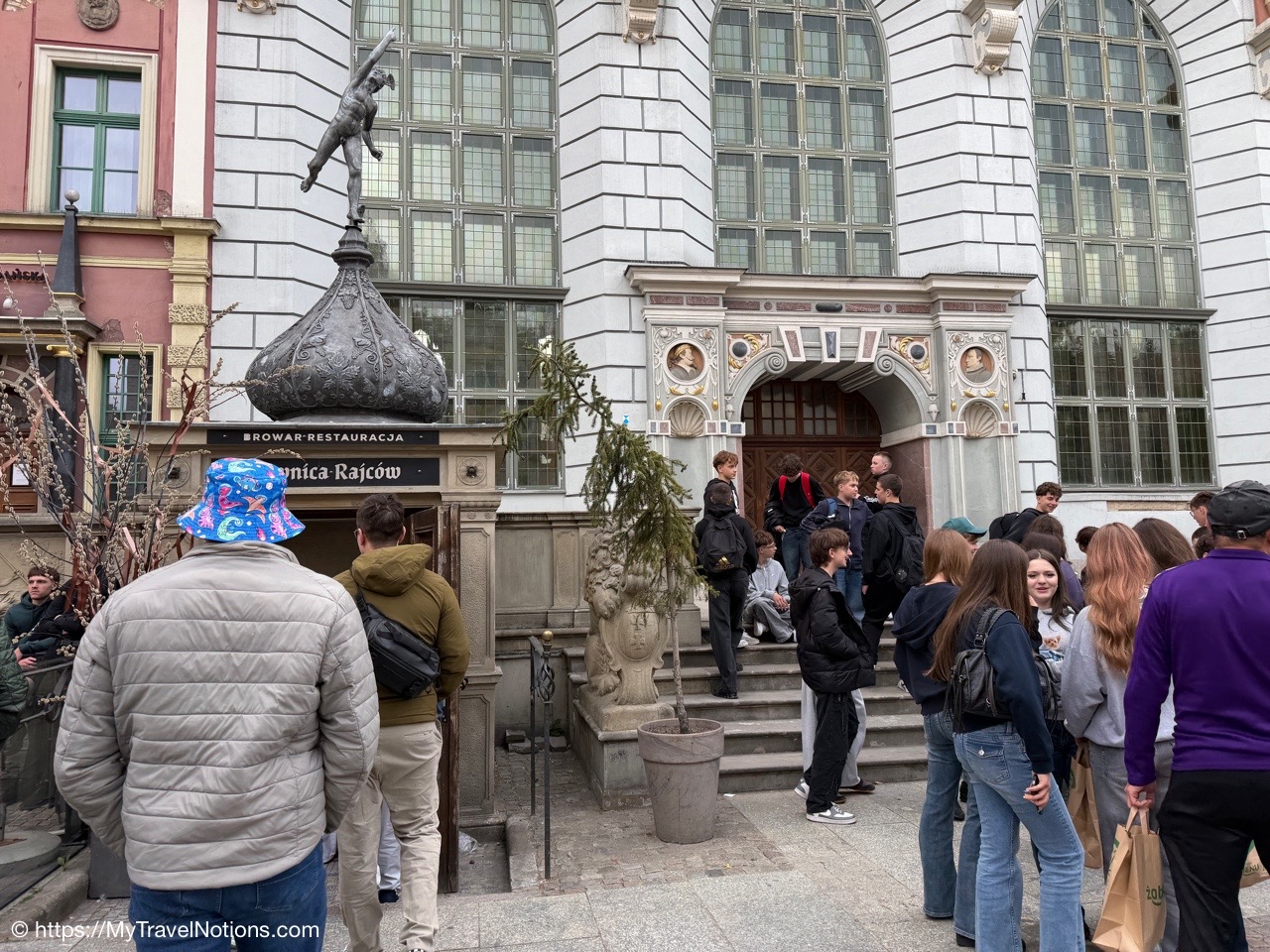
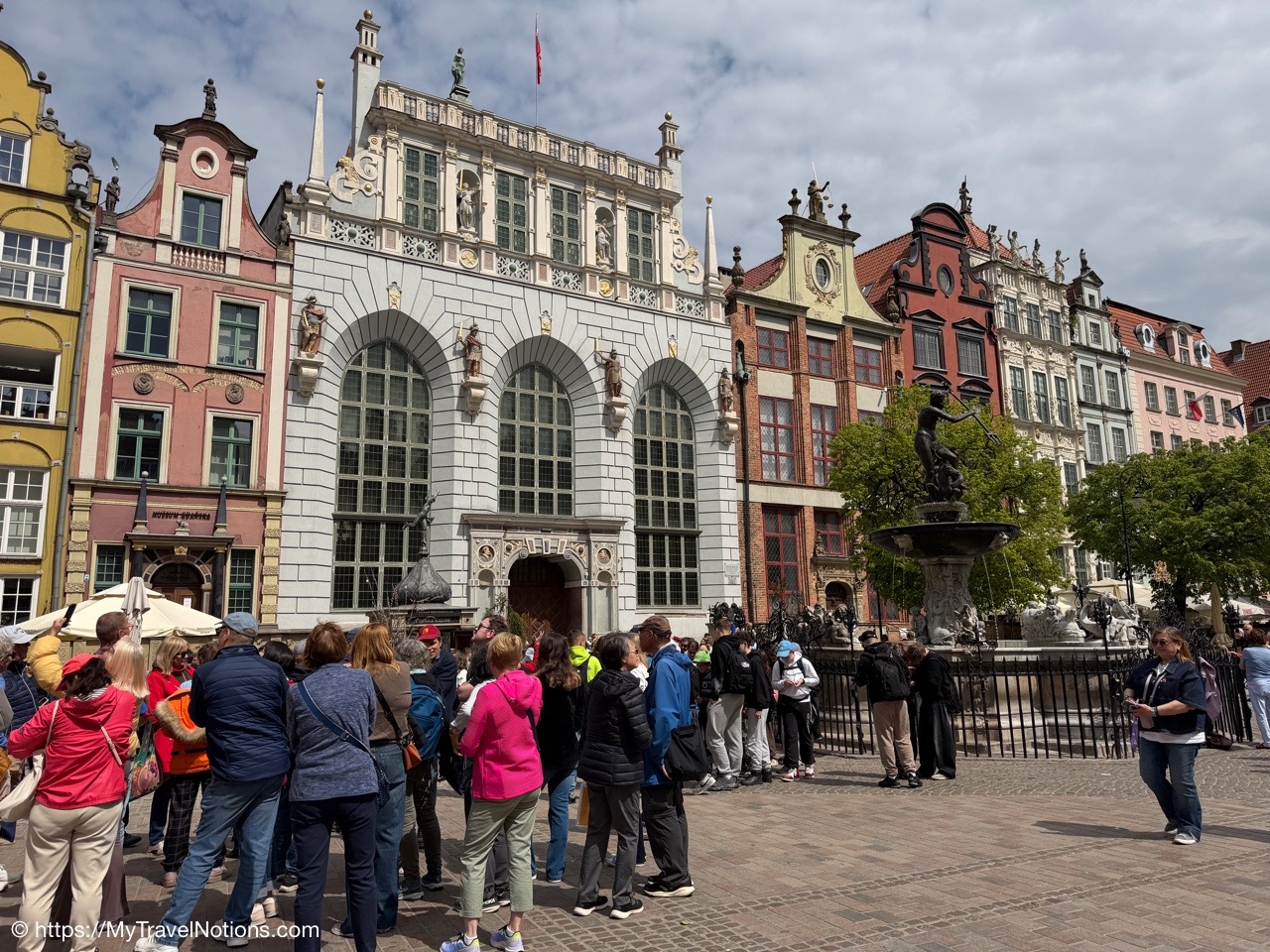
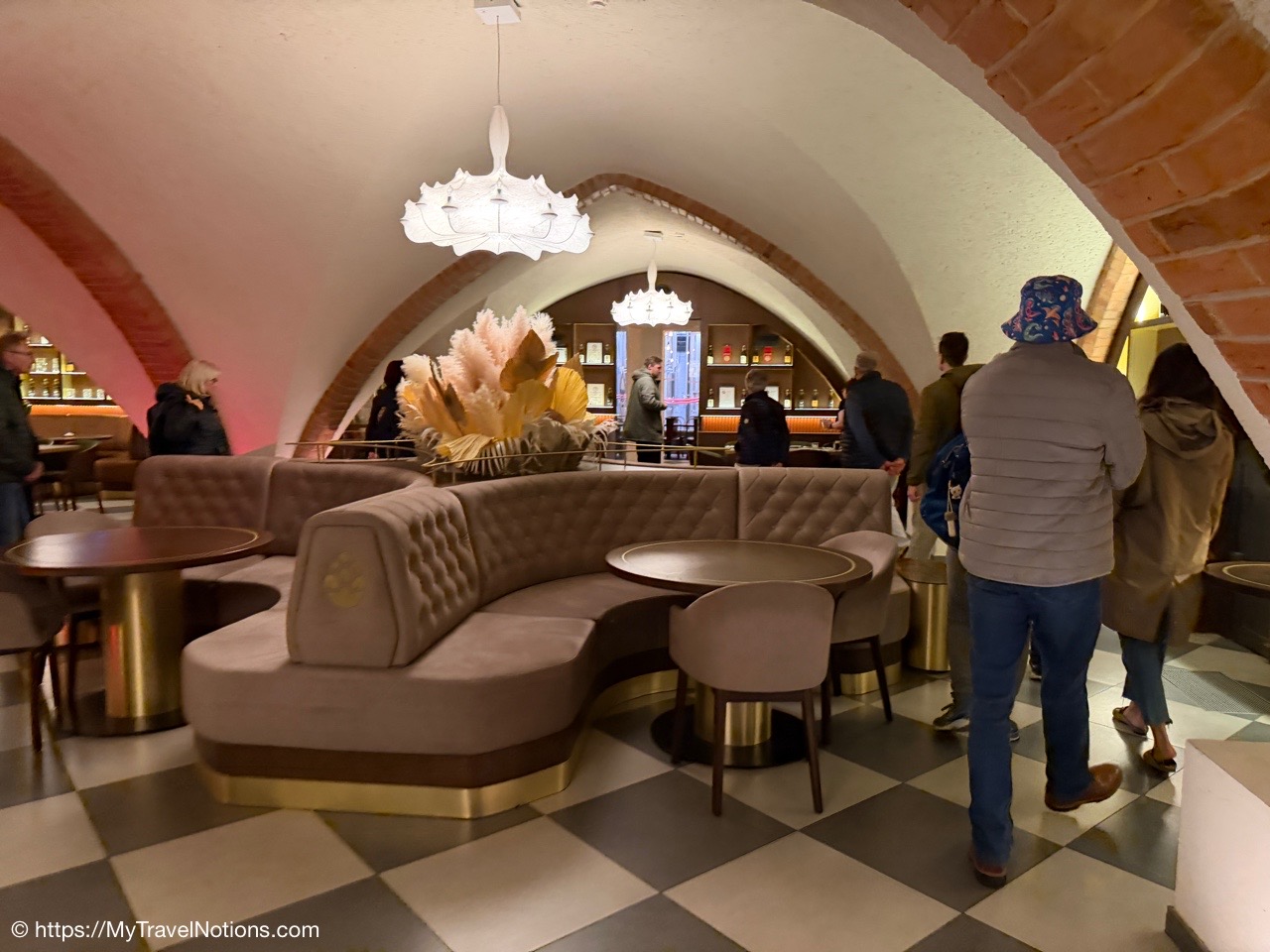
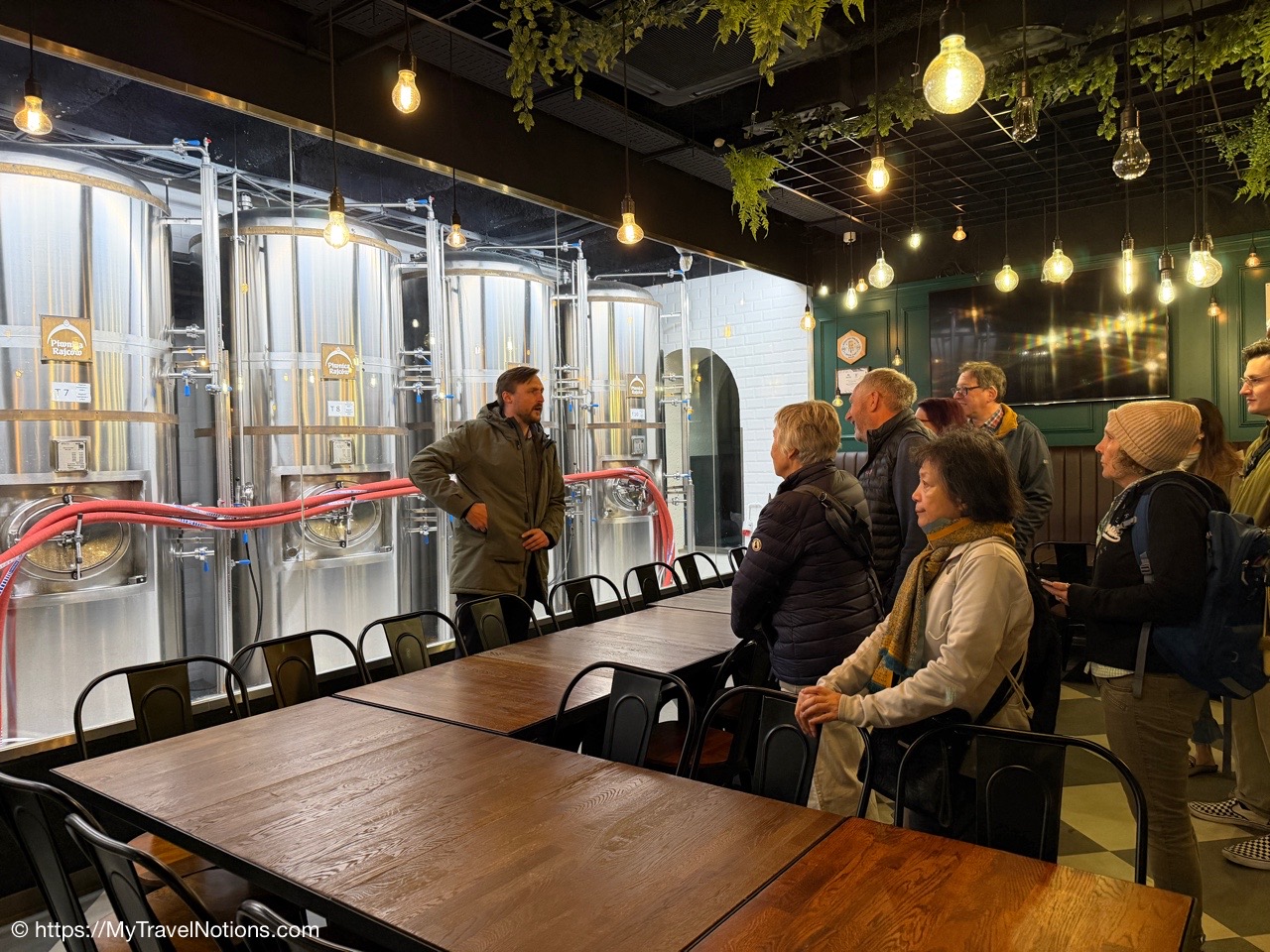
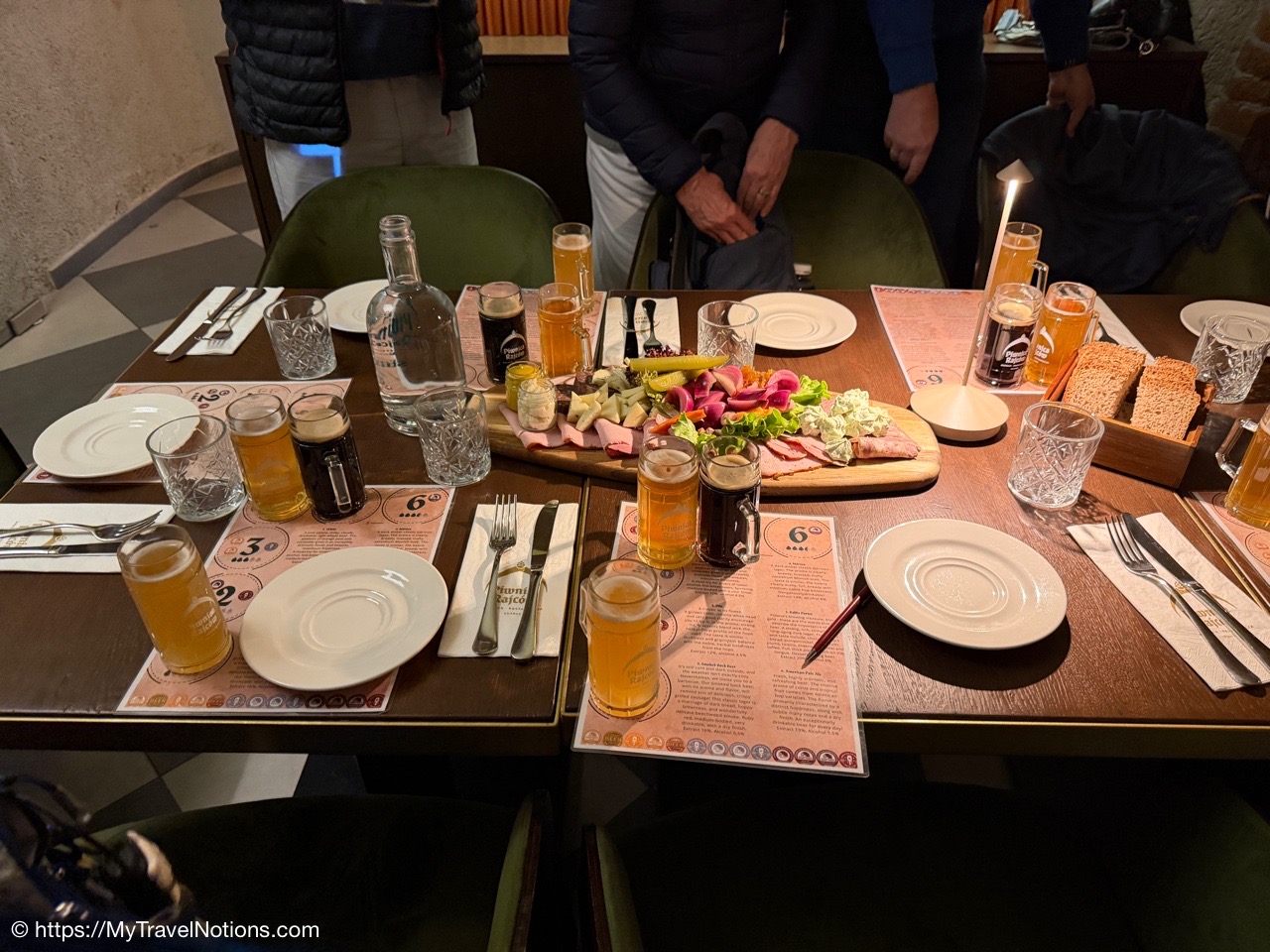
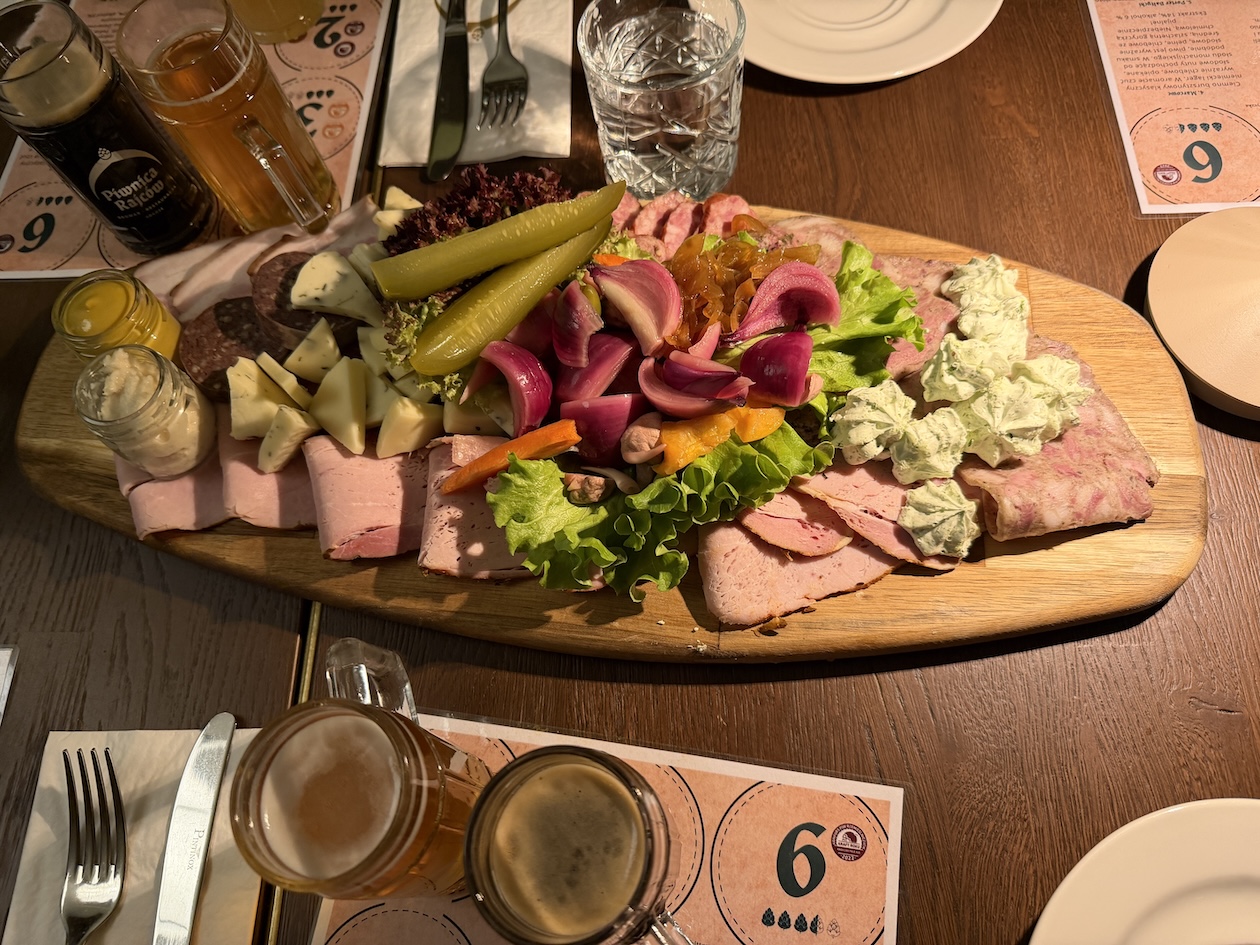
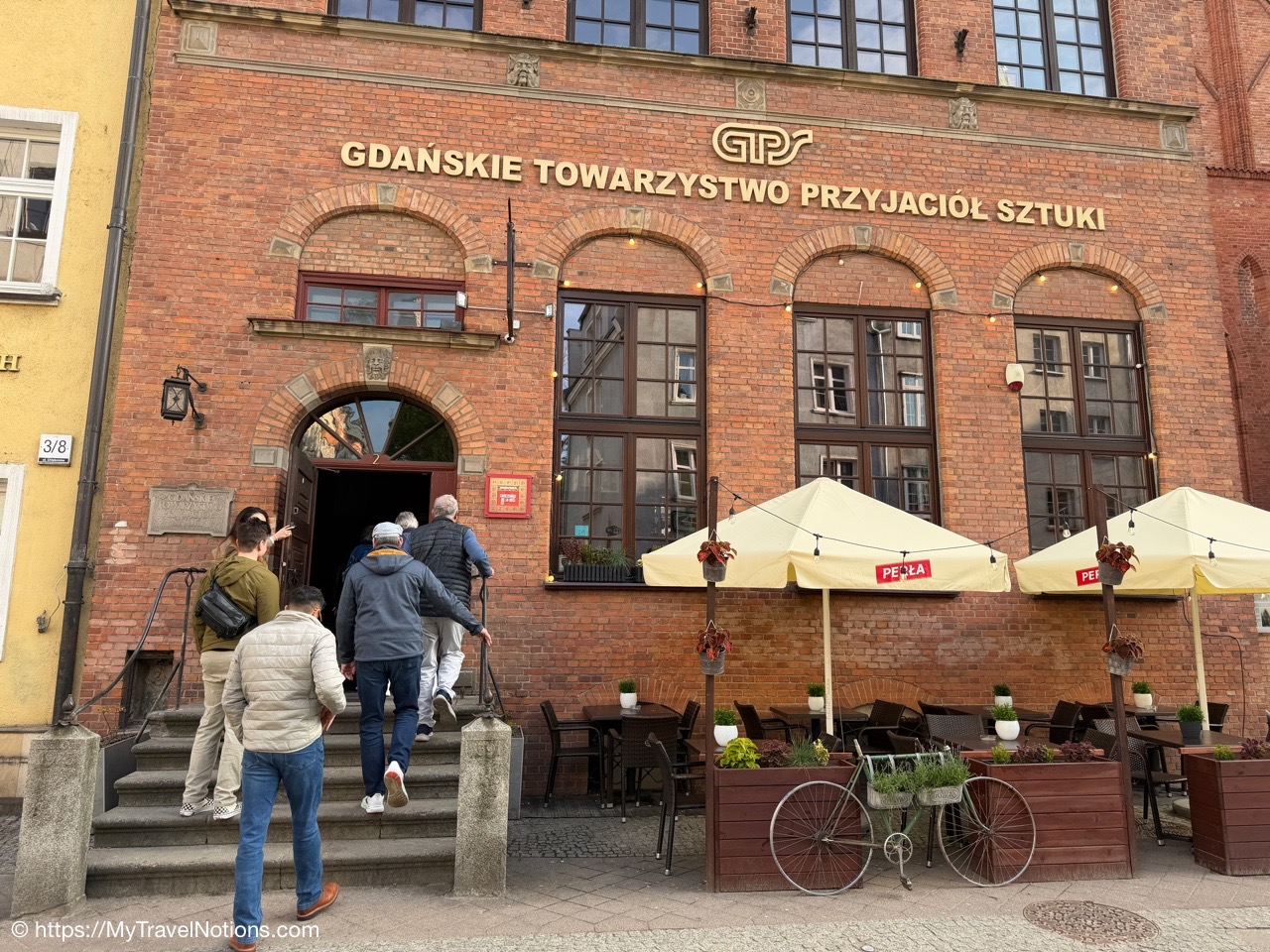
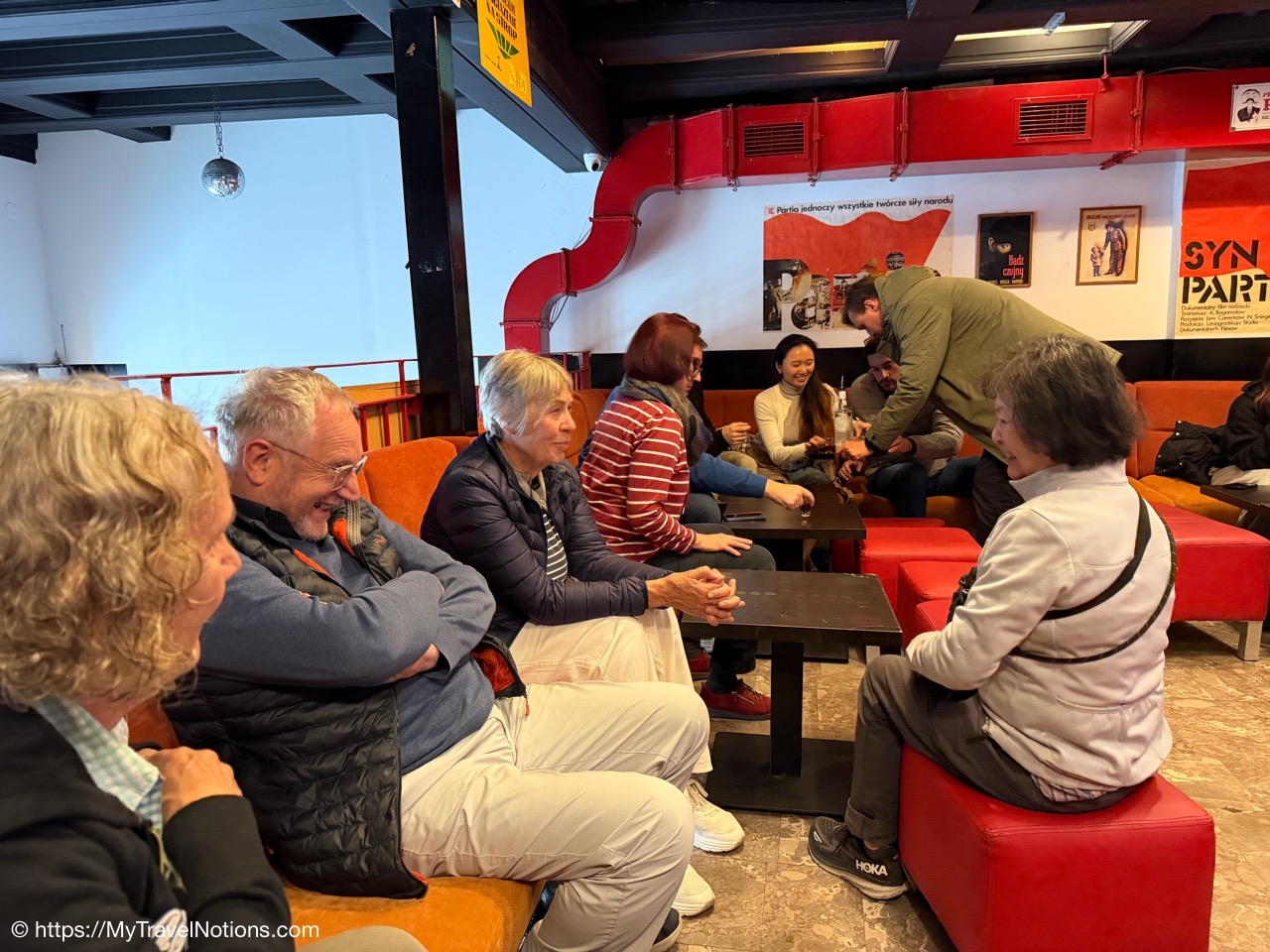
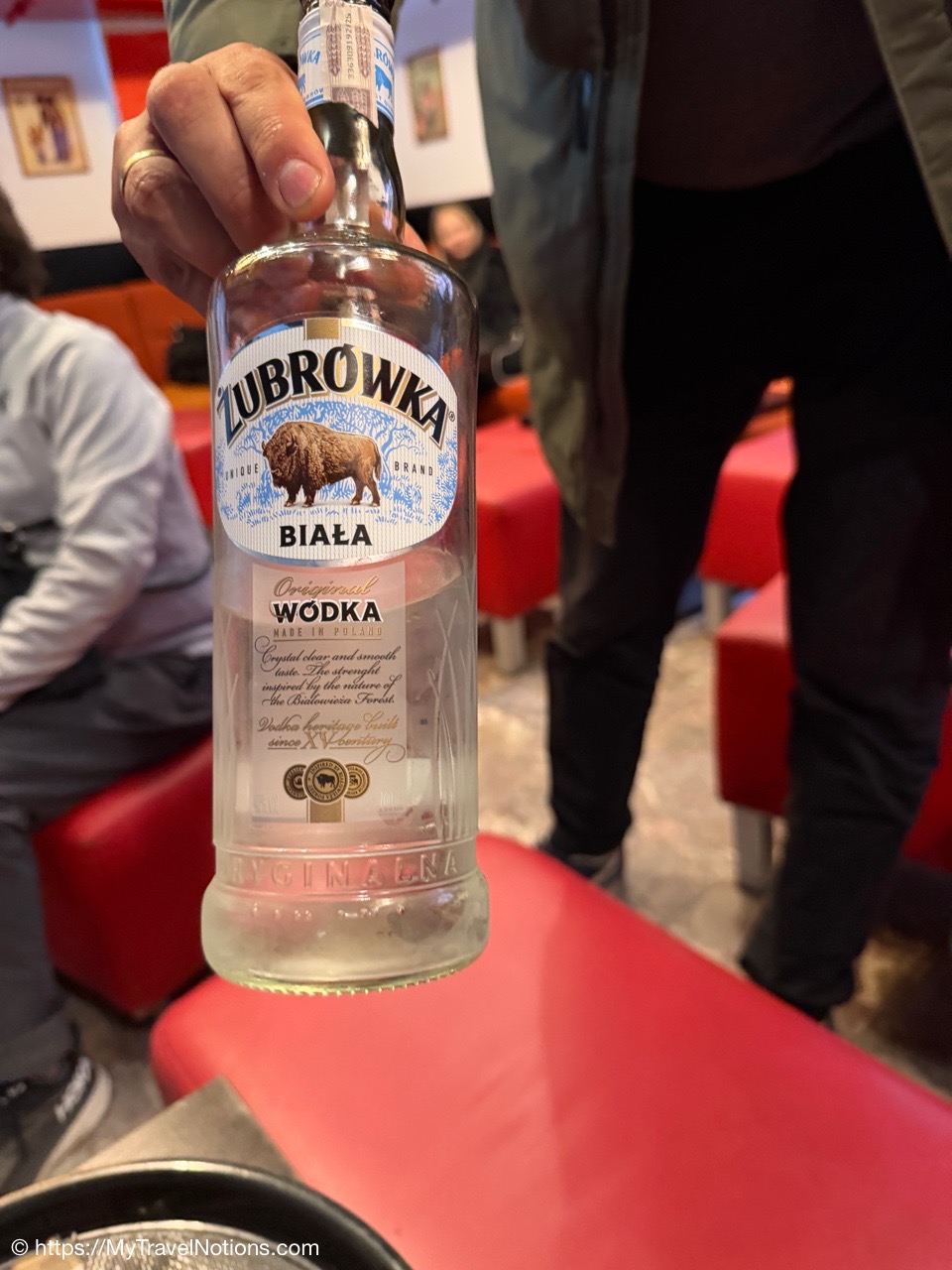
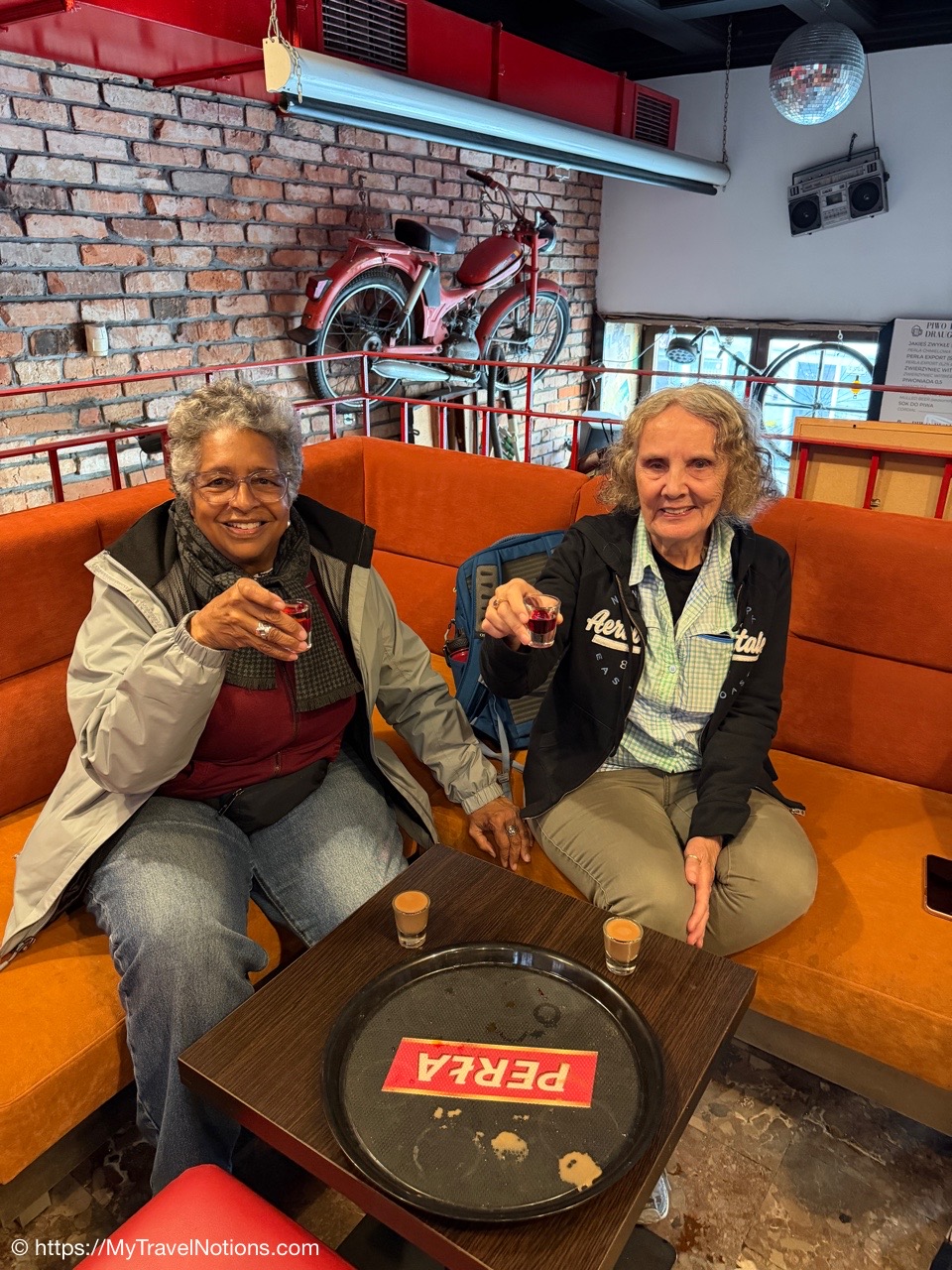
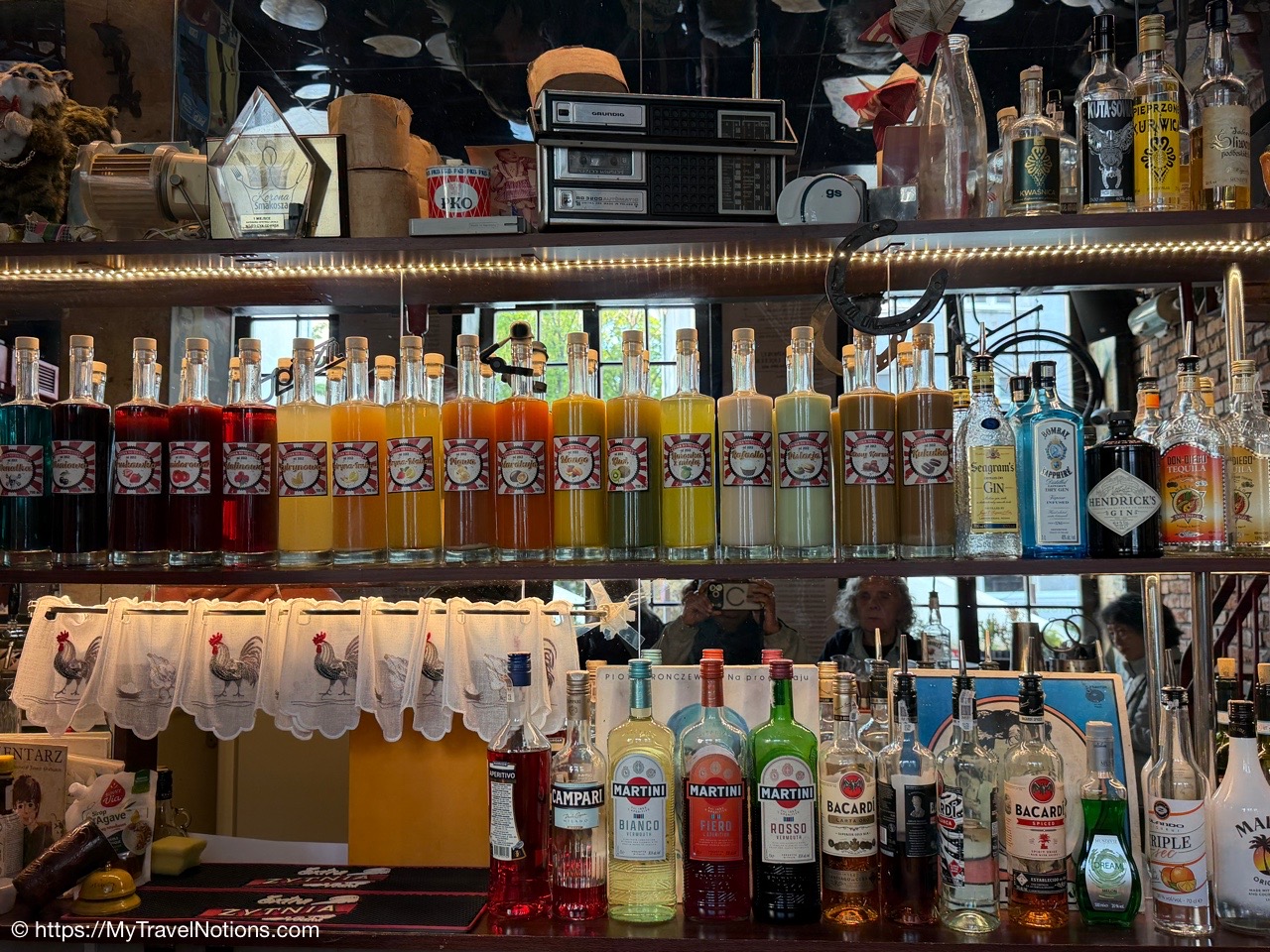
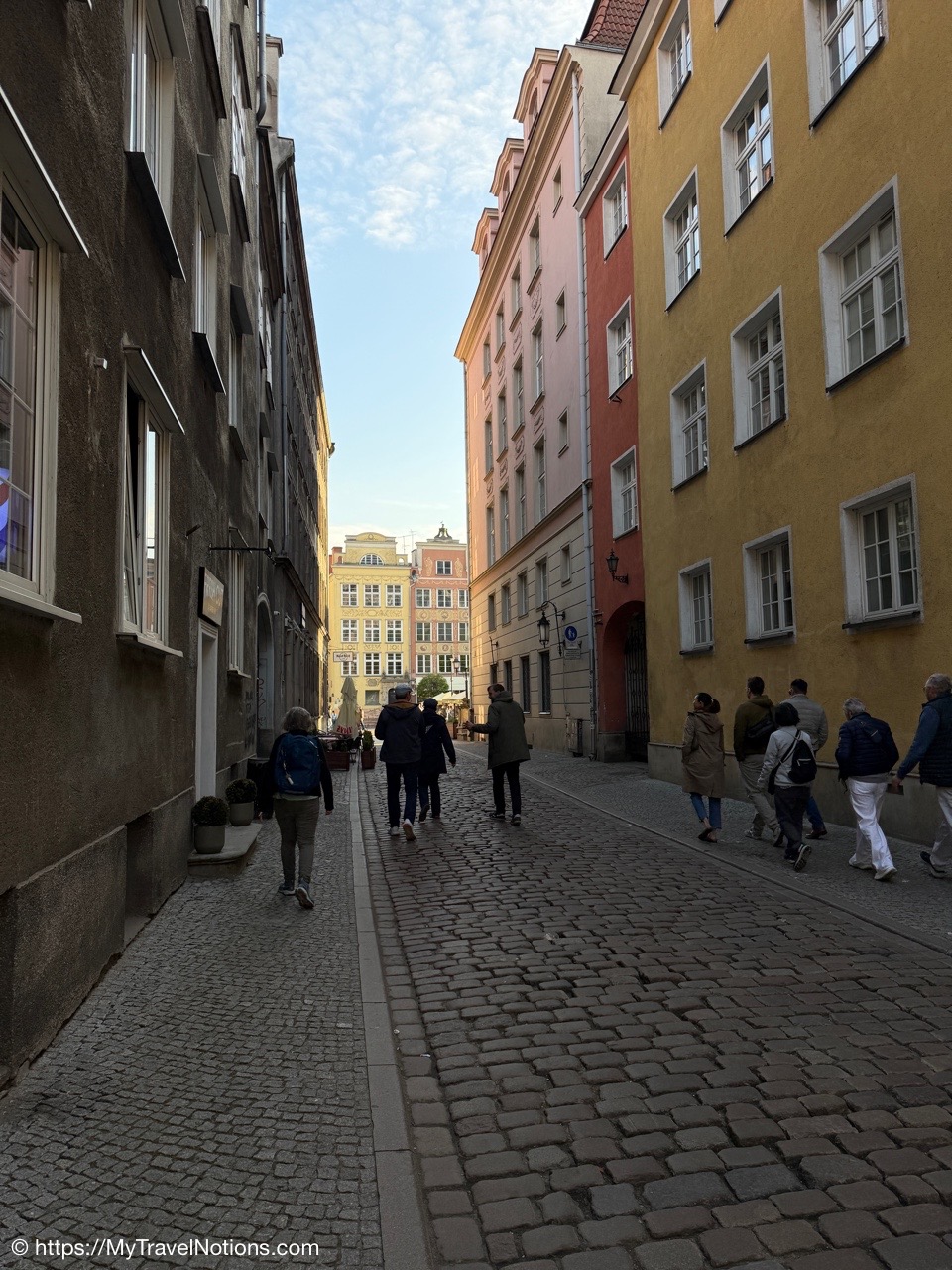
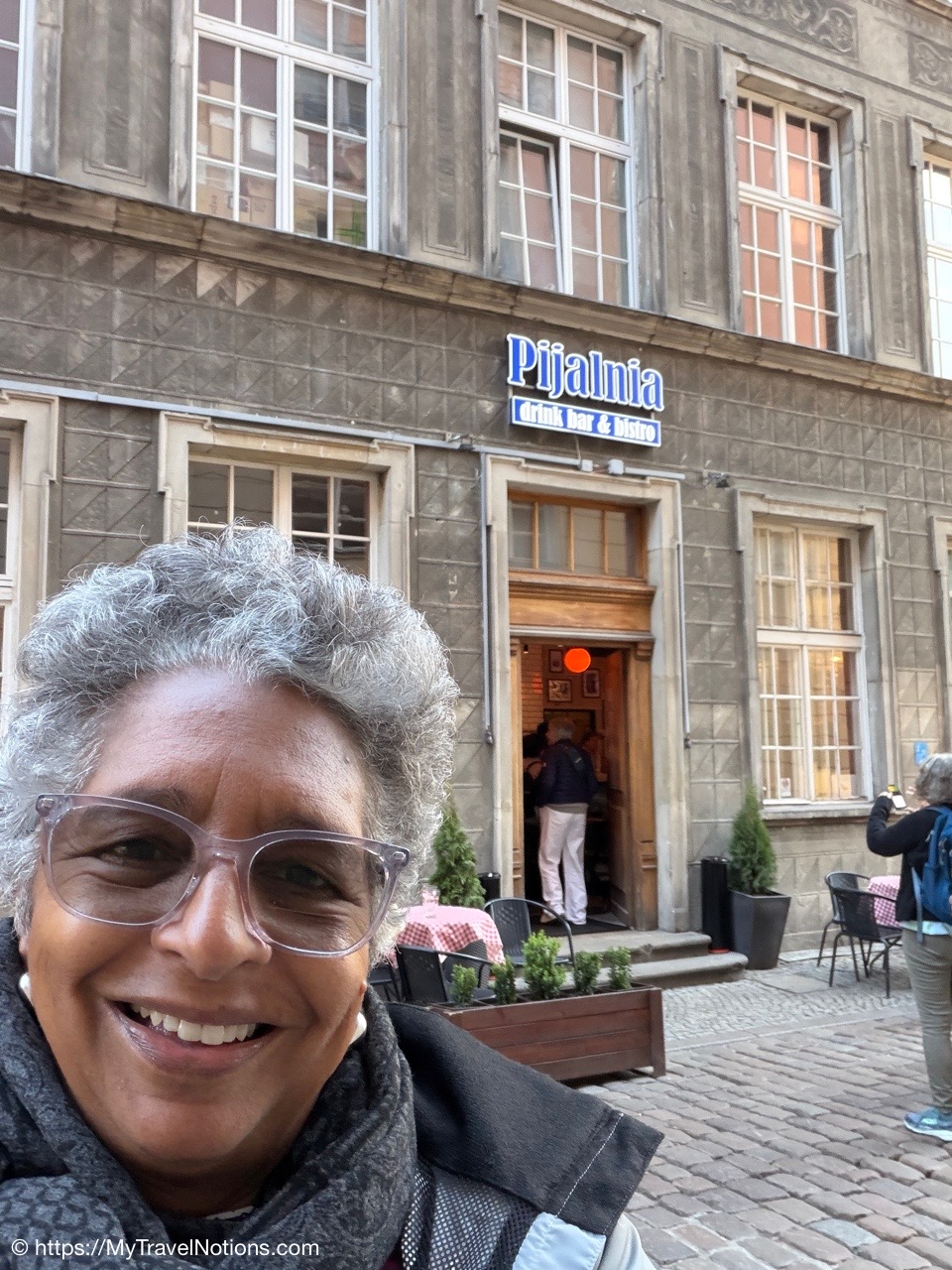
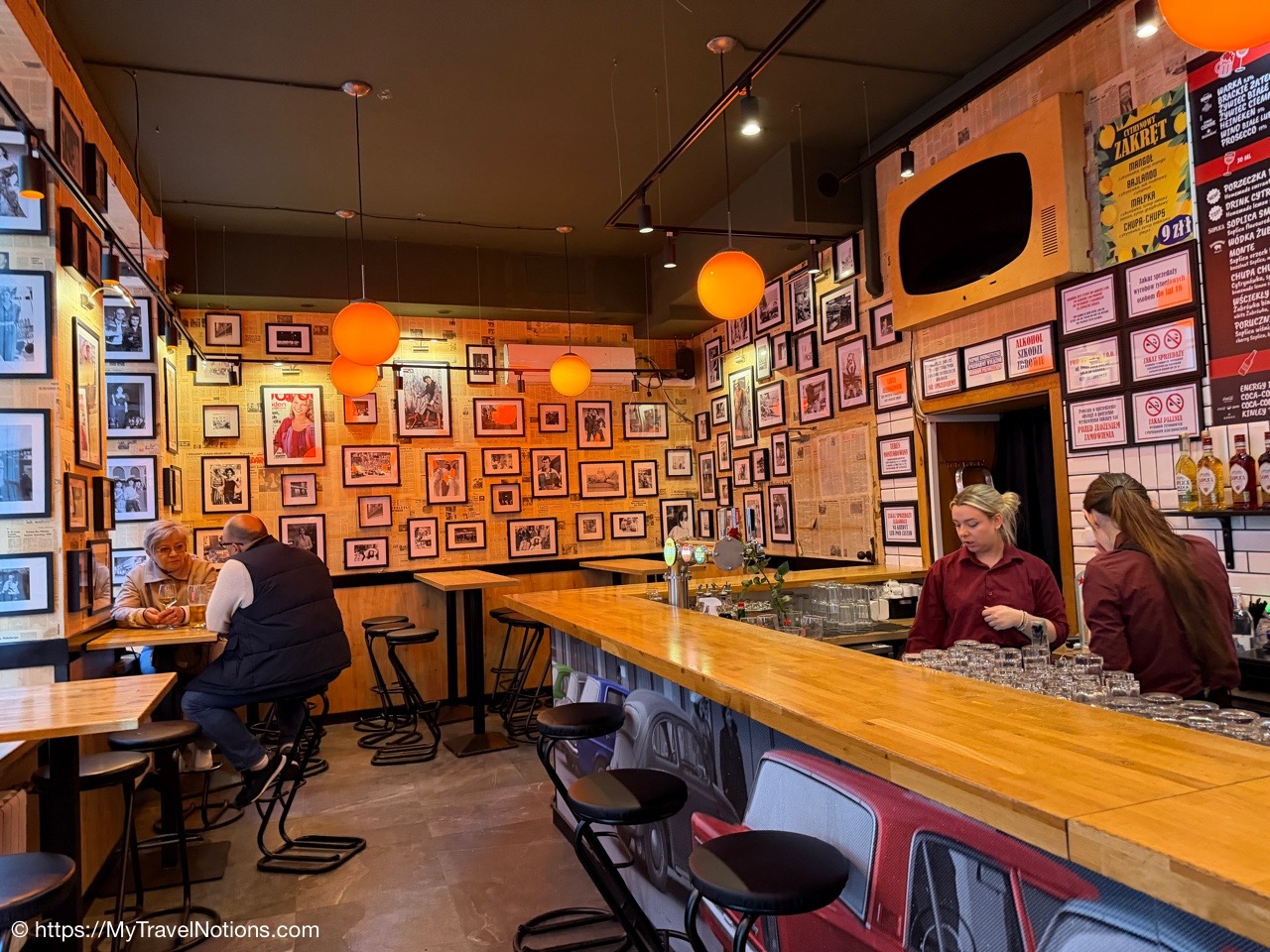
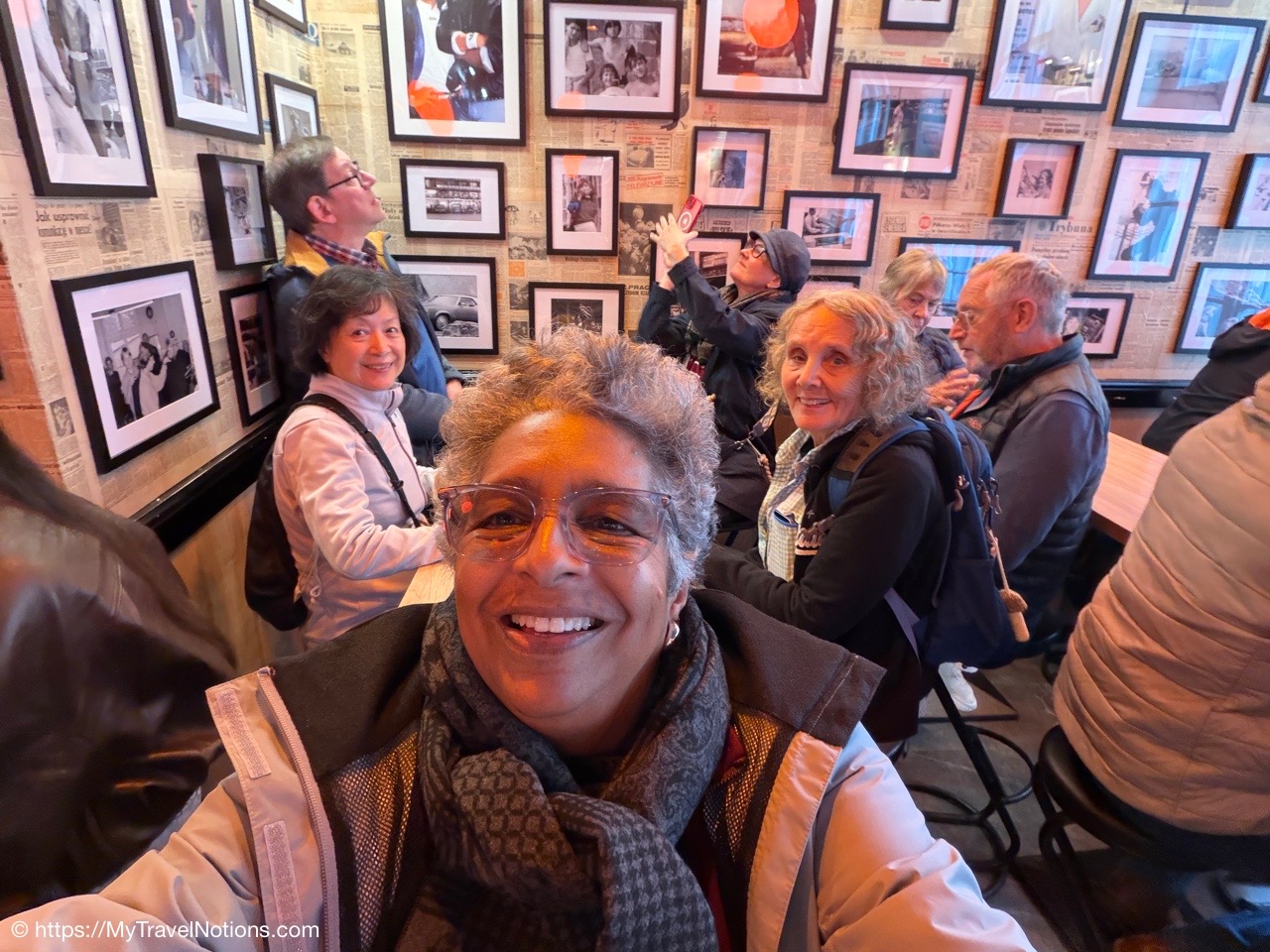
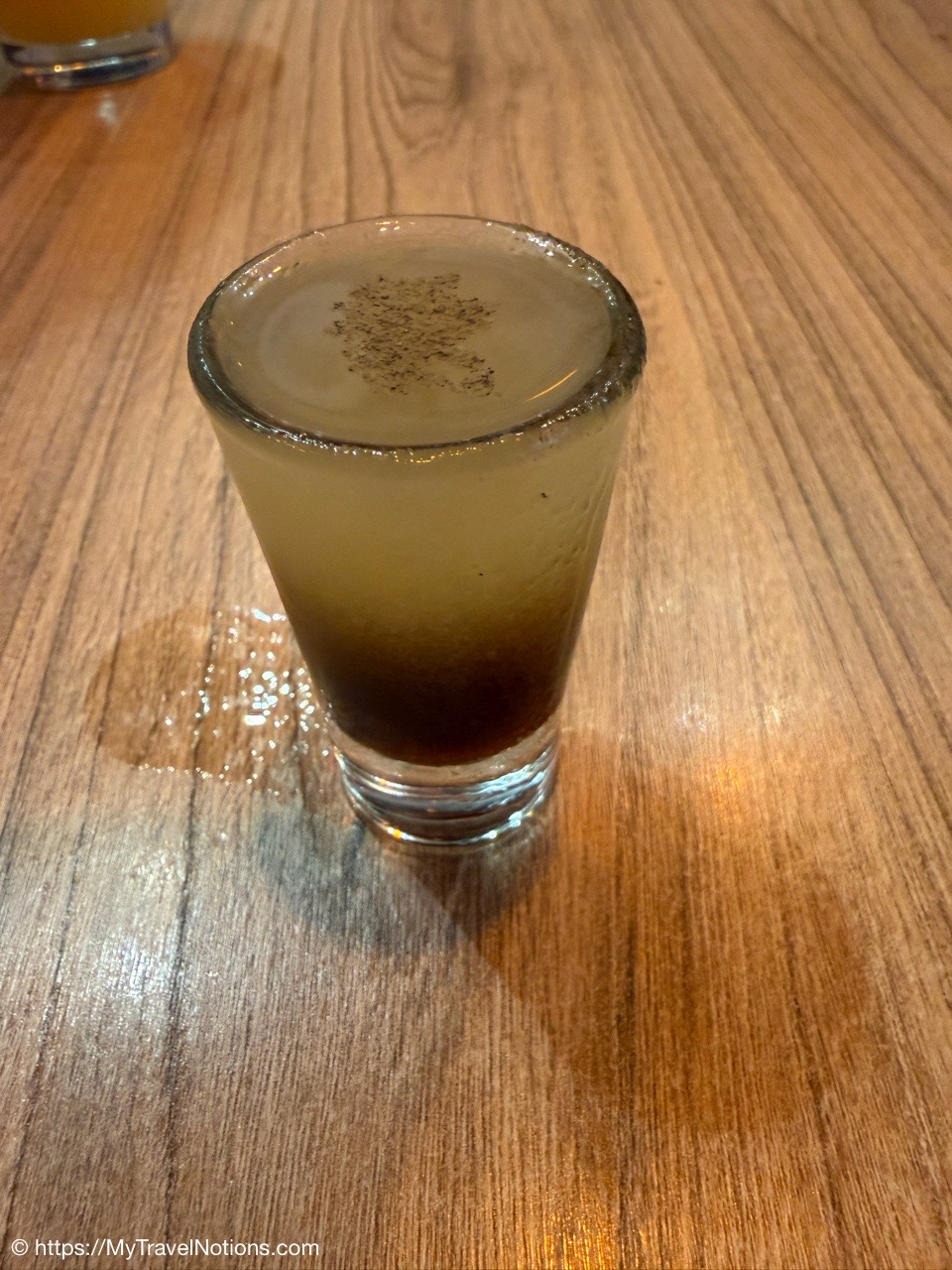
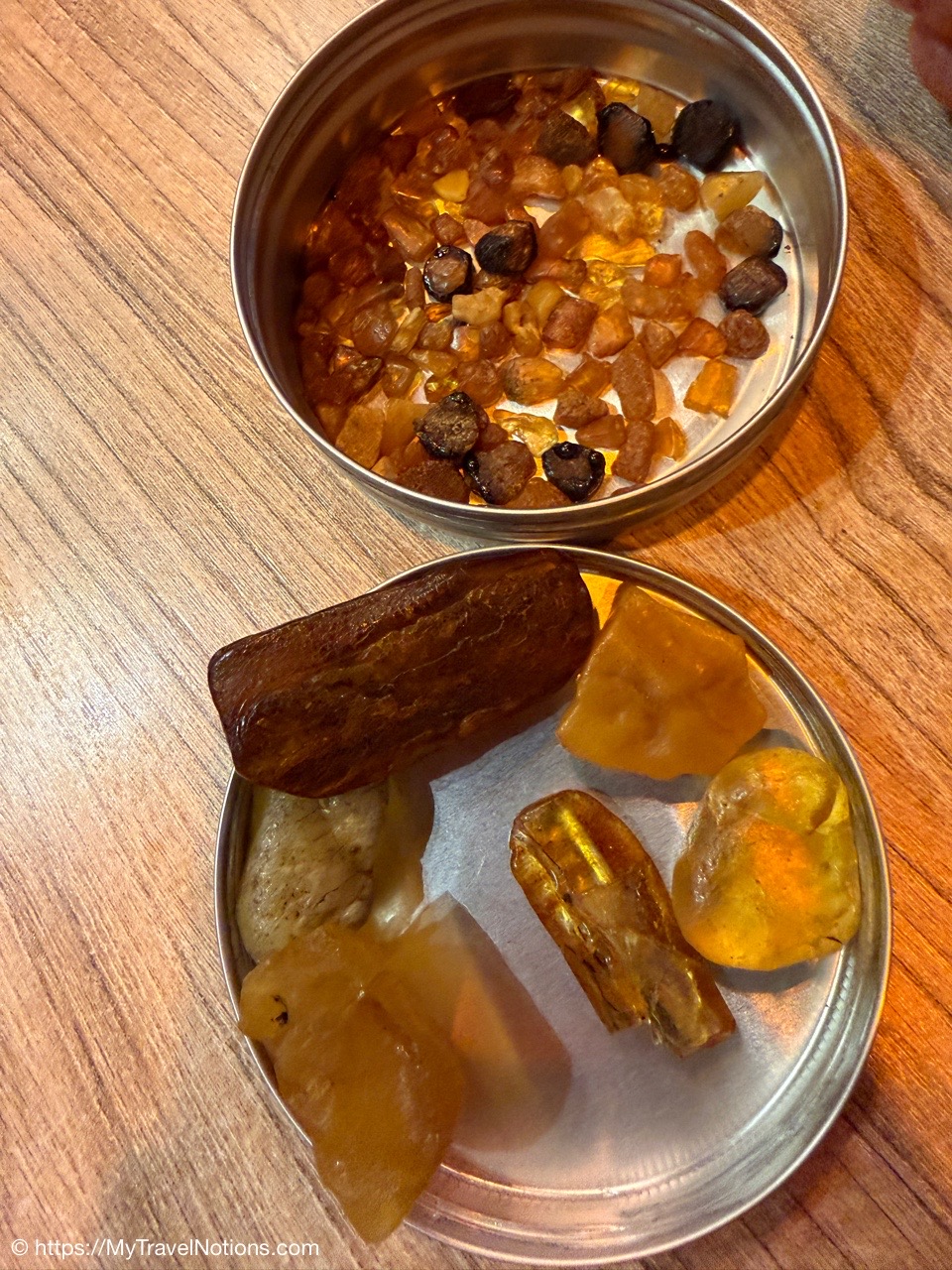
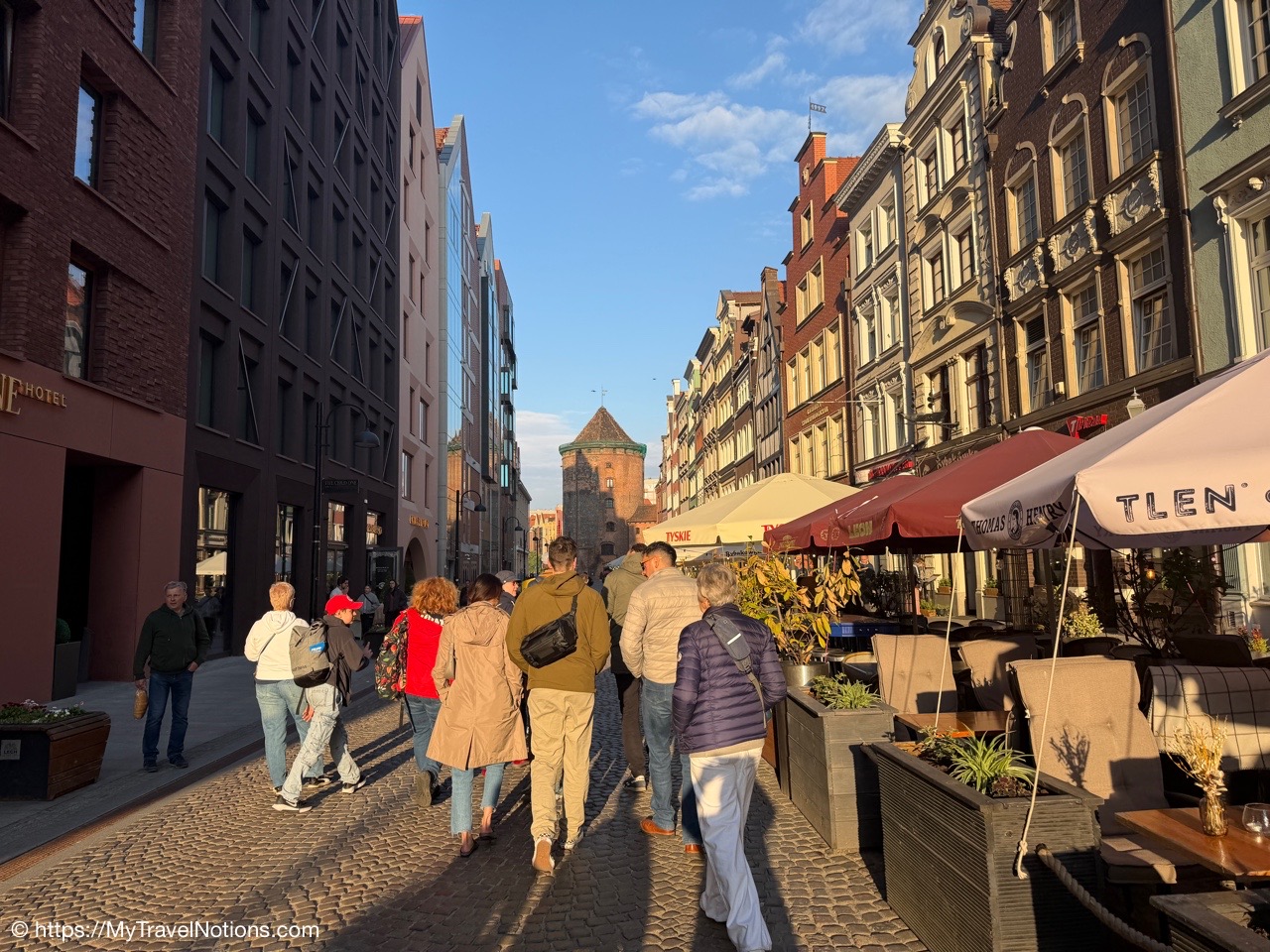
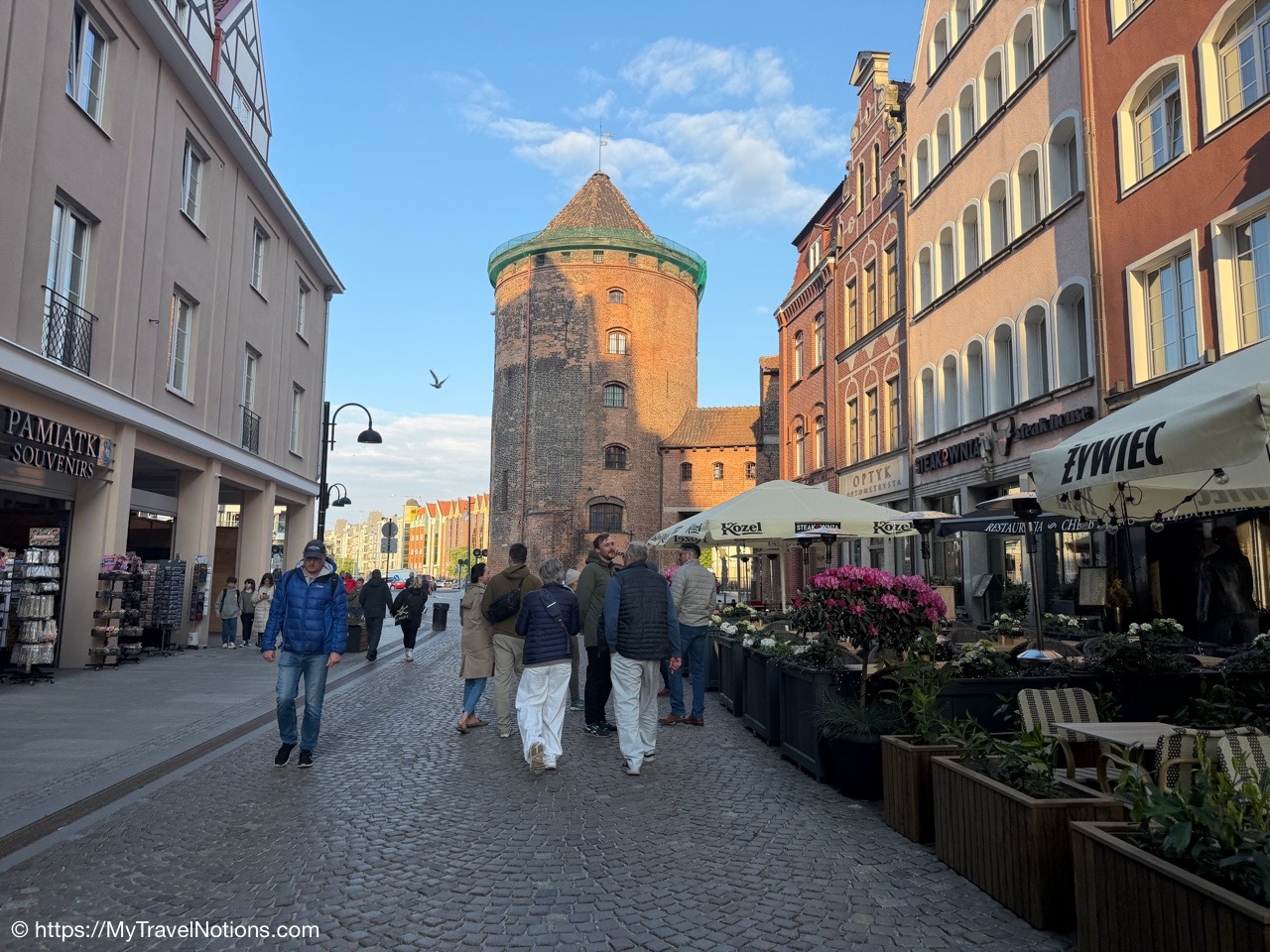
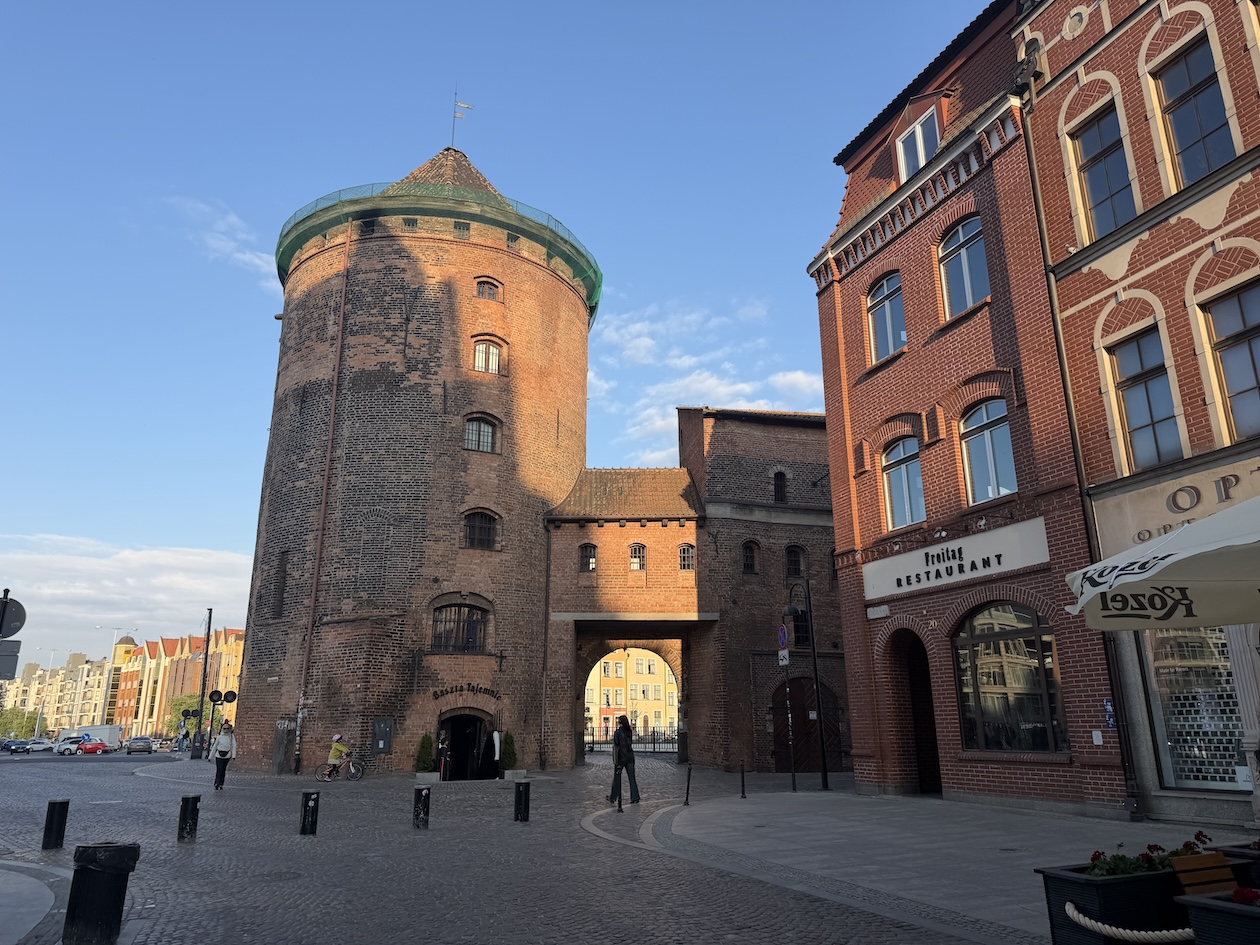
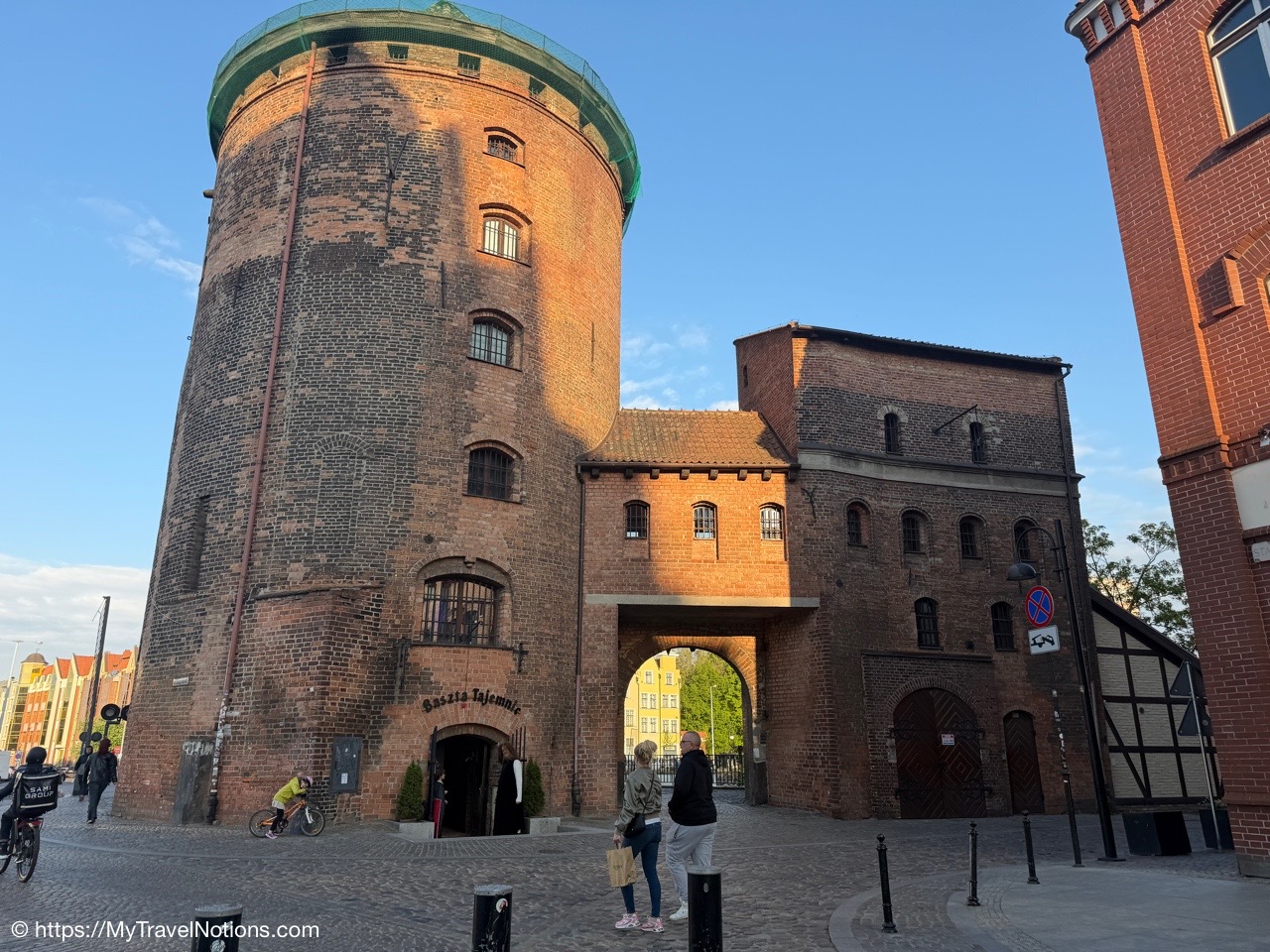
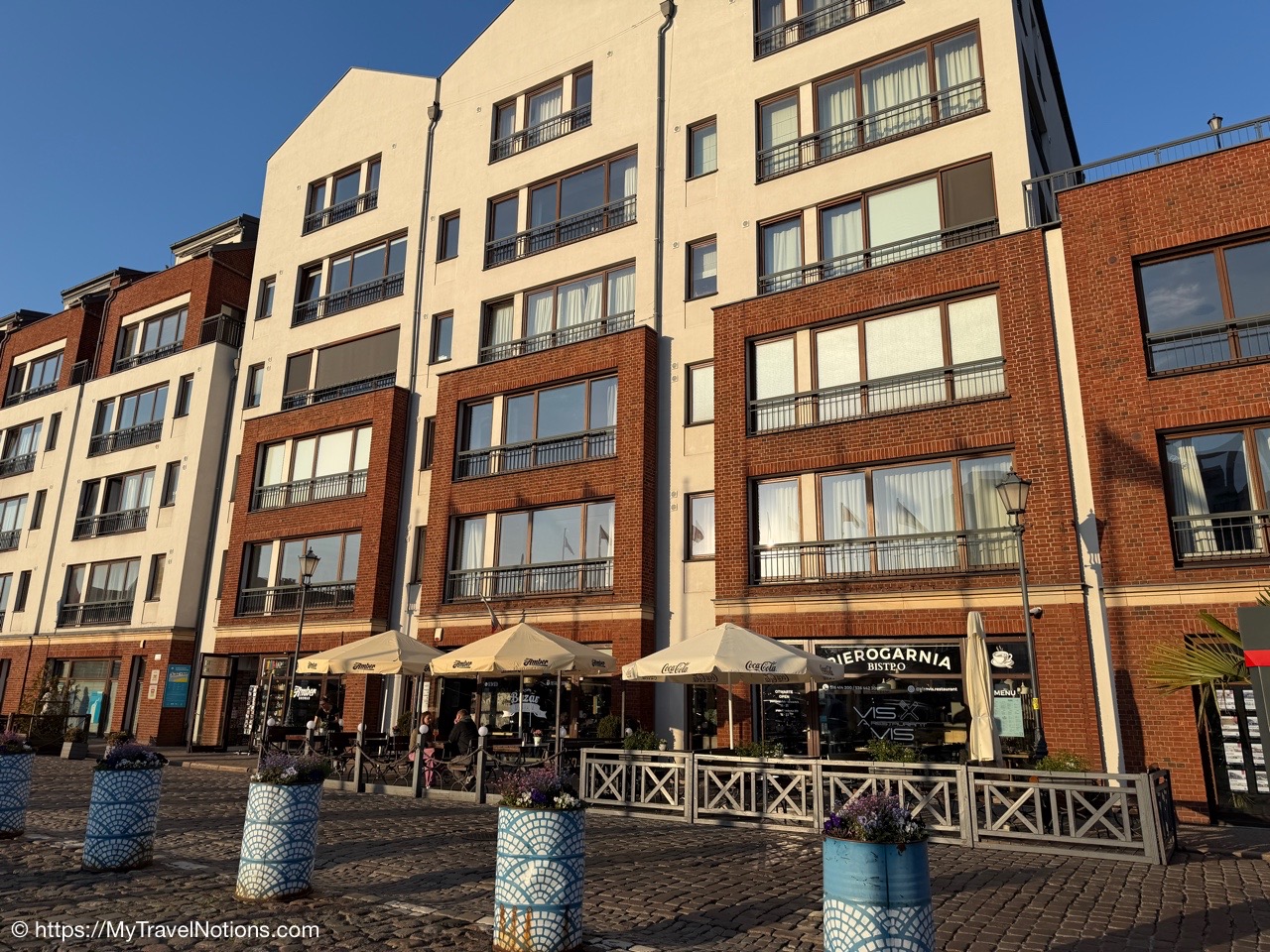
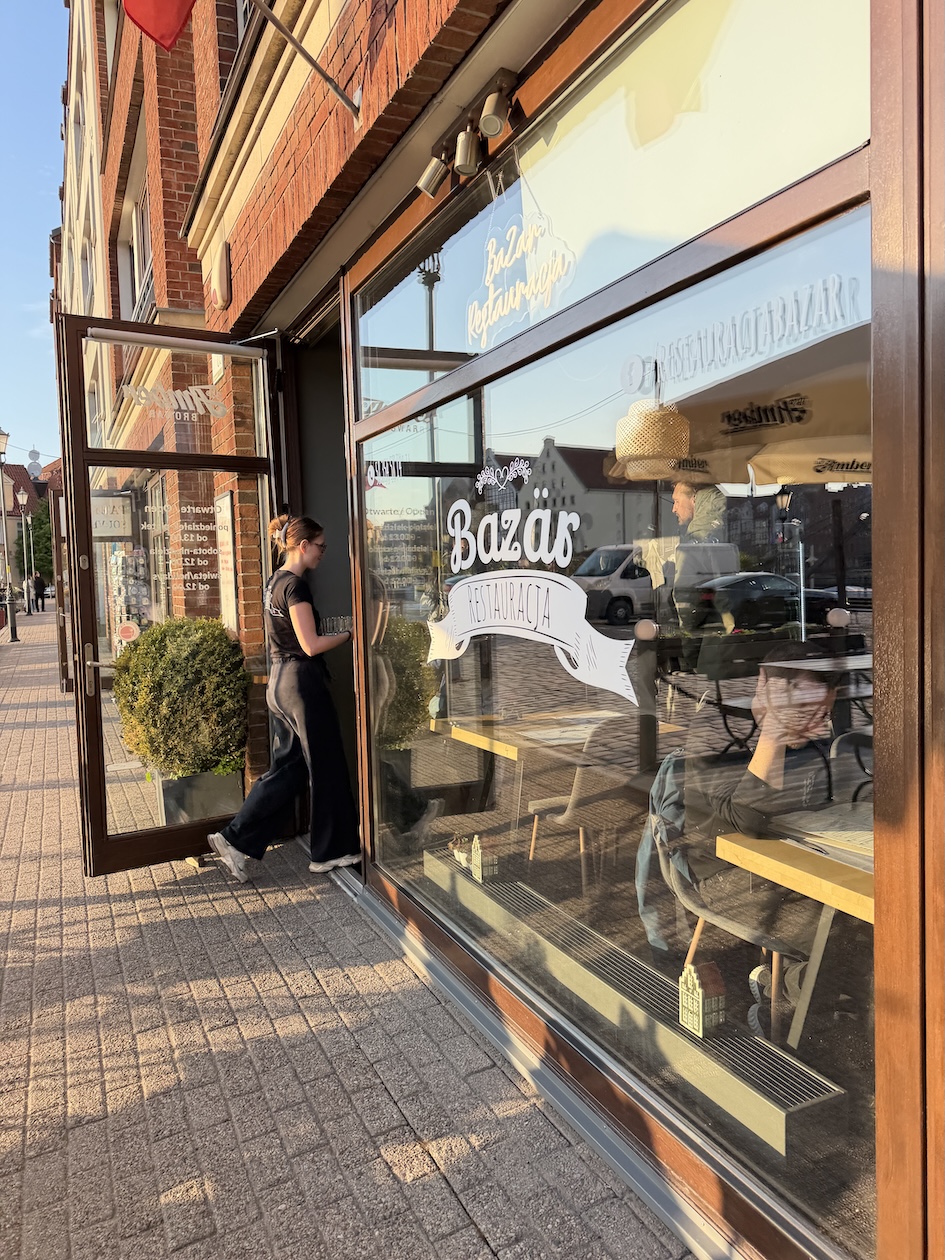
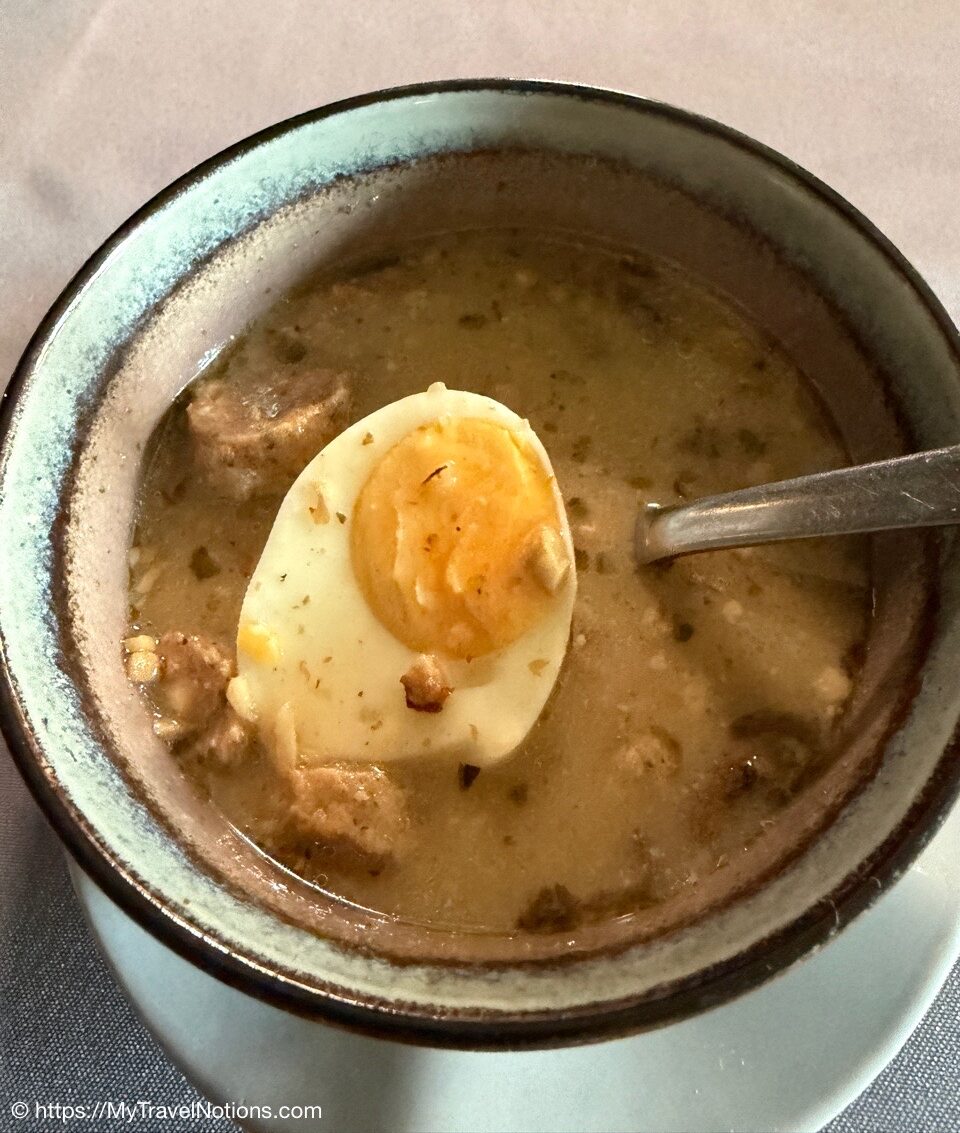
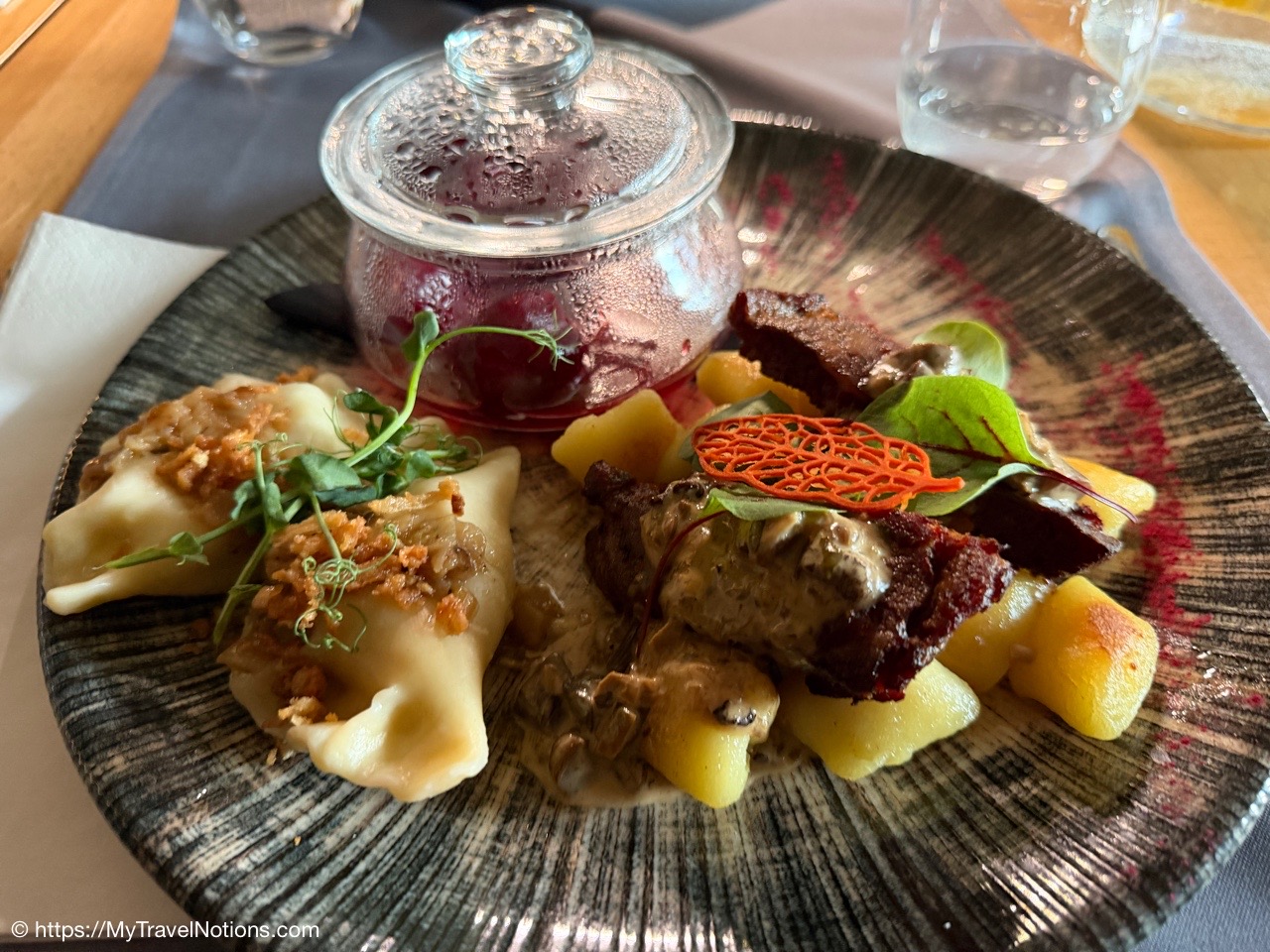
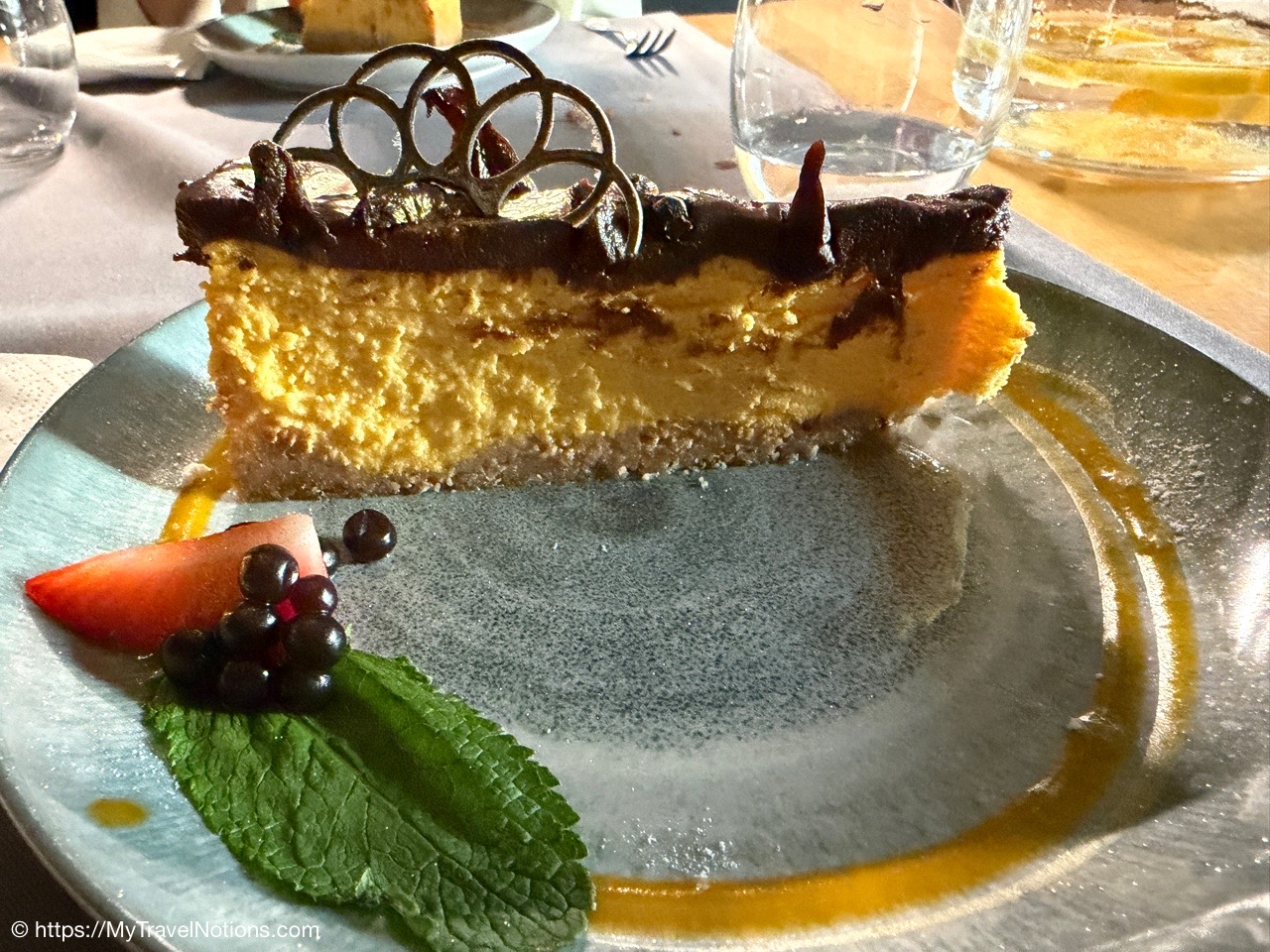
Entering the 1st stop of our Gdańsk Food and Sightseeing Tour at Piwníca Rajców, a historic basement microbrewery and restaurant located next to the Artus Court and Neptune’s Fountain in the heart of Gdańsk. (May 19, 2026)The Artus Court (Dwór Artusa), next to the 1st stop of our food walking tour in Gdańsk, used to be the meeting place of merchants and the centrer of social life. The name of the building curia regis Artus (The Court of King Artus), which was built in the years 1348-1350, appeared for the first time in 1357 in the municipal note about the land rental from 1350. (May 19, 2026)Inside the historic basement microbrewery and restaurant of Piwníca Rajców, the 1st stop of our Gdańsk Food and Sightseeing Tour. (May 19, 2026)Inside the historic basement microbrewery and restaurant of Piwníca Rajców, the 1st stop of our Gdańsk Food and Sightseeing Tour. (May 19, 2026)Our table set up for beer tasting and a food sampler tray for us to share inside the historic basement microbrewery and restaurant of Piwníca Rajców, the 1st stop of our Gdańsk Food and Sightseeing Tour. (May 19, 2026)A food sampler tray for us to share inside the historic basement microbrewery and restaurant of Piwníca Rajców, the 1st stop of our Gdańsk Food and Sightseeing Tour. (May 19, 2026)After exiting our 1st food walking tour stop, we pass by the Neptune Fountain along the famous Long Market (Długi Targ) street in Gdańsk as we continue on our tour. (May 19, 2026)Walking through Old Town to our next food stop during our Gdańsk Food and Sightseeing Tour with Bart. (May 19, 2026)The Gdańskie Towarzystwo Przyjaciół Sztuki (GTPS) is the oldest cultural association in Gdańsk, operating continuously since 1958 and was the 2nd stop of our Gdańsk Food and Sightseeing Tour with Bart. (May 19, 2026)Inside the Gdańskie Towarzystwo Przyjaciół Sztuki (GTPS), the 2nd stop of our Gdańsk Food and Sightseeing Tour, as our group makes its way upstairs. (May 19, 2026)Sitting on the top floor of Gdańskie Towarzystwo Przyjaciół Sztuki (GTPS), the 2nd stop of our Gdańsk Food and Sightseeing Tour, as we wait for our guide, Bart to introduce us to two vodka-related drinks. (May 19, 2026)We were introduced to Zubrowka Biala, a clear, unflavored Polish rye vodka used as a base for various traditional and modern cocktails at Gdańskie Towarzystwo Przyjaciół Sztuki (GTPS), the 2nd stop of our Gdańsk Food and Sightseeing Tour. (May 19, 2026)Rosie and I enjoying our flavored vodka shots and house liquors of cherry and tabasco at the 2nd stop of our Gdańsk Food and Sightseeing Tour. (May 19, 2026)A lineup of the various flavored vodka shots and hour liquor varieties at the 2nd stop of our our Gdańsk Food and Sightseeing Tour. (May 19, 2026)Walking through Old Town Gdansk to our 3rd Gdańsk Food and Sightseeing Tour. (May 19, 2026)Me at Pijalnia Drink Bar & Bistro, the 3rd stop of our Gdańsk Food and Sightseeing Tour. (May 19, 2026)A view inside the Pijalnia Drink Bar & Bistro, the 3rd stop of our Gdańsk Food and Sightseeing Tour. (May 19, 2026)Getting in a selfie with Alice and Rosie inside Pijalnia Drink Bar & Bistro, the 3rd stop of our Gdańsk Food and Sightseeing Tour. (May 19, 2026)More vodka, this time a lemon vodka, with ginger syrup and black pepper at Pijalnia Drink Bar & Bistro, the 3rd stop of our Gdańsk Food and Sightseeing Tour. (May 19, 2026)A lesson on Amber from our Gdańsk Food and Sightseeing Tour, Bart, while we were at our 3rd food walking tour stop at Pijalnia Drink Bar & Bistro. Amber is fossilized tree resin from the Baltic region. The oldest polished amber pieces on Polish soil date back to the Palaeolithic and Neolithic eras, with major ancient workshops discovered near Gdańsk. I will be visiting the Museum of Amber during my stay in Gdańsk. (May 19, 2026)Walking past the Motława River, a historic waterway in northern Poland that flows through the heart of Gdańsk and empties into the Martwa Wisła (a branch of the Vistula River), towards the Granary Island in Gdansk. (May 19, 2026)Walking along Motlawska street towards the Milkman Gate or Stągwie Mleczne on the Granary Island in Gdansk. Built between 1517 and 1519 as part of the city’s defensive fortifications for the nearby granary warehouses. (May 19, 2026)Walking along Motlawska street towards the Milkman Gate or Stągwie Mleczne on the Granary Island in Gdansk. Built between 1517 and 1519 as part of the city’s defensive fortifications for the nearby granary warehouses. (May 19, 2026)Walking along Motlawska street towards the Milkman Gate or Stągwie Mleczne on the Granary Island in Gdansk. Built between 1517 and 1519 as part of the city’s defensive fortifications for the nearby granary warehouses. (May 19, 2026)The Milkman Gate or Stągwie Mleczne on the Granary Island in Gdansk, built between 1517 and 1519 as a military fortification designed to protect Granary Island from invaders. The island connects to the Main Town and neighboring areas via historic structures like the Green Bridge. (May 19, 2026)Walking along the Long Embankment by the Motława River on the Granary Island in Gdańsk to the 4th and last stop of our Gdańsk Food and Sightseeing Tour. (May 19, 2026)Views of the Old Port Crane (Żuraw) from Granary Island in Gdańsk as we made our way to our 4th and final stop of our Gdańsk Food and Sightseeing Tour. (May 19, 2026)Approaching the 4th and last stop of our Gdańsk Food and Sightseeing Tour, Restauracja Bazar on Granary Island in Gdańsk. (May 19, 2026)The Restauracja Bazar on Granary Island in Gdańsk is known for serving traditional Polish comfort food with a modern twist and is the 4th and last stop of our Gdańsk Food and Sightseeing Tour. (May 19, 2026)The first item at Restauracja Bazar on Granary Island in Gdańsk is the delicious Zurek (sour rye) soup during the 4th and last stop of our Gdańsk Food and Sightseeing Tour. (May 19, 2026)Our individual plates included the “bazar” pierogi (dumplings), wild boar, beetroot and potatoes at Restauracja Bazar on Granary Island in Gdańsk during our 4th and last stop of our Gdańsk Food and Sightseeing Tour. (May 19, 2026)My chocolate cake dessert at Restauracja Bazar on Granary Island in Gdańsk during our 4th and last stop of our Gdańsk Food and Sightseeing Tour. (May 19, 2026)
The only thing on our plan for today was a visit to the largest brick castle and medieval fortress built entirely of red brick, the stunning Malbork Castle. And, we did that on our own.
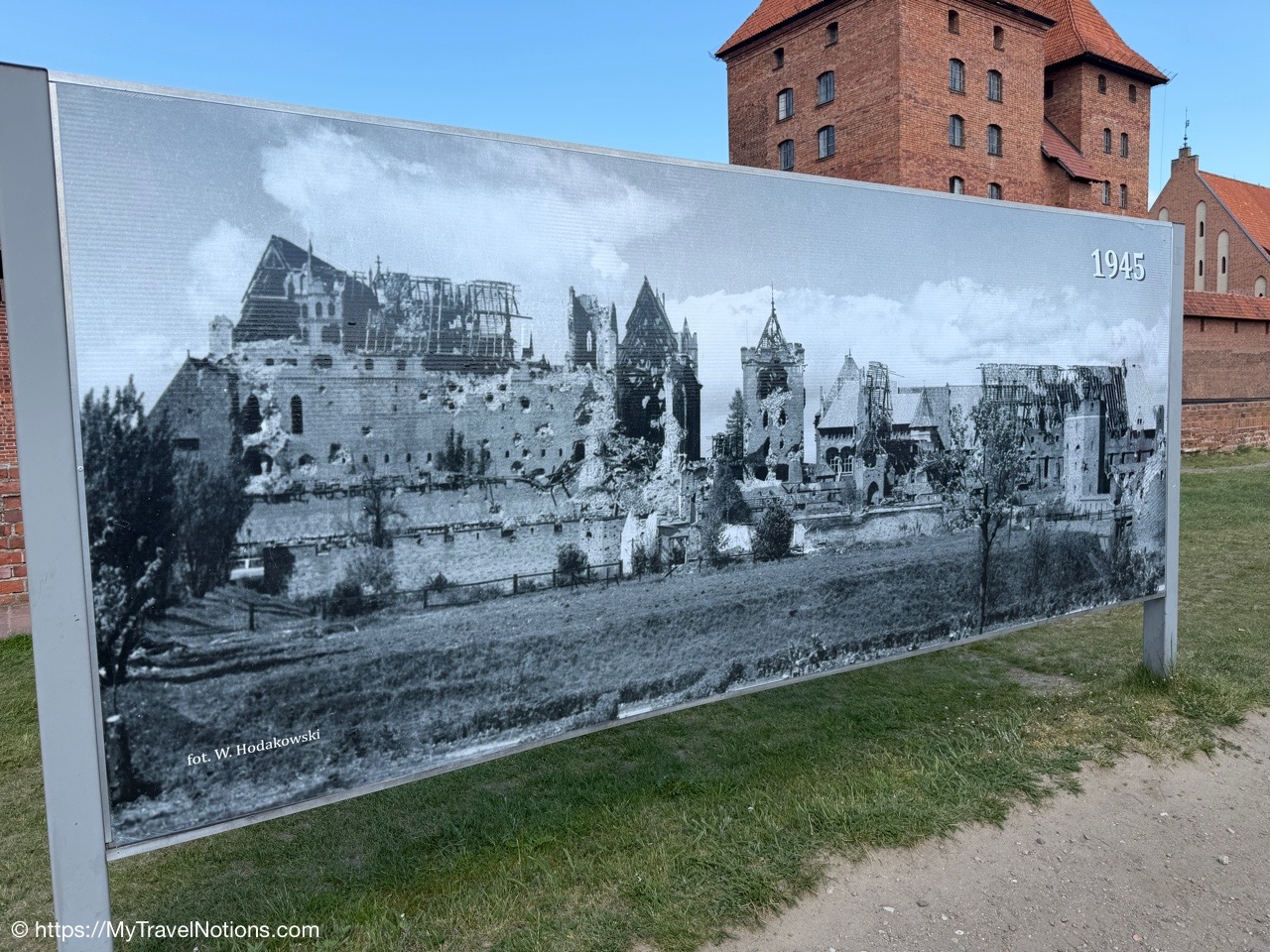
Rosie, Alice and I took the 40-minute train ride to Malbork to visit theUNESCO World Heritage Site which suffered major damage during World War II, followed by meticulous rebuilding.
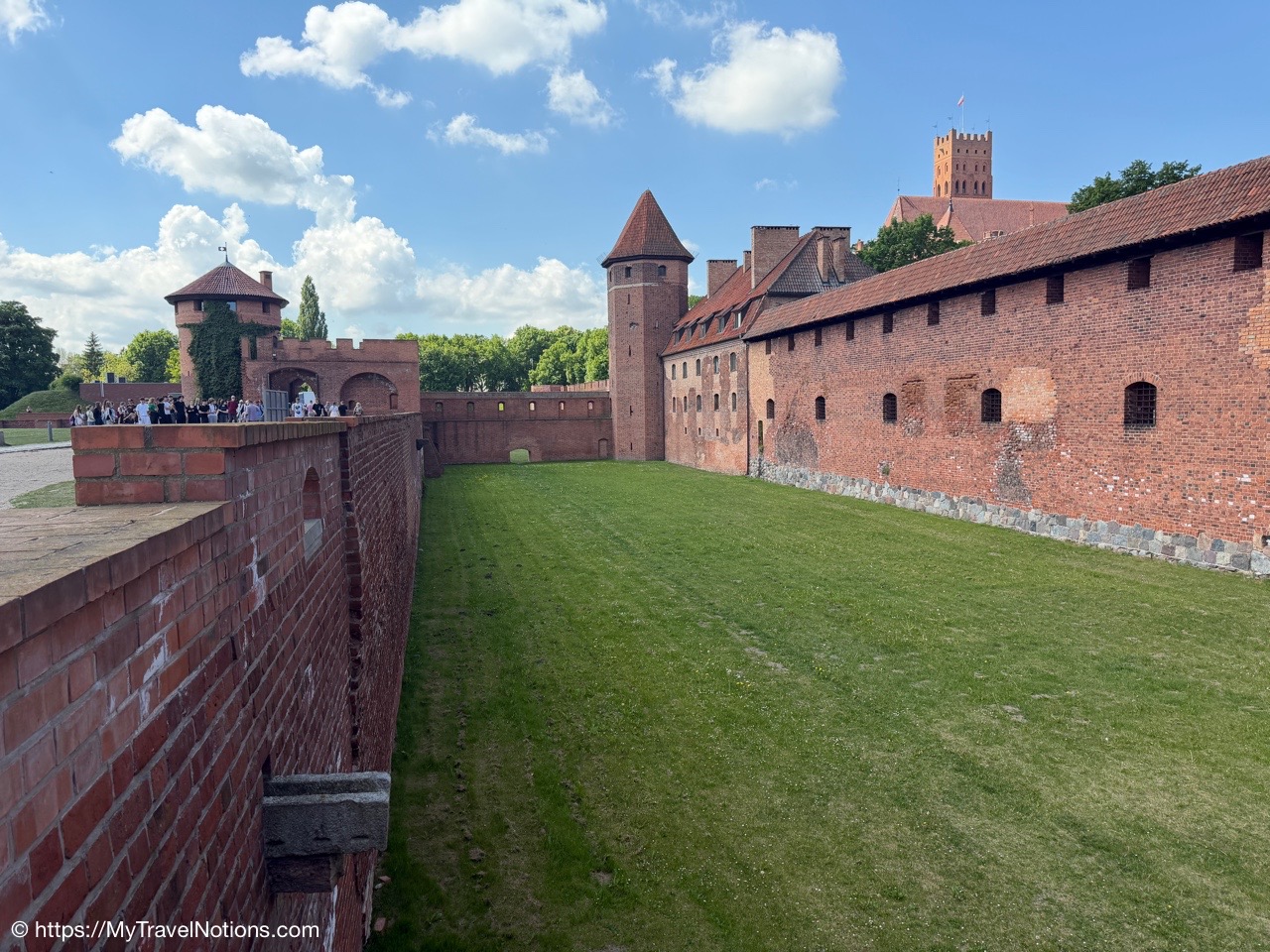
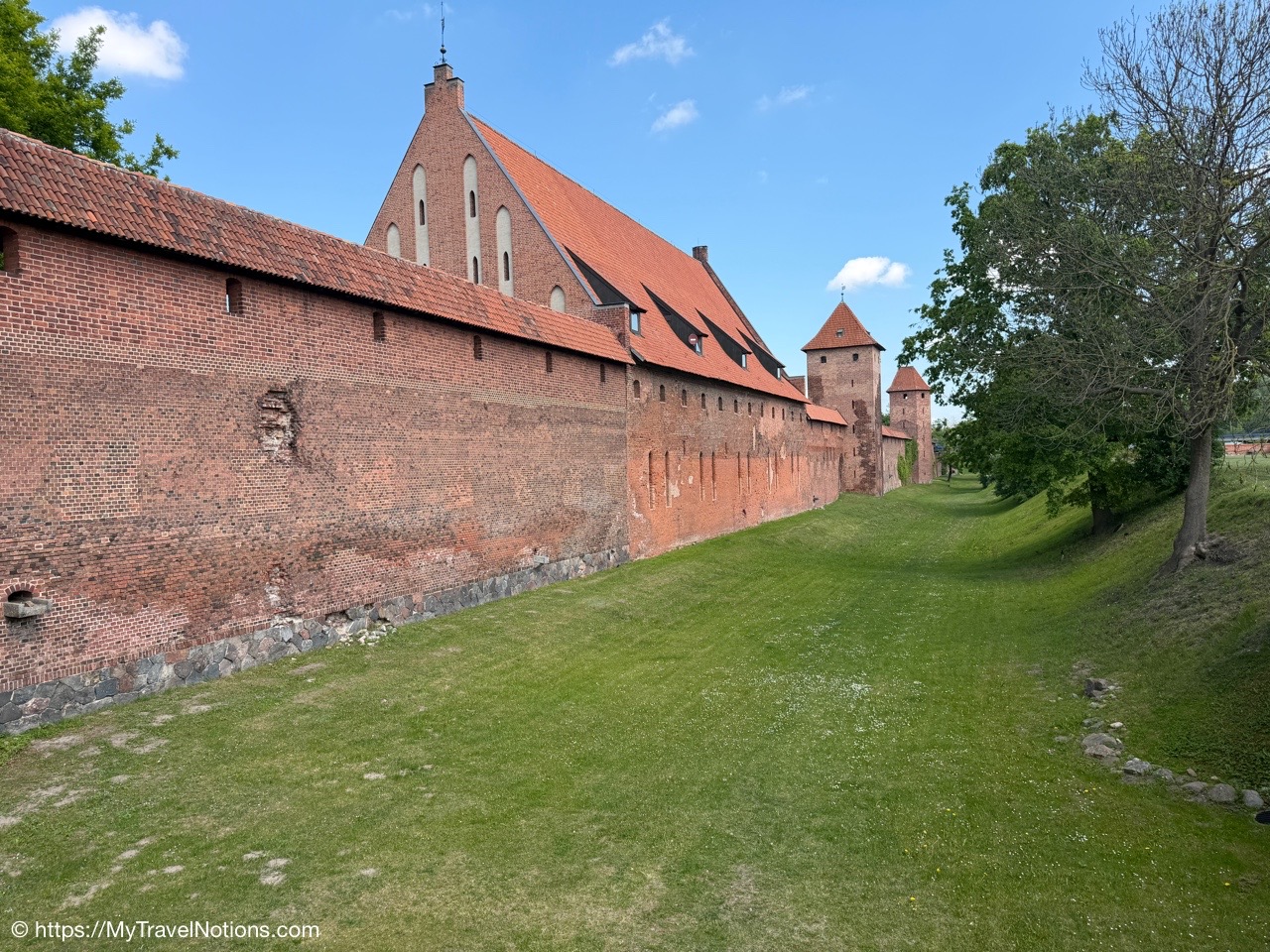
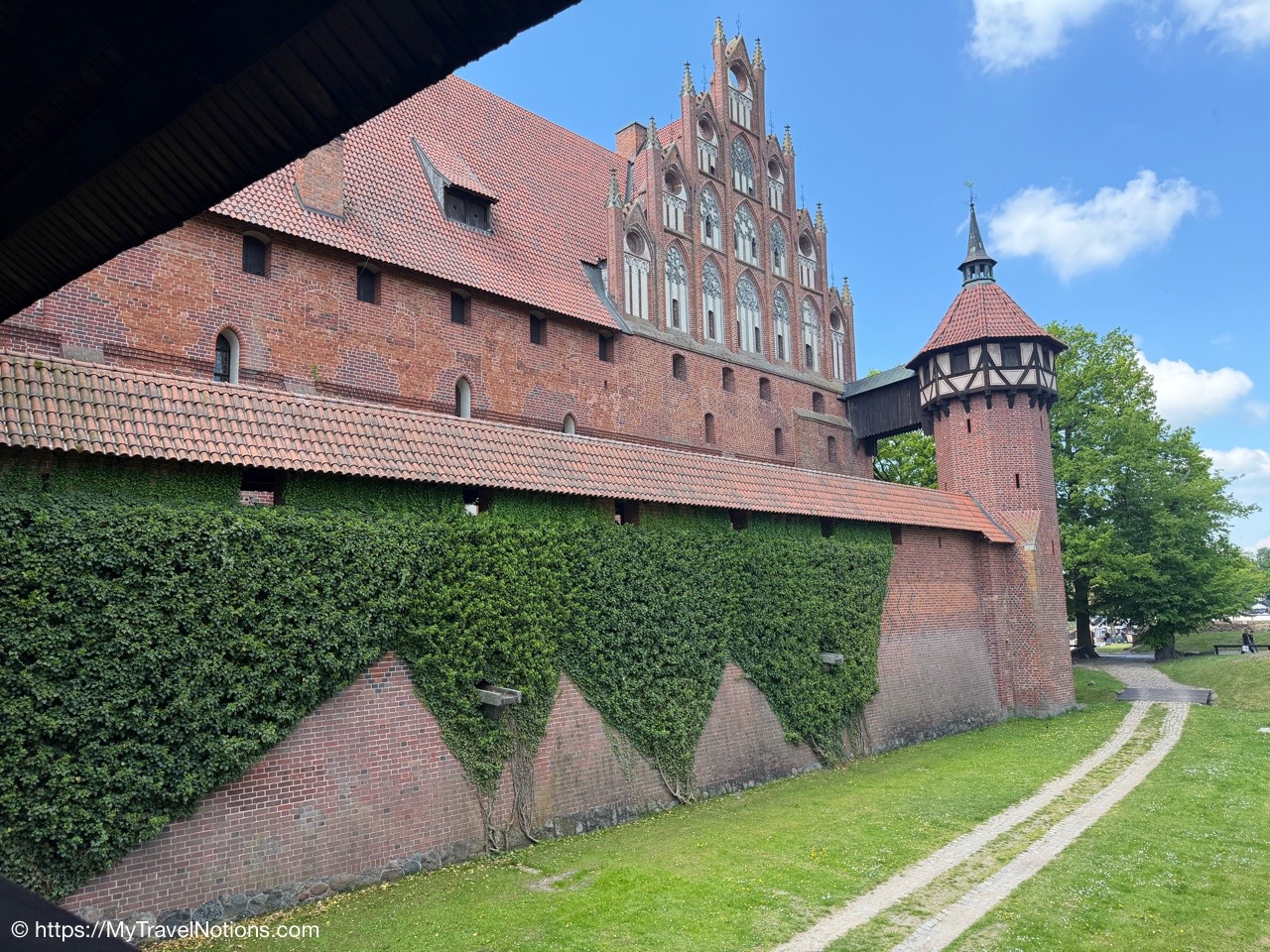
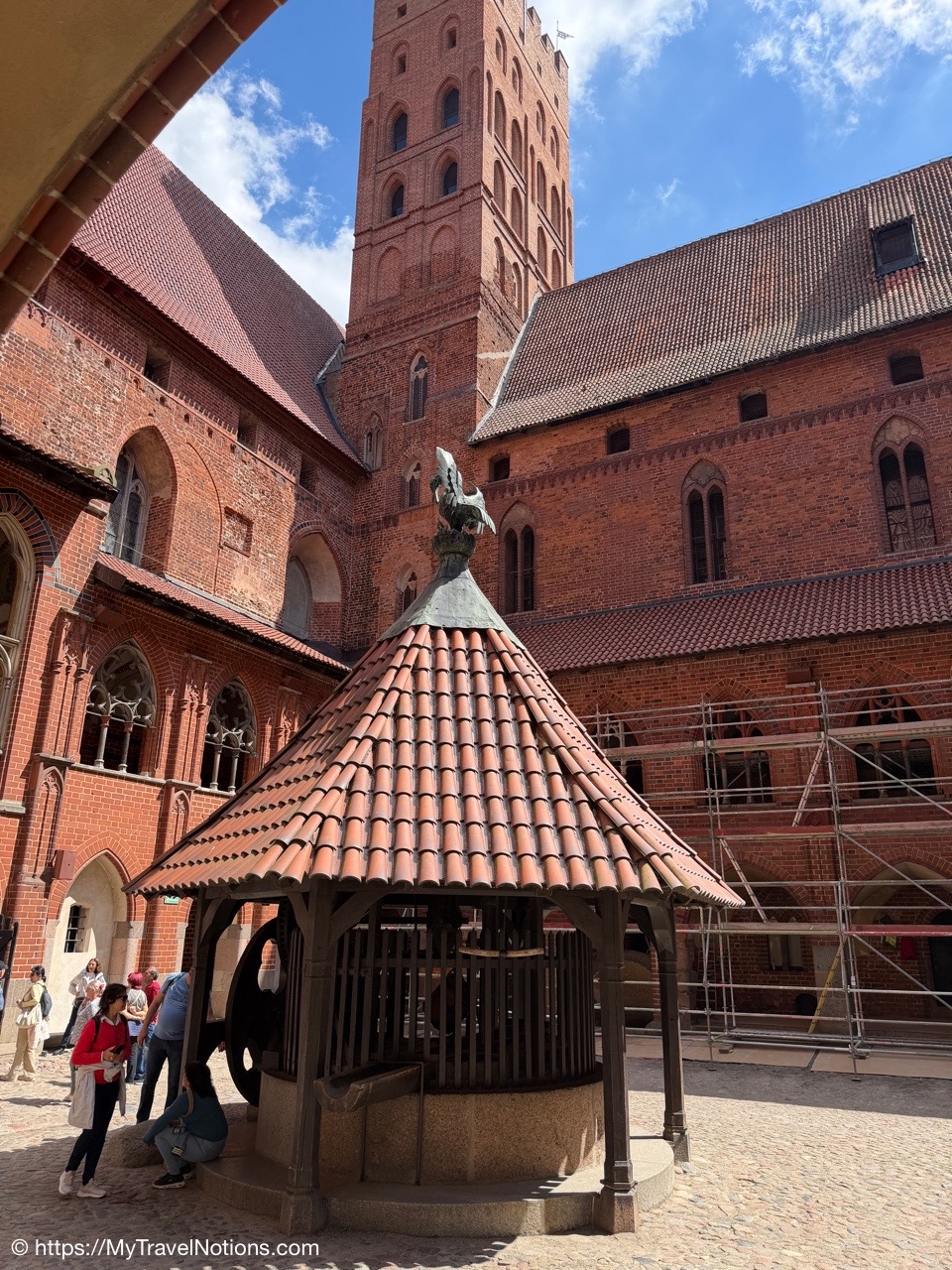
Malbork Castle in Poland is a massive 13th-century brick fortress, once the home to the Catholic order of crusaders, the Teutonic Knights’. The castle is basically divided into three parts, the heavily fortified High Castle (the monastery), the Middle Castle (administrative and grand reception halls) and the Low Castle (workshops and farm buildings). Considered to be Europe’s largest castle, Gothic architecture castle was built in the 13th century by the Teutonic Knights, a German military religious order, serving as their headquarters.
The Castle of the Teutonic Order in Malbork (Ordensburg Marienburg), was completed in 1406, and its main purpose was to strengthen their own control of the area following the Order’s 1274 suppression of the Great Prussian Uprising of the Baltic tribes.
So, what is the Teutonic Order? It’s a Catholic religious institution founded as a military society circa 1190 in Jerusalem to aid Christian on their pilgrimages to the Holy Land and to establish hospitals. Its members have commonly been known as the Teutonic Knights, having historically served as a crusading military order for supporting Catholic rule in the Holy Land and the Northern Crusades during the Middle Ages, as well as supplying military protection for Catholics in Eastern Europe.
The castle was sold to the Polish King Casimir IV in 1457, after which it served as a royal residence.
And, even though the day was not miserably hot, it really was a rather warm and beautiful sunny day.
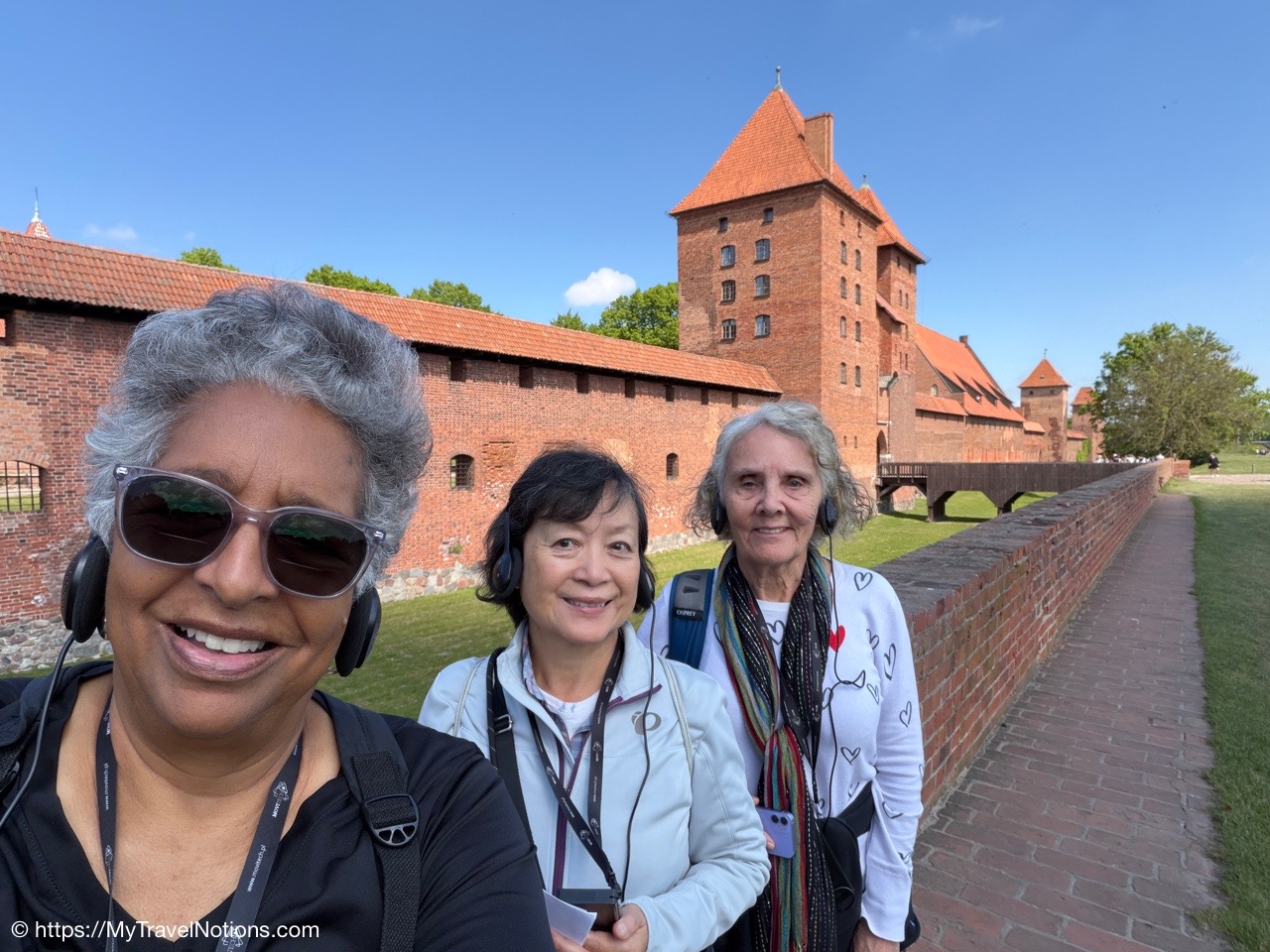
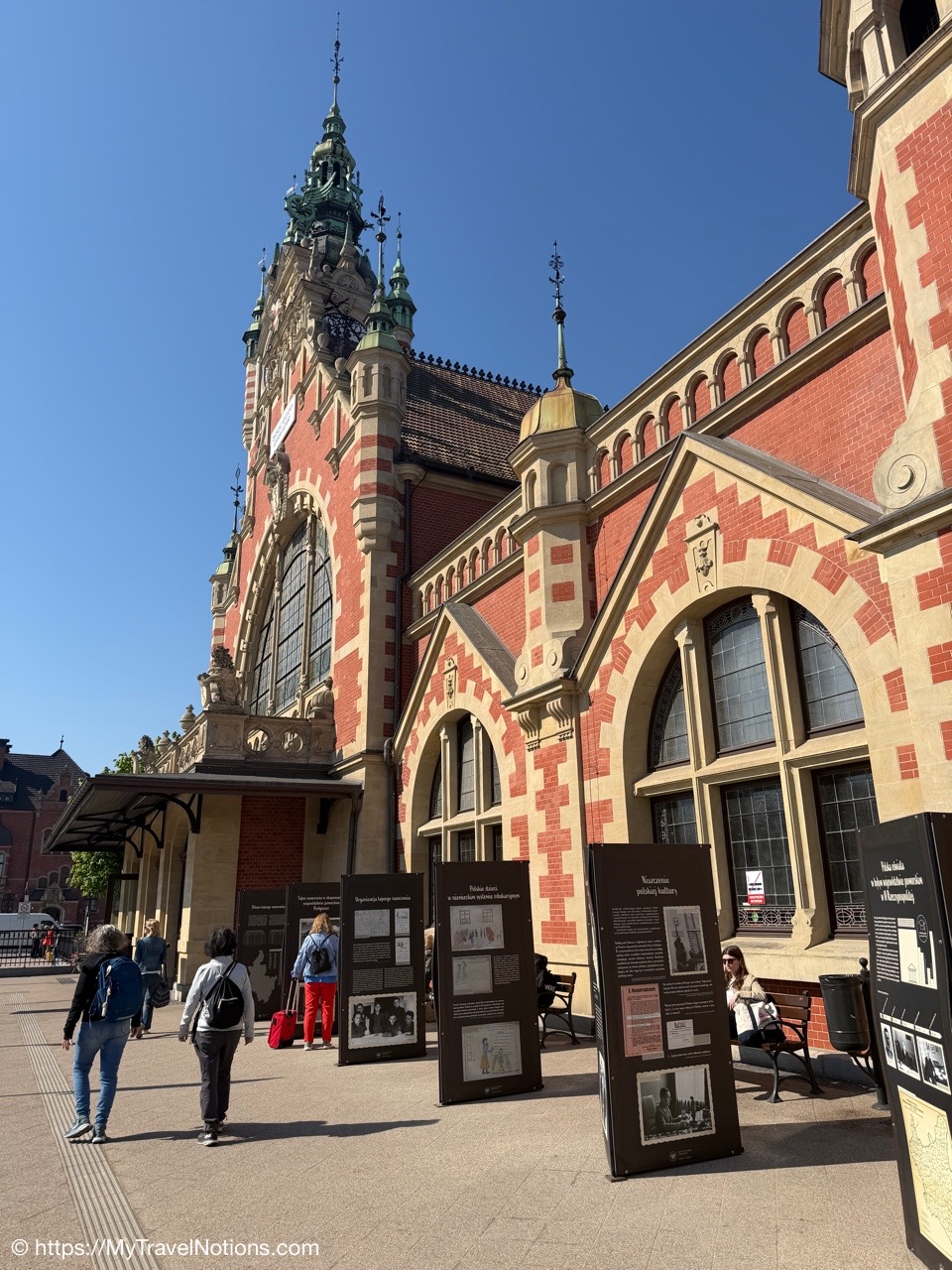
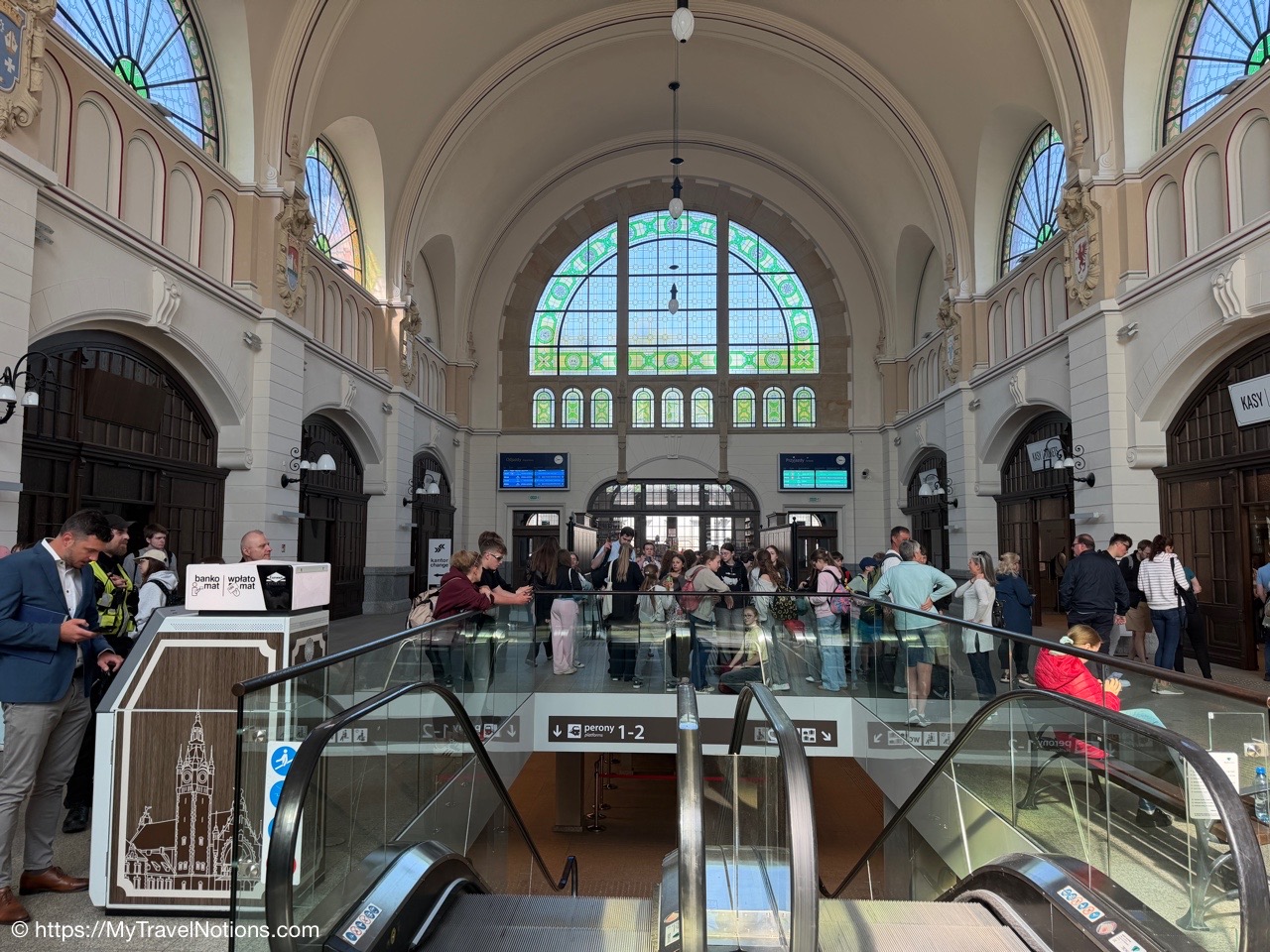
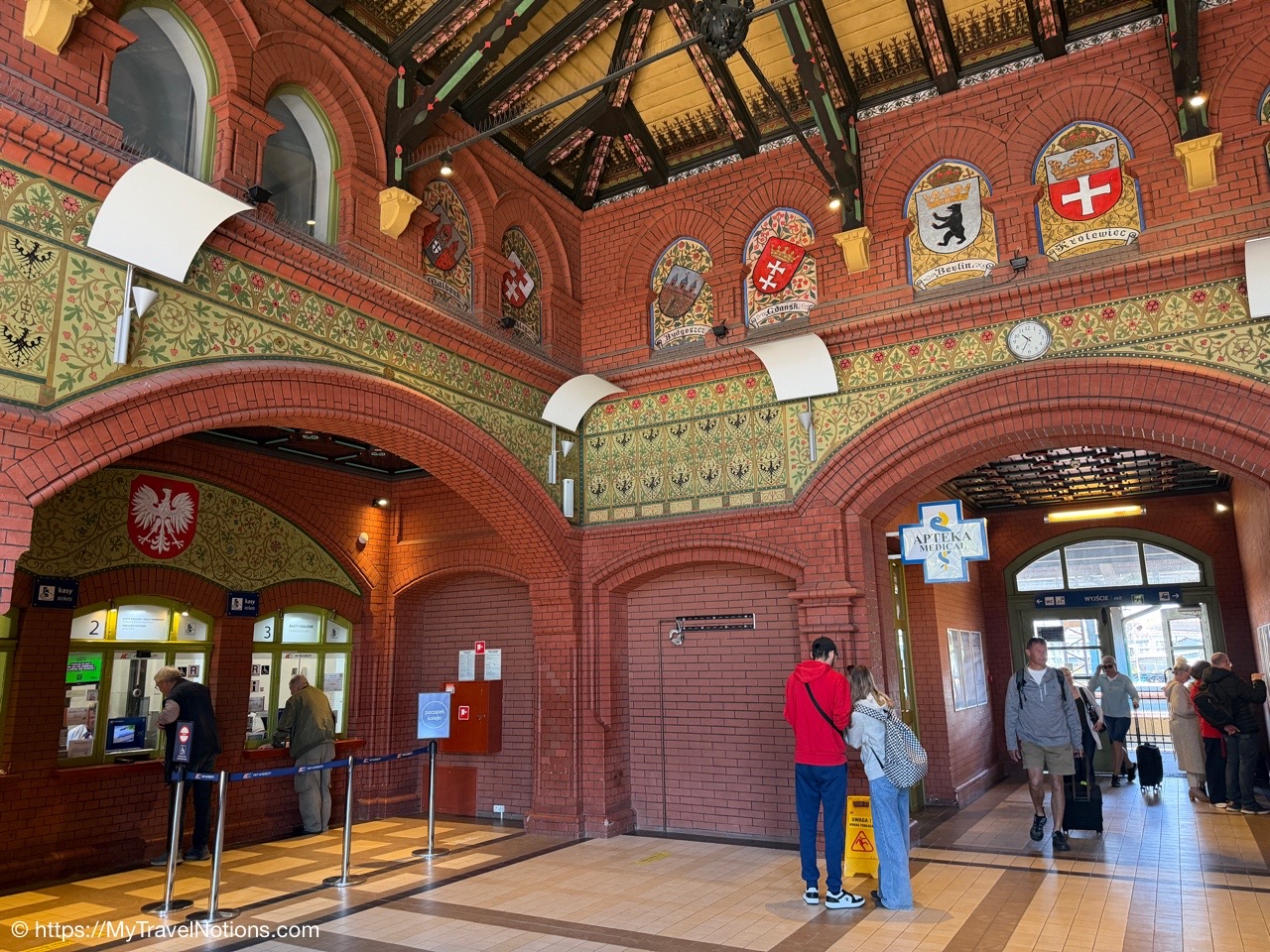
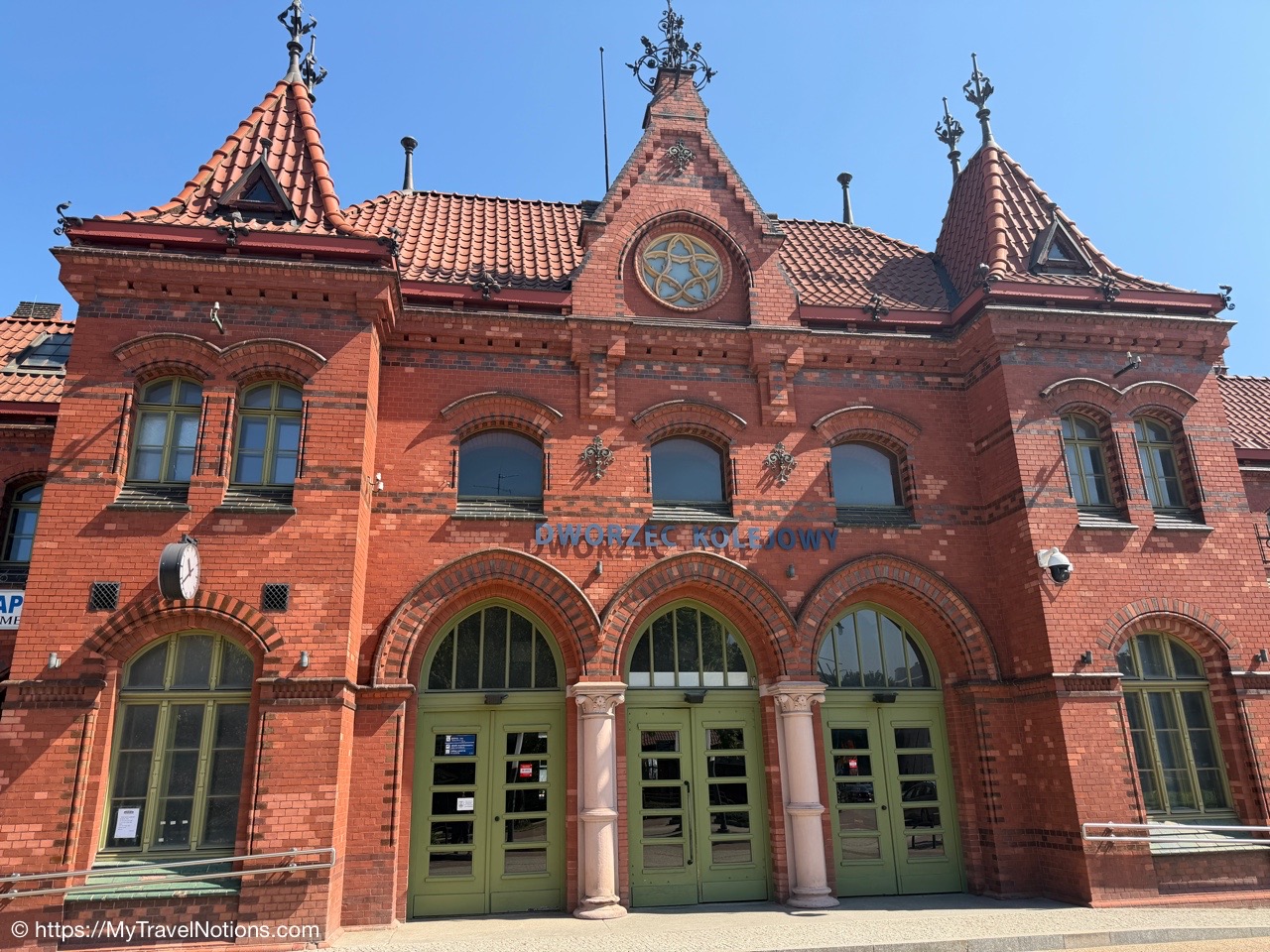
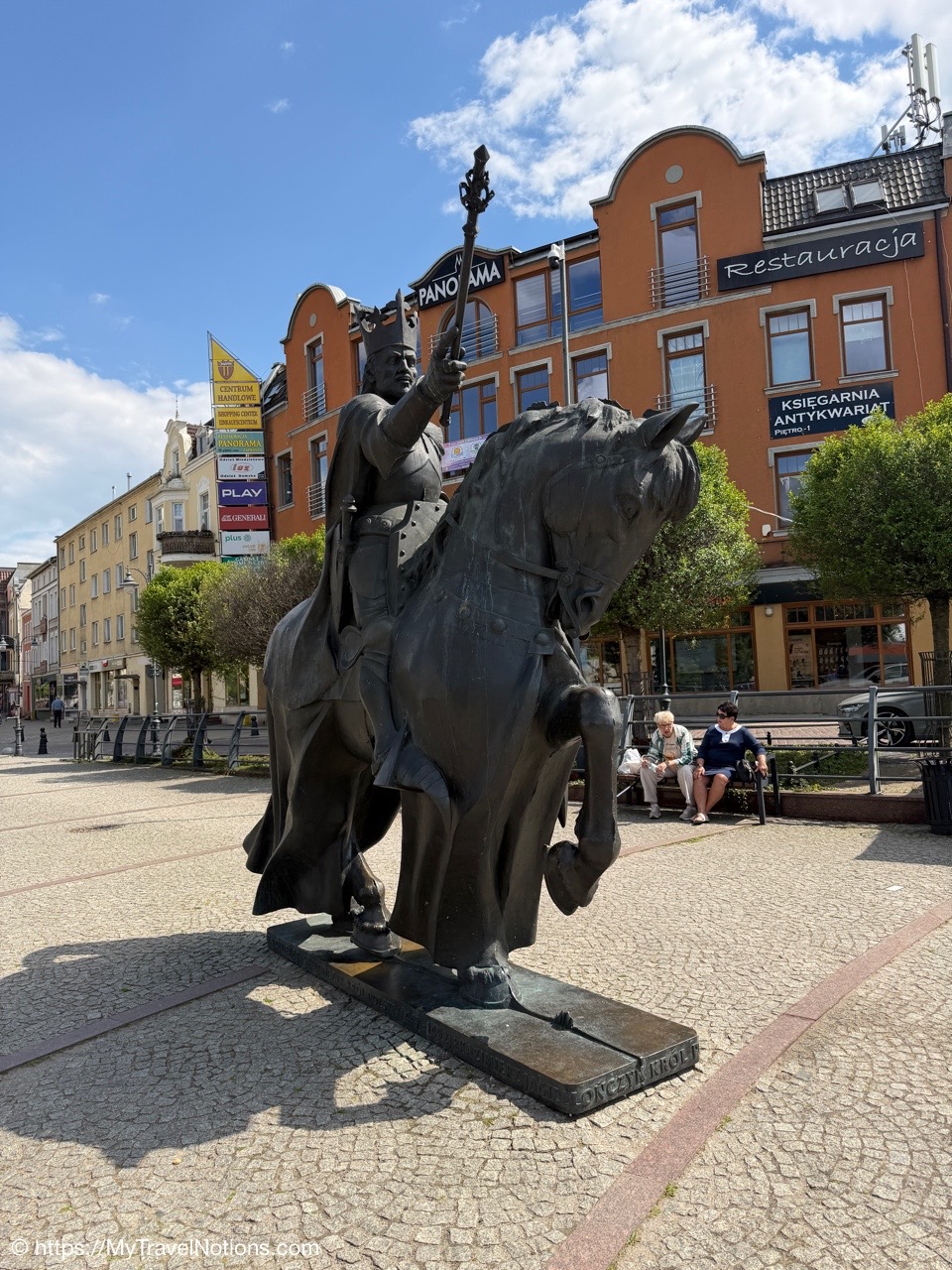
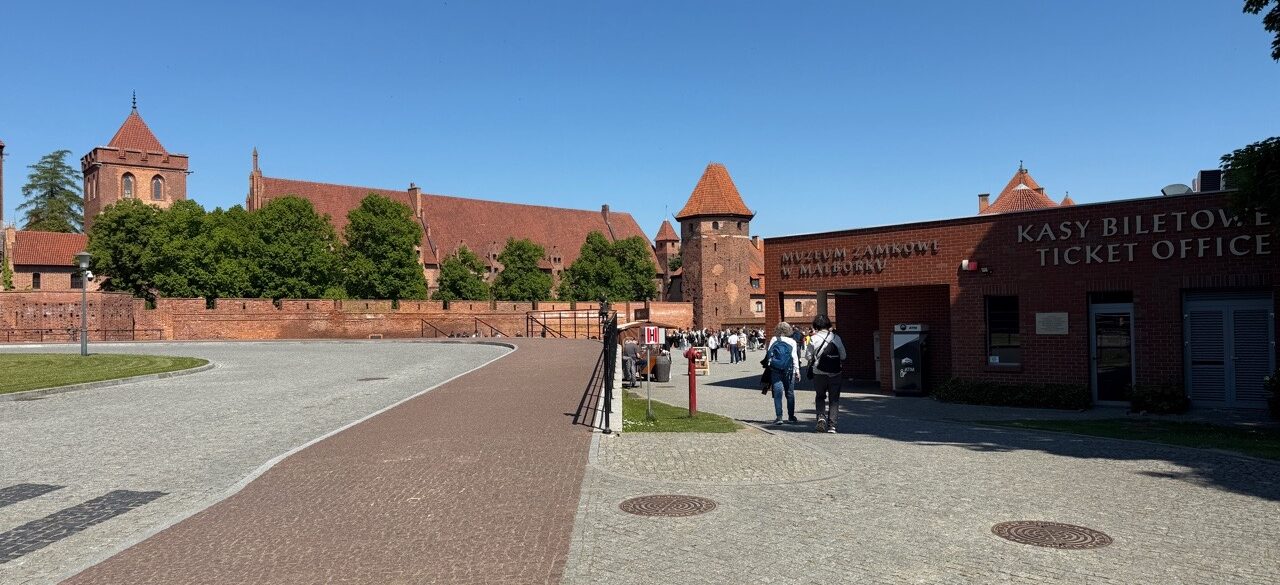
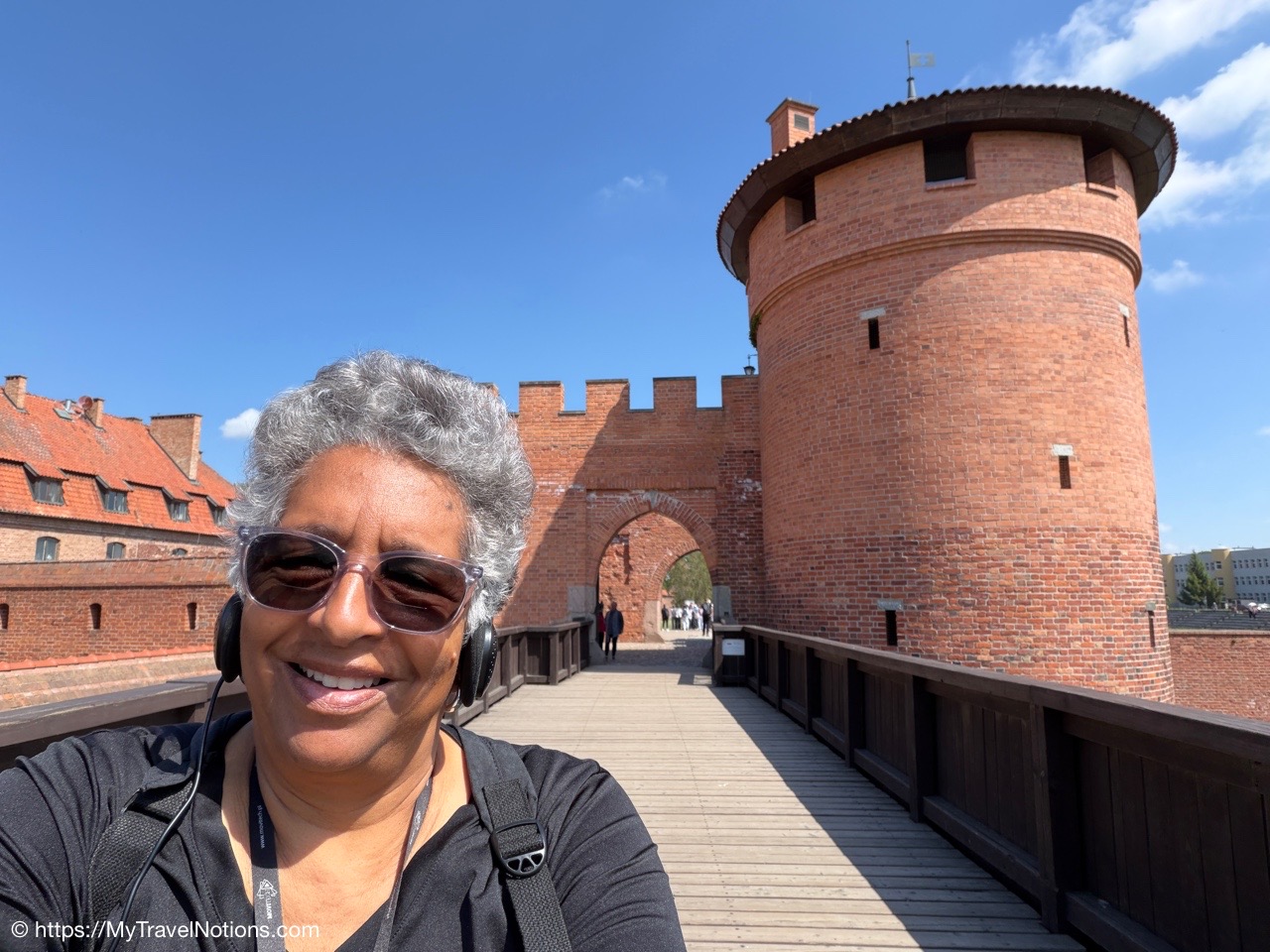
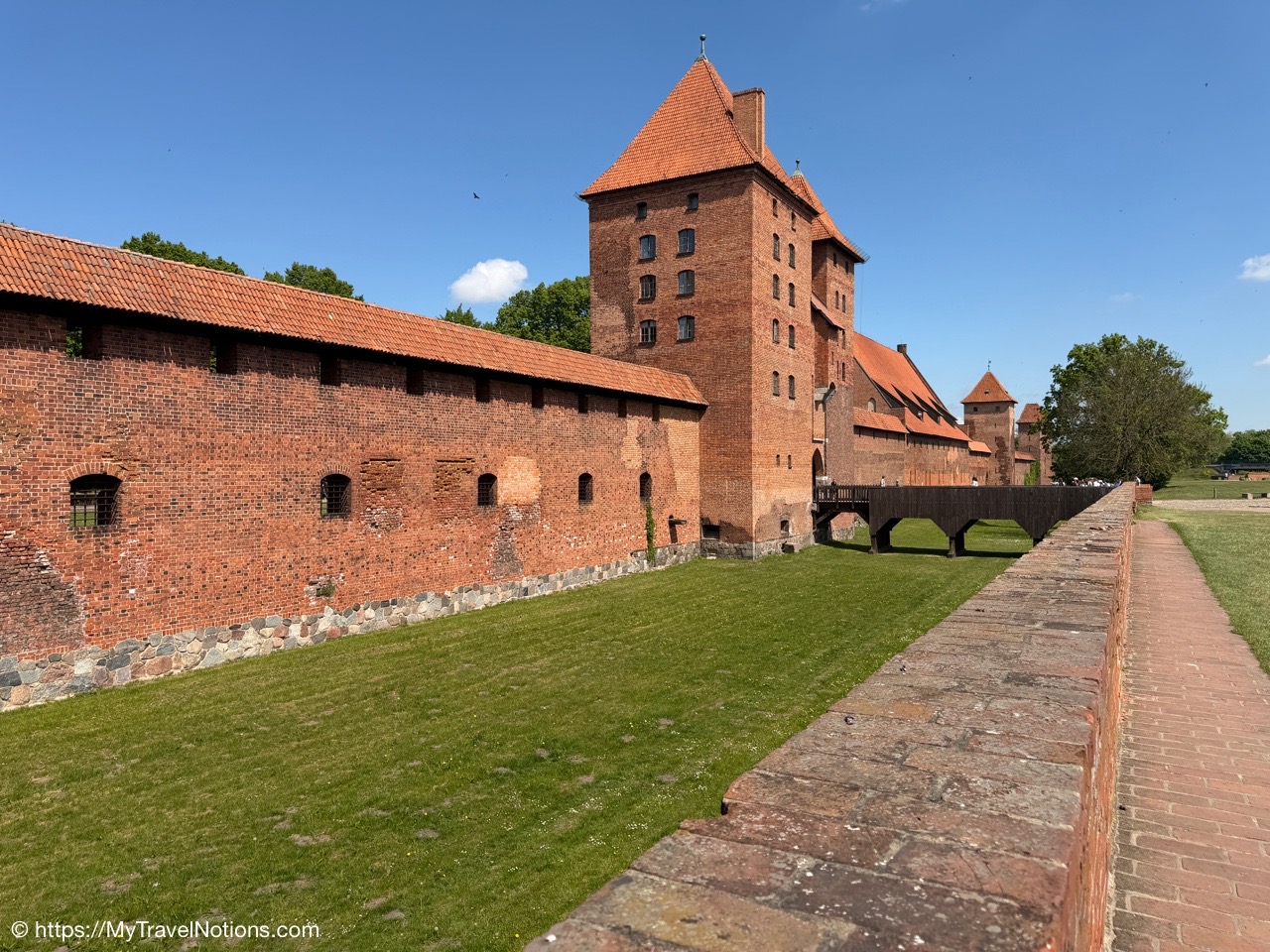
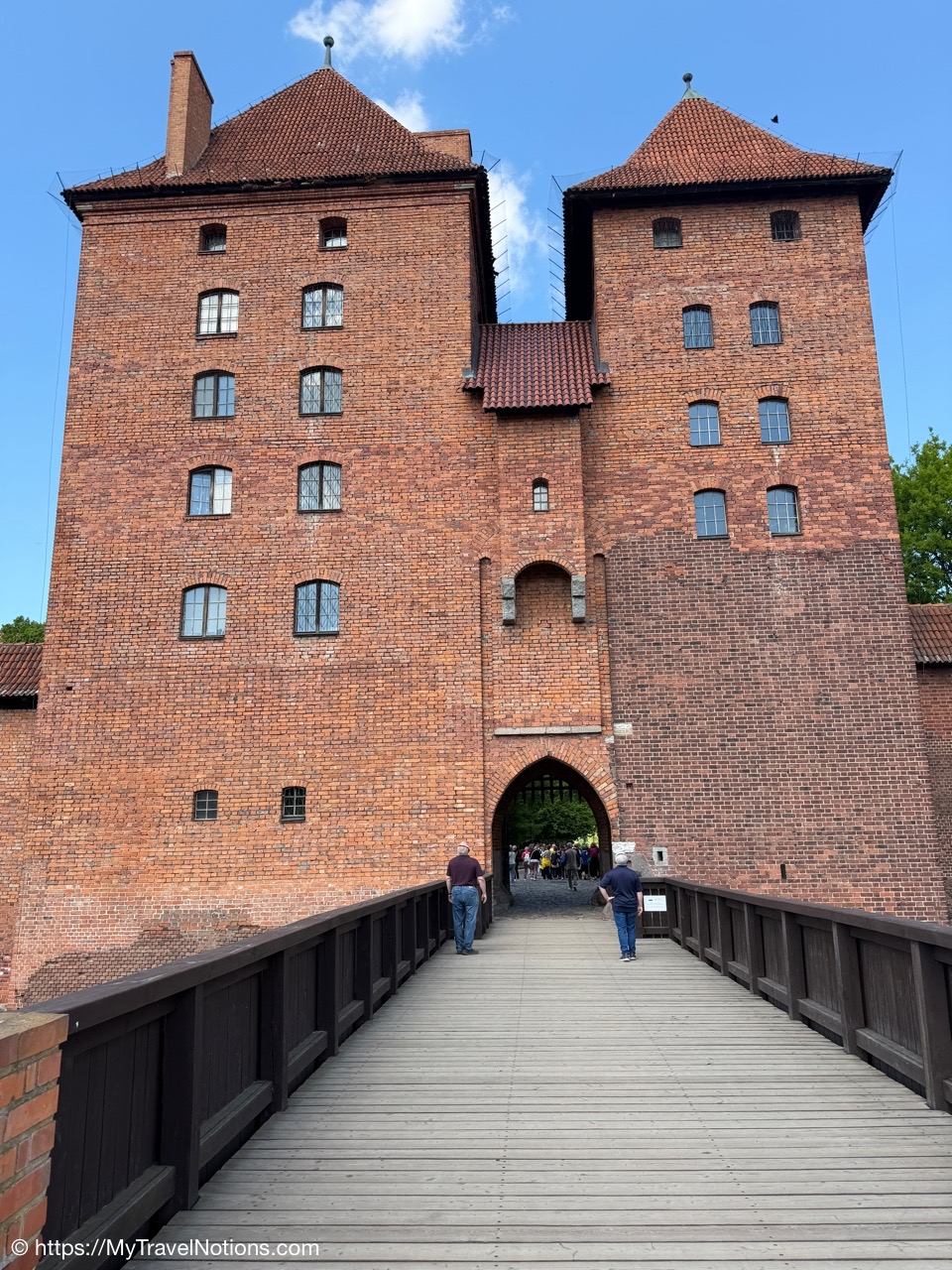
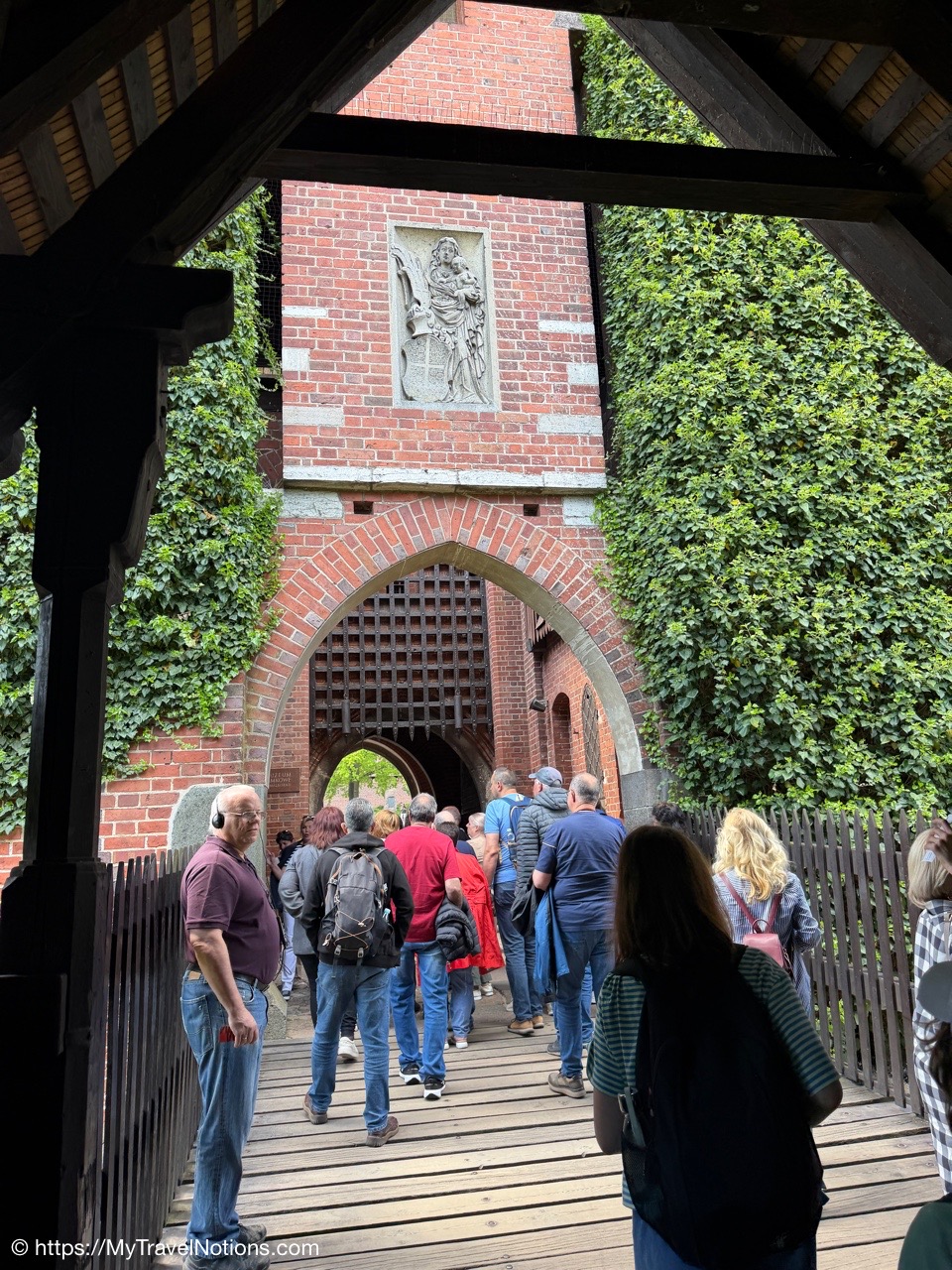
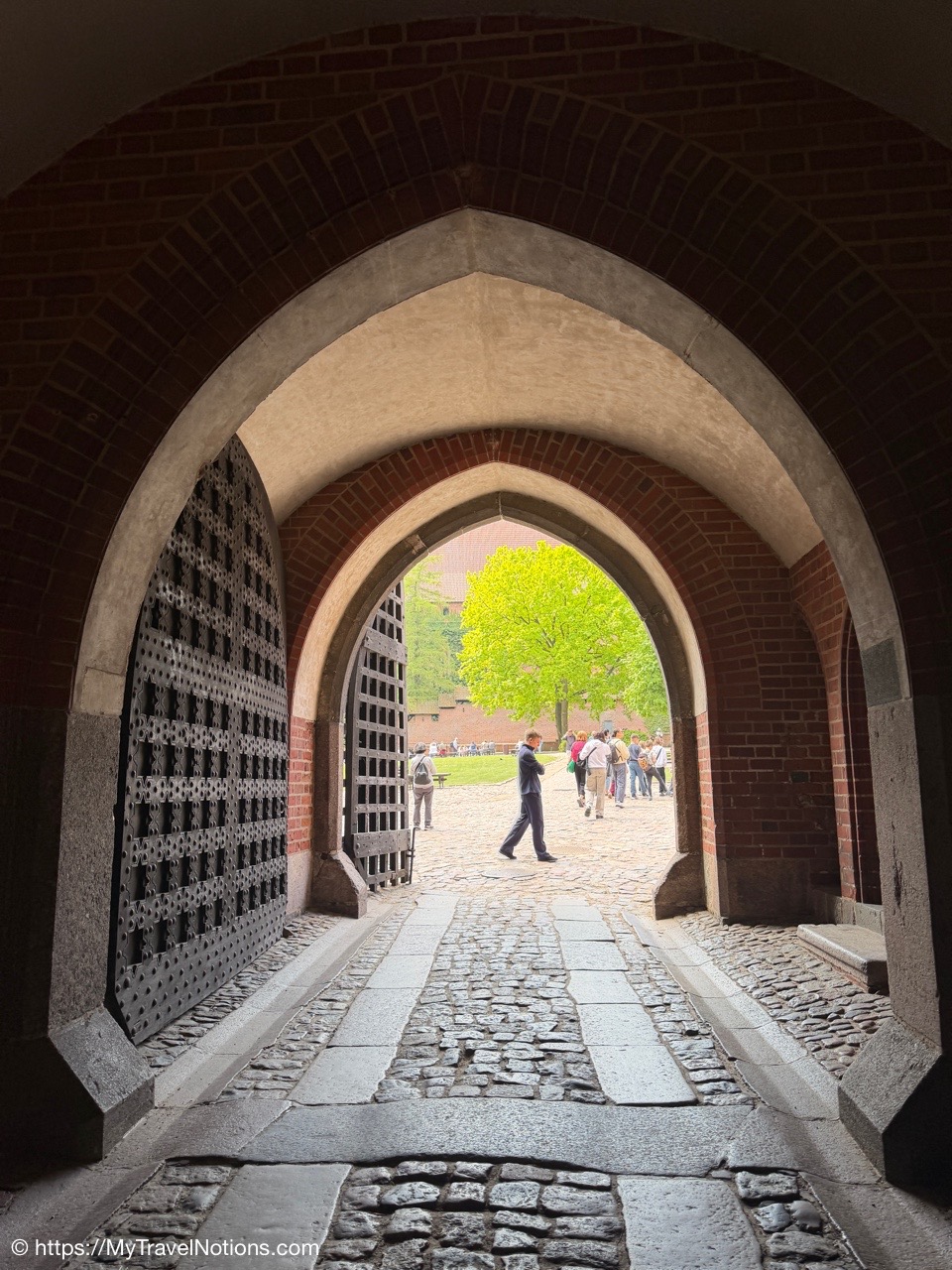
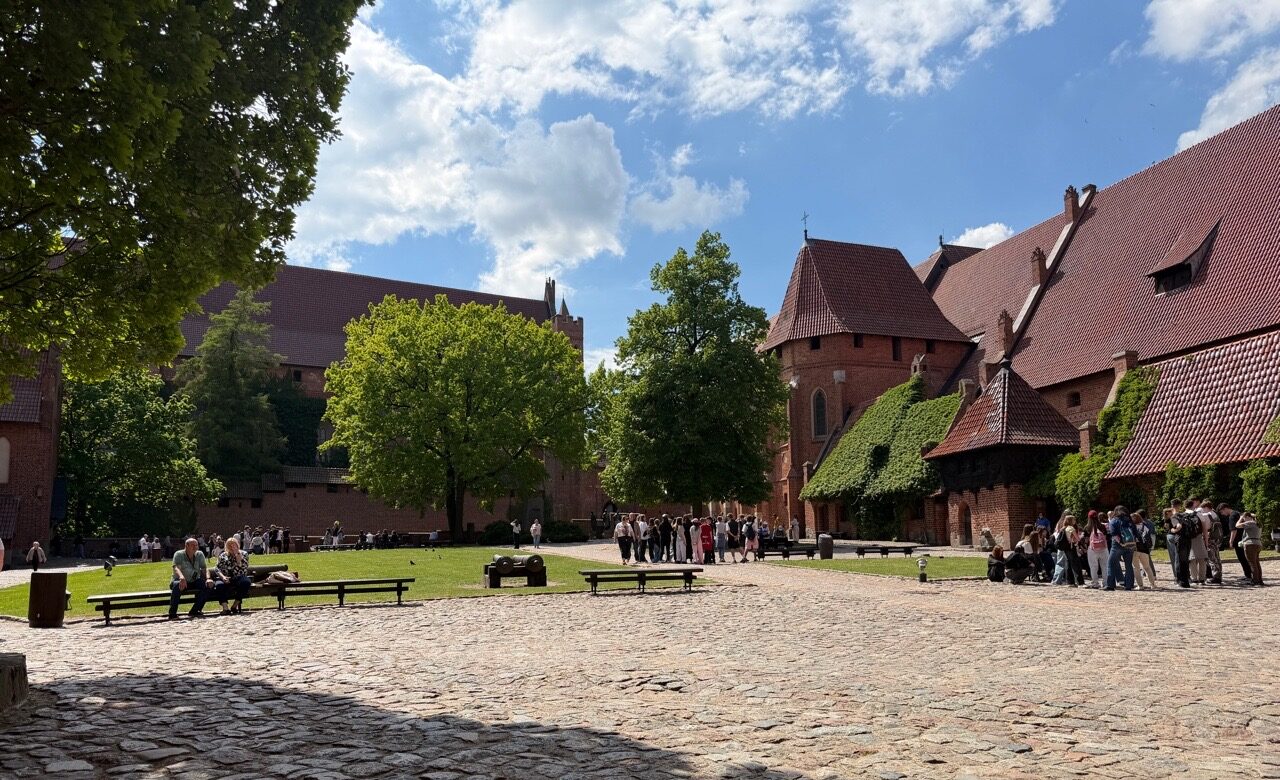
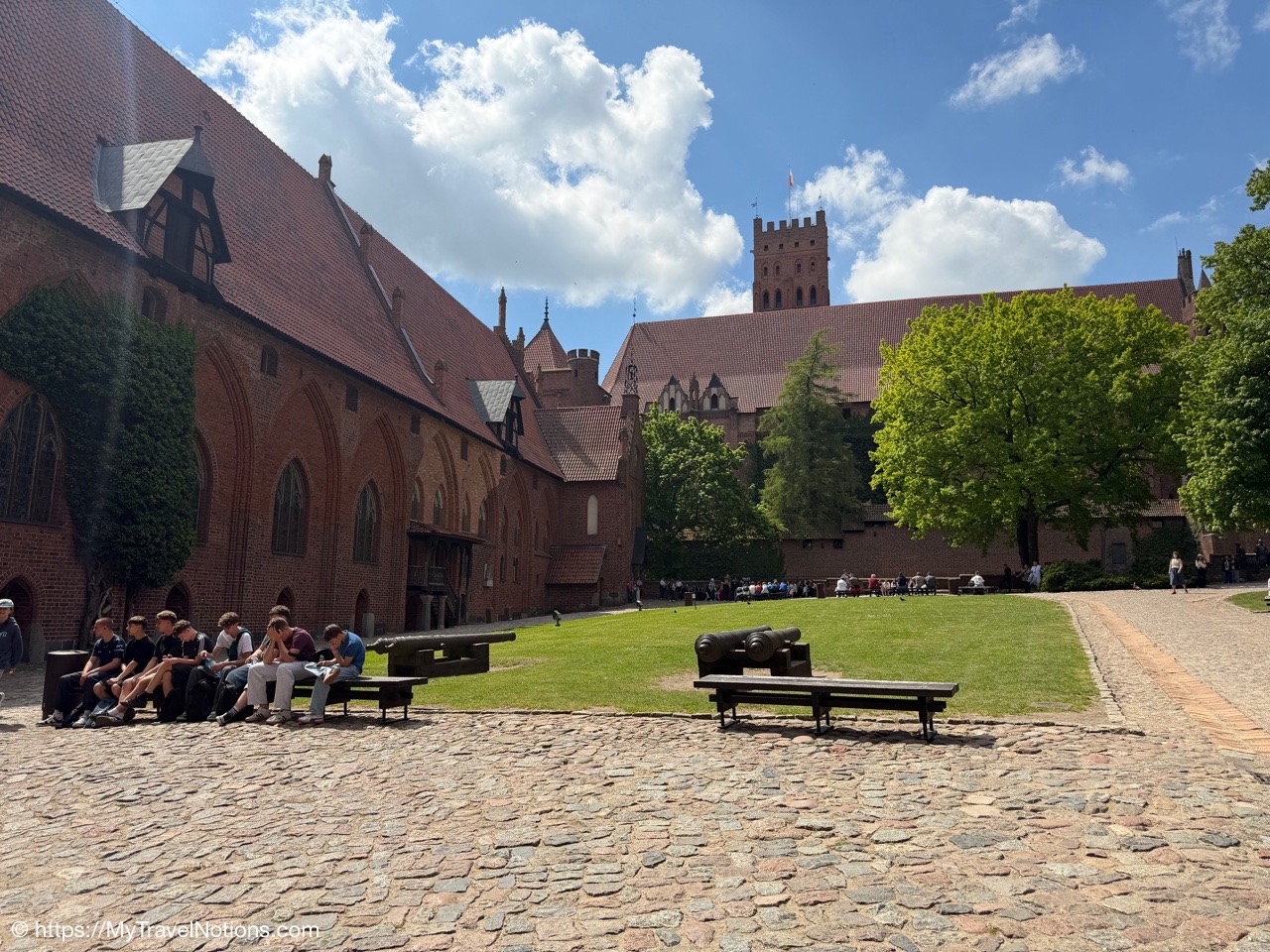
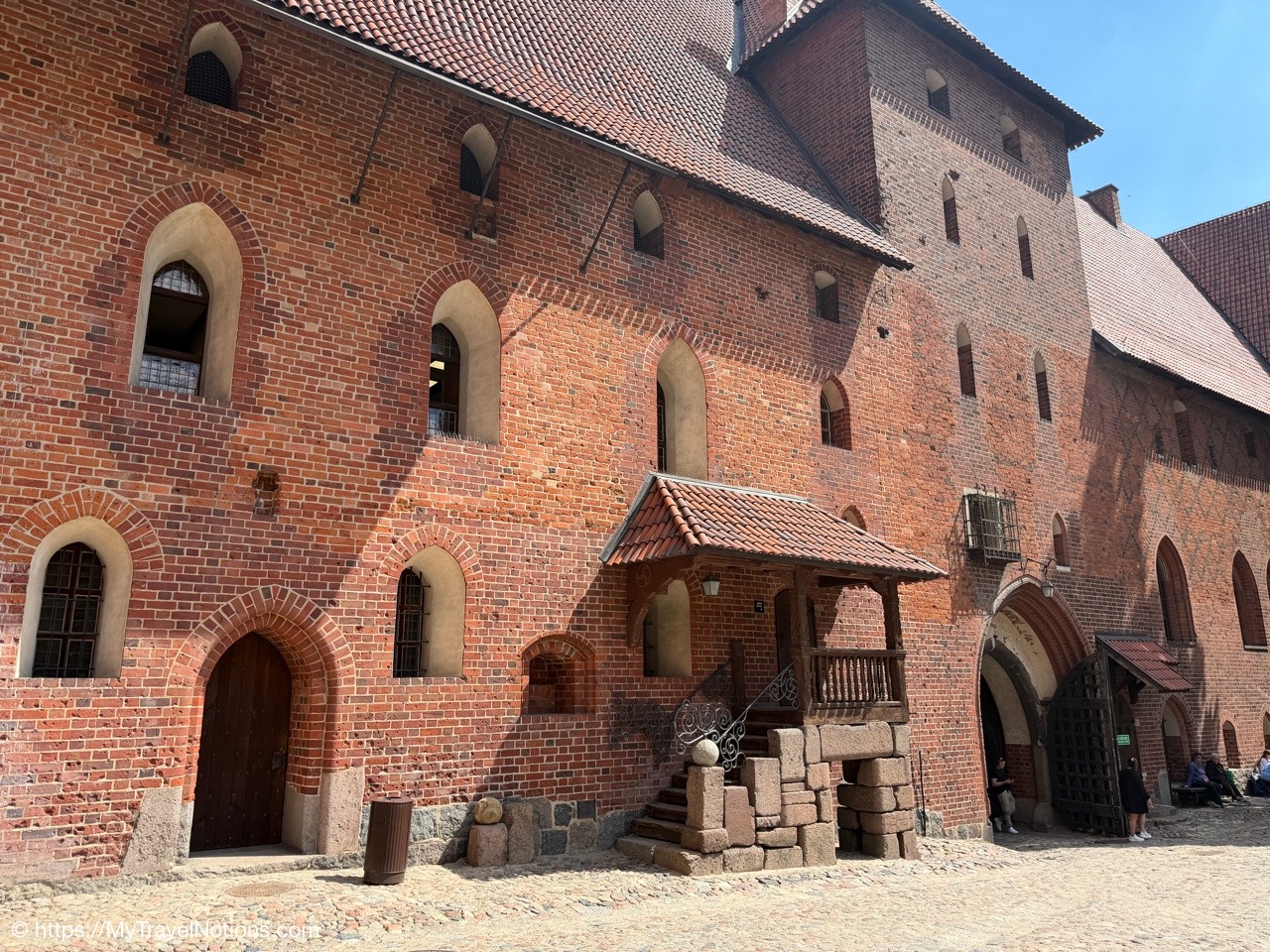
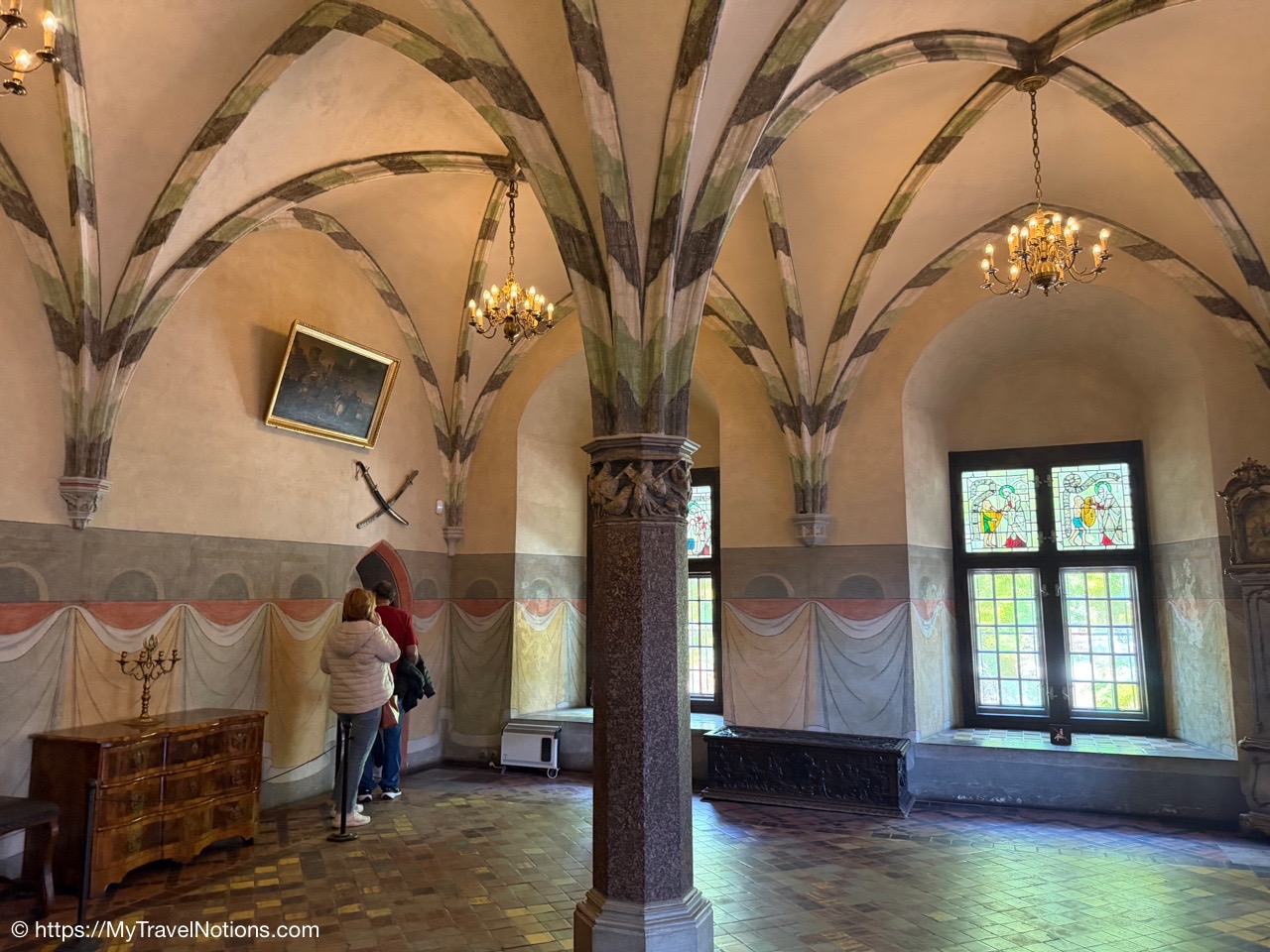
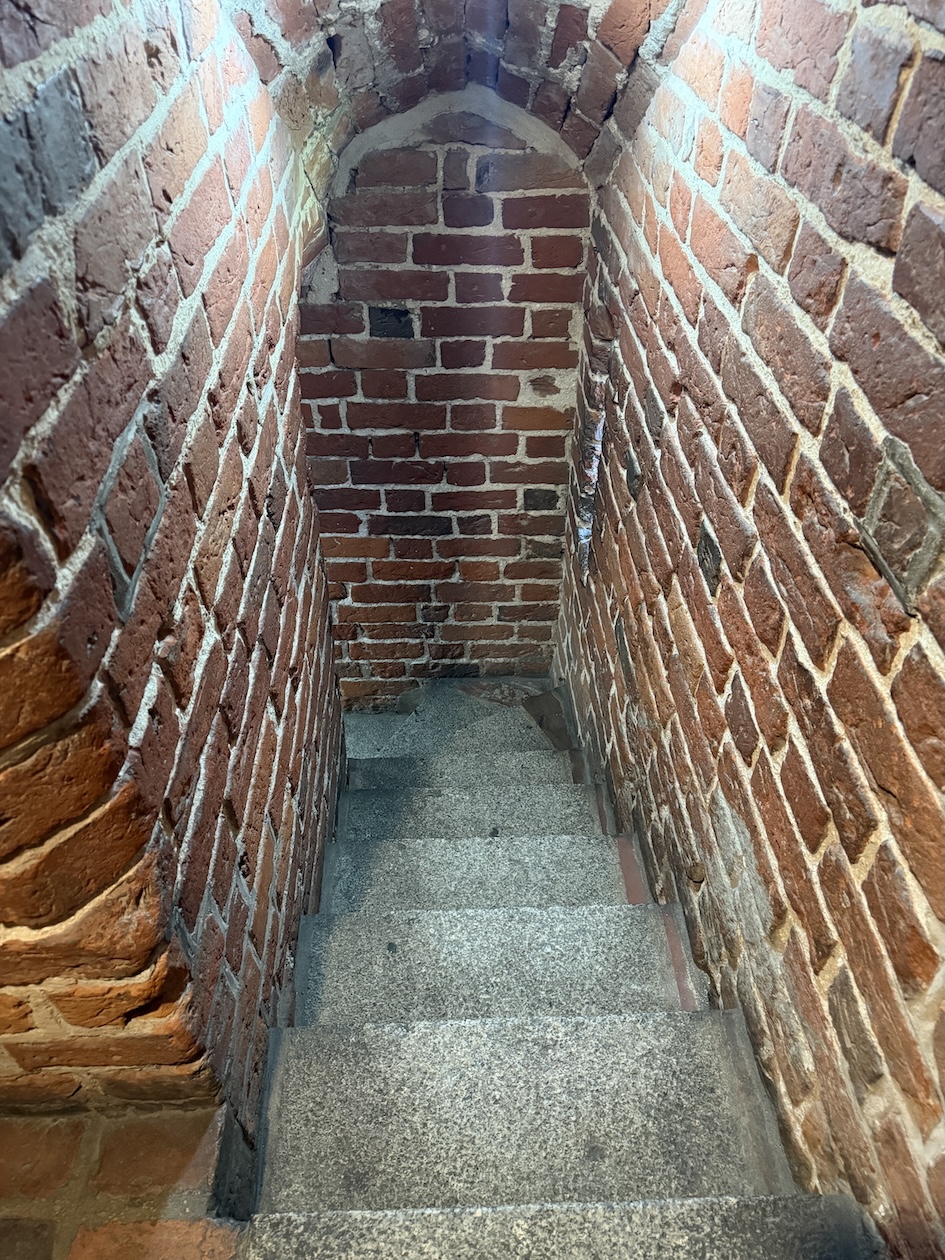
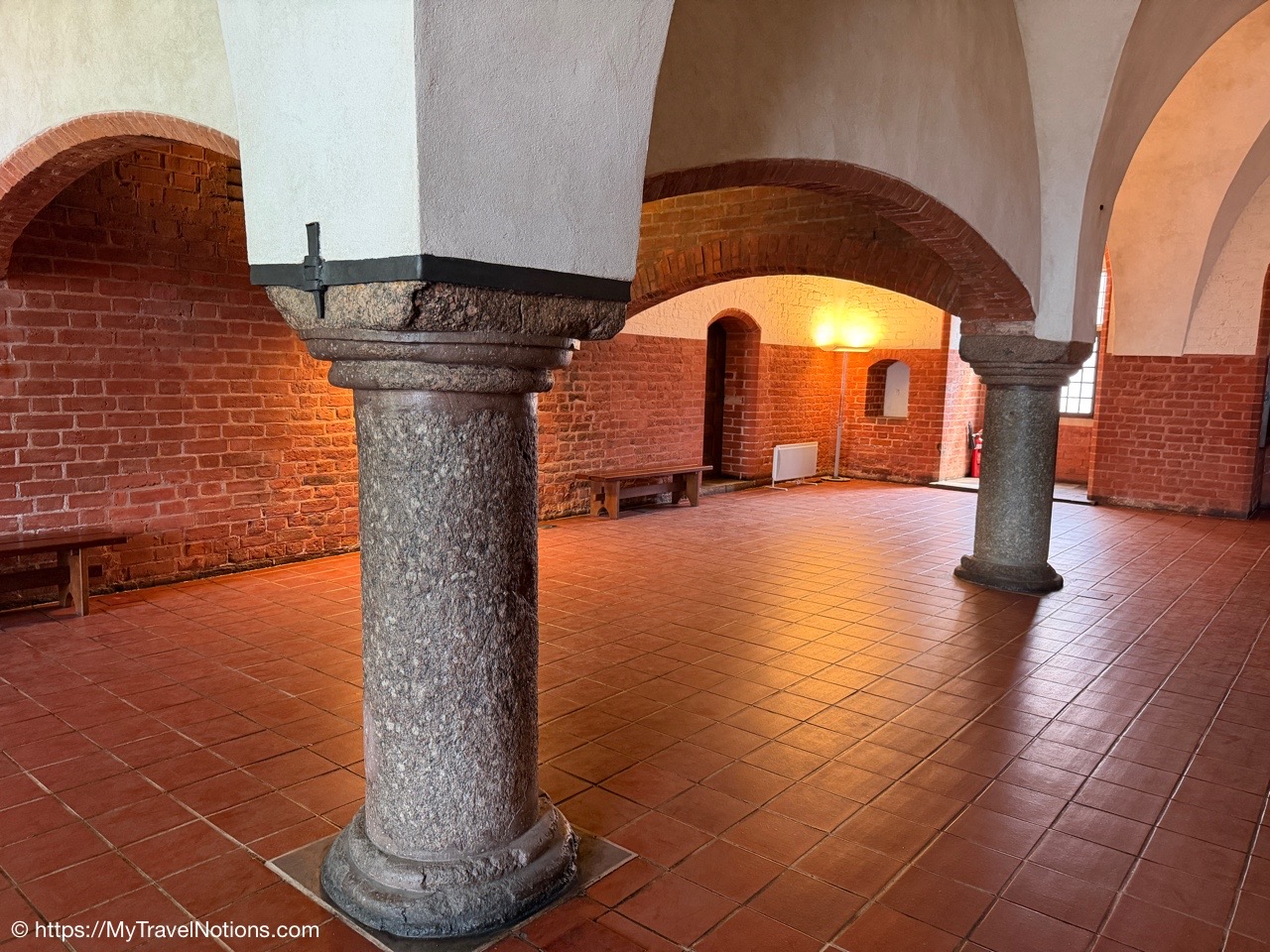
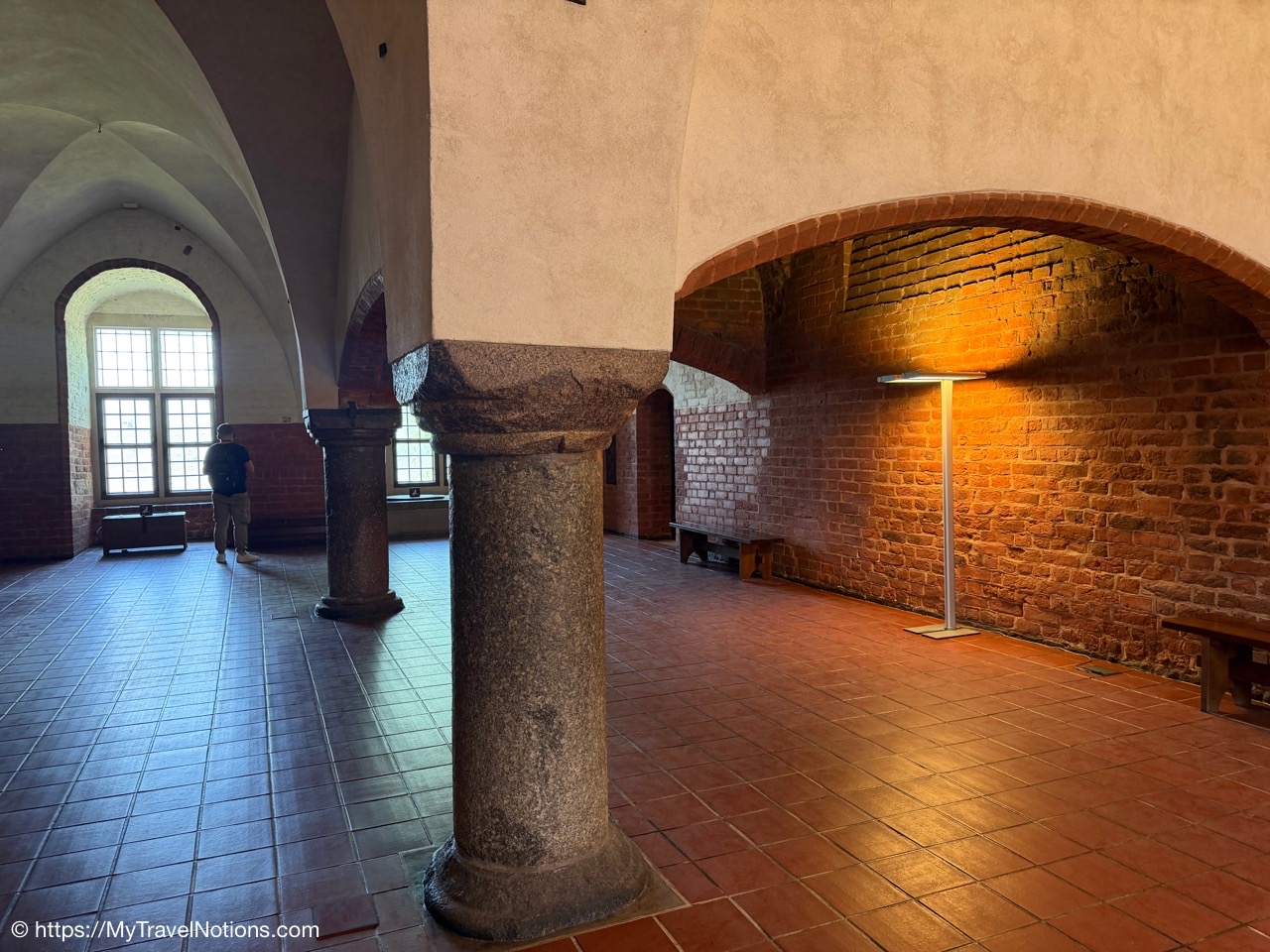
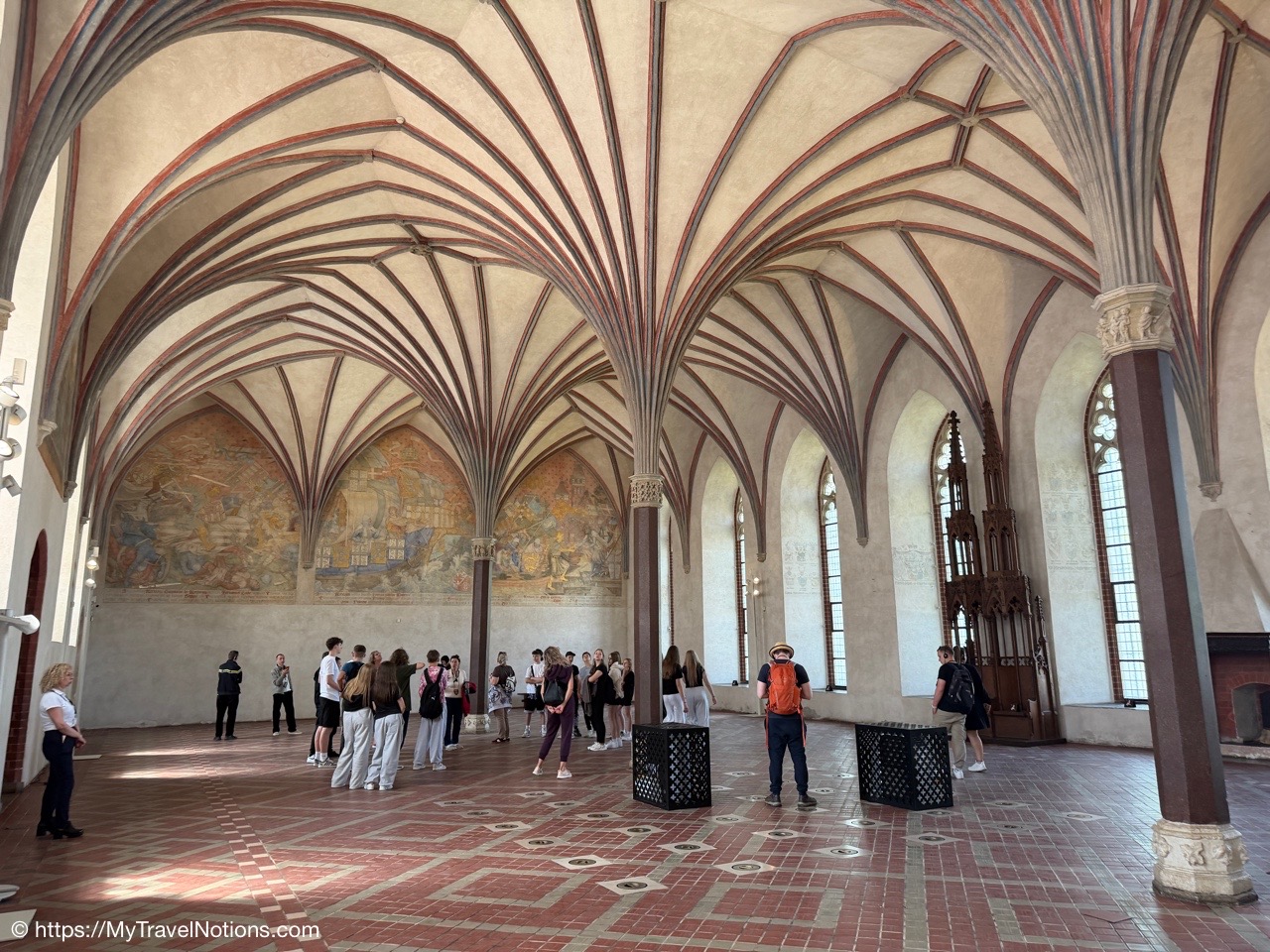
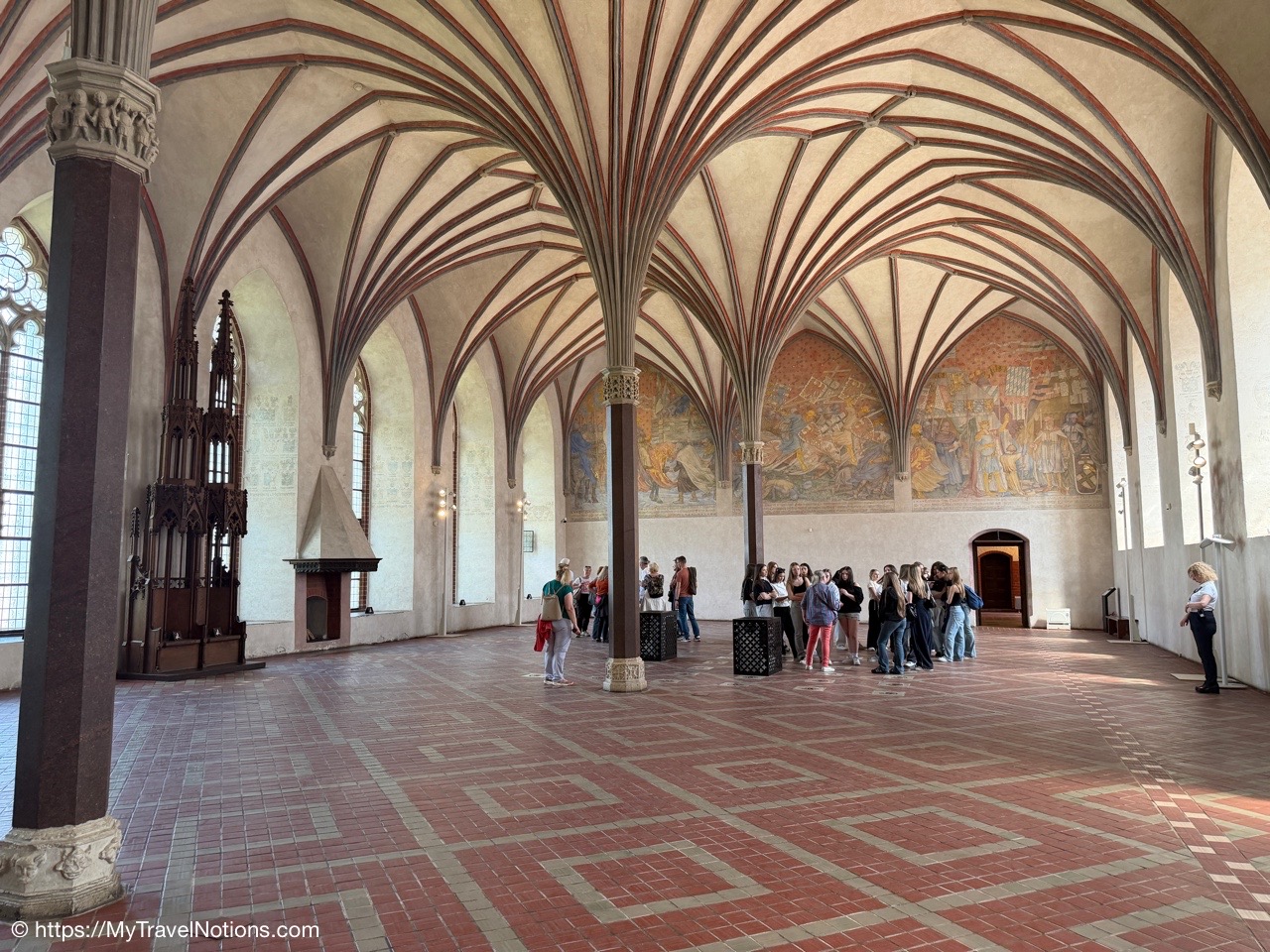
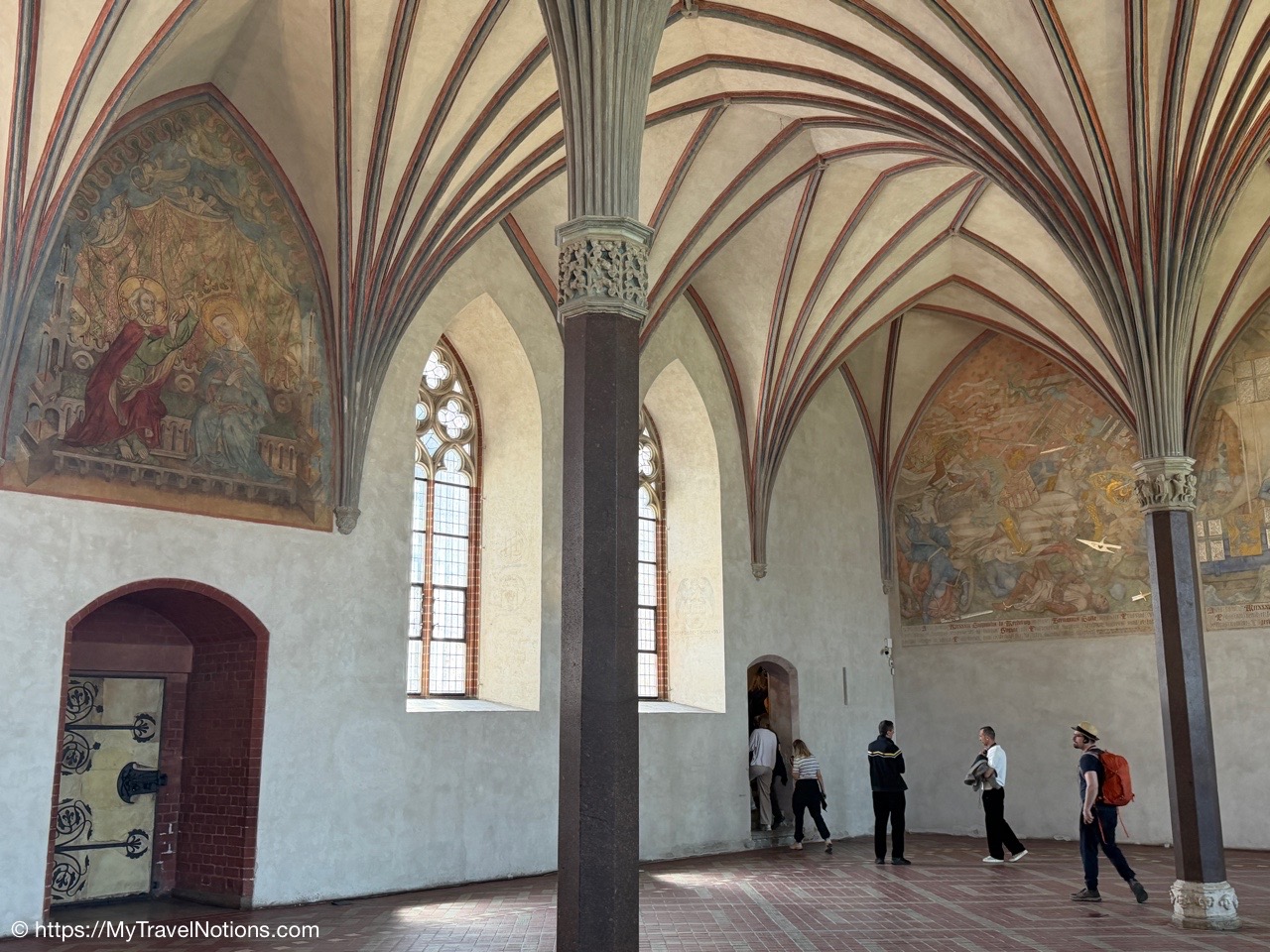
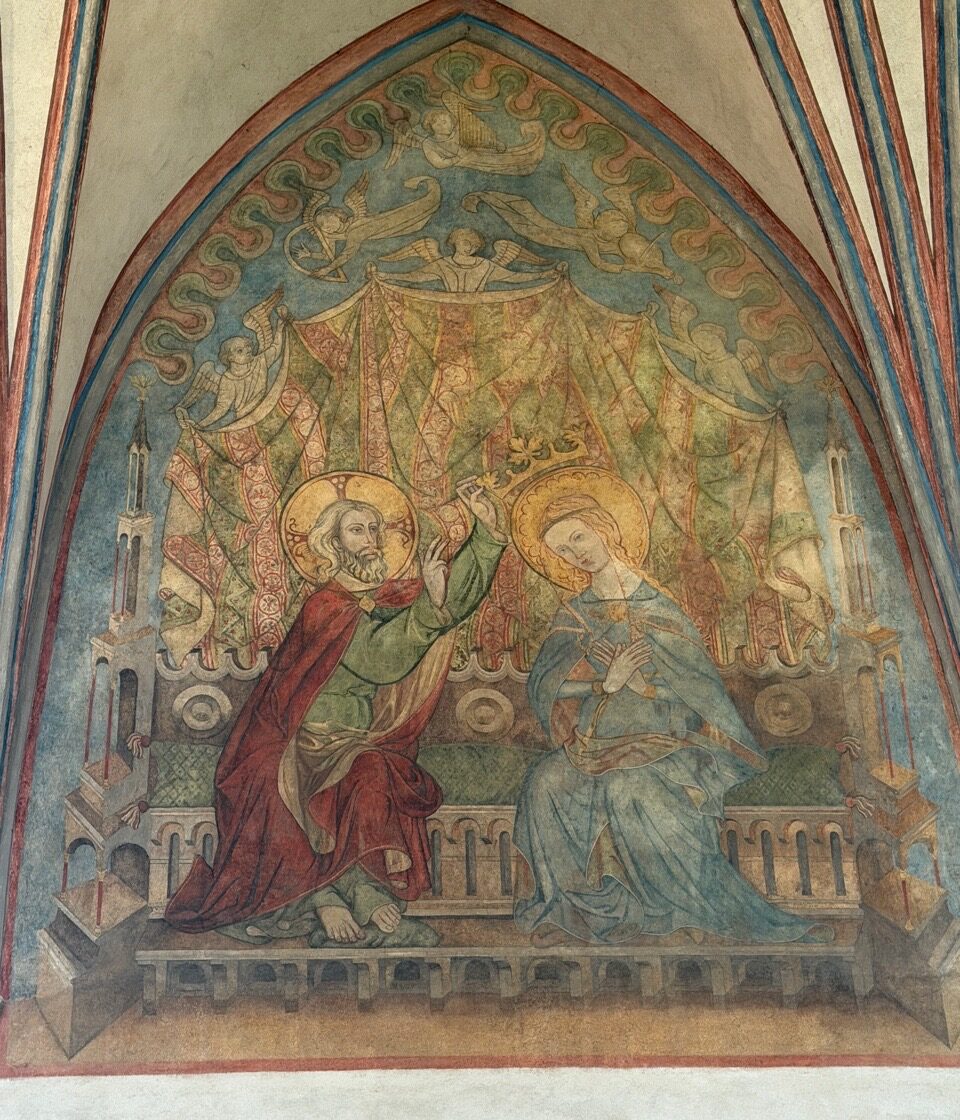
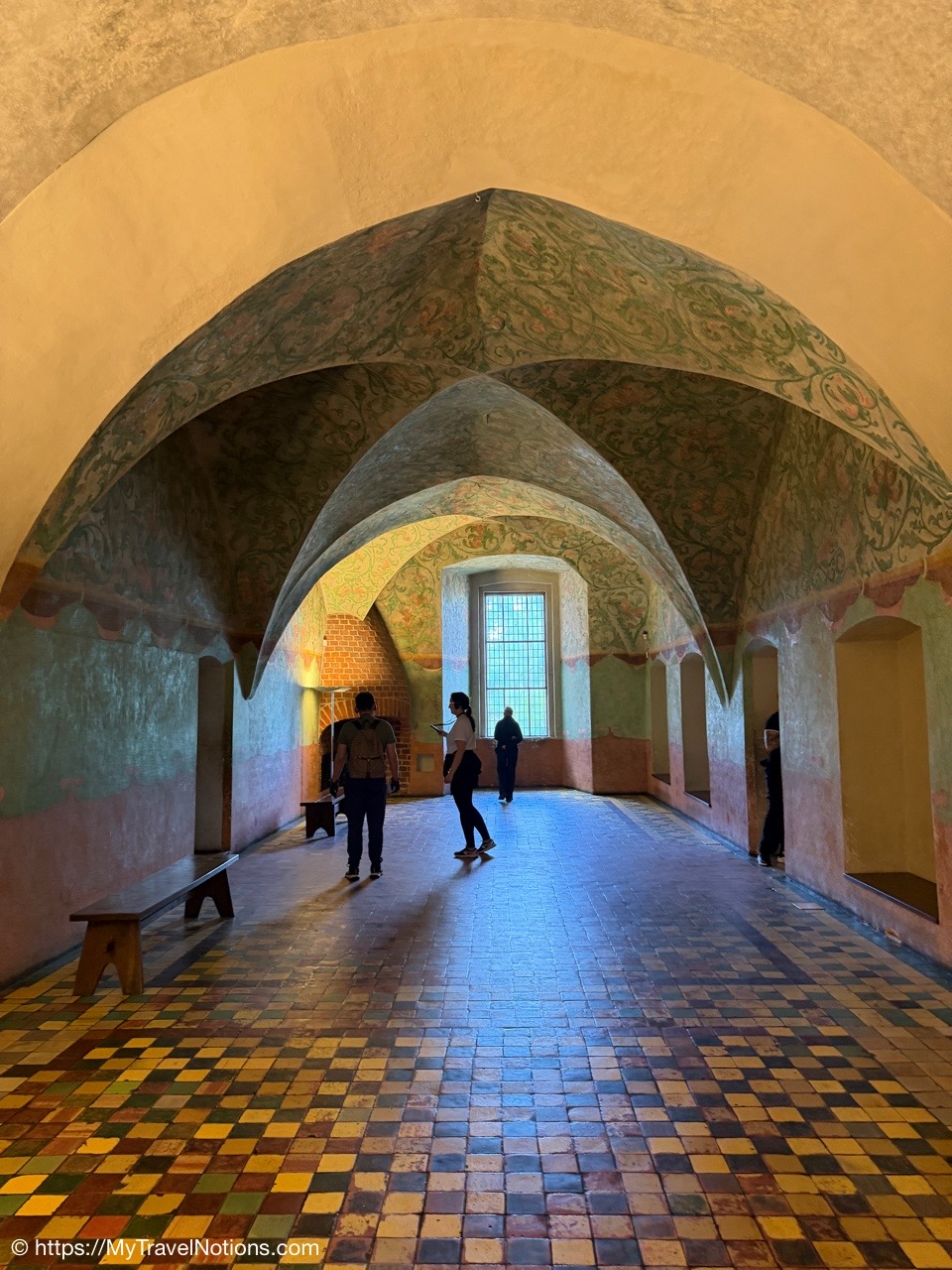
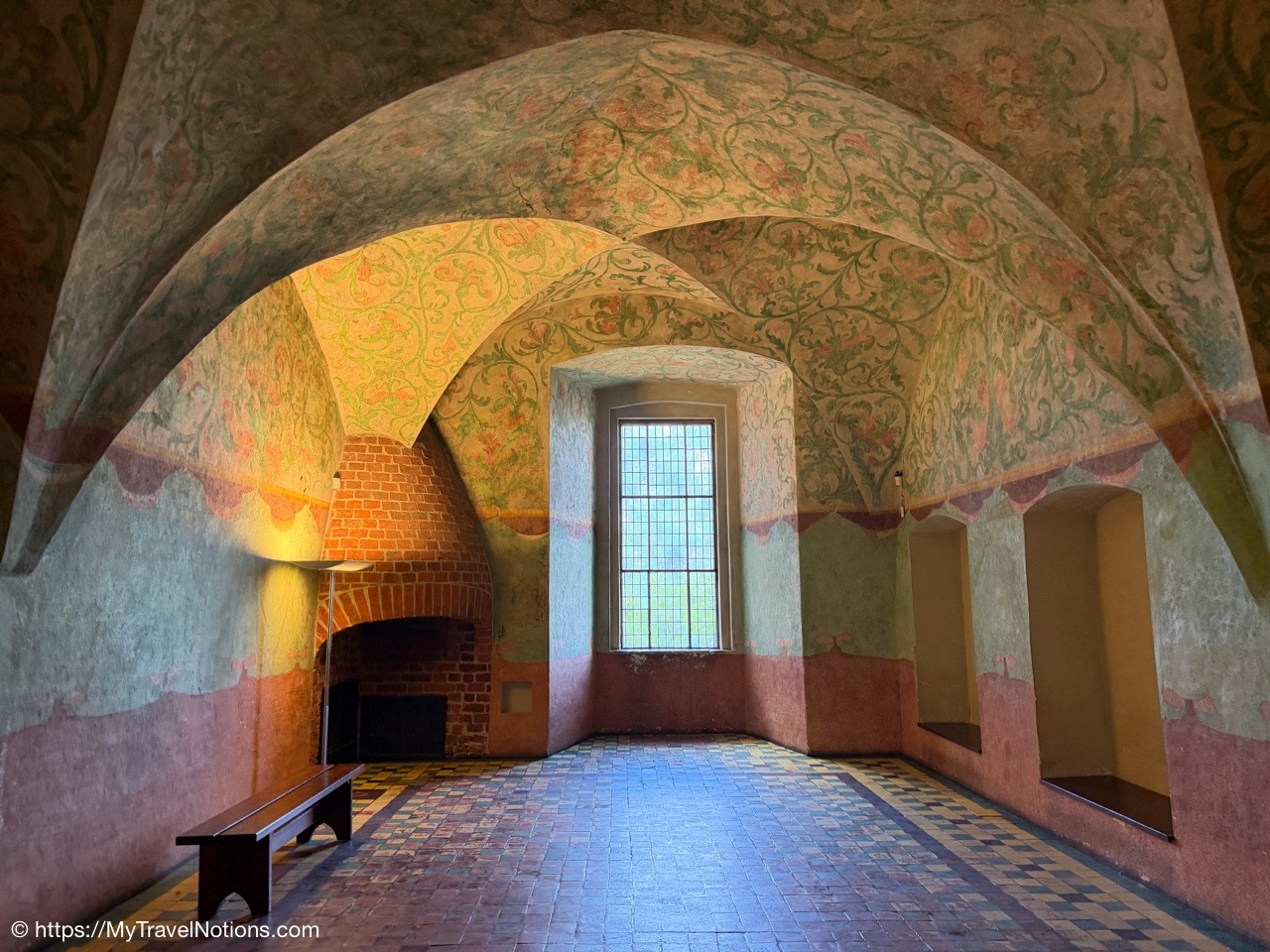
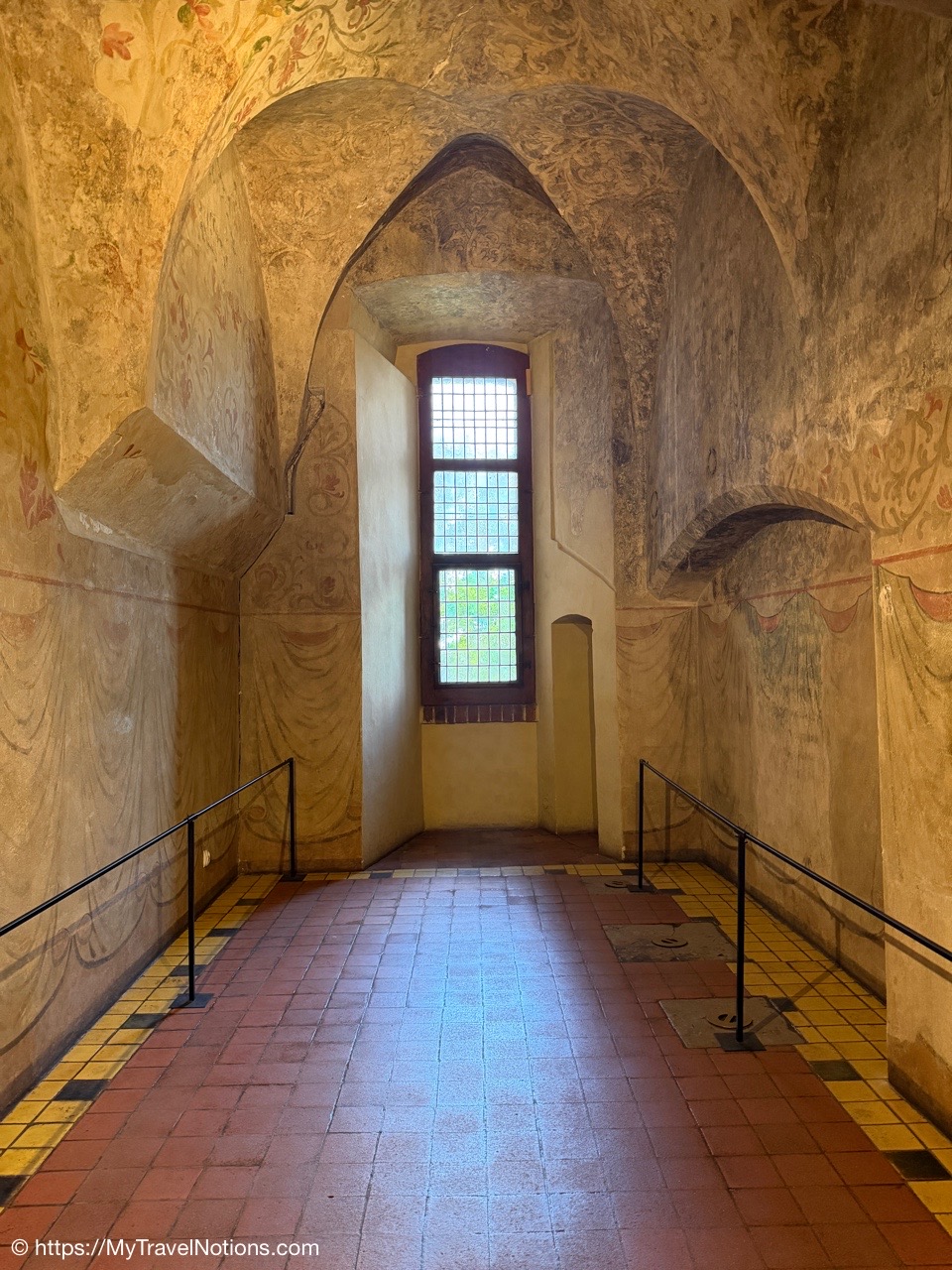
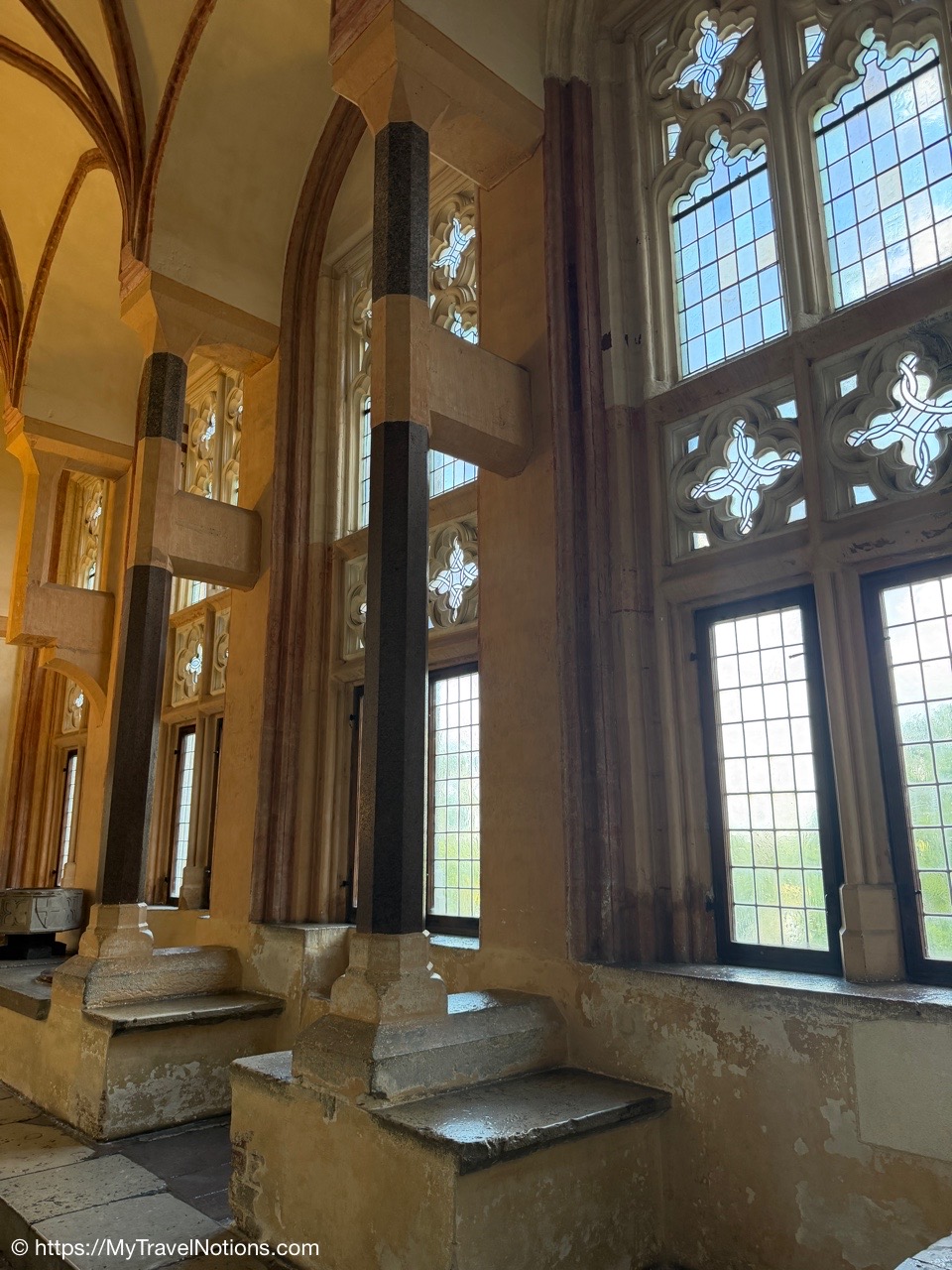
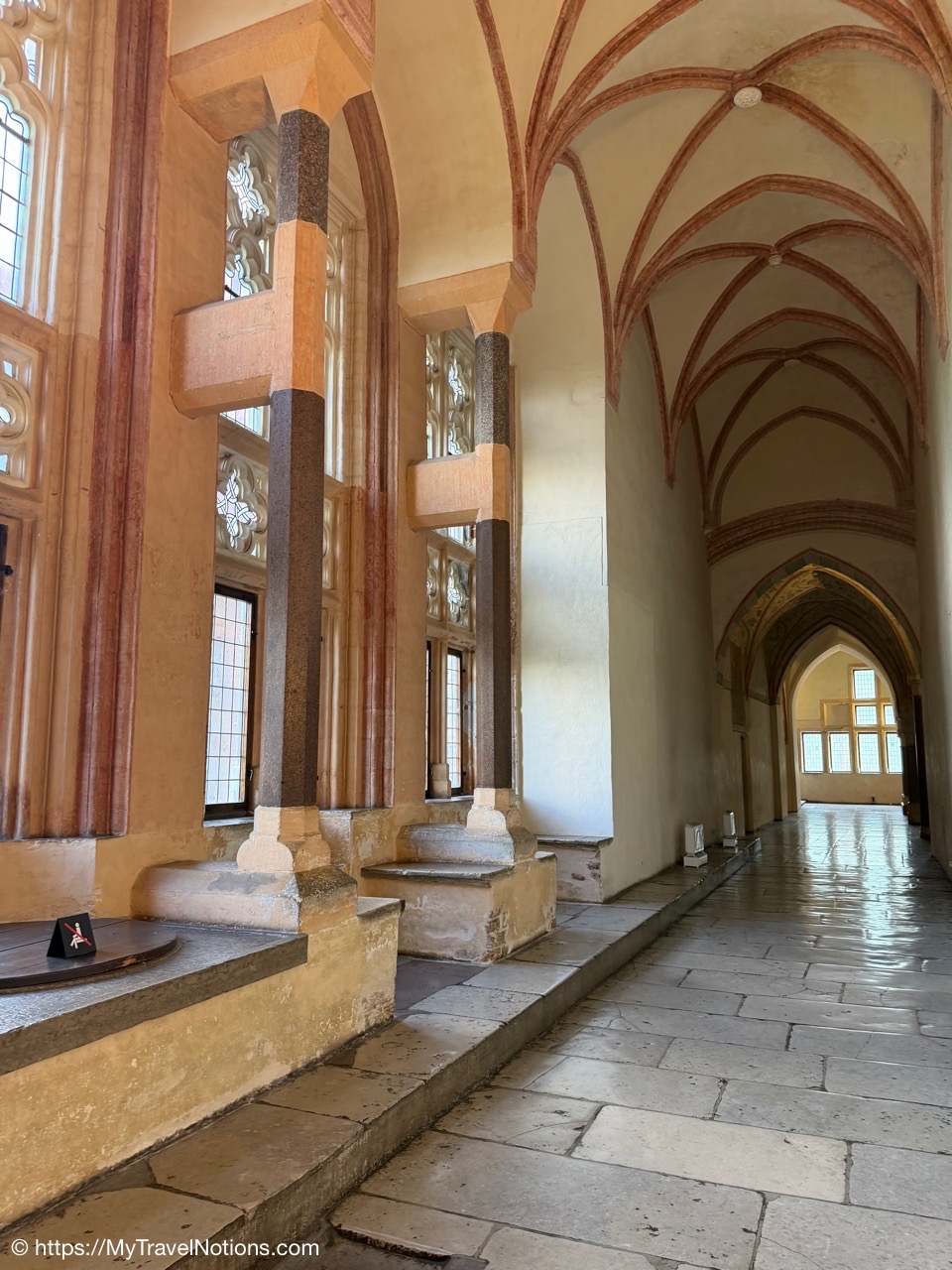
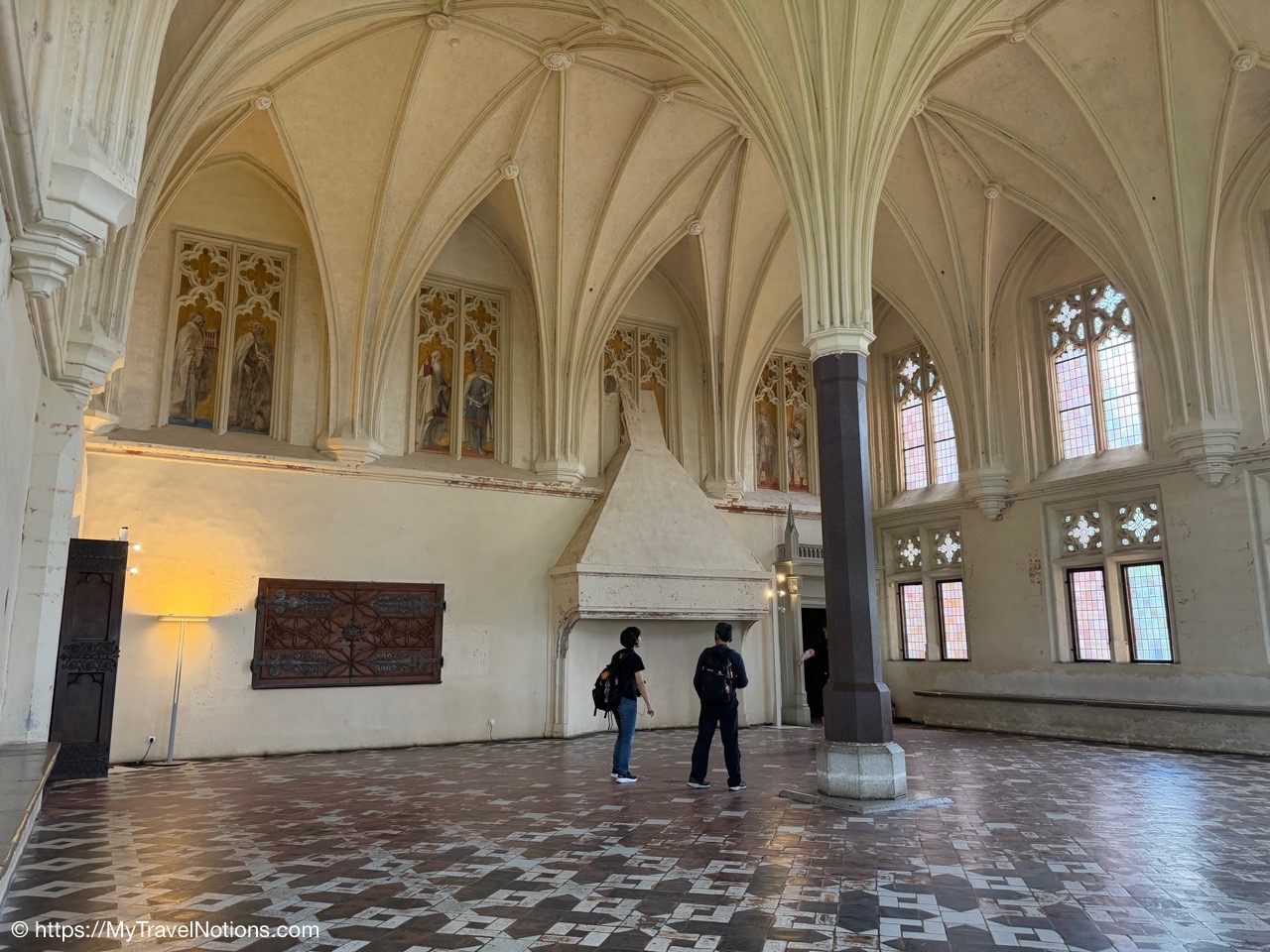
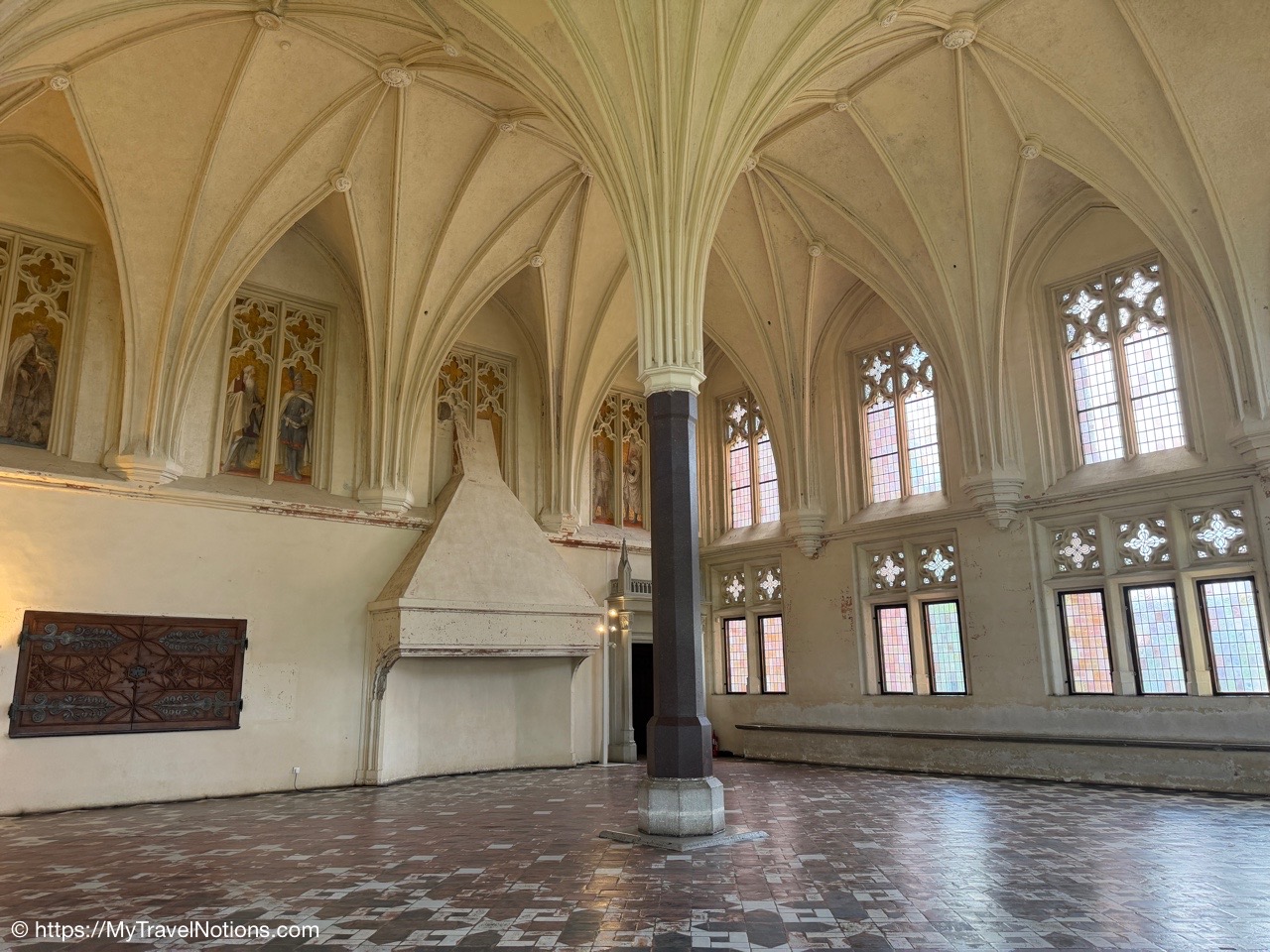
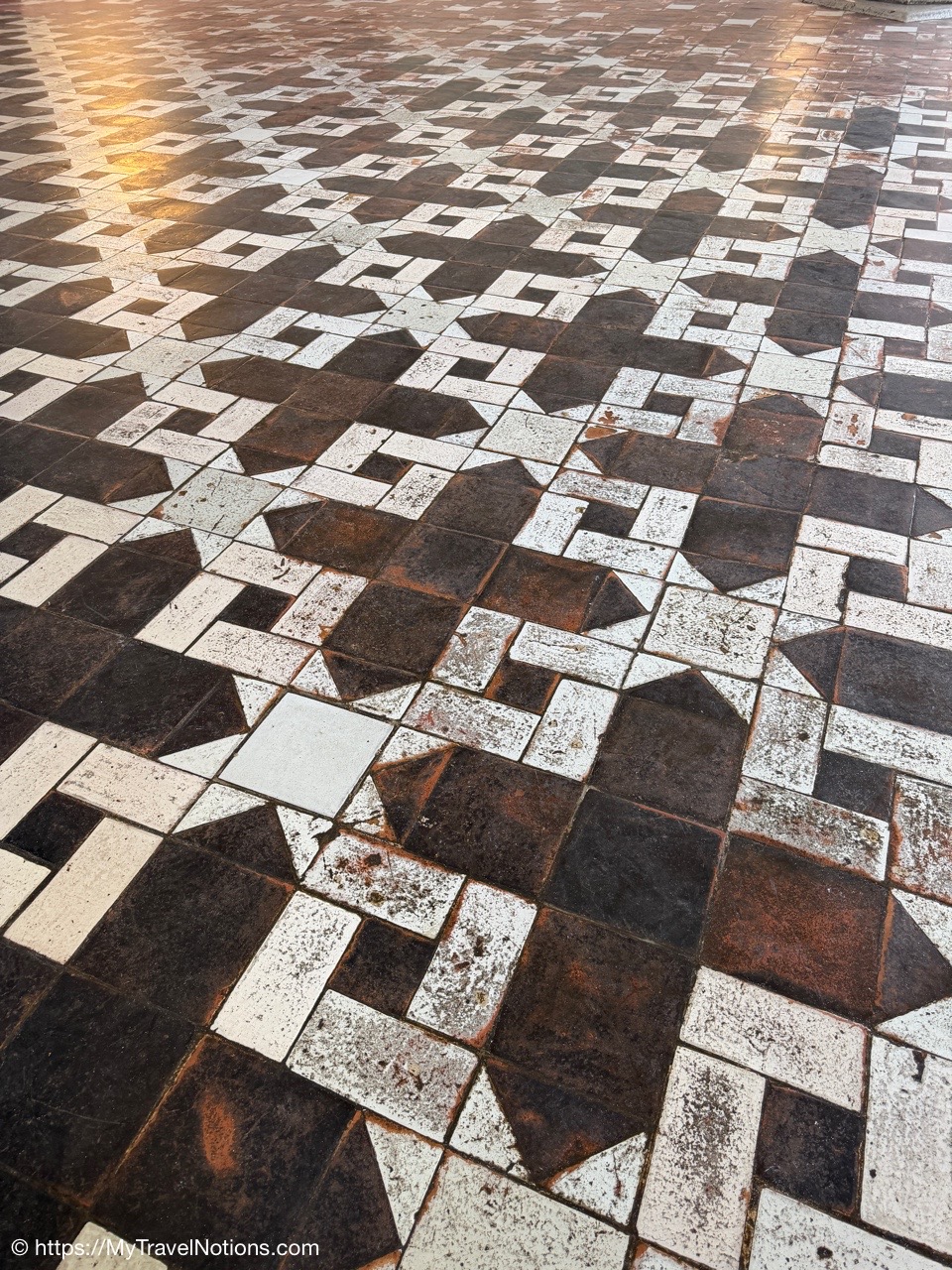
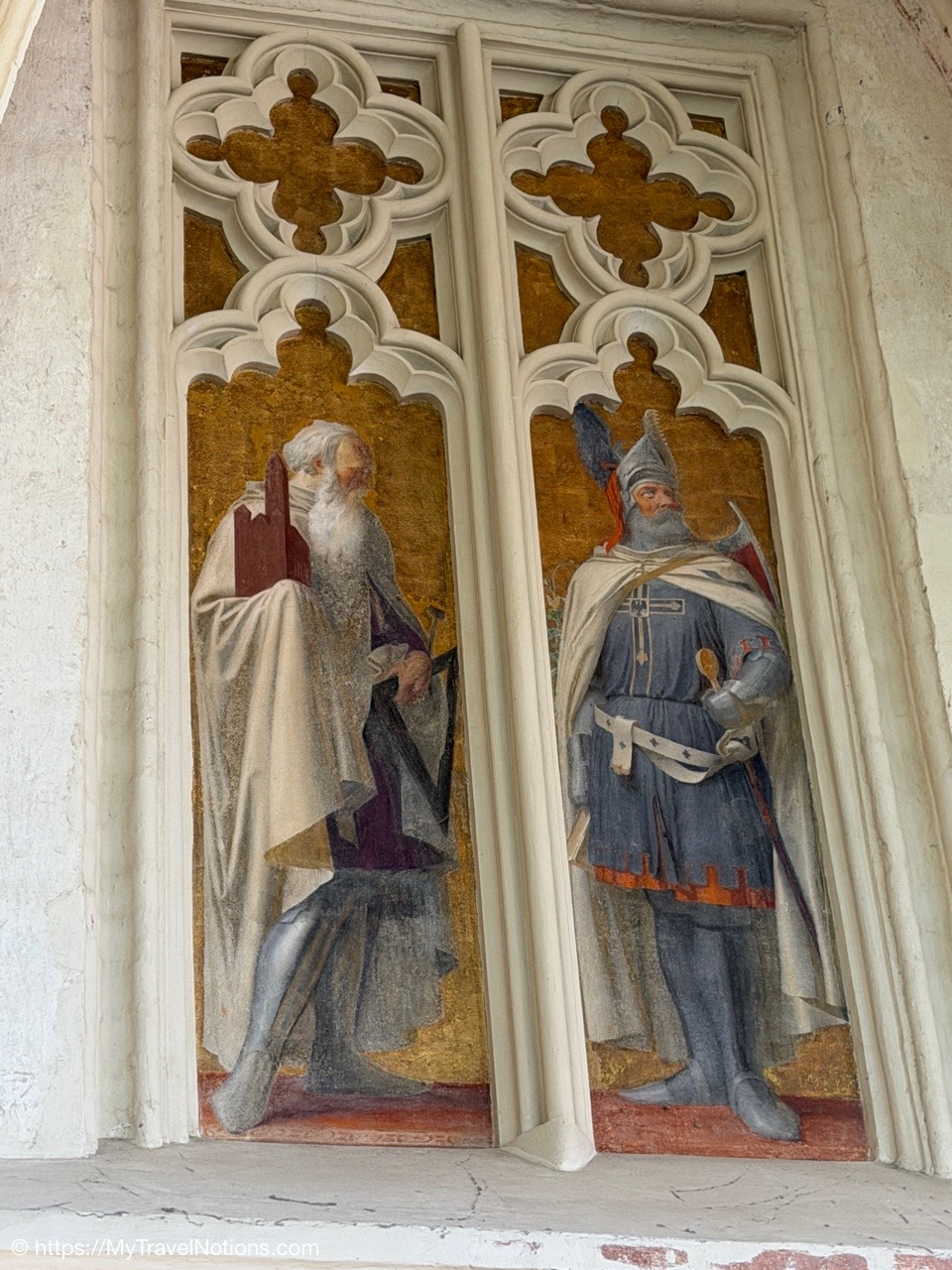
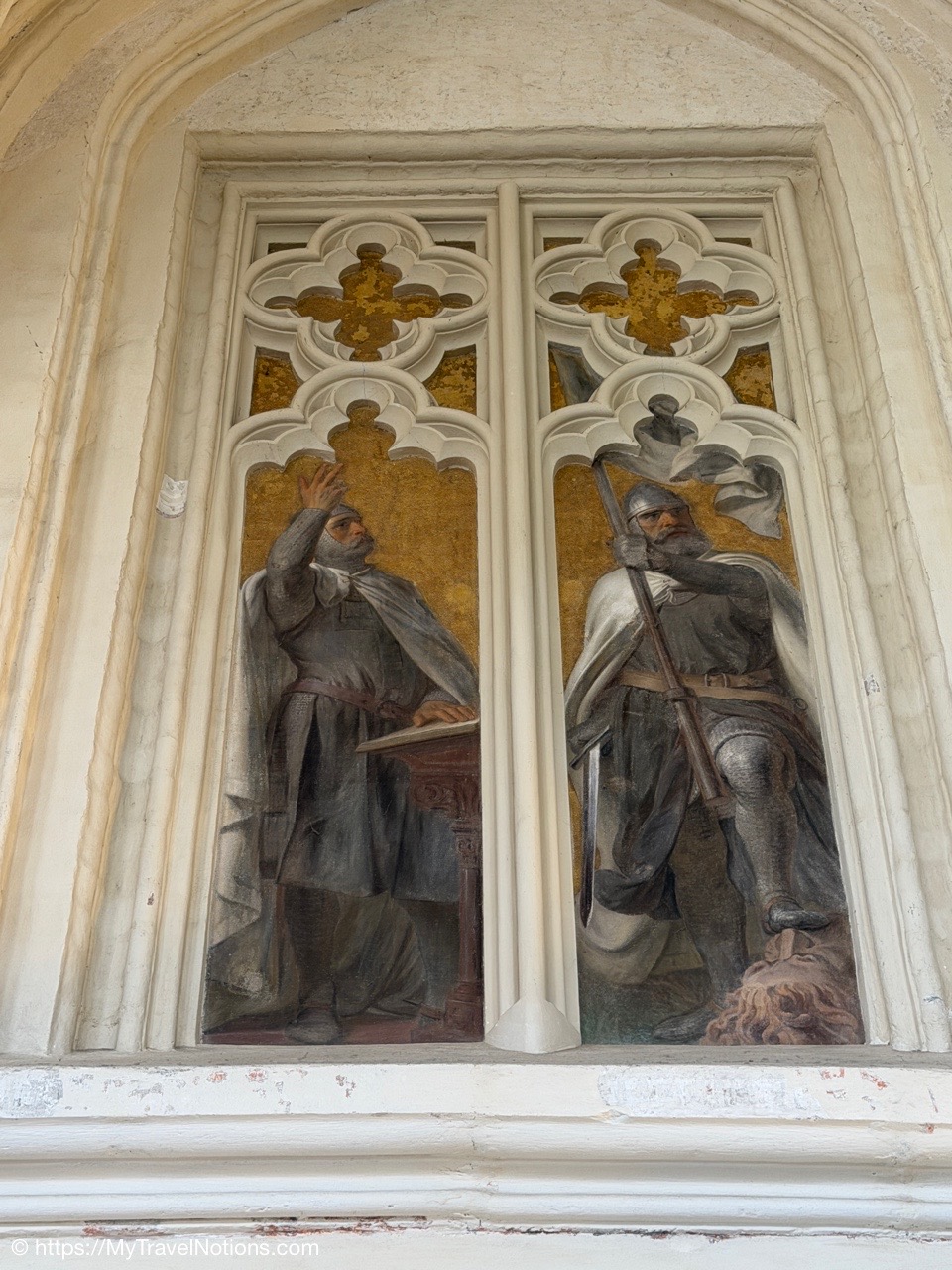
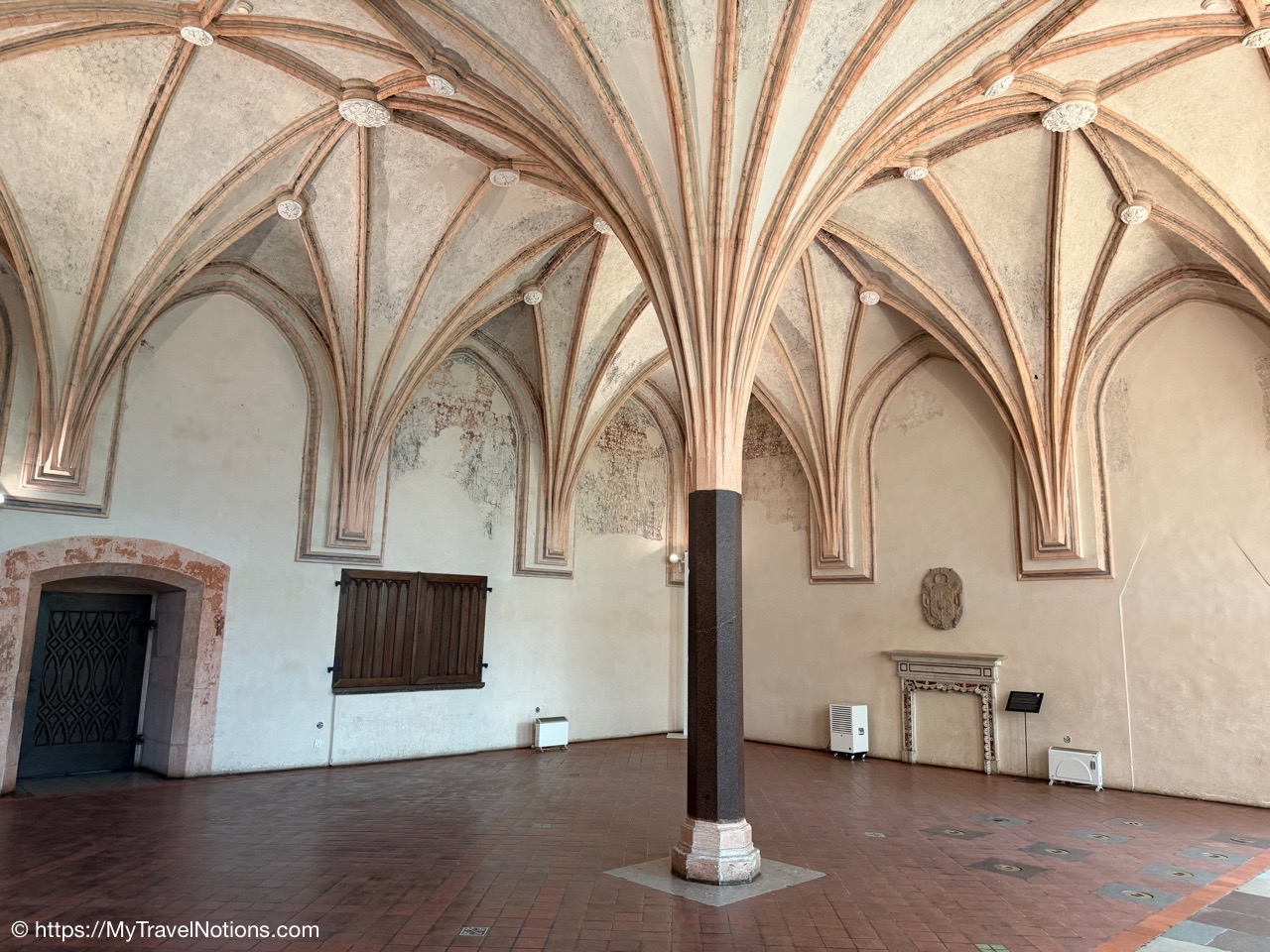
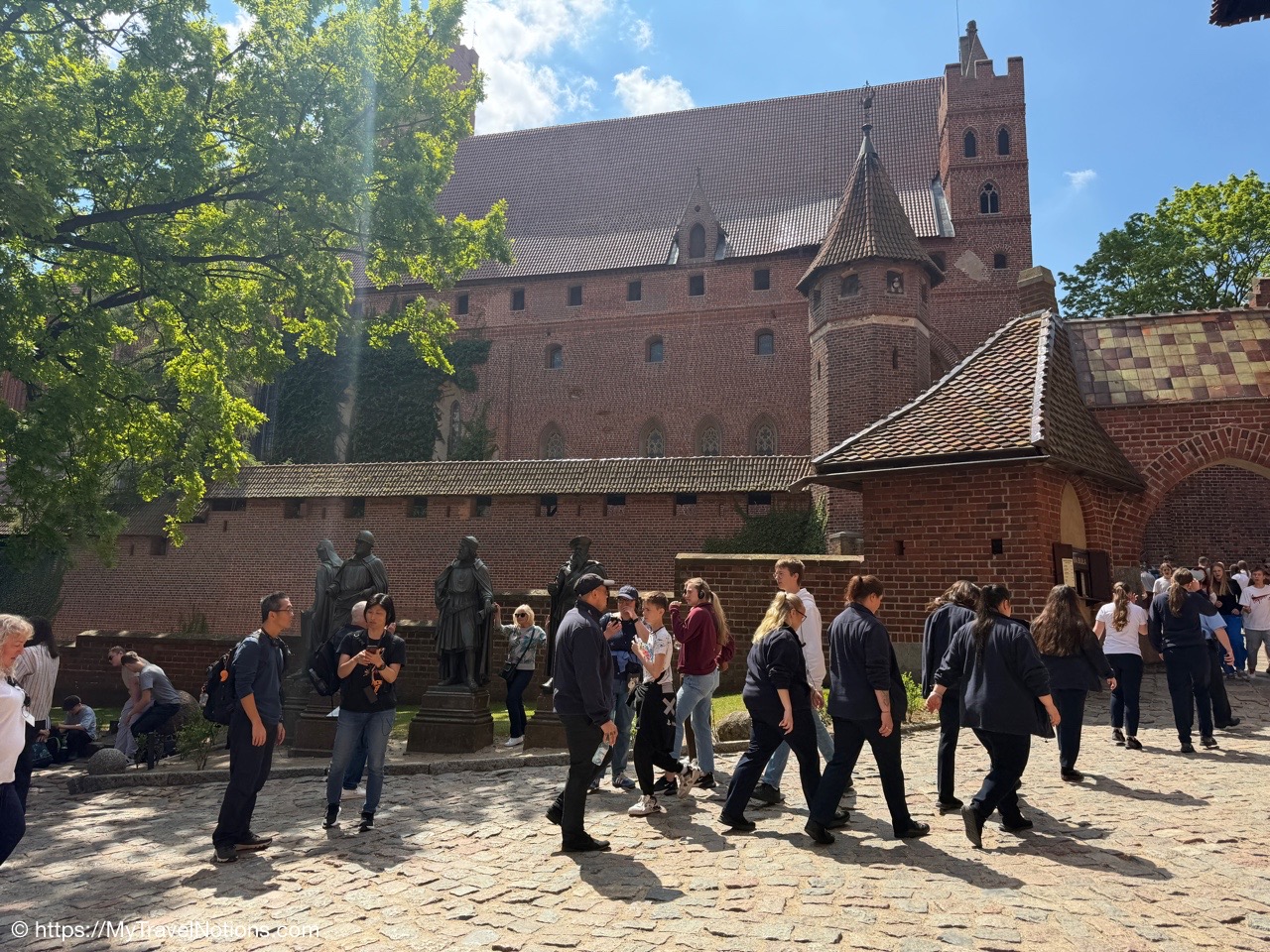
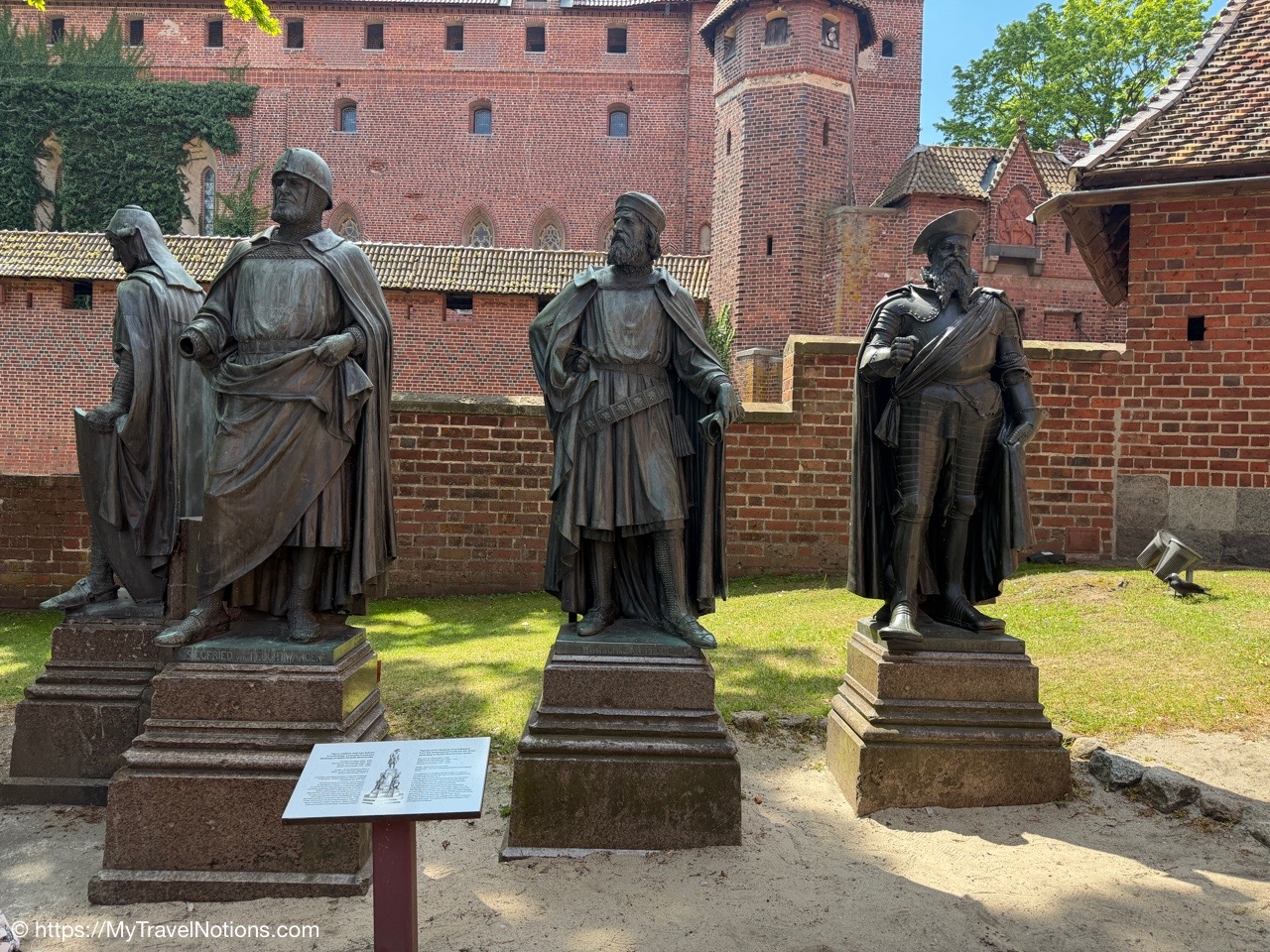
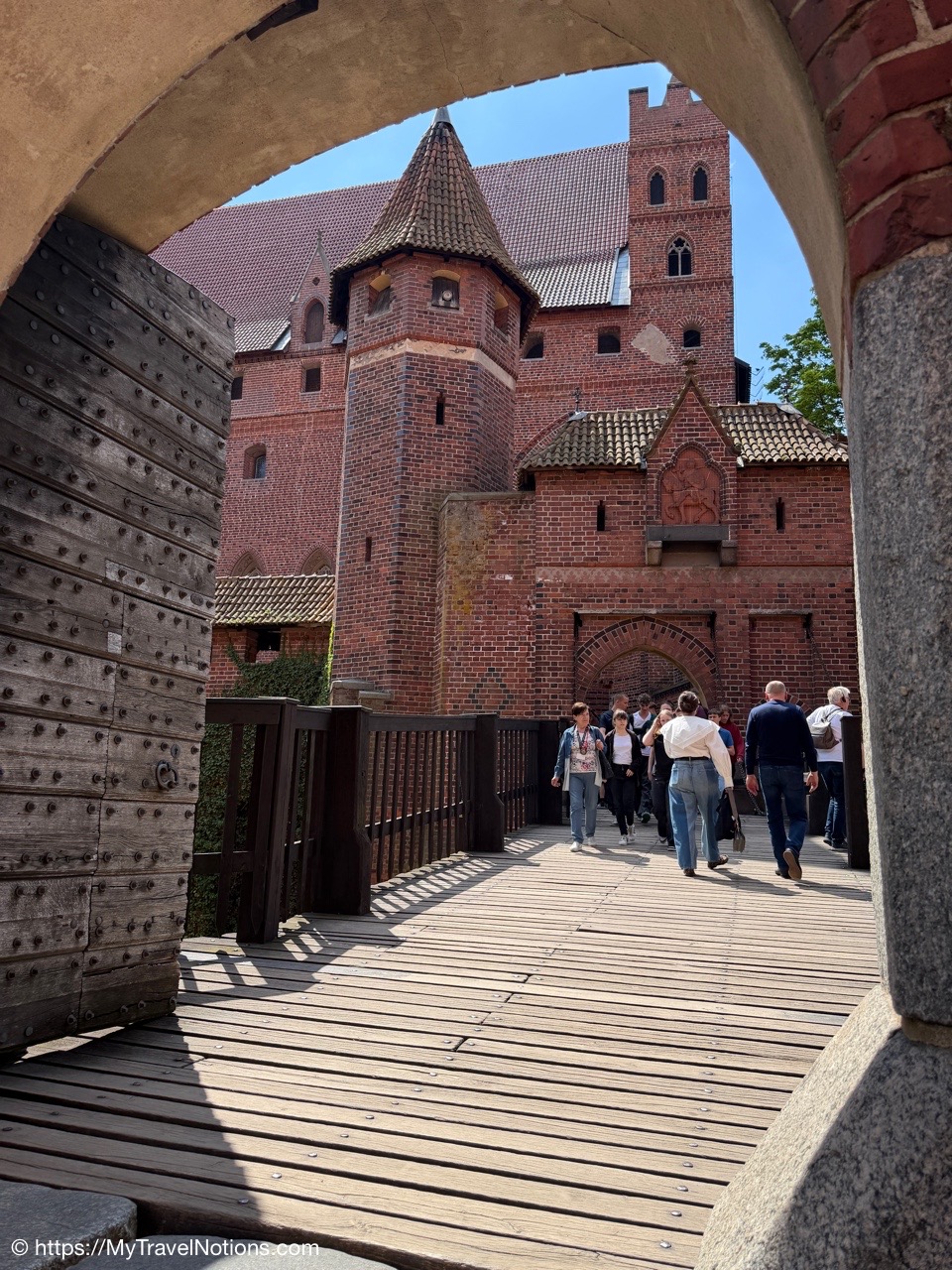
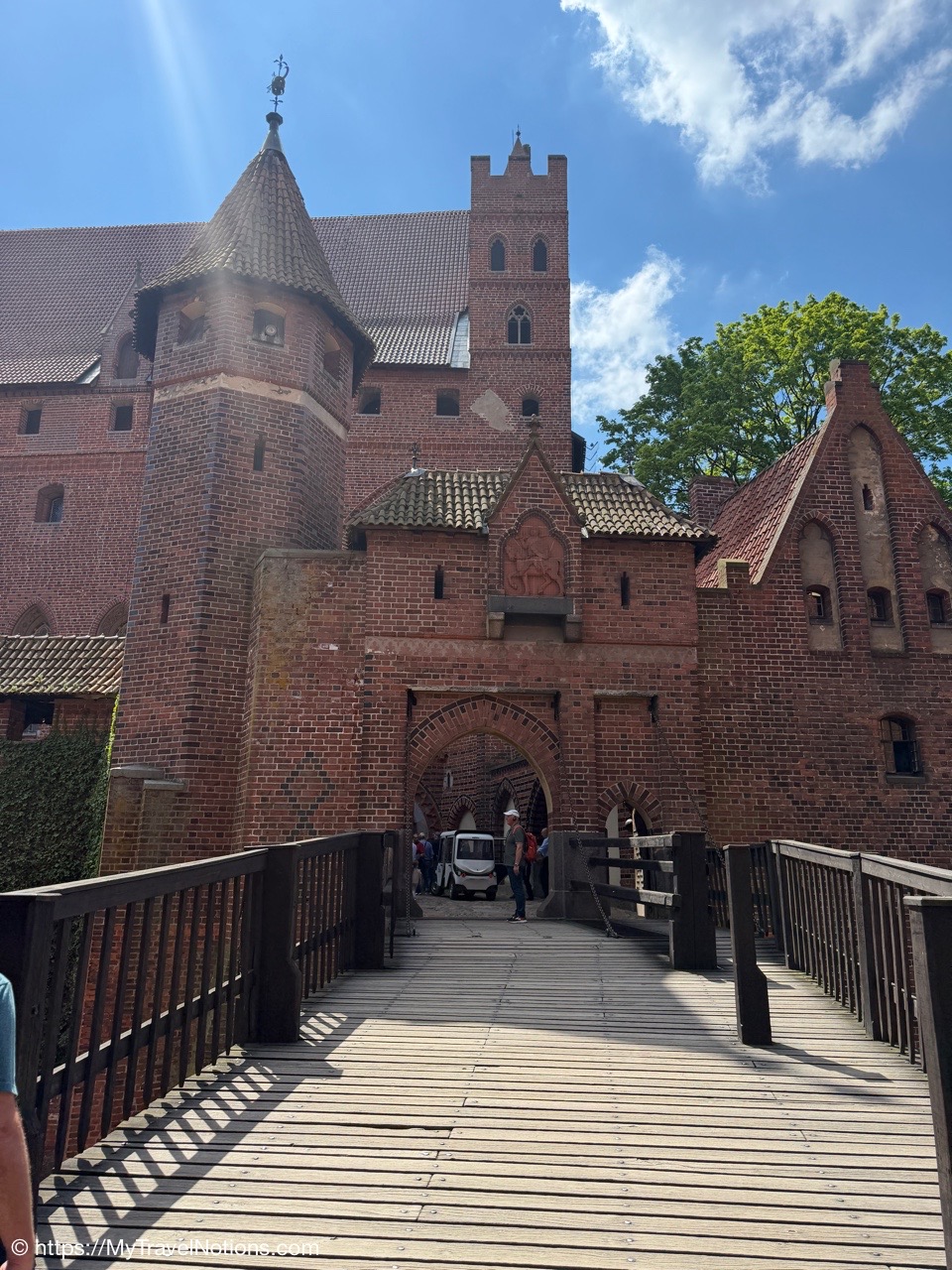
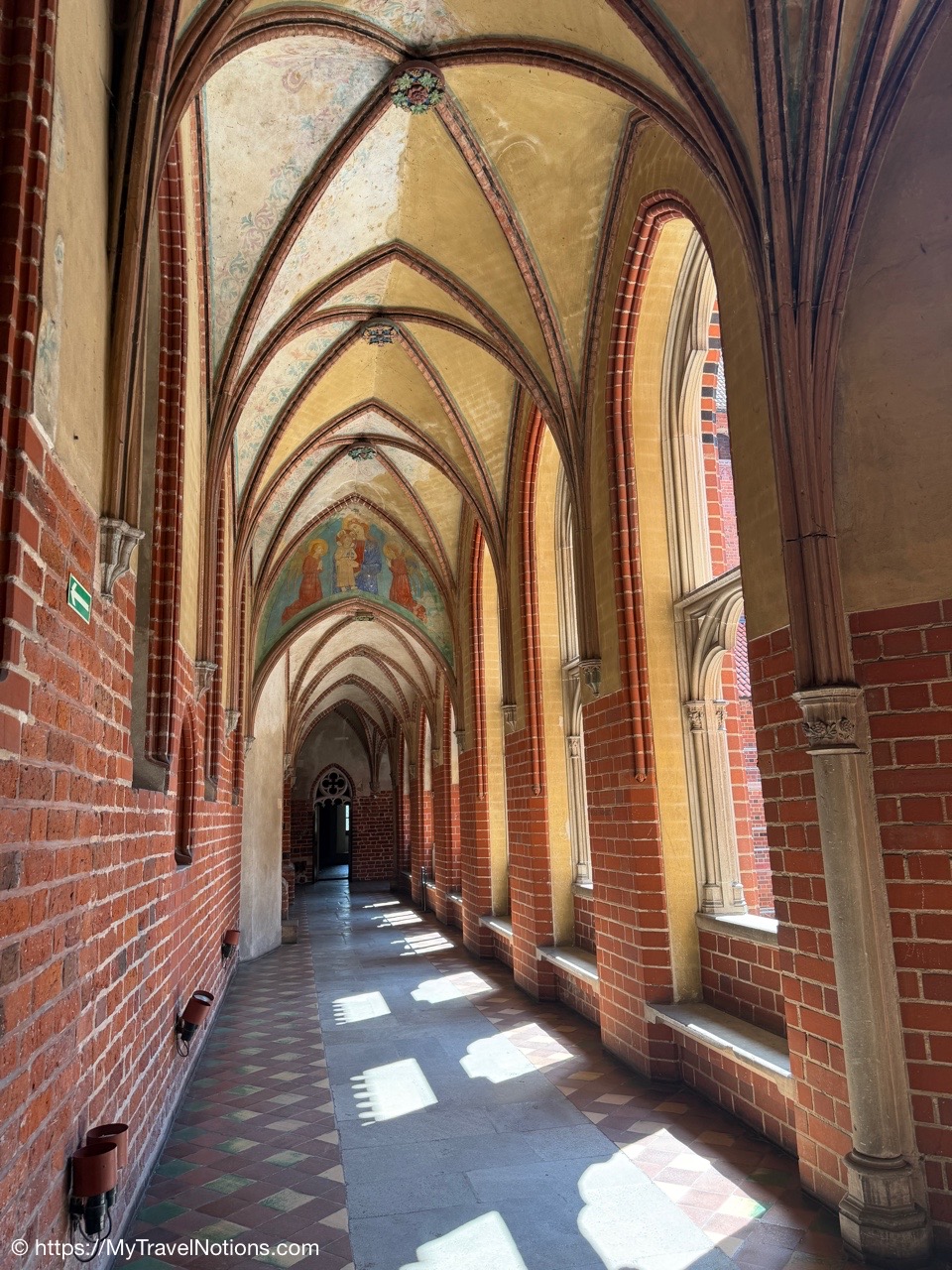
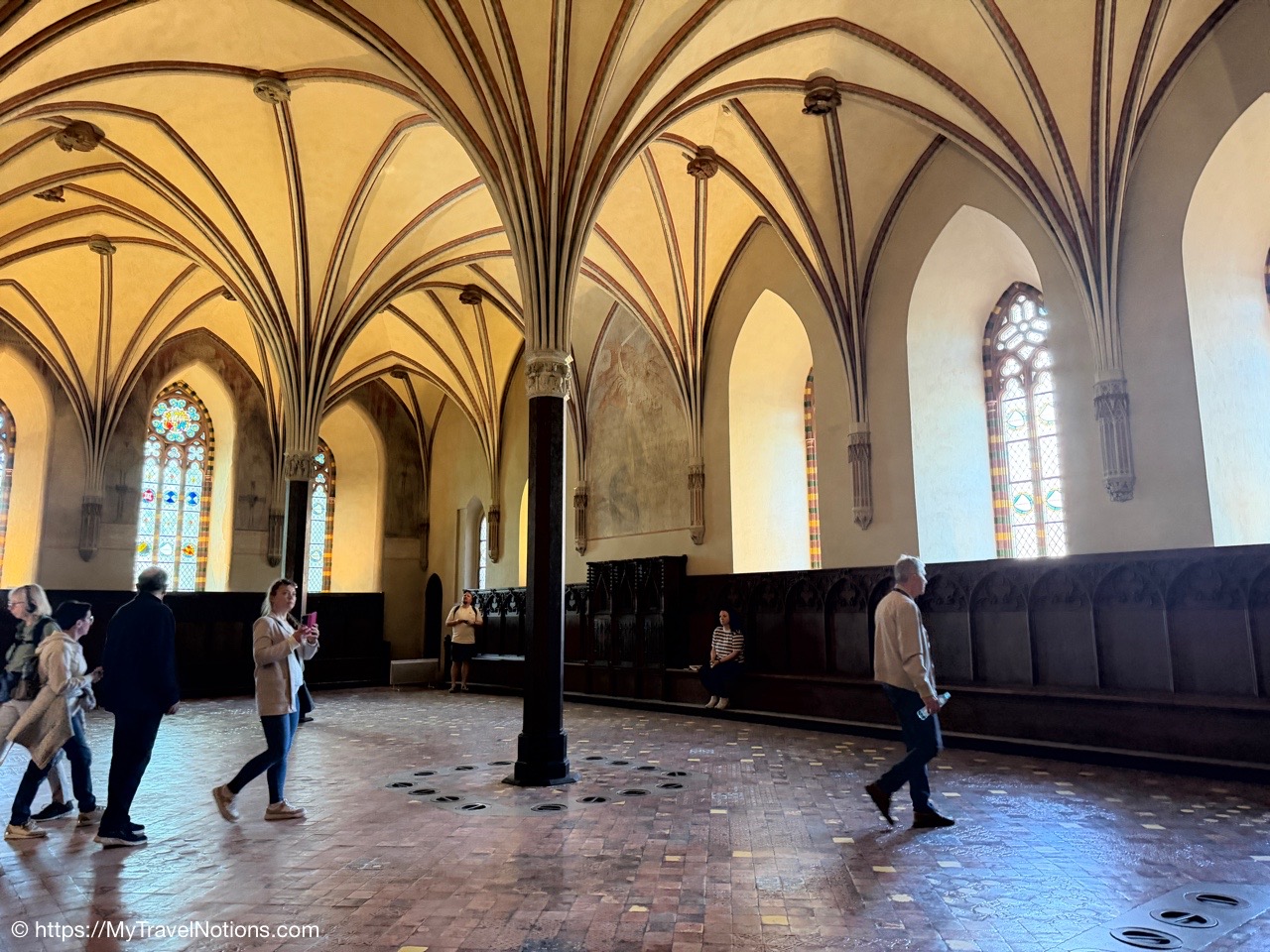
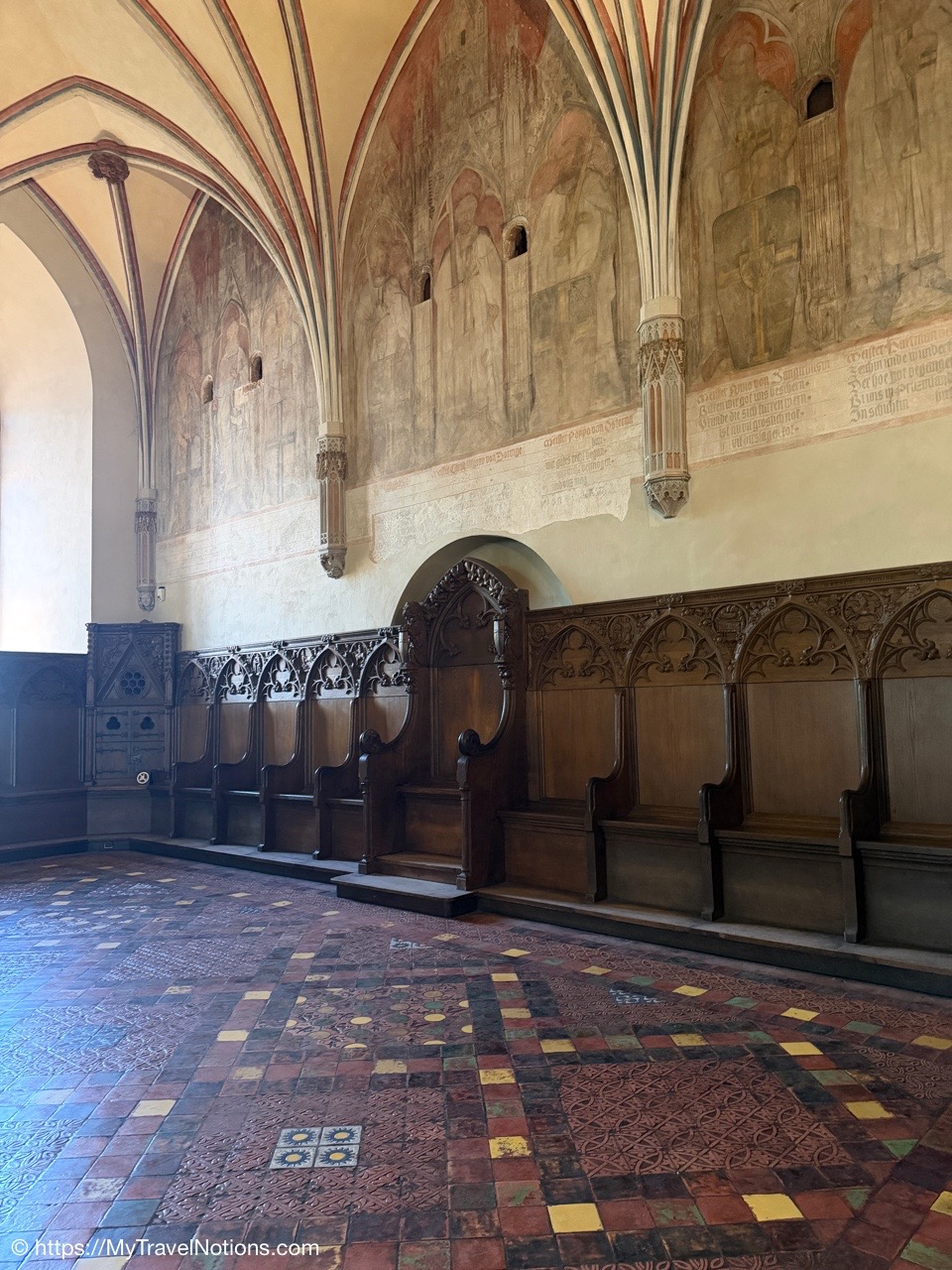
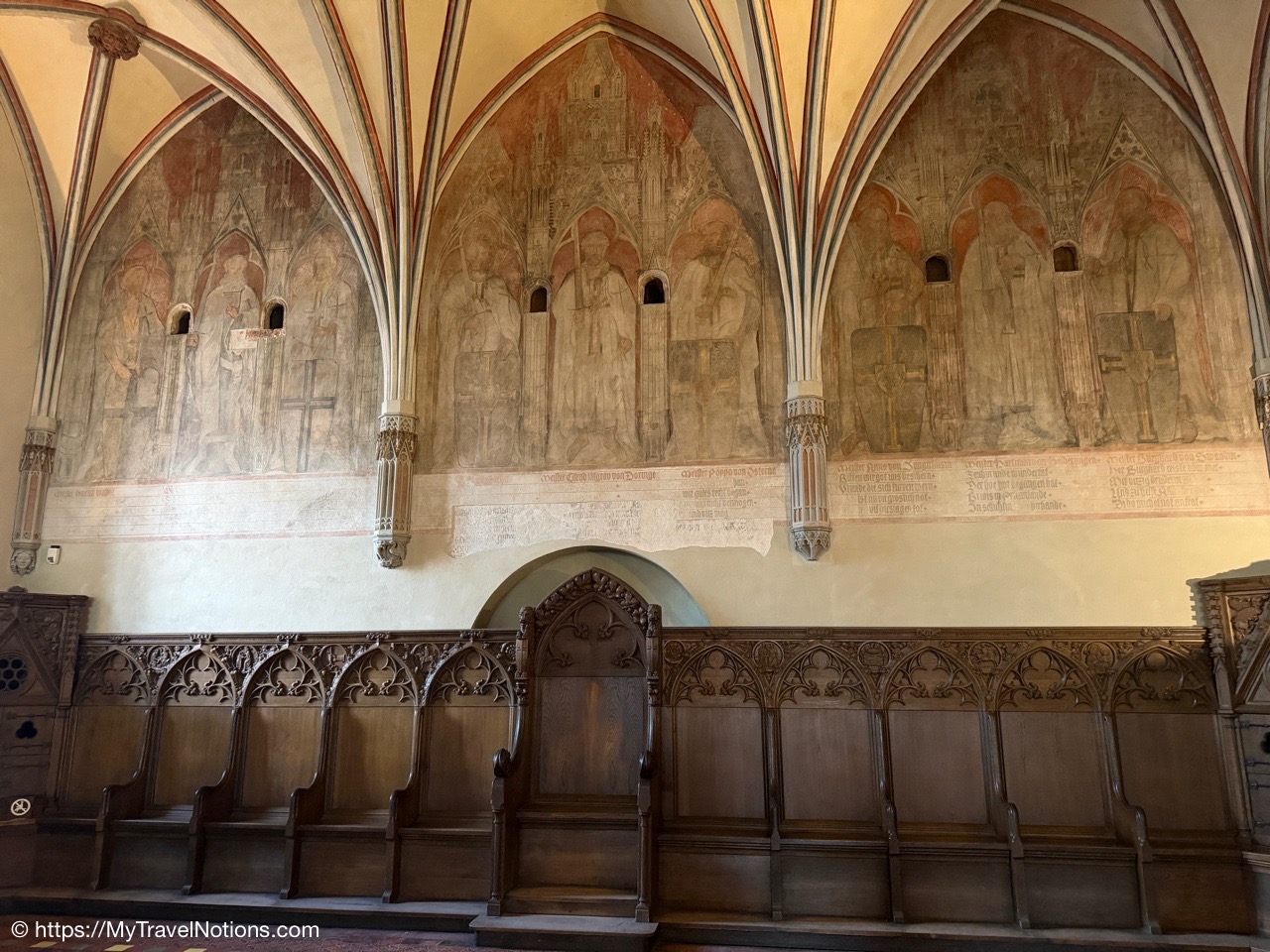
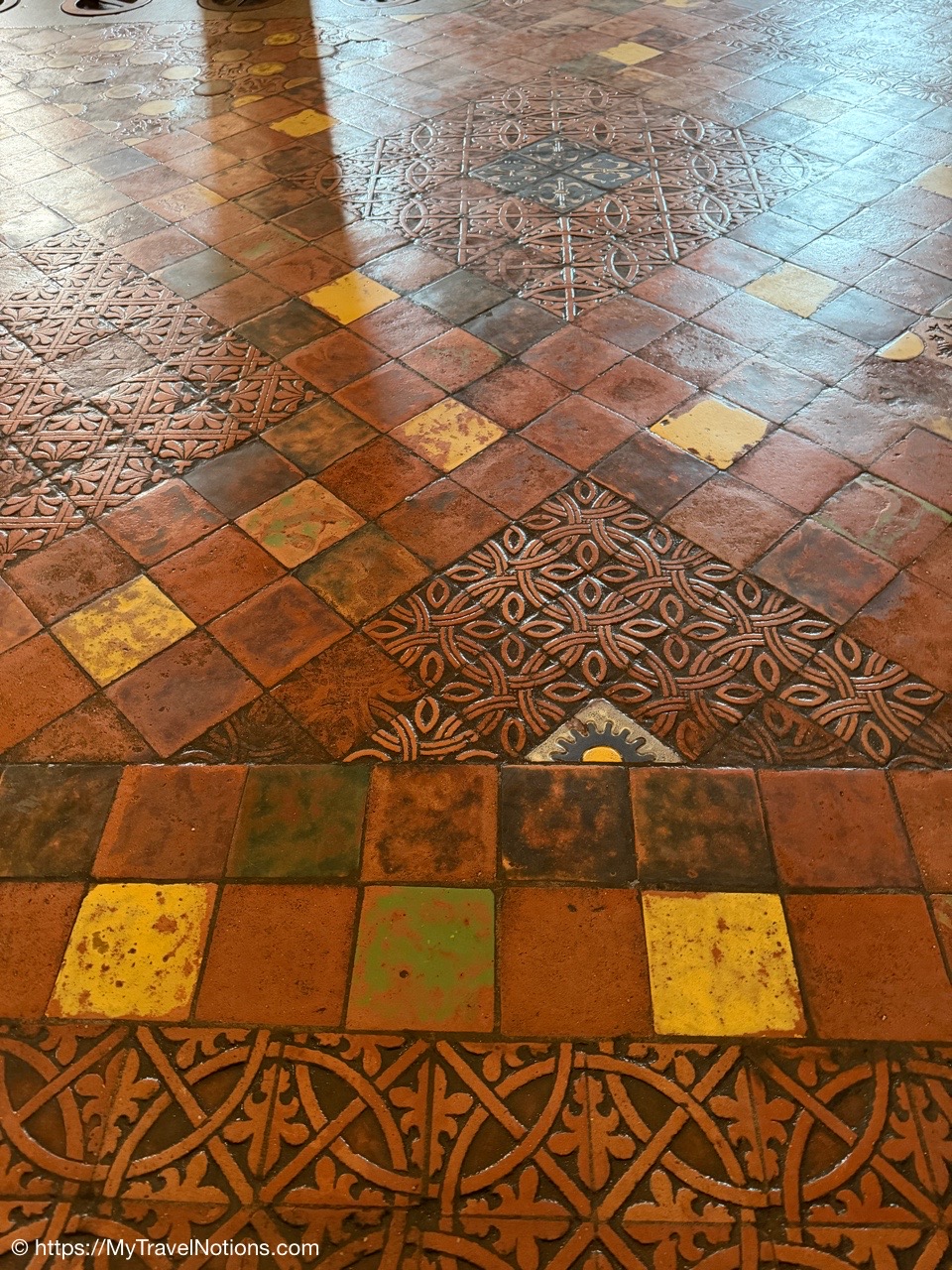
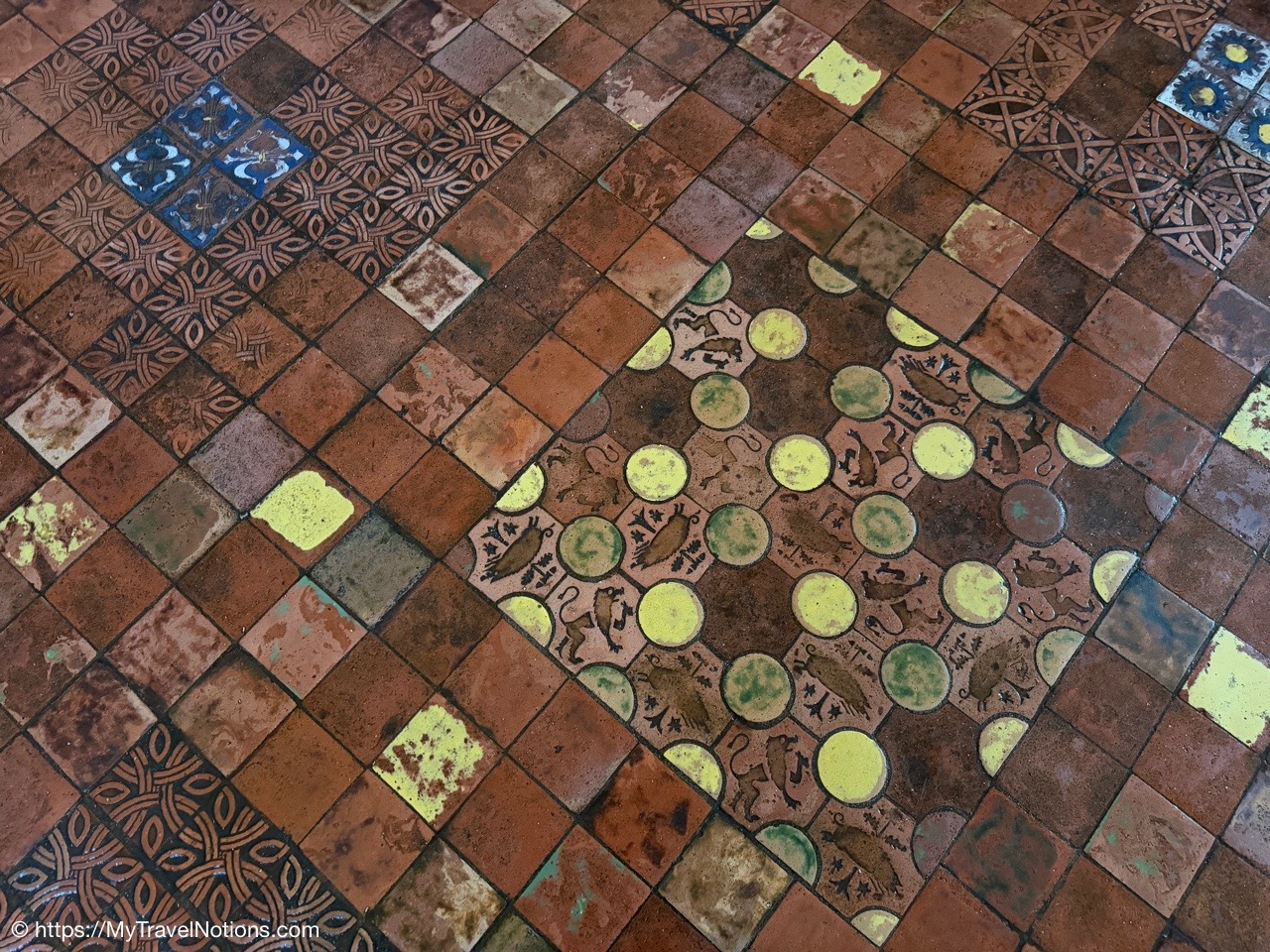
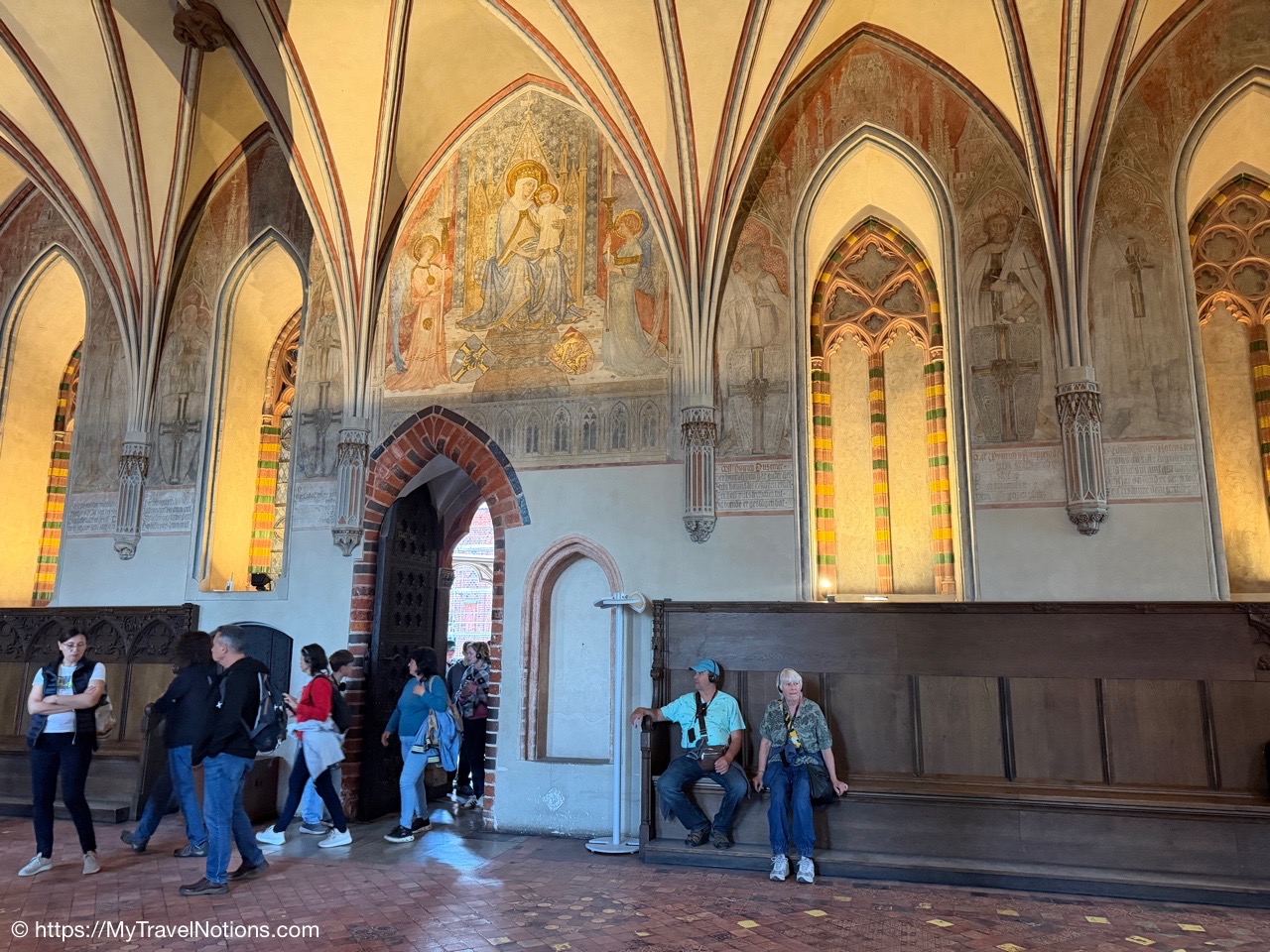
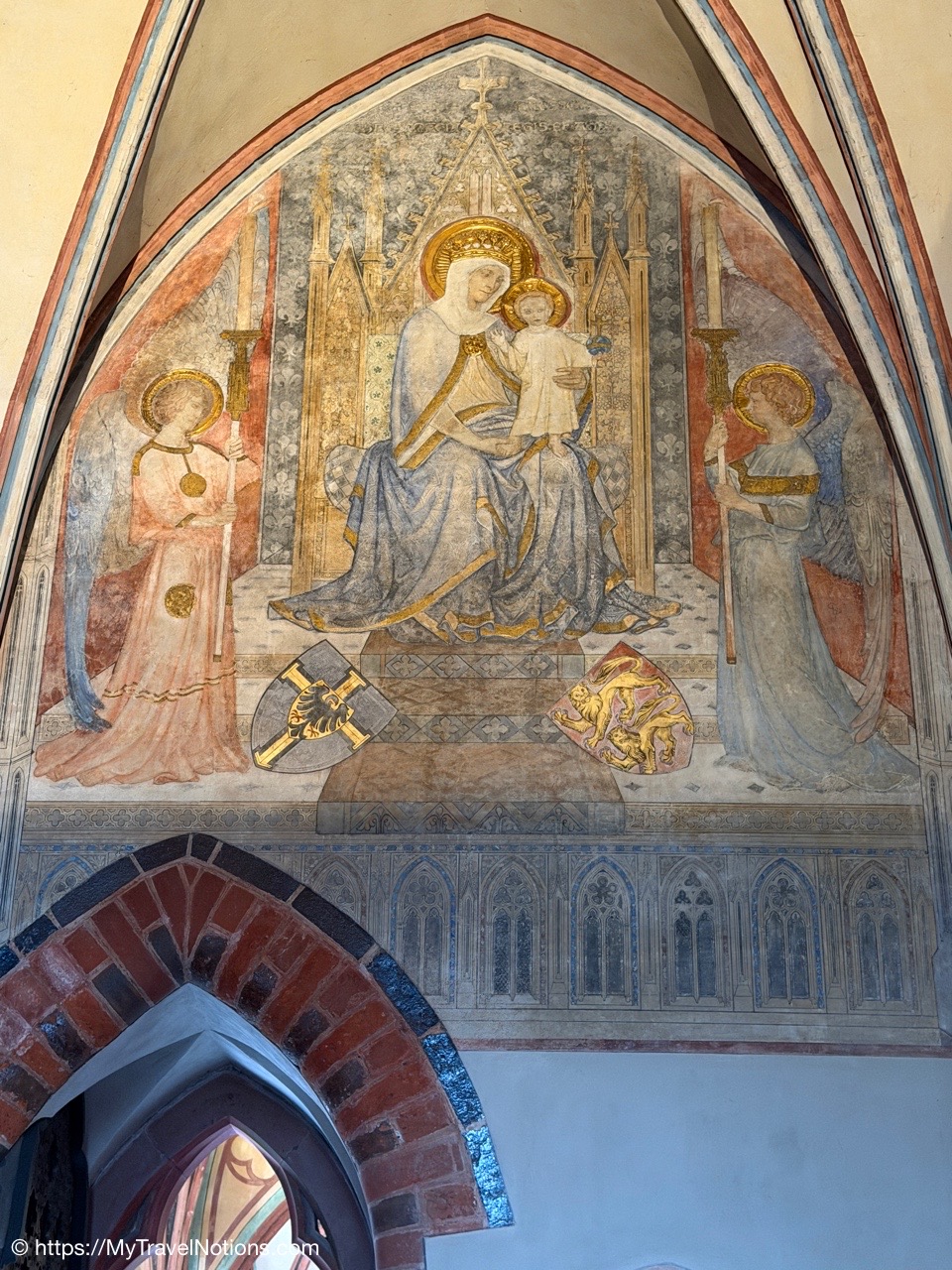
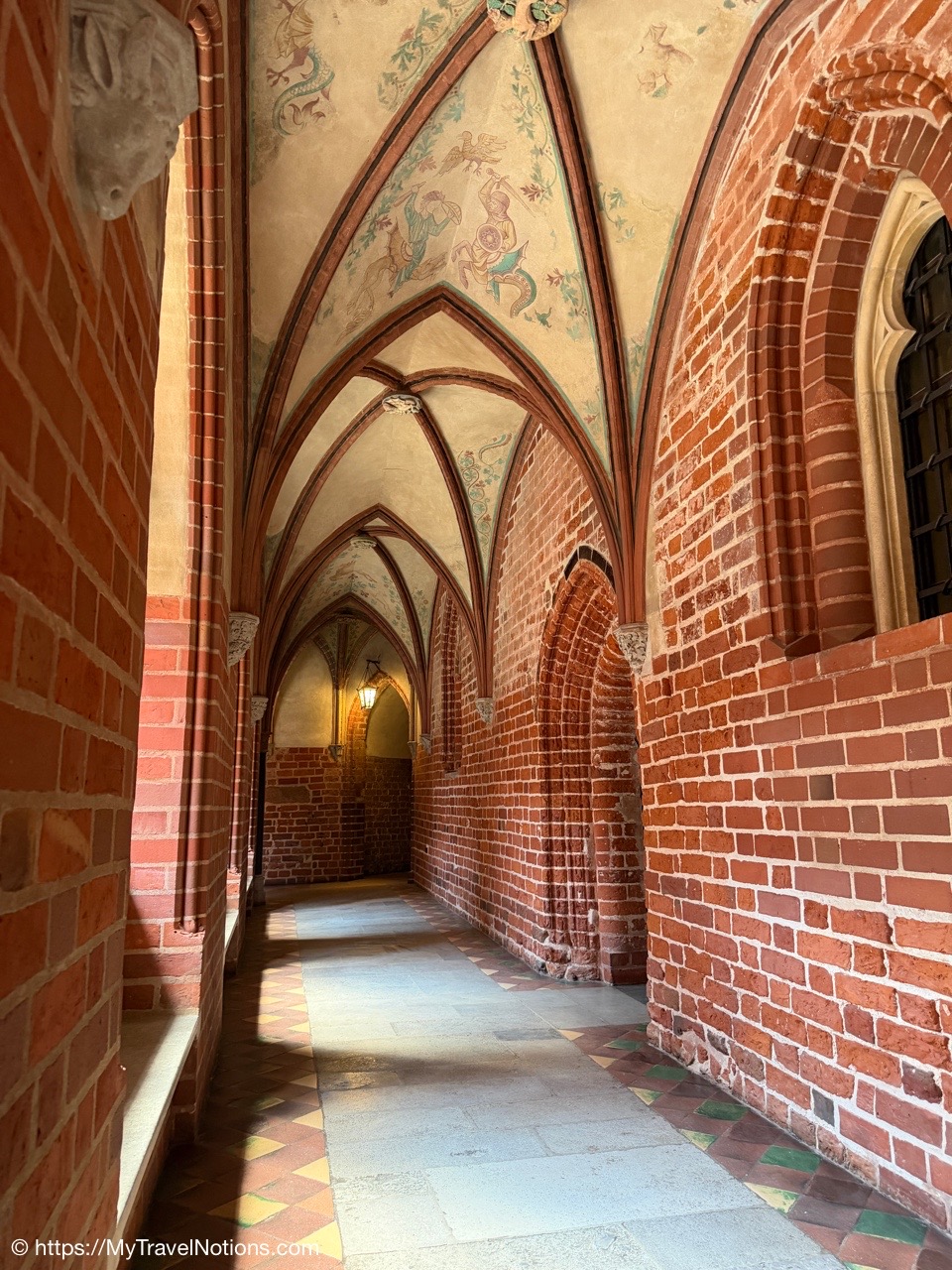
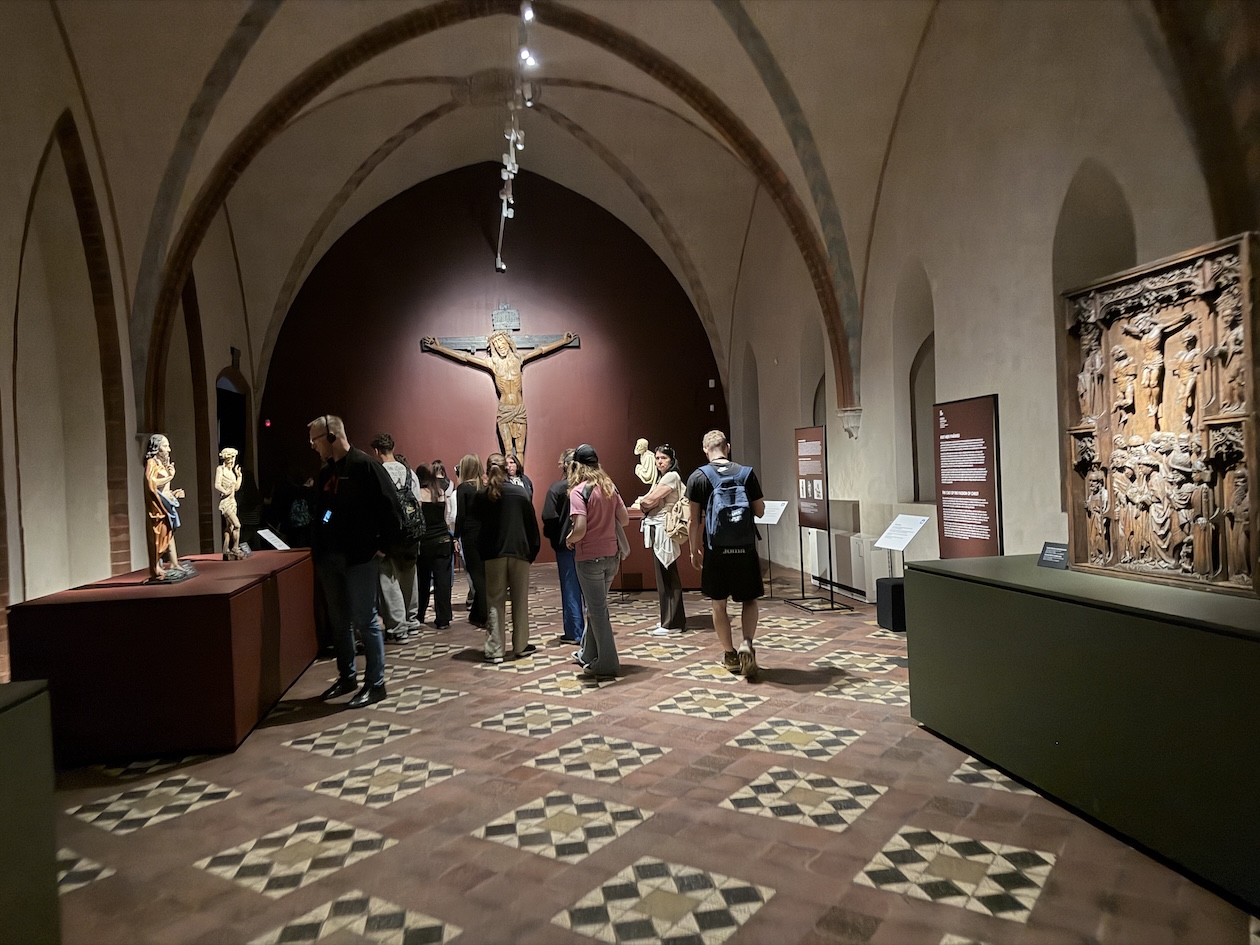
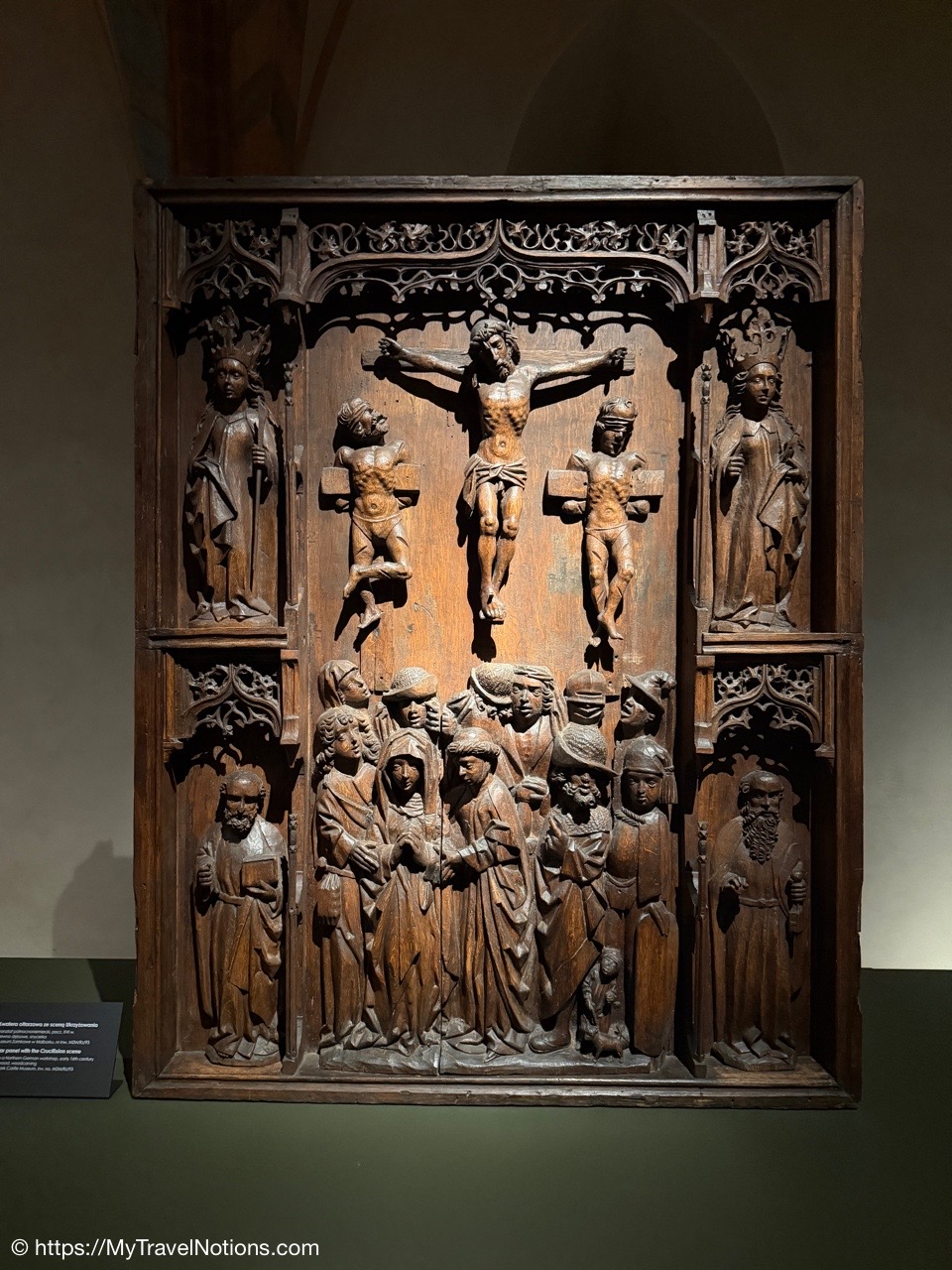
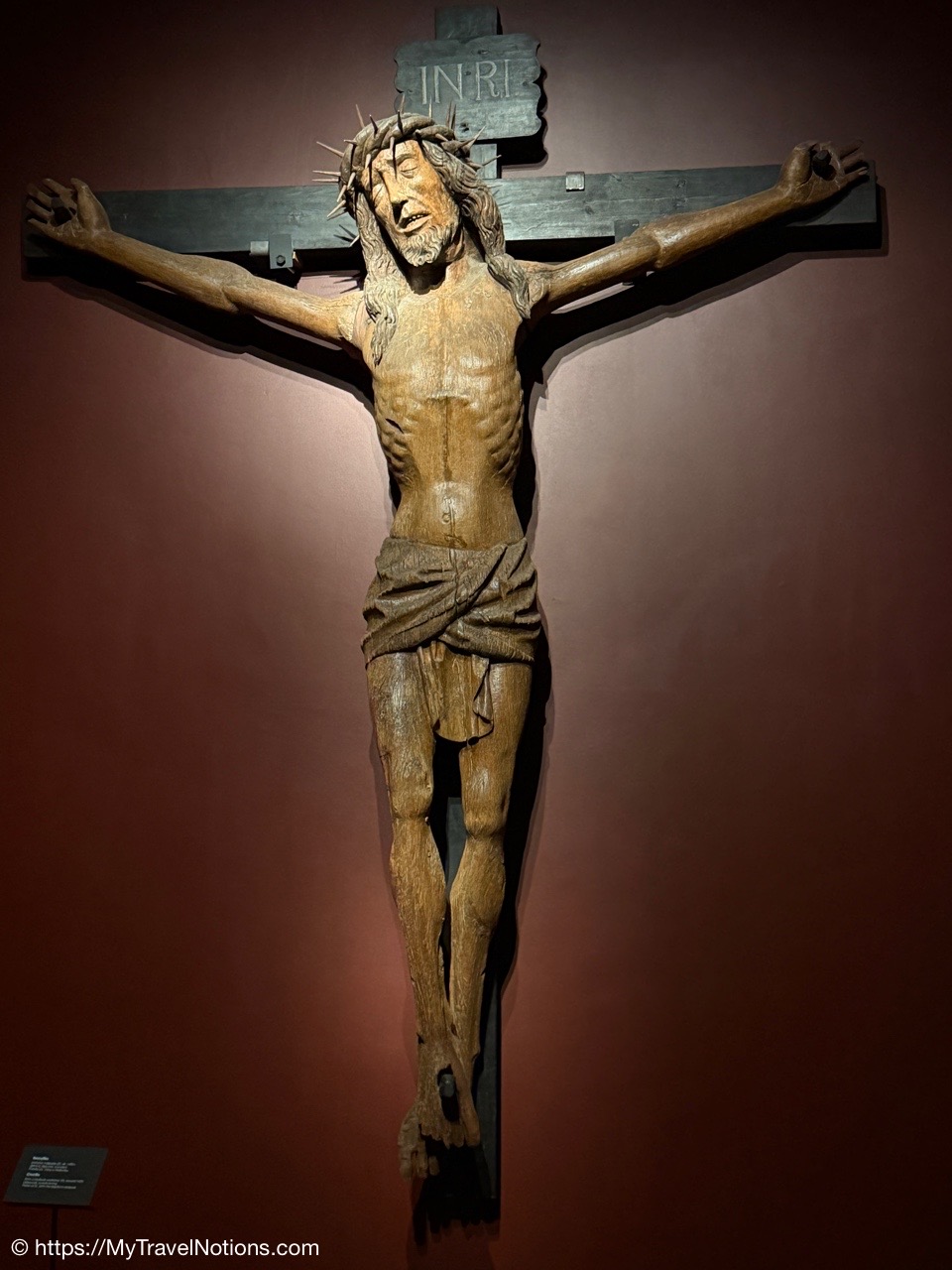
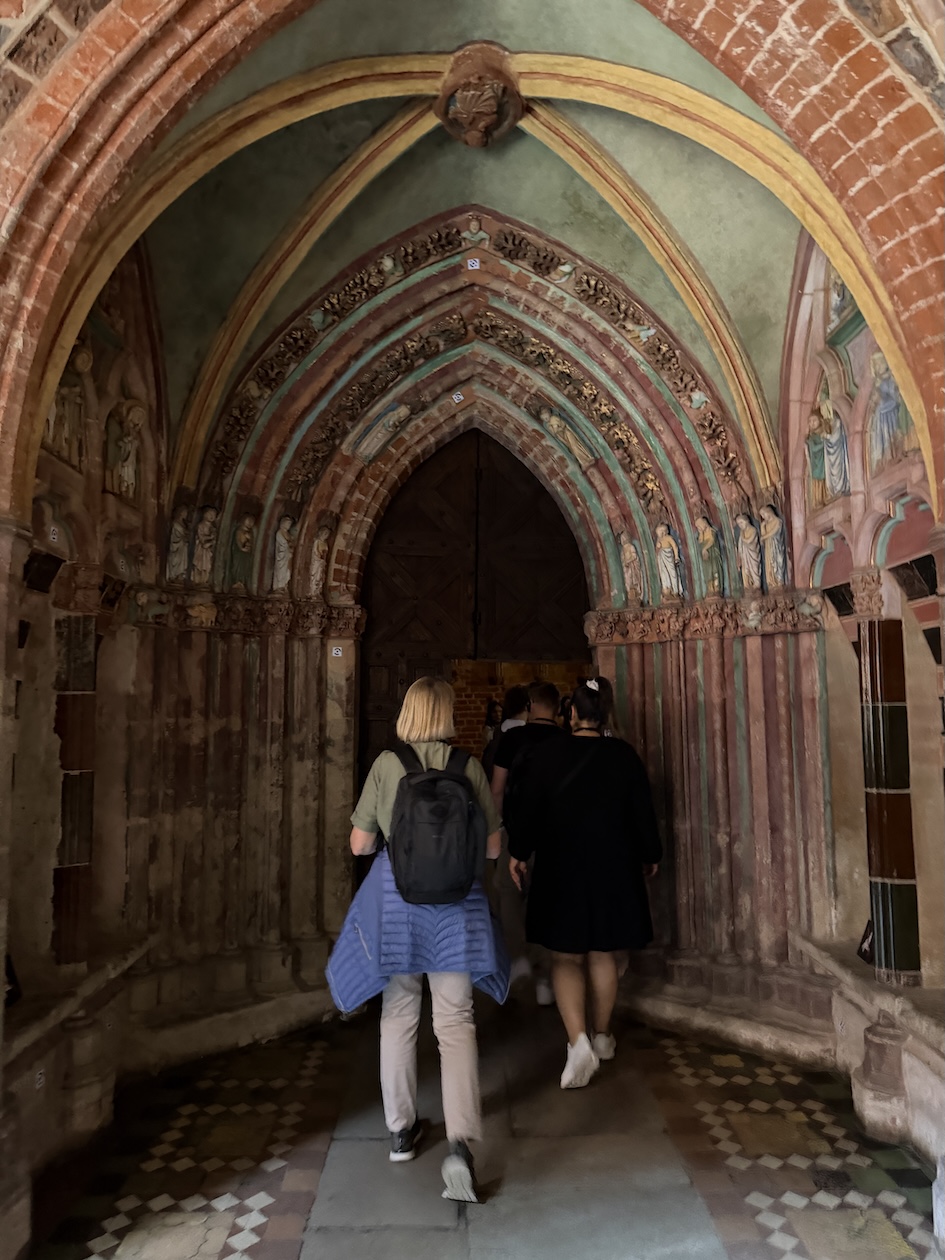
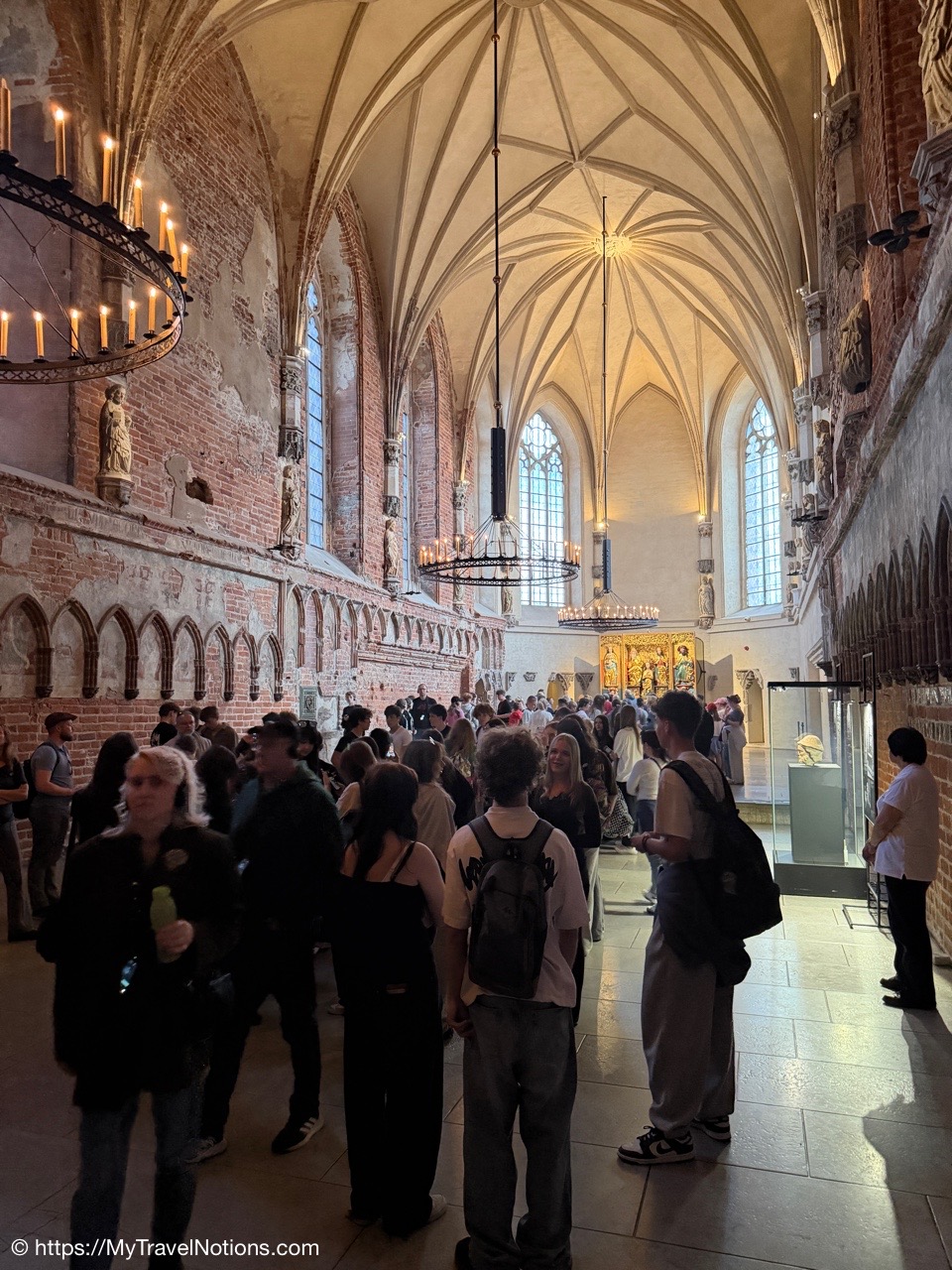
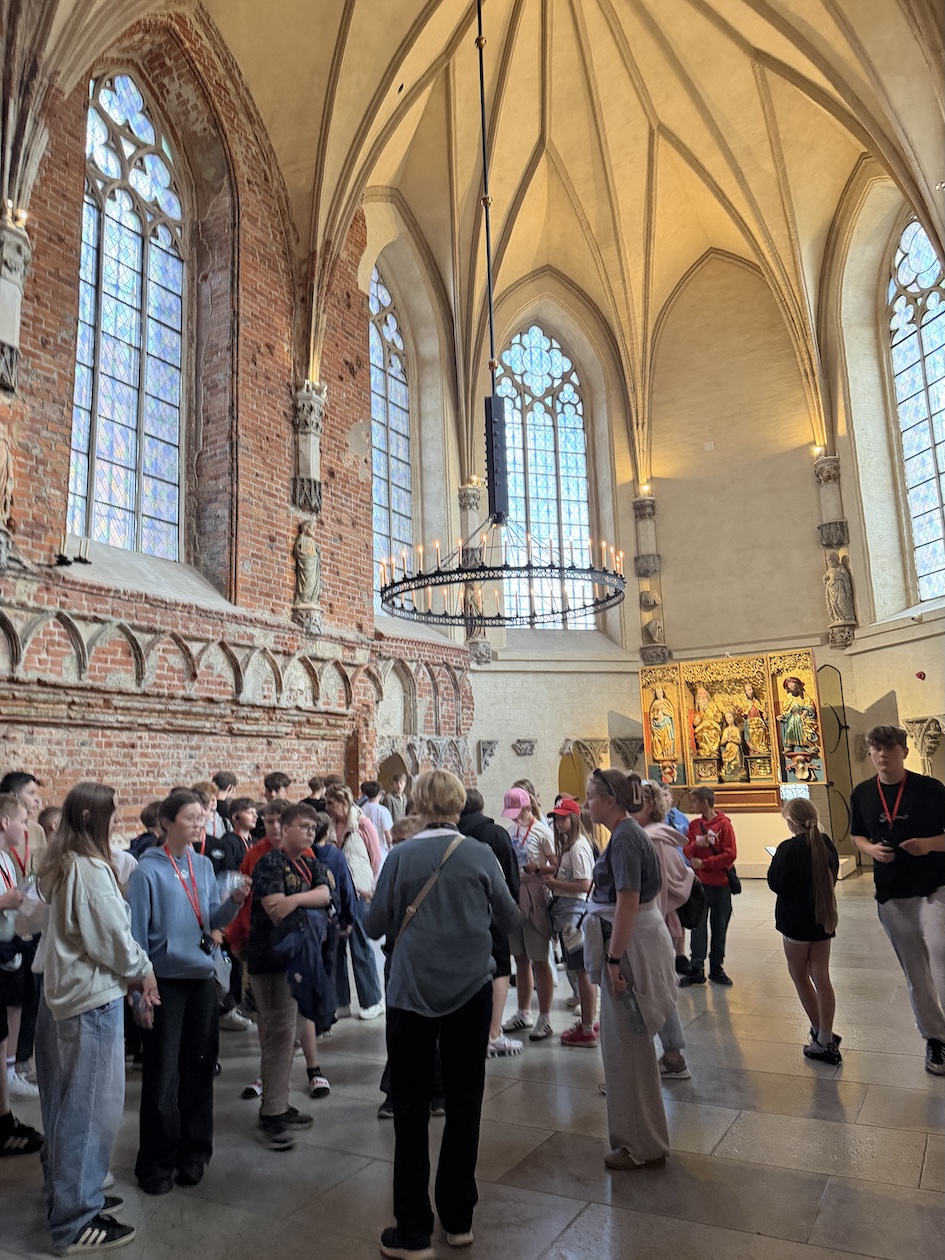
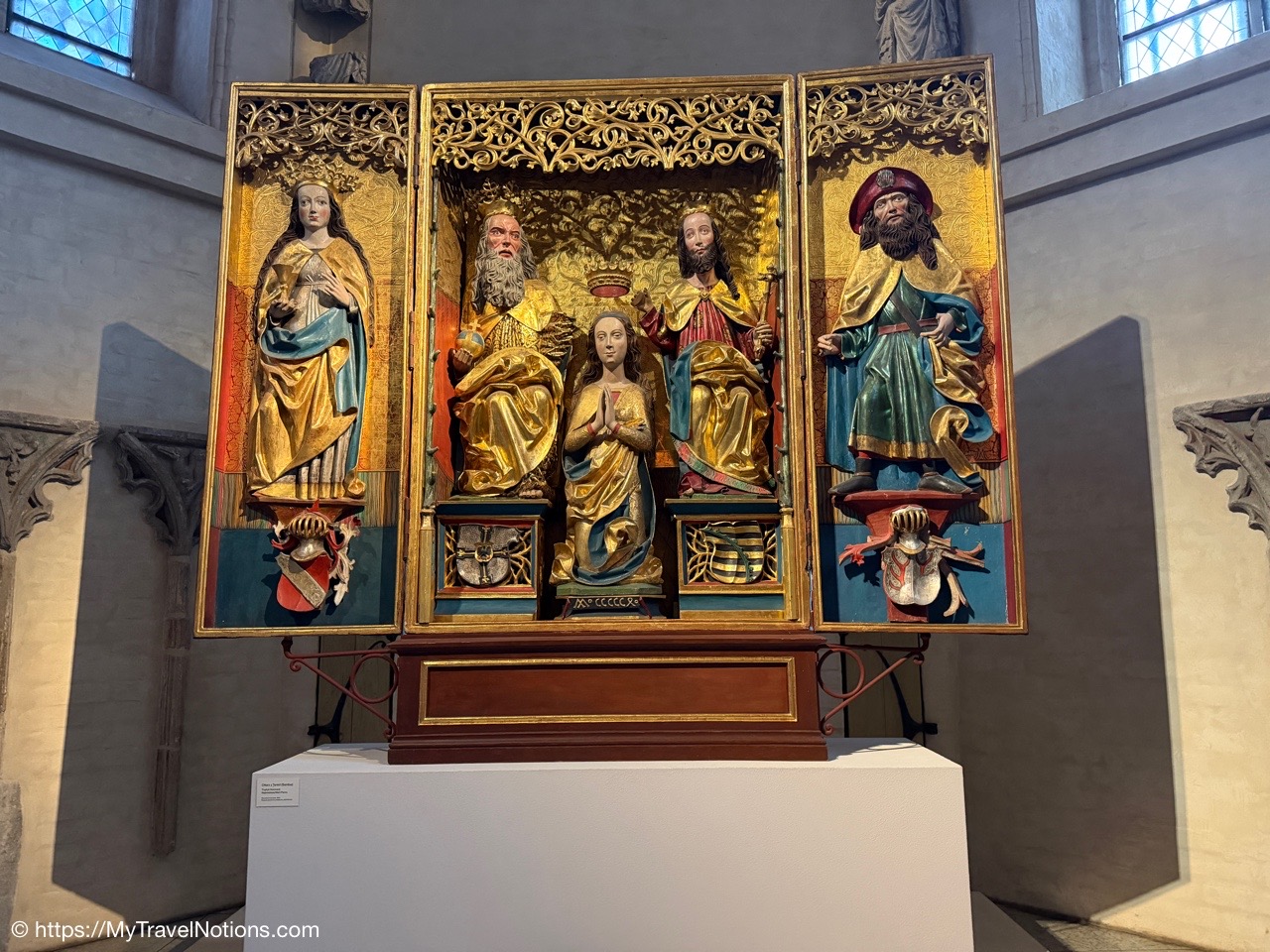
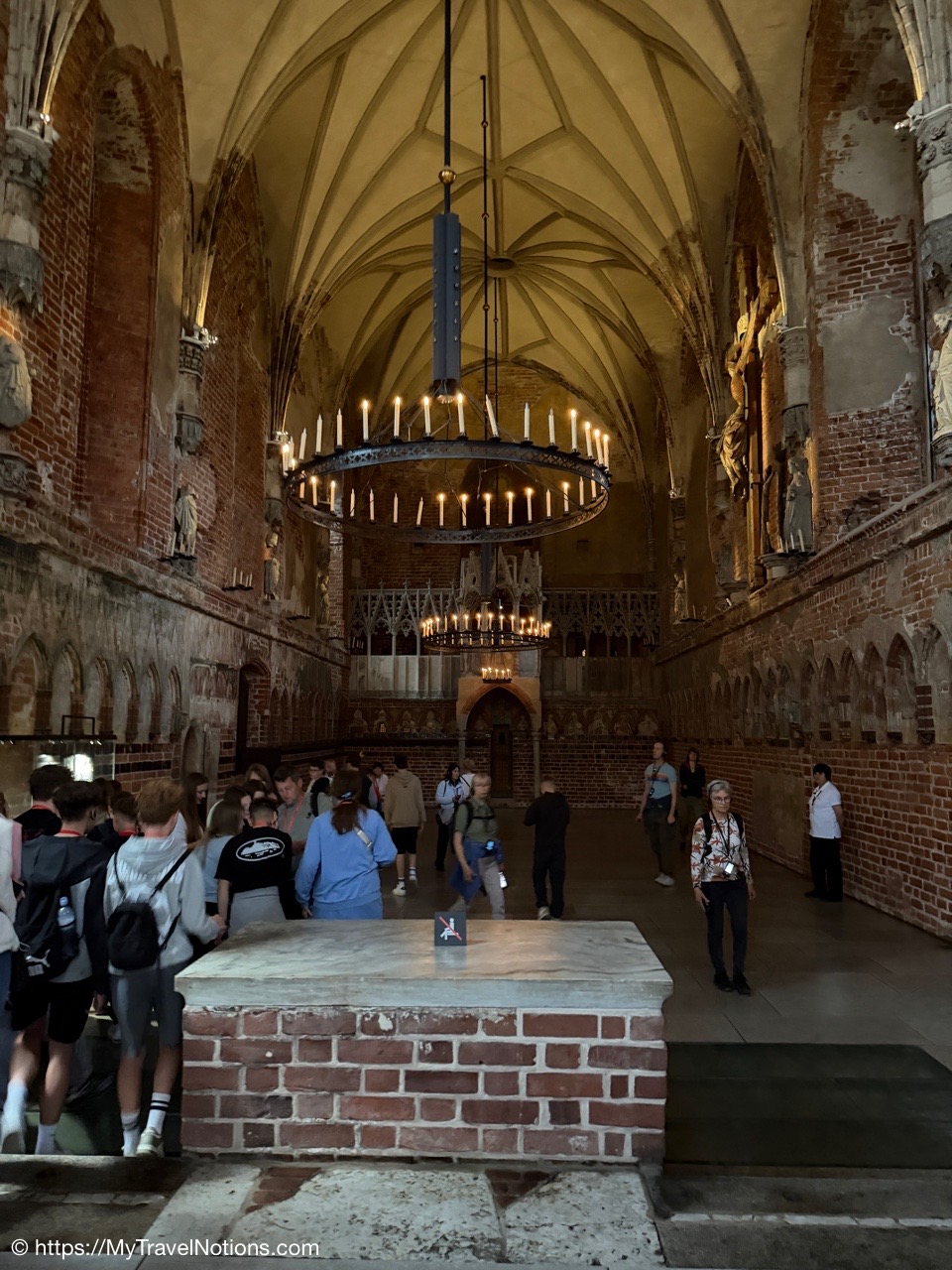
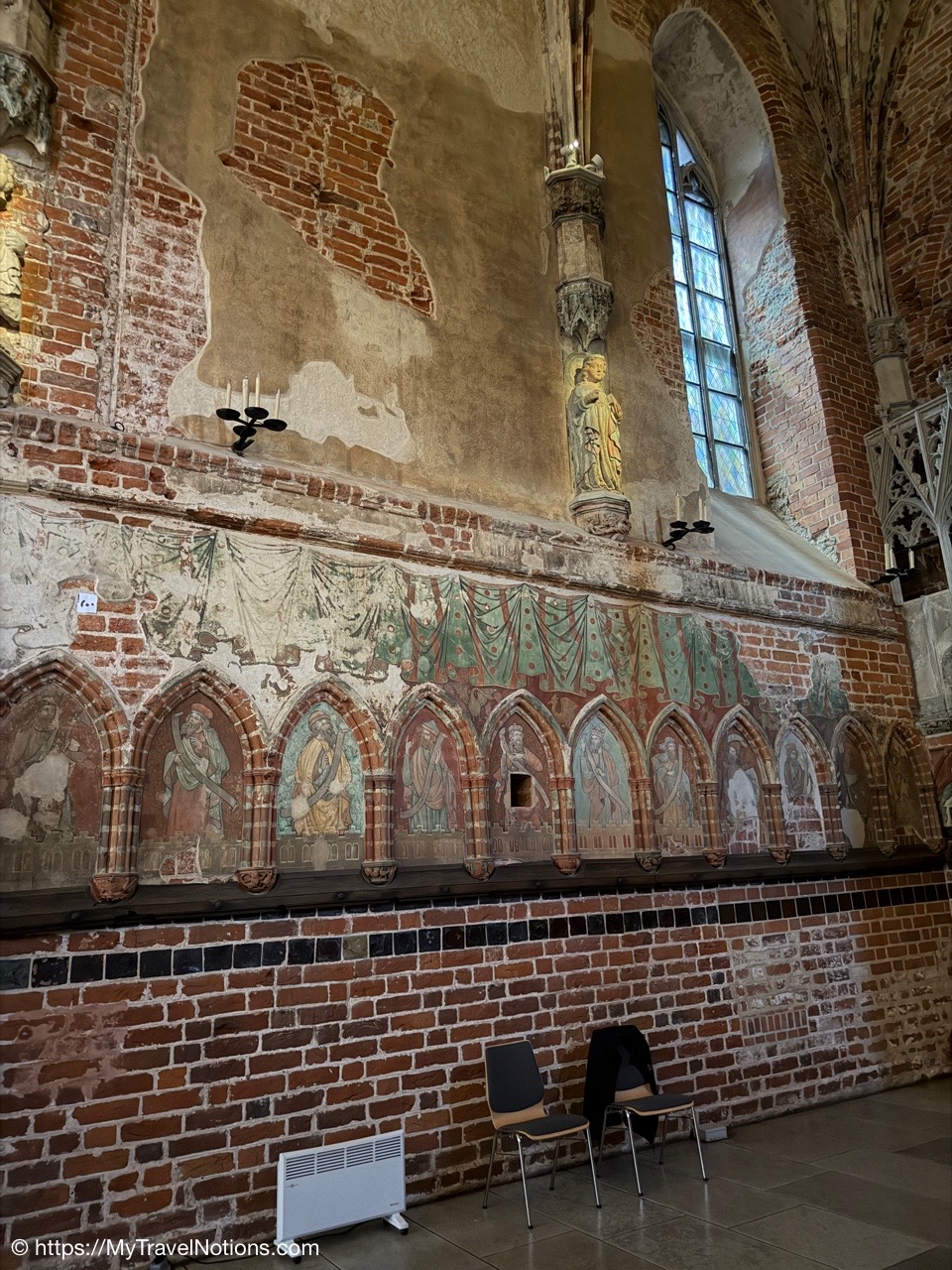
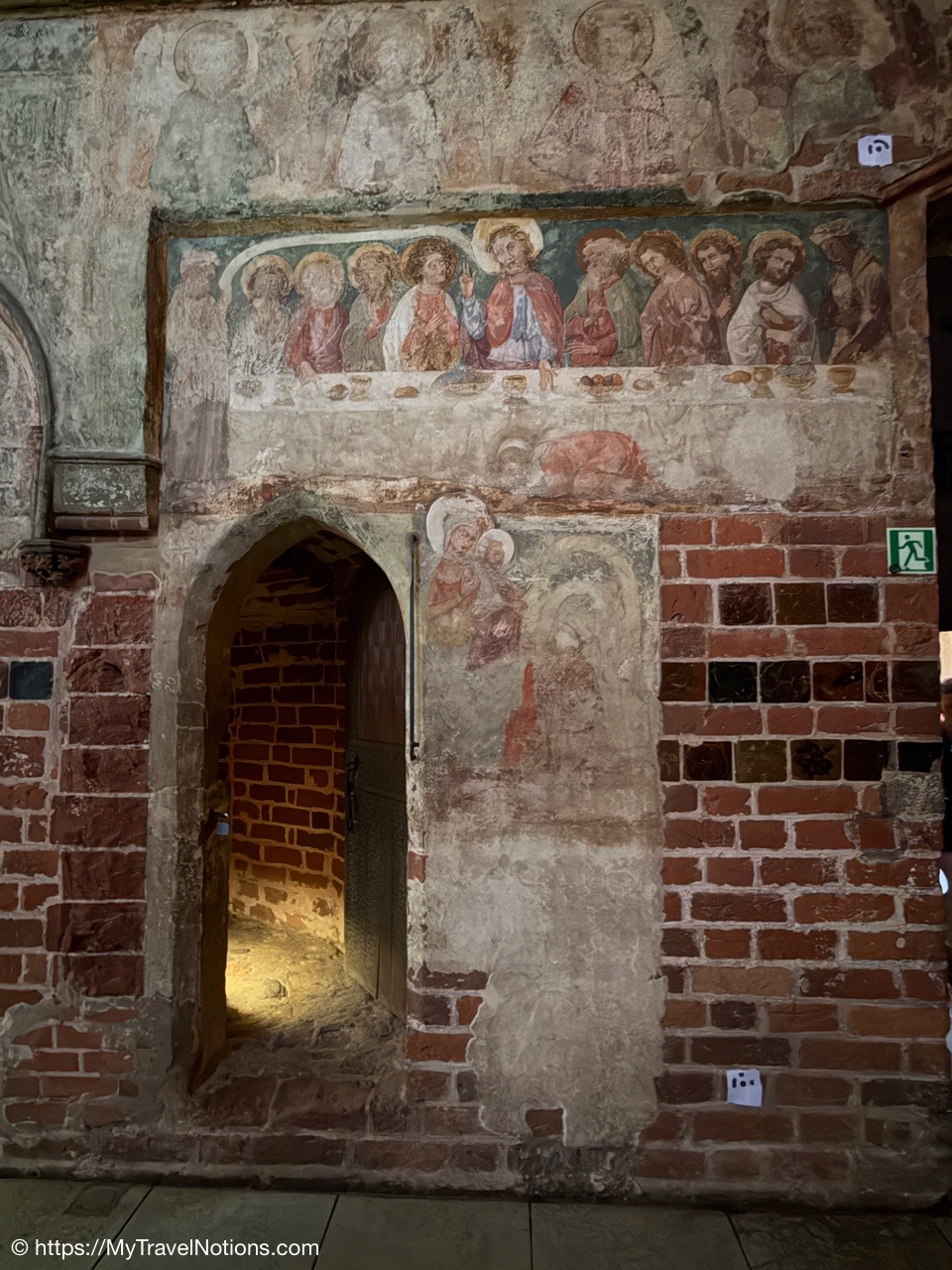
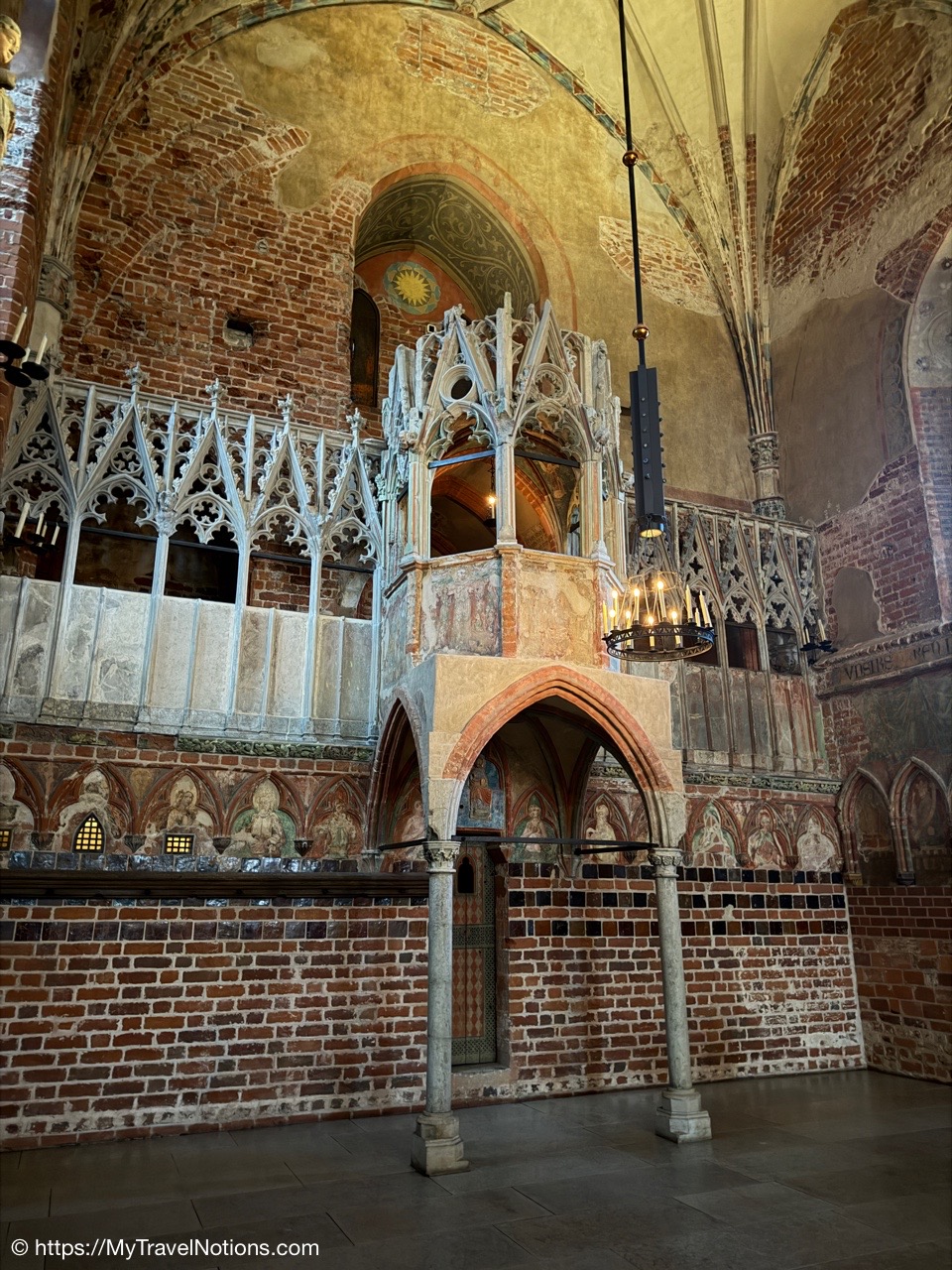
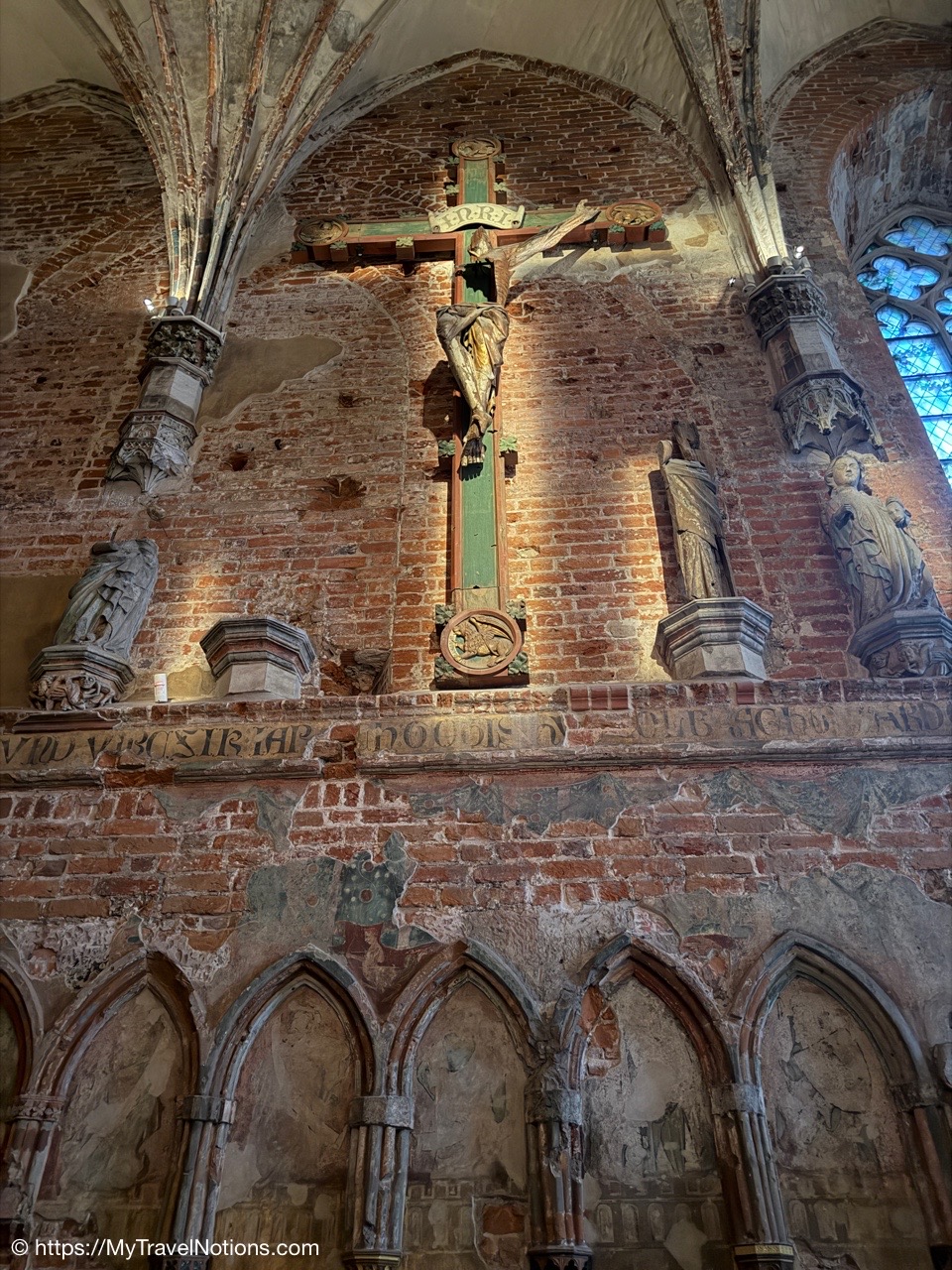
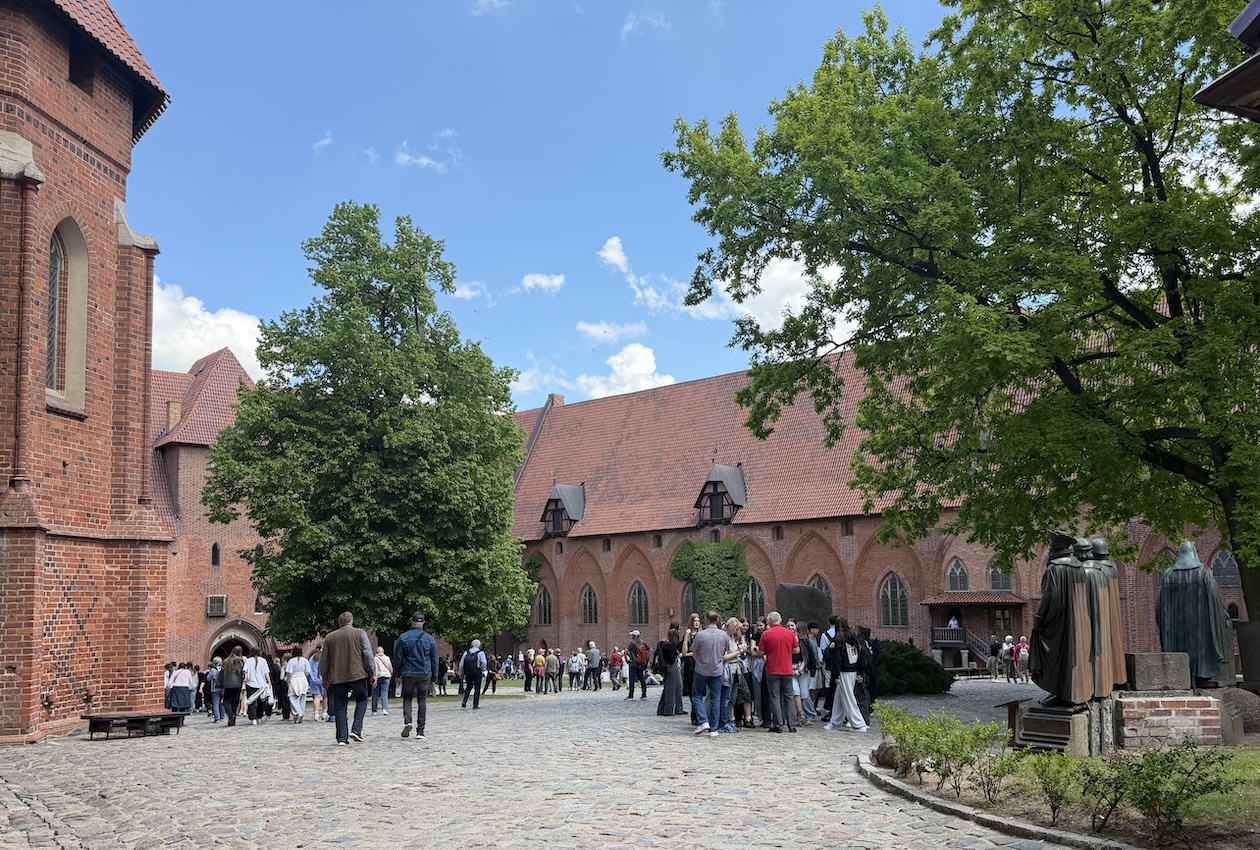
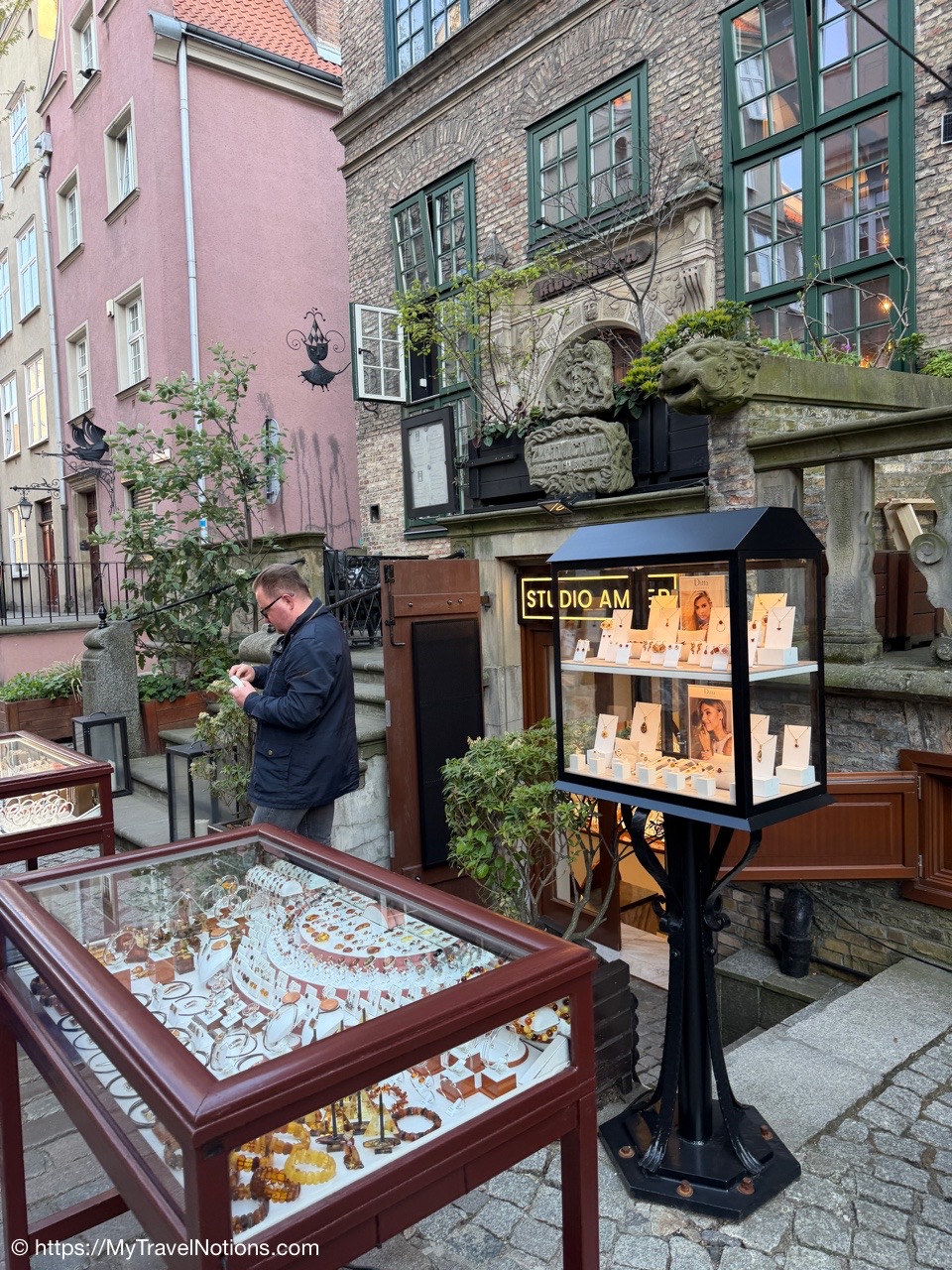
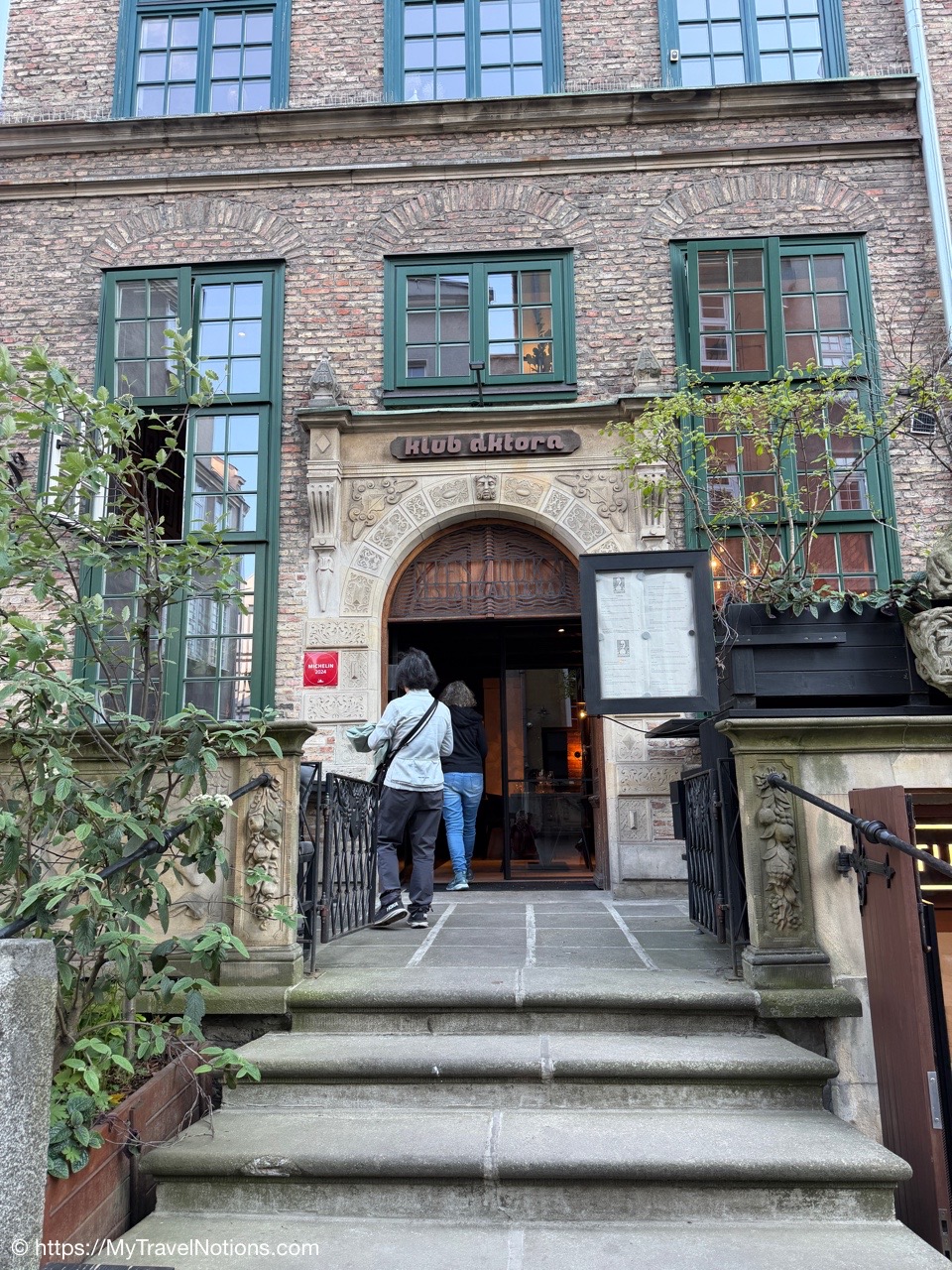
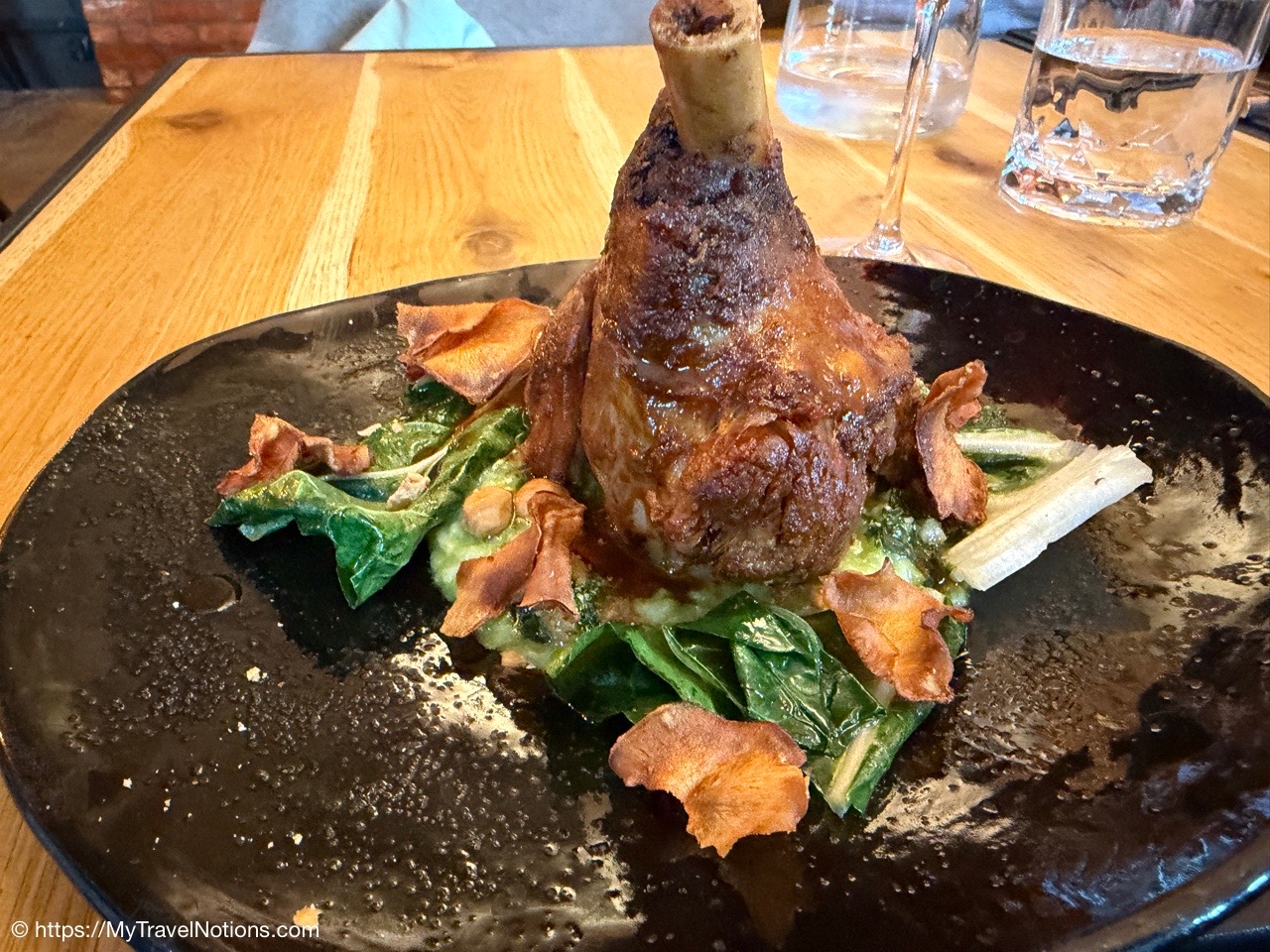
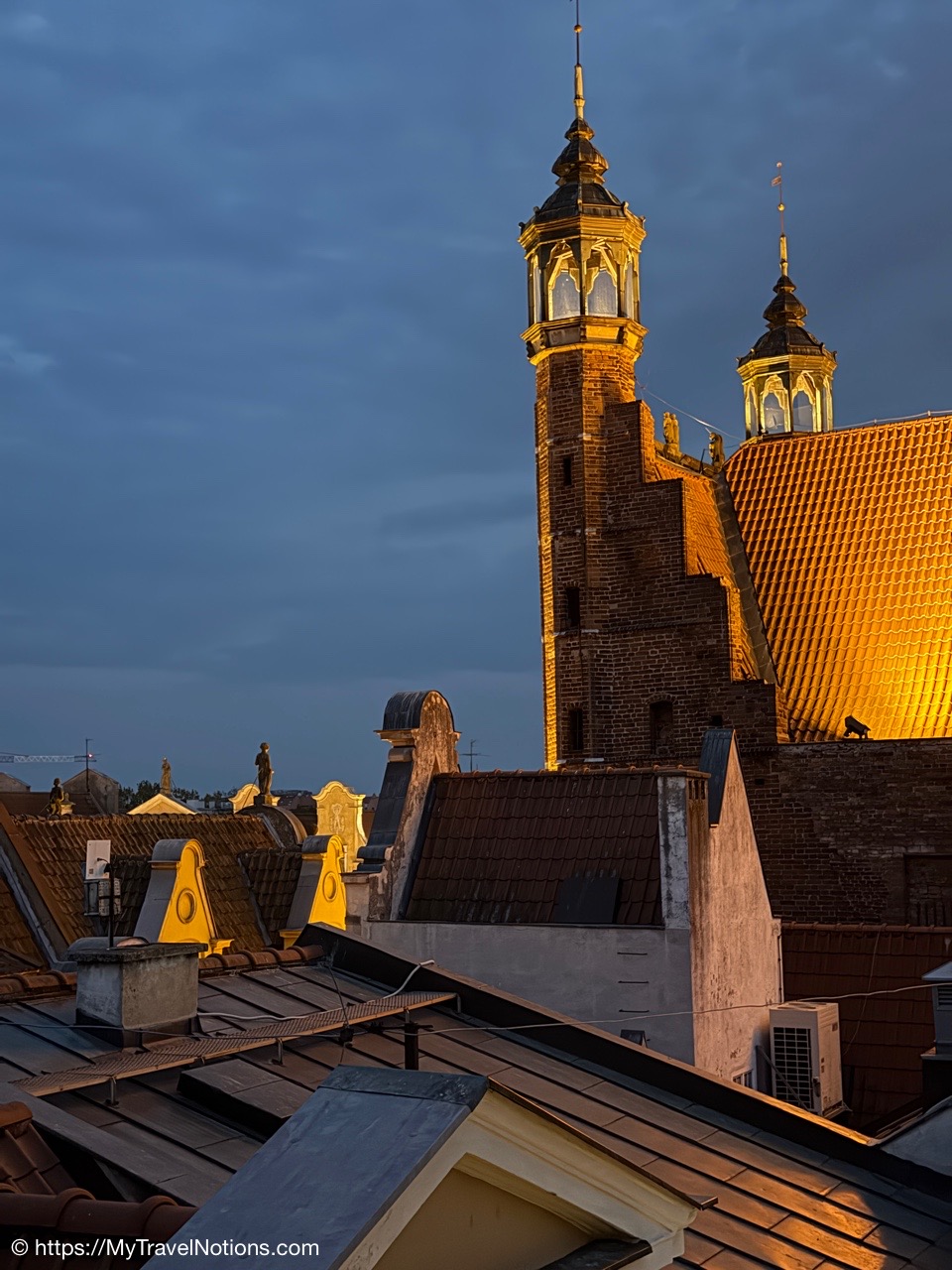
Here we are, me, Alice and Rosie with our audio guides as we begin our self-paced tour of the 13th century brick Gothic Malbork Castle in the town of Malbork. (May 20, 2026)To get to the town of Malbork, we took the 30-minute morning train from Gdansk. To get to the station, we took an Uber from our hotel. We were actually given a location to walk to so we could pick up our Uber ride. (May 20, 2026)Heading to the train platform below at the Gdańsk train station to take our 30-minute train to Malbork to see the Malbork Castle. (May 20, 2026)Arriving at the Malbork train station to walk the 15 to 20 minutes to get to the Malbork Castle. (May 20, 2026)Inside the terminal of the Dworzec kolejowy w Malborku, historic main railway station of the town of Malbork. It was built in the neo-Gothic brick style between 1889 and 1890 as we continue our 15 to 20 minutes walk to Malbork Castle. (May 20, 2026)Leaving Dworzec kolejowy w Malborku, the historic main railway station of the town of Malbork. It was built in the neo-Gothic brick style between 1889 and 1890 as we continue our 15 to 20 minutes walk to Malbork Castle. (May 20, 2026)Walking through the town of Malbork from the railway station Malbrok Castle. (May 20, 2026)Walking through the town of Malbork from the railway station Malbrok Castle. (May 20, 2026)This bronze equestrian statue, along a pedestrian square in the town of Malbork, is a Monument of Monument of King Casimir IV Jagiellon who was the Grand Duke of Lithuania from 1440 and the King of Poland as Casimir IV from 1447 until his death in 1492. He was one of the most active Polish-Lithuanian rulers; under him, Poland defeated the Teutonic Knights in the Thirteen Years’ War. (May 20, 2026)Walking towards the main gate from the ticket office of Malbork Castle with its outer defensive gateway towards the ticket office. The castle was once the seat of power of the Teutonic Knights for over 150 years, and their Grand Masters resided in the impressive palace. (May 20, 2026)Getting started on my tour of Malbork Castle. (May 20, 2026)A photo of what Marlbork Castle looked like after the devastations of World War II from 1945. (May 20, 2026)After the ticket office, we walked deeper into Malbork complex with its wooden bridge over the historic dry/water moat system that once featured a defensive drawbridge. (May 20, 2026)The Low Castle Gate into the Marlbork Castle with its wooden bridge over the historic dry/water moat system that once featured a defensive drawbridge. (May 20, 2026)The historic dry/water moat system at the Low Castle Gate into Marlbork Castle. (May 20, 2026)The historic dry/water moat system at the Low Castle Gate into Marlbork Castle. (May 20, 2026)A view of St. Lawrence Church of Malbork Castle. (May 20, 2026)Continuing to walk along the wooden bridge through another gate into the Lower Castle. (May 20, 2026)Continuing to walk along the wooden bridge through another gate into the Lower Castle. (May 20, 2026)Walking through the gate and tunnel into the Lower Castle of Marlbork Castle. (May 20, 2026)Views of the Lower Castle open courtyard are of Malbork Castle. (May 20, 2026)Views of the Lower Castle open courtyard are of Malbork Castle. (May 20, 2026)Views of the Lower Castle open courtyard are of Malbork Castle. (May 20, 2026)A room of the order of the Teutonic Knights at the Lower Castle where they served for over 150 years, and their Grand Masters resided in the impressive palace. (May 20, 2026)Heading downstairs to what was once the kitchen of the Lower Castle of Malbrok Castle. (May 20, 2026)The former kitchen of the Lower Castle which supplied the constant influx of travelers, workers and garrison member of Marlbork Castle. (May 20, 2026)The former kitchen of the Lower Castle which supplied the constant influx of travelers, workers and garrison member of Marlbork Castle. (May 20, 2026)The Great Refectory in Marlbork Castle is the largest and one of the most magnificent Gothic secular rooms in the medieval fortress. It features a stunning palm-vaulted ceiling supported by slender pillars. Located in the Middle Castle, it was built between 1335 and 1341 as a grand dining and assembly hall where the Teutonic Knights, the Grand Master, and distinguished guests held lavish banquets and important ceremonies. (May 20, 2026)The Coronation of the Virgin Mary mural painted on the walls of the Great Refectory in Malbrok Castle shows the dedication of the monastic-military Teutonic Order. The mural depicts Jesus Christ placing a crown on the head of the Virgin Mary, symbolizing her status as the Queen of Heaven, which aligned with the Order’s deep devotion to their patroness. (May 20, 2026)The Coronation of the Virgin Mary mural painted on the walls of the Great Refectory in Malbrok Castle shows the dedication of the monastic-military Teutonic Order. The mural depicts Jesus Christ placing a crown on the head of the Virgin Mary, symbolizing her status as the Queen of Heaven, which aligned with the Order’s deep devotion to their patroness. (May 20, 2026)The Coronation of the Virgin Mary mural painted on the walls of the Great Refectory in Malbrok Castle shows the dedication of the monastic-military Teutonic Order. The mural depicts Jesus Christ placing a crown on the head of the Virgin Mary, symbolizing her status as the Queen of Heaven, which aligned with the Order’s deep devotion to their patroness. (May 20, 2026)The Grand Master’s Palace inside the Middle Castle of Malbork Castle contains this elegant private dining/living room of the head of the Teutonic Order. (May 20, 2026)The Grand Master’s Palace inside the Middle Castle of Malbork Castle contains this elegant private dining/living room of the head of the Teutonic Order. (May 20, 2026)The bed chamber of the Grand Master’s Palace inside of Malbork Castle. (May 20, 2026)The high hallway of the Grand Master’s Palace inside of Malbork Castle. (May 20, 2026)The high hallway of the Grand Master’s Palace inside of Malbork Castle. (May 20, 2026)Another decorative room of the Grand Master’s Palace inside of Malbork Castle with murals of the Teutonic Knights. (May 20, 2026)Another decorative room of the Grand Master’s Palace inside of Malbork Castle with murals of the Teutonic Knights. (May 20, 2026)Loving the tiled floors of the Grand Master’s Palace inside of Malbork Castle. (May 20, 2026)The mural depictions of the Teutonic Knights at the Grand Master’s Palace inside of Malbork Castle. (May 20, 2026)The mural depictions of the Teutonic Knights at the Grand Master’s Palace inside of Malbork Castle. (May 20, 2026)A hall with fan vaulting ceilings supported by slender granite pillars at the Grand Master’s Palace inside of Malbork Castle. (May 20, 2026)Making my way from the Lower Castle courtyard to the High Castle of Marlbork Castle. (May 20, 2026)The bronze figures along the walls of Malbork Castle in the Lower Castle courtyard, towards the High Castle entrance, represent the Grand Masters of the Teutonic Order, the men who governed this fortress. (May 20, 2026)Walking through the gate towards the High Castle entrance at Malbork Castle. (May 20, 2026)Walking through the gate towards the High Castle entrance at Malbork Castle. (May 20, 2026)Walking through the gate towards the High Castle entrance at Malbork Castle. (May 20, 2026)The decorative High Castle Cloister leading to the Chapter House in Malbork Castle. (May 20, 2026)The Chapter House of the High Castle in Malbork Castle is a 14th-century Gothic meeting hall where the Teutonic Order gathered to make major state and religious decisions. (May 20, 2026)The Chapter House of High Castle at the Malbork Castle is a grand, historically vital hall featuring intricate triradial umbrella vaults where the Teutonic Order held major state councils and elected their Grand Masters. (May 20, 2026)The Chapter House of High Castle at the Malbork Castle is a grand, historically vital hall featuring intricate triradial umbrella vaults where the Teutonic Order held major state councils and elected their Grand Masters. (May 20, 2026)The decorative tiled floors of the Chapter House of High Castle at the Malbork Castle. (May 20, 2026)The decorative tiled floors of the Chapter House of High Castle at the Malbork Castle. (May 20, 2026)The Chapter House of High Castle at the Malbork Castle is a grand, historically vital hall featuring intricate triradial umbrella vaults where the Teutonic Order held major state councils and elected their Grand Masters. It also features a medieval fresco of the Virgin Mary Enthroned with the Christ Child above the doorway. (May 20, 2026)The medieval fresco of the Virgin Mary Enthroned with the Christ Child above the doorway of the High Castle Chapter House in Malbork Castle. (May 20, 2026)Back through the decorative High Castle Cloister leading to a room dedicated to the “Cult of the Passion of Christ” in Malbork Castle. (May 20, 2026)Walking through a room dedicated to the “Cult of the Passion of Christ” in the High Castle of Marlbork Castle. (May 20, 2026)A wood carved altar panel of the Crucifixion of Christ in a room dedicated to the “Cult of the Passion of Christ” in the High Castle of Marlbork Castle. The central scene shows Christ on the main cross, flanked by the two thieves on smaller crosses, with a detailed assembly of mourning figures, soldiers, and onlookers below. It is from around the 1500s. (May 20, 2026)The oakwood carved Crucifix of Christ, in a room dedicated to the “Cult of the Passion of Christ” in the High Castle of Marlbork Castle is from around 1470. (May 20, 2026)Walking through the decorated entrance cloister of the Church of the Blessed Virgin Mary at High Castle in Malbork Castle. (May 20, 2026)The Blessed Virgin Mary Church of the High Castle in Malbork Castle is the grand, historic main sanctuary and spiritual heart of the medieval monastic-military Teutonic Order. Dedicated to the Blessed Virgin Mary, it was originally built in the 1200s and significantly expanded and transformed between 1331 and 1344. It was severely damaged during the fighting of World War II. (May 20, 2026)The Blessed Virgin Mary Church of the High Castle in Malbork Castle is the grand, historic main sanctuary and spiritual heart of the medieval monastic-military Teutonic Order. (May 20, 2026)The Coronation of the Blessed Virgin Mary at the altar of the Blessed Virgin Mary Church of the High Castle in Malbork Castle. The church is the grand, historic main sanctuary and spiritual heart of the medieval monastic-military Teutonic Order. (May 20, 2026)Looking back from the altar of the Blessed Virgin Mary Church of the High Castle in Malbork Castle. It is the grand, historic main sanctuary and spiritual heart of the medieval monastic-military Teutonic Order. (May 20, 2026)Fading murals and wall paintings inside the Blessed Virgin Mary Church of the High Castle in Malbork Castle. (May 20, 2026)Fading murals and wall paintings inside the Blessed Virgin Mary Church of the High Castle in Malbork Castle. (May 20, 2026)Fading murals and wall paintings inside the Blessed Virgin Mary Church of the High Castle in Malbork Castle. (May 20, 2026)The massive green crucifix, where half of Christ’s body is completely missing, graces the side wall of the Blessed Virgin Mary Church of the High Castle in Malbork Castle. It was blown off the wall by artillery during World War II and was left partially restored on purpose. (May 20, 2026)Leaving Malbork Castle through its Lower Castle to make the 15-20 minute walk to the train station to head back to Gdańsk. (May 20, 2026)Back in Gdańsk and on our way to dinner at Niesztuka Restaurant & Bar towards Mariacka Street, the historic pedestrianized cobblestone alley lined with open-air display cases of Baltic amber jewelry. (May 20, 2026)Back along Mariacka Street in Gdańsk, the historic pedestrianized cobblestone alley lined with open-air display cases of Baltic amber jewelry, for dinner at the Niesztuka Restaurant & Bar. (May 20, 2026)Entering the Niesztuka Restaurant & Bar on Mariacka street. The restaurant sits tucked away inside a historic house surrounded by Amber jewelers in the heart of Gdańsk. (May 20, 2026)I had the Lamb Shank at Niesztuka Restaurant & Bar in Gdańsk. Quite tasty and paired with risotto, beet greens, wild garlic pesto, hazelnuts, matured cheese, demi glace and sunchoke chips. (May 20, 2026)Good night with views of the Main Town Hall towers and rooftops of Old Town Gdańsk from my hotel room at Hotel Artus. (May 20, 2026)
After a full day yesterday, it was a pleasure to not have much on my schedule for today except to get my clothes washed and eat something good. I really was just all out tired, even though I slept more than eight hours last night, but somehow I had the strength to walk to the laundry mat and get my clothes washed. This laundry trip should get me through until I get home to Dallas.for the rest of the trip.
I think we all needed a leisurely day in Gdańsk and clean clothes too.
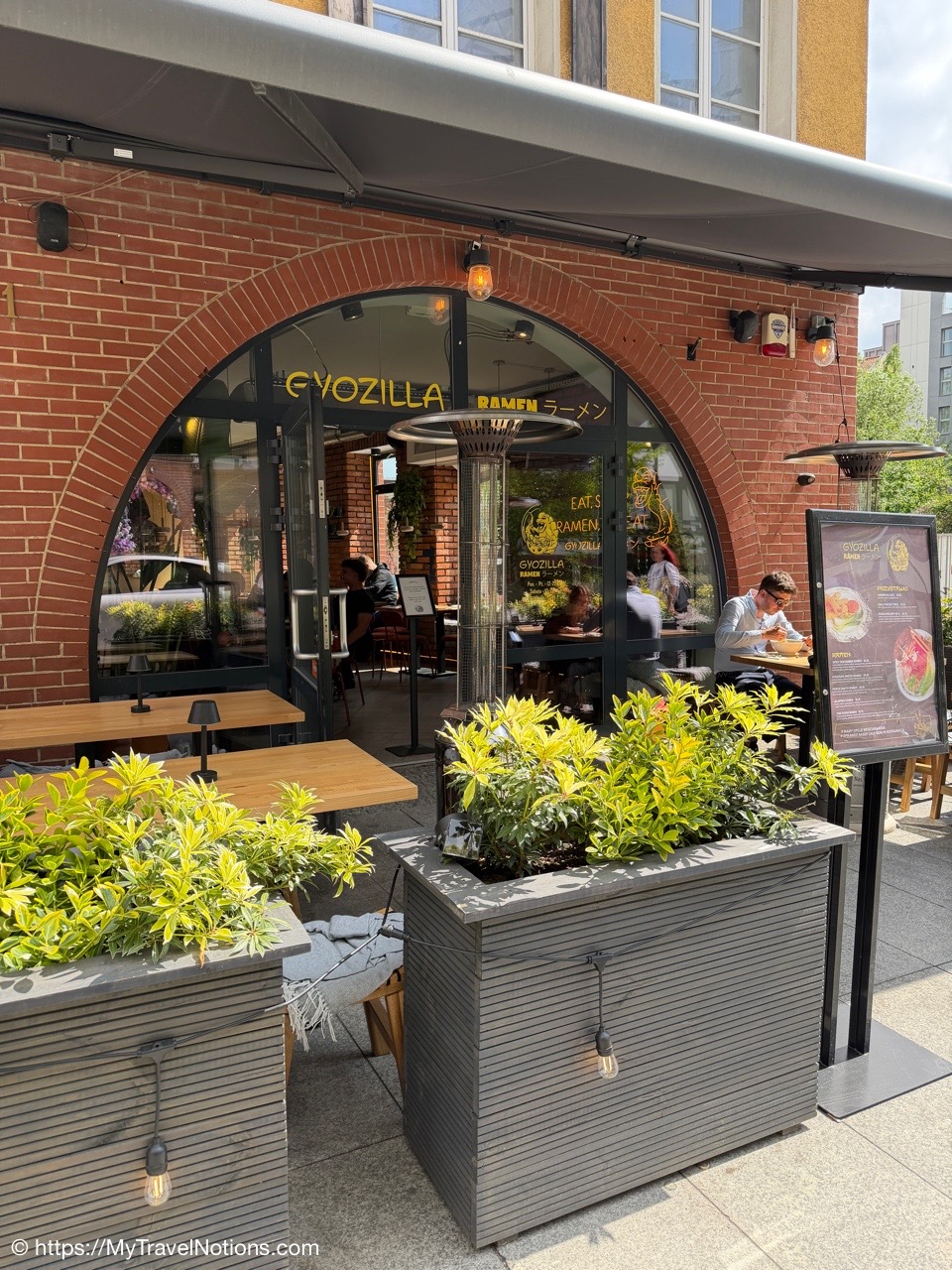
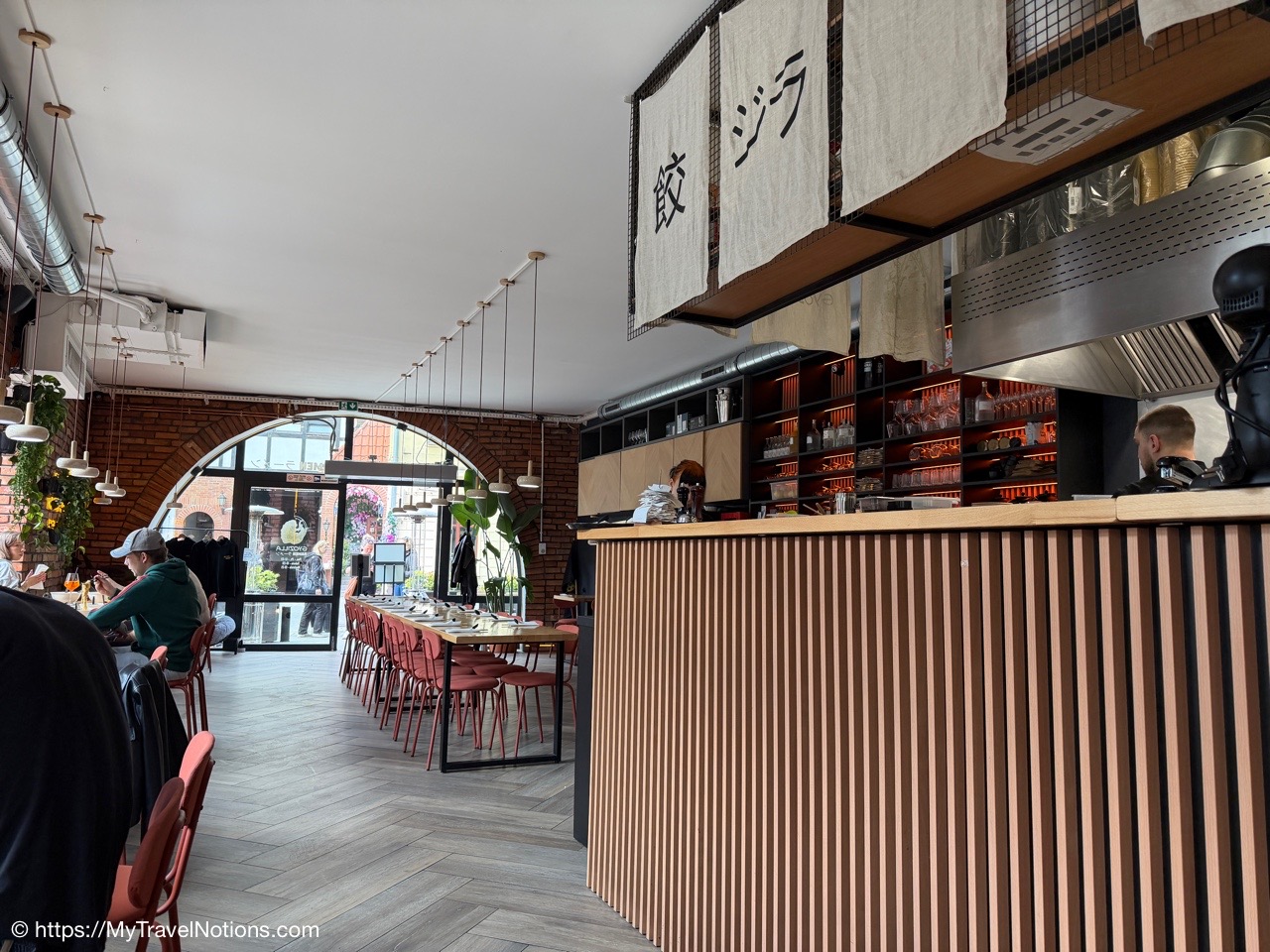
At the Speed Queen in Gdańsk with Rosie and Alice, doing what we hope is our last clothes washing day on this trip. (May 21, 2026)After washing our clothes and taking them back to our room, Rosie, Alice and I met up at Gyozilla Ramen in Gdańsk for a late lunch. (May 21, 2026)Inside of Gyozilla Ramen in Gdańsk where we enjoyed our late lunch. (May 21, 2026)Alice, Rosie and I shared these Shrimp Wontons, a Chinese dumpling made with a thin, silky dough wrapper in a chili and lime browned butter sauce, Gyozilla Ramen in Gdańsk. Price: 36 PLN, $8.24 USD. (May 21, 2026)I had the Spicy Tantanmen Ramen…chicken broth, homemade ramen noodles, tare shoyu, sesame and peanut paste, spicy minced pork, pak chow, nitamago egg, mung bean sprouts, red onion, rays oil and nori at Gyozilla Ramen in in Gdańsk. Price: 55 PLN, $13 USD (May 21, 2026)
Today was another free day, which gave me time to casually visit the Museum of Amber, St. Catherine’s Church and the Main Town Hall in Gdańsk, all within a reasonable walking distance from my hotel.
I don’t know if it’s an official title but Gdańsk has been christened as “The Amber Capital of the World,” a lofty title indeed butwith housing the Museum of Amber and even a street, Mariacka, famously known as the city’s Amber Street. The best place in the world to find the highest-quality amber is the terrain surrounding the Baltic Sea.
The Museum of Amber displays natural lumps of the resin and its inclusions, as well as finished products, e.g. jewellery, cutlery, etc. It’s basically a natural history museum to discover how tree resin turns into amber over millions of years.
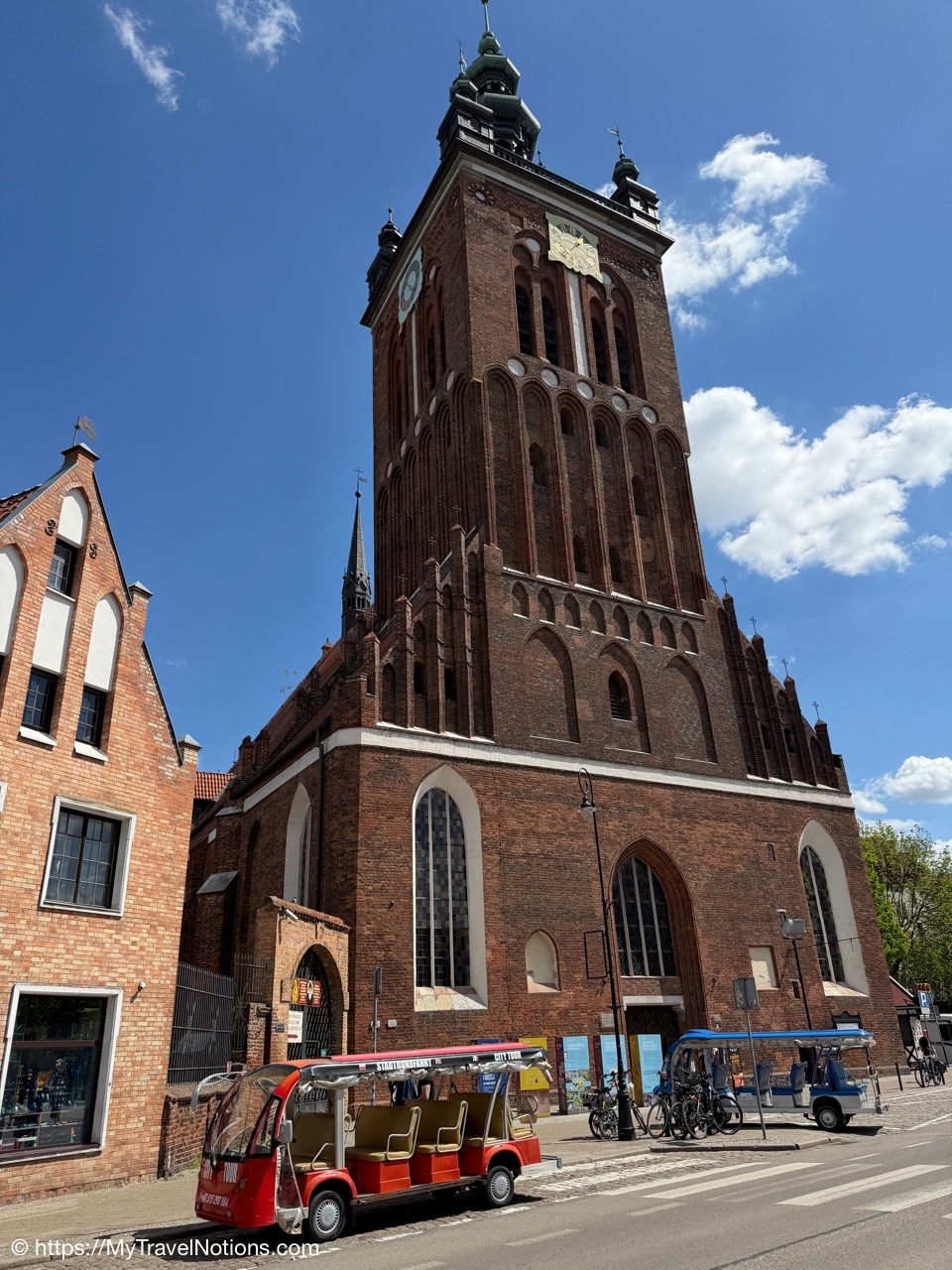
After the Museum of Amber, I walked across the street to St. Catherine’s Church. Considered the oldest church in Gdańsk, it experienced many renovations since building began in the 1220s.
And, from 1545 until the end of World War II in 1945, it was a Protestant church, and returned to a Catholic Church.
After a brief visit inside of St. Catherine’s Church, I took a little break and got something to eat before entering the majestic Main Town Hall and later in the evening, had dinner with Alice and Rosie.
Here’s to my leisurely day in Gdańsk.
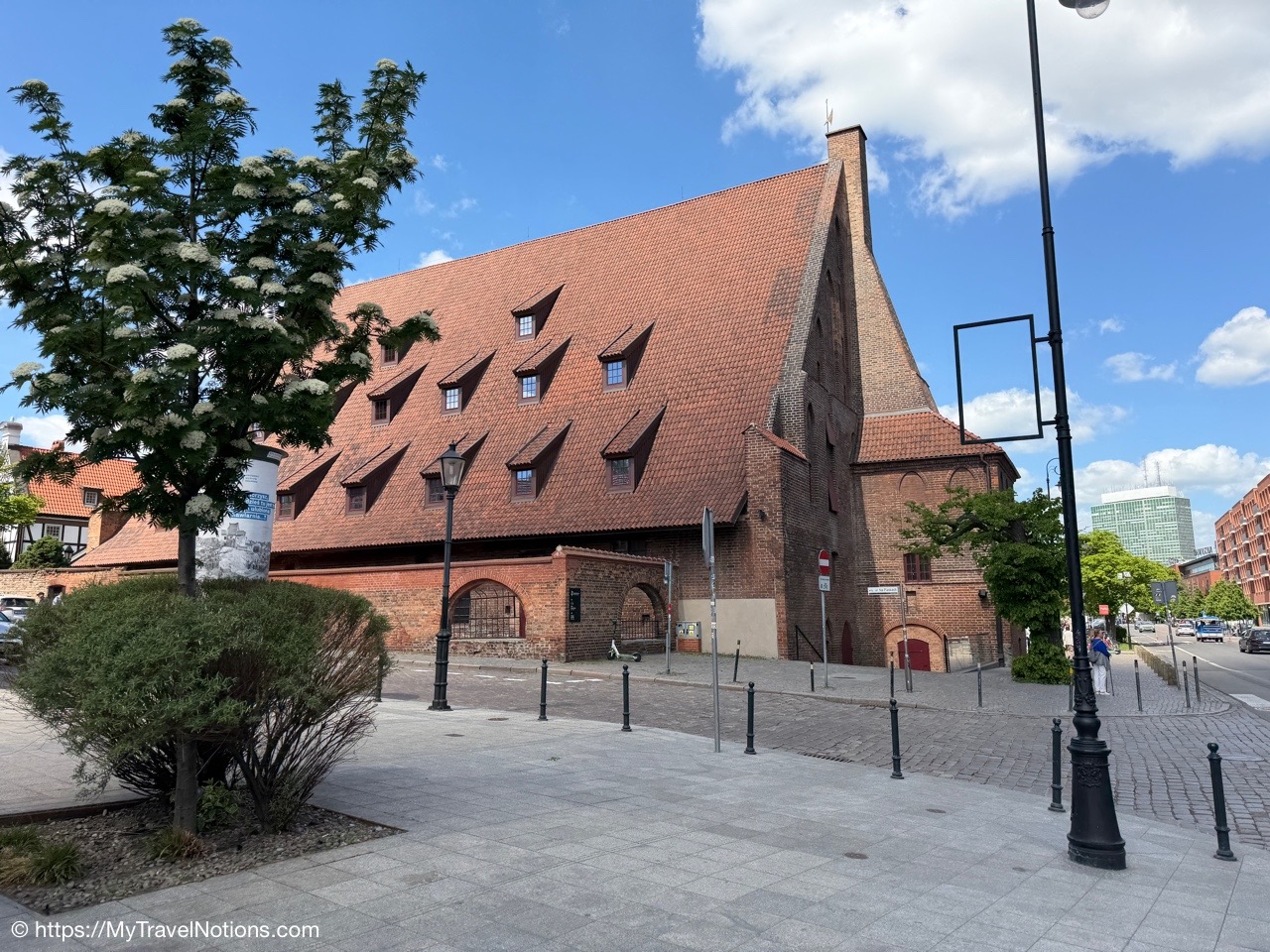
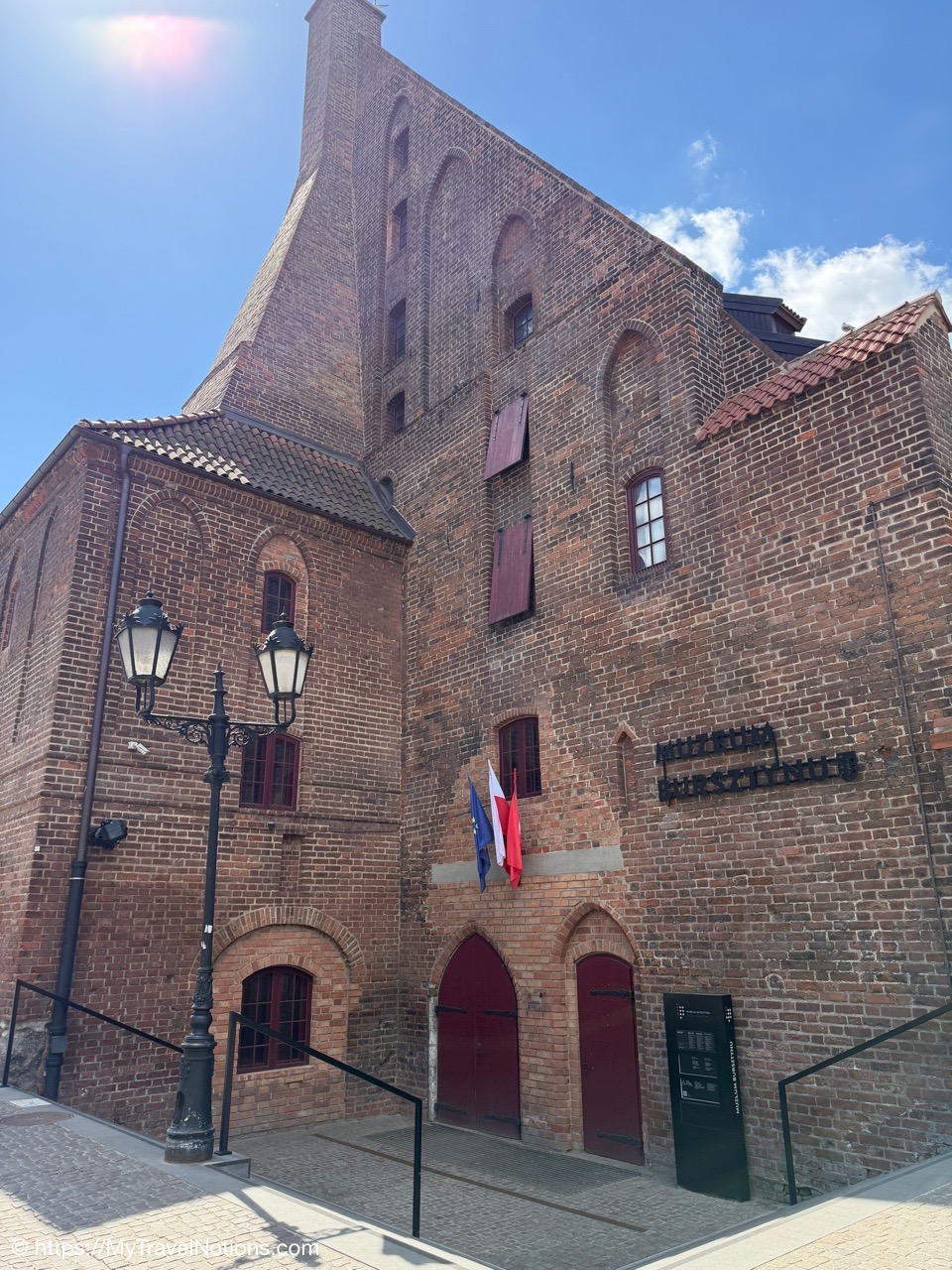
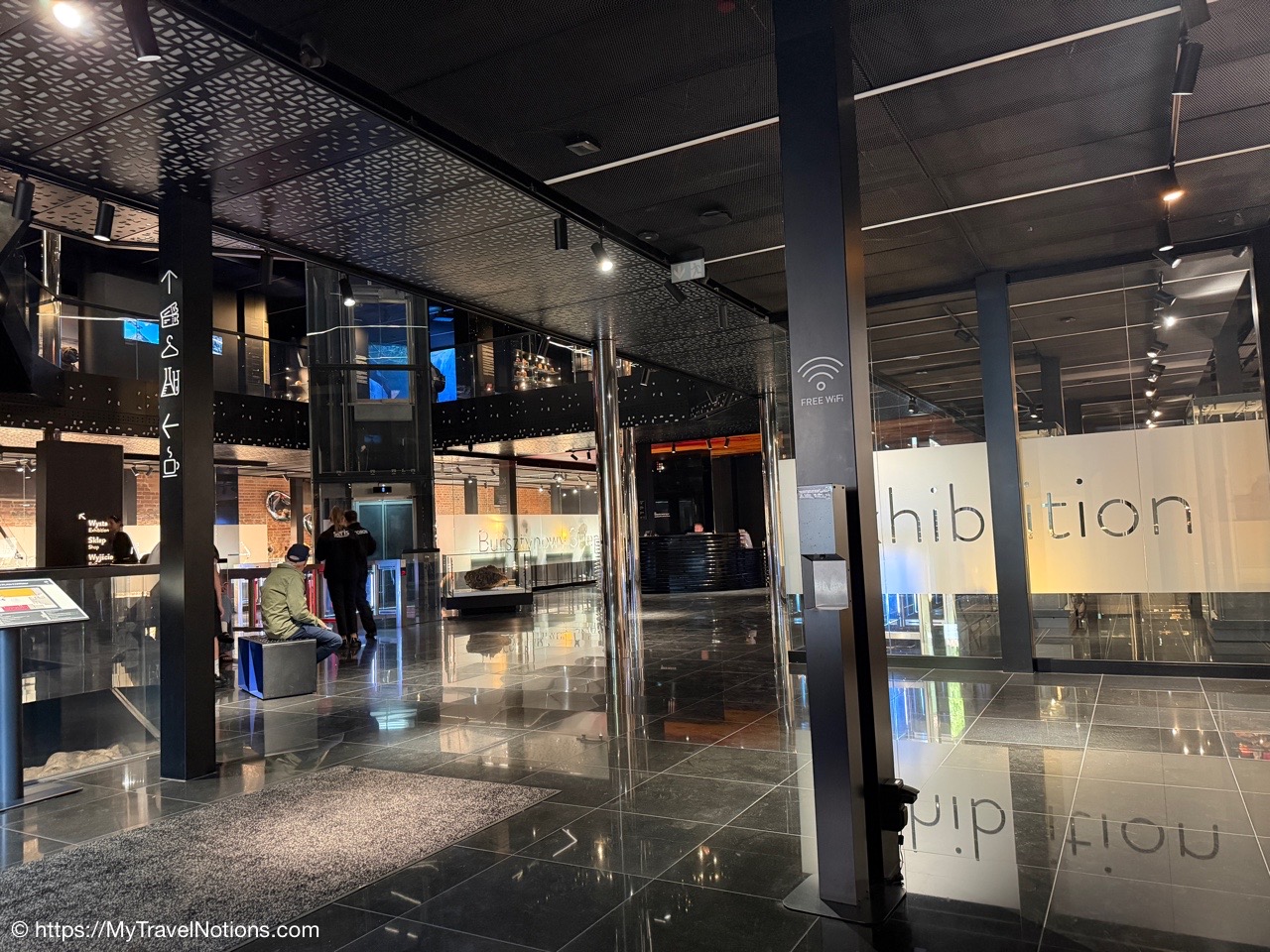
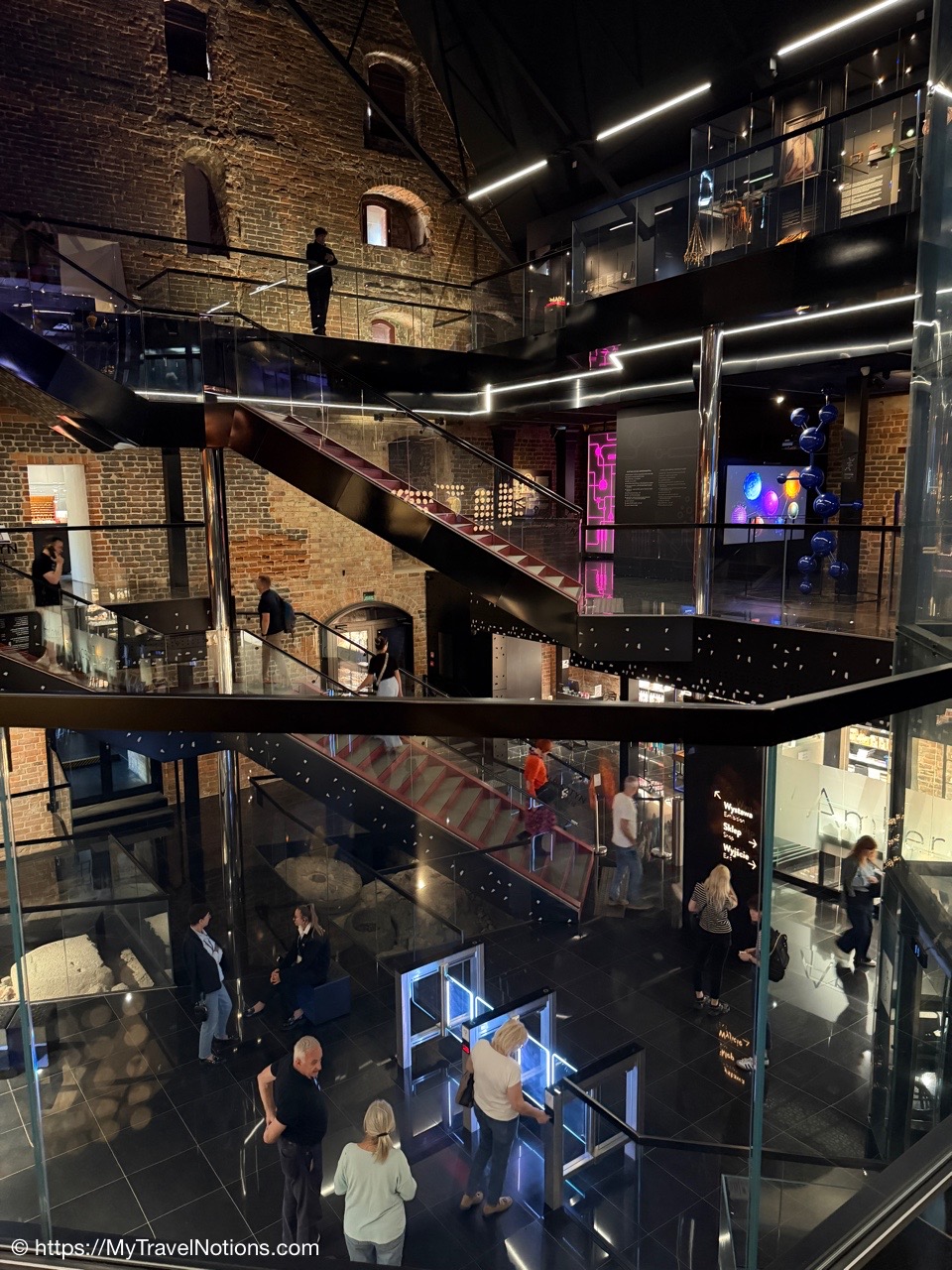
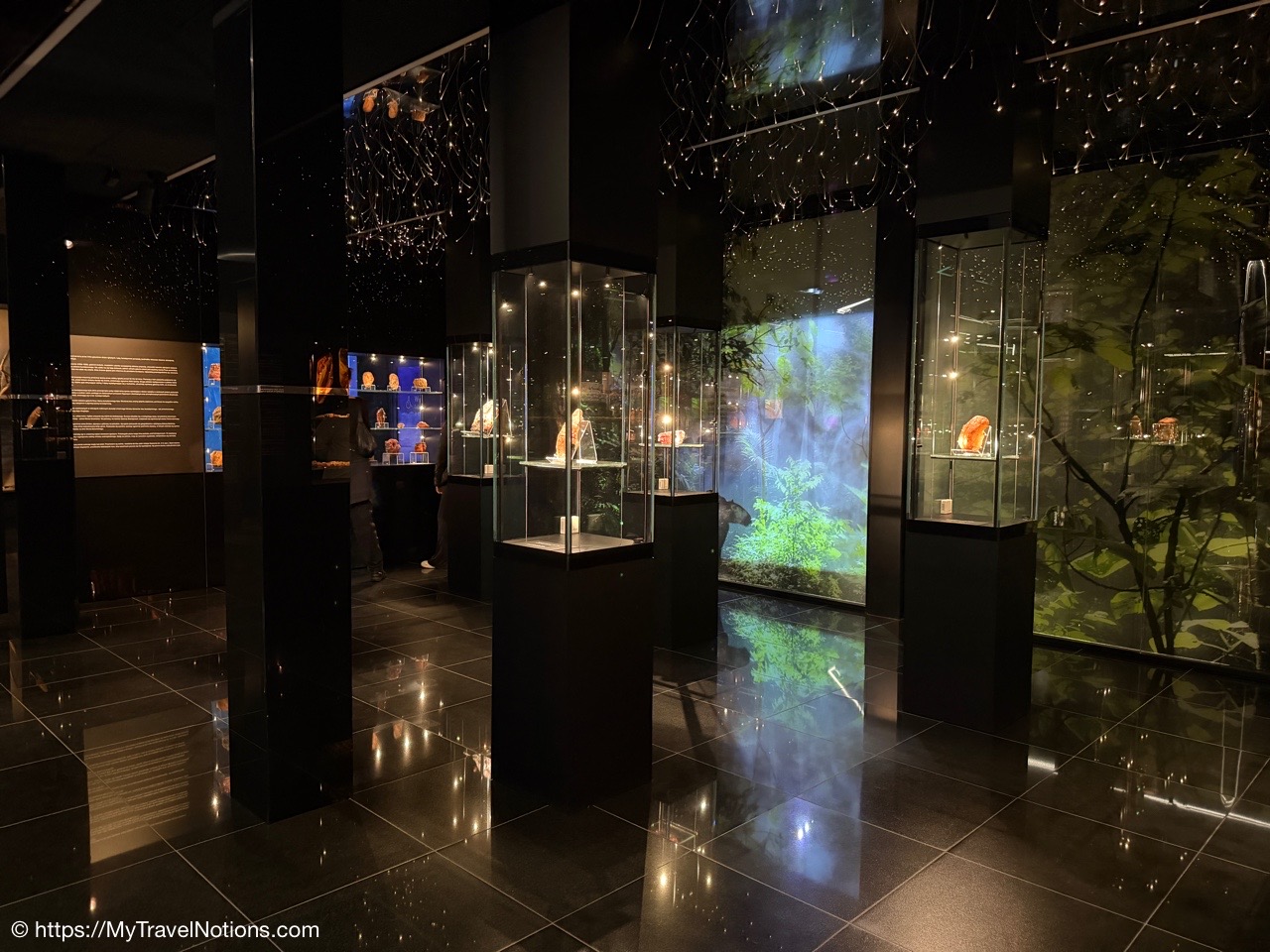
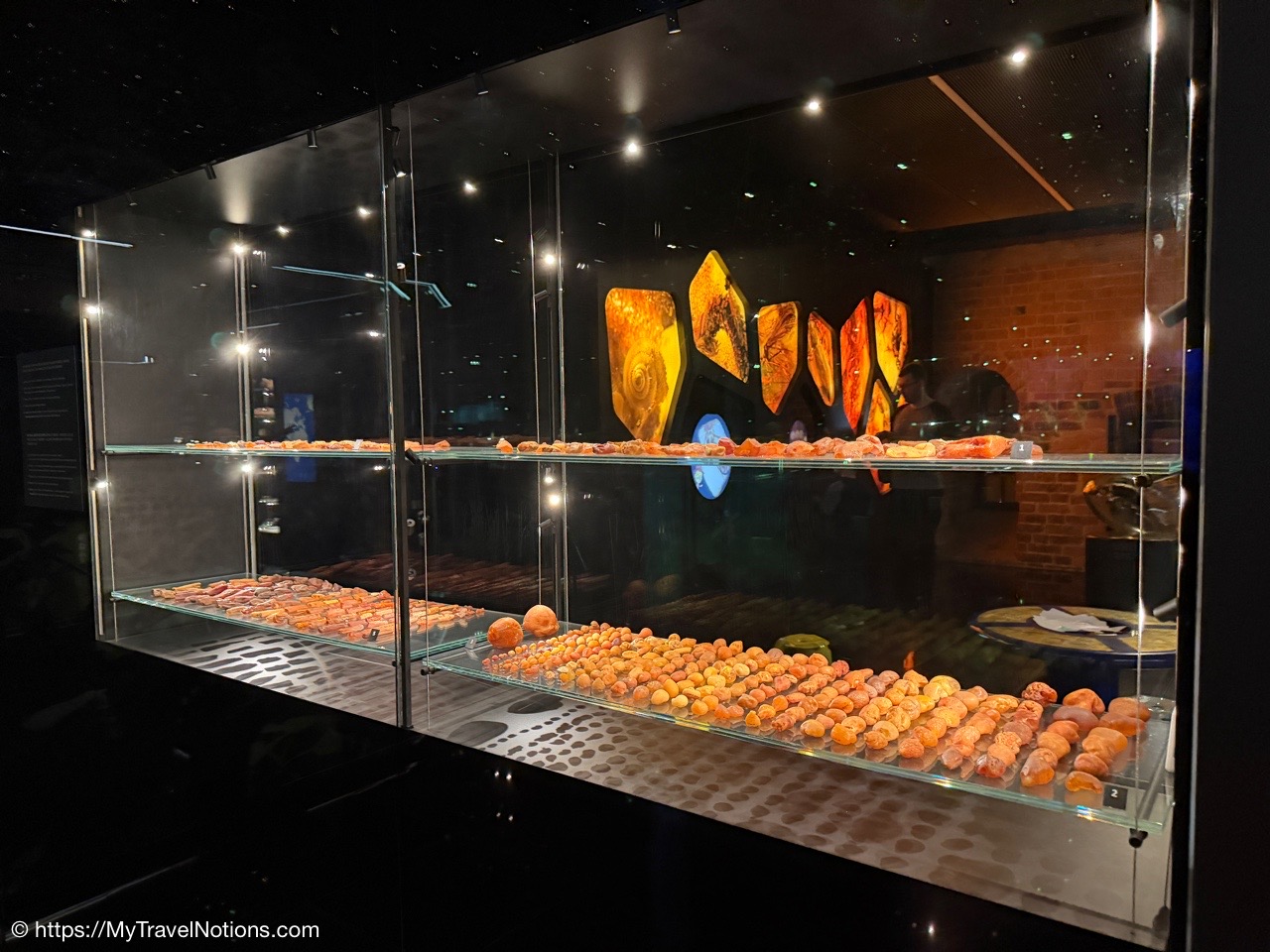
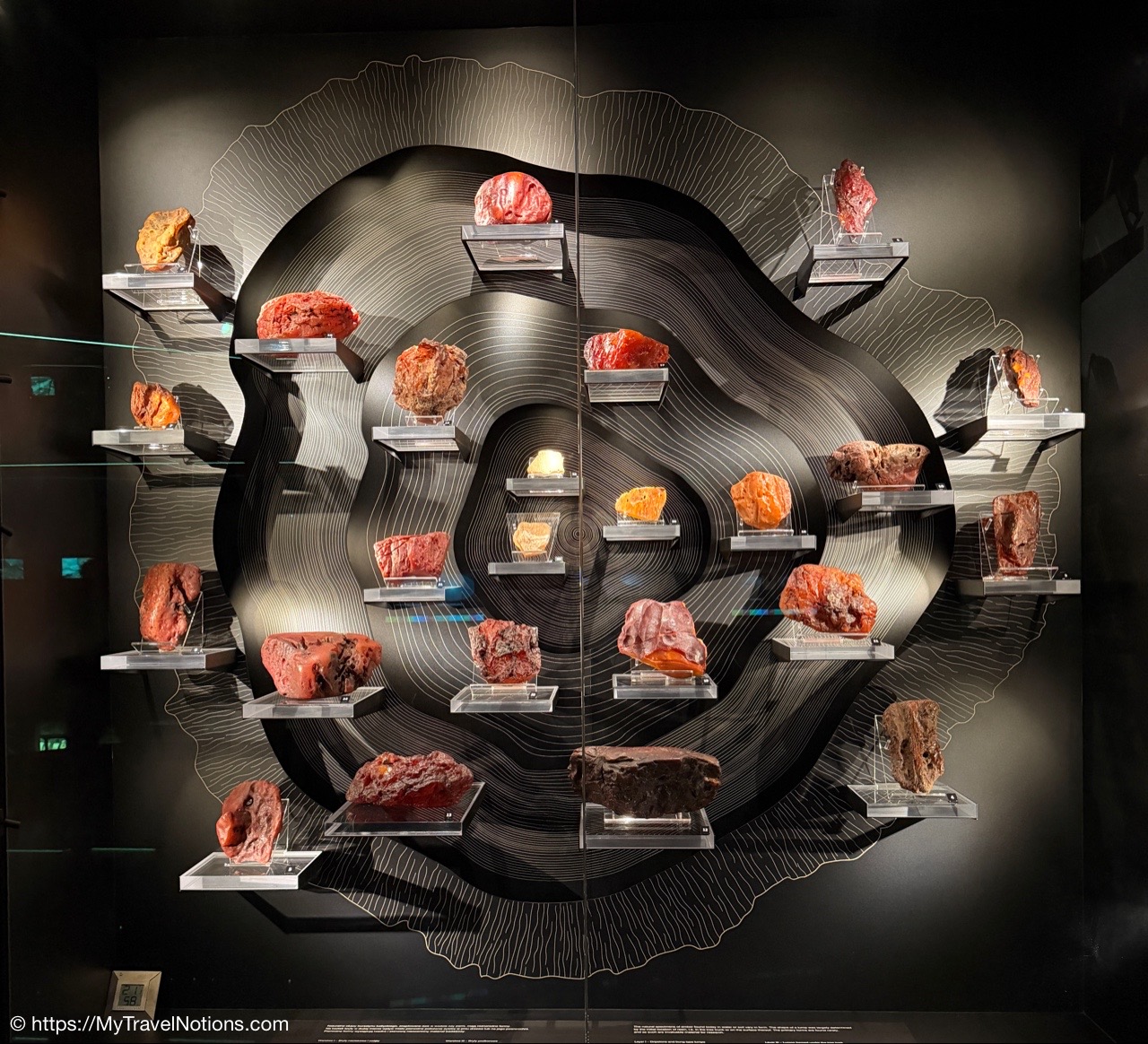
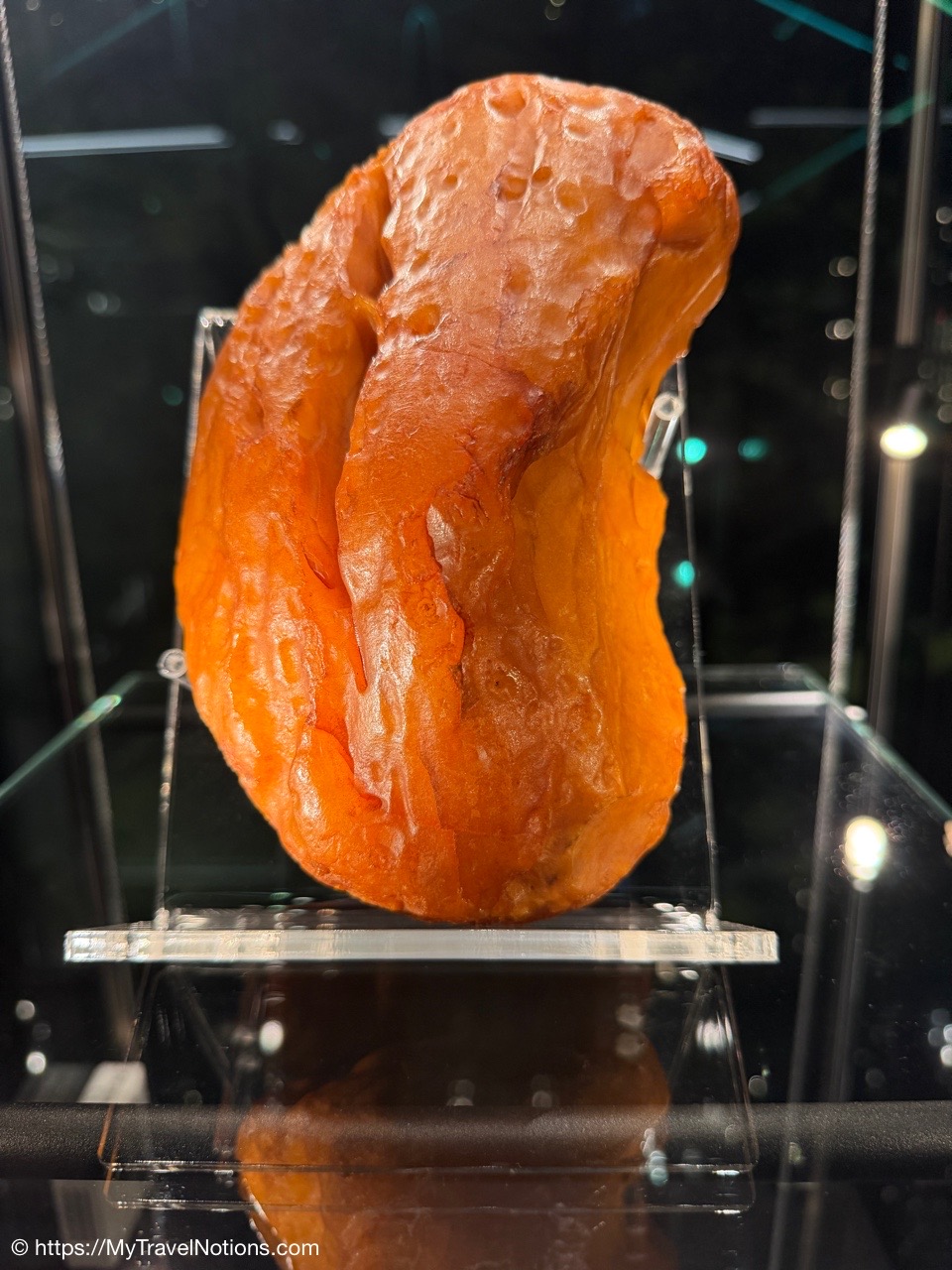
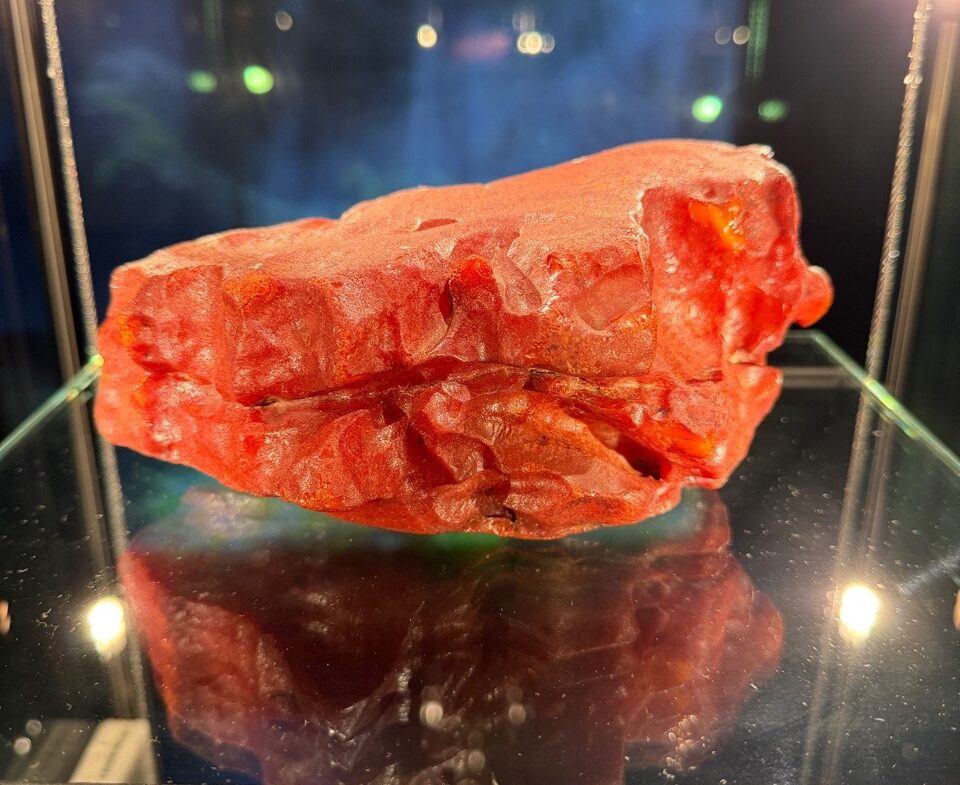
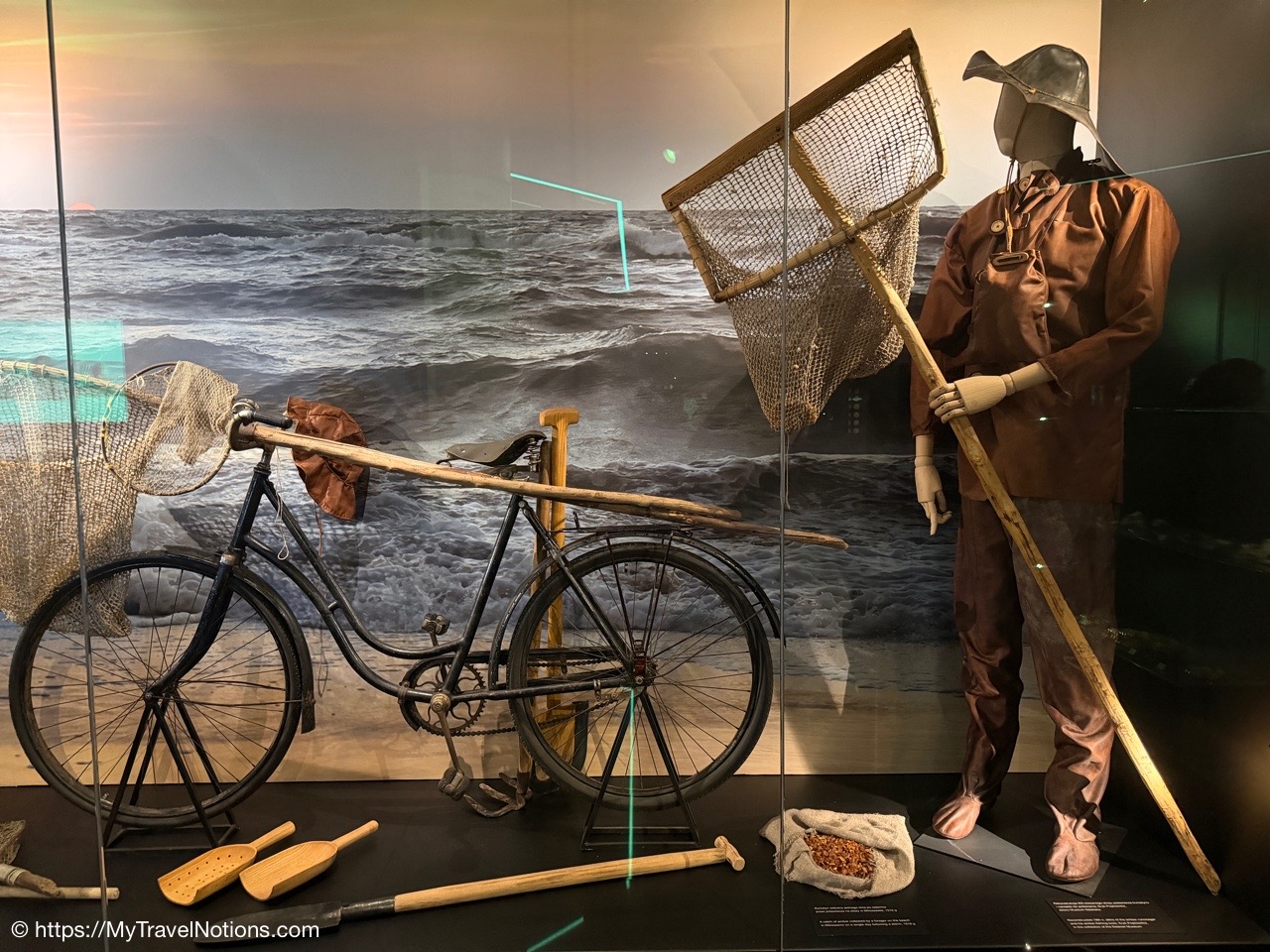
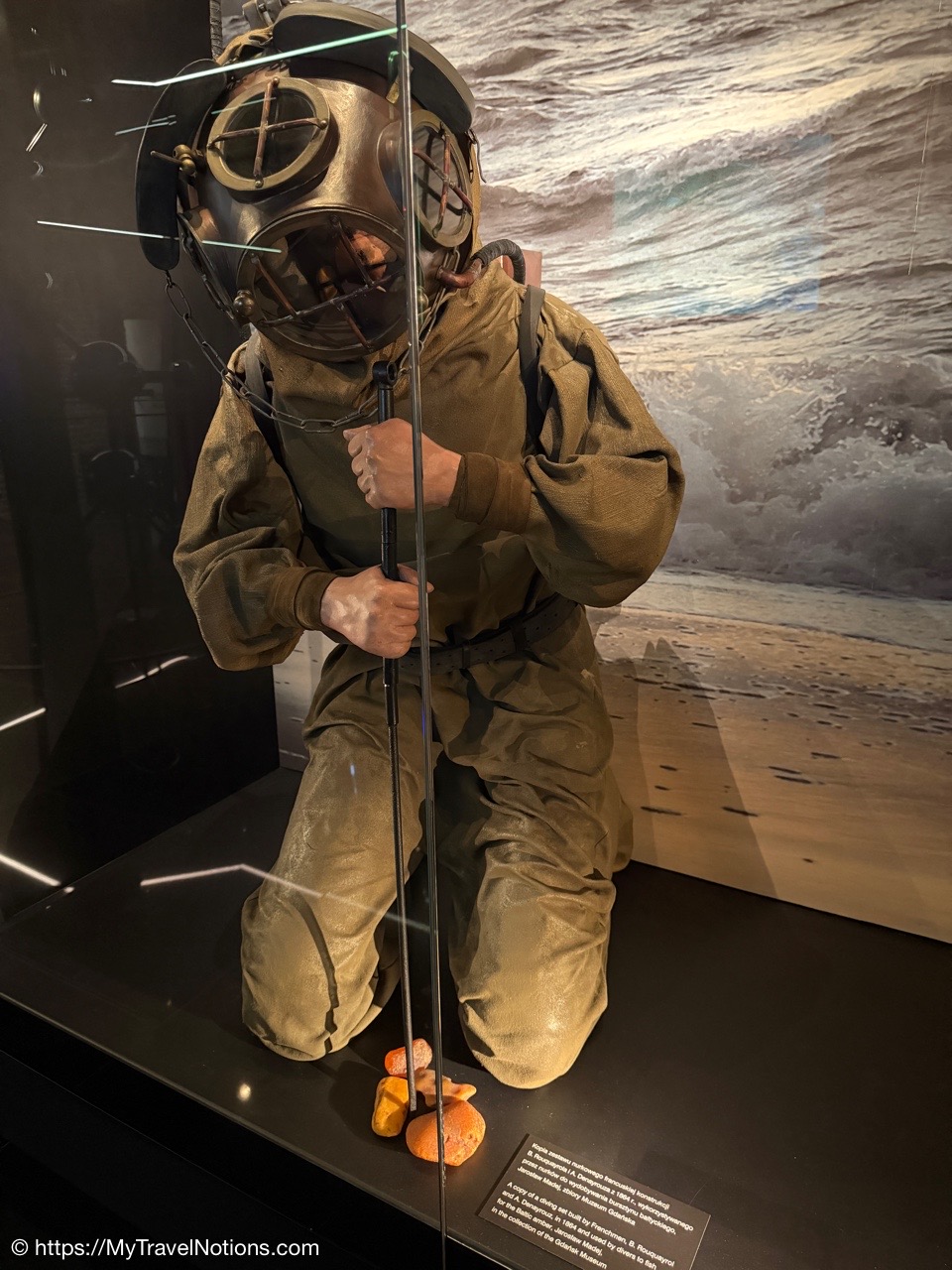
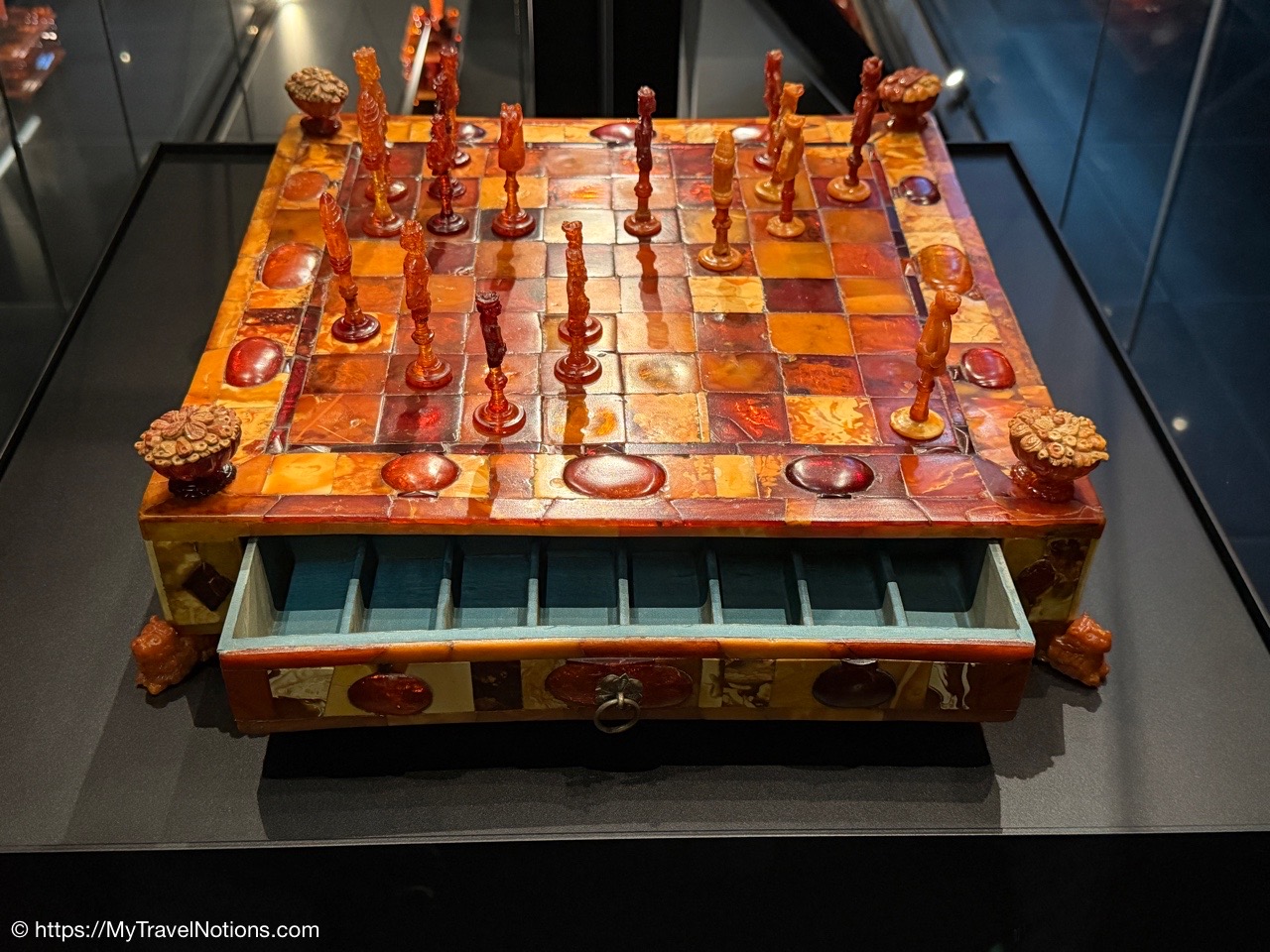
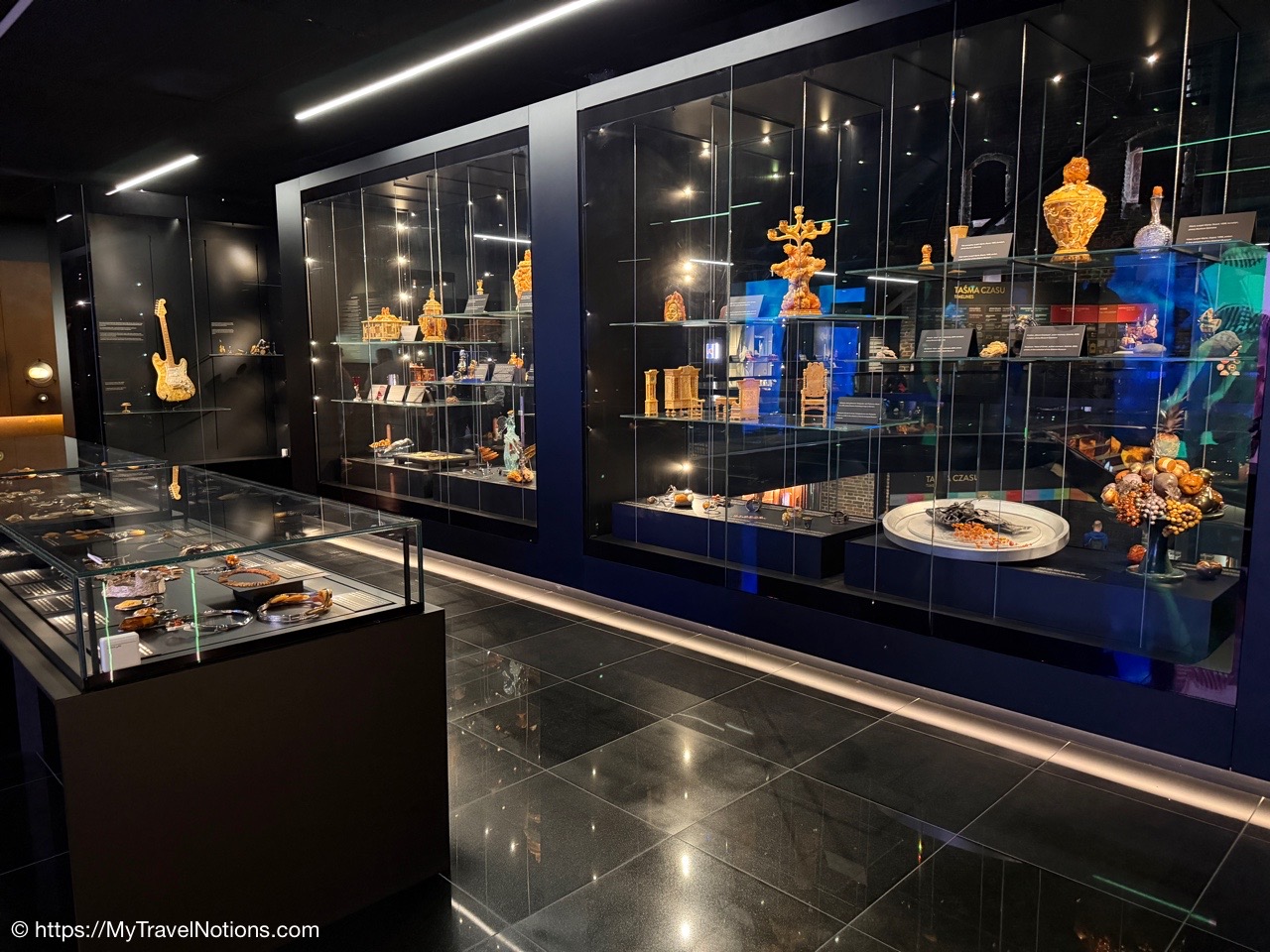
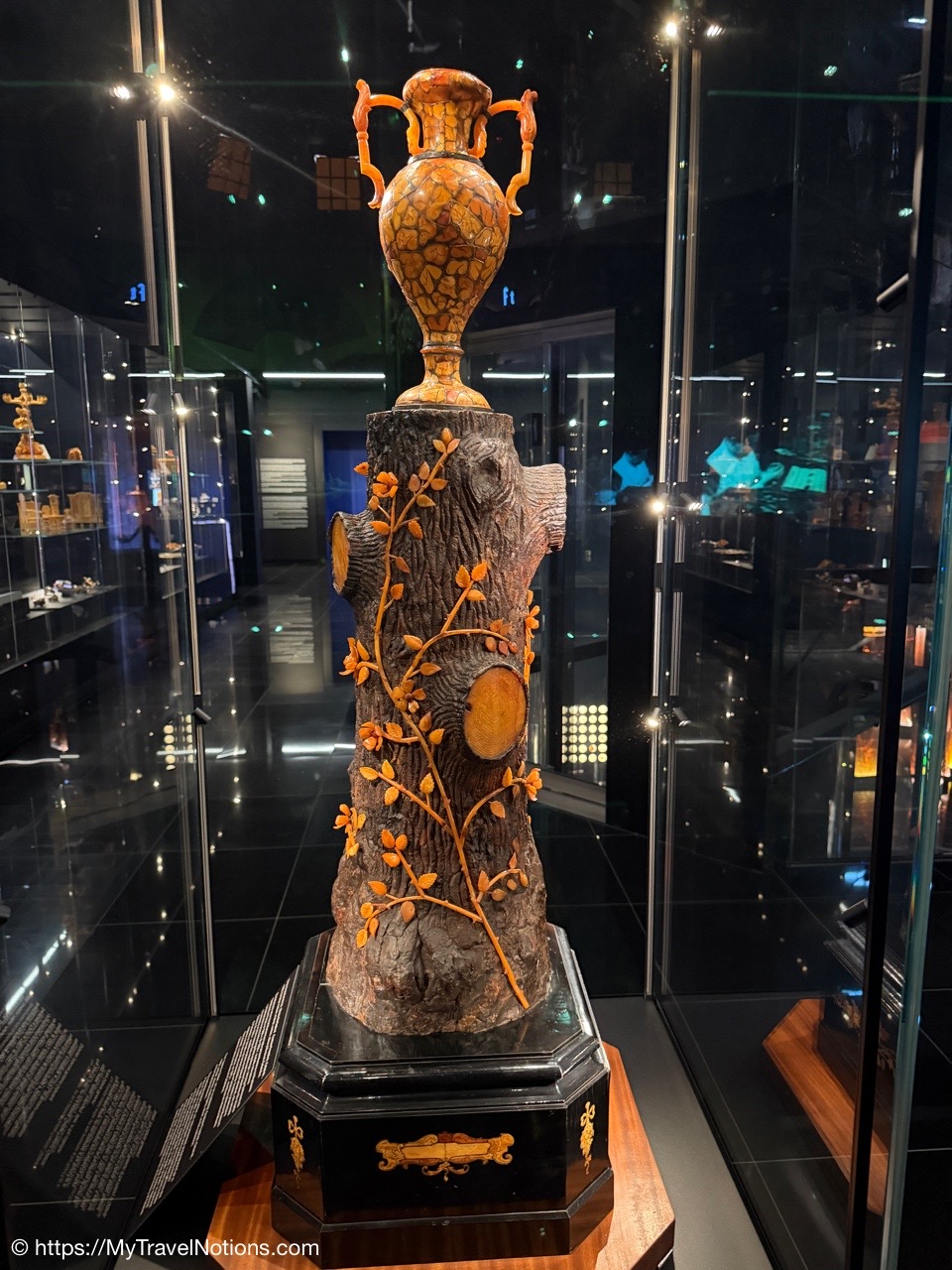
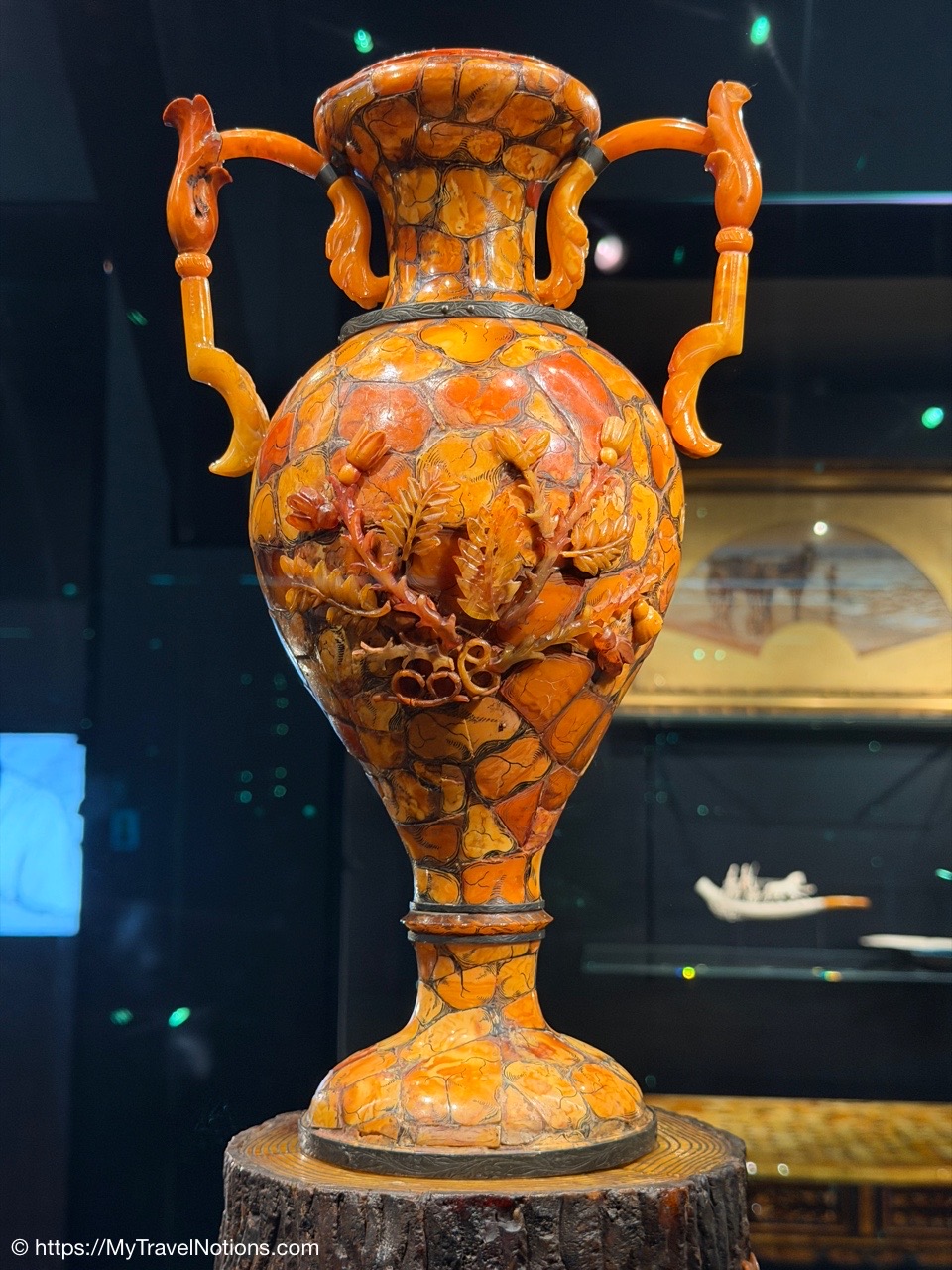
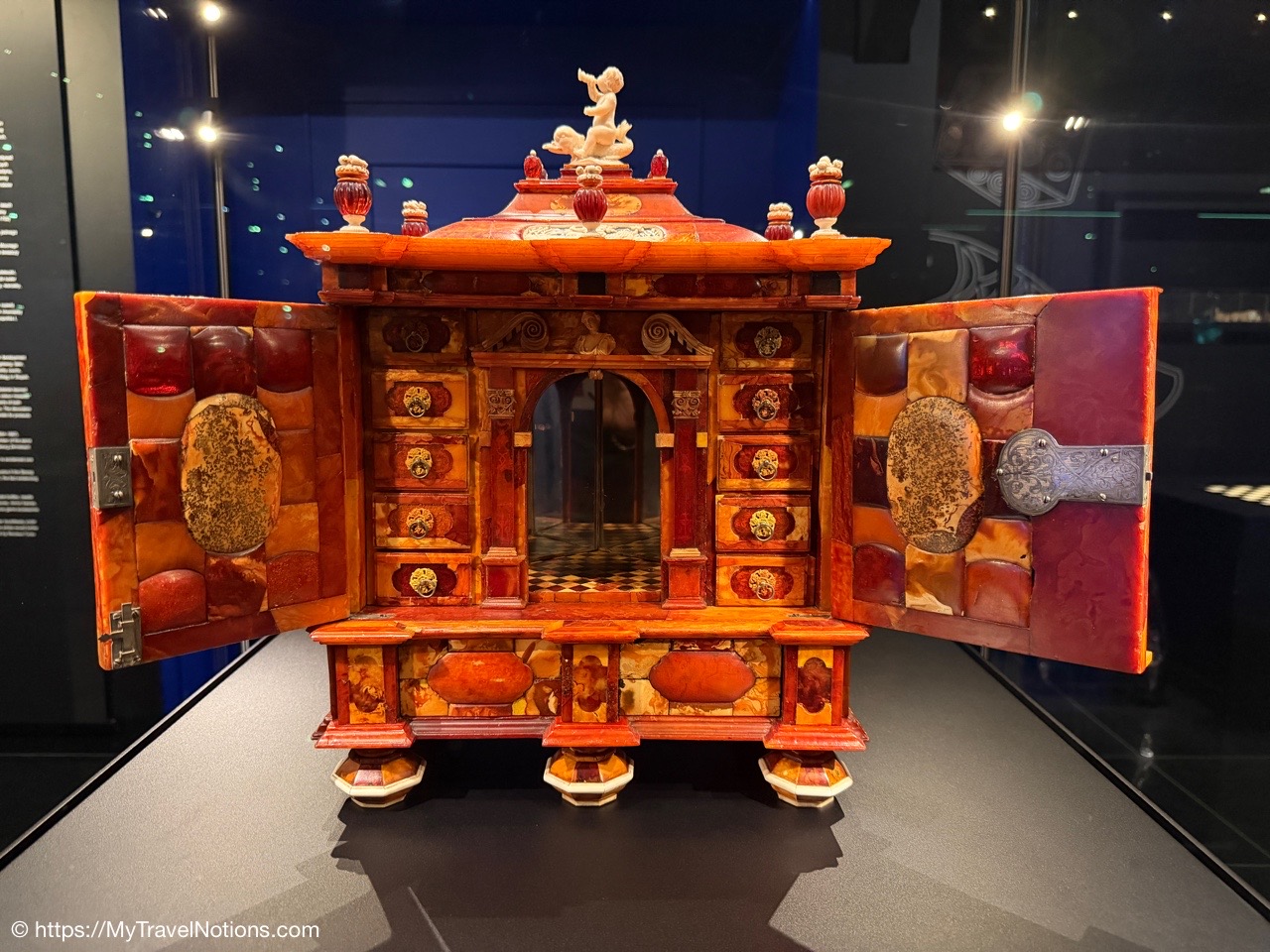
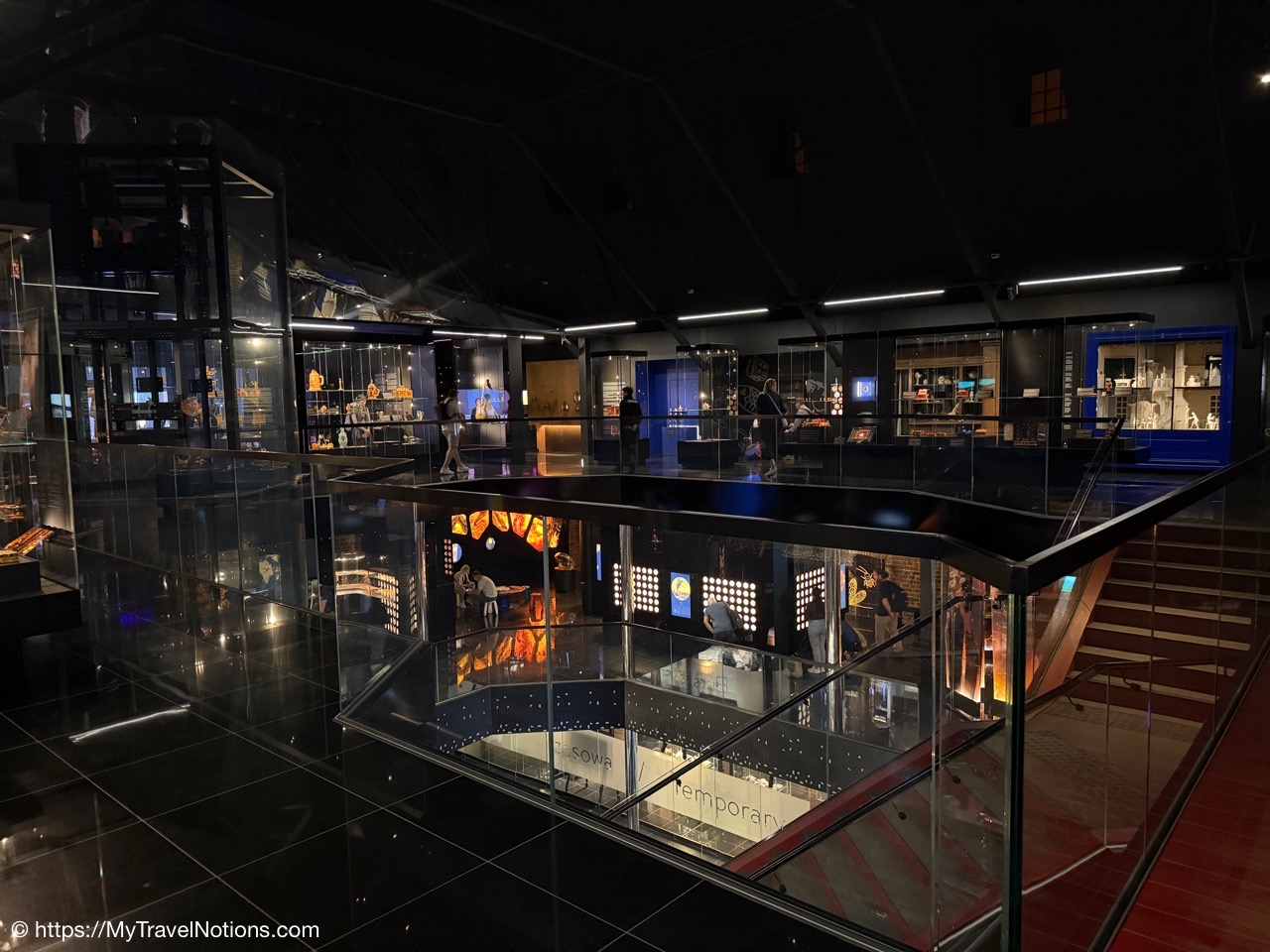
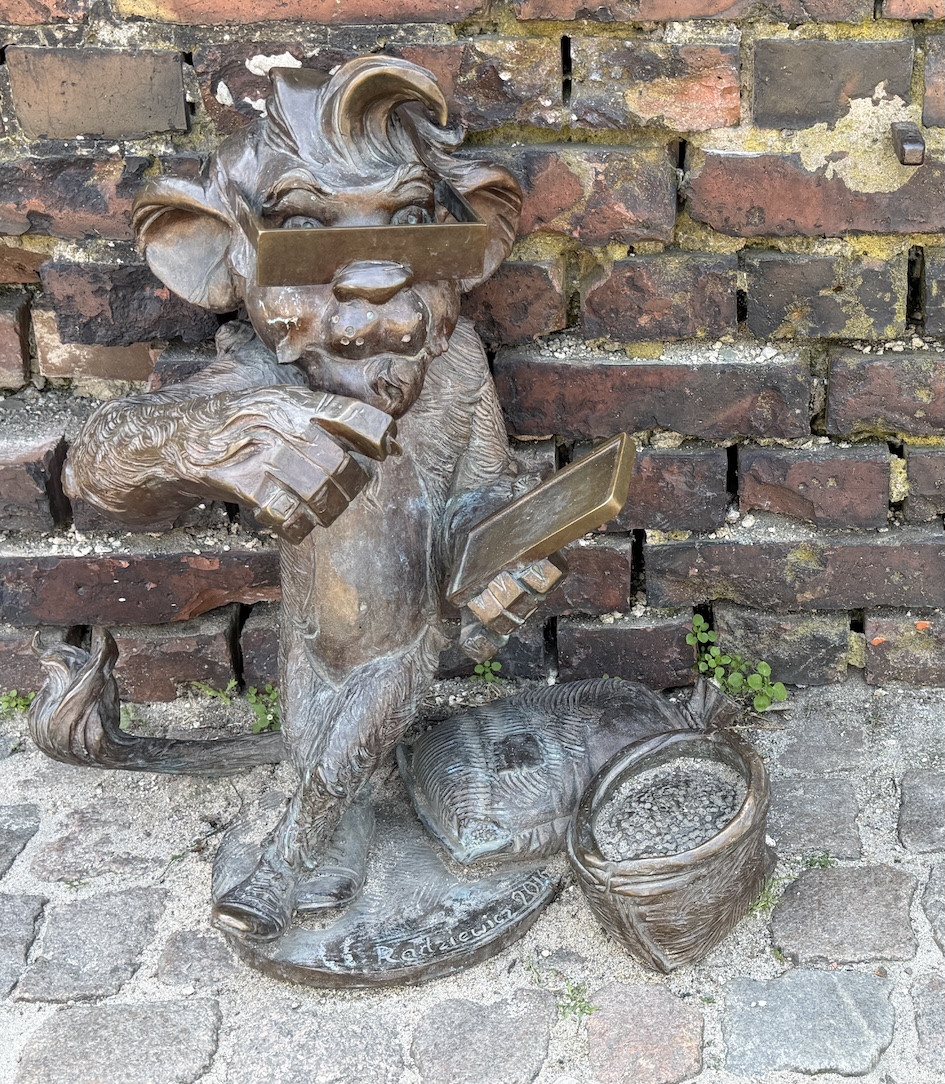
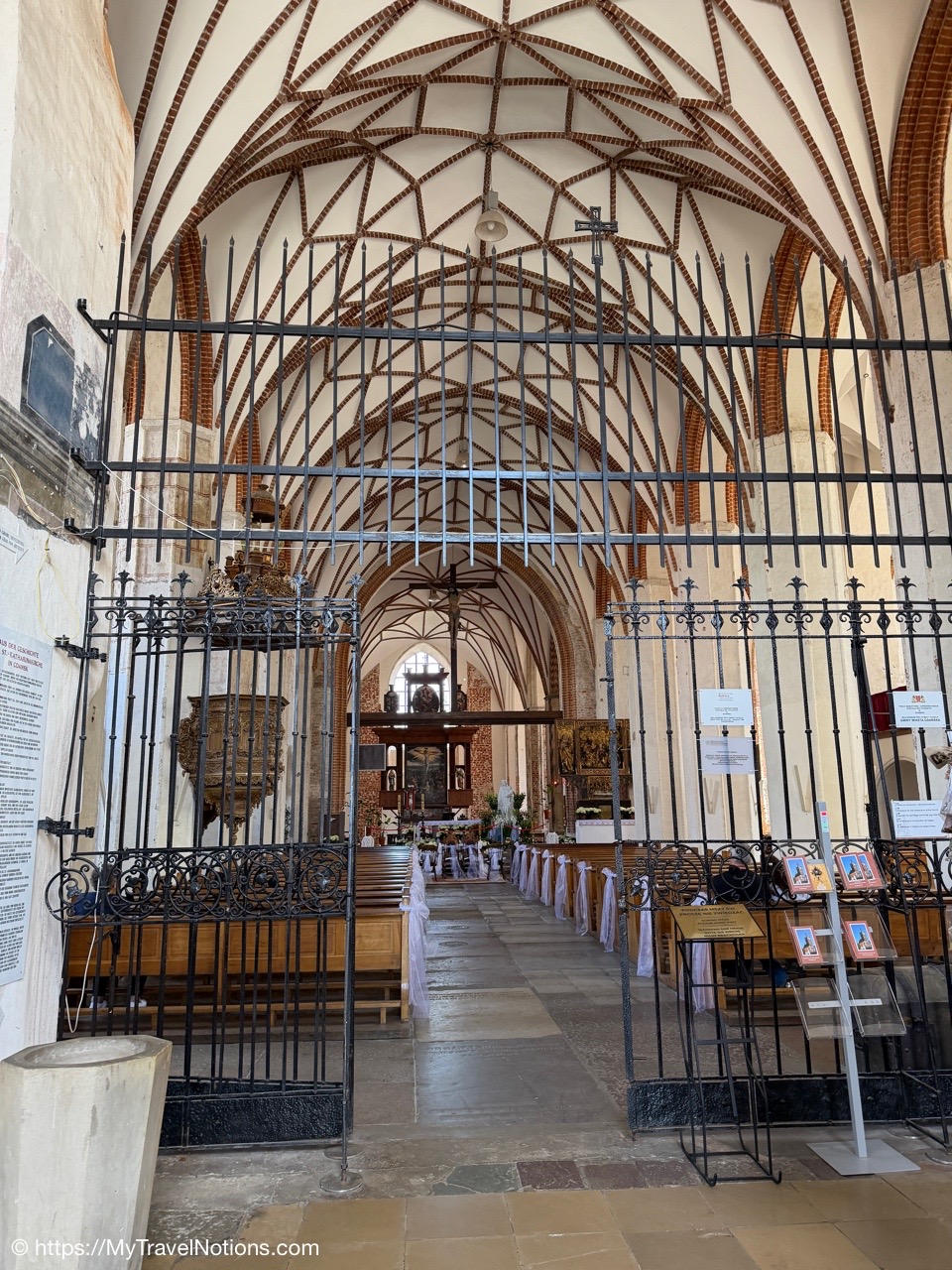
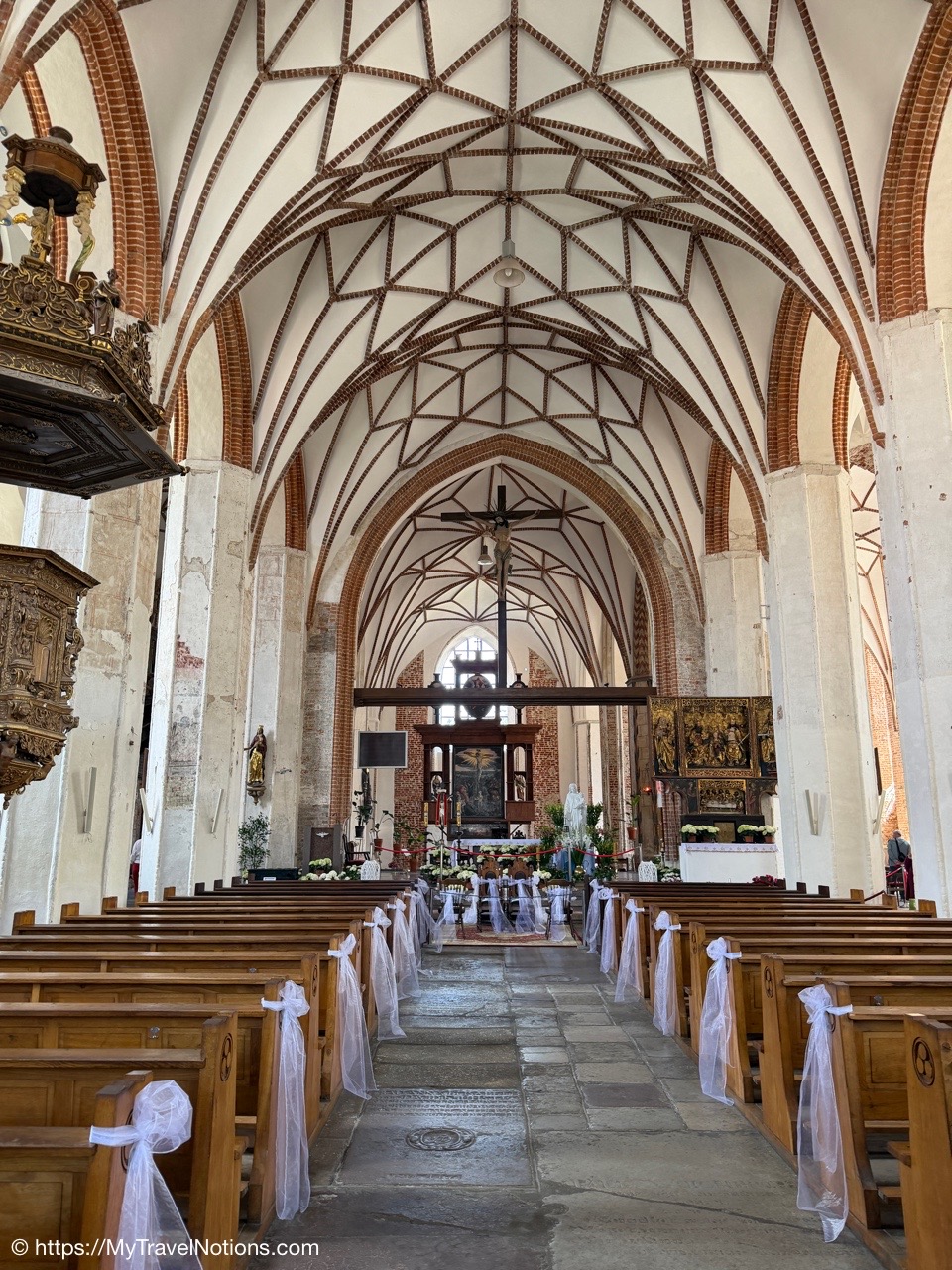
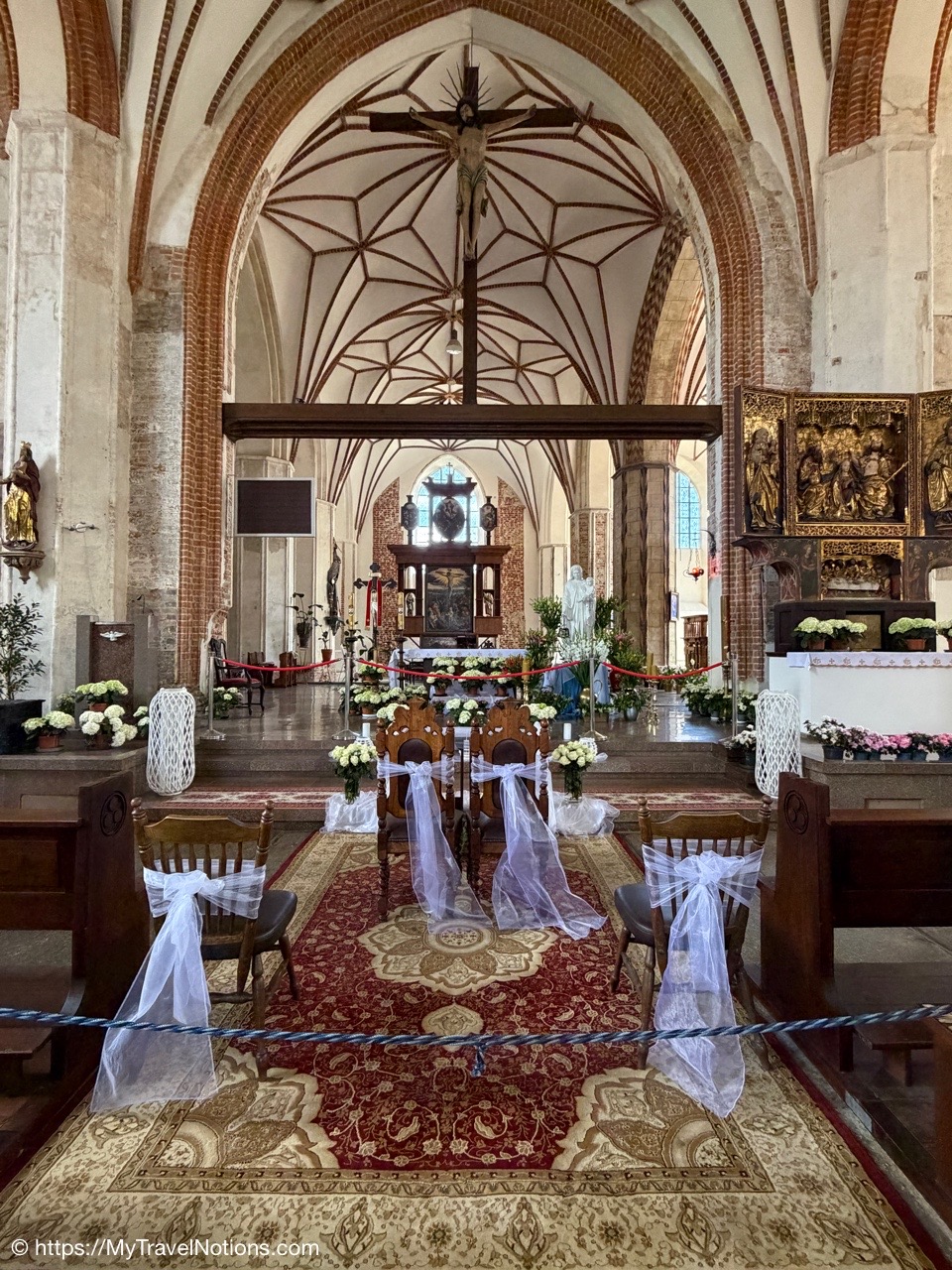
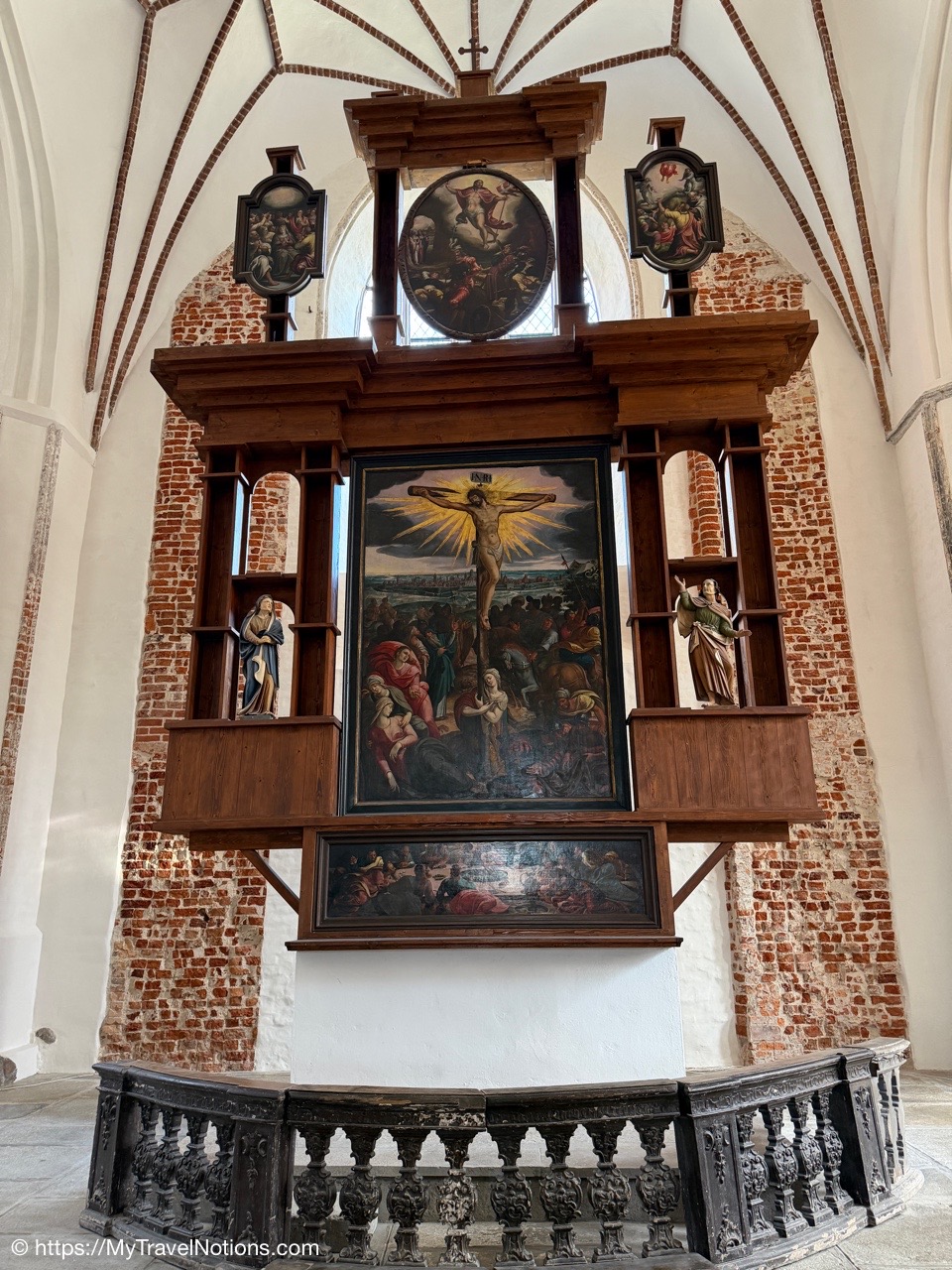
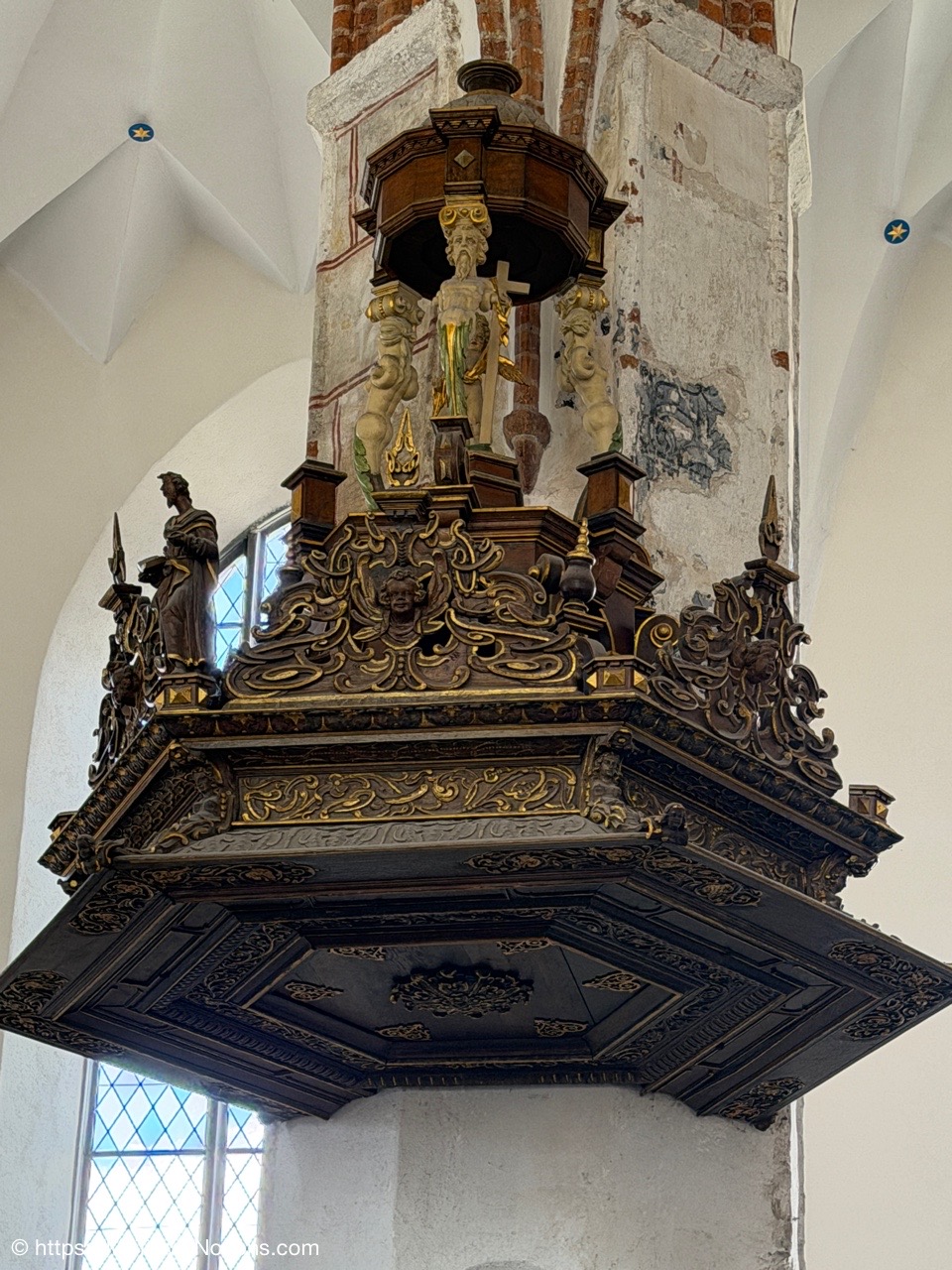
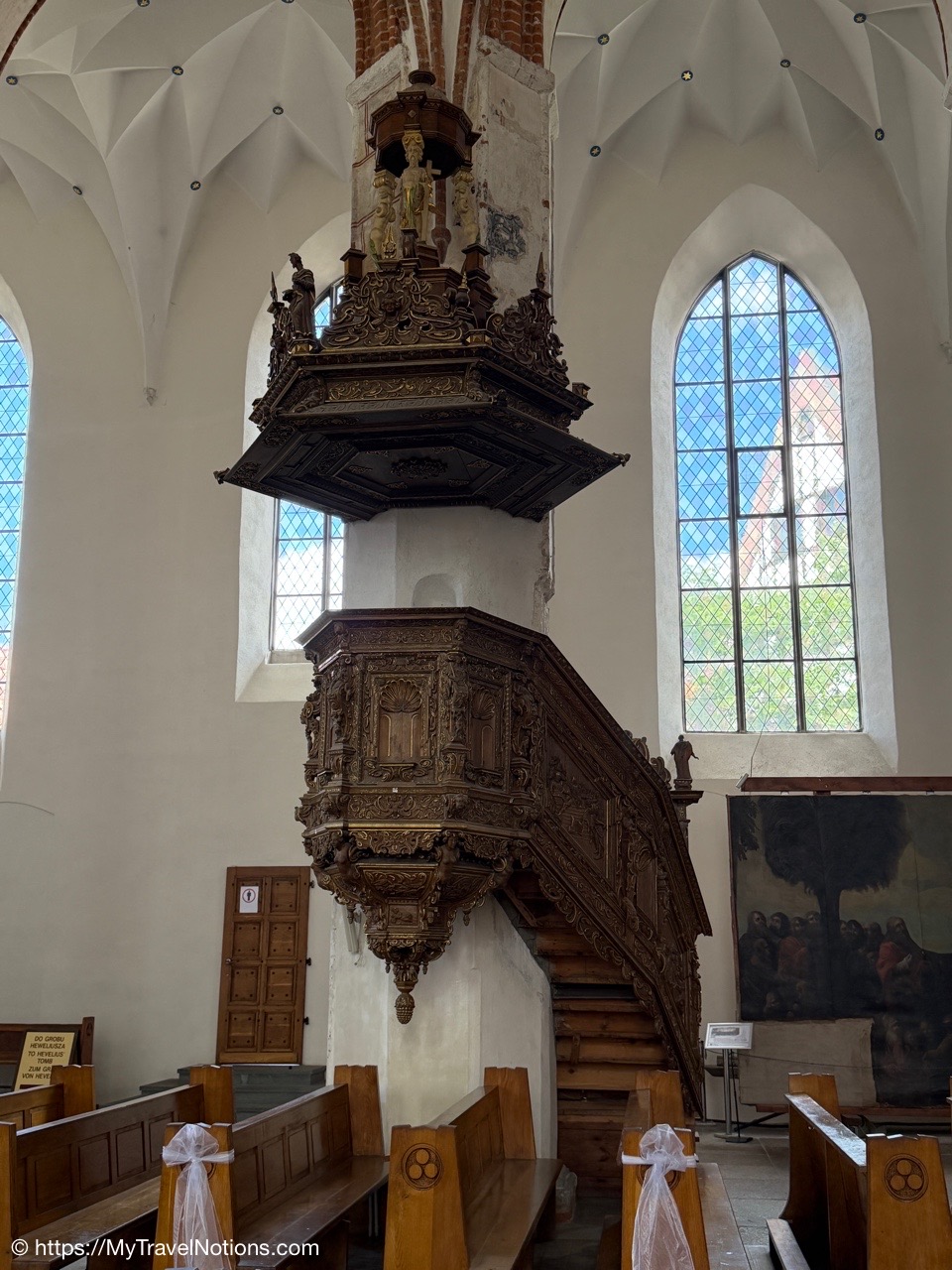
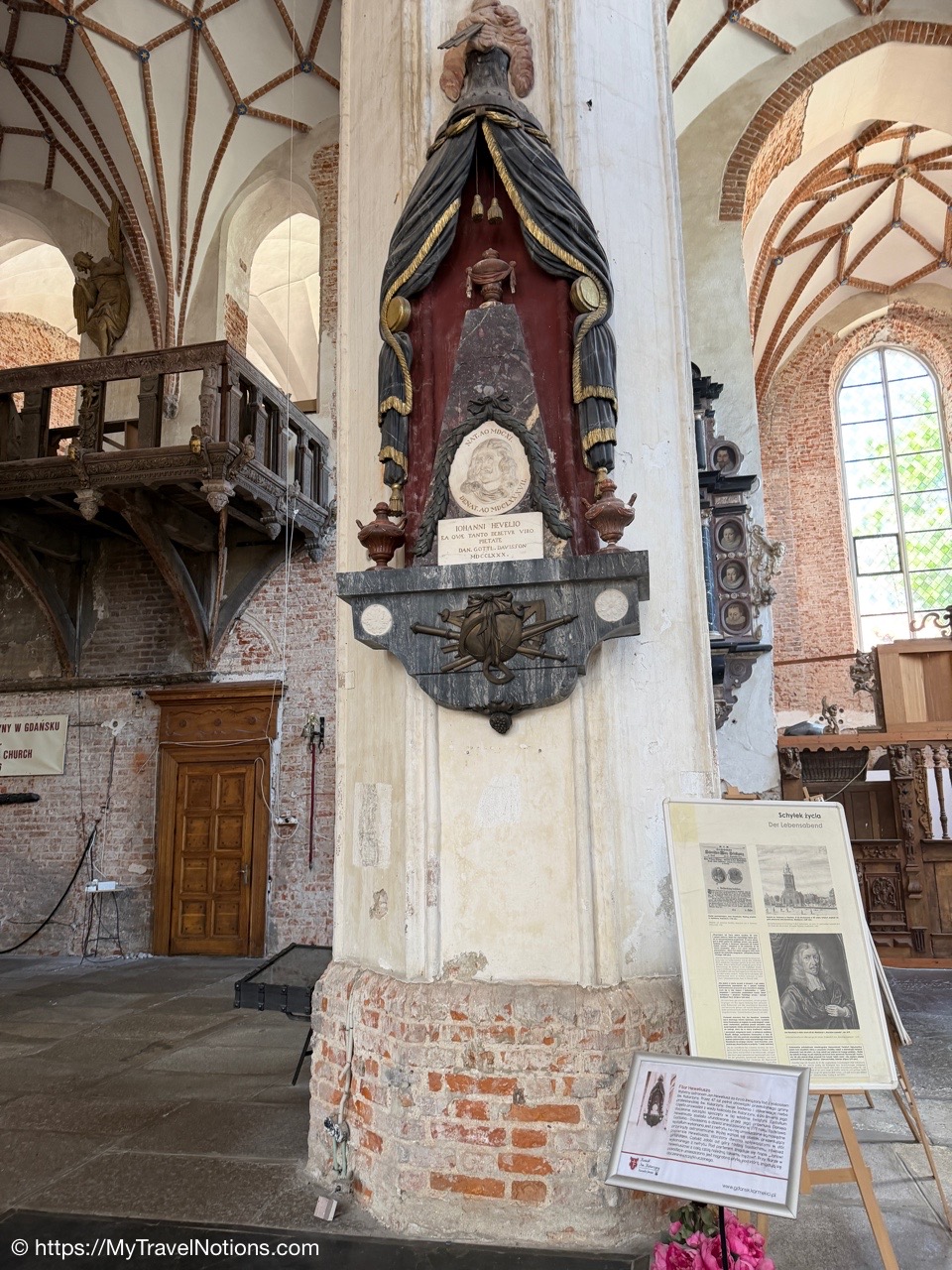
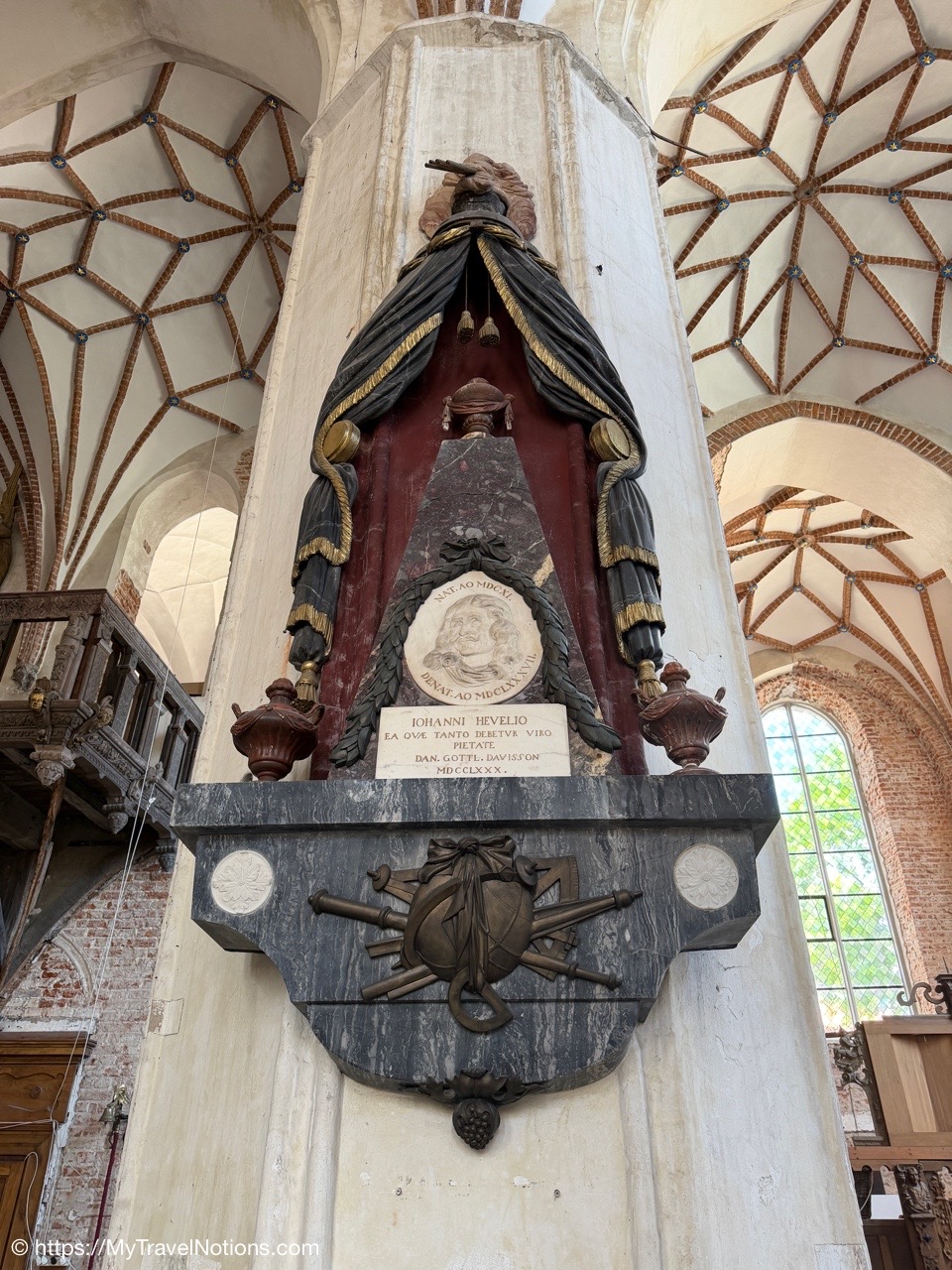
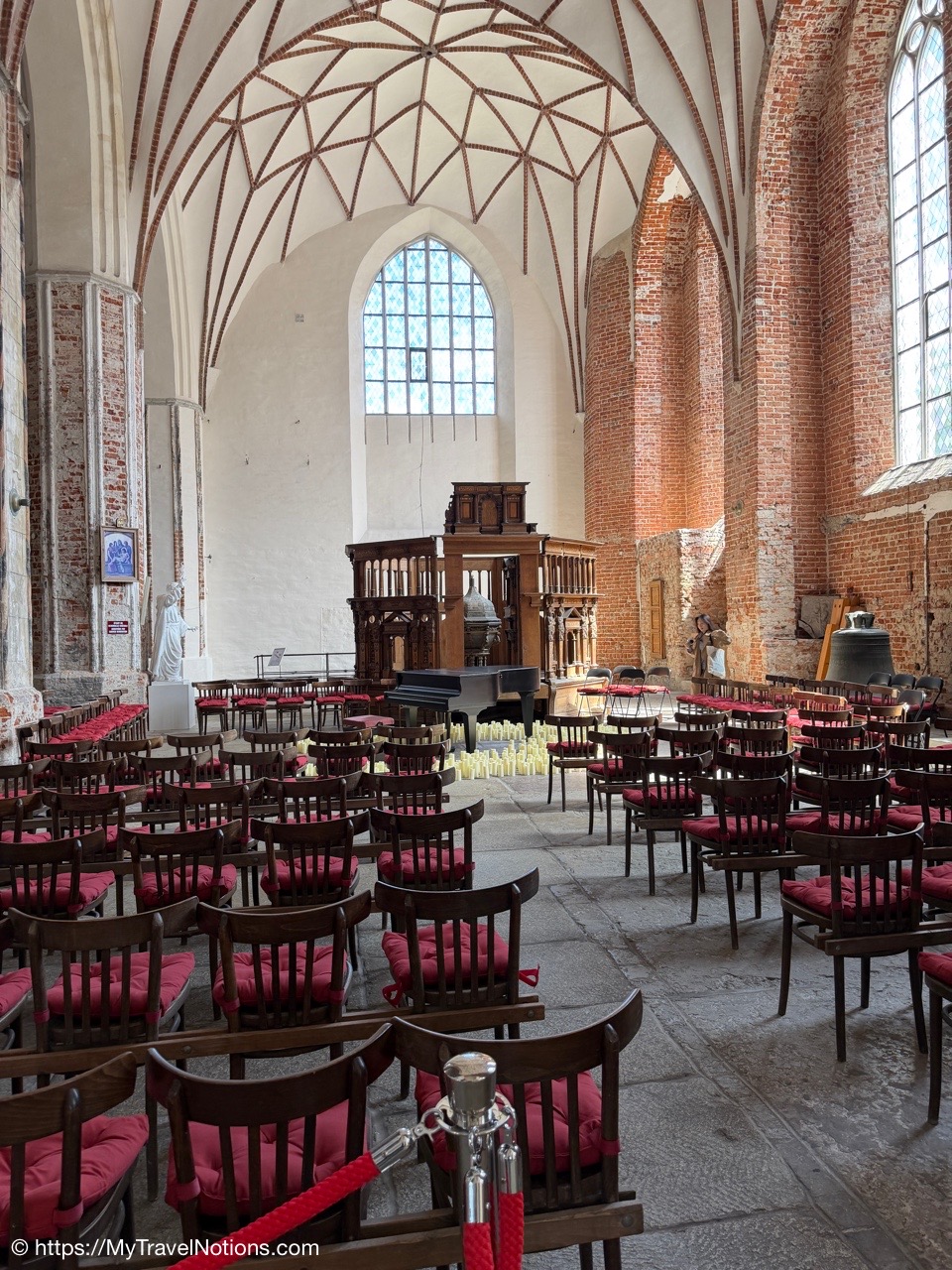
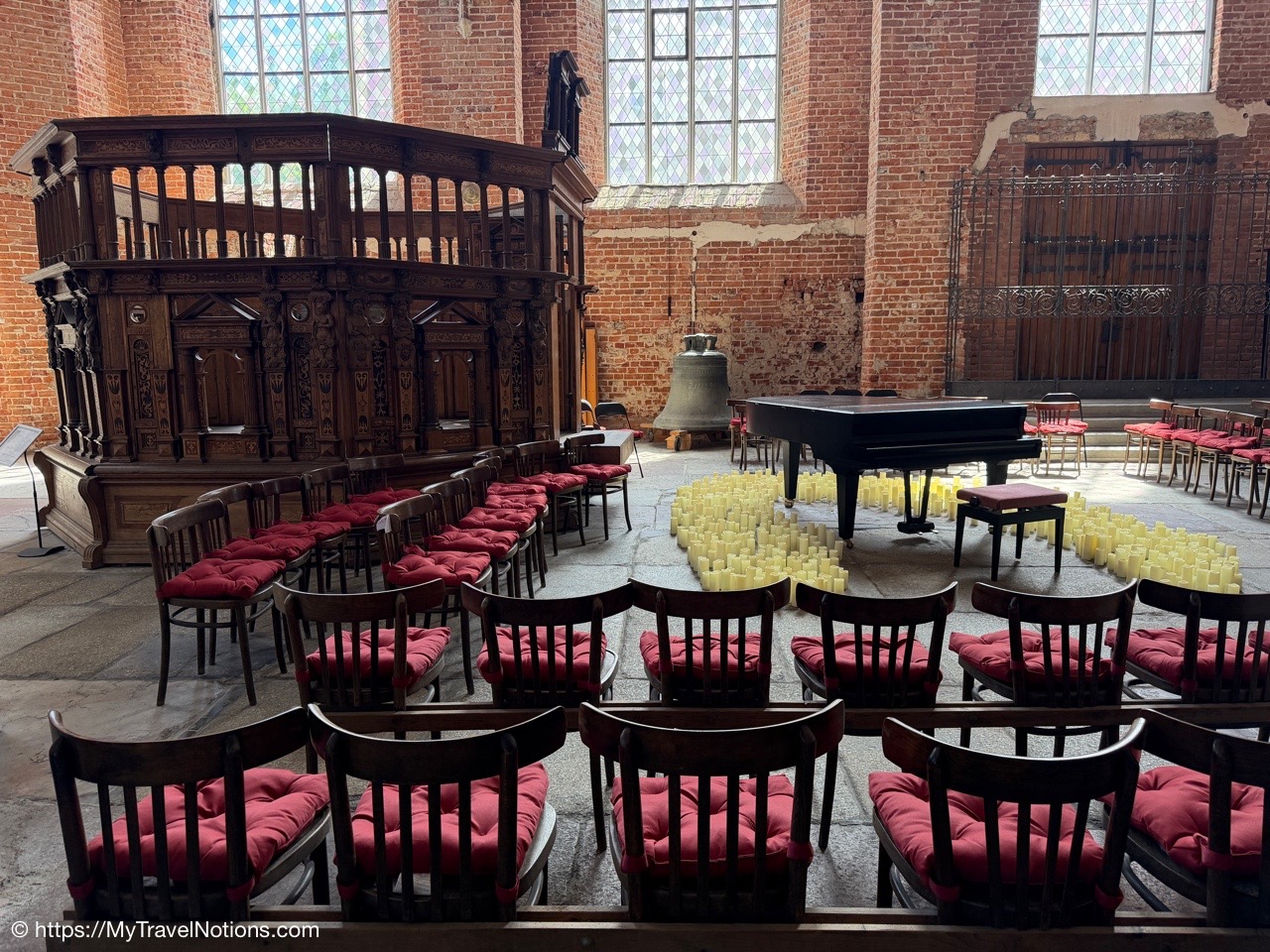
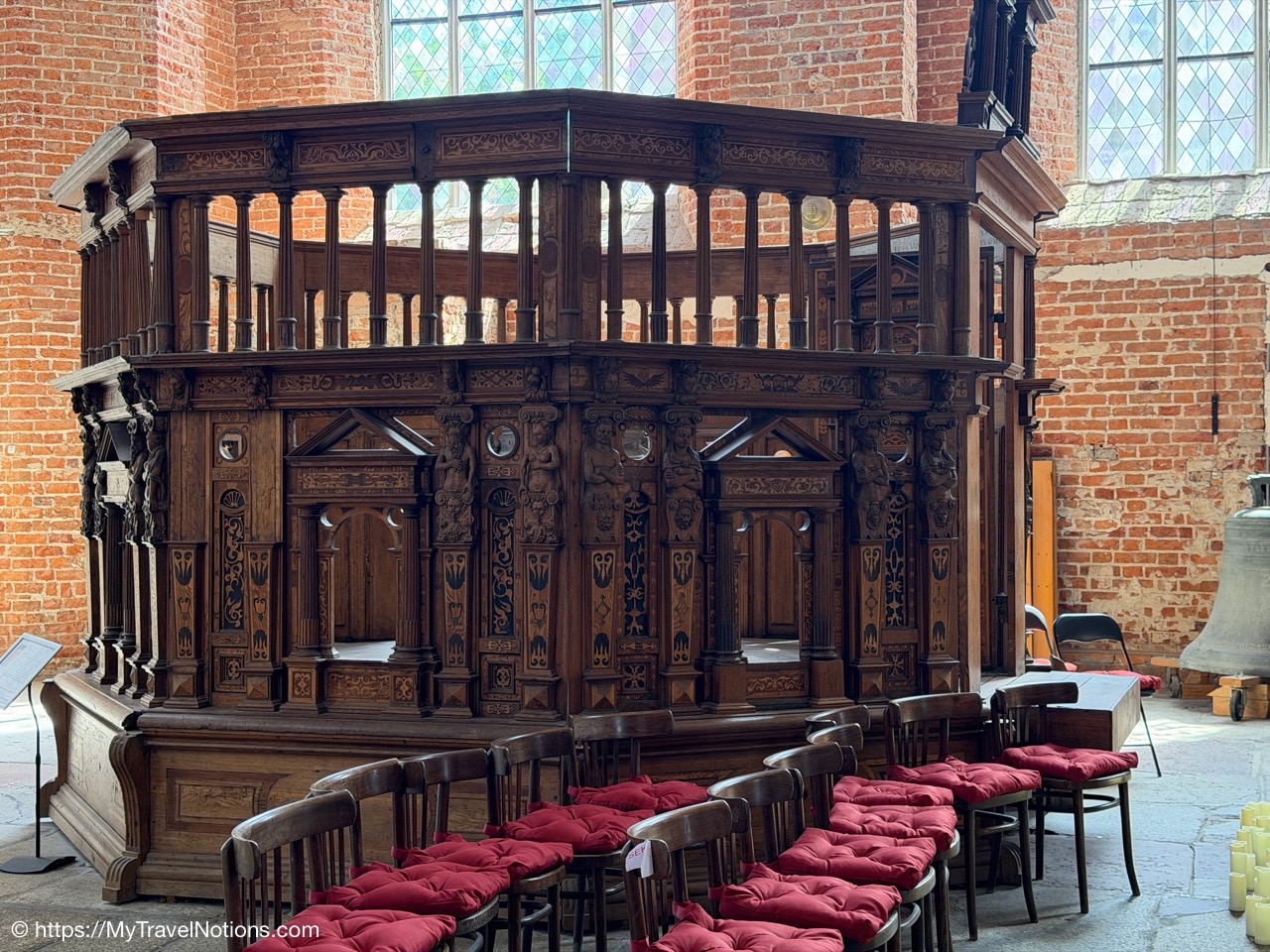
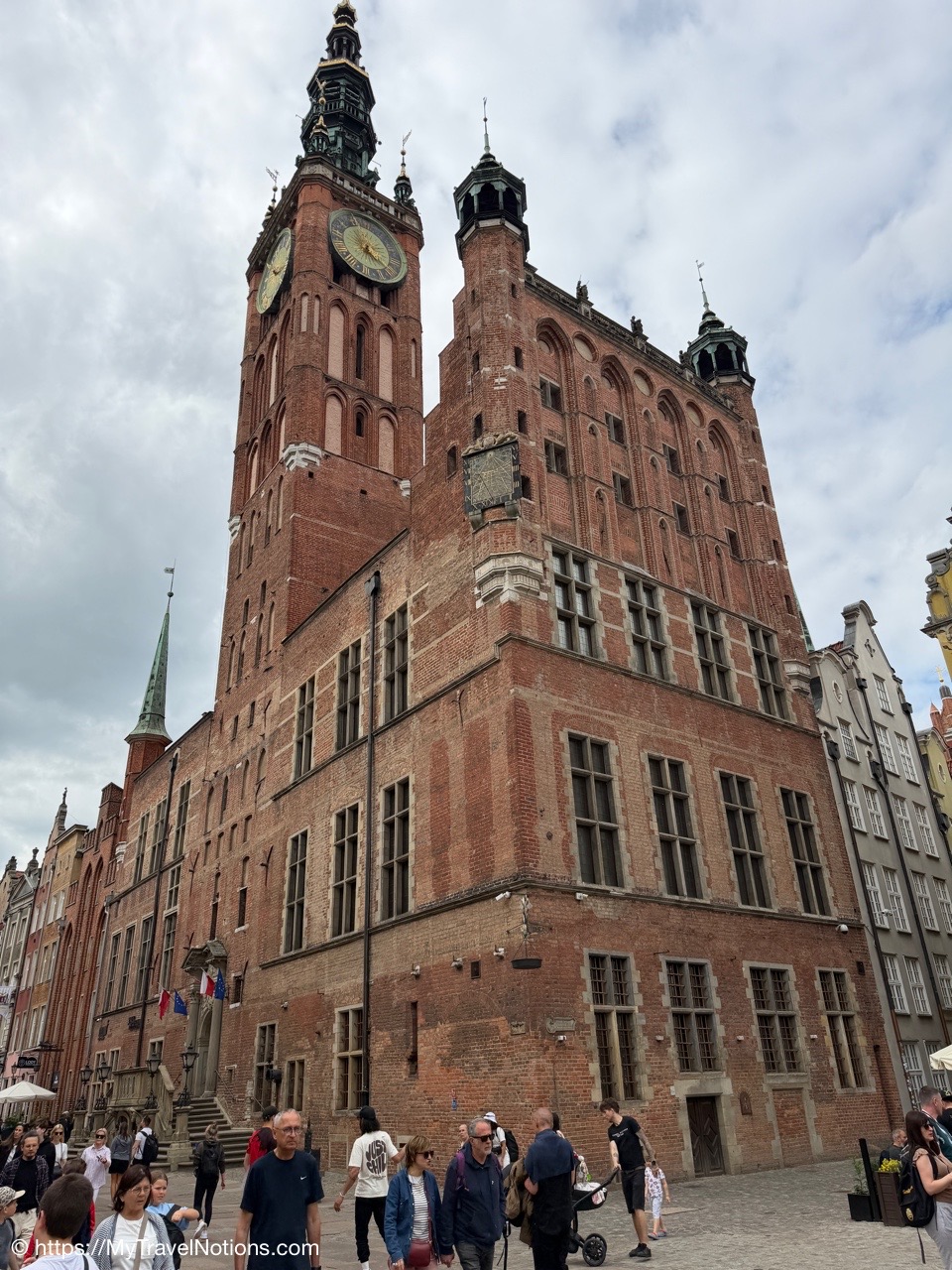
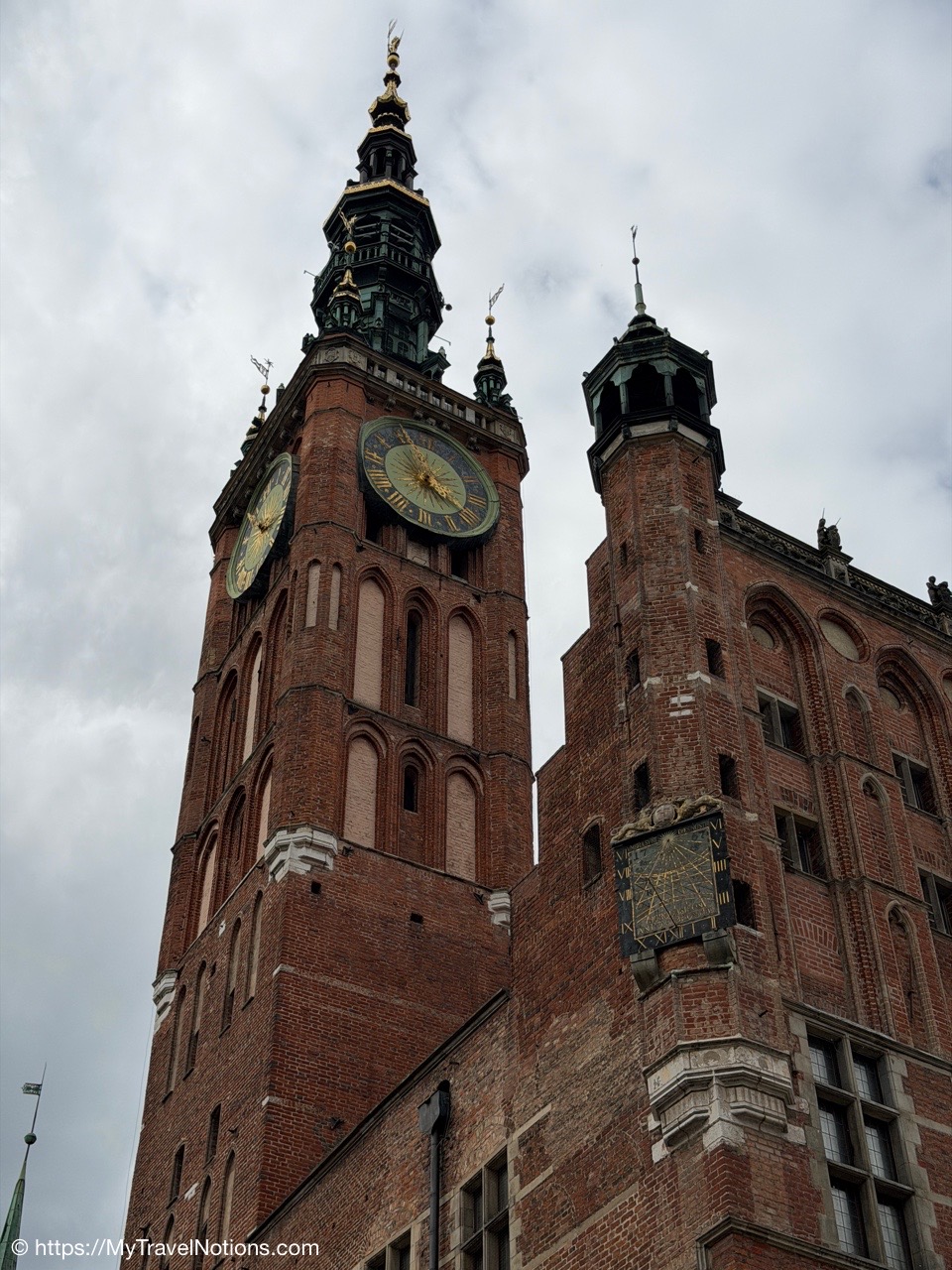
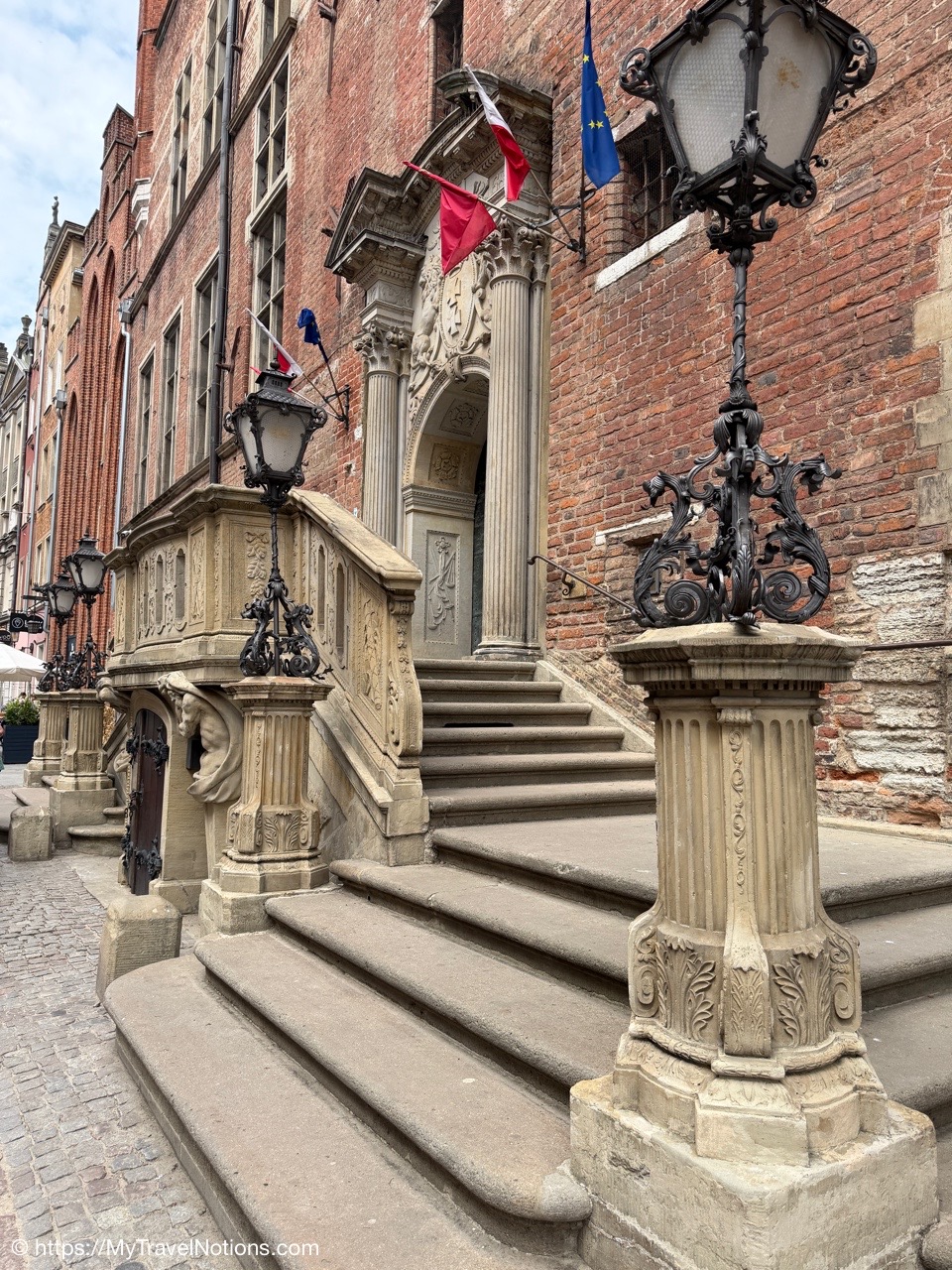
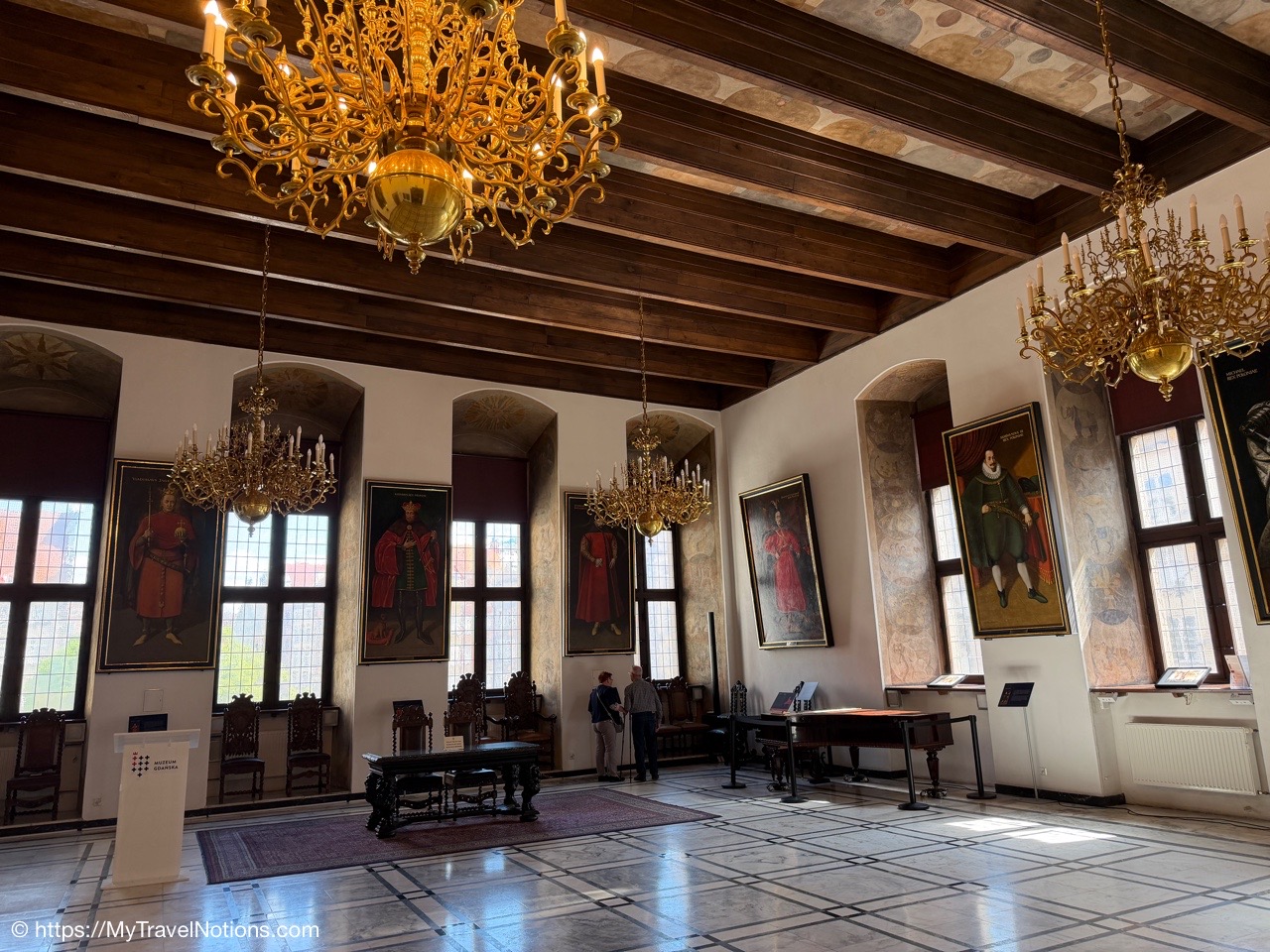
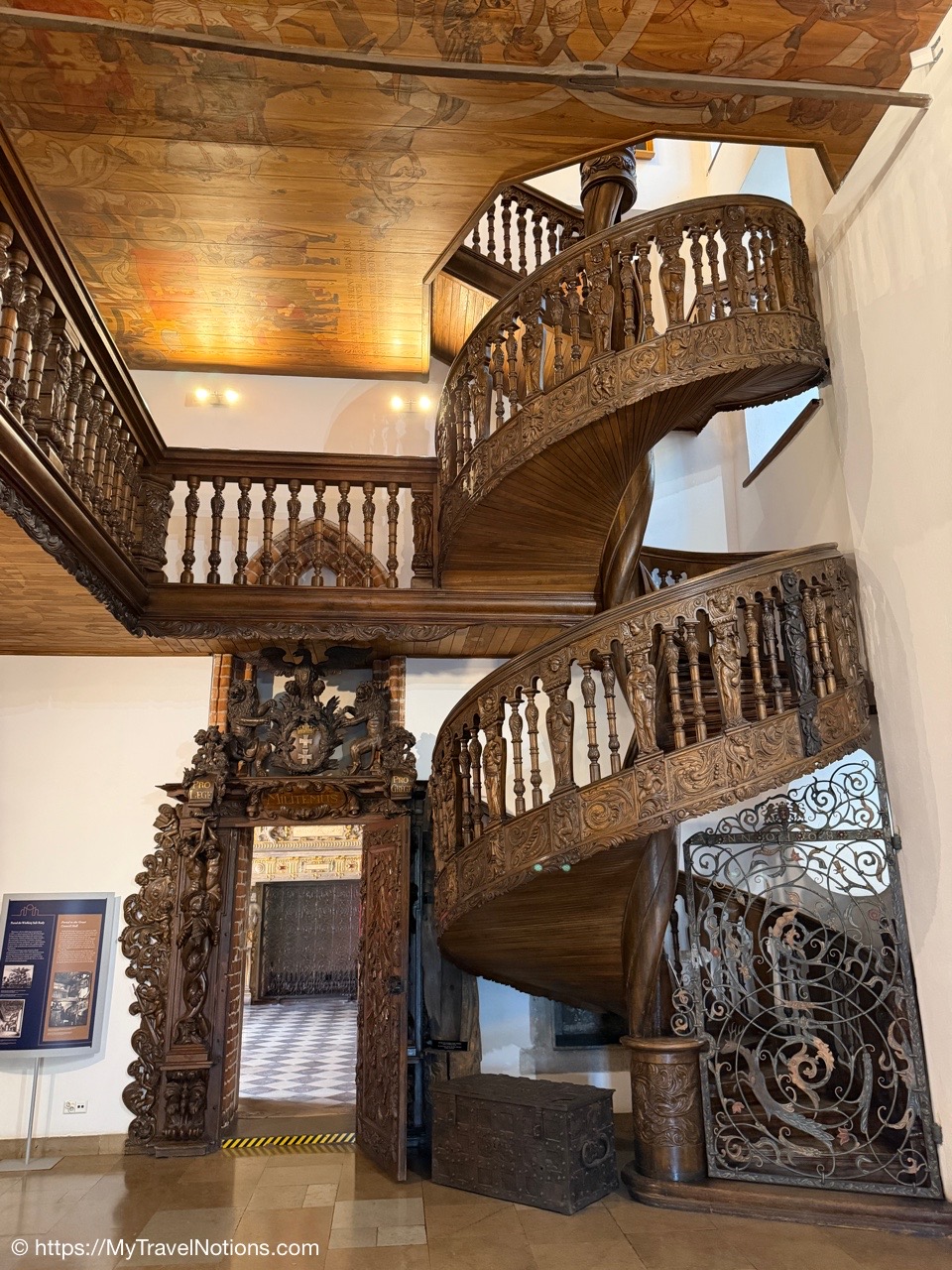
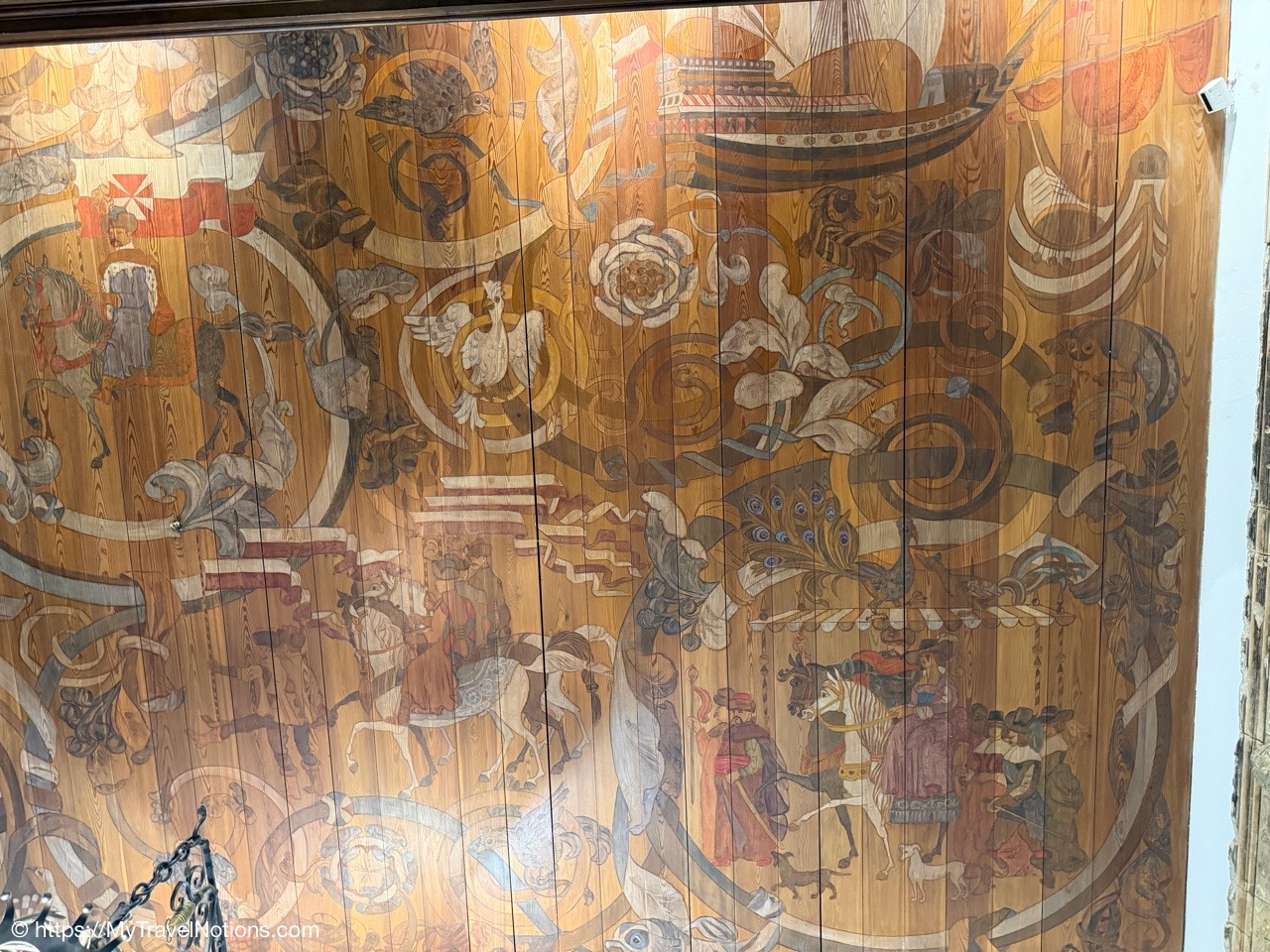
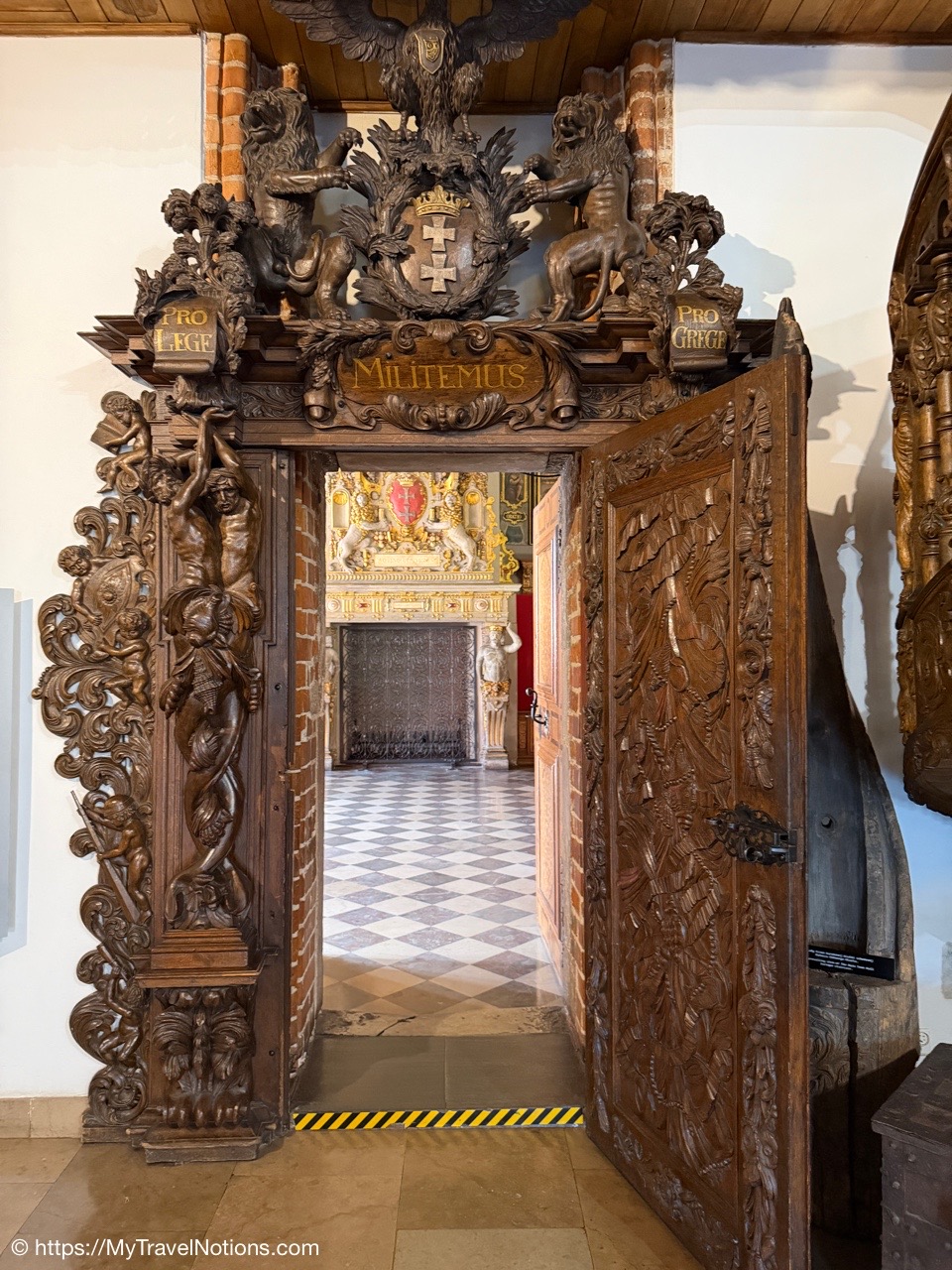
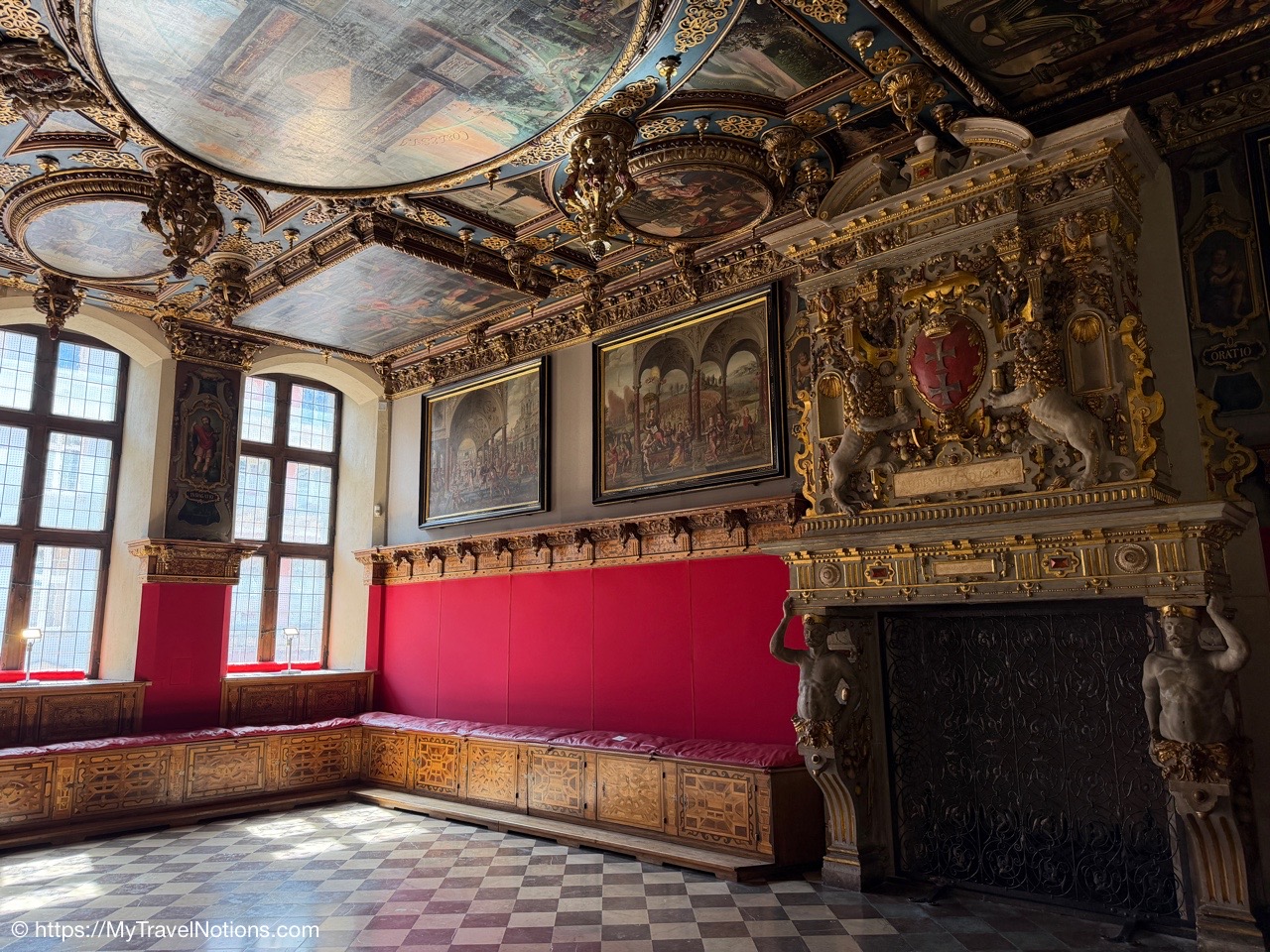
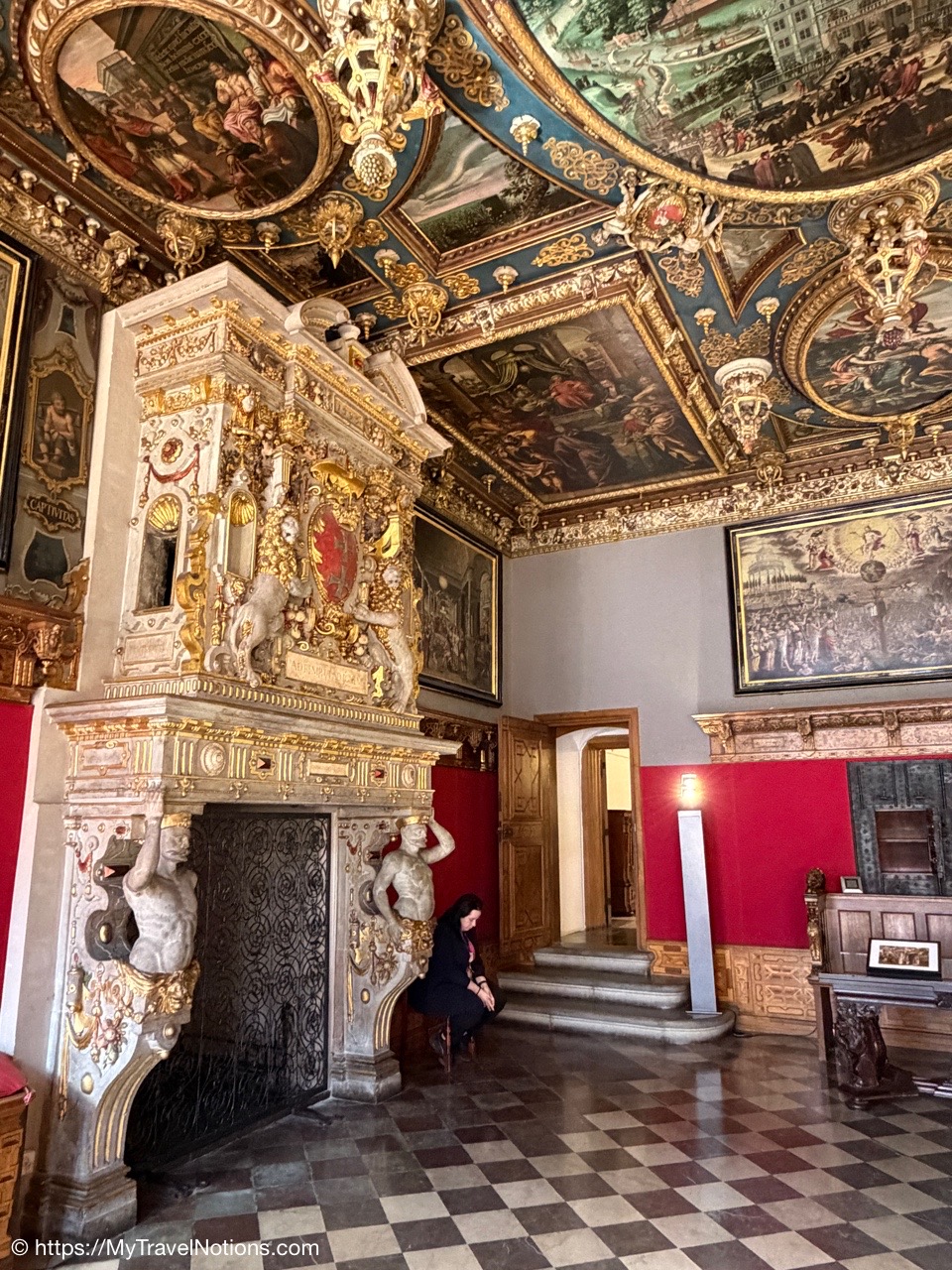
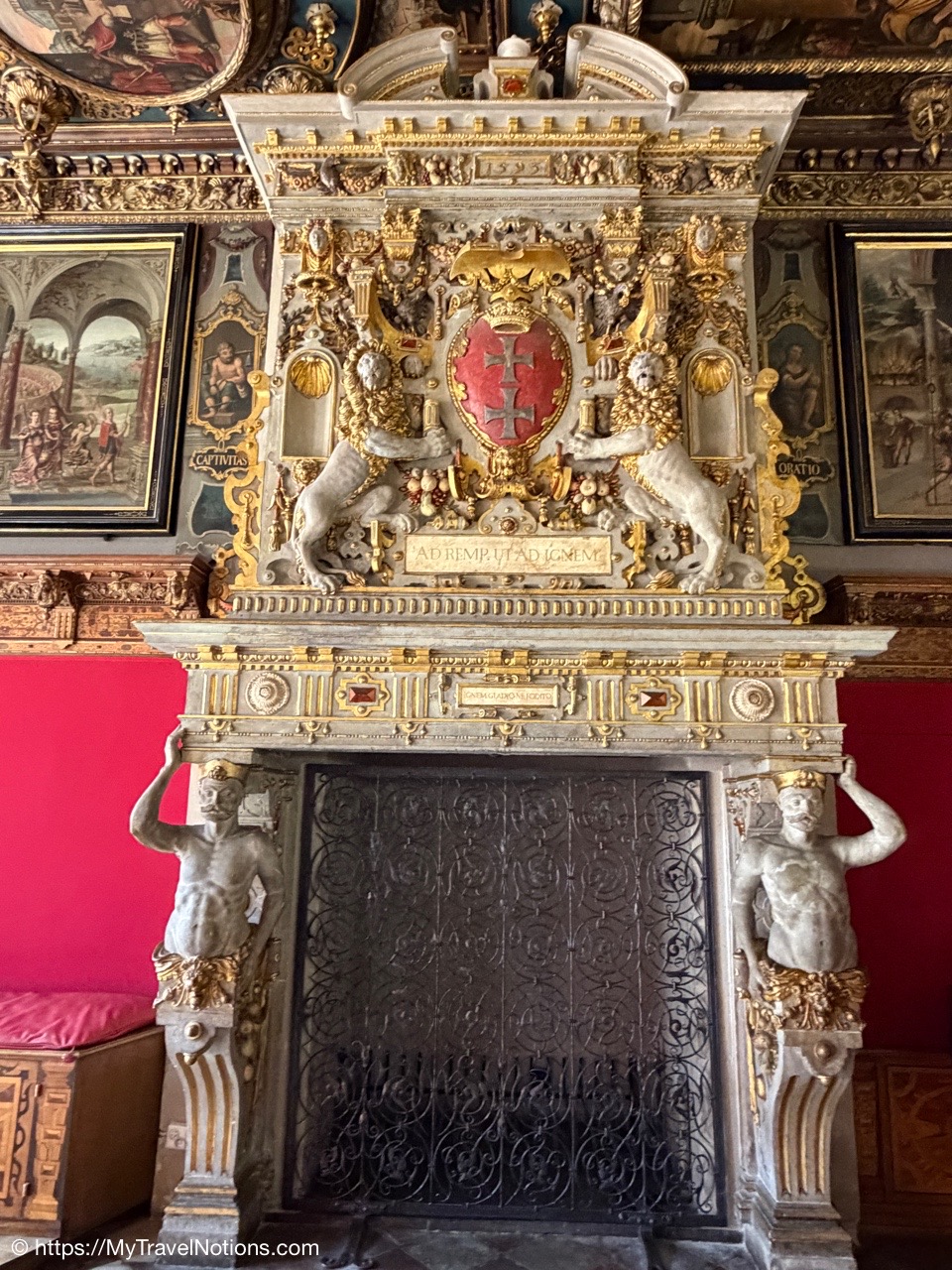
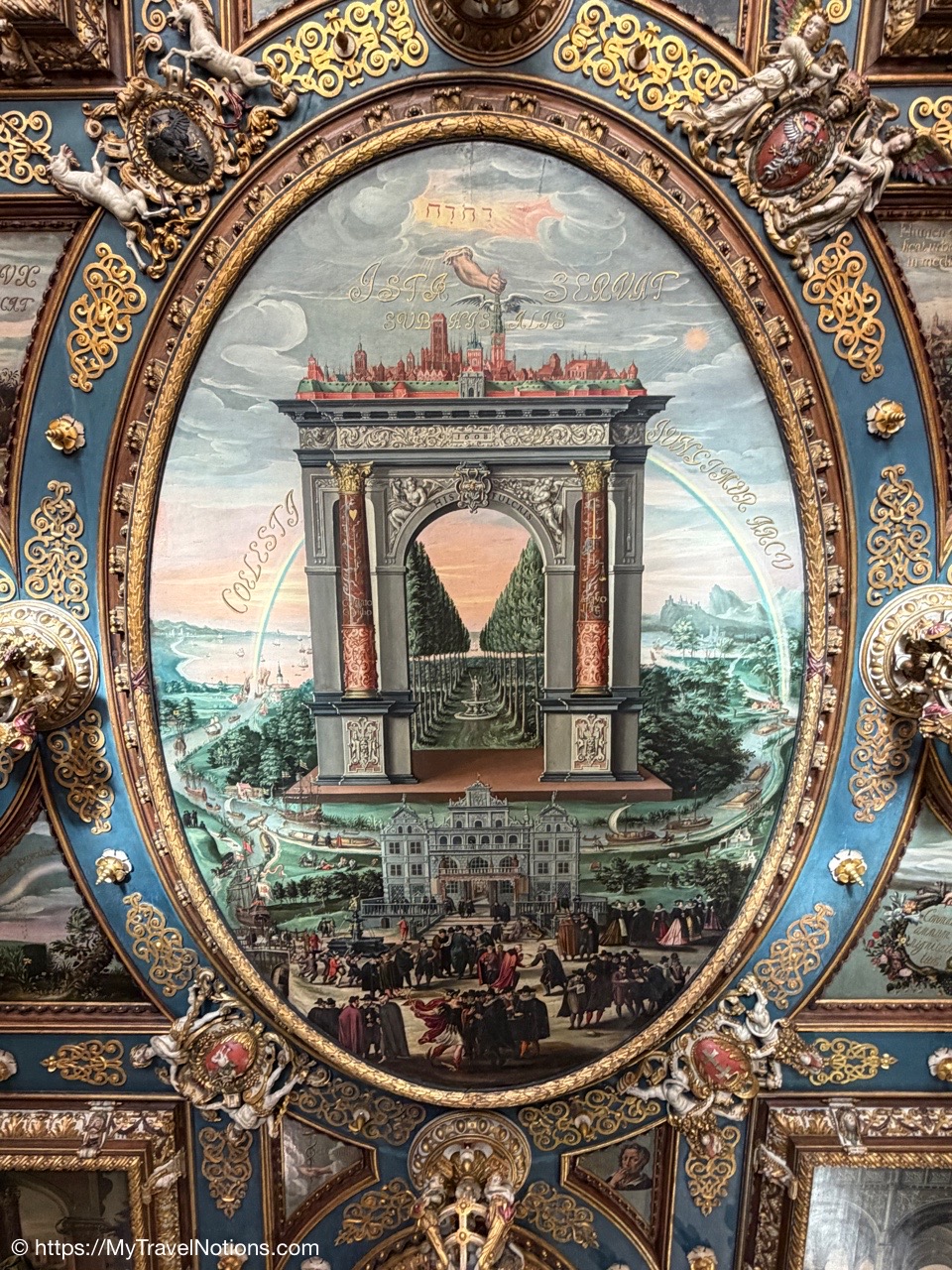
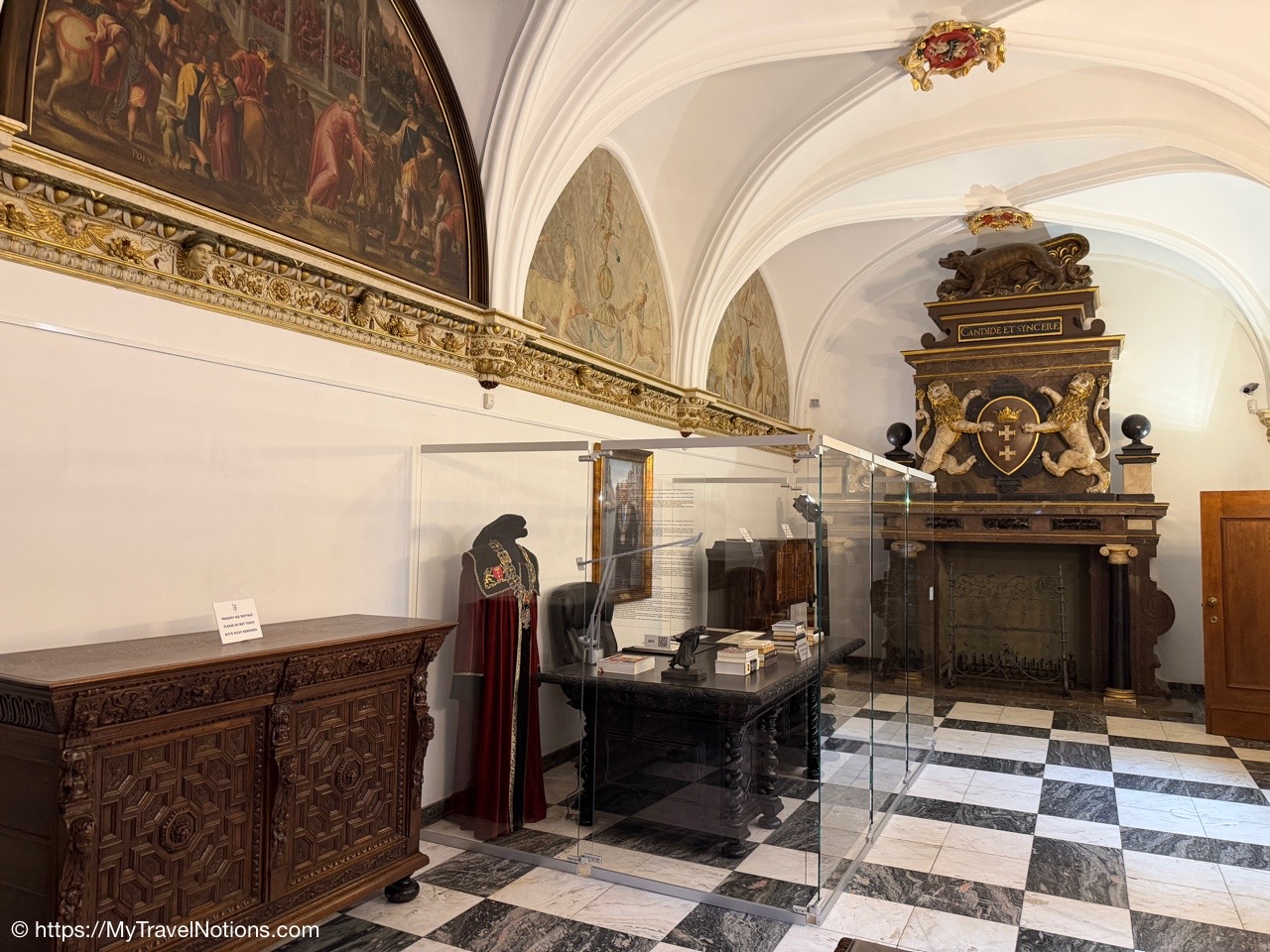
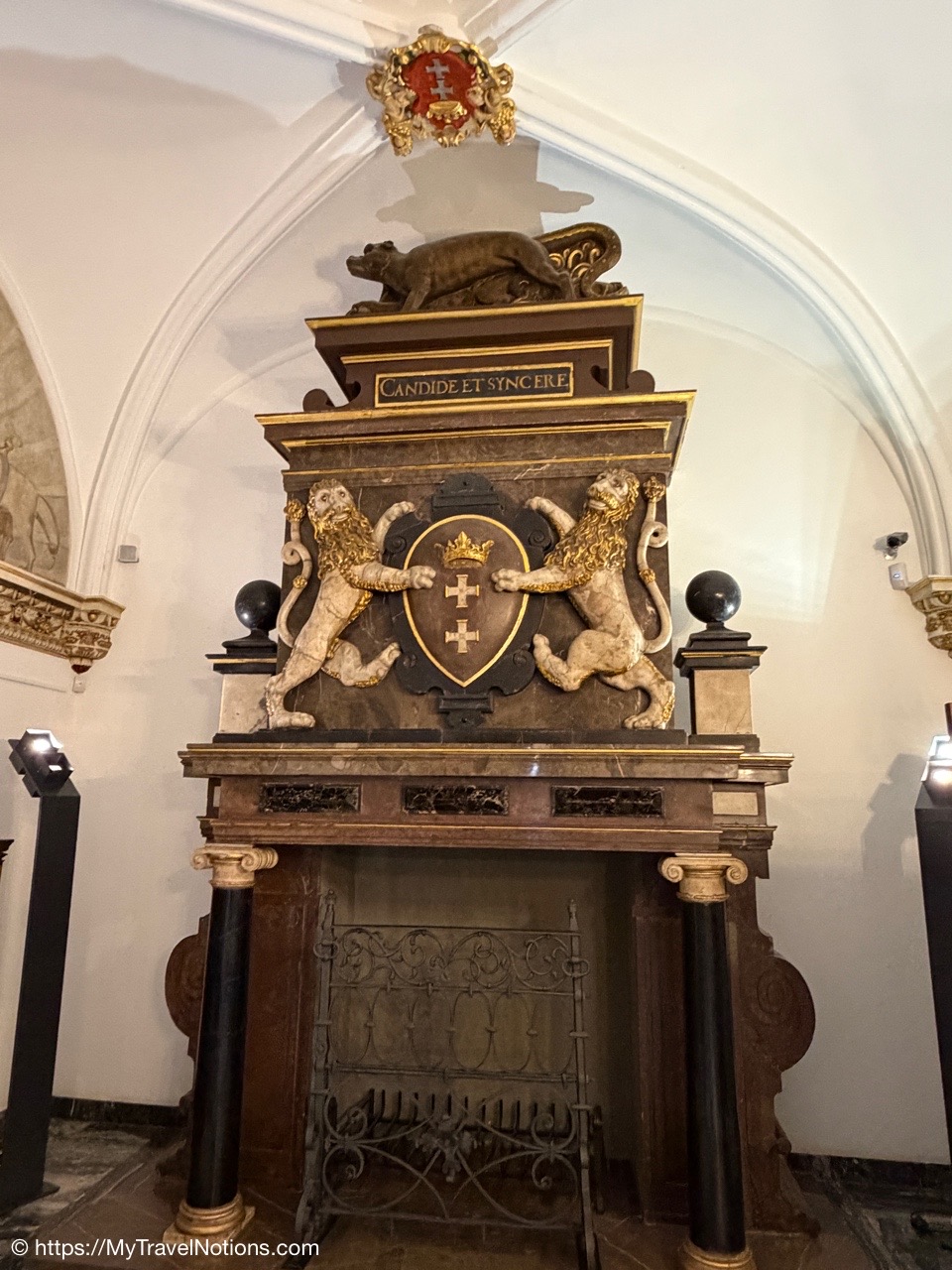
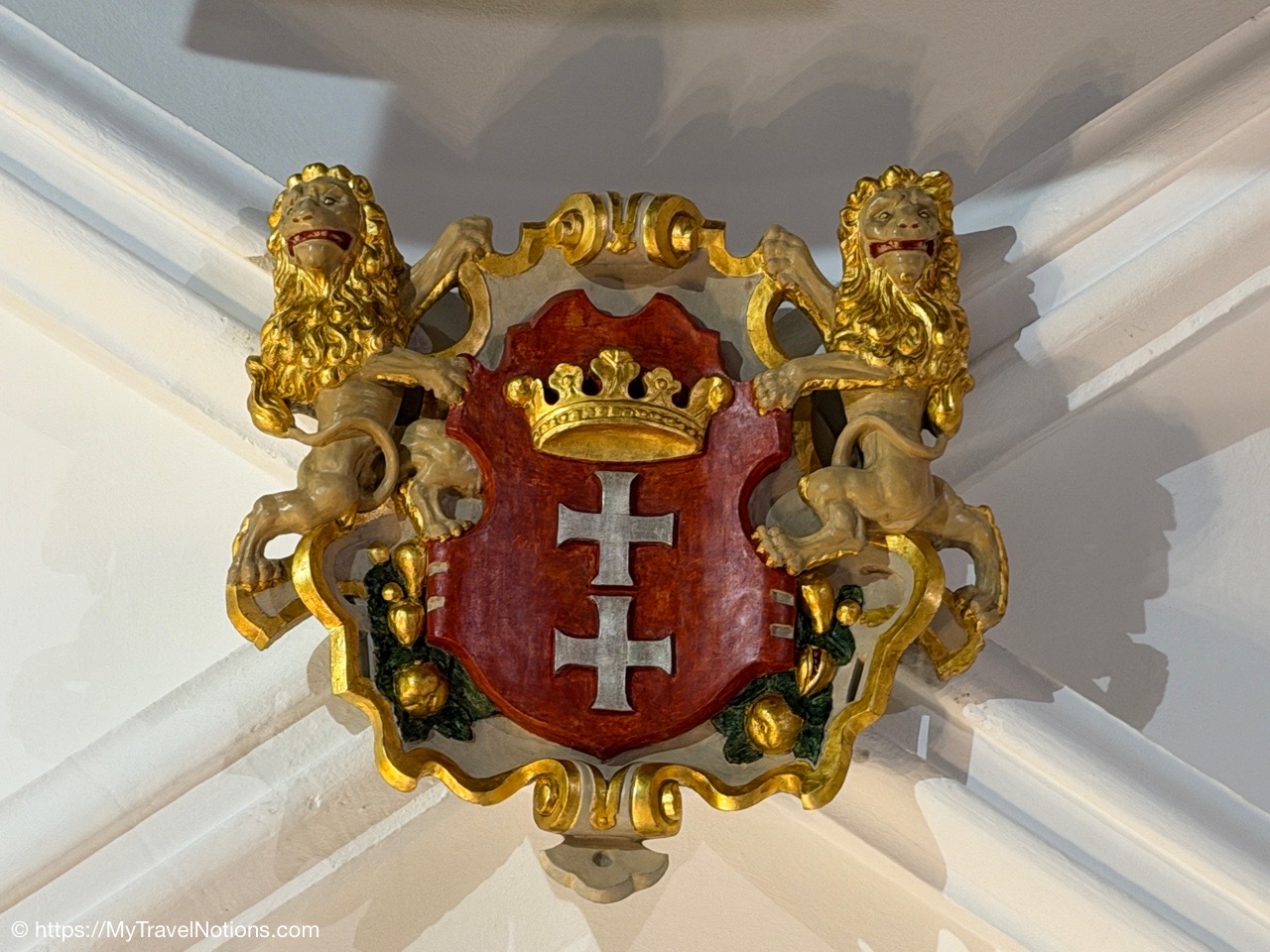
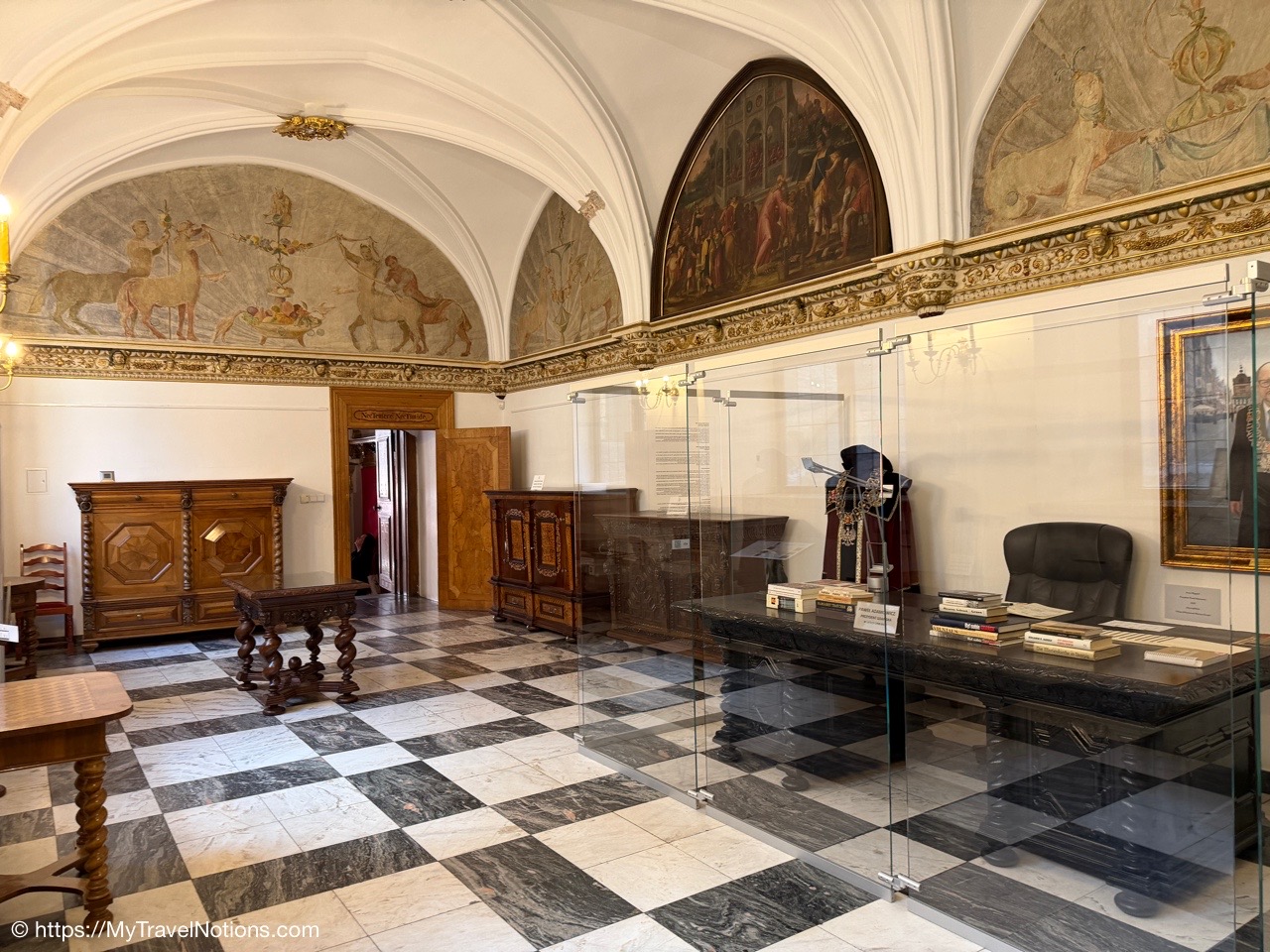
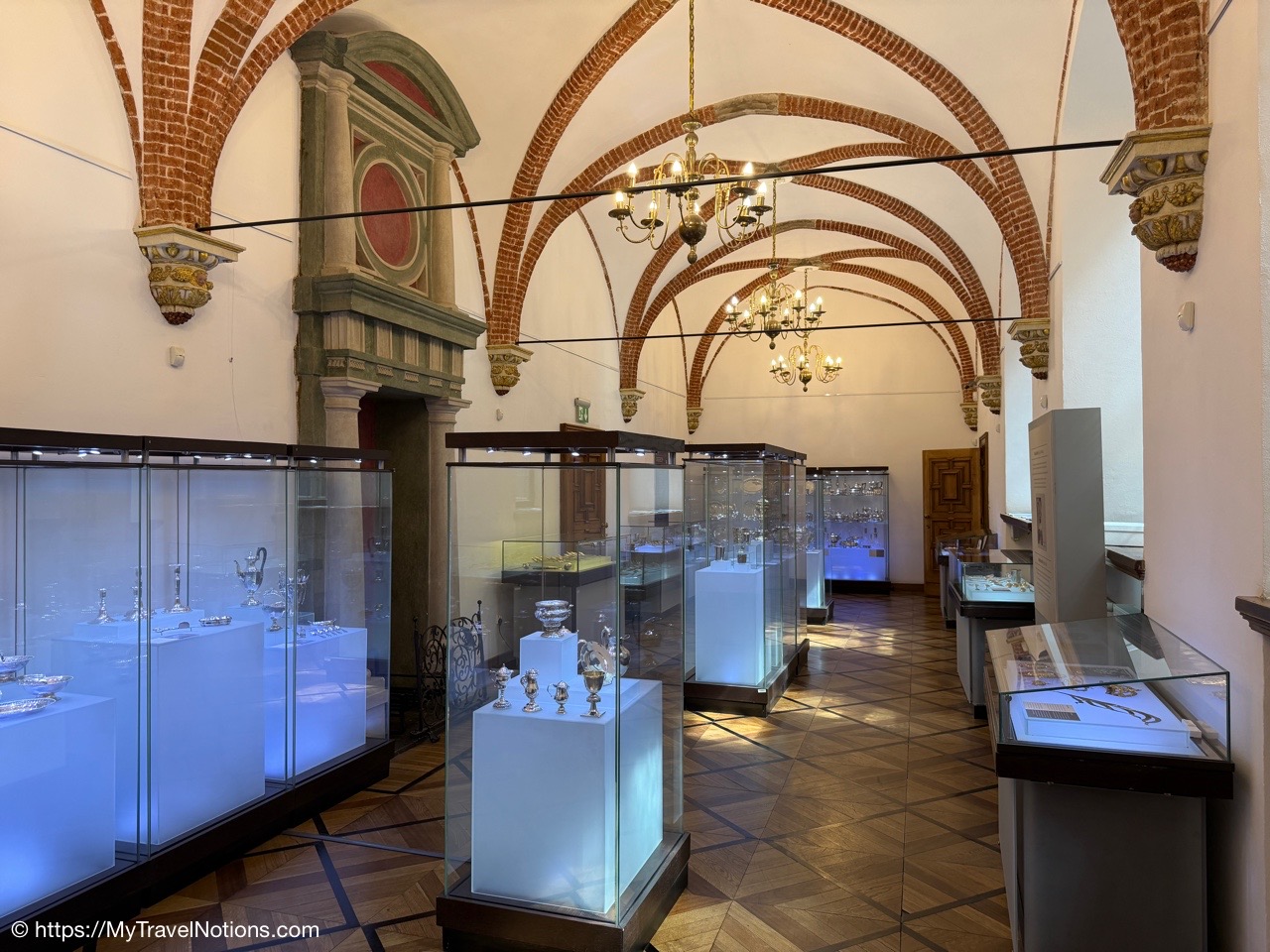
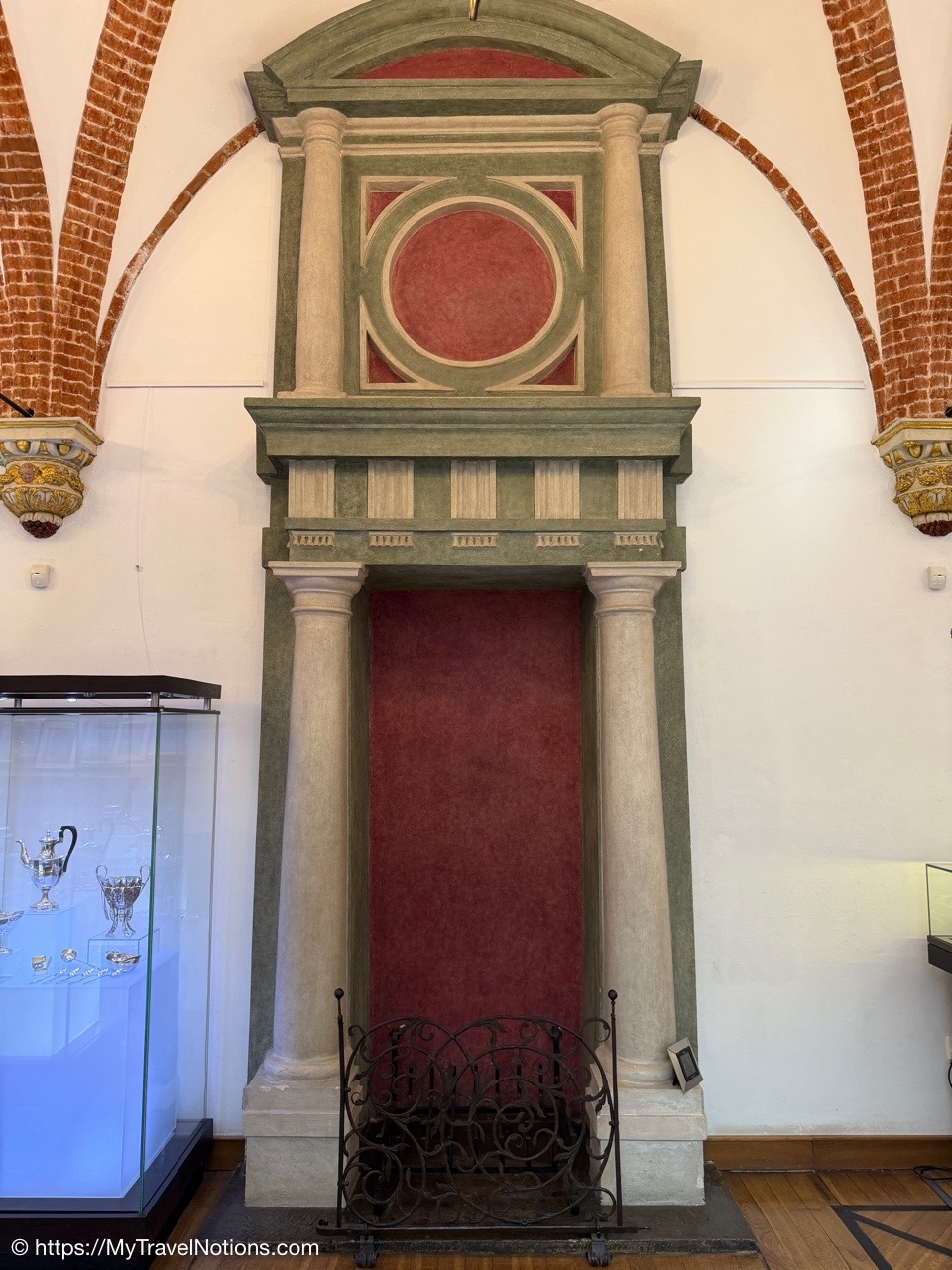
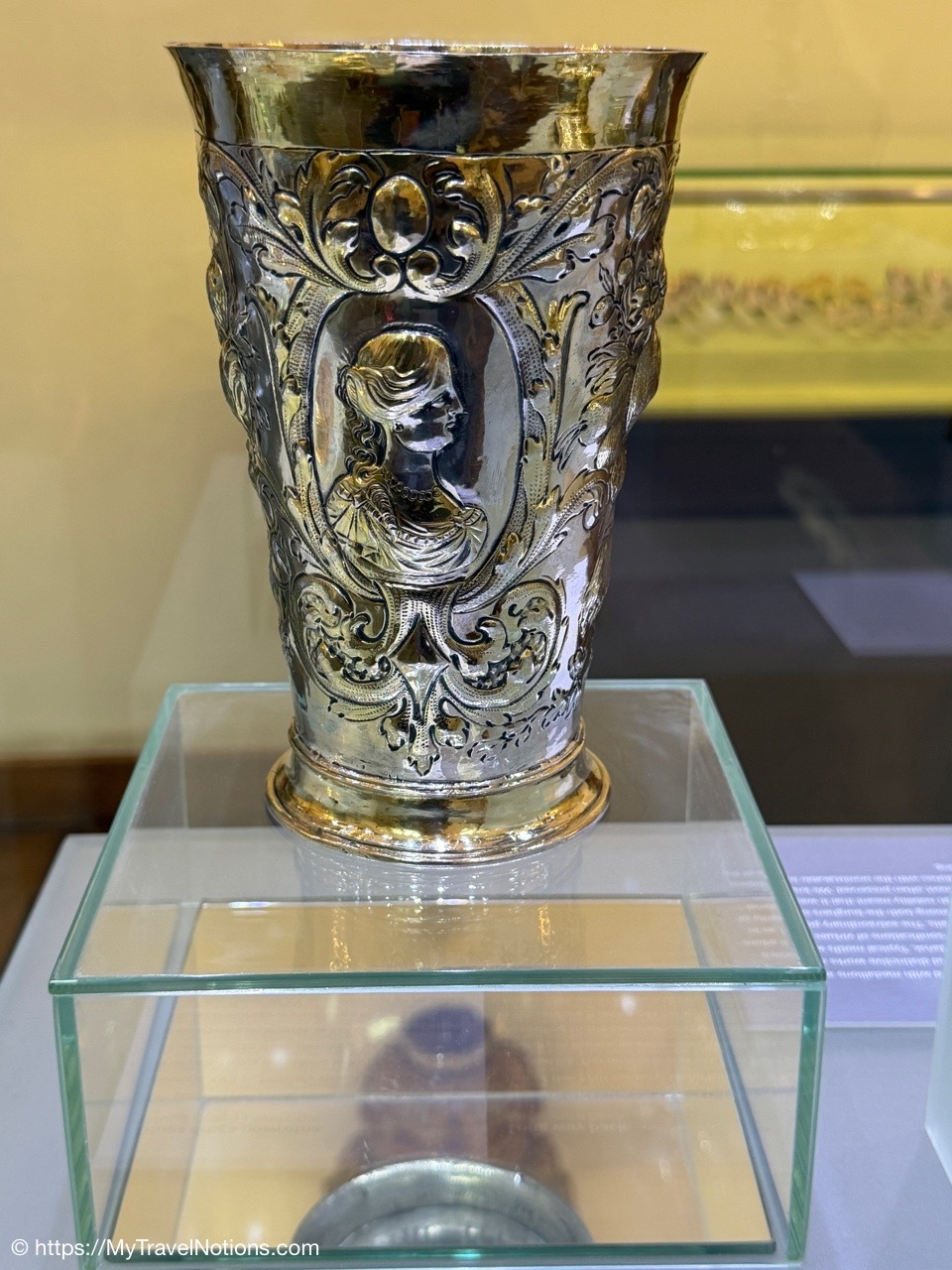
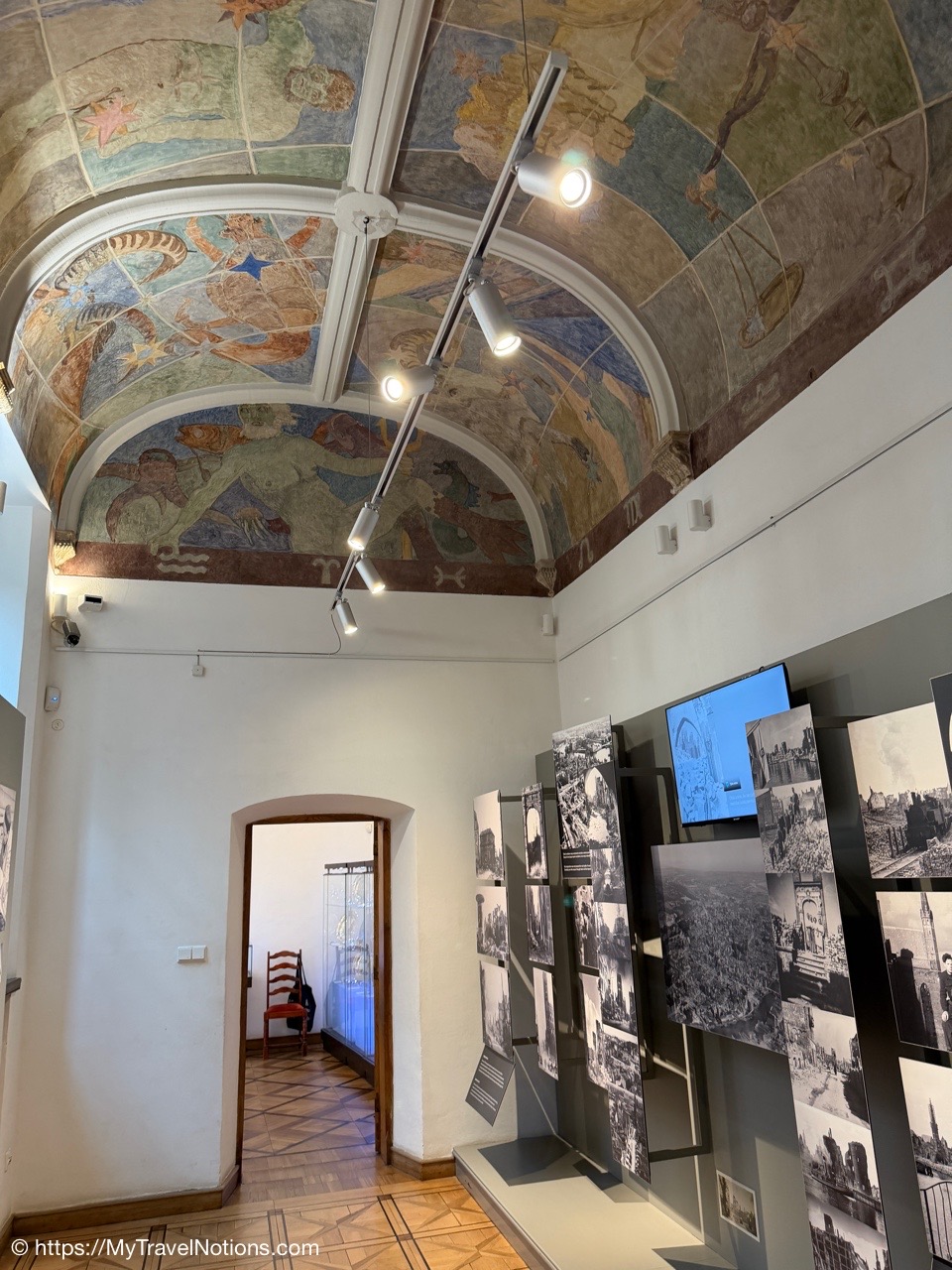
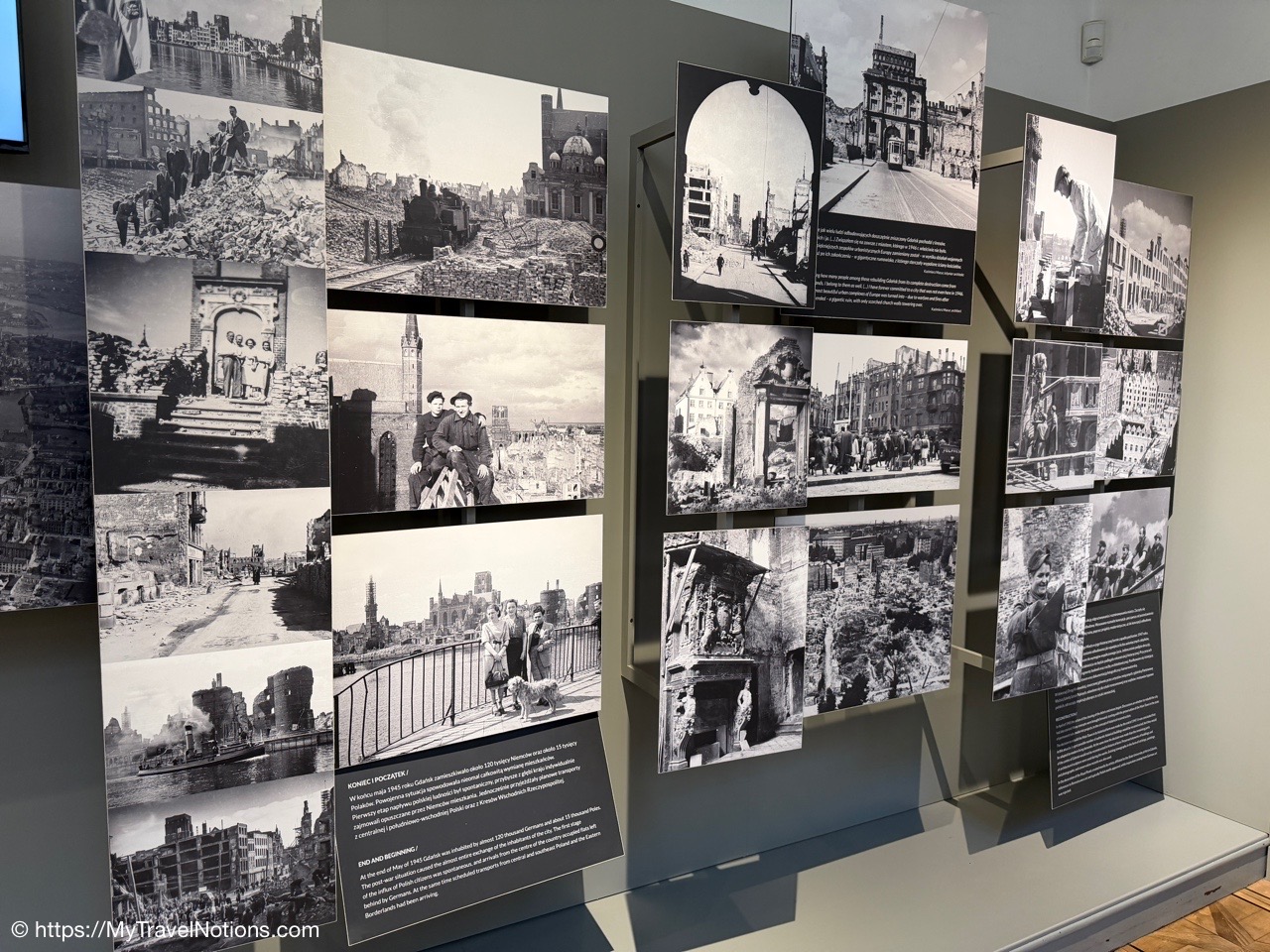
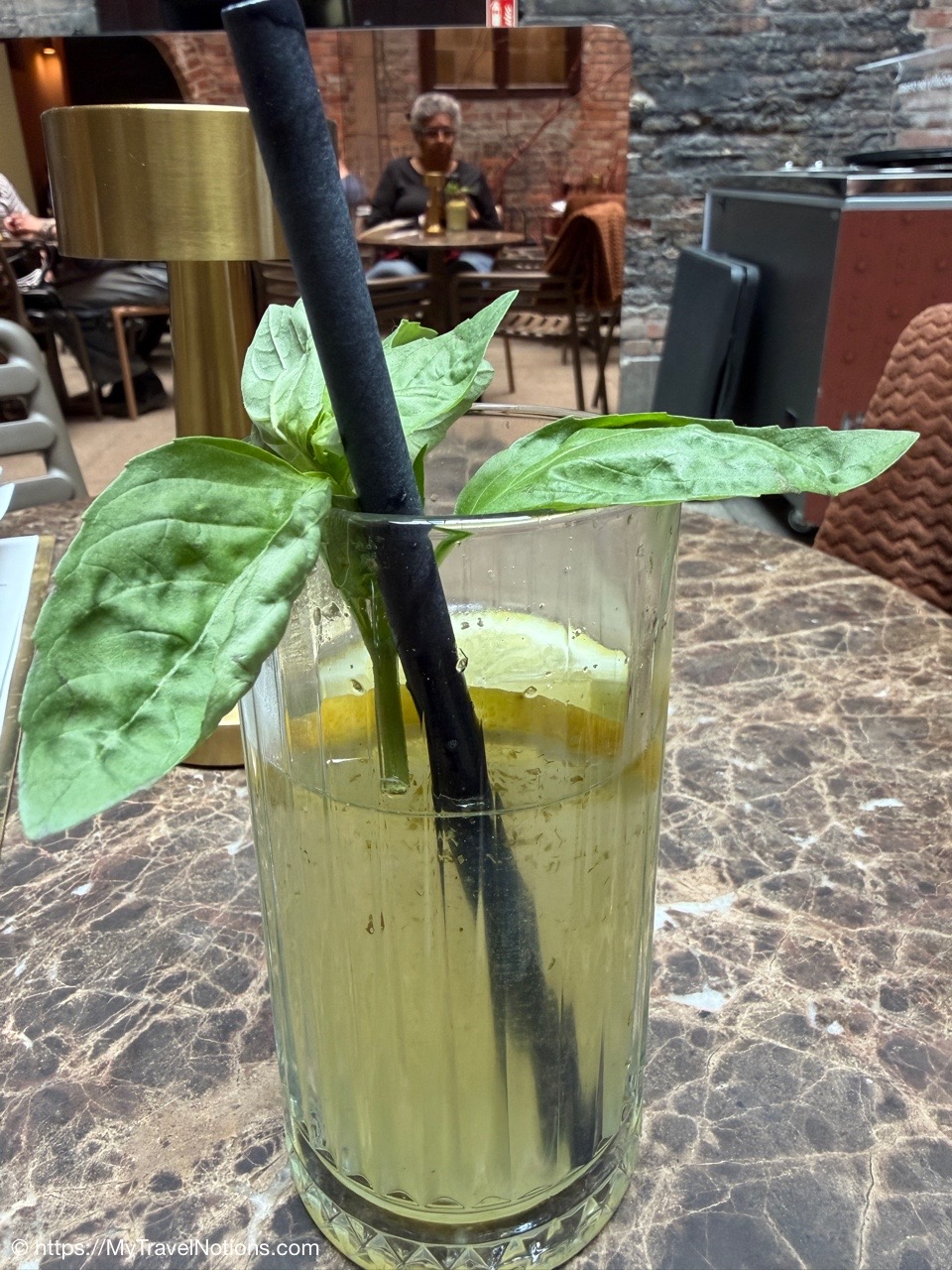
The home of the Museum of Amber in Gdańsk is located in the Great Mill, a massive 14th century Gothic industrial building constructed around 1350 by the Teutonic Order. Originally, it function as a corn mill, bakery and story granary until it was severely damaged in 1945 during World War II. (May 22, 2026)The entrance to the Museum of Amber in Gdańsk. (May 22, 2026)Inside the multi-floor Museum of Amber in Gdańsk which houses more than 1,00 amber artifacts. (May 22, 2026)Inside the multi-floor Museum of Amber in Gdańsk which houses more than 1,00 amber artifacts. (May 22, 2026)Inside the Museum of Amber in Gdańsk with its exhibits of natural specimens of amber. (May 22, 2026)Inside the Museum of Amber in Gdańsk with its exhibits of natural specimens of amber. (May 22, 2026)The natural specimens of amber on display at the Museum of Amber in Gdańsk. The shape of a lump was largely determined by the initial location of resin, i.e. in the tree trunk or on the surface. (May 22, 2026)A close-up of a lump of Baltic amber in the Museum of Amber in Gdańsk. (May 22, 2026)A close-up of a lump of Baltic amber in the Museum of Amber in Gdańsk. (May 22, 2026)A reconstructed 19th century attire of the amber rummager and his amber-fishing tools at the Museum of Amber in Gdańsk. (May 22, 2026)A copy of a diving suit built from 1864 used by divers to fish for the Baltic amber at the Museum of Amber in Gdańsk. (May 22, 2026)An amber chess set at the Museum of Amber in Gdańsk is from around 1690-1700 and made of amber, wood and paper. In 1758, the chess set was purchased by the Duke of Atholl, Lord George Murray at an auction in Amsterdam. Banished to exile as a Jacobite, Murray sent it to the Blair castle as a present for his wife and son in Scotland; the set remained there up to 2015. (May 22, 2026)A display of historic and modern artifacts made from amber at the Museum of Amber in Gdańsk. (May 22, 2026)The “Vase of Stalin,” an urn on a pedestal, at the Museum of Amber in Gdansk was originally commissioned and constructed as a lavish political gift from the Polish People’s Republic intended for Soviet dictator Joseph Stalin to celebrate state-enforced “friendship” or a specific communist milestone. However, Stalin died in March 1953, shortly after its completion. (May 22, 2026)A close-up of the ‘Vase for Stalin” created in 1953 during the height of the Soviet occupation of Poland and the Stalinist era at the Museum of Amber in Gdańsk. (May 22, 2026)The Amber Cabinet at the Museum of Amber in Gdańsk from 1724 is made of amber, bone, selenite, foil, silver, wood and a mirror. (May 22, 2026)Another view of the multi-level Museum of Amber in Gdańsk as I exit to make my way across the street to St. Catherine’s Church. (May 22, 2026)One of 15 bronze Hewelion sculptures, considered a mascot, are scattered throughout Gdańsk. This one, holding and looking at a cell phone is known as Hewelion Biznesmen, is located right outside the Great Mill, home to the Museum of Amber. The choice of animal came from the two lions that appear on the city’s coat of arms, while the name Hewelion is influenced by Jan Heweliusz (also known as Johannes Hevelius), a renowned 17th-century astronomer and a Gdańsk native. (May 23, 2026)St. Catherine’s Church, just across the street from the Museum of Amber in Gdańsk, is the oldest parish church. It was built between 1227–1239 by the Dukes of Gdańsk Pomerania and expanded after 1379. (May 22, 2026)The gated and ornate ironwork entrance inside of St. Catherine’s Church in Gdańsk featuring the Gothic brick vaulted ceilings. (May 22, 2026)The central nave inside of St. Catherine’s Church in Gdańsk features a soaring vault. (May 22, 2026)The primary high altar at the front of the main nave of St. Catherine’s Church in Gdańsk was actually destroyed in 1945 during World War II. (May 22, 2026)Directly behind the high altar and at the rear of St. Catherine’s Church in Gdansk is the final resting place and memorial bomb of the famous 17th-century astronomer Johannes Hevelius. (May 22, 2026)Above the pulpit rises a broad, high canopy crowned with a sculpture of an angel inside St. Catherine’s Church in Gdańsk. (May 22, 2026)The early baroque pulpit inside of St. Catherine’s Church in Gdańsk was completed in 1638. It is adorned with figures of saints: Christ with a lamb on His shoulders, St. Peter holding keys, and St. Paul and St. Thomas. Scenes on the staircase balustrade depict Jesus in the Temple and Jesus by the Sea of Gennesaret. (May 22, 2026)The Johannes Hevelius epitaph inside St. Catherine’s Church in Gdańsk is a commemorative monument placed near his burial site and dedicated to the renowned 17th-century astronomer whose portrait is accompanied by a depiction of astronomical instruments in its lower section. (May 22, 2026)A close-up of the Johannes Hevelius epitaph in St. Catherine’s Church in Gdańsk featuring a portrait of the renowned 17th century astronomer accompanied by depictions of astronomical in its lower section. (May 22, 2026)The right aisle of St. Catherine’s church in Gdańsk with its ornate, wooden Renaissance baptistry. (May 22, 2026)The Renaissance Baptistery inside St. Catherine’s Church in Gdańsk is an ornate wooden, octagonal baptistery carved in 1585 by master craftsman Mateusz Gletger. Crafted from inlaid oak, it features an octagonal plan and comprises three tiers. (May 22, 2026)The Renaissance Baptistery inside St. Catherine’s Church in Gdańsk is an ornate wooden, octagonal baptistery carved in 1585 by master craftsman Mateusz Gletger. Crafted from inlaid oak, it features an octagonal plan and comprises three tiers. (May 22, 2026)The soaring Gothic vaulted ceilings supported by massive red brick walls and high domes inside of St. Catherine’s Church in Gdańsk. A severe fire broke out in May 2006, causing a portion of the roof and ceiling to collapse. (May 22, 2026)A side altar inside of St. Catherine’s Church in Gdańsk. (May 22, 2026)A side altar inside of St. Catherine’s Church in Gdańsk. (May 22, 2026)After leaving St. Catherines Church and taking a little break, I ventured to the Main Town Hall of Gdańsk, a Gothic and Renaissance building situated at the junction of Dluga Street (Long Market) and Dlugi Targ. Originally built in stages, between 1327 and 1336, the Town Hall was later expanded significantly from 1379 to 1492. (May 22, 2026)The clock, the weathervane and the Sundial a top the Main Town Hall of Gdańsk. While the tower has housed clocks since the 15th century, the analog mechanical clock seen today dates back to 1560 and was crafted by a local master clockmaker. The Gilded King weathervane, at the very pinnacle of the tower spire, is a statuette of the Polish King, Sigismund II Augustus. And, the Sundial, located at the eastern facade corner is decorated with astrological and geometric motifs. (May 22, 2026)The stone staircase and porch entrance to the Main Town Hall serving as the primary venue for the Museum of Gdańsk. (May 22, 2026)The Great Weta Hall, also known as the White Hall, on the first floor of the Main Town Hall in Gdańsk. Historically, the hall served as a reception or throne room for visiting kings of Poland when they came to the city. The room features an ornately painted vaulted ceiling and is lined with historic portraits of Polish monarchs and prominent civic figures. (May 22, 2026)The entrance to the Great Council Hall (also known as the Red Hall) at the Main Town Hall in Gdańsk is through an ornate historic portal/doorway next to an elaborate stairway with a painted wooden ceiling. (May 22, 2026)The wooden painted ceiling near the staircase outside of the Great Council Hall in the Main Town Hall in Gdansk. (May 22, 2026)The portal/doorway to the Great Council Hall, also known as the Red Hall, at the Main Town Hall in Gdansk features a highly ornate, decorative wooden and stone doorway featuring symbolic carvings, supported by lions,and the Polish eagle on top. (May 22, 2026)Inside the Great Council Hall, commonly known as the Red Hall, at the Main Town Hall in Gdańsk. The decorations of the Hall come from the turn of the 16th and 17th centuries. The meanings of the paintings on the walls and ceiling present Gdańsk as a well-governed city guarded by the divine providence. During the Second World War elements of the interior were transported outside of Gdańsk and thus preserved. (May 22, 2026)The ornate ceiling of the Great Council Hall, commonly known as the Red Hall, at the Main Town Hall in Gdańsk features an elaborate arrangement of allegorical paintings (around 25 to 32 works) created by Izaak van den Blocke in 1608 including the famous central piece Allegory of the Commerce of Gdańsk (Apotheosis of Gdańsk), celebrating the city’s wealth, maritime trade, wisdom, and civic independence. (May 22, 2026)The grand, ornate fireplace of the Great Council Hall, commonly known as the Red Hall, at the Main Town Hall in Gdańsk is considered as a magnificent masterpiece of Dutch Mannerist design created in the late 16th century. It features elaborate carvings, the gilded seal of Gdańsk flanked by lions and is supported at the base by two warriors. The non-functional fireplace was built to impress visiting dignitaries. (May 22, 2026)A close-up of the Apotheosis of Gdańsk, an oval painting in the center of the Great Council Hall, commonly known as the Red Hall, at the Main Town Hall. It glorifies the greatness and glory of Gdańsk. At the top of the arch is a panorama of the city with the Town Hall tower, guided by the arm of God (Divine providence), as well as a white eagle (the symbol of affiliation with Poland). The connection between Gdańsk and Poland is shown by the rainbow connecting Kraków with the Baltic Sea and the Vistula River, on which Polish grain flows to Gdańsk. At the bottom, in front of the Artus Court, merchants from various European countries trade, and are blessed by Mercury – the god of trade. Among them, a citizen of Gdańsk and a Polish nobleman shake hands. (May 22, 2026)The Small Council Hall, or commonly called the Winter Hall, at the Main Town Hall in Gdańsk. This hall was used as the meeting place of the City Council in the autumn and winter, when it was easier to heat by the fireplace. All year round the hall also served as the office of the presiding mayor with the Mayor’s Desk on exhibit. (May 22, 2026)The 1593 working fireplace inside the Small Council Hall, or commonly called the Winter Hall, at the Main Town Hall in Gdańsk features rich gilded stucco work paired with a striking black filigree screen. It is adorned with atlantids (male figure columns) and the official Coat of Arms of Gdańsk. (May 22, 2026)The keystone “Coat of Arms” placed on the ceiling of the Small Council Hall, or commonly called the Winter Hall, in the 20th century during the post-war reconstruction of the Main Town Hall in Gdansk. (May 22, 2026)The Small Council Hall, or commonly called the Winter Hall, at the Main Town Hall in Gdańsk with the Mayor’s Desk on exhibit. (May 22, 2026)From the Small Council Hall is this Small Weta Hall, also called Fireplace Hall, at the Main Town Hall. It houses an exhibition of secular and sacral silver objects created by the craftsmen of Gdańsk dating from the 17th to the 20th centuries. The room is named the Fireplace Hall for its preserved 17th century fireplace. (May 22, 2026)The 17th century fireplace of the Small Weta Hall, also called Fireplace Hall, at the Main Town Hall in Gdańsk. (May 22, 2026)A 17th century silver cup made in Gdańsk on display in the Small Weta Hall, also called Fireplace Hall, at the Main Town Hall. (May 22, 2026)An exhibit of photos from March 1945 of Soviet forces attacking the center of Gdansk are displayed in the Zodiac Hall, also known as the lower chancellery, of the Main Town Hall, known for its decorative ceiling and architectural details featuring representations of the signs of the zodiac. (May 22, 2026)The photos from the March 1945 Soviet forces attacking the center of Gdańsk are displayed in the Zodiac Hallof the Main Town Hall . The photos show the bombings combined with shelling, combat in the streets and fires that caused the destruction of several districts of the city. (May 22, 2026)Just outdoor, yet part of the Main Town Hall in Gdańsk, I stopped to have a lemonade at Ratuszowa Caffe Cocktails. (May 22, 2026)
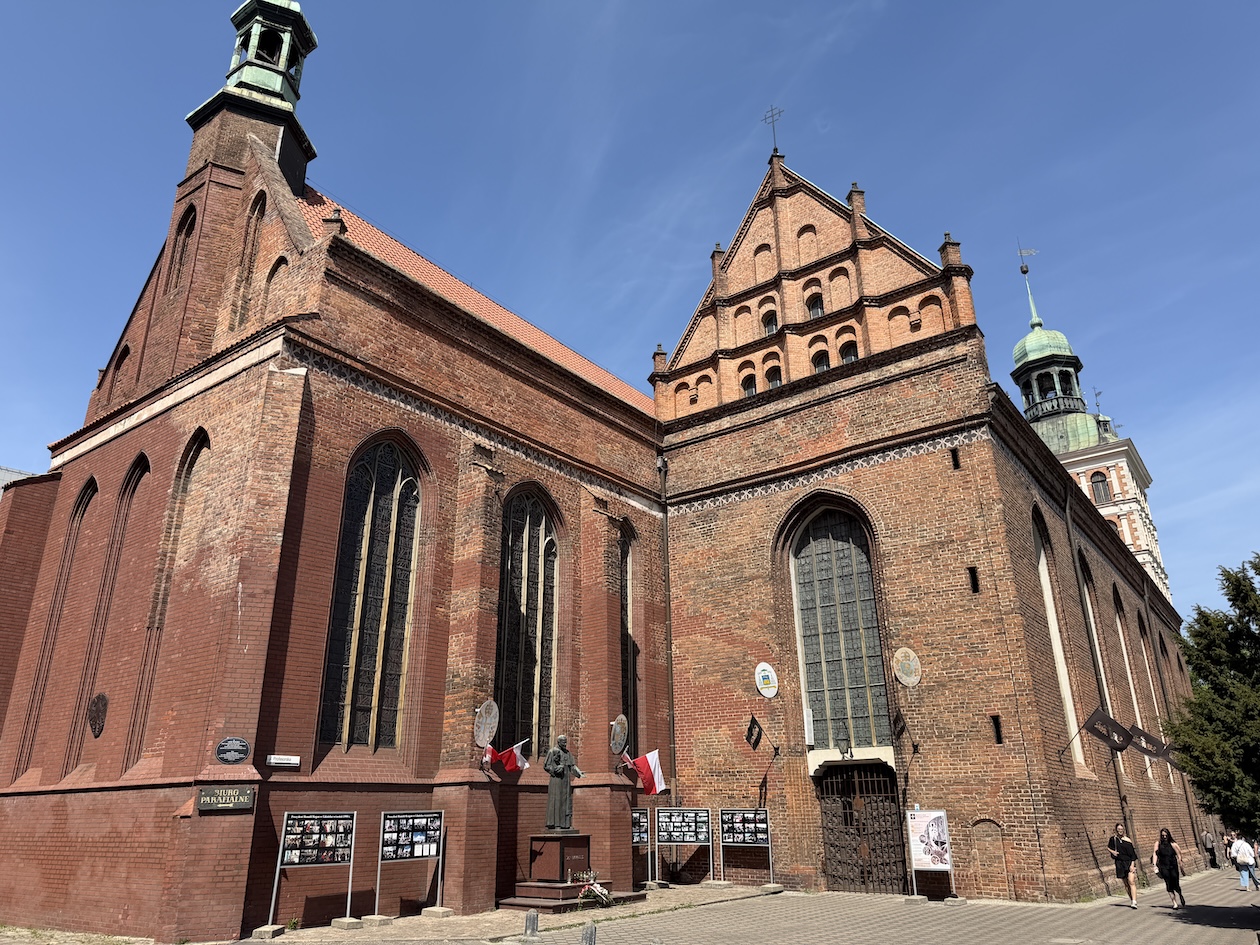
Between the reverence of the Black Madonna and the beauty of Polish Baltic amber, I was absolutely smitten by St. Bridge’s Basilica in Gdańsk.
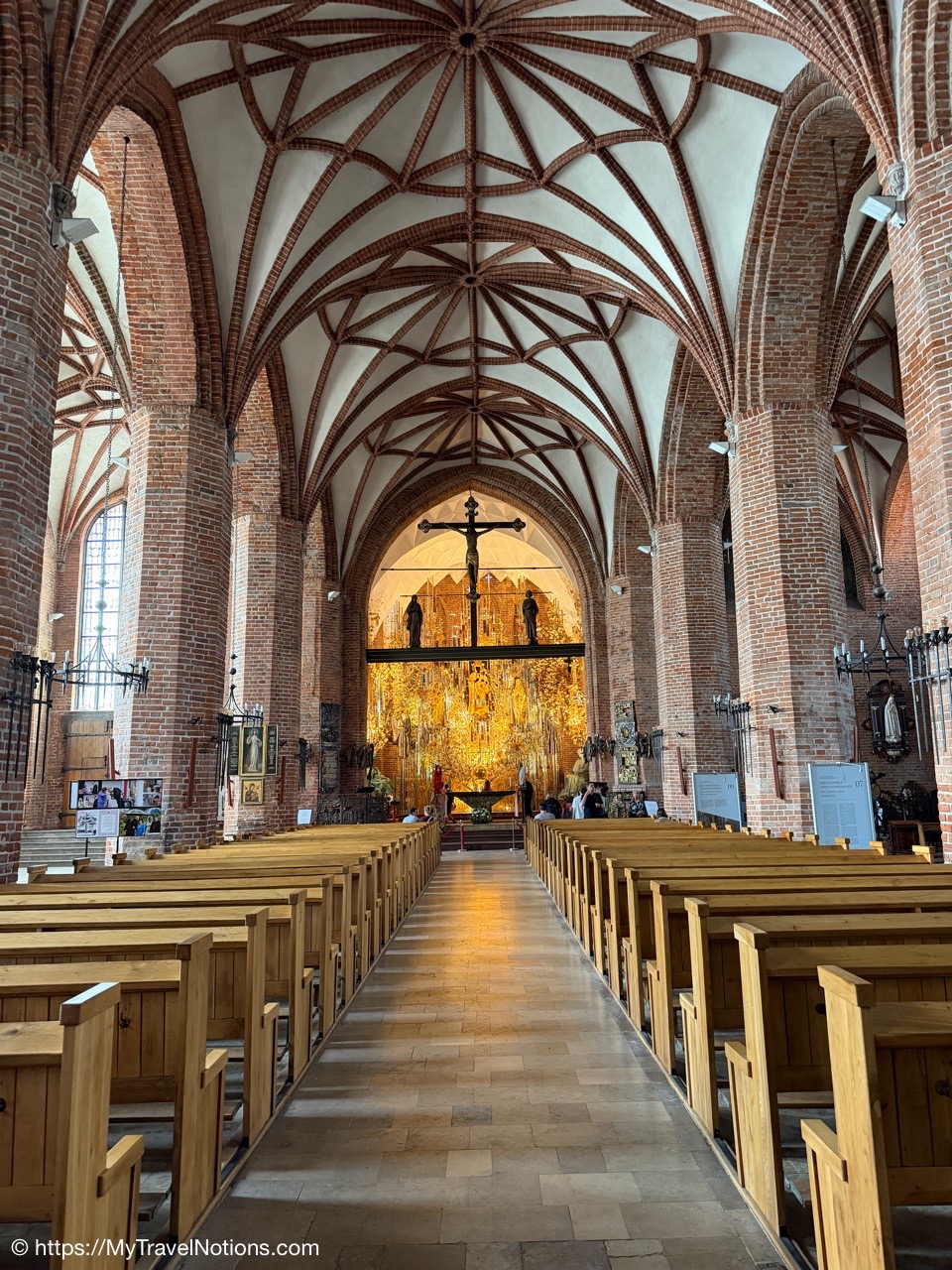
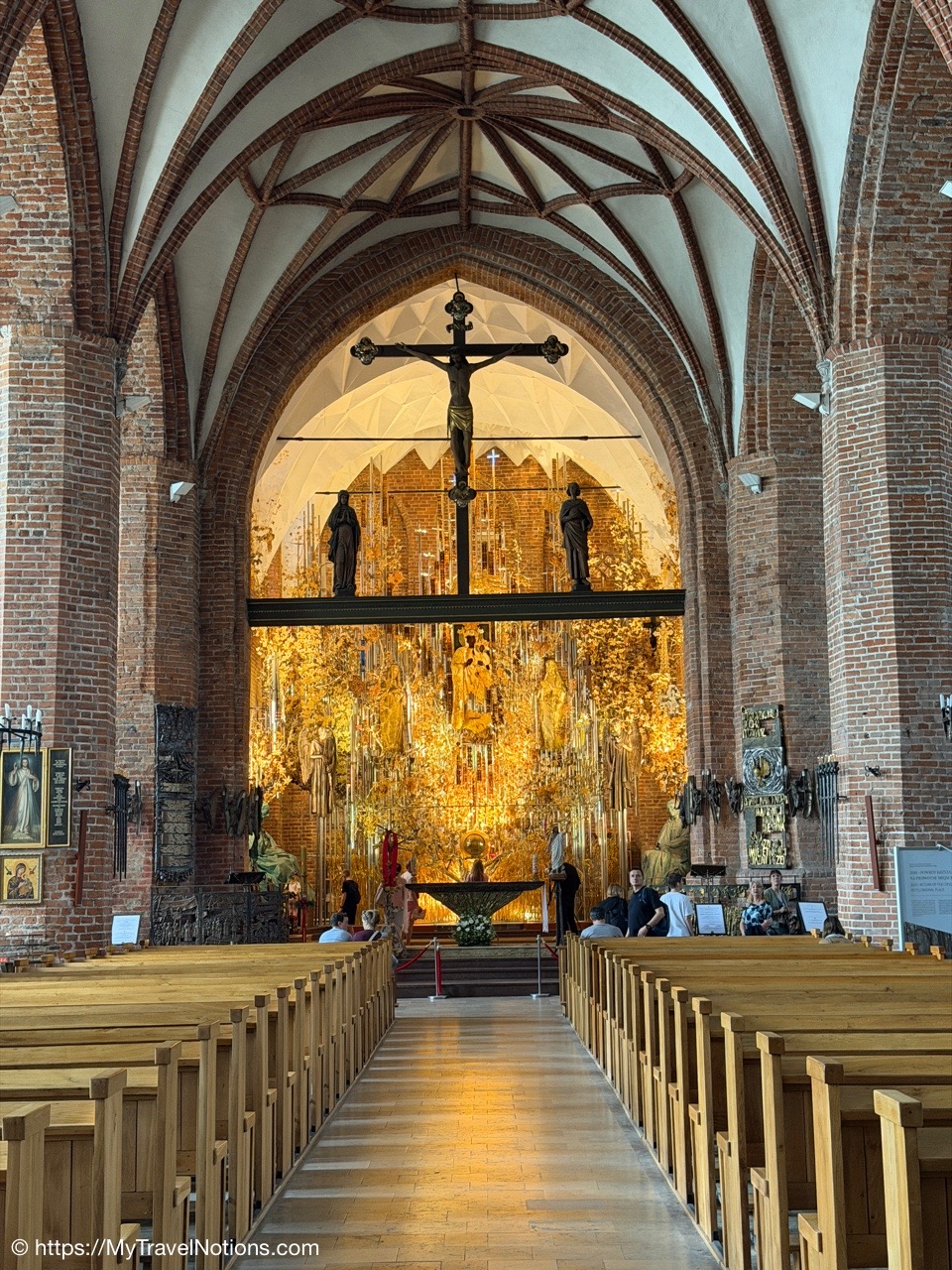
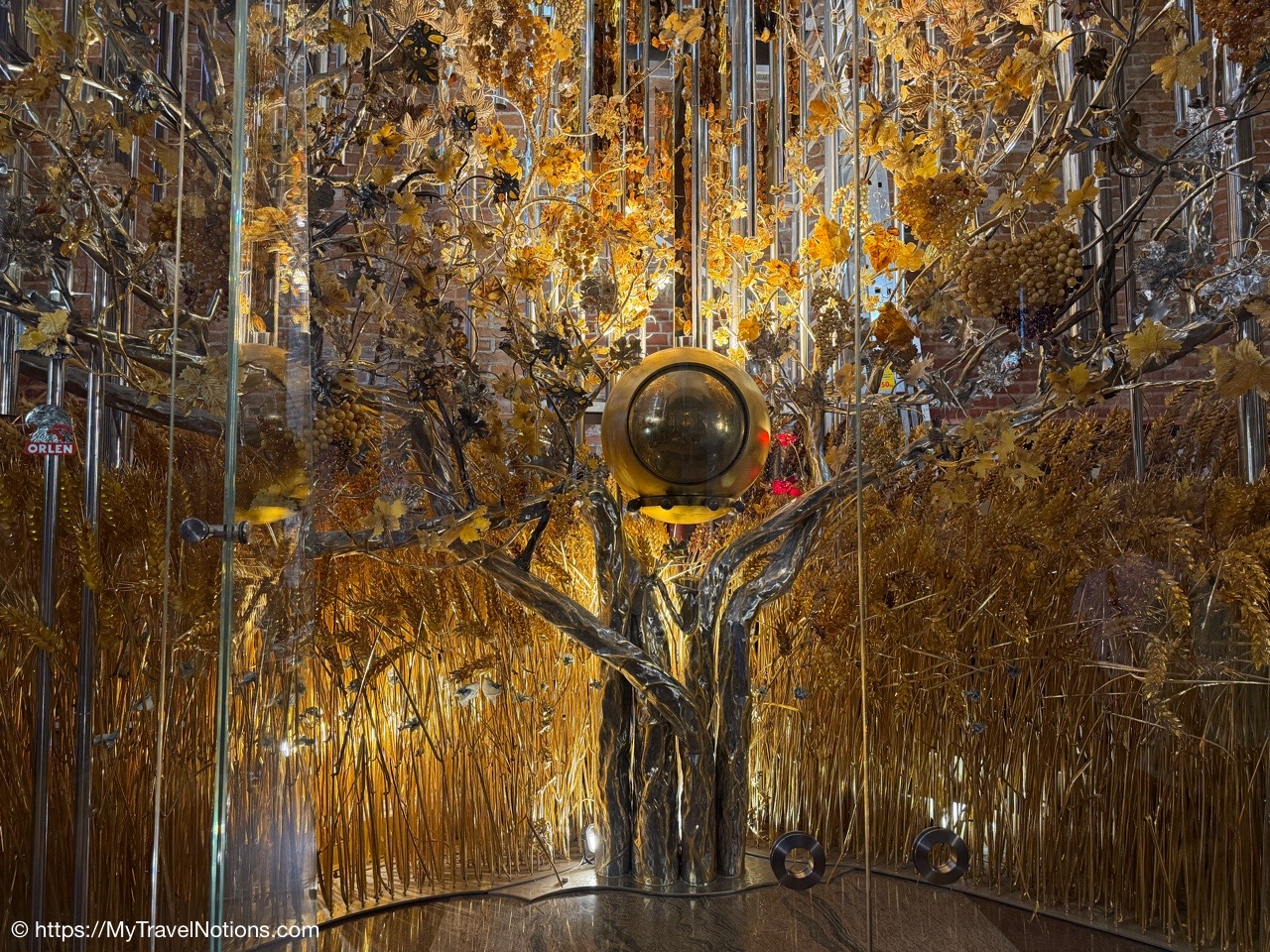
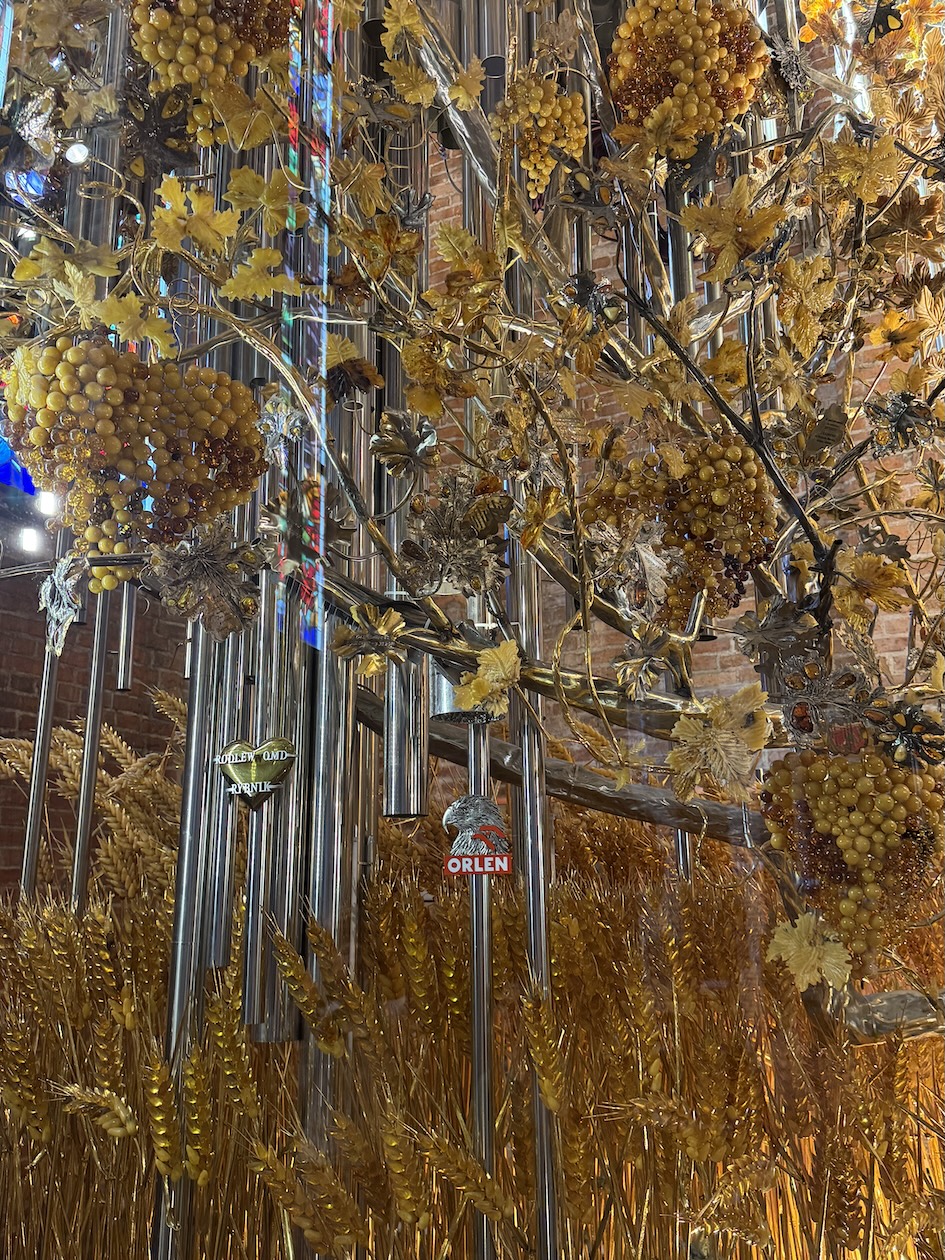
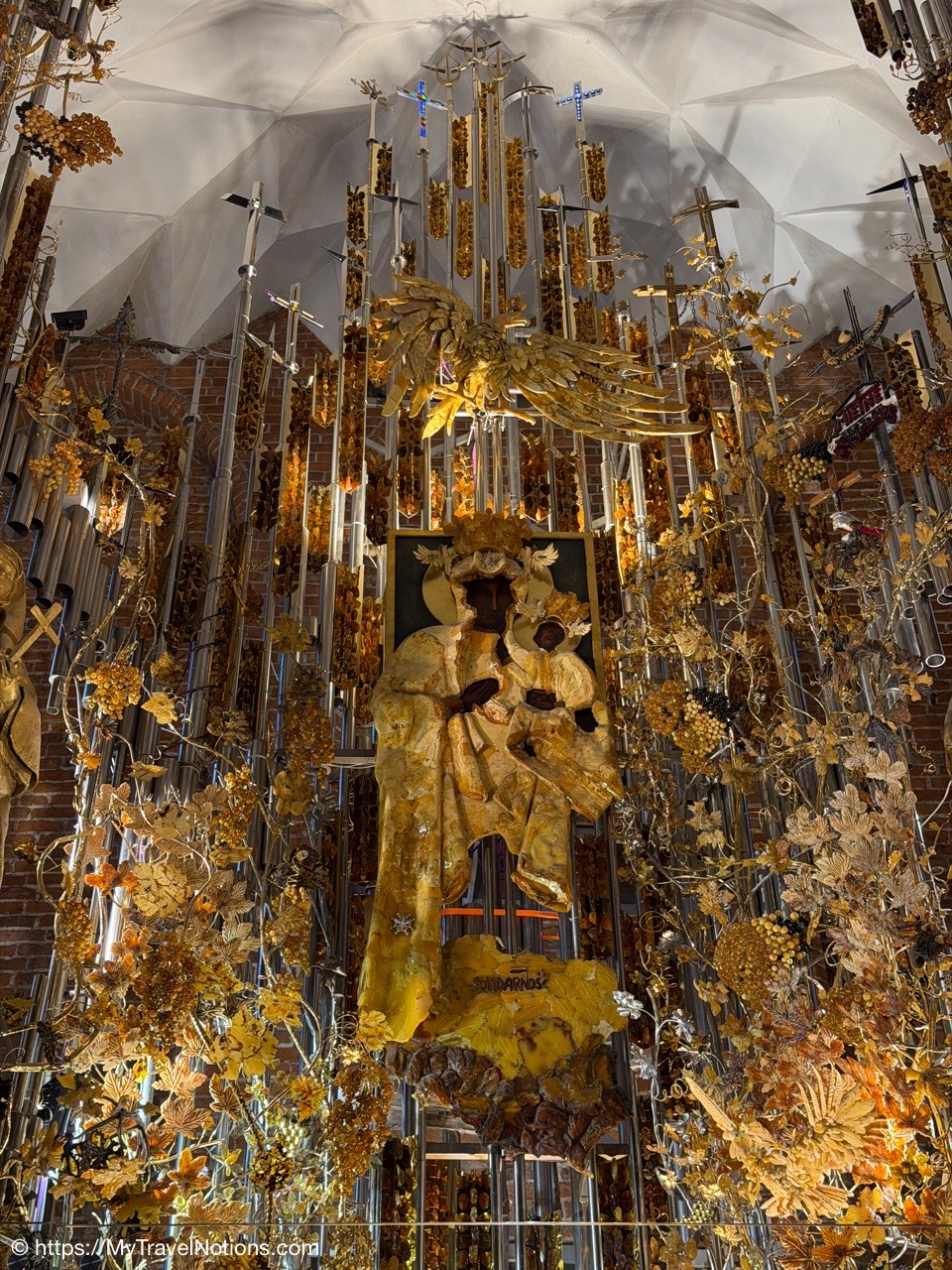
I was told the altar inside of St. Bridget’s Church was made of amber, but I had no idea it would be entirely and so beautifully covered in amber and that the Black Madonna would be at the center of the altar. The Black Madonna holds deep spiritual and national importance for Polish Catholics, symbolizing resilience and faith. This Amber Altar is considered the largest amber altarpiece in the world.Designed by local amber experts and artists to honor Pope John Paul II and to celebrate Poland’s freedom and independence, work on the altarpiece began in 2000.
Legend has it that St. Bridget’s Church was erected on the grounds of a small chapel where the remains of the 14th-century saint and mystic, Bridget of Sweden, lay for a few days, as her remains were carried from Rome to Sweden in 1374.
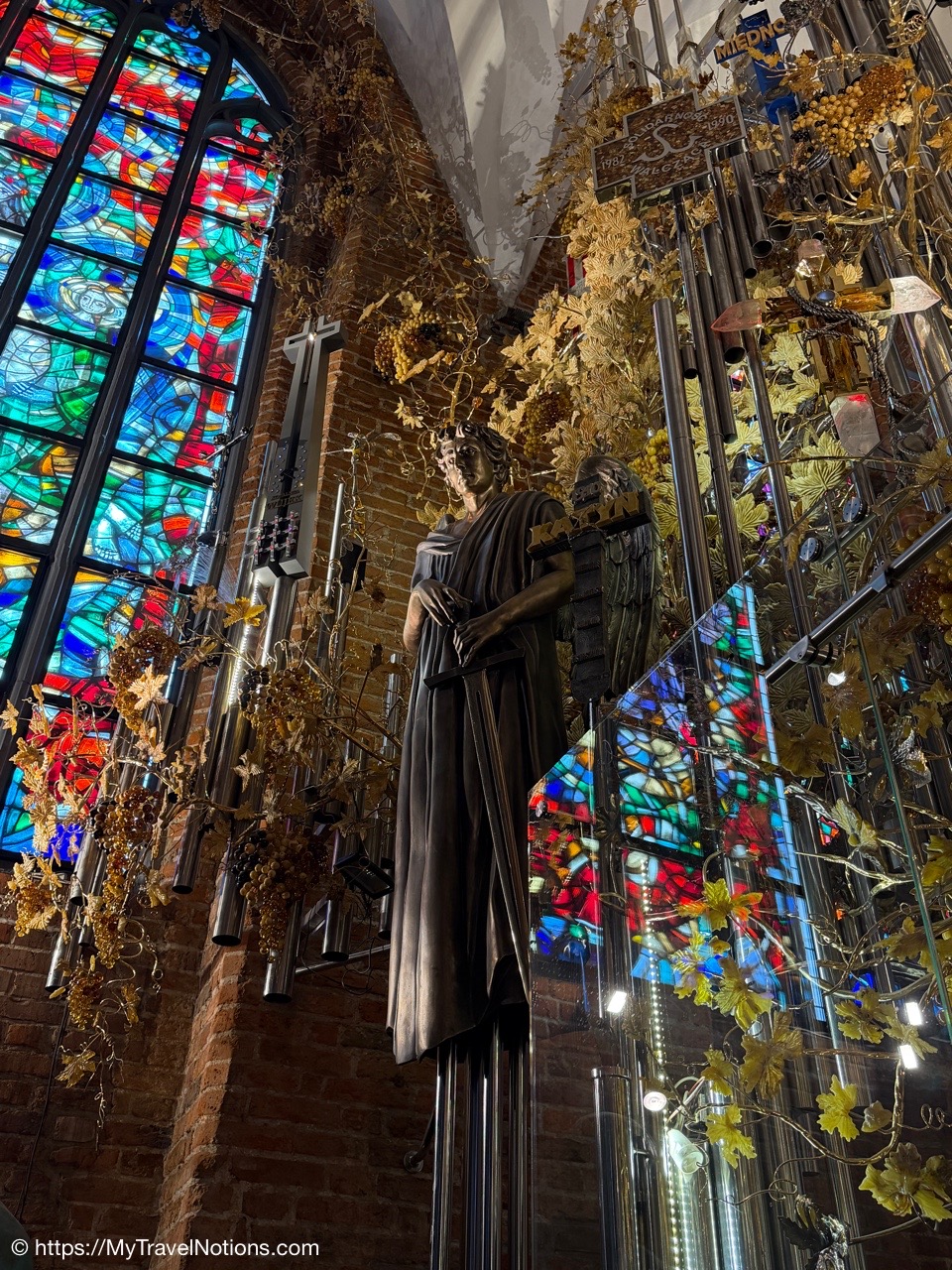
The church was almost completely destroyed during World War II. And, then it was rebuilt in 1973, based on original designs dating from 1394-1420. Since it served as a key sanctuary for the anti-communist resistance movement in the 1980s, it’s also known as the “Church of Solidarity,” because it contains an extensive collection of religious, political and historical memorials like the Katyń massacre and tributes to Solidarity (Solidarność), a broad anti-authoritarian social movement.
Come take a look at this most stunning Amber Alter.
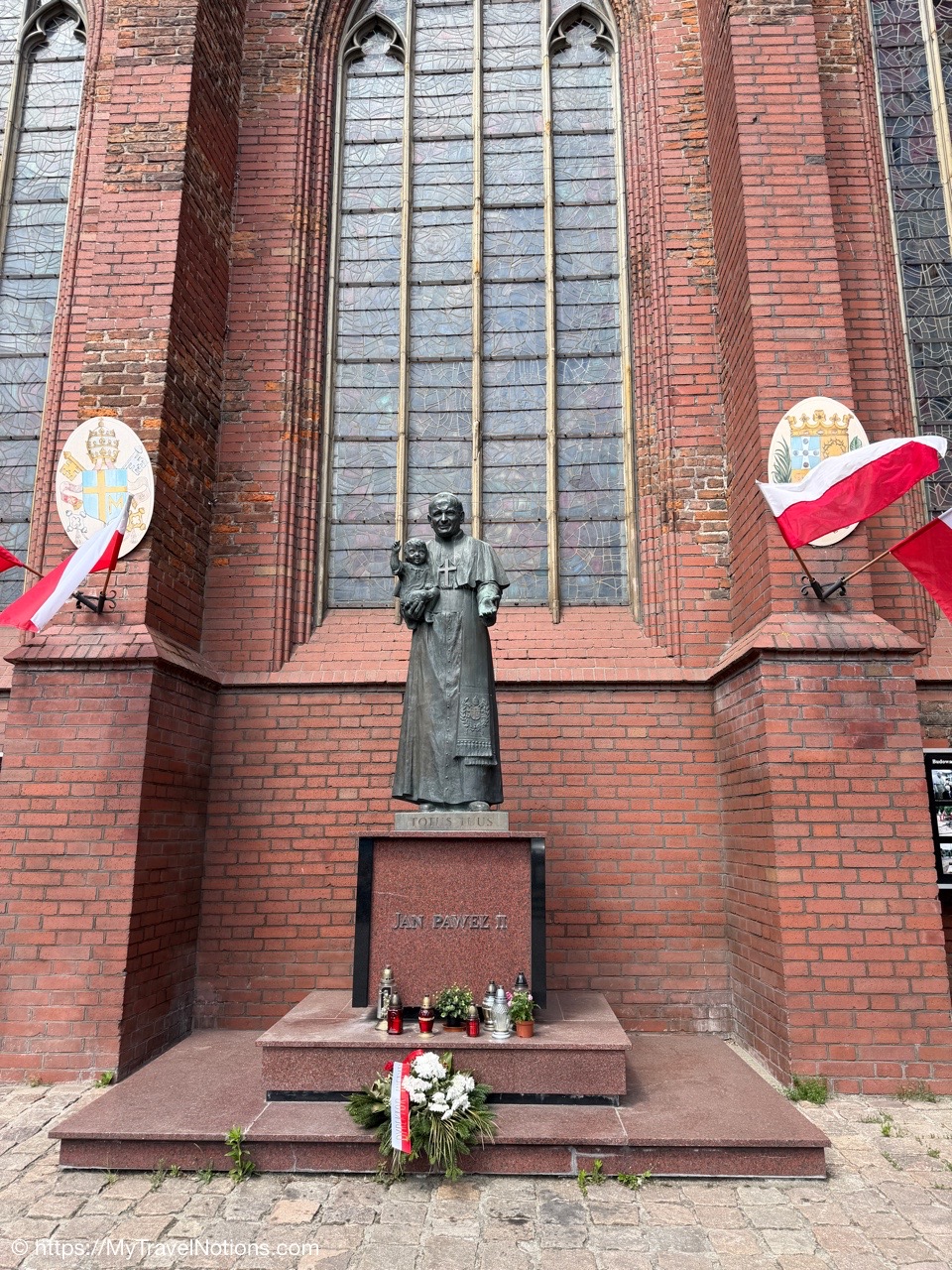
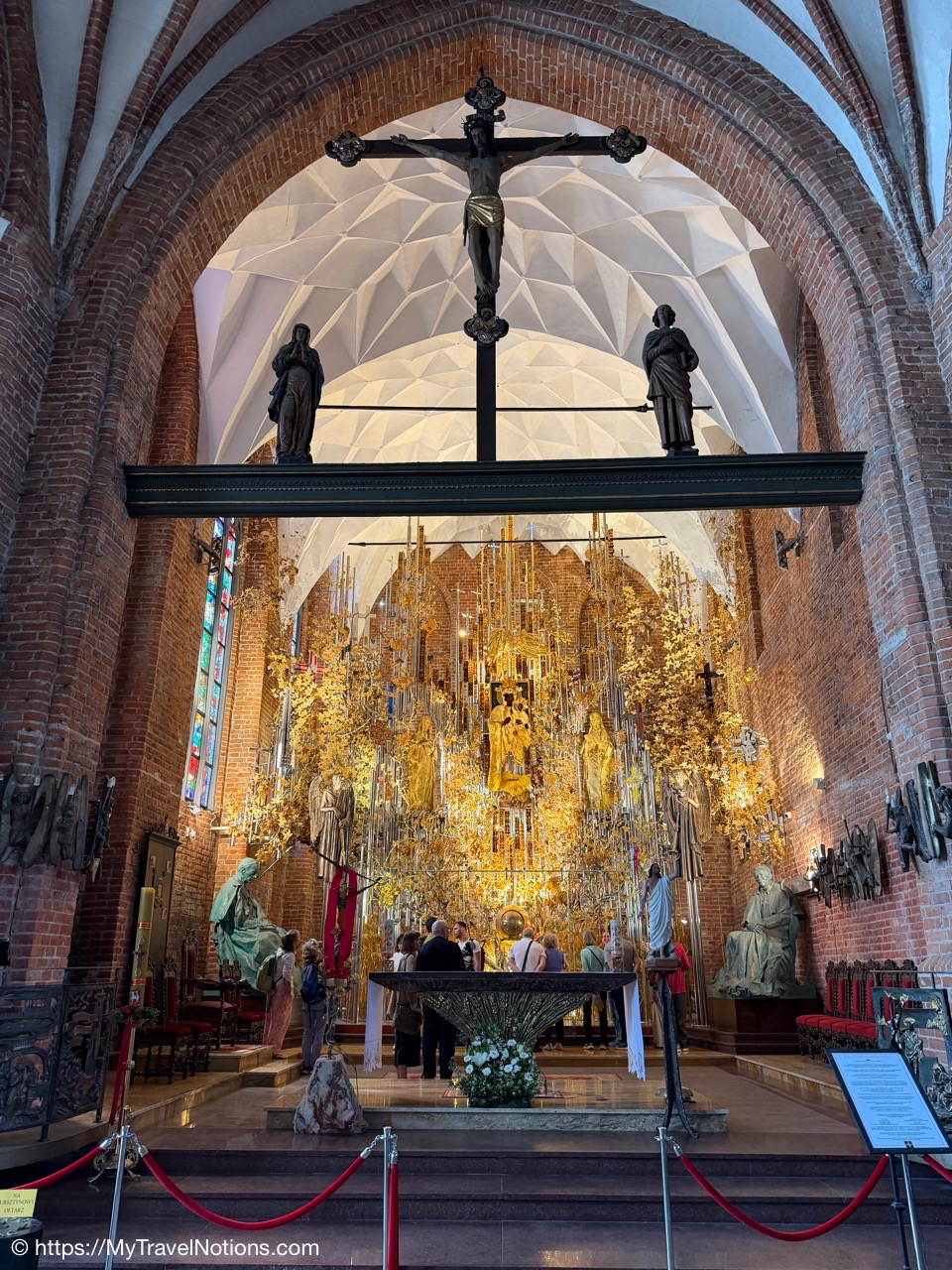
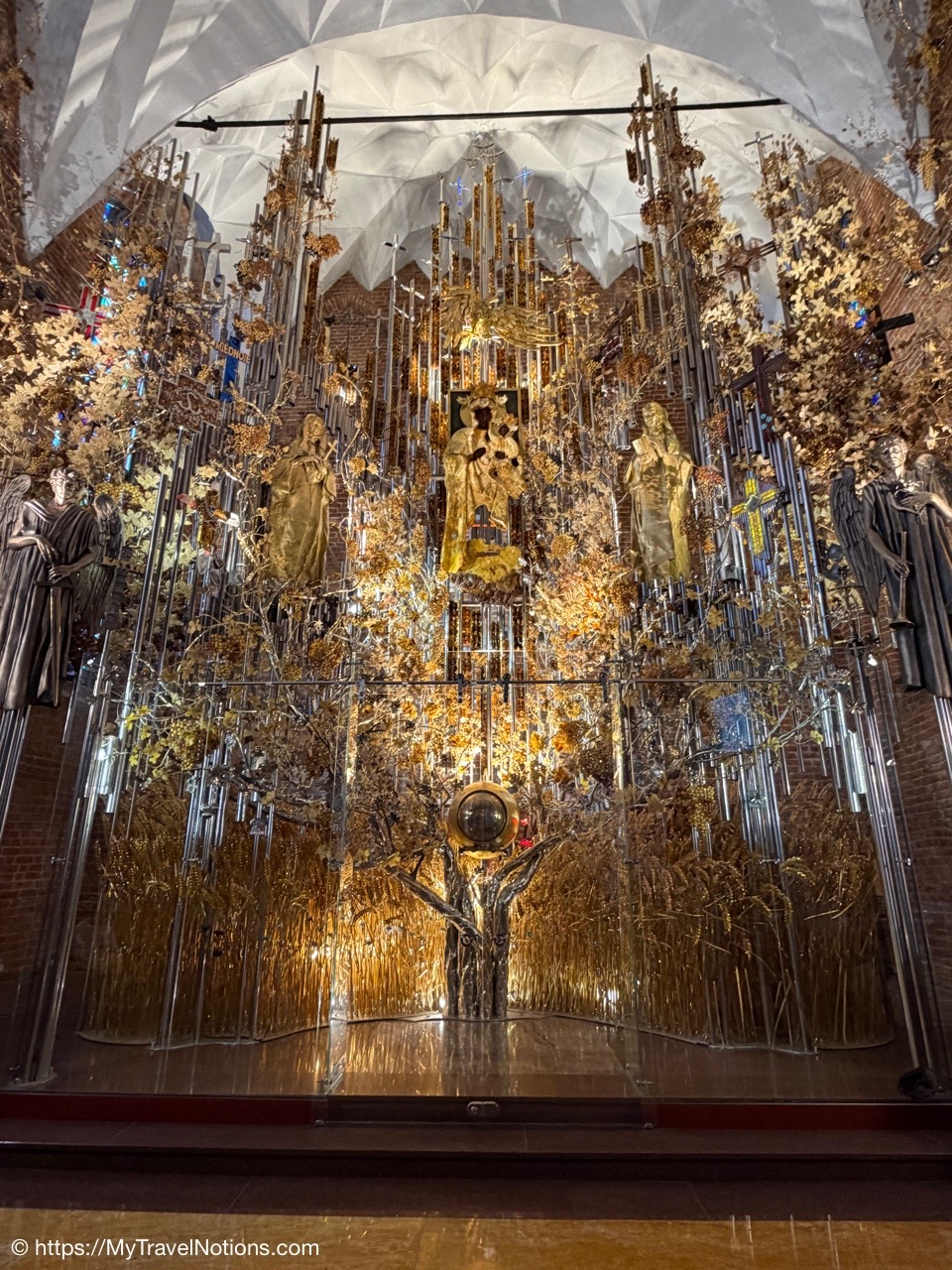
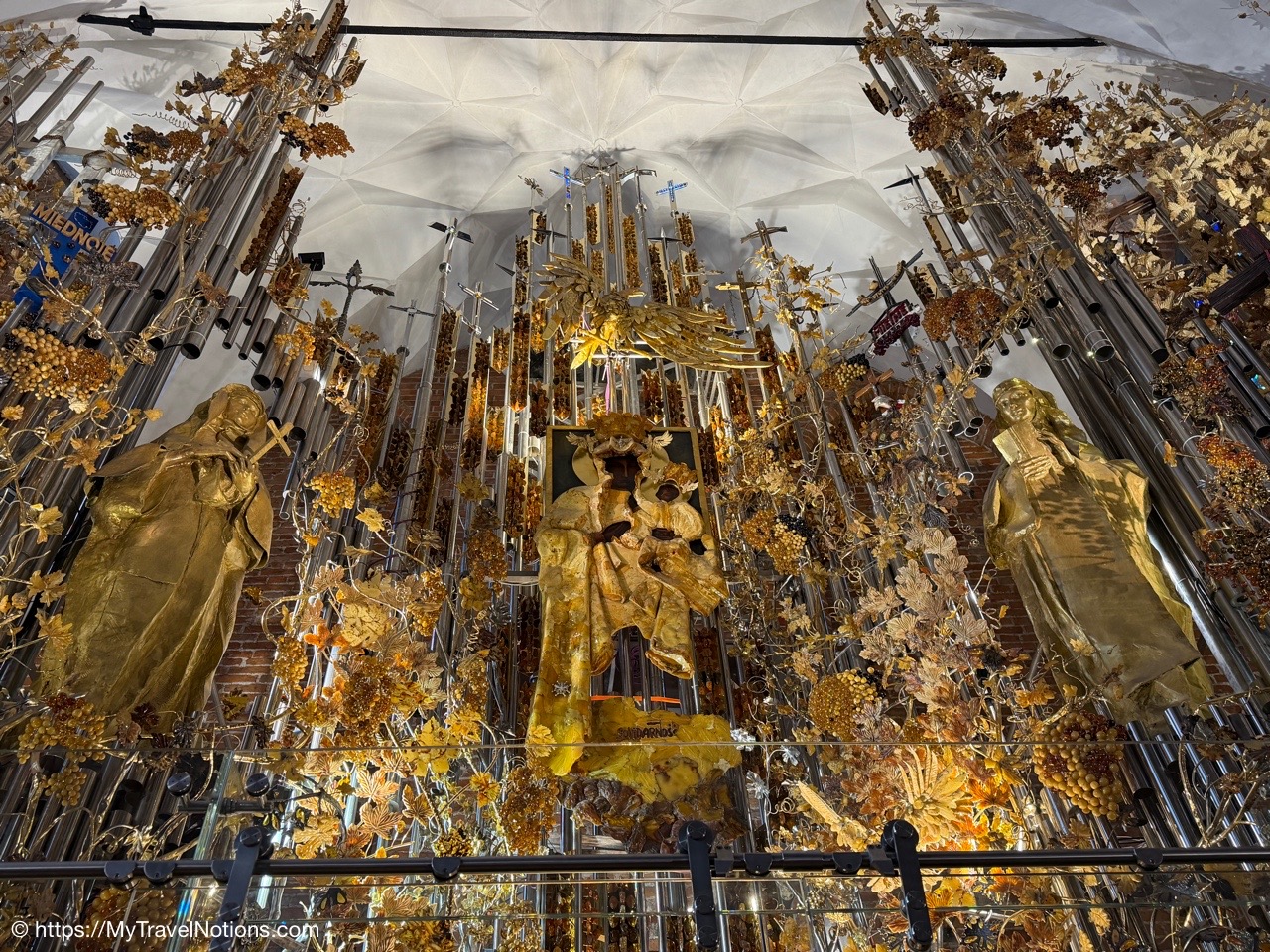
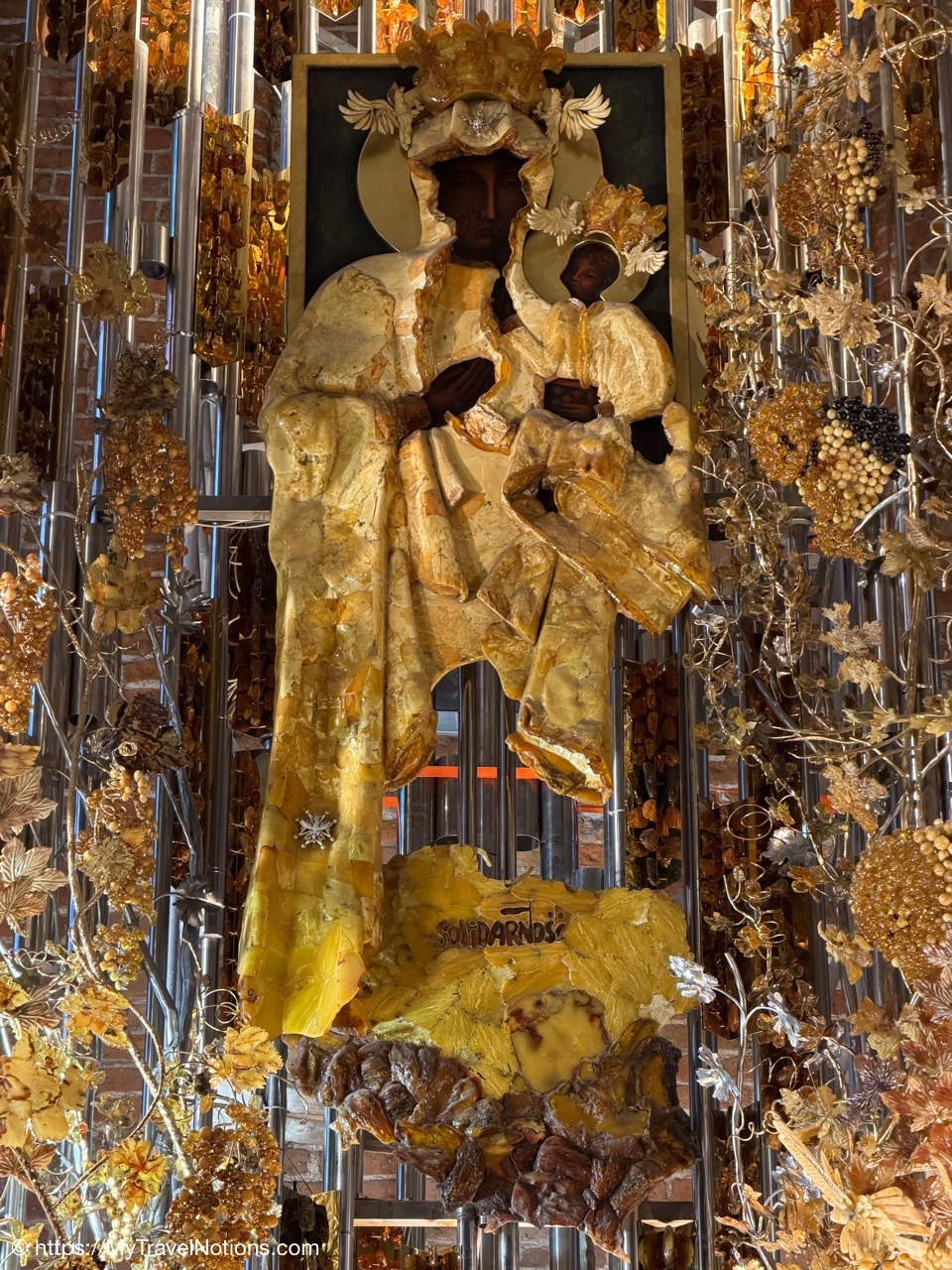
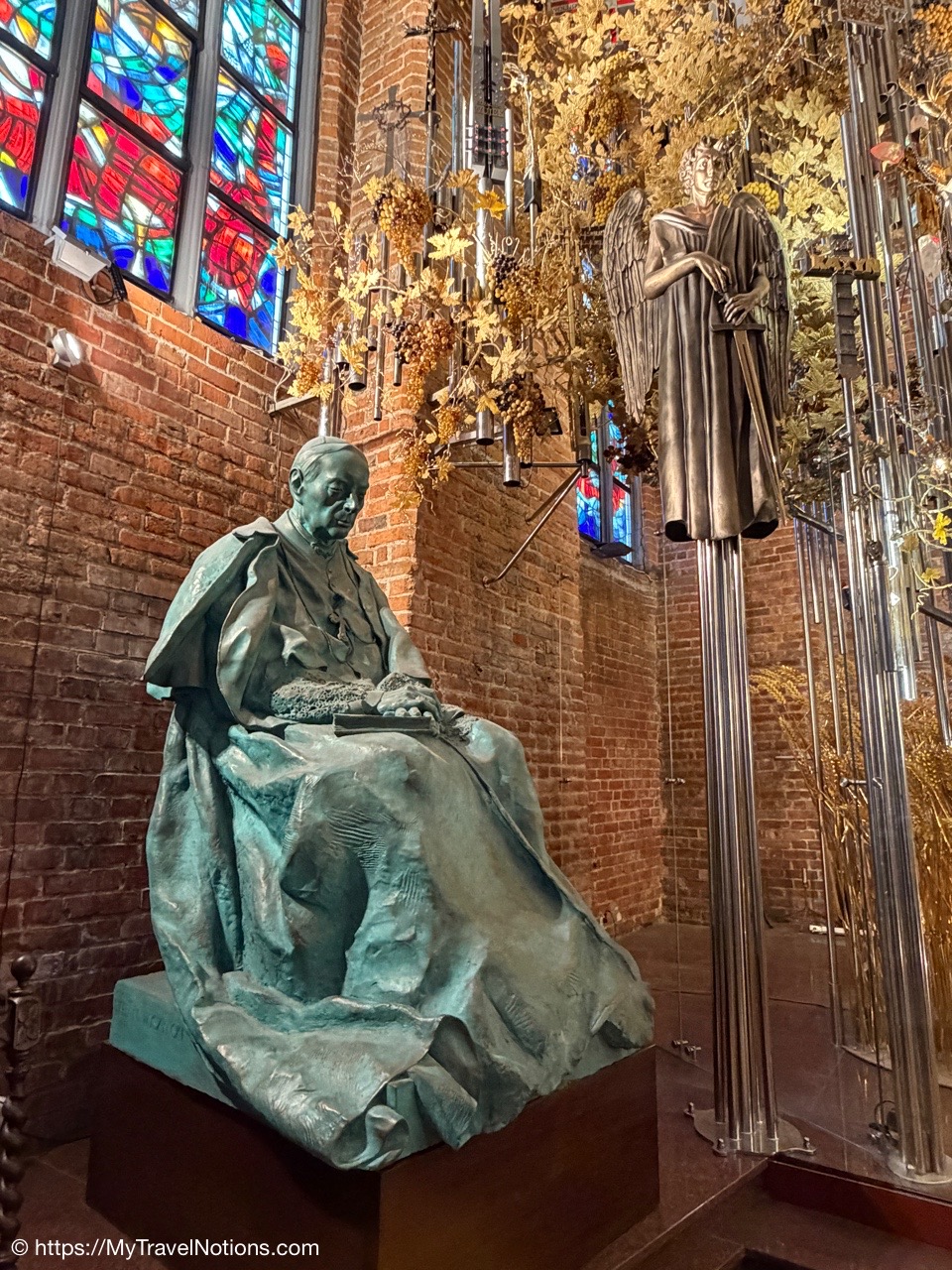
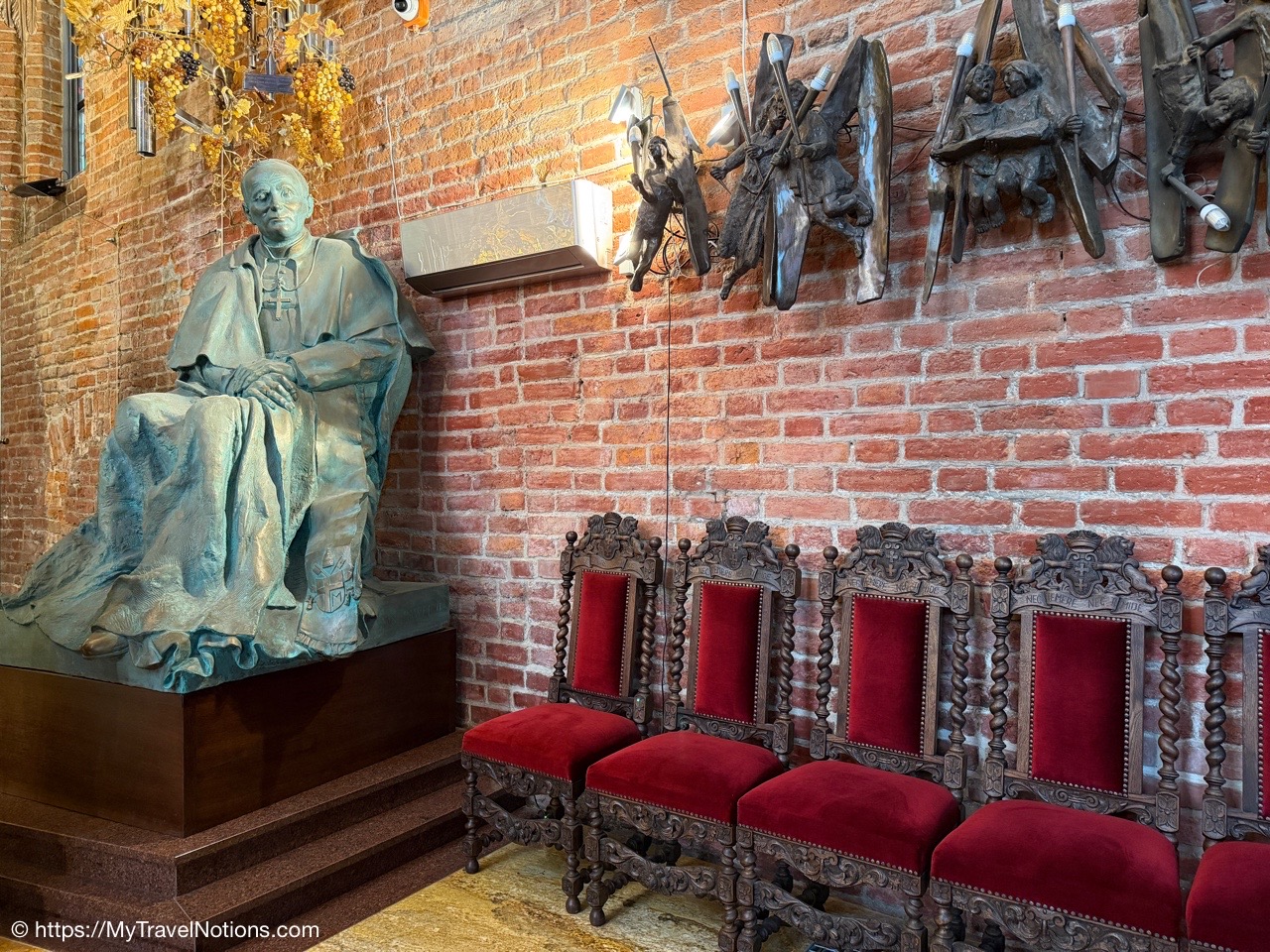
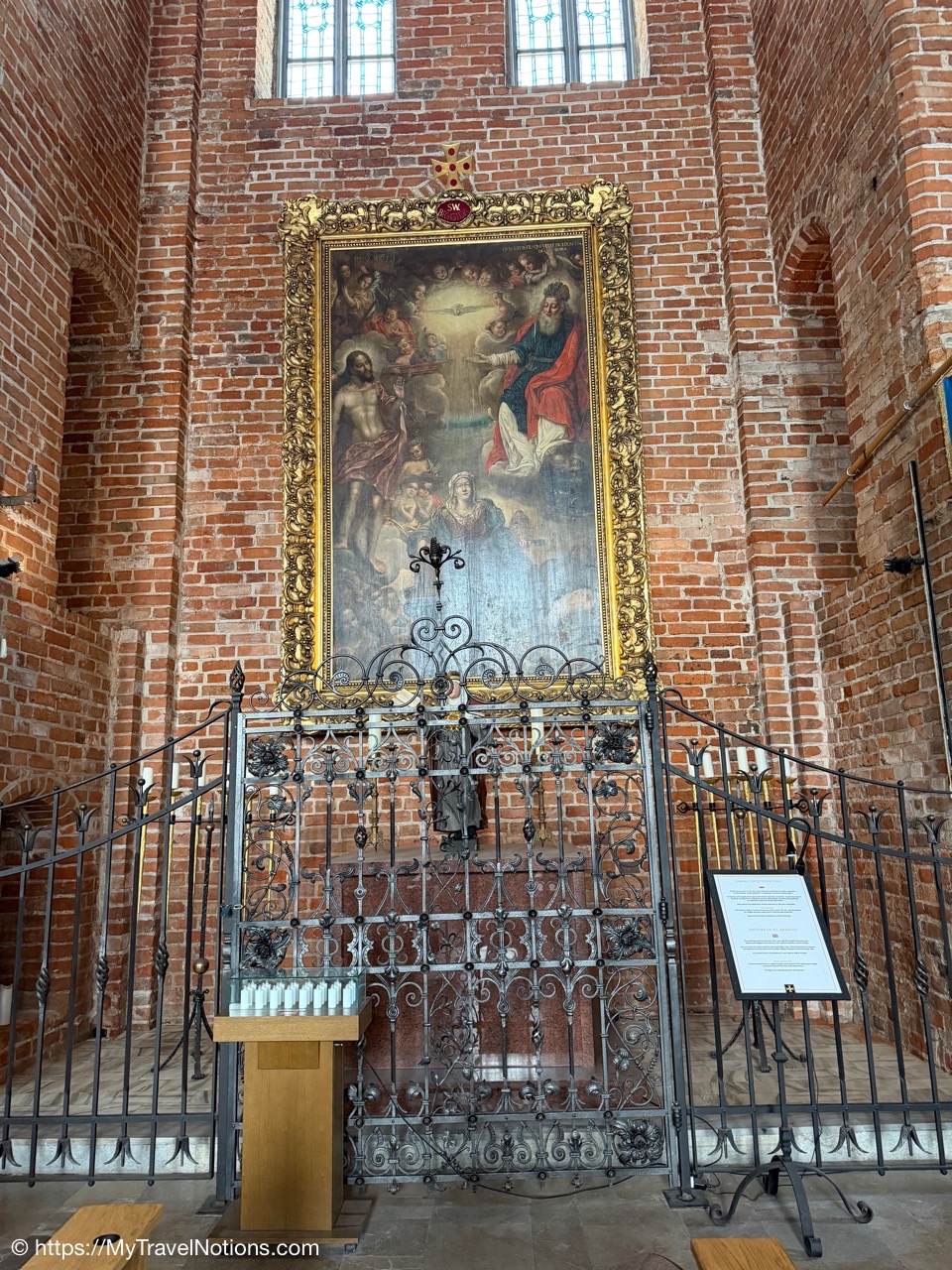
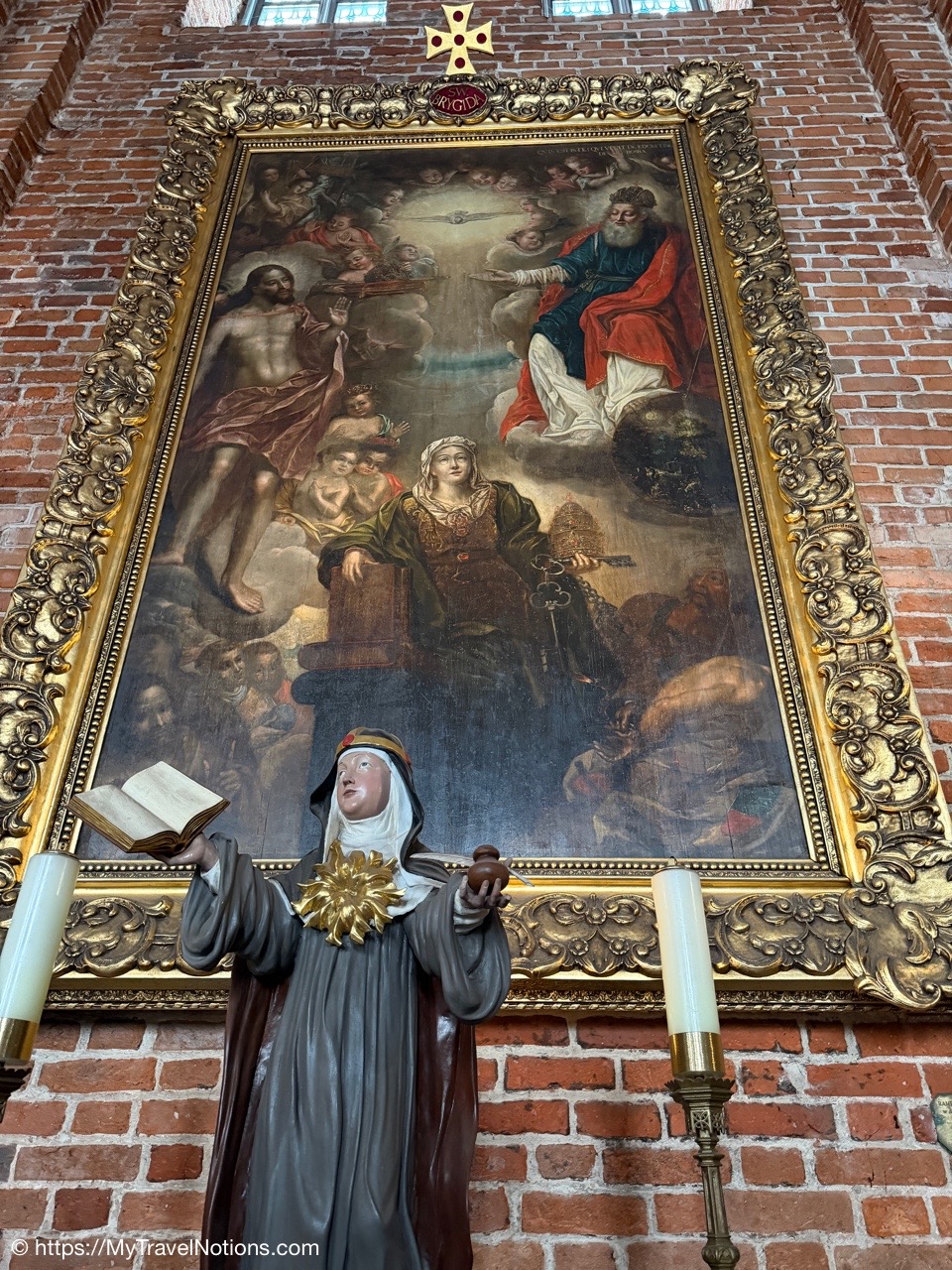
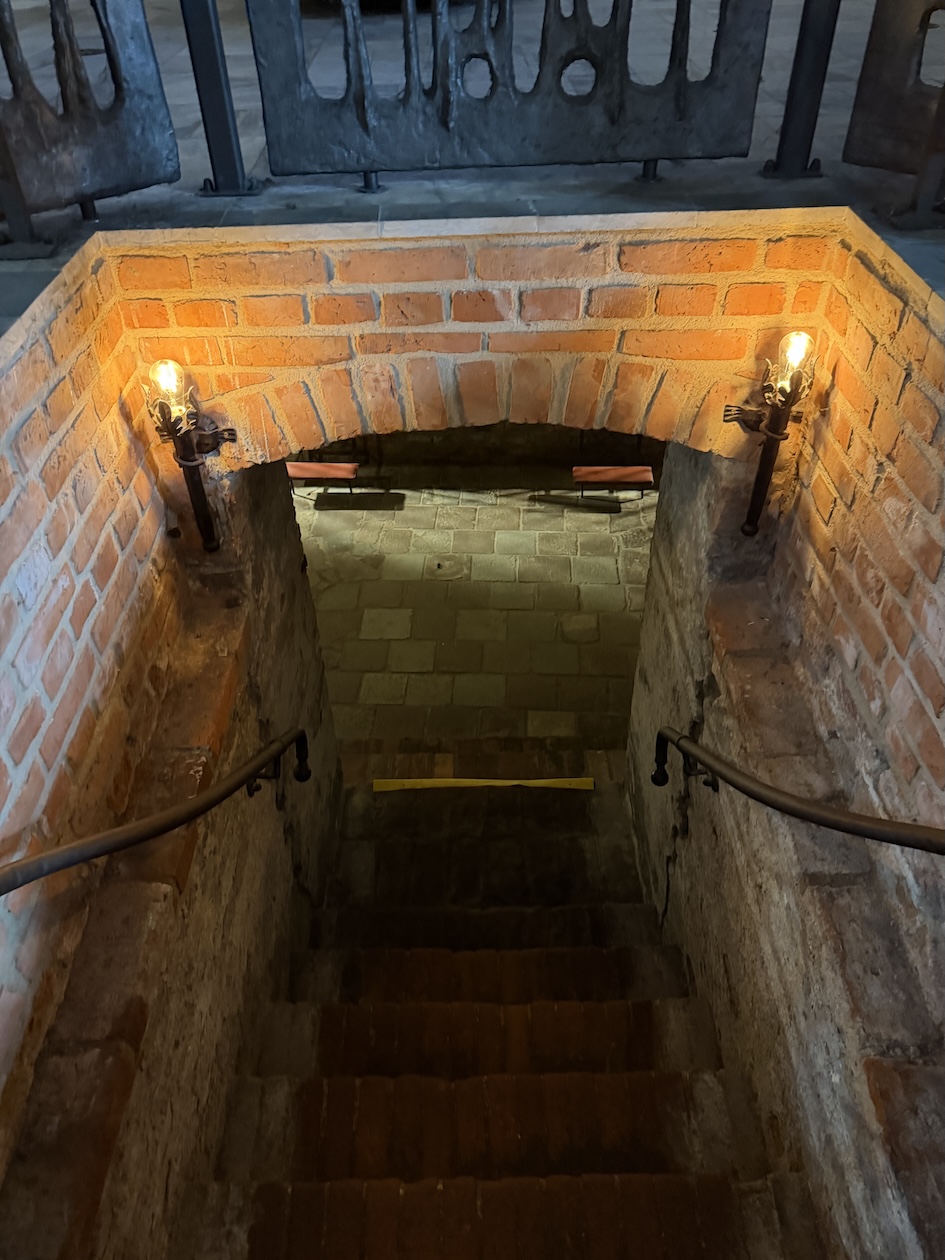
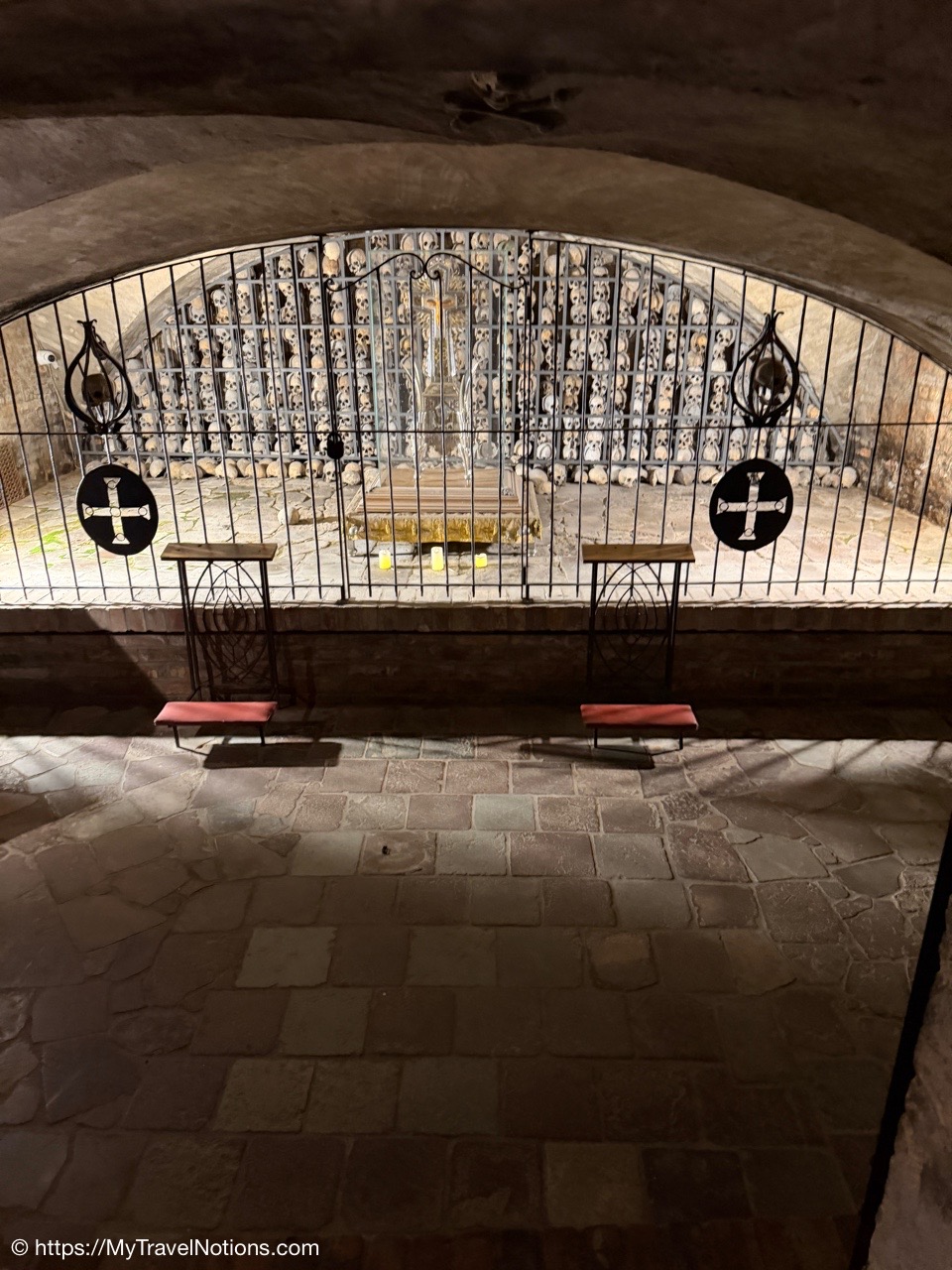
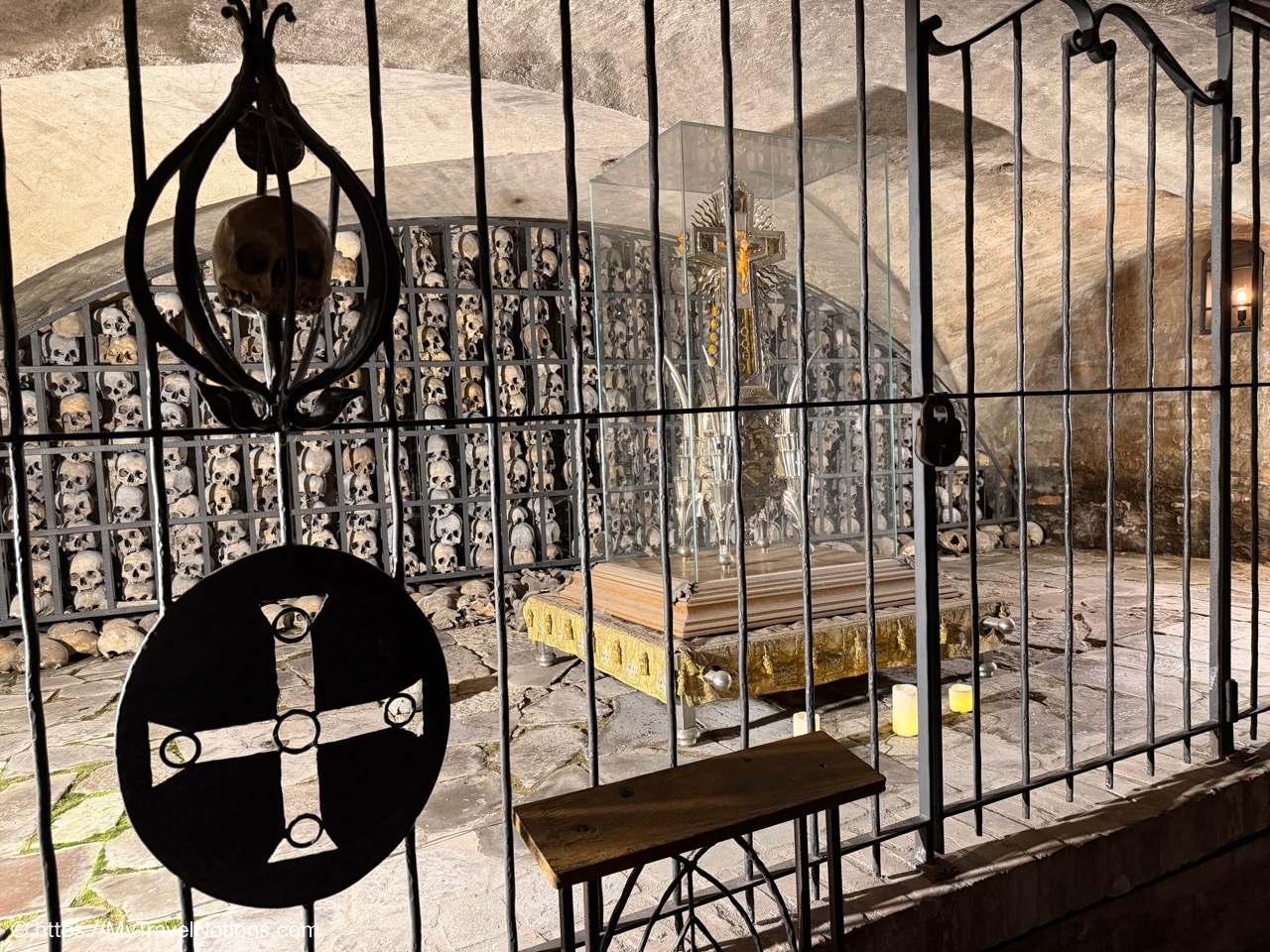
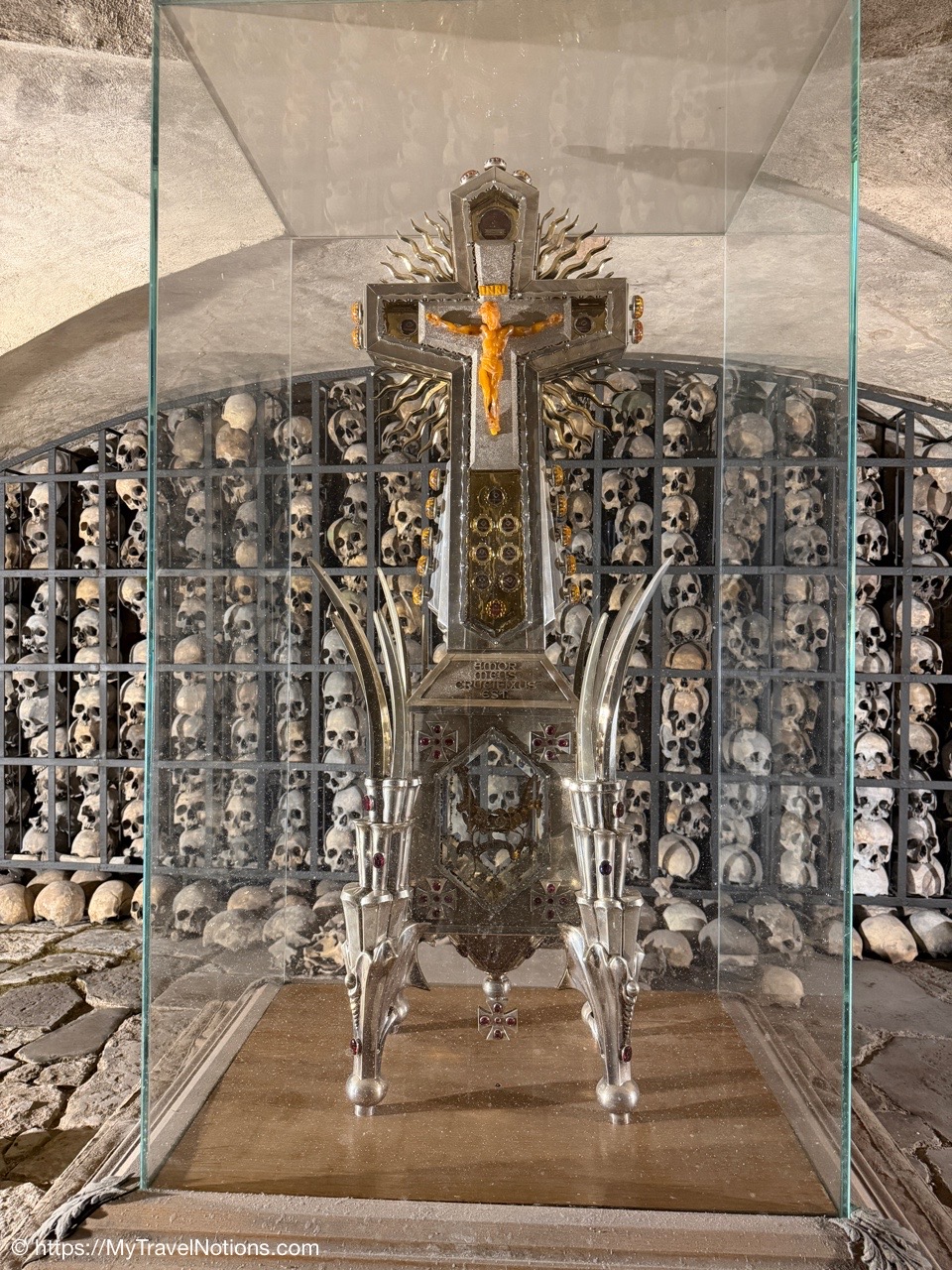
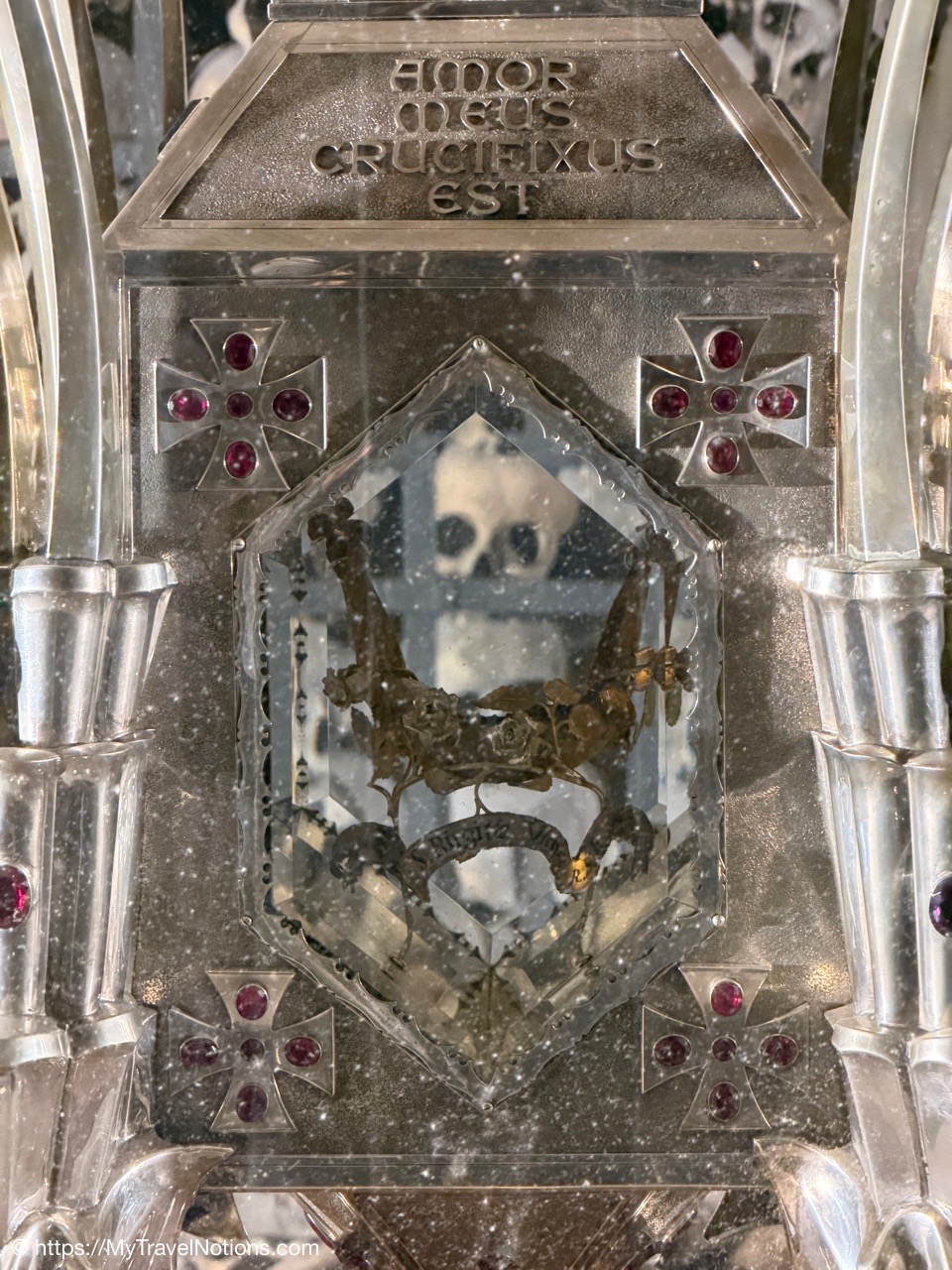
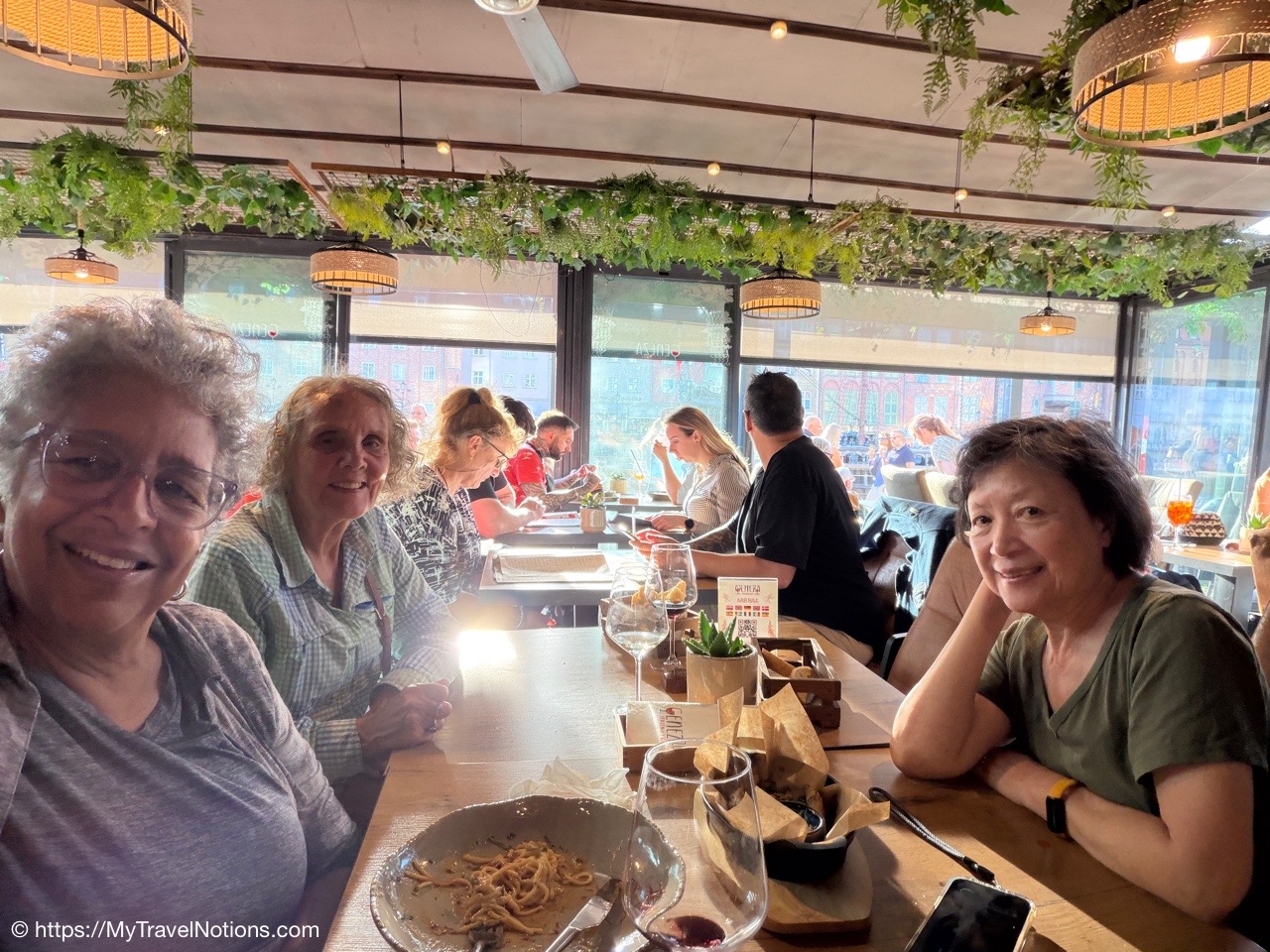
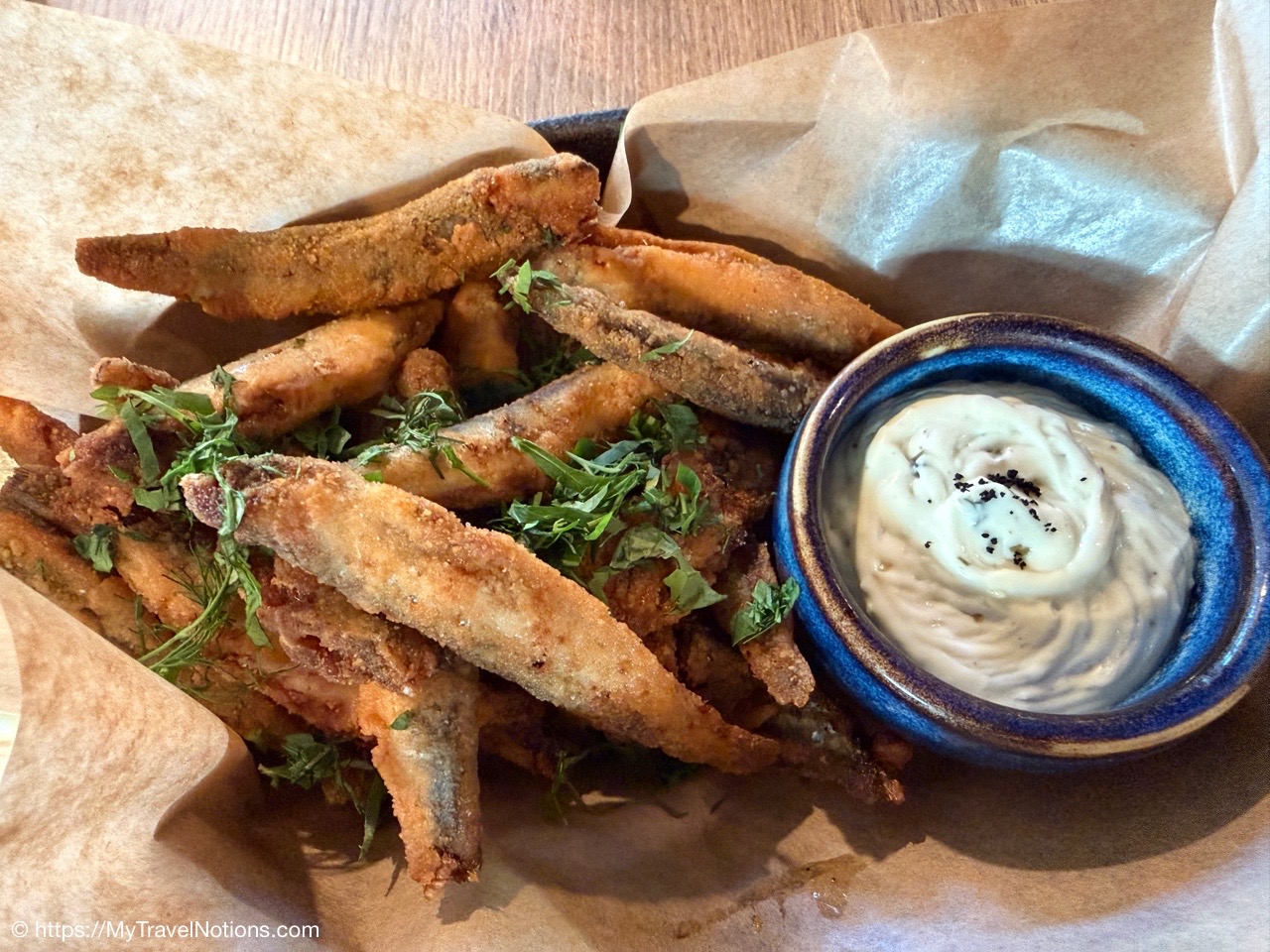
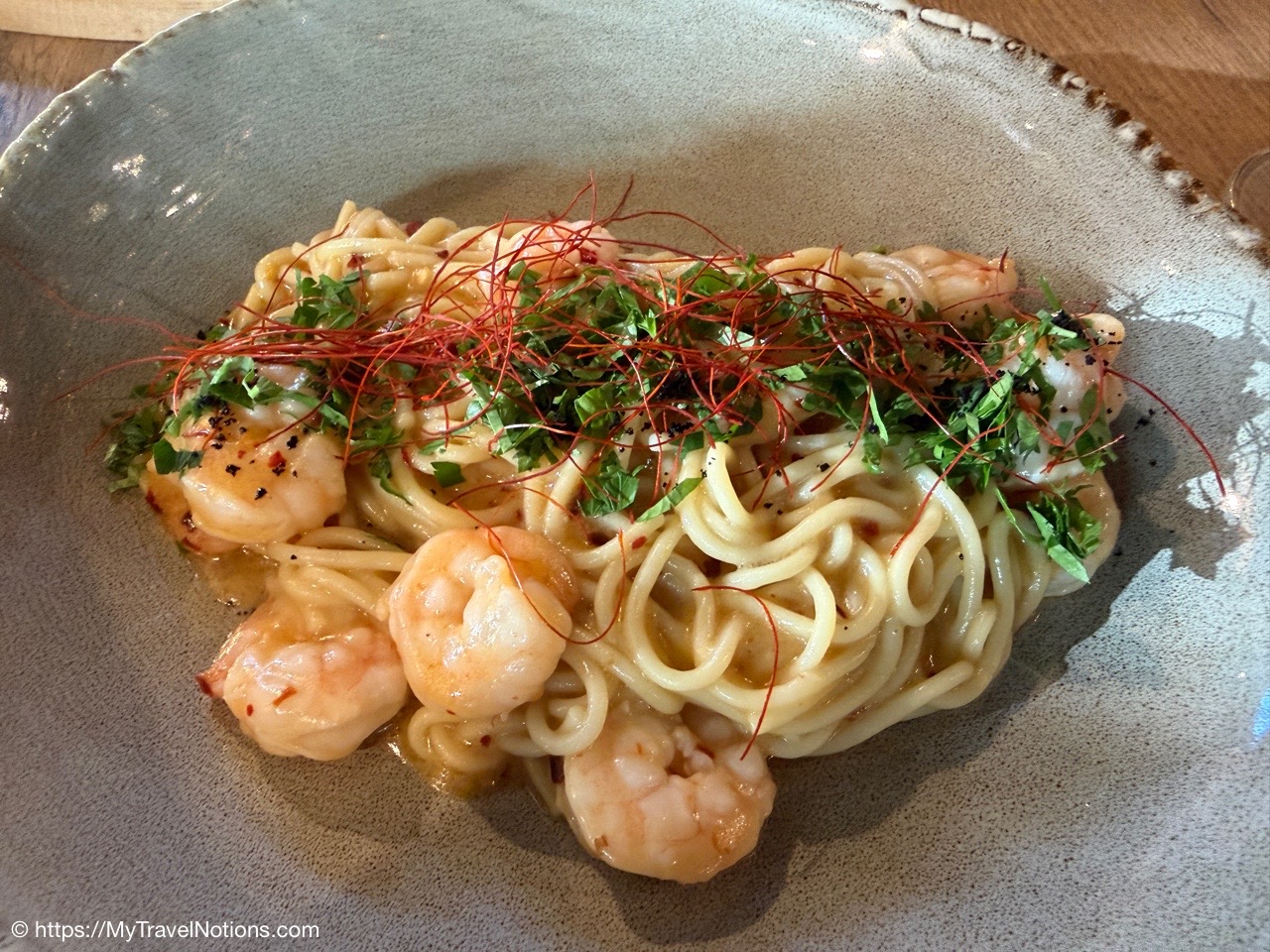
Walking to St. Bridget’s Basilica in Gdańsk. (May 23, 2026)A statue honoring Pope John Paul II outside of St. Bridget’s Basilica in Gdańsk granted the church the title of a Lesser Basilica in 1991. (May 23, 2026)Entering the long nave of St. Bridget’s Basilica in Gdańsk and at the far end of the sanctuary standing the monumental Amber Altar of the Homeland, one of the largest amber art pieces in the world crafted from tons of Baltic amber. (May 23, 2026)A view of the stunning Amber Alter inside St. Bridget’s Basilica in Gdańsk. (May 23, 2026)At the center of the massive Amber Altar of the Basilica of St. Bridget is a depiction of the Black Madonna of Częstochowa holding the baby Christ. Flanking the Black Madonna are the carved amber figures of St. Bridget of Sweden to the left and St. Mary Elizabeth Hesselblad, reformer of the Order of the Holy Saviour defended Jewish families in Rome from German extermination during World War II. And, a soaring white eagle, the national emblem of Poland, is featured above the Black Madonna. While seated bronze figures of Pope Saint John Paul and Cardinal Stefan Wyszynski are on either side of the altar. (May 23, 2026)The Amber Altar of St. Bridget’s Basilica in Gdańsk with the Black Madonna at the center, the soaring white eagle above her, the amber figures of St. Bridget of Sweden to the left and St. Mary Elizabeth Hesselblad and the two large bronze figures on the sides depict the Archangel Michael (left holding a sword) and the Archangel Gabriel (right holding a horn.) (May 23, 2026)At the center of the massive Amber Altar is a depiction of the Black Madonna of Częstochowa holding the baby Christ. Flanking the Black Madonna are the carved amber figures of St. Bridget of Sweden to the left and St. Mary Elizabeth Hesselblad, reformer of the Order of the Holy Saviour defended Jewish families in Rome from German extermination during World War II. And, a soaring white eagle, the national emblem of Poland, is featured above the Black Madonna. (May 23, 2026)The focal point of the massive Amber Altar inside St. Bridget’s Basilica in Gdańsk features the Black Madonna holding the baby Christ, a depiction of Our Lady of Częstochowa, with rubies in her crown symbolizing the 28 shipyard workers killed in December 1970. The Black Madonna holds deep spiritual and national importance for Polish Catholics, symbolizing resilience and faith. (May 23, 2026)The spherical round globe functions as the Tabernacle where the Eucharist is reserved and is positioned centrally near the base of the monumental display and the overarching structure forming the framework is the Tree of Life (inspired by Genesis) of the Amber Altar at St. Bridget’s Basilica in Gdańsk. (May 23, 2026)The stylized Tree of Life of the Amber Altar at St. Bridget’s Basilica in Gdańsk incorporates natural elements and symbols representing the earth’s county like the numerous grapevines and wheat. (May 23, 2026)A majestic, crowned white eagle made of amber on the Amber Altar of St. Bridget’s Basilica in Gdańsk is positioned above the central figure of the Black Madonna immersed in the beautiful Tree of Life. (May 23, 2026)The Archangel Michael is one of the two bronze figures (to the left is Archangel Gabriel) on the opposite ends of the Amber Altar of St. Bridget’s Basilica in Gdańsk are made of material donated by Poland’s copper mine complex KHM and built in the Gdańsk Shipyard. (May 23, 2026)On the left side of the Amber Altar of St. Bridget’s Basilica in Gdańsk is the second seated lifelike figure depicting the Blessed Cardinal Stefan Wyszyński, a Polish Roman Catholic and Archbishop who defended religious freedom and refused to let the communist regime control church appointments. He was arrested and imprisoned in strict isolation from 1953 to 1956. He was officially beatified on September 12, 2021, in Warsaw after the Vatican approved a miracle involving the healing of a cancer patient through his intercession. The bronze statue holding the sword is the Archangel Michael. (May 23, 2026)The bronze statue of Saint John Paul II sits to the right of the Amber Altar of St. Bridget’s Basilica in Gdańsk. As the first Polish Pope, Karol Wojtyła became deeply important to the country and considered the catalyst for the peaceful collapse of communism when his visit sparked the creation of the Solidarity Trade Union (Solidarność), laying the groundwork for Poland’s freedom in 1989. (May 23, 2026)The Chapel of St. Bridget of Sweden inside of St. Bridget’s Basilica in Gdańsk is one of the six patron saints of Europe. The Swedish Catholic mystic known for her charity to the poor the founder of the Bridgettine Order for both men and women. (May 23, 2026)This painting by Herman Han from 1612, Chapel of St. Bridget of Sweden inside of St. Bridget’s Basilica in Gdańsk, was originally located at the main altar, depicting the Allegory of the Church in the mystical exaltation of Saint Bridget. One can notice two amber brooches adorning Bridget’s robe. These elements were to become the inspiration for this church and the amber-smiths of Gdańsk to build the Amber Altar. (May 23, 2026)A side view of St. Bridget’s Basilica in Gdańsk. (May 23, 2026)Looking towards the rear gallery and choir loft along the main nave of St. Bridget’s Basilica in Gdańsk. (May 23, 2026)The Baptistry to the rear of St. Bridget’s Basilica in Gdańsk is the oldest part of the church. The plaques on the walls serve as historical, patriotic and anti-communist memorials. (May 23, 2026)The Baptistry to the rear of St. Bridget’s Basilica in Gdańsk is the oldest part of the church. The plaques on the walls serve as historical, patriotic and anti-communist memorials. (May 23, 2026)The staircase in the rear of St. Bridge’s Basilica in Gdansk leading to the Skulls Crypt. In 2016, an underground entrance leading to a chamber with a pile of human skulls was discovered. (May 23, 2026)In 2010, workers stumbled upon a previously undiscovered crypt containing hundreds of bones. Although the identities of these remains are unknown, the prevailing theory is that they belonged to individuals interred in shallow graves around the St. Bridget’s Basilica in Gdansk in the 17th century that were subsequently relocated to the crypt. (May 23, 2026)The Skull Crypt in the underground ossuary of St. Bridget’s Basilica in Gdansk contains nearly 500 skulls of former Bridgetine nuns discovered during excavations and renovations in 2010 and 2016. The crypt also houses relics attributed to St. Bridget of Sweden. The decorative silver vessel is said to contain the relics of St. Bridget of Sweden. (May 23, 2026)The Skull Crypt in the underground ossuary of St. Bridget’s Basilica in Gdansk contains nearly 500 skulls of former Bridgetine nuns discovered during excavations and renovations in 2010 and 2016. The crypt also houses relics attributed to St. Bridget of Sweden. The decorative silver vessel is said to contain the relics of St. Bridget of Sweden. (May 23, 2026)A close-up of the decorative silver vessel said to contain the relics of St. Bridget of Sweden in the Skull Crypt of St. Bridget’s Basilica in Gdańsk. (May 23, 2026)Met up with Rosie and Alice for dinner at Geneza Restaurant with its scenic waterfront views of the Motława River on the Granary Island of Gdańsk. (May 23, 2026)We shared some fried sardines as an appetizer at Geneza Restaurant with its scenic waterfront views of the Motława River on the Granary Island of Gdańsk. (May 23, 2026)I had the Spaghetti Agli olio e peppercorn with shrimps seasoned with confit garlic, olive oil, chili flakes, white wine, cheese and parsley at Geneza Restaurant on the Granary Island of Gdańsk. (May 23, 2026). Cost: 58 PLN or $13.20 USD. (May 23, 2026)The waterfront restaurant row and high-end residential apartments on the Granary Island side of Gdańsk where we’ve eaten dinner for several nights. (May 23, 2026)
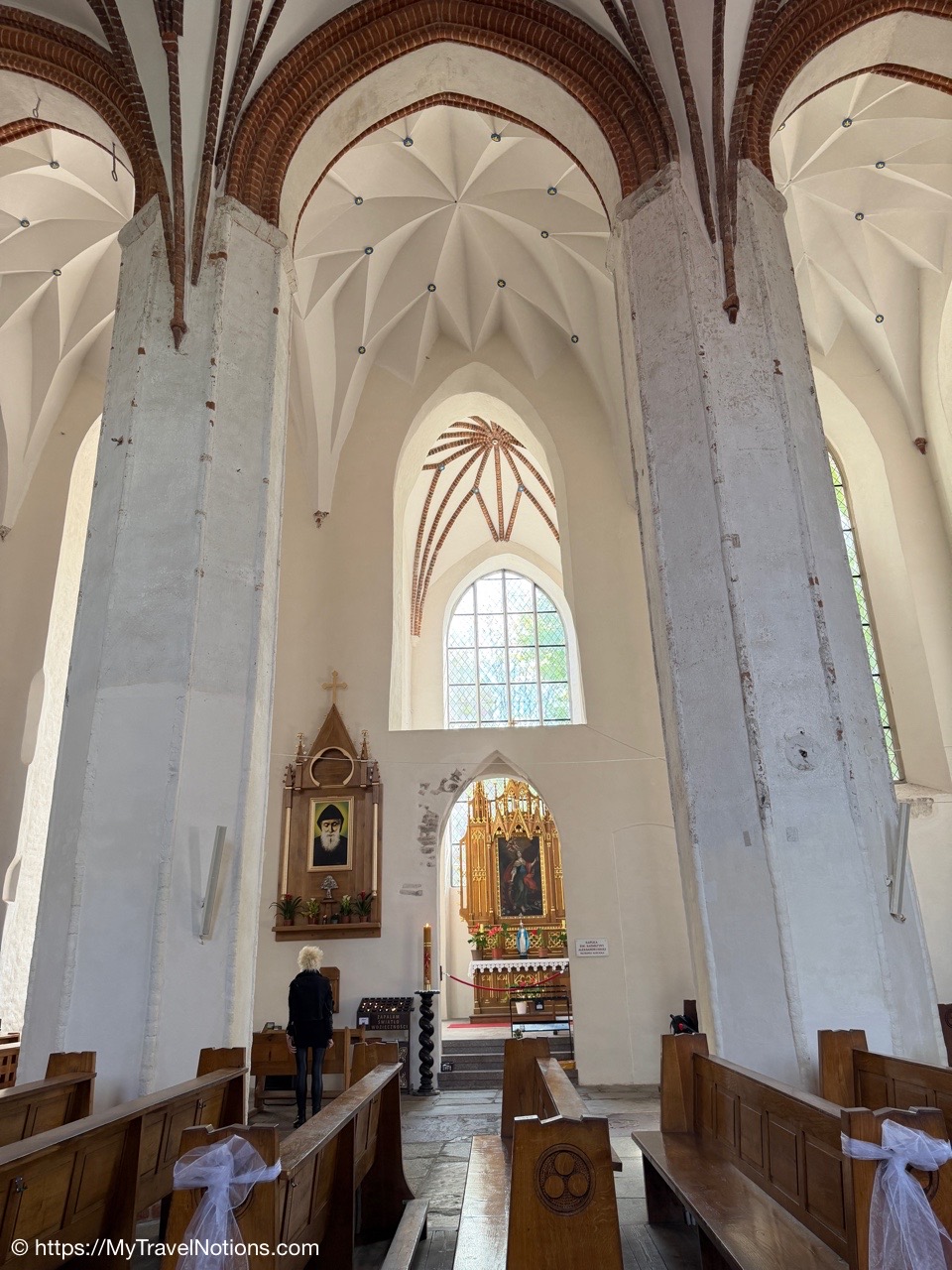
It’s our last day not only in Gdańsk, but in Poland. So along with gathering my belongings I had a leisurely morning to do some writing, buy a couple of Amber bracelets and take a few minutes to see the red-brick Gothic church, built between 1348 and 1487 of Basilica of Saint Nicholas. It actually remains the only historic church of central Gdańsk which escaped damage during World War II.
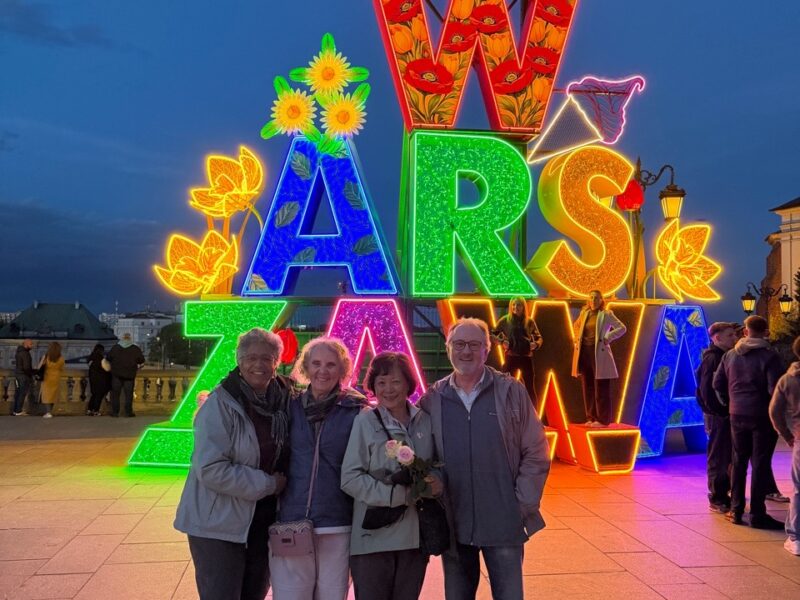
Here’s to our last day in Poland where Rosie and I say our goodbyes to Alice and move on to what will be my 101st United Nations country of Moldova.
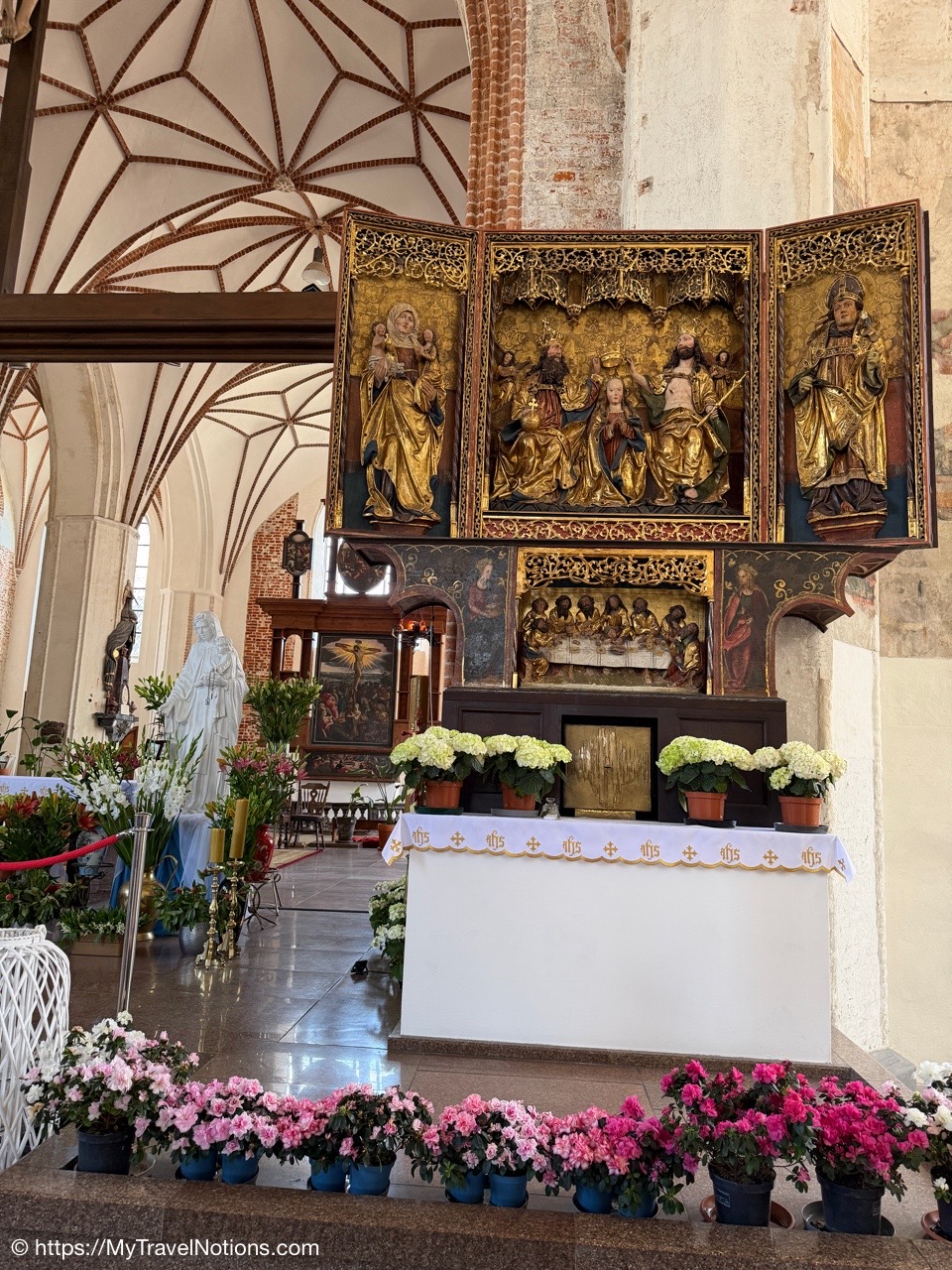
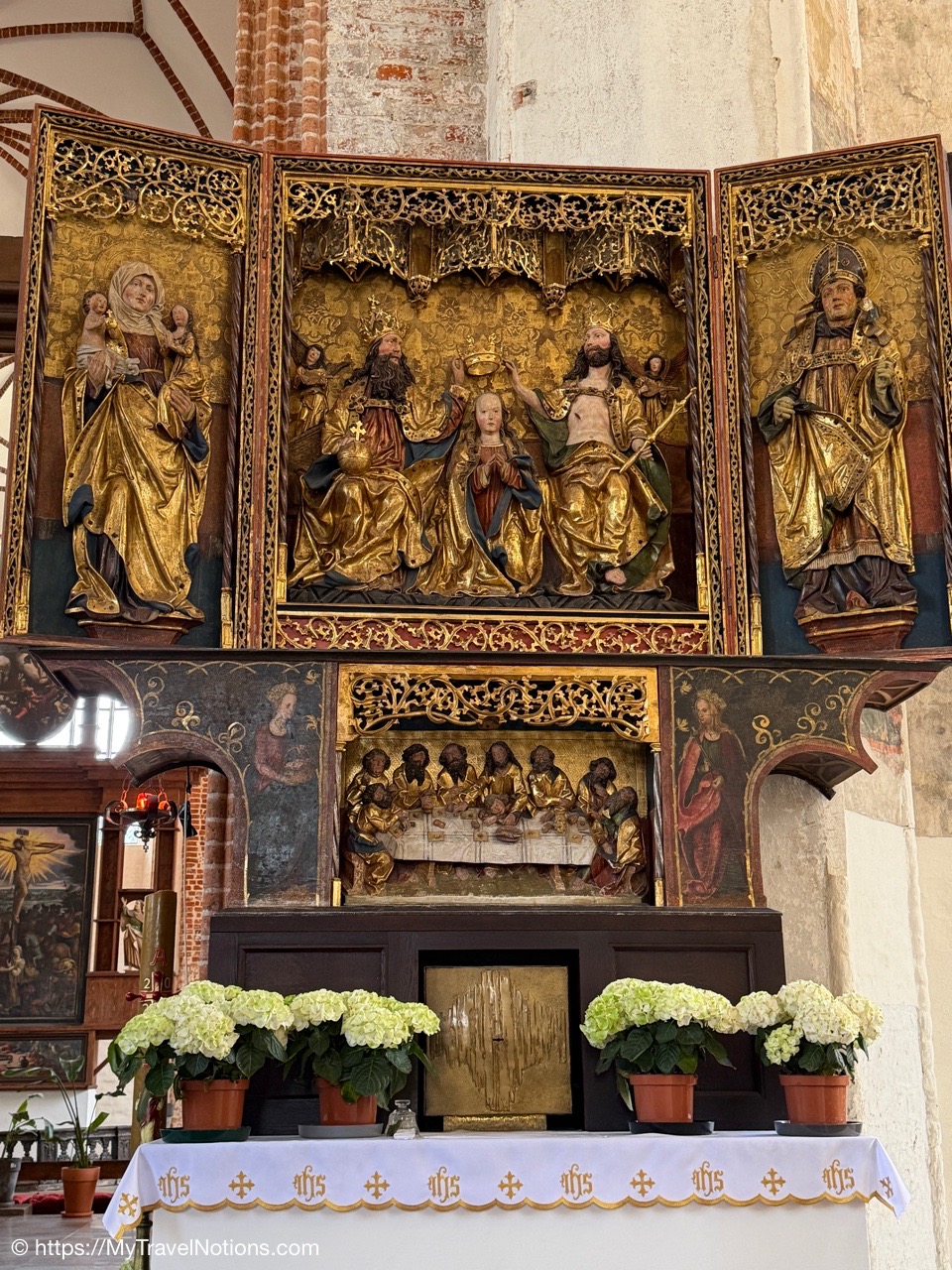
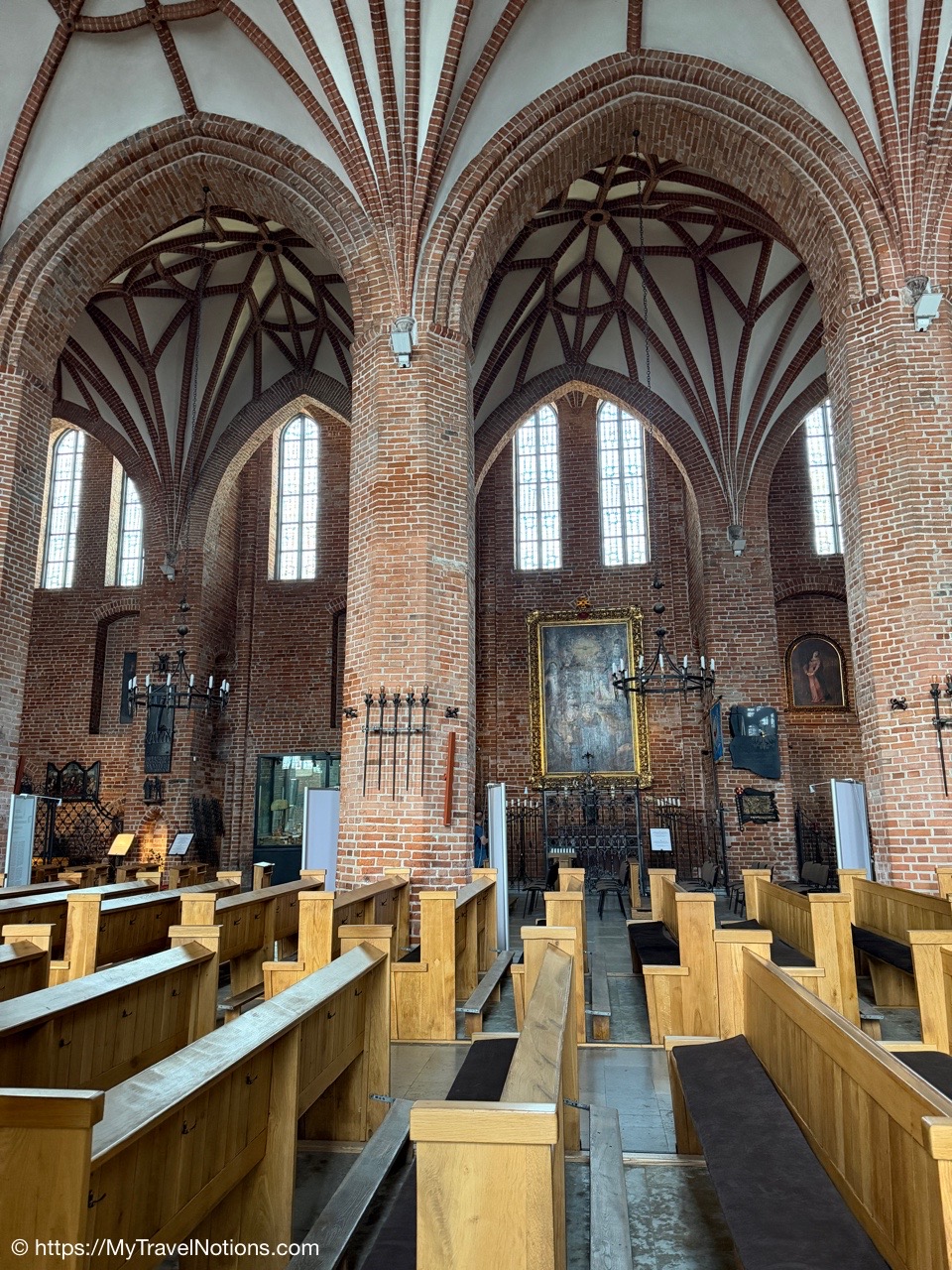
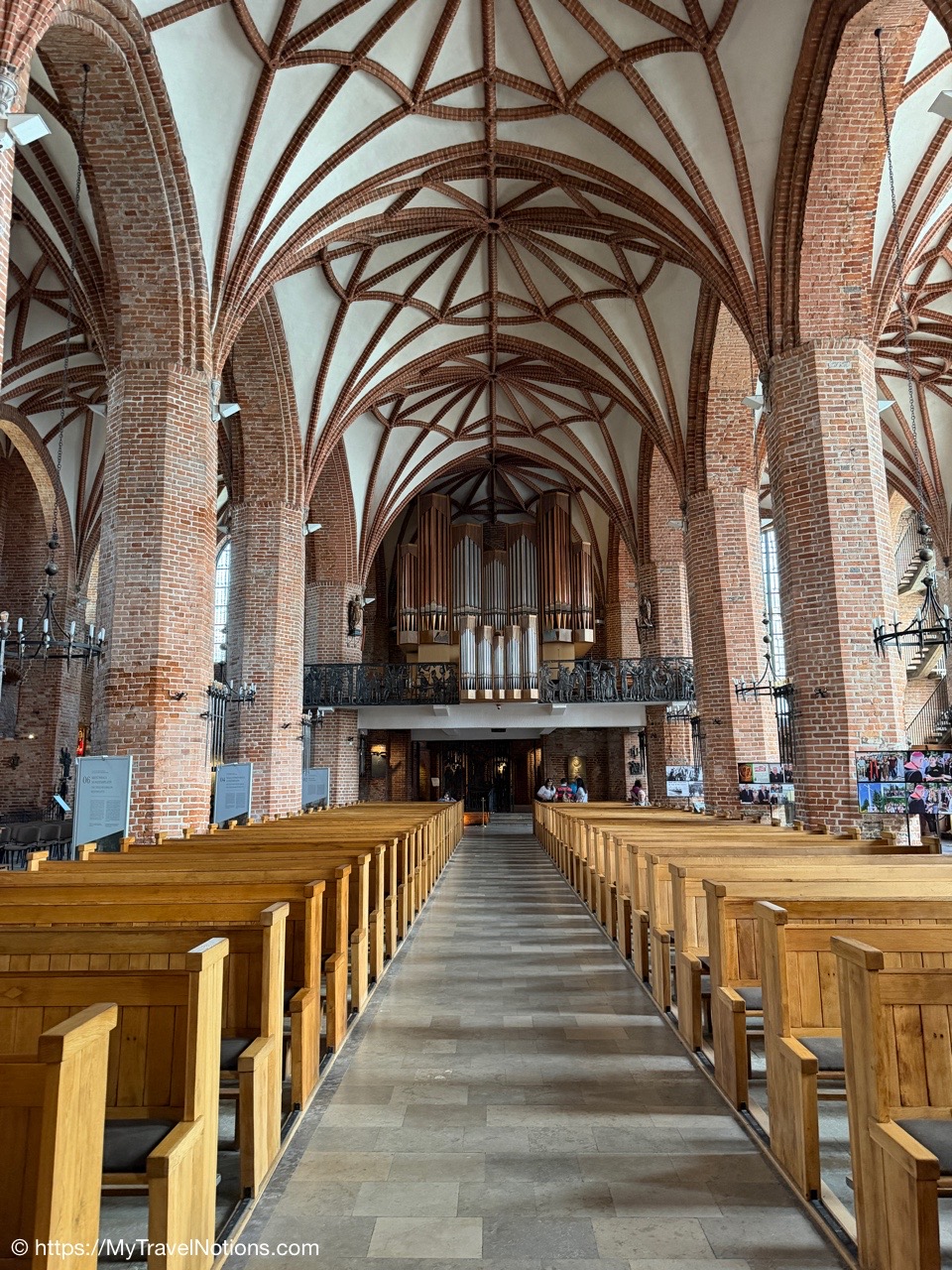
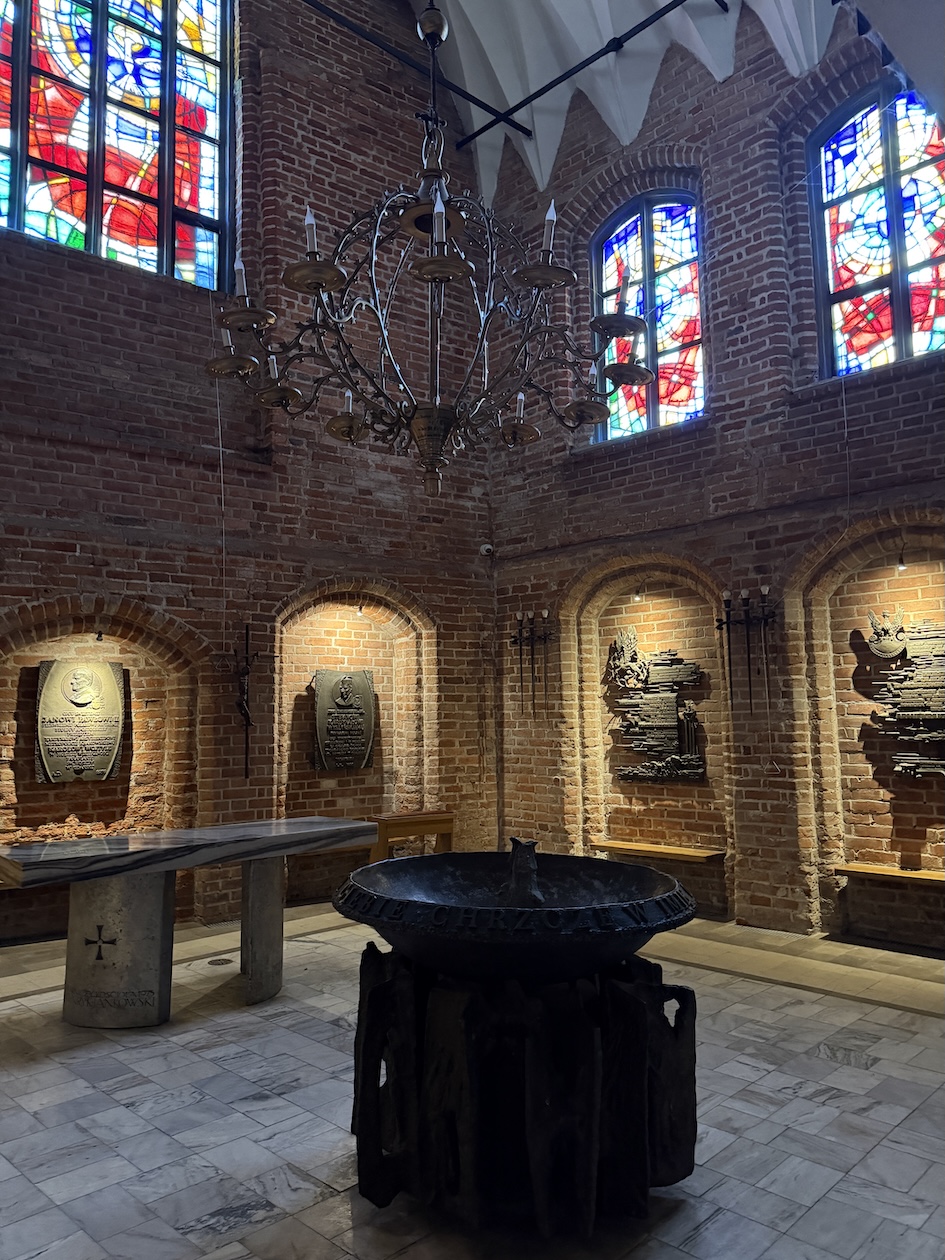
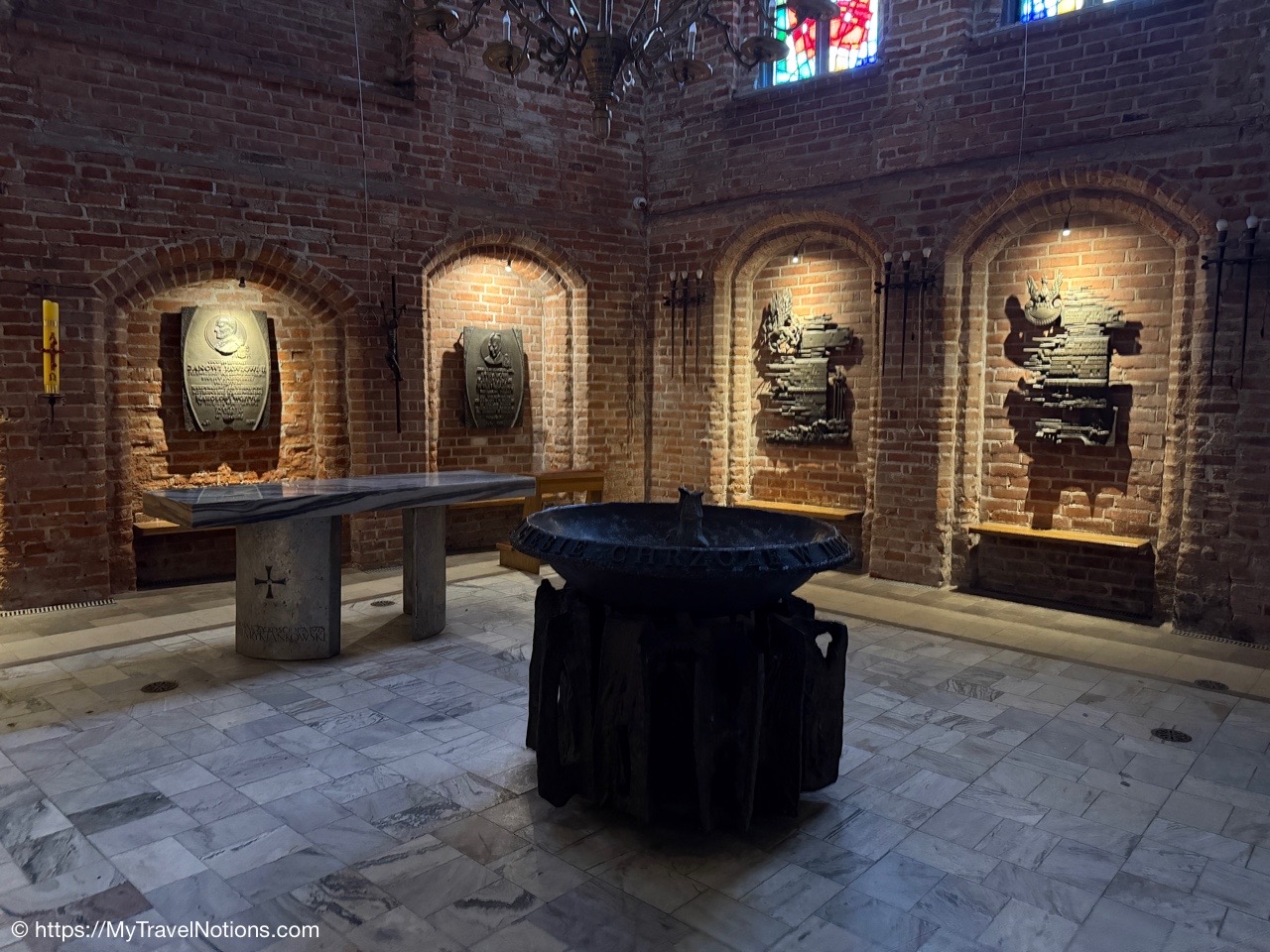
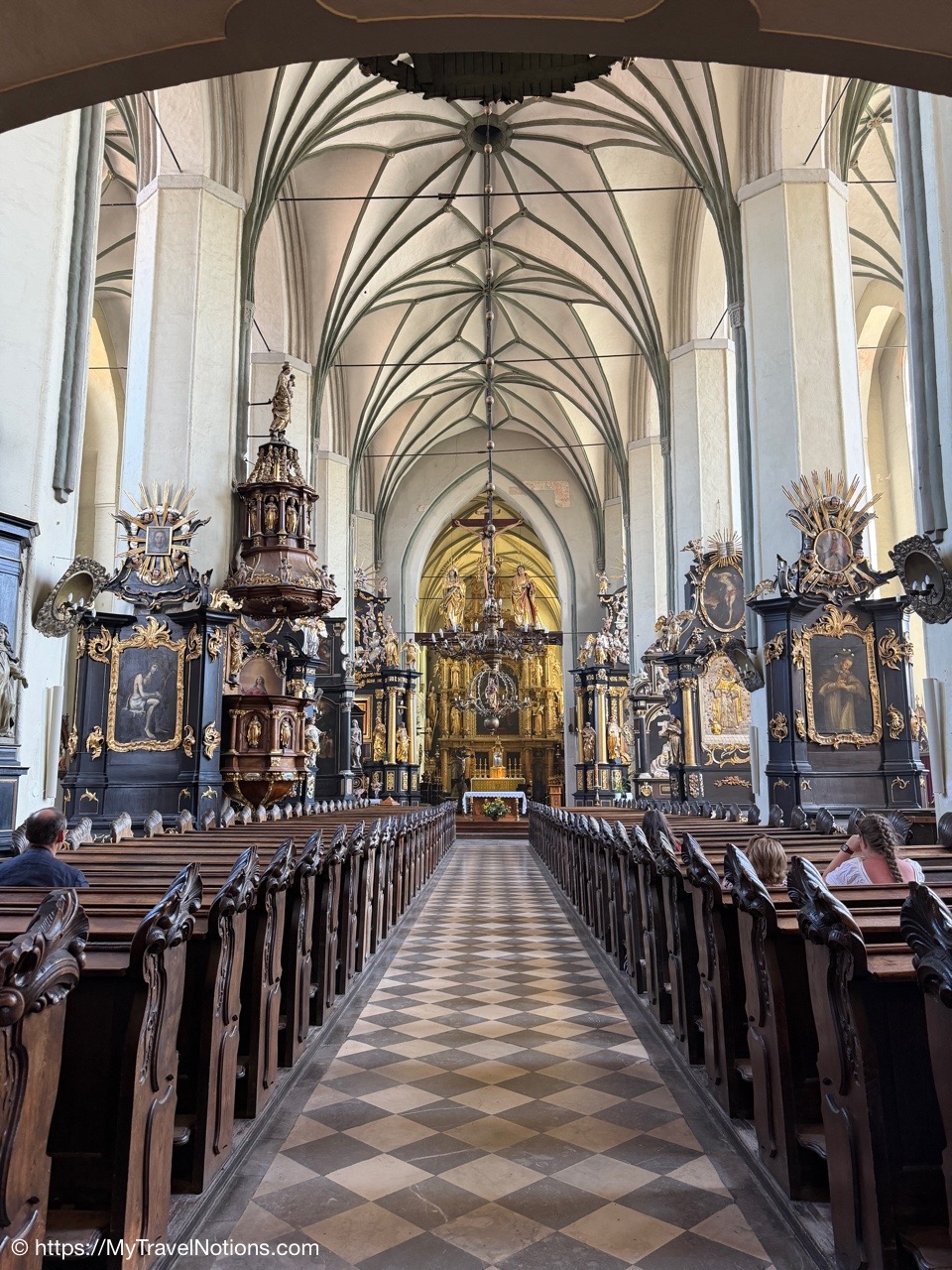
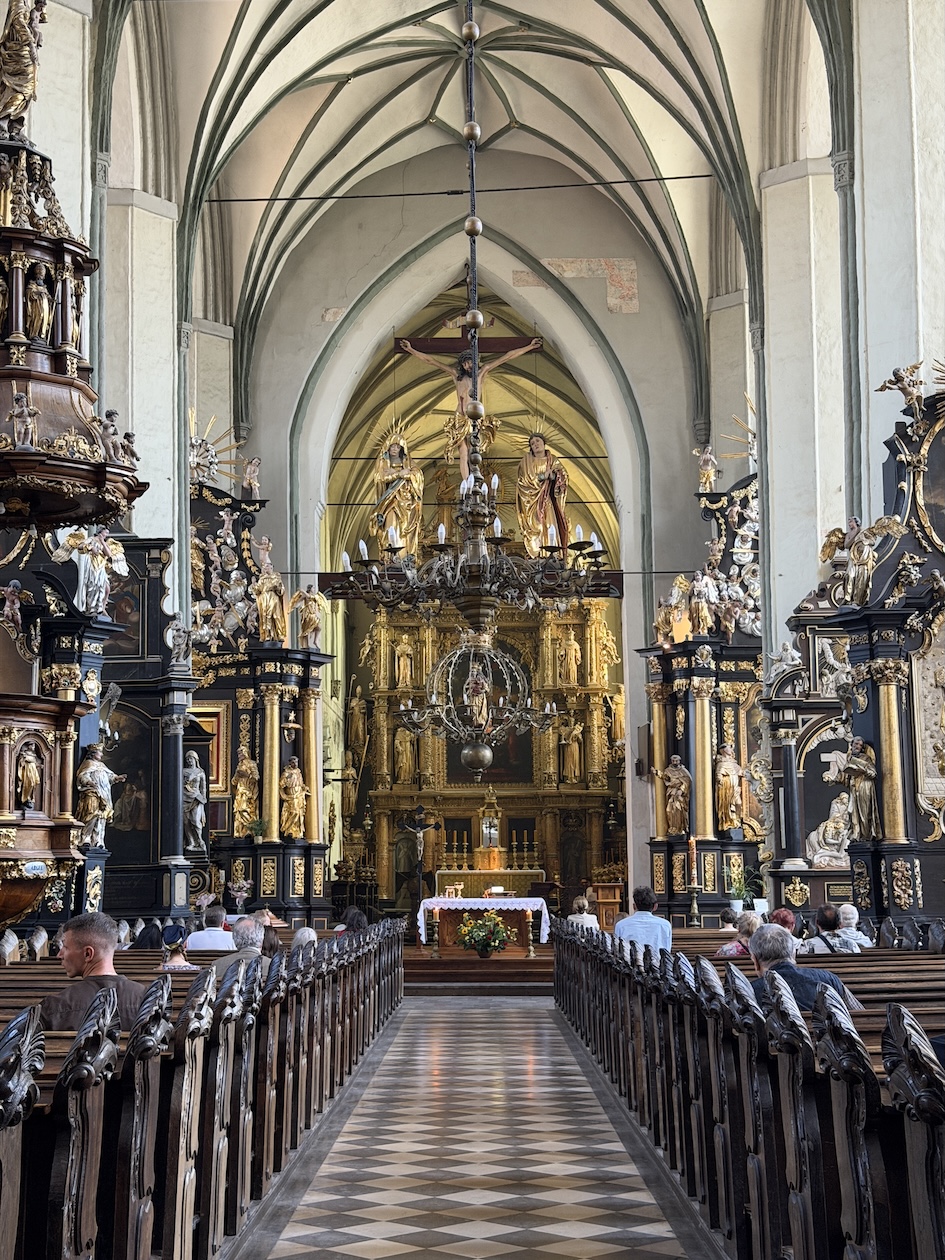
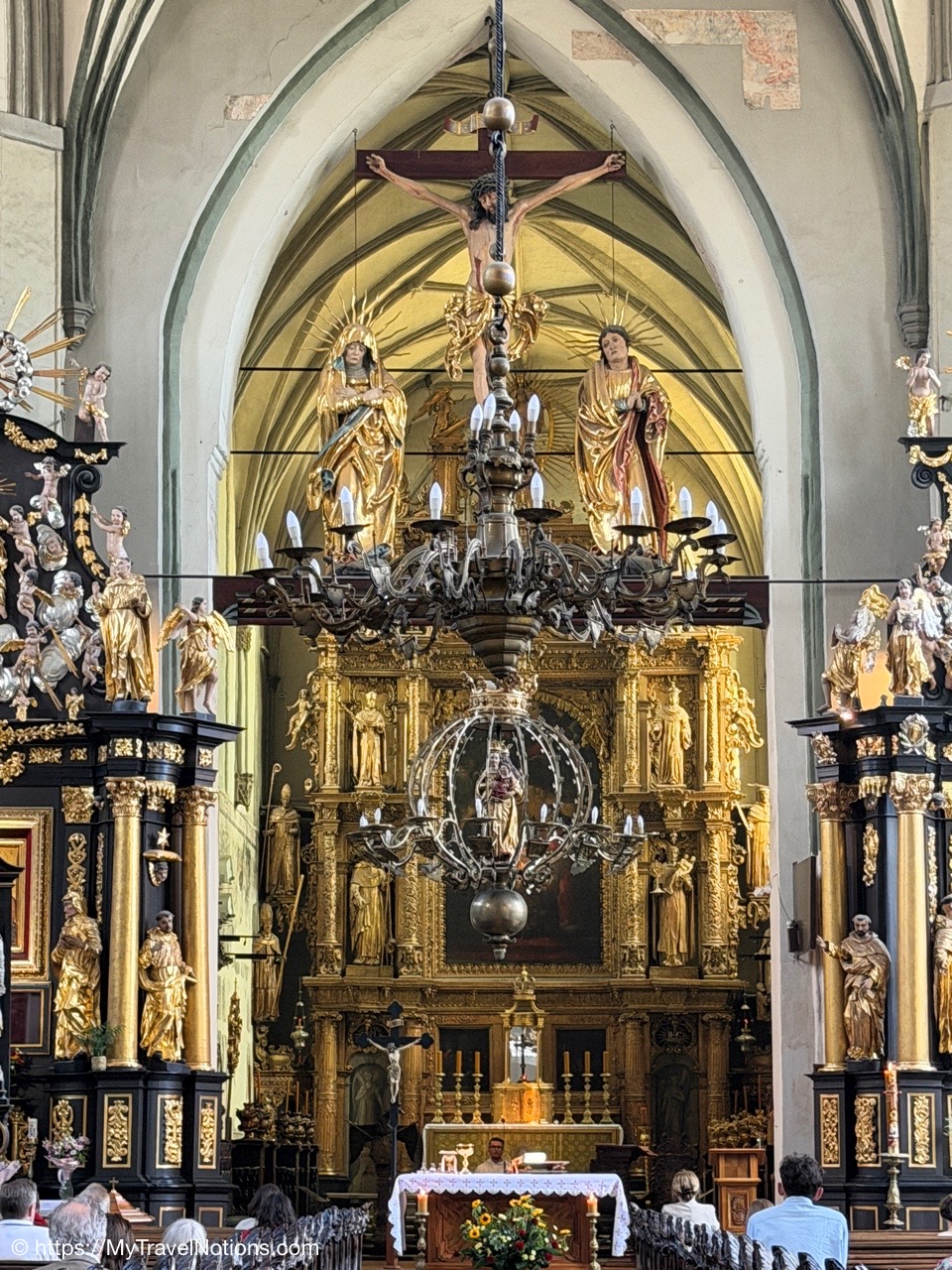
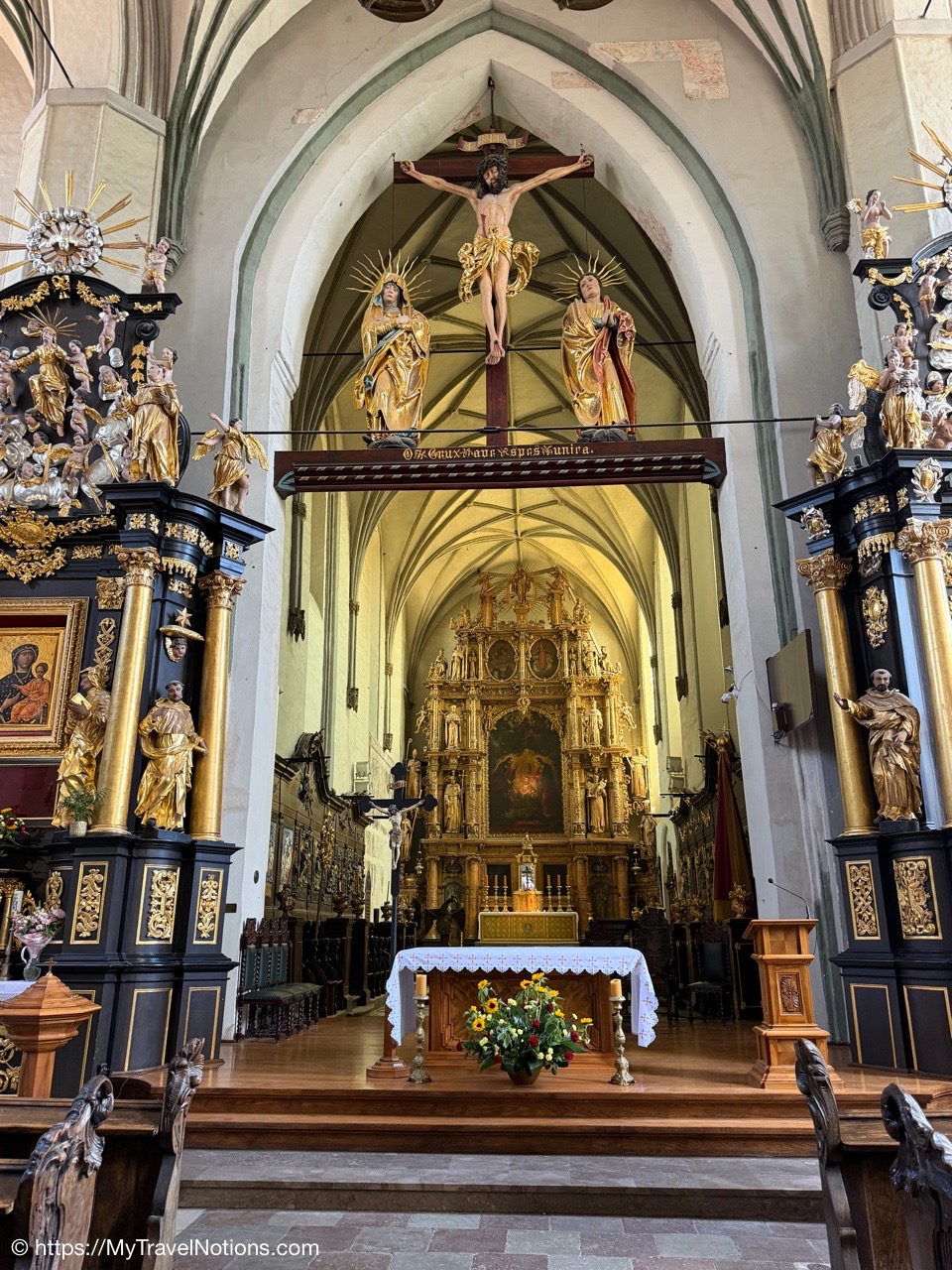
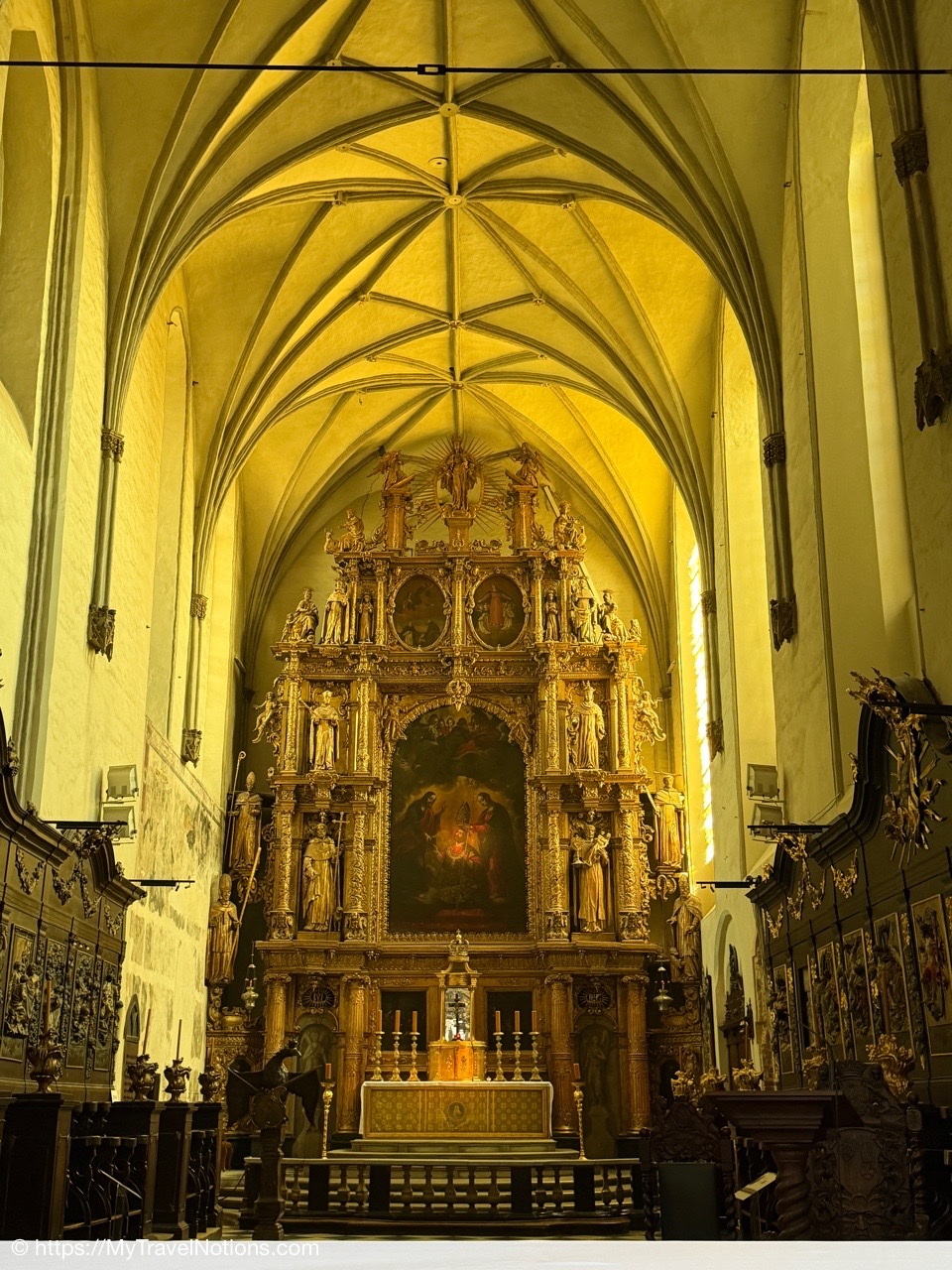
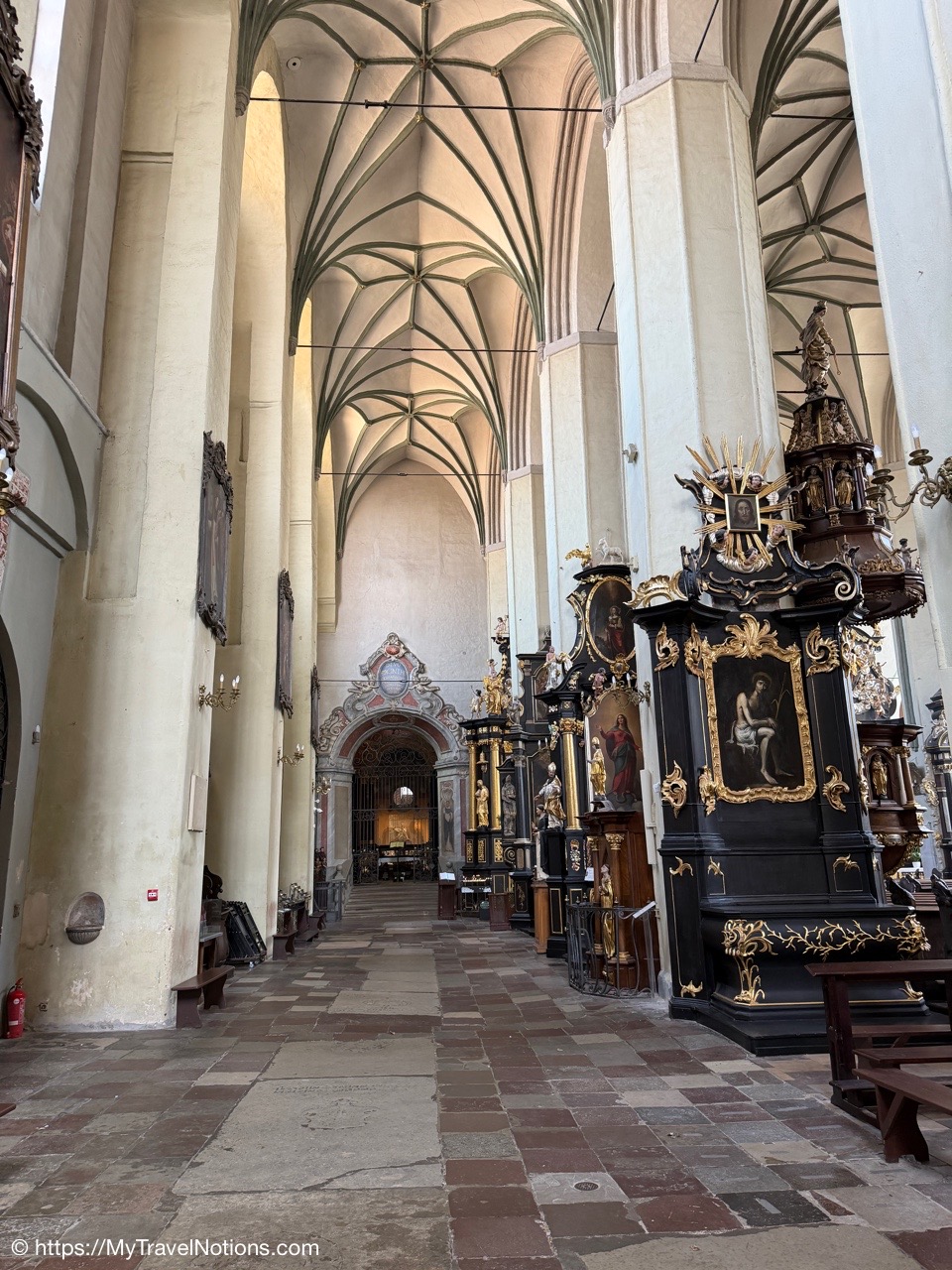
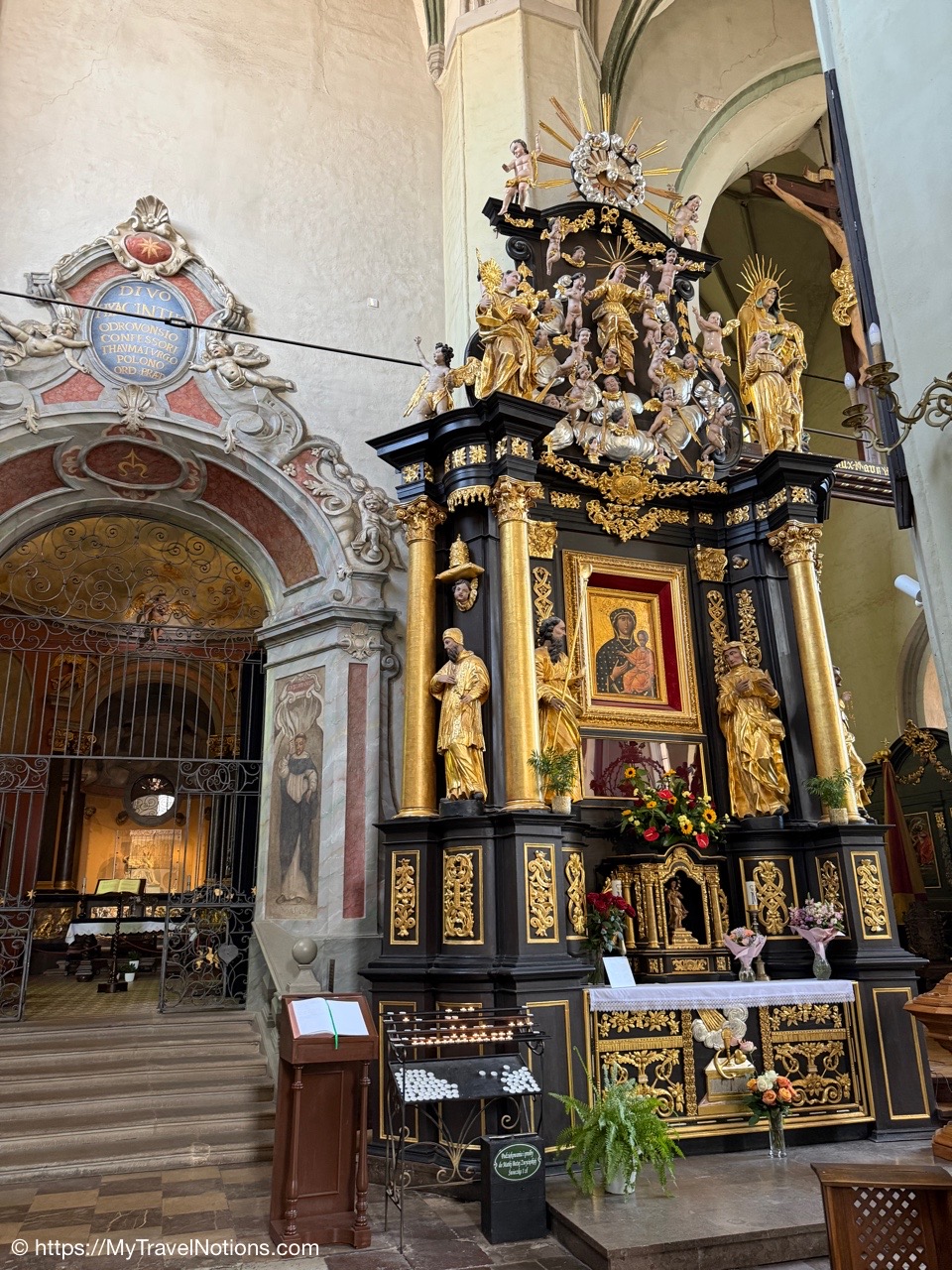
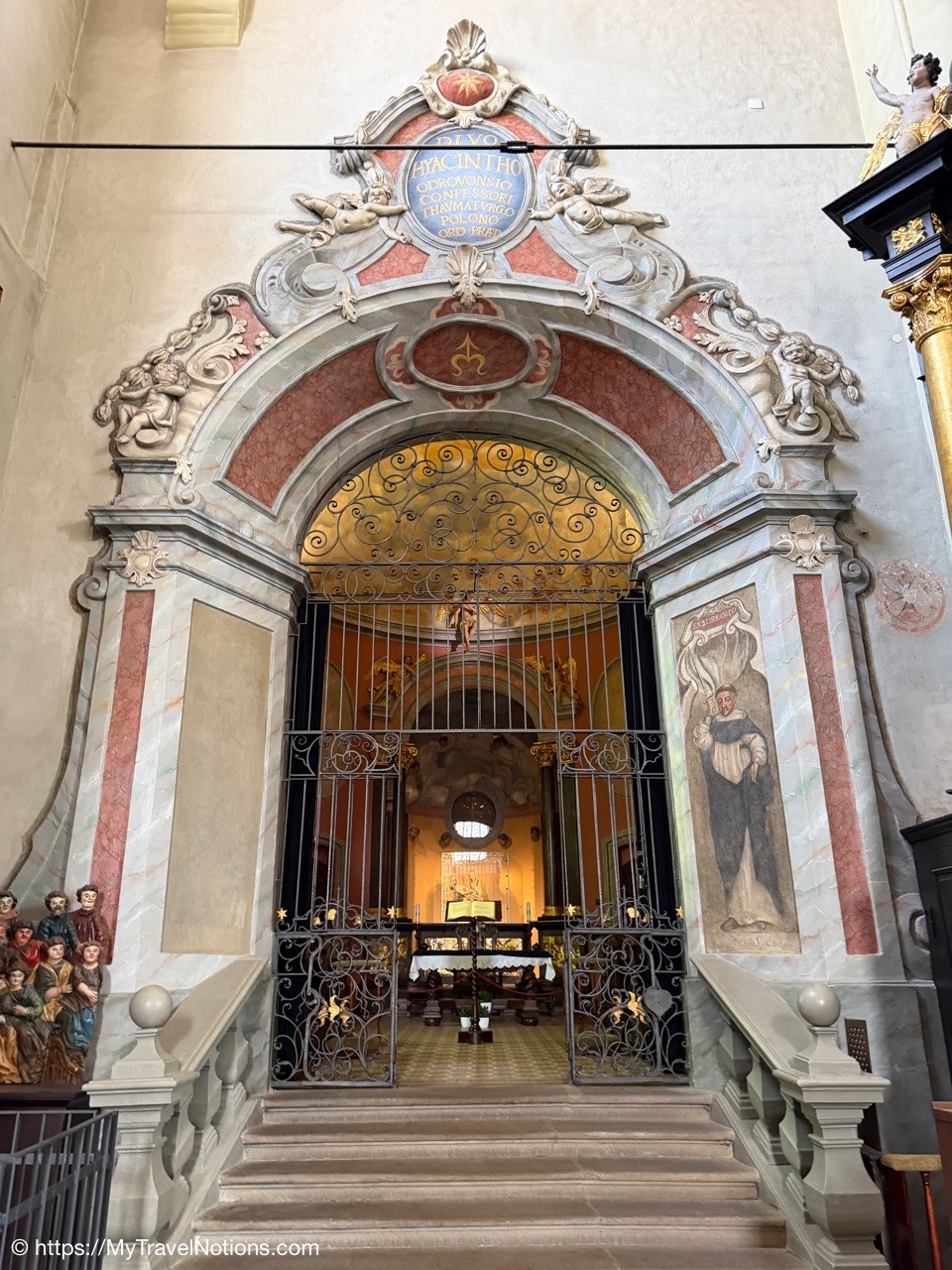
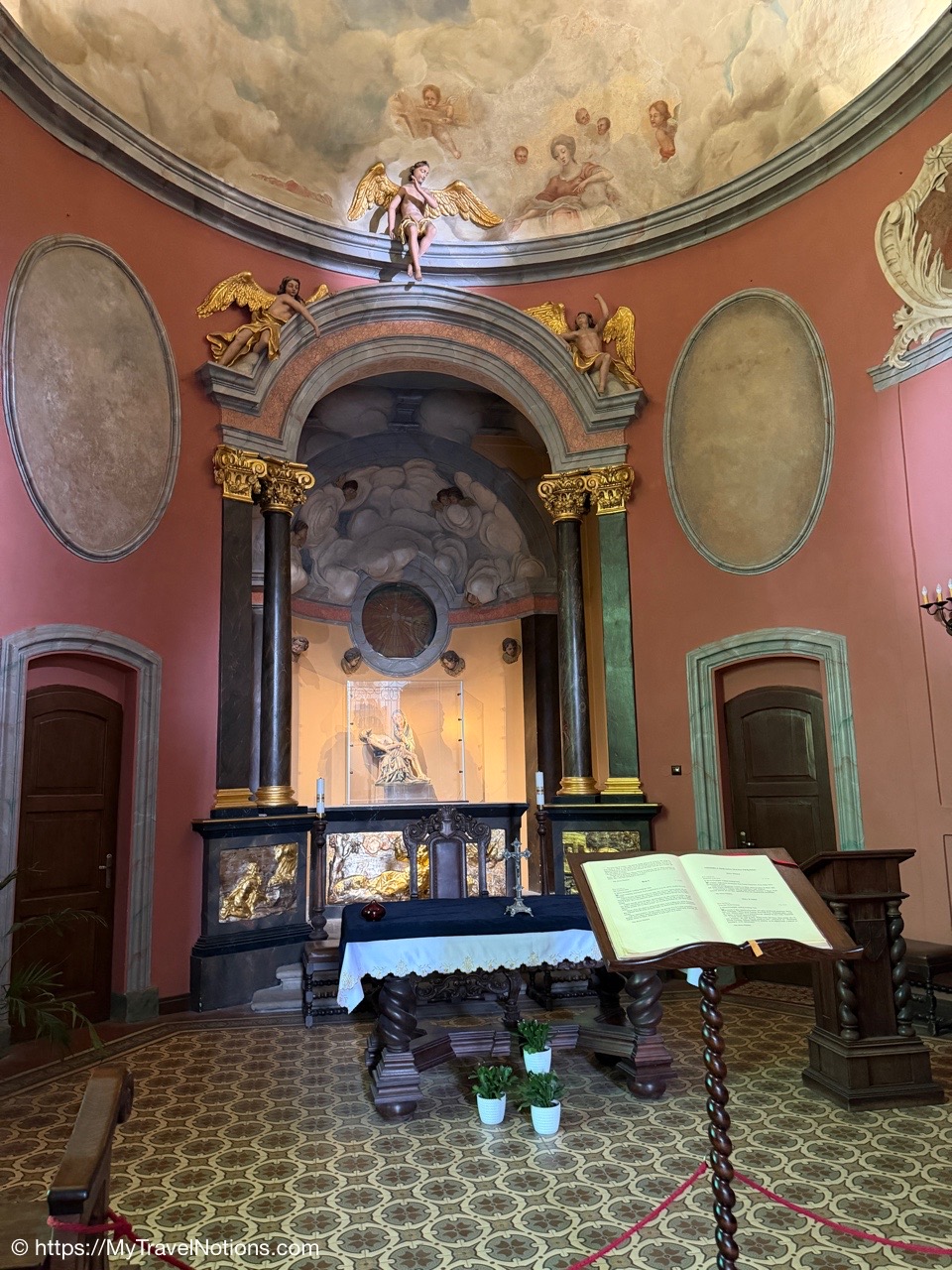
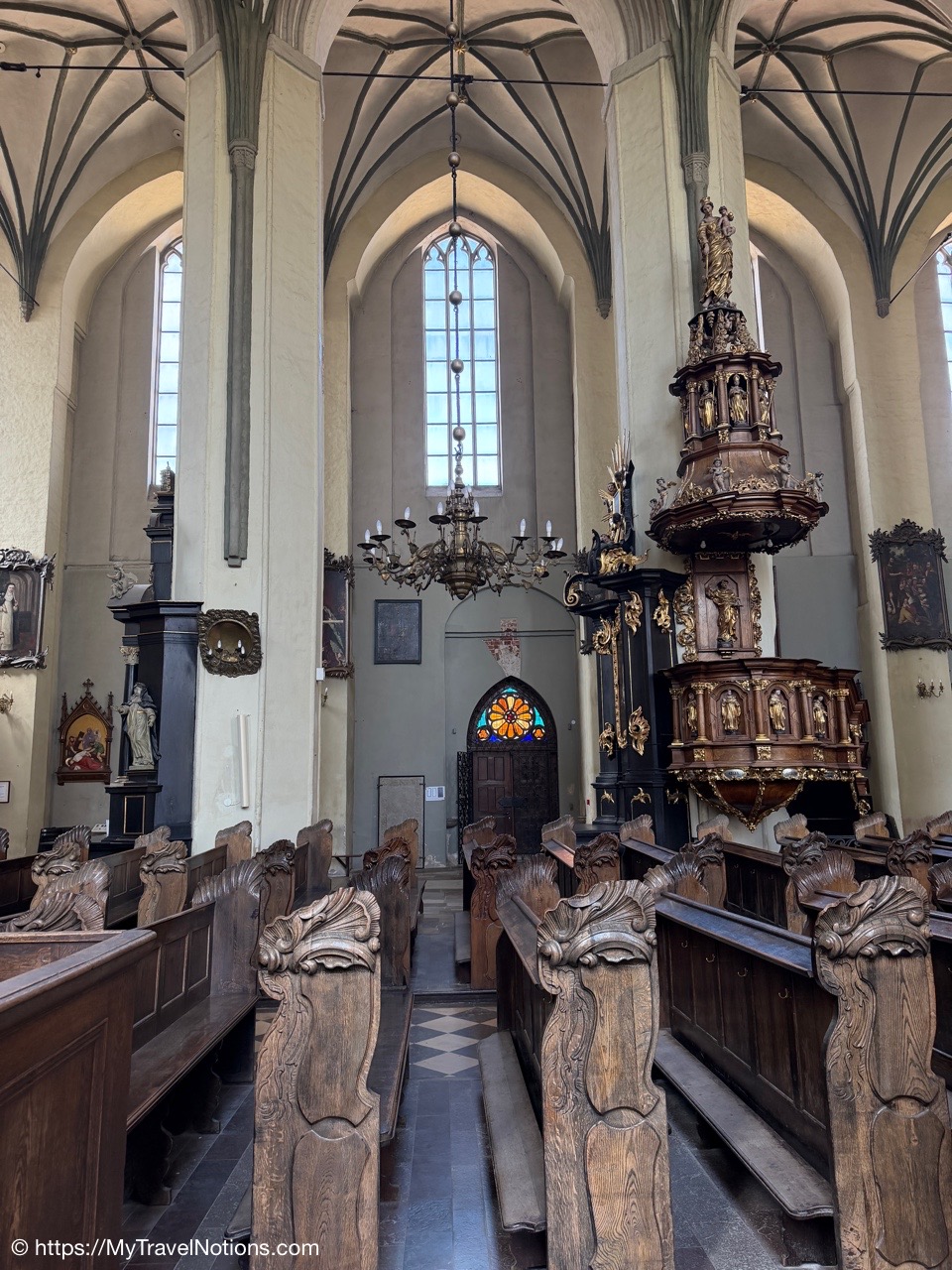
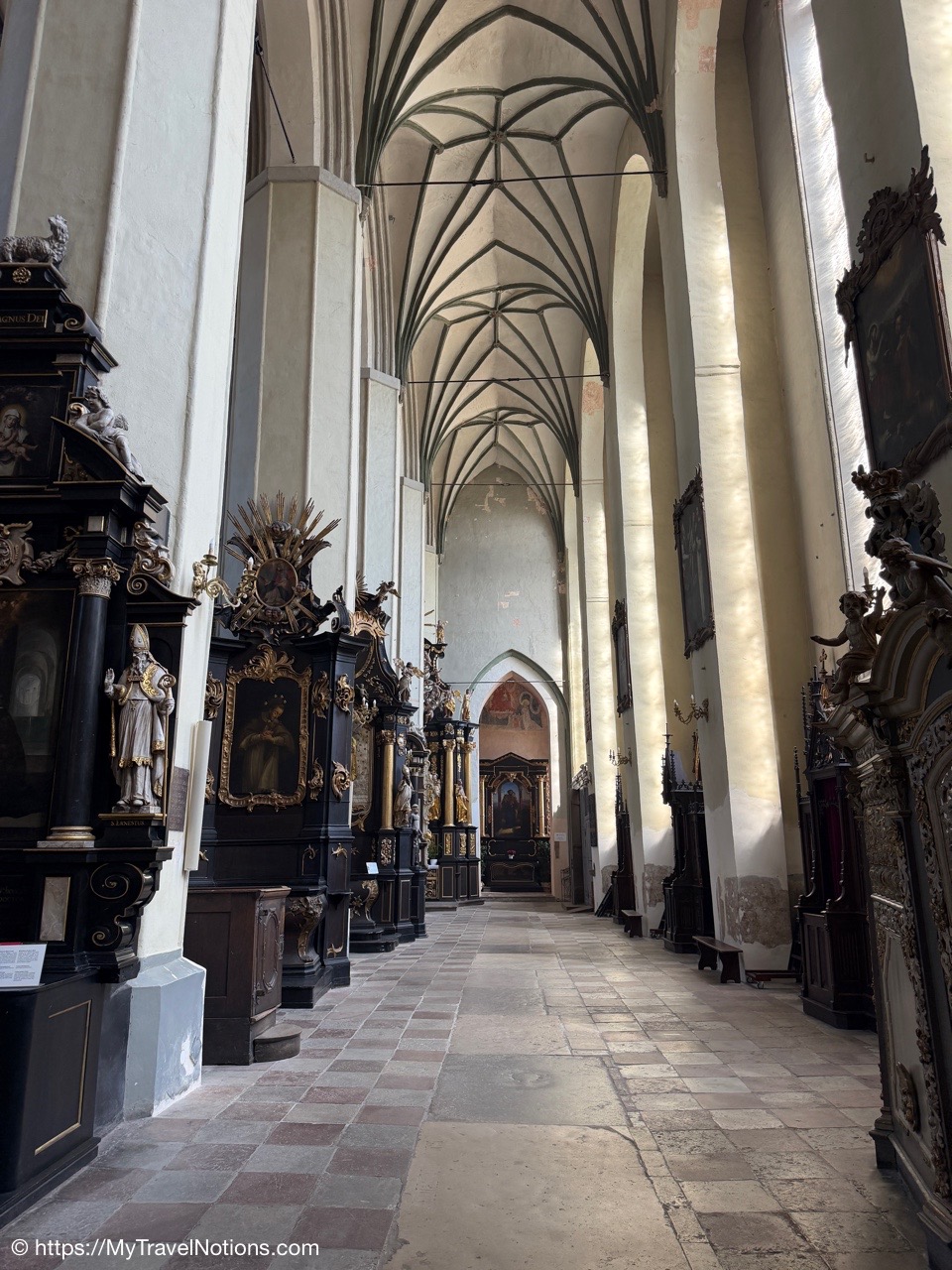
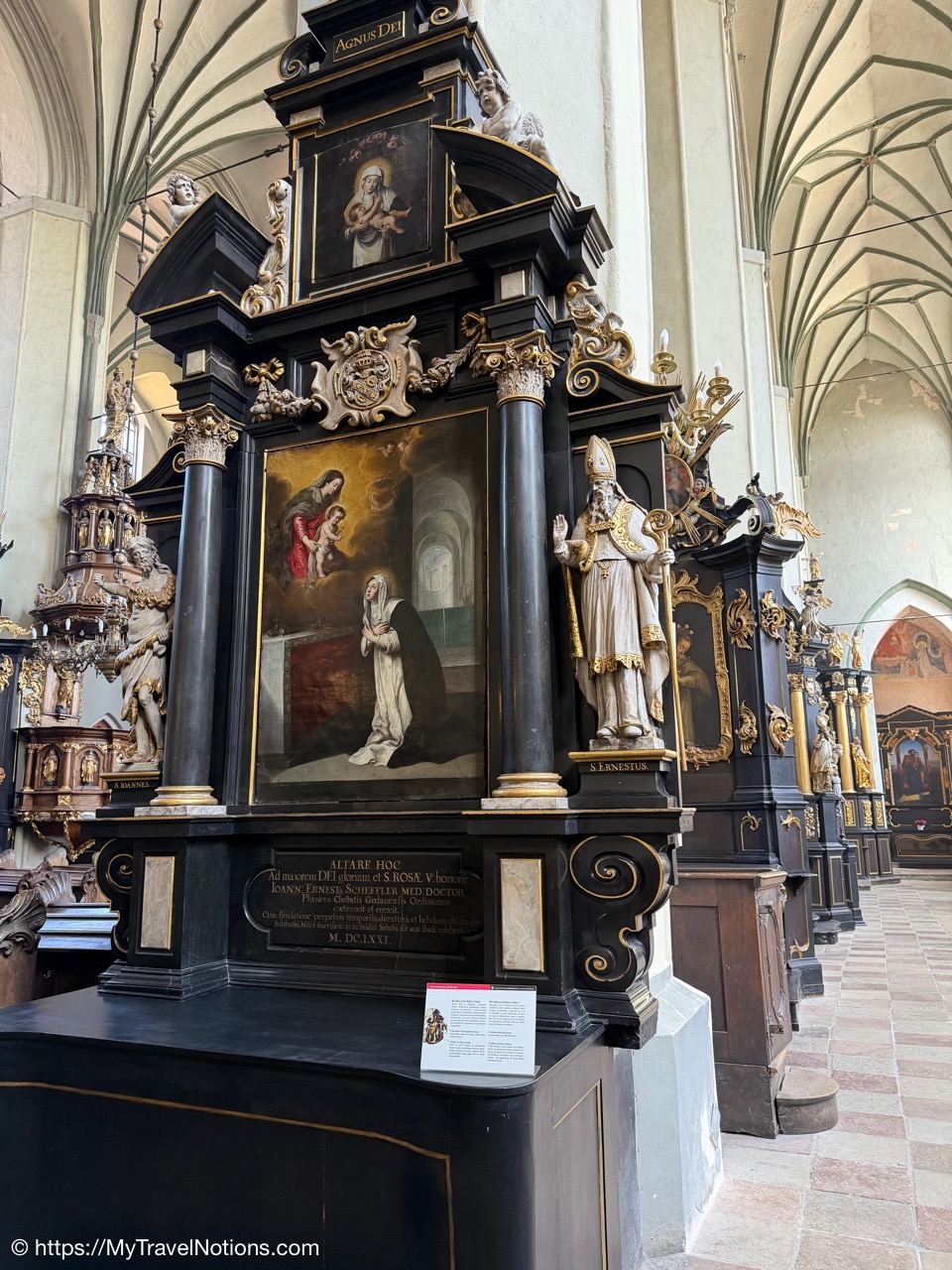
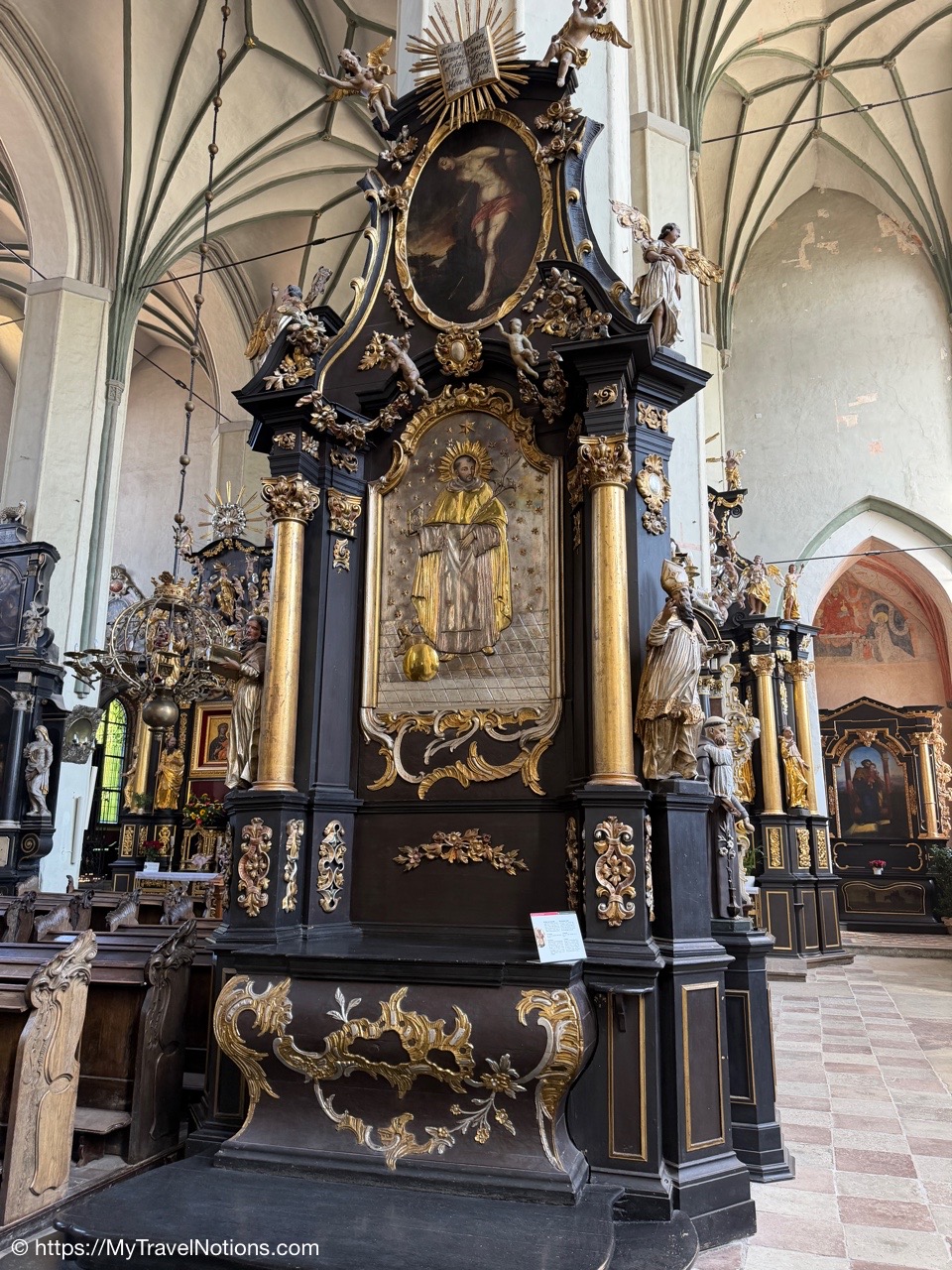
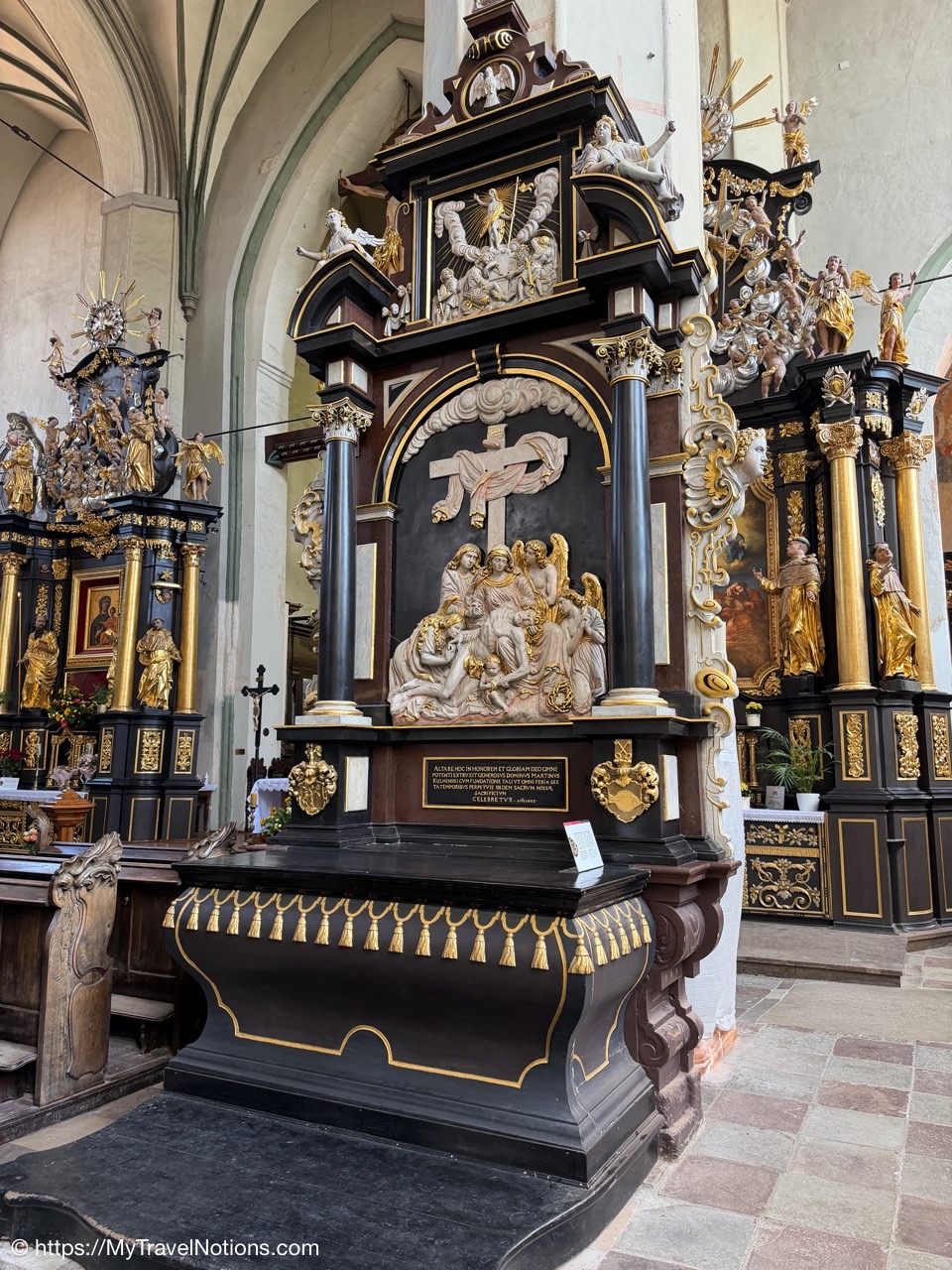
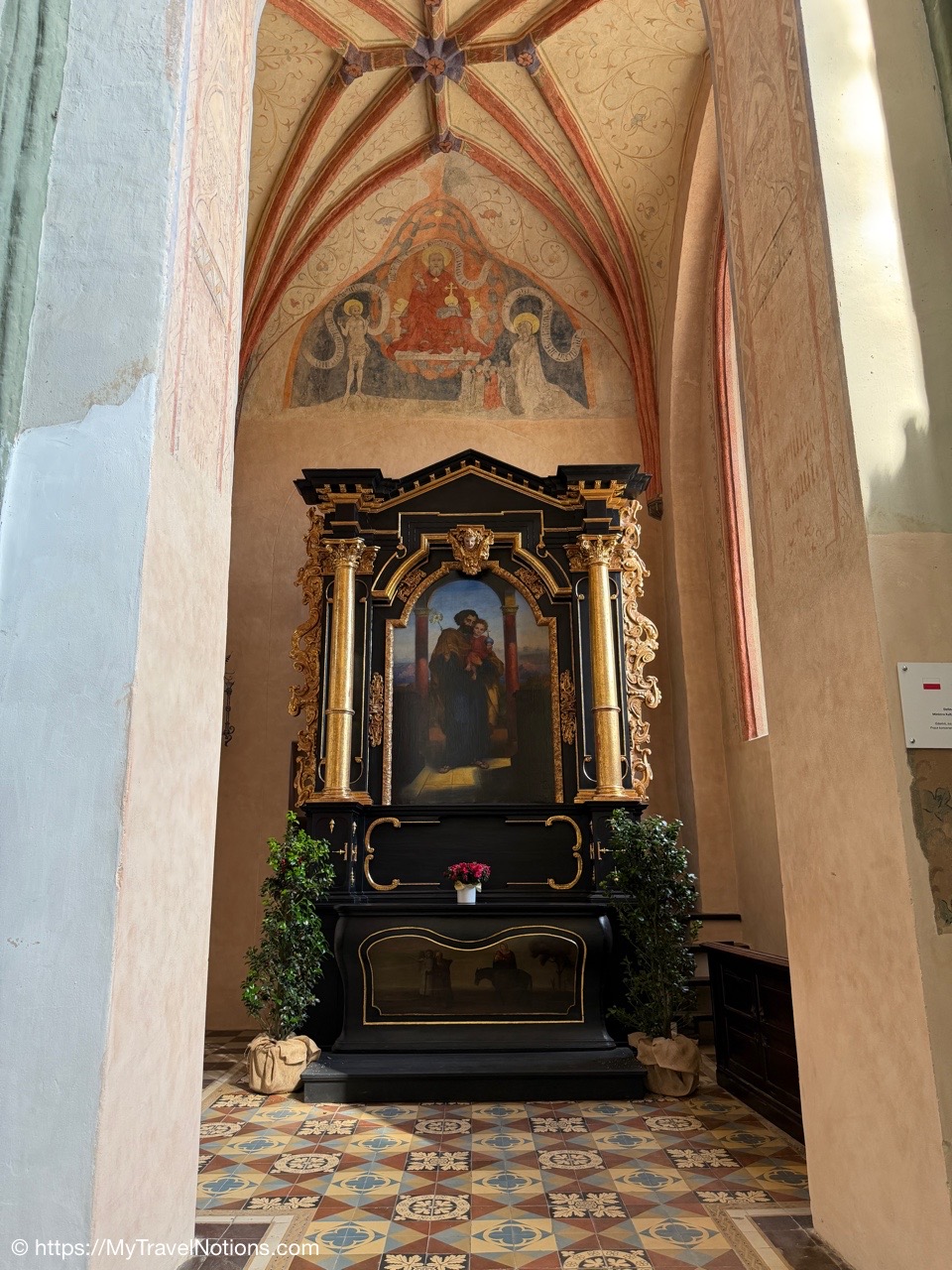
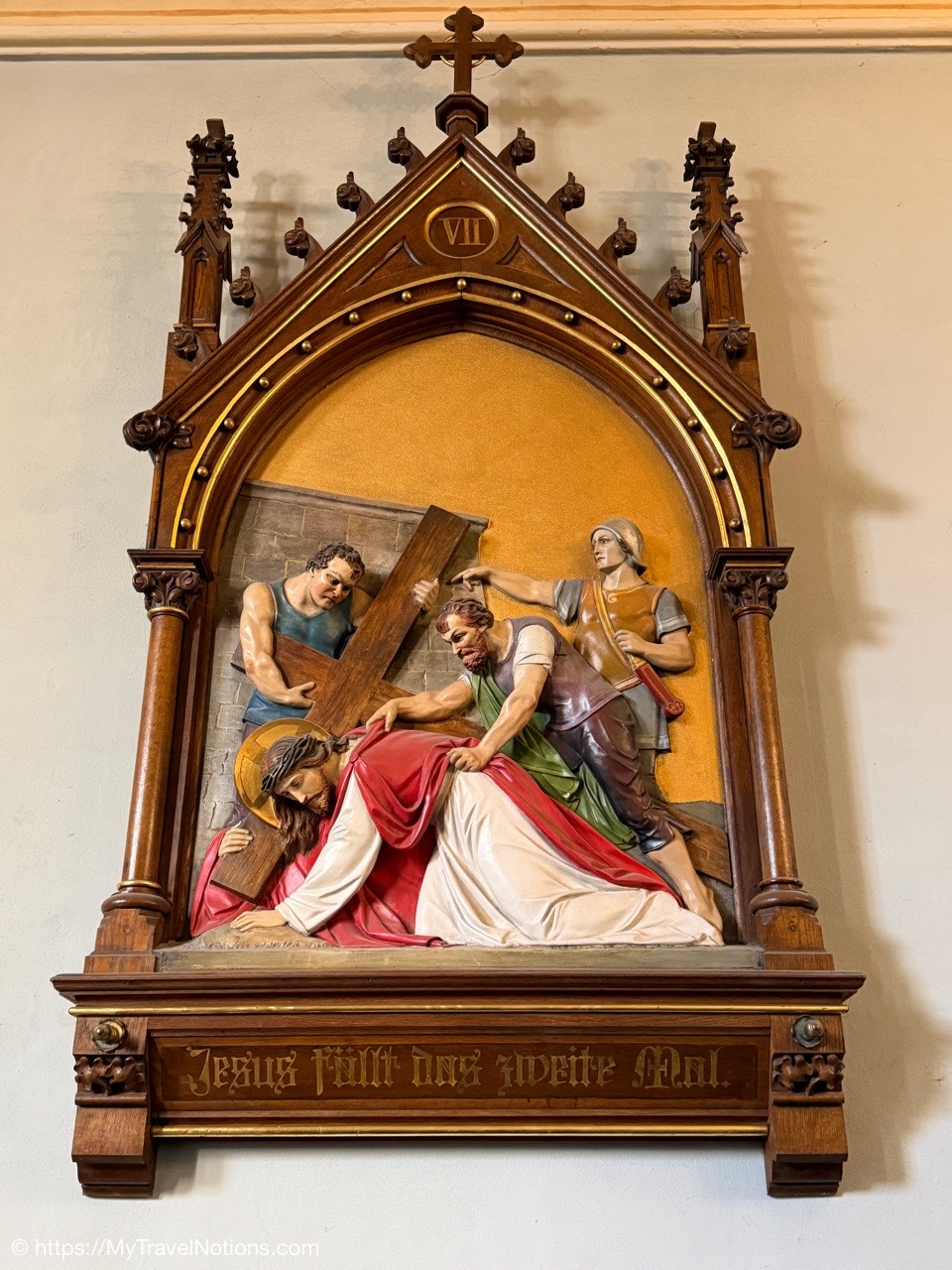
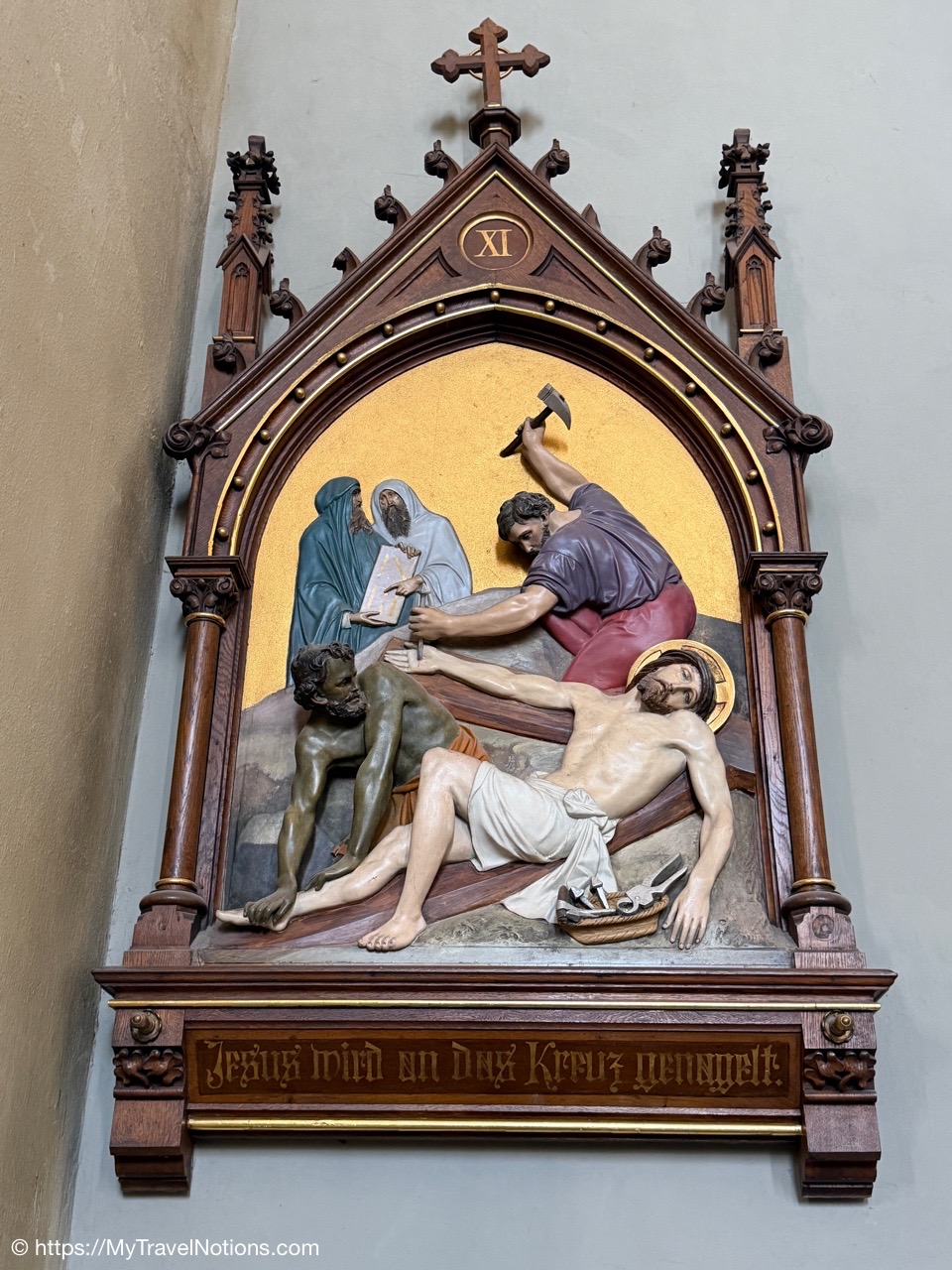
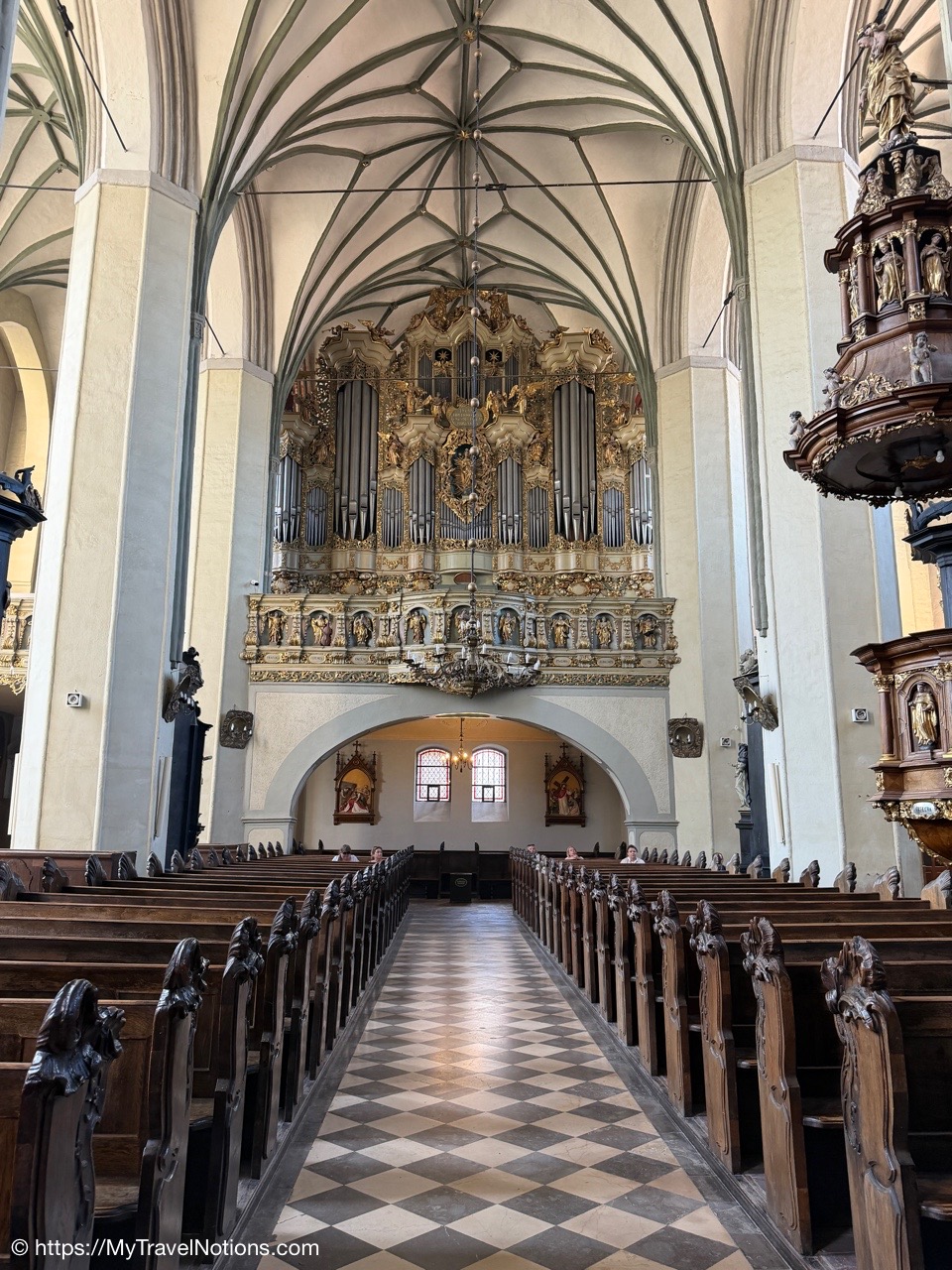
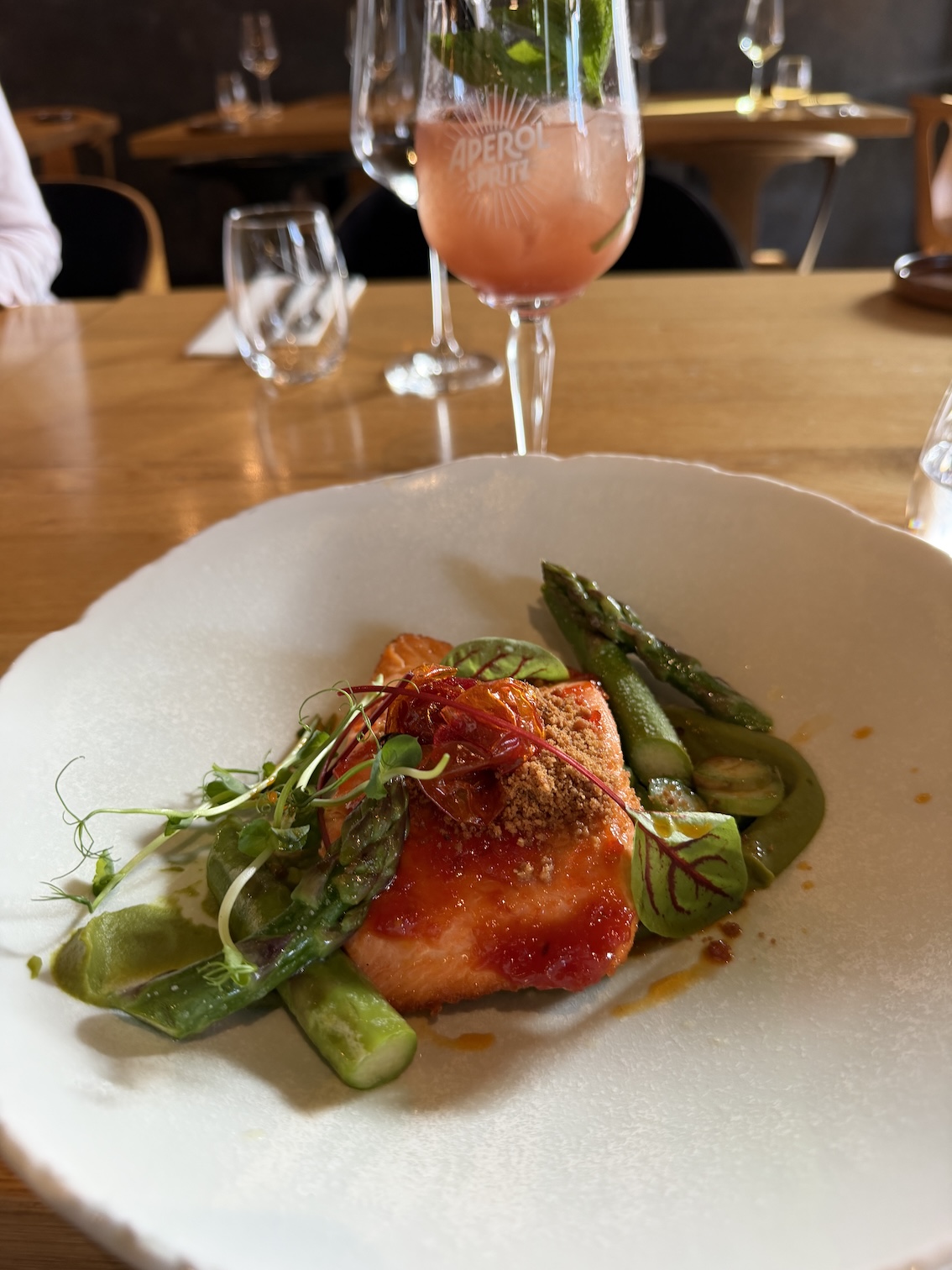
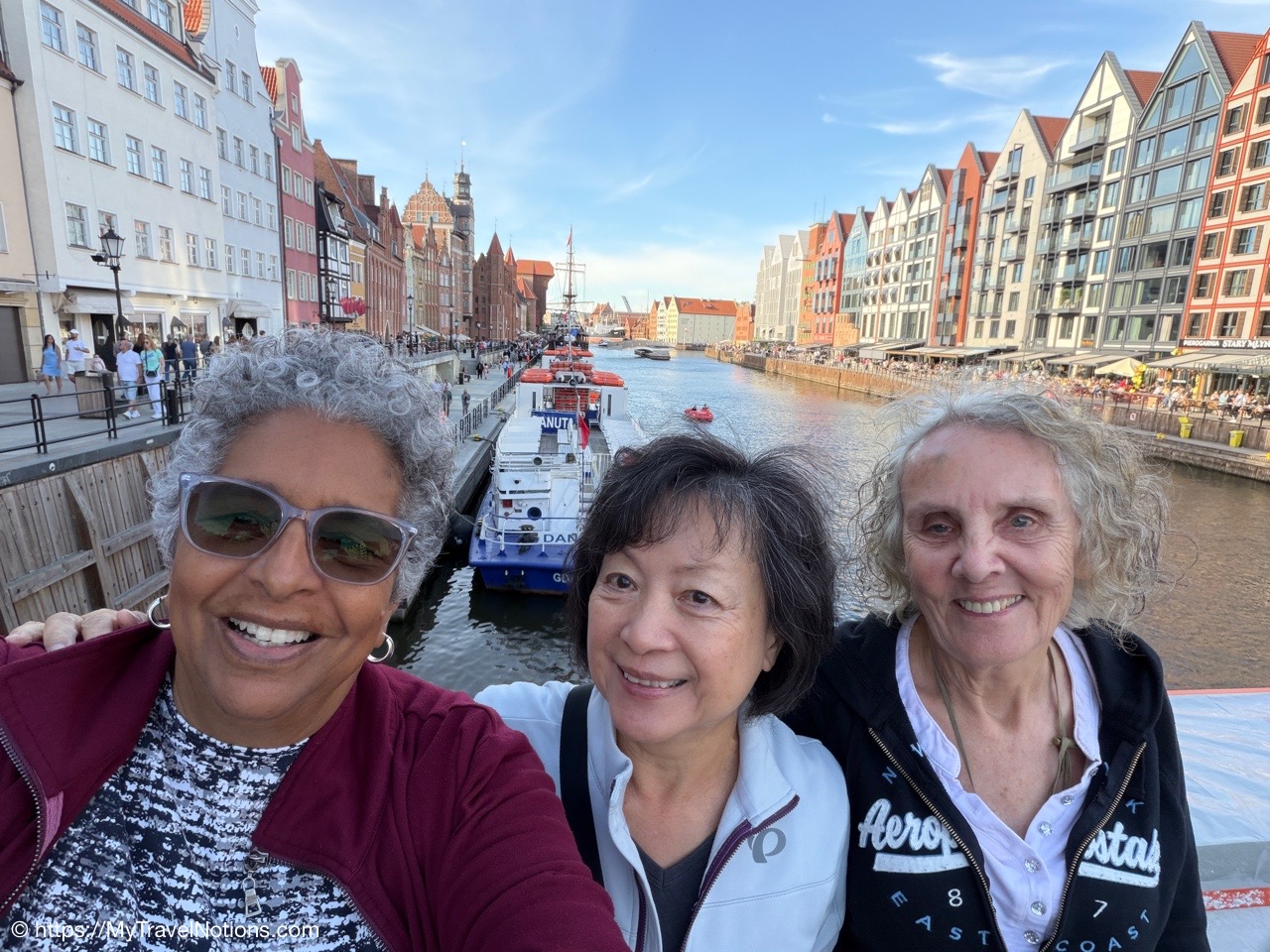
The Basilica of St. Nicholas is famously known as the only historic church in central Gdańsk to survive World War II completely undamaged. (May 24, 2026)Having escaped destruction, the interior of the Basilica of St. Nicholas in Gdańsk is adorned by original furnishings from the Gothic, Renaissance, Baroque and Rococo periods. The central of the three naves features the soaring star vaulted ceilings supported by ten octagonal pillars with elegantly crafted and decorated side altars. (May 24, 2026)The central and main nave of the Basilica of Saint Nicholas in Gdańsk with its side altars. (May 24, 2026)The Basilica of Saint Nicholas in Gdańsk with its chancel’s five-level wooden main altar from 1643 and a medieval Crucifixion group on the roof beam carved between 1520 and 1525. (May 24, 2026)The Golden altar of the Basilica of Saint Nicholas in Gdańsk is a richly decorated, five-tier high main altar, dating from 1643. It represents the late Renaissance style. The workshop of Gdańsk sculptor Master Paul created the Crucifixion Group around 1520-1525. It is an example of late Gothic polychrome and gilded sculpture. (May 24, 2026)The Golden altar of the Basilica of Saint Nicholas in Gdańsk is a richly decorated, five-tier high main altar, dating from 1643. It represents the late Renaissance style. (May 24, 2026)One of the two side naves of the Basilica of Saint Nicholas in Gdańsk with the entrance to the Chapel of Saint Hyacinth at the northern end of the nave. (May 24, 2026)The Altar of the Immaculate Conception, inside the Basilica of Saint Nicholas in Gdańsk, stands near the transition from the north nave into the Chapel of Saint Hyacinth. (May 24, 2026)The Chapel of Saint Hyacinth, inside the Basilica of Saint Nicholas in Gdańsk, depicts the life and miracles of Saint Hyacinth and served historically as a burial place for members of the Teutonic Order. (May 24, 2026)The Chapel of Saint Hyacinth inside the Basilica of Saint Nicholas in Gdańsk contains a wooden Pietà sculpture dating back to the very beginning of the 15th century (approx. 1400–1410), which is recognized as one of the oldest Gothic art pieces remaining in the church. (May 24, 2026)A side view of the Basilica of Saint Nicholas in Gdańsk. (May 24, 2026)The southern nave inside the Basilica of Saint Nicholas in Gdańsk leading to the Chapel of Saint Joseph situated beneath the tower. (May 24, 2026)Saint Rose of Lima’s Altar, one of 10 altars, along the southern nave inside the Basilica of Saint Nicholas in Gdańsk. The alabaster and marble altar from 1671 honors St. Rose of Lima, a Dominican saint, a mystic and the first to be canonized in the Americas. She is called upon in domestic conflicts. The painting depicts one of St. Rose’s visions, an apparition of the Virgin Mary with the Baby Jesus. (May 24, 2026)Dominic’s altar, one of 10 altars, along the southern nave inside the Basilica of Saint Nicholas in Gdańsk. St Dominic founded the Order of Preachers with the purpose of saving the faithful from the Manichean heresy spreading in 13th century; worshiper of Virgin Mary, Patroness of the Order of Preachers. (May 24, 2026)Our Lady of Sorrows’ altar, one of 10, along the souther nave inside the Basilica of Saint Nicholas in Gdańsk. The “Lamentation of Christ” is a wooden relief, stylized to imitate white marble features the Virgin Mary holding the dead body of Christ beneath the Cross and next to her is St. John the Baptist and Mary Magdalene. (May 24, 2026)The Chapel of Saint Joseph situated beneath the tower and at the end of the southern nave of the Basilica of Saint Nicholas in Gdańsk. (May 24, 2026)The intricately carved Passion Cycle or Stations of the Cross inside the Basilica of Saint Nicholas in Gdańsk. The seventh station (VII) of the Stations of the Cross is Jesus falls the second time. (May 24, 2026)The intricately carved Passion Cycle or Stations of the Cross inside the Basilica of Saint Nicholas in Gdańsk. The eleventh station (XI) of the Stations of the Cross is Jesus nailed to the cross. (May 24, 2026)The beautiful, richly carved organ of the Basilica of Saint Nicholas in Gdańsk dates from 1755. Together with the organ gallery which occupies the width of three naves, is a beautiful example of Baroque woodcarving. (May 24, 2026)Rosie, Alice and I had our customary last dinner together when it’s time for us to go our separate ways. In this case, Rosie and I move on to Moldova and Alice heads to France. Here’s my roasted halibut in a creamy sauce with green asparagus, ginger root and potato crumble at Tygle Gdańskie with its beautiful view of the Motława River, located on the revitalized Granary Island. (May 24, 2026)Our last group selfie after our last dinner together along the Zielony Most with views of the Stara Motlawa in Gdansk. (May 24, 2026)




Thank you for reaching out.