Saying goodbye can often come with such sadness but in this case, we say Arrivederci to Salerno and Ciao to Sorrento, our new home base along the Amalfi Coast for the next seven nights. This is not my first foray to Sorrento, a small town overlooking the bay of Naples, but I enjoyed my time here back in 2017 and loved the idea of coming back.
Sorrento boasts a 2,600-year history shaped by Greek myth, Roman luxury and medieval fortifications. Originally named Surrentum, it grew into a favored seaside resort for Roman patricians. The name “Sorrento” is originally tied to Greek myth. It is derived from the Sirens, the dangerous but enchanting creatures from Homer’s Odyssey that tried to lure Ulysses to his demise. Greek settlers established the city between the 6th and 4th centuries BC. Following the fall of the Western Roman Empire, Sorrento survived sieges by the Lombards and Saracens, ultimately becoming an autonomous duchy by the 9th century.
In the 12th century, the city fell under Norman control, becoming part of the Kingdom of Sicily. Frequent raids by pirates and the Turks led the city to build and fortify its massive defensive walls, completed in the 1500s. By the 18th and 19th centuries, Sorrento became a staple stop on the “Grand Tour”—an educational journey for Europe’s elite. Visionaries like Lord Byron, Charles Dickens, John Keats, and Henrik Ibsen visited to soak in its culture and landscapes. Incorporated into the unified Kingdom of Italy in 1861, Sorrento has transitioned from ancient haven into one of Italy’s premier destinations along the Amalfi Coast that’s famed for its historic center and lemon groves.
From our home base in Sorrento, we plan to visit the Isle of Capri, Anacapri, Herculaneum Pompei and Positano.
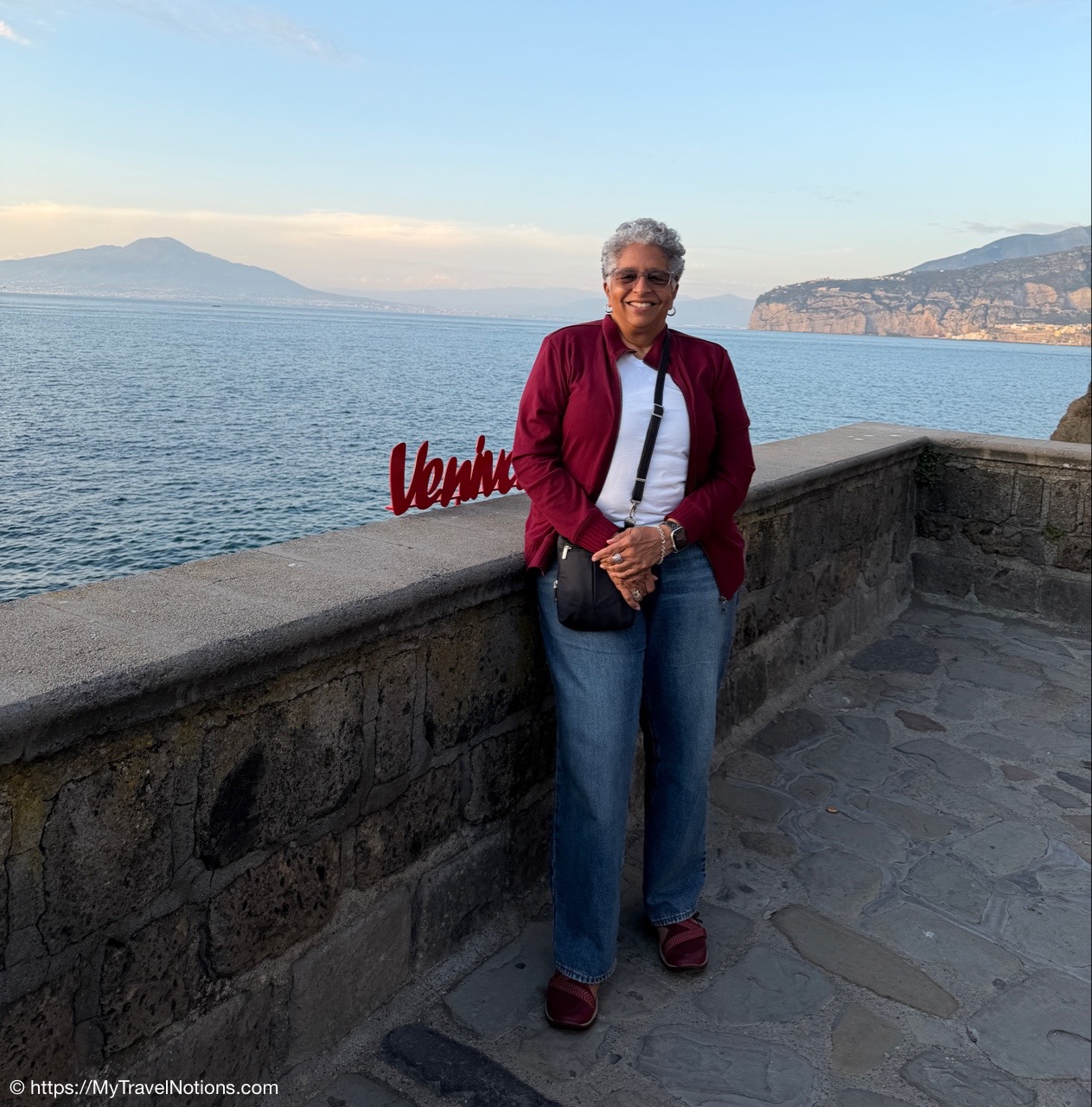
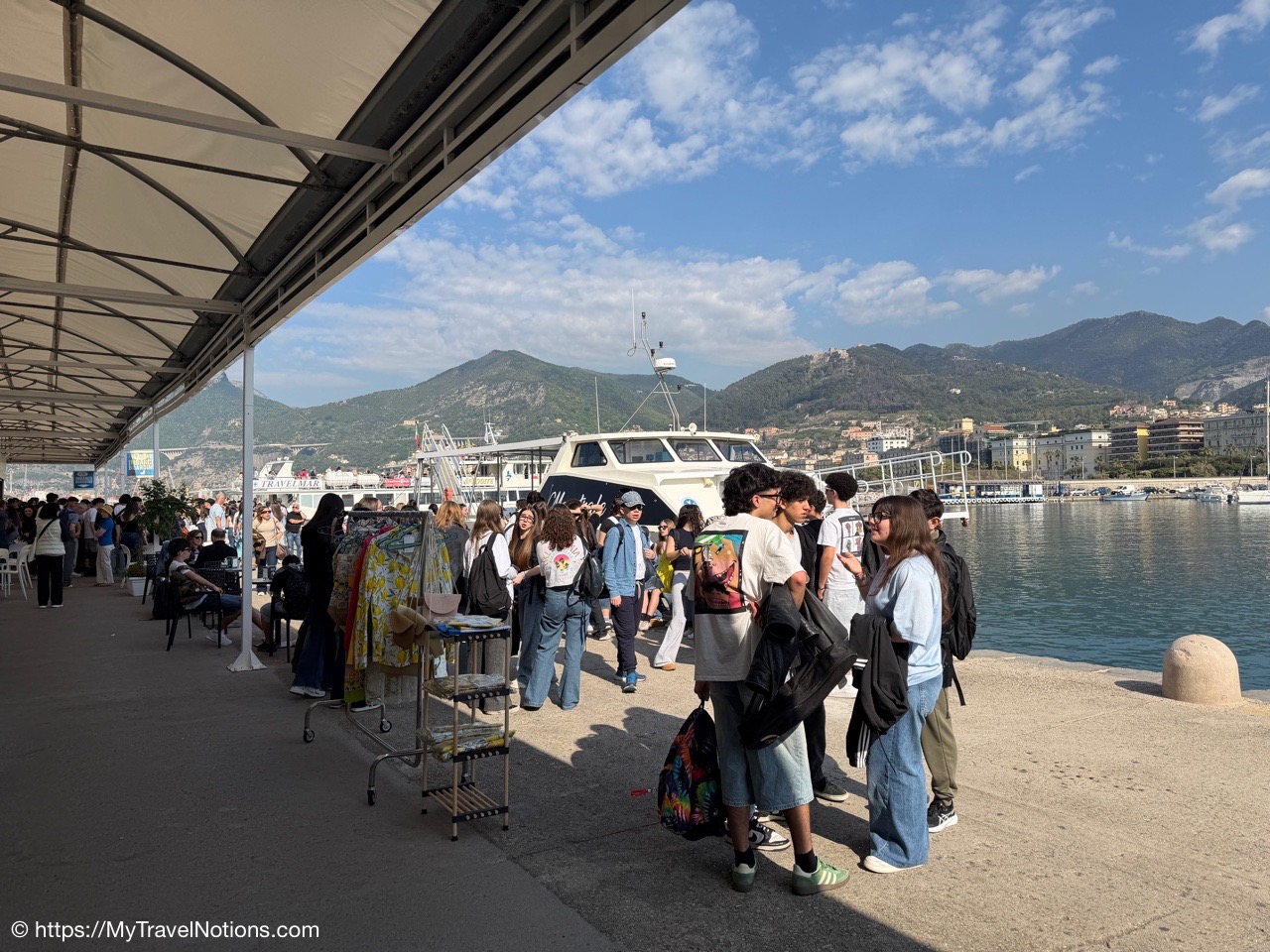
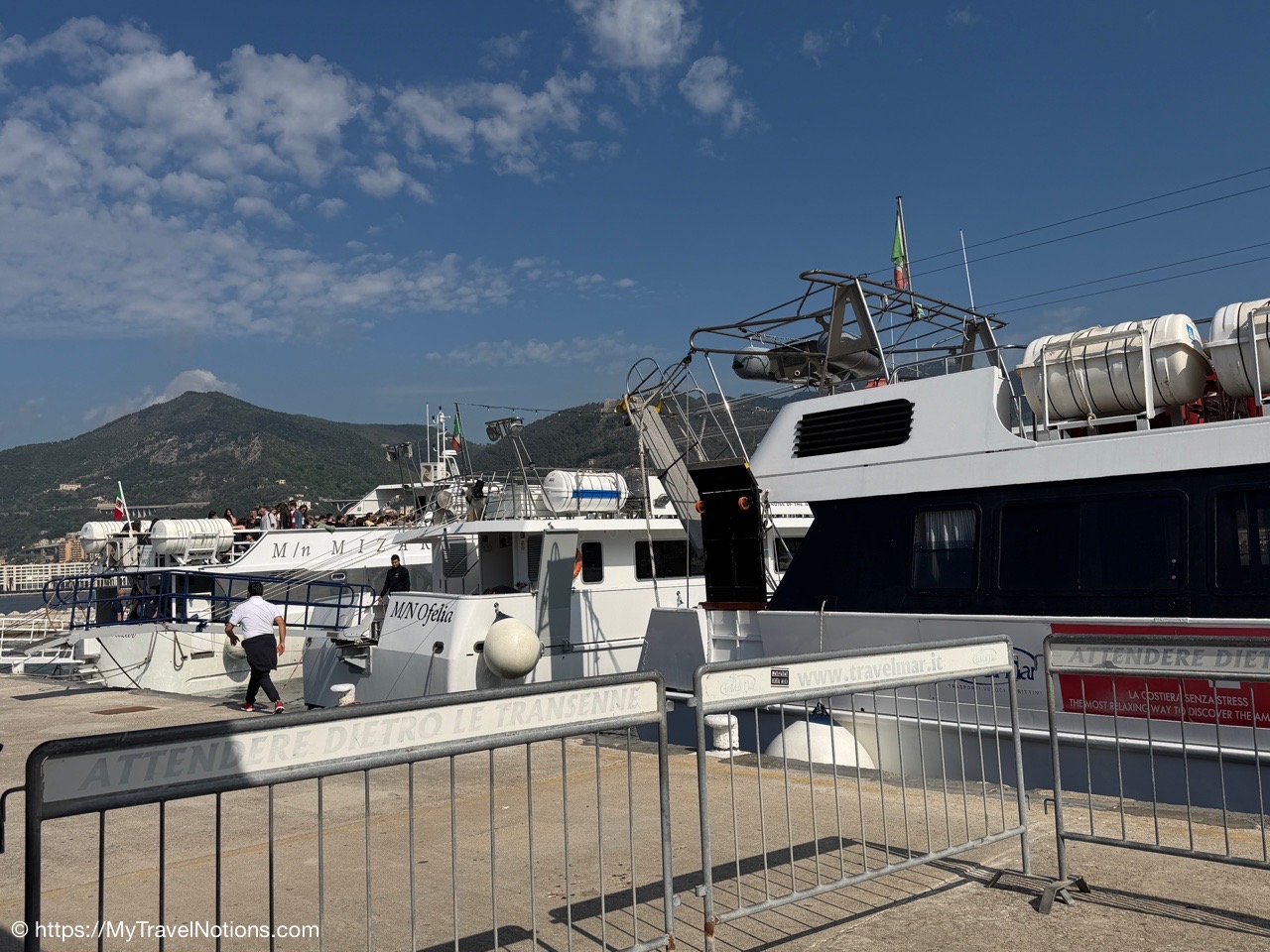
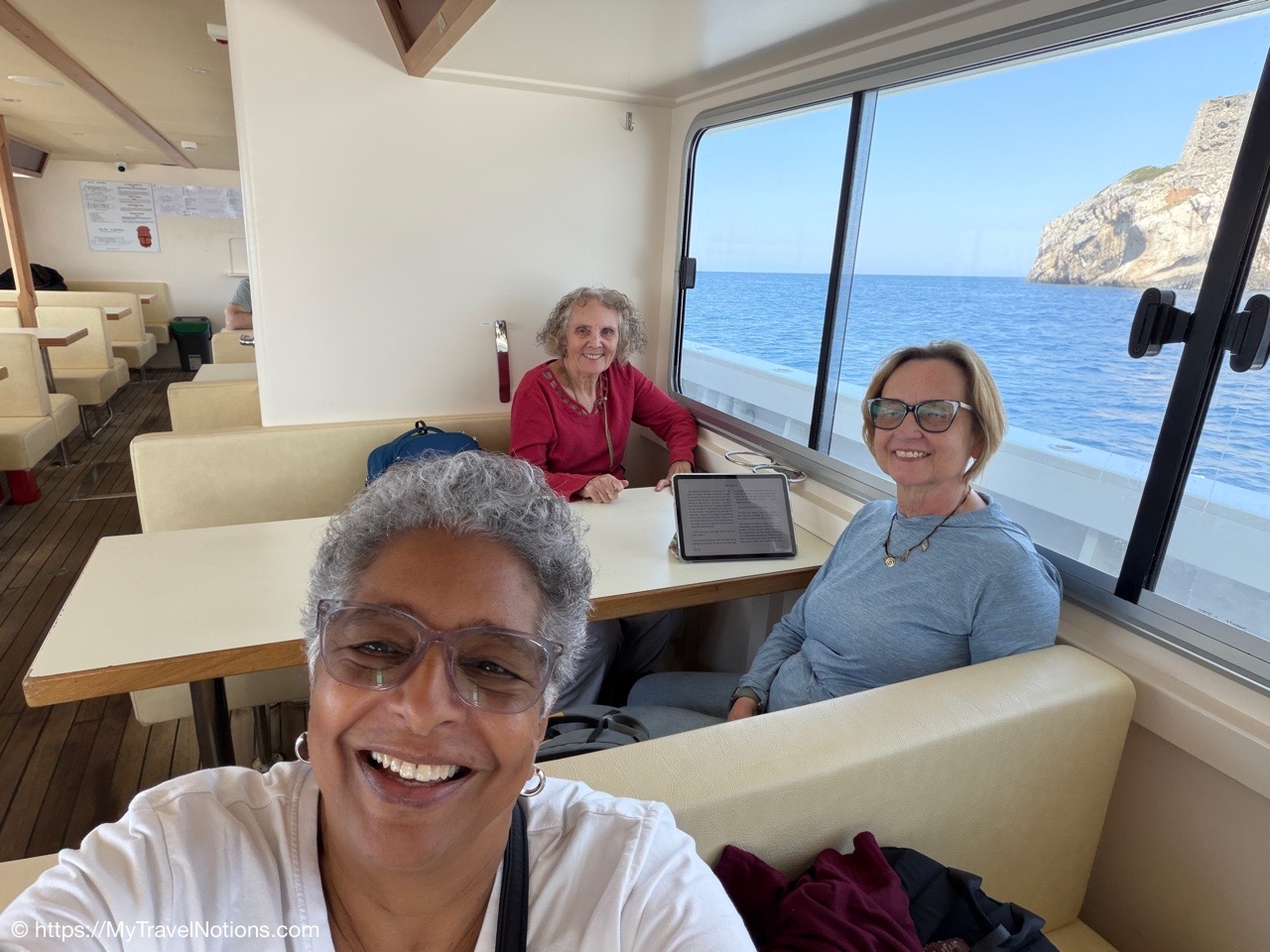
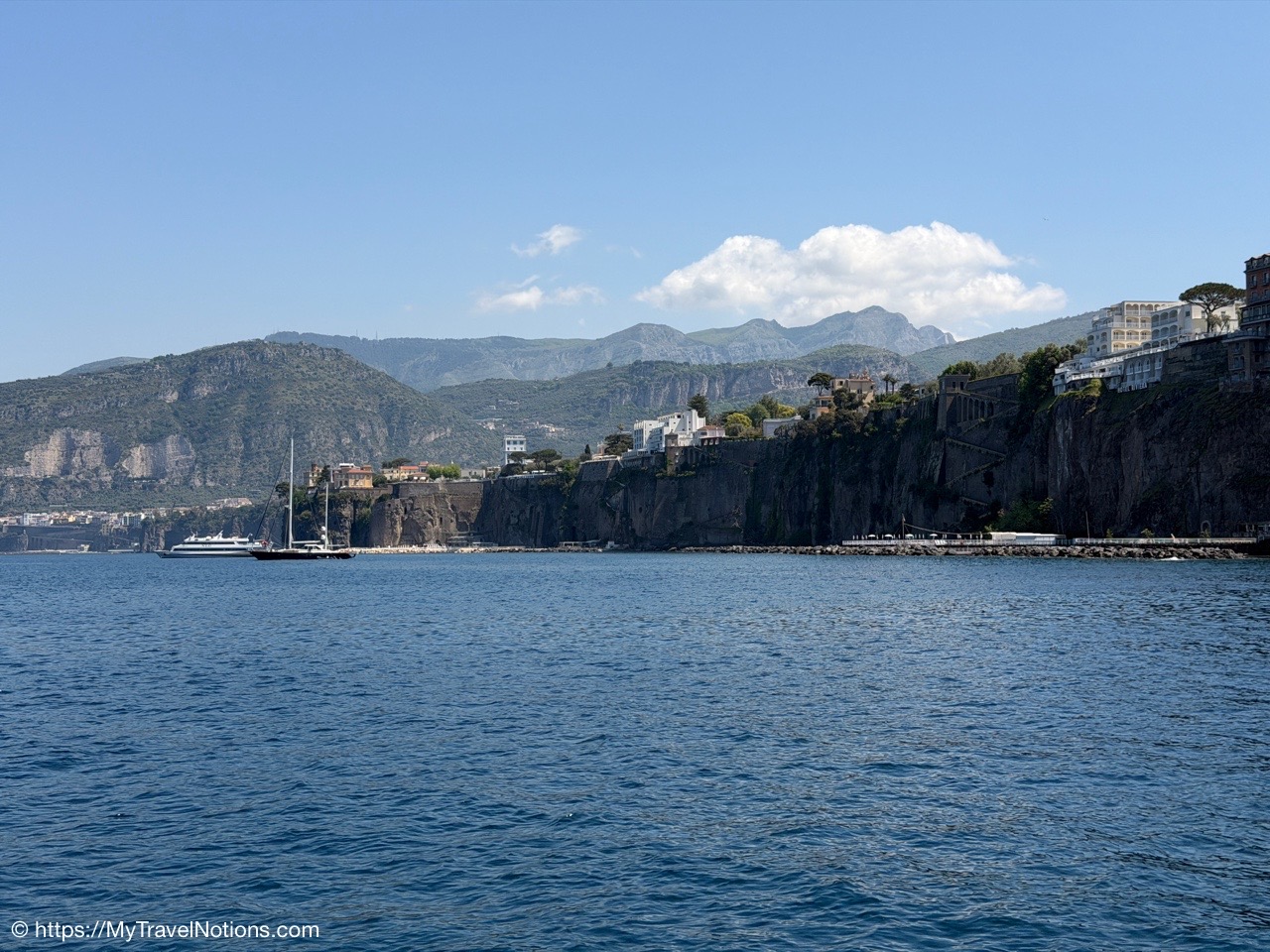
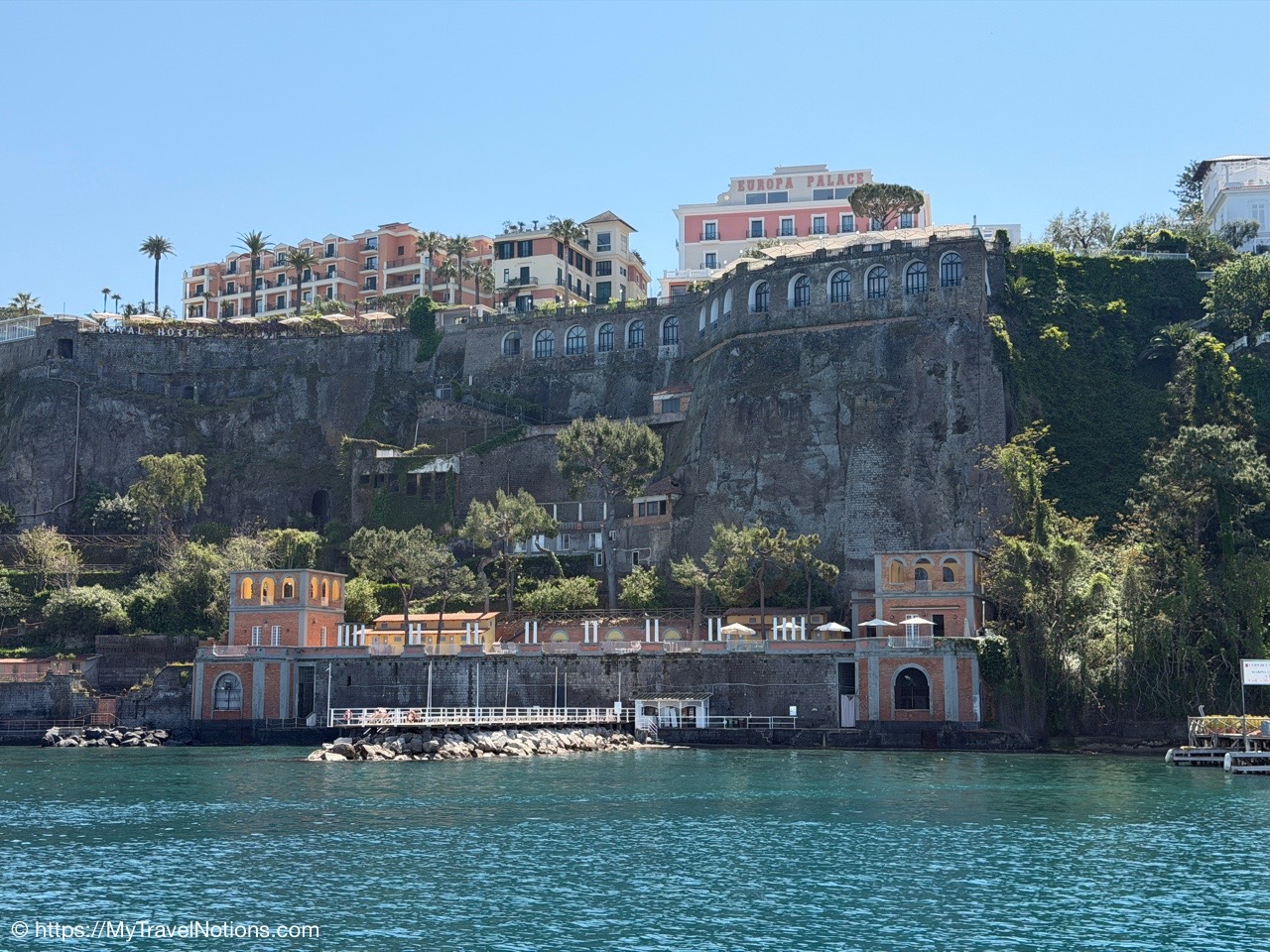
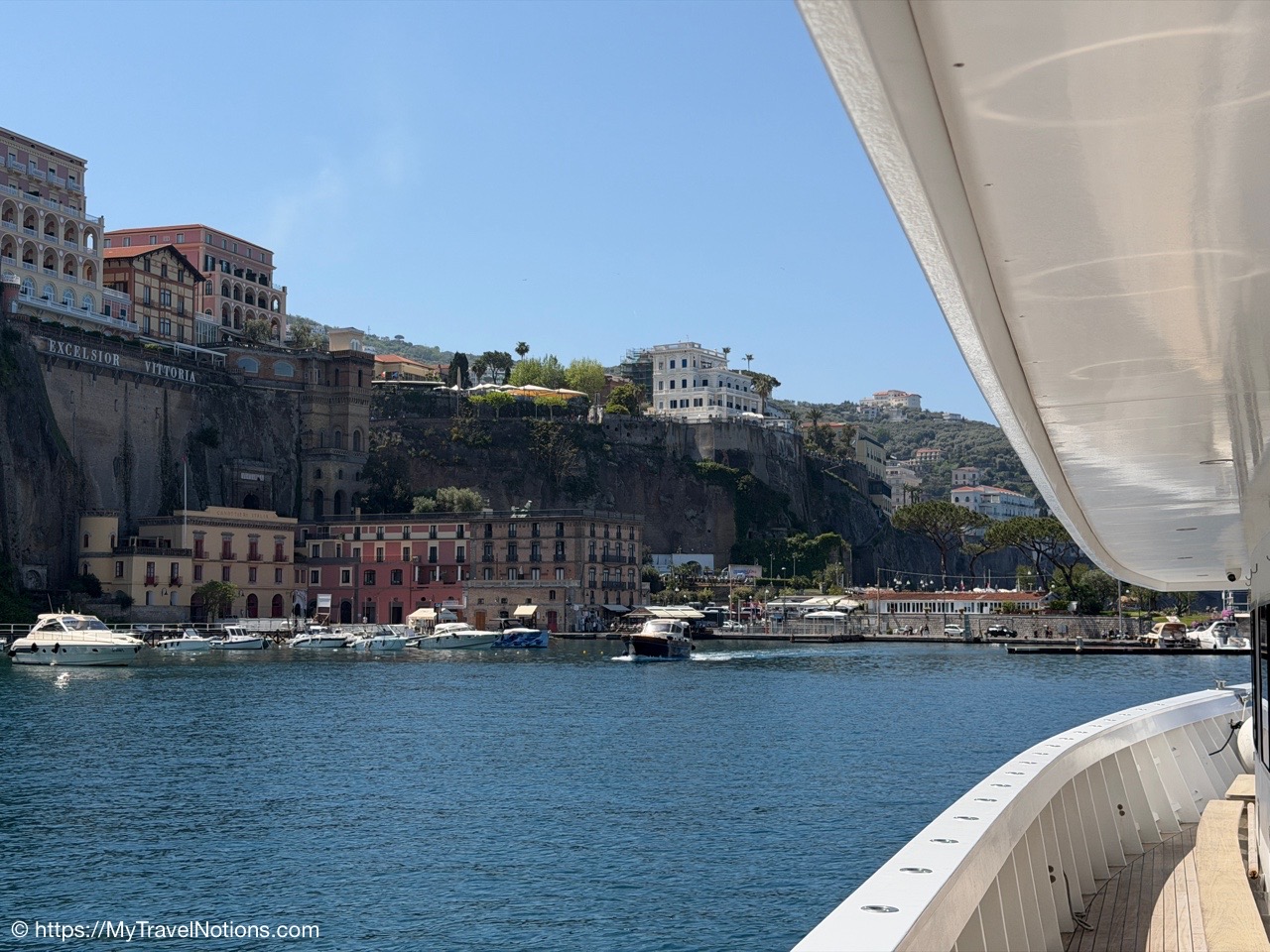
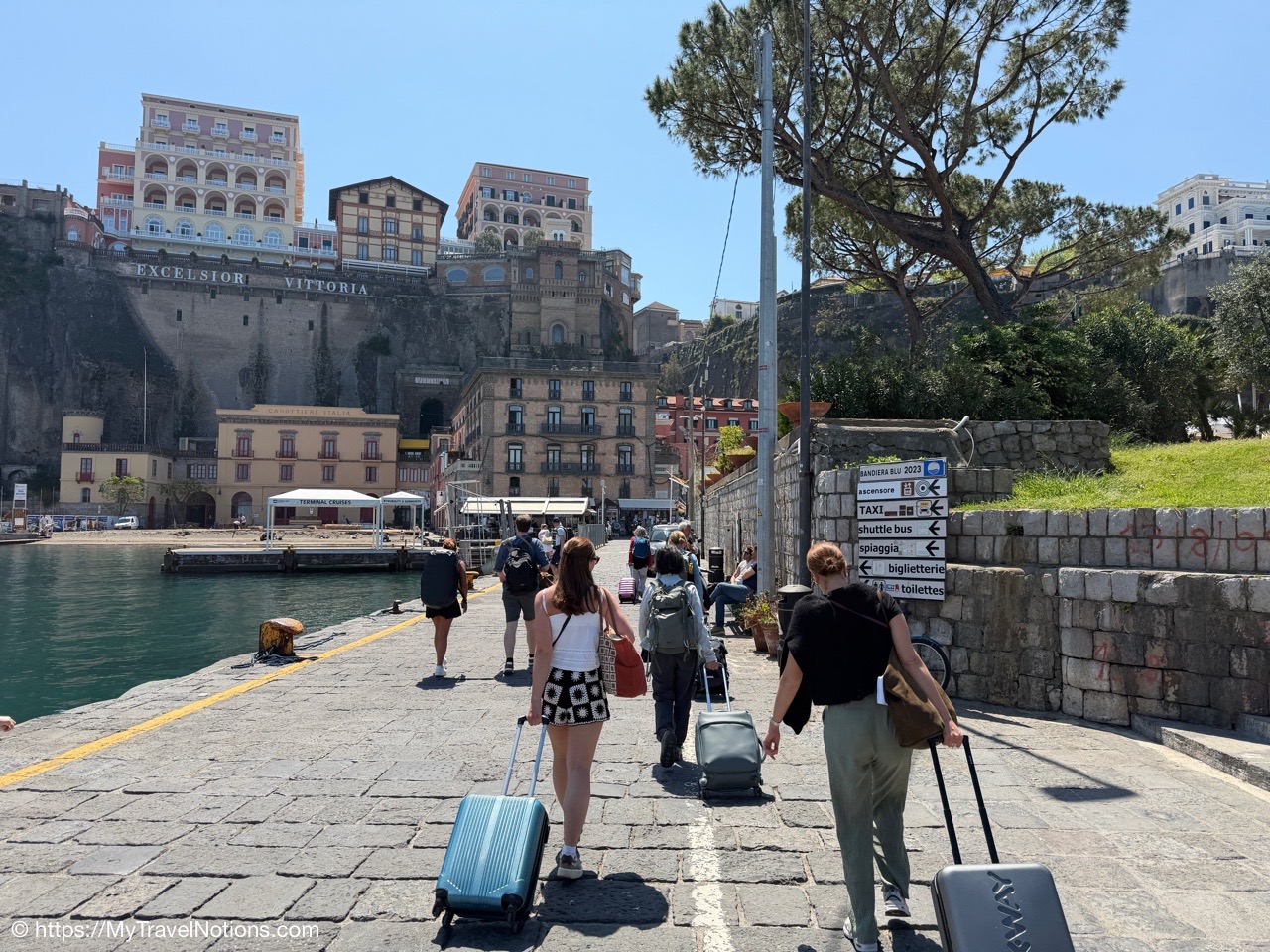
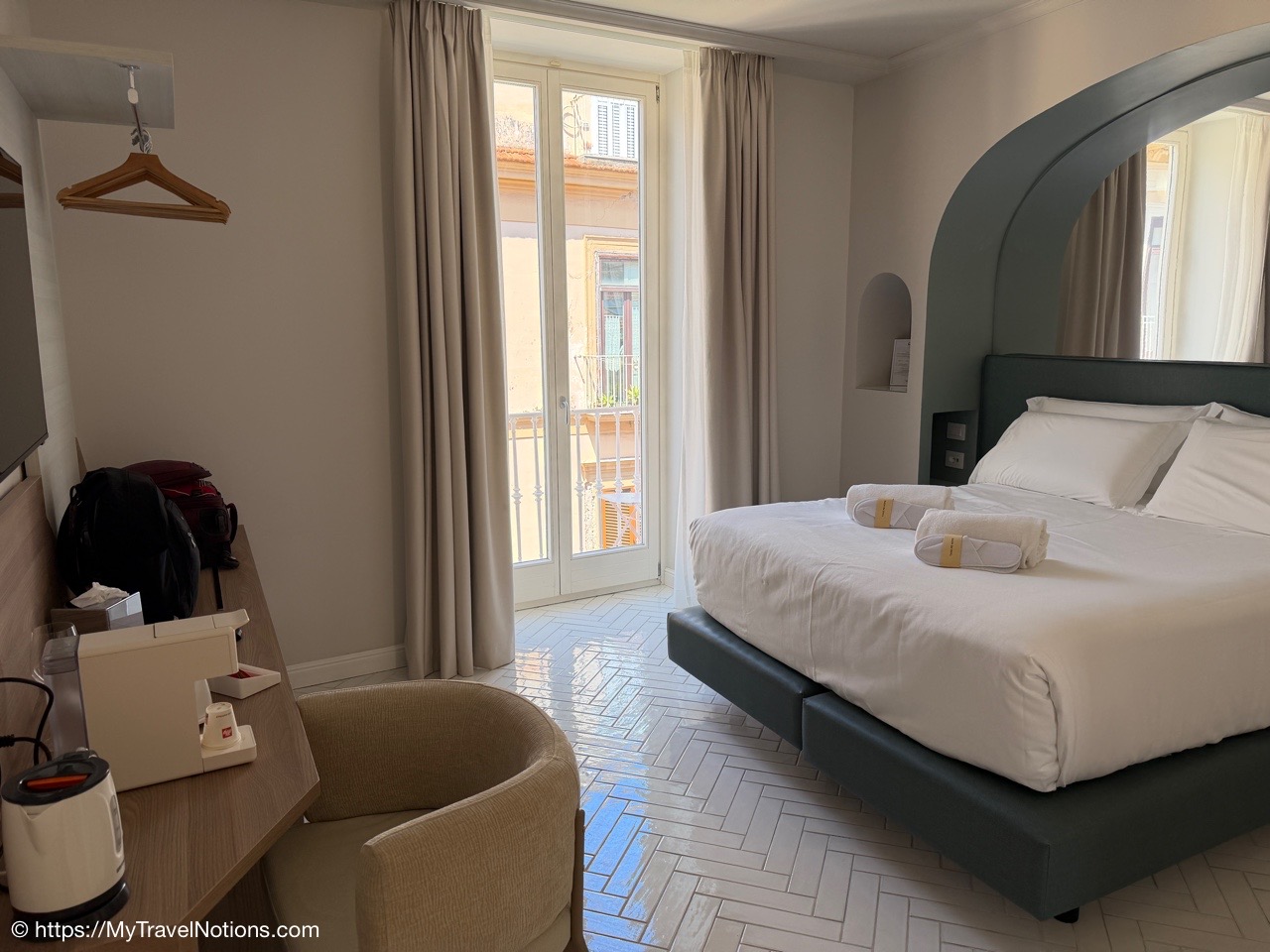
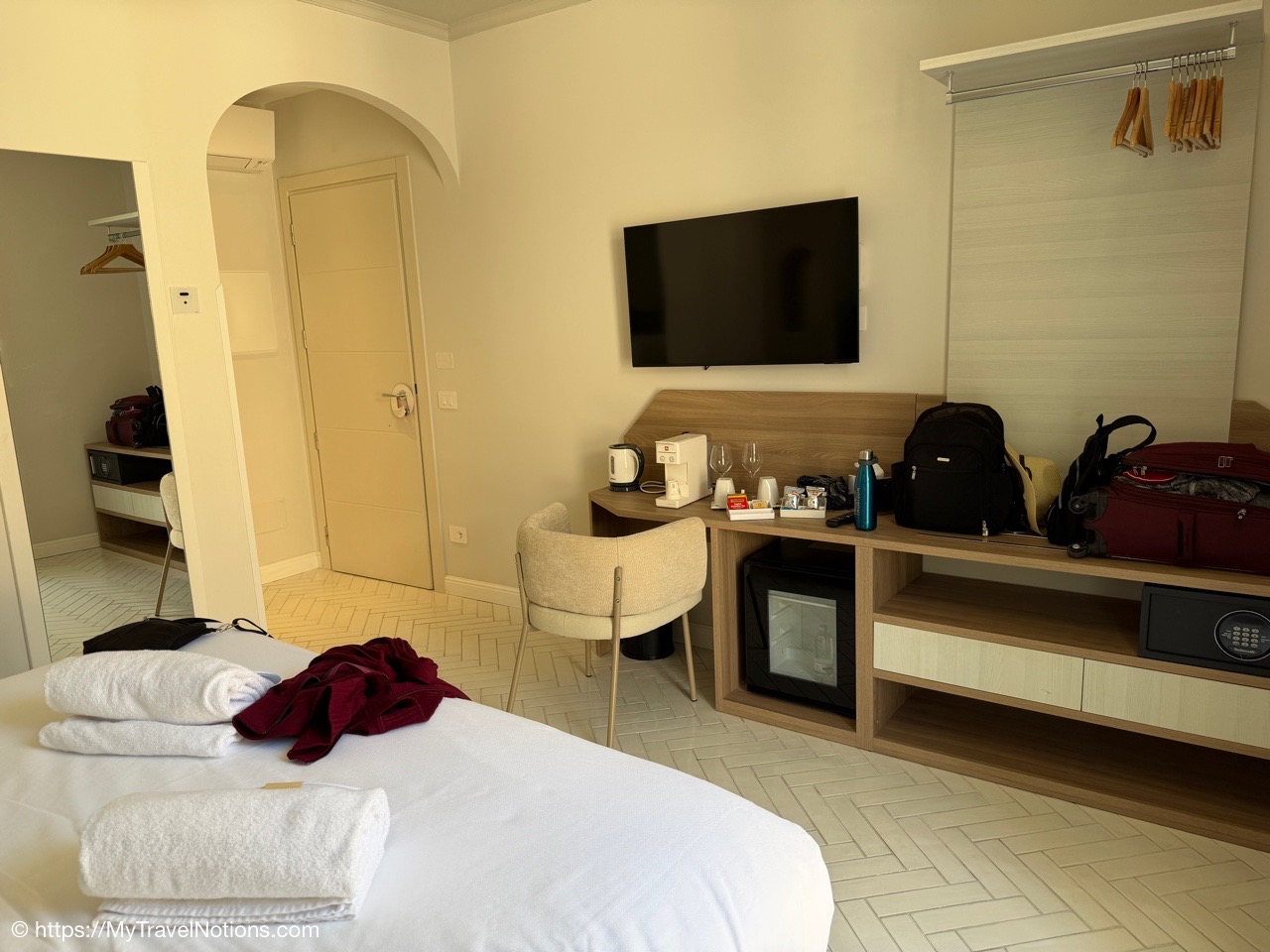
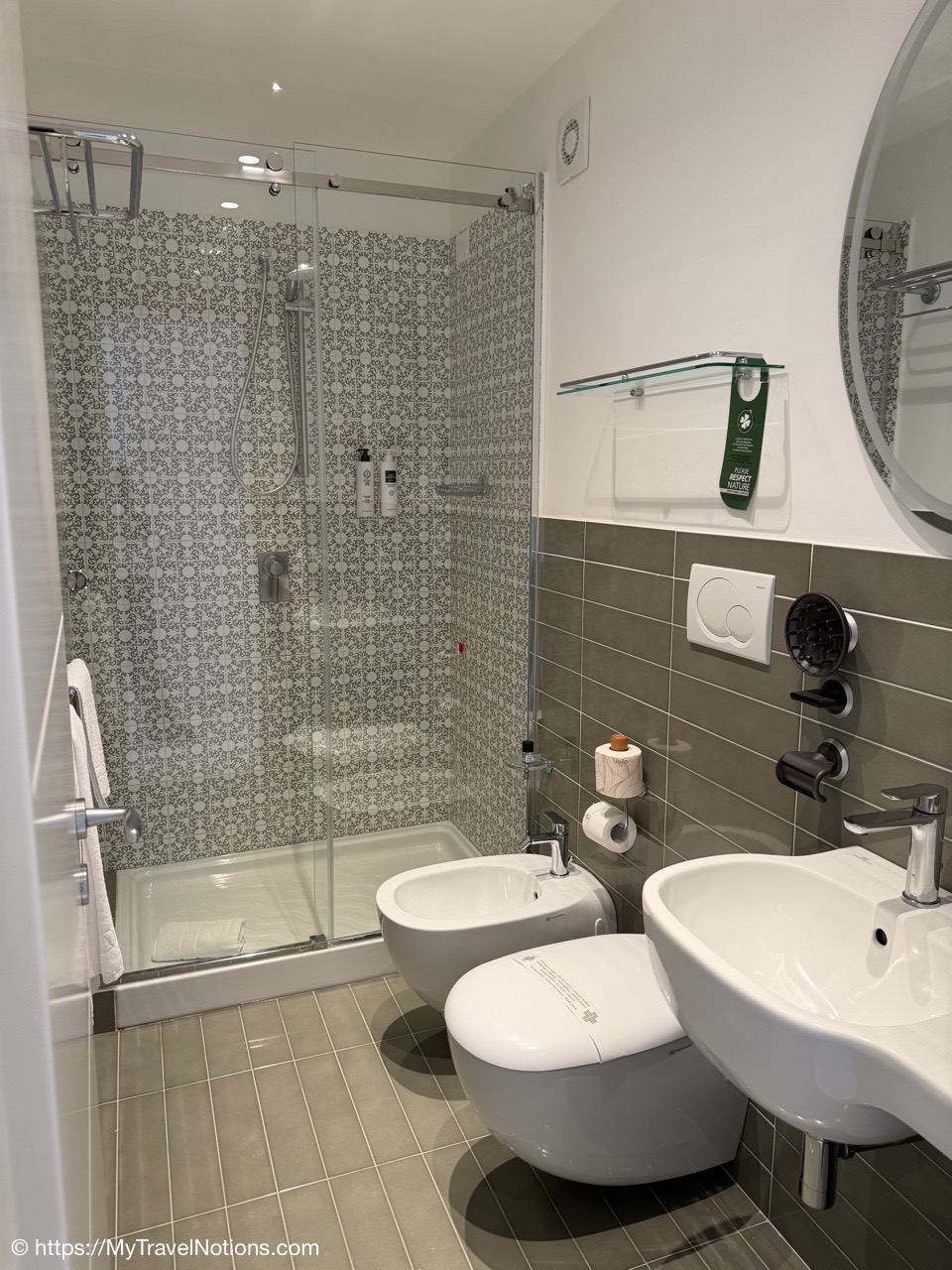
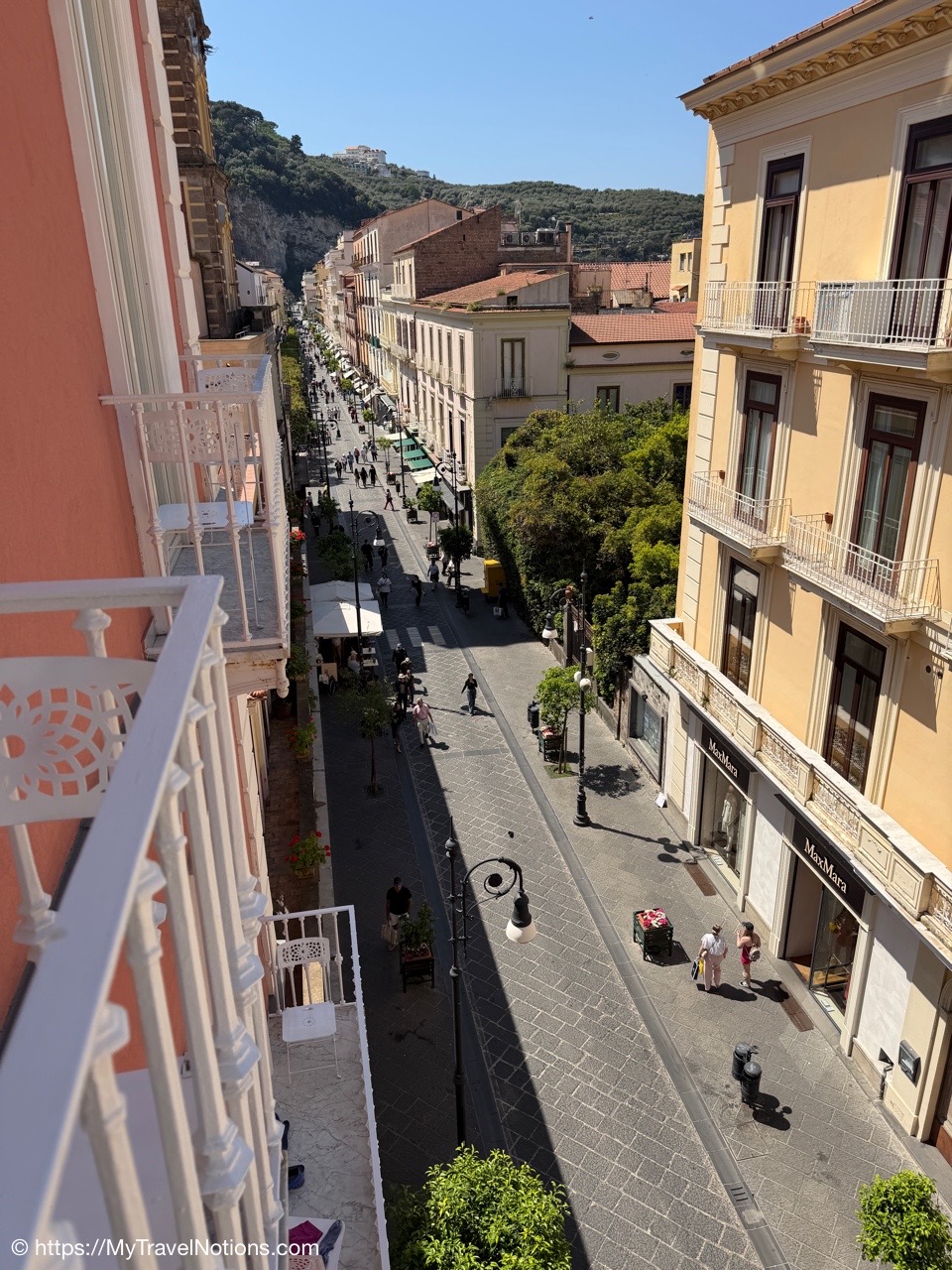
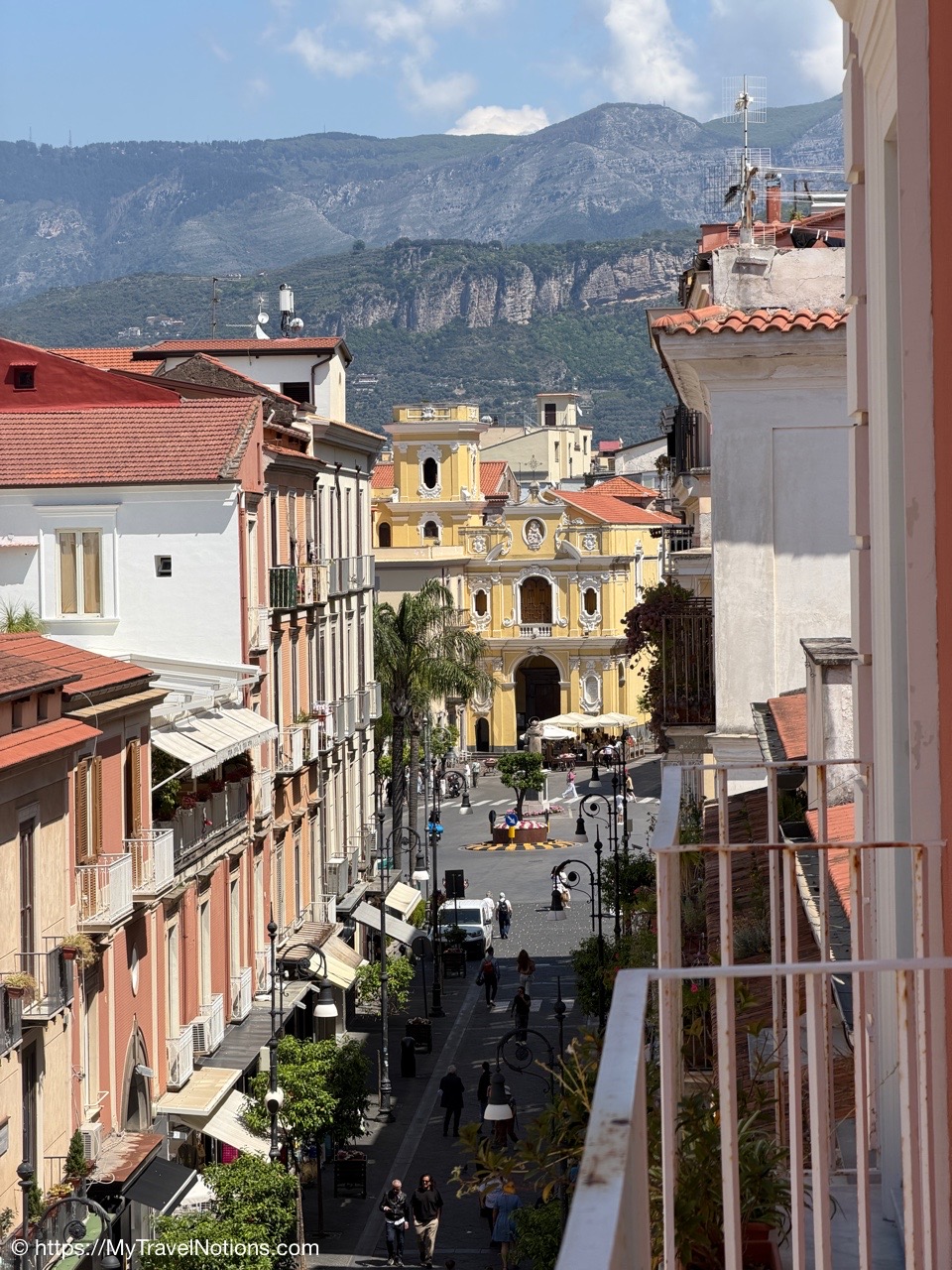
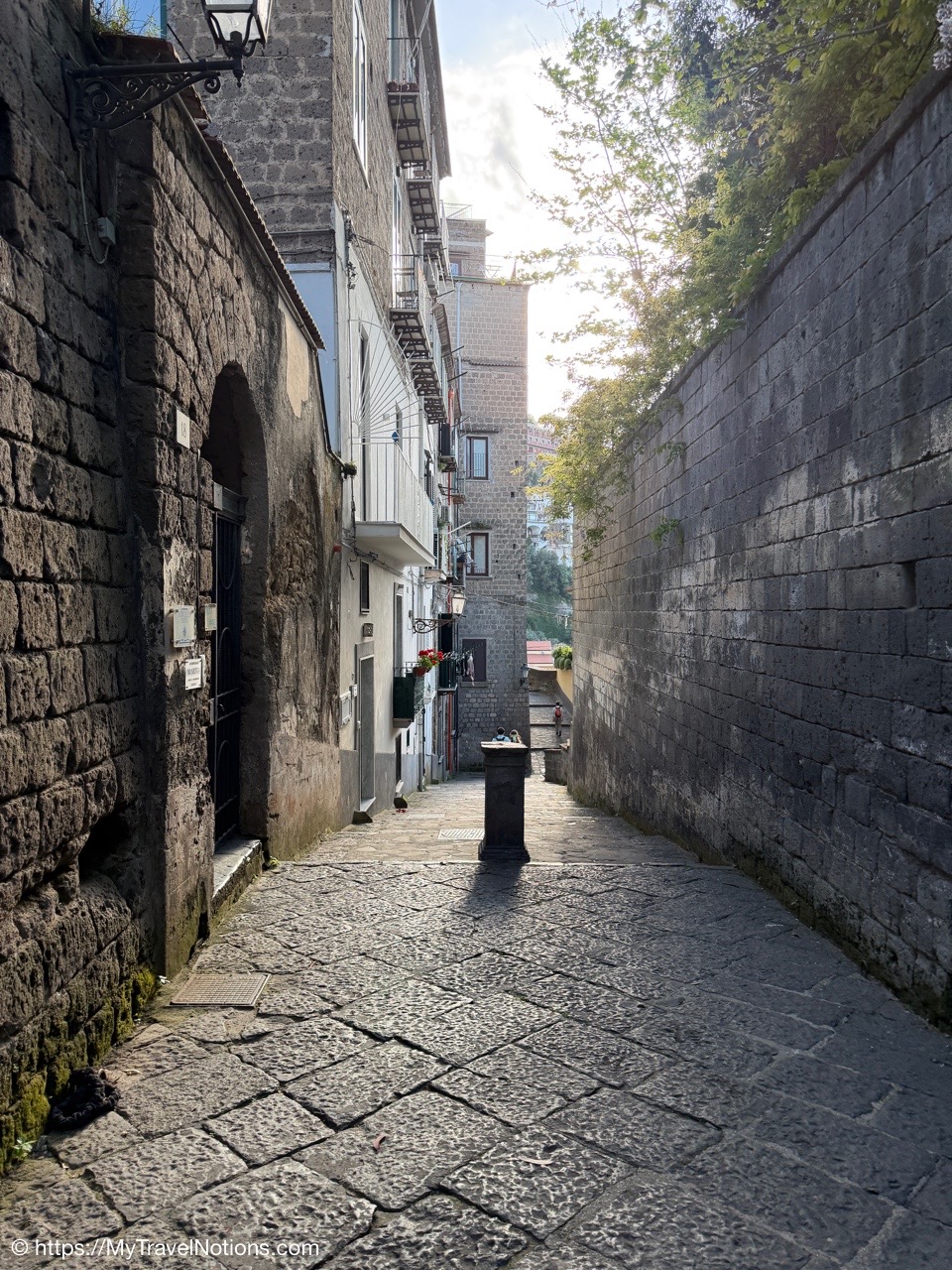
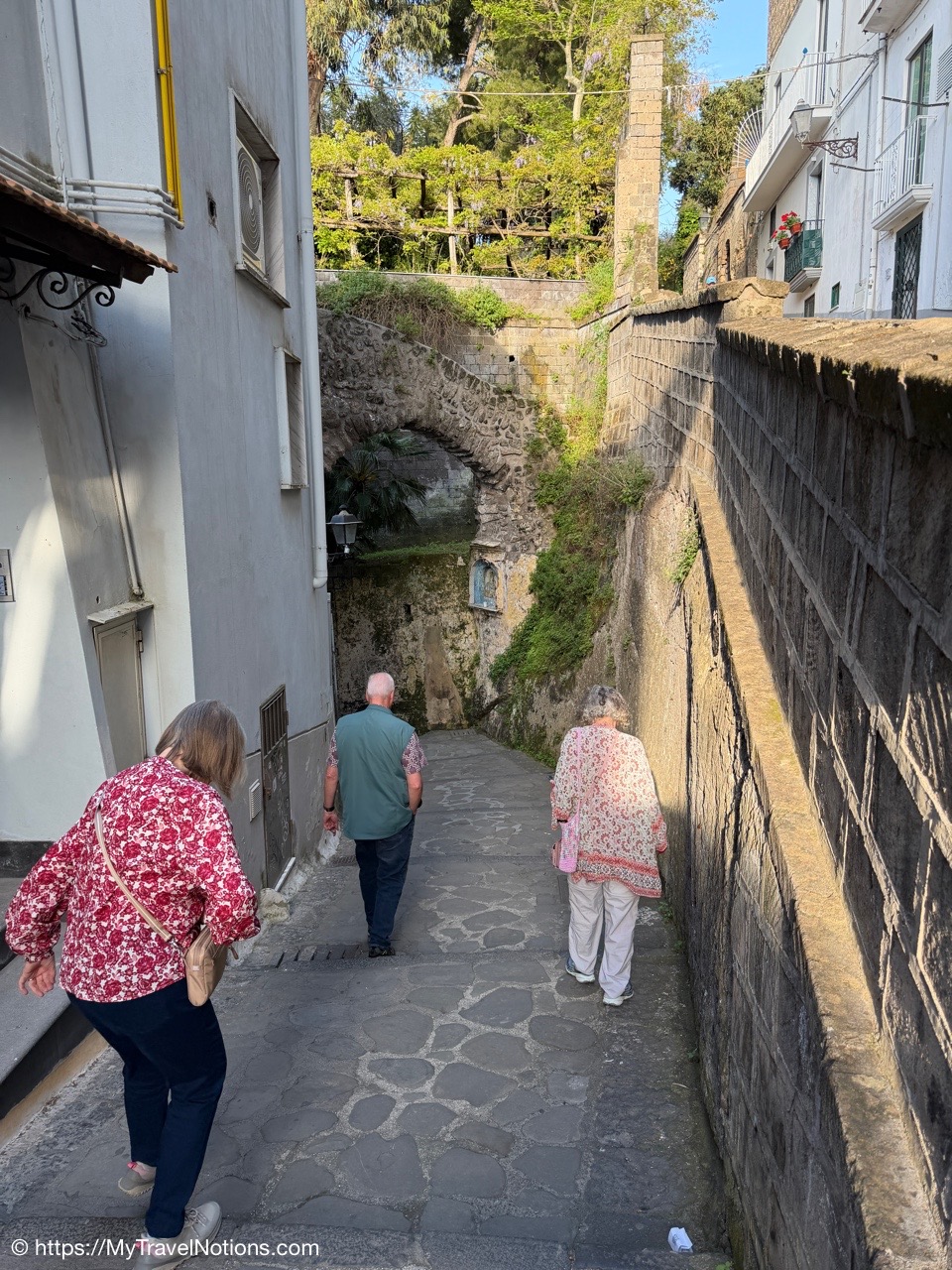
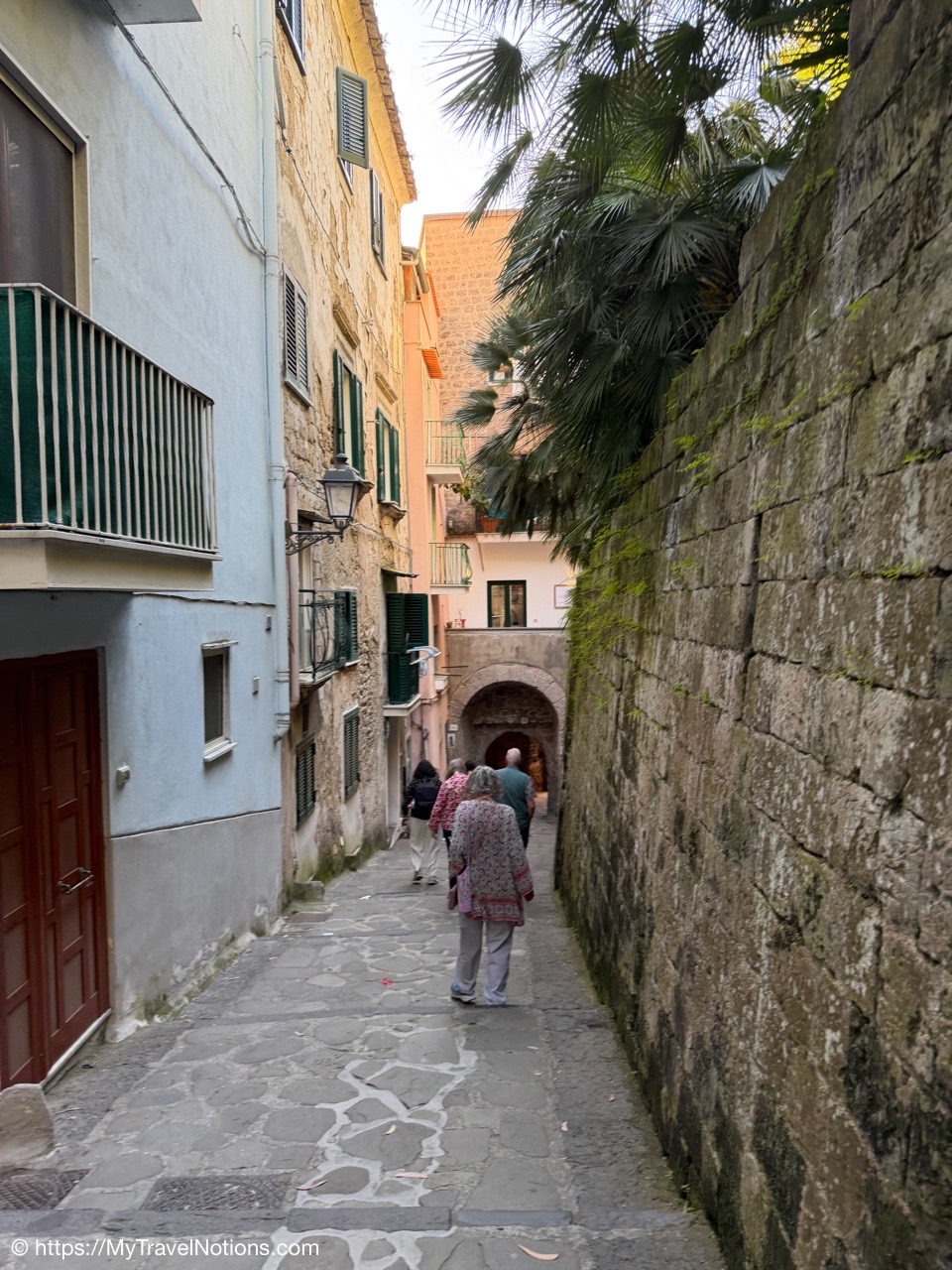
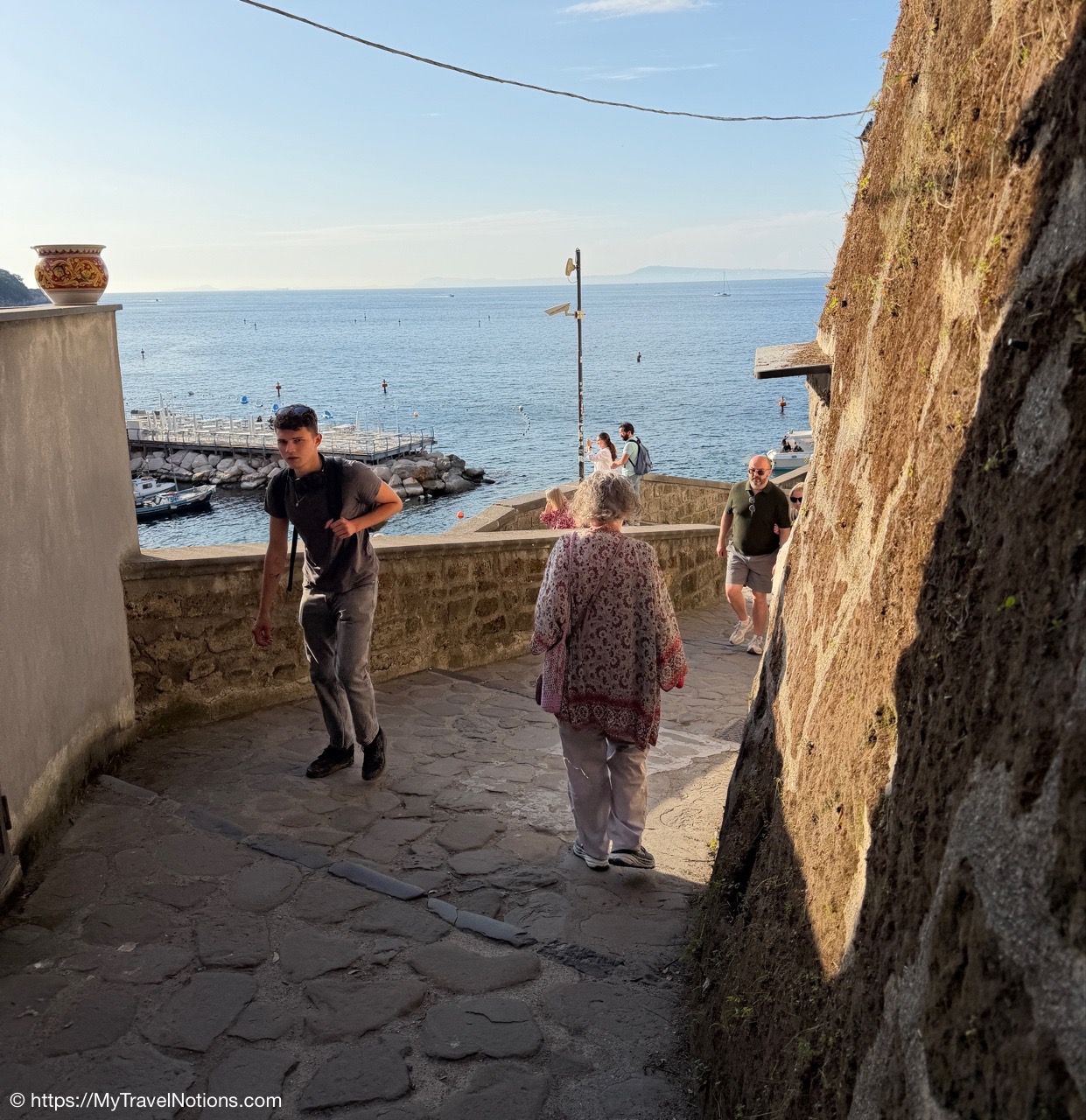
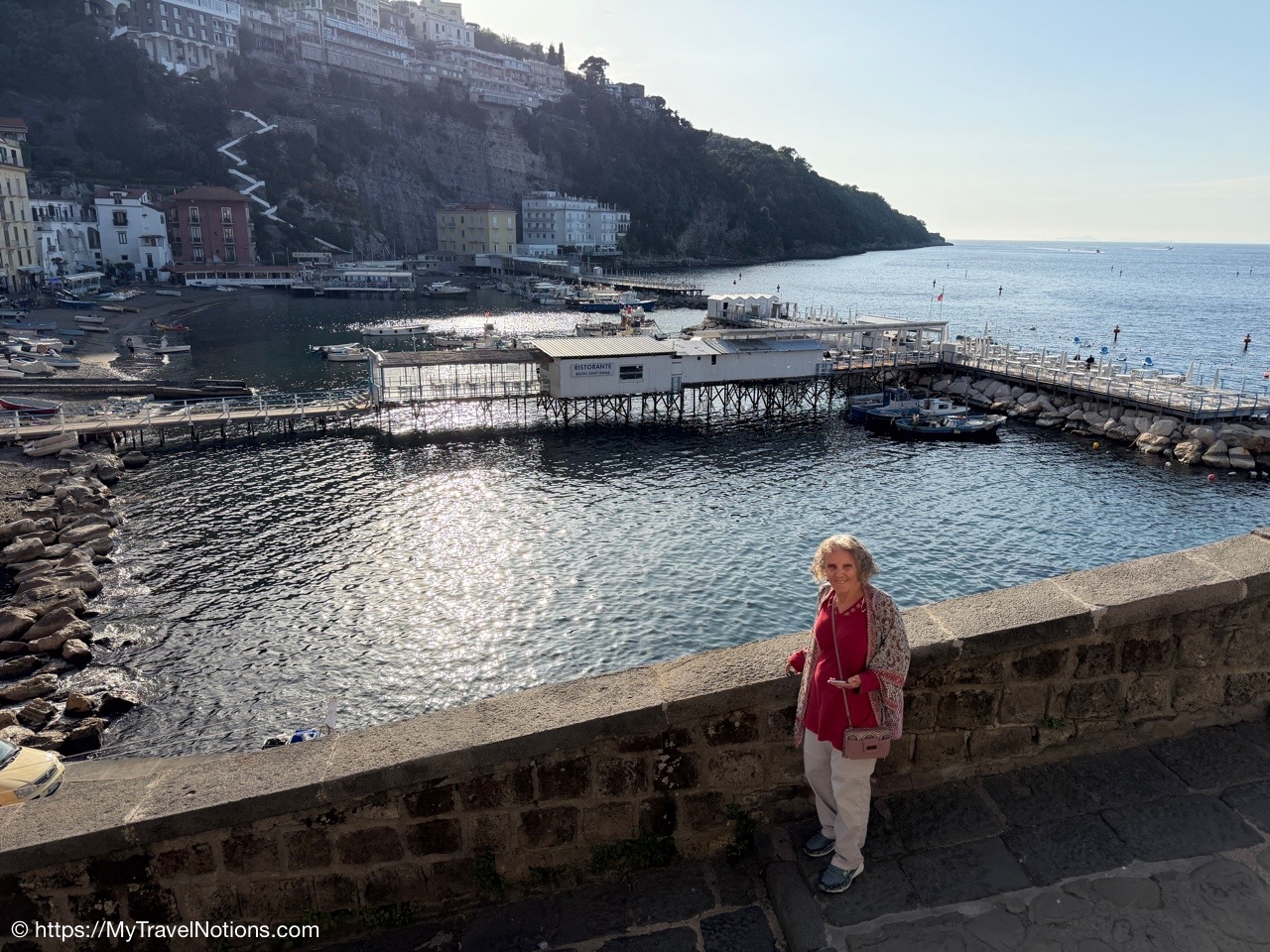
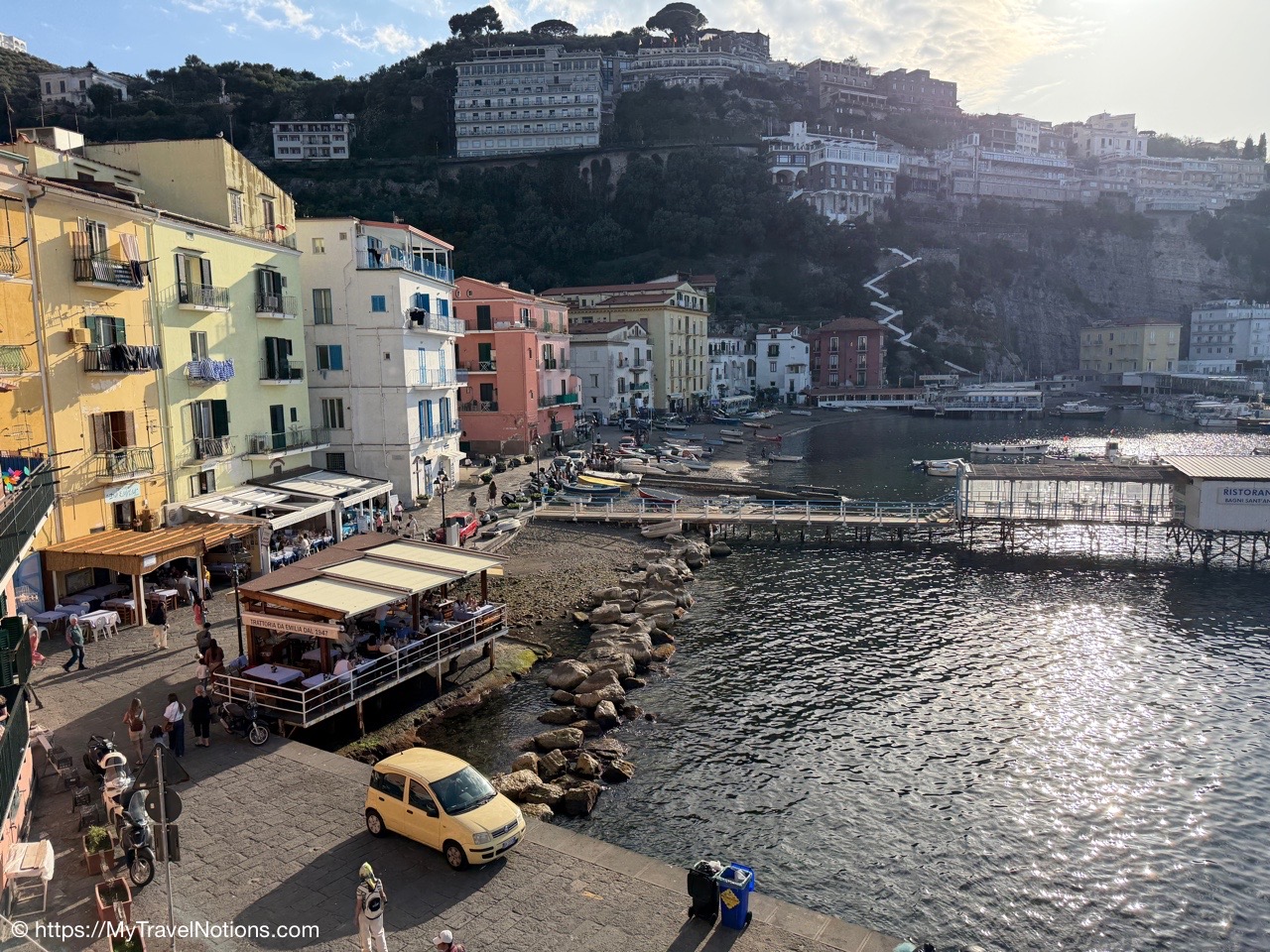
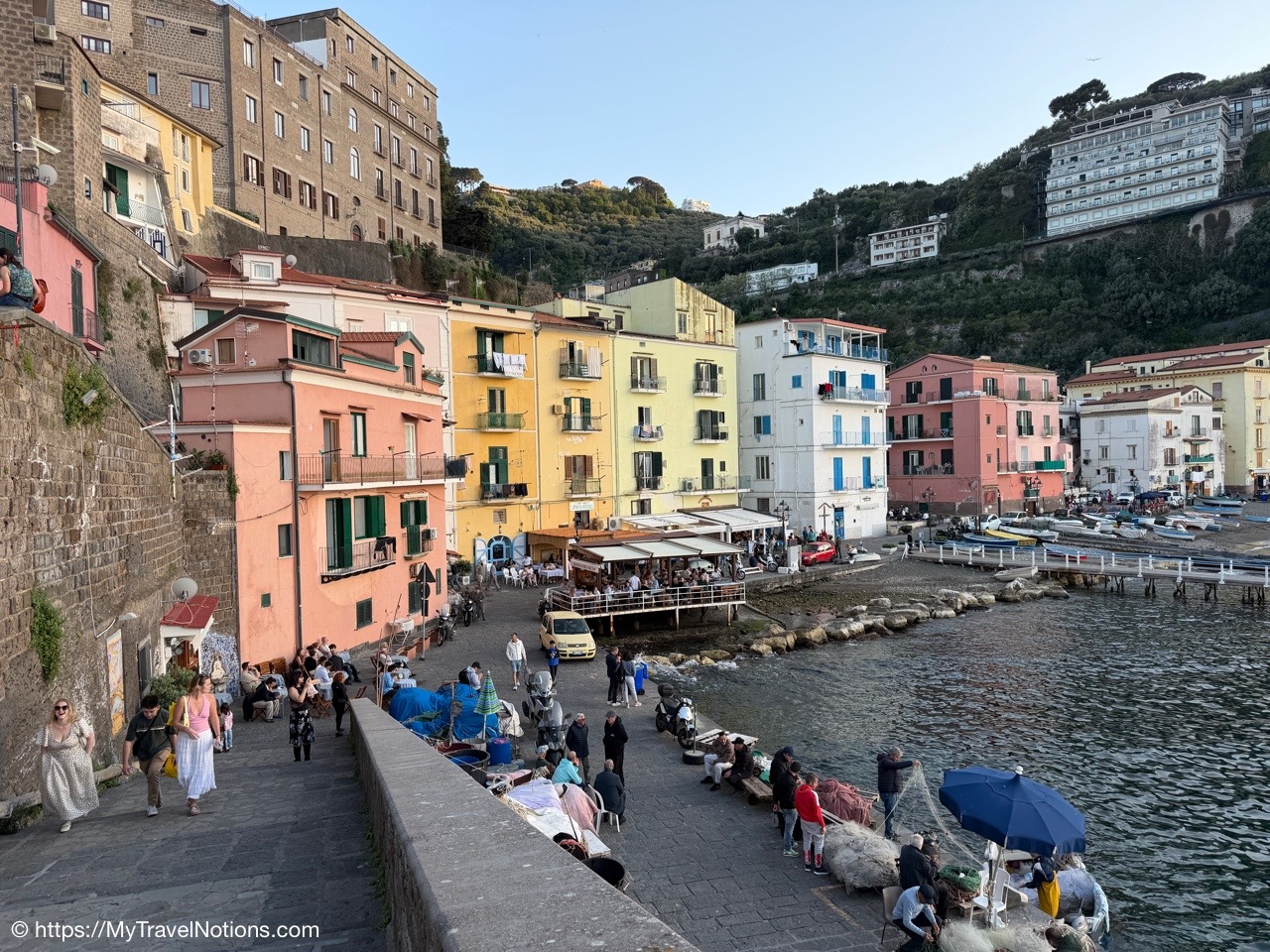
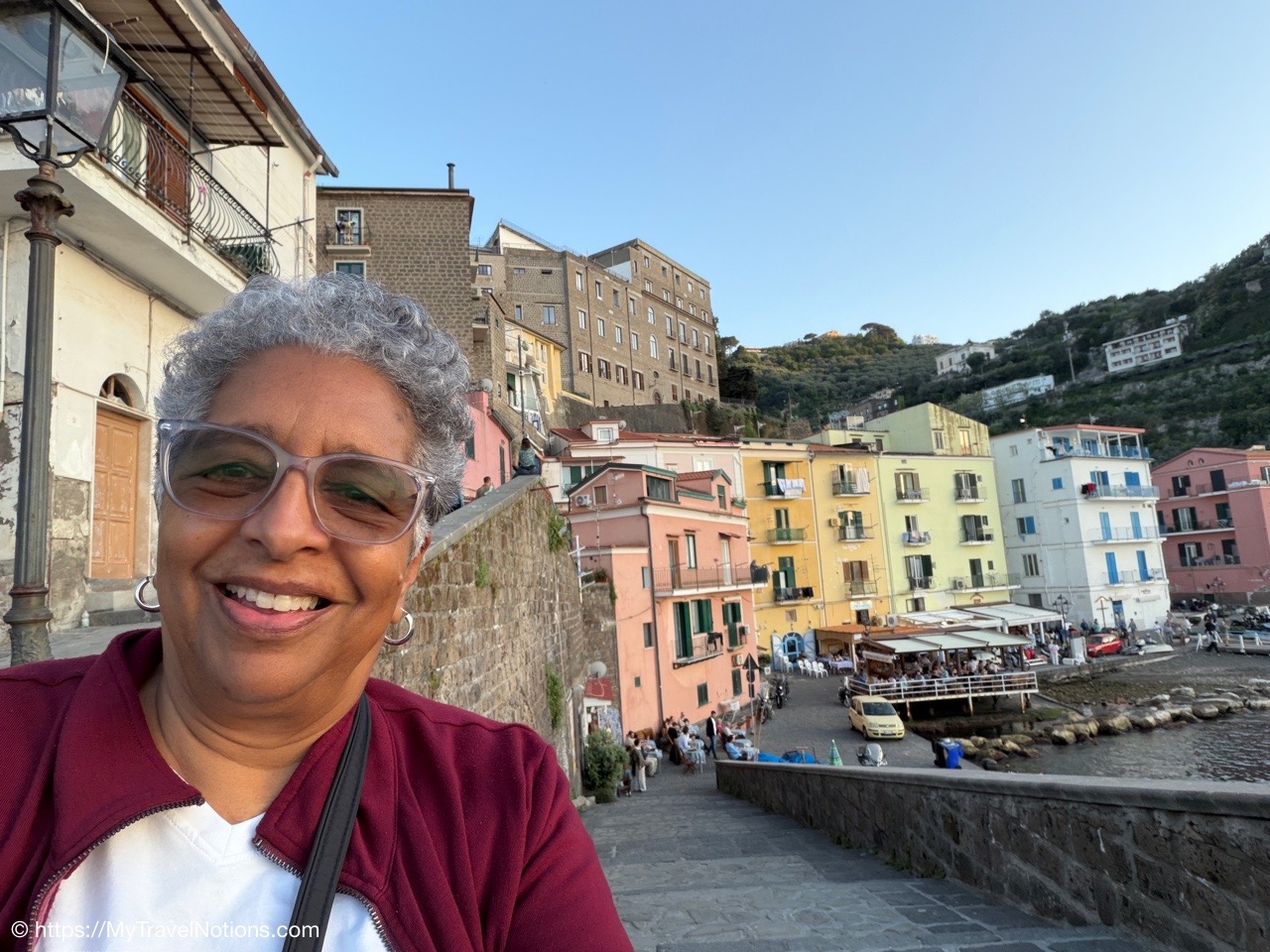
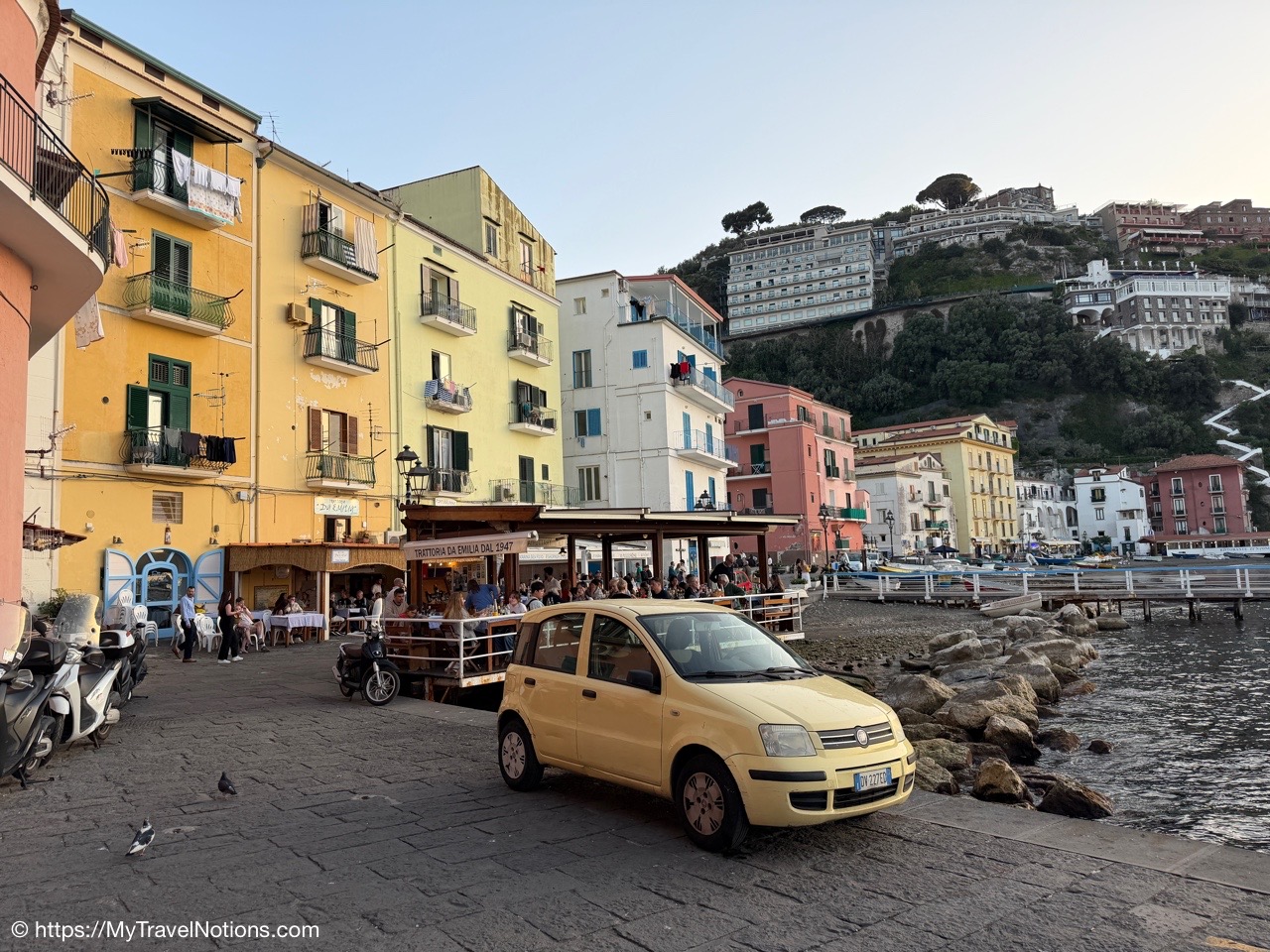
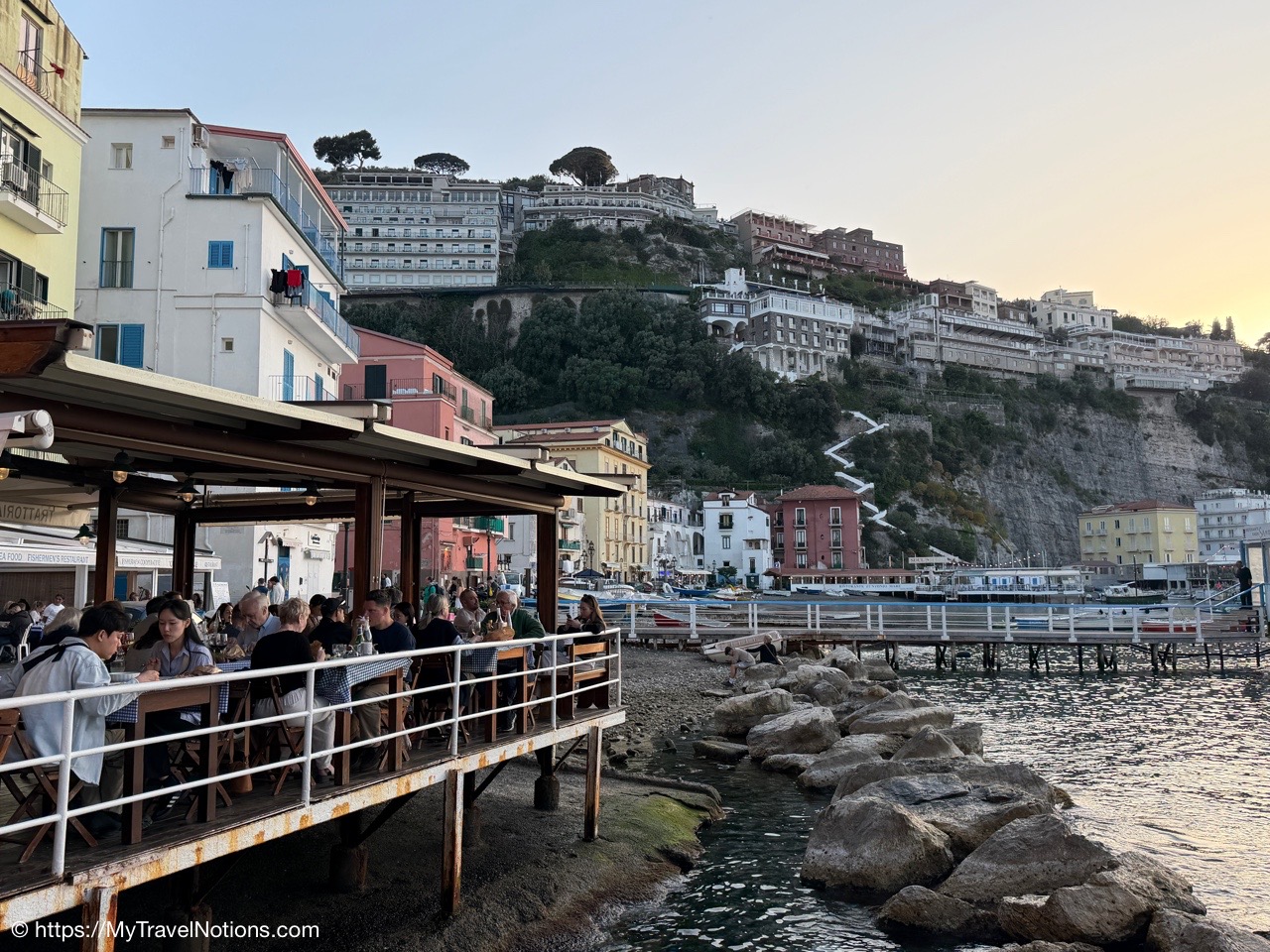
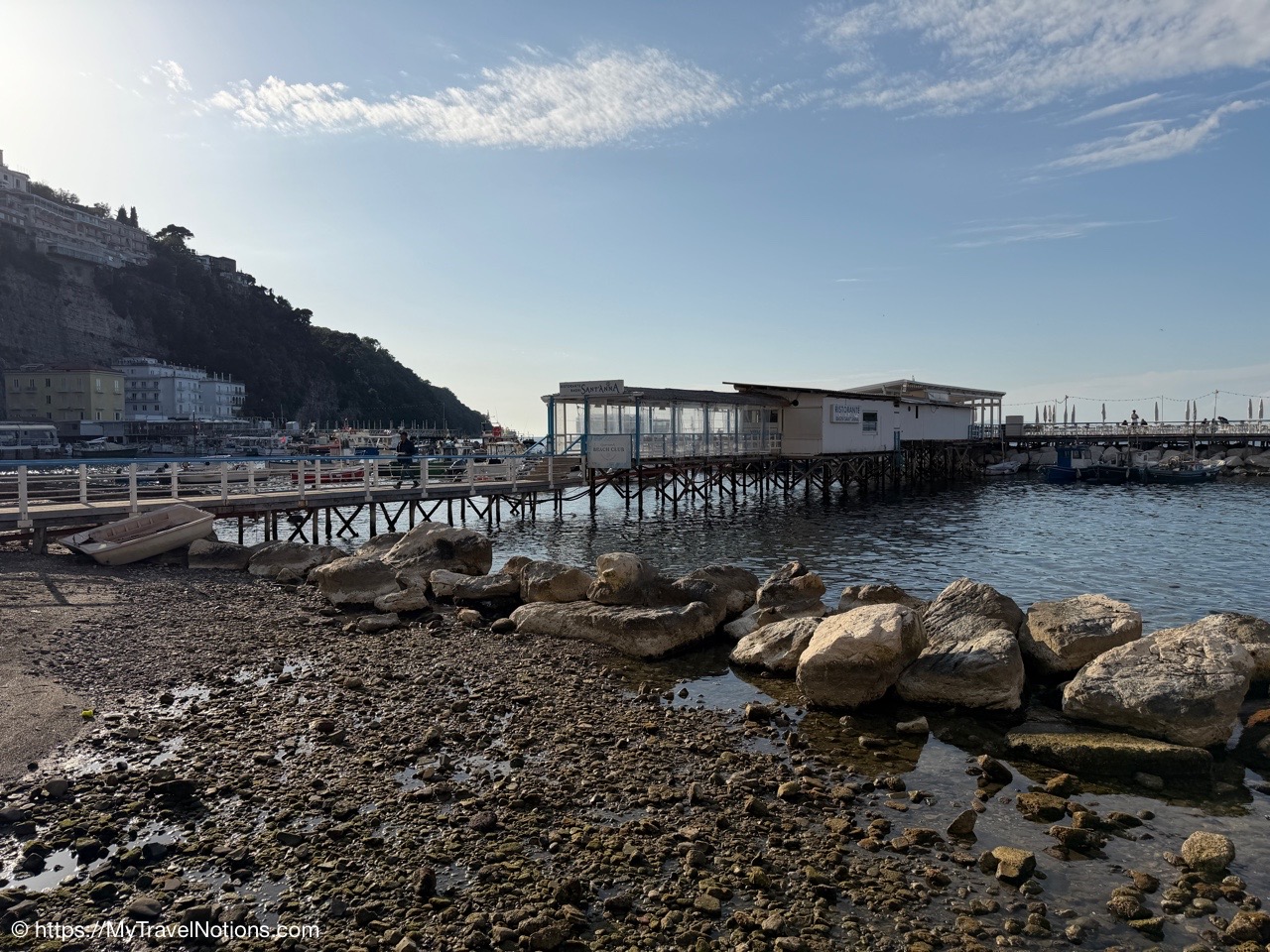
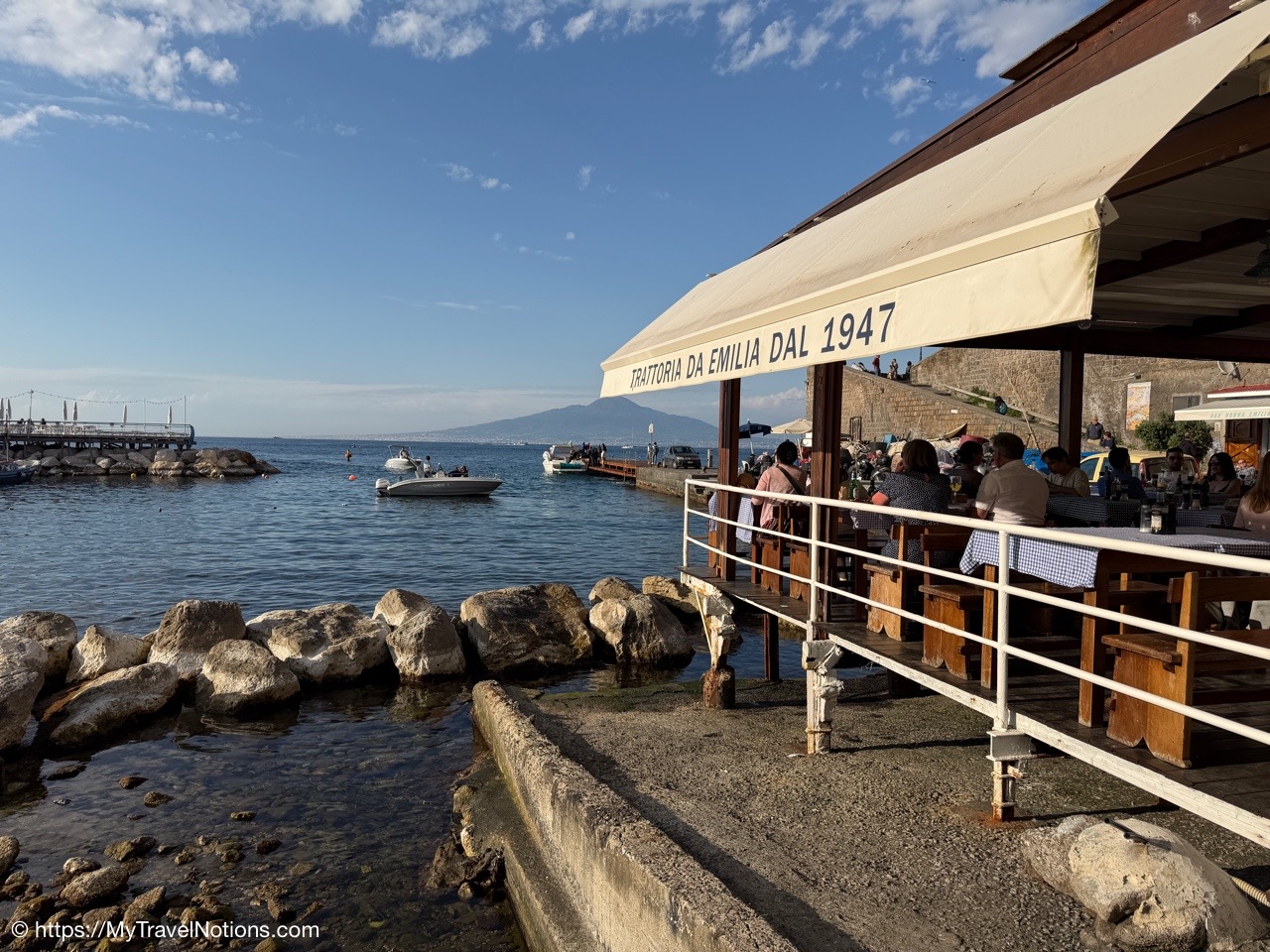
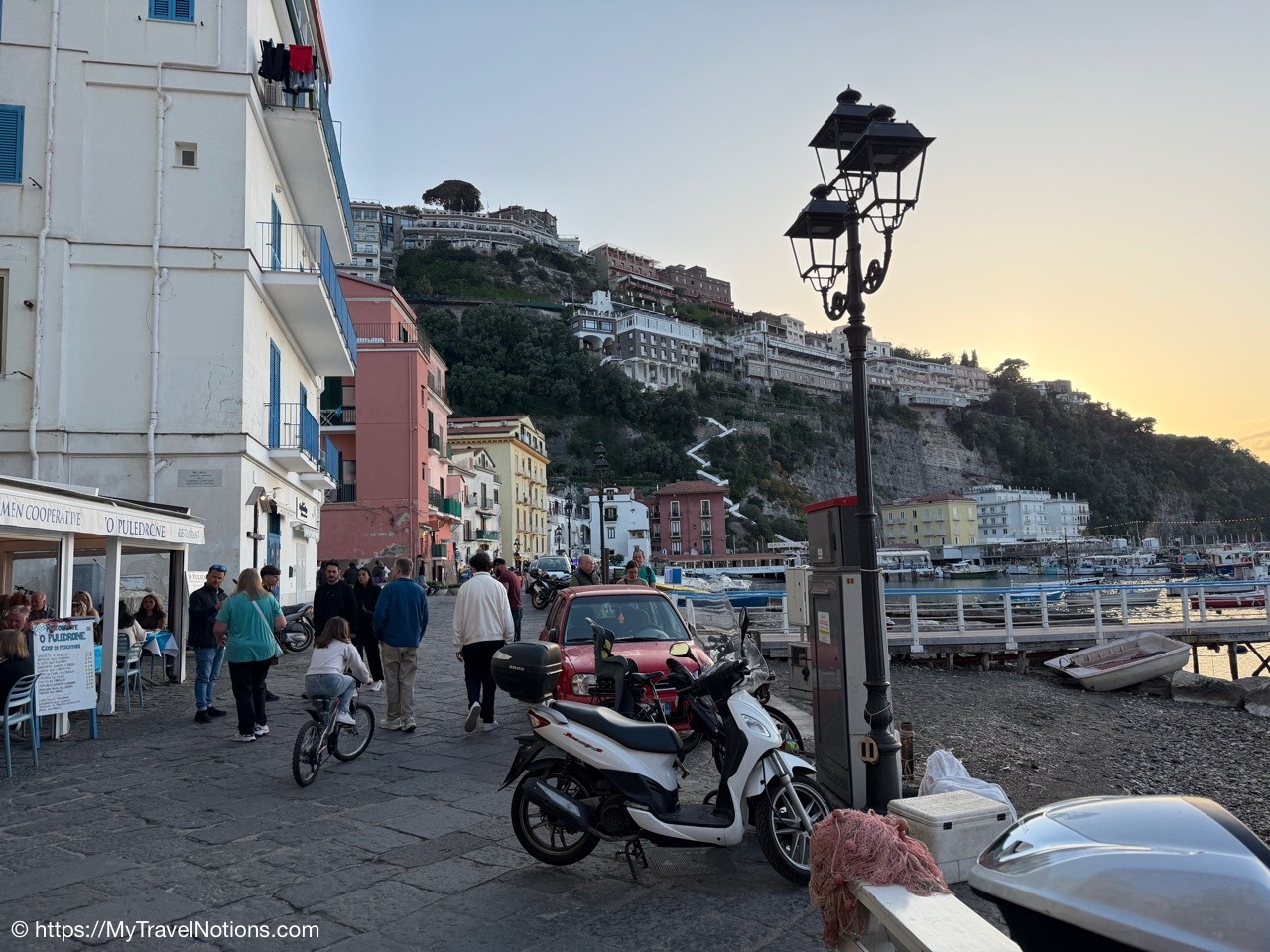
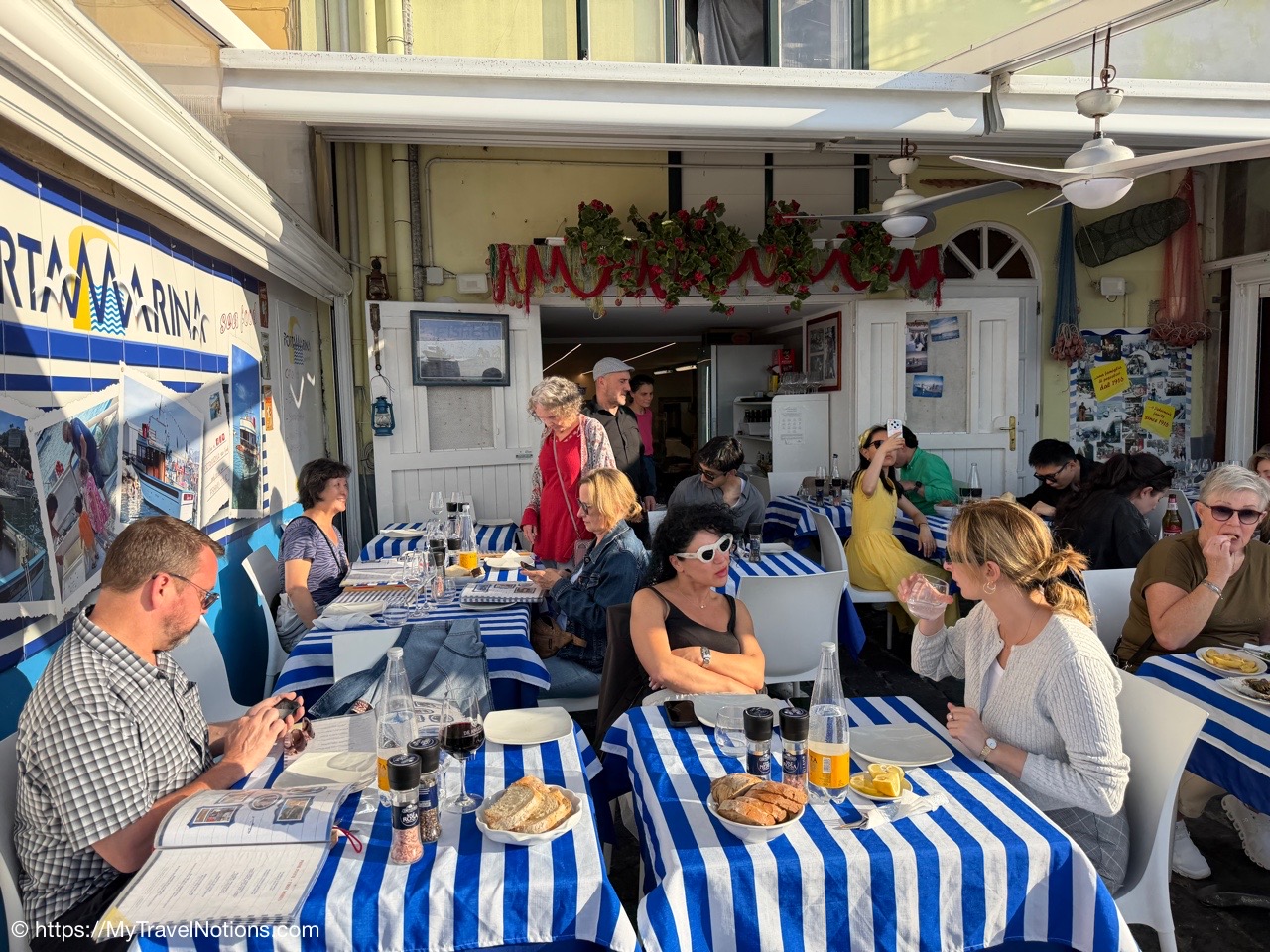
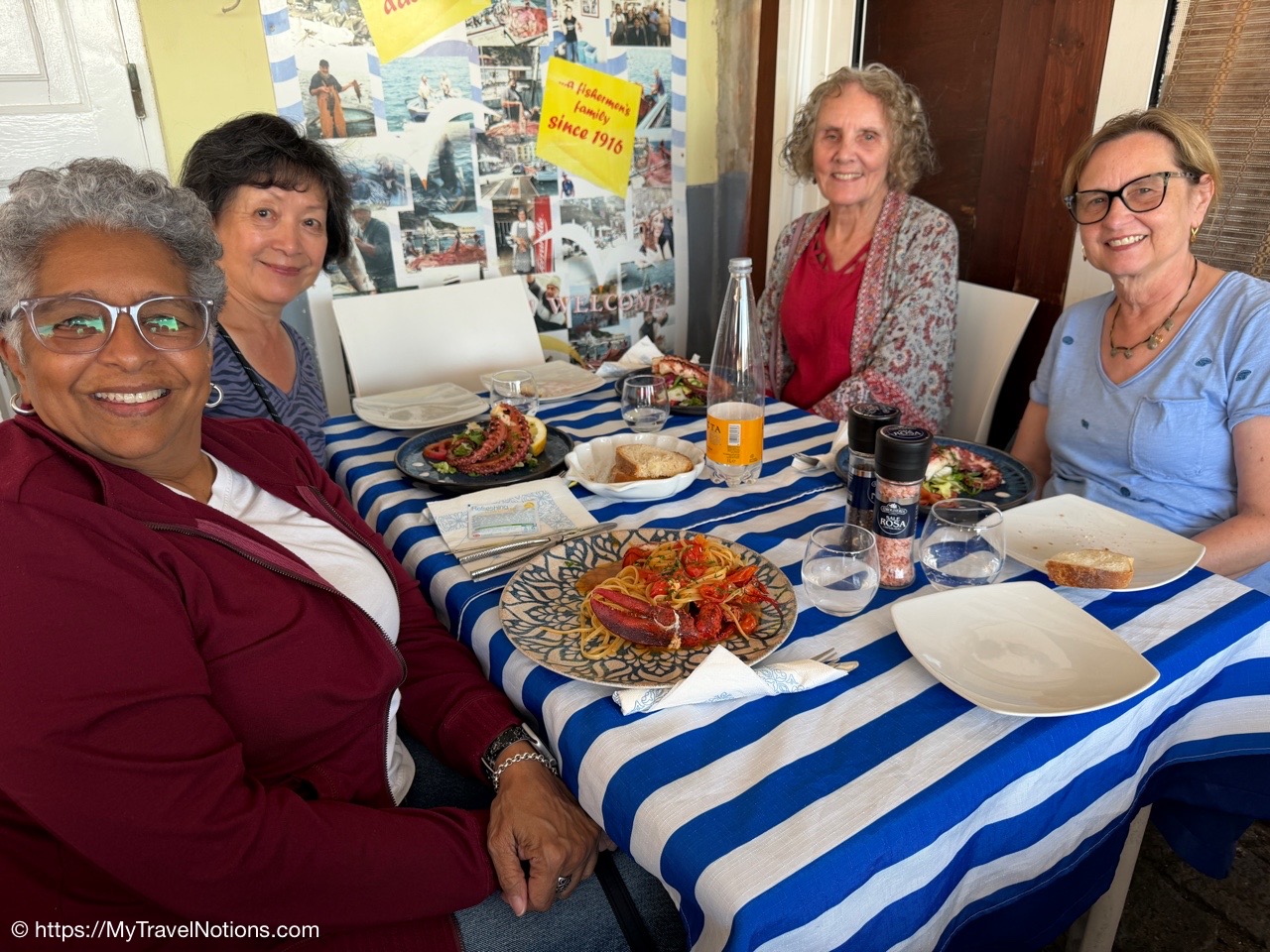
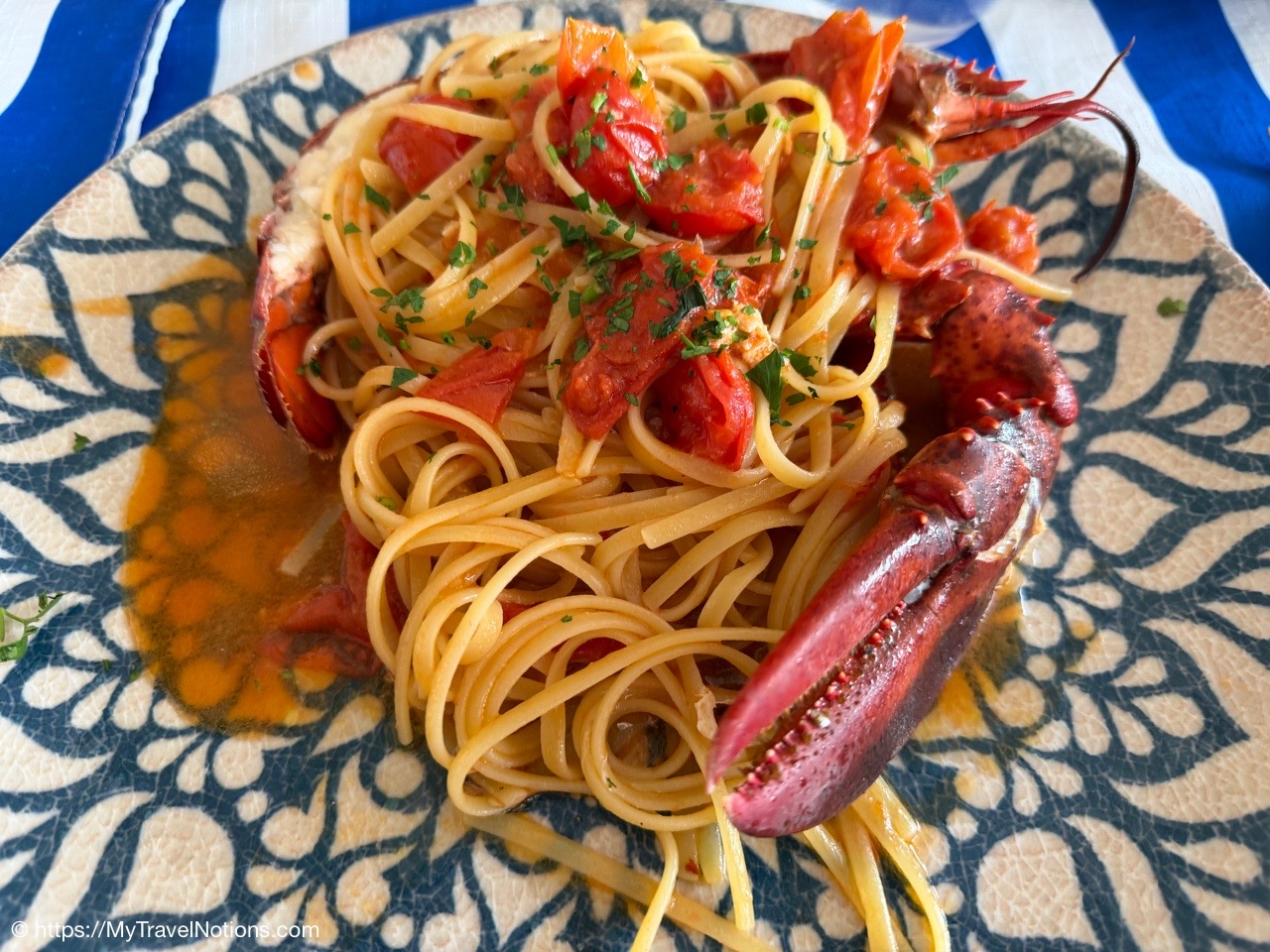
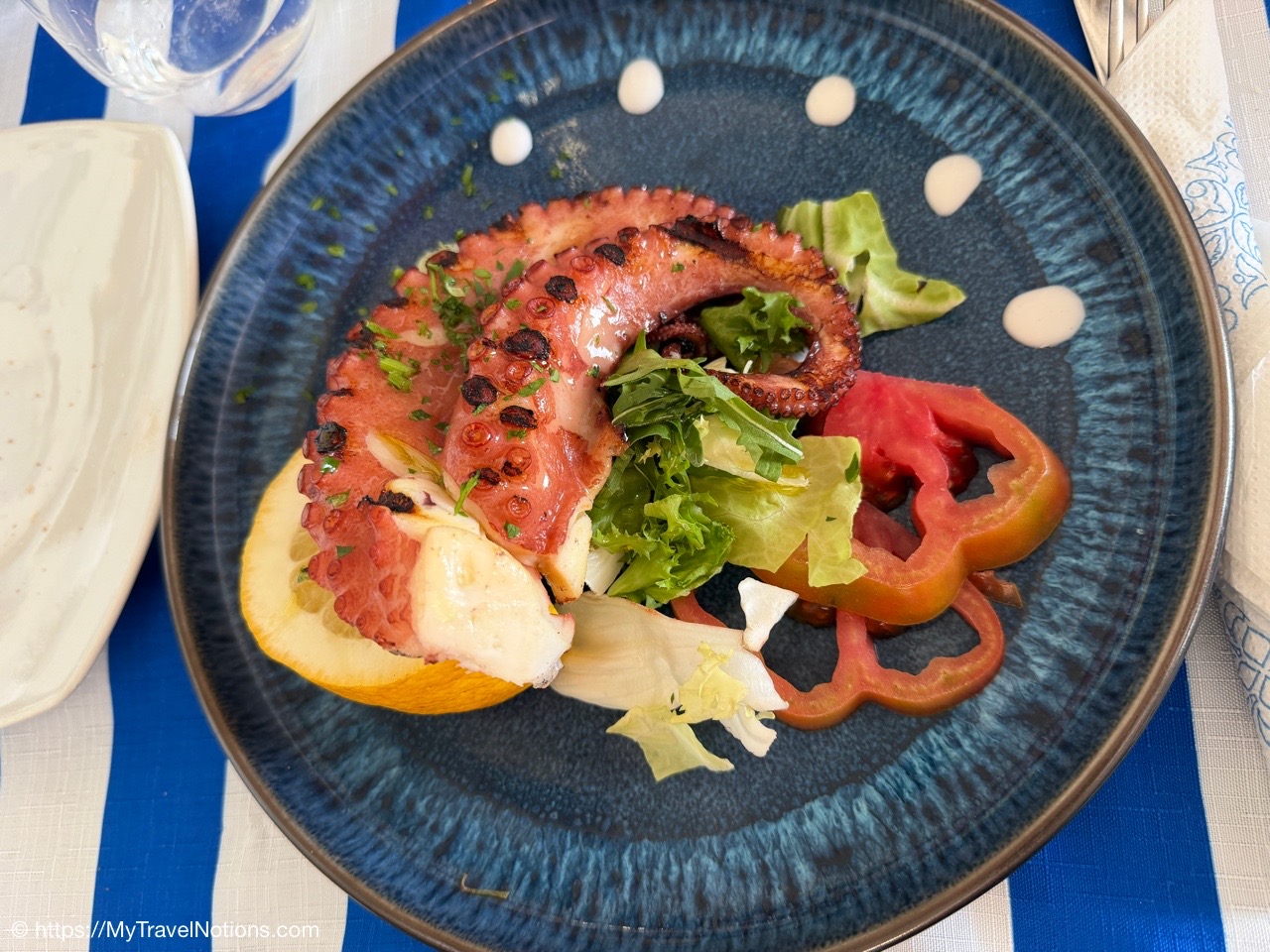
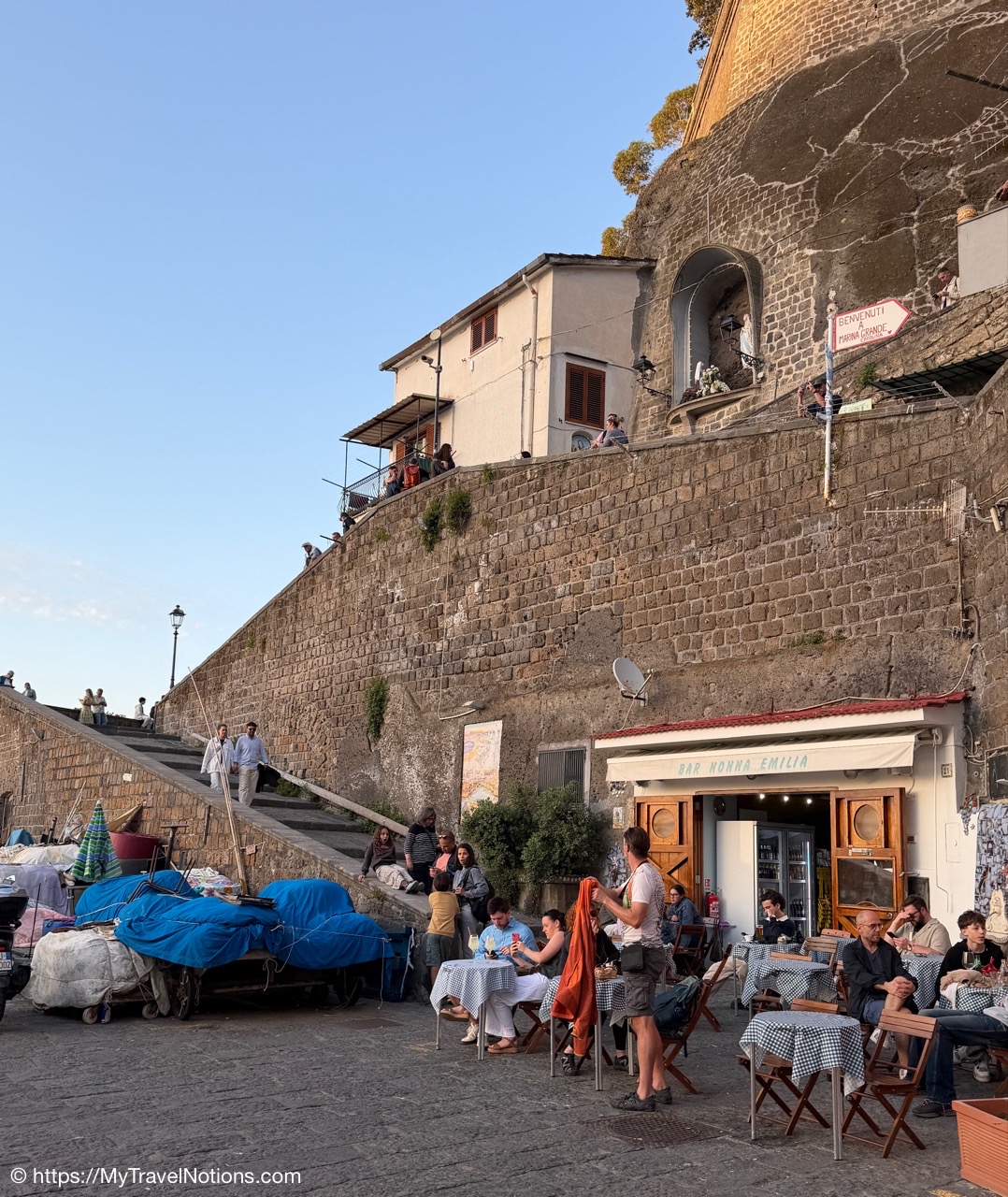
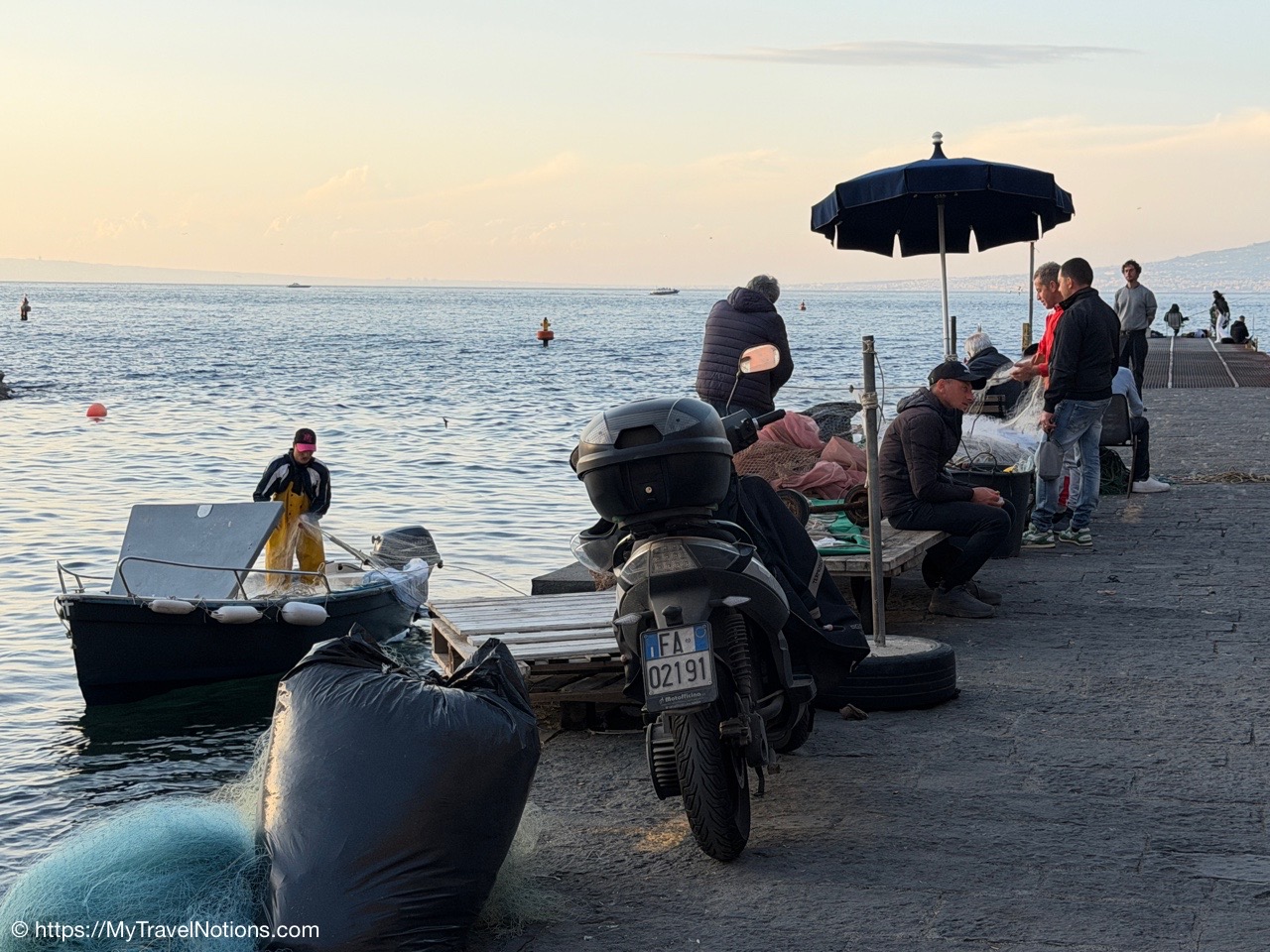
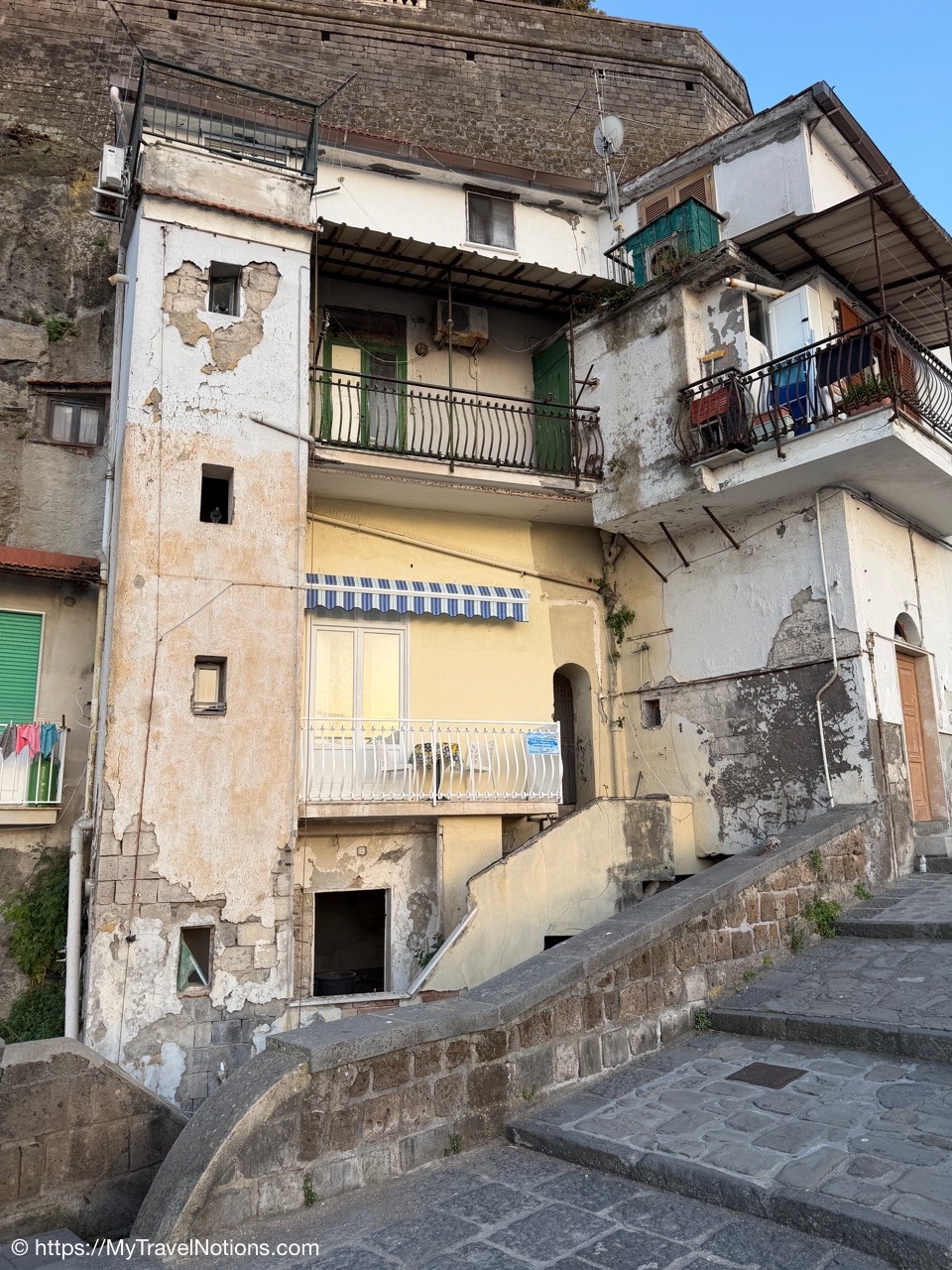
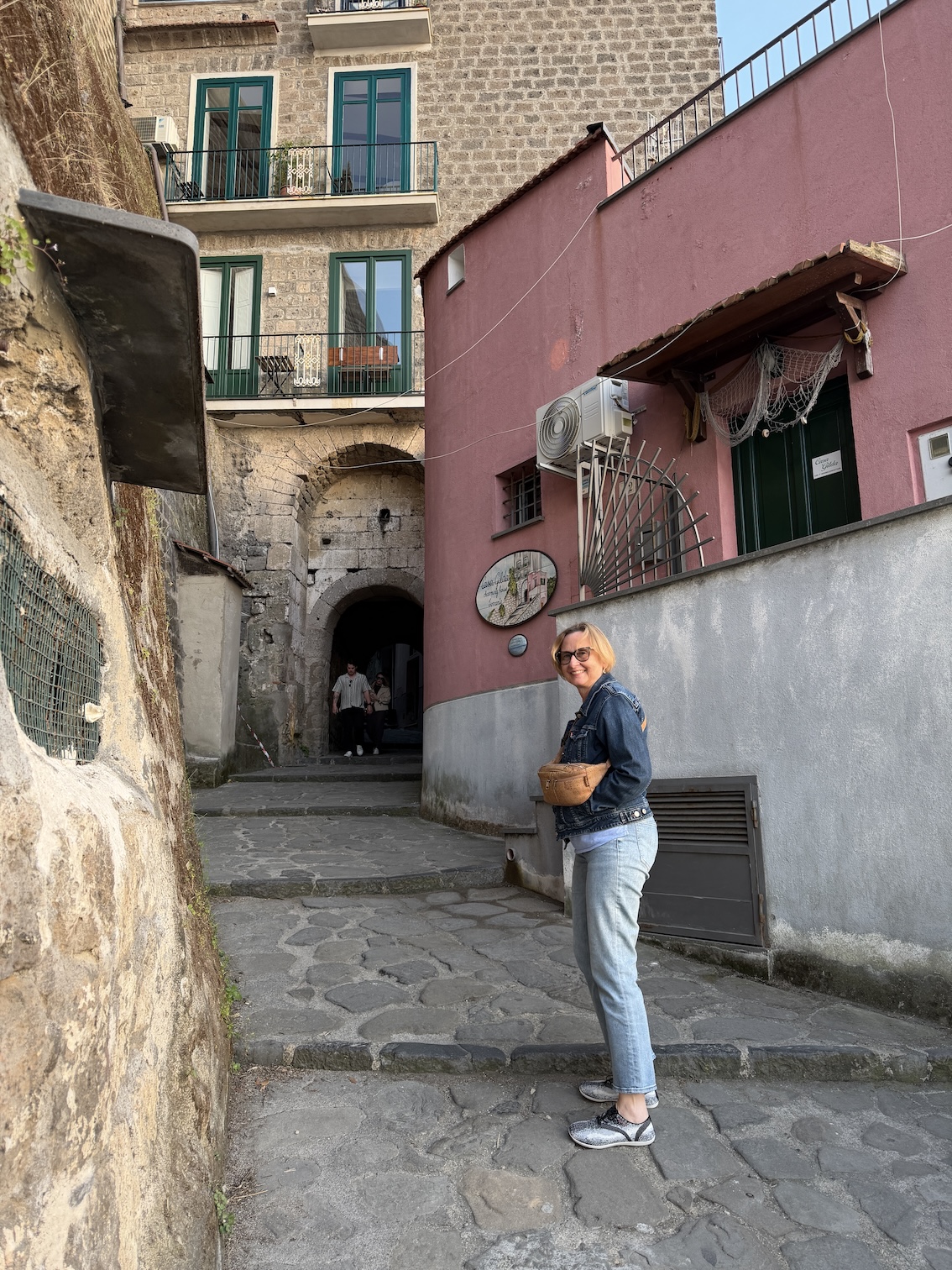
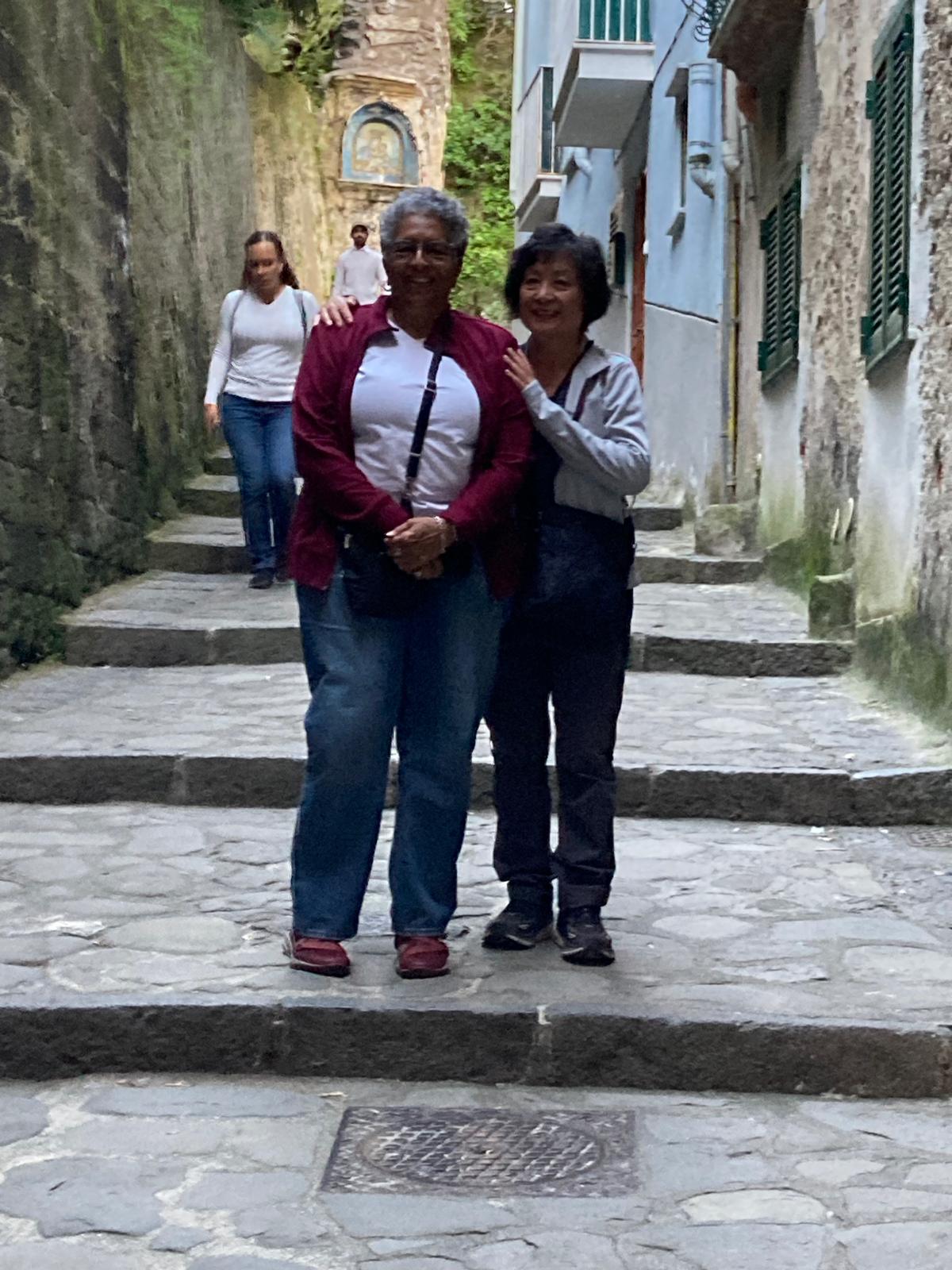
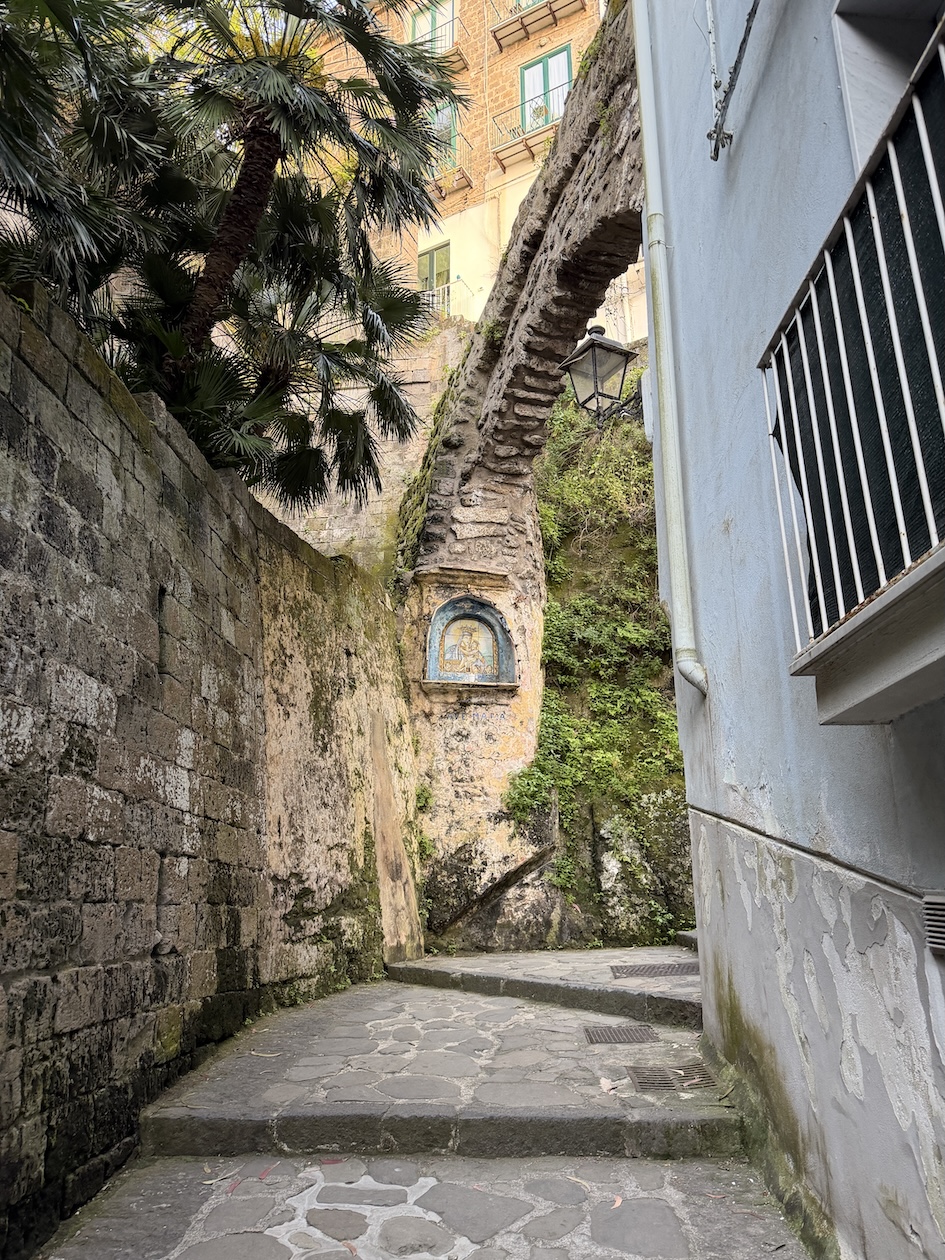
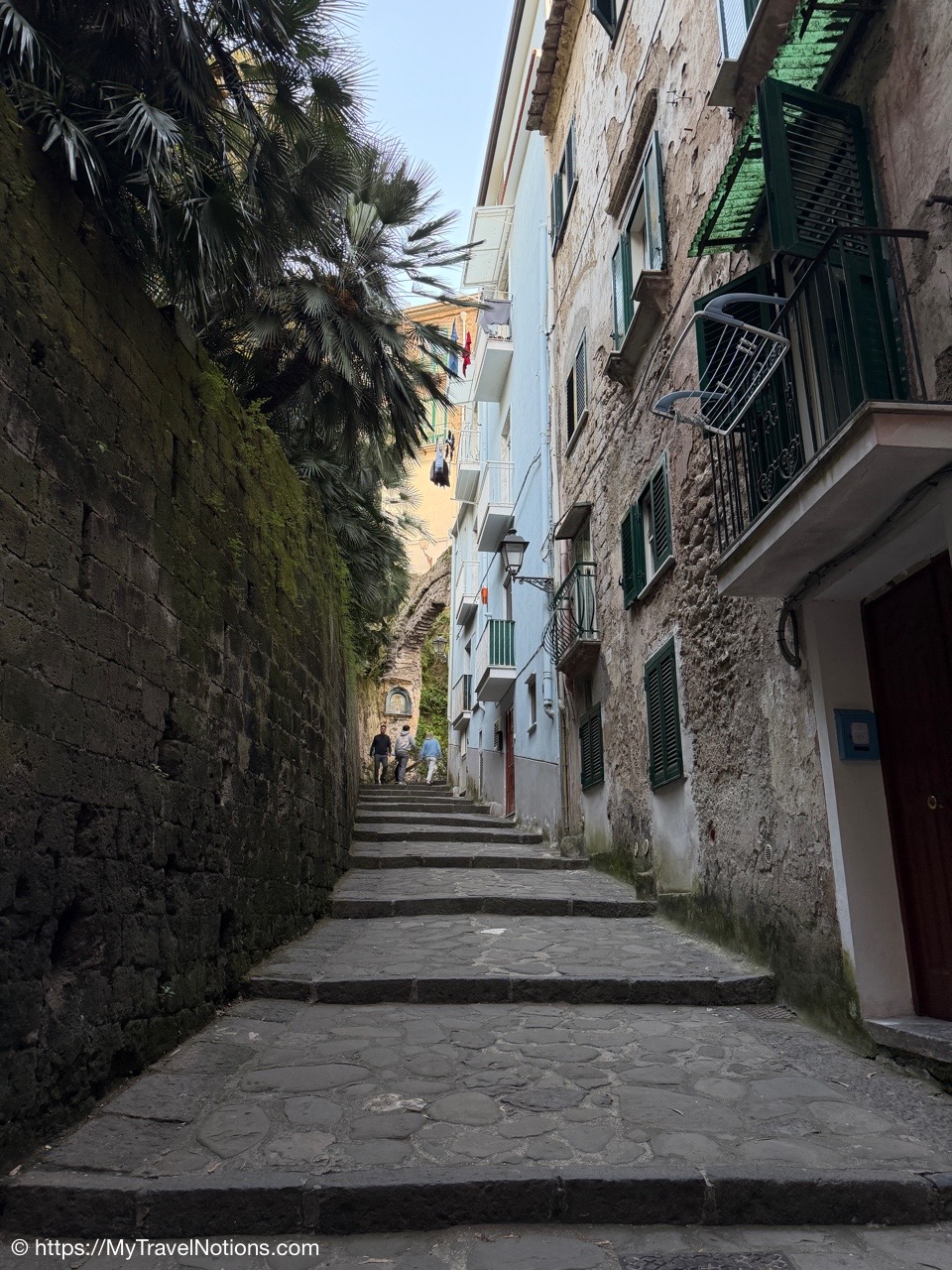
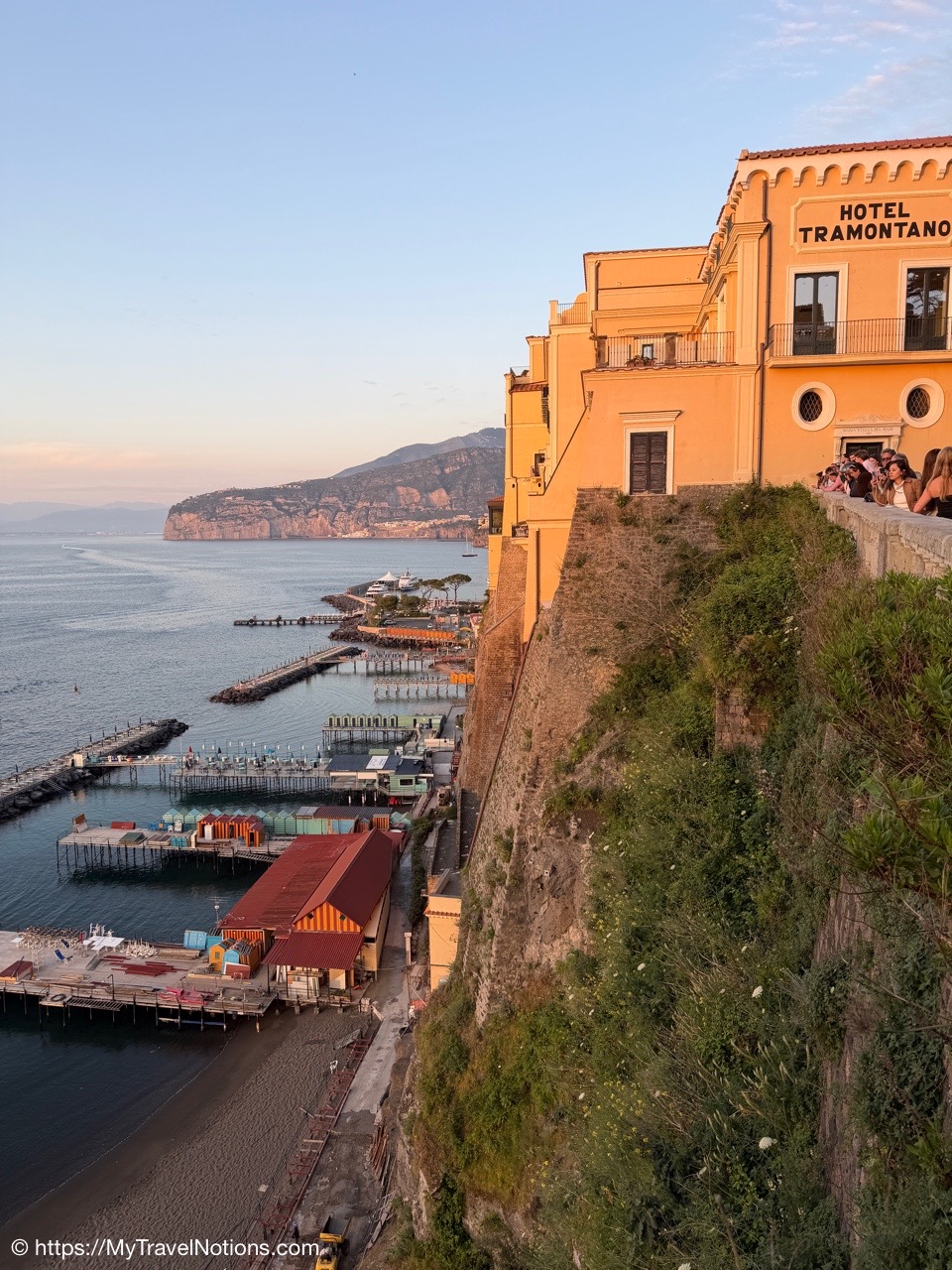
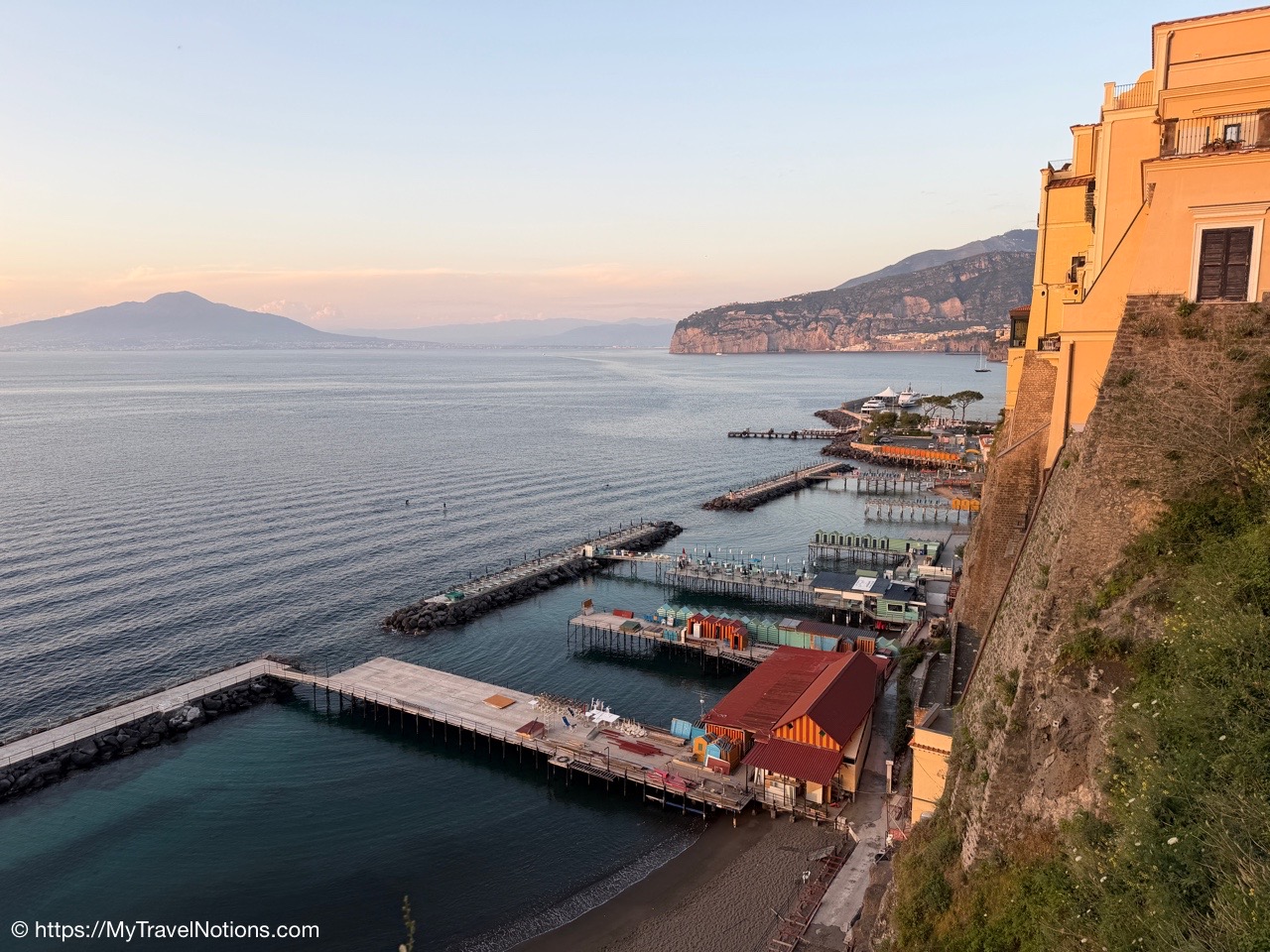
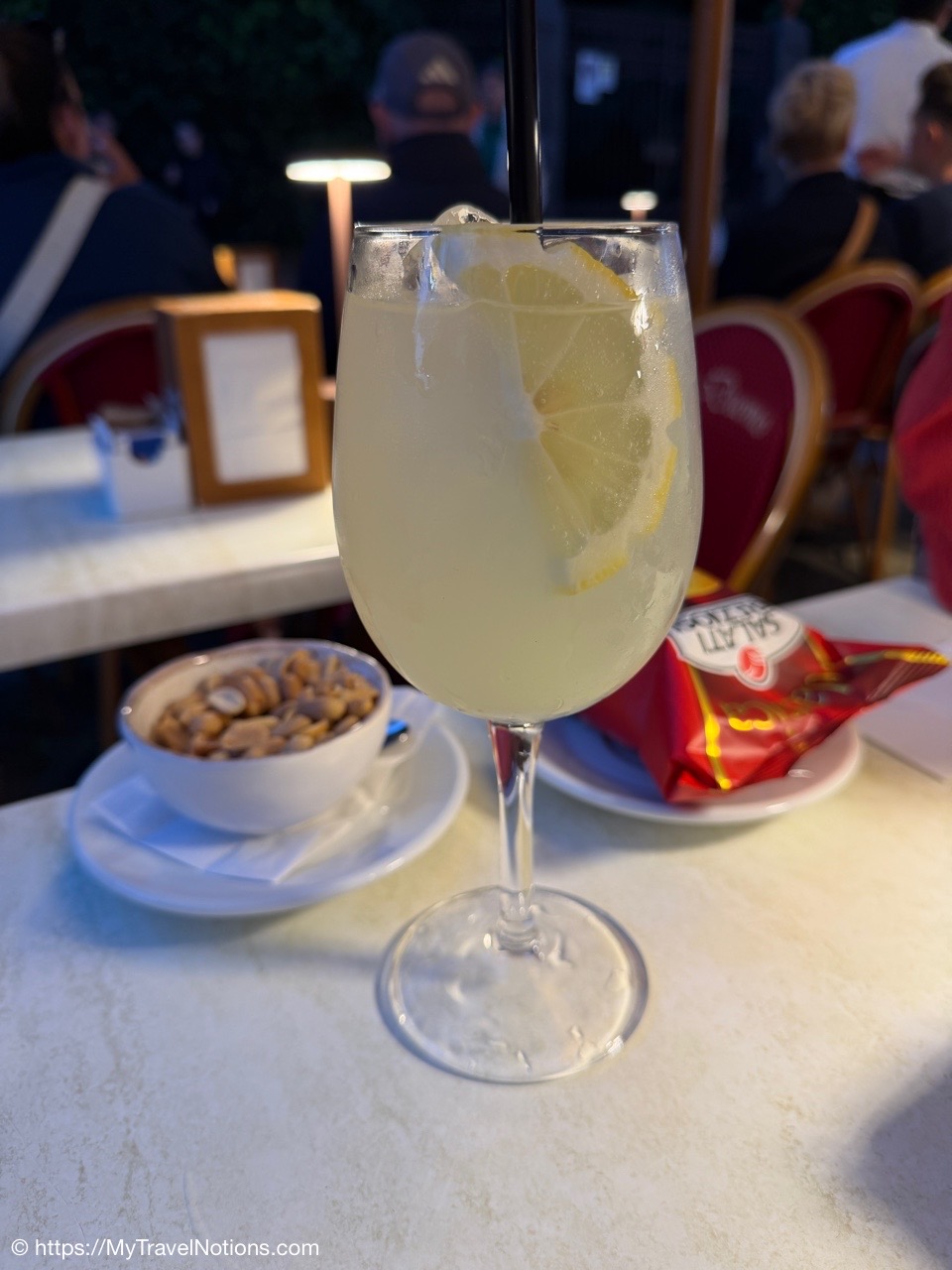
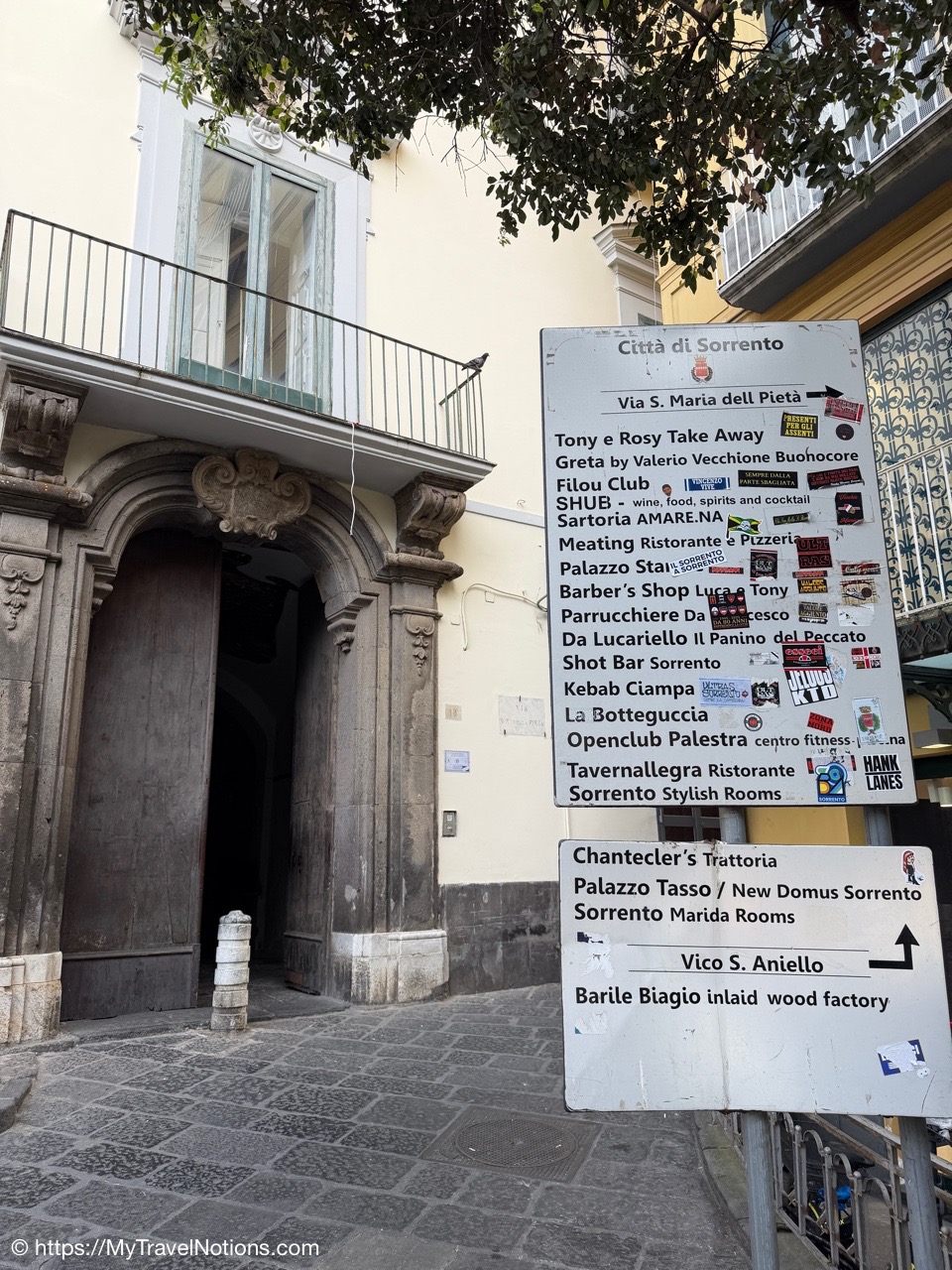
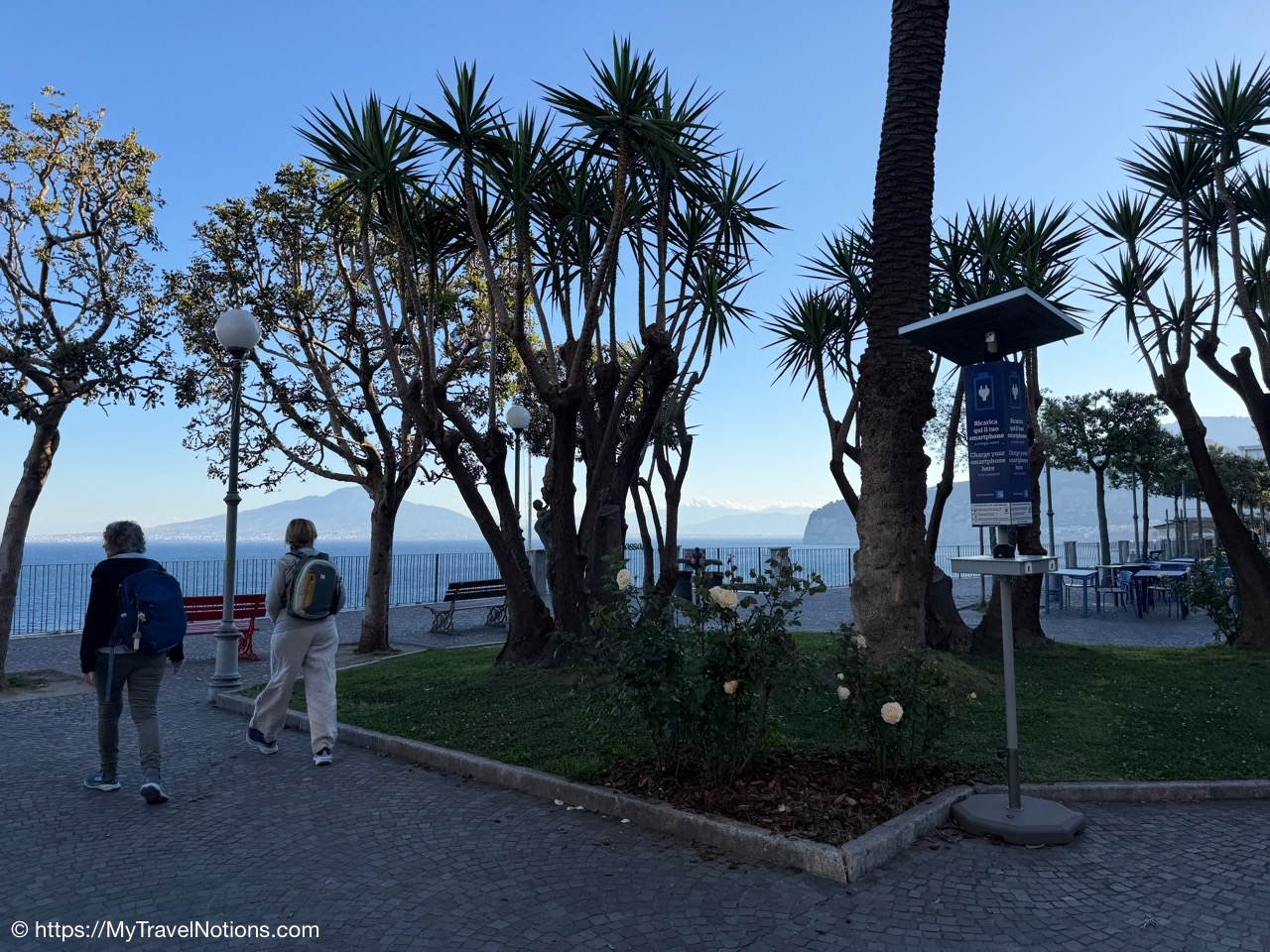
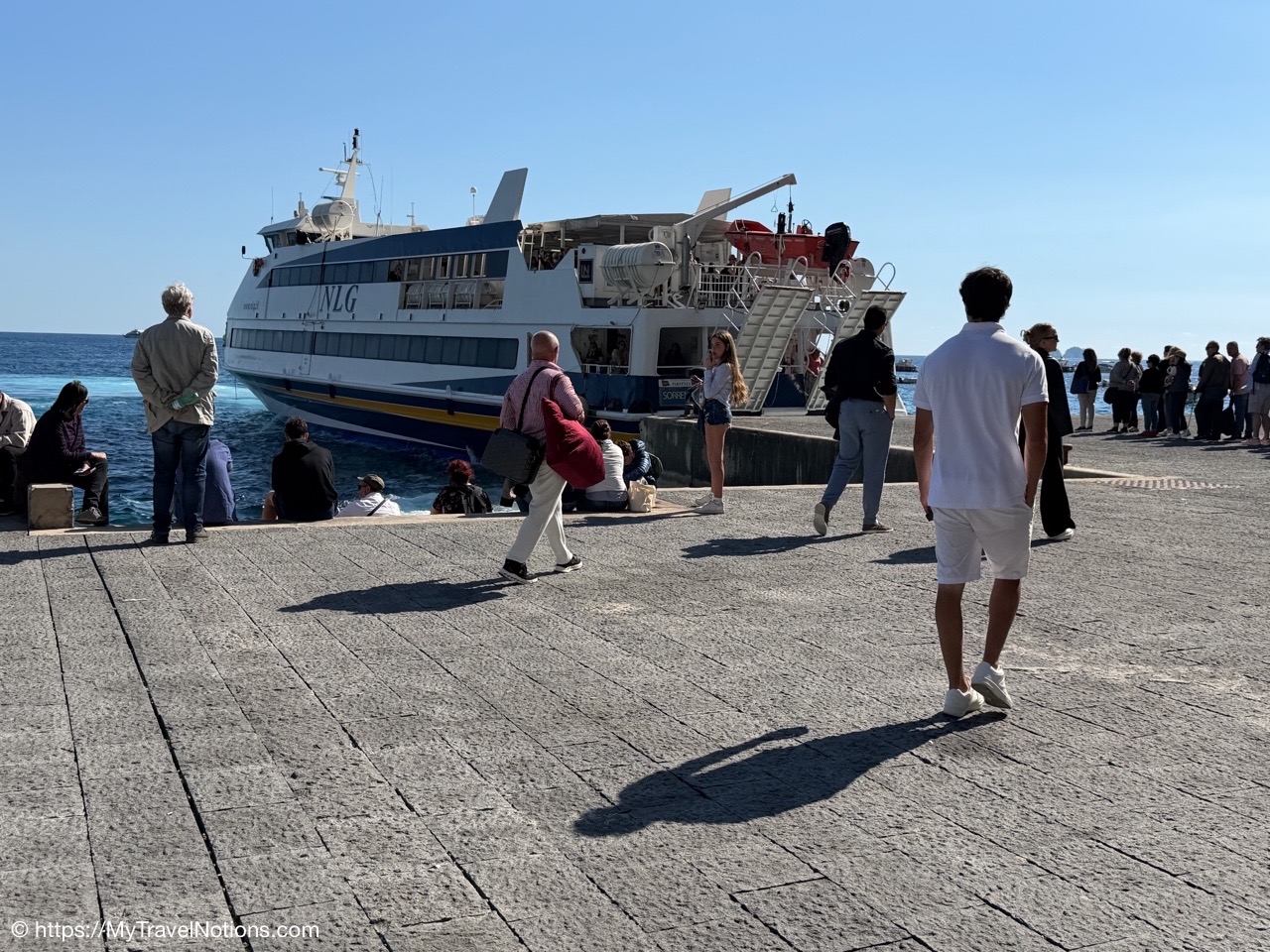
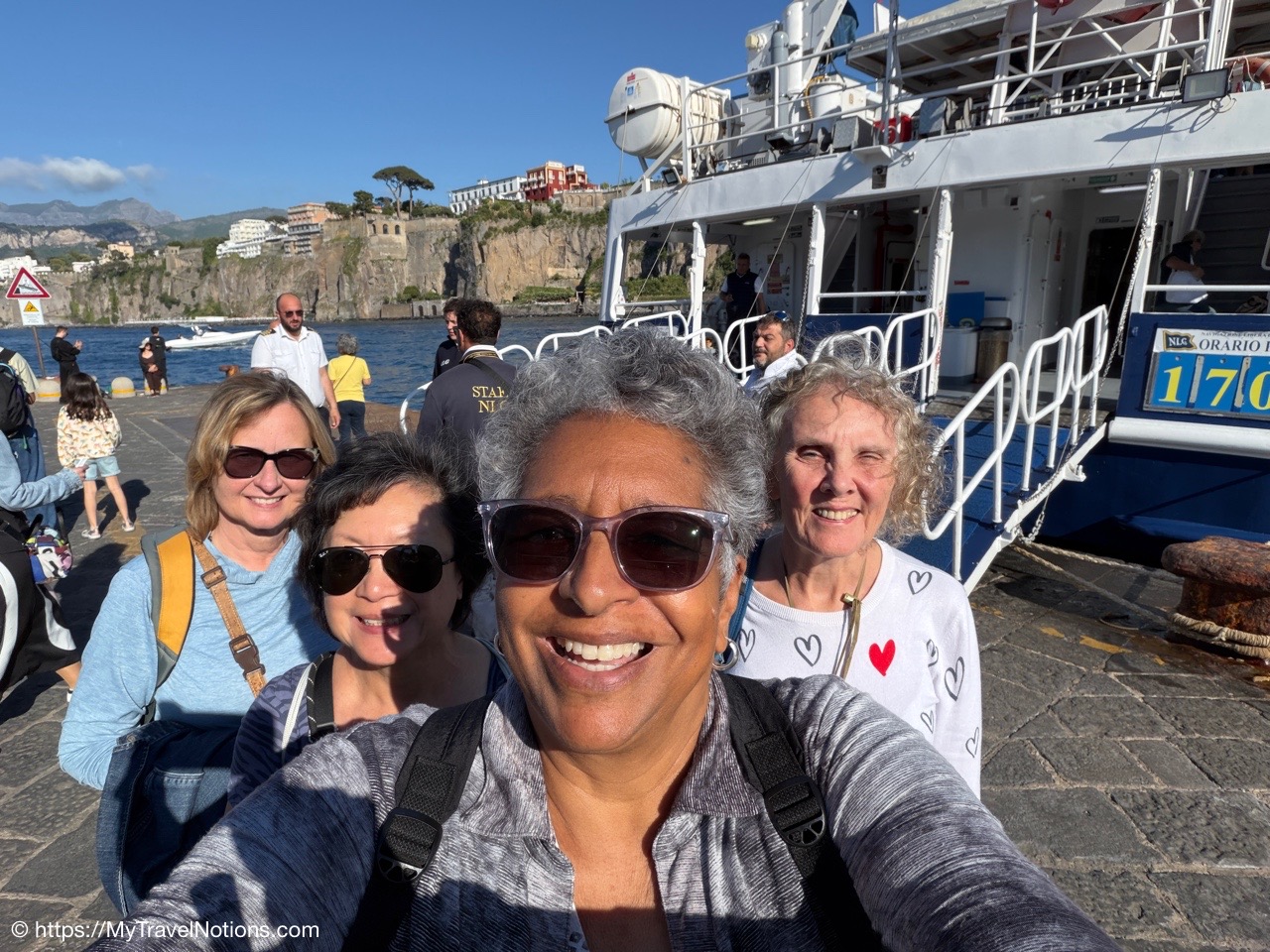
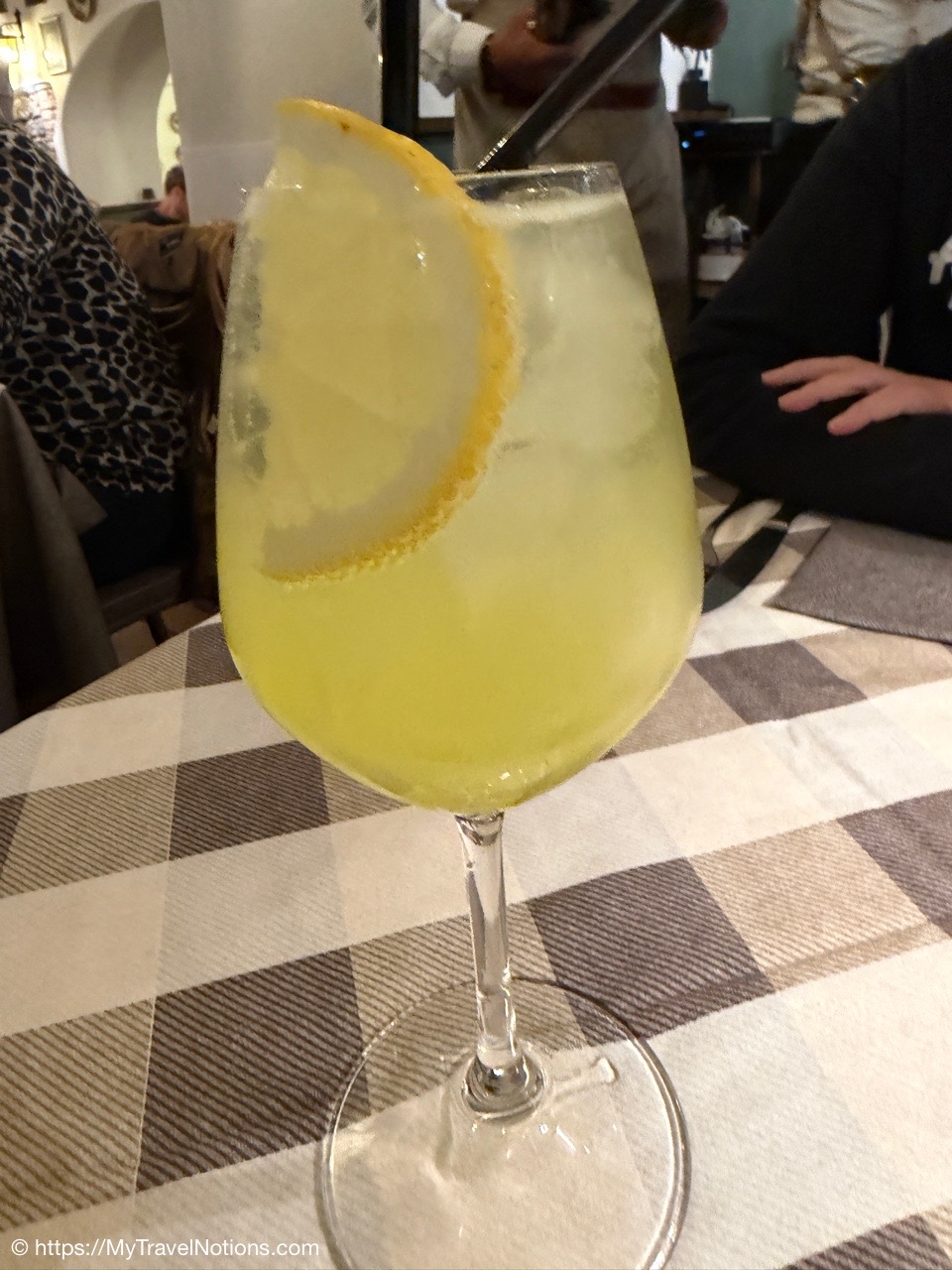
Me at the Marina Grande in Sorrento, with views of Mount Vesuvius in the distance, while overlooking the Bay of Naples after having dinner at Porta Marina Seafood. Simply a gorgeous night with even more gorgeous views. (April 21, 2026)Taking our last ferry ride out of our home base of Salerno to our new home base of Sorrento. (April 21, 2026)Getting ready to board our ferry for the 2 hr. 20 minutes ride from our home base of Salerno to our new home base of Sorrento. (April 21, 2026)Getting comfy with all our stuff on our ferry ride from Salerno to our new home base of Sorrento. (April 21, 2026)Views along the Gulf of Naples and the Amalfi Coast as we approach our new home base of Sorrento. (April 21, 2026)Arriving in Sorrento after a two and a half hour ferry ride from Salerno. We’ll be spending a wonderful 7 nights in Sorrento seeing and doing a variety of things. (April 21, 2026)Arriving in Sorrento after a two and a half hour ferry ride from Salerno. We’ll be spending a wonderful 7 nights in Sorrento seeing and doing a variety of things. (April 21, 2026)From the Marina Piccola in Sorrento, we dragged our luggage through the stone port streets to the close-by taxi stand to take us to our hotels in the old town area. (April 21, 2026)My hotel, the Palazzo Tasso, located along the walkway of the Via Santa Maria della Pieta, a street that dates back to centuries before Christ. I stayed in during my first visit in 2017 and loved the location. (April 21, 2026)My very comfy room with a small balcony at the Palazzo Tasso in Sorrento. And, even though it overlooks the busy street of the Corso Italio, closing the doors kept the street noise out. (April 21, 2026)My very comfy room at the Palazzo Tasso in Sorrento. (April 21, 2026)My bathroom, with a nice-sized shower, at the Palazzo Tasso in Sorrento. (April 21, 2026)A view of the busy street of the Corso Italia from the small balcony of my room at the Palazzo Tasso in Sorrento. (April 21, 2026)A view of the busy street of the Corso Italia from the small balcony of my room at the Palazzo Tasso in Sorrento. (April 21, 2026)Heading down to the Marina Grande for dinner at Porta Marina Seafood for our first group dinner in Sorrento. Thanks Alice for making our dinner reservations. (April 21, 2026)Heading down to the Marina Grande through the fortification walls for dinner at Porta Marina Seafood for our first group dinner in Sorrento. That’s Rosie, to the right, ahead of me. (April 21, 2026)Walking down to the Marina Grande in Sorrento for dinner heading the massive stone archway of the majestic Greek Gate that dates all the way back to the 4th century BC. (April 21, 2026)Heading down to the Marina Grande through the ancient Greek stone fortifications for our first group dinner at Porta Marina Seafood in Sorrento. (April 21, 2026)Views of the Marina Grande and Rosie as we head to dinner at Porta Marina Seafood in Sorrento. (April 21, 2026)The Marina Grande is a small traditional fishing port that sits underneath the limestone cliffs of Sorrento’s old town. (April 21, 2026)The Marina Grande is a small traditional fishing port that sits underneath the limestone cliffs of Sorrento’s old town. (April 21, 2026)Me with with views of the small traditional fishing port of the Marina Grande underneath the limestone cliffs of Sorrento’s old town. (April 21, 2026)The Marina Grande is a small traditional fishing port that sits underneath the limestone cliffs of Sorrento’s old town. (April 21, 2026)The Marina Grande is a small traditional fishing port that sits underneath the limestone cliffs of Sorrento’s old town. (April 21, 2026)The Marina Grande is a small traditional fishing port that sits underneath the limestone cliffs of Sorrento’s old town. (April 21, 2026)The Marina Grande is a small traditional fishing port that sits underneath the limestone cliffs of Sorrento’s old town. (April 21, 2026)The Marina Grande is a small traditional fishing port that sits underneath the limestone cliffs of Sorrento’s old town. (April 21, 2026)Arriving at the Porta Marina Seafood restaurant for dinner in Sorrento’s Marina Grande. (April 21, 2026)We moved from the sunny to a shady spot for our dinner at Porta Marina Seafood at the Marina Grande in Sorrento where we all order seafood. (April 21, 2026)I had the Linguine Pasta with Lobster at Porta Marina Seafood along the Marina Grande in Sorrento. (April 21, 2026)Everyone else had the Grilled Octopus and salad at Porta Marina Seafood along the Marina Grande in Sorrento and loved it. They literally cleaned their plates they loved it so much. (April 21, 2026)After dinner at the Marina Grande in Sorrento, it was time for us to slowly make our way back up to Sorrento’s old town, through the ancient Greek stone fortifications, where we’re staying for the next 7-nights. (April 21, 2026)The fishermen bring in their evening catch at the Marina Grande. (April 21, 2026)The stairway up to Sorrento’s old town through the ancient Greek stone fortifications from the Marina Grande and the houses along the cliffside. (April 21, 2026)That’s Janet as we slowly take the stairway up from the Marina Grande after dinner back up to old town Sorrento through the Greek stone fortifications. (April 21, 2026)After dinner we slowly strolled back up from the Marina Grande to the old town area of Sorrento where we’re staying. Thanks Janet for the photo of Alice and I. (April 21, 2026)That’s Janet as we slowly take the stairway up from the Marina Grande after dinner back up to old town Sorrento through the Greek stone fortifications. (April 21, 2026)Continuing our after dinner slow stroll back up through the ancient Greek stone fortifications from the Marina Grande to the old town area of Sorrento where we’re staying. (April 21, 2026)We made a leisurely stop for more gorgeous after dinner sunset views of the Marina Piccola and the Bay of Naples from the Piazza della Vittoria, a charming public square in Sorrento. (April 21, 2026)We made a leisurely stop for more gorgeous after dinner sunset views of the Marina Piccola and the Bay of Naples from the Piazza della Vittoria, a charming public square in Sorrento. (April 21, 2026)And, to cap off the night a Lemoncello Spritz. Lemons are deeply ingrained in the local cuisine, landscape and economy of Sorrento and the Amalfi Coast. More on lemons to come, til then, Salute! (April 21, 2026)
A Fun Lemon-y filled day in our Home Base of Sorrento
Even though I got to sleep in, this still turned out to be a full day of enjoying our home base of Sorrento. First having a simple but delicious breakfast, a tour of a lemon-filled Lemon Grove Garden and Lemoncello tastings at I Giardini di Cataldo then a late afternoon walking tour of Sorrento with a stop for pizza, it turned into a full and intoxicating day.
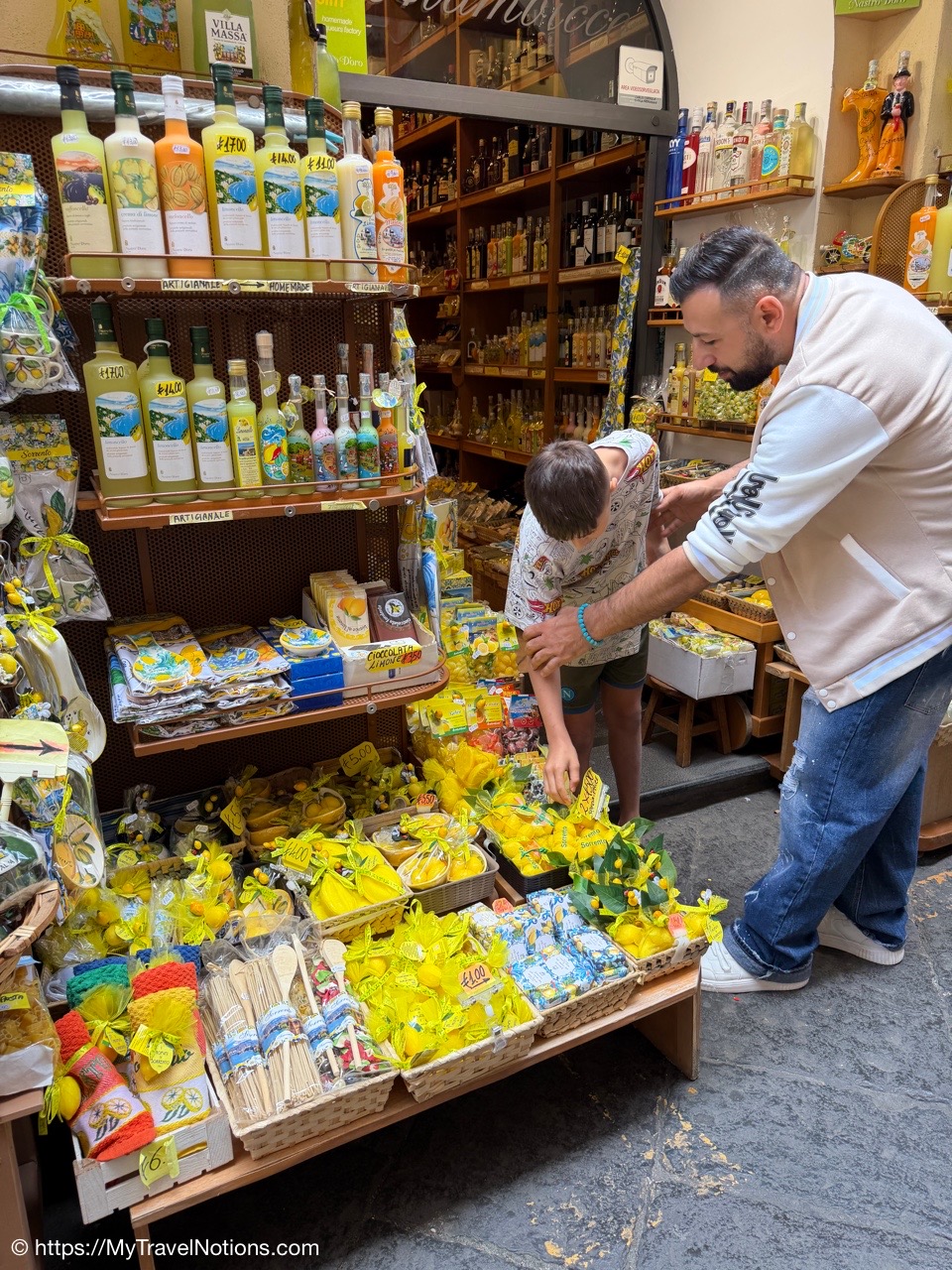
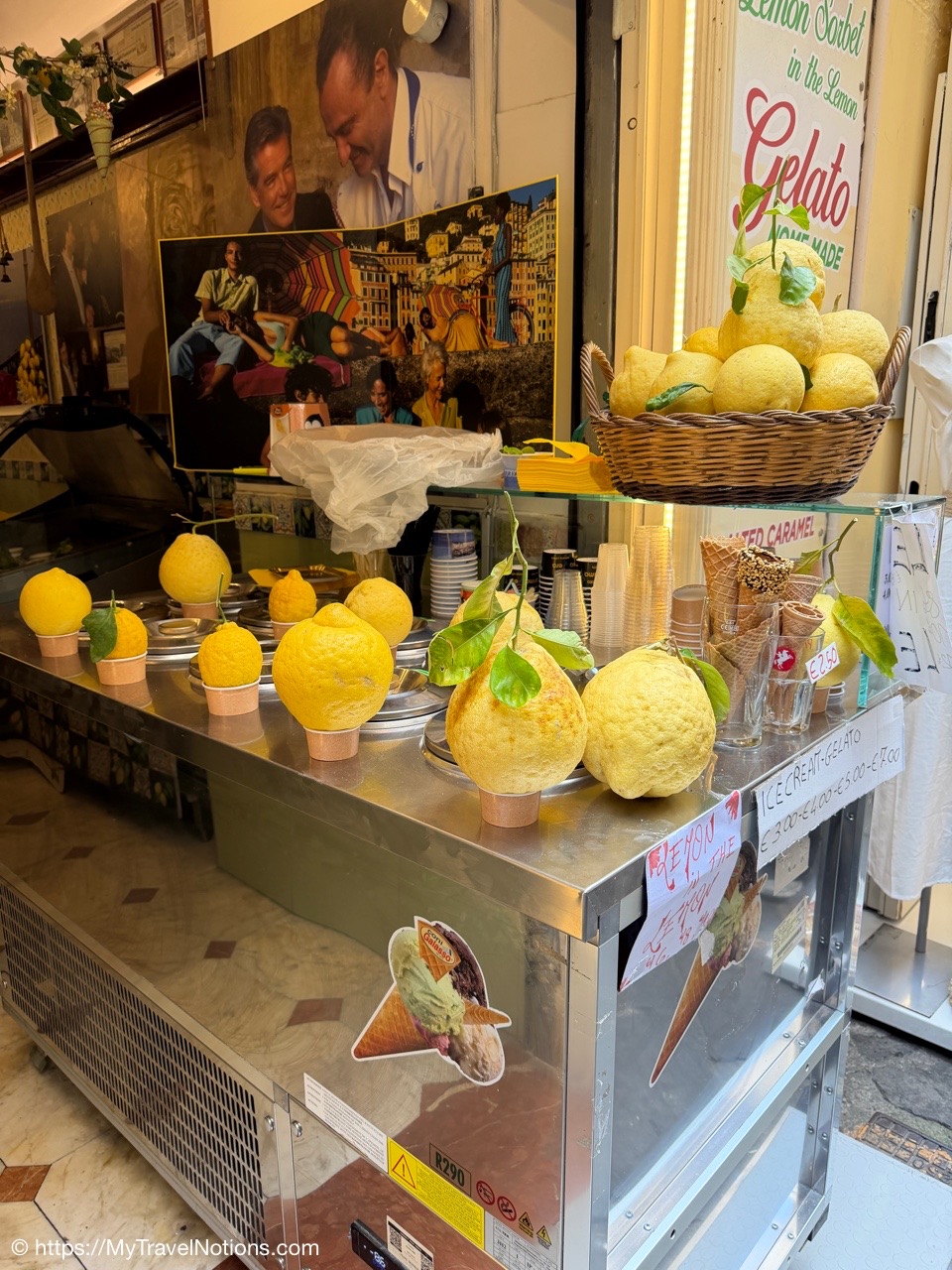
Lemons are a big deal thing here in Sorrento and pretty much throughout the Amalfi Coast.
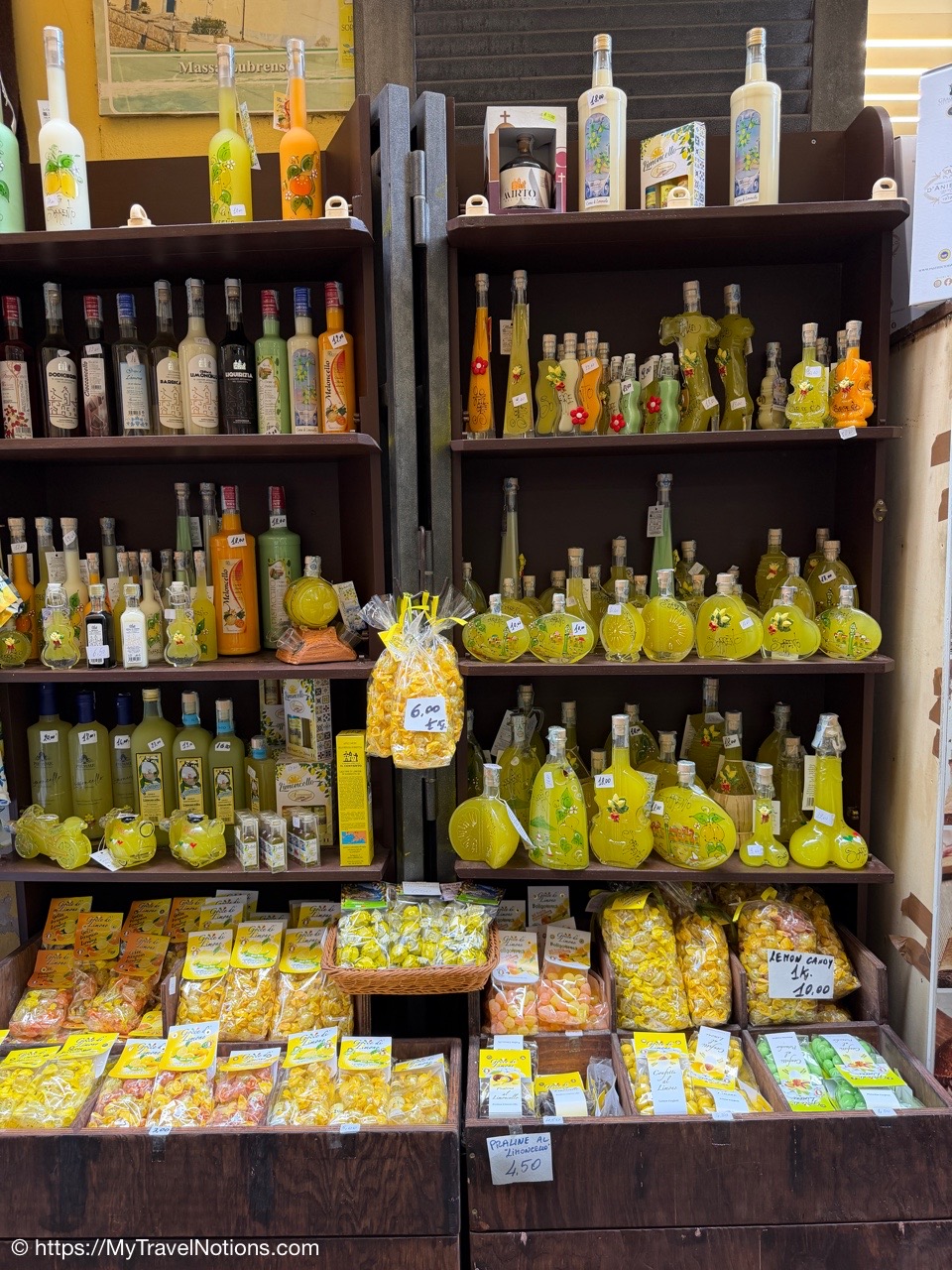
These aromatic fruits serve as the primary cultural, agricultural and economic symbol of Sorrento. And, you’re guaranteed to find all kinds of infused lemon products at the various shops.
And my most favorite product from these lemons are not the candies, cookies or desserts but the Lemoncello. Specifically a Lemoncello Spritz but I also like the Lemoncello liquor that it’s made from.
Just so you know, a Lemoncello is an Italian lemon liqueur, primarily produced in Southern Italy, the Amalfi Coast, made by macerating lemon peels in high-proof alcohol and sweetening it with sugar syrup. It is characterized by its bright yellow color, intense sweet-tart lemon flavor, and is traditionally served chilled as a post-dinner digestive or what I love, a Lemoncello Spritz a refreshing, light Italian cocktail made by mixing the limoncello liqueur with prosecco and club soda.
Here’s to a lemon-y leisurely day in our home base of Sorrento.
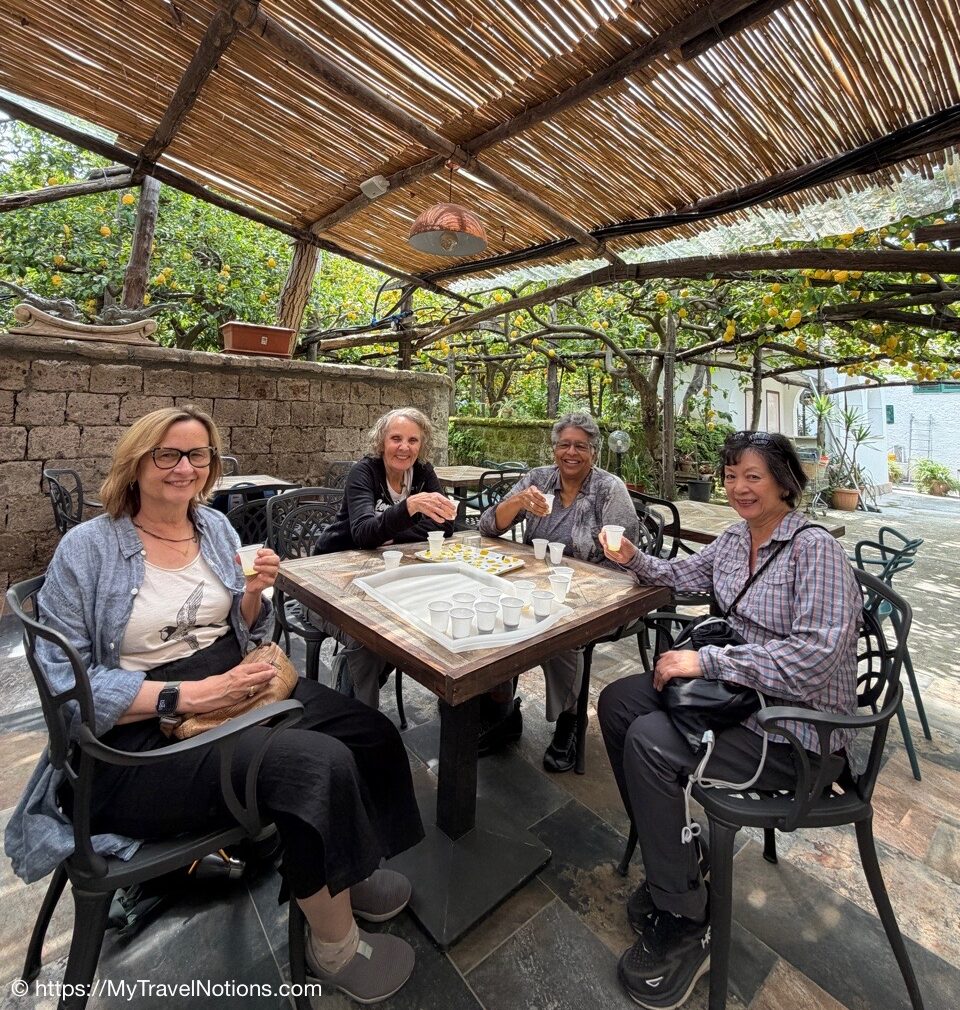
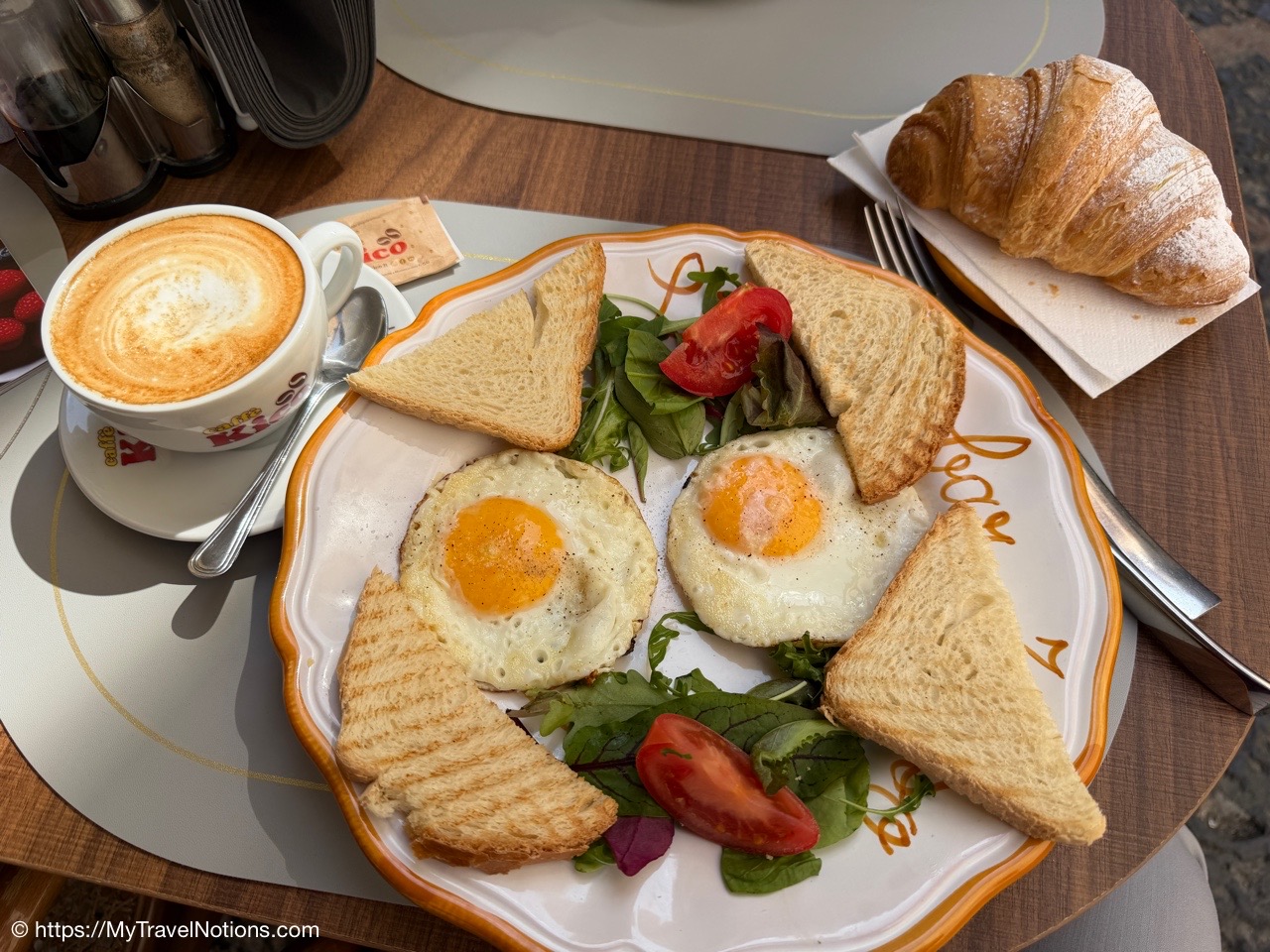
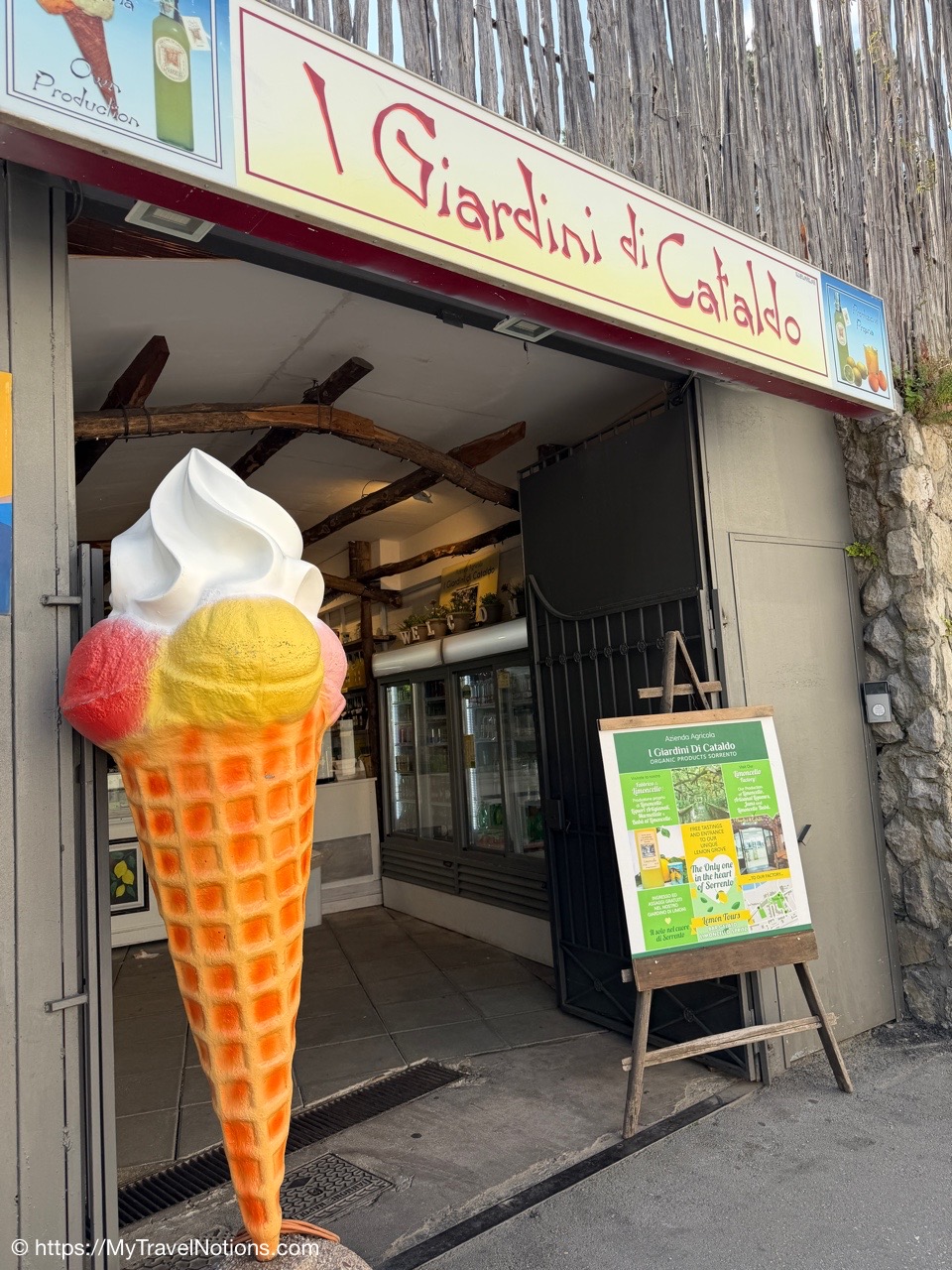
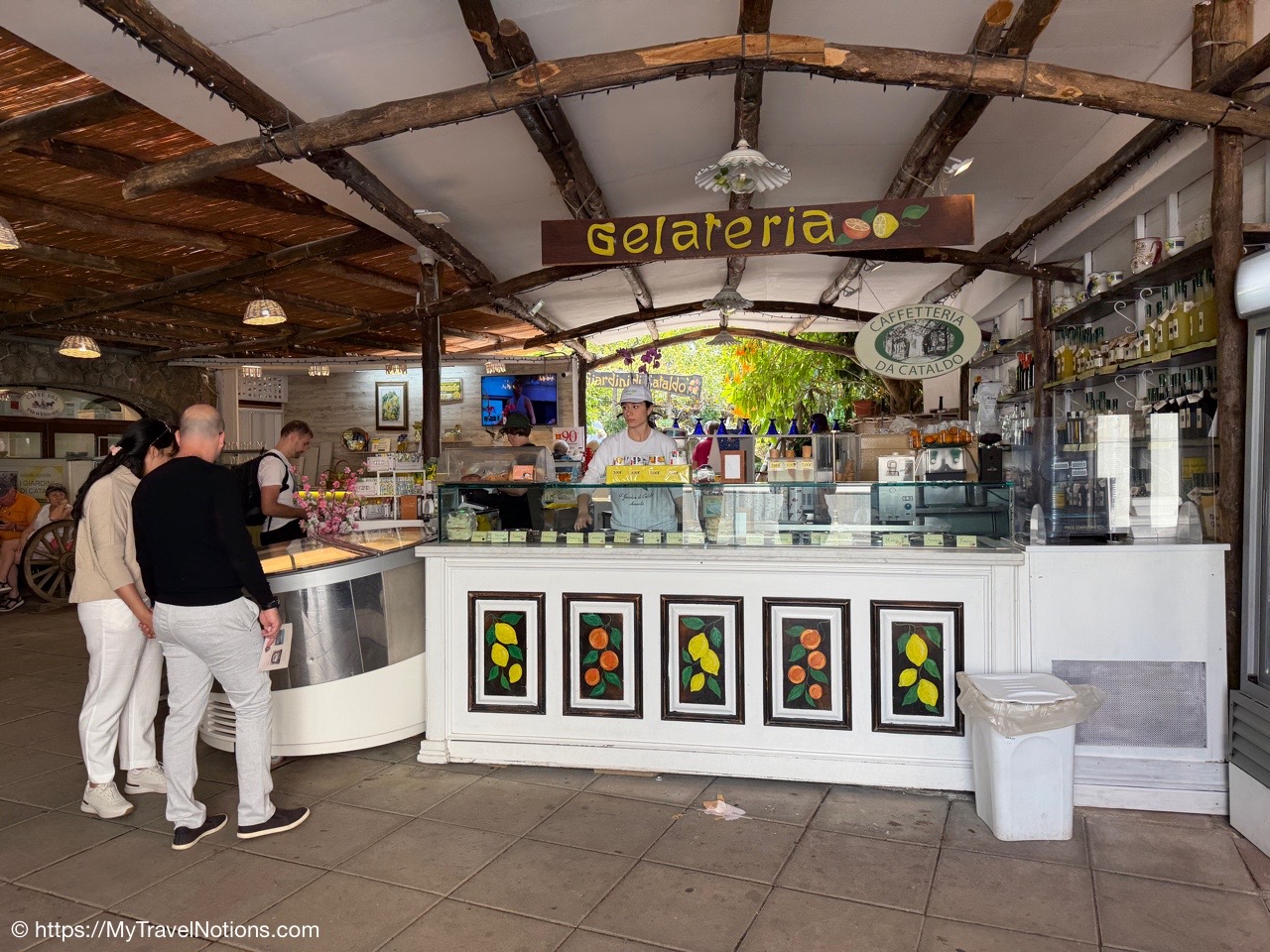
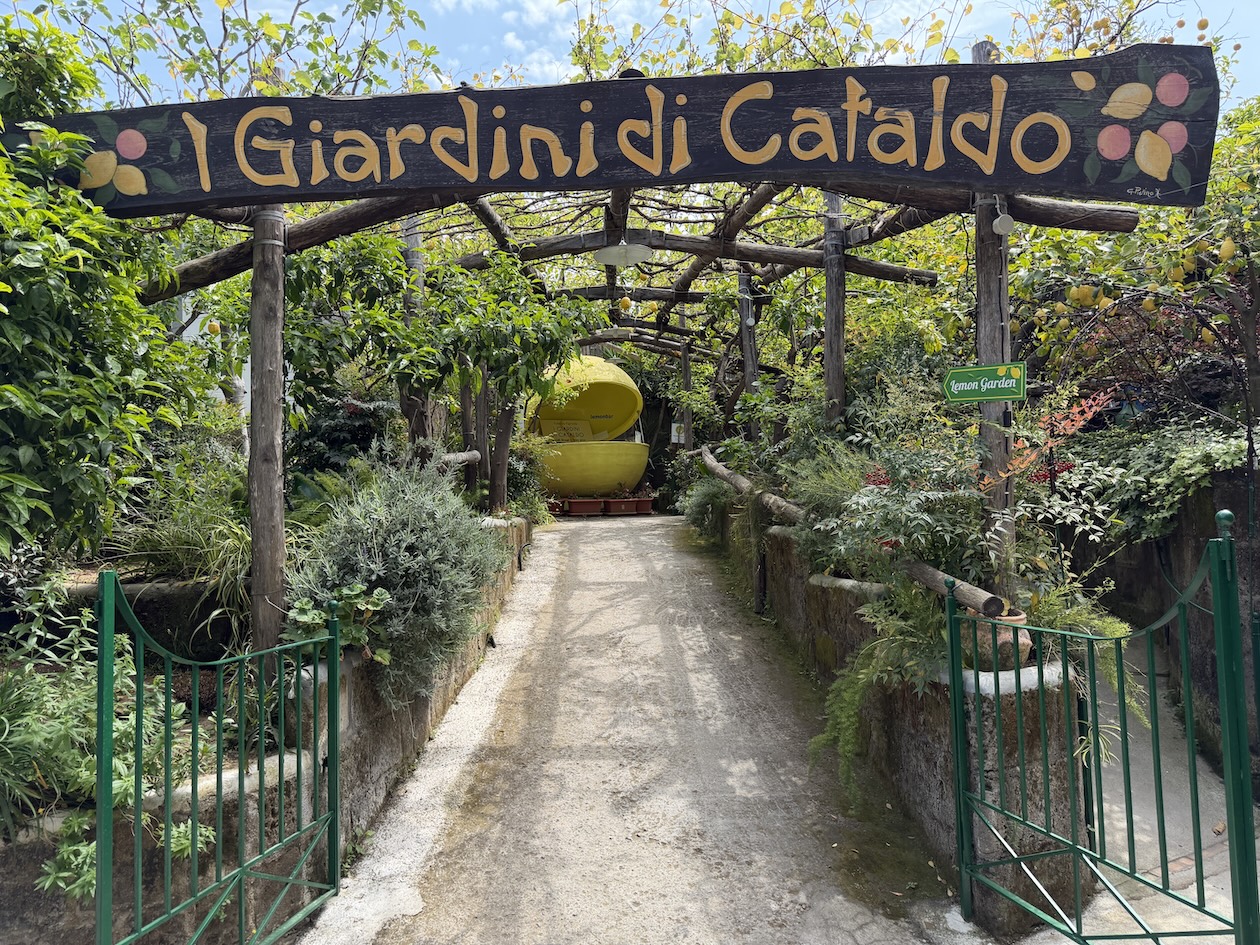
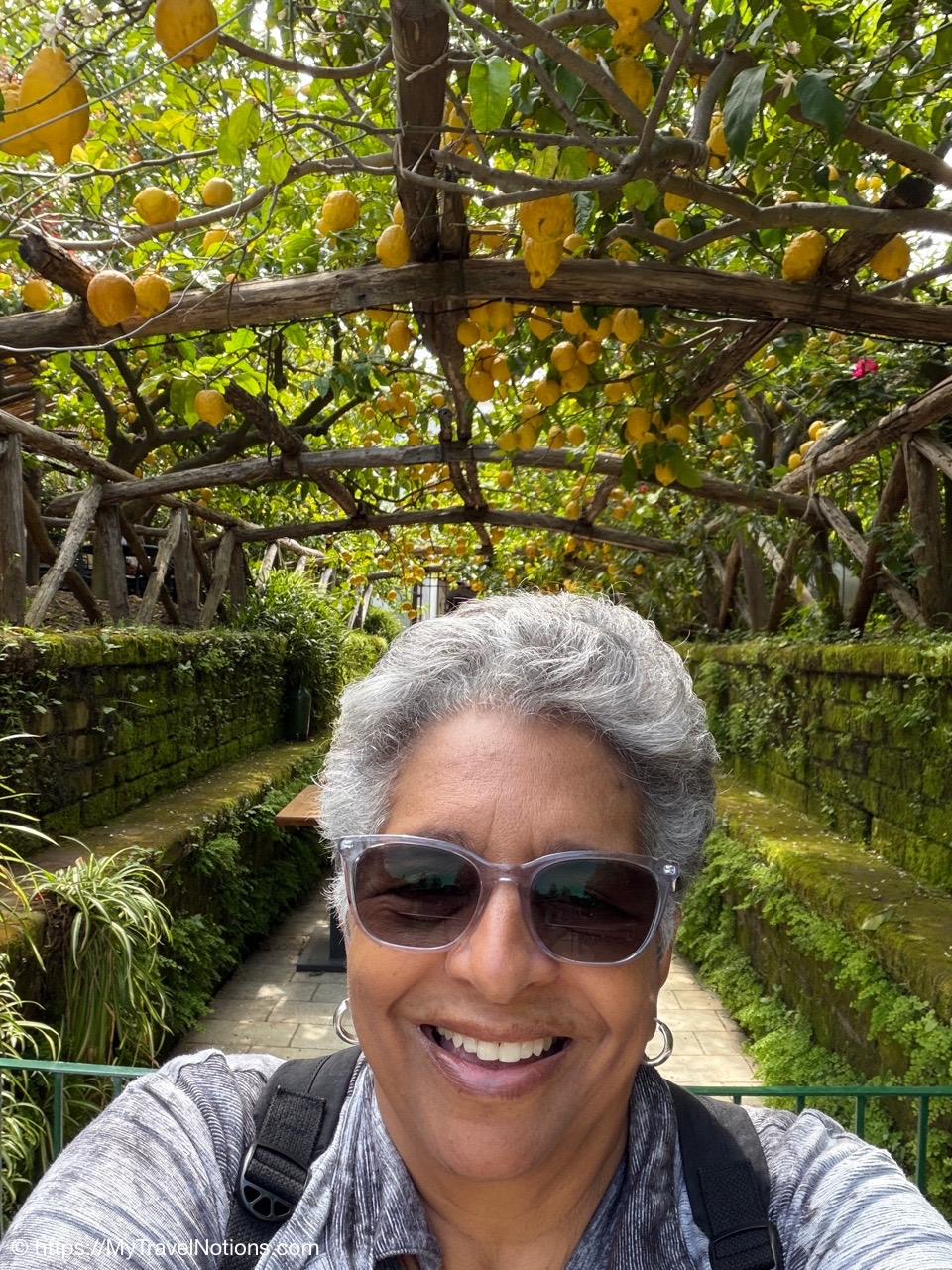
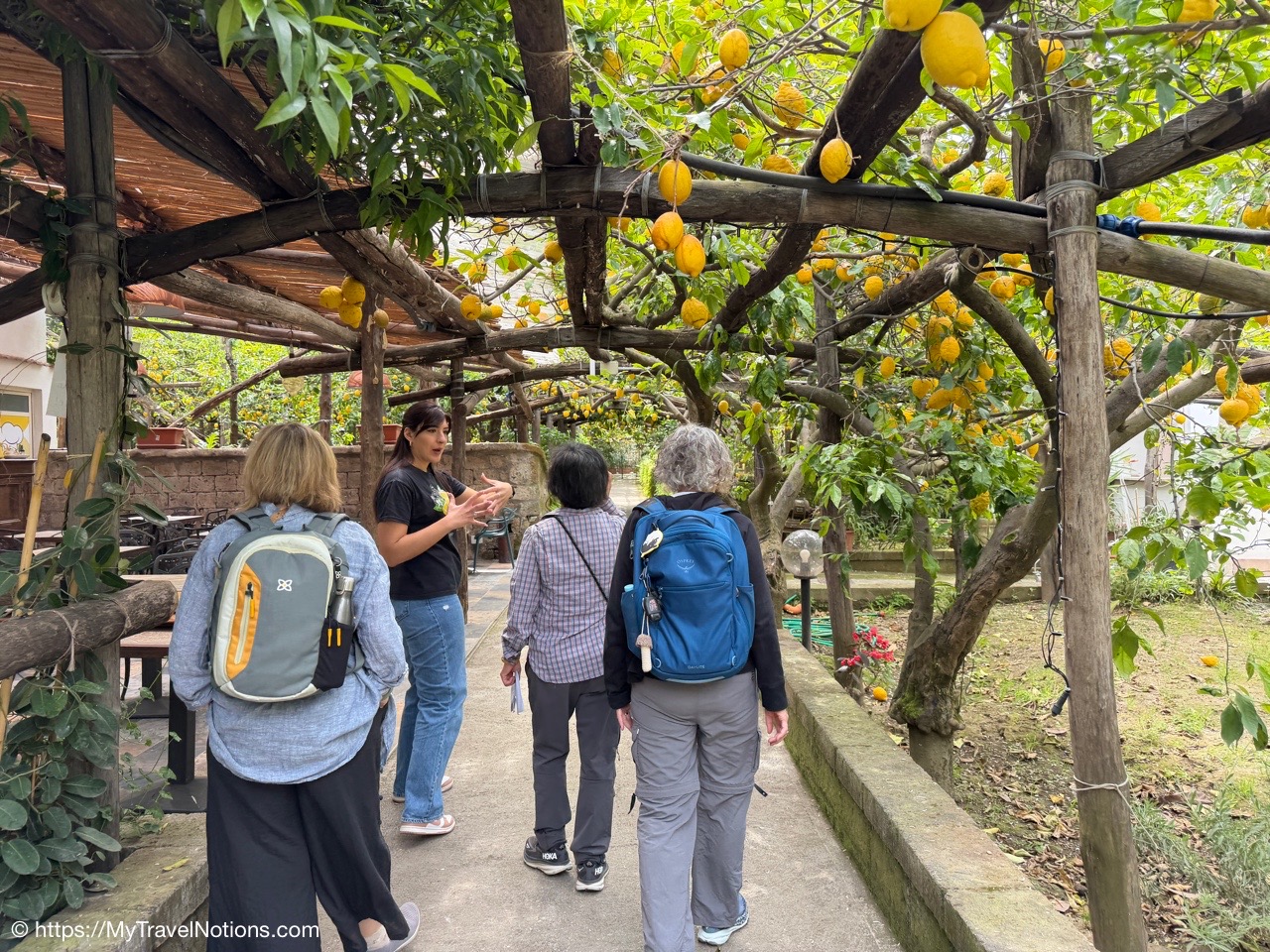
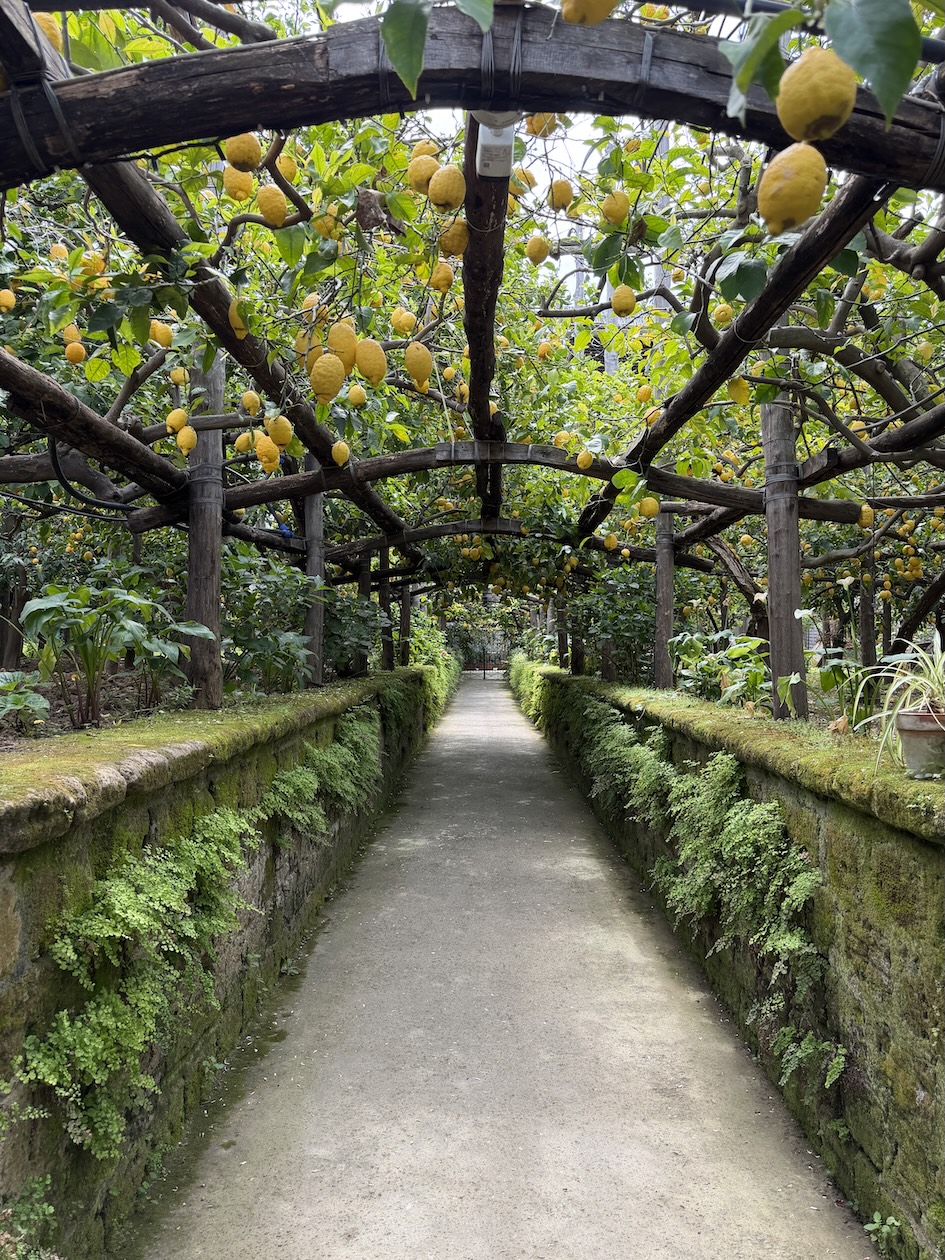
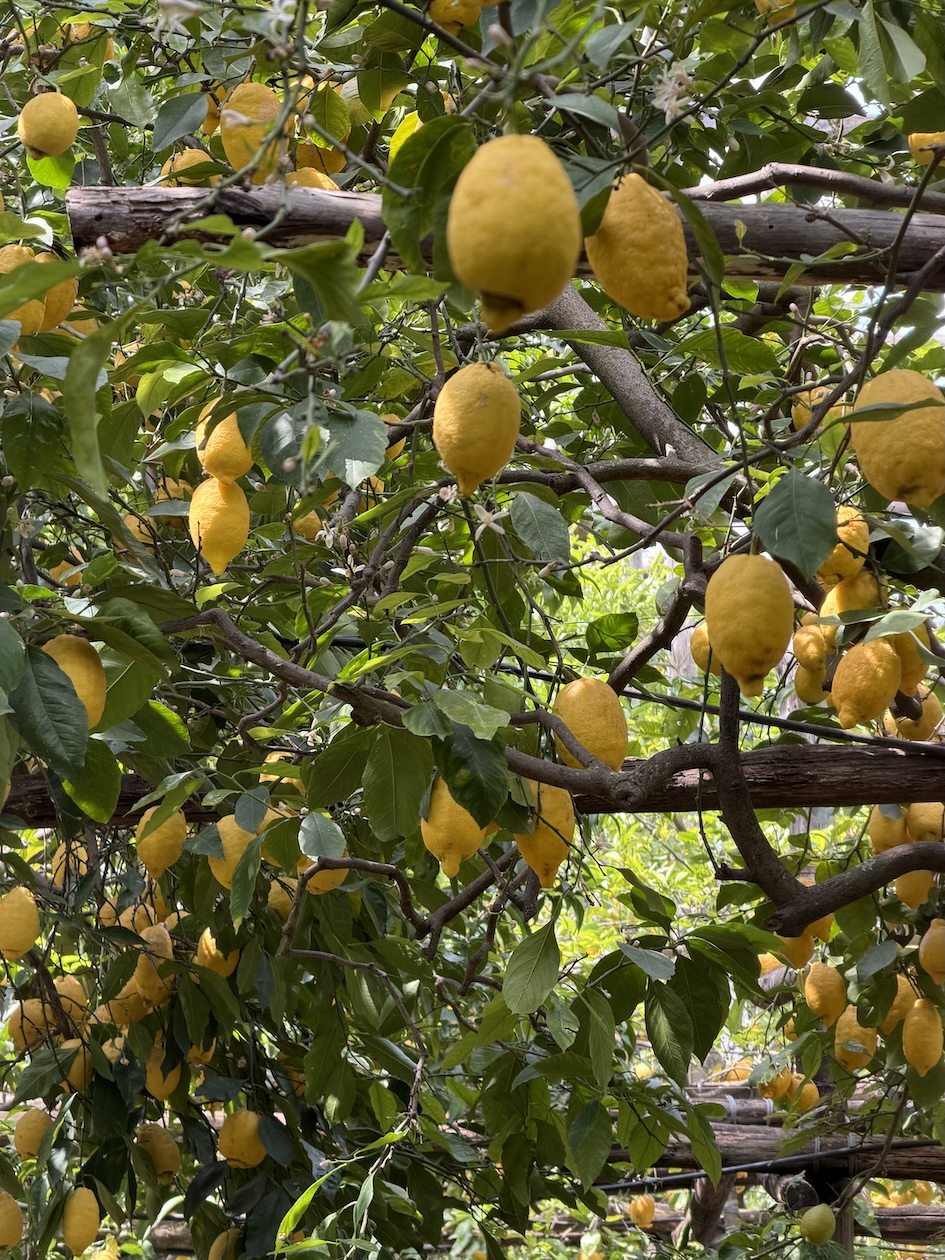
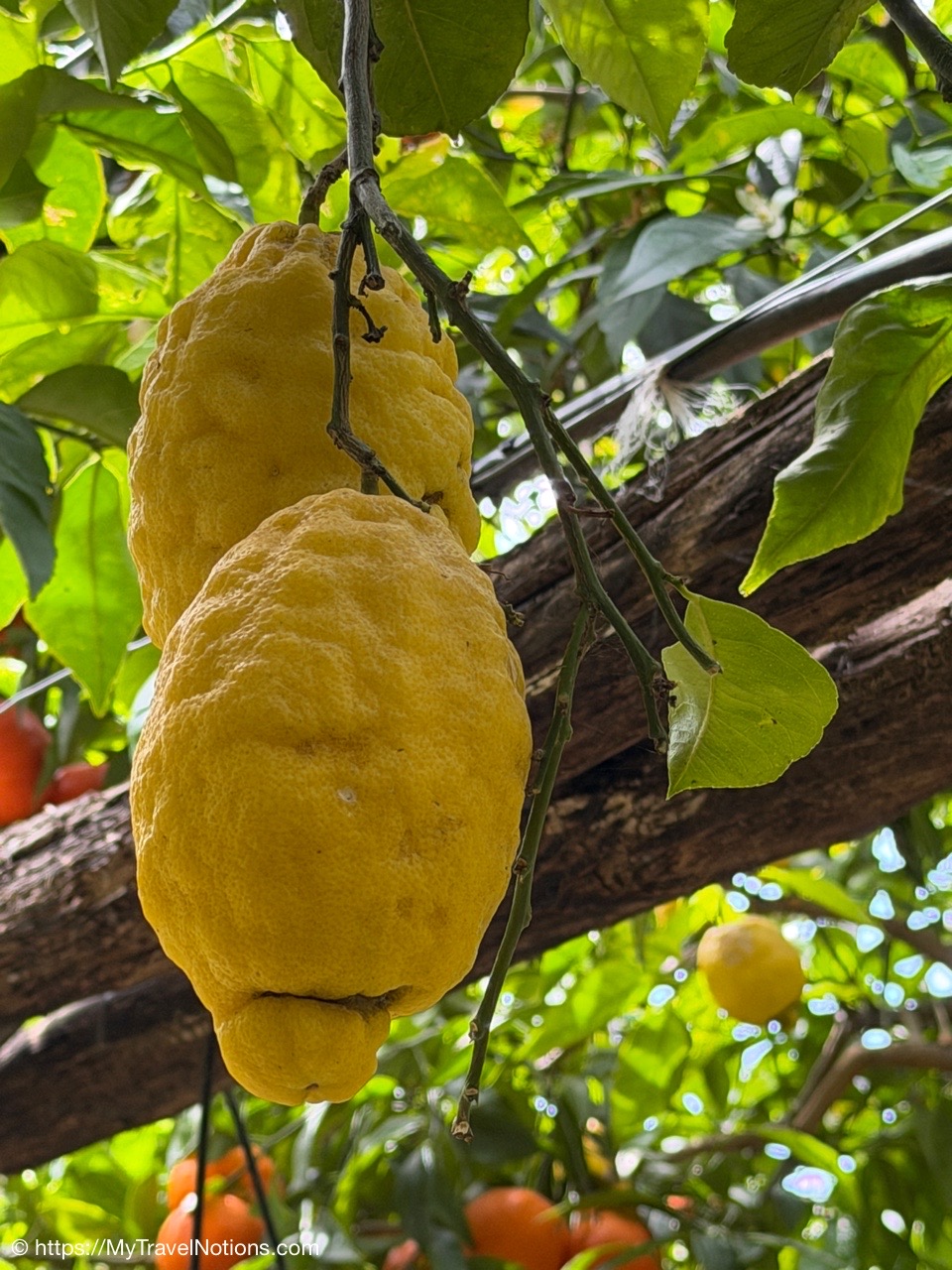
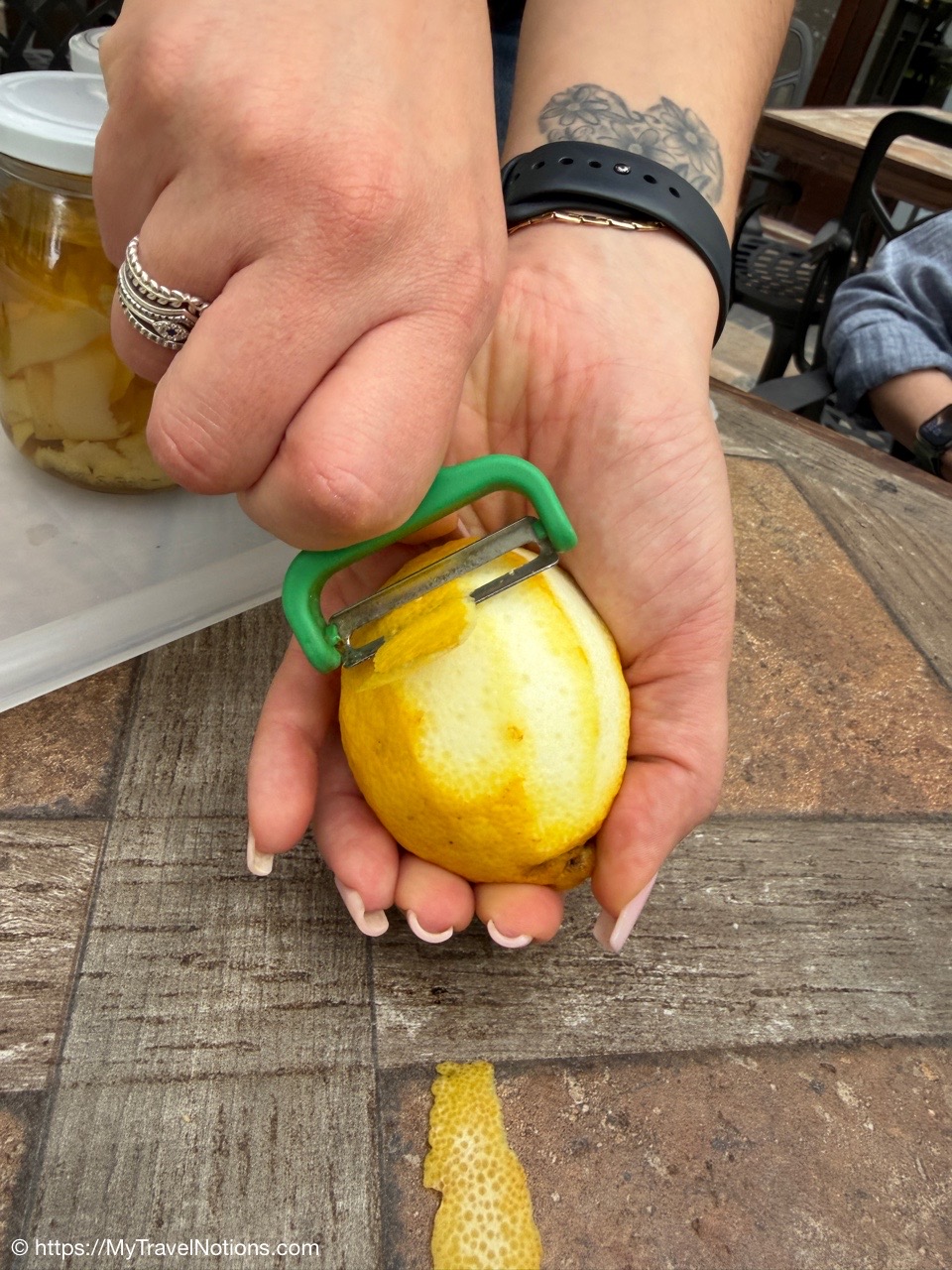
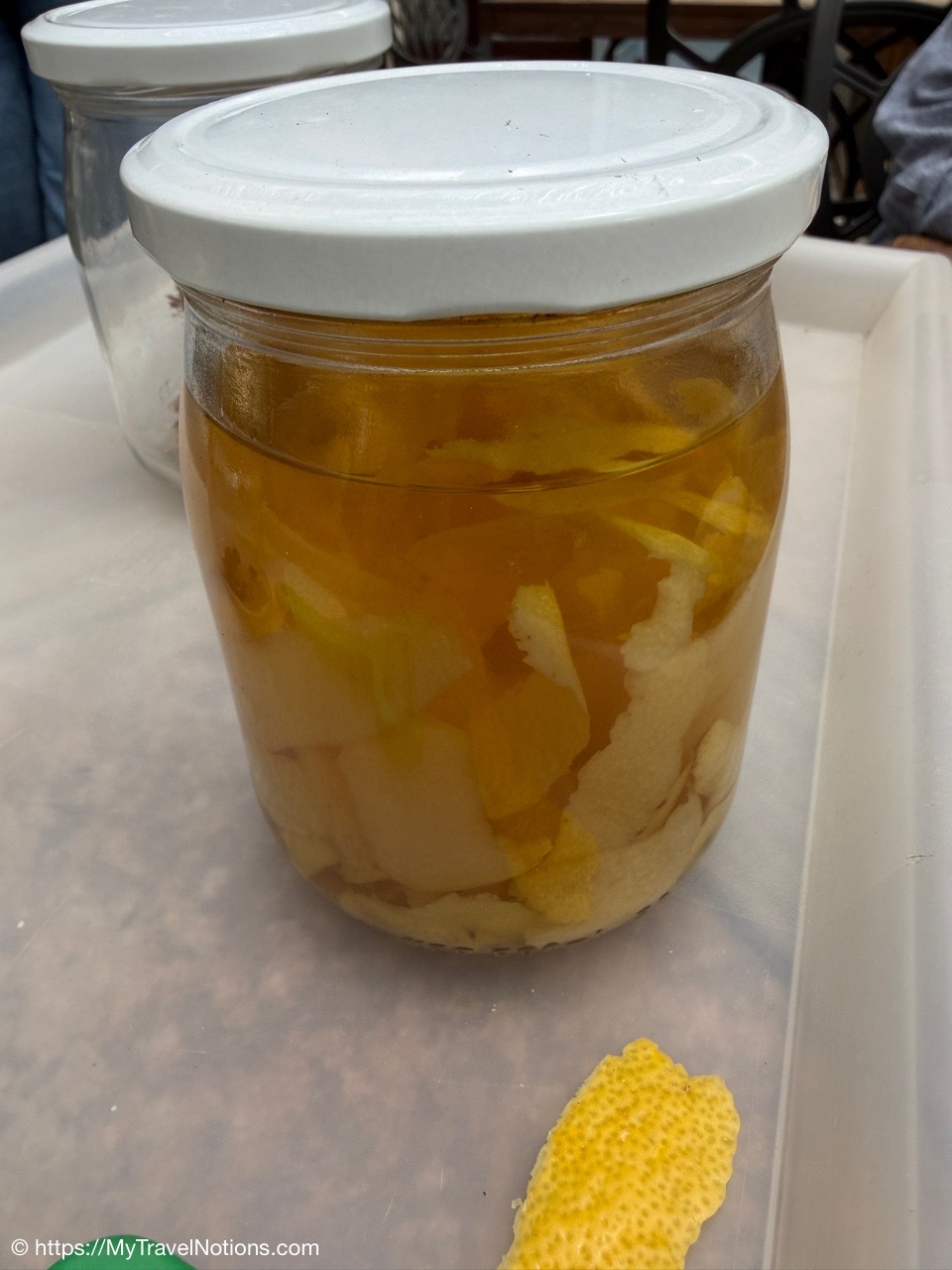
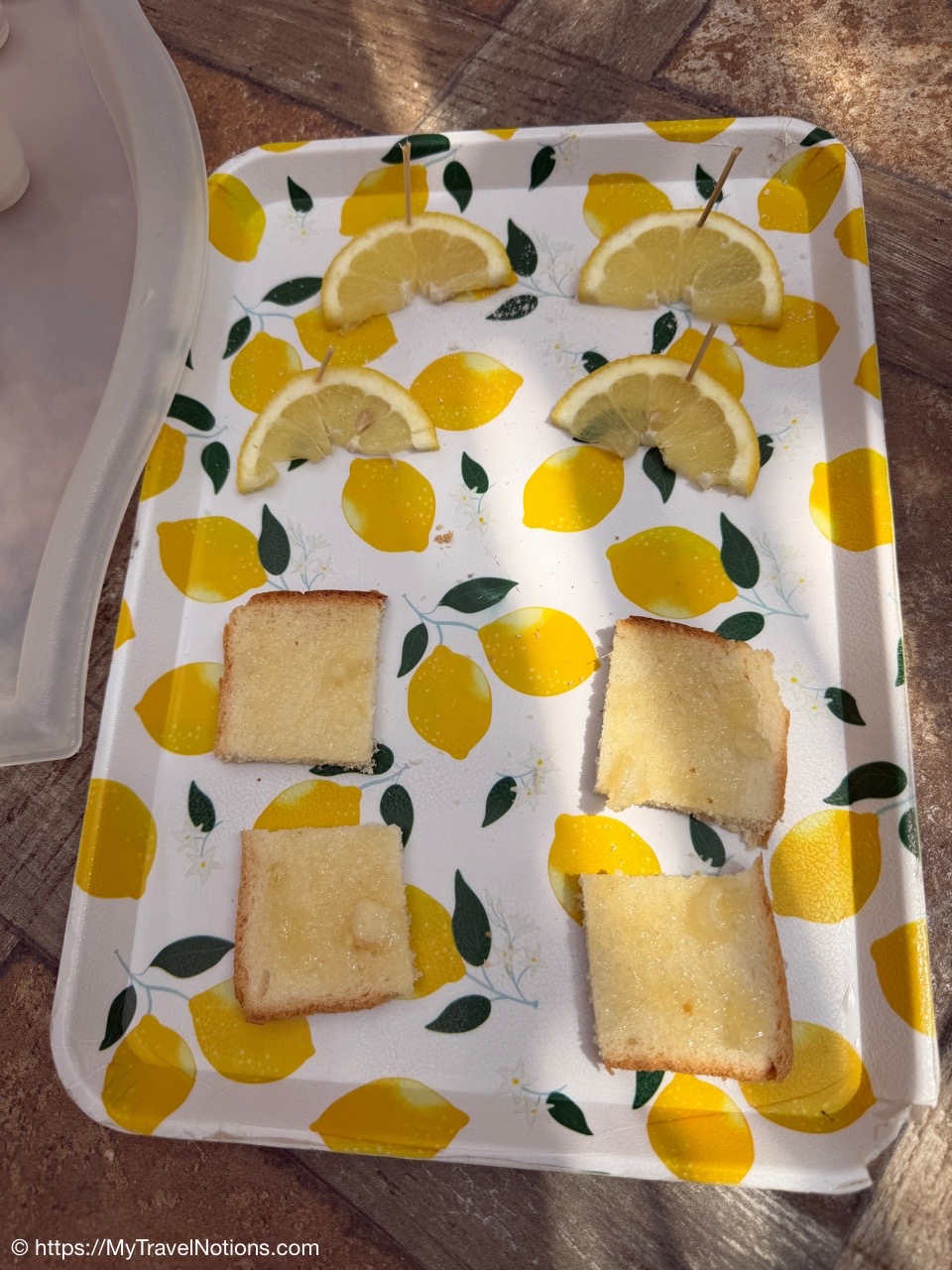
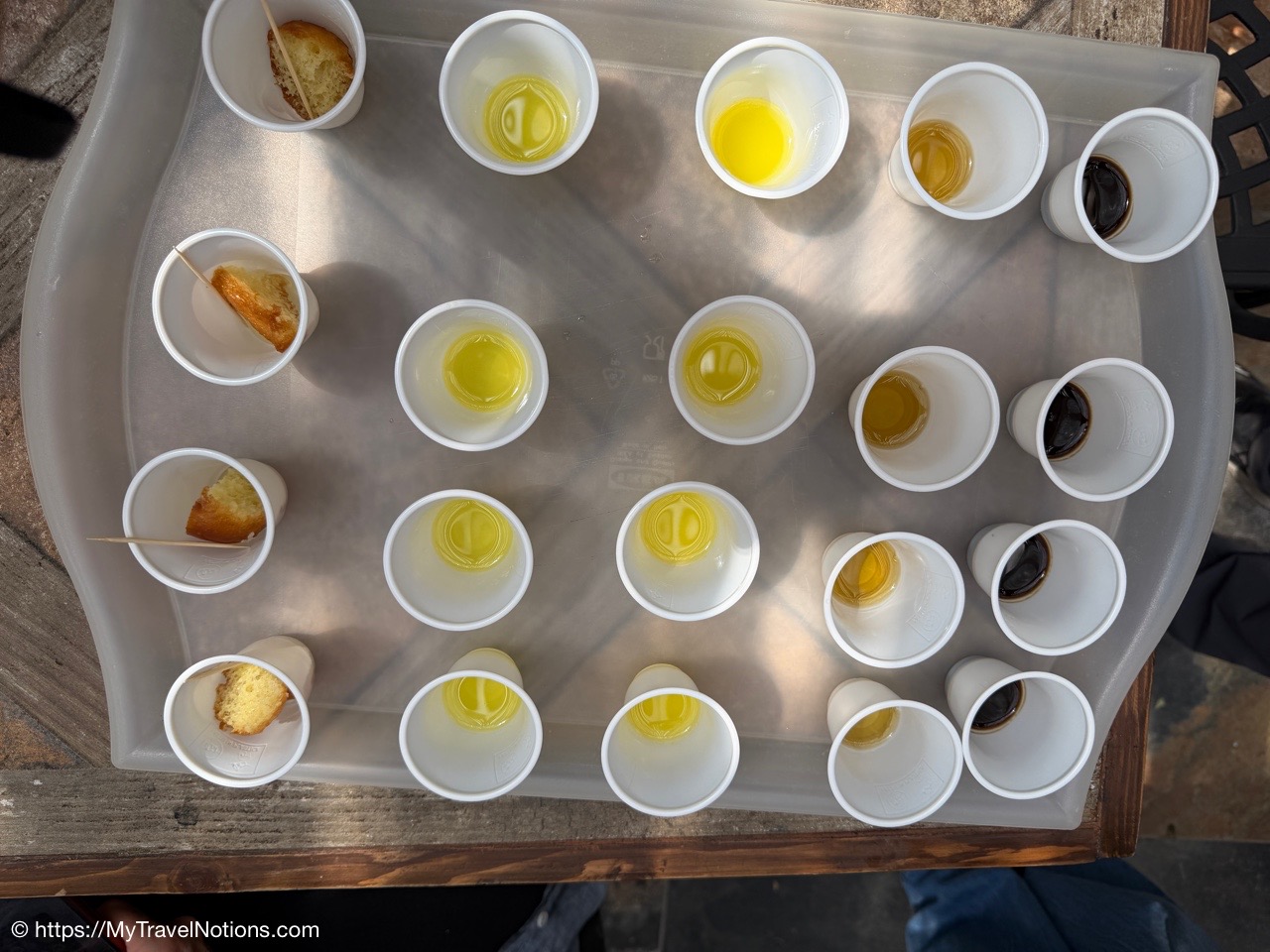
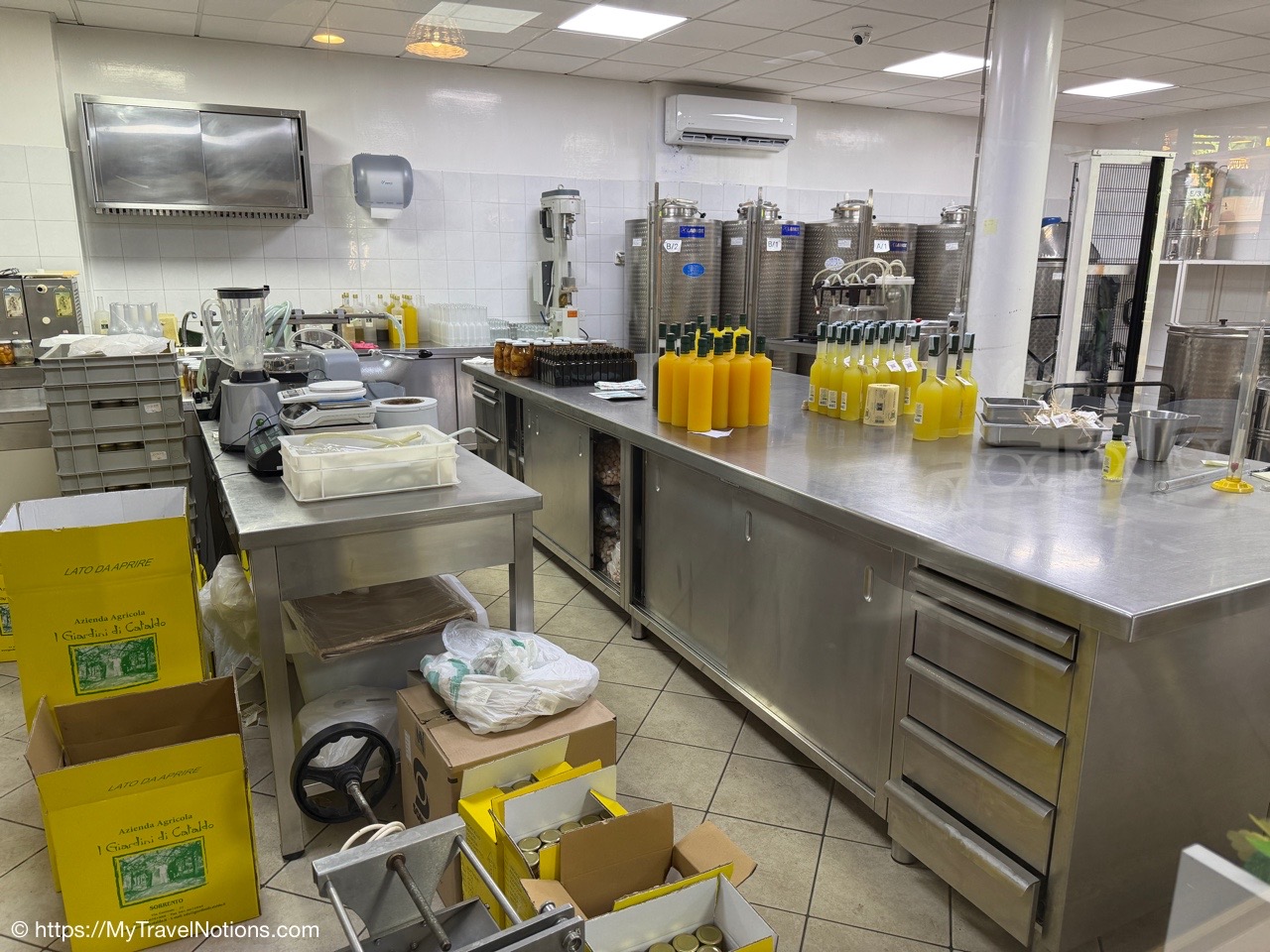
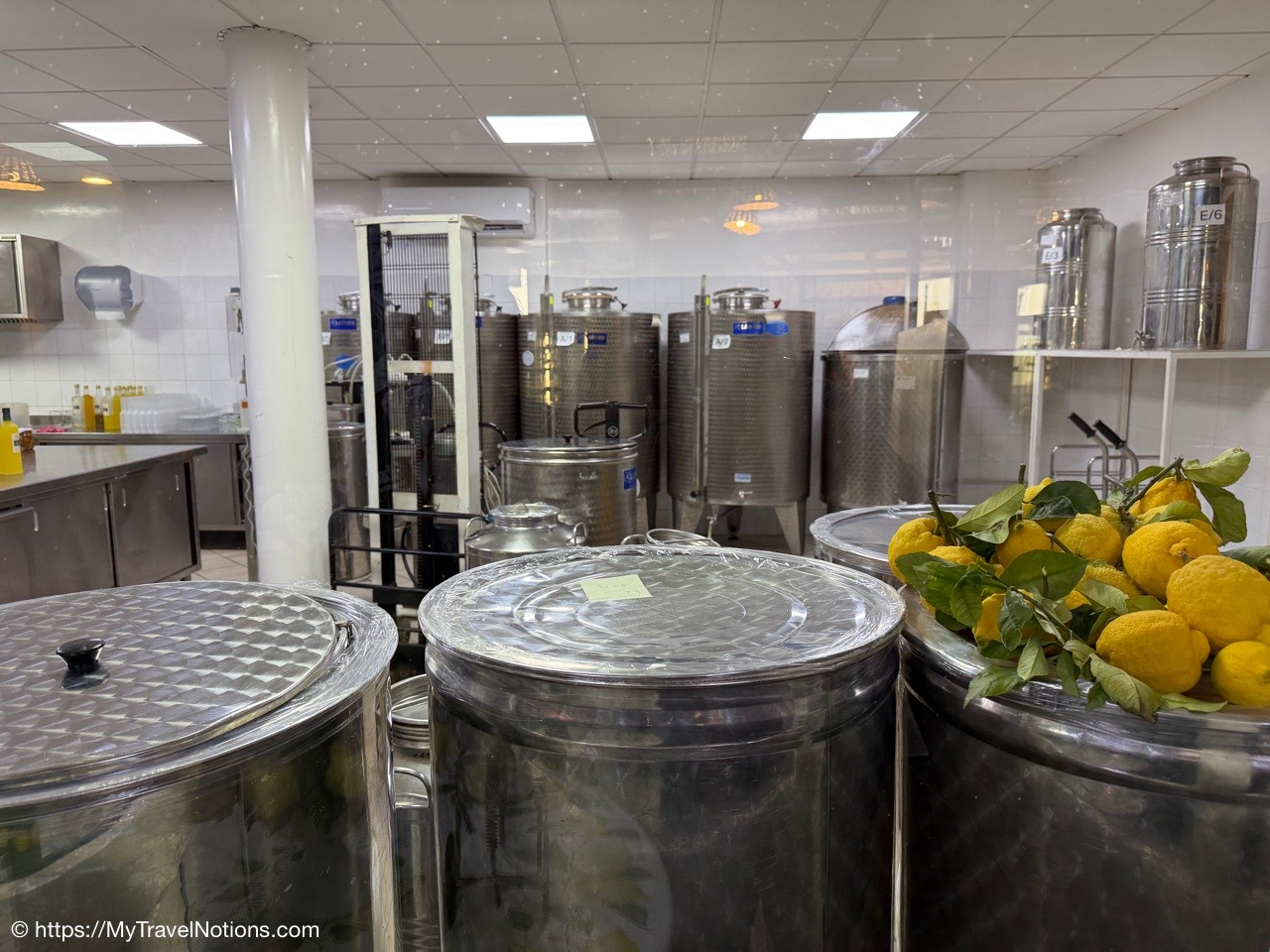
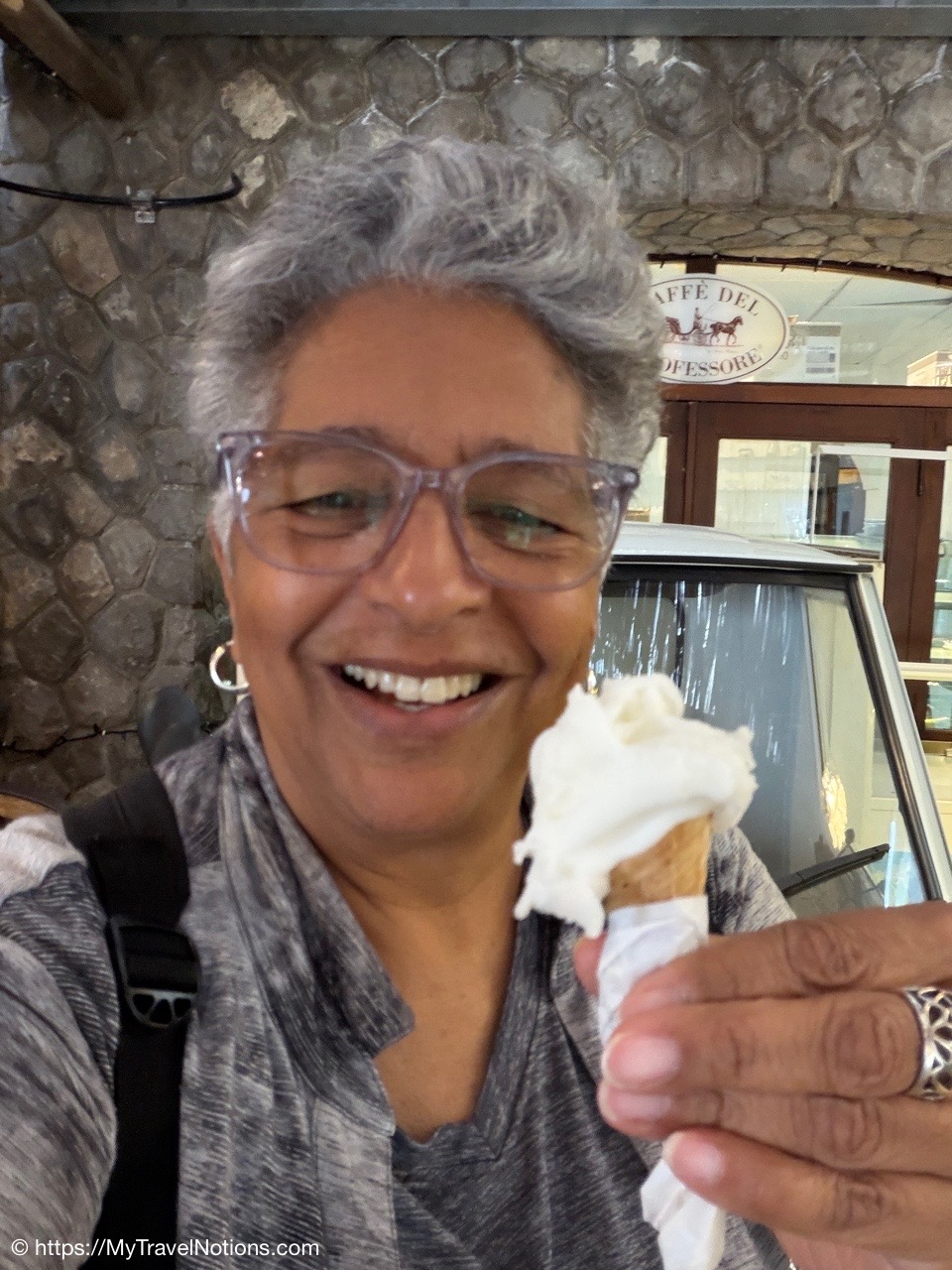
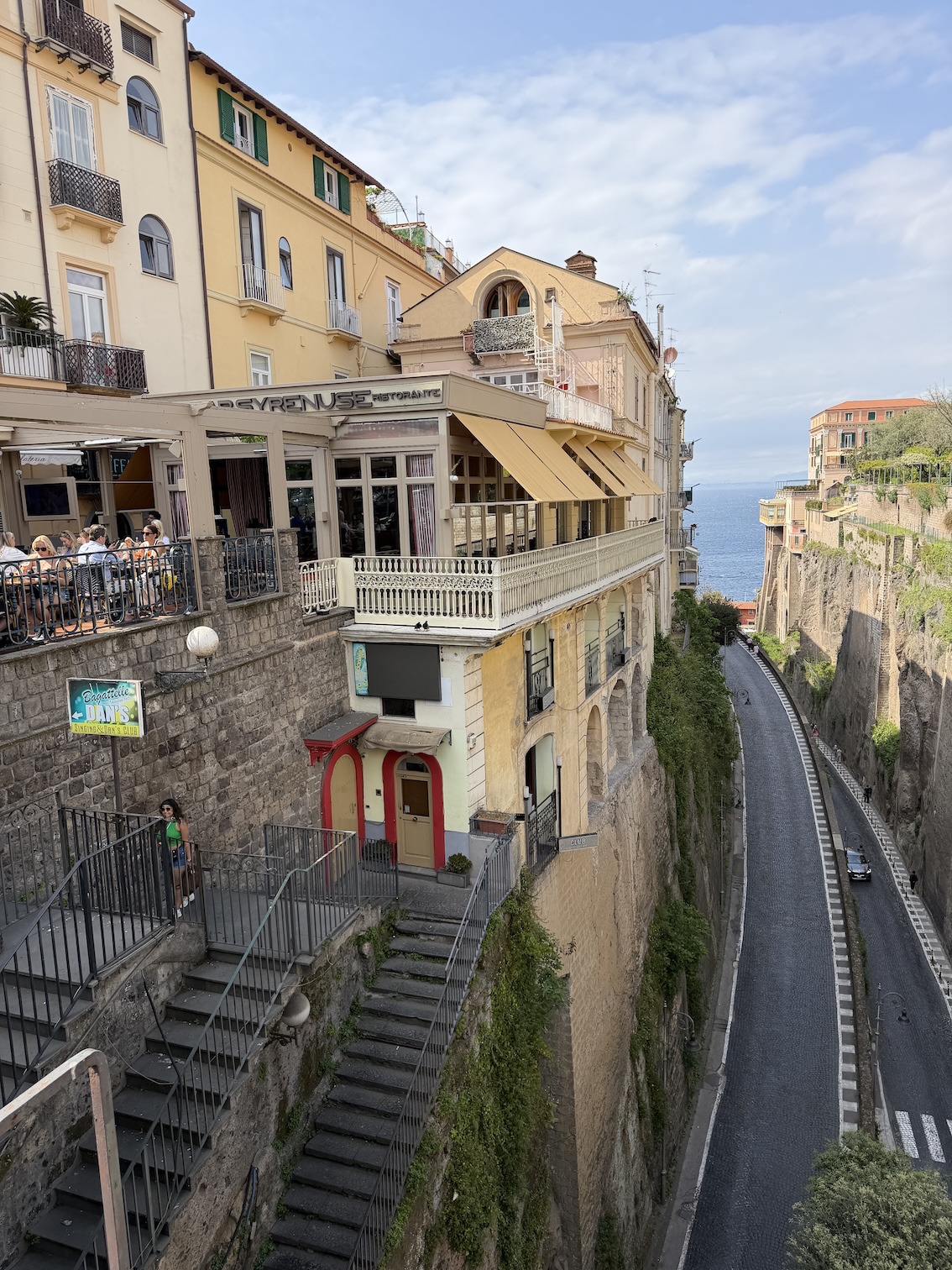
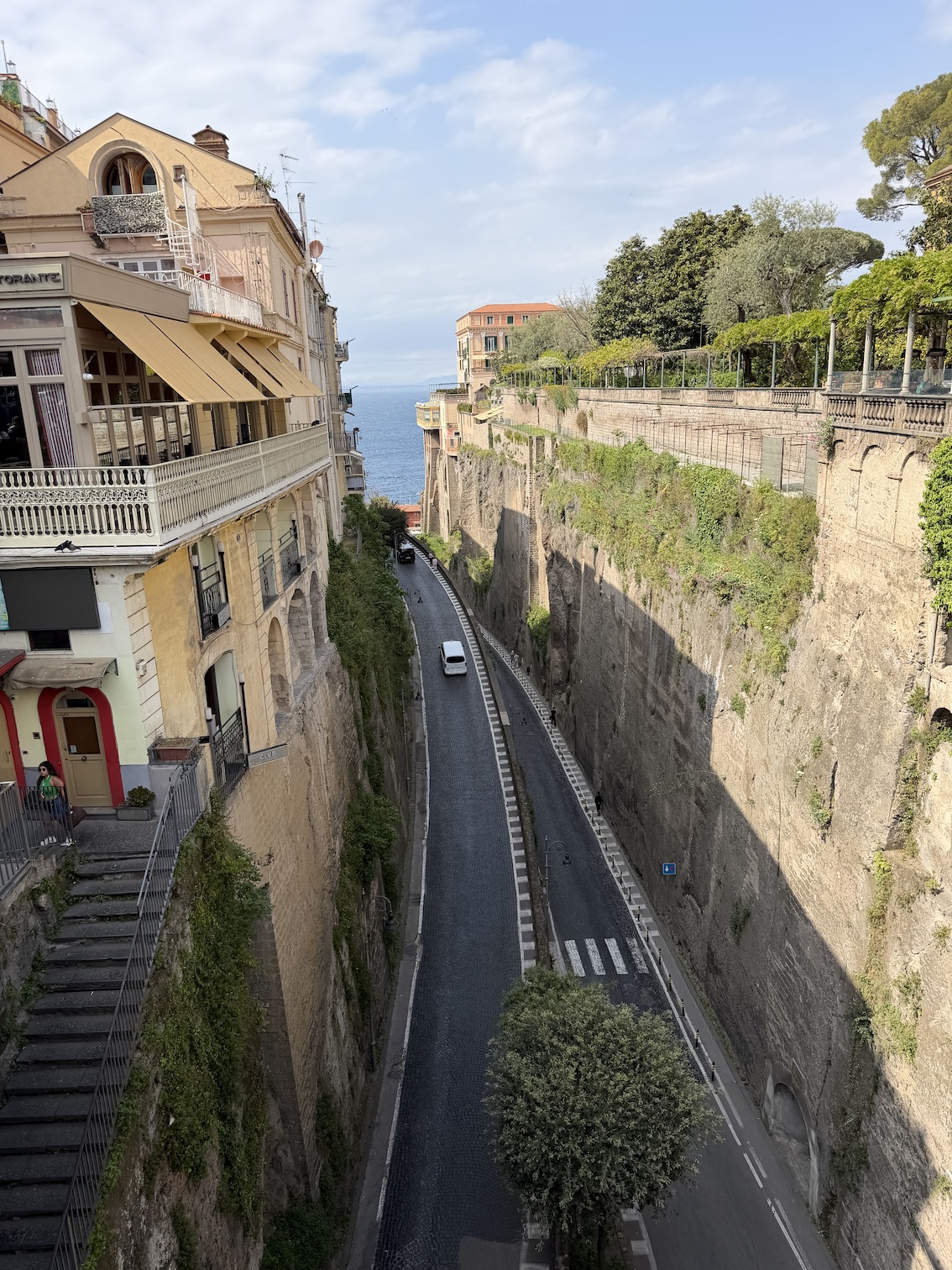
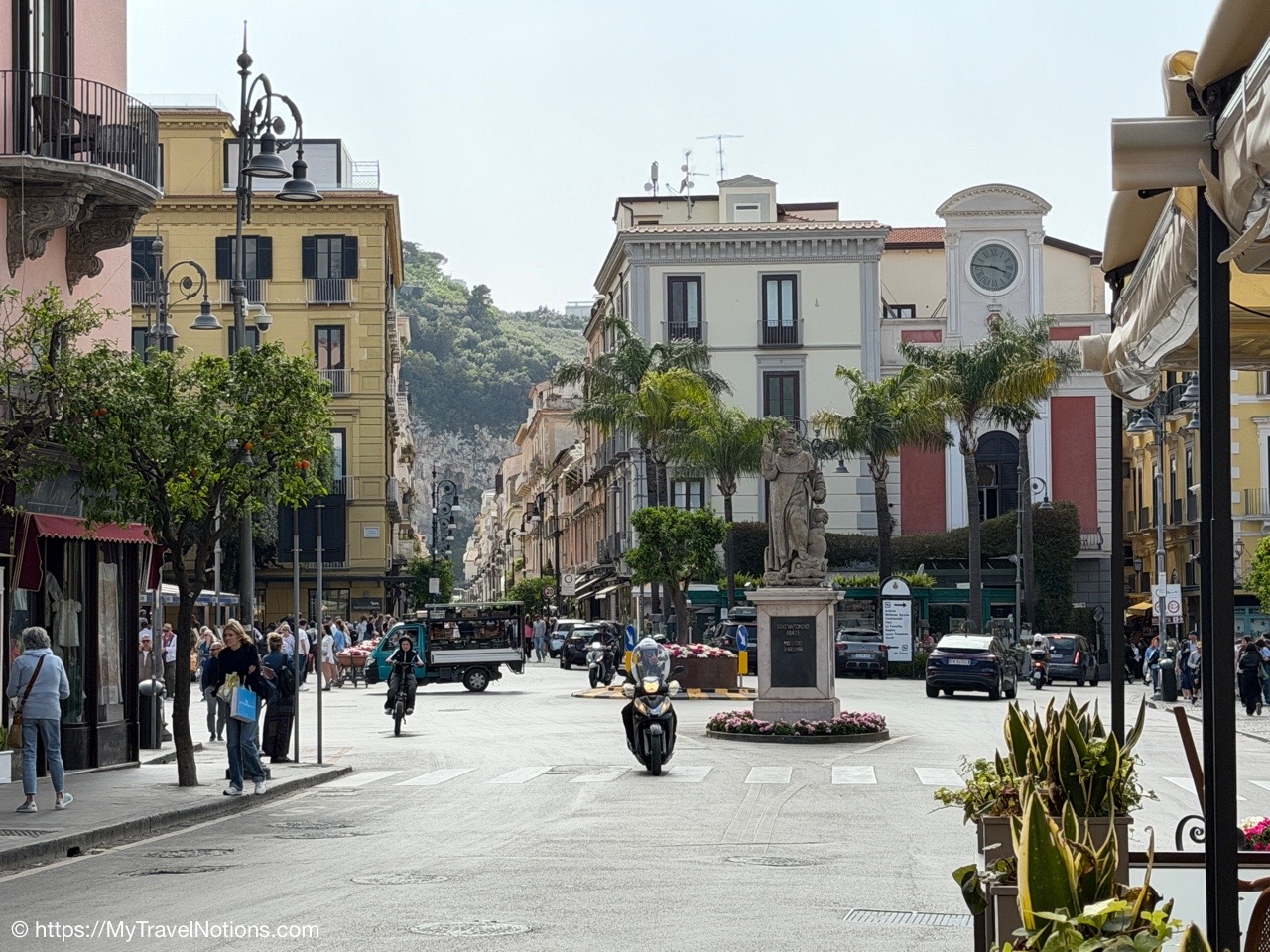
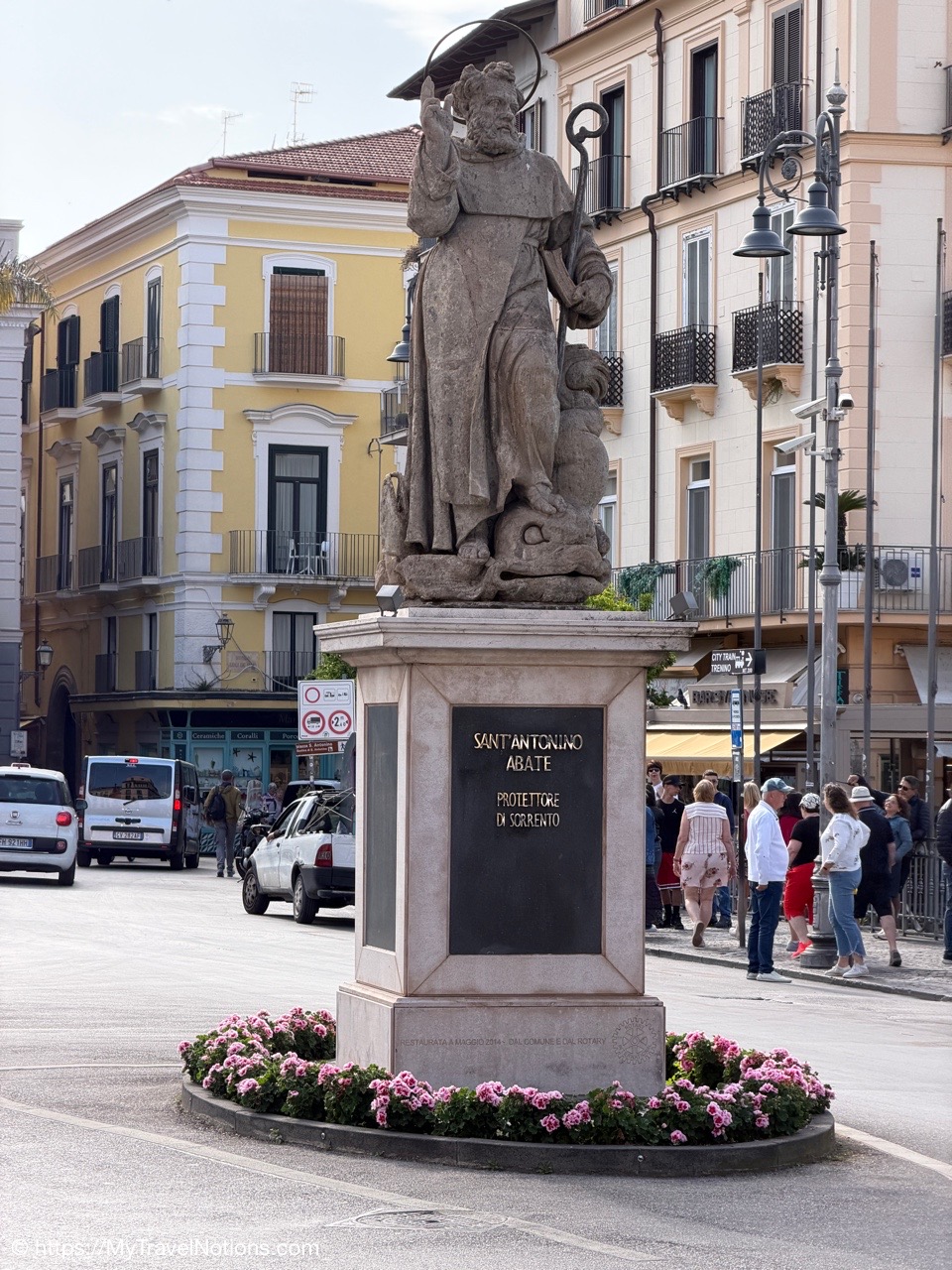
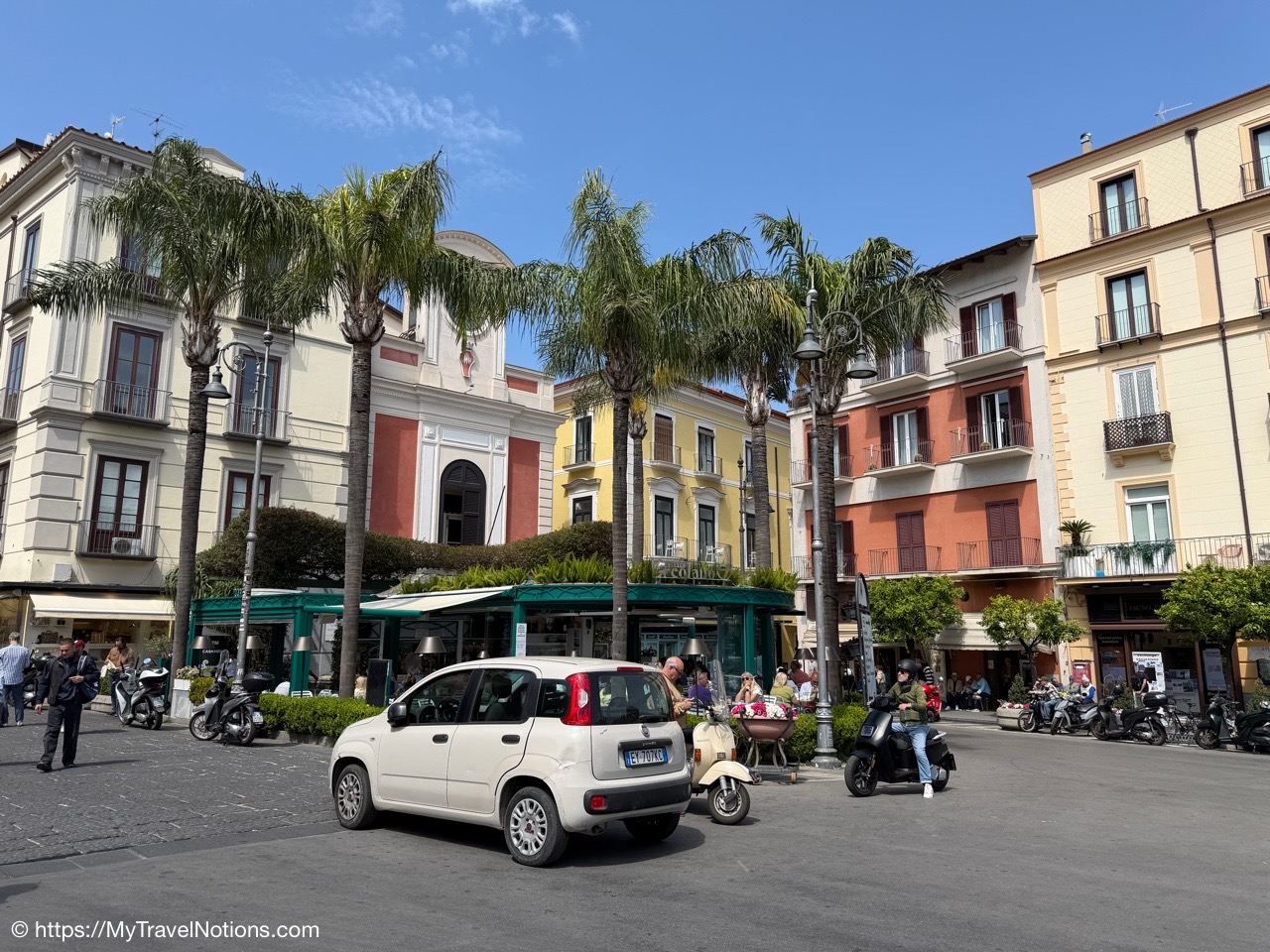
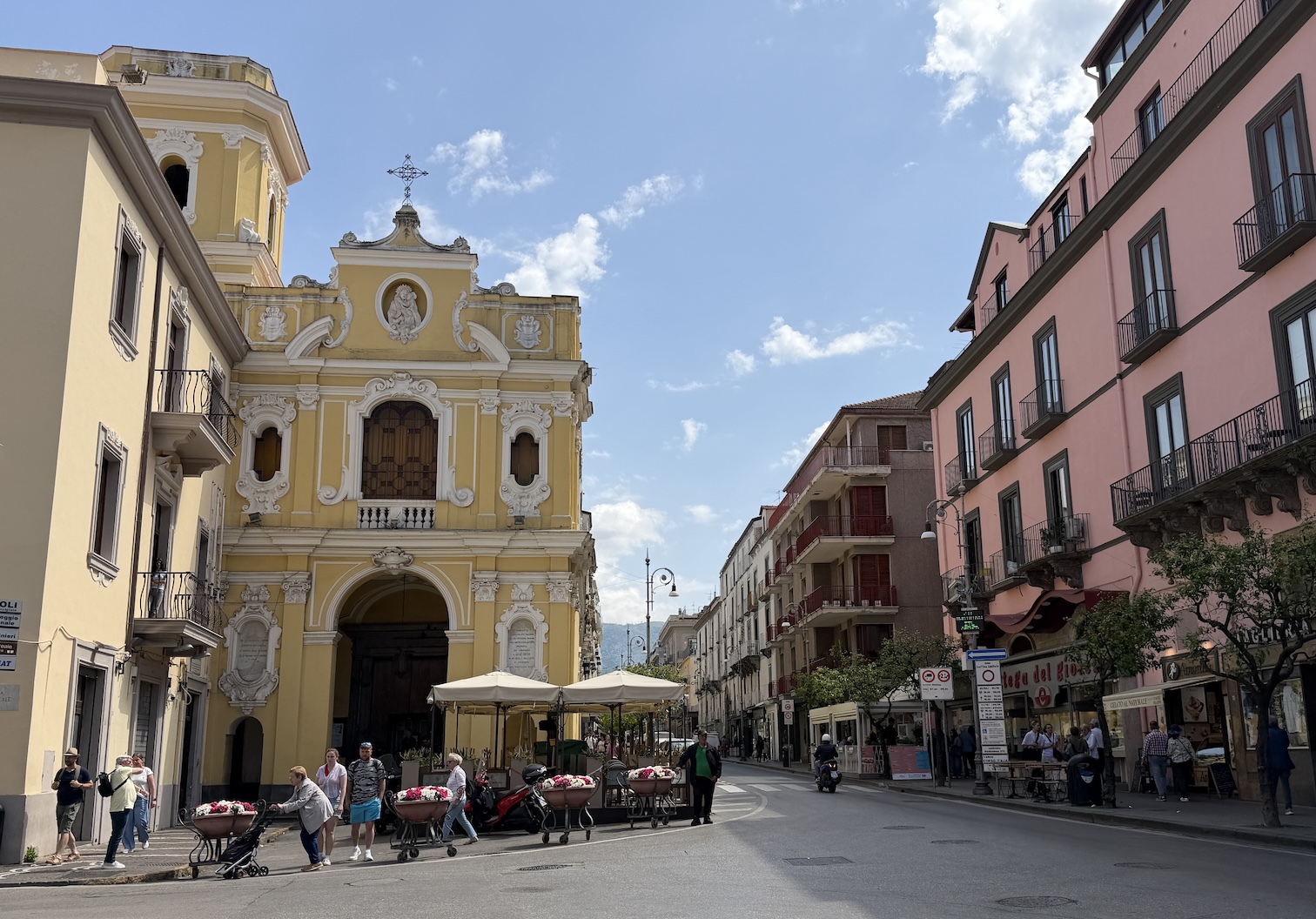
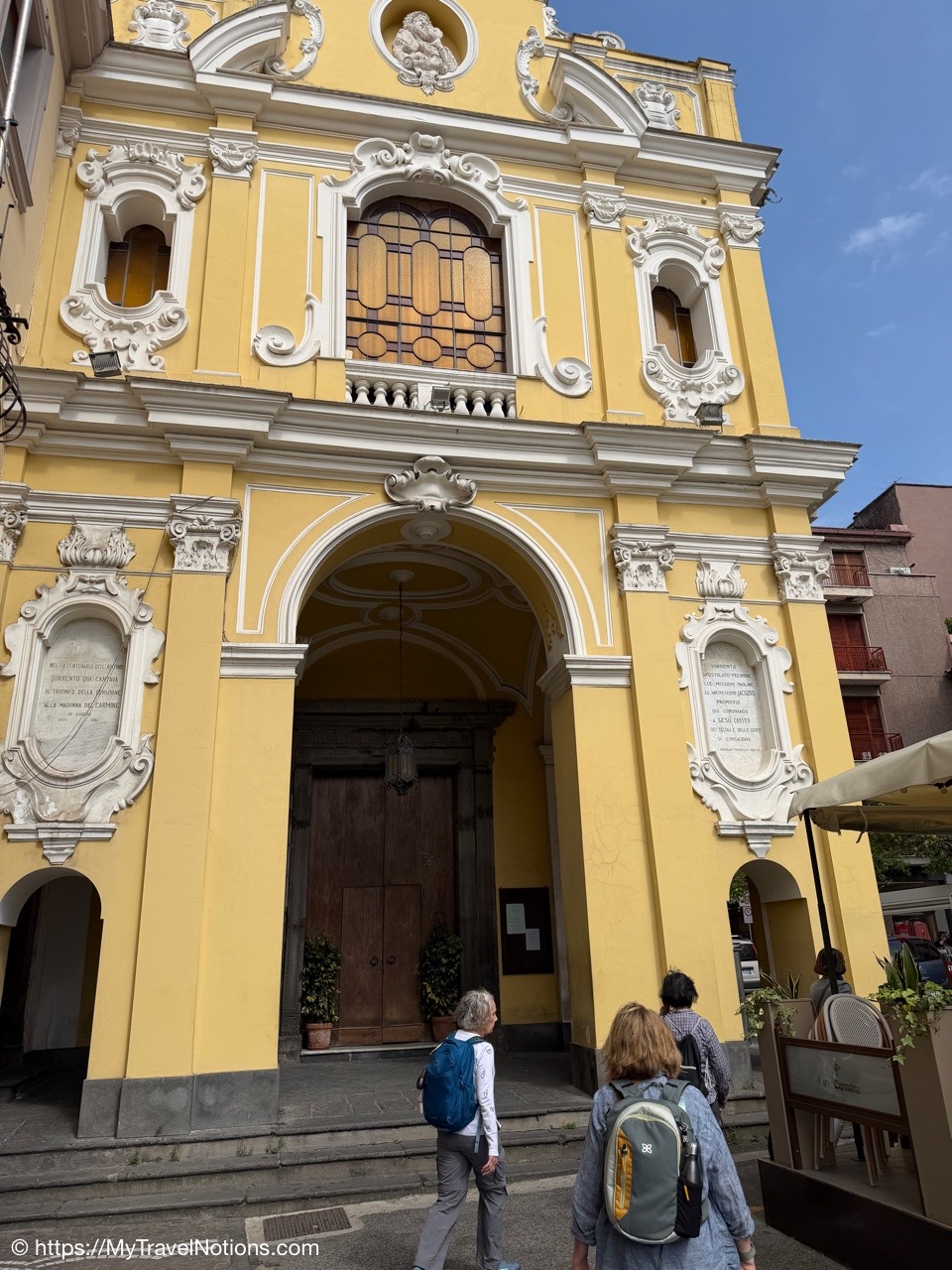
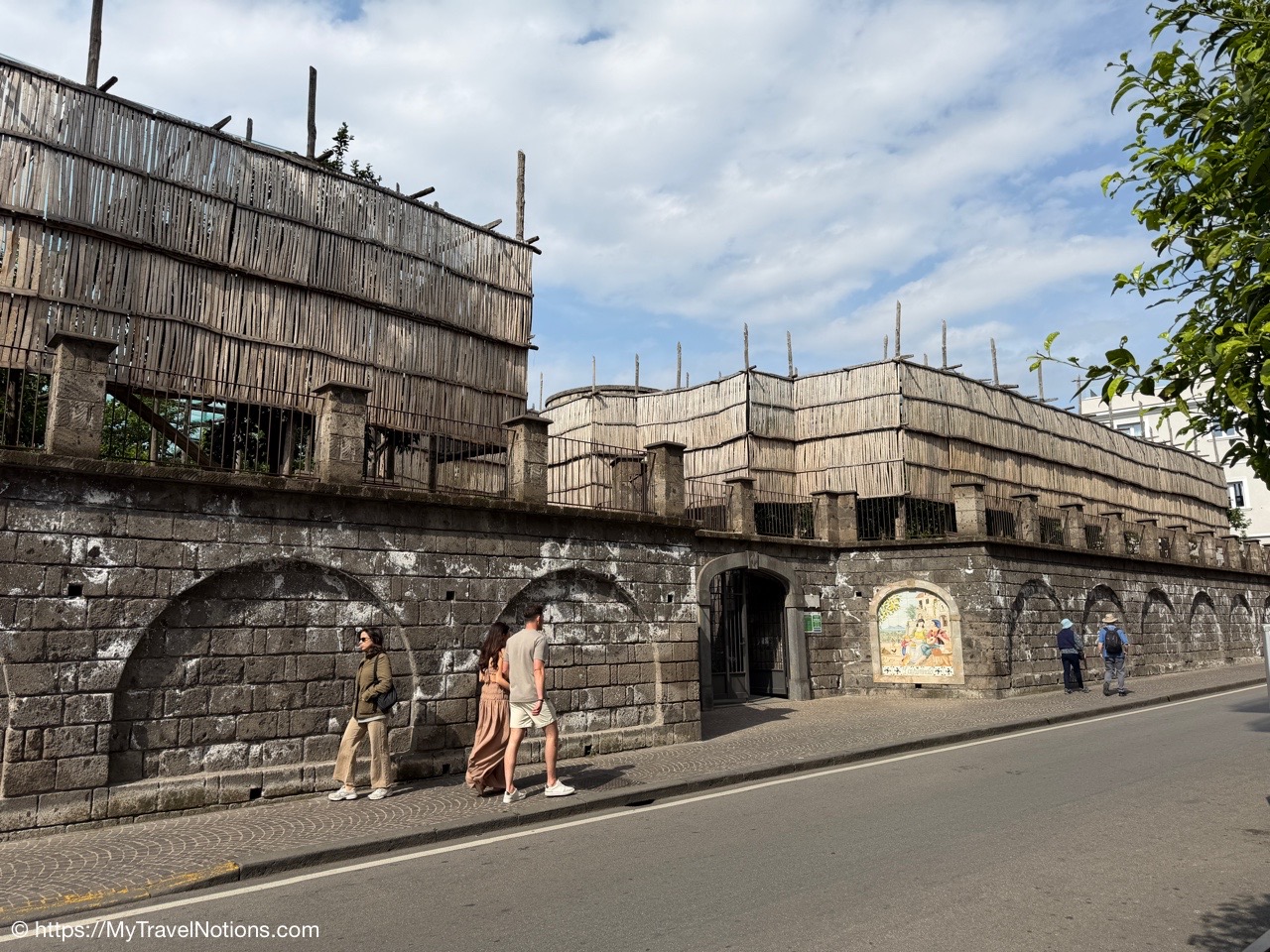
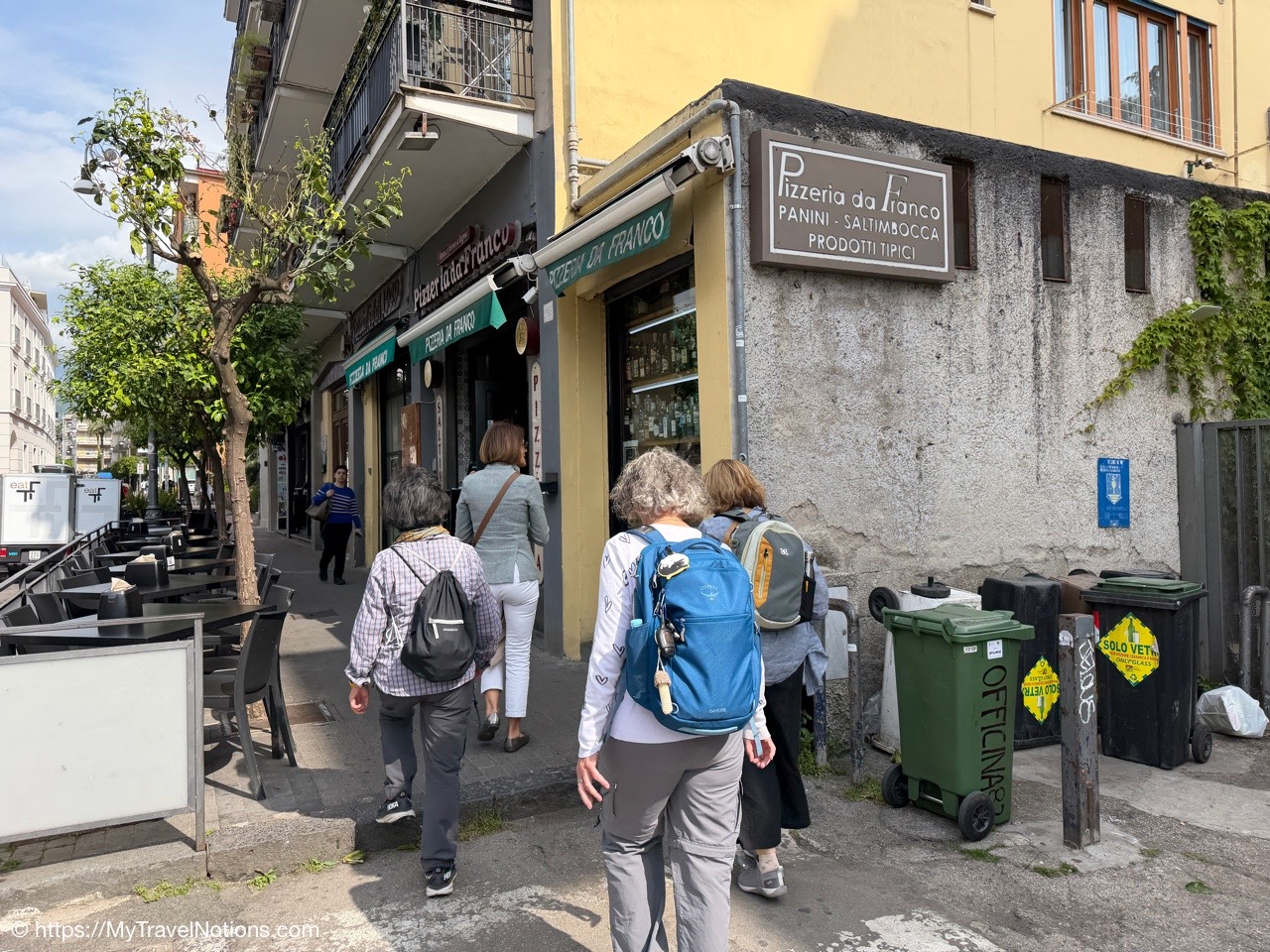
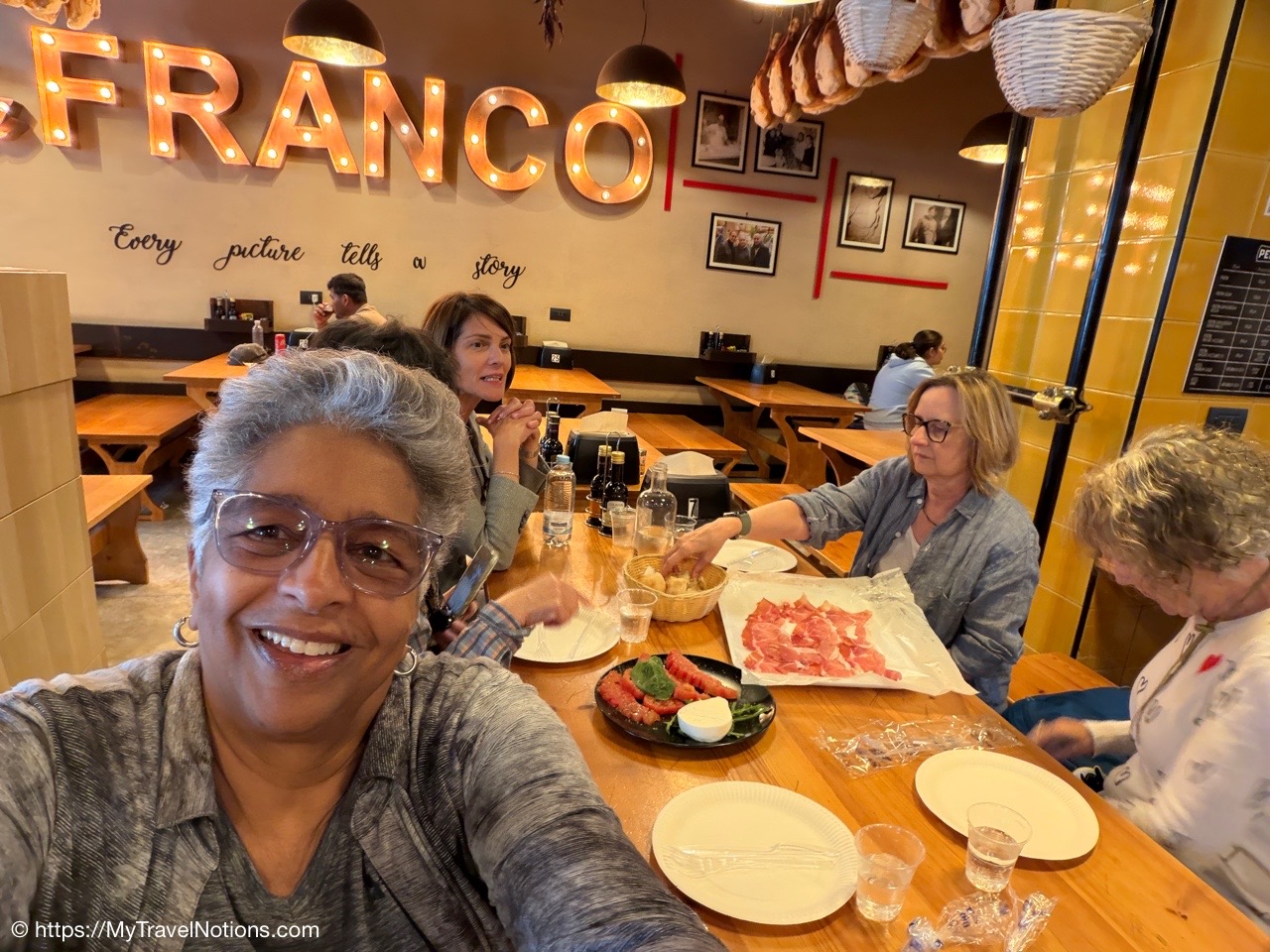
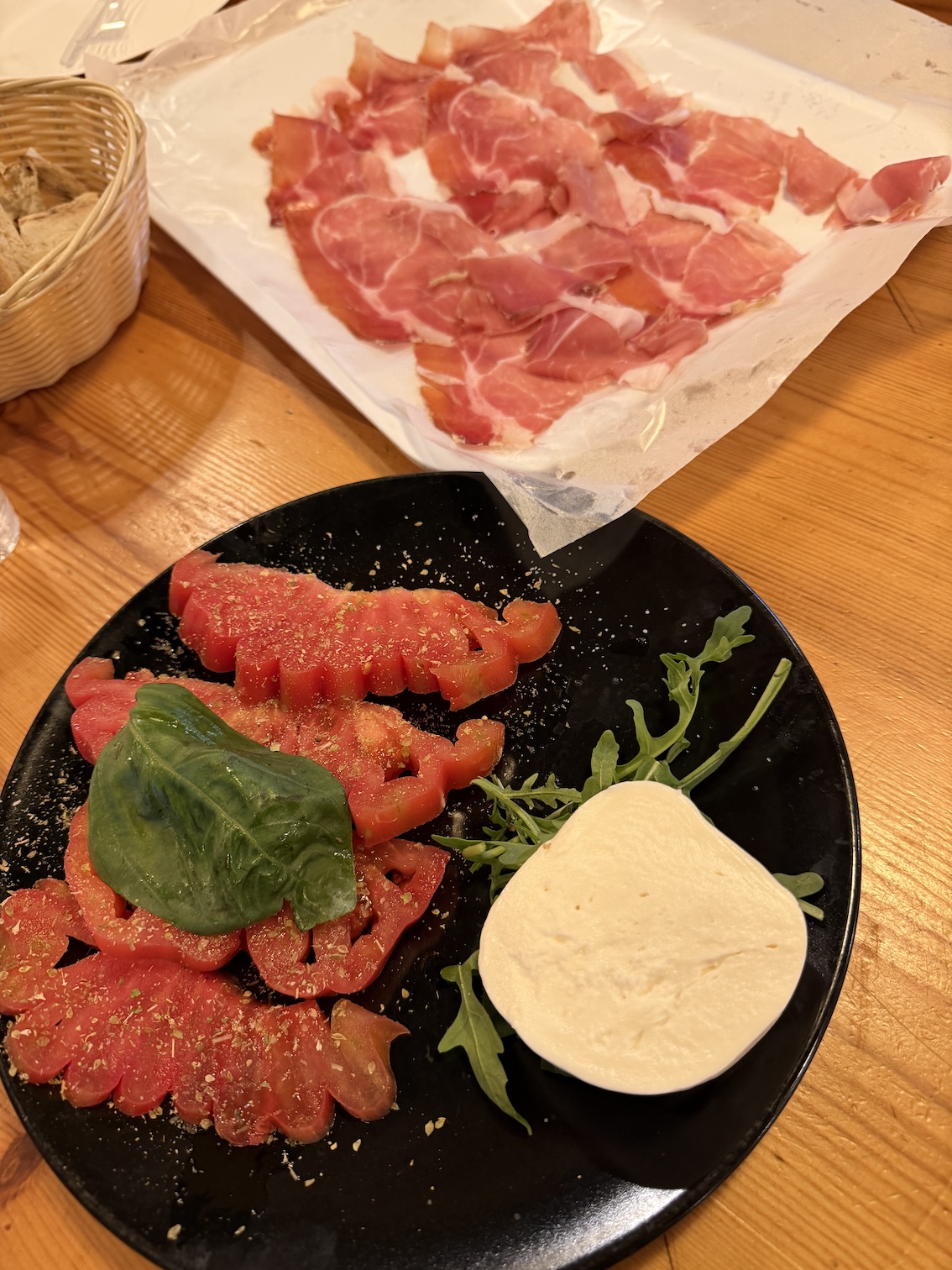
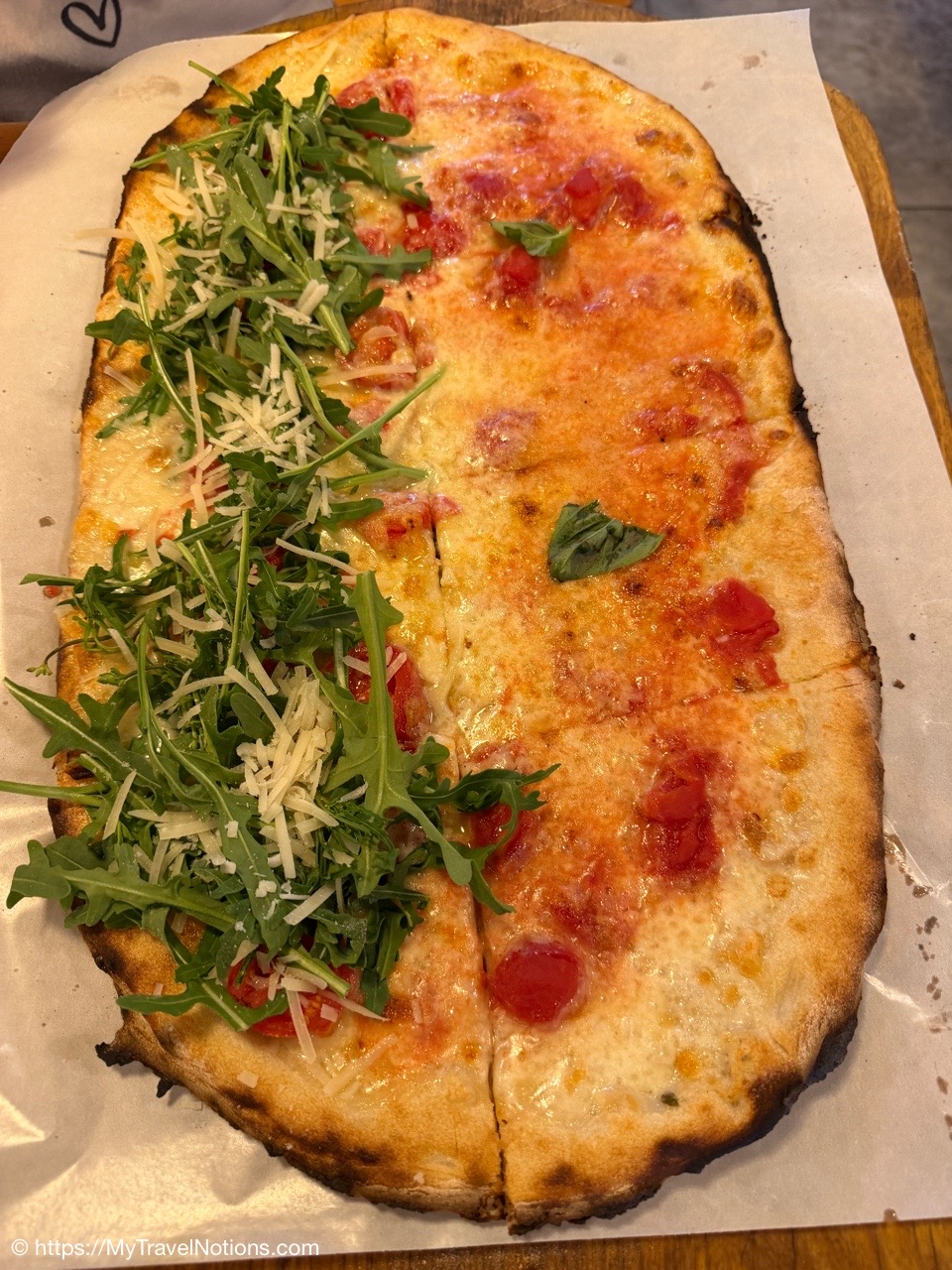
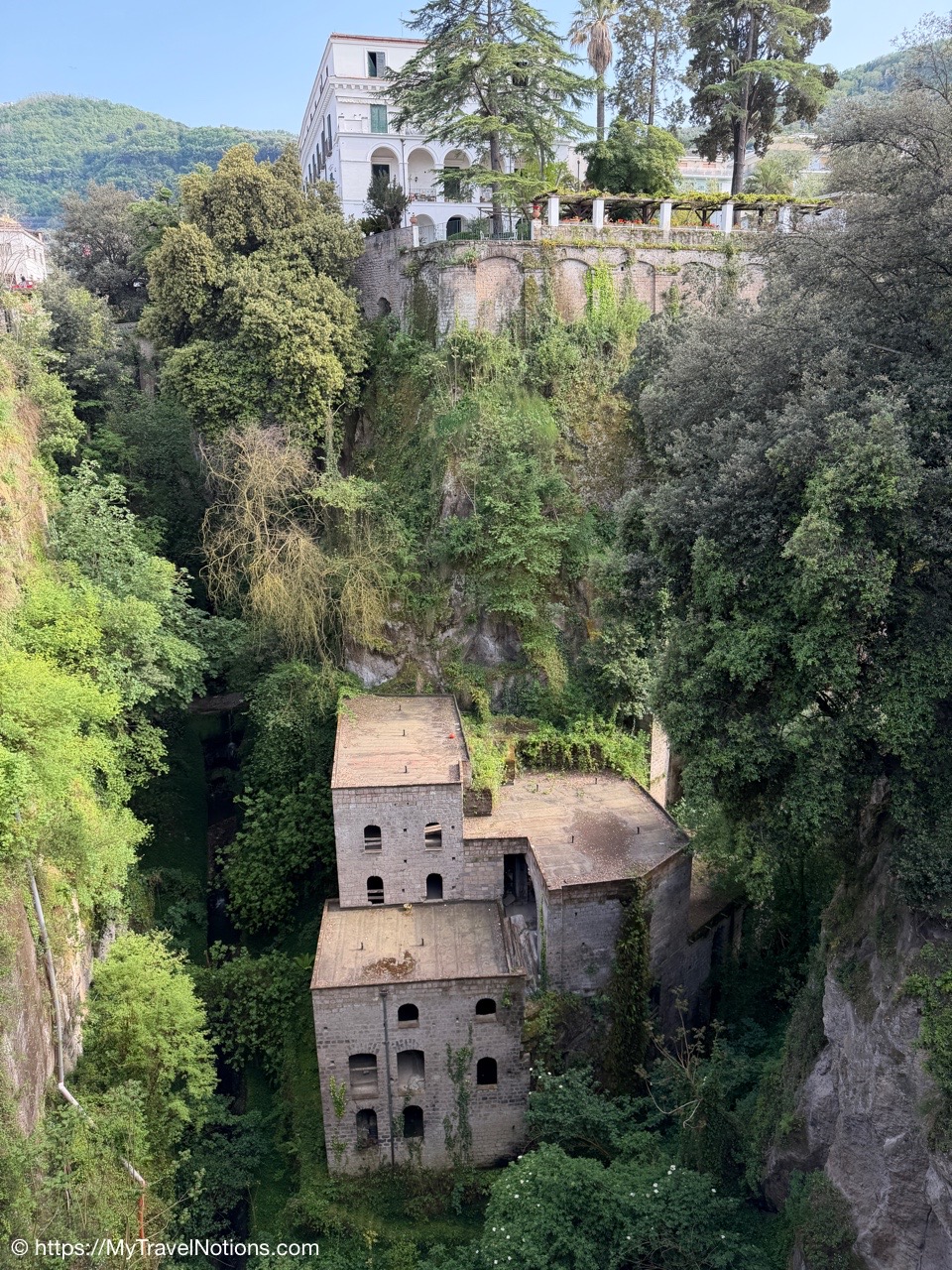
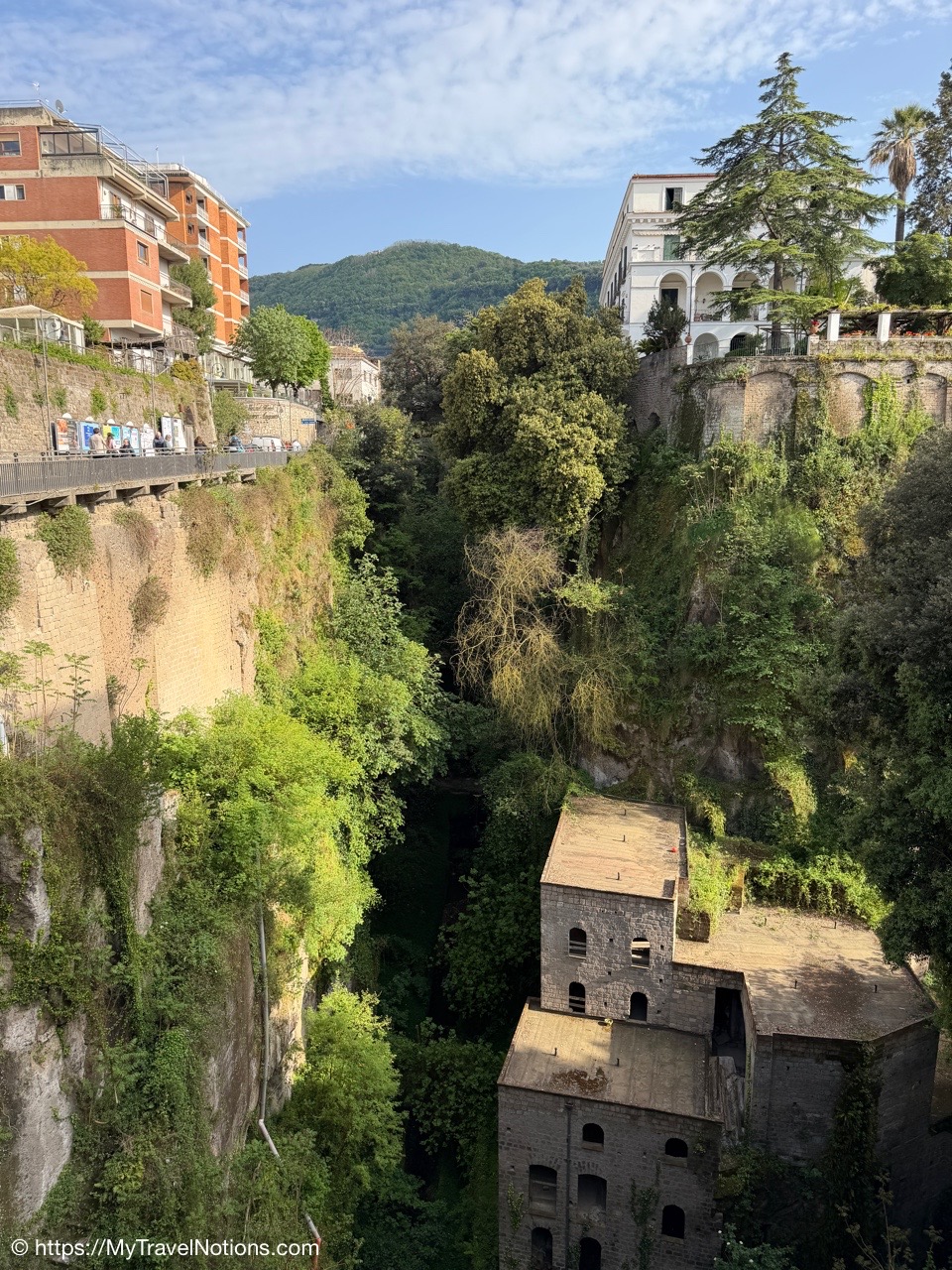
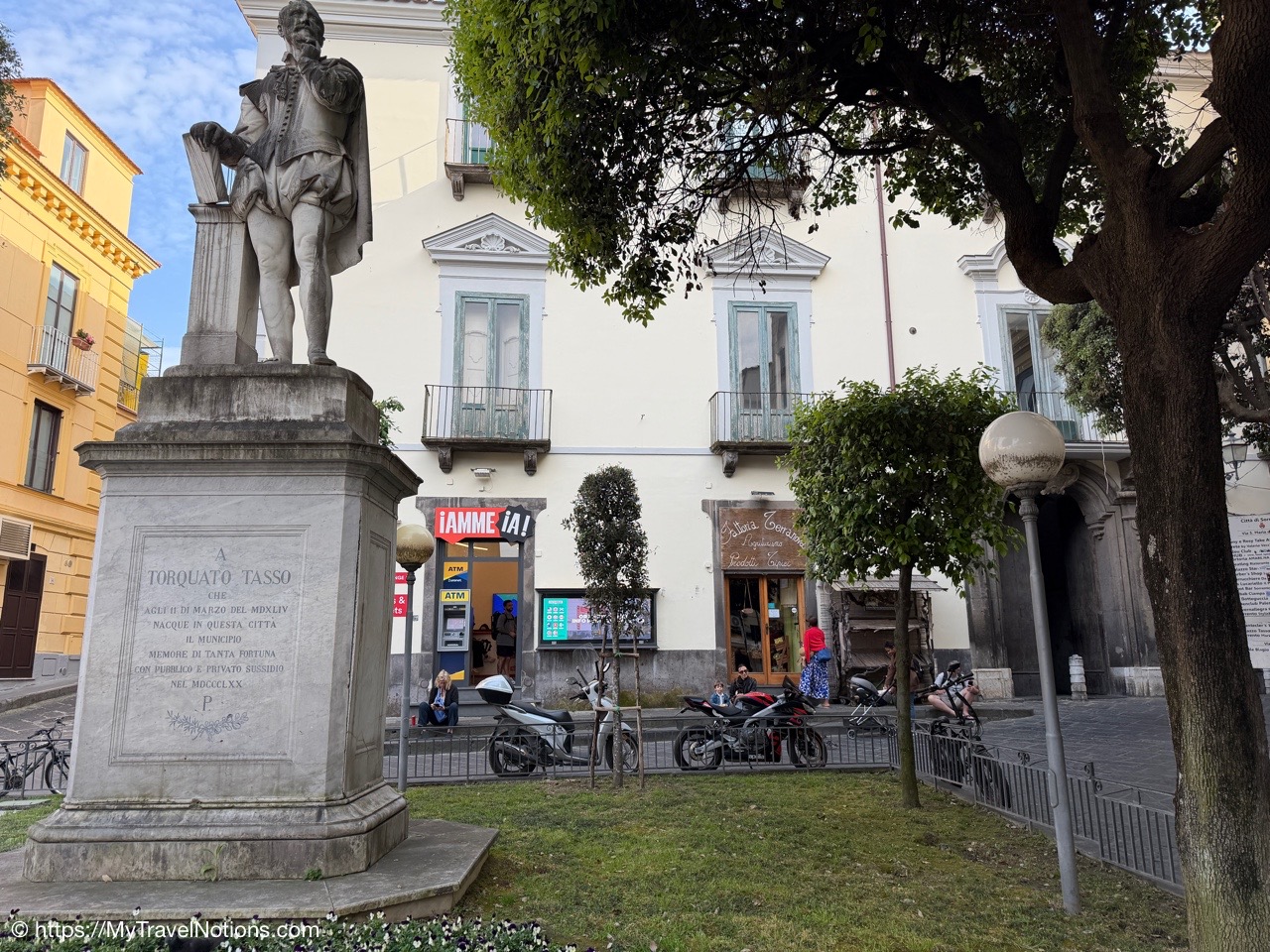
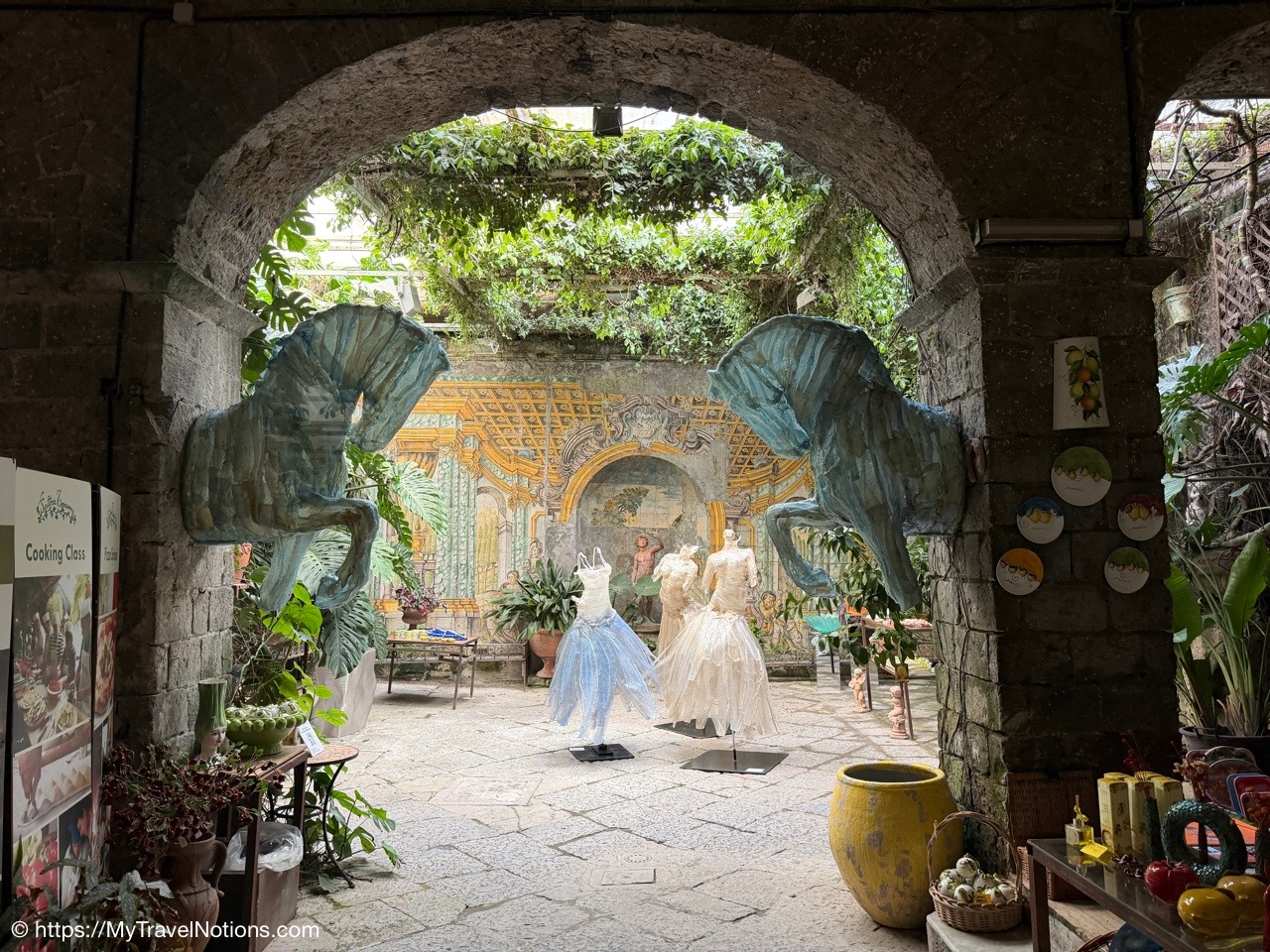
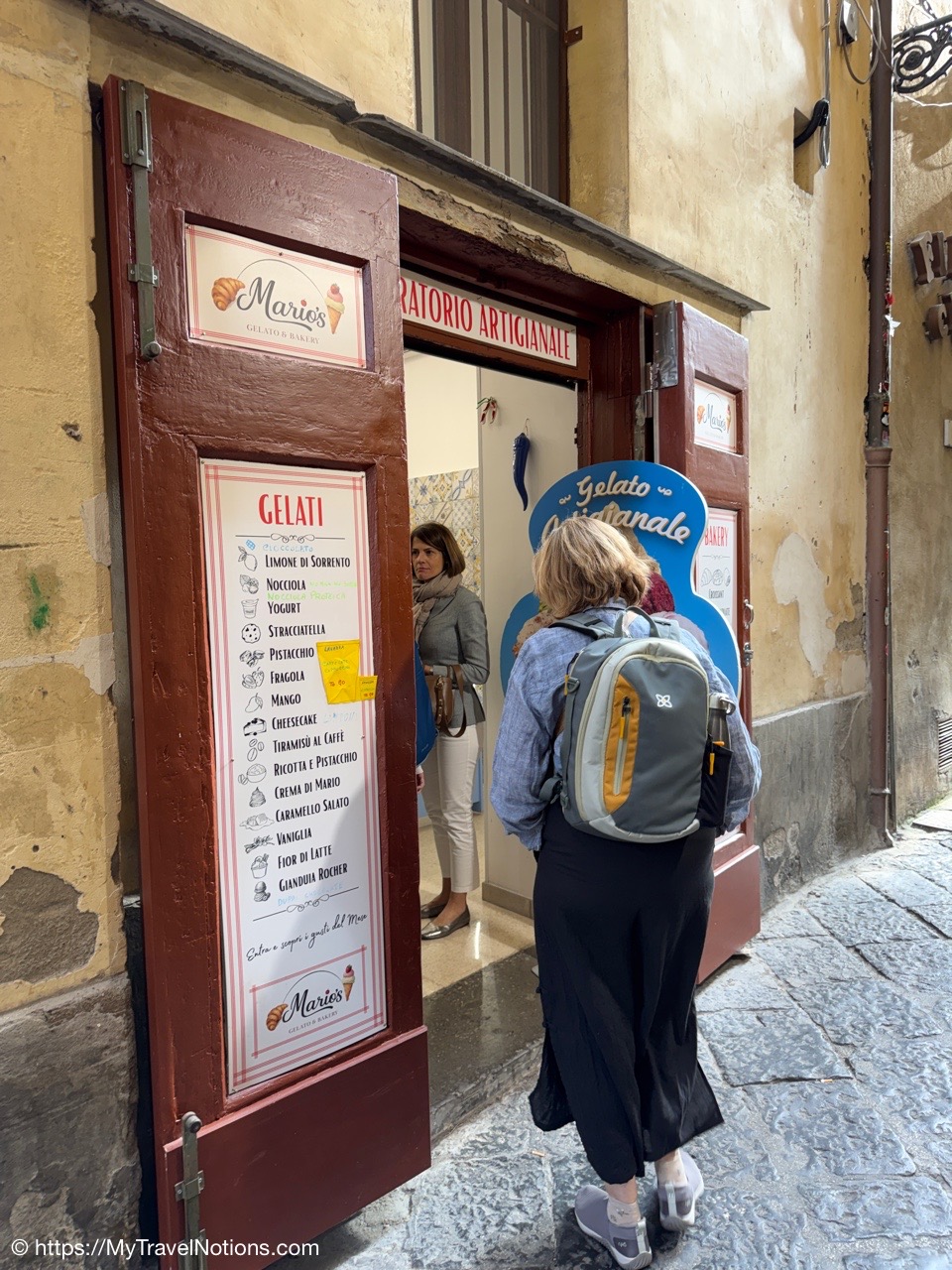
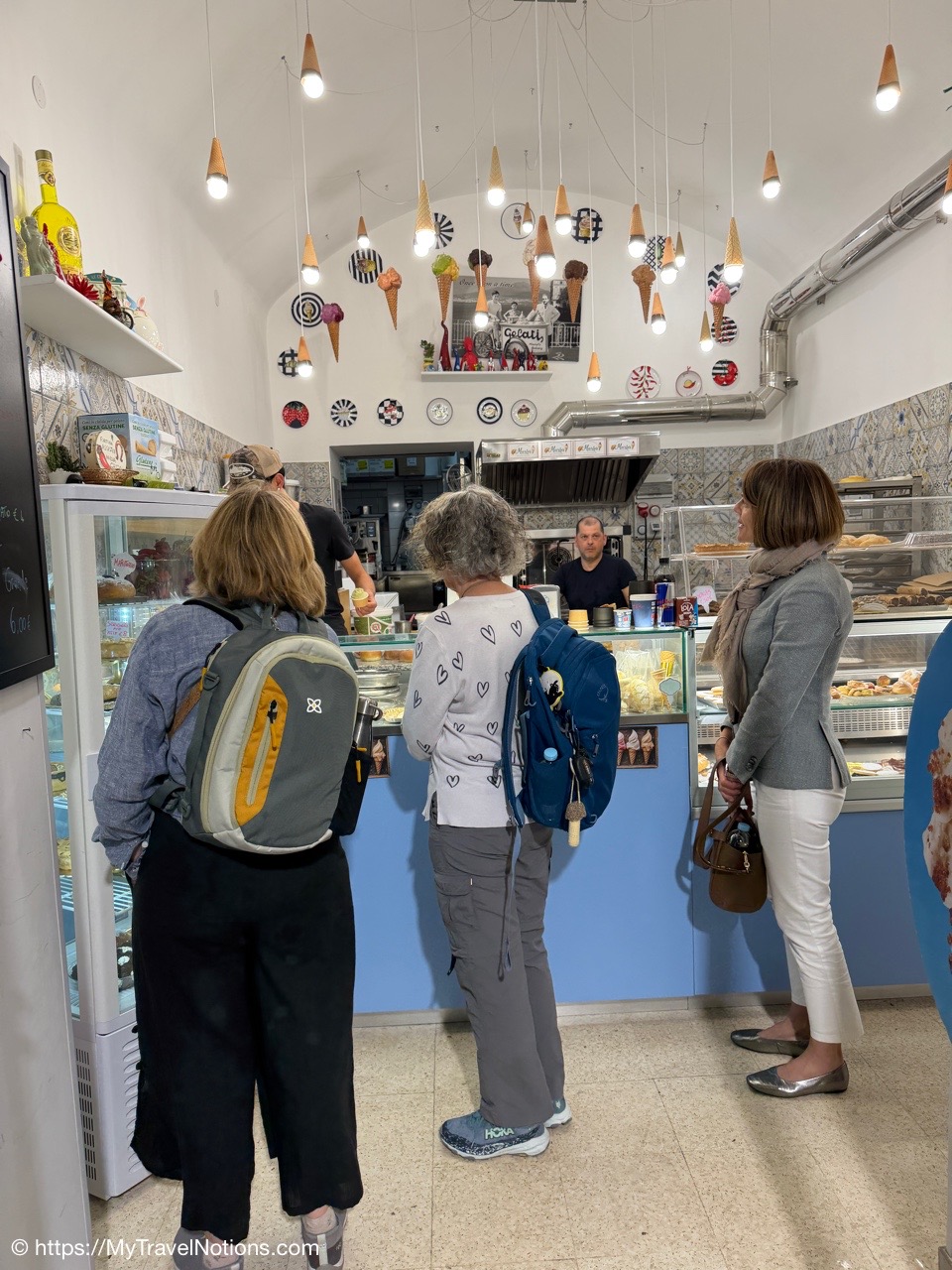
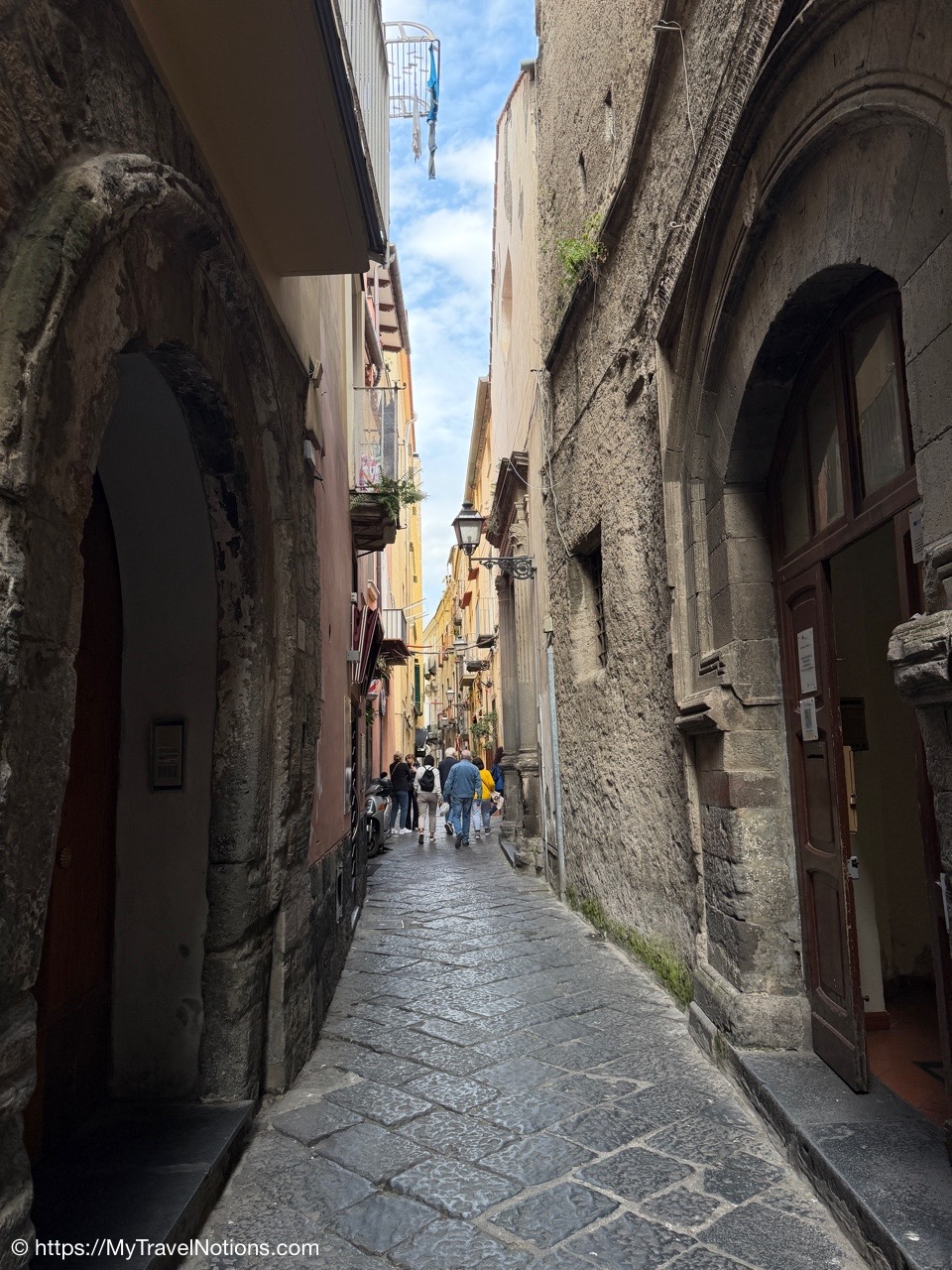
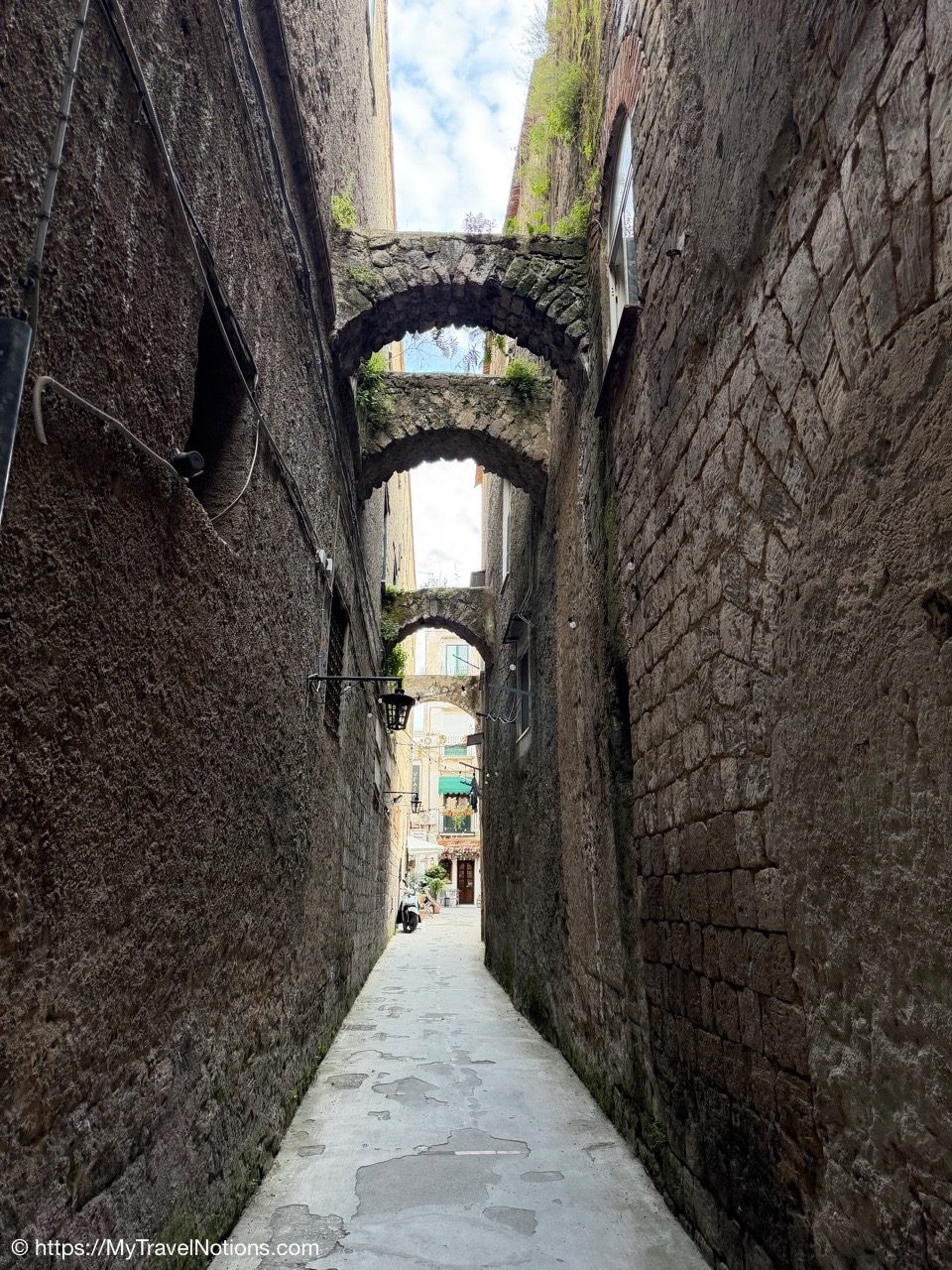
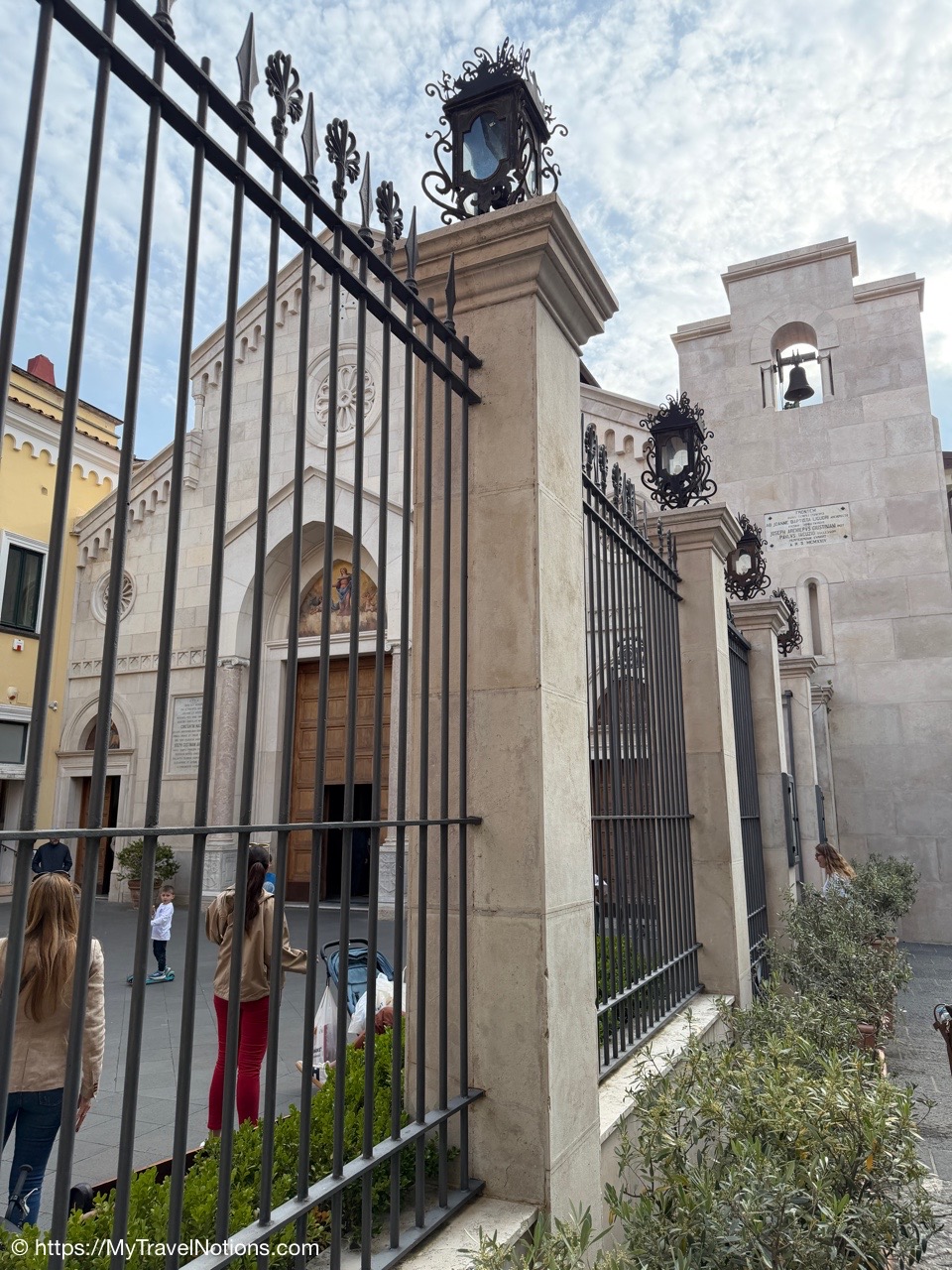
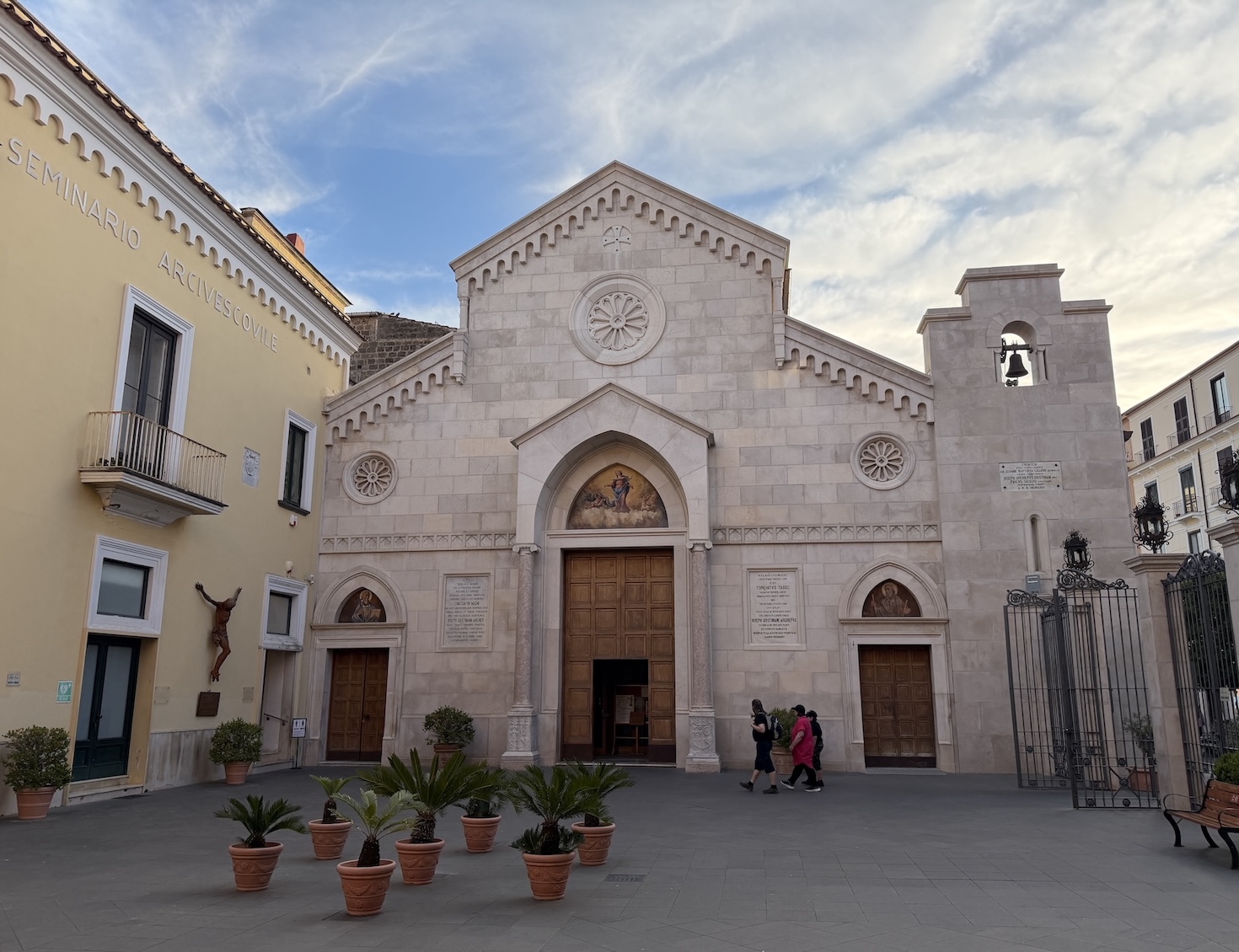
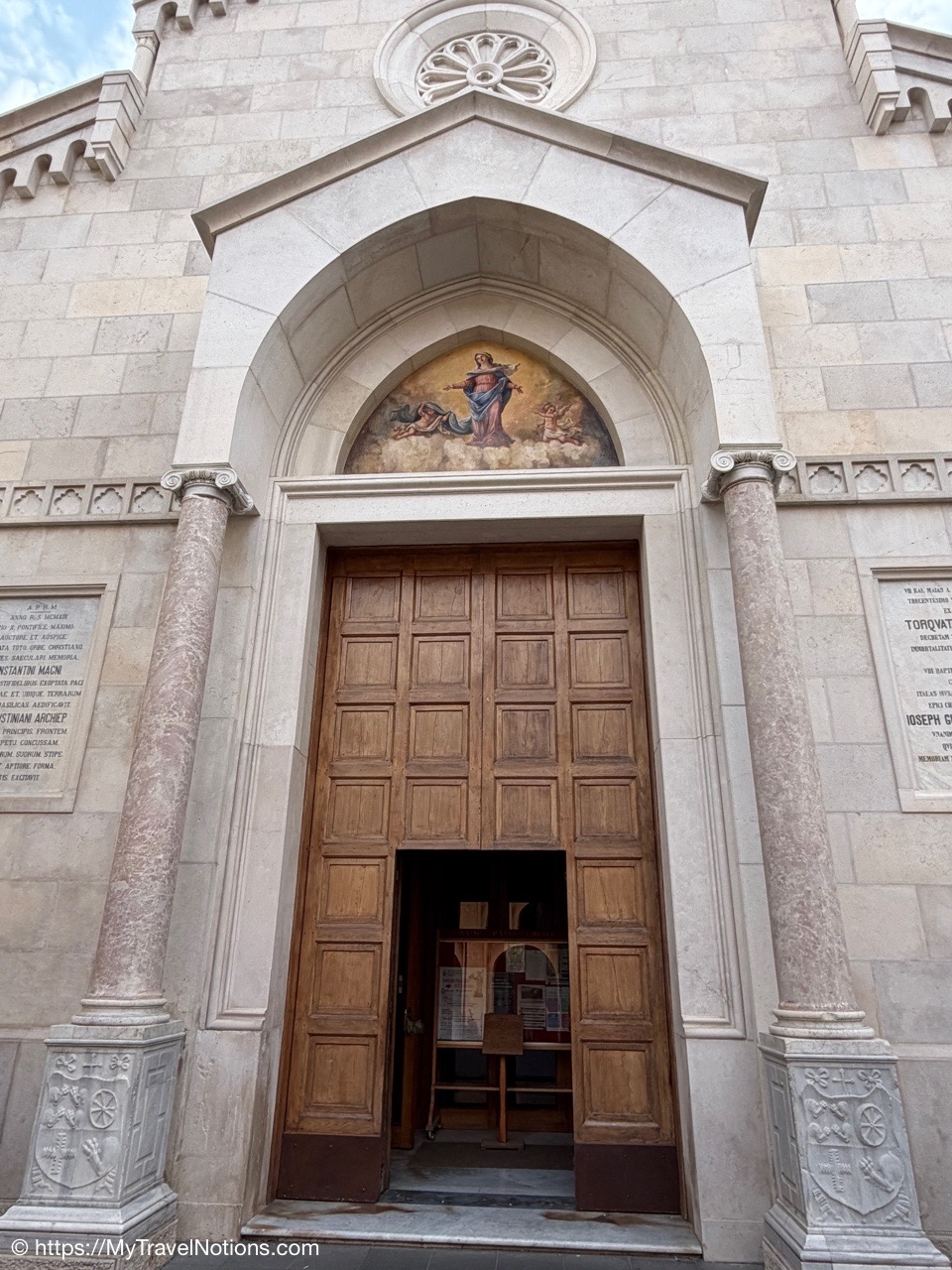
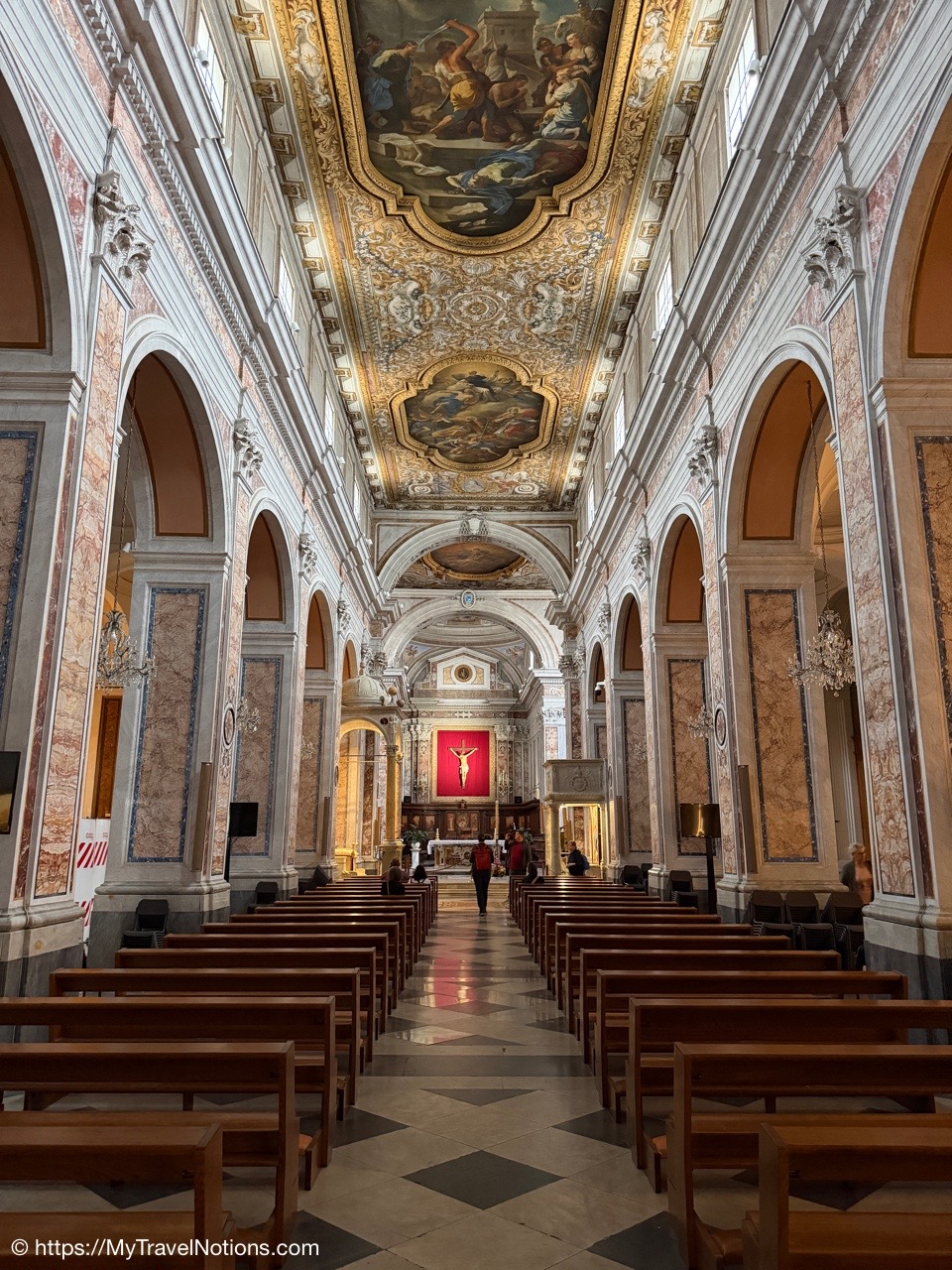
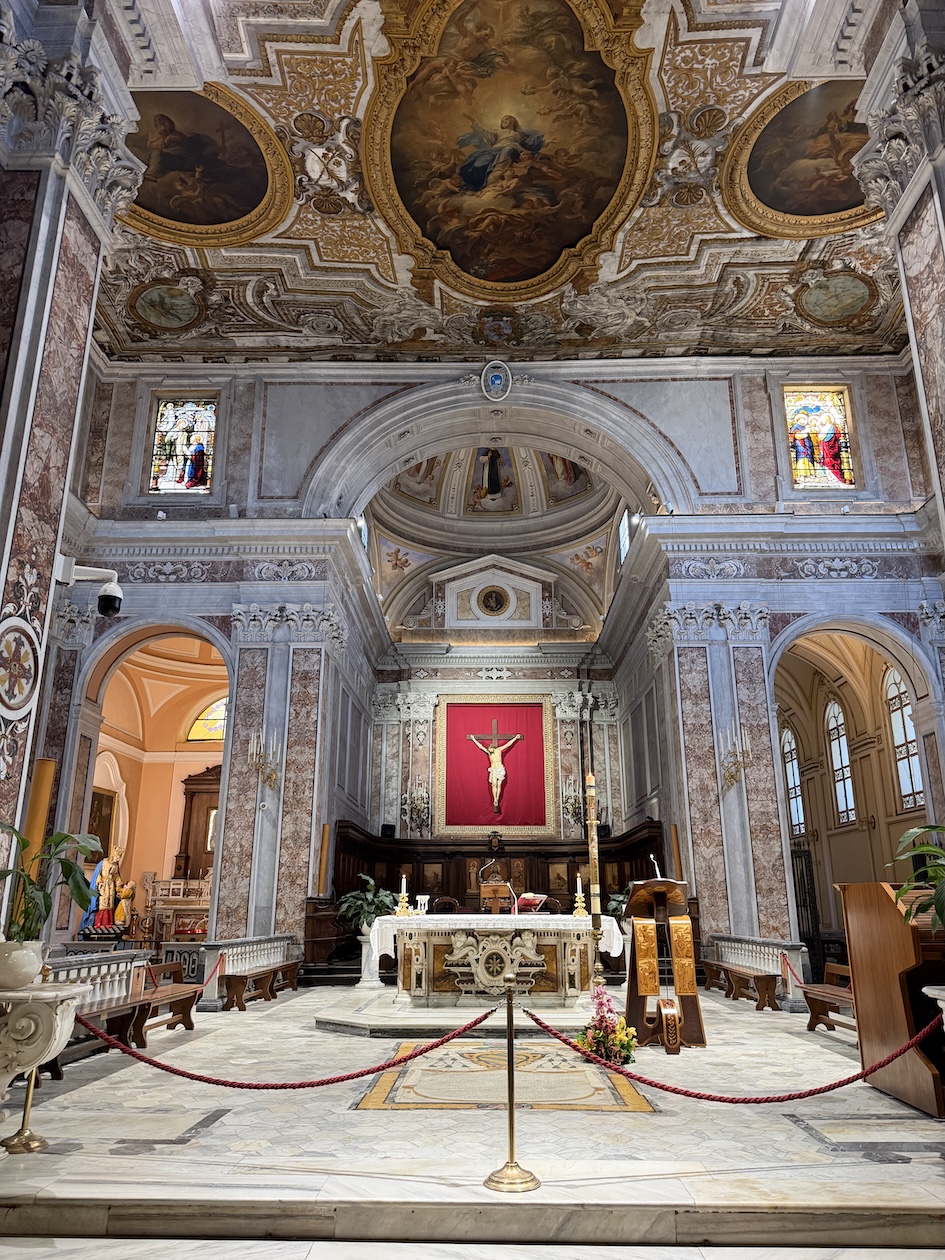
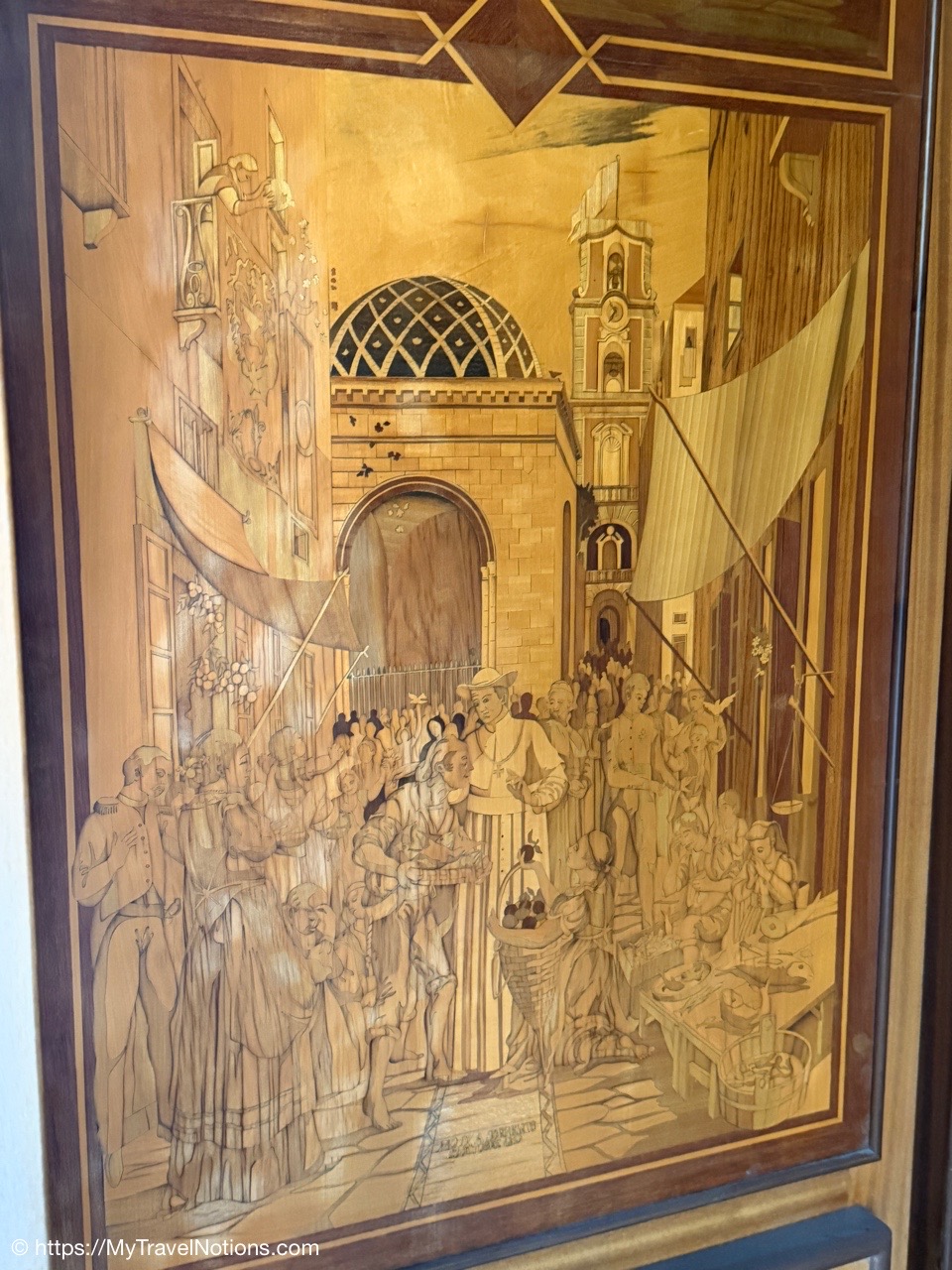
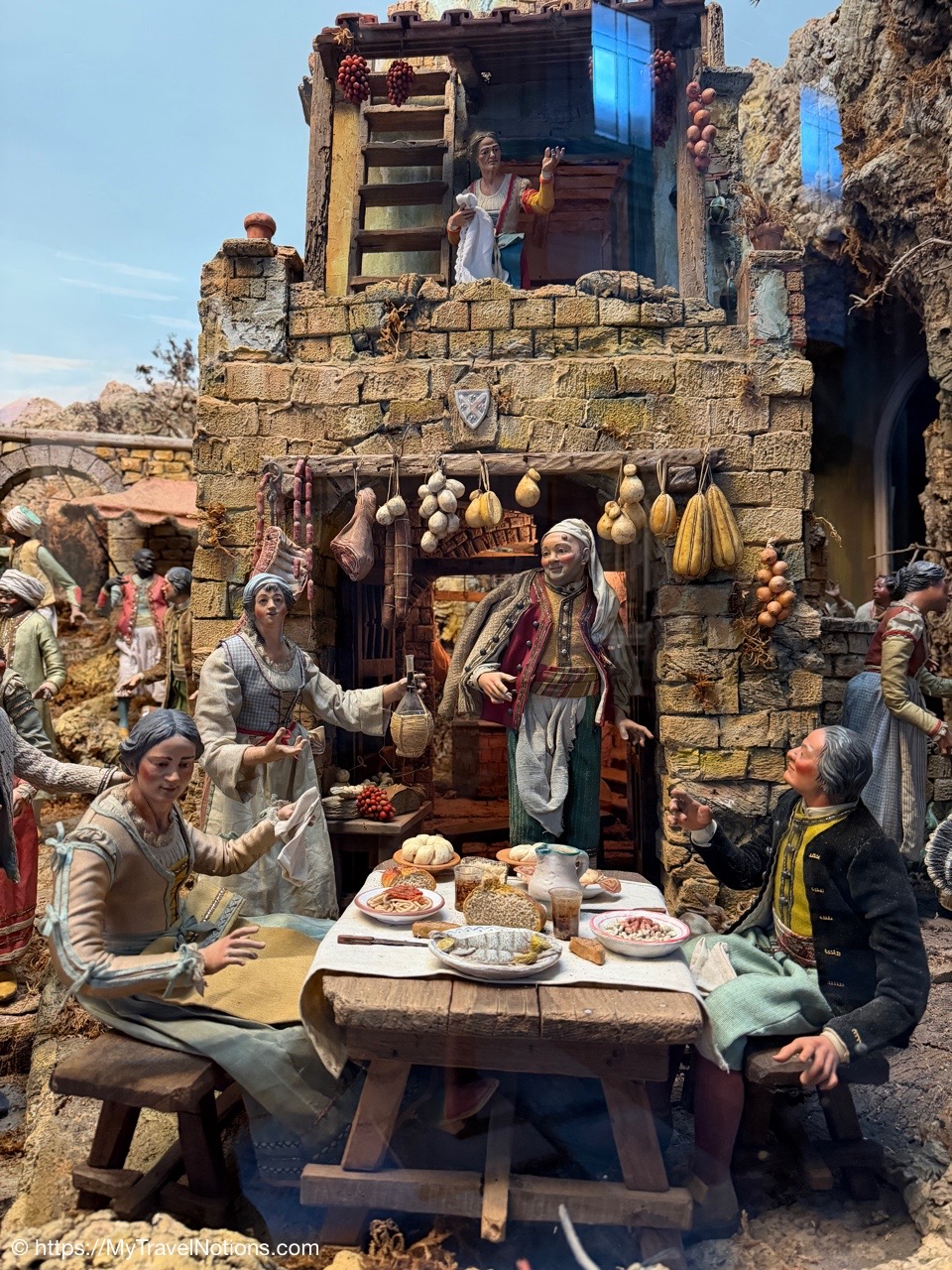
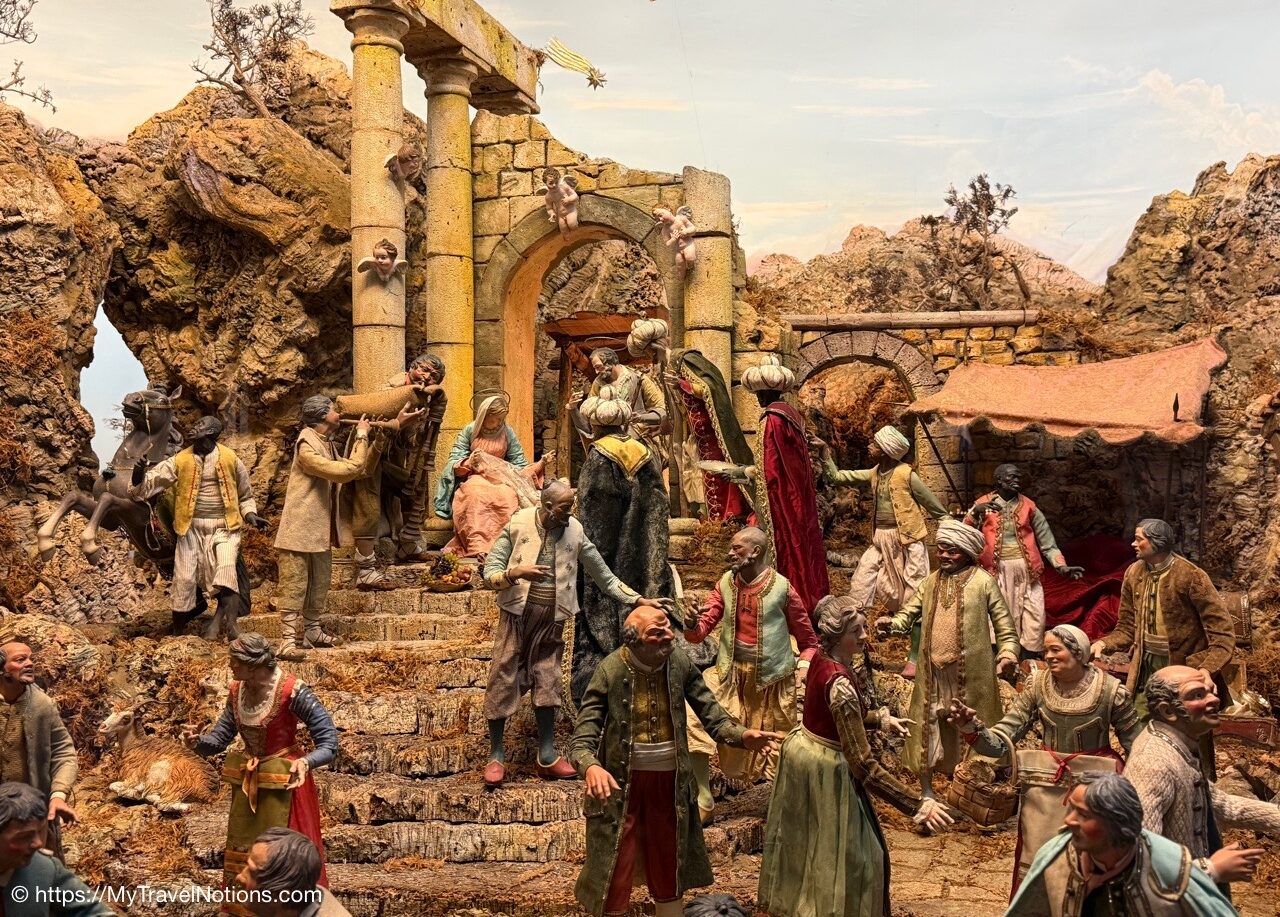
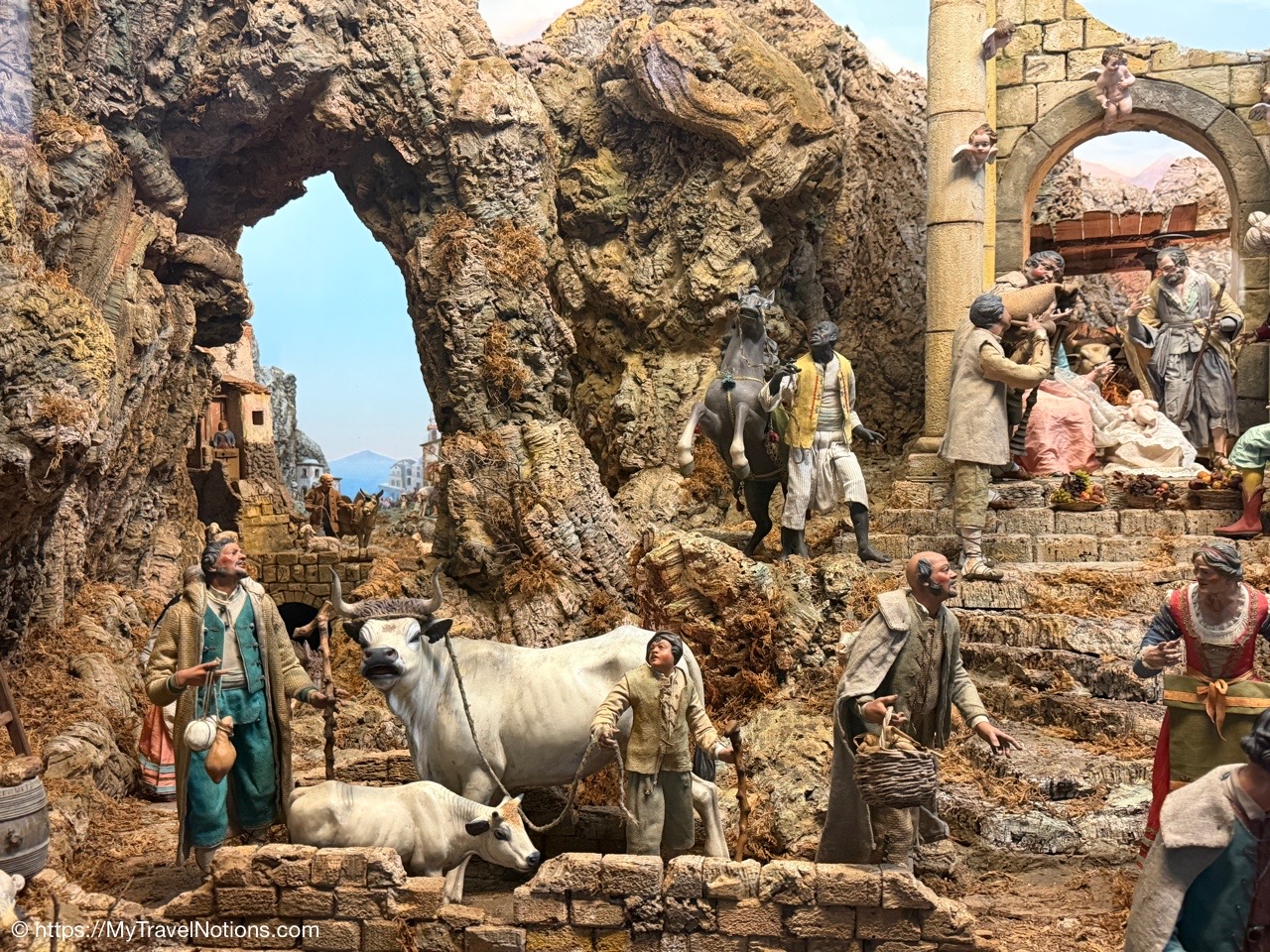
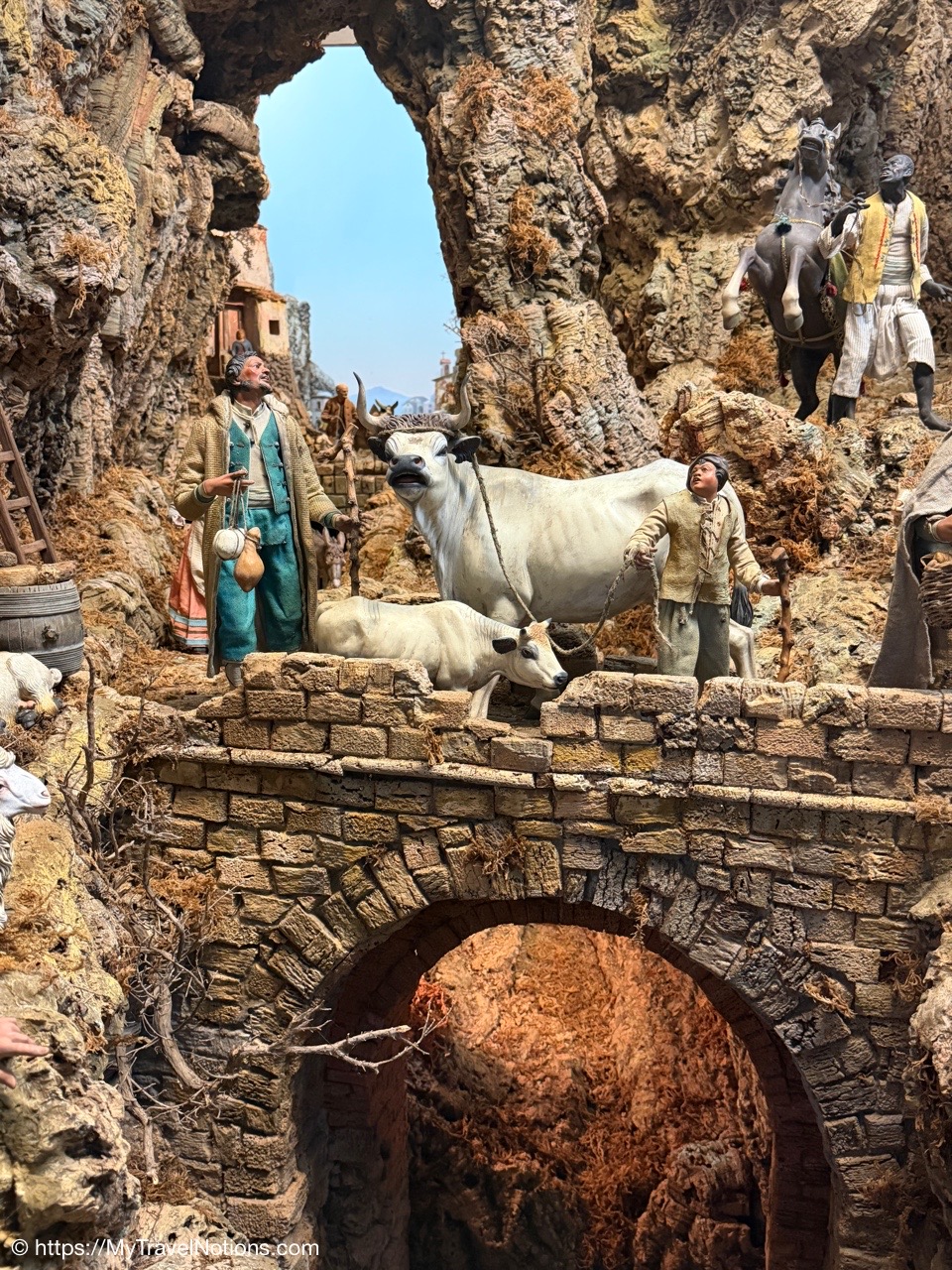
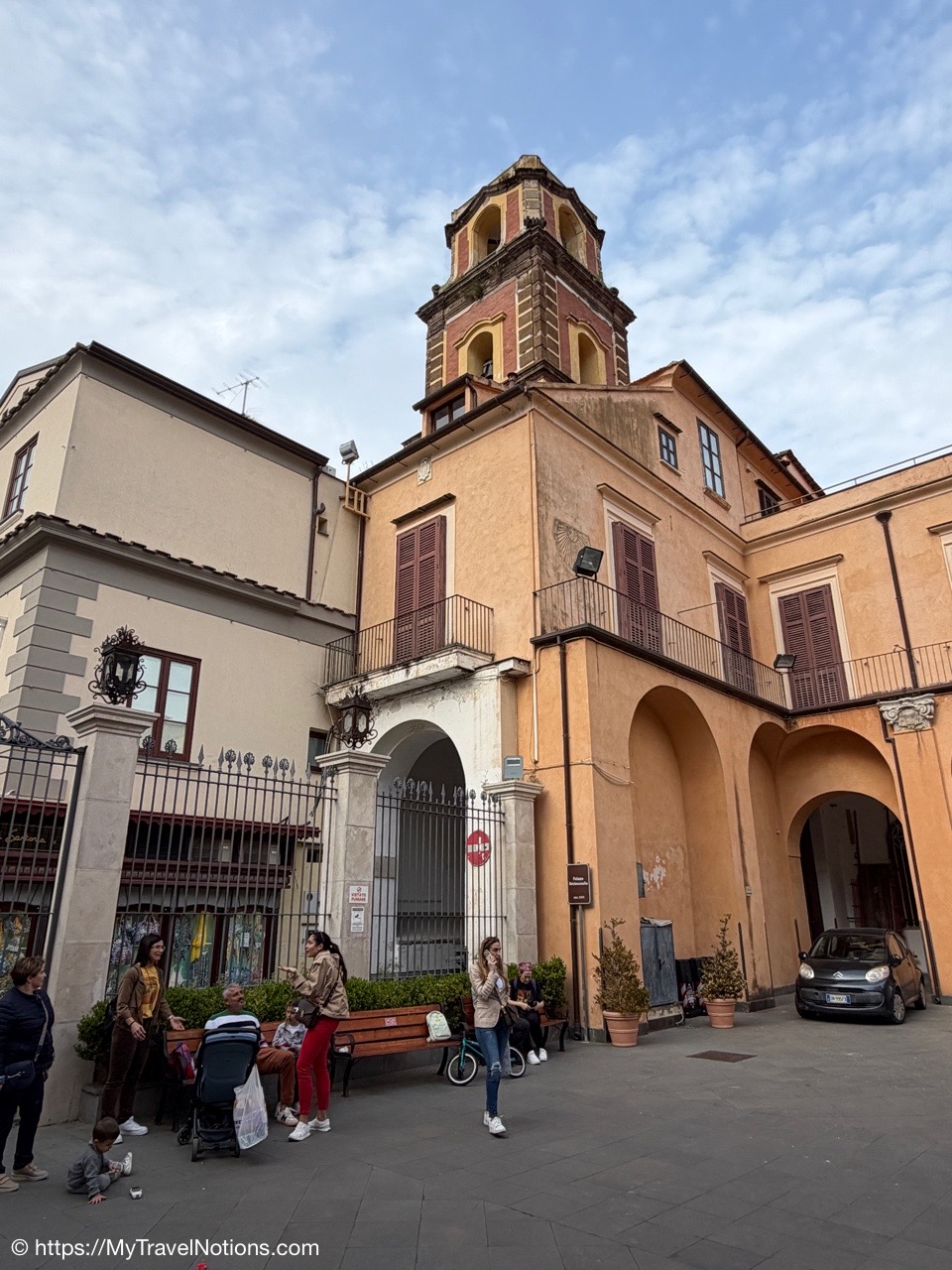
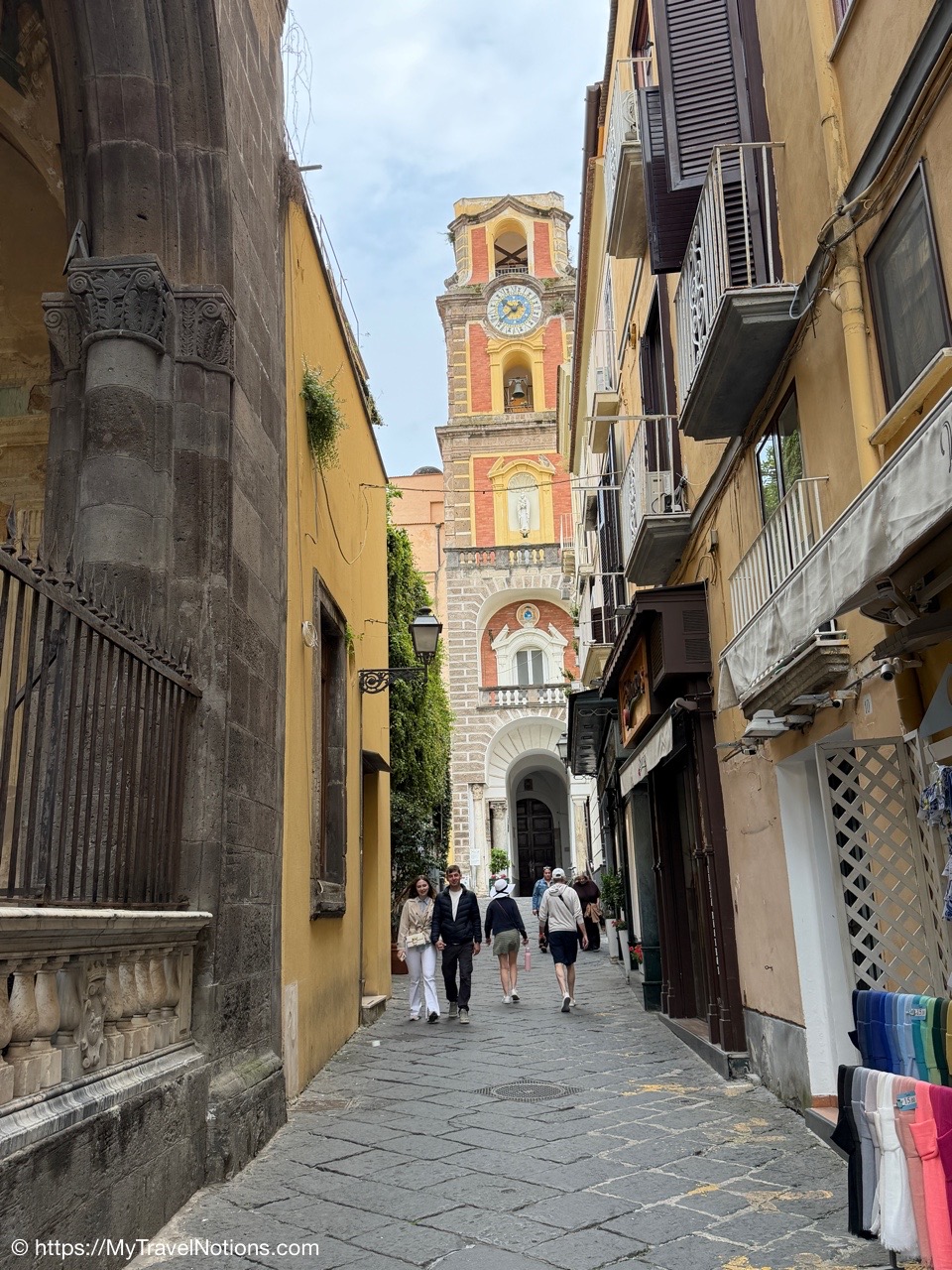
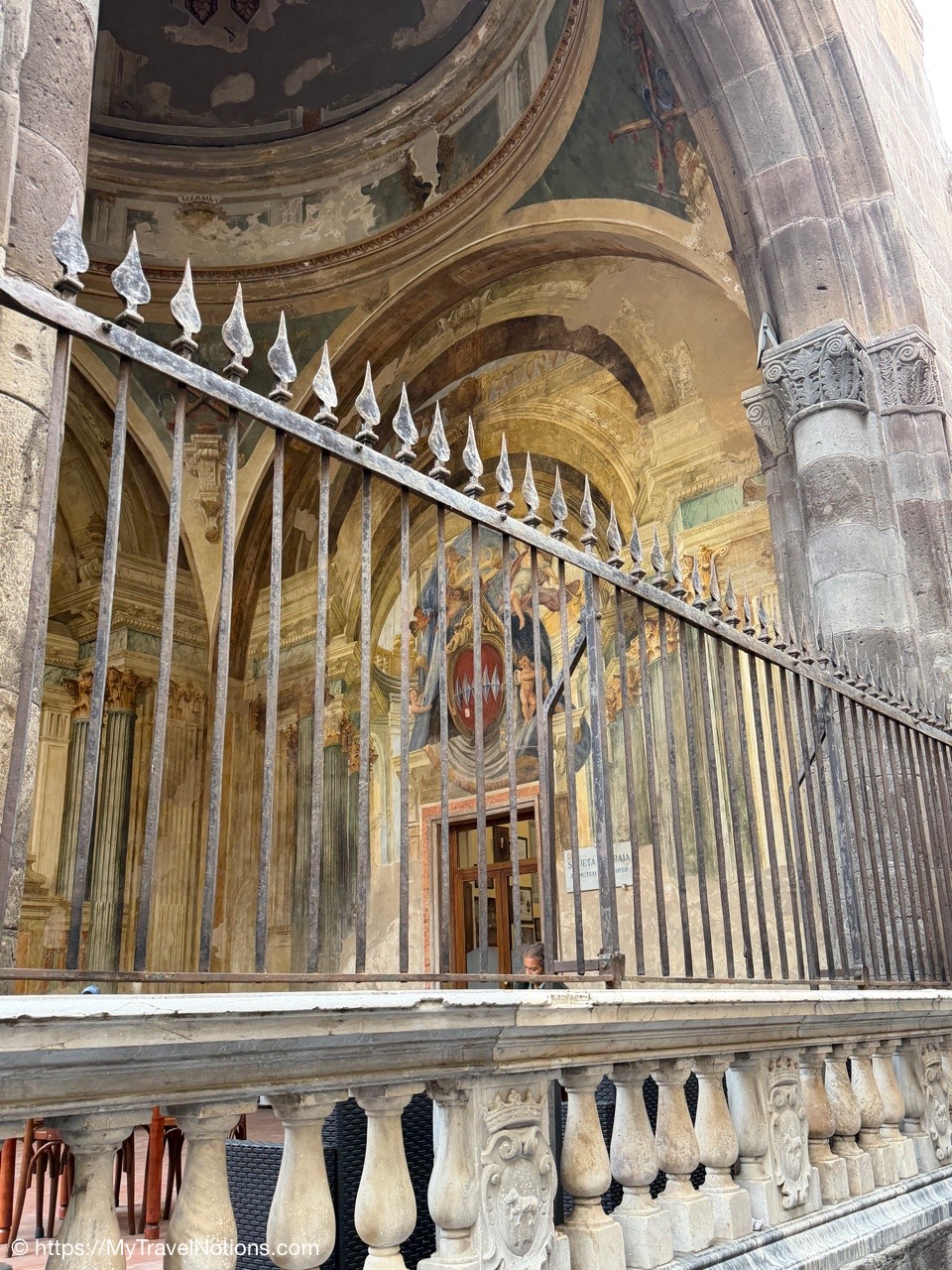
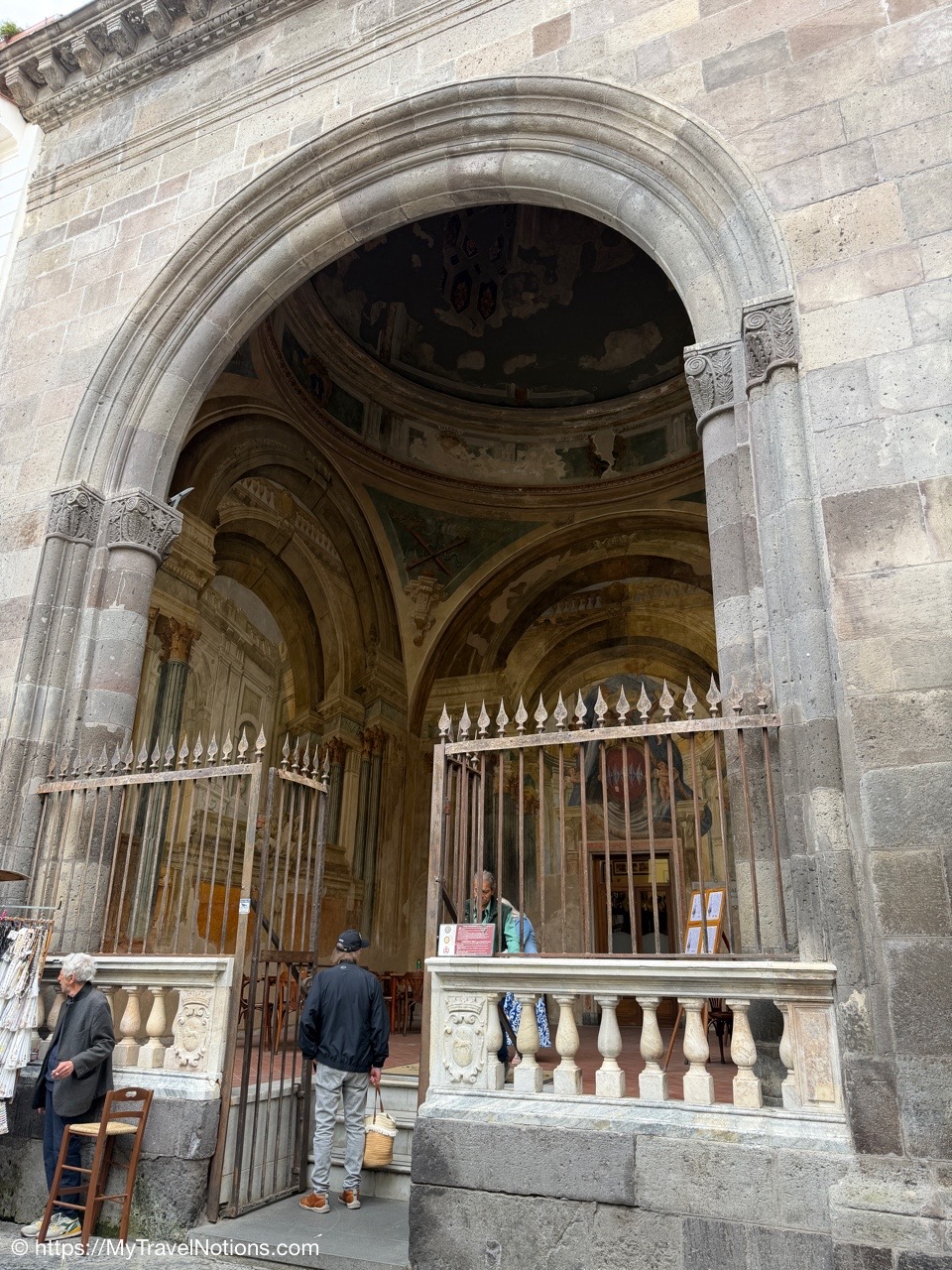
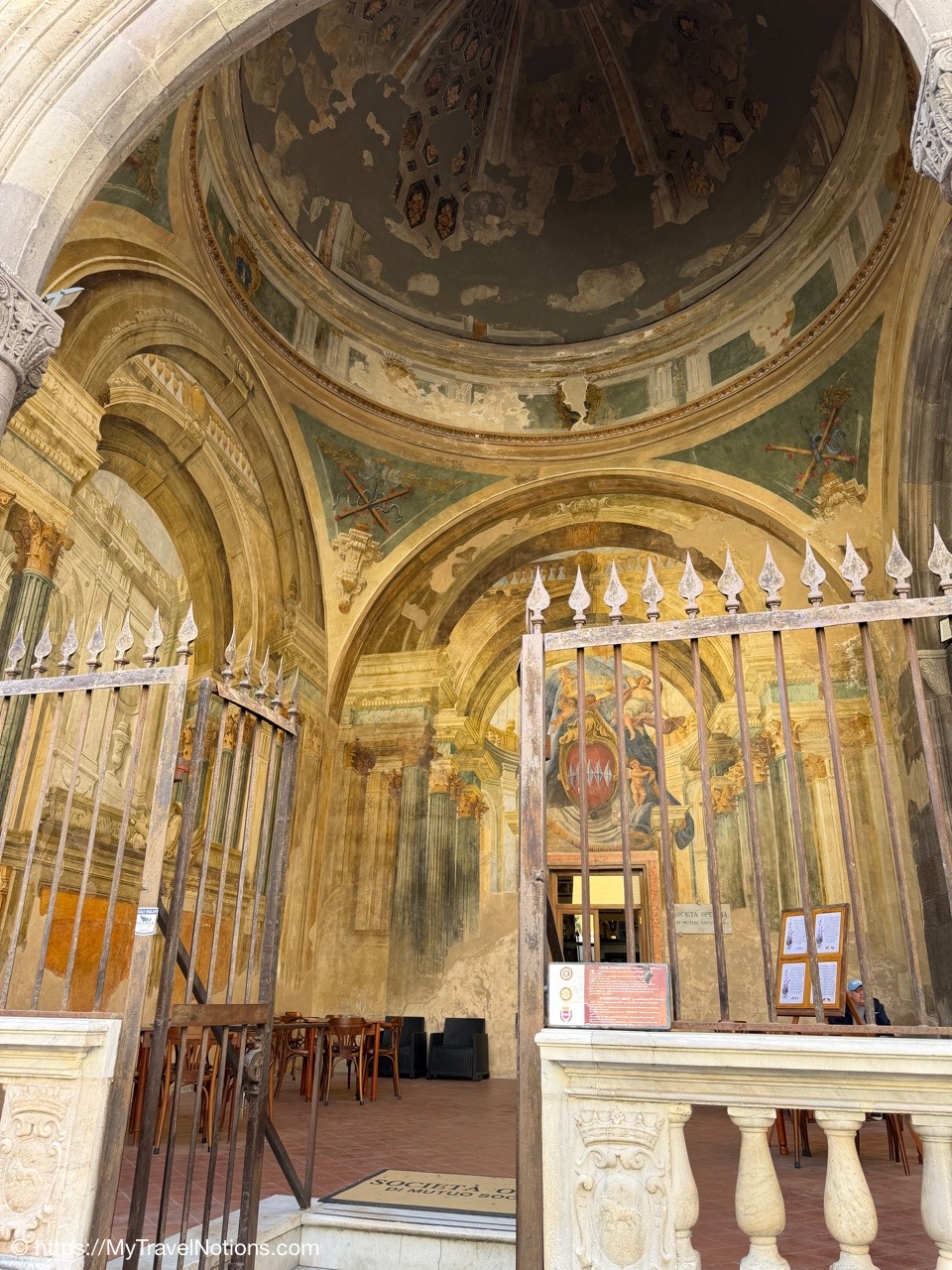
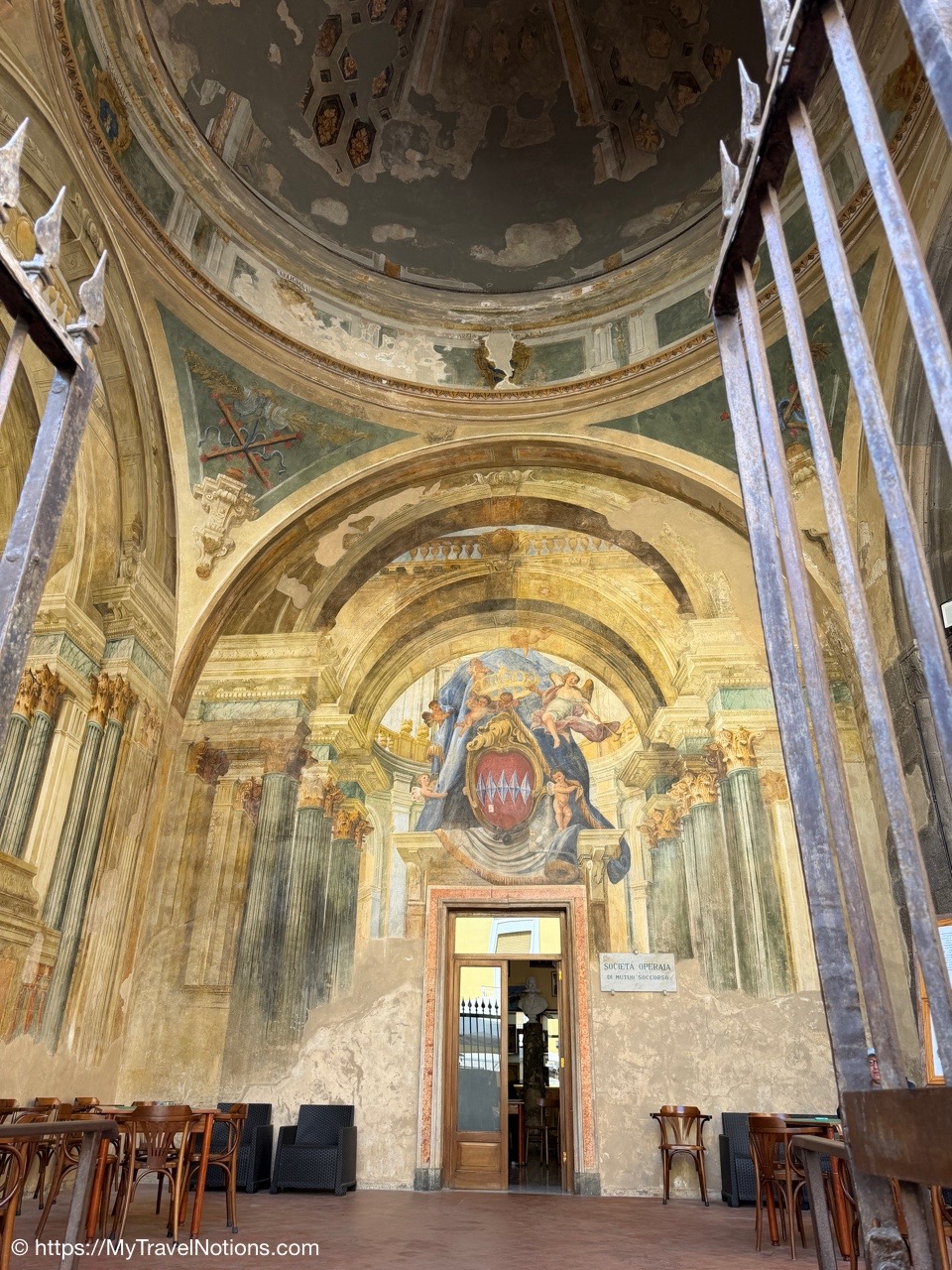
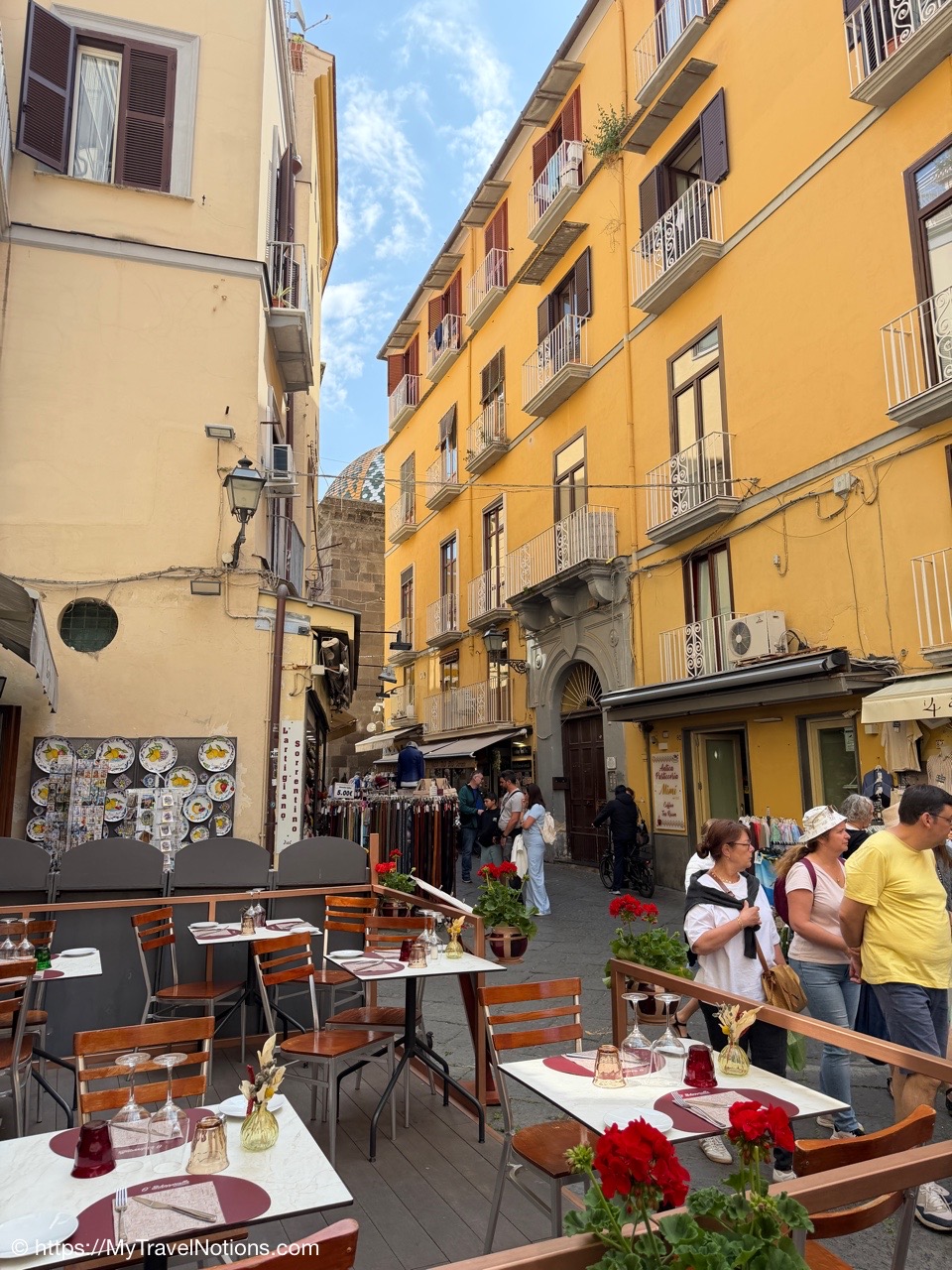
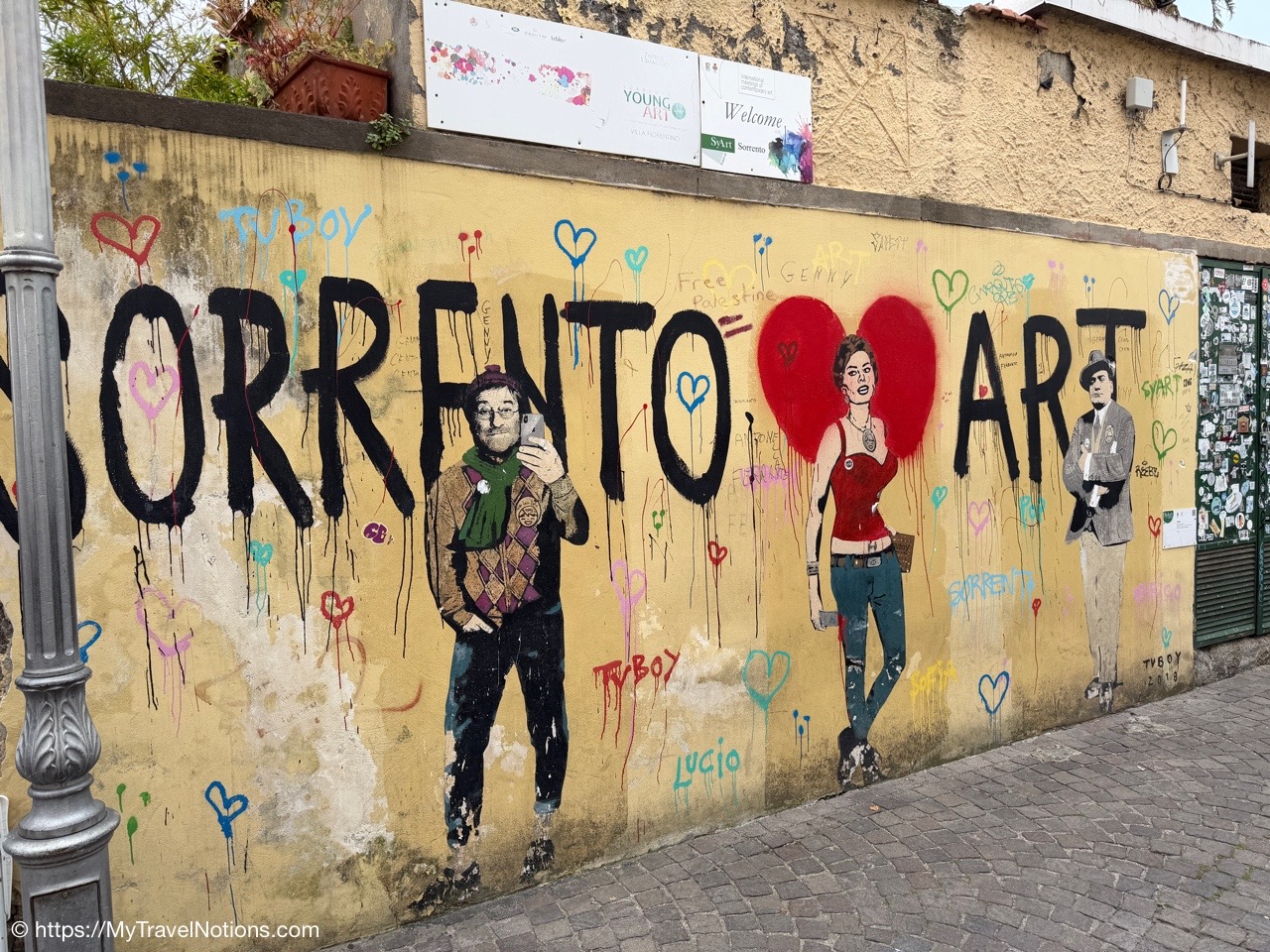
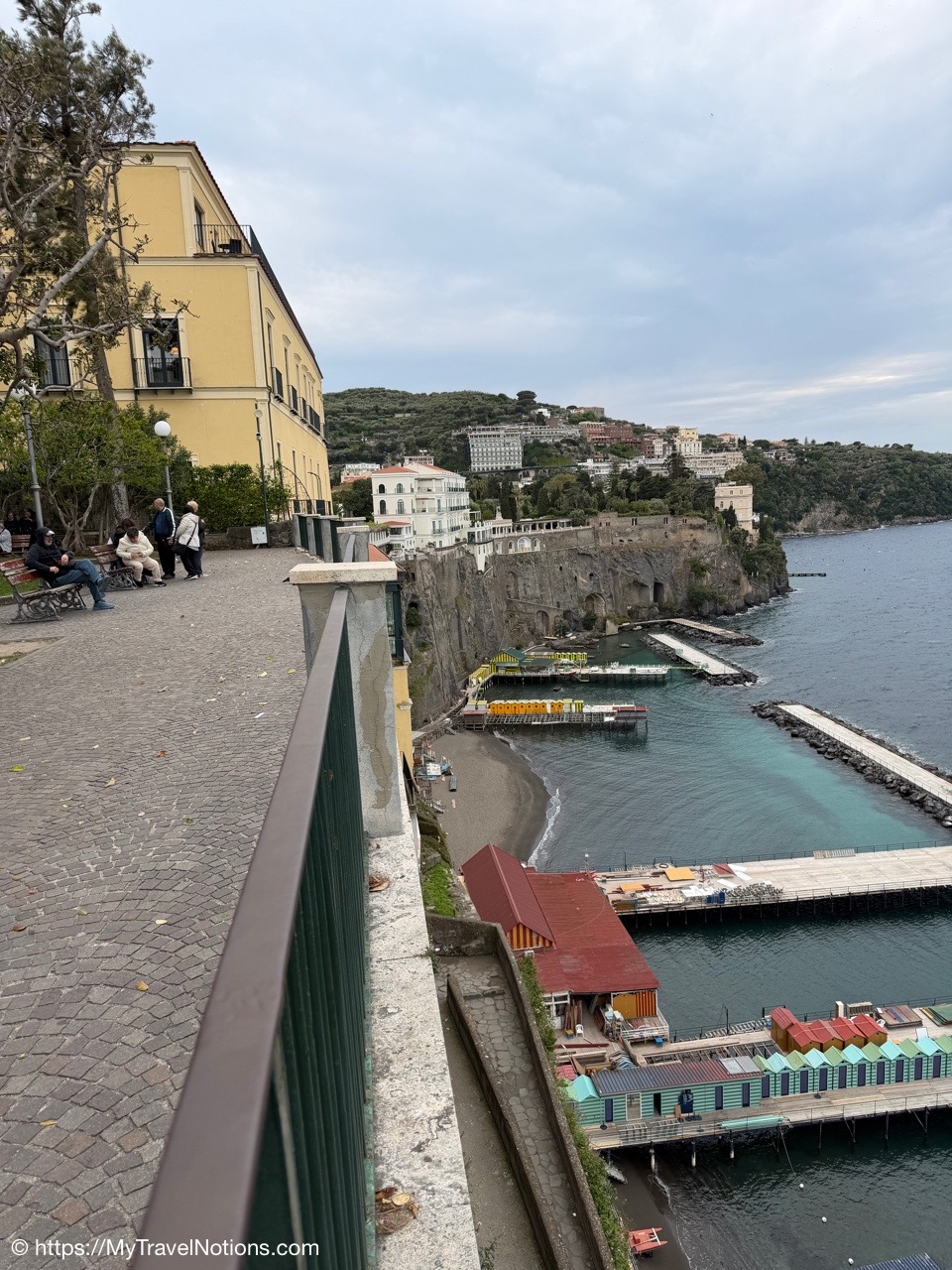
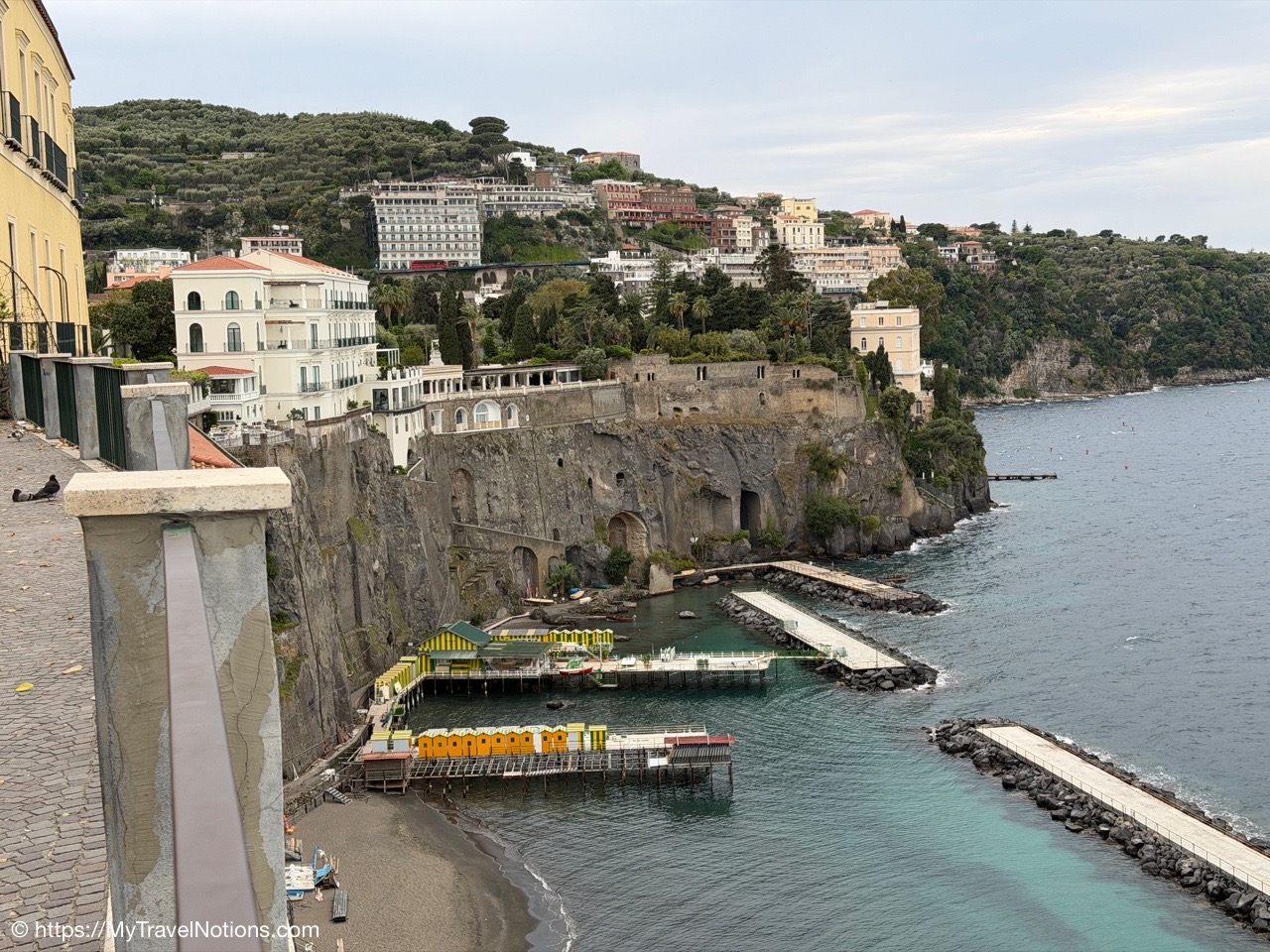
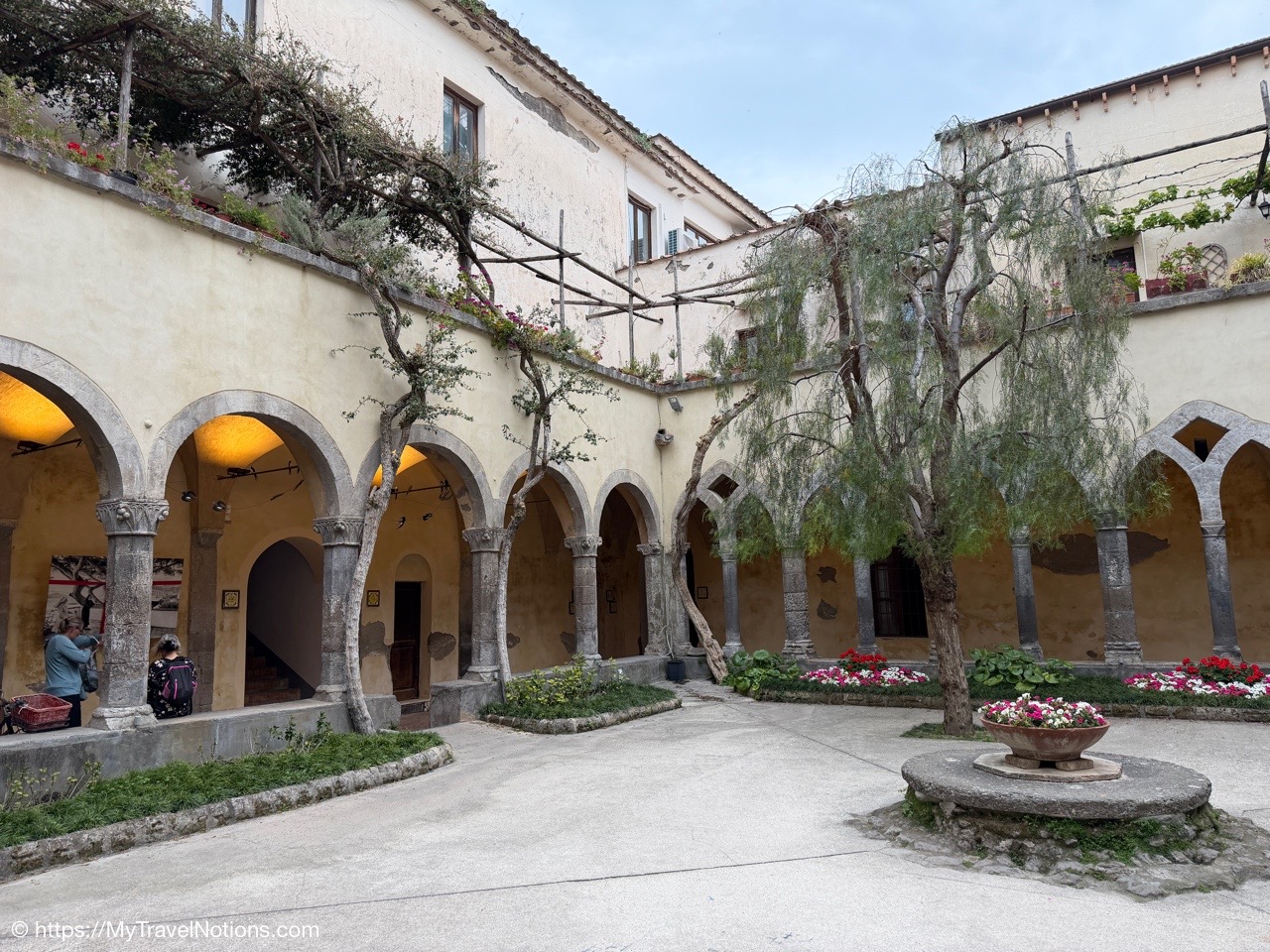
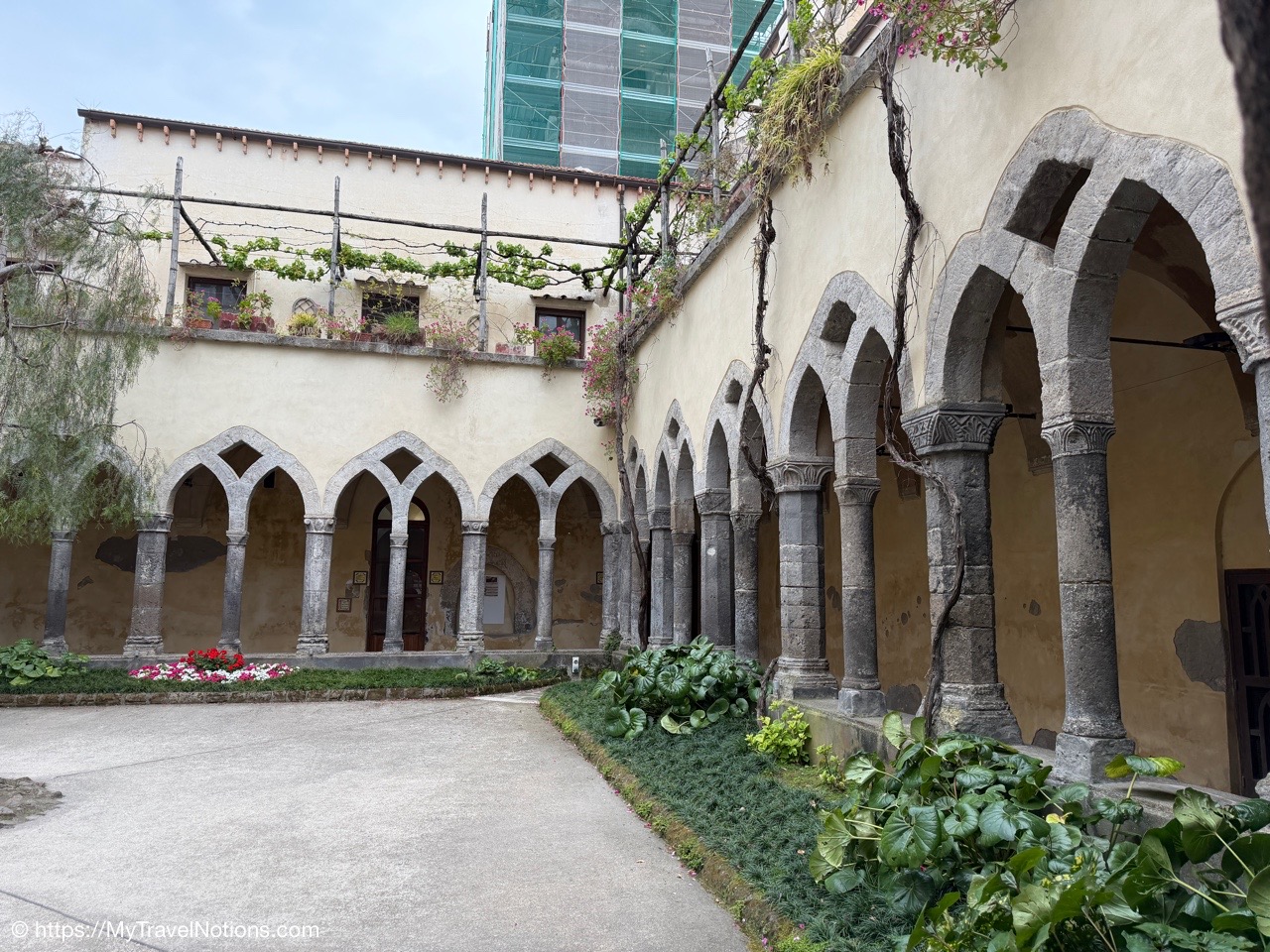
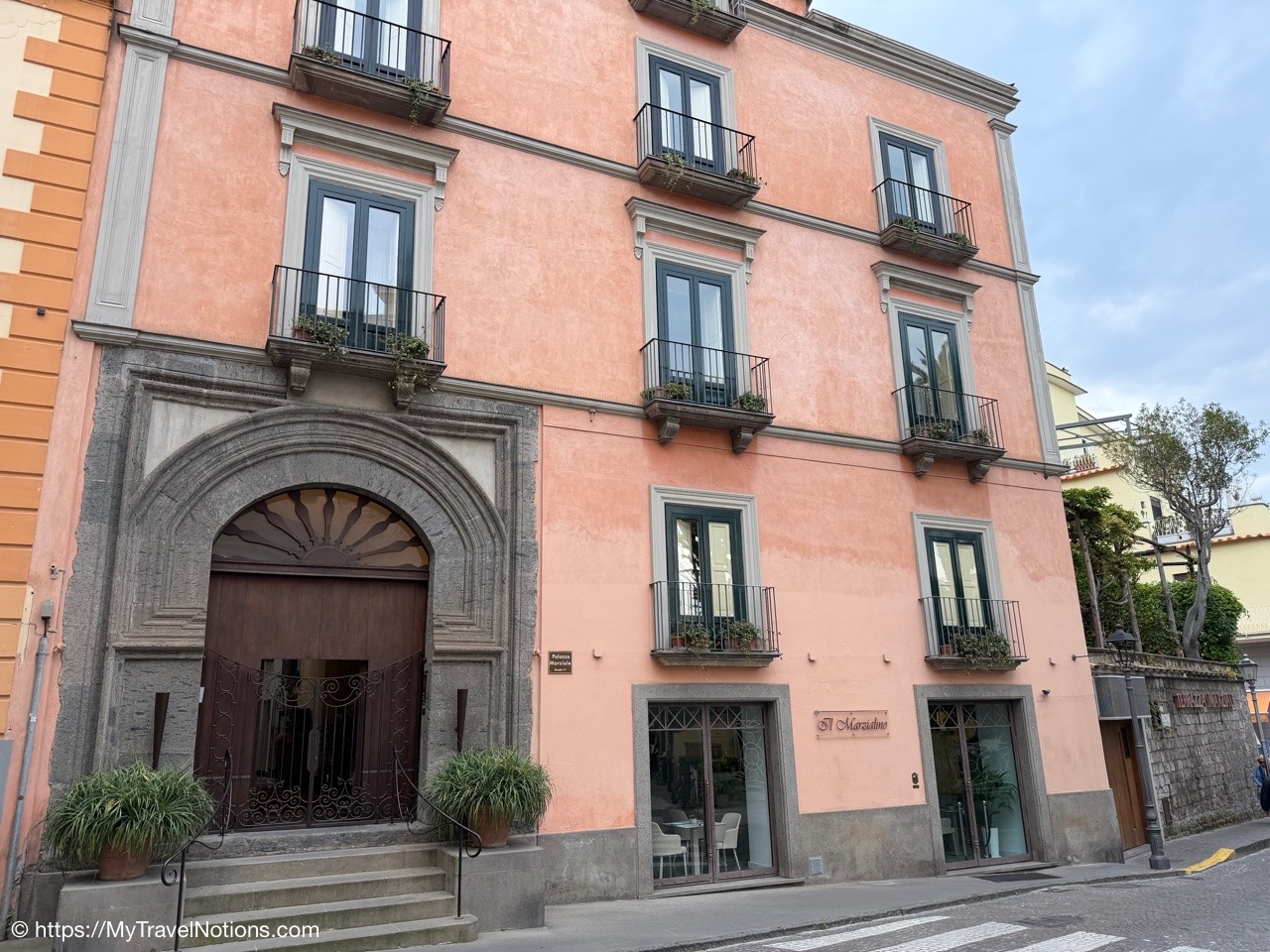
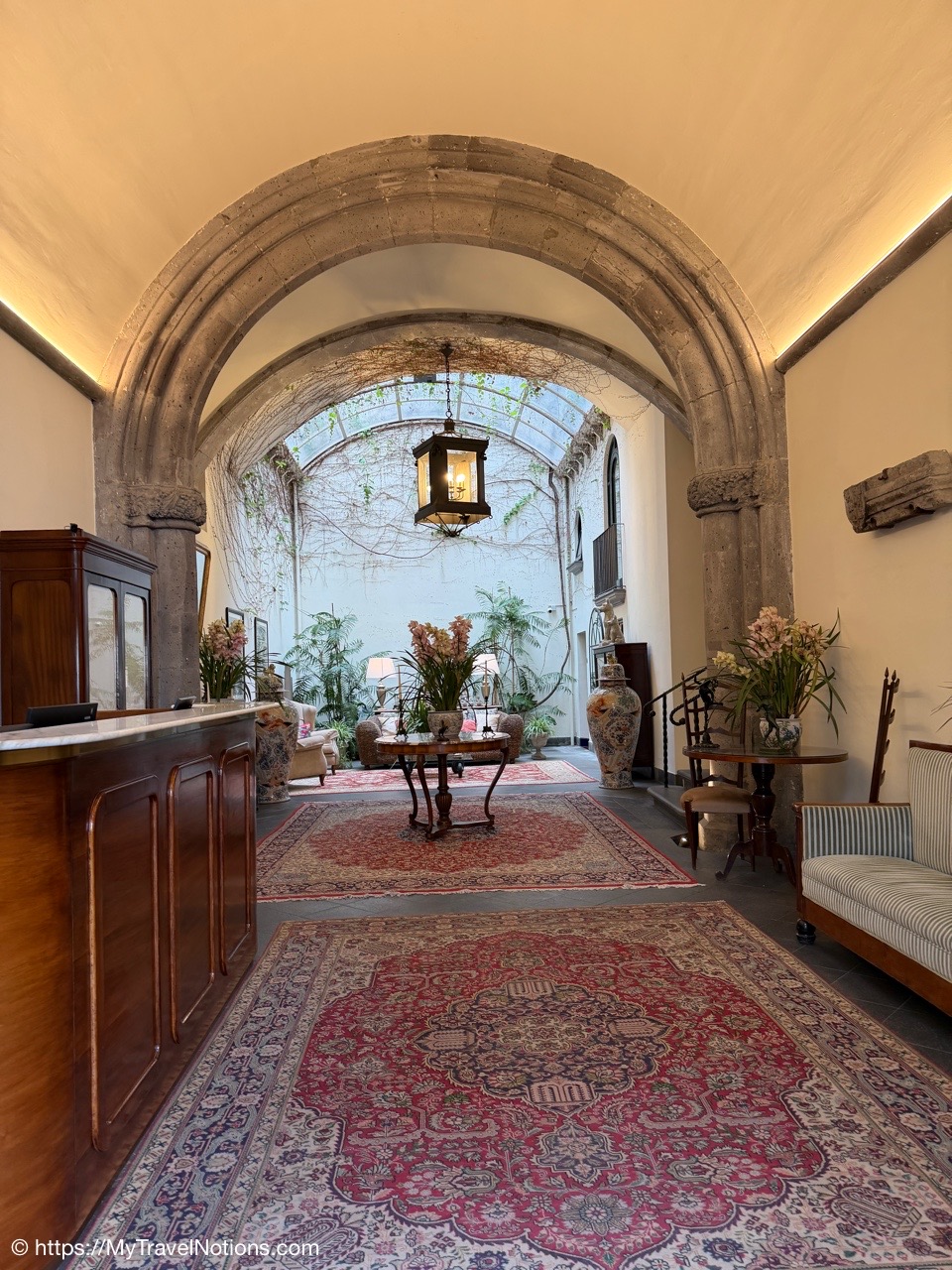
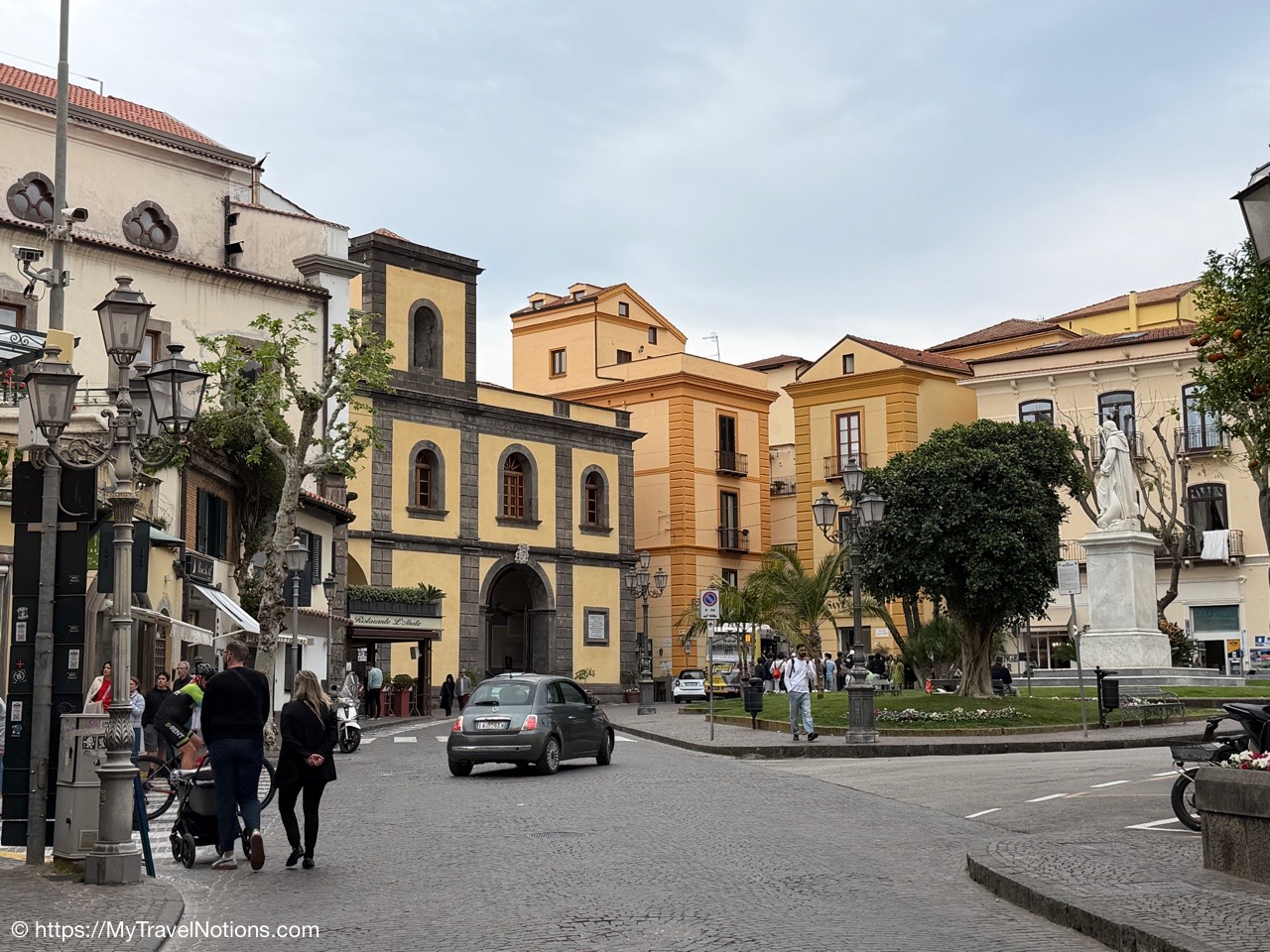
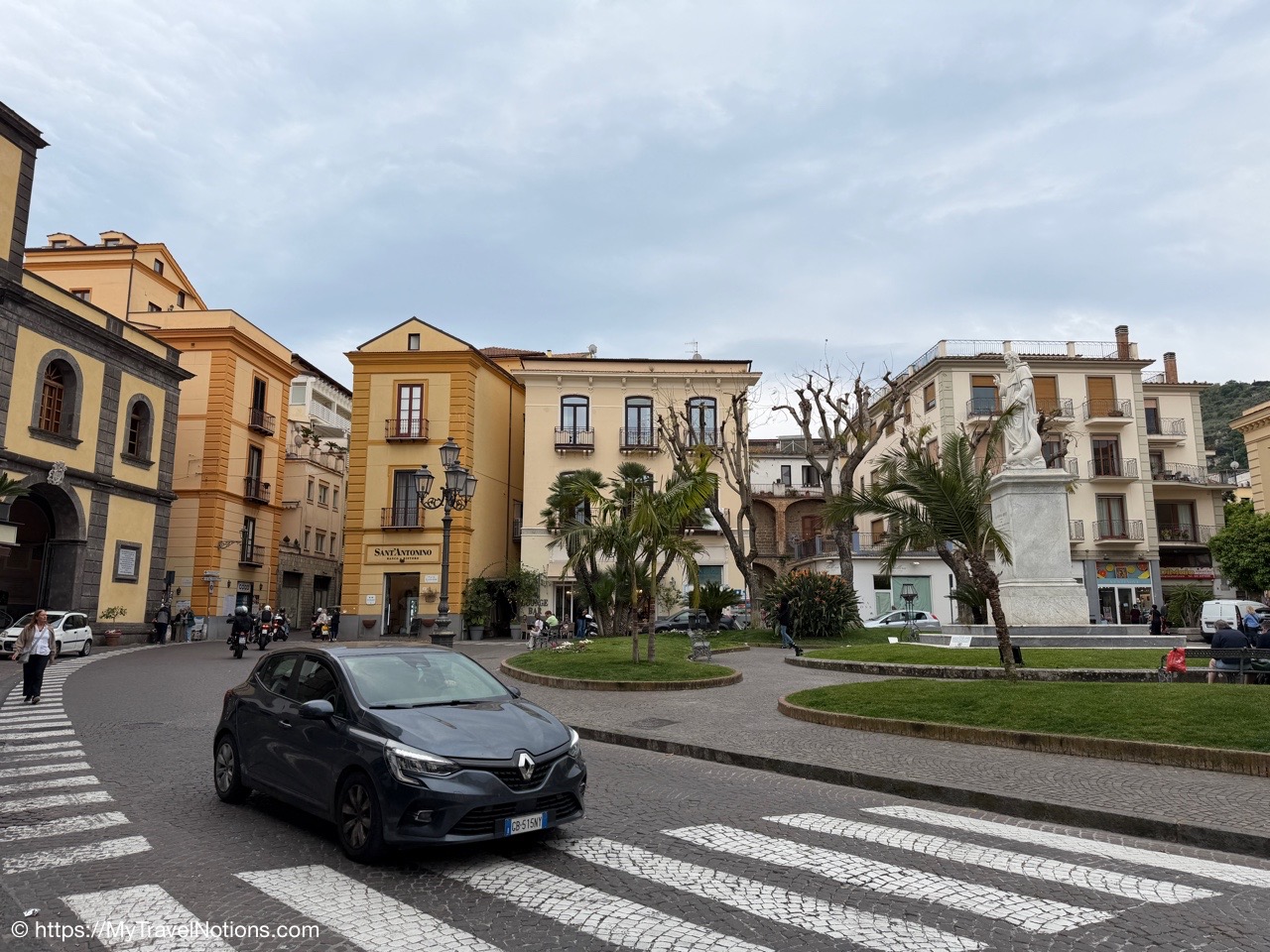
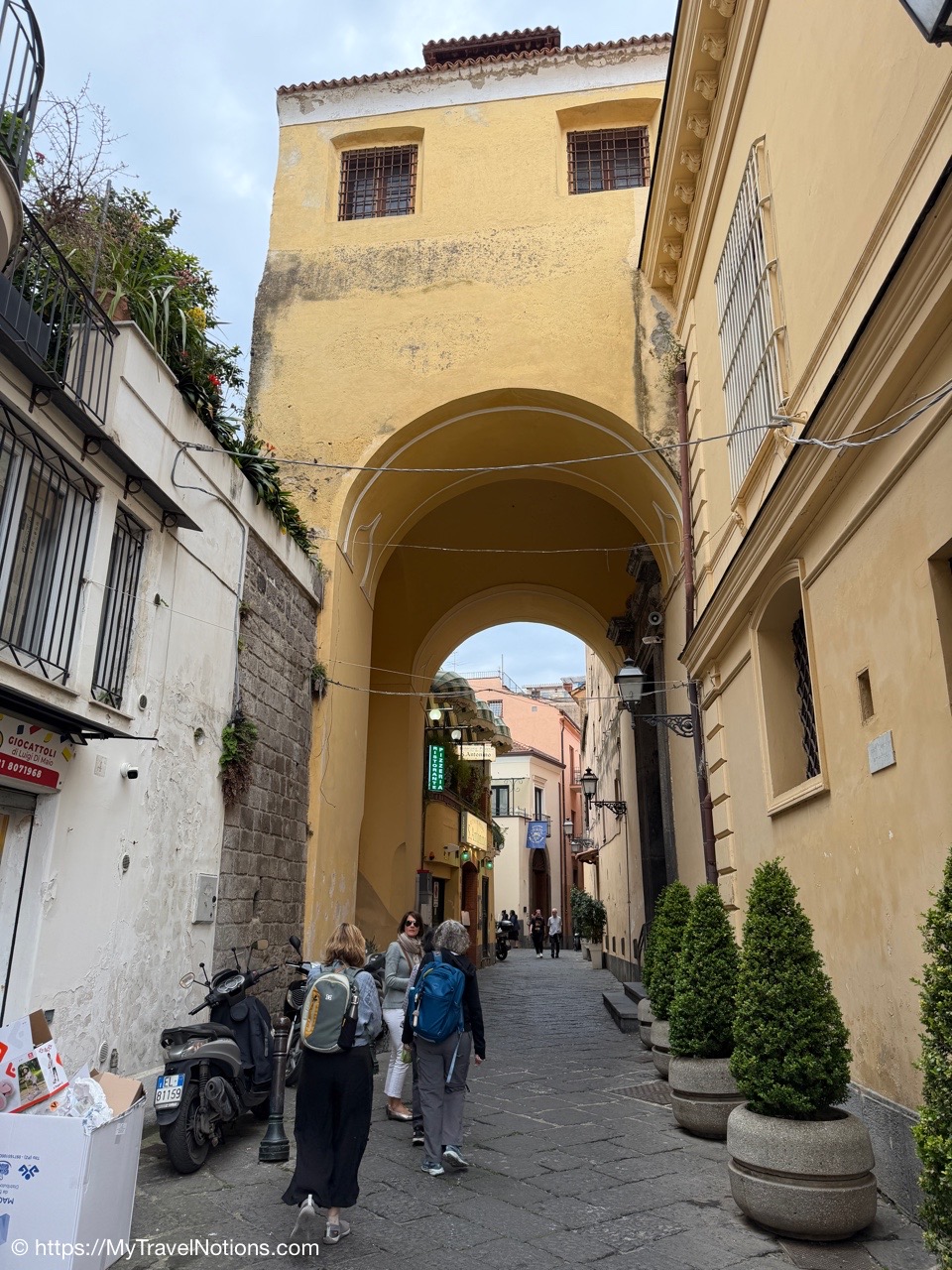
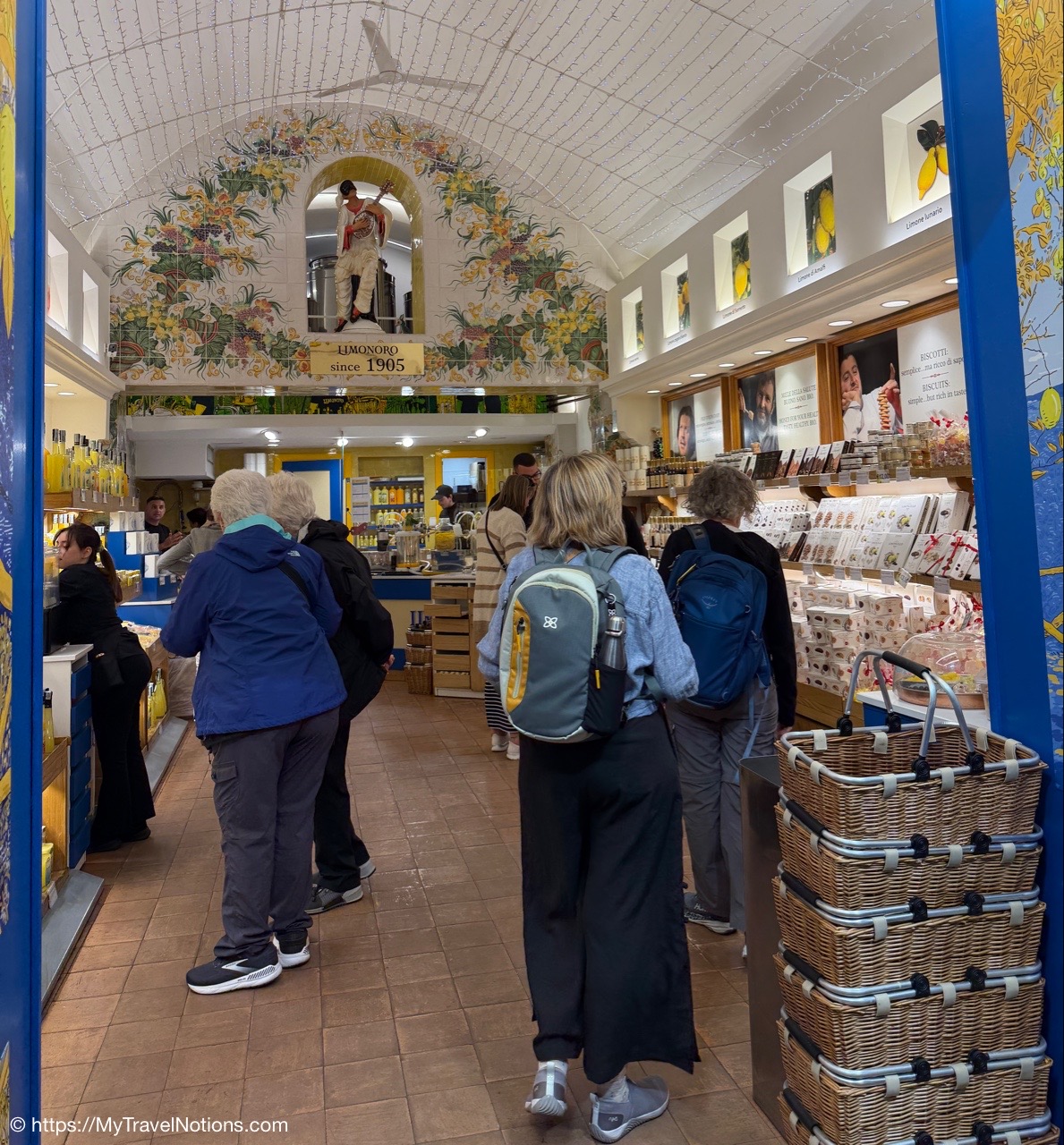
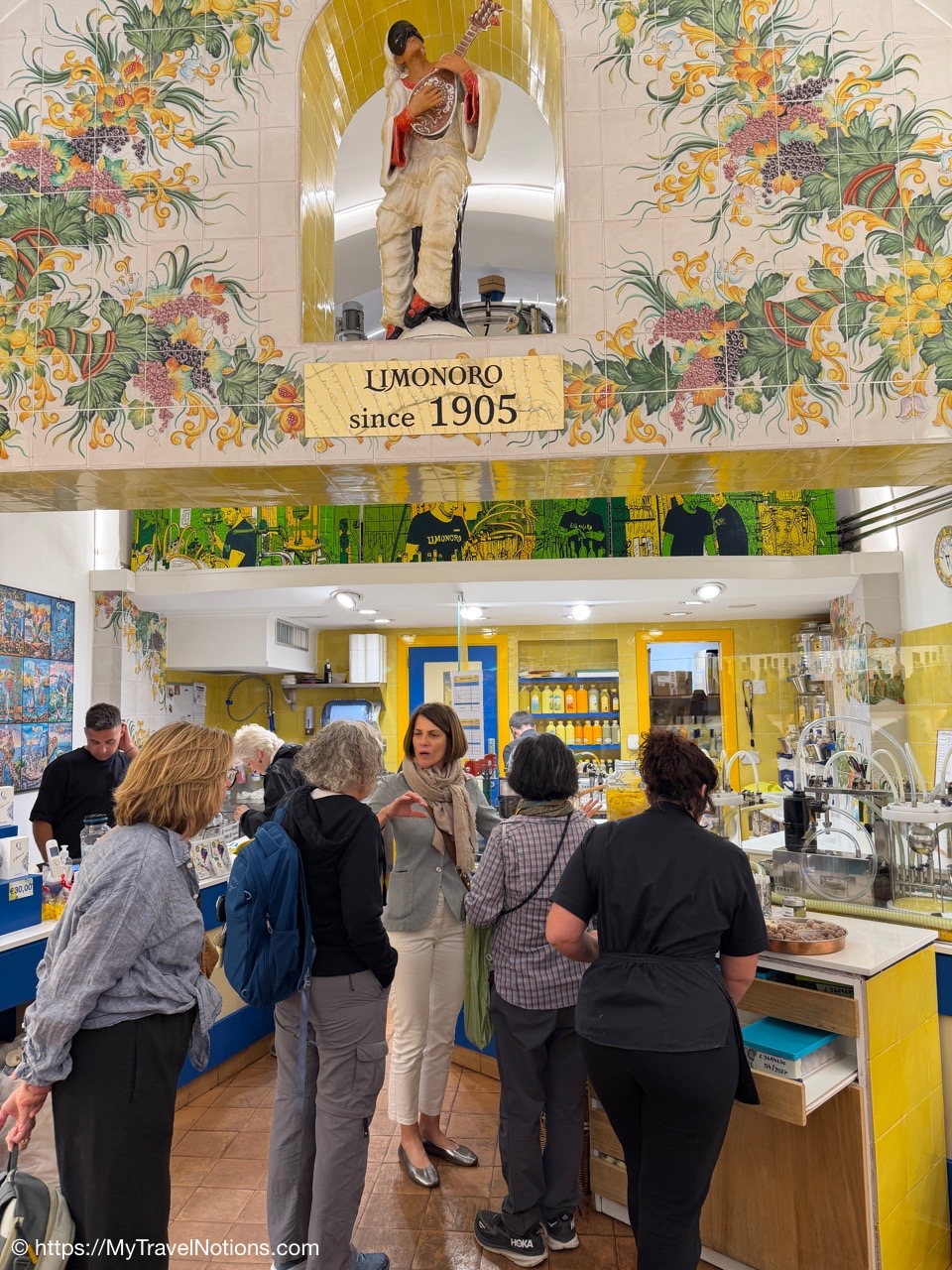
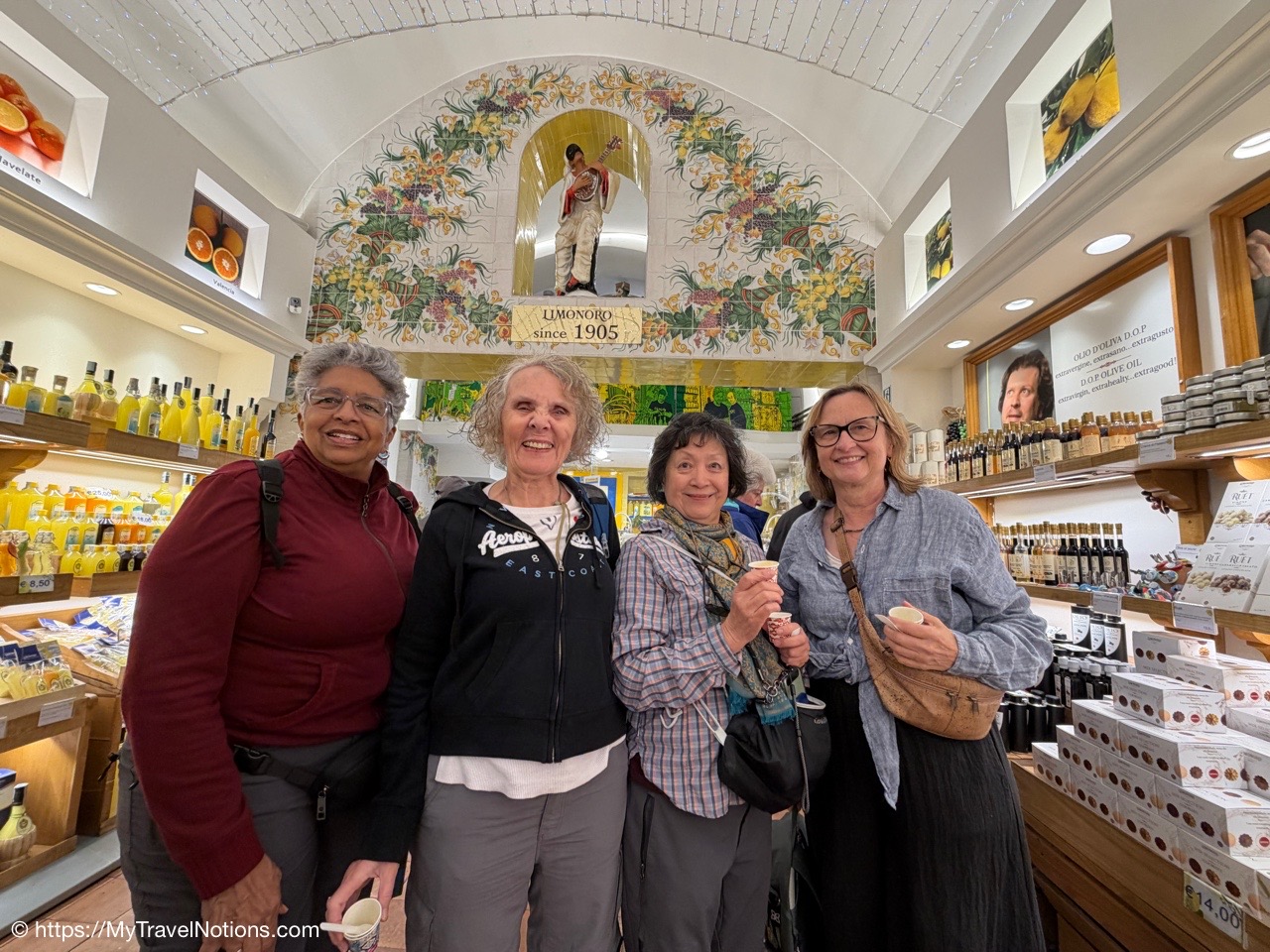
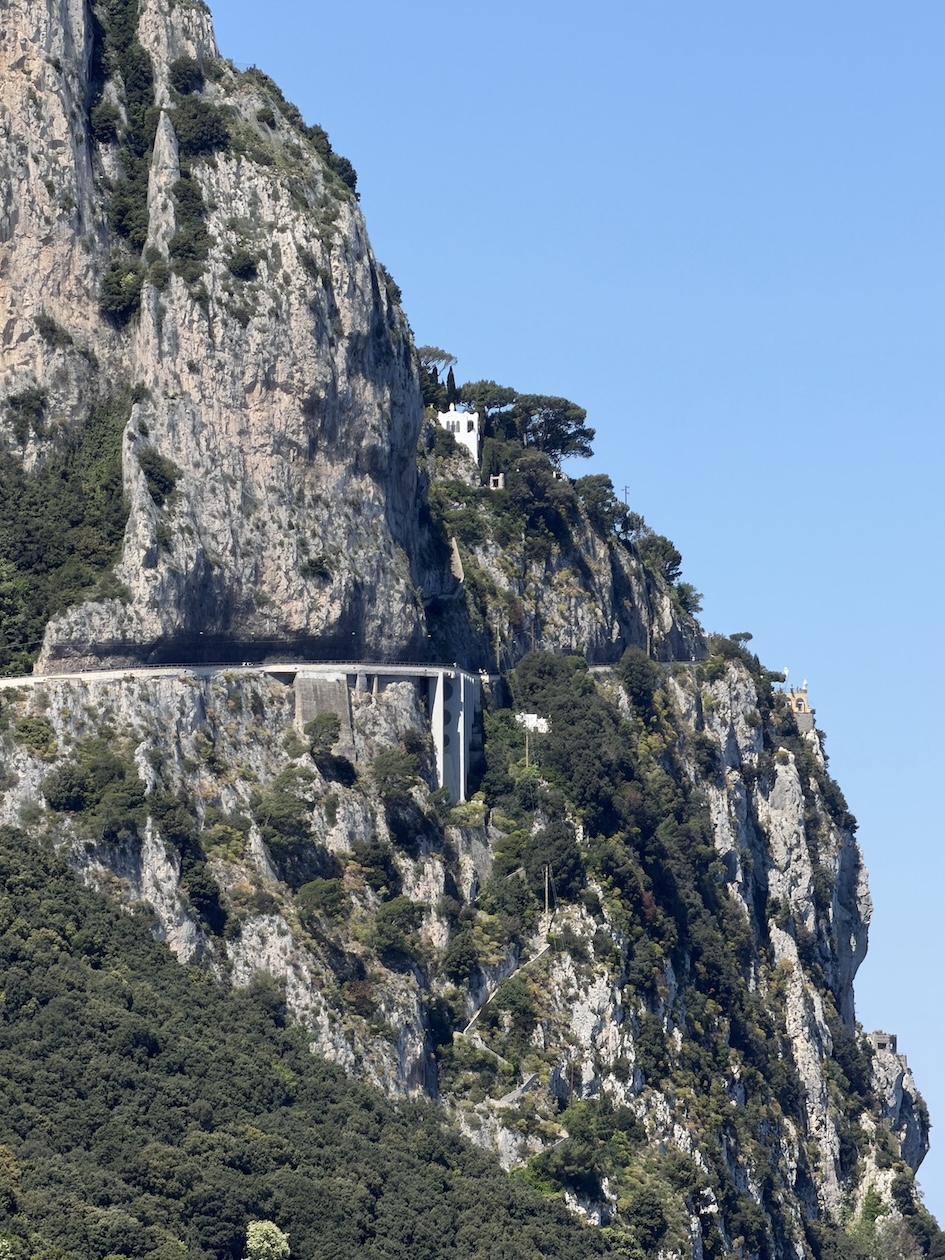
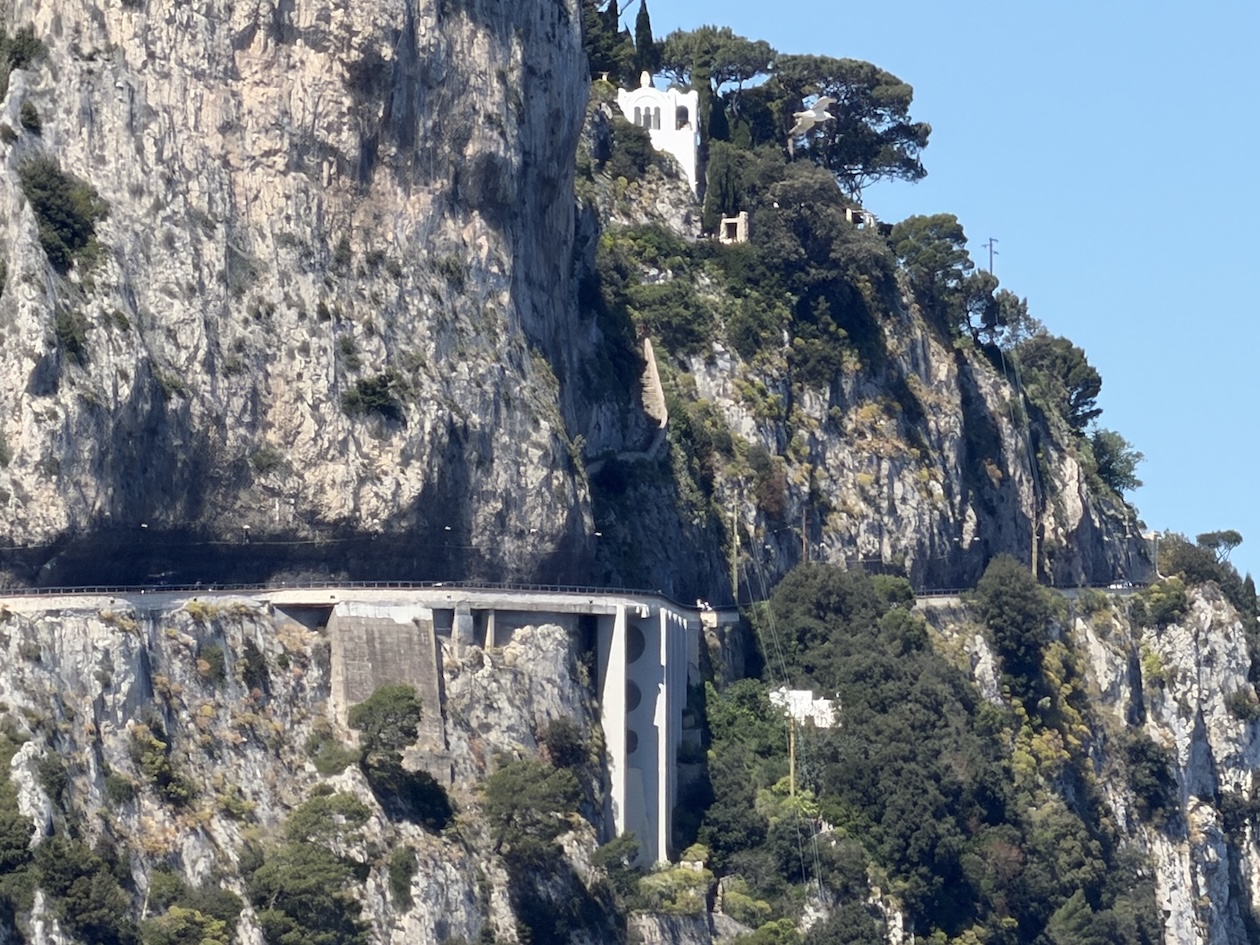
The four of us, Janet, Rosie, me and Alice at I Giardini di Cataldo in Sorrento tasting a number of lemon goodies including Lemoncello after our walk through the Lemon Grove Garden. (April 22, 2026)Slept in late and then found this little place, Lounge Bar Tasso where I could sit and have a nice little breakfast before my day began. I just wanted something simple and this, along with my Cappuccino, hit the spot. I also ordered the crossaint, which I did not need but brought it with me as a snack for much later. (April 22, 2026)Lemons. Lemons. Lemons. These aromatic fruits serve as the primary cultural, agricultural and economic symbol of Sorrento. And, you’re guaranteed to find all kinds of infused lemon products at the various shops. (April 22, 2026)Lemons. Lemons. Lemons. These aromatic fruits serve as the primary cultural, agricultural and economic symbol of Sorrento. And, you’re guaranteed to find all kinds of infused lemon products at the various shops. (April 22, 2026)Lemons. Lemons. Lemons. These aromatic fruits serve as the primary cultural, agricultural and economic symbol of Sorrento. And, you’re guaranteed to find all kinds of infused lemon products at the various shops. (April 22, 2026)Lemons. Lemons. Lemons. These aromatic fruits serve as the primary cultural, agricultural and economic symbol of Sorrento. And, you’re guaranteed to find all kinds of infused lemon products at the various shops. (April 22, 2026)Walking to I Giardini di Cataldo in Sorrento for our Lemon Grove Garden tour and lemon tasting goodies including Lemoncello. (April 22, 2026)The entrance to I Giardini di Cataldo in Sorrento for our Lemon Grove Garden tour and lemon tasting goodies including Lemoncello. (April 22, 2026)Inside I Giardini di Cataldo in Sorrento for our Lemon Grove Garden tour and lemon tasting goodies including Lemoncello. (April 22, 2026)Entering I Giardini di Cataldo in Sorrento for our Lemon Grove Garden tour and lemon tasting goodies including Lemoncello. (April 22, 2026)Me at I Giardini di Cataldo in Sorrento for our Lemon Grove Garden tour and lemon tasting goodies including Lemoncello. (April 22, 2026)Walking through the fragrant and tasty lemons grown in the Lemon Grove Garden of I Giardini di Cataldo in Sorrento. (April 22, 2026)Walking through the fragrant and tasty lemons grown in the Lemon Grove Garden of I Giardini di Cataldo in Sorrento. (April 22, 2026)The fragrant and tasty lemons grown in the Lemon Grove Garden of I Giardini di Cataldo in Sorrento. (April 22, 2026)The fragrant and tasty lemons grown in the Lemon Grove Garden of I Giardini di Cataldo in Sorrento.To make the Lemoncello liquor requires hand peeling the lemon as demonstrated by our guide, Ilaria, during our Lemon Grove Garden tour at I Giardini di Cataldo in Sorrento. (April 22, 2026)Then take the lemon peelings and infused them in high-proof alcohol mixed with sugar or a simple syrup creating a sweet and intensely lemon-flavored beverage. (April 22, 2026)Some of the treats we tried at I Giardini di Cataldo in Sorrento included a slice of lemon, which was quite tart and lemon jam on a slice of bread. (April 22, 2026)Some of the other treats we sampled included Lemoncello; Arancello, similar liqueur to limoncello, but made from orange peels rather than lemon peels; Liquirizia, a dark, intense licorice liquor; and the last was a liquor made from bay leaves. There was also a sponge cake dipped in Lemoncello. (April 22, 2026)The factory inside I Giardini di Cataldo in Sorrento where small batches of Lemoncello are made. (April 22, 2026)The factory inside I Giardini di Cataldo in Sorrento where small batches of Lemoncello are made. (April 22, 2026)Me trying to get a selfie while eating a lemon gelato at I Giardini di Cataldo in Sorrento. (April 22, 2026)In the late afternoon, we met our Sorrento walking tour guide, Giovanna, by this view of the Via Luigi de Maio, a dramatic, twisting road and pedestrian walkway connecting the historic town center, by the Piazza Tasso, to the seaside port of Marina Piccola. The roadway is carved directly into the volcanic rock cliffs. (April 22, 2026)In the late afternoon, we met our Sorrento walking tour guide, Giovanna, by this view of the Via Luigi de Maio, a dramatic, twisting road and pedestrian walkway connecting the historic town center, by the Piazza Tasso, to the seaside port of Marina Piccola. The roadway is carved directly into the volcanic rock cliffs. (April 22, 2026)The busy Piazza Tasso in Sorrento. (April 22, 2026)The Patron Saint of the town of Sorrento is Saint Antonino, who was said to have performed numerous miracles in favour of the people from Sorrento. (April 22, 2026)The busy Piazza Tasso in Sorrento. (April 22, 2026)Crossing the Corso Italia across from the busy Piazza Tasso in Sorrento. (April 22, 2026)Passing by the Church of Santa Maria del Carmine across from the busy Piazza Tasso in Sorrento. (April 22, 2026)The busy Piazza Tasso in Sorrento. (April 22, 2026)Another Lemon Grove Garden but this time it’s on our way to la ate lunch of pizza at Pizzeria da Franco, during our Sorrento walking tour. (April 22, 2026)Getting in a late lunch of pizza at Pizzeria da Franco, during our Sorrento walking tour. (April 22, 2026)A quick selfie with some of our food arriving for our late lunch of fresh tomatoes, mozzarella, Parma ham and bread, always bread, at Pizzeria da Franco, during our Sorrento walking tour. (April 22, 2026)Delicious Parma ham, fresh tomatoes and mozzarella cheese for our late lunch at Pizzeria da Franco, during our Sorrento walking tour. (April 22, 2026)And, then came the pizza for our late lunch at Pizzeria da Franco, during our Sorrento walking tour. One side was a Margarita pizza and the other side was with rocket salad and cheese. (April 22, 2026)The Patron Saint of the town of Sorrento is Saint Antonino, who was said to have performed numerous miracles in favour of the people from Sorrento. (April 22, 2026)The Valley of the Mills in Sorrento is an abandoned 13th-century industrial site located in a deep ravine behind Piazza Tasso. It features the 1940s abandoned remains of flour and sawmills overtaken by vegetation due to the high humidity. (April 22, 2026)The Valley of the Mills in Sorrento is an abandoned 13th-century industrial site located in a deep ravine behind Piazza Tasso. It features the 1940s abandoned remains of flour and sawmills overtaken by vegetation due to the high humidity. (April 22, 2026)A small portion of the tufa stone walls of Sorrento. (April 20, 2026)Back to the Piazza Tasso in Sorrento named after the famous Italian poet Torquato Tasso of the 16th century. He is known for his 1581 poem Gerusalemme liberata, in which he depicts a highly imaginative version of the combats between Christians and Muslims at the end of the First Crusade, during the Siege of Jerusalem of 1099. (April 22, 2026) The Piazza, with its medieval origins, has undergone numerous transformations over the centuries, becoming the nerve center of city life, on which stands a statue of Saint Antonino of Sorrento.Through these huge wooden doors is a beautiful fresco dated from 1772 at the Piazza Tasso in Sorrento. (April 22, 2026)The beautiful fresco dated from 1772 behind the huge wooden doors at the Piazza Tasso in Sorrento. (April 22, 2026)No walking or food walking tour is complete without a stop for gelato at Mario’s in Sorrento. (April 22, 2026)A stop for gelato at Mario’s in Sorrento. (April 22, 2026)Walking through the narrow alleyways of Sorrento. (April 22, 2026)Walking through the narrow alleyways of Sorrento. (April 22, 2026)The courtyard of the Cathedral of Saints Philip and James, commonly known as the Sorrento Cathedral. (April 22, 2026)The Cathedral of Saints Philip and James, commonly known as the Sorrento Cathedral, is a Roman Catholic cathedral located on Via Santa Maria della Pietà in Sorrento. The original Cathedral was first built around the 11th century. While it has ancient roots dating to the Byzantine era, it was rebuilt in the 15th century in a Romanesque style, with further renovations continuing through the 18th century and into 1924. In fact, the interior is currently being refurbished. (April 22, 2026)Entering the Cathedral of Saints Philip and James, commonly known as the Sorrento Cathedral, a Roman Catholic cathedral located on Via Santa Maria della Pietà in Sorrento. (April 22, 2026)Inside the Cathedral of Saints Philip and James, commonly known as the Sorrento Cathedral. (April 22, 2026)The altar inside the Cathedral of Saints Philip and James, commonly known as the Sorrento Cathedral. (April 22, 2026)The inside doors of the Sorrento Cathedral are inlaid wood designs inspired by Pope John Paul II’s visit to Sorrento and Capri. The wood inlays, installed in the 1990s, were crafted by local artisans. The art of handmade inlaid wood work is an old and noble Italian tradition typical of Southern Italy, especially the Sorrento area. (April 22, 2026)This magnificent miniature scene of Jesus’ birth can be seen inside the Sorrento Cathedral. It is (a traditional 18th-century Neapolitan-style presepe (nativity scene) displayed year-round near the main entrance. This detailed diorama features the Holy Family—Mary, Joseph, and the Baby Jesus—alongside numerous figures depicting daily life. (April 22, 2026)This magnificent miniature scene of Jesus’ birth can be seen inside the Sorrento Cathedral. It is (a traditional 18th-century Neapolitan-style presepe (nativity scene) displayed year-round near the main entrance. This detailed diorama features the Holy Family—Mary, Joseph, and the Baby Jesus—alongside numerous figures depicting daily life. (April 22, 2026)This magnificent miniature scene of Jesus’ birth can be seen inside the Sorrento Cathedral. It is (a traditional 18th-century Neapolitan-style presepe (nativity scene) displayed year-round near the main entrance. This detailed diorama features the Holy Family—Mary, Joseph, and the Baby Jesus—alongside numerous figures depicting daily life. (April 22, 2026)This magnificent miniature scene of Jesus’ birth can be seen inside the Sorrento Cathedral. It is (a traditional 18th-century Neapolitan-style presepe (nativity scene) displayed year-round near the main entrance. This detailed diorama features the Holy Family—Mary, Joseph, and the Baby Jesus—alongside numerous figures depicting daily life. (April 22, 2026)The bell tower of the Sorrento Cathedral, as seen from the courtyard, is decorated with a clock, which cannot be seen from this side, and is a prominent landmark that rises three stories above the surrounding buildings. The lower two stories of the bell tower were built in the 11th century, coinciding with the cathedral’s original construction. The upper stories and the distinctive blue majolica clock were added later, primarily during renovations in the 15th and 18th centuries. (April 22, 2026)The Corso Italia is the main, bustling thoroughfare running through the heart of Sorrento. It serves as a central hub for shopping, dining, and strolling, connecting the town from east to west while passing through the main plaza, Piazza Tasso. Known for its lively atmosphere, it is packed with fashion boutiques, cafes, and local shops. (April 22, 2026)Another view of the Sorrento Cathedral bell tower with its distinctive blue majolica clock as seen along the alleyway of the Sedil Dominova, a historic 14th-to-16th-century building, features a frescoed dome and open loggia. (April 22, 2026)The Sedil Dominova in Sorrento, a historic 14th-to-16th-century building, features a frescoed dome and open loggia. Now a hangout for local men to play cards and socialize, it originated as a meeting place for local nobility. (April 22, 2026)The Sedil Dominova in Sorrento, a historic 14th-to-16th-century building, features a frescoed dome and open loggia. Now a hangout for local men to play cards and socialize, it originated as a meeting place for local nobility. (April 22, 2026)The Sedil Dominova in Sorrento, a historic 14th-to-16th-century building, features a frescoed dome and open loggia. Now a hangout for local men to play cards and socialize, it originated as a meeting place for local nobility. (April 22, 2026)The Sedil Dominova in Sorrento, a historic 14th-to-16th-century building, features a frescoed dome and open loggia. Now a hangout for local men to play cards and socialize, it originated as a meeting place for local nobility. (April 22, 2026)Walking through the beauty of Sorrento. (April 22, 2026)Walking through the beauty of Sorrento. (April 22, 2026)Wall art in Sorrento. (April 22, 2026)Views of the Marina Piccola overlooking beach area from the Piazza Gargiulo in Sorrento. (April 22, 2026)Views of the Marina Piccola overlooking beach area from the Piazza Gargiulo in Sorrento. (April 22, 2026)The 14th century Cloister of San Francesco d’Assisi was built on the ruins of a 7th-century monastery and is one of the oldest monuments of Sorrento. It is a mix of many architectural styles, from the pagan era to the Middle Ages. (April 22, 2026)The 14th century Cloister of San Francesco d’Assisi was built on the ruins of a 7th-century monastery and is one of the oldest monuments of Sorrento. It is a mix of many architectural styles, from the pagan era to the Middle Ages. (April 22, 2026)The Palazzo Marziale, a 15th century palazzo was the Savarese family residence for centuries and is now a boutique hotel in Sorrento. (April 22, 2026)Peeking into the lobby of the Palazzo Marziale, a 15th century palazzo was the Savarese family residence for centuries and is now a boutique hotel in Sorrento. (April 22, 2026)Walking by the Piazza Sant’Antonino in Sorrento. (April 22, 2026)Walking by the Piazza Sant’Antonino in Sorrento. (April 22, 2026)Continuing our walking tour through Sorrento. (April 22, 2026)Continuing our walking tour through Sorrento. (April 22, 2026)Getting a selfie as we continue our walking tour through Sorrento. (April 22, 2026)Continuing our walking tour through Sorrento. (April 22, 2026)And, we ended the Sorrento walking tour at Limonoro for, yes, you guessed it a tasting of lemon-infused goodies and Lemoncello. (April 22, 2026)Inside Limonoro where our Sorrento walking tour guide, Giovanna, explaining to us how the lemon peels are soaked in alcohol, water and sugar to make the Lemoncello liquor. (April 22, 2026)The temperature changed and it turned out to be a chilly evening, but the various alcohol-infused lemon treats and sweet goodies at Limonoro in Sorrento kept us warm. From left, me, Rosie, Alice and Janet. (April 22, 2026)
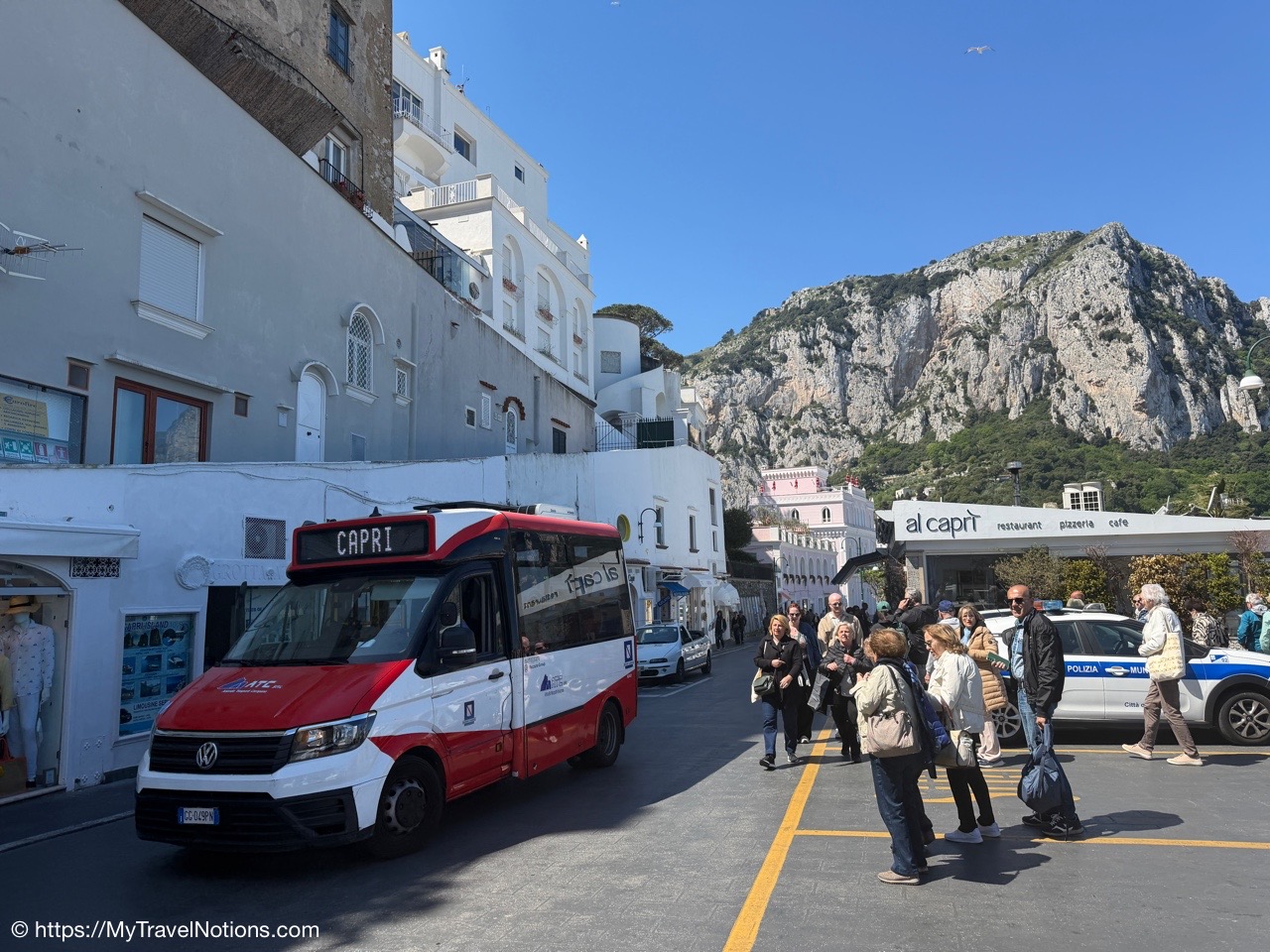
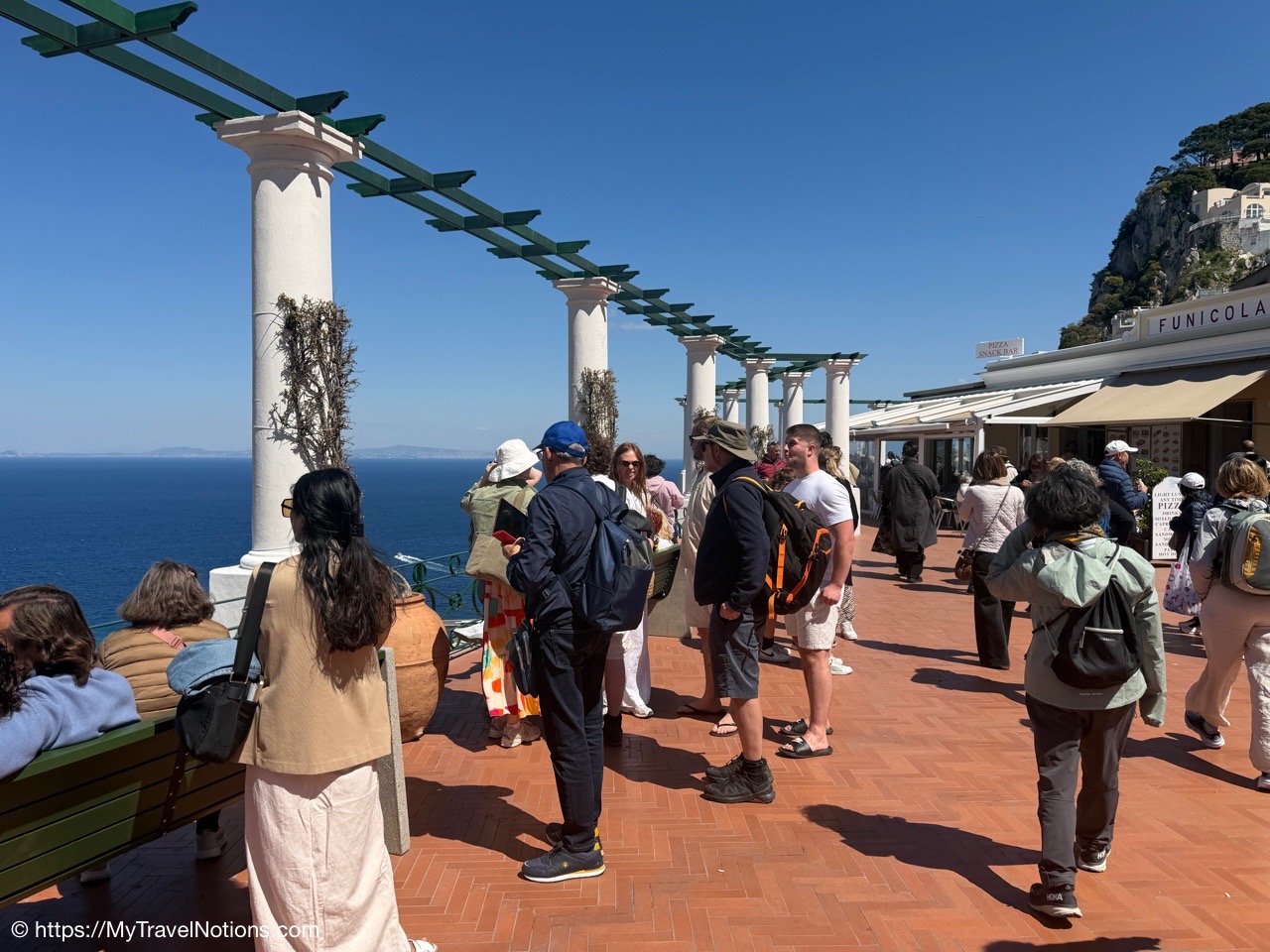
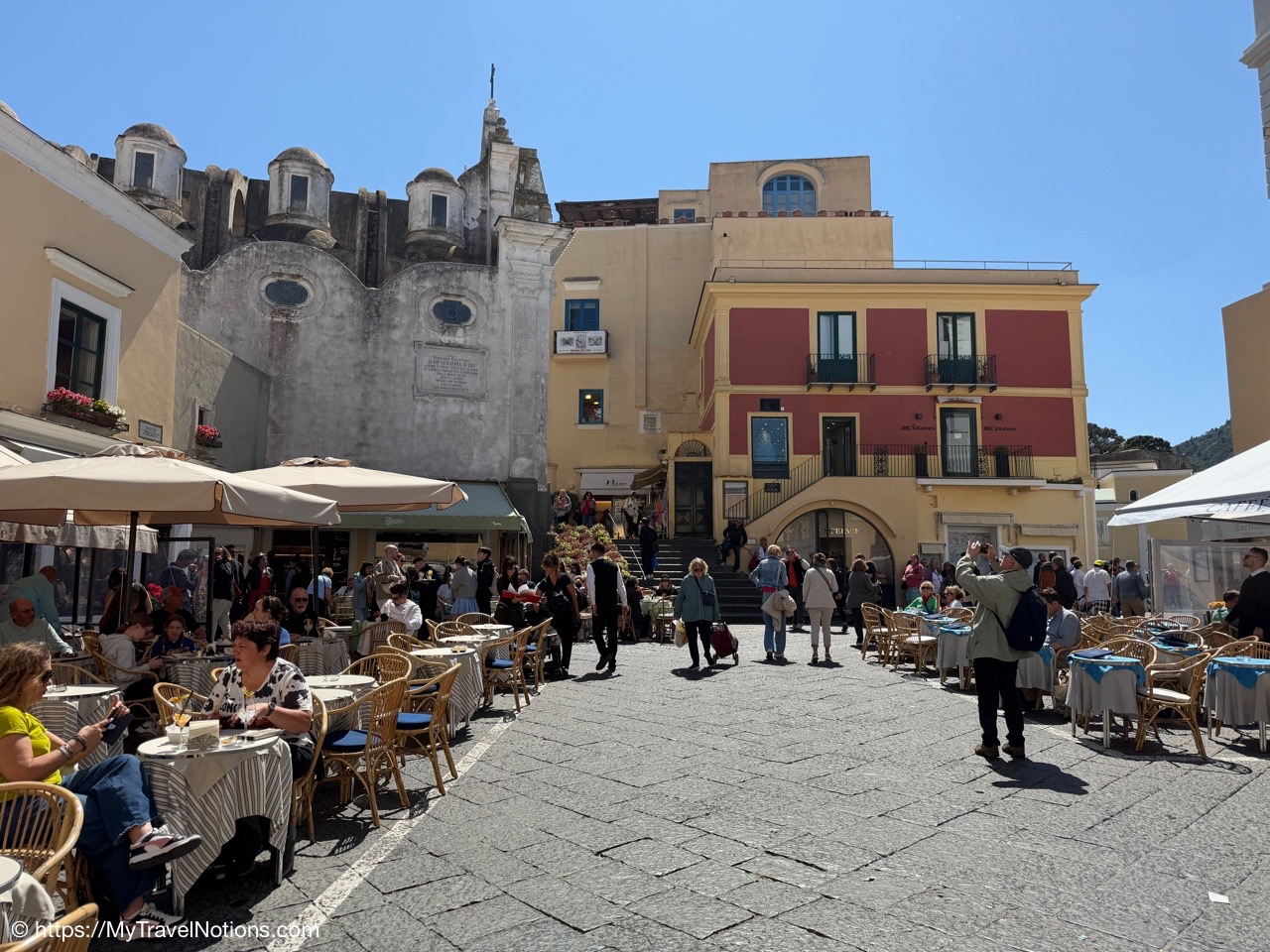
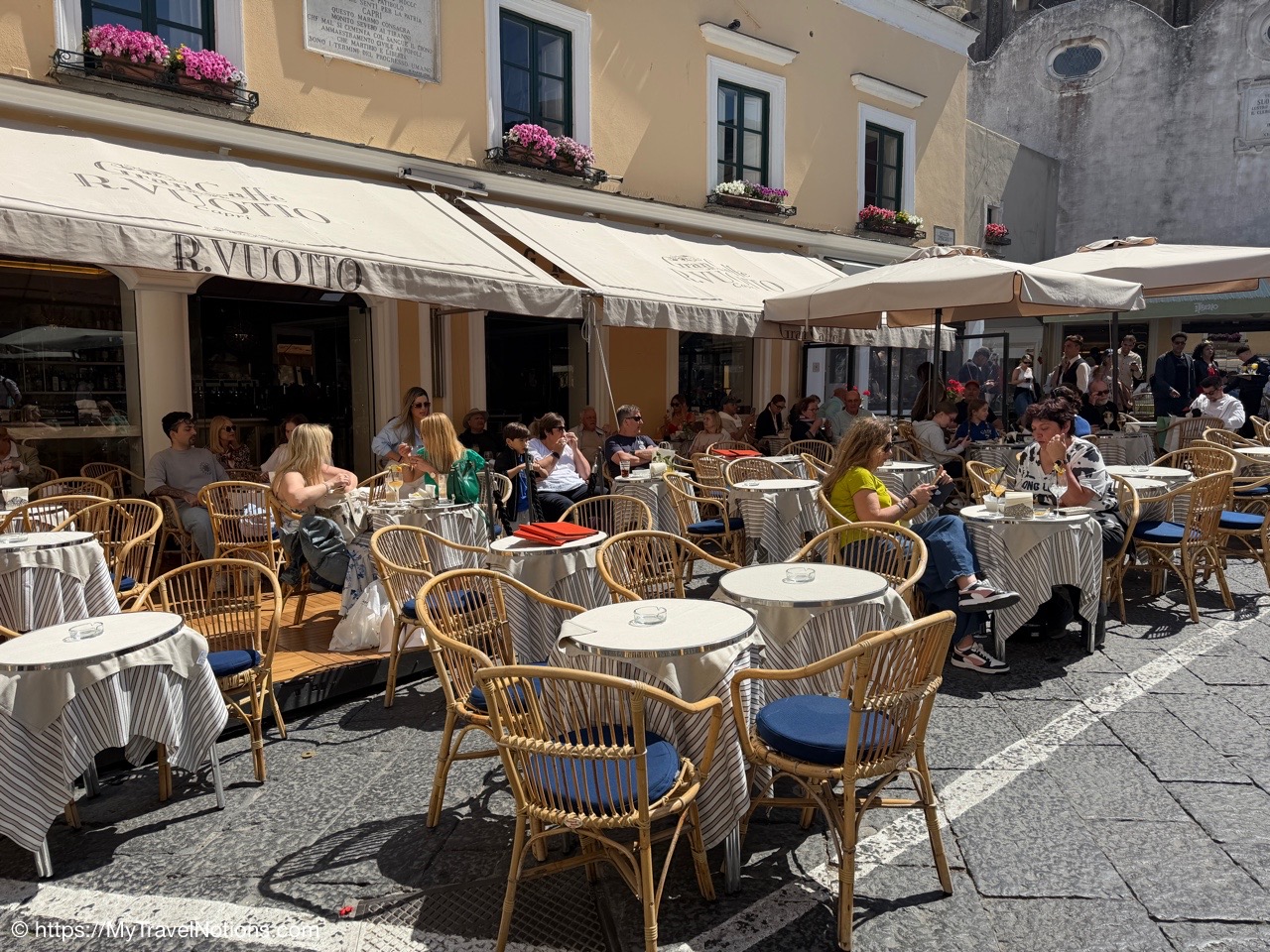
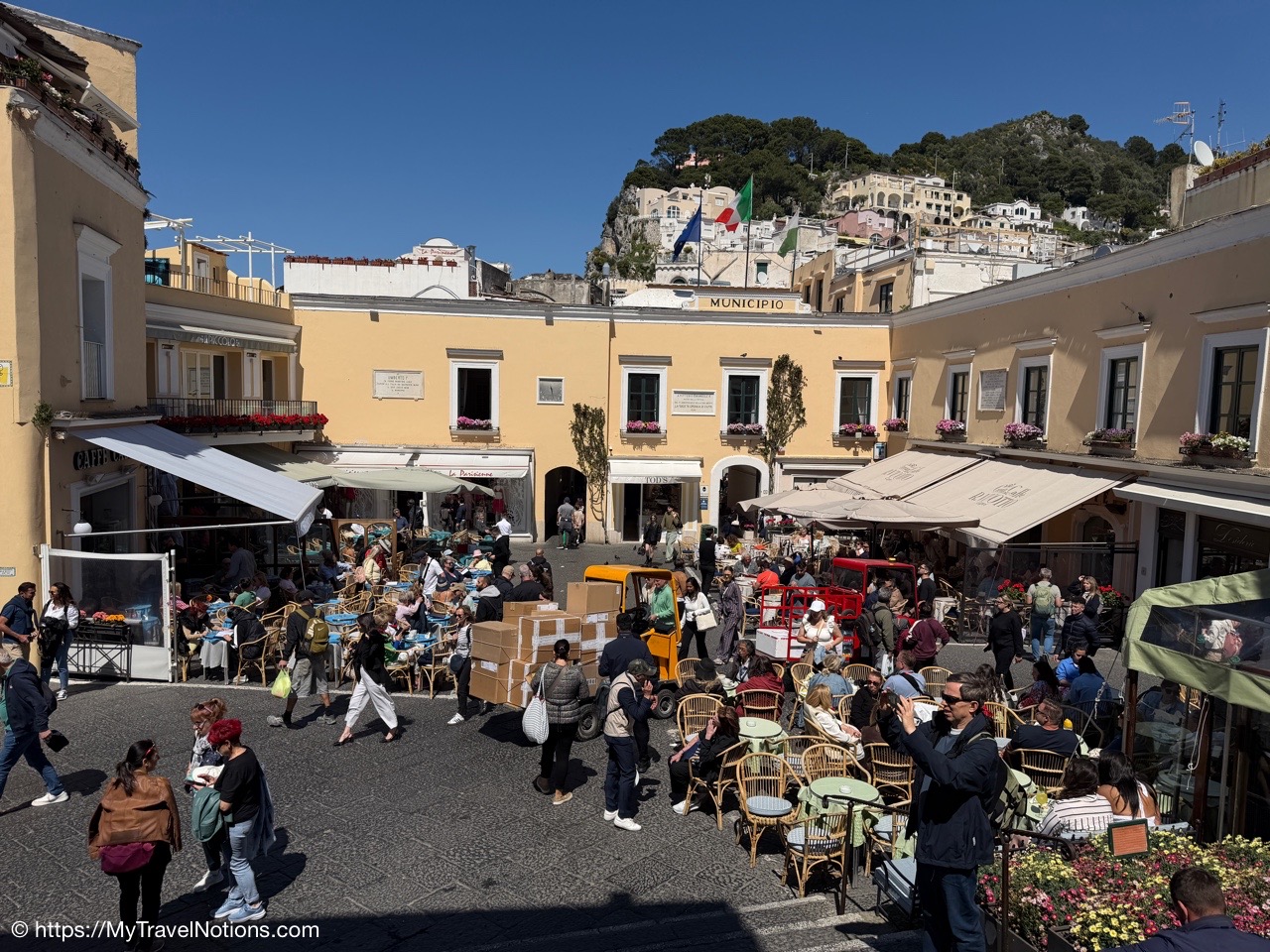
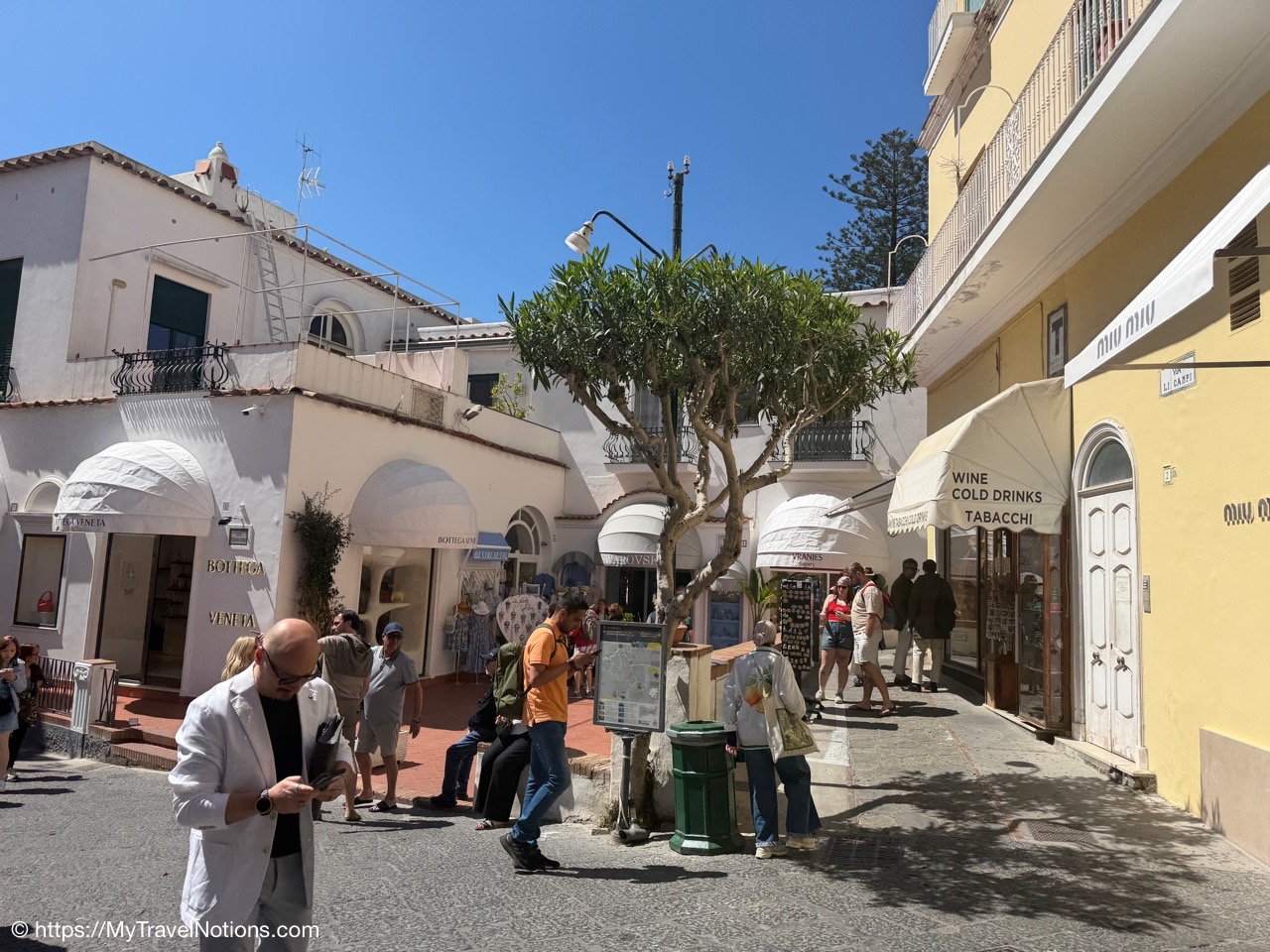
A day trip from Sorrento to the Isle of Capri and its two towns, the glamorous, central town of Capri and the higher, quieter Anacapri. There’s a host of touristy shops but the most stunning part about the Isle of Capri are the views. Come savour the views with me.
Unlike the other towns we’ve visited along the Amalfi Coast, the Isle of Capri is all unto itself. And just a short 30 minute ferry ride away.
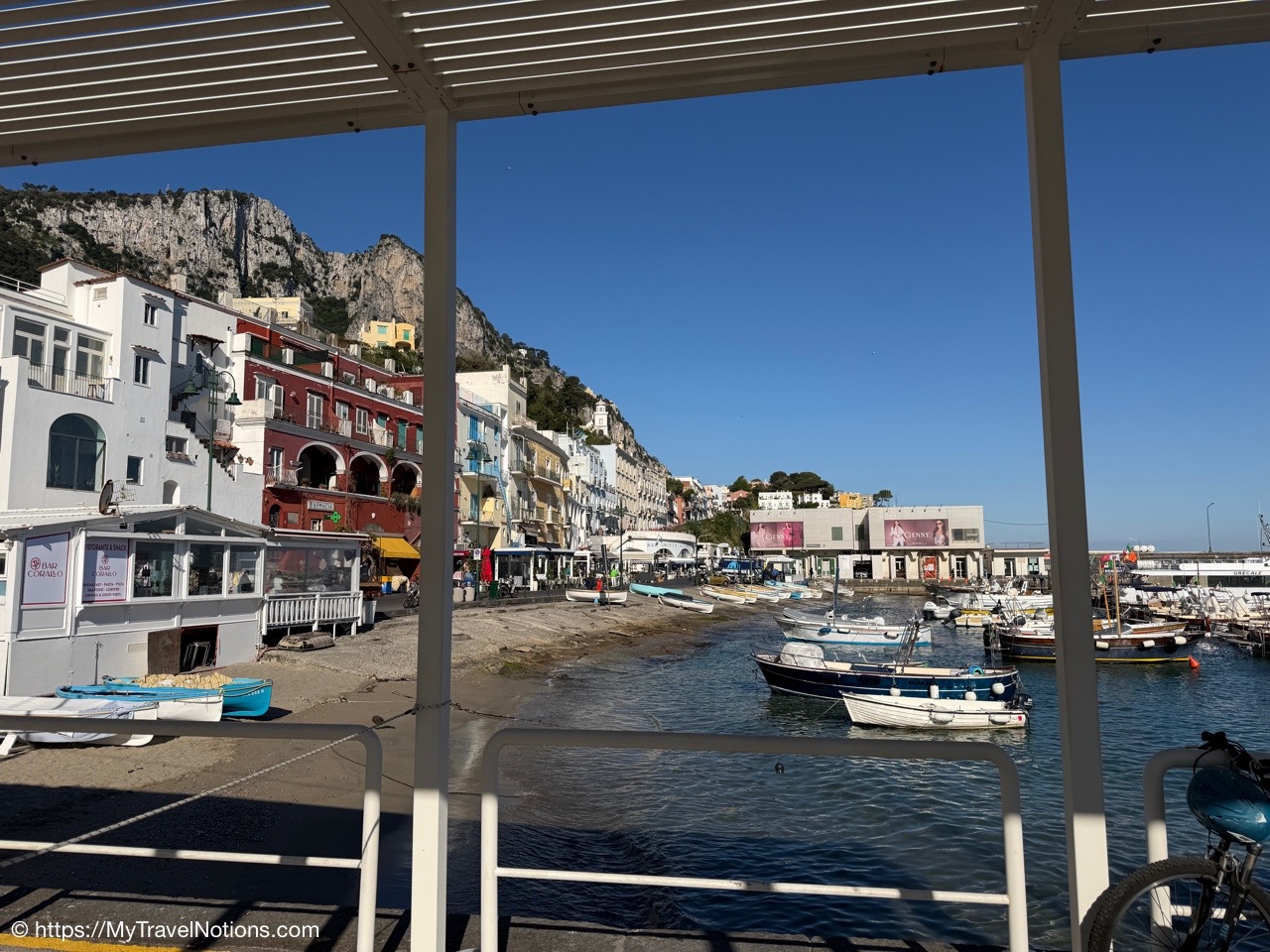
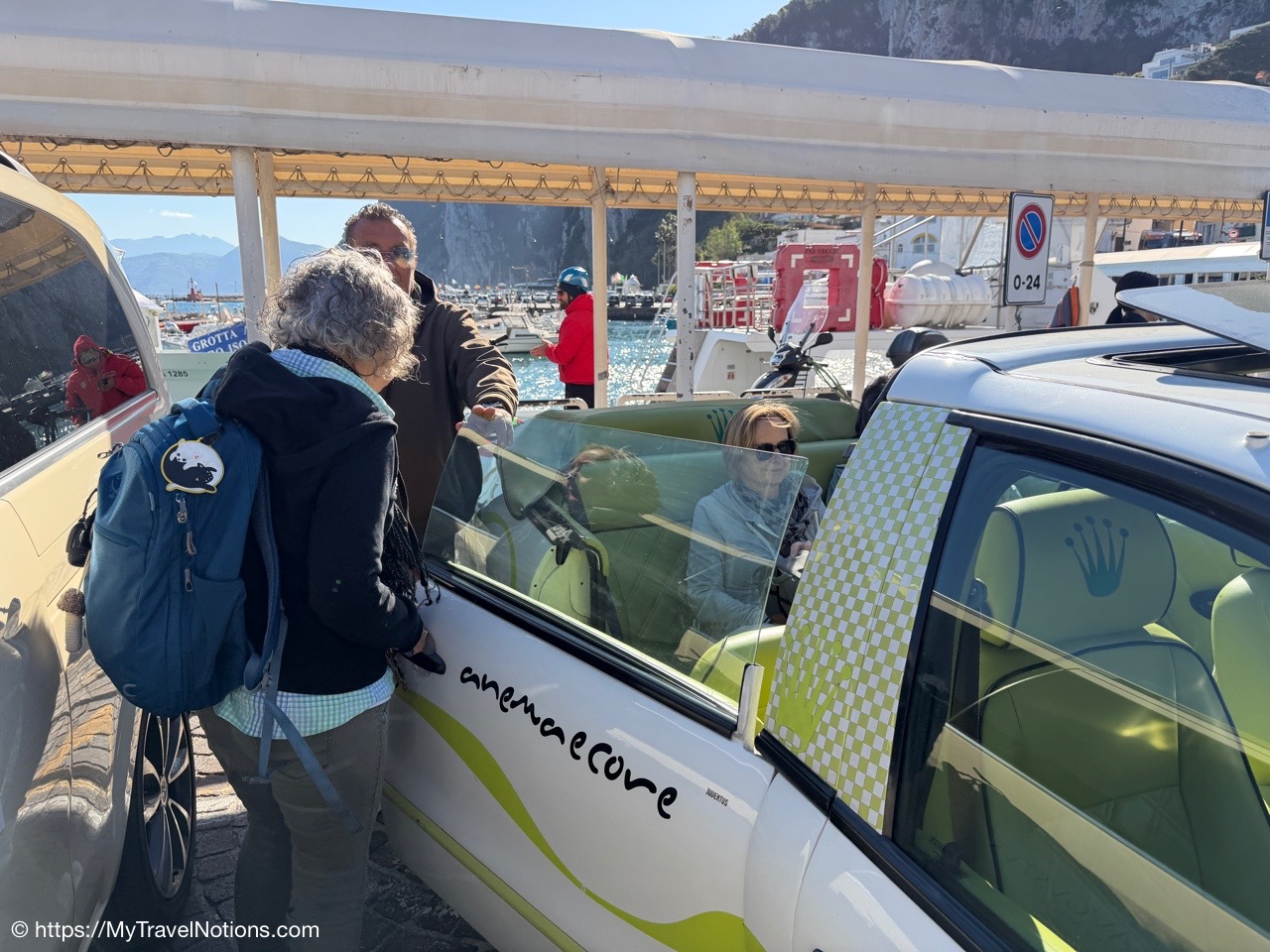
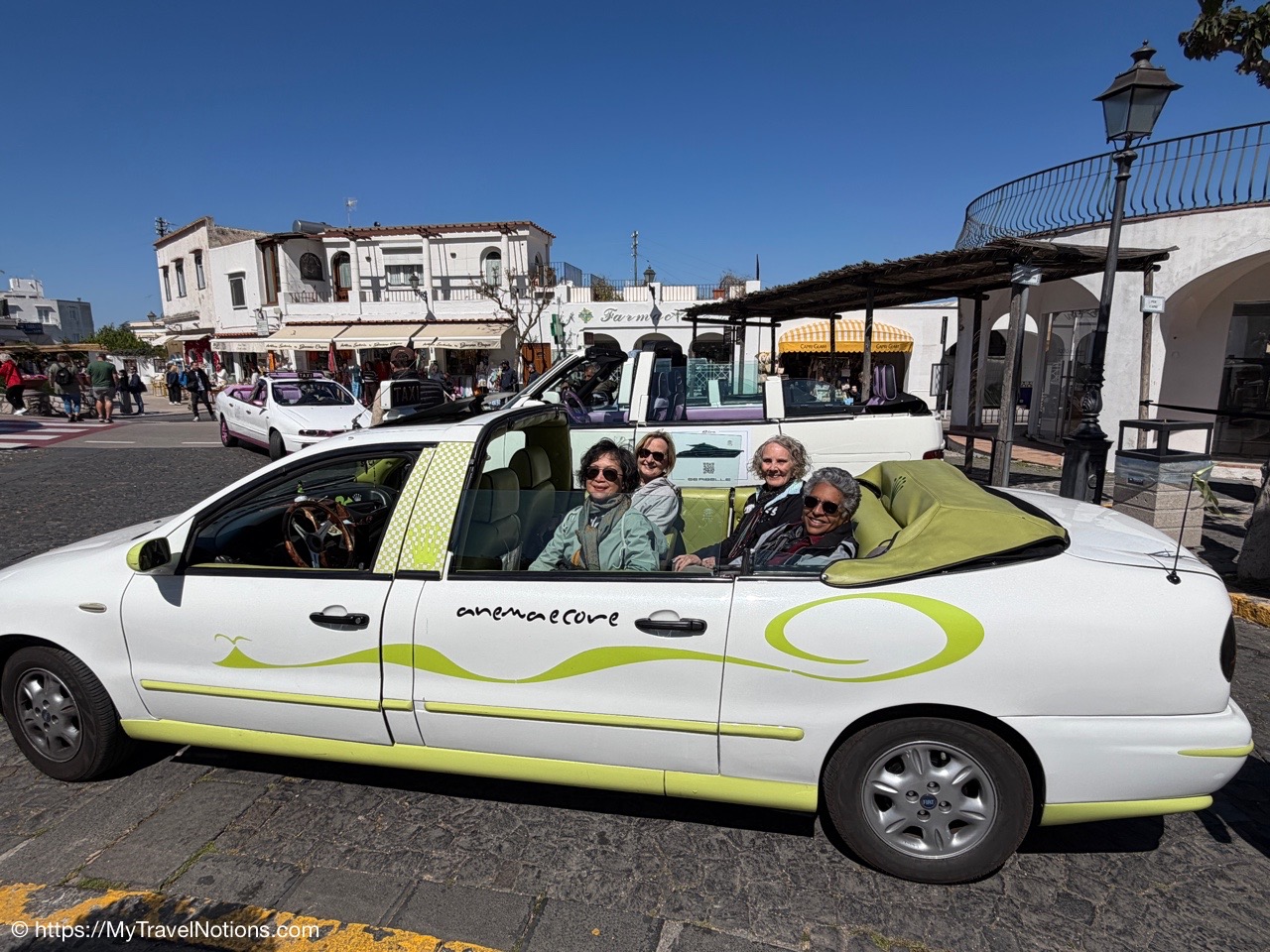
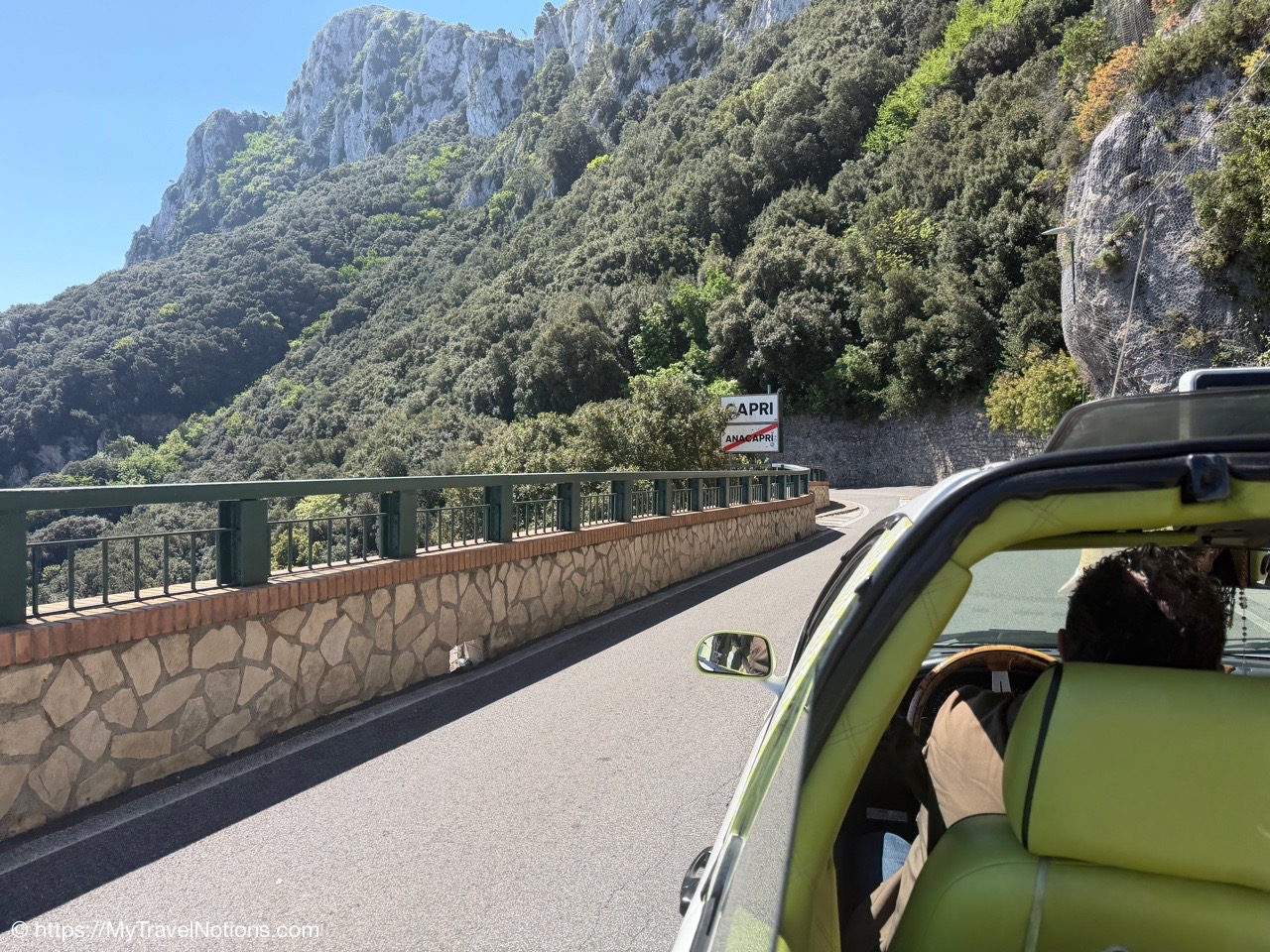
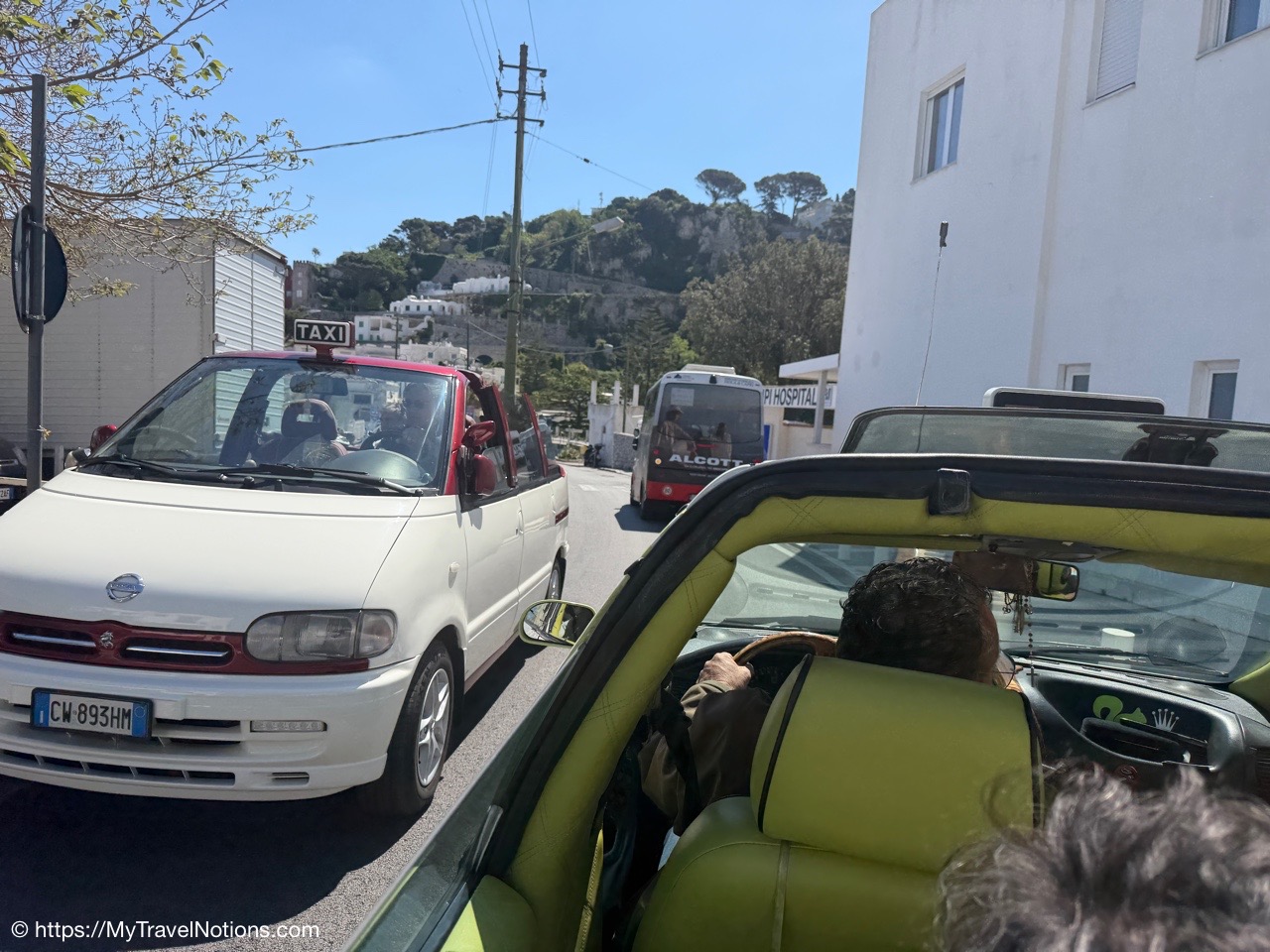
When we arrived at the Marina Grande ferry point, our guide Giovanna, whisked us off to Anacapril in an open air taxi.
Here’s to a day on the Isle of Capri.
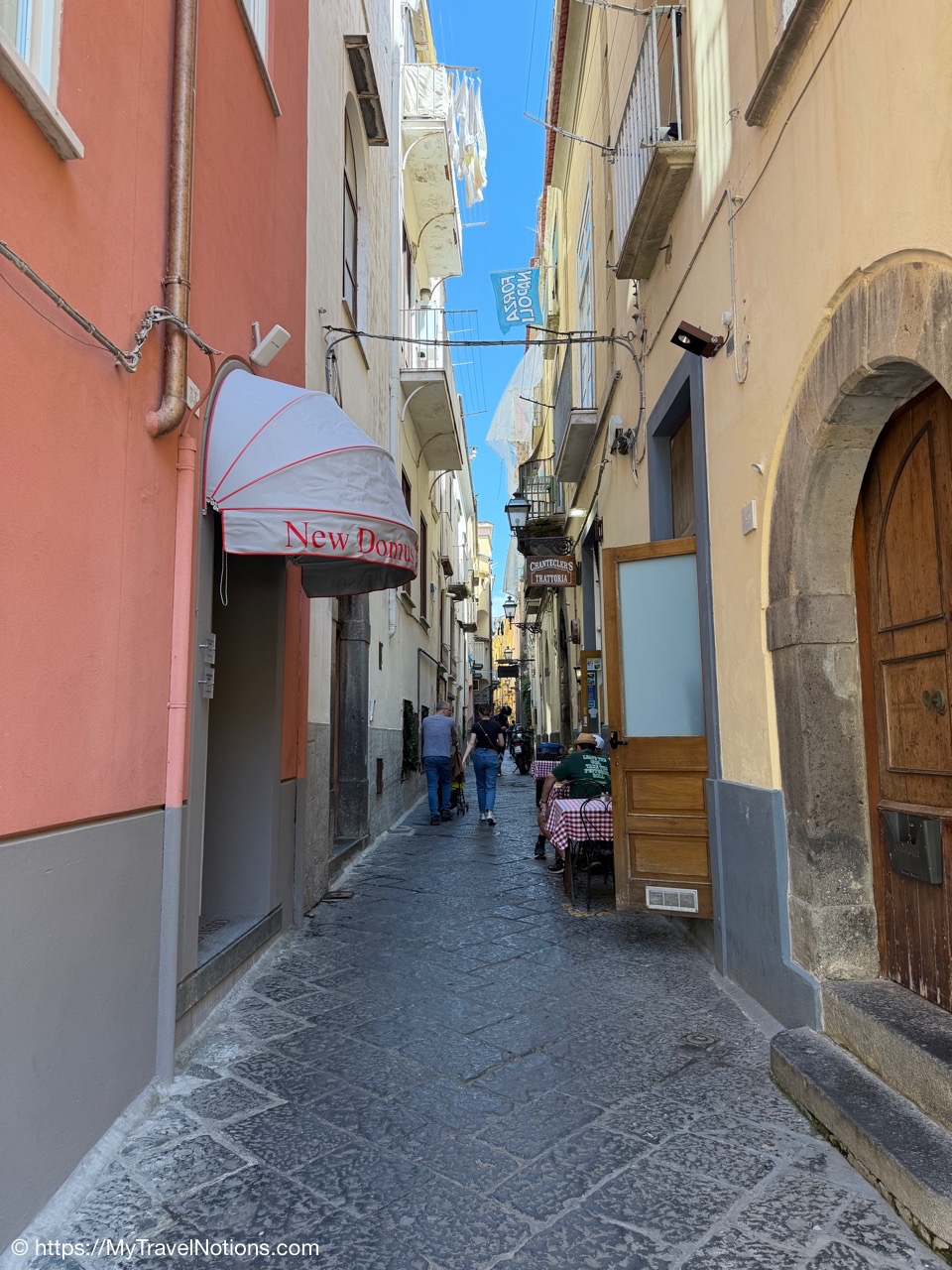
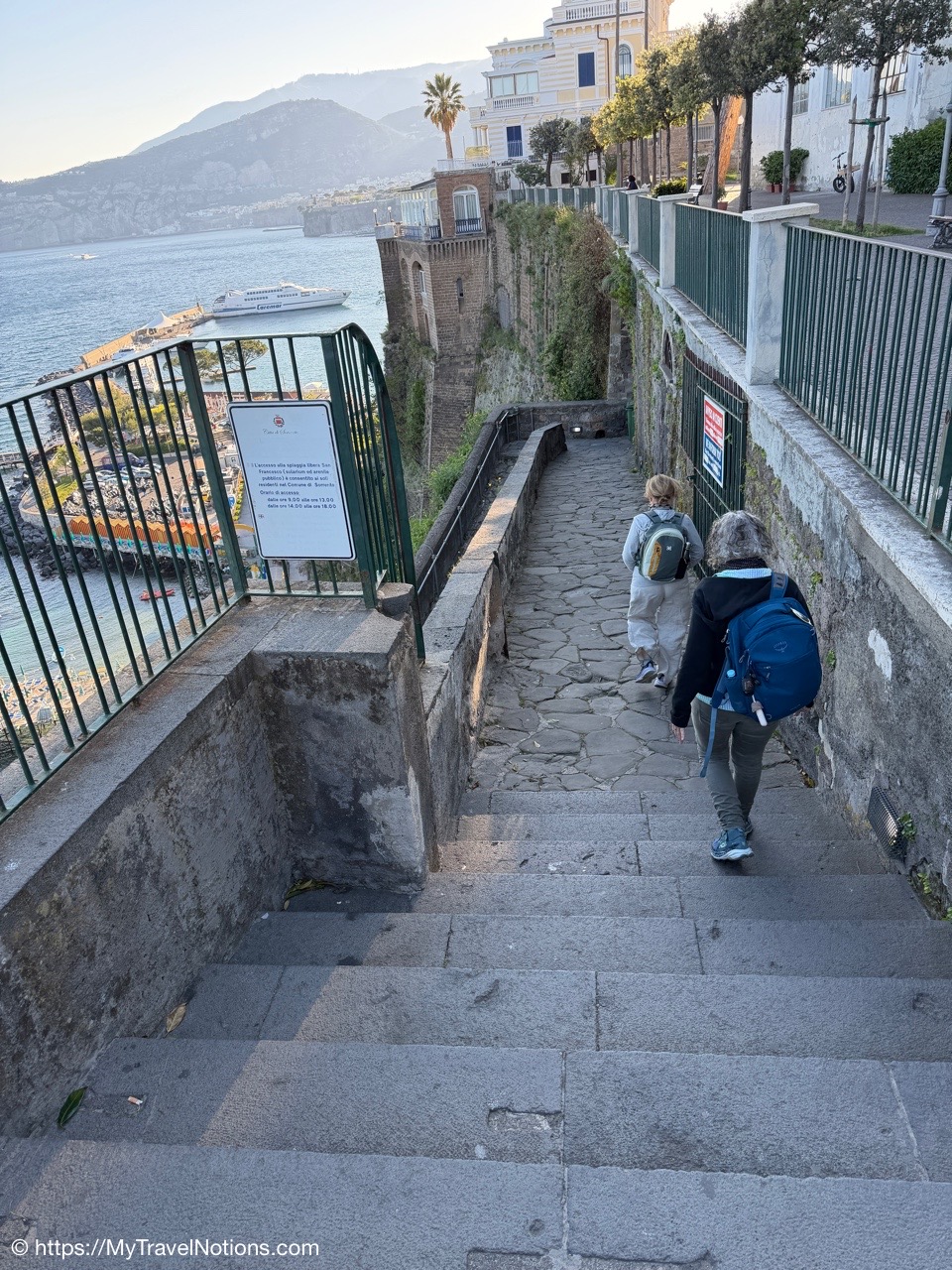
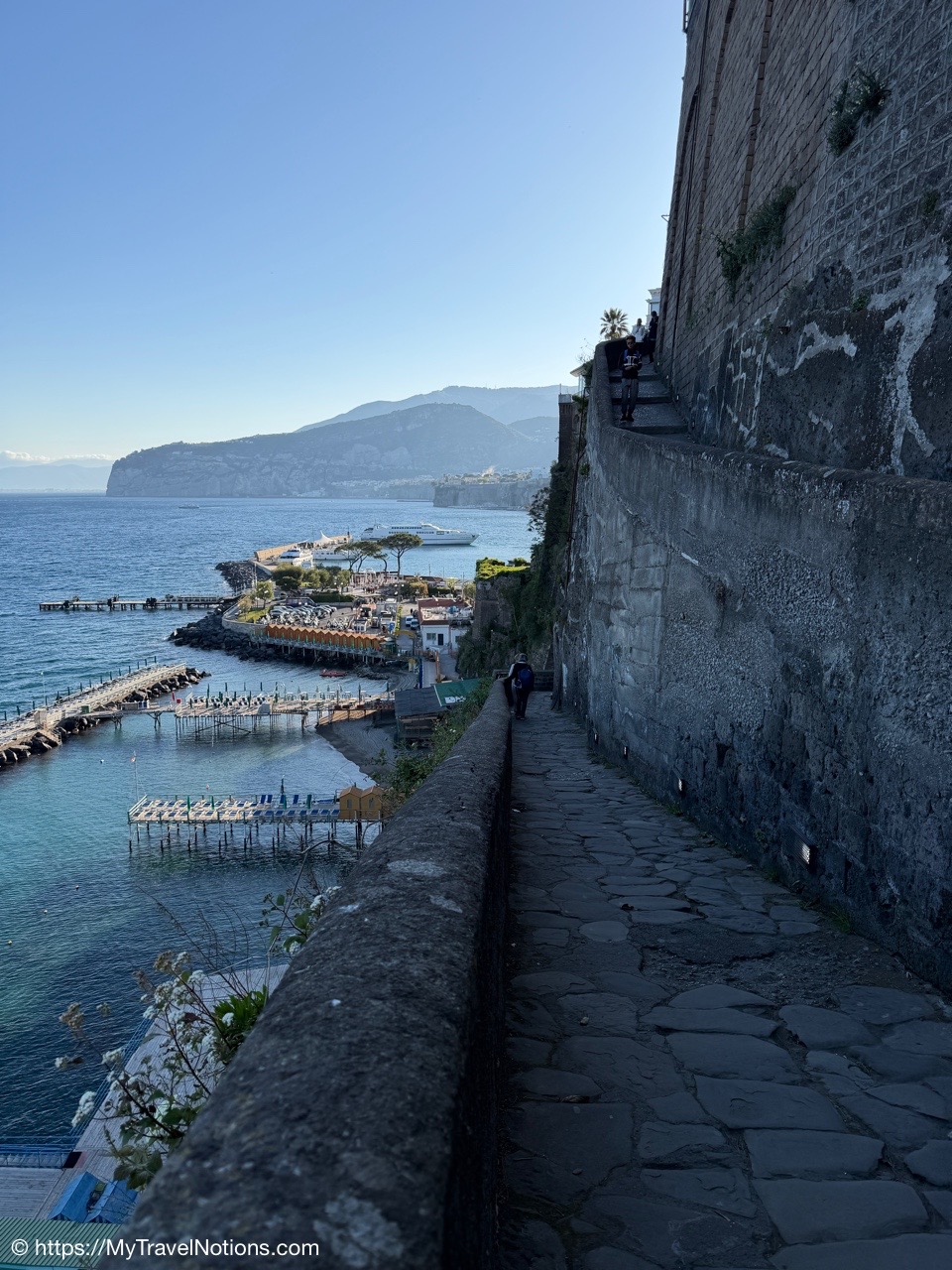
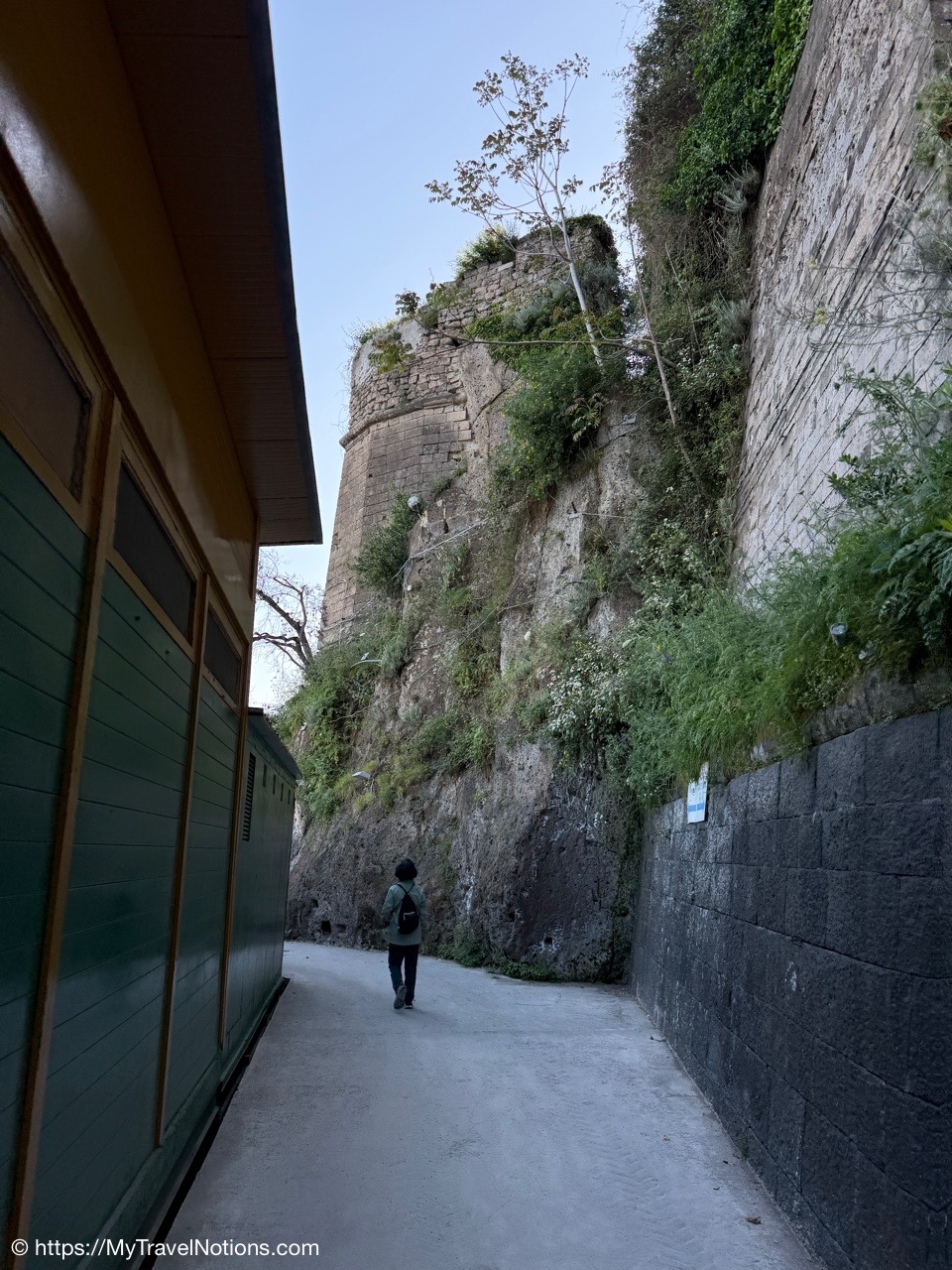
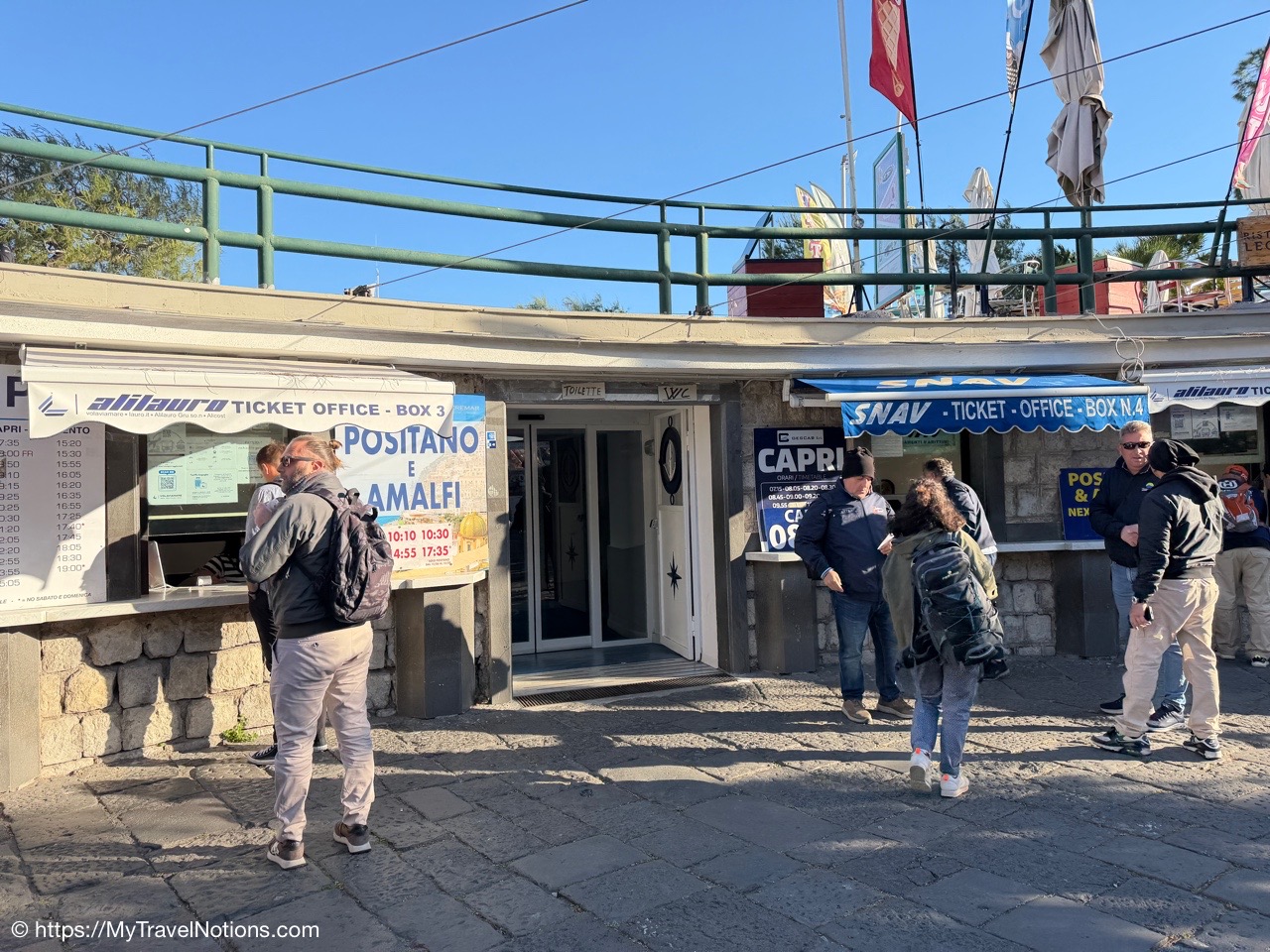
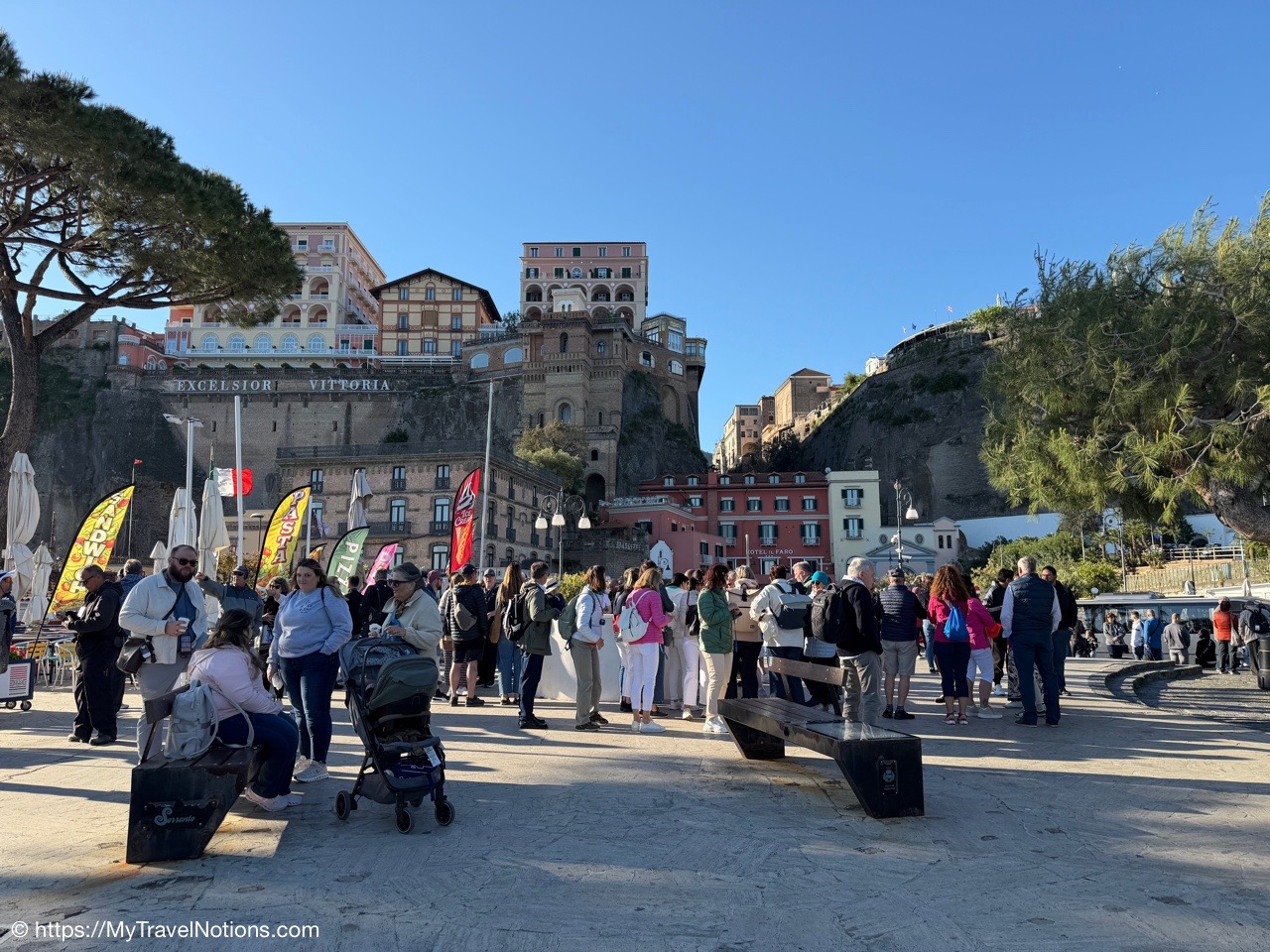
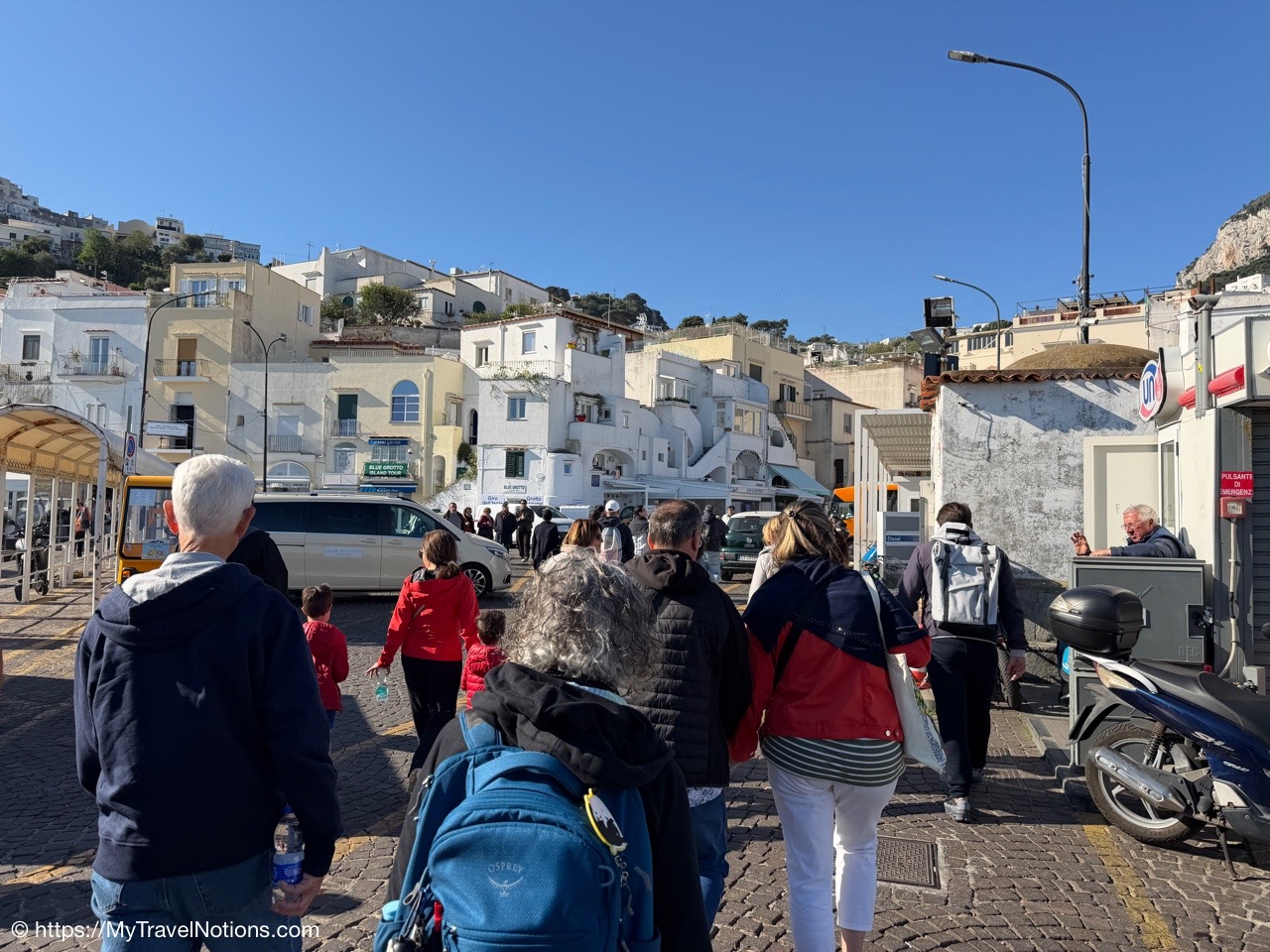
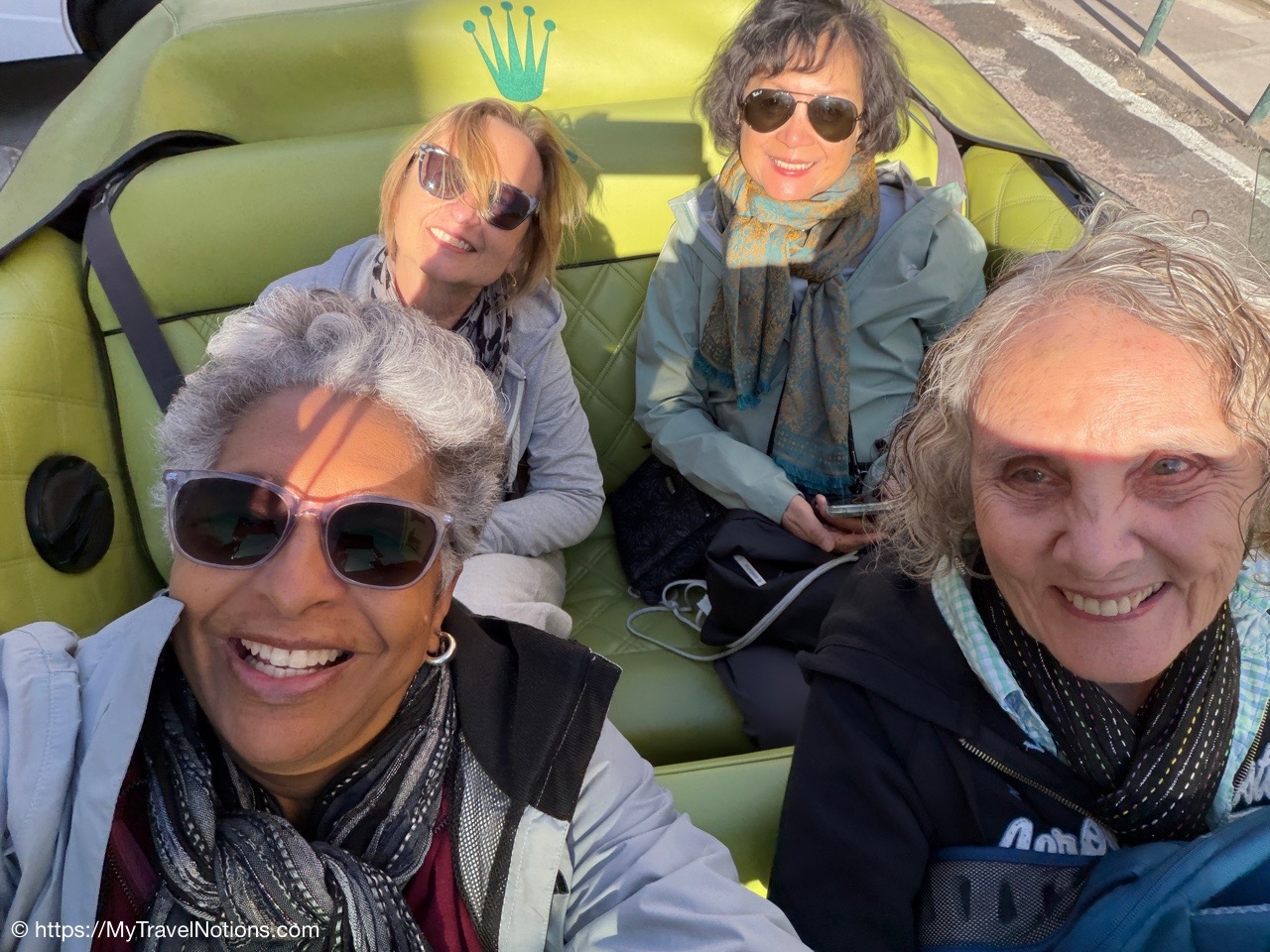
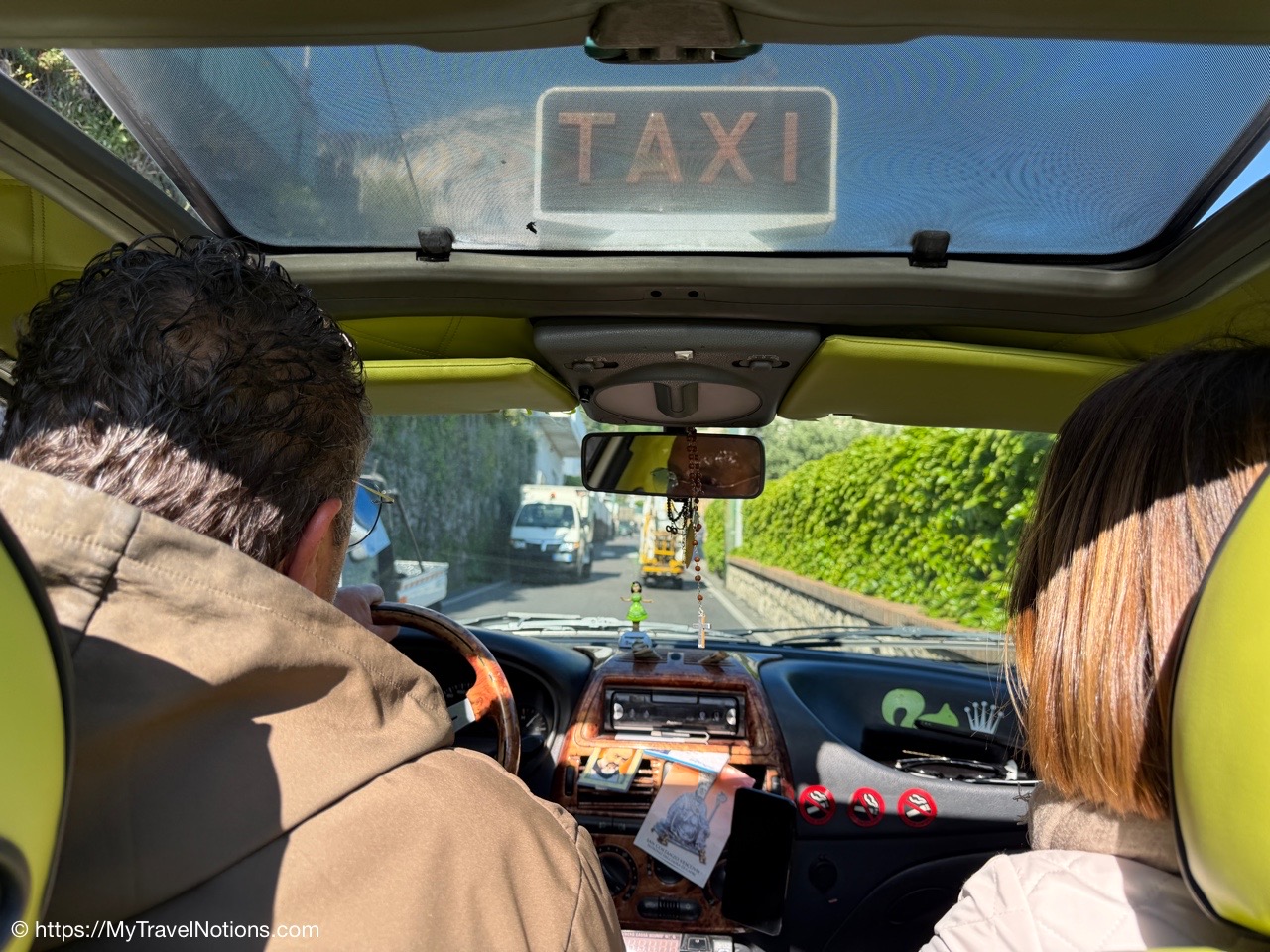
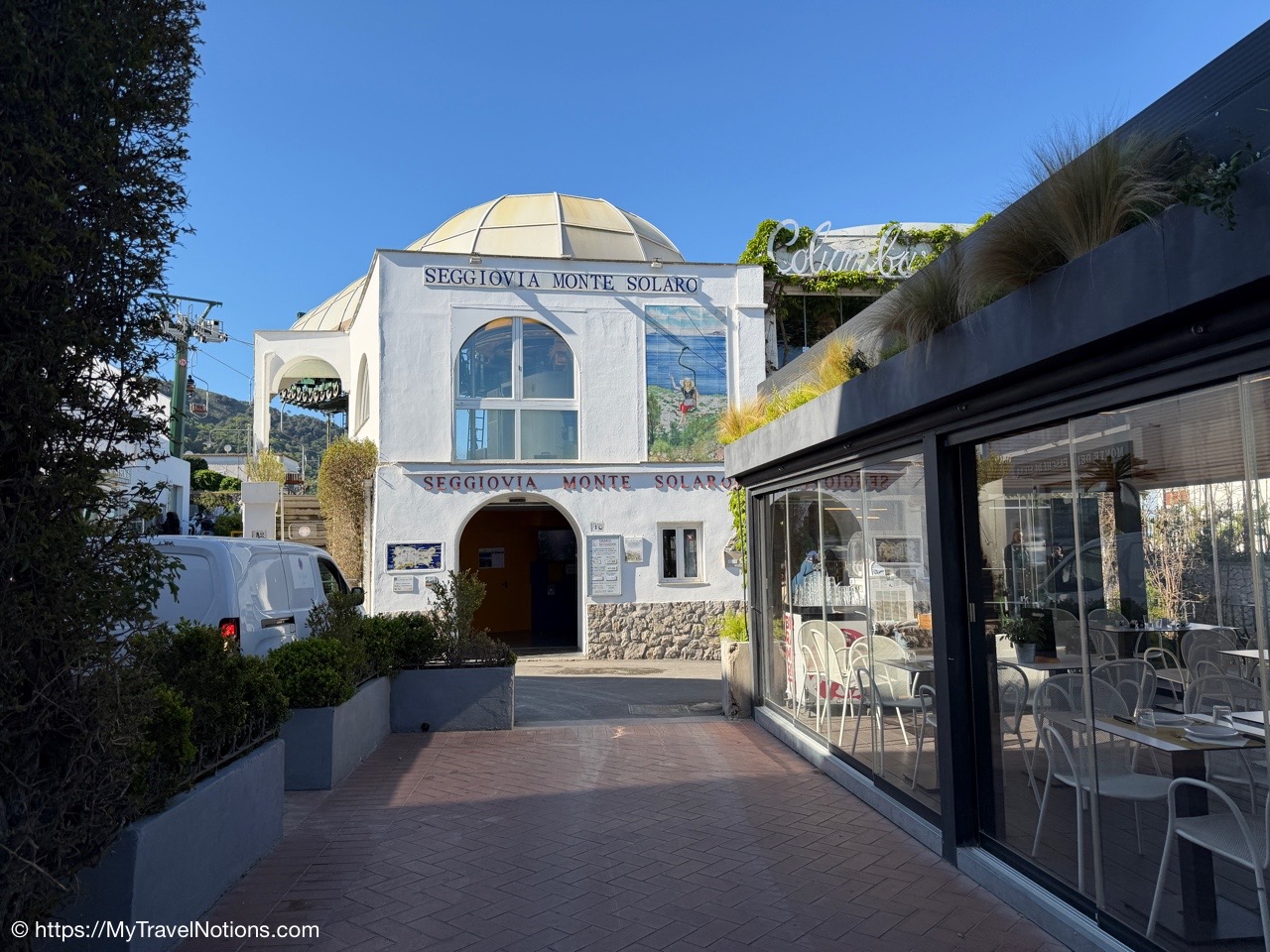
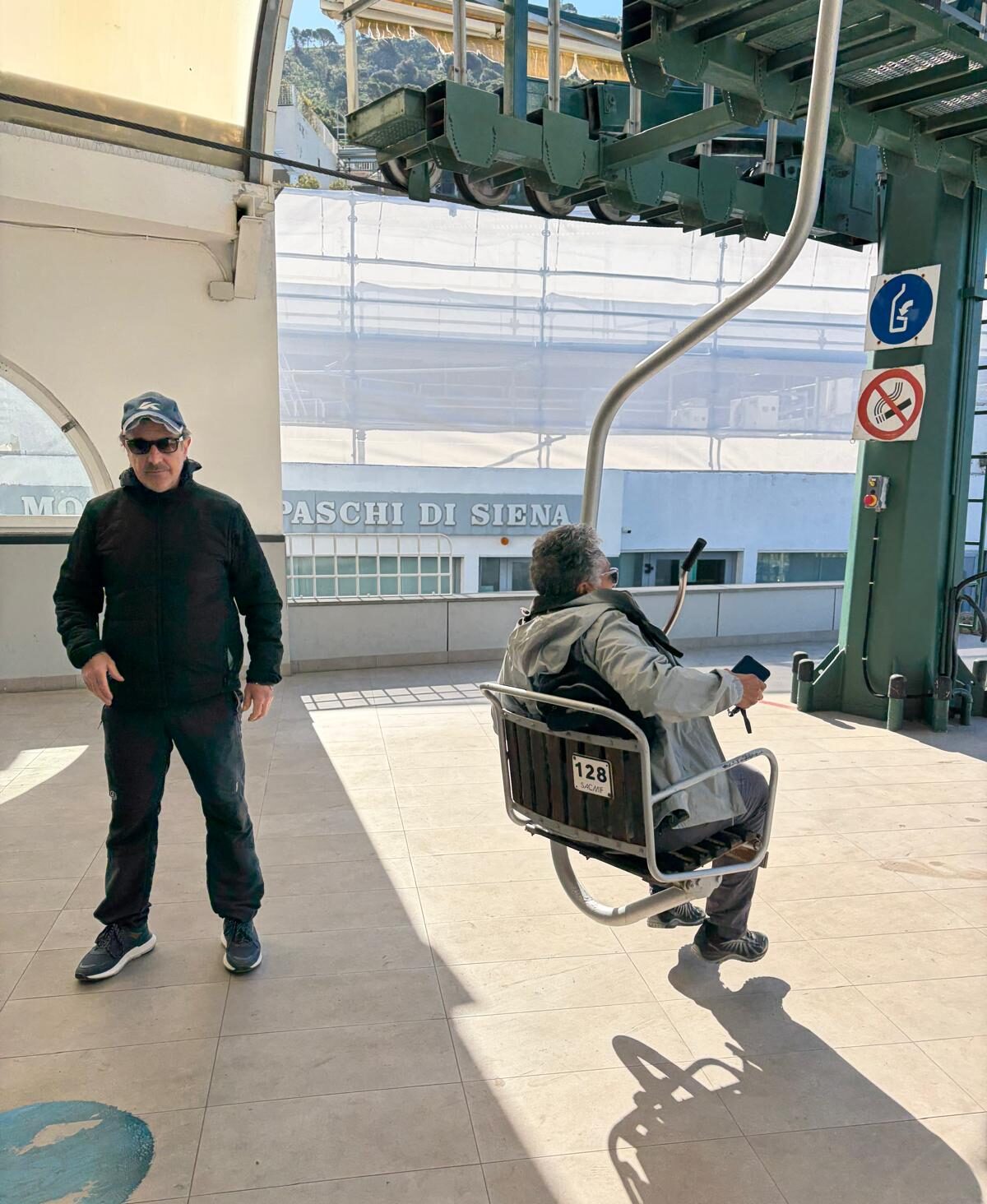
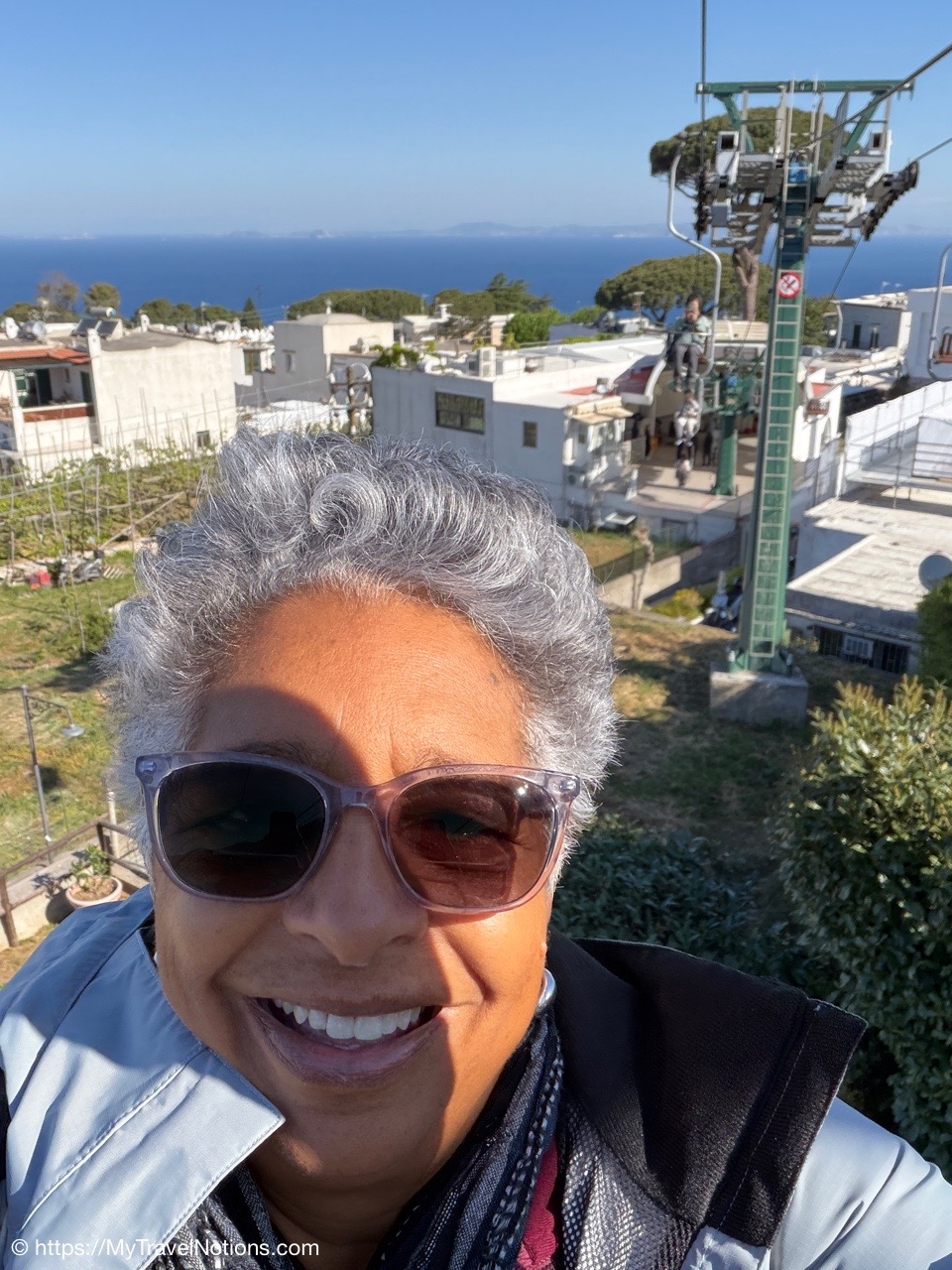
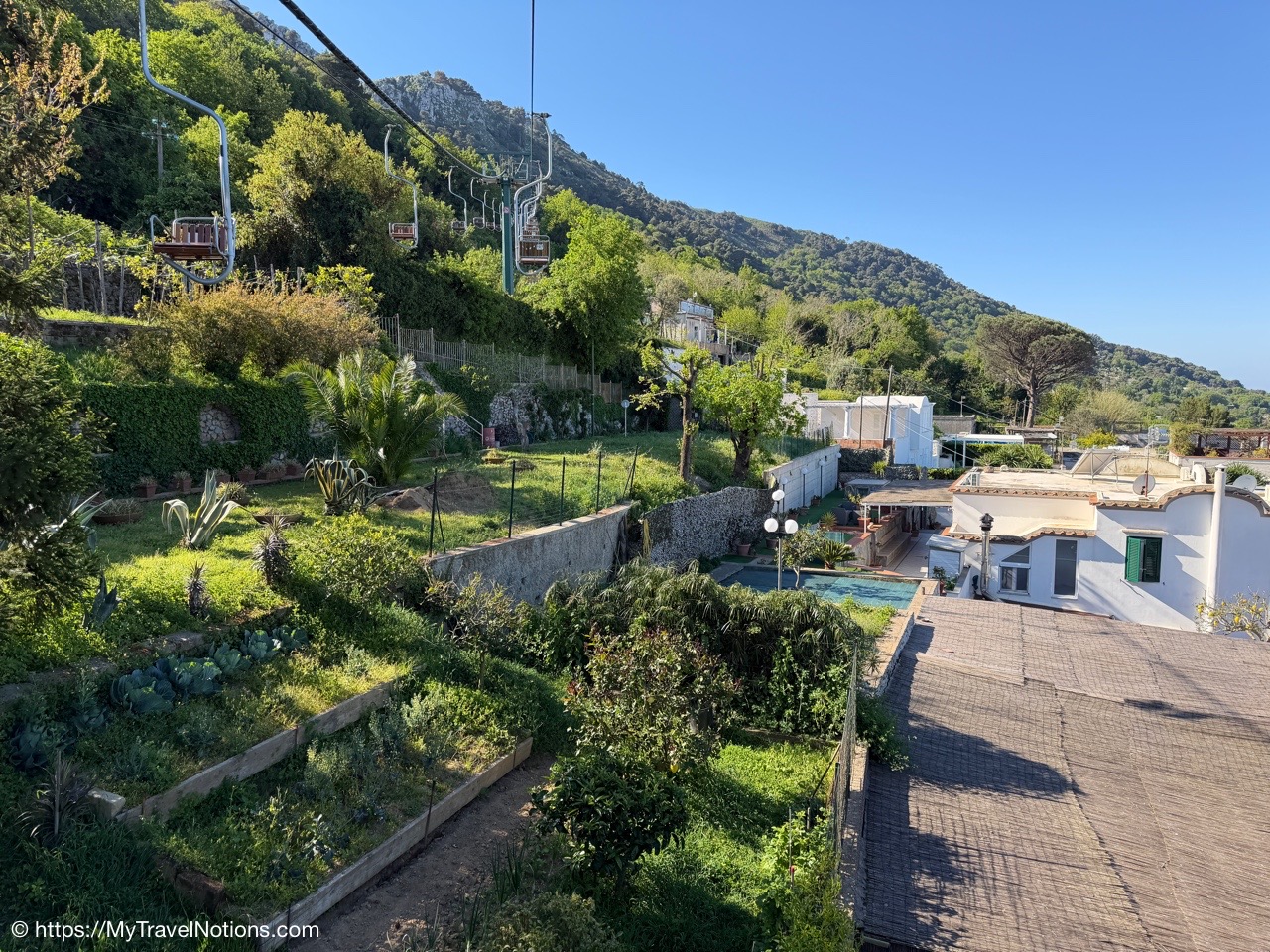
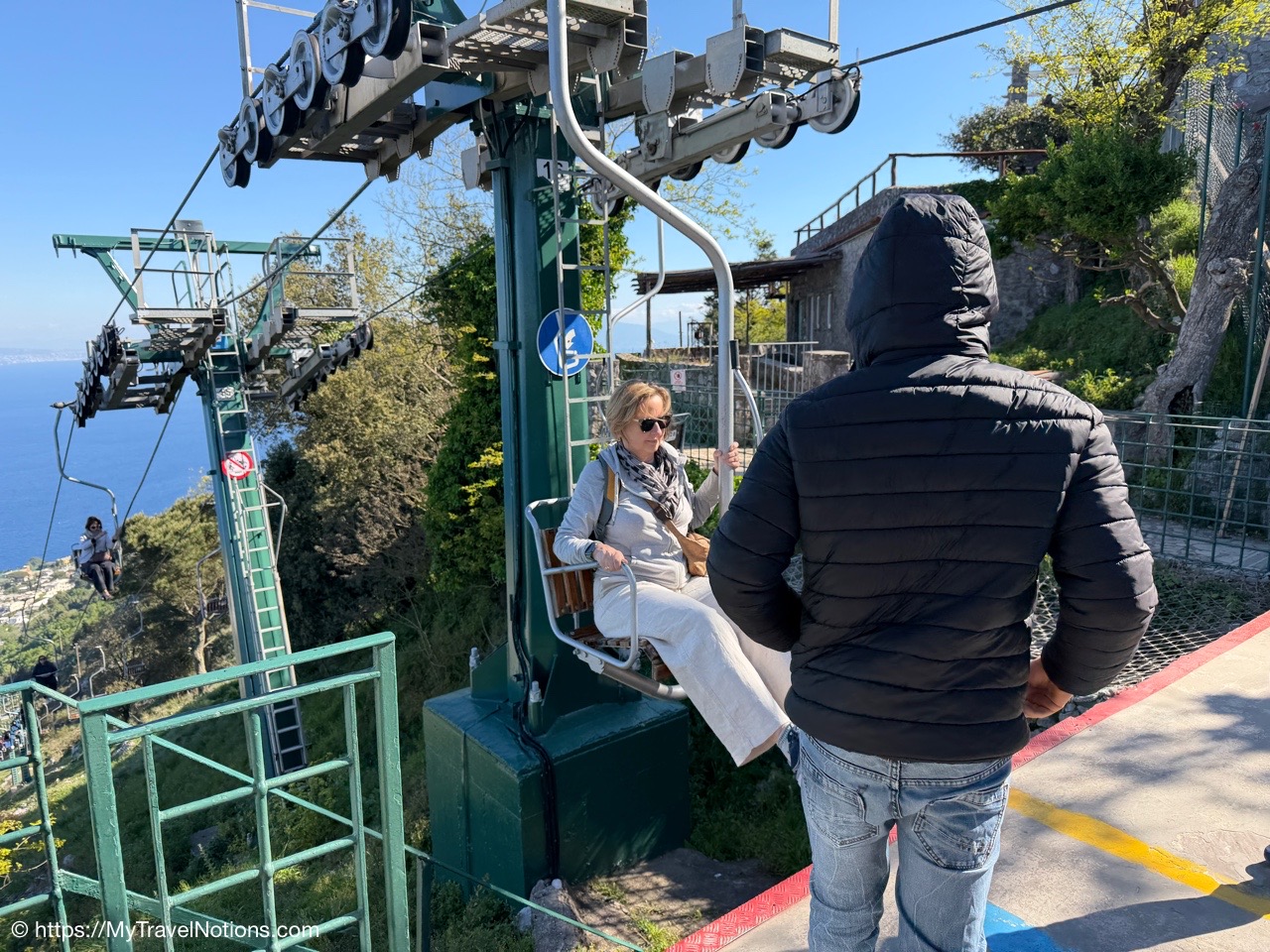
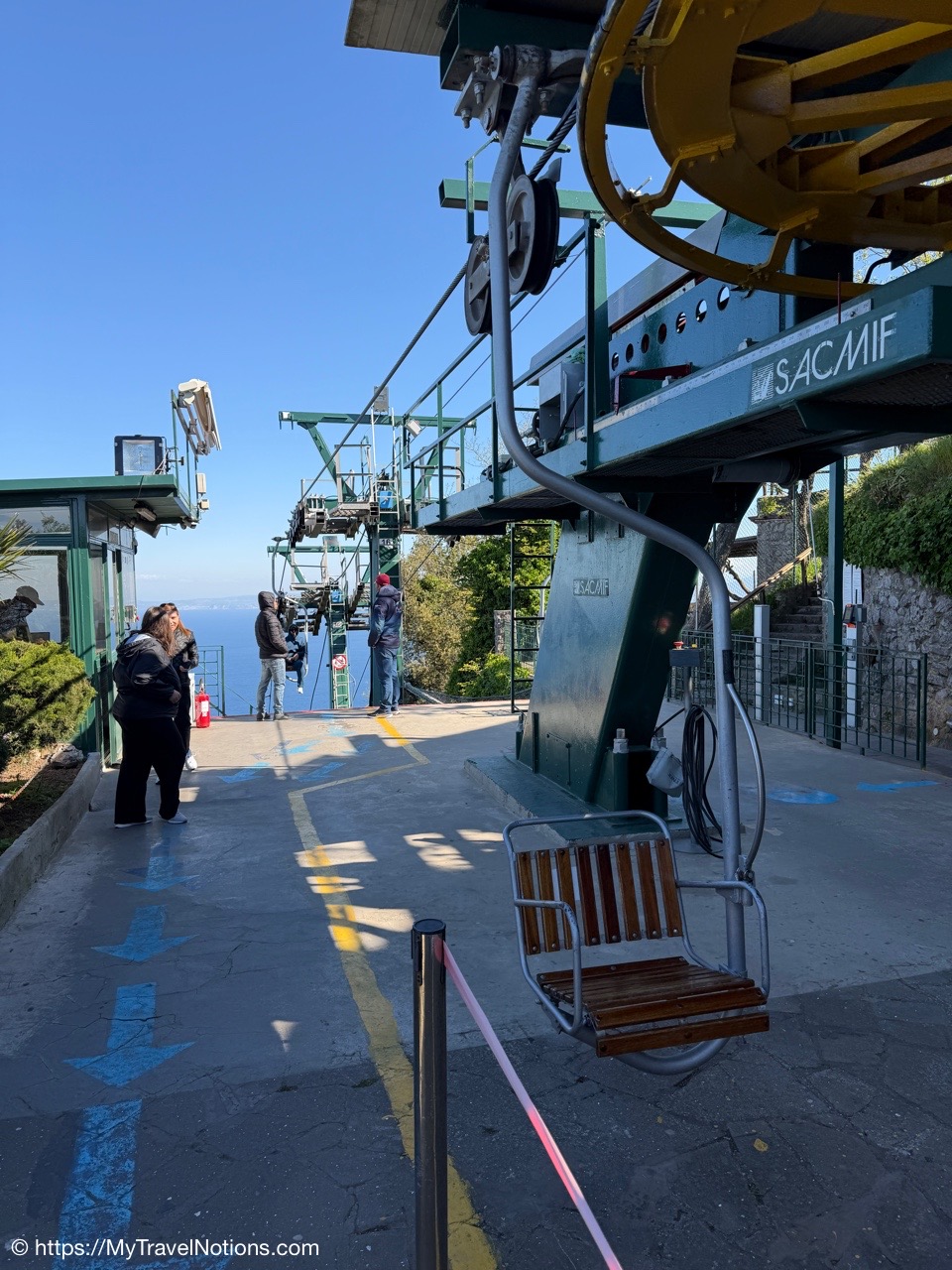
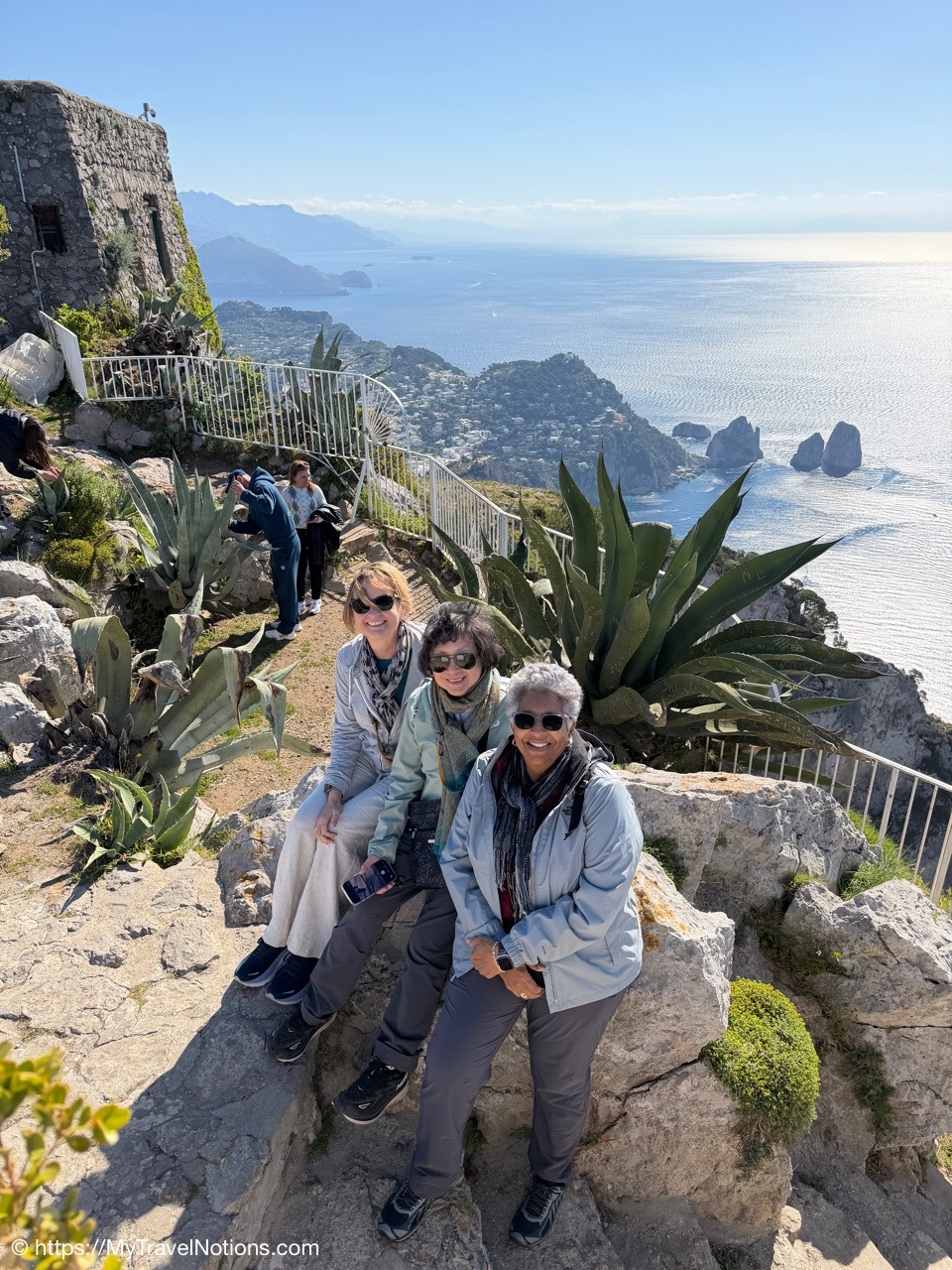
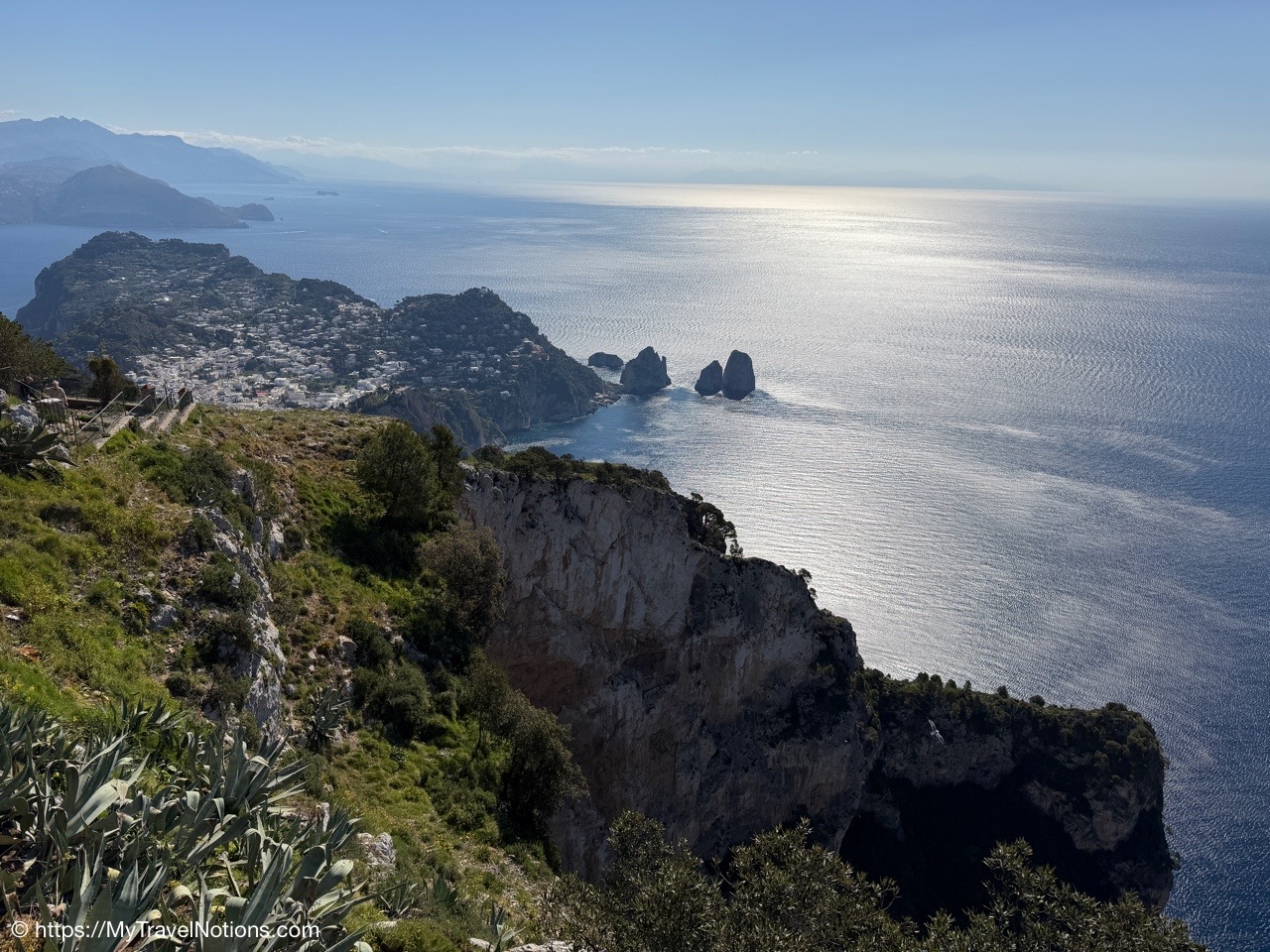
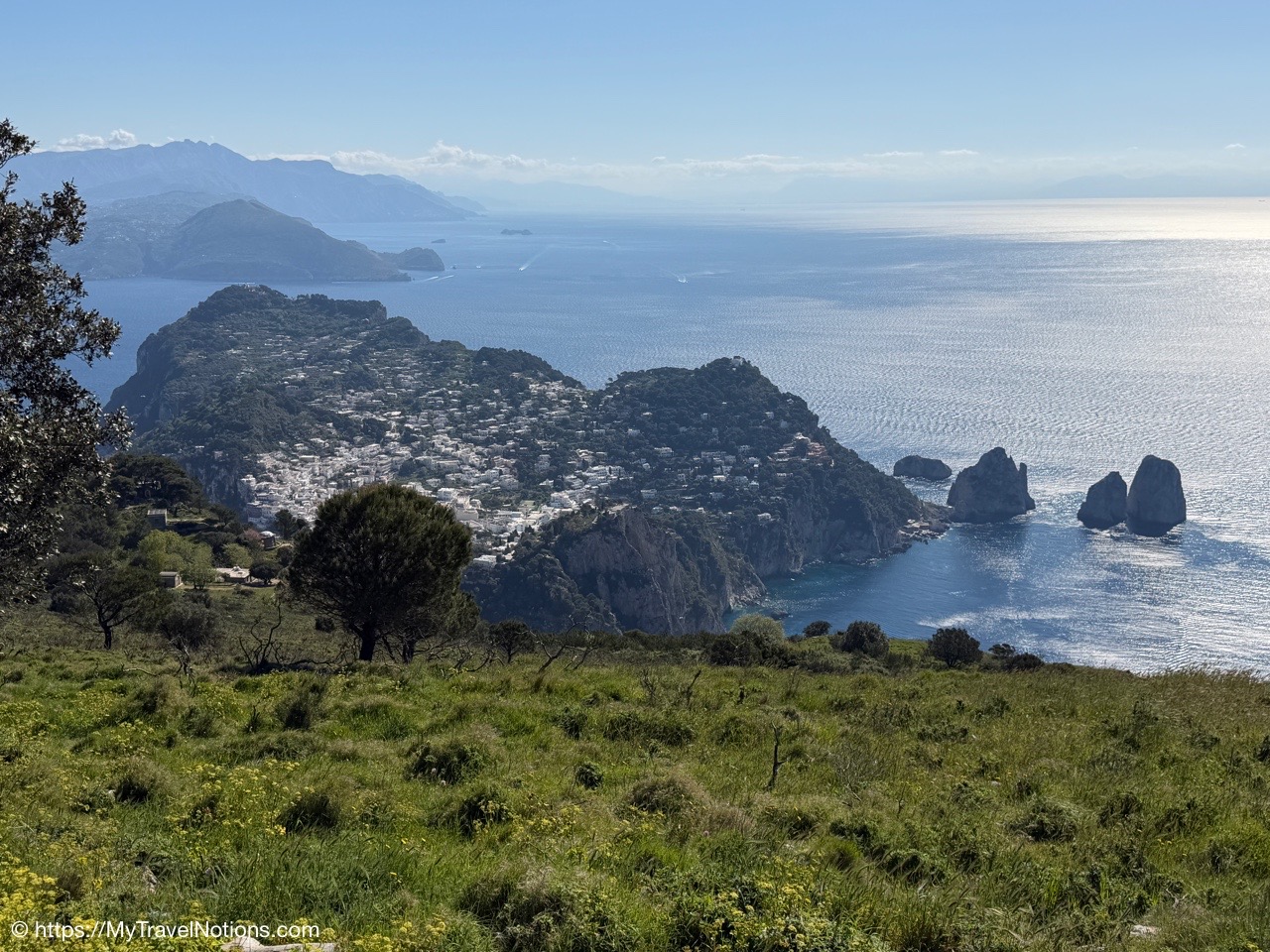
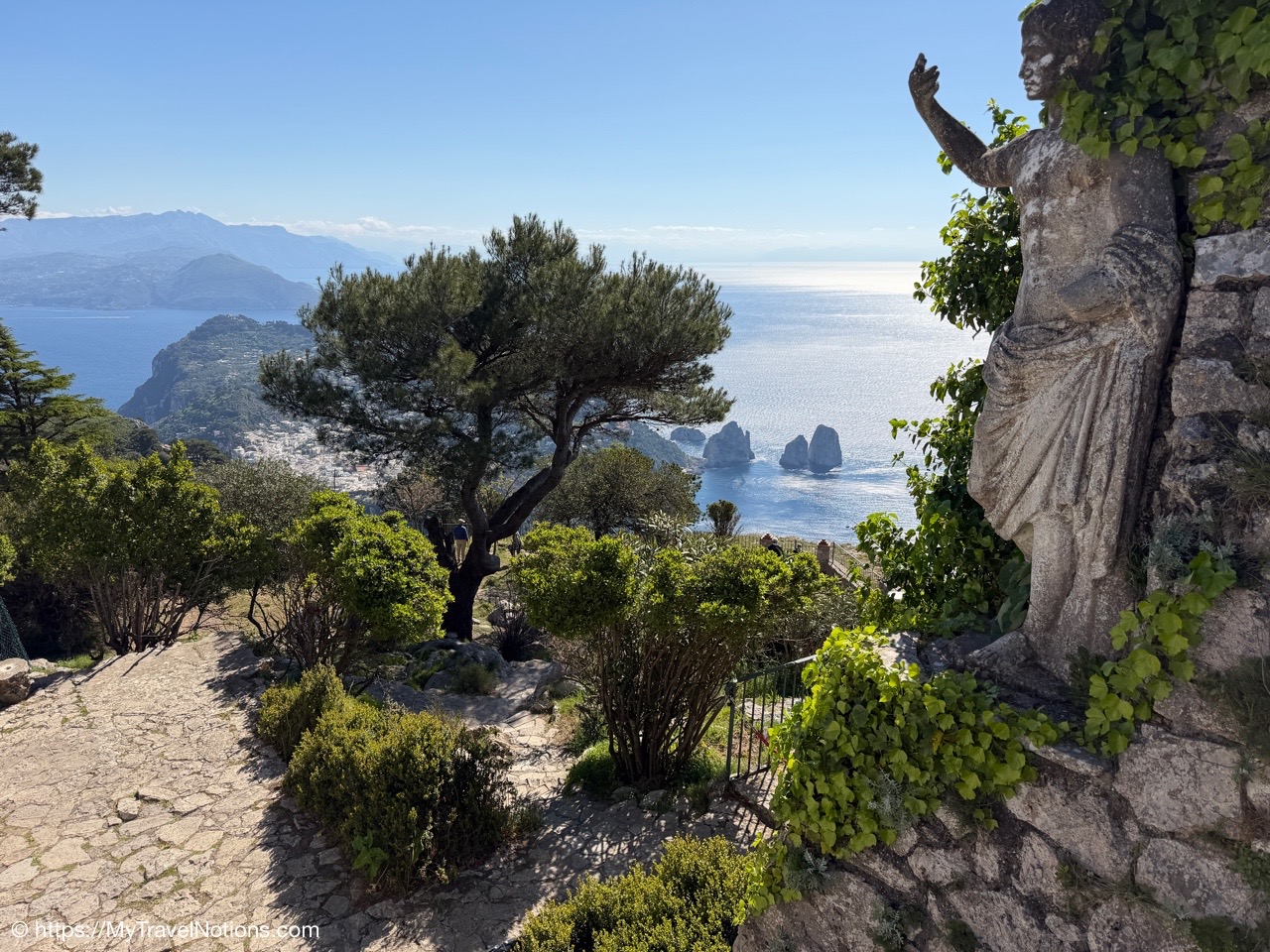
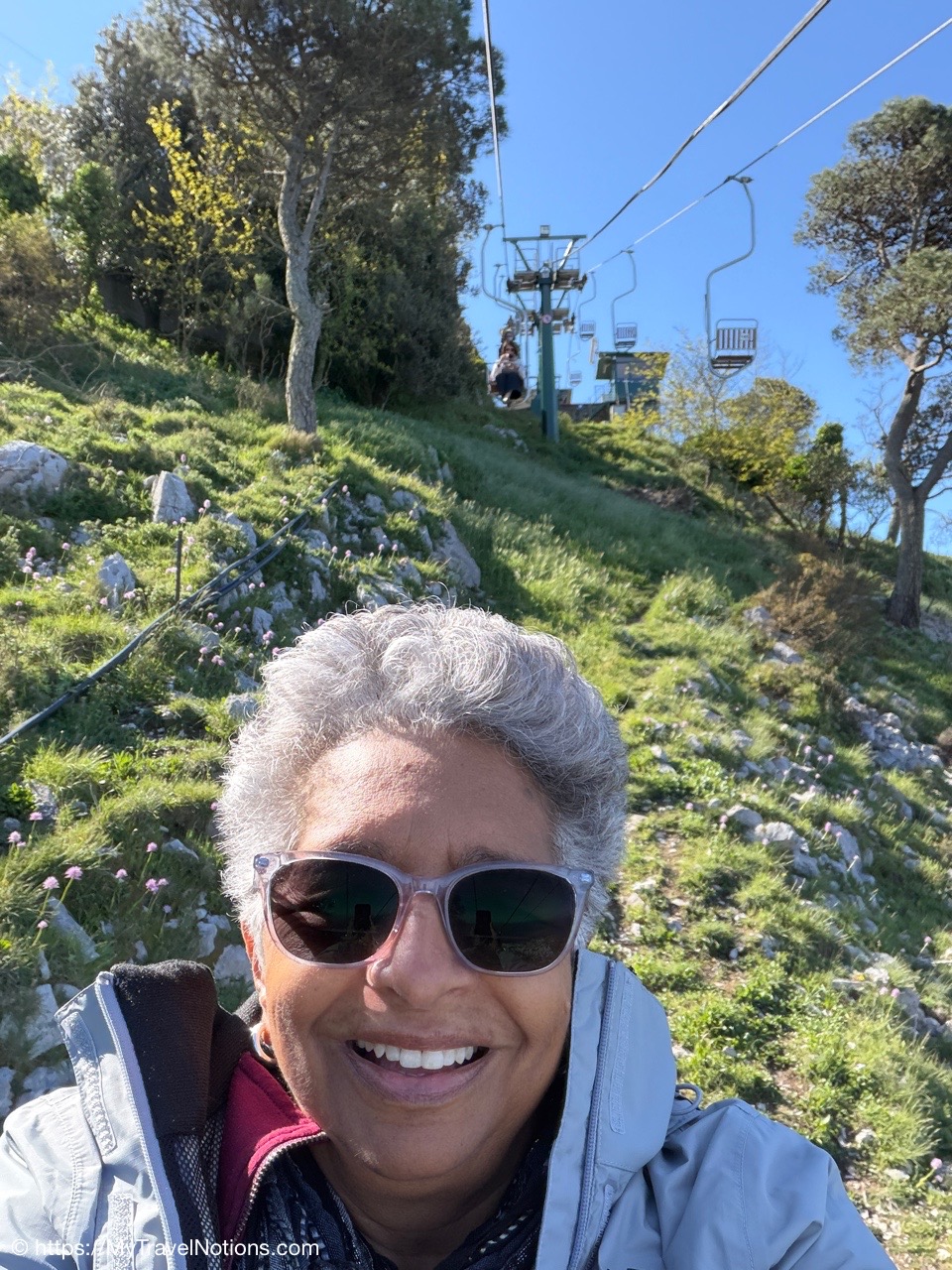
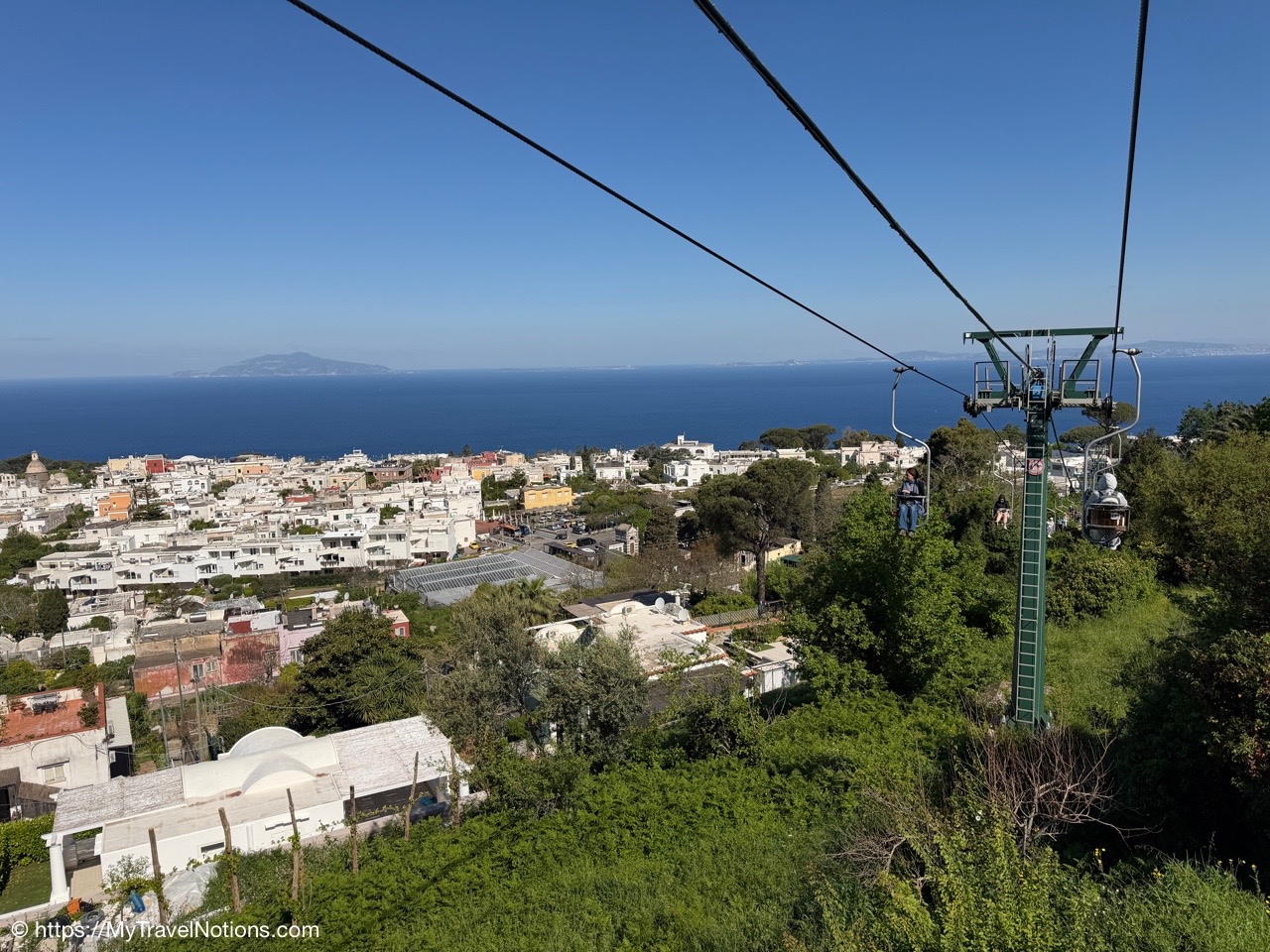
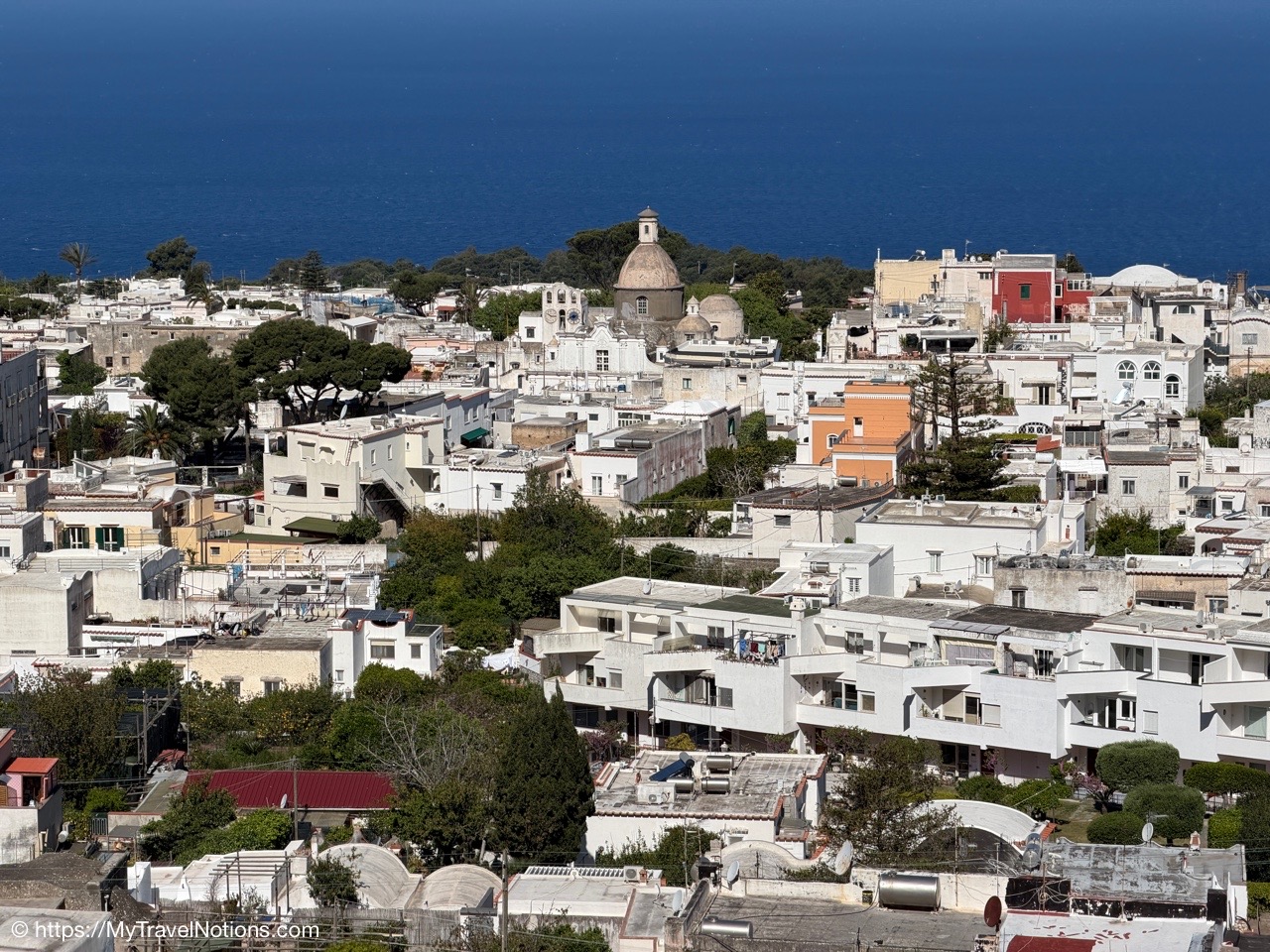
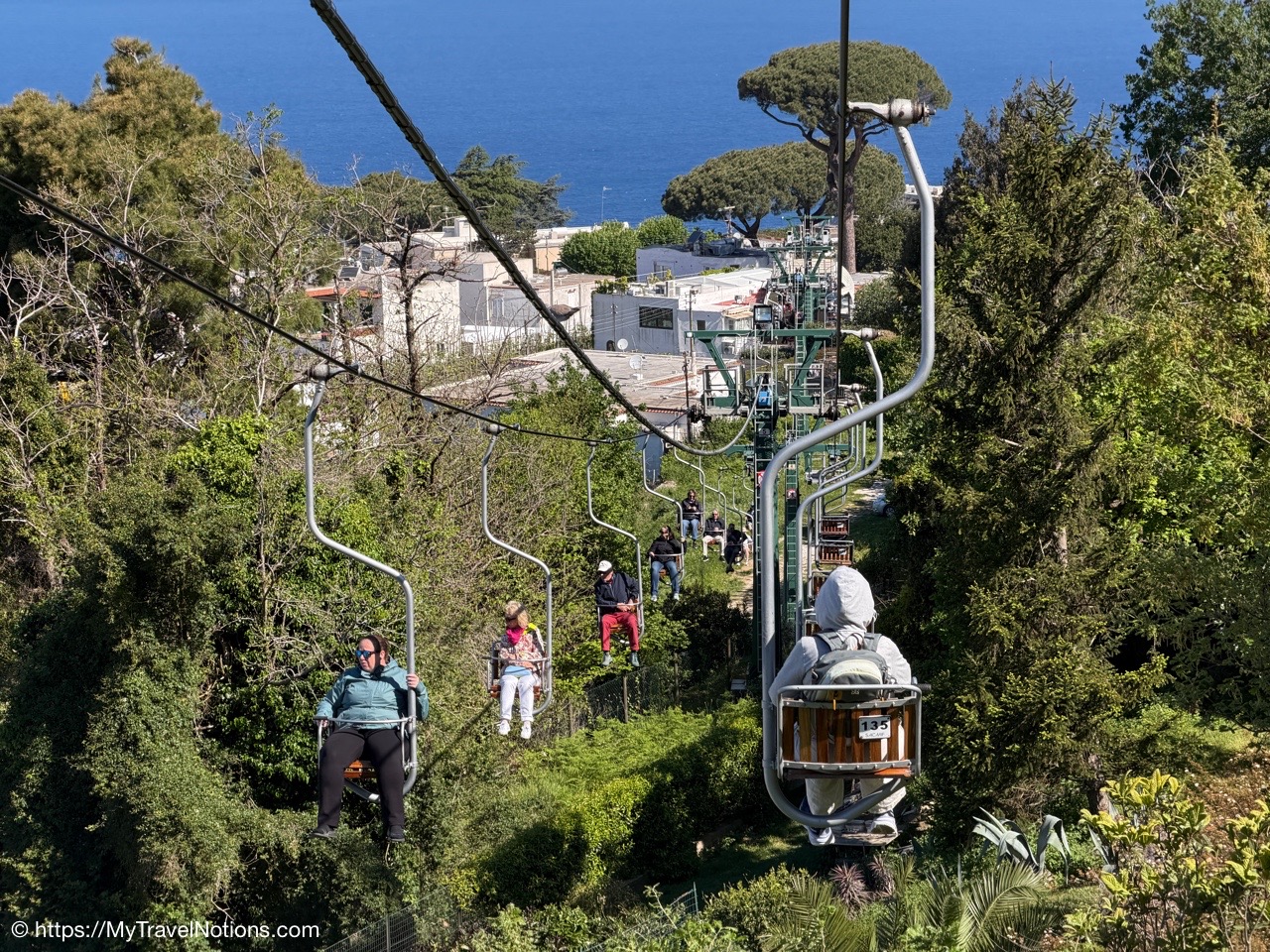
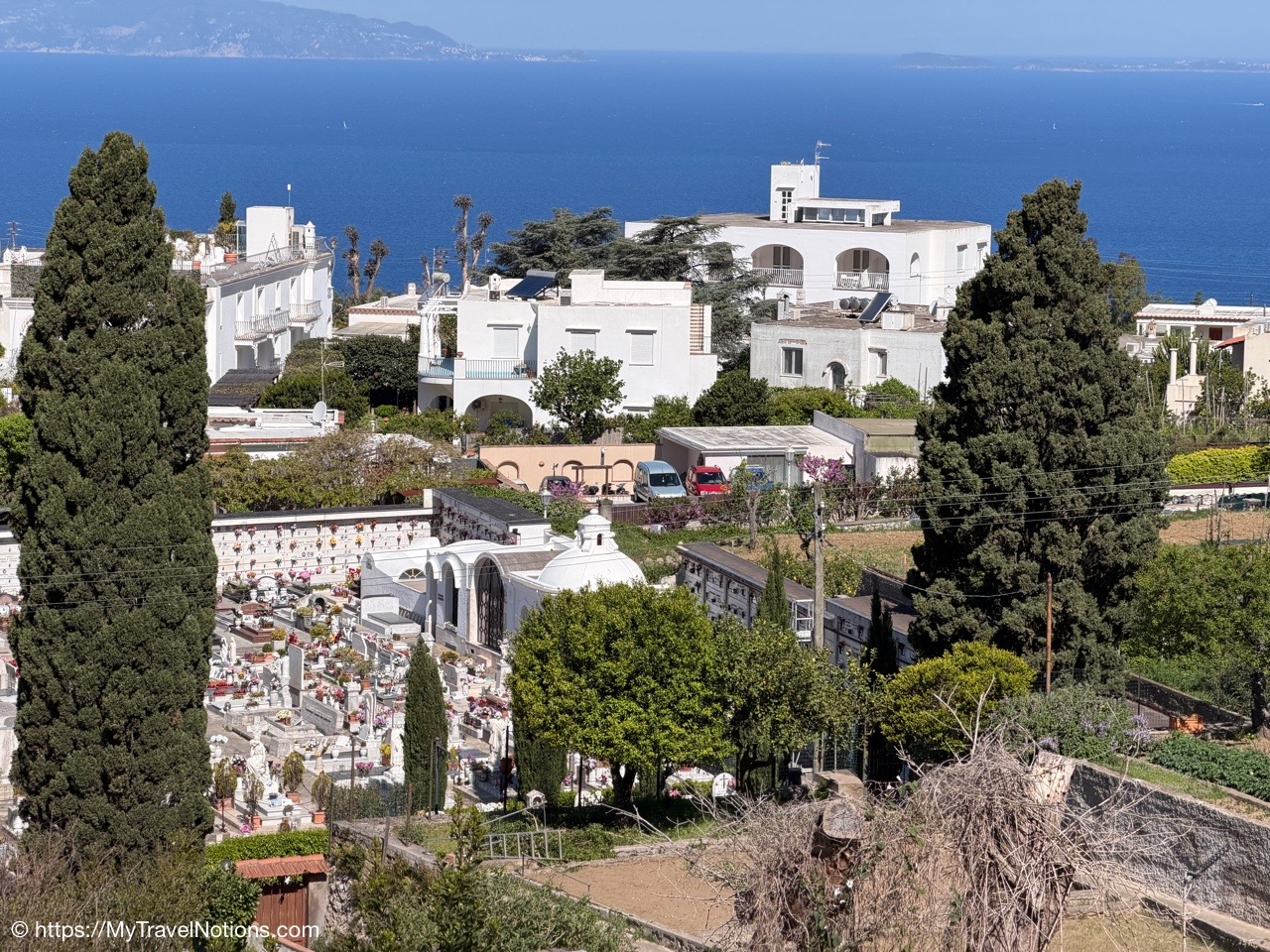
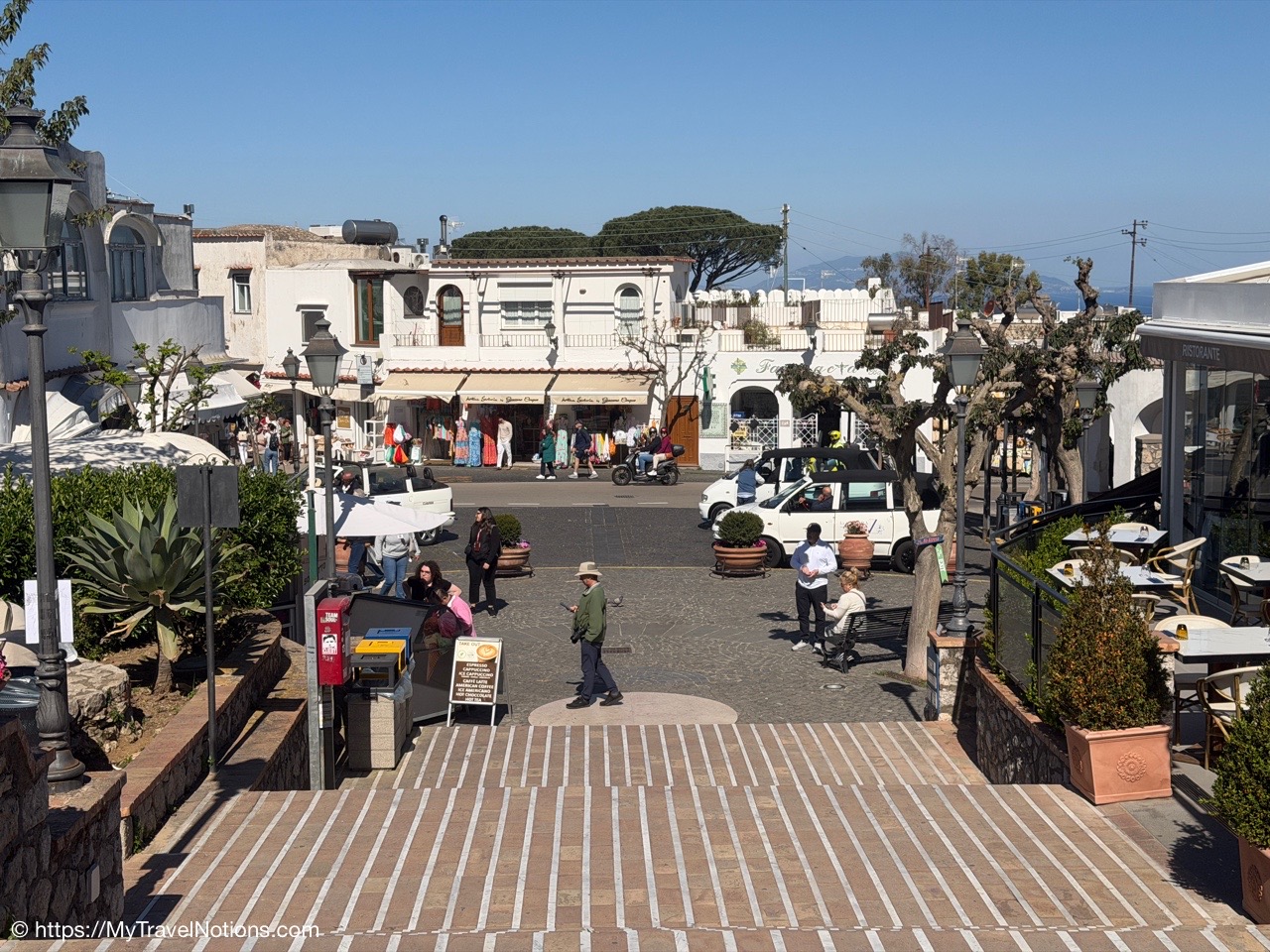
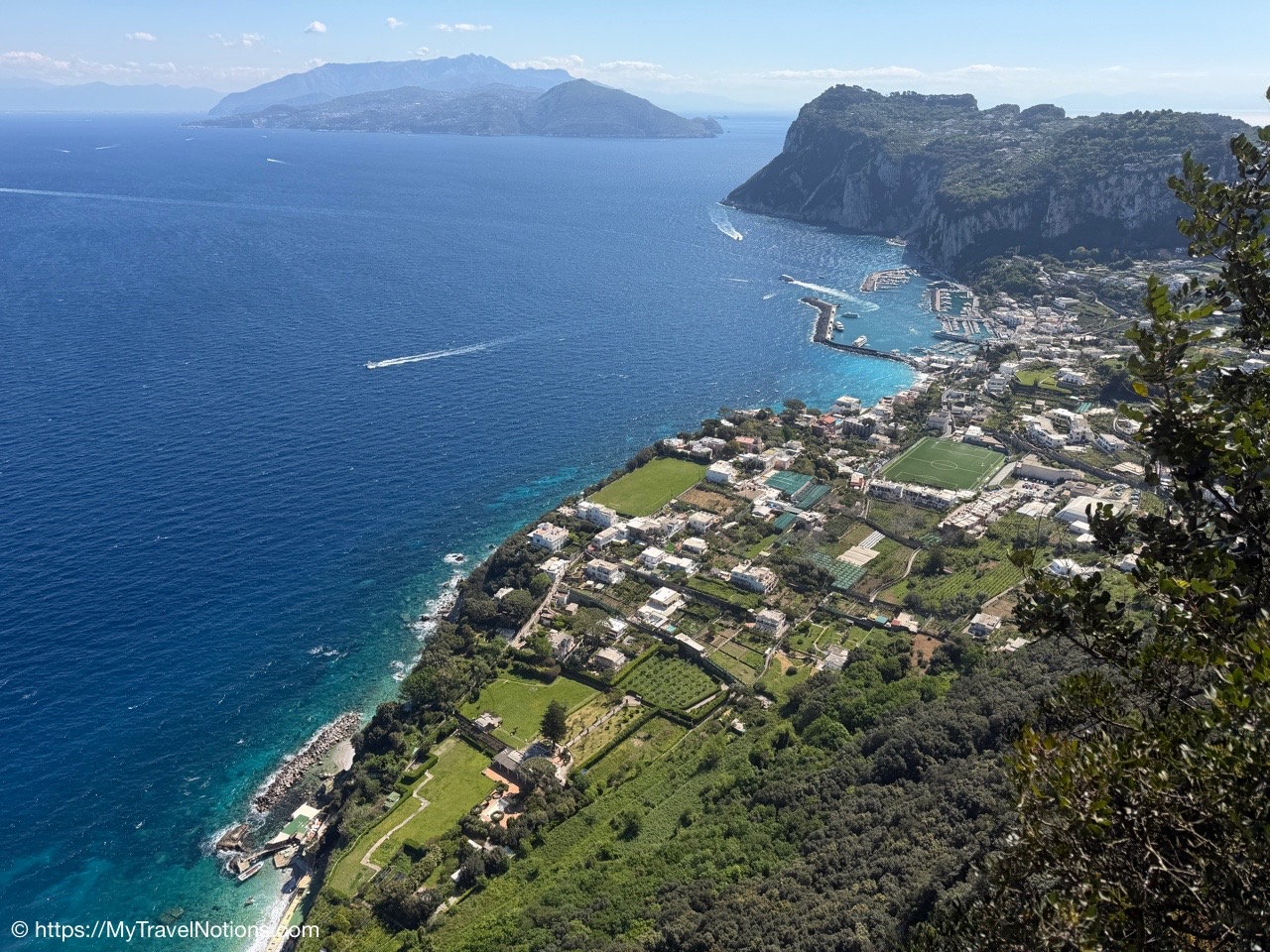
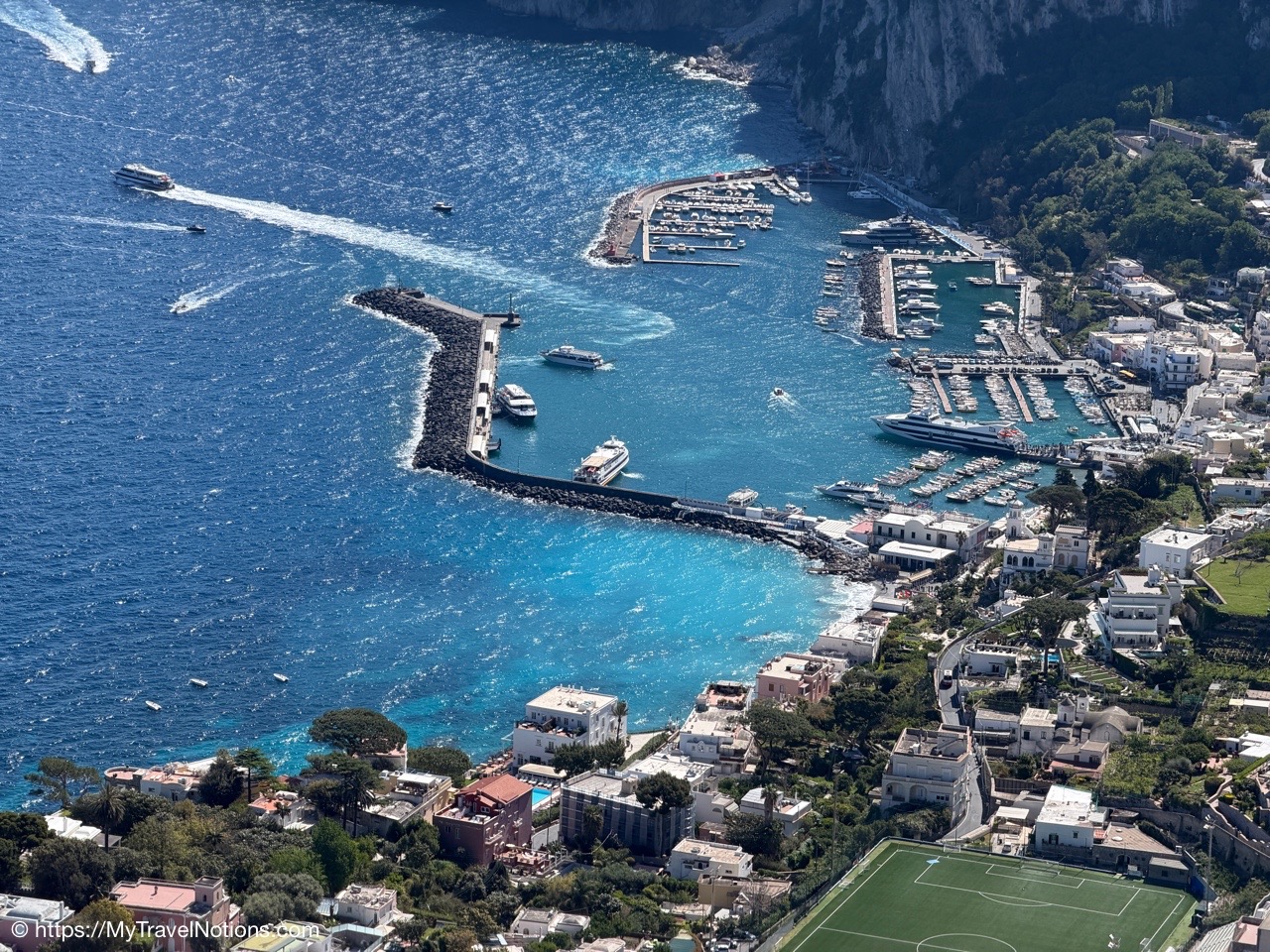
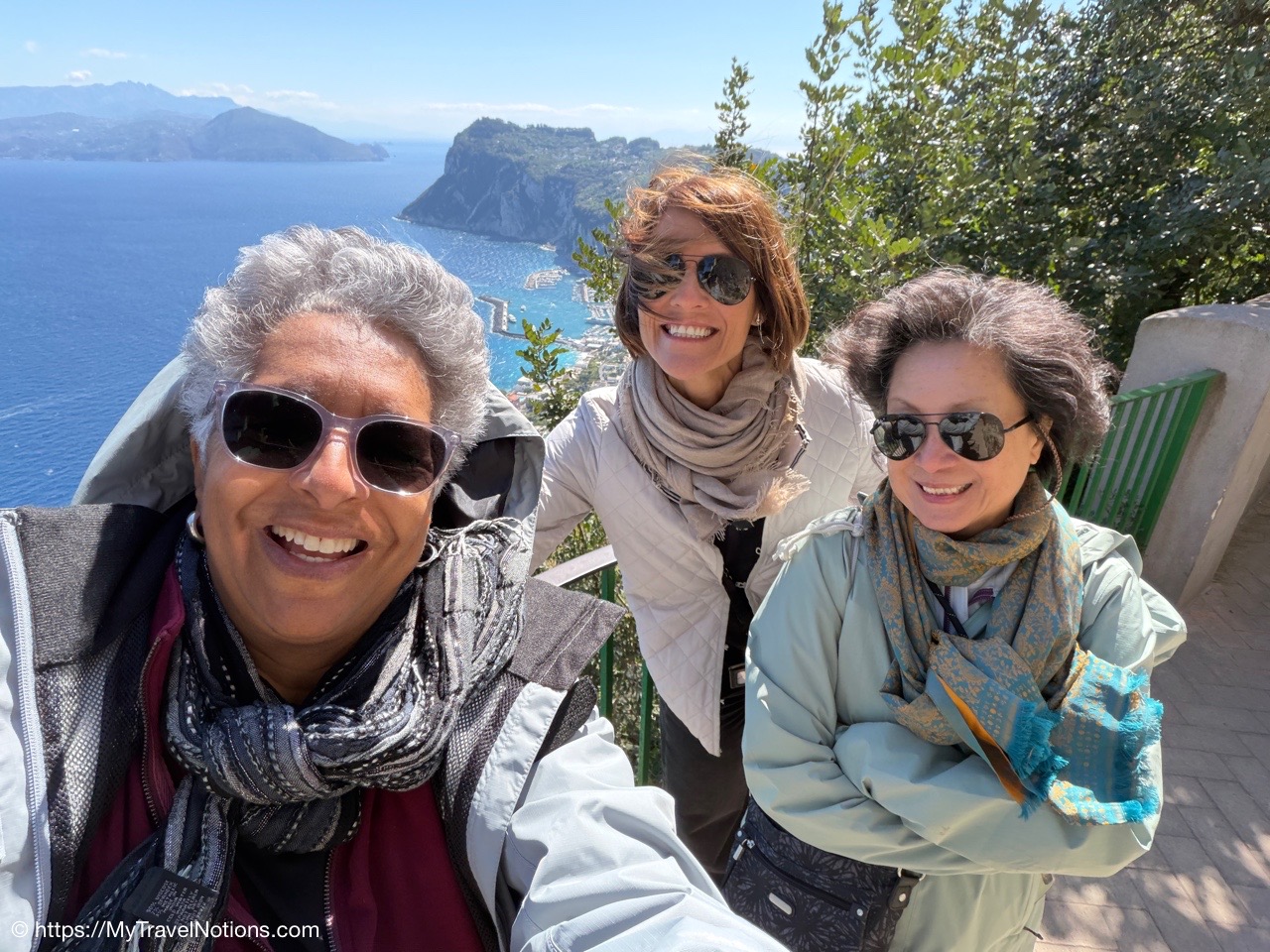
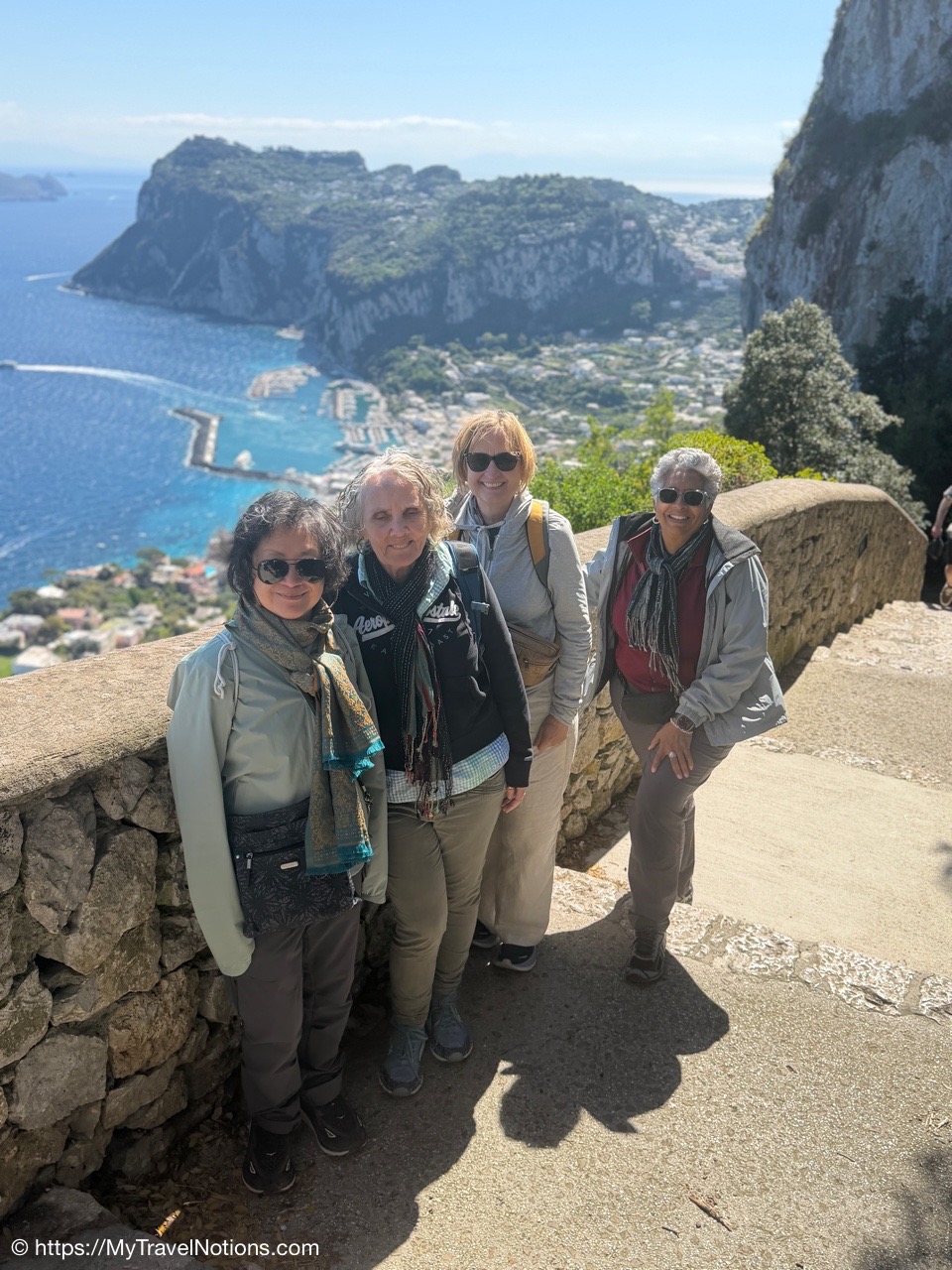
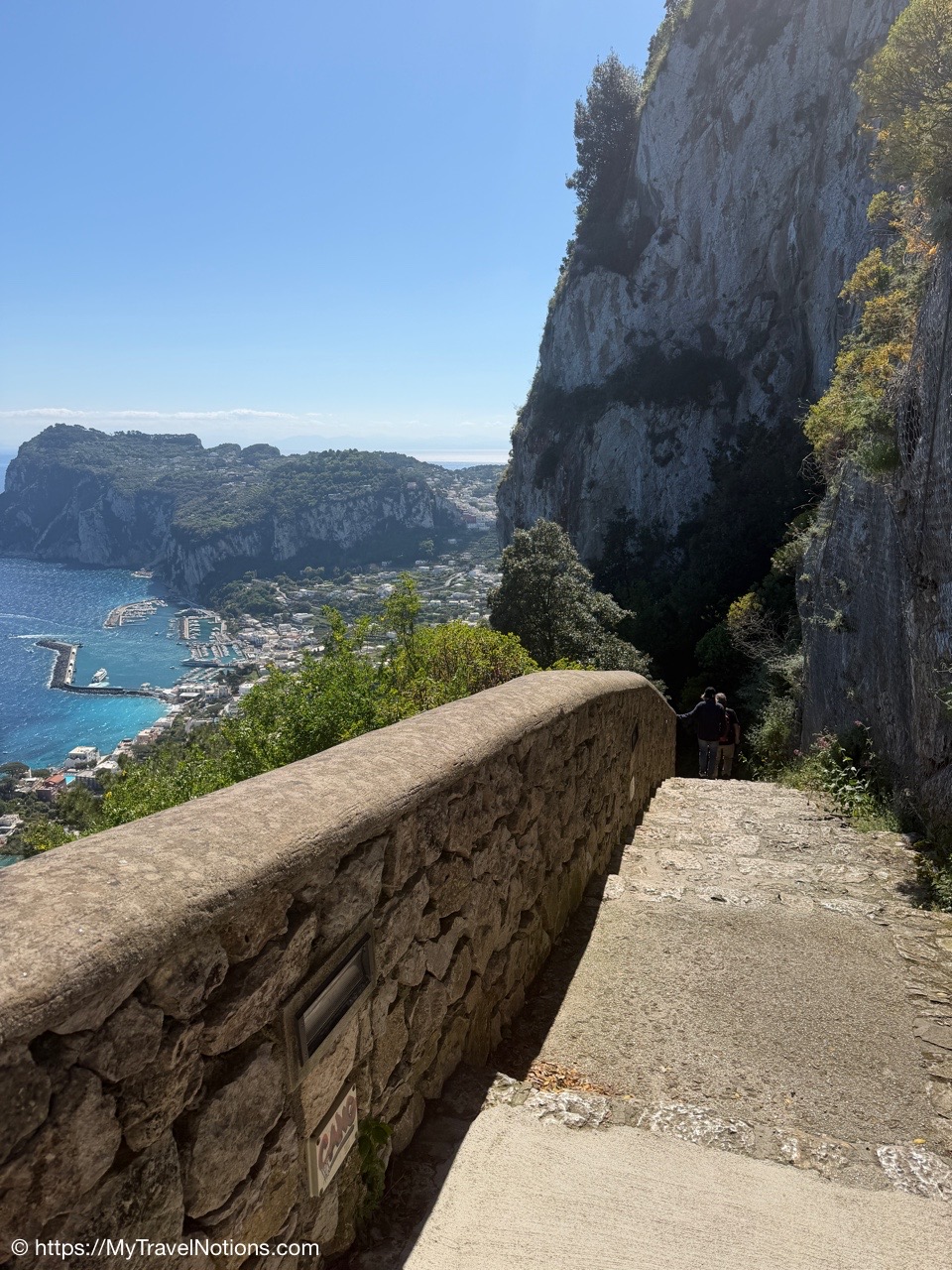
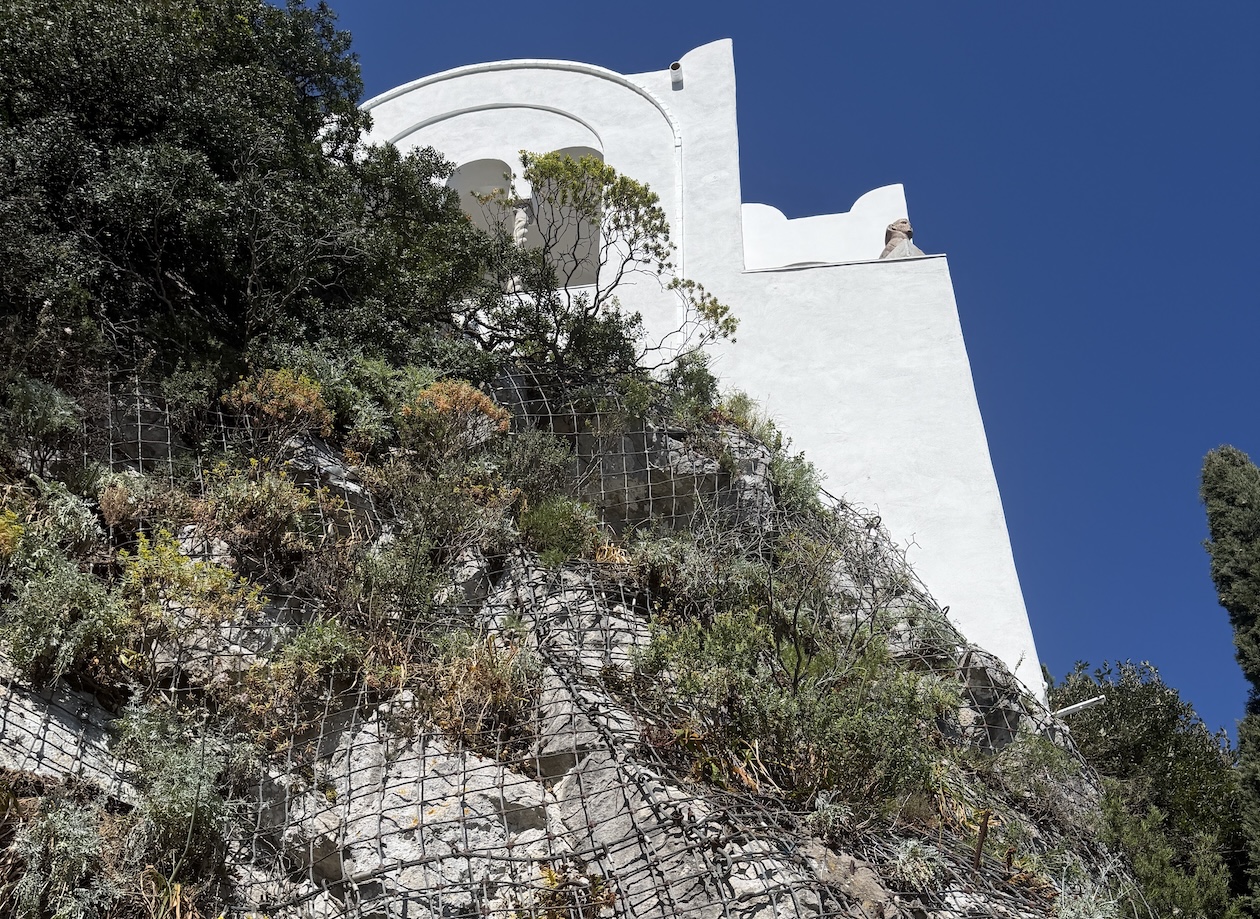
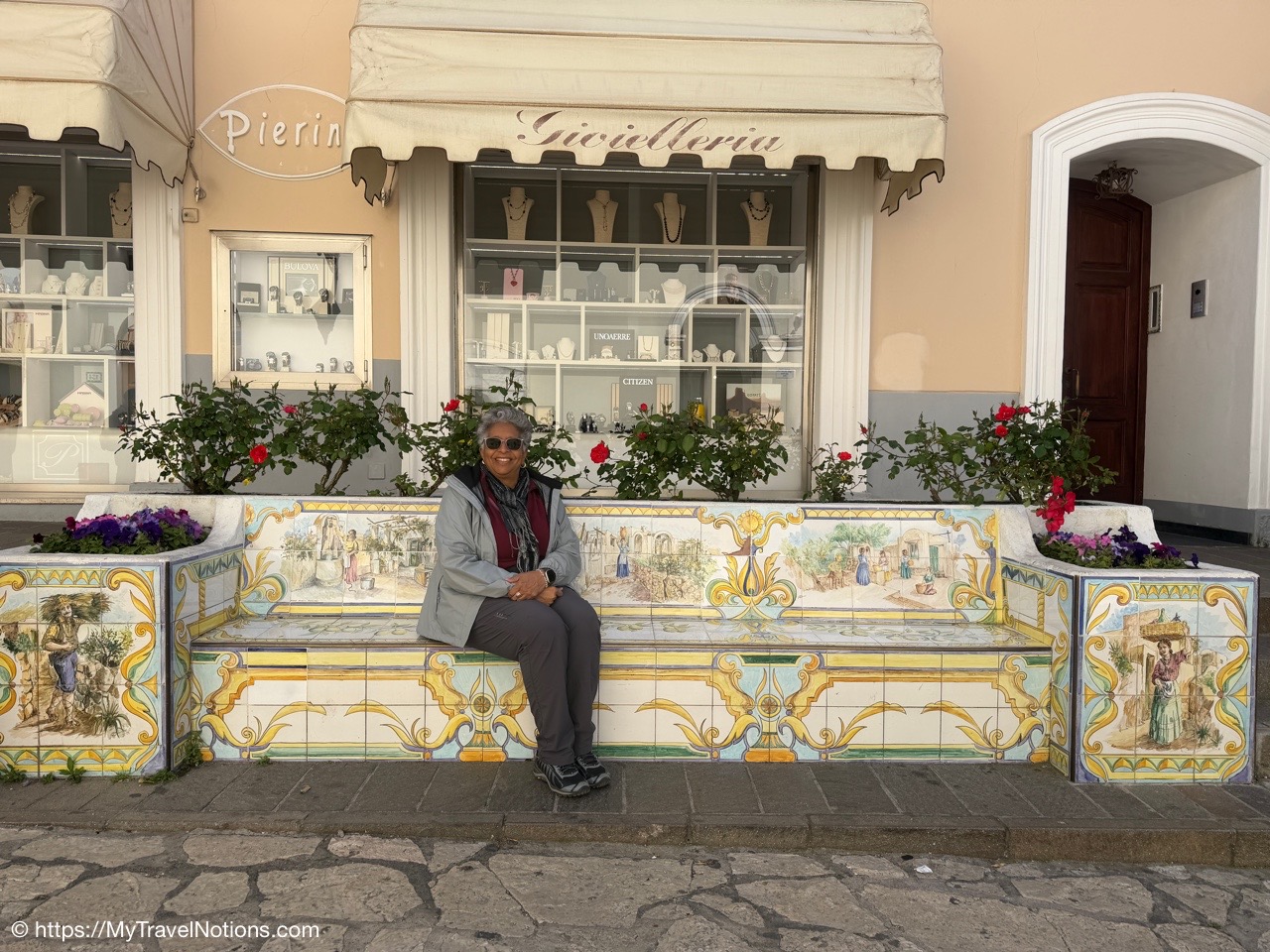
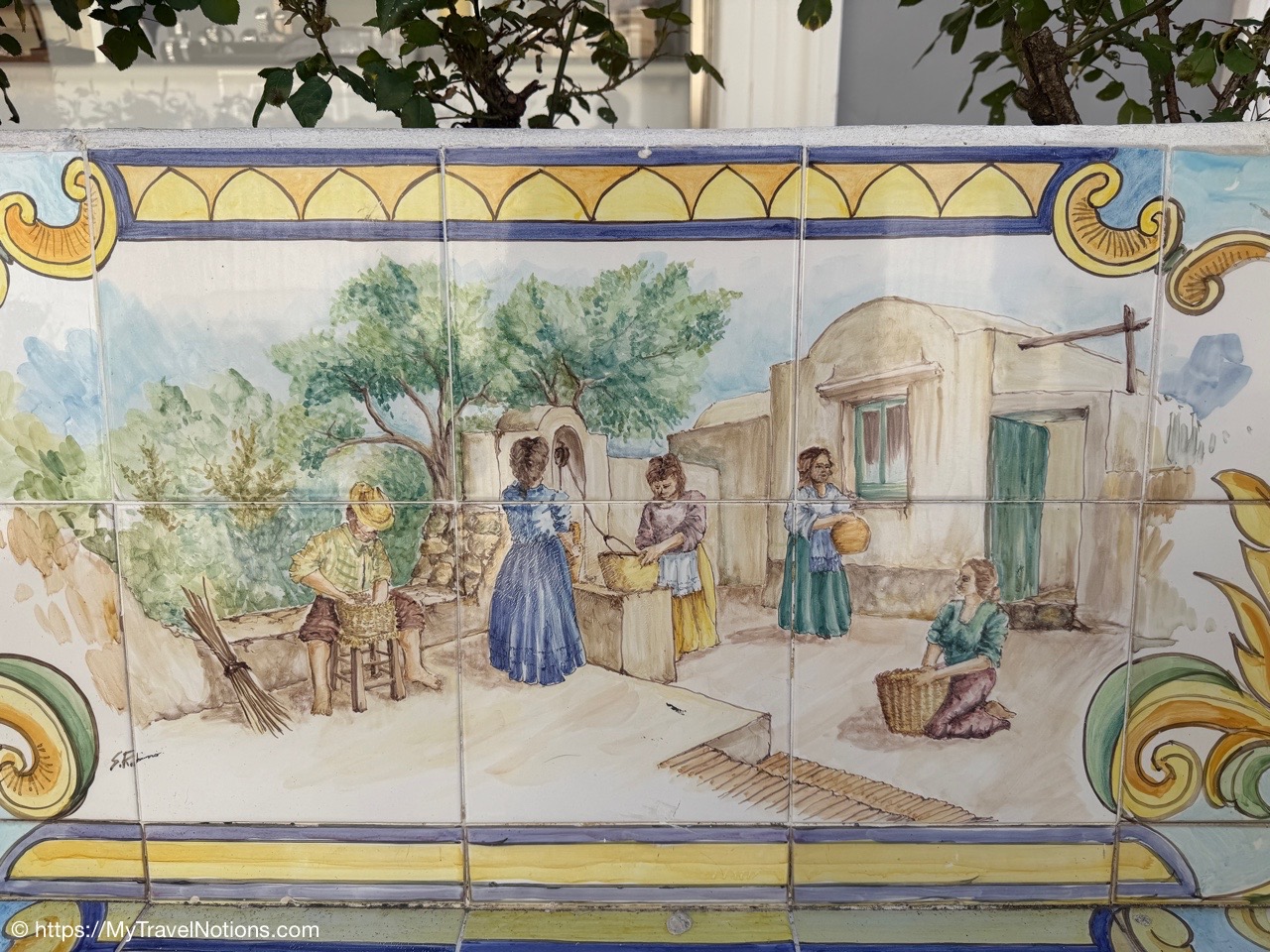
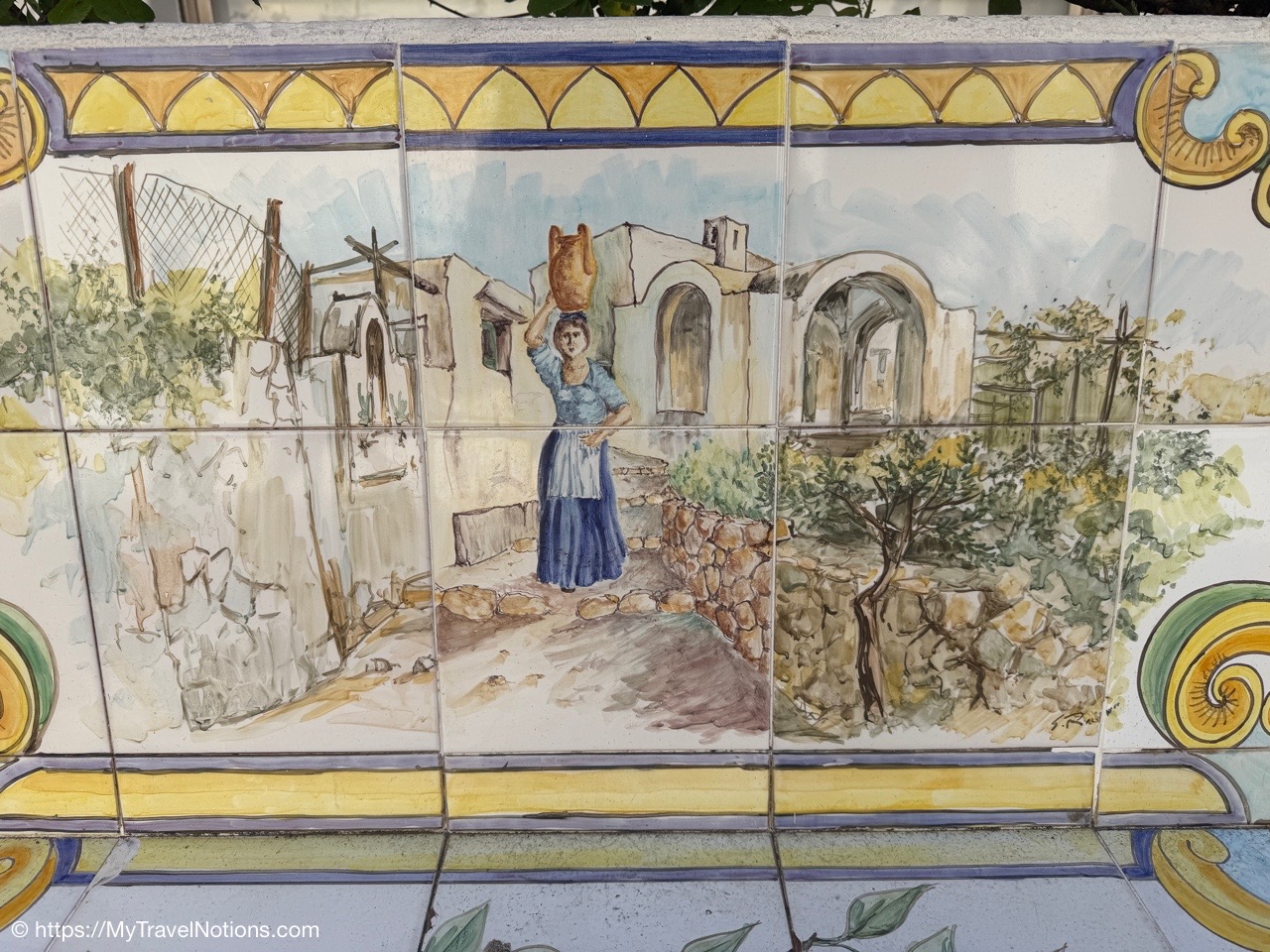
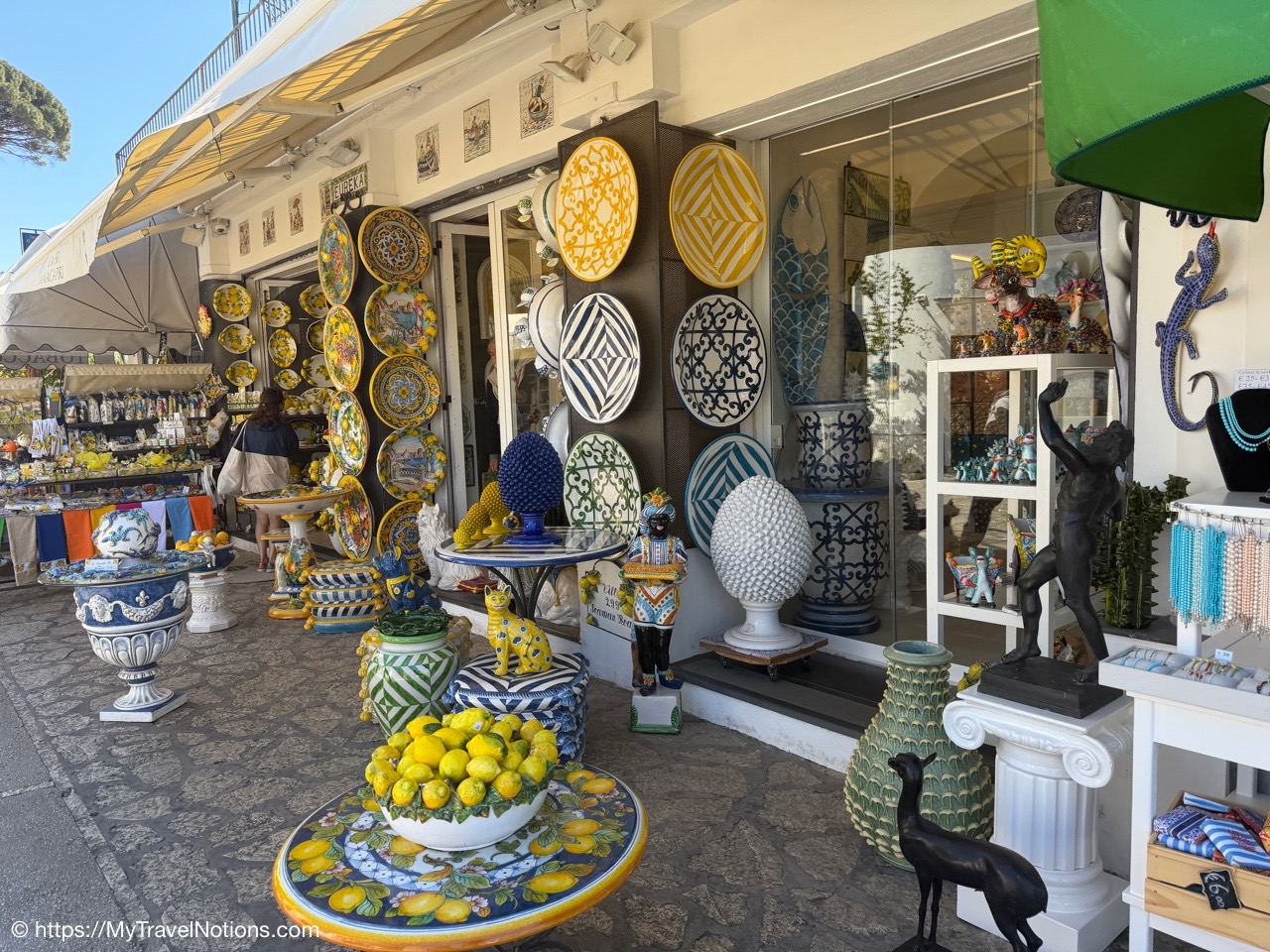
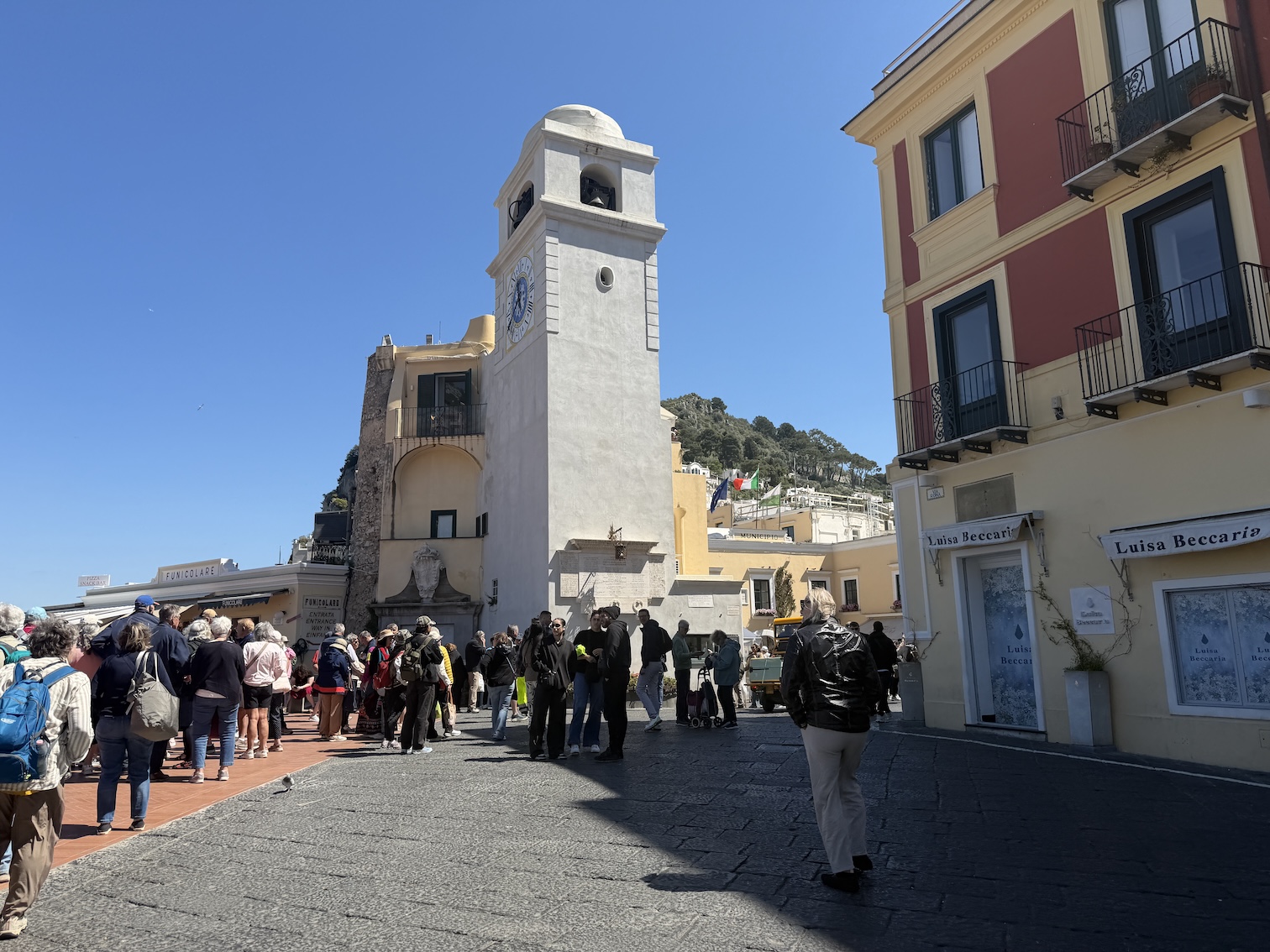
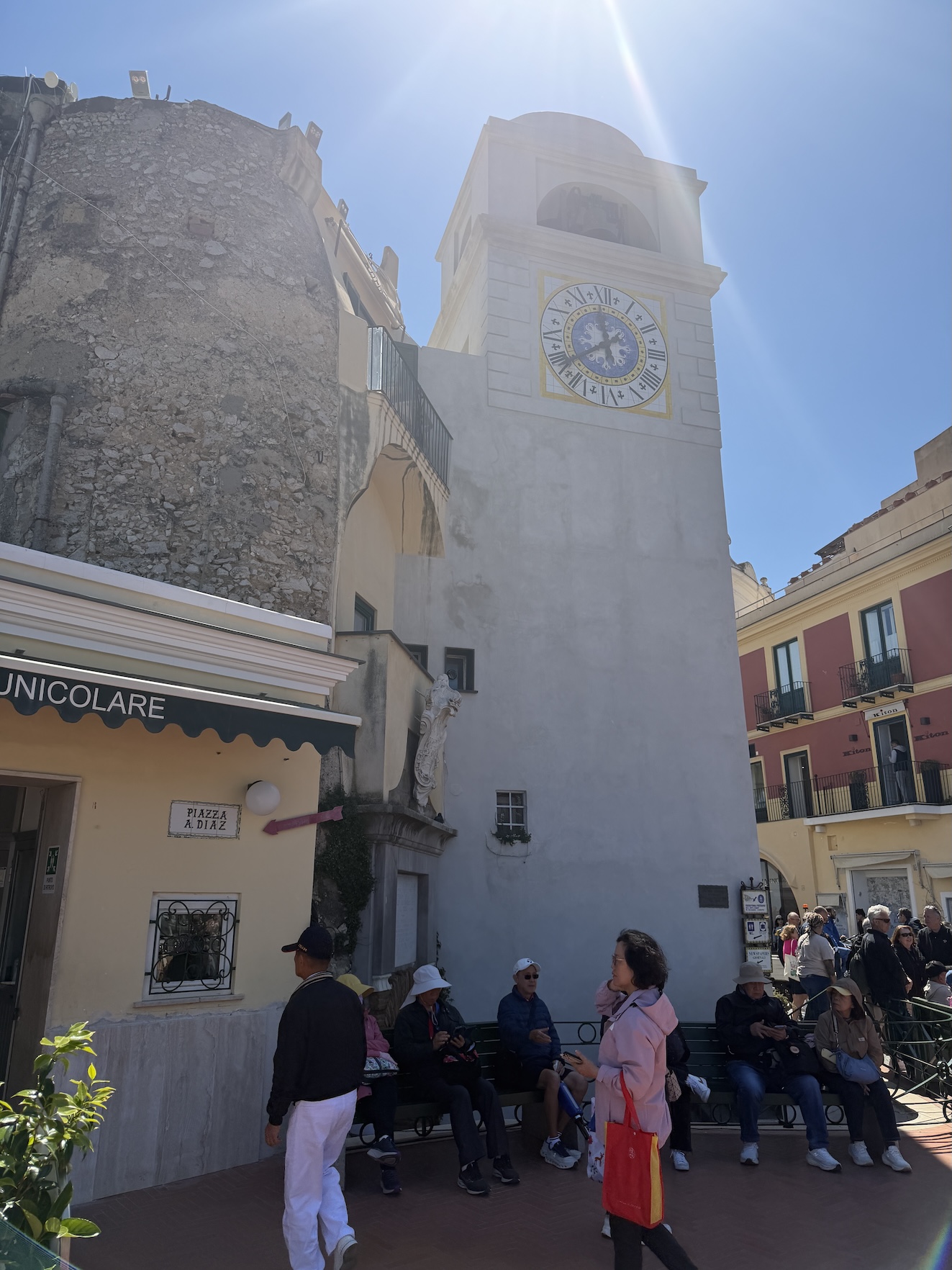
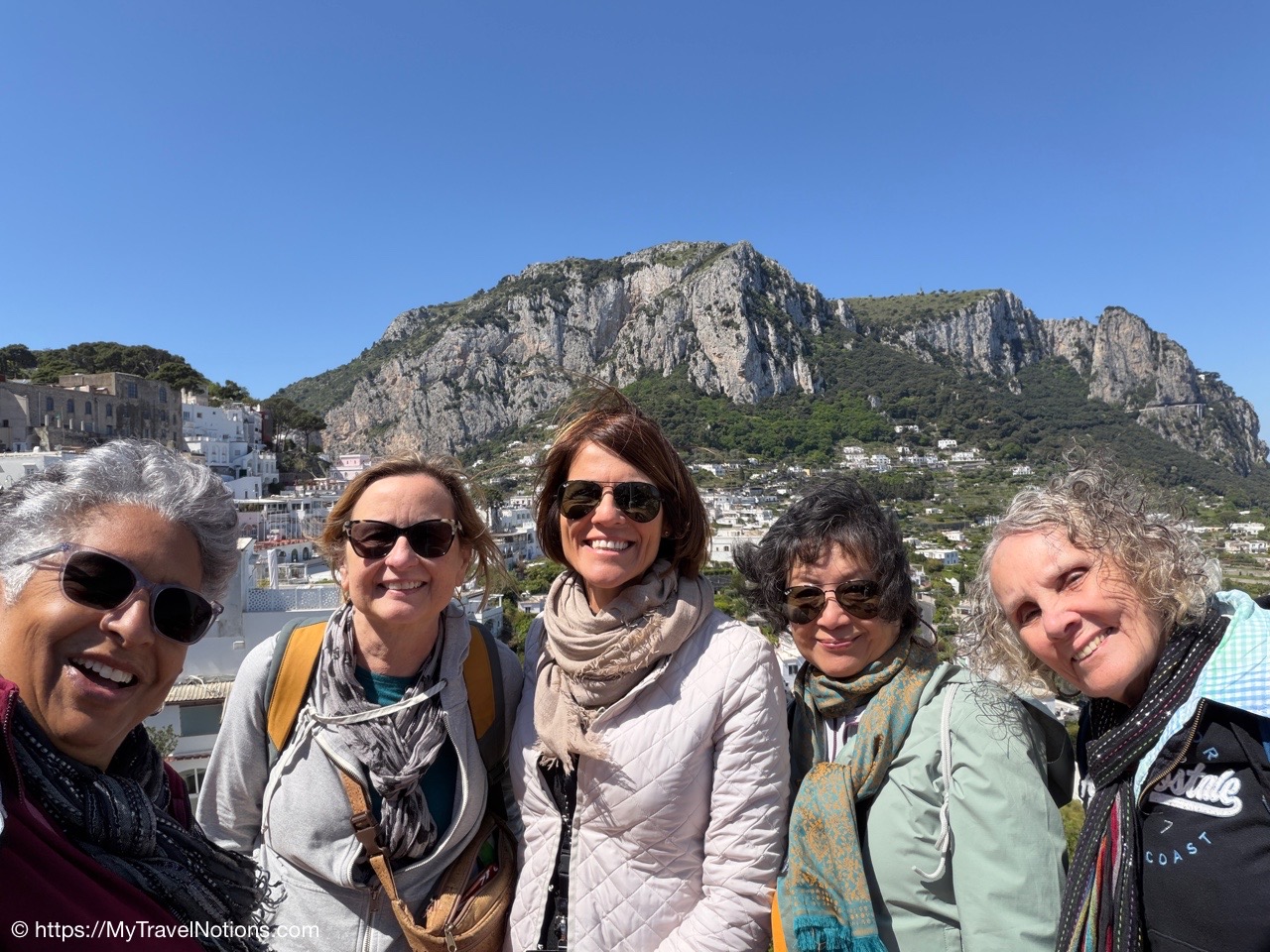
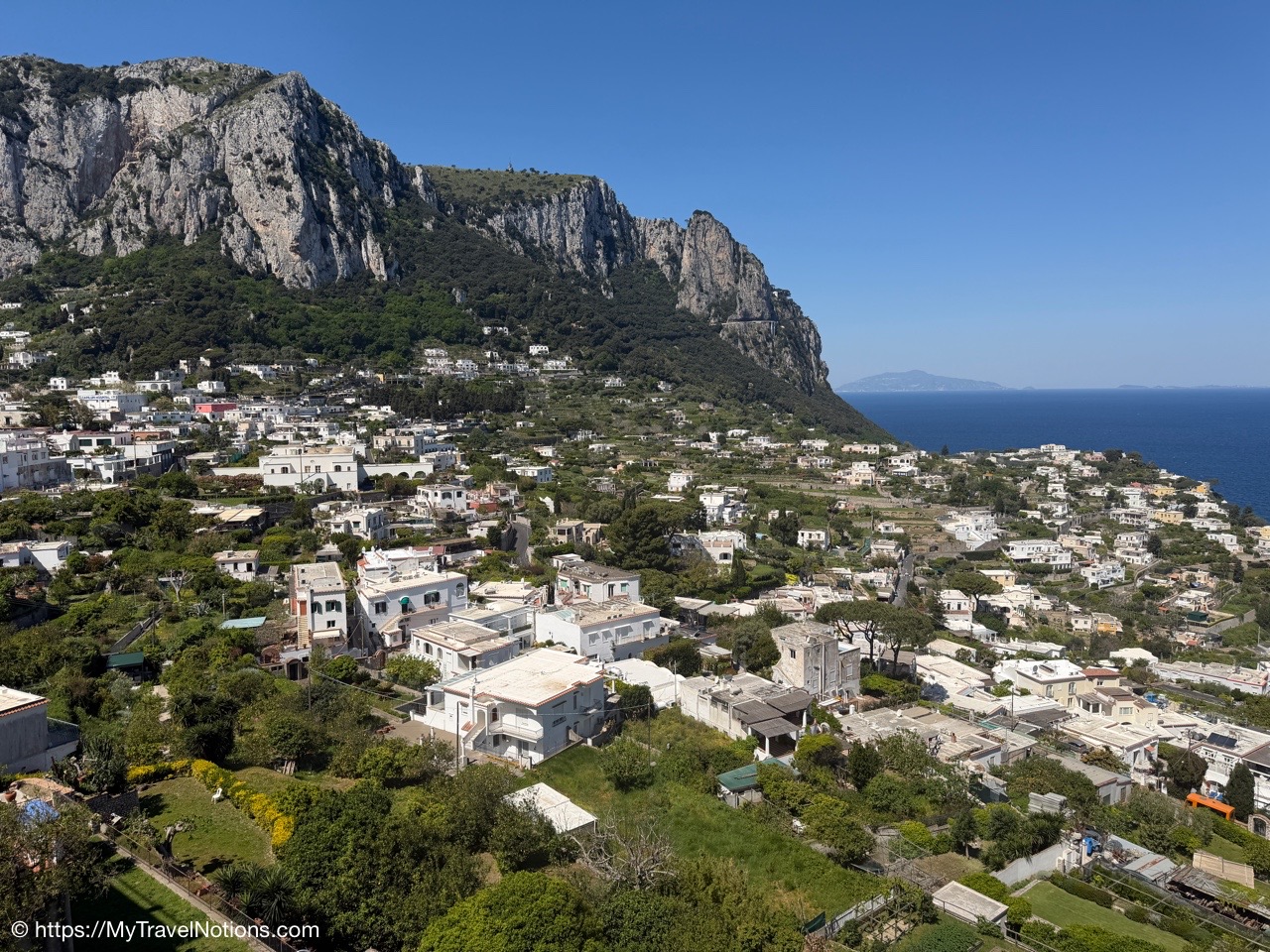
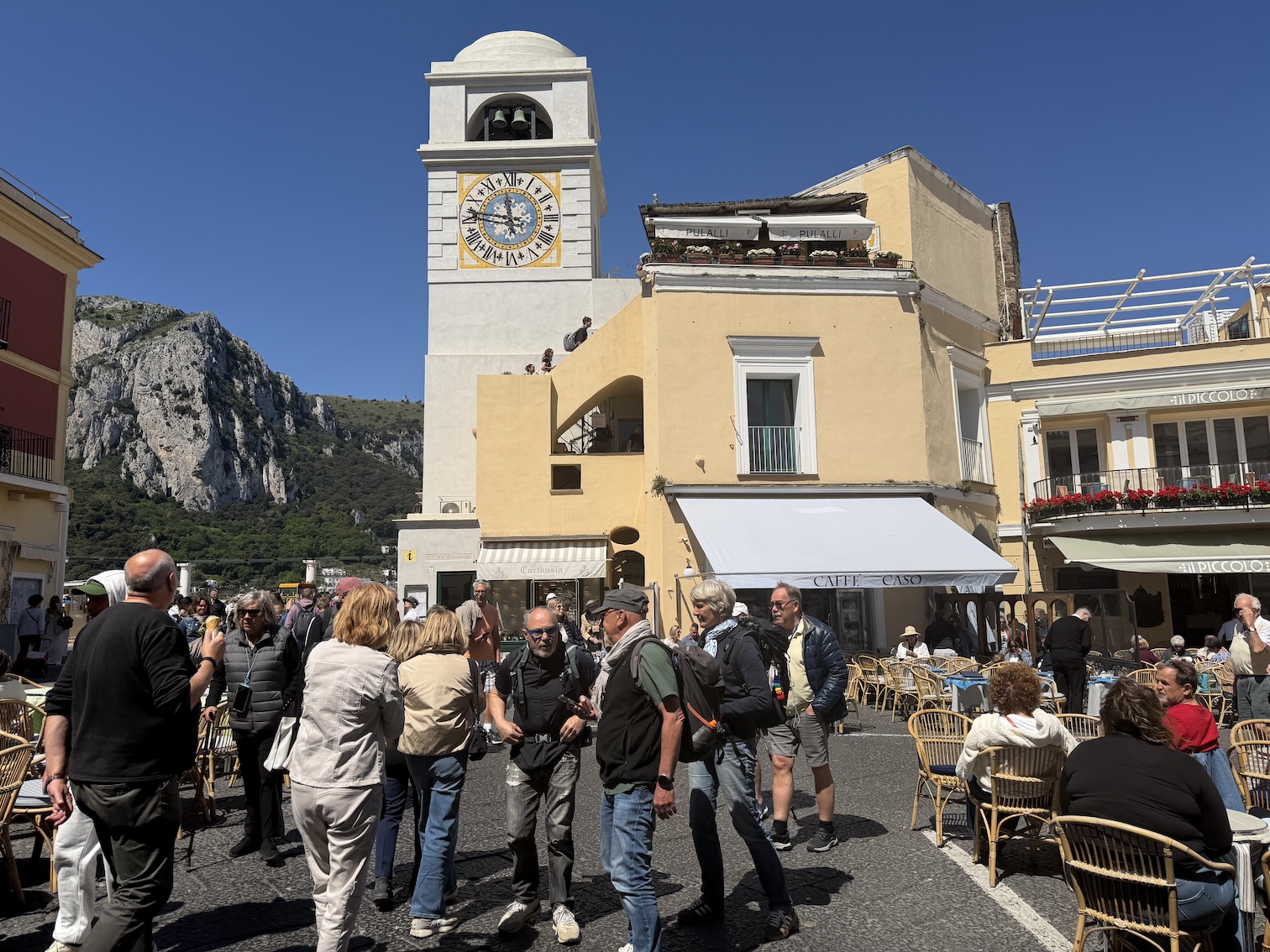
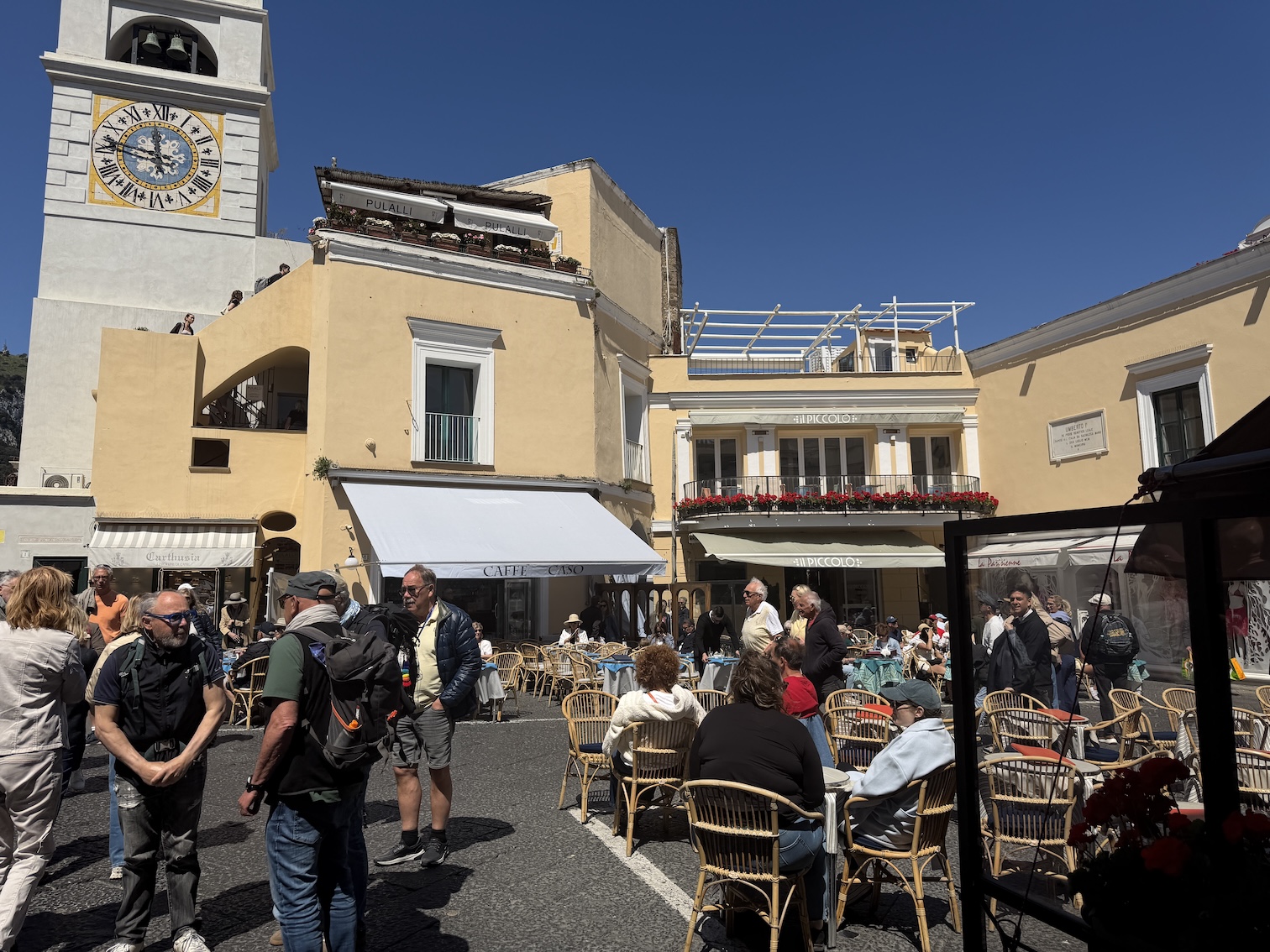
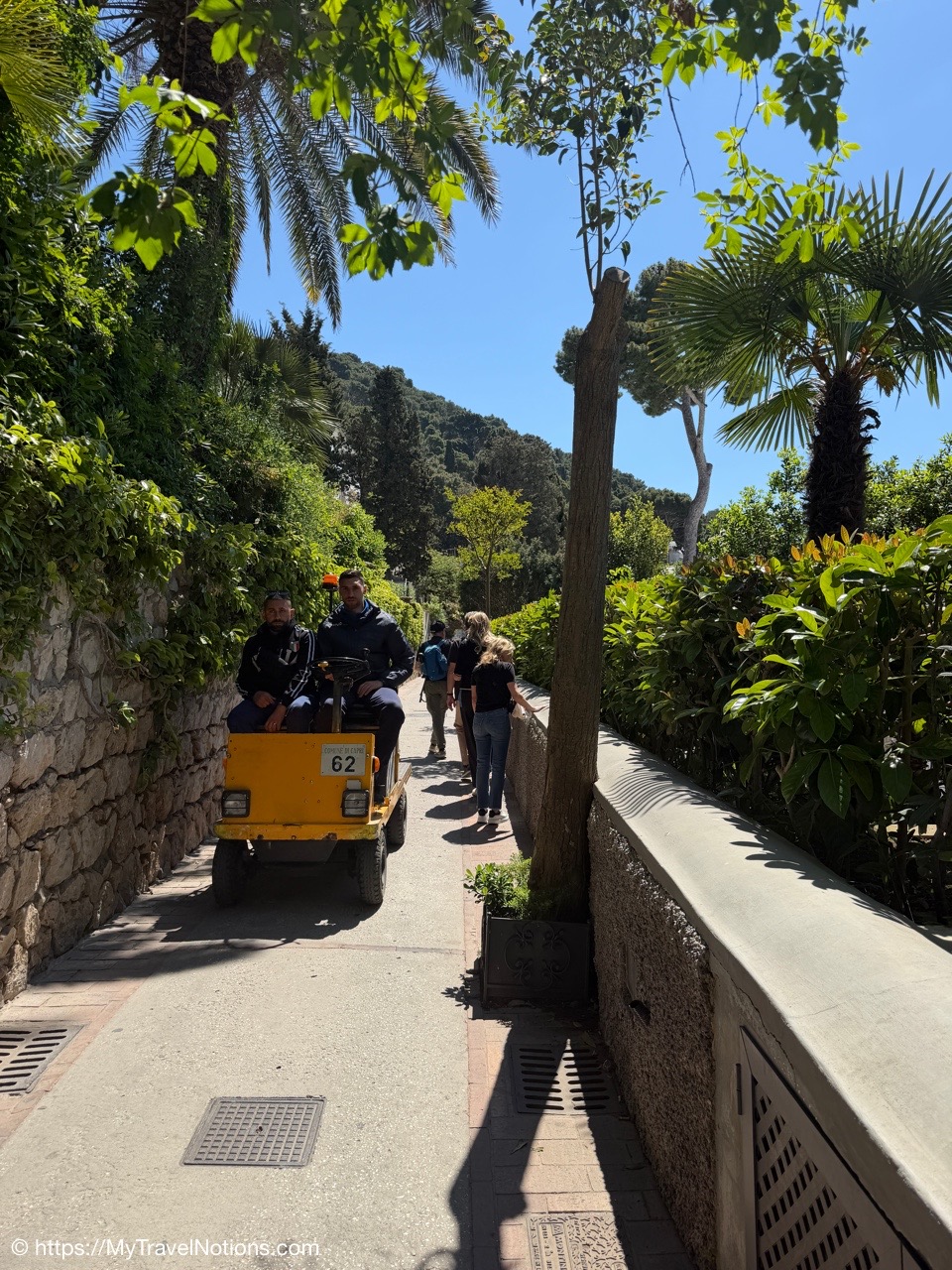
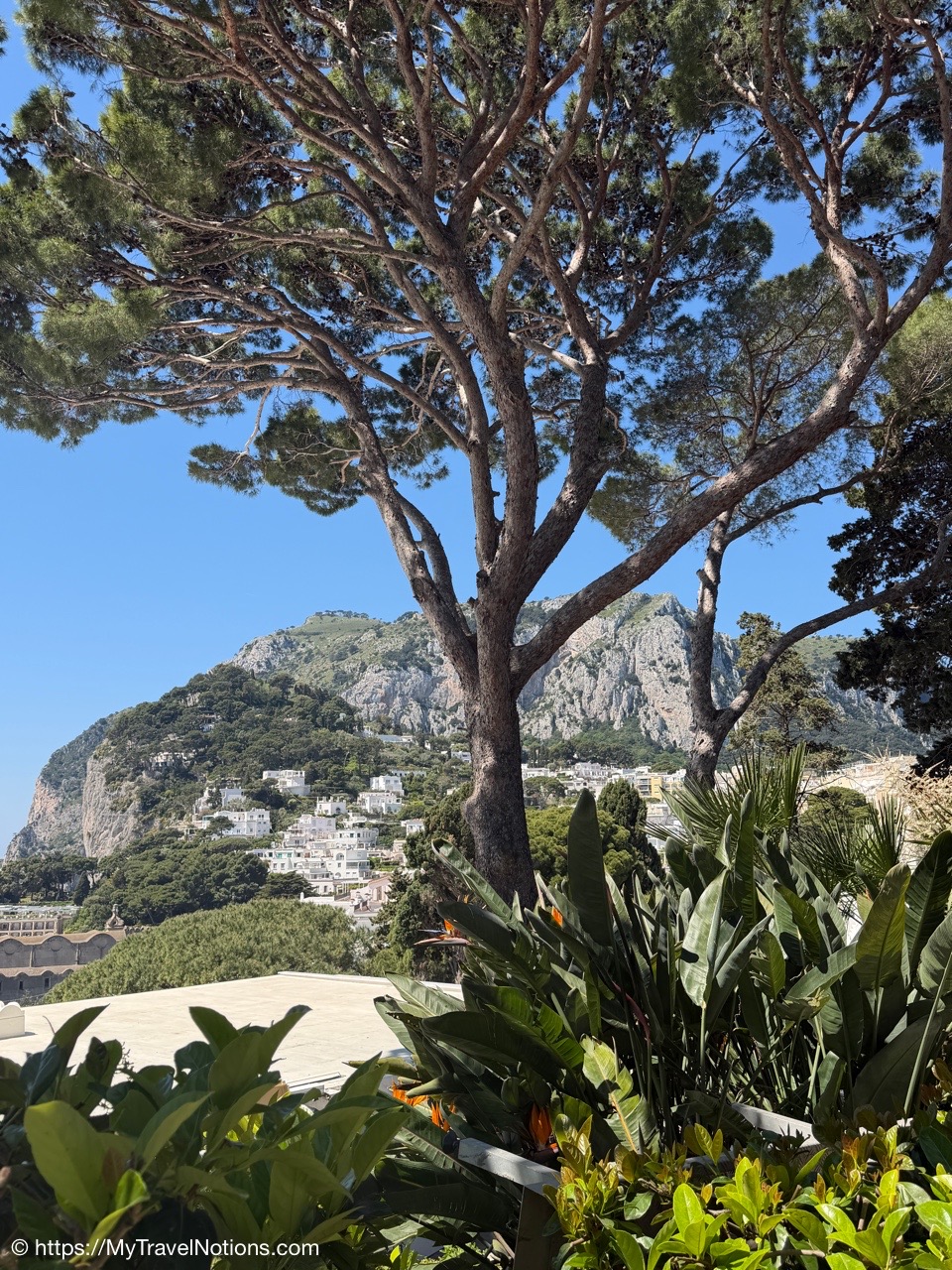
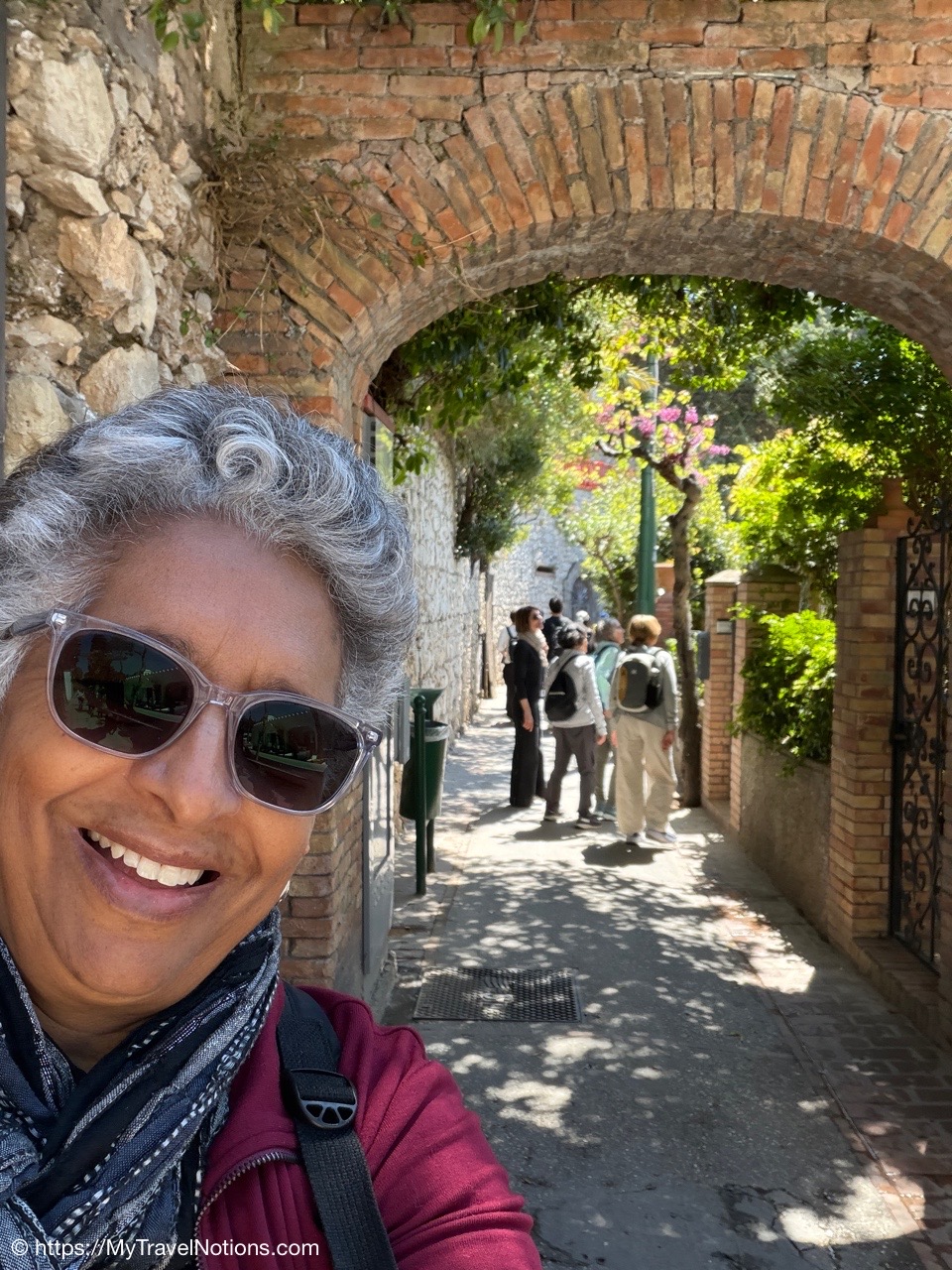
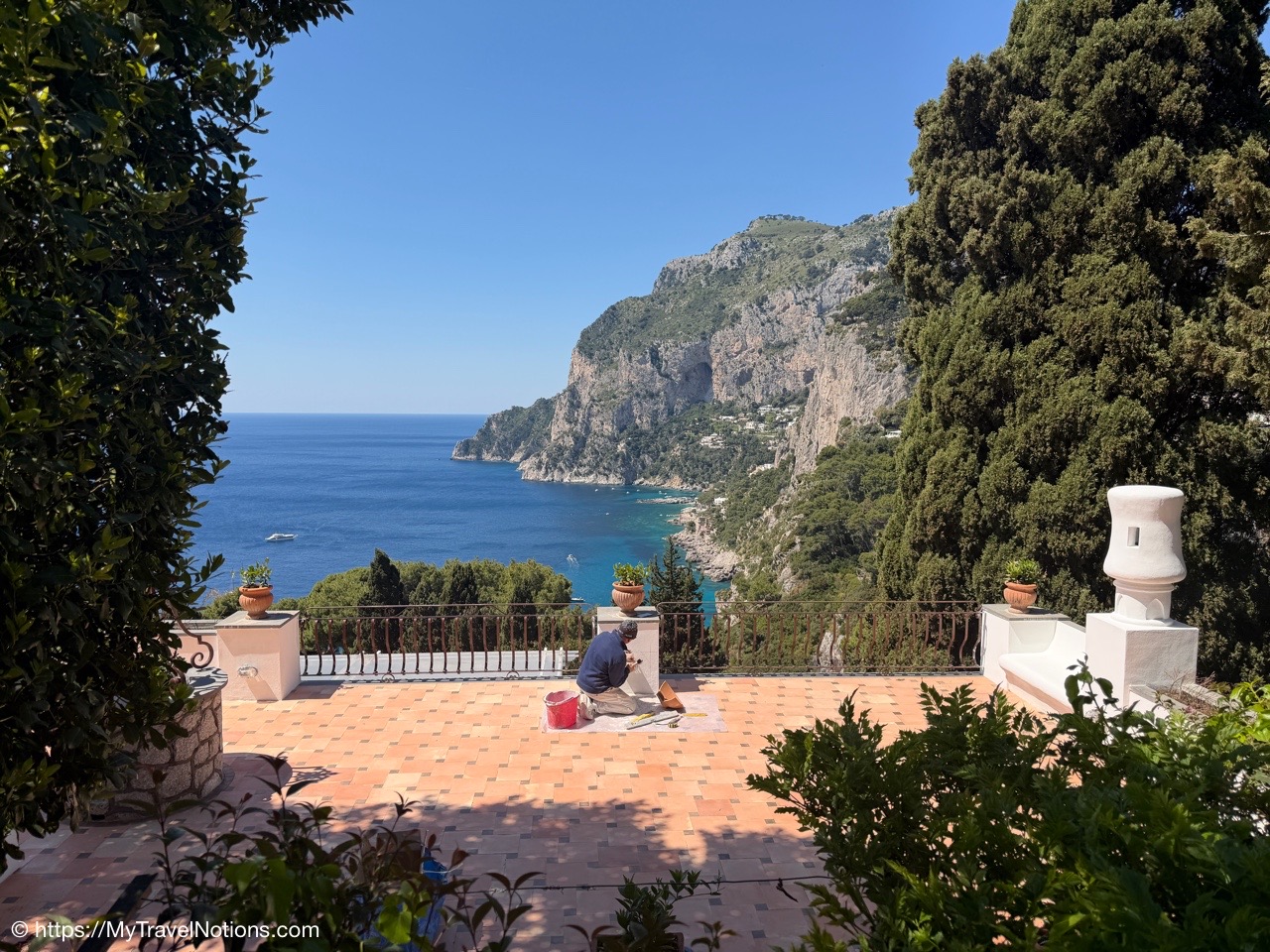
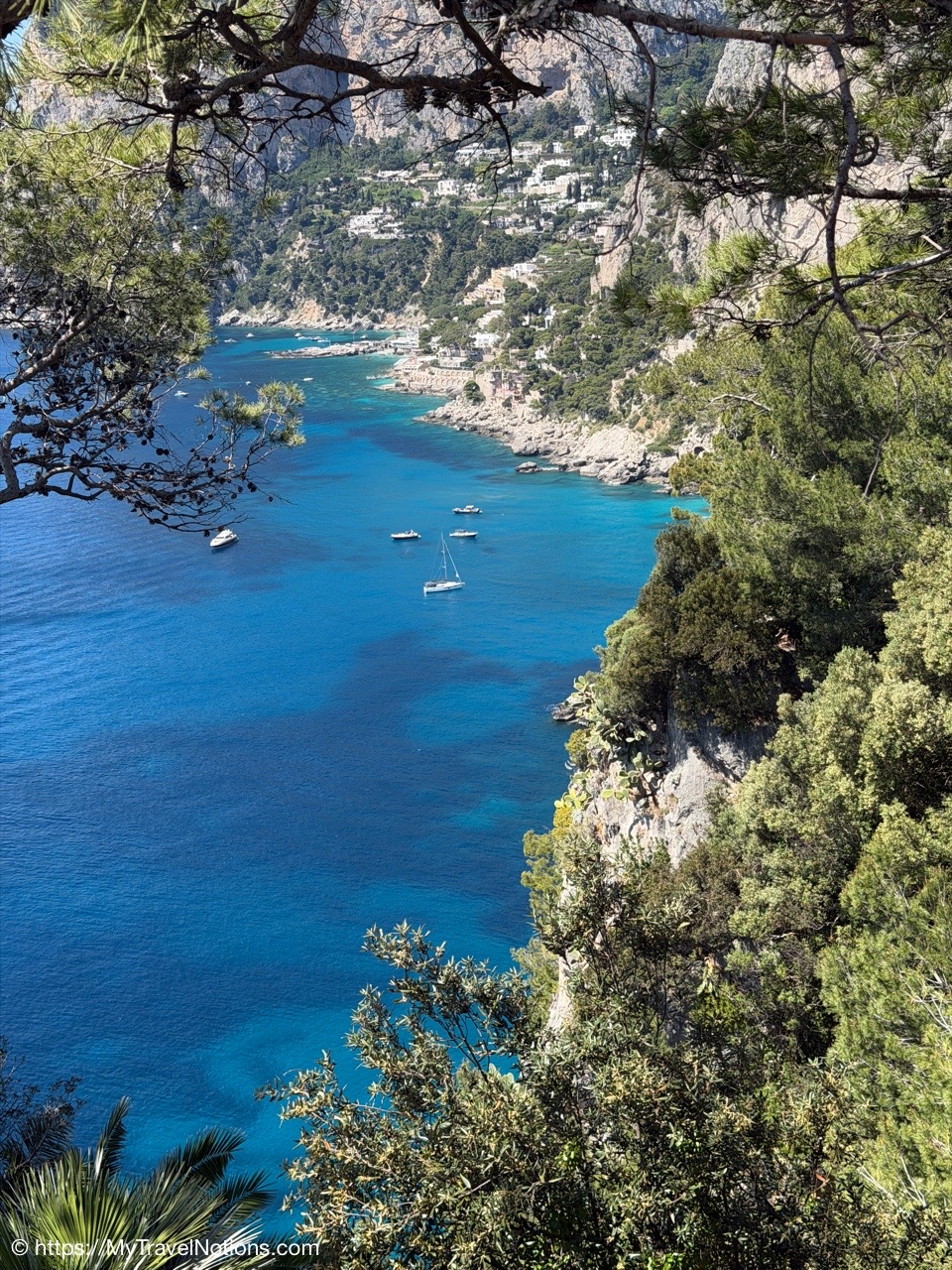
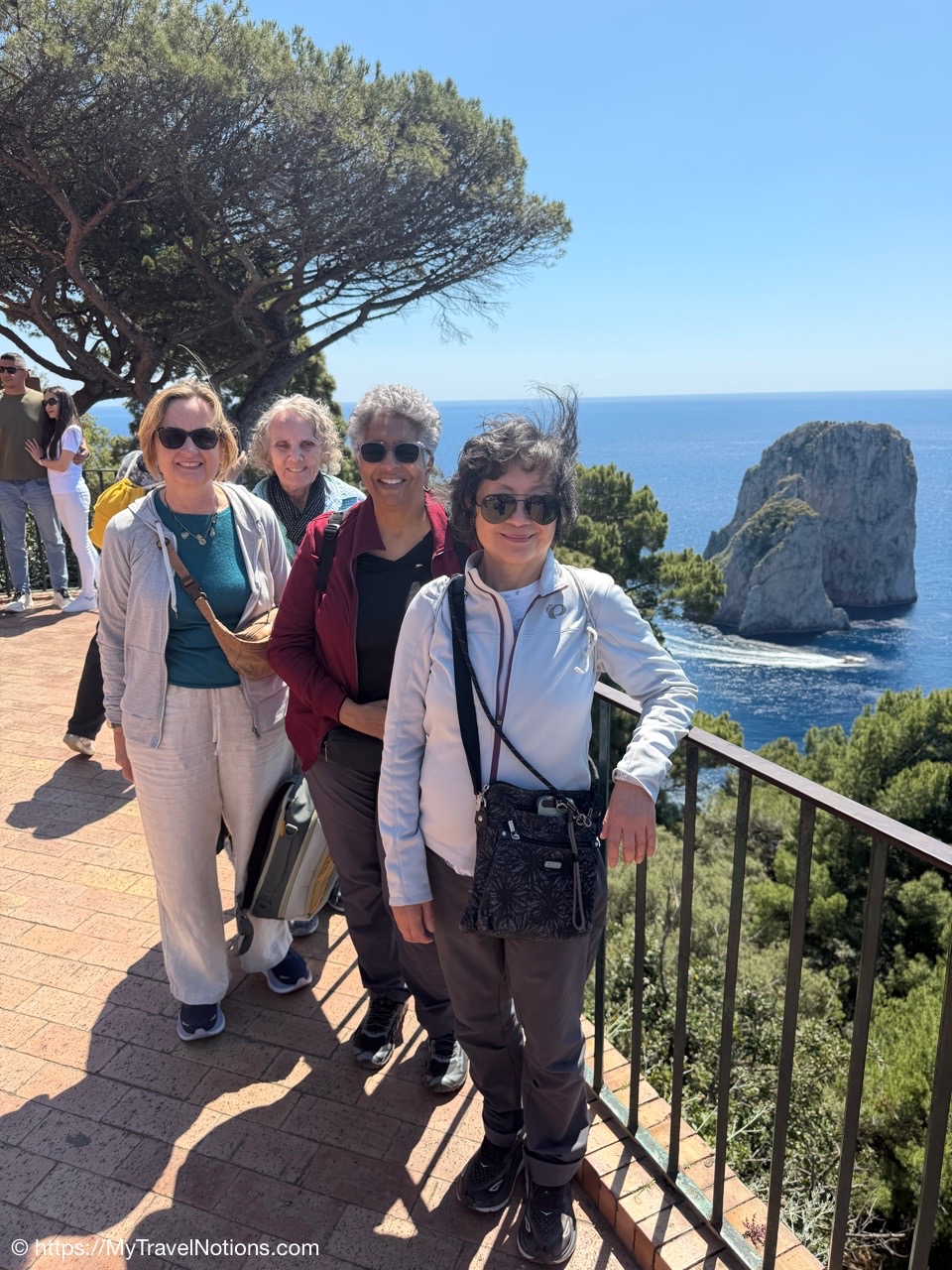
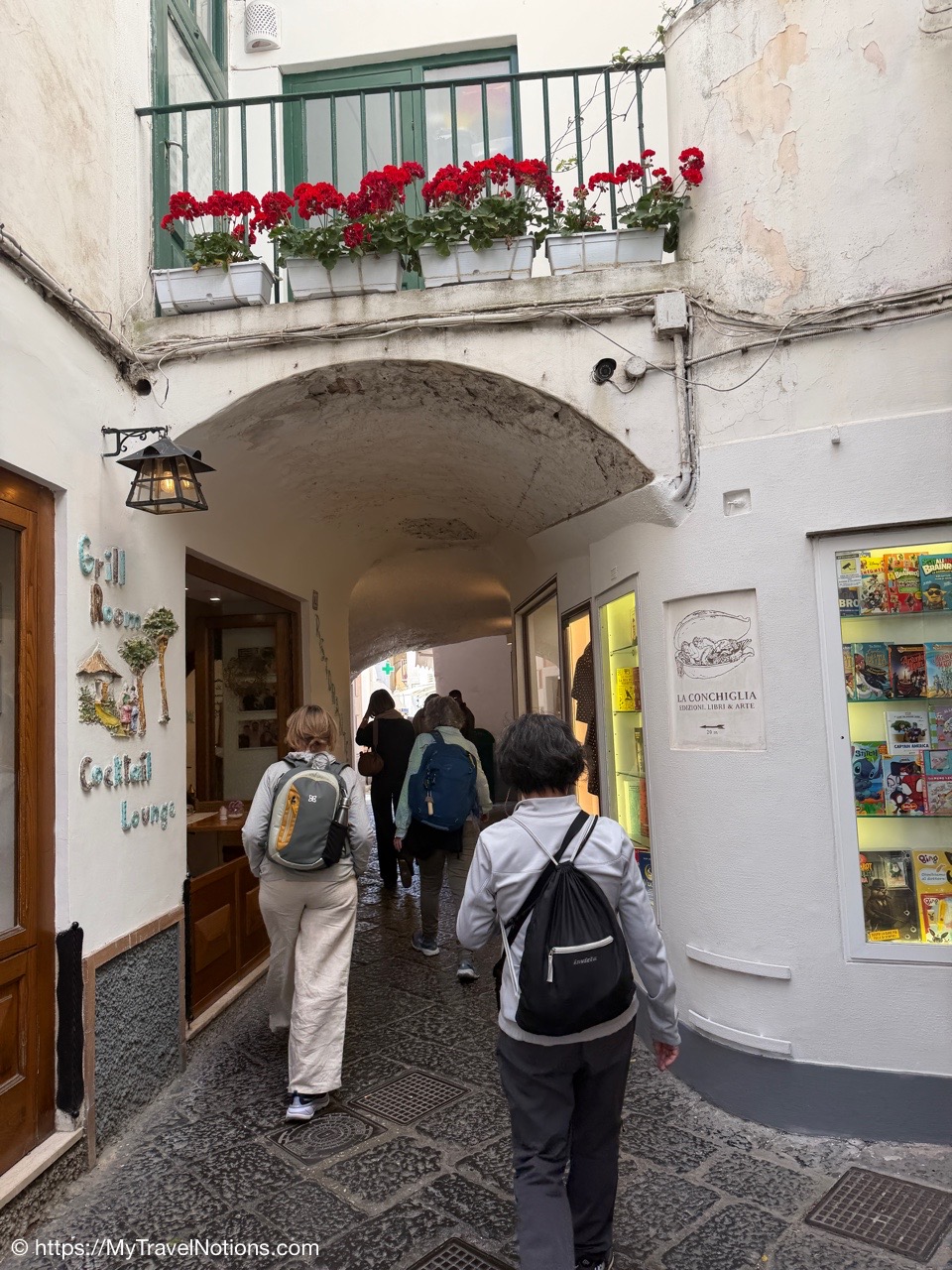
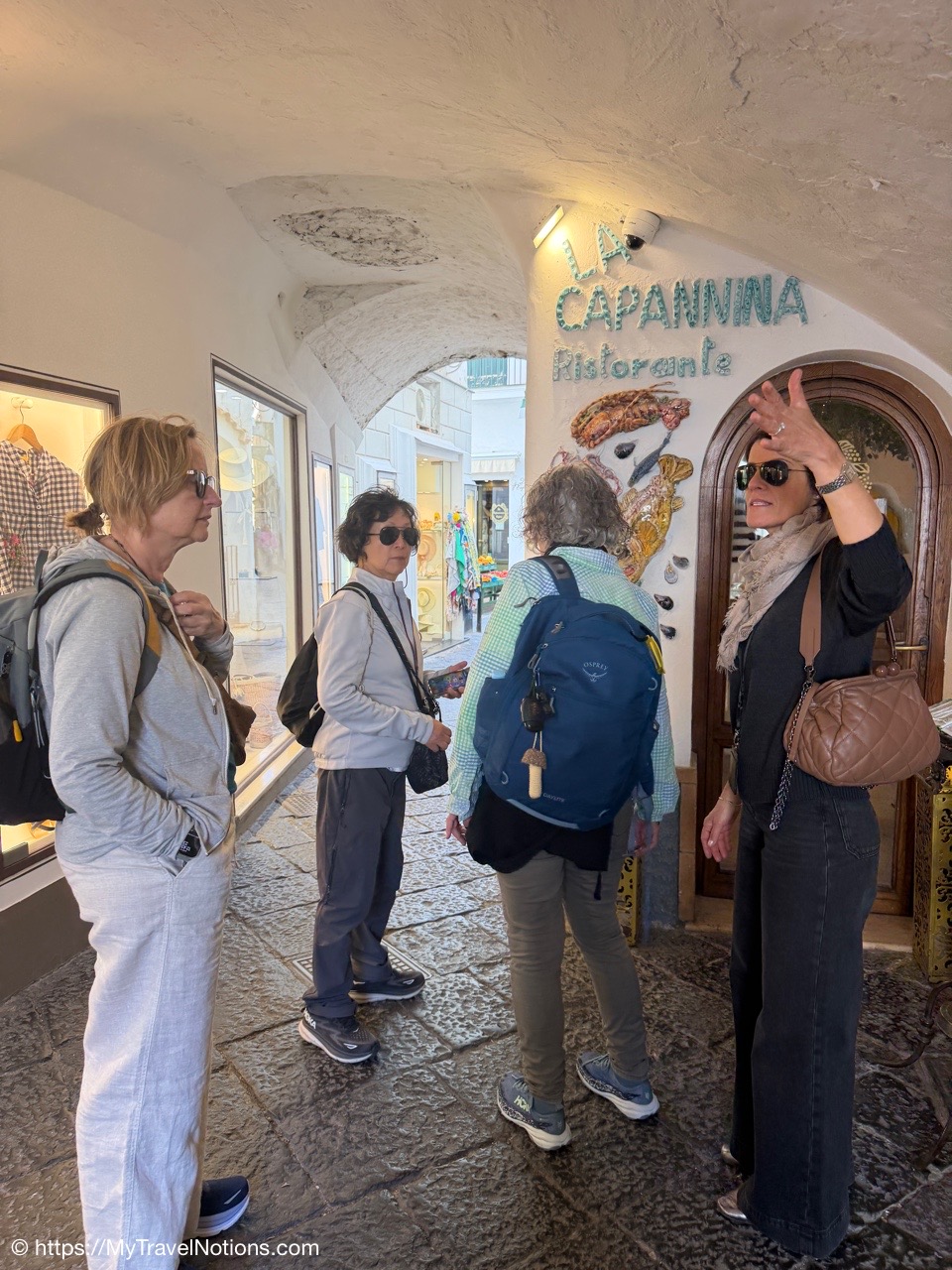
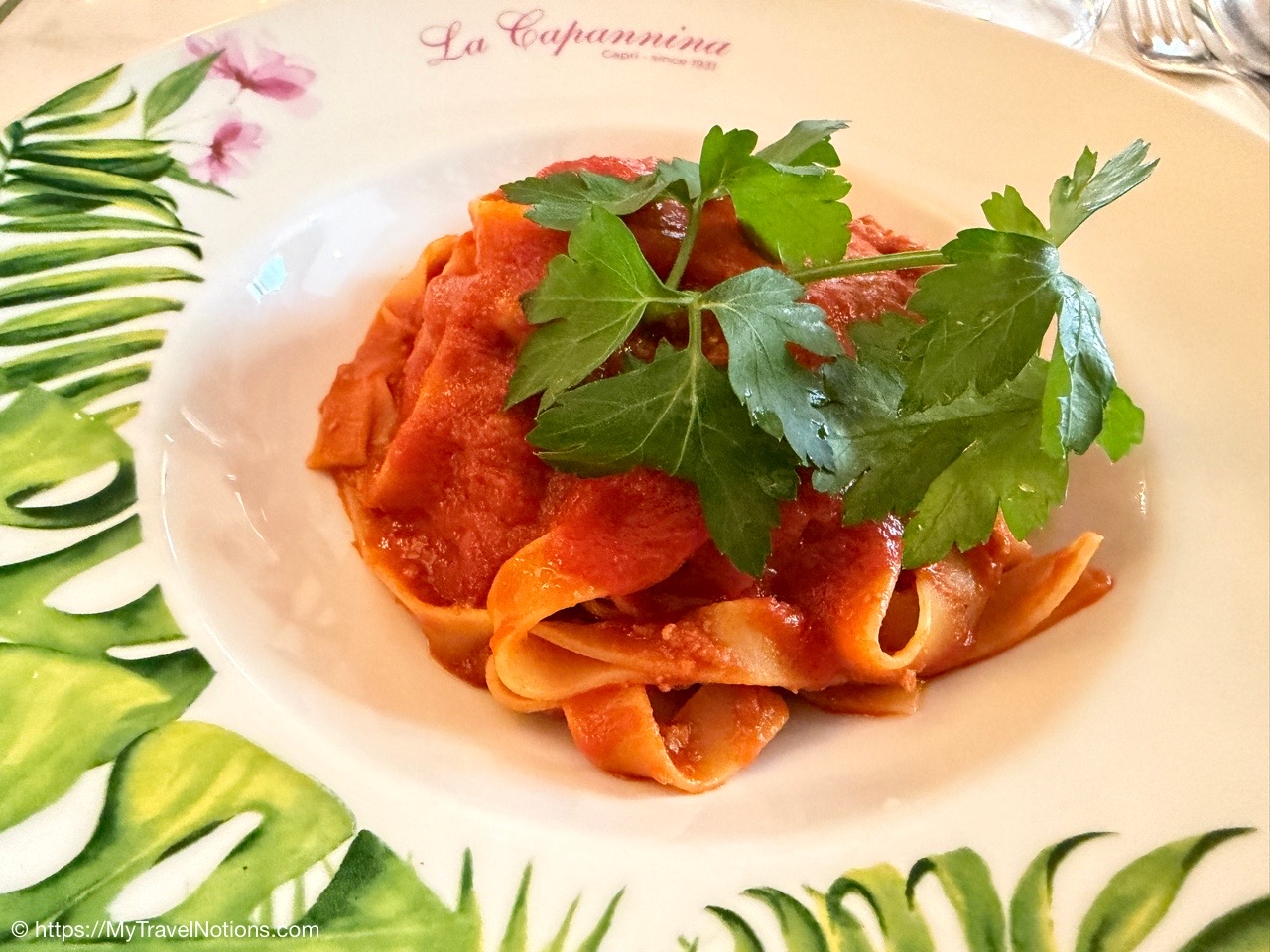
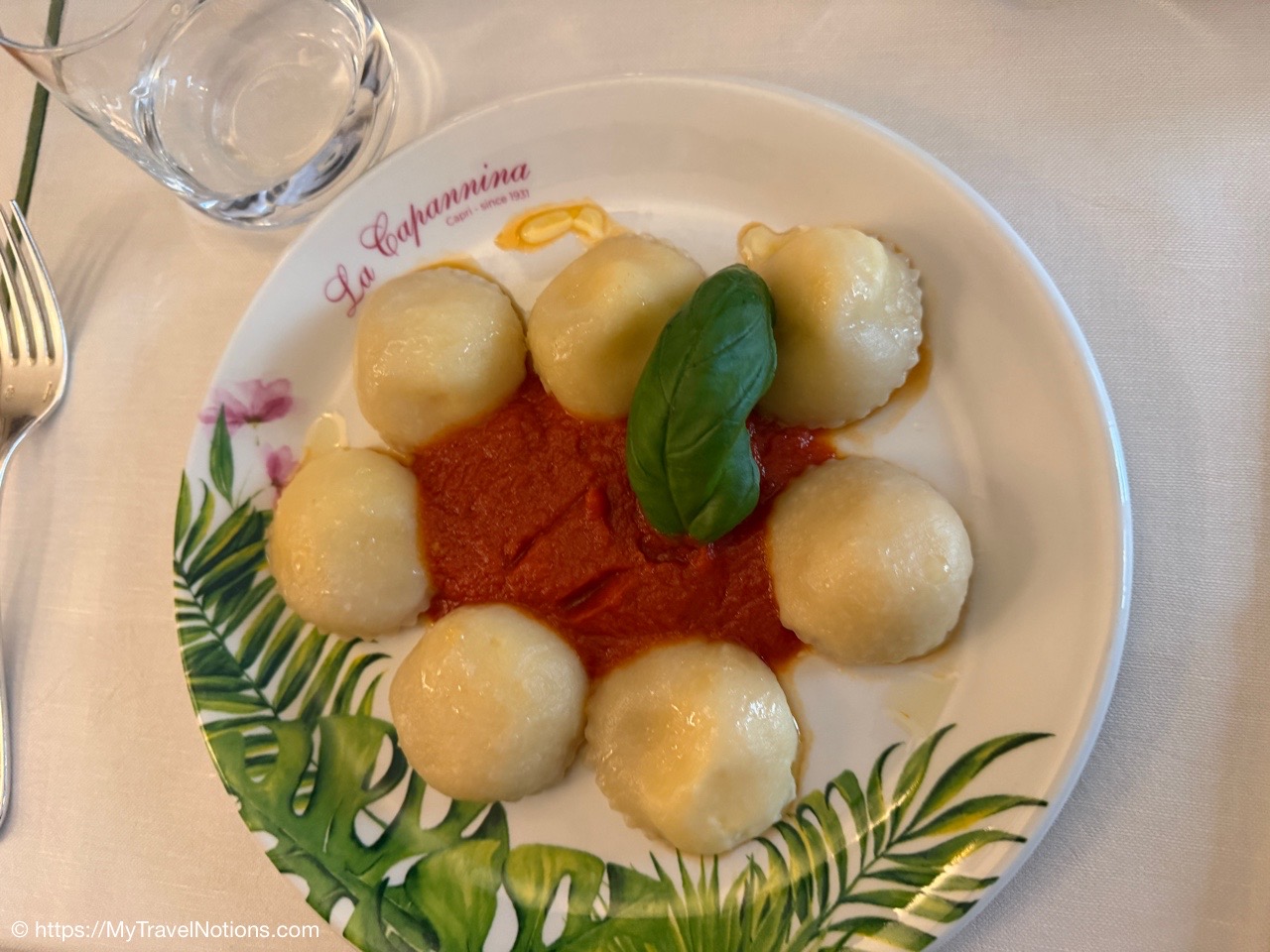
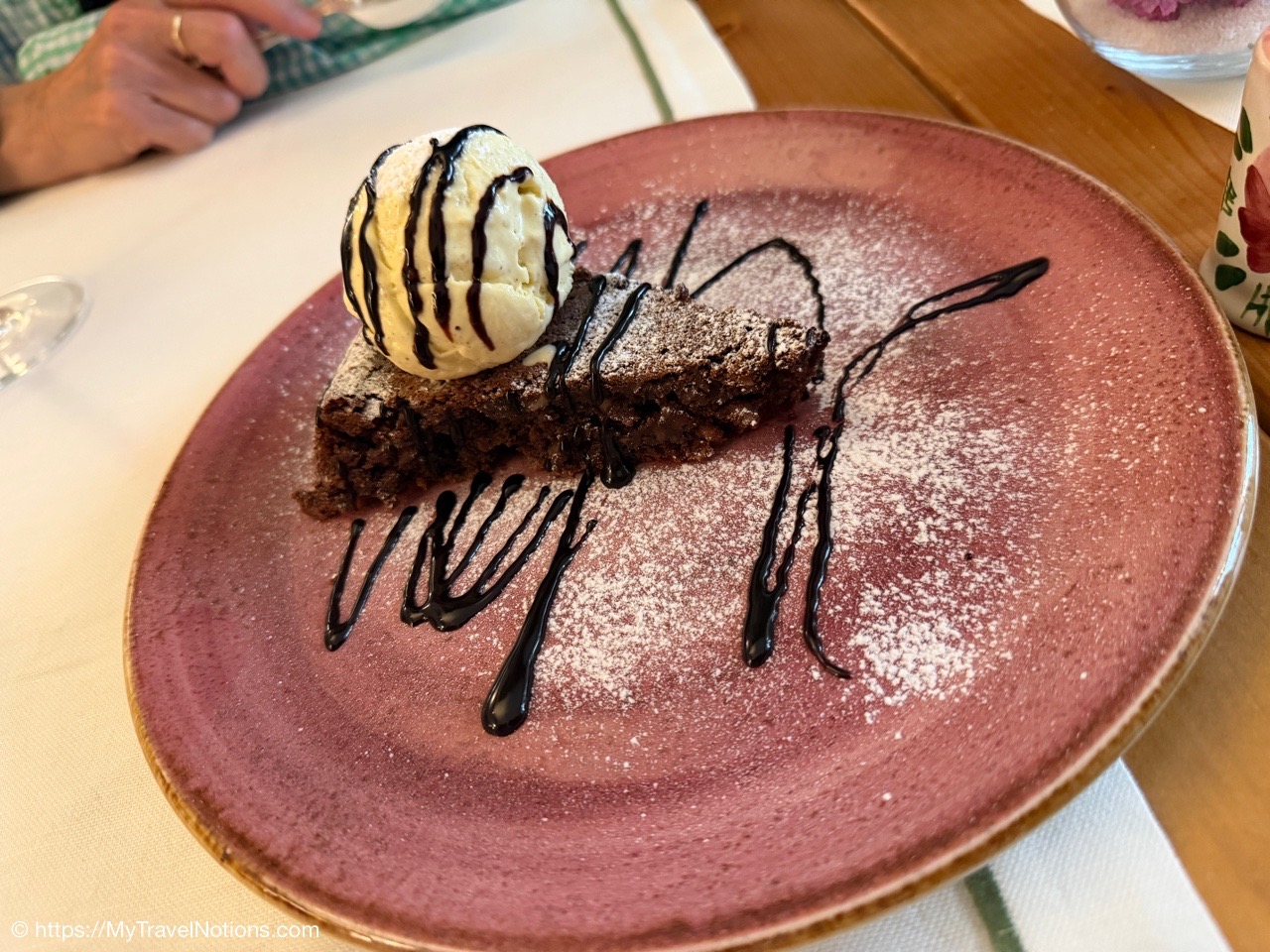
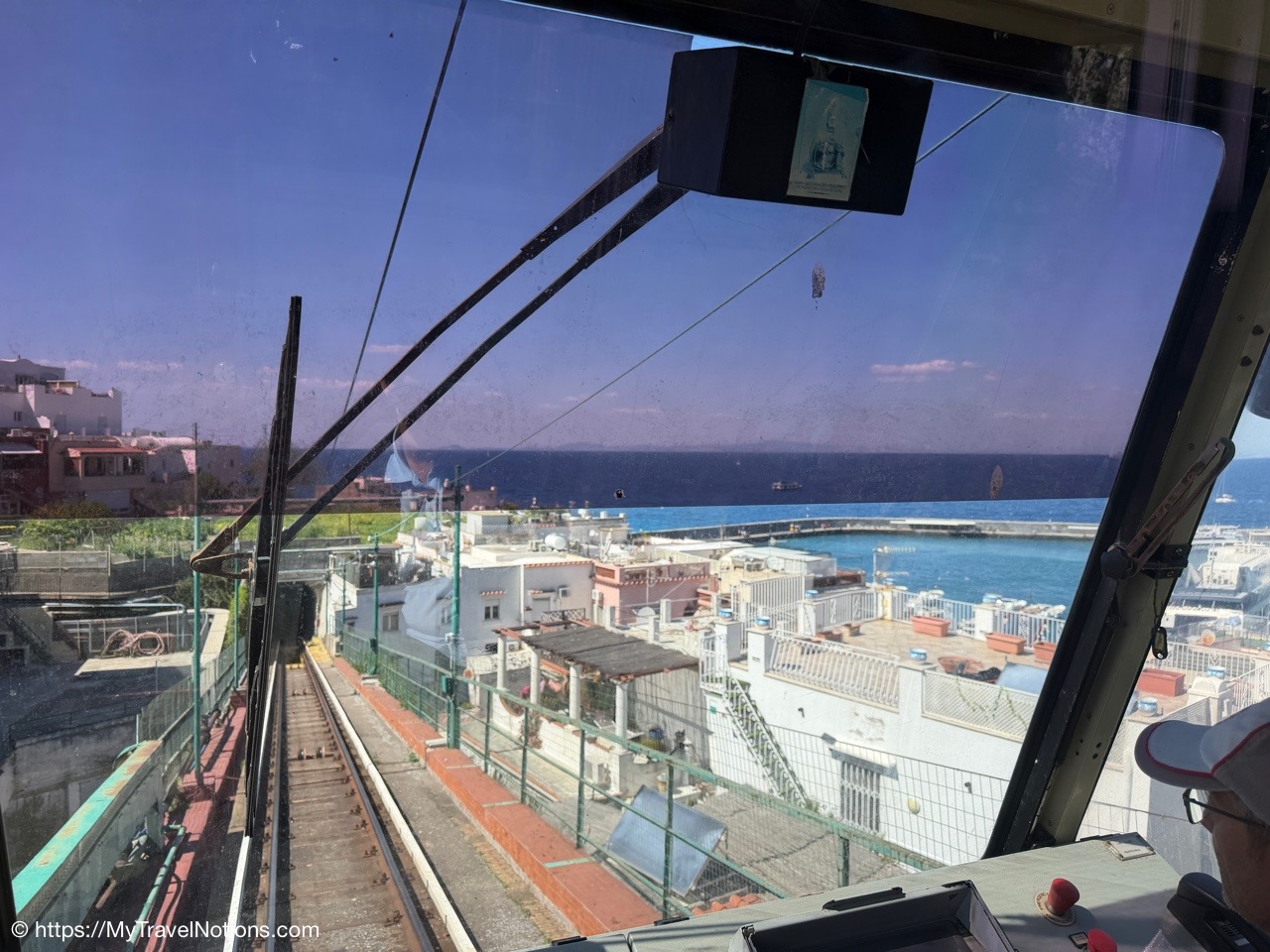
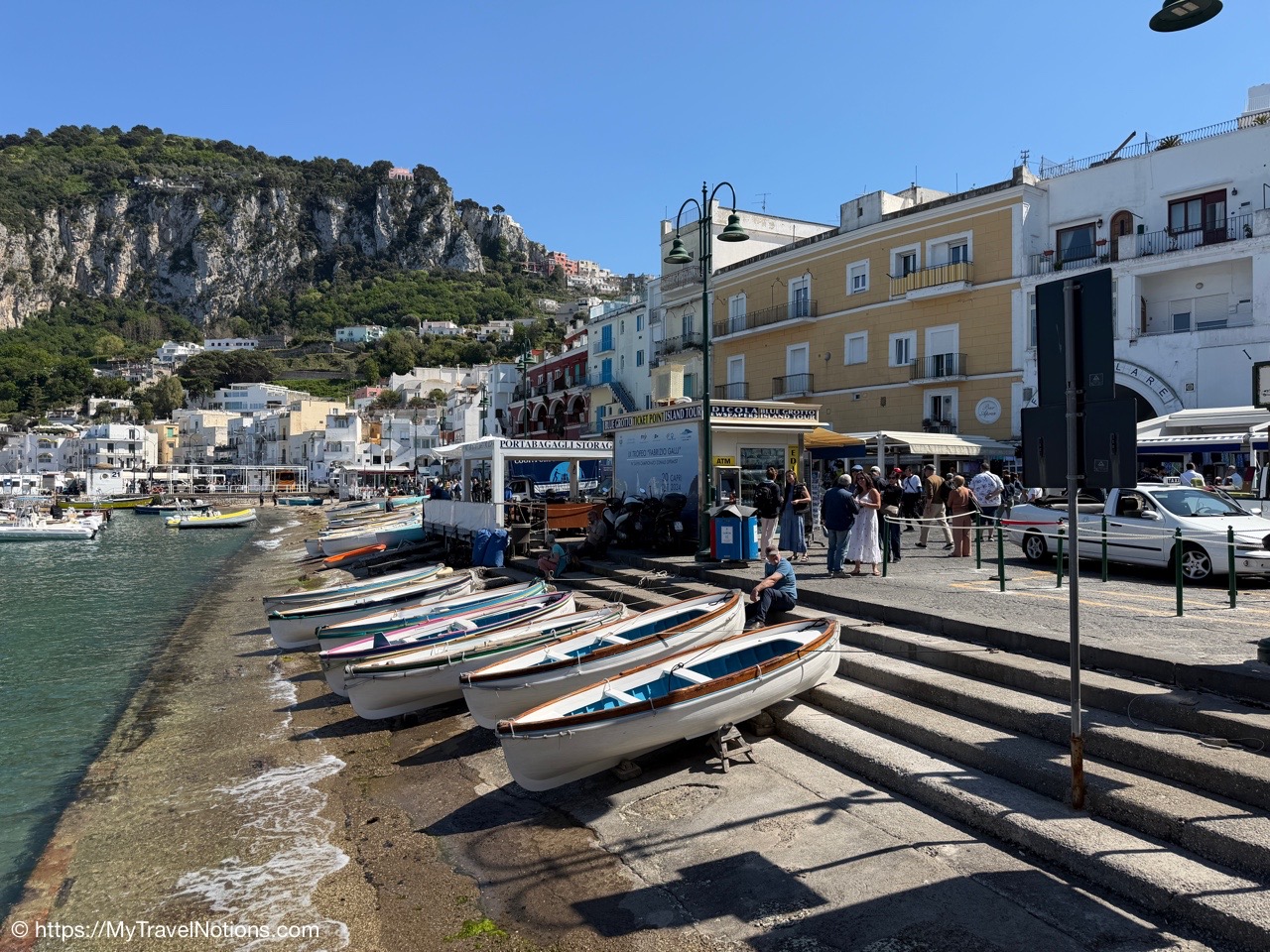
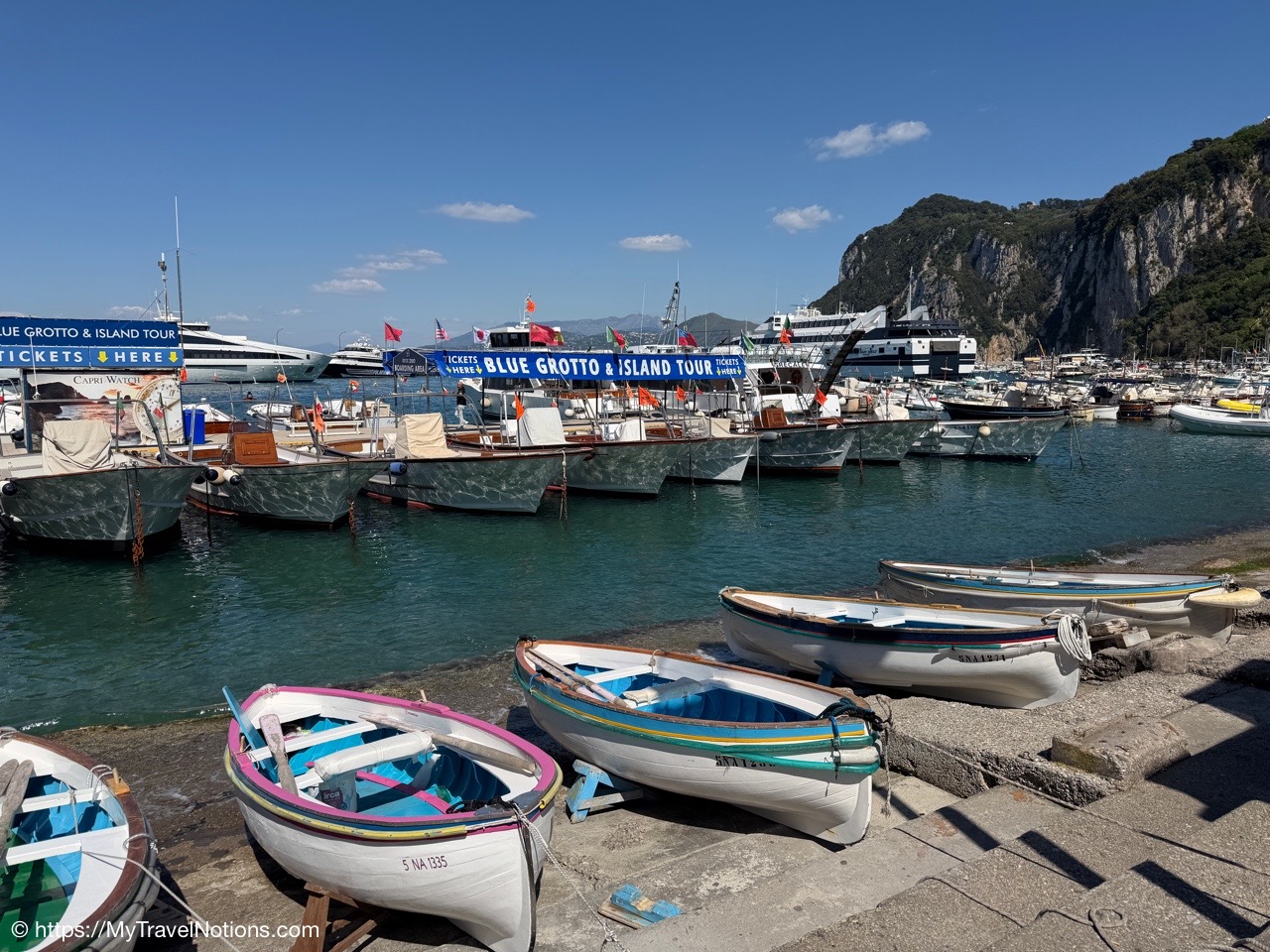
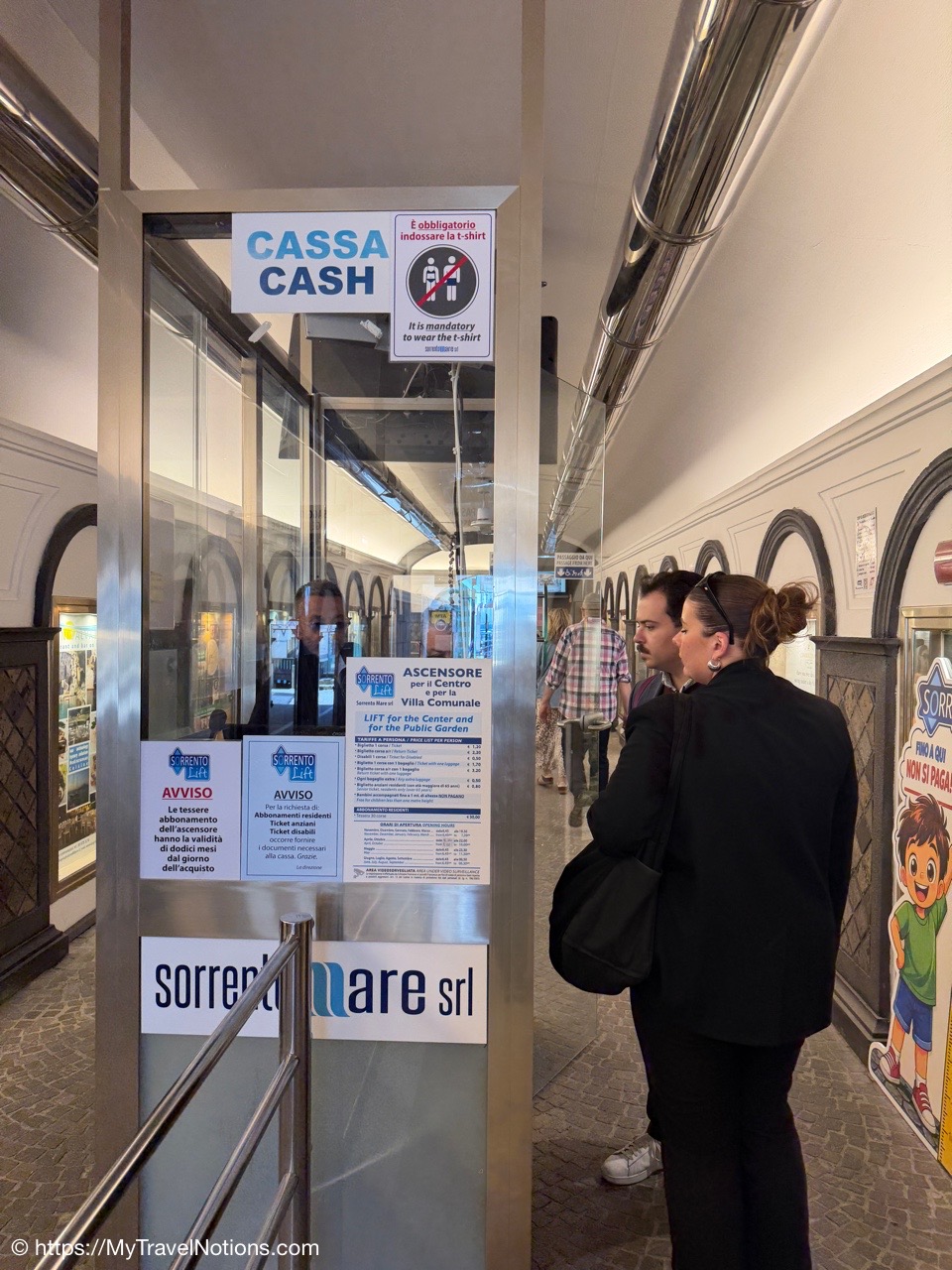
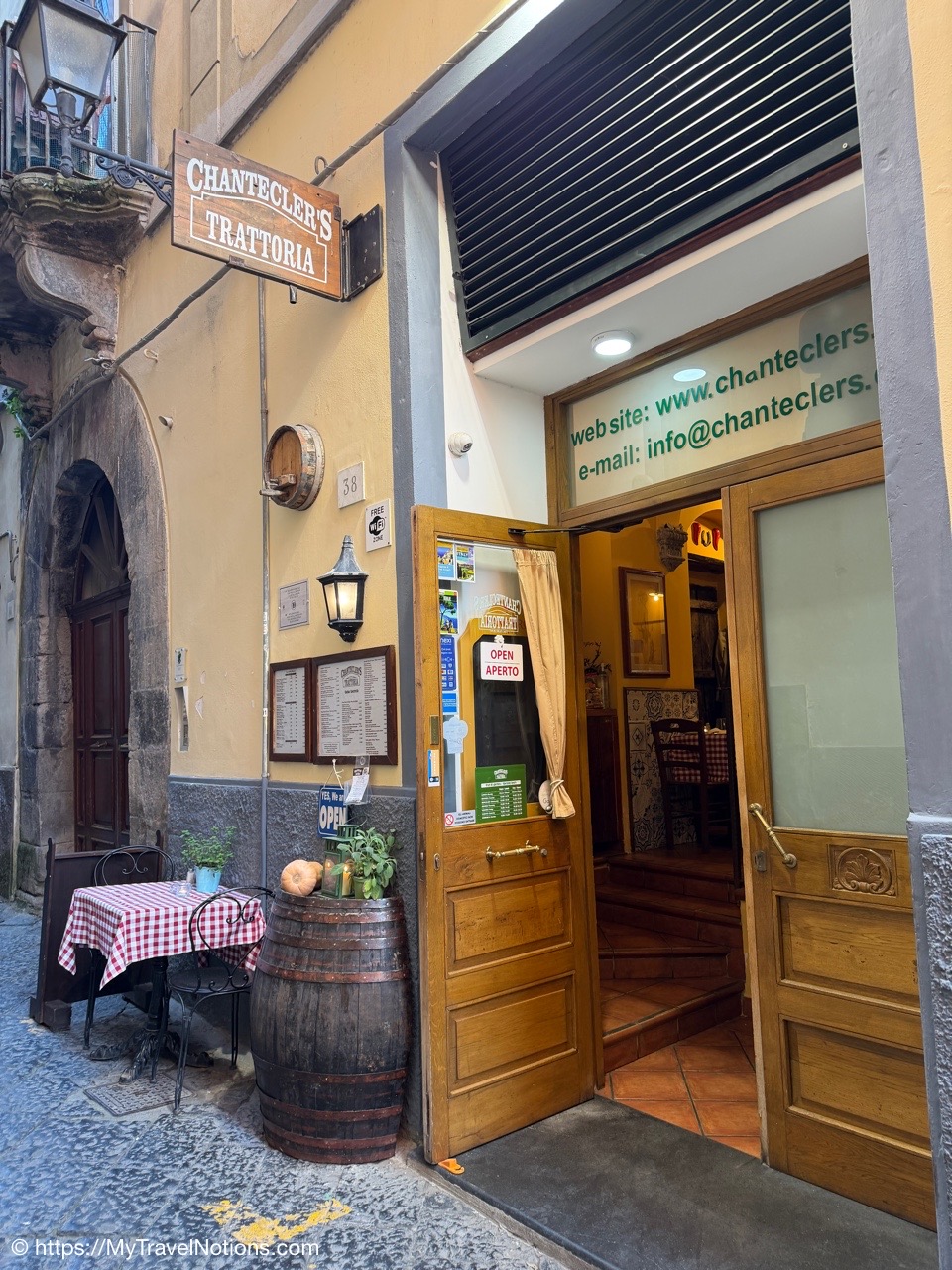
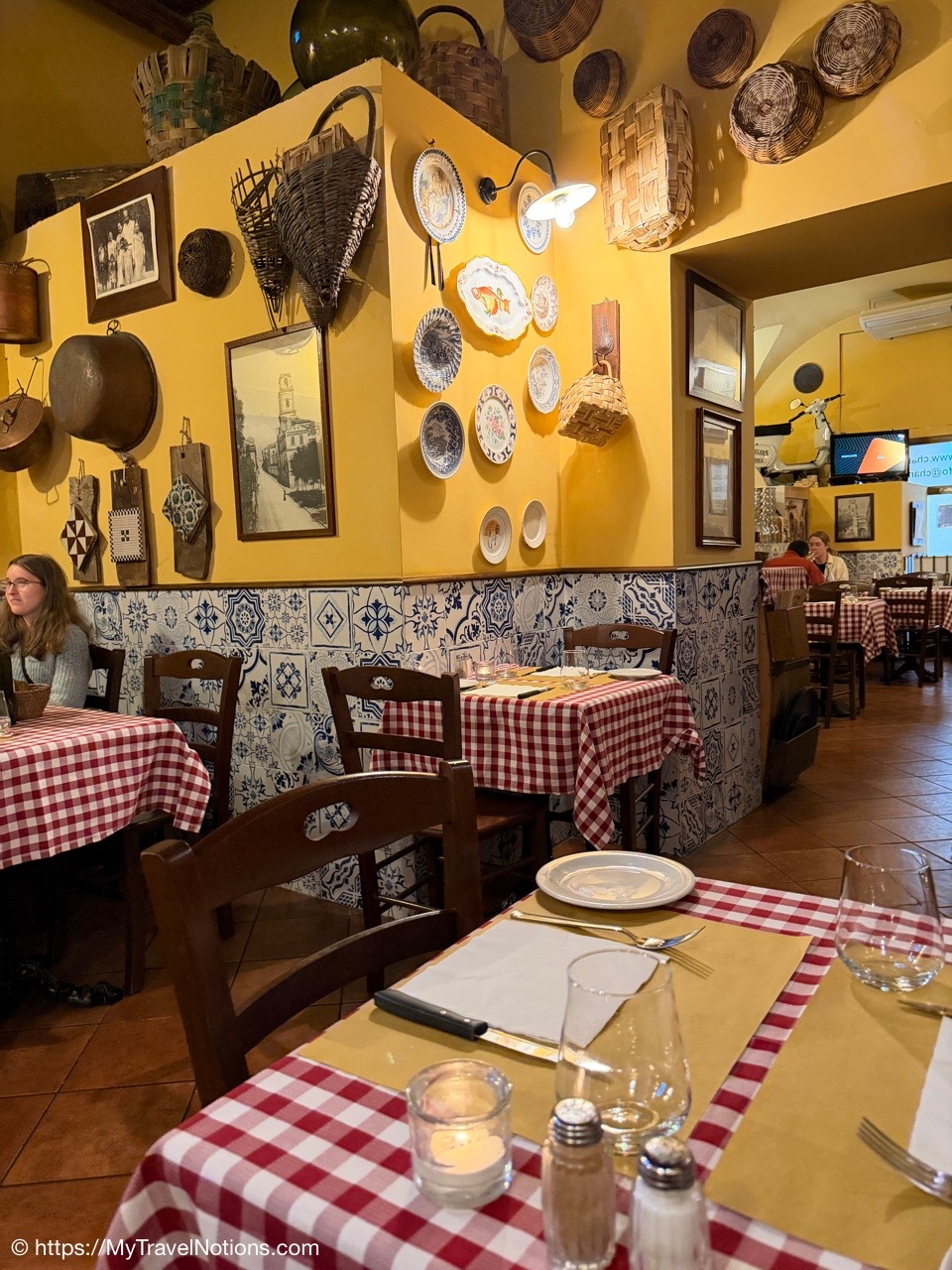
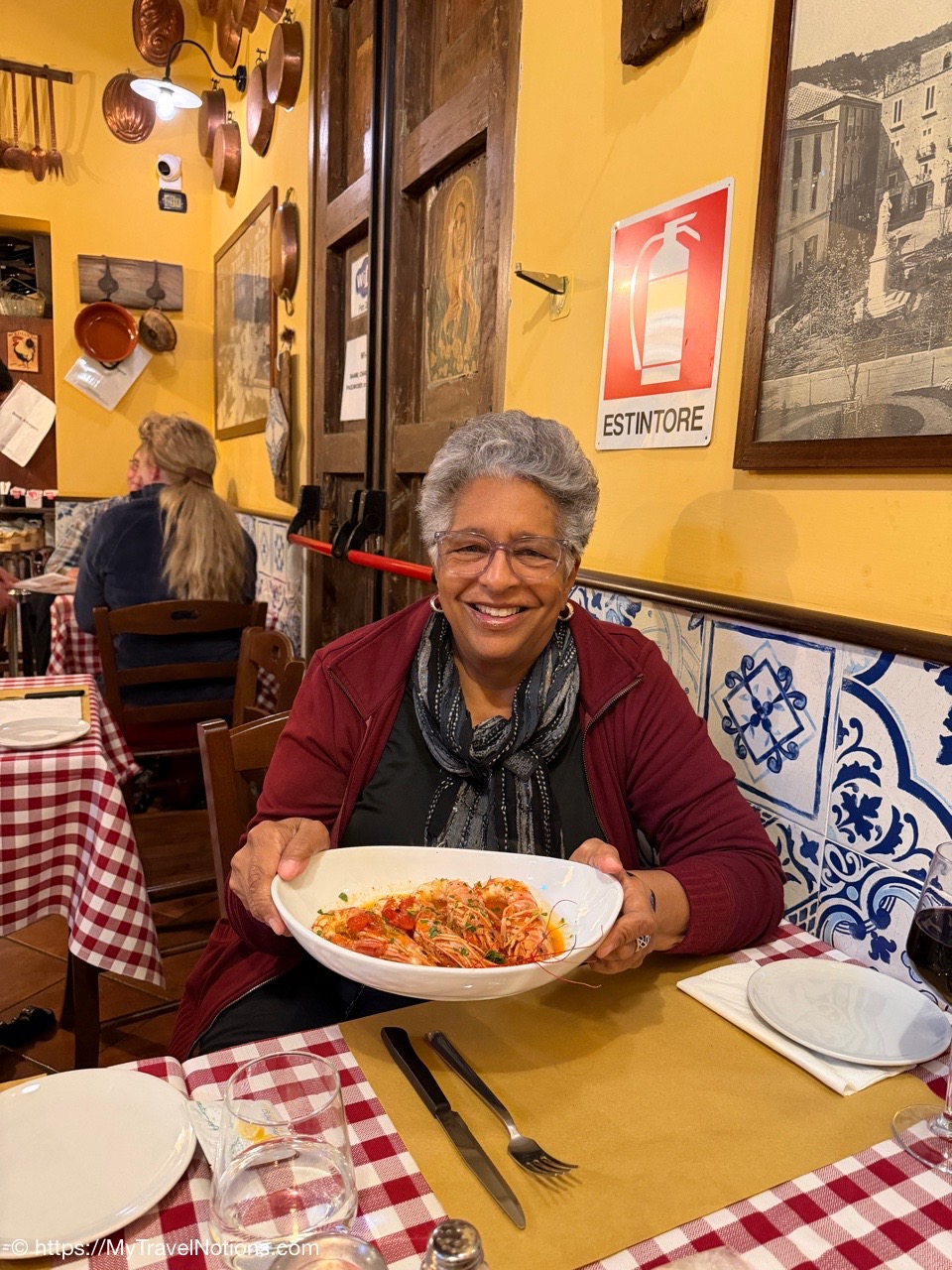
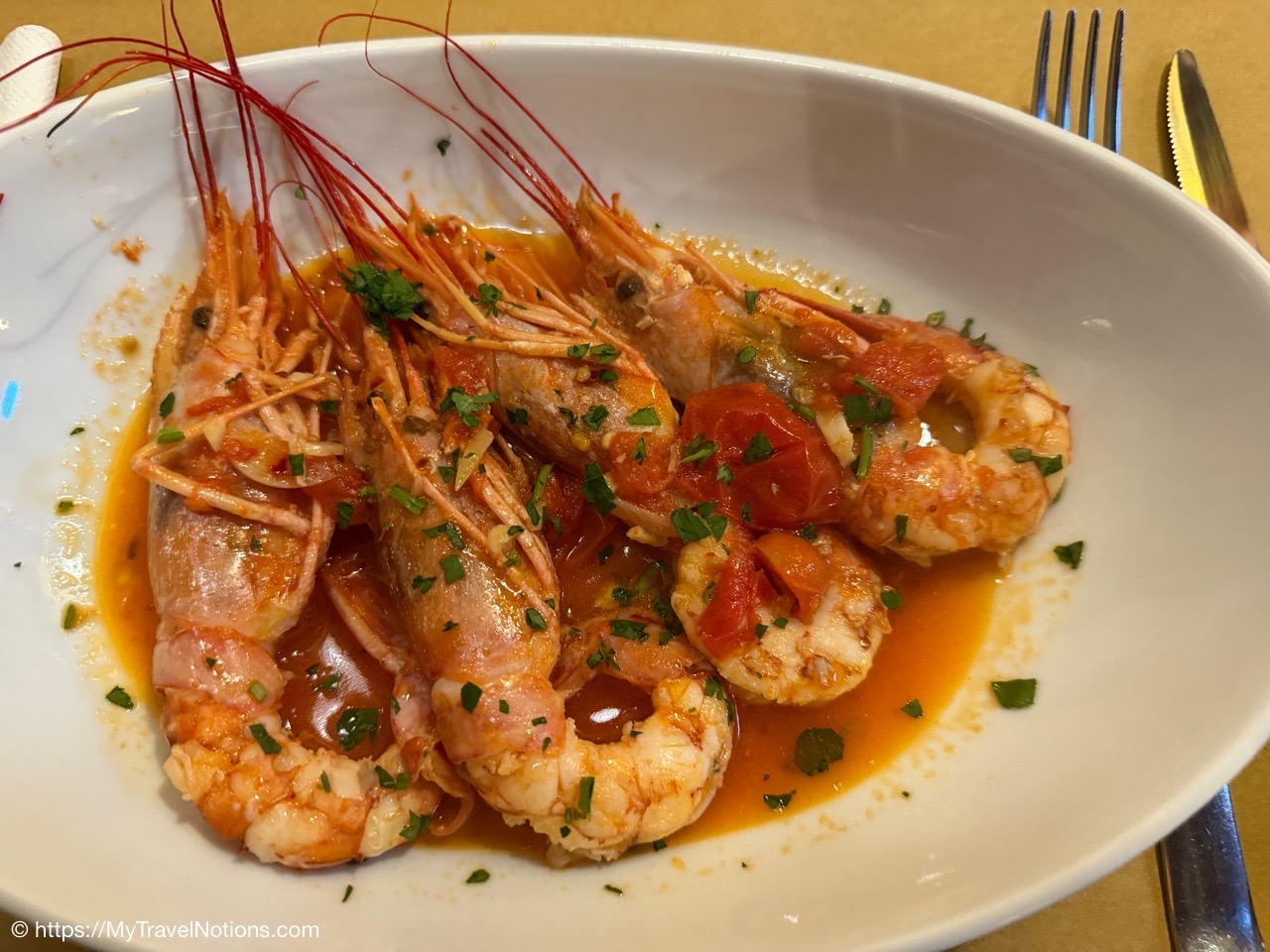
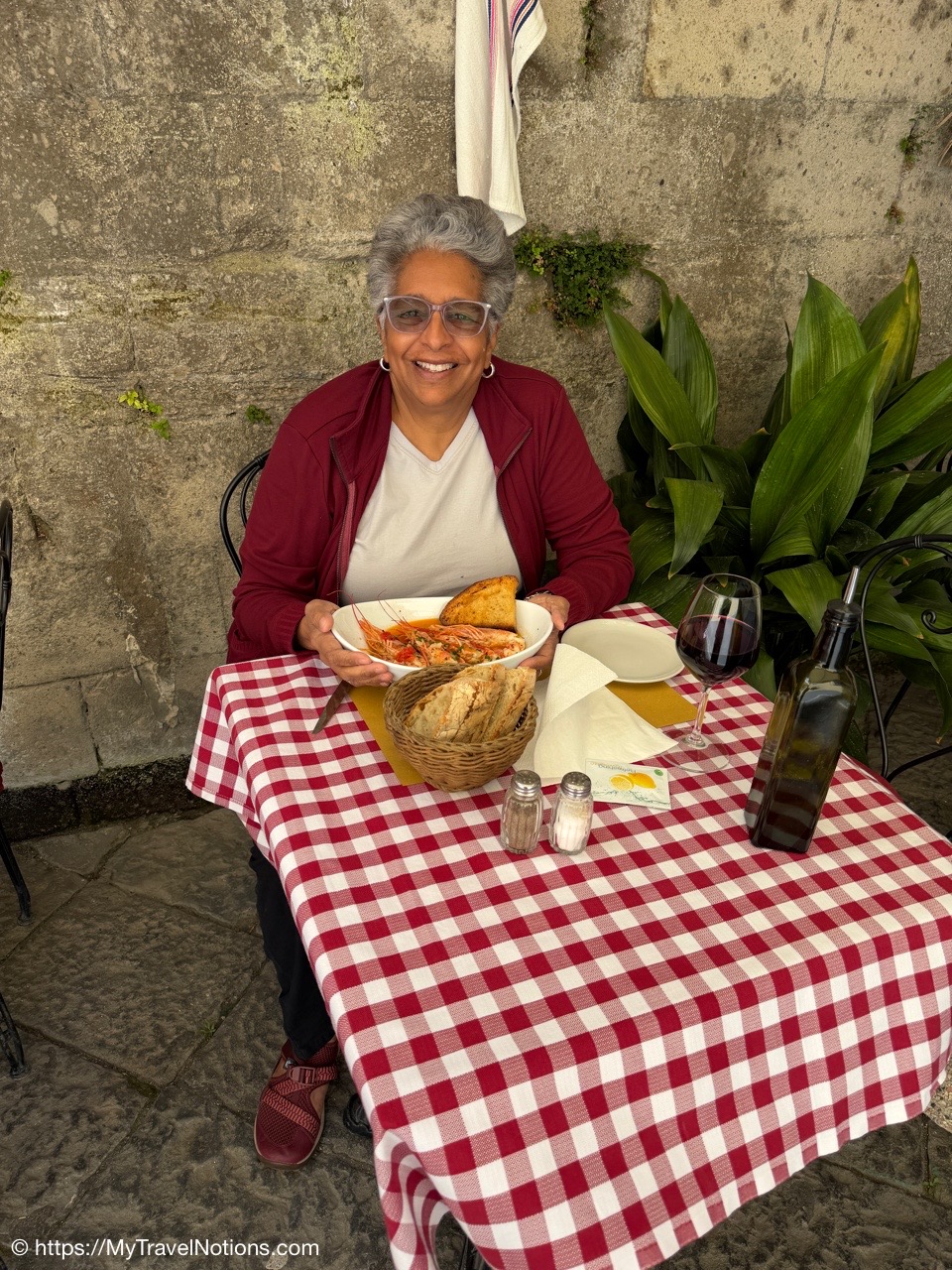
On our 8:30 morning ferry ride from Sorrento to Capri for the day. The mornings are cool but the days get warmer so layers are recommended. (April 23, 2026)We had hoped to take the clifftop elevator down to the Marina Piccola port to catch our ferry to the Isle of Capri but it was closed so we proceeded to make our way down by the staircase instead. (April 23, 2026)Continuing to make our way down the cliffside stairs to the Marina Piccola port in Sorrento to catch our ferry to the Isle of Capri for the day. (April 23, 2026)Continuing to make our way down the cliffside stairs to the Marina Piccola port in Sorrento to catch our ferry to the Isle of Capri for the day. (April 23, 2026)Continuing to make our way to the Marina Piccola port in Sorrento to catch our ferry to the Isle of Capri for the day. (April 23, 2026)Continuing to make our way to the Marina Piccola port in Sorrento to catch our ferry to the Isle of Capri for the day. (April 23, 2026)Getting our ferry tickets at the Marina Piccolo port in Sorrento for our day trip to the Isle of Capri. We also purchased our late afternoon return ferry tickets at the same time. (April 23, 2026)People waiting at the Marina Piccola port in Sorrento to catch a ferry. (April 23, 2026)Boarding our vehicle and passenger ferry from Sorrento to the Isle of Capri. (April 23, 2026)And 30 minutes or so later, we arrived at the Marina Grande or the Port of Capri. (April 23, 2026)And 30 minutes or so later, we arrived at the Marina Grande or the Port of Capri. (April 23, 2026)We didn’t take much time to explore the town of Capri before being whisked off to the hilltop town of Anacapri in the open top taxi. (April 23, 2026)We didn’t take much time to explore the town of Capri before being whisked off to the hilltop town of Anacapri in the open top taxi. (April 23, 2026)Driving along the narrow roads from the lower town of Capri to the hilltop or upper town of Anacapri on the Isle of Capri. (April 23, 2026)We bid farewell, for now, to our taxi driver who dropped us off at Piazza Vittoria in Anacapri to switch transportation methods to a chairlift up to Monte Solaro, the Isle of Capri’s highest point. (April 23, 2026)When our guide said we would take a chair lift up, I didn’t quite imagine this single simple chair up to Monte Solaro, the Isle of Capri’s highest point. But there was no time to think. The chair lifts, from Piazza Vittoria in Anacapri, don’t stop. They slow down just enough to hop on and close the bar. Thanks Alice for the photo. (April 23, 2026)I was initially quite skeptical of the single seat chairlift but as the ride continued, I felt more and more comfortable. It’s a tranquil less than 15-minutes ride with stunning views from Piazza Vittoria in Anacapri up to Monte Solaro, the Isle of Capri’s highest point. (April 23, 2026)Views from the single seat chairlift up to Monte Solaro, the Isle of Capri’s highest point. (April 23, 2026)Janet, arriving on the chairlift to Monte Solaro, the Isle of Capri’s highest point. (April 23, 2026)The chairlift at Monte Solaro, the Isle of Capri’s highest point. (April 23, 2026)Just a few steps from the chairlift exit are these stunning views a top Monte Solaro, the Isle of Capri’s highest point. In the distance are the Faraglioni rock formations and the surrounding Gulf of Naples. Here’s Janet, Alice and me. Rosie stayed at Piazza Vittoria in Anacapri. (April 23, 2026)Views of the Gulf of Naples and stunning rock formations of the Faraglioni sea stacks from a top Monte Solaro, the Isle of Capri’s highest point. (April 23, 2026)Views of the Gulf of Naples and stunning rock formations of the Faraglioni sea stacks from a top Monte Solaro, the Isle of Capri’s highest point. (April 23, 2026)The Statue of Emperor Augustus with views of the Gulf of Naples and stunning rock formations of the Faraglioni sea stacks from a top Monte Solaro, the Isle of Capri’s highest point. (April 23, 2026)On the single chair lift, feeling so much more comfortable, on the way back to Piazza Vittoria in Anacapri on the Isle of Capri. (April 23, 2026)Views of Anacapri along my chairlift ride from Monte Solano back down to Piazza Vittoria in Anacapri on the Isle of Capri. (April 23, 2026)Views of Anacapri along my chairlift ride from Monte Solano back down to Piazza Vittoria in Anacapri on the Isle of Capri. (April 23, 2026)Chairlift views from Monte Solano back down to Piazza Vittoria in Anacapri on the Isle of Capri. (April 23, 2026)Views of Anacapri along my chairlift ride from Monte Solano back down to Piazza Vittoria in Anacapri on the Isle of Capri. (April 23, 2026)Back at Piazza Vittoria in Anacapri on the Isle of Capri. (April 23, 2026)Walking along the shopping street of Via Capodimonte in Anacapri on the Isle of Capri. (April 23, 2026)Walking along the shopping street of Via Capodimonte in Anacapri on the Isle of Capri. (April 23, 2026)Continuing our walk along Via Capodimonte in Anacapri on the Isle of Capri. (April 23, 2026)Beginning our walk along the scenic Viale Axel Munthe towards the ancient Phoenician Steps that connect the lower part of the island directly to Anacapri on the Isle of Capri. (April 23, 2026)Views down onto the Marina Grande in the town of Capri from the Phoenician steps in Anacapri on the Isle of Capri. (April 23, 2026)Views down onto the Marina Grande in the town of Capri from the Phoenician steps in Anacapri on the Isle of Capri. (April 23, 2026)Alice and I getting wind blown with our guide, Giovanna during our walk along Viale Axel Munthe is the street in Anacapri on the Isle of Capri. But look at those views. (April 23, 2026)Standing at the Phoenician Steps (La Scala Fenicia), 921 stone stairs that connects the town of Anacapri to Marina Grande in the town of Capri. For thousands of years the steps were used by anyone who needed to transport goods from Marina Grande up to Anacapri. (Until recently, it was believed that the Scala Fenicia had been built by the Phoenicians, hence the name. Instead, recent research has demonstrated that the stone steps were chiseled out of the rock face by the Ancient Greeks, between the 7th and 6th century BC.) Alice, Rosie, Janet and myself. (April 23, 2026)Views down onto the Marina Grande in the town of Capri from the Phoenician steps (La Scala Fenicia) in the upper town of Anacapri on the Isle of Capri. The 921 stone stairs connects the town of Anacapri to the Marina Grande in the town of Capri. For thousands of years the steps were used by anyone who needed to transport goods from Marina Grande up to Anacapri. (Until recently, it was believed that the Scala Fenicia had been built by the Phoenicians, hence the name. Instead, recent research has demonstrated that the stone steps were chiseled out of the rock face by the Ancient Greeks, between the 7th and 6th century BC.) (April 23, 2026)Walking back into town, the white building at the top of the Phoenician Steps (Scala Fenicia) is Villa San Michele. Located in Anacapri, this famous villa was built at the end of the 19th century by the Swedish physician and author Axel Munthe. He built the villa on the ruins of a medieval chapel dedicated to Saint Michael (San Michele) and old Roman ruins. (April 23, 2026)The Villa San Michelewas built at the end of the 19th century by the Swedish physician and author Axel Munthe in Anacapri. He built the villa on the ruins of a medieval chapel dedicated to Saint Michael (San Michele) and old Roman ruins.(April 23, 2026)Getting in a selfie as we walk back through Viale Axel Munthe in Anacapri. (April 23, 2026)Walking back through Via Giuseppe Orlandi in Anacapri. (April 23, 2026)Walking along Via Giuseppe Orlandi through the town of Anacapri on the Isle of Capri. (April 23, 2026)Getting in another selfie along the shop-filled street of Via Giuseppe Orlandi through the town of Anacapri on the Isle of Capri. (April 23, 2026)Stopping to get a photo on one of the decorated majolica tile benches in Anacapri. The town is known for its historic majolica tiles. This distinct style of hand-painted, tin-glazed pottery is widely celebrated for its vibrant Mediterranean color palette, featuring bright yellows, blues, and greens. (April 23, 2026)A close-up of the painted majolica tiled bench I was sitting on in Anacapri. (April 23, 2026)A close-up of the painted majolica tiled bench I was sitting on in Anacapri. (April 23, 2026)Walking by one of a number of colorful shops along Via Giuseppe Orlandi in the town of Anacapri on the Isle of Capri. (April 23, 2026)Back in our open taxi for our ride from the town of Anacapri back down to the town of Capri on the Isle of Capri. From left: Alice, Janet, Rosie and me. (April 23, 2026)Leaving Anacapri to make it back to Capri on the Isle of Capri in our open taxi ride. (April 23, 2026)Back down into the town of Capri where we bid our open air taxi driver goodbye along with the 70 Euros it cost for the round trip. (April 23, 2026)Back down into the town of Capri where we bid our open air taxi driver goodbye along with the 70 Euros it cost for the round trip. (April 23, 2026)Back down at the town of Capri at the terrace overlooking the Tyrrhenian Sea at the western entrance to the Gulf of Naples by the Piazza Umberto. (April 23, 2026)Back at the crowded and touristy town of Capri at the Piazza Umberto I with views of the clock tower on the Isle of Capri. (April 23, 2026)The clock tower at the Piazza Umberto I at the touristy town of Capri. (April 23, 2026)A group selfie at the town of Capri. Me, Janet, our guide Giovanna, Alice and Rosie. (April 23, 2026)Views of the town of Capri on the Isle of Capri. (April 23, 2026)Views from the town Capri of the Villa San Michele and the Phoenician Steps in Anacapri, the upper part of the Isle of Capri, where we had just been looking down from. (April 23, 2026)Views from the town Capri of the Villa San Michele and the Phoenician Steps in Anacapri, the upper part of the Isle of Capri, where we had just been looking down from. (April 23, 2026)The main square of the town of Capri is officially named Piazza Umberto I, though it is known worldwide simply as “La Piazzetta”. (April 23, 2026)The main square of the town of Capri is officially named Piazza Umberto I, though it is known worldwide simply as “La Piazzetta”. (April 23, 2026)Walking through the main square of the town of Capri, officially named Piazza Umberto I, though it is known worldwide simply as “La Piazzetta”. (April 23, 2026)Walking through the main square of the town of Capri, officially named Piazza Umberto I, though it is known worldwide simply as “La Piazzetta”. (April 23, 2026)Looking down to the Piazza Umberto I, though commonly known as “La Piazzetta” in the town of Capri. (April 23, 2026)Walking through the town of Capri on the Isle of Capri. (April 23, 2026)Walking through the town of Capri on the Isle of Capri. (April 23, 2026)Walking through Via Camerelle in the town of Capri, it’s often referred to as “Rodeo Drive” for high-fashion, luxury shopping that features a dense concentration of luxury brands. (April 23, 2026)Walking through Via Camerelle in the town of Capri, it’s often referred to as “Rodeo Drive” for high-fashion, luxury shopping that features a dense concentration of luxury brands. (April 23, 2026)Walking through the scenic pedestrian lane of Via Tragara in the town of Capri. It is known as one of the most beautiful walks on the island. It connects the boutique-lined Via Camerelle to the stunning Belvedere di Tragara viewpoint, offering luxurious, tree-lined views, boutique hotels and famous villas. (April 23, 2026)Sharing the narrow scenic walkway of Via Tragara in the town of Capri with these electric vehicles that zoom around is scary because they’re fast and often quite silent. But the views along this pedestrian walkway are once again, stunning. (April 23, 2026)Views along the scenic pedestrian walkway of Via Tragara in the town of Capri. (April 23, 2026)Getting in a selfie along the scenic pedestrian walkway of Via Tragara in the town of Capri. (April 23, 2026)A worker making some repairs to a villa along the scenic pedestrian walkway of Via Tragara in the town of Capri. (April 23, 2026)Incredible views from the stunning Belvedere di Tragara viewpoint in the town of Capri. (April 23, 2026)A group photo of Rosie, Janet, me and Alice at the stunning Belvedere di Tragara viewpoint in the town of Capri with views of the Gulf of Naples and more views of the Faraglioni sea stacks. (April 23, 2026)After all that walking and gorgeous views, it was time to find a place to eat and our guide, walked us to La Capannina Ristorante in the town of Capri. (April 23, 2026)After all that walking and gorgeous views, it was time to eat and to say goodbye to our guide Giovanna, a comfy seat, plenty water and a meal at La Capannina Ristorante in the town of Capri. (April 23, 2026)I ordered the Scialatielli Bolognese at La Capannina Ristorante in the town of Capri. The sauce had a bitter taste to it. I tried to mask the taste by using black pepper and although I am trying not to put additional salt on my food, I did add some to this but it did not help. So, I ate as much as I could because I was hungry, but even I can make a better meat sauce than this and I’m definitely no grand Italian cook. (April 23, 2026)Alice, Janet and Rosie had what is considered as a Capri meal, the Ravioli alla Caprese at La Capannina Ristorante in the town of Capri. I’m not much of a cheese lover, but they loved this meal. (April 23, 2026)The best part of my meal at La Capannina Ristorante in the town of Capri was this Torta Caprese or Caprese Cake, which we shared. (April 23, 2026)After lunch, we walked around a bit but then it was time to take the ferry back to Sorrento. Instead of walking down to the Marina Grande, we take the funicular from the town of Capri to the marina. (April 23, 2026)Taking the funicular from the town of Capri down to the Marina Grande harbor for our ferry ride back to Sorrento. (April 23, 2026)At the Marina Grande harbor for the Isle of Capri for our 20 to 30 minute ferry ride back to Sorrento. (April 23, 2026)At the Marina Grande harbor for the Isle of Capri for our 20 to 30 minute ferry ride back to Sorrento. (April 23, 2026)Arriving at the Marina Piccola in Sorrento provides a lift up to the center of town. So much easier than climbing the steps. (April 23, 2026)Since I did not have much of a lunch, I was so grateful the Chantecler’s Trattoria was open for dinner in Sorrento. It’s literally just across the alleyway from my hotel, the (April 23, 2026)I just love this homey restaurant, the Chantecler’s Trattoria in Sorrento. I actually ate at this restaurant a couple of times when I stayed in Sorrento in 2017. So for me, this is like a homecoming. (April 23, 2026)Me with my delicious plate of Gamberoni alla Diavola or King Prawns in Spicy sauce at Chantecler’s Trattoria in Sorrento. (April 23, 2026)Along with some delicious bread, for soaking up all the tasty flavors, I simply enjoyed this plate of Gamberoni alla Diavola or King Prawns in Spicy sauce at Chantecler’s Trattoria in Sorrento. (April 23, 2026)
“La Doce Vita” in Sorrento
We called it a ‘Free Day’ but to me, it was about embracing “La dolce vita,” an Italian phrase translating to “the sweet life” or “the good life.” For my sweet life day, in our home base of Sorrento, which in all honesty I’ve been enjoying the sweet life since arriving in the Amalfi Coast, I chose to sleep in, get a little writing done, eat, walk a little and basically eat and drink some more.
I actually clocked in 10 hours of sleep. An unusual occurrence for me since I’m normally thrilled to get in a full 5 to 6 hours but with nothing on the schedule, walking everyday through the most incredible sights while eating some amazing food topped off with an accompanying alcoholic beverages, especially Lemoncello Spritz, and top notch desserts, my body needed a lengthy rest.
So I gave it a leisurely day of rest. Had a deliciously satisfying late morning breakfast. Did some writing with the hotel balcony doors open to feel the breeze and listen to the commotion from the street below. Enjoyed an afternoon snack before taking a nice stroll down the shopping street of Corso Italia. Then back to the hotel to write and rest before going back out for dinner.
Enjoying “La dolce vita” in Sorrento.
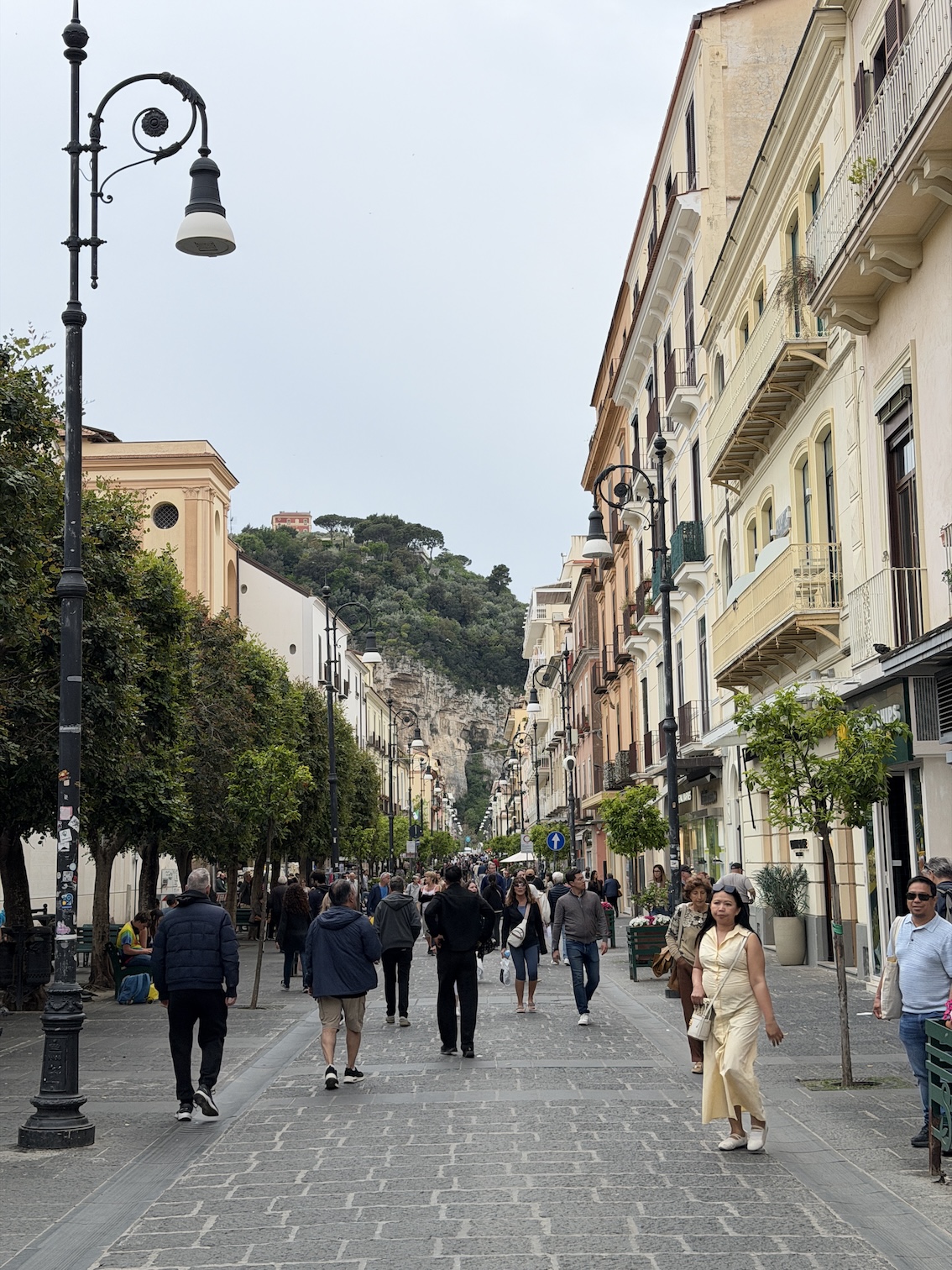
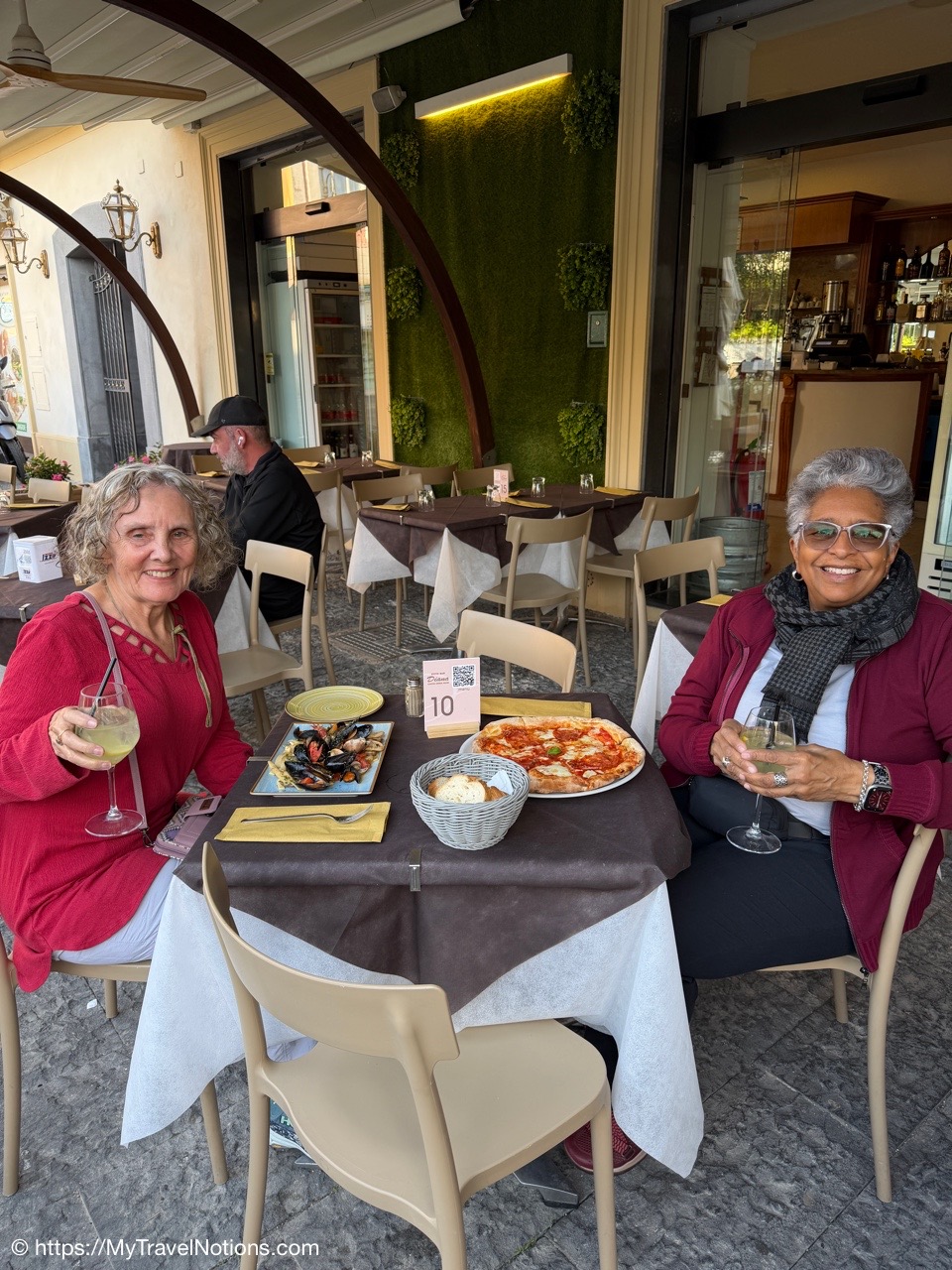
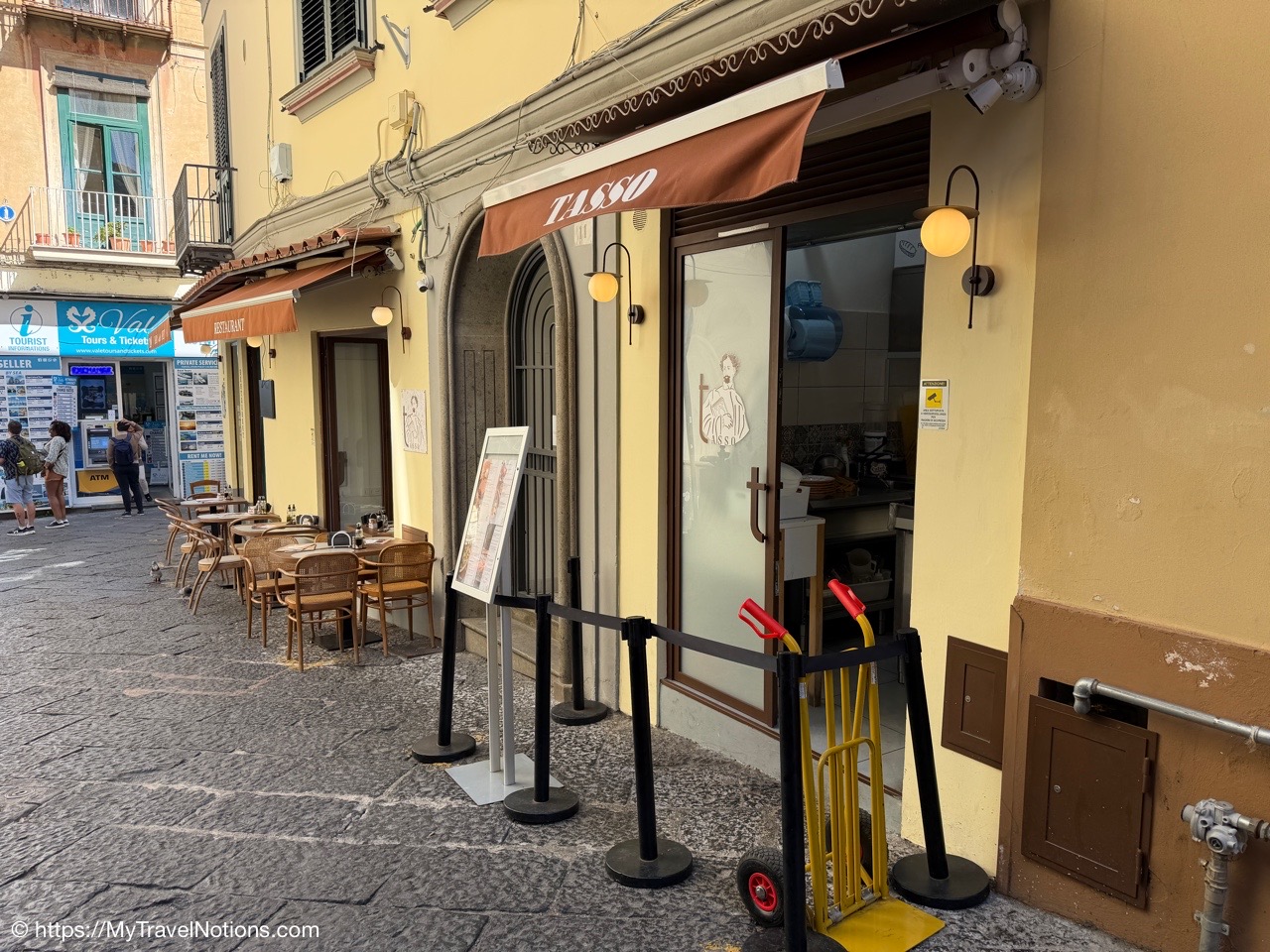
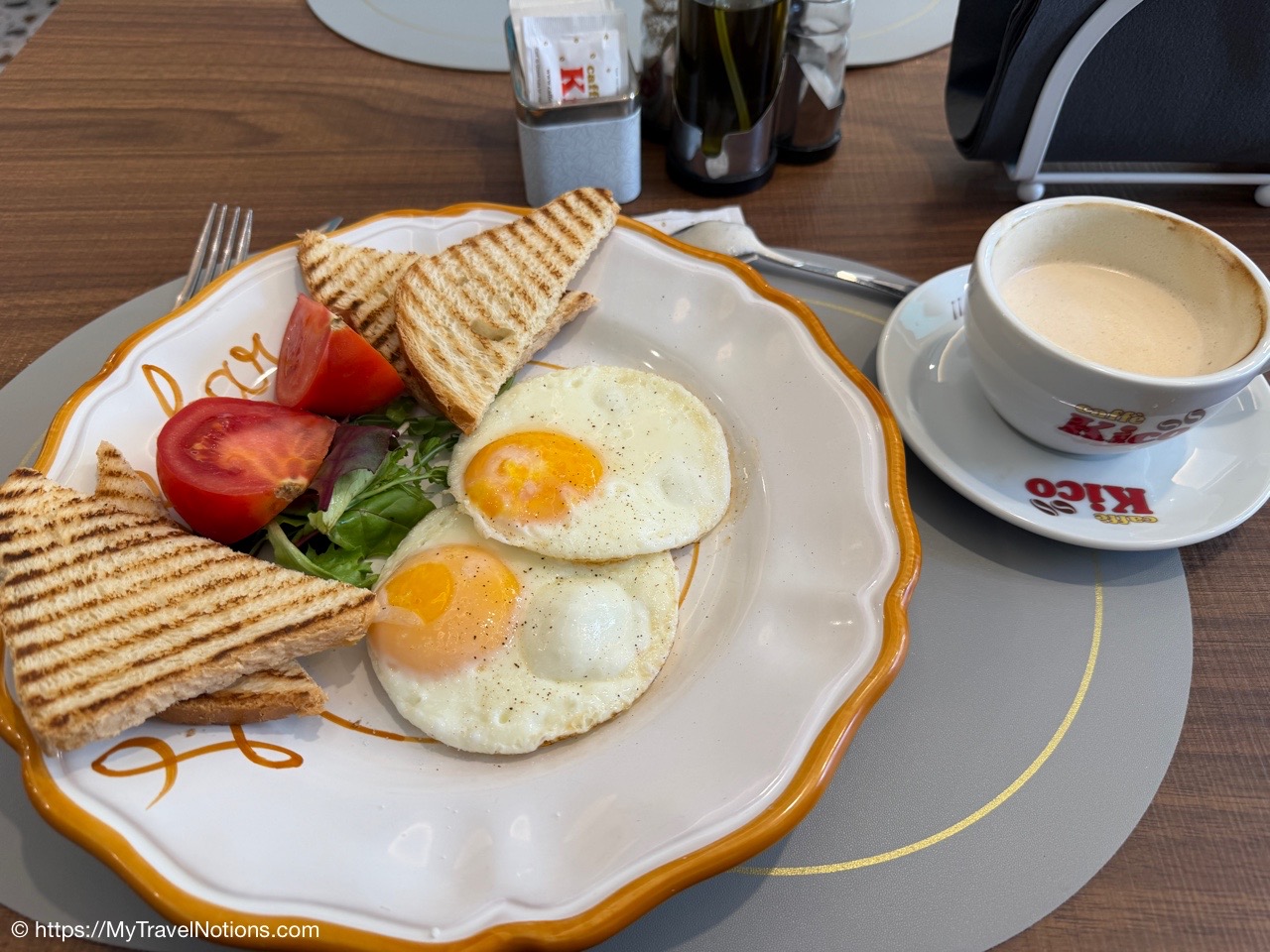
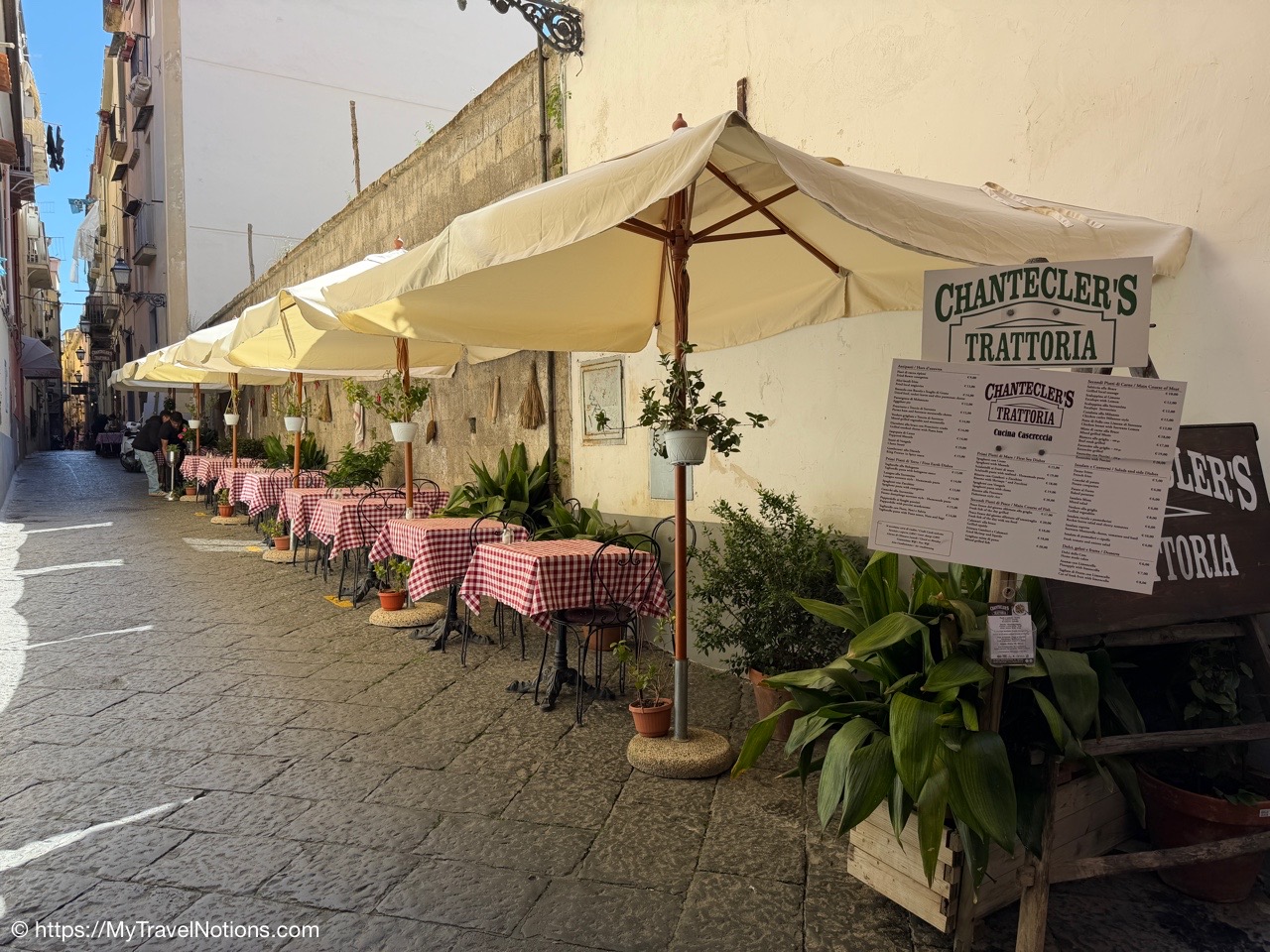
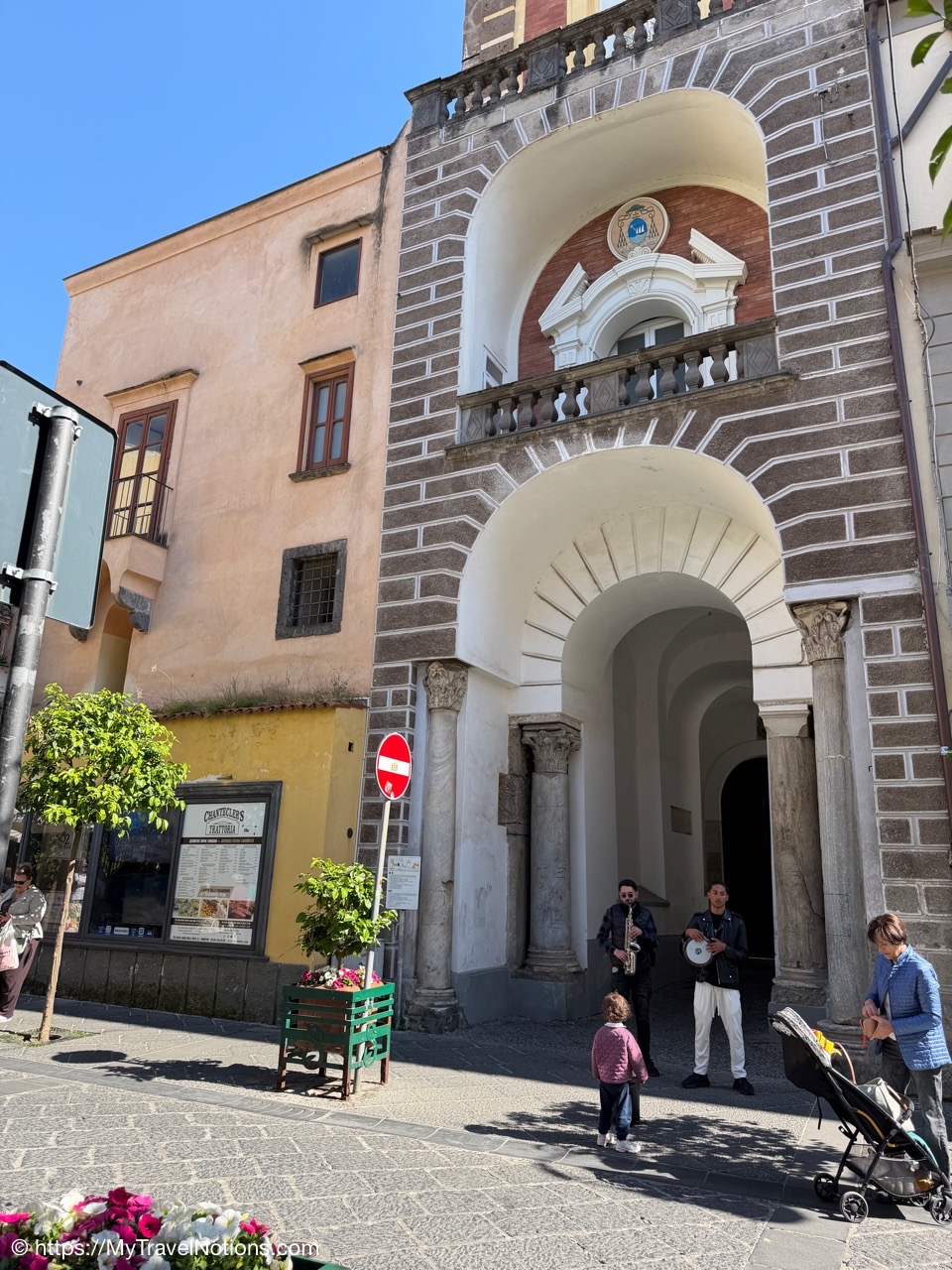
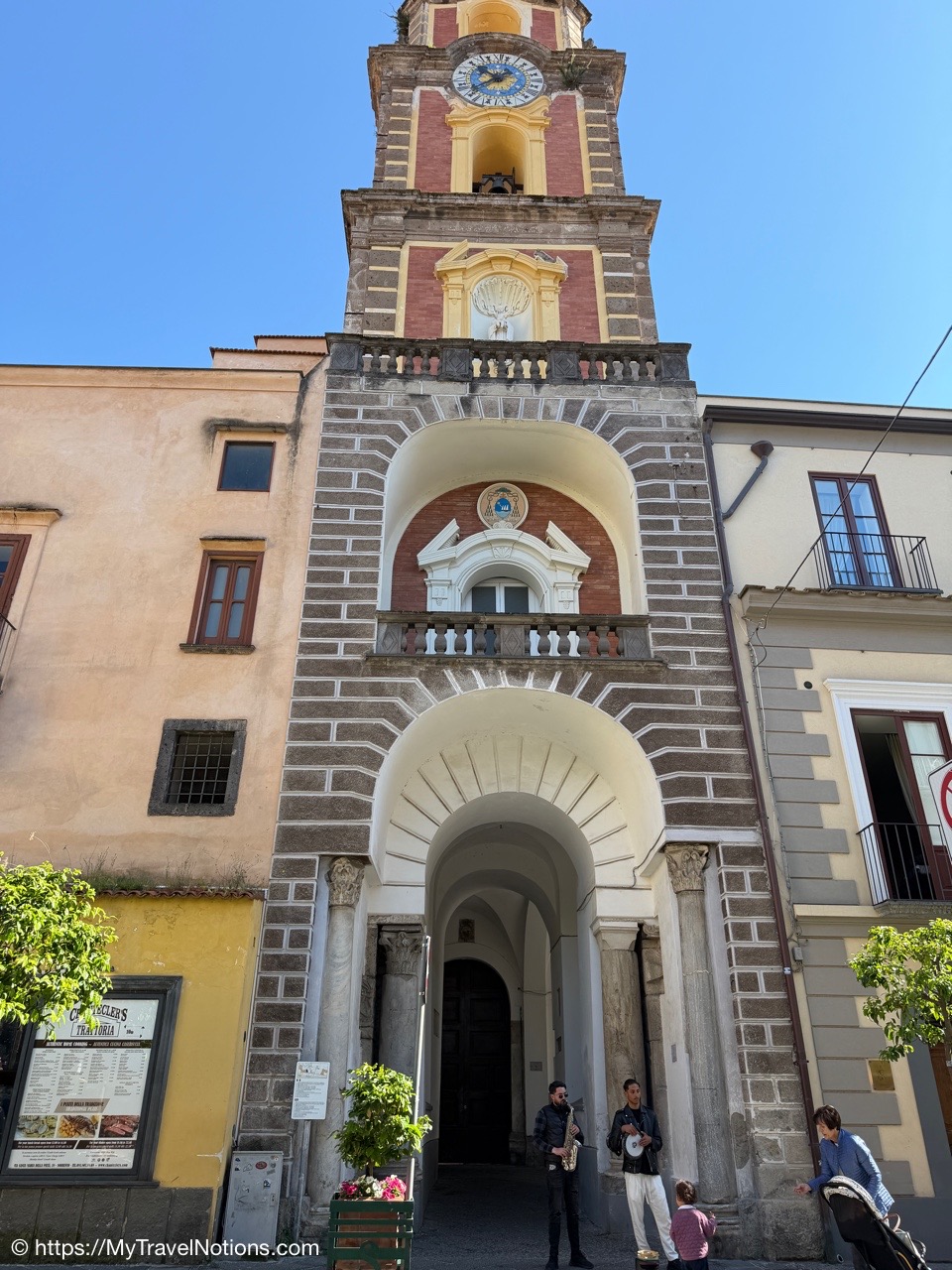
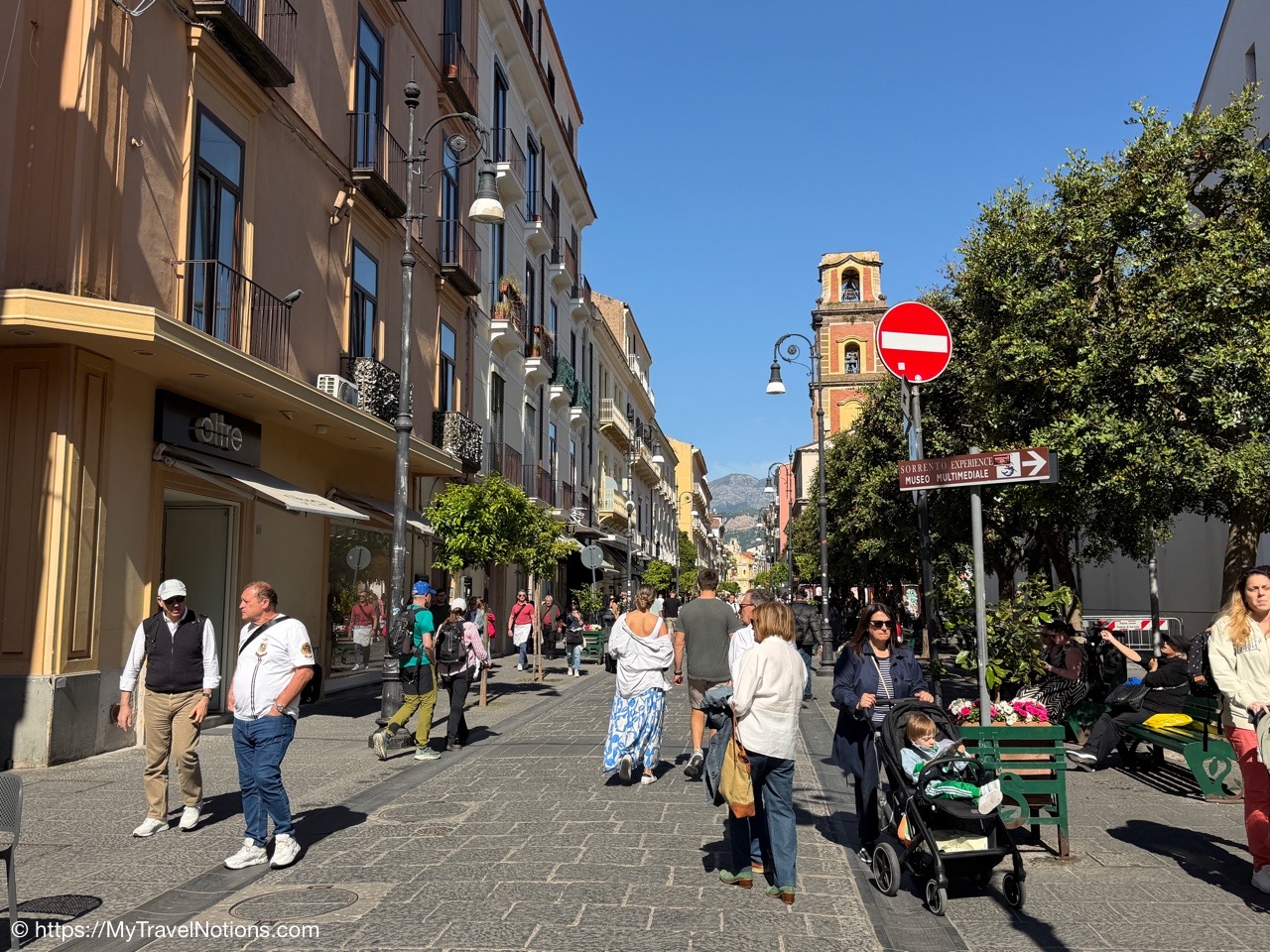
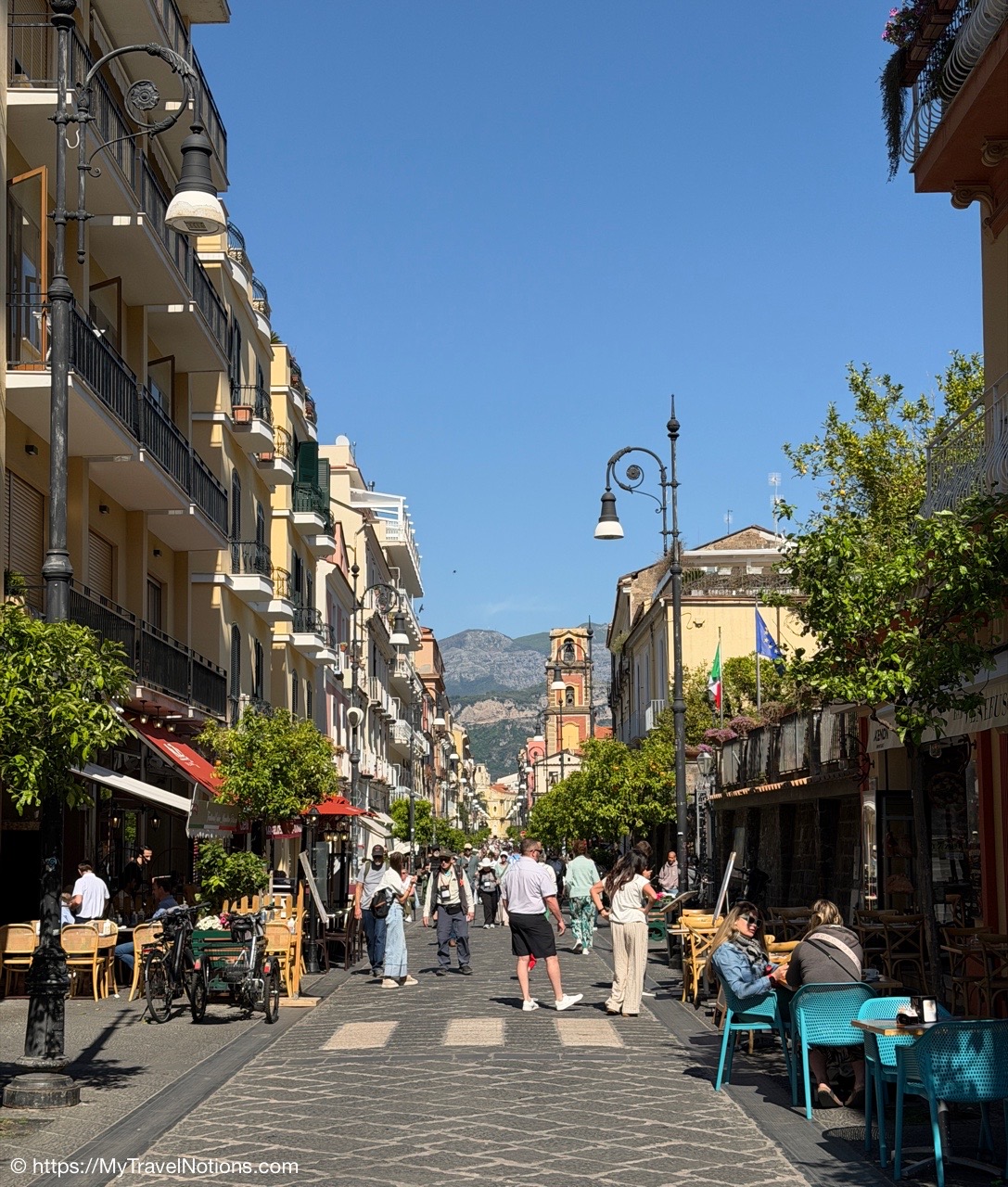
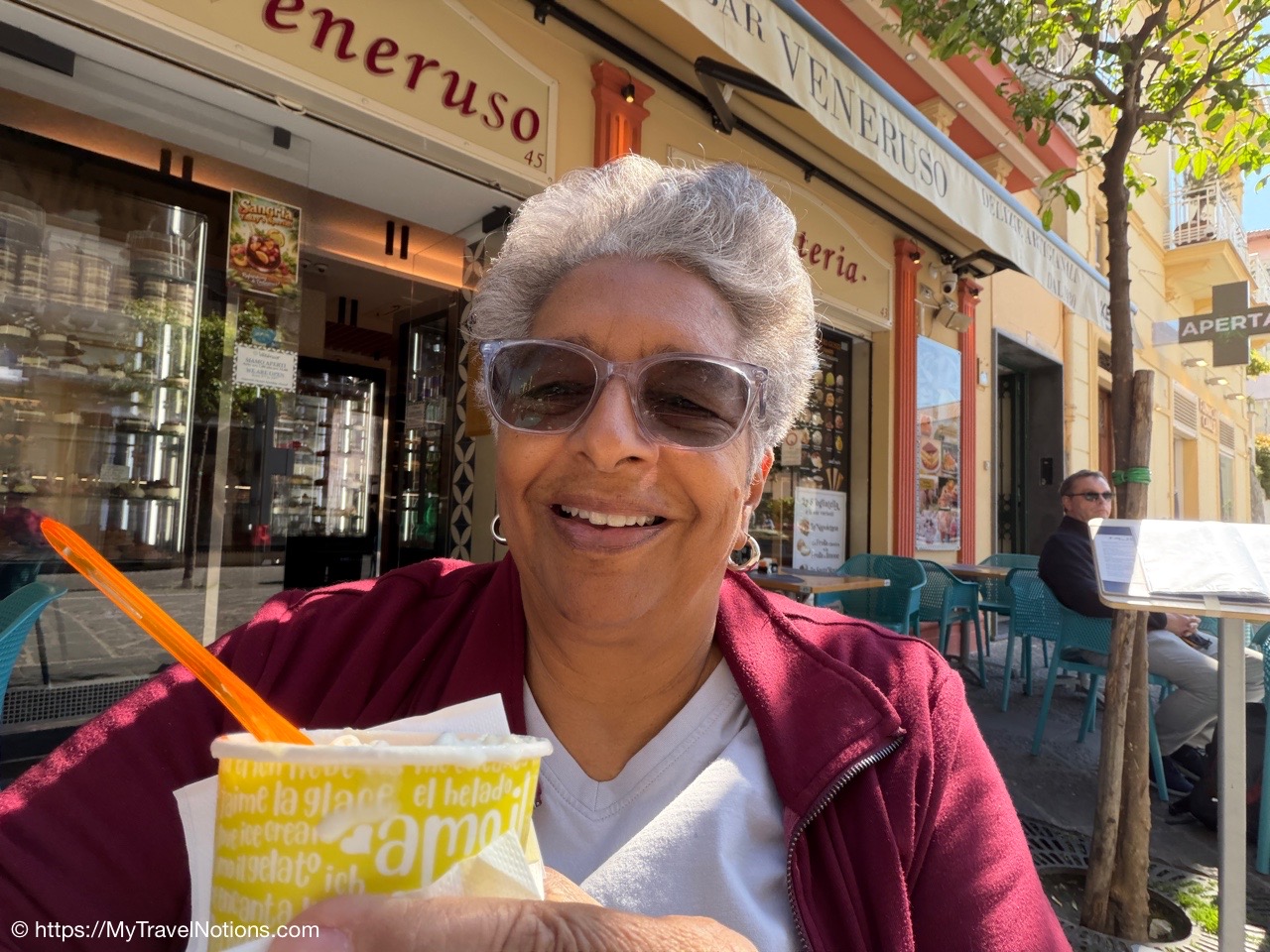
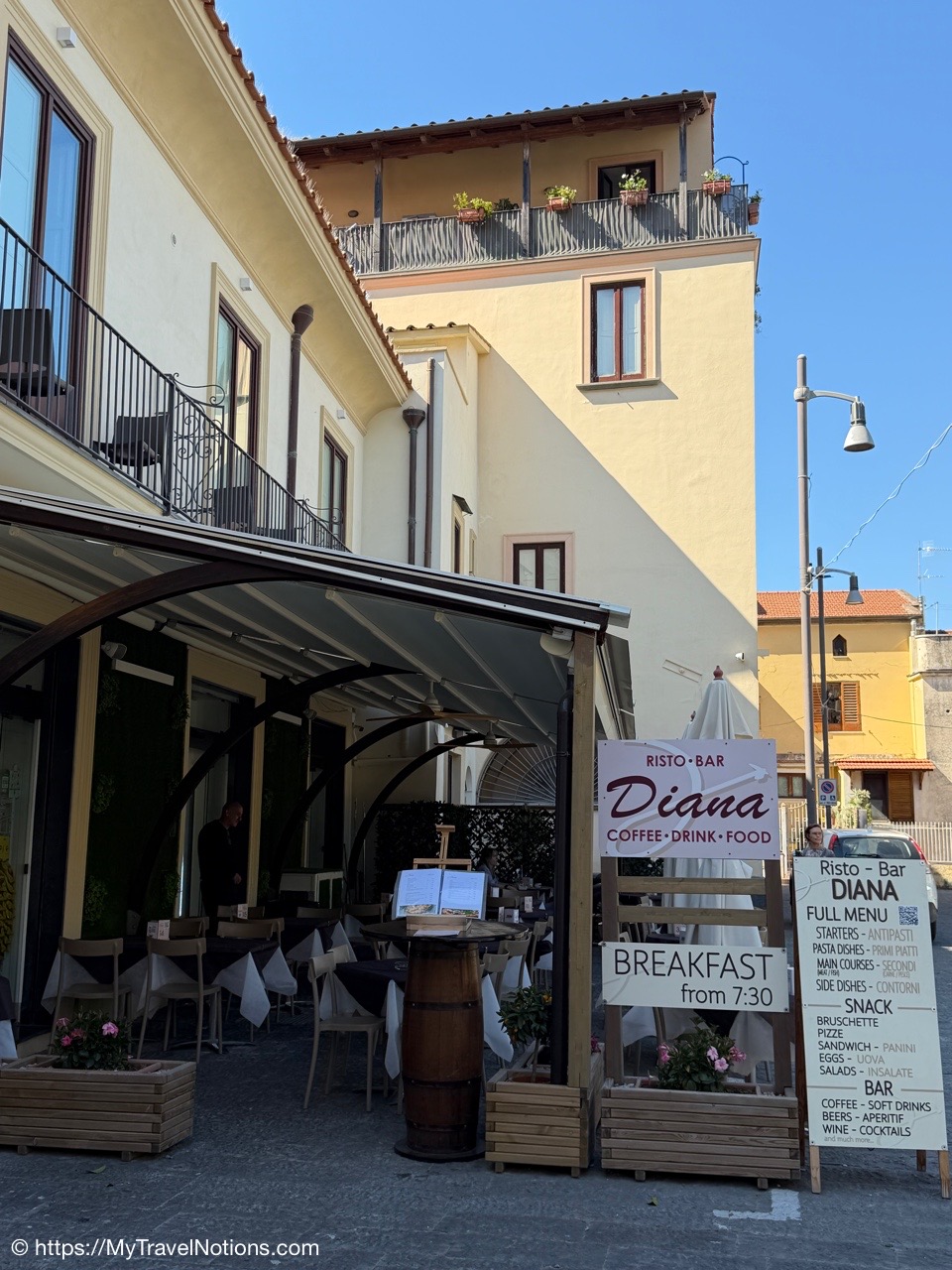
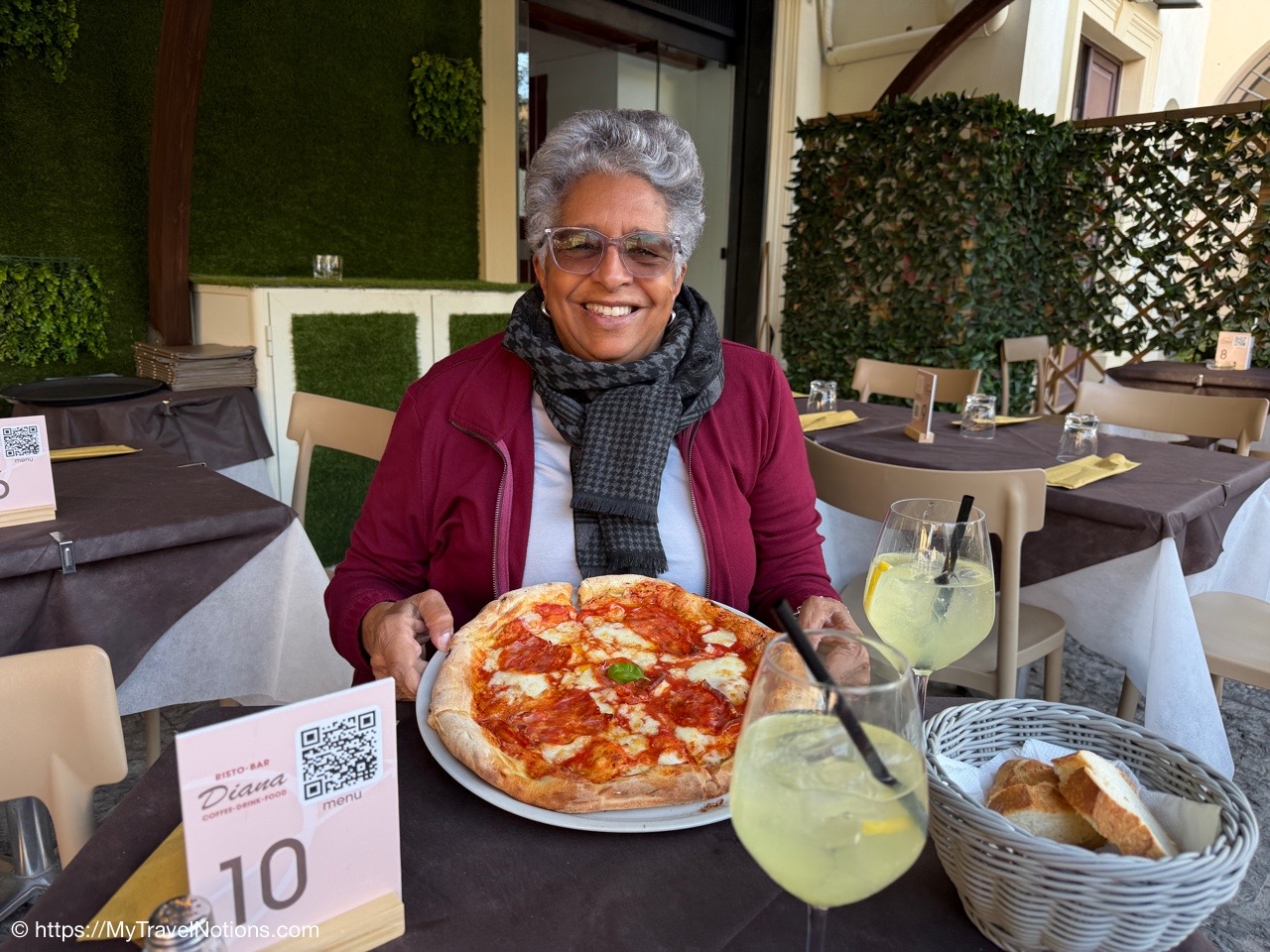
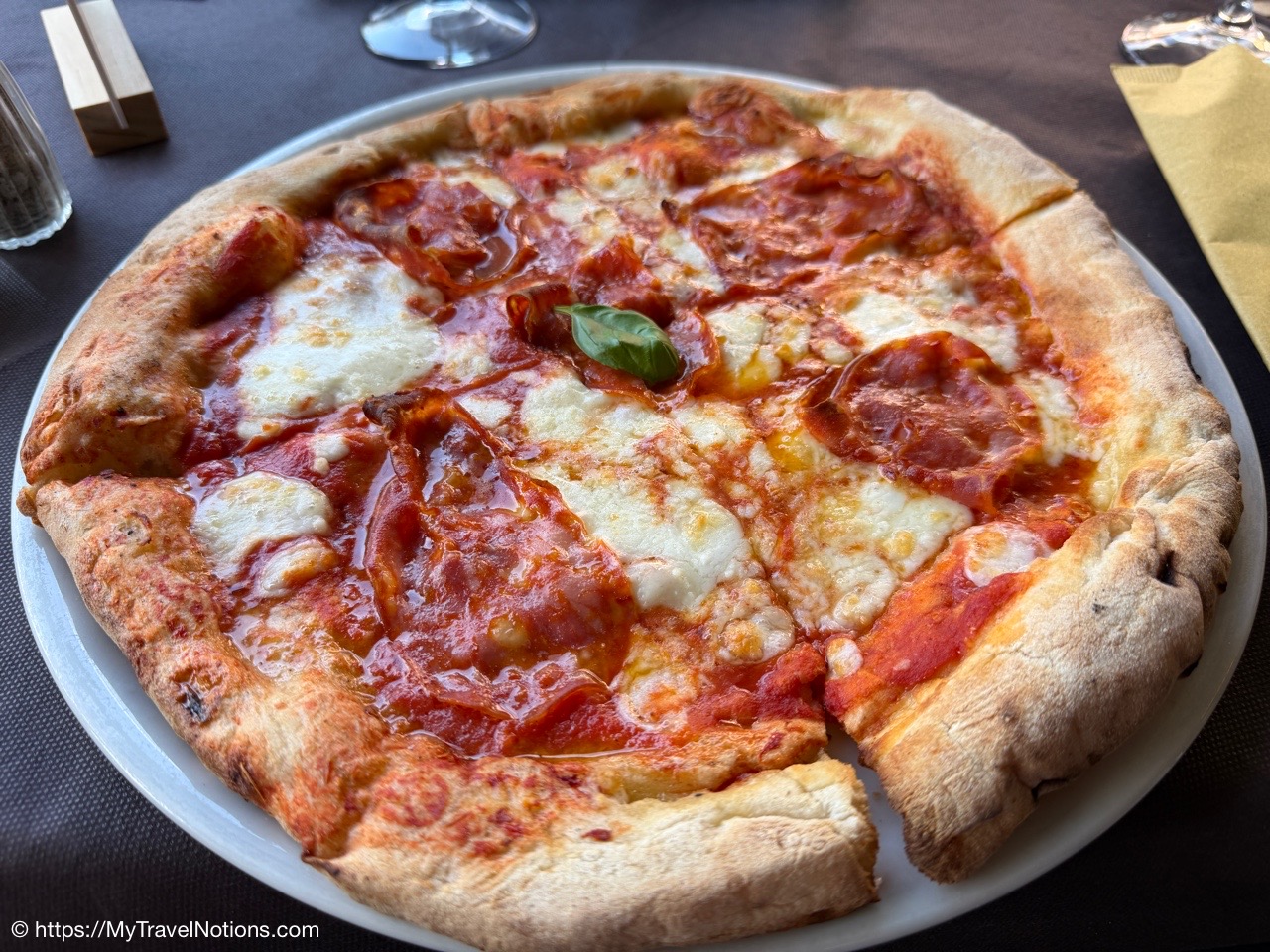
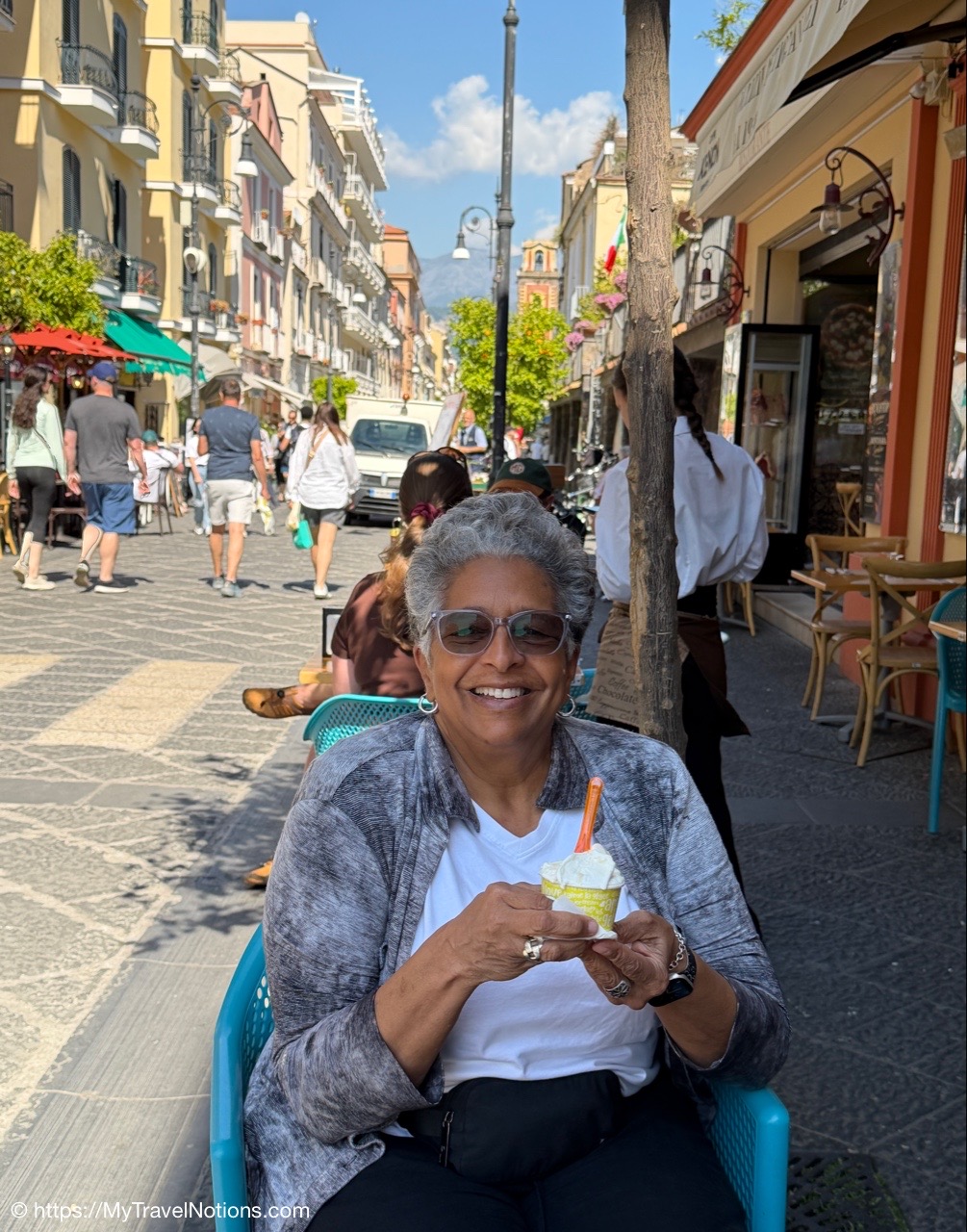
I ended my ‘free’ or good life day in Sorrento, much like I began it, with food. Here’s Rosie and I at RistoBar Diana a few steps from the main drag of Corso Italia in Sorrento. We’re both enjoying a Lemoncello Spritz while Rosie had Mussels and pasta and I had a Diavola pizza. (April 24, 2026)I may have ended my day with pizza and a Lemoncello spritz, but I began it here at Tasso Bar & Restaurant in Sorrento with a delicious cup of Cappuccino, orange juice and my regular, fried eggs and toast. As I’ve said before, I am a creature of habit. (April 24, 2026)My simple but delicious two fried eggs and toast breakfast with a Cappuccino at Tasso Bar & Restaurant in Sorrento. When possible, I’ve been coming here for breakfast. (April 24, 2026)I actually took this photo of alleyway patio area of the Chantecler’s Trattoria in Sorrento as they were opening for lunch. And, since the weather has been so wonderful it’s been great to sit outside and eat. (April 24, 2026)My simple but delicious two fried eggs and toast breakfast at Tasso Bar & Restaurant in Sorrento. When possible, I’ve been coming here for breakfast. (April 24, 2026)After my mid-afternoon snack, I took a leisurely walk down the main drag of Corso Italia starting here at the bell tower of the Sorrento Cathedral. (April 24, 2026)After my mid-afternoon snack, I took a leisurely walk down the main drag of Corso Italia starting here at the bell tower of the Sorrento Cathedral. (April 24, 2026)Casually walking along Corso Italia. (April 24, 2026)Casually walking along Corso Italia. (April 24, 2026)Casually walking along Corso Italia with its many shops in Sorrento. (April 24, 2026)Casually walking along Corso Italia with its many shops in Sorrento. (April 24, 2026)Casually walking along Corso Italia, but I did stop for gelato. (April 24, 2026)Stopped at Bar Veneruso during my walk along Corso Italia in Sorrento to enjoy its delicious coconut gelato with little chunks of white chocolate…so good! (April 24, 2026)Came across this restaurant with a my name on it and a descent looking menu so Rosie and I decided to try it for dinner, RistoBar Diana in Sorrento. (April 24, 2026)Me and my Diavolo pizza at RistoBar Diana in Sorrento. And, just one of those glasses of Lemoncello Spritz is mine. (April 24, 2026)My delicious Diavolo pizza at RistoBar Diana in Sorrento. (April 24, 2026)The good life isn’t so good when the knees hurt, but this Voltaren Emulgel (Voltaren in the U.S.) has definitely helped. And I purchased this over this 2% Diclofenac over the counter here in Italy for 18 Euros about $22 USD. In order to get 2% Diclofenac (in a different brand) in the U.S., we have to have a prescription. In my case, my insurance won’t pay for it. And, to buy it out of pocket costs about $800 USD.
A Full Day in Herculaneum and Pompeii
At around 1 pm on August 24, 79 AD, Mount Vesuvius began spewing volcanic material thousands of feet or metres into the sky causing one of the deadliest eruptions in history. Pompeii was buried in 13 to 20 feet or 4 to 6 meters of ash and pumice, causing rapid roof collapses, while Herculaneum was submerged in up to 65 feet or 20 meters of volcanic mud and pyroclastic surges.
We visited Herculaneum first or Parco Archeologico di Ercolano and then Pompeii or the Parco Archeologico di Pompei on Liberation Day. This National Holiday celebrates the end of the Nazi occupation and the defeat of fascist oppression, which had denied Italians their freedom and democracy. Entrances to both places, because of the holiday, were free.
Here’s just some of the UNESCO World Heritage Sites of Herculanum and Pompeii.
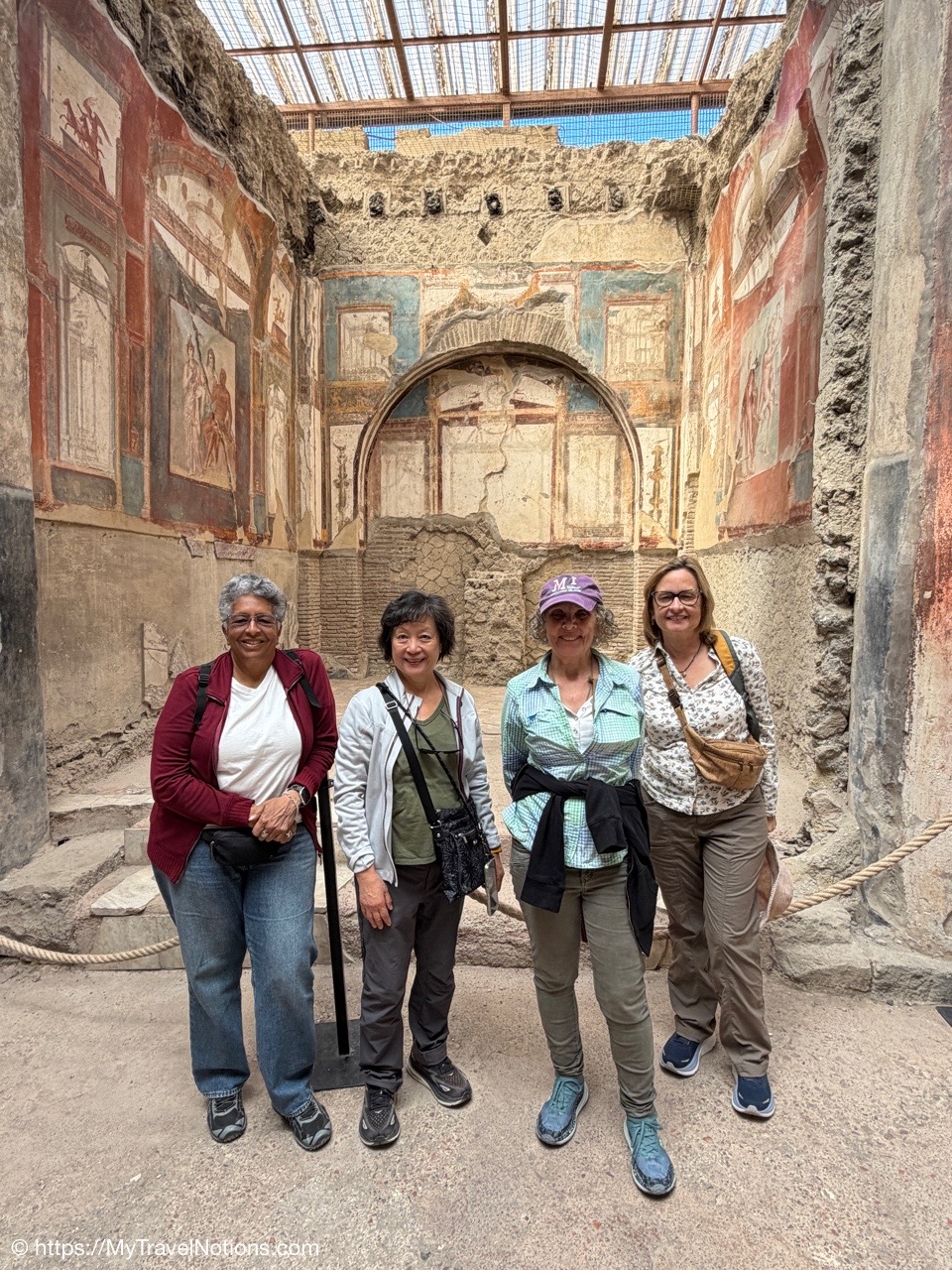
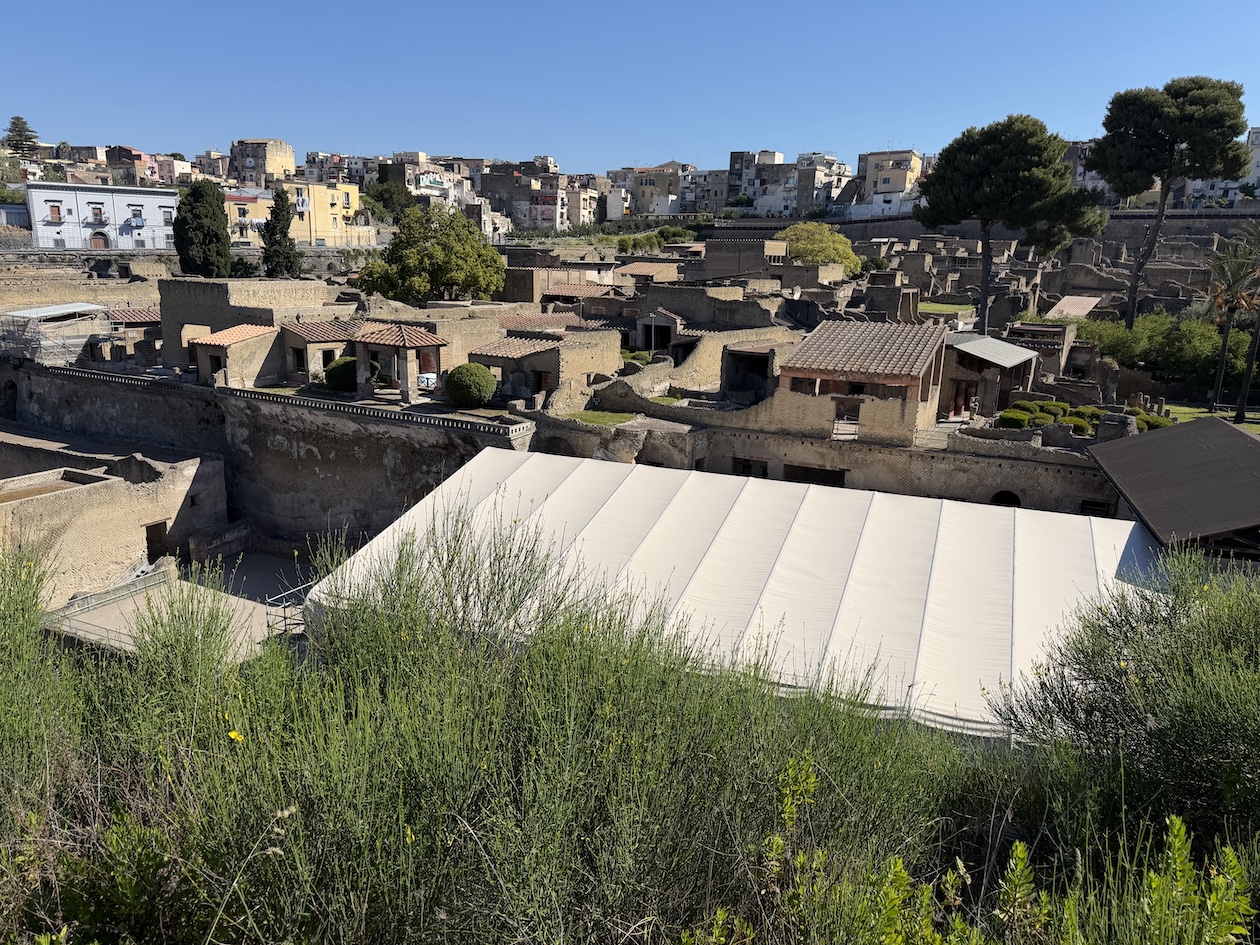
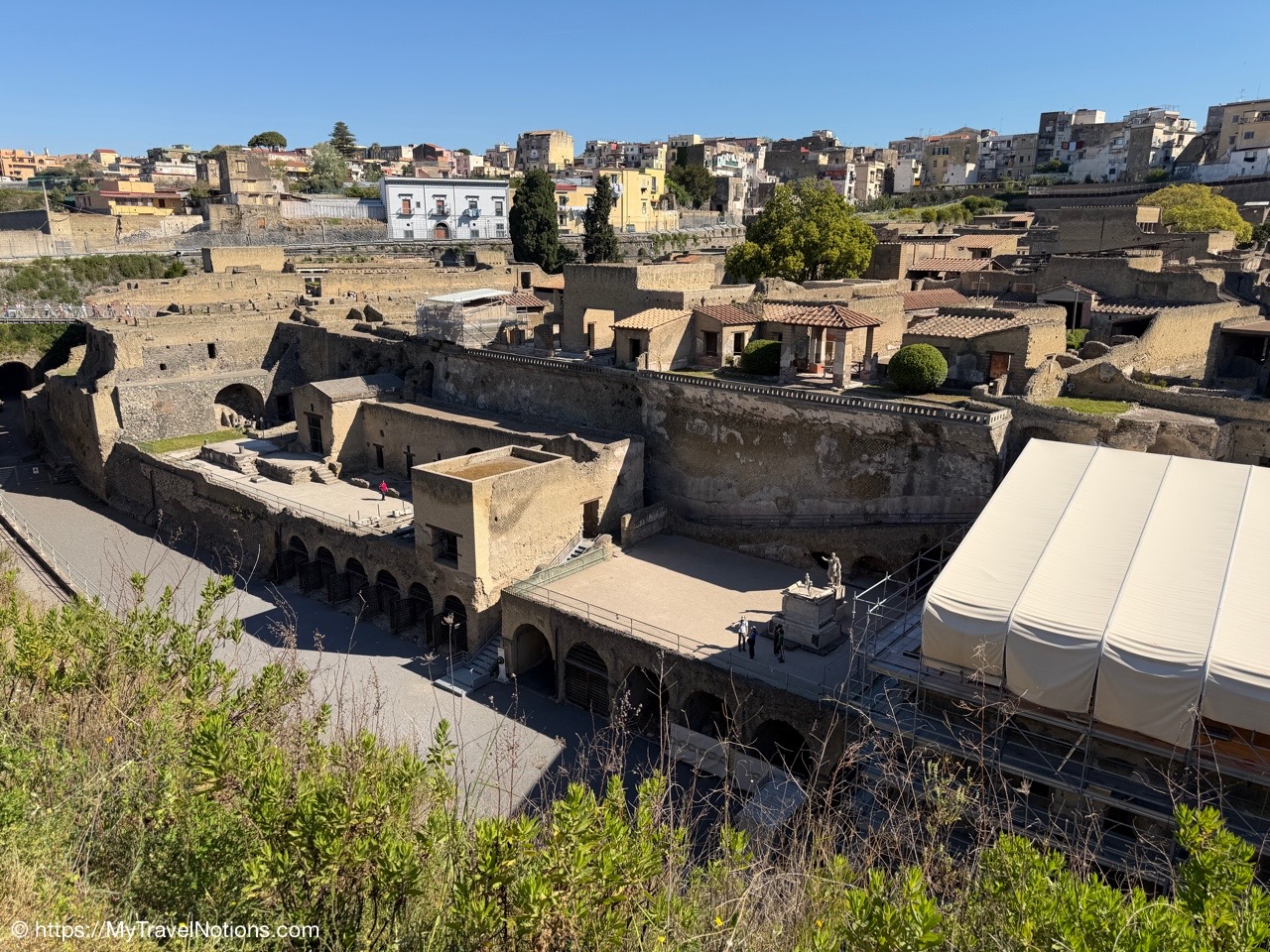
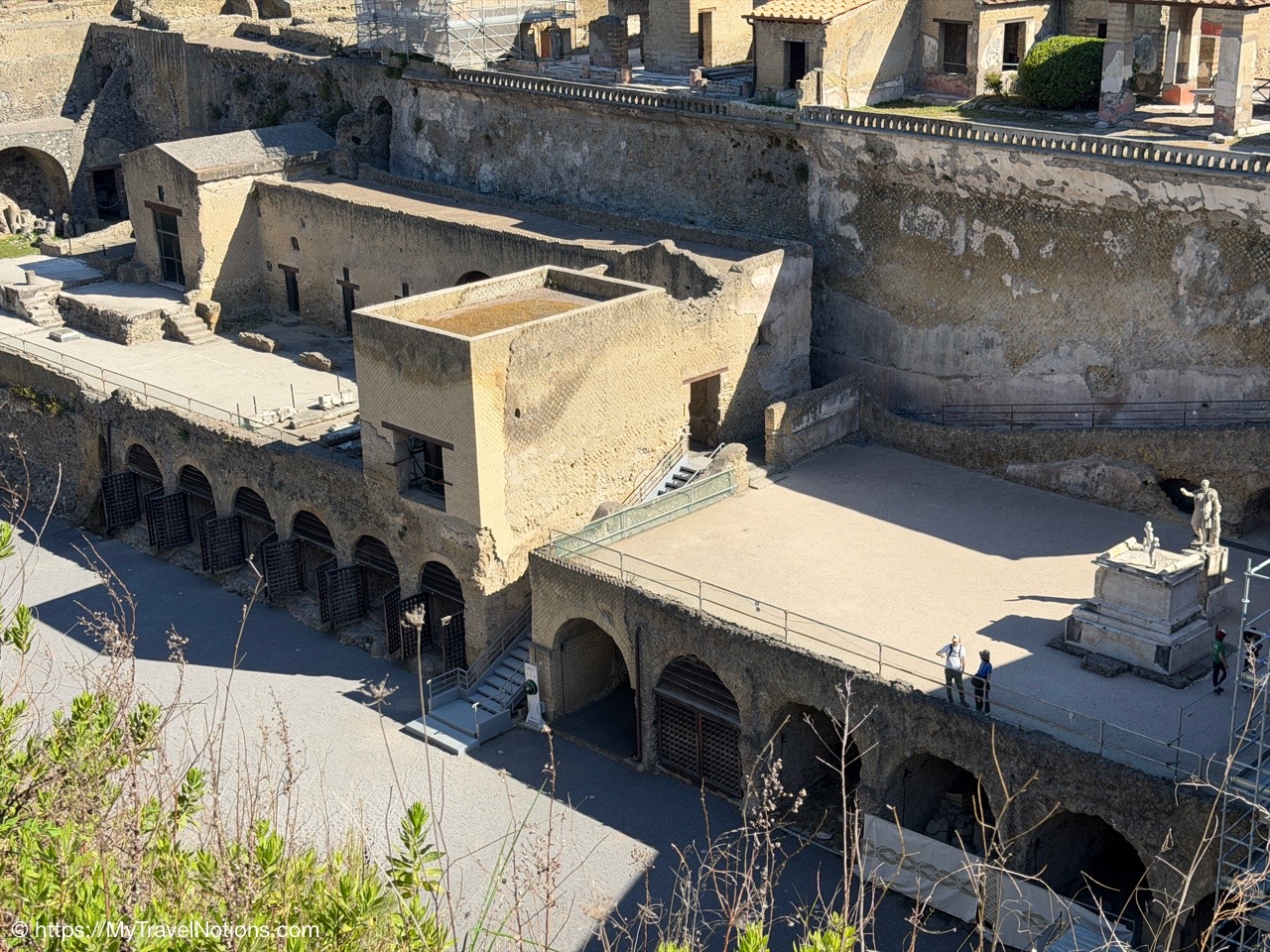
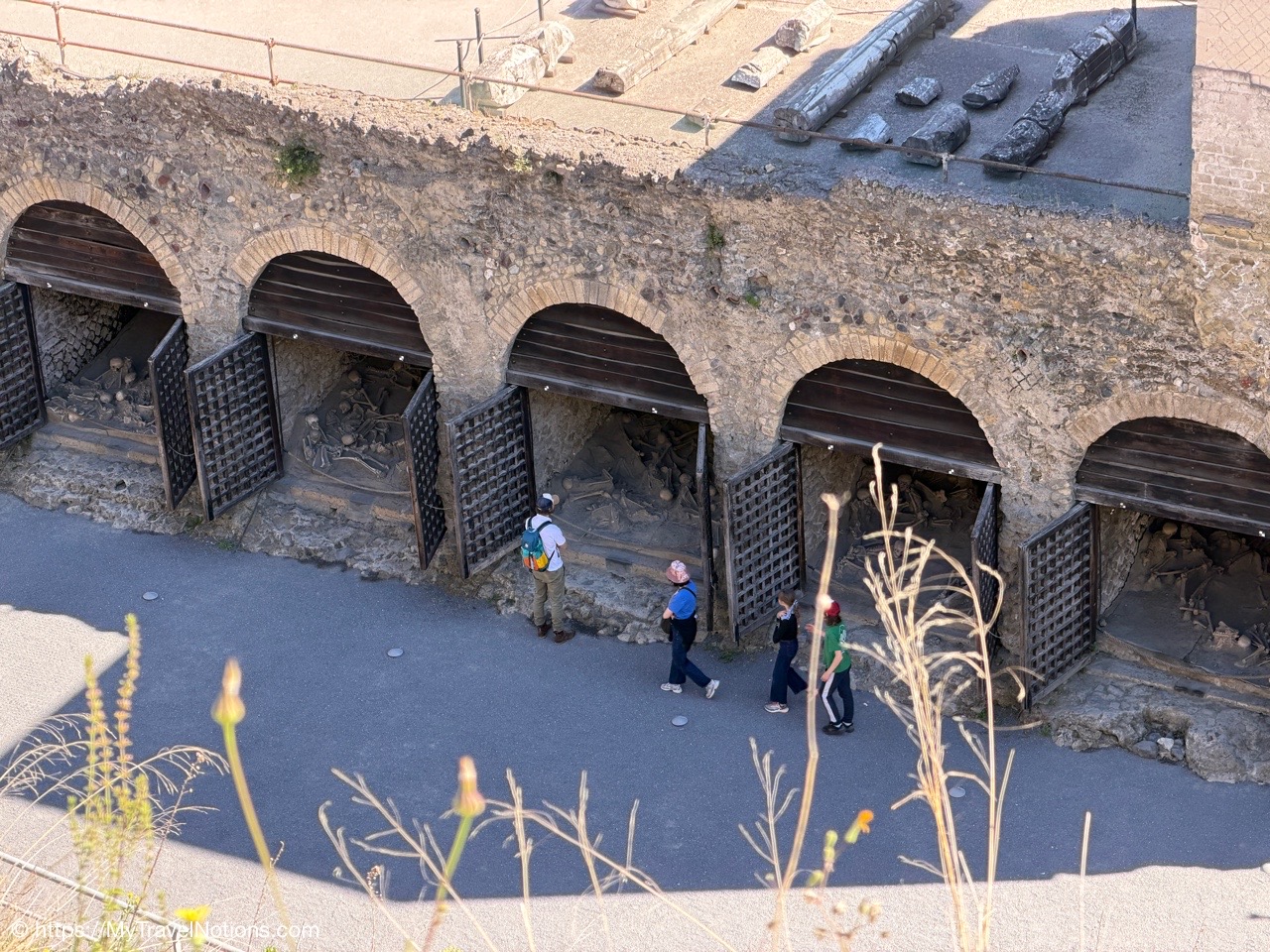
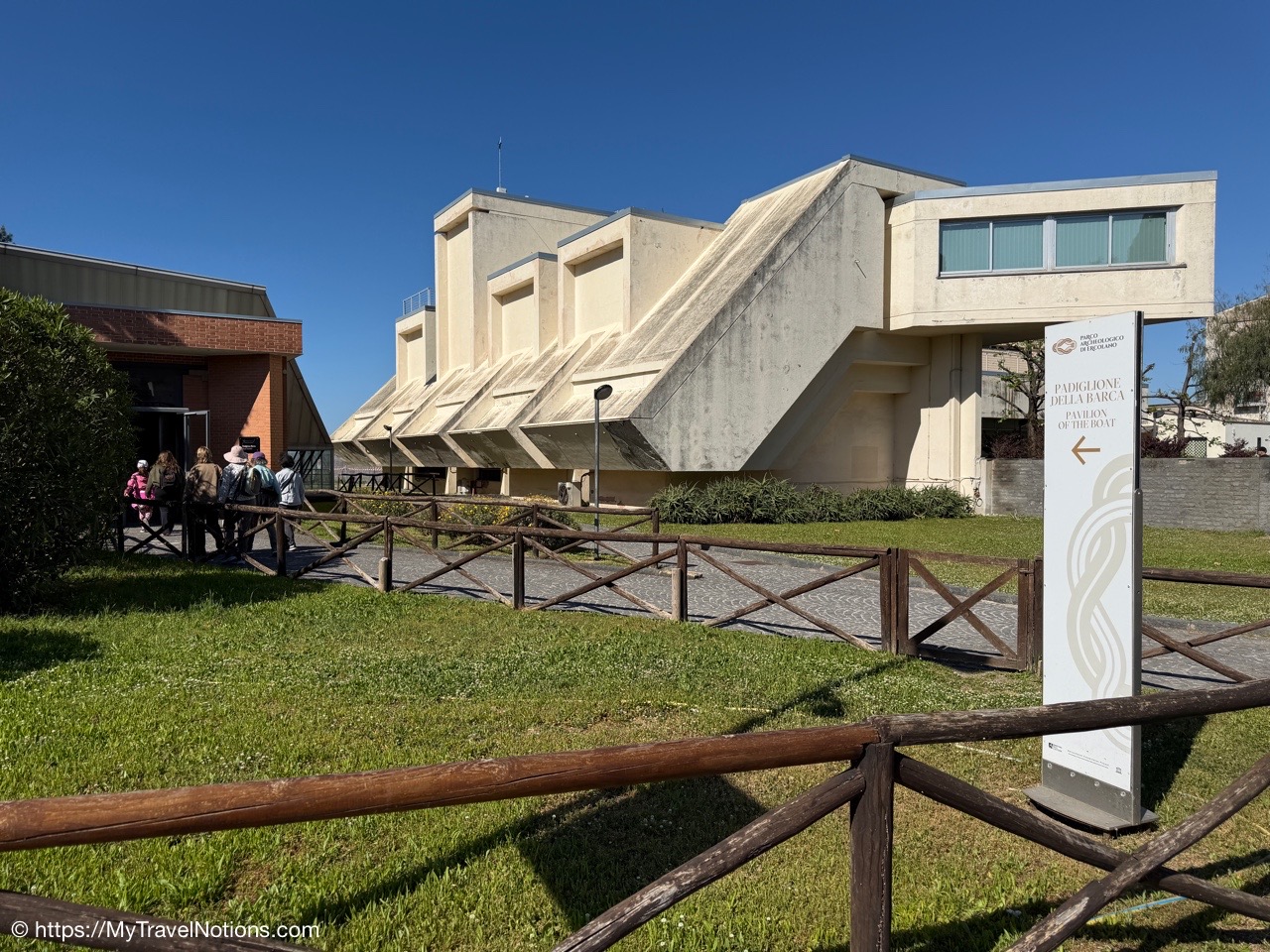
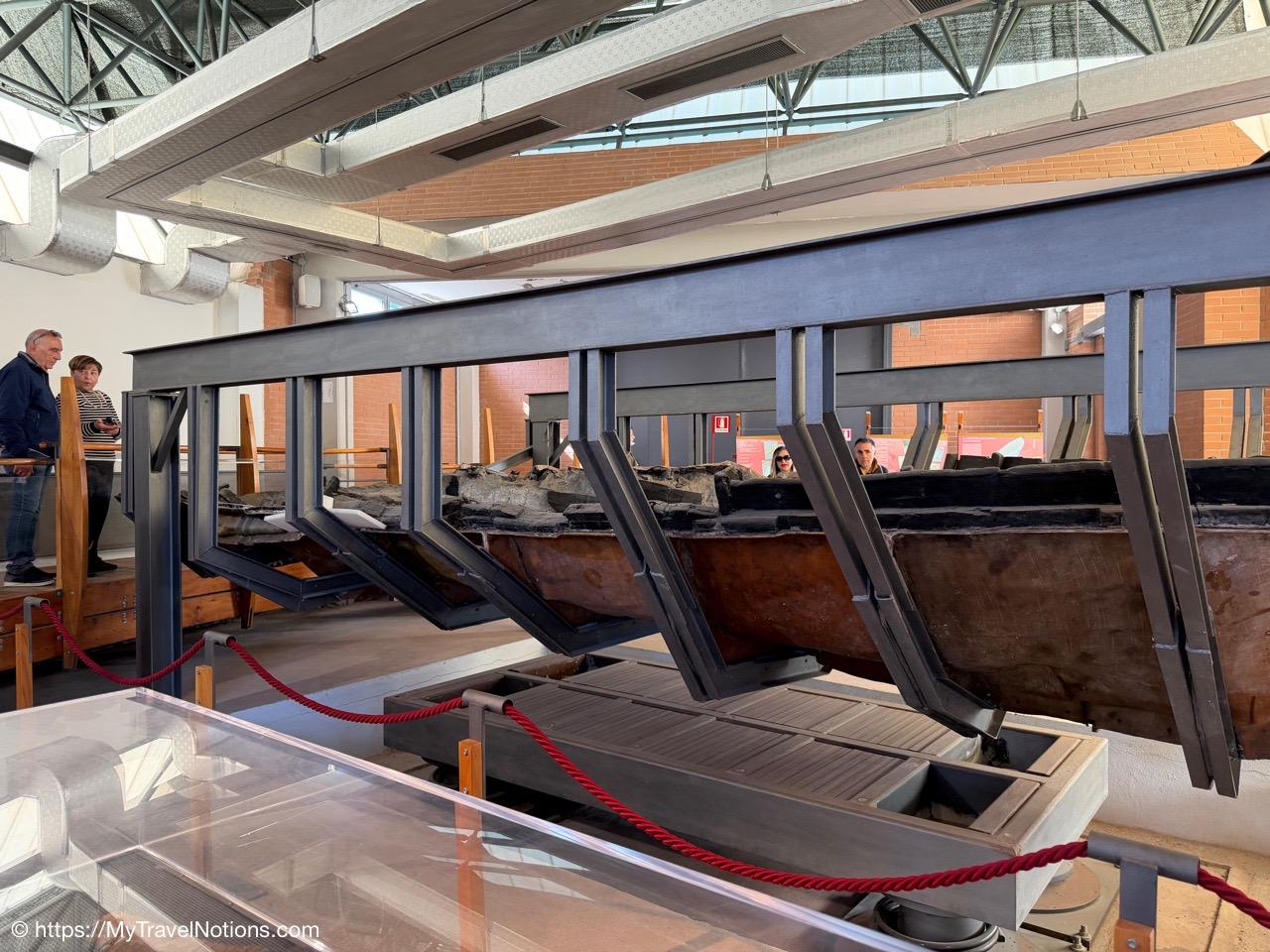
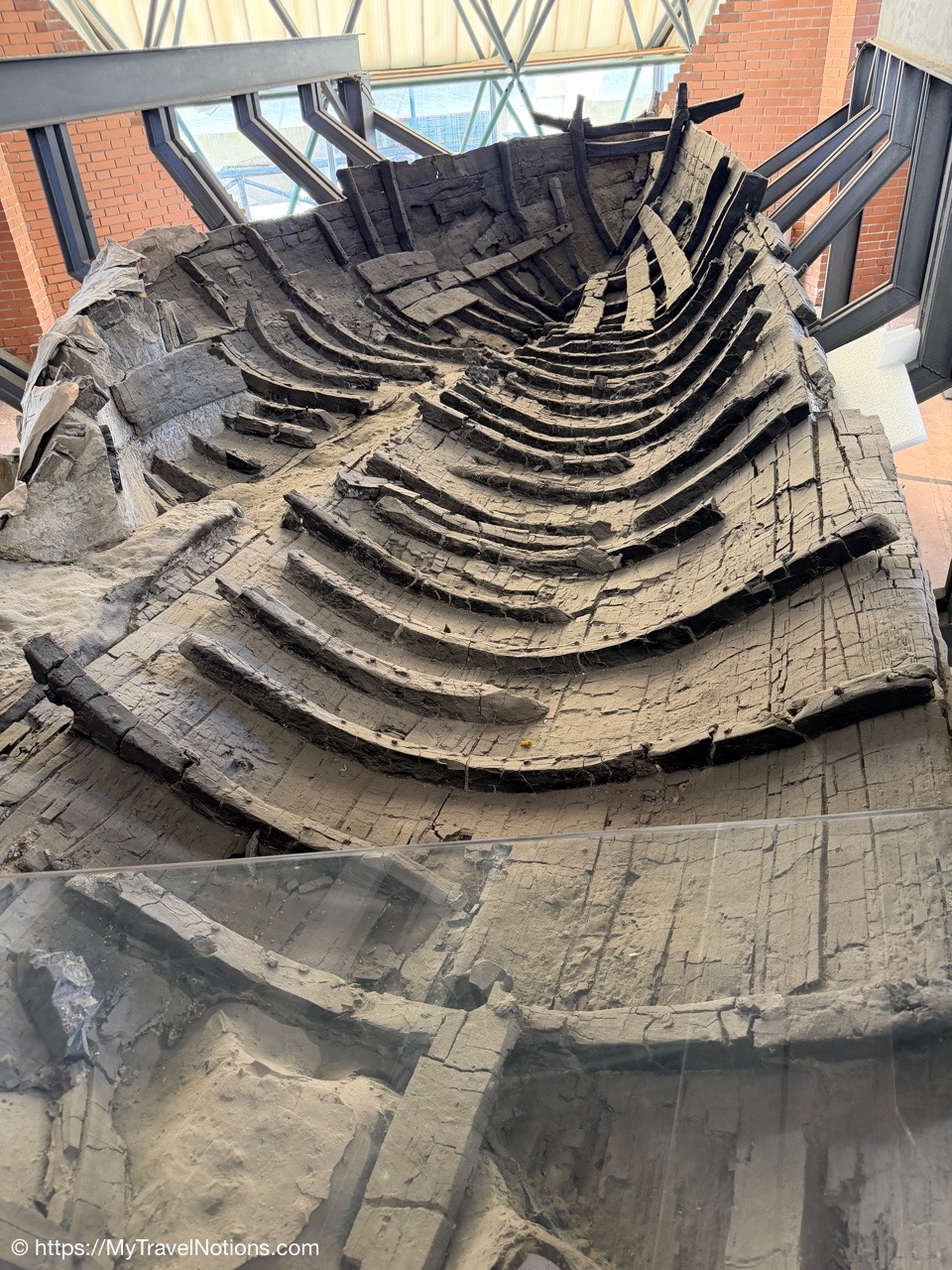
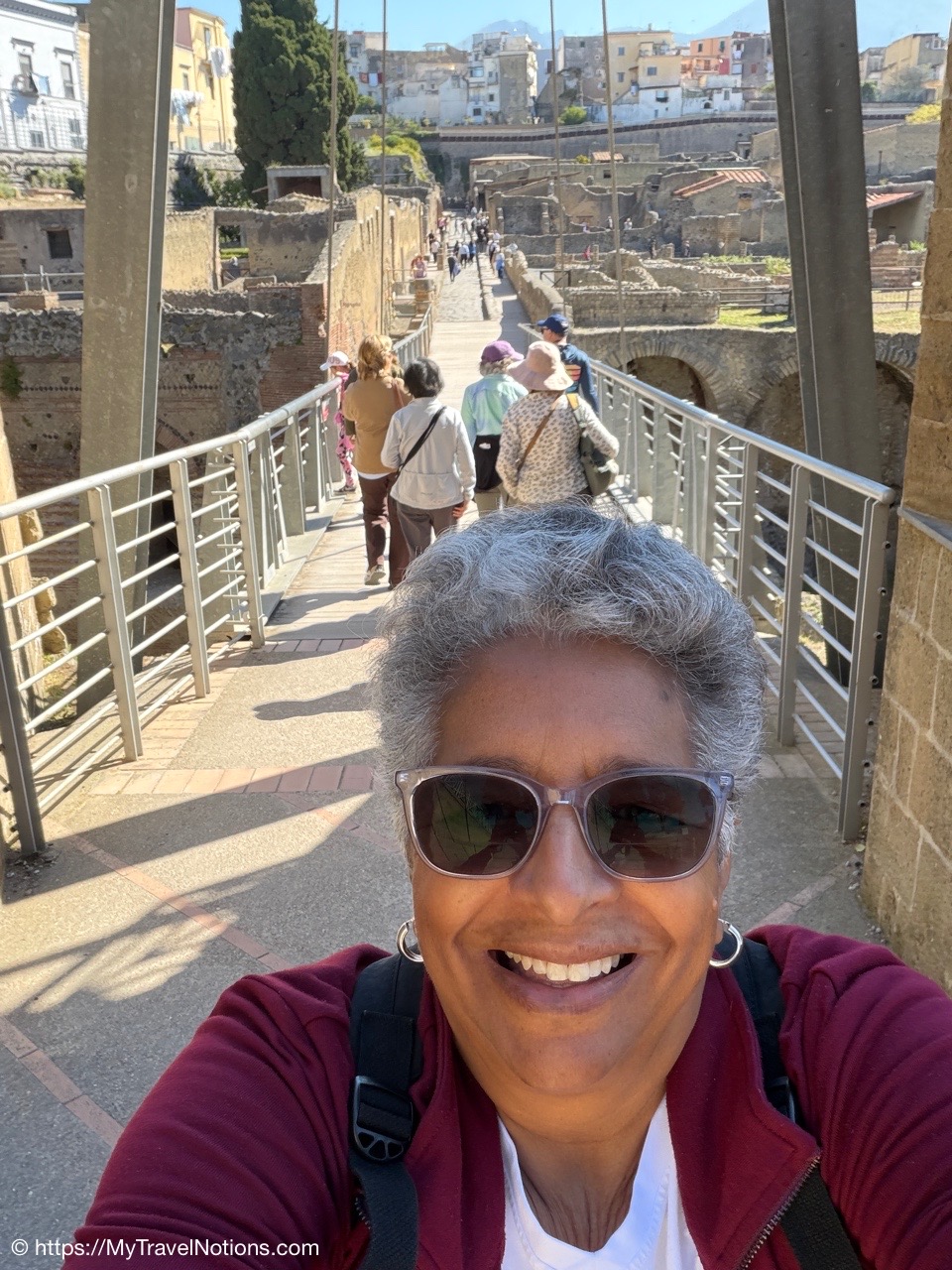
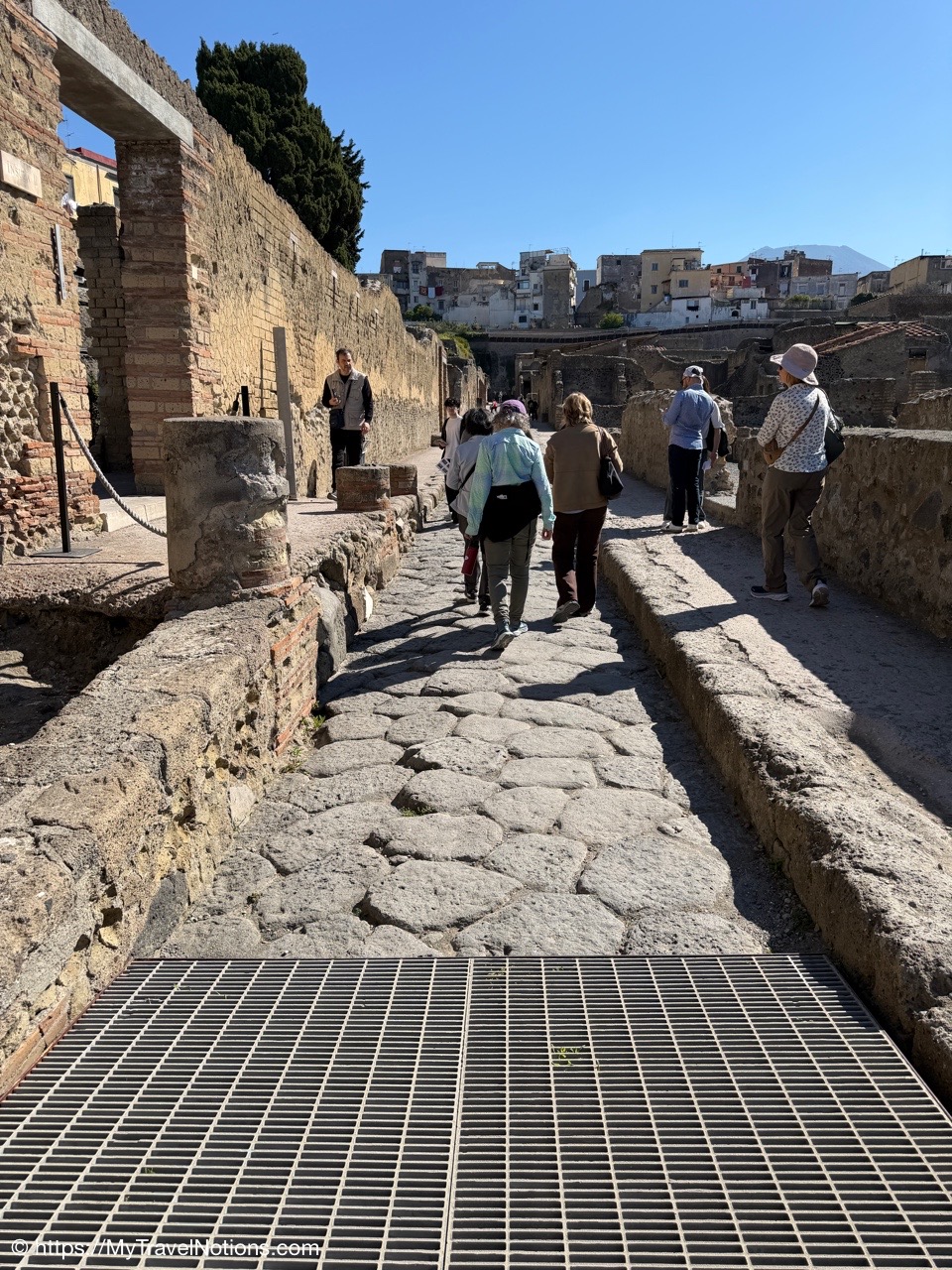
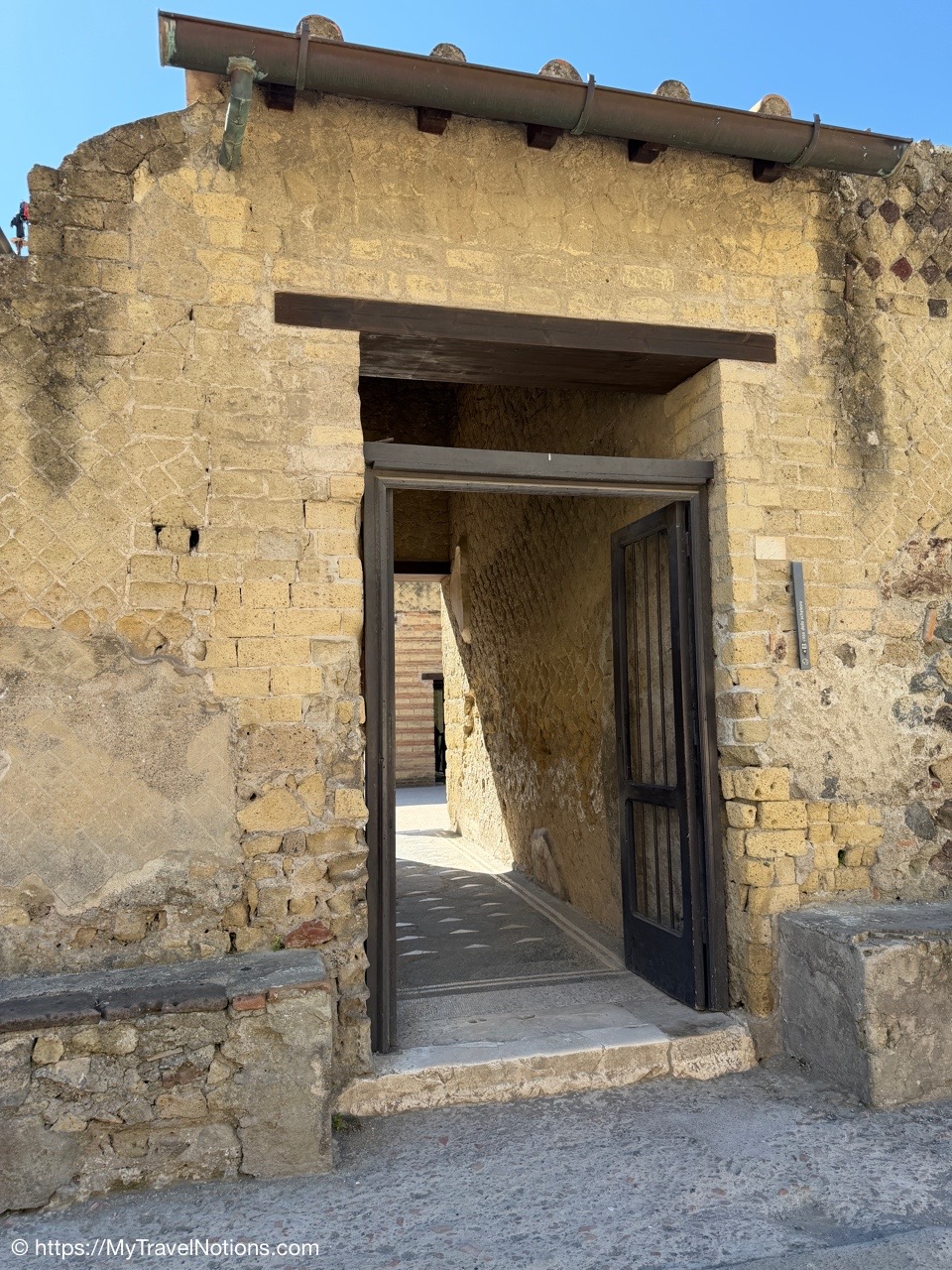
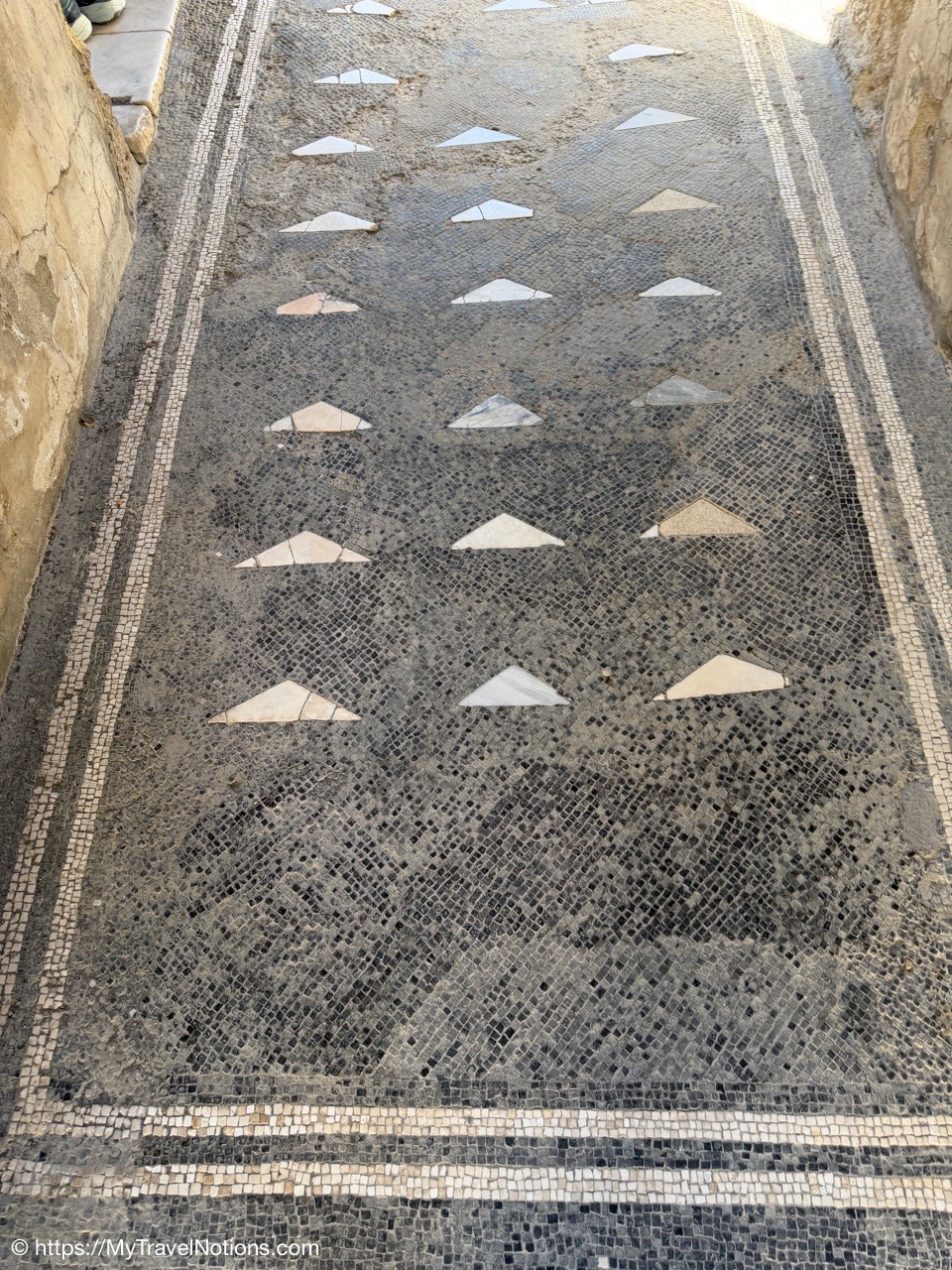
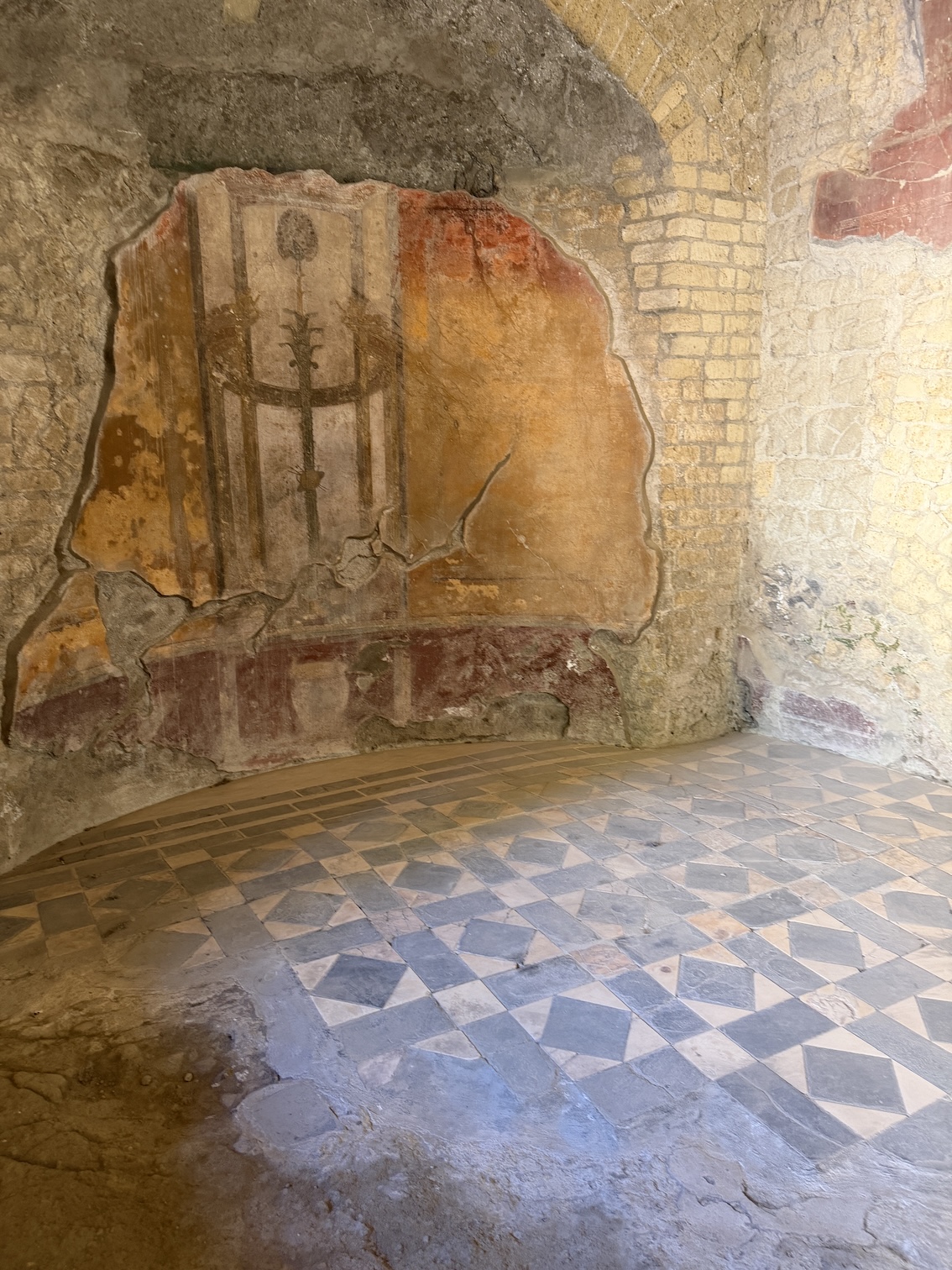
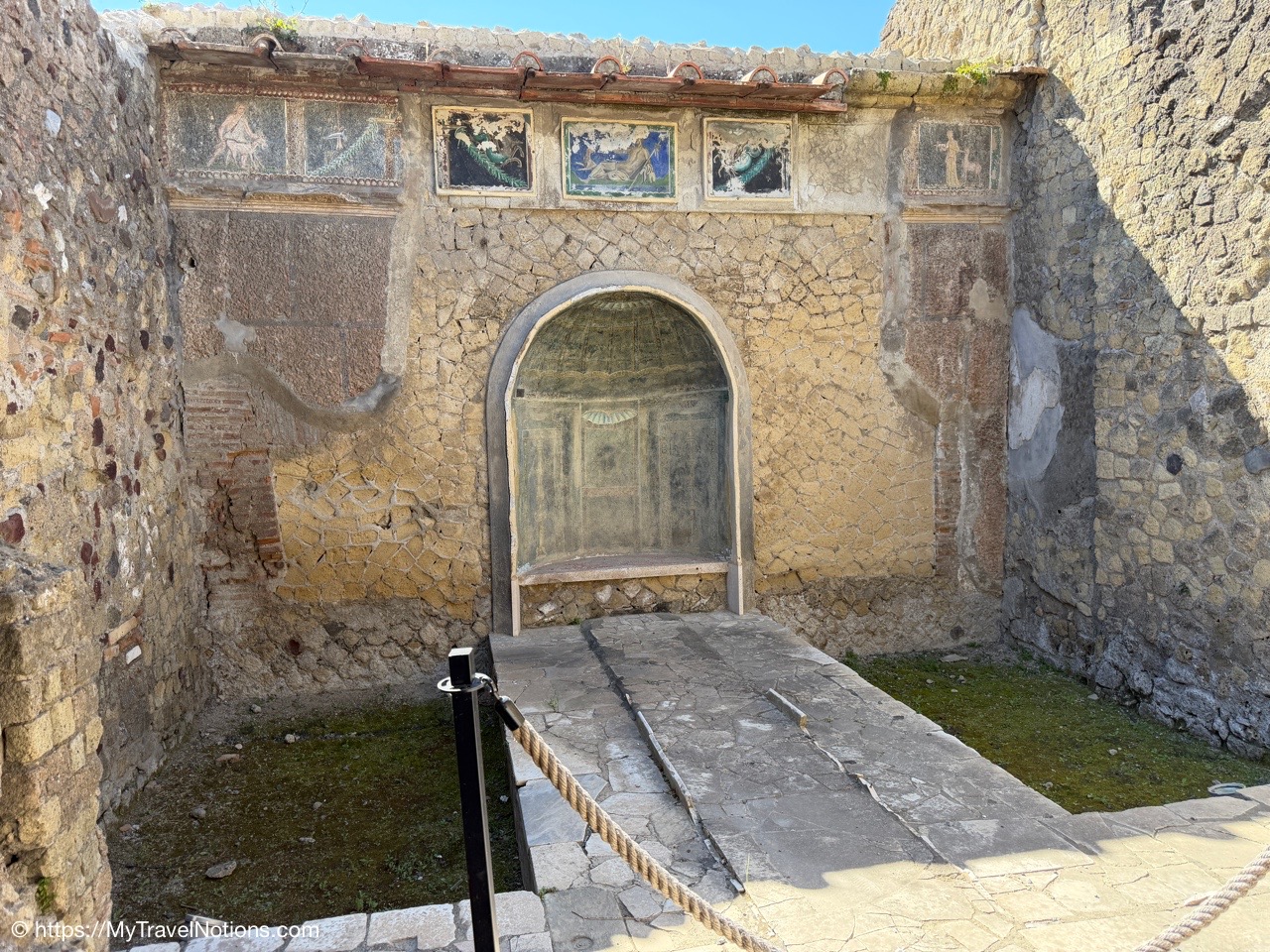
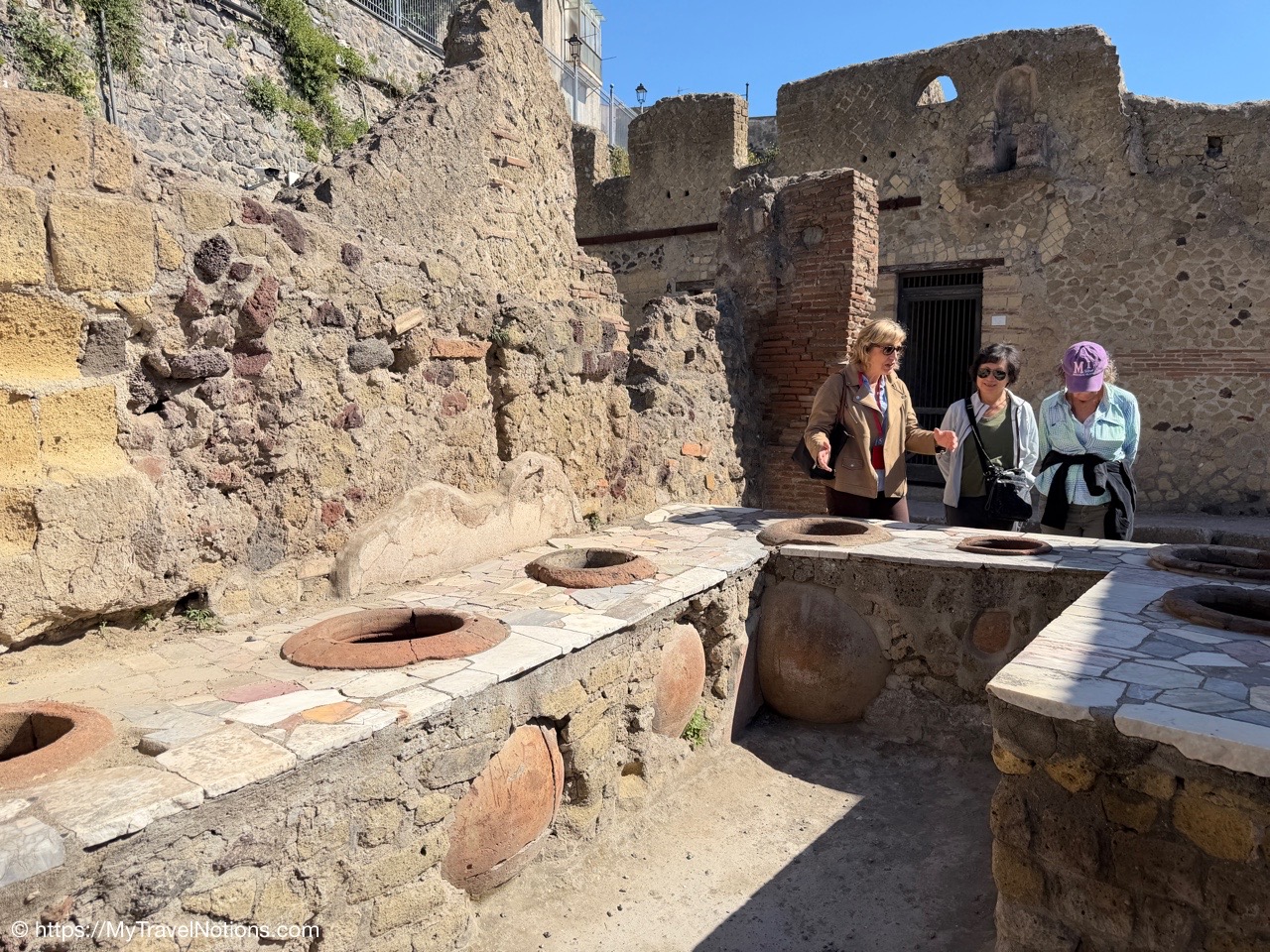
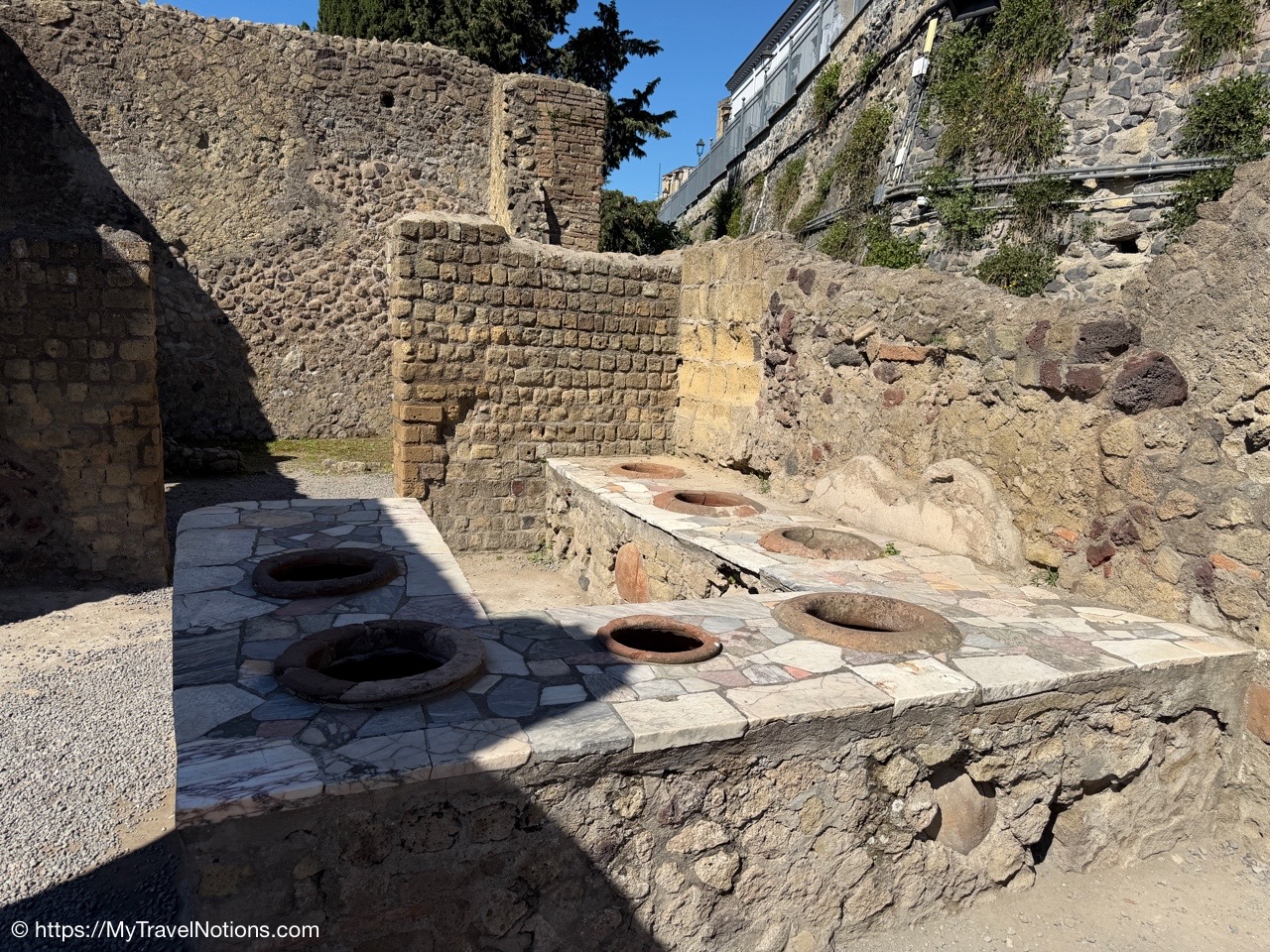
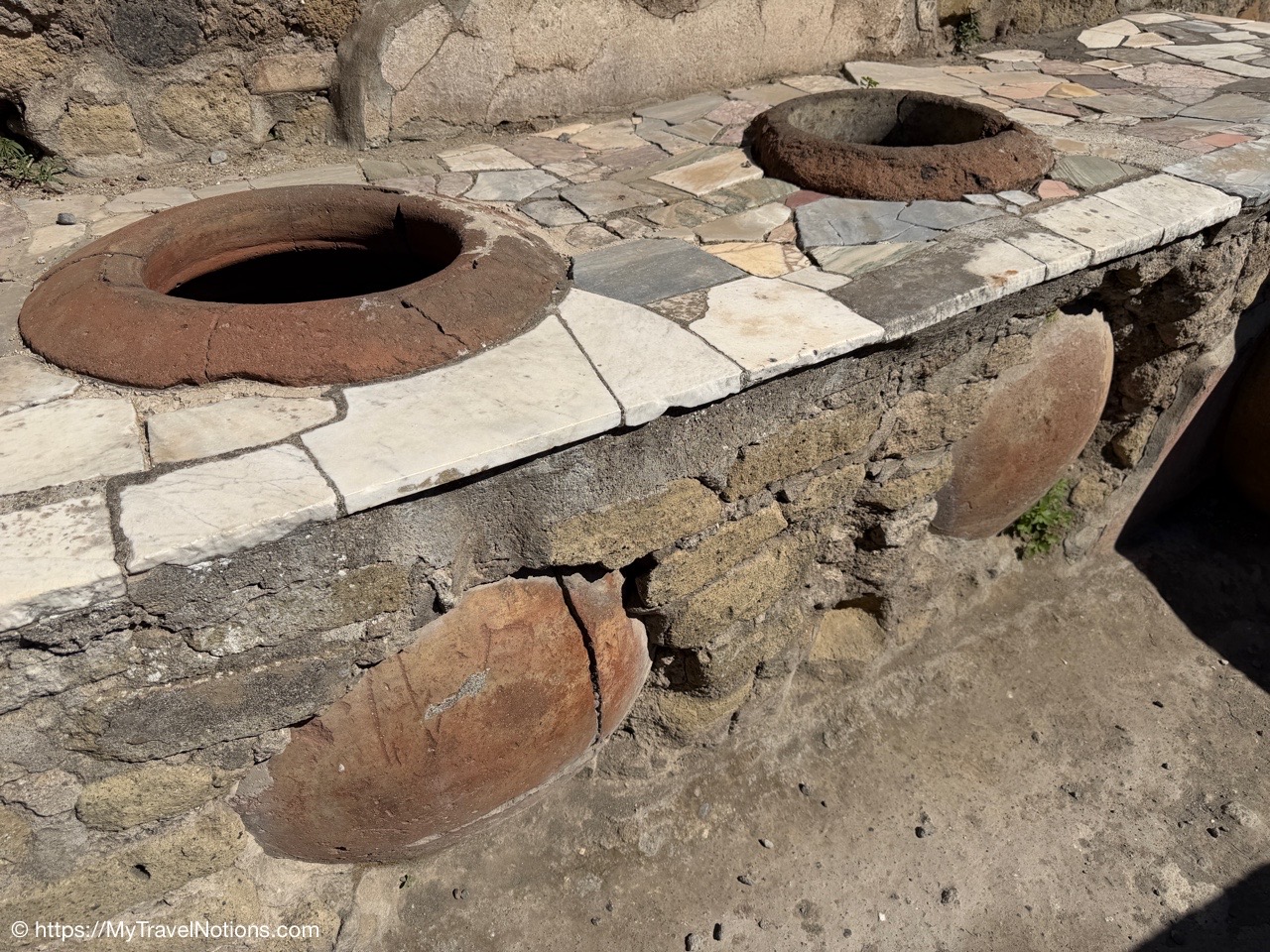
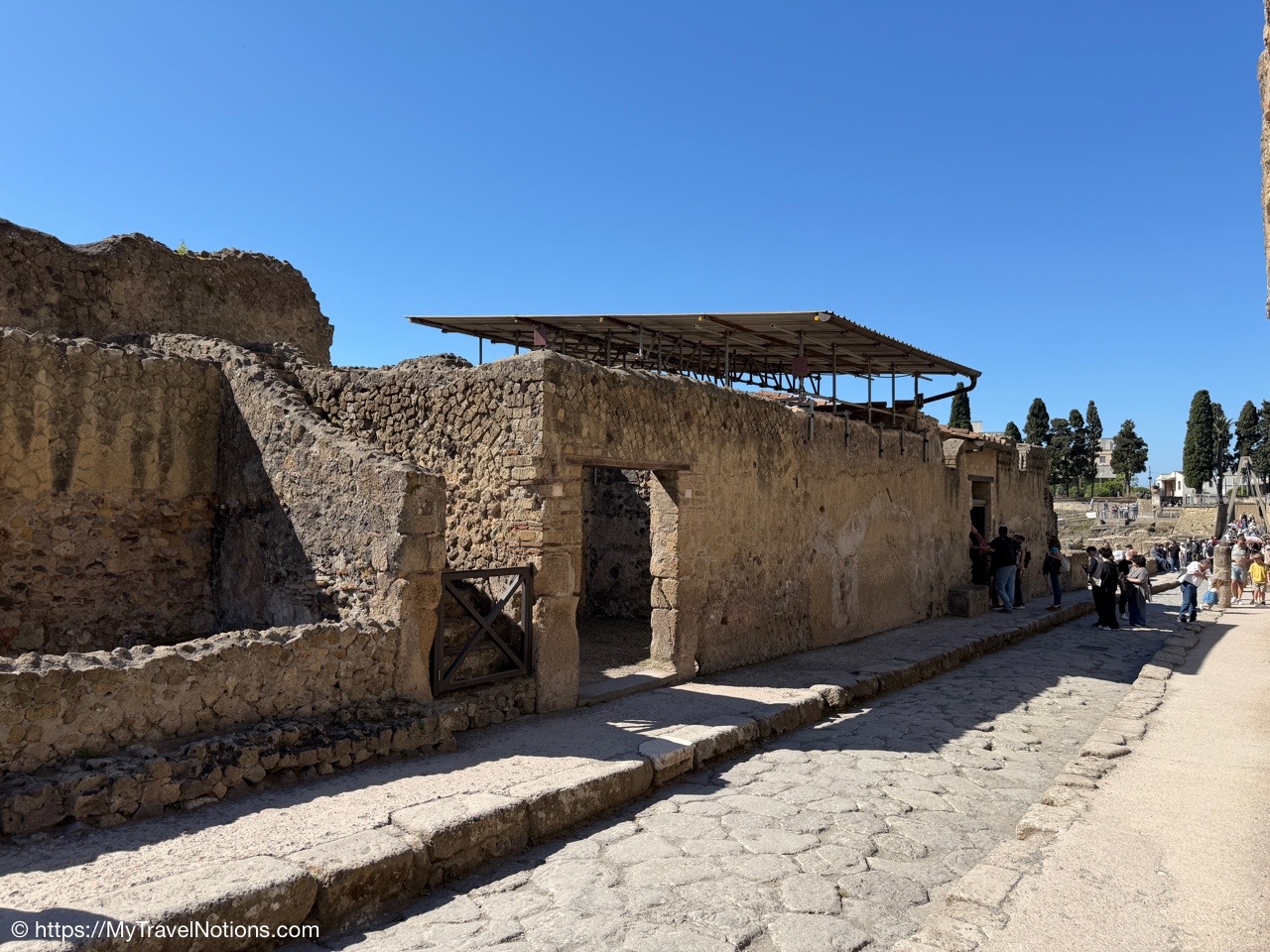
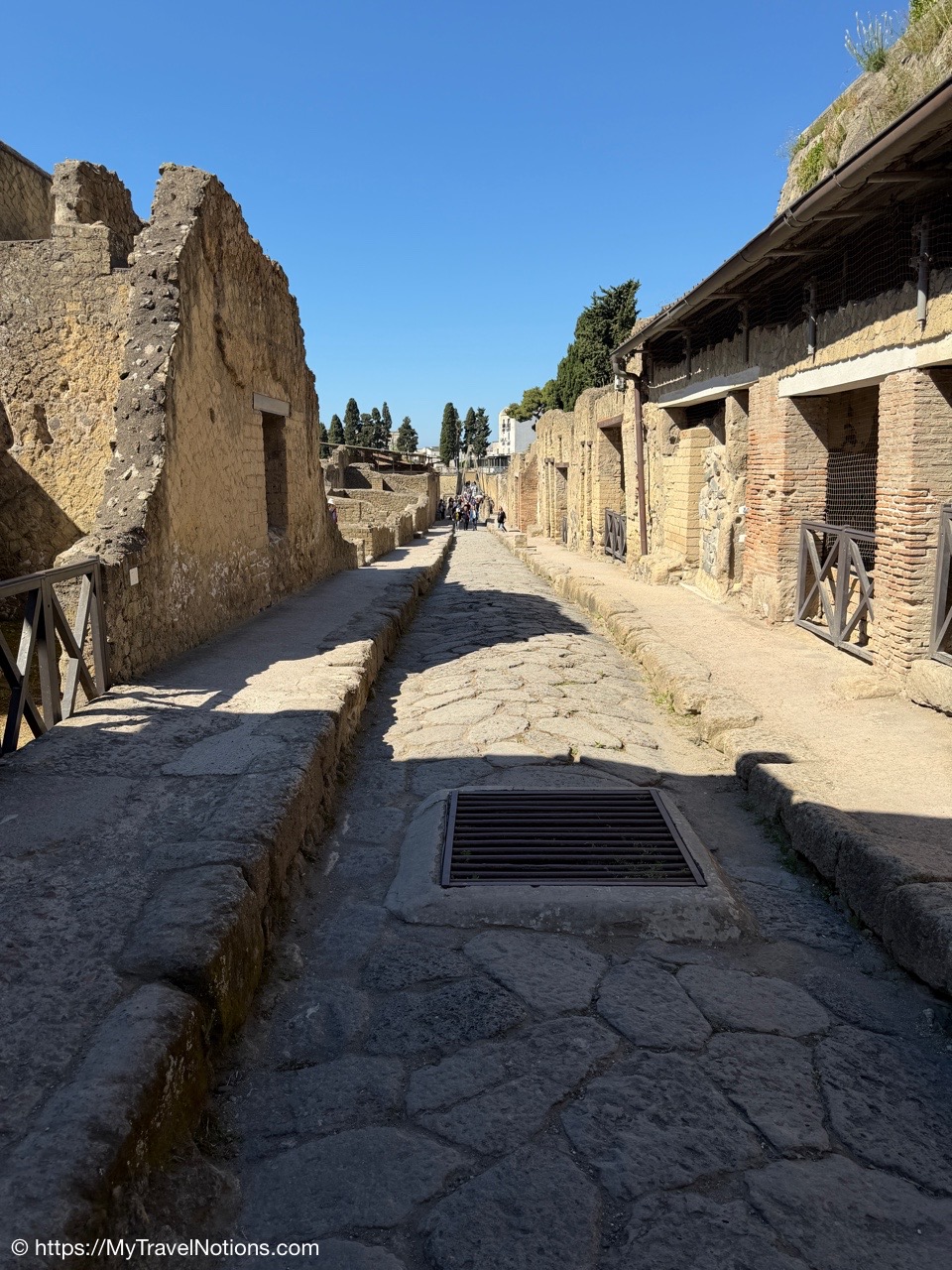
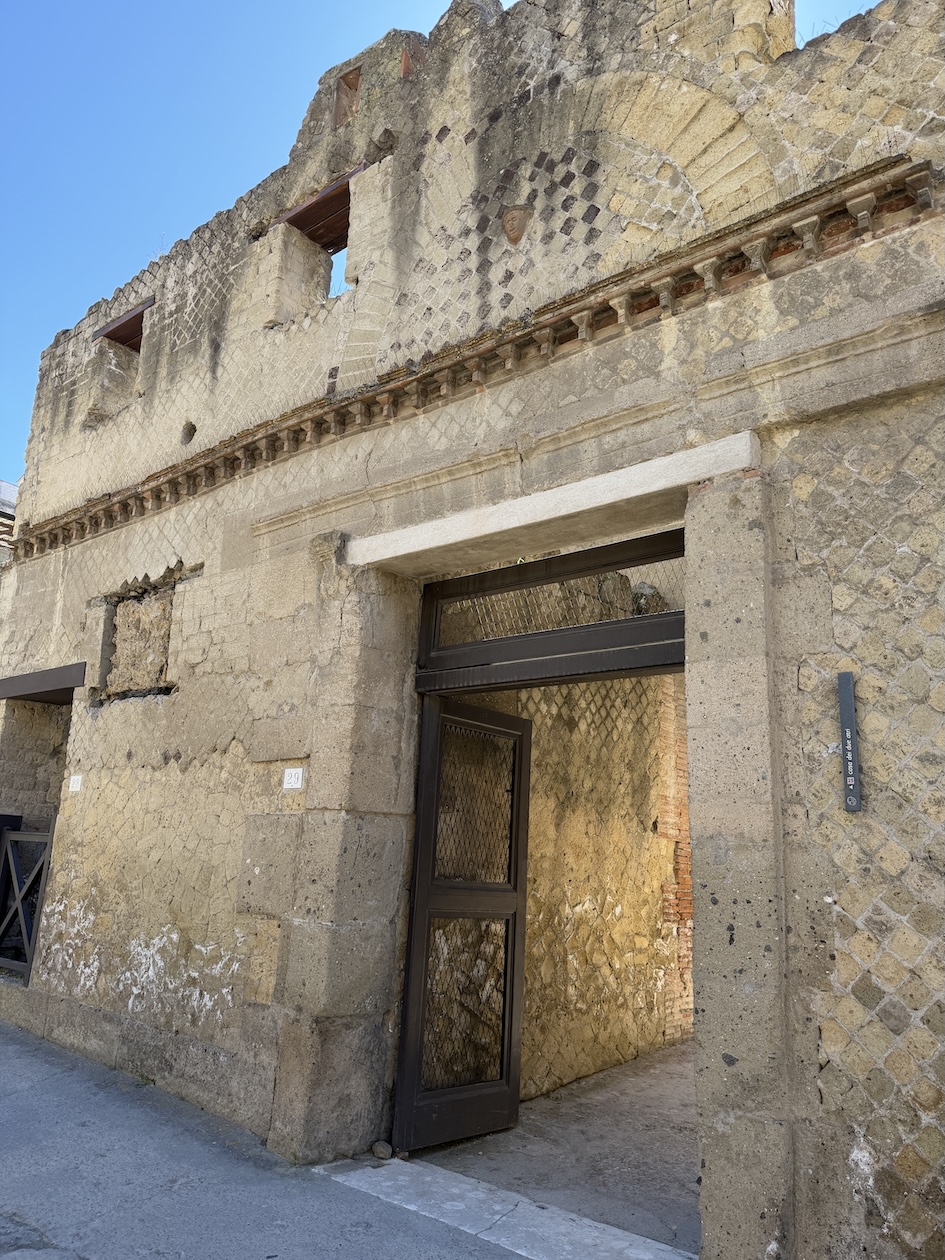
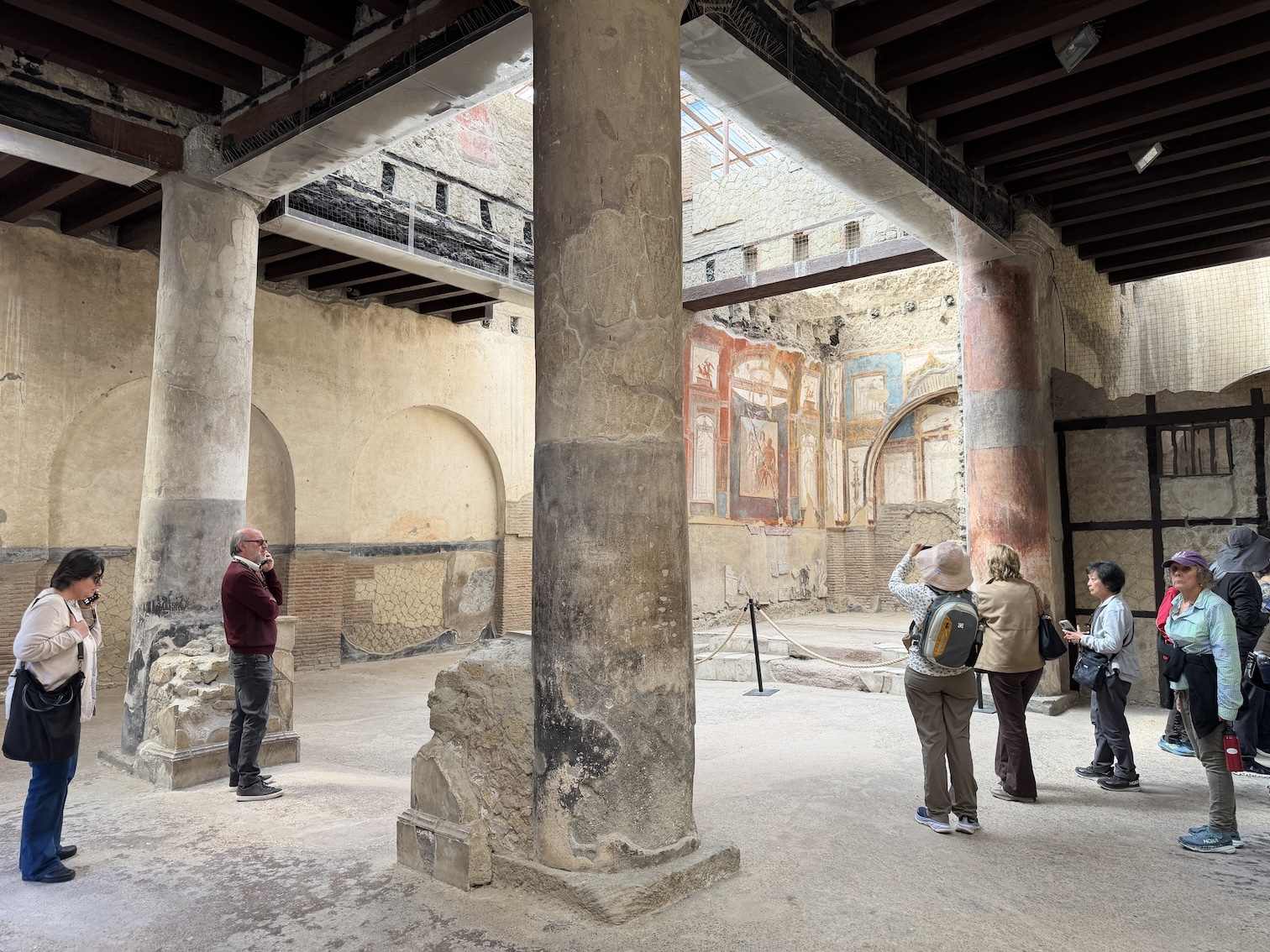
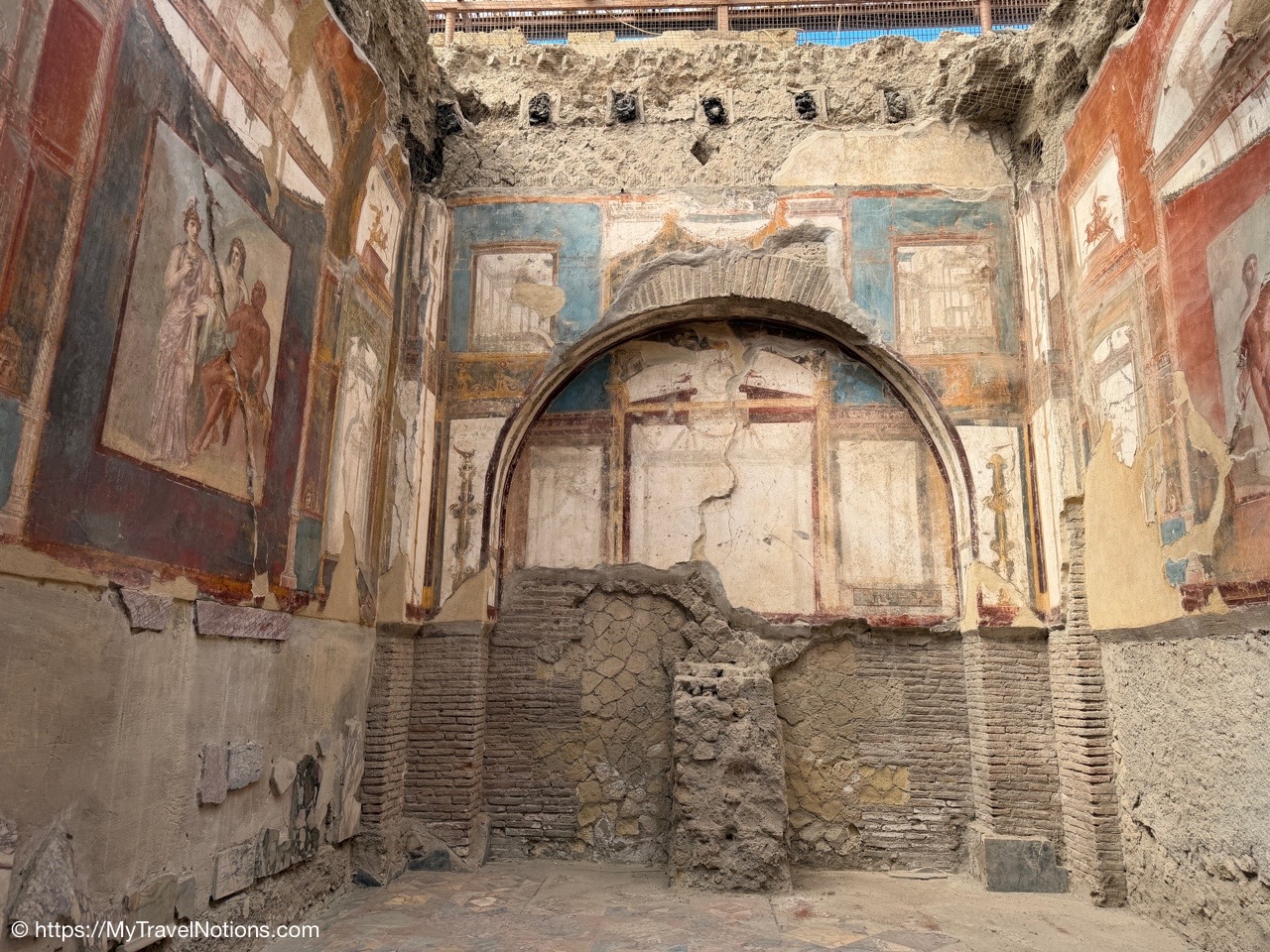
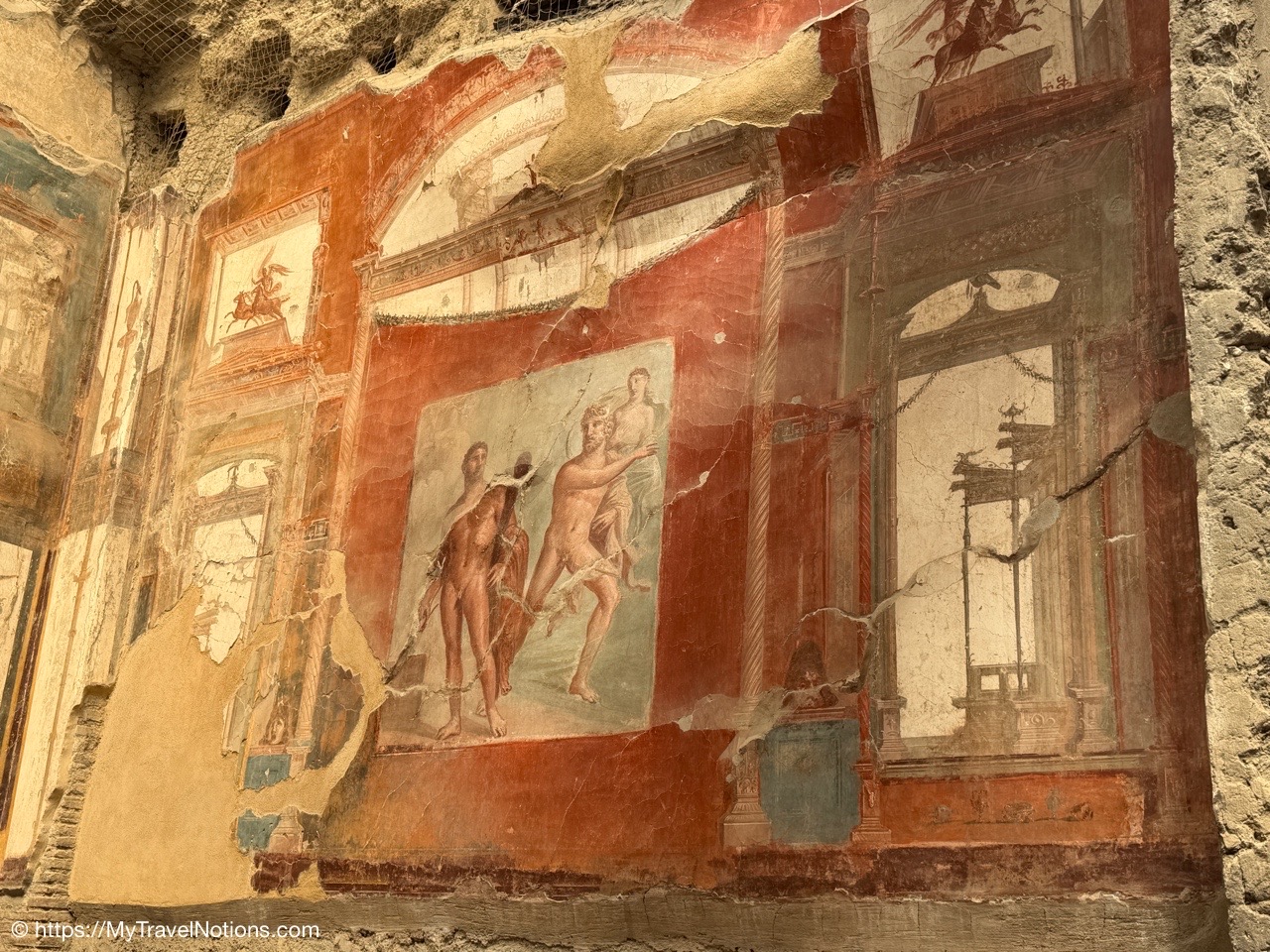
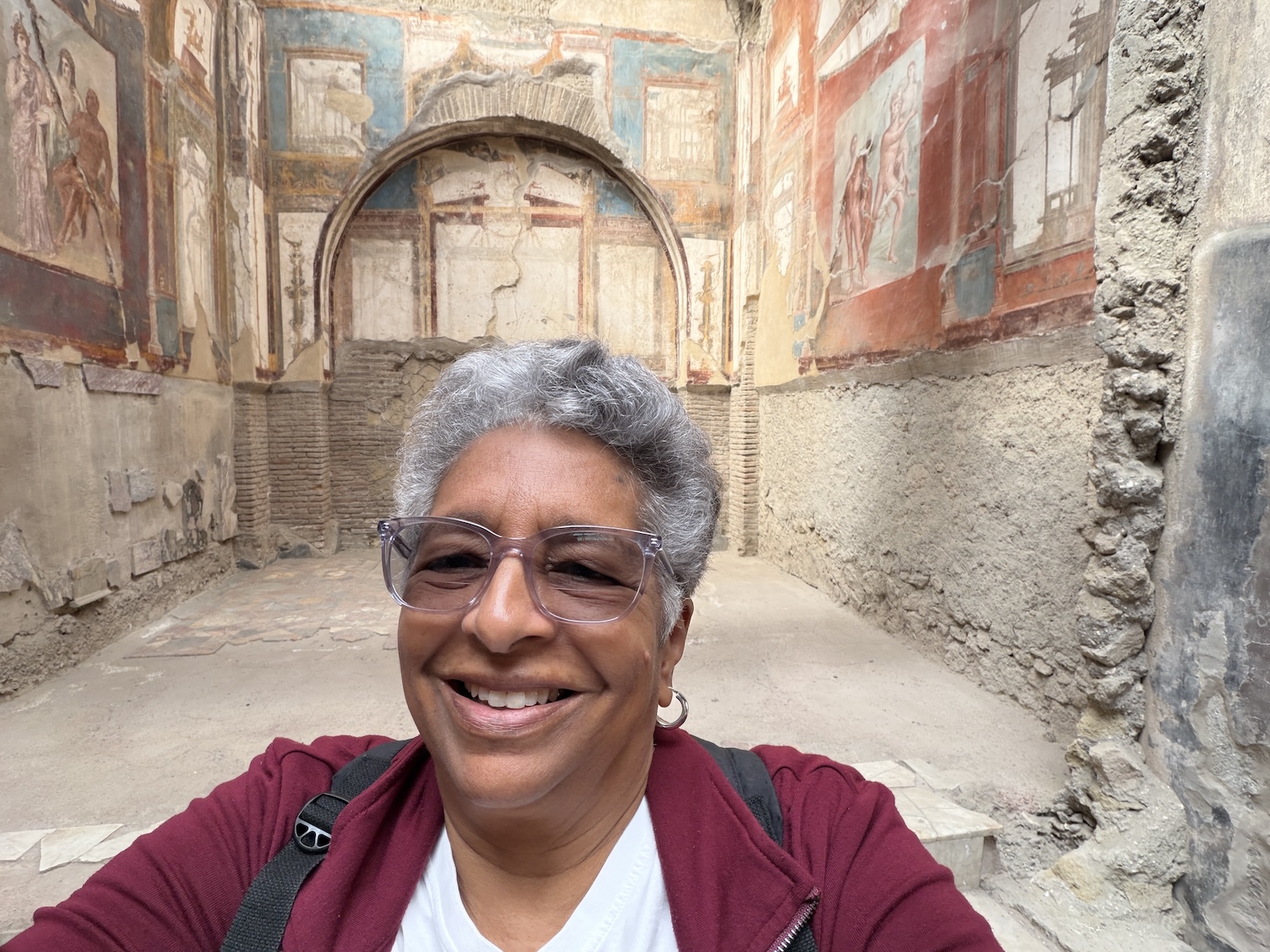
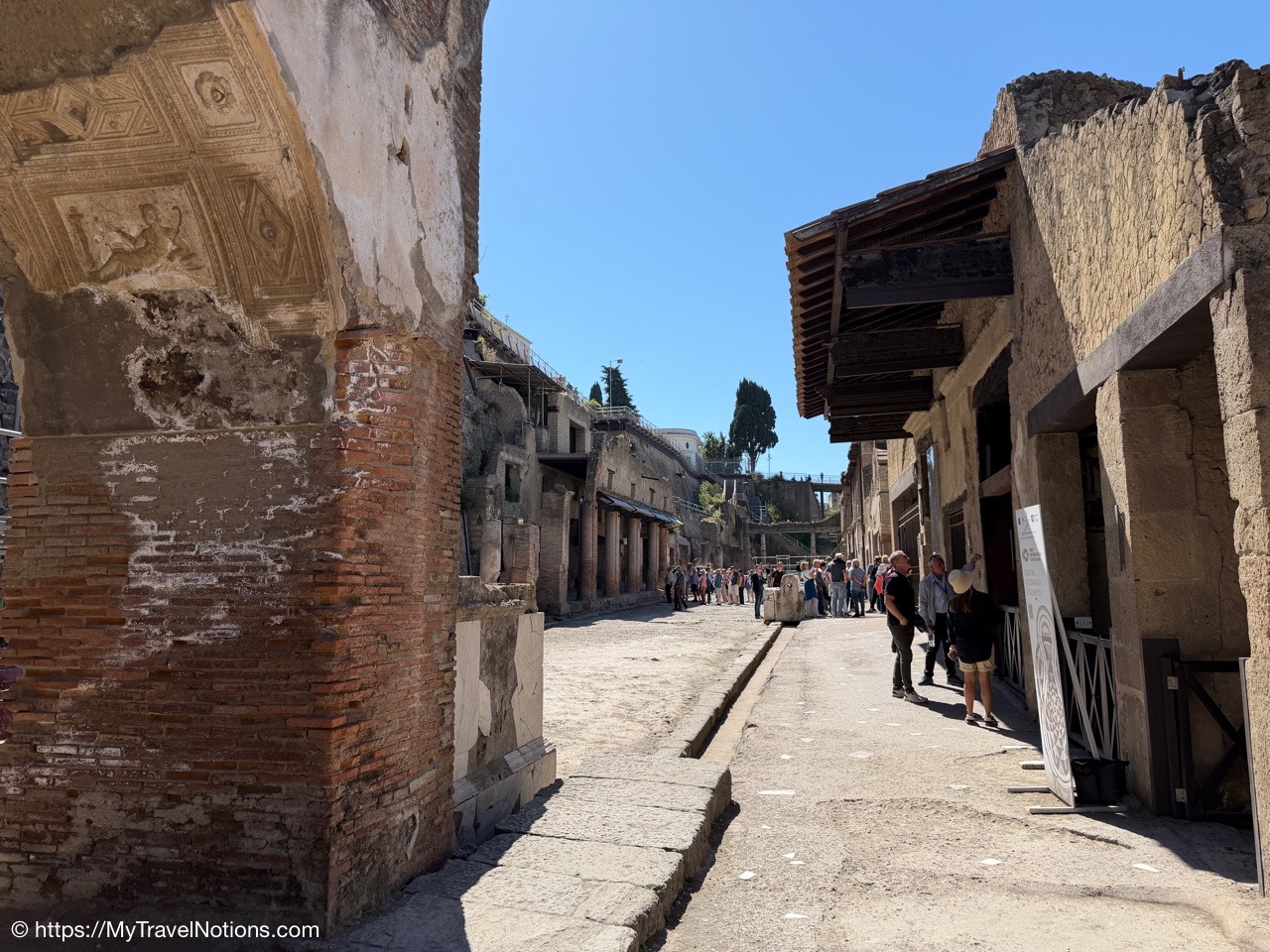
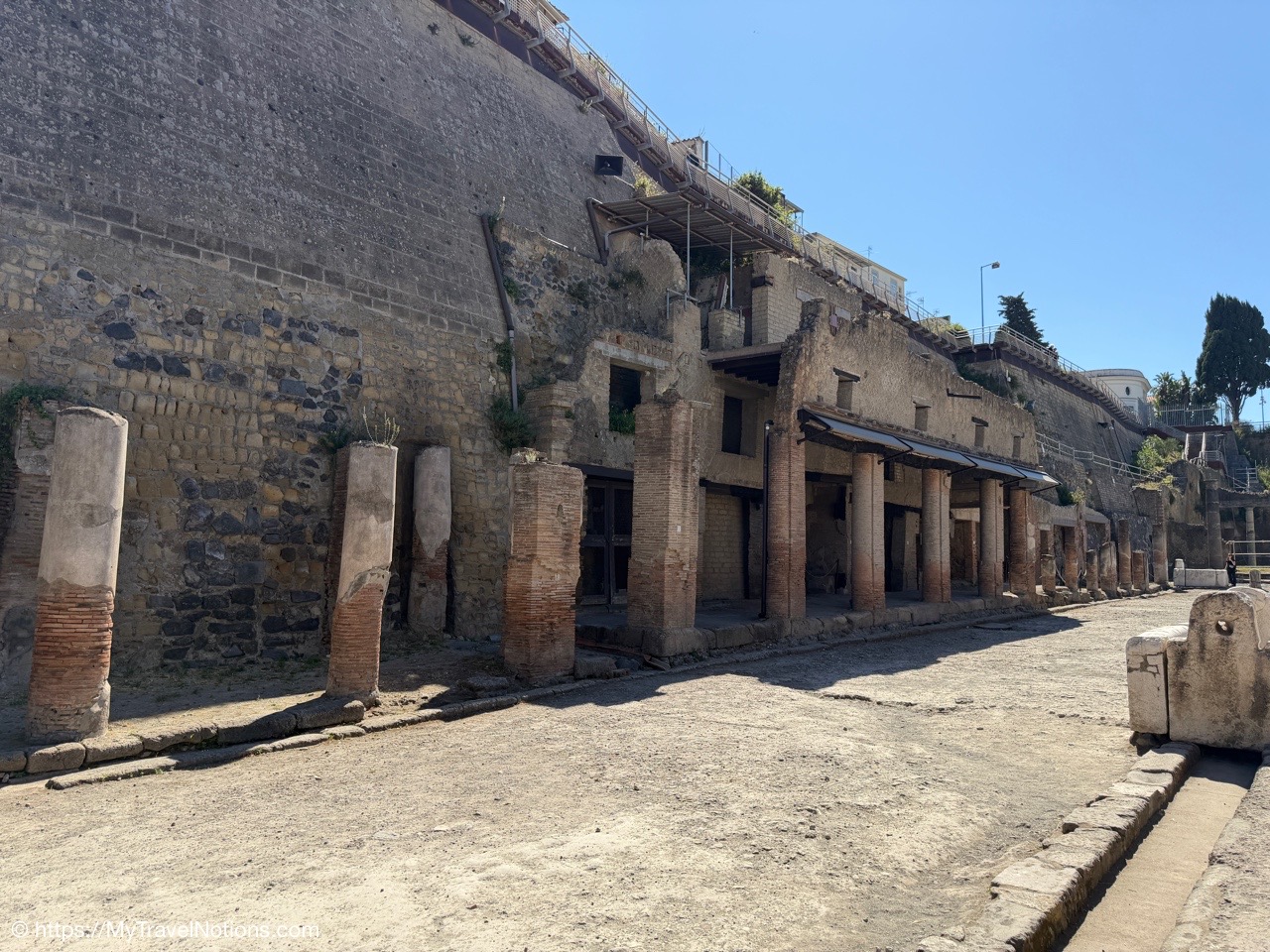
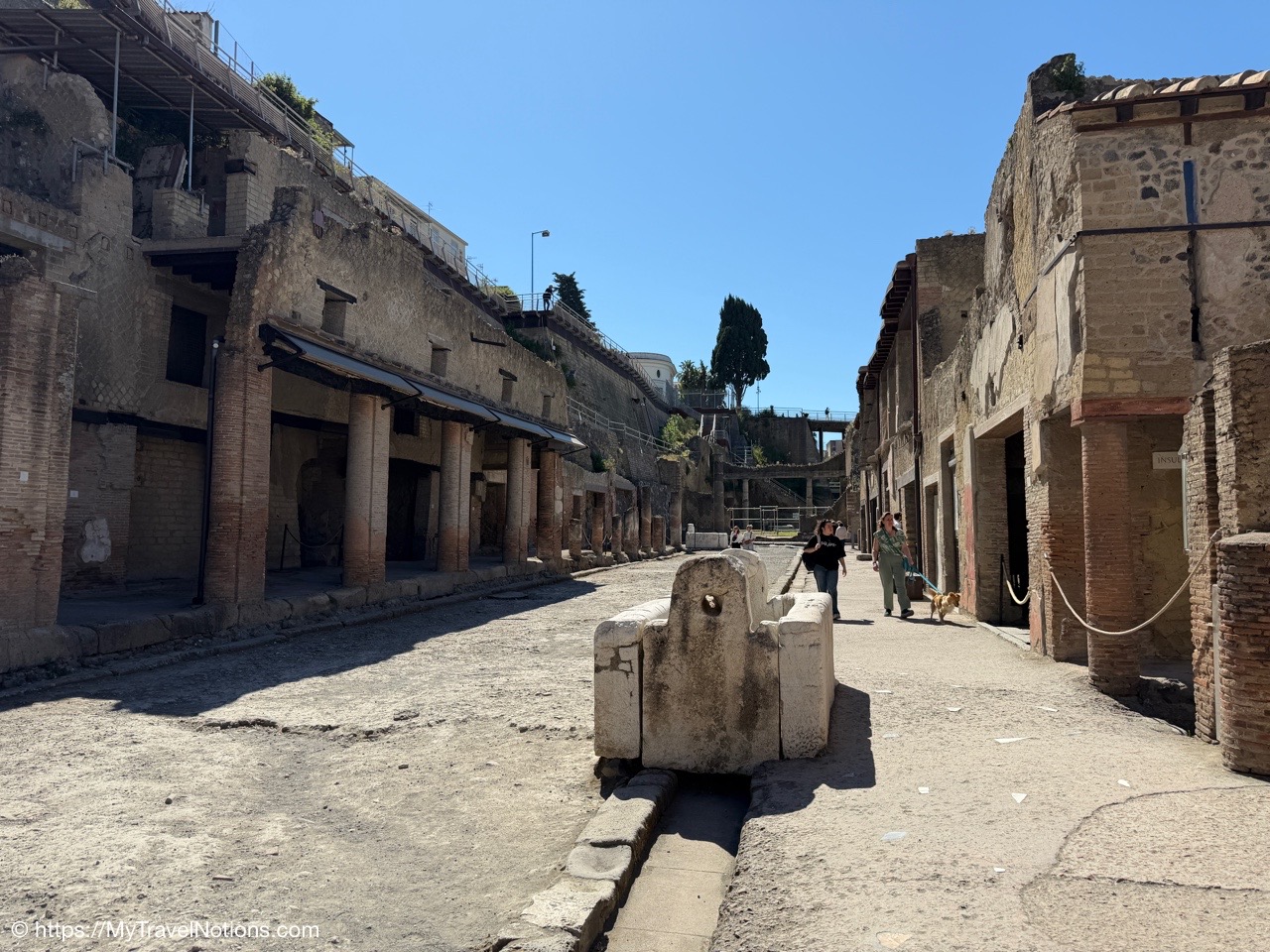
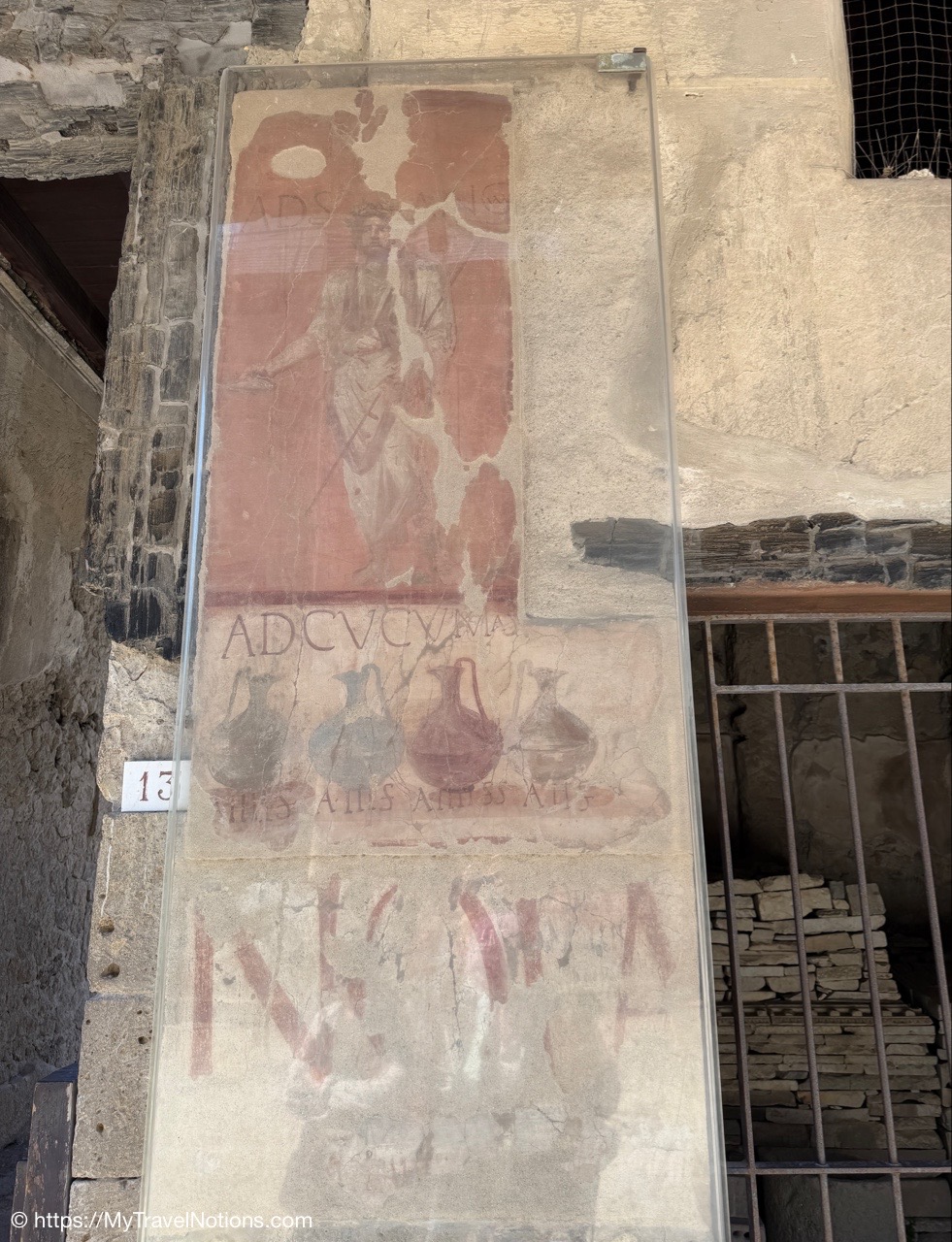
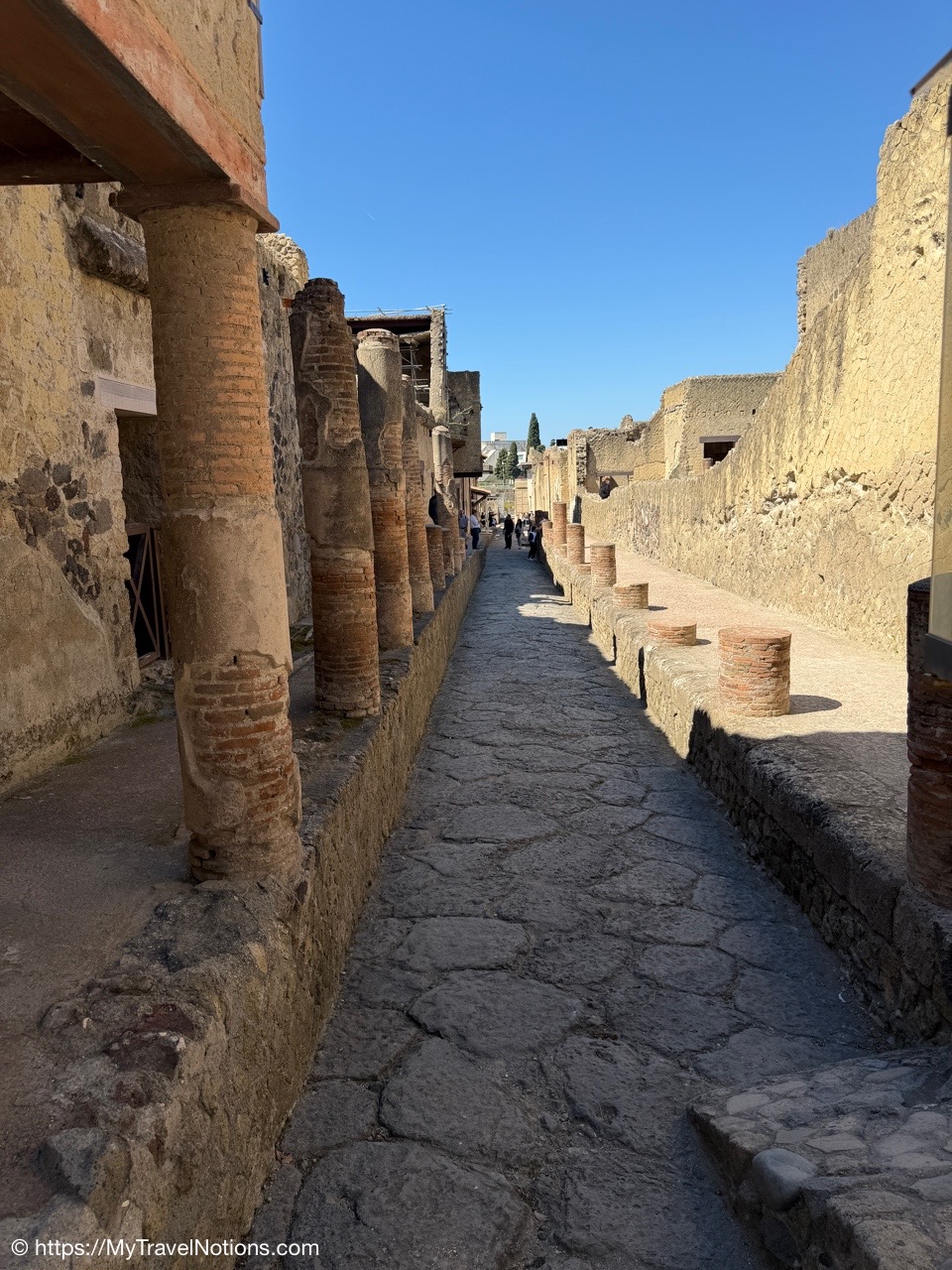
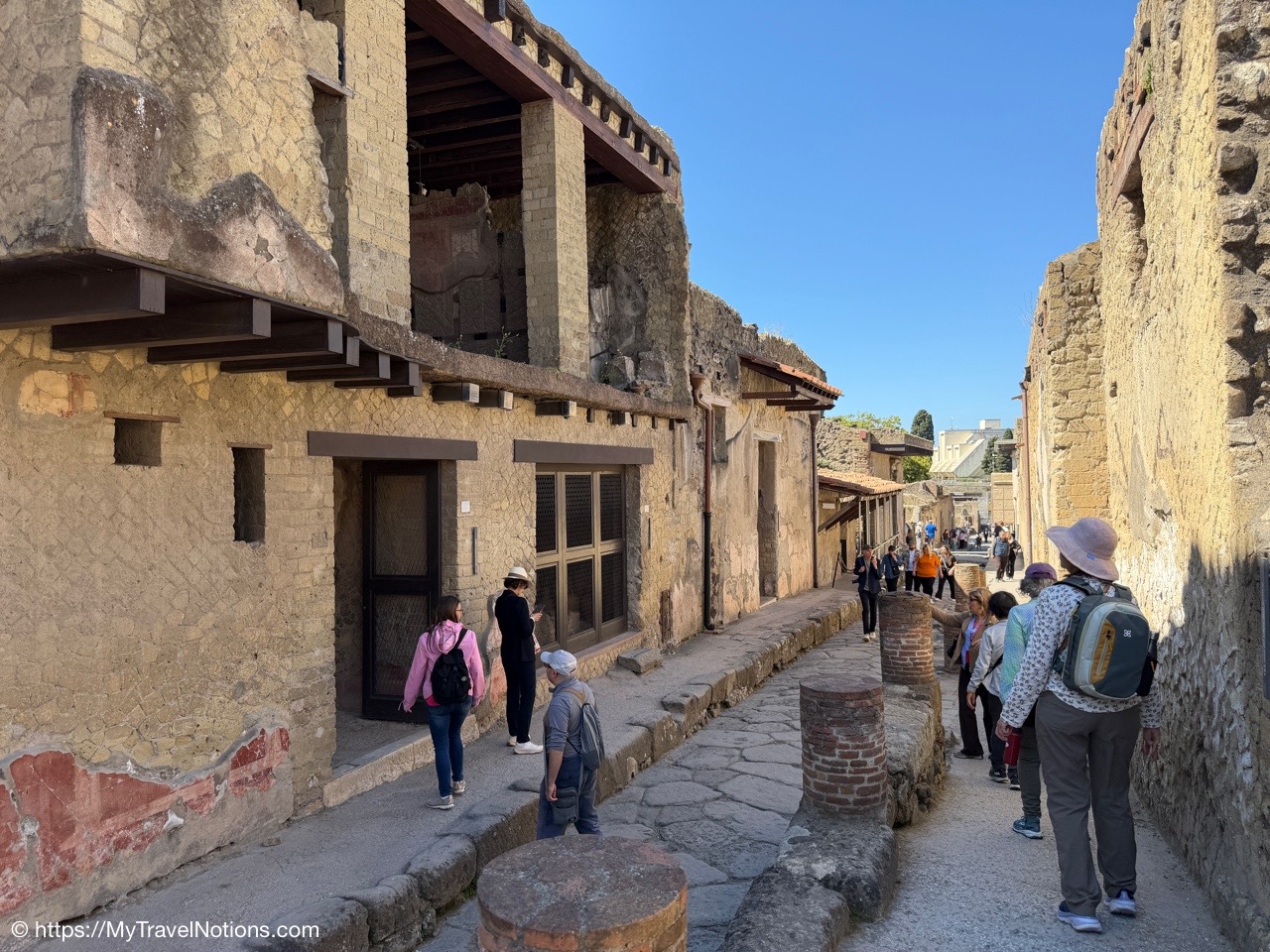
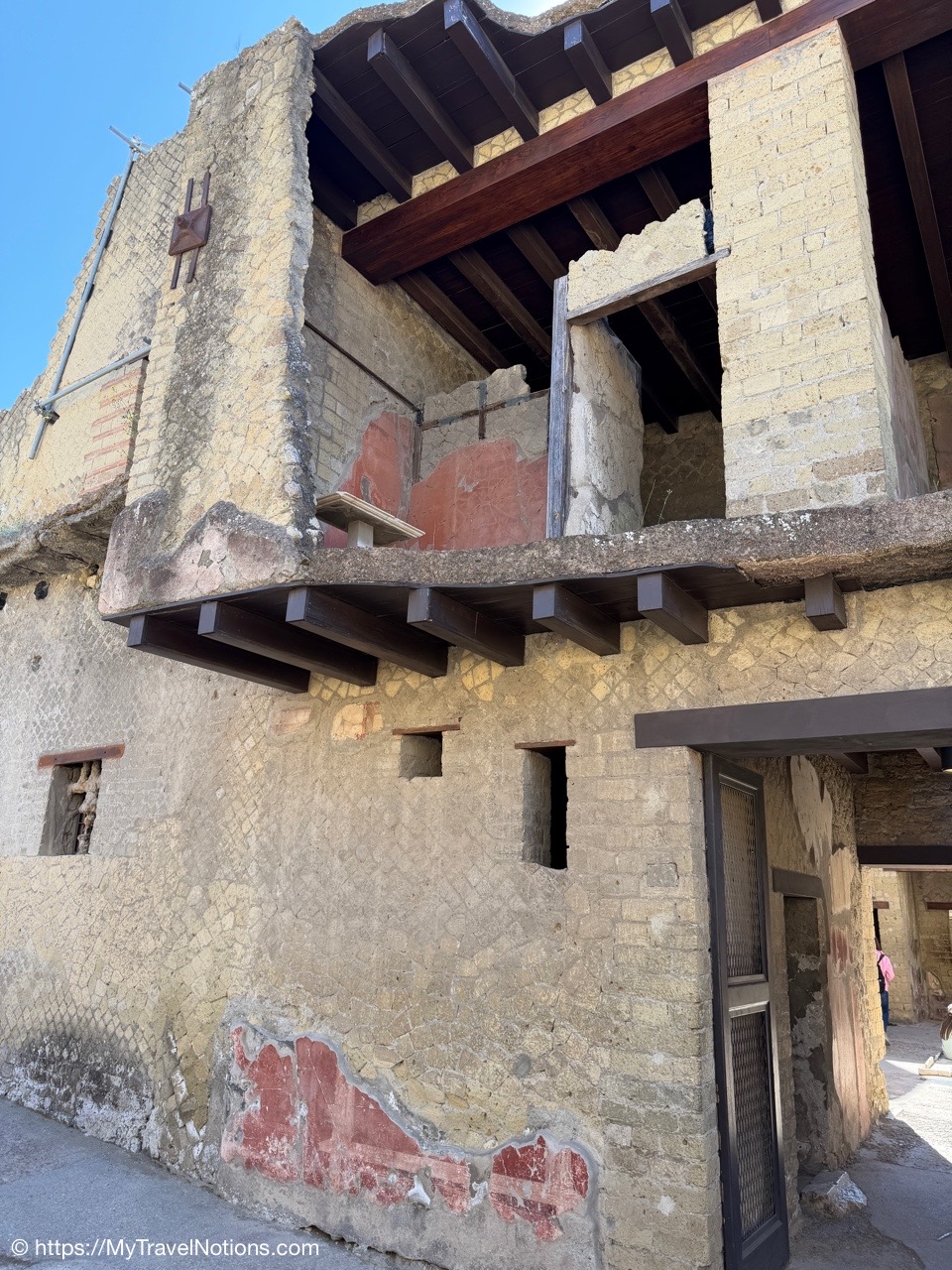
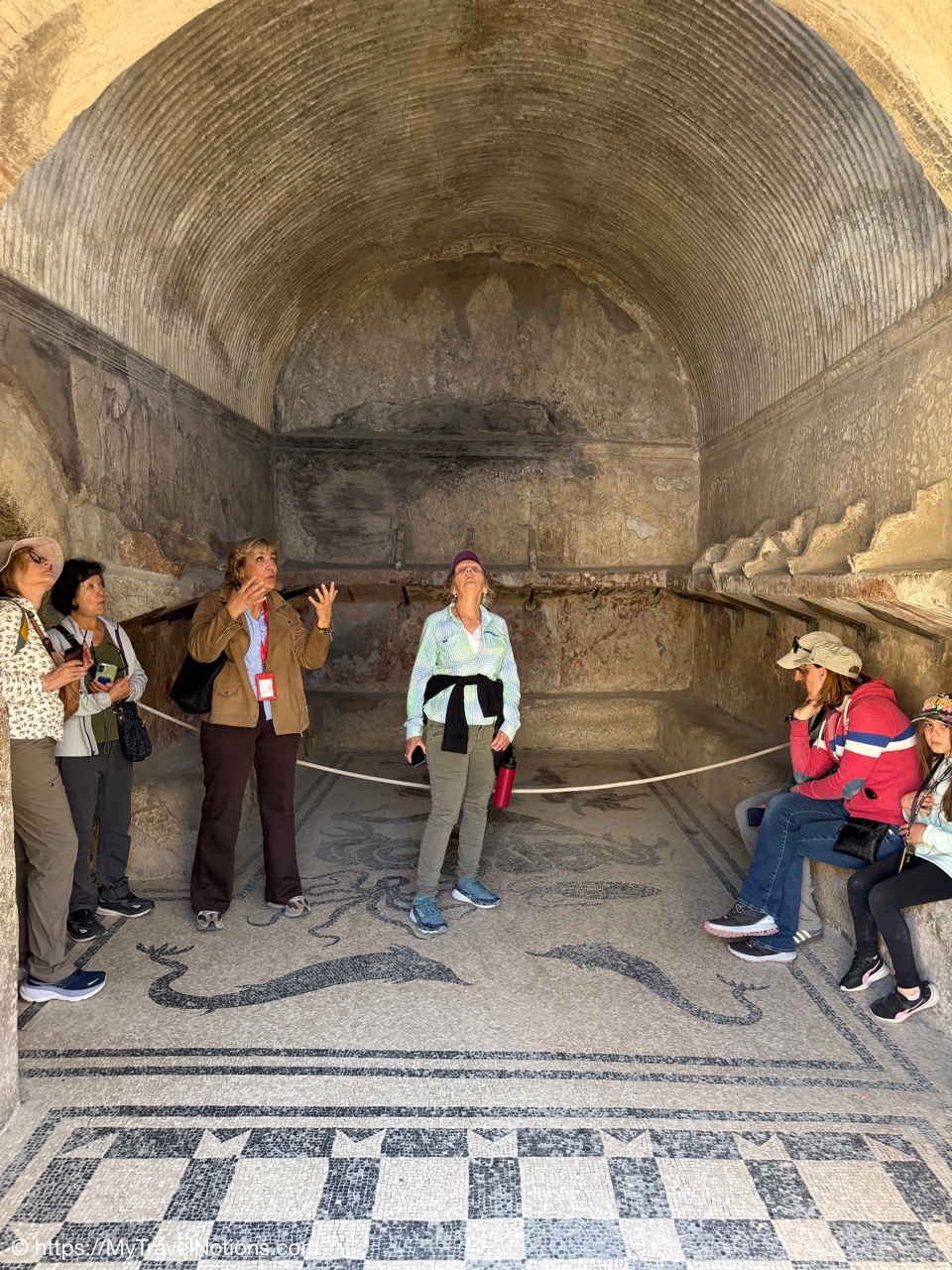
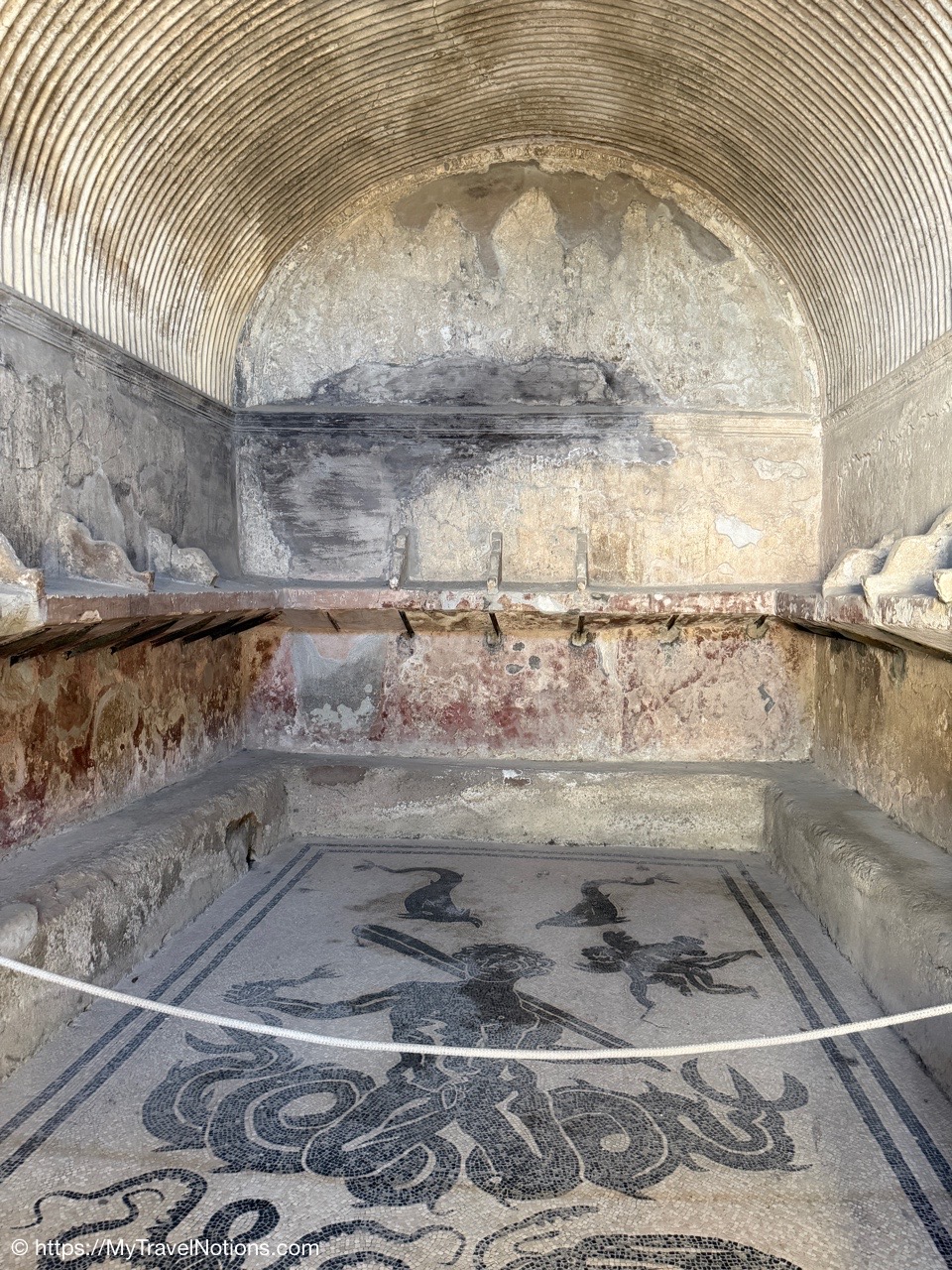
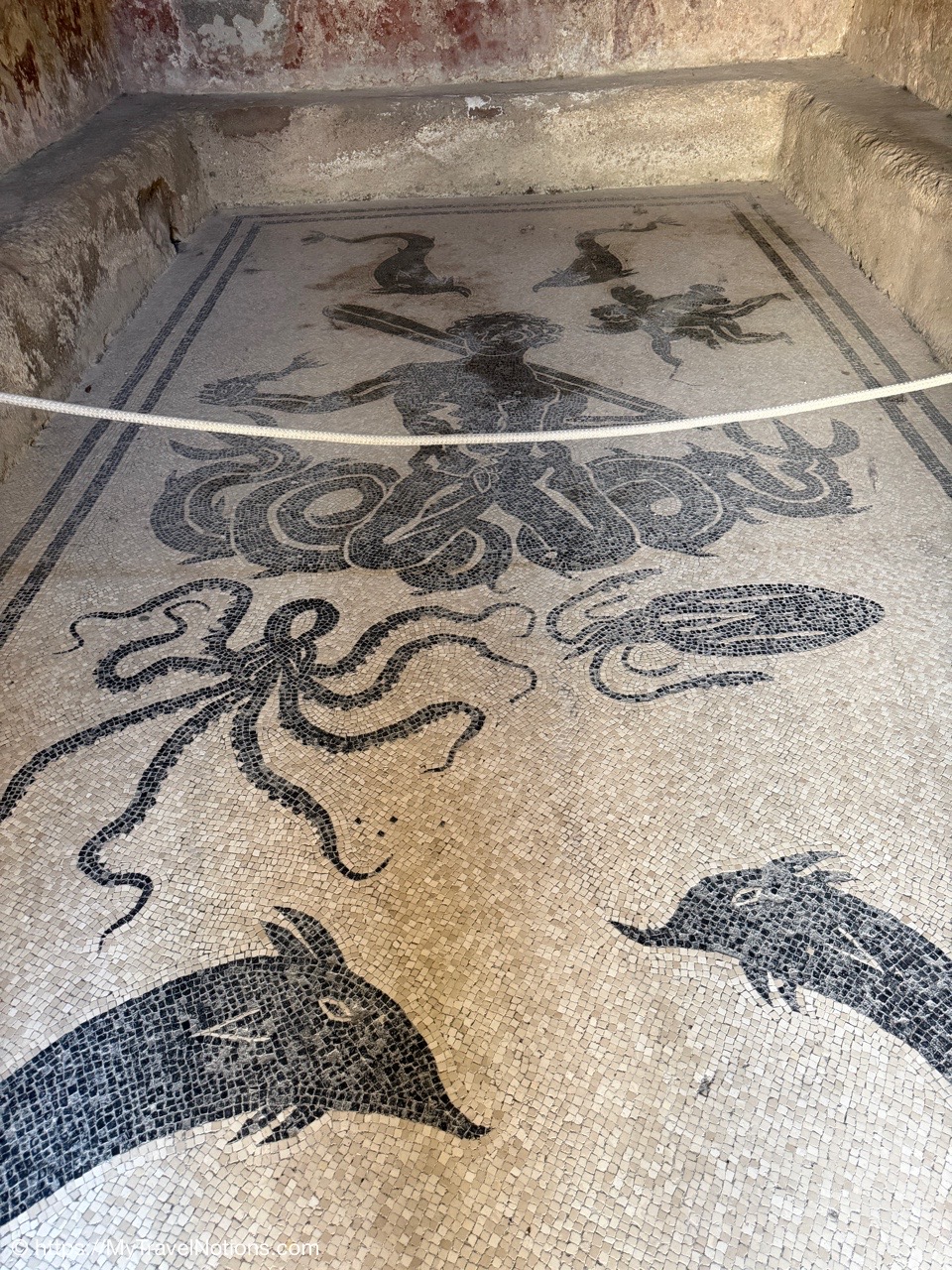
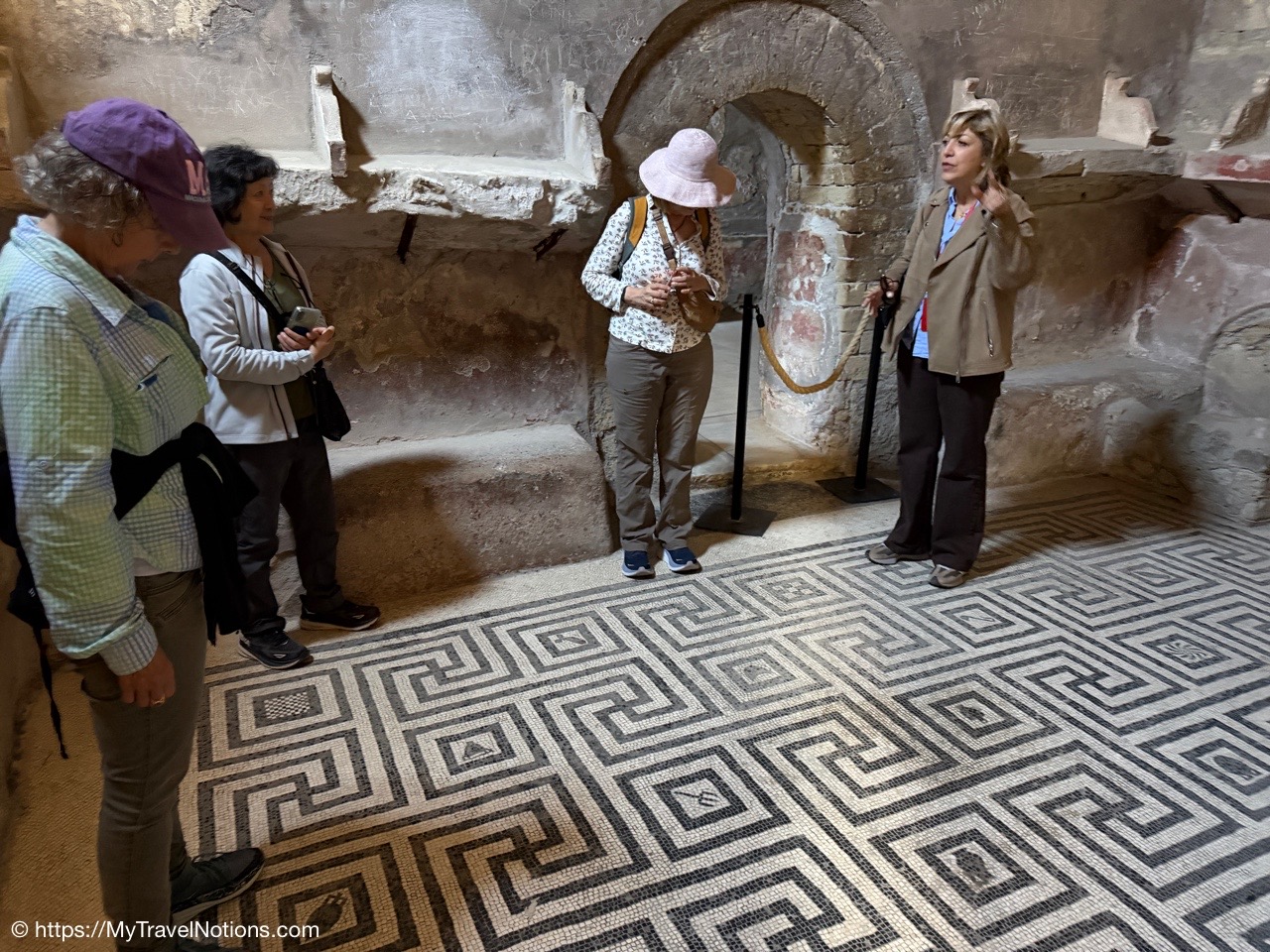
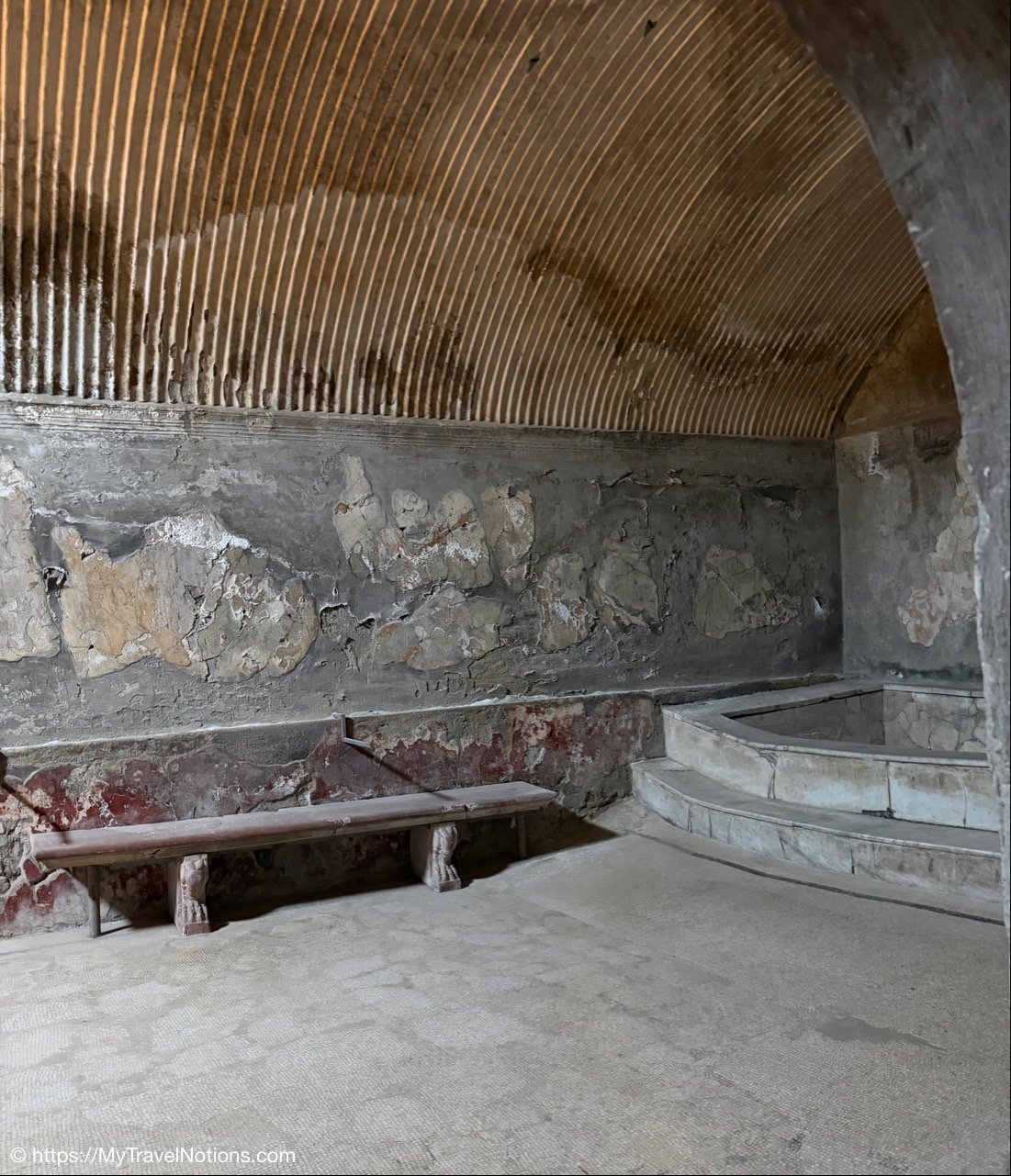
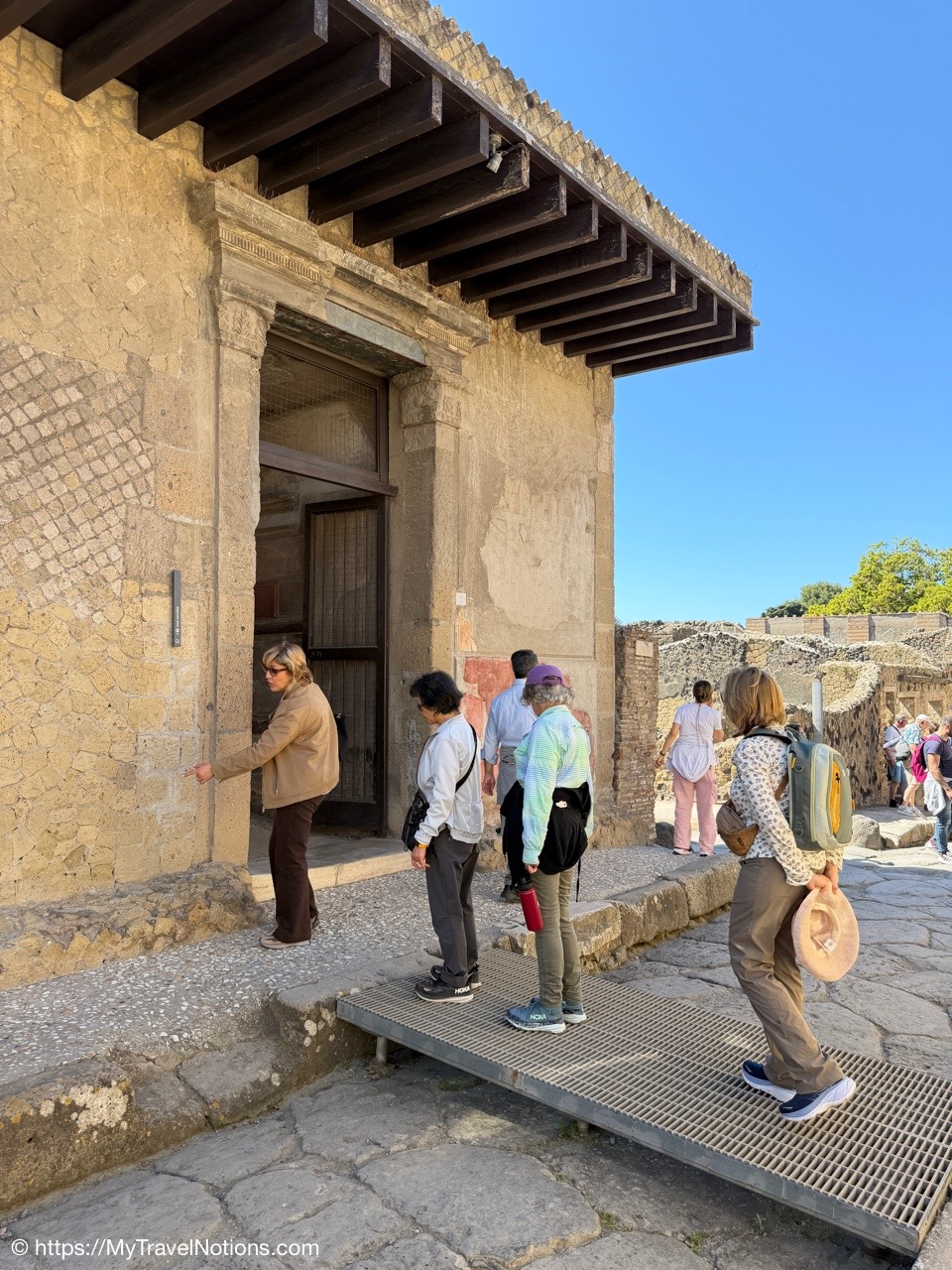
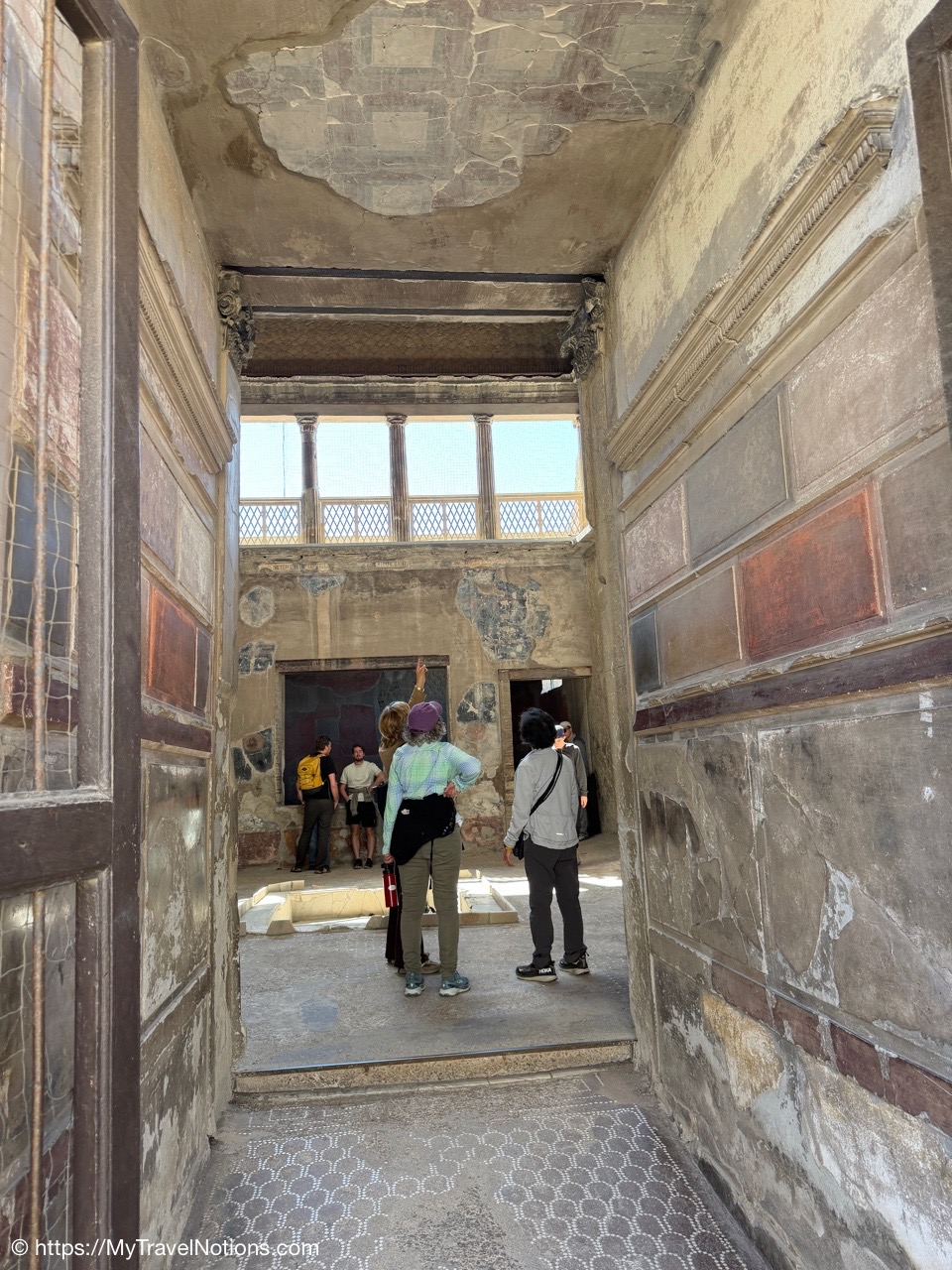
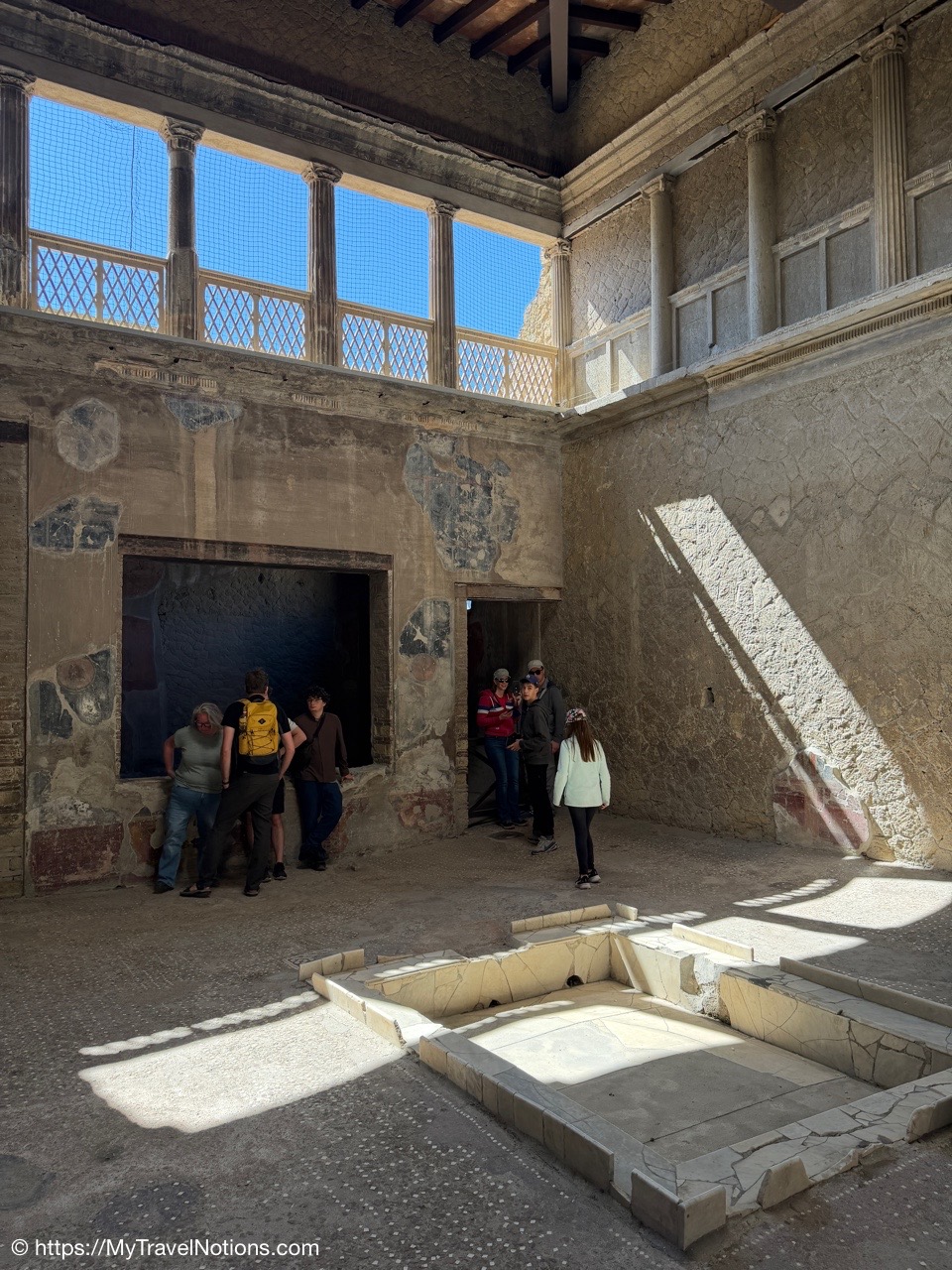
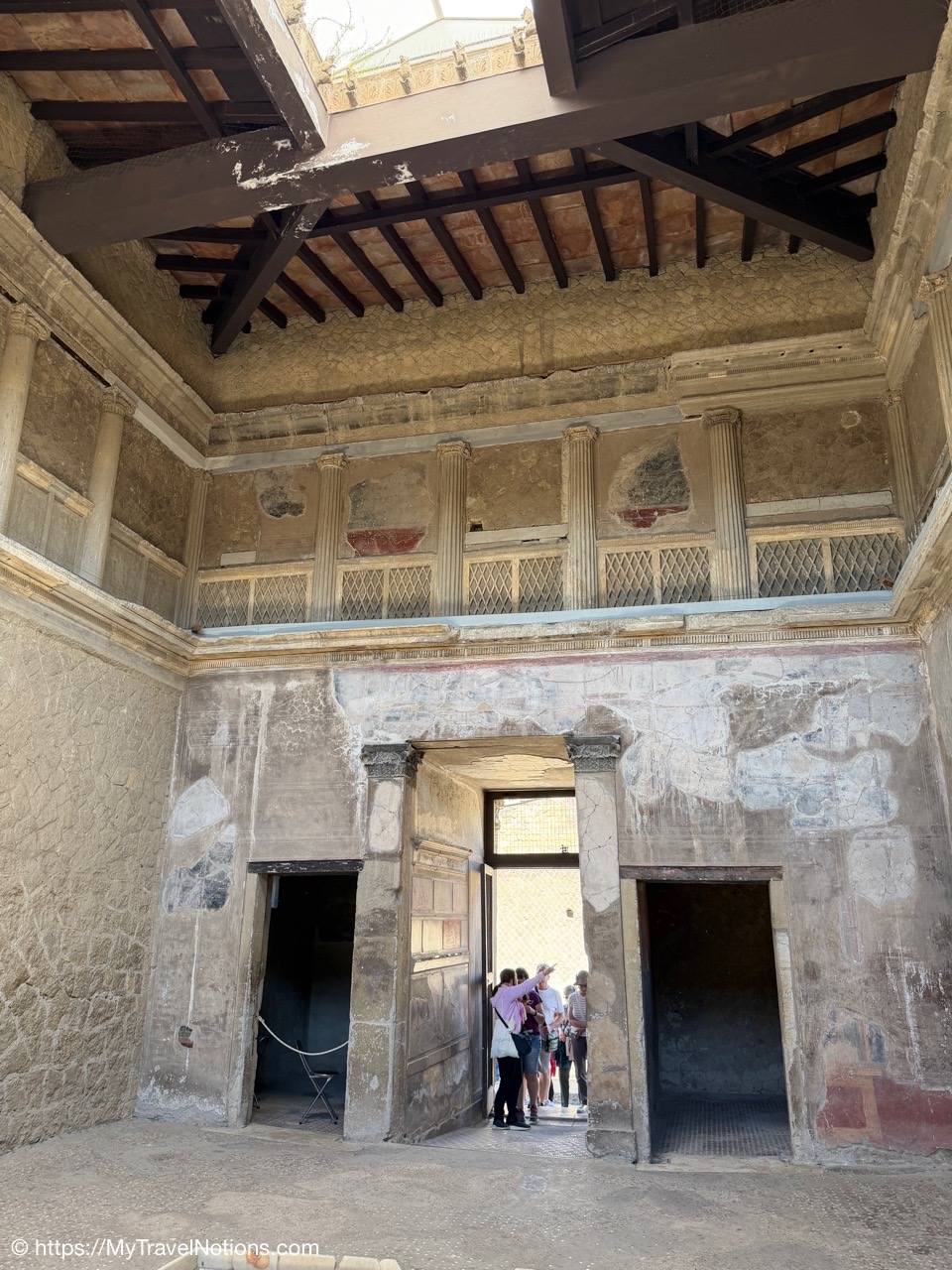
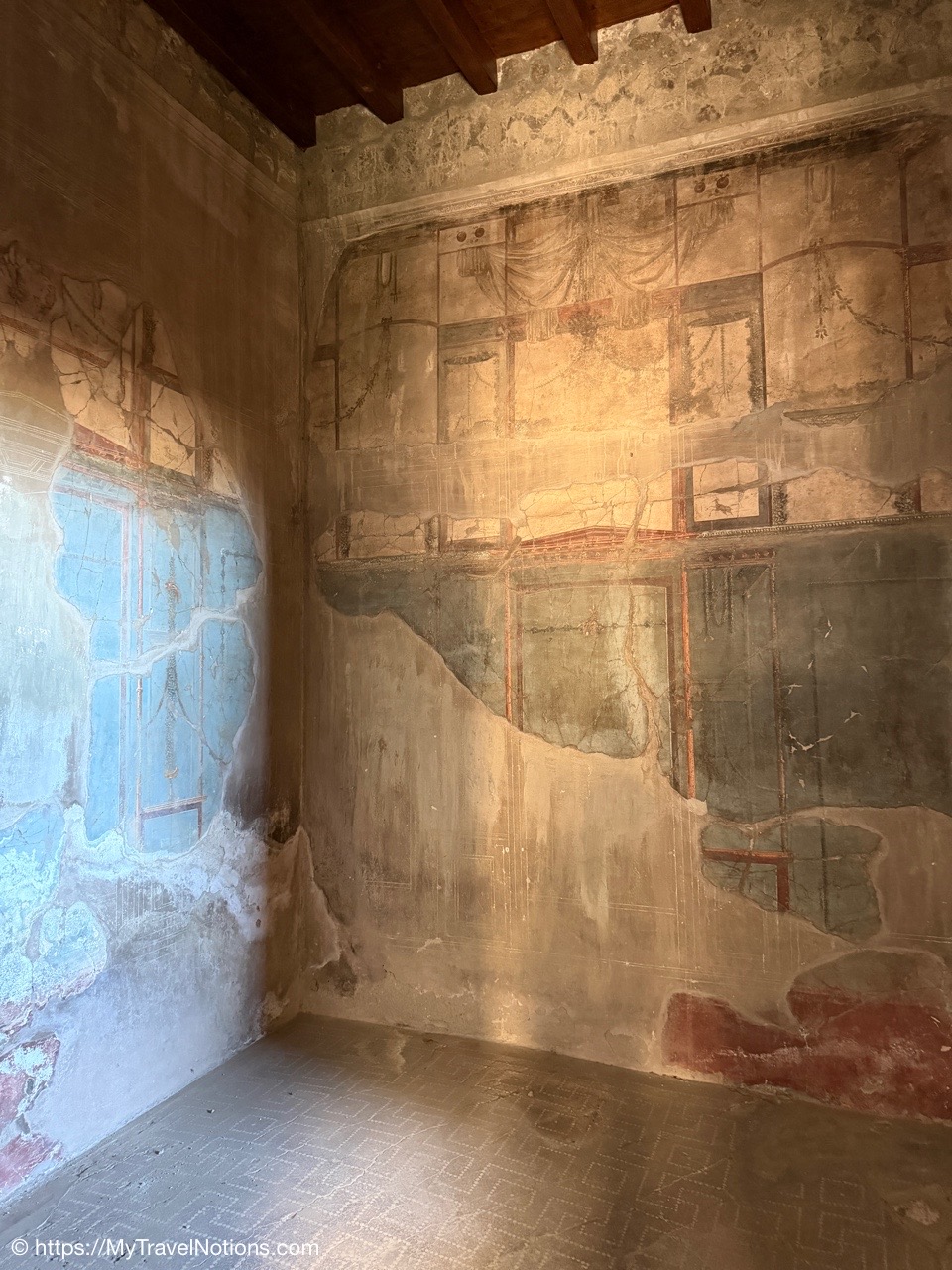
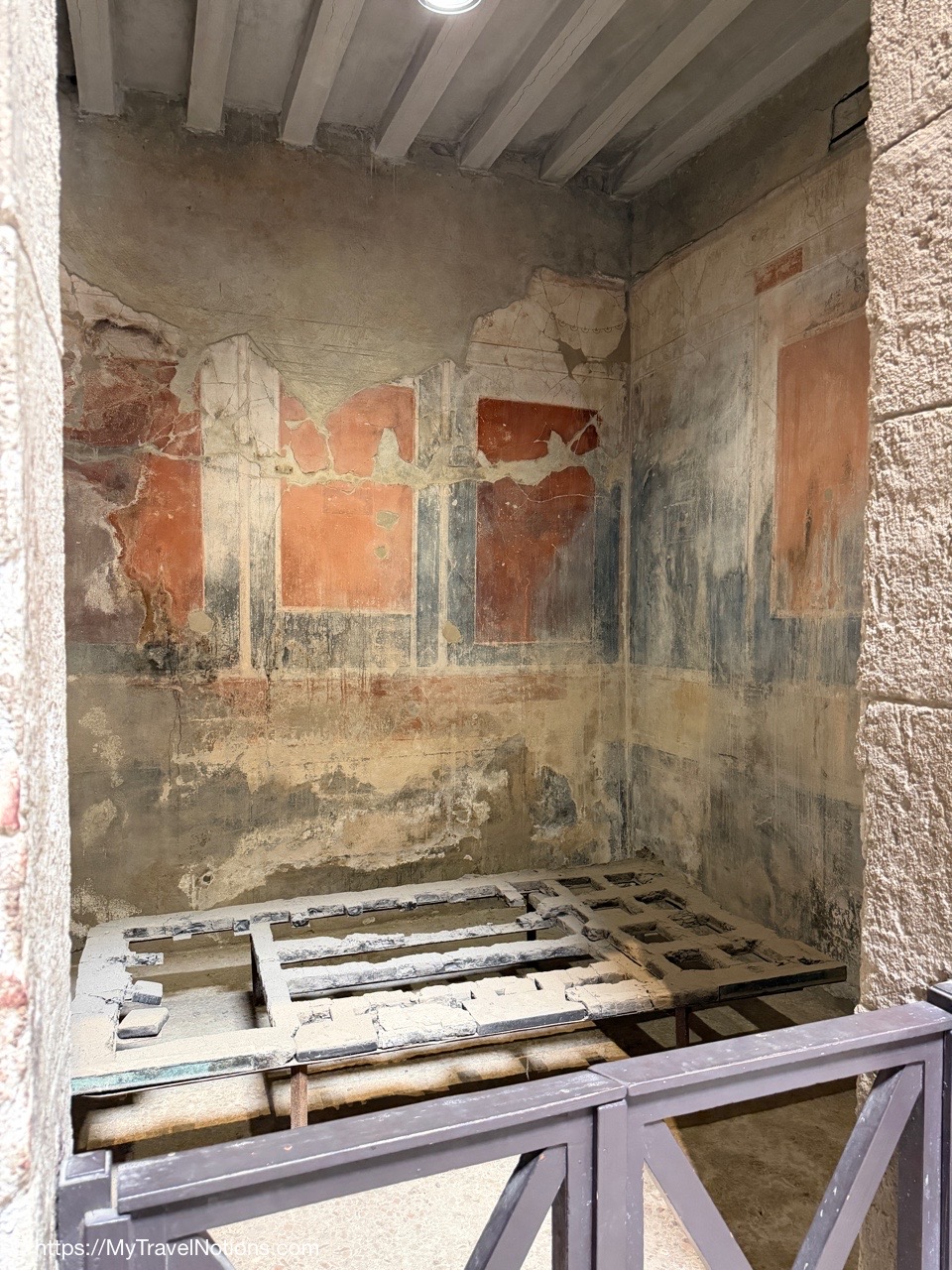
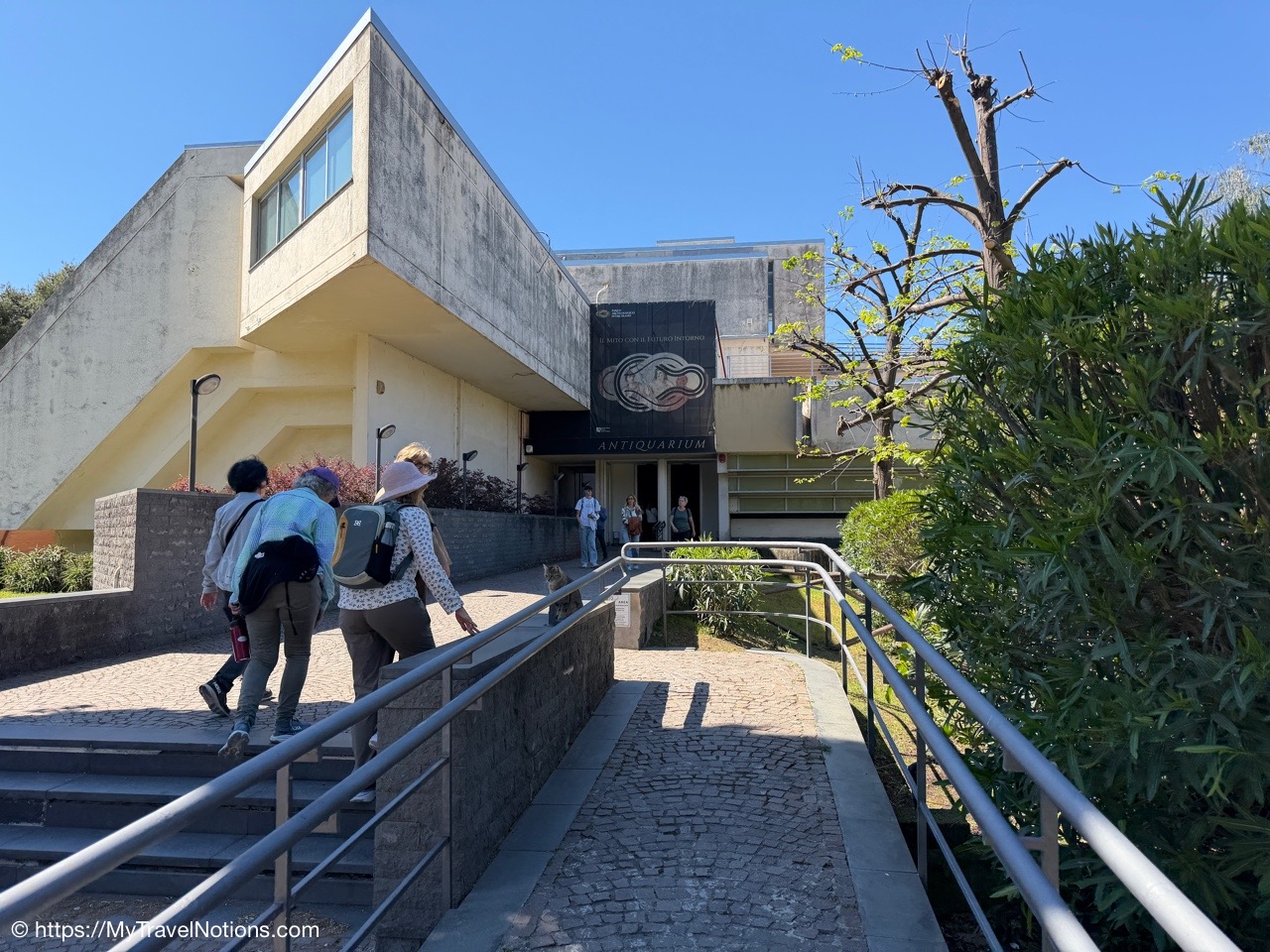
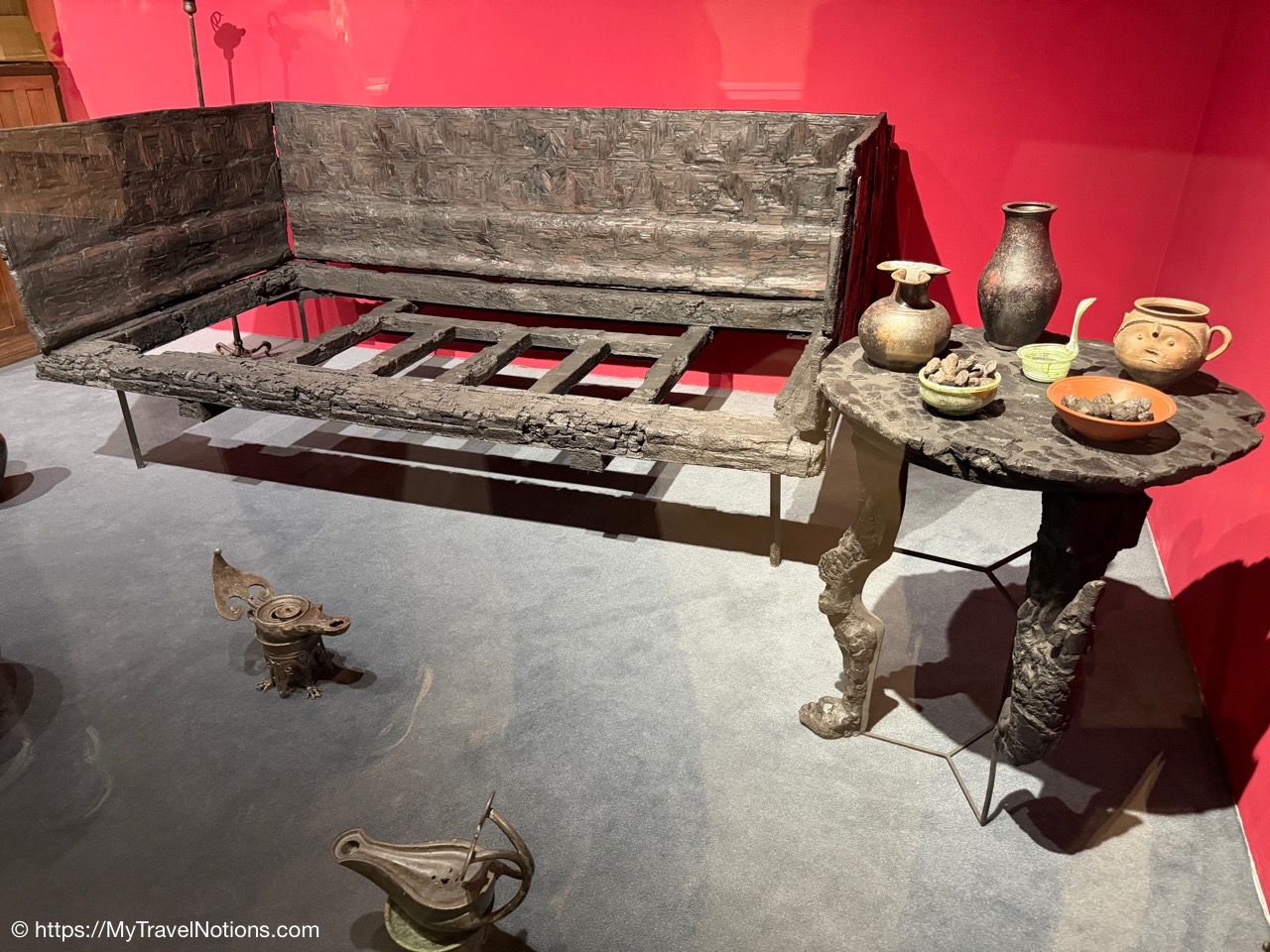
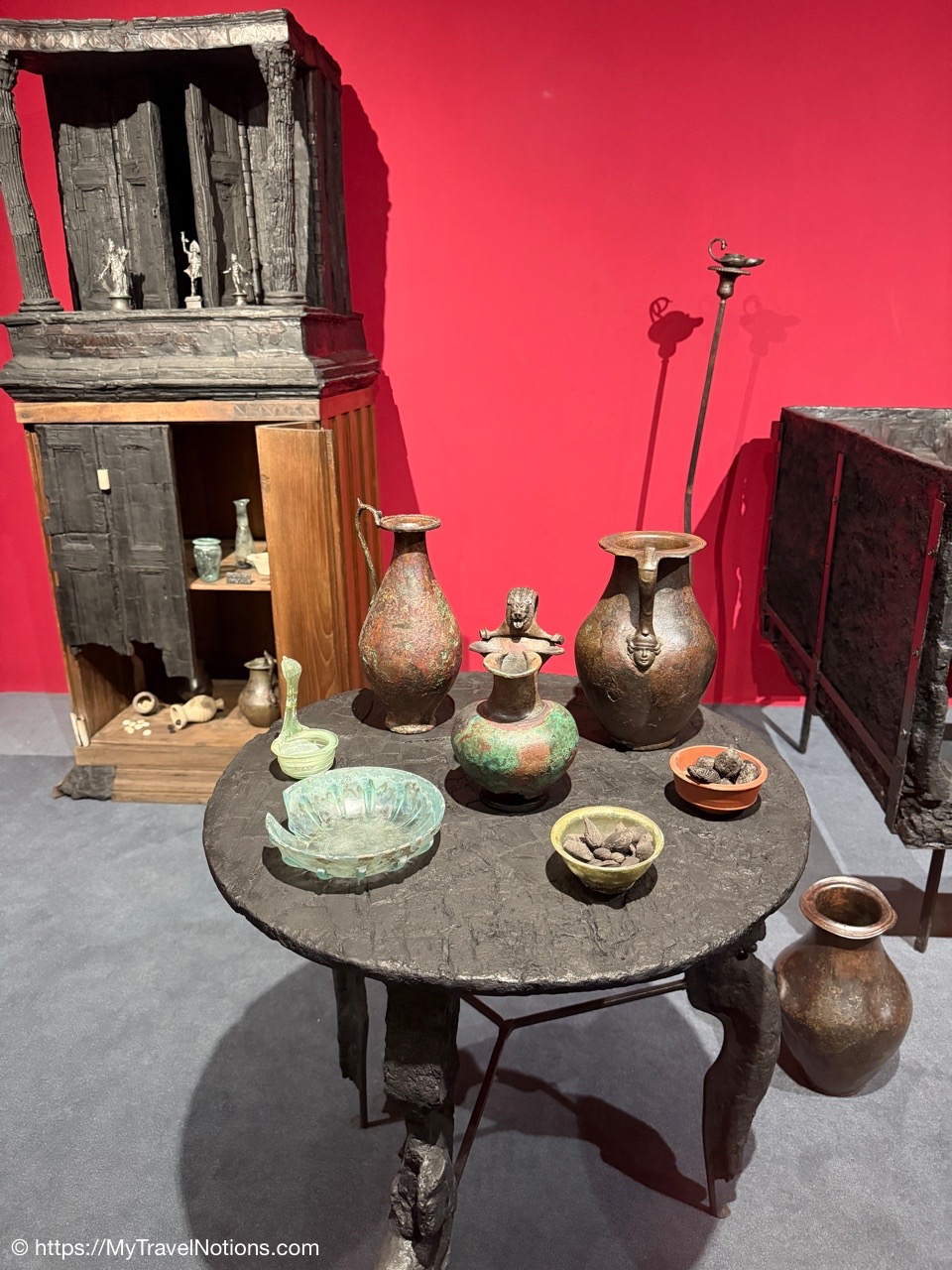
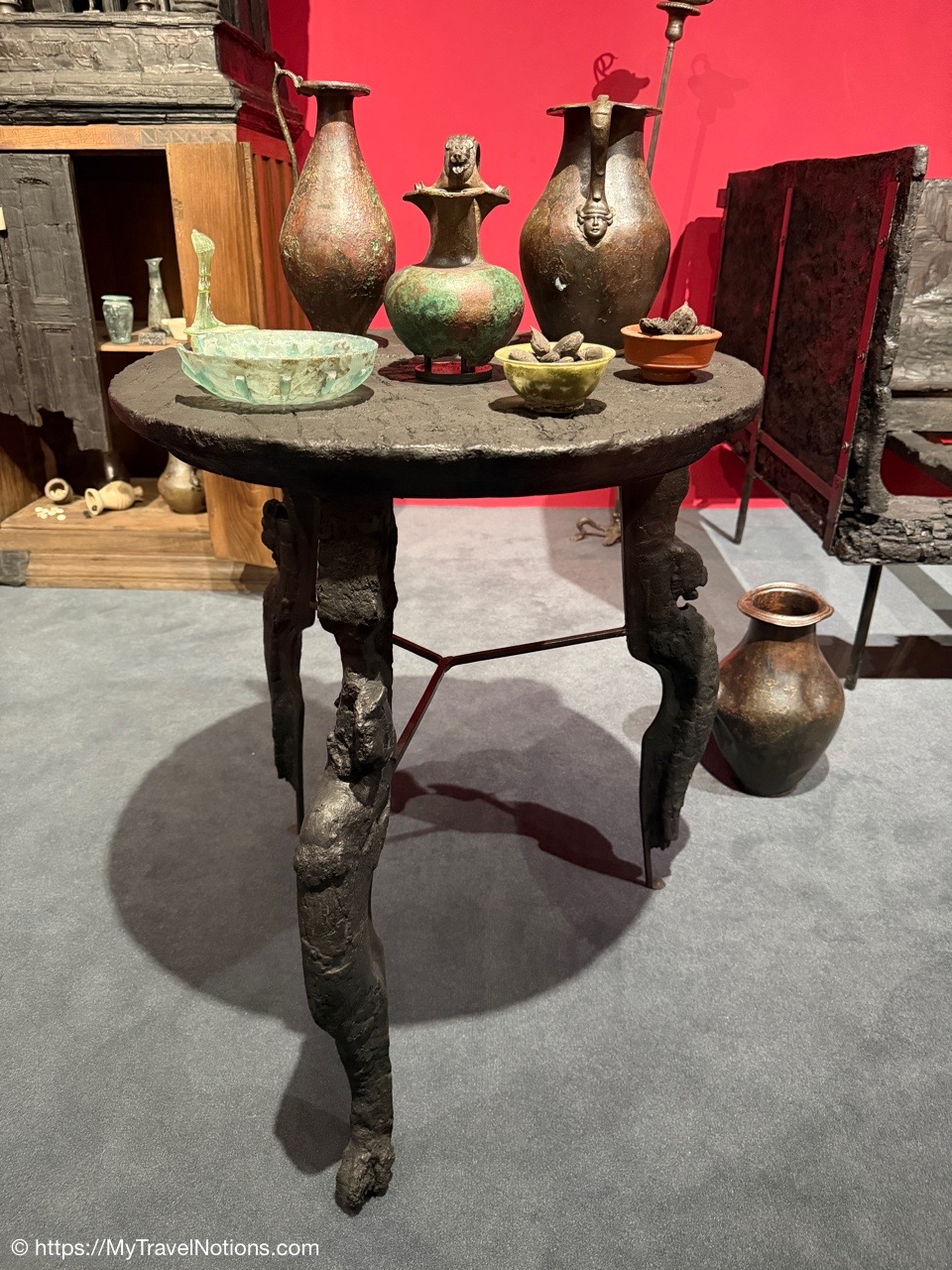
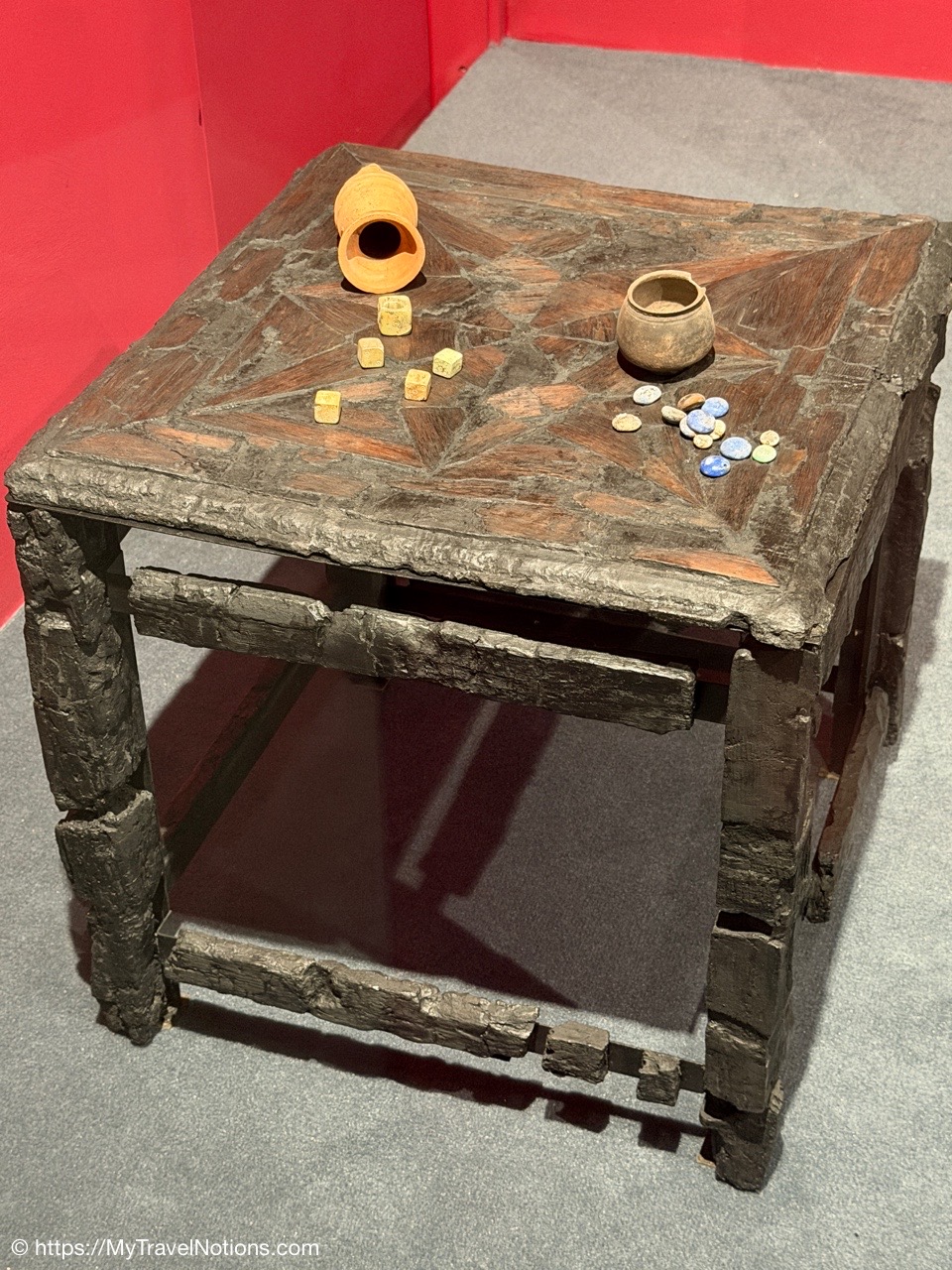
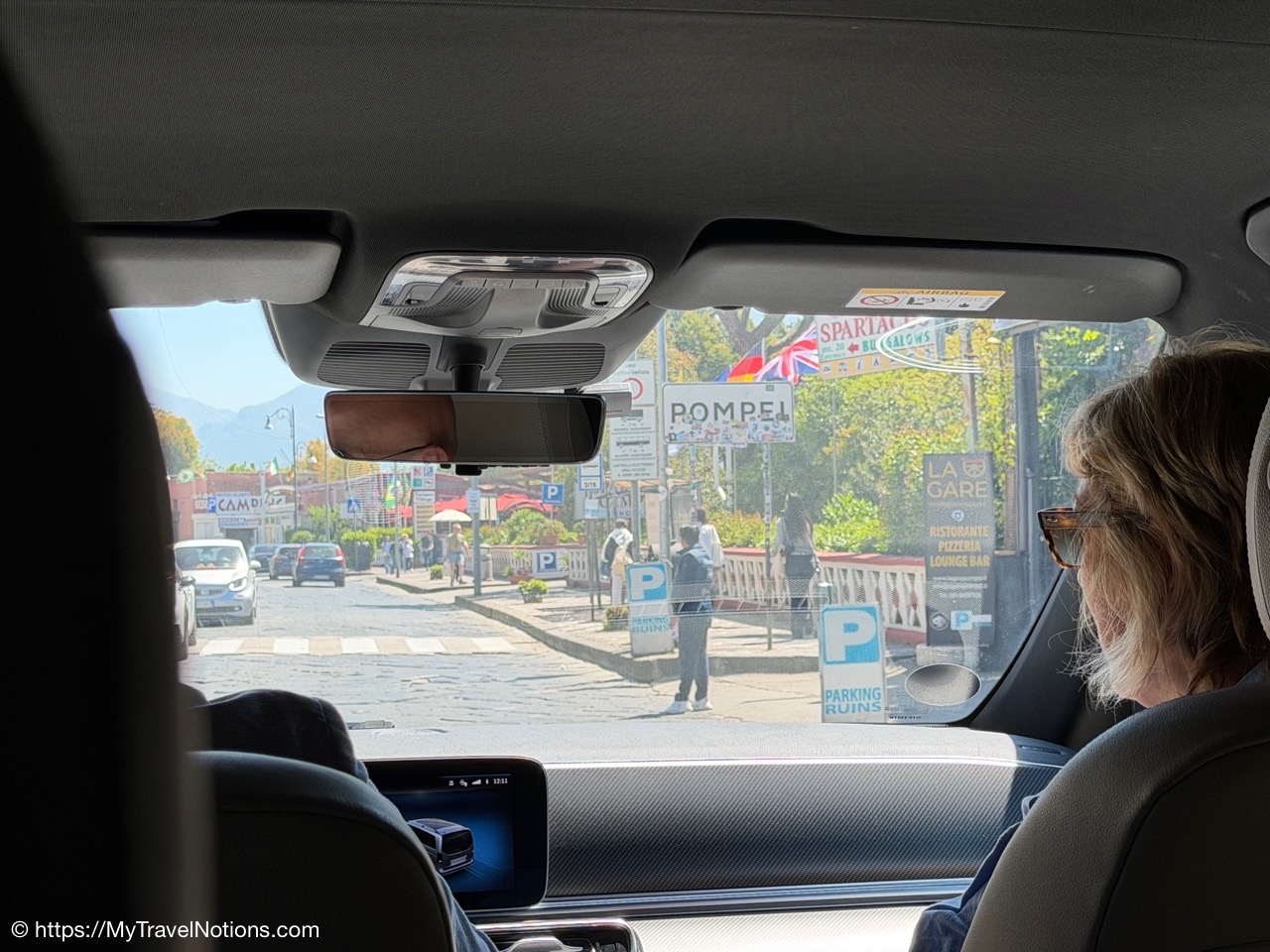
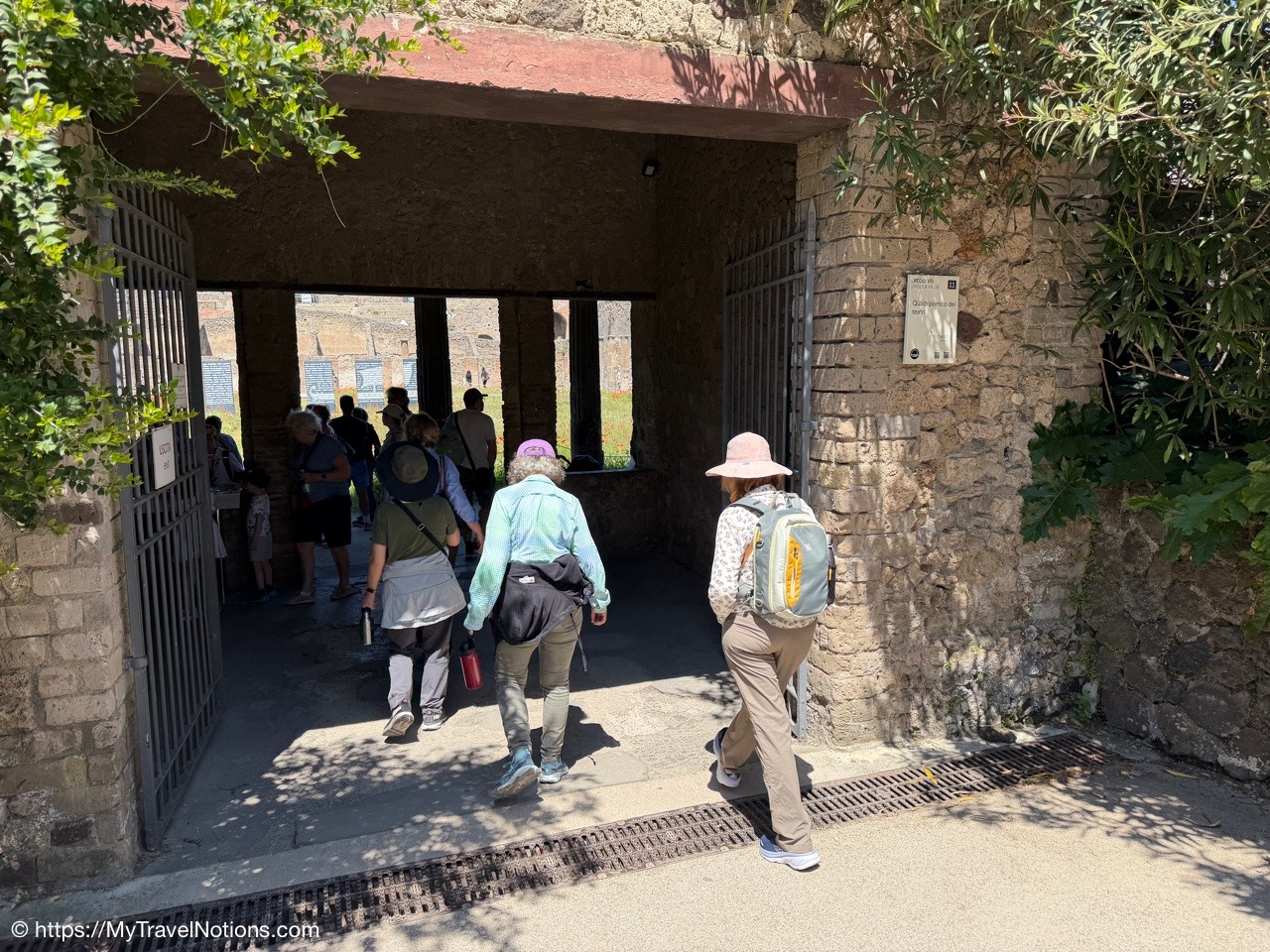
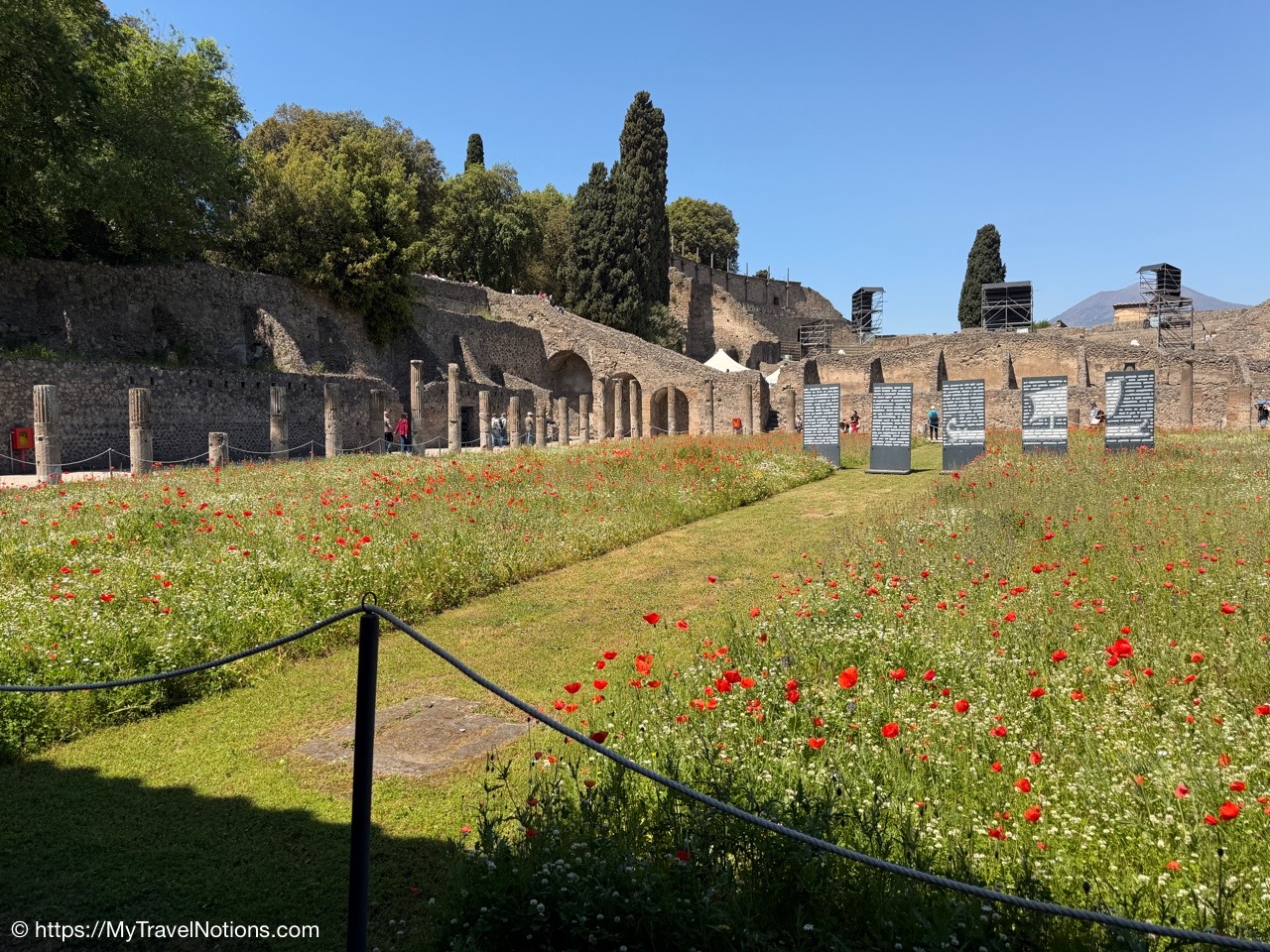
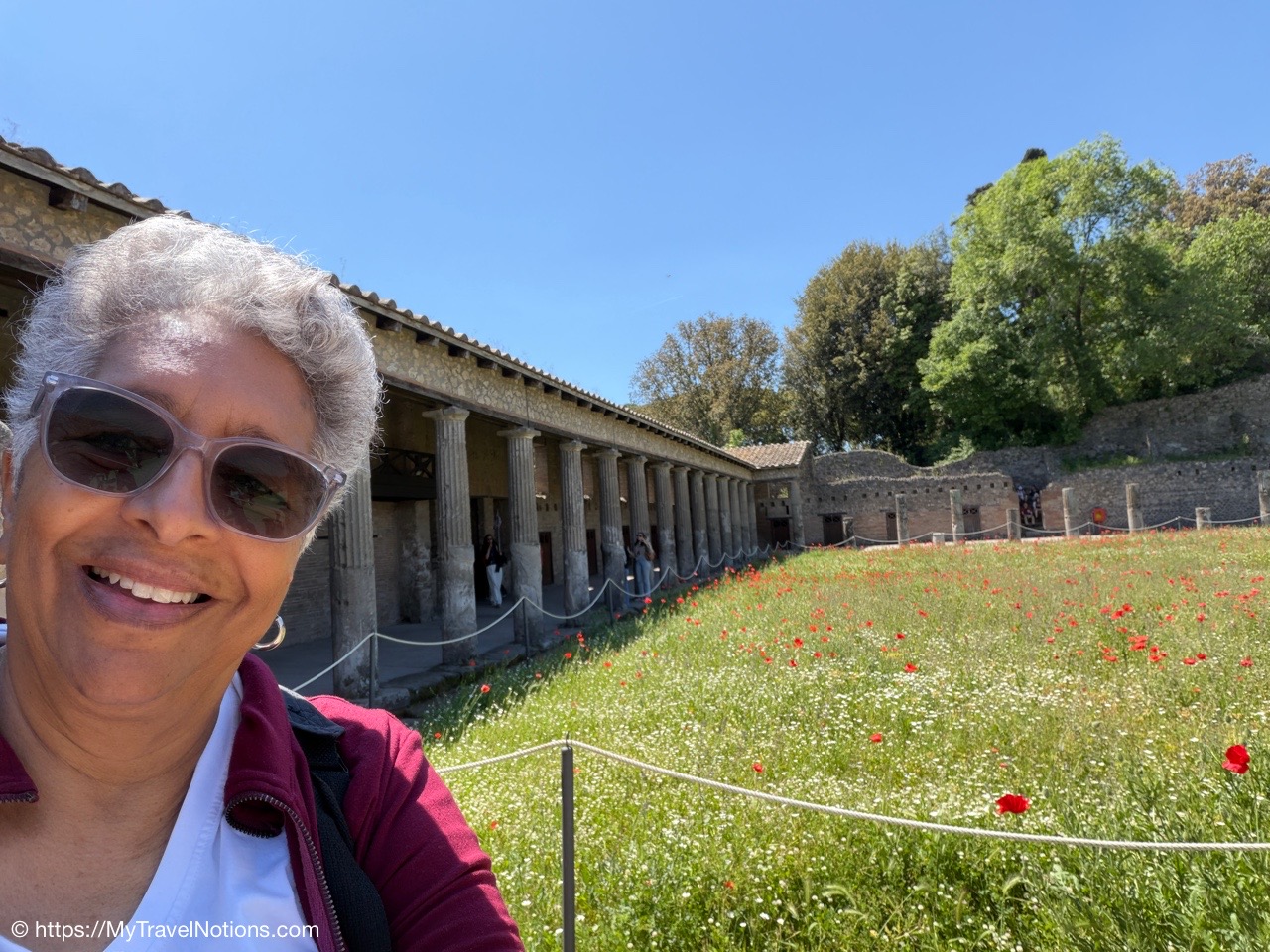
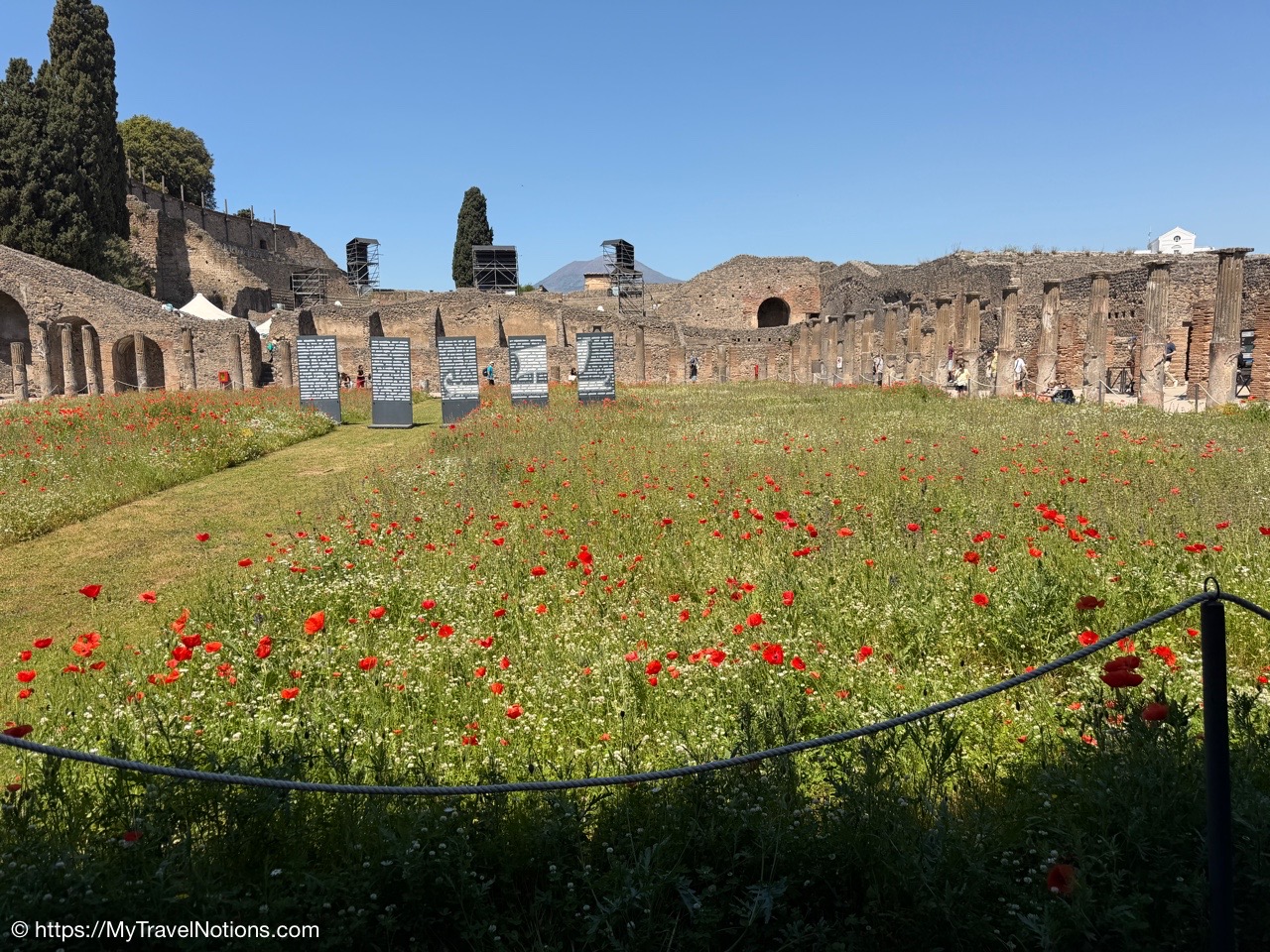
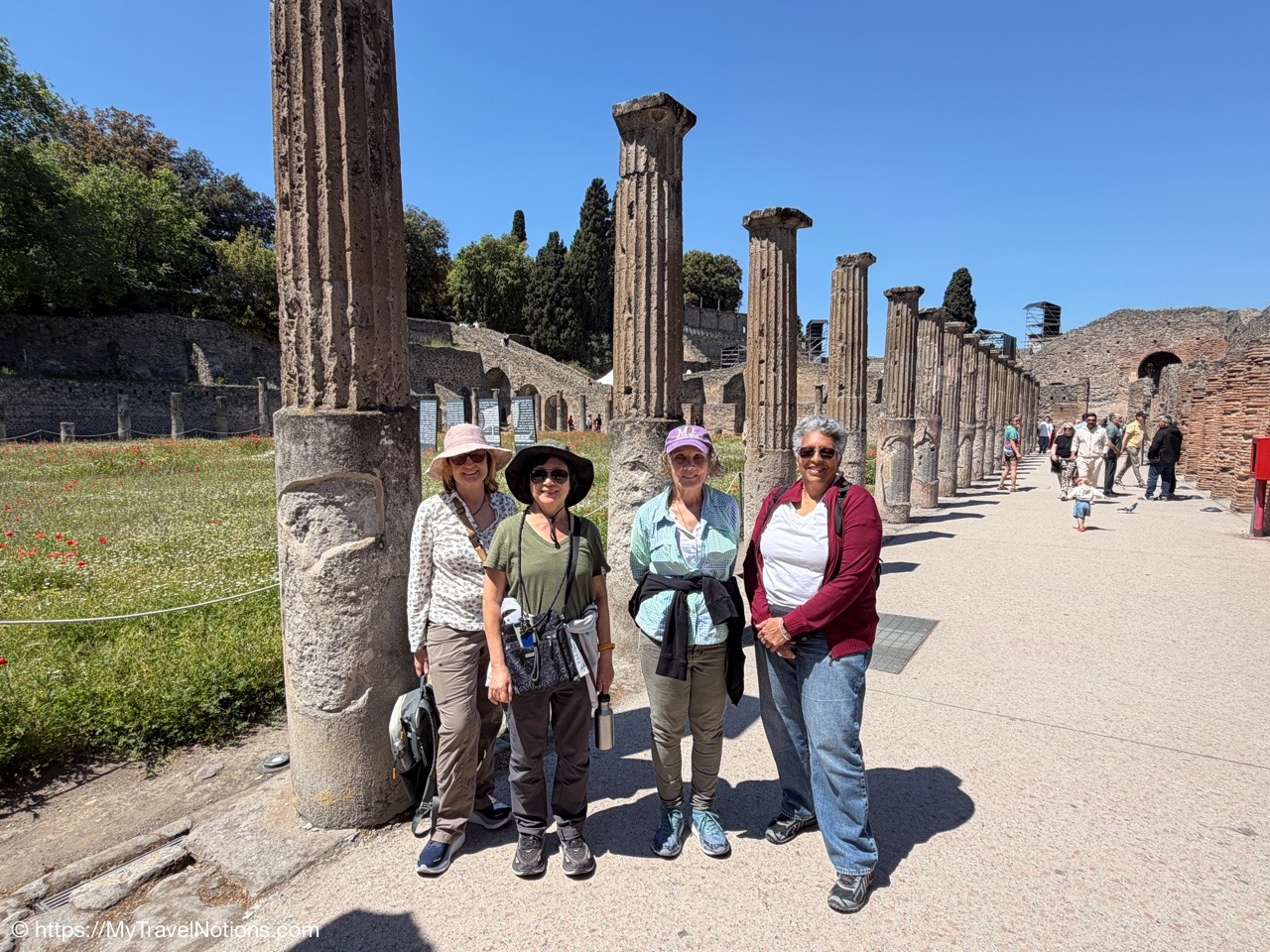
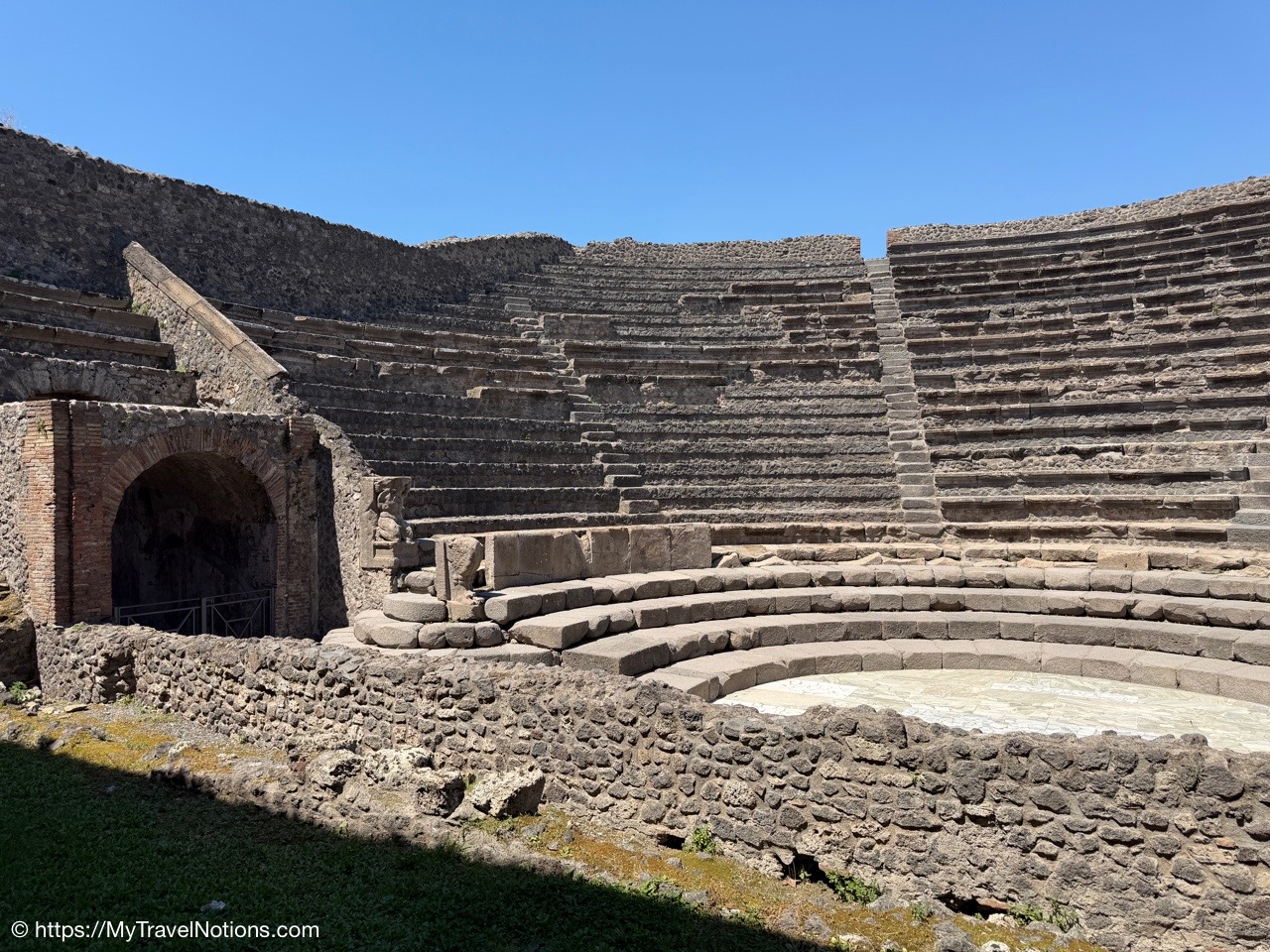
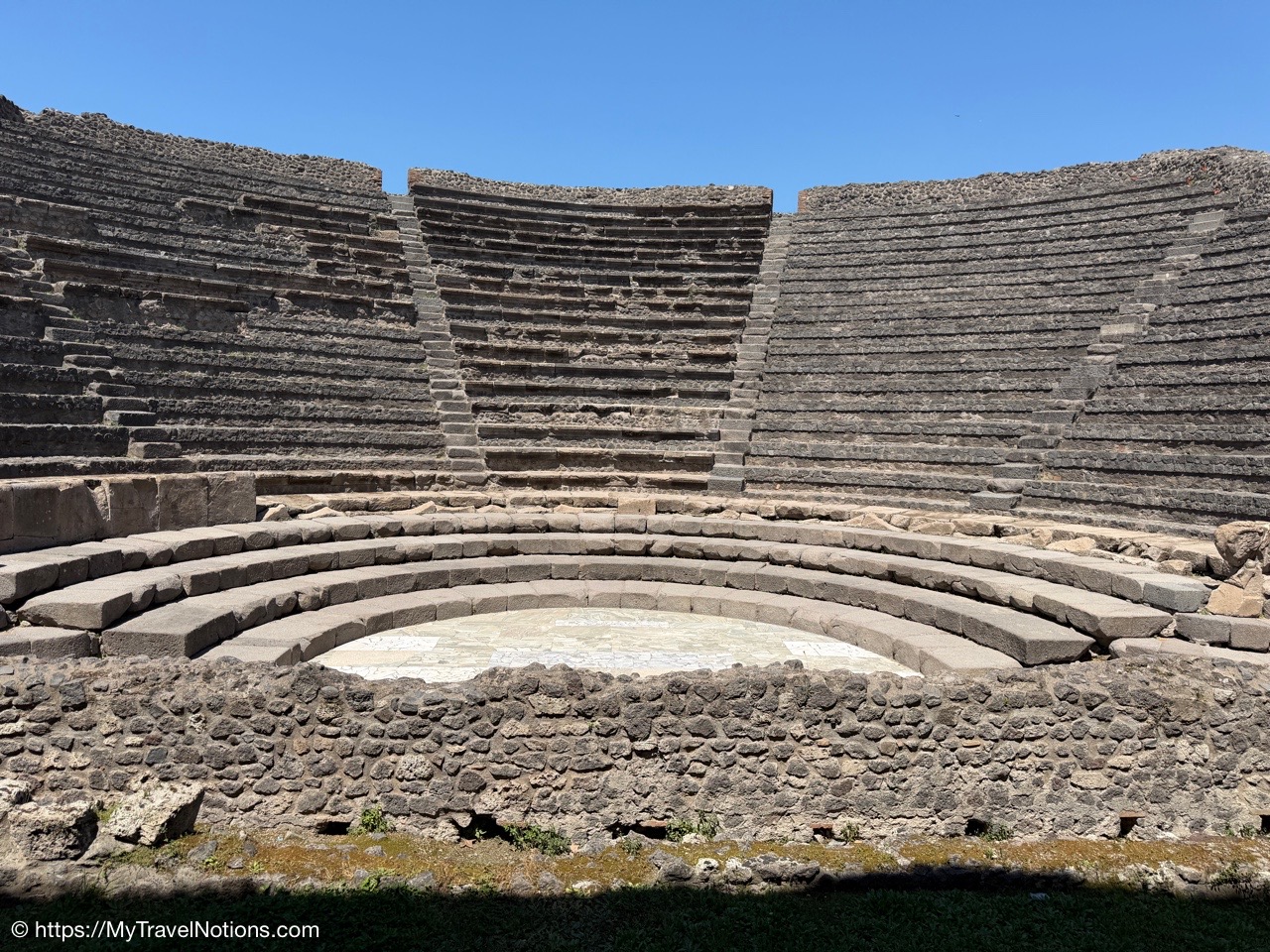
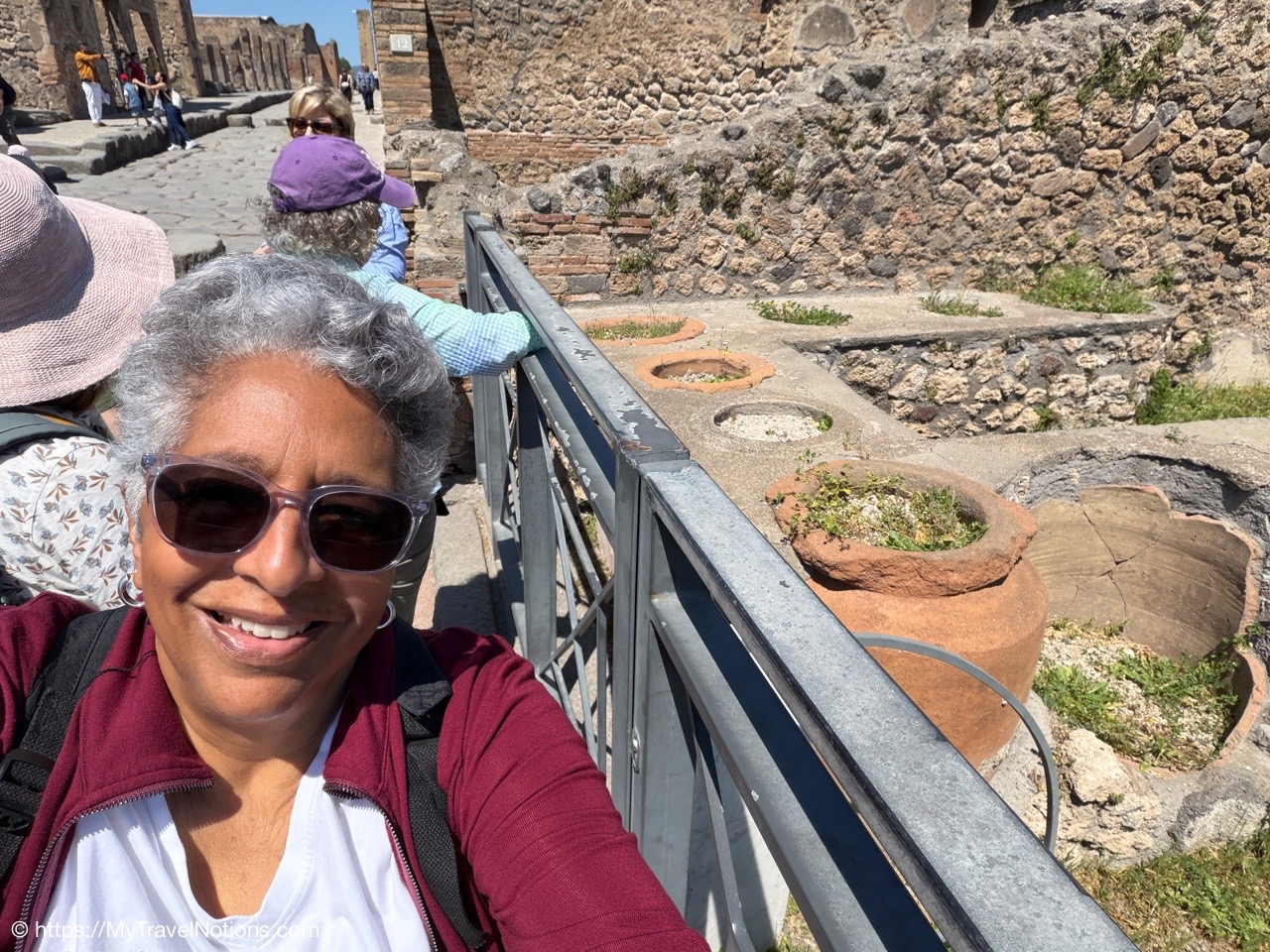
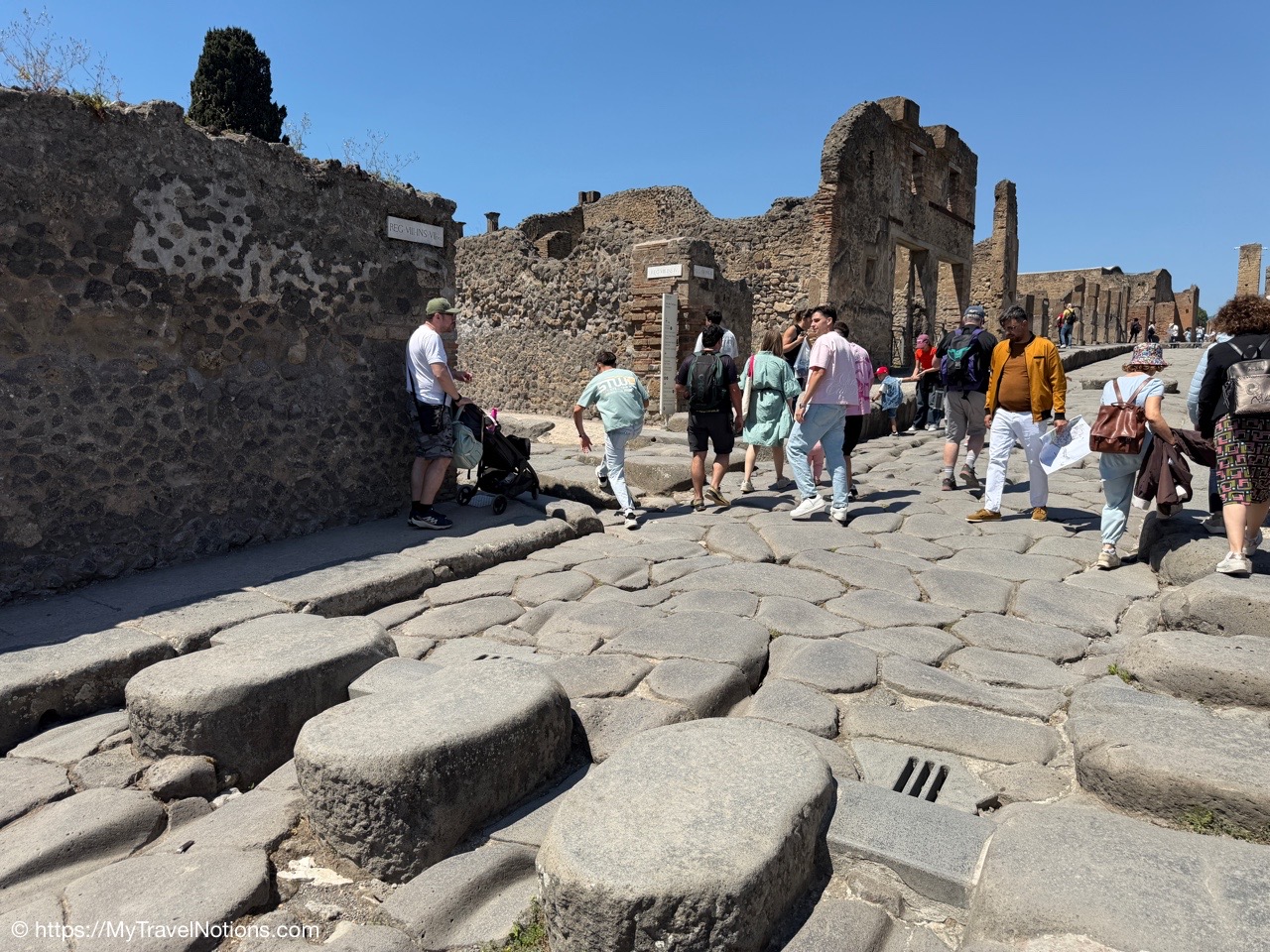
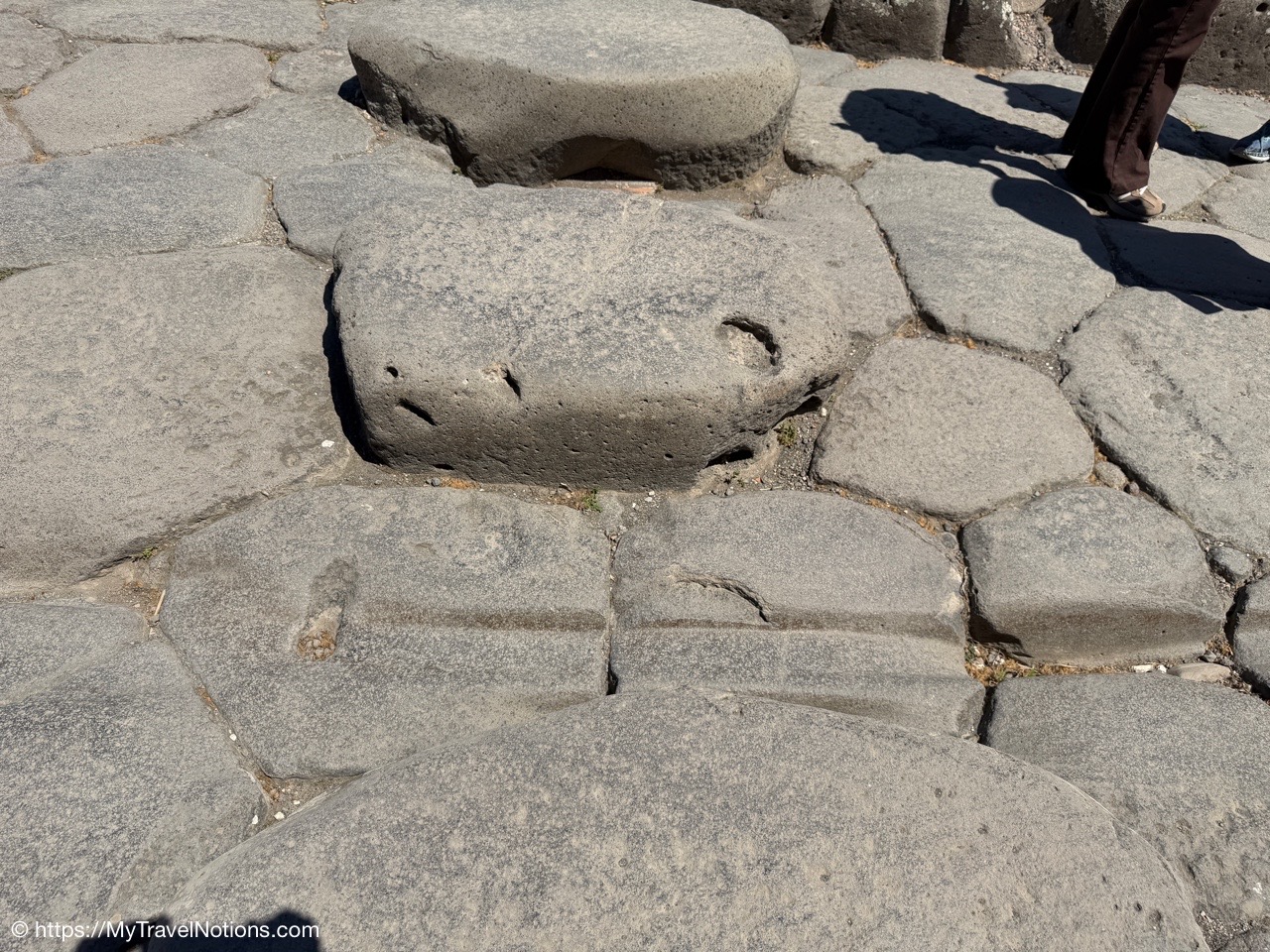
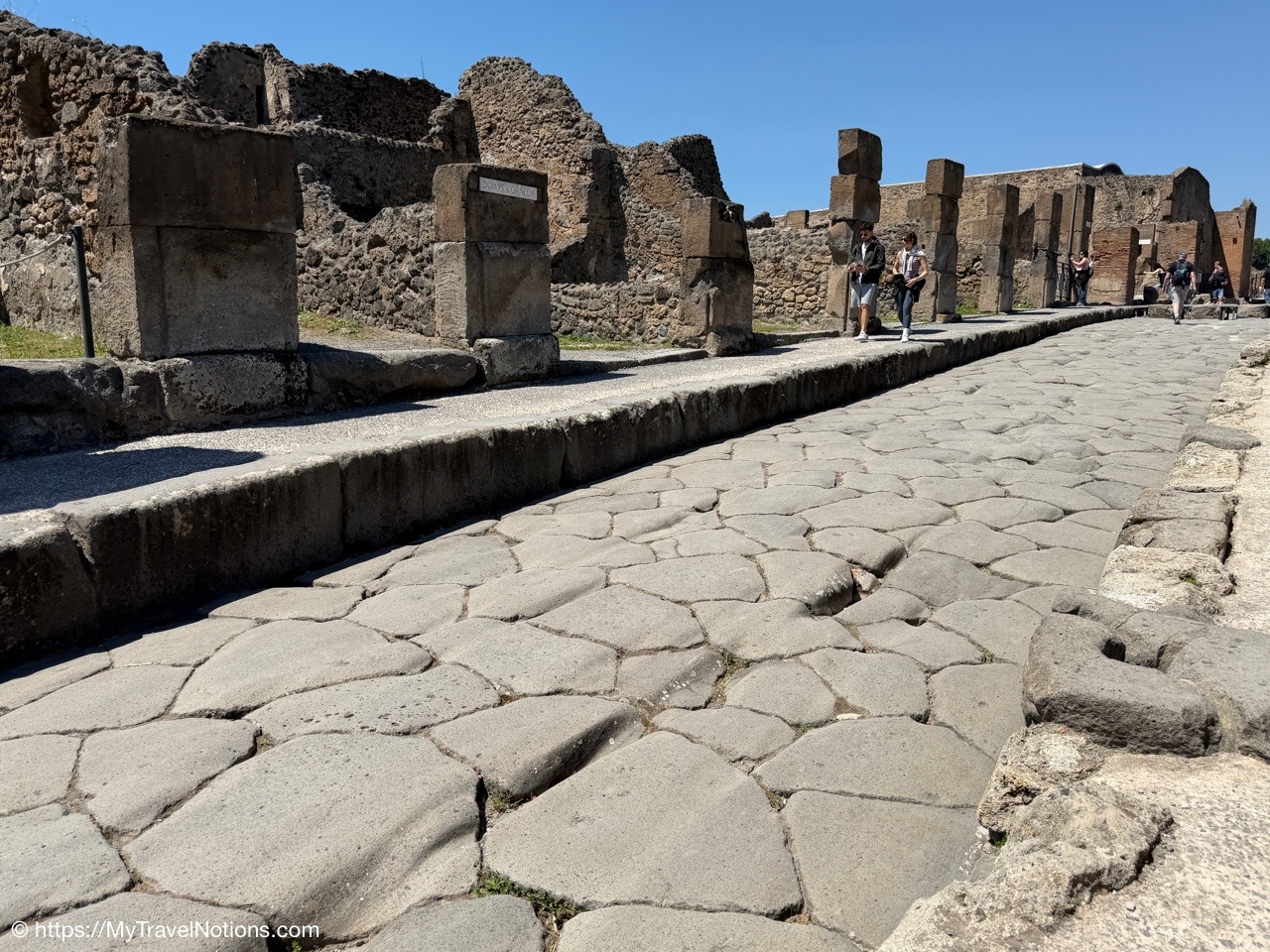
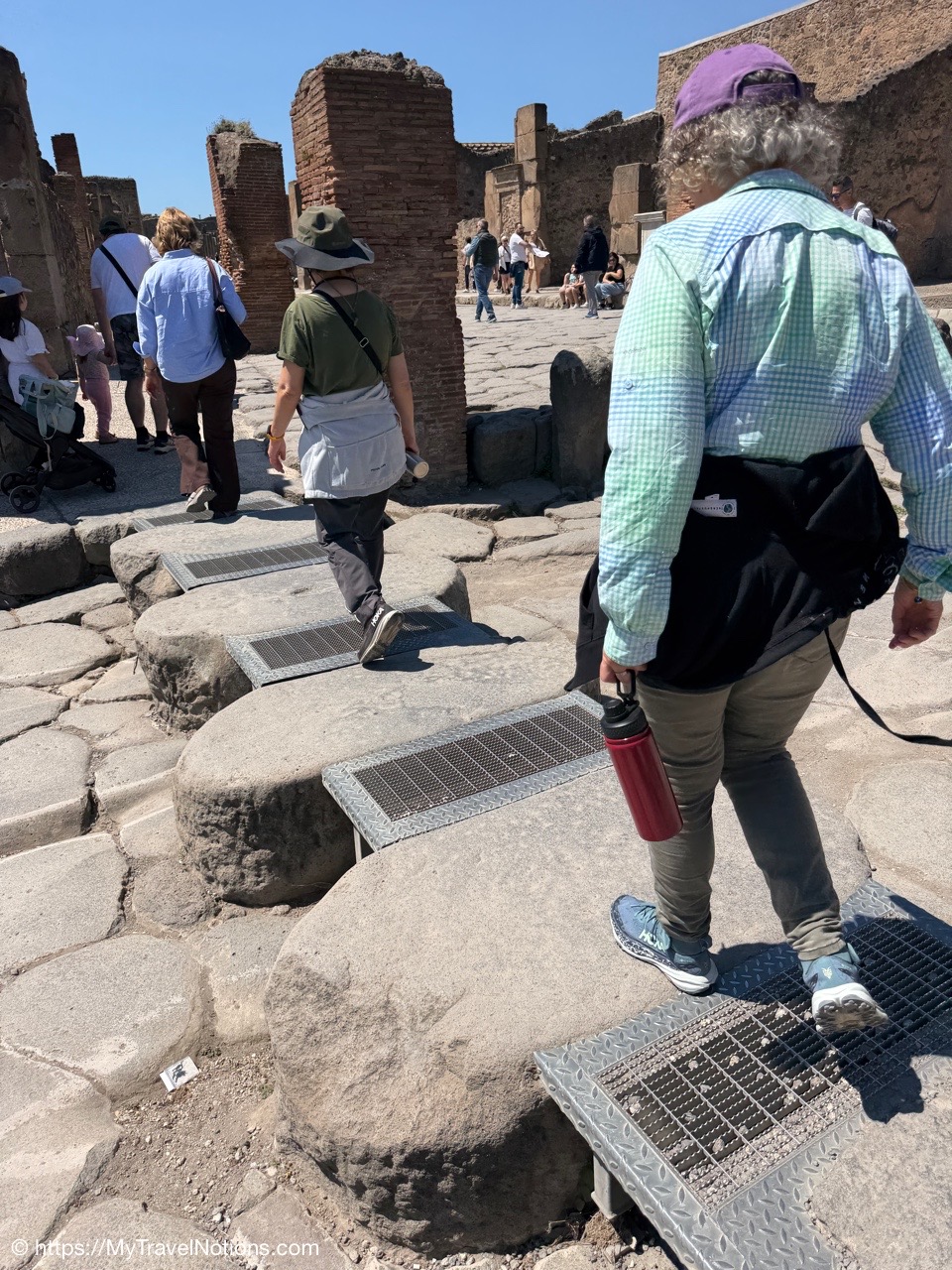
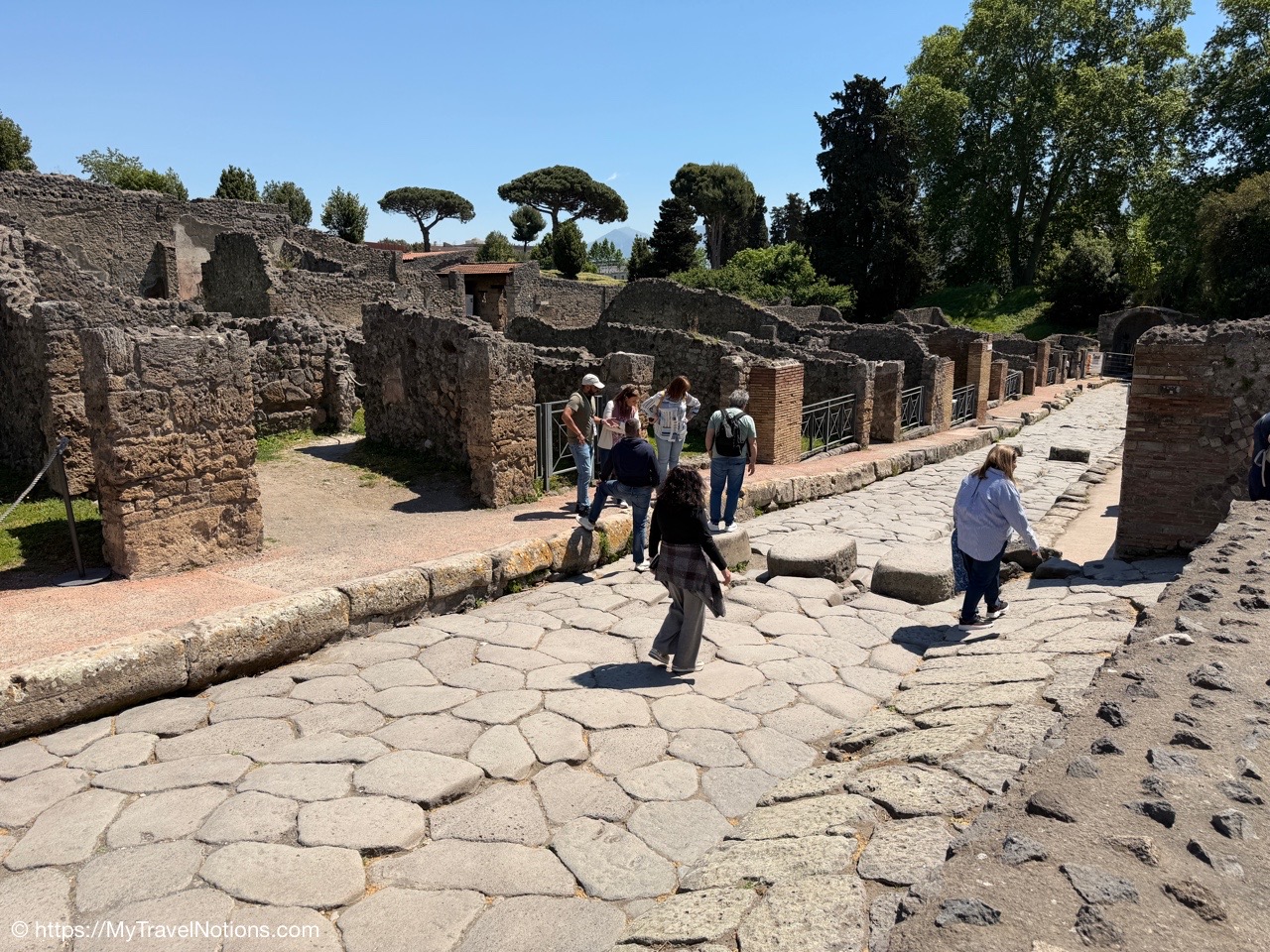
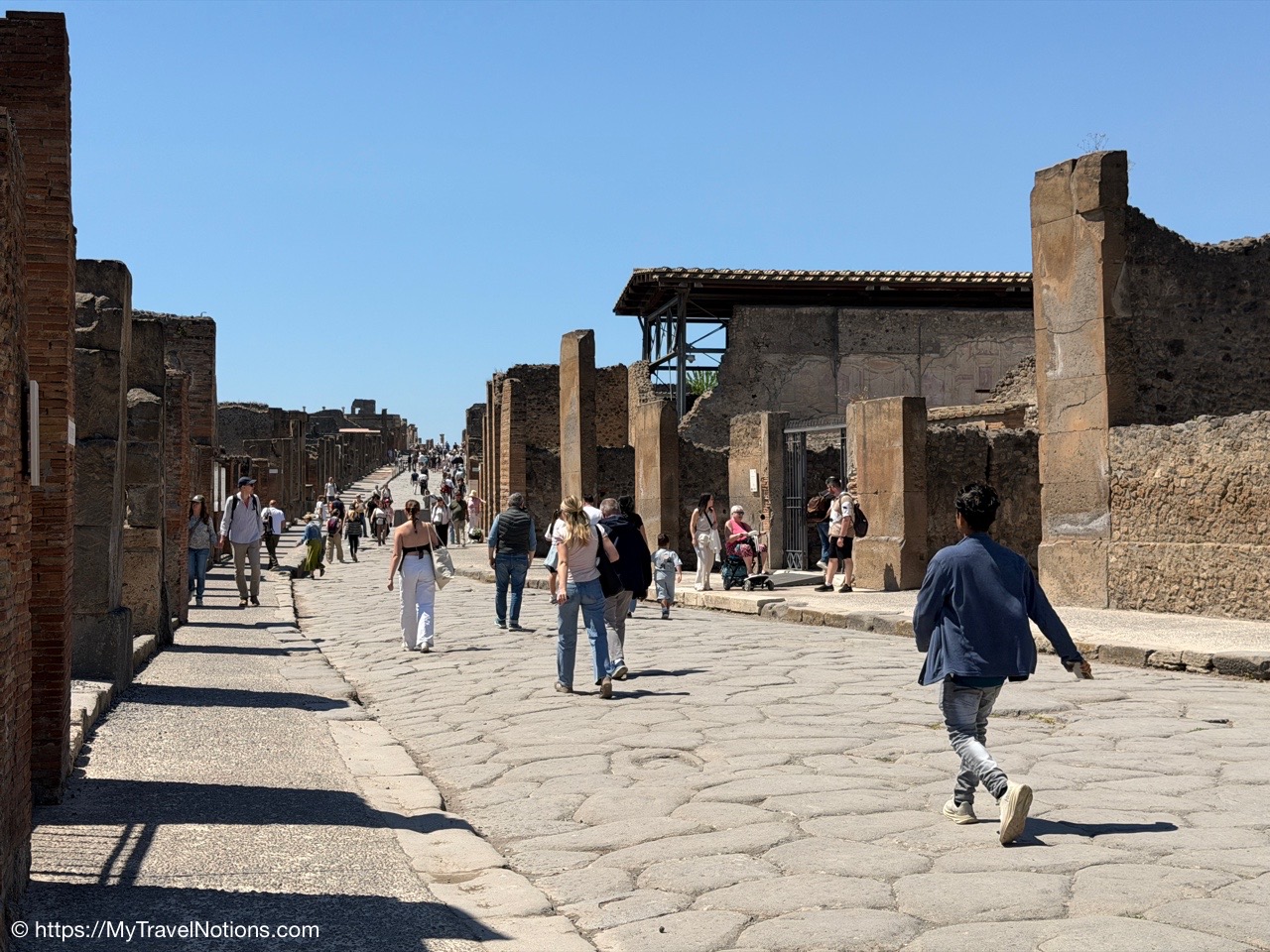
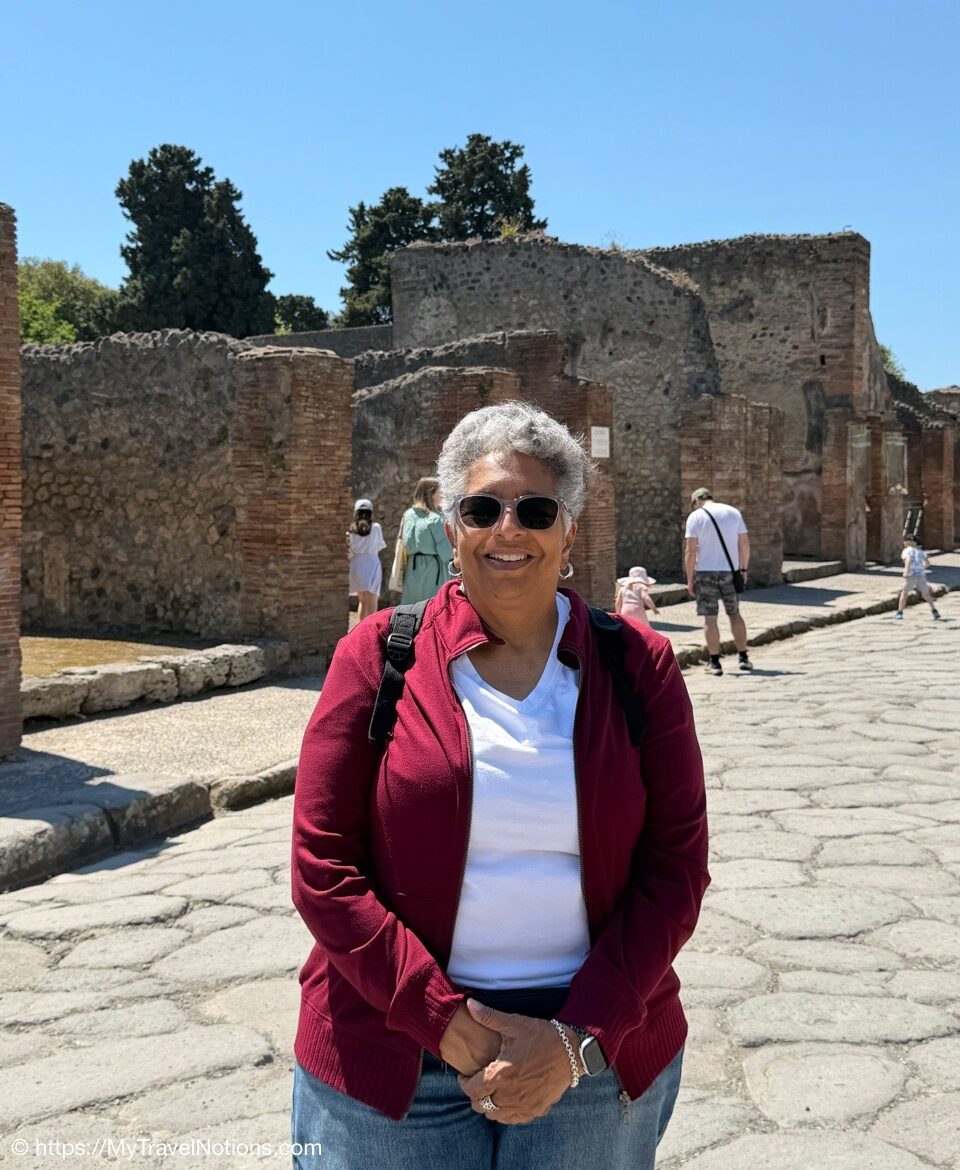
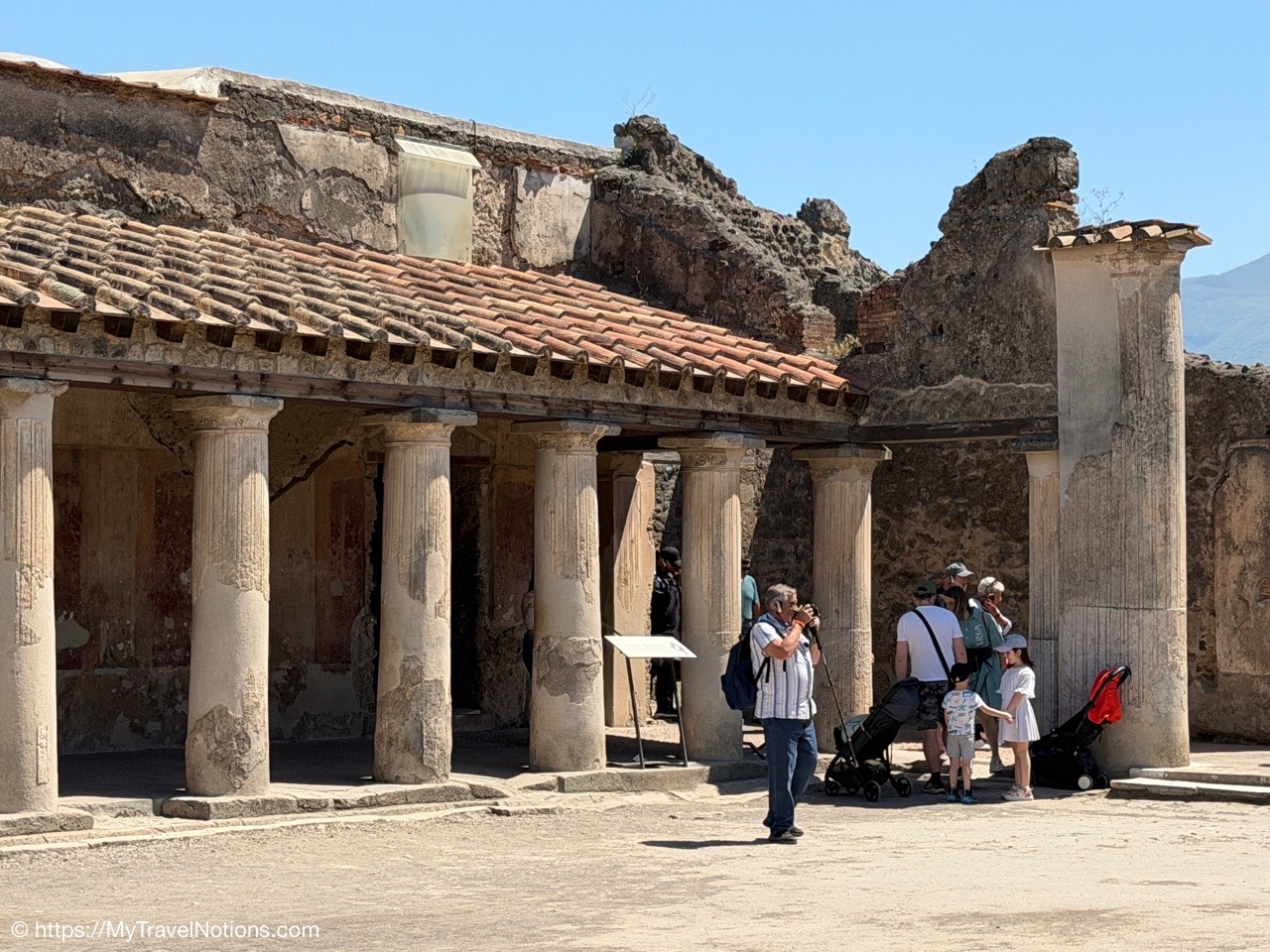
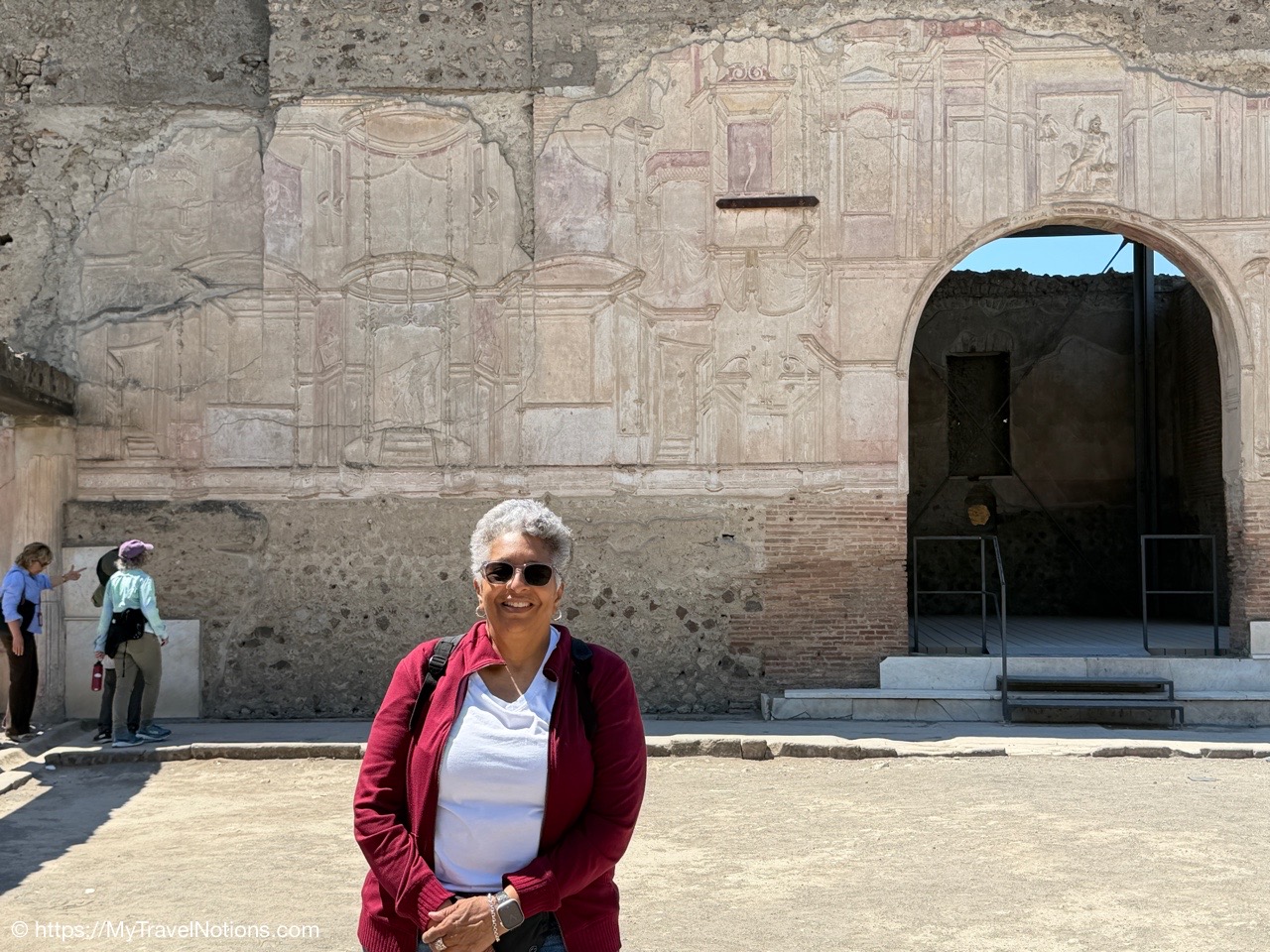
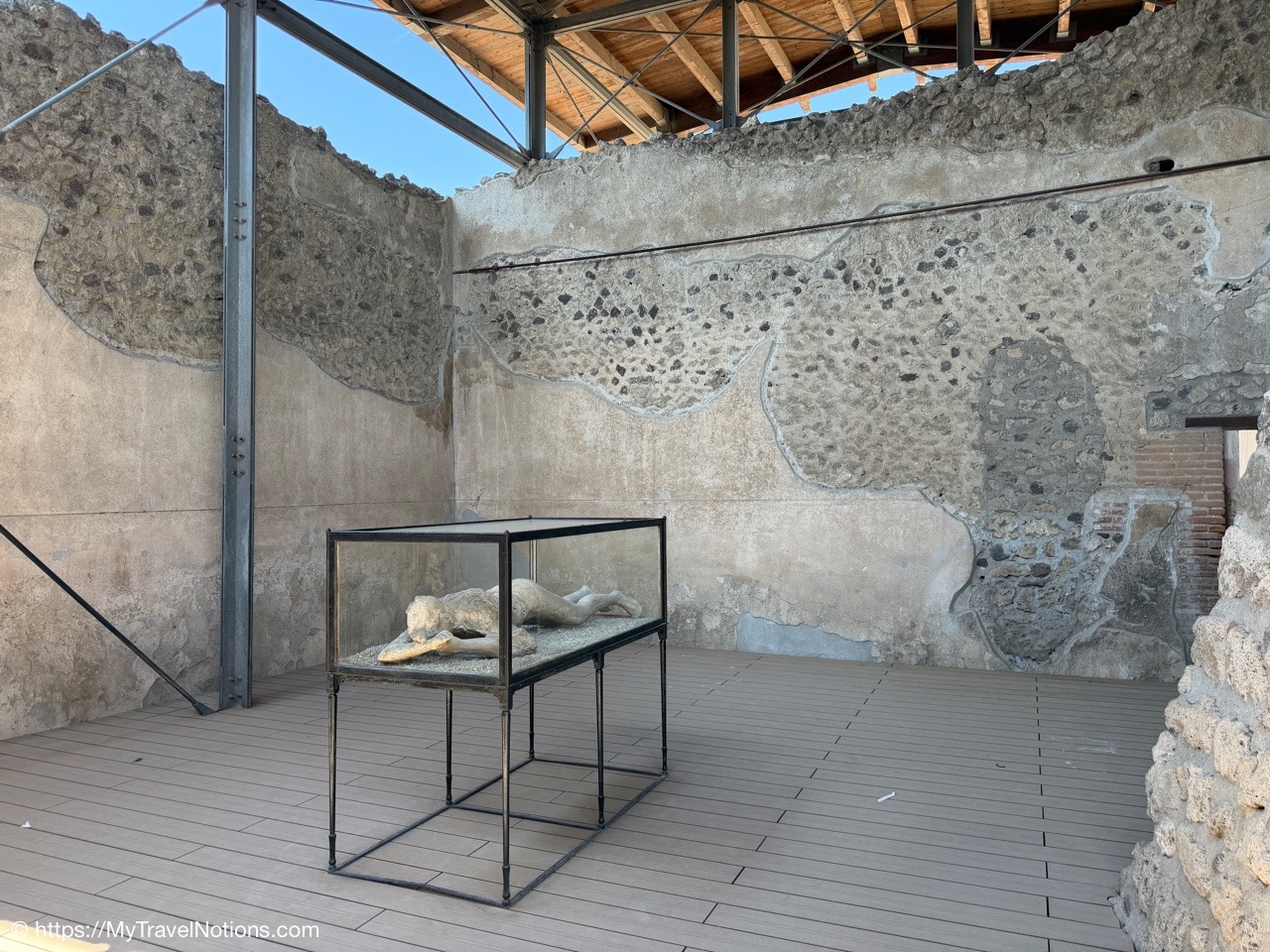
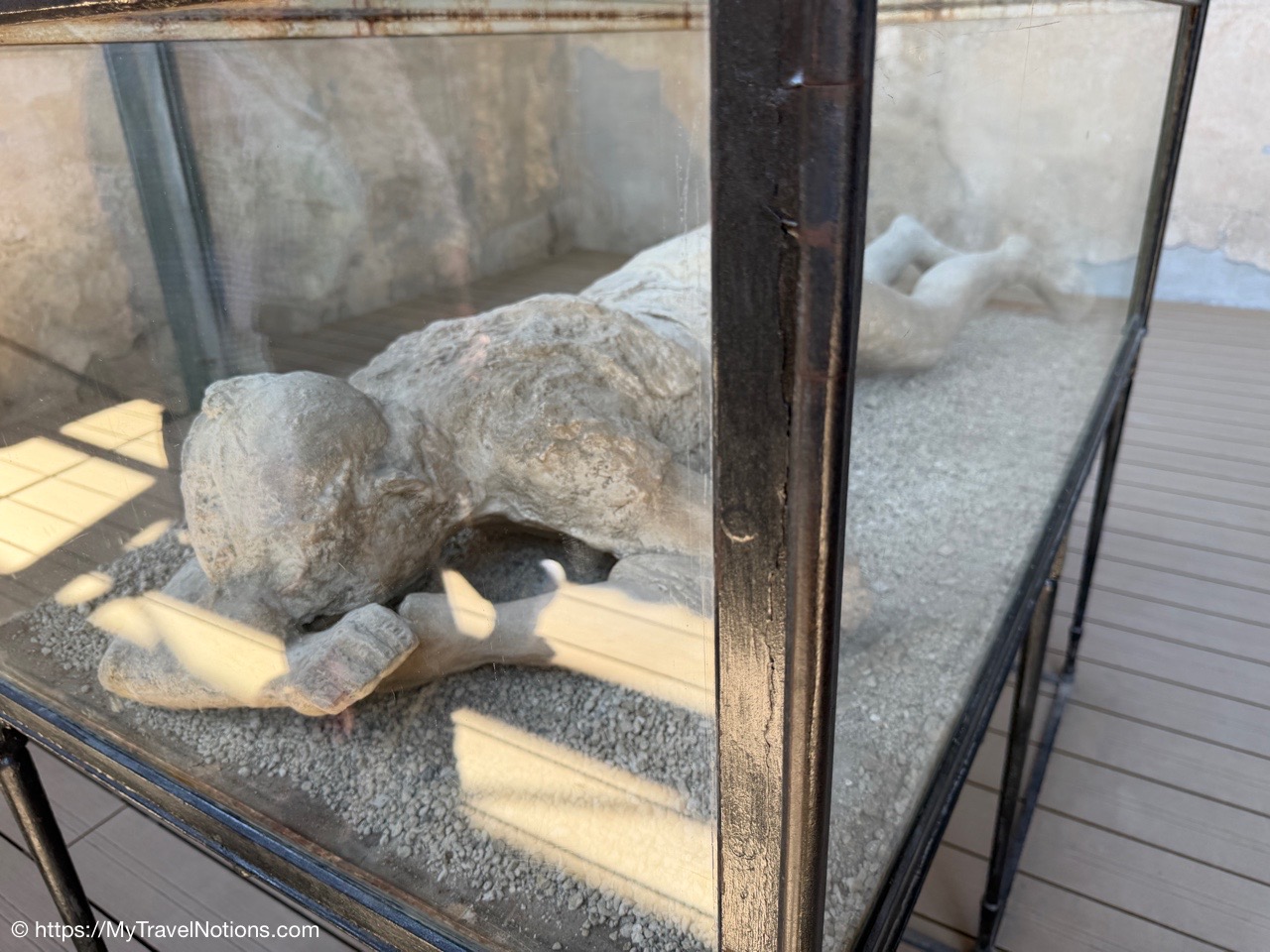
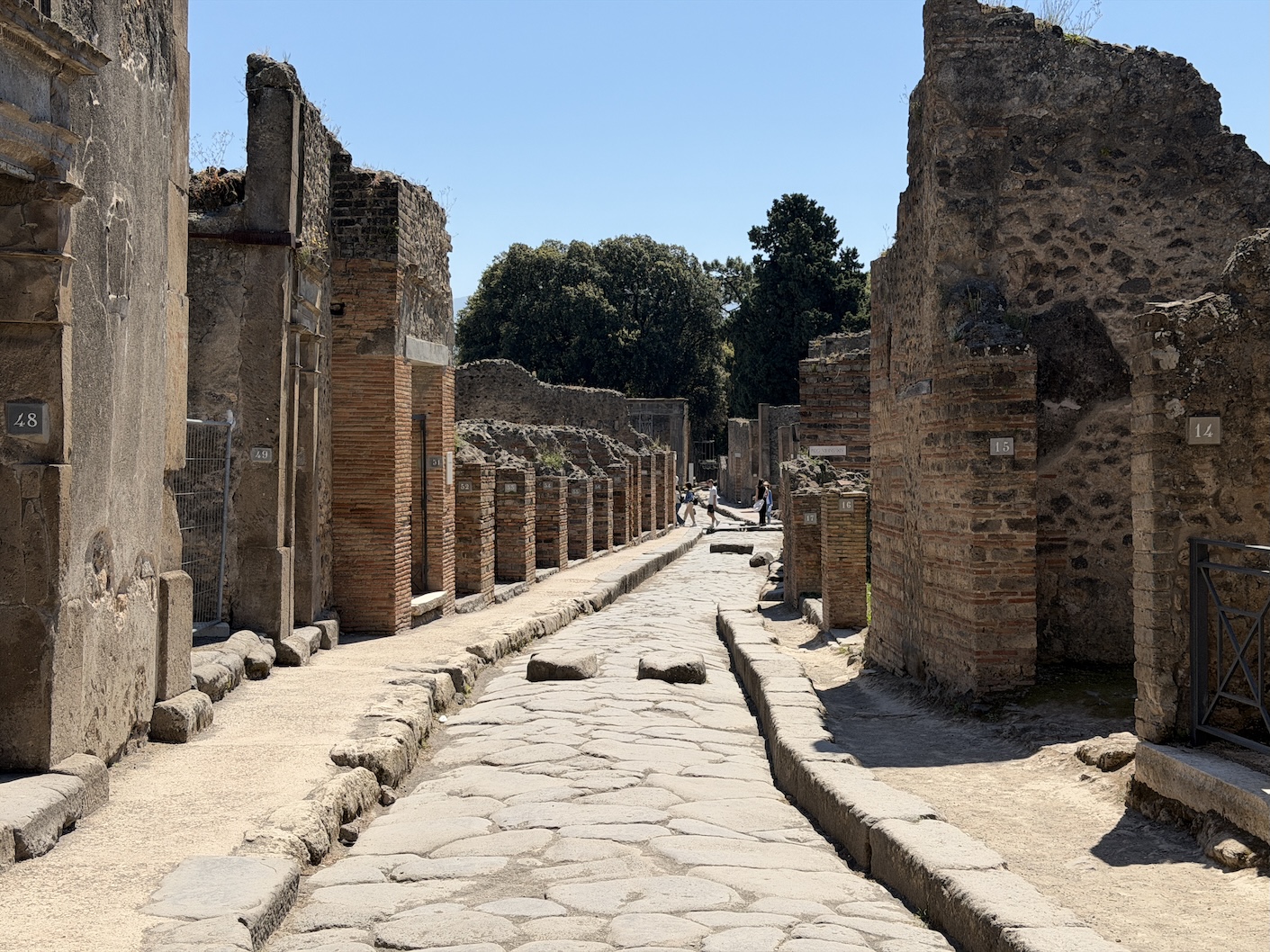
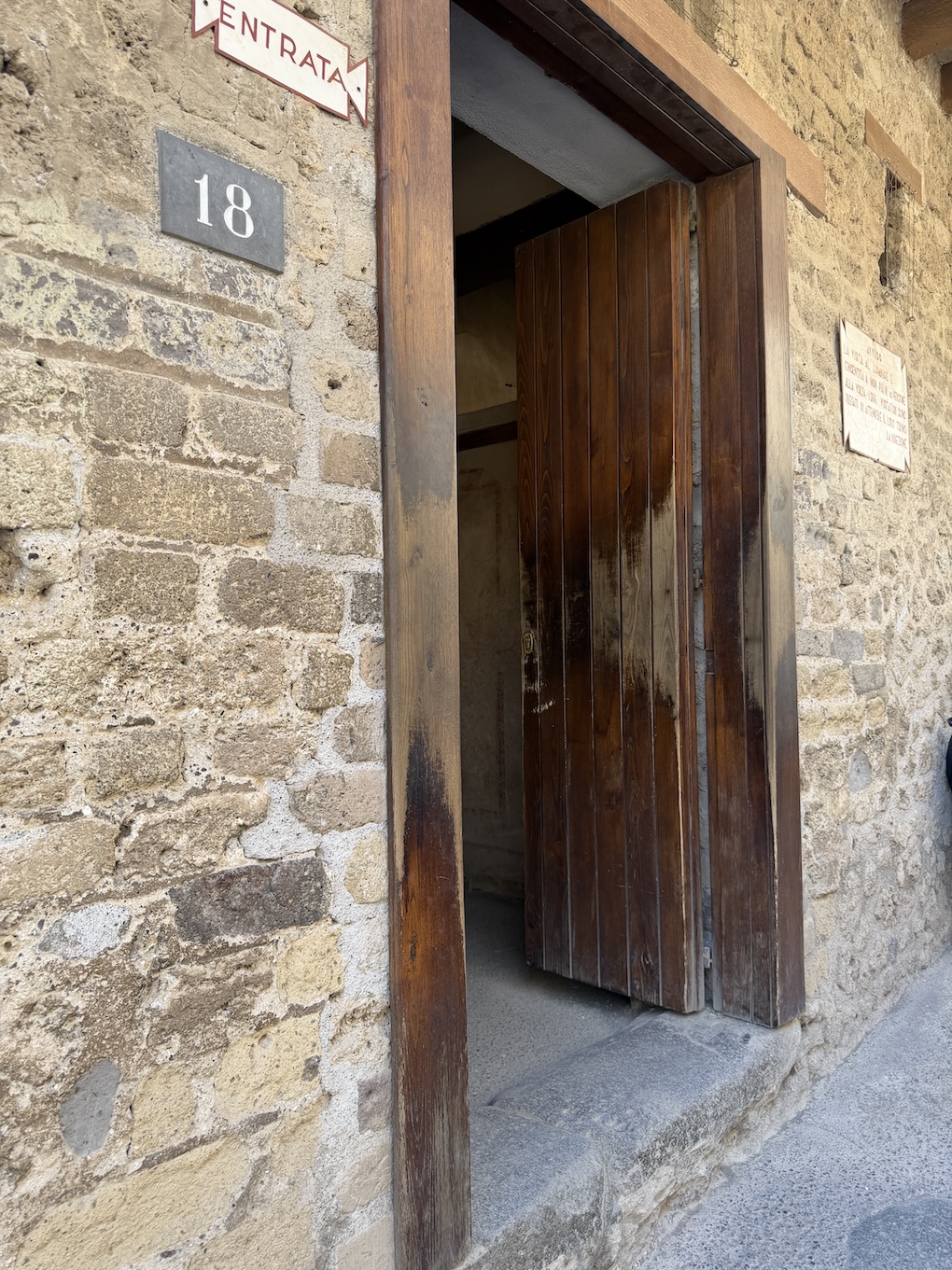
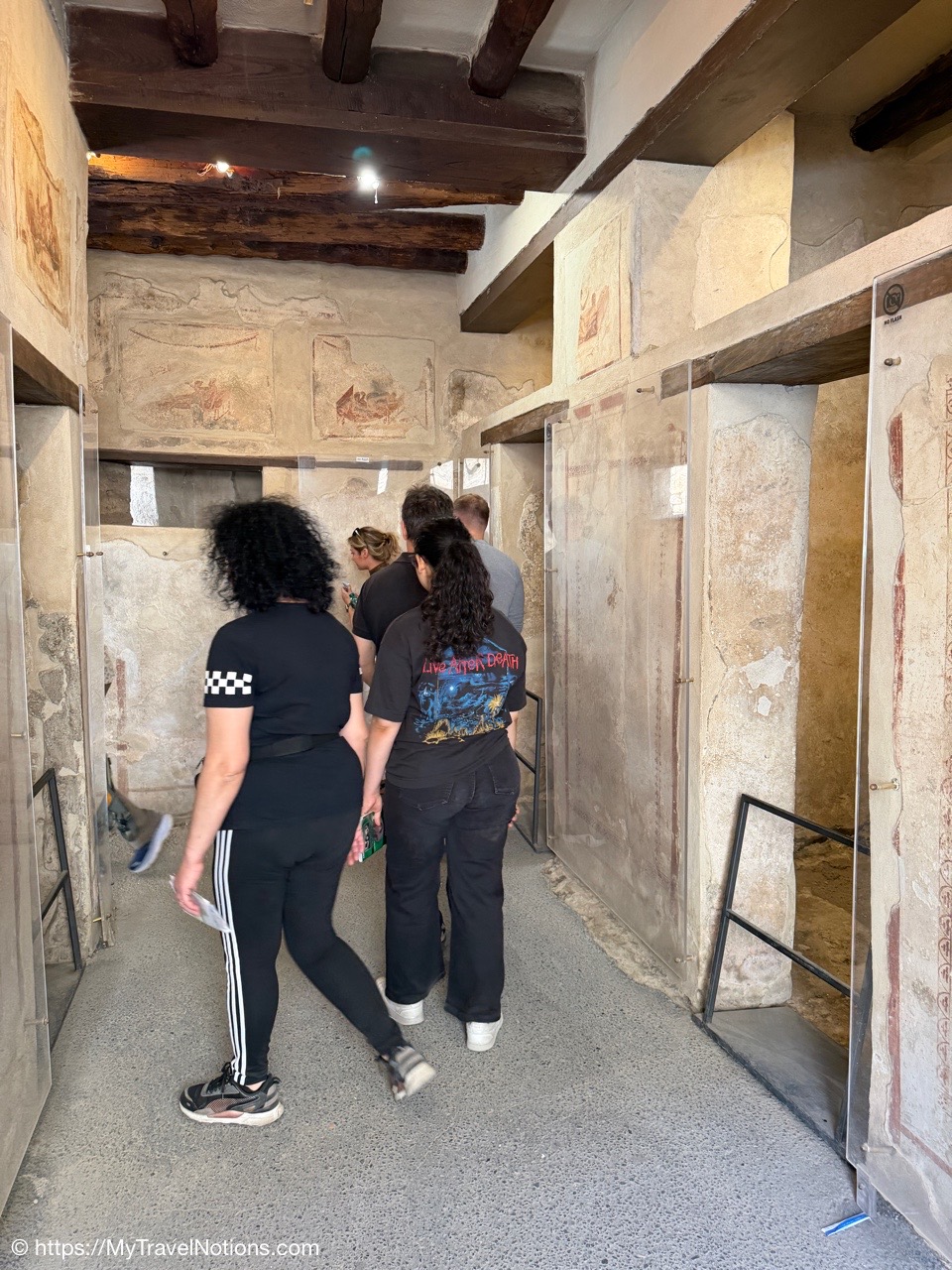
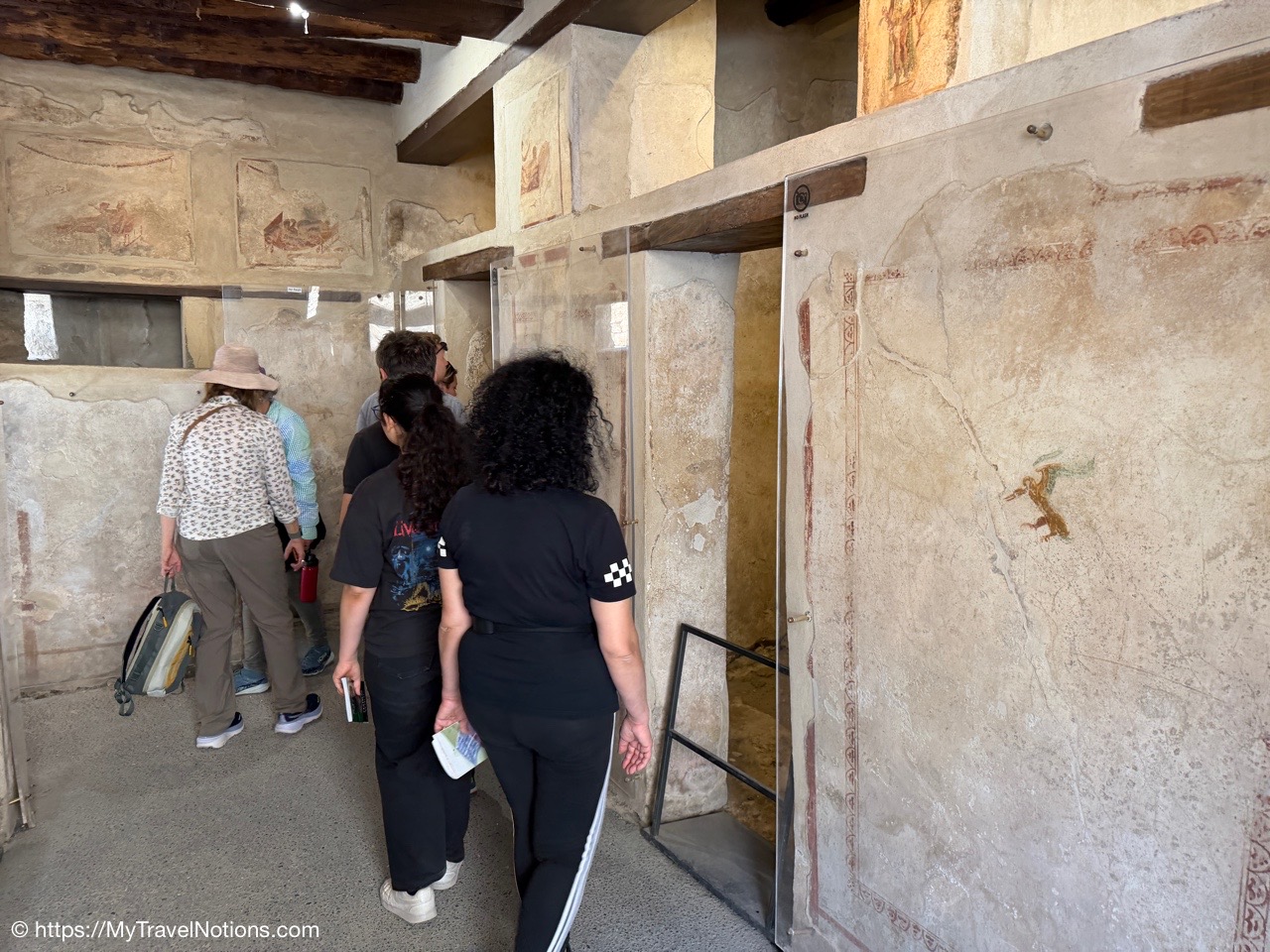
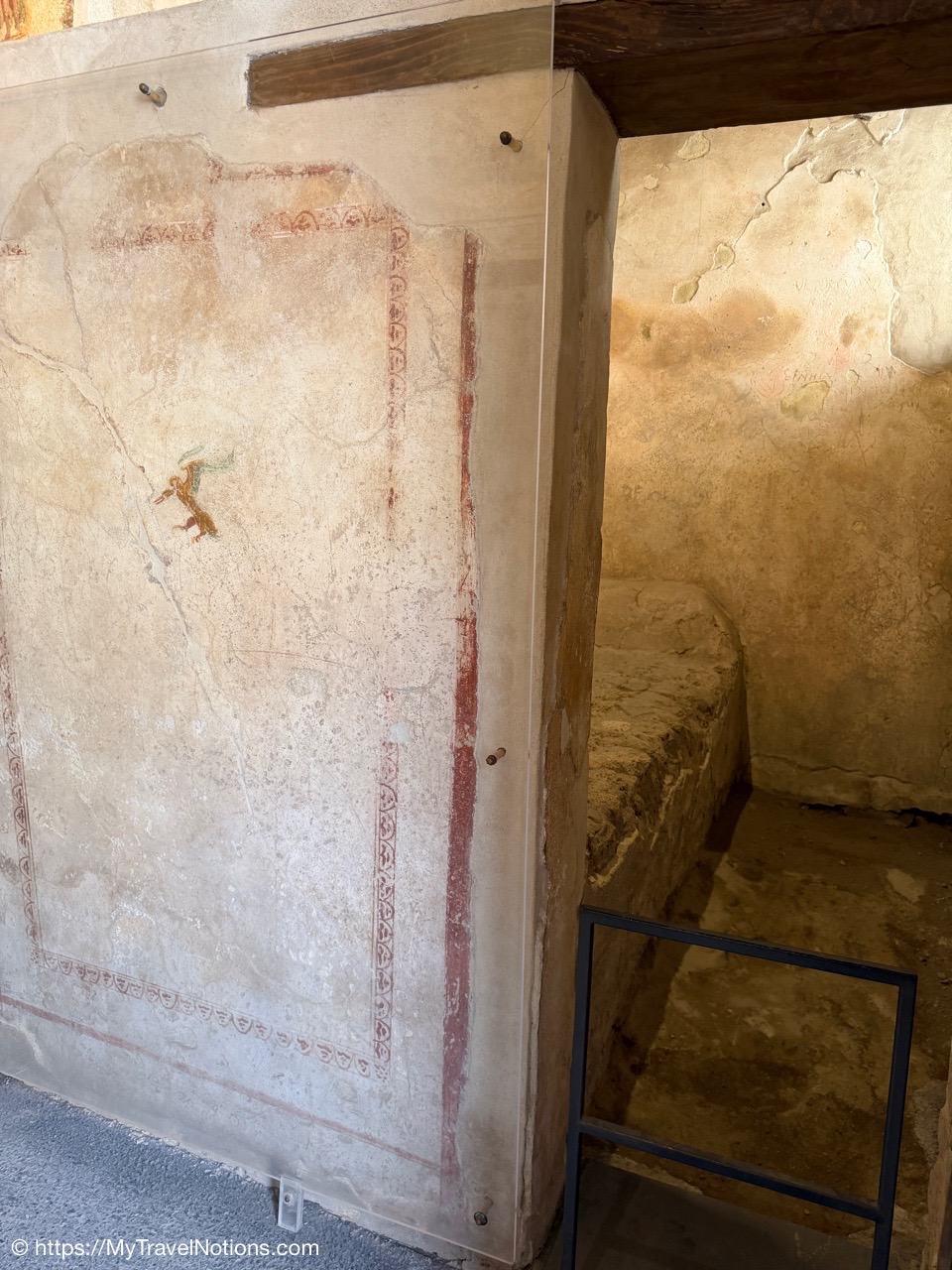
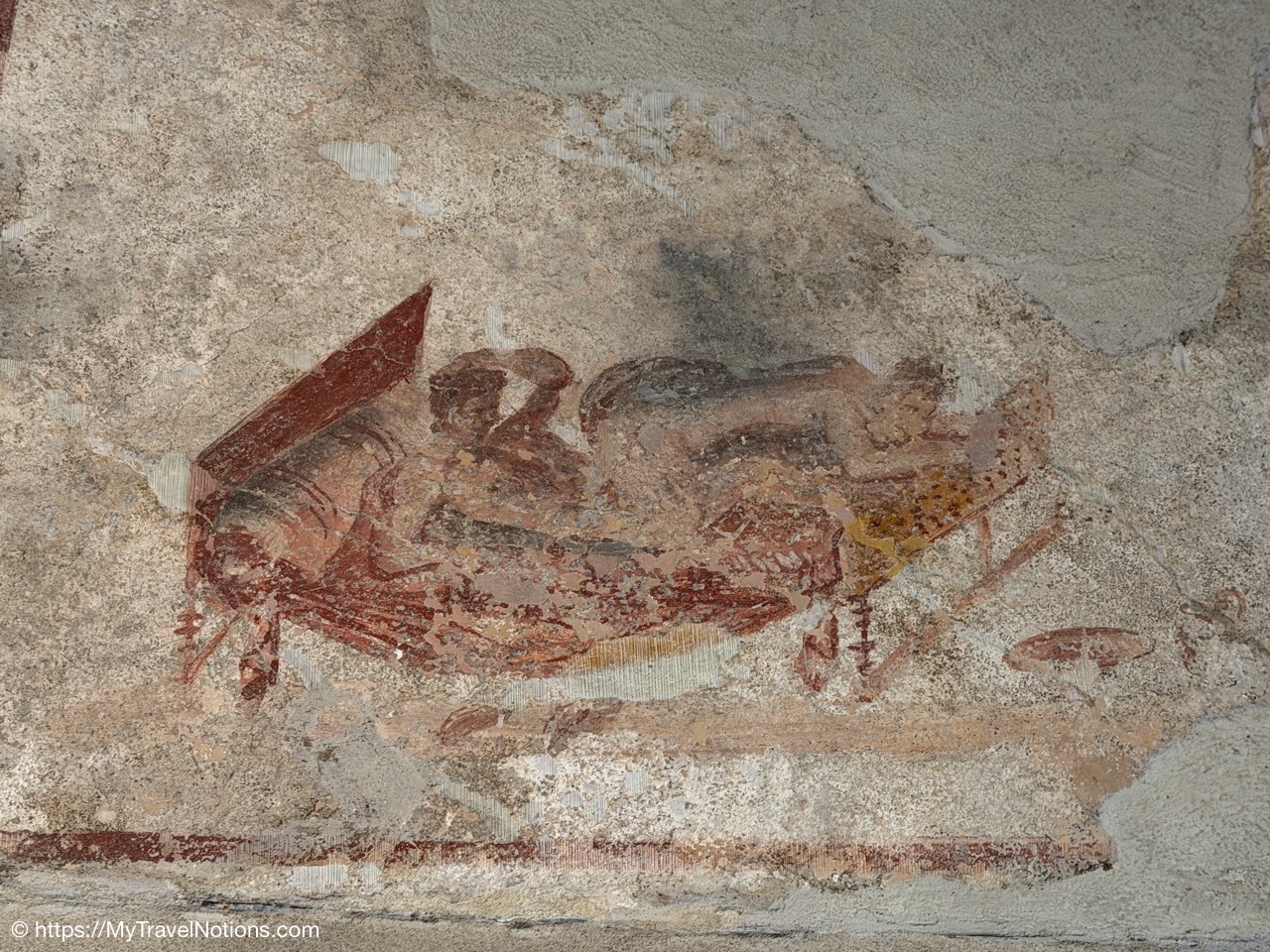
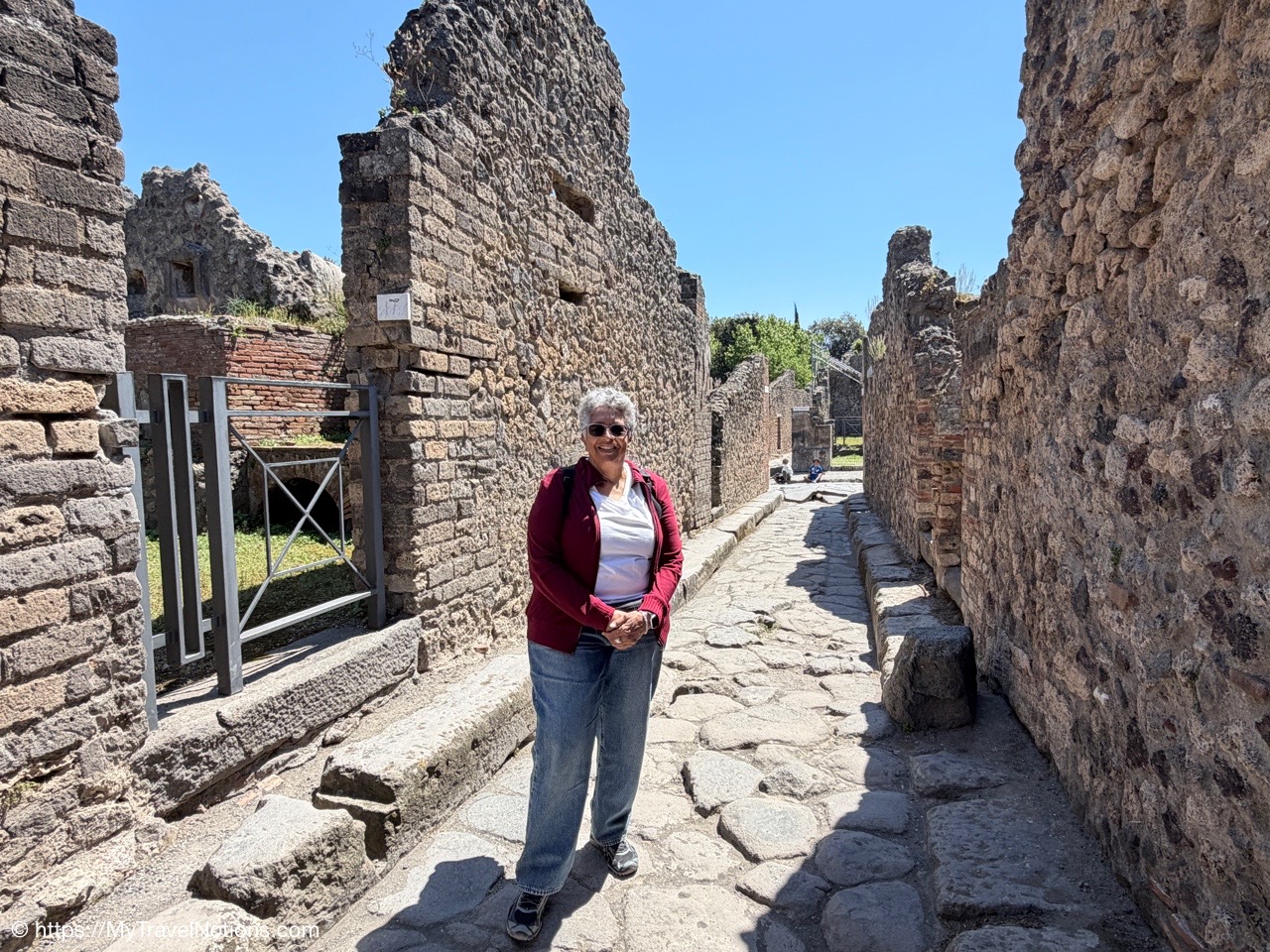
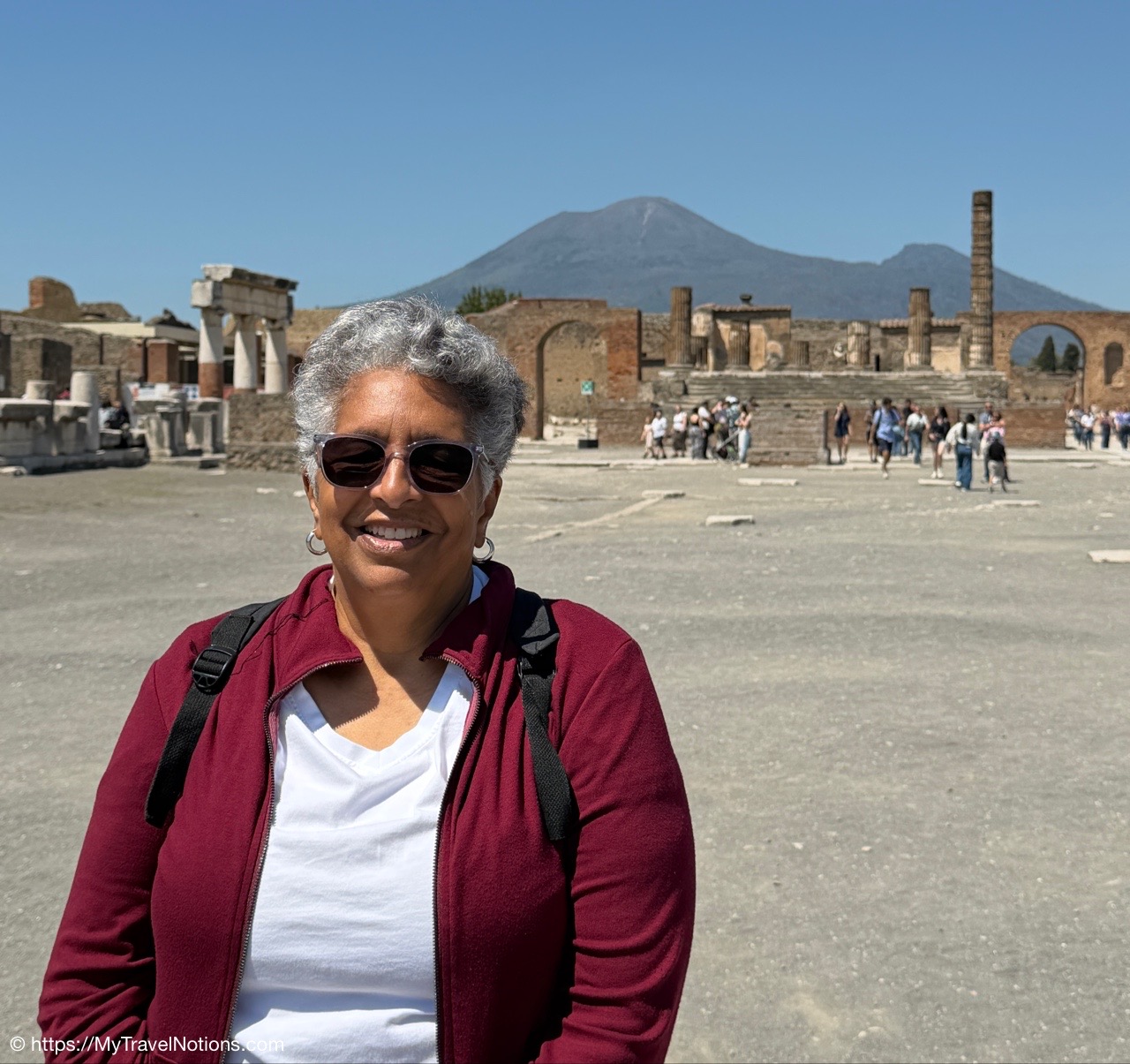
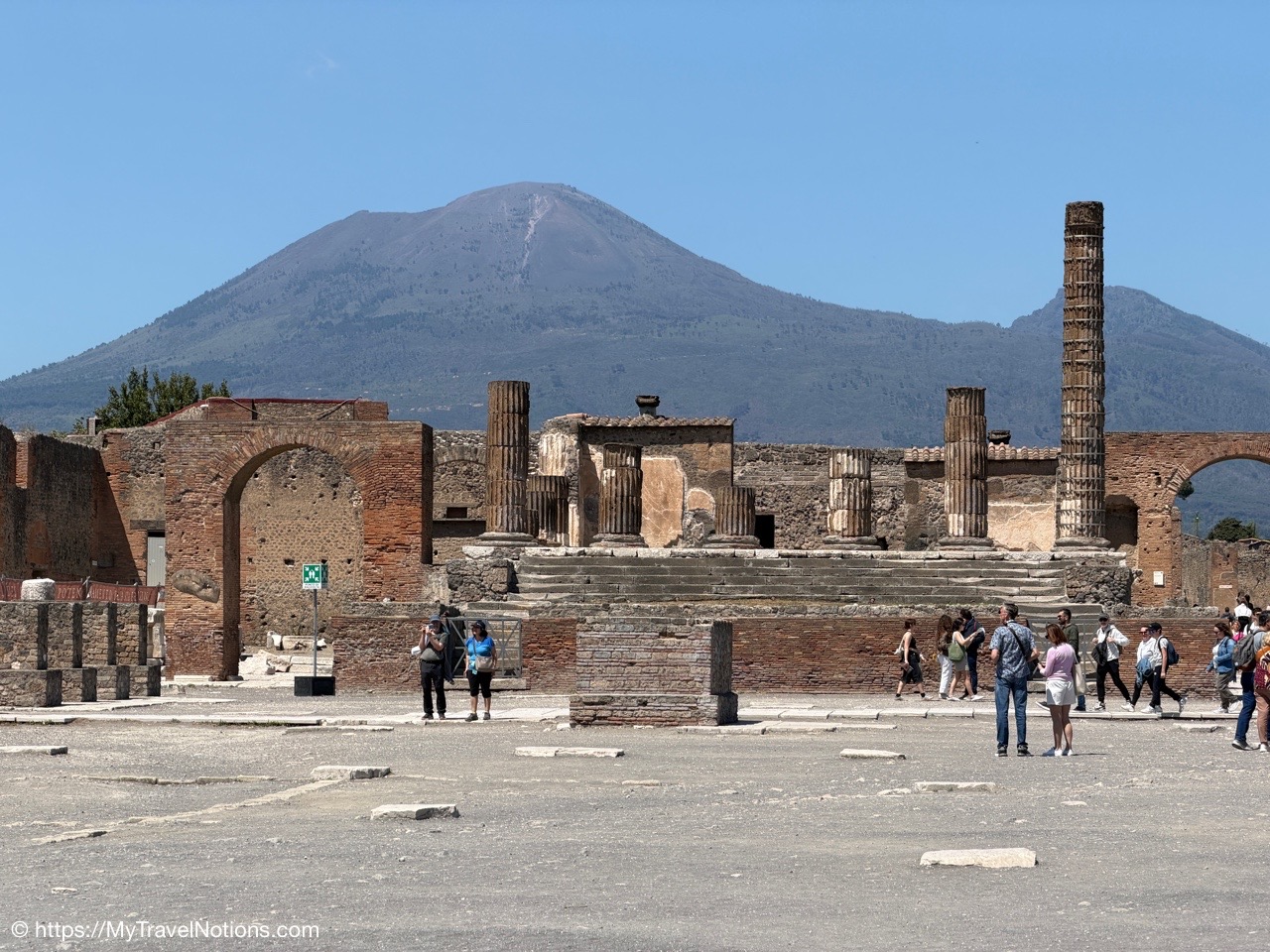
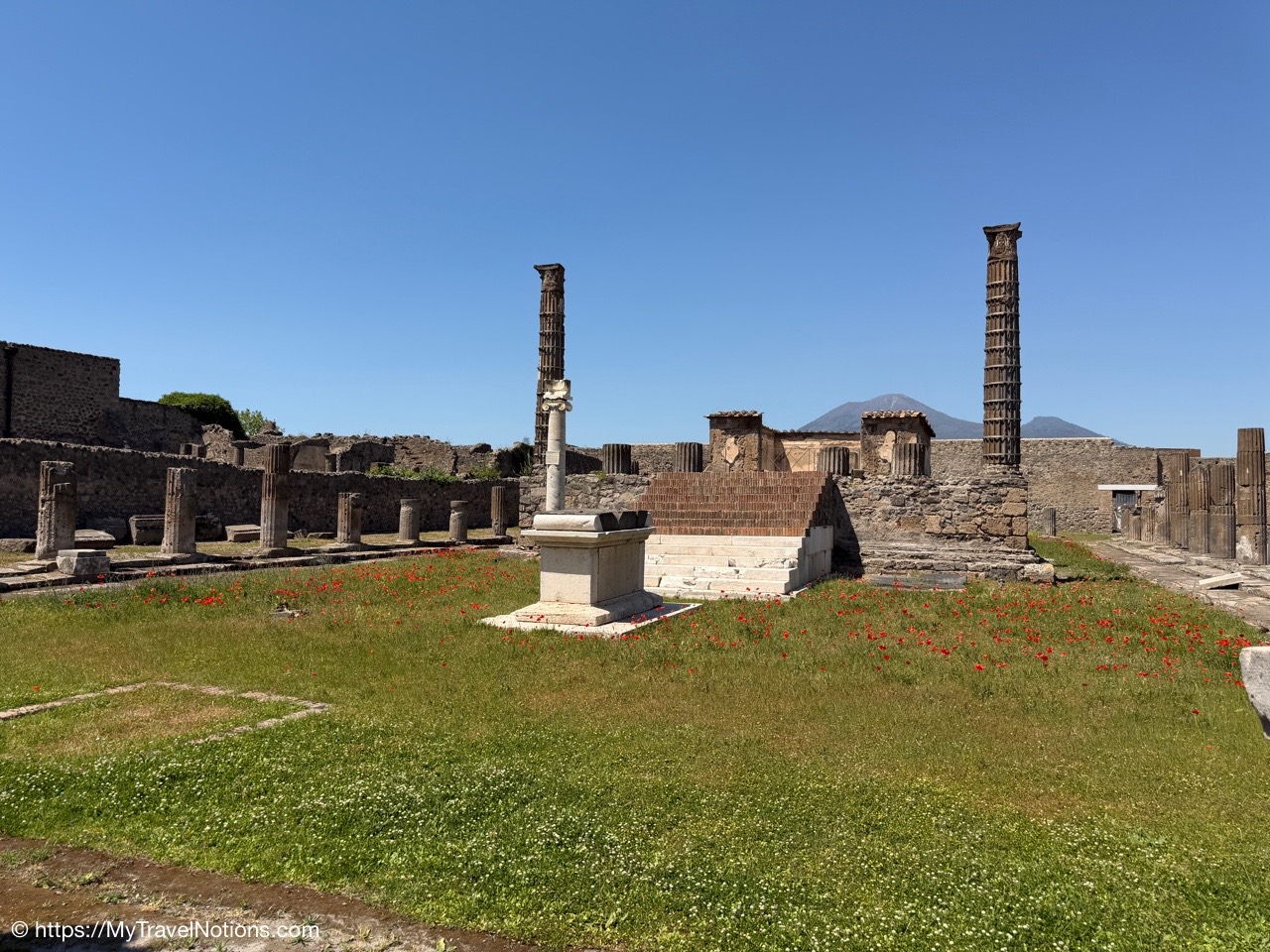
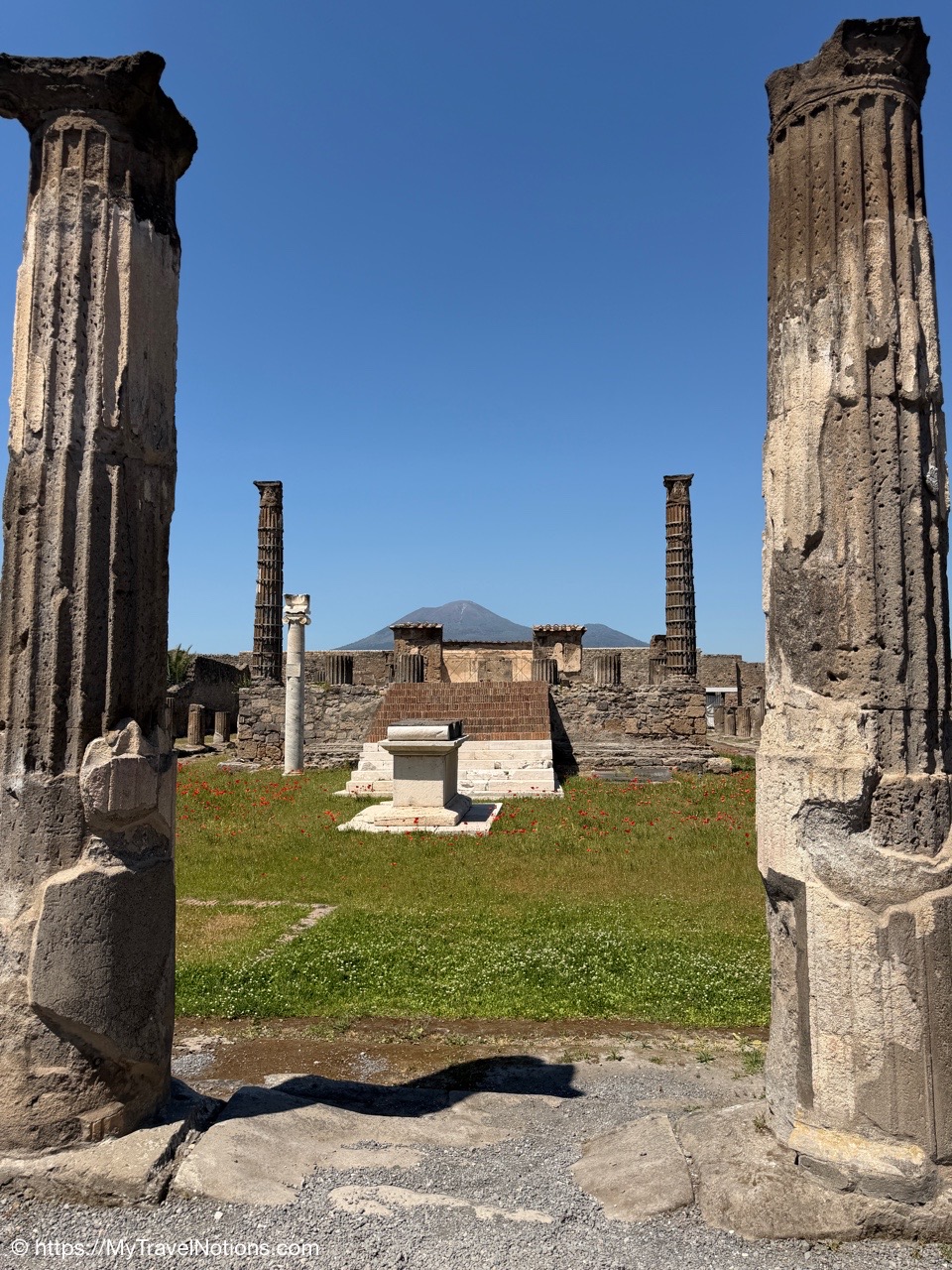
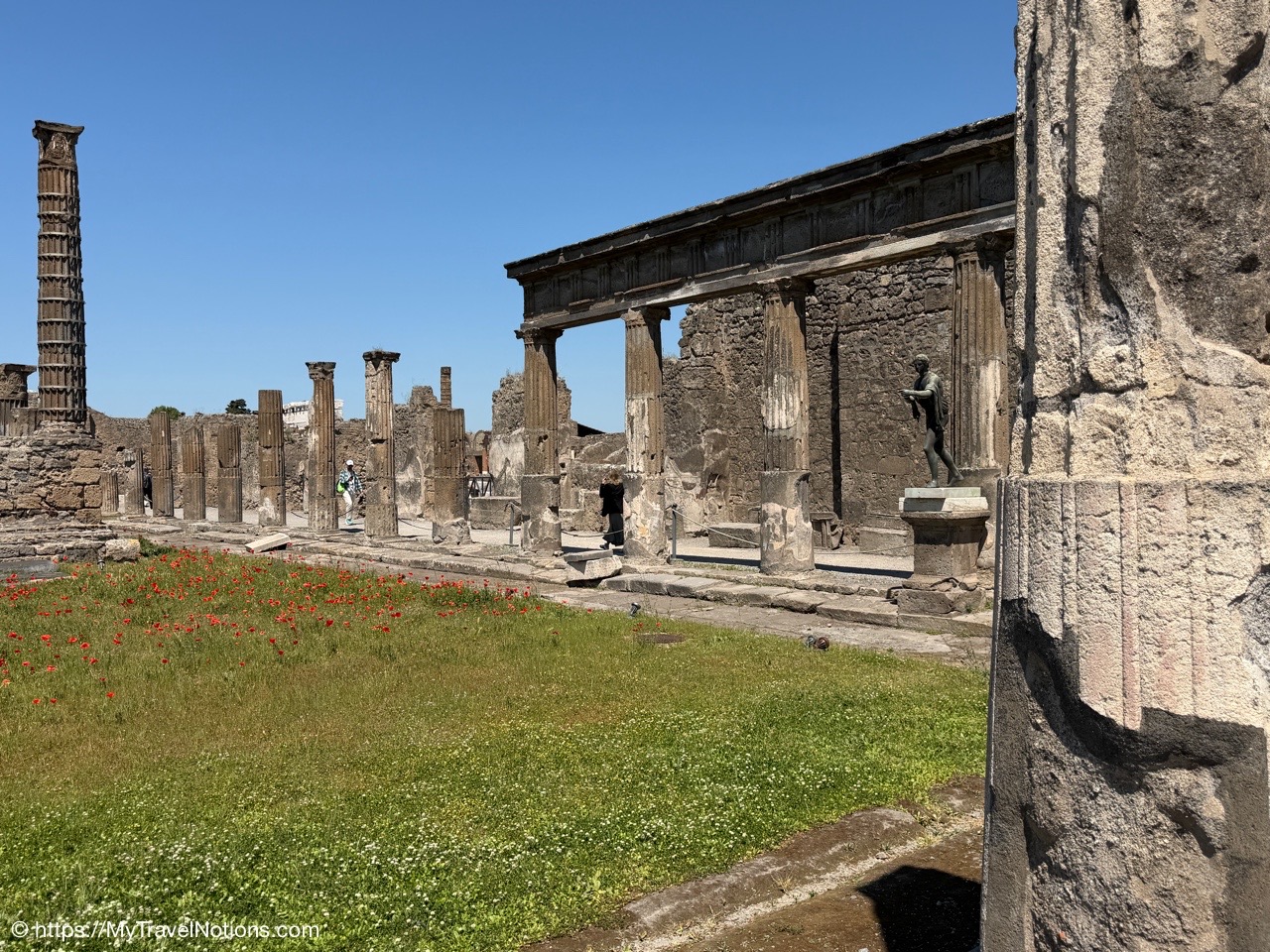
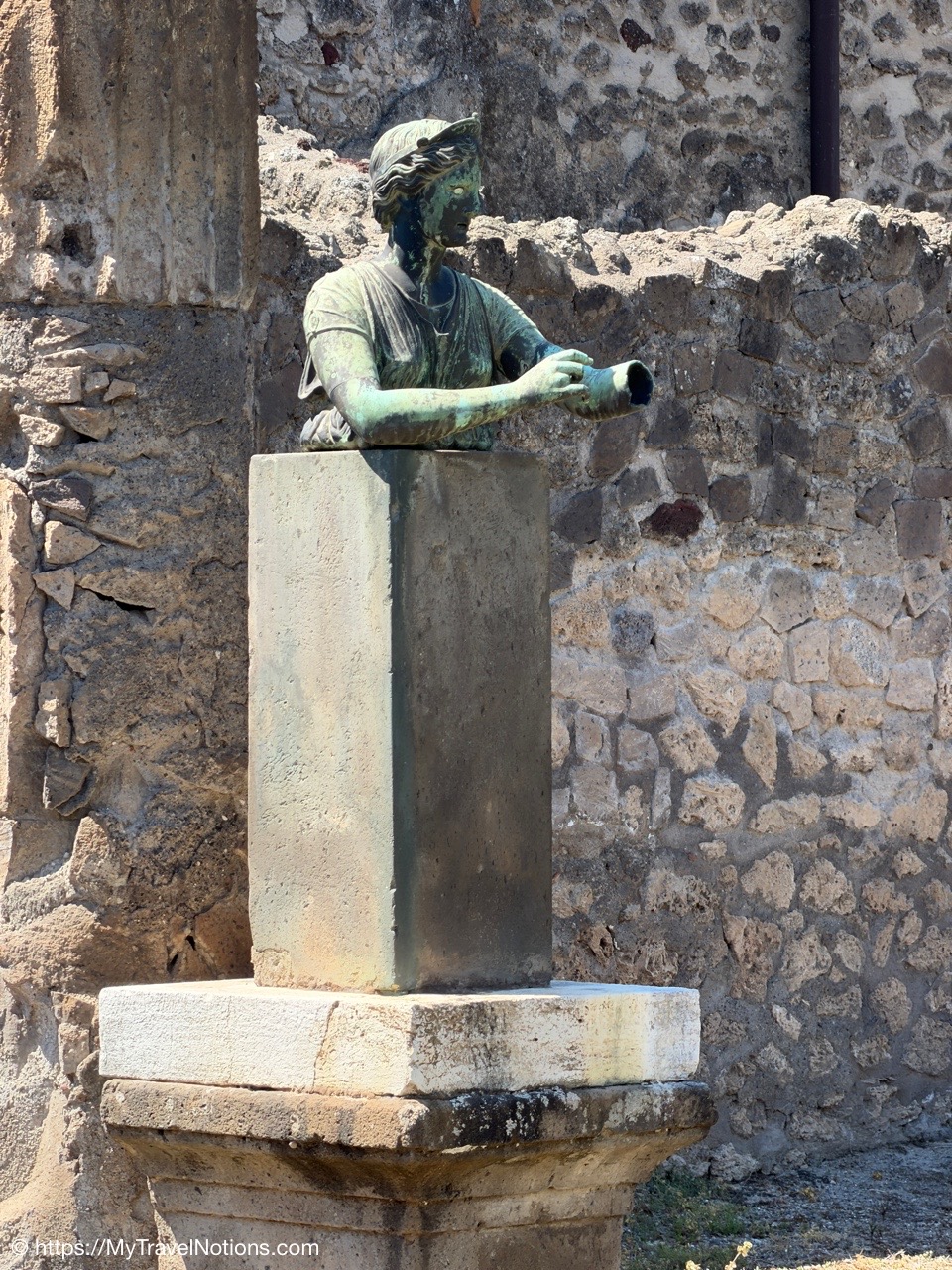
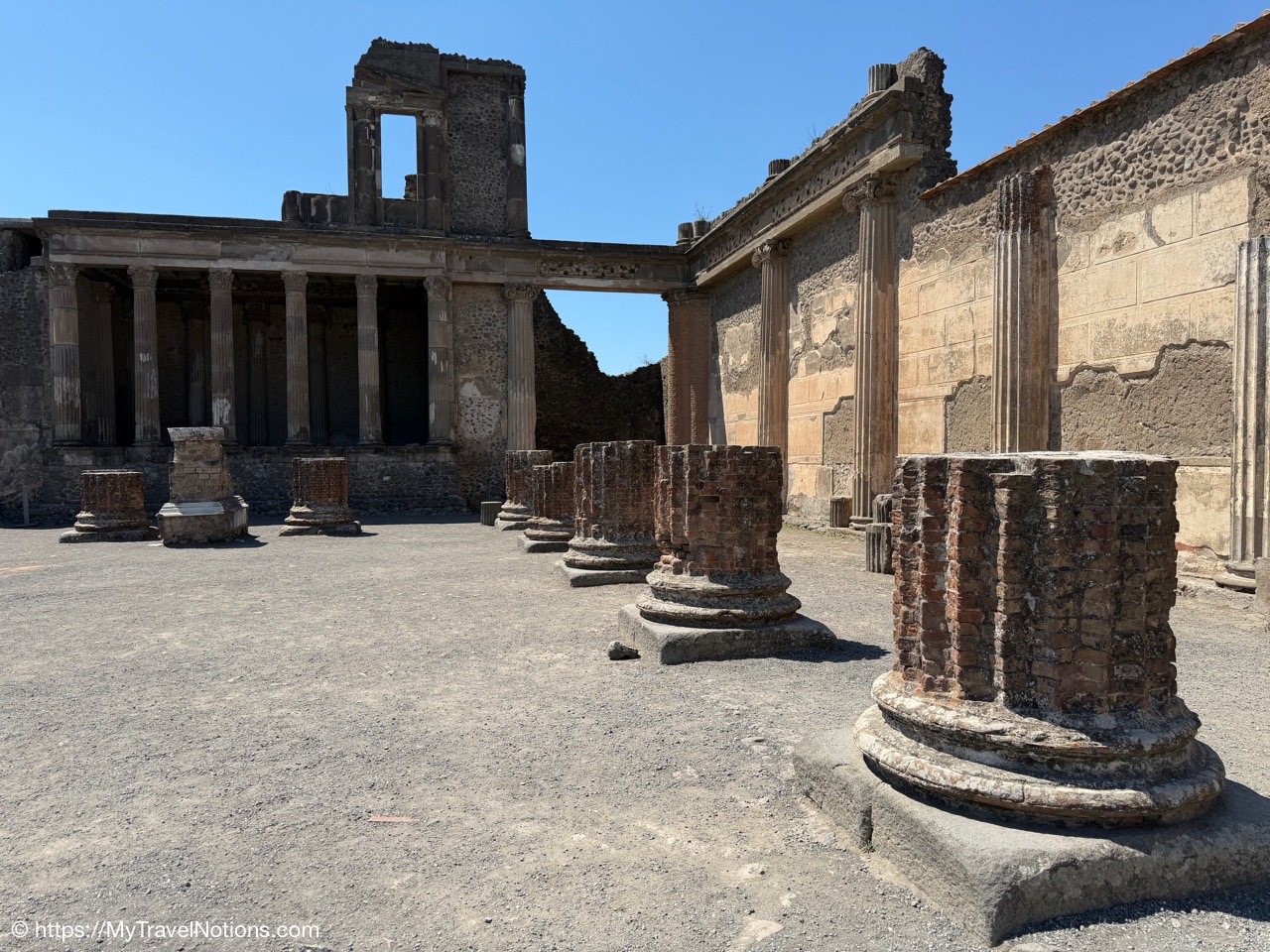
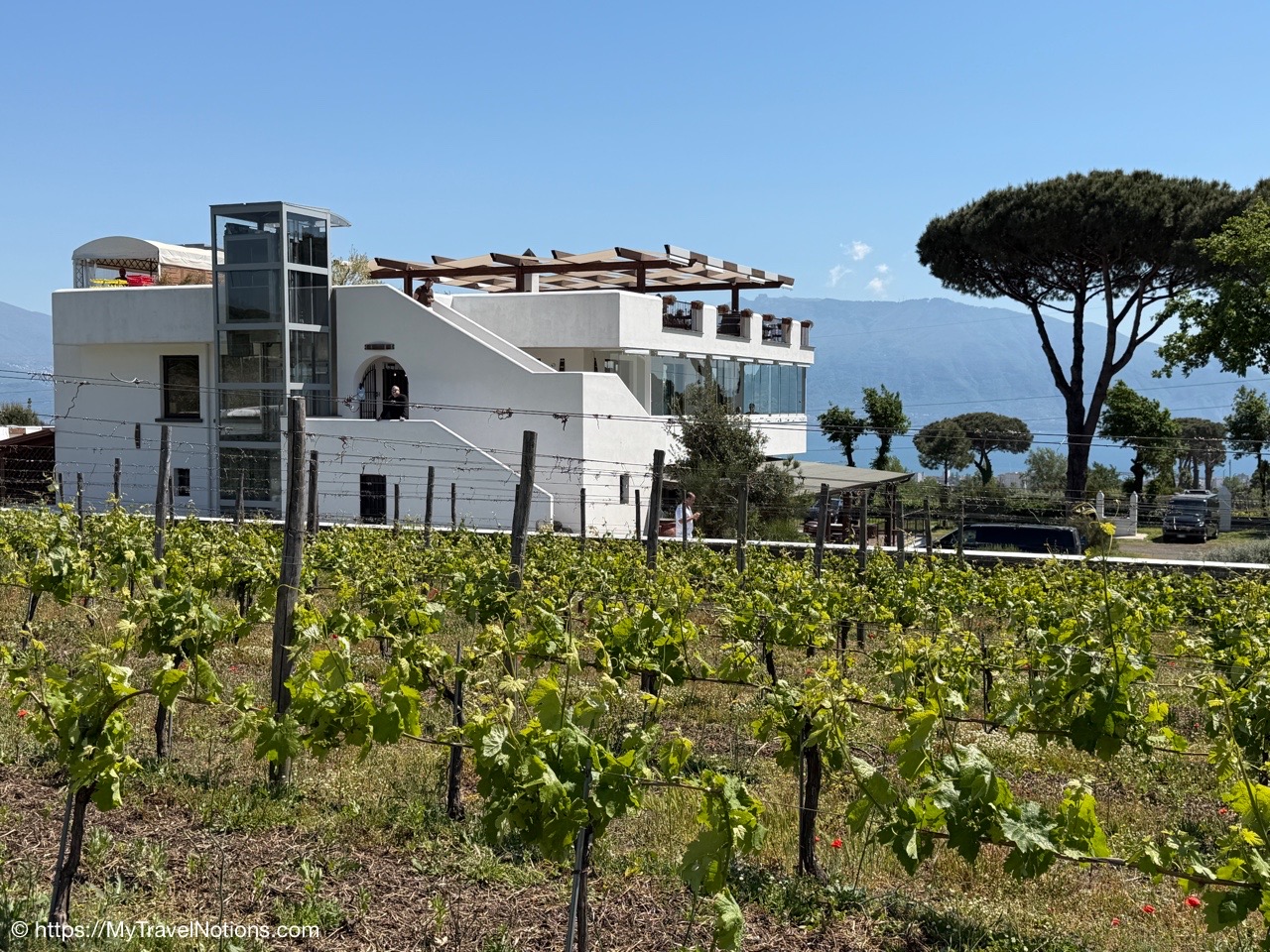
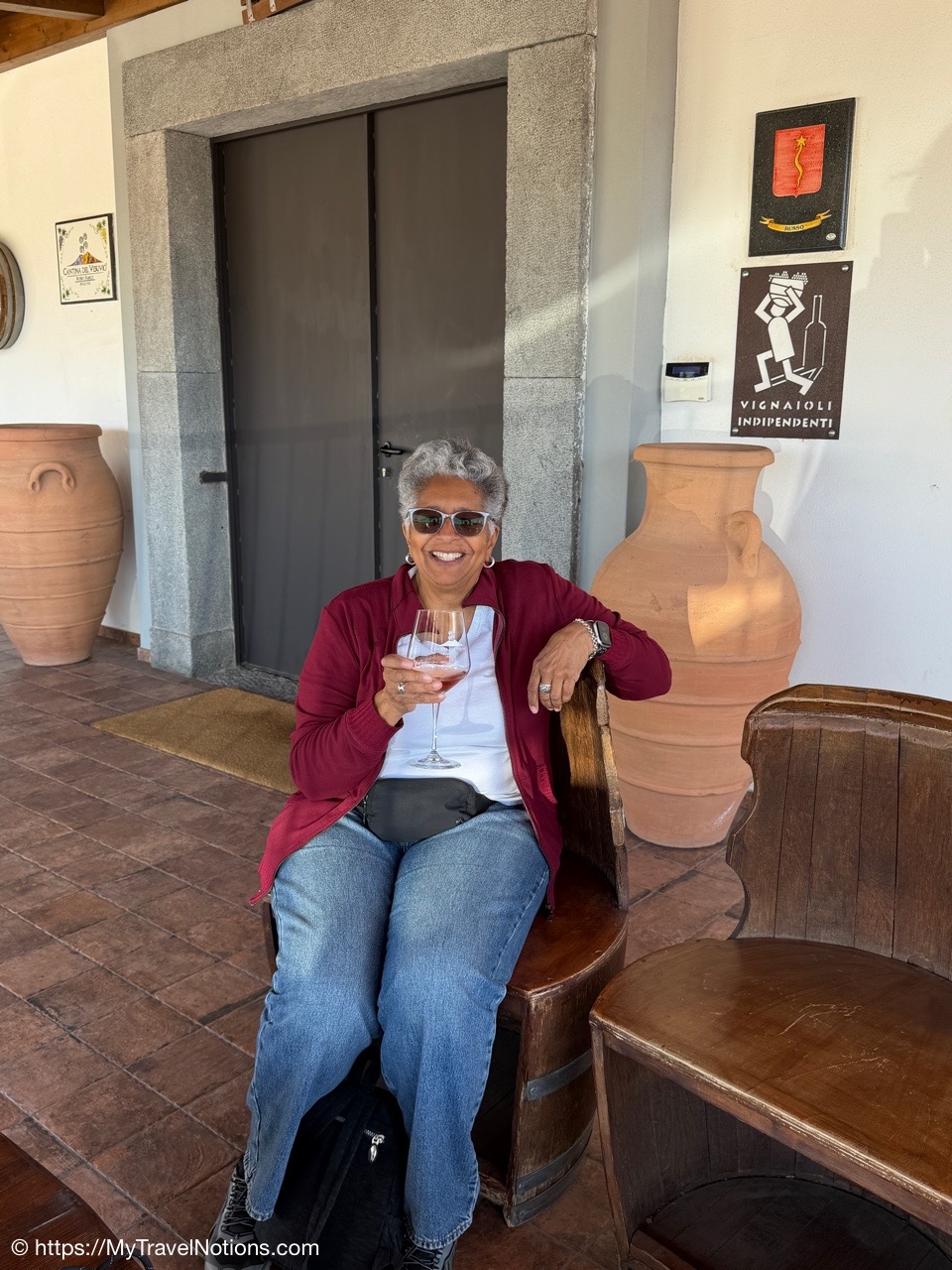
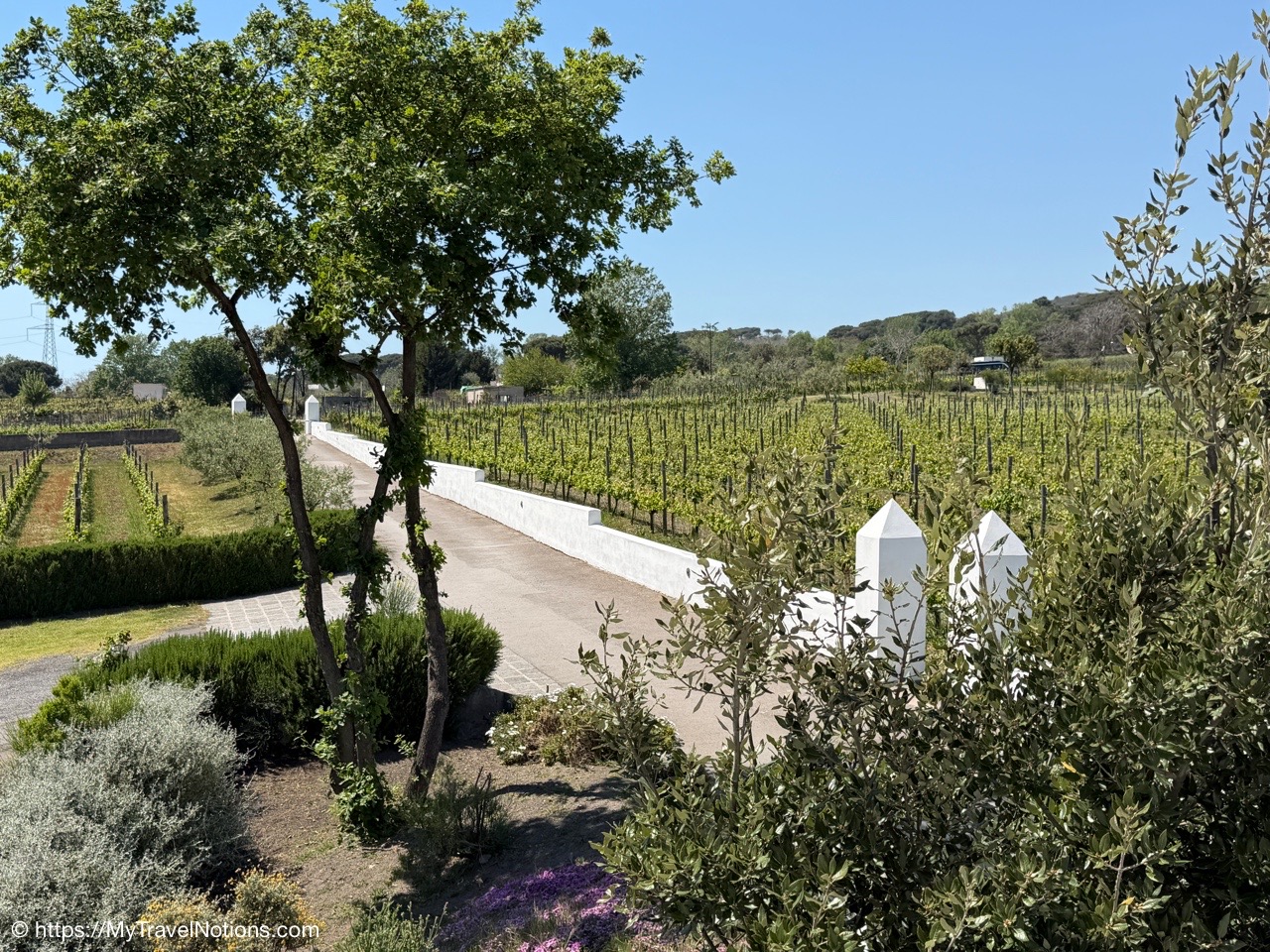
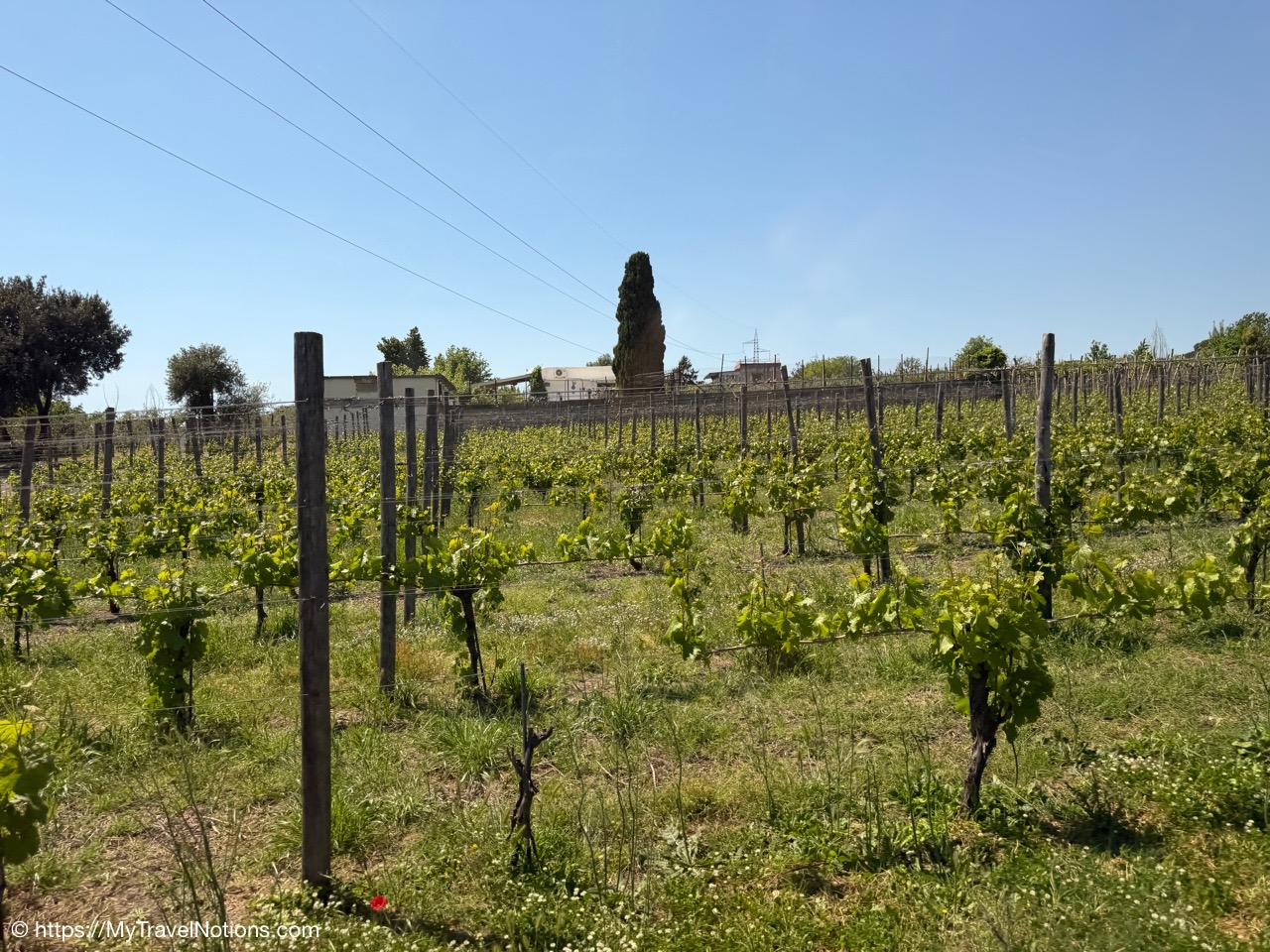
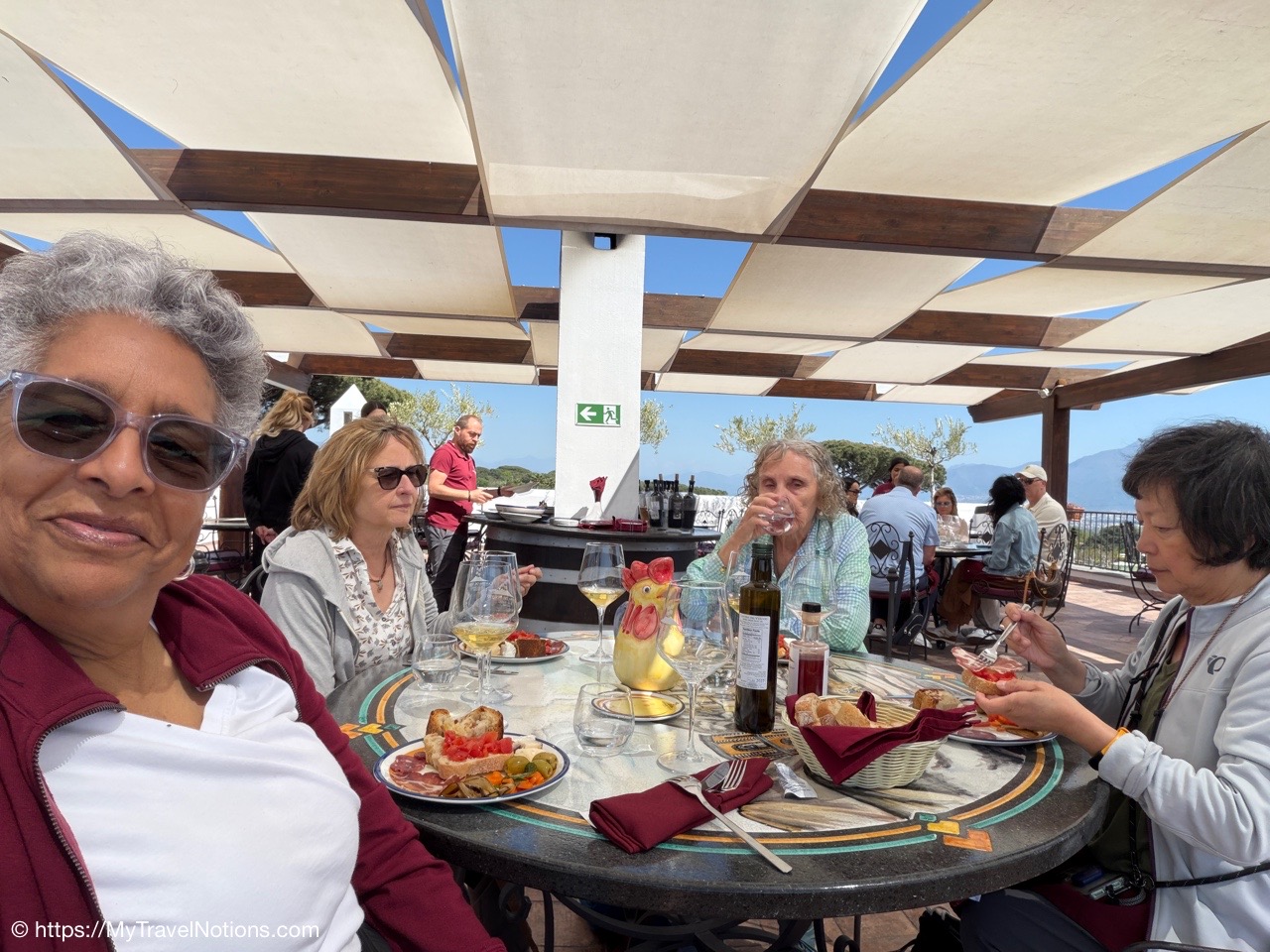
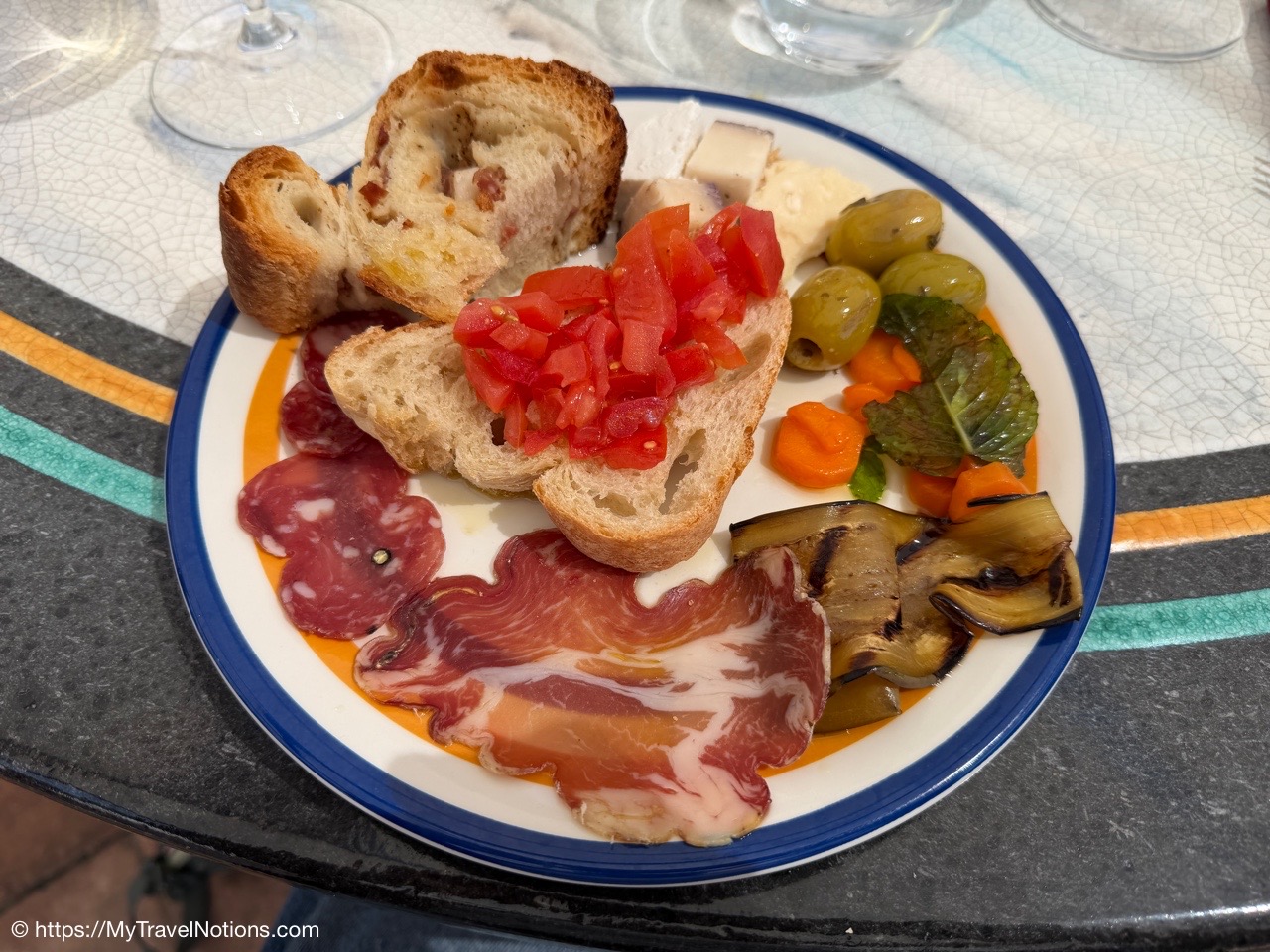
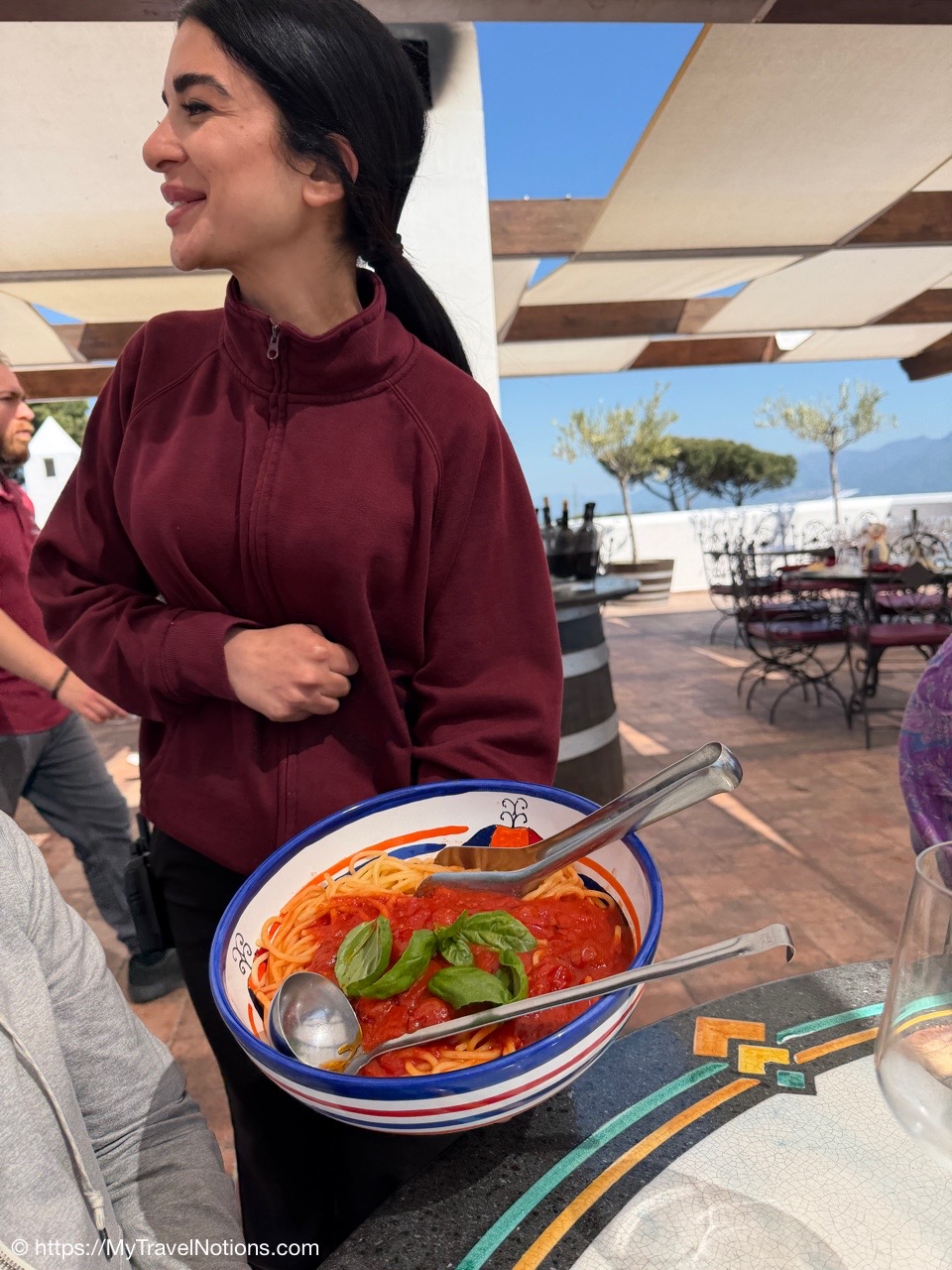
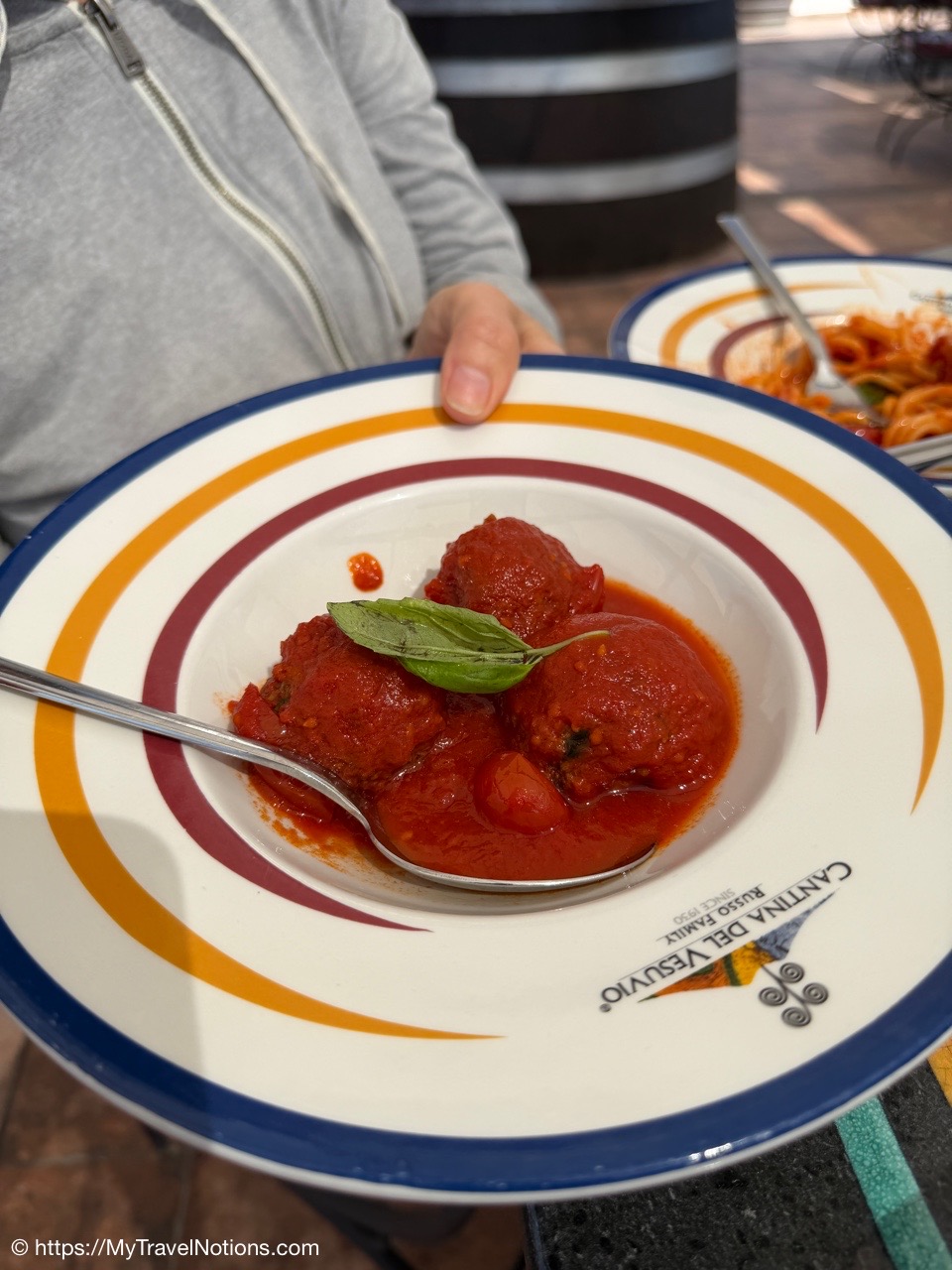
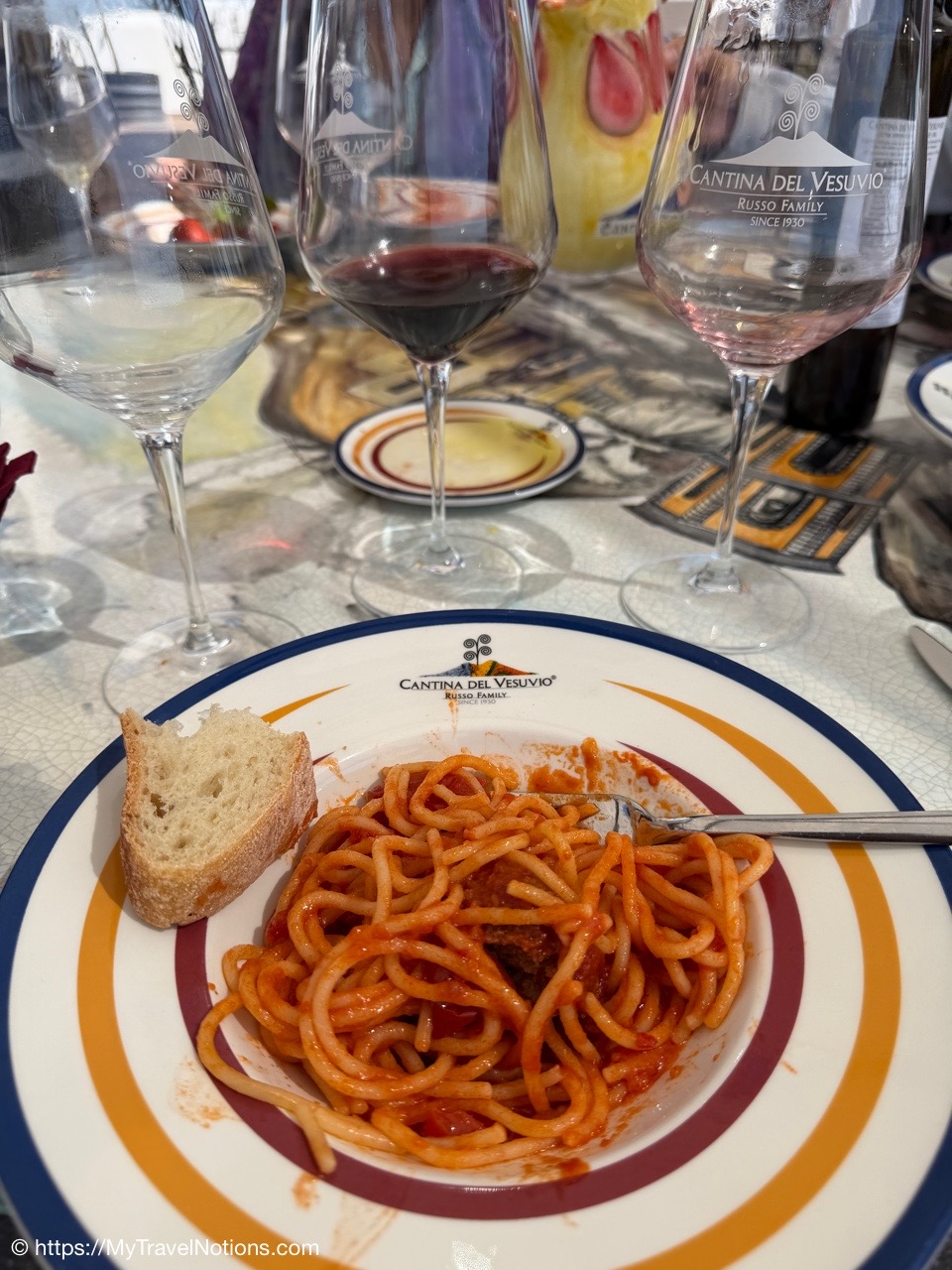
The College of the Augustals, one of the main places of worship for the ancient inhabitants of Herculaneum with its colorful frescoes depicting mythological scenes. From left: Me, Alice, Rosie and Janet. (April 25, 2026)An overview of the uncovered ruins of Herculaneum with the modern-day comune of Ercolano and Mount Vesuvius in the distance. Herculaneum was covered by superheated pyroclastic flows which instantaneously carbonized wood, saving it from decay. (April 25, 2026)An overview of the uncovered ruins of Herculaneum with the modern-day comune of Ercolano and Mount Vesuvius in the distance. Herculaneum was covered by superheated pyroclastic flows which instantaneously carbonized wood, saving it from decay. (April 25, 2026)View from above Herculaneum showing the arched docks where the boats were kept because the city was by the water. Visitors can now walk along the newly reopened ancient shoreline where hundreds of people tried to escape. (April 25, 2026)View from above Herculaneum showing the docks where the boats were kept because the city was by the water. It shows where people died trying to escape. The actual, original skeletons were removed for extensive study. The remains currently on display in the boat sheds are replicas, placed exactly where the victims were found to show how they huddled together. (April 25, 2026)The Boat Pavilion in Herculaneum displays the carbonized remains of the boat discovered in the 1980s during the excavations of the ancient beach. Herculaneum was covered by superheated pyroclastic flows which instantaneously carbonized wood, saving it from decay. (April 25, 2026)The carbonized remains of a boat discovered in the 1980s during the excavations of the ancient beach is on display at the Boat Pavilion in Herculaneum. (April 25, 2026)The carbonized remains of a boat discovered in the 1980s during the excavations of the ancient beach is on display at the Boat Pavilion in Herculaneum. (April 25, 2026)Walking across the modern bridge down into the ancient city of Herculaneum which was buried under 72 feet (23 meters) or the length of a 7-story building of volcanic material in 79 AD from the eruption of Mount Vesuvius. This entrance provides a stark contrast between modern life and the preserved Roman town, leading visitors directly down into the ruins, often described as a more intimate experience than Pompeii. (April 25, 2026)Walking onto the paved Roman street in the ancient town of Herculaneum modern-day comune of Ercolano. (April 25, 2026)The entrance to Casa dello Scheletro (House of the Skeleton) is a notable ancient Roman house in Herculaneum. The house showcases detailed mosaics and frescoes that illustrate high-end Roman domestic life. (April 25, 2026)The black-and-white mosaic entryway into the Casa dello Scheletro (House of the Skeleton) is a notable ancient Roman house in Herculaneum. (April 25, 2026)A room for parties inside the Casa dello Scheletro (House of the Skeleton) in Herculaneum. The curved curved wall is frescoed and paved with marble in white, black and antique yellow. (April 25, 2026)The courtyard of the Casa dello Scheletro (House of the Skeleton) is a notable ancient Roman house in Herculaneum. It features a wall with a curved niche covered it mosaics and above the niche are mall panels depicting Dionysian scenes. (April 25, 2026)An ancient fast food shop in Herculaneum used large, deep earthenware or terracotta jars functioning much like a modern hot-bar or soup station, keeping ready-to-serve foods like stews, grains and meats warm. (April 25, 2026)The ancient fast food shop in Herculaneum used large, deep earthenware or terracotta jars functioning much like a modern hot-bar or soup station, keeping ready-to-serve foods like stews, grains and meats warm. (April 25, 2026)The terracotta jars of an ancient fast food shop in Herculaneum which functioned much like a modern hot-bar or soup station, keeping ready-to-serve foods like stews, grains and meats warm. (April 25, 2026)Walking through ancient Herculaneum. (April 25, 2026)Walking along the Roman streets of ancient Herculaneum. (April 25, 2026)The decorated former two-story exterior of a wealthy family’s home in Herculaneum. (April 25, 2026)Inside the College of the Augustals, one of the main places of worship for the ancient inhabitants of Herculaneum. (April 25, 2026)The colorful frescos inside the College of the Augustals, one of the main places of worship for the ancient inhabitants of Herculaneum. (April 25, 2026)A close-up of the colorful frescos inside the College of the Augustals, one of the main places of worship for the ancient inhabitants of Herculaneum. (April 25, 2026)Me at the colorful frescos inside the College of the Augustals, one of the main places of worship for the ancient inhabitants of Herculaneum. (April 25, 2026)Walking along a street of shops in ancient Herculaneum. (April 25, 2026)Walking along a street of shops with a water fountain for drinking in ancient Herculaneum. (April 25, 2026)Walking along a street of shops with a water fountain for drinking in ancient Herculaneum. (April 25, 2026)An advertisement for selling wine in ancient Walking along a street of shops in Herculaneum. (April 25, 2026)A long street in ancient Herculaneum. (April 25, 2026)Walking along a street of wealthy homes, showing a second floor still intact in ancient Herculaneum. (April 25, 2026)Walking along a street of wealthy homes, showing a second floor still intact in ancient Herculaneum. (April 25, 2026)Standing inside the changing or dressing room of the still decorated women’s bath house in Herculaneum. Bath houses (thermae) in ancient Rome were essential social and cultural hubs. (April 25, 2026)The changing or dressing room of the women’s bath house in Herculaneum features a distinctive white and black mosaic floor portraying a large Triton, dolphins, squids, and cuttlefish. It also contains stone benches and niches in the walls for storing clothing. (April 25, 2026)A close-up of the white and black mosaic floor portraying a large Triton, dolphins, squids, and cuttlefish in the changing or dressing room of the women’s bath house in ancient Herculaneum. (April 25, 2026)Next to the dressing room of the women’s bath house in Herculaneum is the Tepidarium or Warm Room. Located between the changing room and the hot room, this area was used to acclimate bathers. And thru the arched entryway is Caldarium or Hot Room with a marble bath. (April 25, 2026)The Caldarium or Hot Room of the women’s bath house in Herculaneum features a large marble bath for hot water. (April 25, 2026)The Casa Sannitica (Samnite House) in Herculaneum is a well-preserved 2nd-century BC pre-Roman dwelling. It showcases a blend of Samnite and early Roman design. Named after the Samnite people who occupied the area, it was likely owned by a wealthy elite family before being buried in the 79 AD eruption and rediscovered in the 18th century. (April 25, 2026)Stepping into Casa Sannitica (Samnite House) in Herculaneum, a well-preserved 2nd-century BC pre-Roman dwelling. (April 25, 2026)The Atrium of the Casa Sannitica (Samnite House) in Herculaneum, a well-preserved 2nd-century BC pre-Roman dwelling. (April 25, 2026)Standing in the atrium, looking towards the entrance of the Casa Sannitica (Samnite House) in Herculaneum, a well-preserved 2nd-century BC pre-Roman dwelling. (April 25, 2026)A reception room, off the Atrium, inside the Casa Sannitica in Herculaneum with remaining fresco traces and mosaic floors. (April 25, 2026)A bedroom, off the Atrium, inside the Casa Sannitica in Herculaneum with remaining fresco traces and bed frame. (April 25, 2026)Entering the Antiquarium of the Archaeological Park of Herculaneum which houses a selection of objects from archaeological explorations carried out throughout the 20th century in Herculaneum. (April 25, 2026)Roman carbonised wooden furniture from Herculaneum at Antiquarium of the Archaeological Park of Herculaneum. According to people more knowledgeable than me: The intense heat, combined with the lack of oxygen in the volcanic mud (pyroclastic flow), caused the wood to carbonize (turn to charcoal) rather than burn up entirely. (April 25, 2026)Roman carbonized wooden furniture from Herculaneum at Antiquarium of the Archaeological Park of Herculaneum. (April 25, 2026)Roman carbonized wooden furniture from Herculaneum at Antiquarium of the Archaeological Park of Herculaneum. (April 25, 2026)Roman carbonized wooden furniture from Herculaneum at Antiquarium of the Archaeological Park of Herculaneum. (April 25, 2026)From Herculaneum we made our way to the Archaeological Park of Pompeii. The city was buried in volcanic ash when in 79 AD Mount Vesuvius erupted. Pompeii is a massive, iconic city experience, while Herculaneum provides a smaller, better-preserved, and more intimate glimpse into Roman life. (April 25, 2026)Entering the the Archaeological Park of ancient Pompeii. The thriving Roman city was frozen in time when the nearby Mount Vesuvius erupted in 79 AD, burying the city and its residents under thick layers of volcanic ash. (April 25, 2026)The Quadriportico dei Teatri in Pompeii, a large, open-air, colonnaded courtyard featuring 74 Doric columns made of grey tuft, primarily known as the Gladiators’ Barracks. Initially a 2nd-century B.C. foyer for theater-goers, it was converted into a gladiatorial school after the 62 AD earthquake. (April 25, 2026)Me at the Quadriportico dei Teatri in Pompeii, a large, open-air, colonnaded courtyard featuring 74 Doric columns made of grey tuft. It is primarily known as the Gladiators’ Barracks. Initially a 2nd-century B.C. foyer for theater-goers, it was converted into a gladiatorial school after the 62 AD earthquake. (April 25, 2026)The Quadriportico dei Teatri in Pompeii, a large, open-air, colonnaded courtyard featuring 74 Doric columns made of grey tuft, primarily known as the Gladiators’ Barracks. Initially a 2nd-century B.C. foyer for theater-goers, it was converted into a gladiatorial school after the 62 AD earthquake. (April 25, 2026)Standing by large, open-air, colonnaded courtyard of the Quadriportico dei Teatri in Pompeii featuring 74 Doric columns made of grey tuft. It is primarily known as the Gladiators’ Barracks. From left: Janet, Alice, Rosie and me. (April 25, 2026)The Teatro Grande in Pompeii is a well-preserved, 2nd-century BC Roman theater, holding up to 5,000 spectators for shows, music, dance, and gladiatorial performances. (April 25, 2026)The Teatro Grande in Pompeii is a well-preserved, 2nd-century BC Roman theater, holding up to 5,000 spectators for shows, music, dance, and gladiatorial performances. (April 25, 2026)Me at one of the ancient fast food areas, but this time it’s in Pompeii. (April 25, 2026)The large stones on the streets of Pompeii are known as stepping stones or pedestrian crossings. These elevated stone blocks allowed pedestrians to cross the street without stepping into the water, mud, or waste that frequently filled the roadway. (April 25, 2026)The large stones on the streets of Pompeii are known as stepping stones or pedestrian crossings. These elevated stone blocks allowed pedestrians to cross the street without stepping into the water, mud, or waste that frequently filled the roadway. (April 25, 2026)The grooves along the streets of Pompeii were created by the relentless passage of iron-rimmed wooden wheels grinding against the hard stone over centuries. While often called “chariot marks,” they were primarily made by heavy transport wagons and carts. (April 25, 2026)My group walking across the large stones on the streets of Pompeii known as stepping stones or pedestrian crossings. (April 25, 2026)Walking along the ancient streets of Pompeii. (April 25, 2026)Walking along the ancient streets of Pompeii. (April 25, 2026)Me standing along the ancient streets of Pompeii. (April 25, 2026)The courtyard of the Stabian Bathhouse in ancient Pompeii. (April 25, 2026)Me standing in the courtyard of the Stabian Bathhouse in Pompeii. (April 25, 2026)Behind a wall in the courtyard of the Stabian Bathhouse in Pompeii is a lone striking plaster cast of a young girl caught in the Mount Vesuvius eruption. The haunting plaster casts of victims were created by pouring plaster into voids left in the ash where bodies decomposed. (April 25, 2026)The striking plaster cast of a young girl caught in the Mount Vesuvius eruption in Pompeii. The haunting plaster casts of victims were created by pouring plaster into voids left in the ash where bodies decomposed. (April 25, 2026)Walking through the remains of homes in ancient Pompeii. (April 25, 2026)Entering the Lupanar, the ancient Roman brothel in Pompeii. It served as the city’s largest establishment dedicated to sex work prior to the eruption of Mount Vesuvius in 79 AD. Lupanare or Lupanarium is derived from “lupa” (Latin for “she-wolf”), a derogatory term for a prostitute, thus literally “house of the she-wolves”. However, a vast majority of sex workers were enslaved. Visitors in ancient times found ithe brothel by looking for phallus signs pointing toward it. (April 25, 2026)Inside the Lupanare of Pompeii, an ancient well-preserved ancient Roman brothel. Visitors in ancient times found it by looking for phallus signs pointing toward it on the streets.’s known for its small. The brothel contains dimly lit cubicles containing masonry beds where patrons would bring their own mattresses or cushions. Also, above the doorways of the cubicles are highly graphic erotic frescos. (April 25, 2026)Inside the Lupanare of Pompeii, an ancient well-preserved ancient Roman brothel. Visitors in ancient times found it by looking for phallus signs pointing toward it on the streets.’s known for its small. The brothel contains dimly lit cubicles containing masonry beds where patrons would bring their own mattresses or cushions. Also, above the doorways of the cubicles are highly graphic erotic frescos. (April 25, 2026)A dimly lit cubicle containing a masonry bed inside the Lupanare, an ancient brothel in Pompeii. Patrons would bring their own mattresses or cushions. (April 25, 2026)Erotic frescoes above cubicle doorways likely functioned as a “menu” showing the services offered by the enslaved sex workers inside the Lupanare, an ancient brothel in Pompeii. (April 25, 2026)Me on the ancient paved Roman streets of Pompeii. (April 25, 2026)Me at the Forum of Pompeii, the main square of the city with views of Mount Vesuvius in the distance. It was closed to traffic and accessible only by foot. It was where all political, religious and commercial events took place. (April 25, 2026)The Forum of Pompeii, the main square of the city with views of Mount Vesuvius in the distance. It was closed to traffic and accessible only by foot. It was where all political, religious and commercial events took place. (April 25, 2026)The Temple of Apollo in Pompeii is one of the city’s oldest and most significant religious sites, located near the Forum and Porta Marina. Dedicated to Apollo, the complex dates back to the 6th century BC, though its current form is largely from a 2nd-century BC renovation. (April 25, 2026)The Temple of of Apollo in Pompeii is one of the city’s oldest and most significant religious sites, located near the Forum and Porta Marina. Dedicated to Apollo, the complex dates back to the 6th century BC, though its current form is largely from a 2nd-century BC renovation. (April 25, 2026)The Temple of Apollo in Pompeii is one of the city’s oldest and most significant religious sites, located near the Forum and Porta Marina. Dedicated to Apollo, the complex dates back to the 6th century BC, though its current form is largely from a 2nd-century BC renovation. (April 25, 2026)A statue of Diana, Apollo’s twin sister, at the Temple of Apollo in Pompeii. (April 25, 2026)Pompeii’s Basilica which served as the city’s law court and marketplace. (April 25, 2026)We had a late wine tasting and lunch at the Cantina del Vesuvio located on the slopes of Mount Vesuvius in Trecase. (April 25, 2026)Me enjoying my first taste of wine during our wine tasting and lunch at the Cantina del Vesuvio located on the slopes of Mount Vesuvius in Trecase. (April 25, 2026)The vineyards at the Cantina del Vesuvio located on the slopes of Mount Vesuvius in Trecase. (April 25, 2026)The vineyards at the Cantina del Vesuvio located on the slopes of Mount Vesuvius in Trecase. (April 25, 2026)Enjoying our lunch on the very chilly terrace at the Cantina del Vesuvio located on the slopes of Mount Vesuvius in Trecase. I think we would have all enjoyed this experience a bit more if the weather had not been so chilly. (April 25, 2026)Along with our wine tasting, at the Cantina del Vesuvio located on the slopes of Mount Vesuvius in Trecase, we began with this appetizer of salami, salted ricotta cheese, roasted eggplant, olives and bruschetta made with wood-fired bread and heirloom Piennolo cherry tomatoes. (April 25, 2026)The main course at the Cantina del Vesuvio located on the slopes of Mount Vesuvius in Trecase, was this family serving of durum wheat spaghetti tossed in a tasty, traditional sauce made from Piennolo tomatoes and fresh basil. (April 25, 2026)Another delicious side item were these delicious meatballs at the Cantina del Vesuvio located on the slopes of Mount Vesuvius in Trecase. (April 25, 2026)My plate of durum wheat spaghetti tossed in a tasty, traditional sauce made from Piennolo tomatoes and fresh basil at the Cantina del Vesuvio located on the slopes of Mount Vesuvius in Trecase. (April 25, 2026)
Our Day in Positano
We’ve really done the rounds on this Amalfi Coast trip. And now we’re visiting Positano. It’s probably worth more than a day but again for me, Positano is all about the awesome views. Yes, it basically runs on tourism with its plentiful hotels, restaurants and shops but it all comes back to the amazing views.
So, let’s just cut to Positano and its views.
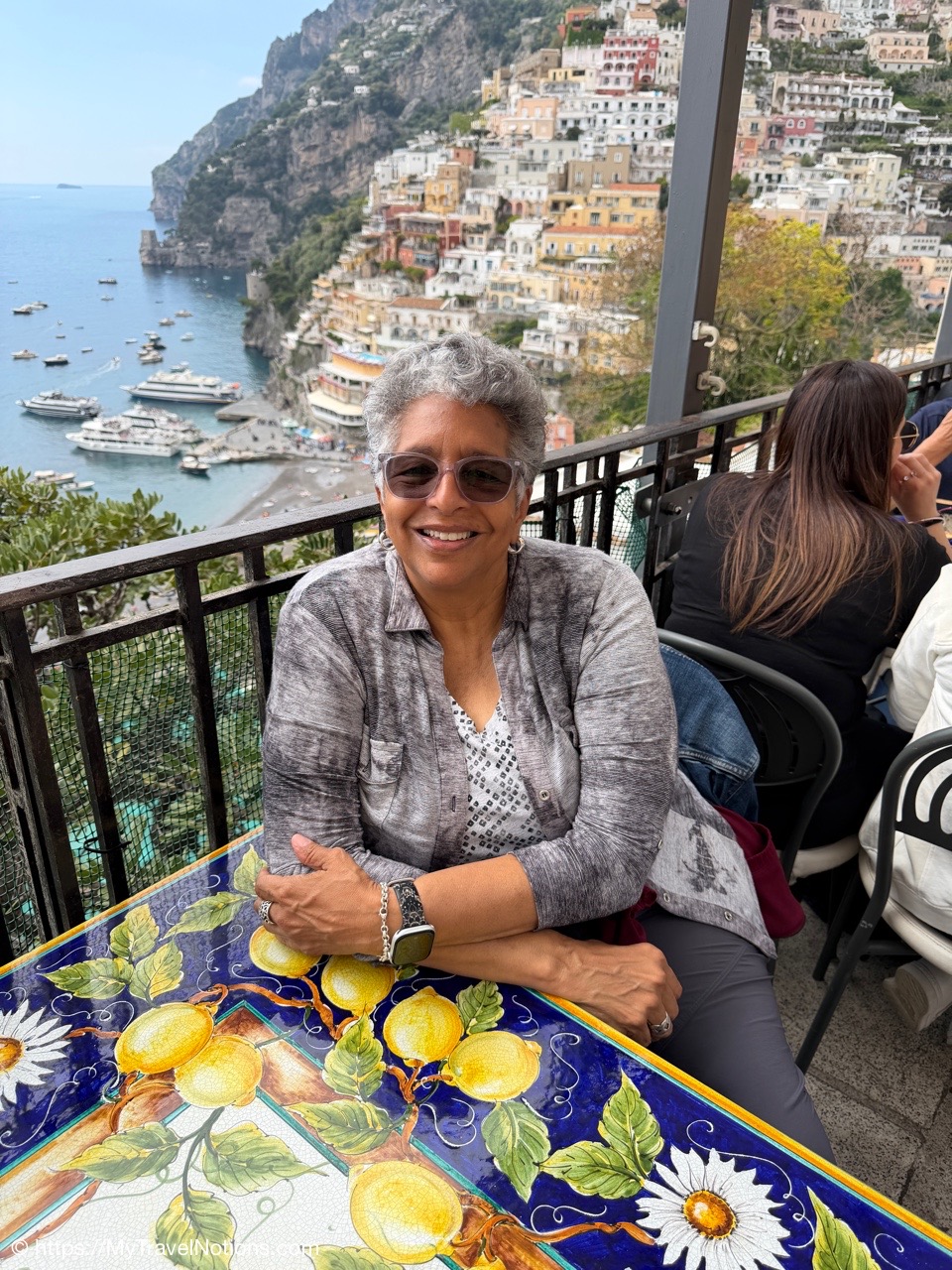
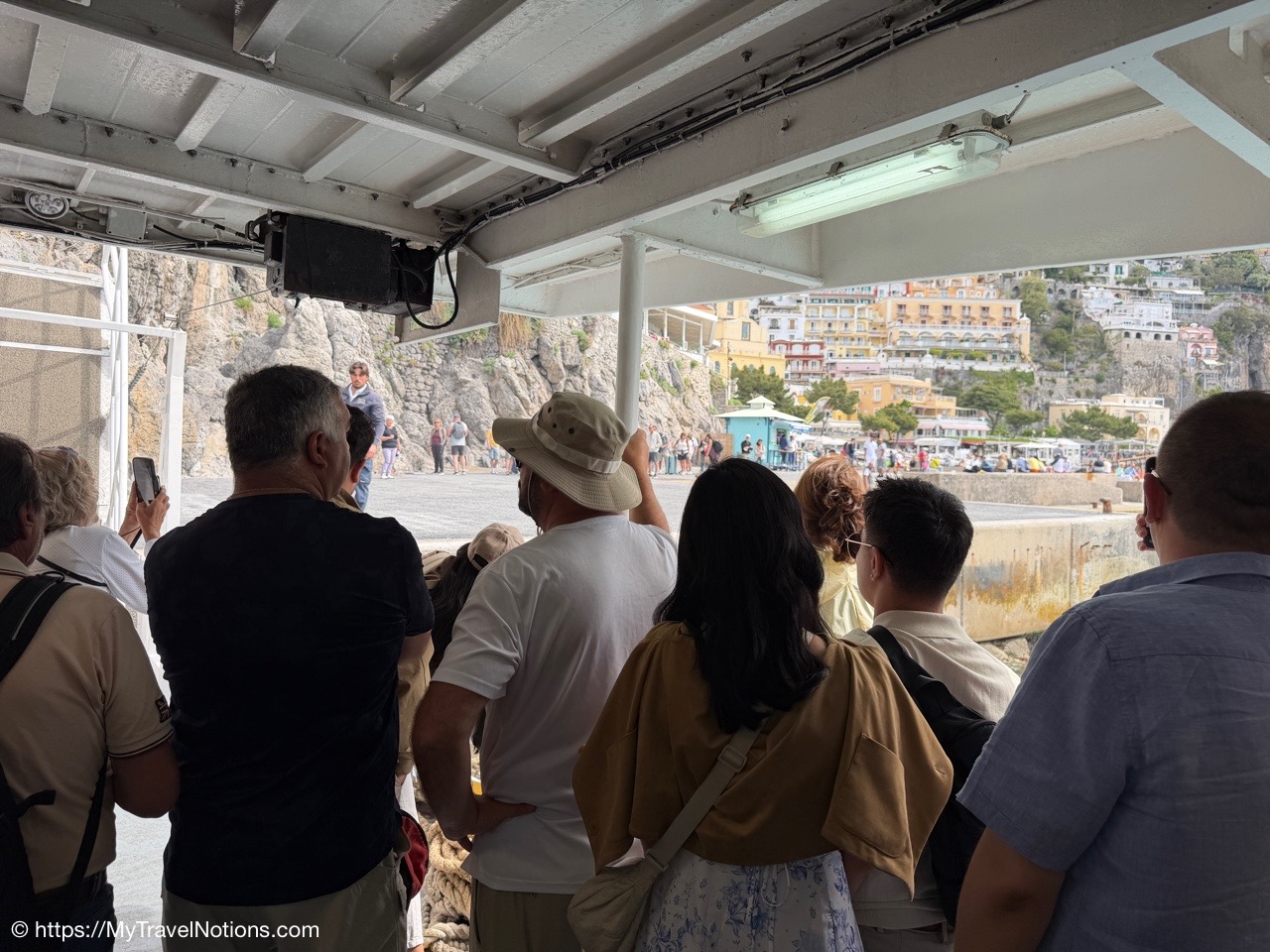
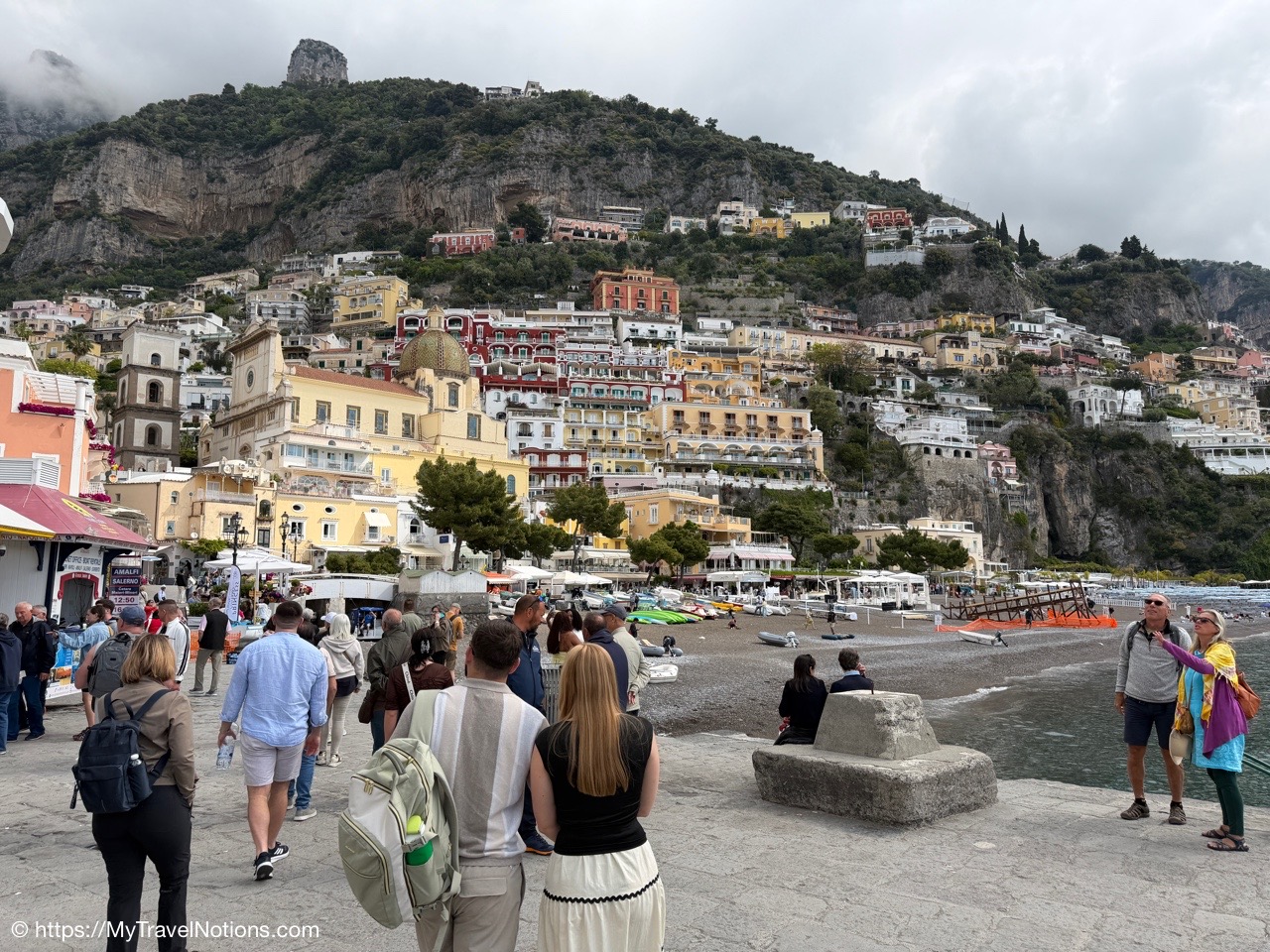
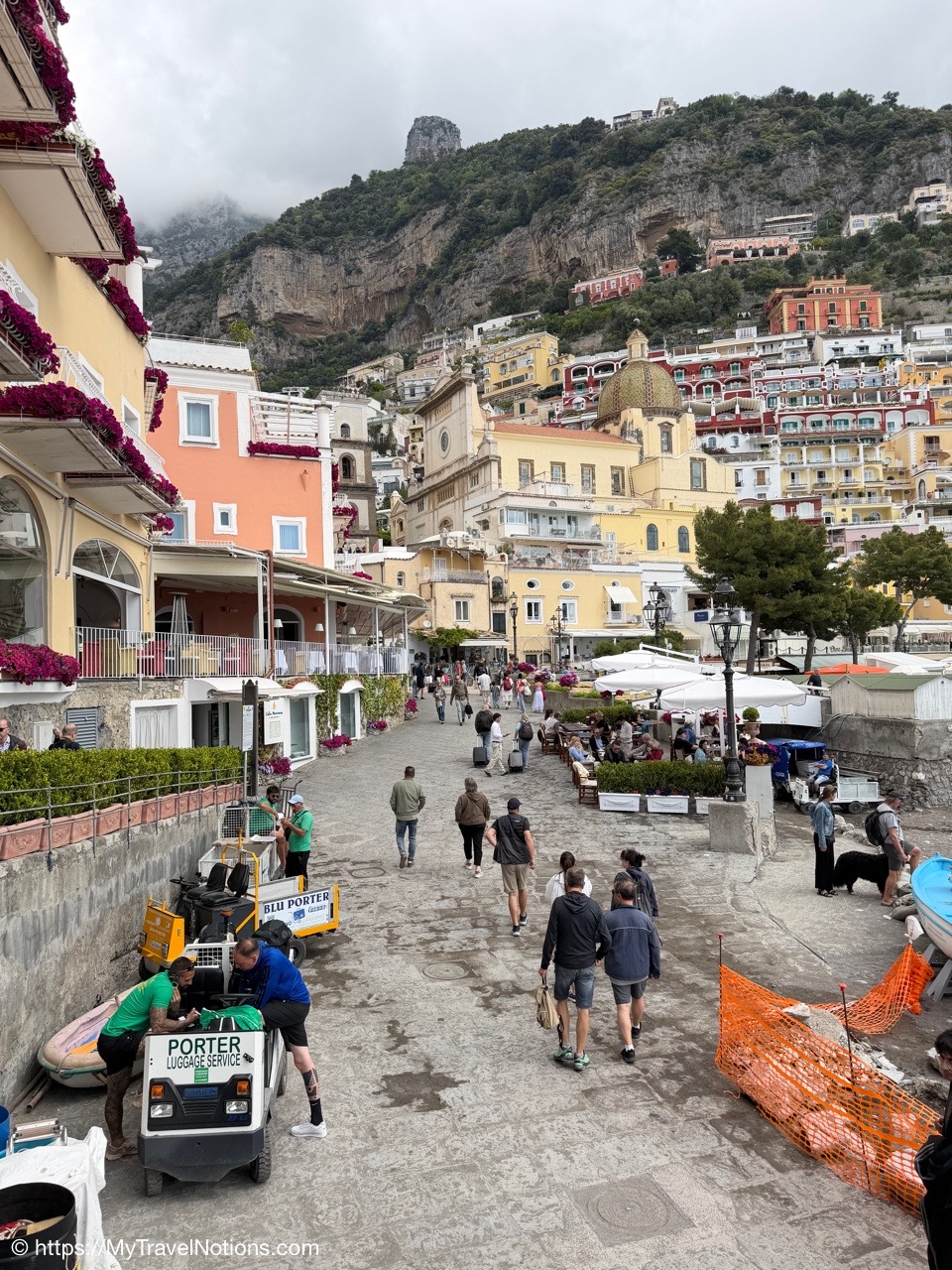
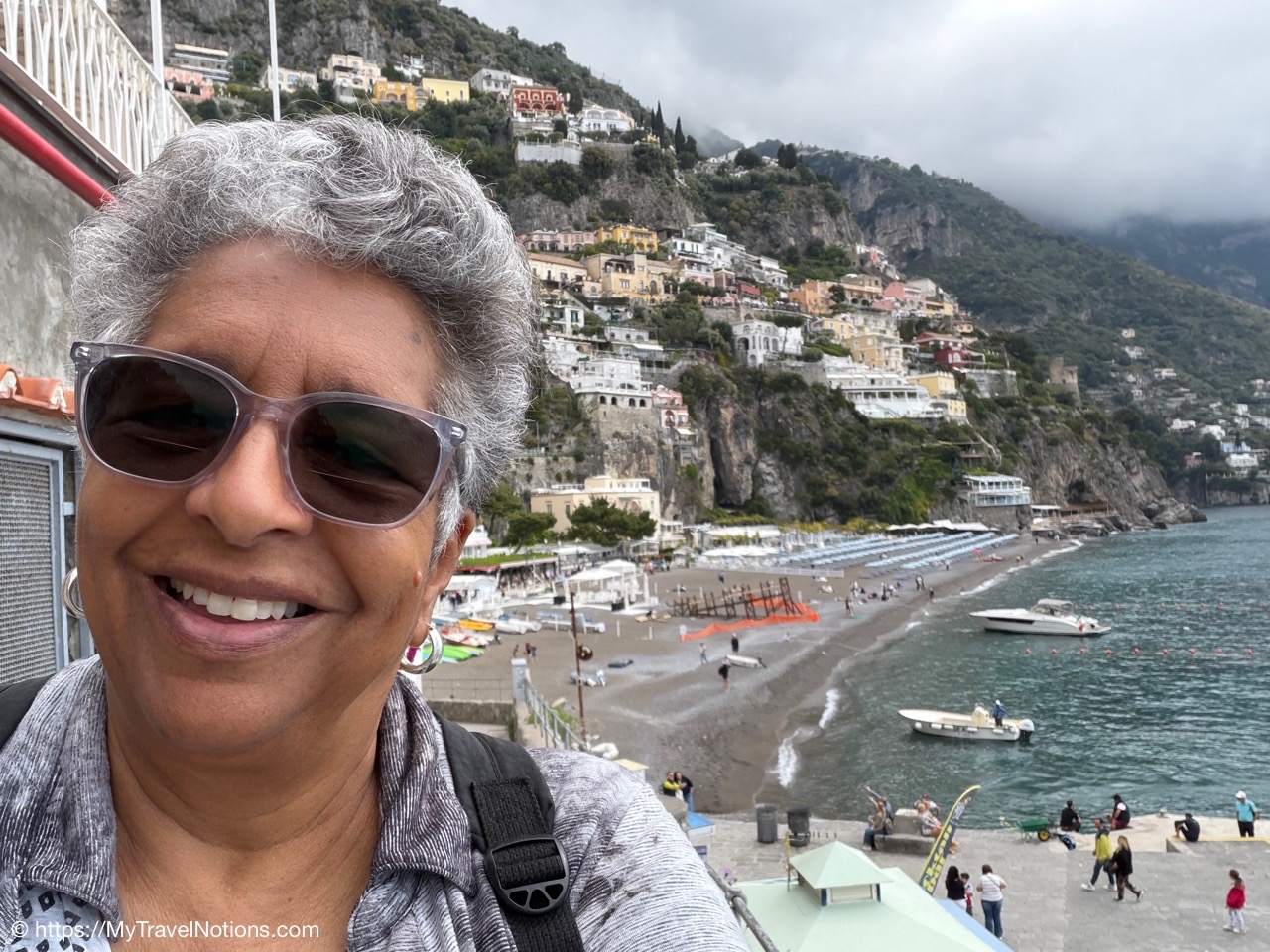
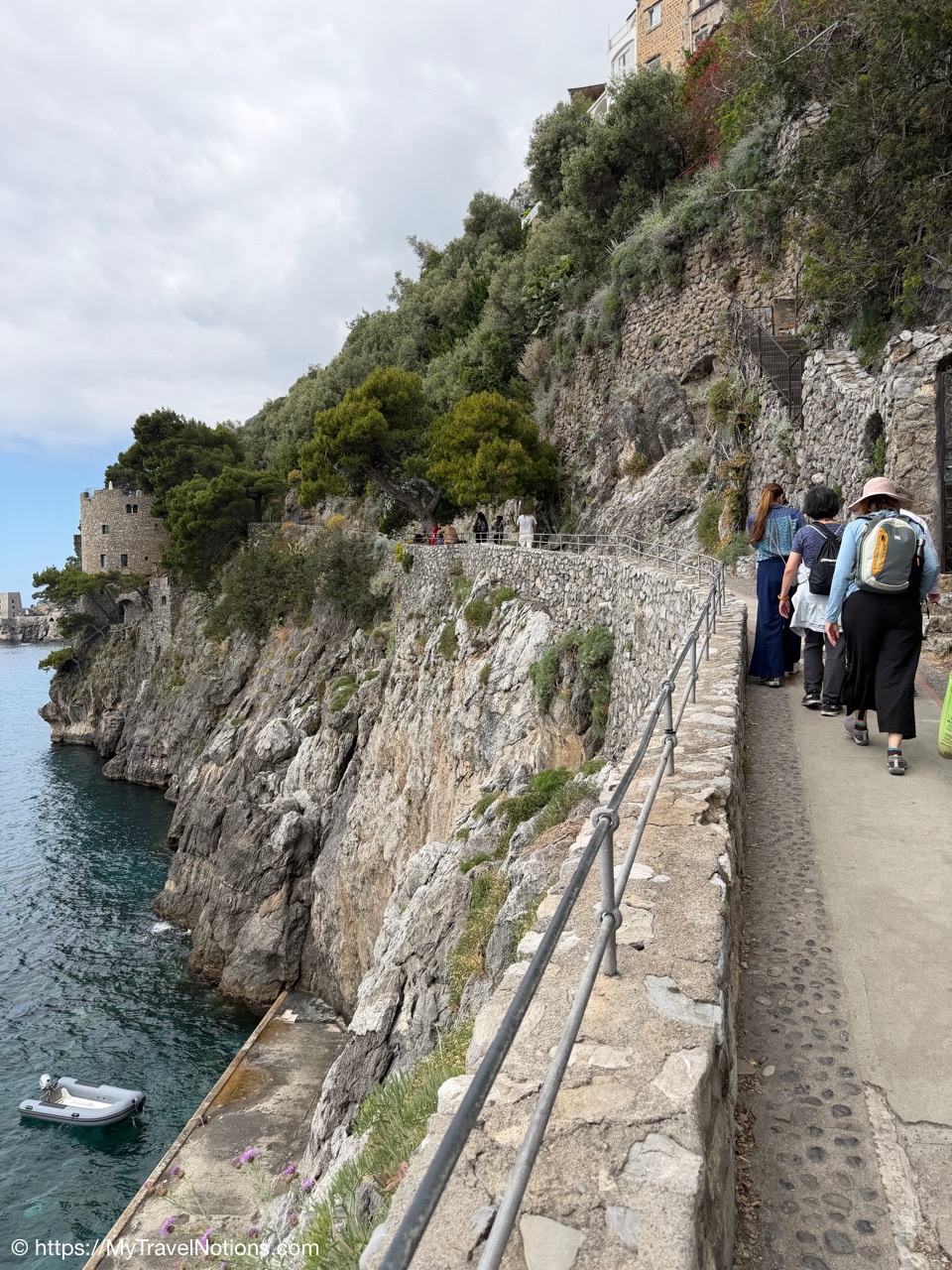
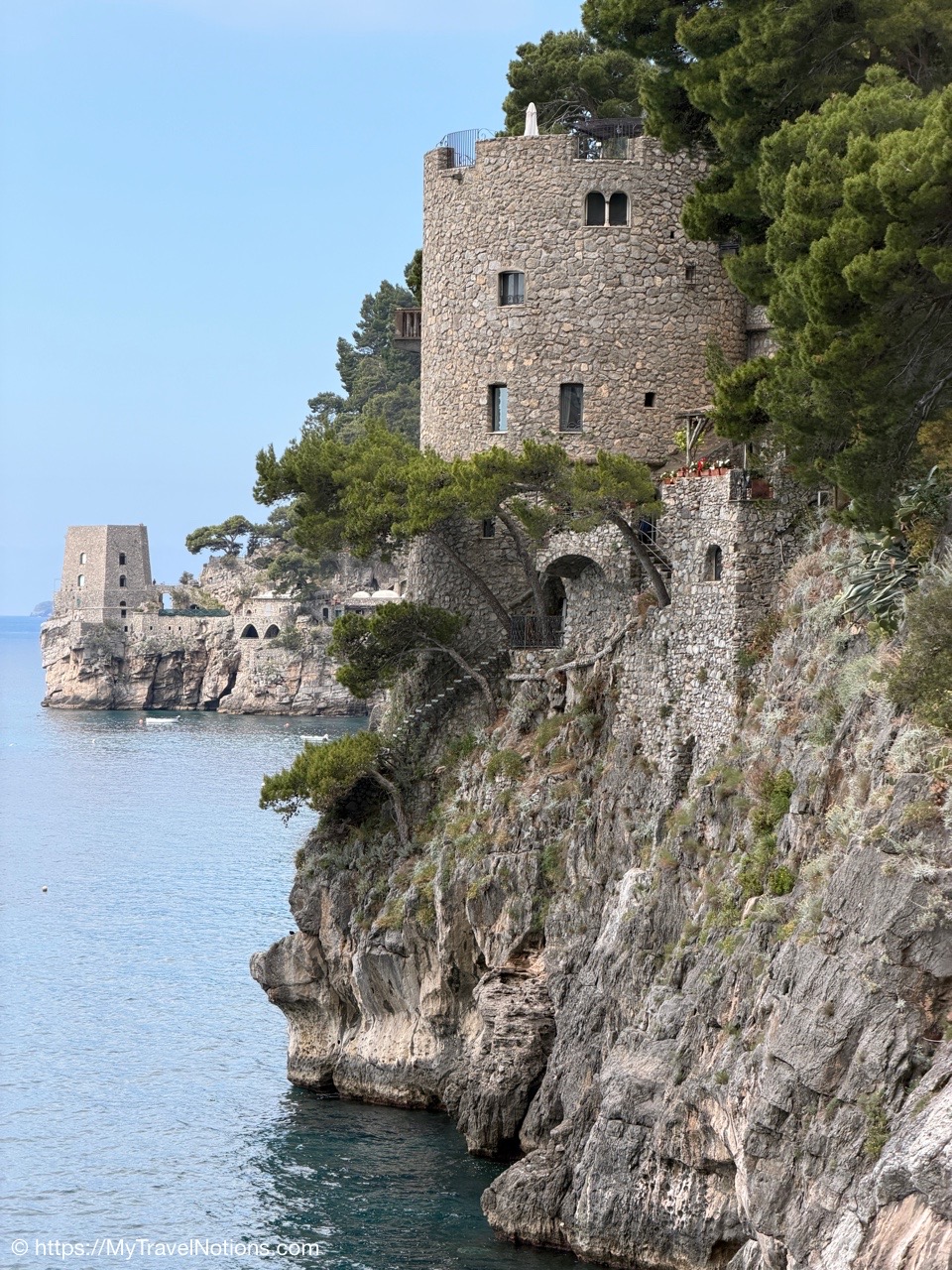
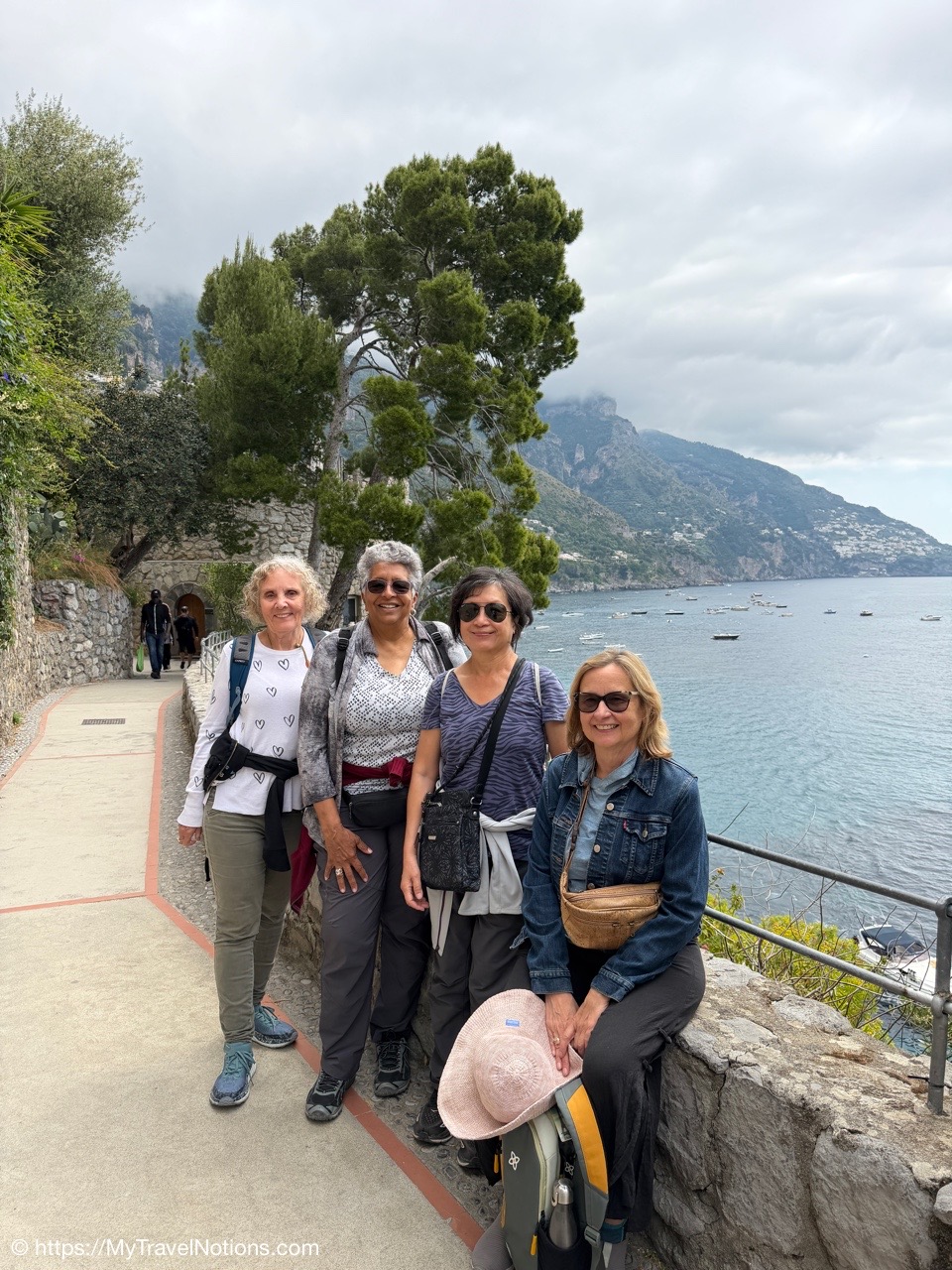
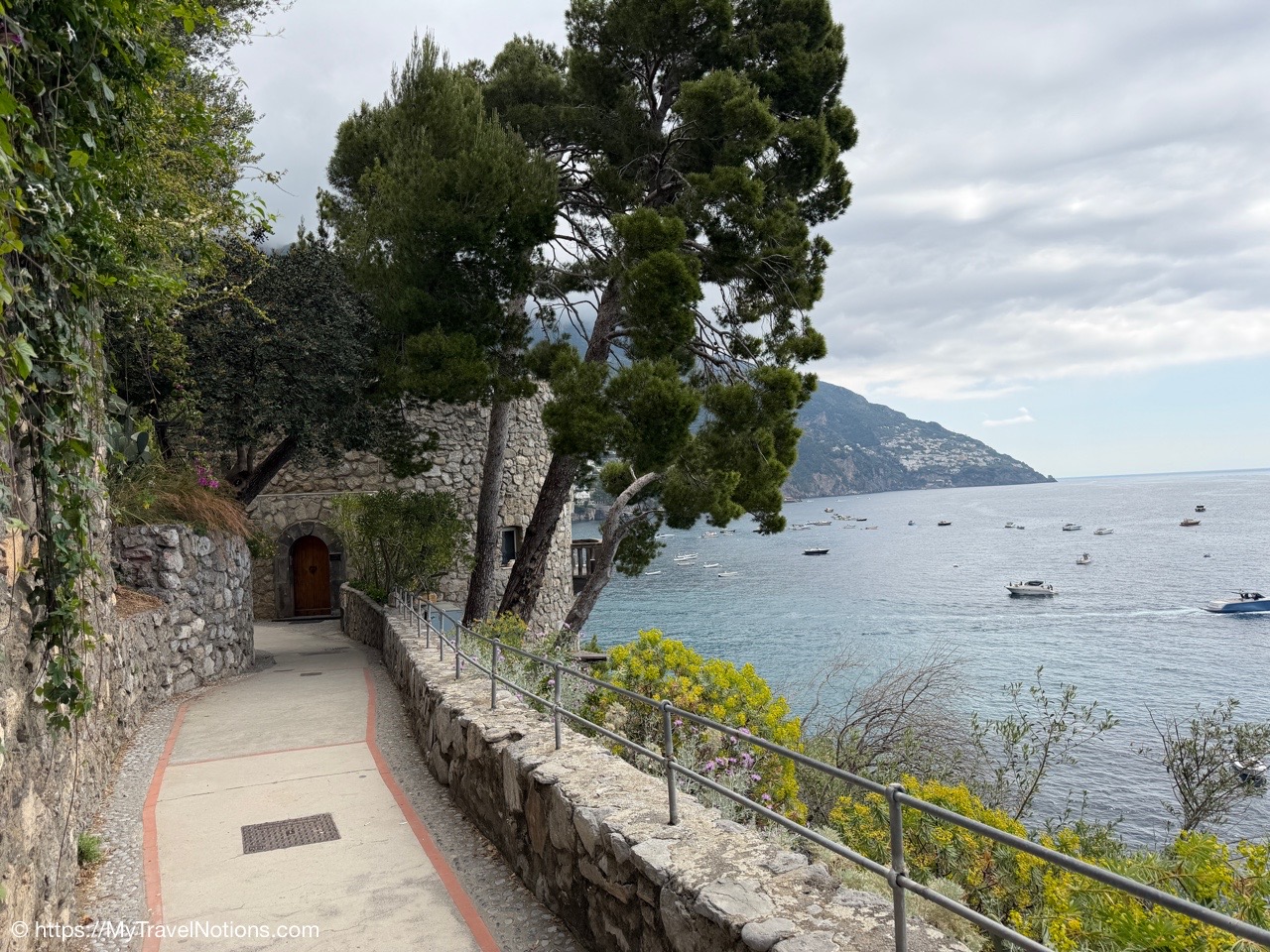
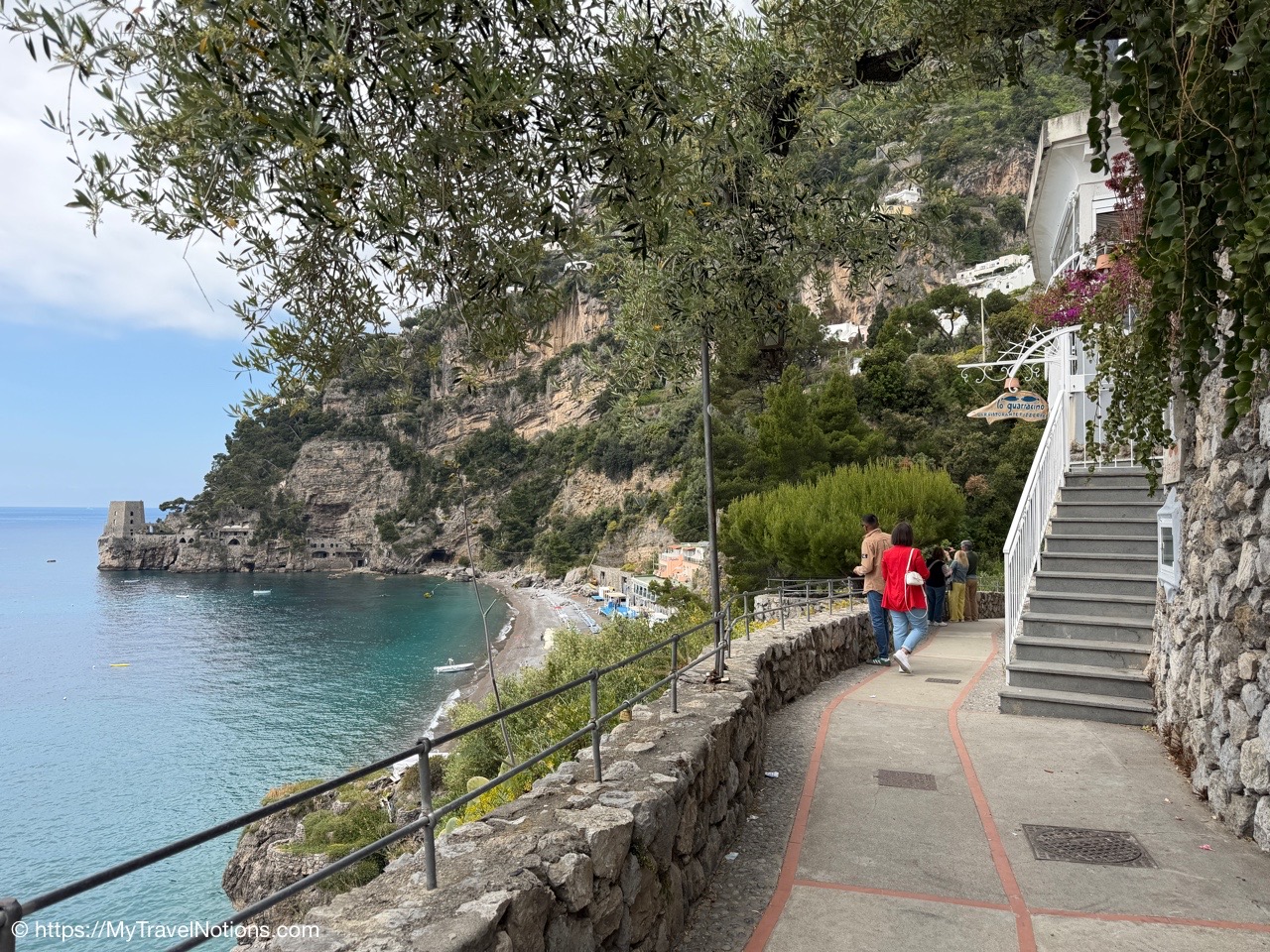
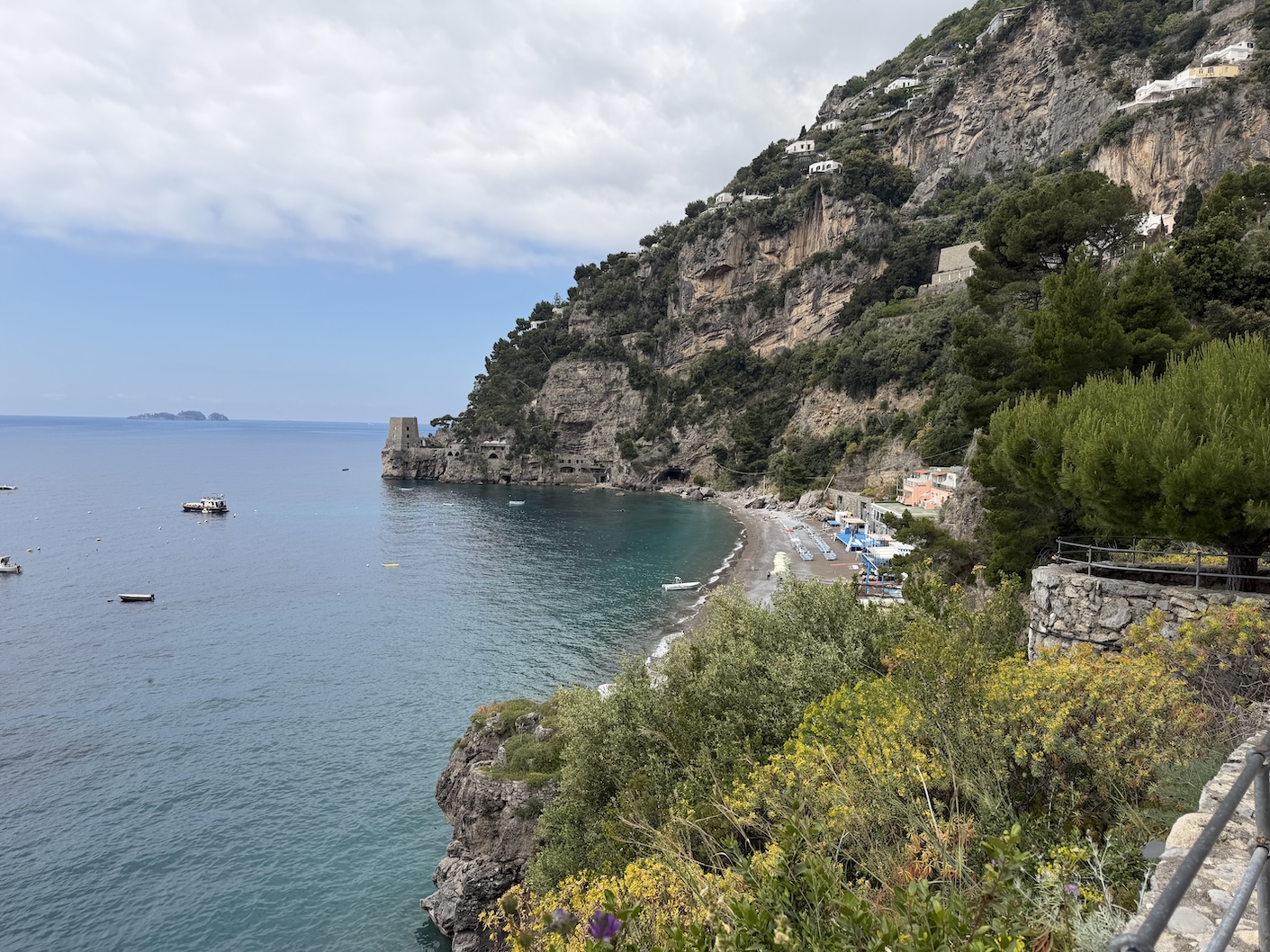
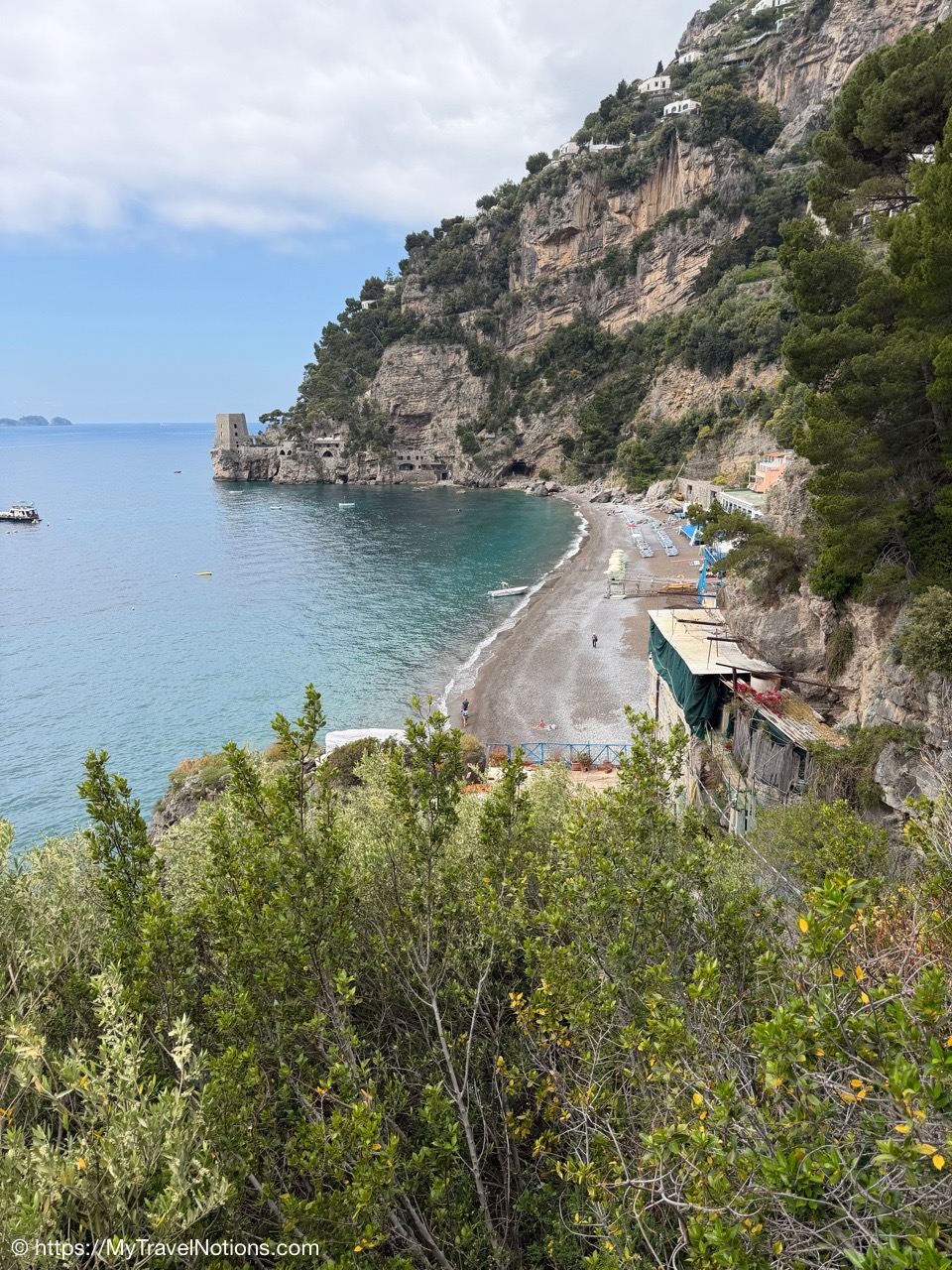
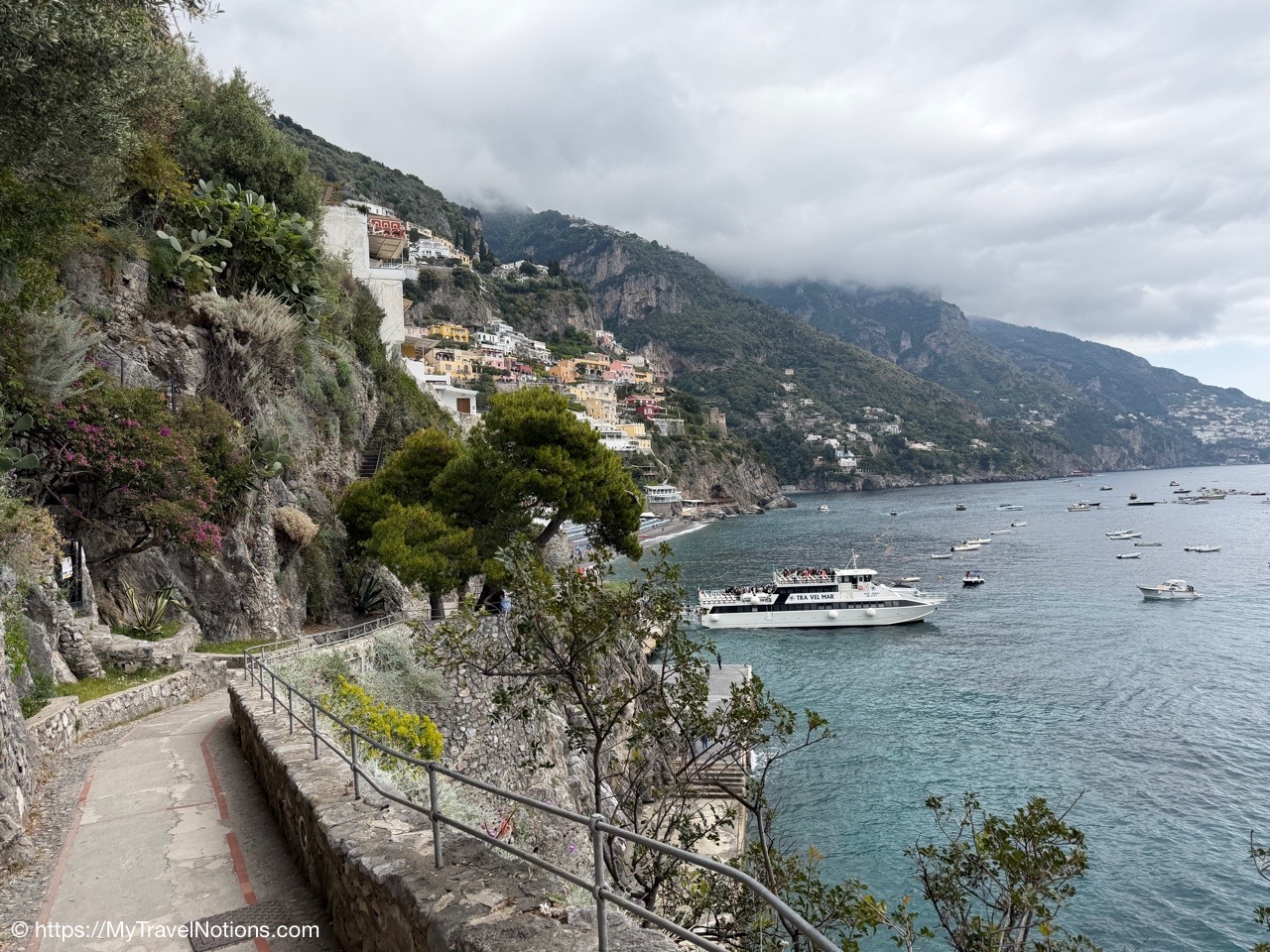
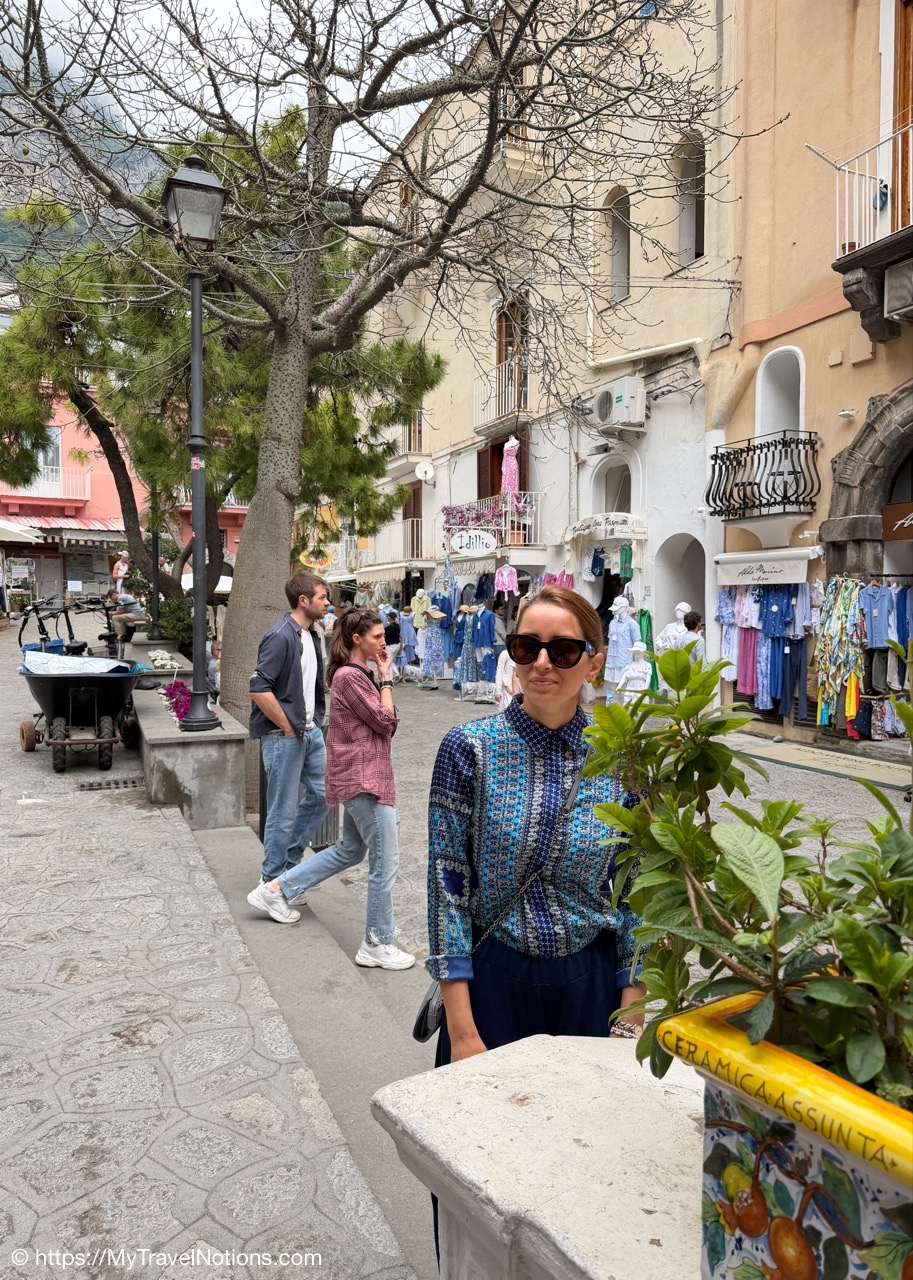
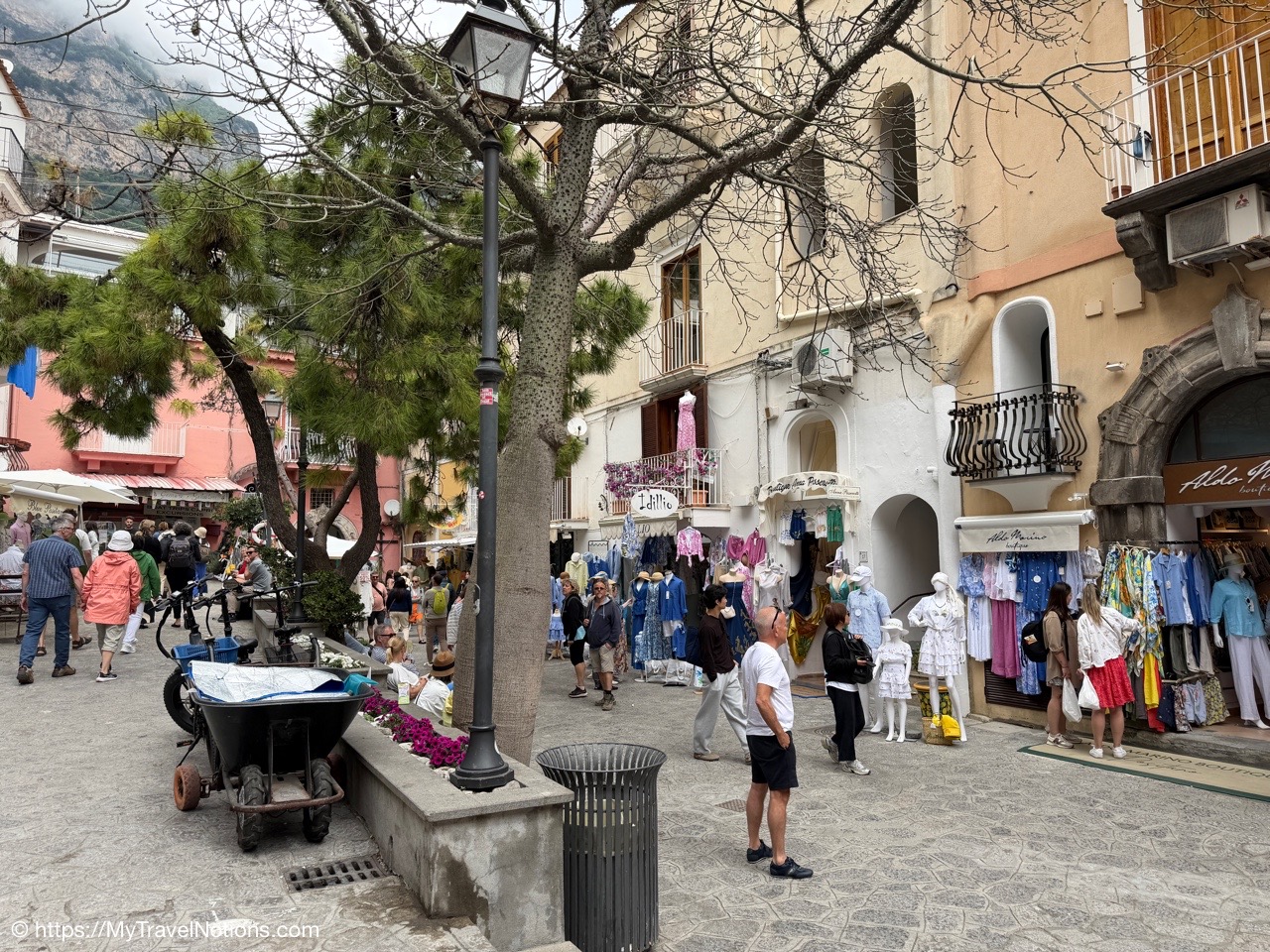
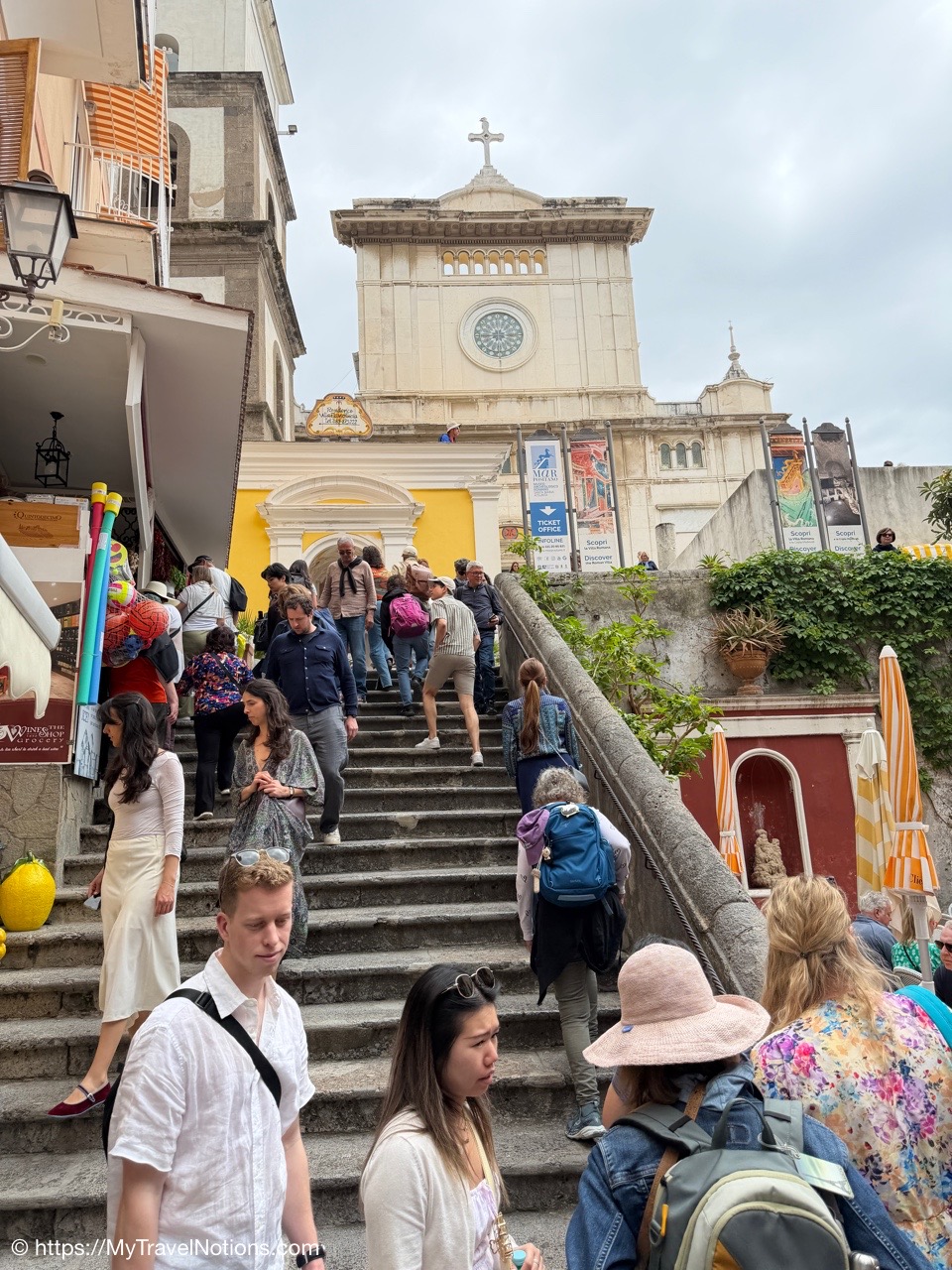
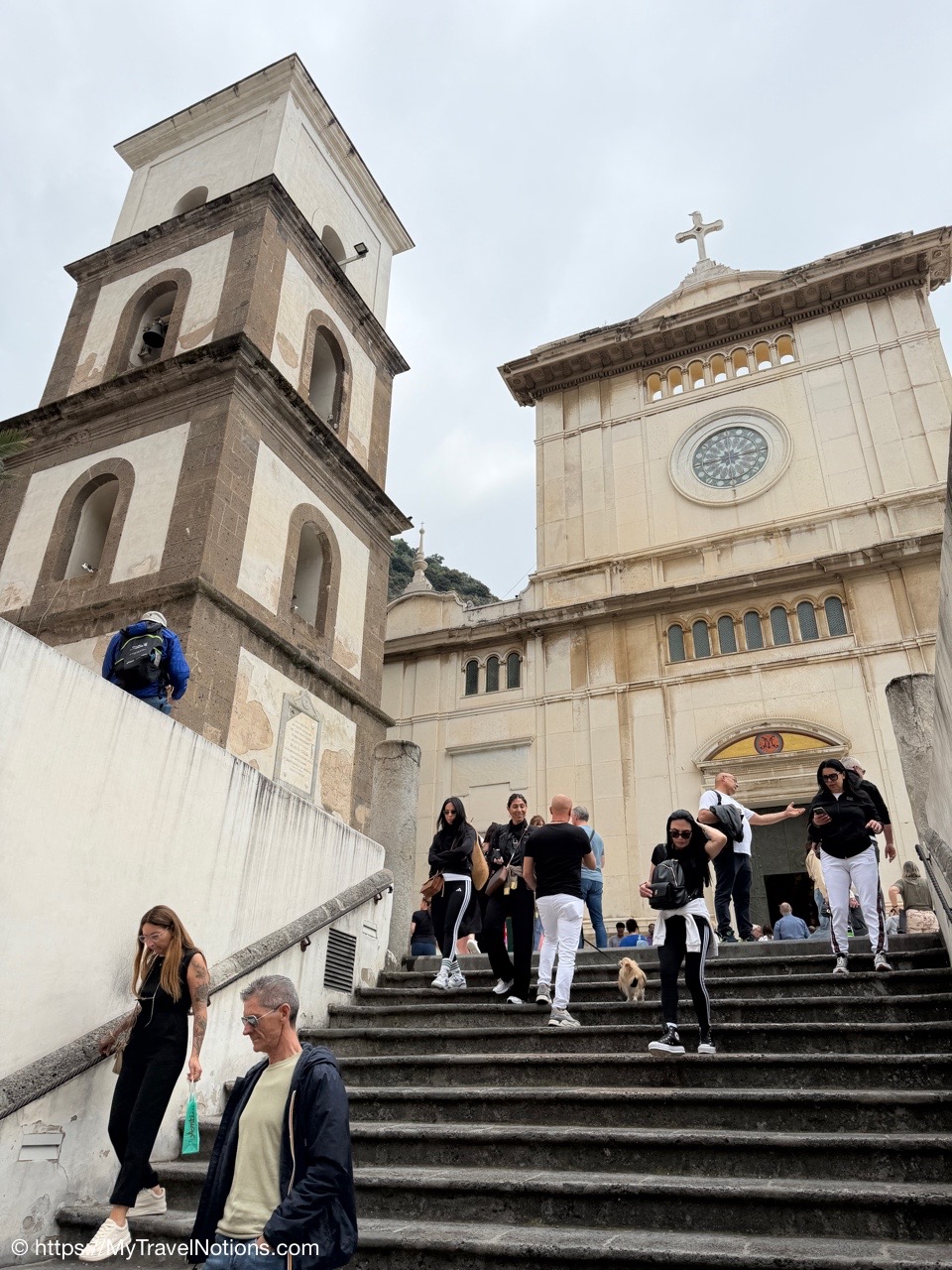
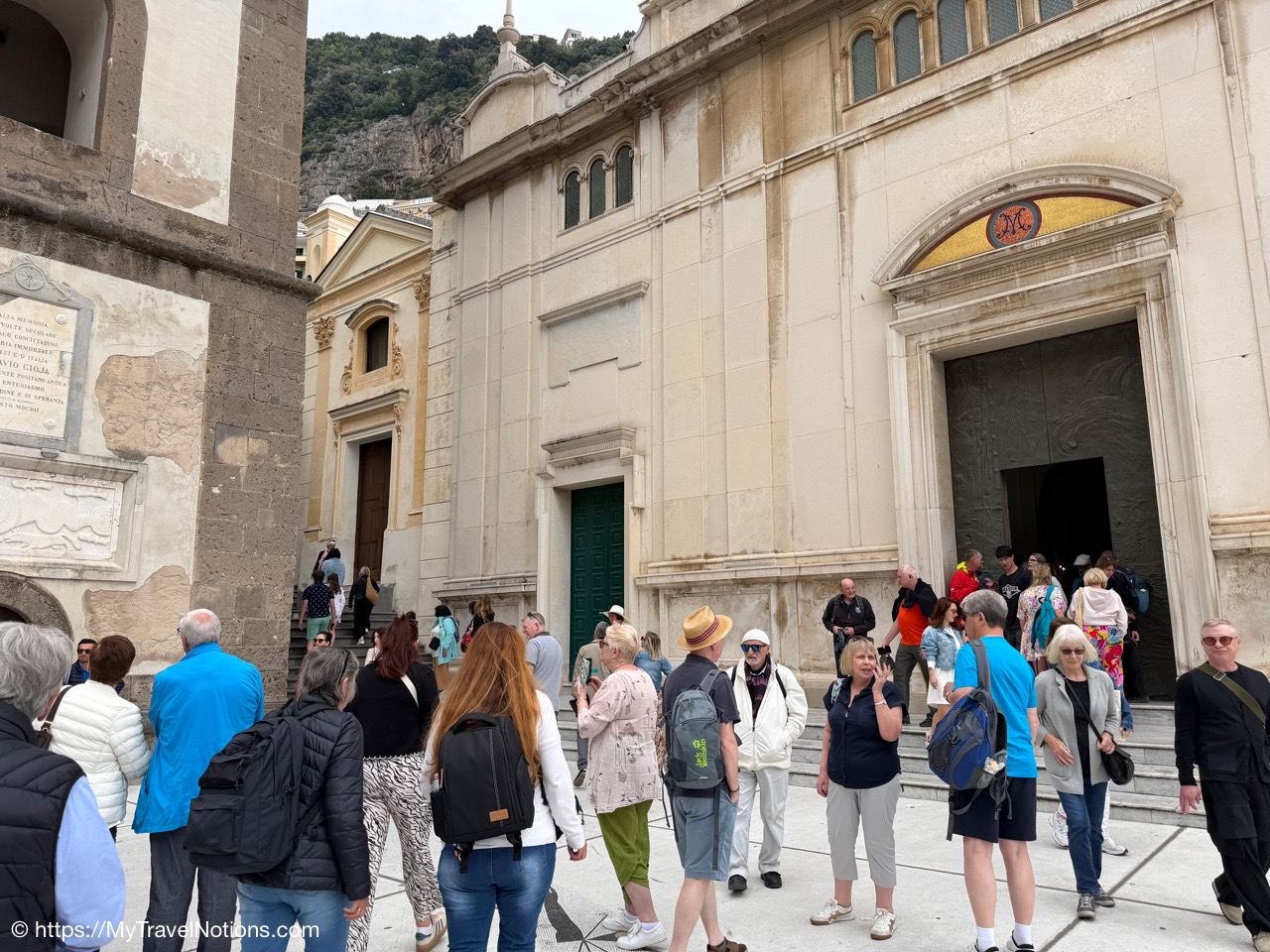
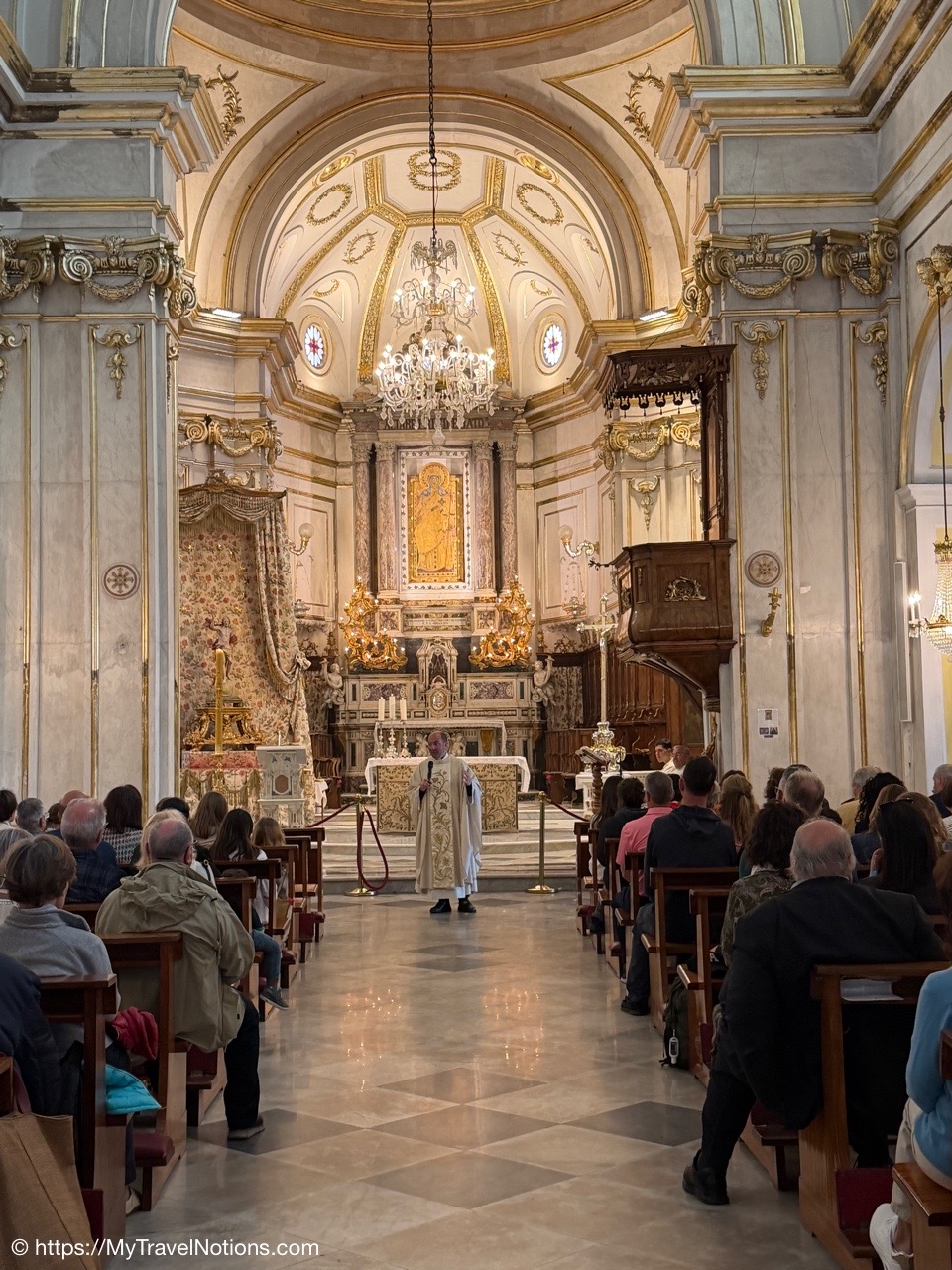
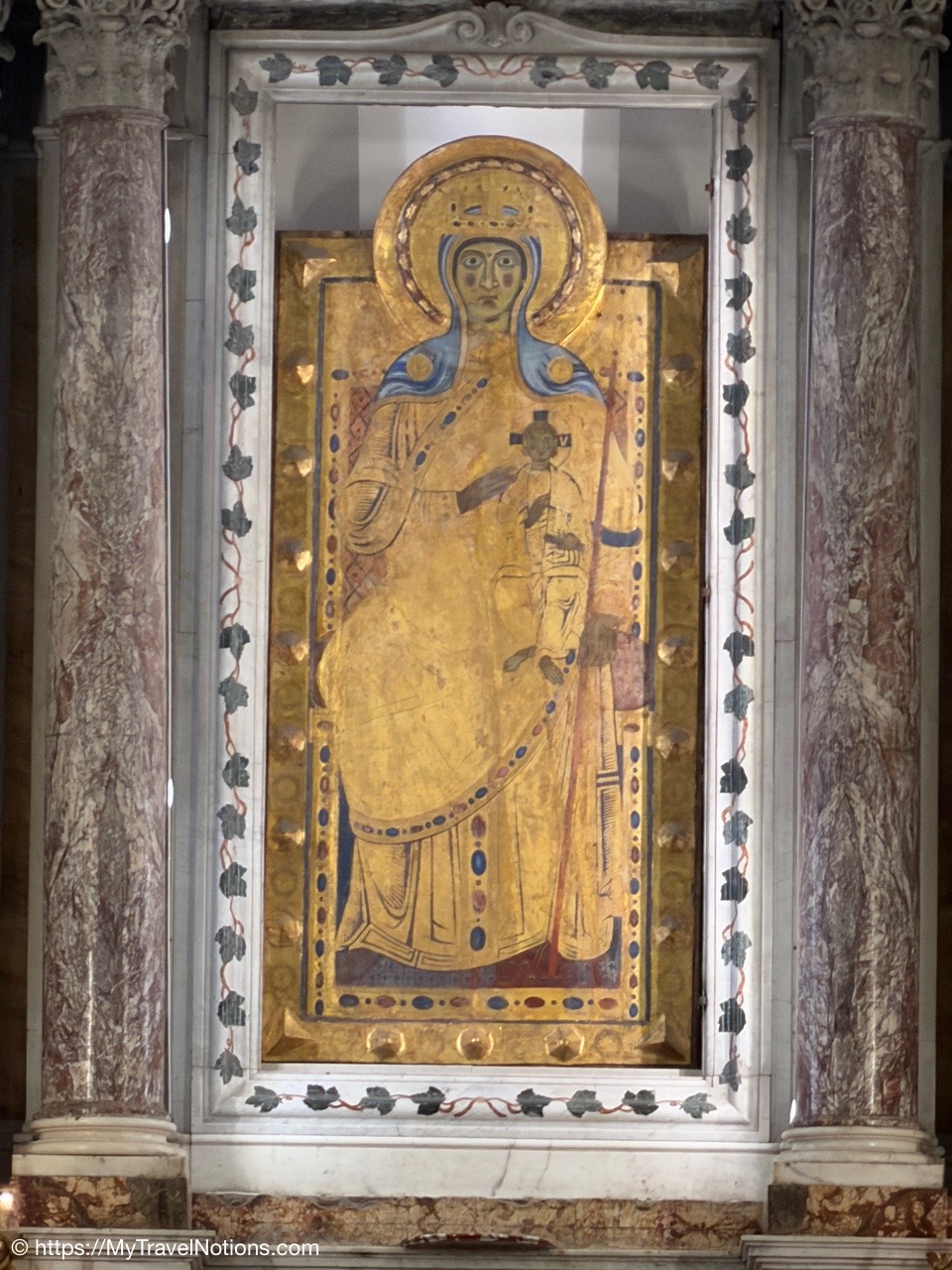
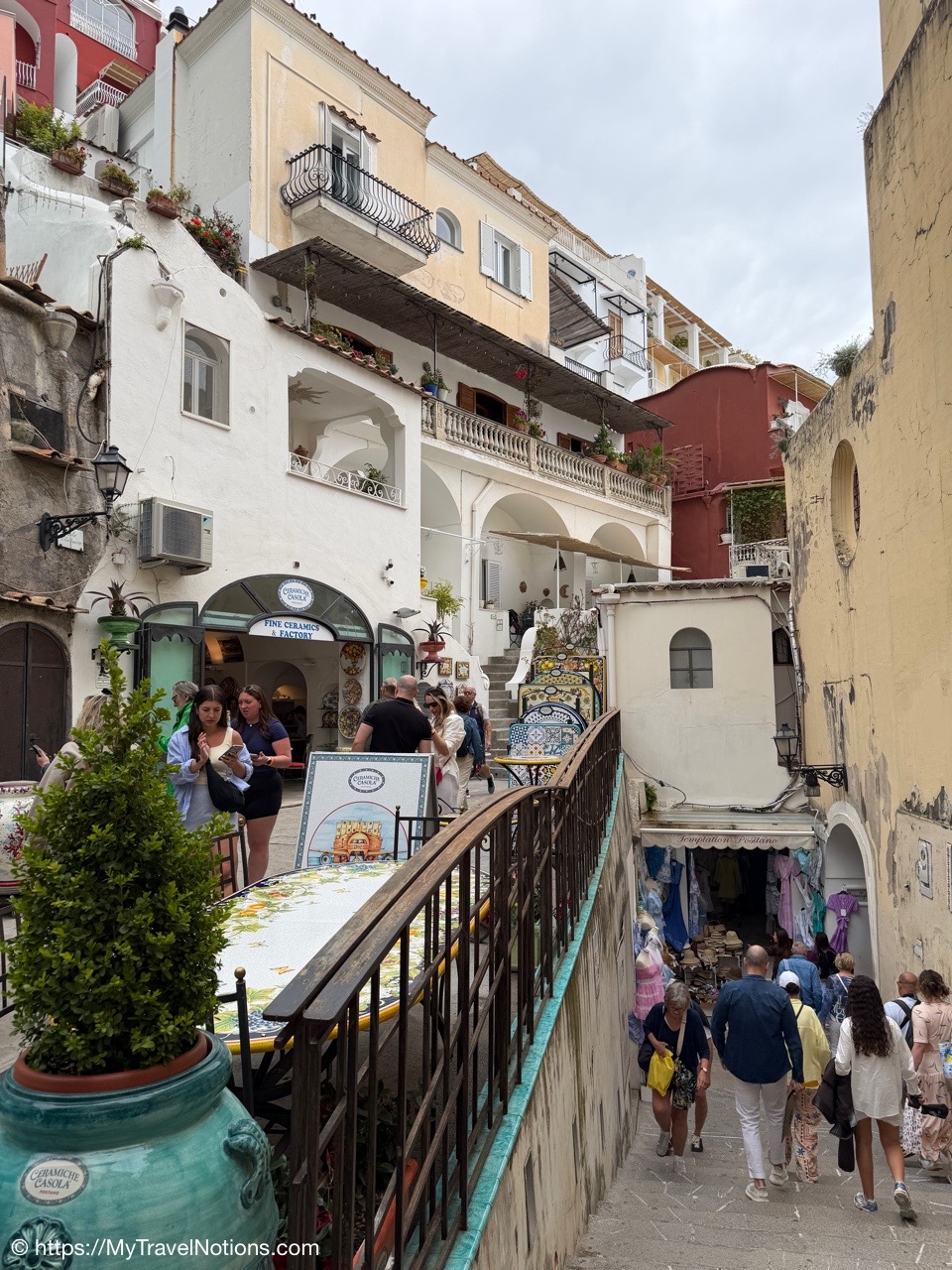
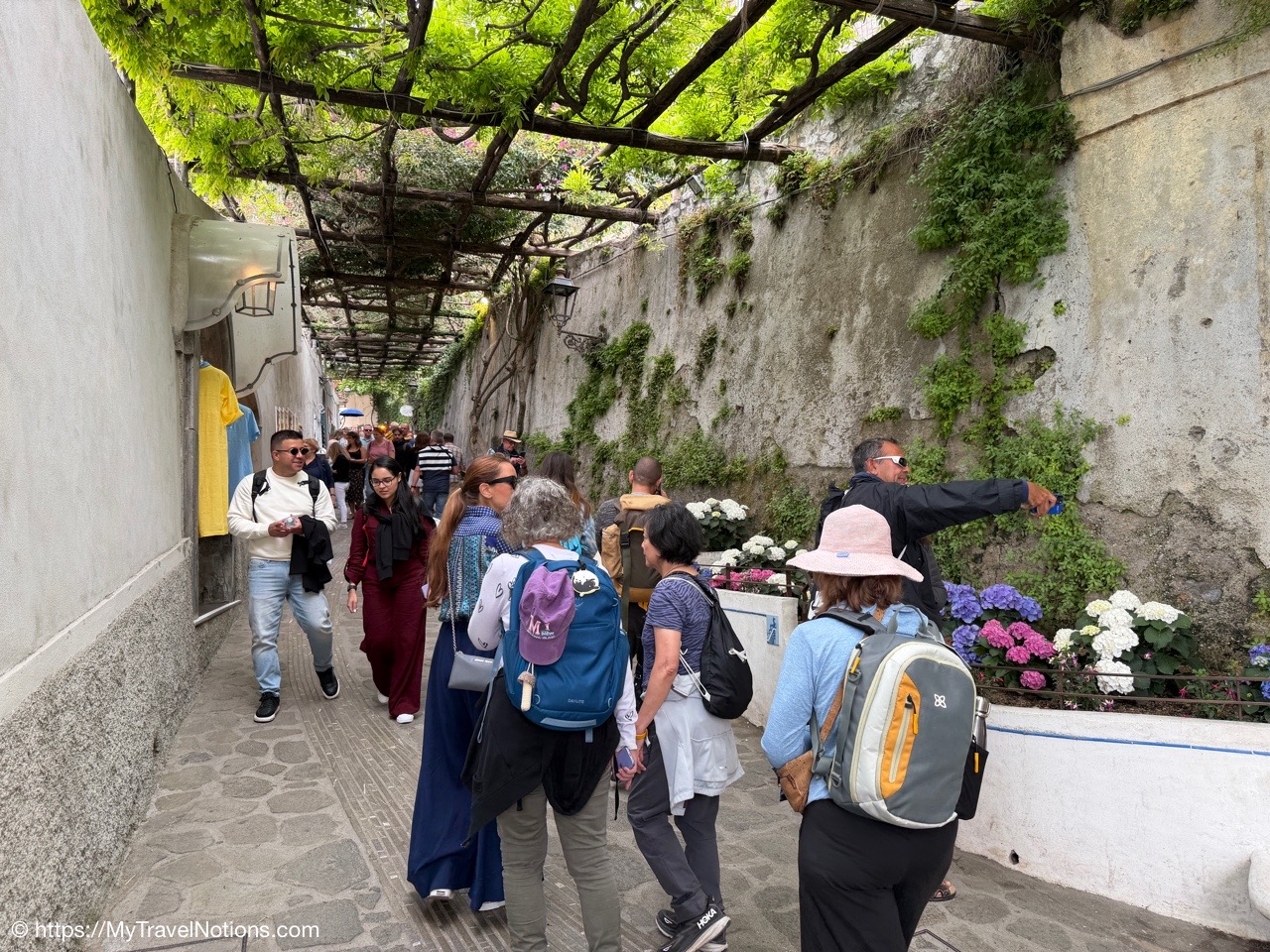
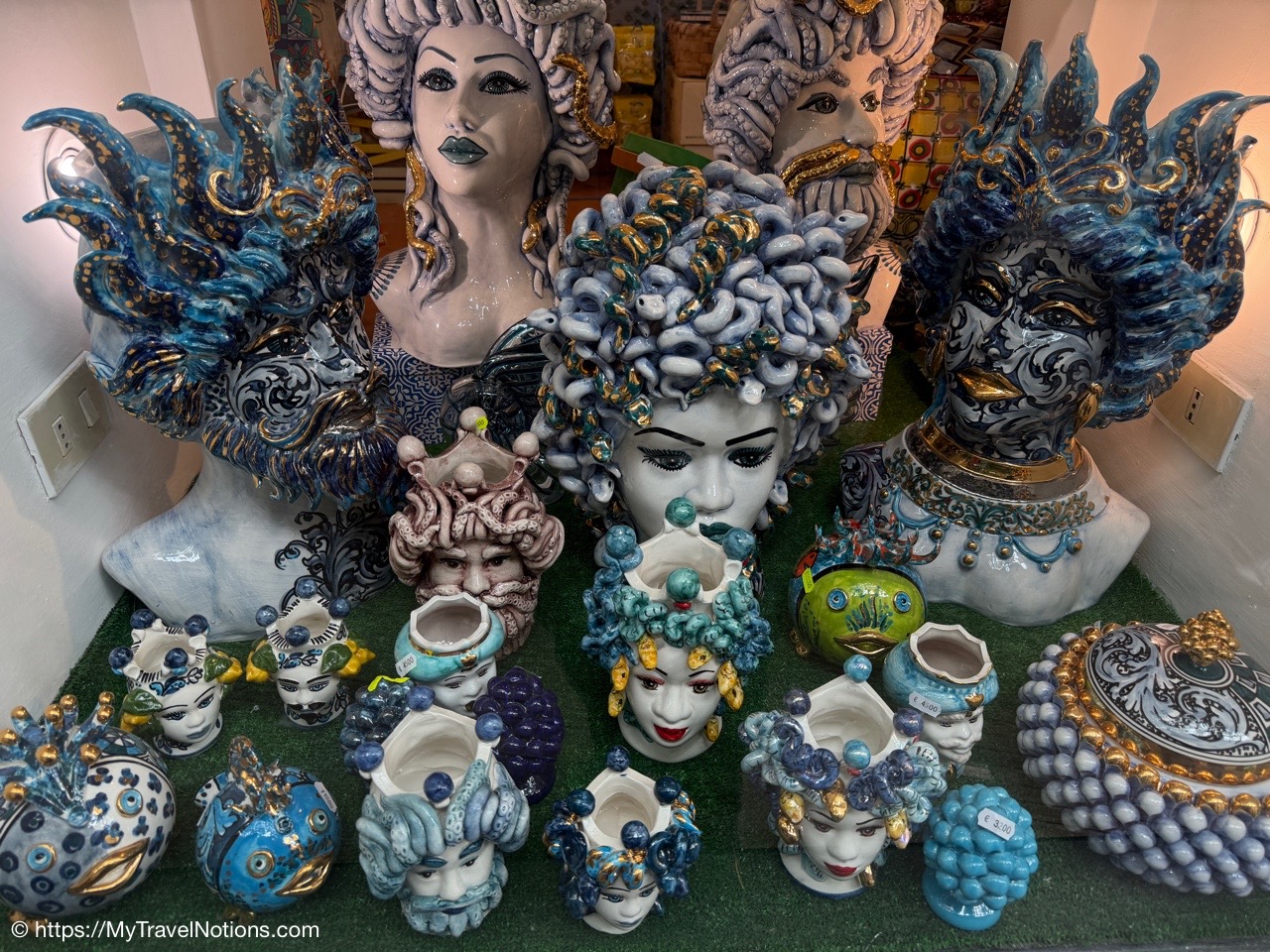
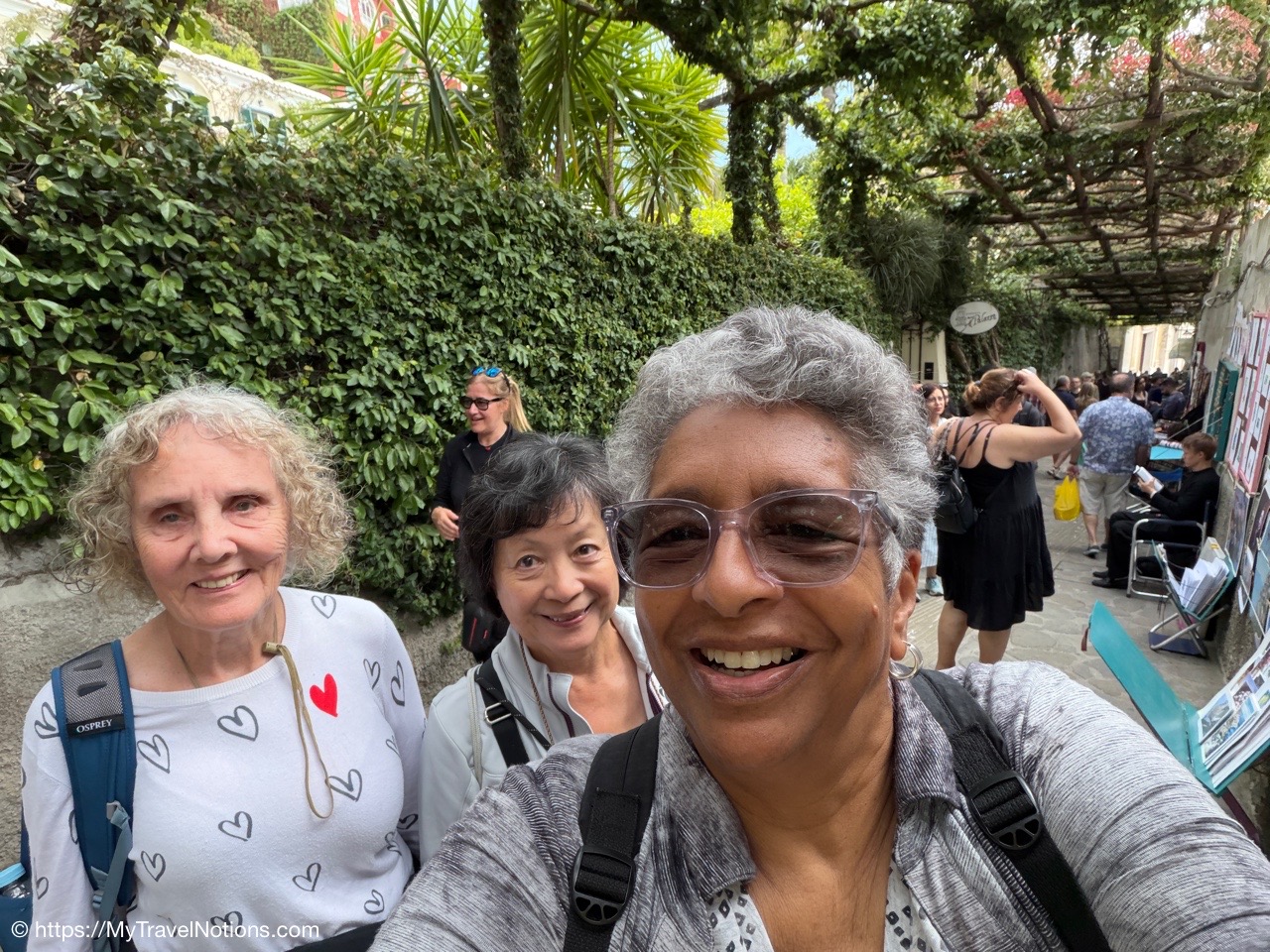
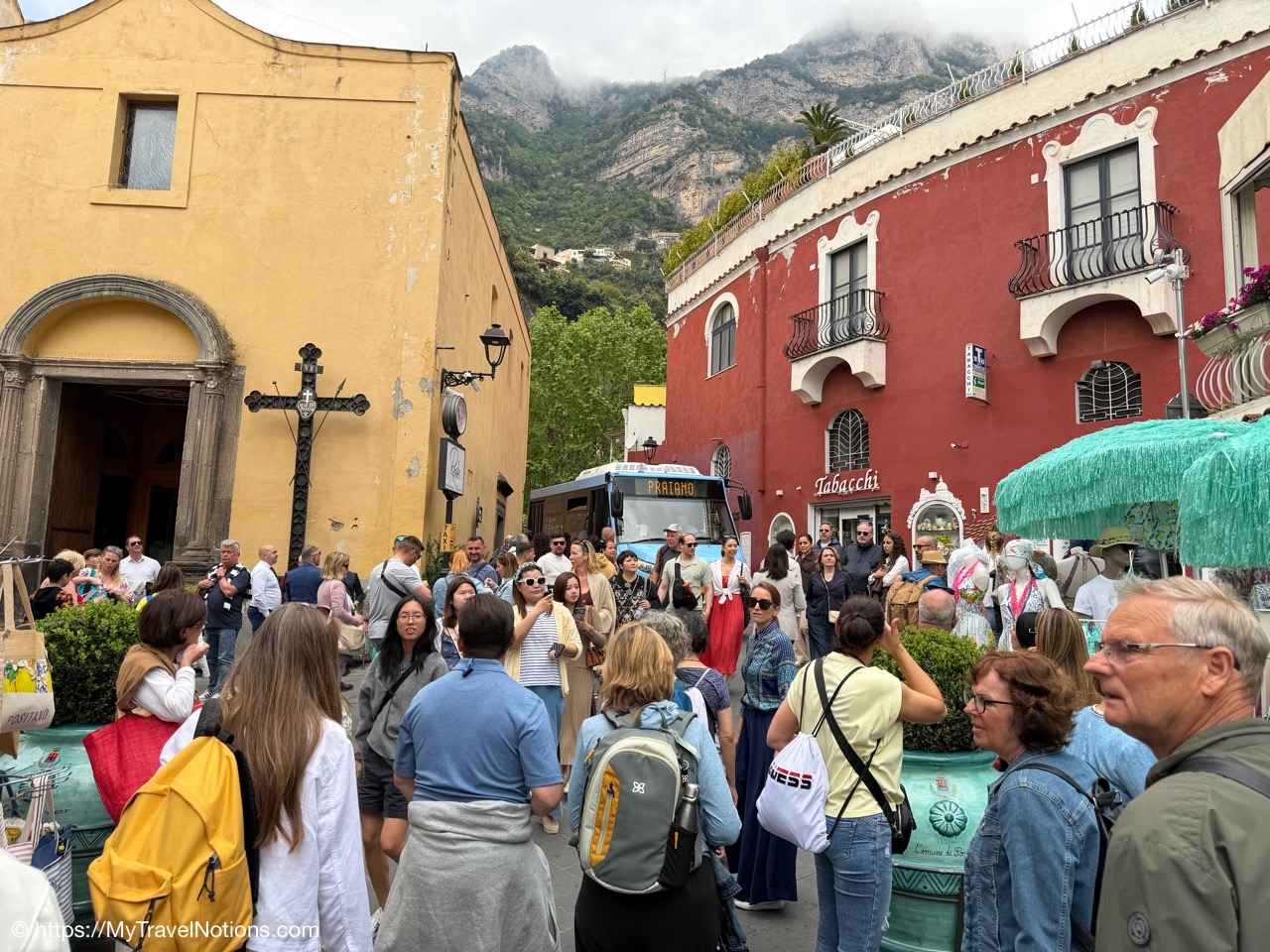
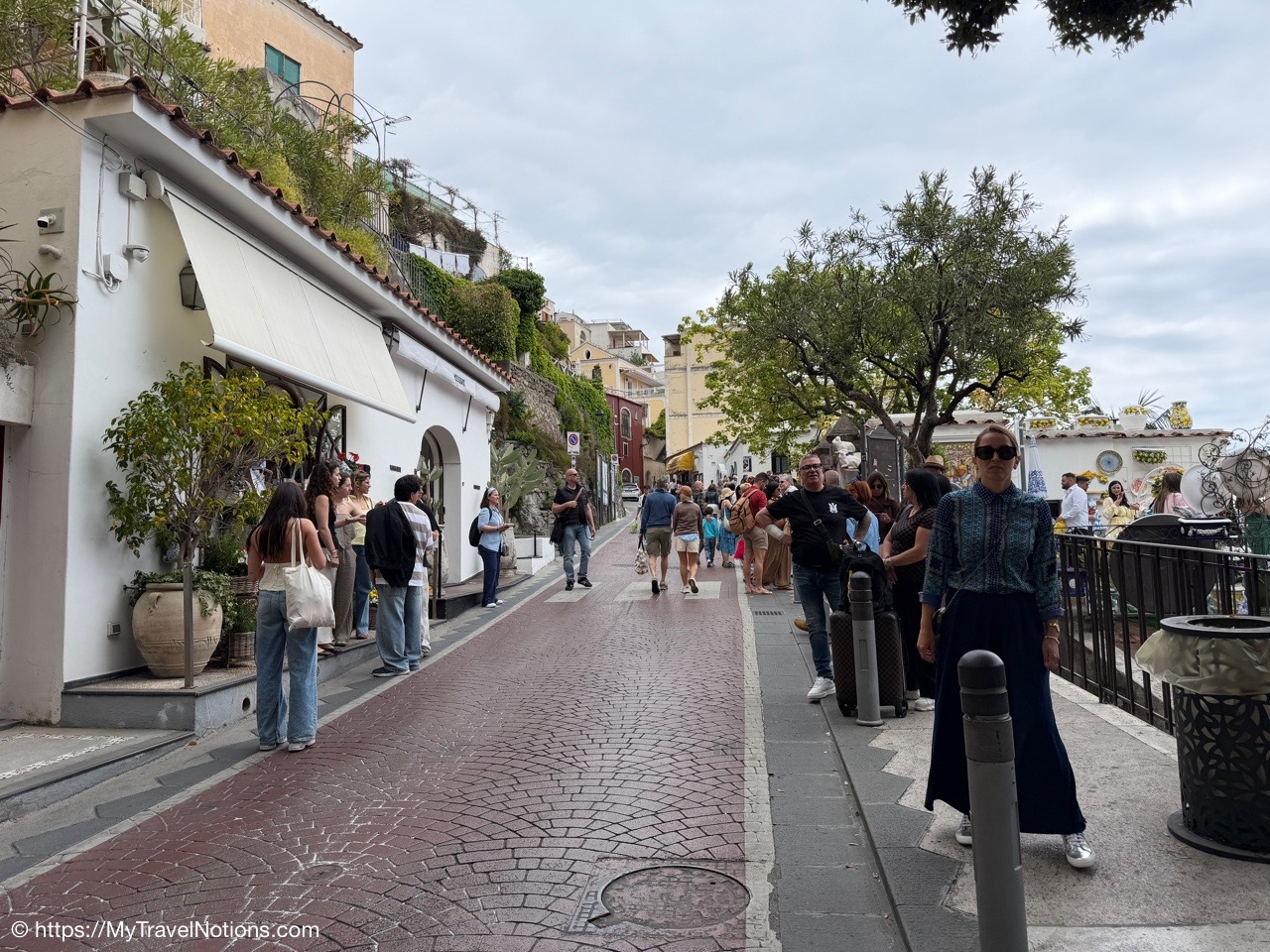
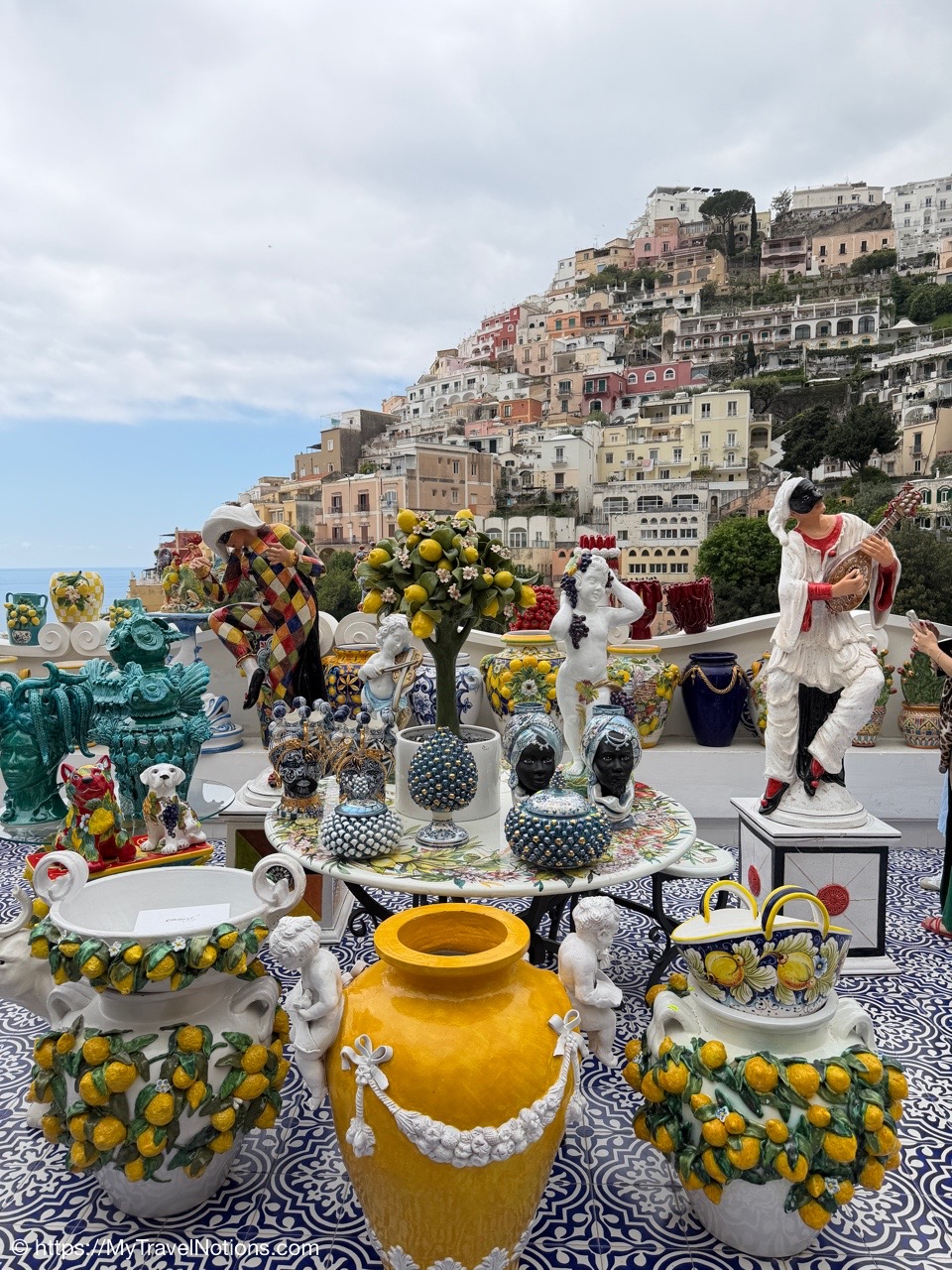
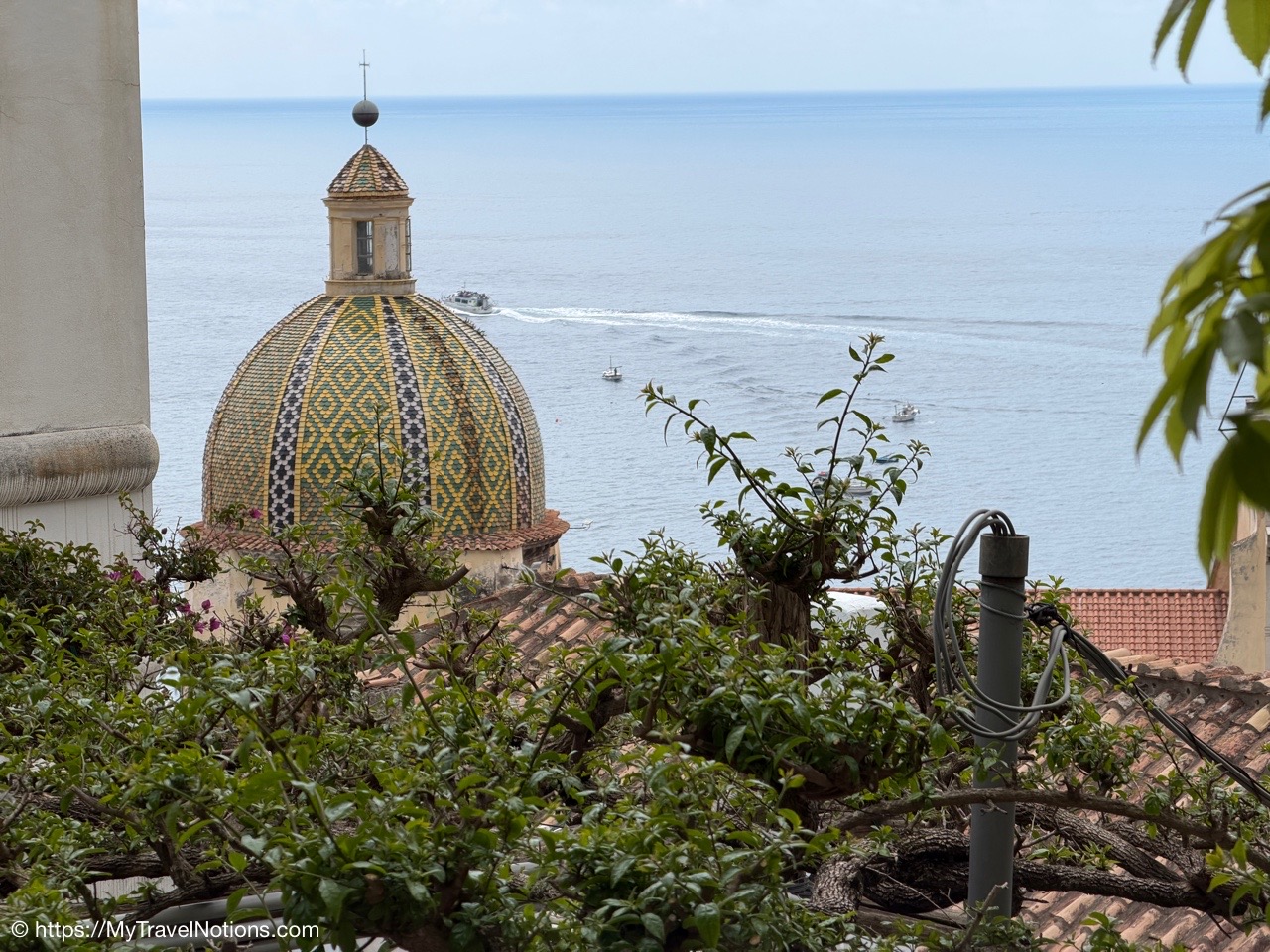
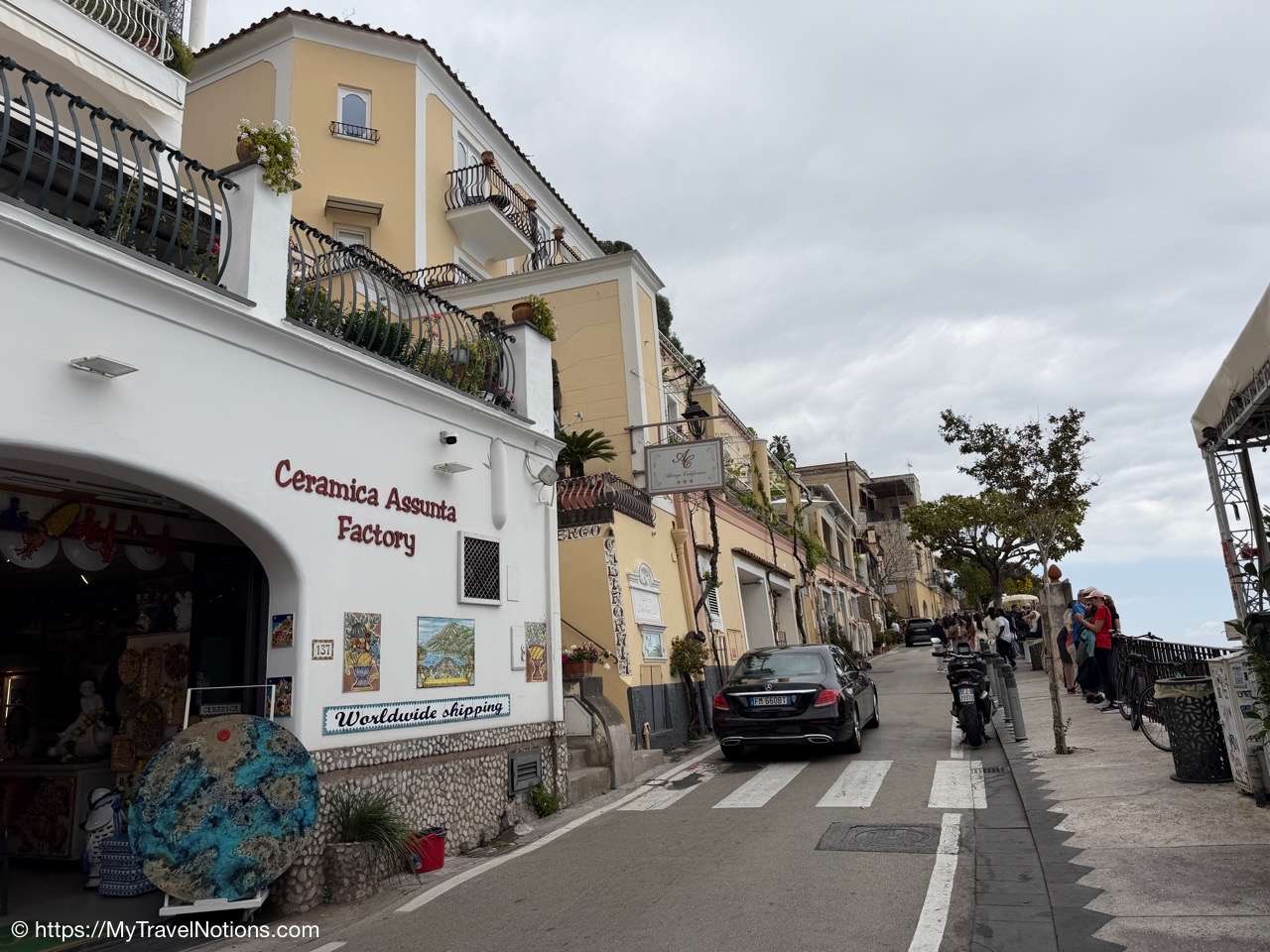
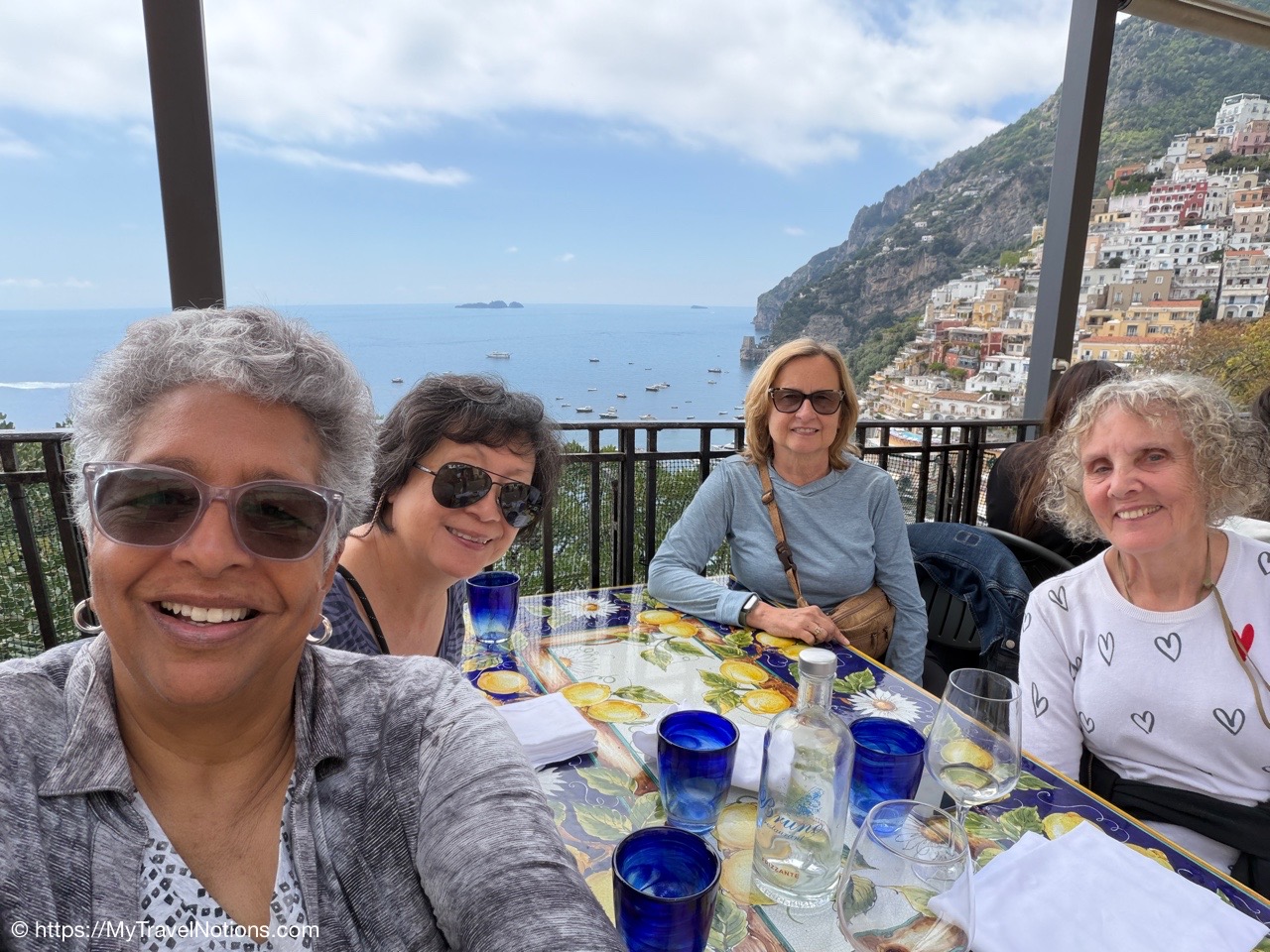
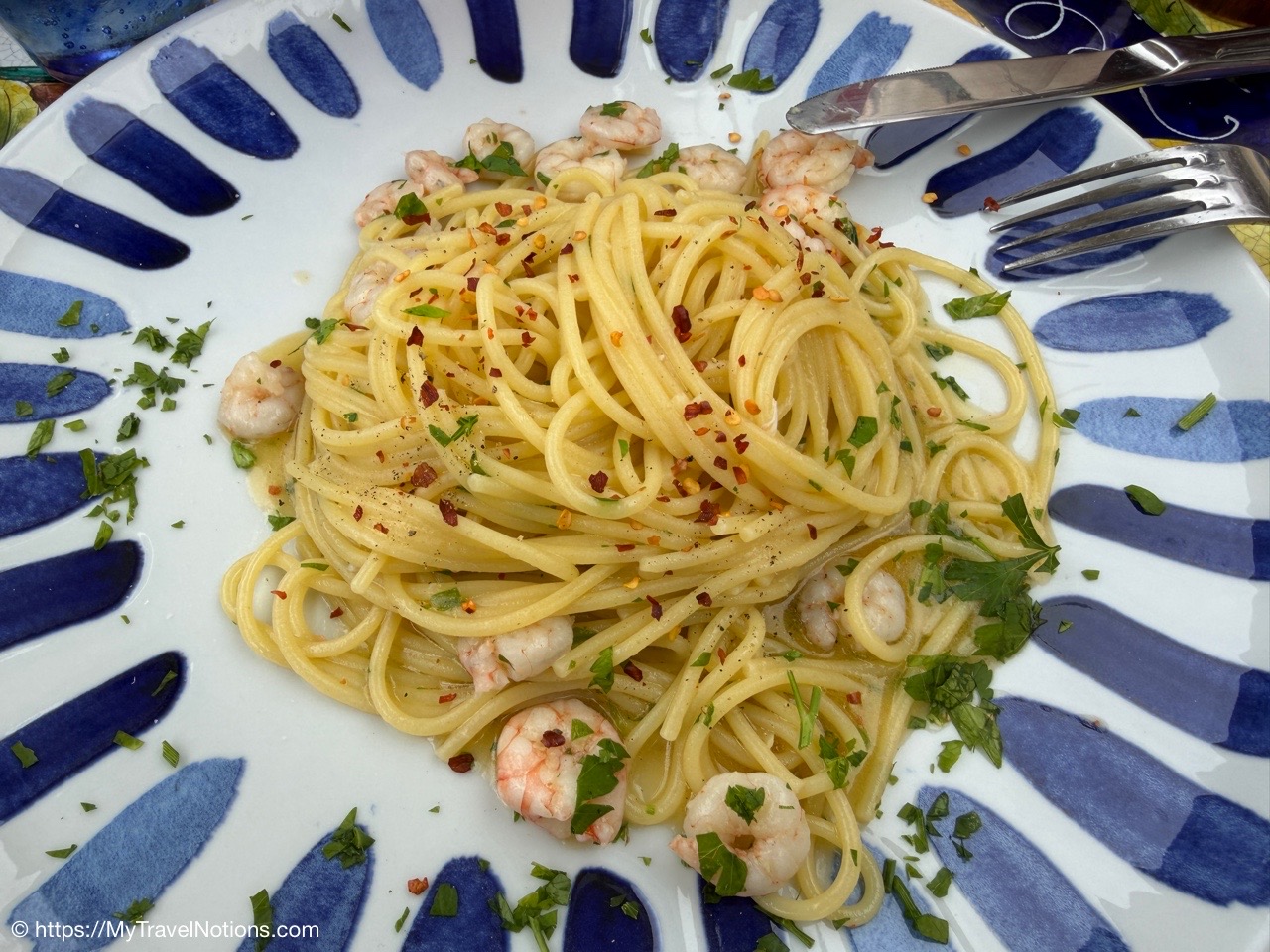
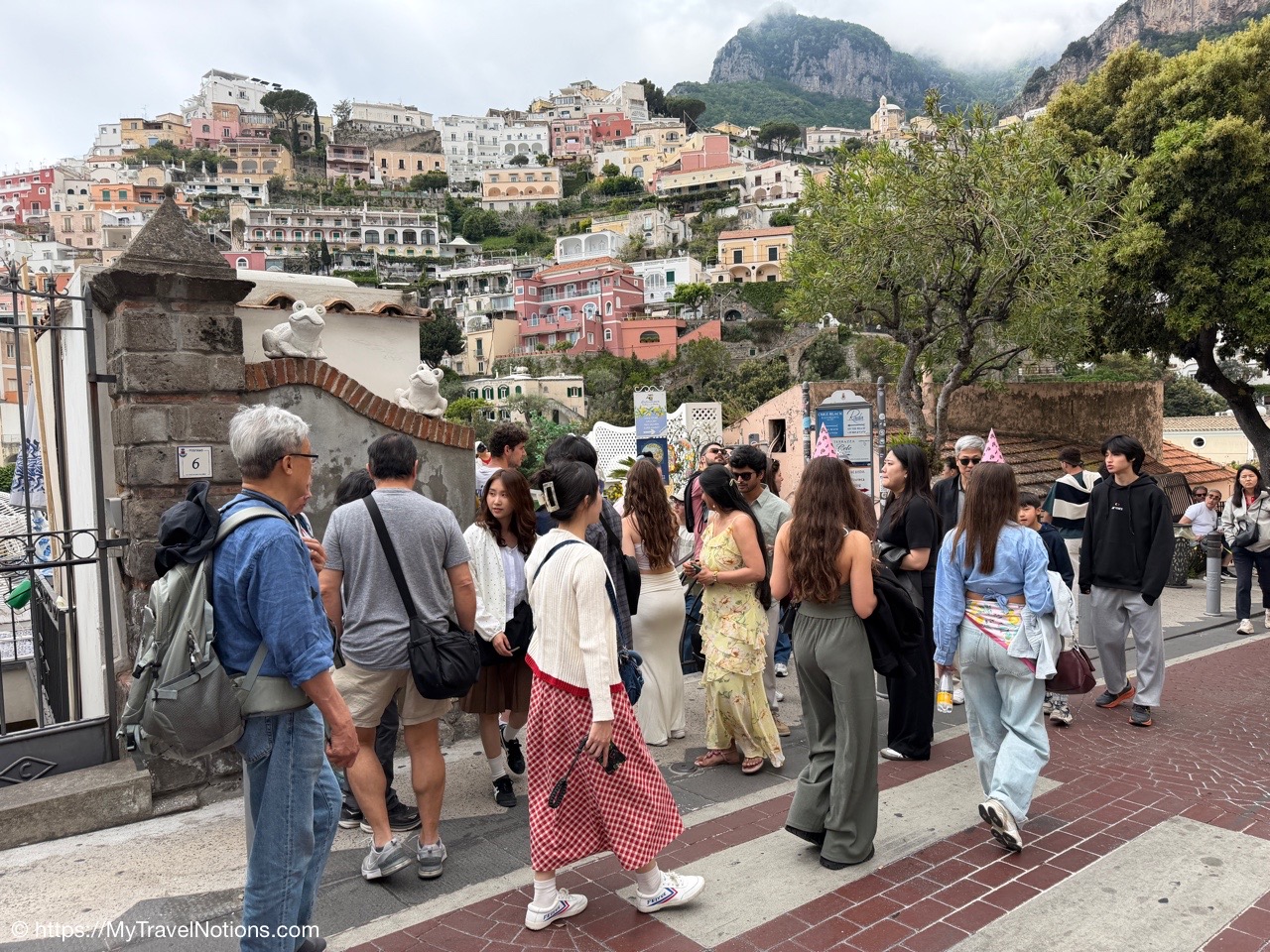
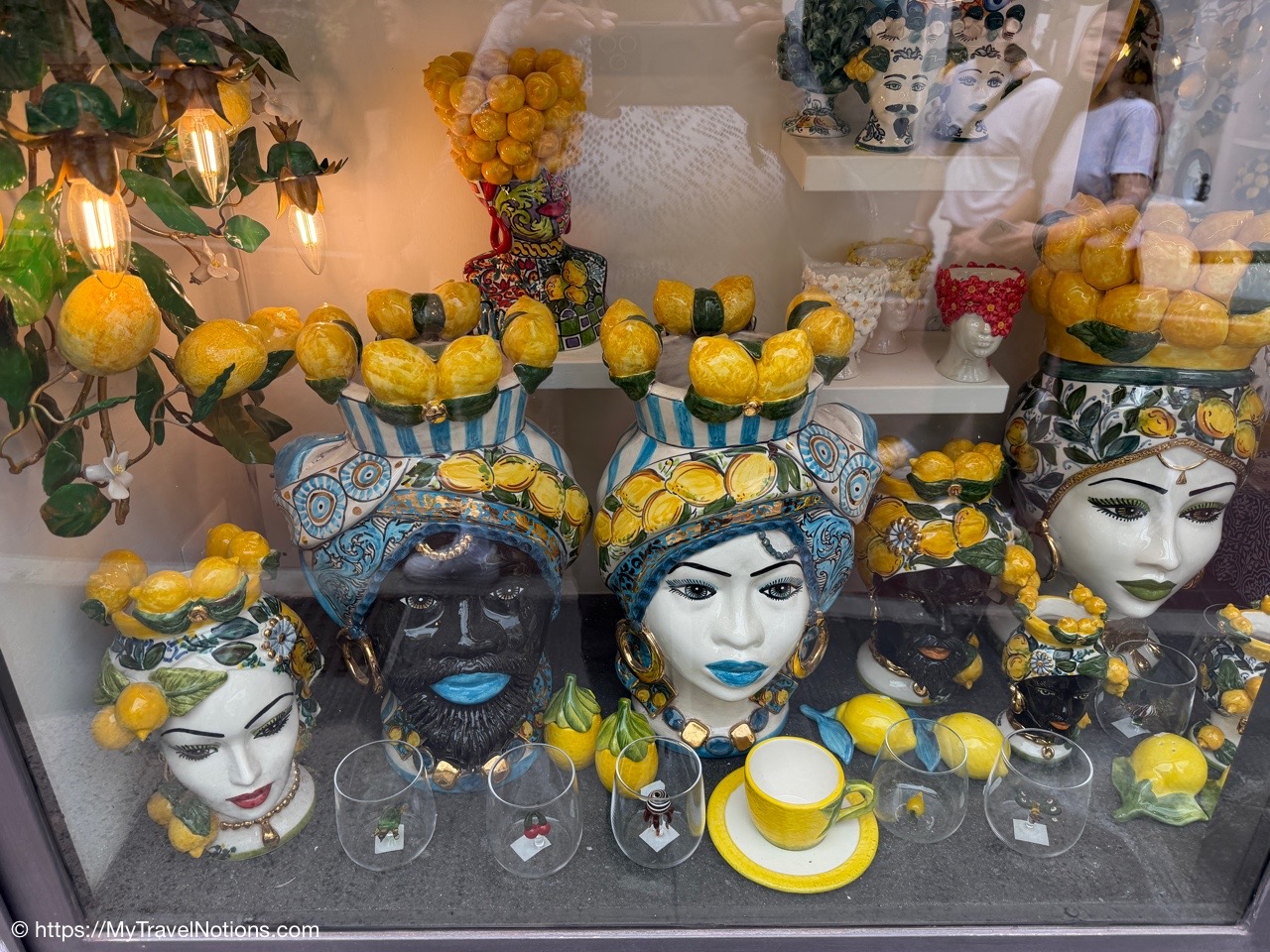
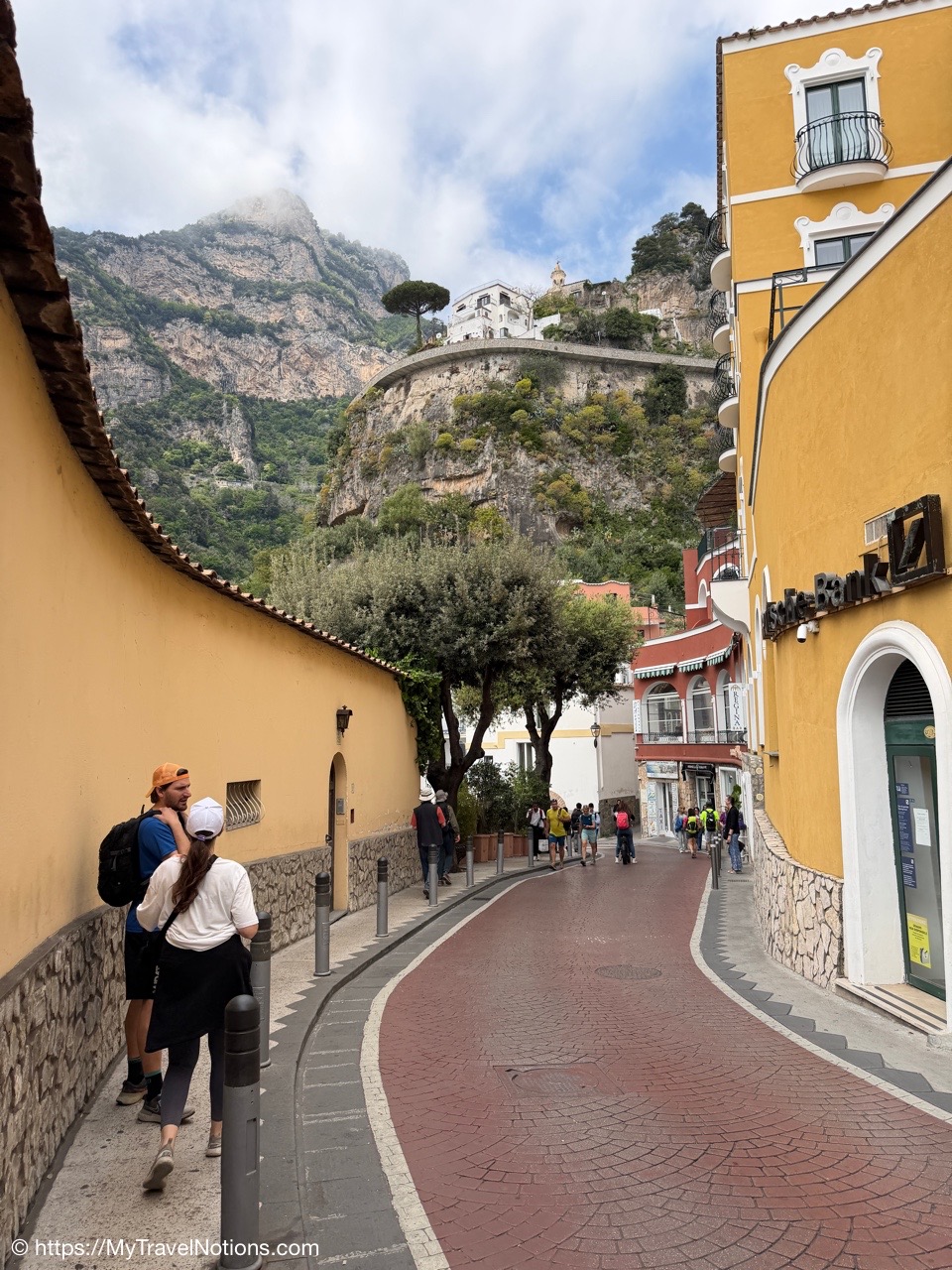
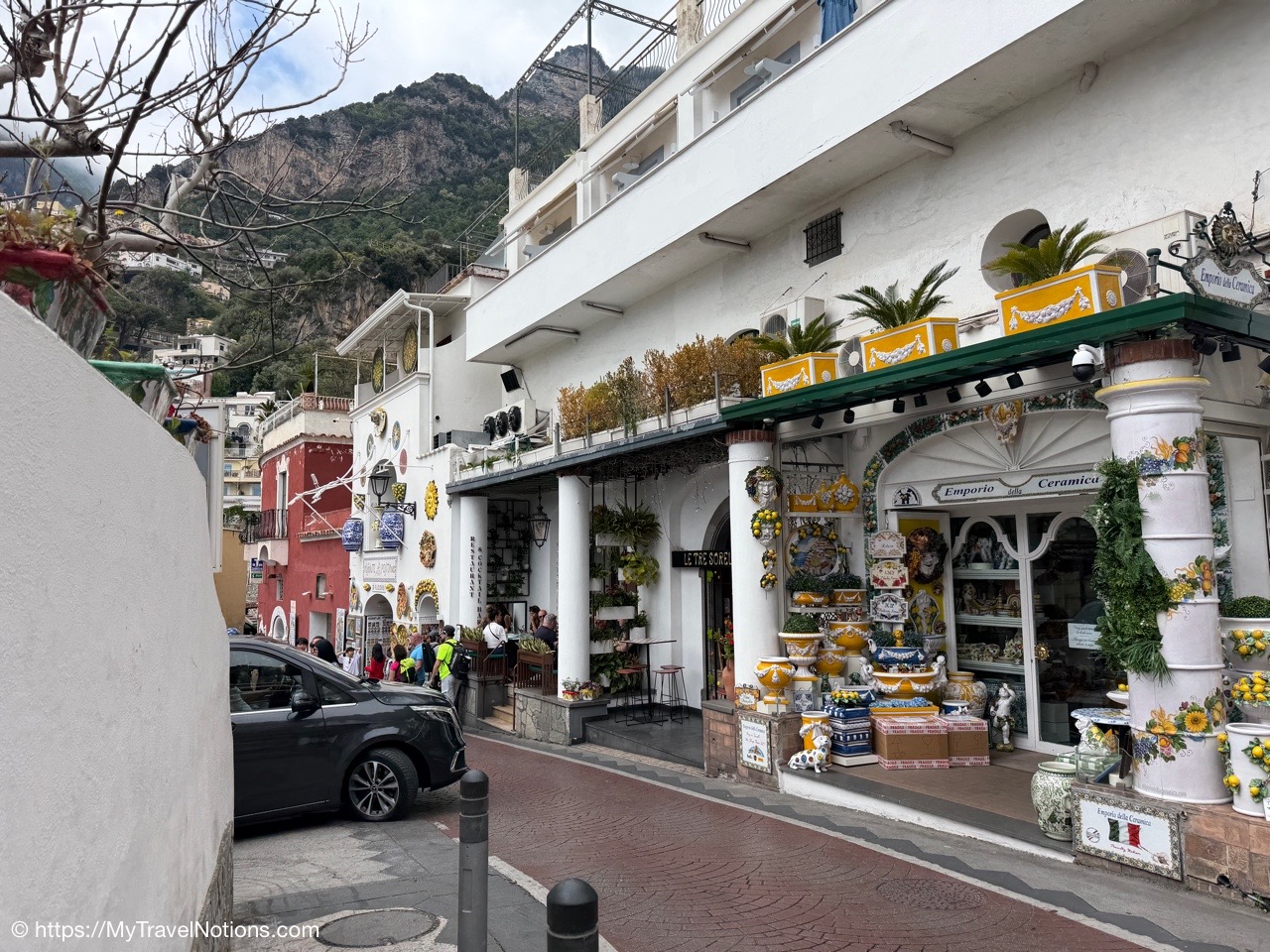
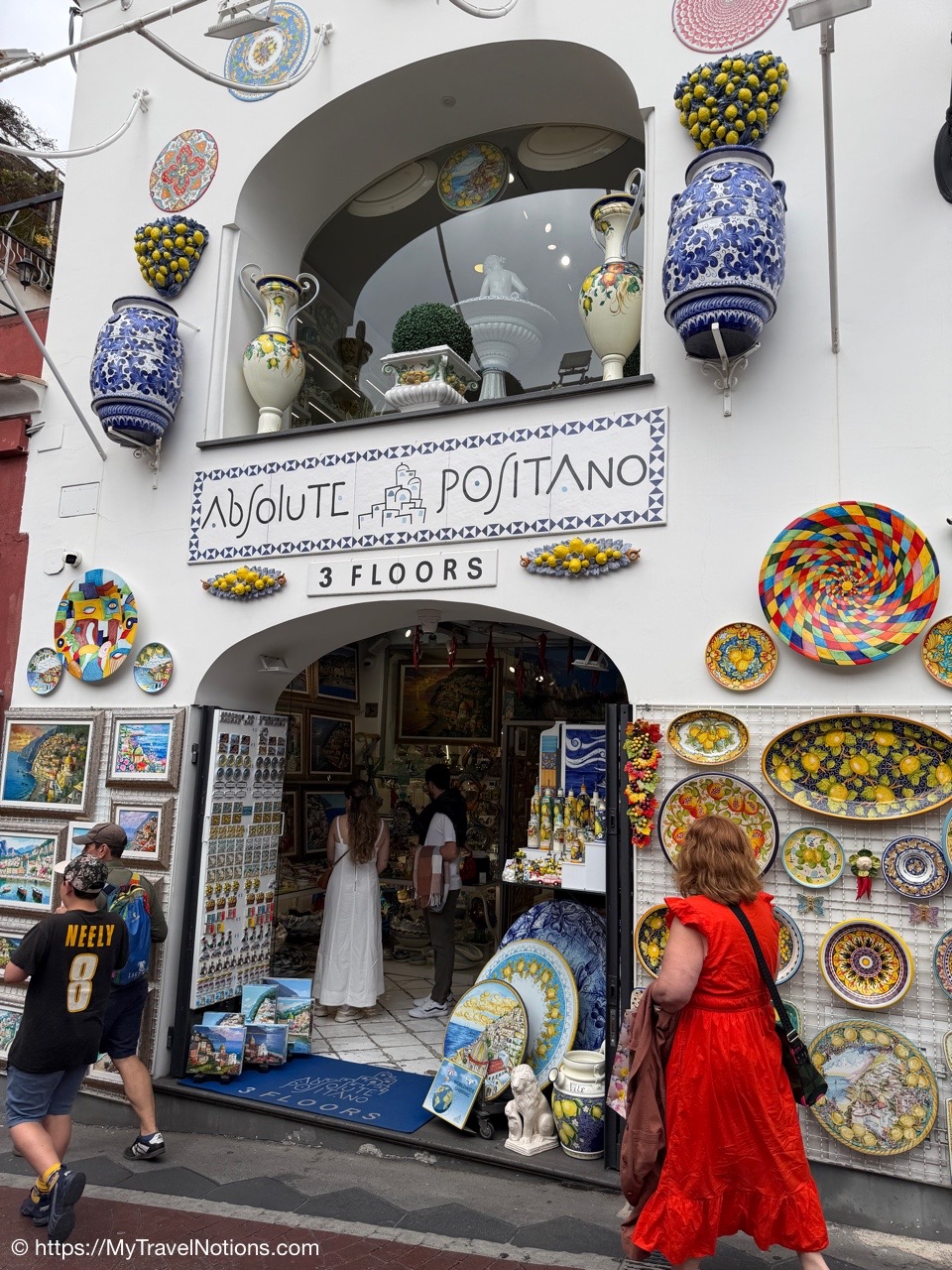
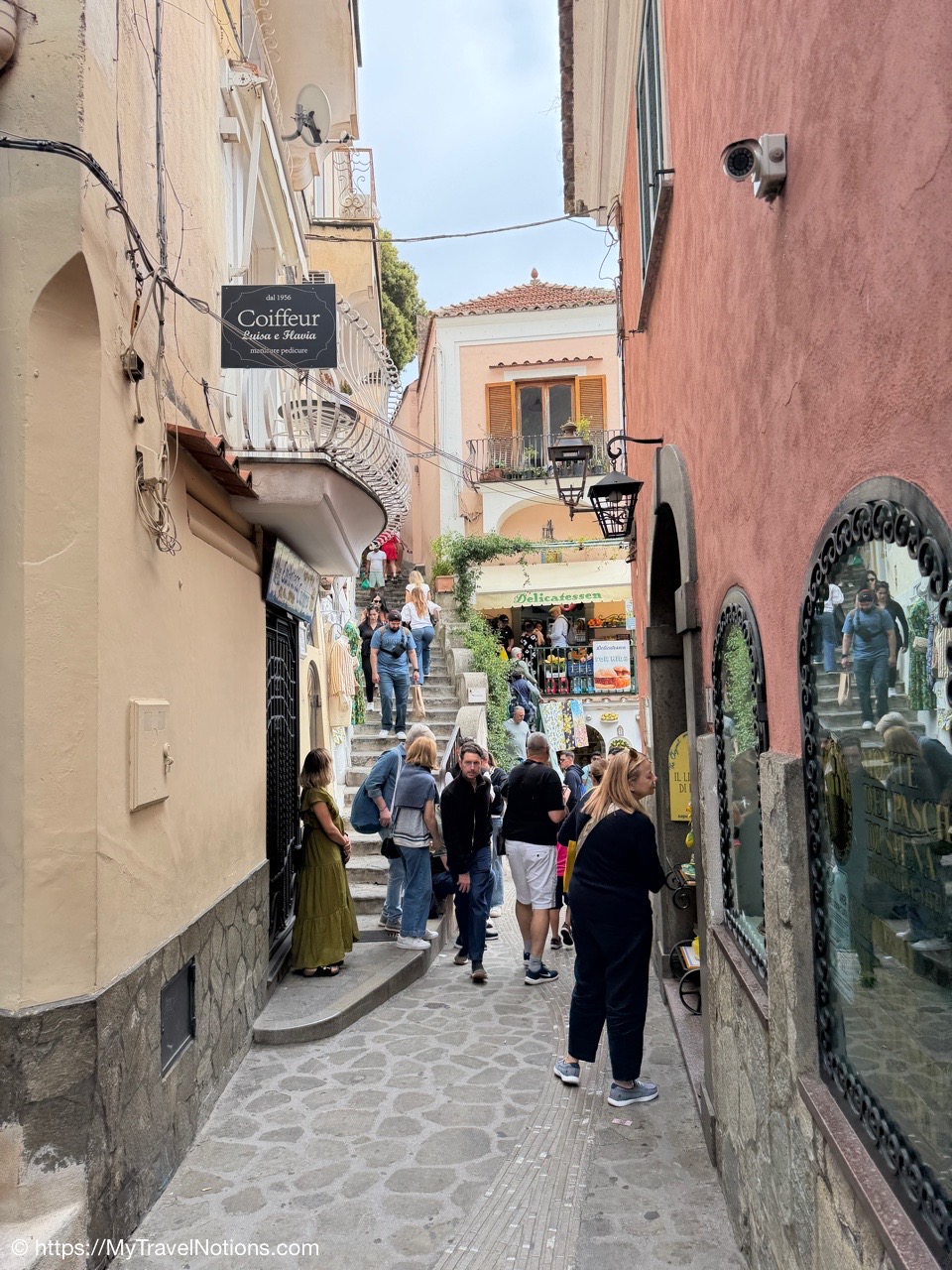
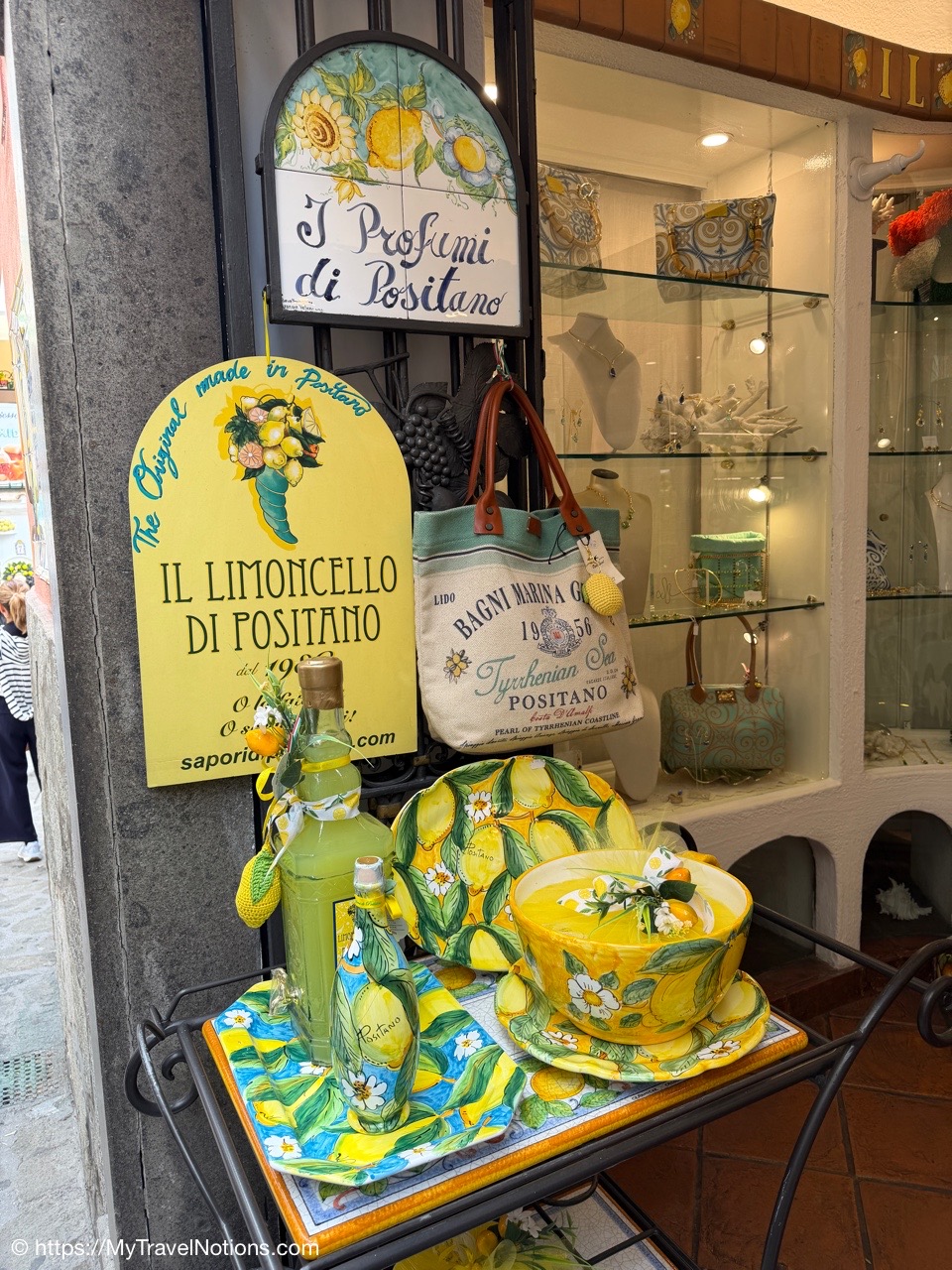
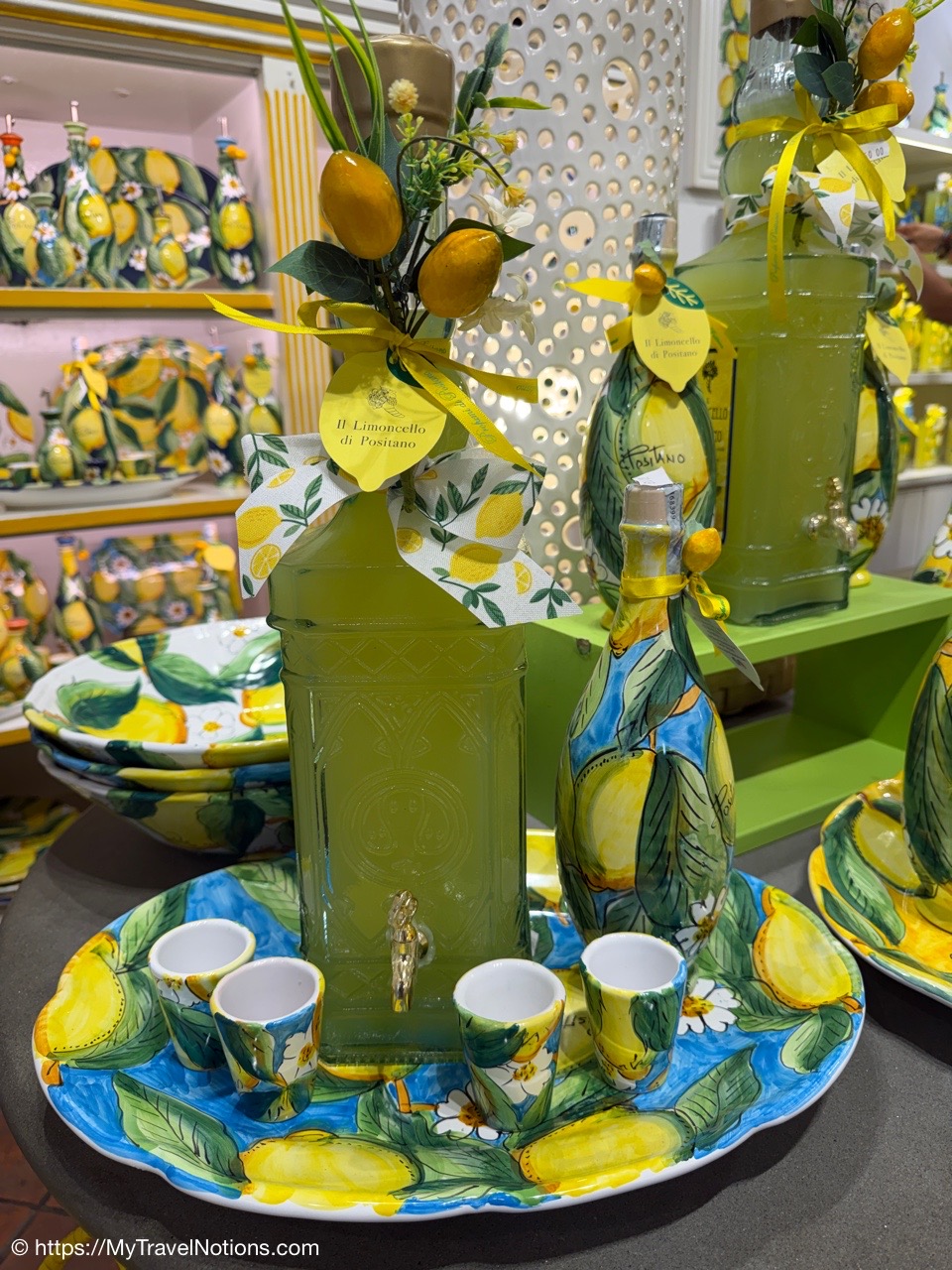
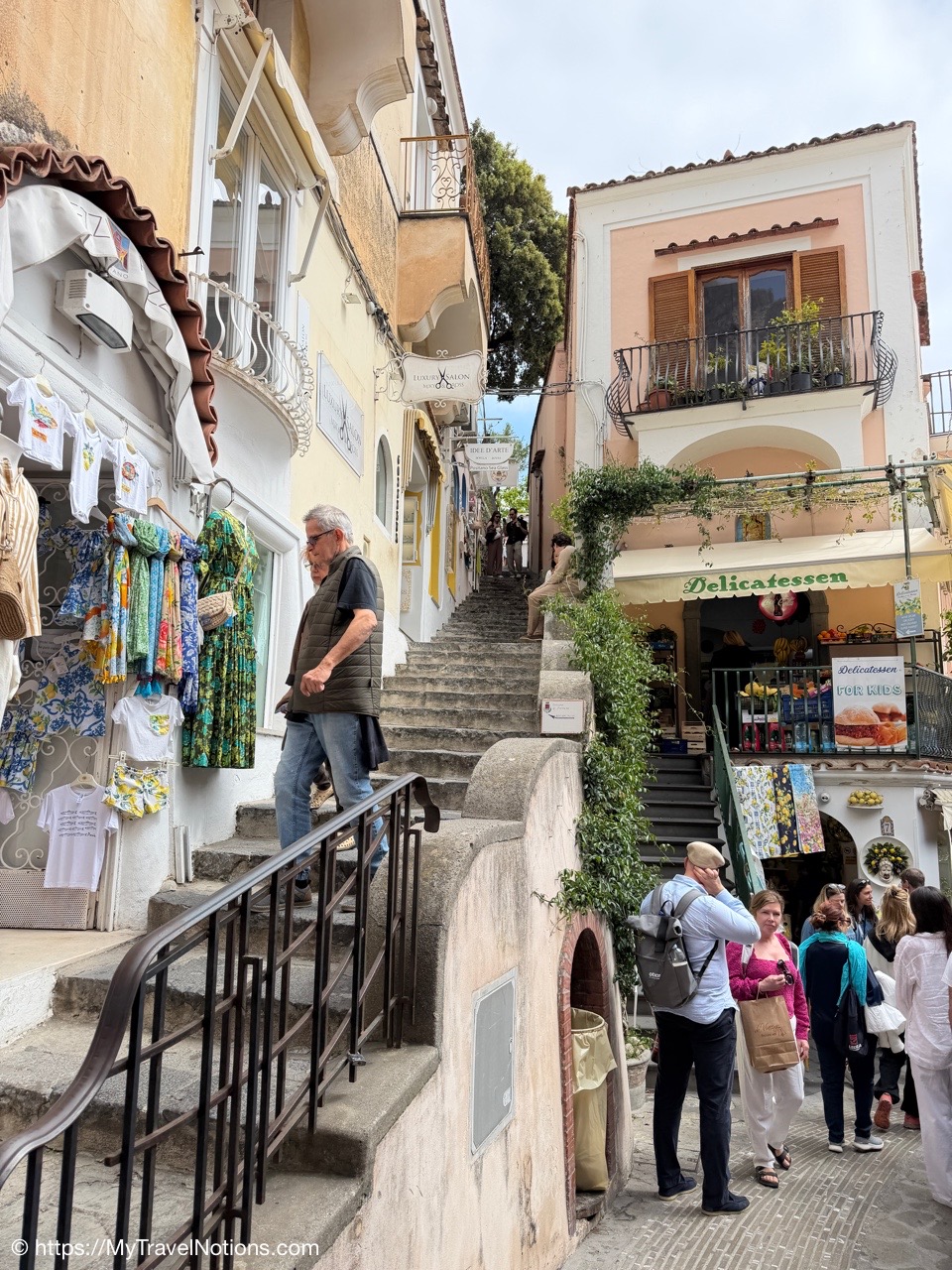
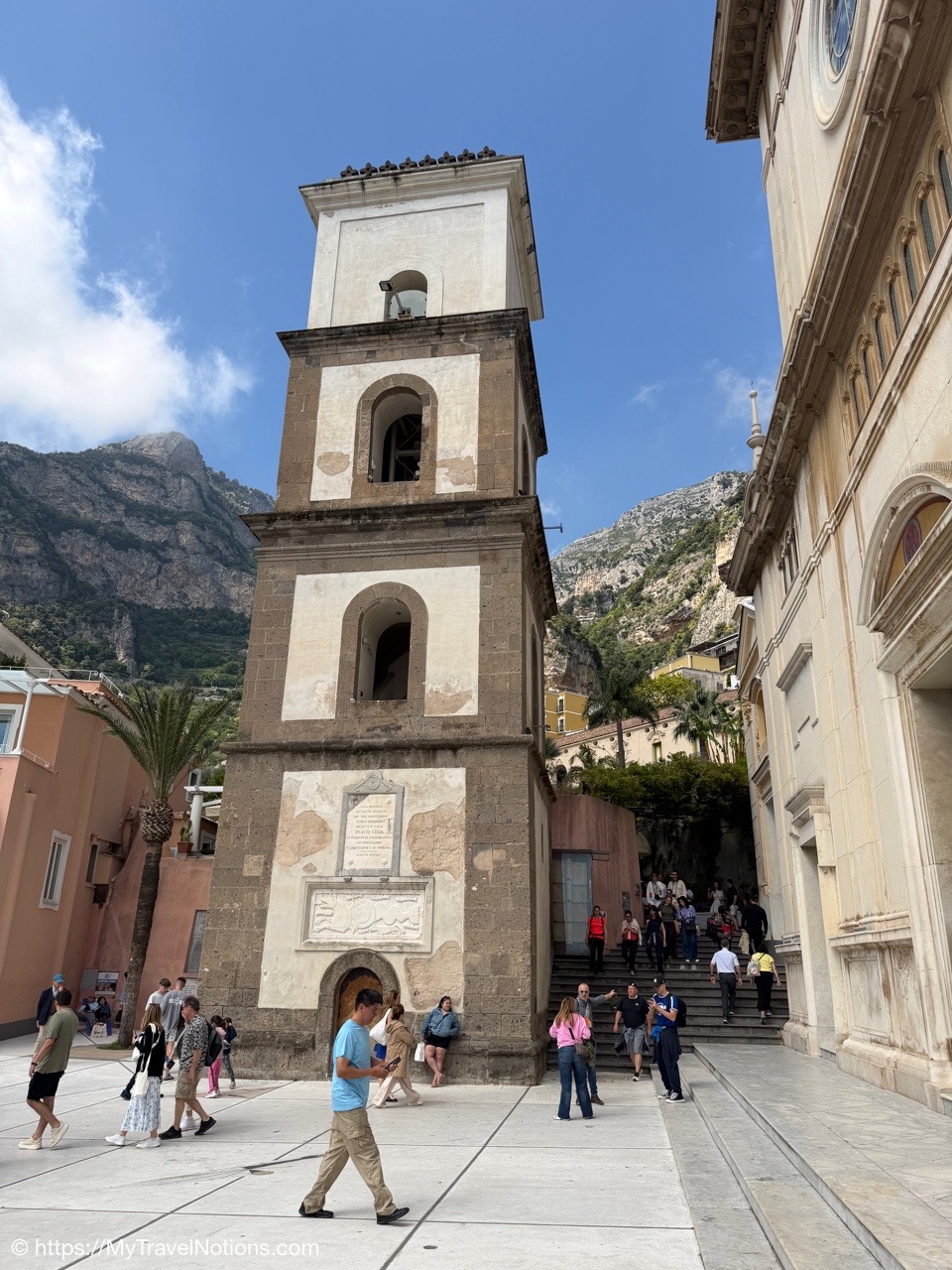
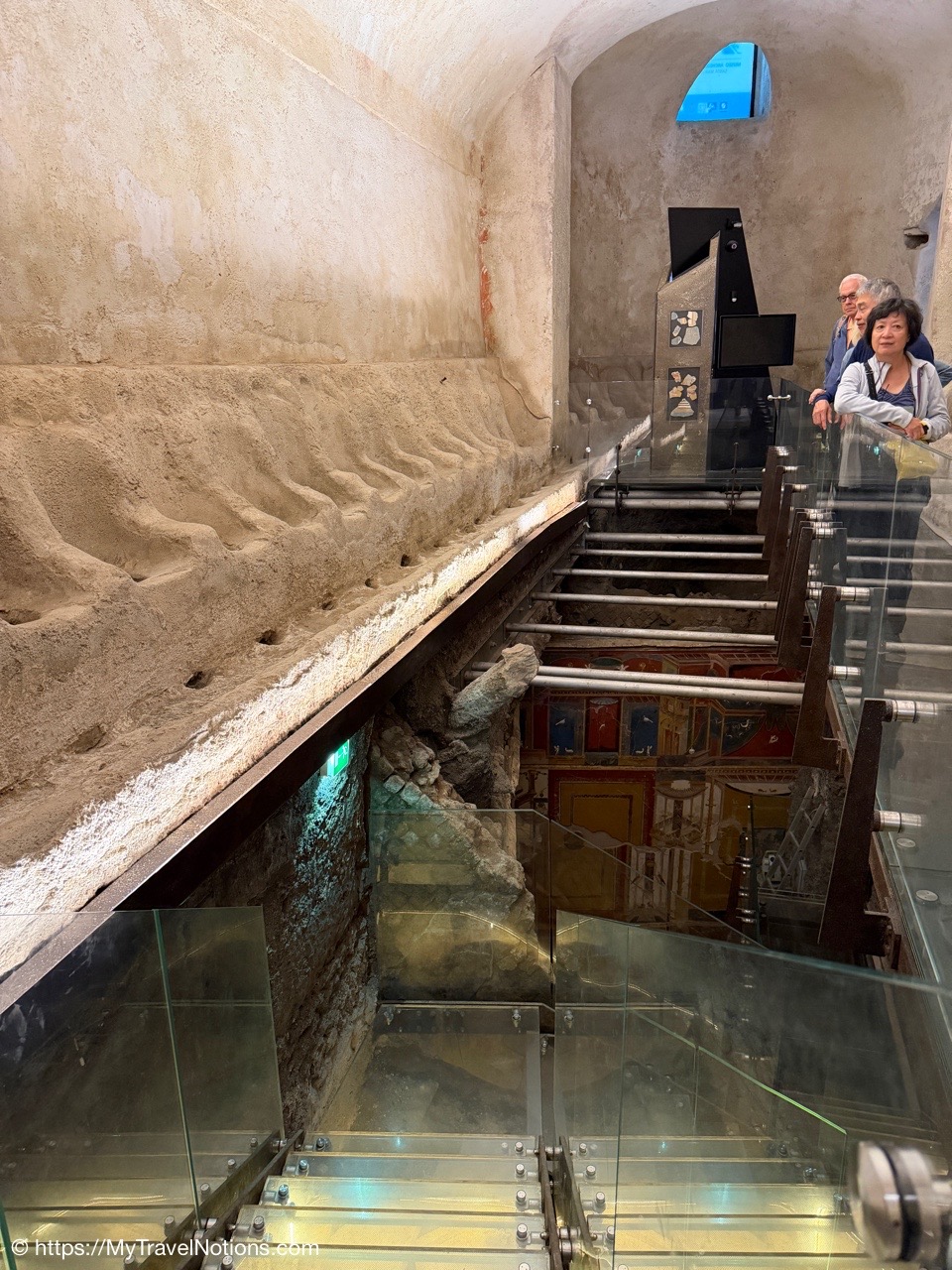
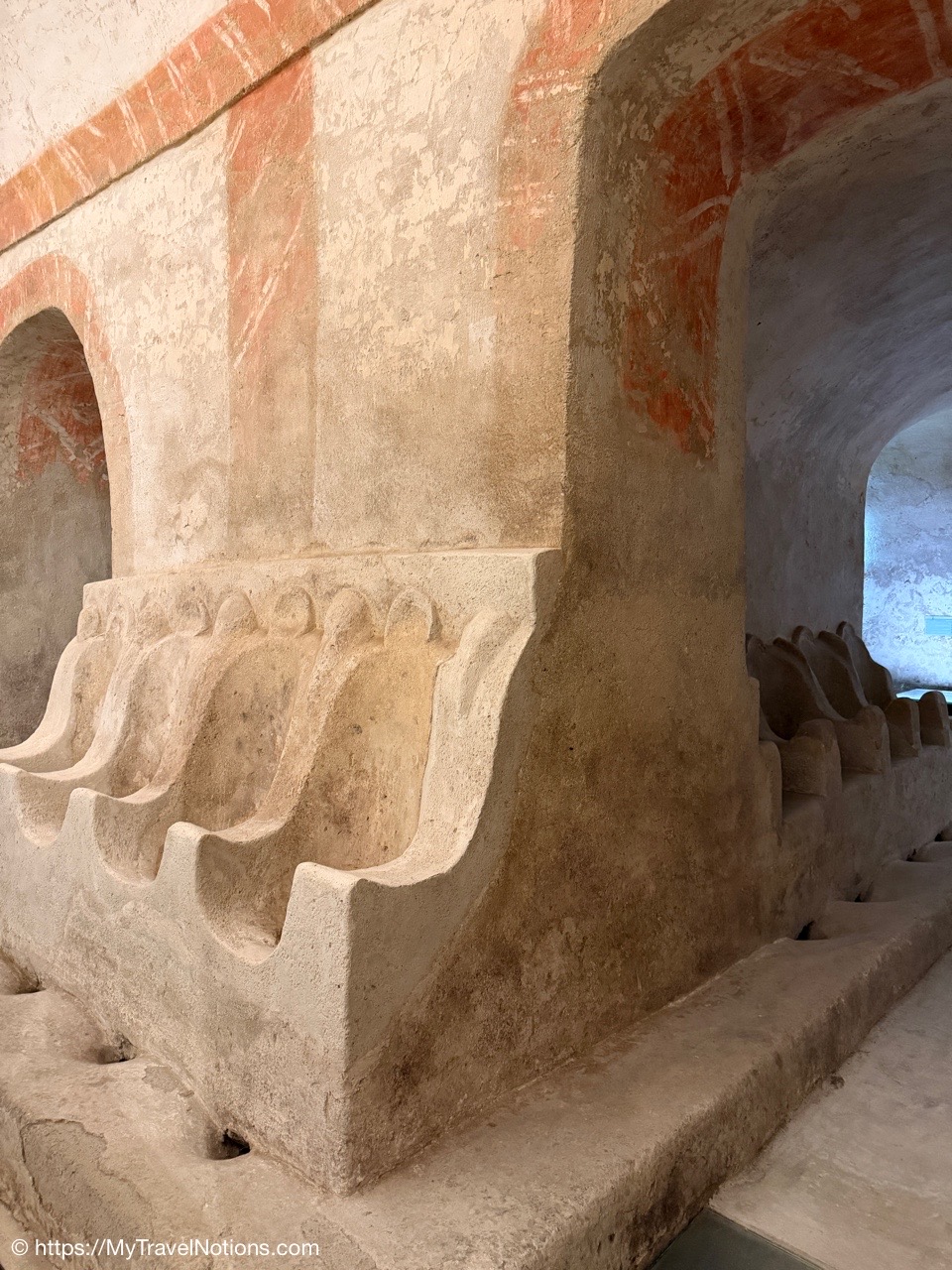
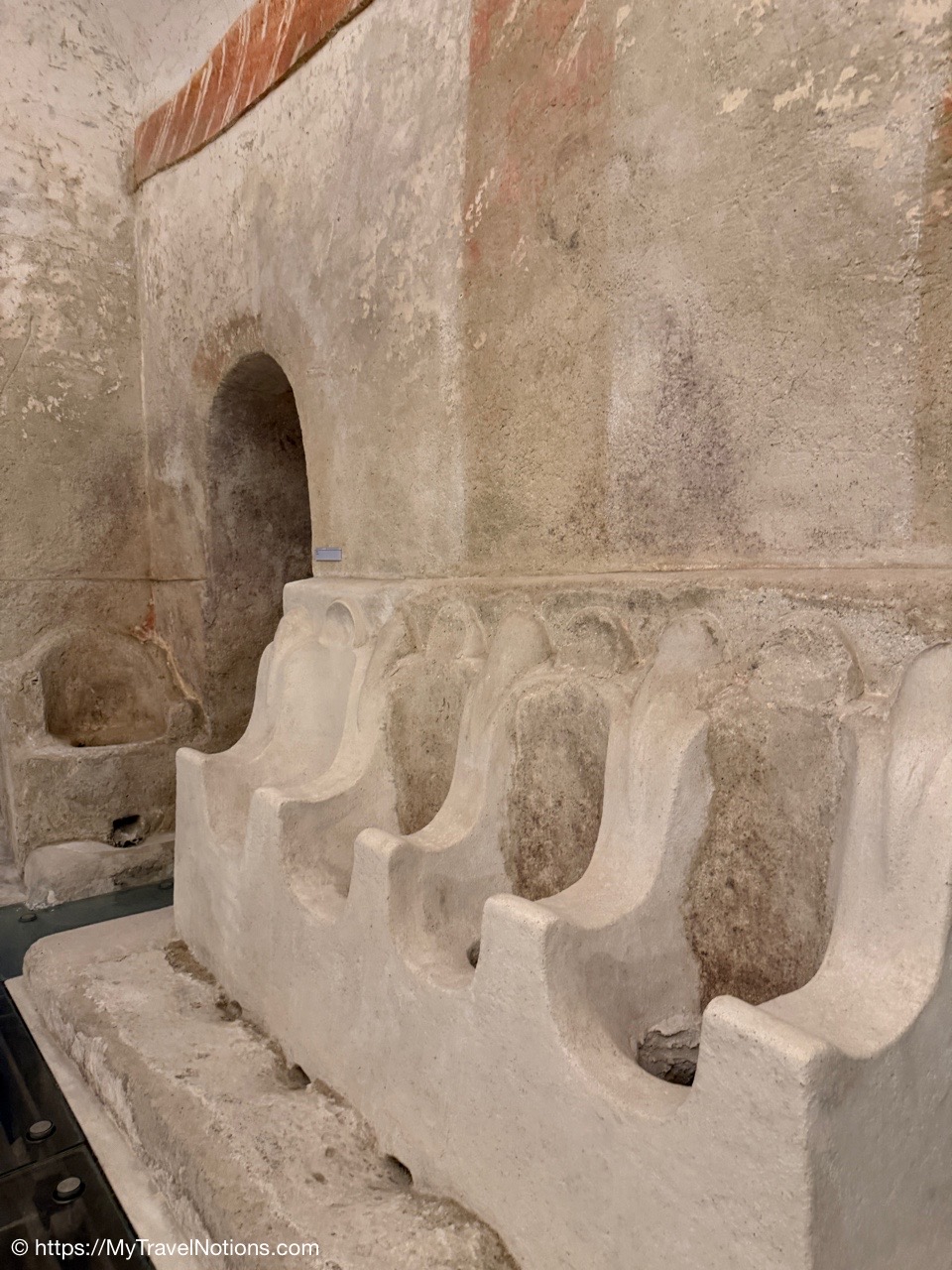
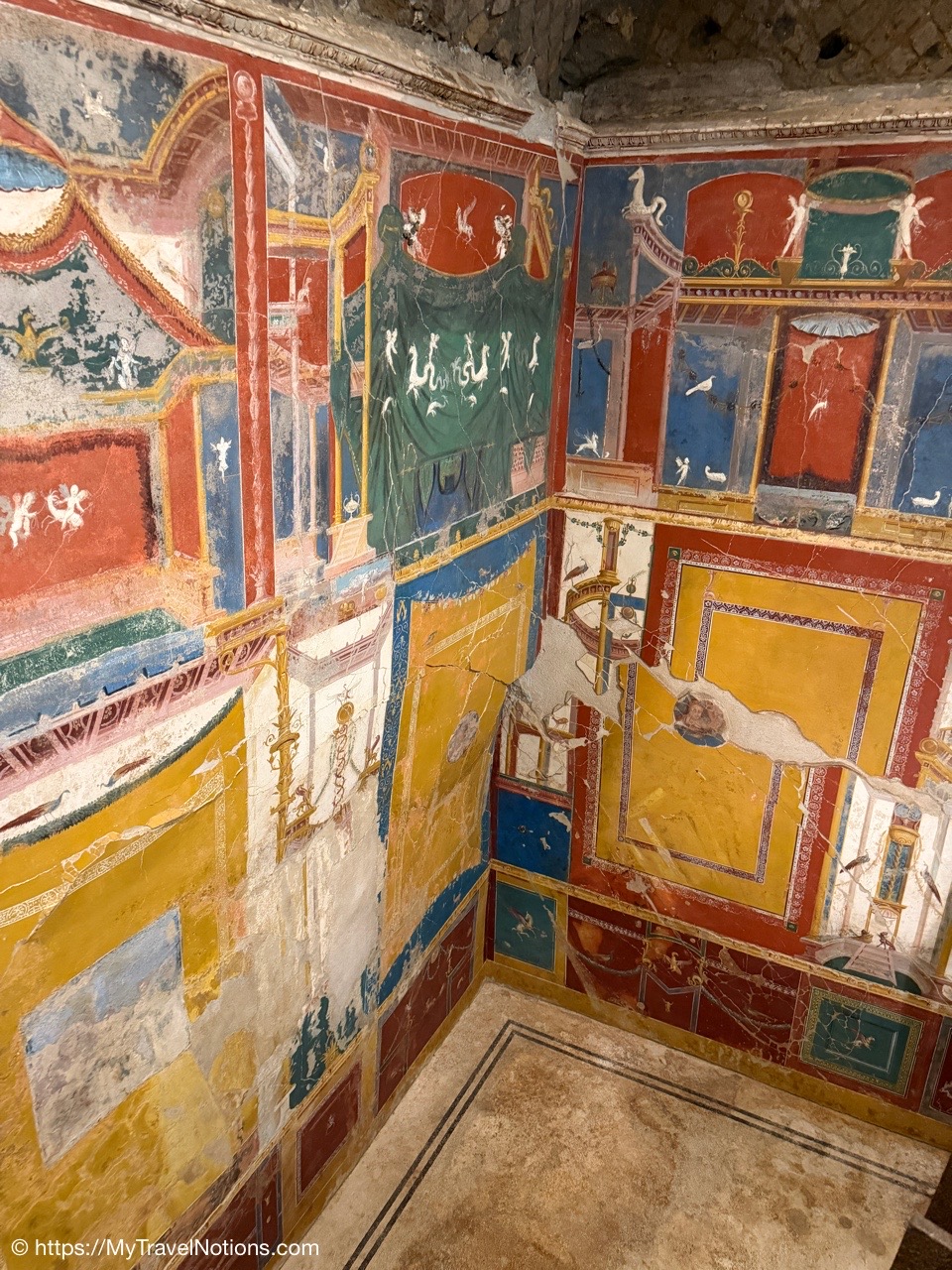
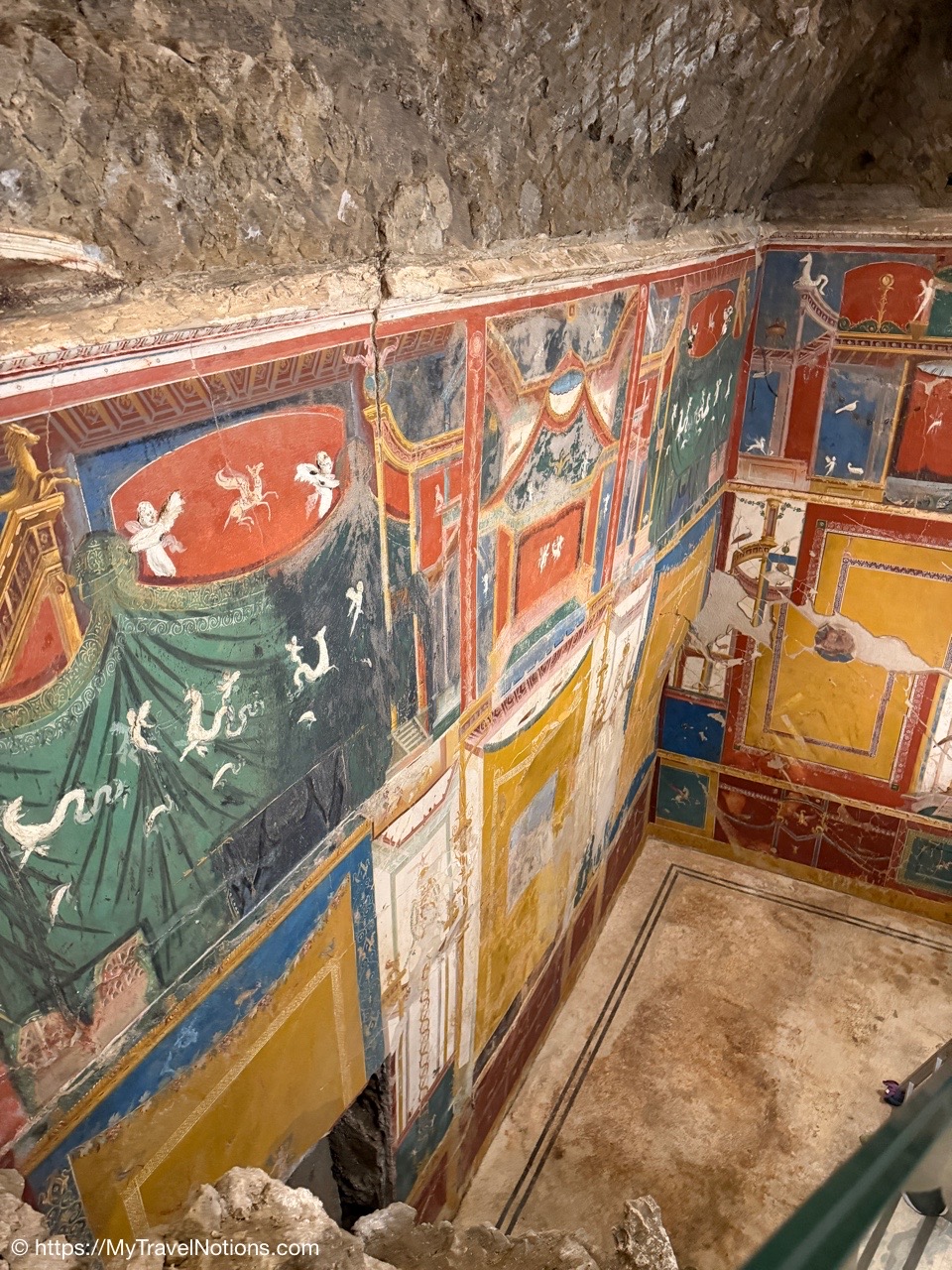
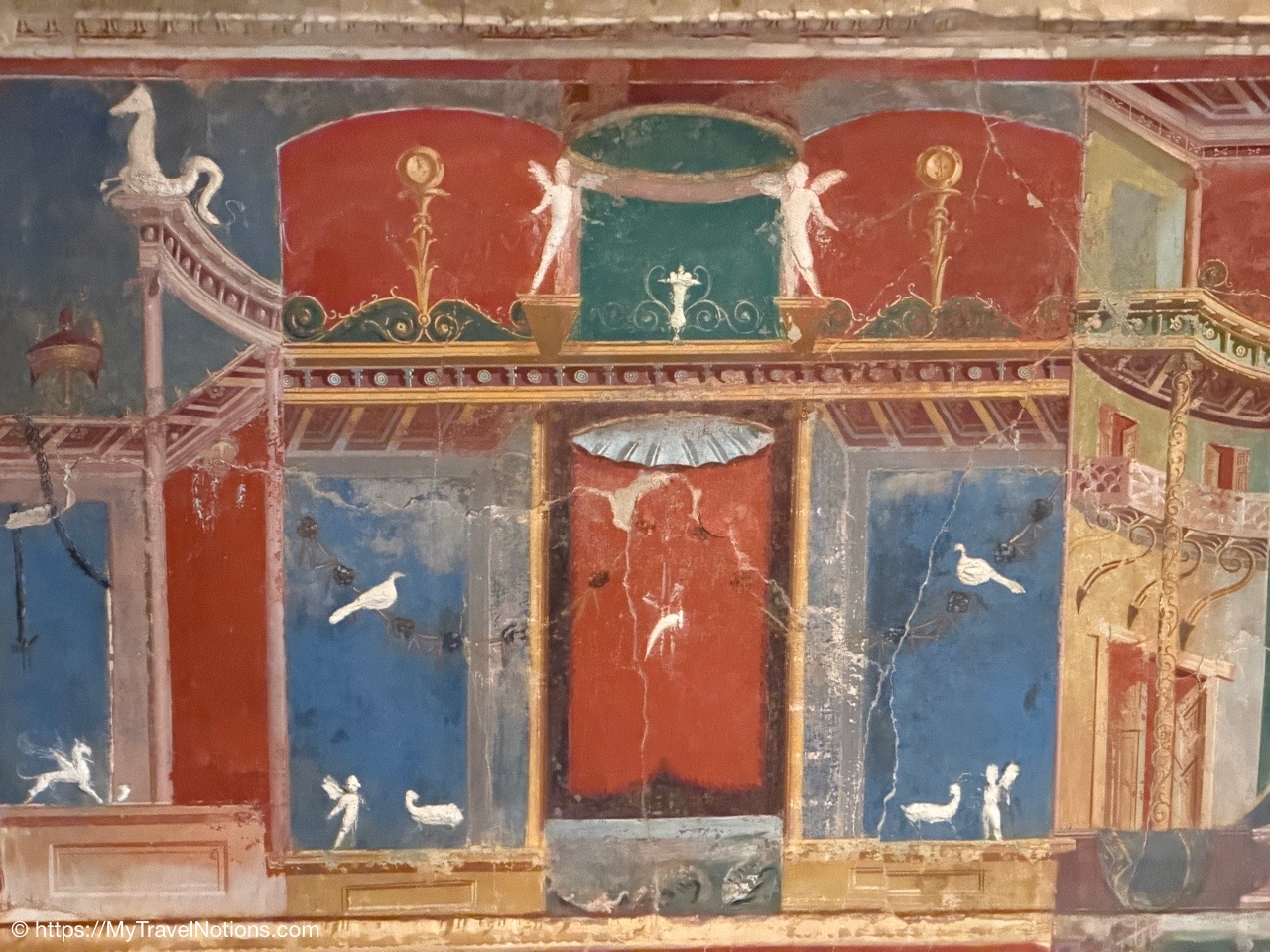
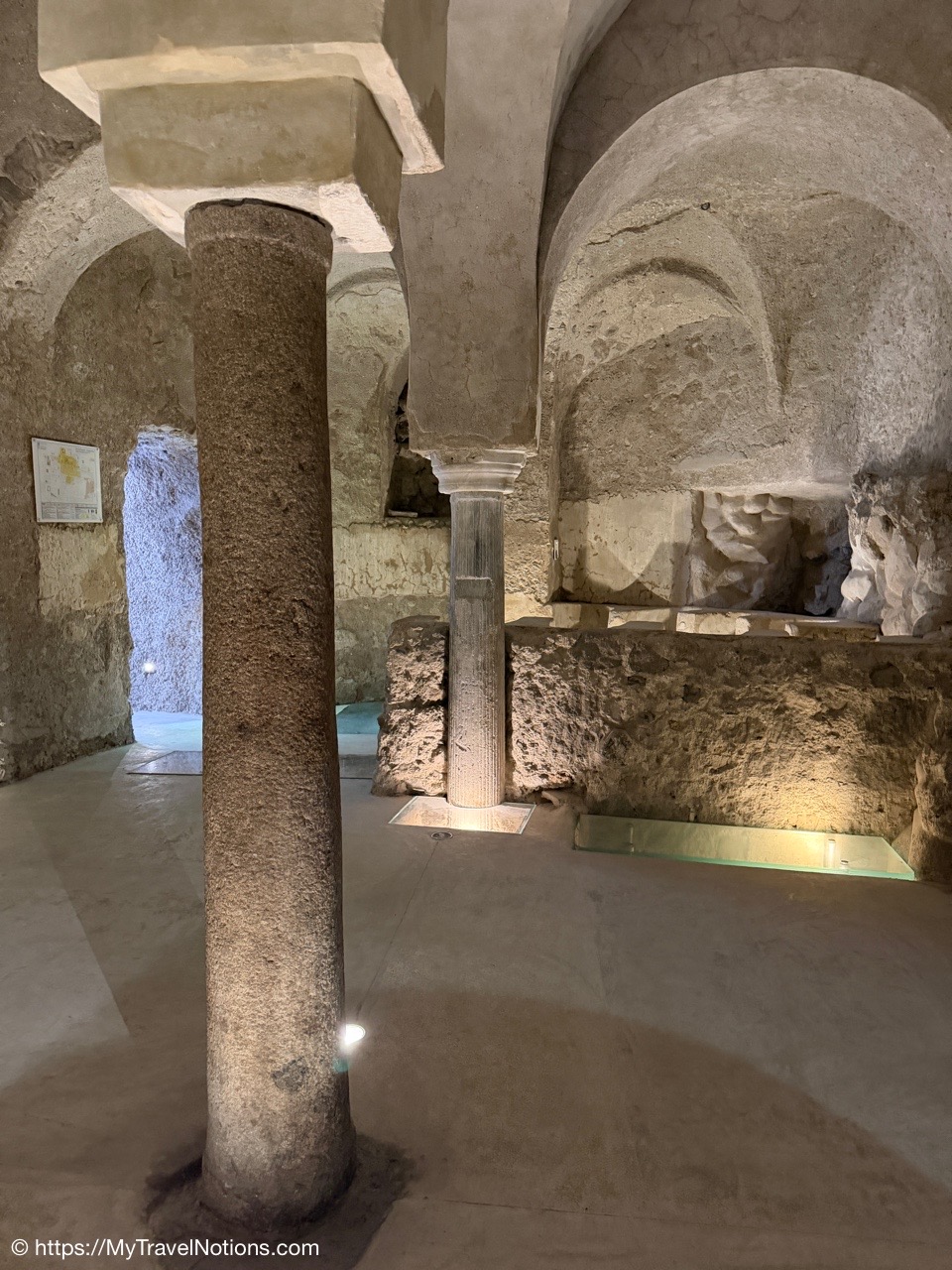
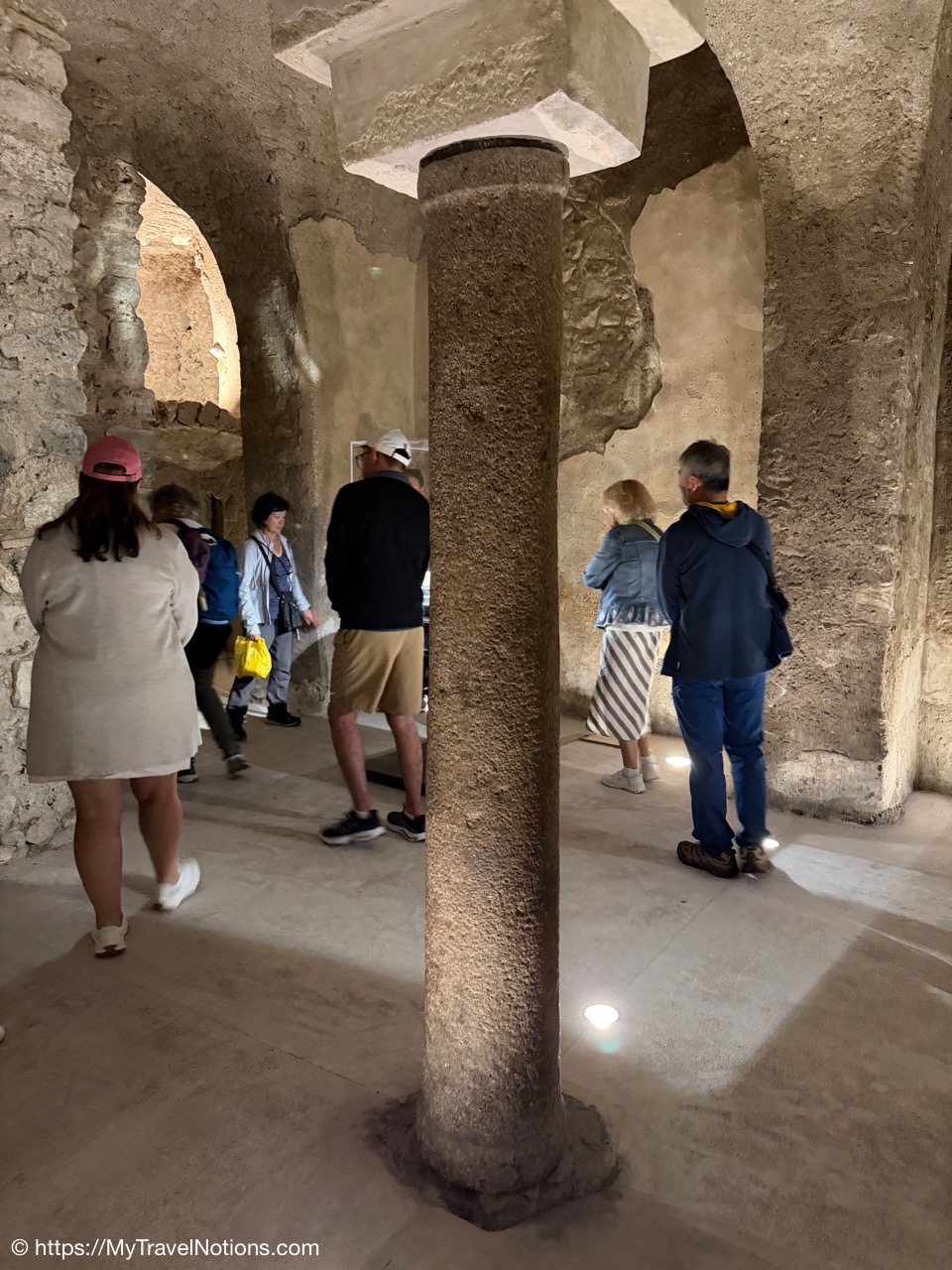
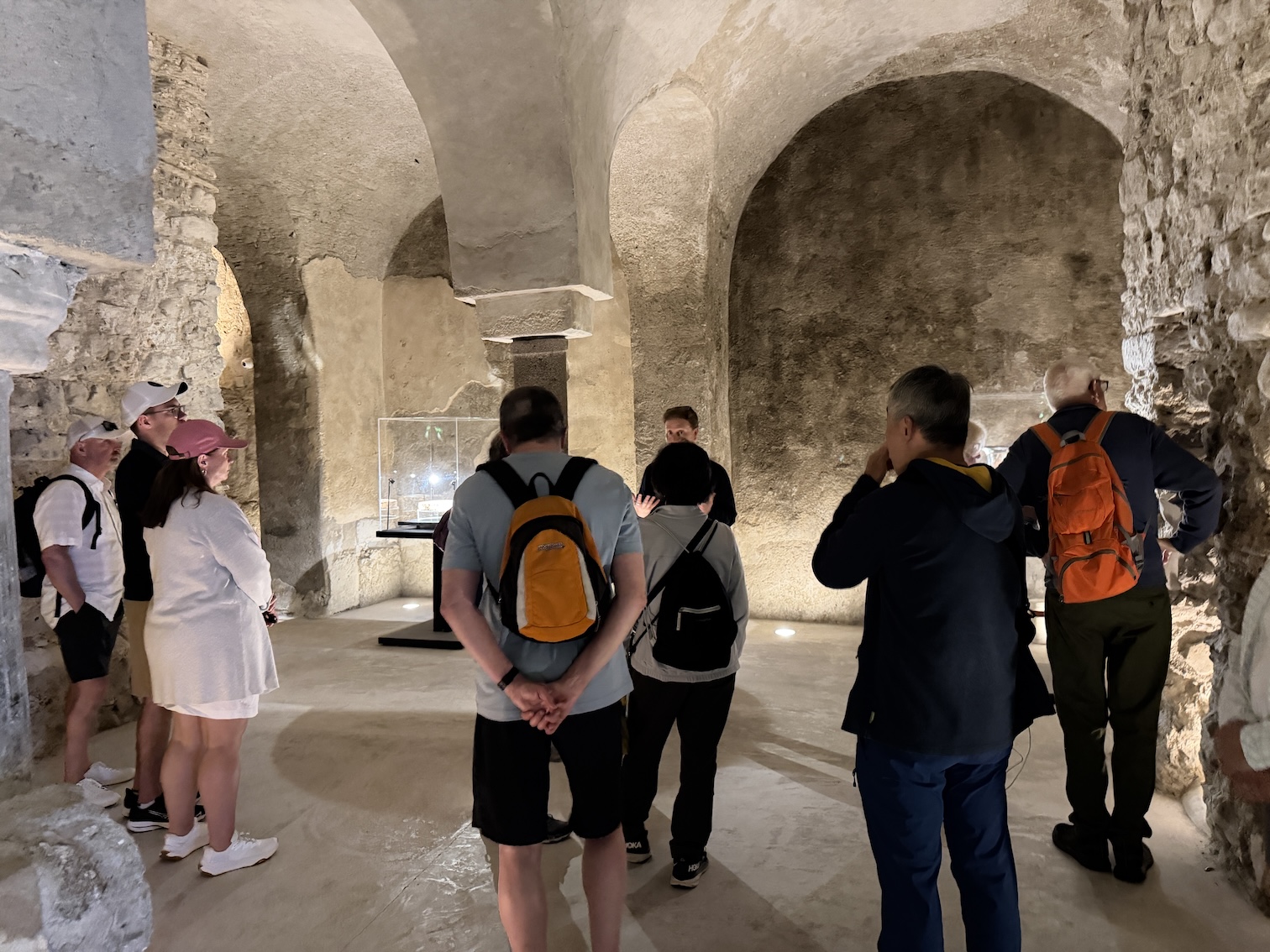
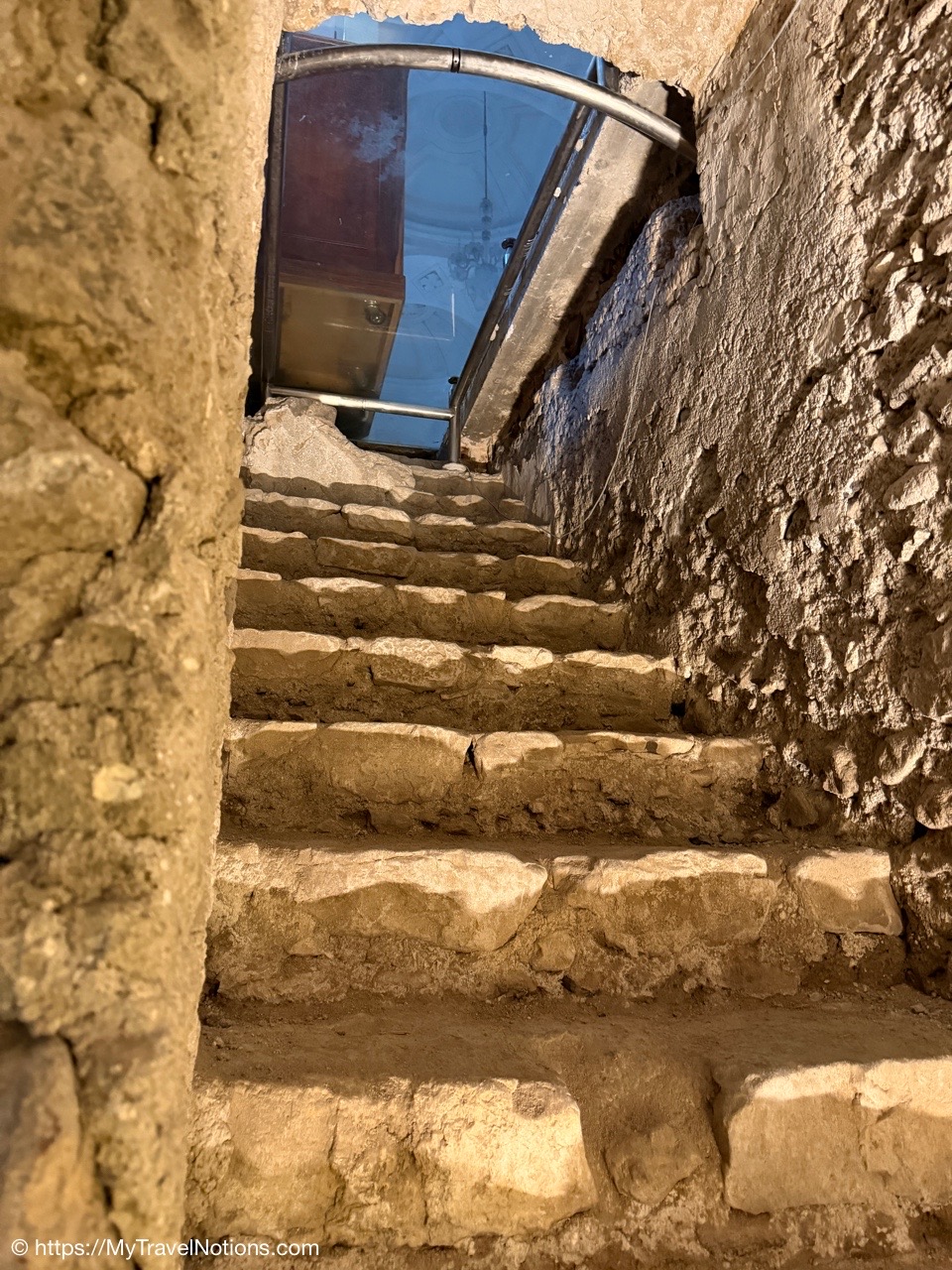
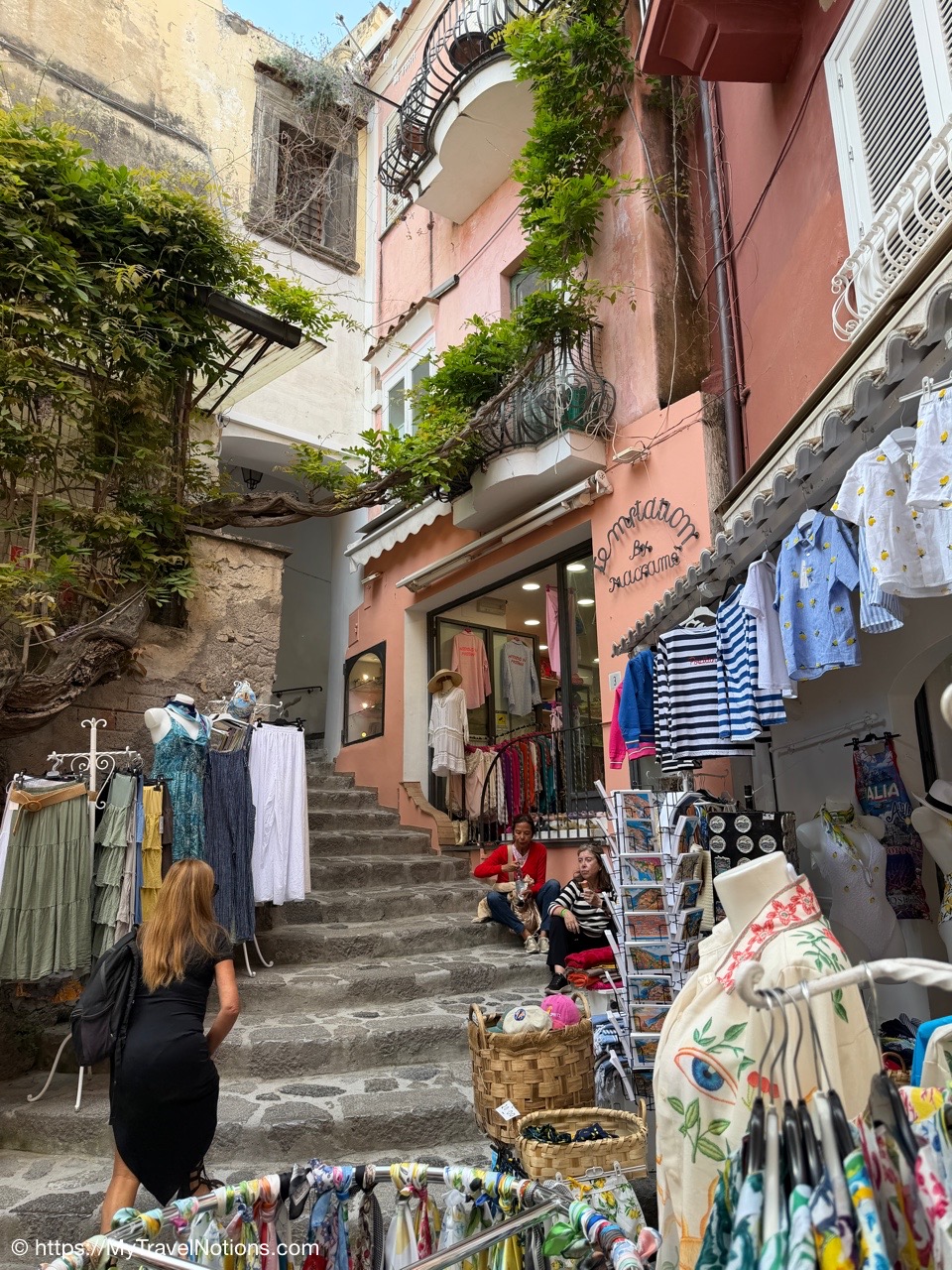
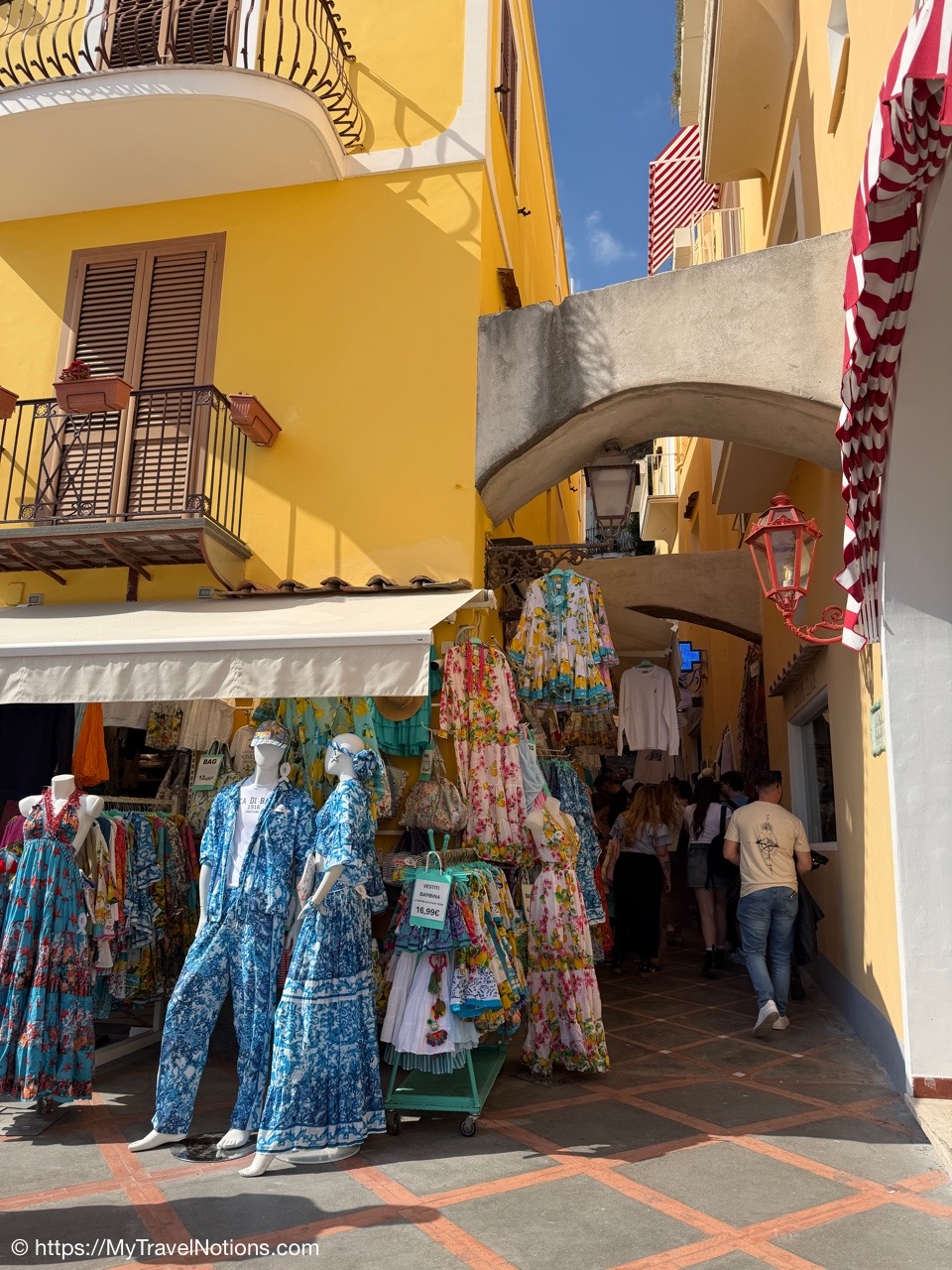
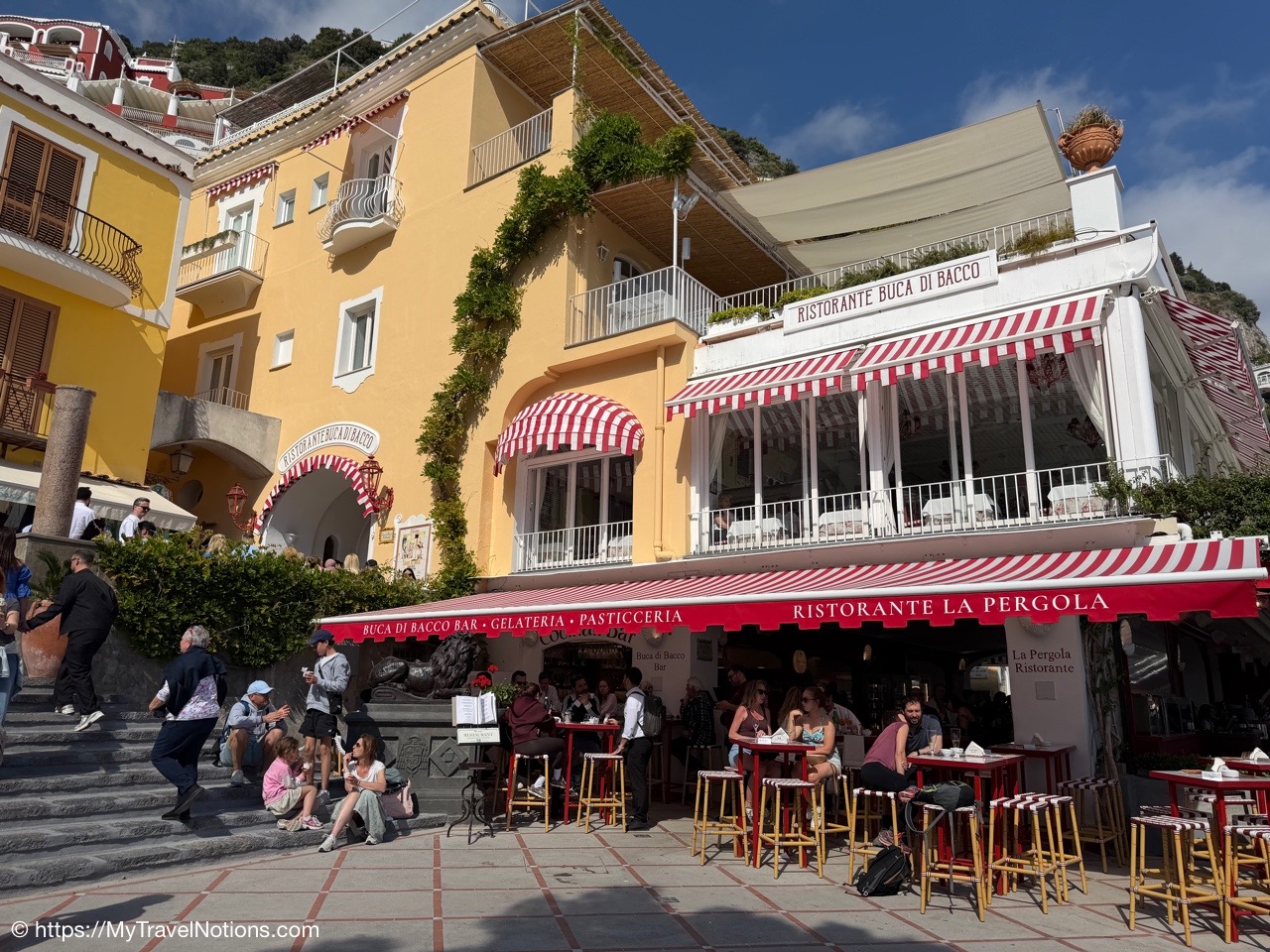
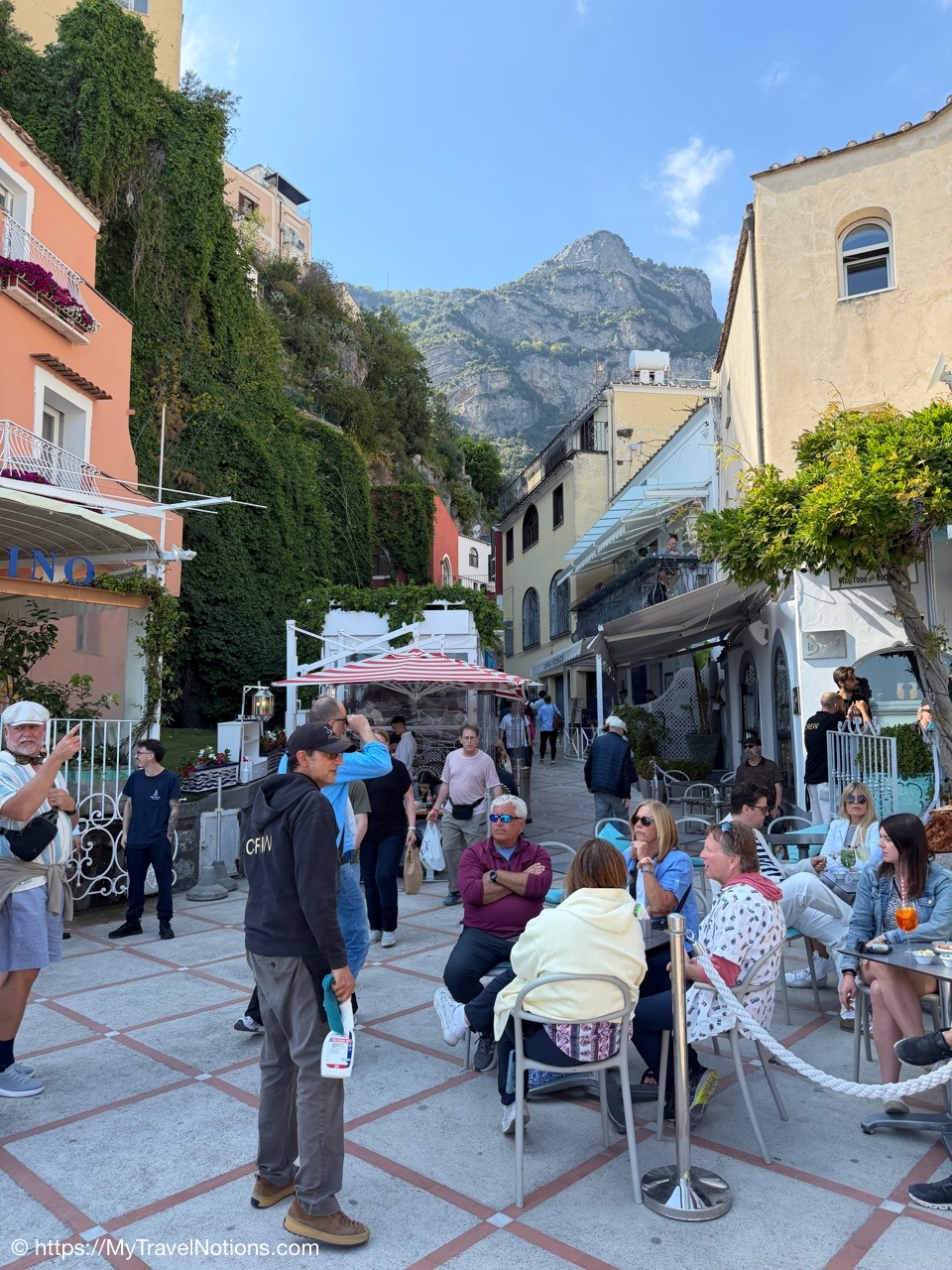
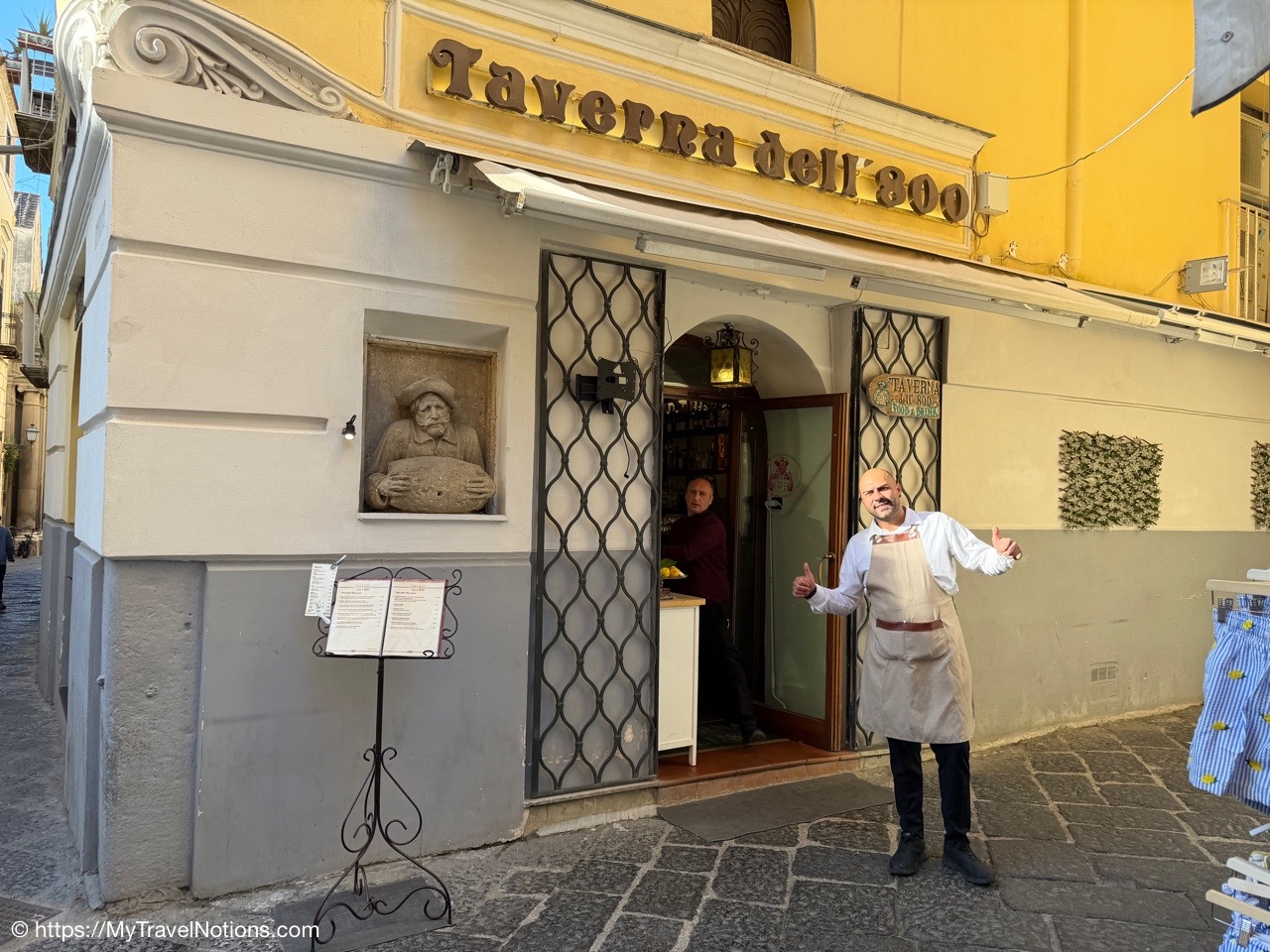
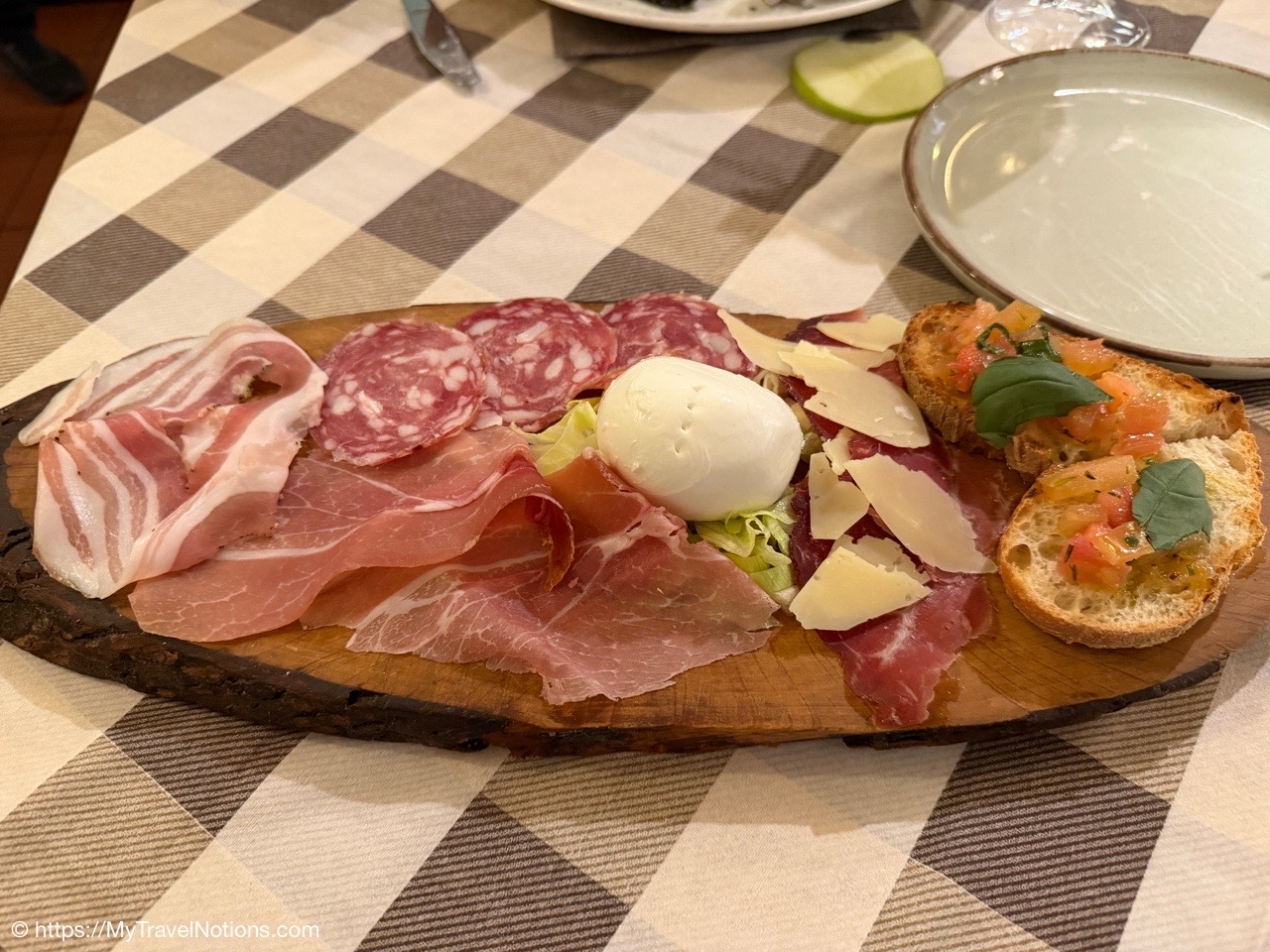
Me after our delicious lunch at Bruno Restaurant in Positano with good food, wonderful company and incredible views. (April 26, 2026)Arriving on the ferry to Positano from our home base of Sorrento. (April 26, 2026)Arriving at the main pier (Molo) at Spiaggia Grande (the main beach) in the heart of Positano. (April 26, 2026)The main pier (Molo) at Spiaggia Grande (the main beach) in the heart of Positano. Luggage porters at the dock in their electric vehicles ready to transport arrivals. (April 26, 2026)Me with views of Spiaggia Grande (the main beach) in the heart of Positano. (April 26, 2026)With our guide Florianna, whom we arranged in advance, we made our way up the Via Positanesi d’America a paved path running along the cliffside from Spiaggia Grande providing stunning views of the sea, pine trees and Fornillo tower in Positano. (April 26, 2026)This 16th century main tower along the scenic walkway of Via Positanesi d’America in Positano is Torre Trasita. This circular Saracen watchtower was part of a coastal defensive system against pirates. Today, the restored Torre Trasita serves as a private villa/luxury guesthouse. And, the tower in the distance is the 15th century Torre di Fornillo also known as a watchtower was once owned by Swiss artist Gilbert Clavel, who transformed it into a unique villa hosting artists like Picasso. (April 26, 2026)Getting in a group photo along the scenic walkway of Via Positanesi d’America in Positano with the circular former Saracen watchtower, Torre Trasita, in the distance. (April 26, 2026)The scenic walkway of Via Positanesi d’America in Positano. (April 26, 2026)Continuing our walk along the scenic walkway of Via Positanesi d’America in Positano. (April 26, 2026)Continuing our walk along the scenic walkway of Via Positanesi d’America in Positano. (April 26, 2026)The pebble-and-sand bay flanked by rocky cliffs of the Fornillo Beach in Positano during our walk along the scenic Via Positanesi d’America. (April 26, 2026)Heading back into town along the scenic walkway of Via Positanesi d’America in Positano. (April 26, 2026)Our patient Positano guide, Florianna, patiently waiting for us as we go from the calm scenic walkway of Via Positanesi d’America into the busy streets of Positano. (April 26, 2026)The busy streets of Positano. (April 26, 2026)Heading up the stairs to the Church of Santa Maria Assunta in Positano. (April 26, 2026)The Church of Santa Maria Assunta in Positanowas originally founded in the 10th century as part of a Benedictine abbey. The current structure, famous for its colorful majolica-tiled dome, was extensively rebuilt and restored between 1777 and 1783. The striking bell tower from, which stands separate from the main church building in the piazza out front, was added in 1707. (April 26, 2026)The Church of Santa Maria Assunta in Positanowas originally founded in the 10th century as part of a Benedictine abbey. The current structure, famous for its colorful majolica-tiled dome, was extensively rebuilt and restored between 1777 and 1783. The striking bell tower from, which stands separate from the main church building in the piazza out front, was added in 1707. (April 26, 2026)We couldn’t really explore the inside of the Church of Santa Maria Assunta because mass was being held. Above the main altar sits a 13th-century Byzantine Black Madonna, which legend says was stolen from Constantinople by pirates, smuggled west and later brought to Positano. The church was originally built on top of a medieval church which was built on the ruins of an ancient Roman villa, which we toured during our brief time in Positano. (April 26, 2026)The 13th century Byzantine icon of the Black Madonna above the main altar inside the Church of Santa Maria Assunta in Positano. Legend says she was stolen by pirates and later brought to Positano. (April 26, 2026)Walking through Positano. (April 26, 2026)Walking along the Via dei Mulini, the picturesque pedestrian street in the heart of Positano running from the town center down to the Spiaggia Grande beach. (April 26, 2026)Walking along the Via dei Mulini, the picturesque pedestrian street in the heart of Positano running from the town center down to the Spiaggia Grande beach. (April 26, 2026)Walking along the Via dei Mulini, the picturesque pedestrian street in the heart of Positano running from the town center down to the Spiaggia Grande beach. (April 26, 2026)Walking along the Via dei Mulini, the picturesque pedestrian street in the heart of Positano running from the town center down to the Spiaggia Grande beach. (April 26, 2026)The elaborately decorated ceramic heads in a shop along the Via dei Mulini, the picturesque pedestrian street in the heart of Positano running from the town center down to the Spiaggia Grande beach. (April 26, 2026)Rosie, Alice and me walking back through Via dei Mulini in Positano. (April 26, 2026)The crowds of Positano. (April 26, 2026)To really see the Positano views, you have to walk up. (April 26, 2026)A twofer, pottery with lemons and Moorish faces along with the amazing views in Positano. (April 26, 2026)The vibrant majolica-tiled dome of the Church of Santa Maria Assunta with its striking green, yellow and blue tiles is a quintessential symbol of Positano. (April 26, 2026)Continuing our walk up for the views of Positano. (April 26, 2026)Stopping for lunch at Bruno Restaurant in Positano where the food and the views were superb. (April 26, 2026)My plate of pasta with olive oil, garlic, chili flakes and shrimp that I did not have to peel at Bruno Restaurant in Positano. (April 26, 2026)Making our way back down after lunch into the crowds and views of Positano. (April 26, 2026)More of the Moorish styled vases covered with the Amalfi Coast lemons in a Positano shop. (April 26, 2026)Walking through Positano. (April 26, 2026)Walking through Positano. (April 26, 2026)Walking through Positano. (April 26, 2026)Walking through Positano. (April 26, 2026)Yes, even Positano has its version of Lemoncello. I bought some of this version and honestly could not tell the difference between the Sorrento and Positano Lemoncellos. (April 26, 2026)Yes, even Positano has its version of Lemoncello. I bought some of this version and honestly could not tell the difference between the Sorrento and Positano Lemoncellos. (April 26, 2026)Walking through Positano. (April 26, 2026)Just behind the bell tower and literally underneath the Church of Santa Maria Assunta is the Roman Archeological Museum of Positano. Years of excavations and restorations brought to light a portion of a Roman villa dating back to the 1st century AD. Alice, Rosie and I went to see this underground Roman villa with its amazing frescoes. (April 26, 2026)The medieval crypt and the underlying Roman Villa of Positano. The crypt was built on top of the buried Roman Villa in the 1700s. But the Roman Villa was buried during the eruption of Mount Vesuvius in 79 AD. Both are located below the Church of Santa Maria dell’Assunta. (April 26, 2026)The medieval crypt above the Roman Villa of Positano was created in the early 1700s by the Confraternity of the Dead (Confraternita del Monte dei Morti), who used it as a cemetery and a place to dry out the bodies of dead brothers before burial. (April 26, 2026)The medieval crypt above the Roman Villa of Positano was created in the early 1700s by the Confraternity of the Dead (Confraternita del Monte dei Morti), who used it as a cemetery and a place to dry out the bodies of dead brothers before burial. (April 26, 2026)Looking down into history some 2,000 years ago is the vivid frescoes of the triclinium or dining room inside the Roman Villa of Positano. (April 26, 2026)Looking down into history some 2,000 years ago is the vivid frescoes of the triclinium or dining room inside the Roman Villa of Positano. (April 26, 2026)Looking down into history some 2,000 years ago is the vivid frescoes of the triclinium or dining room inside the Roman Villa of Positano. (April 26, 2026)A completely separate section of the Museo Archeologico Romano in Positano is this Medieval Hypogeum, a crypt. It was built over the Roman Villa which was buried by volcanic debris and mudflows following the eruption of Mount Vesuvius in 79 AD. The crypt features an 11th-12th century putridarium (a chamber with 69 masonry drain-seats used to desiccate the dead). And, above the crypt, is the Church of Santa Maria Assunta. (April 26, 2026)A completely separate section of the Museo Archeologico Romano in Positano is this Medieval Hypogeum, a crypt. It was built over the Roman Villa which was buried by volcanic debris and mudflows following the eruption of Mount Vesuvius in 79 AD. The crypt features an 11th-12th century putridarium (a chamber with 69 masonry drain-seats used to desiccate the dead). And, above the crypt, is the Church of Santa Maria Assunta. (April 26, 2026)A completely separate section of the Museo Archeologico Romano in Positano is this Medieval Hypogeum, a crypt. It was built over the Roman Villa which was buried by volcanic debris and mudflows following the eruption of Mount Vesuvius in 79 AD. The crypt features an 11th-12th century putridarium (a chamber with 69 masonry drain-seats used to desiccate the dead). And, above the crypt, is the Church of Santa Maria Assunta. (April 26, 2026)The stairs from the Medieval Hypogeum, the crypt directly beneath the iconic Church of Santa Maria Assunta in Positano. (April 26, 2026)Views from walking down to the Marina Grande port in Positano. (April 26, 2026)Views from walking down to the Marina Grande port in Positano. (April 26, 2026)Views from walking down to the Marina Grande port in Positano. (April 26, 2026)Views from walking down to the Marina Grande port in Positano. (April 26, 2026)Back at the Marina Grande port in Positano to catch our ferry back to Sorrento. (April 26, 2026)Back at the Marina Piccola port in Sorrento as we say goodbye not only to the incredible ferry rides that have gotten us to the many towns of the Amalfi Coast, but to Sorrento. Just one more day left and then we move on to Naples. (April 26, 2026)Although lunch in Positano was delicious, I needed a little more so Rosie, Janet and I came to this wonderful restaurant, Taverna Dell 800 for dinner in Sorrento. (April 26, 2026)Although lunch in Positano was delicious, I needed a little more and ordered this Italian appetizer (mixed cold cuts with bruschetta and mozzarella) at Taverna Dell 800 for dinner in Sorrento. It was enough for me and exactly what I needed. (April 26, 2026)A toast, “Chinchin” in honor of Sorrento and its Lemoncello delights, including my favorite, a Lemoncello Spritz. (April 26, 2026)
Shopping and Relaxing Final Day in Sorrento.
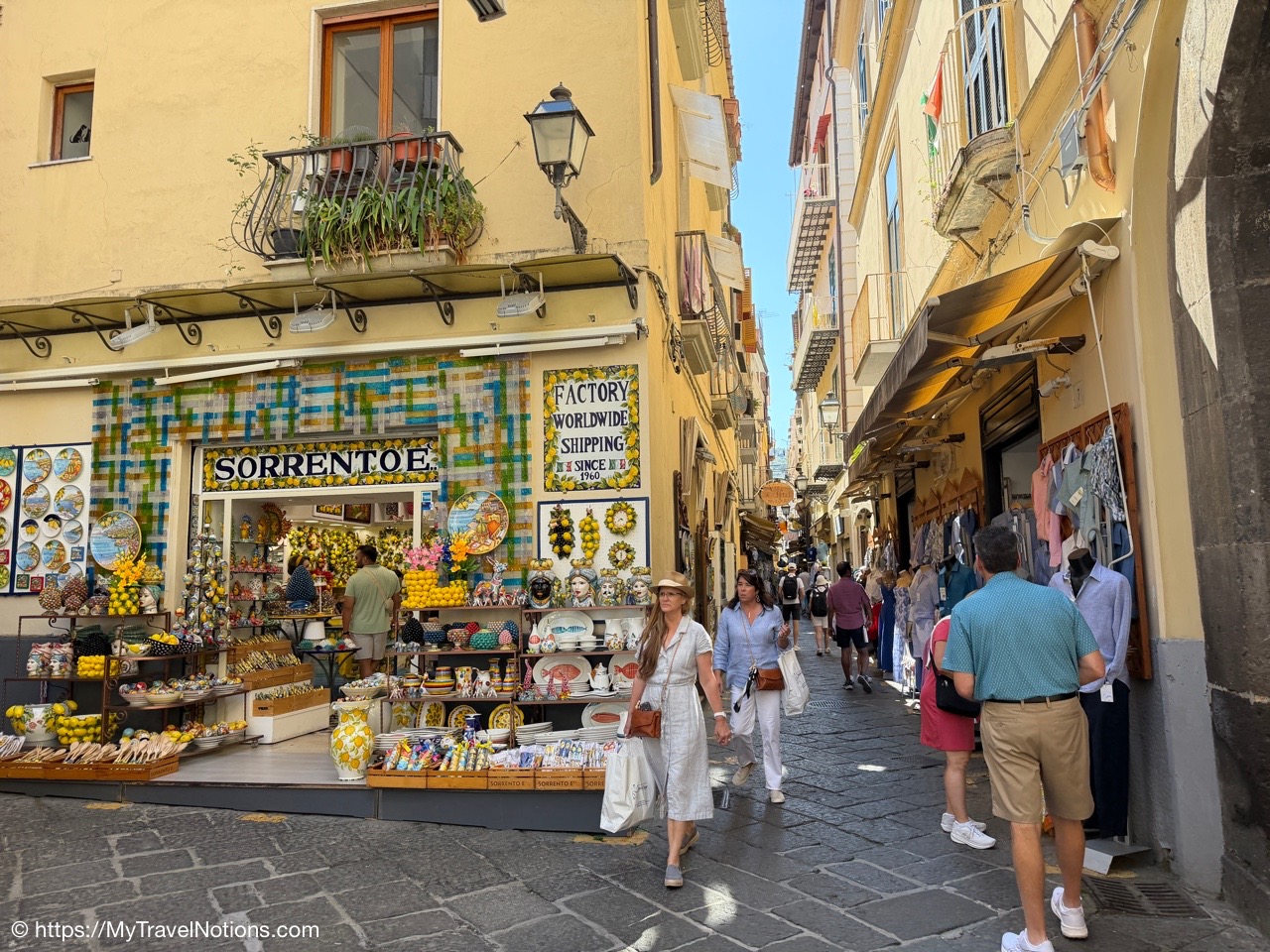
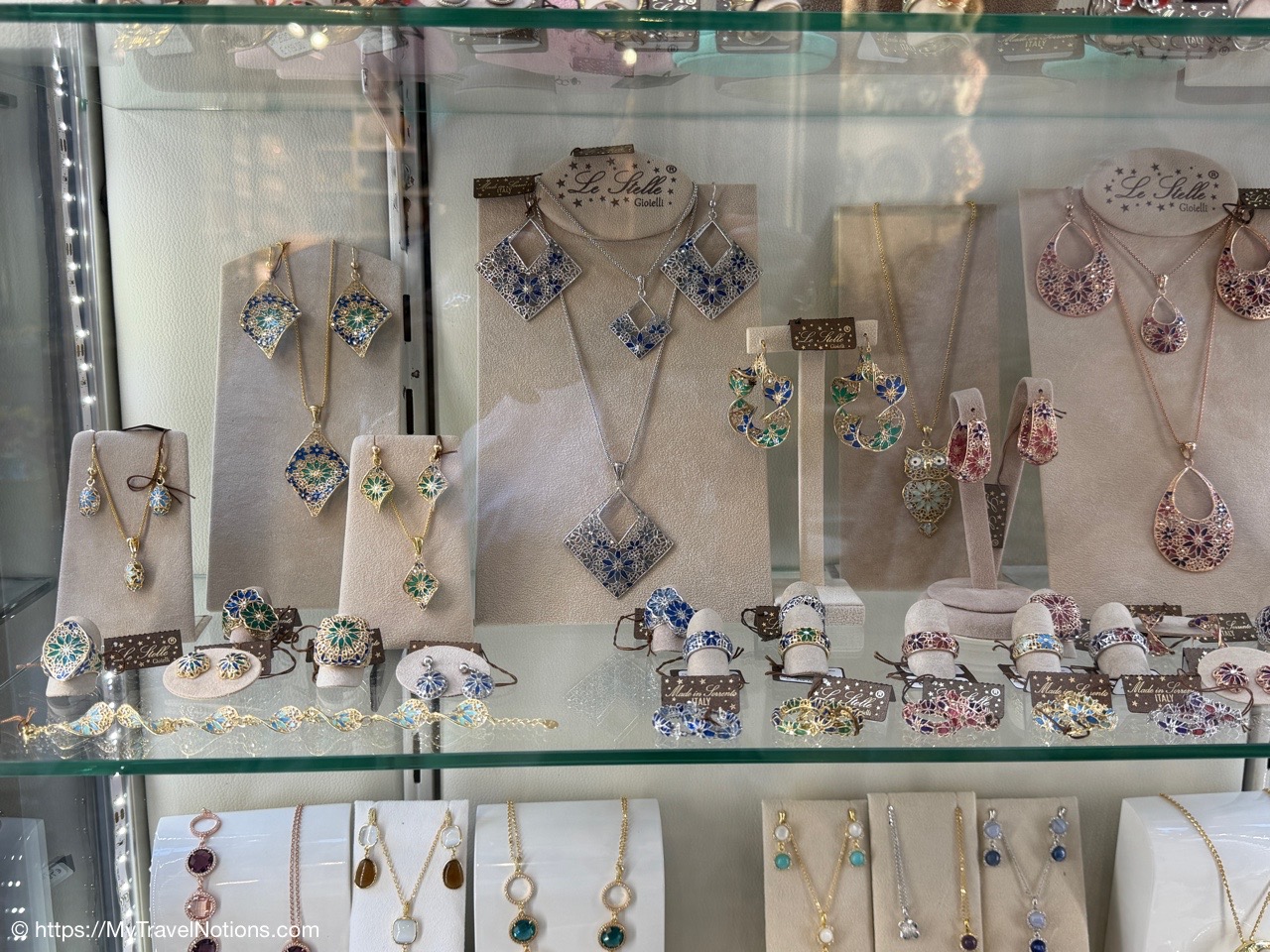
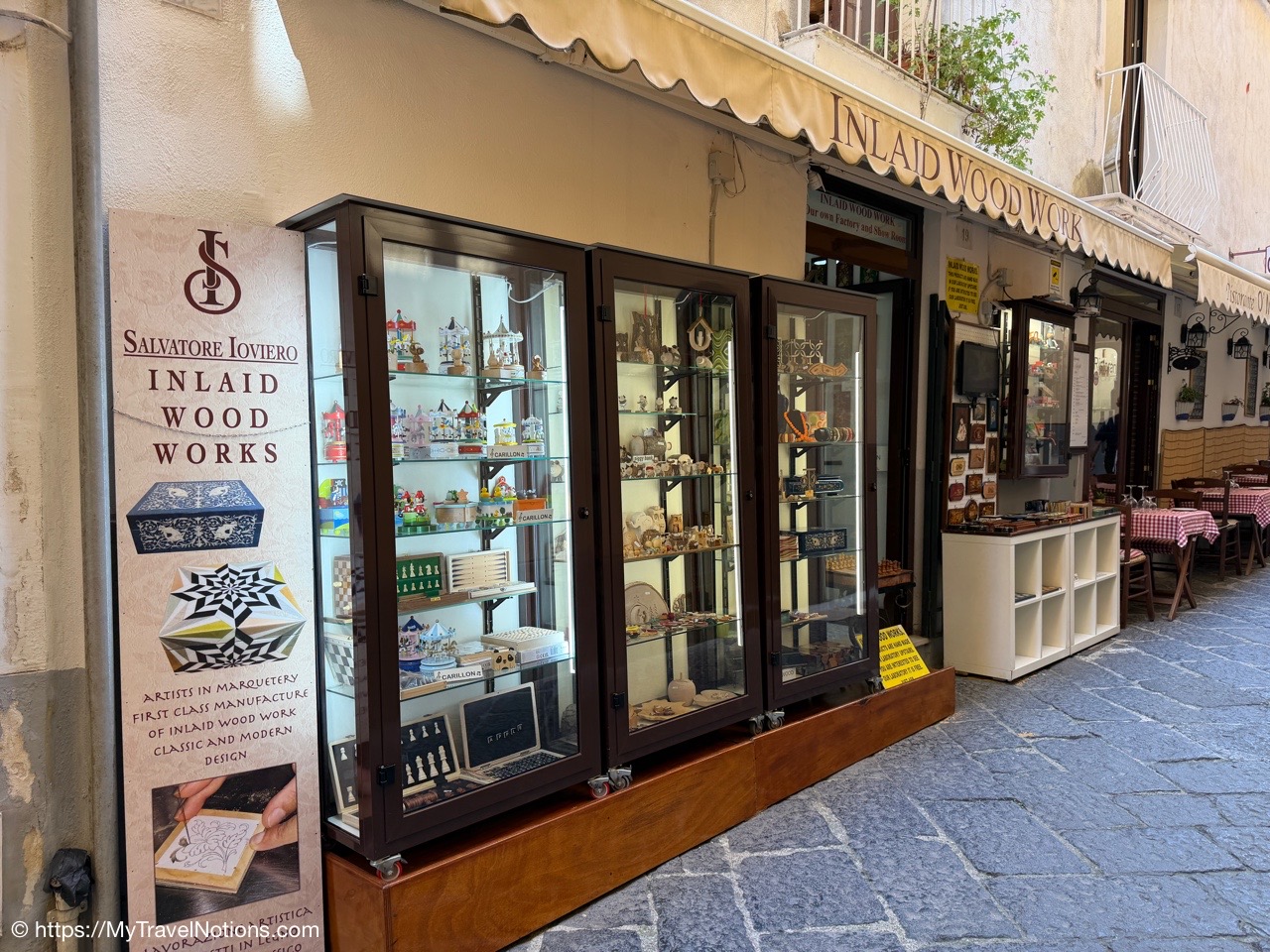
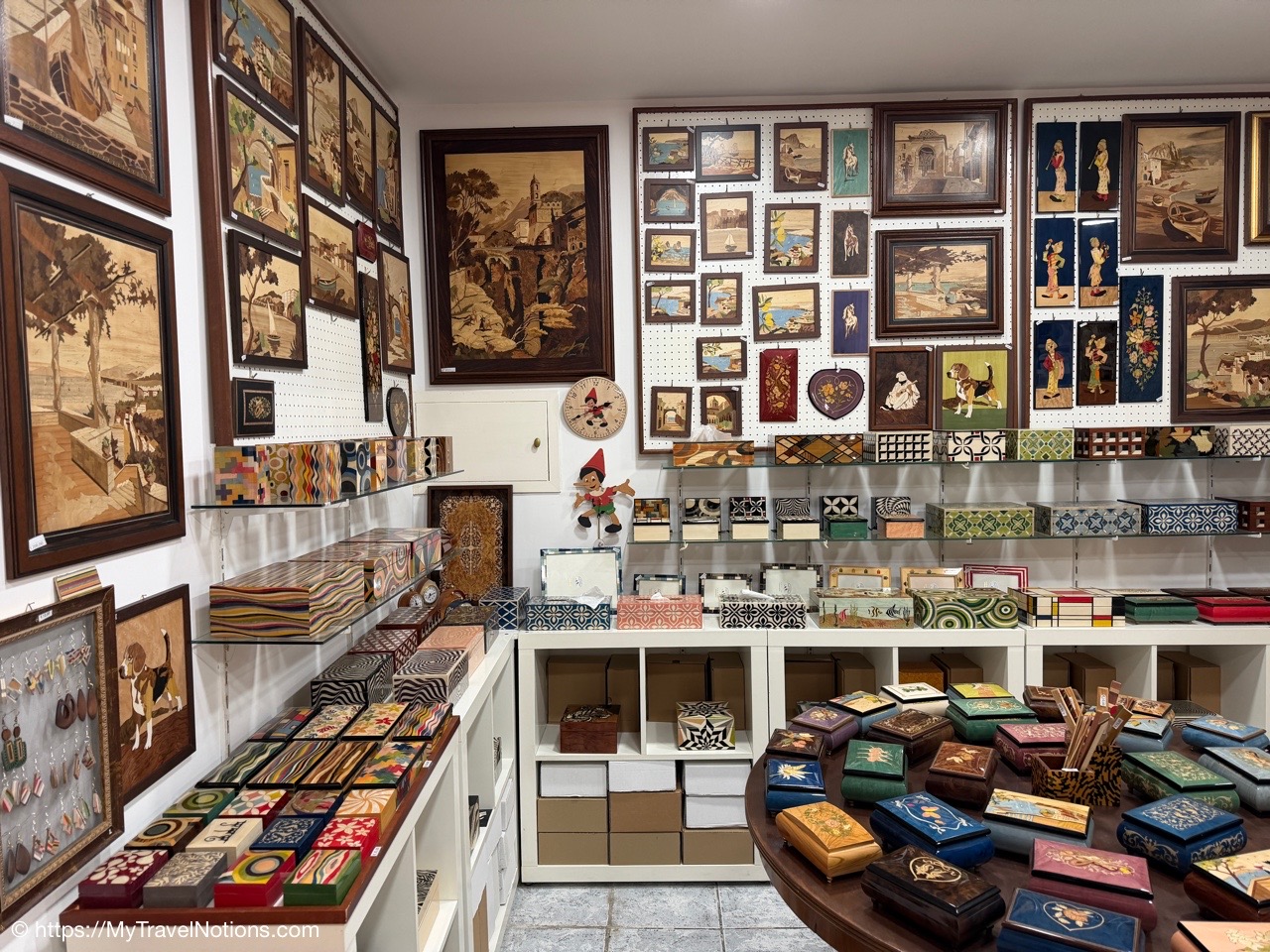
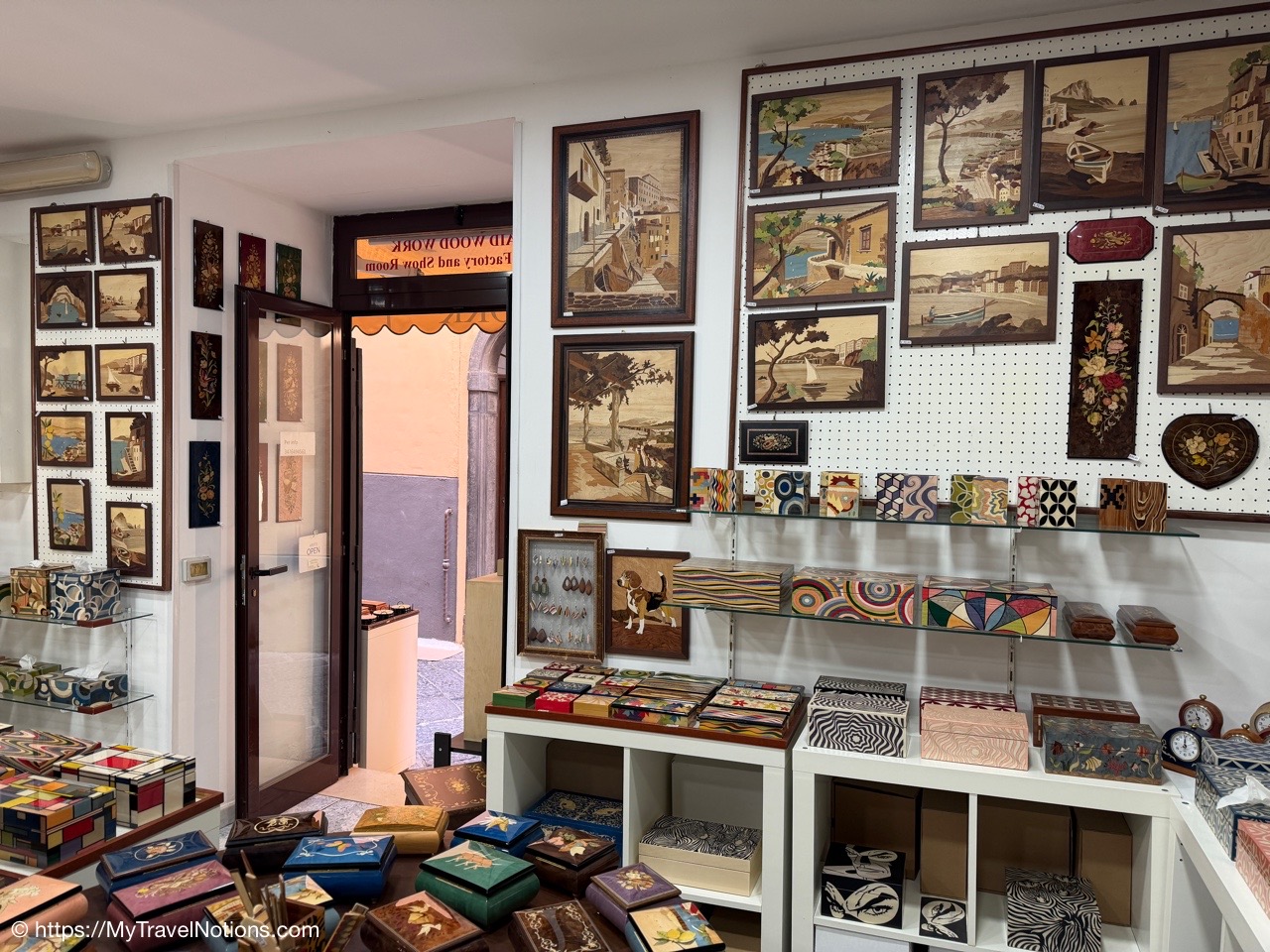
All good things come to an end, even after thoroughly enjoying the sites, sounds and tastes of Italy’s amazing Amalfi Coast. So for our last day in Sorrento, we all did our own thing and met up for a delicious good-bye Sorrento dinner. But before dinner, I actually did a little shopping and bought a few little trinkets. A ring, bigger silver hooped earrings and a couple of inlaid wood pieces. The art of handmade inlaid wood work is an old and noble Italian tradition typical of Southern Italy, especially the Sorrento area.
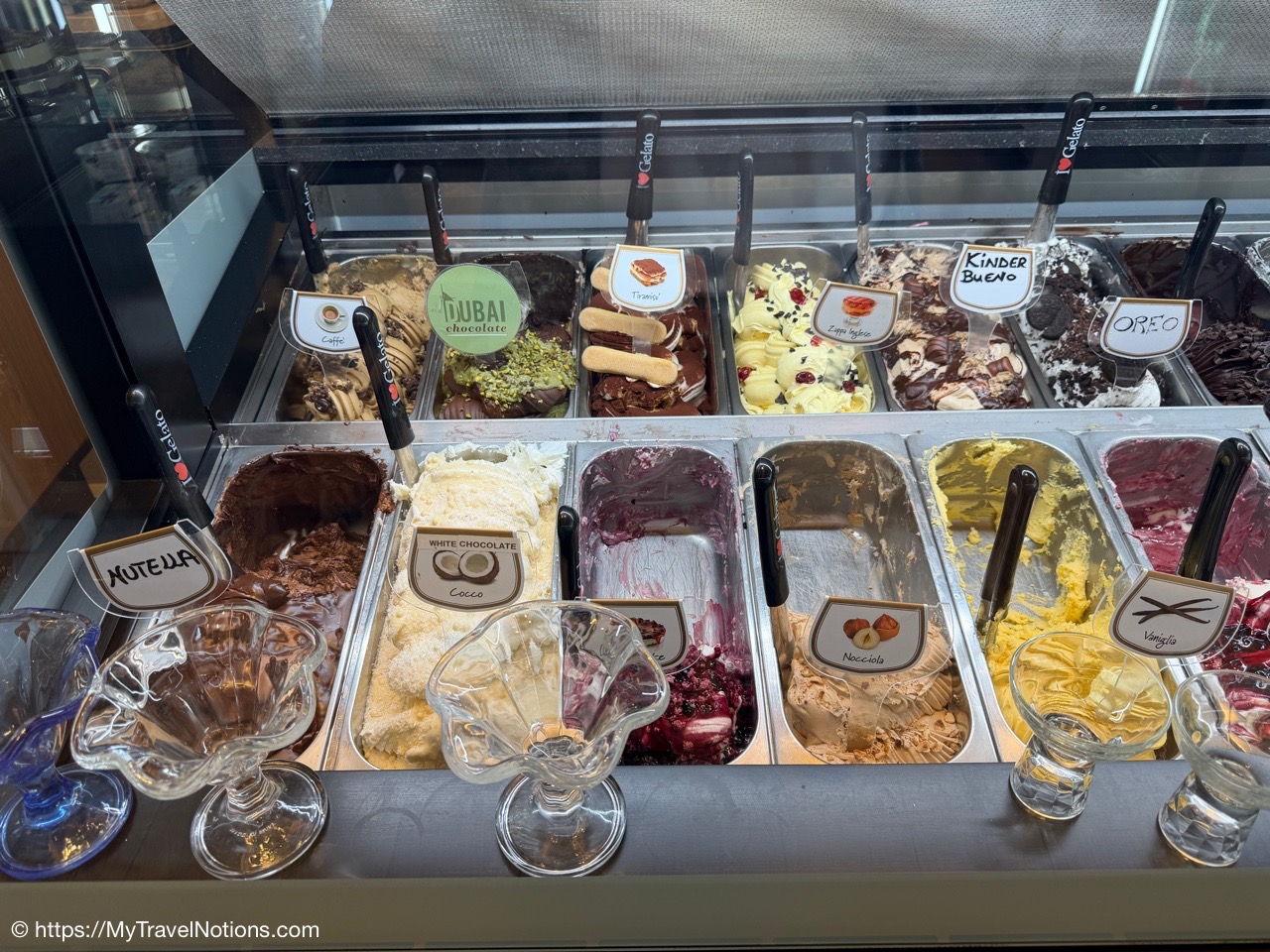
And, of course, I went back to my favorite place along the Corso Italia to enjoy their delicious coconut gelato with those decadent bits of white chocolate.
Thank you Sorrento and all the towns we visited – Salerno, Amalfi, Atrani, Minori, Maiori, Paestum, the Isle of Capri, Herculaneum, Pompeii and Positano – during our time on the Amalfi Coast.
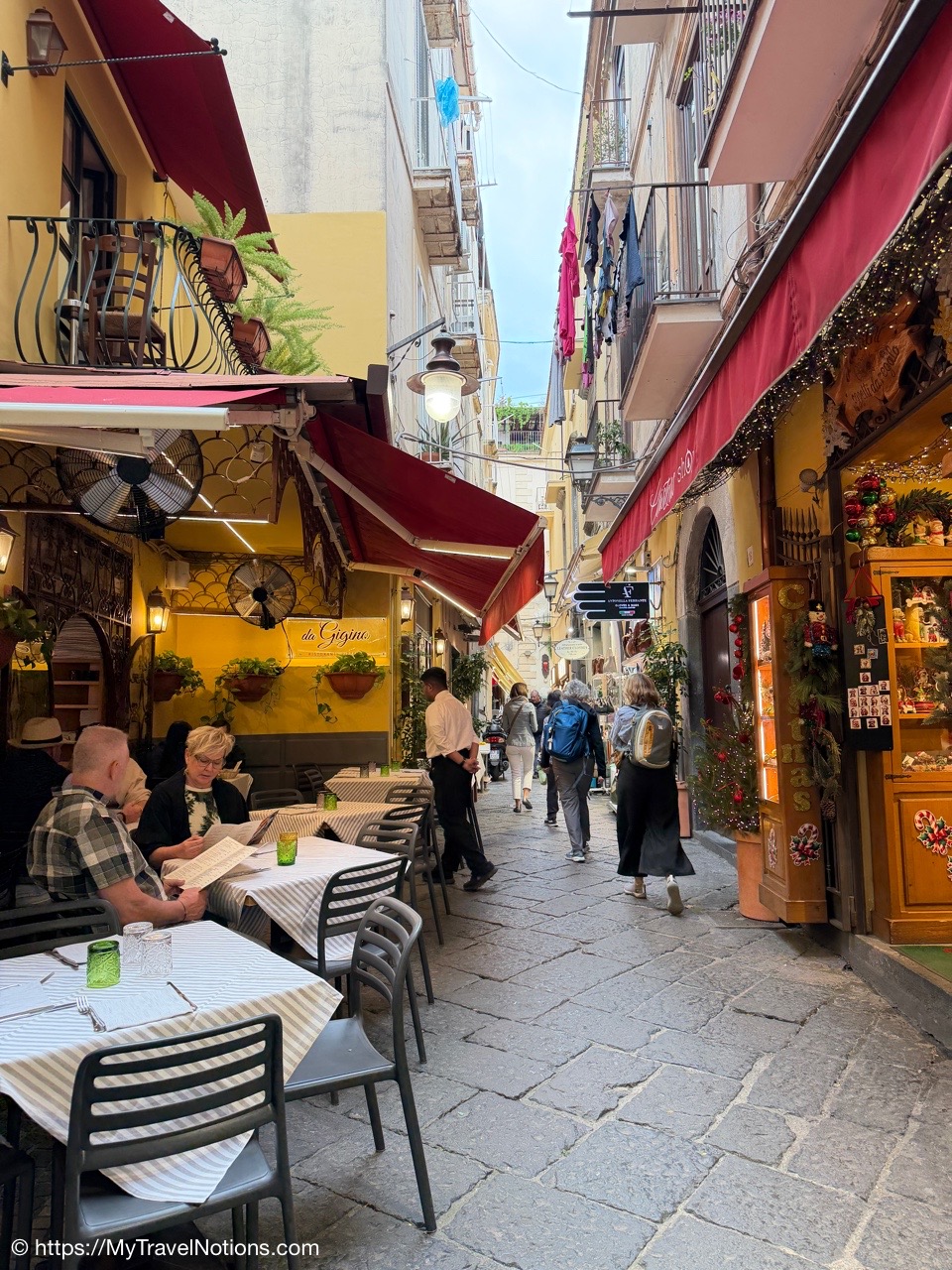
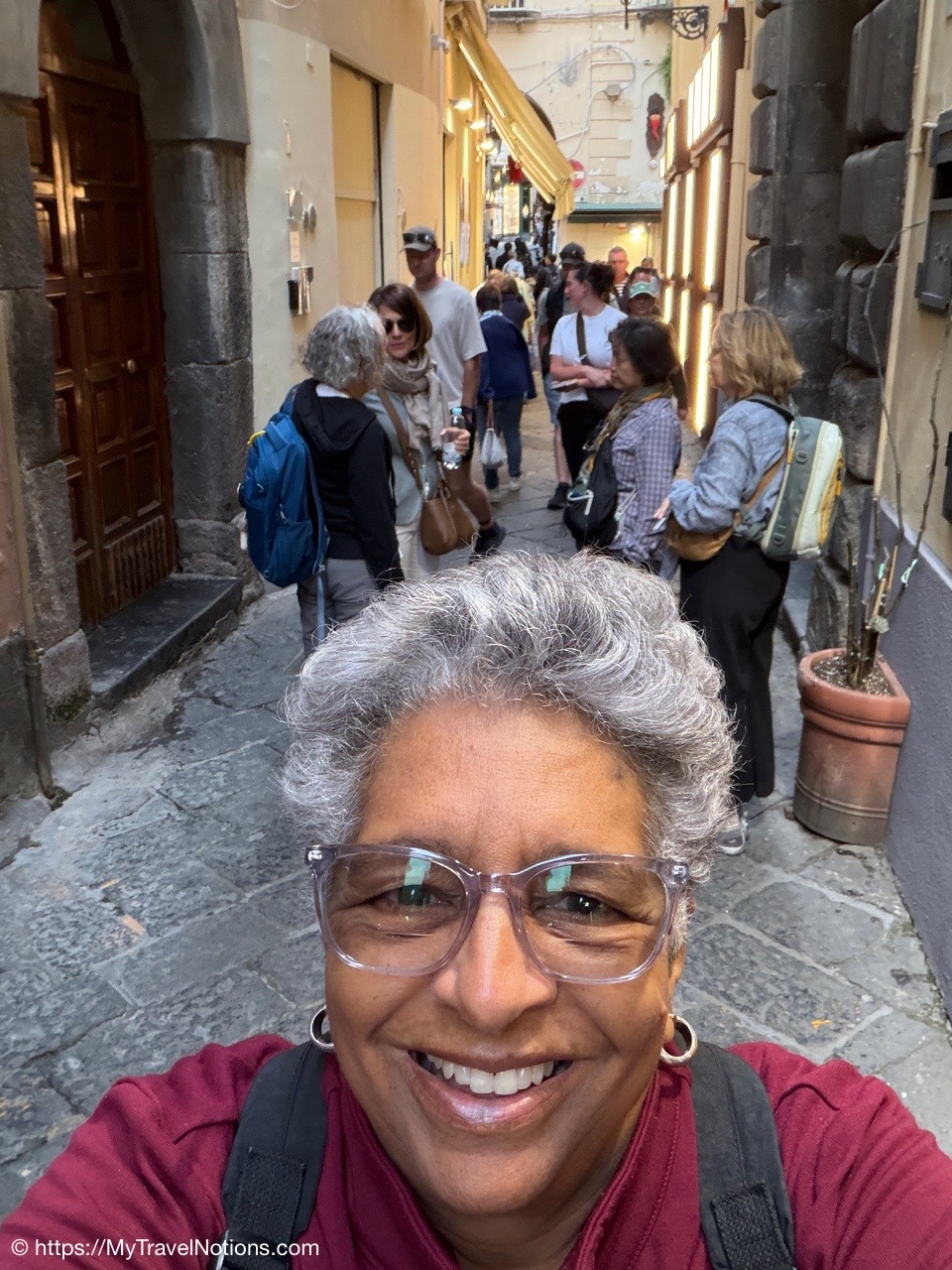
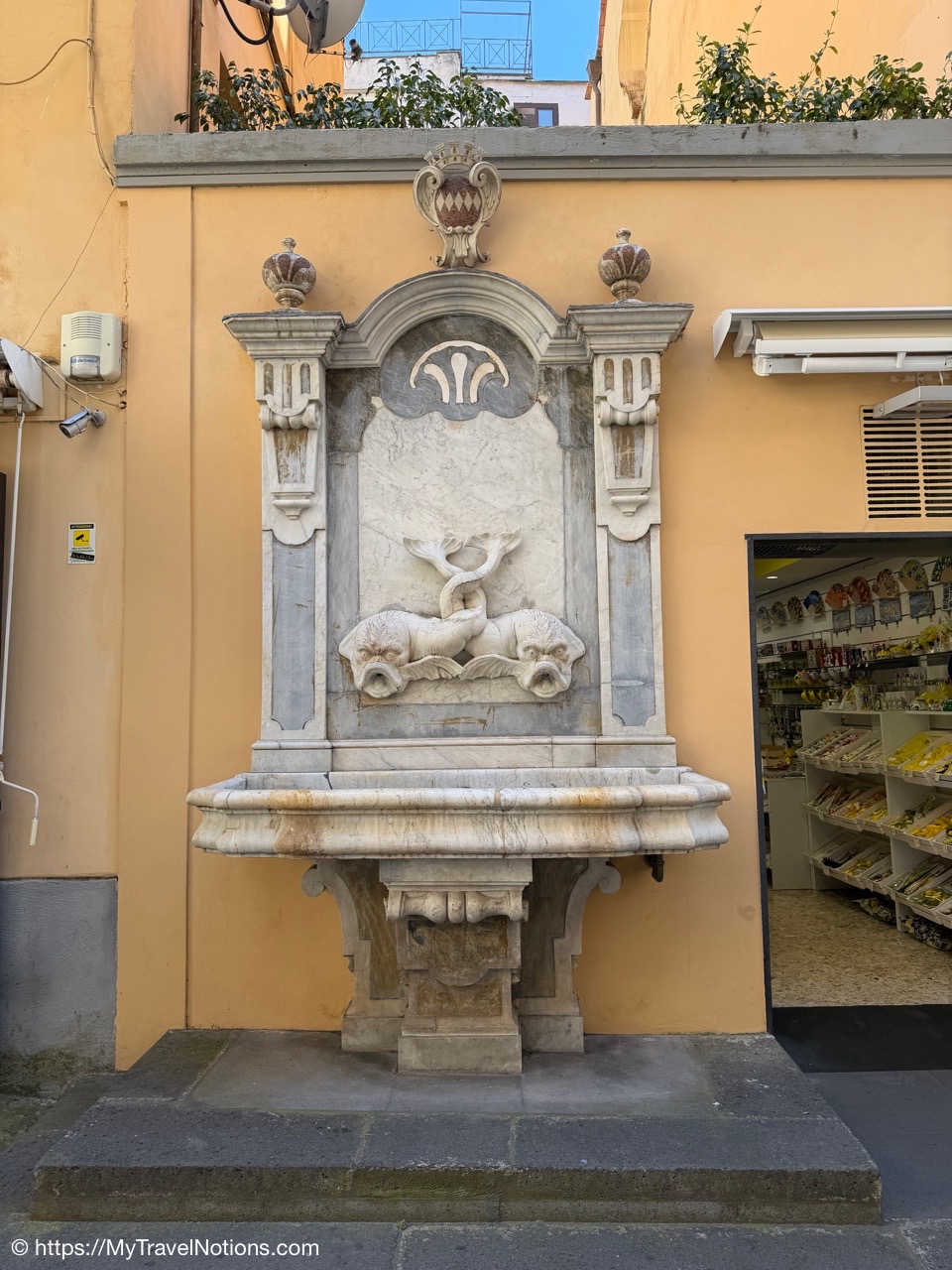
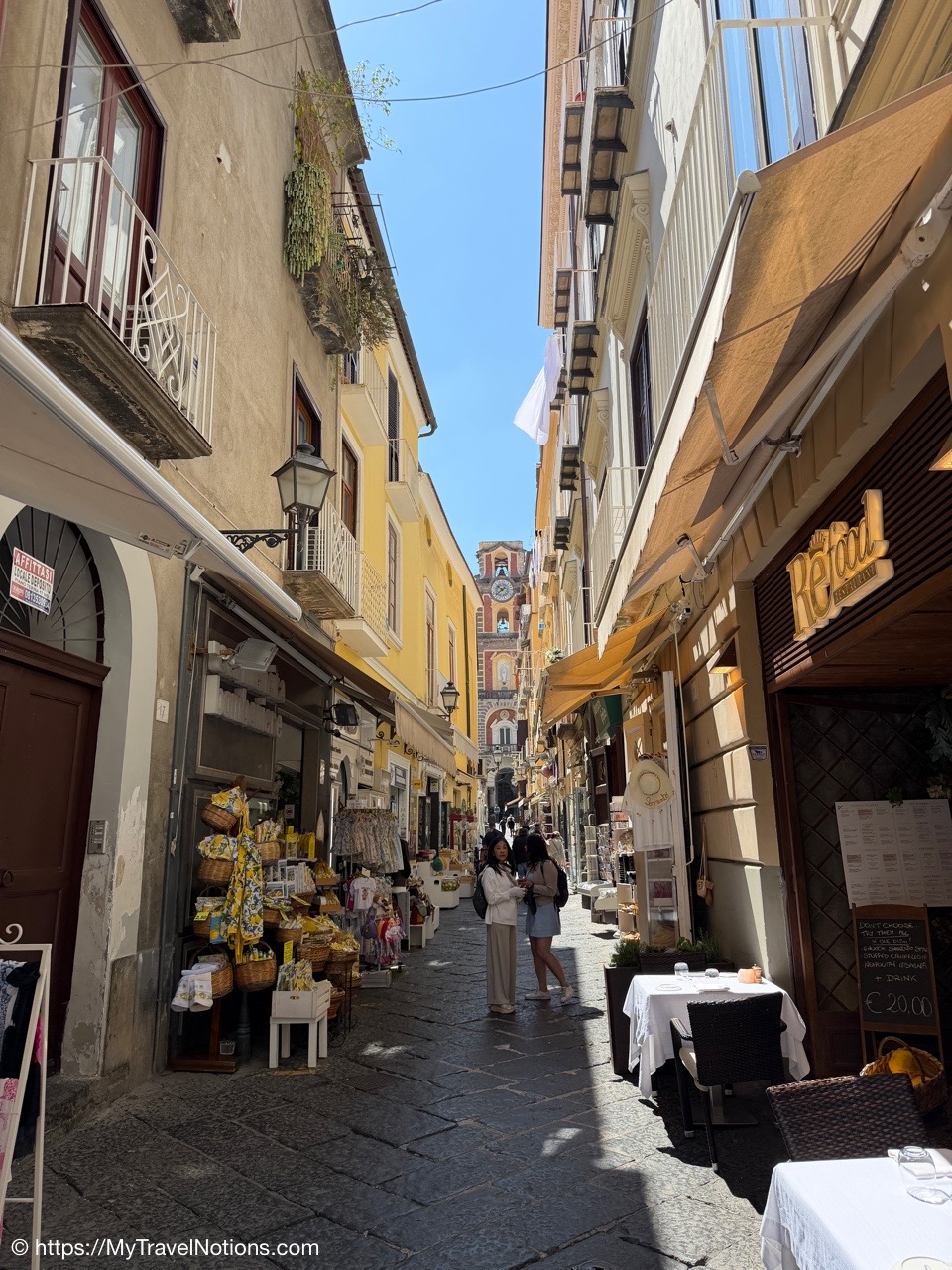
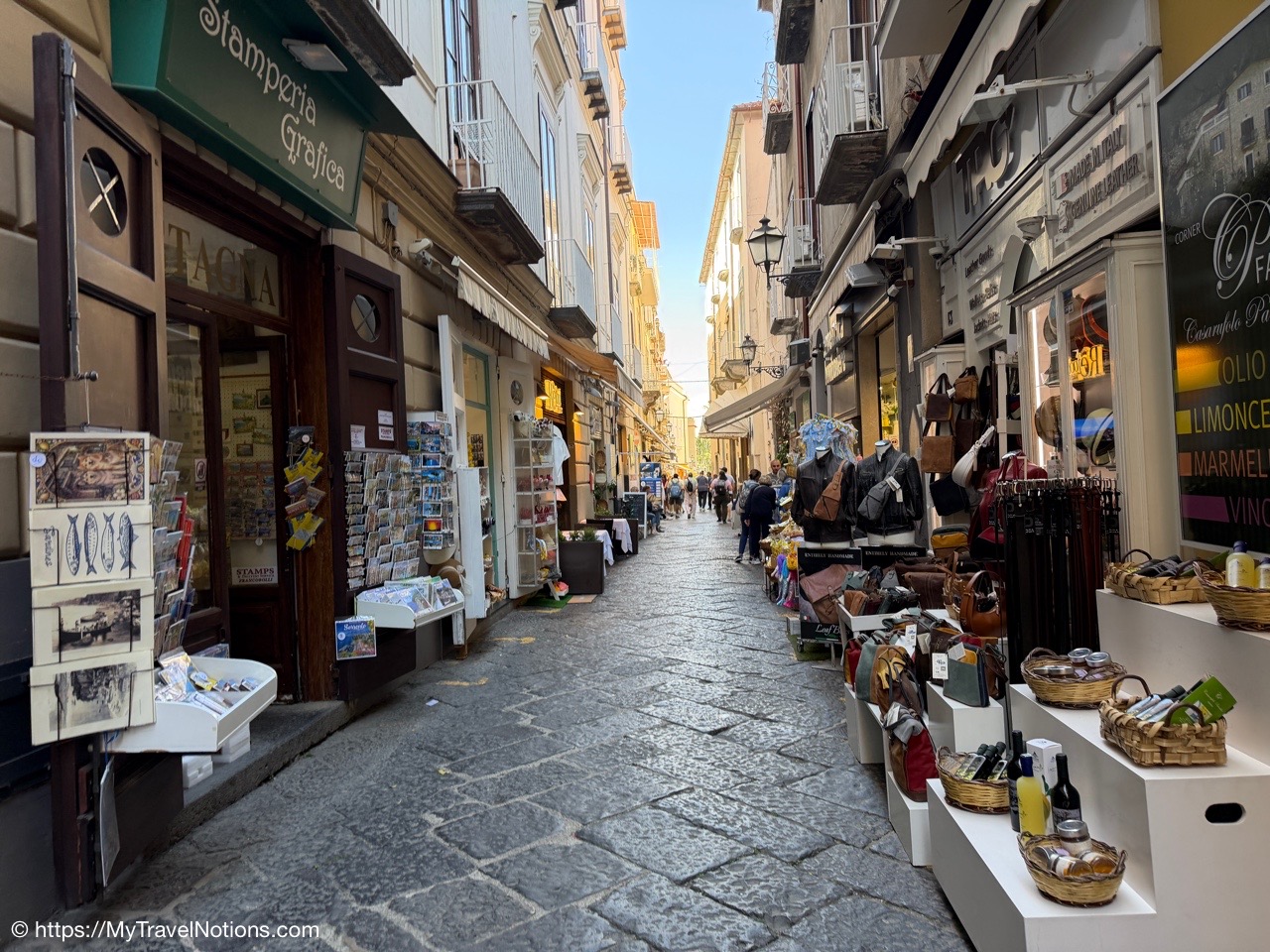
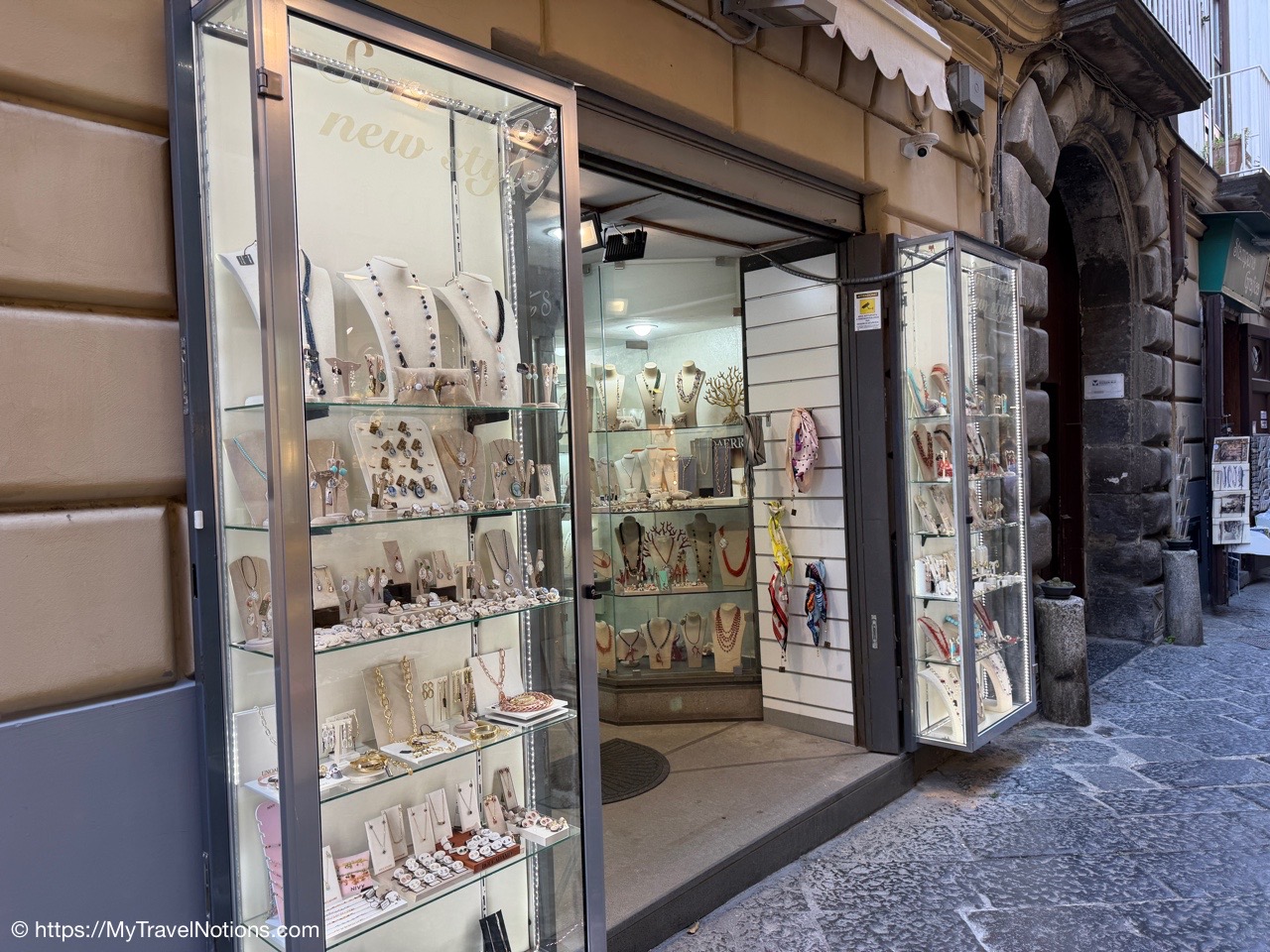
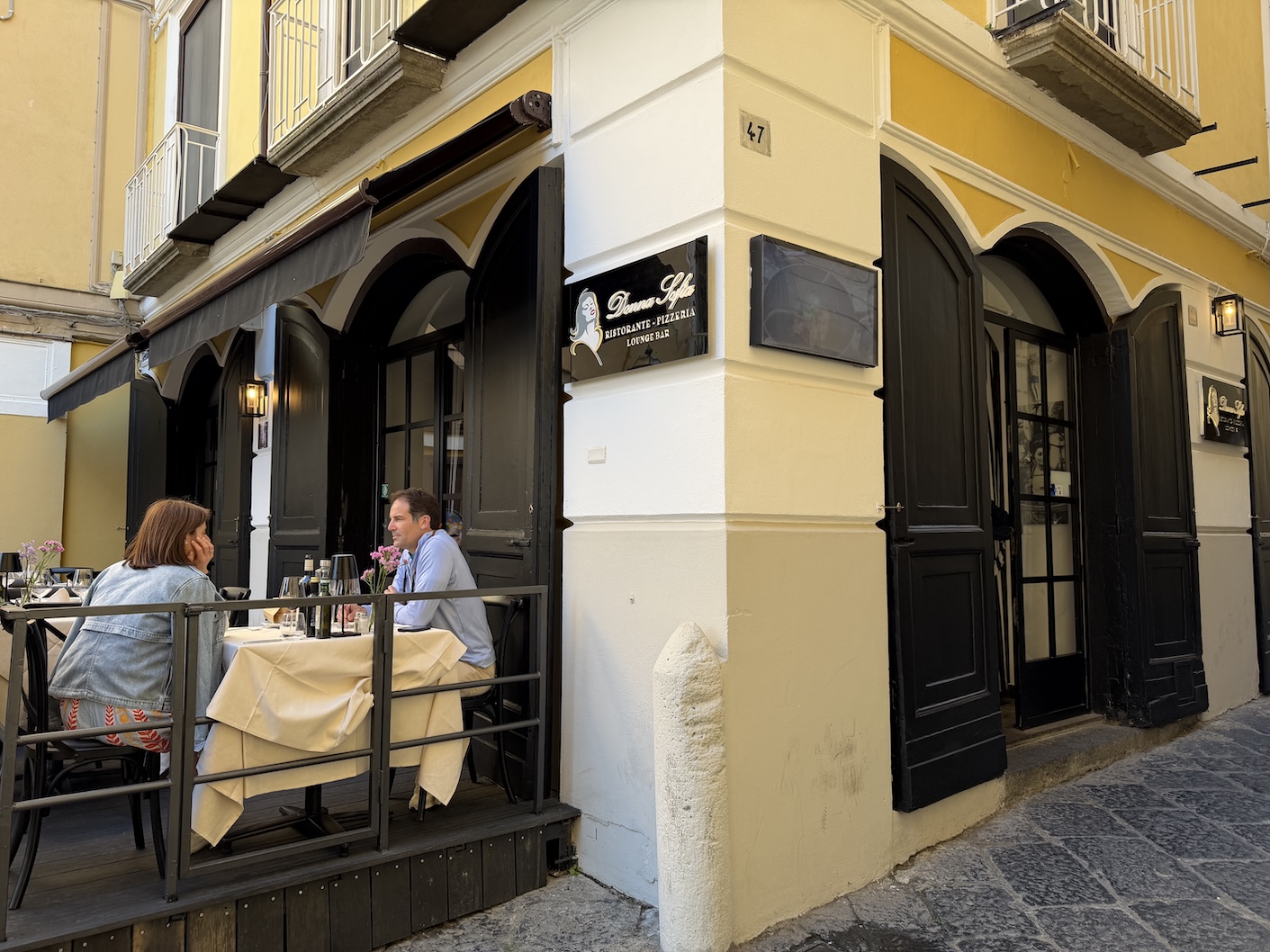
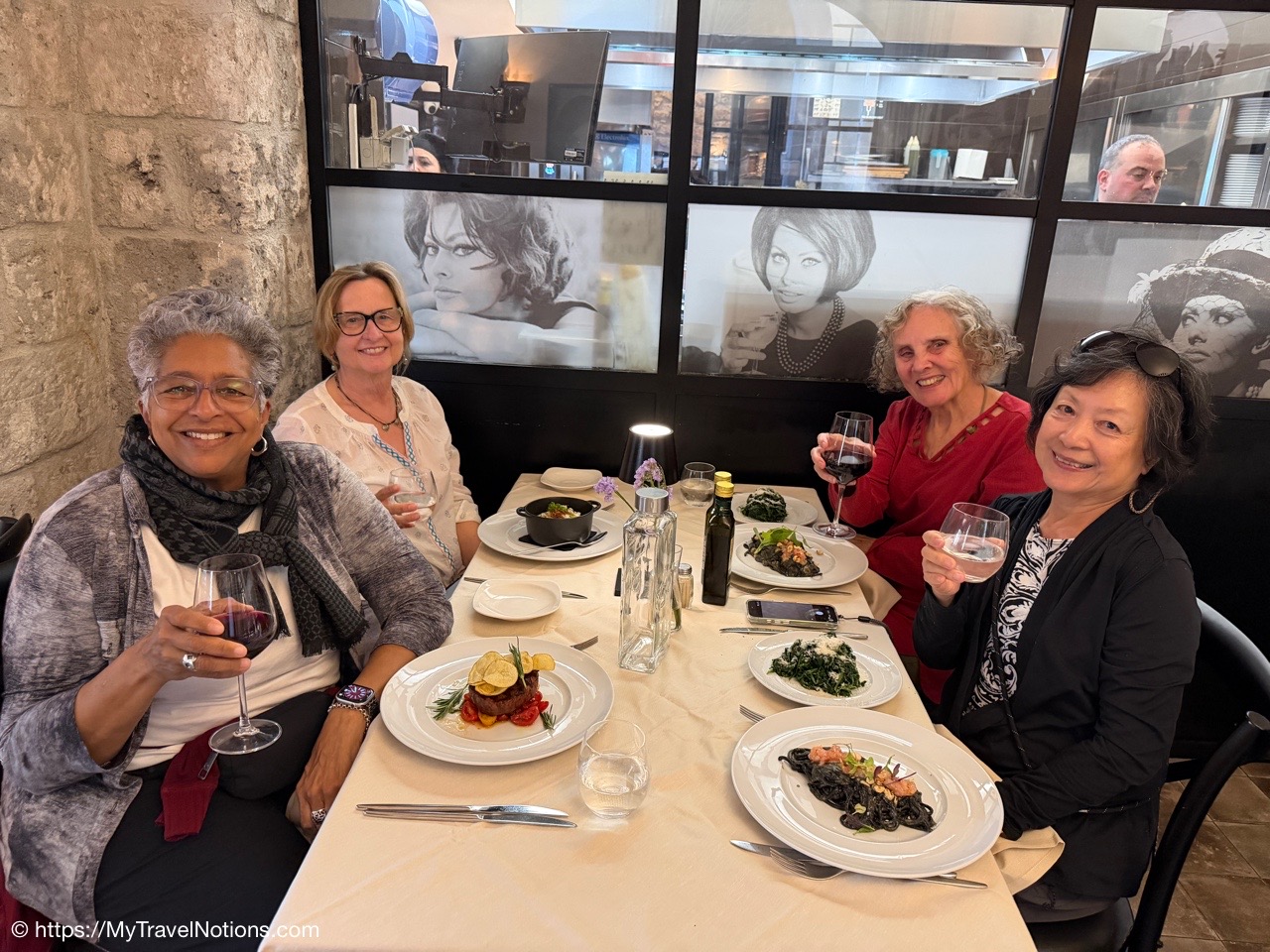
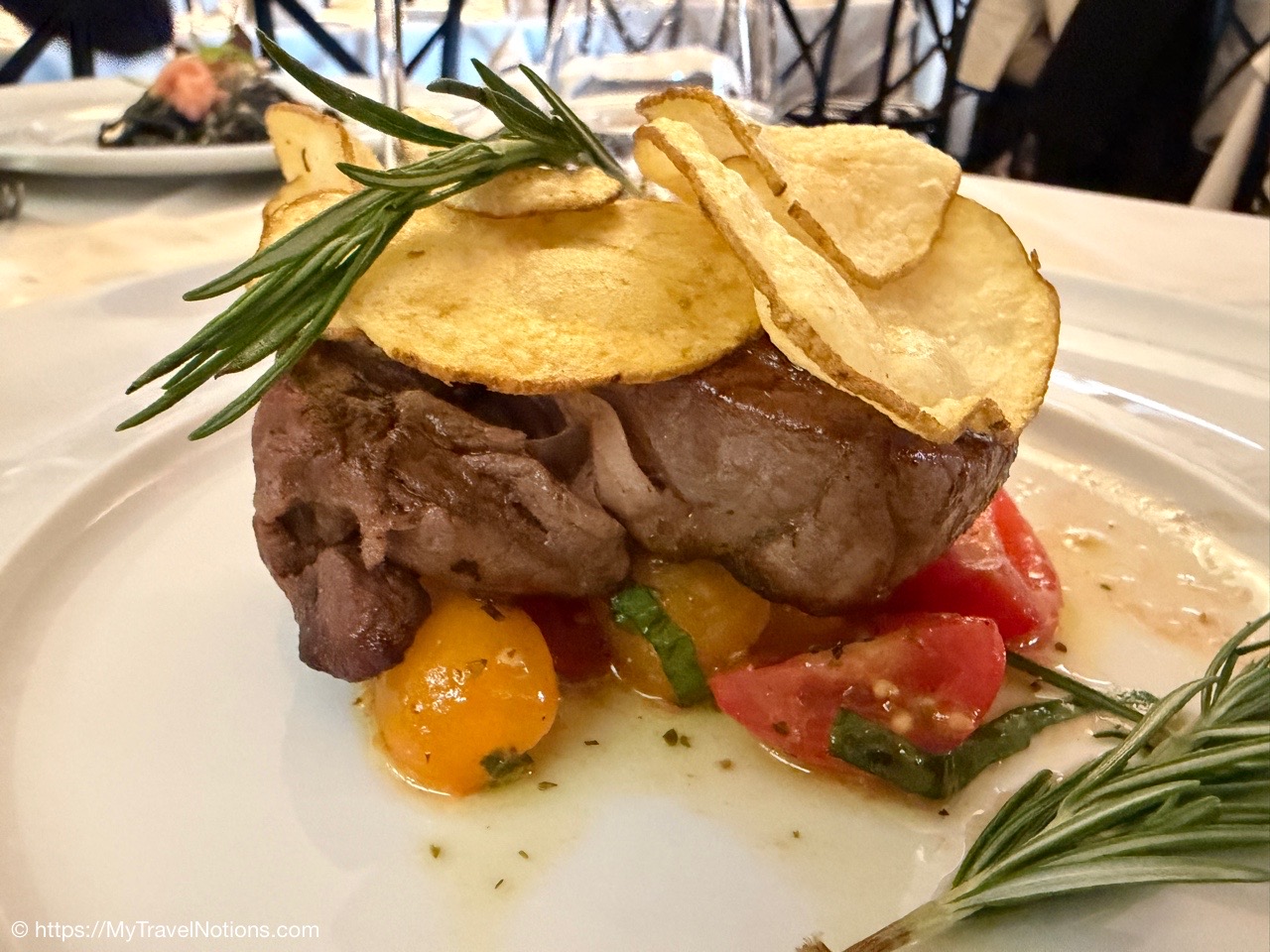
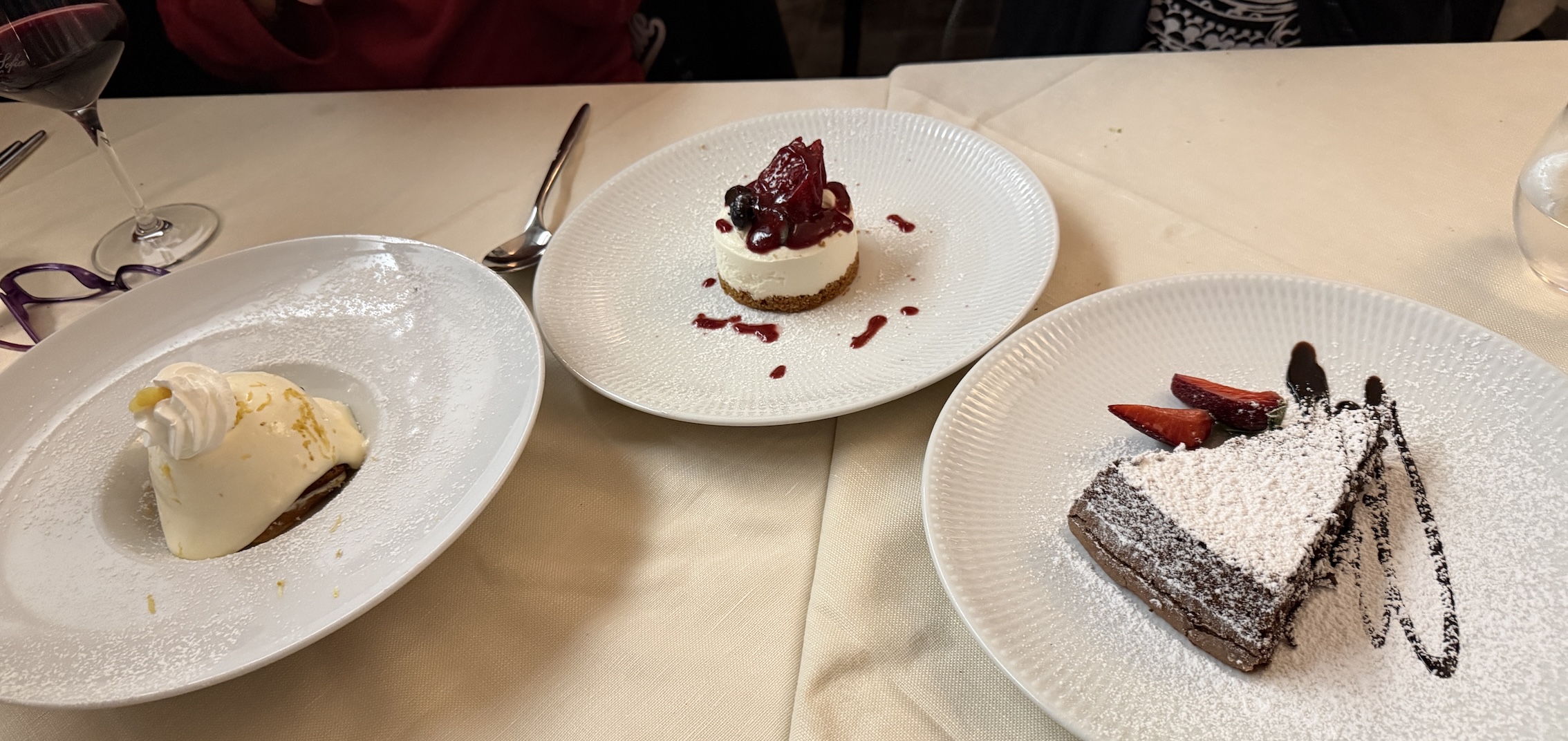
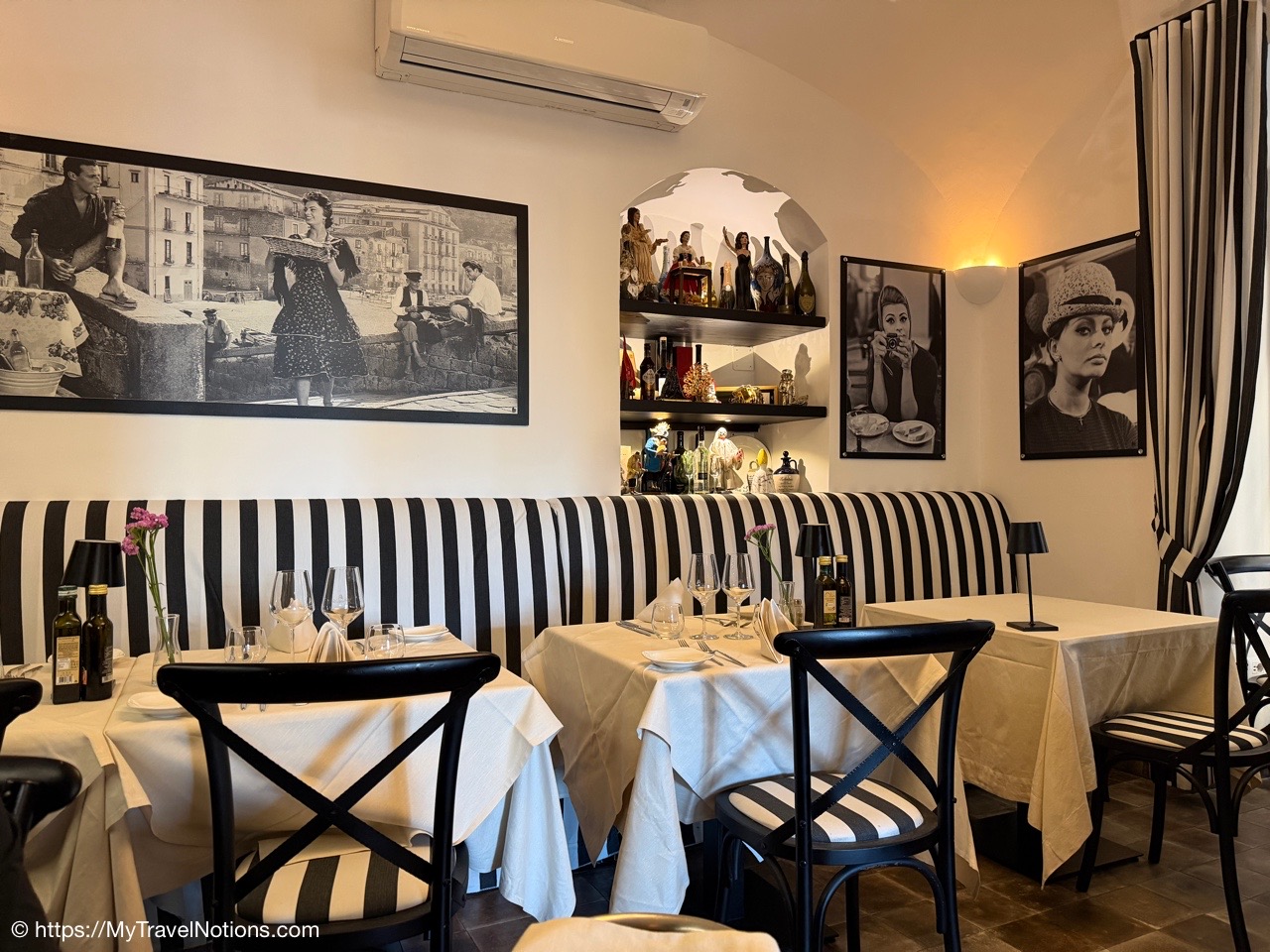
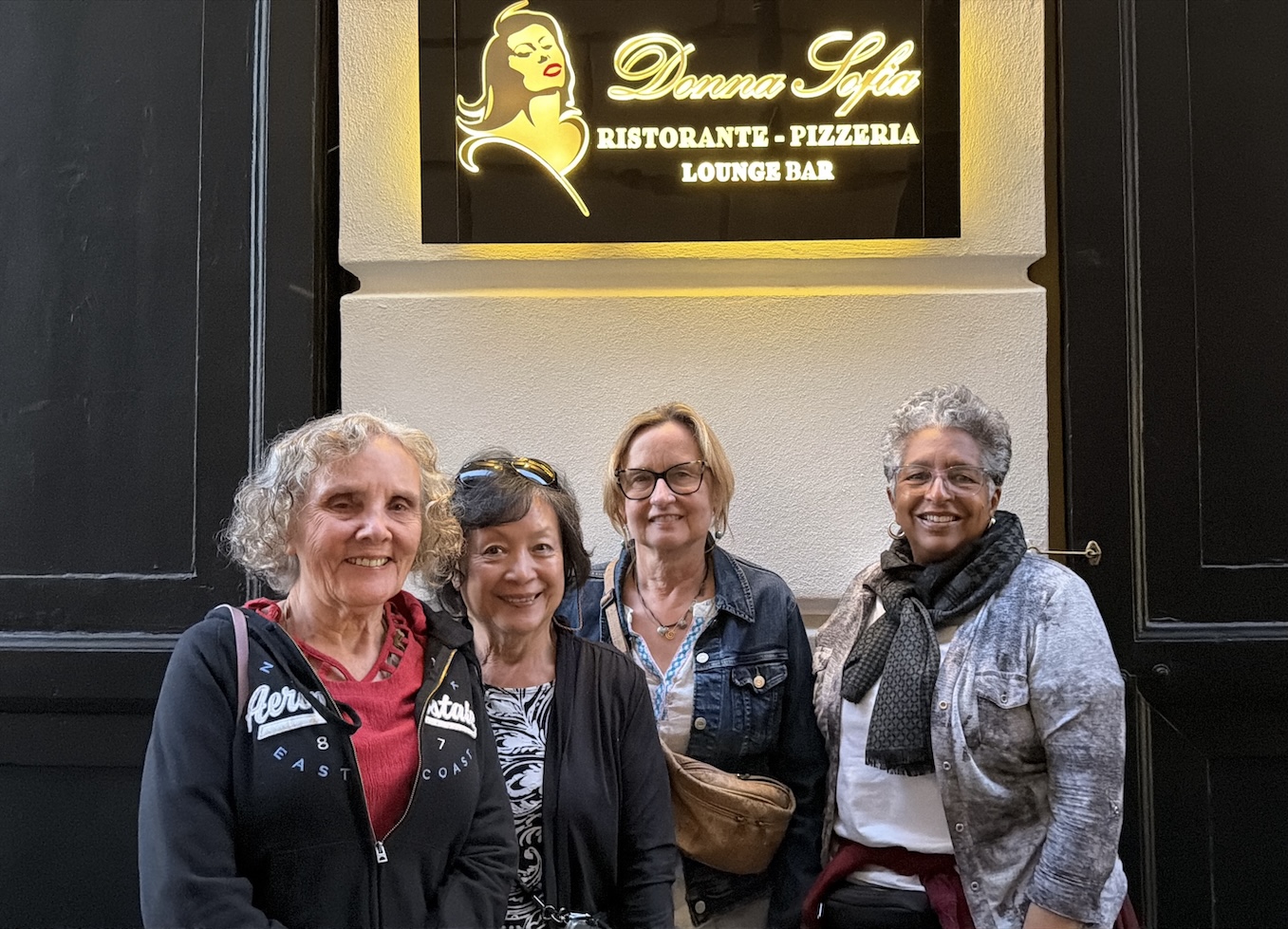
Me enjoying my delicious coconut gelato with those decadent bits of white chocolate at Bar Veneruso along the busy, touristy shopping street of Corso, Italia. (April 27, 2026)The variety of delicious gelato selections at Bar Veneruso along the busy, touristy shopping street of Corso, Italia. (April 27, 2026)Walking around the colorful shopping streets of old town Sorrento. (April 27, 2026)The “Schizzariello” marble water fountain on Via San Cesareo, in the heart of old town Sorrento. The fountain features two little sea creatures with open mouths. (April 27, 2026)Walking through old town Sorrento. (April 27, 2026)Walking through old town Sorrento. (April 27, 2026)Sorrento New Style, the jewelry shop I ventured into to buy a ring and larger hoop silver earrings along with Via Padre Reginaldo Giuliani in old town Sorrento. (April 27, 2026)Sorrento New Style, the jewelry shop I ventured into to buy a ring and larger hoop silver earrings along with Via Padre Reginaldo Giuliani in old town Sorrento. (April 27, 2026)The Salvatore Loviero Inlaid Wood Works shop on Via Dell’Accademia in old town Sorrento that I ventured into and ended up buying two small inlaid wood pieces. (April 27, 2026)The Salvatore Loviero Inlaid Wood Works shop on Via Dell’Accademia in old town Sorrento where I bought two small inlaid wood pieces consisting of a serene lemon tree view a lemon coaster. (April 27, 2026)The Salvatore Loviero Inlaid Wood Works shop on Via Dell’Accademia in old town Sorrento where I bought two small inlaid wood pieces consisting of a serene lemon tree view a lemon coaster. (April 27, 2026)For our group dinner in Sorrento, Alice made reservations at Restaurant Donna Sofia, less than a 10-minute walk from our two hotels. (April 27, 2026)Our group having a delicious dinner at the Restaurant Donna Sofia for our last day and night in Sorrento. The restaurant pays homage to actress Sofia Loren and offers a cosy, classy dining experience. We all enjoyed our meals. (April 27, 2026)For my dinner at the Restaurant Donna Sofia in Sorrento, I had the Grilled Beef Fillet served with fried potato chips and fresh cherry tomatoes for €35. My diet along the Amalfi Coast had been all about the seafood and tonight, I was just ready for a small piece of beef and this meal filled the bill. (April 27, 2026)We split three different deserts, Panna Cotta, Red Berries Cheesecake and Chocolate Cake at Restaurant Donna Sofia in old town Sorrento. (April 27, 2026)Inside the Restaurant Donna Sofia with decor featuring photos of the Italian-born actress Sophia Loren who actually filmed a movie in Sorrento. The movie, a 1955 classic romantic comedy “Scandal in Sorrento” was shot on-location in seaside fishing village of the Marina Grande. (April 27, 2026)With our bellies full, standing outside of the Restaurant Donna Sofia in Sorrento. It’s been so much fun enjoying our home bases of Salerno and Sorrento along with the various town of the Amalfi Coast. Next stop is Naples. (April 27, 2026)



Thank you for reaching out.