What better way to introduce ourselves to Naples than with a street food walking tour through the heart of its historic center, Centro Storico.
This is my second time in Naples. During my first visit in May 2017, I took the train from my then home base in Sorrento specifically to see the National Archaeological Museum’s collection of Pompeii’s artifacts, frescoes and mosaics. I had read, at the time, that Naples was a rough and tough place to visit so I was on guard getting to and leaving the museum and chose not to spend time getting to know the city. Well, what I missed out on that trip, I made up for on this 4-day trip.
But for now, come join me, for both a gastronomic and historical walking tour of the Centro Storico, spanning over 2,700 years of history in Naples’ designated UNESCO World Heritage Site.
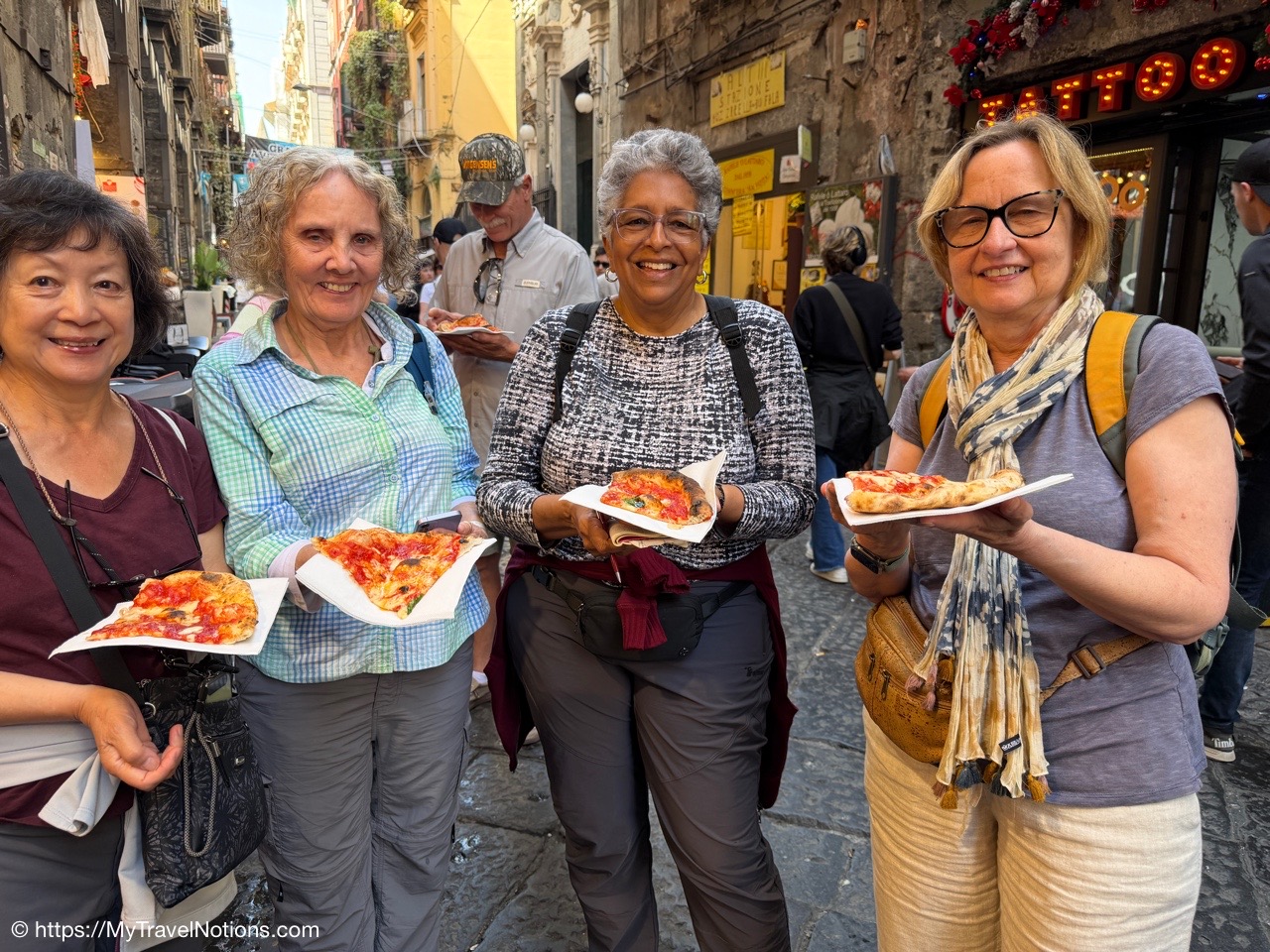
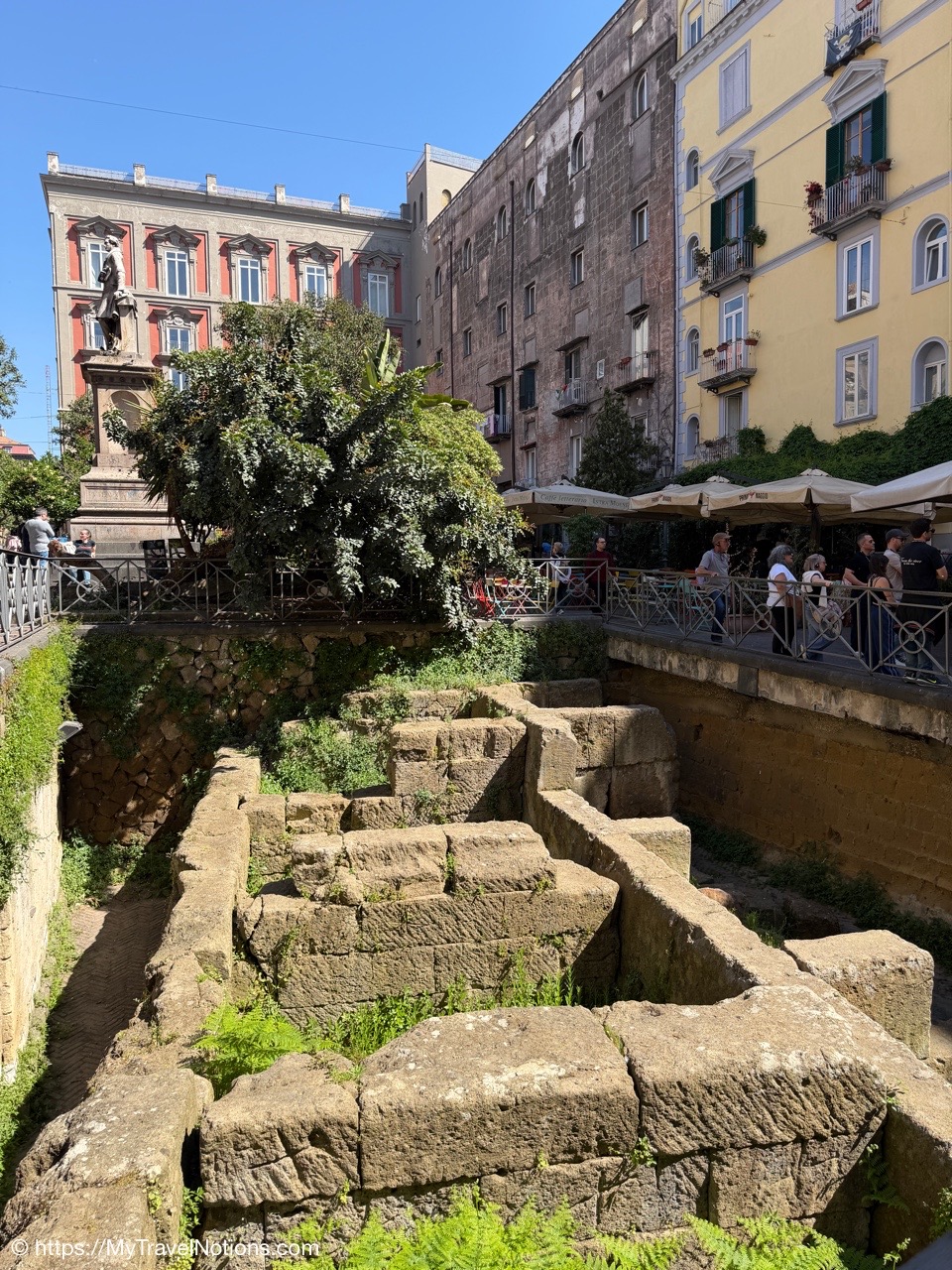
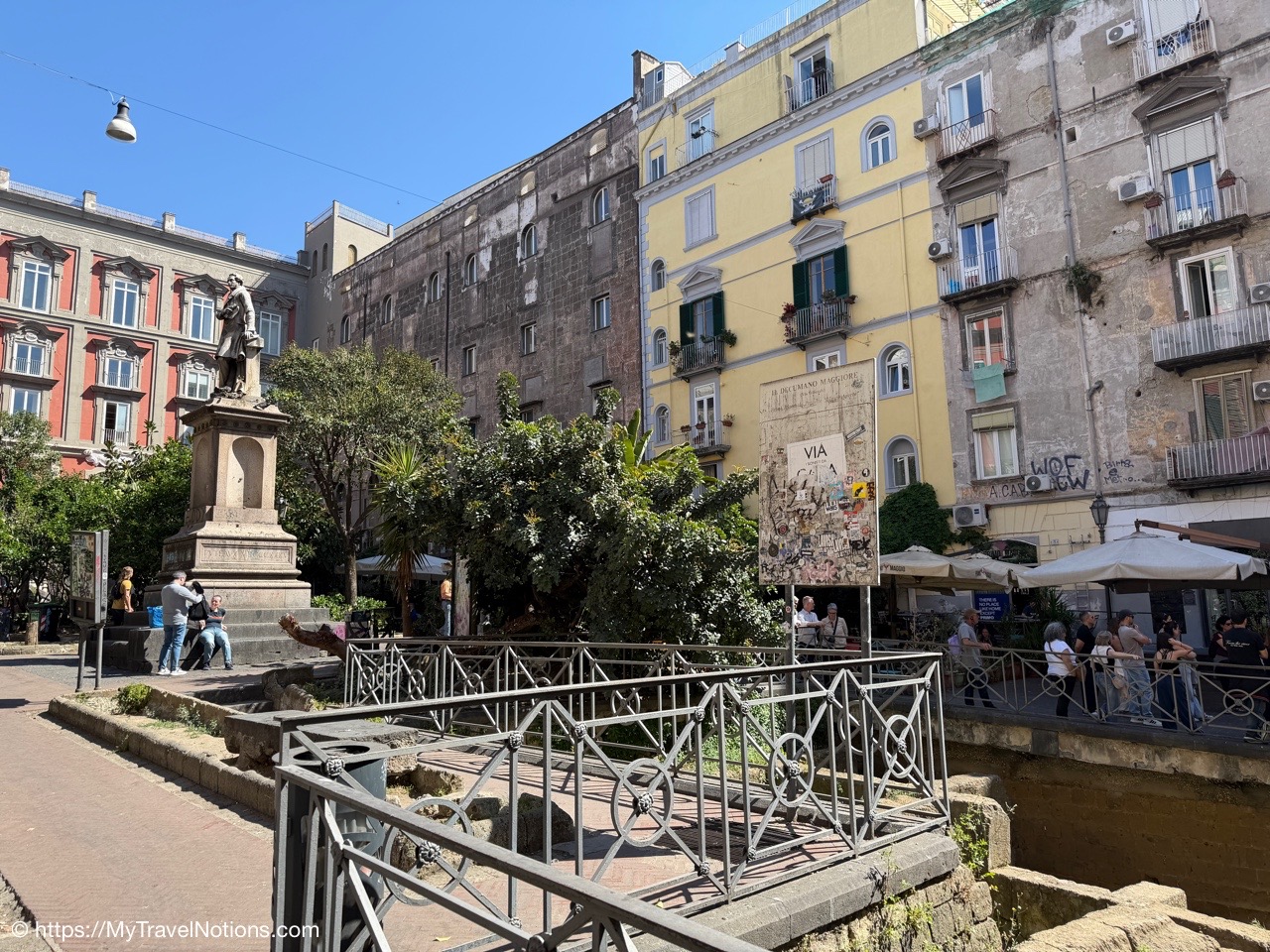
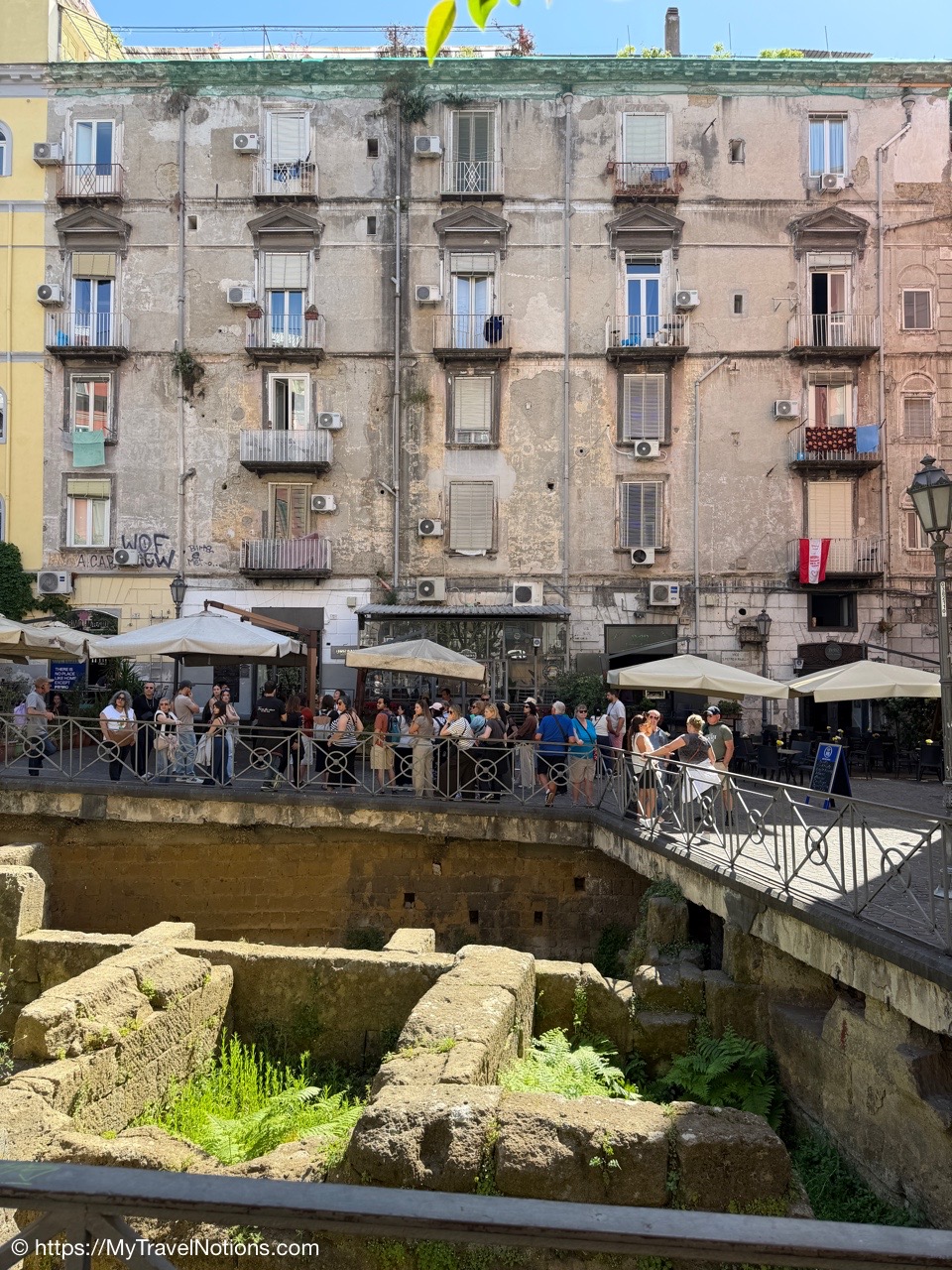
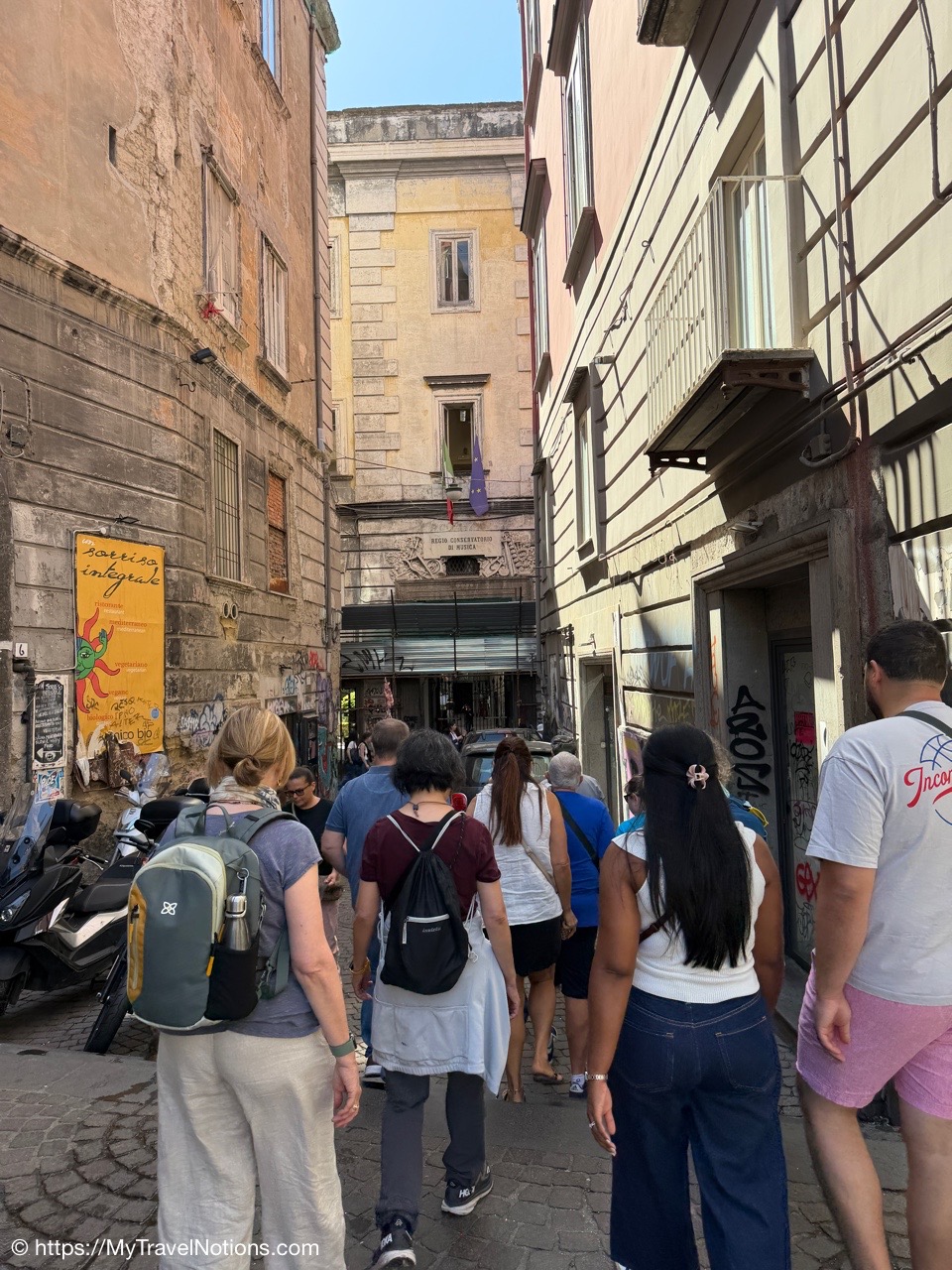
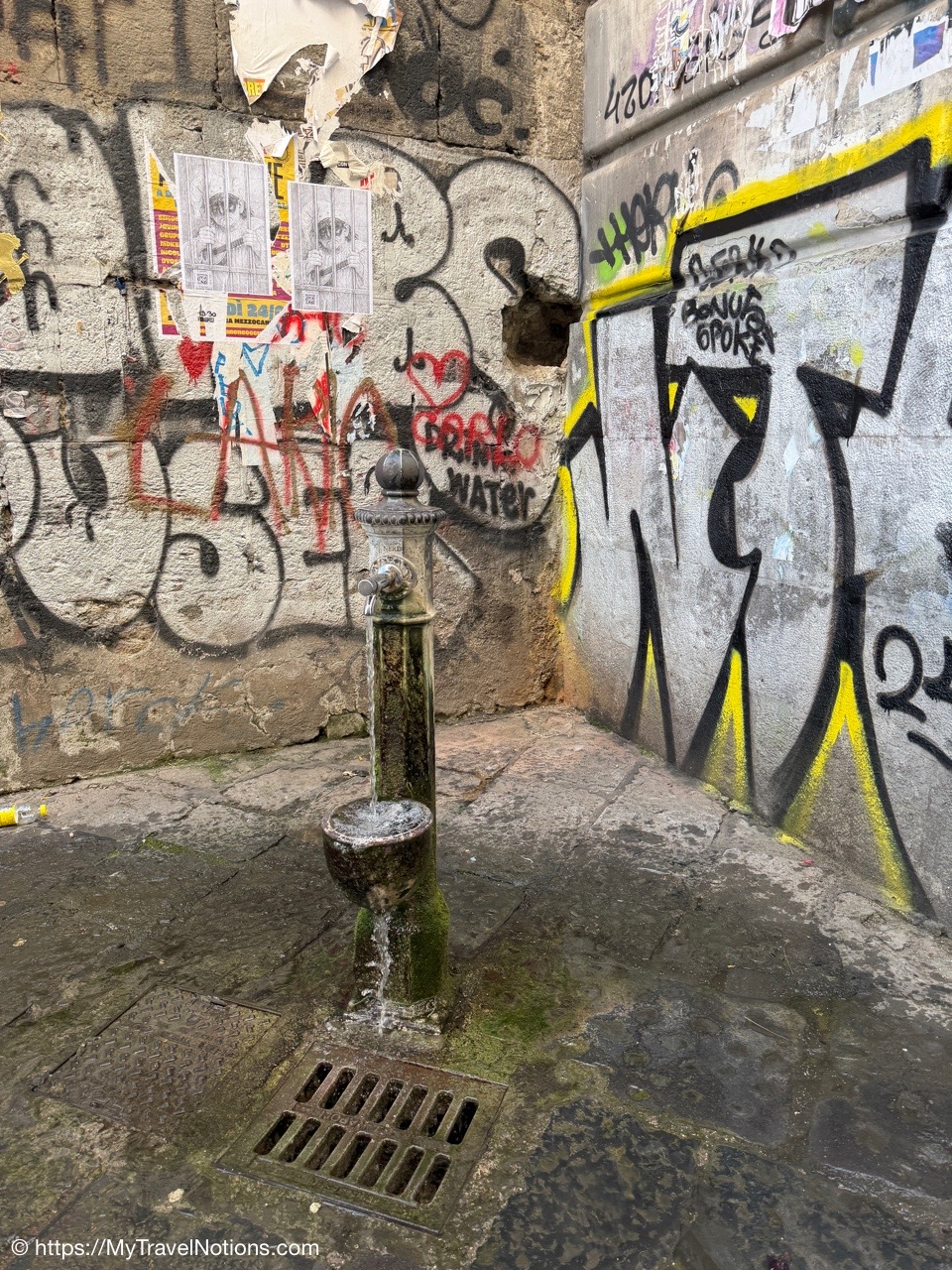
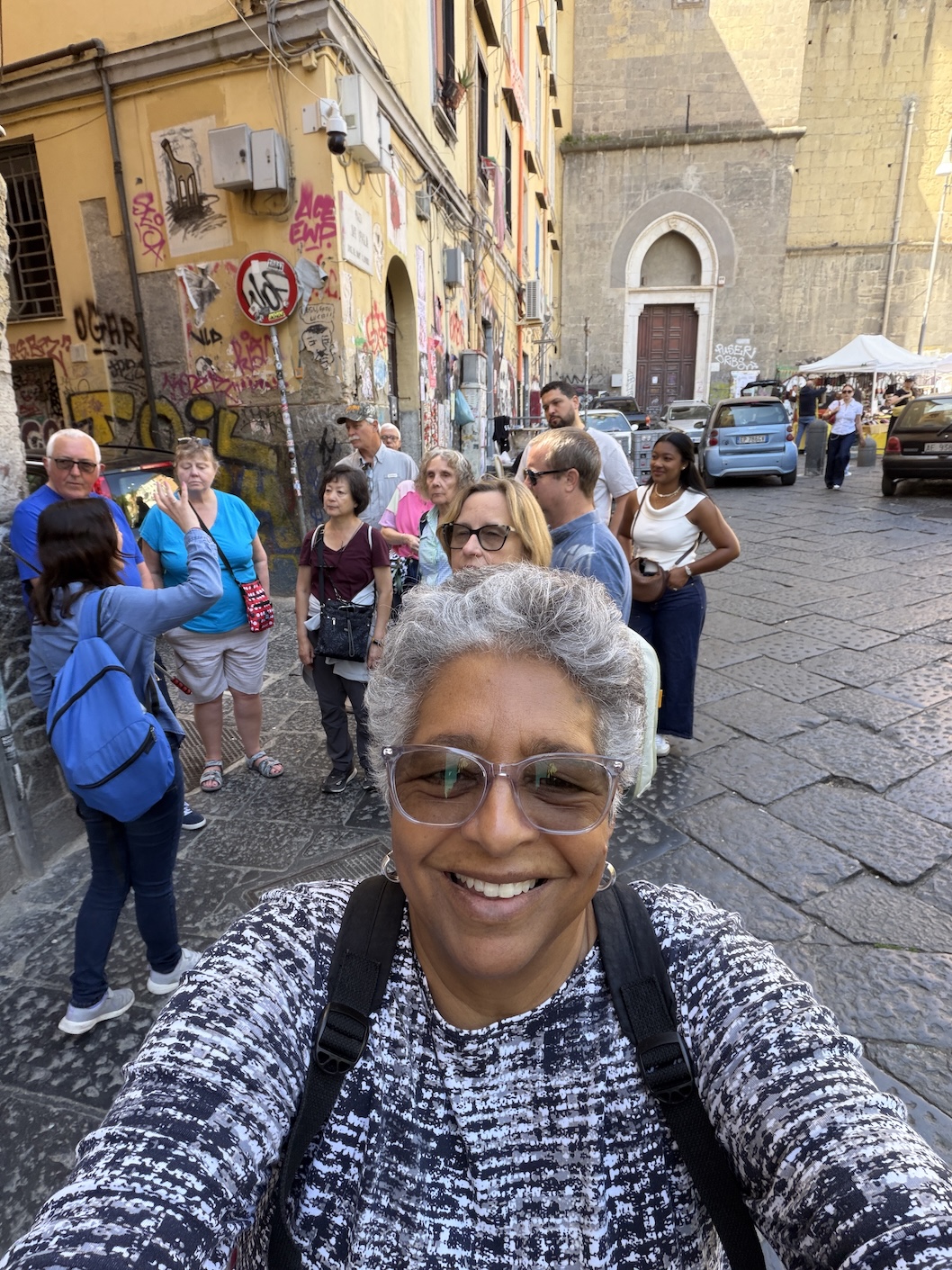
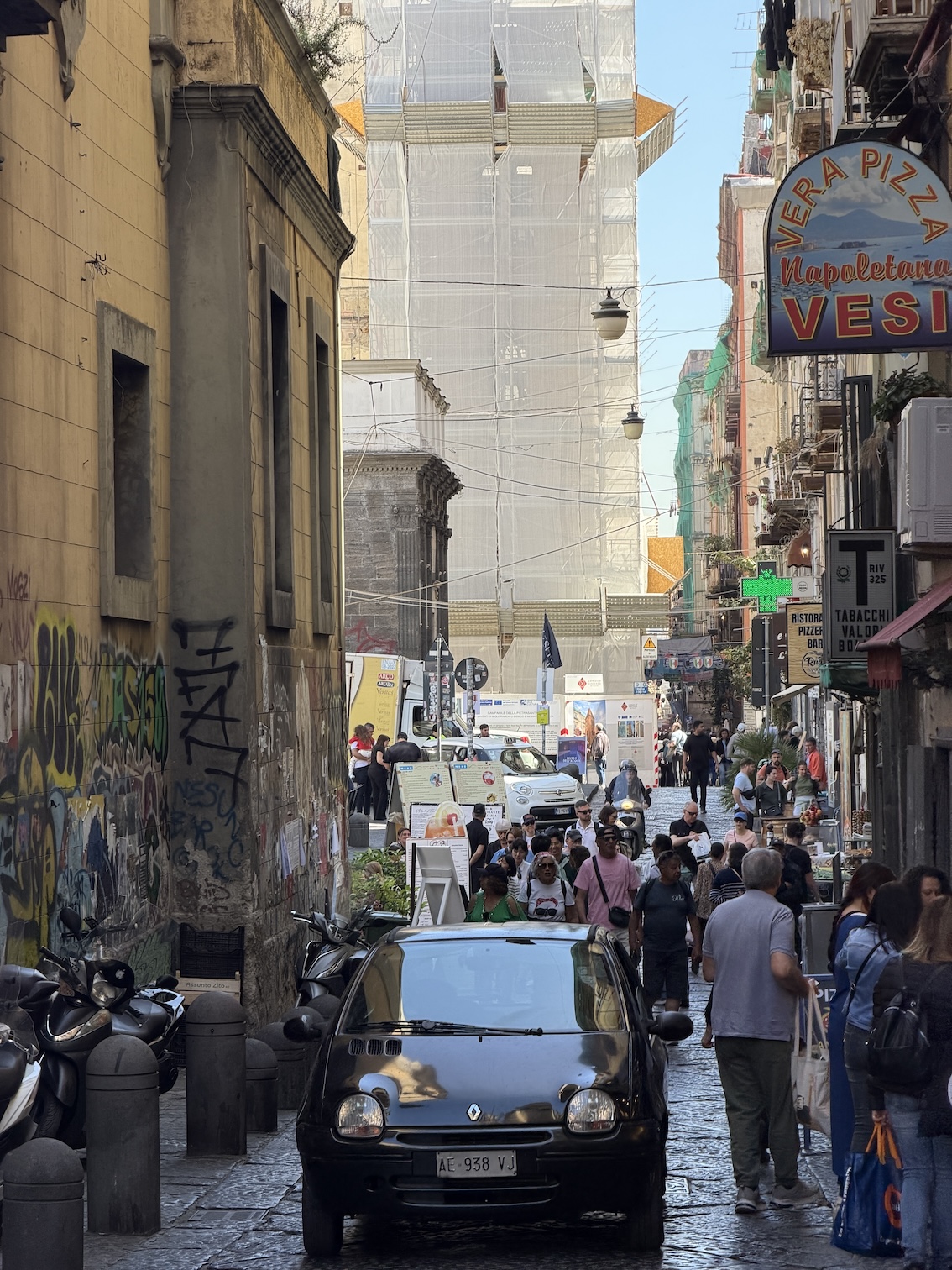
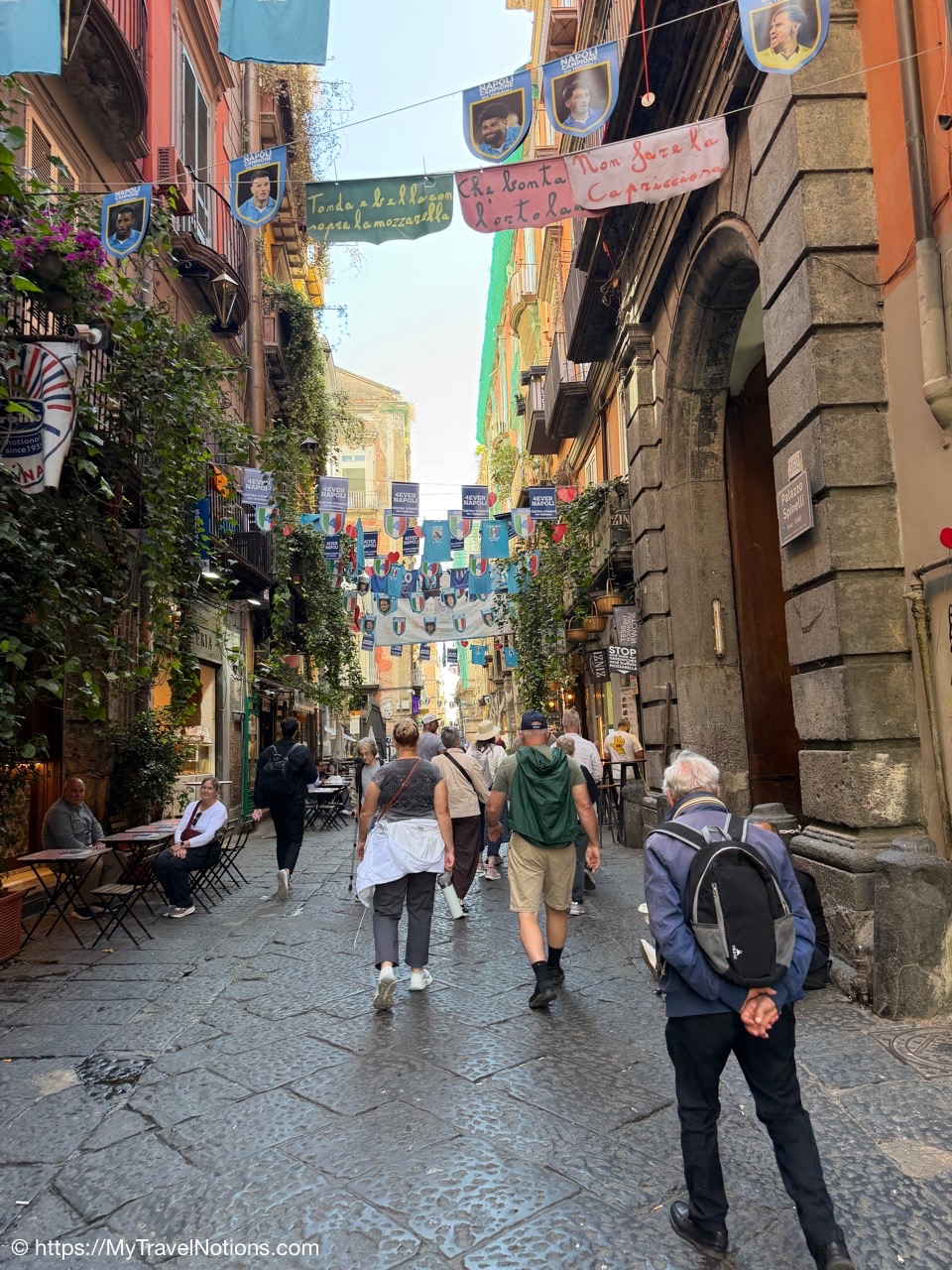
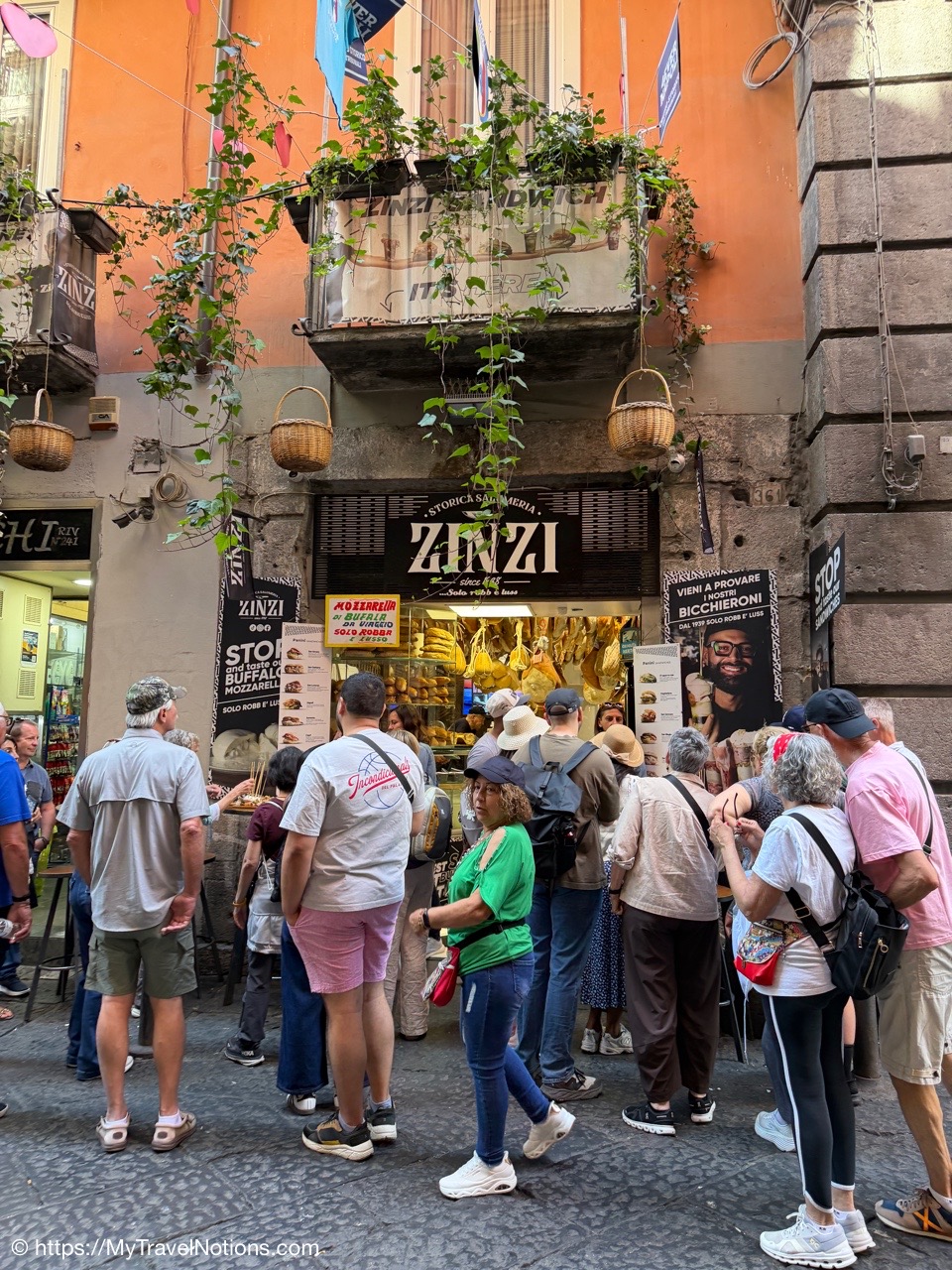
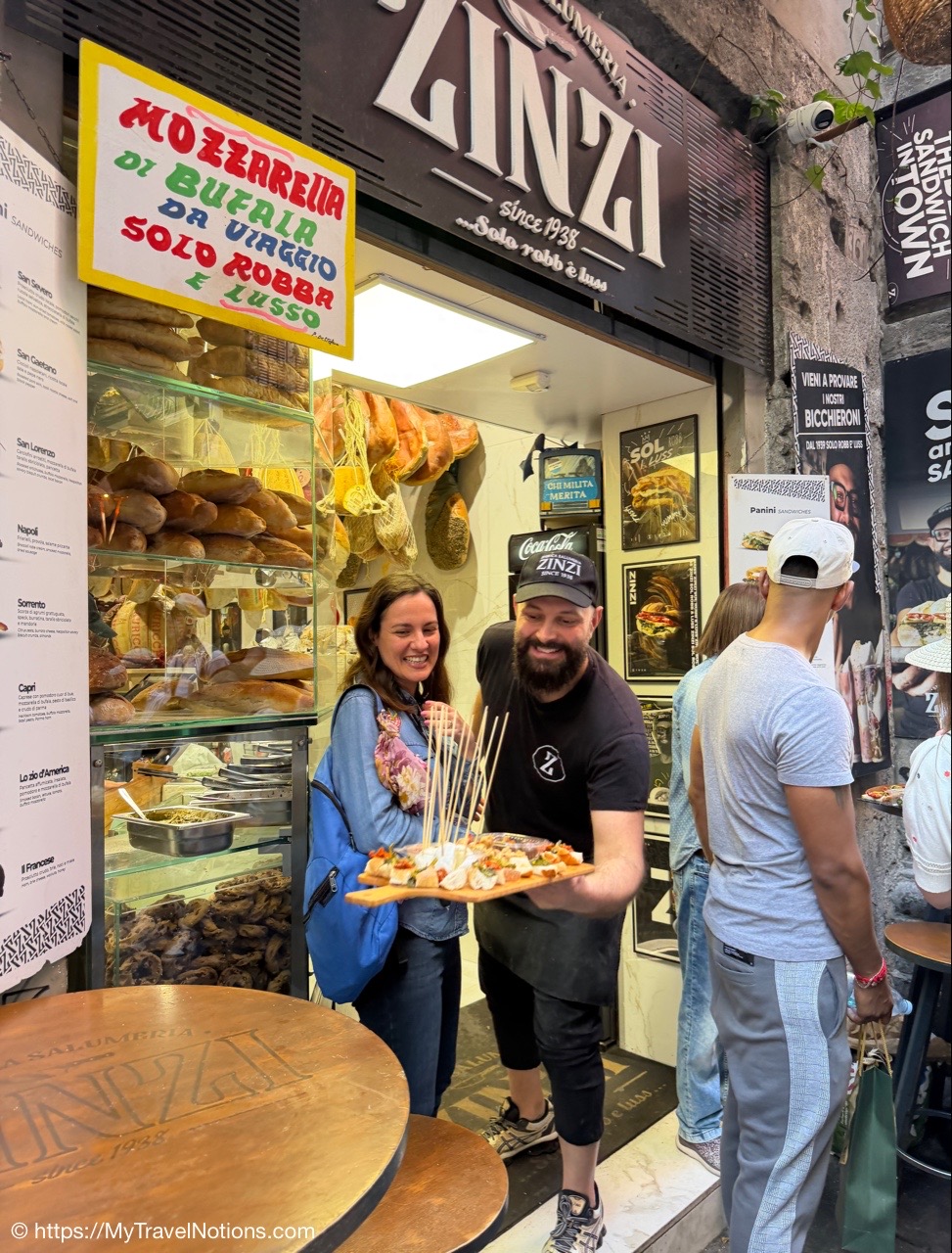
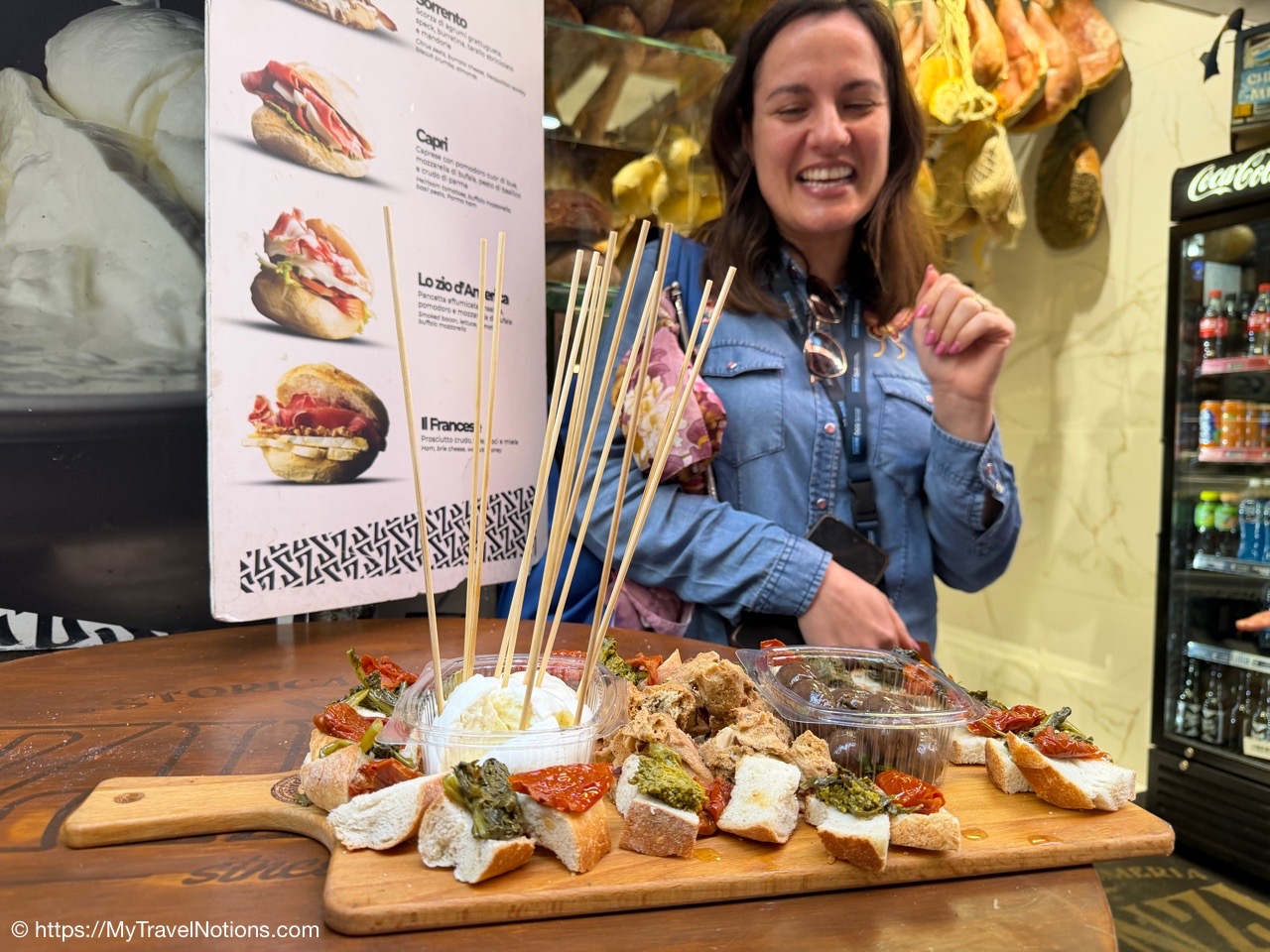
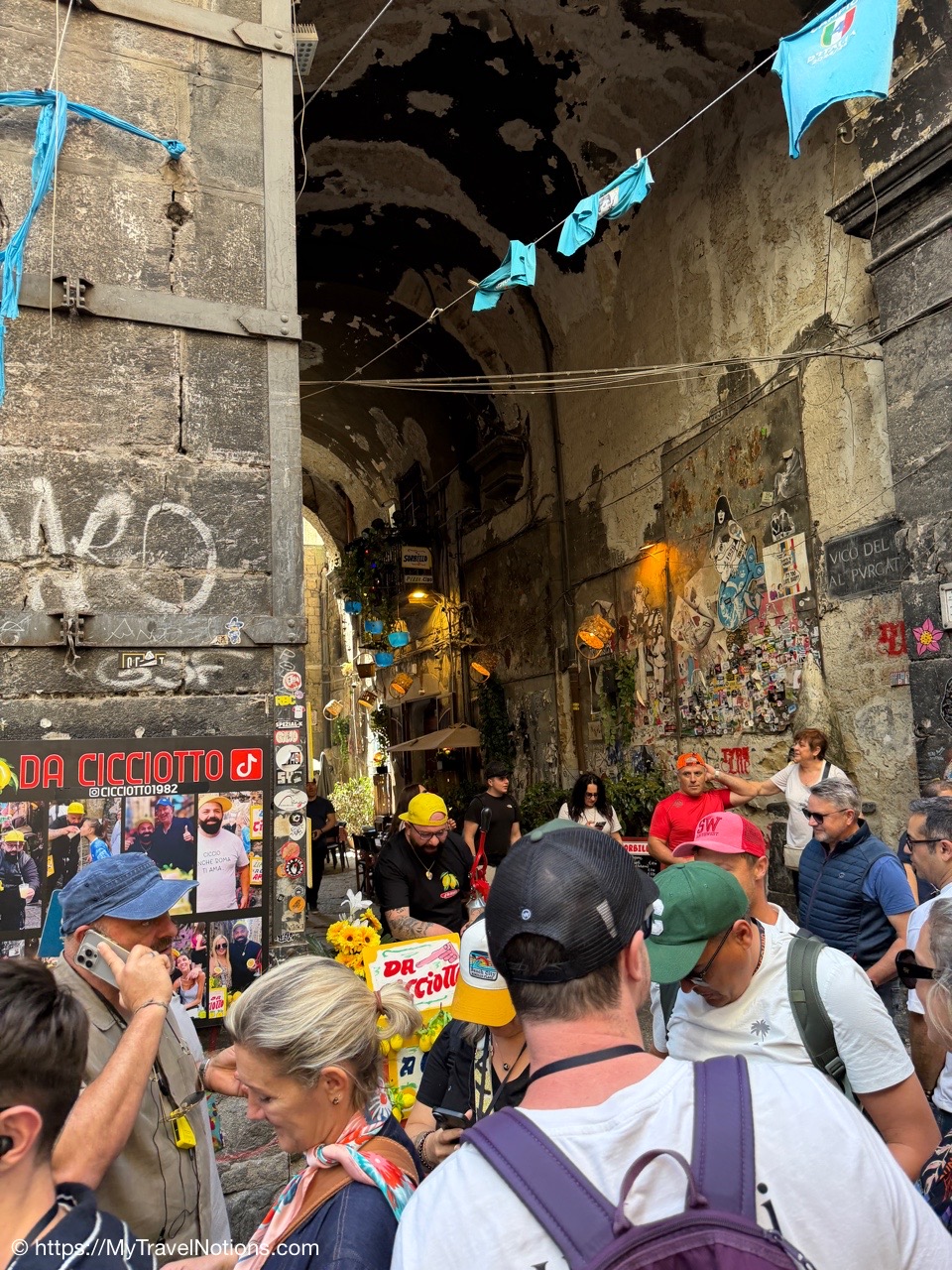
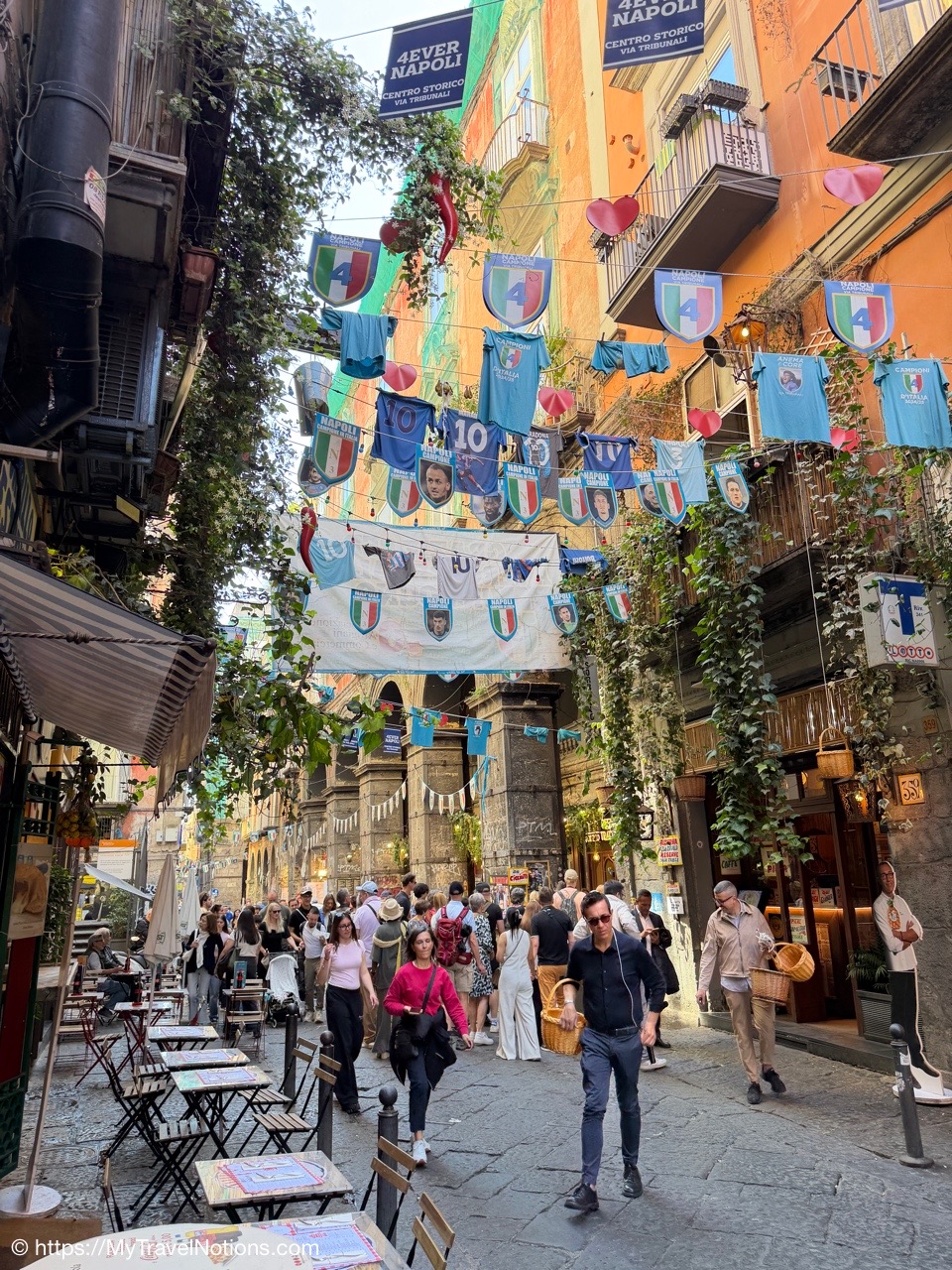
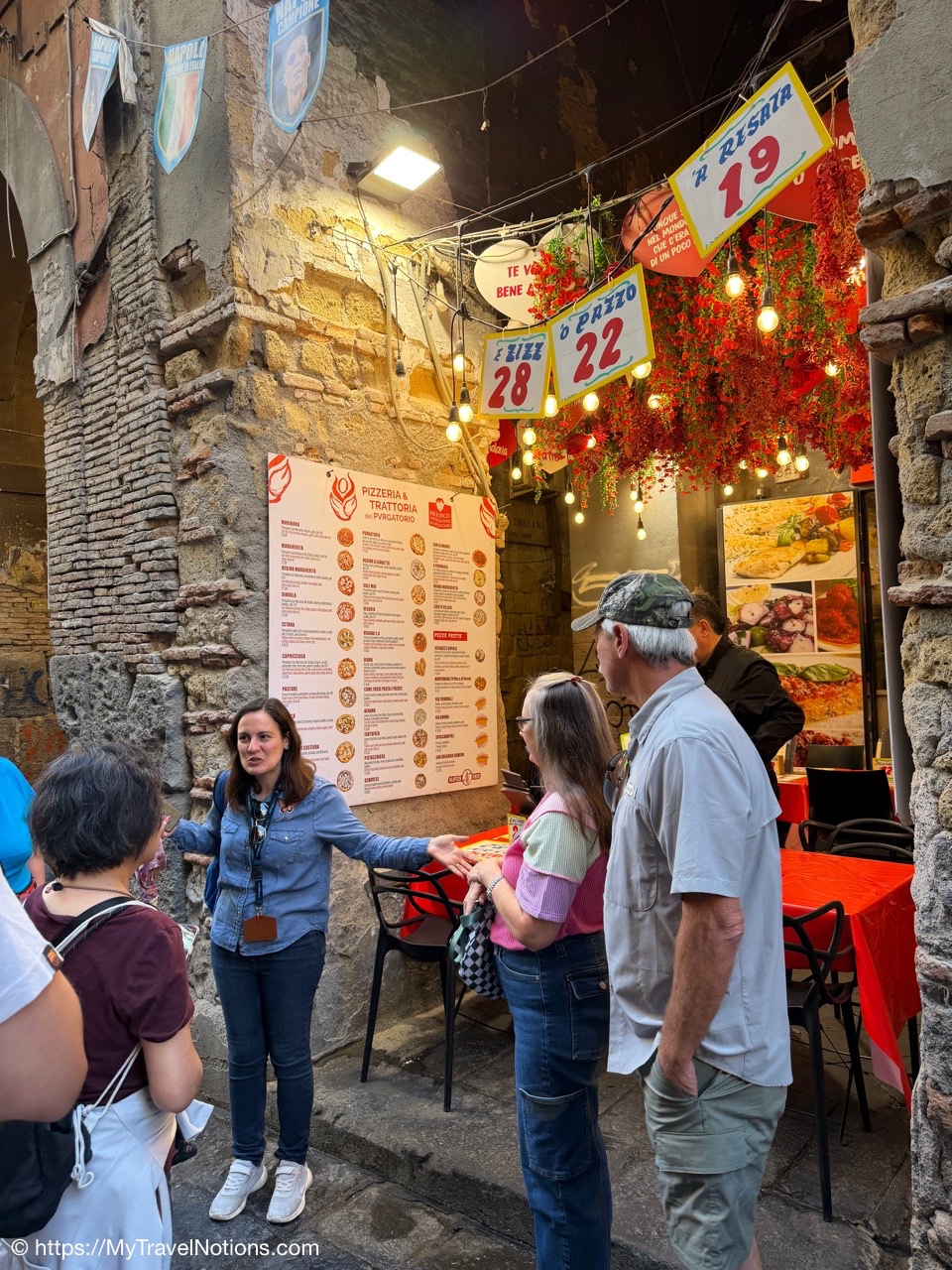
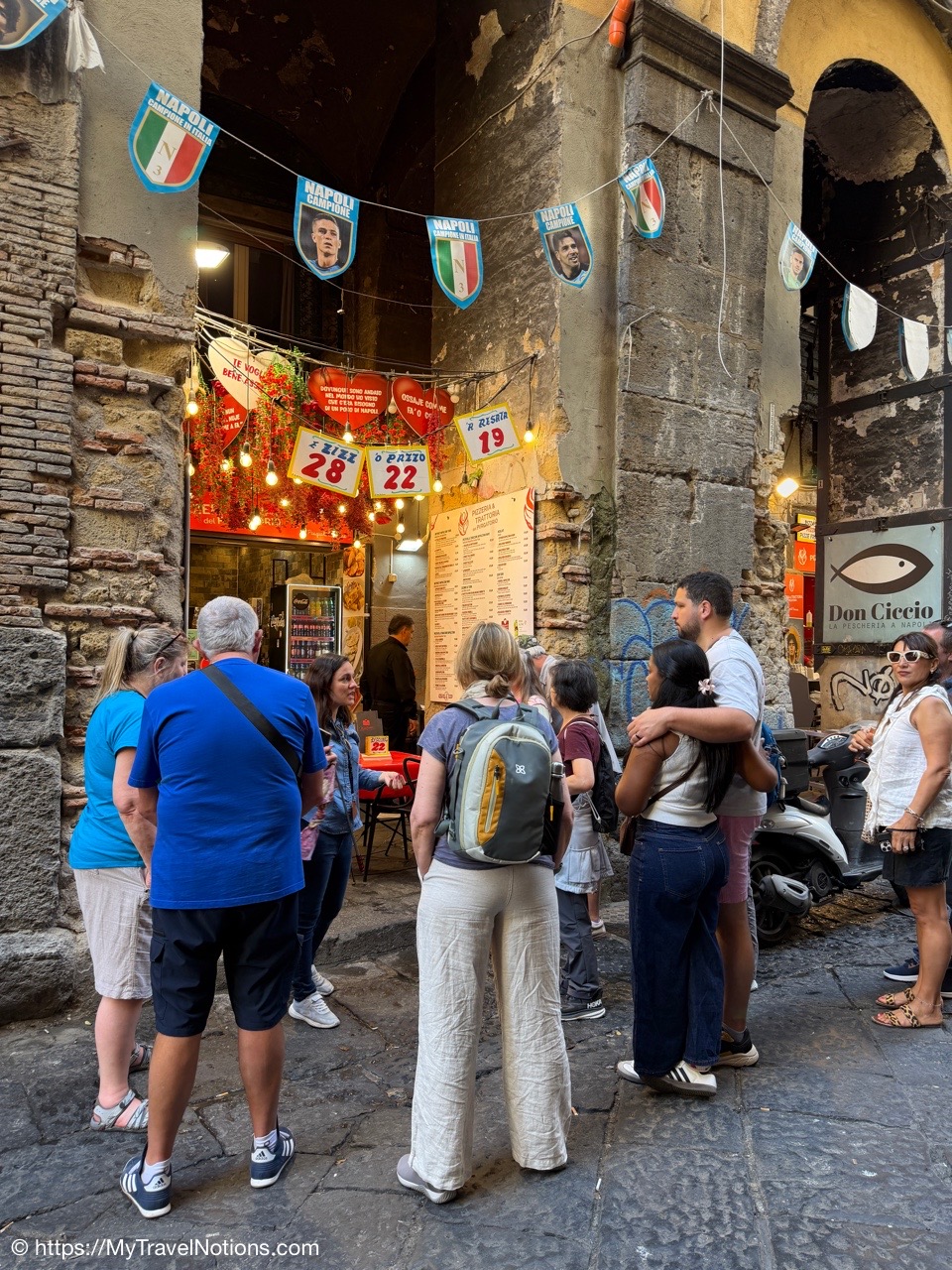
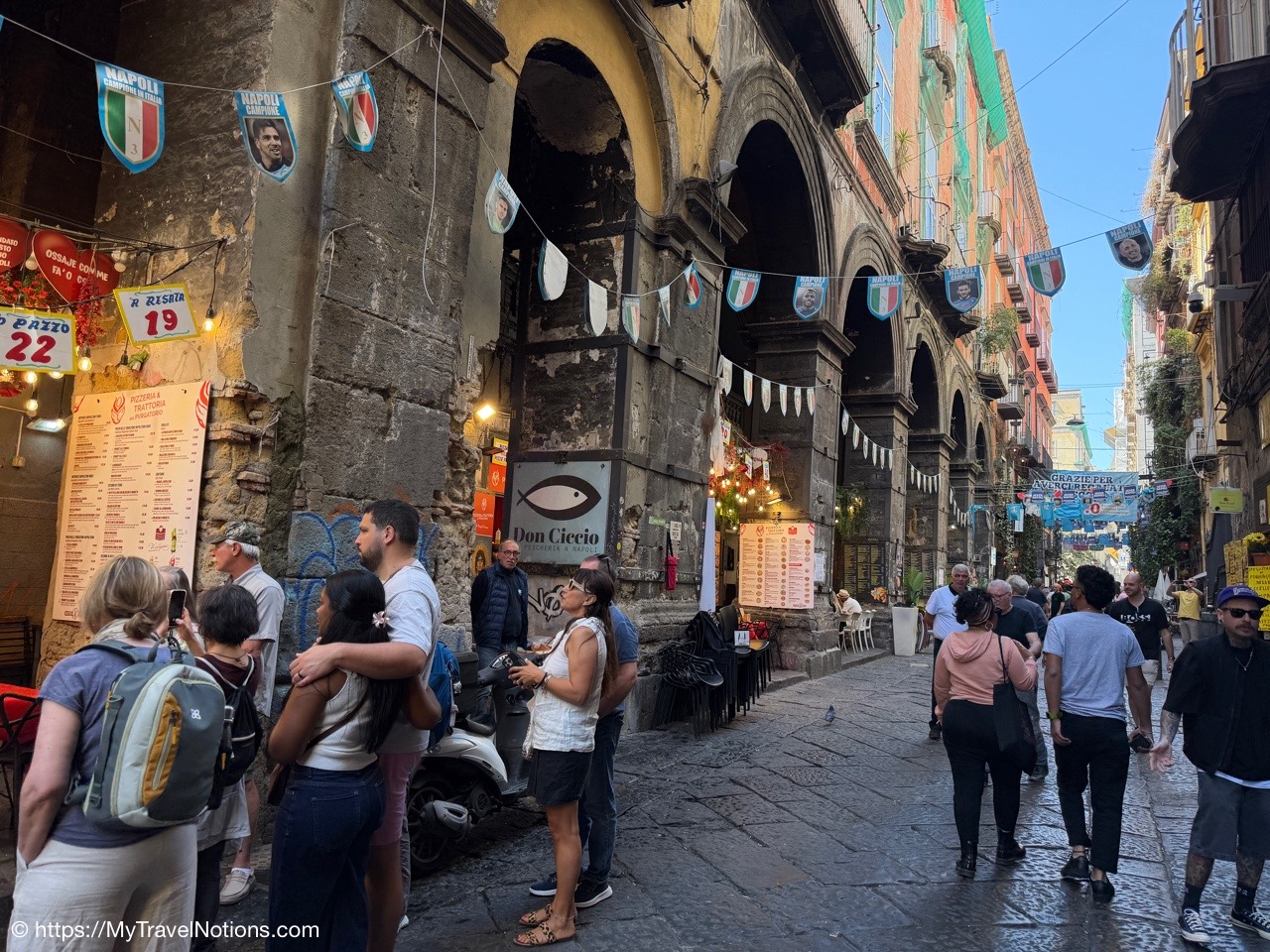
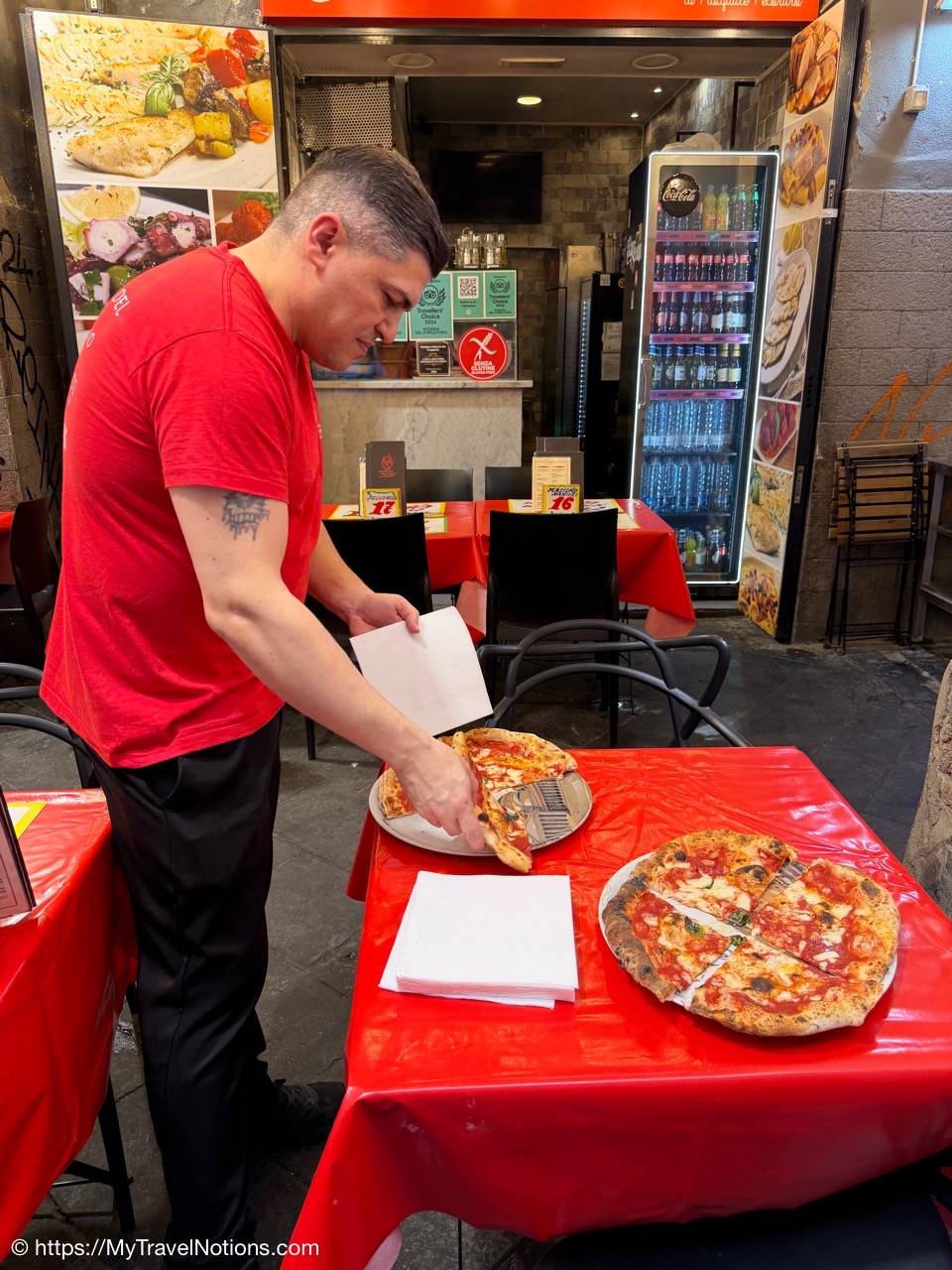
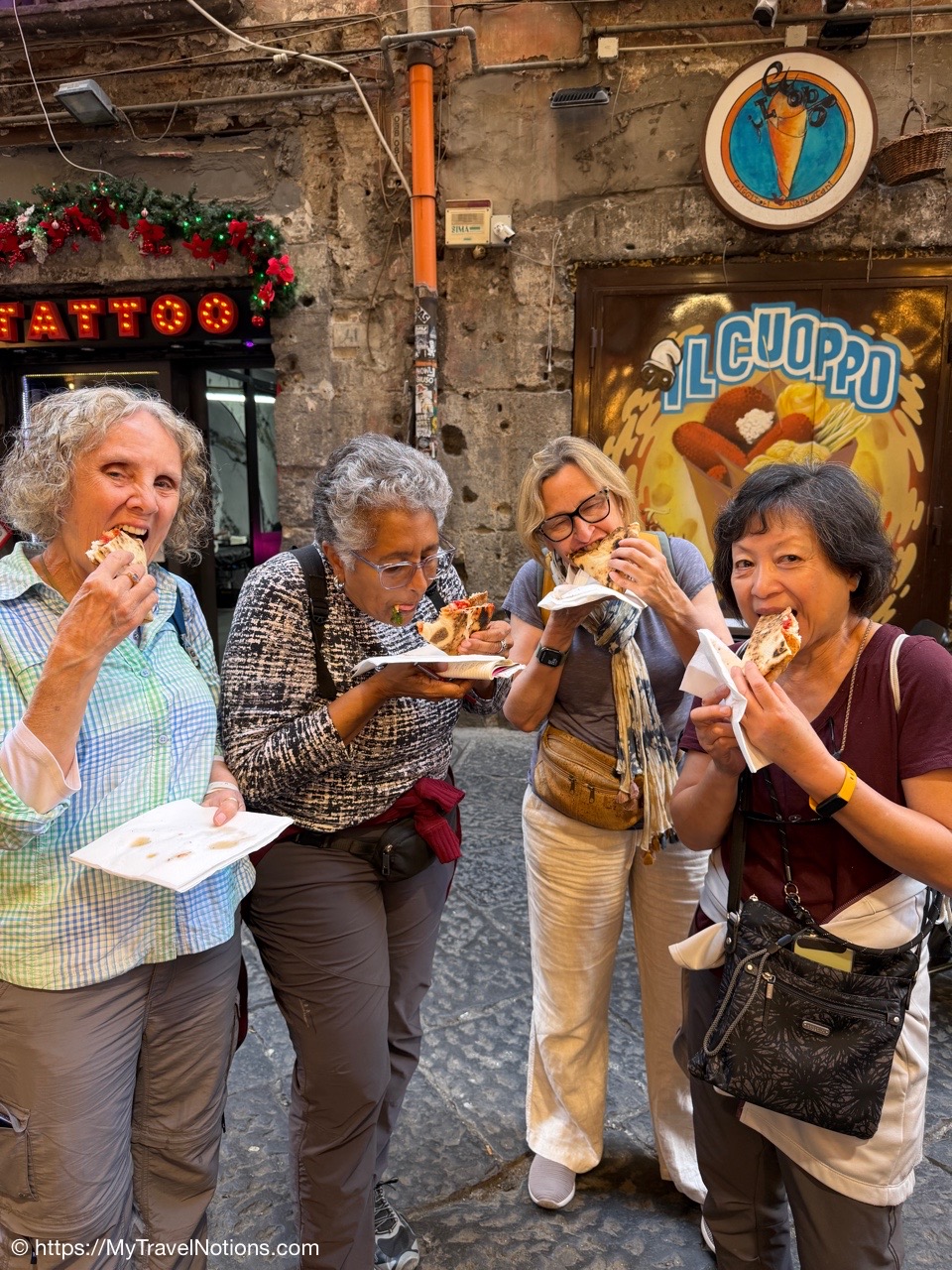
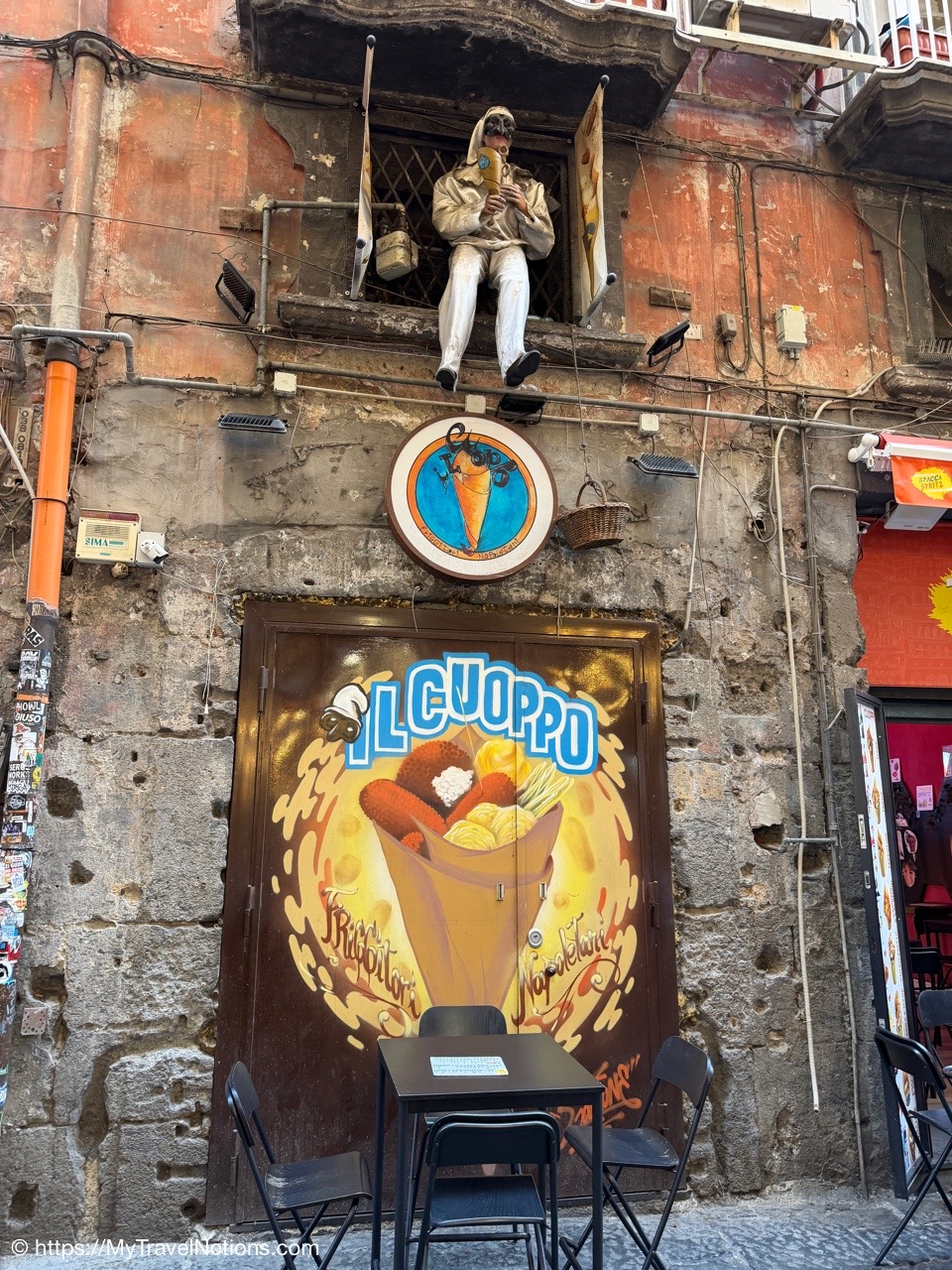
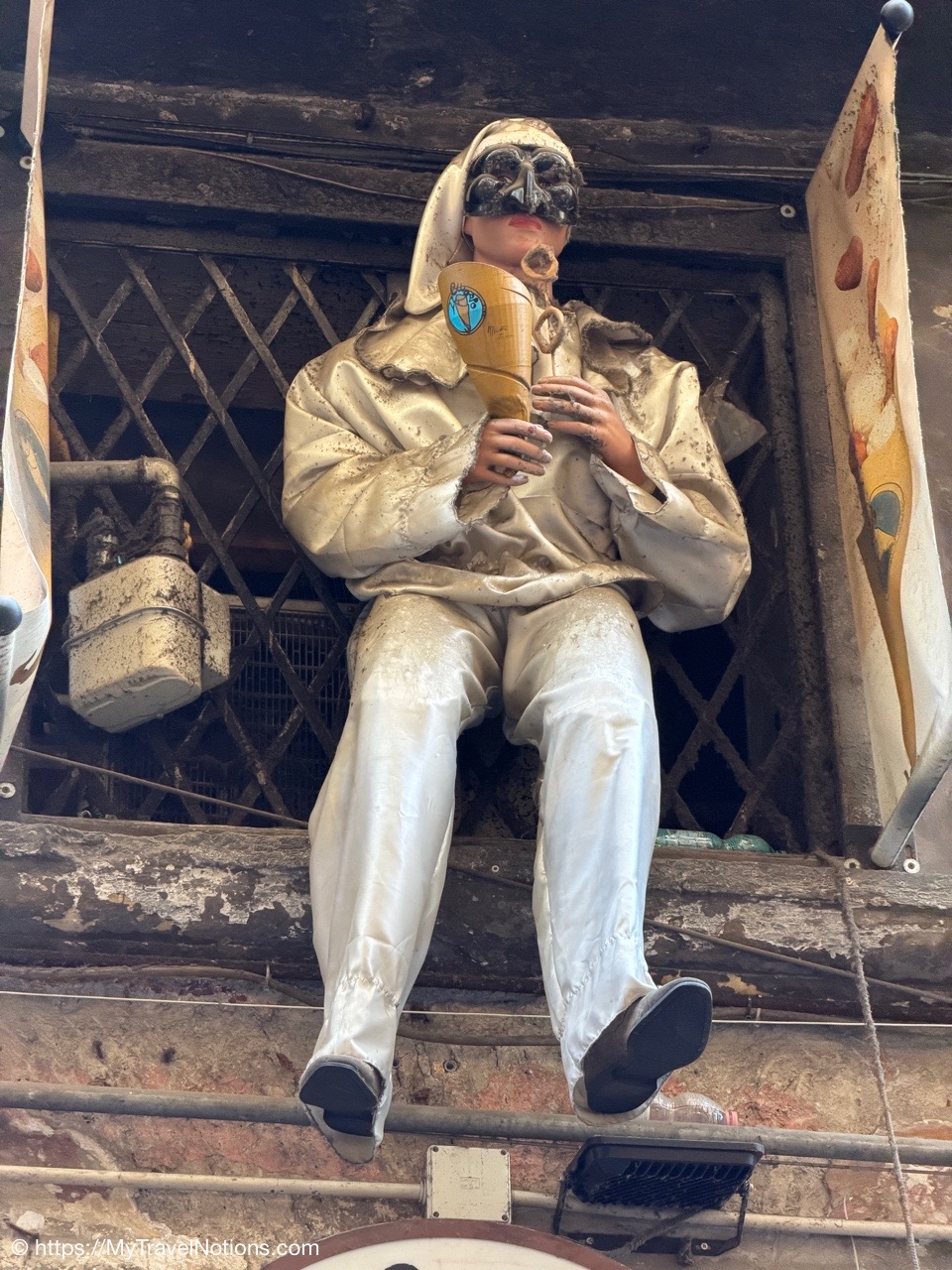
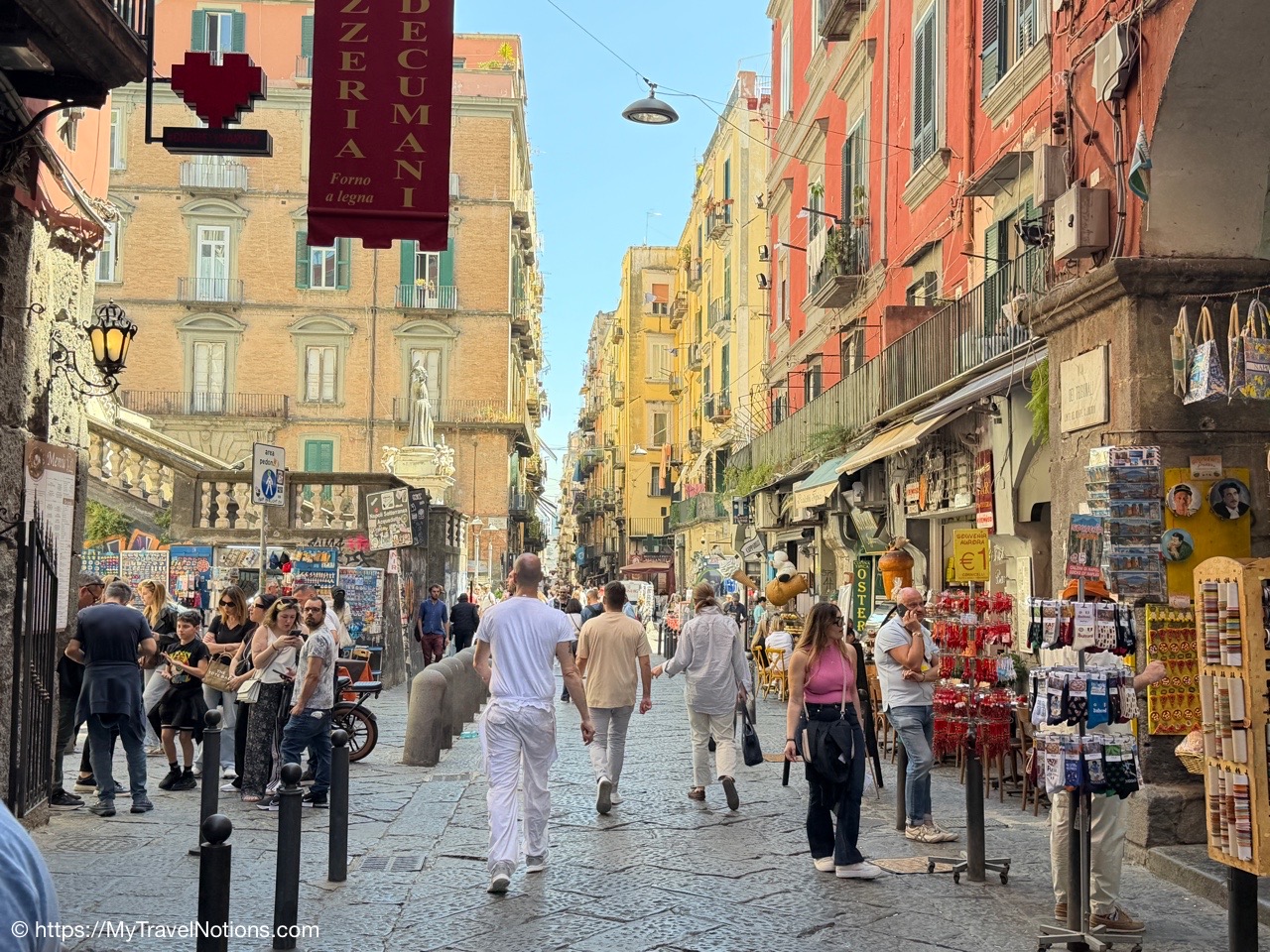
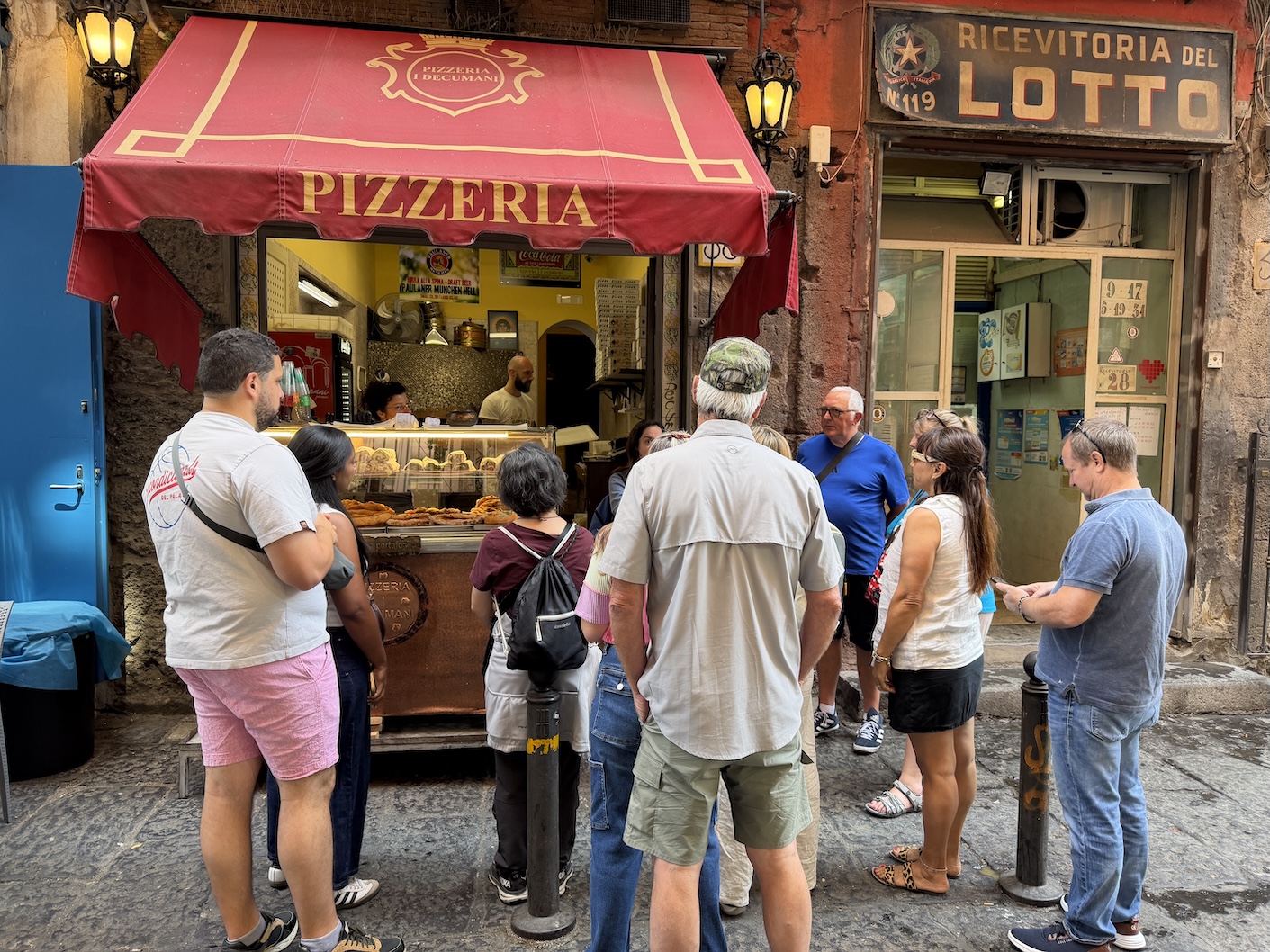
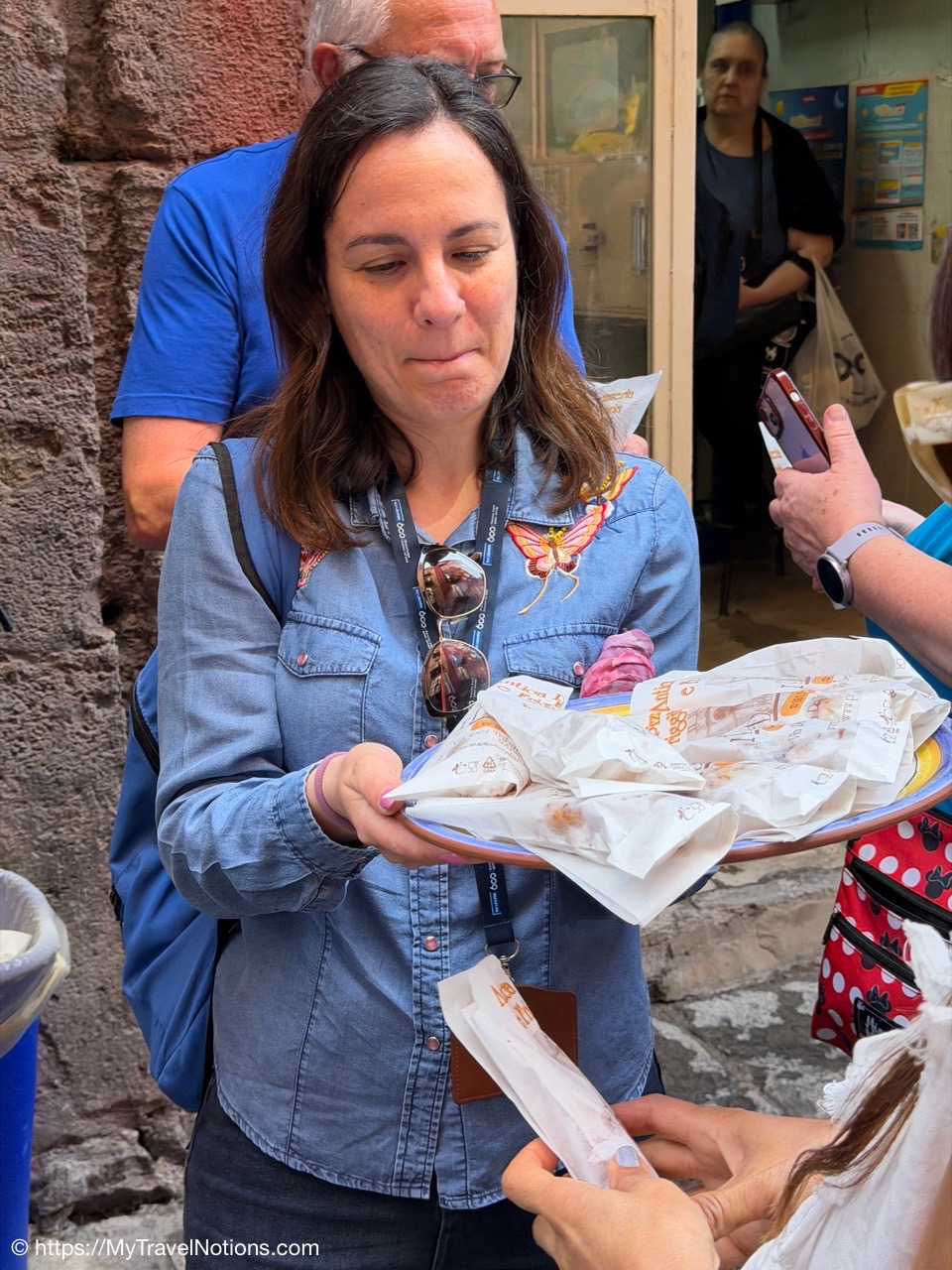
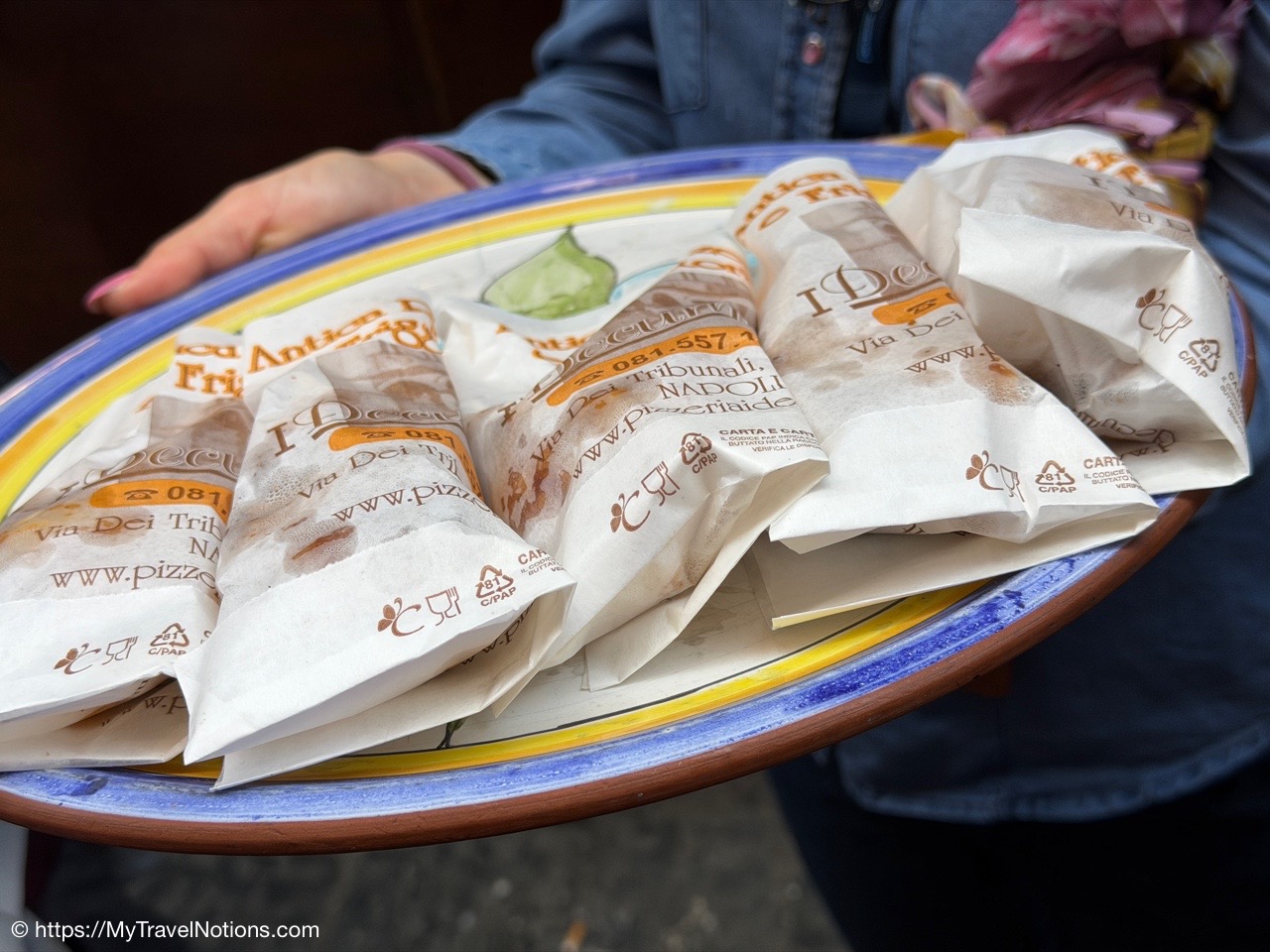
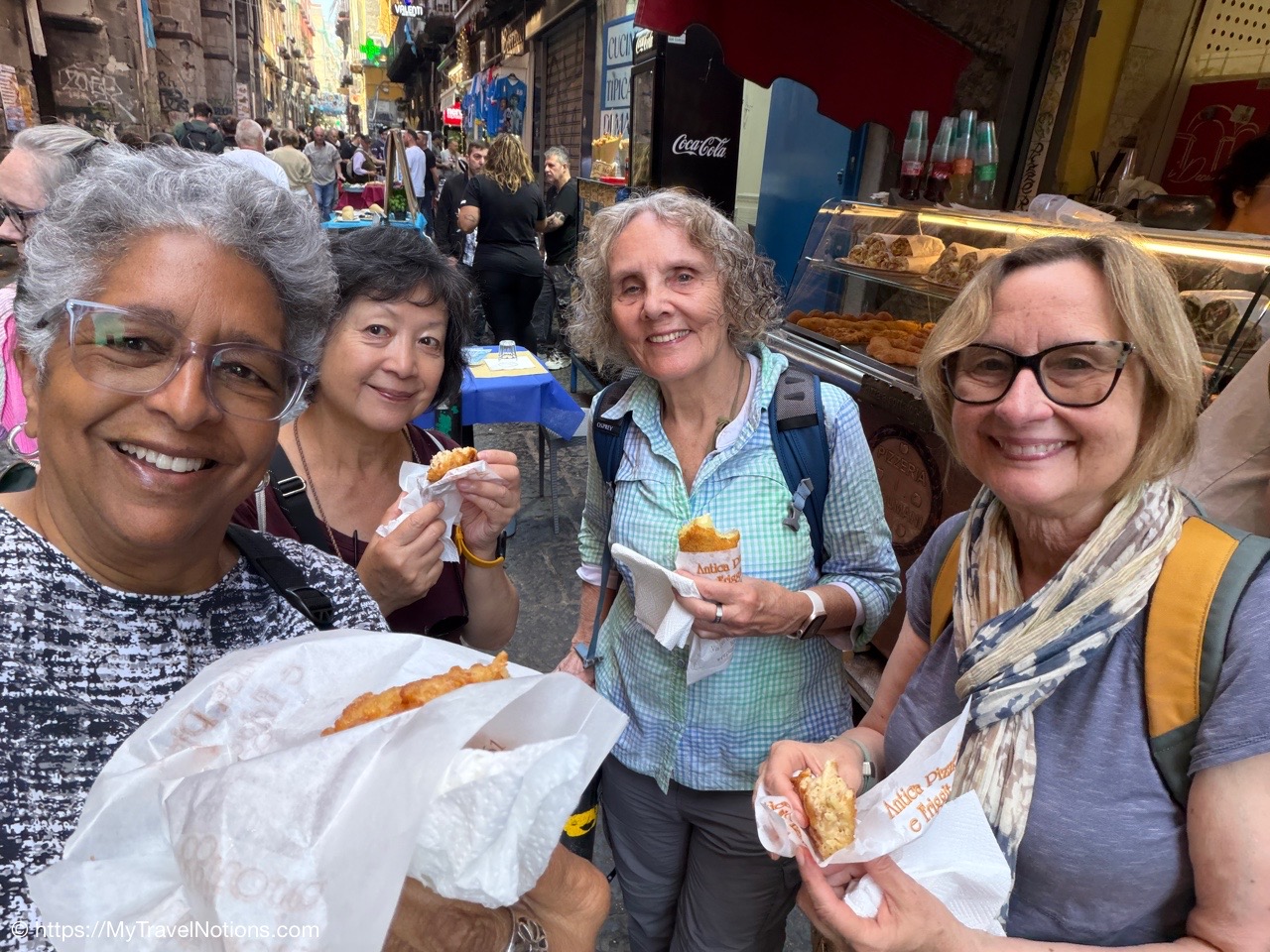
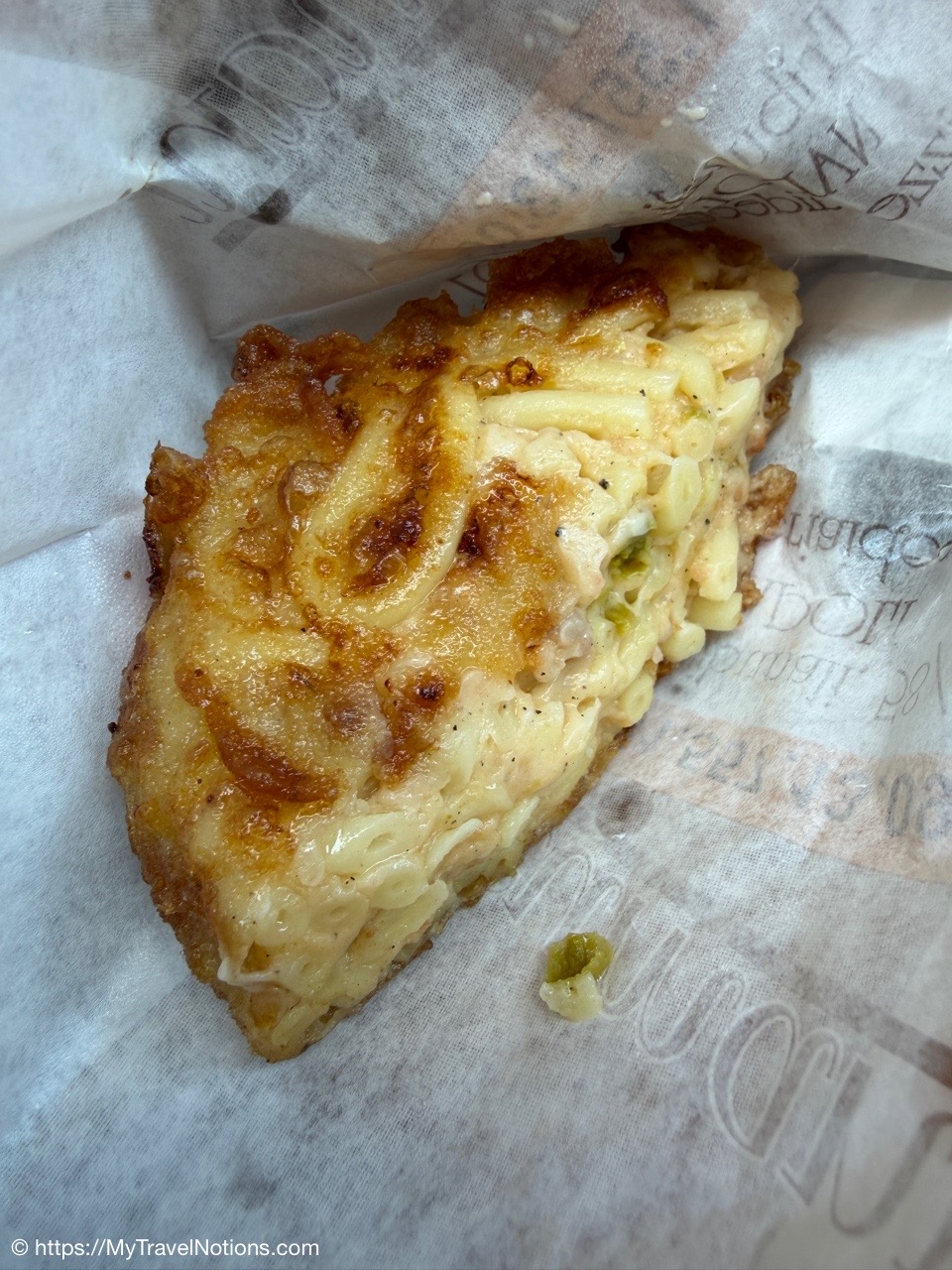
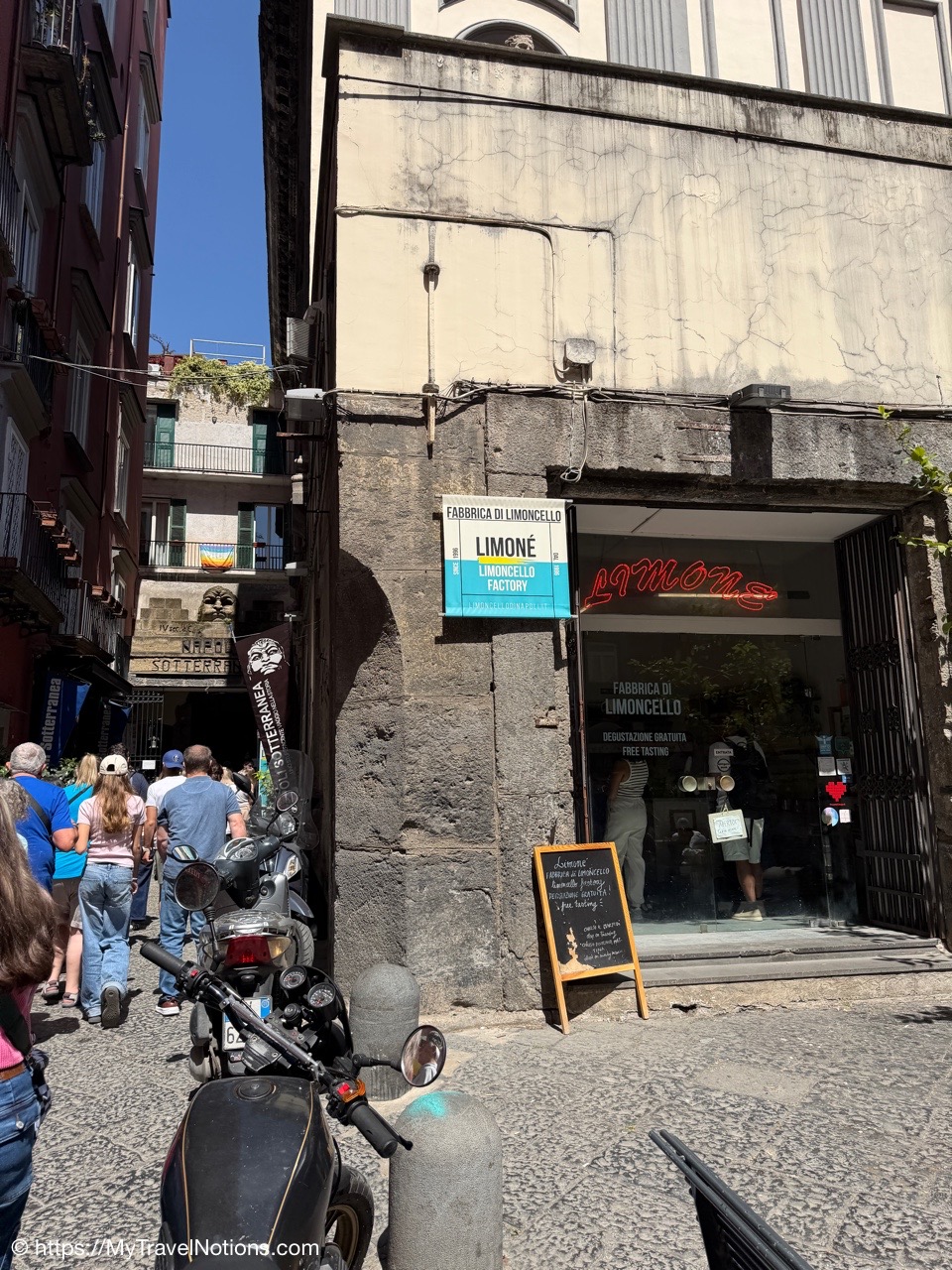
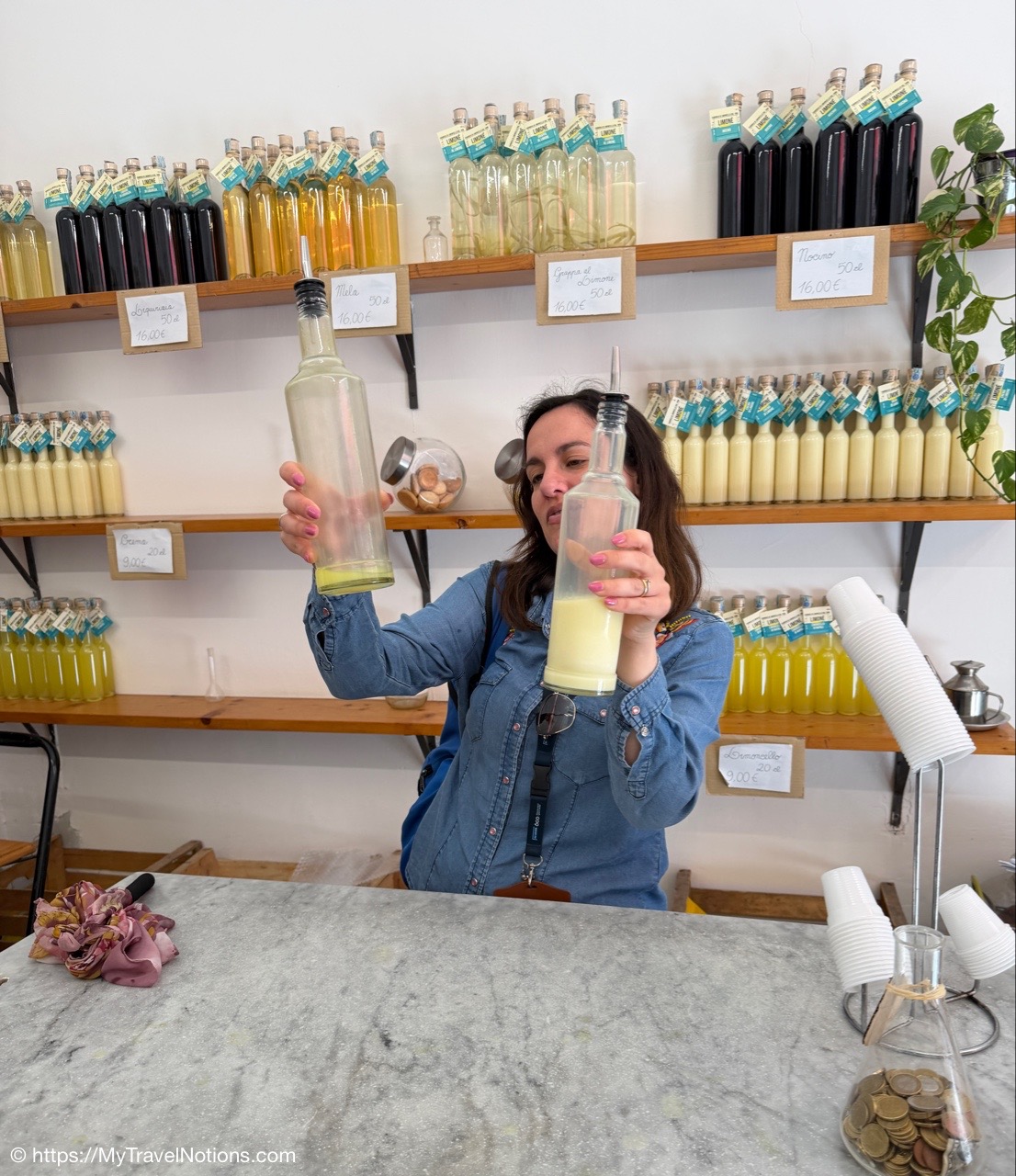
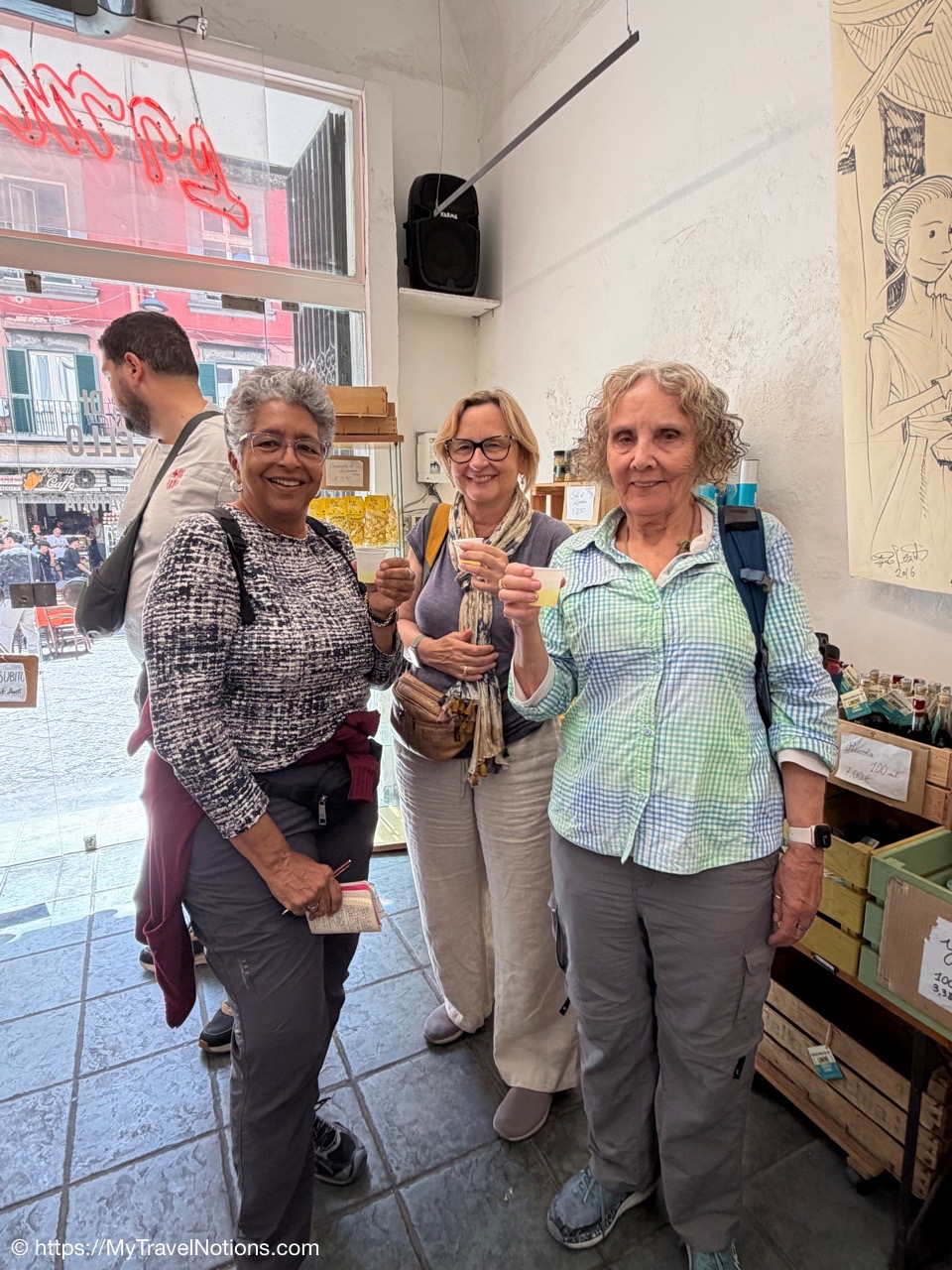
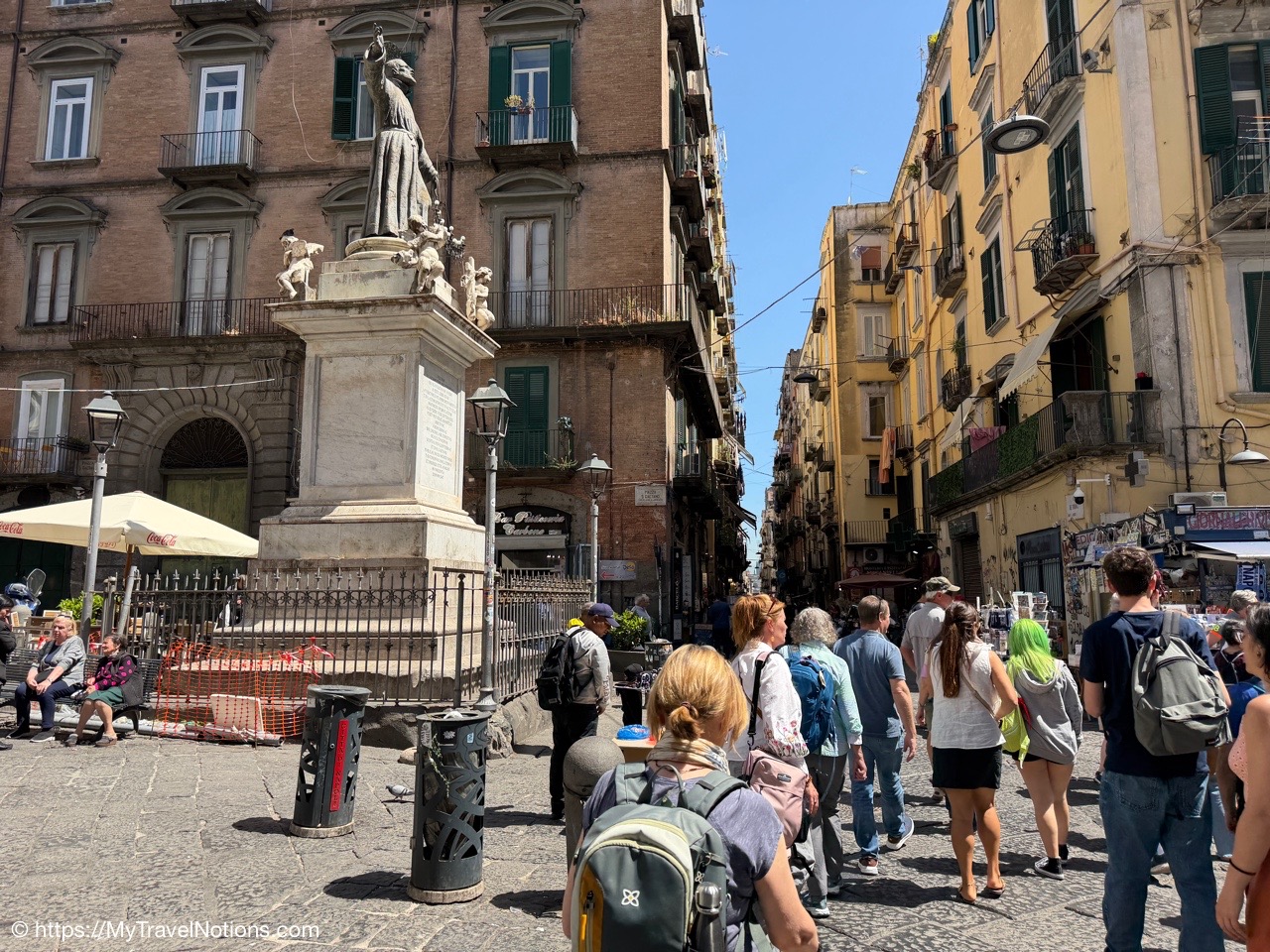
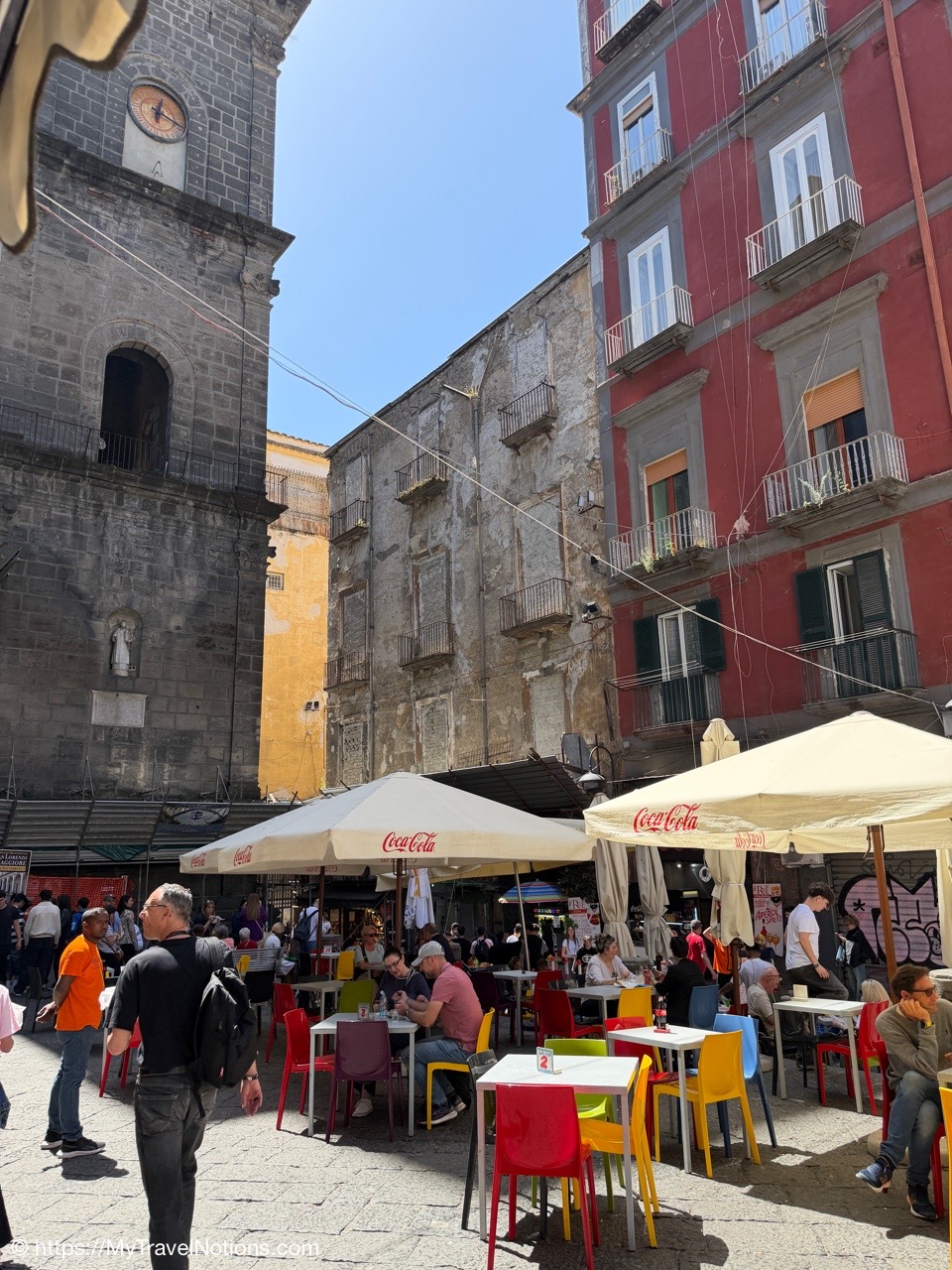
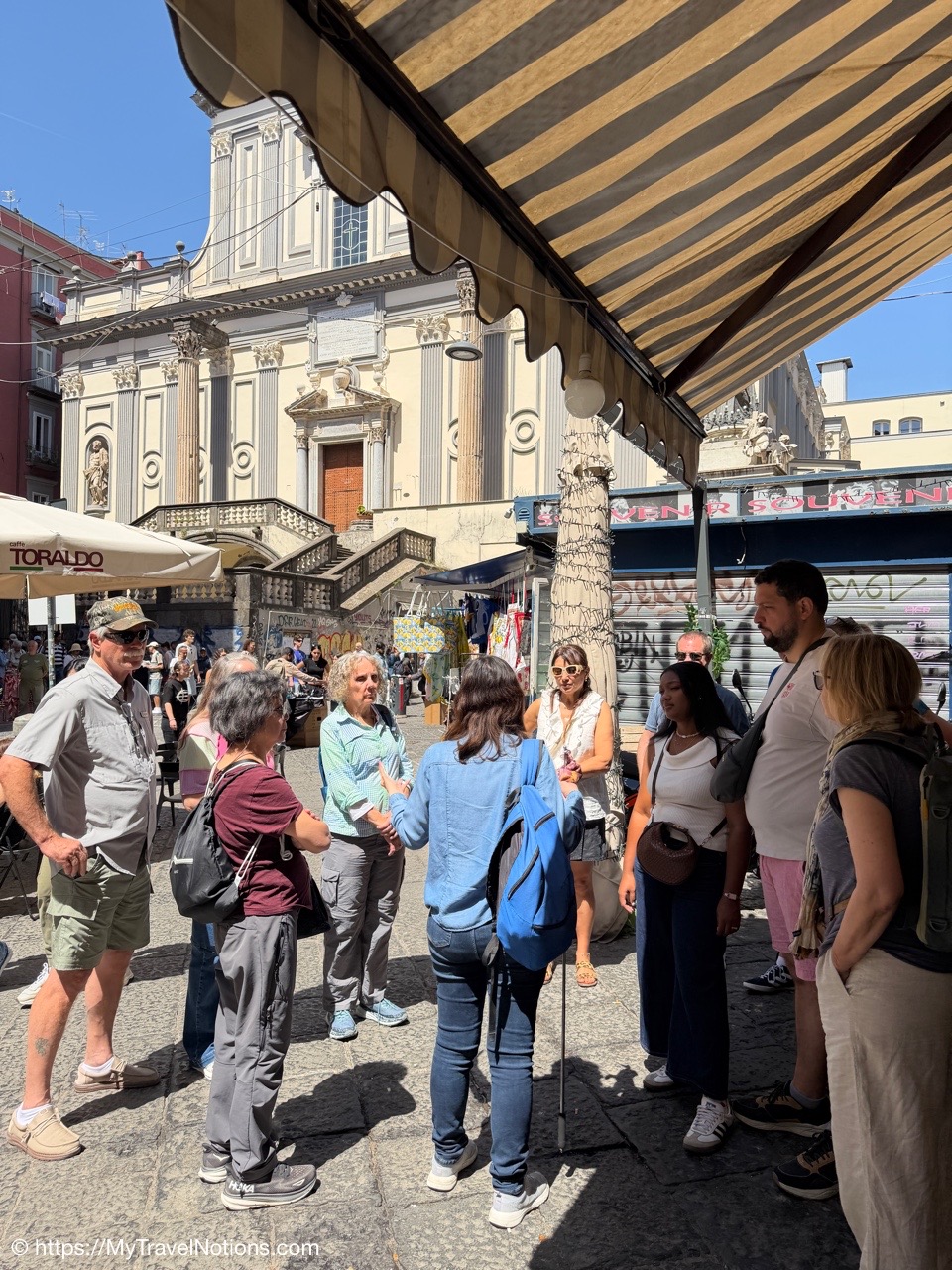
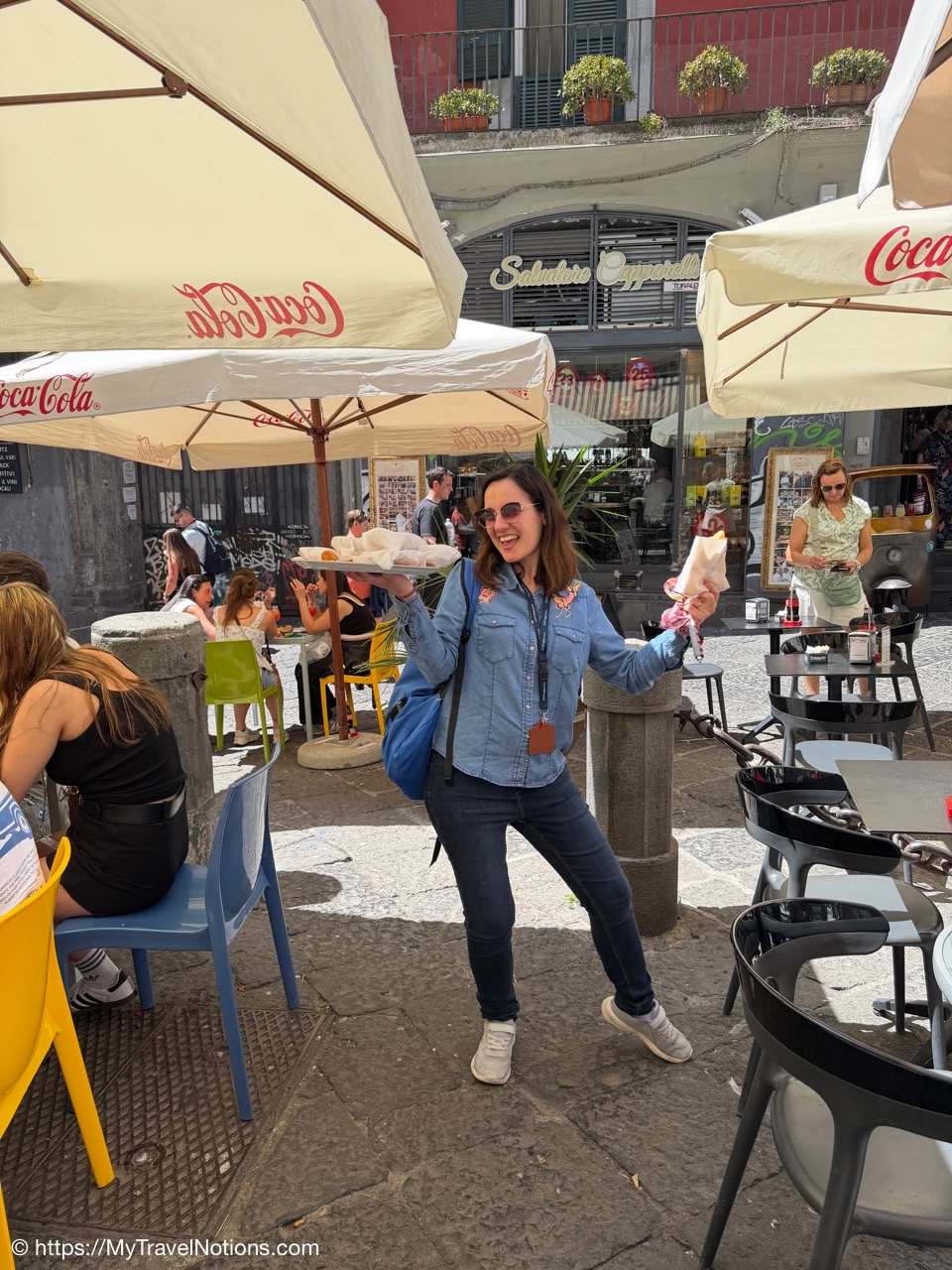
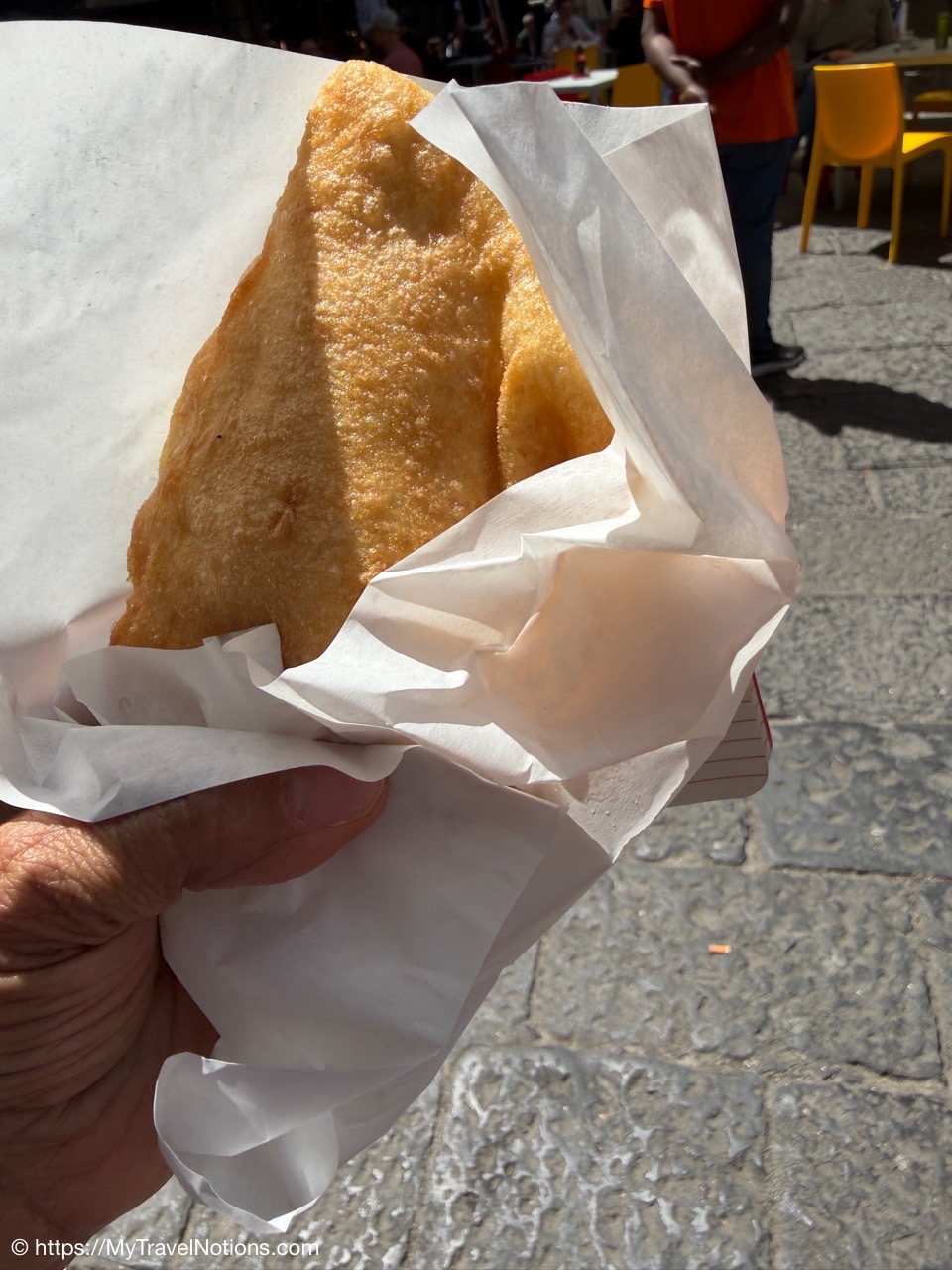
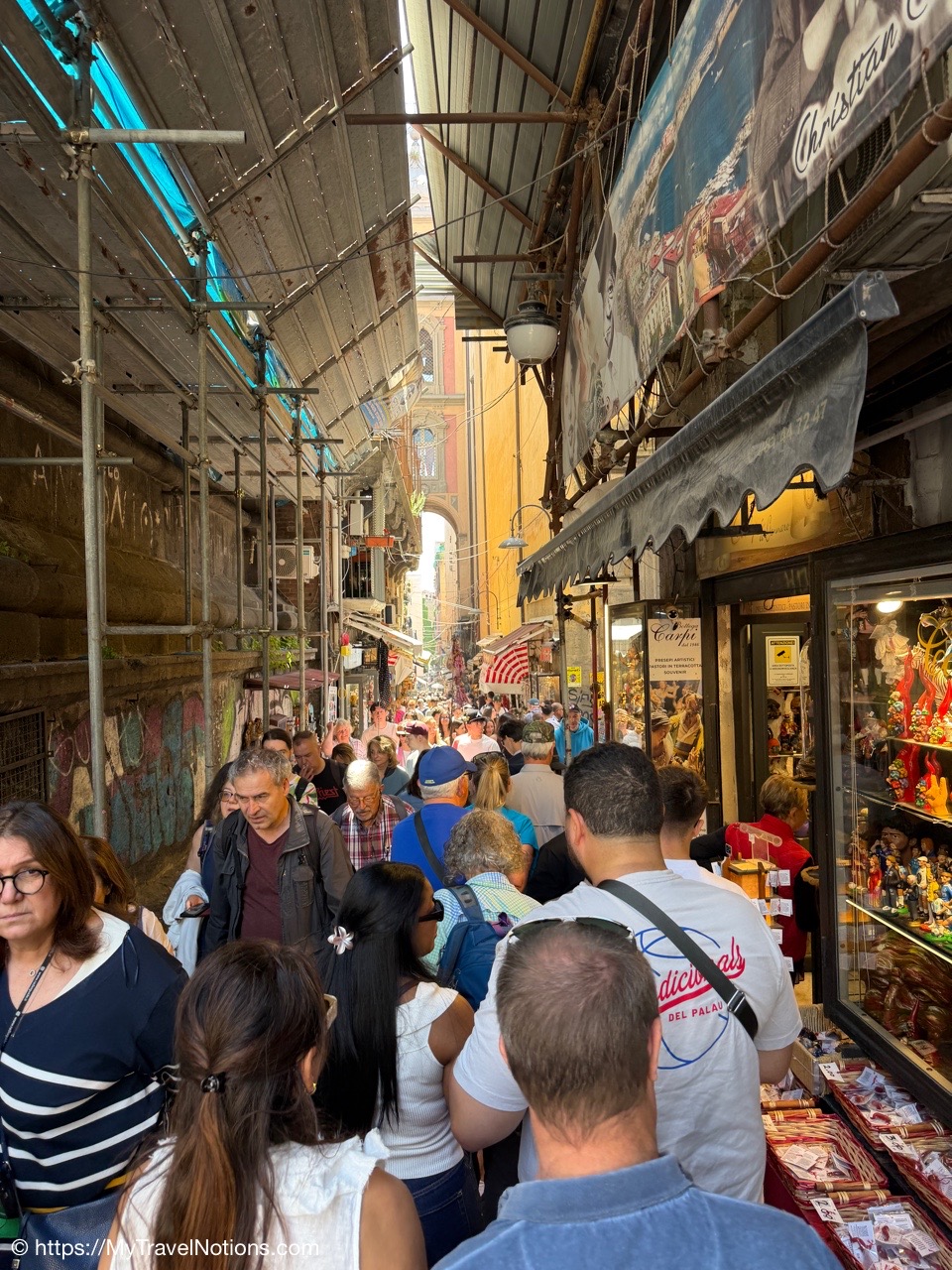
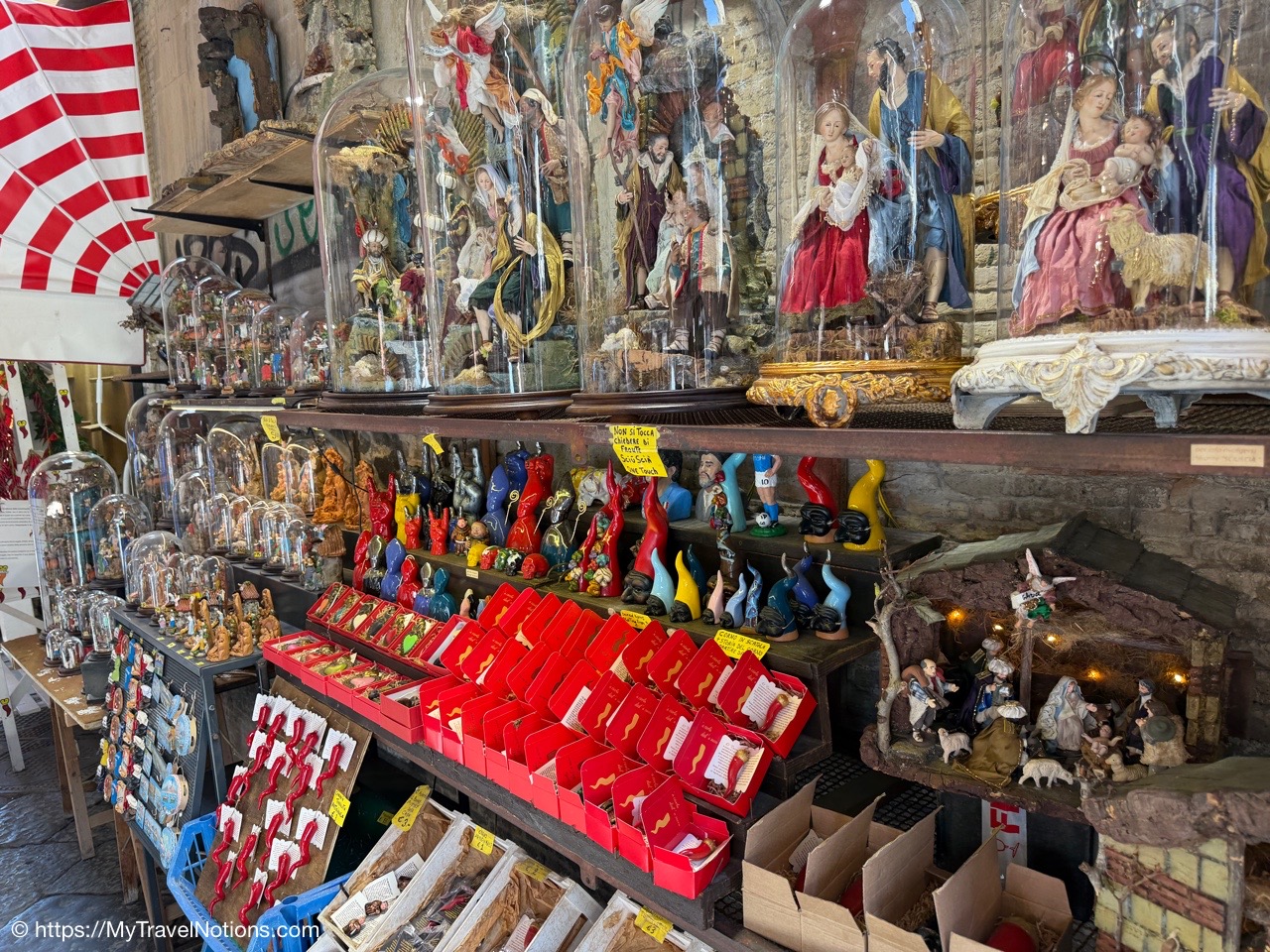
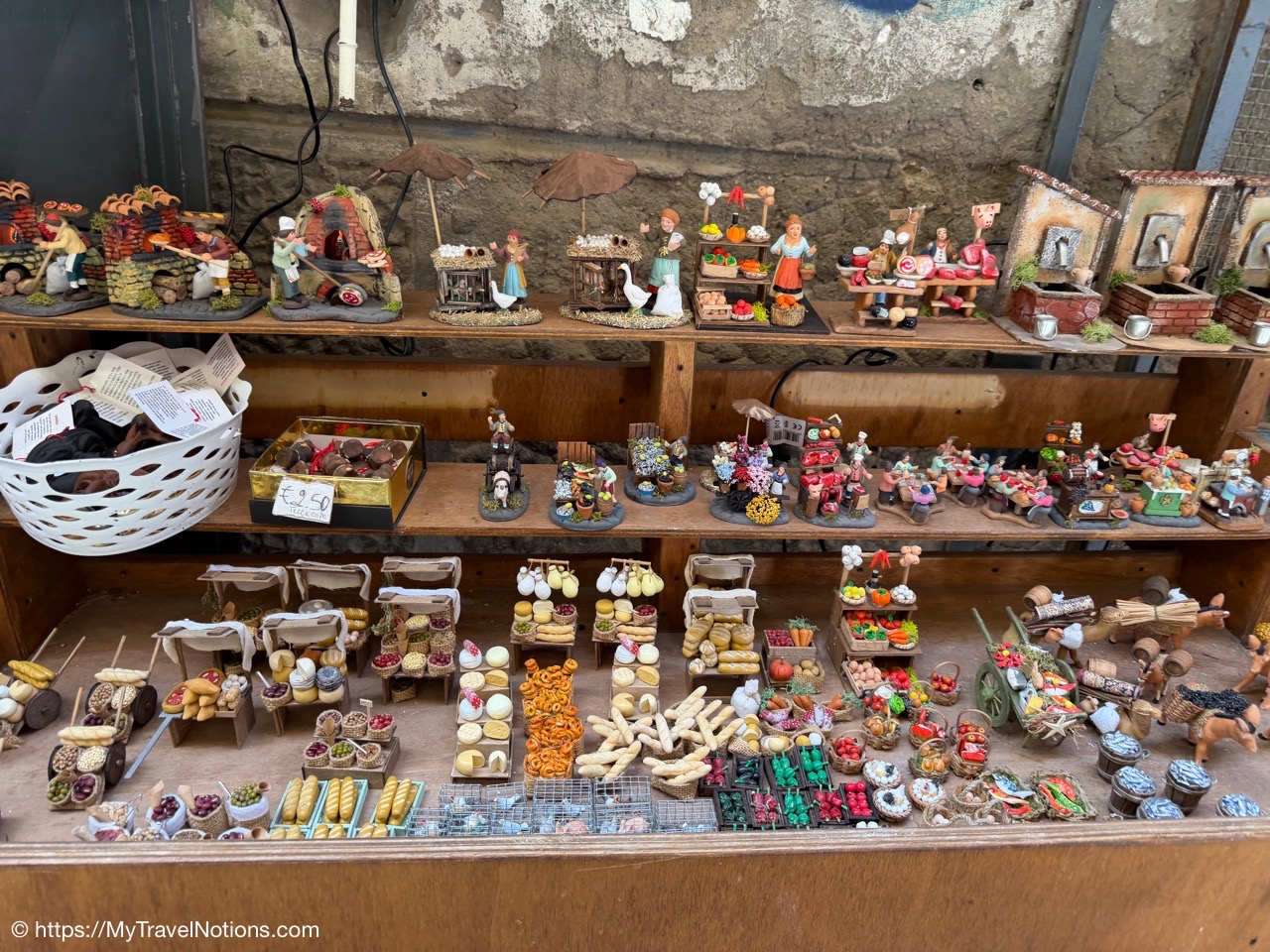
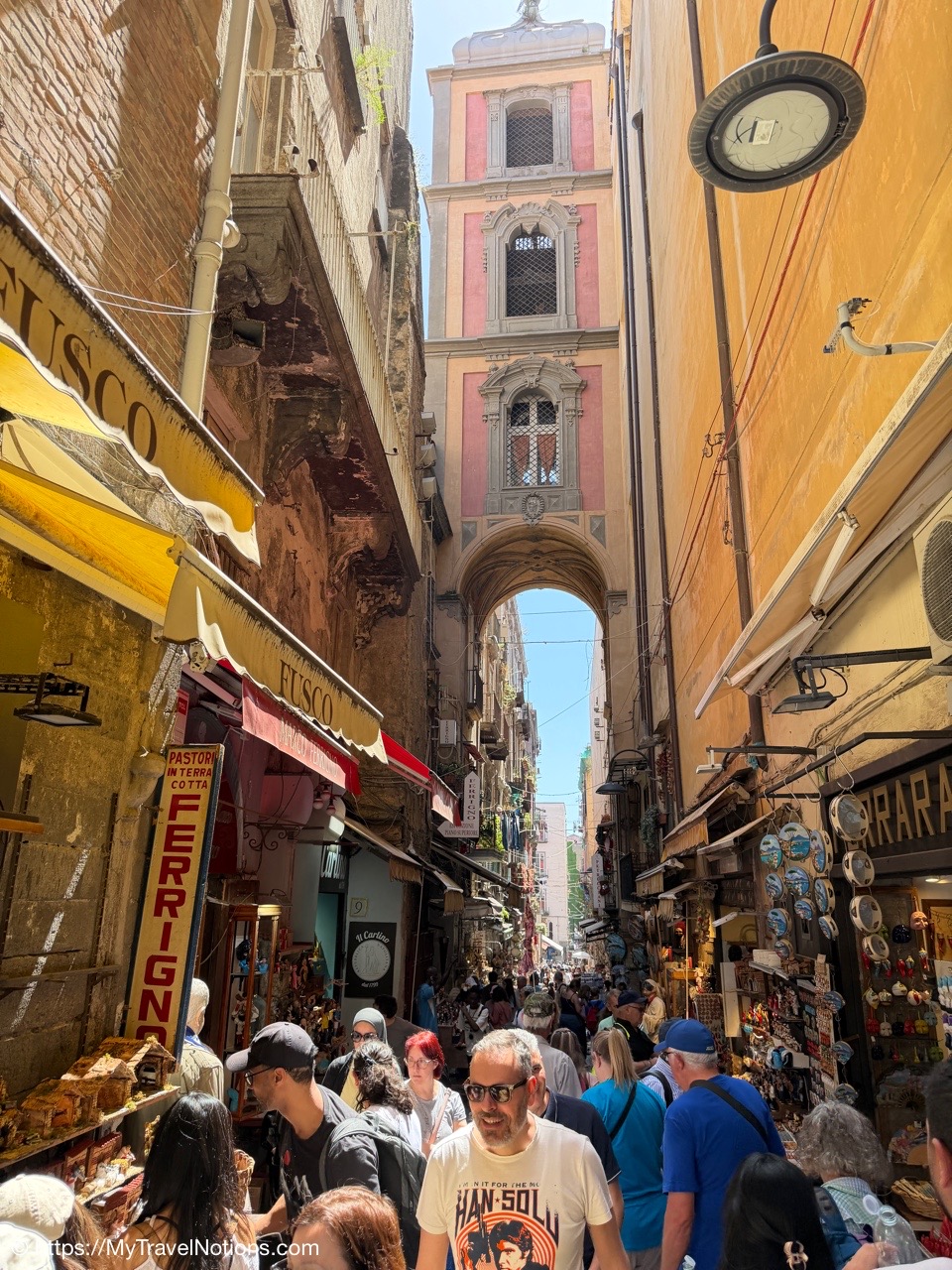
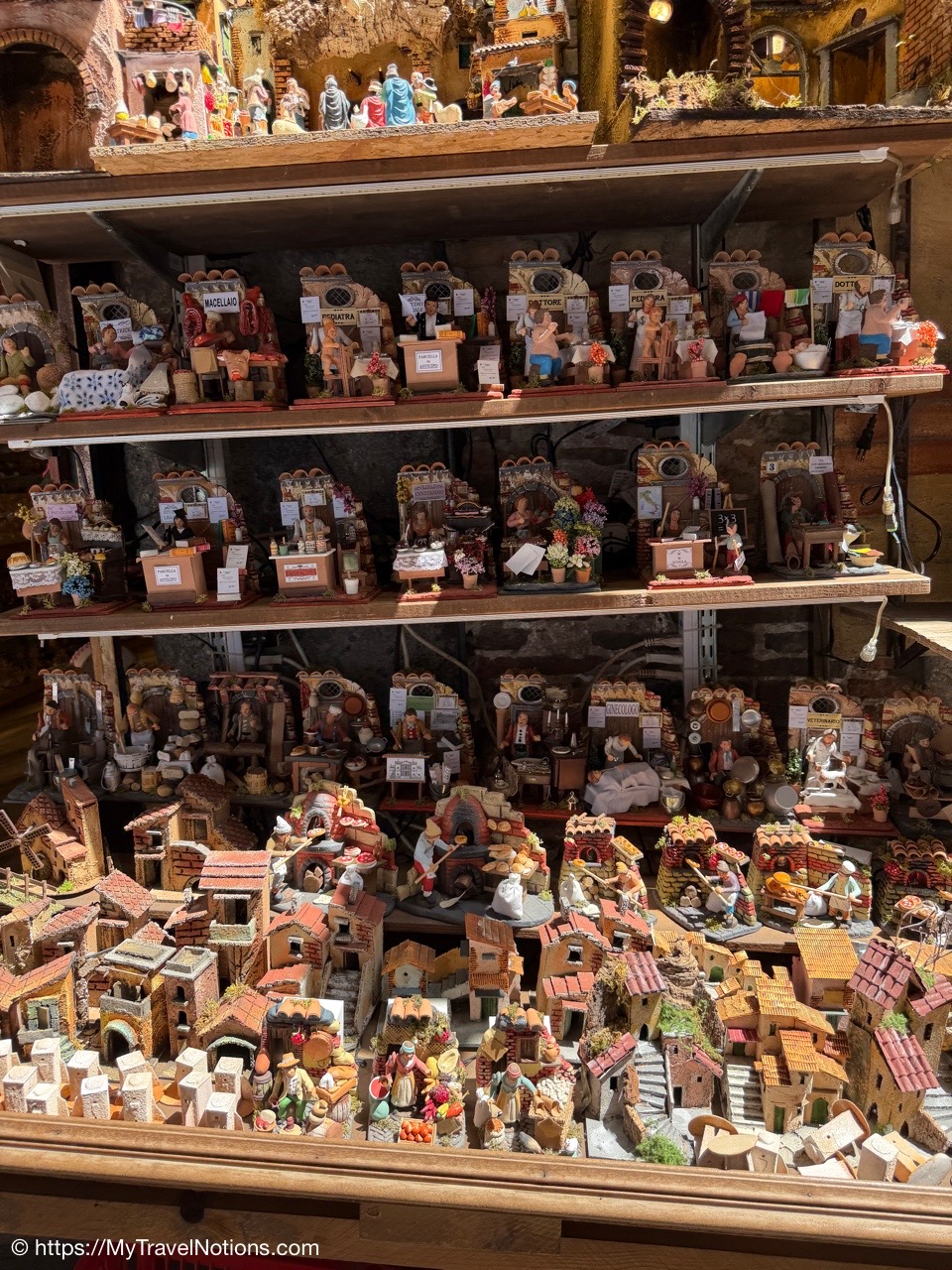
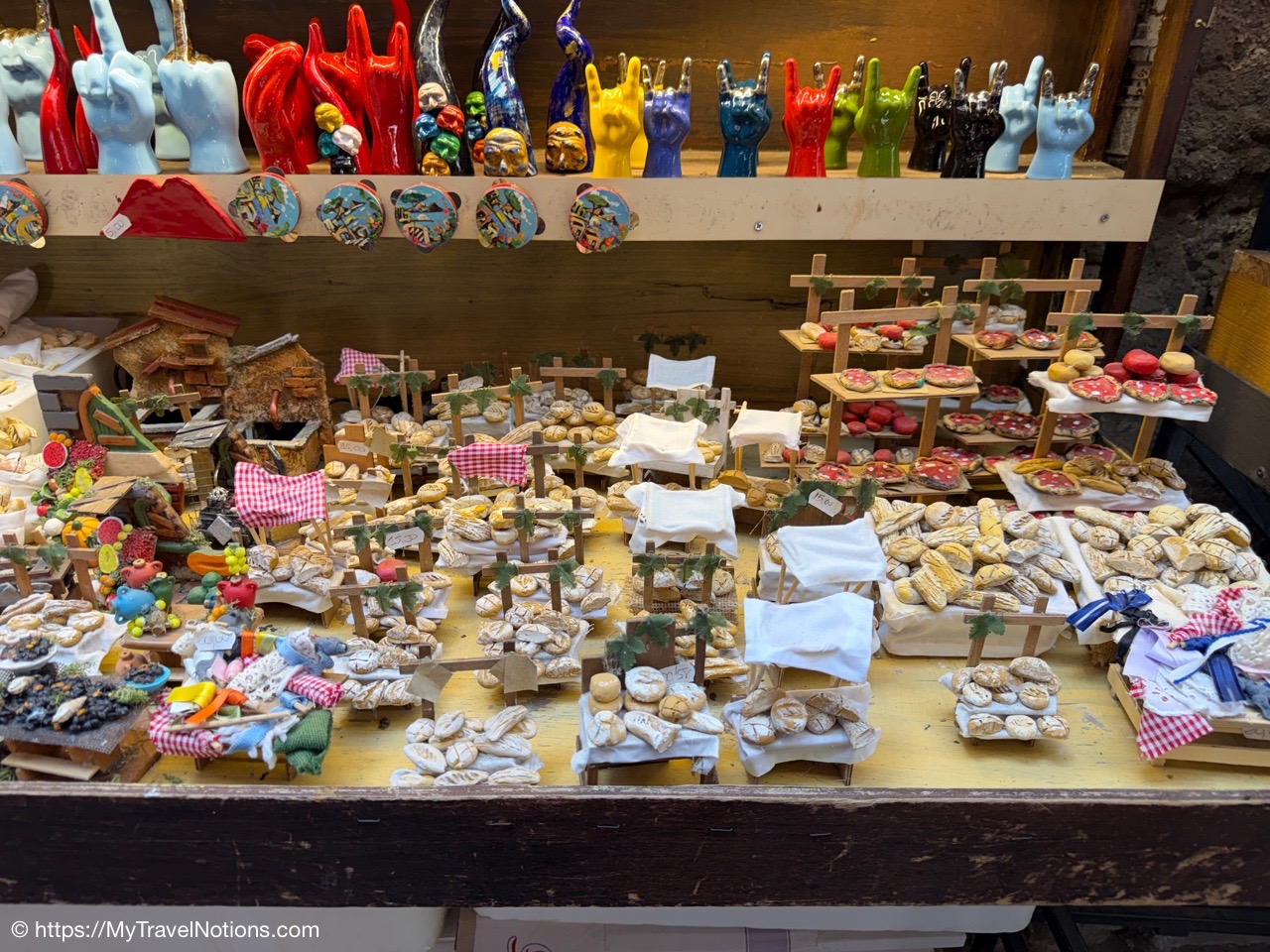
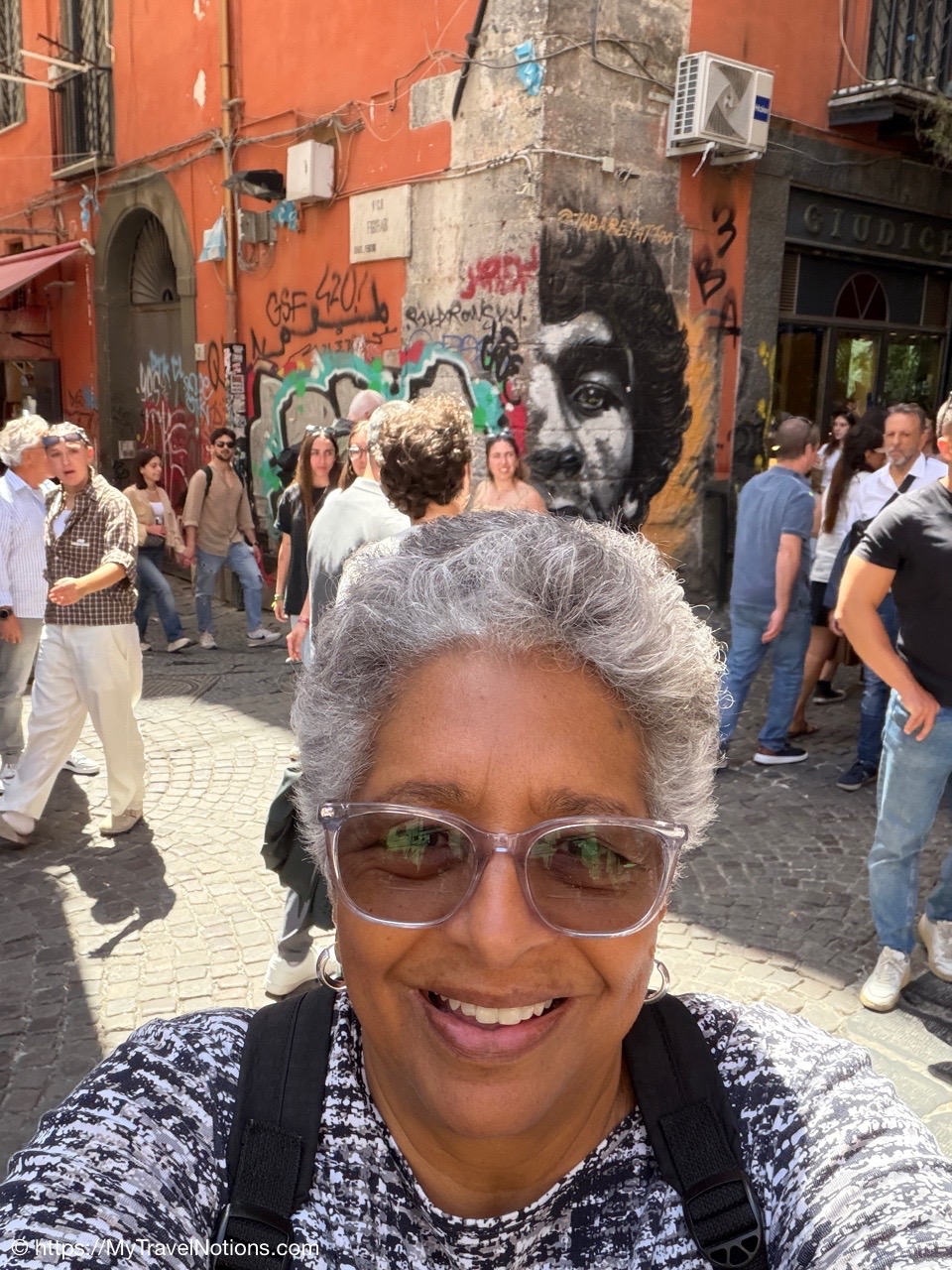
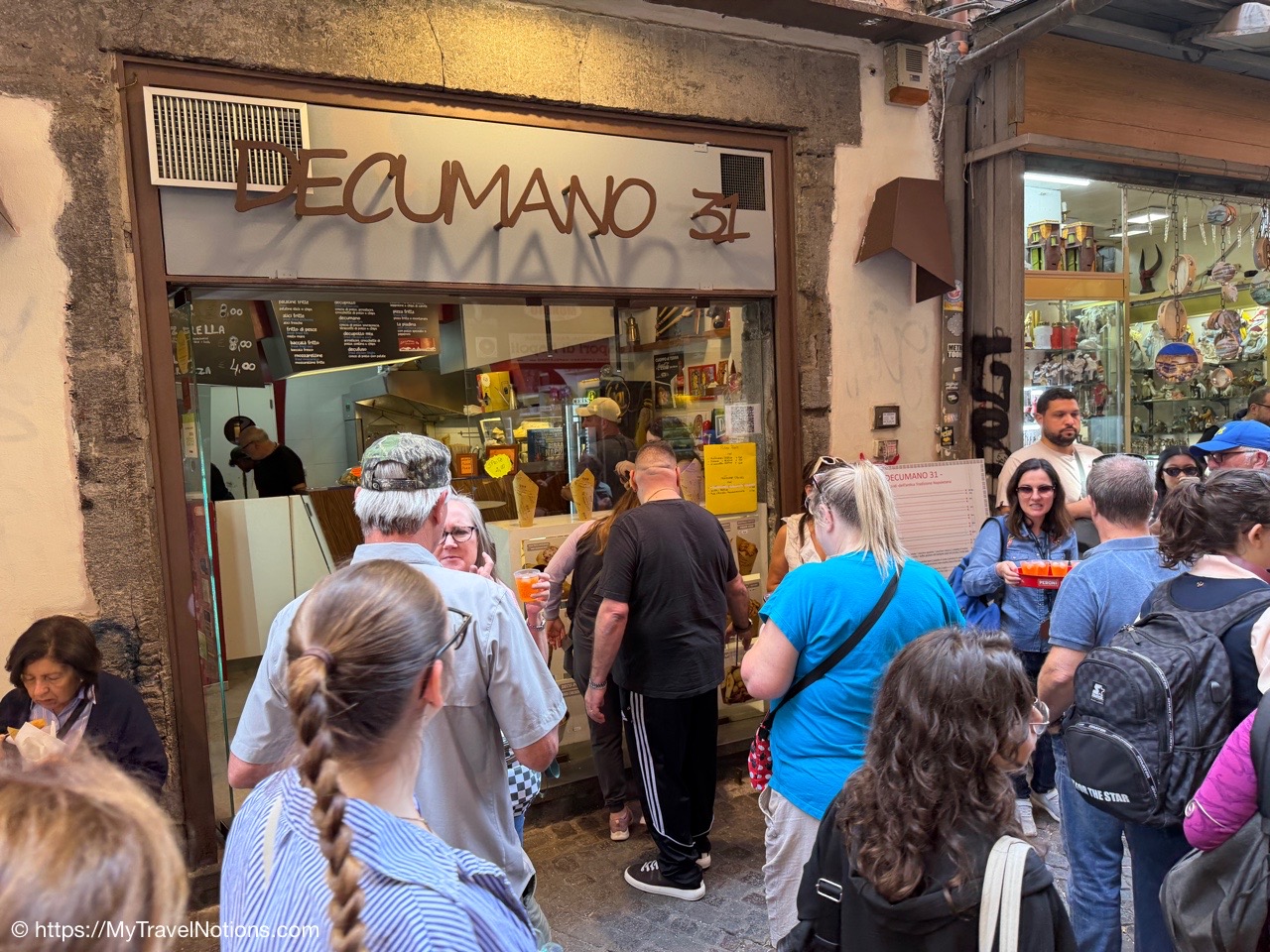
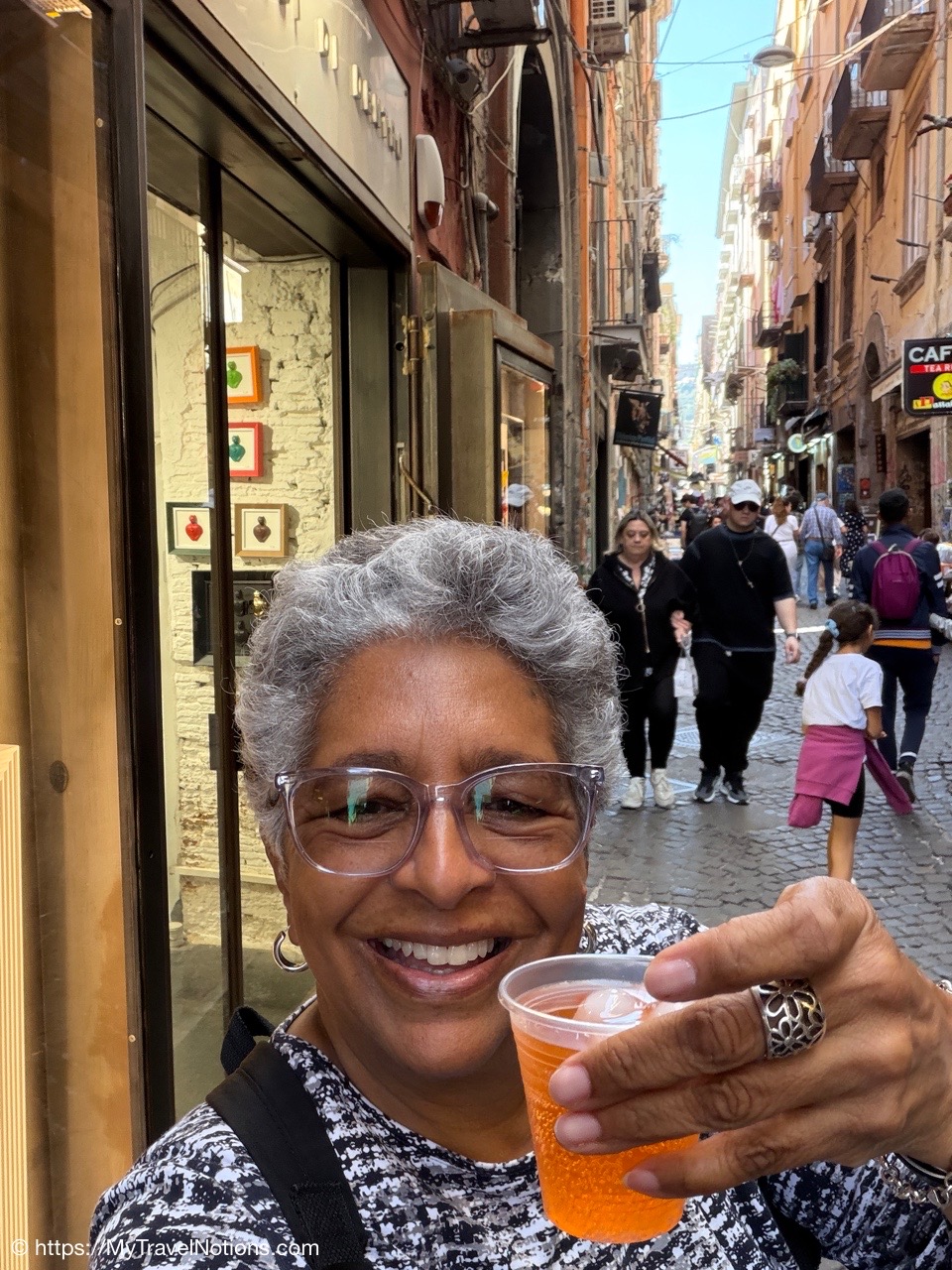
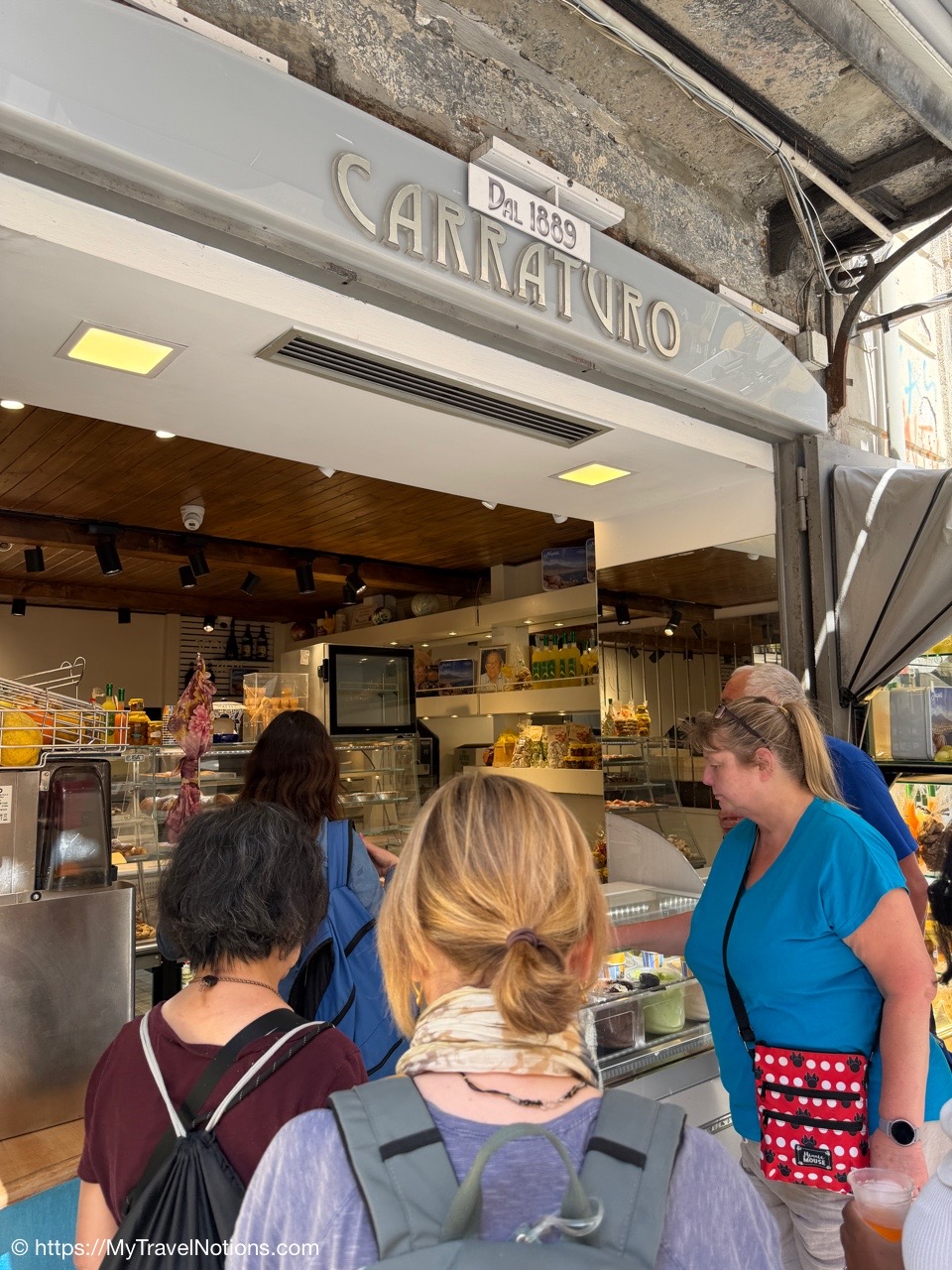
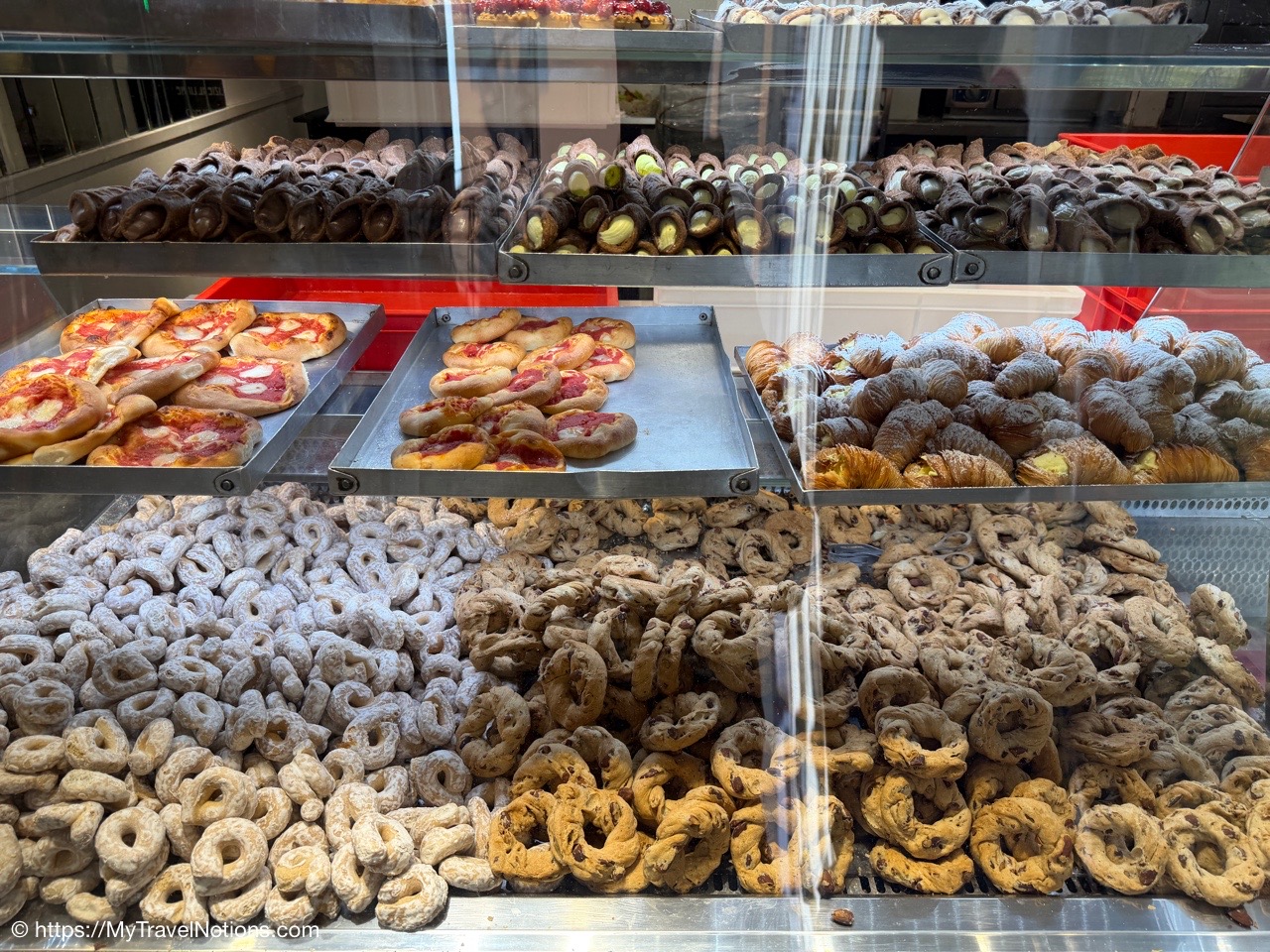
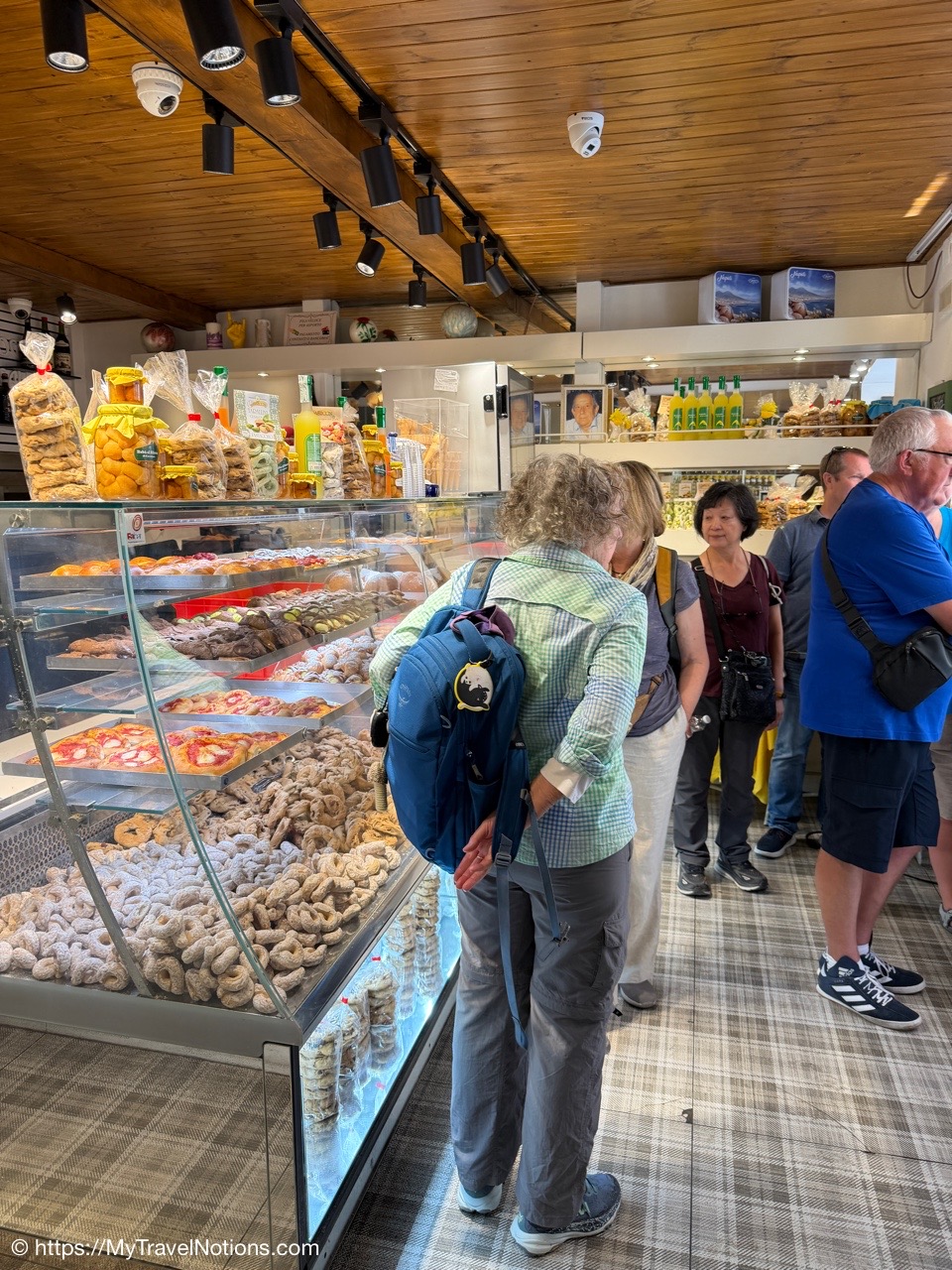
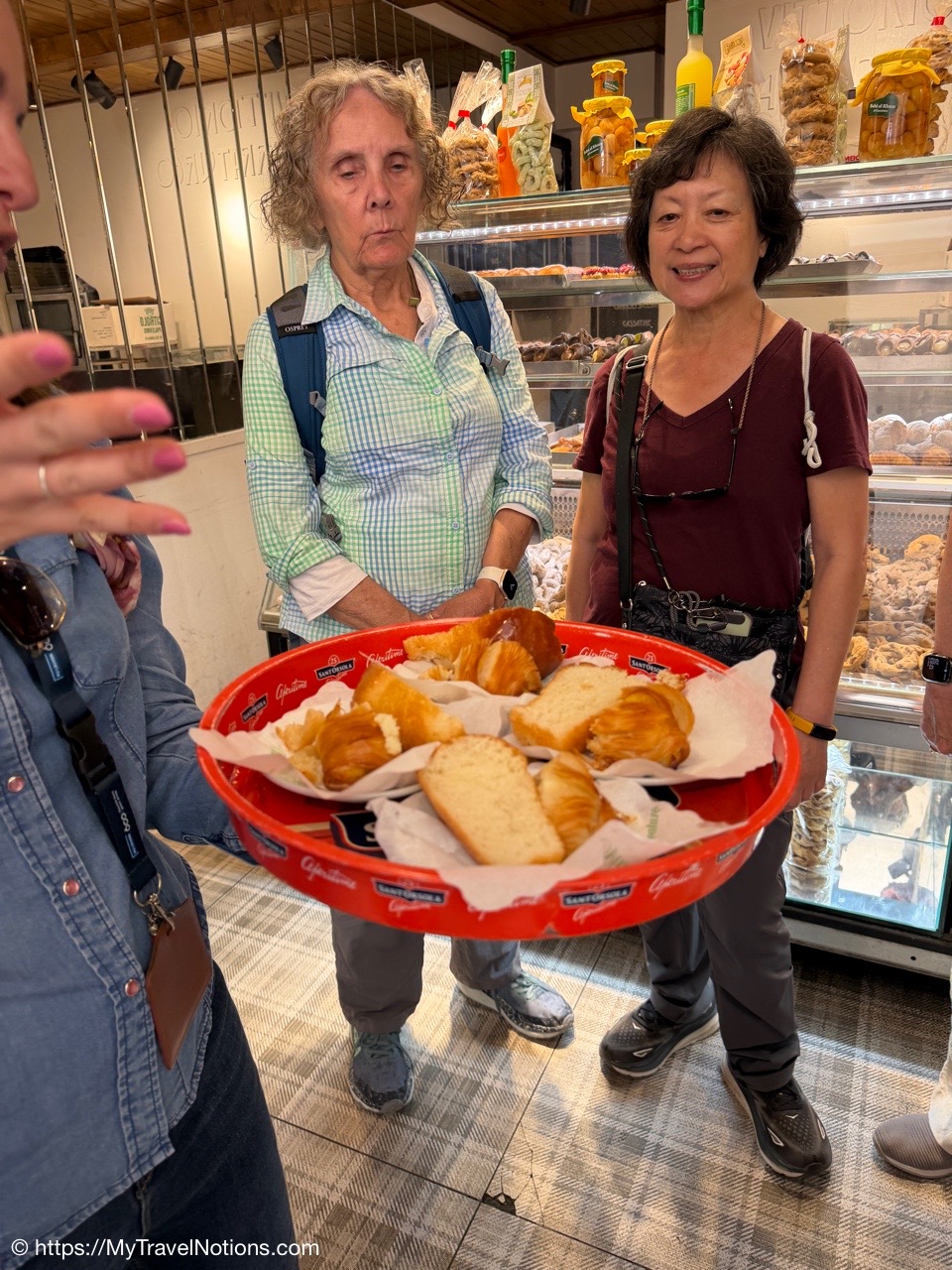
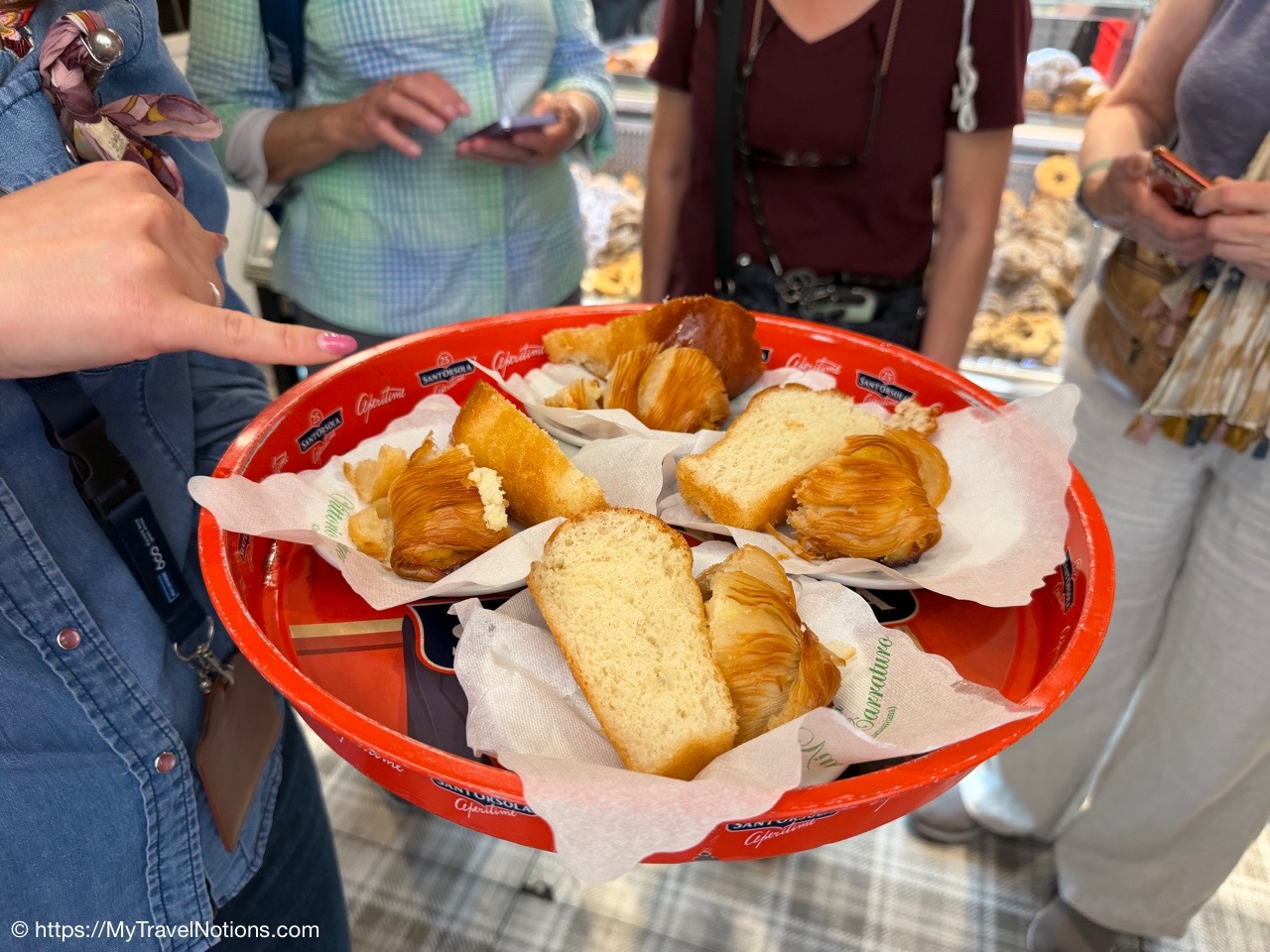
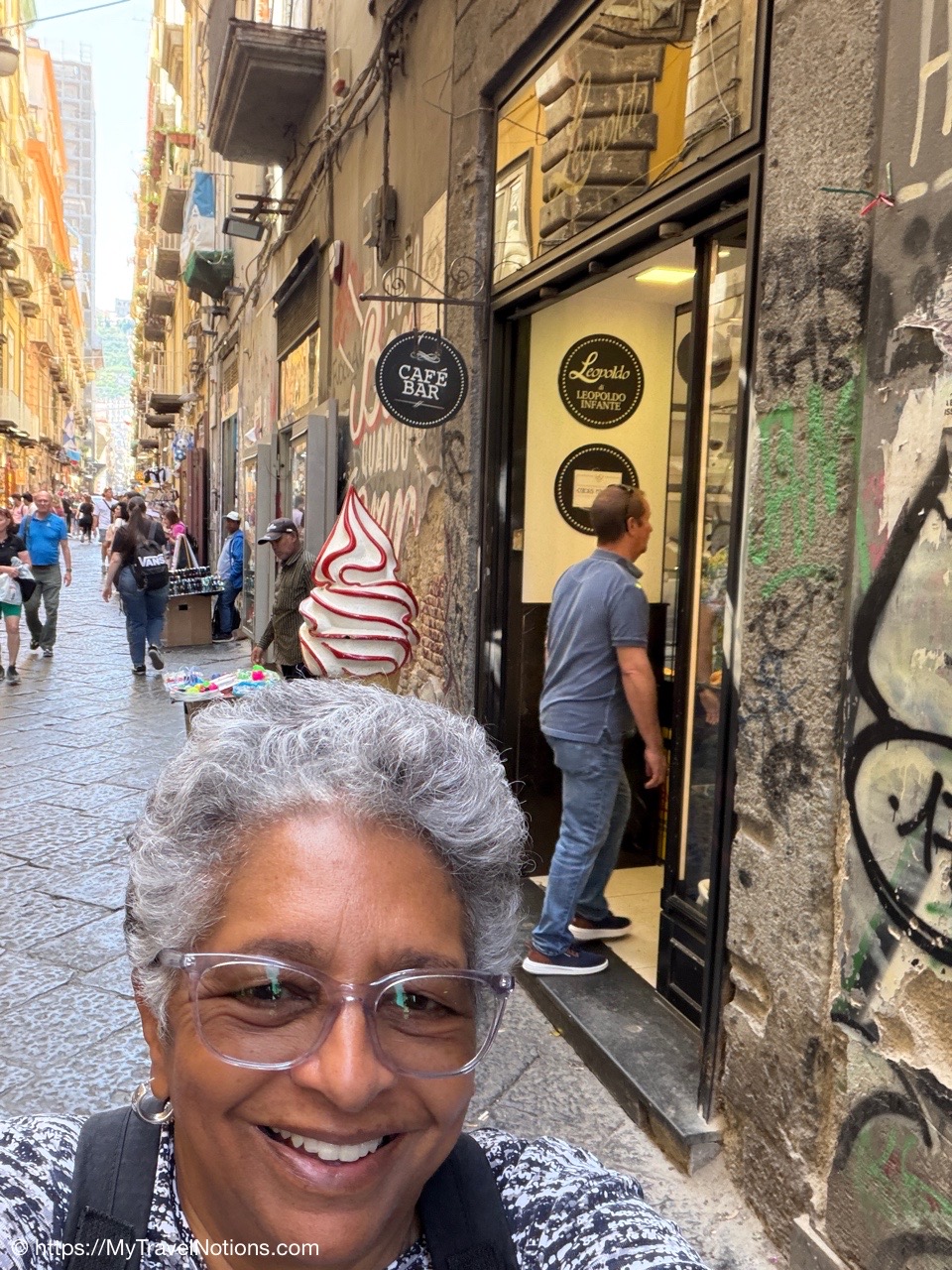
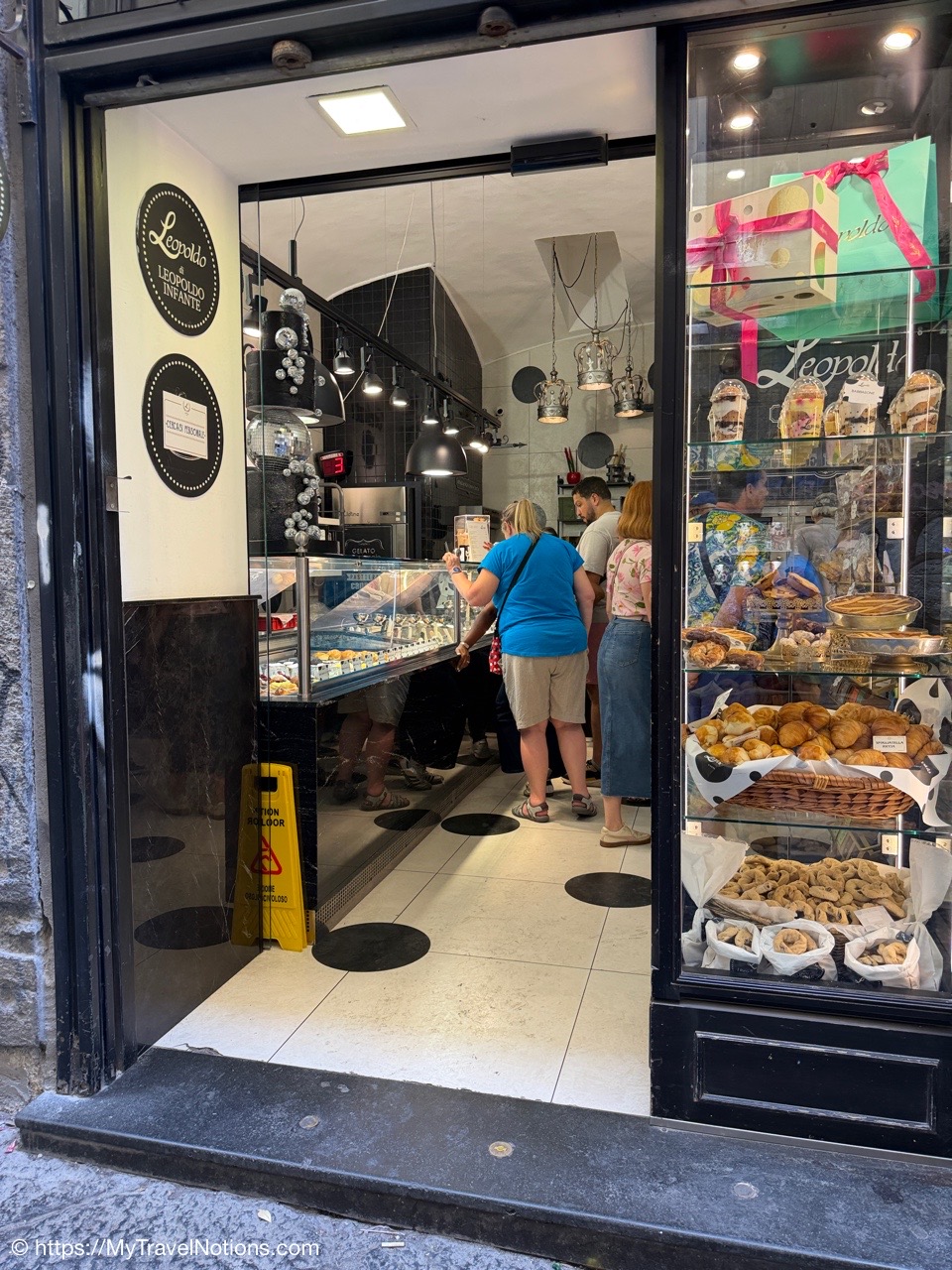
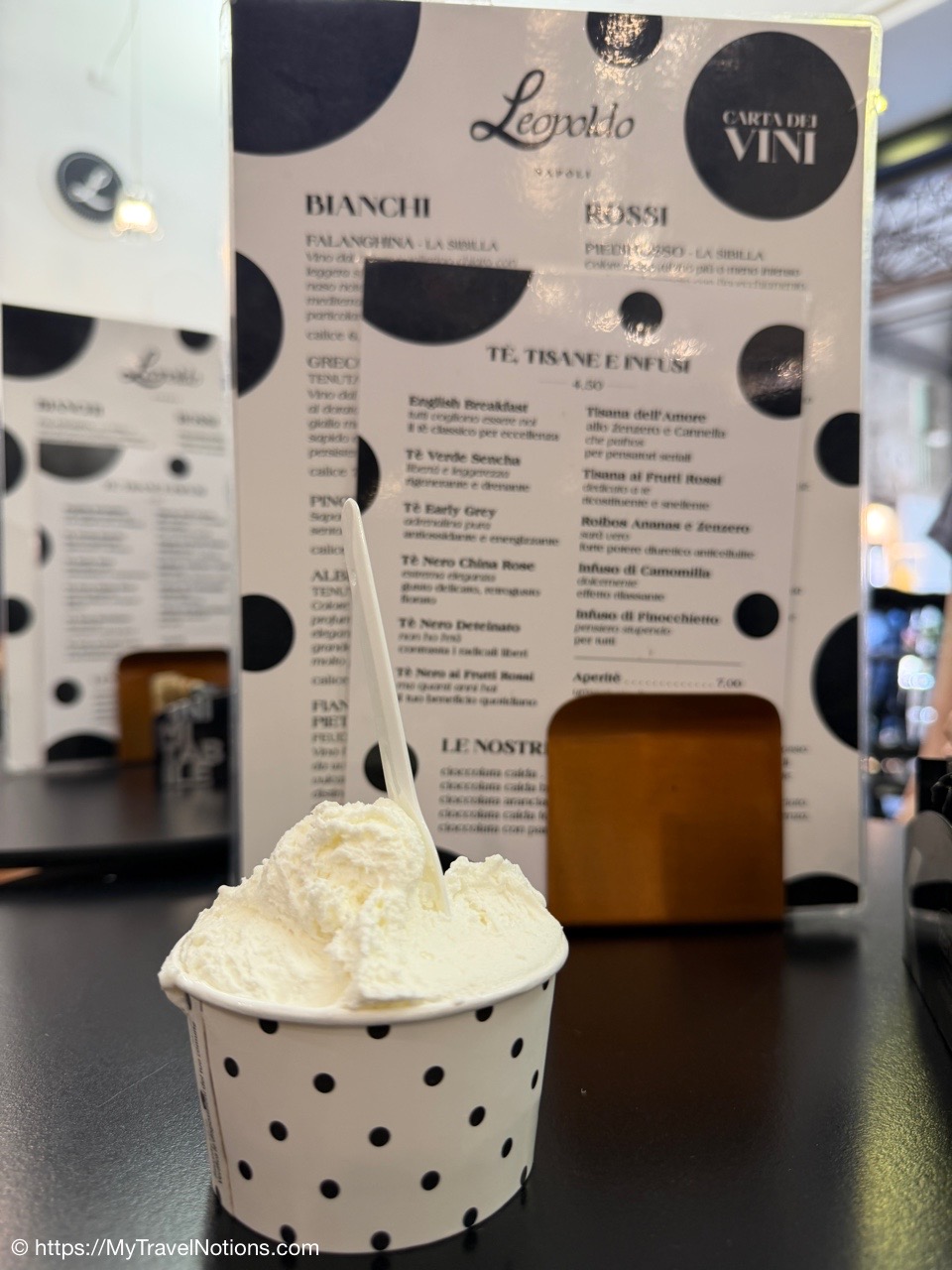
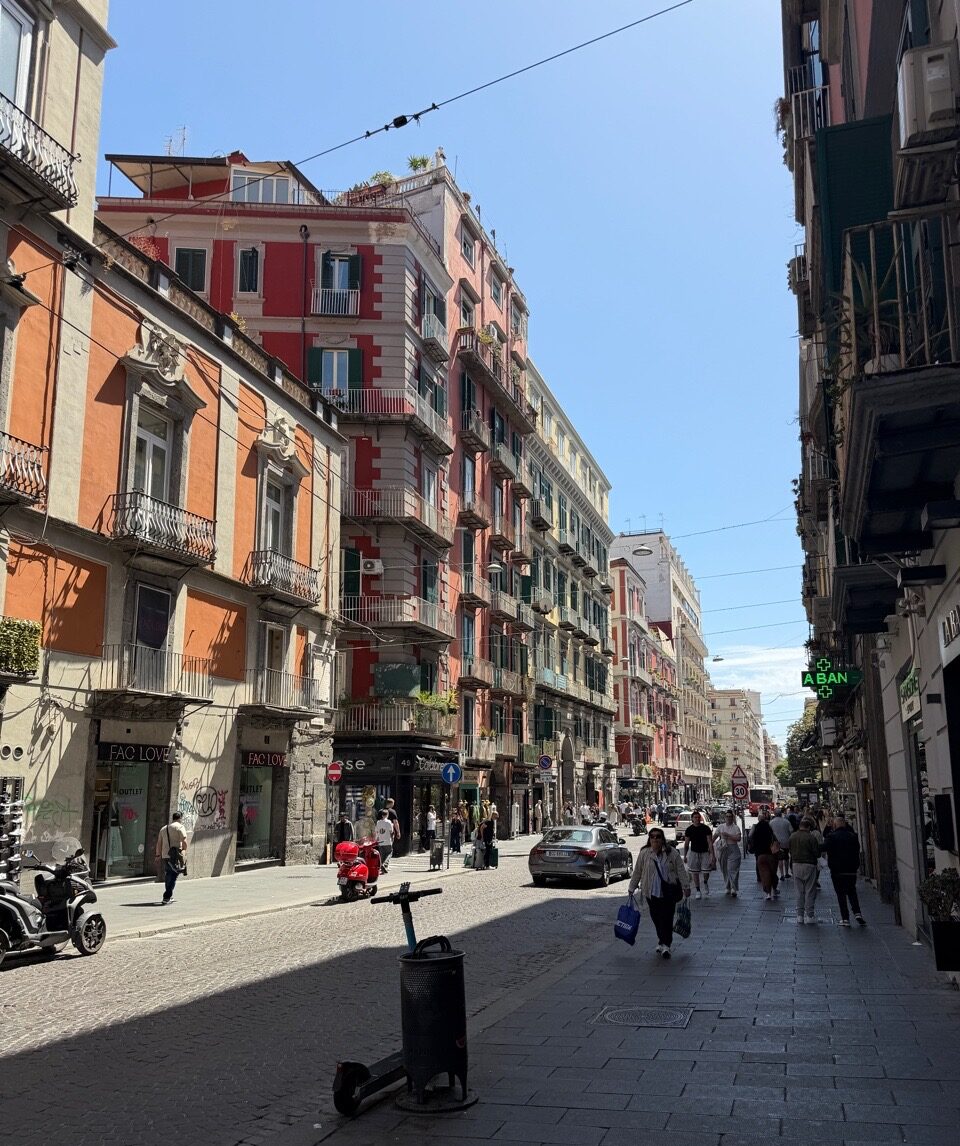
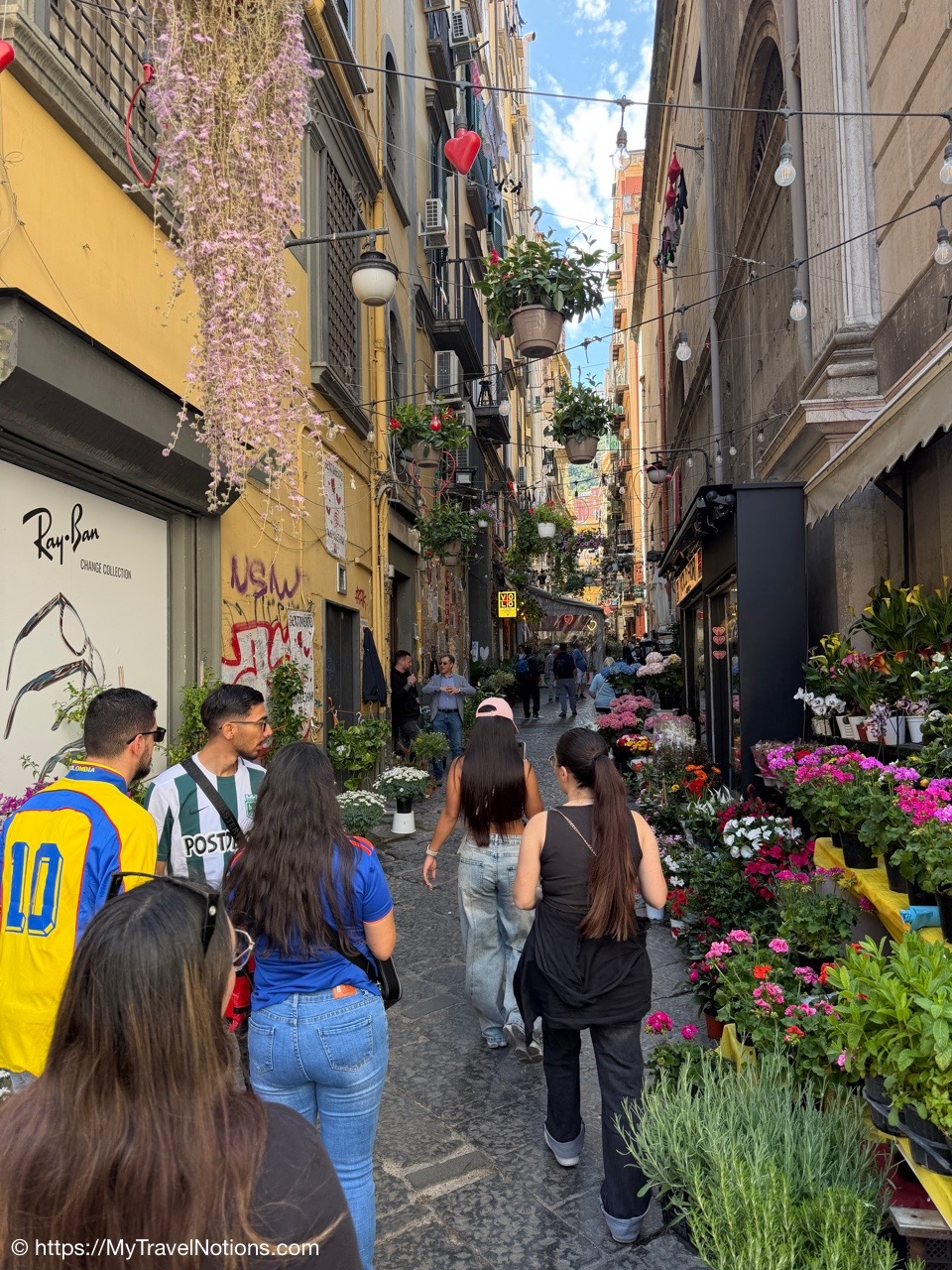
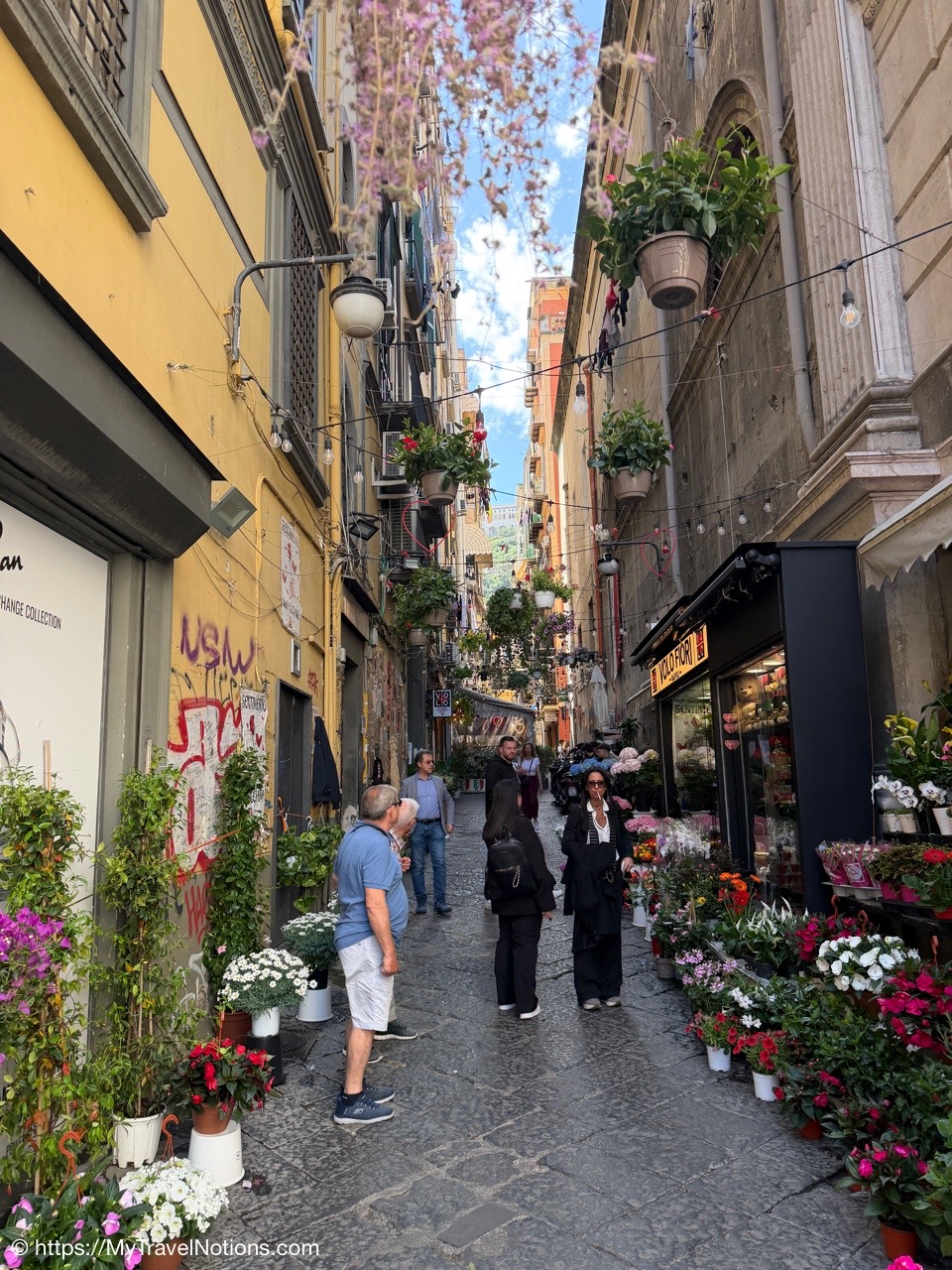
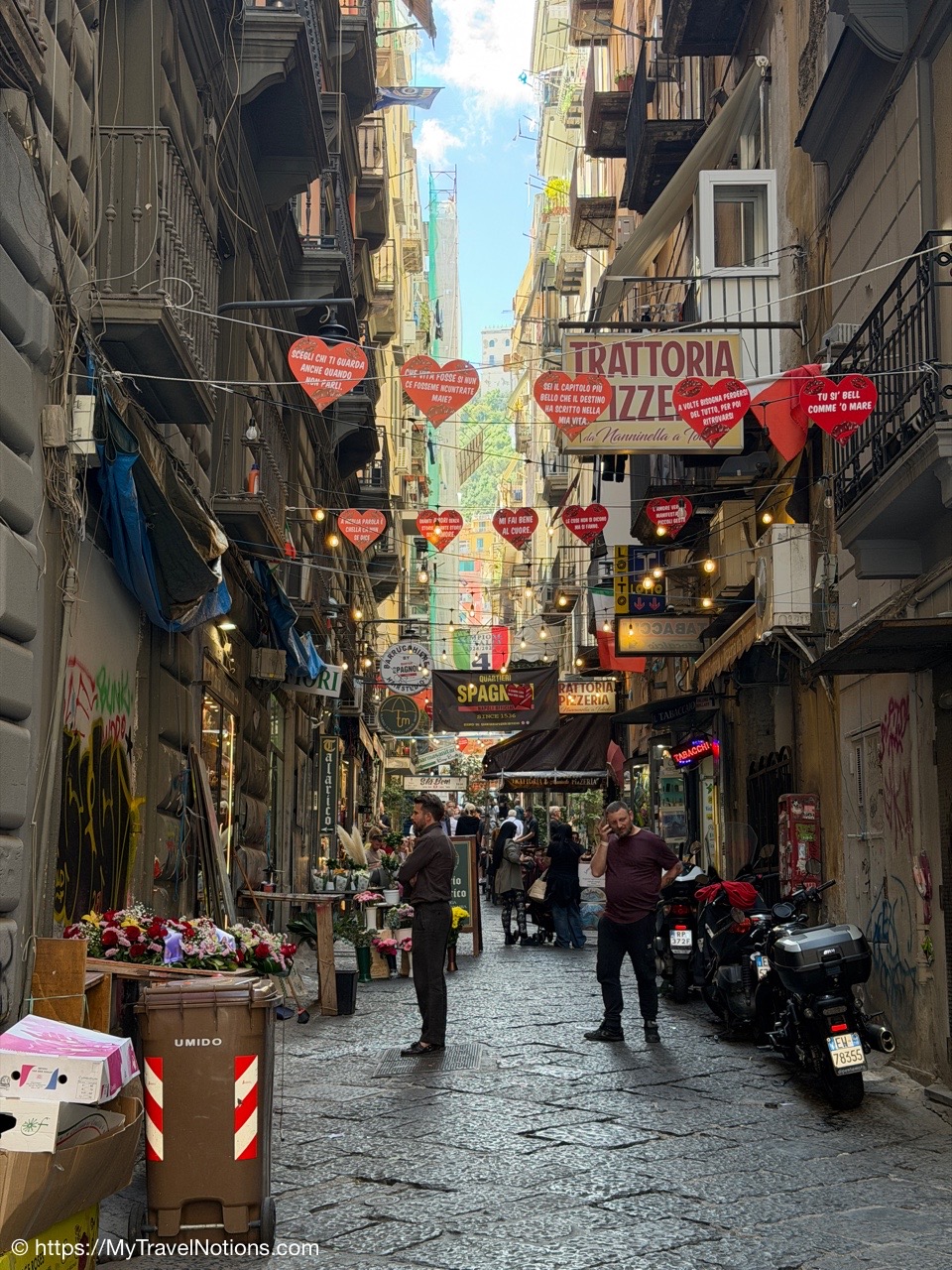
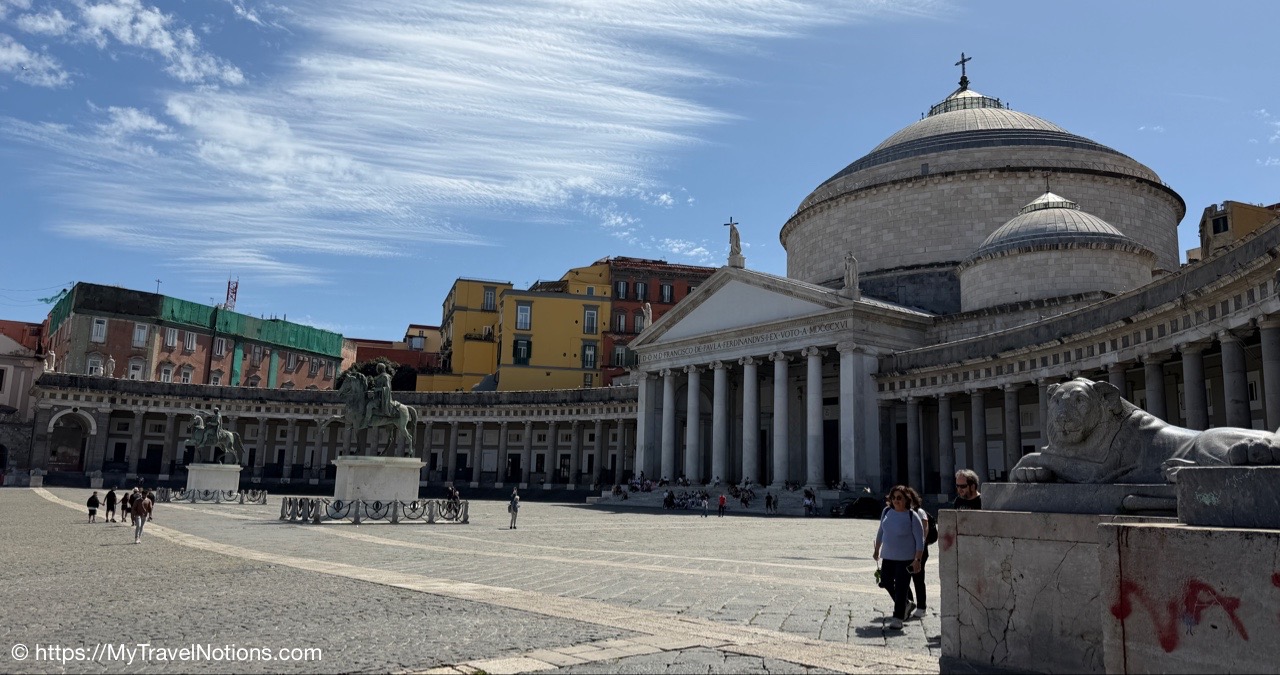
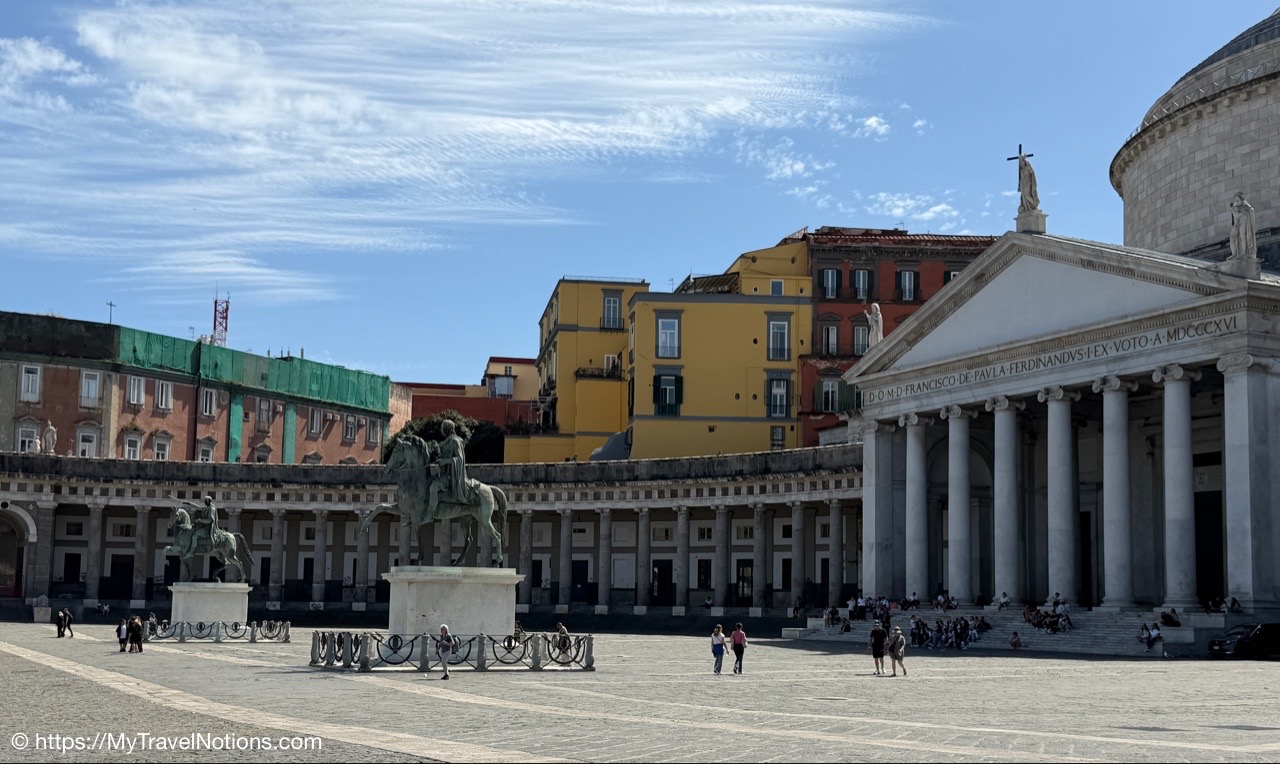
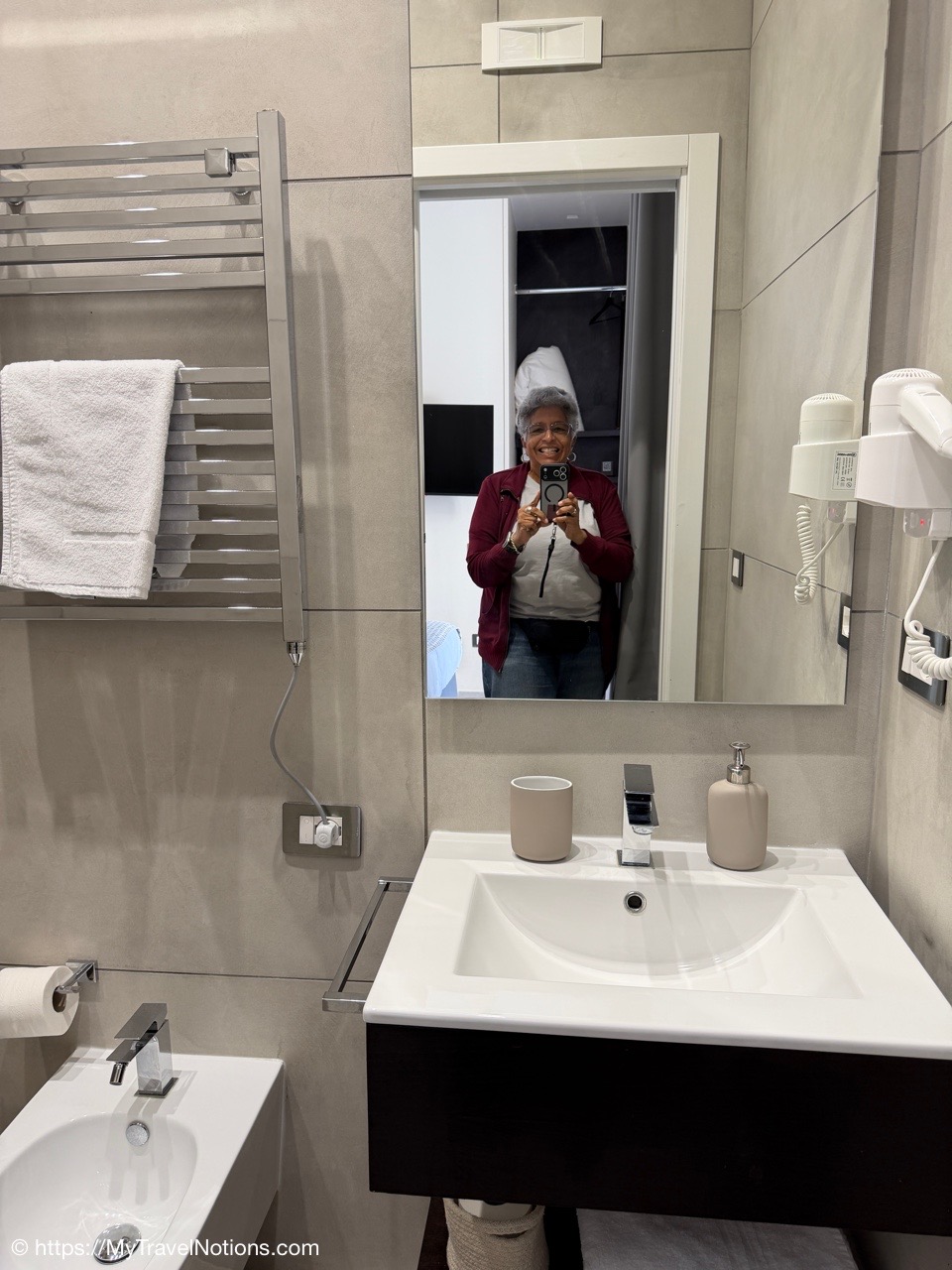
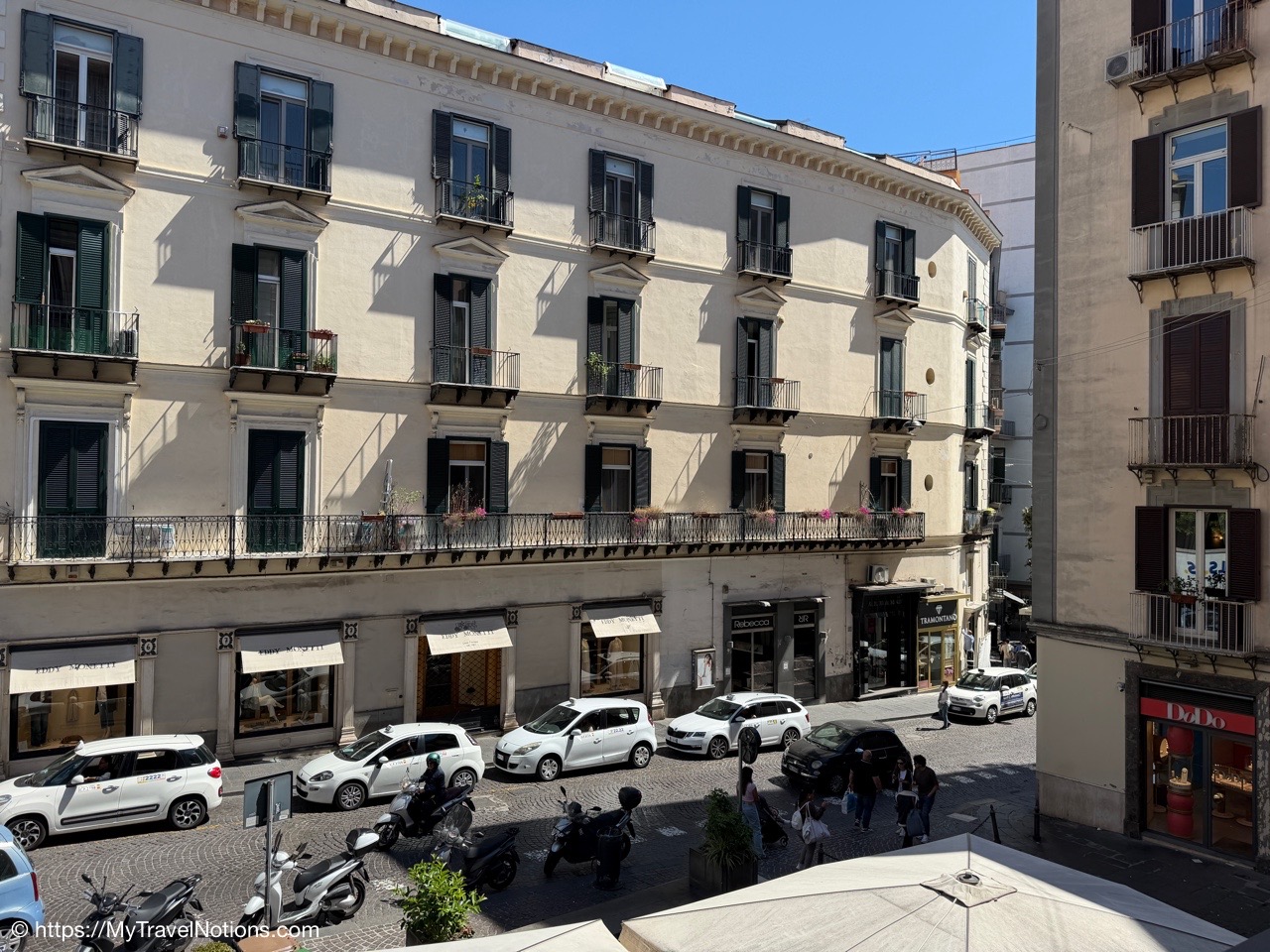
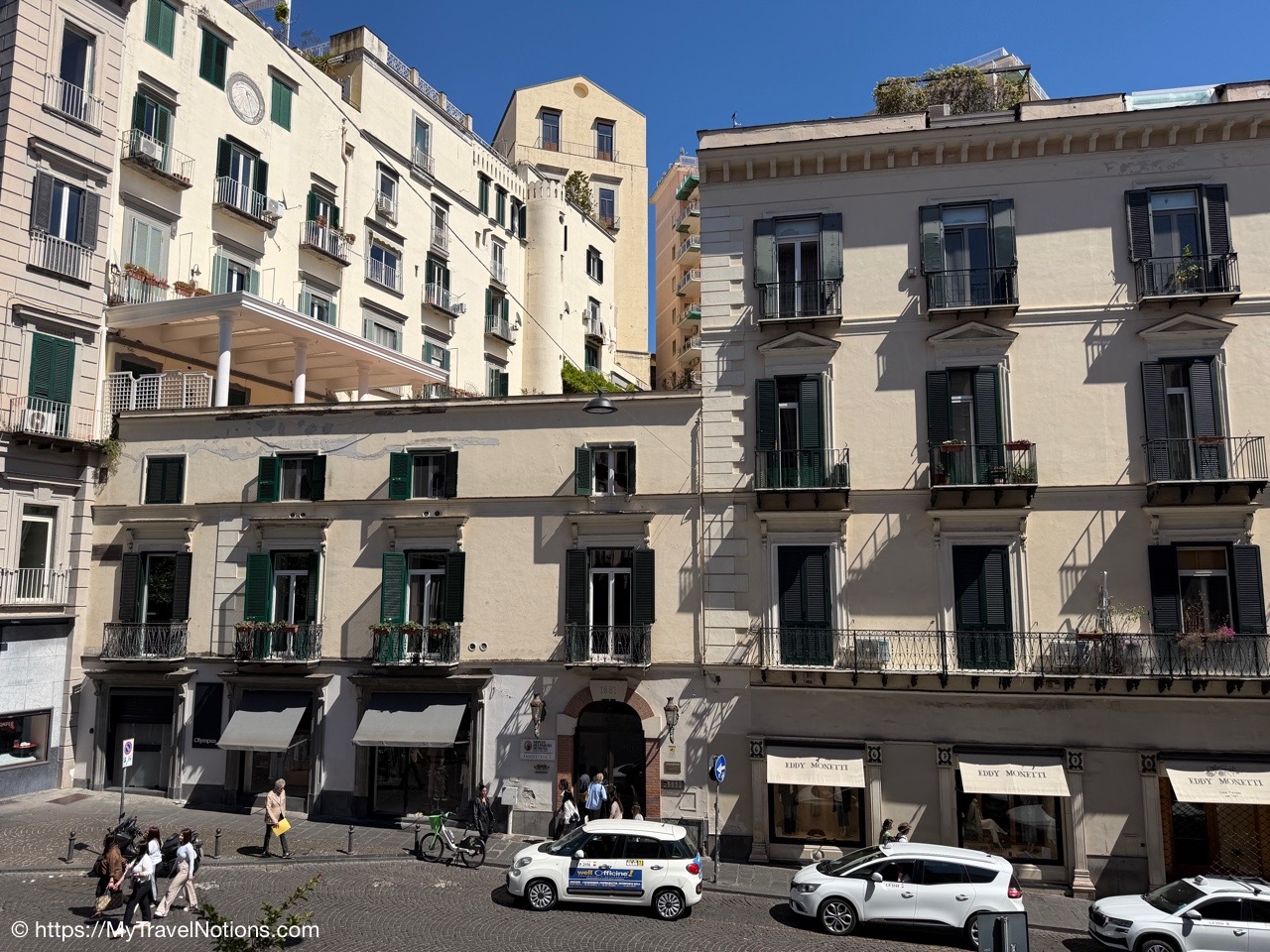
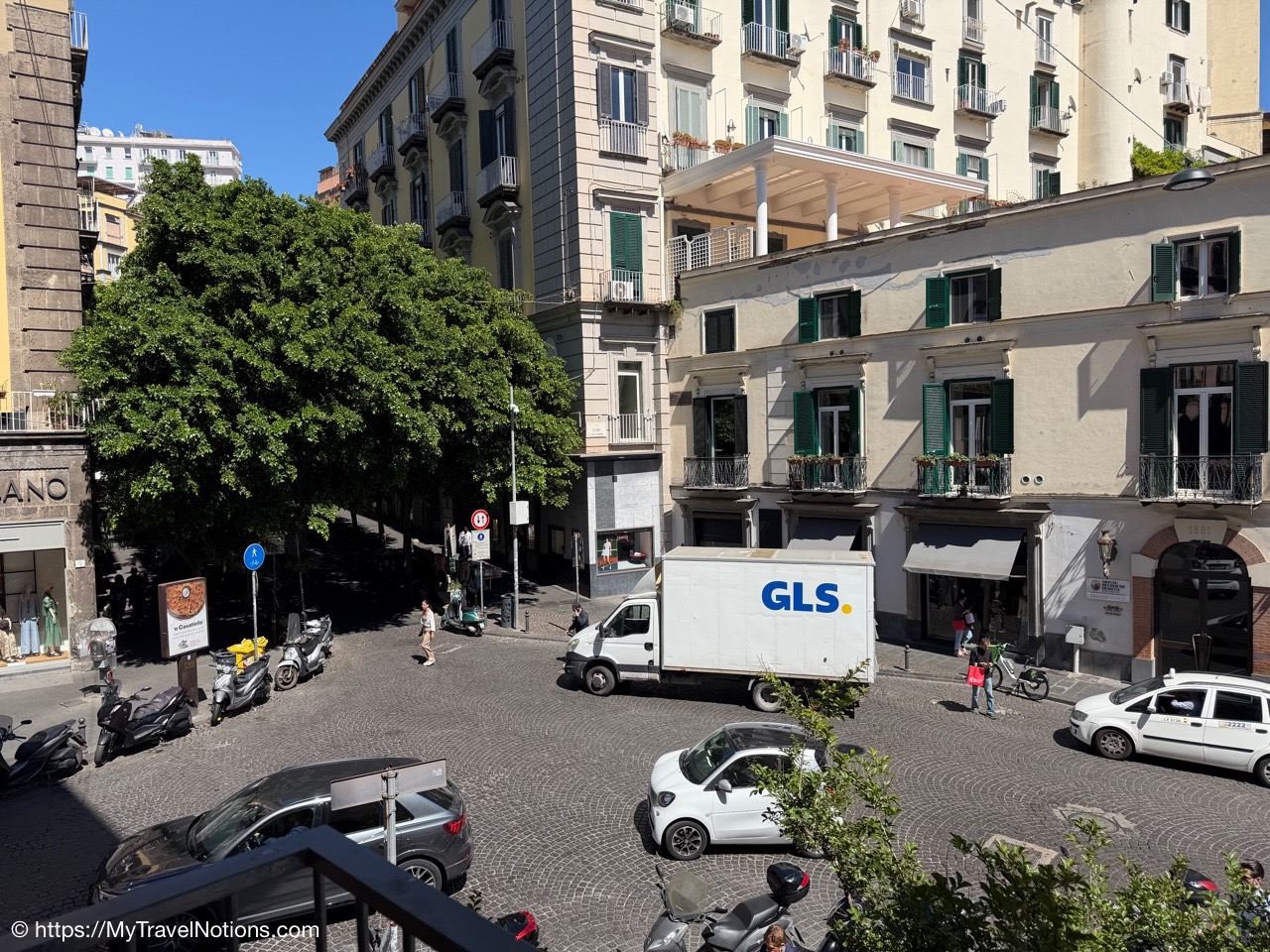
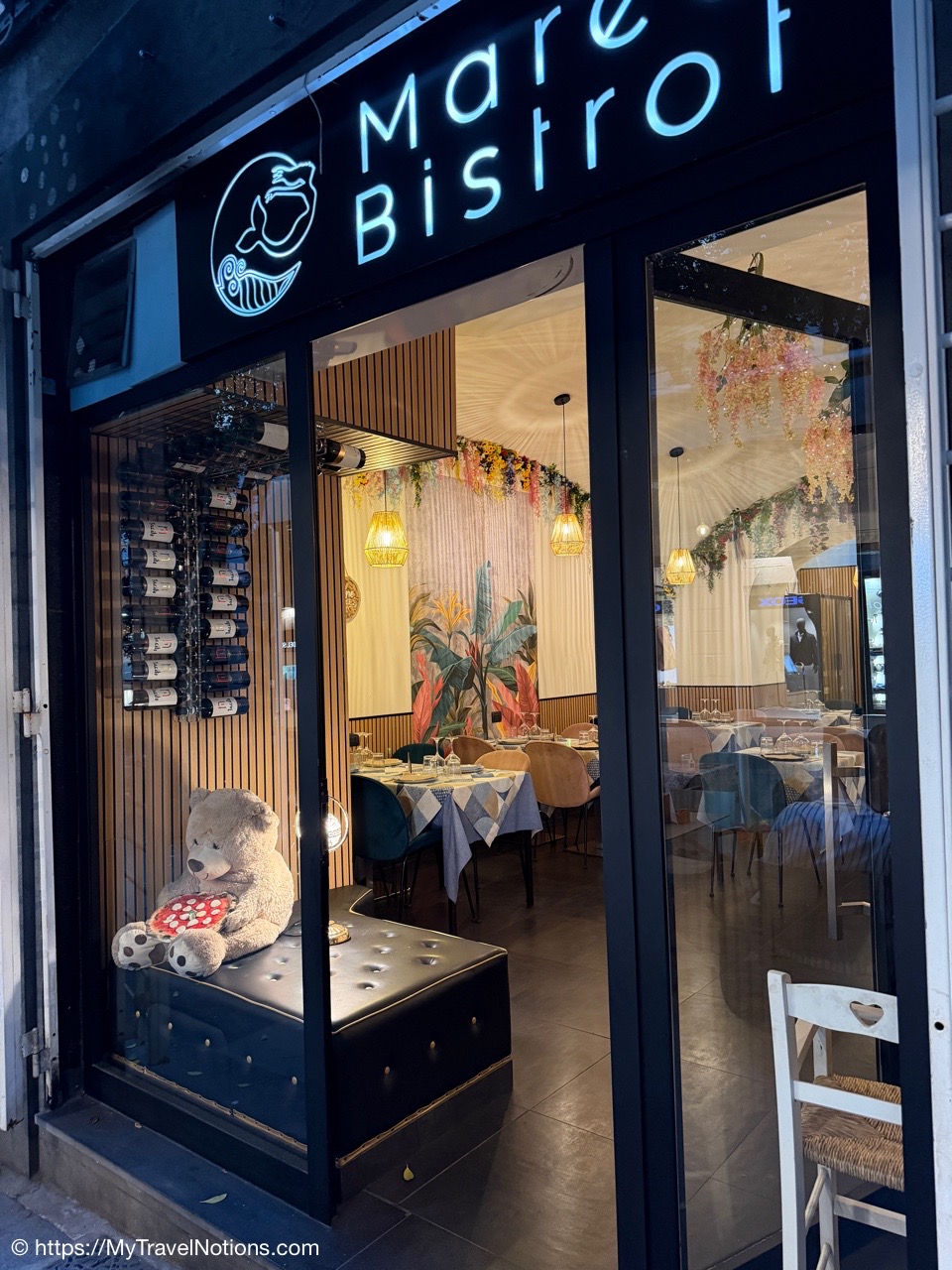
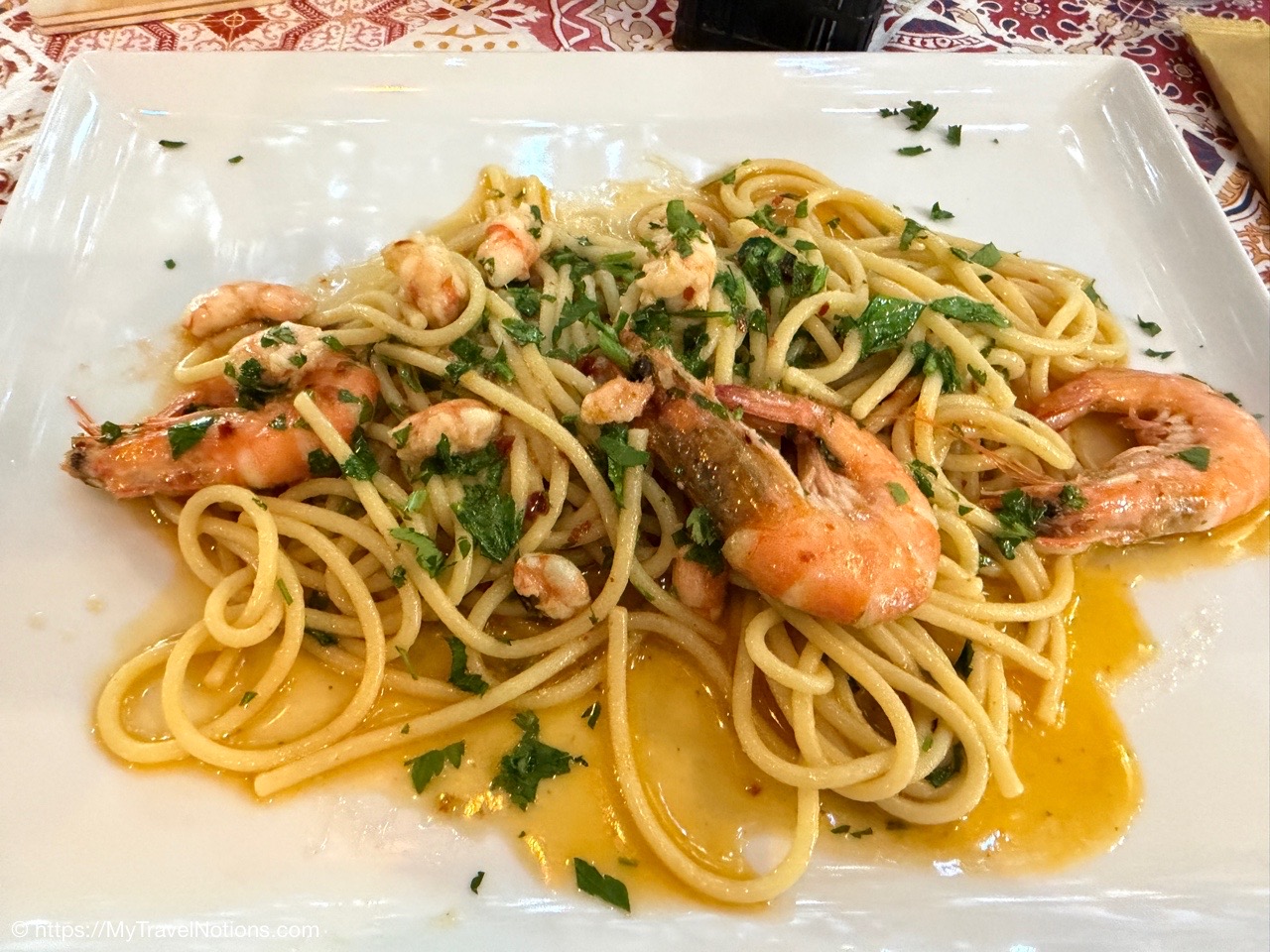
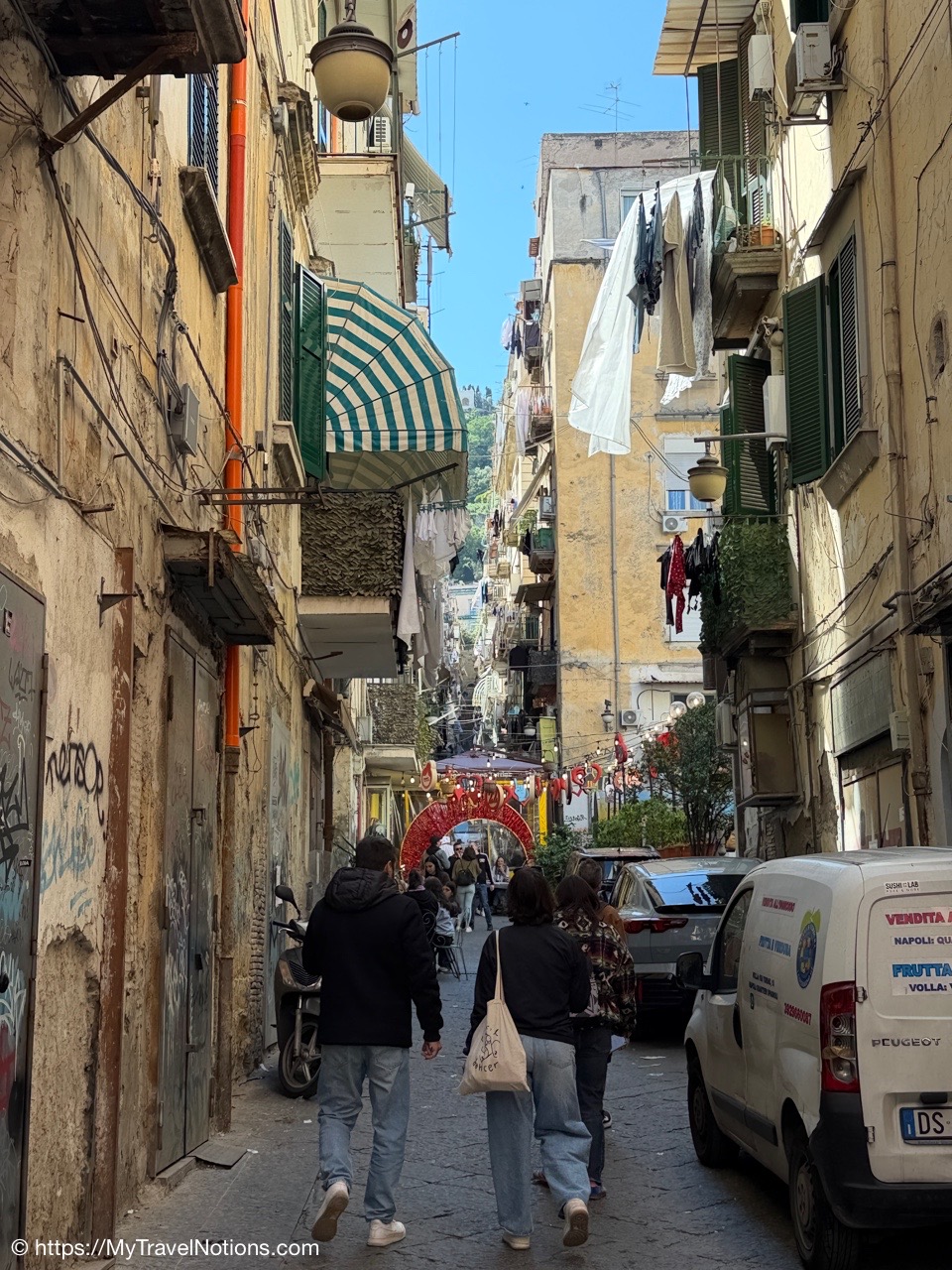
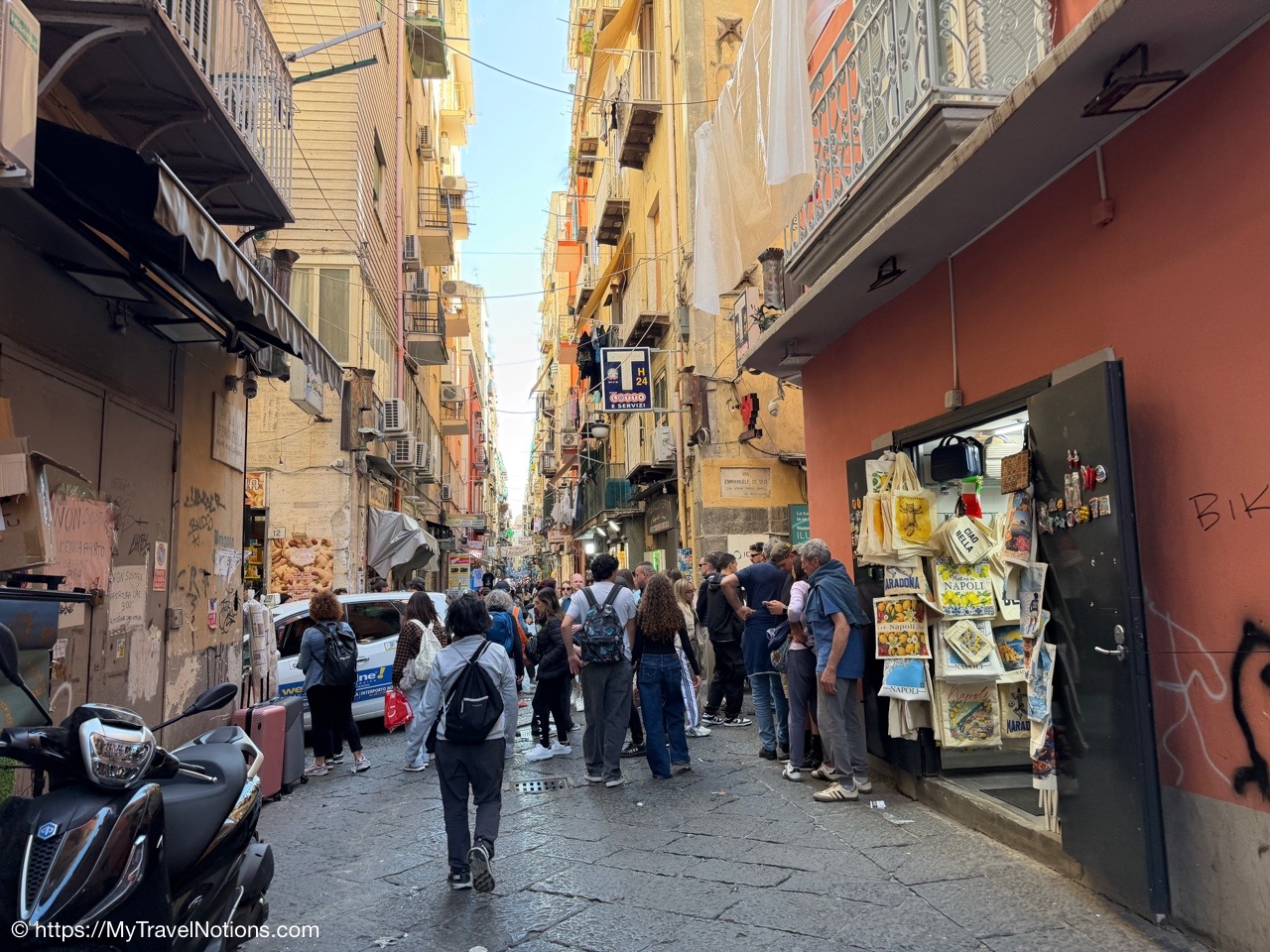
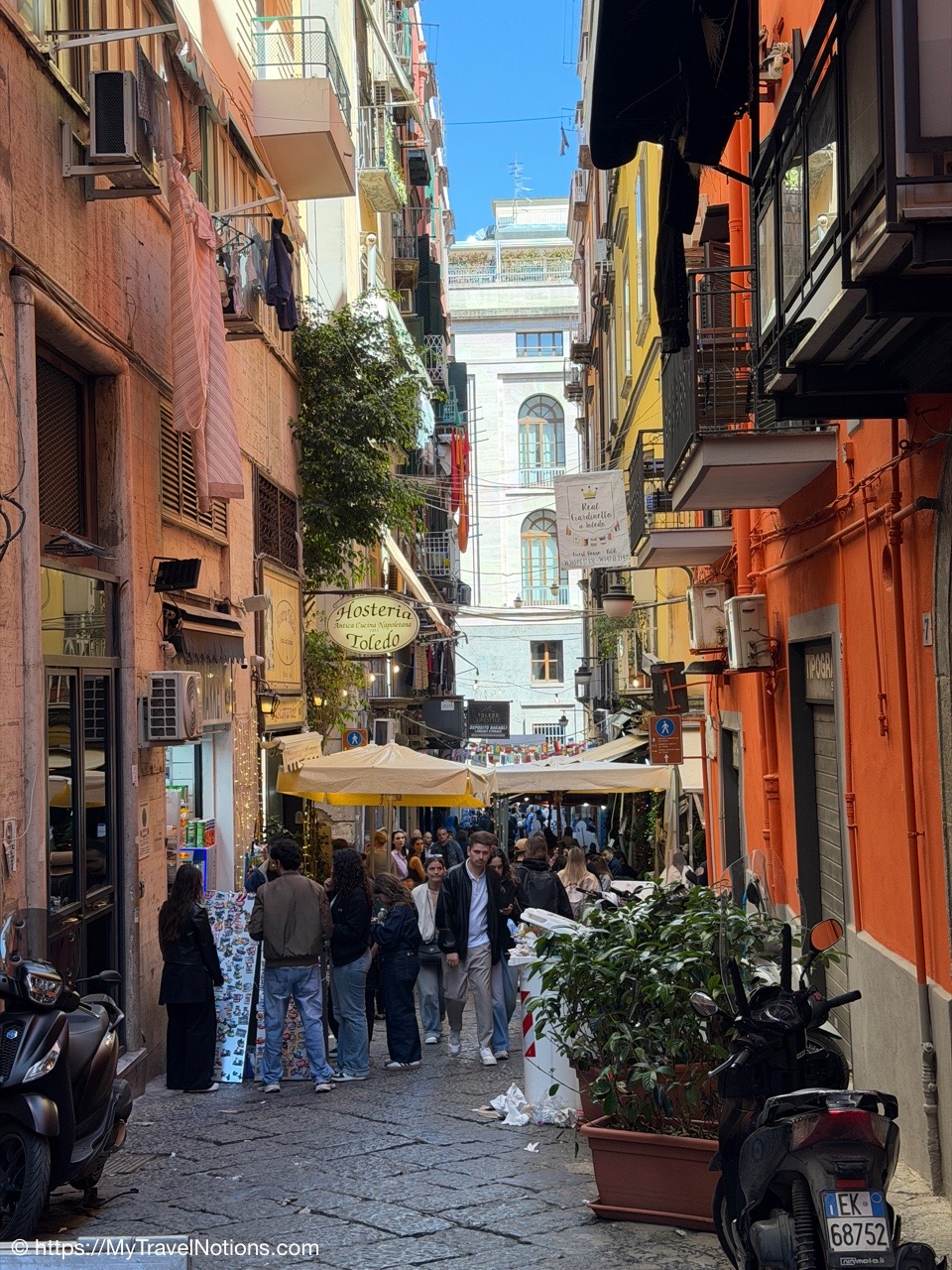
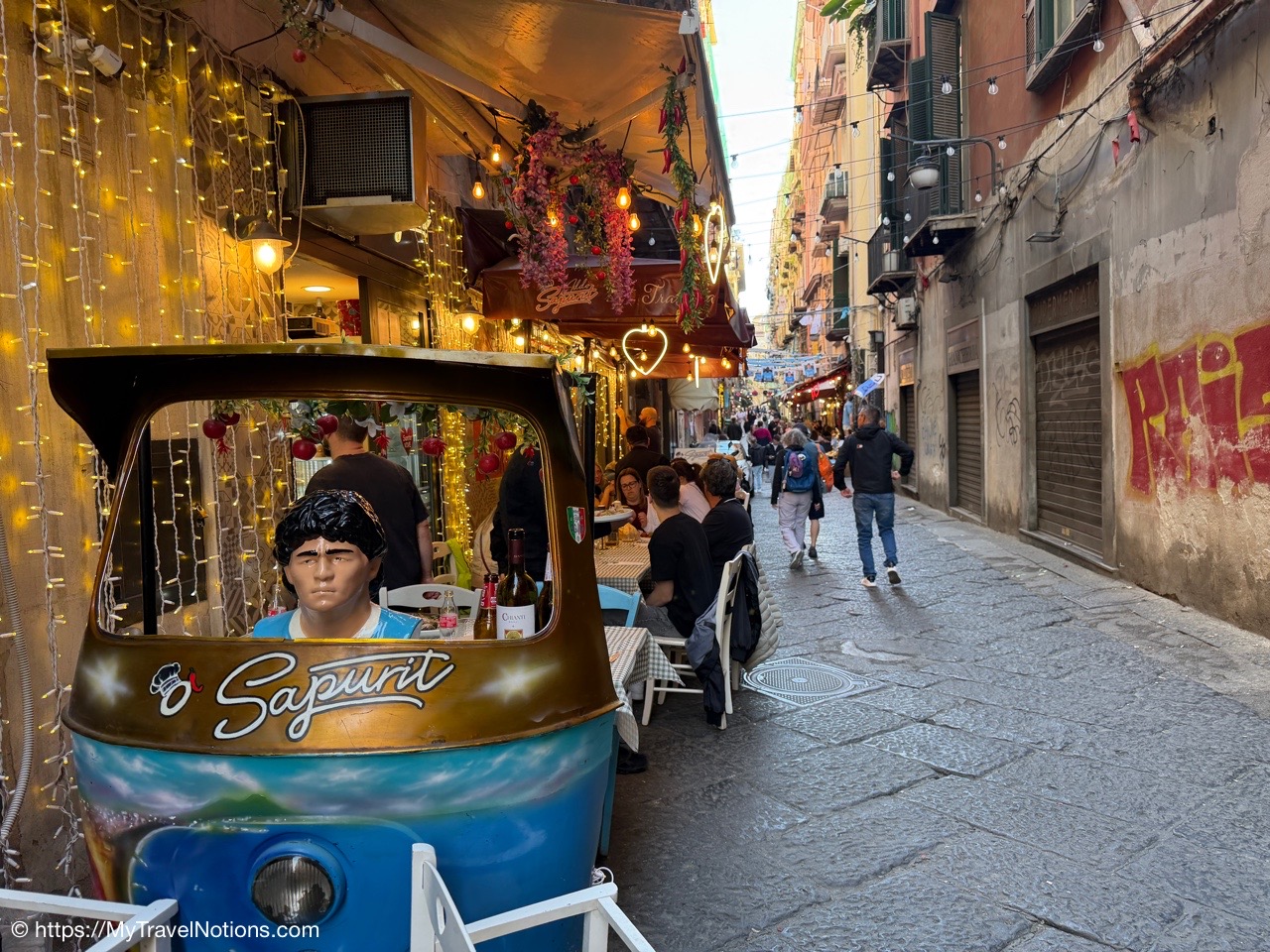
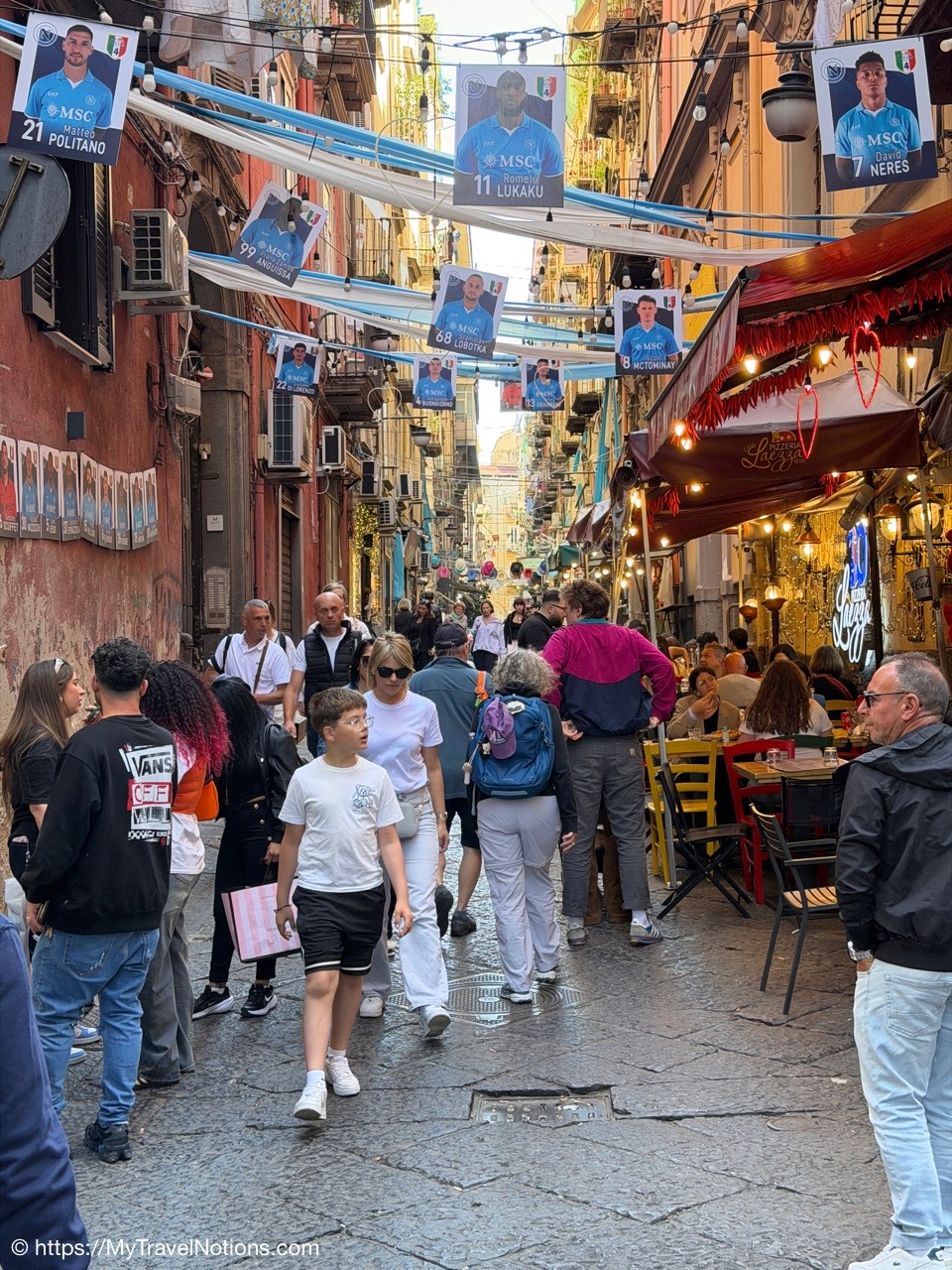
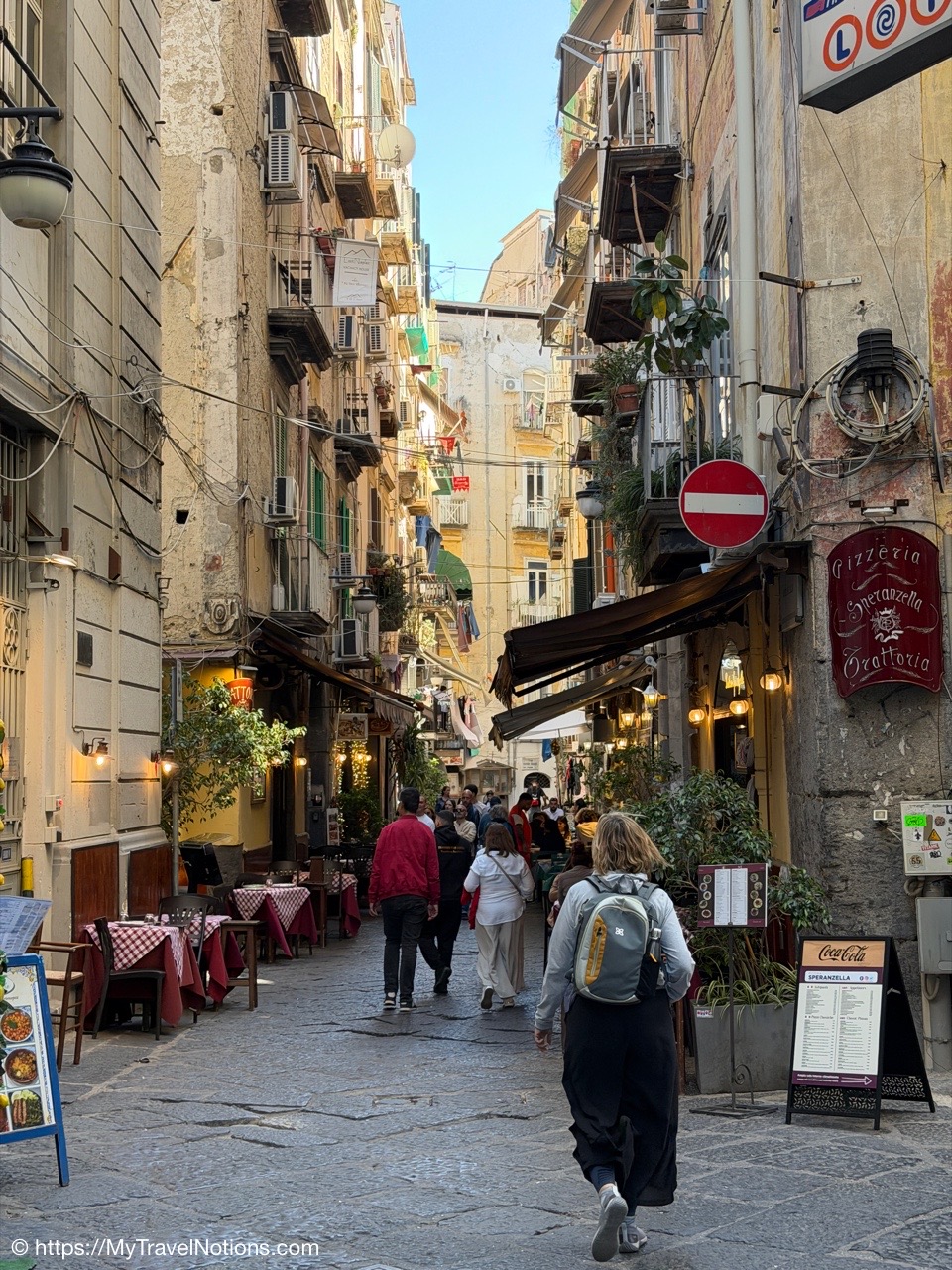
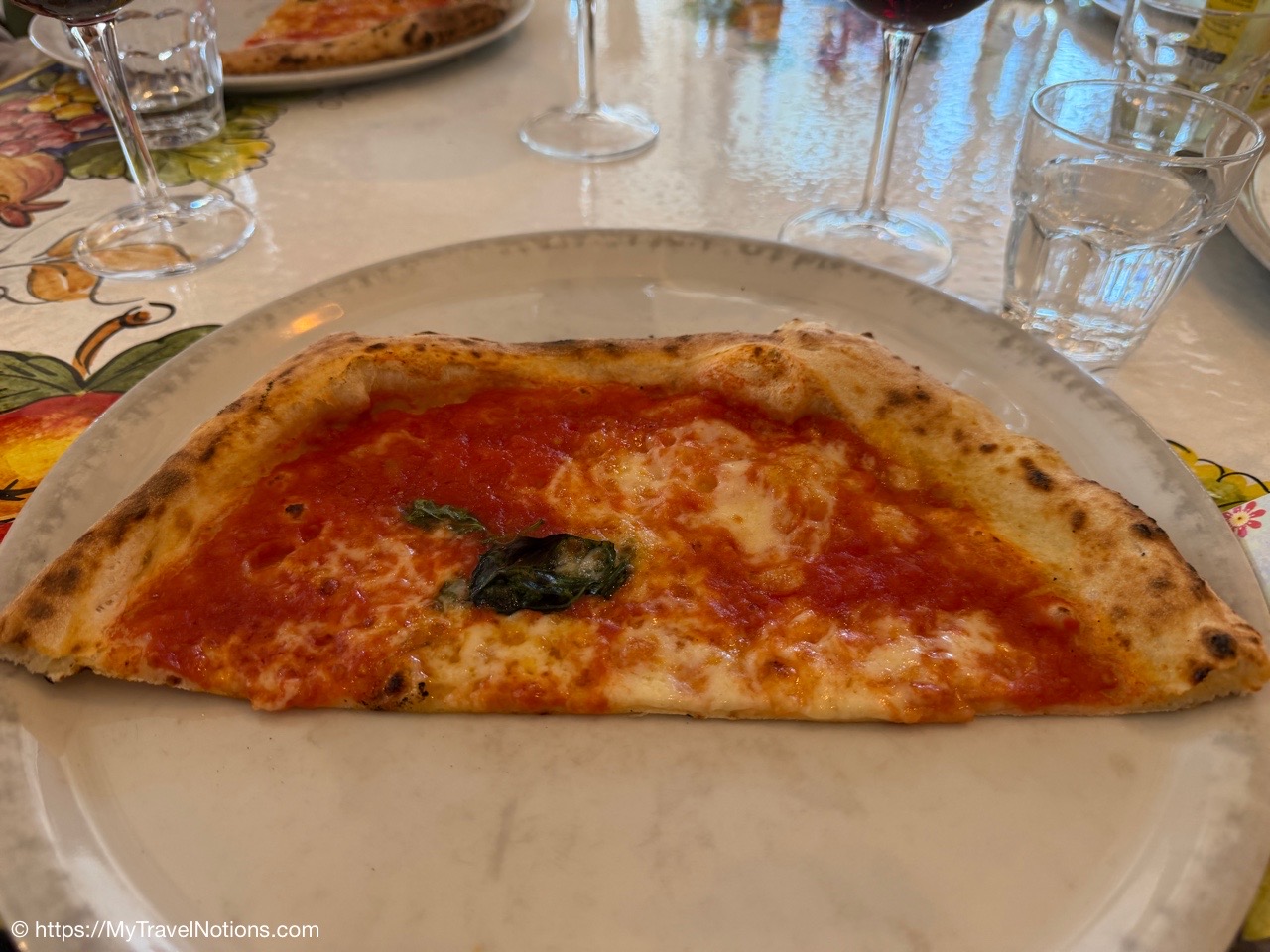
Here we are with our Margherita pizzas invented in Naples in the late 19th century. It’s our 2nd stop on our Street Food Tour in the Centro Storico of Naples. A good Neapolitan-style Margherita pizza (invented in Naples in 1889) is defined by its simplicity, using high-quality ingredients, a thin, soft, airy crust, and a rapid, high-temperature cook in a wood-fired oven. It highlights the “tricolor” of Italy: red (tomatoes), white (mozzarella), and green (basil). (April 29, 2026)Before getting to that Margherita Pizza, we met our Naples Street Food Tour group and guide at Piazza Bellini. The historic square features an open-air 4th-century Greek walls (Mura Greche), sidewalk cafes, bars and a statue of composer Vincenzo Bellini. (April 29, 2026)The Piazza Bellini features excavated archaeological ruins, known as the Mura Greche (Greek Walls), which are part of the original west wall of ancient Neapolis. (April 29, 2026)The Piazza Bellini features excavated archaeological ruins, known as the Mura Greche (Greek Walls), which are part of the original west wall of ancient Neapolis. (April 29, 2026)The Piazza Bellini features excavated archaeological ruins, known as the Mura Greche (Greek Walls), which are part of the original west wall of ancient Neapolis. (April 29, 2026)Getting our walk on to our 1st street food tasting stop of antipasti or appetizers at Zinzi along the Via Dei Tribunali in the Centro Storico of Naples. (April 29, 2026)A water fountain and graffiti as we walked towards Via Dei Tribunali in the Centro Storico of Naples. (April 29, 2026)Getting in a selfie as our walking tour group walks towards Via Dei Tribunali in Centro Storico of Naples. (April 29, 2026)Walking towards Via Dei Tribunali in the Centro Storico of Naples. (April 29, 2026)Walking along Via Dei Tribunali in the Centro Storico of Naples. (April 29, 2026)Our 1st street food stop at Zinzi along the Via Dei Tribunali in Naples, for our antipasti or appetizers of, what our guide Sara called Neapolitan snacks: Buffalo mozzarella, Olives from Sorrento, Taralli (an Italian bagel) and two kinds of Bruschetta. (April 29, 2026)Our very energetic and exuberant street food walking tour guide, Sara, presenting our tray of antipasti or appetizers at Zinzi, our 1st stop, along the Via Dei Tribunali in Naples. (April 29, 2026)Our very energetic and exuberant street food walking tour guide, Sara, presenting our tray of antipasti or appetizers at Zinzi, our 1st stop, along the Via Dei Tribunali in Naples. (April 29, 2026)Views along the Via Dei Tribunali in the Centro Storico of Naples on our way to our 2nd street food stop for our Margherita Pizza at Pizzeria & Trattoria del Pvrgatorio. (April 29, 2026)Views along the Via Dei Tribunali in the Centro Storico of Naples on our way to our 2nd street food stop for our Margherita Pizza at Pizzeria & Trattoria del Pvrgatorio. (April 29, 2026)Our street food tour guide giving us the history of the Margherita pizza which legend says Raffaele Esposito of Pizzeria Brandi created the pizza in honor of Queen Margherita in 1889. She was the first Queen consort of Italy, married to King Umberto I. The ingredients—tomatoes, mozzarella, and basil—were chosen to mimic the colors of the Italian flag. (April 29, 2026)Views along the Via Dei Tribunali in the Centro Storico of Naples as we wait at our 2nd street food stop for our Margherita Pizza at Pizzeria & Trattoria del Pvrgatorio. (April 29, 2026)Views along the Via Dei Tribunali in the Centro Storico of Naples as we wait at our 2nd street food stop for our Margherita Pizza at Pizzeria & Trattoria del Pvrgatorio. (April 29, 2026)Ready to enjoy our Margherita pizza at Pizzeria & Trattoria del Pvrgatorio along the Via Dei Tribunali in Naples, our 2nd street food stop. Margherita pizzas embody the culinary soul of Naples because of its simplicity created with high-quality local ingredients, including San Marzano tomatoes, fresh mozzarella, and a light, blistered dough baked in a wood-fired oven. (April 29, 2026)And here we are chomping down on our folded Margherita Pizza at Pizzeria & Trattoria del Pvrgatorio along the Via Dei Tribunali in Naples, our 2nd street food stop. Legend says Raffaele Esposito of Pizzeria Brandi created the pizza for Queen Margherita in 1889, cementing it as a dish fit for royalty and a symbol of national unity. (April 29, 2026)An advertisement for the Il Cuoppo, along Via Dei Tribunali in the Centro Storico, is considered an iconic Neapolitan street food packed with piping-hot, bite-sized fried foods to eat while walking. The “puppet-looking man” above is Pulcinella, the famous 17th-century theatrical mascot of Naples. (April 29, 2026)A close-up of Pulcinella, the famous 17th-century theatrical mascot of Naples holding an Il Cuoppo. (April 29, 2026)After our Neopolitan pizza, we continued our walk along Via Dei Tribunali in the Centro Storico of Naples. (April 29, 2026)Our 3rd street food walking tour stop, at Pizzeria I Decumani along Via Dei Tribunali in Naples, was our pasta stop for fried Macaroni or commonly known as frittatina di pasta. (April 29, 2026)Our street food tour guide, Sara, handing out our fried Macaroni or commonly known as frittatina di pasta at Pizzeria I Decumani along Via Dei Tribunali in the Centro Storico of Naples. (April 29, 2026)Our 3rd food tasting, fried Macaroni or commonly known as frittatina di pasta at Pizzeria I Decumani along Via Dei Tribunali in the Centro Storico of Naples. (April 29, 2026)Eating our fried Macaroni pasta from Pizzeria I Decumani along Via Dei Tribunali in Naples, the 3rd stop on our Street Food Tour. A little greasy but rather tasty. (April 29, 2026)Neapolitan fried macaroni, commonly known as frittatina di pasta is a classic street food consisting of cooked, cooled bucatini pasta mixed with thick béchamel sauce, ham, peas, and cheese. The mixture is shaped, chilled, dipped in a flour/egg/breadcrumb batter, and deep-fried until crispy. (April 29, 2026)To make room for the second pizza, we changed things around a bit and made our 4th food tasting stop a digestive, my favorite, a Lemoncello at the Limoné Limoncello Factory along Via Dei Tribunali in the Centro Storico of Naples. (April 29, 2026)Our street food walking tour guide, Sara, behind the counter at our 4th stop, the Limoné Limoncello Factory getting ready to pour a Lemoncello cream and a Lemoncello. Both were served cold and both were delicious. (April 29, 2026)Me, Janet and Rosie enjoying our Lemoncello digestives, during our 4th street food tasting stop at the Limoné Limoncello Factory along Via Dei Tribunali in Naples. (April 29, 2026)Making our way through the Centro Storico of Naples to our next street food tasting stop. (April 29, 2026)Making our way through the Centro Storico of Naples to our next street food tasting stop. (April 29, 2026)Stopping to discuss our 5th street food tasting, Pizza fritta (fried pizza) which originated in Naples. The fillings of may be enclosed in a pocket of dough like a calzone, which is then fried. (April 29, 2026)Our street food walking tour guide, Sara, delivering our 5th tasting of Pizza fritta (fried pizza) which originated in Naples. (April 29, 2026)The Pizza fritta or fried pizza in a folded over dough enclosing the ingredients of tomato sauce and cheese, was not my favorite. I had to tear it in half to get to the inside but I found it to be tasteless and greasy. (April 29, 2026)Making our way through the busy and long street of Via Dei Tribunali in the Centro Storico of Naples towards “Christmas Alley” and our next street food tasting stop. (April 29, 2026)Walking though the busy San Gregorio Armeno street, nicknamed “Christmas Alley”, in the Centro Storico of Naples for its artisanal treasures, including handcrafted presepi (nativity scenes), a tradition that dates back many centuries. There’s also miniatures of everyday Neapolitan life like pizza makers, markets and animals along with celebrities like politicians and soccer players. (April 29, 2026)Walking though the busy San Gregorio Armeno street, nicknamed “Christmas Alley”, in the Centro Storico of Naples for its artisanal treasures, including handcrafted presepi (nativity scenes), a tradition that dates back many centuries. There’s also miniatures of everyday Neapolitan life like pizza makers, markets and animals along with celebrities like politicians and soccer players. (April 29, 2026)Walking though the busy San Gregorio Armeno street, nicknamed “Christmas Alley”, in the Centro Storico of Naples for its artisanal treasures, including handcrafted presepi (nativity scenes), a tradition that dates back many centuries. There’s also miniatures of everyday Neapolitan life like pizza makers, markets and animals along with celebrities like politicians and soccer players. (April 29, 2026)Walking though the busy San Gregorio Armeno street, nicknamed “Christmas Alley”, in the Centro Storico of Naples for its artisanal treasures, including handcrafted presepi (nativity scenes), a tradition that dates back many centuries. There’s also miniatures of everyday Neapolitan life like pizza makers, markets and animals along with celebrities like politicians and soccer players. (April 29, 2026)Walking though the busy San Gregorio Armeno street, nicknamed “Christmas Alley”, in the Centro Storico of Naples for its artisanal treasures, including handcrafted presepi (nativity scenes), a tradition that dates back many centuries. There’s also miniatures of everyday Neapolitan life like pizza makers, markets and animals along with celebrities like politicians and soccer players. (April 29, 2026)Via San Gregorio Armeno in the Centro Storico of Naples is also where these terra-cotta figures, ranging from traditional religious nativity characters to modern celebrities, politicians and football players are sold. (April 29, 2026)Me at a central roadway in the Centro Storico of Naples, commonly referred to as “Spaccanapoli”, a popular nickname for a series of interconnected roads. Also graffiti or street art is prevalent throughout Naples. I’ve read that the tradition of writing on walls in public spaces dates back over 2,000 years. (April 29, 2026)Drink time for our 6th street food tasting, an Aperol Spritz at Decuman 31 in the Centro Storico of Naples. (April 29, 2026)I’m not a fan of the bittersweet Aperol Spritz but when in Italy, especially during a street food tasting tour in the Centro Storico of Naples, I will try this popular Italian cocktail. The three main ingredients are Aperol (a low-alcohol spirit), Prosecco and soda water…usually served in a wine glass over ice. (April 29, 2026)Continuing our walk through Piazzetta Nilo in the Centro Storico of Naples to our next food stop. (April 29, 2026)Continuing our walk through Piazzetta Nilo in the Centro Storico of Naples to our next food stop. (April 29, 2026)Continuing our walk through Piazzetta Nilo in the Centro Storico of Naples to our next food stop. (April 29, 2026)Our 7th street stop was all about the sweets at Carraturo, doing business since 1889 in the Centro Storico of Naples. (April 29, 2026)Our 7th street stop was all about the sweets at Carraturo, doing business since 1889 in the Centro Storico of Naples. (April 29, 2026)Our 7th street stop was all about the sweets at Carraturo, doing business since 1889 in the Centro Storico of Naples. (April 29, 2026)Rosie and Alice eyeing the Neapolitan sweets at our 7th street food stop at Carraturo, doing business since 1889 in the Centro Storico of Naples. We got to try two different Neapolitan pastries, the Sfogliatella a shell-shaped pastry with a citrus-infused ricotta filling and the Babà a soft, spongy and fluffy brioche cake soaked in rum syrup. (April 29, 2026)A close-up of our Neapolitan sweets at our 7th street food stop at Carraturo, doing business since 1889 in the Centro Storico of Naples. We got to try two different Neapolitan pastries, the Sfogliatella a shell-shaped pastry with a citrus-infused ricotta filling and the Babà a soft, spongy and fluffy brioche cake soaked in rum syrup. (April 29, 2026)Walking to our 8th and last street food stop, the traditional Italian frozen dessert, “gelato” in the Centro Storico of Naples. (April 29, 2026)Walking to our 8th and last street food stop, the traditional Italian frozen dessert, “gelato” in the Centro Storico of Naples. (April 29, 2026)Walking to our 8th and last street food stop, the traditional Italian frozen dessert, “gelato” in the Centro Storico of Naples. (April 29, 2026)Me, in front of our 8th and last street food stop at Leopoldo’s for the traditional Italian frozen dessert of “gelato” in the Centro Storico of Naples. (April 29, 2026)Leopoldo, our 8th and last stop of our street food walking tour in the Centro Storico of Naples. (April 29, 2026)Ended our street food walking tour in the Centro Storico of Naples, with my favorite, a coconut gelato at Leopoldo. (April 29, 2026)Walking up Via Toledo to my hotel, the Palm Suites in the Chiaia district of Naples. (April 29, 2026)A colorful and flora side street along Via Toledo on my way back to the Chiaia district in Naples. (April 29, 2026)The colorful and floral side street along Via Toledo on my way back to the Chiaia district in Naples. (April 29, 2026)Another busy and colorful side street along Via Toledo in Naples. (April 29, 2026)Passing by the Piazza del Plebiscito with views of the Basilica of San Francesco di Paola in Naples. (April 29, 2026)Passing by the Piazza del Plebiscito with views of the Basilica of San Francesco di Paola in Naples. (April 29, 2026)Walking along Via Chiaia back towards our hotel, the Palm Suites in the Chiaia district of Naples. Via Chiaia is one of the oldest and most famous pedestrian shopping streets lined with designer boutiques, bakeries, and cafes. (April 29, 2026)Walking along Via Chiaia back towards our hotel, the Palm Suites, with a view of the Ponte di Chiaia or Chiaia Bridge originally built in 1636 by the Spanish Viceroy, it was later reconstructed in the 1800s to its current neoclassical style. (April 29, 2026)My first floor room at the Palm Suites in the Chiaia district of Naples. (April 28, 2026)My first floor room, with balcony, at the Palm Suites in the Chiaia district of Naples. (April 28, 2026)My walk-in shower bathroom in my room at the Palm Suites in the Chiaia district in Naples. (April 28, 2026)Views from my hotel balcony at the Palm Suites in the Chiaia district of Naples. (April 28, 2026)Views from my hotel balcony at the Palm Suites in the Chiaia district of Naples. (April 28, 2026)Views from my hotel balcony at the Palm Suites in the Chiaia district of Naples. (April 28, 2026)I had dinner on my own at the Marea Bistrot, just across the street from our hotel, the Palm Suites in the Chiaia district of Naples. (April 29, 2026)I took a chance and asked for something not on the menu…spaghetti with olive oil, garlic, red pepper flakes and shrimp. And to my surprise, my wish was granted. It was a dish I had been craving and it was delicious. Thank you to the wait staff and chef at Marea Bistrot in Naples for being so accommodating. (April 29, 2026)
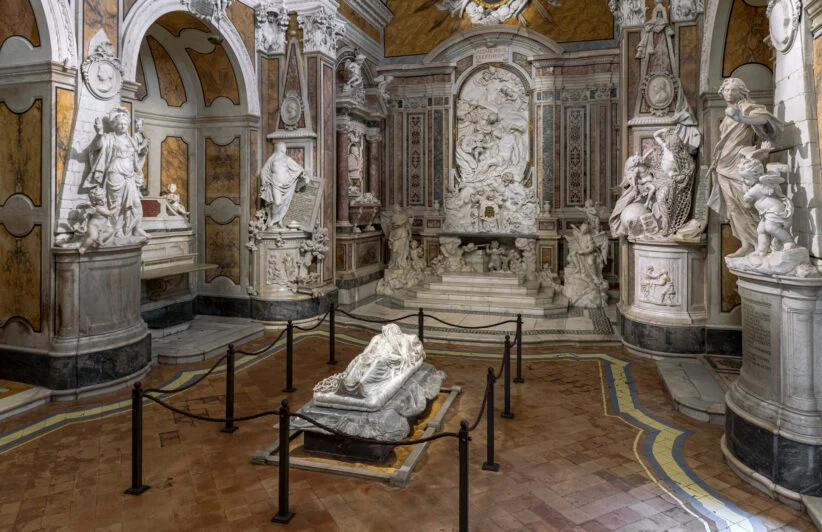
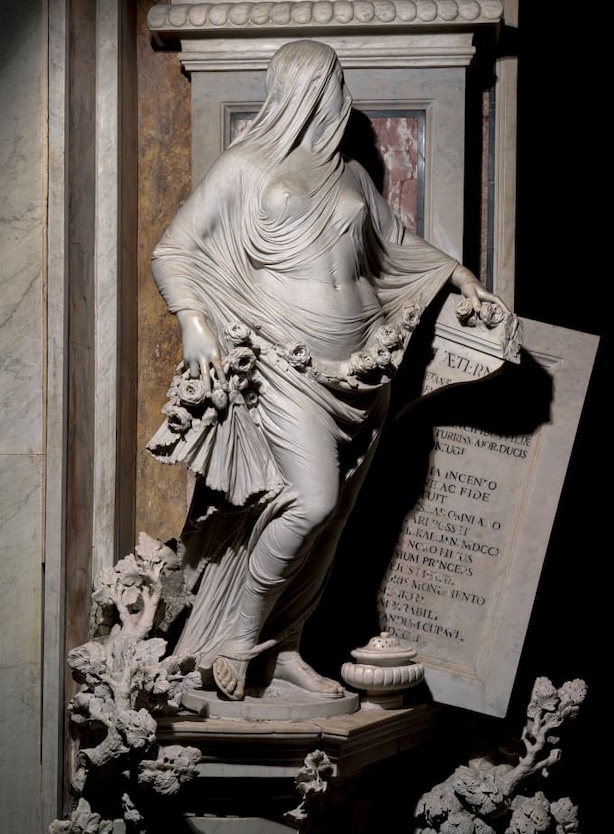
It turned out to be a cool and rainy day but most of what we did today in Naples was indoors. We began our morning at the Cappella Sansevero Museum to see the stunning Veiled Christ sculpture. Completed in 1753 by the Neopolitanartist Giuseppe Sanmartino, it was carved from a single block of white Carrara marble. The sculpture is the lifeless body of Christ covered with anincredibly realistic, transparent shroud, all sculpted continuously from that one piece of stone.
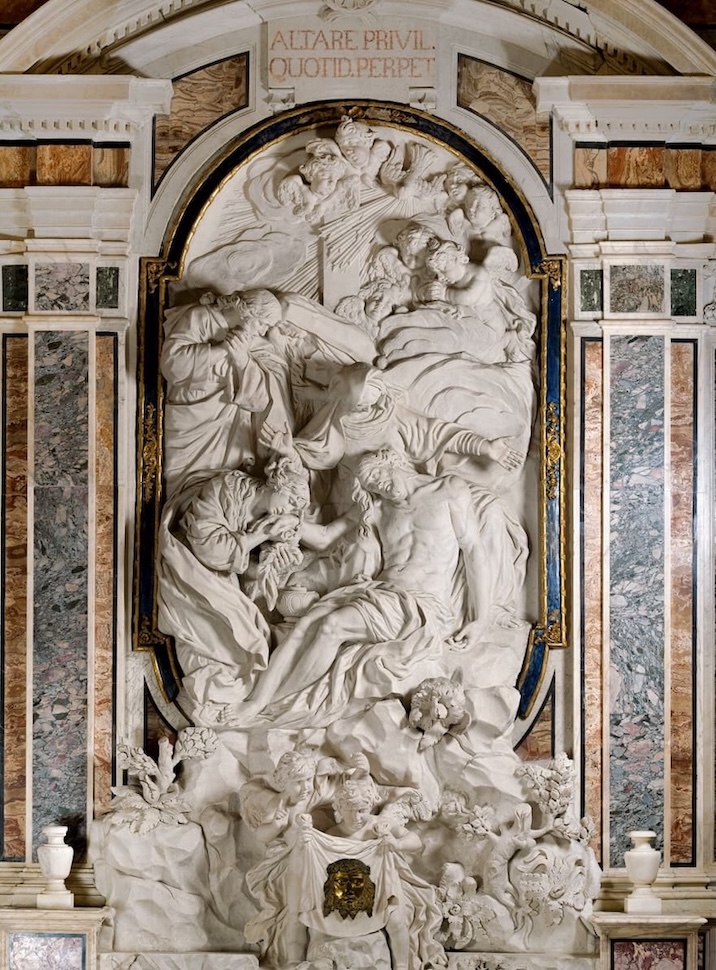
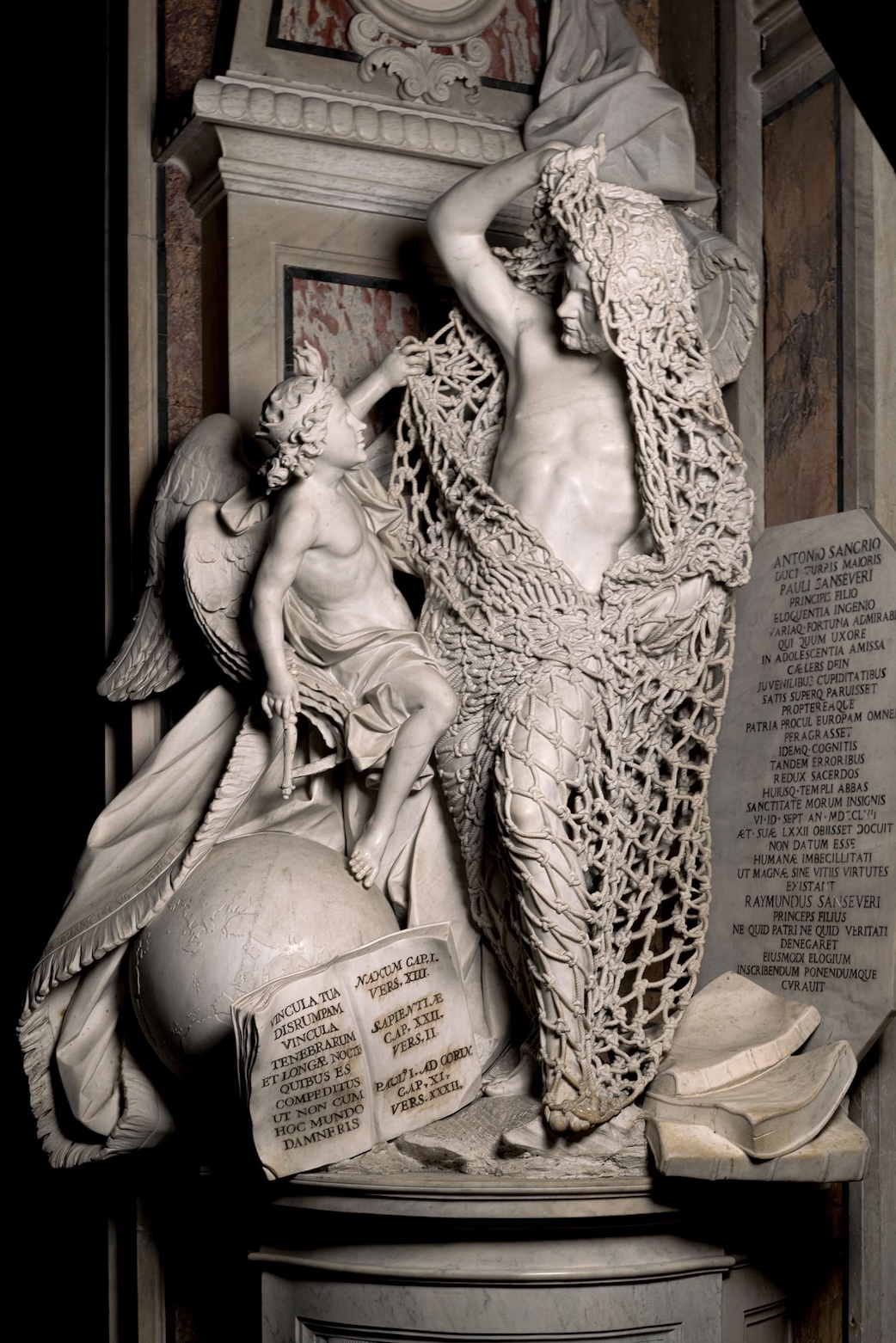
My only pet peeve is having to pay to get into a place only to be told that I cannot take photos. I’ve been known to disobey that request but there was no way I could do that inside the Chapel so I reluctantly obeyed. The photos in this post came from the Cappella Sansevero Museum website.
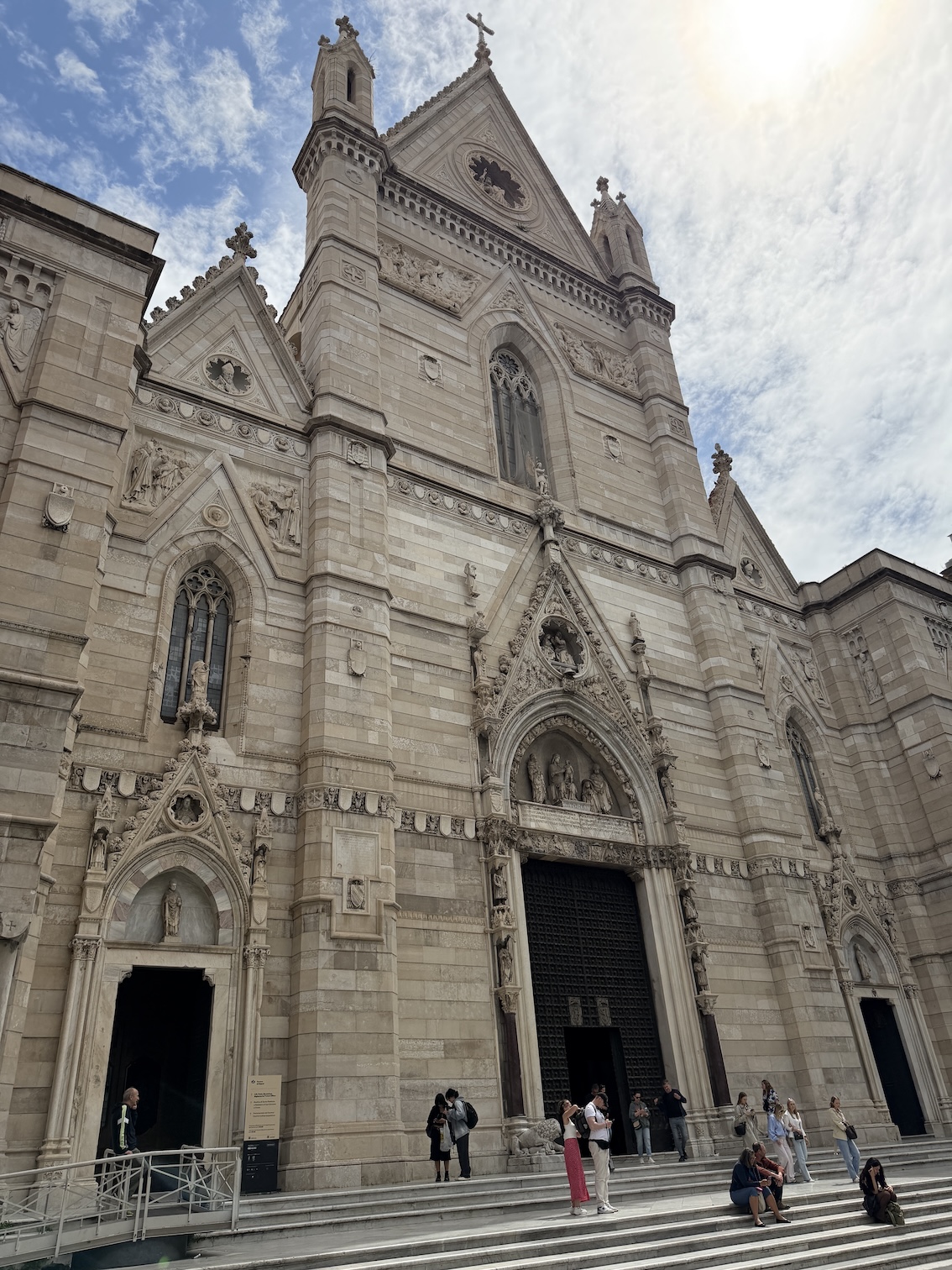
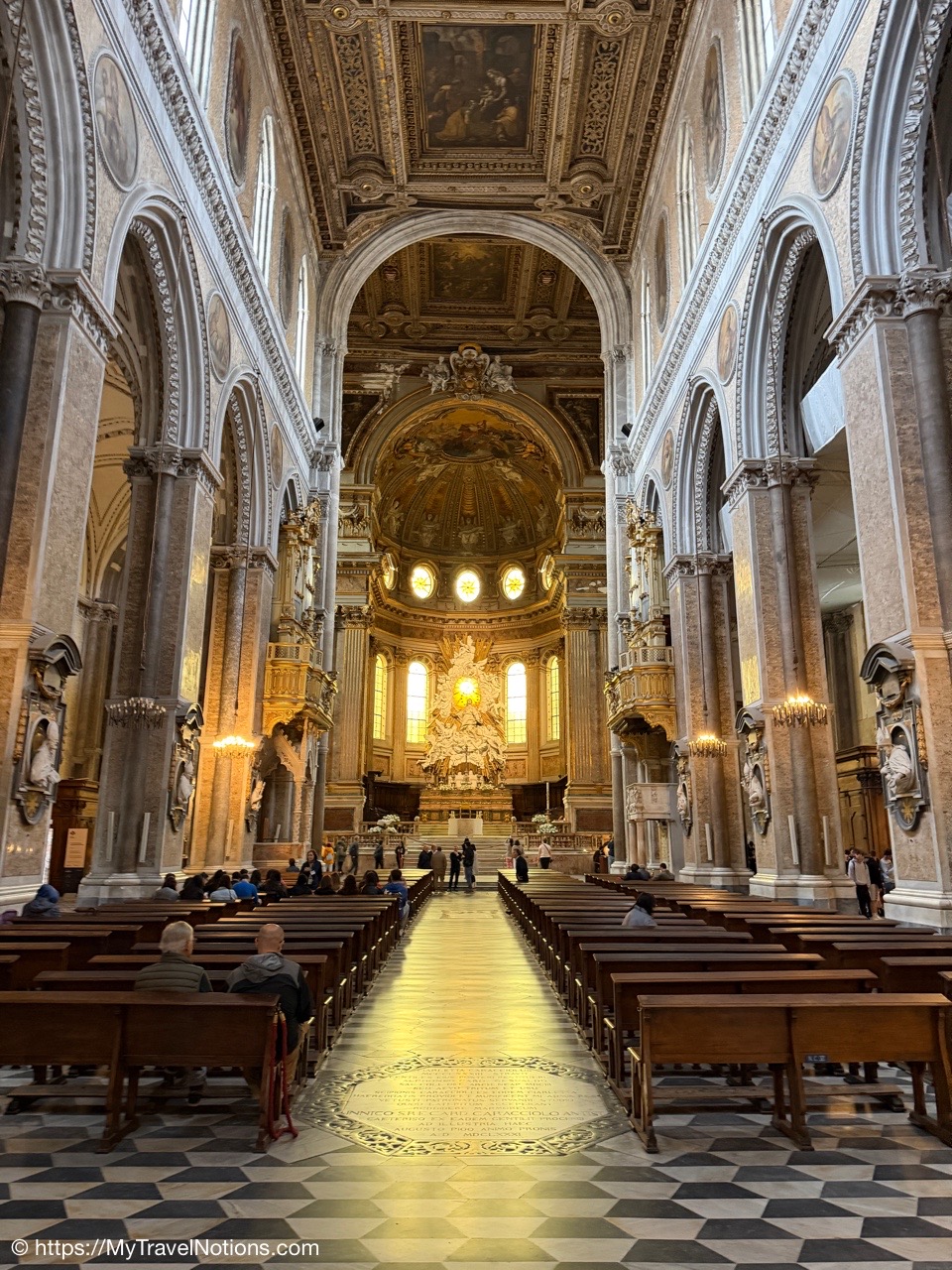
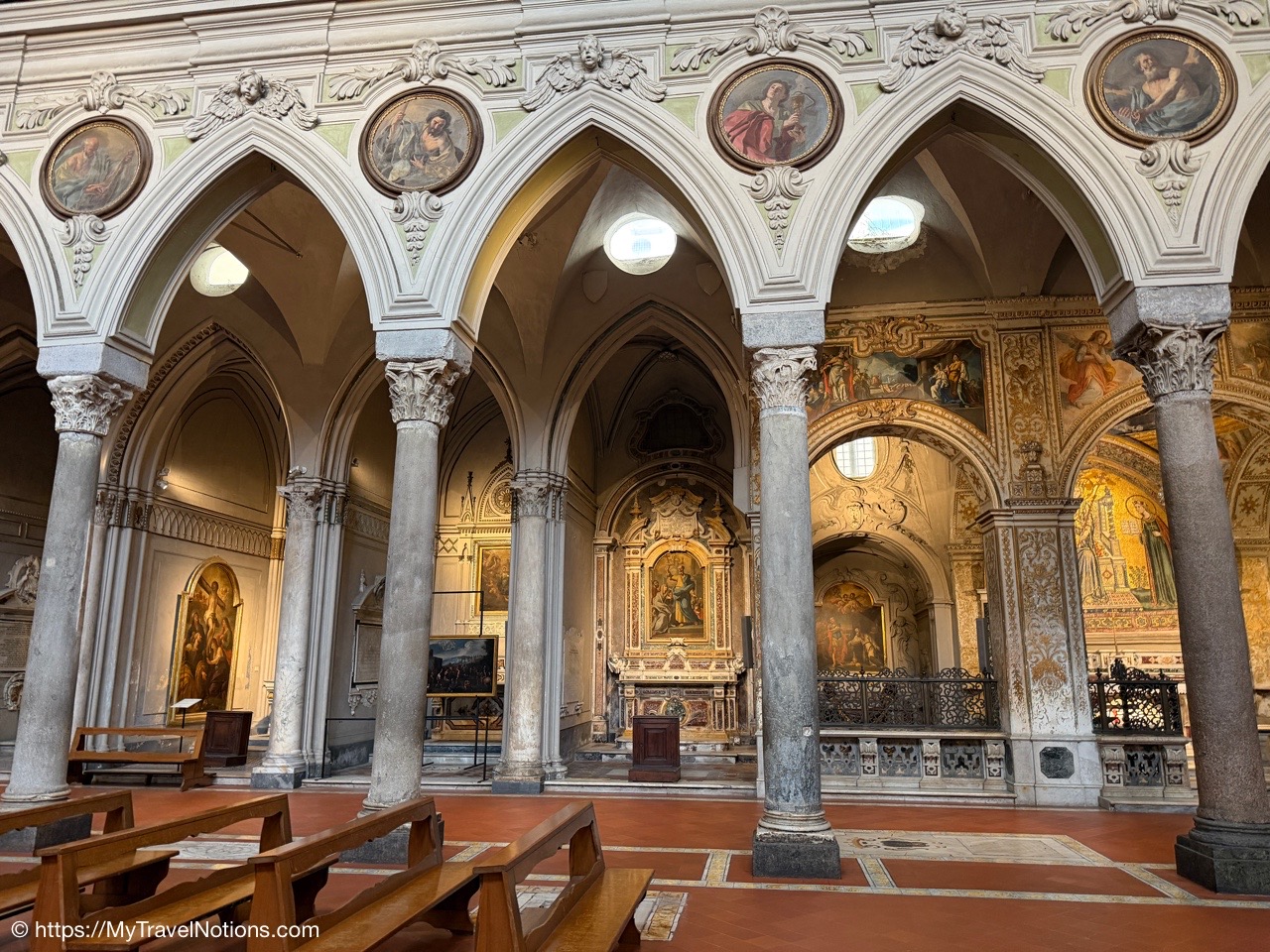
After the Chapel, we made our way to the Cathedral of the Assumption of the Blessed Virgin Mary commonly known as the Duomo di Napoli or Naples Cathedral. In Italian, the name is Cattedrale di Santa Maria Assunta or the Duomo di Napoli.The Cathedral houses the relics of Saint Januarius (San Gennaro),the city’s patron saint. It is a striking building that mixes Gothic, Renaissance and Baroque styles. And, It is a “church within a church” because it physically incorporates the Basilica of Santa Restituta, the oldest church in Naples.
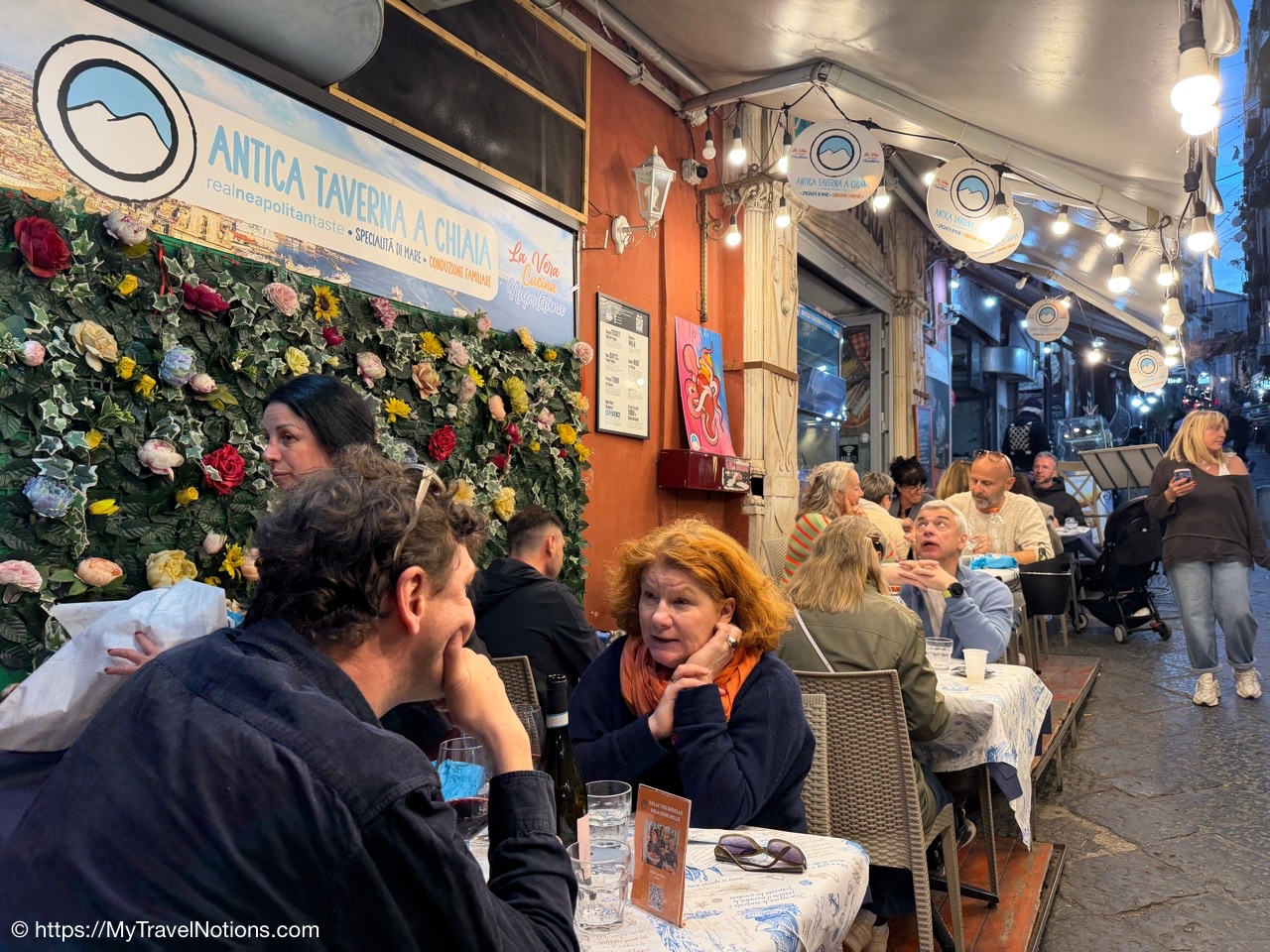
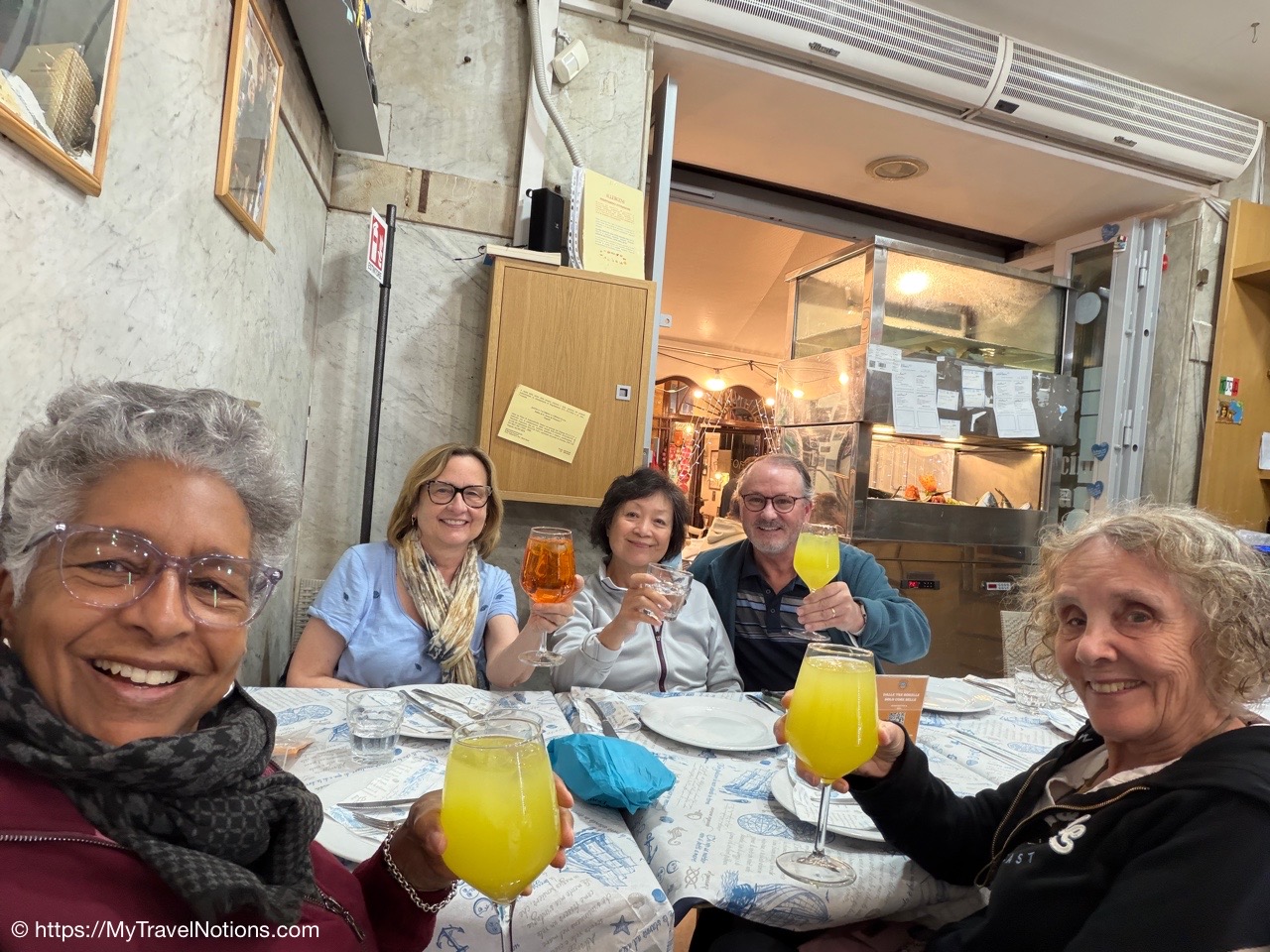
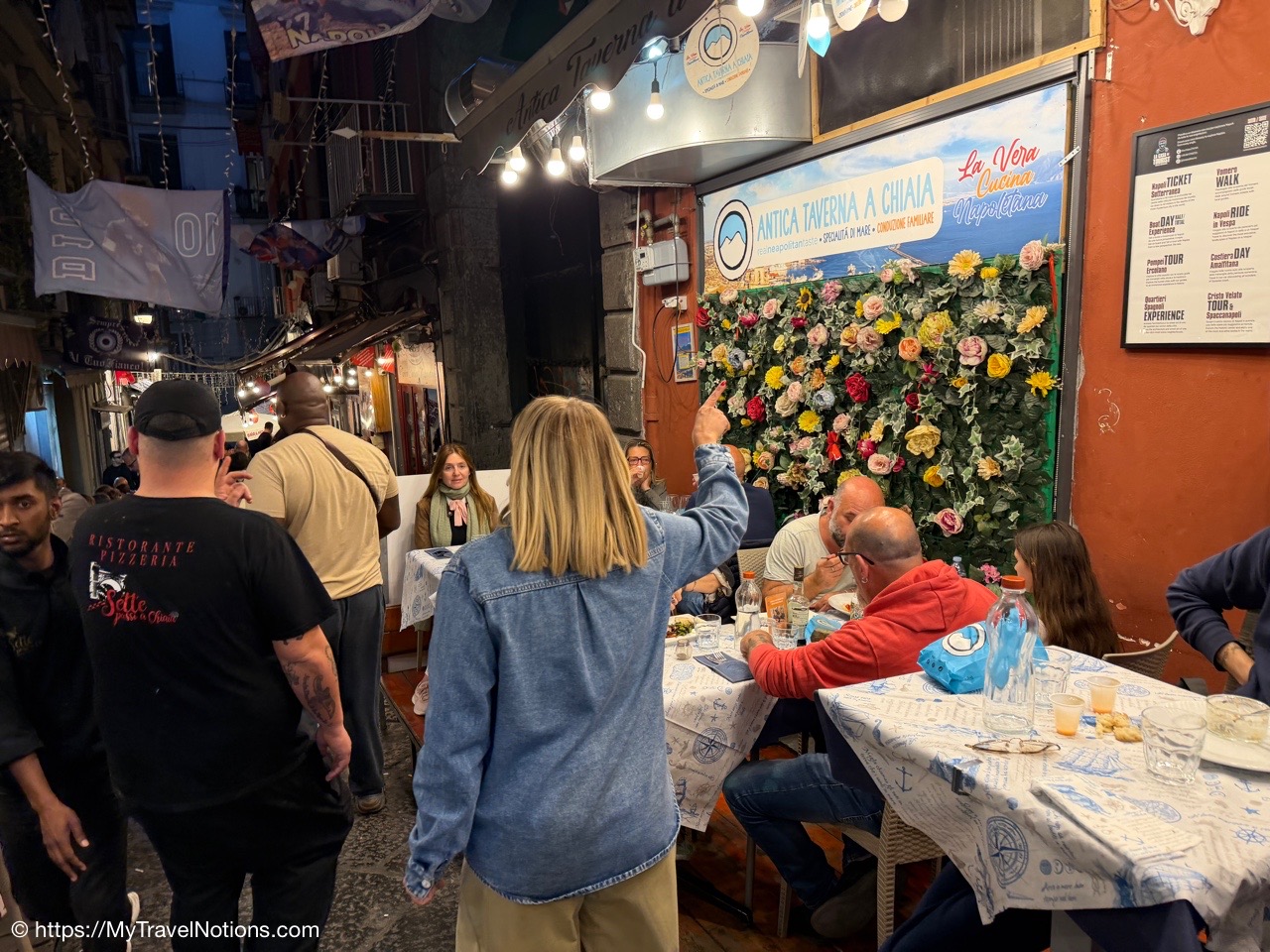
After a full day we retreated back to our hotel rooms before meeting up for a wonderful seafood dinner at the Antica Taverna A Chiaia, run by a family team of mother and daughters.
Here’s to another awesome day in Naples.
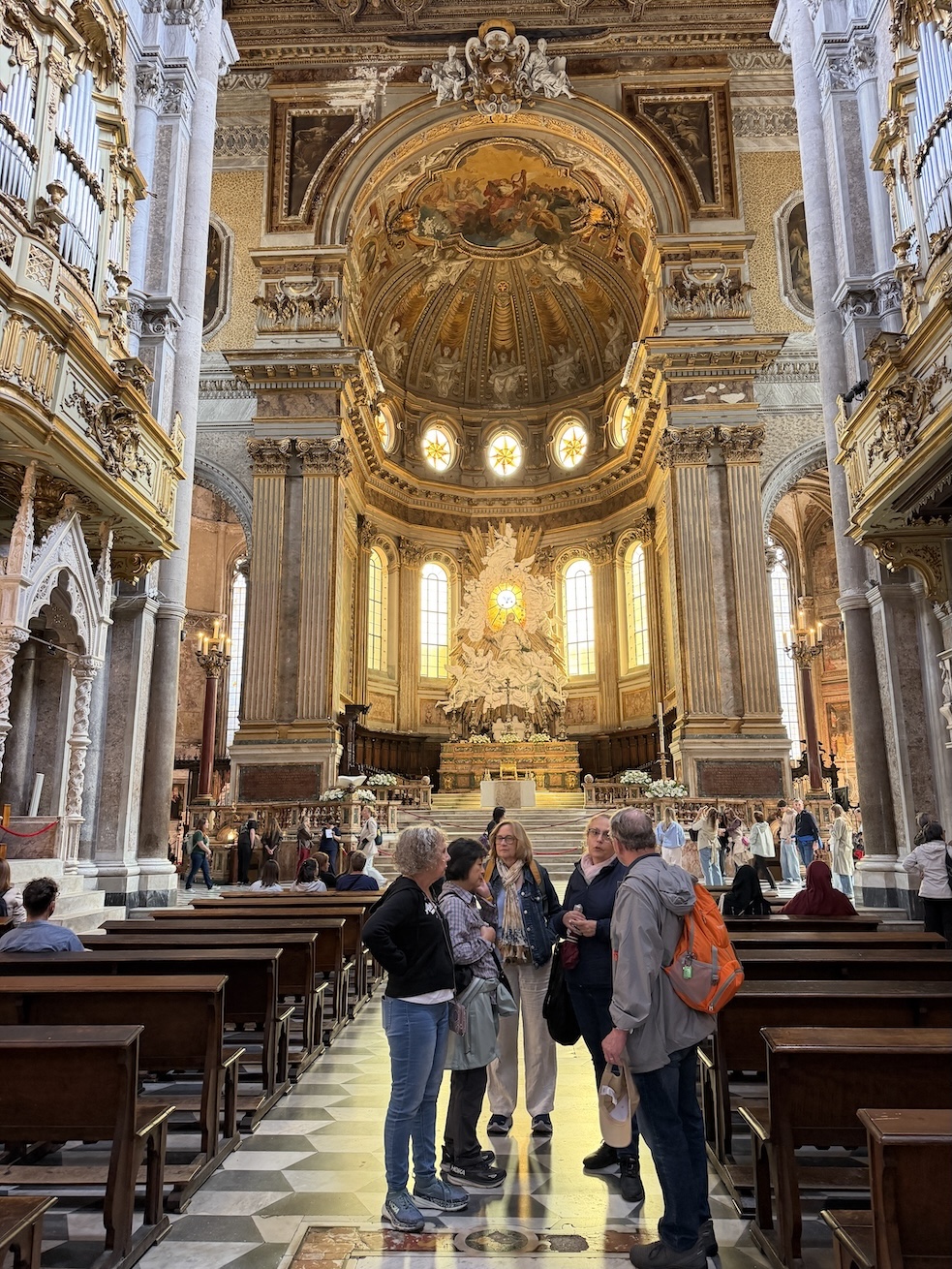
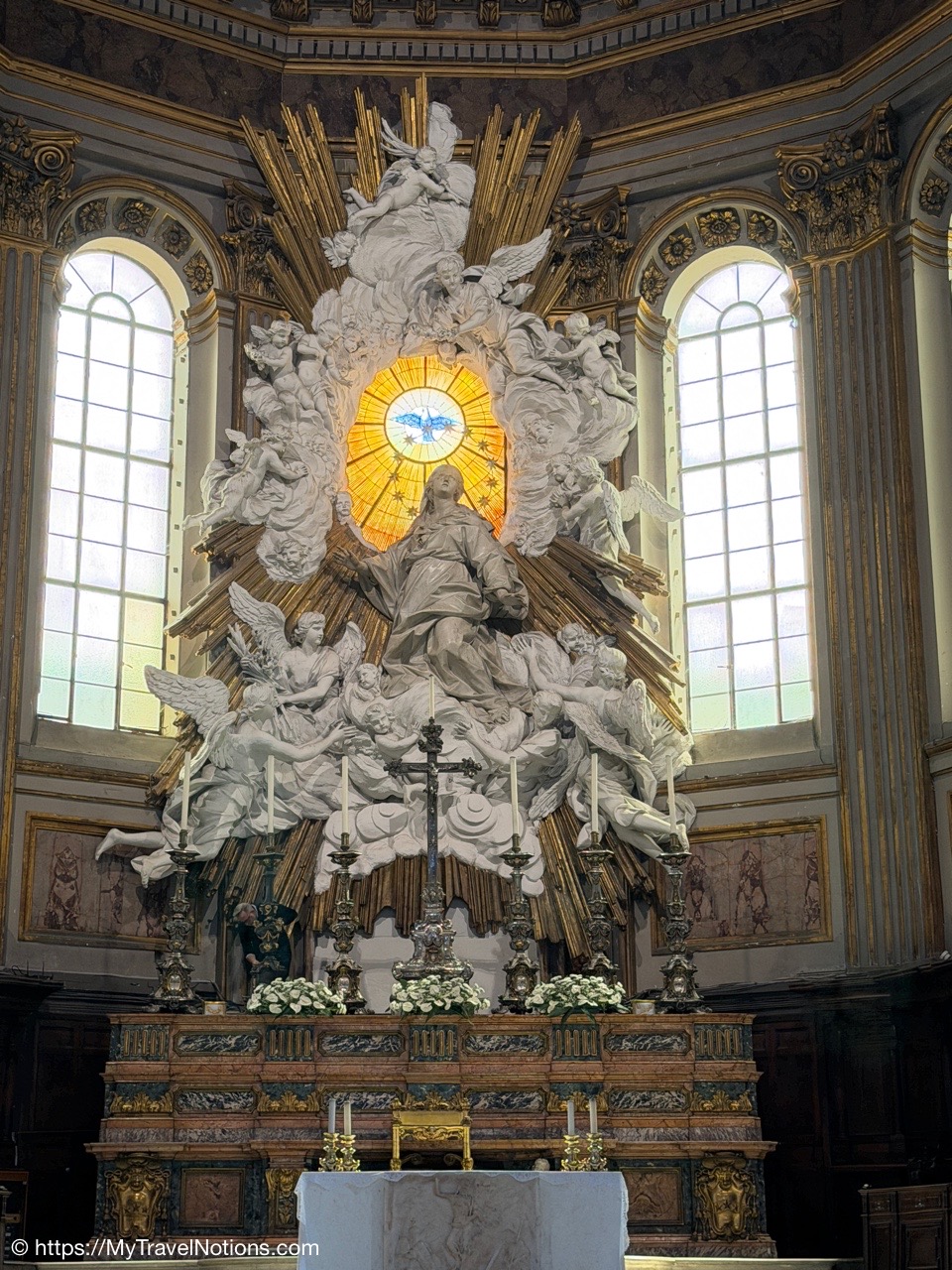
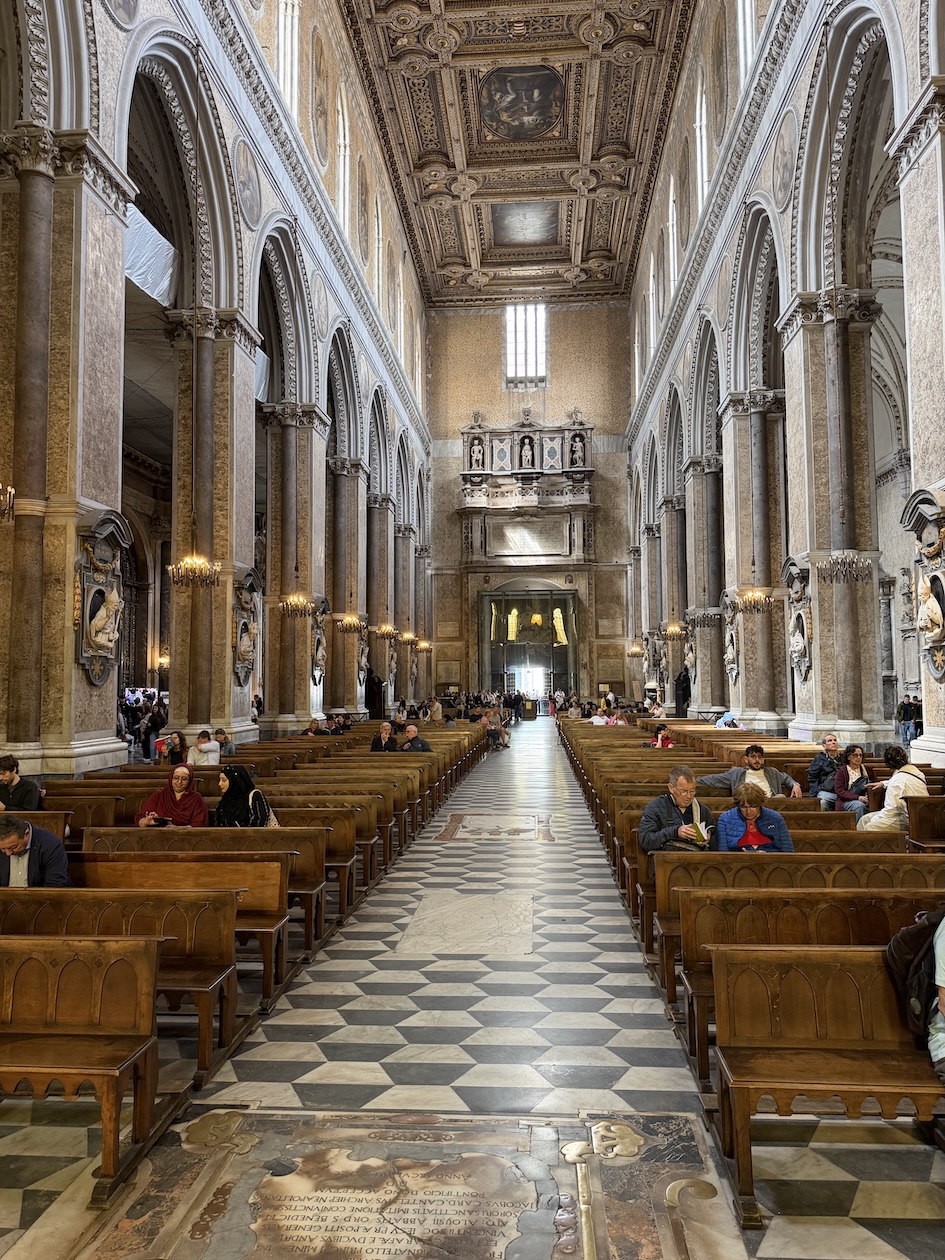
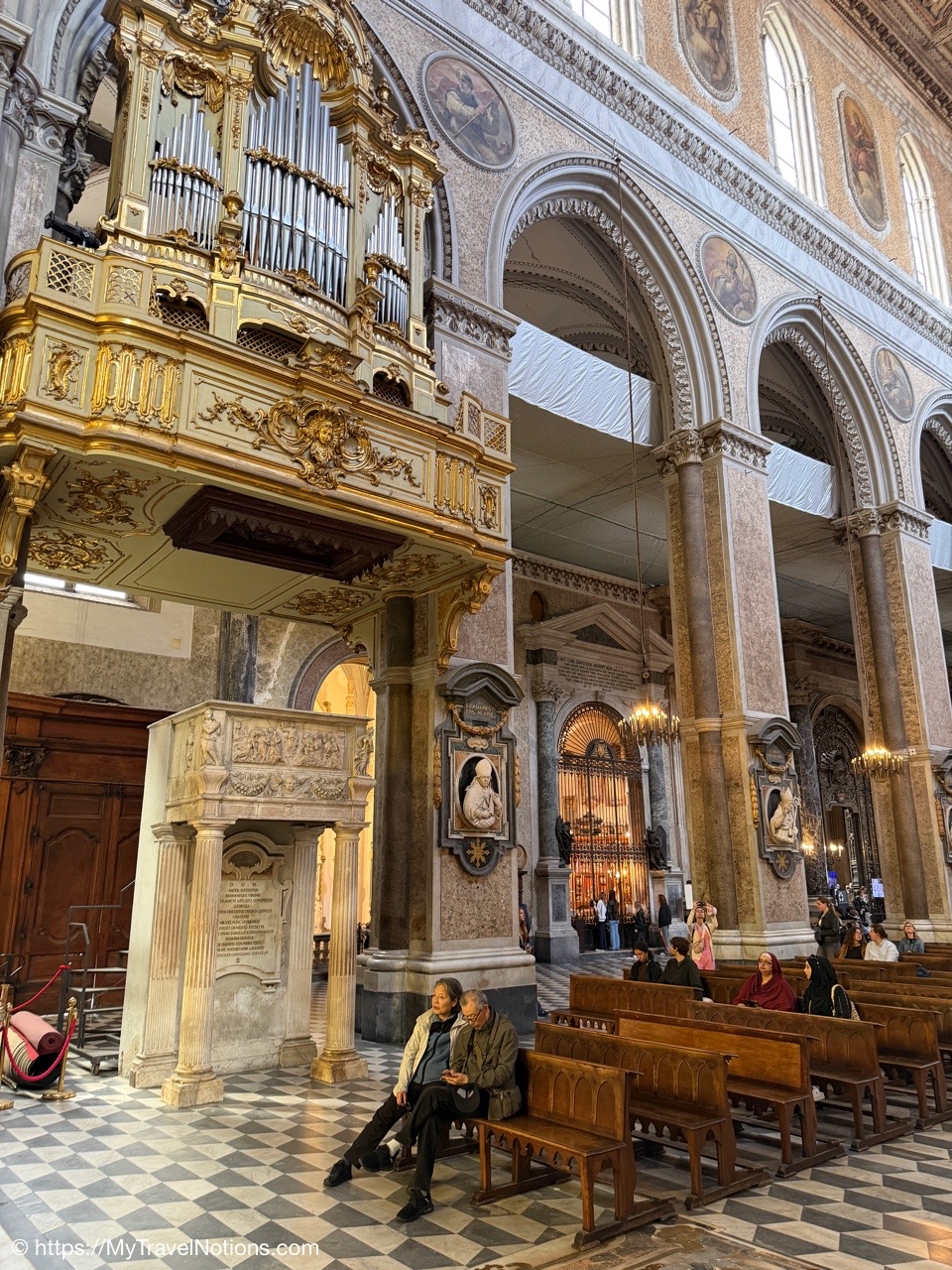
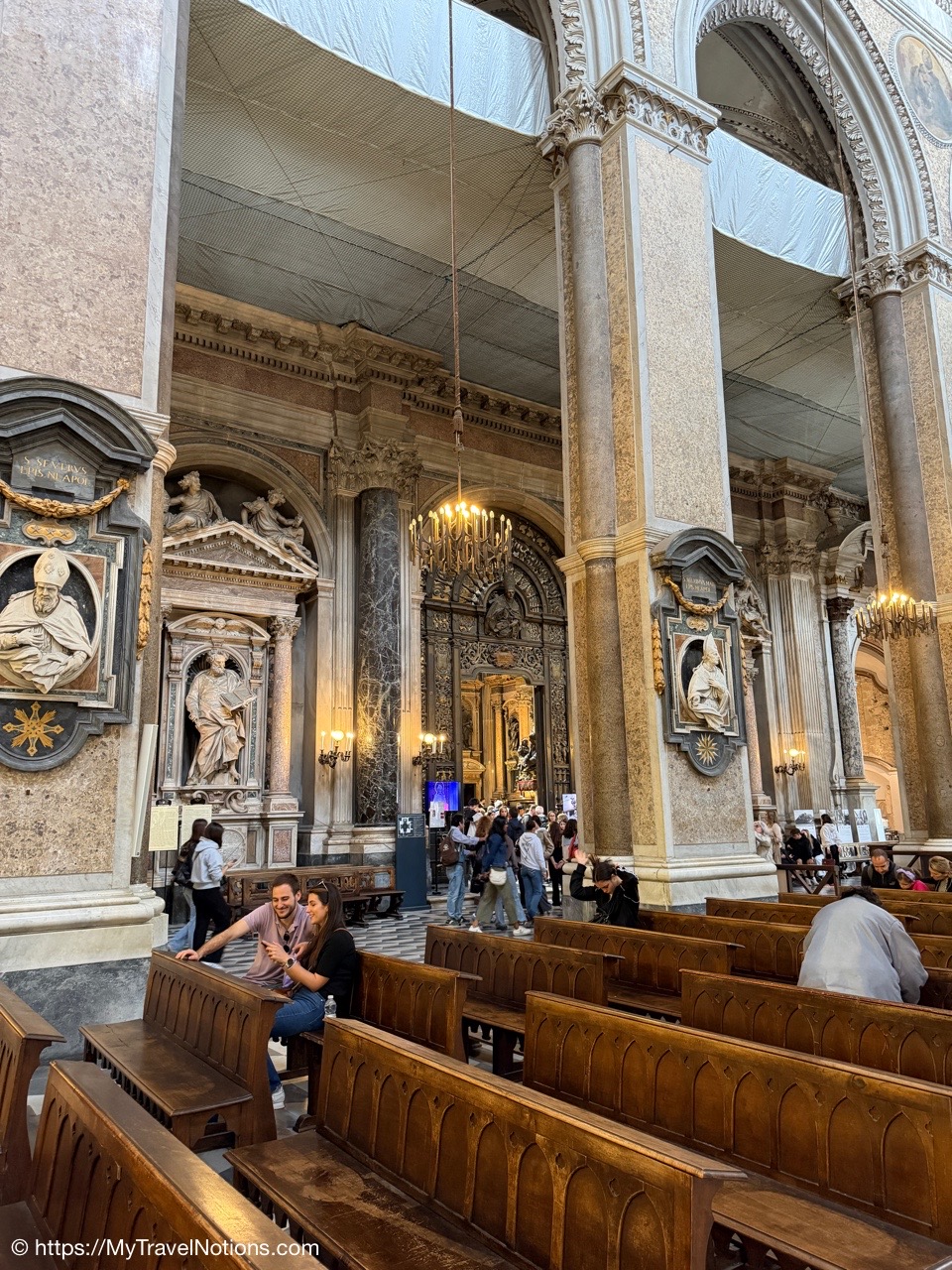
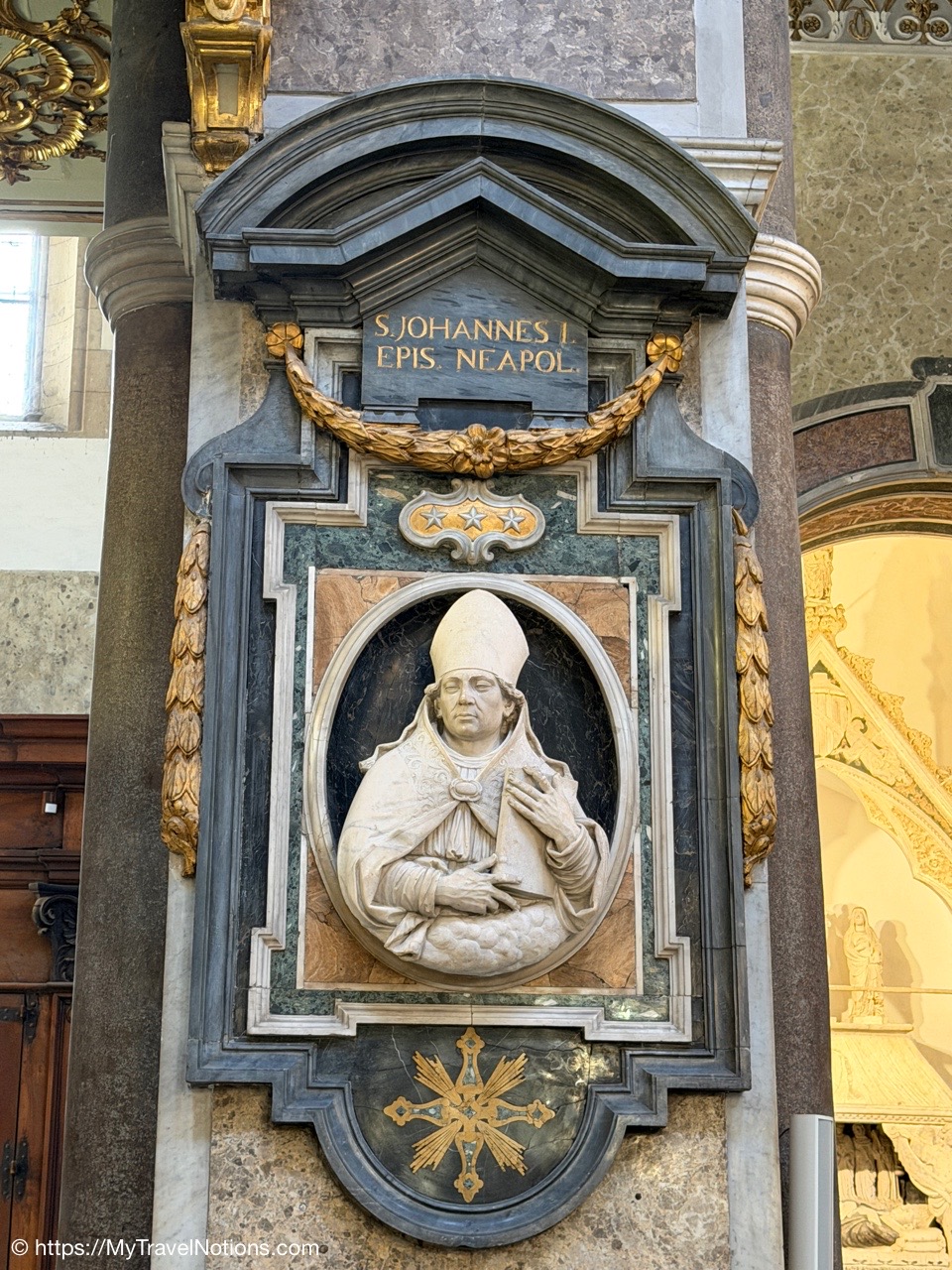
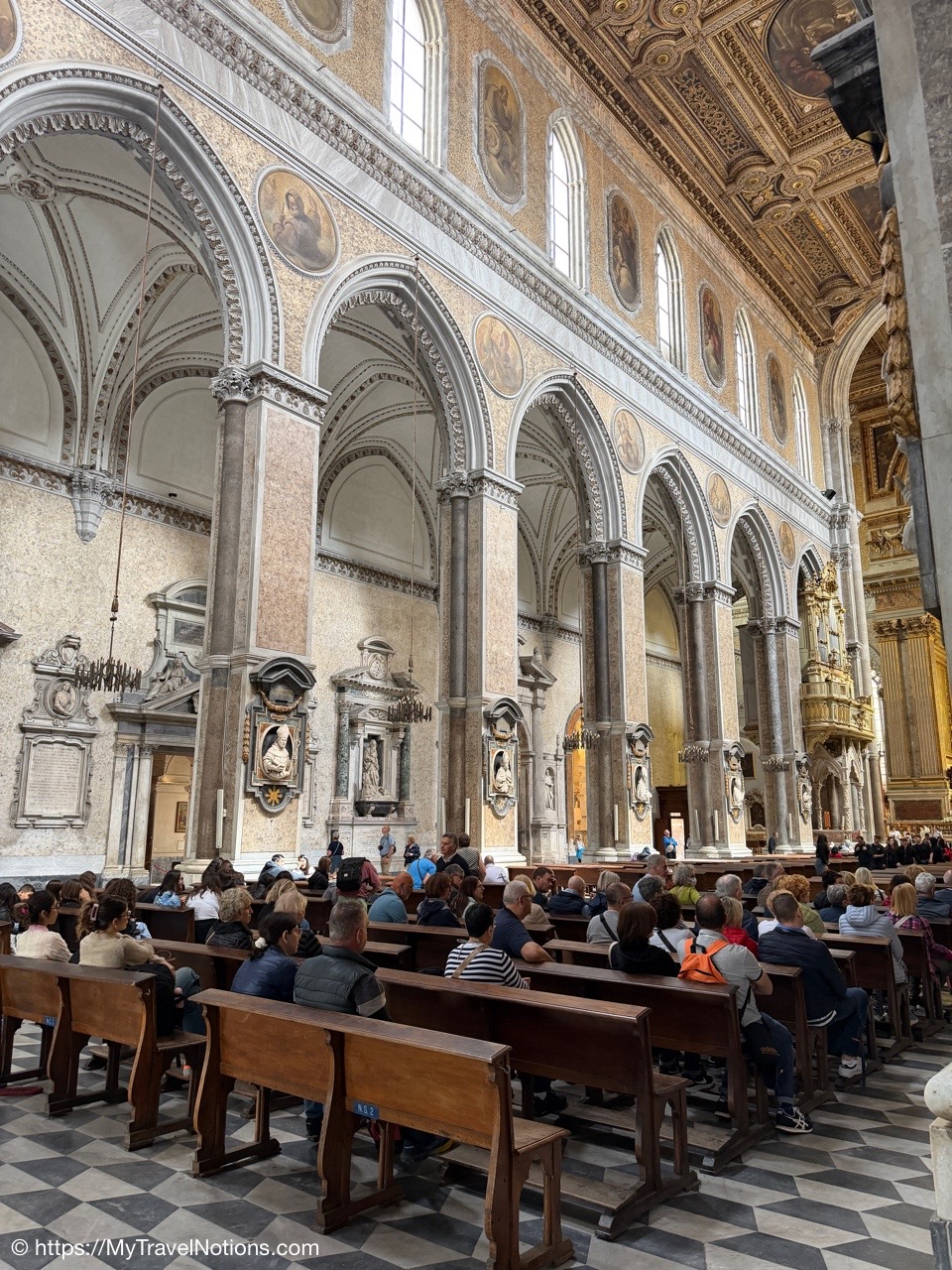
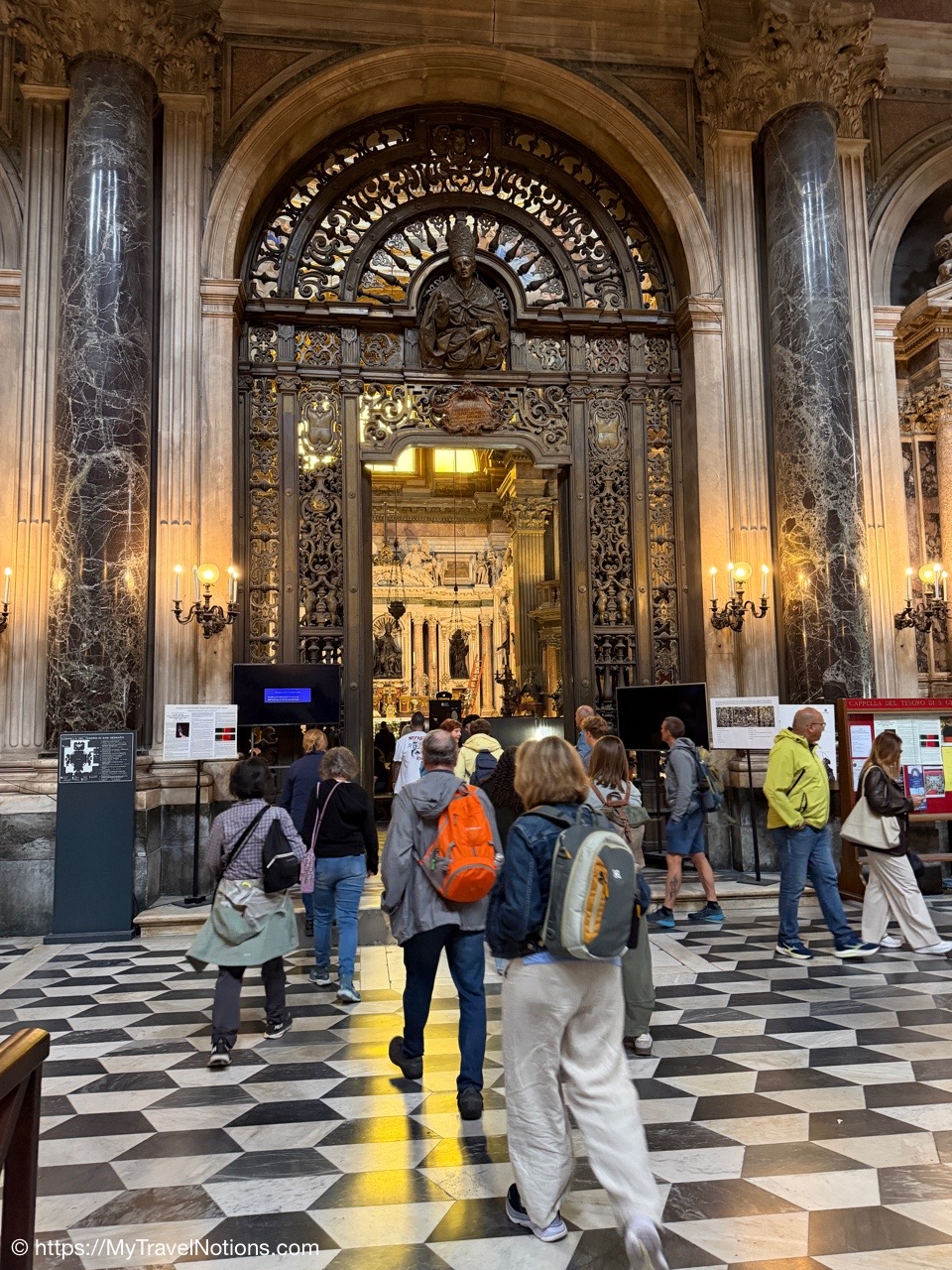
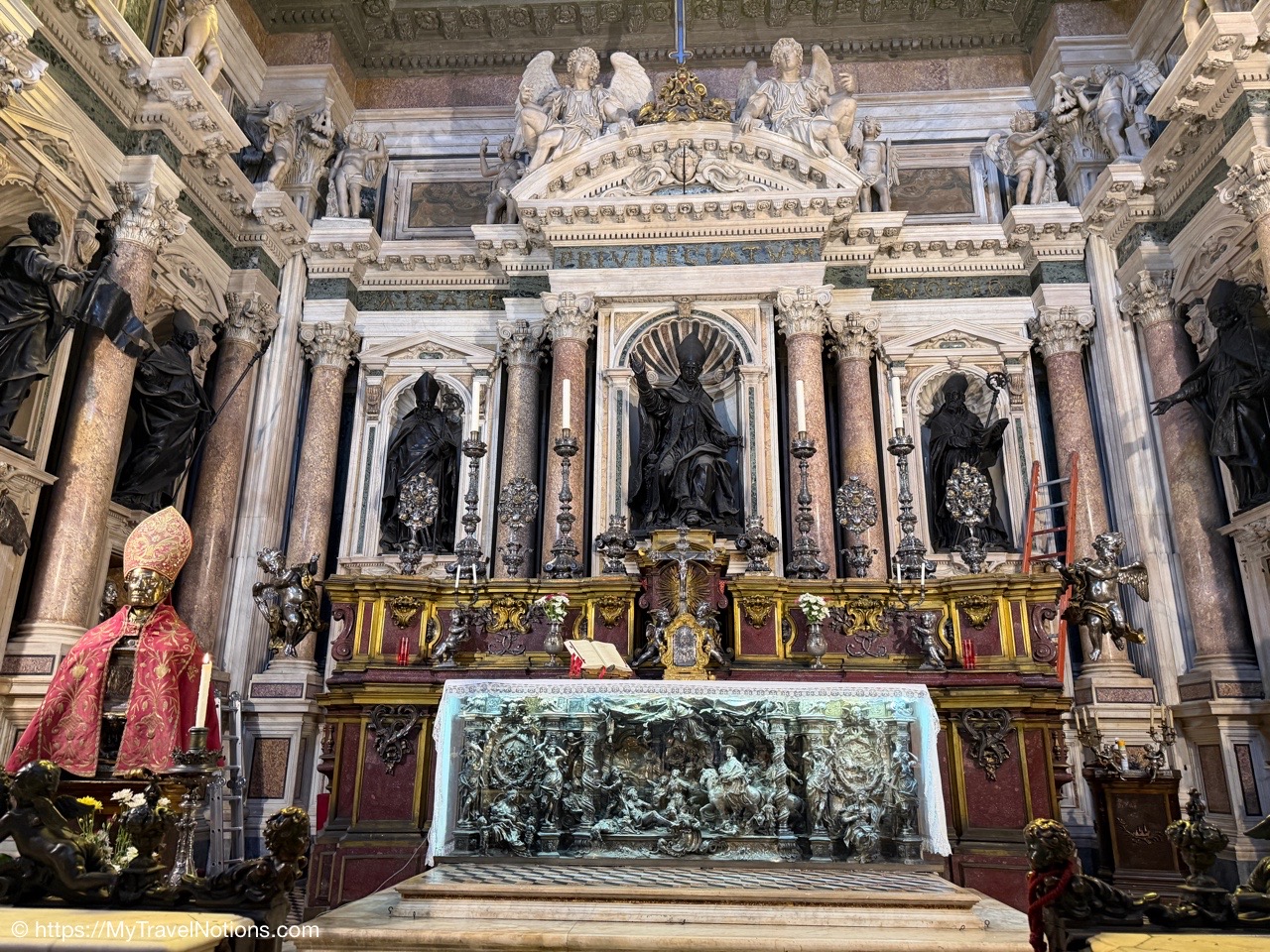
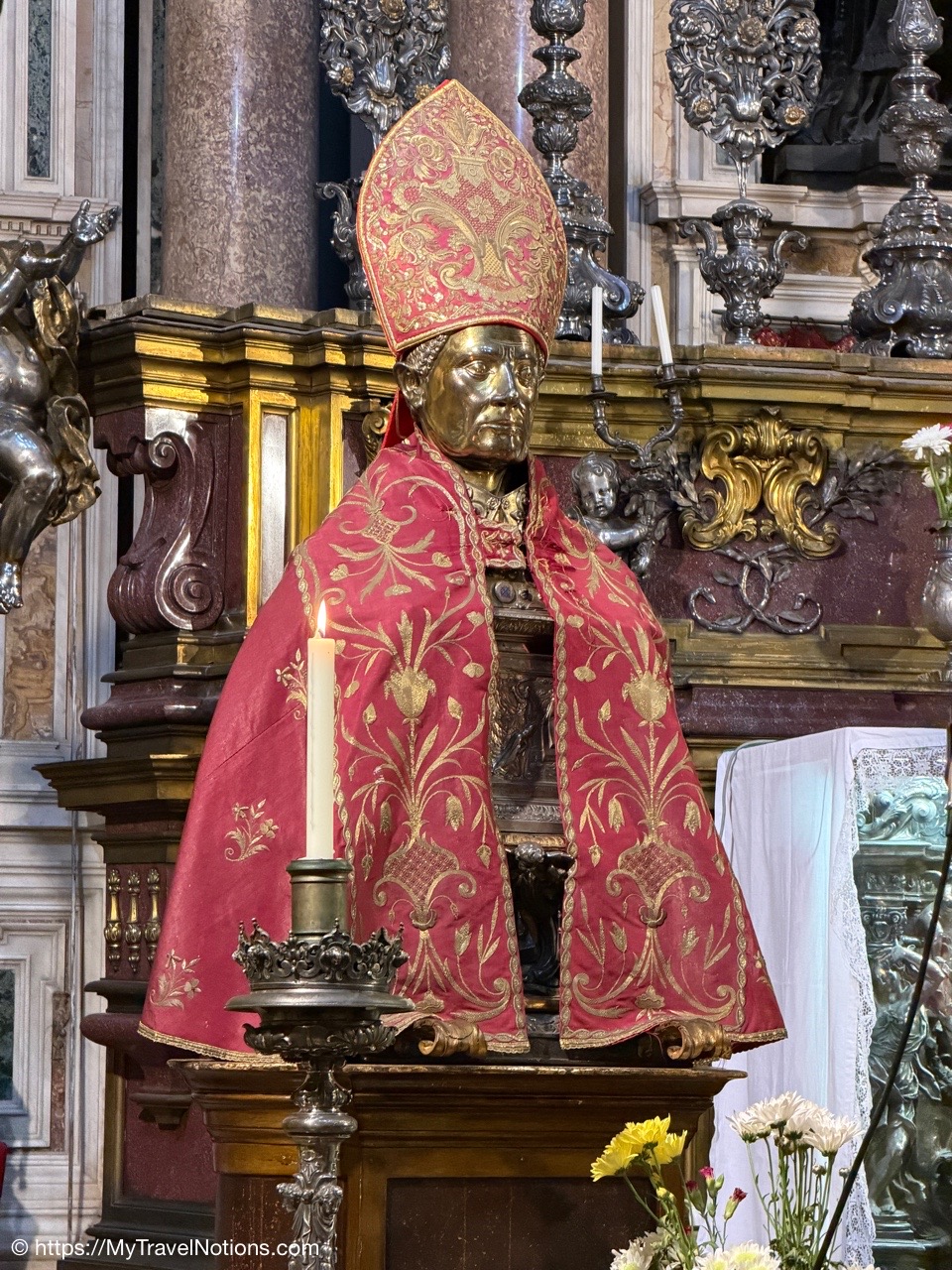
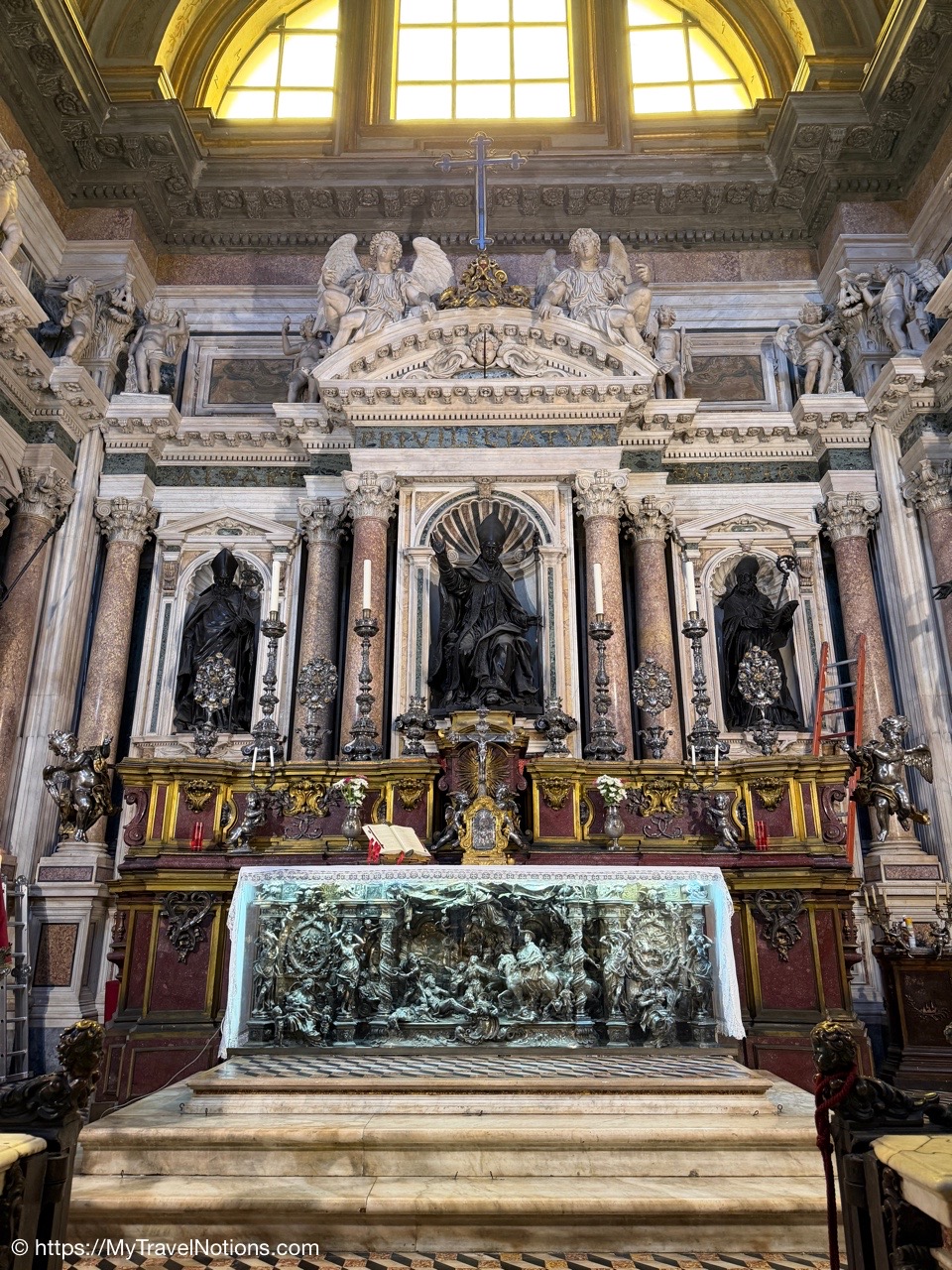
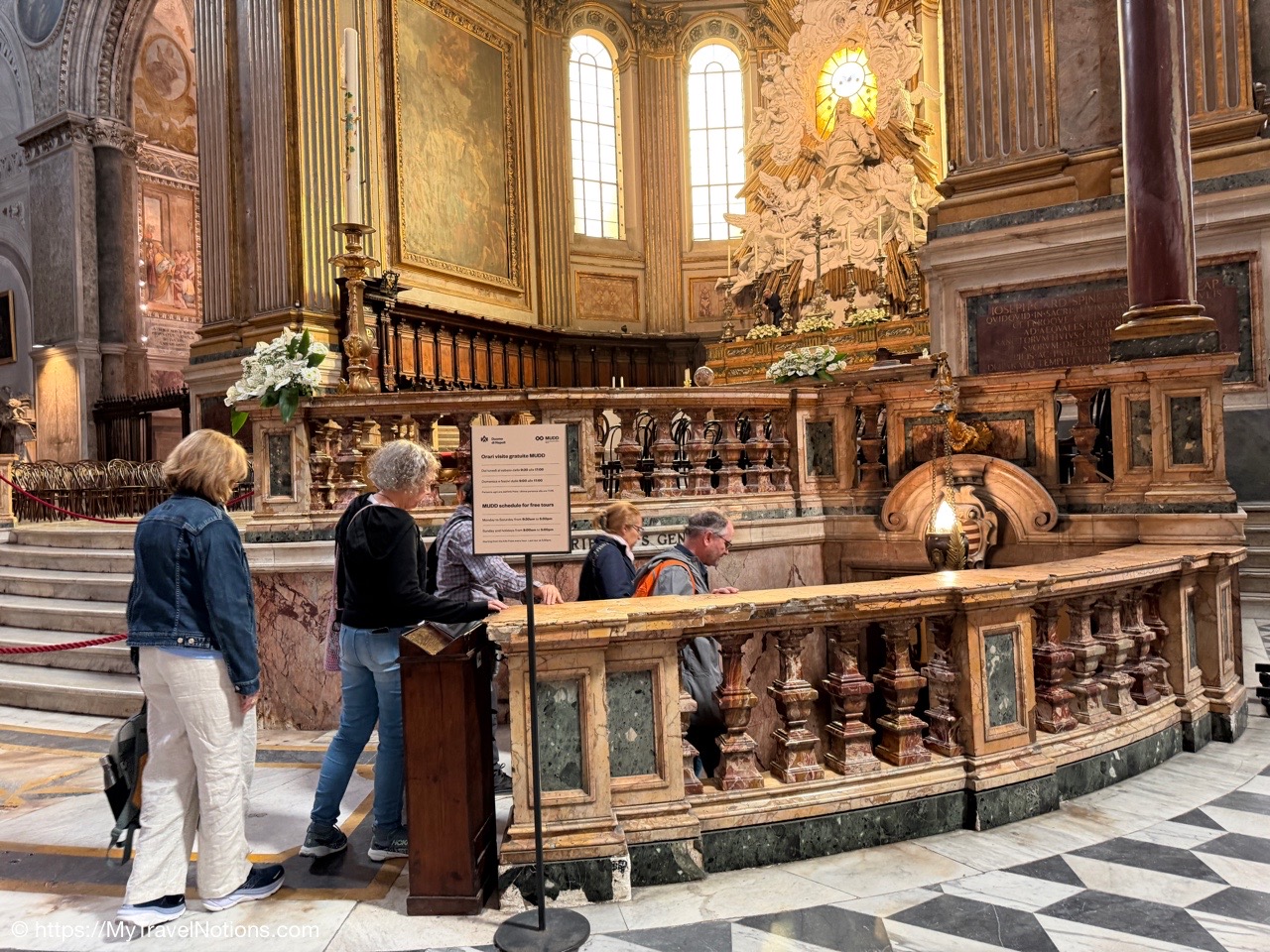
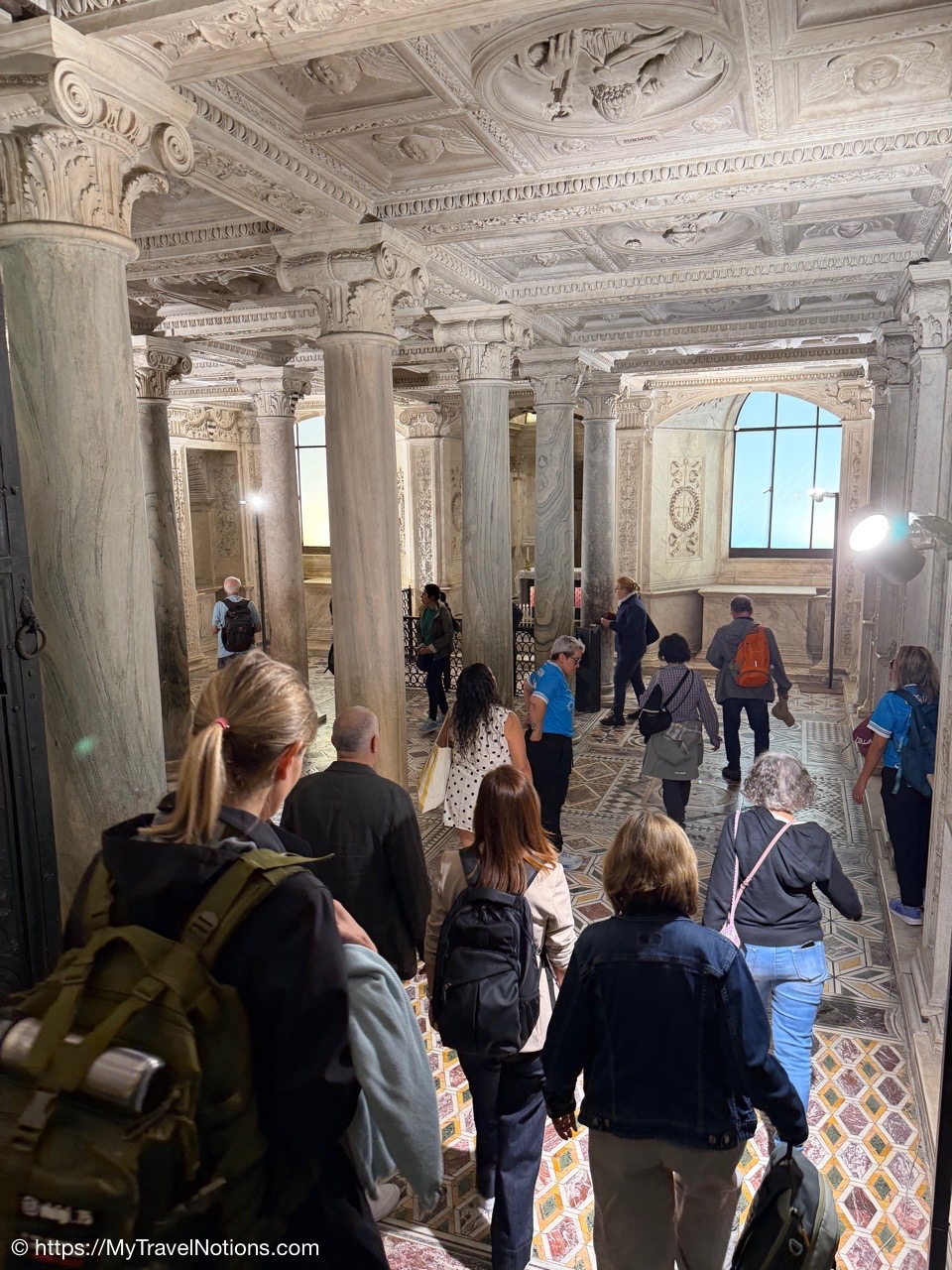
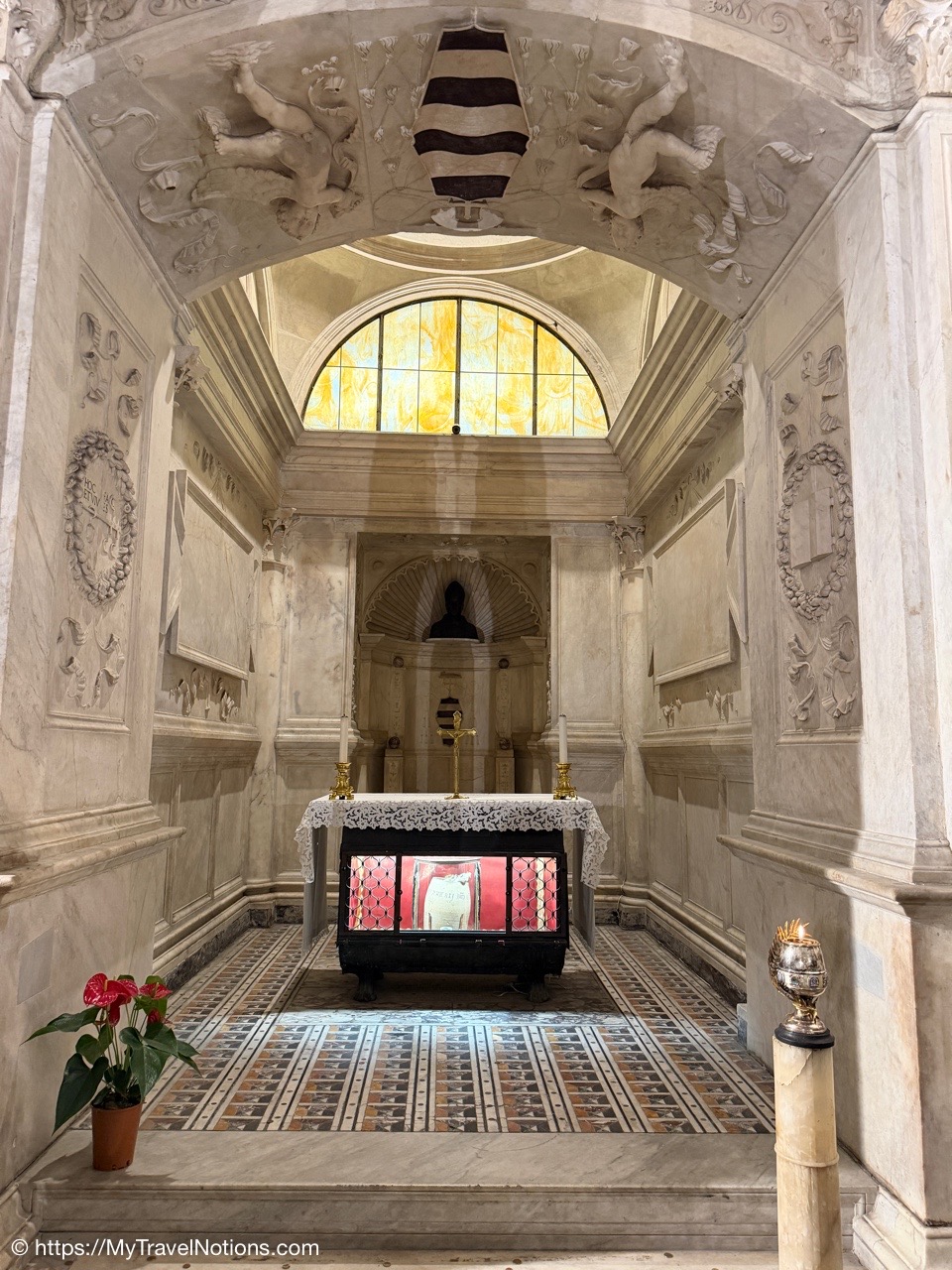
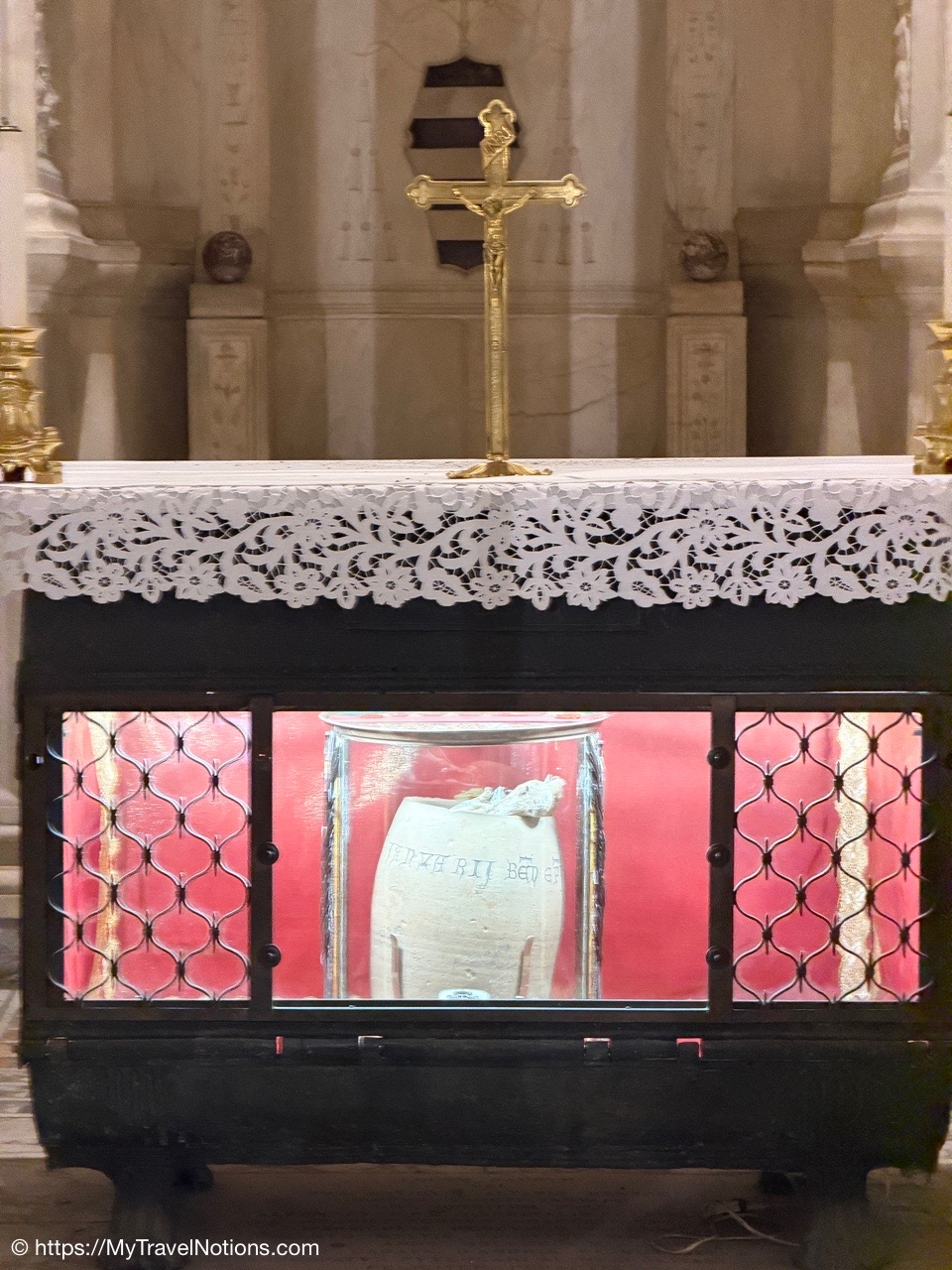
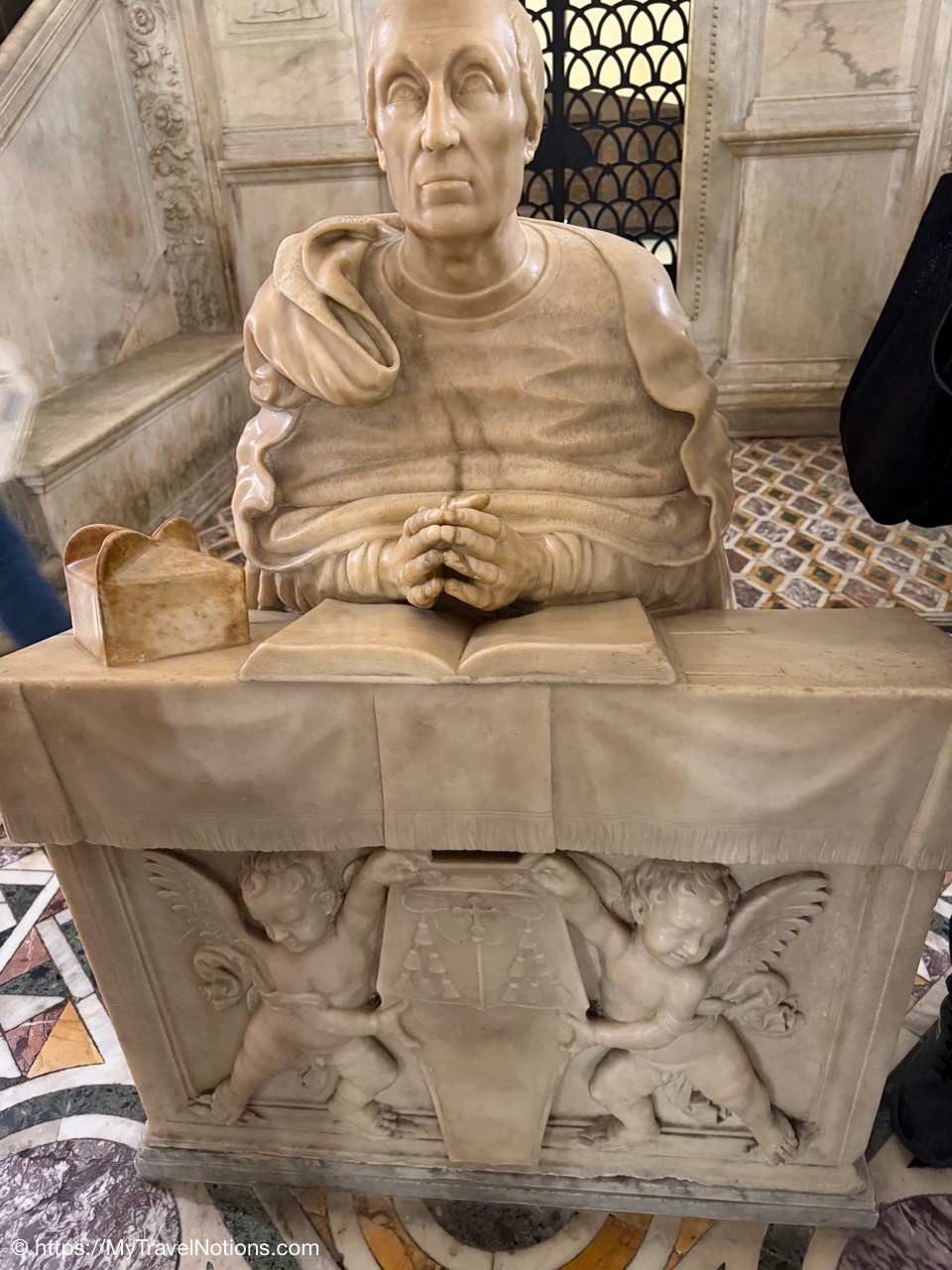
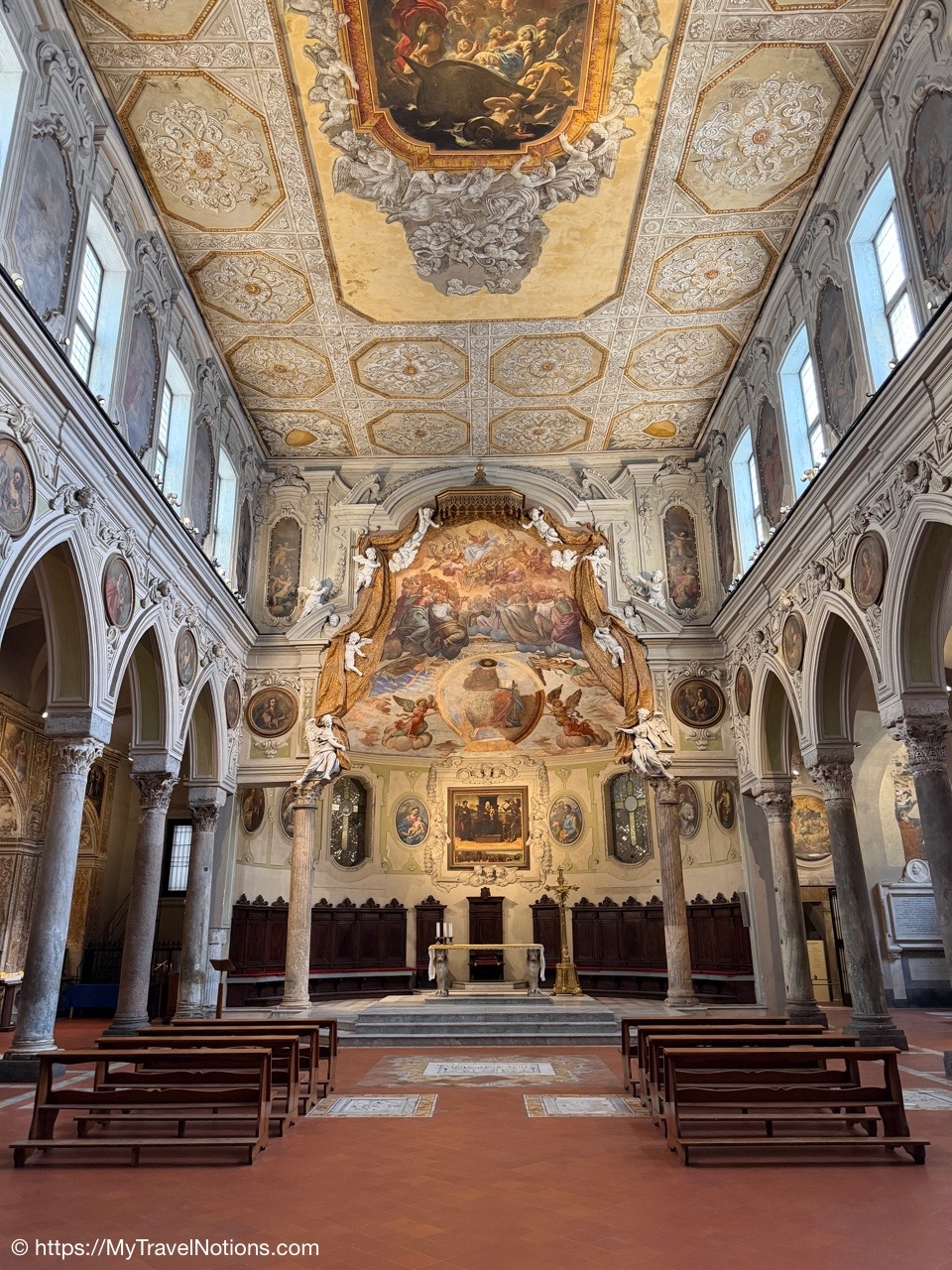
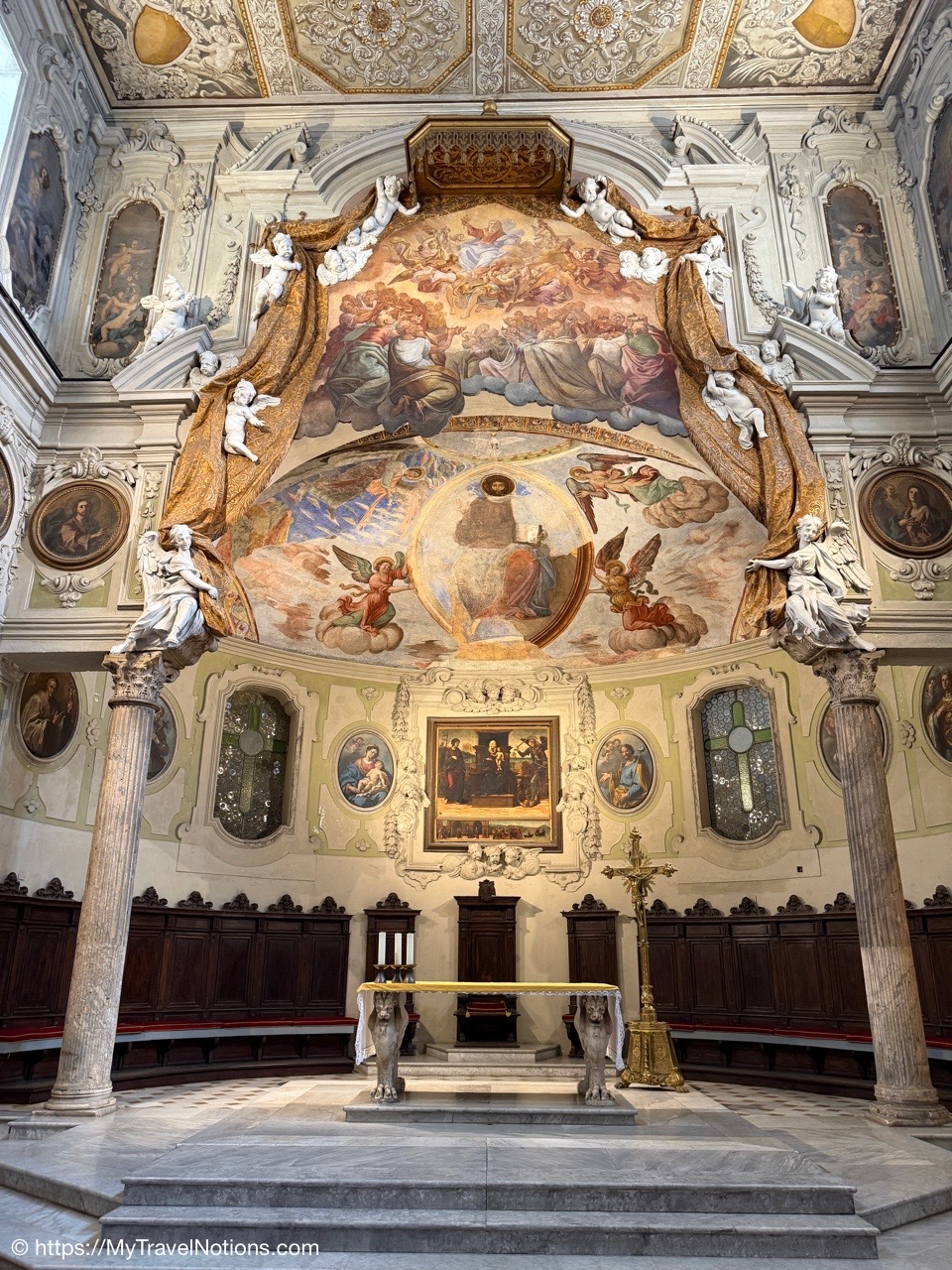
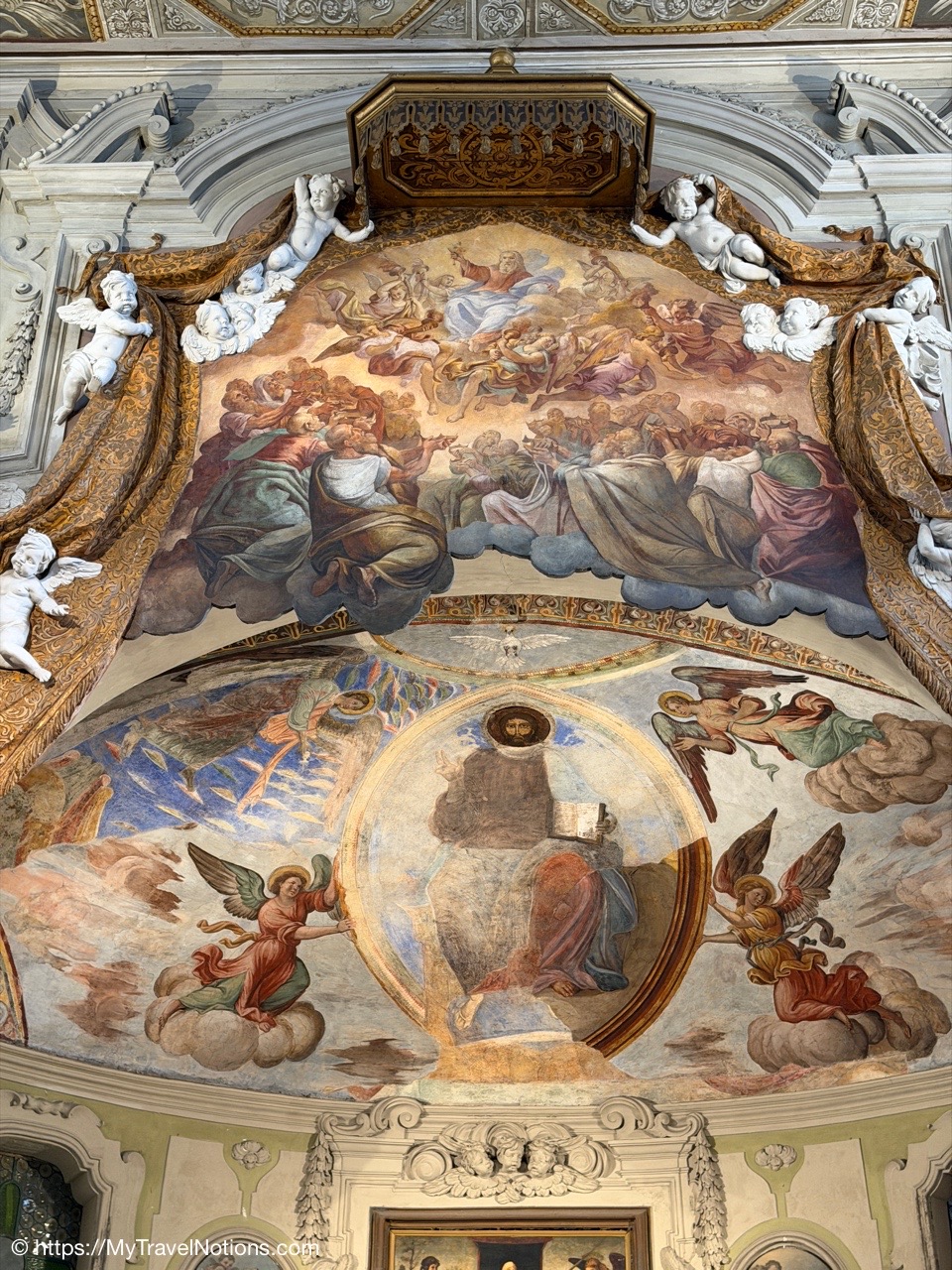
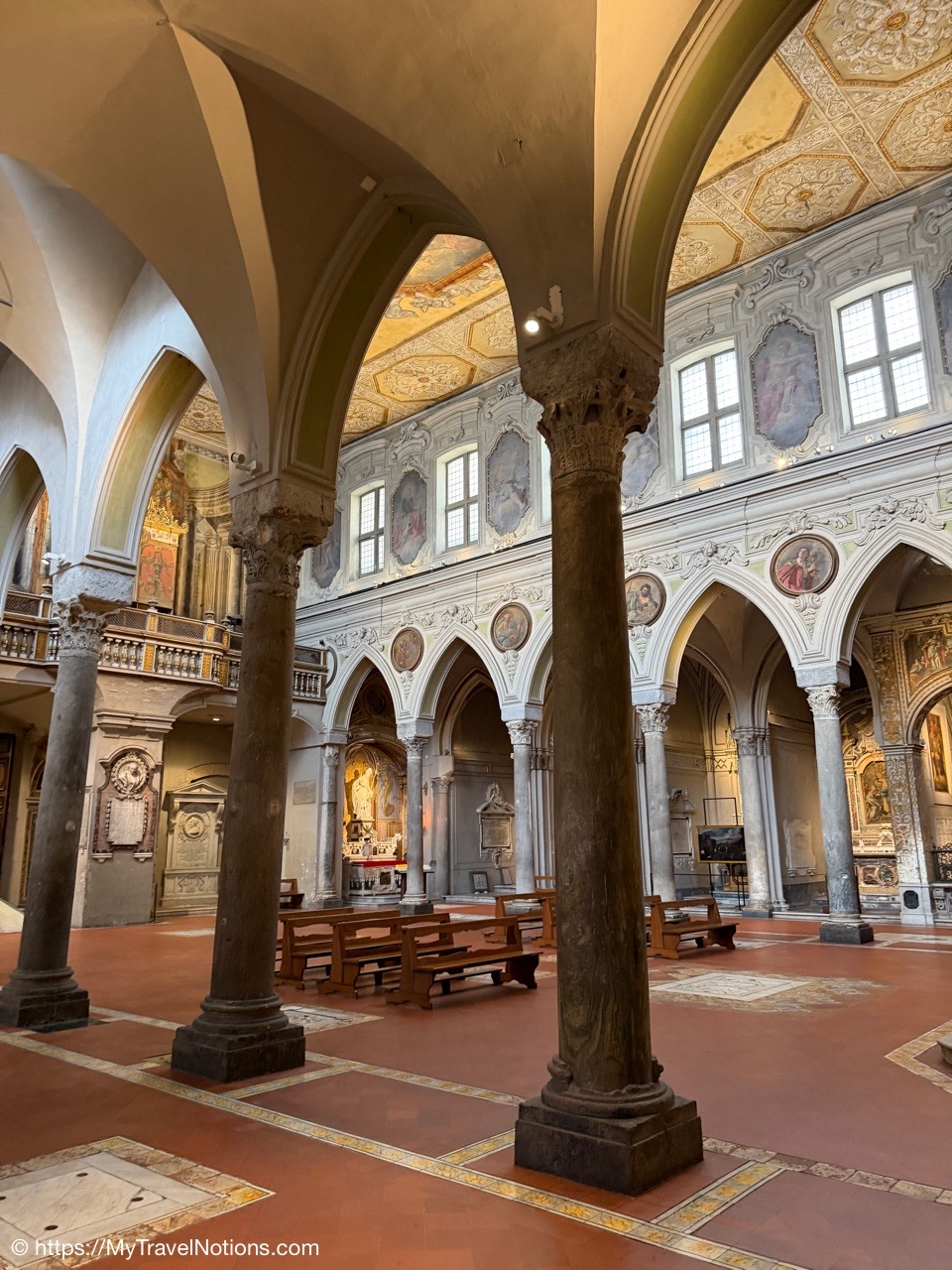
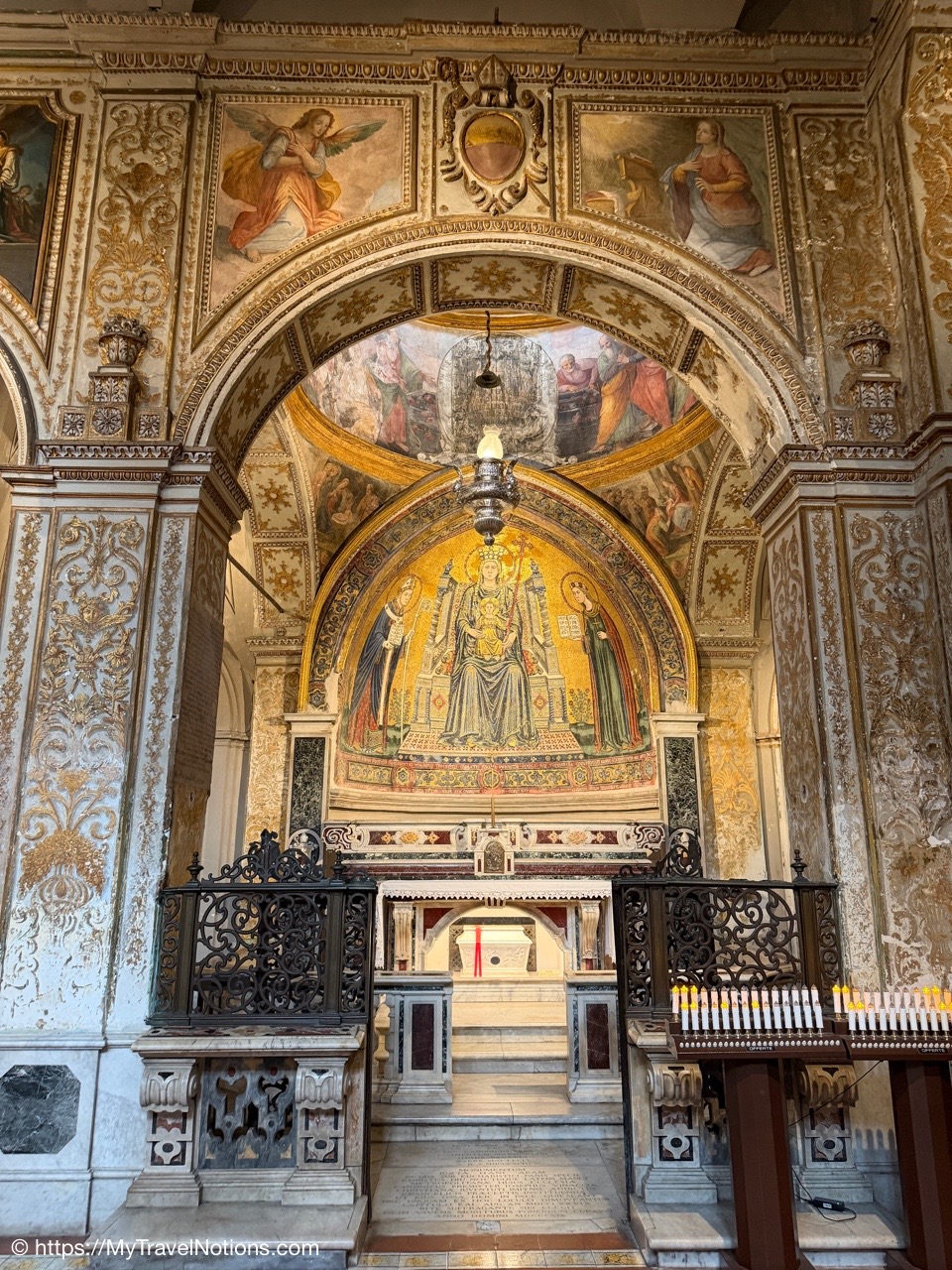
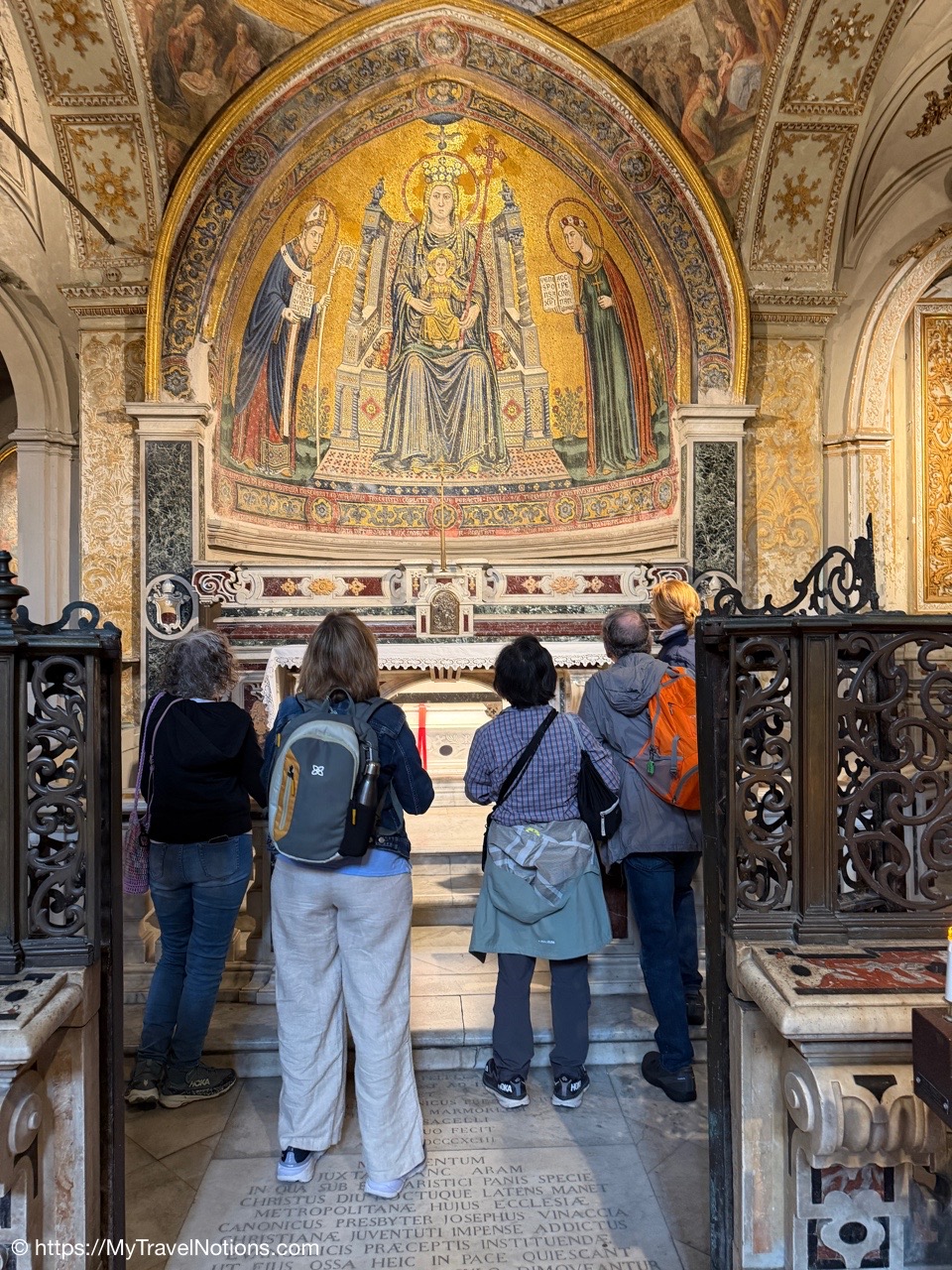
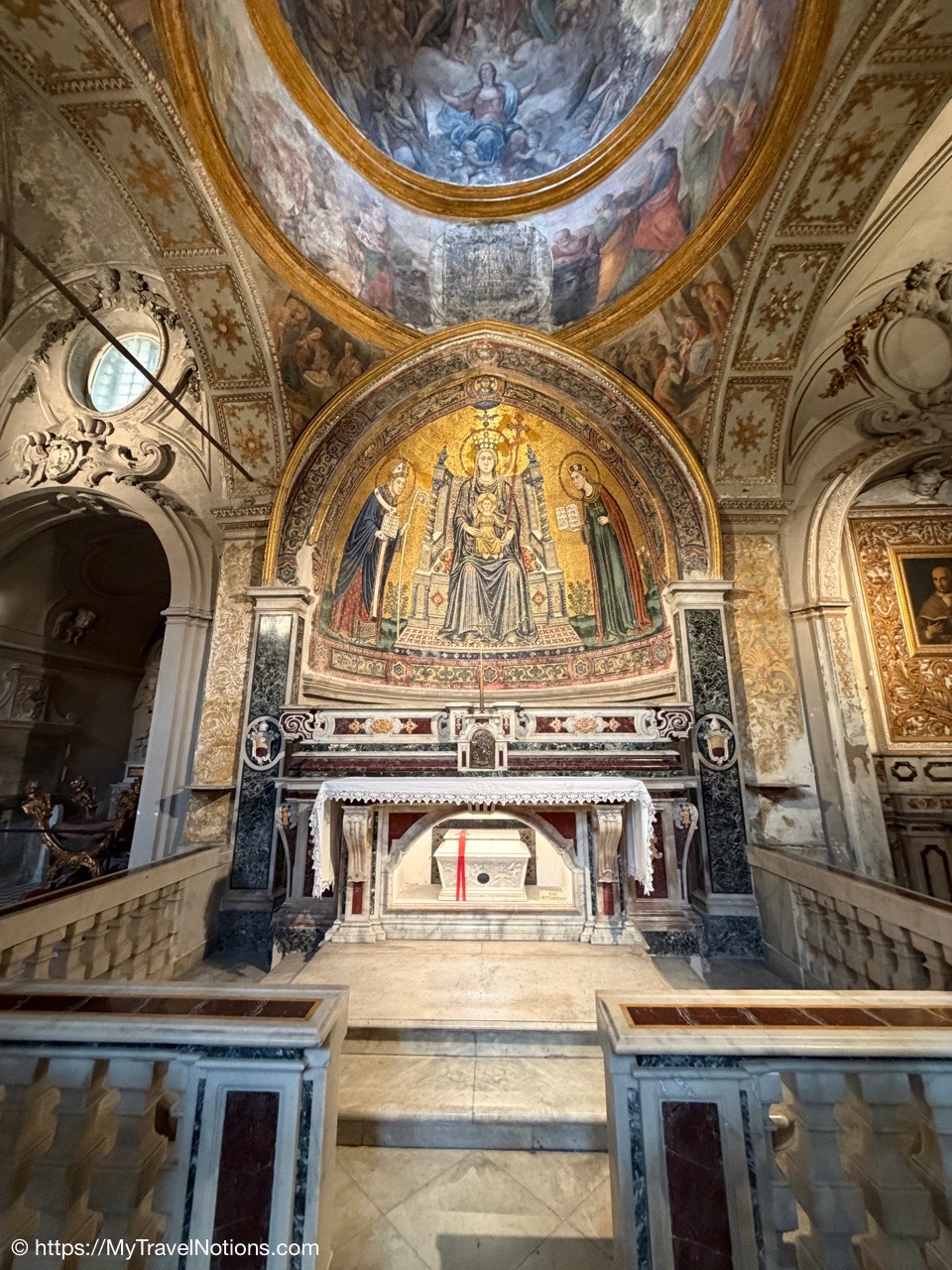
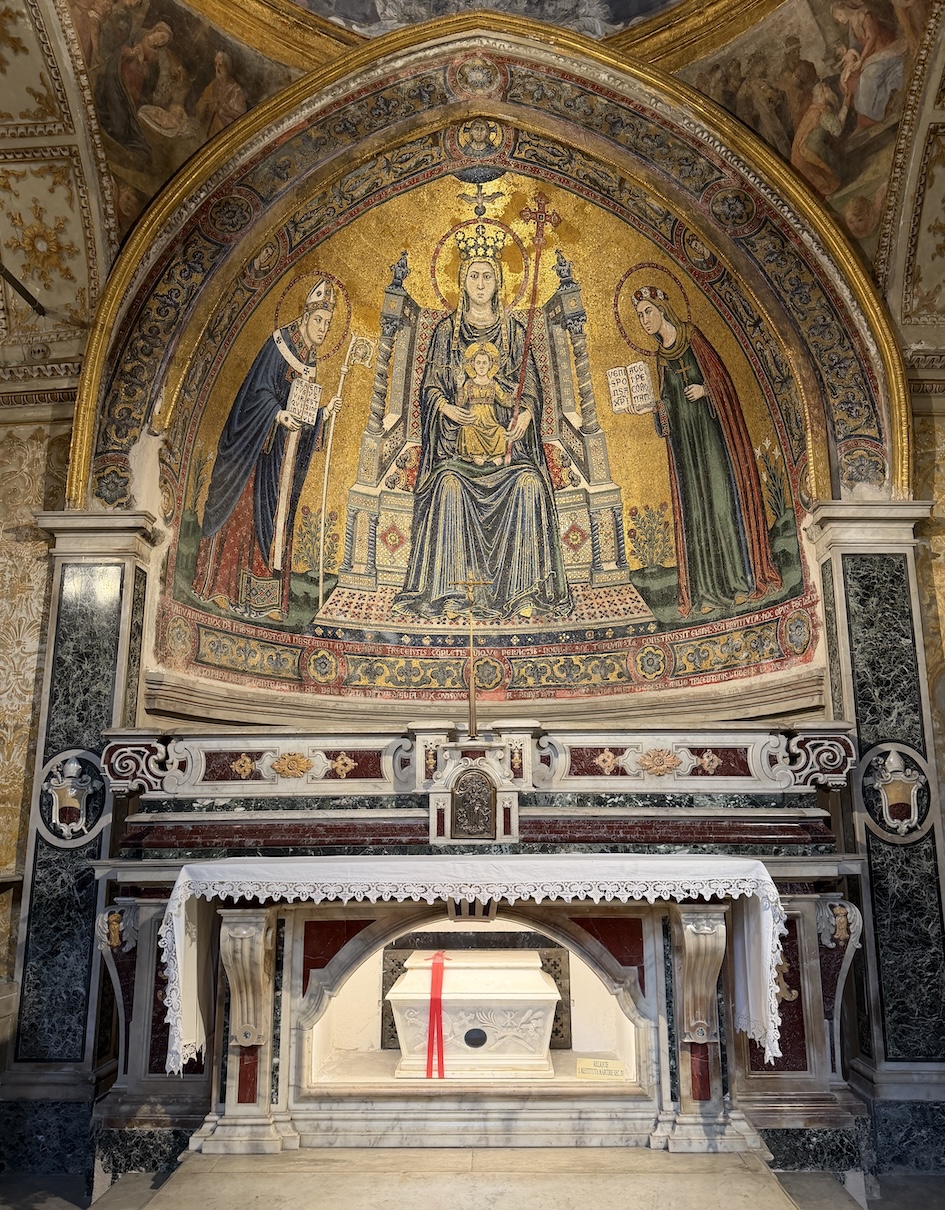
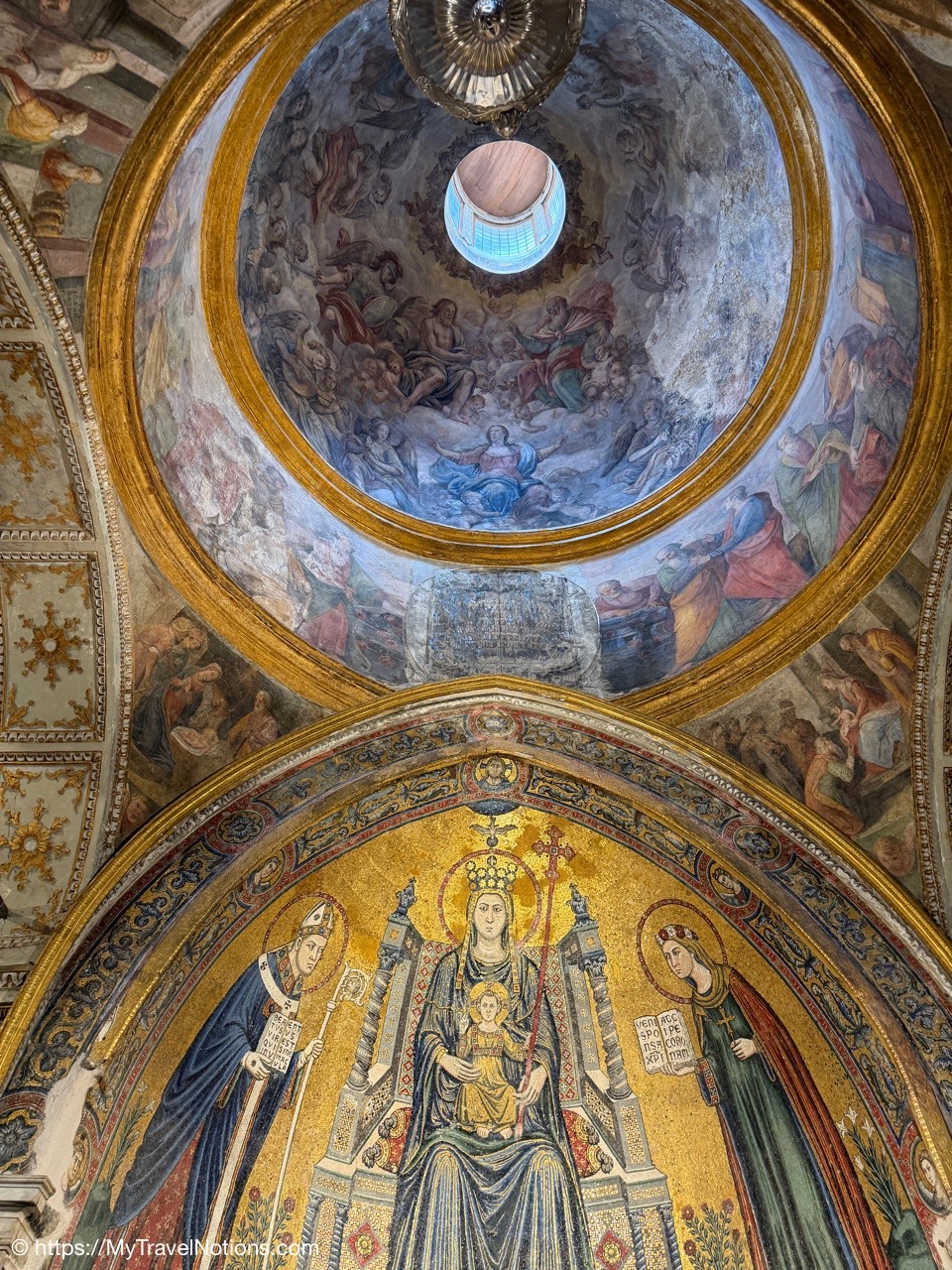
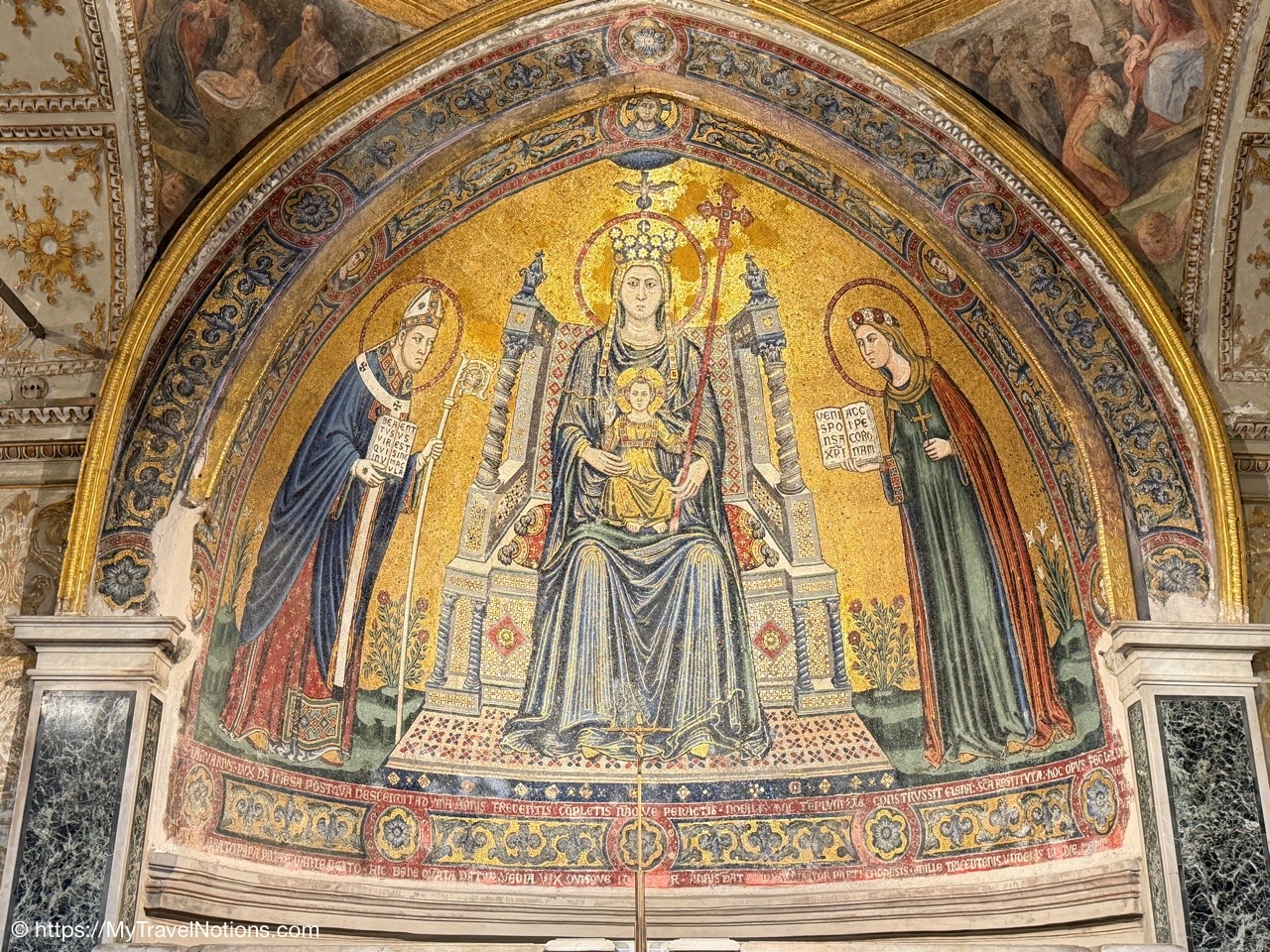
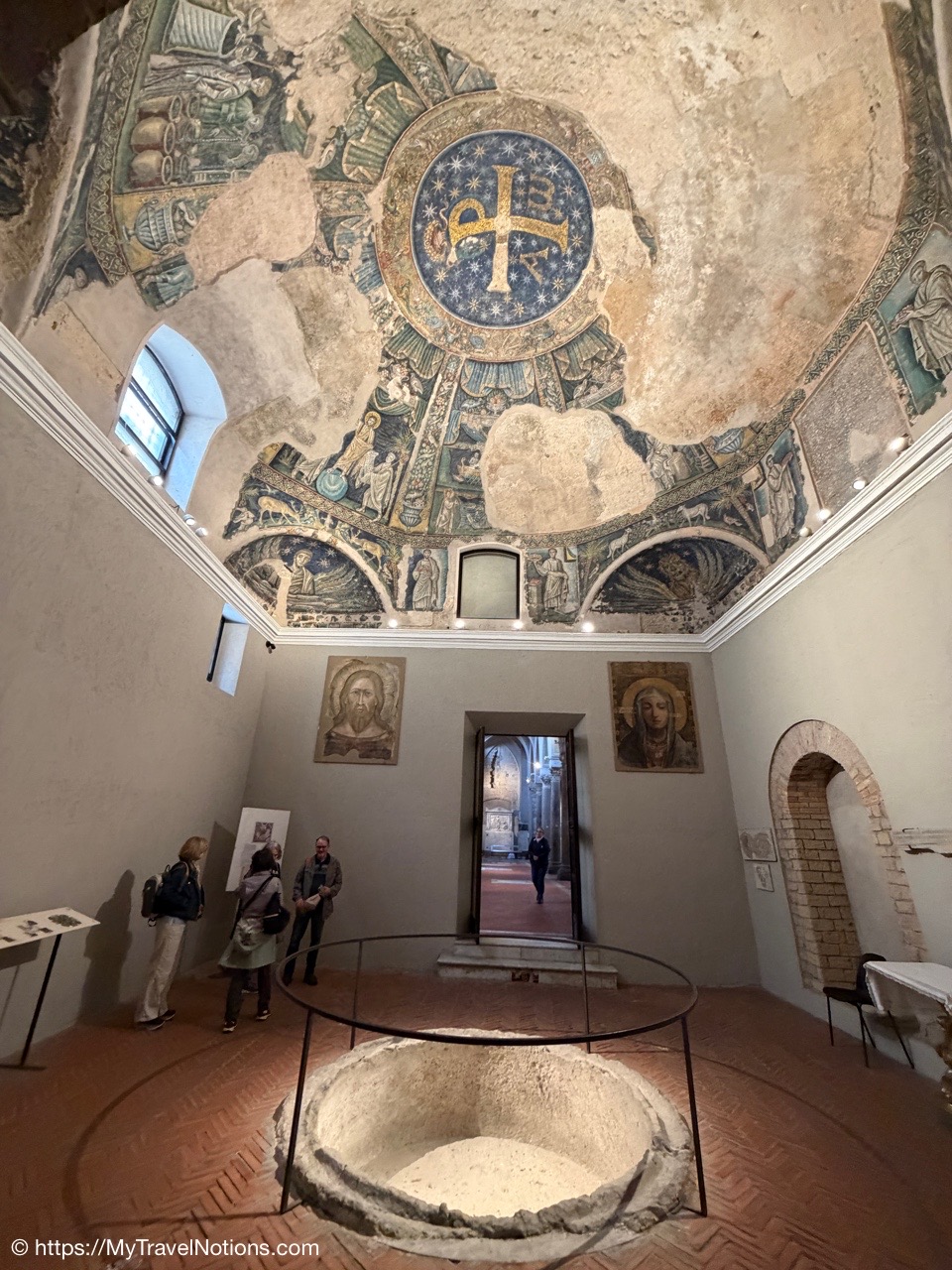
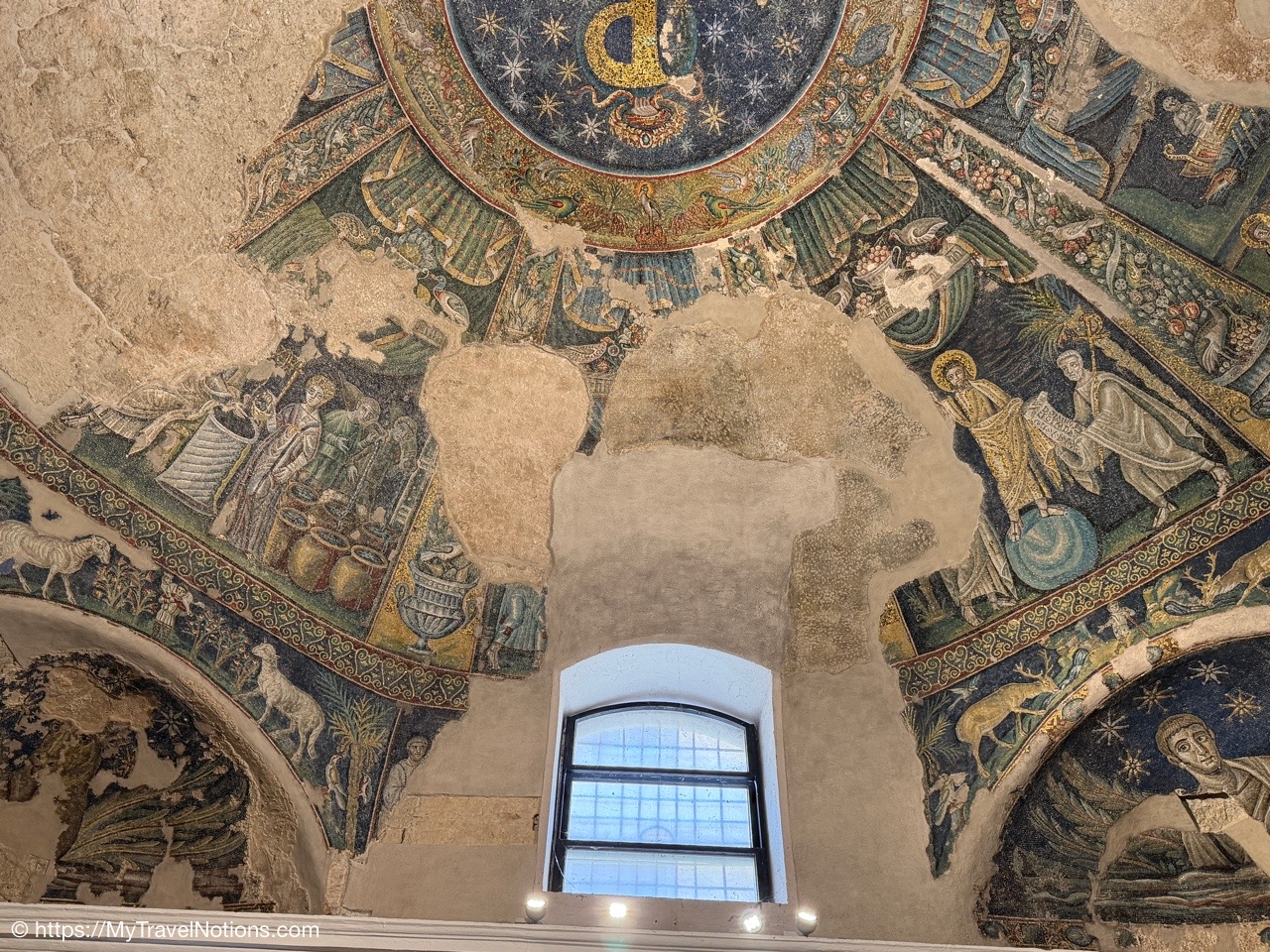
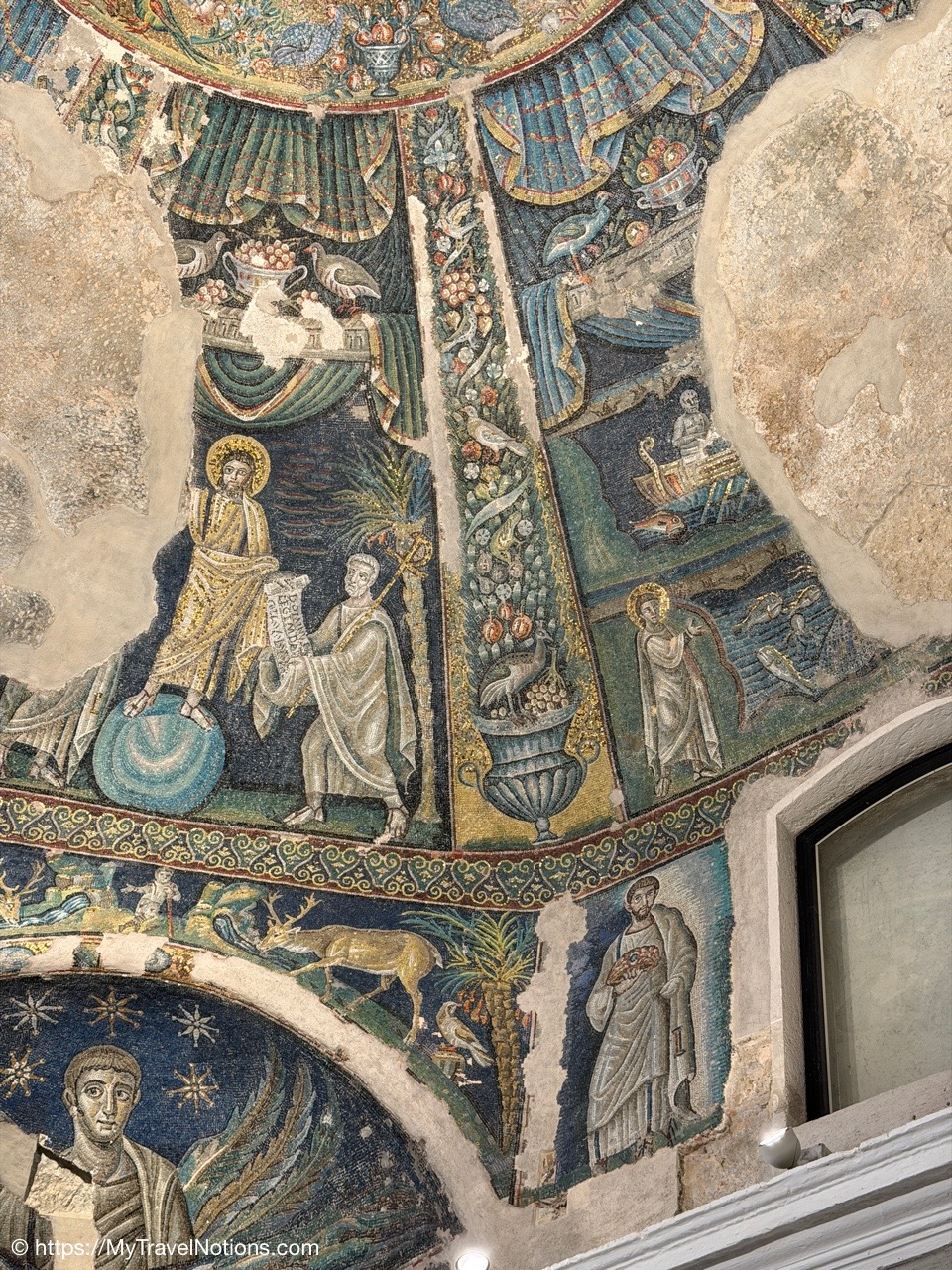
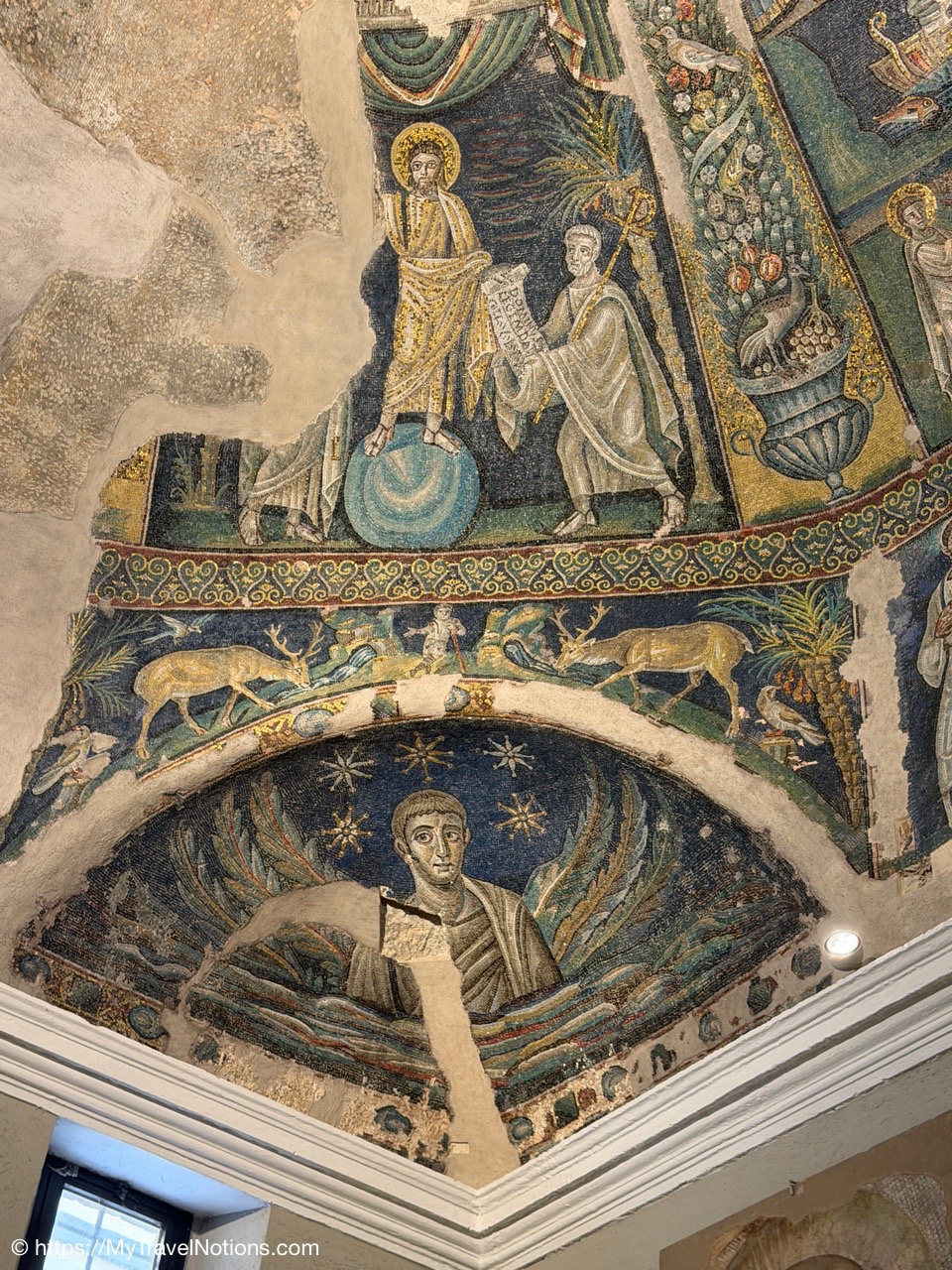
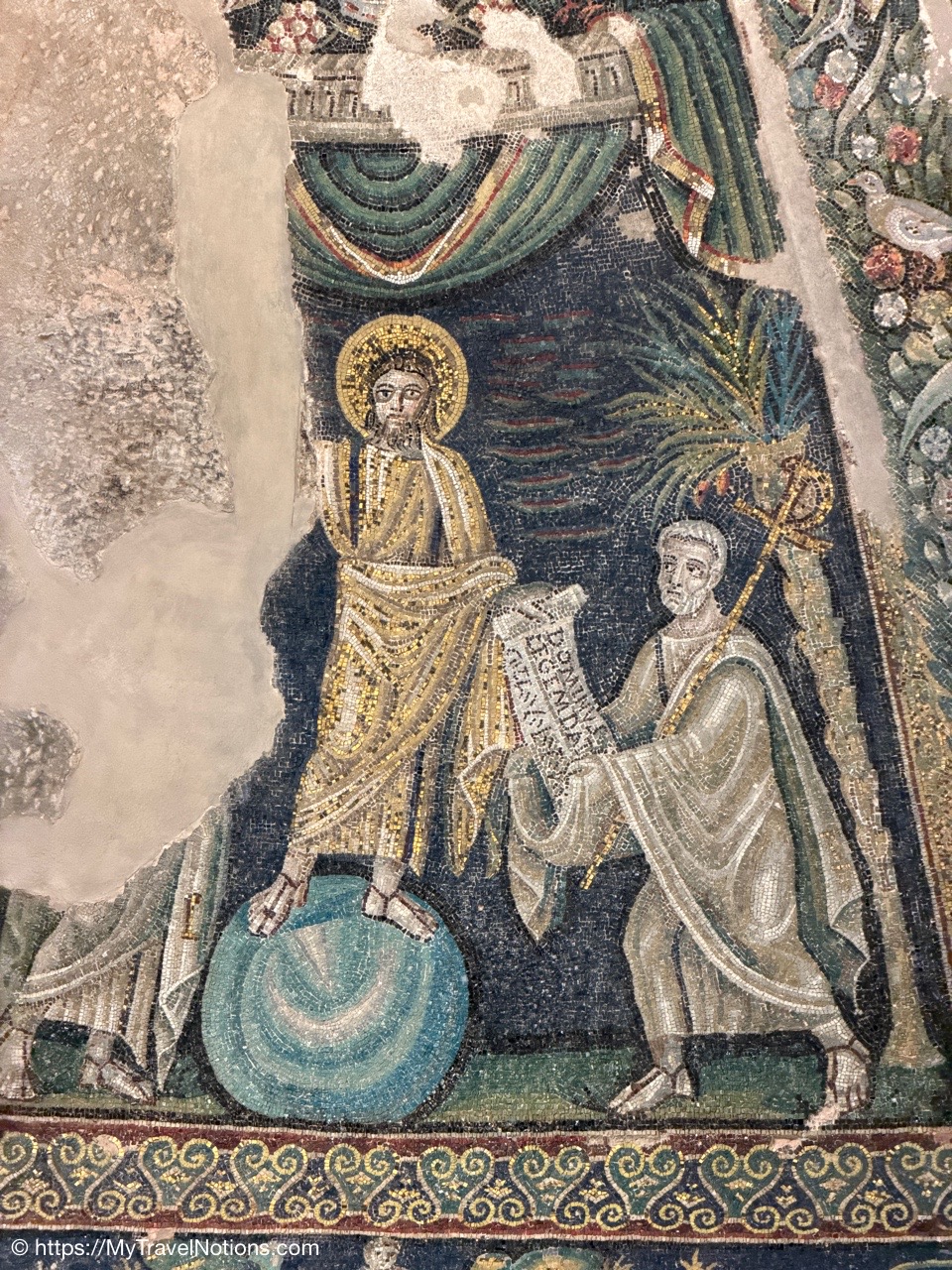
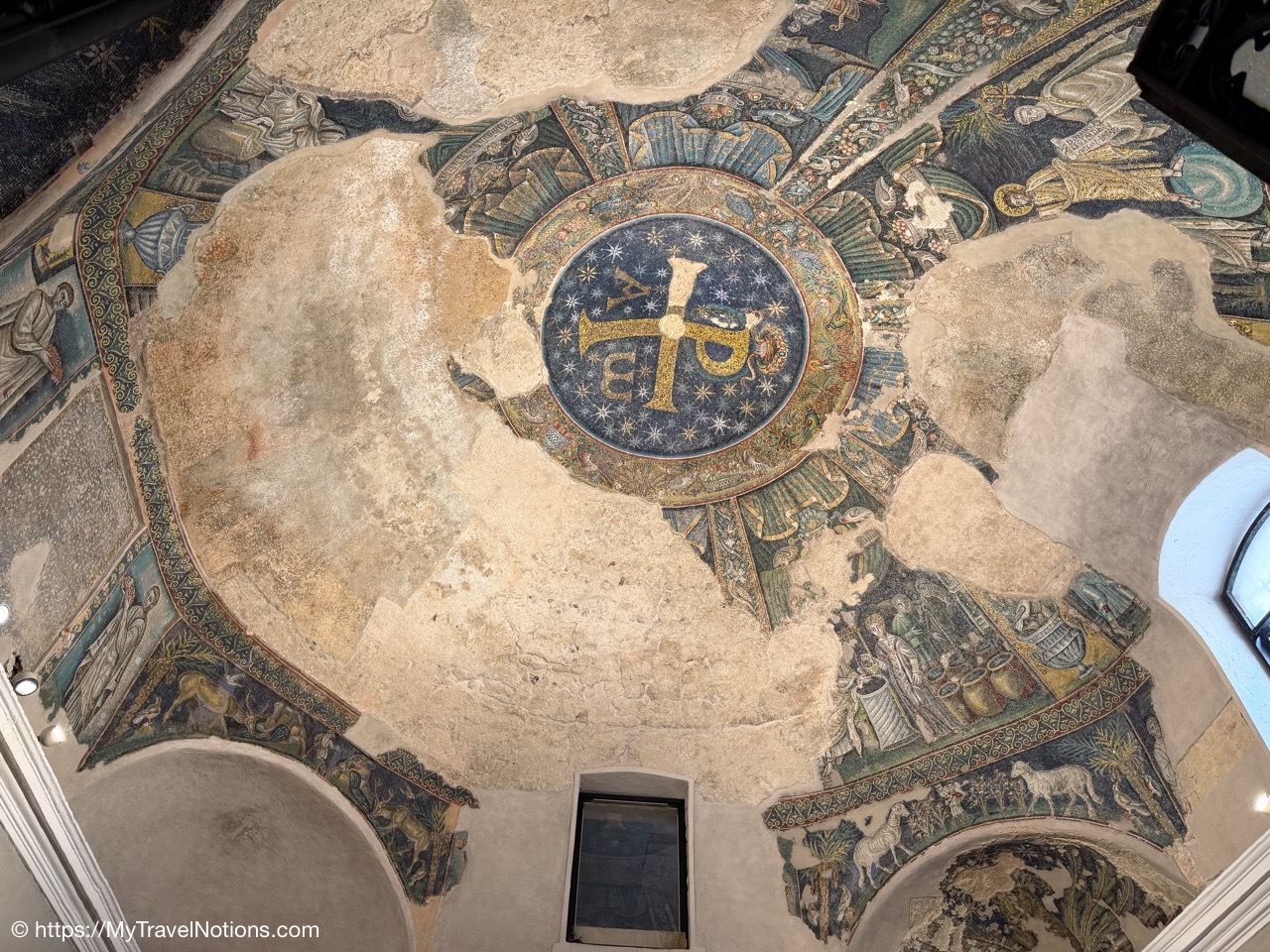
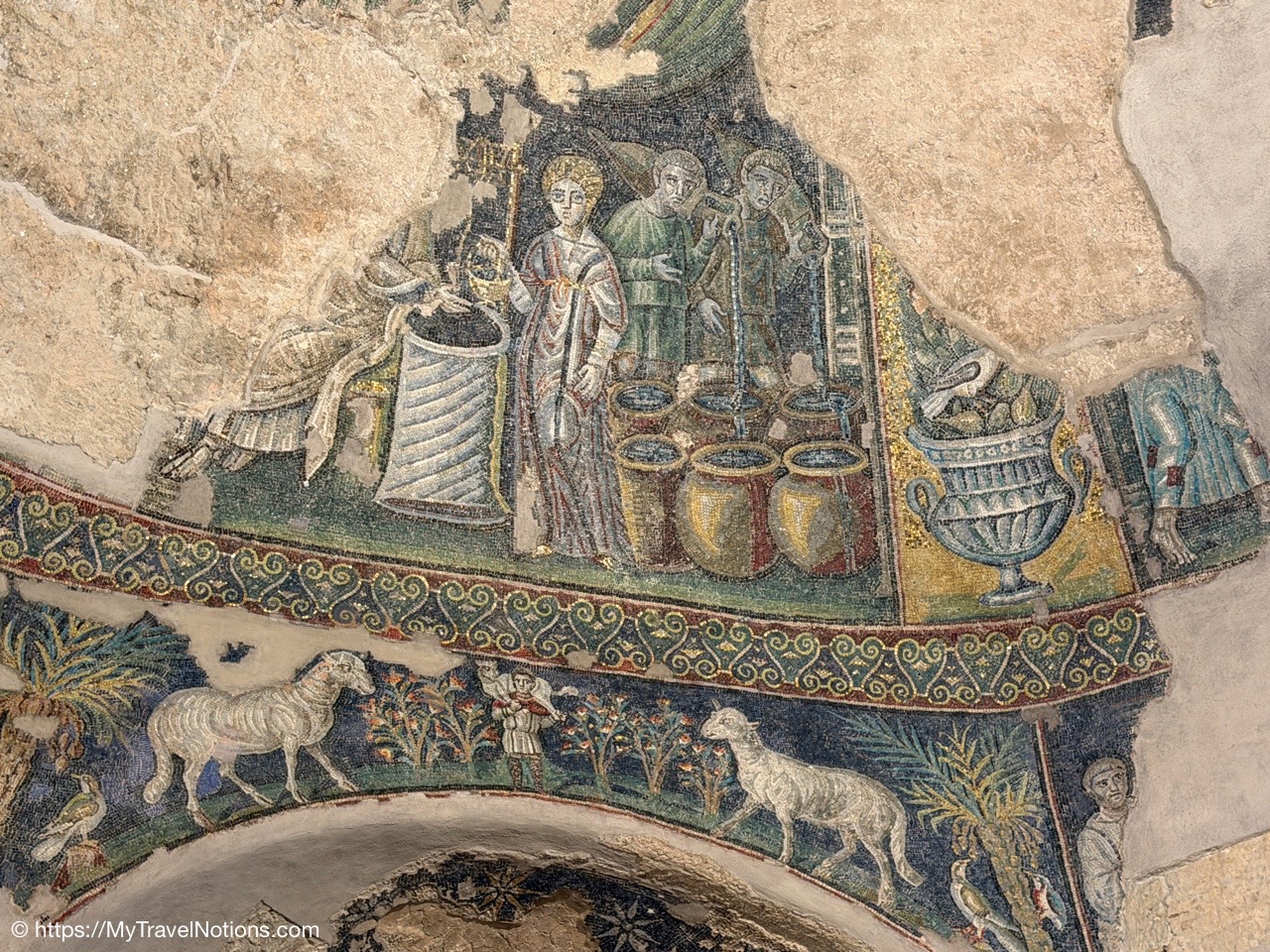
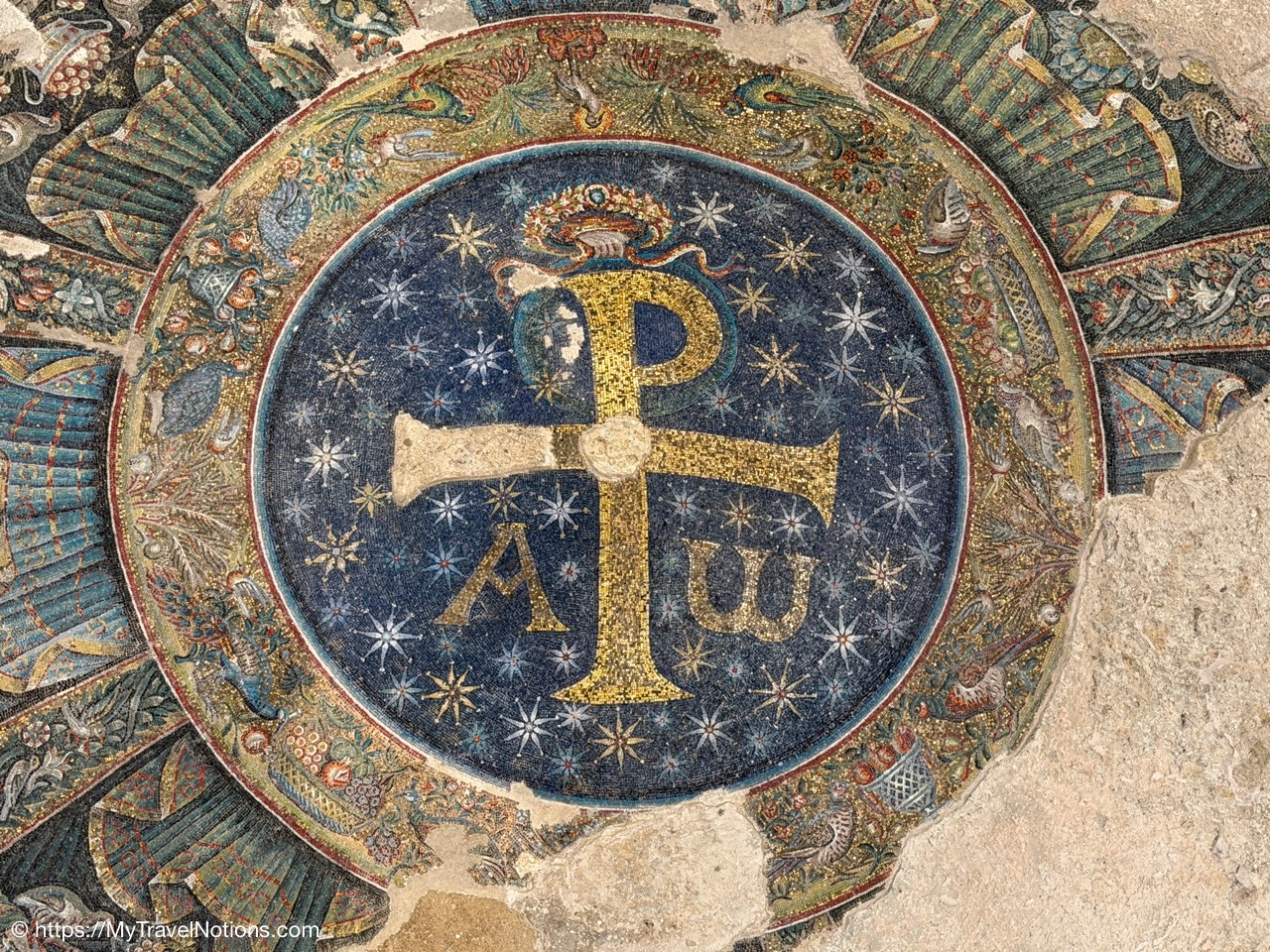
The Cathedral of Santa Maria Assunta commonly known as the Duomo di Napoli or Naples Cathedral was founded in 1272 by King Carlo I d’Angiò on one of the main axes of Greco-Roman Naples. The Cathedral was built directly on top of earlier religious structures. The Basilica of Santa Restituta was the first basilica ever built in Naples around the 4th century and was fully preserved as one of the cathedral’s side aisles. And, the 5th century Basilica of Santa Stefania was demolished to make room for the Cathedral. (April 30, 2026)Inside the Cathedral of Santa Maria Assunta commonly known as the Duomo di Napoli or Naples Cathedral founded in 1272 by King Carlo I d’Angiò. (April 30, 2026)Inside the Cathedral of Santa Maria Assunta commonly known as the Duomo di Napoli or Naples Cathedral founded in 1272 by King Carlo I d’Angiò. (April 30, 2026)The high Altar of the Cathedral of Santa Maria Assunta commonly known as the Duomo di Napoli or Naples Cathedral depicting the Assumption, created by Pietro Bracci in 1739 and inspired by Bernini’s Chair of Saint Peter. (April 30, 2026)Looking back from the High Altar towards the front entrance of the Cathedral of Santa Maria Assunta commonly known as the Duomo di Napoli or Naples Cathedral. (April 30, 2026)Inside the Cathedral of Santa Maria Assunta commonly known as the Duomo di Napoli or the Naples Cathedral. (April 30, 2026)Lower down the arched pillars along the central nave of the Naples Cathedral are busts of the first 16 bishops of Naples. (April 30, 2026)Lower down the arched pillars along the central nave of the Naples Cathedral are busts of the first 16 bishops of Naples. (April 30, 2026)Inside the Cathedral of Santa Maria Assunta commonly known as the Duomo di Napoli or the Naples Cathedral. (April 30, 2026)Walking towards the aisle entrance of the Royal Chapel of the Treasure of St. Januarius inside Cathedral of Santa Maria Assunta commonly known as the Duomo di Napoli or the Naples Cathedral complex. Dedicated to St. Januarius, the patron saint of the city, is the most lavishly decorated chapel in the Cathedral, showcasing contributions from the premier Baroque artists in Naples. (April 30, 2026)The Royal Chapel of the Treasure of St. Januarius inside Cathedral of Santa Maria Assunta commonly known as the Duomo di Napoli or the Naples Cathedral complex. This chapel is dedicated to St. Januarius (San Gennaro) the patron saint of the city. It is the most lavishly decorated chapel in the Cathedral, showcasing contributions from the premier Baroque artists in Naples. (April 30, 2026)The skull of Saint Januarius (San Gennaro), housed in a silver bust crafted in the 14th century, of the Royal Chapel of the Treasure of St. Januarius inside Cathedral of Santa Maria Assunta complex. Tradition holds that Januarius I of Benevento, Naples’ patron saint, courageously visited and supported imprisoned Christians during the brutal persecutions orchestrated by the Roman Emperor Diocletian. Arrested and sentenced to death, he miraculously survived being thrown into a fiery furnace and to wild beasts before finally being beheaded near Pozzuoli. (April 30, 2026)The main altar of the Royal Chapel of the Treasure of St. Januarius inside the Cathedral of Santa Maria Assunta also known as the Naples Cathedral complex. This chapel is dedicated to St. Januarius, who is the patron saint of the city. It is the most lavishly decorated chapel in the cathedral, showcasing contributions from the premier Baroque artists in Naples. (April 30, 2026)Taking the stairs, located under the High Altar of the Cathedral of the Assumption of the Blessed Virgin Mary or the Naples Cathedral, to the Succorpo Chapel of San Gennaro. The Chapel was commissioned by Cardinal Oliviero Carafa between 1497 and 1505 to house the relics of San Gennaro. (April 30, 2026)Entering the rectangular space of the Succorpo Chapel of San Gennaro located under the High Altar of the Cathedral of the Assumption of the Blessed Virgin Mary or the Naples Cathedral. The Chapel was commissioned by Cardinal Oliviero Carafa in 1497 and 1505 to securely house the relics of the patron saint. It features intricate marble reliefs, a coffered ceiling, and a striking praying statue of the Cardinal. (April 30, 2026)The urn containing the relics of San Gennaro the patron saint of Naples inside the Succorpo Chapel of San Gennaro located under the High Altar of the Cathedral of the Assumption of the Blessed Virgin Mary or the Naples Cathedral. (April 30, 2026)The urn containing the relics of San Gennaro the patron saint of Naples inside the Succorpo Chapel of San Gennaro located under the High Altar of the Cathedral of the Assumption of the Blessed Virgin Mary or the Naples Cathedral. (April 30, 2026)The statue of Cardinal Carafa praying inside the Succorpo Chapel of San Gennaro located under the High Altar of the Cathedral of the Assumption of the Blessed Virgin Mary or the Naples Cathedral. The sculpture has been tentatively attributed to the great Renaissance master, Michelangelo. (April 30, 2026)The Basilica of Santa Restituta, Naples’ first cathedral, has an aisle entrance from inside the Cathedral of Santa Maria Assunta commonly known as the Duomo di Napoli or the Naples Cathedral. Founded by Constantine in the 4th century (circa 330 AD), the Basilica contains early Christian mosaics and the oldest baptistery in Western Europe, San Giovanni in Fonte. (April 30, 2026)The apse of the Basilica of Santa Restituta, the Duomo di Napoli or the Naples Cathedral, with frescoes and panels dedicated to Christ the Intercessor, a role Jesus fulfills in heaven, where He continuously advocates for believers before God the Father. (April 30, 2026)The apse of the Basilica of Santa Restituta, the Duomo di Napoli or the Naples Cathedral, with frescoes and panels dedicated to Christ the Intercessor, a role Jesus fulfills in heaven, where He continuously advocates for believers before God the Father. (April 30, 2026)The Basilica of Santa Restituta, Naples’ first cathedral, is located inside the Cathedral of Santa Maria Assunta commonly known as the Duomo di Napoli or the Naples Cathedral. Founded by Constantine in the 4th century, the Basilica, contains early Christian mosaics and the oldest baptistery in Western Europe, San Giovanni in Fonte. (April 30, 2026)The Basilica of Santa Restituta, Naples’ first cathedral, is located inside the Cathedral of Santa Maria Assunta commonly known as the Duomo di Napoli or the Naples Cathedral. Founded by Emperor Constantine in the 4th century, the Basilica, contains early Christian mosaics and the oldest baptistery in Western Europe, San Giovanni in Fonte. (April 30, 2026)The Chapel of Santa Maria del Principio, located inside the first church of the Basilica of Santa Restituta, the oldest part inside the Cathedral of Santa Maria Assunta commonly known as the Duomo di Napoli or the Naples Cathedral complex. The chapel contains a mosaic depicting the Madonna and Child flanked by the city’s patron saint, San Gennaro, and the basilica’s namesake, Santa Restituta. (April 30, 2026)The Chapel of Santa Maria del Principio, located inside the first church of the Basilica of Santa Restituta, the oldest part inside the Cathedral of Santa Maria Assunta commonly known as the Duomo di Napoli or the Naples Cathedral. The chapel contains a mosaic depicting the Madonna and Child flanked by the city’s patron saint, San Gennaro, and the basilica’s namesake, Santa Restituta. (April 30, 2026)The Chapel of Santa Maria del Principio, located inside the Basilica of Santa Restituta, the oldest church and part inside the Duomo di Napoli or the Naples Cathedral complex. The chapel contains a mosaic depicting the Madonna and Child flanked by the city’s patron saint, San Gennaro, and the basilica’s namesake, Santa Restituta. Beneath the mosaic lies the ancient relics of Saint Giovanni IV lo Scriba (Bishop of Naples from 842 to 849 AD) and Santa Restituta. (April 30, 2026)The Chapel of Santa Maria del Principio, located inside the Basilica of Santa Restituta, the oldest church and part inside the Duomo di Napoli or the Naples Cathedral complex. The chapel contains a mosaic depicting the Madonna and Child flanked by the city’s patron saint, San Gennaro, and the basilica’s namesake, Santa Restituta. Beneath the mosaic lies the ancient relics of Saint Giovanni IV lo Scriba (Bishop of Naples from 842 to 849 AD) and Santa Restituta. (April 30, 2026)The Chapel of Santa Maria del Principio, located inside the first church of the Basilica of Santa Restituta, the oldest part inside the Cathedral of Santa Maria Assunta commonly known as the Duomo di Napoli or the Naples Cathedral complex. The dome Baroque ceiling fresco illustrates the arrival of Santa Restituta’s body at the island of Ischia and the mosaic below it depicts the Madonna and Child flanked by the city’s patron saint, San Gennaro, and the basilica’s namesake, Santa Restituta. (April 30, 2026)The Chapel of Santa Maria del Principio, located inside the first church of the Basilica of Santa Restituta, the oldest part inside the Cathedral of Santa Maria Assunta commonly known as the Duomo di Napoli or the Naples Cathedral complex. The chapel contains a mosaic depicting the Madonna and Child flanked by the city’s patron saint, San Gennaro, and the basilica’s namesake, Santa Restituta. (April 30, 2026)The Baptistery of San Giovanni in Fonte also located inside the first church of the Basilica of Santa Restituta, the oldest part inside the Cathedral of Santa Maria Assunta commonly known as the Duomo di Napoli or the Naples Cathedral complex. Founded between the 4th and 5th centuries by Bishop Severo, the Baptistery is one of the oldest in the West. The Baptistry dome features early Christian mosaic art of biblical scenes such as the Resurrection, the Wedding at Cana, the Traditio Legis, and the Samaritan Woman at the Well. At the center is the baptismal font made of cocciopesto. (April 30, 2026)The mosaics from the 400s AD, adorns the Baptistery of San Giovanni in Fonte dome of the Basilica of Santa Restituta. The turquoise and green mosaics features biblical scenes such as the Resurrection, the Wedding at Cana, the Traditio Legis, and the Samaritan Woman at the Well. (April 30, 2026)
The mosaics from the 400s AD, adorns the Baptistery of San Giovanni in Fonte dome of the Basilica of Santa Restituta. The turquoise and green mosaics features biblical scenes such as the Resurrection, the Wedding at Cana, the Traditio Legis, and the Samaritan Woman at the Well. (April 30, 2026)The mosaics from the 400s AD, adorns the Baptistery of San Giovanni in Fonte dome of the Basilica of Santa Restituta. The turquoise and green mosaics features biblical scenes such as the Resurrection, the Wedding at Cana, the Traditio Legis, and the Samaritan Woman at the Well. (April 30, 2026)The mosaics from the 400s AD, adorns the Baptistery of San Giovanni in Fonte dome of the Basilica of Santa Restituta. The turquoise and green mosaics features biblical scenes such as the Resurrection, the Wedding at Cana, the Traditio Legis, and the Samaritan Woman at the Well. (April 30, 2026)The mosaics from the 400s AD, adorns the Baptistery of San Giovanni in Fonte dome of the Basilica of Santa Restituta. The turquoise and green mosaics features biblical scenes such as the Resurrection, the Wedding at Cana, the Traditio Legis, and the Samaritan Woman at the Well. (April 30, 2026)The mosaics from the 400s AD, adorns the Baptistery of San Giovanni in Fonte dome of the Basilica of Santa Restituta. The turquoise and green mosaics features biblical scenes such as the Resurrection, the Wedding at Cana, the Traditio Legis, and the Samaritan Woman at the Well. (April 30, 2026)The mosaics from the 400s AD, adorns the Baptistery of San Giovanni in Fonte dome of the Basilica of Santa Restituta. The turquoise and green mosaics features biblical scenes such as the Resurrection, the Wedding at Cana, the Traditio Legis, and the Samaritan Woman at the Well. (April 30, 2026)
Before visiting the magnificent Cathedral of Santa Maria Assunta commonly known as the Duomo di Napoli or the Naples Cathedral complex we did stop to see the exquisite Veiled Christ sculpture at the Cappella Sansevero Museum. I’m only showing a few photos which came from the Chapel’s website at https://www.museosansevero.it/en.
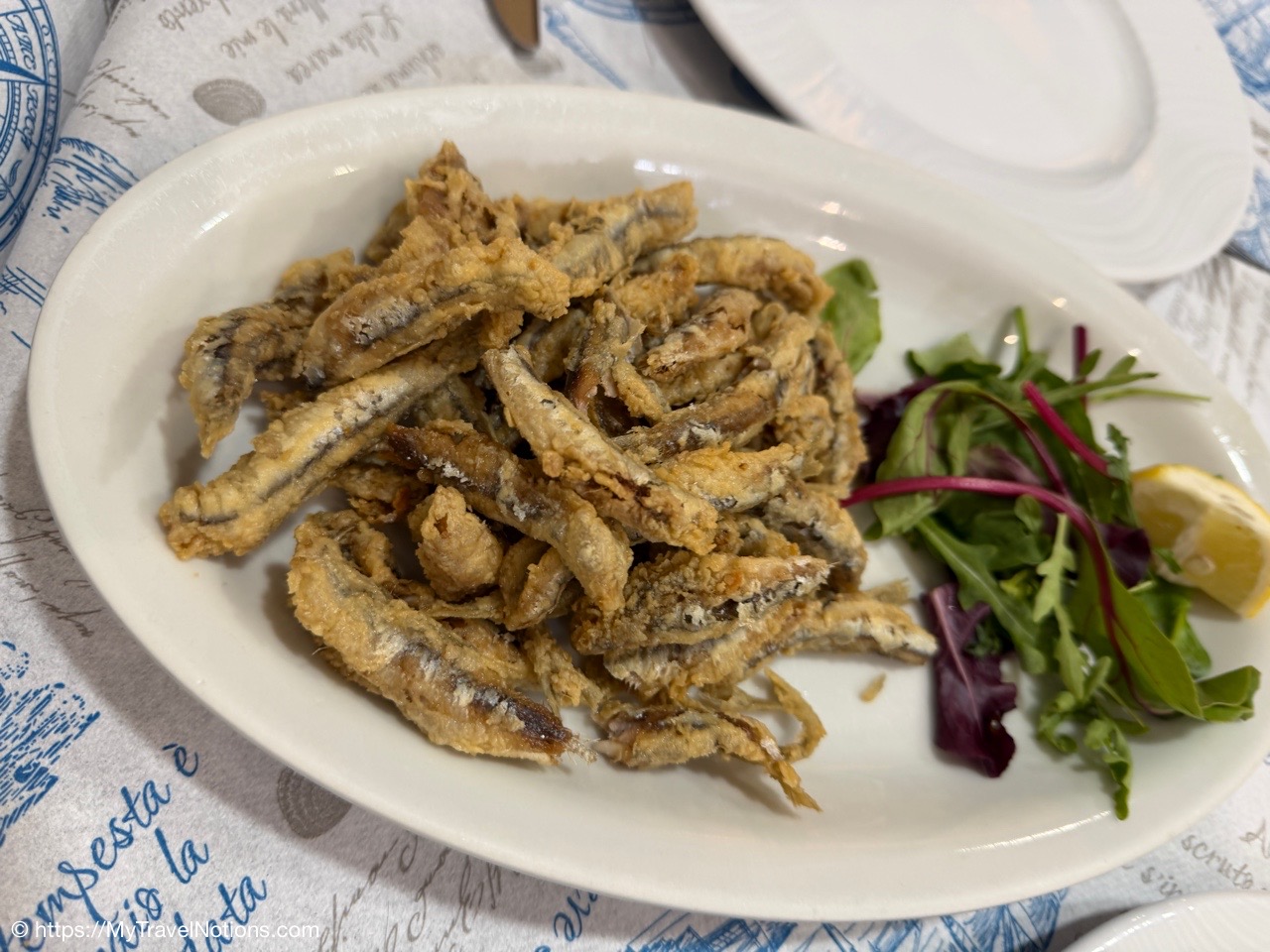
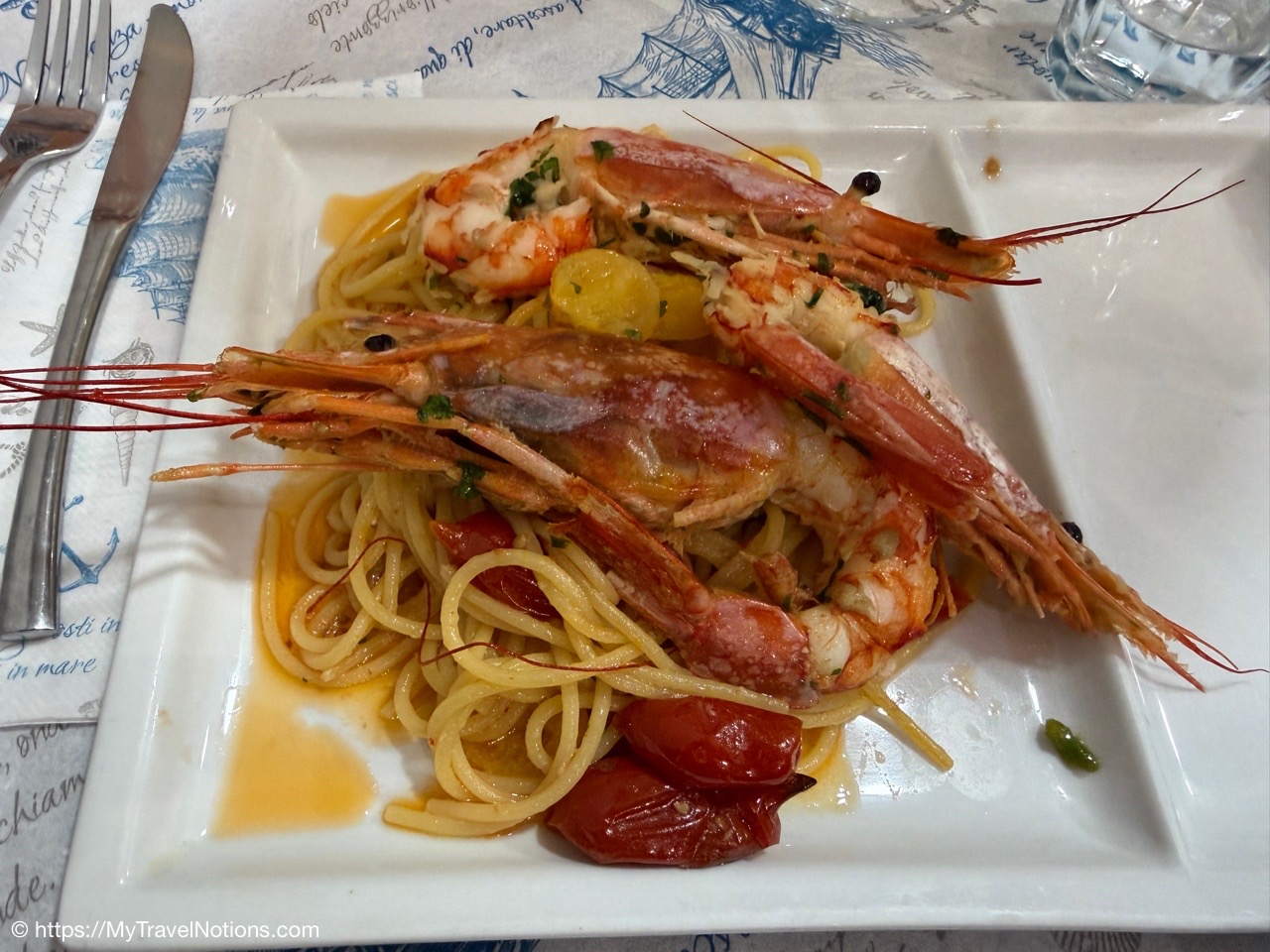
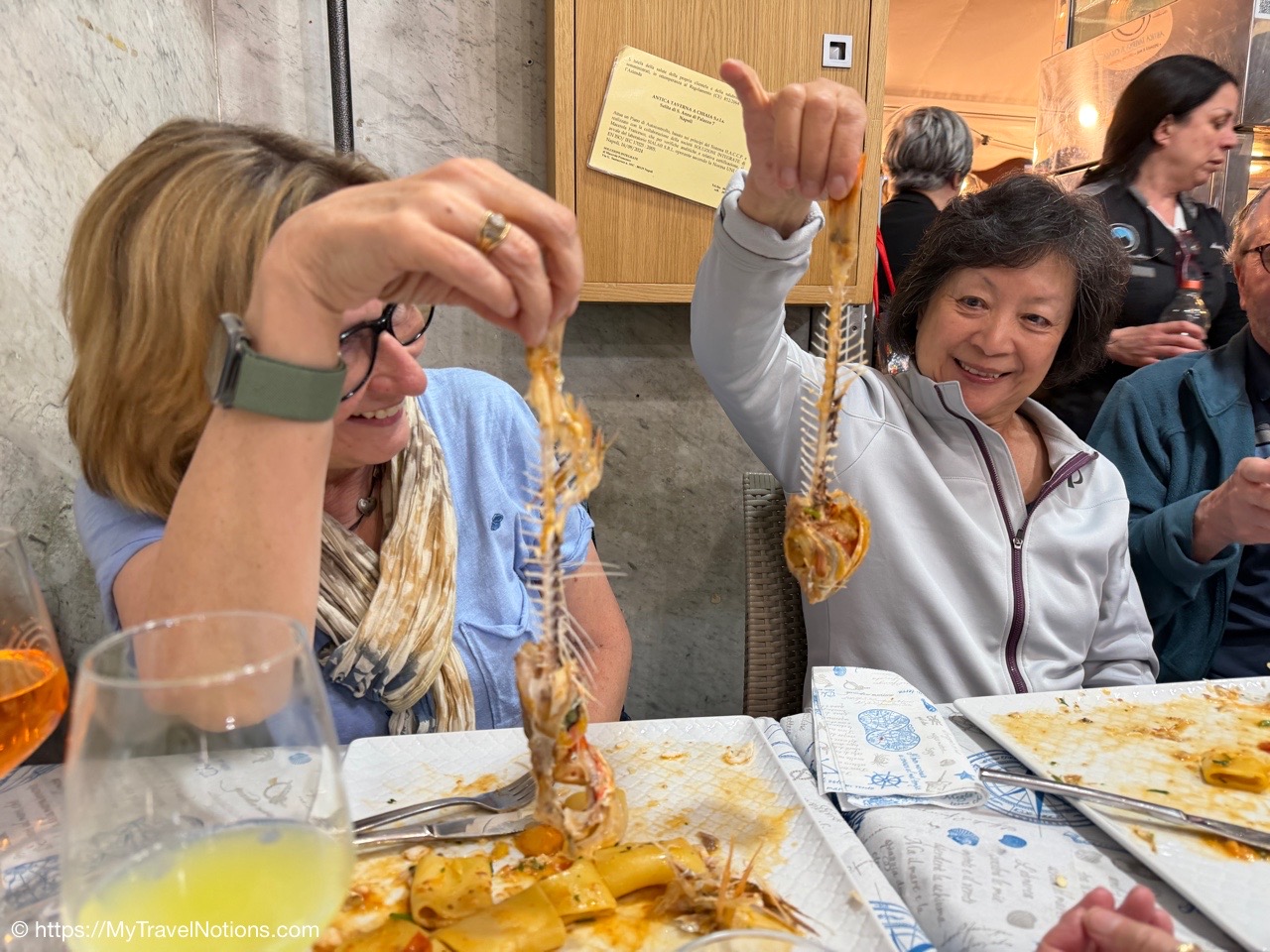
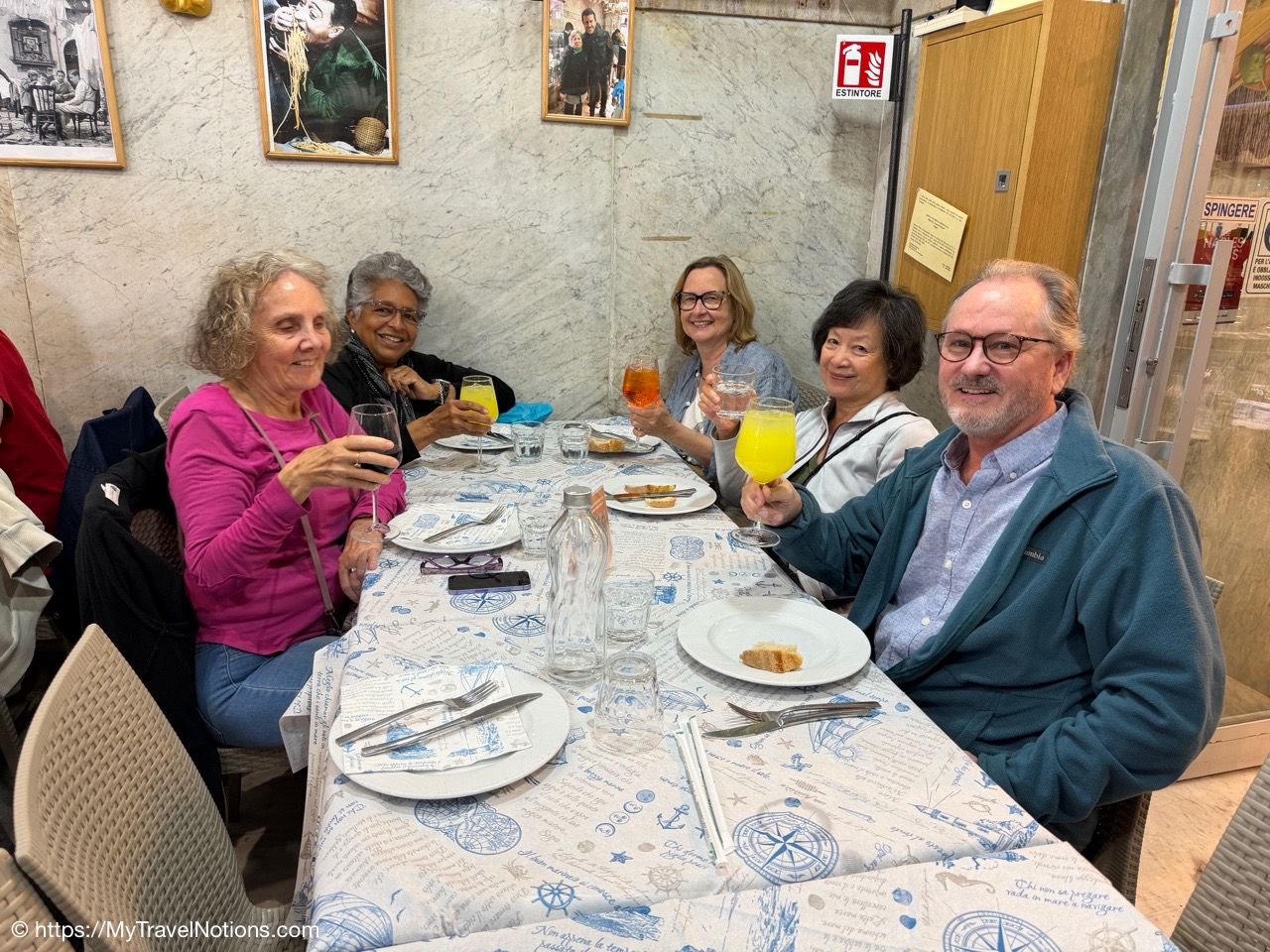
Inside the 16th-century Cappella Sansevero Museum, in the historic center of Naples, houses the Veiled Christ by Giuseppe Sanmartino. The Chapel features a number of stunning sculptural Baroque masterpieces. (April 30, 2026)The High Altar inside the Cappella Sansevero Museum in the historic center of Naples. (April 30, 2026)The Veiled Christ under a Shroud completed in 1753 by Neapolitan artist Giuseppe Sanmartino is the centerpiece of the single nave of the Cappella Sansevero Museum in the historic center of Naples. This stunning sculpture was created from a single block of white marble. (April 30, 2026)Il Disinganno was produced in 1752-1759 by Francesco Queirolo for the Cappella Sansevero in Naples. It shows a fisherman being released from a net by an angel. The masterpiece was carved from a single piece of marble. (April 30, 2026)Il Disinganno was produced in 1752-1759 by Francesco Queirolo for the Cappella Sansevero in Naples. It shows a fisherman being released from a net by an angel. The masterpiece was carved from a single piece of marble. (April 30, 2026)At the end of the day, we all met for dinner at Antica Taverna A Chiaia along Via Nardones in the heart of the Spanish Quarters of Naples. (April 30, 2026)Toasting to dinner and our time traveling together at Antica Taverna A Chiaia along Via Nardones in the heart of the Spanish Quarters of Naples. A great seafood restaurant run by three sisters and their mom. (April 30, 2026)Been on the hunt for fried sardines and these were delicious at at Antica Taverna A Chiaia along Via Nardones in the heart of the Spanish Quarters of Naples. (April 30, 2026)My delicious shrimp and spaghetti dinner at Antica Taverna A Chiaia along Via Nardones in the heart of the Spanish Quarters of Naples. (April 30, 2026)Janet and Alice showing off the bones of the fish they ate at Antica Taverna A Chiaia along Via Nardones in the heart of the Spanish Quarters of Naples. (April 30, 2026)
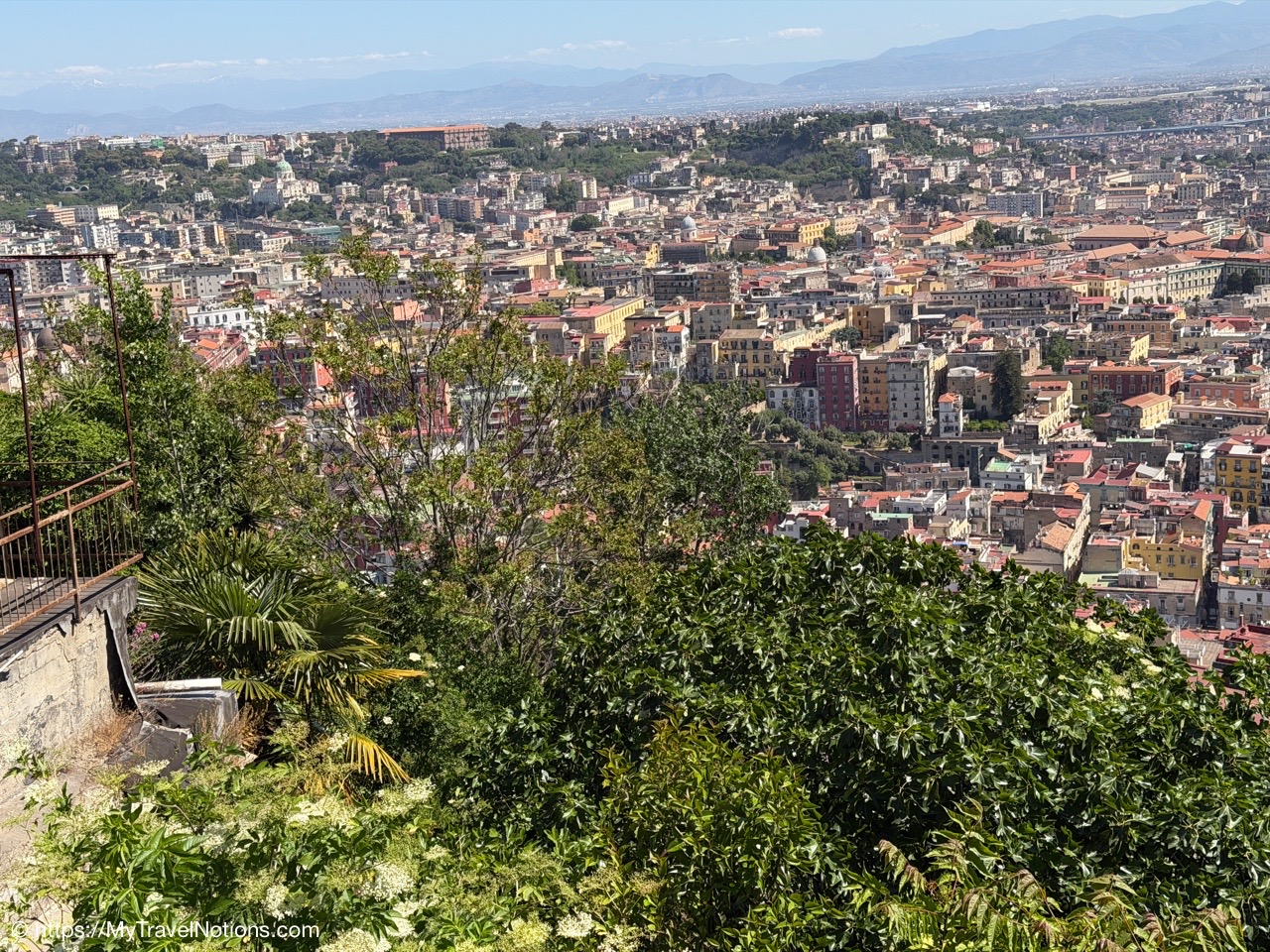
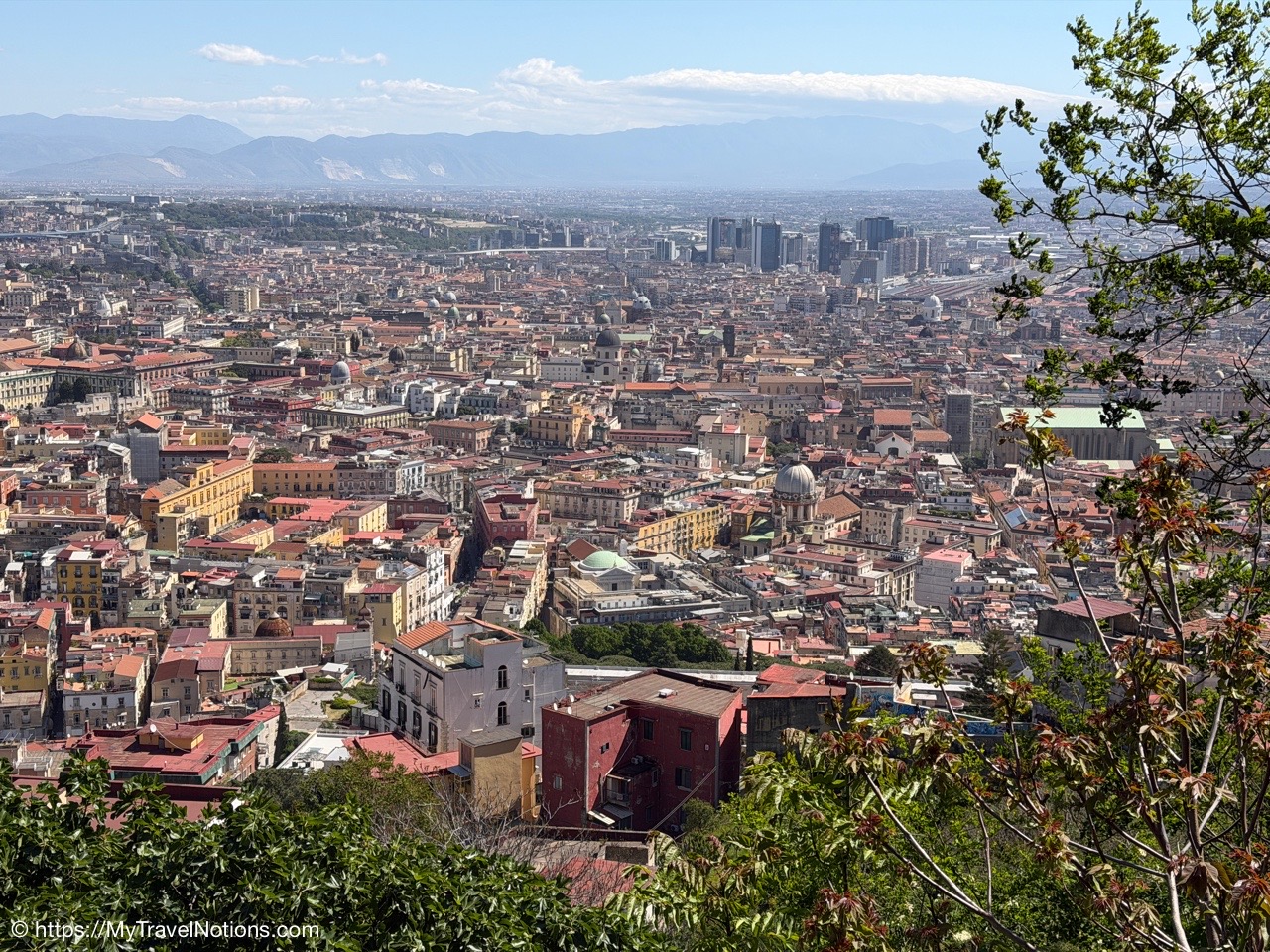
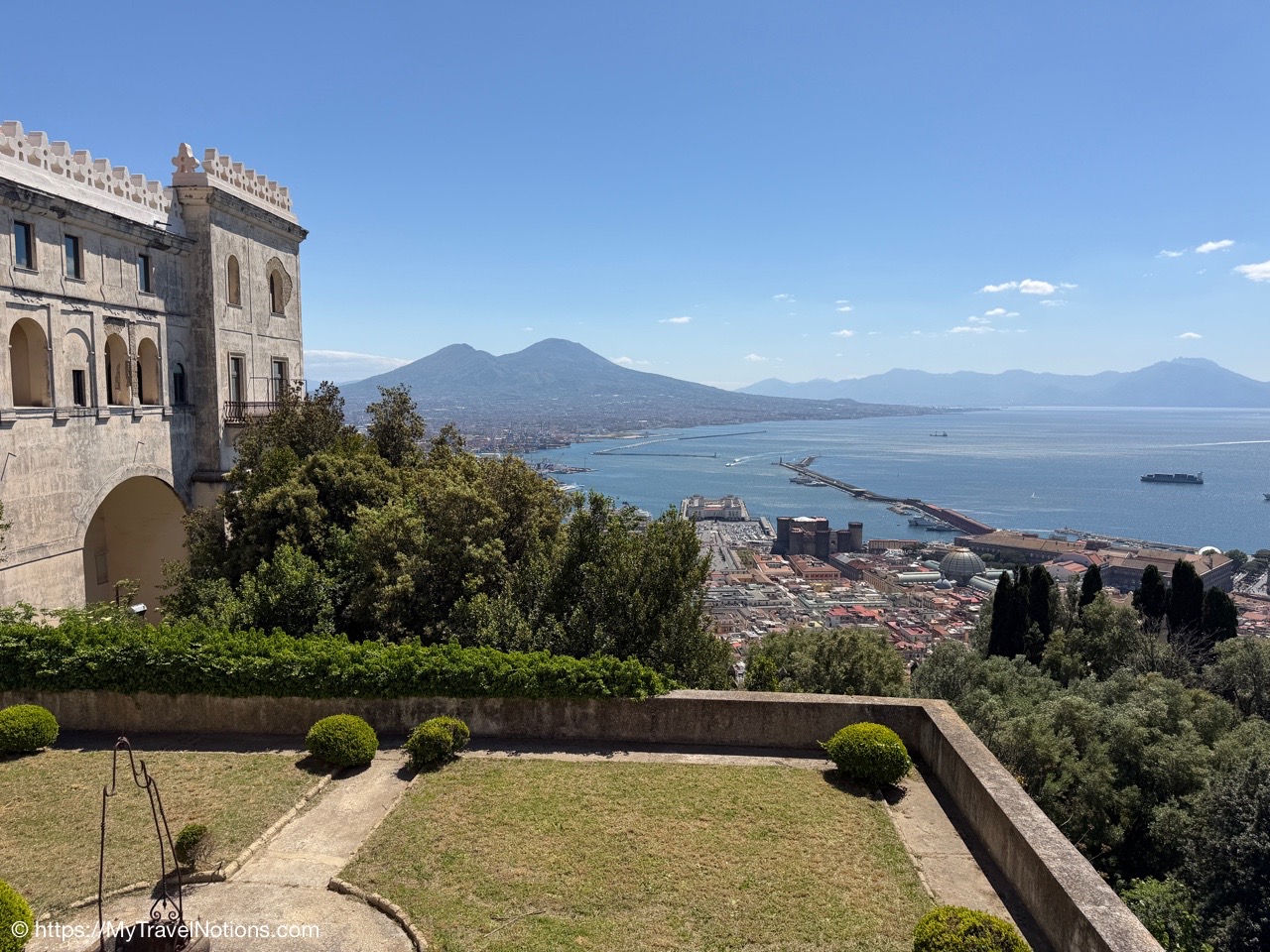
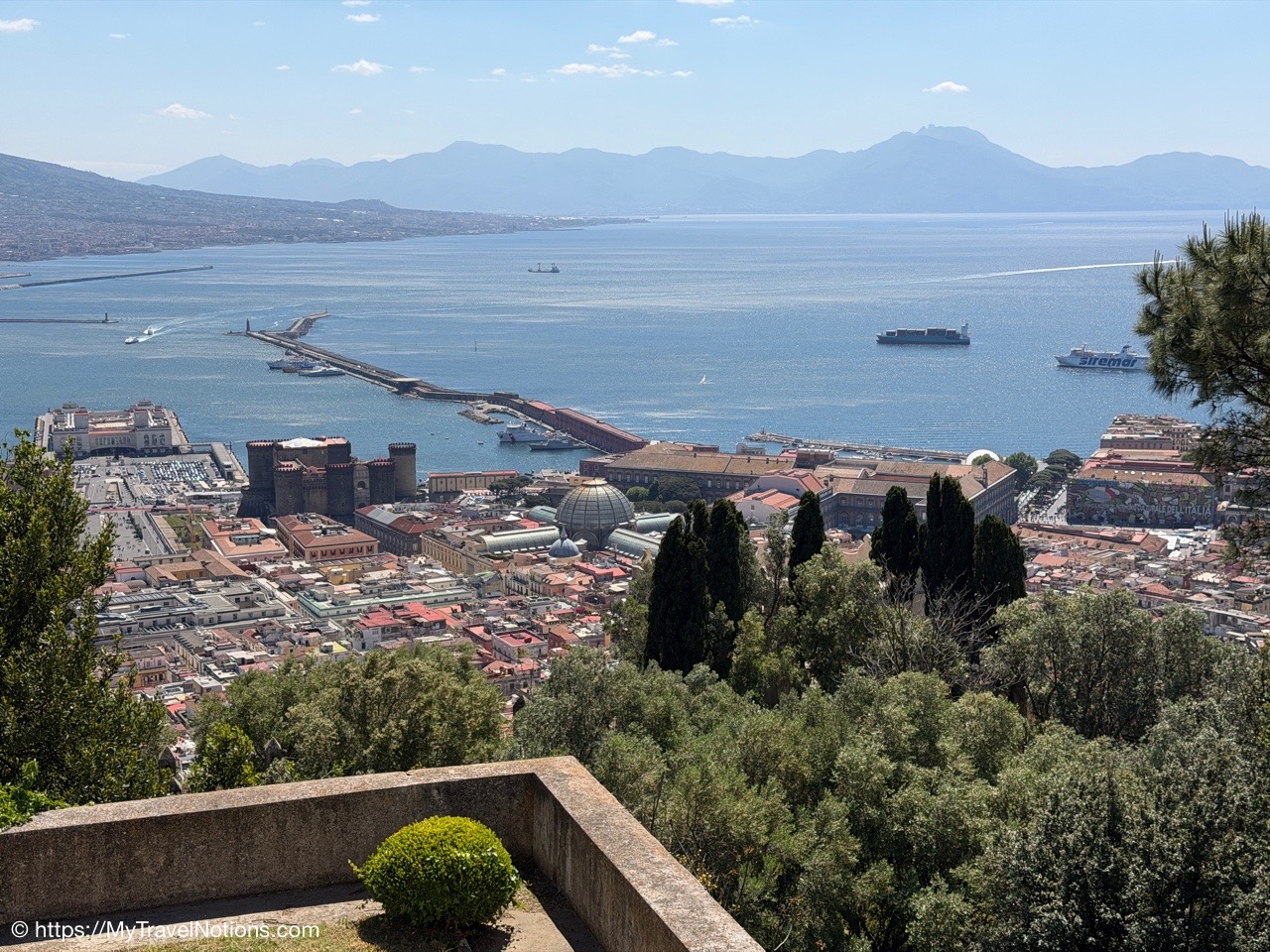
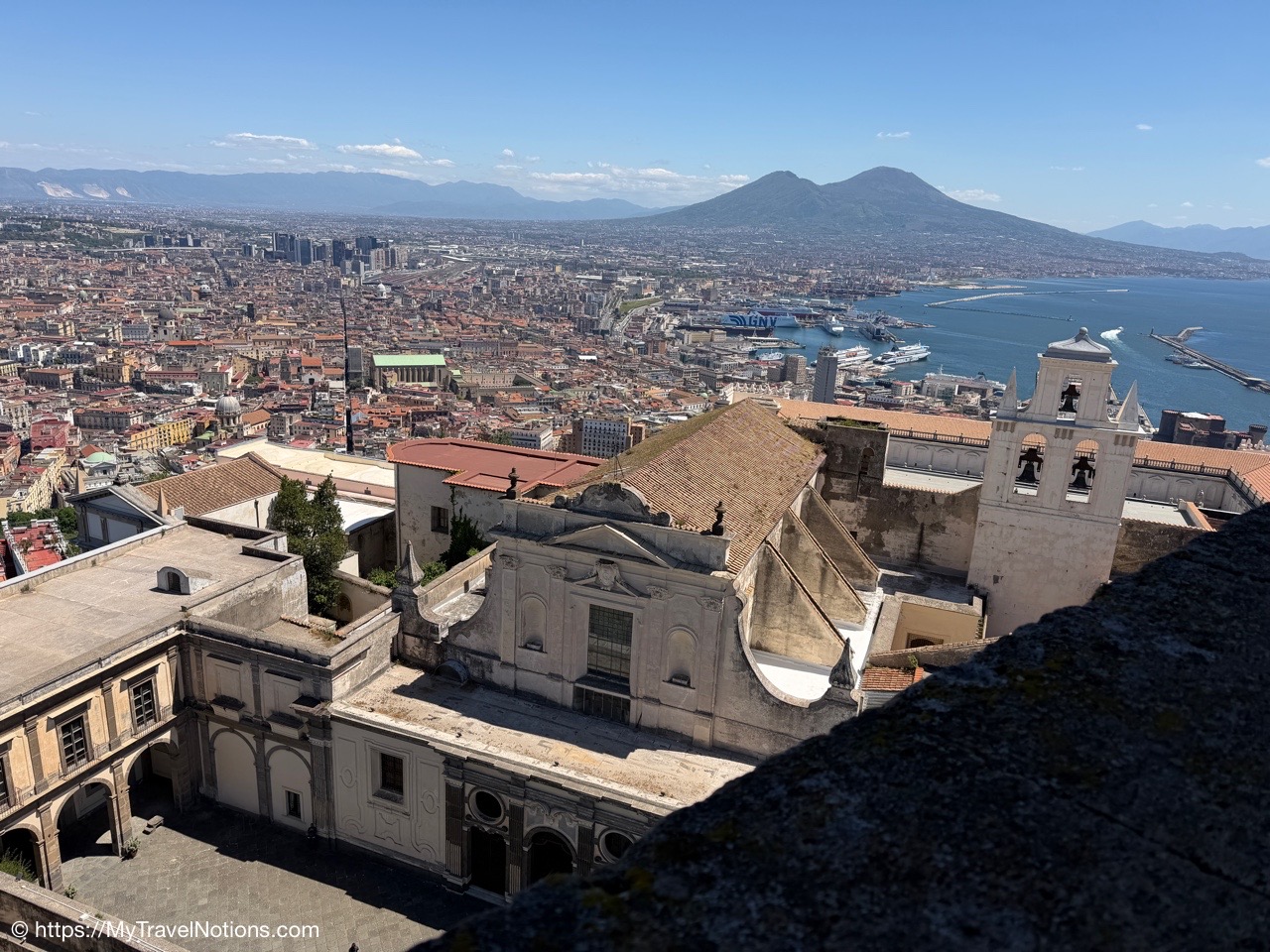
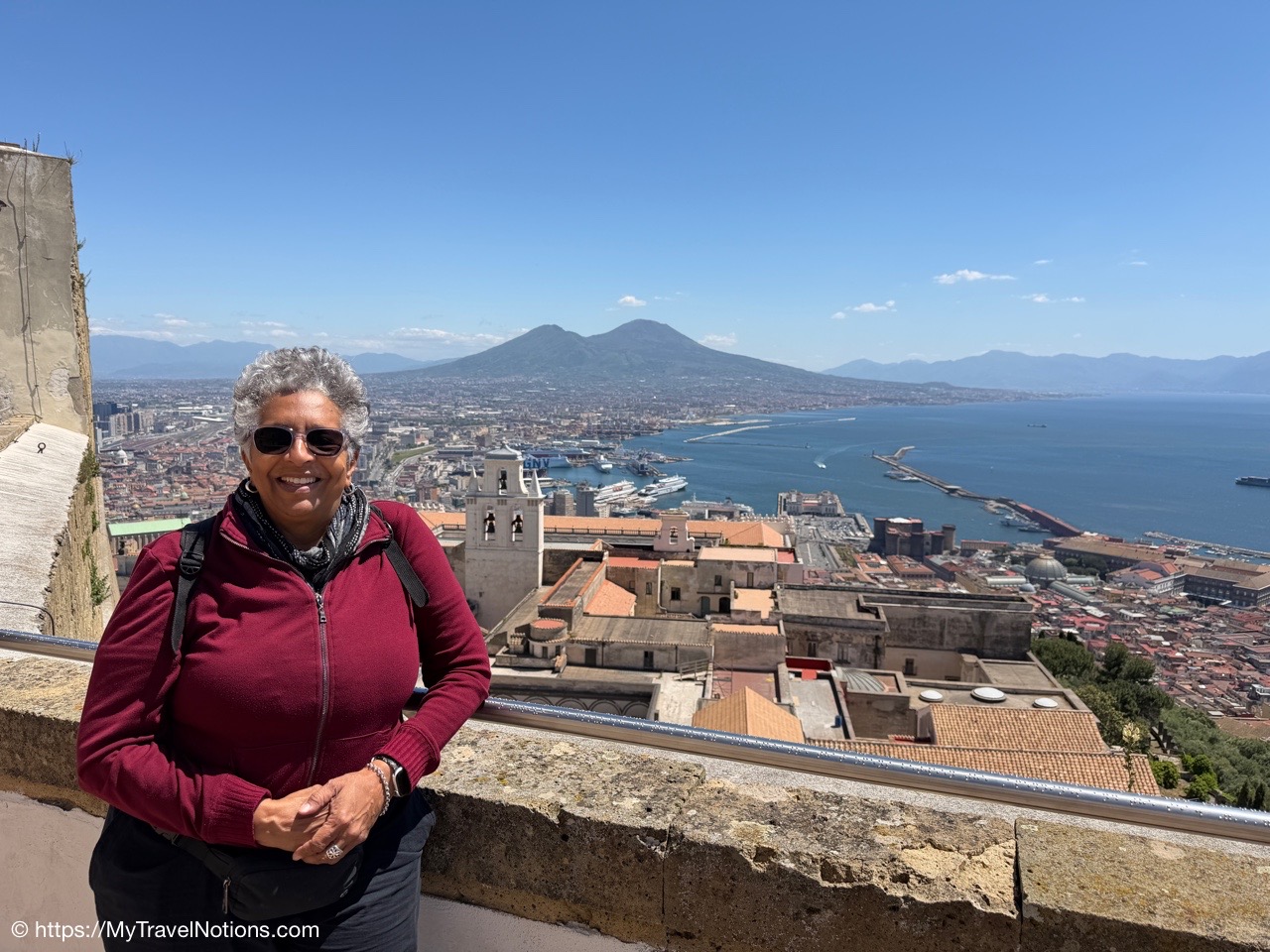
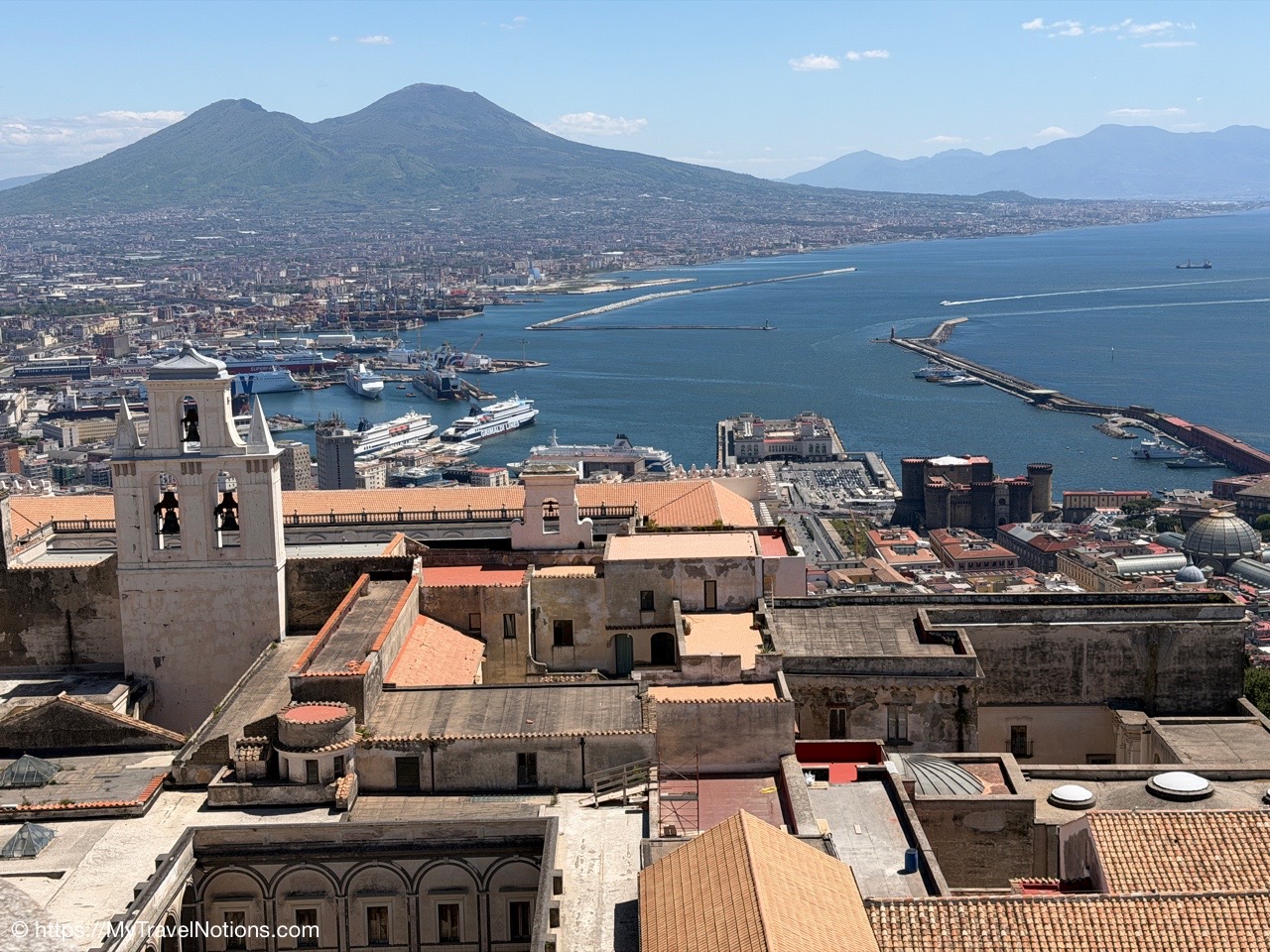
It was a leisurely planned day to make our way to highest part of the city, Vomero hill, for the best panoramic views of Naples, the Bay of Naples and even Mt. Vesuvius from Certosa e Museo di San Martino and Castel Sant’Elmo.
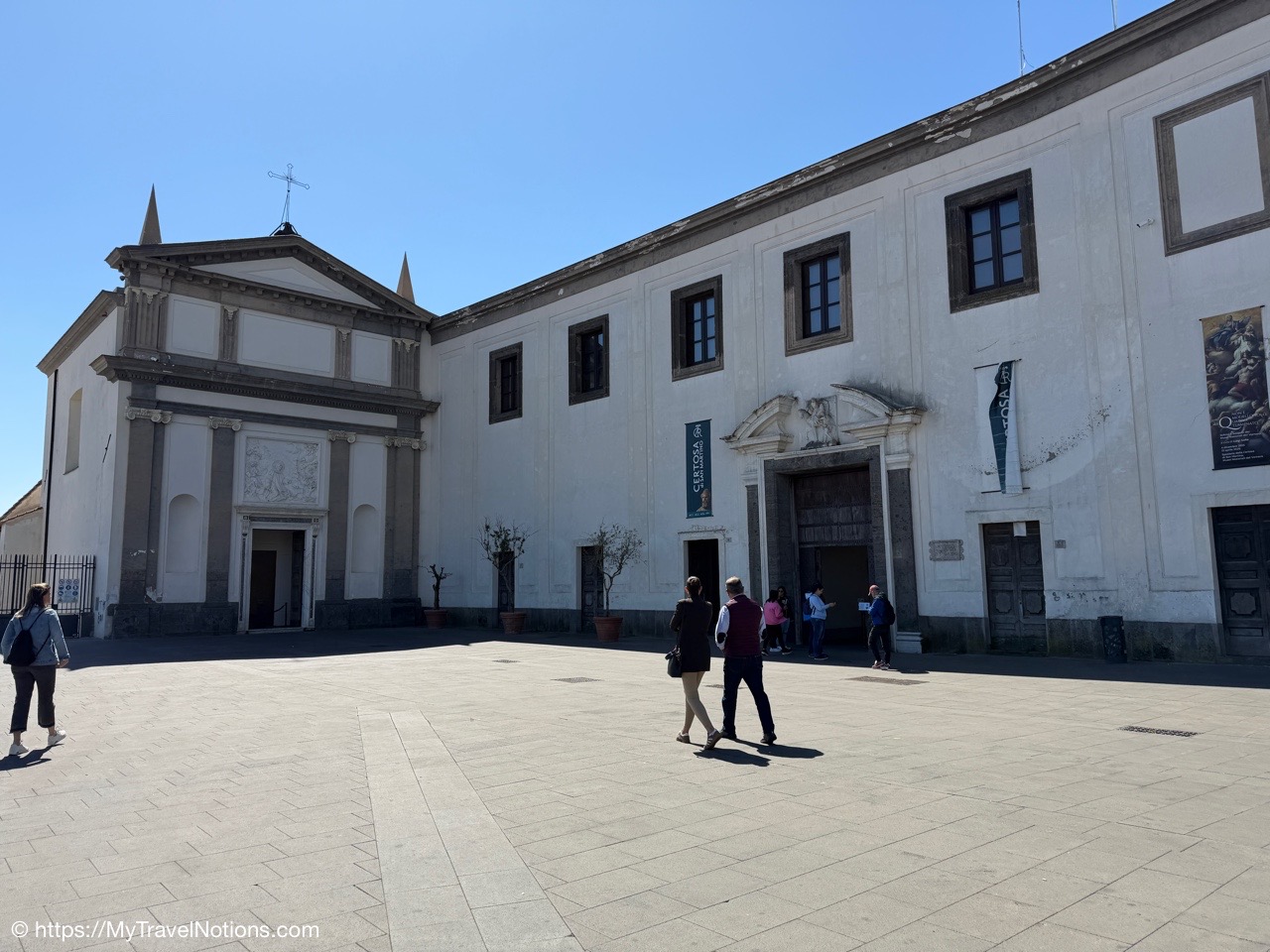
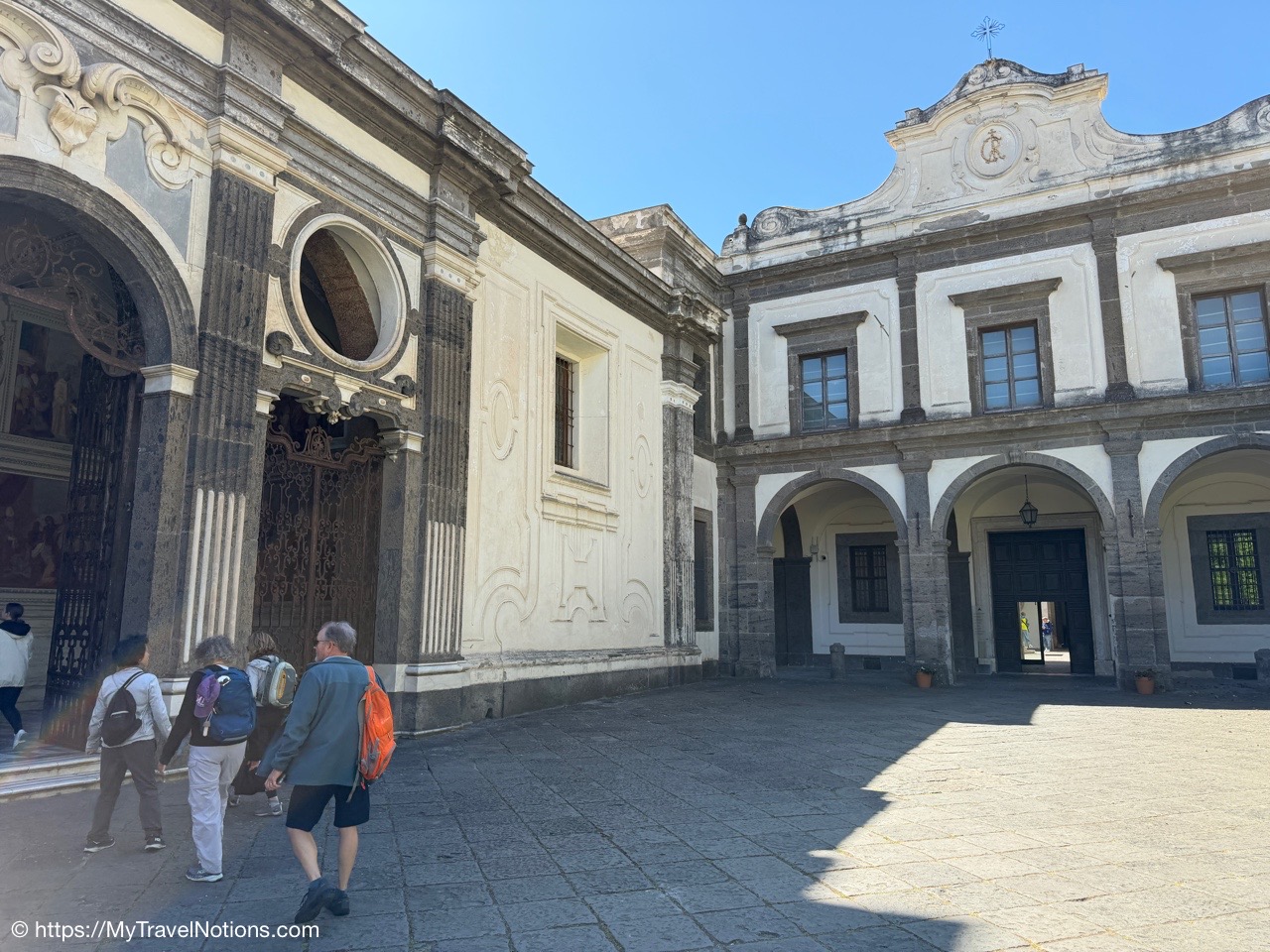
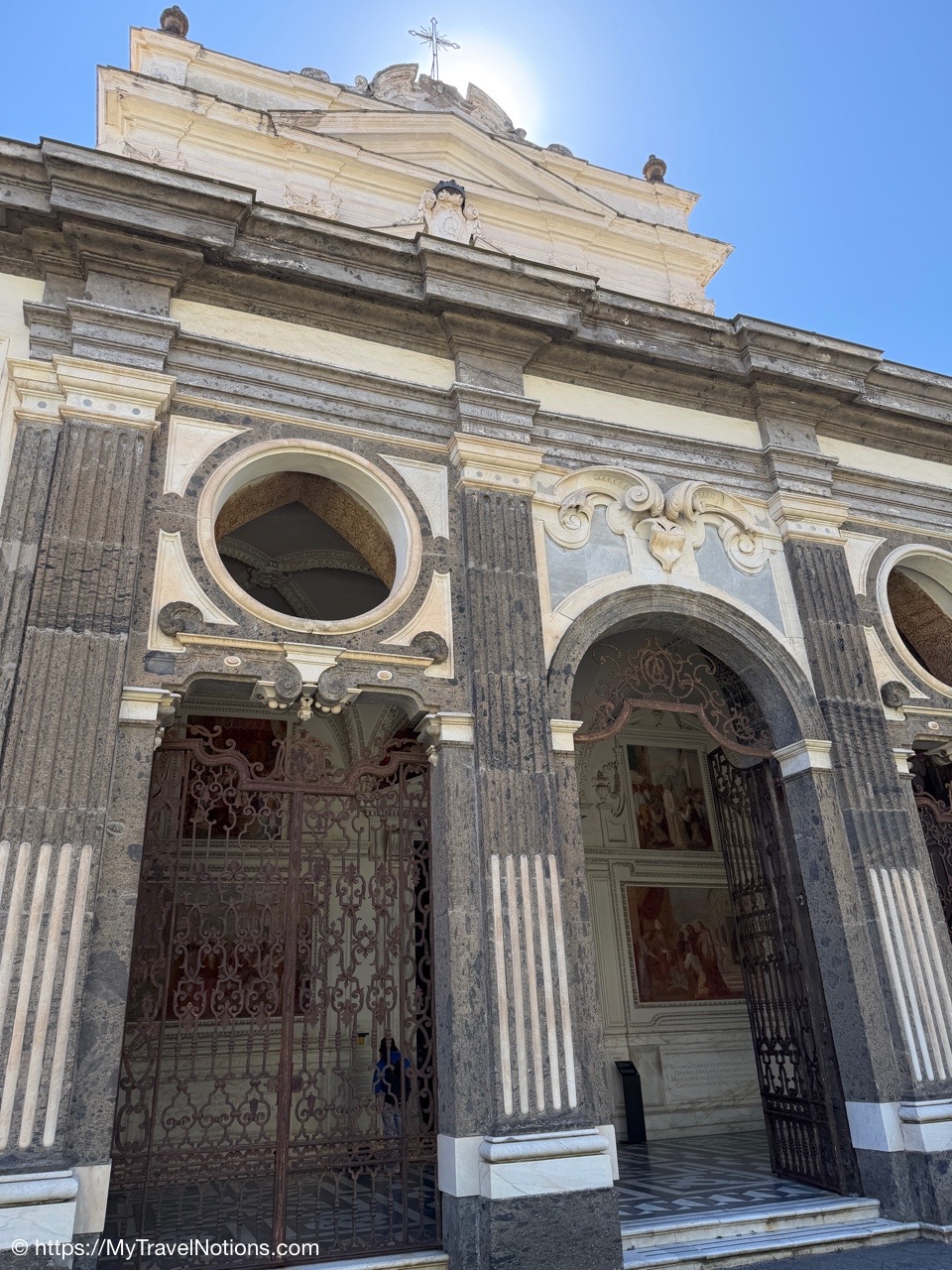
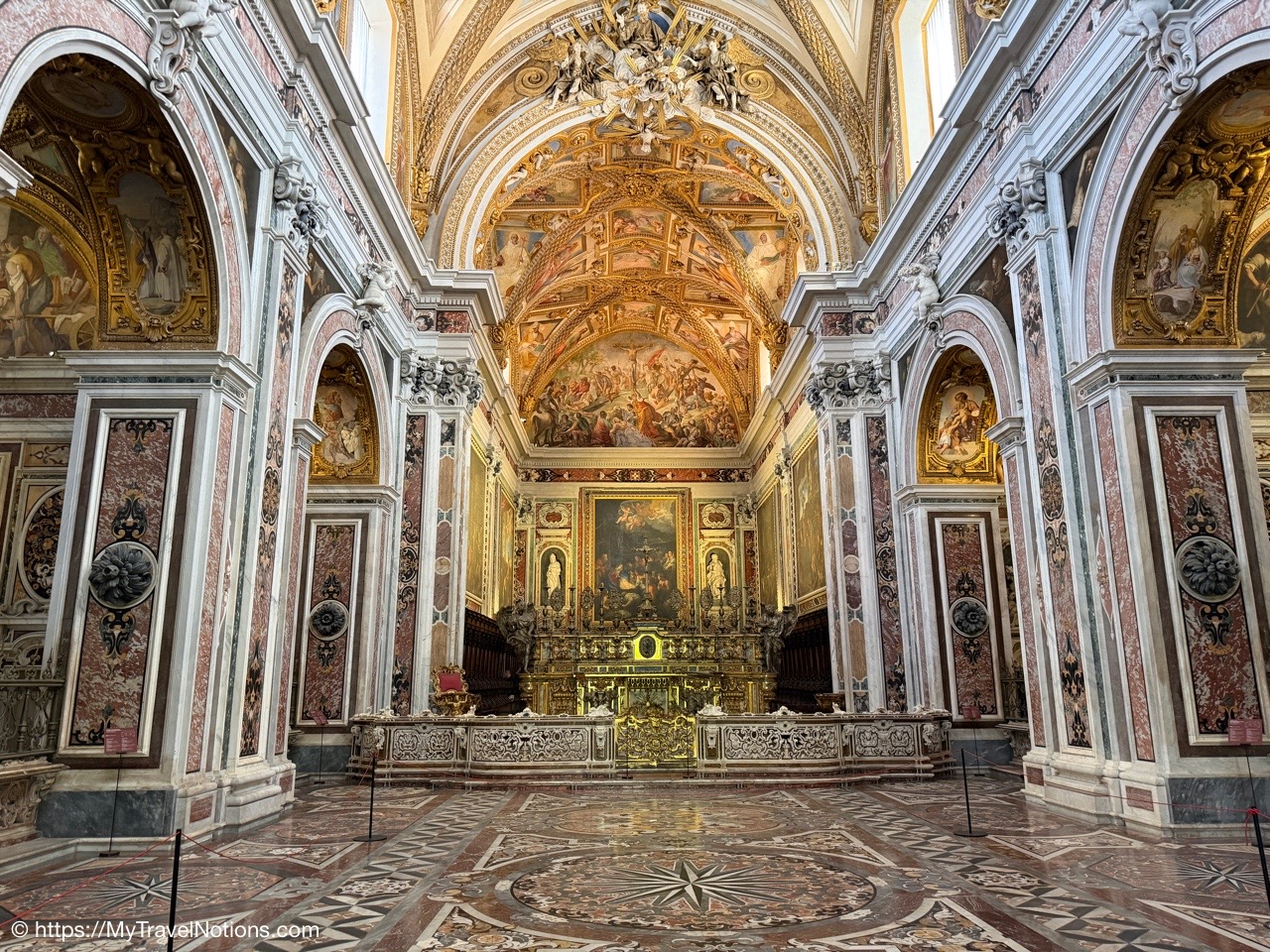
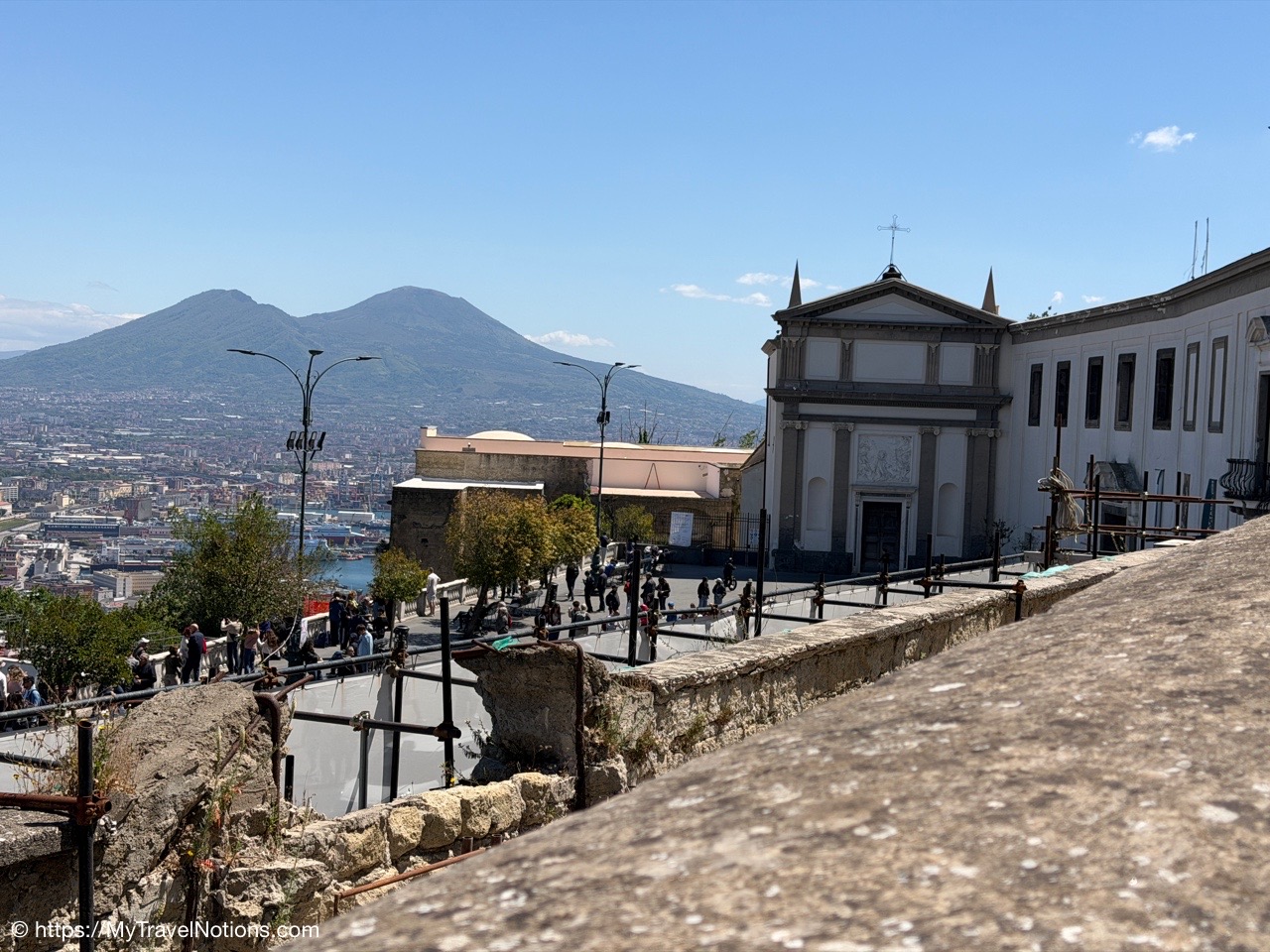
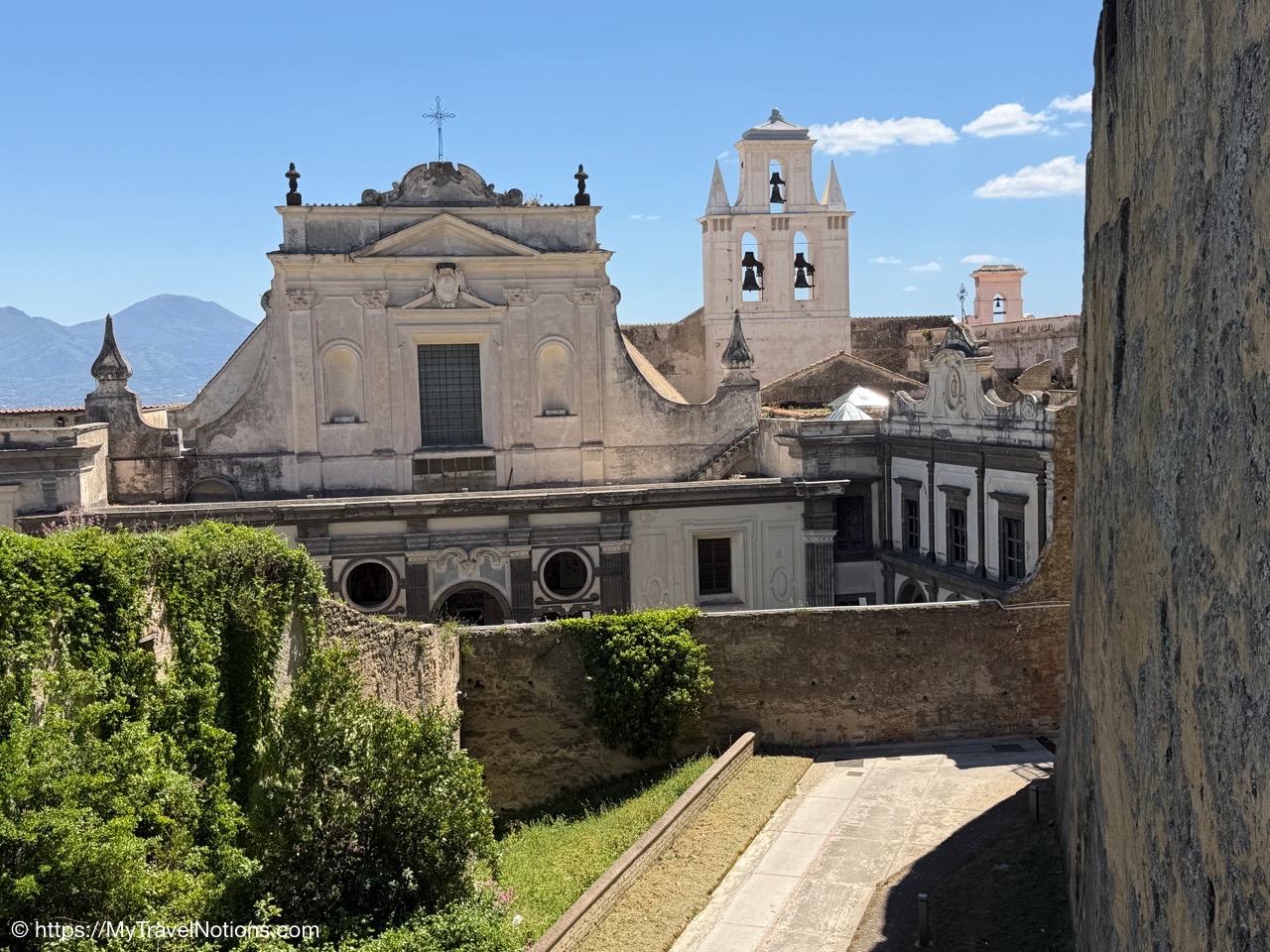
Certosa e Museo di San Martino(“Charterhouse of St. Martin”) is a former 14th-century Carthusian monastery complex turned national museum. Dedicated to St. Martin of Tours, the monastery was inaugurated in 1368, then expanded further in 1623, It houses a collection of Neapolitan art but it also offers spectacular panoramic views of the city.
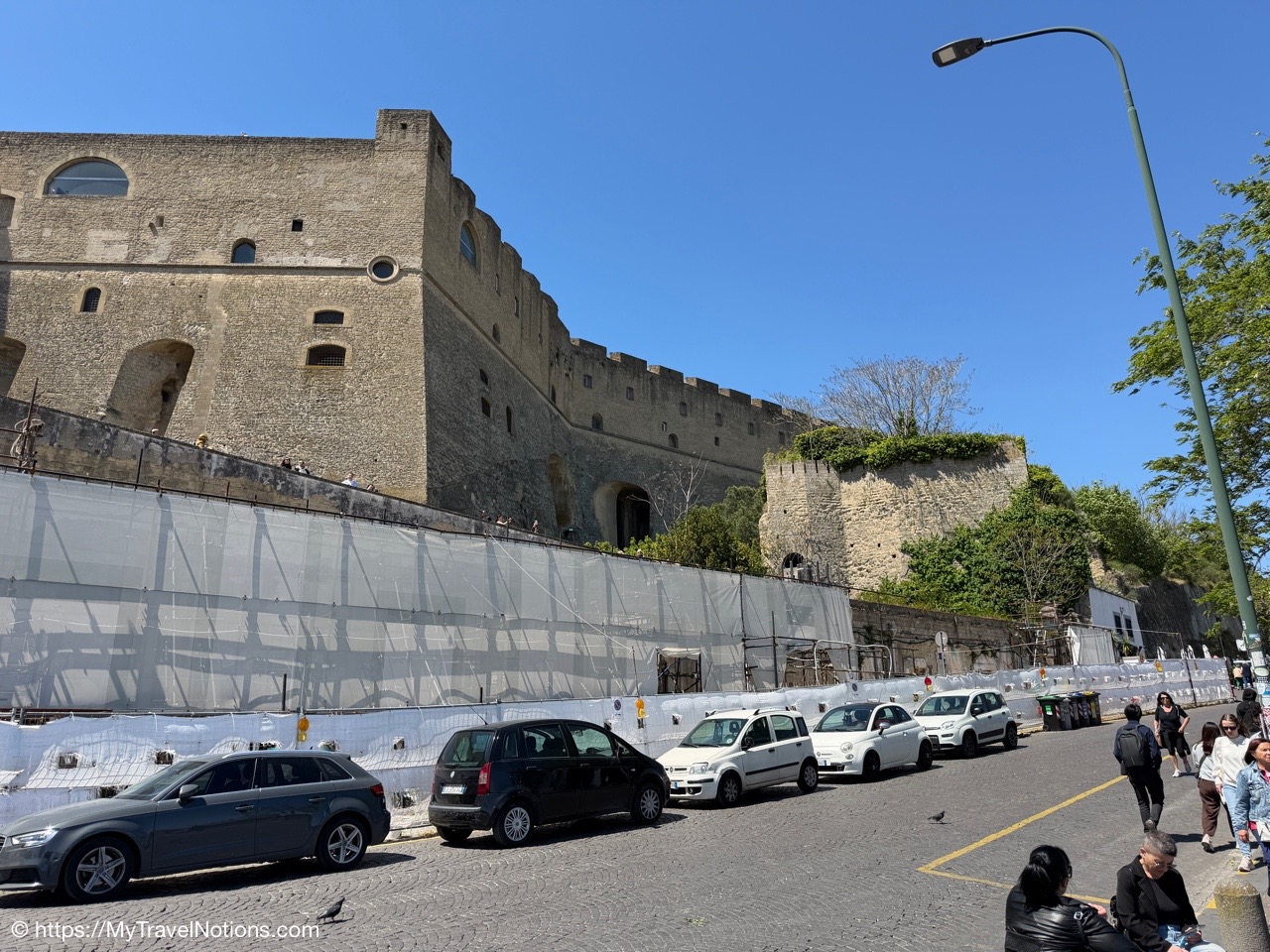
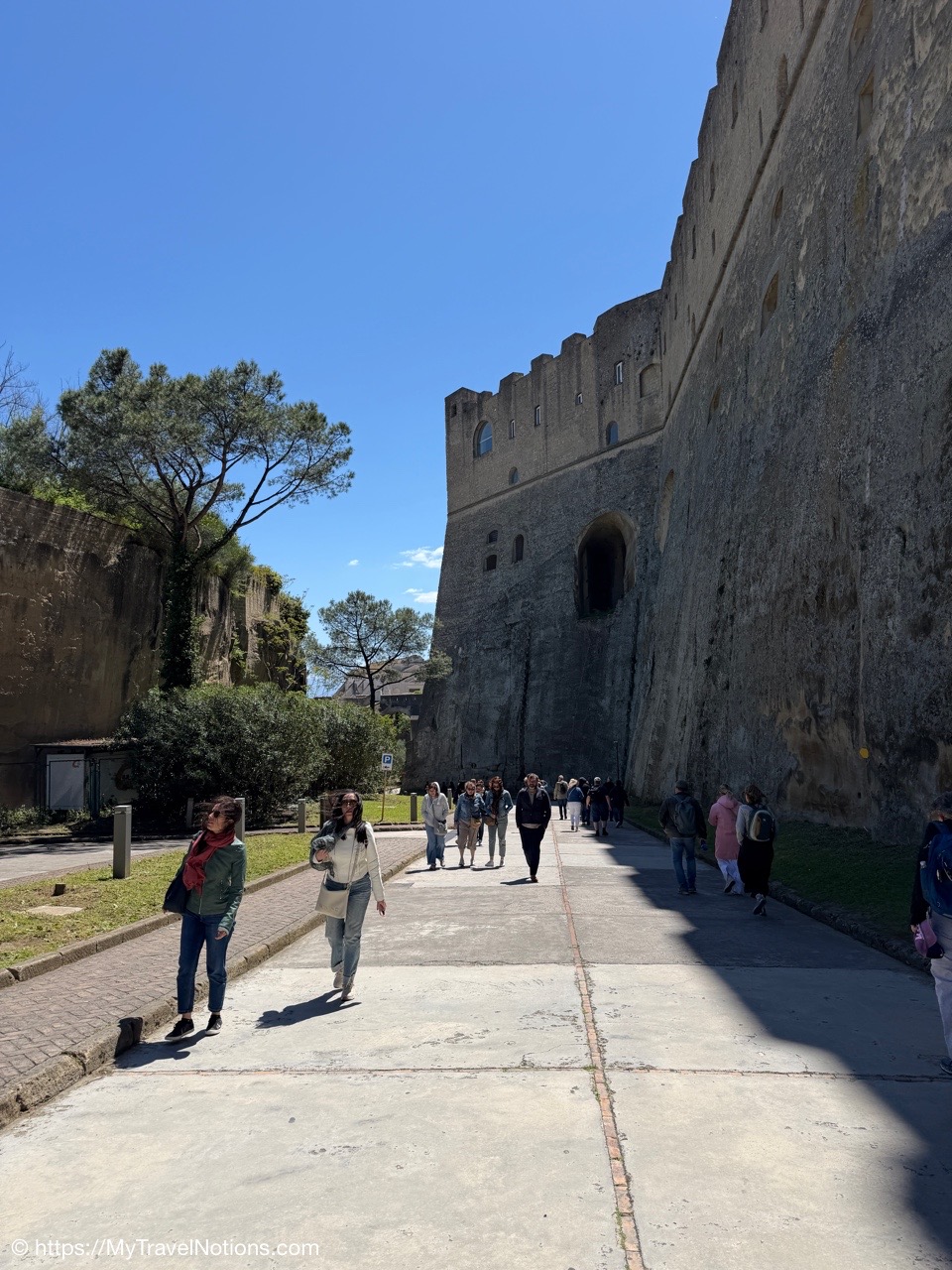
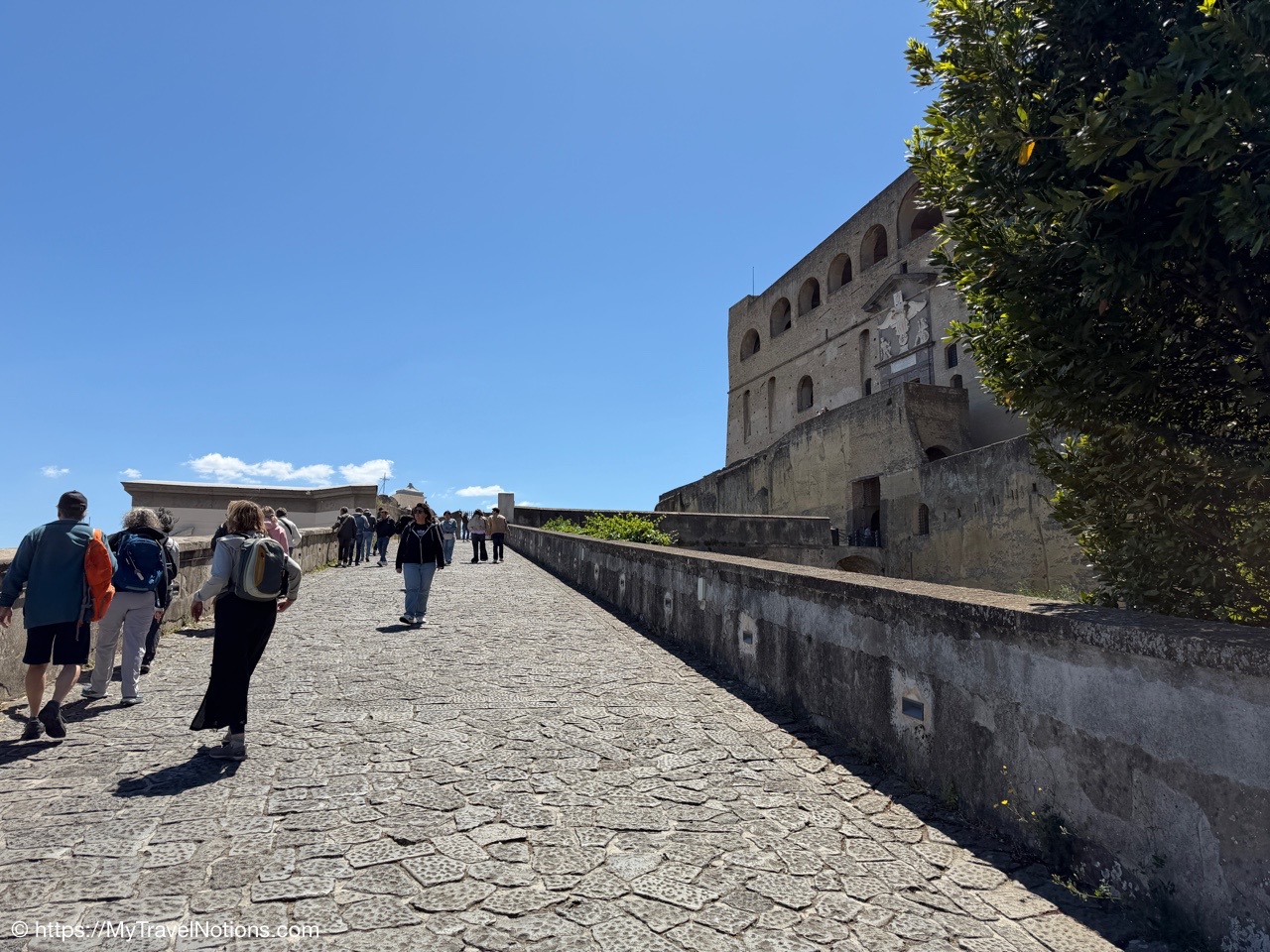
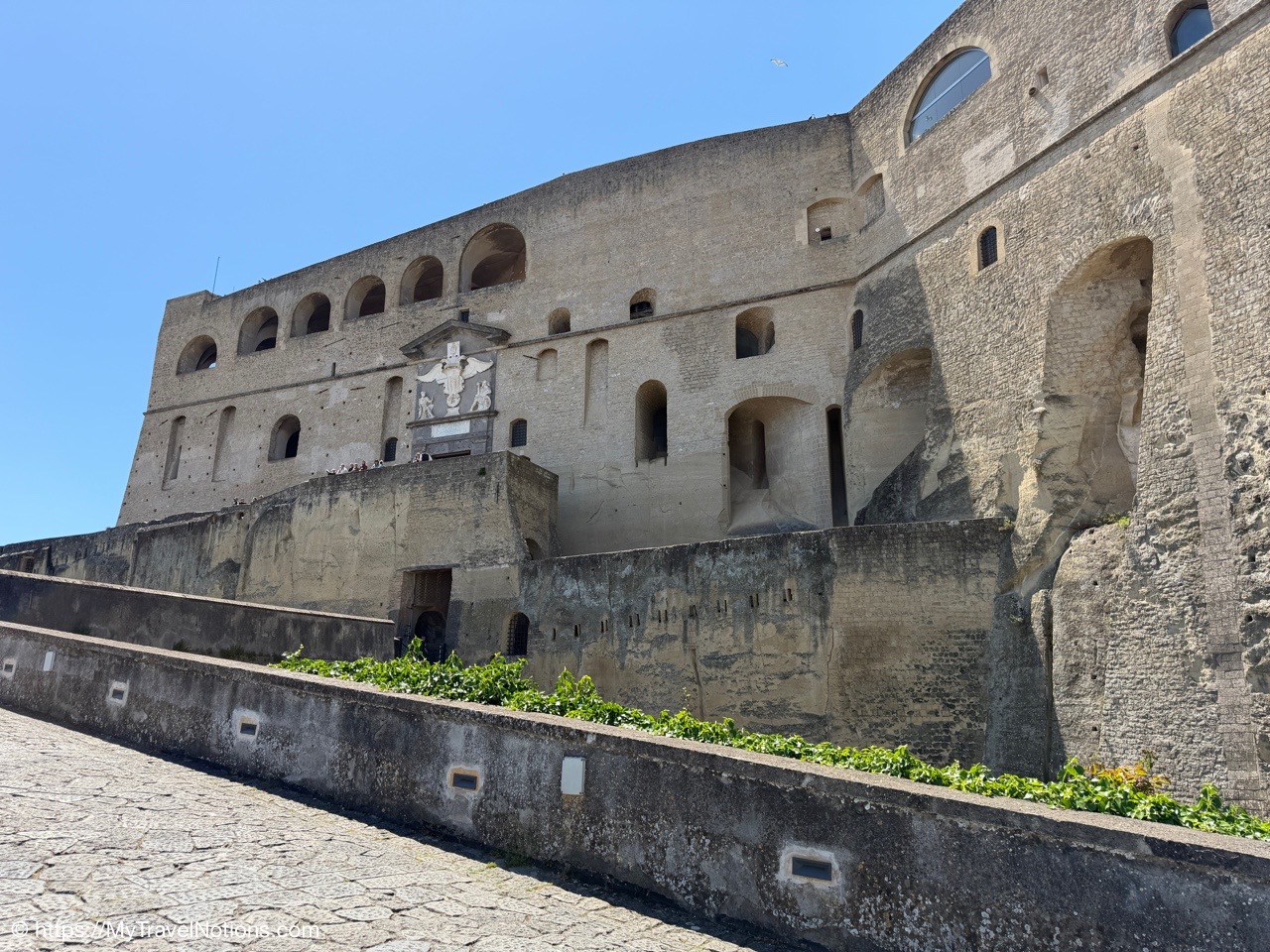
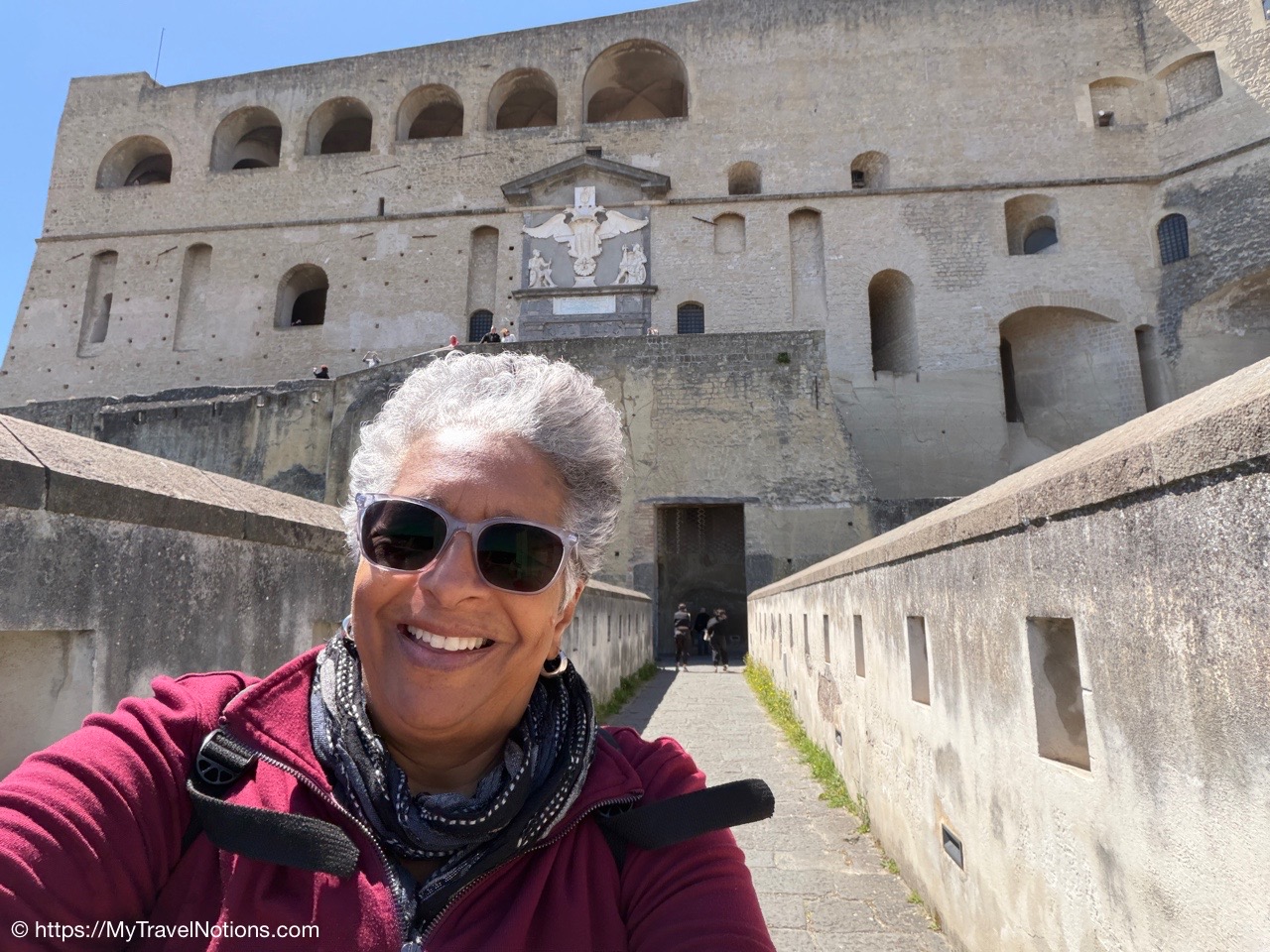
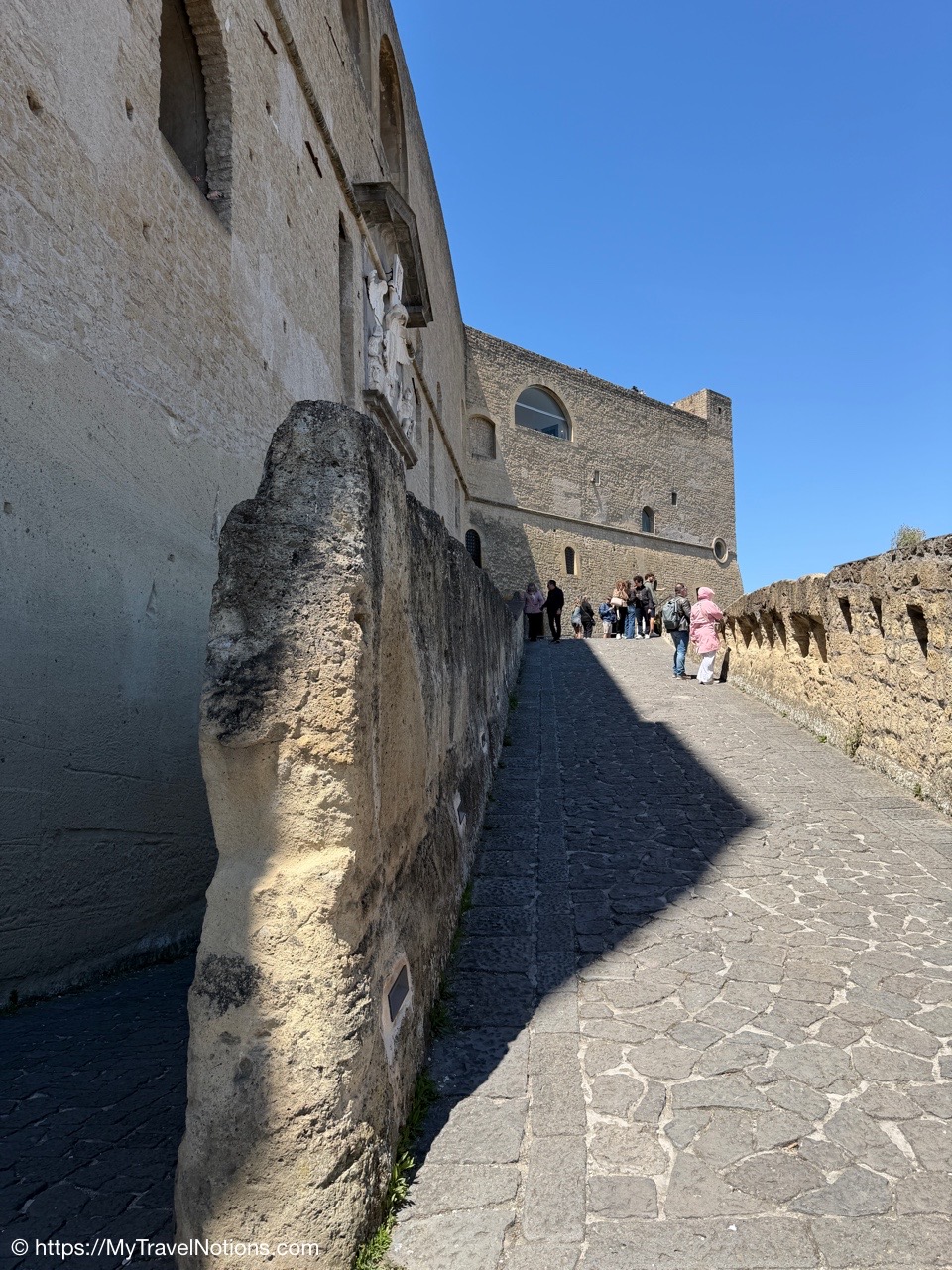
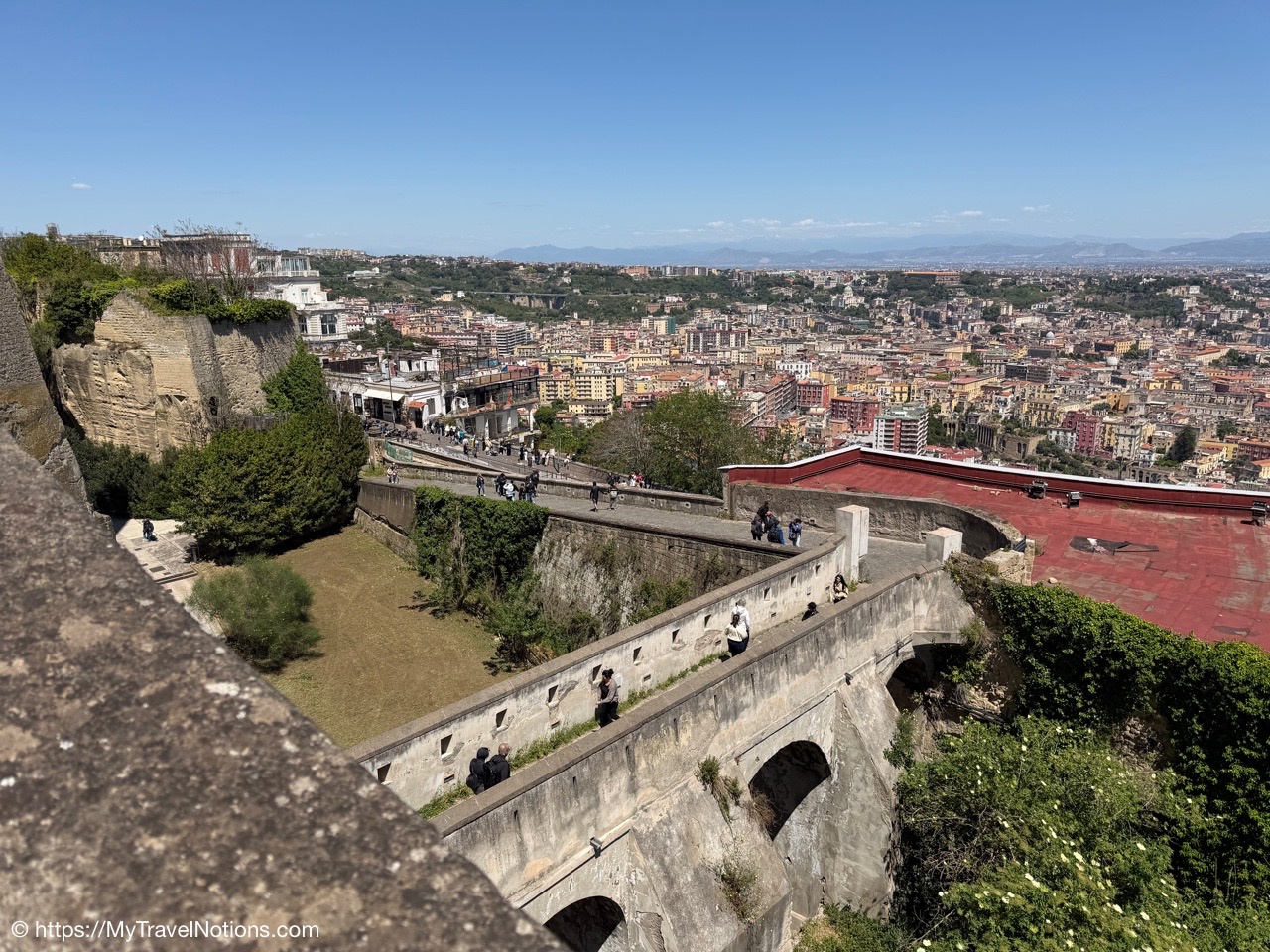
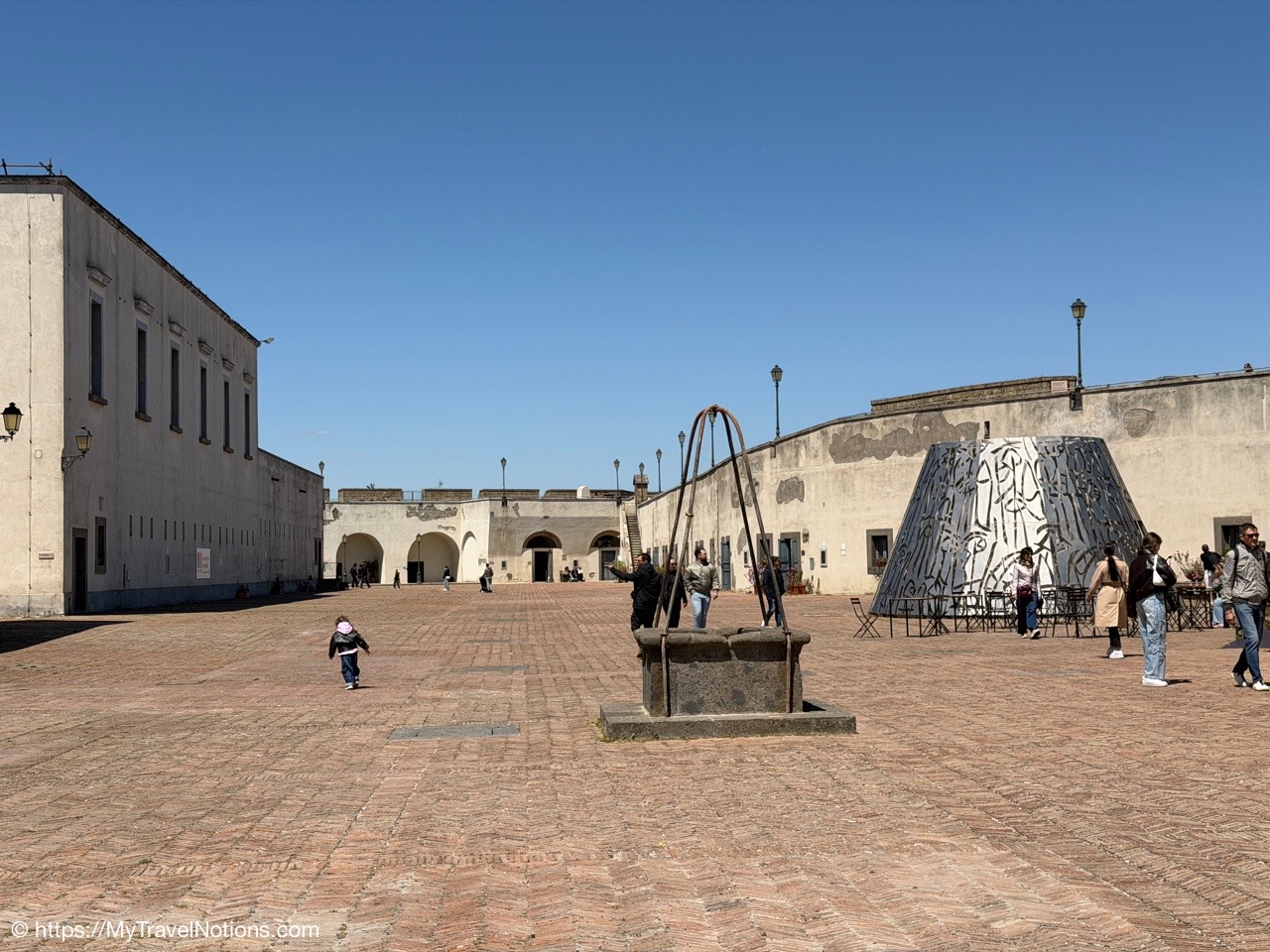
Castel Sant’Elmo is a 14th-century medieval fortress famous for its unique six-pointed star shape and breathtaking 360-degree panoramic views of the city, Mount Vesuvius and the Bay of Naples. Originally founded as a fortified palace (Belforte) in 1329, the current, iconic star-shaped structure was rebuilt and expanded between 1537 and 1547 by Spanish Viceroy Don Pedro de Toledo.
Vomero is a hilly upper-middle-class residential area, developed in the late 19th century, offering a quieter, more modernatmosphere compared to the historic center below.
We also gained another frequent traveler, John, Alice’s hubby and our only ever male traveling buddy, joined us in Naples and will continue on with us as we explore Poland.
For now, here’s a little more of Naples as we explore the panoramic views from a top the Vomero hill.
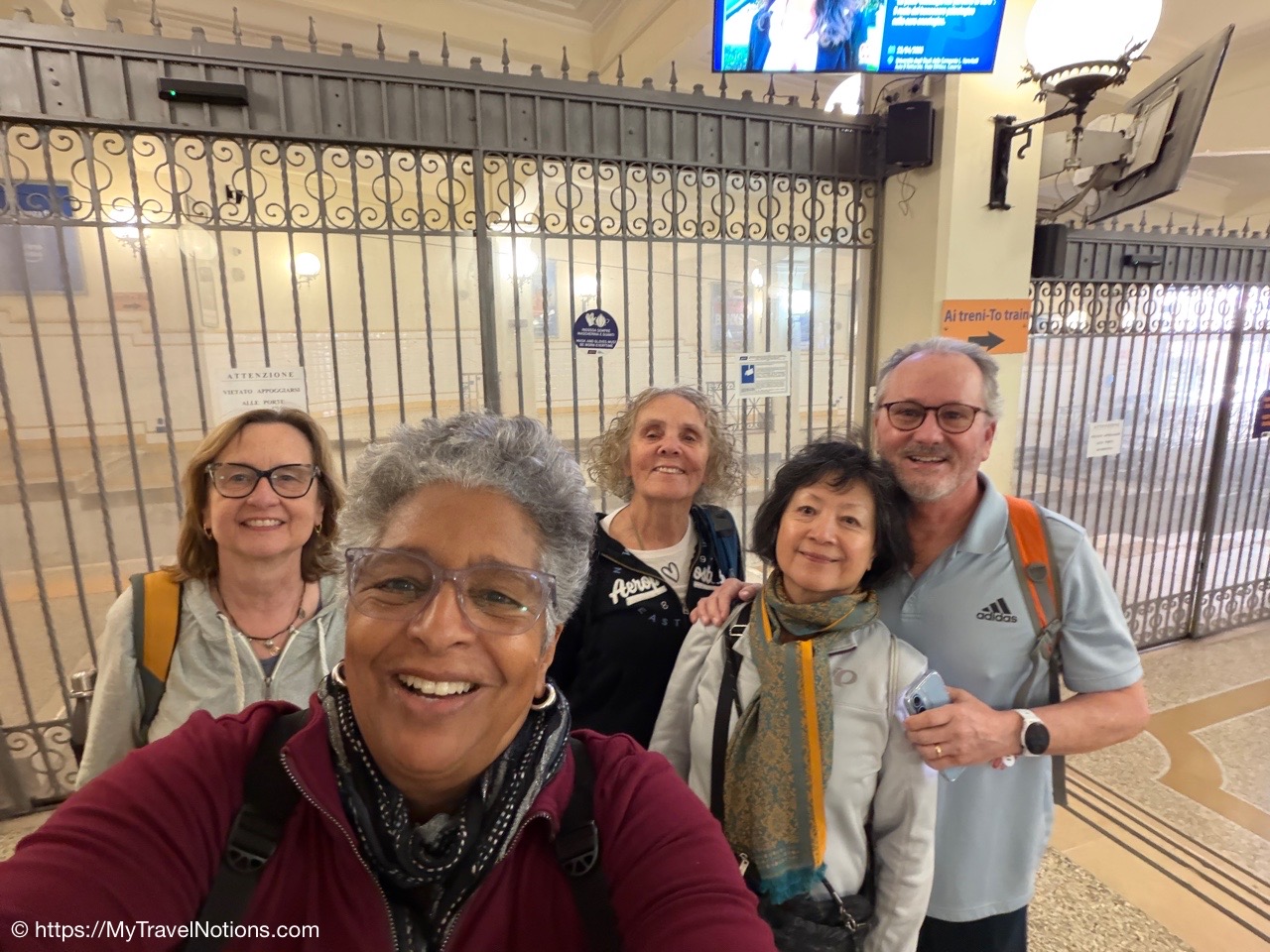
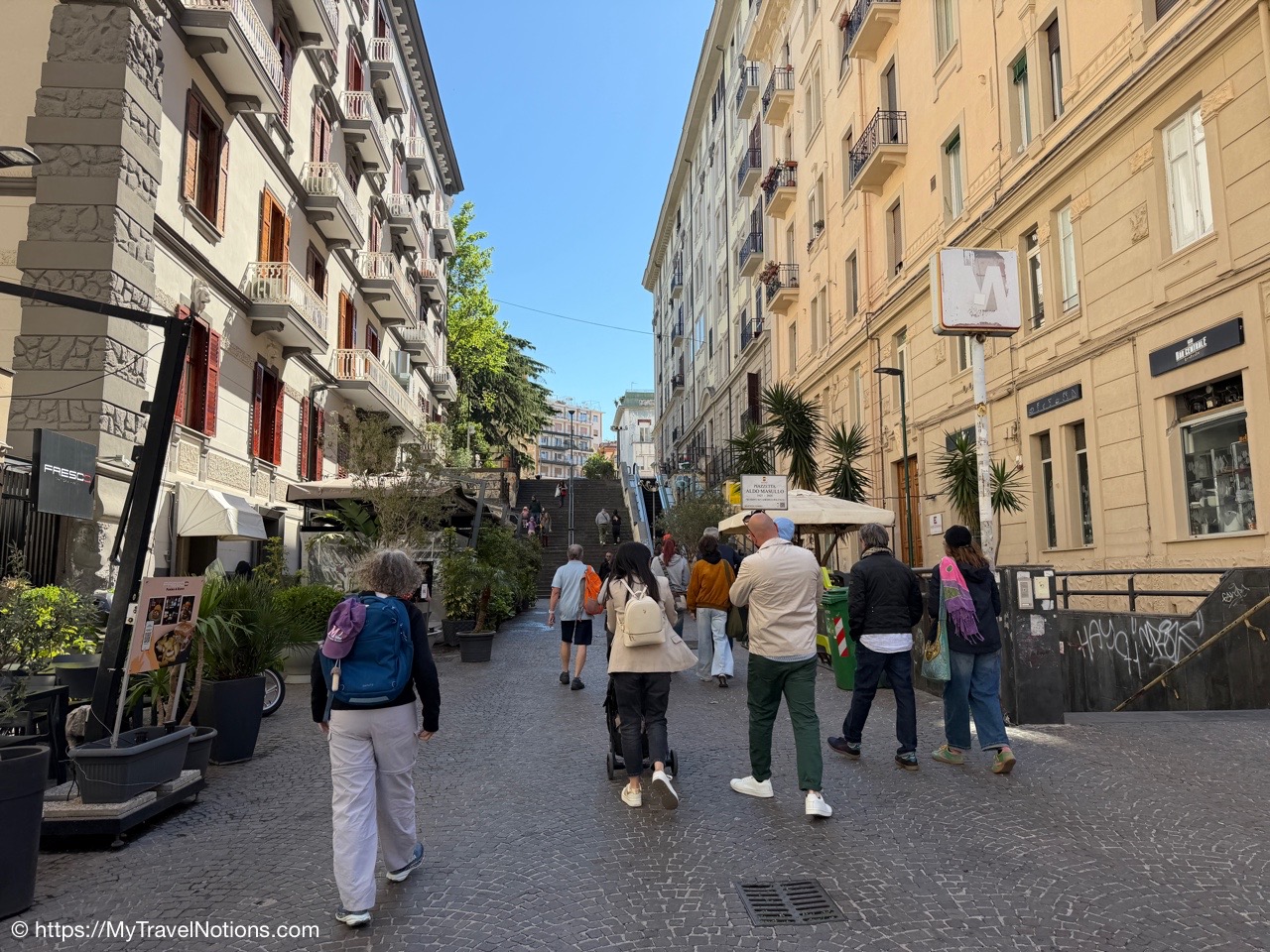
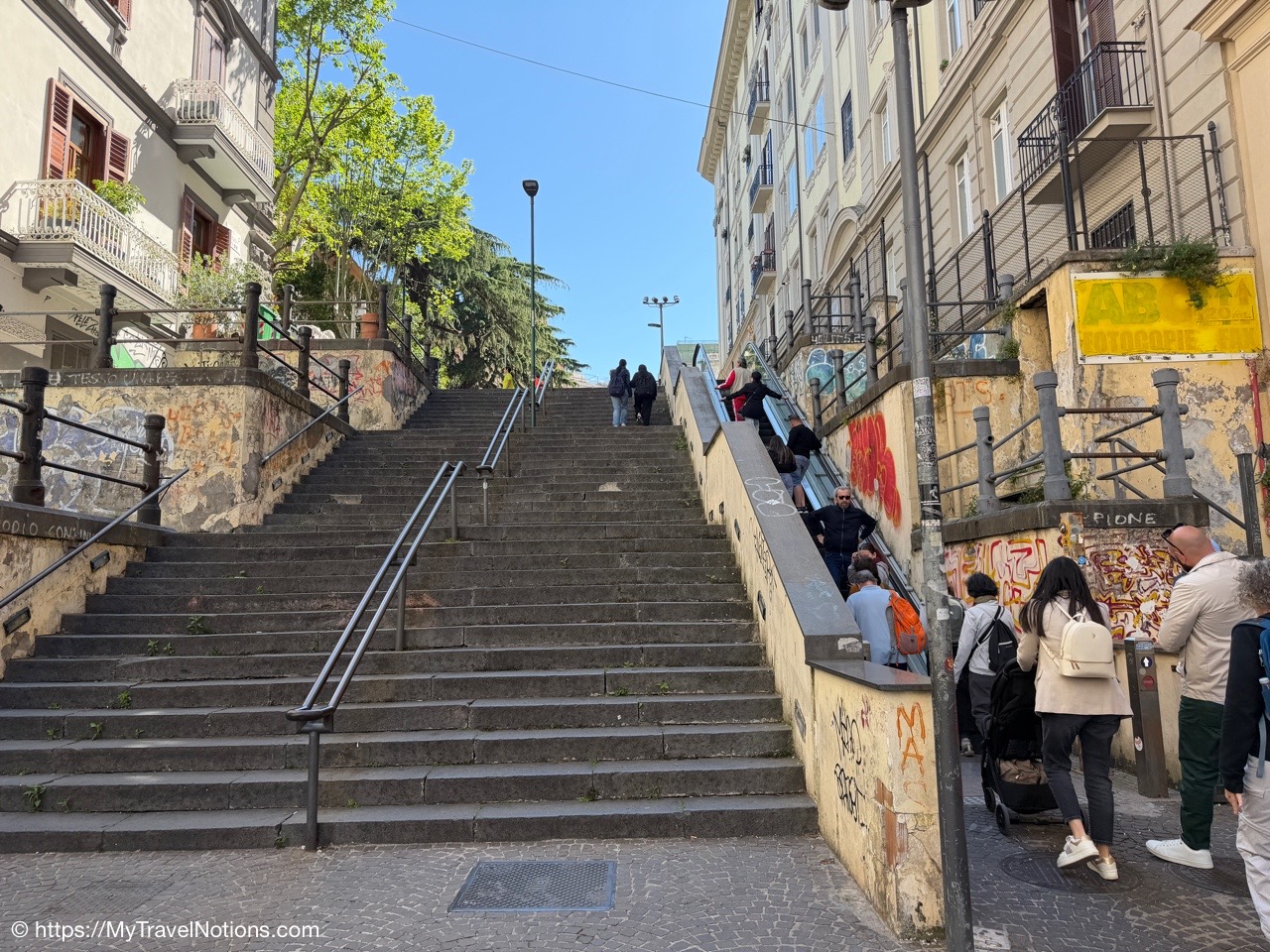
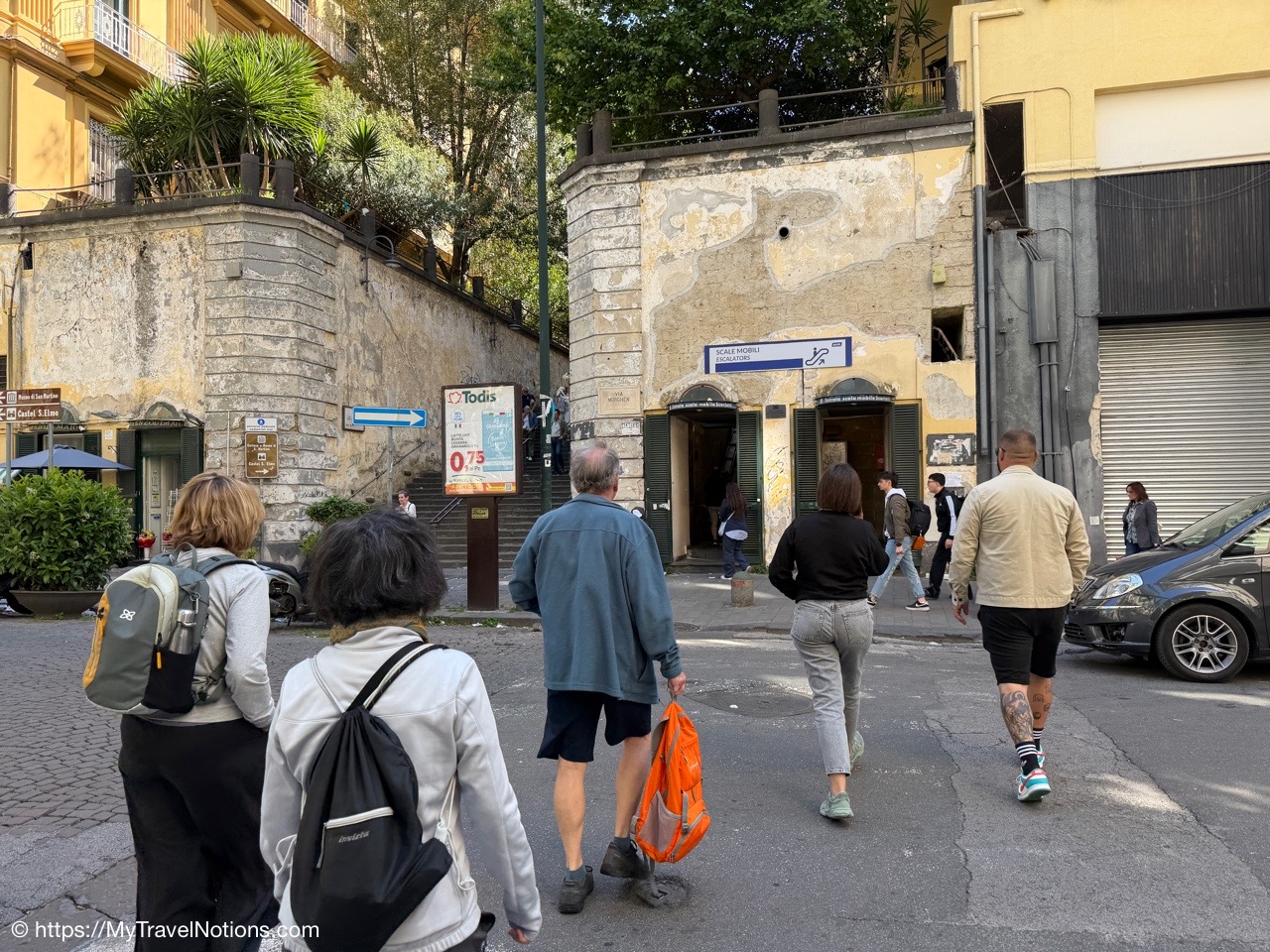
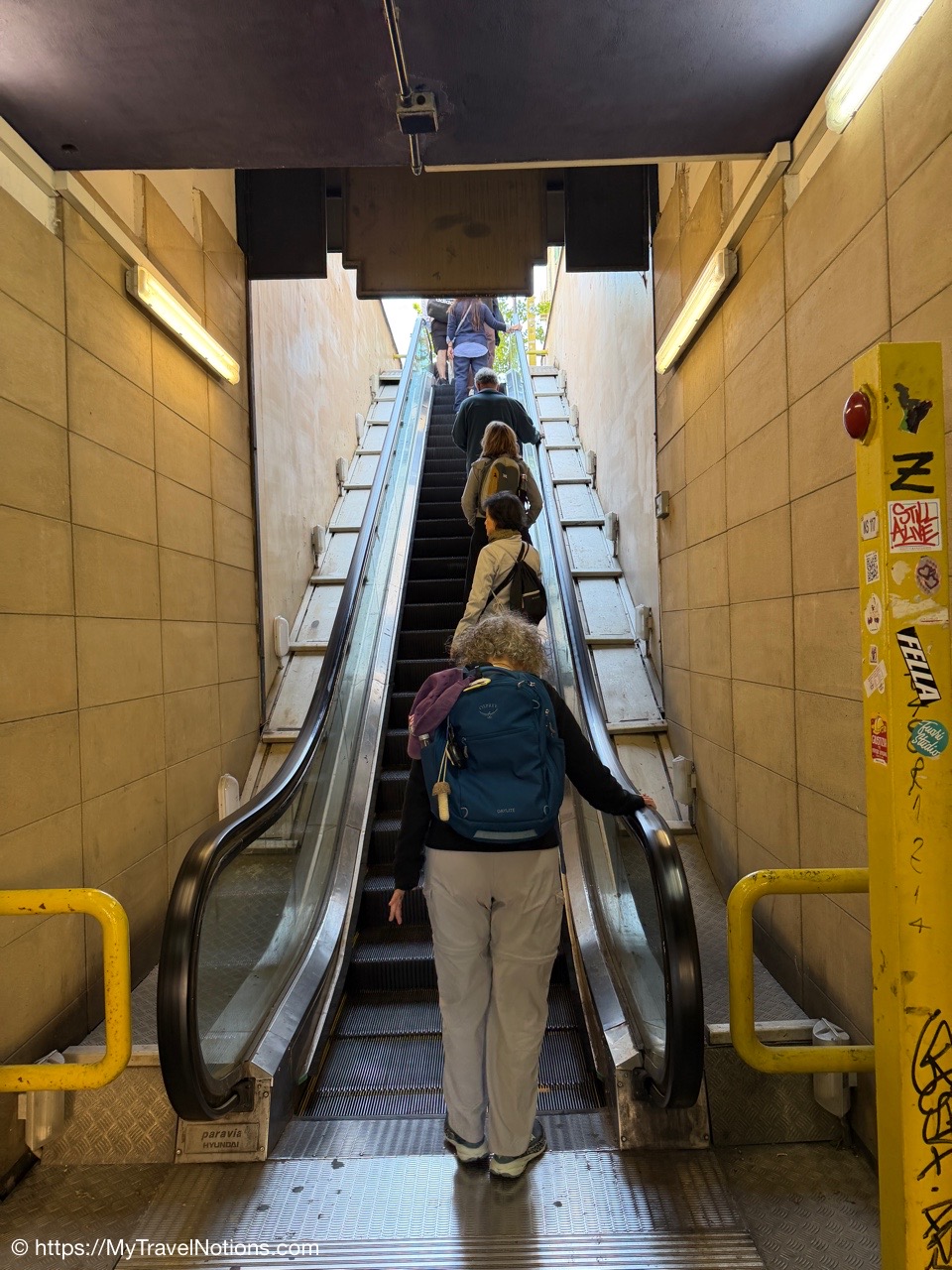
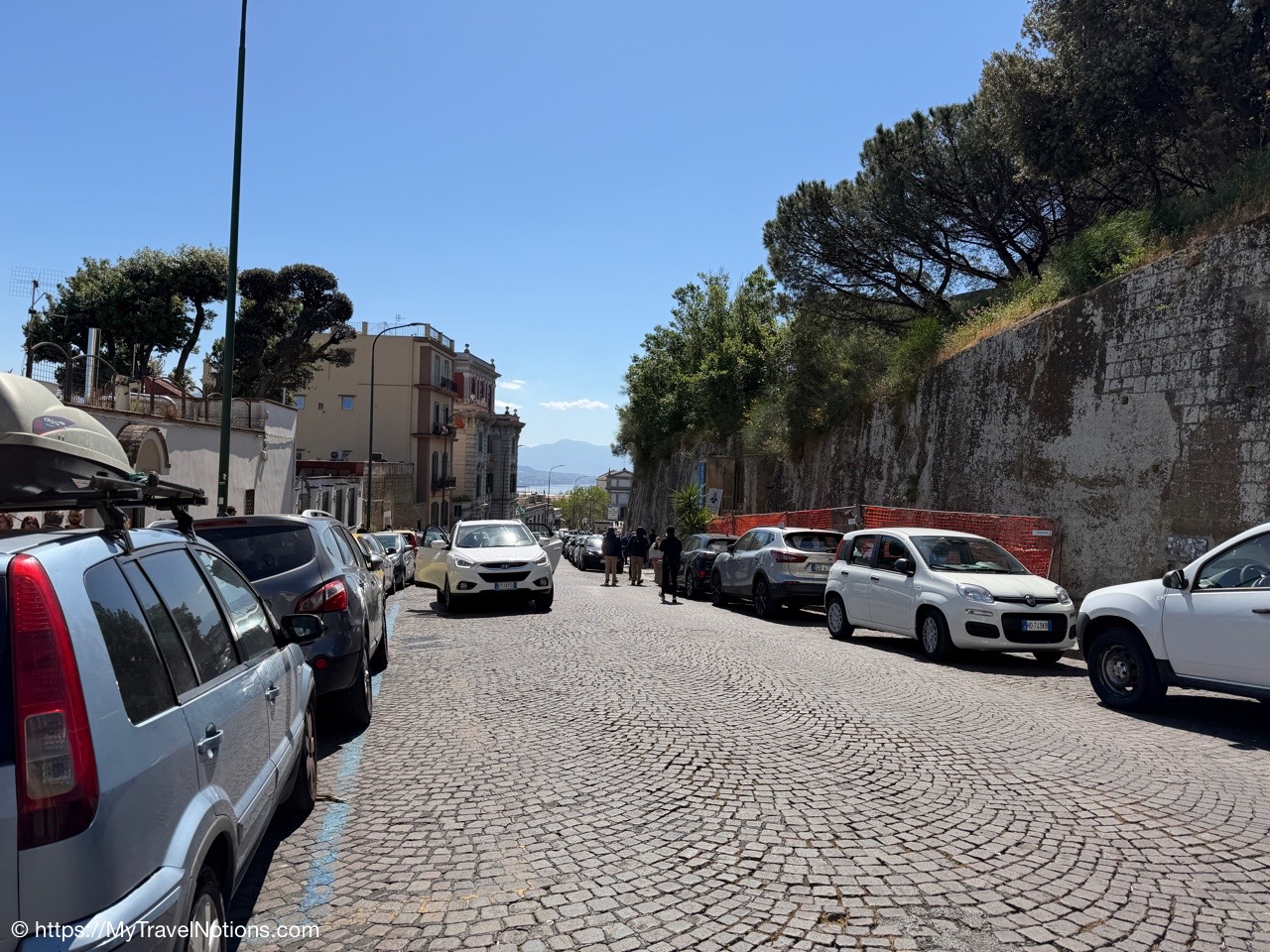
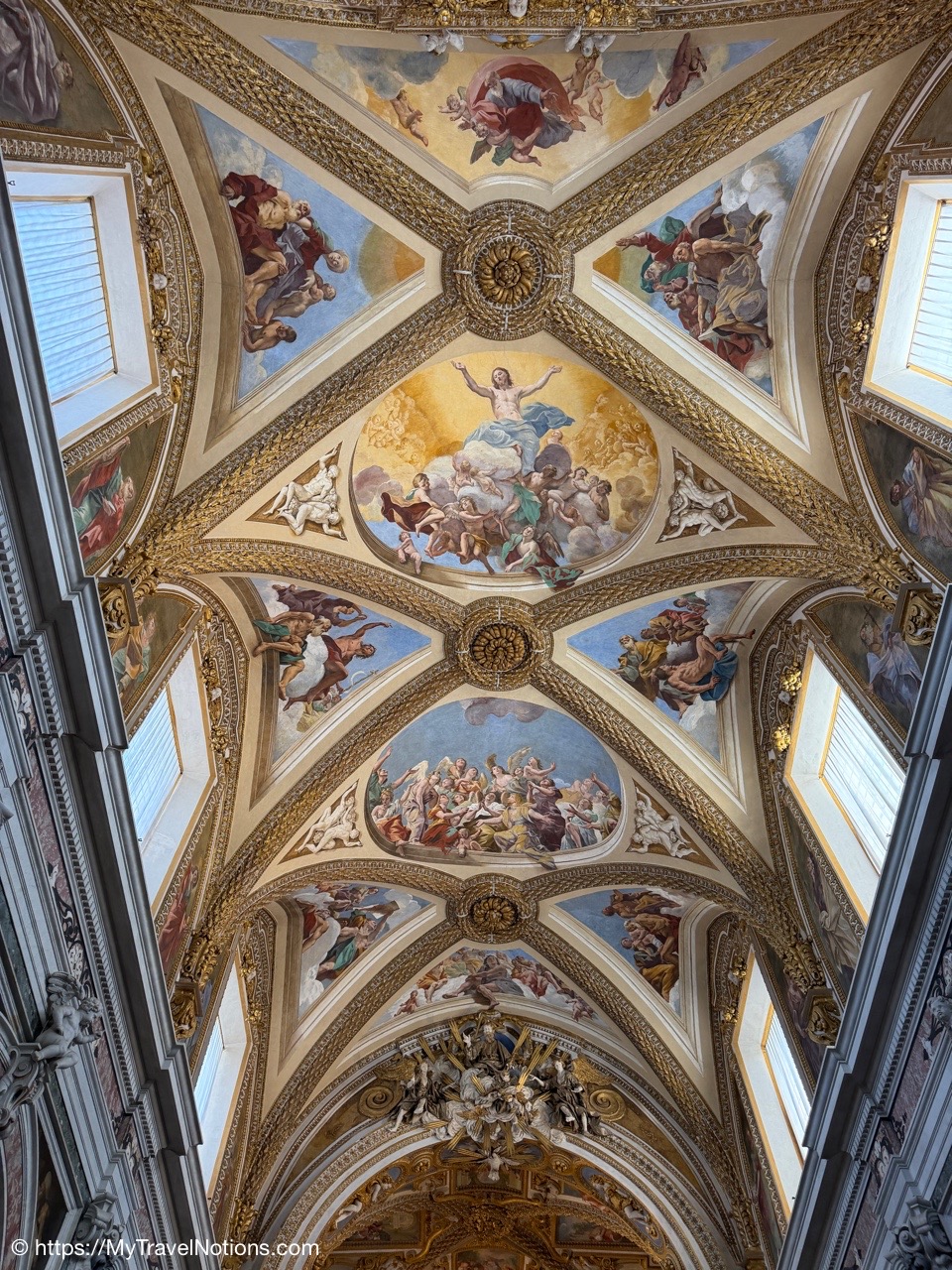
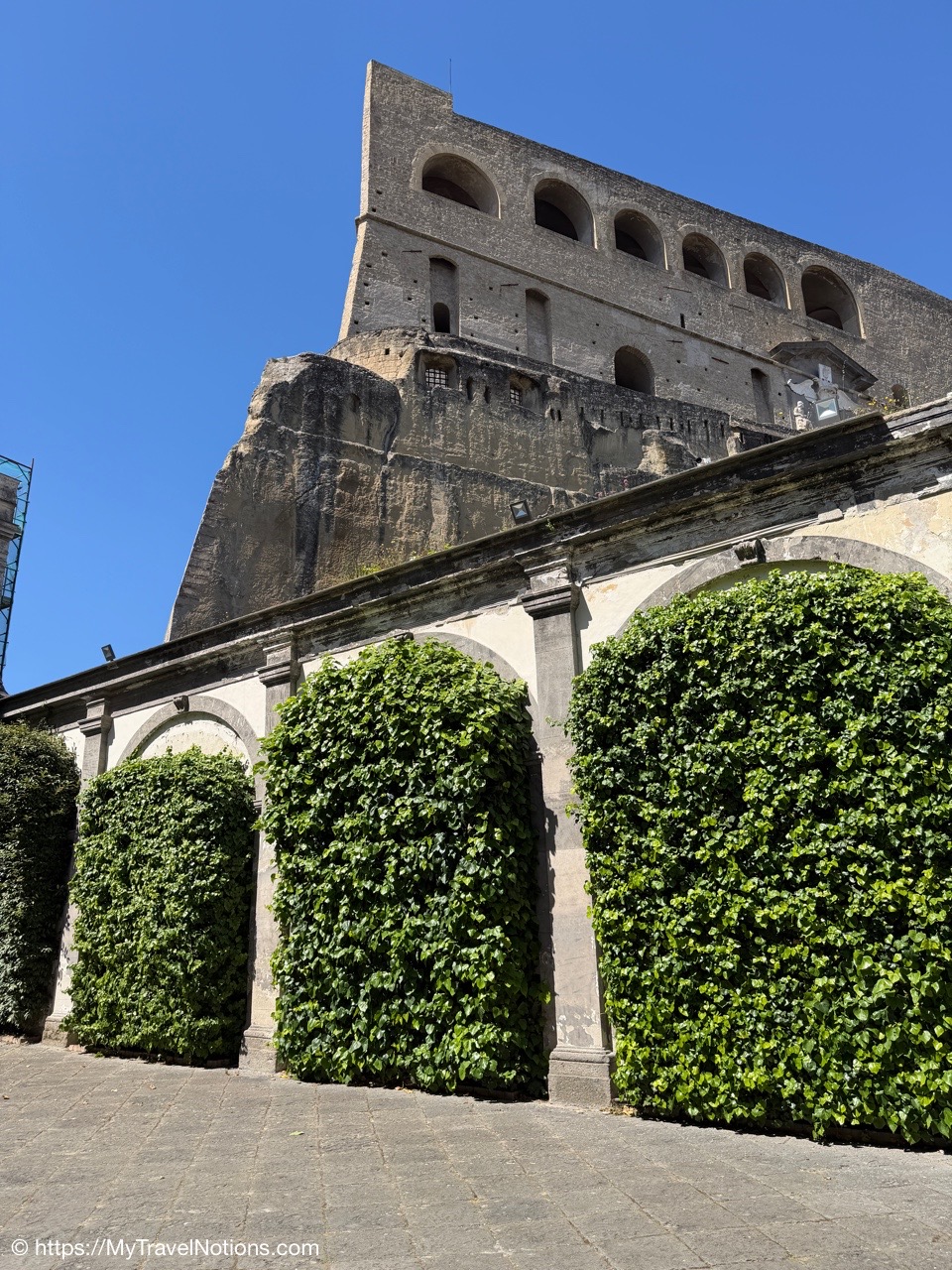
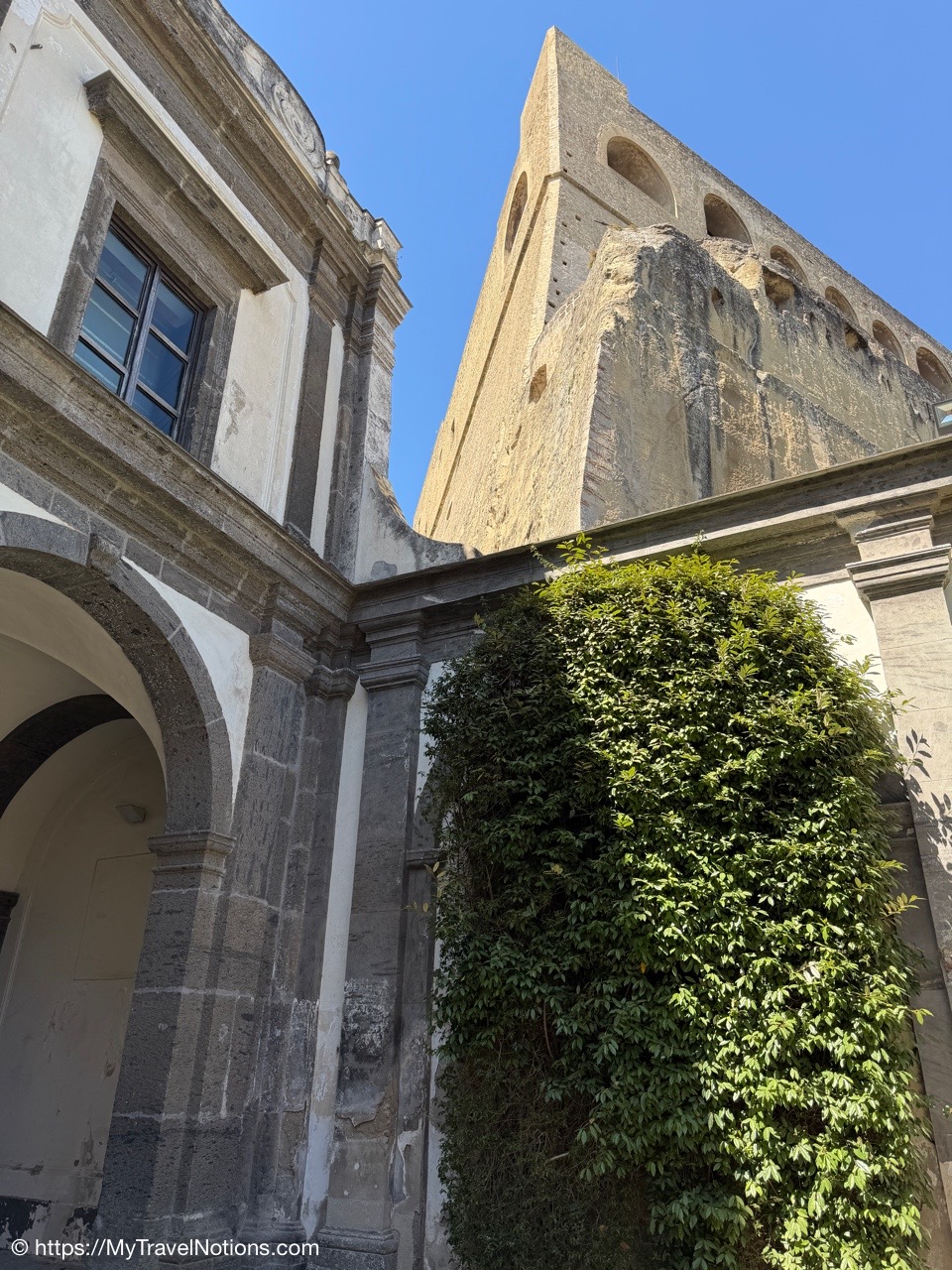
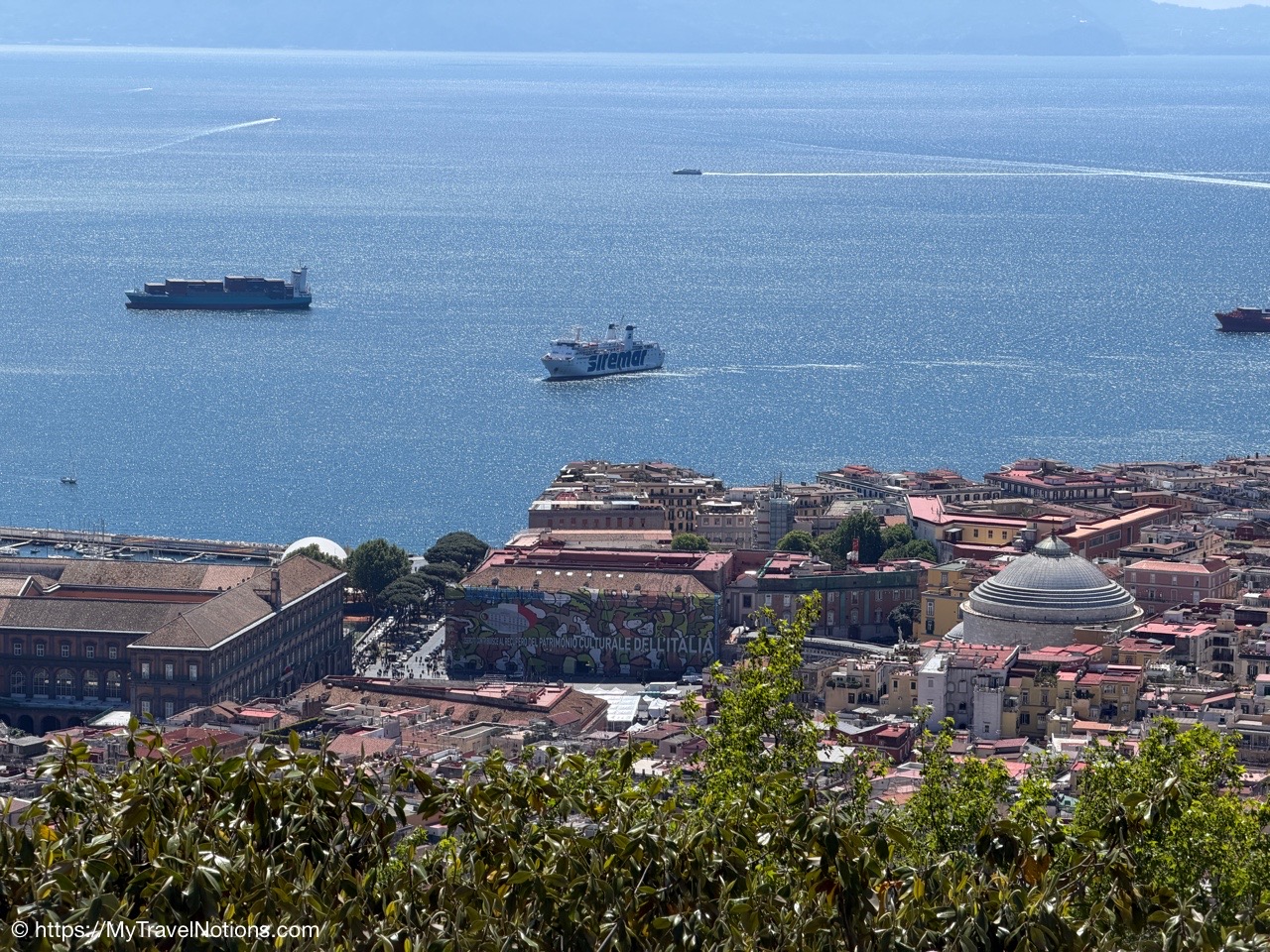
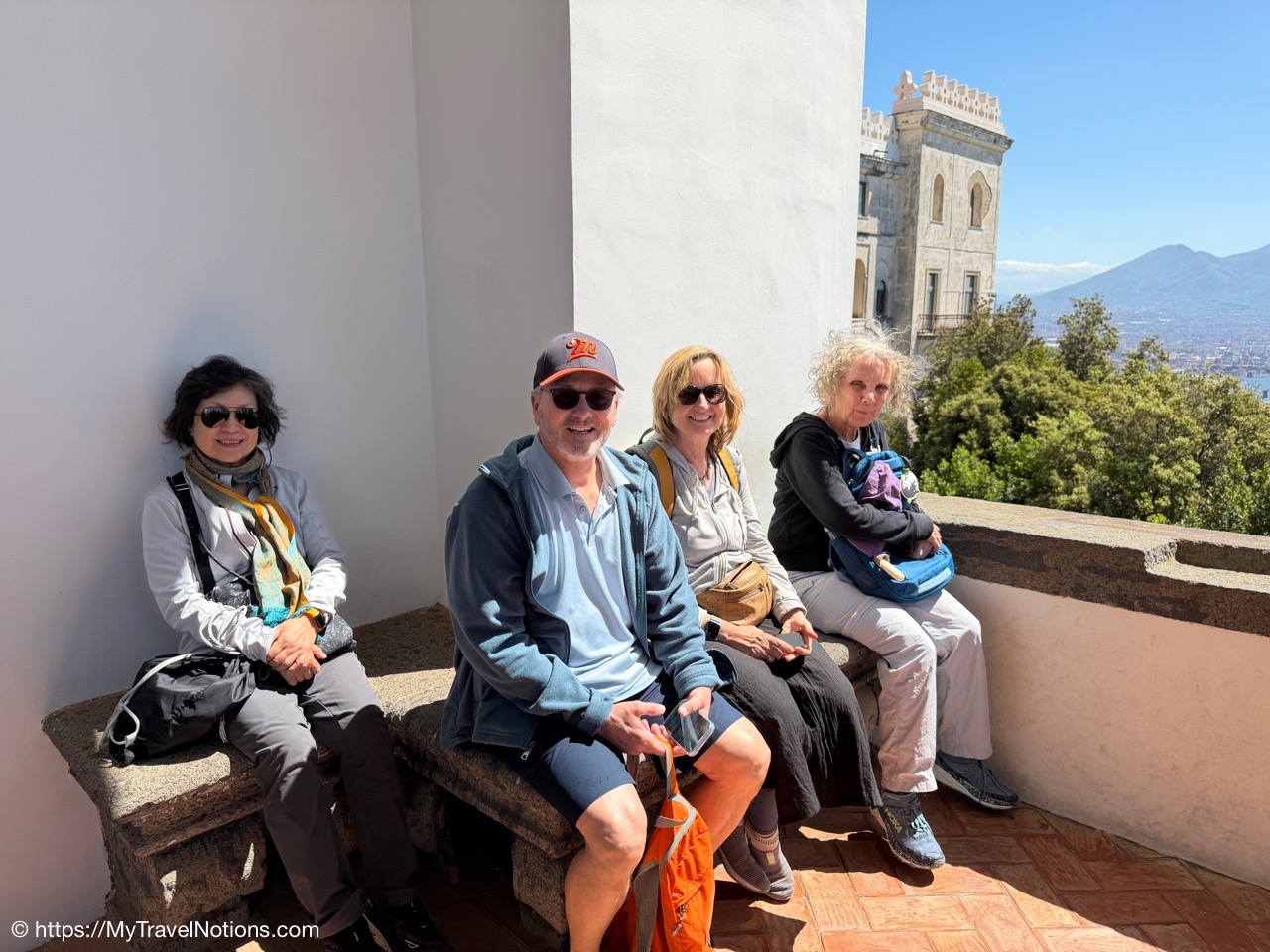
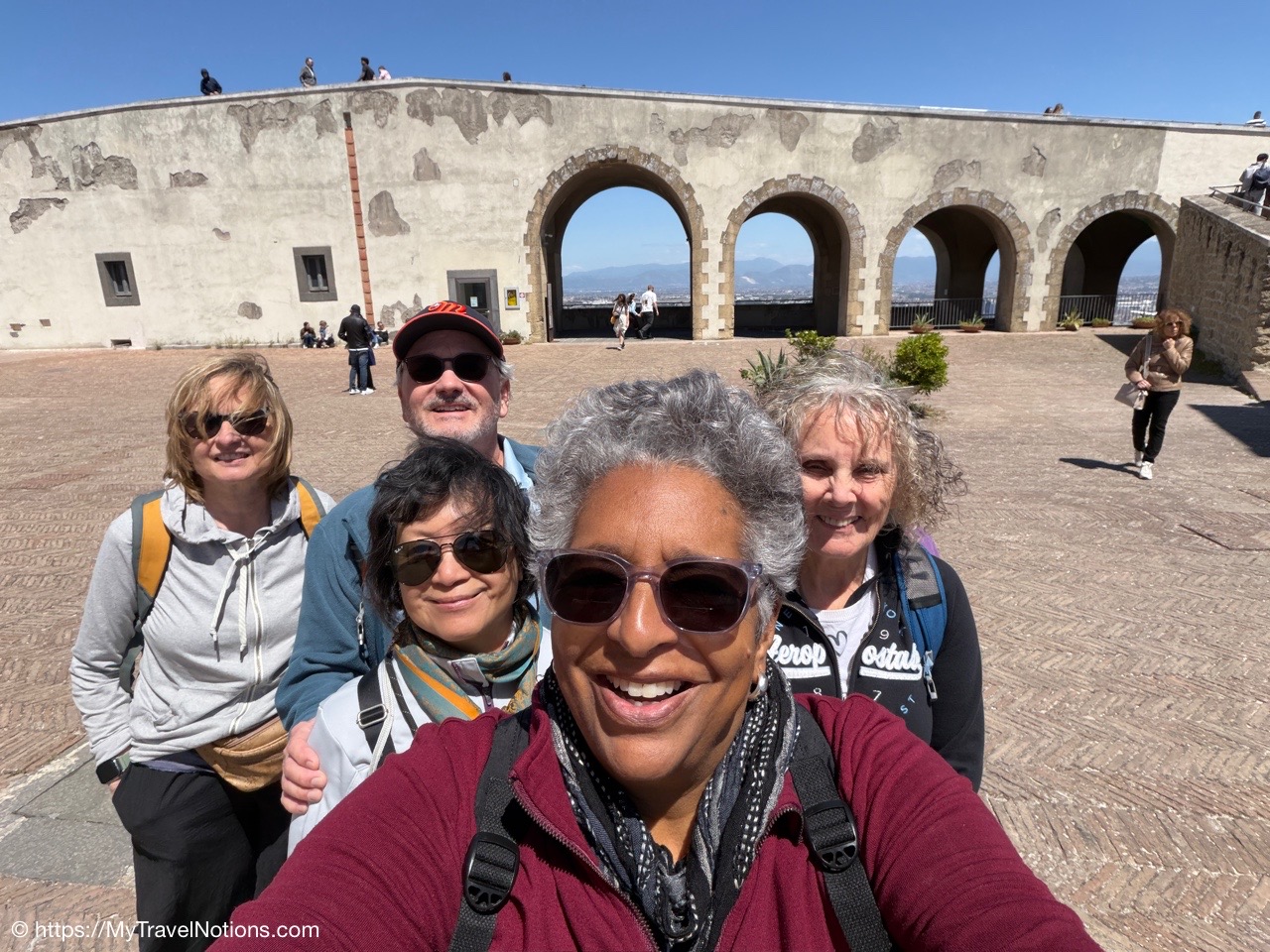
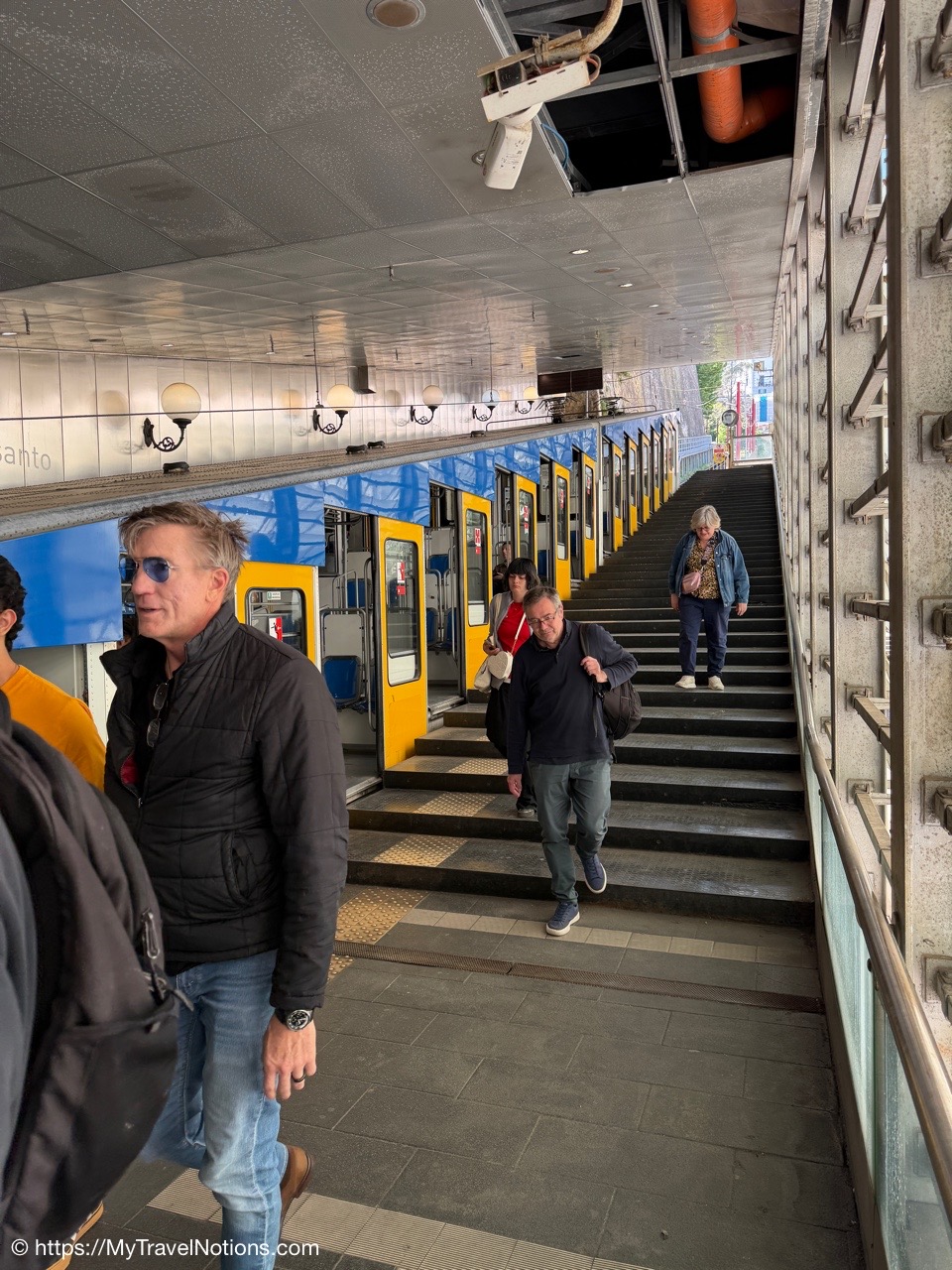
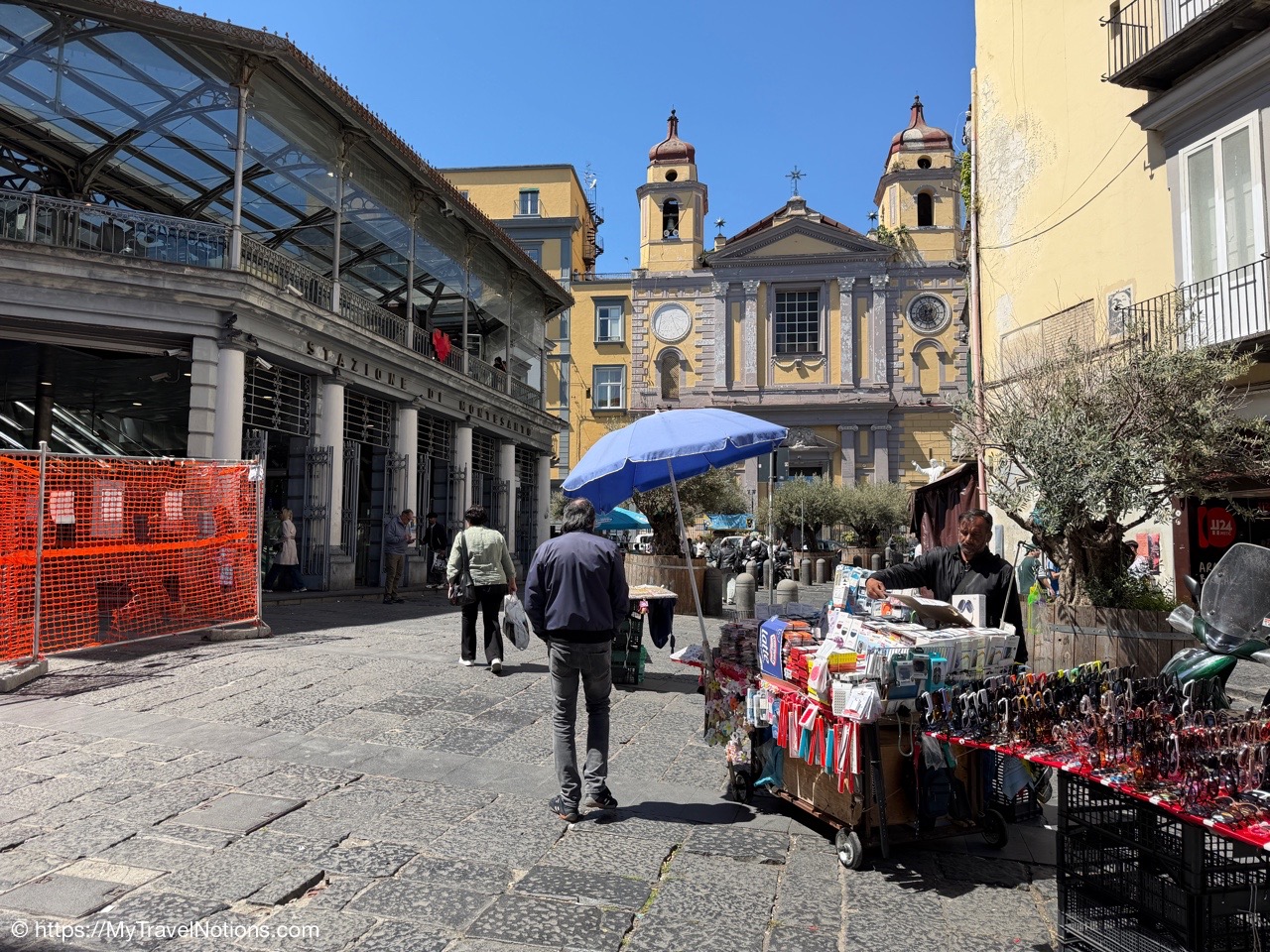
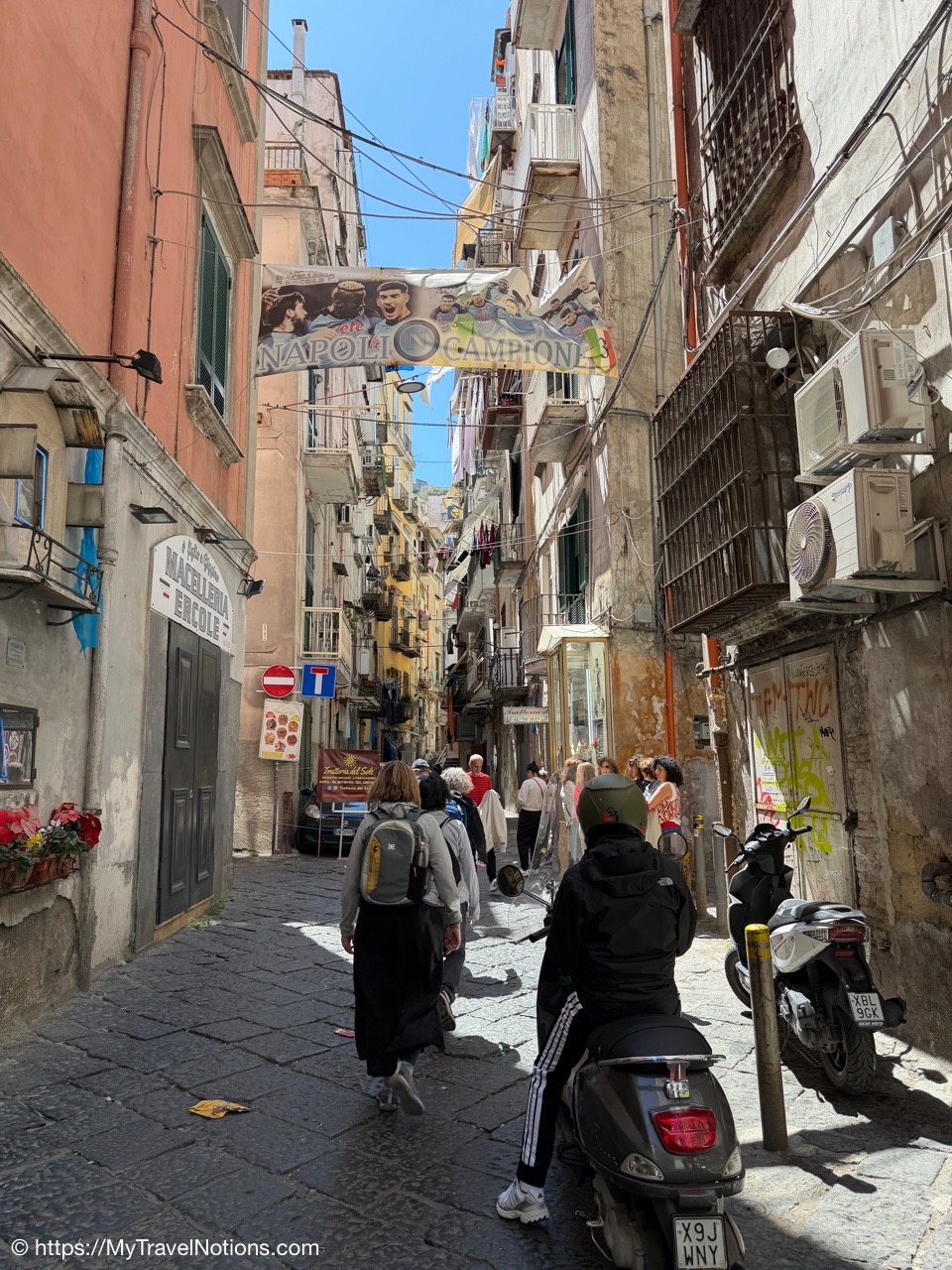
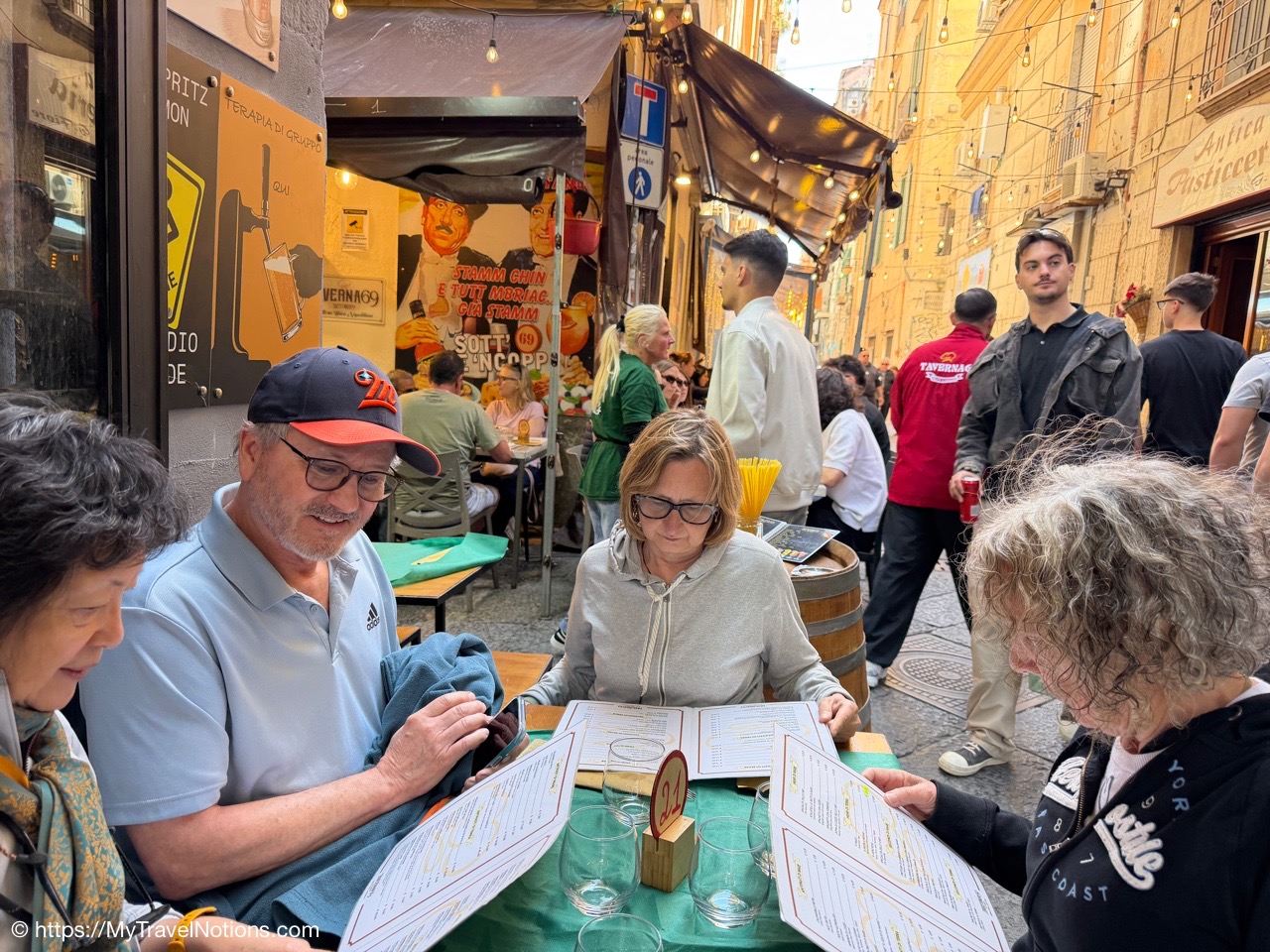
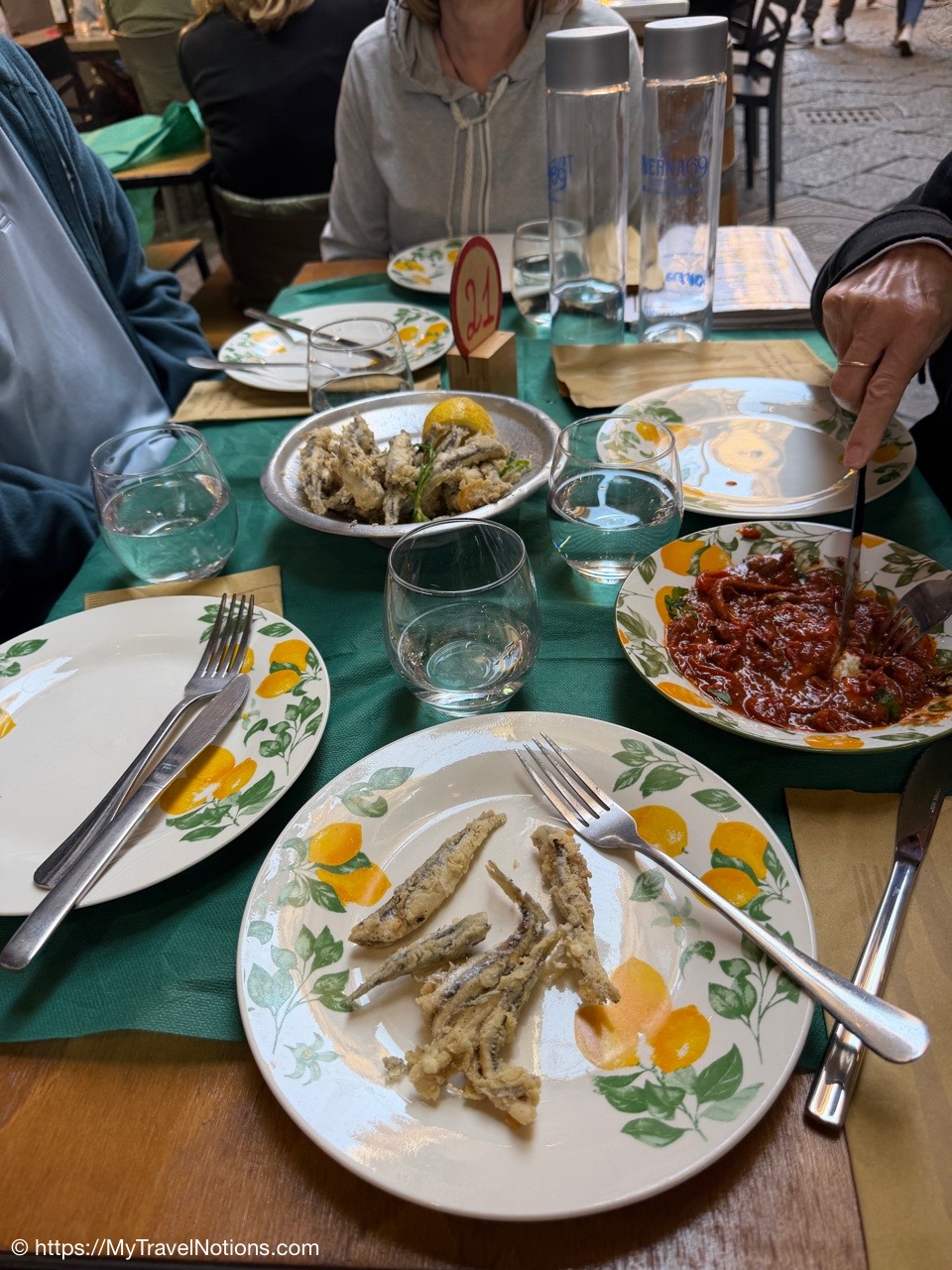
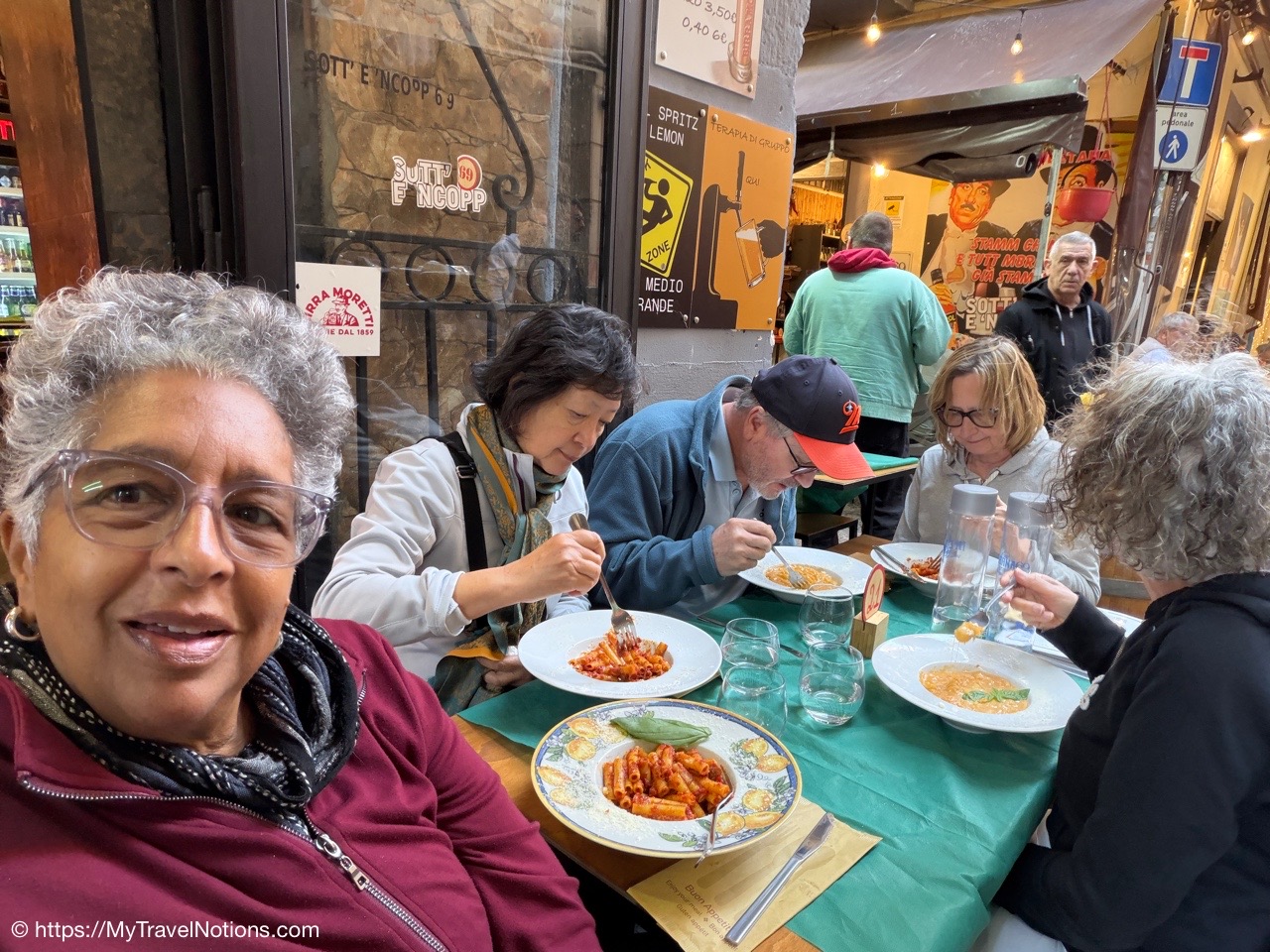
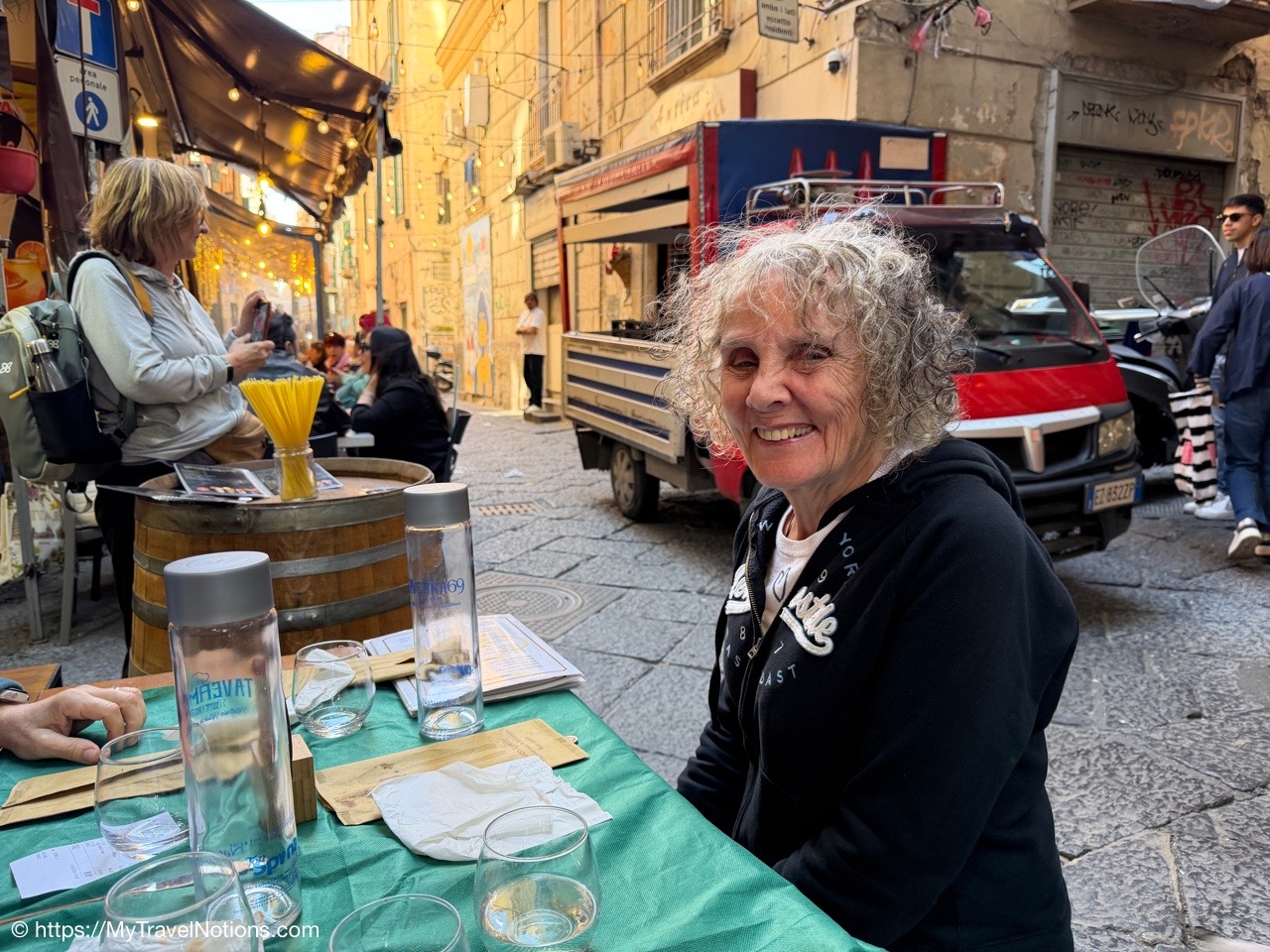
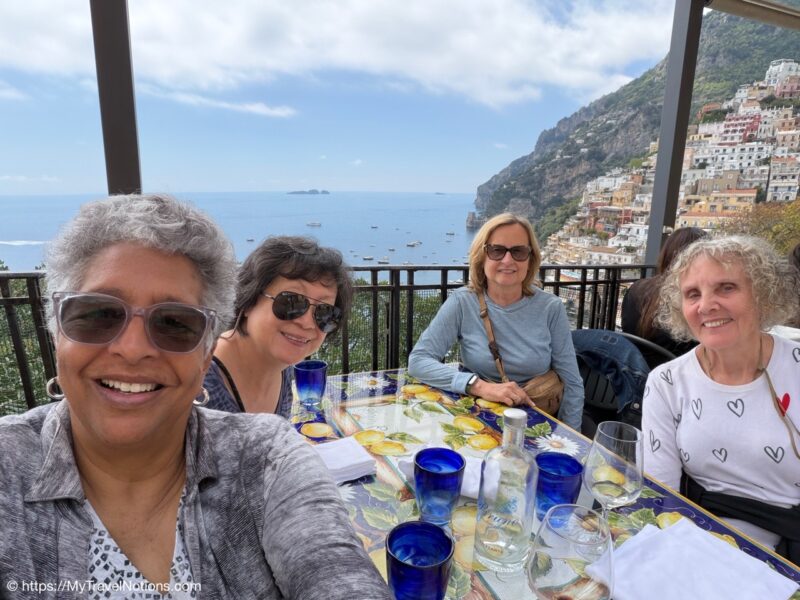
We got started with a group photo at the Piazzetta Duca D’Aosta funicular in Naples, for our ride up to Vomero hill. Welcome aboard John! From left: Janet, me, Rosie, Alice and John. (May 1, 2026)The funicular for our ride up to Vomero hill. (May 1, 2026)Although we had plans to get off of the funicular at a different stop, the funicular took us to its end point, the Plazza Fuga and John took the GPS lead to get us to the former monastery of Certosa e Museo di San Martino and medieval fortess of Castel Sant’Elmo on Vomero hill in Naples. (May 1, 2026)Thought we would have to take all of those stairs up on our way to the former monastery of Certosa e Museo di San Martino and medieval fortress of Castel Sant’Elmo on Vomero hill in Naples, but there was an actual working escalator. (May 1, 2026)And then another escalator on our walk to the former monastery and medieval fortress on the scenic Vomero hill in Naples. (May 1, 2026)I know, we all know what an escalator looks like but we just couldn’t believe we would find an escalator to take us up. (May 1, 2026)No more stairs, or escalators just walking to our first stop, the Certosa e Museo di San Martino, the former 14th-century Carthusian monastery. (May 1, 2026)Views of Naples as we make our way to the Certosa e Museo di San Martino, the former 14th-century Carthusian monastery turned national museum on scenic Vomero hill in Naples. (May 1, 2026)Views of Naples as we make our way to the Certosa e Museo di San Martino, the former 14th-century Carthusian monastery turned national museum on scenic Vomero hill in Naples. (May 1, 2026)The Certosa e Museo di San Martino, the former 14th-century Carthusian monastery turned national museum on scenic Vomero hill in Naples. (May 1, 2026)Inside the courtyard of the Certosa e Museo di San Martino with jetting views of the medieval fortress of Castel Sant’Elmo seemingly towering overhead. (May 1, 2026)Entering the Church of the Charterhouse inside the Certosa e Museo di San Martino. (May 1, 2026)Founded in 1325, the Church of the Charterhouse inside the Certosa e Museo di San Martino was the heart of Carthusian monastic life, a place of silence and prayer accessible only to a few distinguished guests. Over the centuries, its original austere Gothic character was transformed into a jewel of art and spirituality. (May 1, 2026)The ceiling of the Church of the Charterhouse inside the Certosa e Museo di San Martino. (May 1, 2026)Back inside the courtyard of the Certosa e Museo di San Martino with jetting views of the medieval fortress of Castel Sant’Elmo seemingly towering overhead. (May 1, 2026)Inside the courtyard of the Certosa e Museo di San Martino with jetting views of the medieval fortress of Castel Sant’Elmo seemingly towering overhead. (May 1, 2026)On one of the balconies of the Certosa e Museo di San Martino with views of Naples and the Bay of Naples. The sun was shining so it was a beautiful day, but it was also quite windy and that made things a bit chilly. (May 1, 2026)Views of Naples and the Bay of Naples atop one of the balconies of the Certosa e Museo di San Martino. The sun was shining so it was a beautiful day, but it was also quite windy and that made things a bit chilly. (May 1, 2026)Relaxing for a few minutes with views of Mount Vesuvius and the Bay of Naples from another balcony at Certosa e Museo di San Martino on Vomero hill in Naples. From left: Alice, John, Janet and Rosie. (May 1, 2026)Although the Certosa e Museo di San Martino is known for having one of the most stunning panoramic views of Naples and the Bay of Naples, the views of Mount Vesuvius, although in the distance, felt awfully close. (May 1, 2026)Partial view of Mount Vesuvius and the Bay of Naples from the balcony of the Certosa e Museo di San Martino. (May 1, 2026)From the Certosa di San Martino we walked slightly uphill to the Castel Sant’Elmo. When we purchased the entry ticket for the monastery now museum, we were also able to purchase the ticket for the fortress. (May 1, 2026)Making our way into Castel Sant’Elmo on Vomero hill in Naples. (May 1, 2026)Walking up the stone ramparts of Castel Sant’Elmo on Vomero hill in Naples with views of Mount Vesuvius, the city of Naples and the Certosa di San Martino. (May 1, 2026)Walking up the stone ramparts of Castel Sant’Elmo on Vomero hill in Naples. (May 1, 2026)Walking up the stone ramparts of Castel Sant’Elmo on Vomero hill in Naples. (May 1, 2026)Me at the entry gate with its Imperial Eagle as I continue my climb up into Castel Sant’Elmo. (May 1, 2026)A view of the courtyard and entrance into the Church of the Charterhouse inside the Certosa e Museo di San Martino from my climb up into Castel Sant’Elmo. (May 1, 2026)Continuing the climb up along the stone ramparts of Castel Sant’Elmo. (May 1, 2026)More views as I continue my climb up along the stone ramparts of Castel Sant’Elmo. (May 1, 2026)More views, of the monatery, Naples and Mount Vesuvius, as I continue my climb up along the stone ramparts of Castel Sant’Elmo. (May 1, 2026)Finally reached the open-air panoramic terrace of the star-shaped fortress of Castel Sant’Elmo on Vomero hill in Naples. (May 1, 2026)Me a top the panoramic terrace of the star-shaped fortress of Castel Sant’Elmo on Vomero hill in Naples with views of Mount Vesuvius. (May 1, 2026)Getting in a quick group selfie at the top terrace of the star-shaped fortress of Castel Sant’Elmo on Vomero hill in Naples. From left: Janet, John, Alice, me and Rosie. (May 1, 2026)Views of Mount Vesuvius on the panoramic terrace of the star-shaped fortress of Castel Sant’Elmo on Vomero hill in Naples. (May 1, 2026)Heading back to the historic center of Naples on the funicular. (May 1, 2026)Leaving the Montesanto funicular in Piazza Montesanto located near Via Toledo and the historic center of Naples. (May 1, 2026)Walking to the historic center from the Montesanto funicular in Piazza Montesanto in Naples. (May 1, 2026)Walking through the historic center of Naples in search of food. (May 1, 2026)We found Taverna 69 in the Spanish Quarter of Naples and decided this was the place to stop for a late lunch. Our table was close to the pedestrian and vehicle alleyway. (May 1, 2026)We ordered fried anchovies and some kind of octopus to share at Taverna 69. I ate the anchovies, which were good, but Janet, Alice and Rosie at the octopus. (May 1, 2026)Trying to get in a group selfie during our late lunch at Taverna 69 in the Spanish Quarter of Naples. I ordered the Neapolitan Ragu pasta, which was just okay. Not sure why but the tomato sauce just does not sit well with me. (May 1, 2026)Although we were all seated street side along Via Speranzella in the Spanish Quarter of Naples, Rosie is the one who really dealt with the close encounters during our late lunch at Taverna 69. (May 1, 2026)Walking off our lunch and heading back to our hotels through the Spanish Quarter in Naples. (May 1, 2026)Walking off our lunch and heading back to our hotels through the Spanish Quarter in Naples. (May 1, 2026)Walking off our lunch and heading back to our hotels through the Spanish Quarter in Naples. (May 1, 2026)Walking off our lunch and heading back to our hotels through the Spanish Quarter in Naples. (May 1, 2026)Walking off our lunch and heading back to our hotels through the Spanish Quarter in Naples. (May 1, 2026)Walking off our lunch and heading back to our hotels through the Spanish Quarter in Naples. (May 1, 2026)
We love food walking tours. And, with an informative guide, it’s a way to enjoy the local cuisine, see more of a city while also learning its history.So, here we are doing another street food walking tour in Naples but this time, it’s in the San Fernando and Chiaia neighborhoods of Naples. Our first street food walking tour took place mainly in the historic center so this tour gave us an opportunity to see the areas around the Galleria Umberto I and the Royal Palace.
After our food walking tour, Rosie, Janet and I did a tour of the Royal Palace of Naples before all of us met for a goodbye dinner with Janet whose heading back home to California while Alice, John, Rosie and myself fly to Krakow to begin our travels through Poland.
Come check out the food goodies, walk through a Royal Palace and wish Janet safe travels back home. Janet, I really enjoyed our time together.
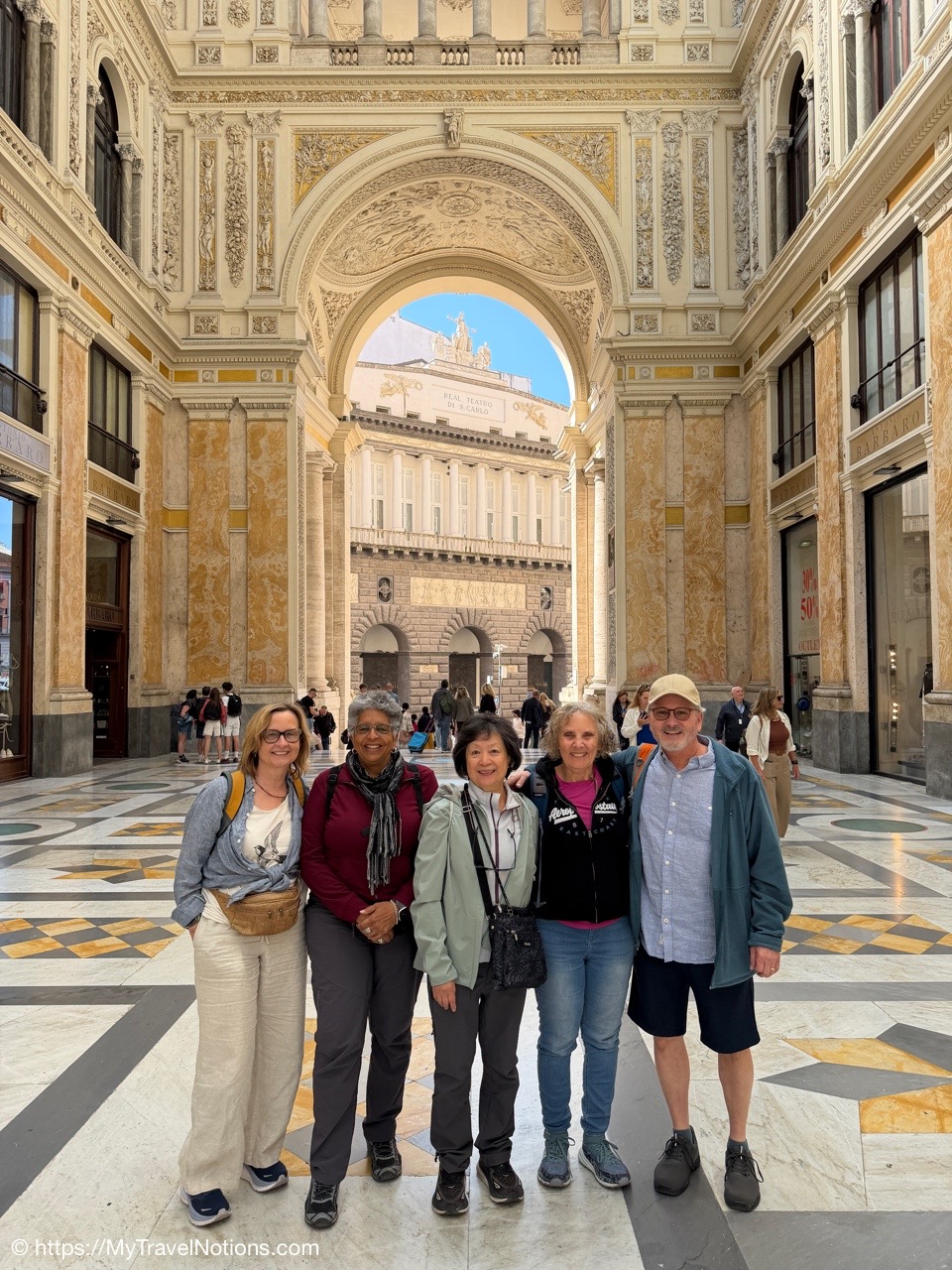
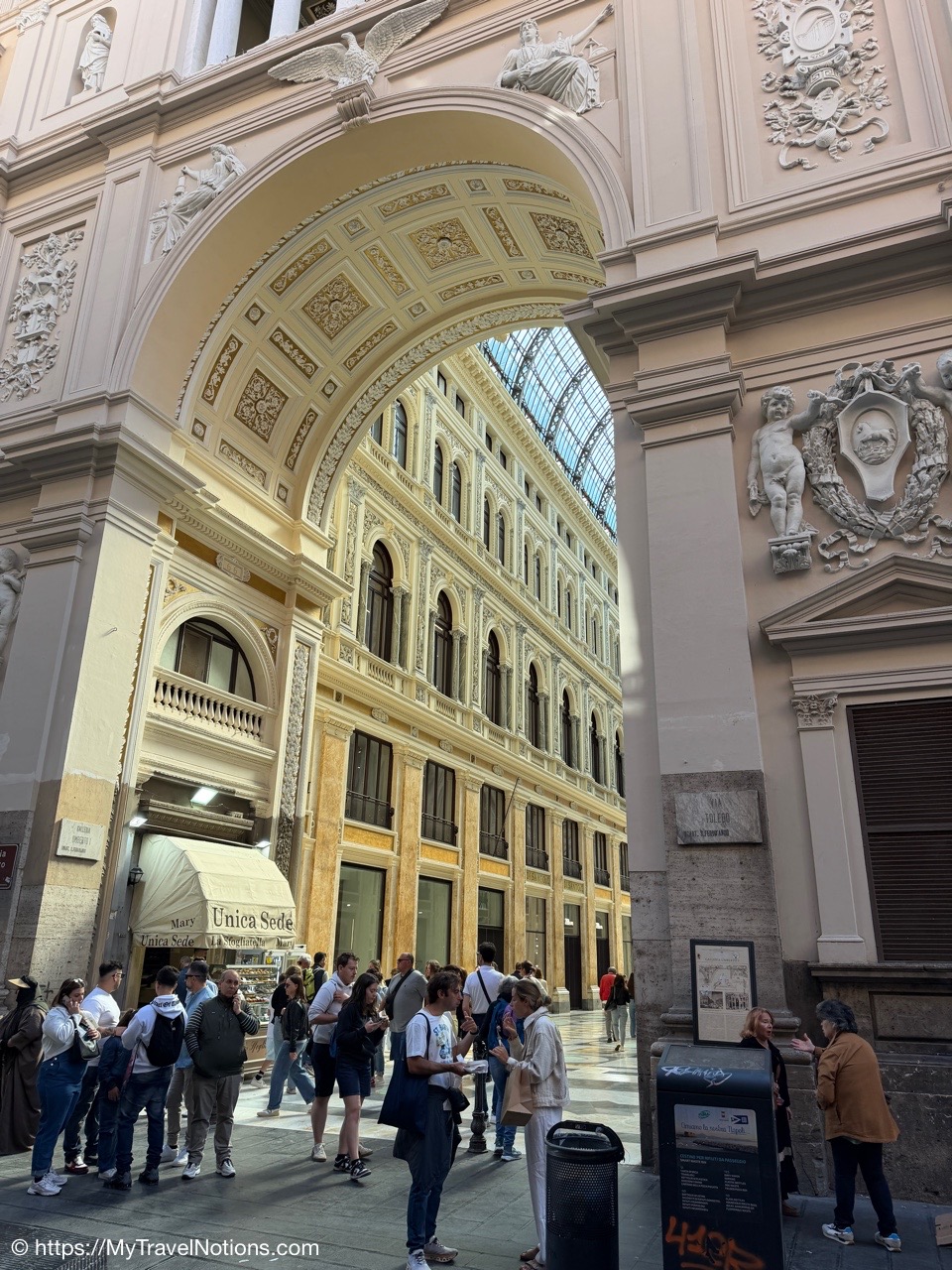
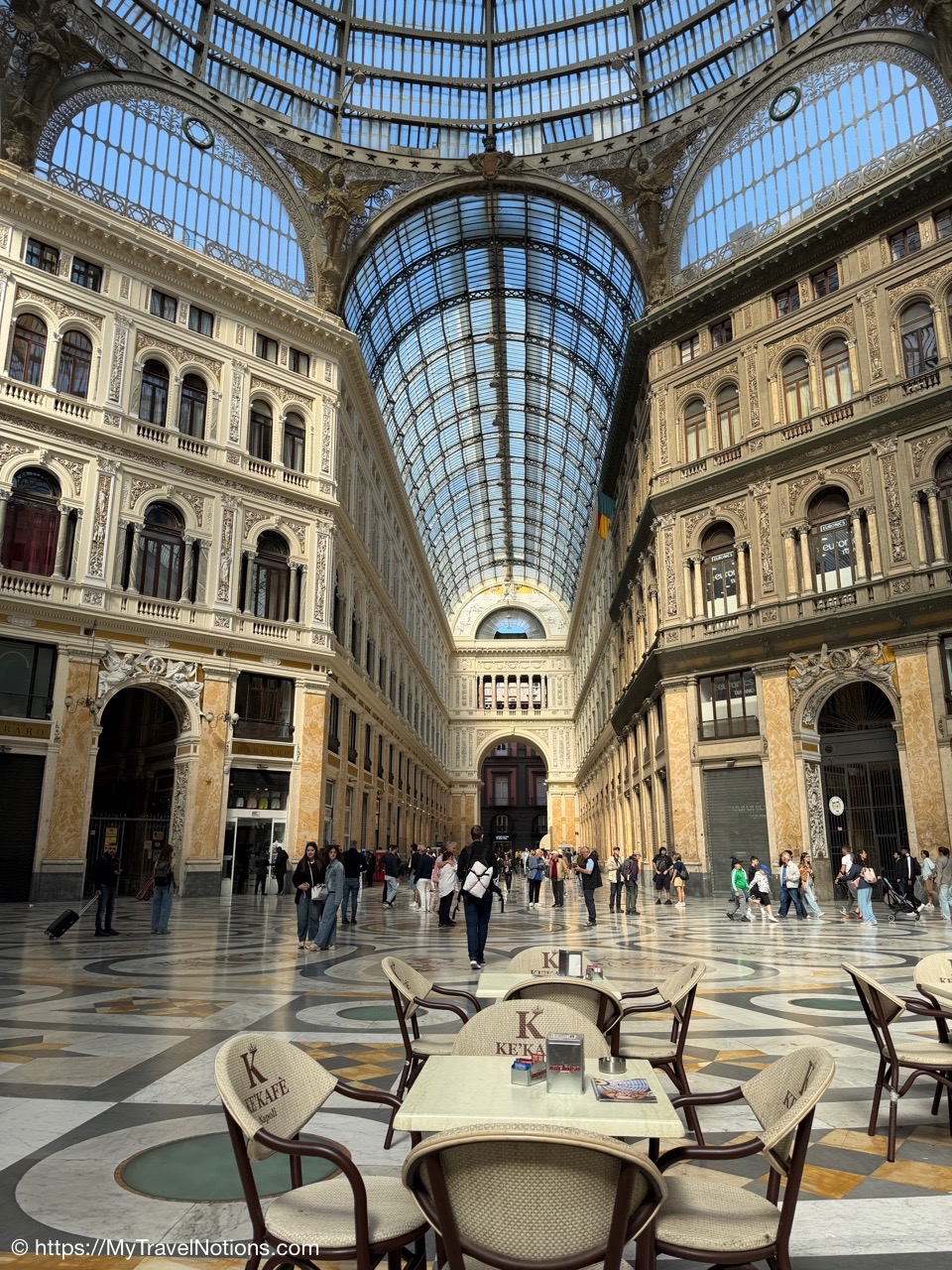
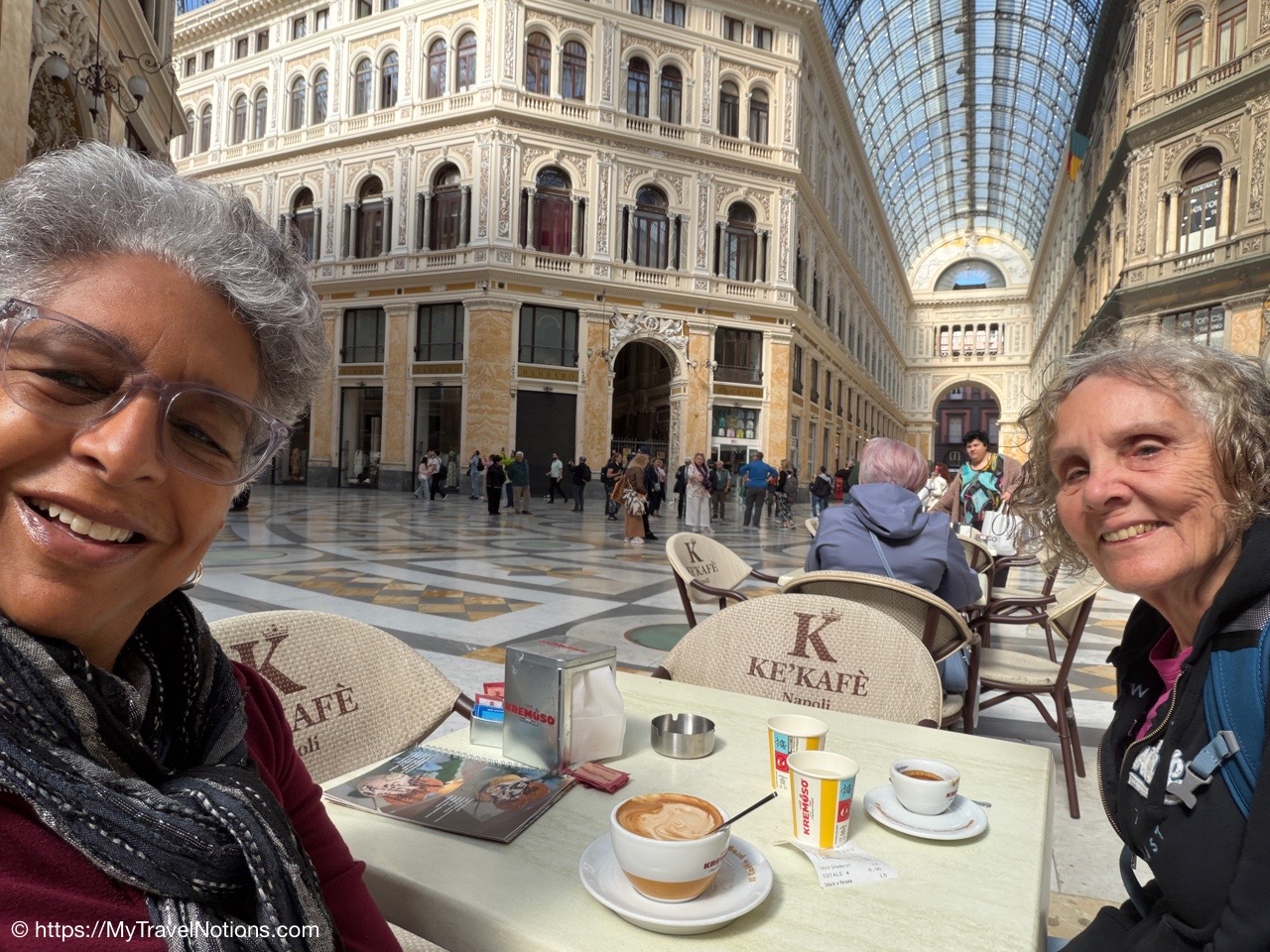
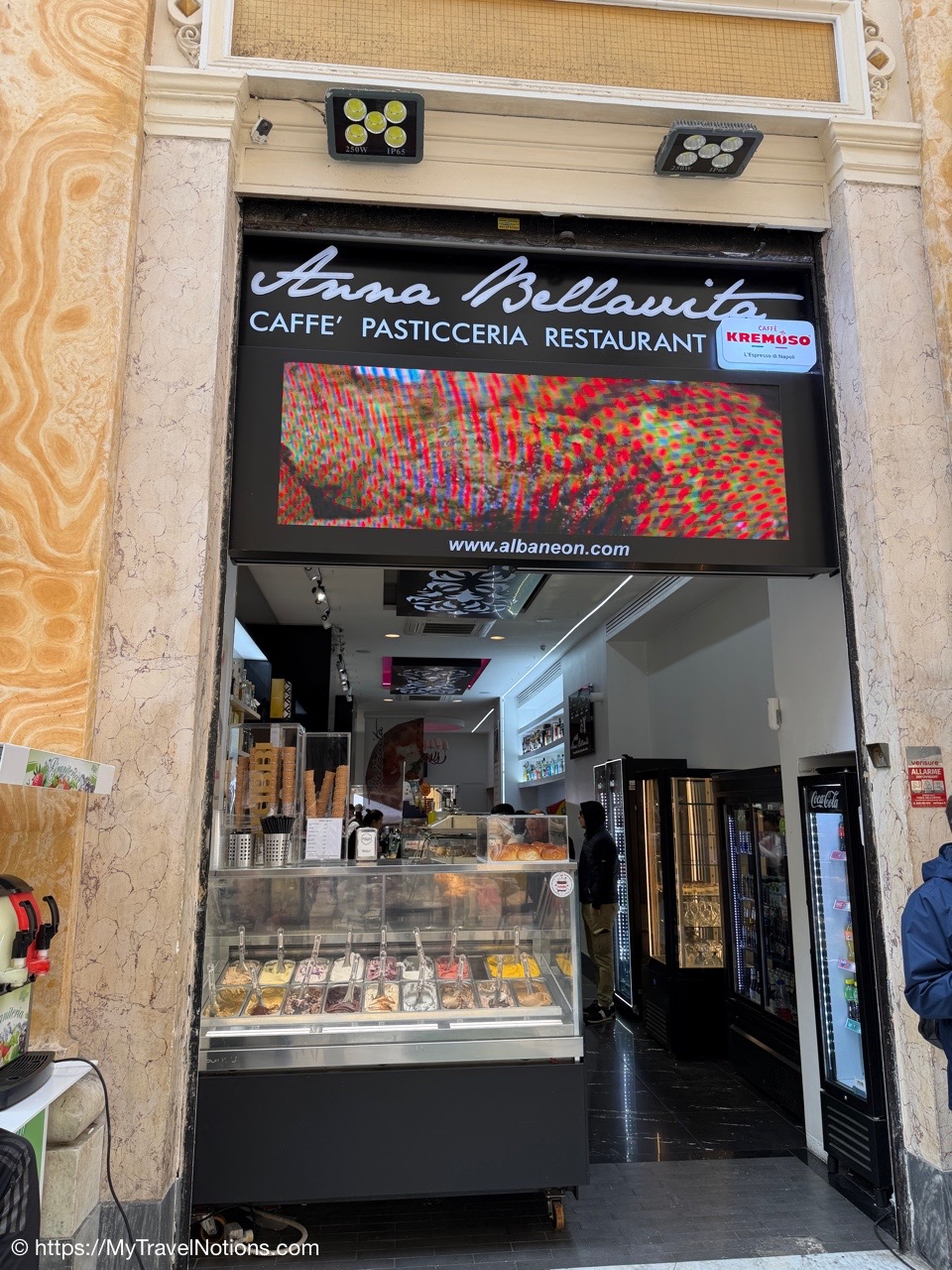
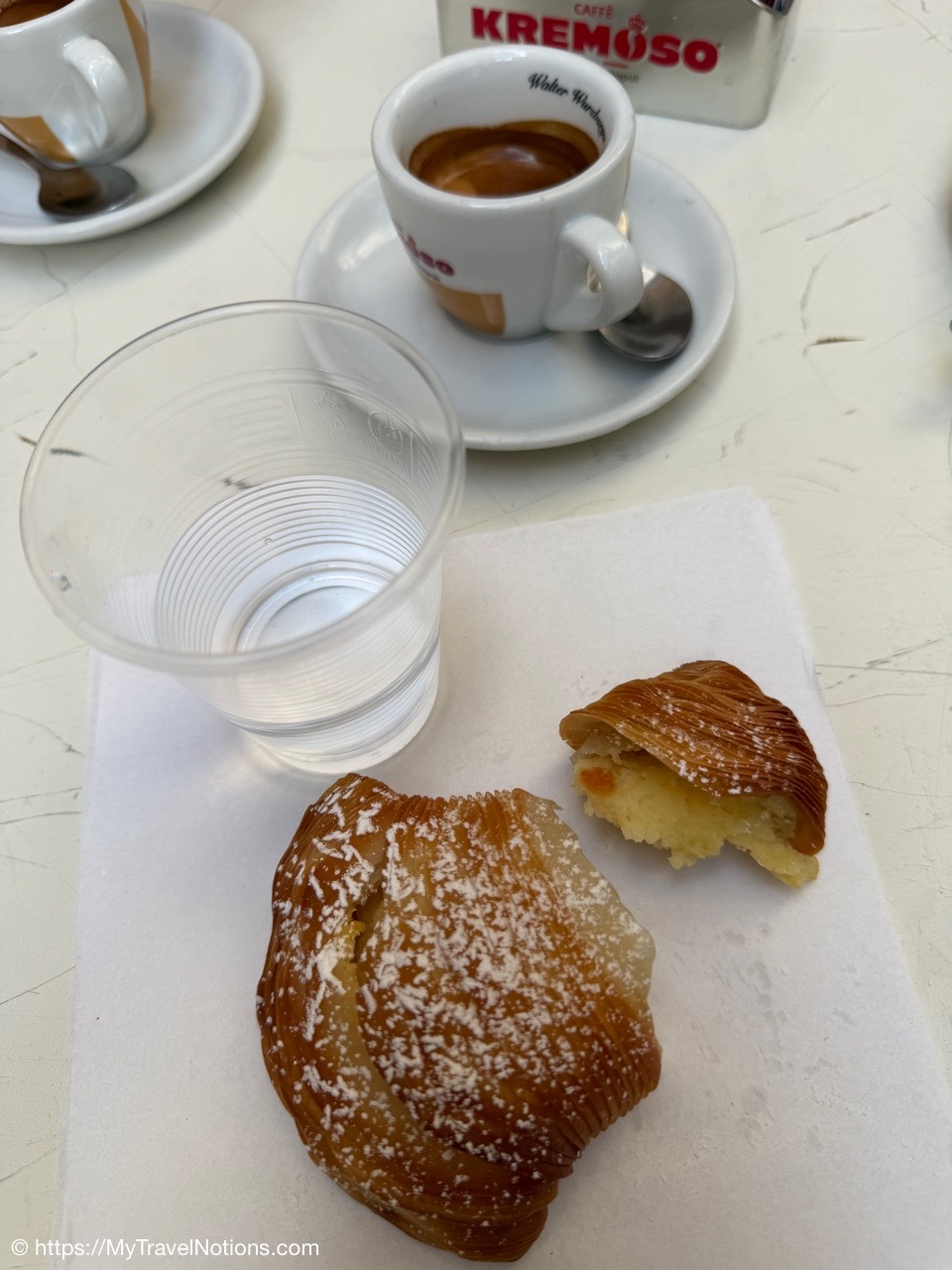
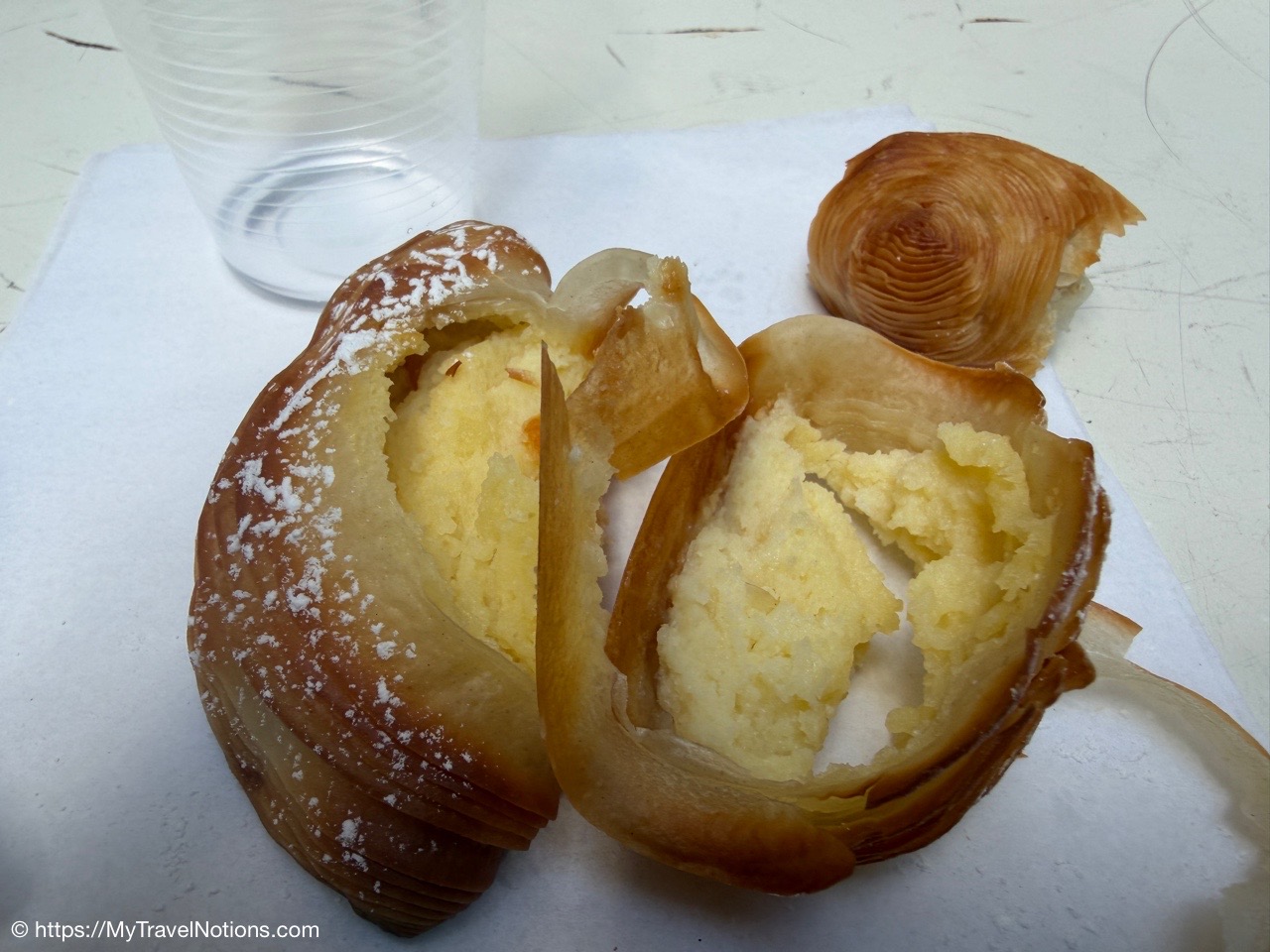
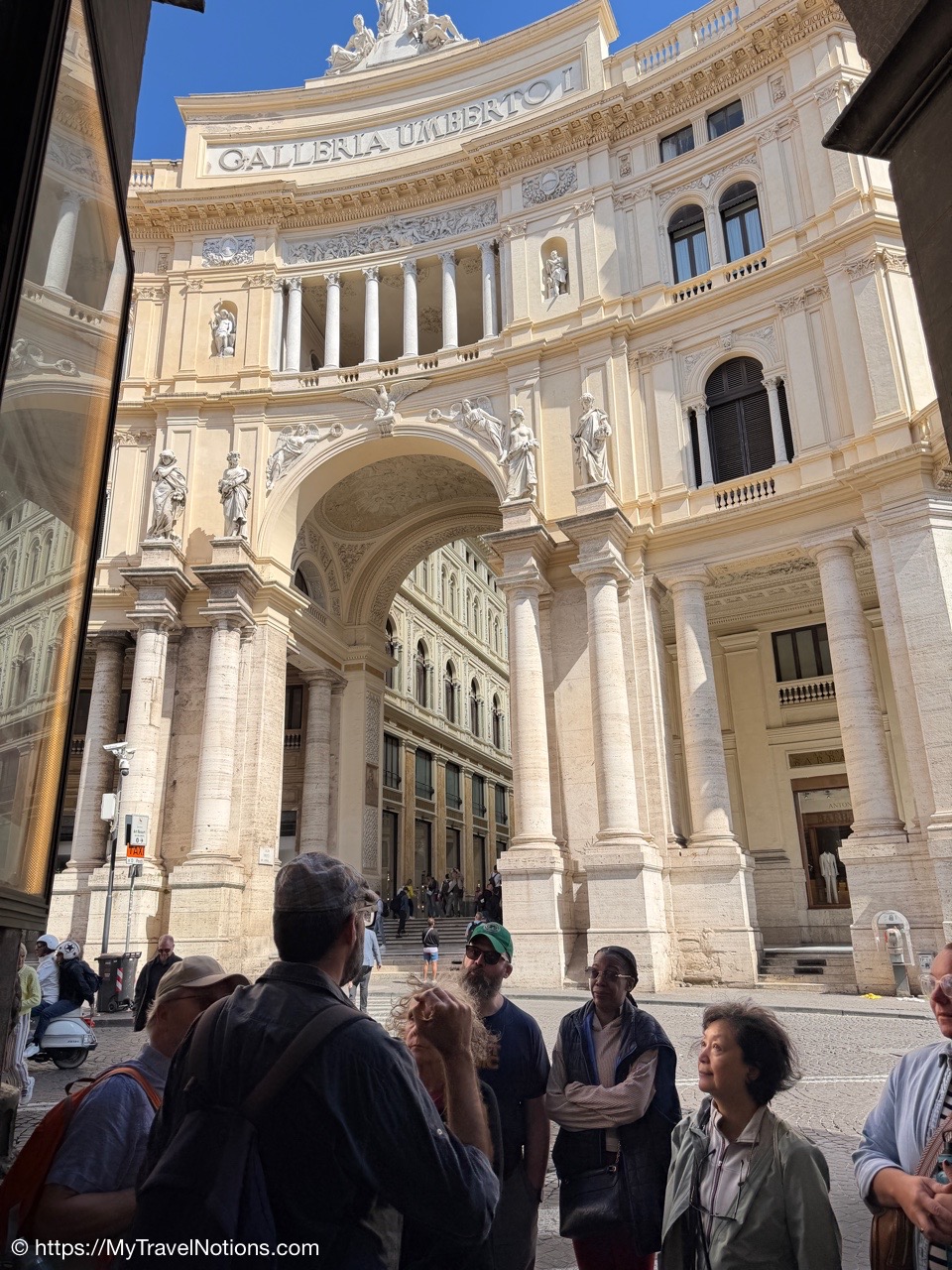
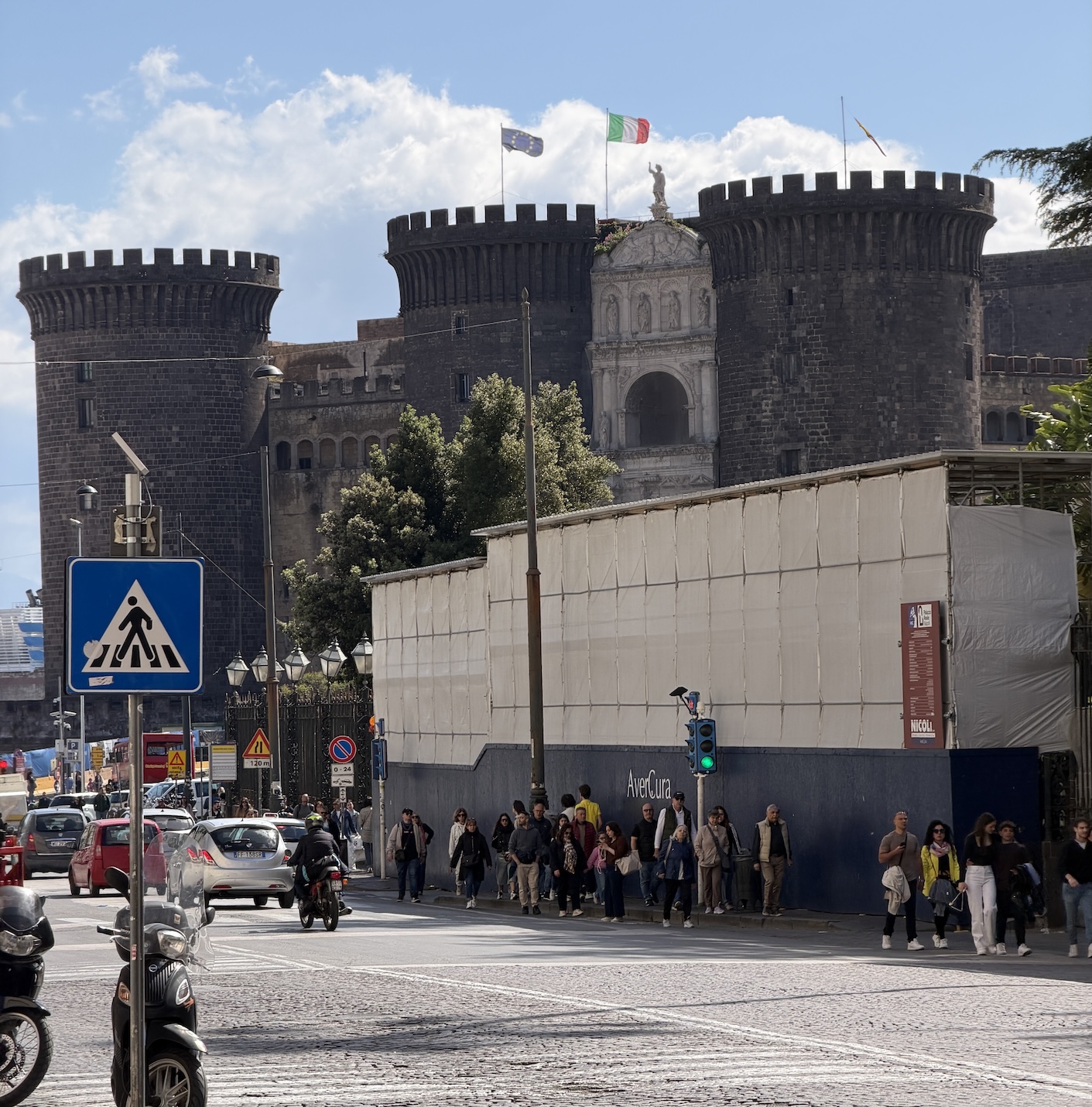
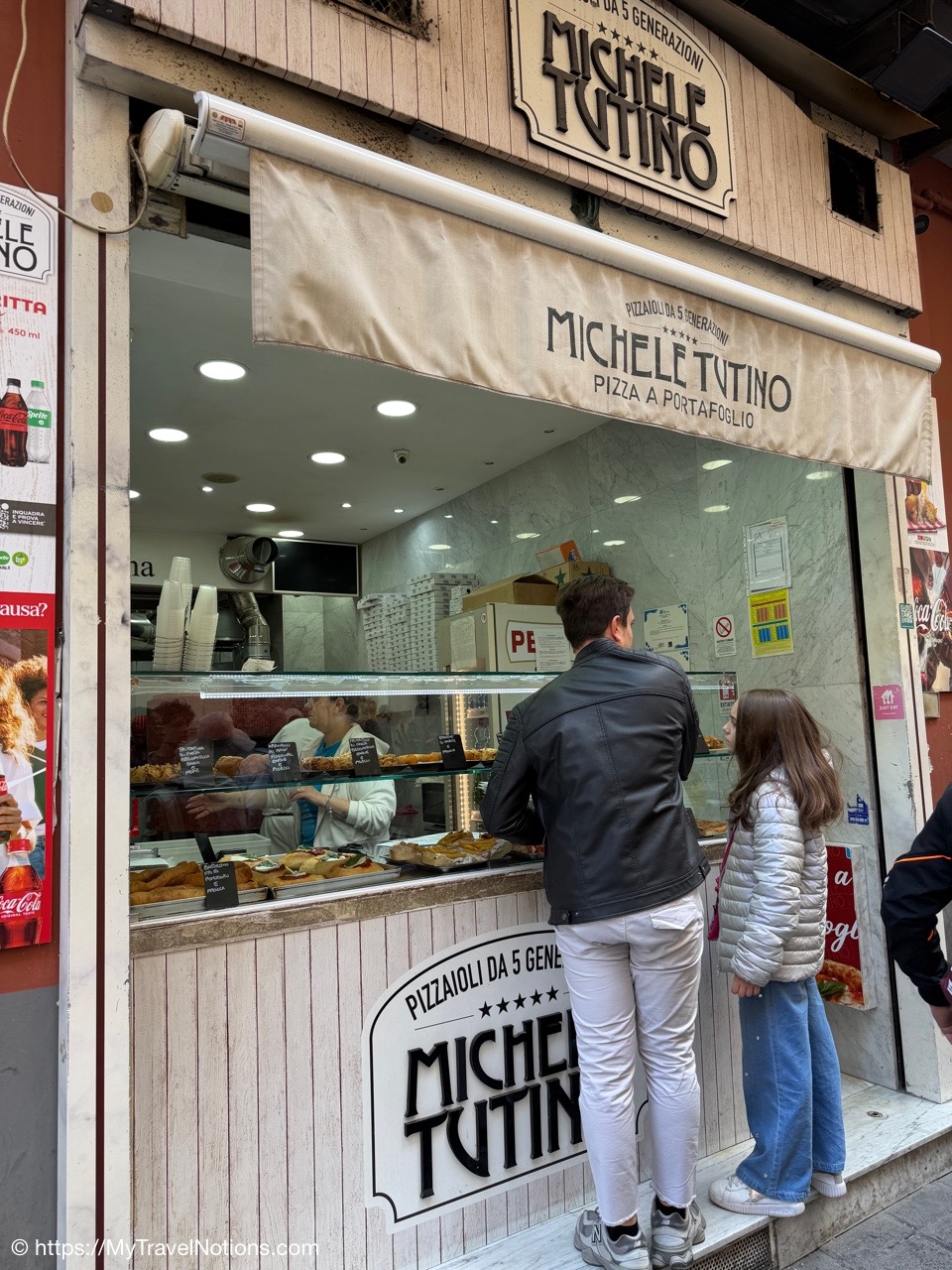
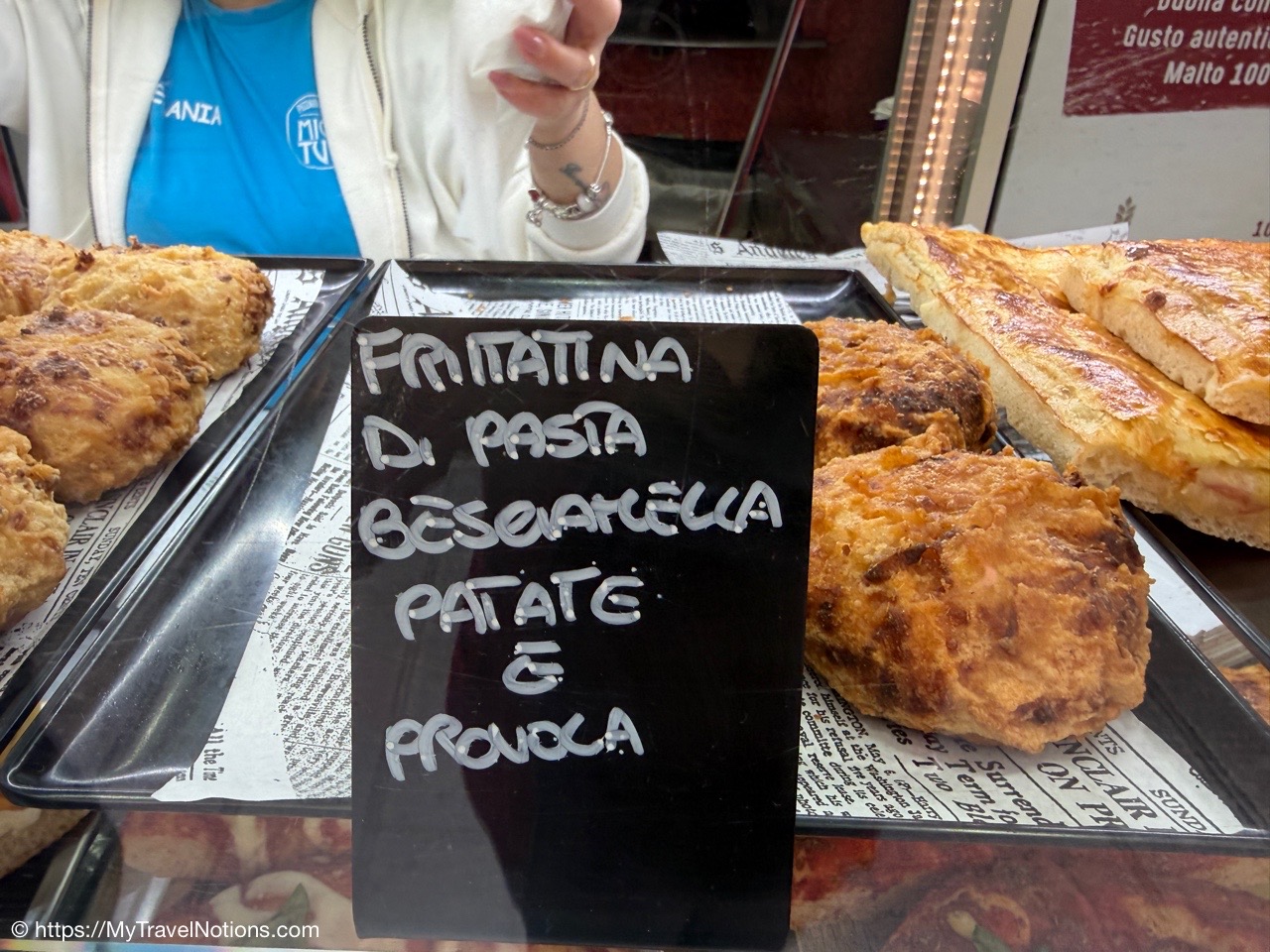
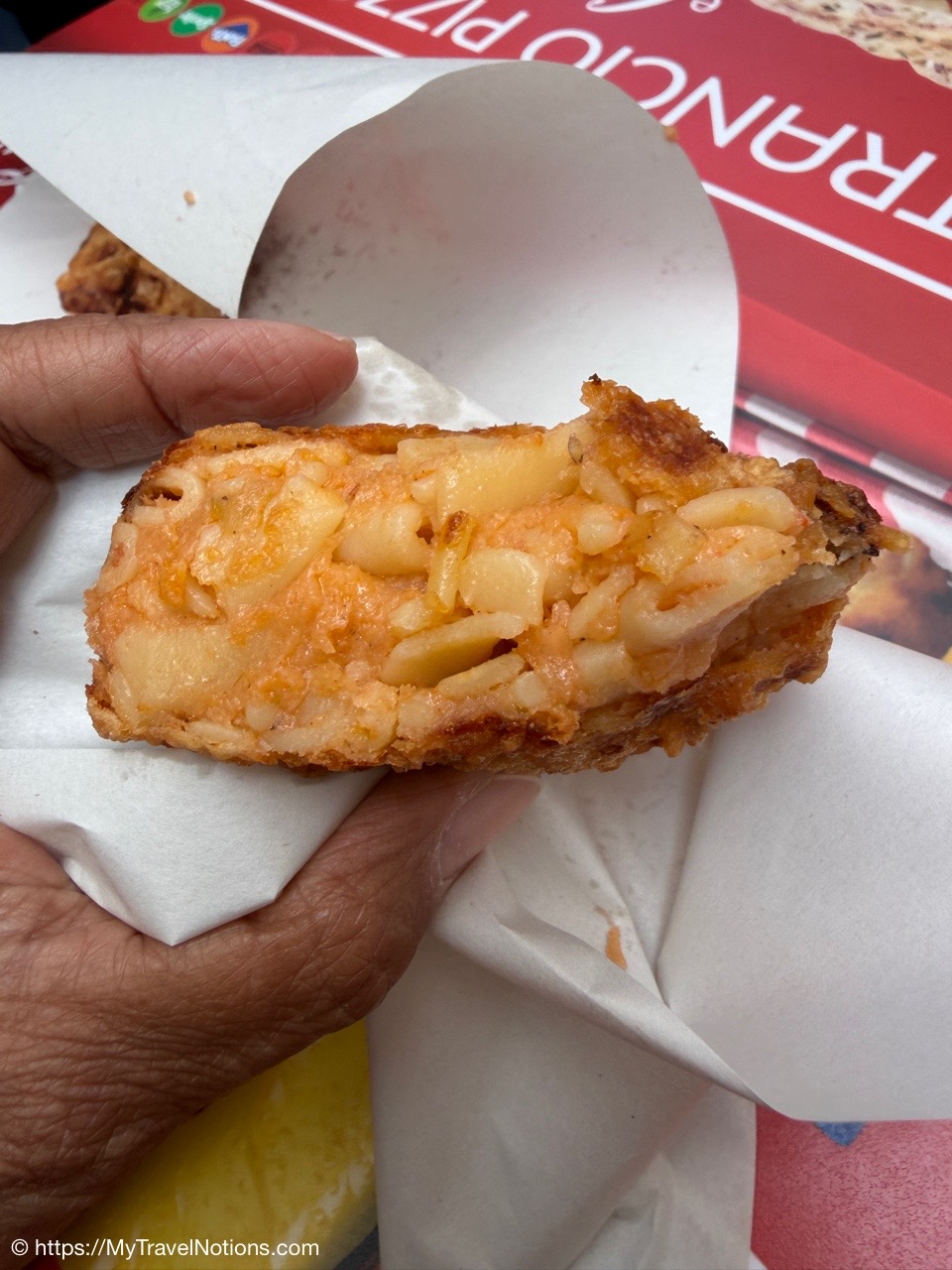
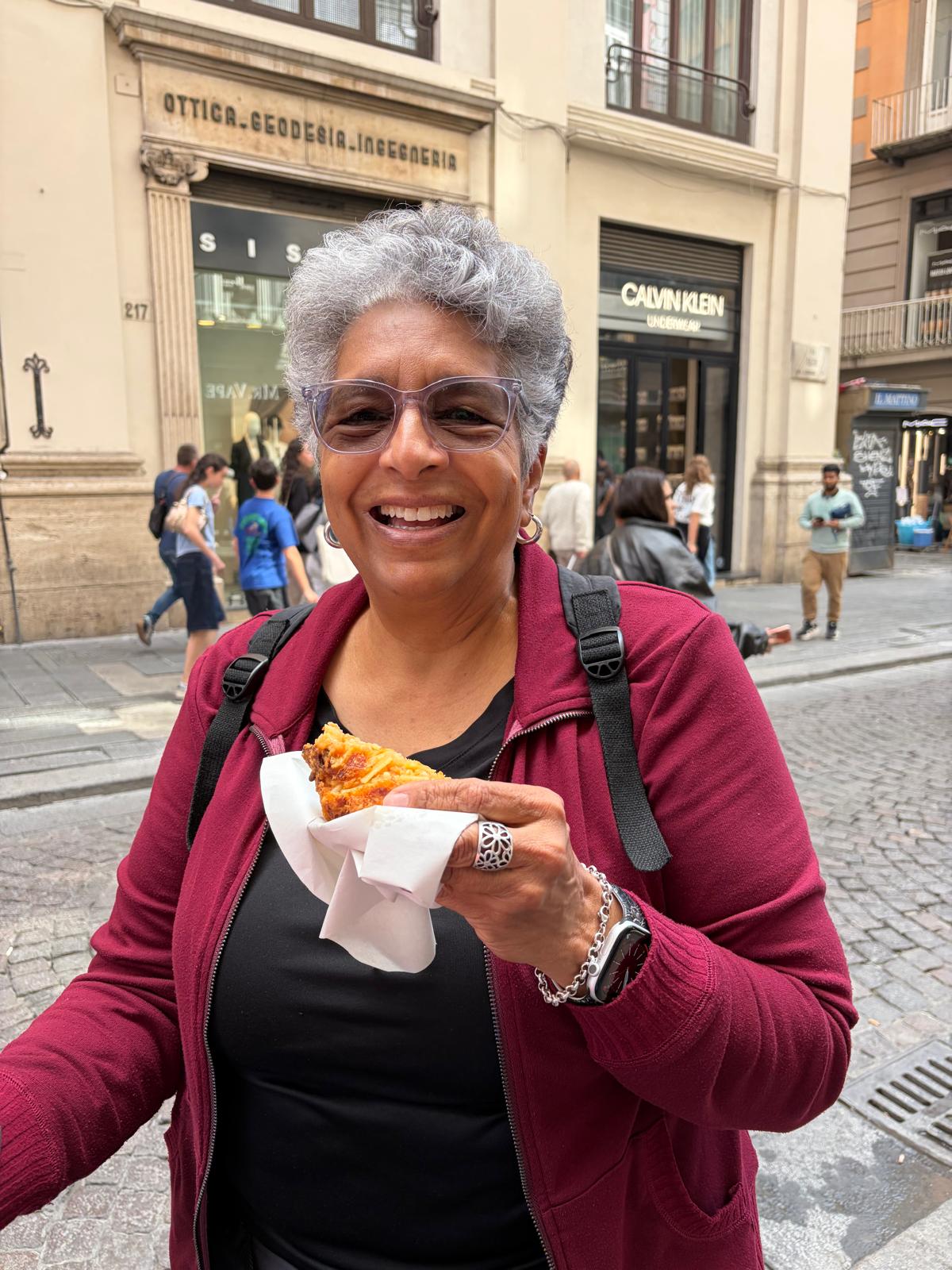
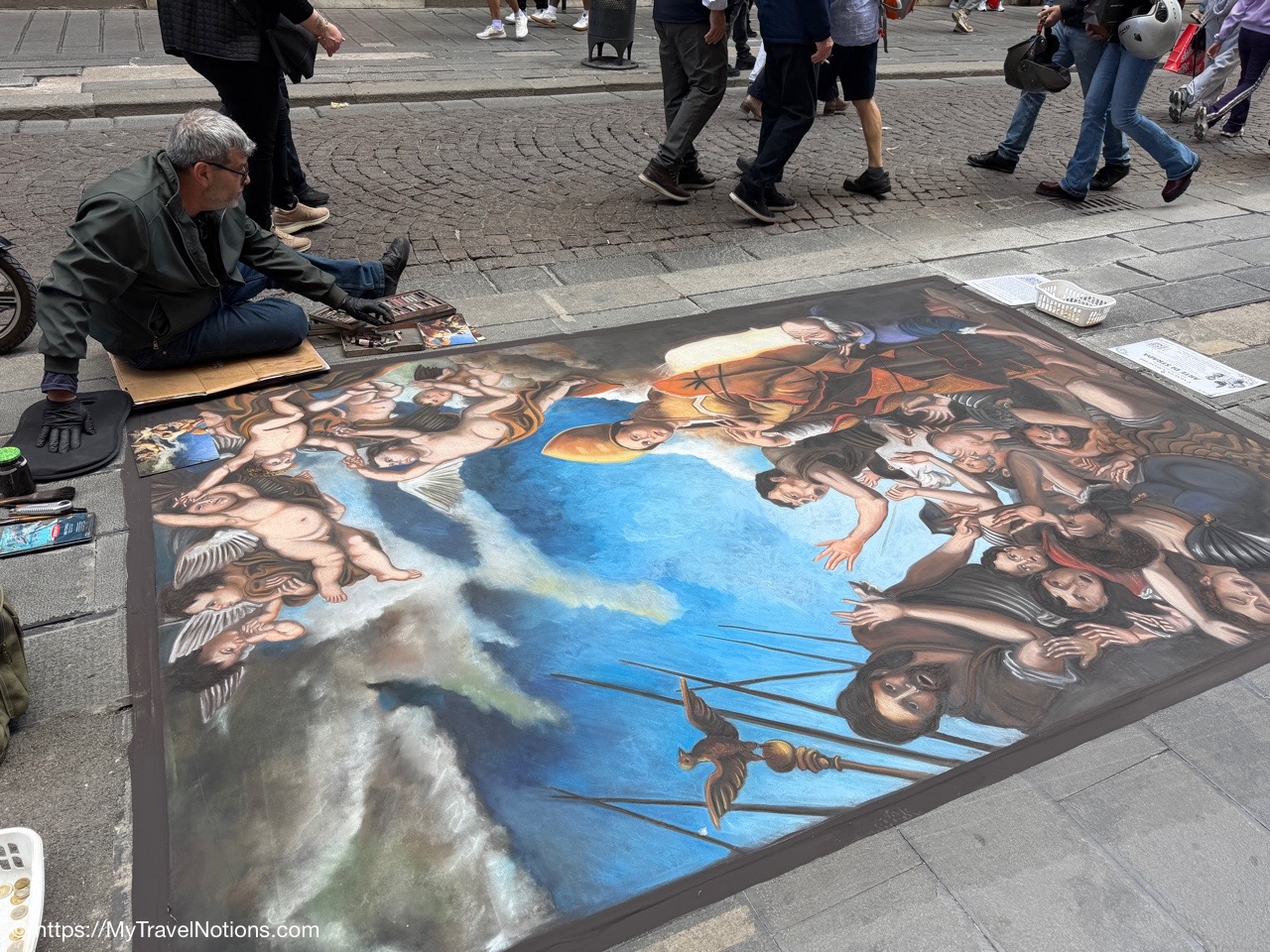
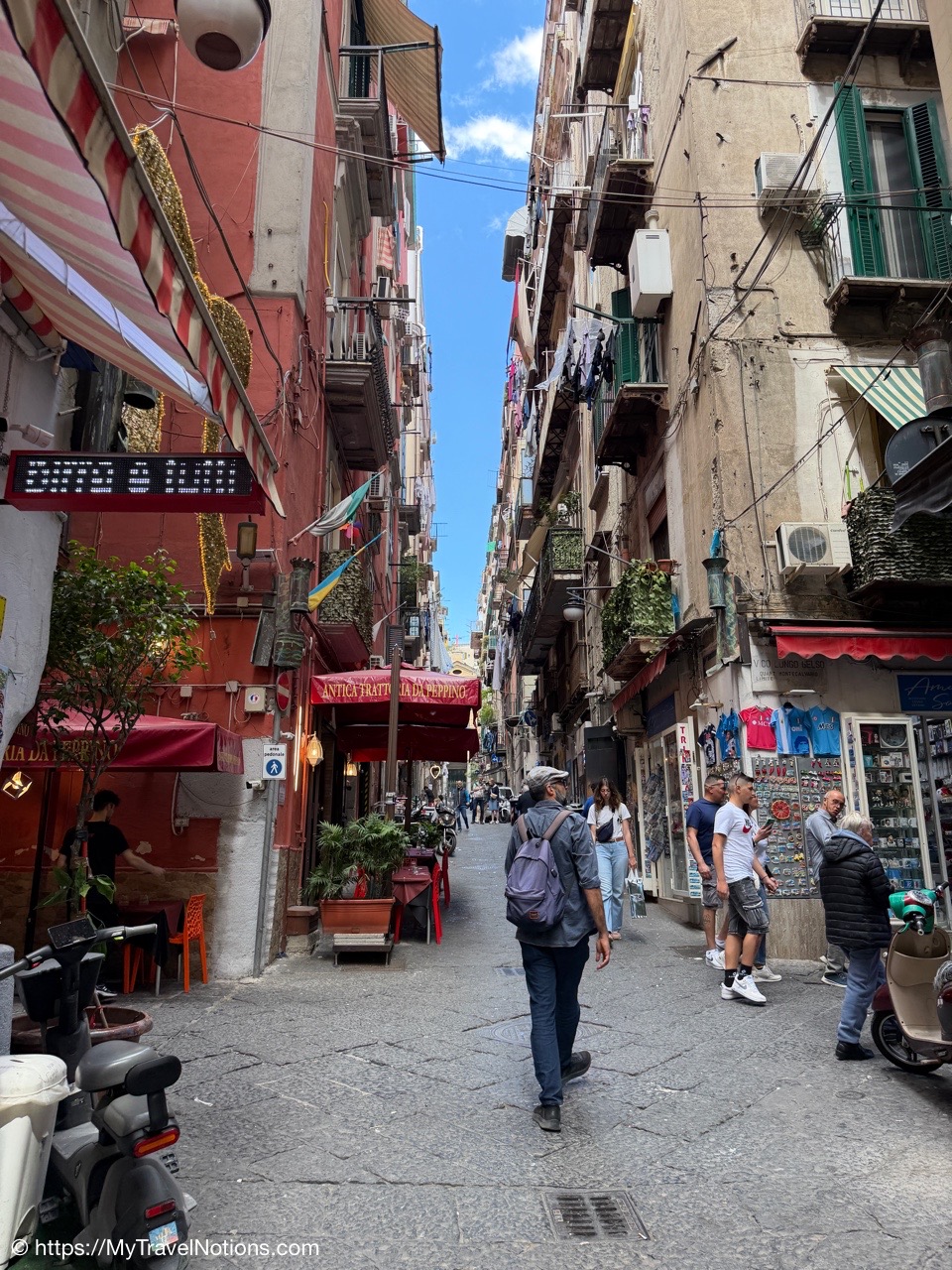
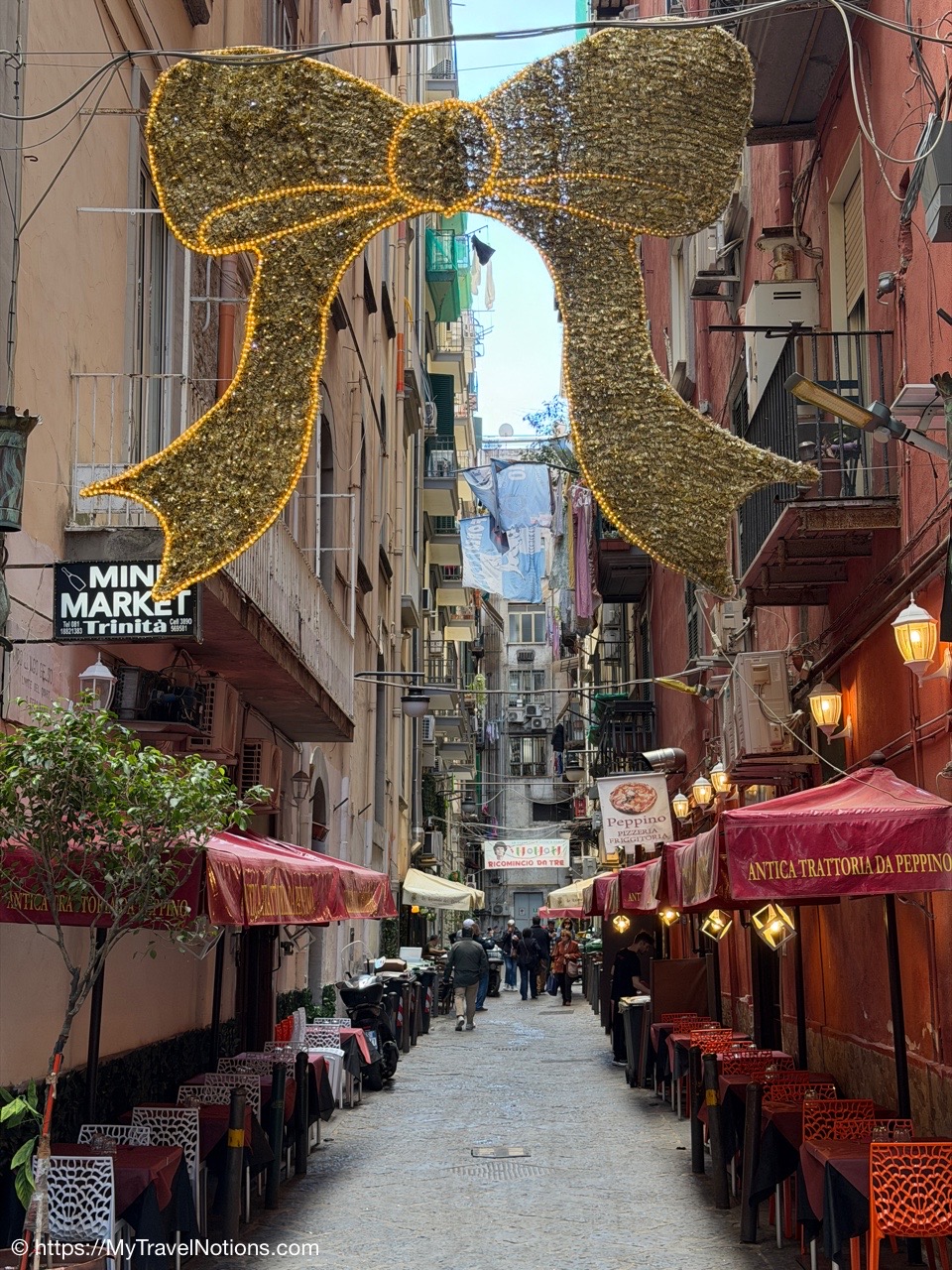
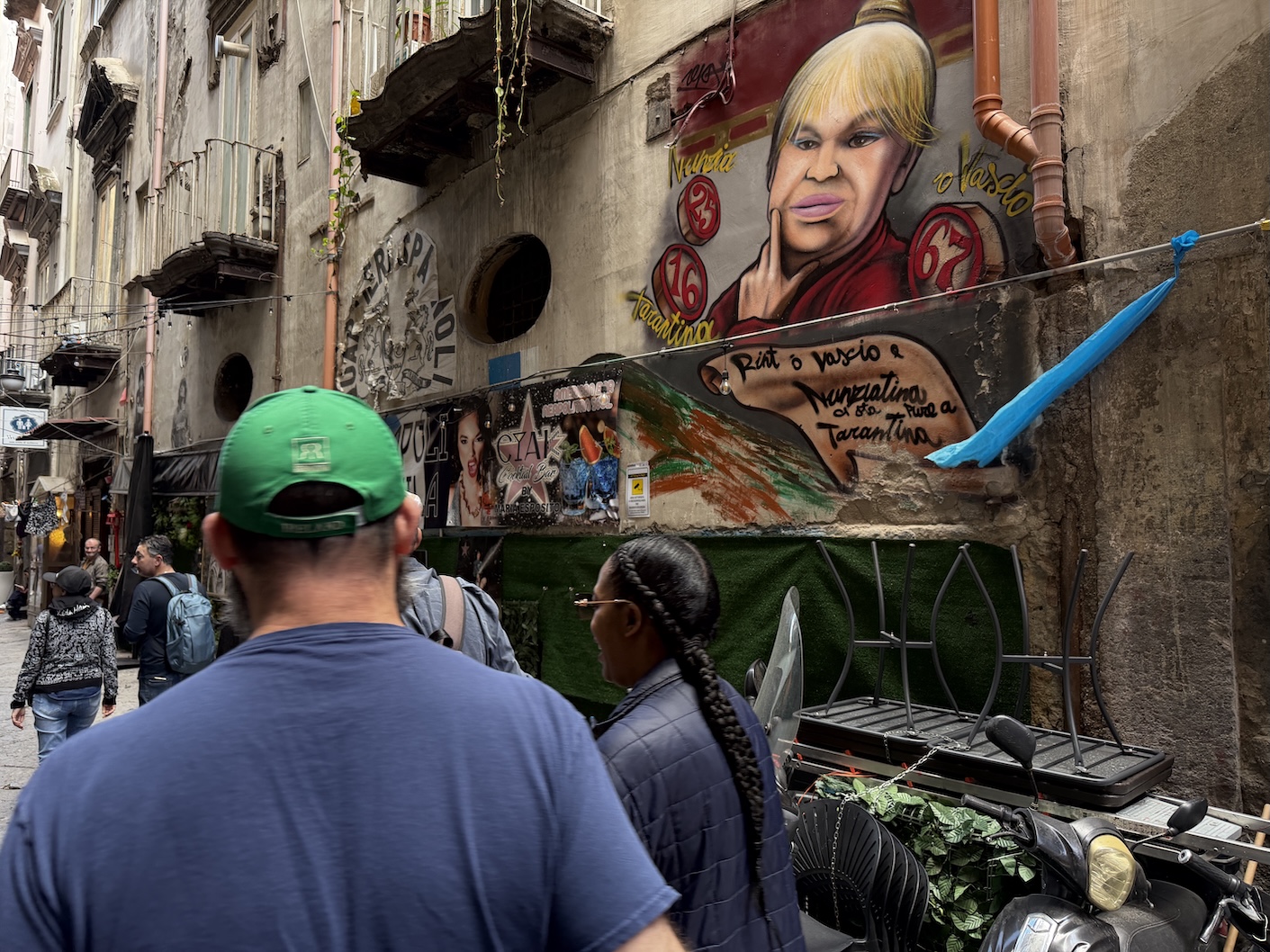
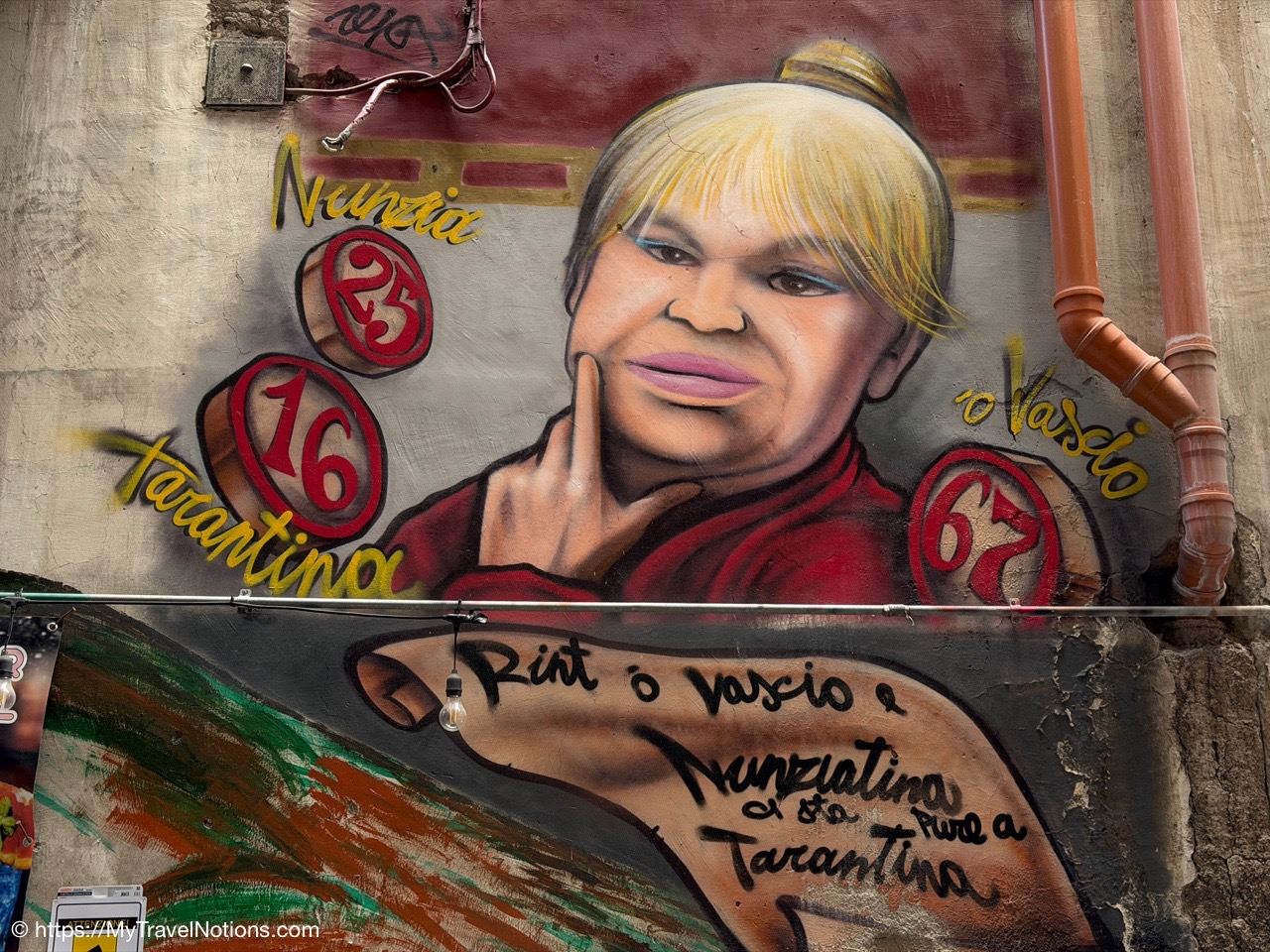
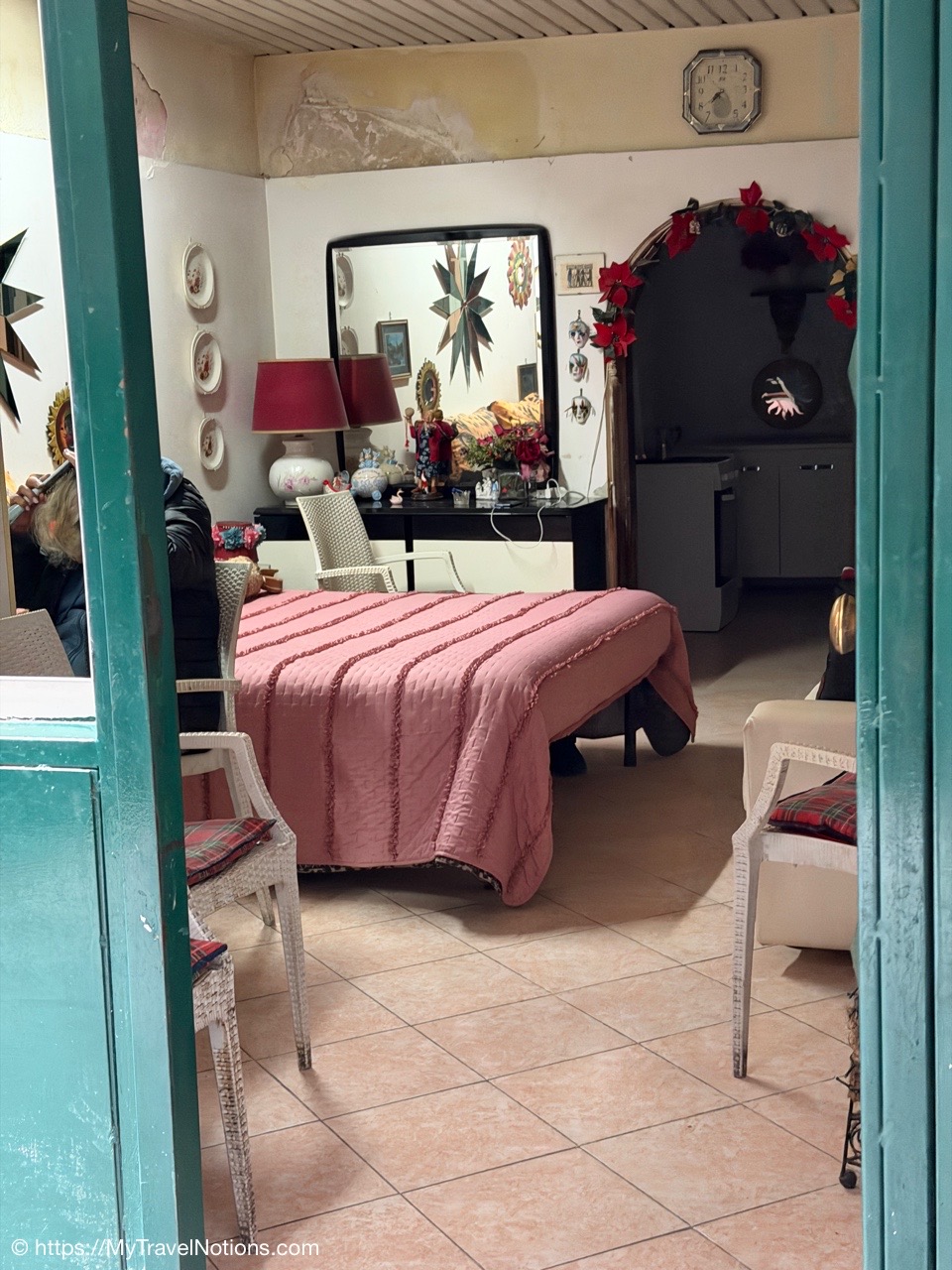
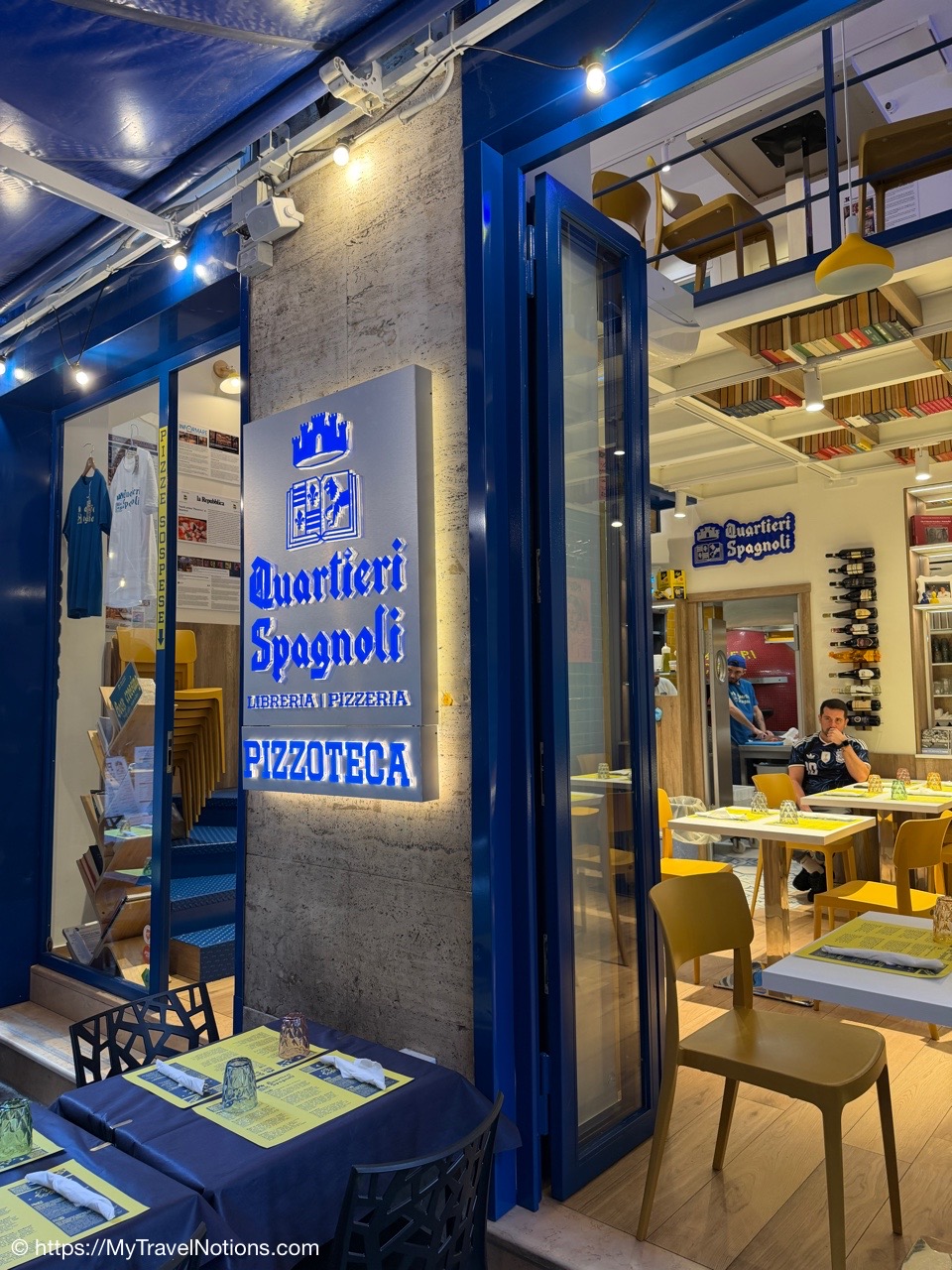
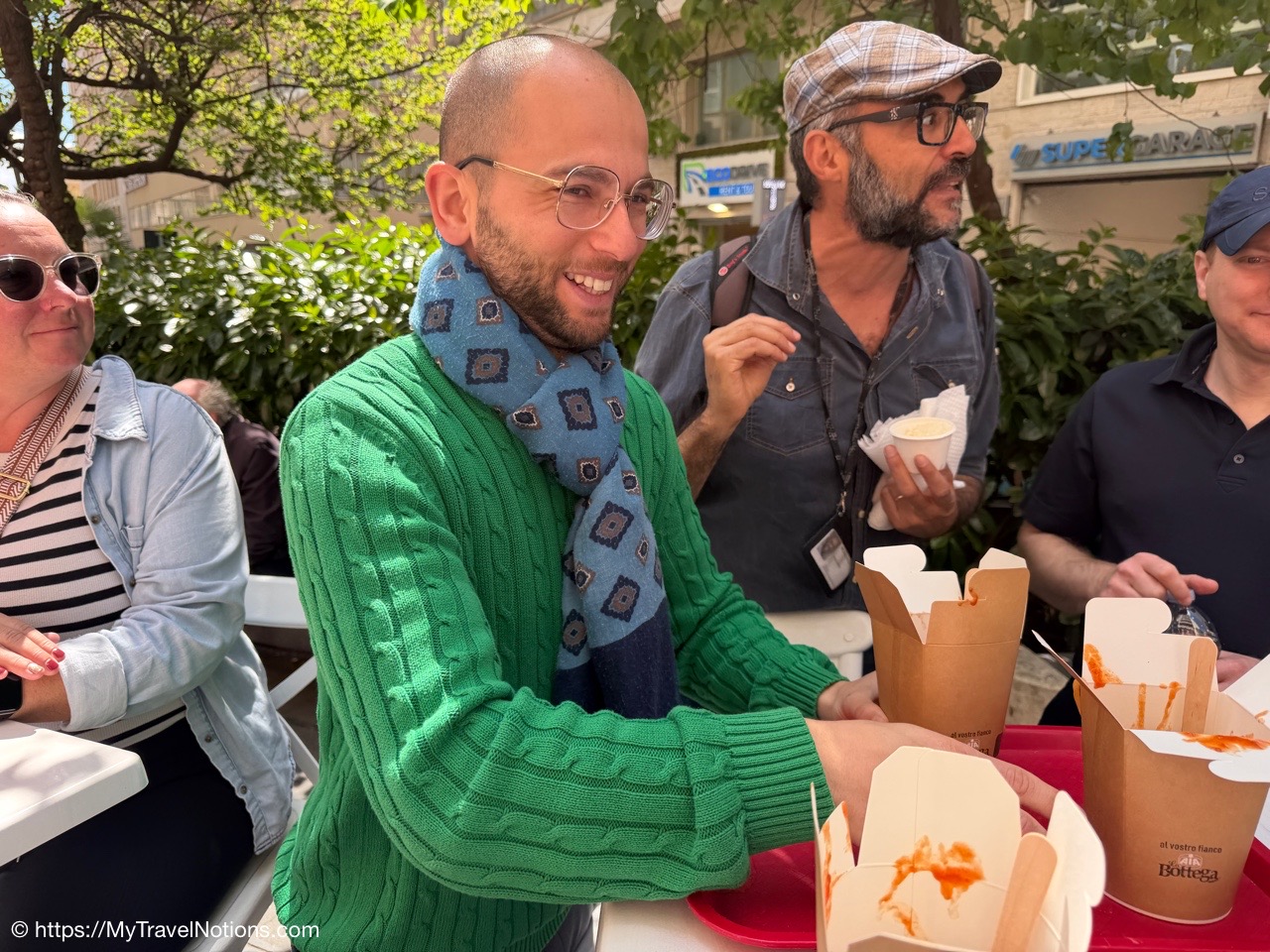
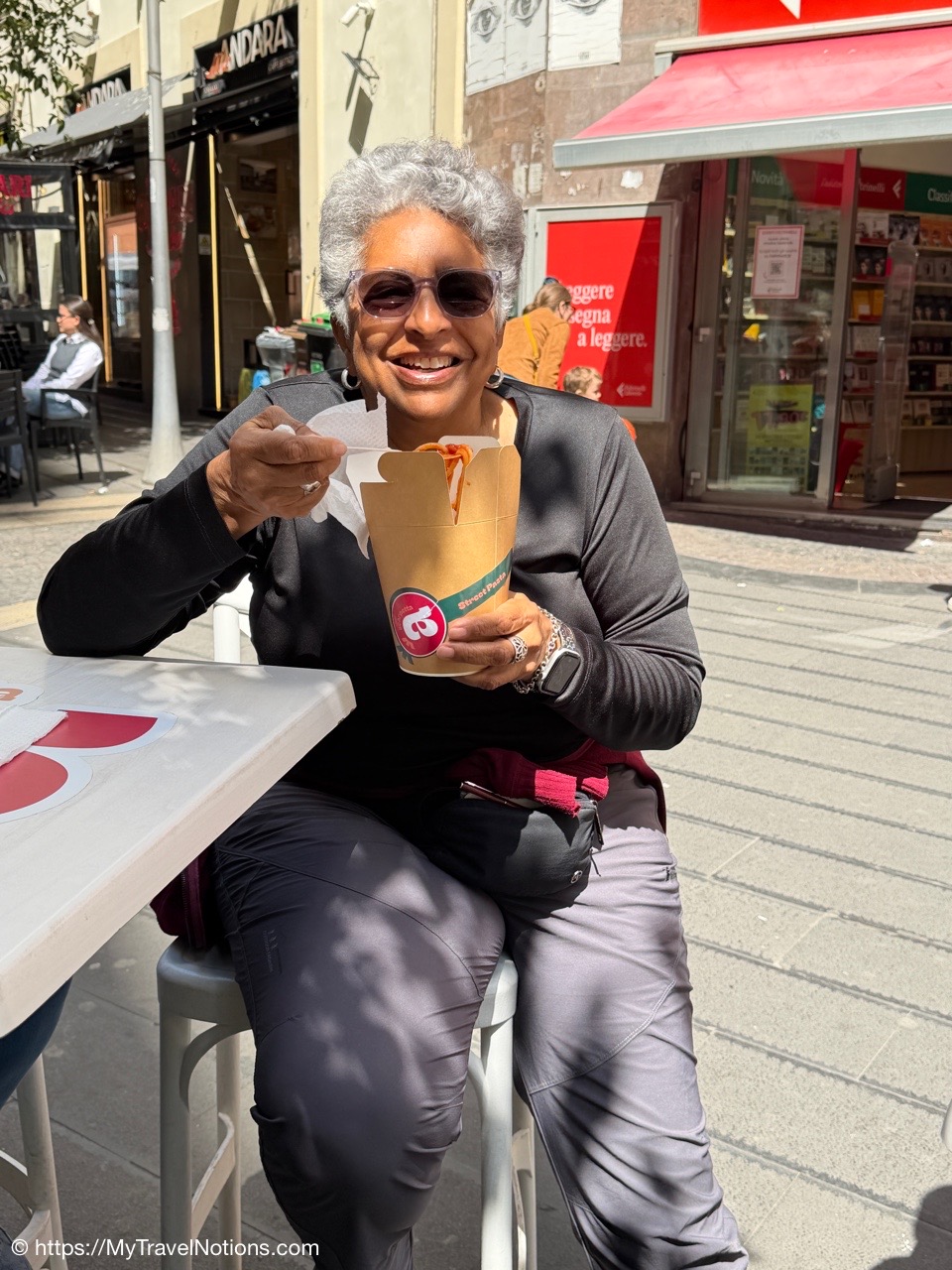
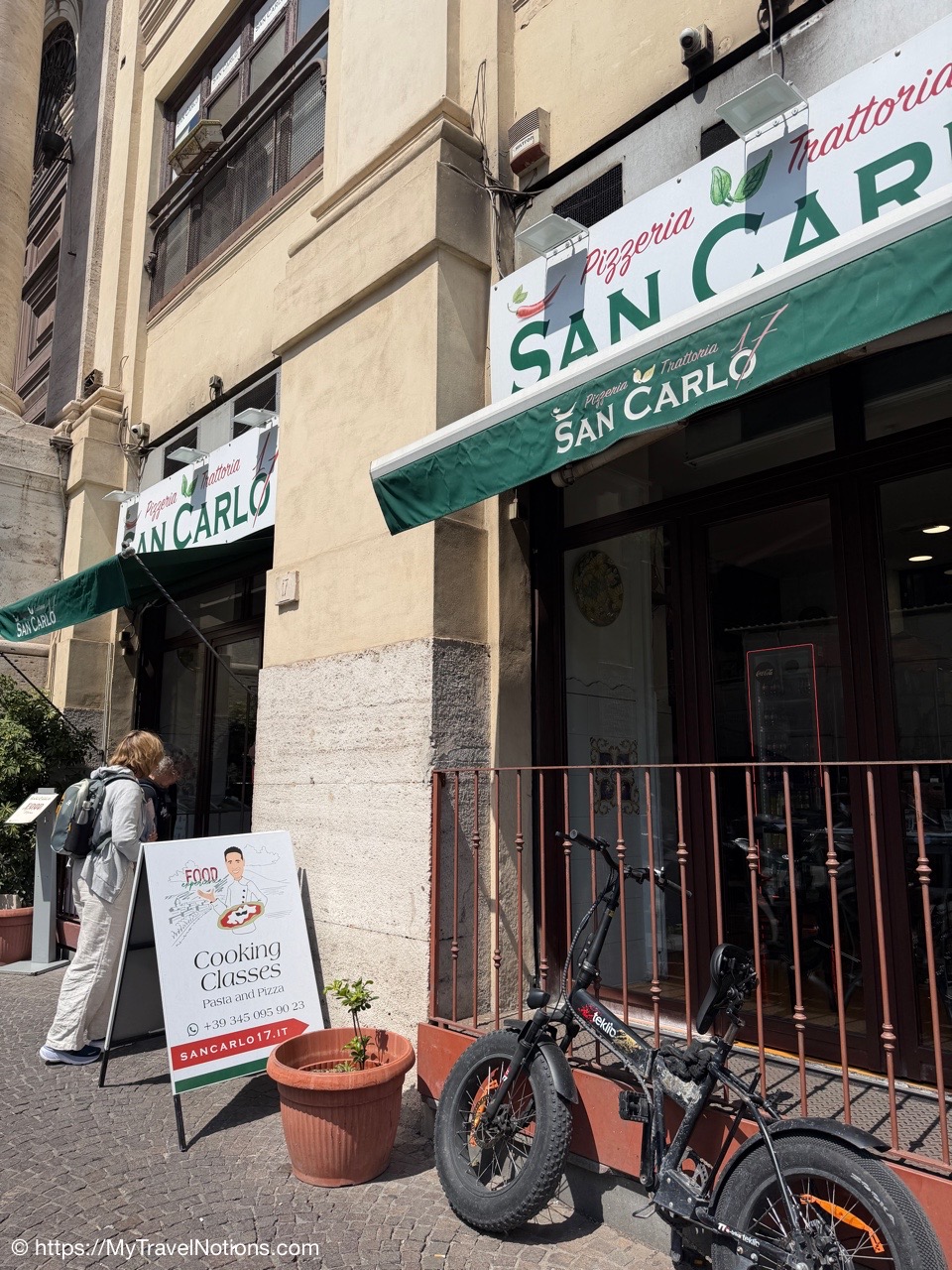
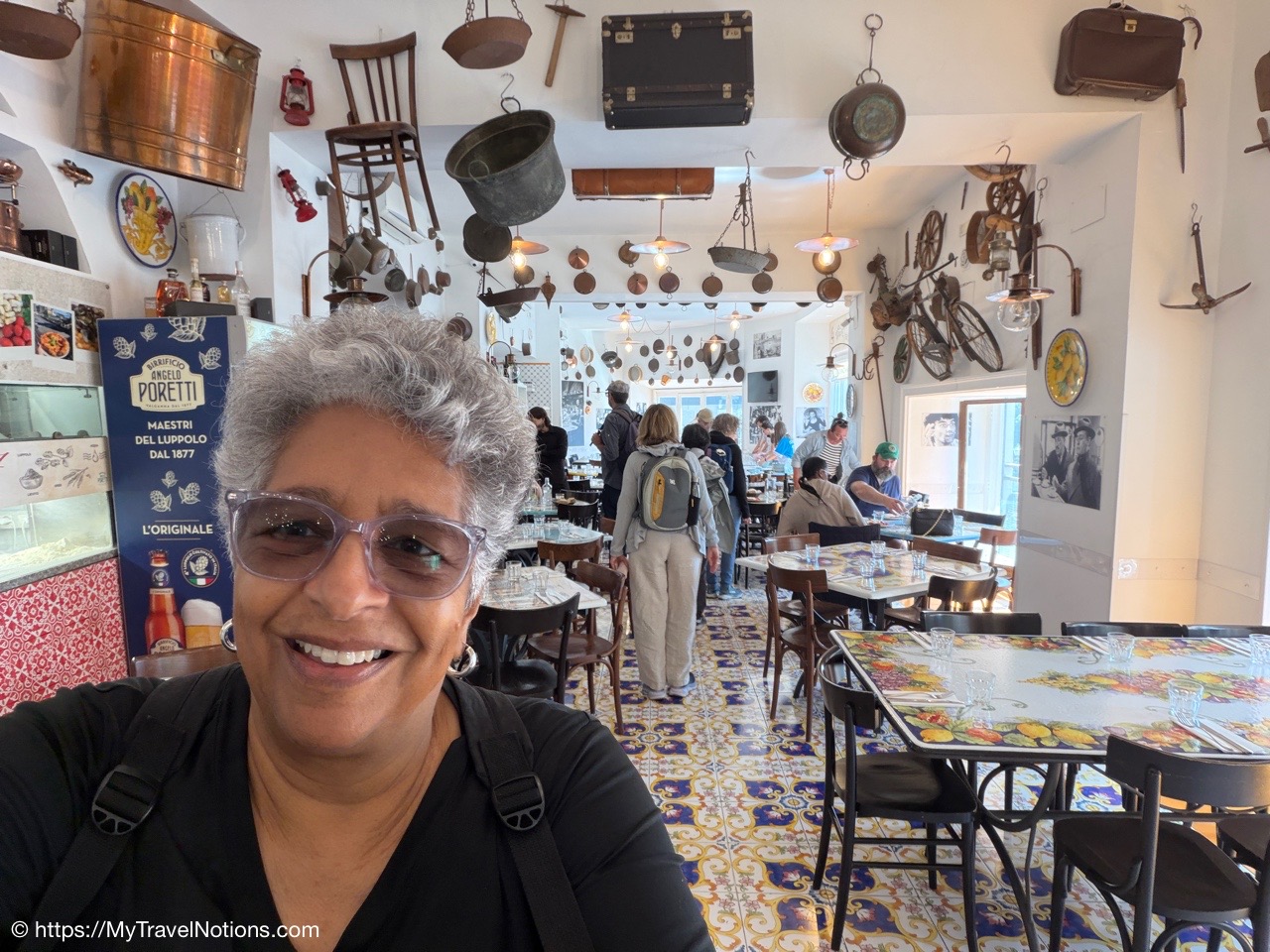
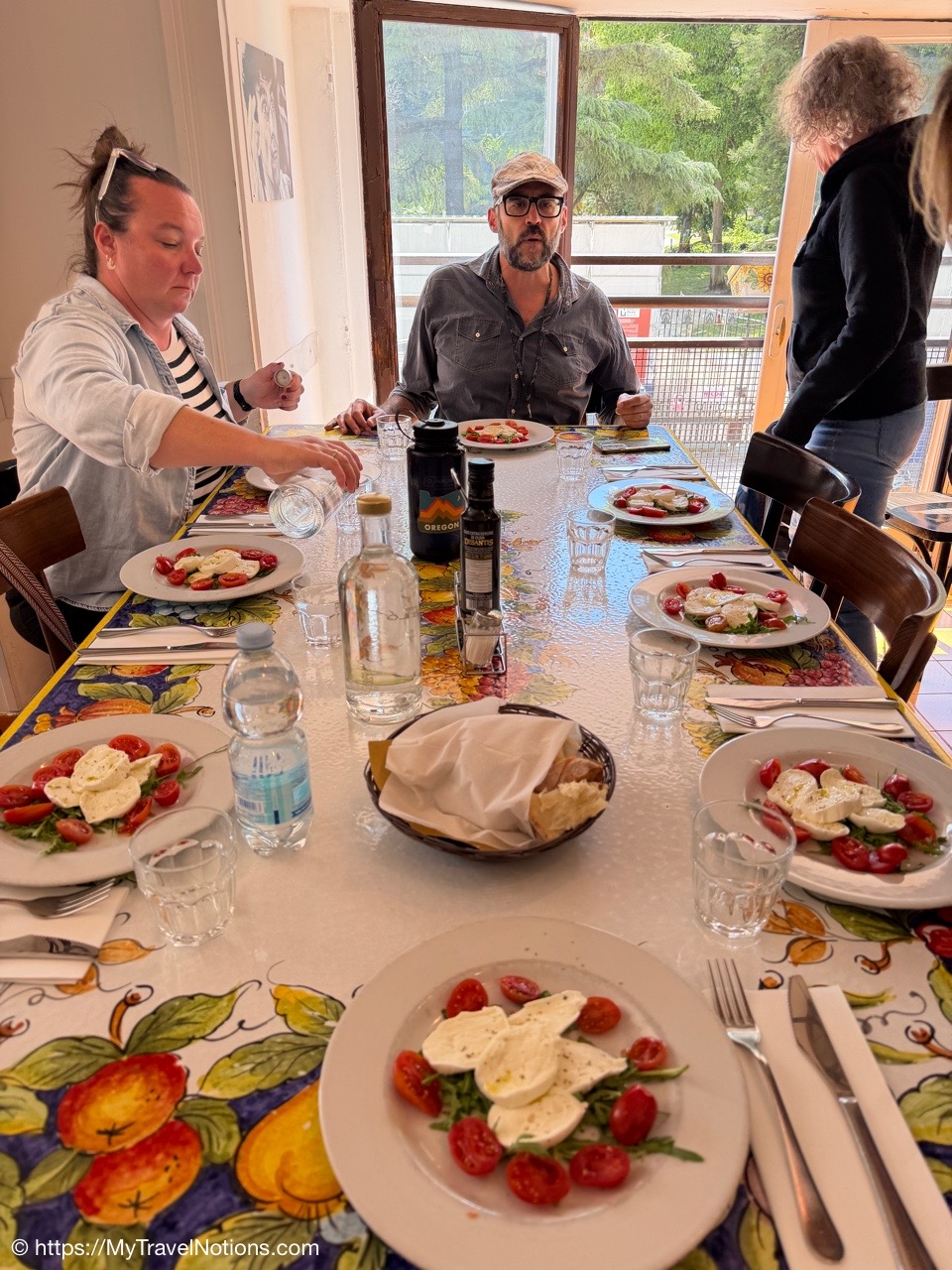
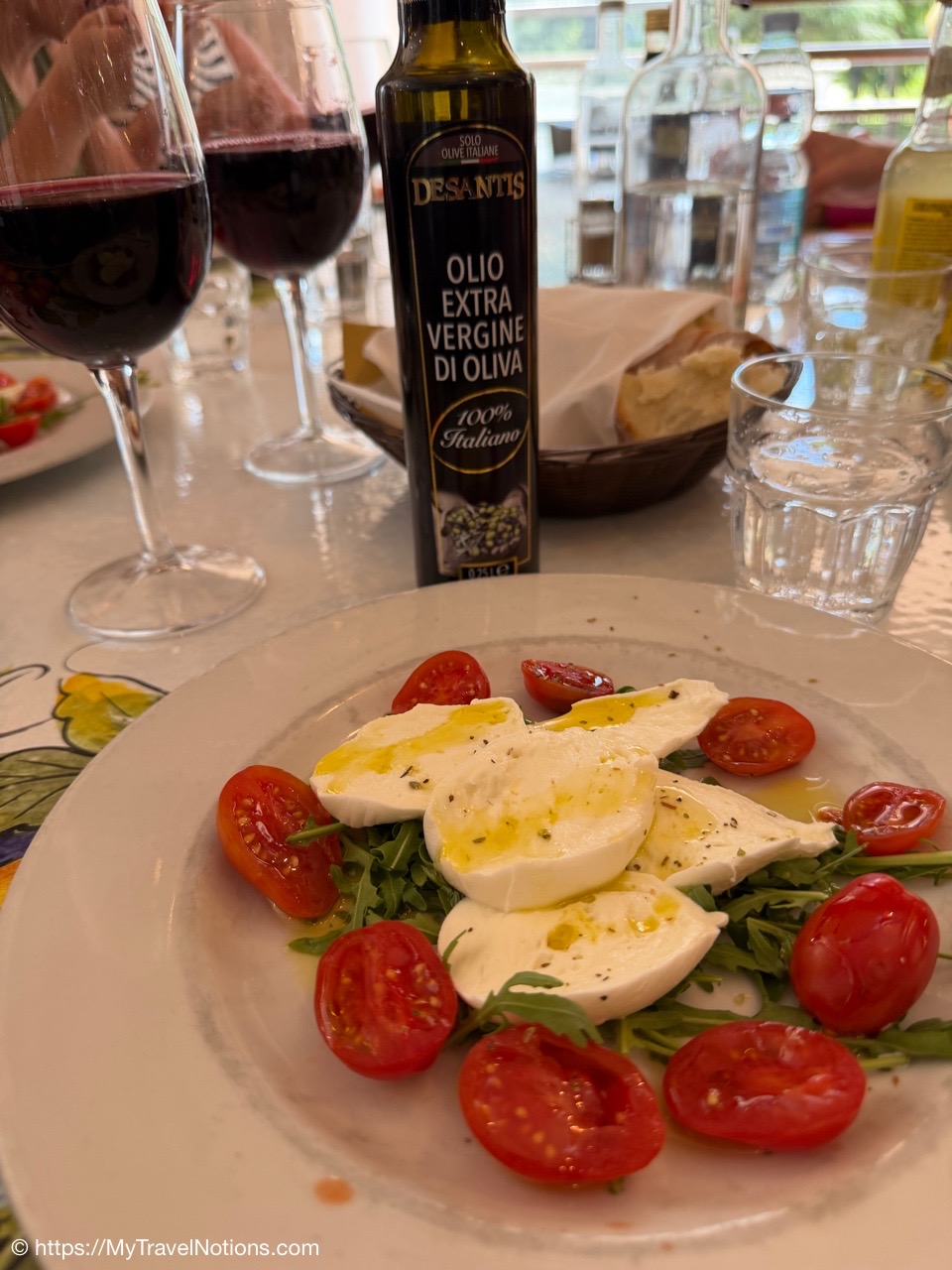
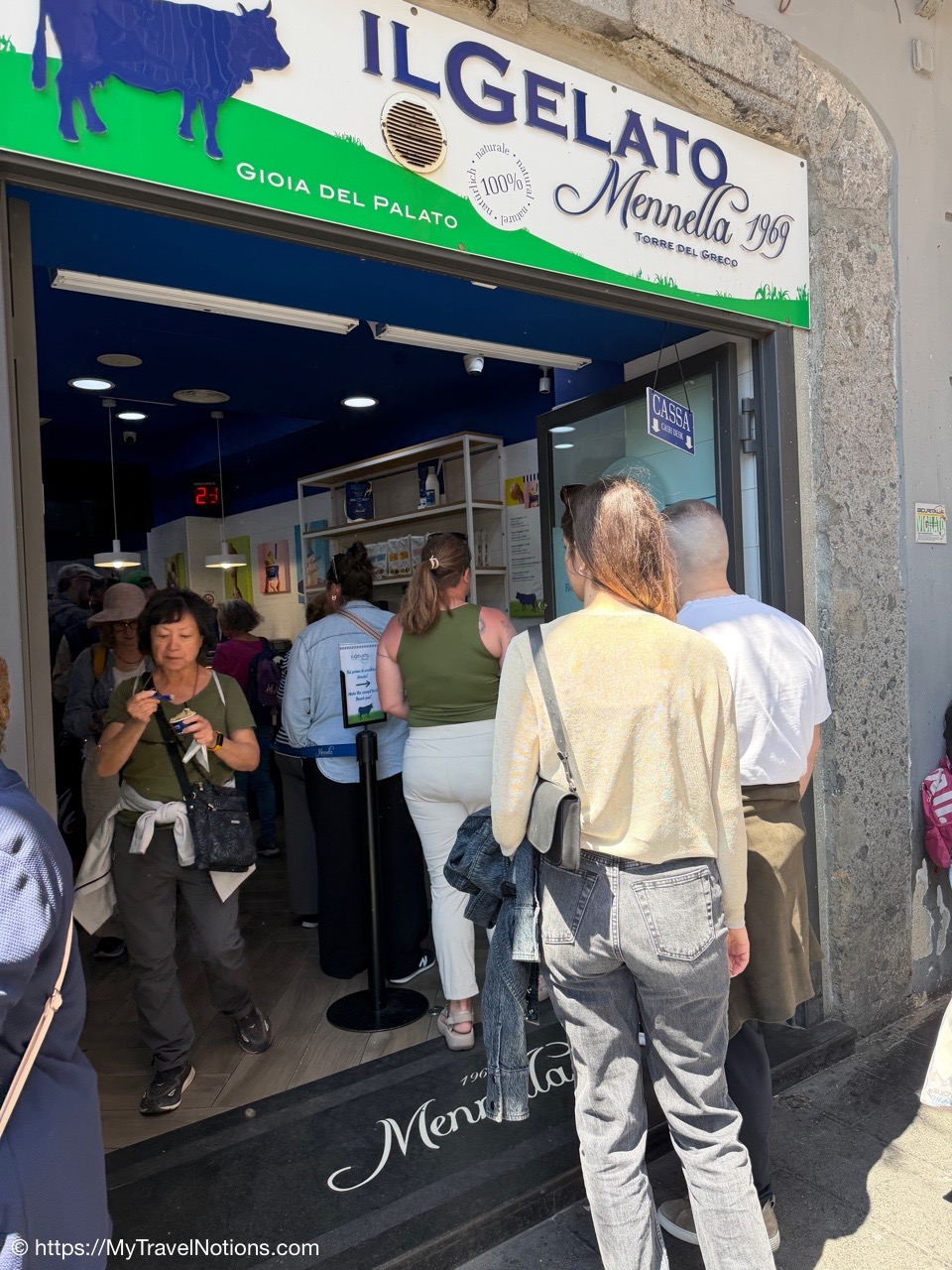
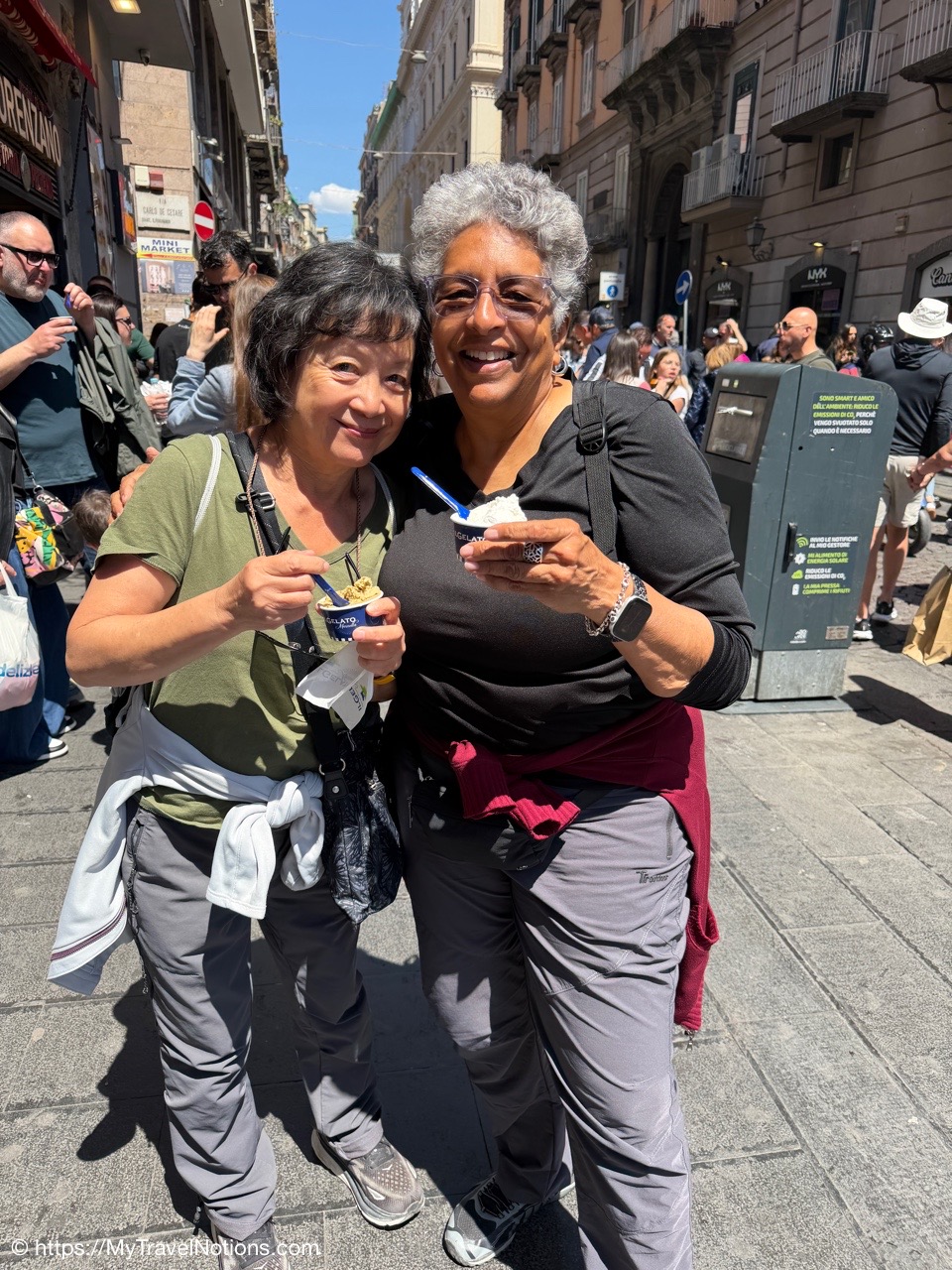
We met our Naples food walking tour guide, Aldo, and group inside the Galleria Umberto I, with views of the Teatro di San Carlo in the distance. This 19th-century public shopping arcade and architectural landmark was built between 1887 and 1891. It features a soaring glass-and-iron dome, intricate marble floors, and elegant facades. From left: Janet, me, Alice, Rosie and John. (May 2, 2026)Entering the Galleria Umberto I from Via Toledo in Naples. This 19th-century public shopping arcade and architectural landmark was built between 1887 and 1891. It features a soaring glass-and-iron dome, intricate marble floors, and elegant facades. (May 2, 2026)Inside the cross-shaped structure of the Galleria Umberto I with its soaring central glass dome, intricate mosaics of the zodiac signs and marble floors. (May 2, 2026)Rosie and I getting a headstart on our street food walking tour with some coffee beforehand at the meeting point of the tour at the Galleria Umberto I in Naples. (May 2, 2026)The 1st stop of our “Not Just Another Naples Street Food Tour” by Eating Europe was inside the Galleria Umberto I for a traditional breakfast of Espresso and Sfogliatella at Anna Bellavita Cafe inside the Galleria Umberto I in Naples. (May 2, 2026)When you order an Espresso, you should also get a cup of water, which we did at the 1st stop of our street food walking tour where we also tried the traditional stuffed ricotta cheese pastry called Sfogliatella in Naples. It’s a shell-shaped pastry with a crispy exterior and a semisweet filling of ricotta and lemon. (May 2, 2026)The Sfogliatella is a shell-shaped pastry with a crispy exterior and a semisweet filling of ricotta and lemon. (May 2, 2026)Standing outside the Galleria Umberto I listening to our street food walking tour guide, Aldo, give us a little history lesson about Naples including that it was founded by Greek settlers around 600 BC as Neapolis (“New City”) near an older settlement. And that means Naples is one of the world’s oldest continuously inhabited cities. (May 2, 2026)A view of the Castiello Nuovo or New Castle in Naples was first erected in 1279 and is one of the main architectural landmarks of the city. It was a royal seat for kings of Naples, Aragon and Spain until 1815. (May 2, 2026)The 2nd stop of street food walking tour was at Michele Tutino for what Also called a “pasta pie” which we had during our previous food tour and also called a Fritatina Pasta. (May 2, 2026)The round Fritatina Pasta at our 2nd street food walking tour stop at Michele Tutino in Naples. (May 2, 2026)The deep-fried, very rich Fritatina Pasta is a compact mixture of cooked bucatini pasta, thick béchamel sauce, meat, peas and cheese. (May 2, 2026)Me enjoying my very rich Fritatina Pasta at our 2nd street food walking tour stop at Michele Tutino in Naples. Thanks John for the photo. (May 2, 2026)An artist painting his canvas on the street in Naples. (May 2, 2026)Walking through the Spanish Quarter of Naples with our food tour guide, Aldo. (May 2, 2026)Walking through the Spanish Quarter of Naples. (May 2, 2026)Walking along Via Trinita degli Spagnoli to our next food tasting stop in Naples. (May 2, 2026)he painting of Carmelo Cosma, aka La Tarantina, along Via Trinita degli Spagnoli who is considered one of the most famous femminielli persons living in Naples. Who is a femminielli you ask? The term describes individuals assigned male at birth who exhibit highly feminine mannerisms, dress as women, and embrace traditionally feminine social or domestic roles. Born in 1936, Tarantina lived in Rome during the years of “La Dolce Vita,” when she met many artists and intellectuals, such as Federico Fellini, Pier Paolo Pasolini, and Goffredo Parise among others. Still alive, we saw her along our walk to our next food tasting stop. (May 2, 2026)In an open door room off of Via Trinita degli Spagnoli, I got a quick glimpse of Carmelo Cosma, aka La Tarantina, combing her hair where she lives across from the art rendering of her in Naples. (May 2, 2026)A library turned into a pizzeria in the Spanish Quarter of Naples. (May 2, 2026)The 3rd stop of our street food walking tour was for pasta al dente and delicious tomato sauce from Joseph at A Scarpetta, a pasta bar in Naples. (May 2, 2026)I completely enjoyed this simple pasta and tomato sauce during the 3rd stop of our street food walking tour at A Scarpetta, a pasta bar in Naples. I love the simple, local ingredients used to make such a wonderful dish. (May 2, 2026)The 4th stop of our street food walking tour was at San Carlo 17 – Trattoria e Pizzeria where we sat down and enjoyed a Caprese salad and pizza. (May 2, 2026)Inside San Carlo 17 – Trattoria e Pizzeria, the 4th stop of our street food tasting tour in Naples. (May 2, 2026)We began our sit down food tasting, at the San Carlo 17 – Trattoria e Pizzeria, with a Caprese salad. I’m not much for cheese so I shared most of it with Alice and Rosie. (May 2, 2026)Our Caprese salad at San Carlo 17 – Trattoria e Pizzeria in Naples made with fresh Mozzarella di Bufala Campana (buffalo milk mozzarella), delicious little Piennolo tomatoes and arugula or rocket greens. Along with delicious olive oil, sprinkled all over the salad, a glass of red wine was another delicious addition. (May 2, 2026)And, of course, we had to have a slice of Margarita pizza during our 4th stop at San Carlo 17 – Trattoria e Pizzeria during our food walking tour. Pizza was invented in the streets and bakeries of Naples with the first style, Pizza Marinara, created in the 1700s. (May 2, 2026)And, the 5th and final stop for our gelato fix at Il Gelato Mennella just slightly across from the Galleria Umberto I where we began our food walking tour. (May 2, 2026)Alice and I enjoying our gelato at the 5th and final stop of our food tasting tour Il Gelato Mennella just slightly across from the Galleria Umberto I where we began our food walking tour. (May 2, 2026)
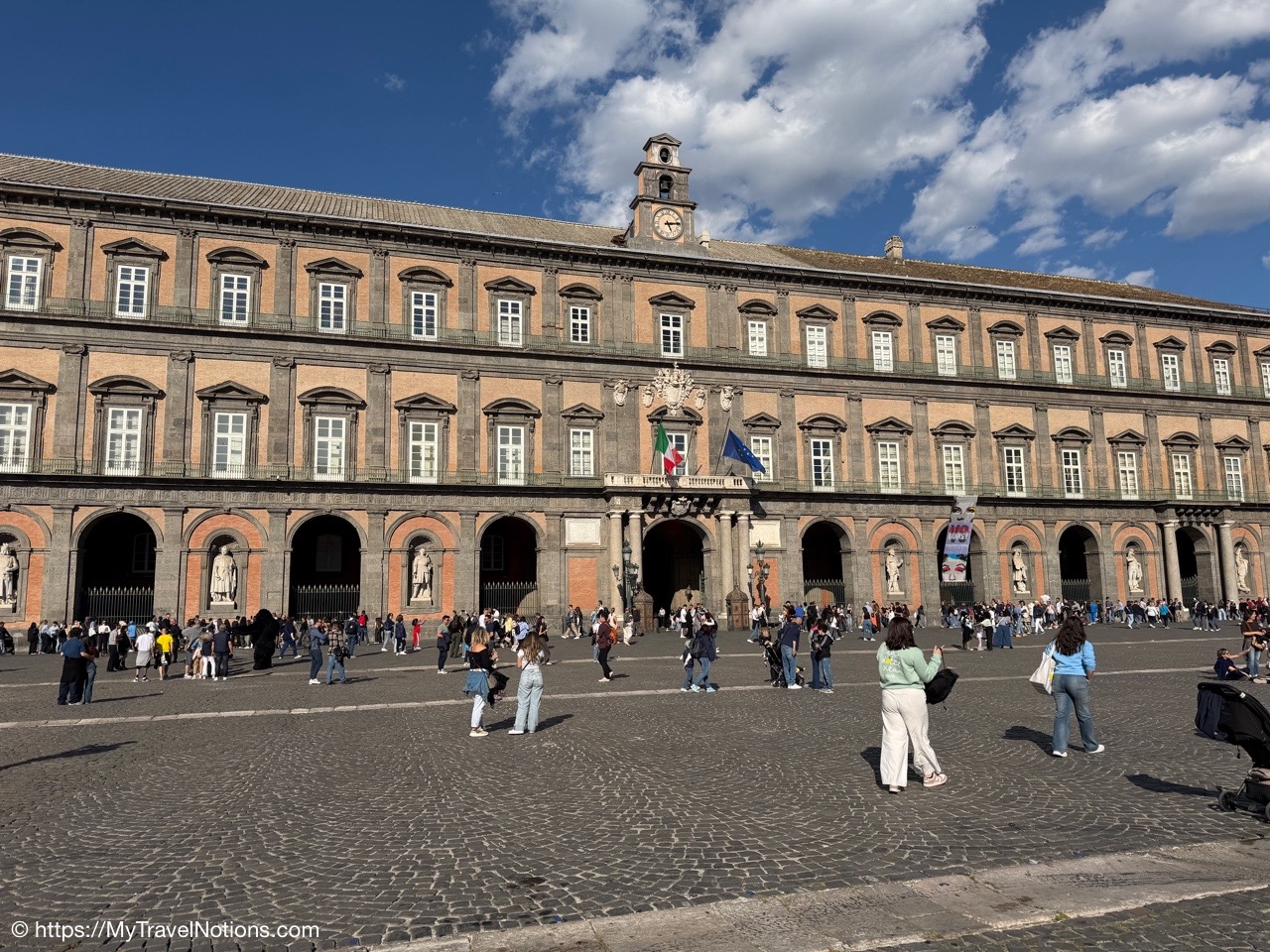
After our street food tasting tour, we all took a break then Rosie, Janet and myself took a tour of the Royal Palace of Naples which faces the Piazza del Plebiscito. The palace was commissioned to be built in the 1600s by the architect Domenico Fontana to host King Philip III of Spain.The King never visited, but the palace became a core seat of power for Spanish and Austrian viceroys, Bourbon monarch and Italian kings.
The main facade was begun in 1616 and made of fired reddish clay bricks, piper and volcanic stone. It wasn’t until 1888 when the statues of the main kings of Naples were placed into the niches. In the centre of the main façade is the entrance portal, flanked by two coupled granite columns, and crowned with the coat of arms of Philip III of Spain, already planned by Fontana to emphasise the public function of the palace.
Let’s checkout the Royal Palace as we also say our farewells to Naples and Italy.
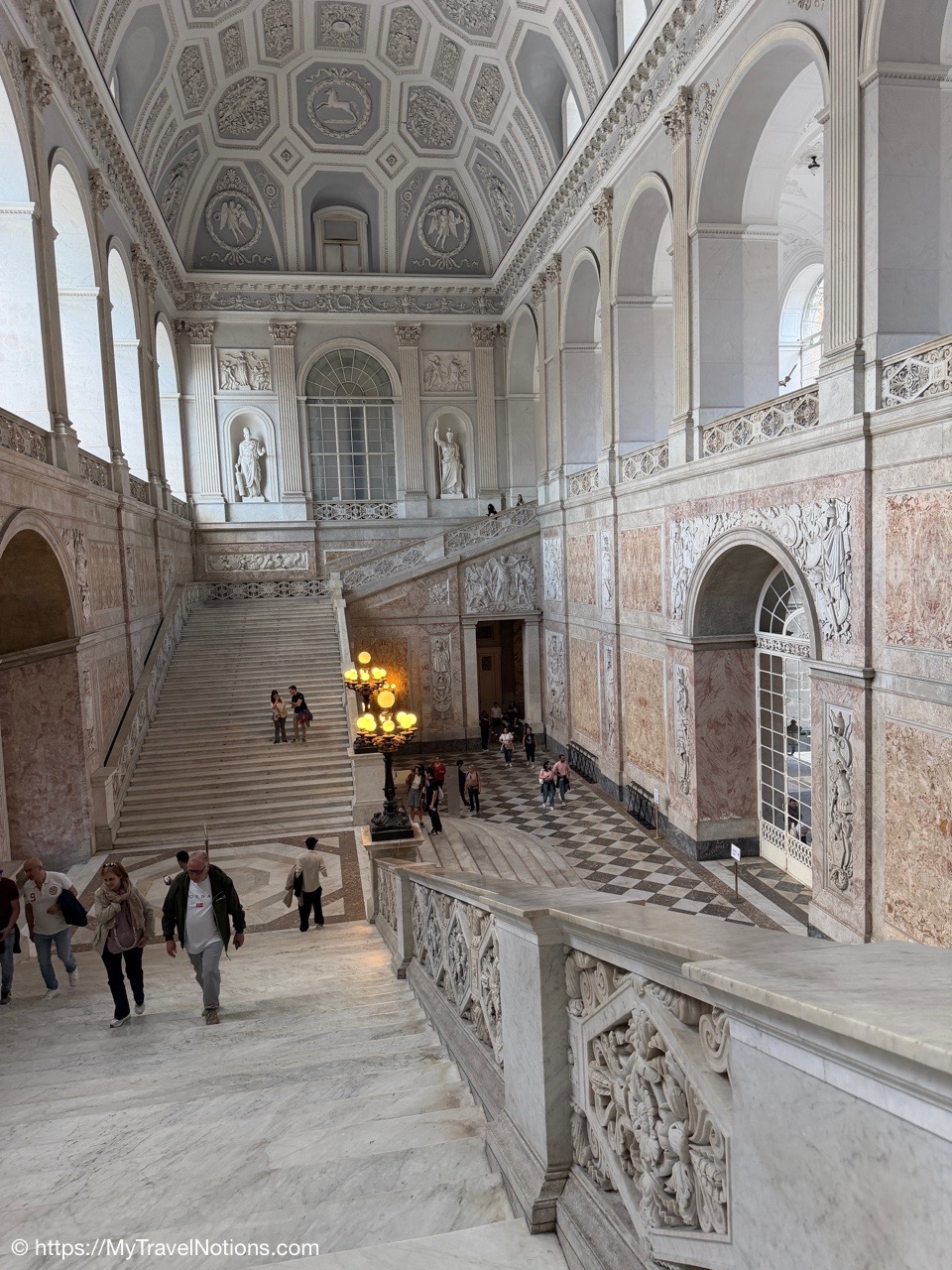
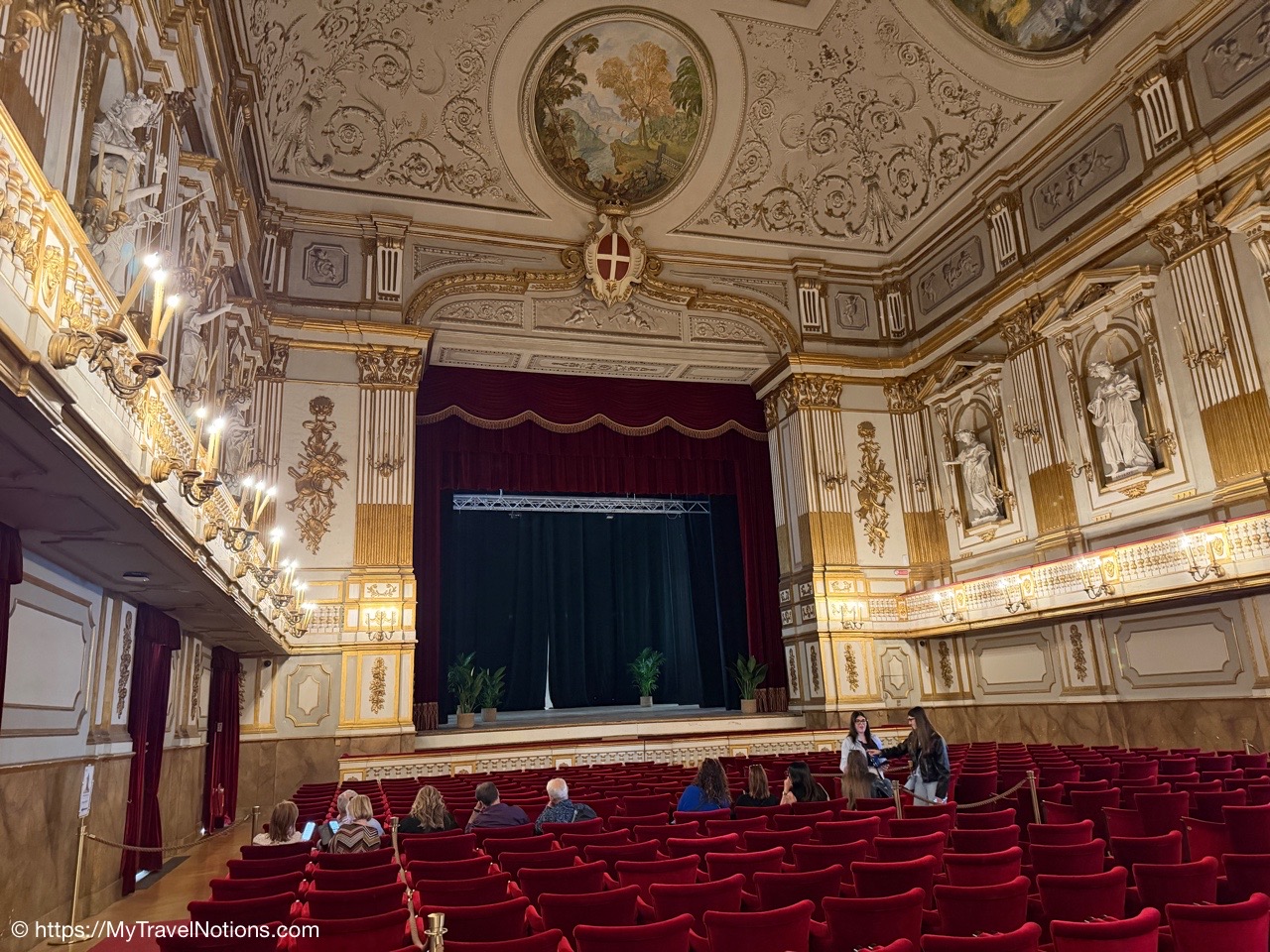
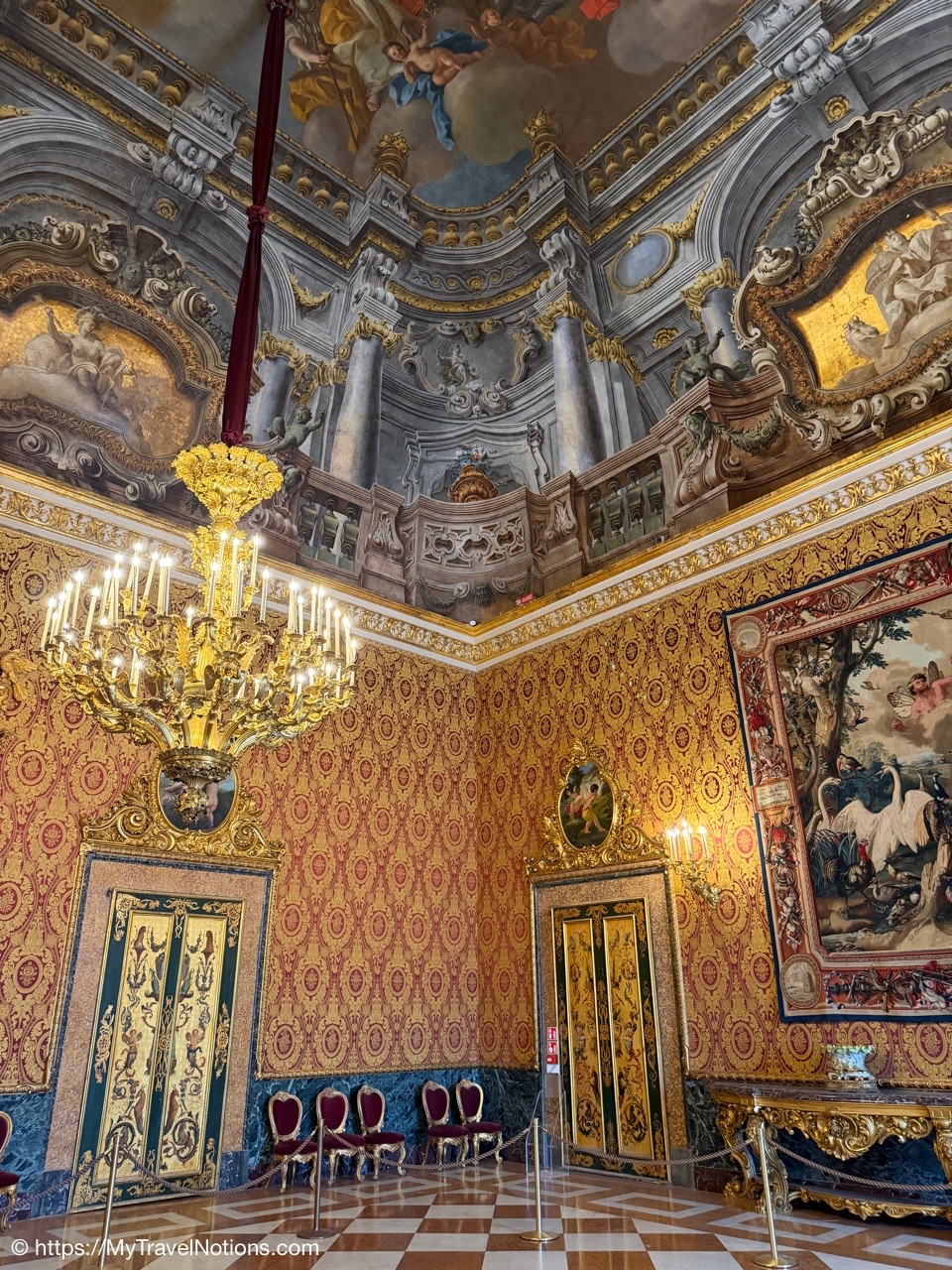
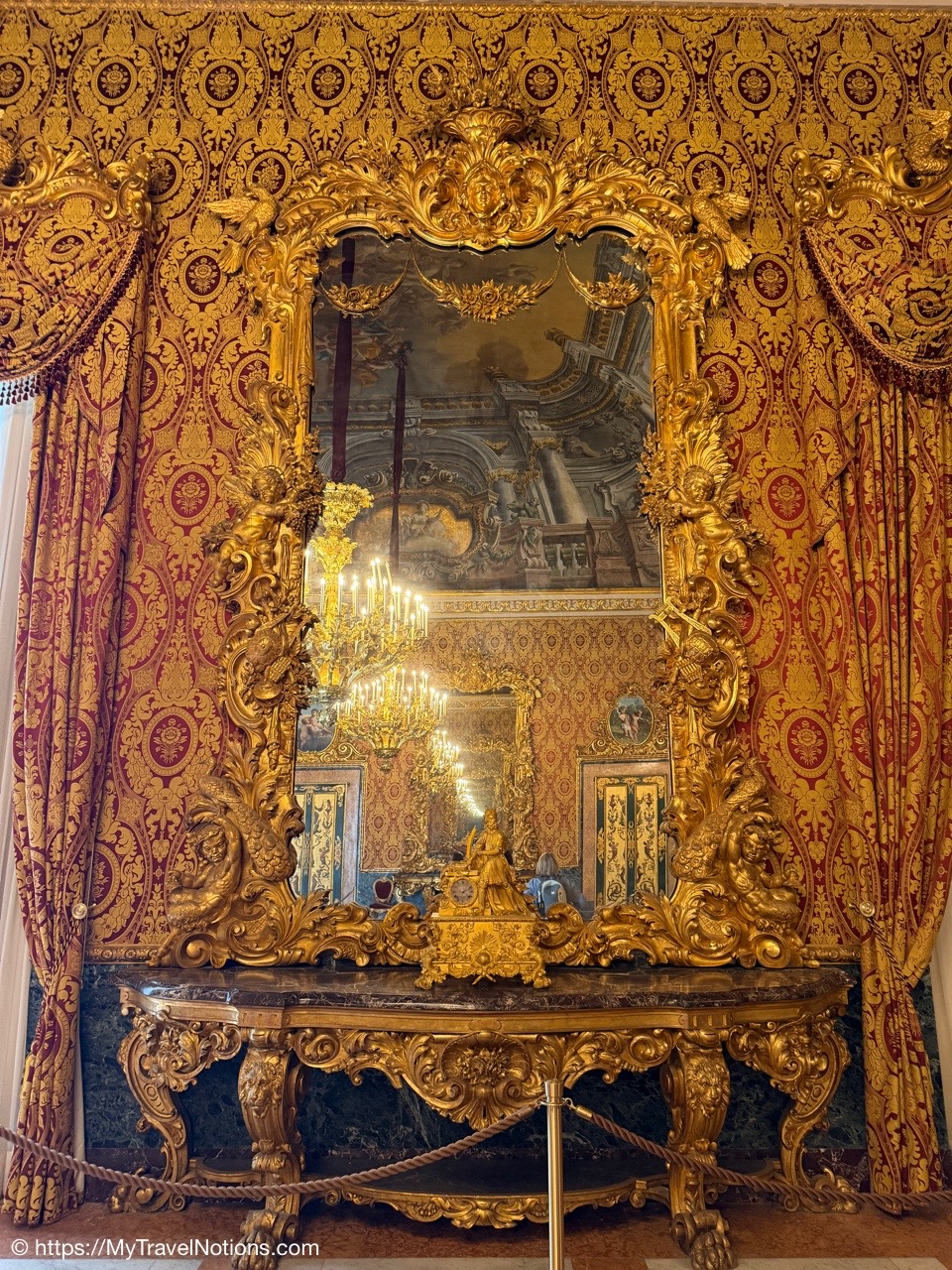
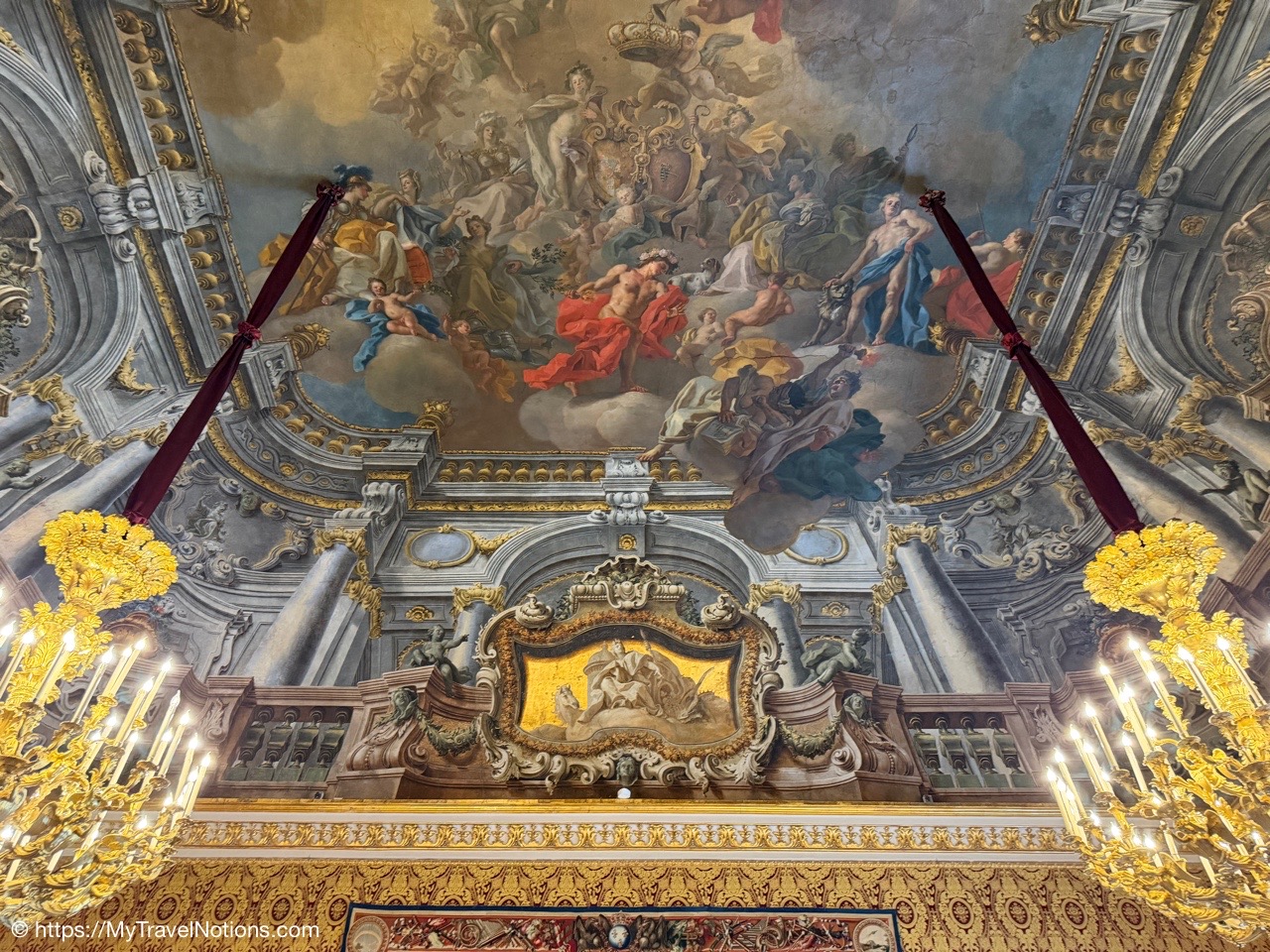
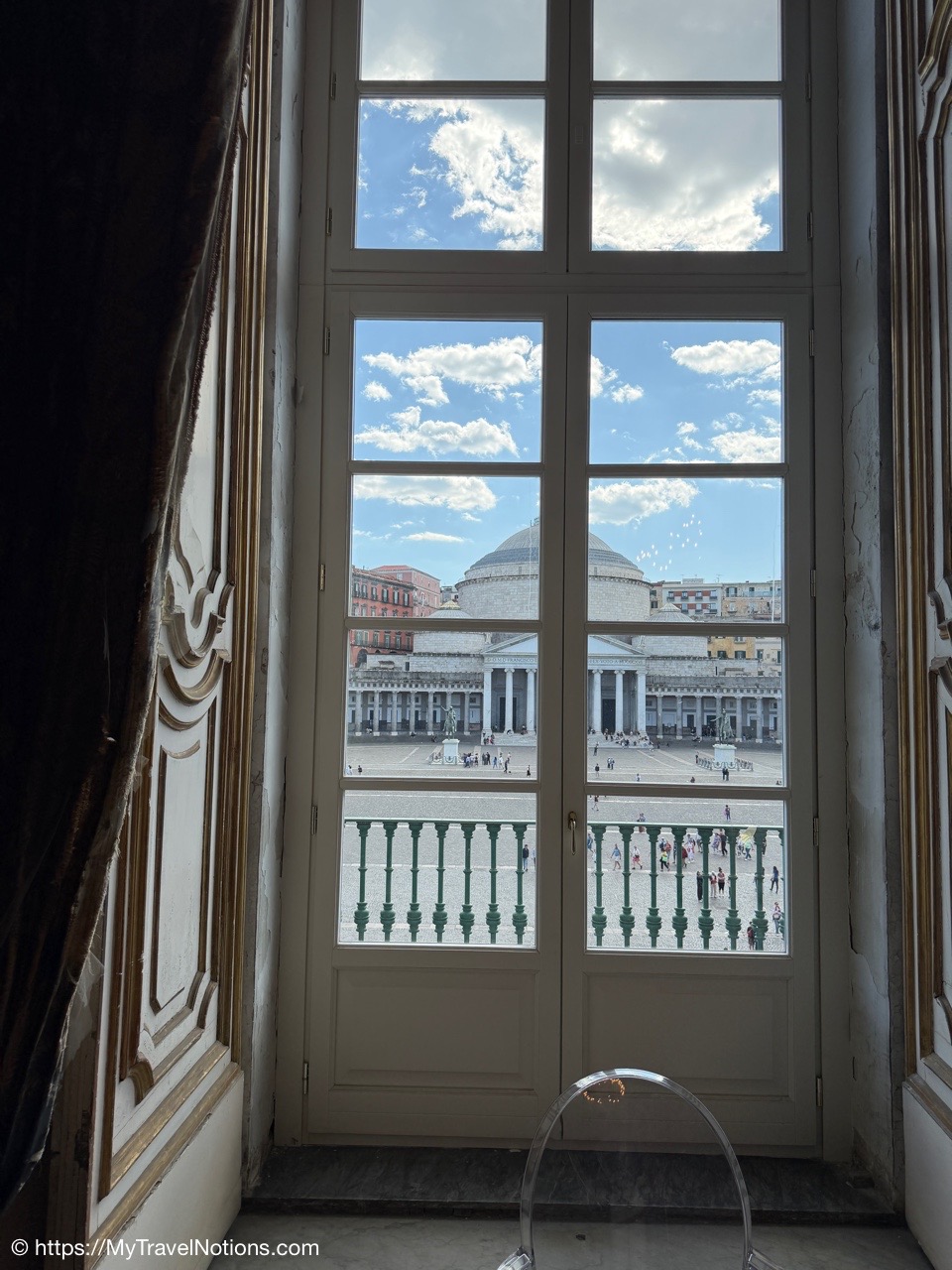
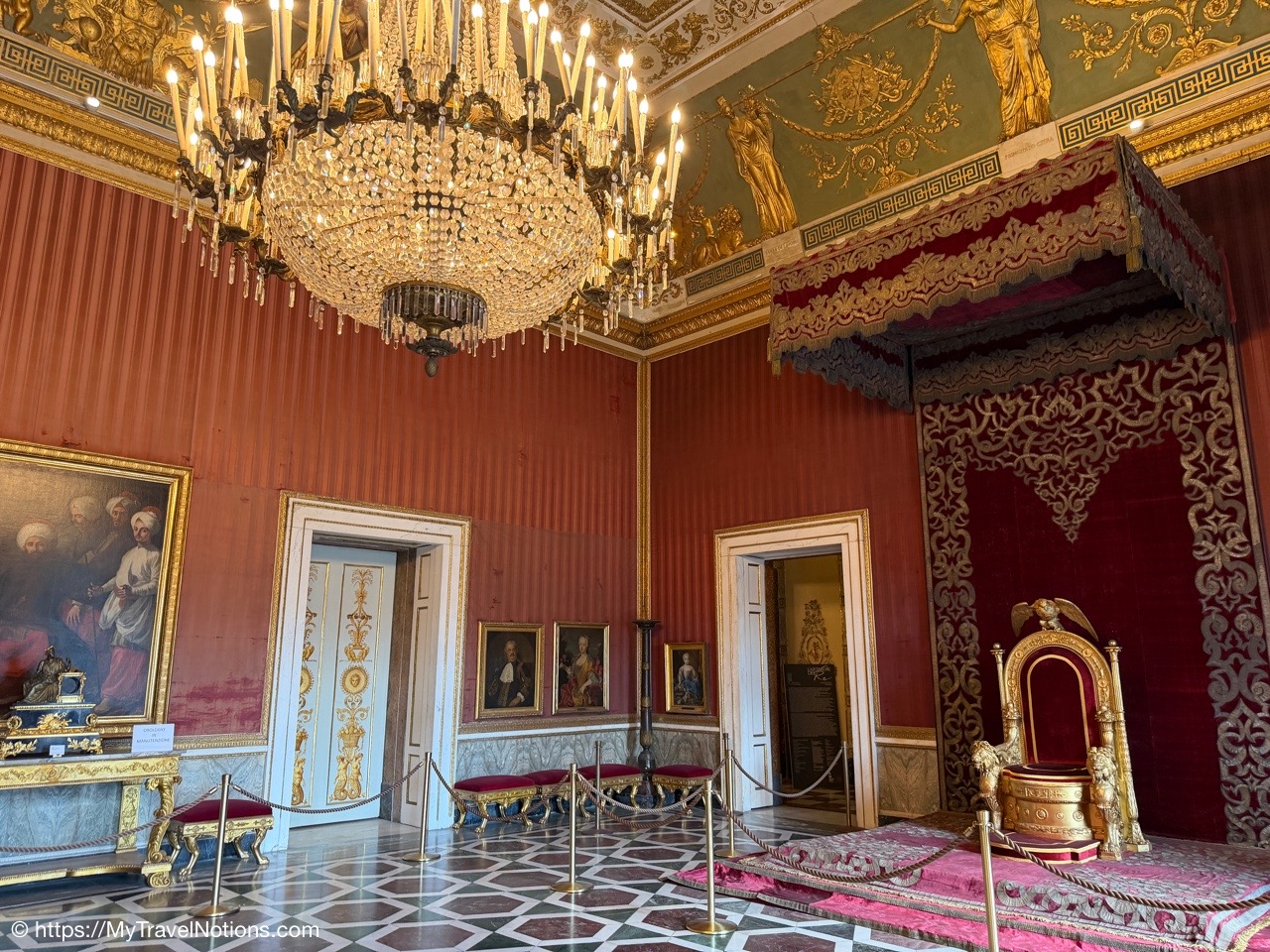
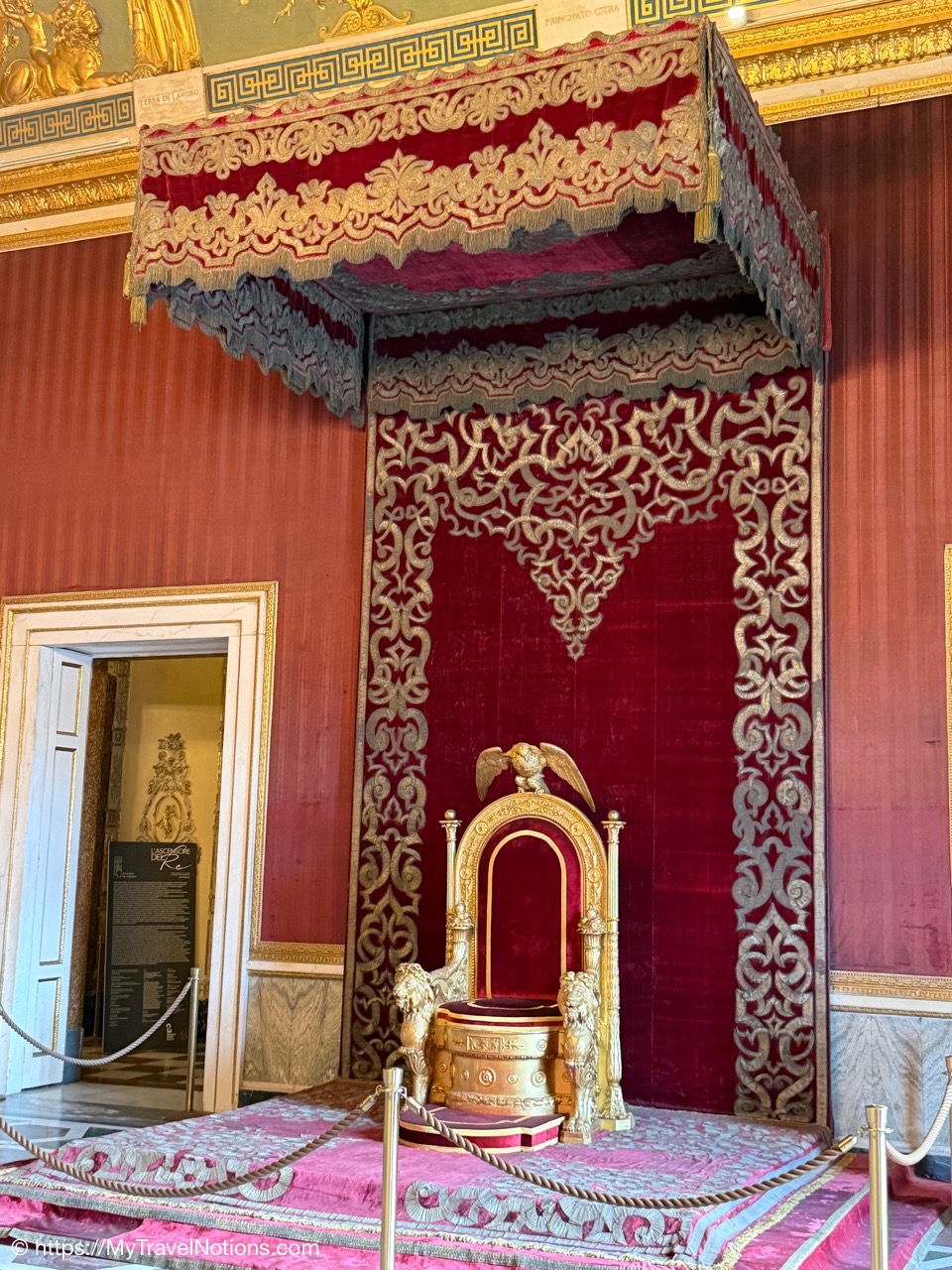
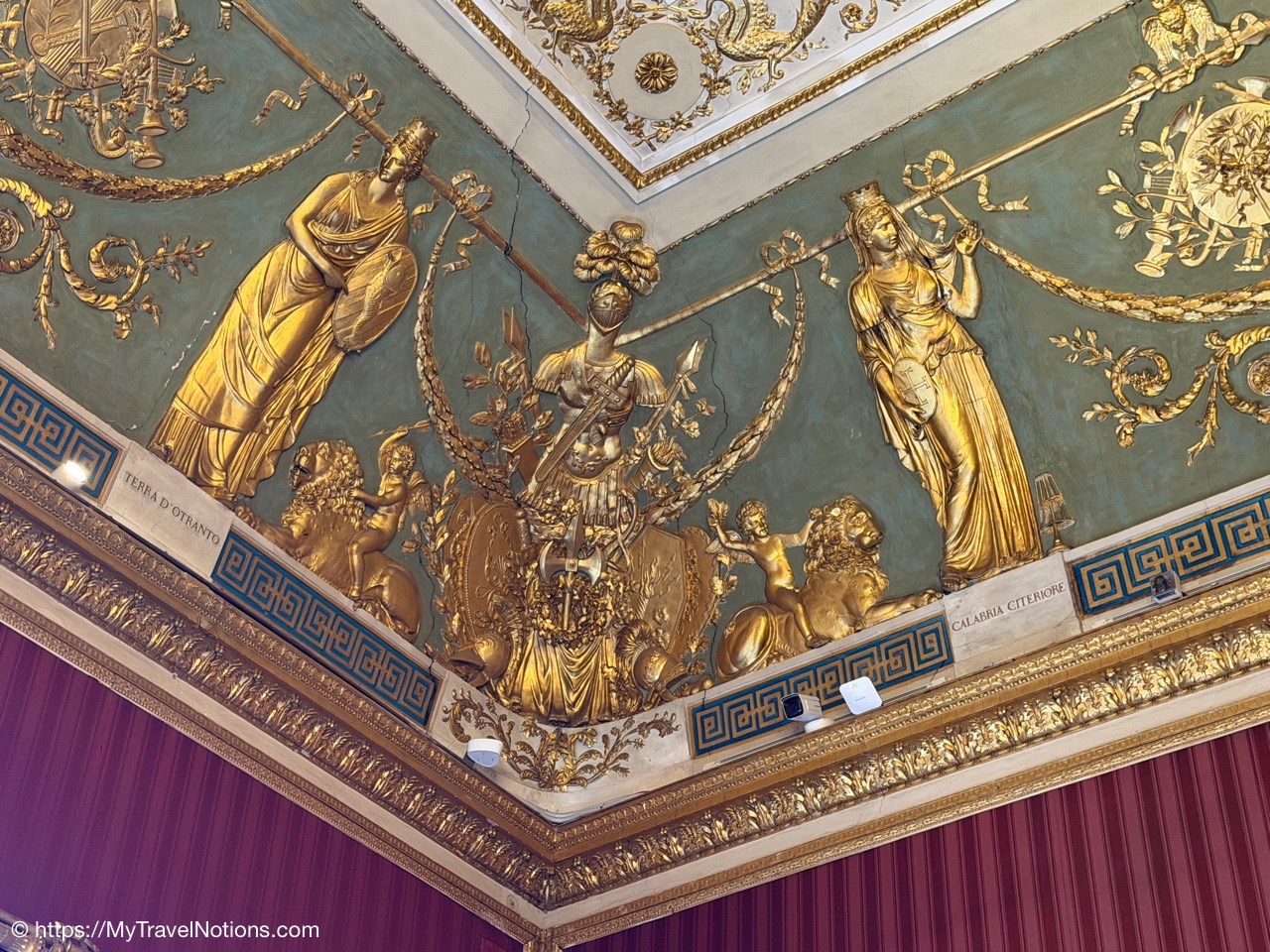
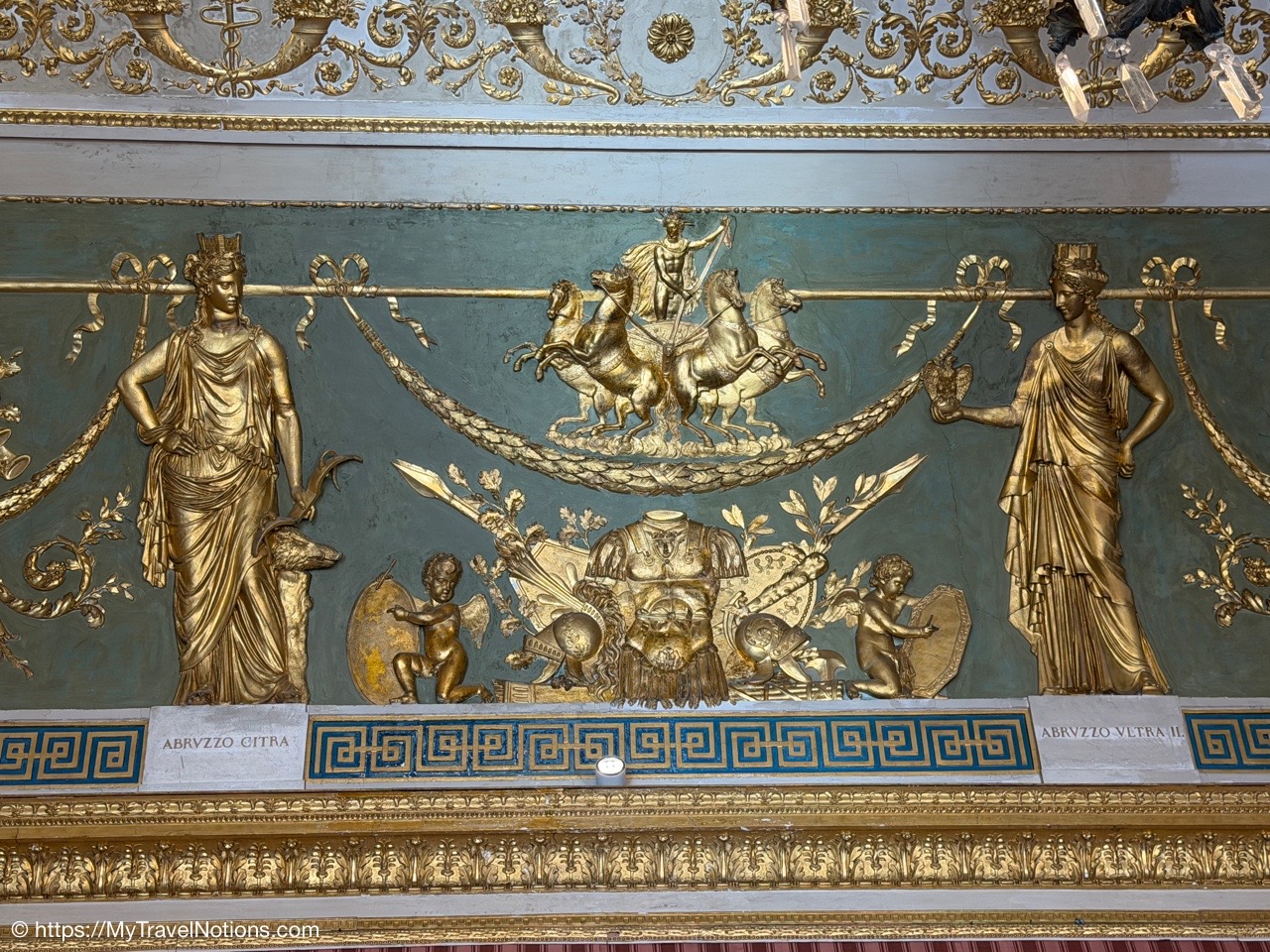
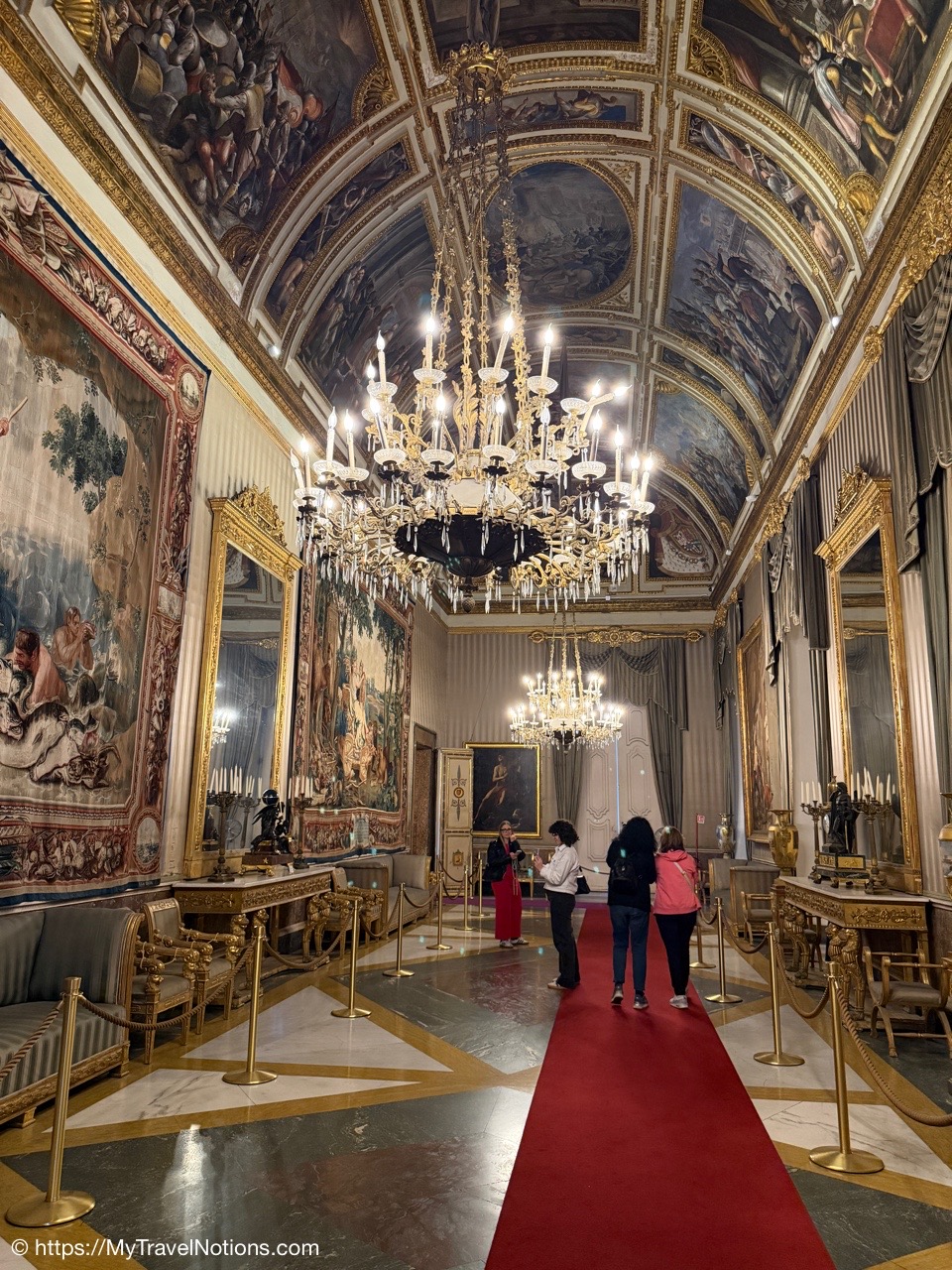
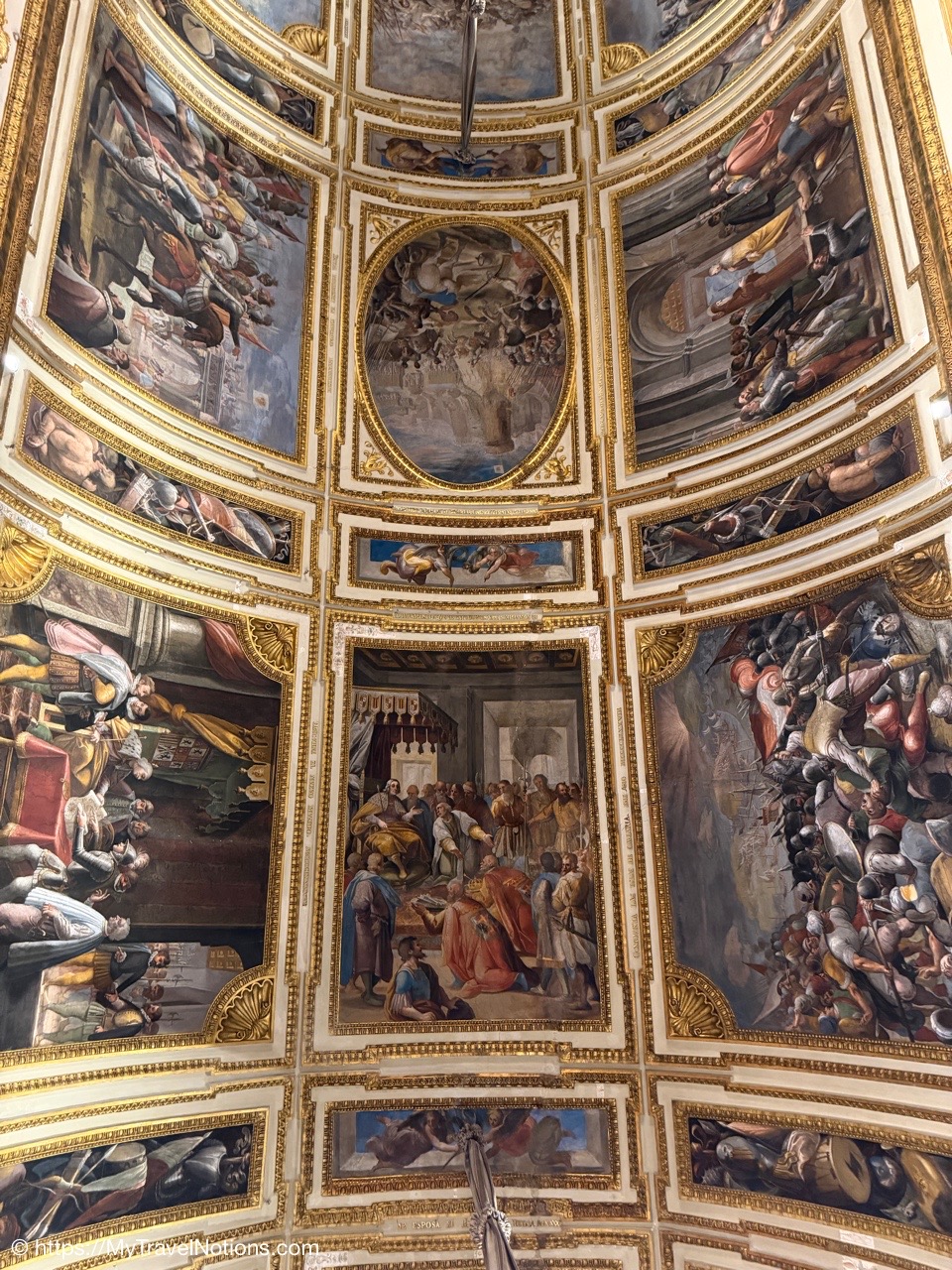
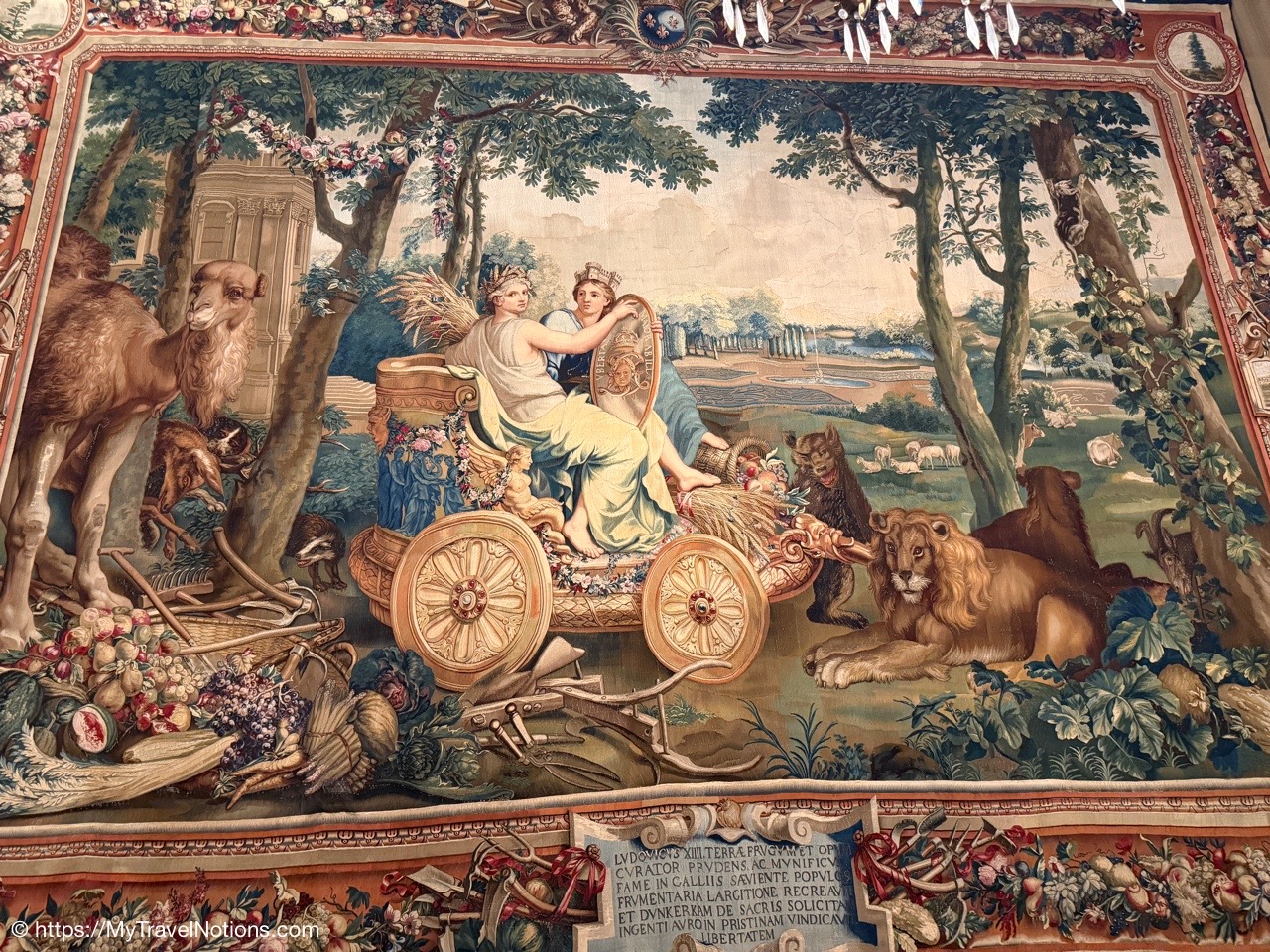
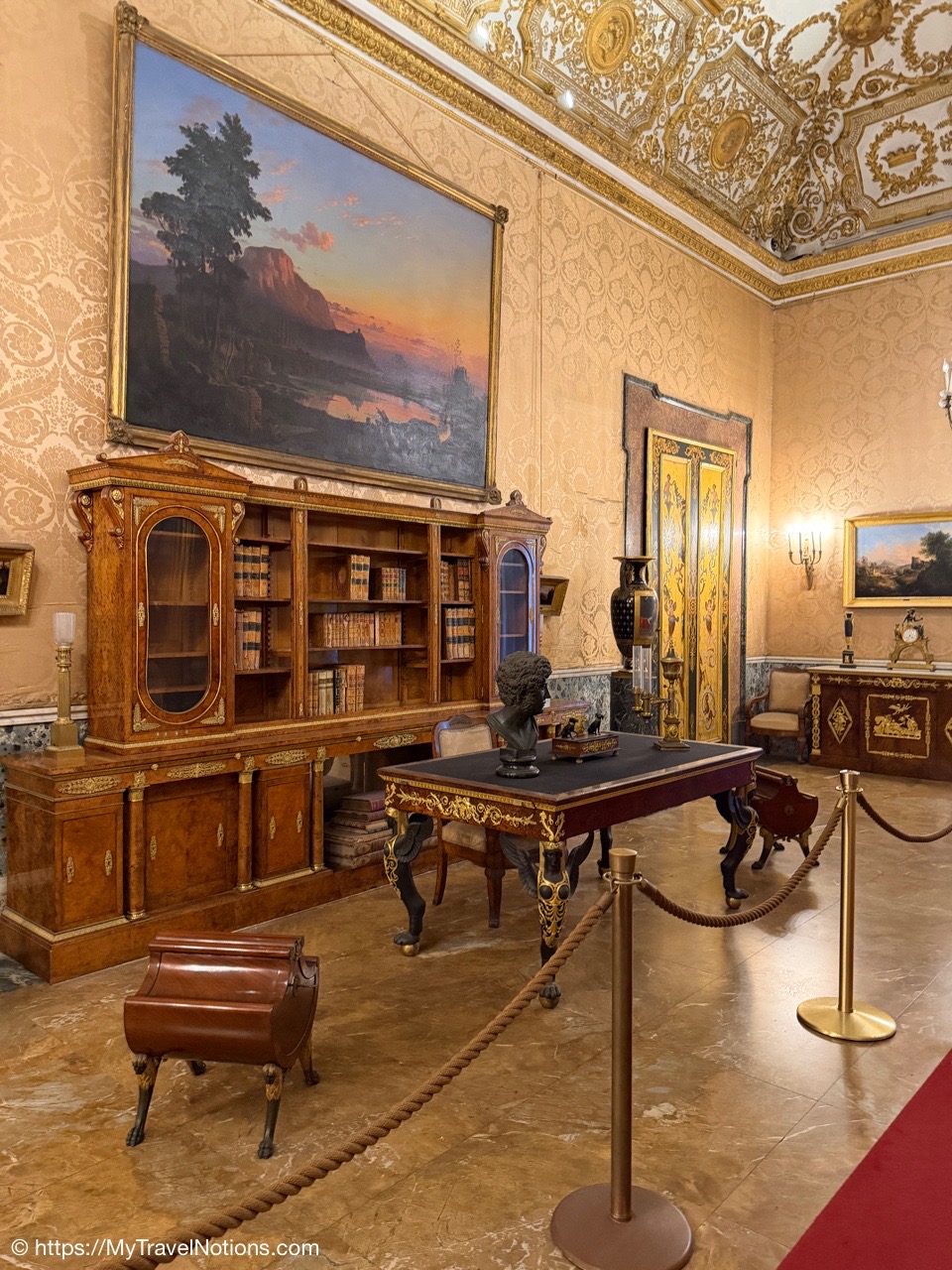
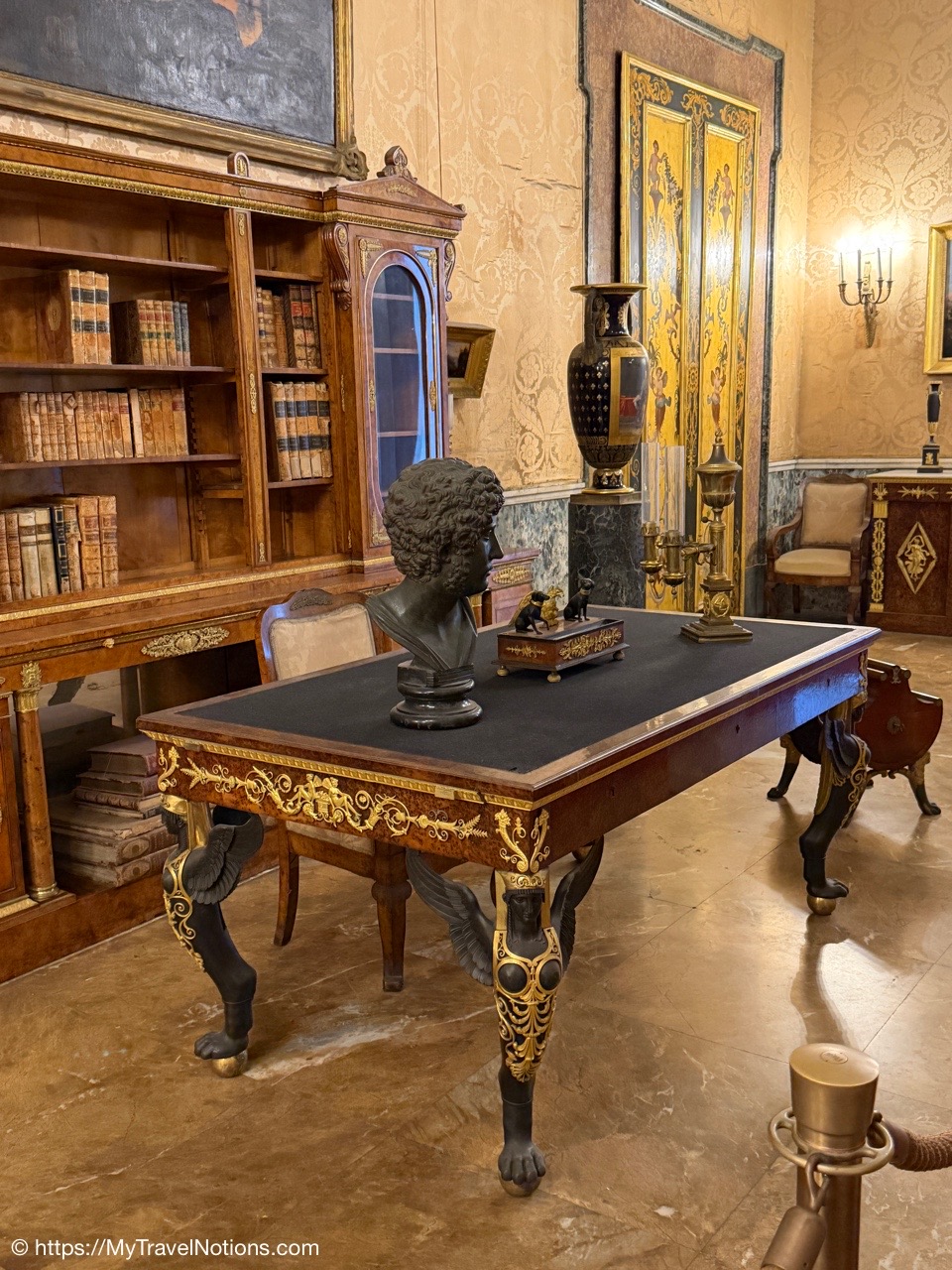
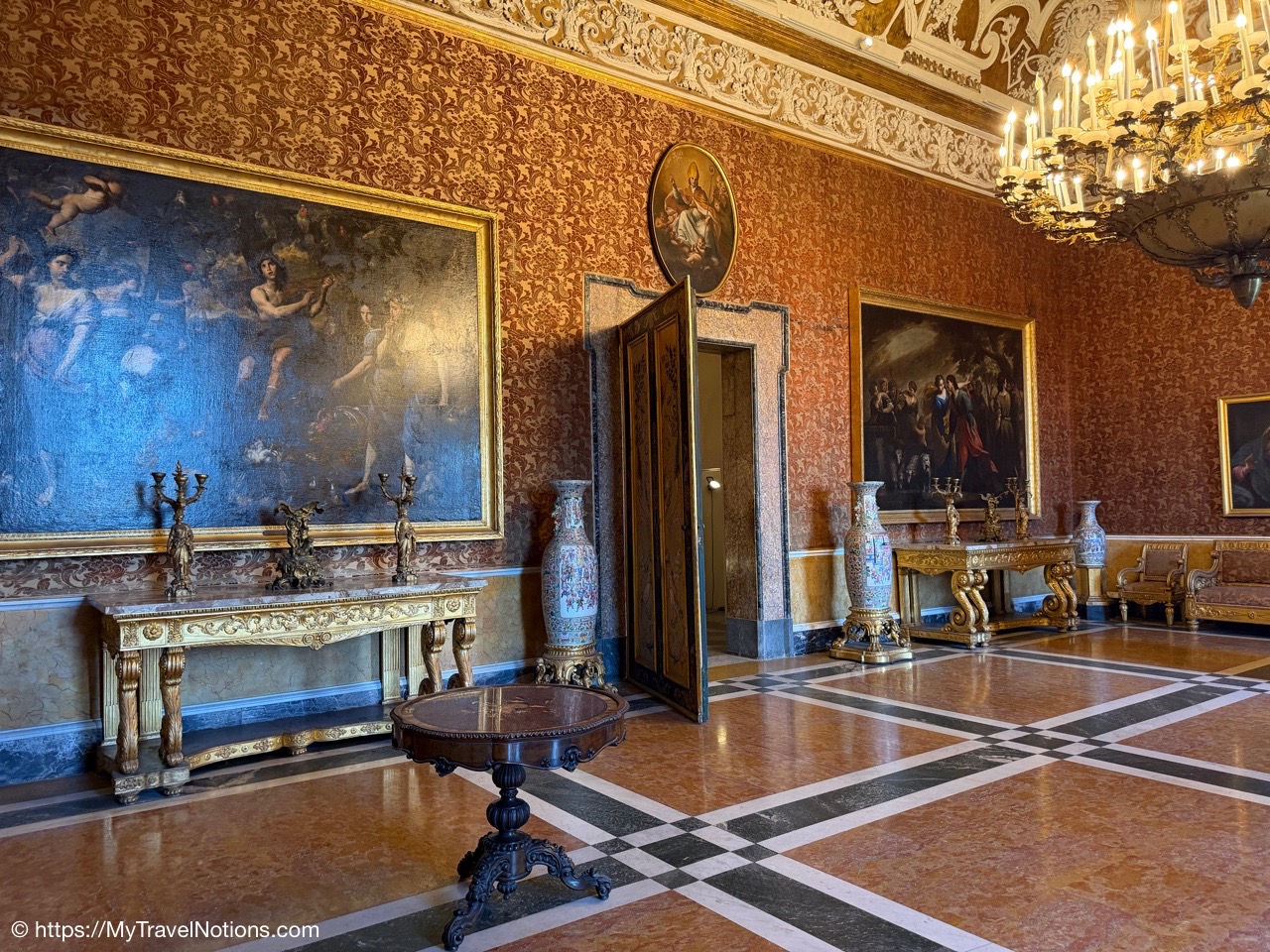
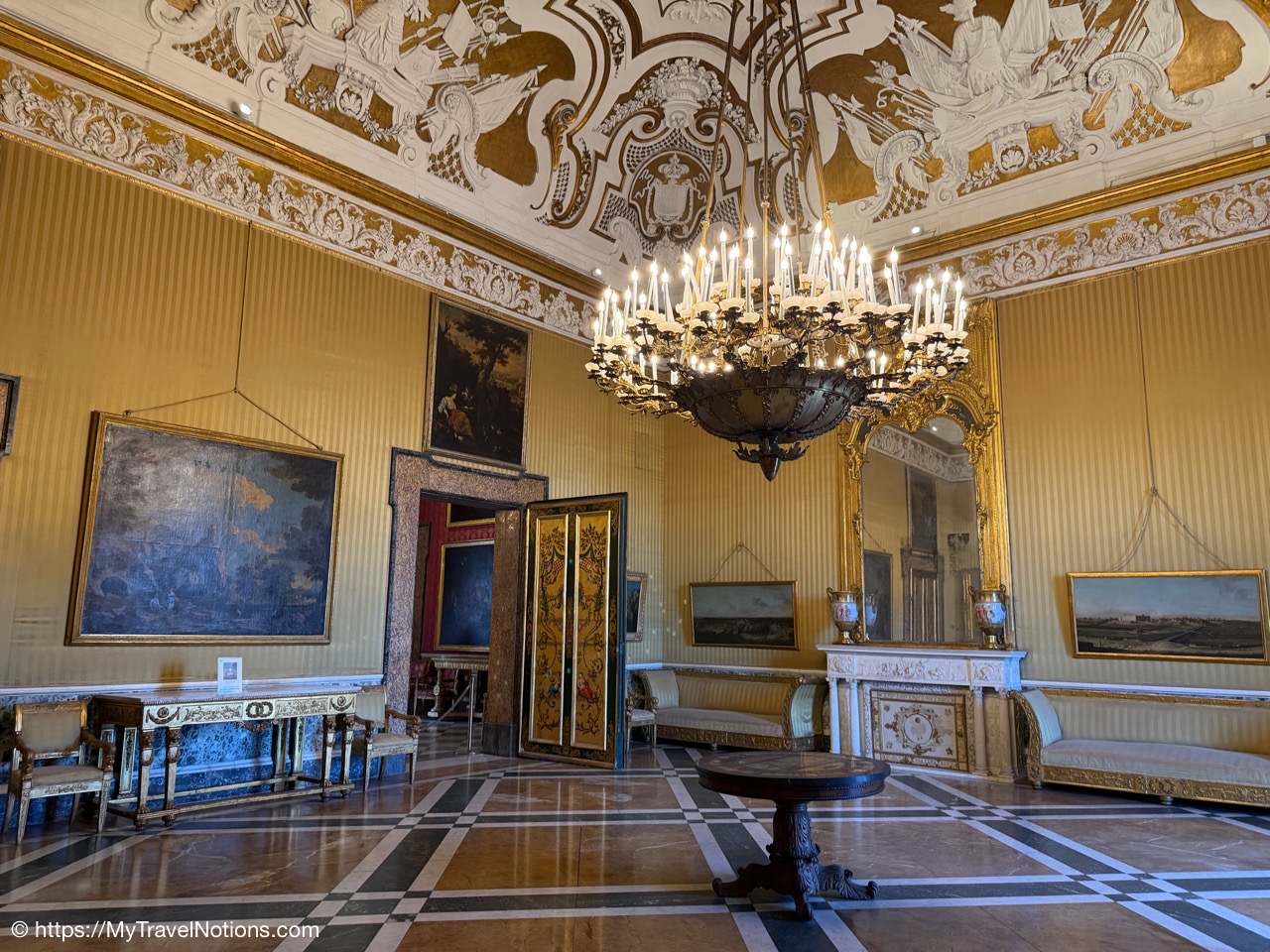
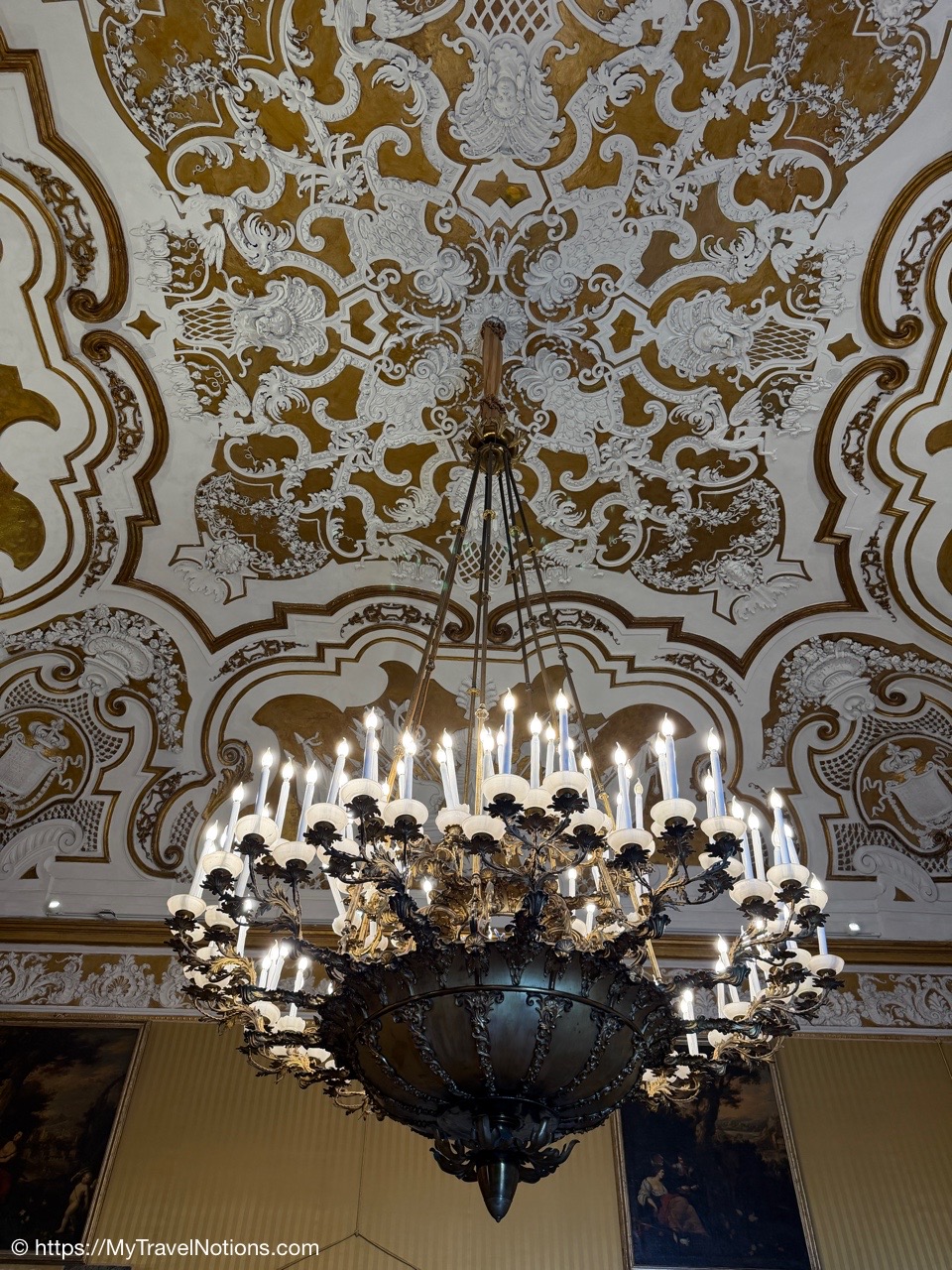
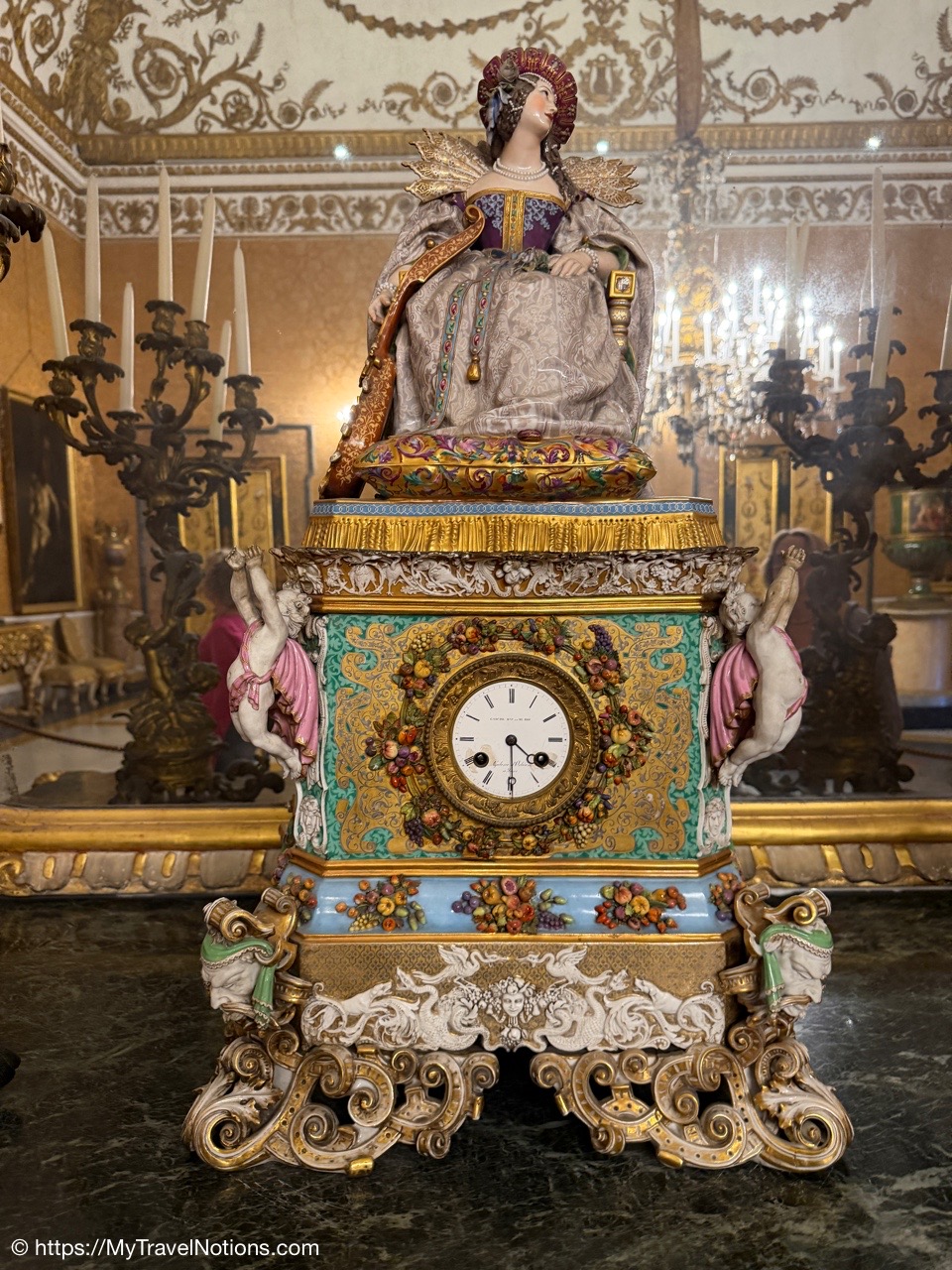
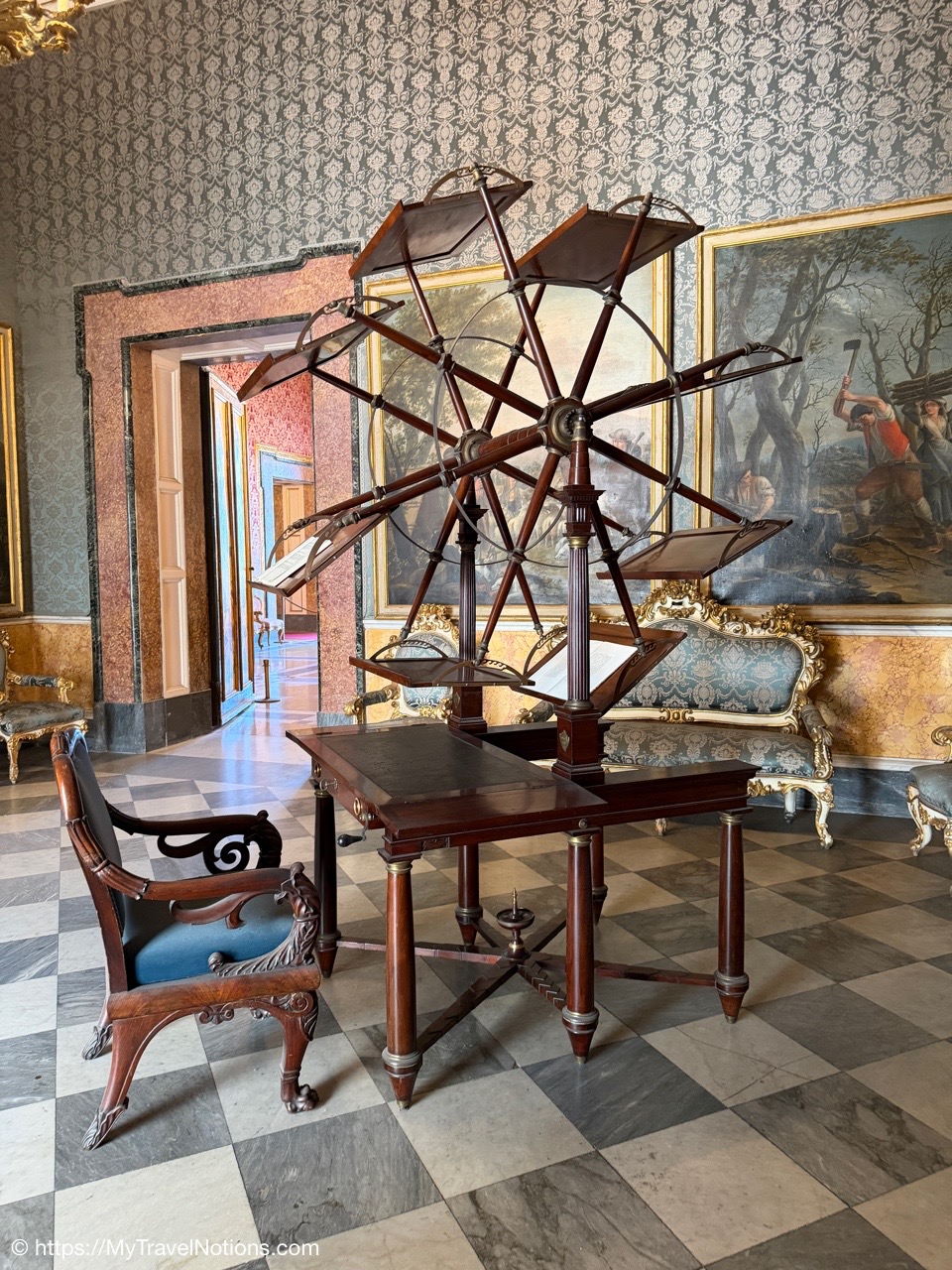
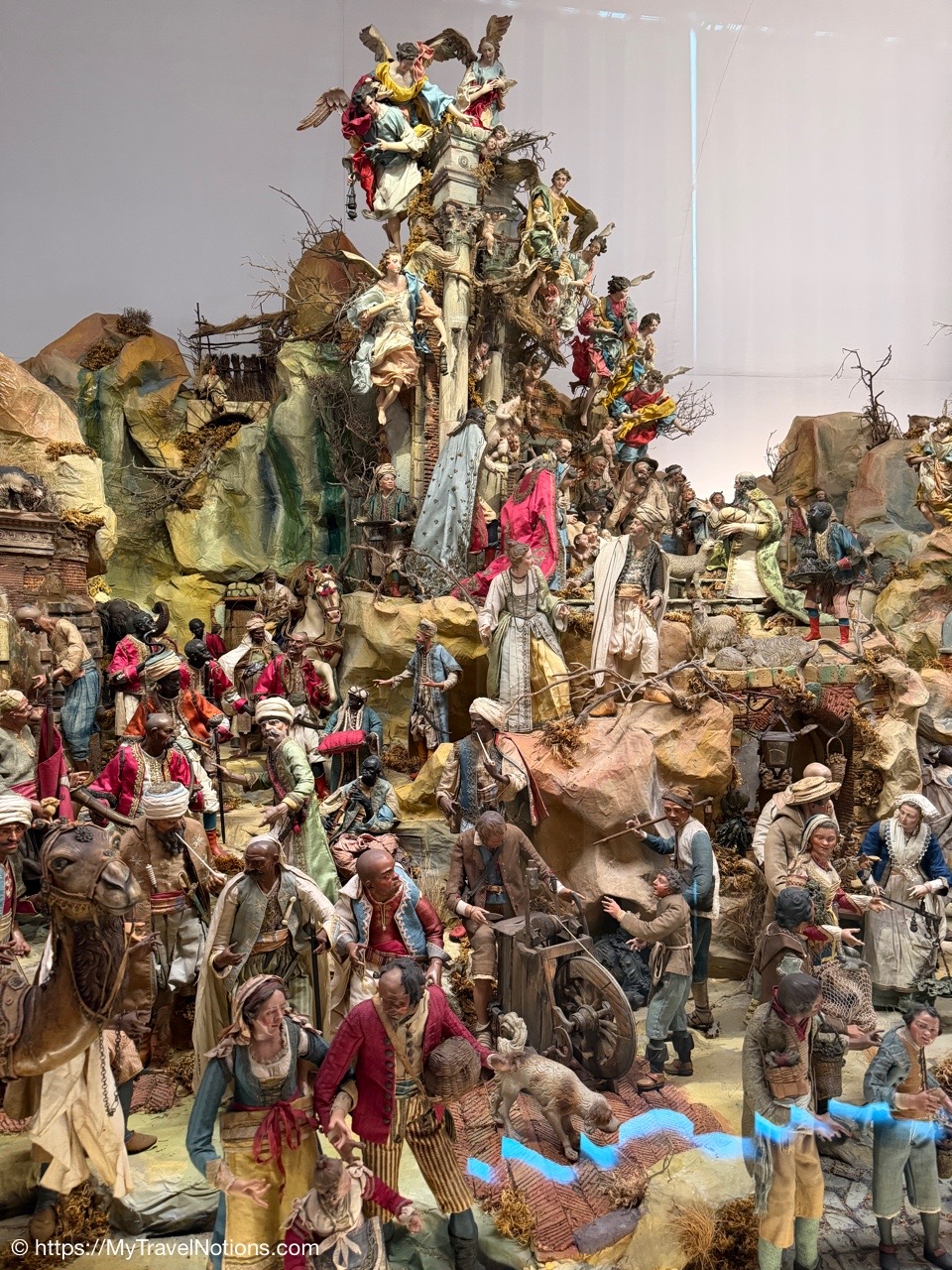
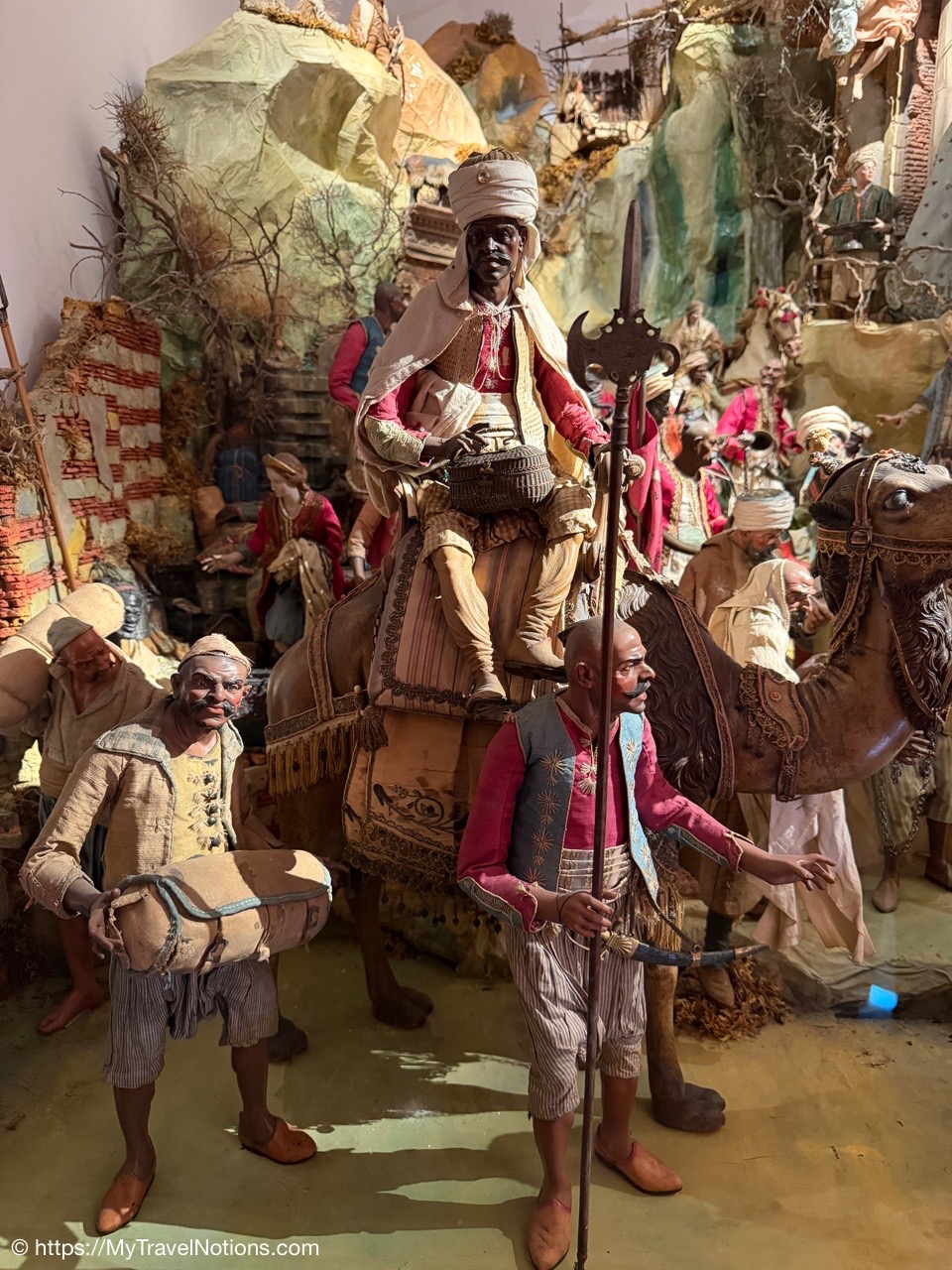
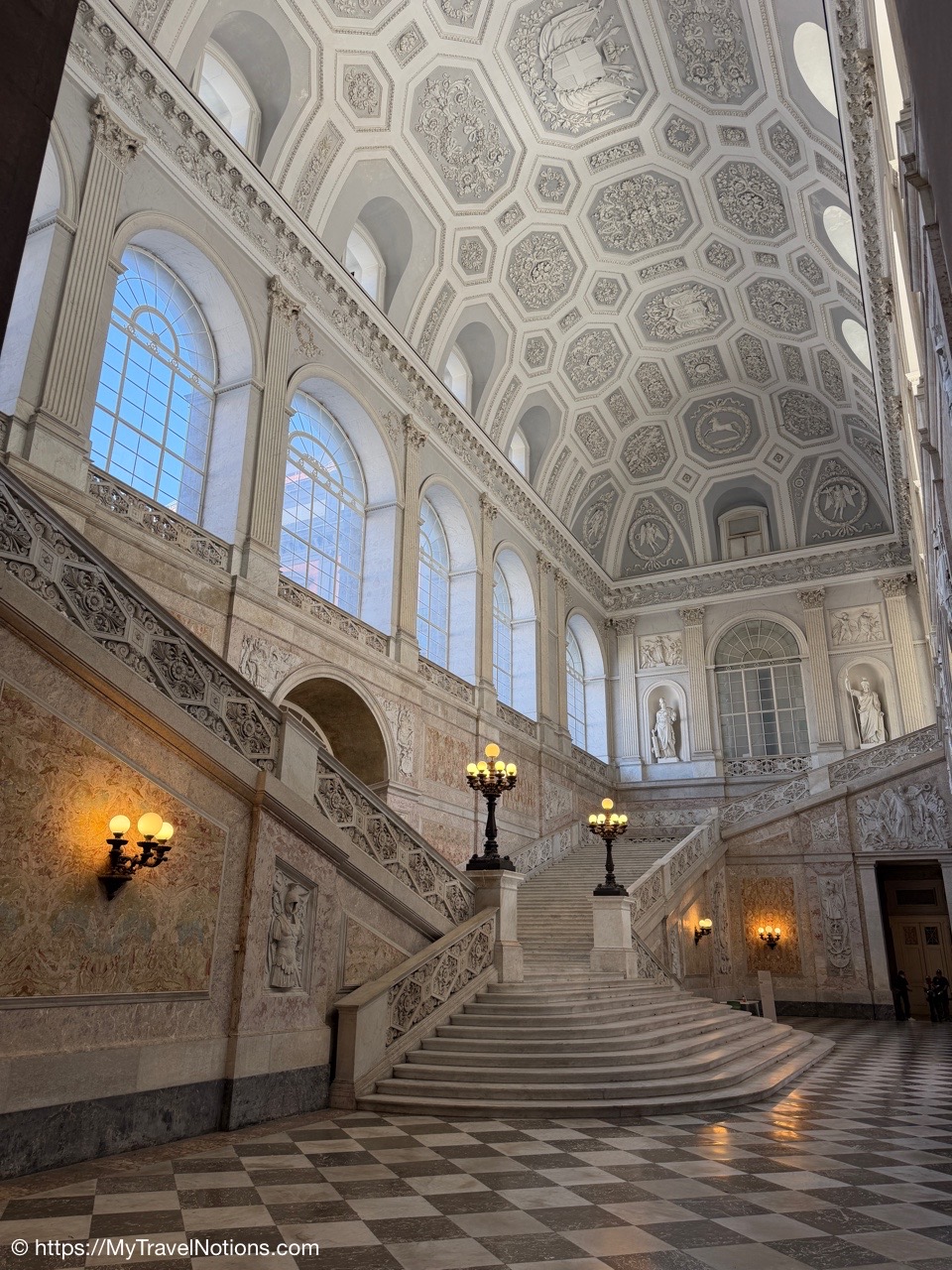
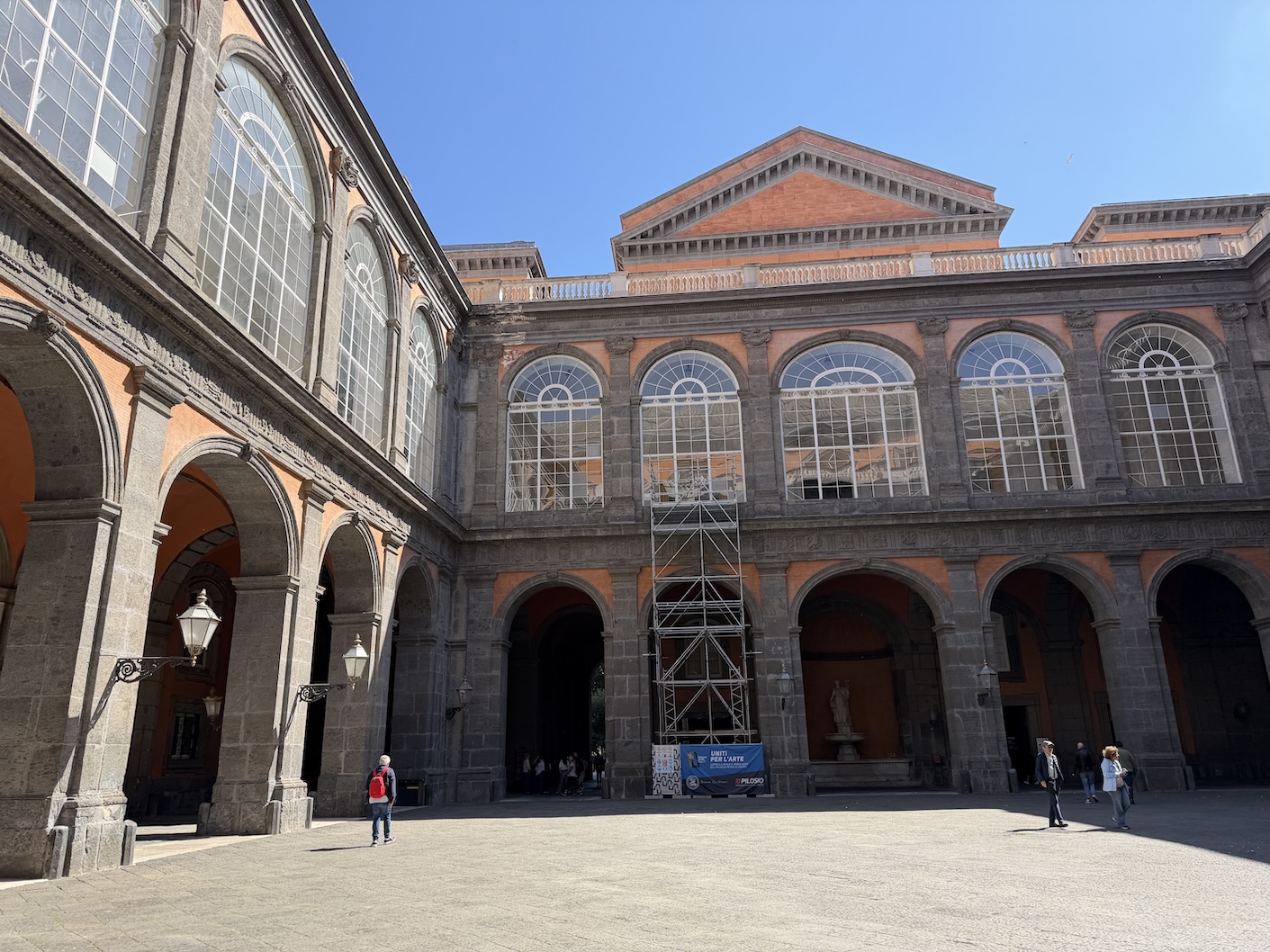
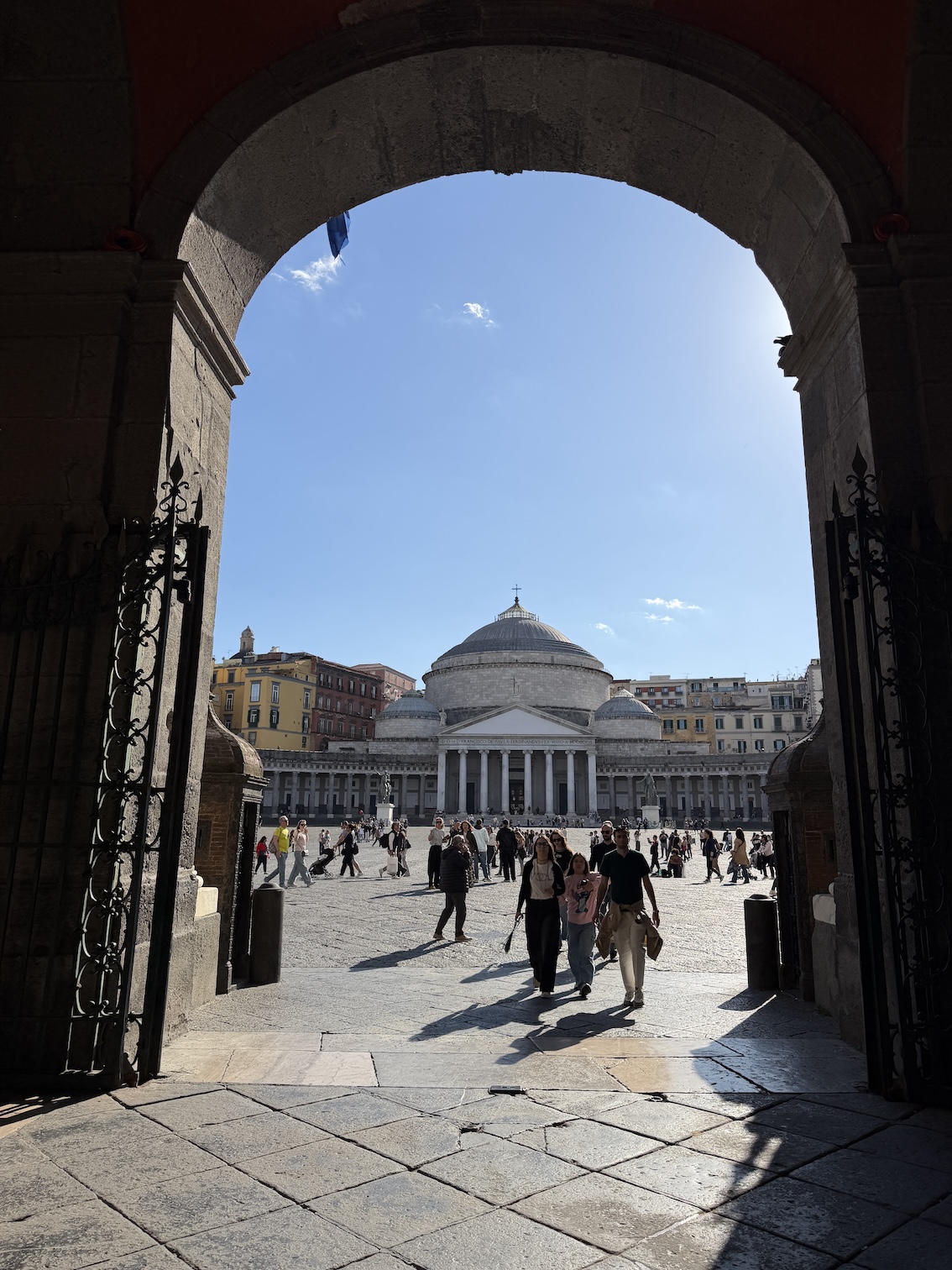
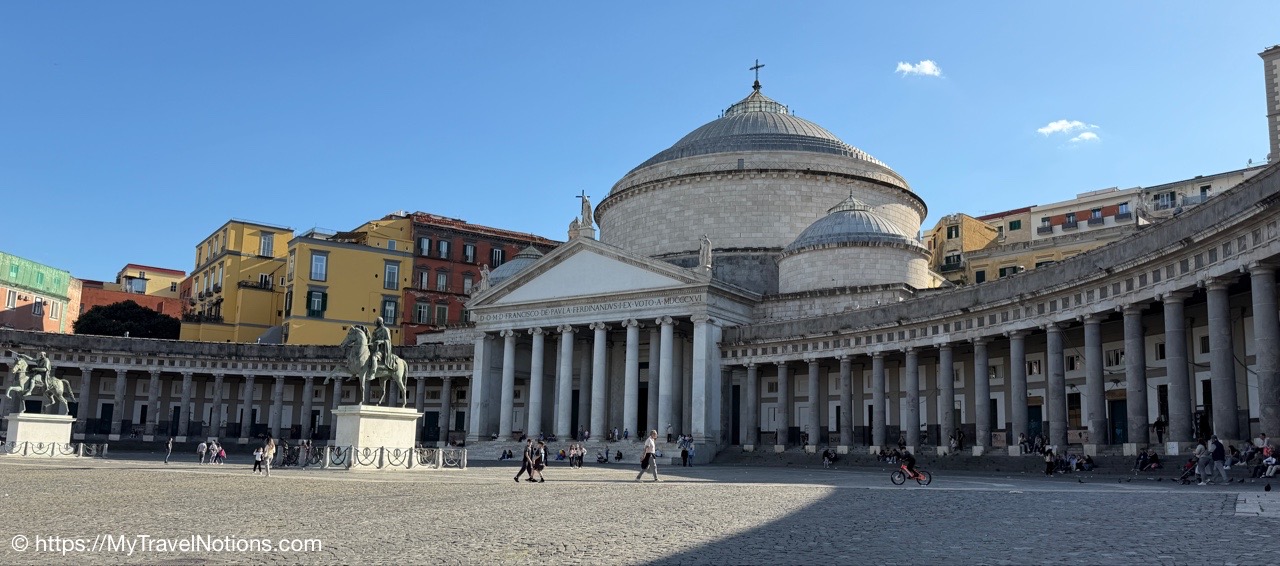
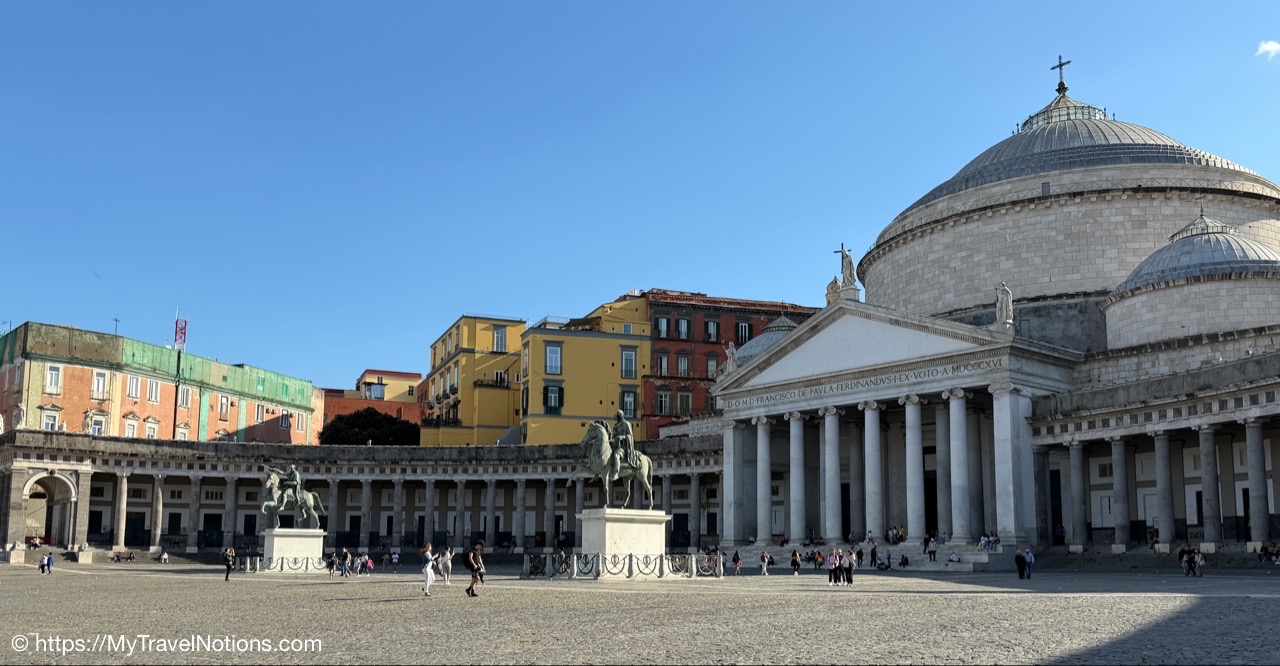
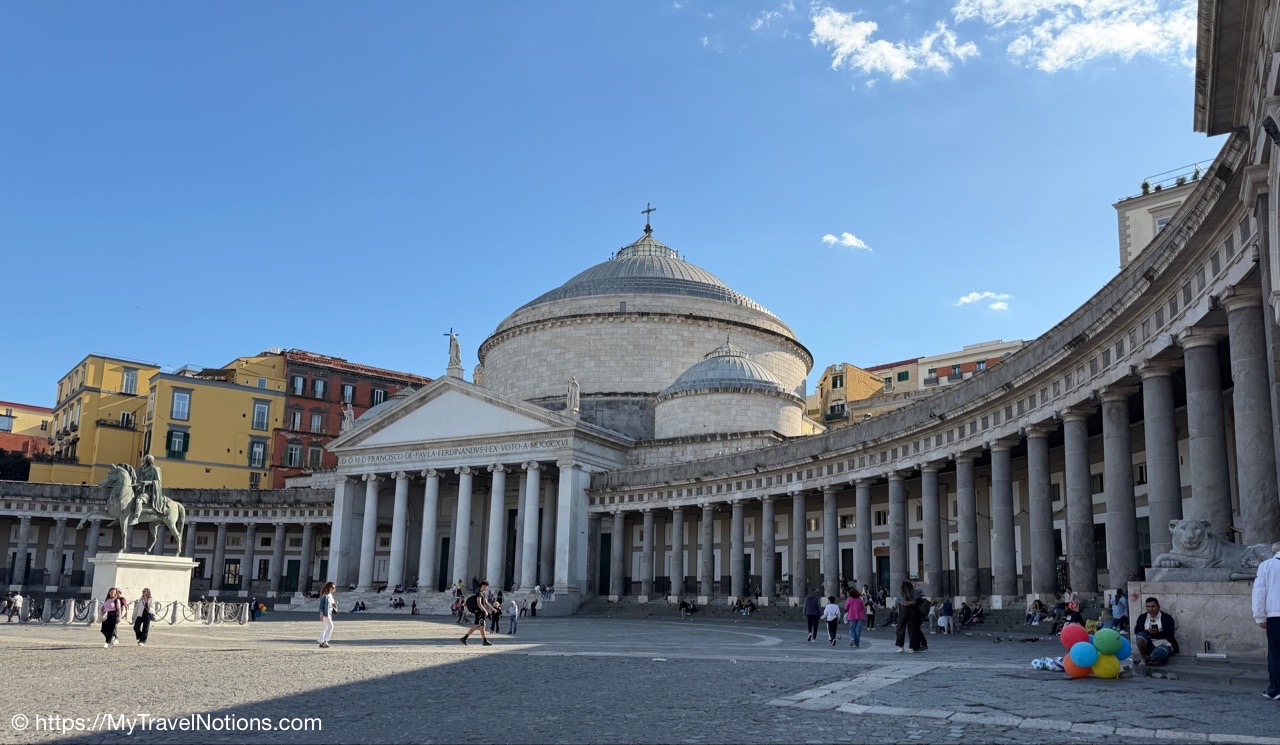
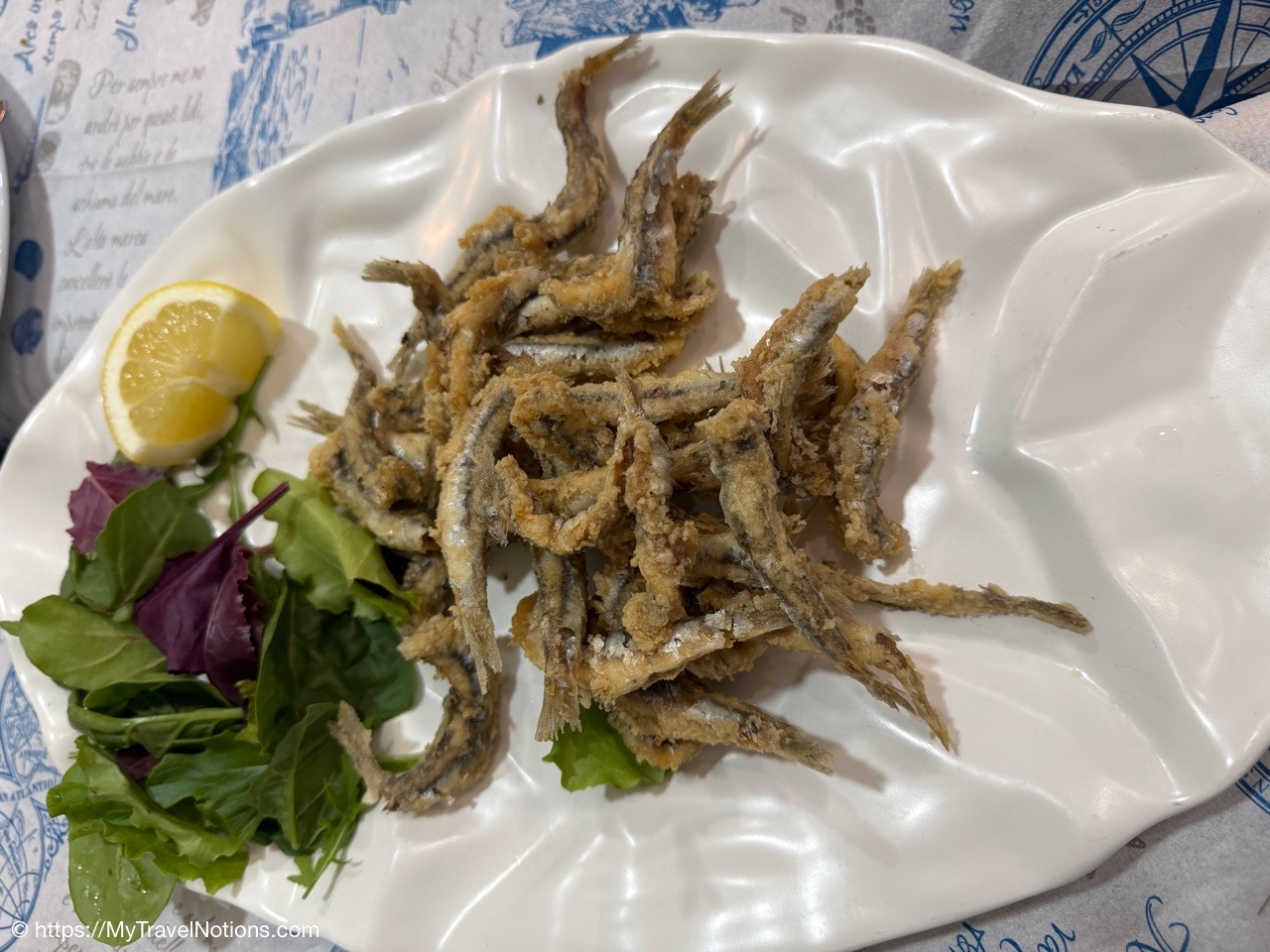
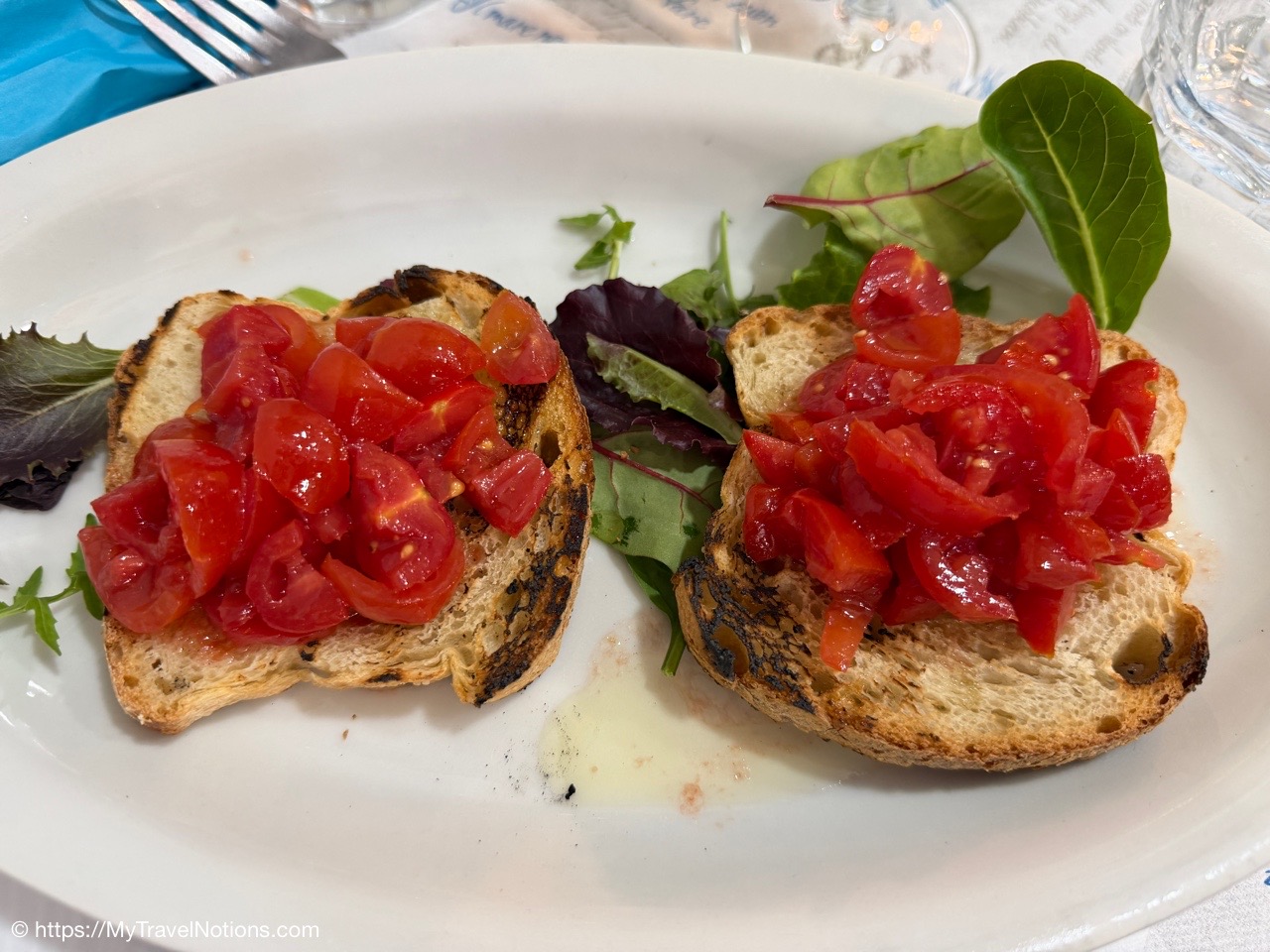
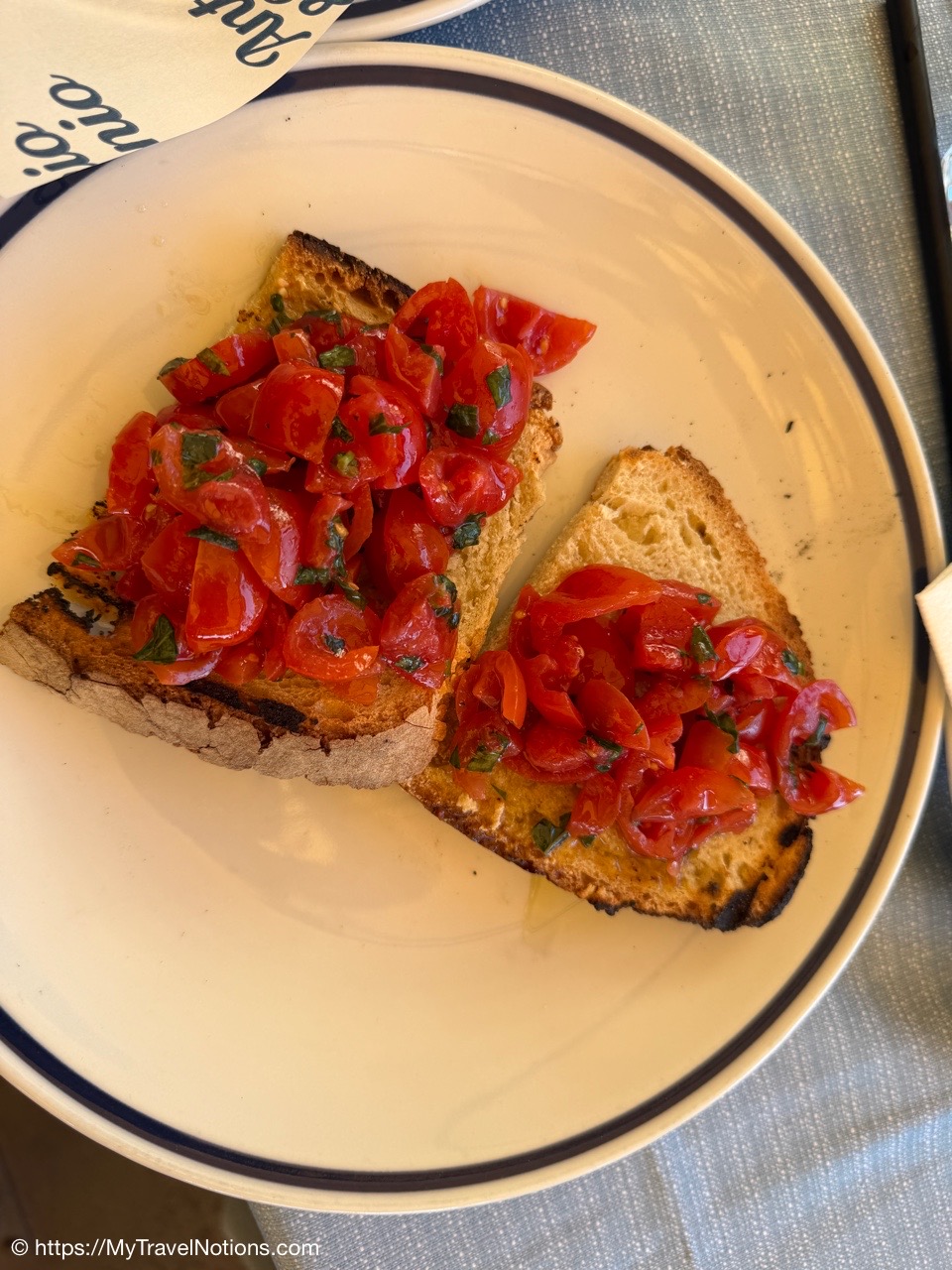
The Royal Palace of Naples facing the Piazza del Plebiscito was commissioned to be built in the 1600s by the architect Domenico Fontana to host King Philip III of Spain. (May 2, 2026)We entered the Royal Palace of Naples by this Grand Staircase built between 1650 and 1670. It was inspired by the immense staircase of the Real Alcázar of Toledo, built by Alonso de Covarrubias and Juan de Herrera between 1550 and 1605. Considered the most beautiful staircase in Europe, it had to be rebuilt after the fire in February 1837. (May 2, 2026)The Grand Staircase of the Royal Palace of Naples was built between 1650 and 1670. (May 2, 2026)Me at the top of the stairs of the Grand Staircase inside the Royal Palace of Naples which was built between 1650 and 1670. (May 2, 2026)After the Grand Staircase and before entering the various apartments, there’s this gorgeous Court Theatre inside the Royal Palace of Naples. (May 2, 2026)The First Antechamber or State Apartment was intended for public use inside the Royal Palace of Naples. (May 2, 2026)The First Antechamber or State Apartment was intended for public use inside the Royal Palace of Naples. (May 2, 2026)The frescoed ceiling of the First Antechamber or State Apartment intended for public use inside the Royal Palace of Naples. (May 2, 2026)A view of the Basilica of St. Francesco, across the Piazza del Plebiscito, from the apartments inside the Royal Palace of Naples. (May 2, 2026)The Throne Room inside the Royal Palace of Naples. The red velvet canopy, protecting the space reserved for the king, dates to the 18th century. The current Empire-style throne was made in 1874, after the proclamation of the Kingdom of Italy; accordingly, the eagle on the backrest bears the coat of arms of the new ruling House of Savoy. (May 2, 2026)The Throne Room inside the Royal Palace of Naples. The red velvet canopy, protecting the space reserved for the king, dates to the 18th century. The current Empire-style throne was made in 1874, after the proclamation of the Kingdom of Italy; accordingly, the eagle on the backrest bears the coat of arms of the new ruling House of Savoy. (May 2, 2026)The Neoclassical style vault dates of the Throne Room in the Royal Palace of Naples dates from 1818. The gold-stuccoed female figures represent the twelve Provinces of the Kingdom of the Two Sicilies. (May 2, 2026)The Neoclassical style vault dates of the Throne Room in the Royal Palace of Naples dates from 1818. The gold-stuccoed female figures represent the twelve Provinces of the Kingdom of the Two Sicilies. (May 2, 2026)The long hall gallery of the Ambassadors Hall displaying tapestries and ceiling paintings inside the Royal Palace of Naples. (May 2, 2026)The painted ceiling of the Ambassadors Hall inside the Royal Palace of Naples. (May 2, 2026)One of the tapestries the Ambassadors Hall inside the Royal Palace of Naples. (May 2, 2026)The King’s Study inside the Royal Palace of Naples. The set of furniture (writing table, commode and sécretaire in thuya wood veneer with gilt-bronze mounts) was made in Paris by cabinetmaker Adam Weisweiler and sculptor Pierre-Philippe Thomire around 1810. (May 2, 2026)The King’s Study inside the Royal Palace of Naples. The set of furniture (writing table, commode and sécretaire in thuya wood veneer with gilt-bronze mounts) was made in Paris by cabinetmaker Adam Weisweiler and sculptor Pierre-Philippe Thomire around 1810. (May 2, 2026)The Queen’s Bedchamber inside the Royal Palace of Naples. In the 18th century this was the last and most important room of the queen’s apartment, leading to the actual alcove which contained the royal bed. (May 2, 2026)The Queen’s Bedchamber inside the Royal Palace of Naples. In the 18th century this was the last and most important room of the queen’s apartment, leading to the actual alcove which contained the royal bed. (May 2, 2026)The Rococo style decoration of the vault, with white stucco on a gold background in the Queen’s Bedchamber inside the Royal Palace of Naples dates back to the time of queen Maria Amalia of Saxony (1738). (May 2, 2026)A porcelain clock in the Queen’s First Drawing Room inside the Royal Palace of Naples. This colorful working clock was made in Paris between 1830 and 1850. It is surmounted by the figure of Mary Stuart, queen of Scots, sentenced to death in 1587 by Elizabeth I, queen of England. (May 2, 2026)Room of the Rotating Lectern inside the Royal Palace of Naples. The rotating lectern was crafted in 1792 for the library of queen Maria Carolina of Austria, originally set up in the Royal Palace of Caserta. The original device allowed eight volumes to be consulted simultaneously; they were arranged on the shelves of the moving wheel and brought to the height of the desk with the aid of a crank. (May 2, 2026)The Neapolitan Nativity Scene inside the Royal Palace of Naples. (May 2, 2026)The Neapolitan Nativity Scene inside the Royal Palace of Naples. (May 2, 2026)Okay, just one last photo of me at the Grand Staircase, built between 1650 and 1670, inside the the Royal Palace of Naples. (May 2, 2026)One more look back at the Grand Staircase as we exit the Royal Palace of Naples. (May 2, 2026)Exiting the Royal Palace of Naples through the Courtyard of Honor. (May 2, 2026)A view of the Basilica of San Francesco di Paola from inside the Courtyard of Honor in Royal Palace of Naples. (May 2, 2026)The curving colonnades to either side of the Basilica of San Francesco di Paola in the Piazza del Plebiscito creates a distinctive, framing effect, similar to St. Peter’s Square at the Vatican. The basilica itself is often compared to the Pantheon in Rome. Completed in 1846, it features a 173 foot or 53-meters high dome flanked by a grand colonnade. (May 2, 2026)The curving colonnades to either side of the Basilica of San Francesco di Paola in the Piazza del Plebiscito creates a distinctive, framing effect, similar to St. Peter’s Square at the Vatican. The basilica itself is often compared to the Pantheon in Rome. Completed in 1846, it features a 173 foot or 53-meters high dome flanked by a grand colonnade. (May 2, 2026)The curving colonnades to either side of the Basilica of San Francesco di Paola in the Piazza del Plebiscito creates a distinctive, framing effect, similar to St. Peter’s Square at the Vatican. The basilica itself is often compared to the Pantheon in Rome. Completed in 1846, it features a 173 foot or 53-meters high dome flanked by a grand colonnade. (May 2, 2026)Since we so enjoyed our previous dinner experience at Antica Taverna a Chiaia, we decided to return for our last night in Naples. (May 2, 2026)Toasting, to not only our last night in Naples, but to Janet heading home to California while the rest of us move on to Poland. Thanks to Antica Taverna a Chiaia in Naples for hosting us again for dinner. (May 2, 2026)I wasn’t starving, but I did want a little something to eat, so I ordered these delicious fried sardines at Antica Taverna a Chiaia in Naples. (May 2, 2026)Along with my fried sardines, I ordered this delicious bruschetta at the Antica Taverna a Chiaia in Naples. I don’t have a thing for tomatoes, but these, with a touch of olive oil, were incredibly delicious. (May 2, 2026)Two of the sisters and mom who took good care of us for dinner at the Antica Taverna a Chiaia in Naples. (May 2, 2026)We say goodbye for now to Janet and wish her well on her travels back home to California. Janet gave us all a smaller version of the red horn, often resembling twisted peppers or horns. Considered a powerful talisman of good luck, fertility and protection against the “evil eye,” the red horn is deeply rooted in Neapolitan superstition. (May 2, 2026)
I can’t believe it, but it’s time to leave, not only Naples, but Italy, and move on to the next stop of our travels, Krakow, Poland.
Our flight to Krakow for Alice, John, Rosie and myself didn’t leave until 6:20 in the evening which meant figuring out what to do with our luggage since we all had to check out of our rooms at 11:00 am.
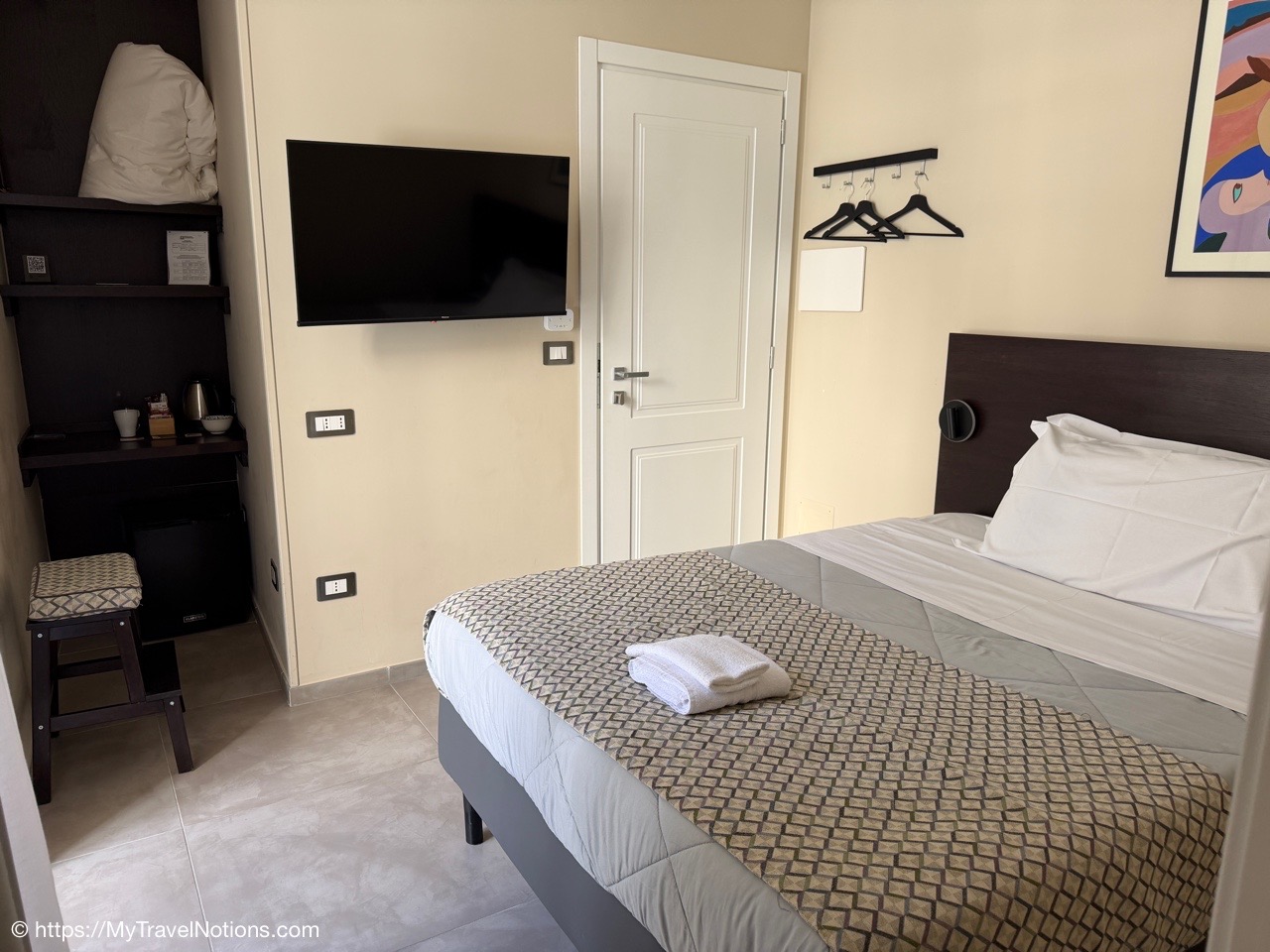
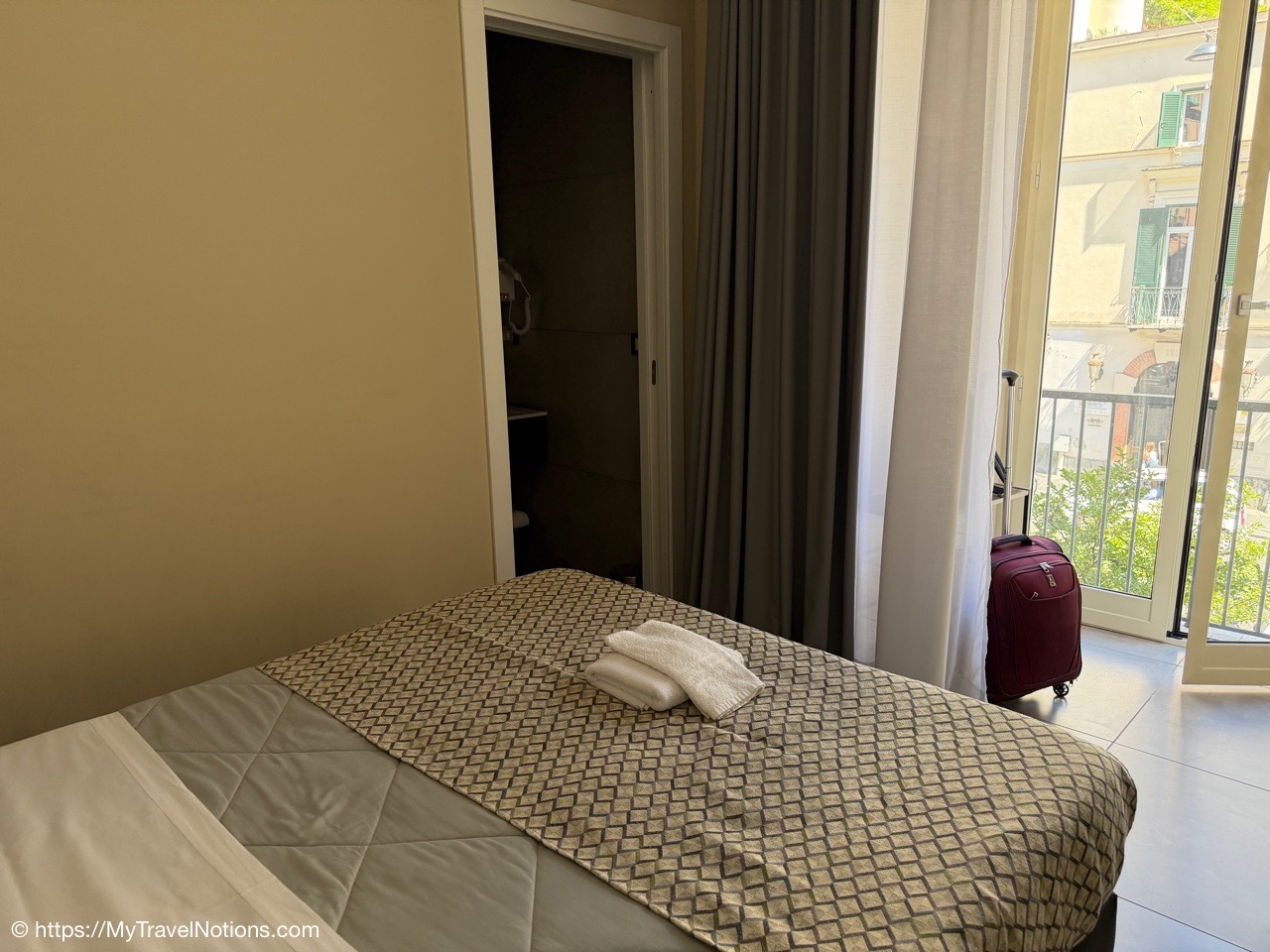
I contacted our host Francesco, where Janet, Rosie and I were staying at the Palm Suites in the Chiaia neighborhood of Naples, and asked if Rosie and I could store our luggage til 3:00 pm since our flight did not leave until the evening. Janet, who was staying at the Palm Suites with us, had already left this morning for her flight back home to San Francisco, but Francesco let me keep my room until 3:00. So,
Alice and John brought their luggage over and the four of us left everything in the room and walked towards the waterfront to get something to eat.
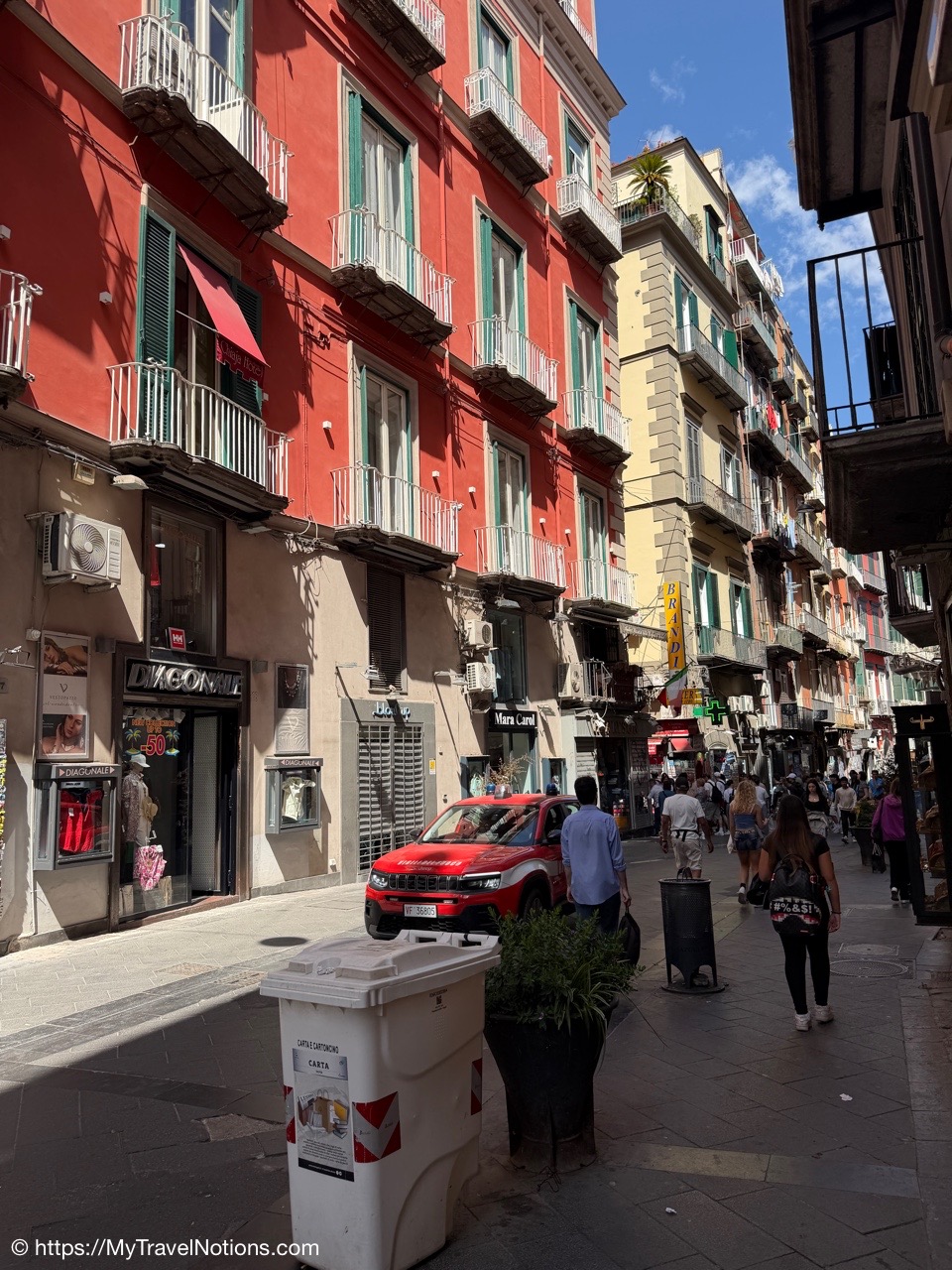
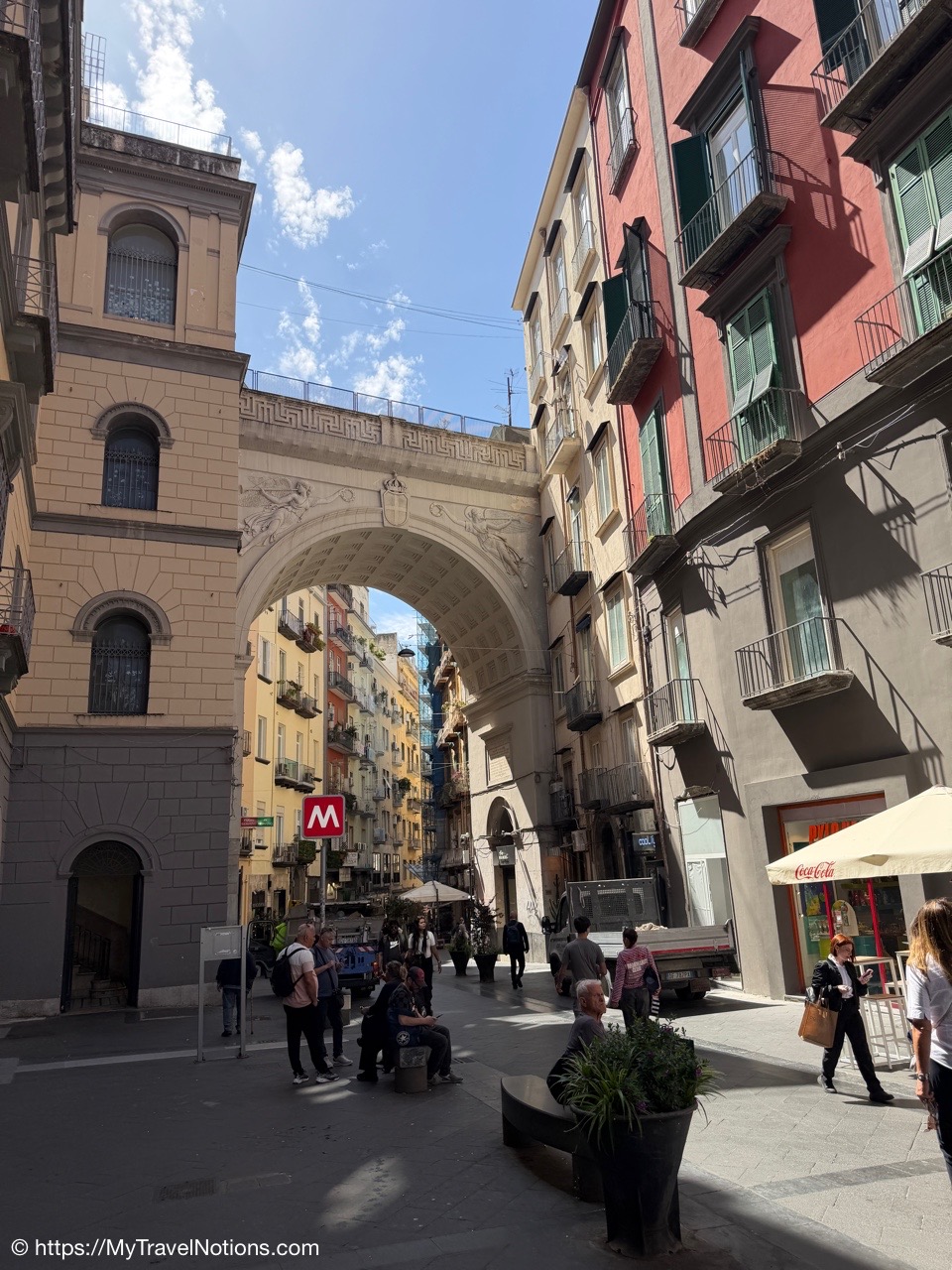
I’ve really enjoyed staying in the Chiaia neighborhood of Naples. Although it’s been a bit of a walk, especially getting to the historic center, it’s still a wonderful place to stay and it’s even close to the waterfront.
Plus, wrapping up our stay in Italy here in Naples with its energetic and authentic vibe has really brought us full circle during our southern Italy experience.
Come walk with us as we say our goodbyes to Naples and Italy…for now.
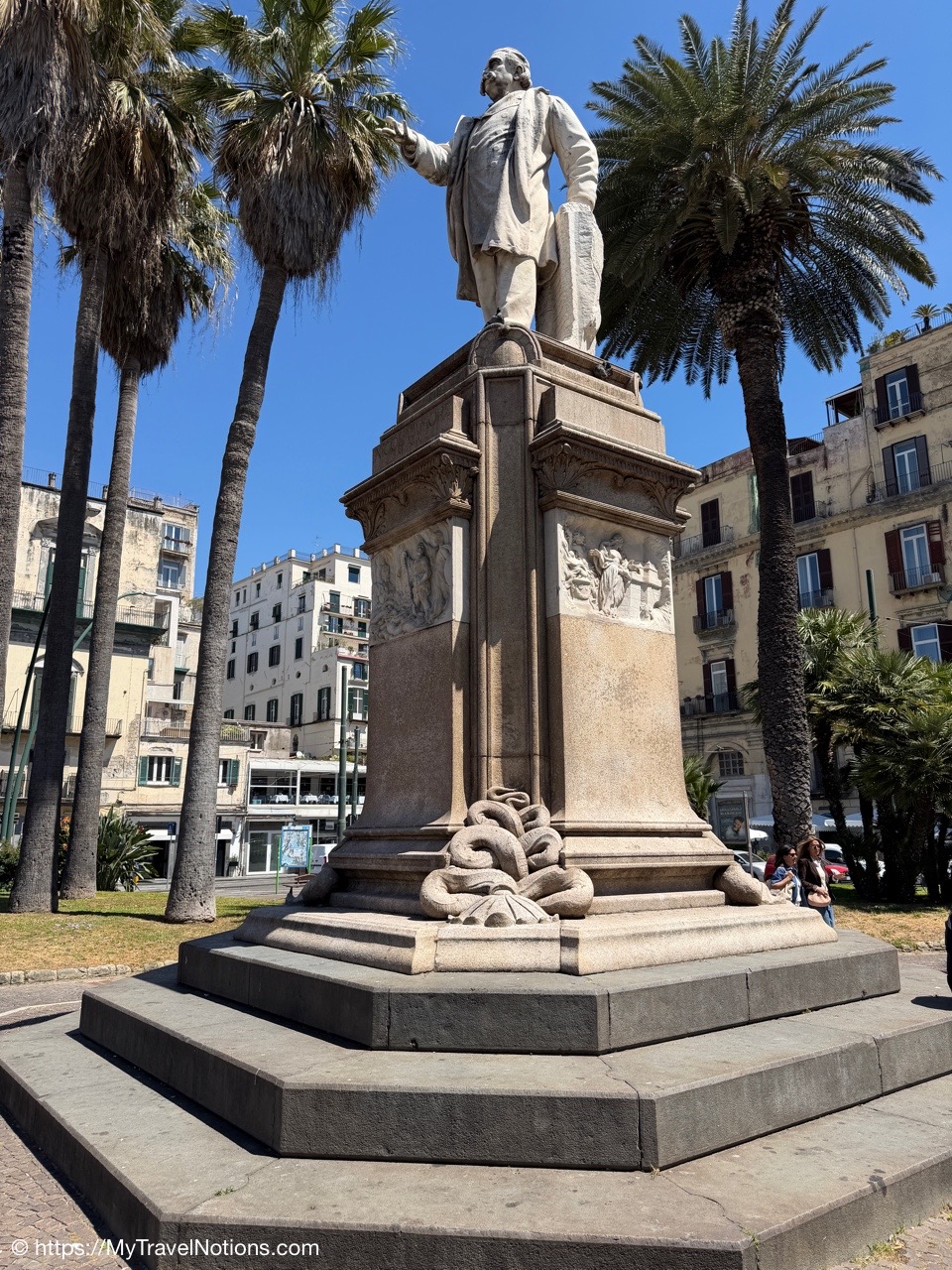
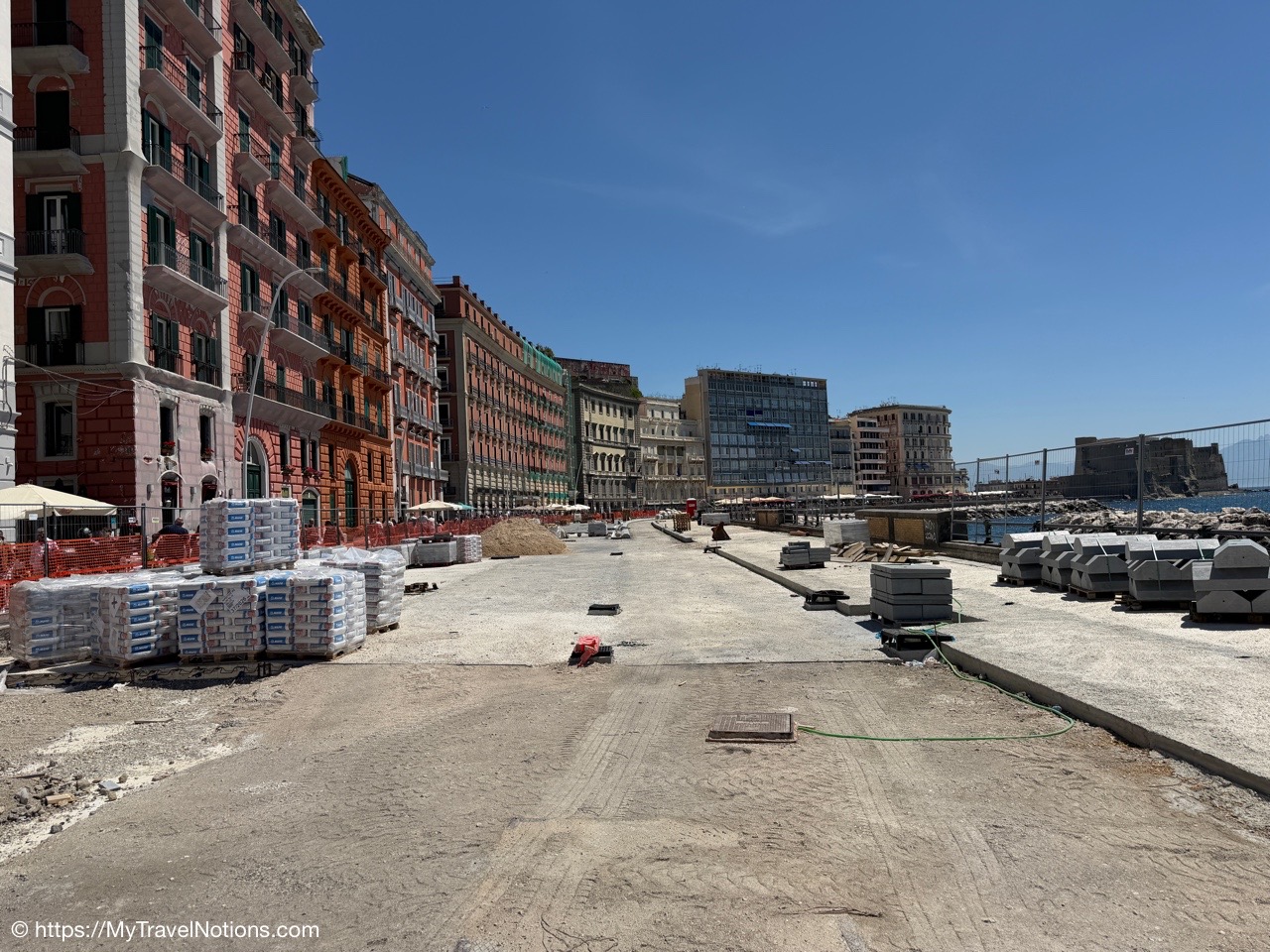
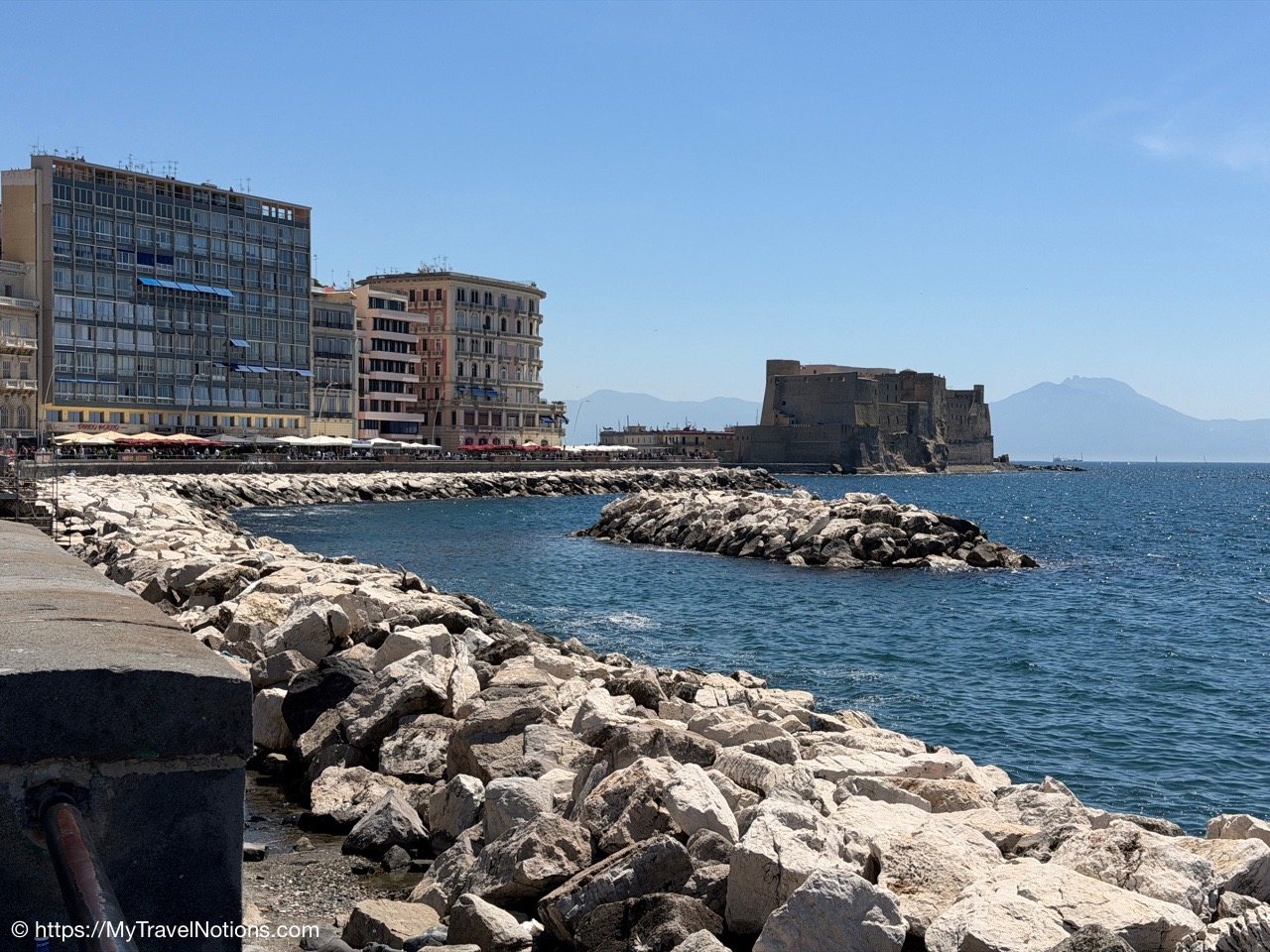
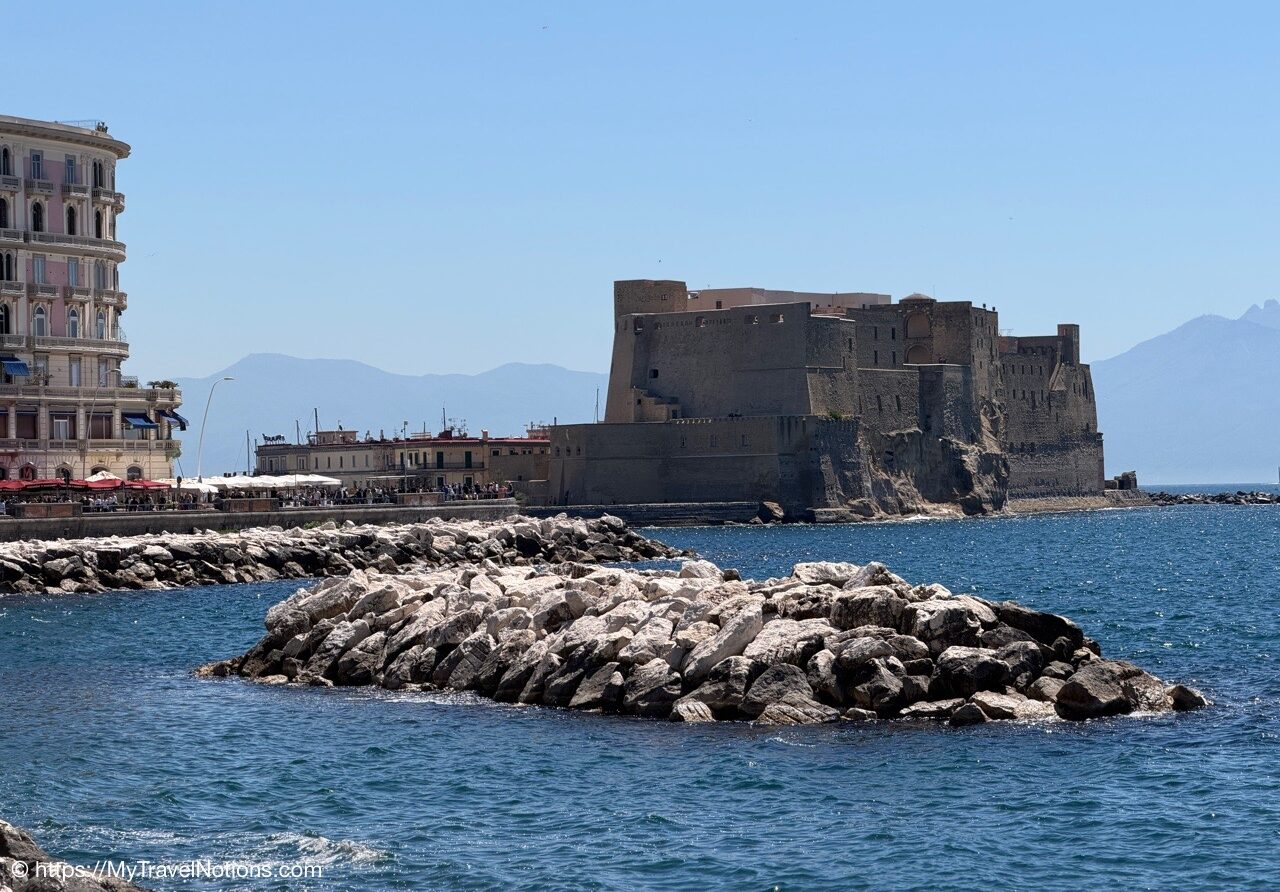
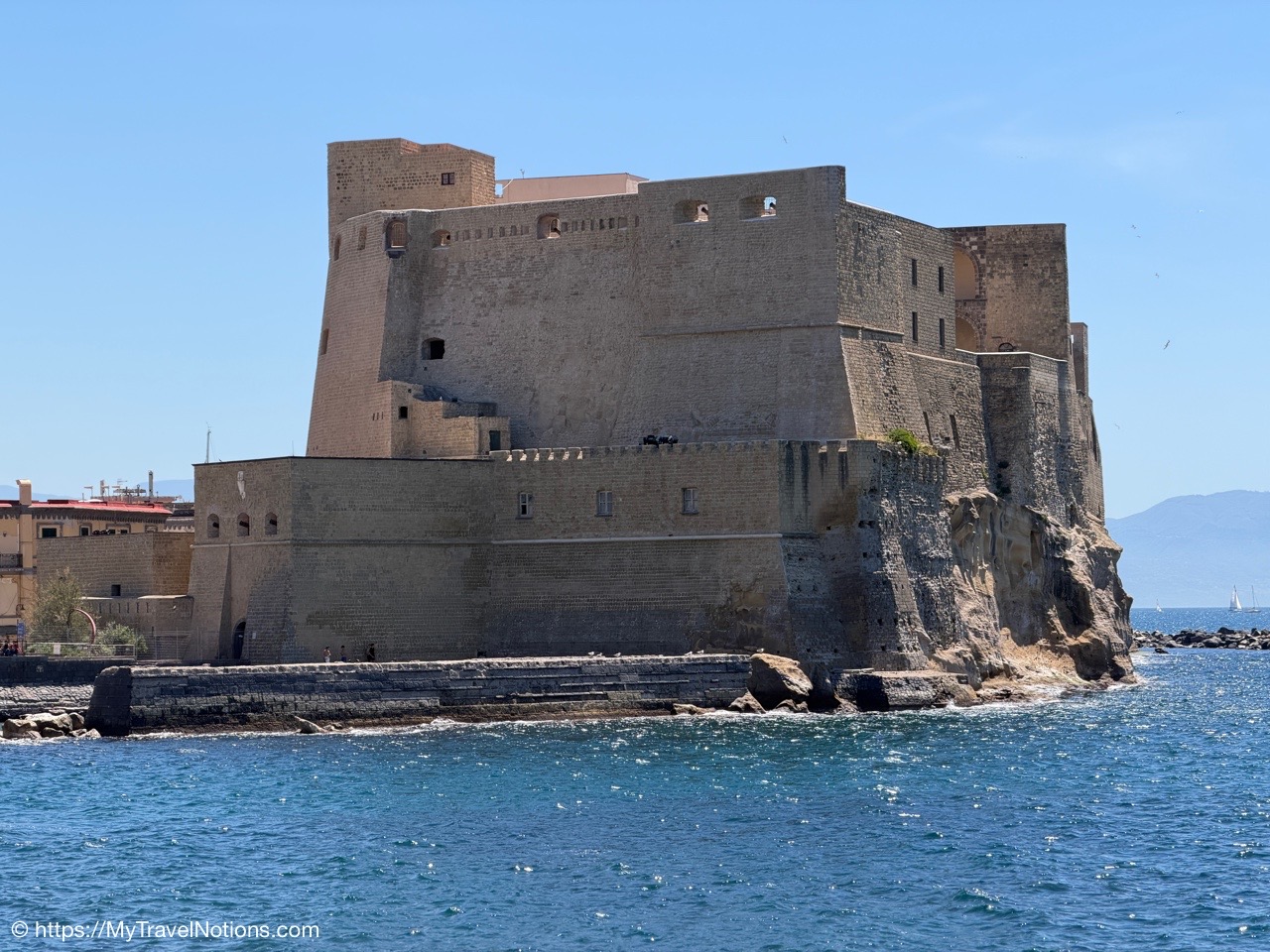
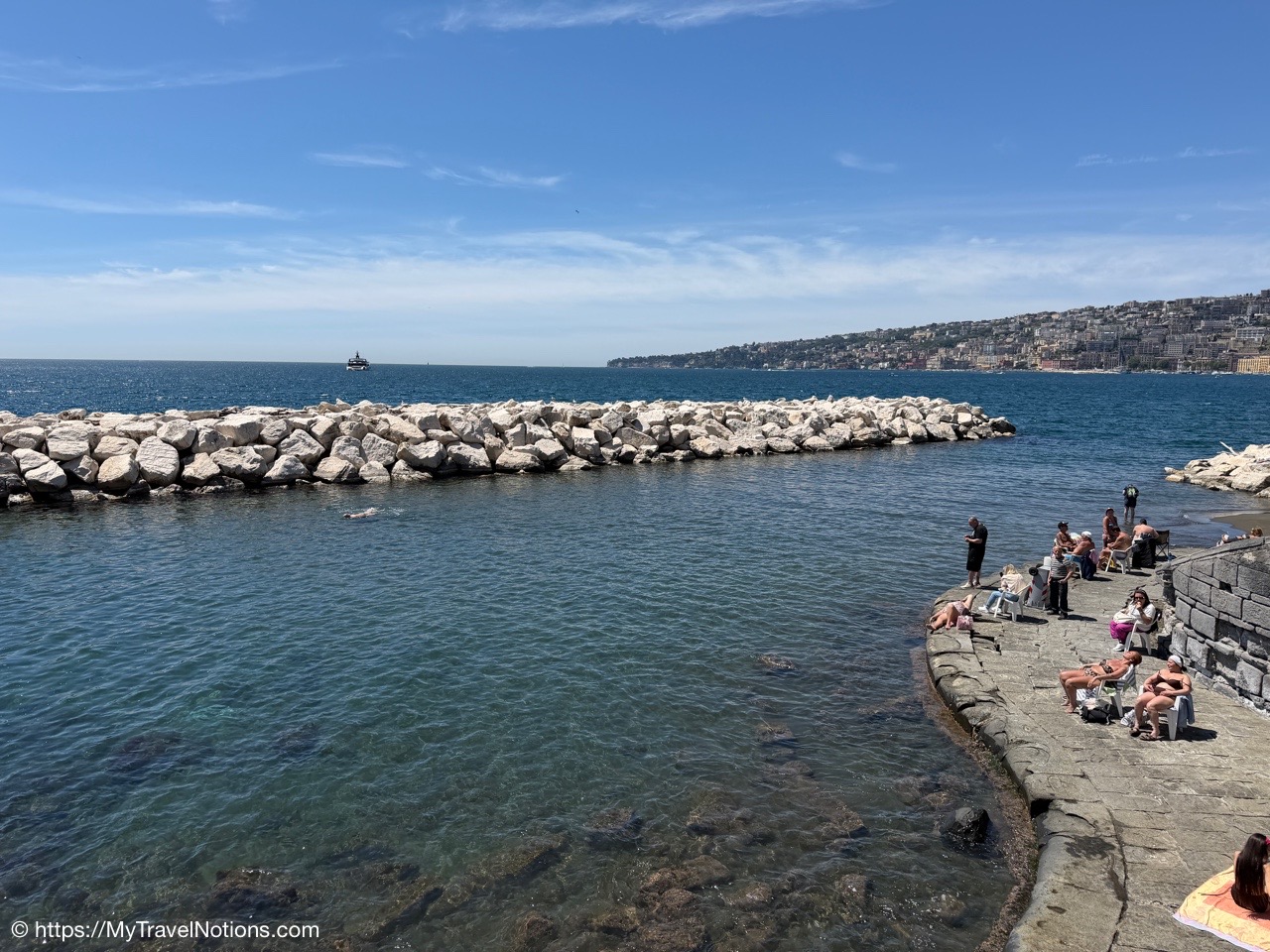
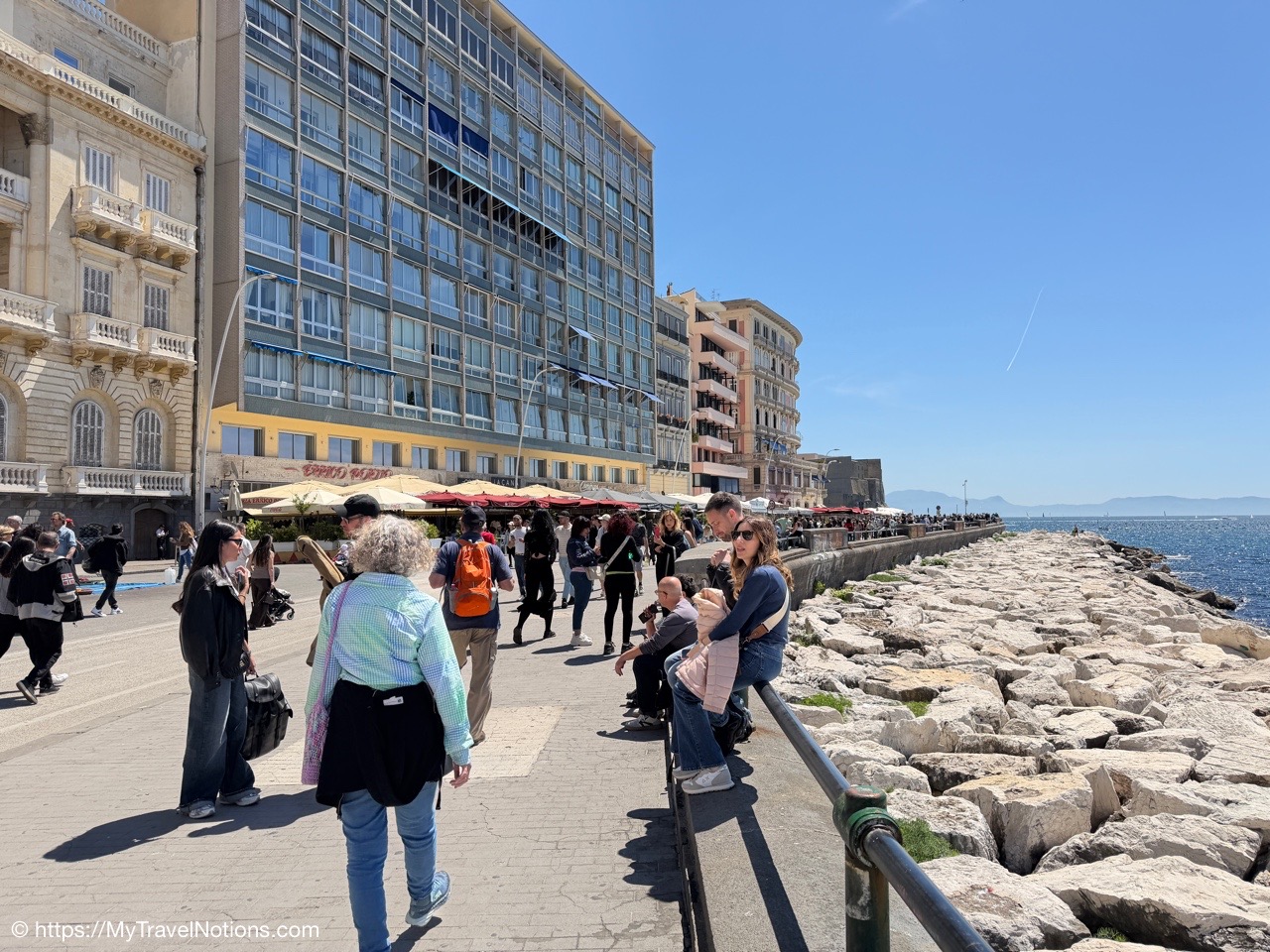
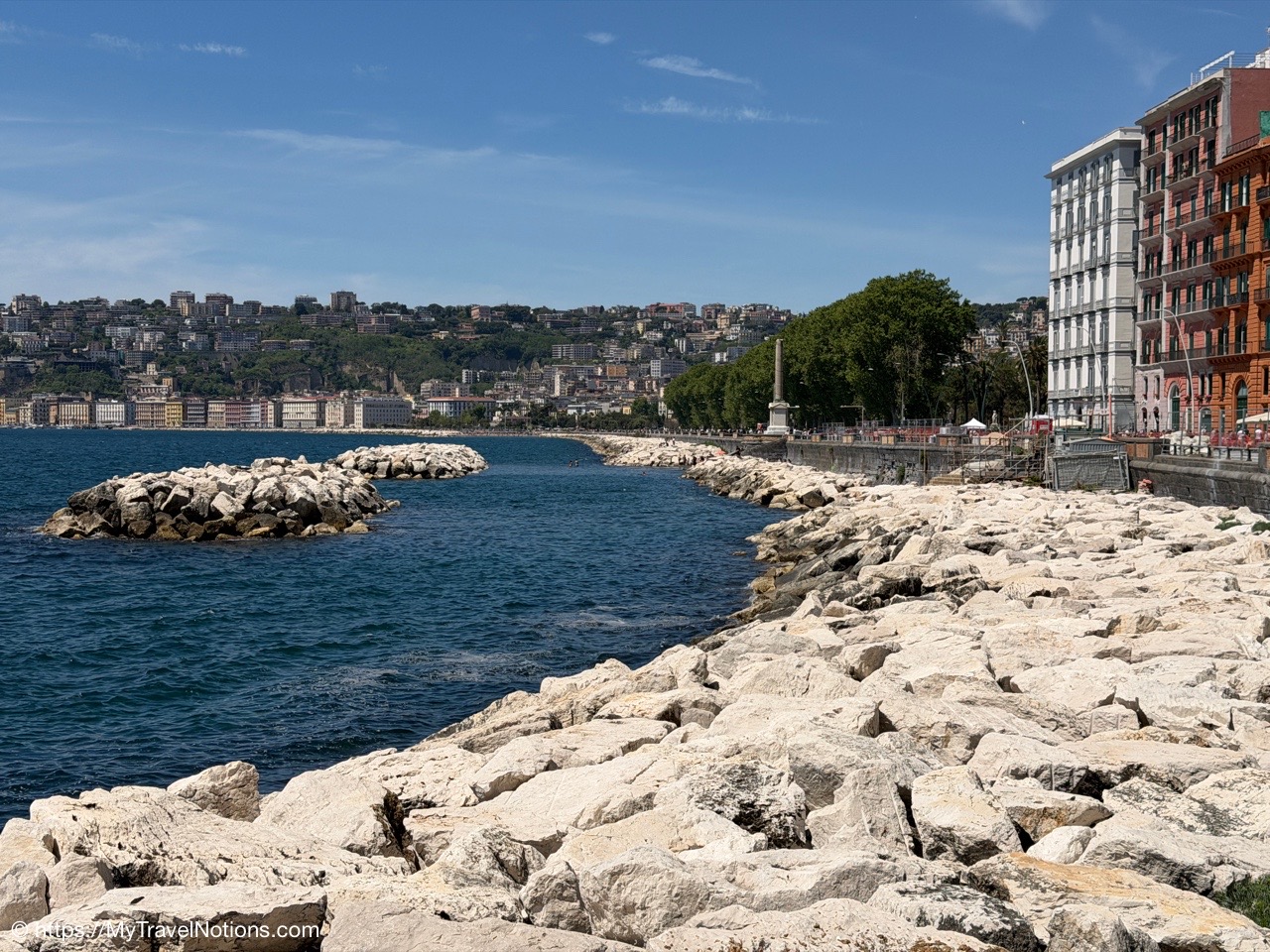
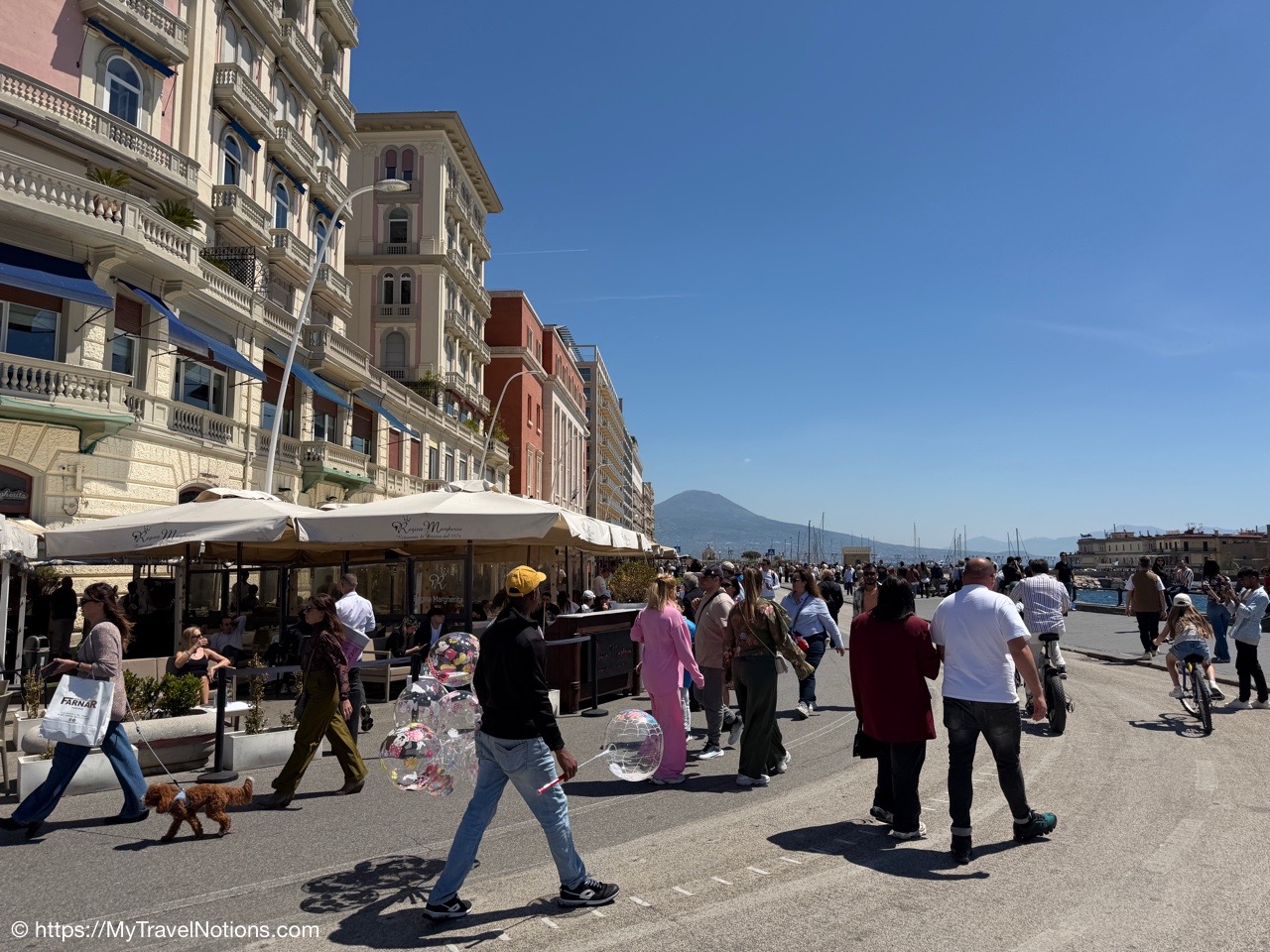
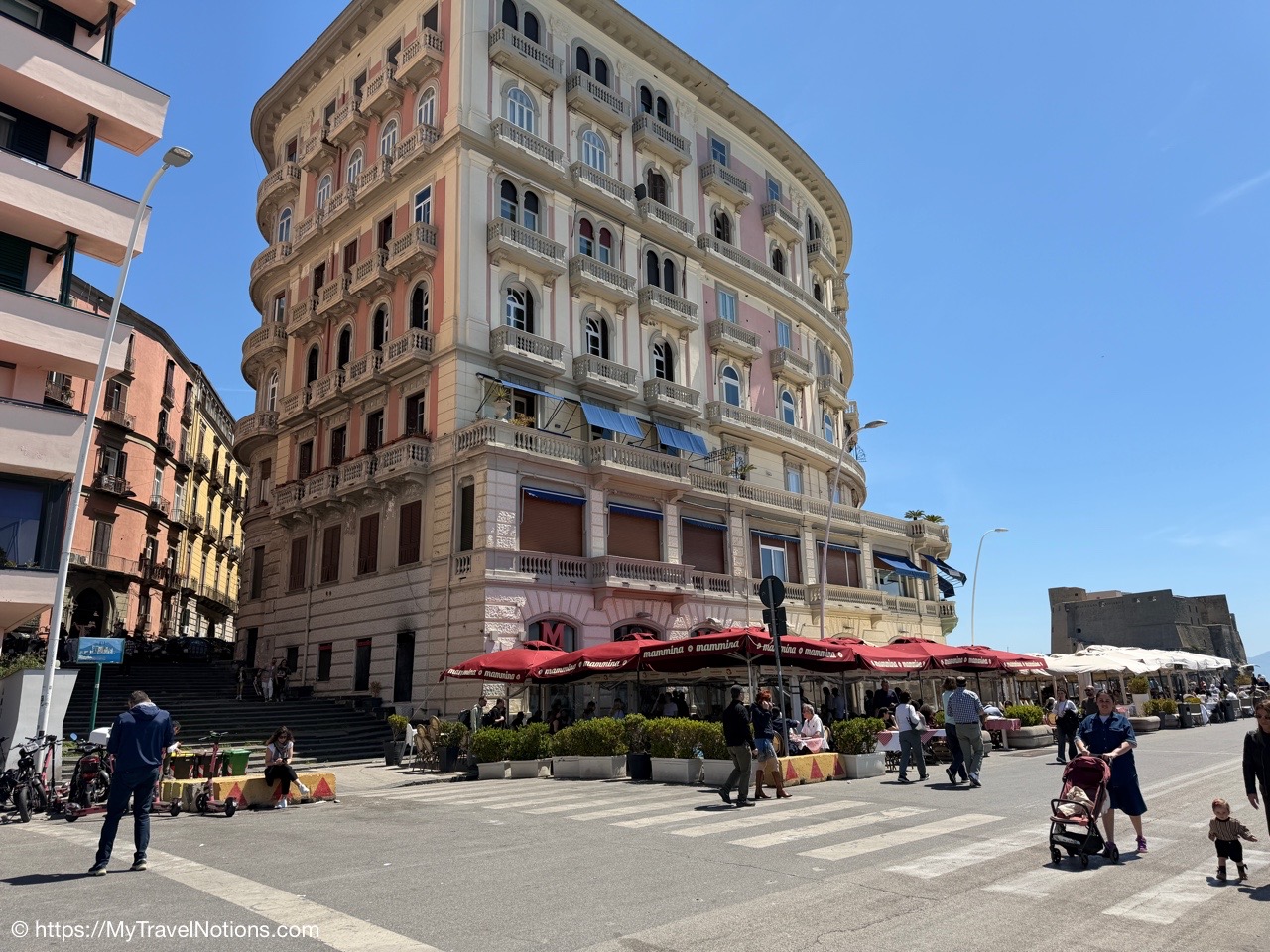
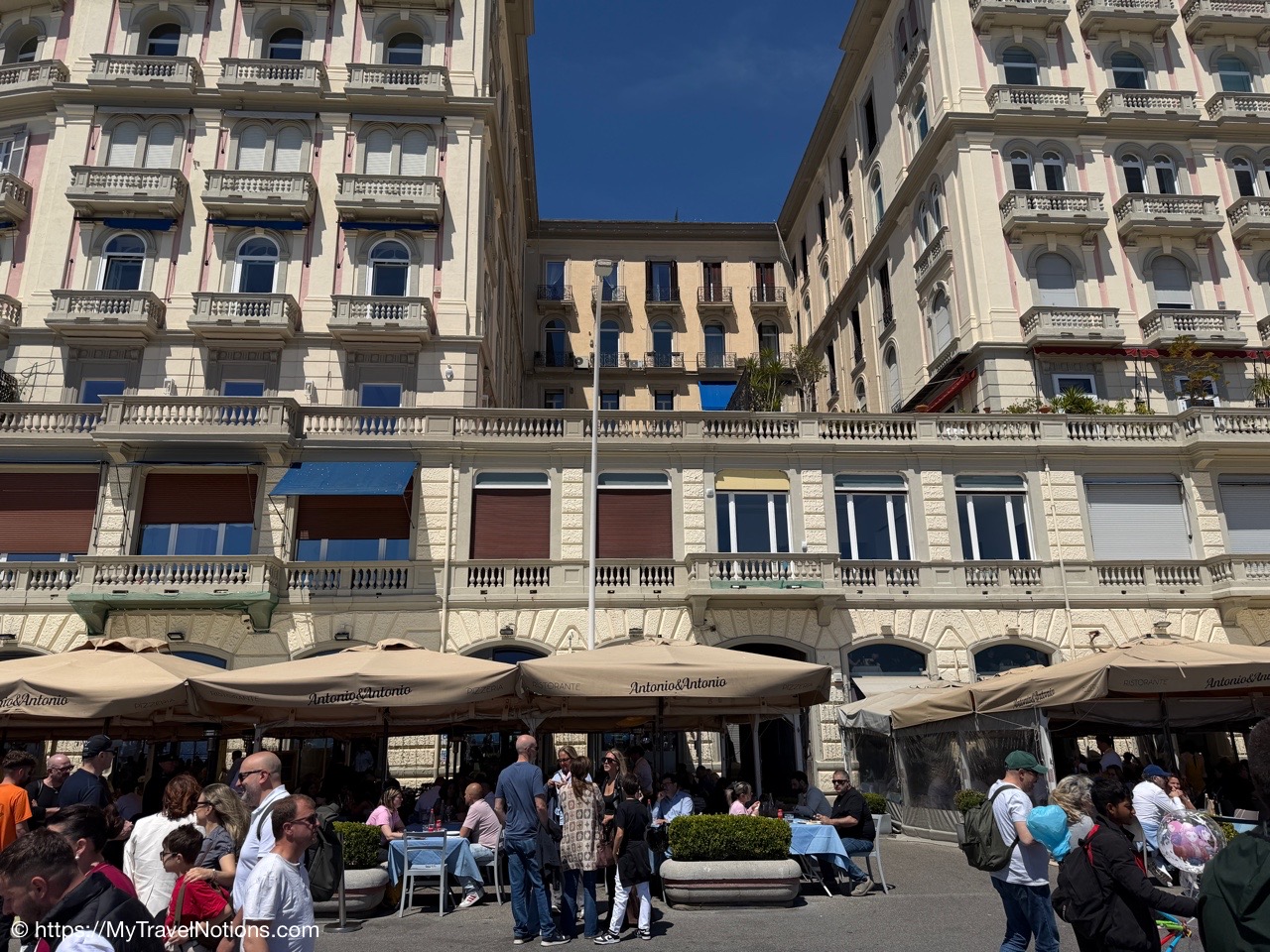
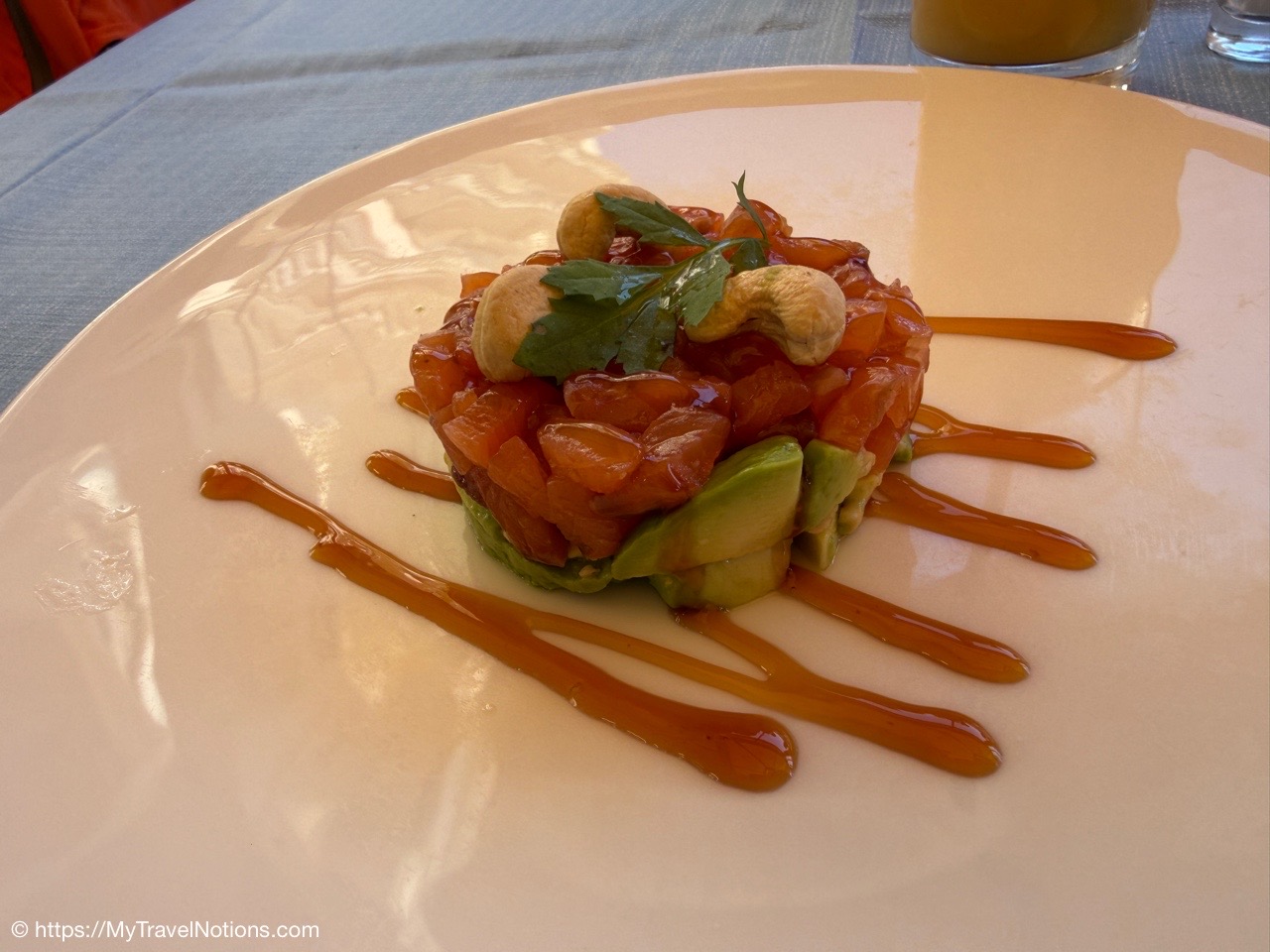
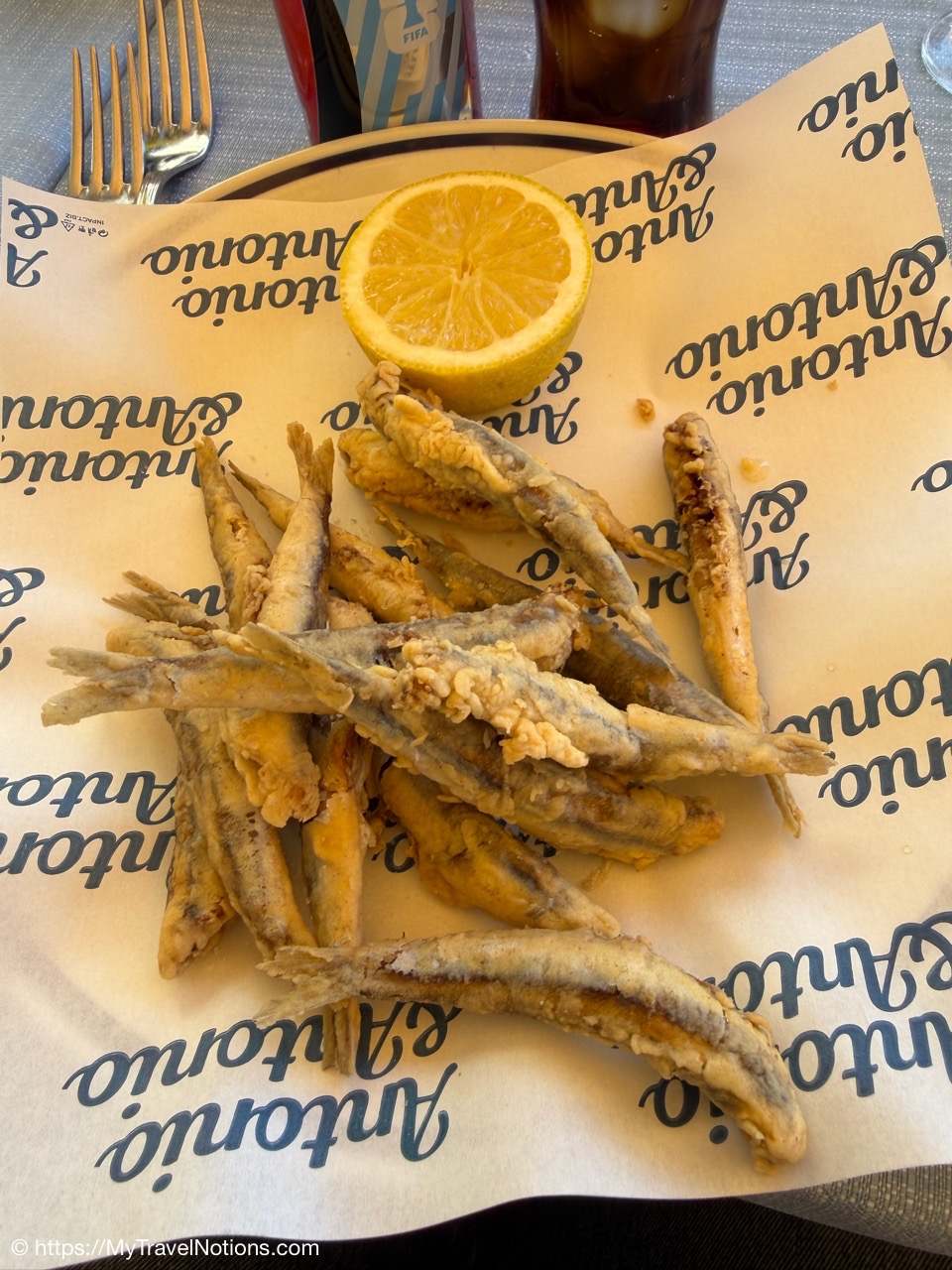
Walking along Via Calabritto, in our Chiaia neighborhood where we stayed, towards the waterfront to find a place to eat. (May 3, 2026)Passing by the monument honoring Nicola Amore, Naples’ former mayor who spearheaded the city’s late-19th-century Risanamento urban renewal at the Piazza della Vittoria, close to the waterfront. Originally erected in the square named after him, it was moved in 1938 to ensure a clear path for a visit by Adolf Hitler. (May 3, 2026)Construction work along a portion of the pedestrian-friendly Partenope waterfront promenade offering picturesque views of the Gulf of Naples. (May 3, 2026)Walking along the pedestrian-friendly Partenope waterfront promenade offering picturesque views of the Gulf of Naples, Mount Vesuvius, and the historic Castel dell’Ovo. (May 3, 2026)Walking along the pedestrian-friendly Partenope waterfront promenade offering picturesque views of the Gulf of Naples, Mount Vesuvius, and the historic Castel dell’Ovo. (May 3, 2026)The seafront Castel dell’Ovo is the oldest castle in Naples. Castel dell’Ovo (“Egg Castle”), the oldest castle in Naples is located on the former island of Megaride, now a peninsula, on the Gulf of Naples. (May 3, 2026)Views while walking along the pedestrian-friendly Partenope waterfront promenade offering picturesque views of the Gulf of Naples. (May 3, 2026)Walking along the pedestrian-friendly Partenope waterfront promenade offering picturesque views of the Gulf of Naples, Mount Vesuvius, and the historic Castel dell’Ovo. This portion of the street, beyond the construction offers lively outdoor dining and upscale hotels. (May 3, 2026)Views while walking along the pedestrian-friendly Partenope waterfront promenade offering picturesque views of the Gulf of Naples. (May 3, 2026)Walking along the pedestrian-friendly Partenope waterfront promenade offering picturesque views of the Gulf of Naples, Mount Vesuvius, and the historic Castel dell’Ovo. This portion of the street, beyond the construction offers lively outdoor dining and upscale hotels. (May 3, 2026)Walking along the pedestrian-friendly Partenope waterfront promenade offering picturesque views of the Gulf of Naples, Mount Vesuvius, and the historic Castel dell’Ovo. This portion of the street, beyond the construction offers lively outdoor dining and upscale hotels. (May 3, 2026)We decided to stop at Antonio & Antonio, along the pedestrian-friendly Partenope waterfront promenade in Naples for lunch. (May 3, 2026)Alice and Rosie had the Salmon tartare with avocado, toasted cashews and teriyaki sauce at Antonio & Antonio, along the pedestrian-friendly Partenope waterfront promenade in Naples for lunch. (May 3, 2026)The creature of habit in me had to recreate last night’s dinner of fried anchovies but this time it was for lunch at Antonio & Antonio, along the pedestrian-friendly Partenope waterfront promenade in Naples for lunch. (May 3, 2026)And another repeat performance for me was this bruschetta at Antonio & Antonio, along the pedestrian-friendly Partenope waterfront promenade in Naples for lunch. (May 3, 2026)We took a taxi, from the taxi stand across the street from the Palm Suites, to the Naples International Airport for our direct flight to Krakow, Poland. (May 3, 2026)











Thank you for reaching out.