It was a food walking tour like no other for our first full day in Toulouse and a good-bye dinner, for now, with John as he heads back home to Seattle.
And, the food tour was actually one of the best, as far as historical information and good food curated and prepared by a chef, that I’ve taken. And, I’ve taken a number of food tours in a variety of cities and countries. It was different, informative, tasty and fun during our “Toulouse Food Walking Tour with a Chef ”. And that Chef, Alex, made the 4-hour walking tour a breeze.
If you’re in Toulouse and want to eat some good French pastries, cheese, a meal, wine and desert along with learning a bit of history, this is the tour for you.
He even sent an email recap of the tour, most of which I’m using in this post. Thank you Alex.
Let’s enjoy Toulouse highlights, Alex’s stories and some delicious yums. And, even though a member of our group is heading home, lifting a glass to John as he makes his way safely home.
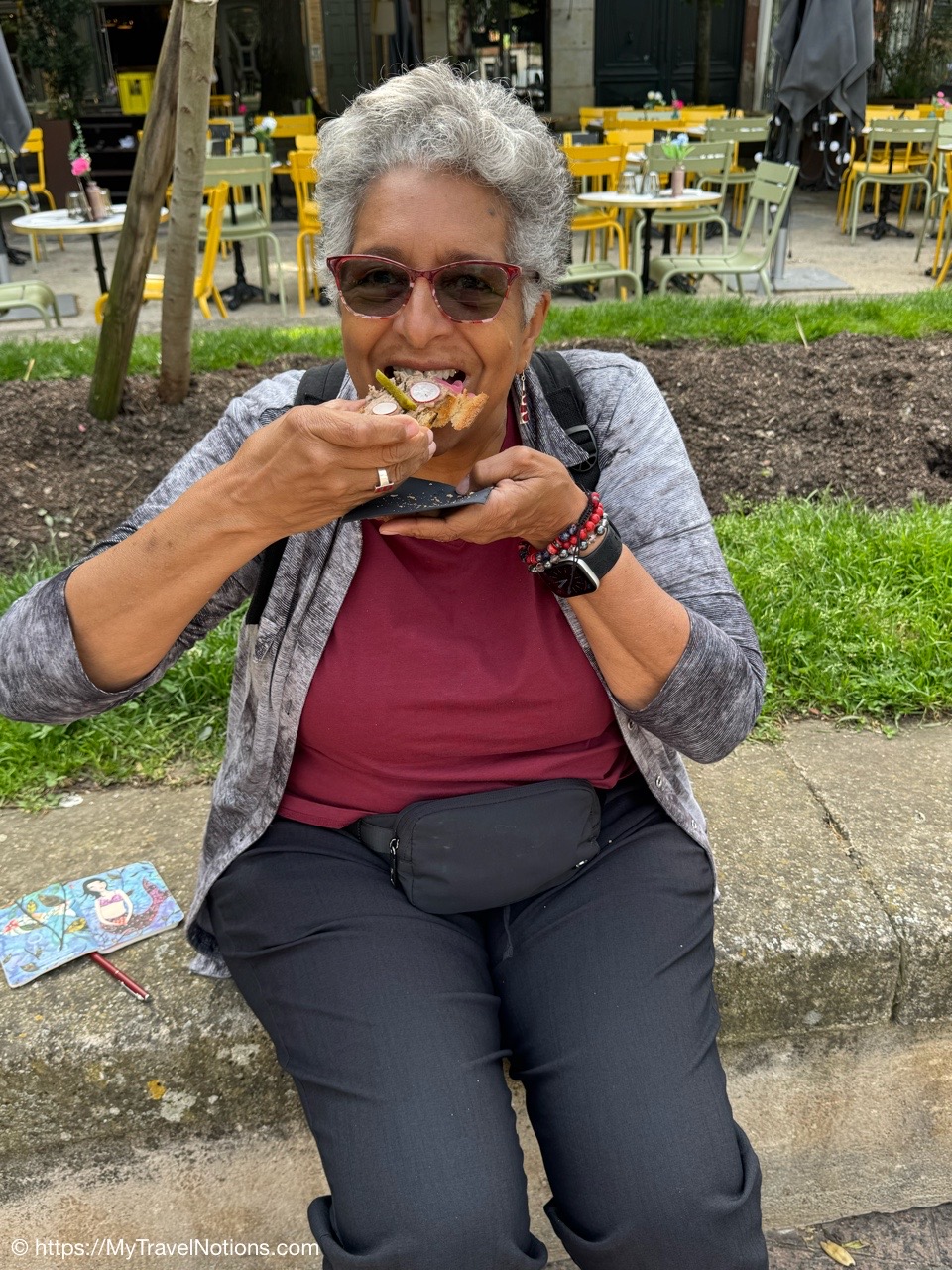
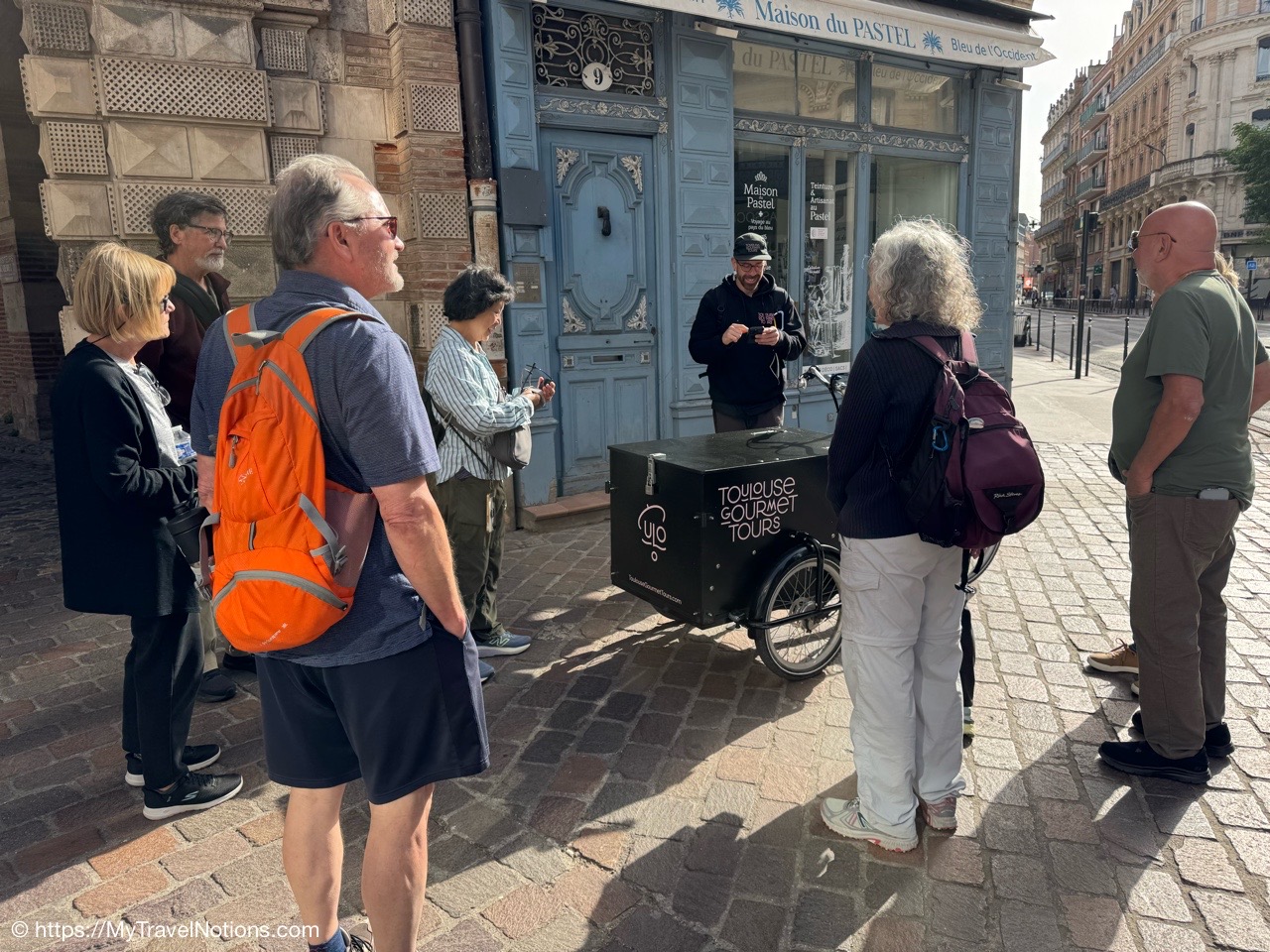
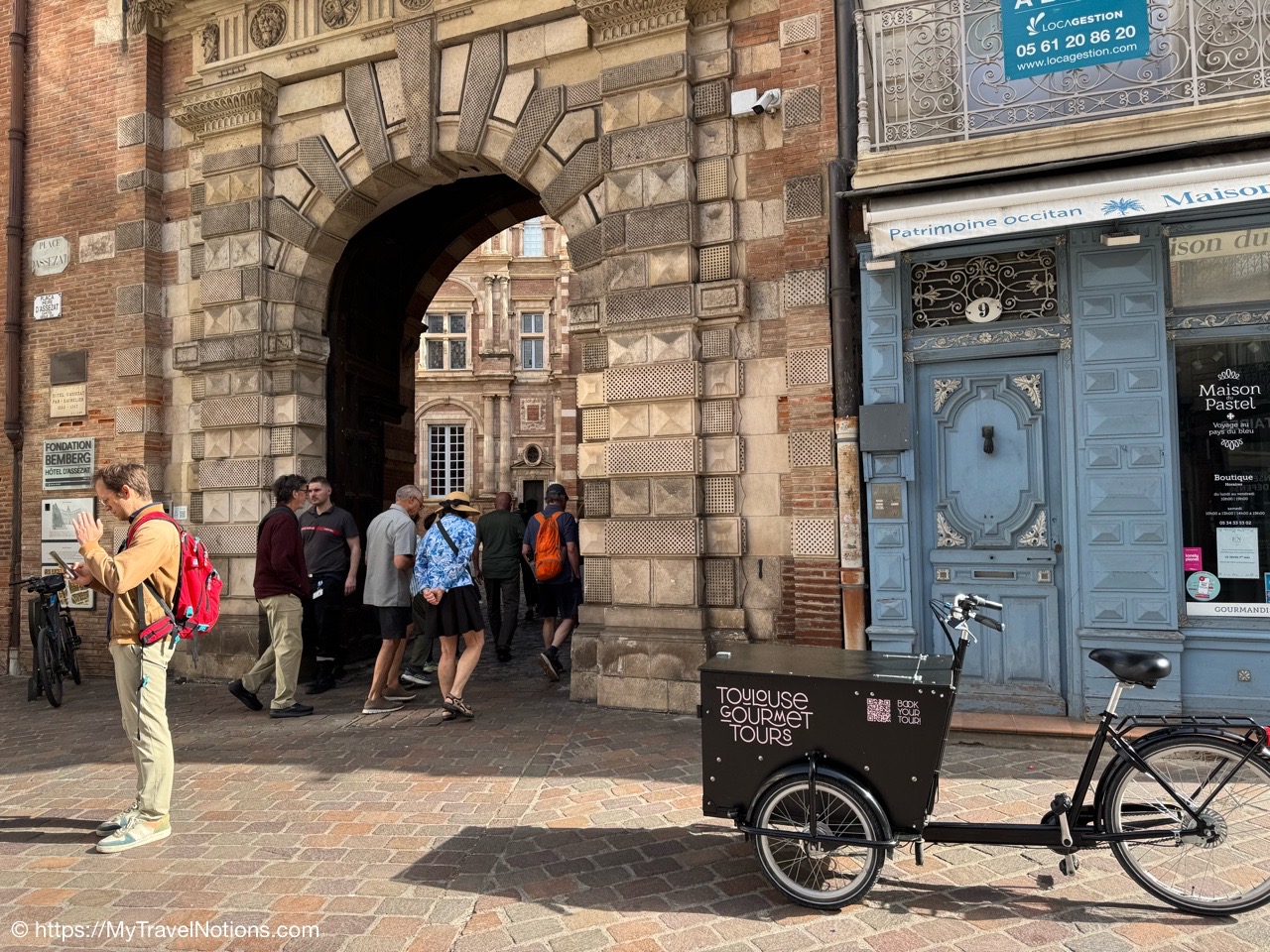
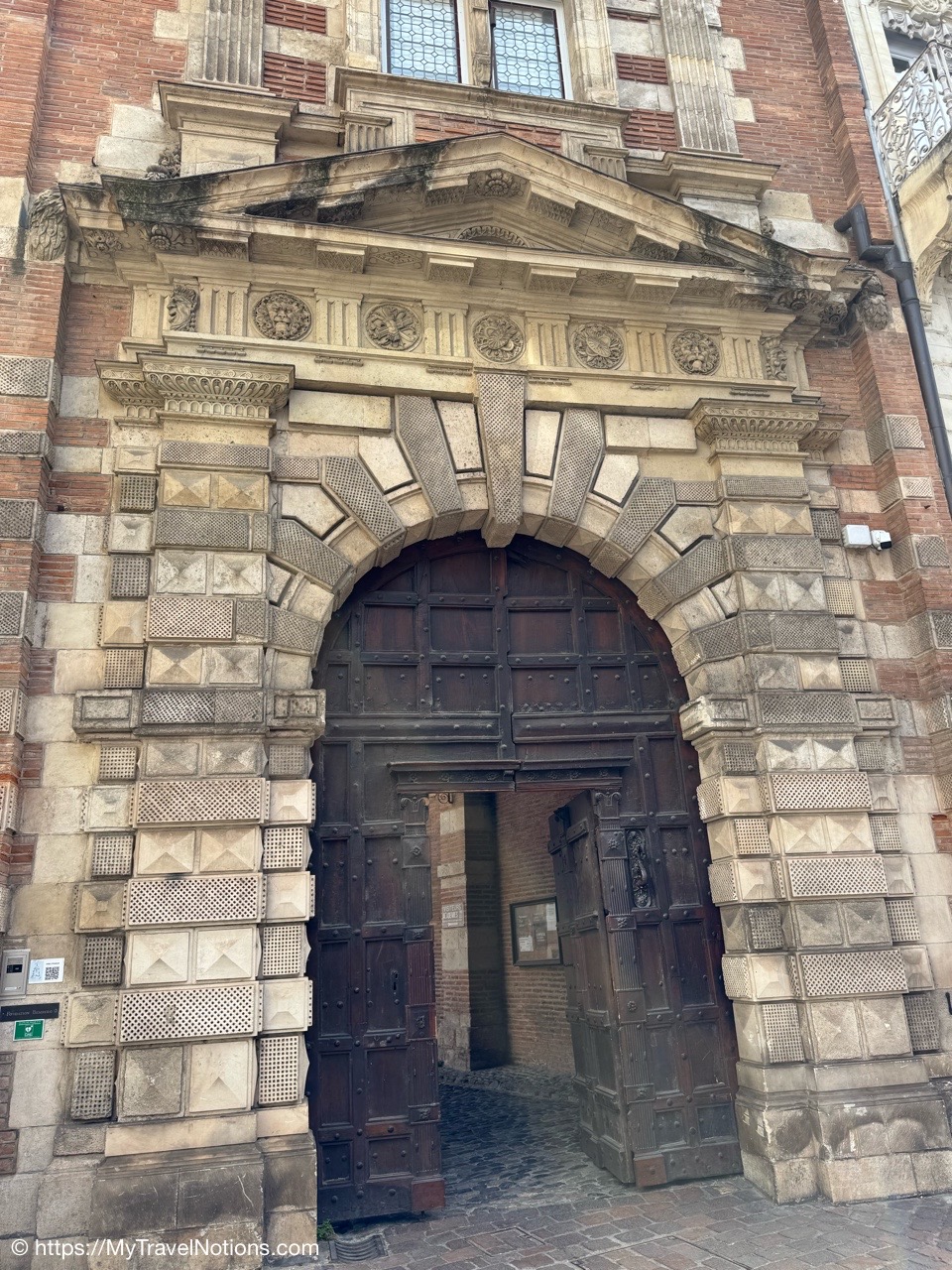
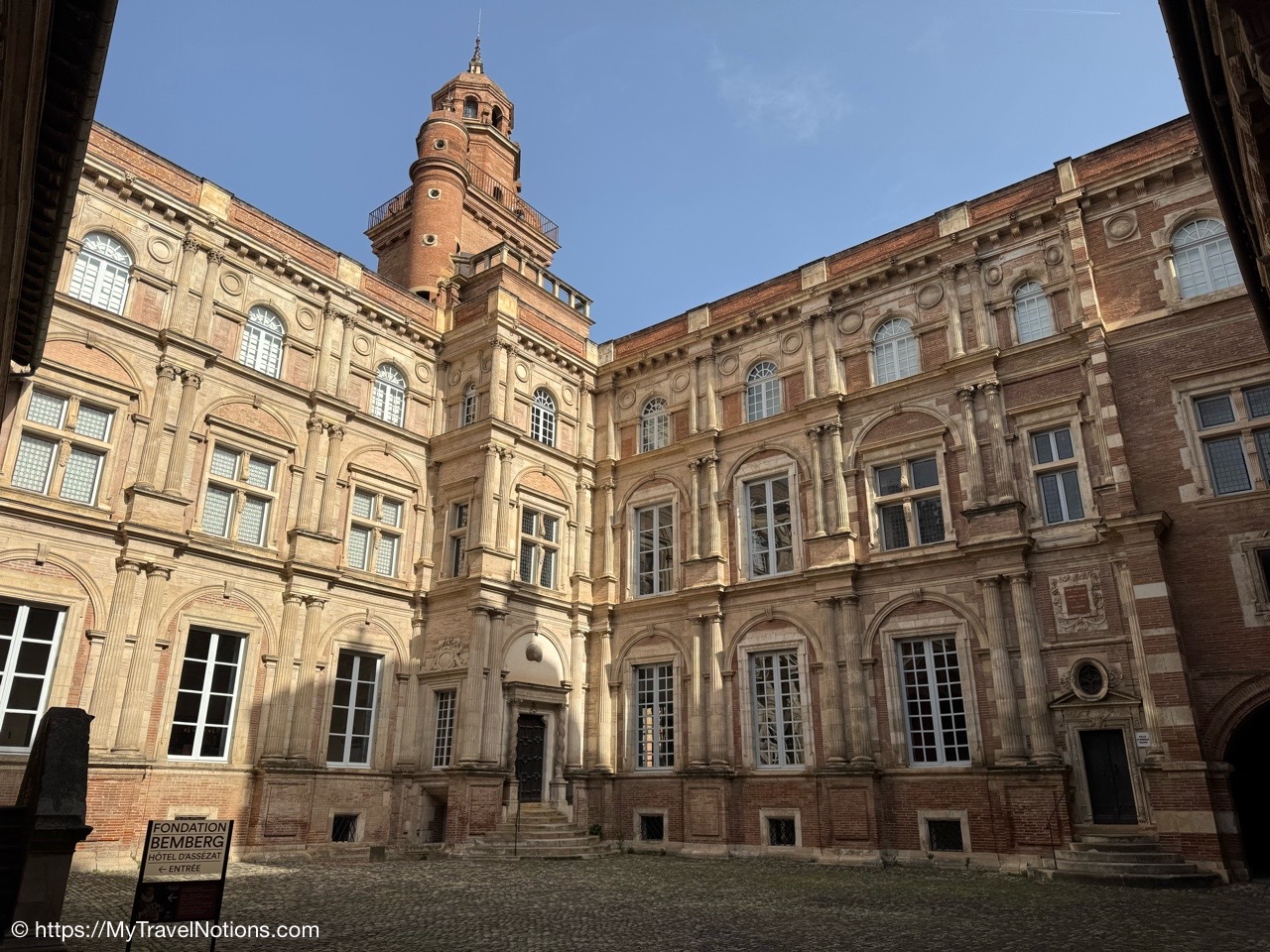
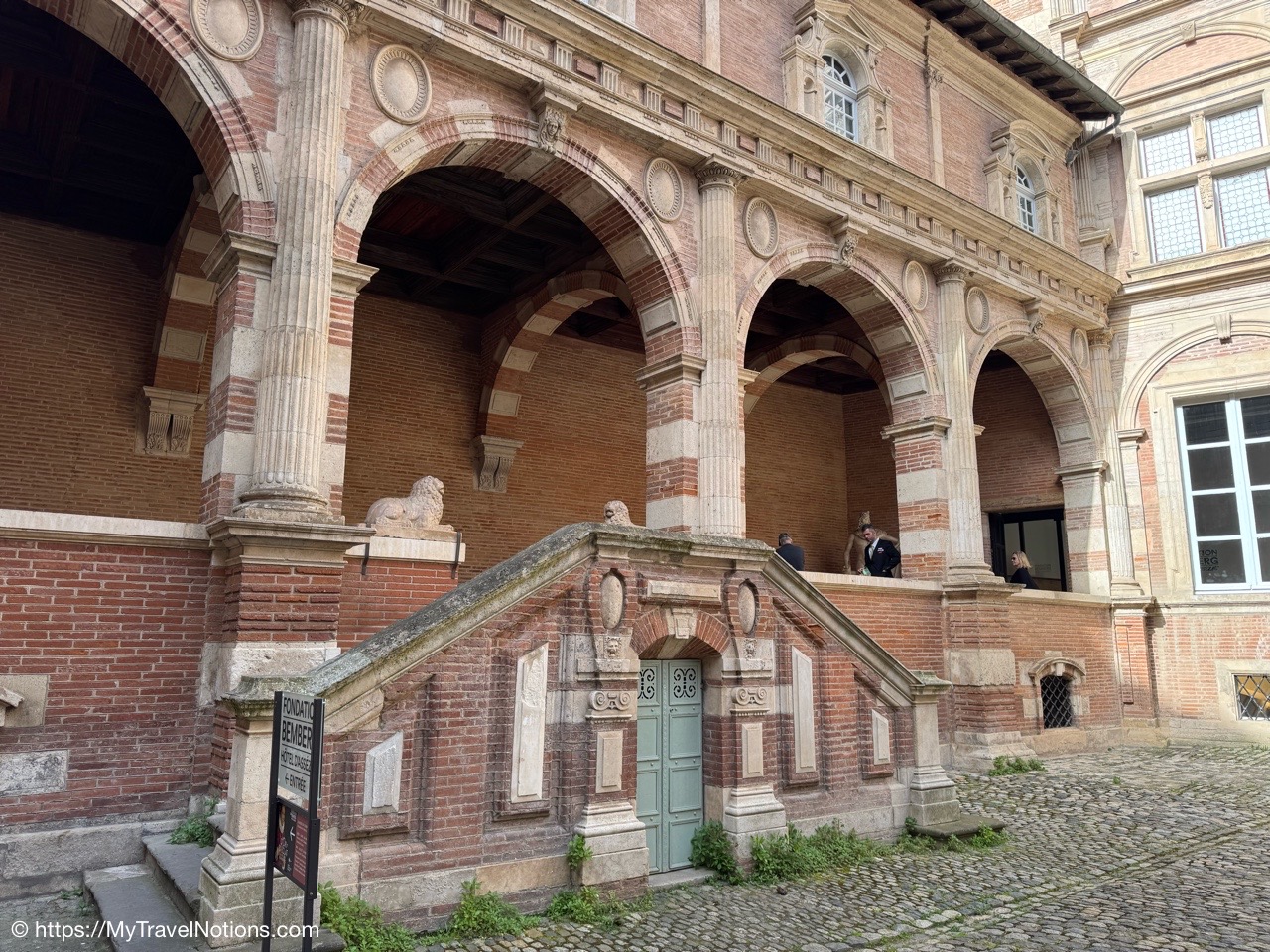
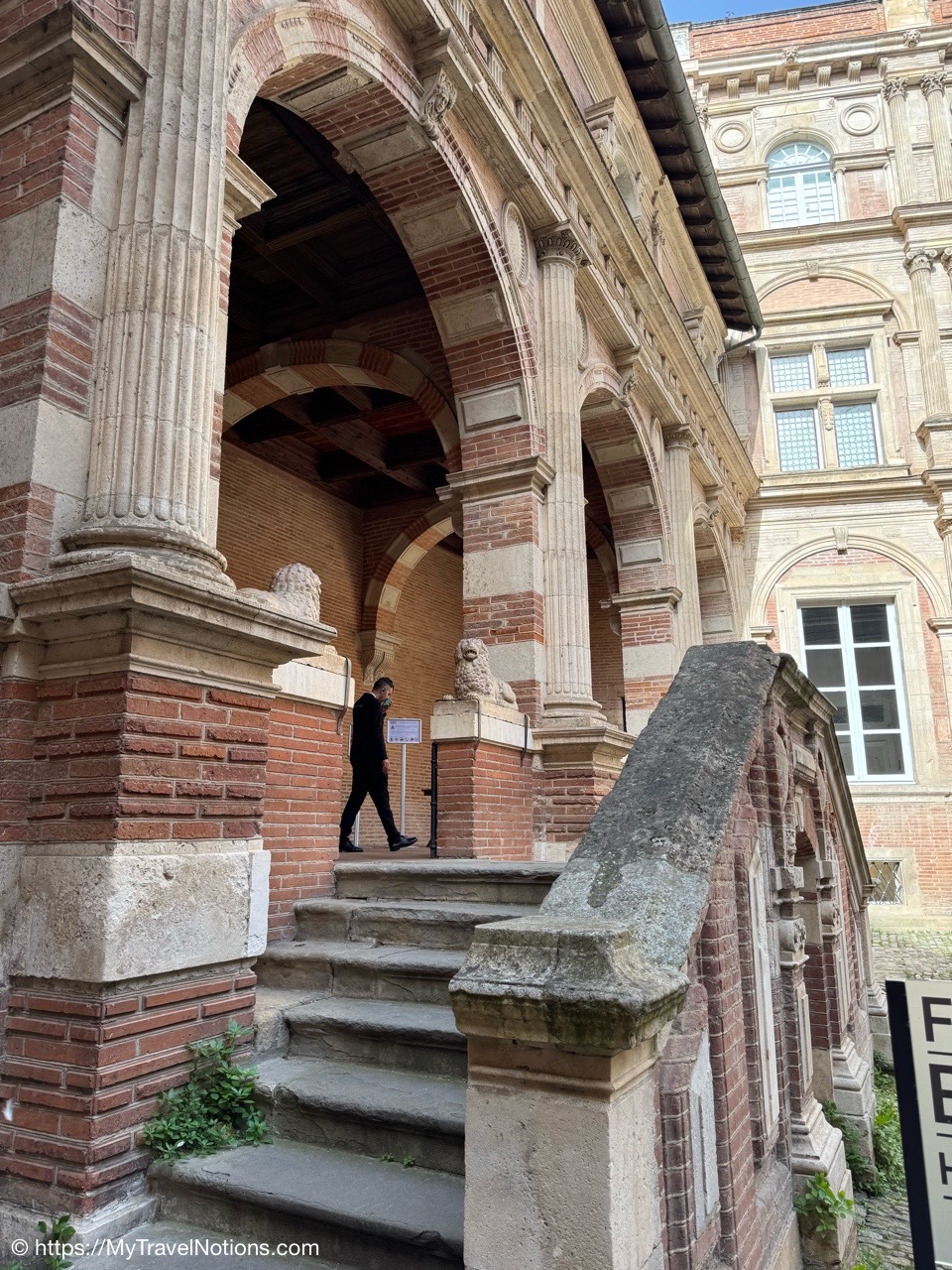
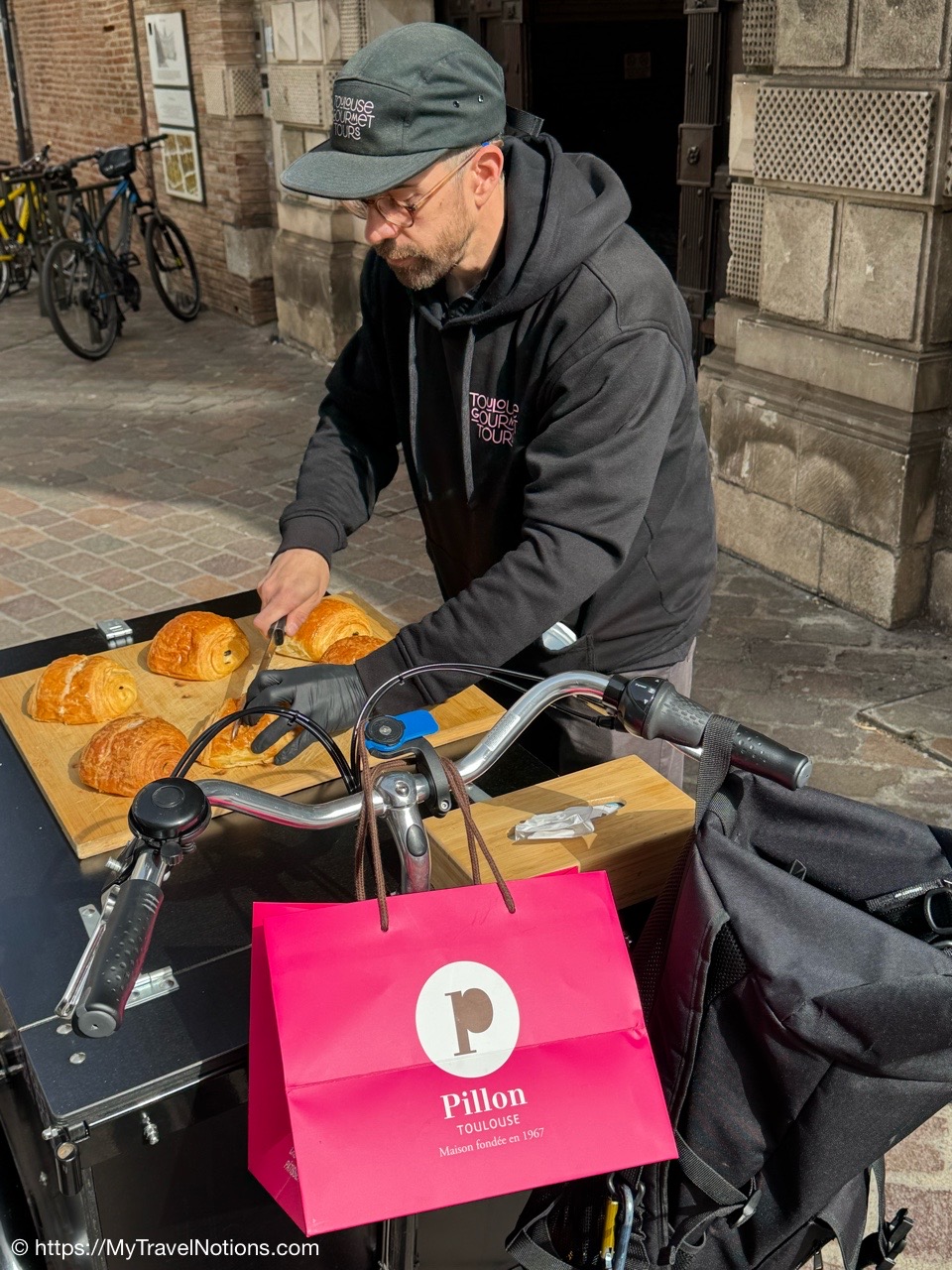
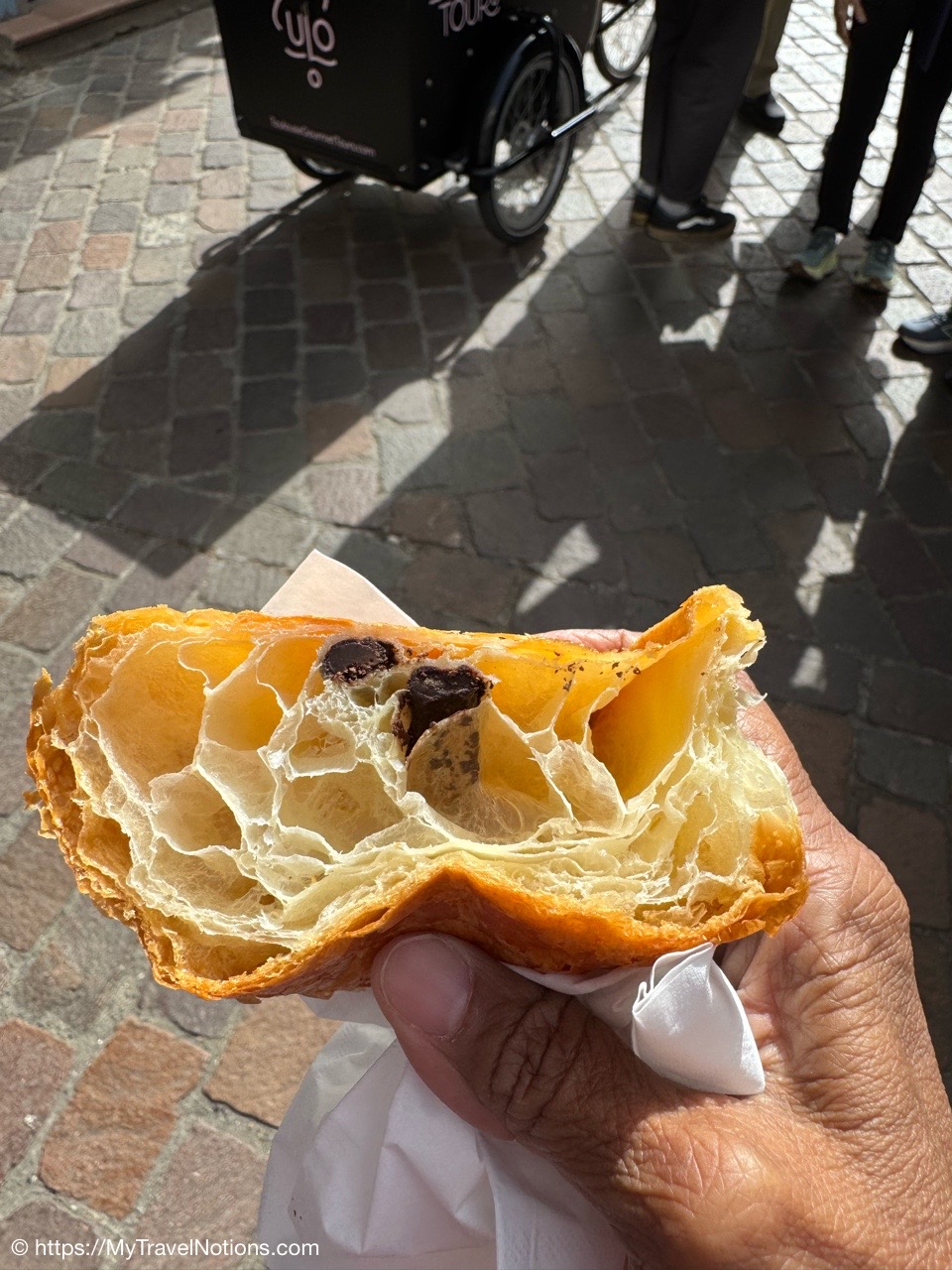
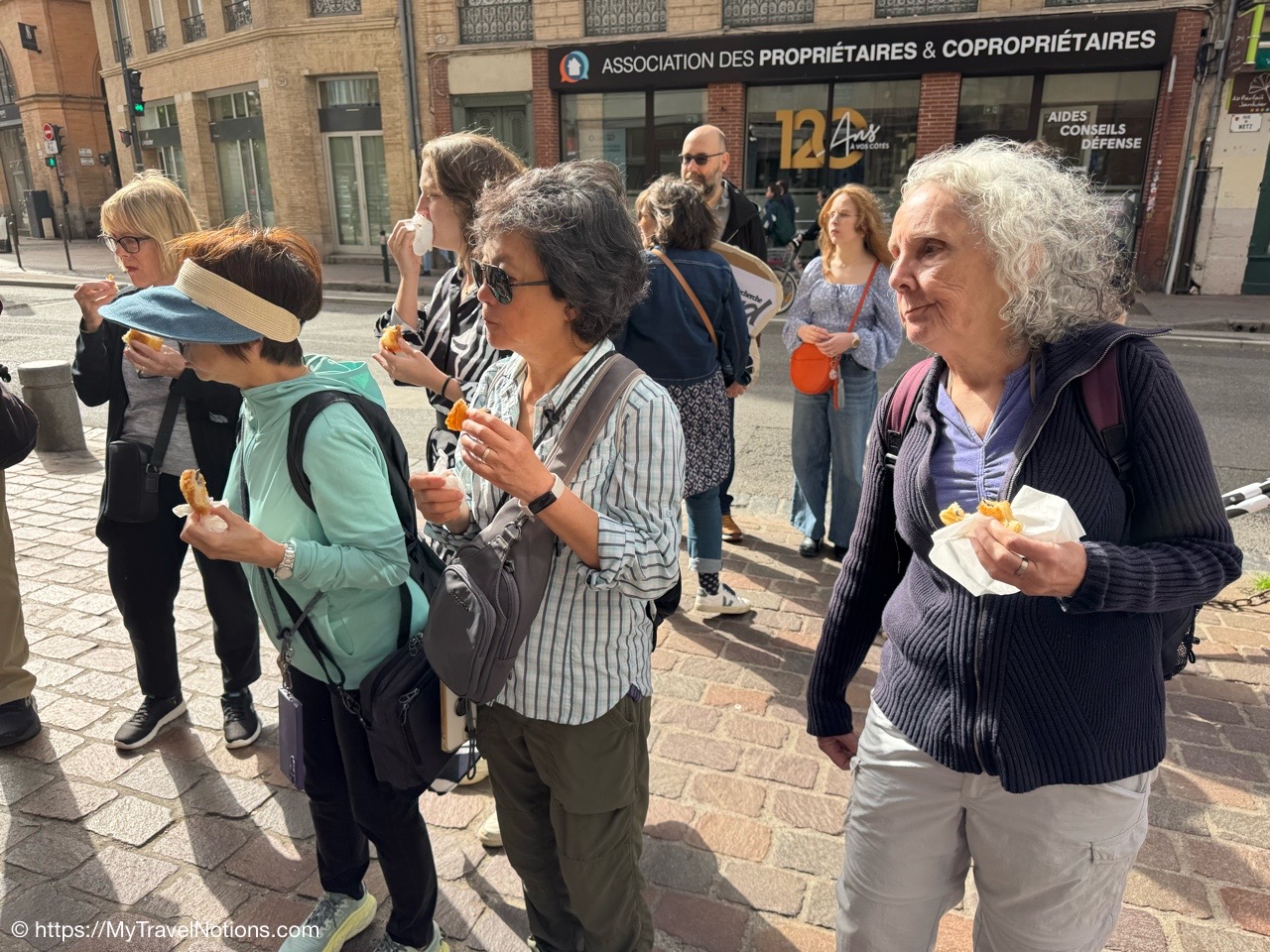
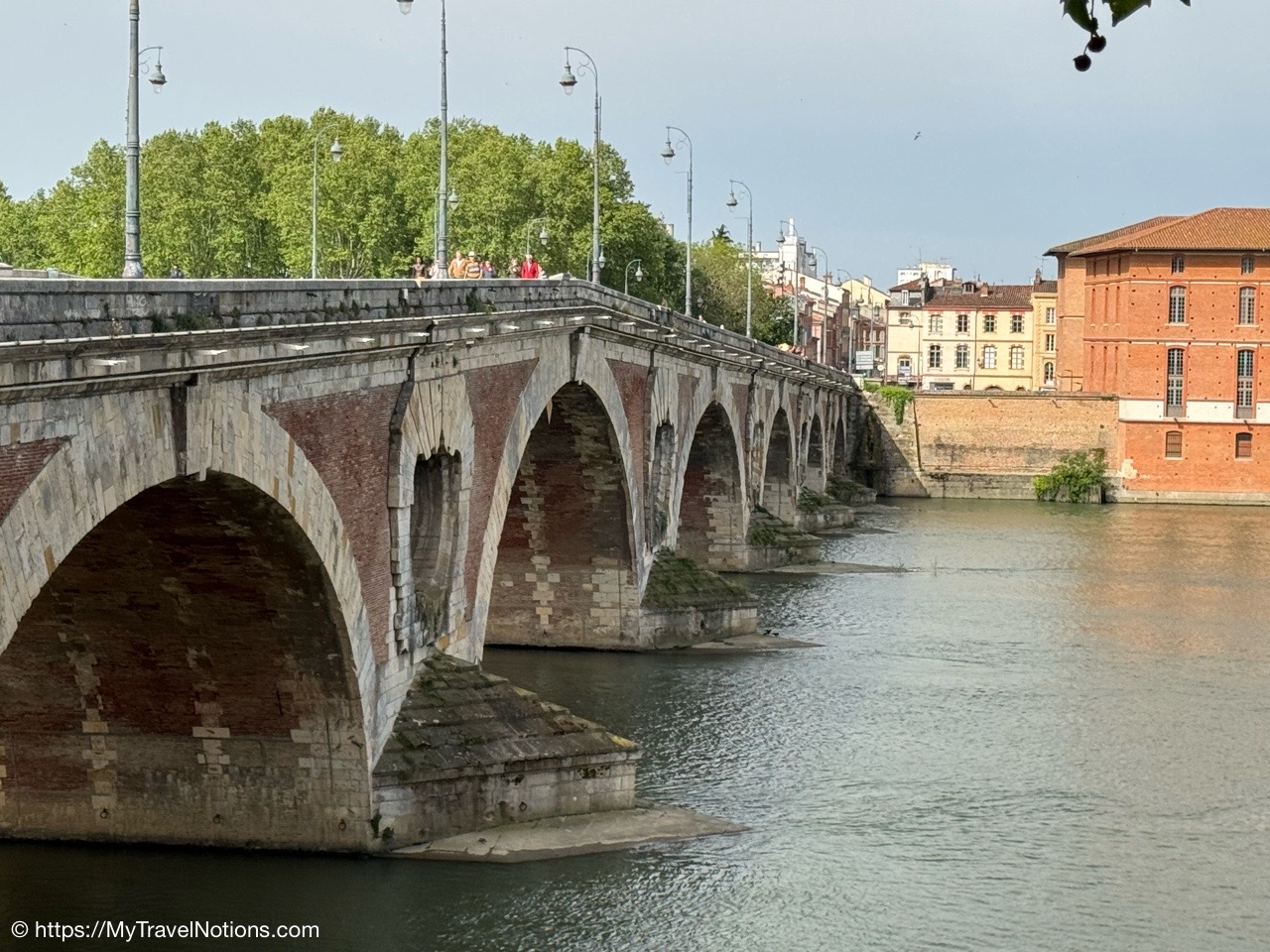
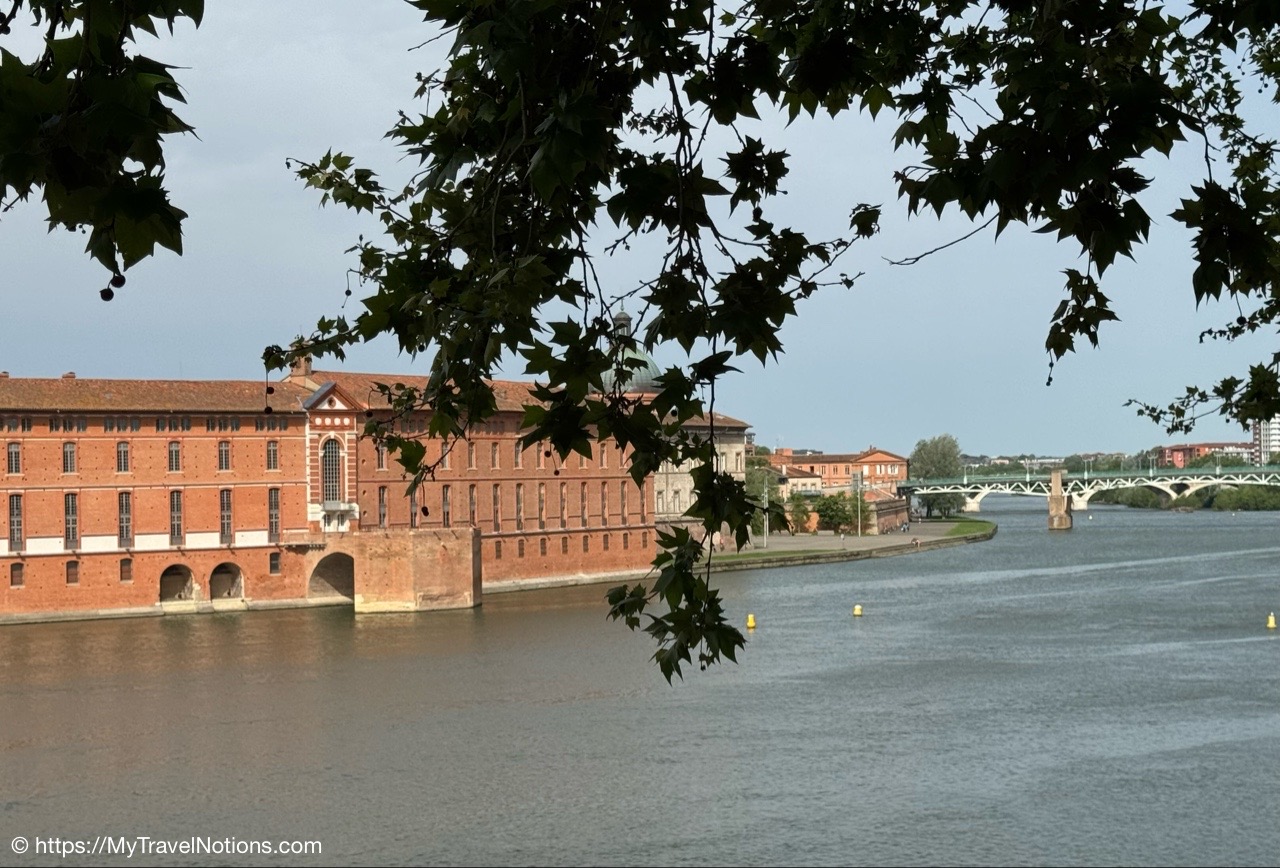
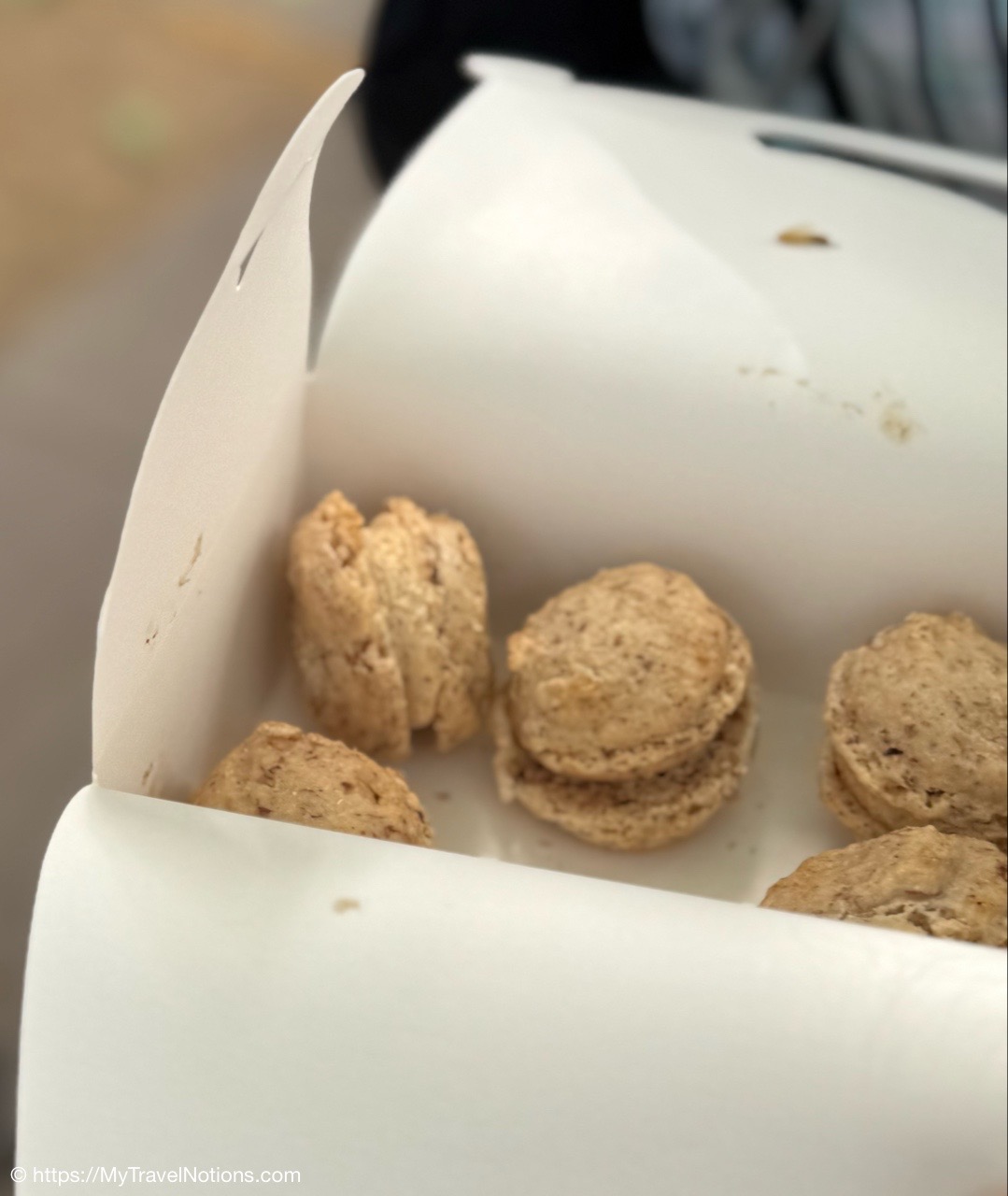
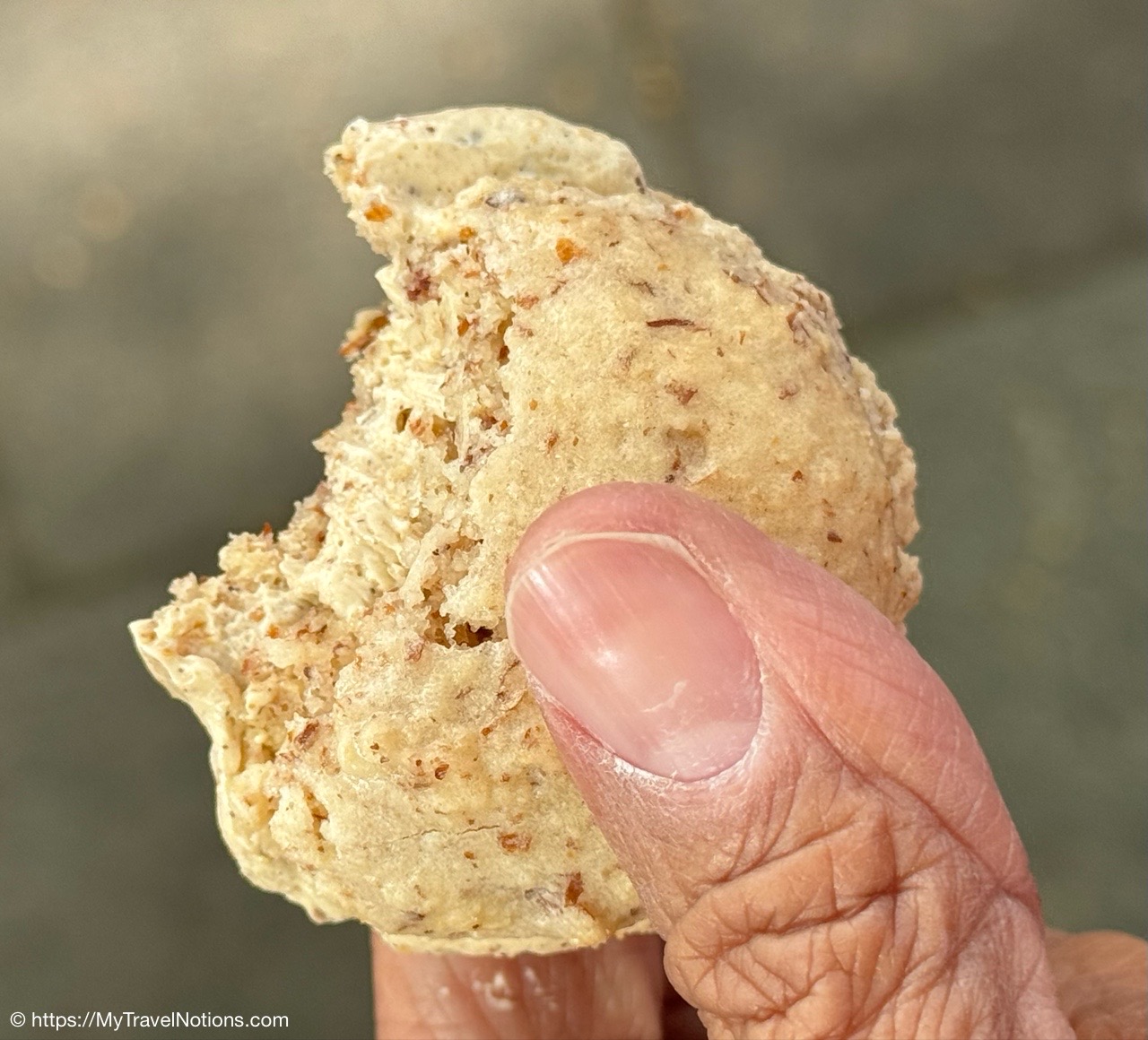
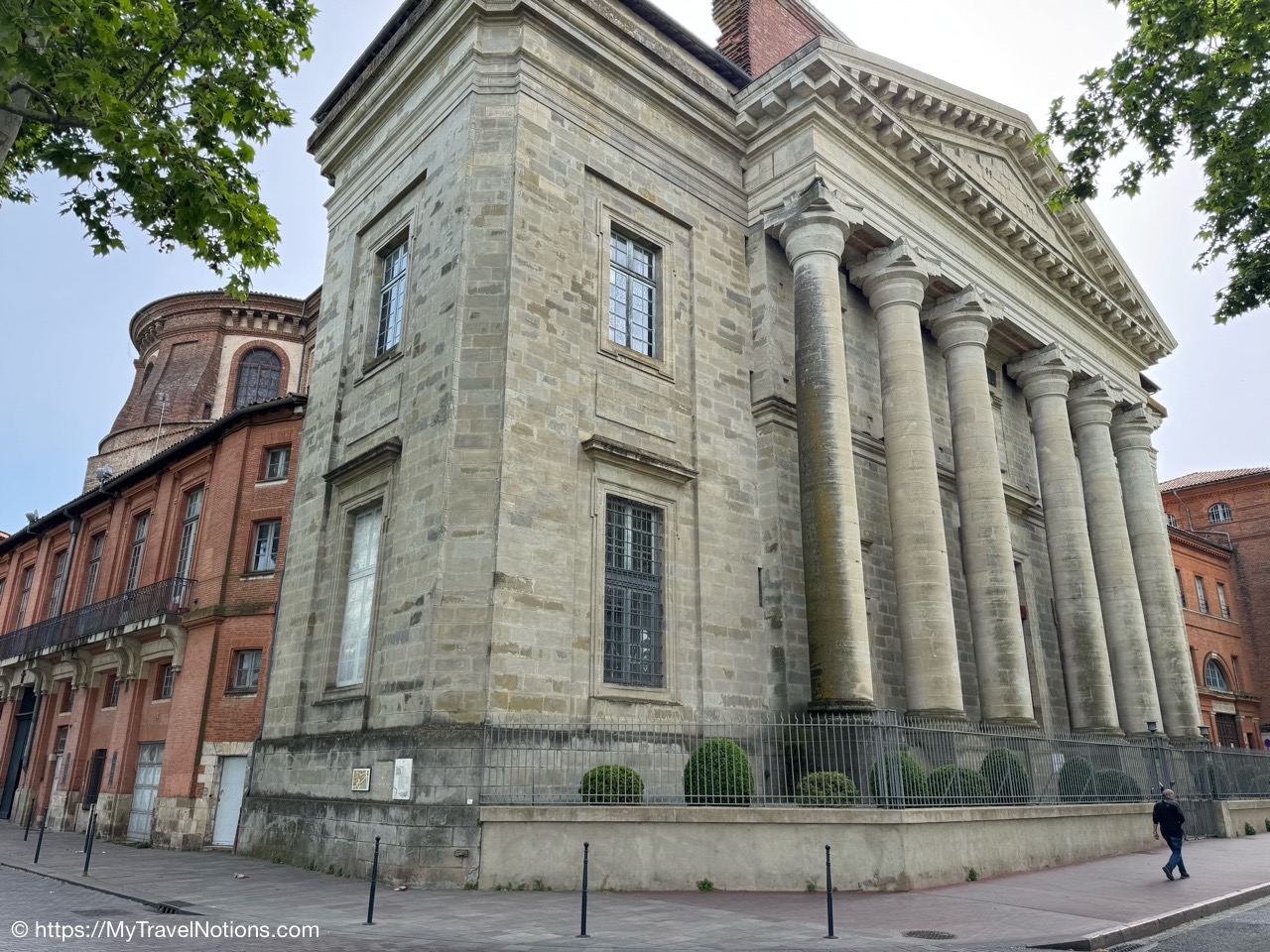
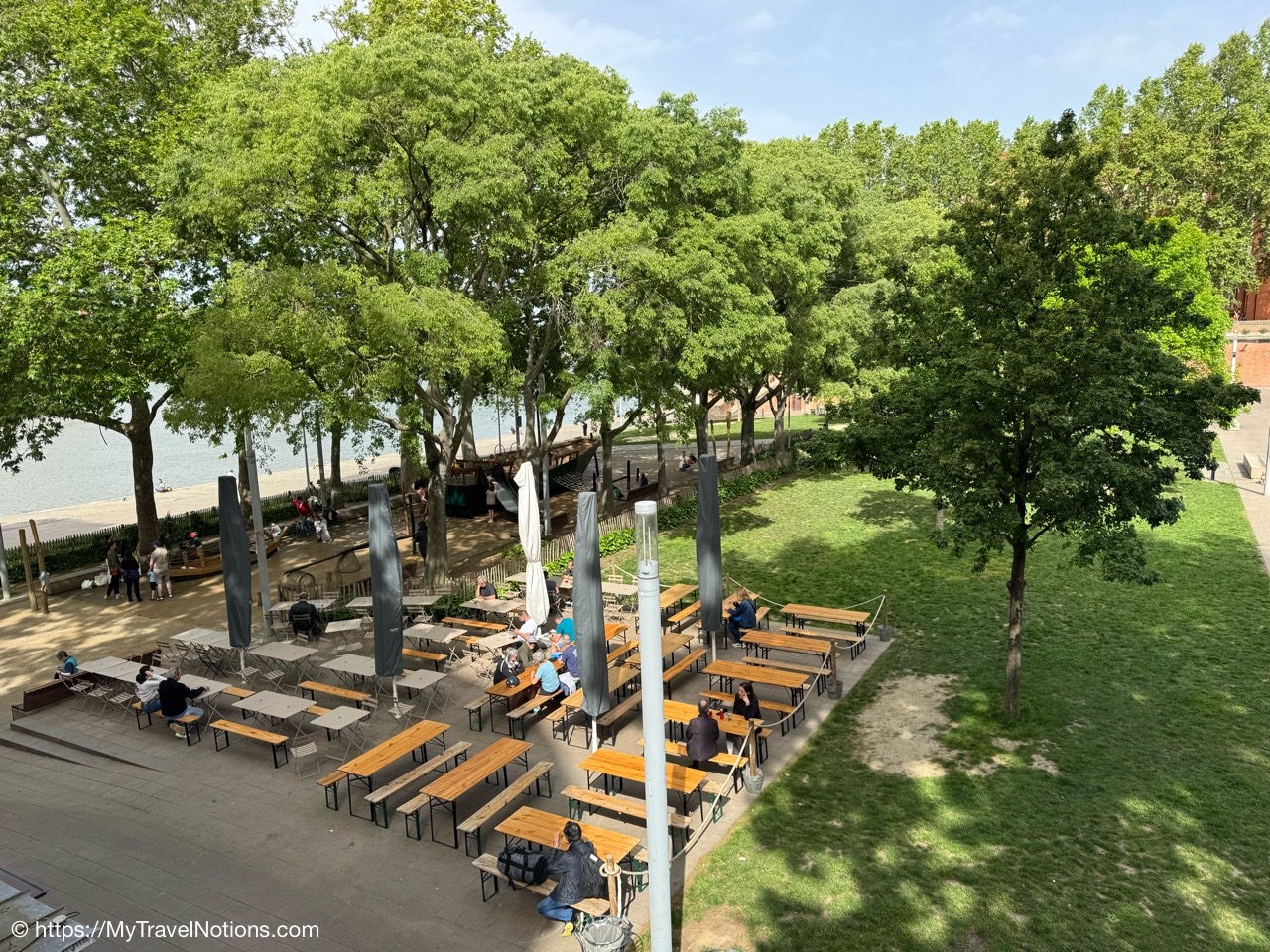
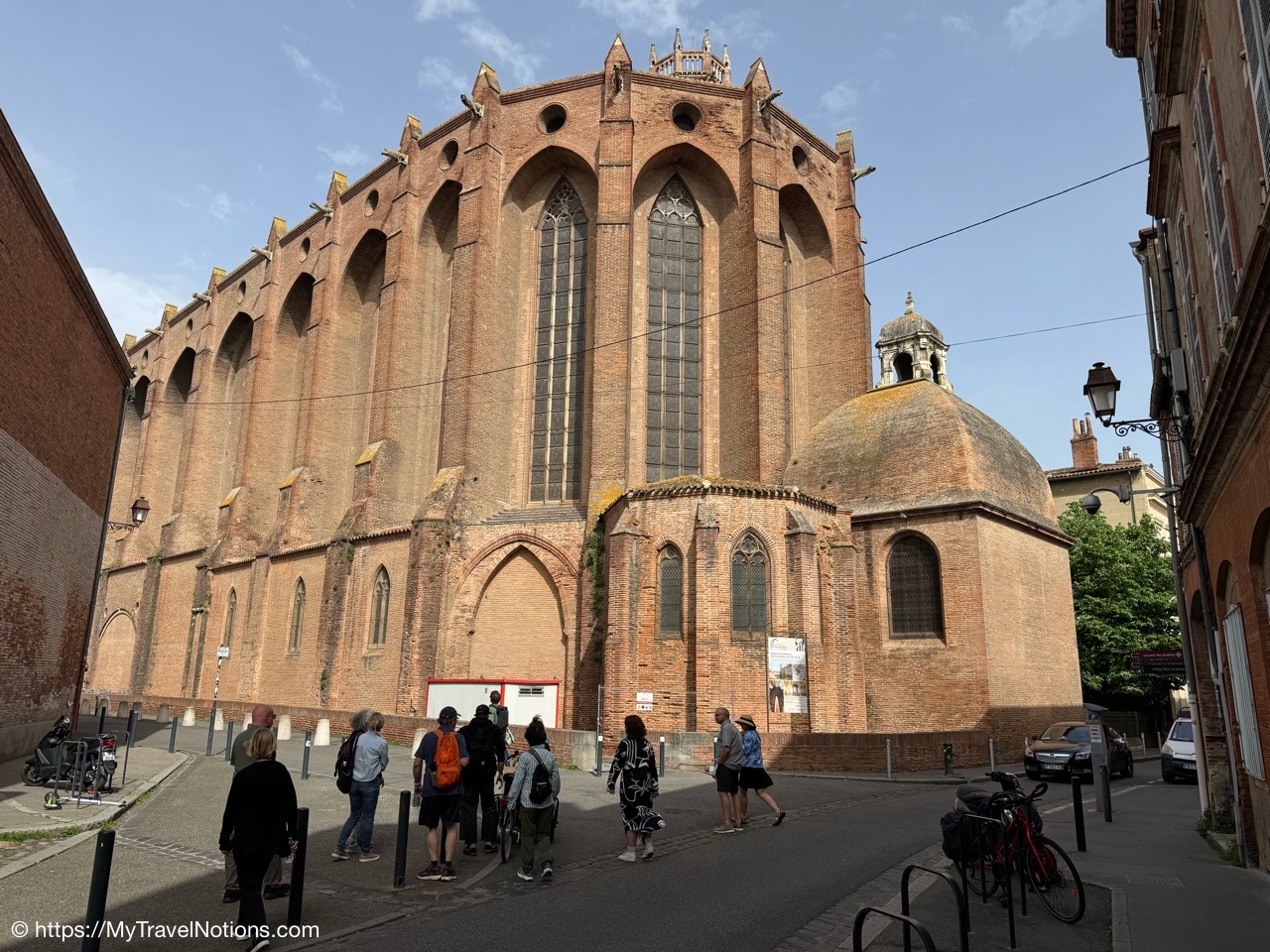
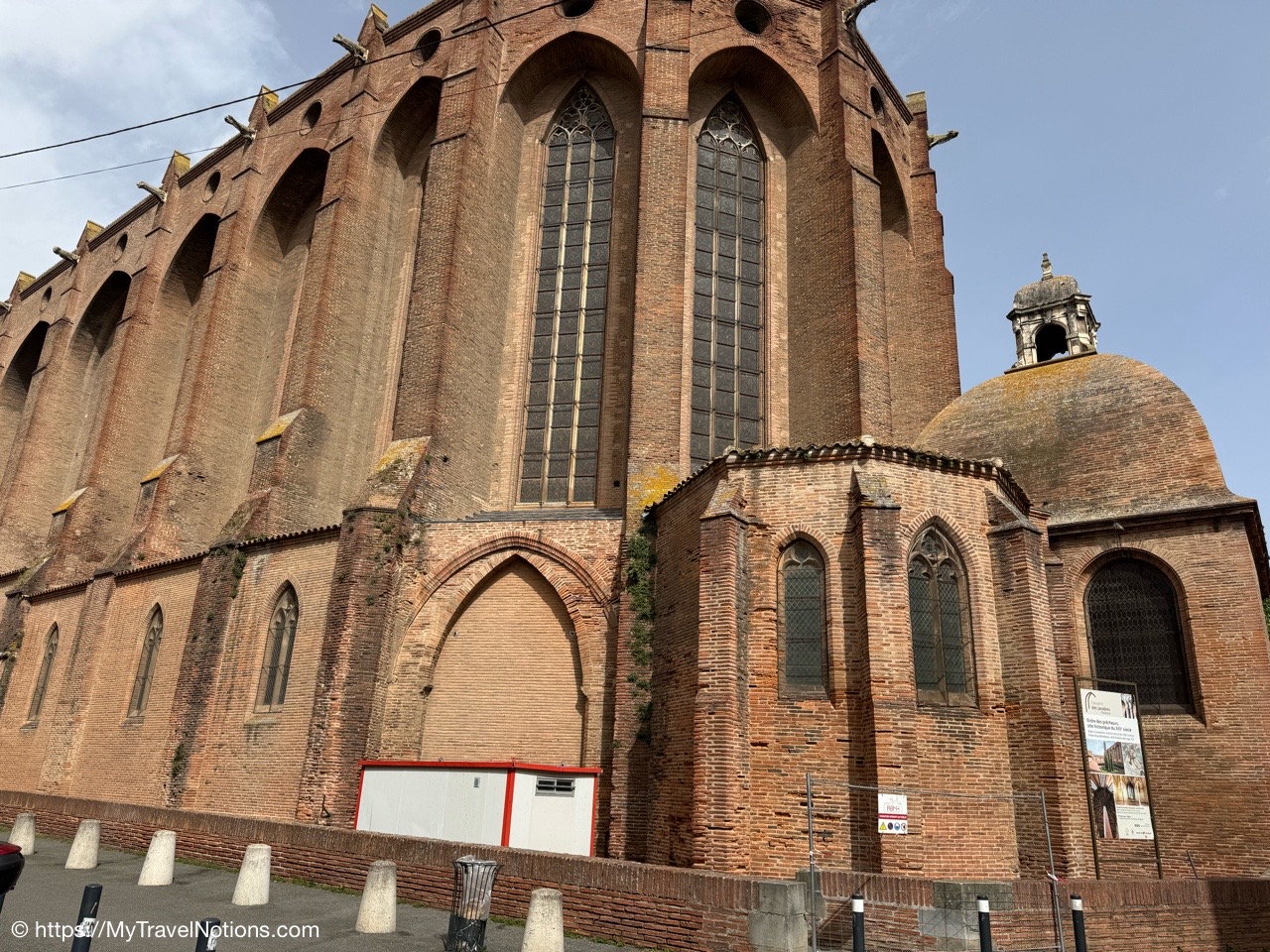
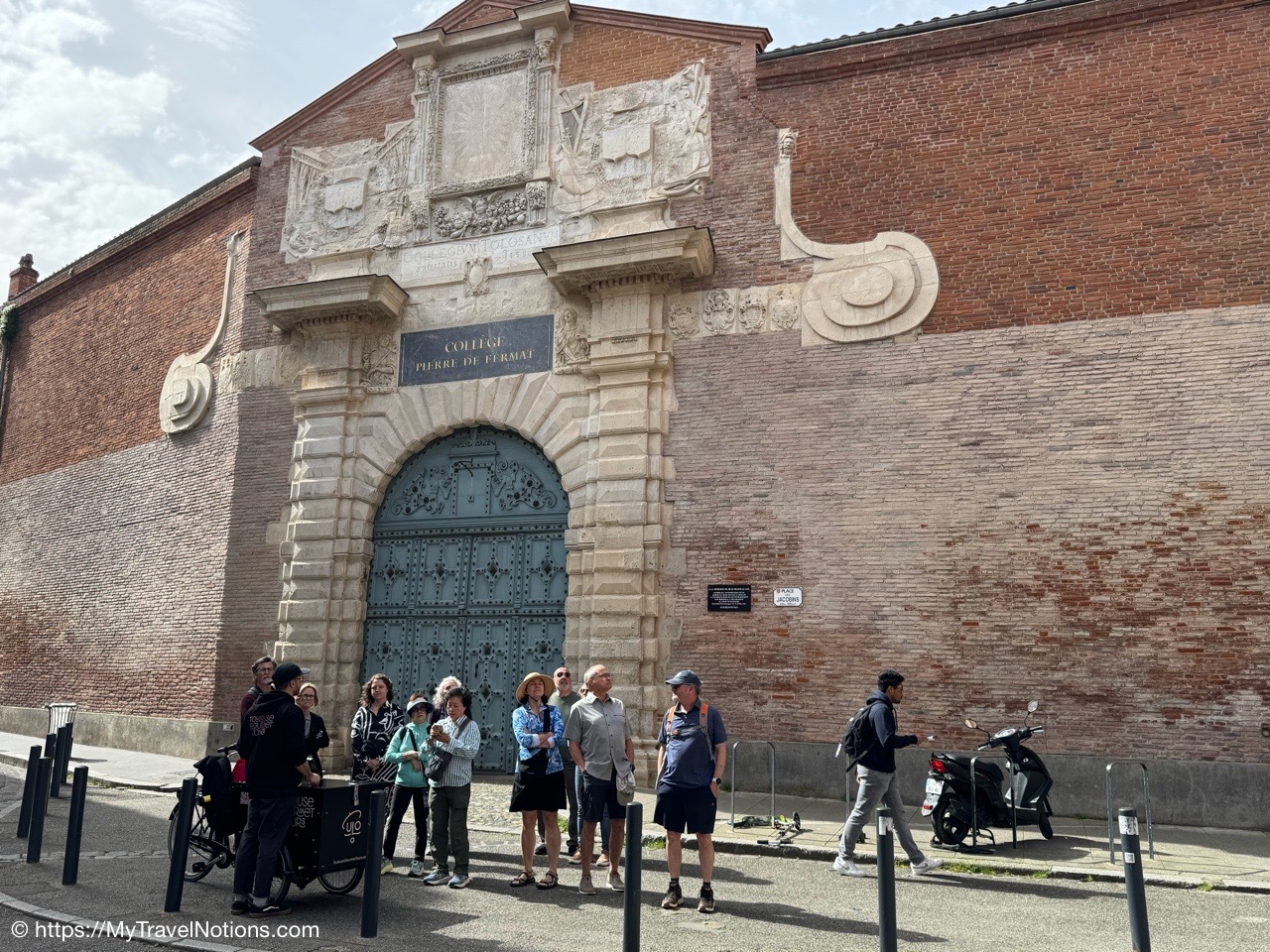
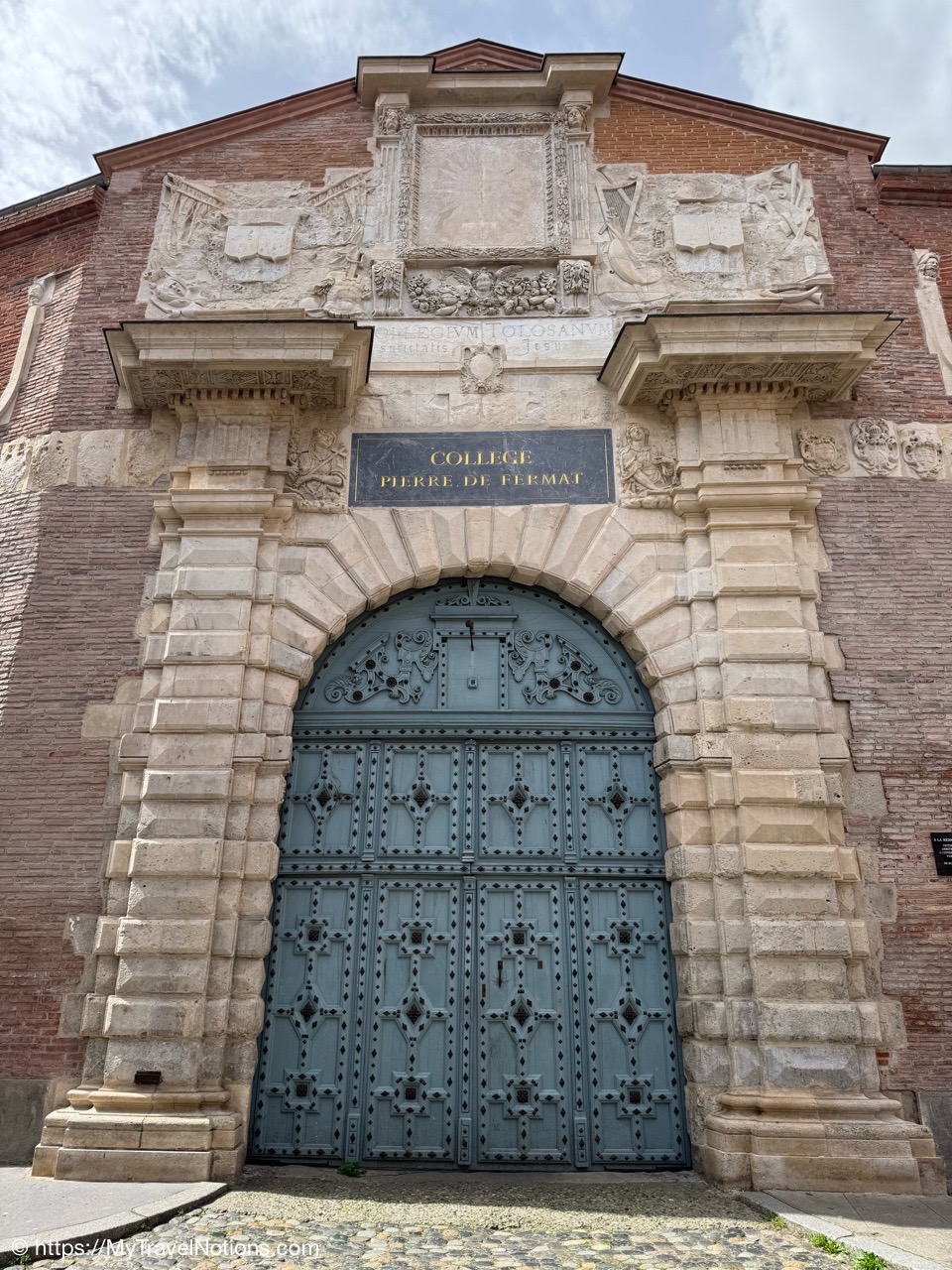
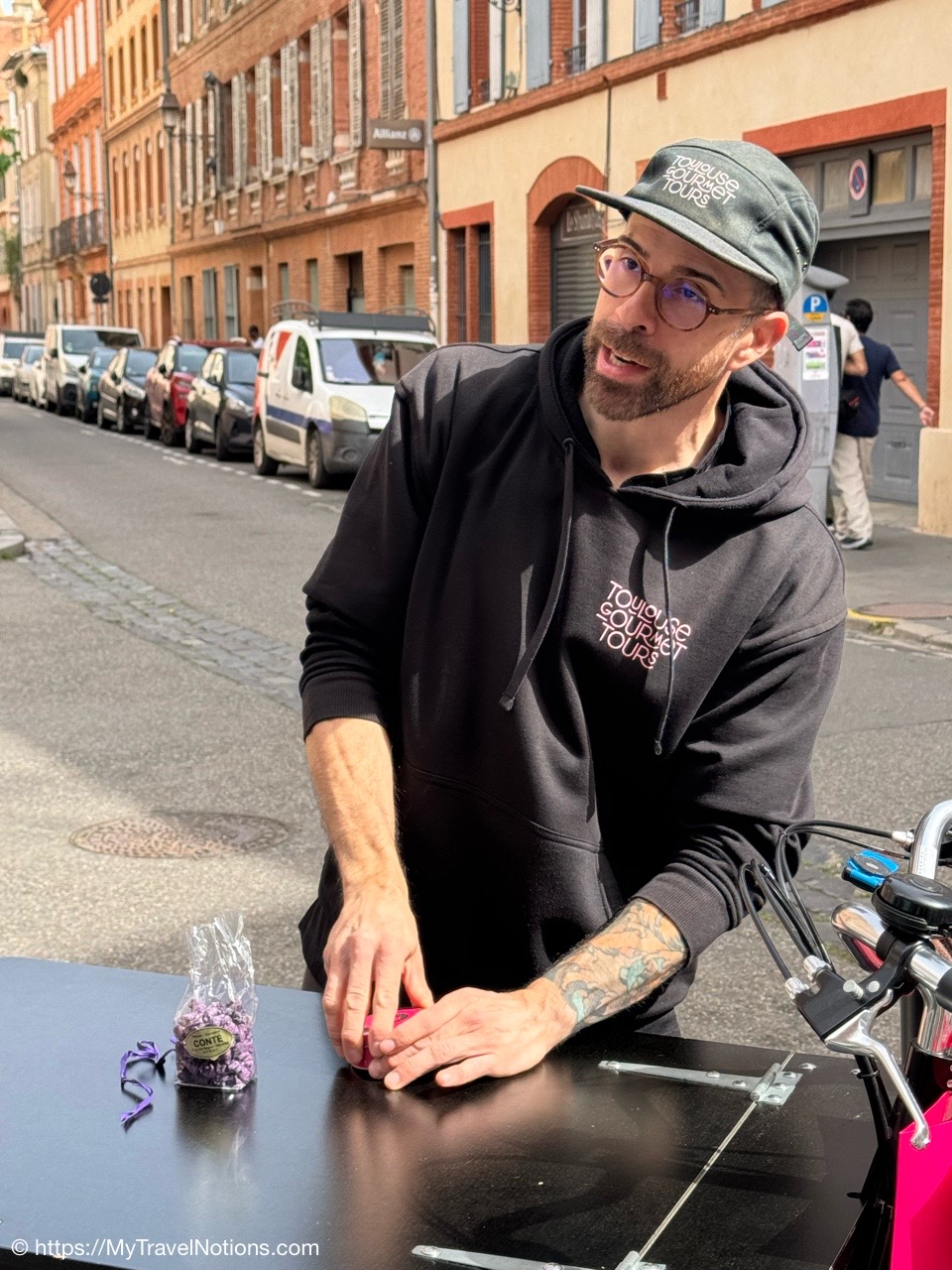
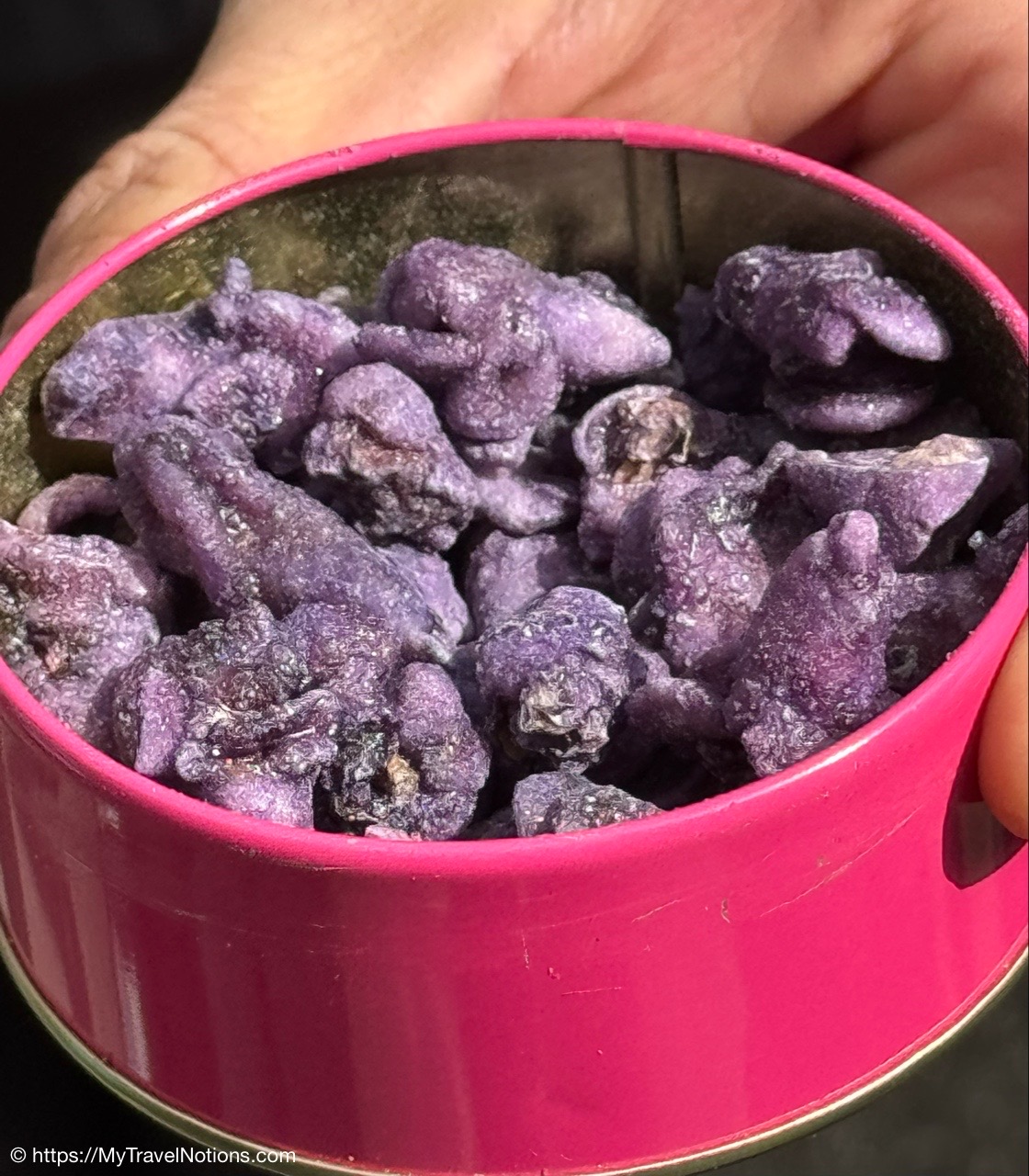
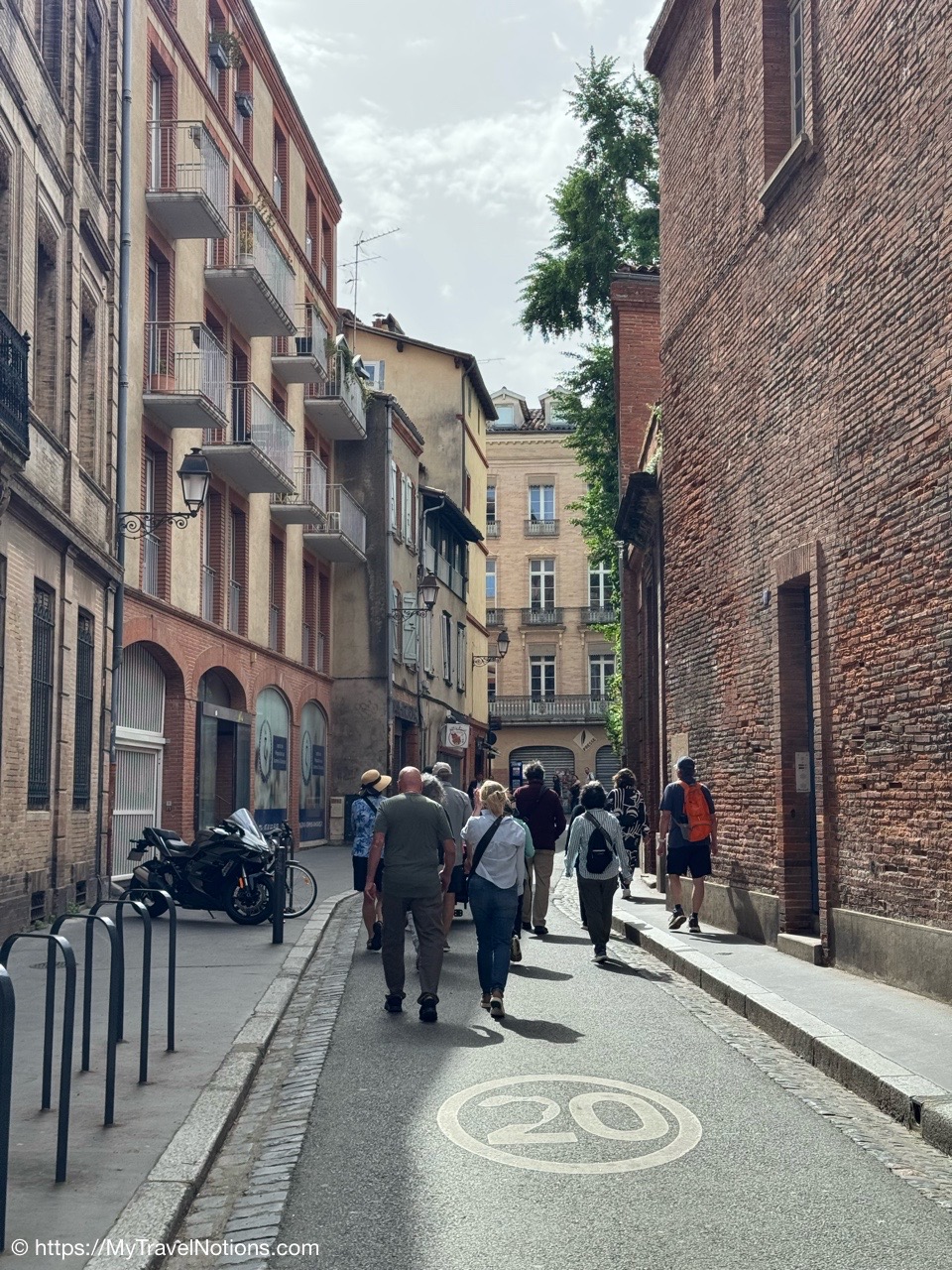
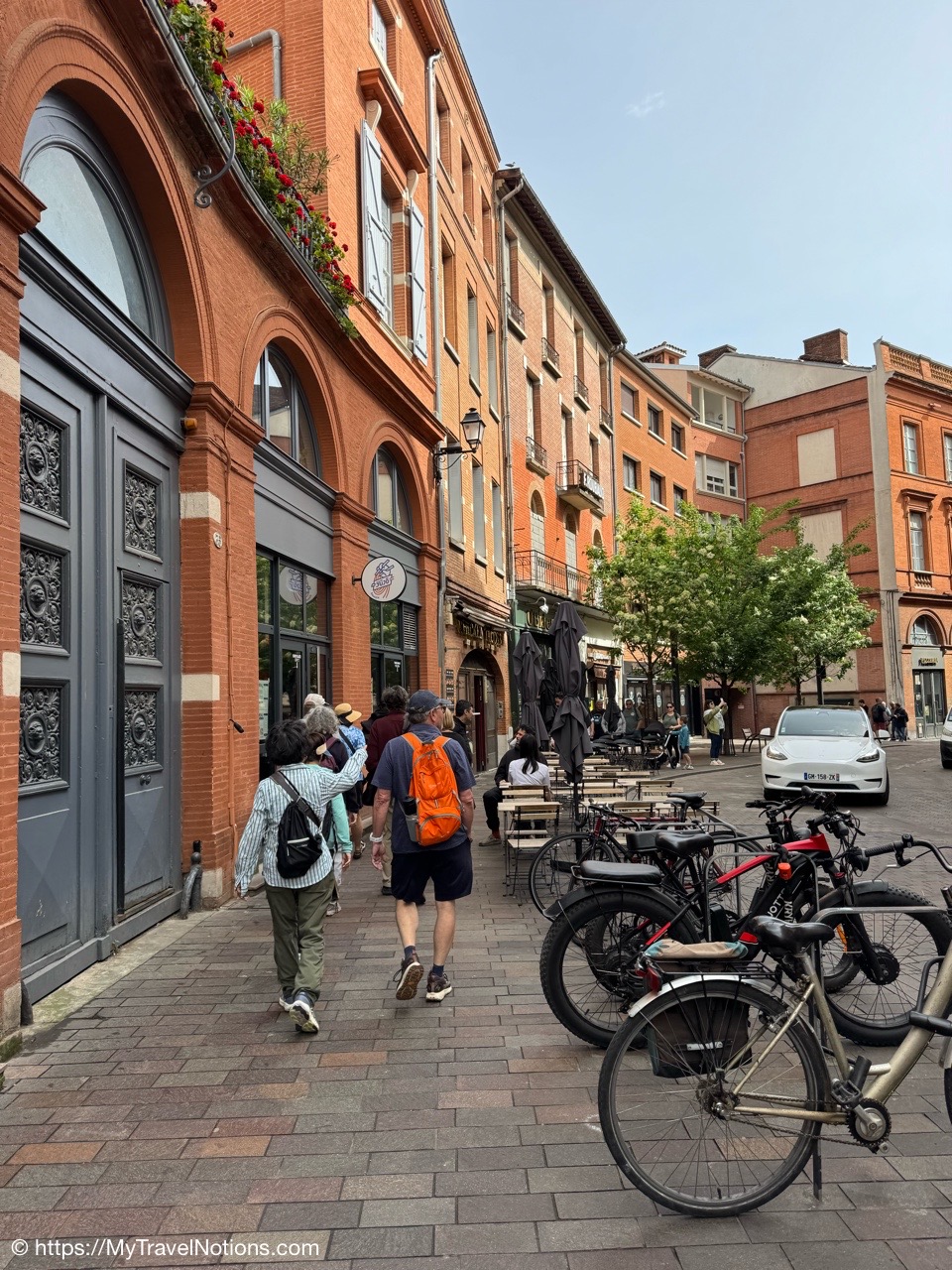
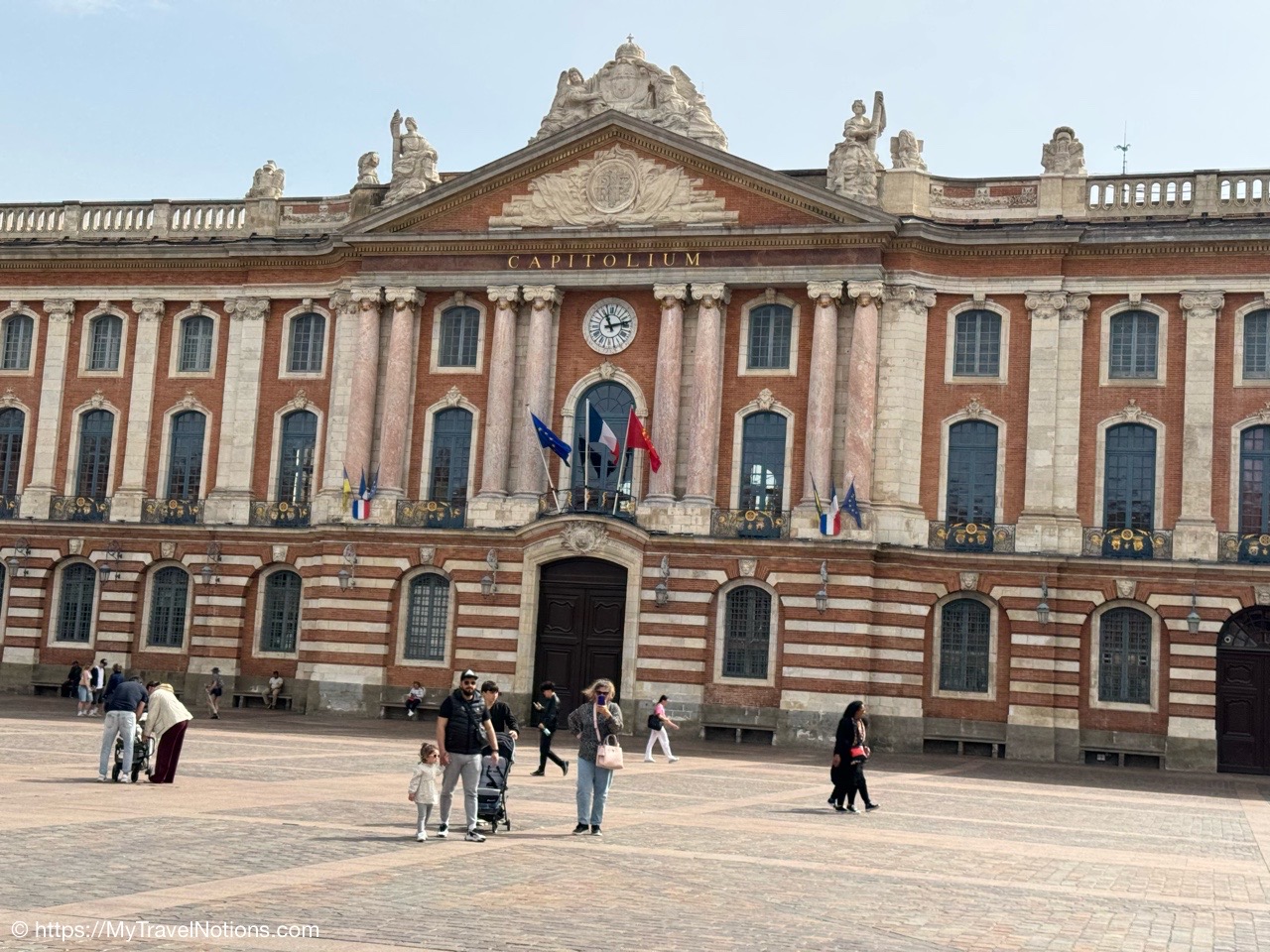
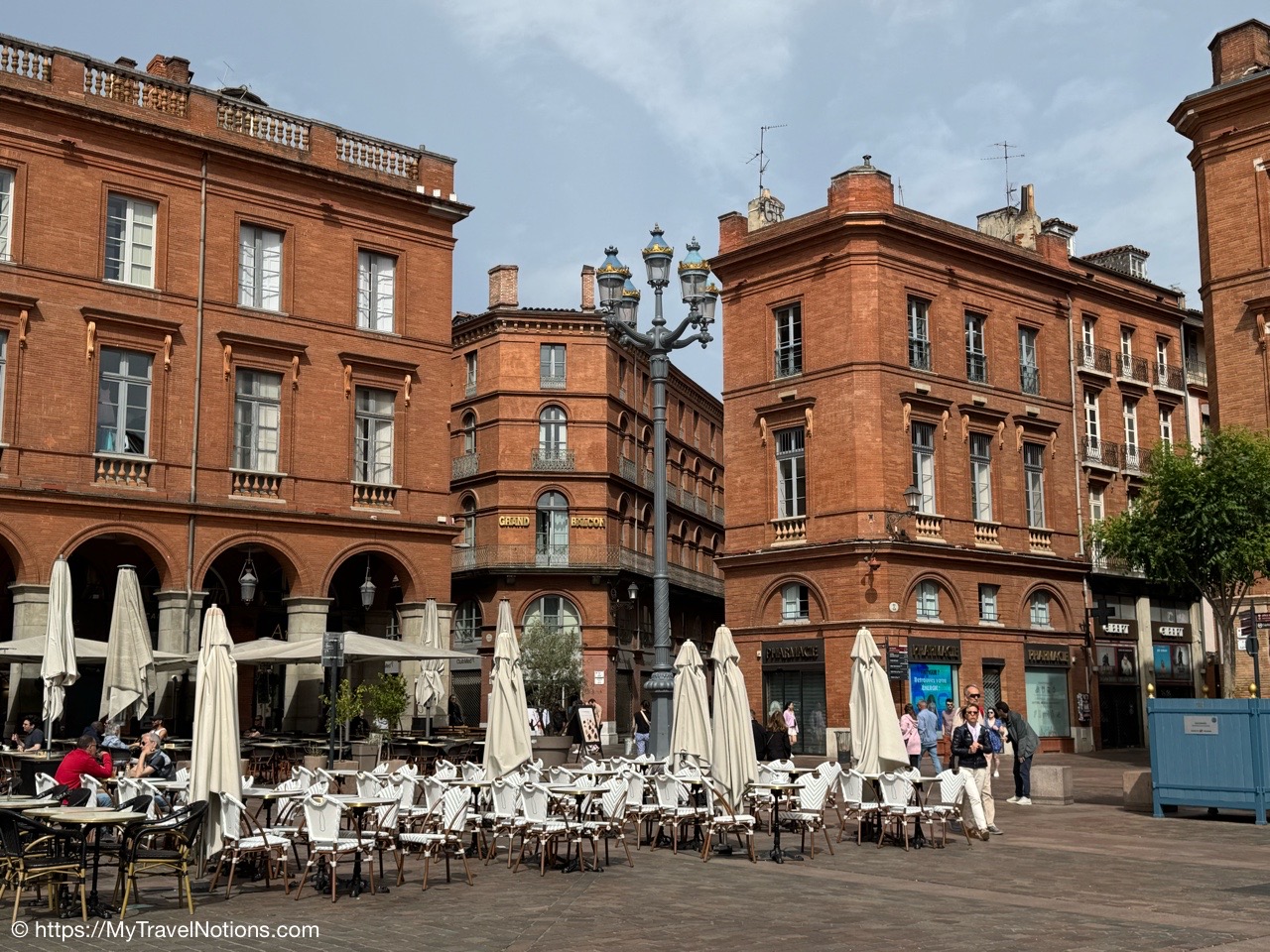
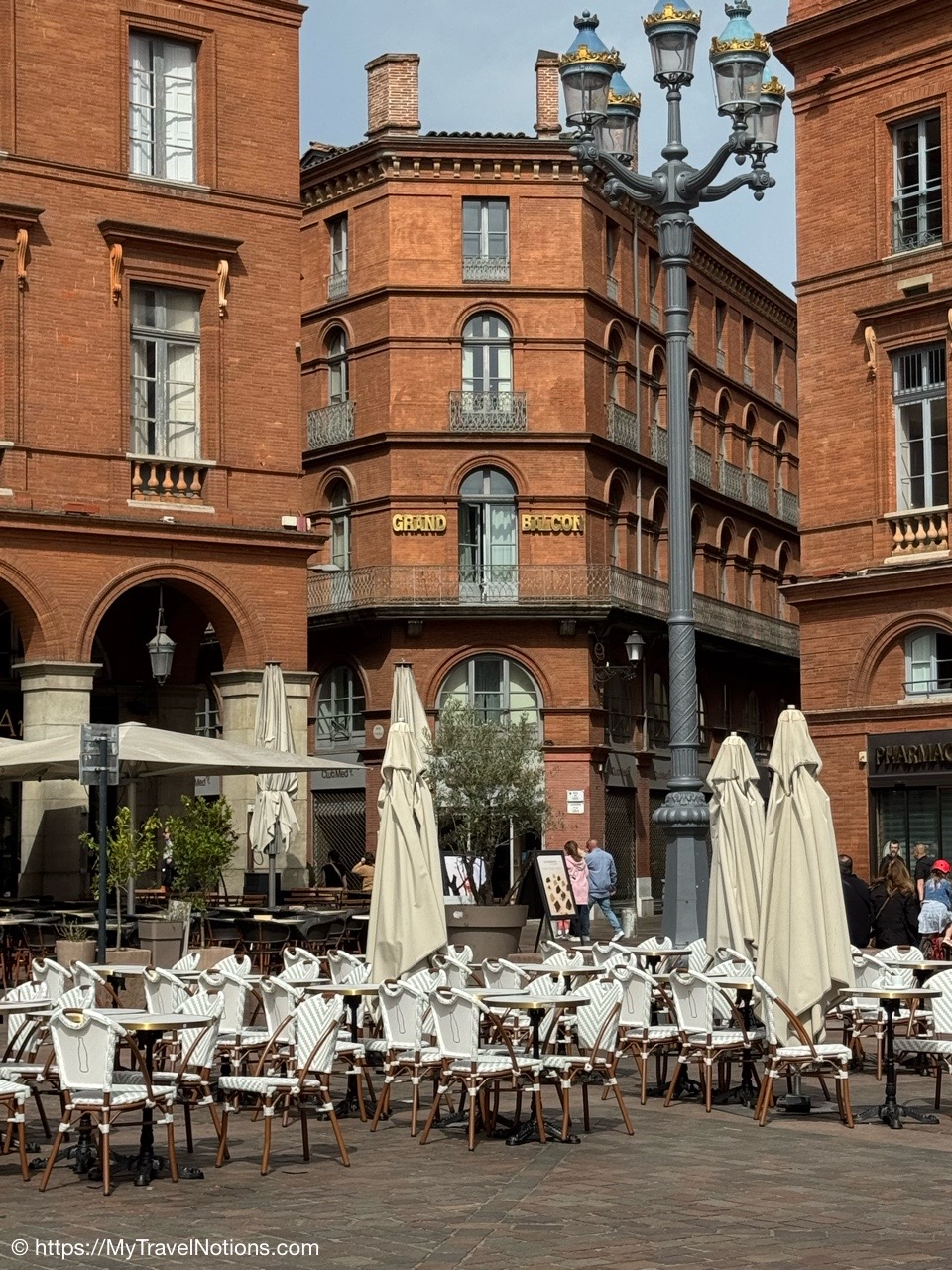
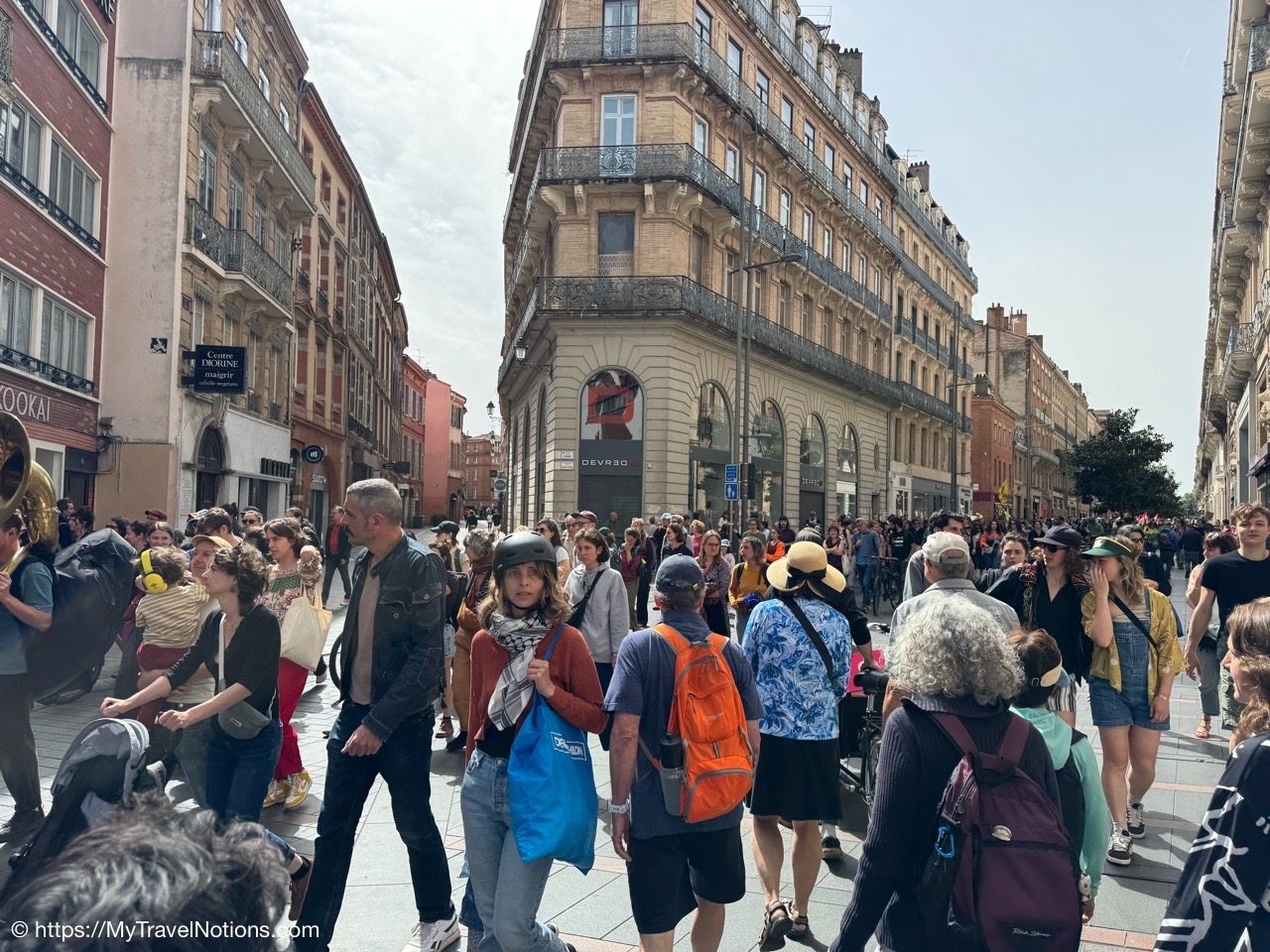
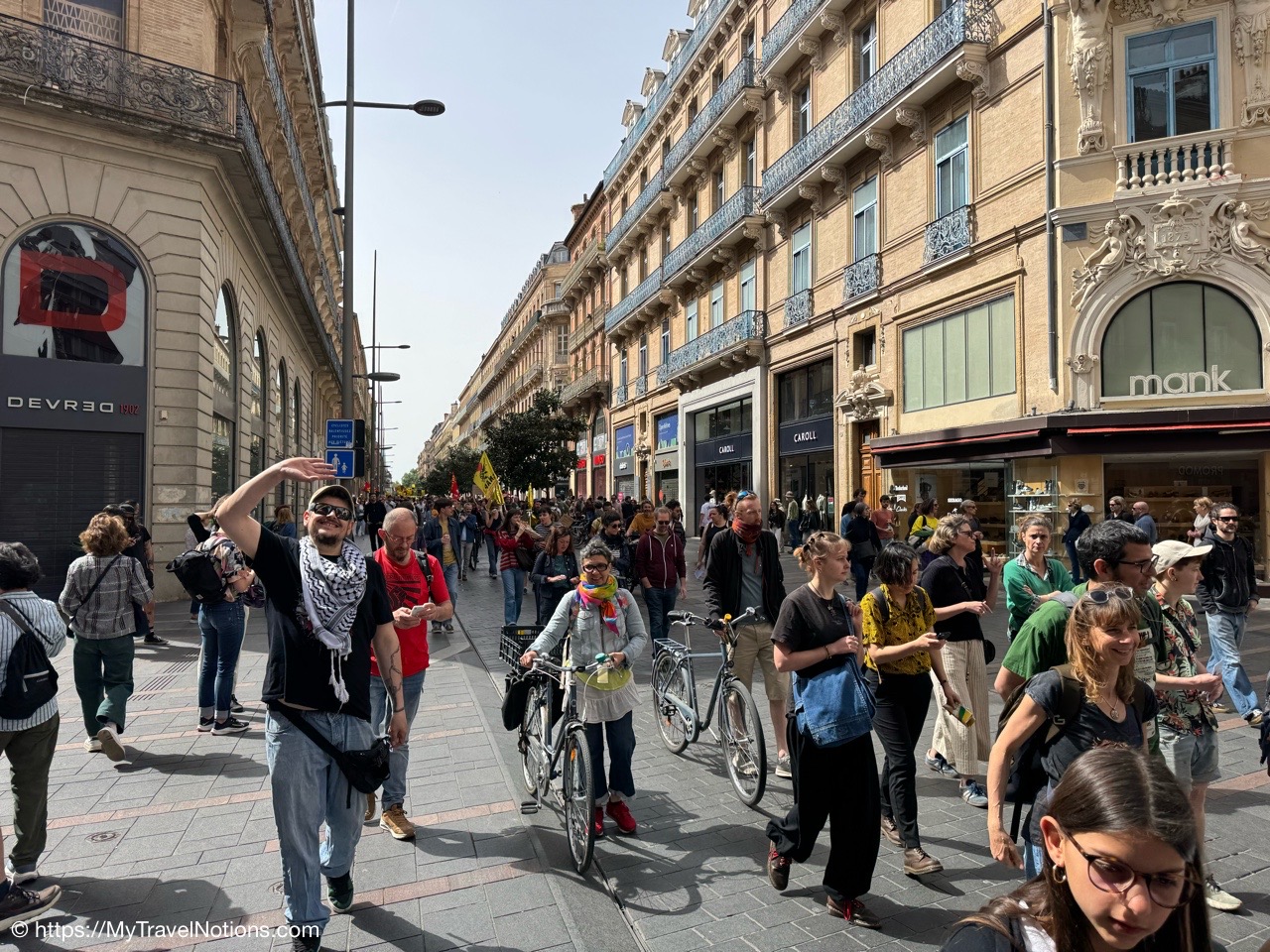
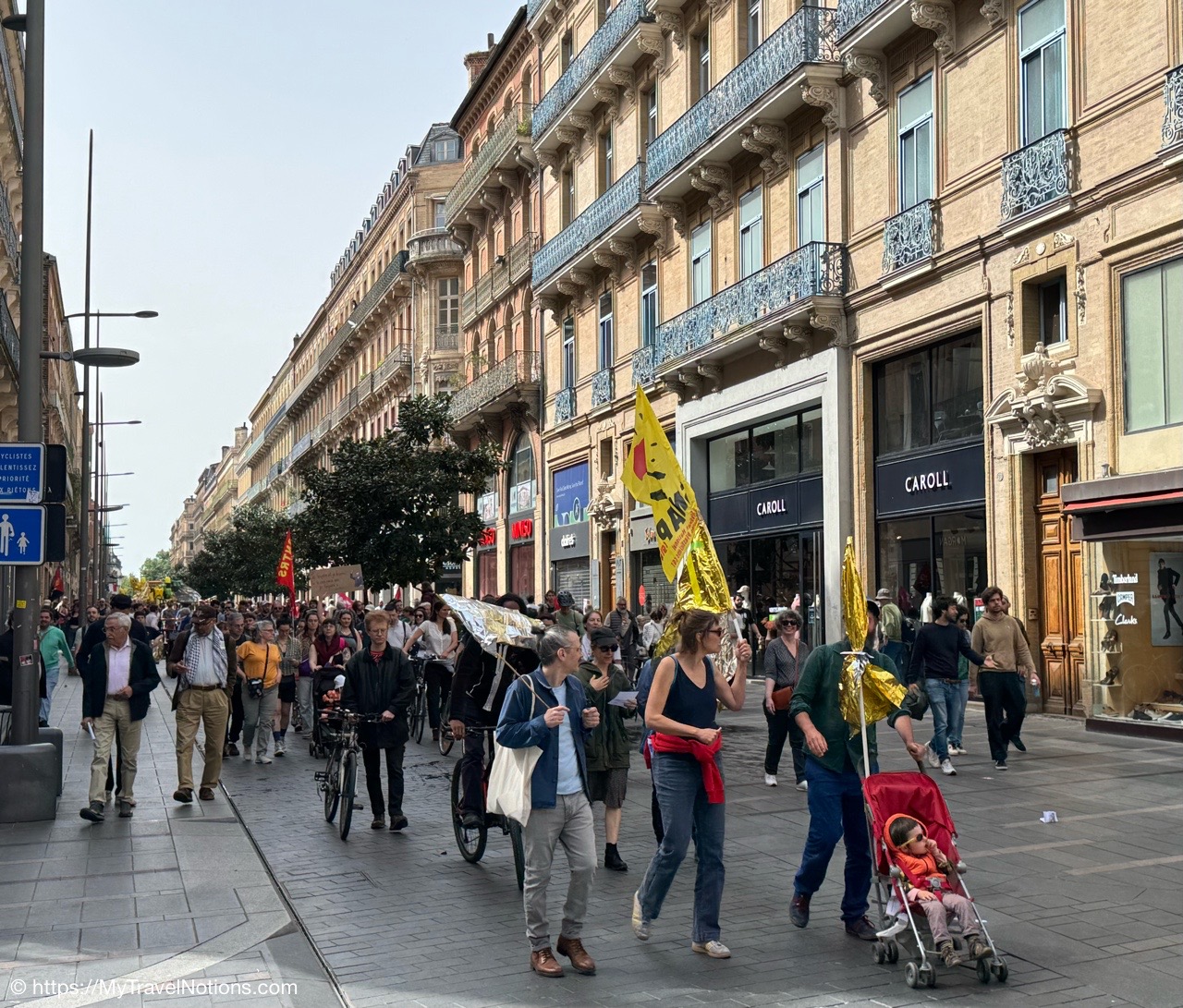
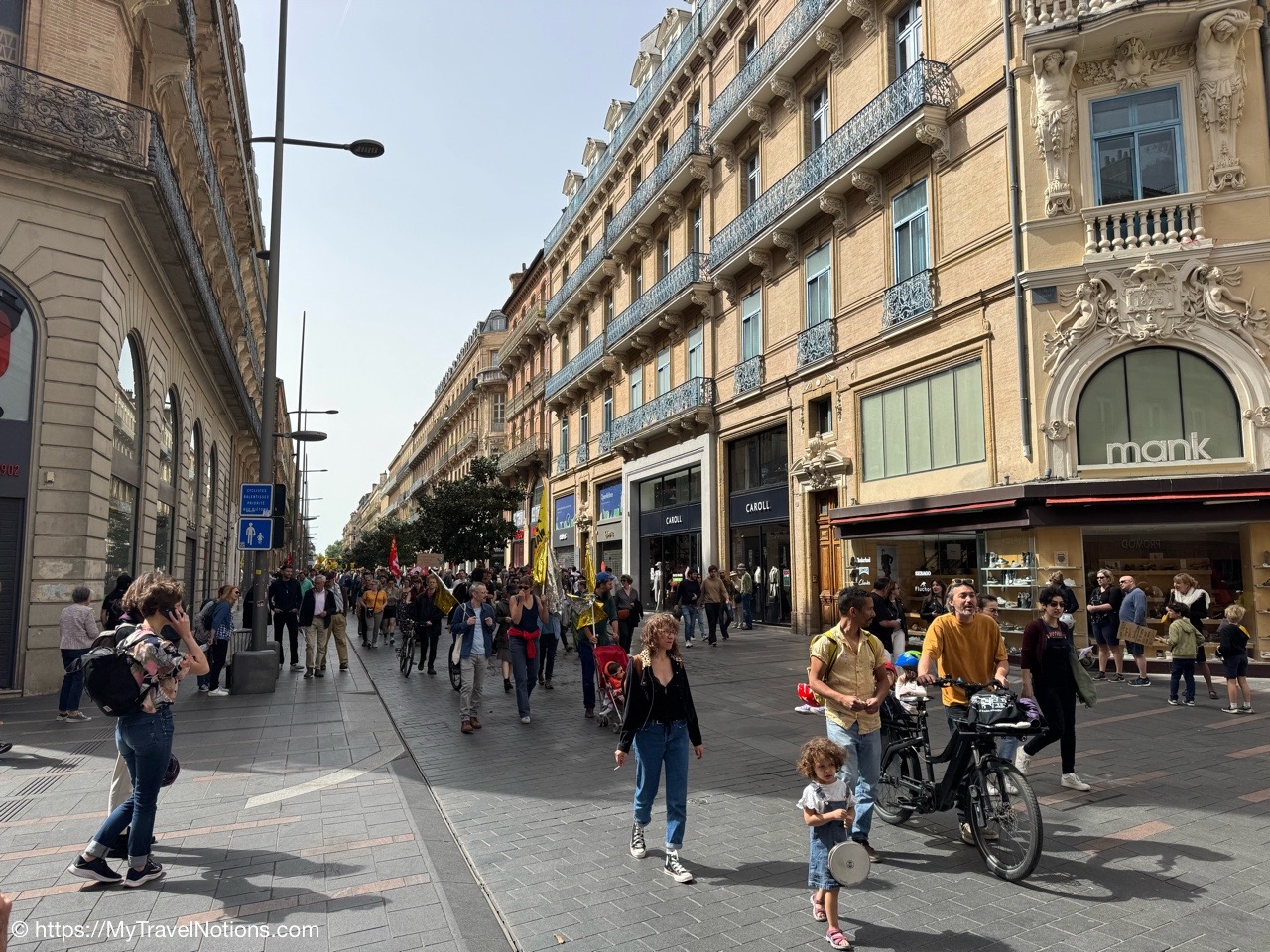
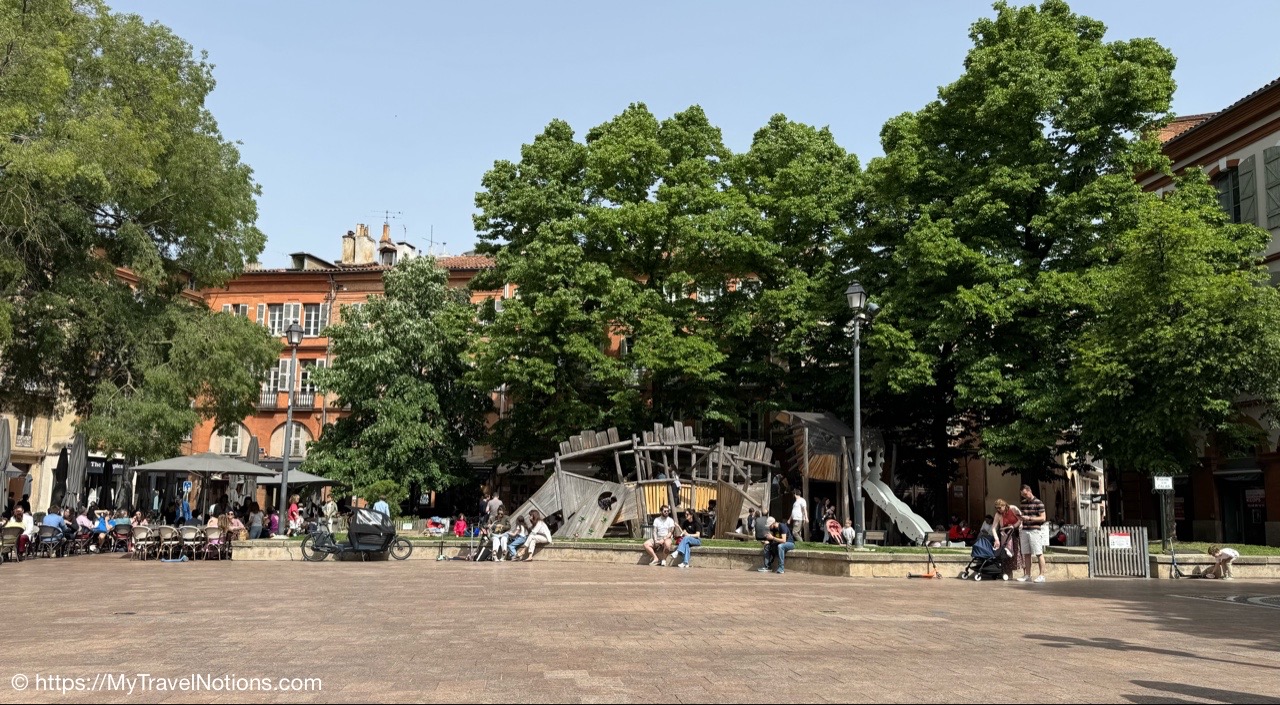
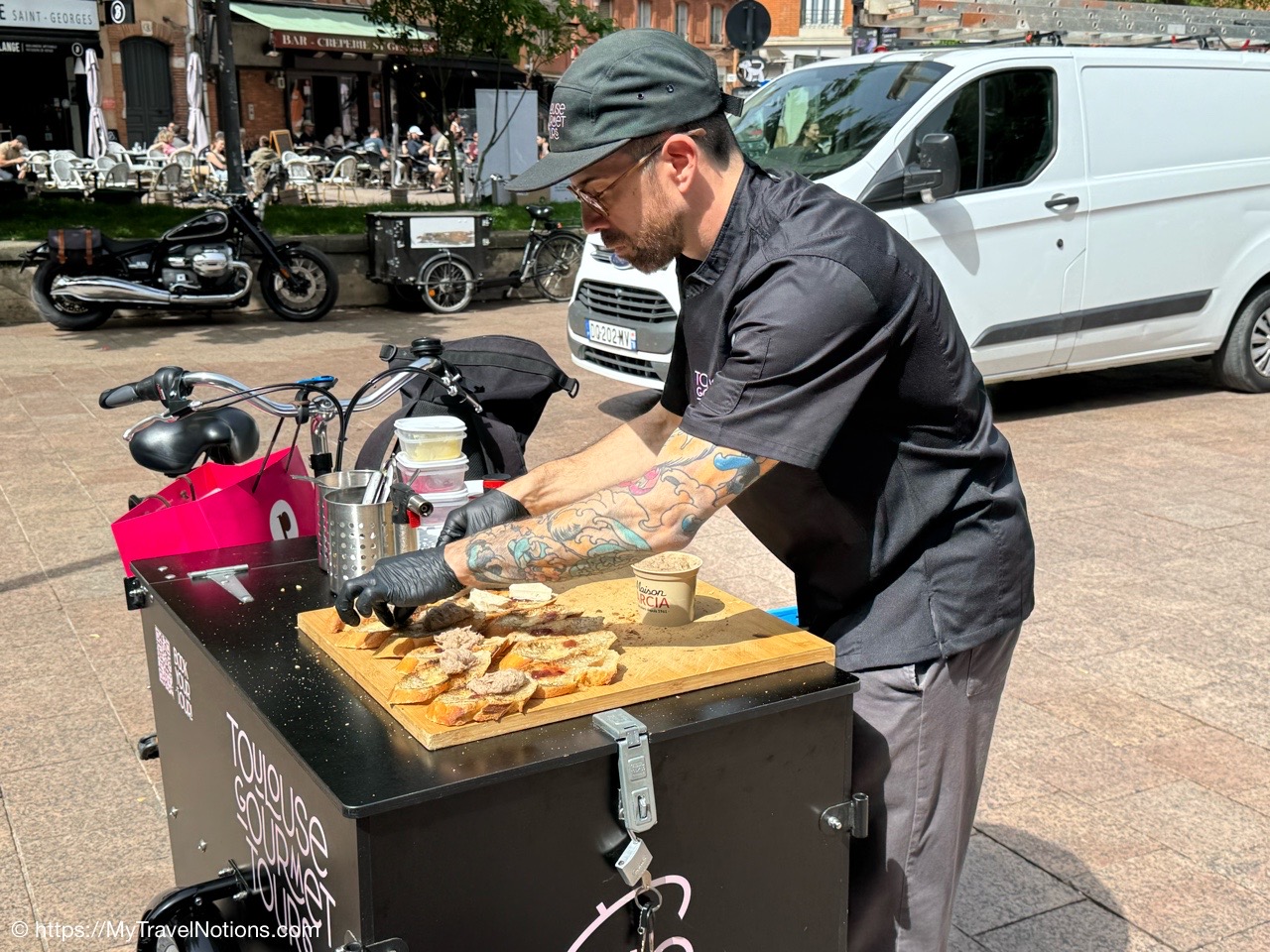
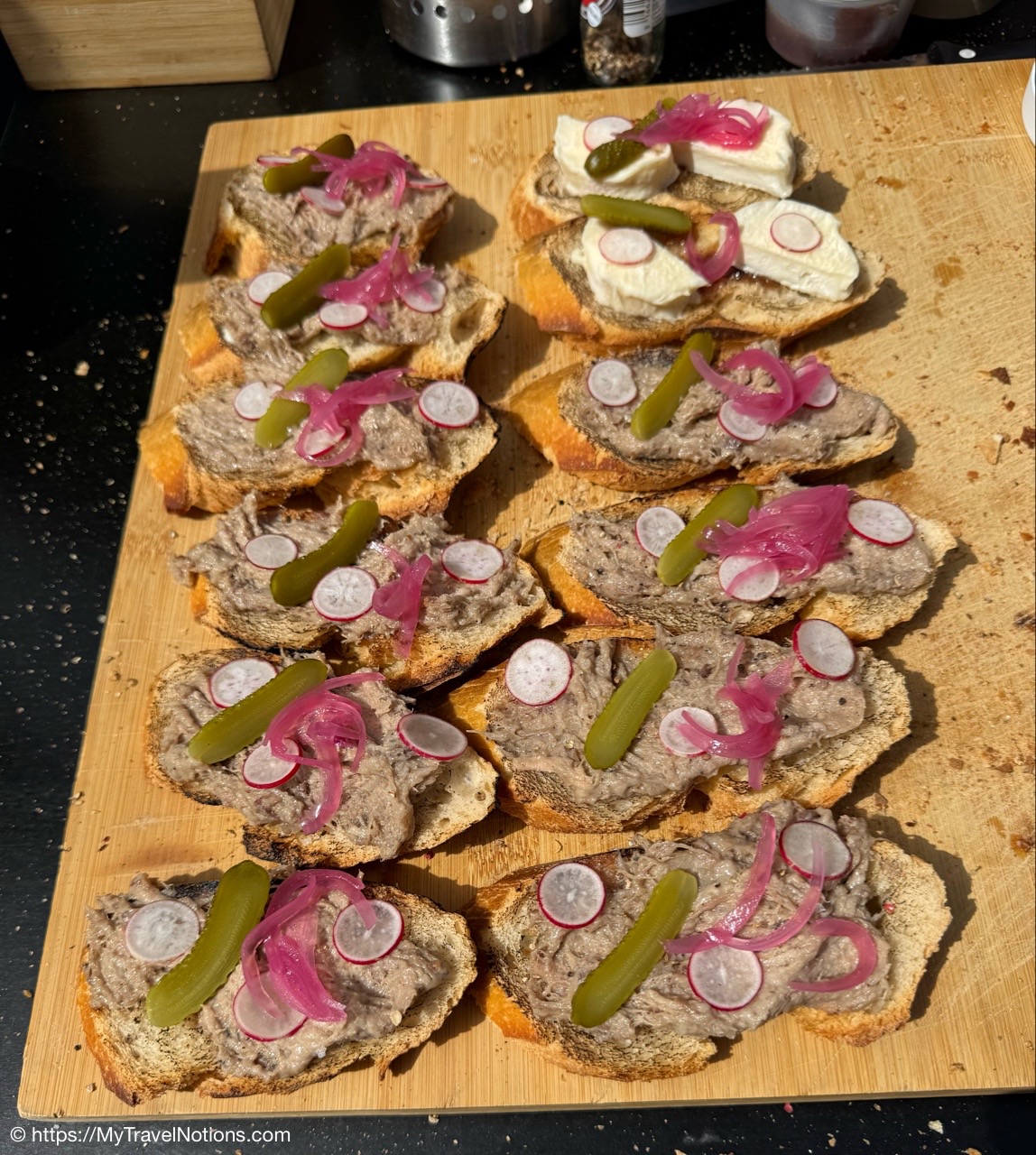
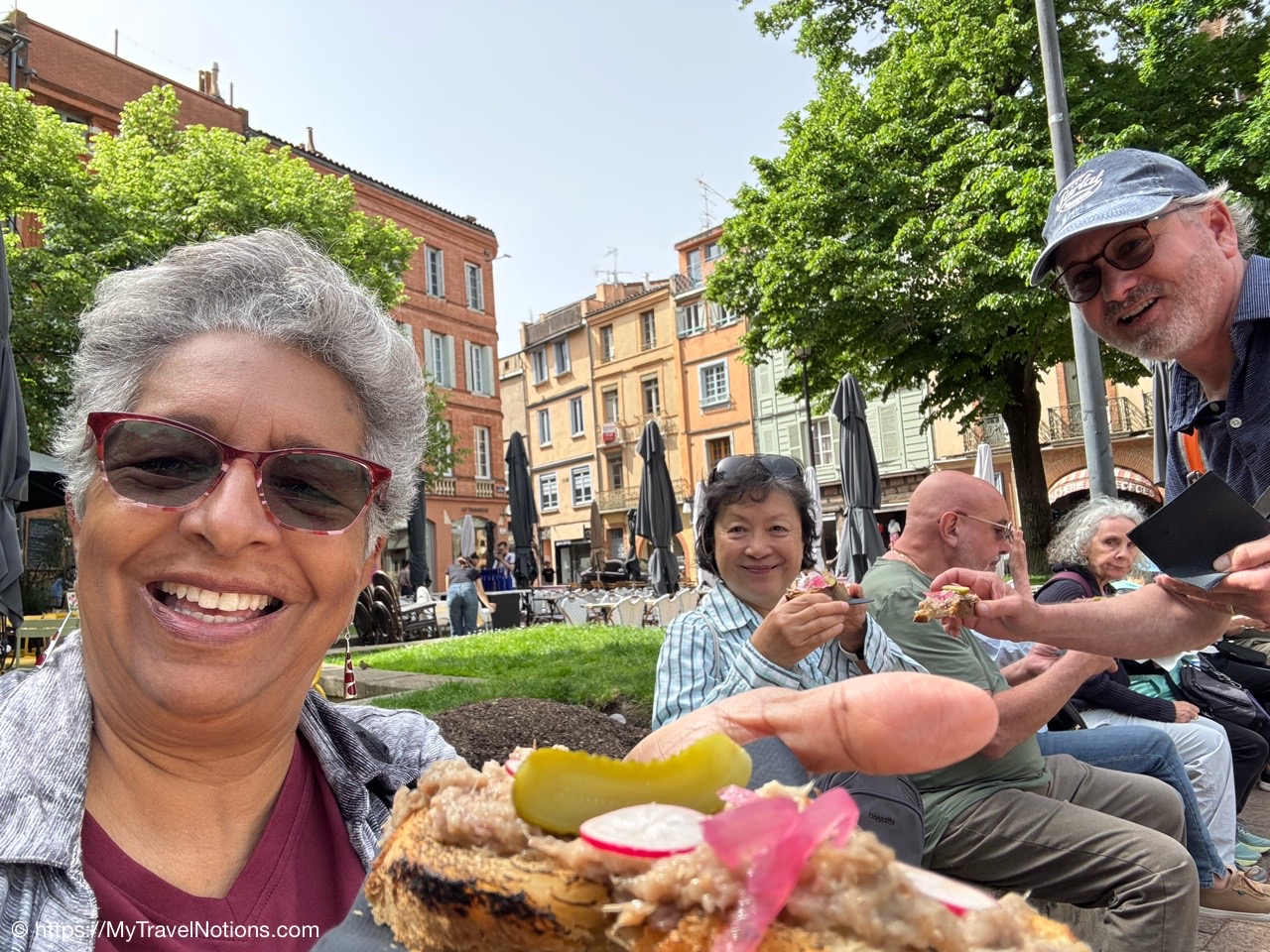
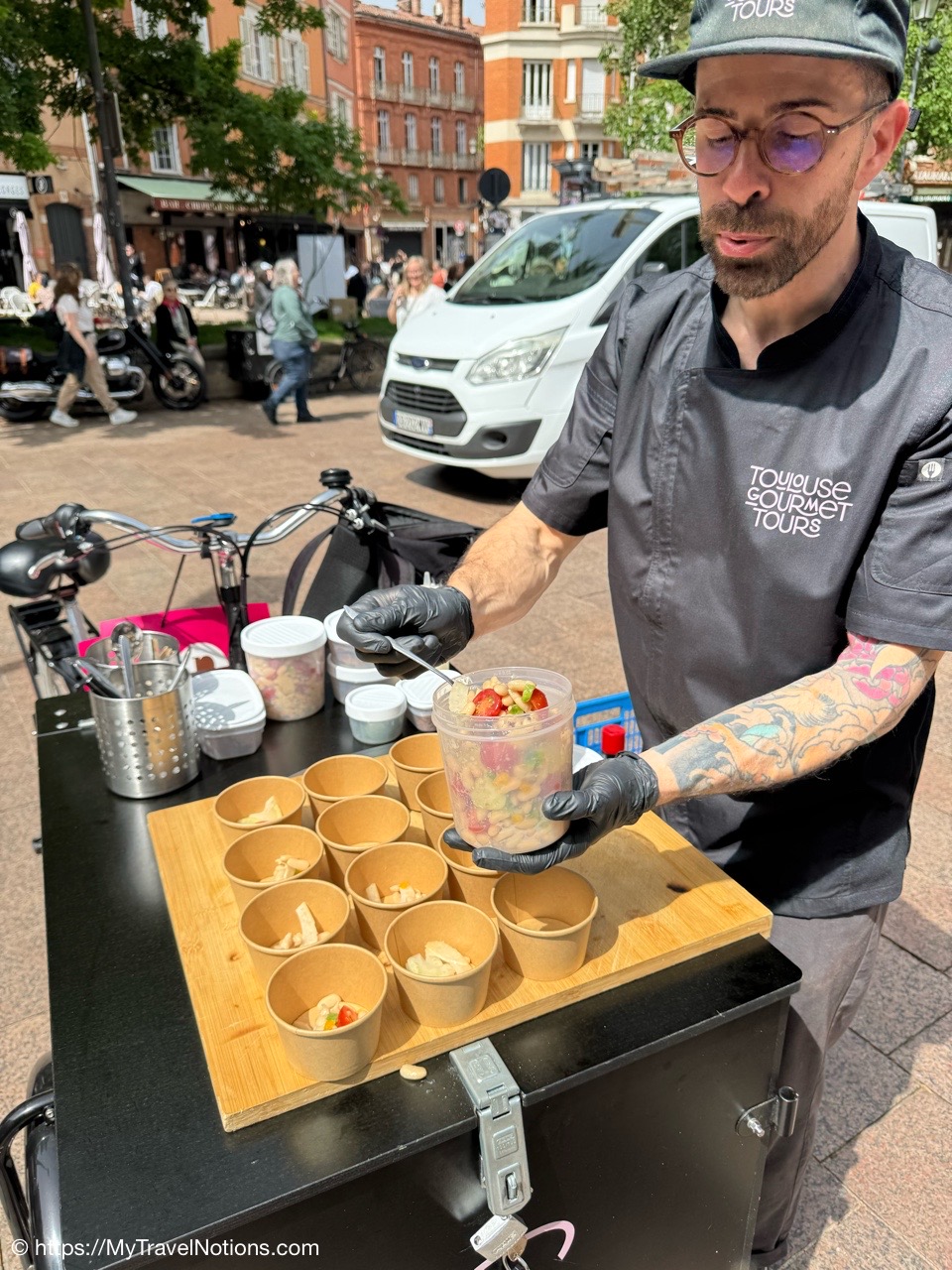
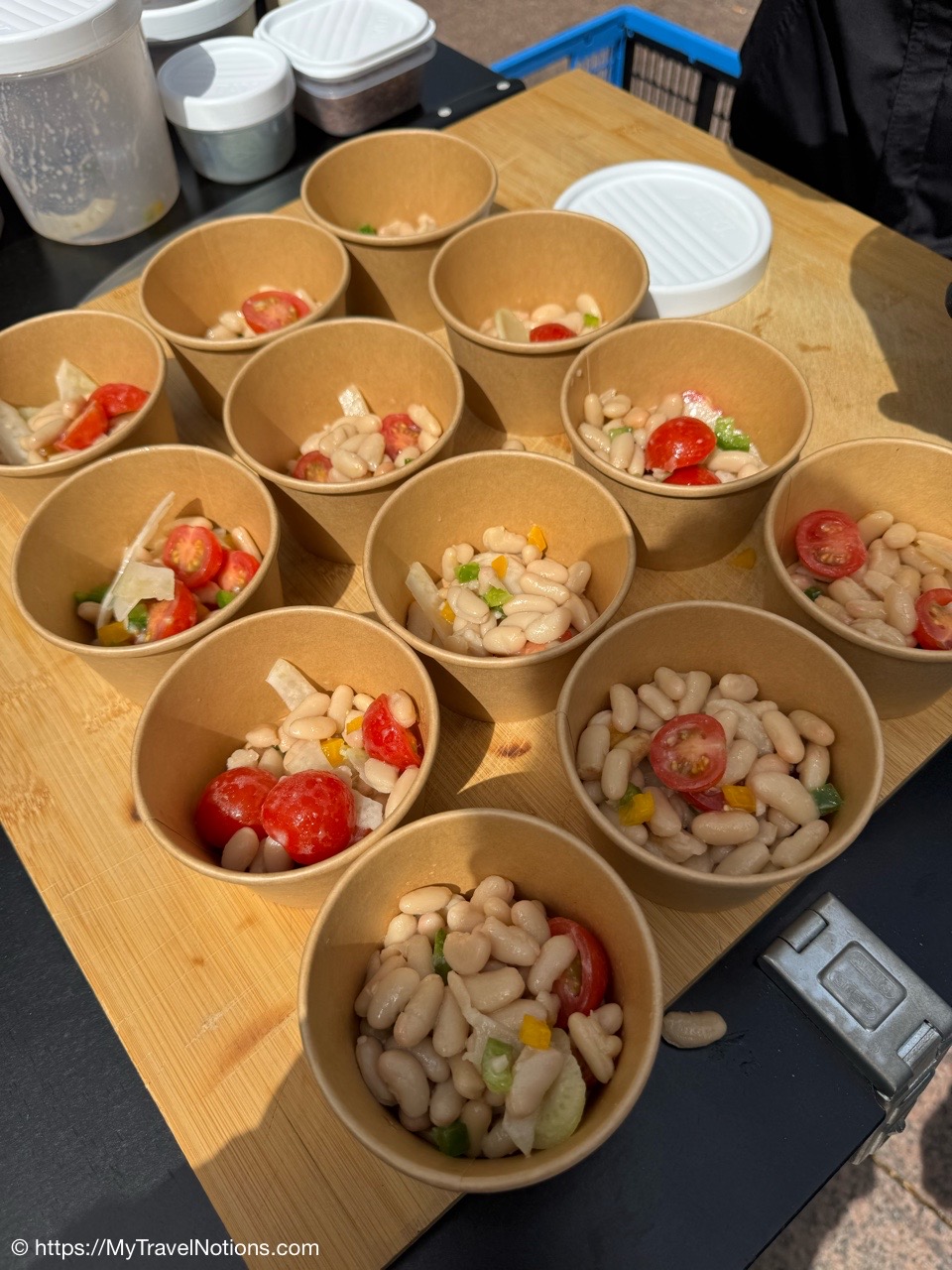
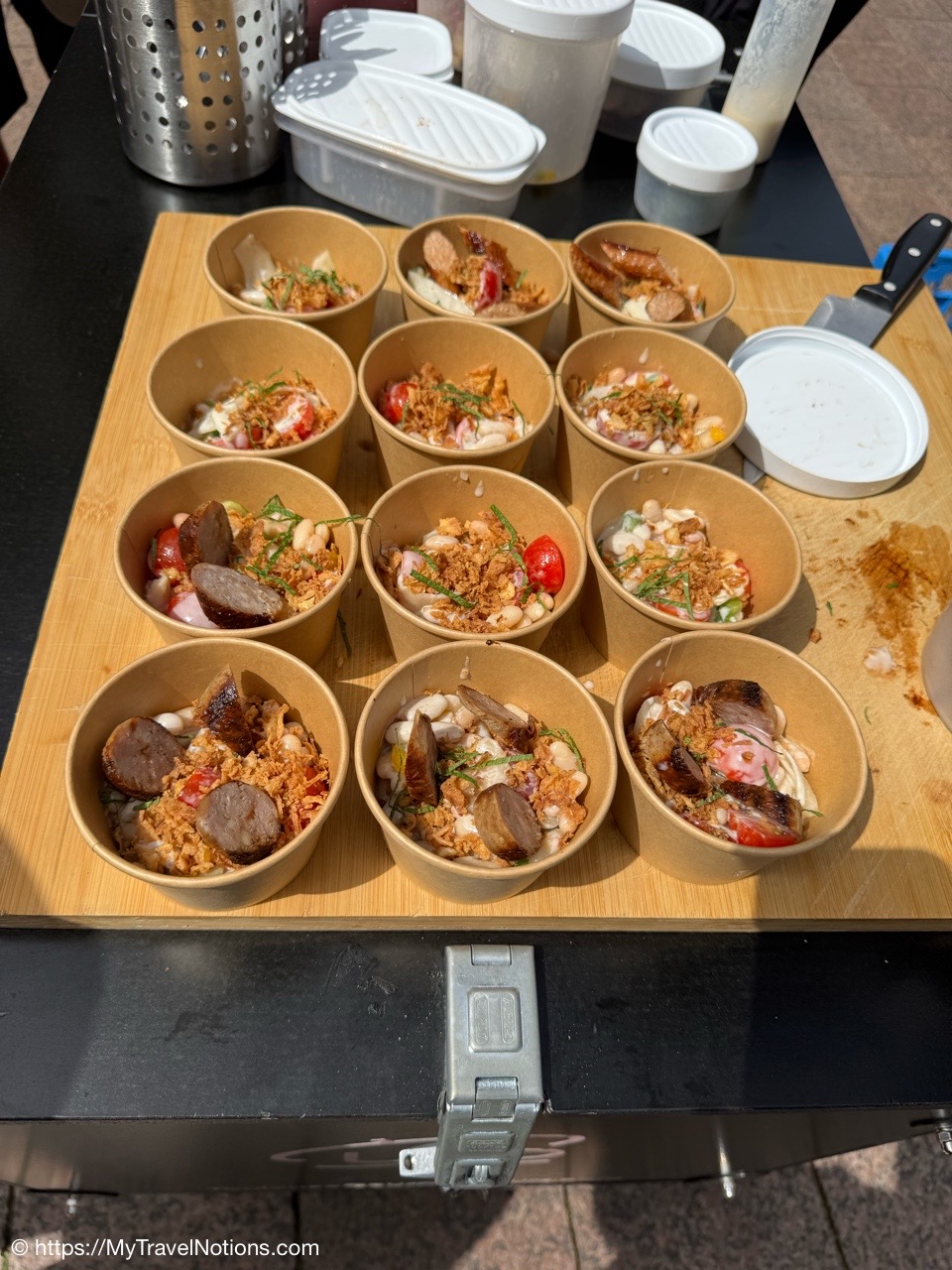
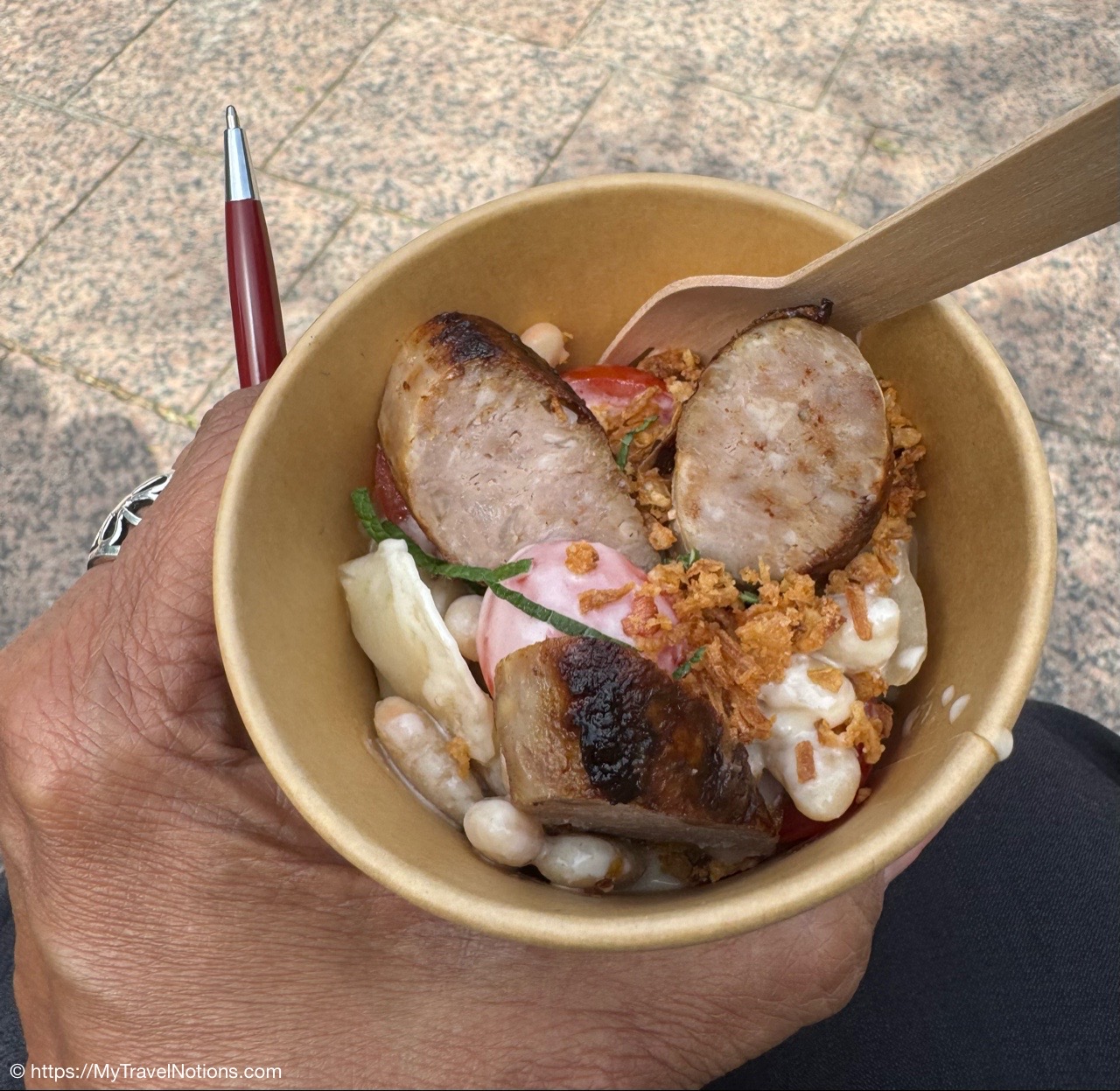
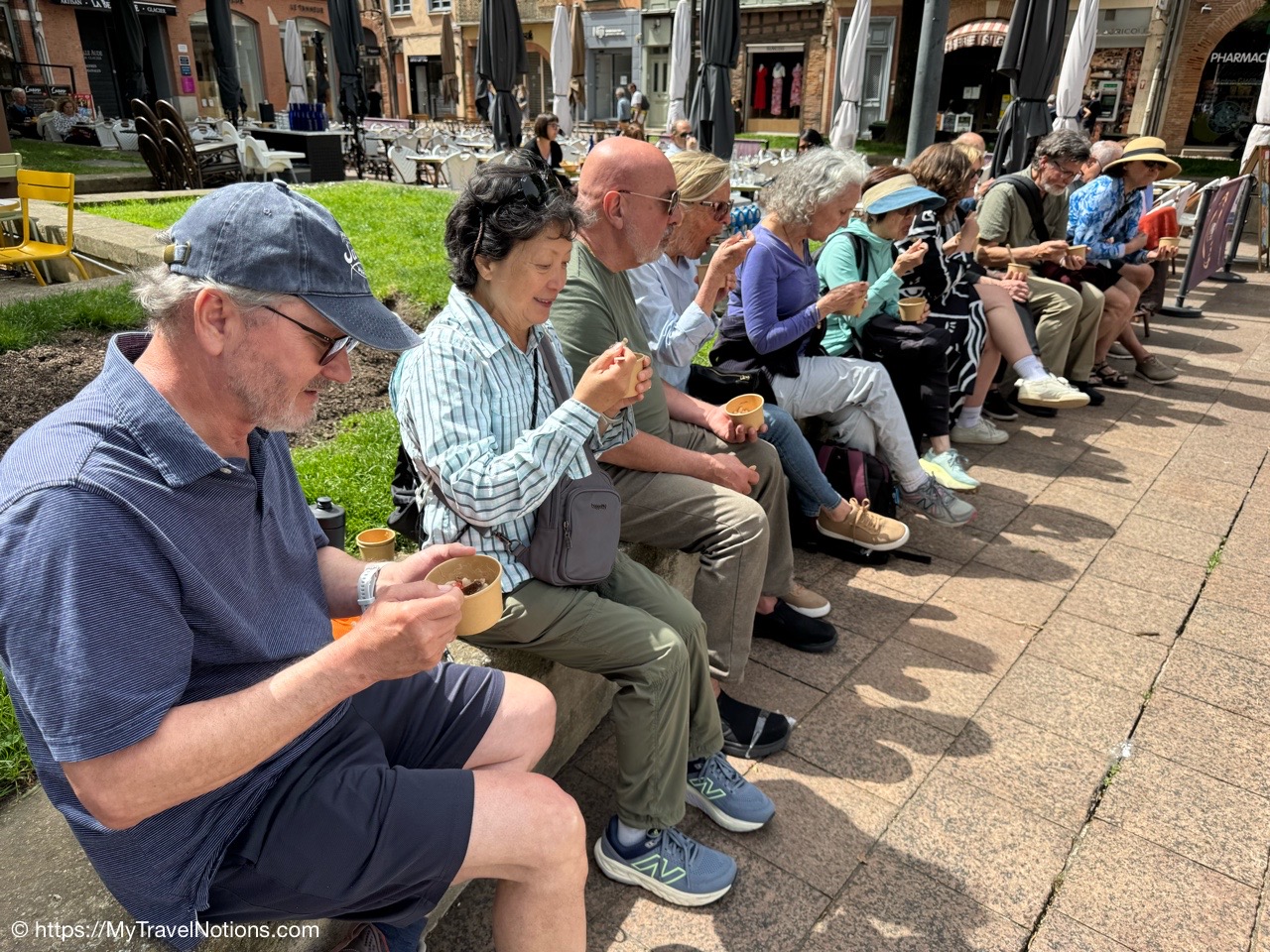
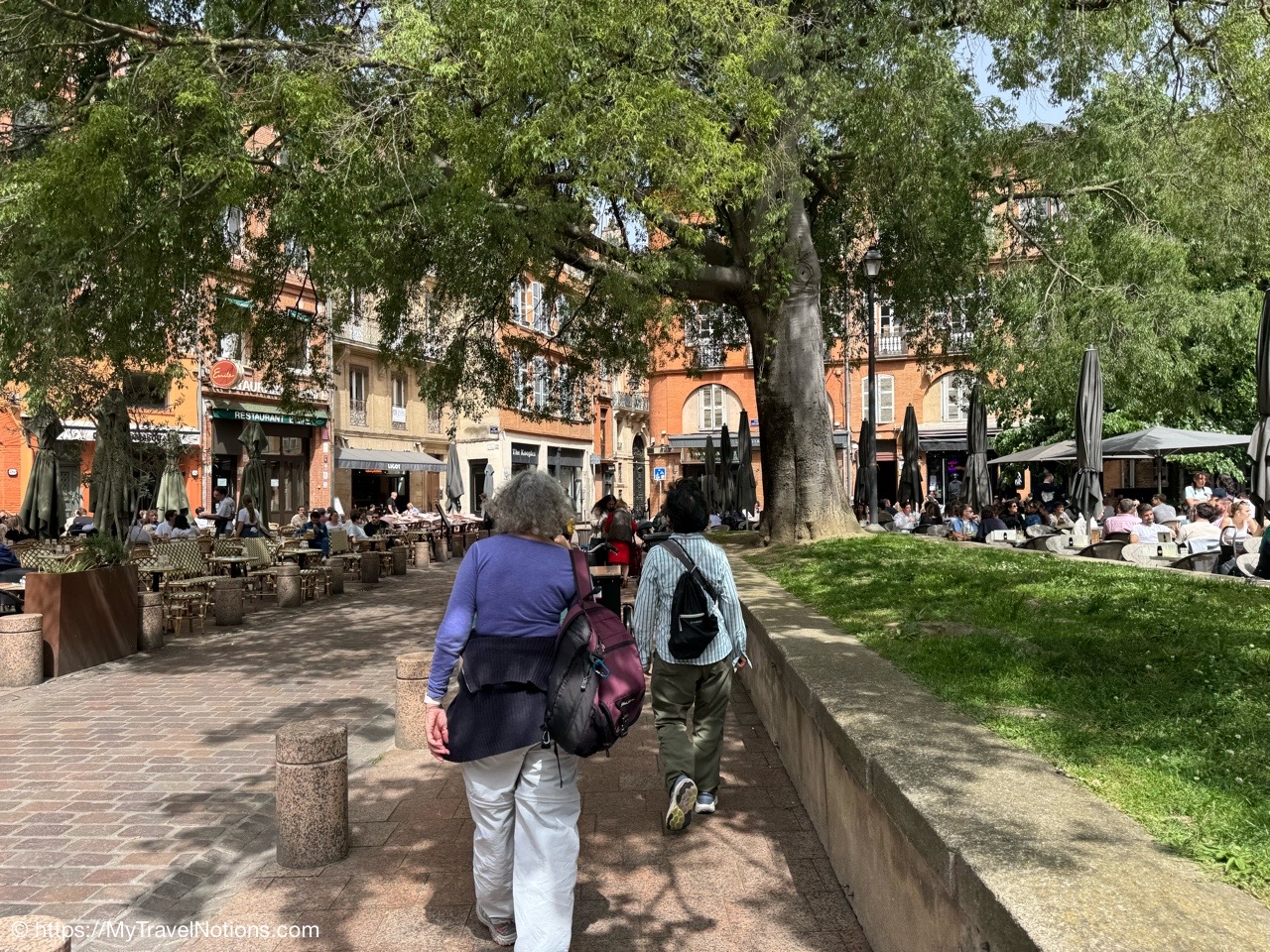
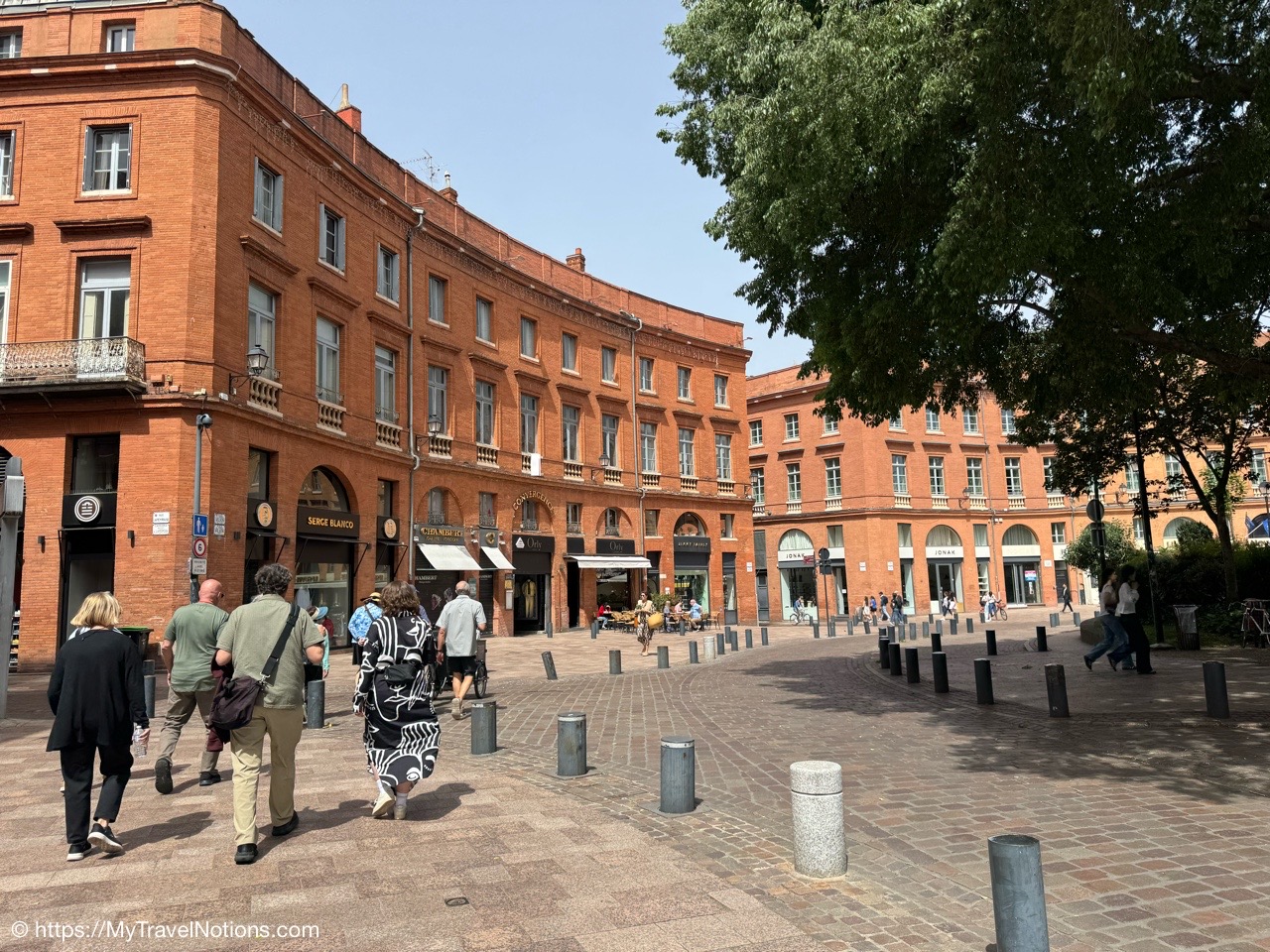
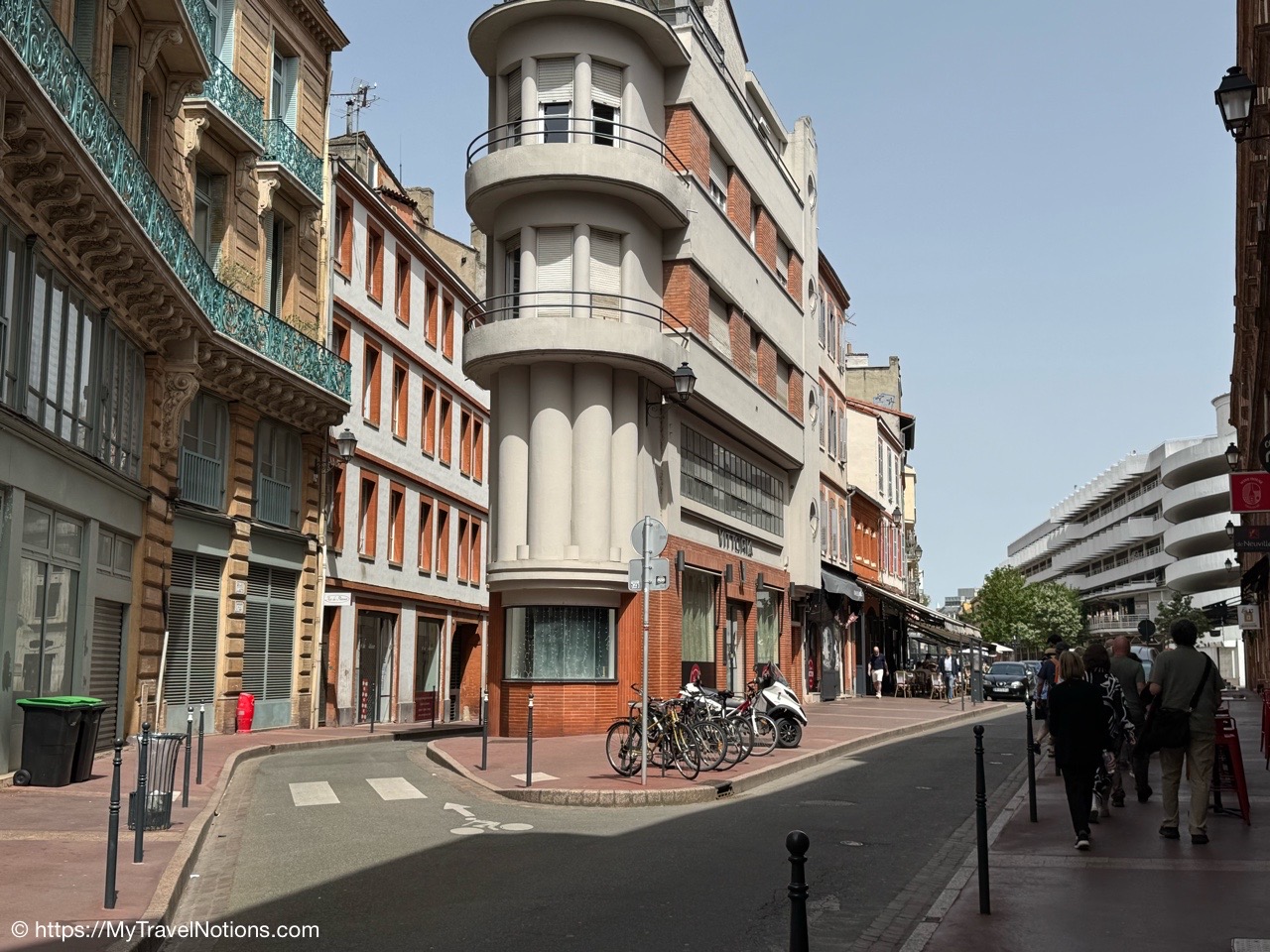
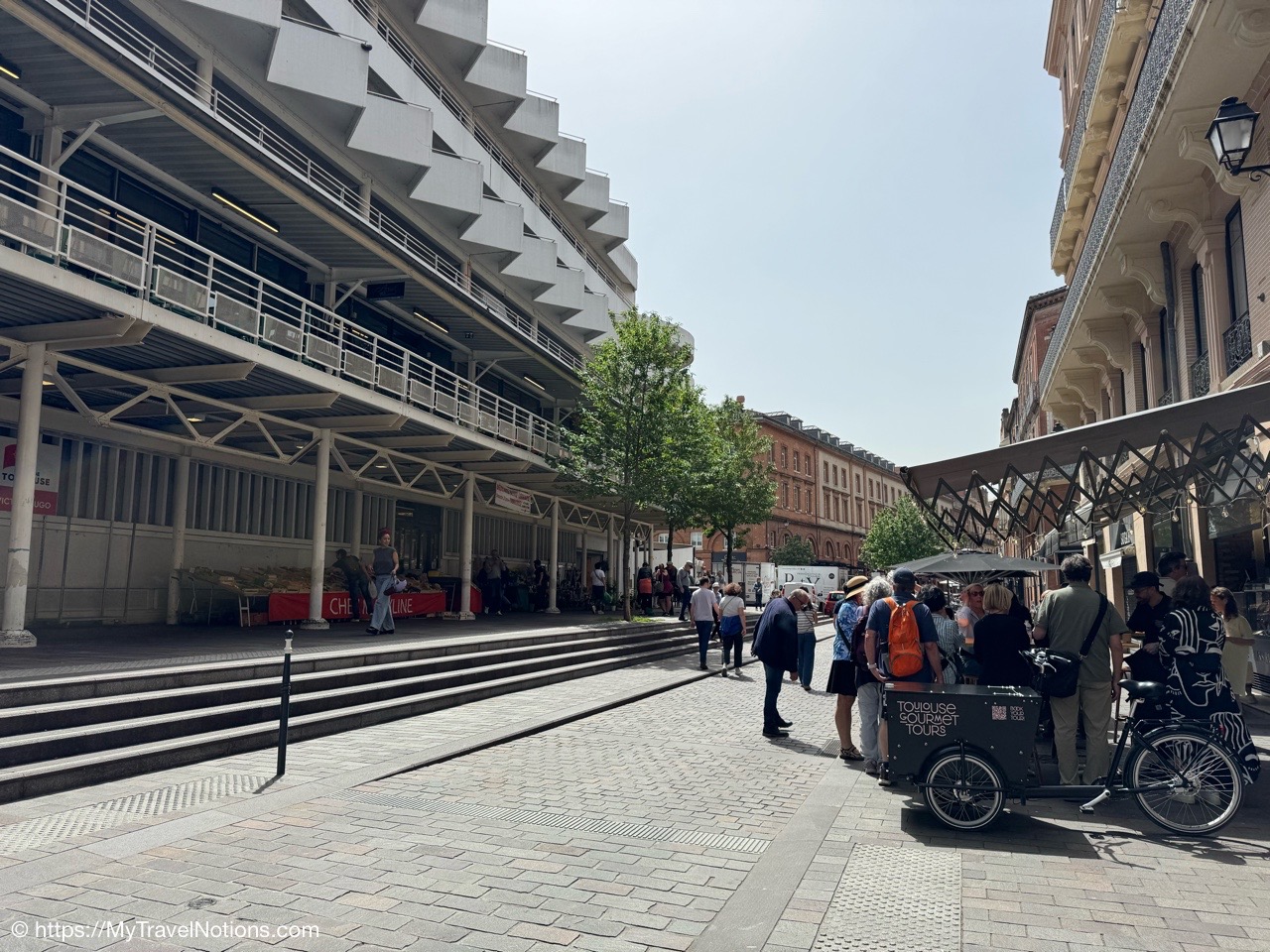
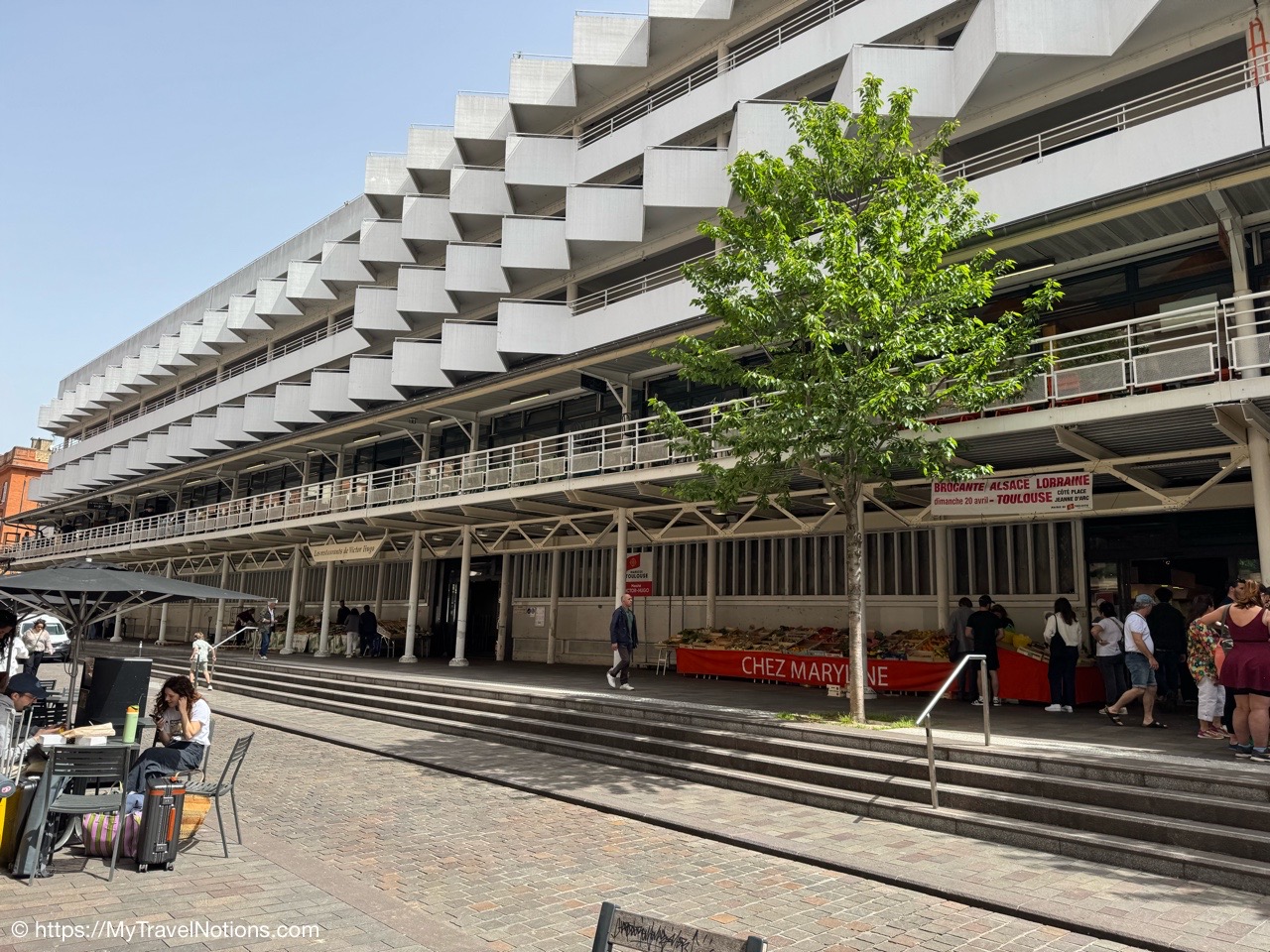
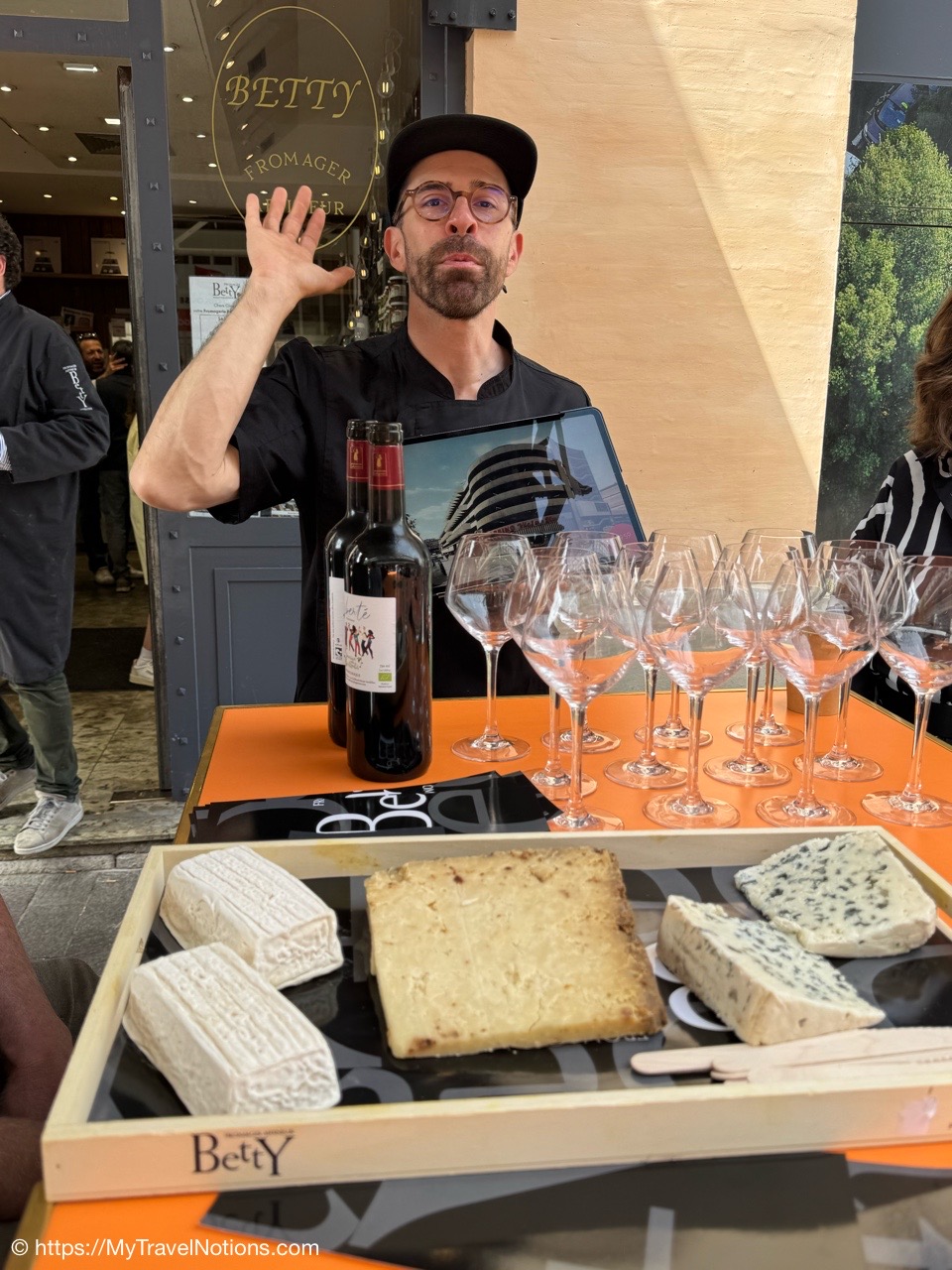
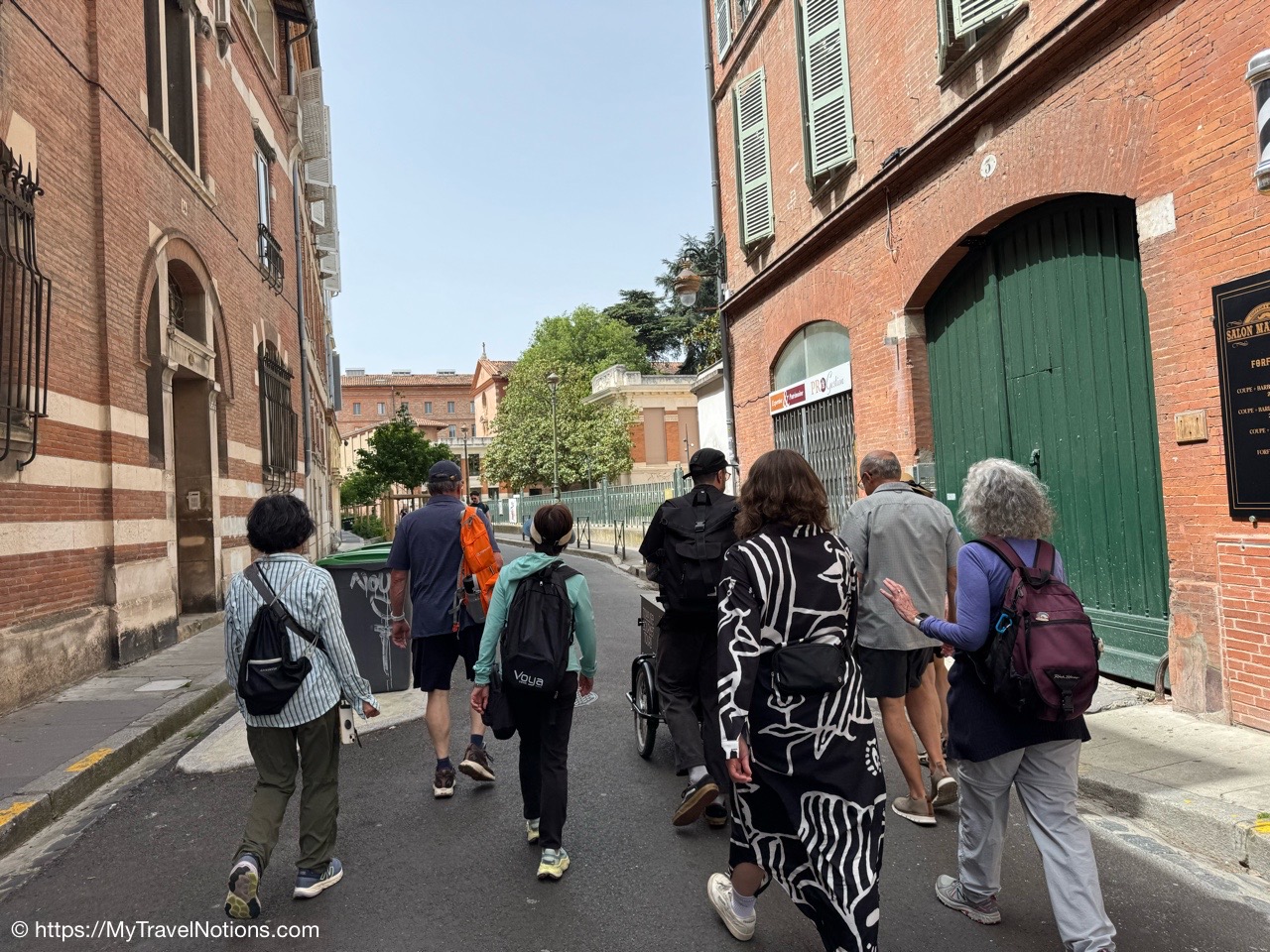
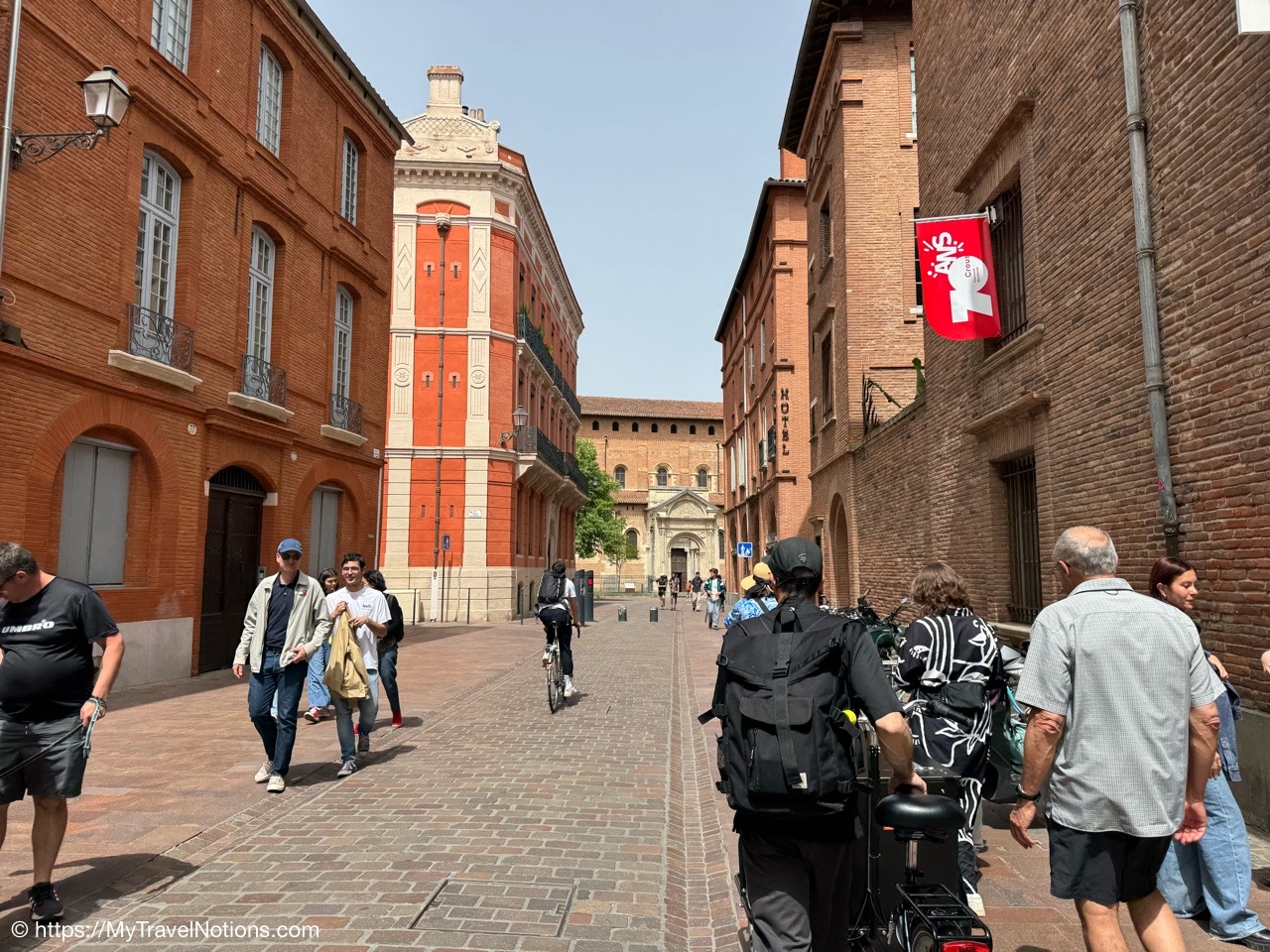
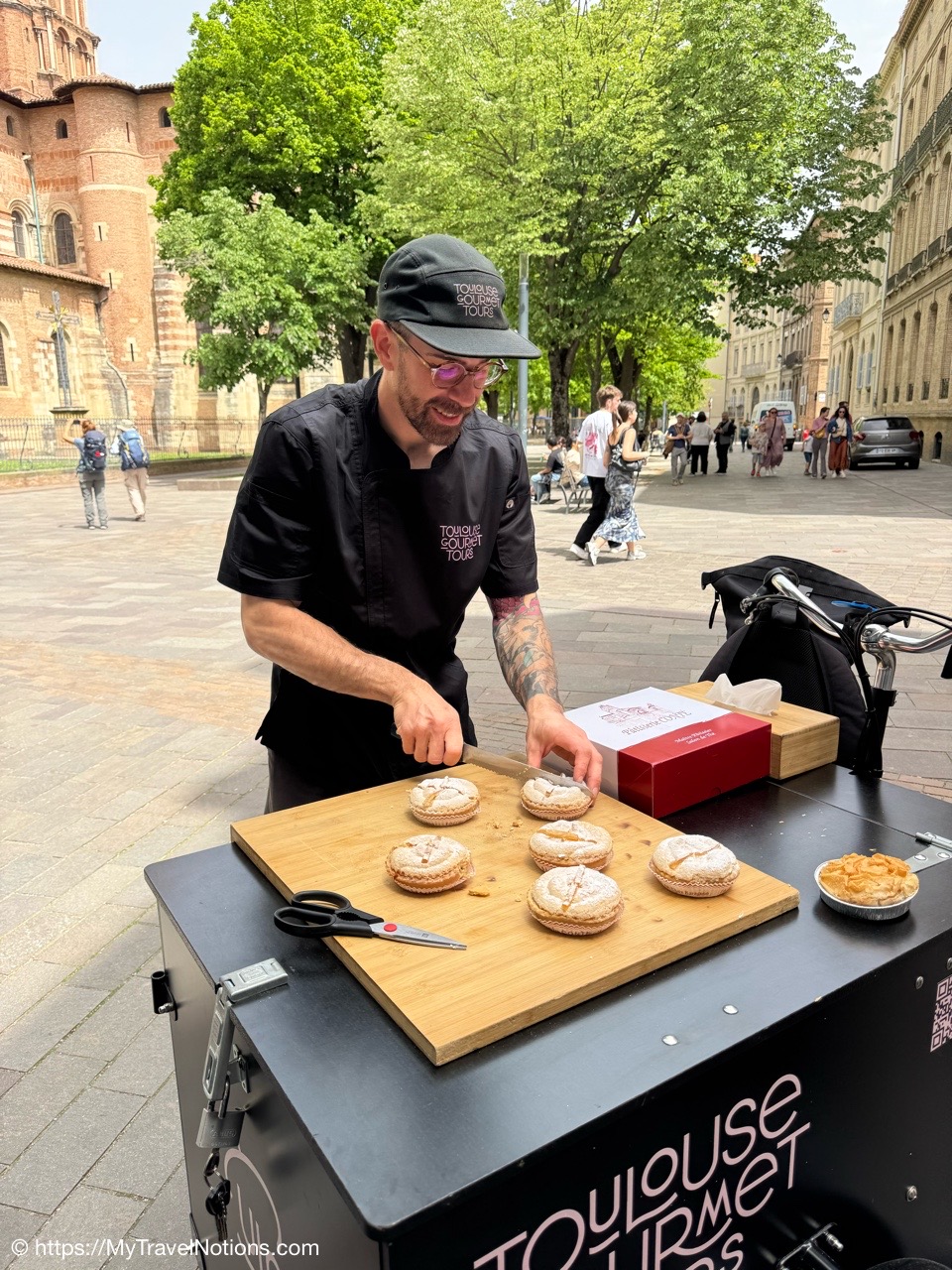
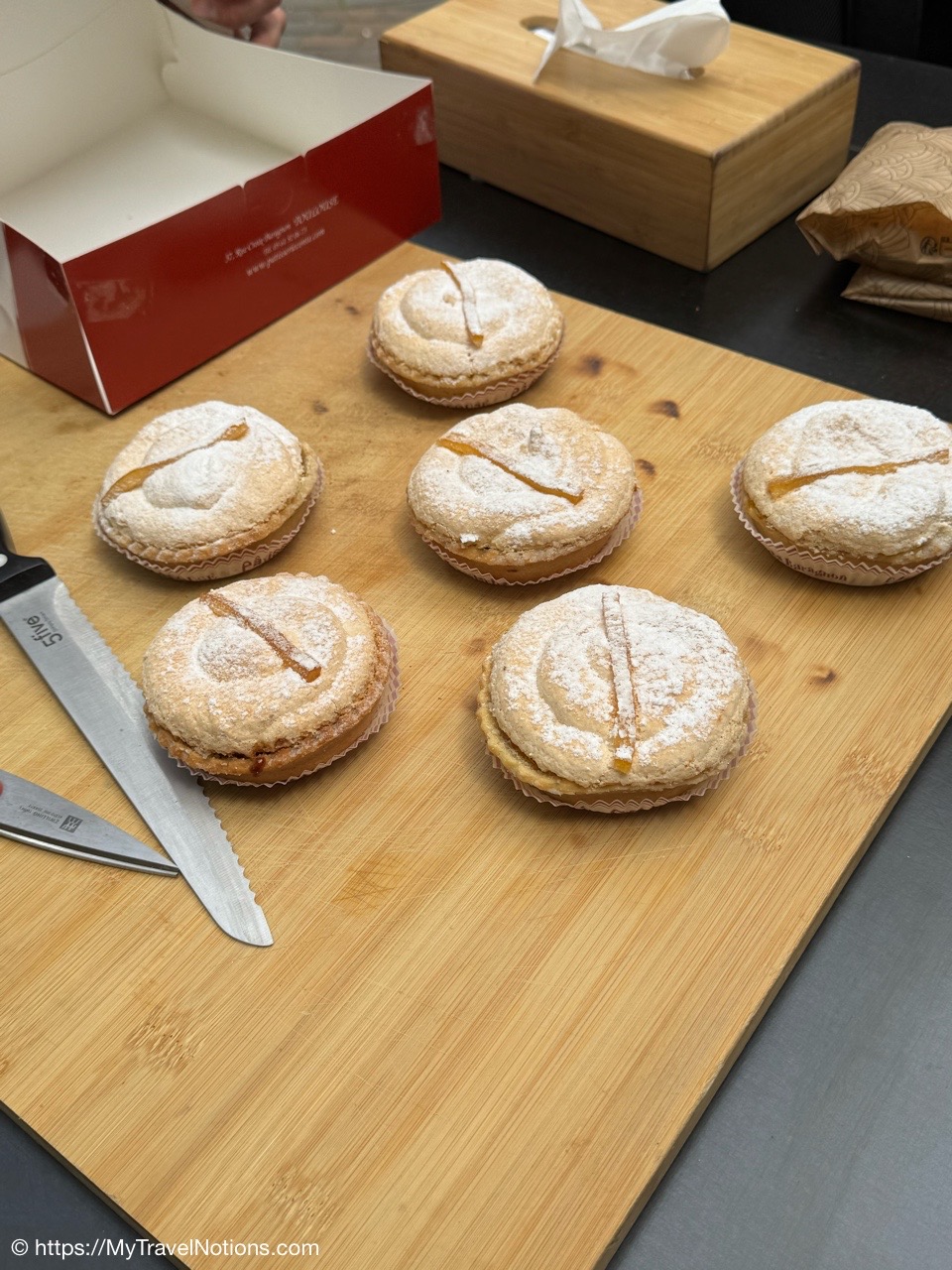
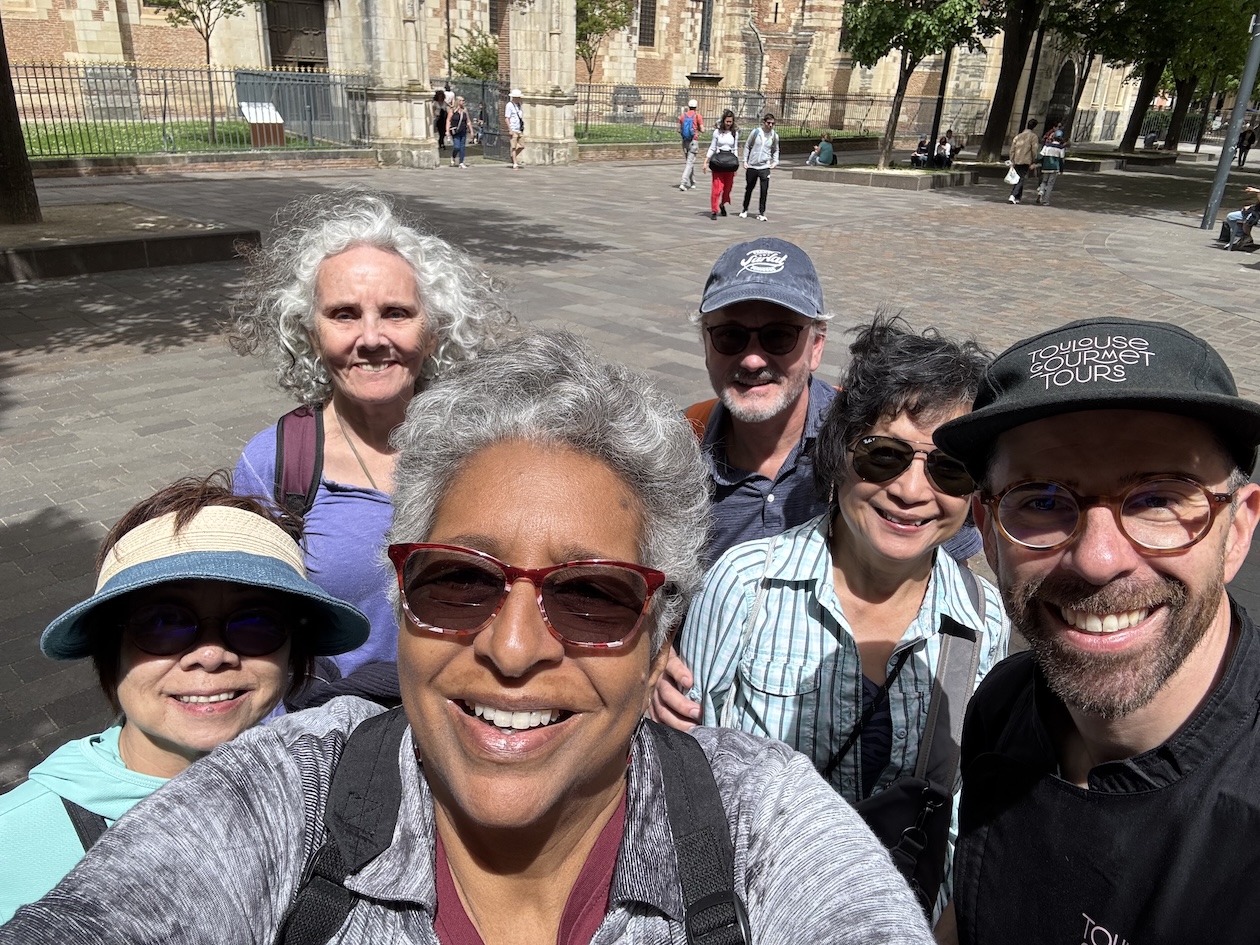
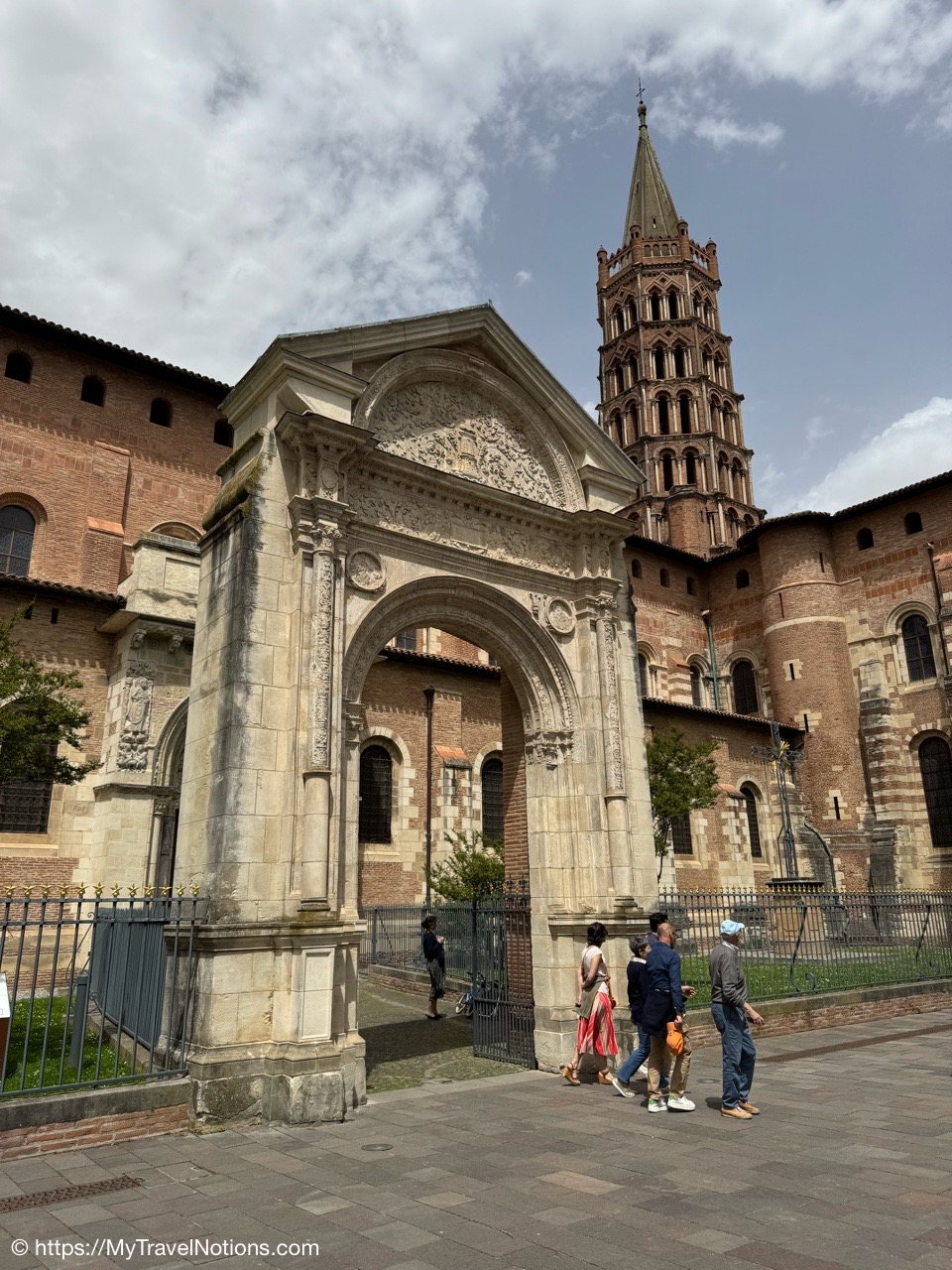
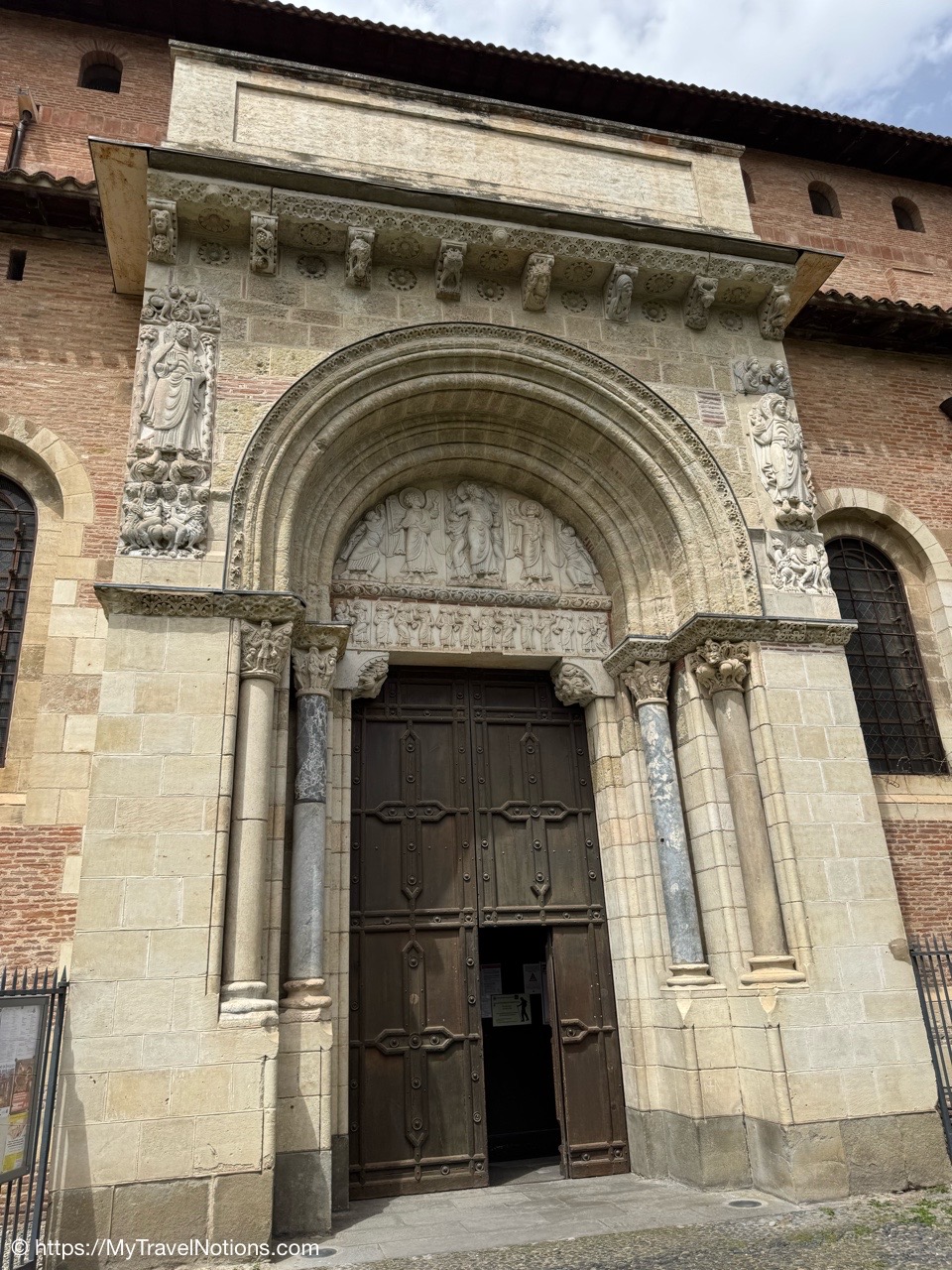
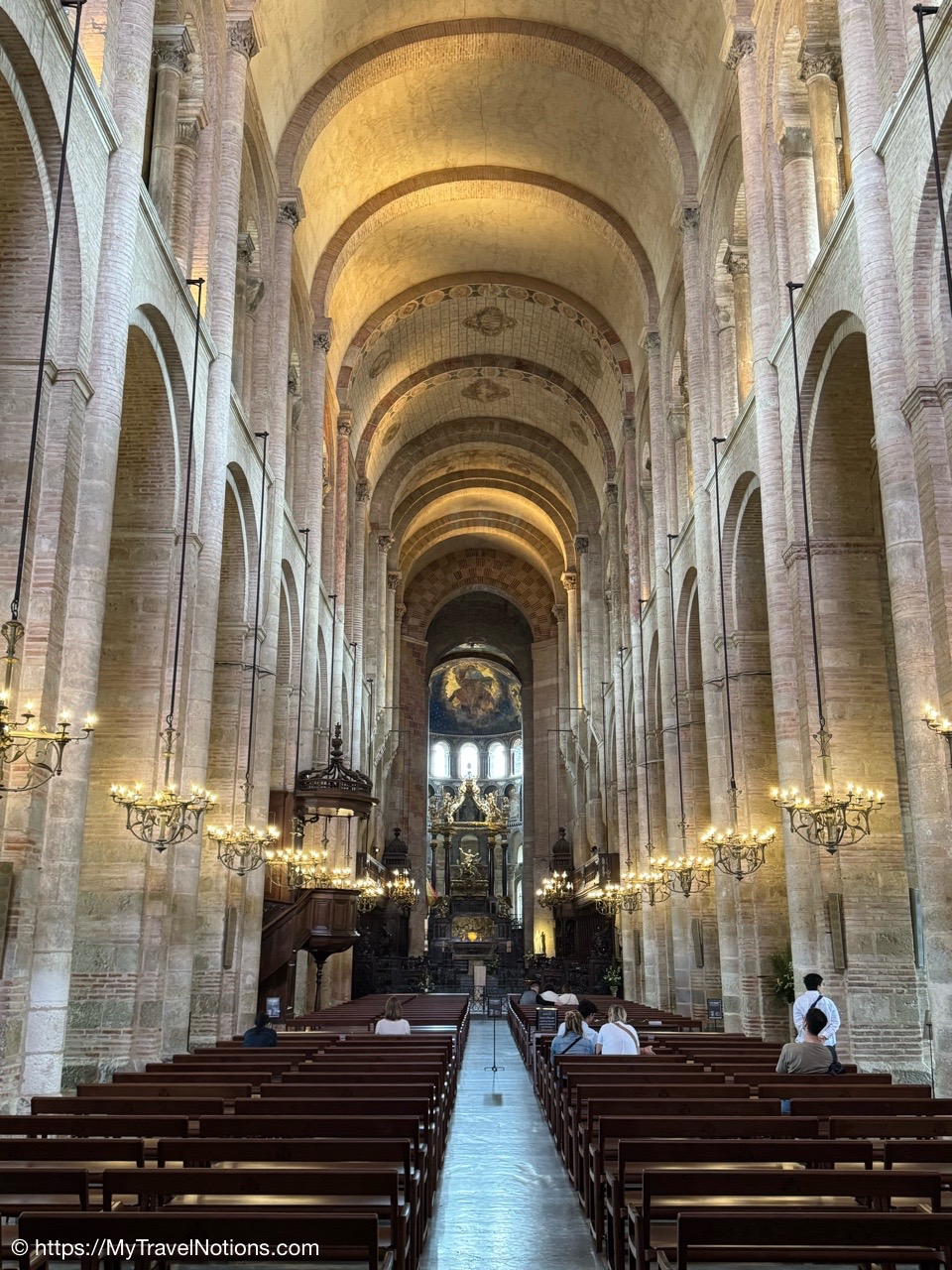
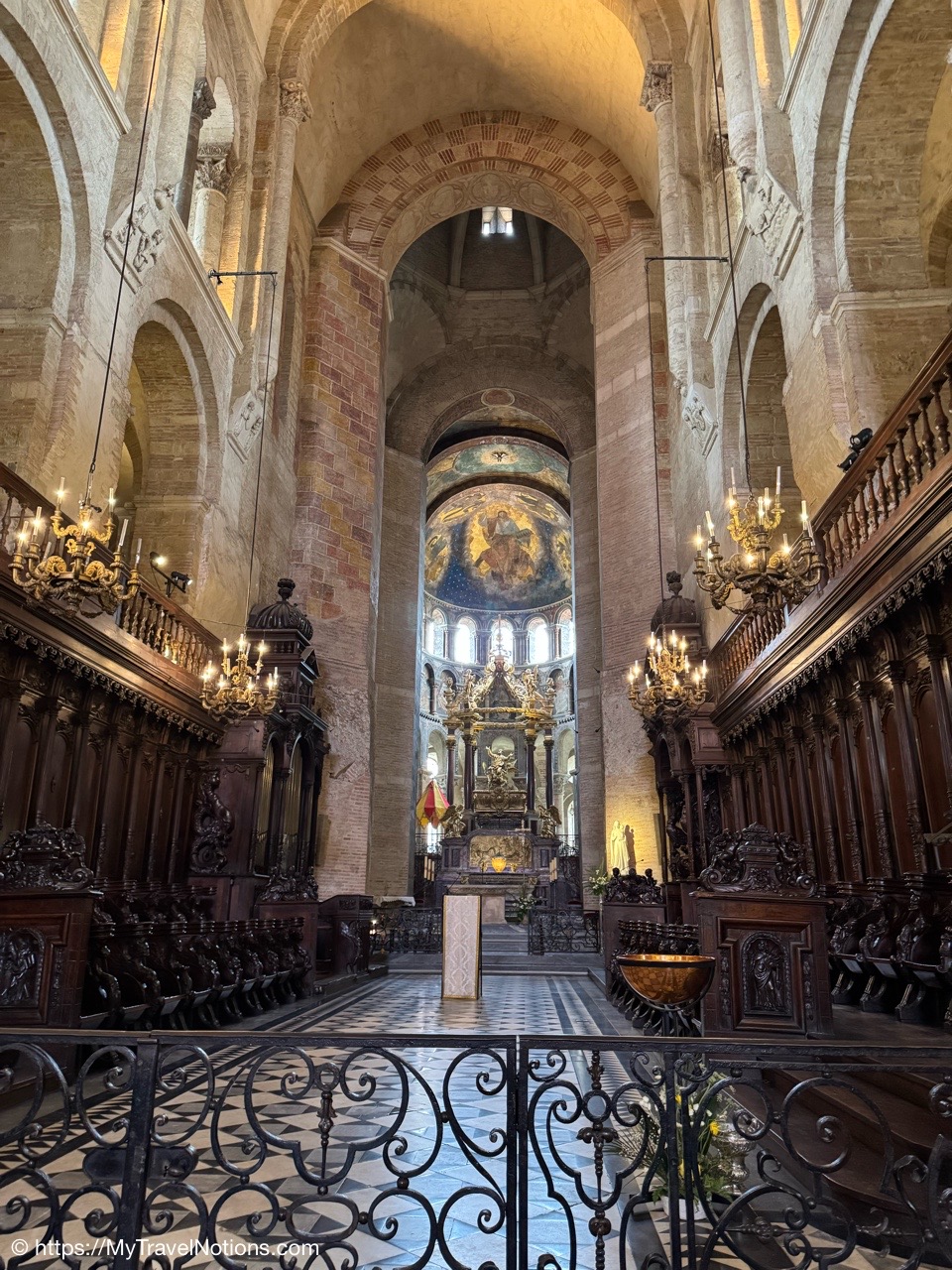
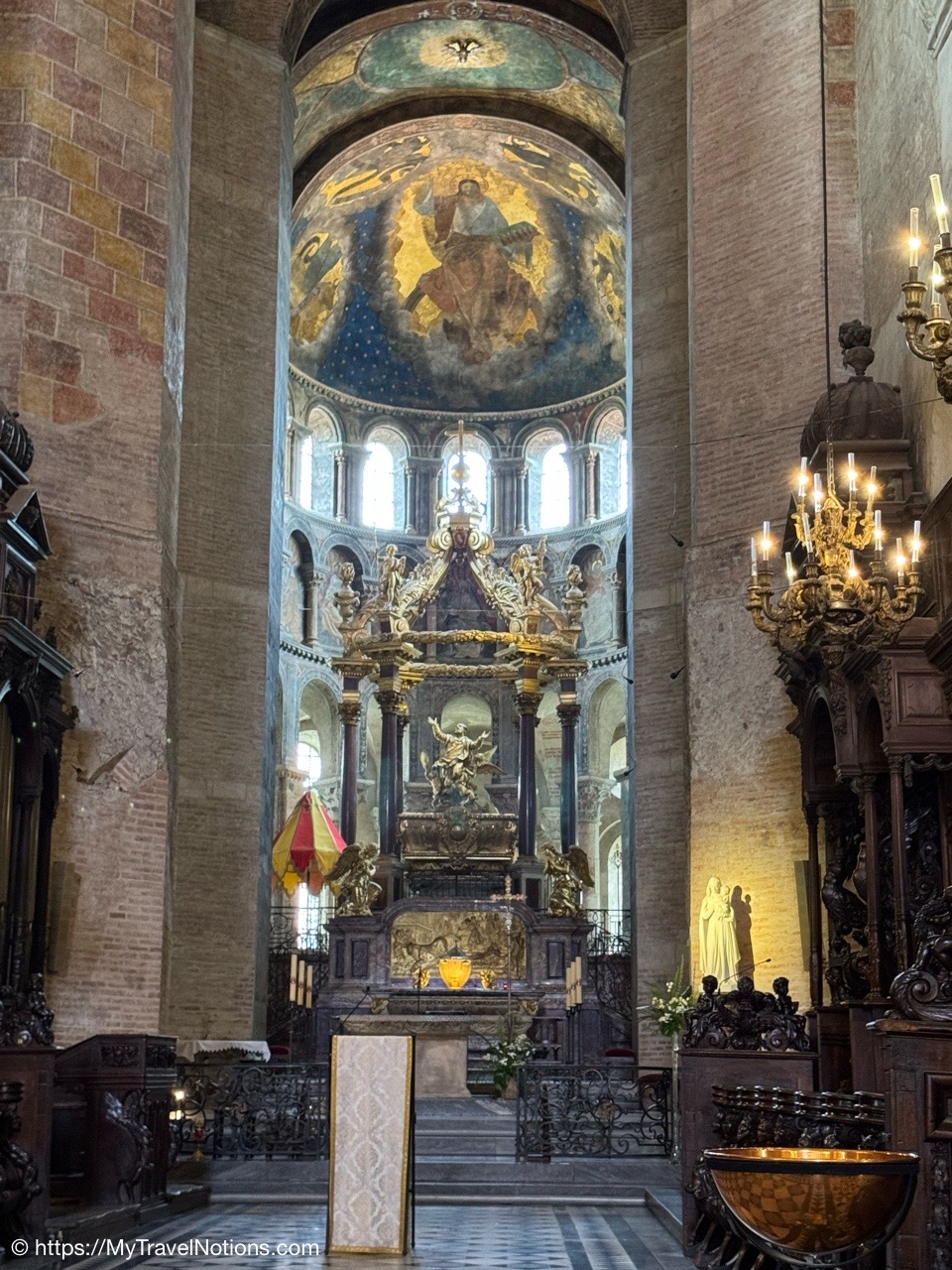
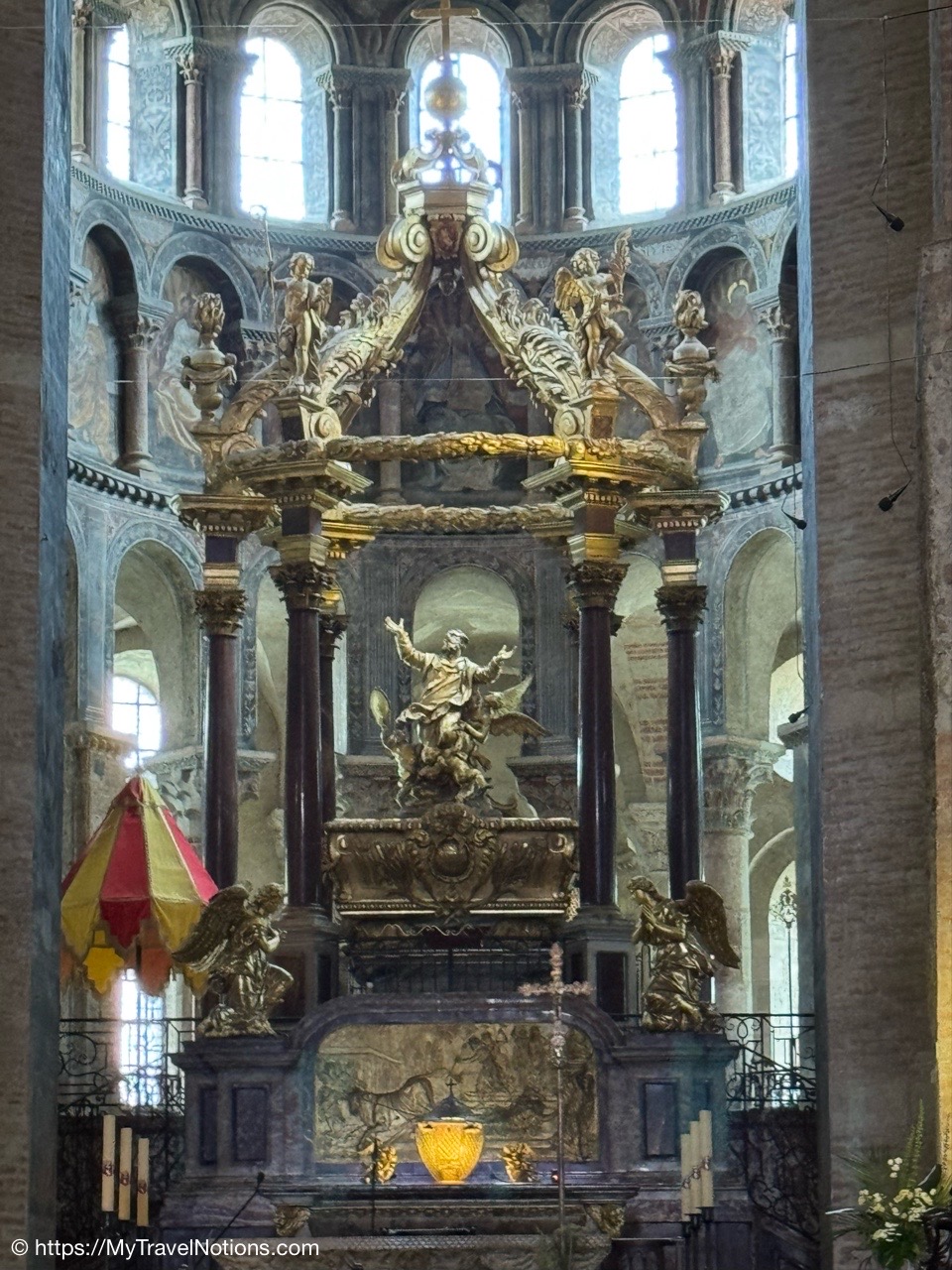
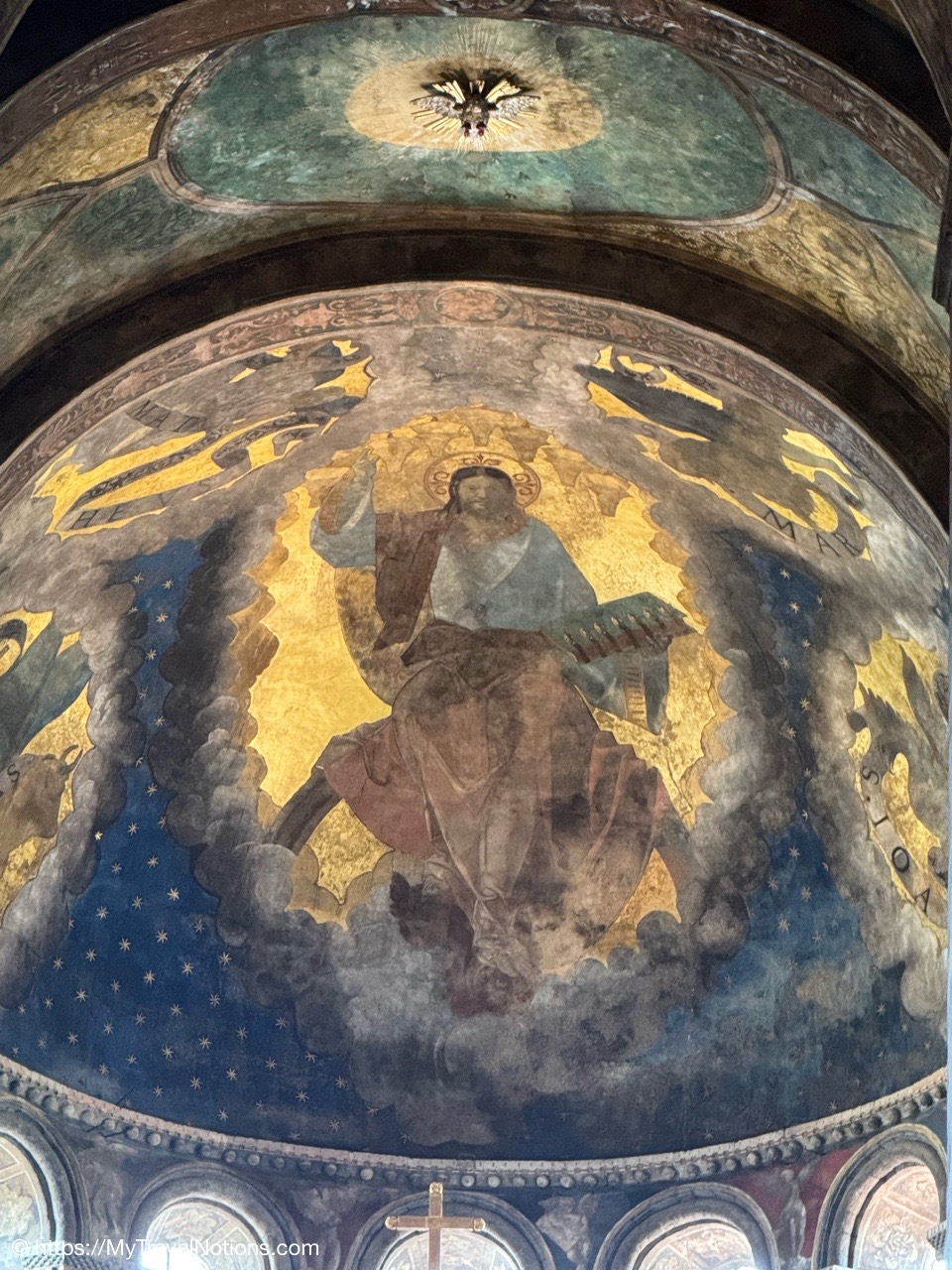
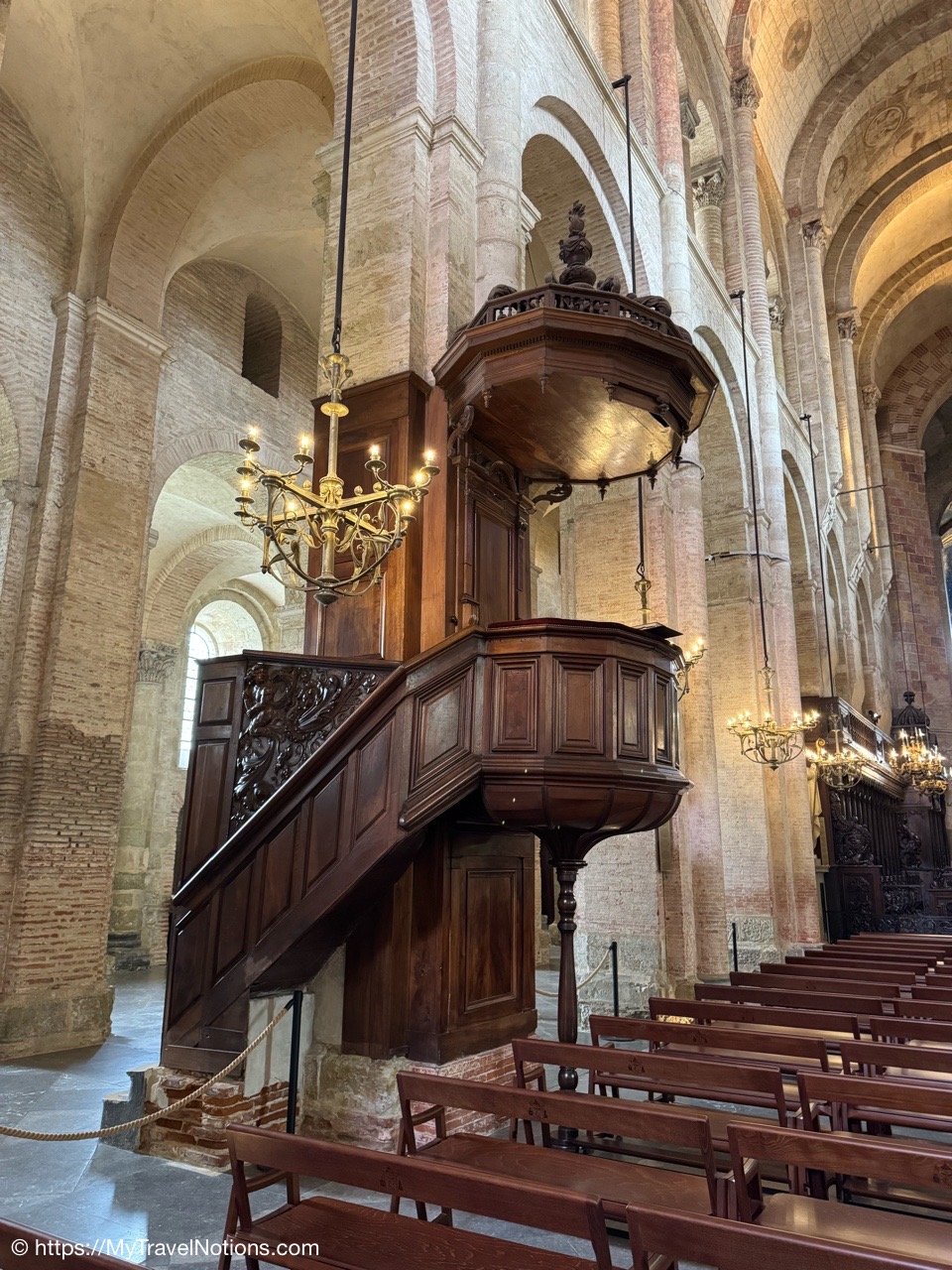
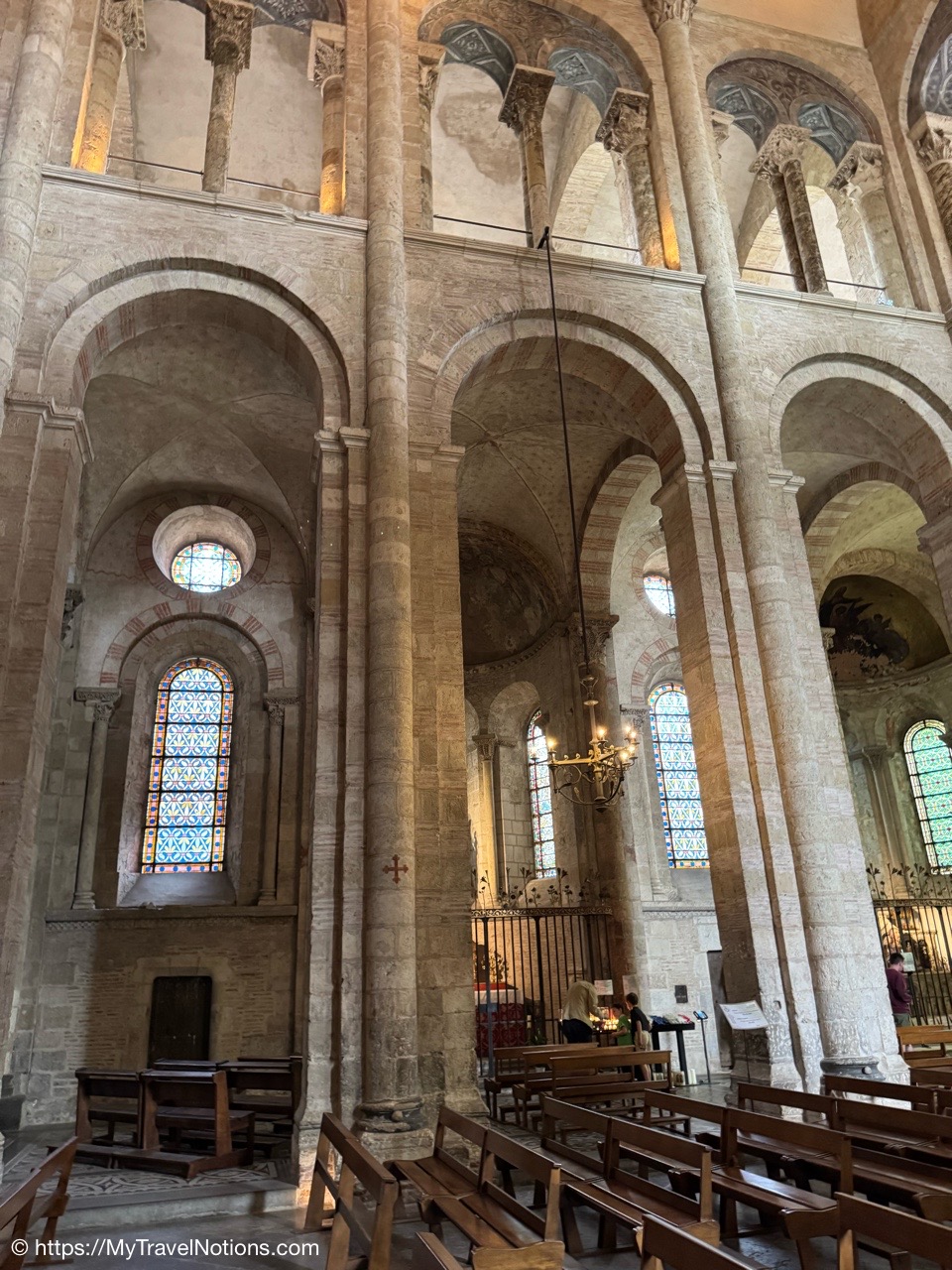
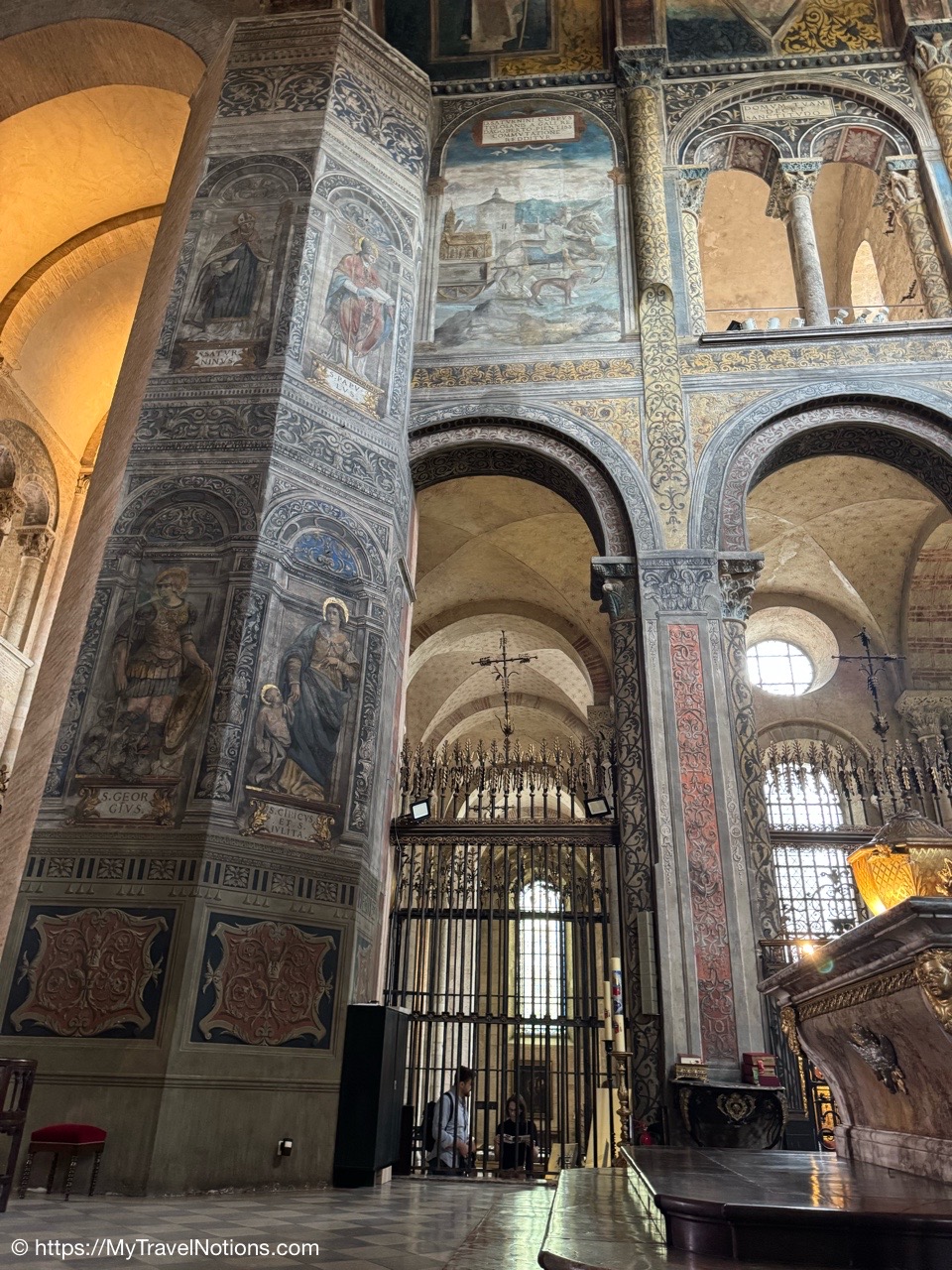
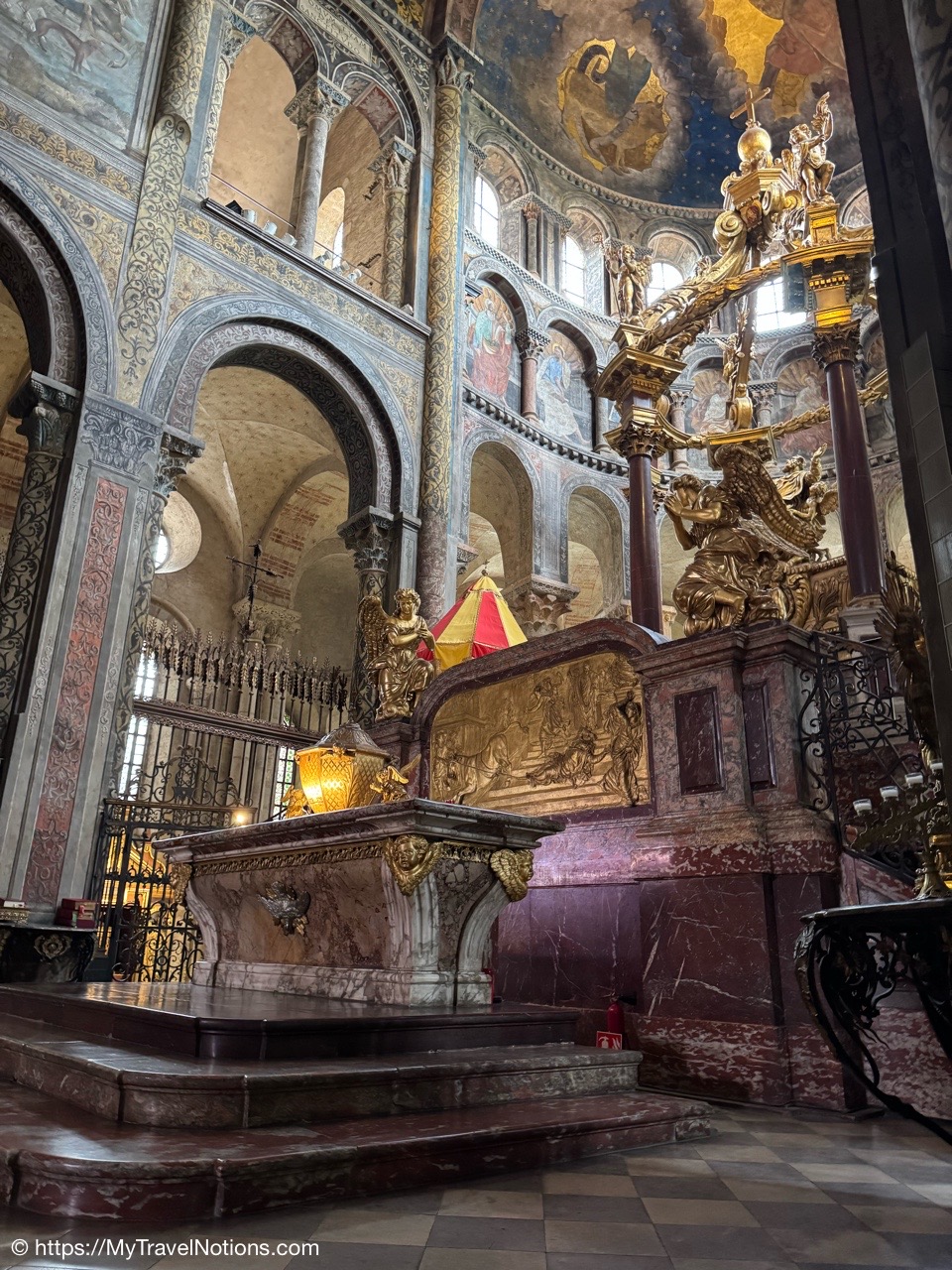
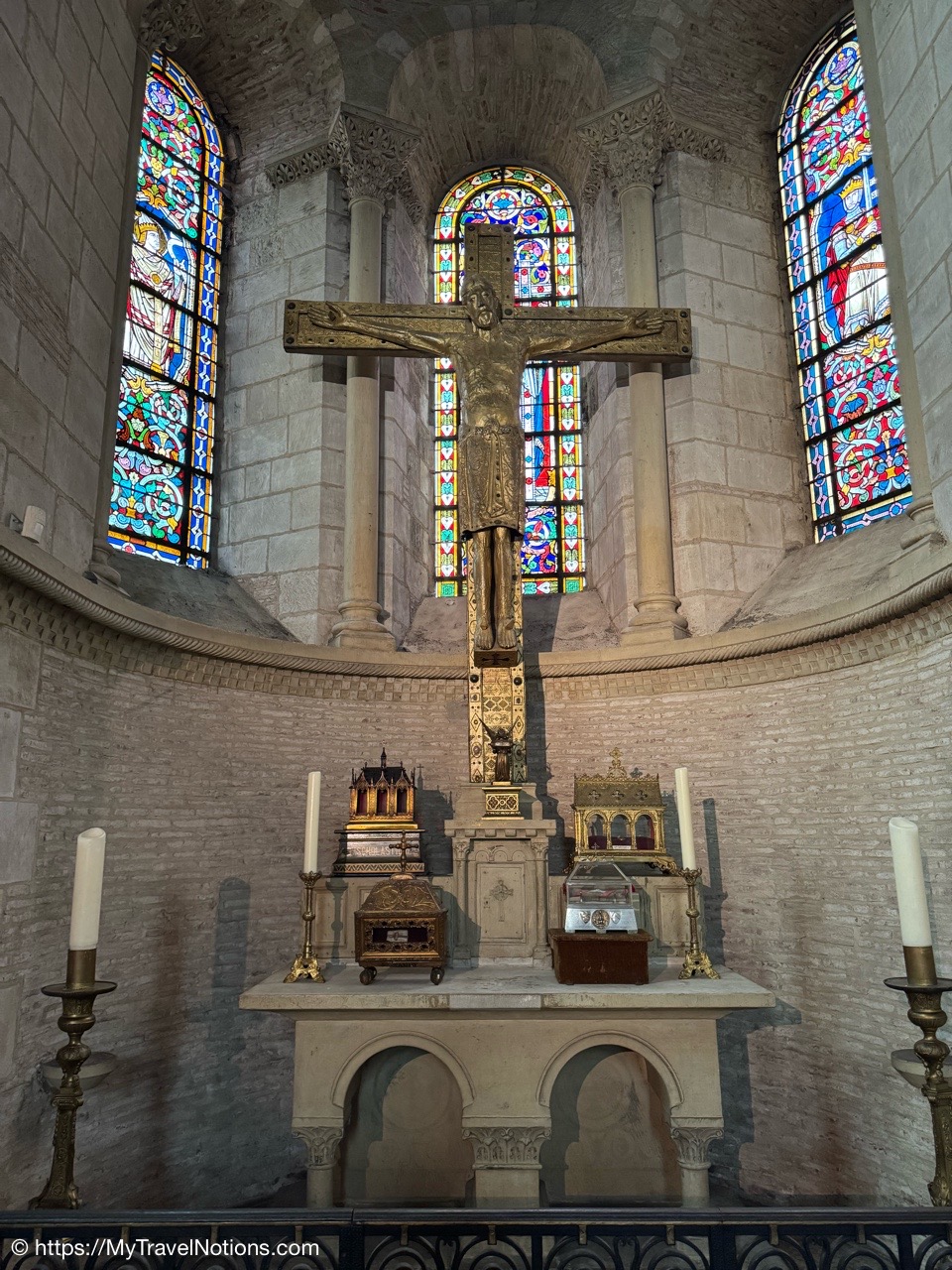
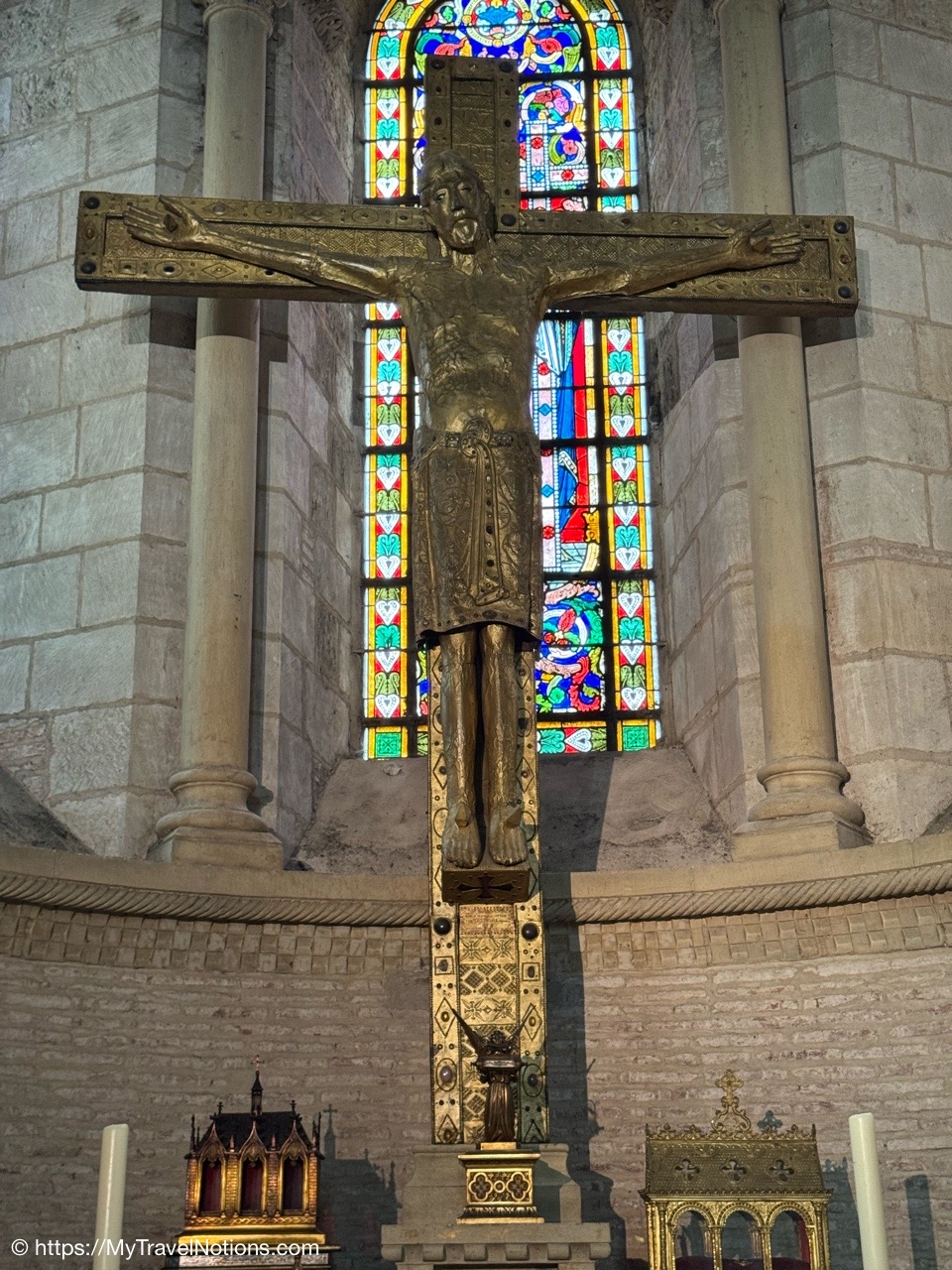
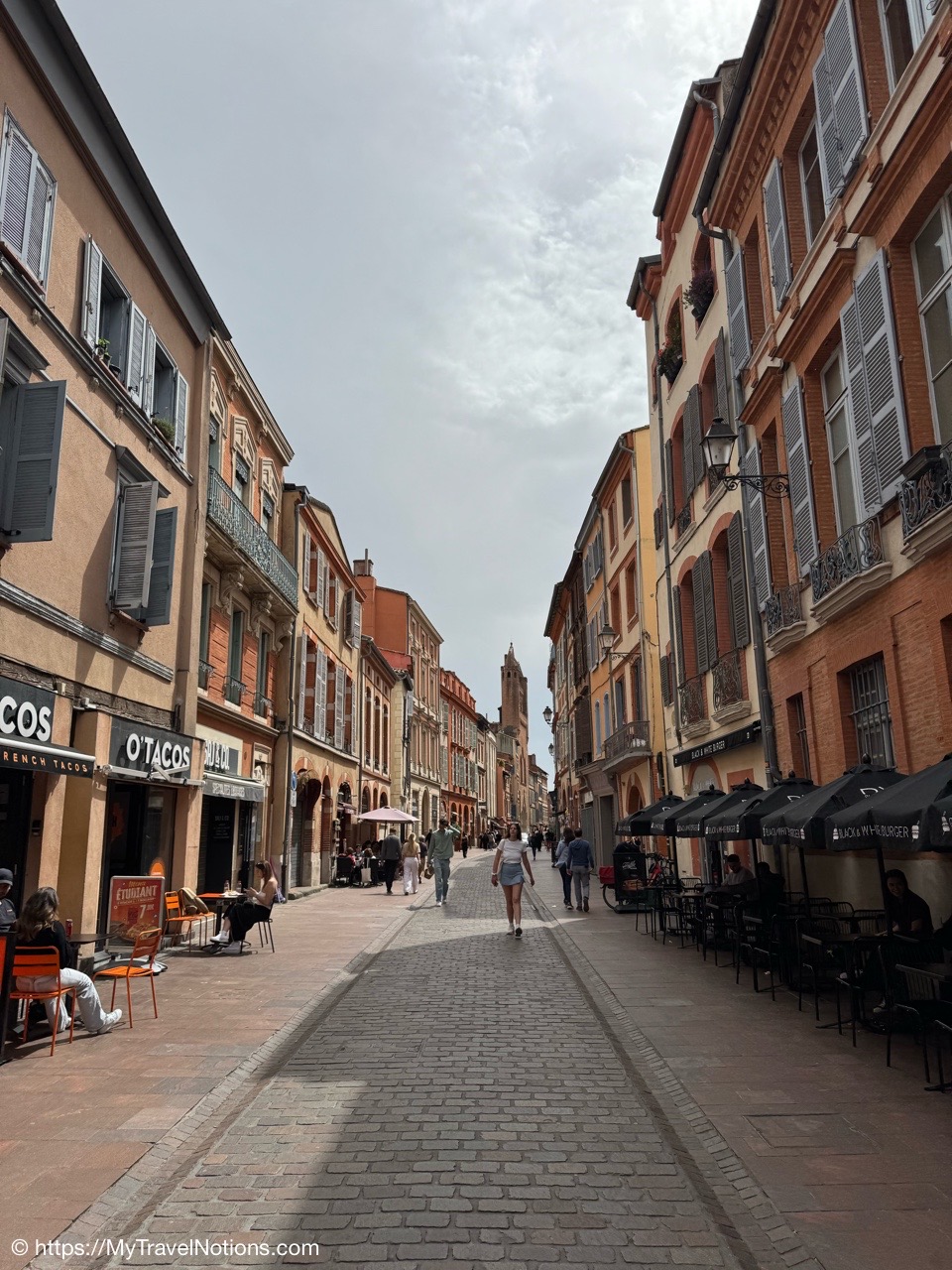
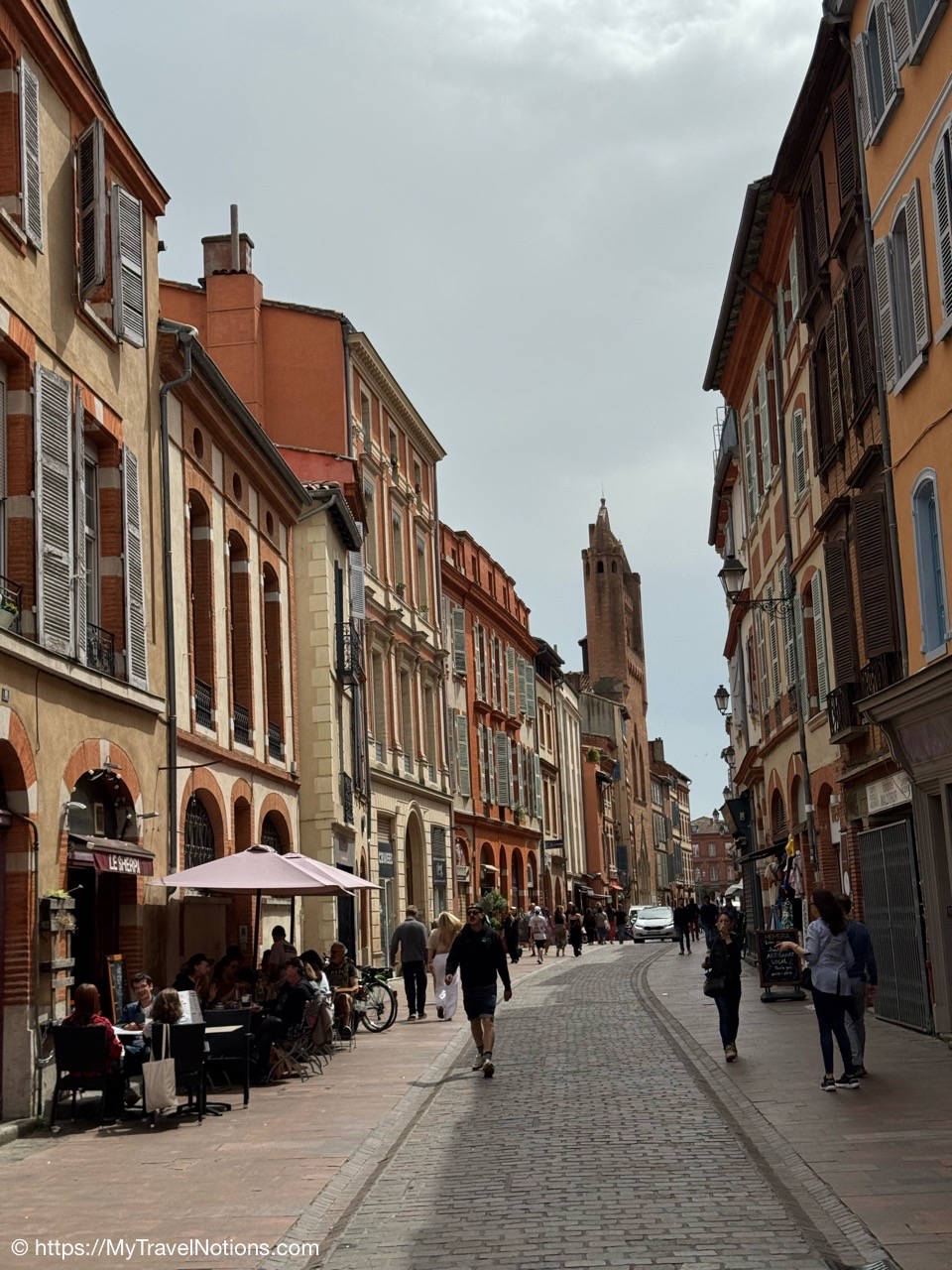
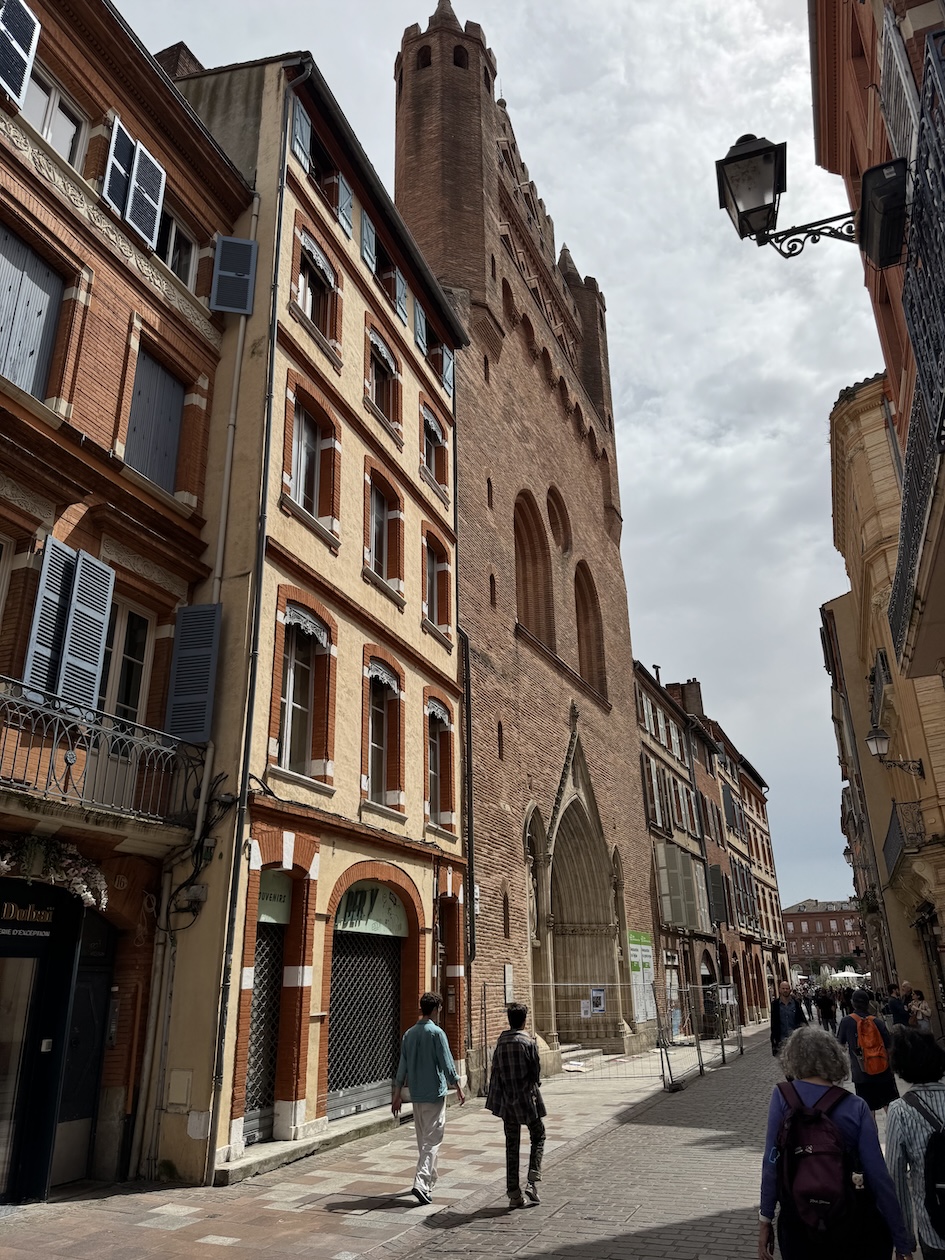
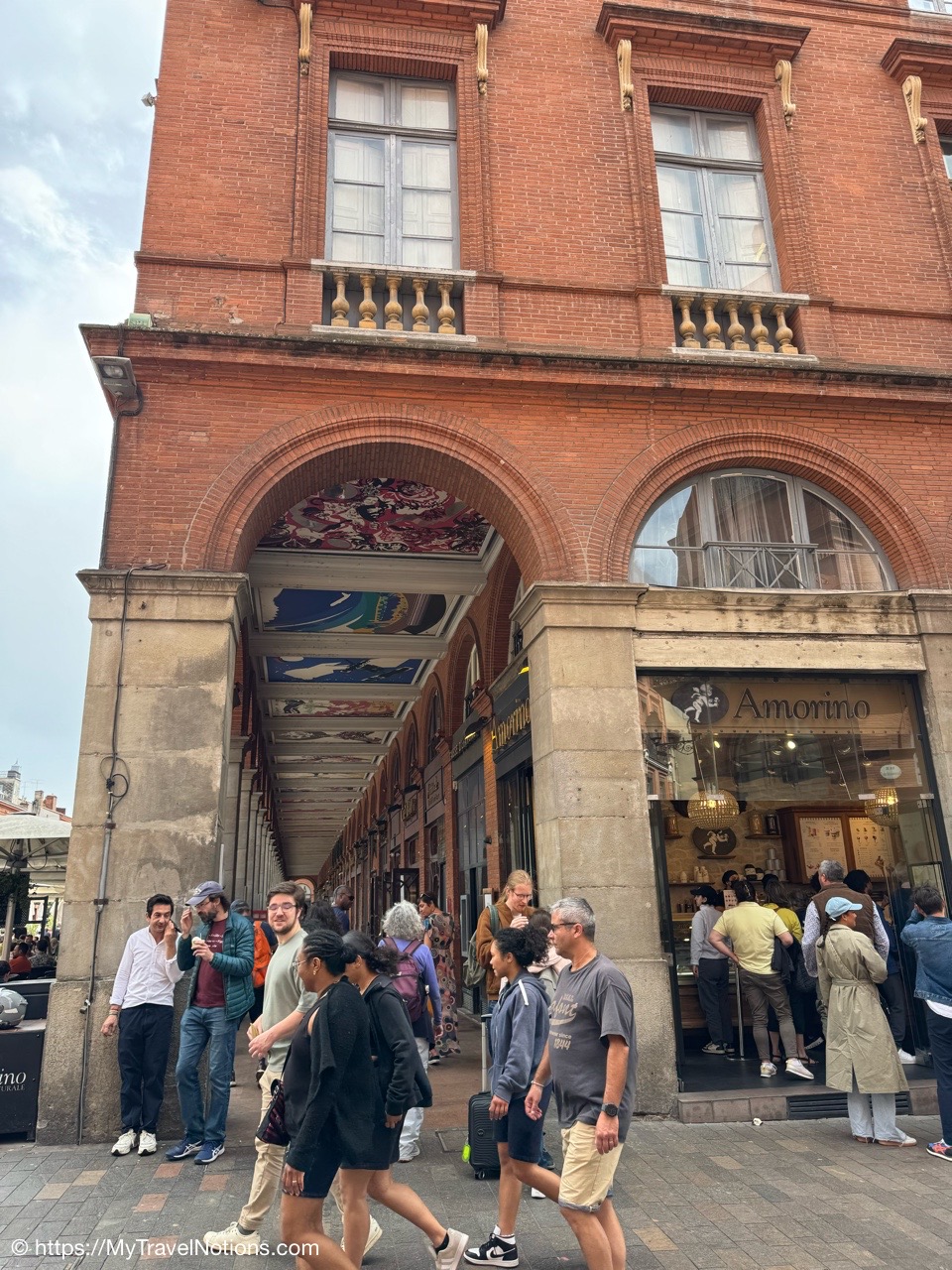
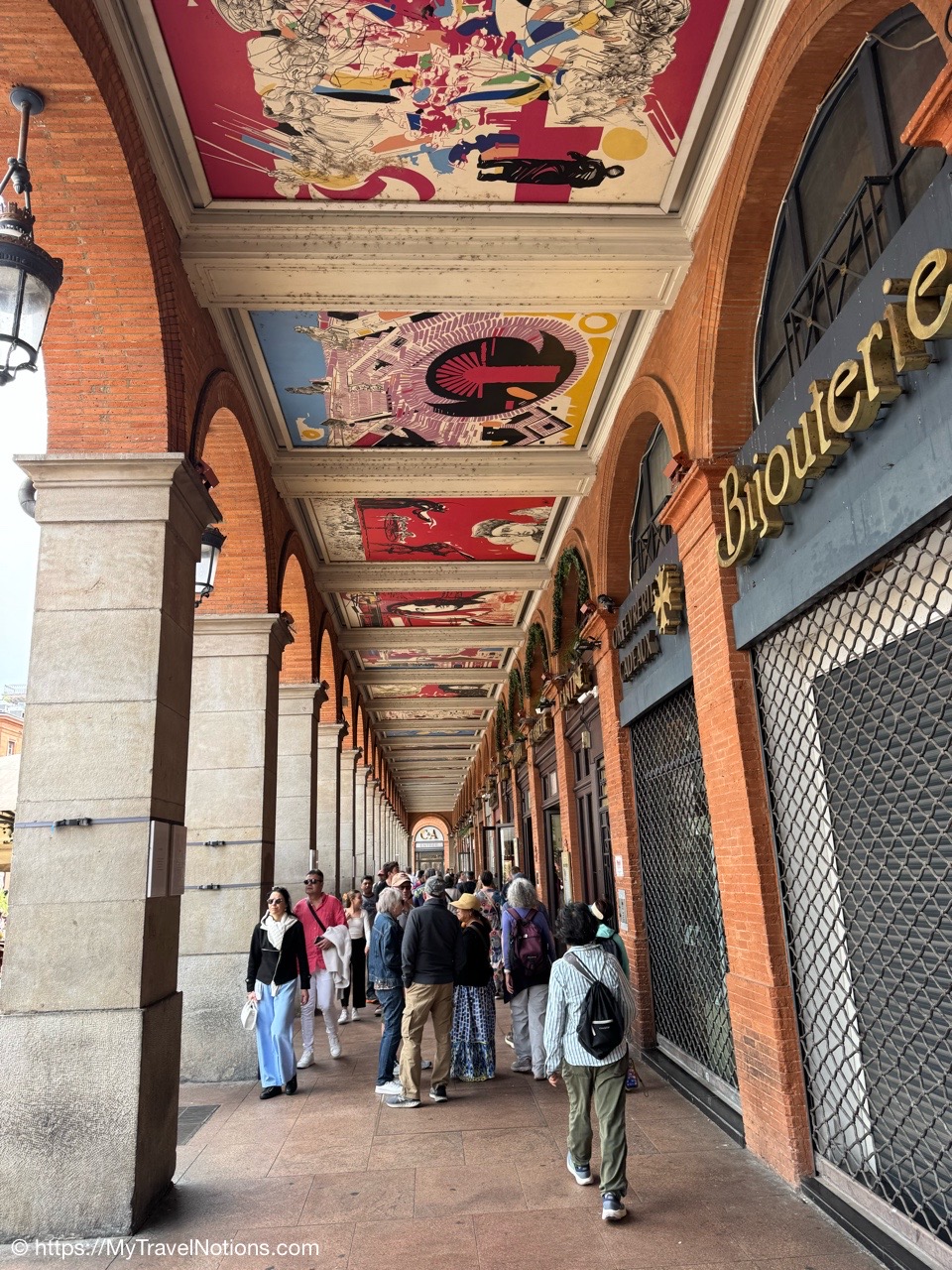
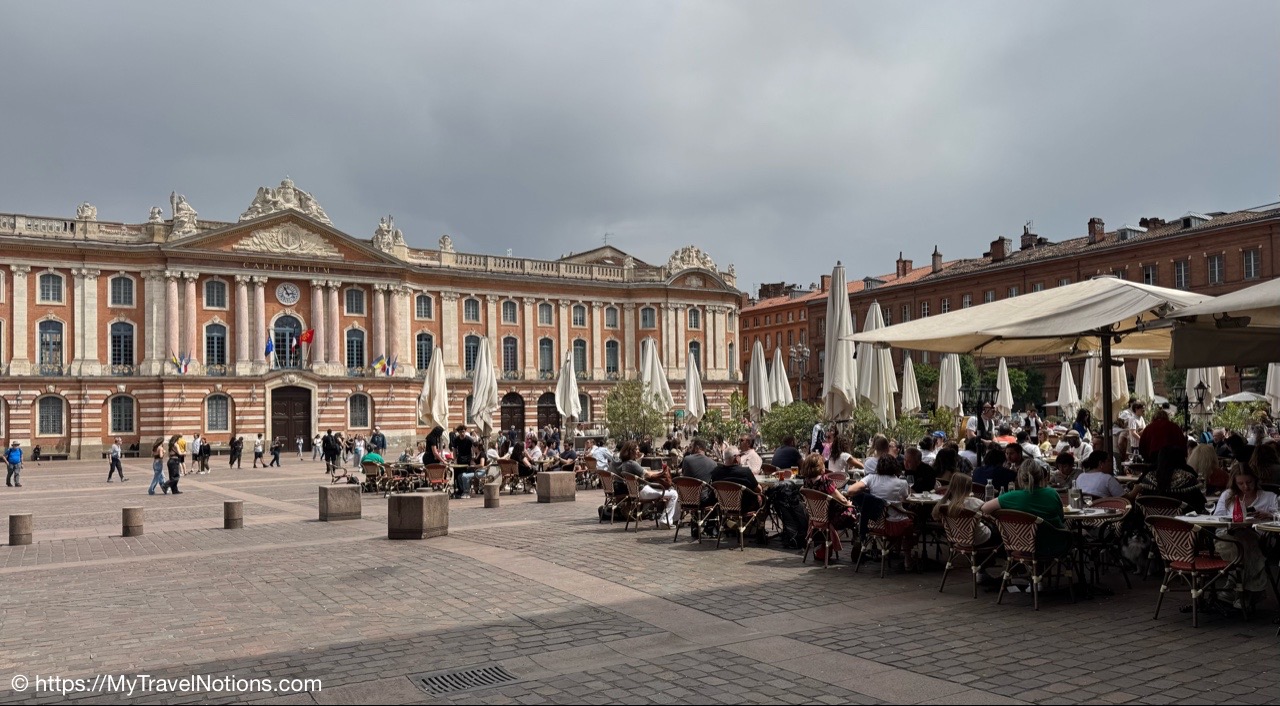
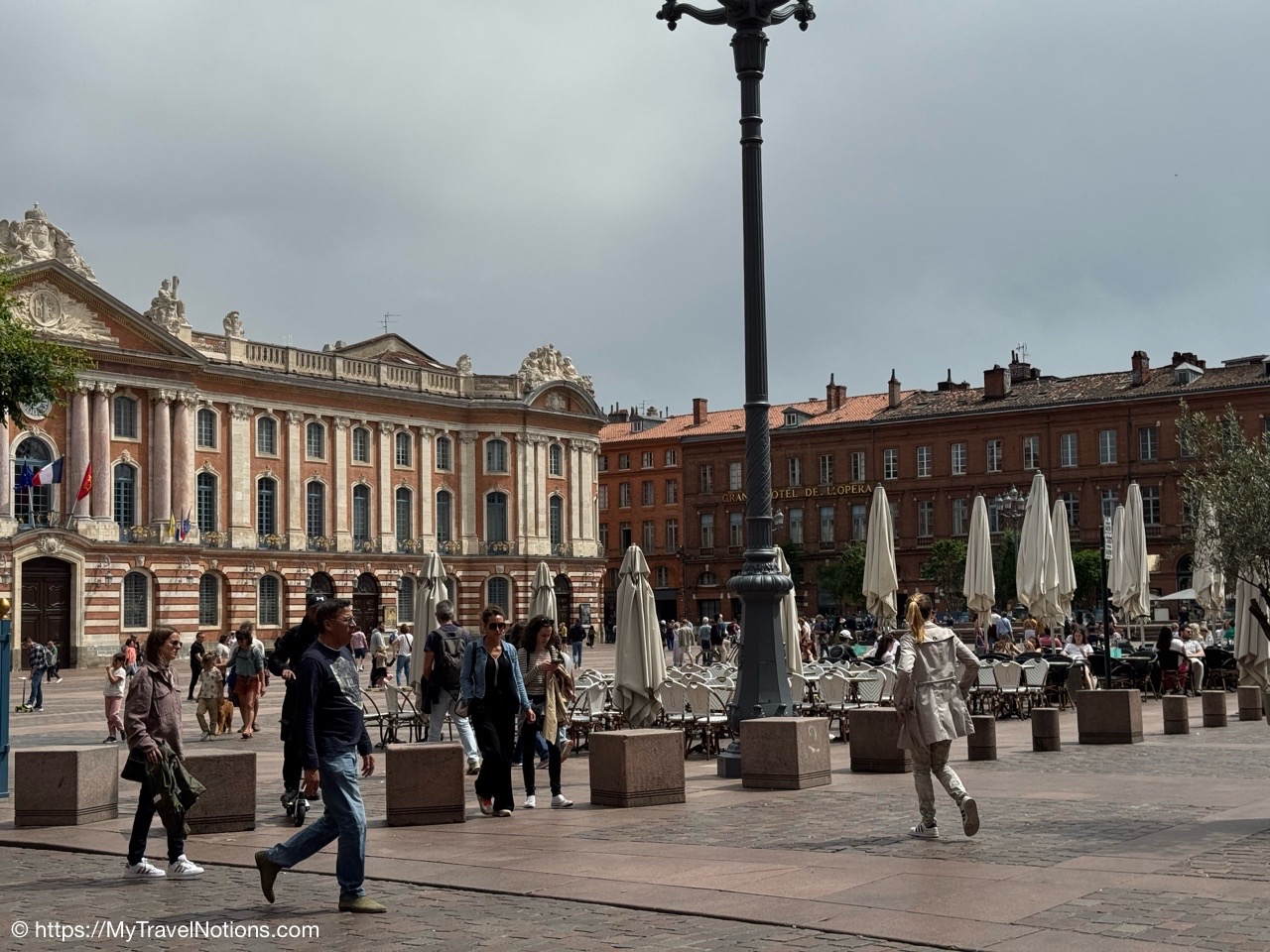
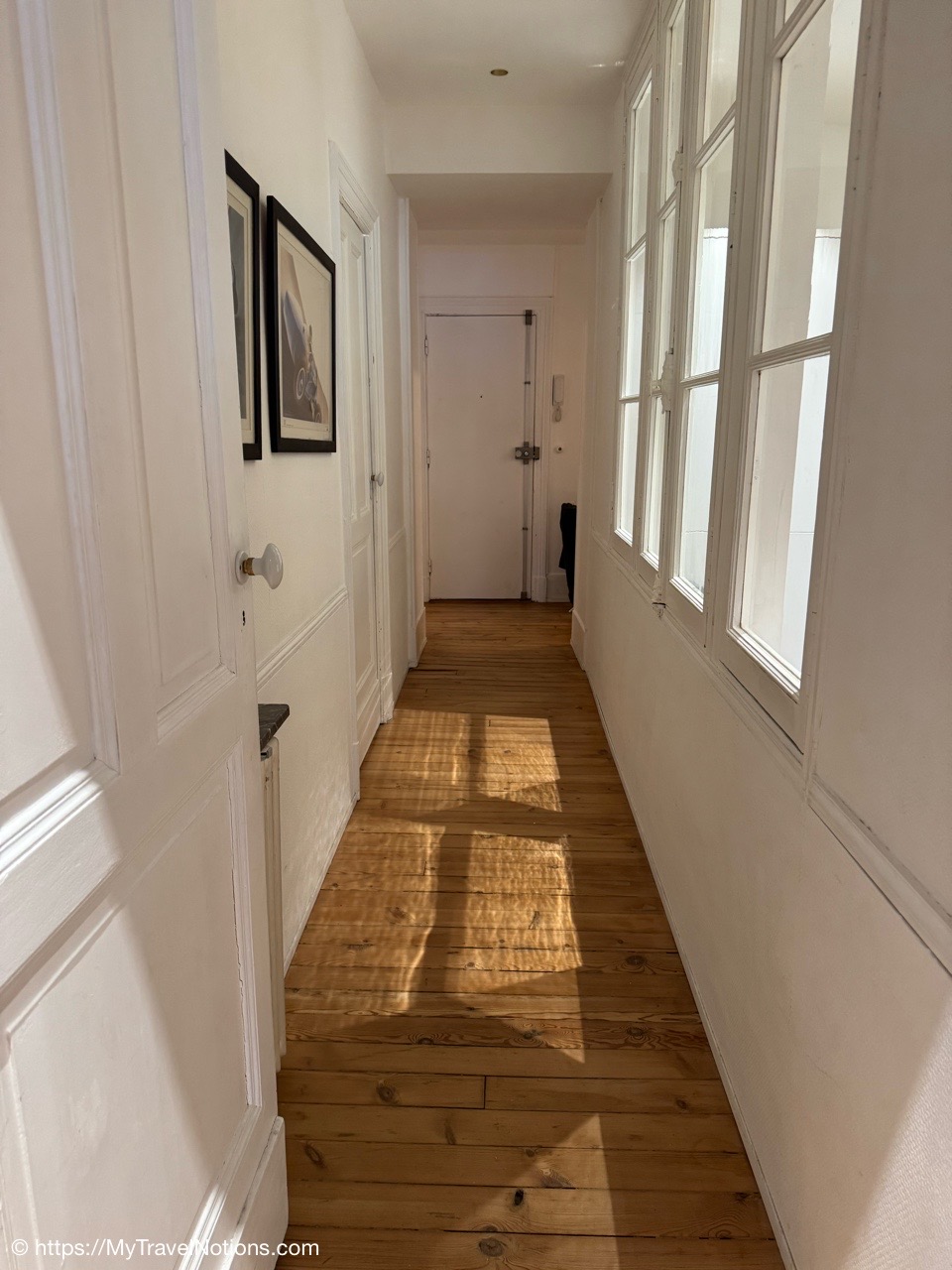
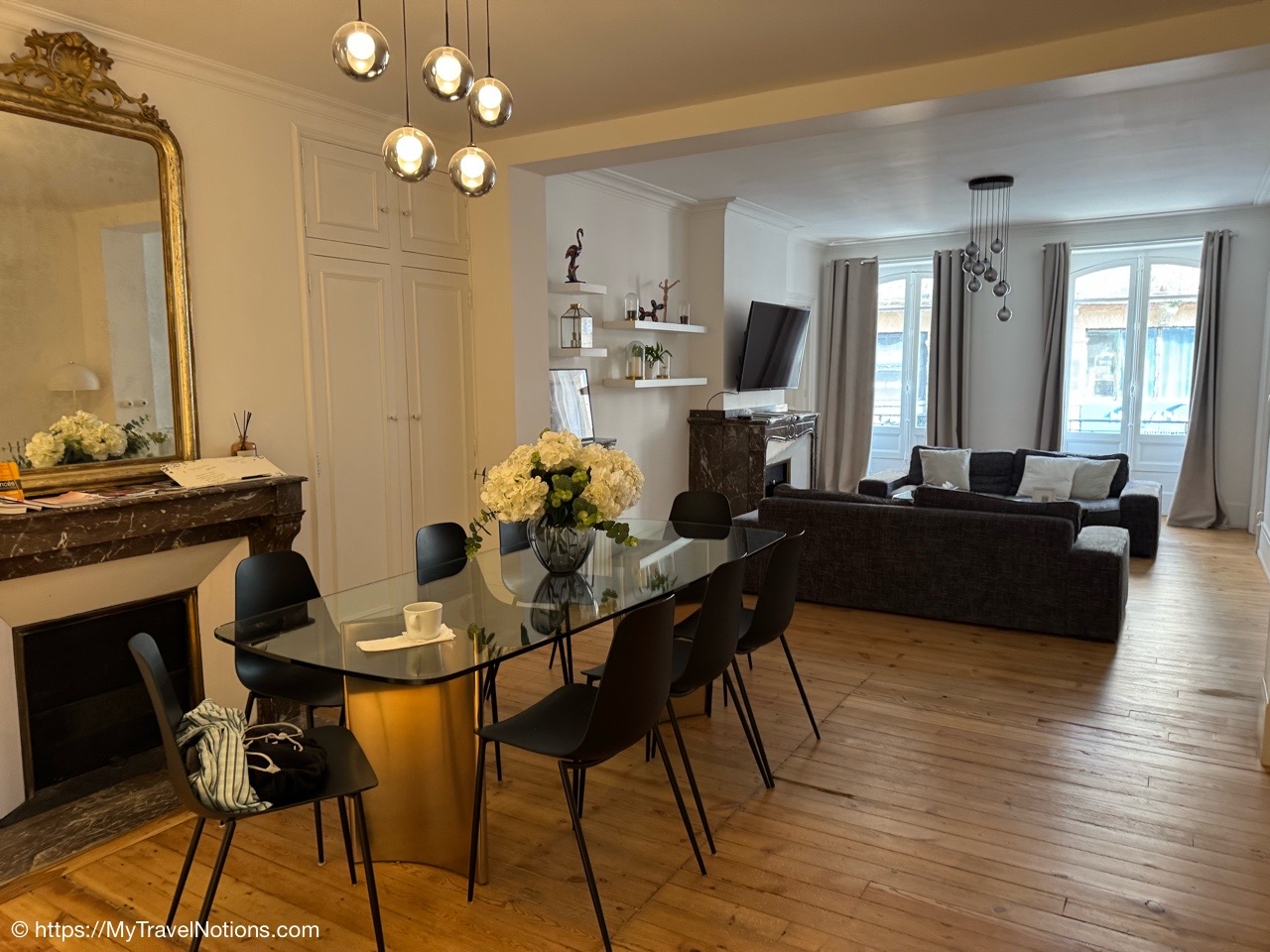
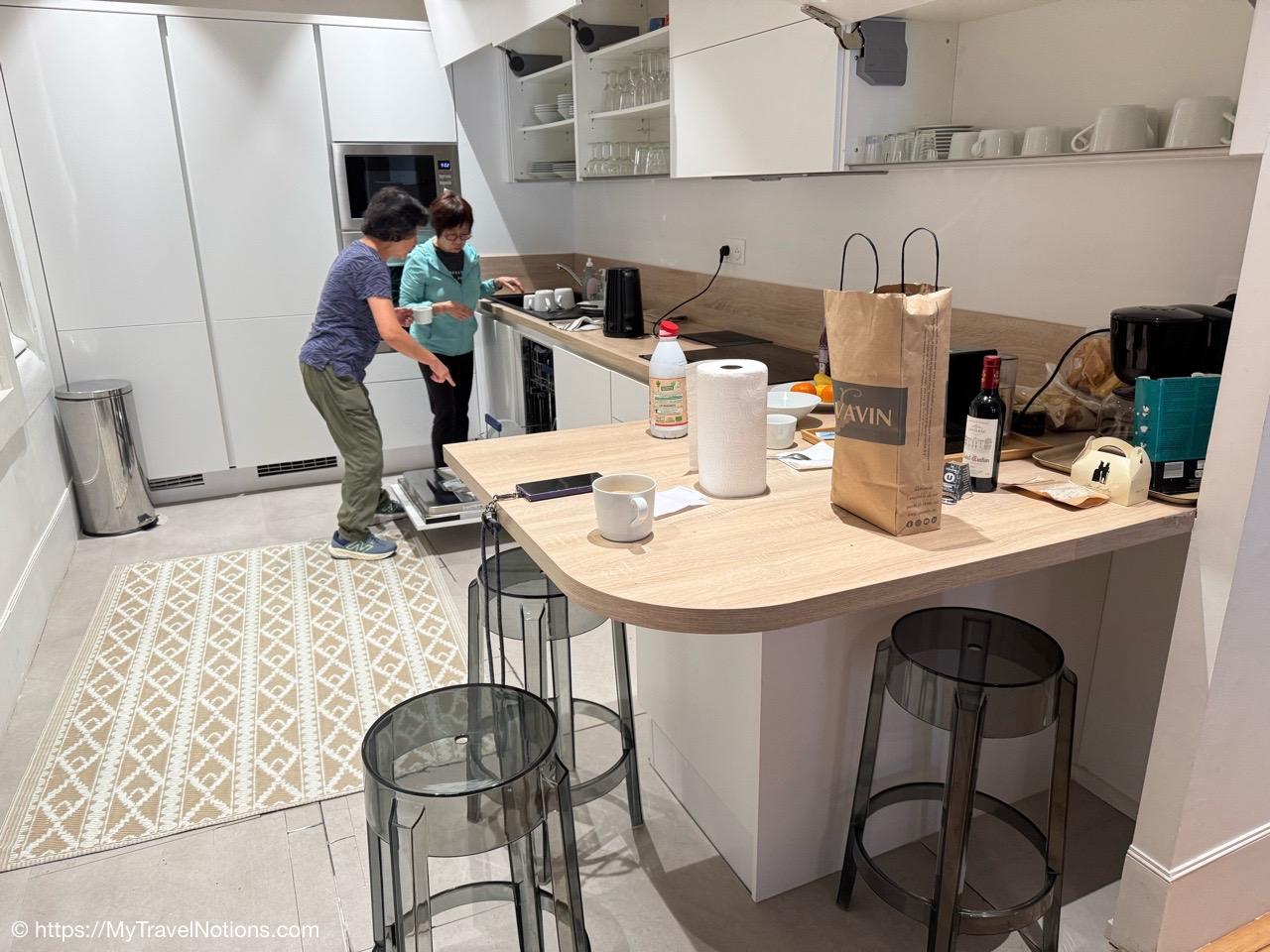
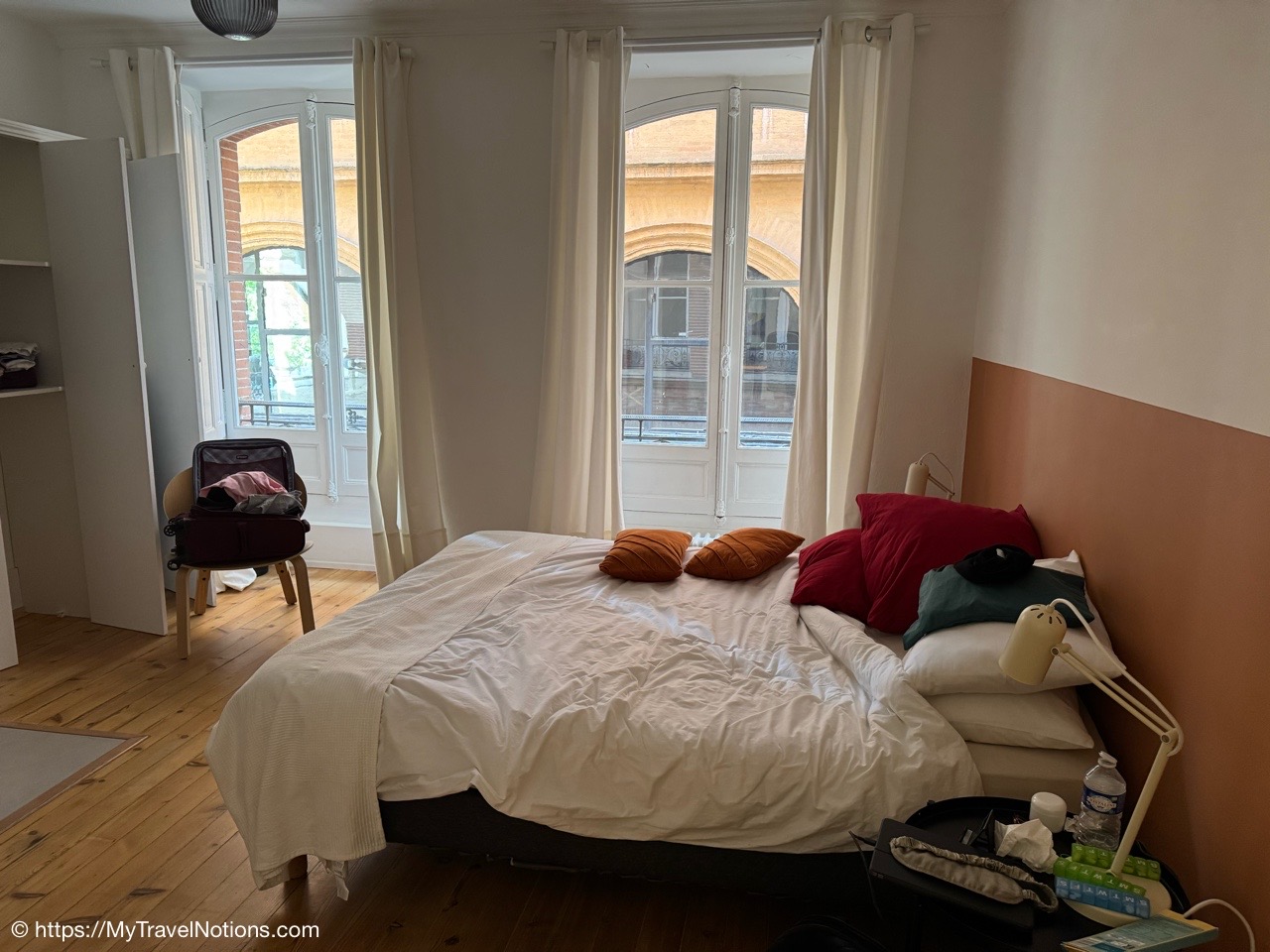
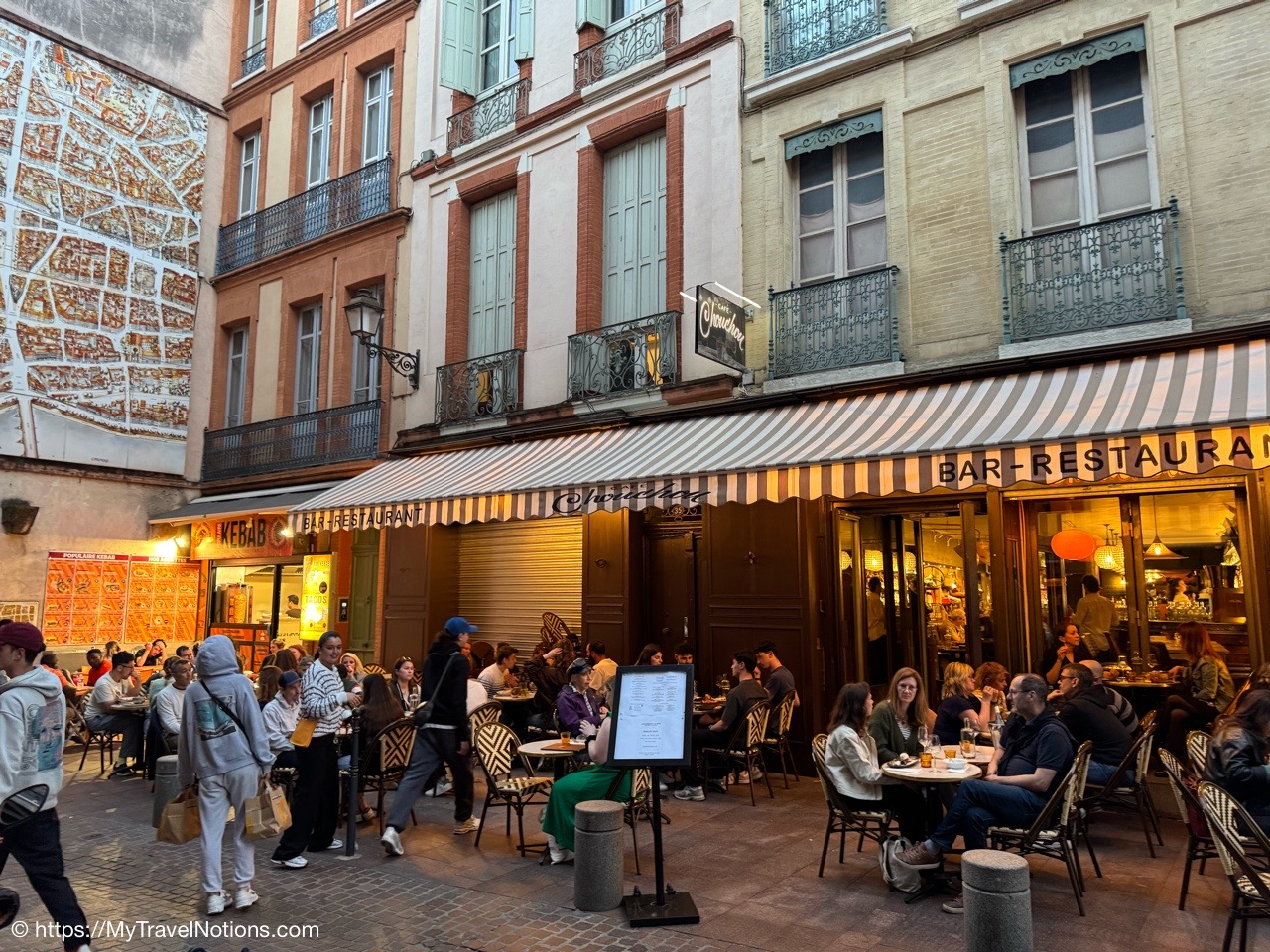
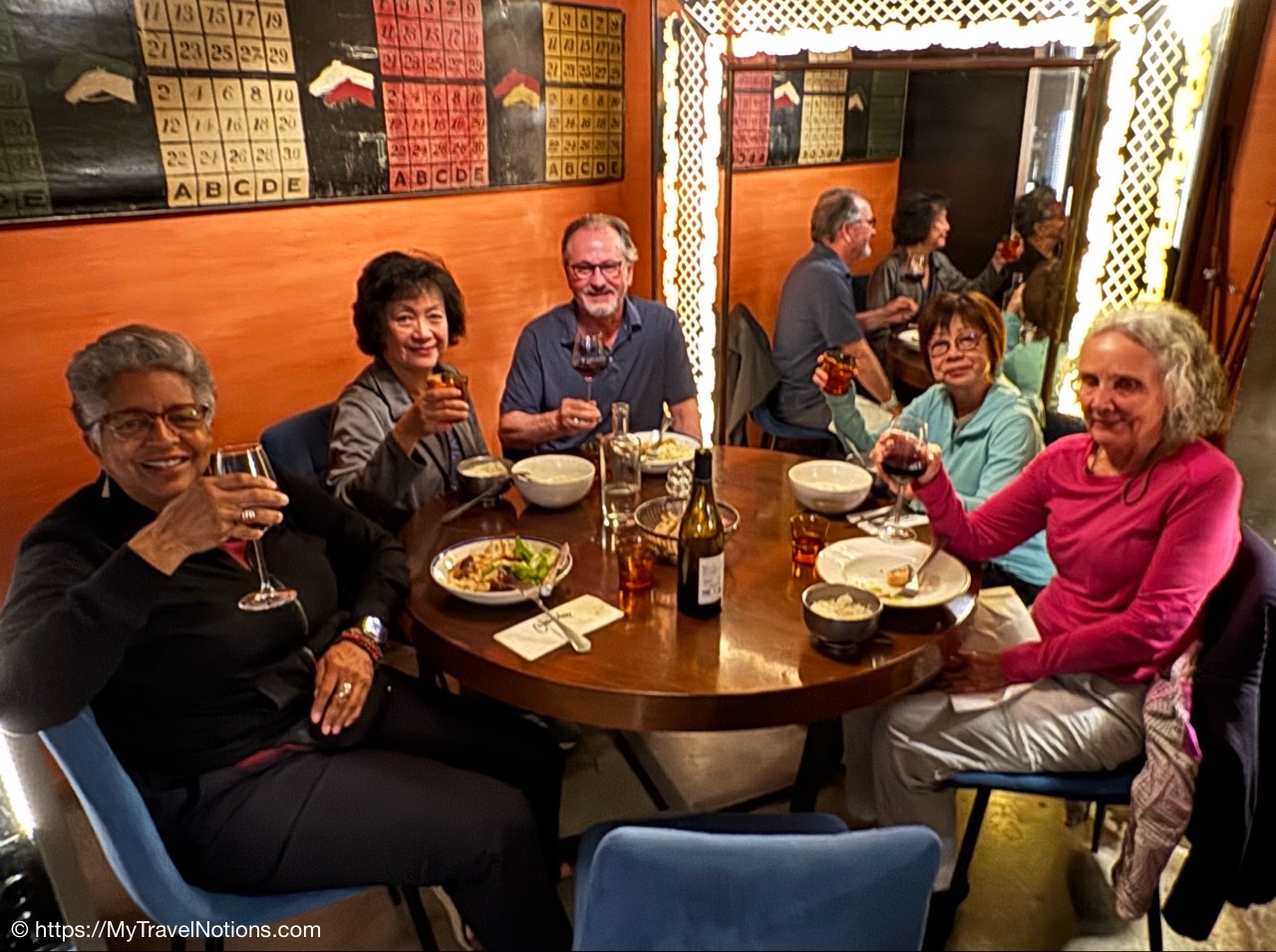
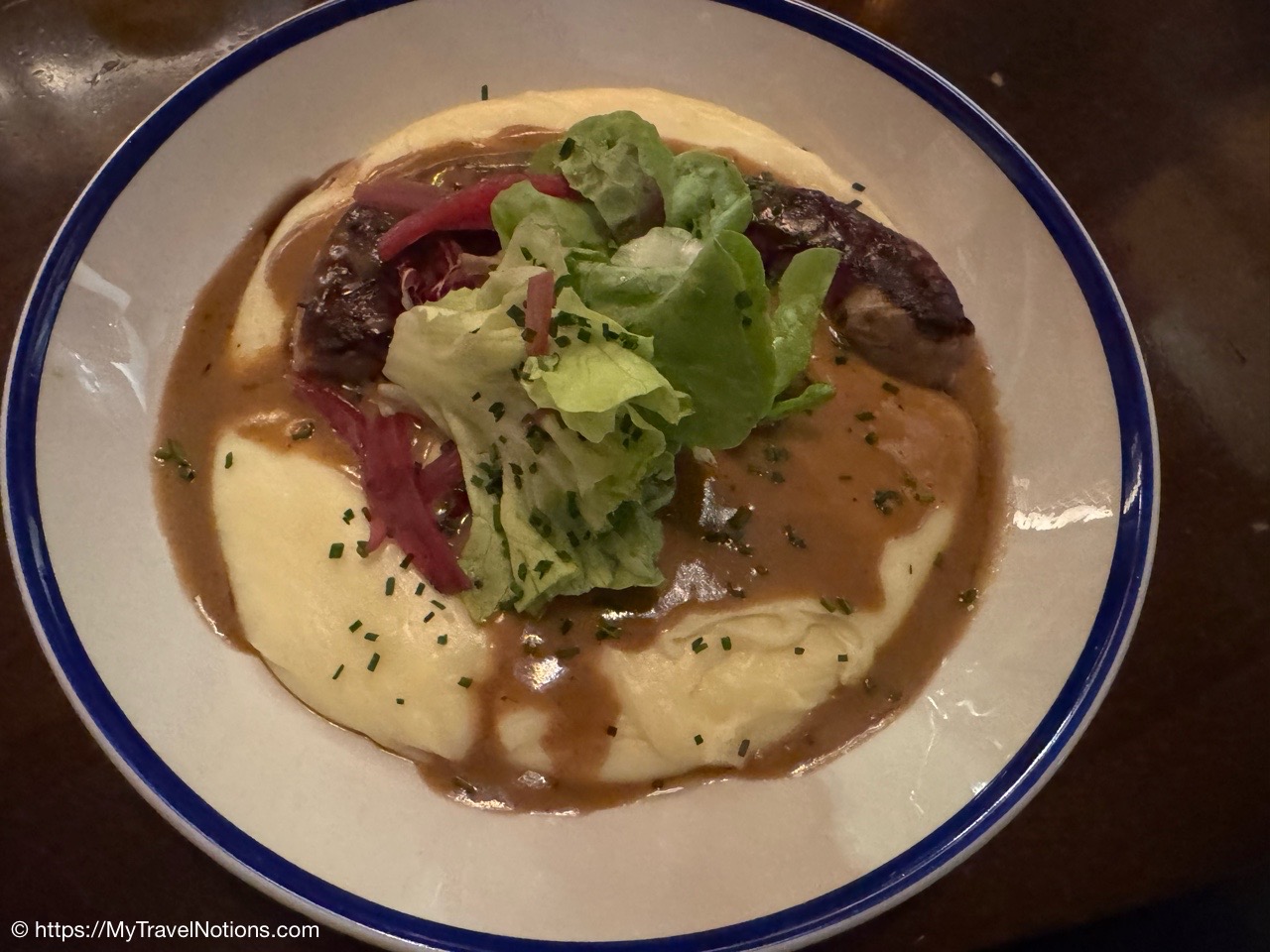
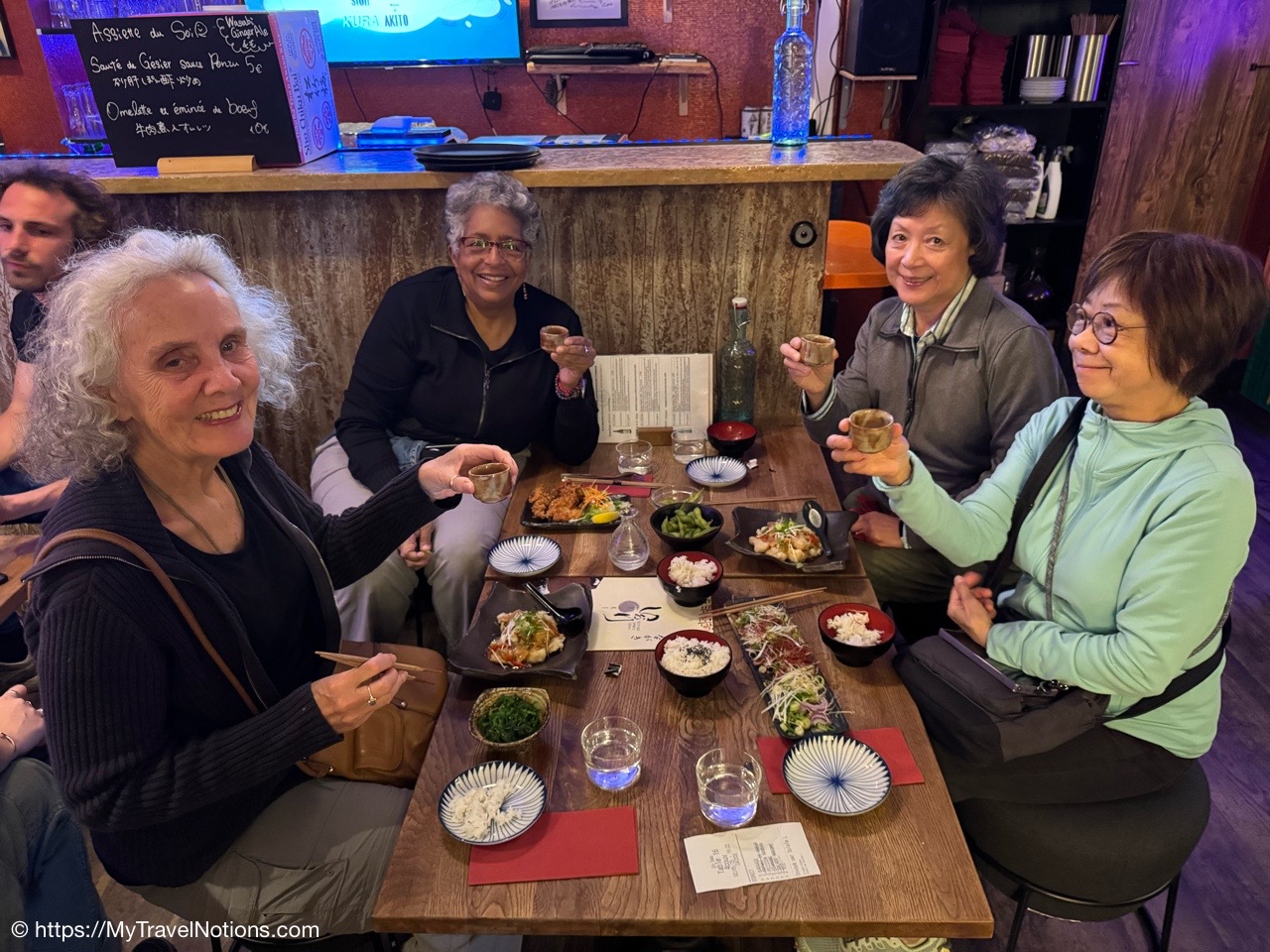
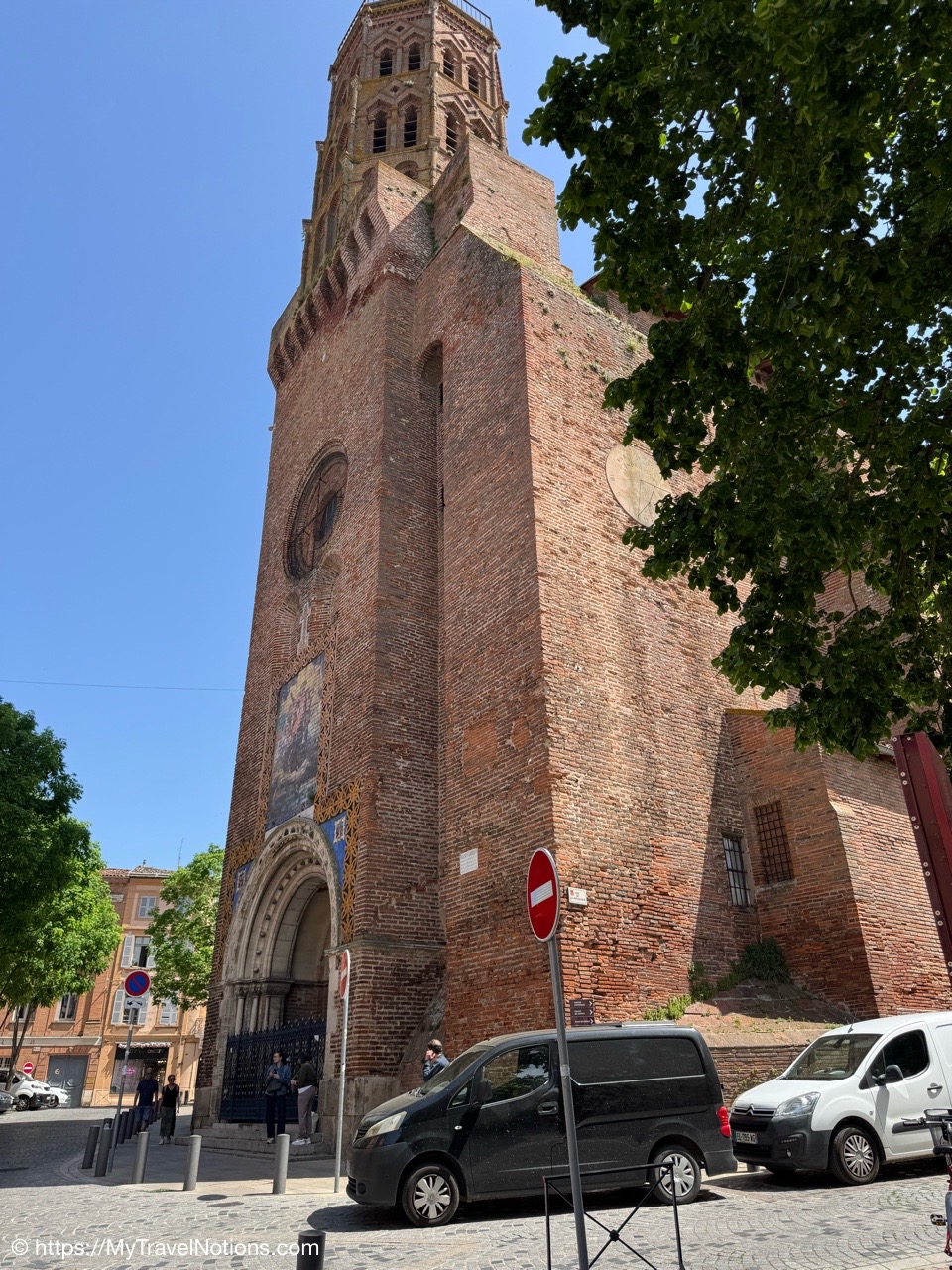
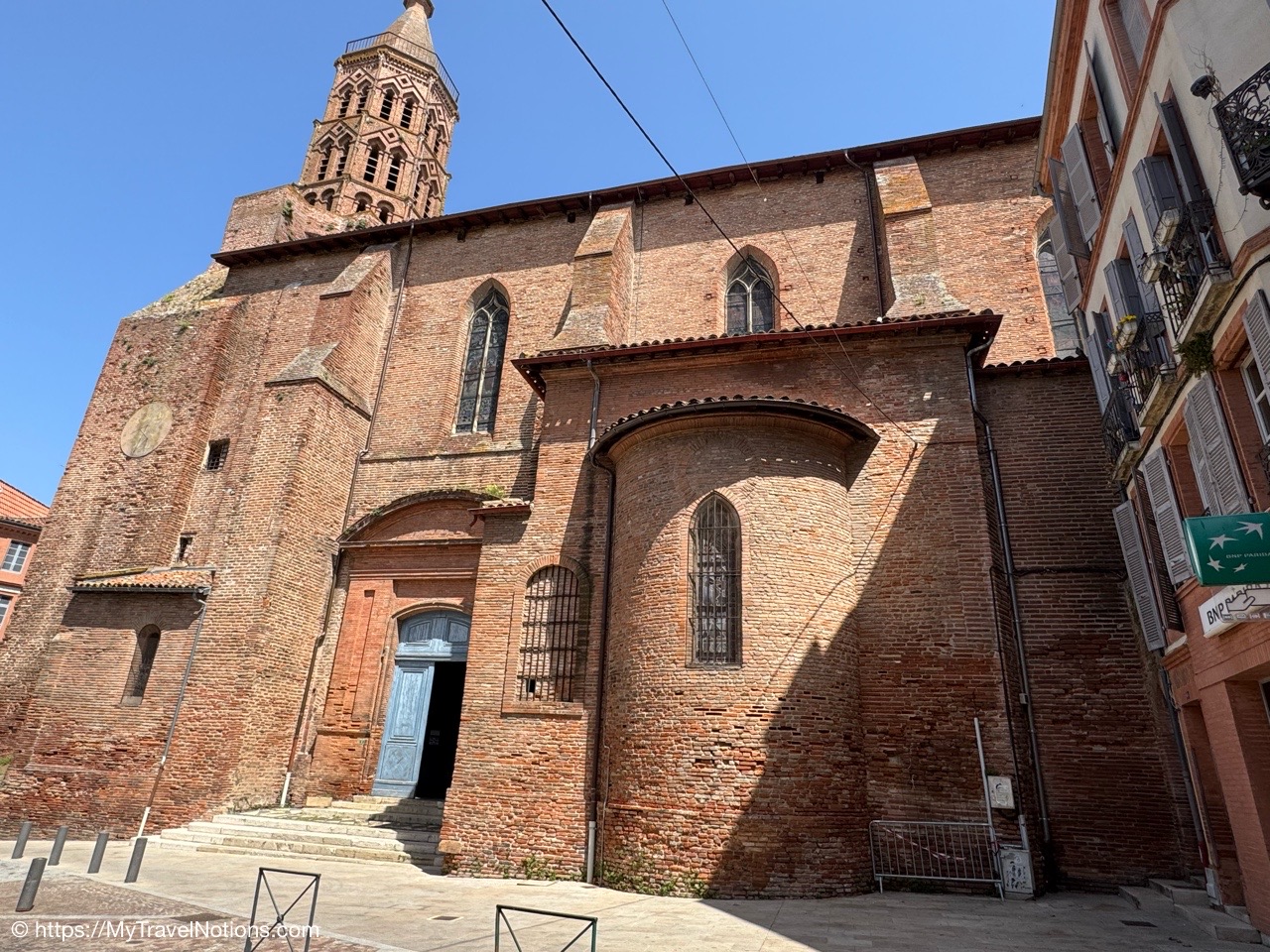
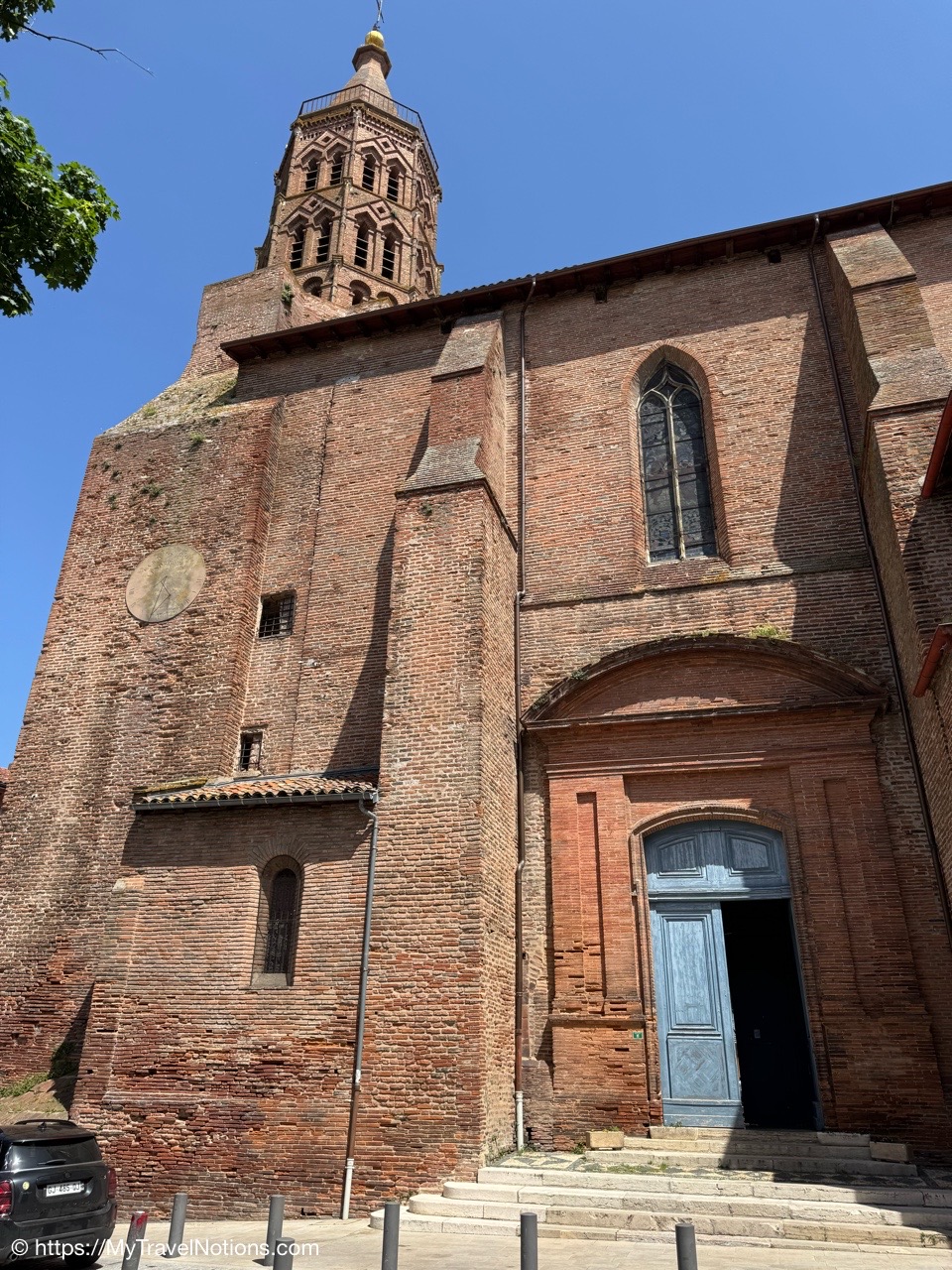
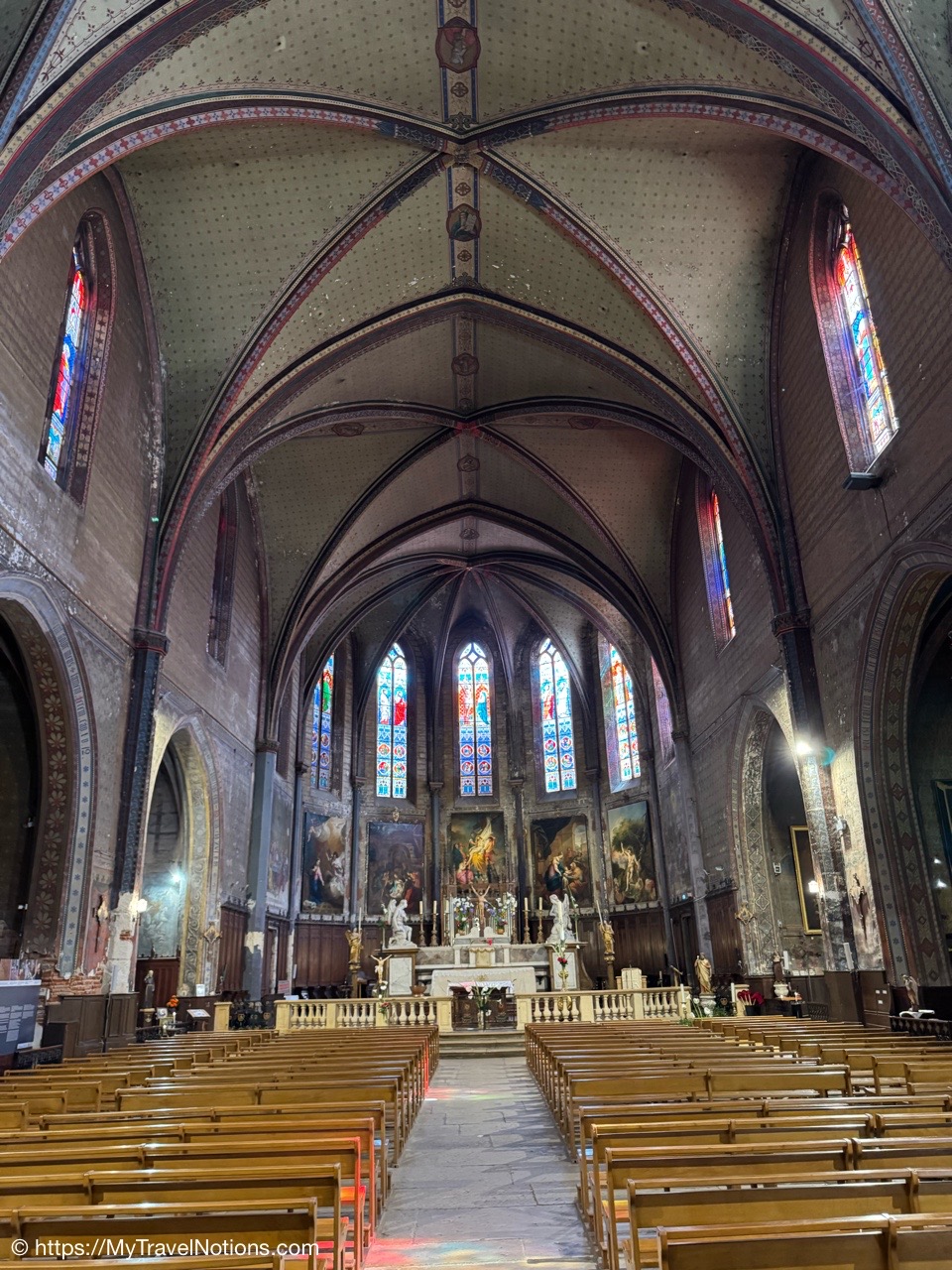
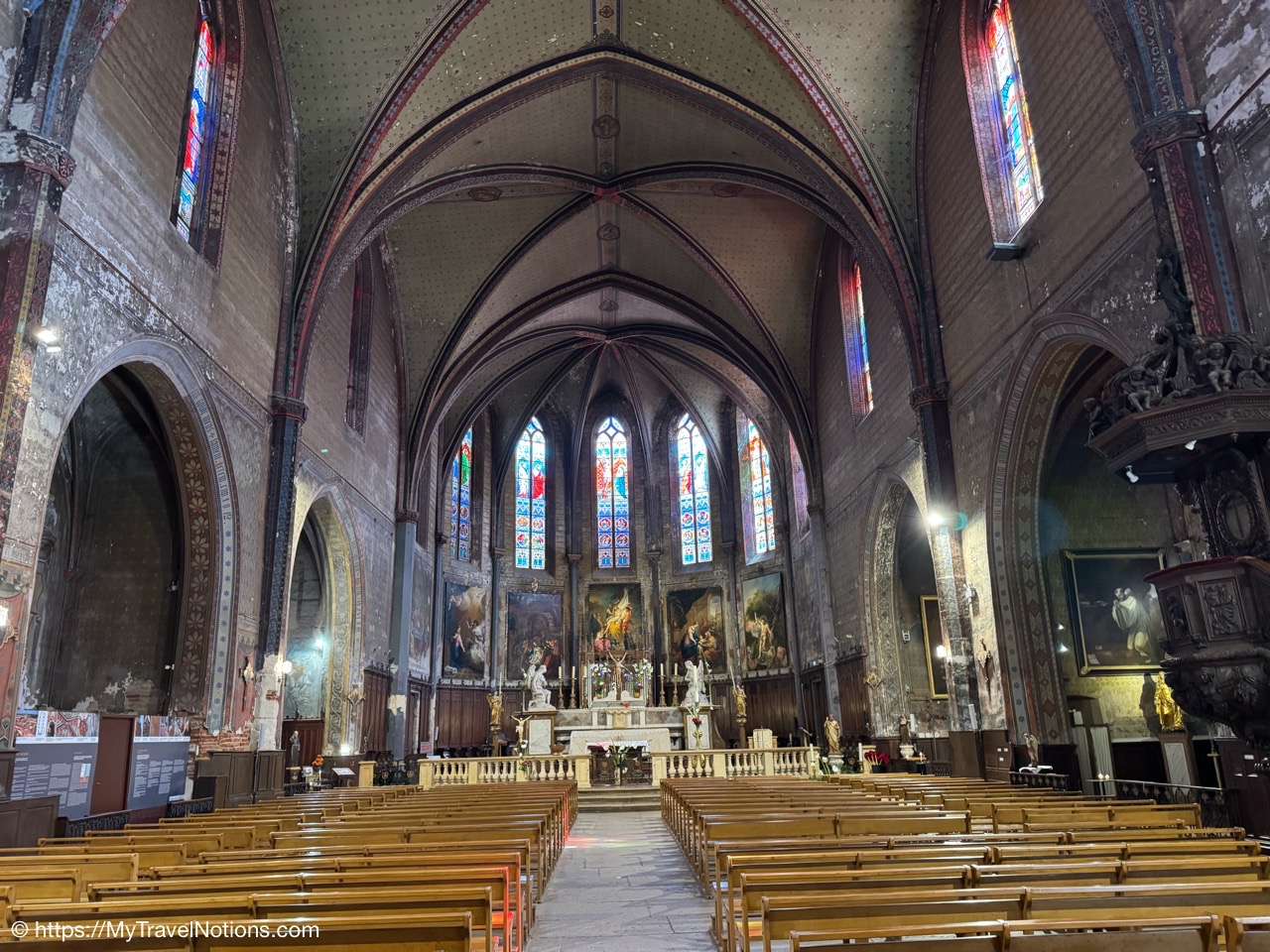
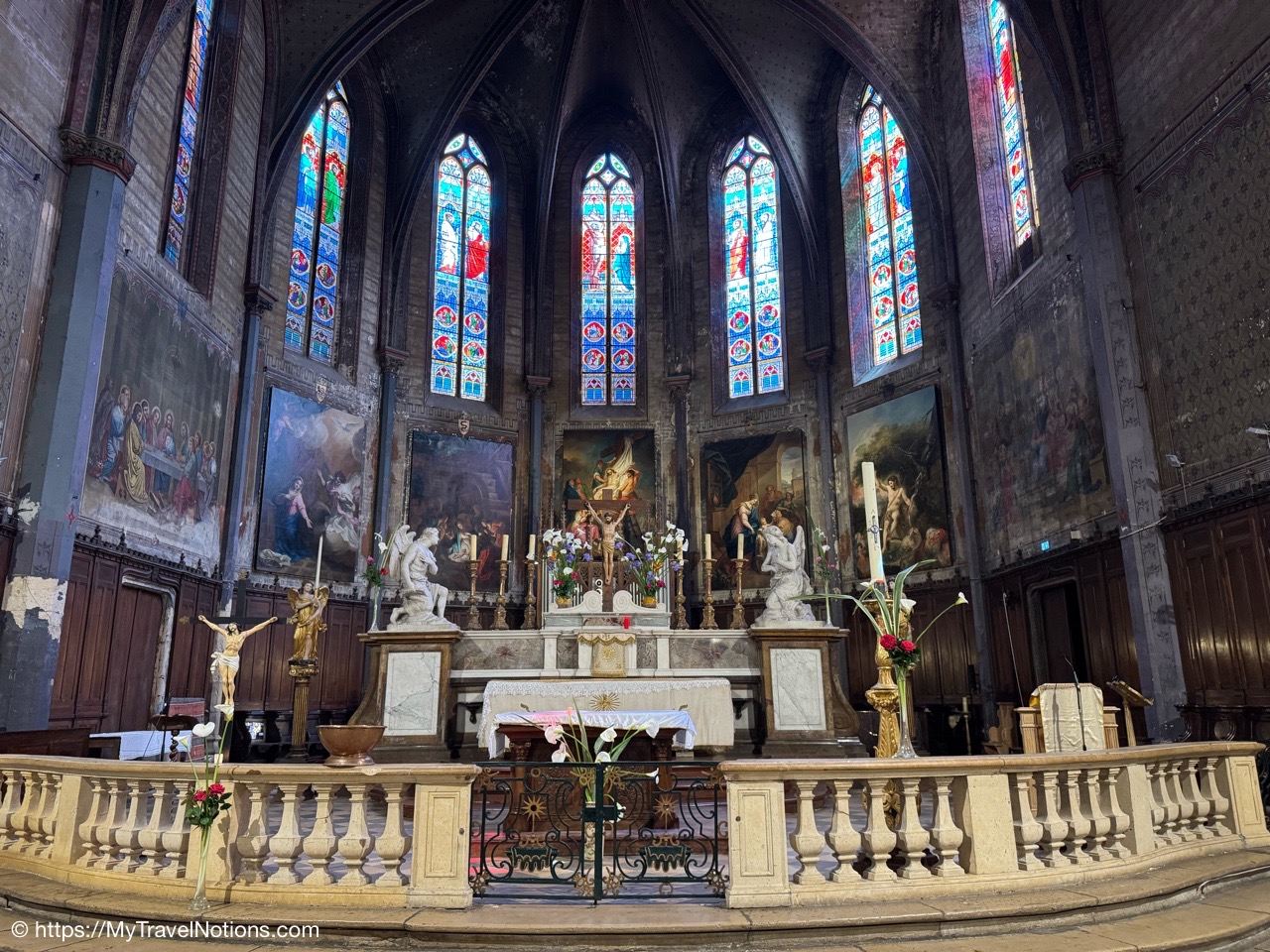
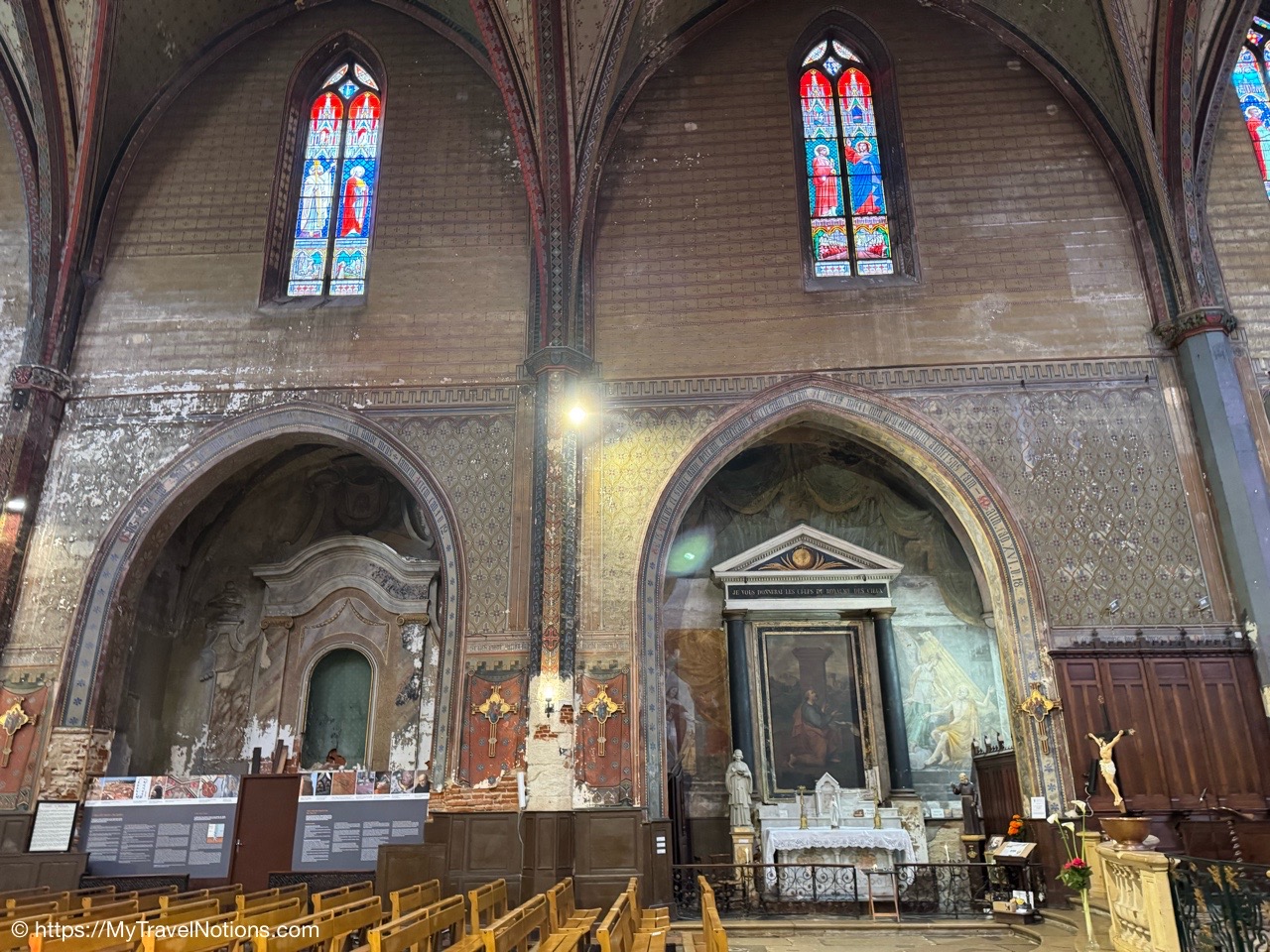
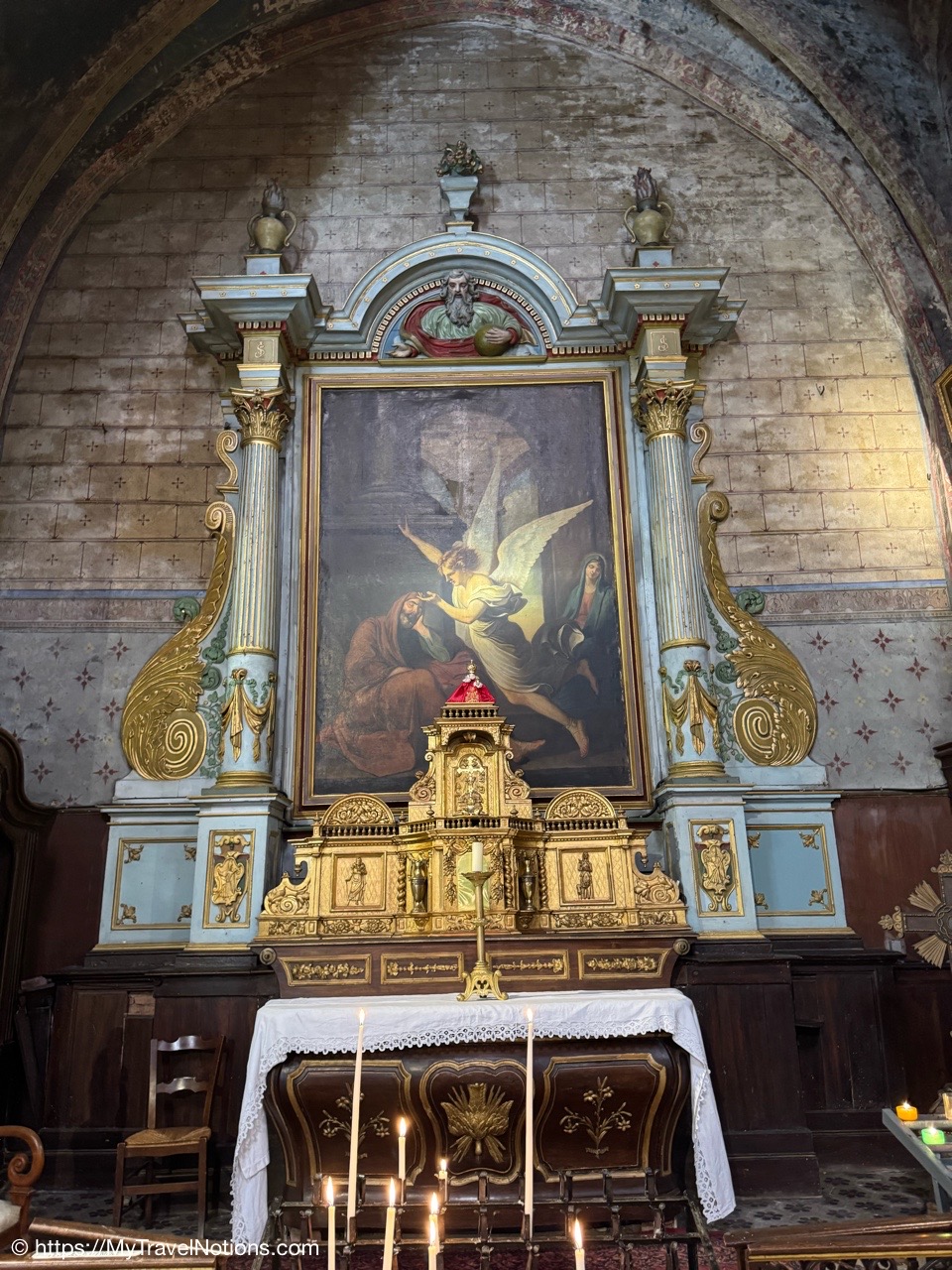
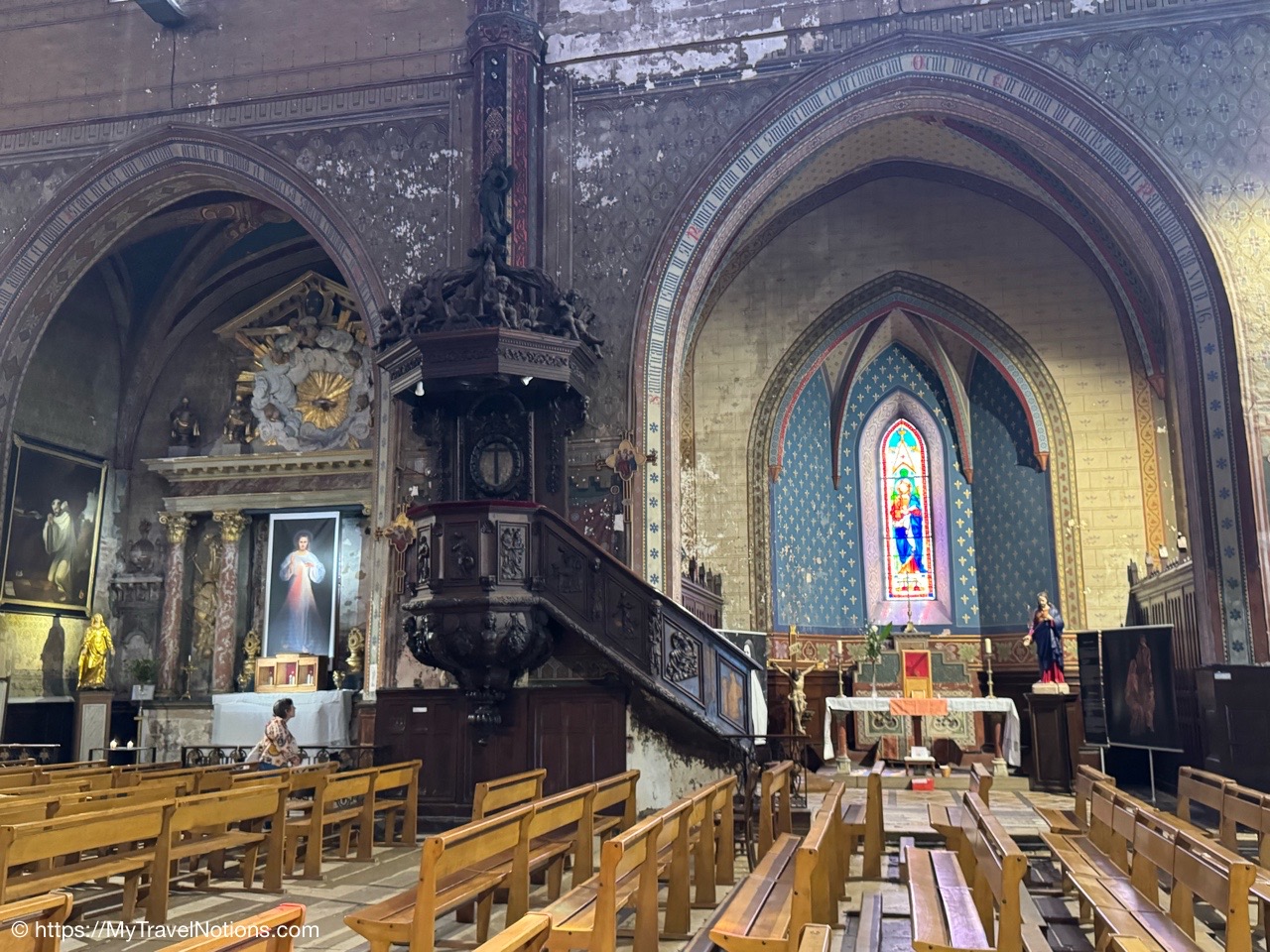
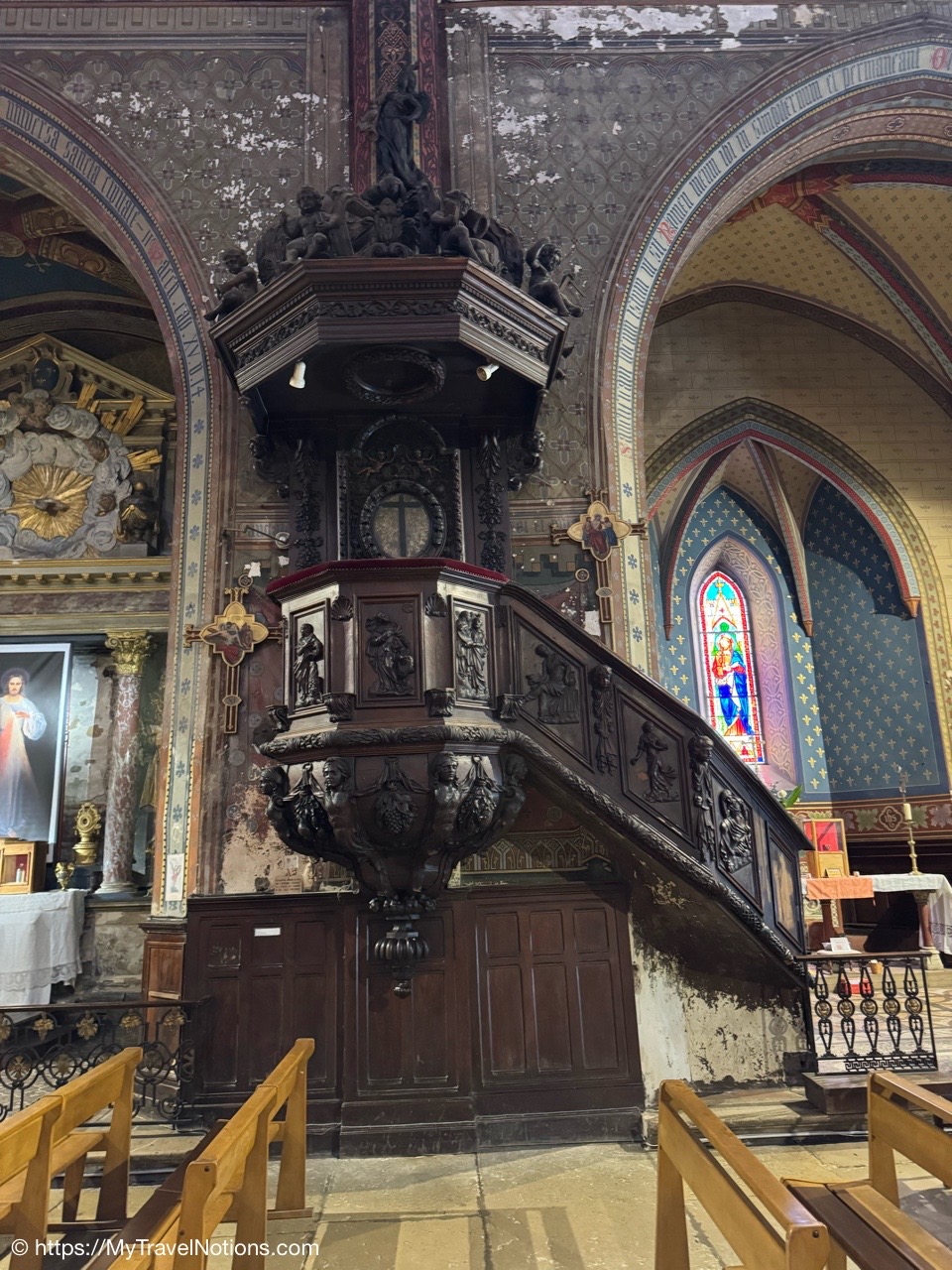
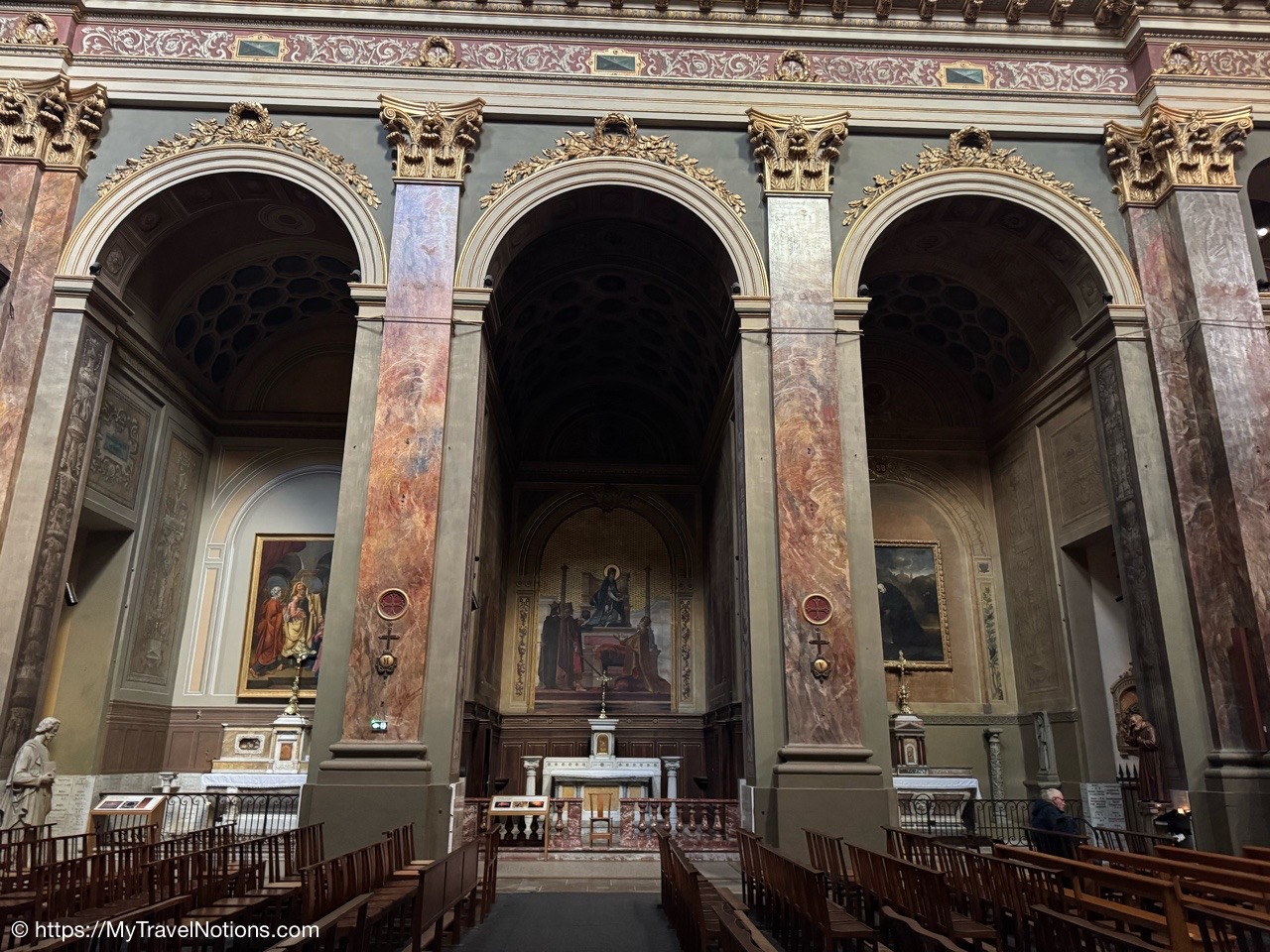
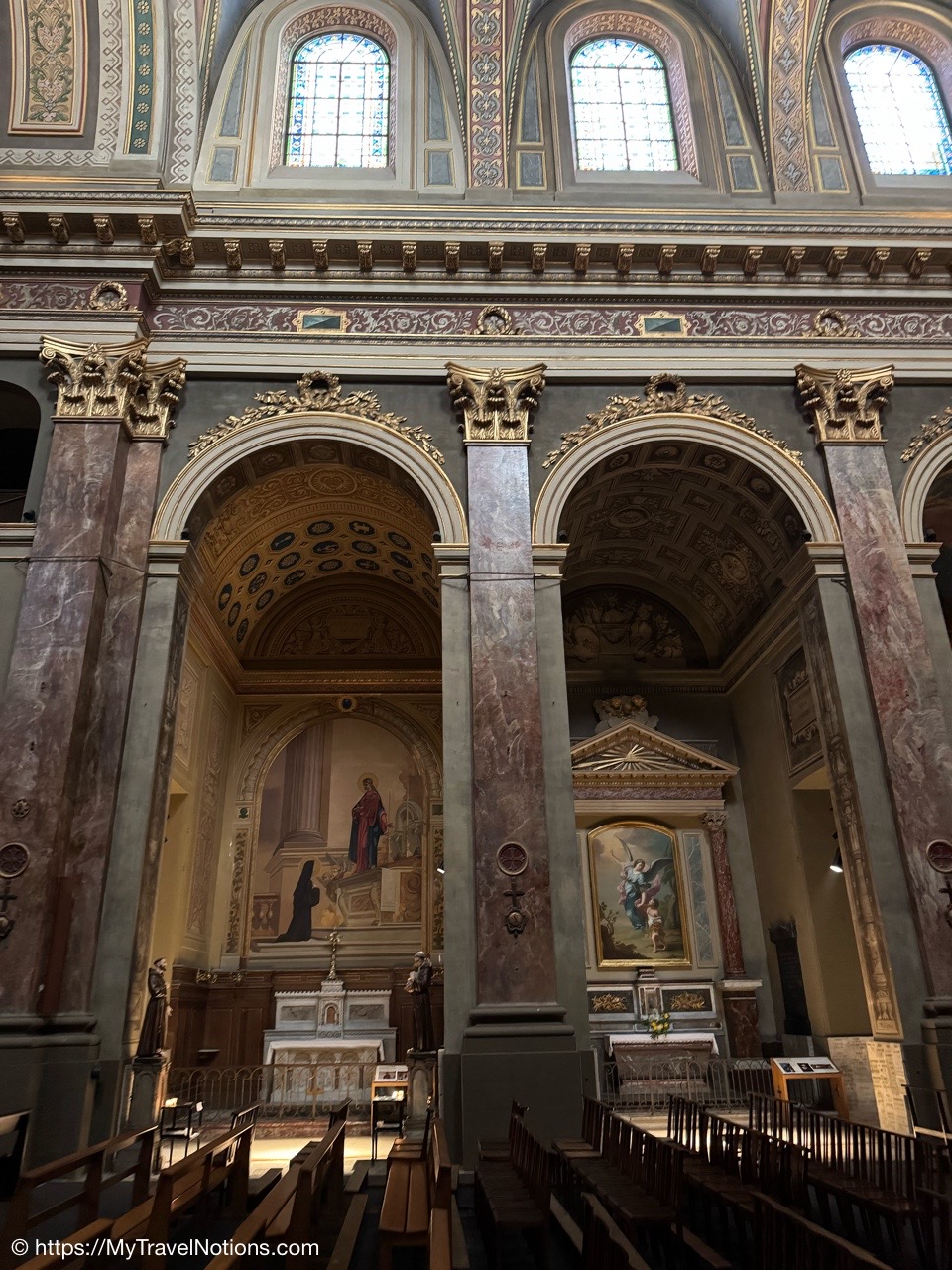
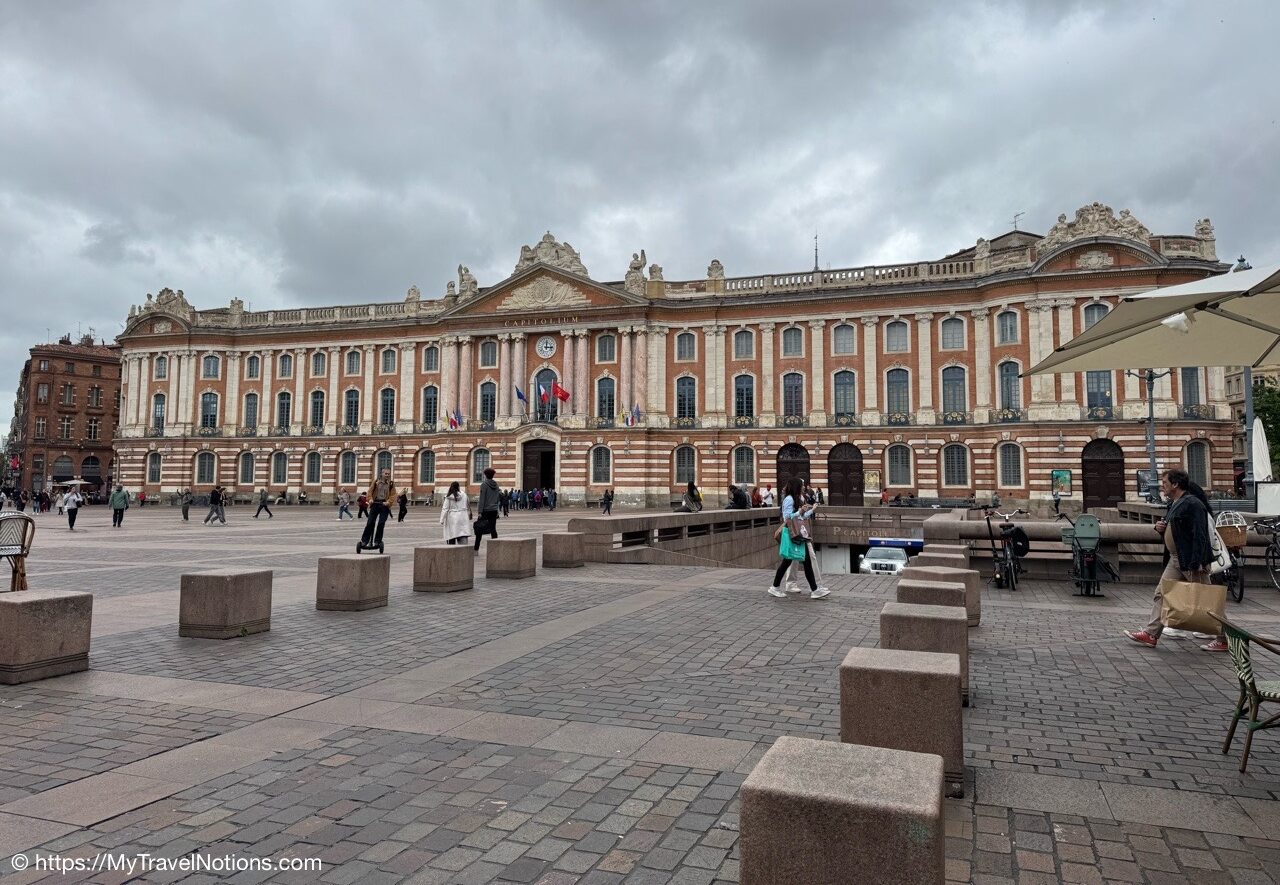
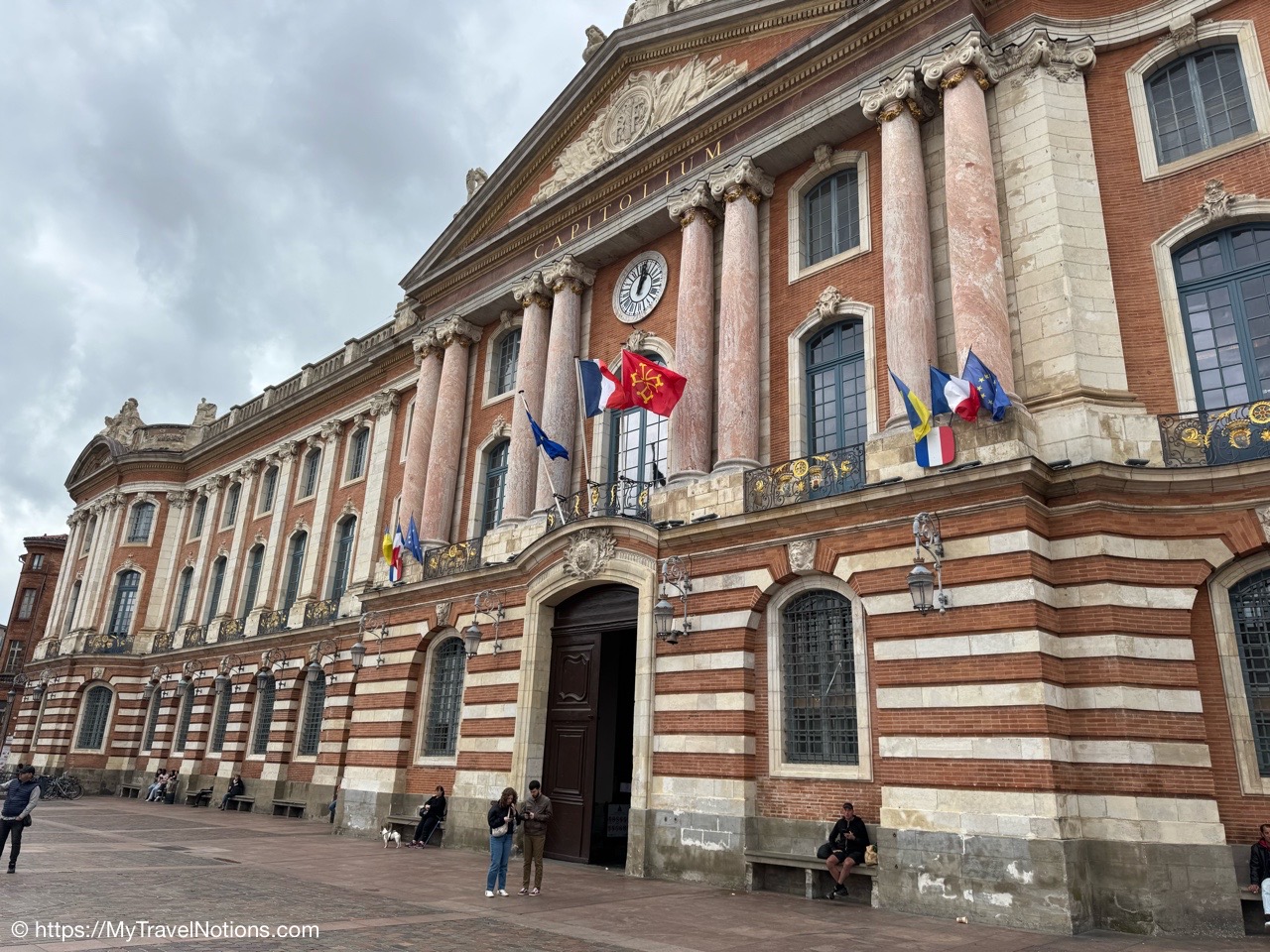
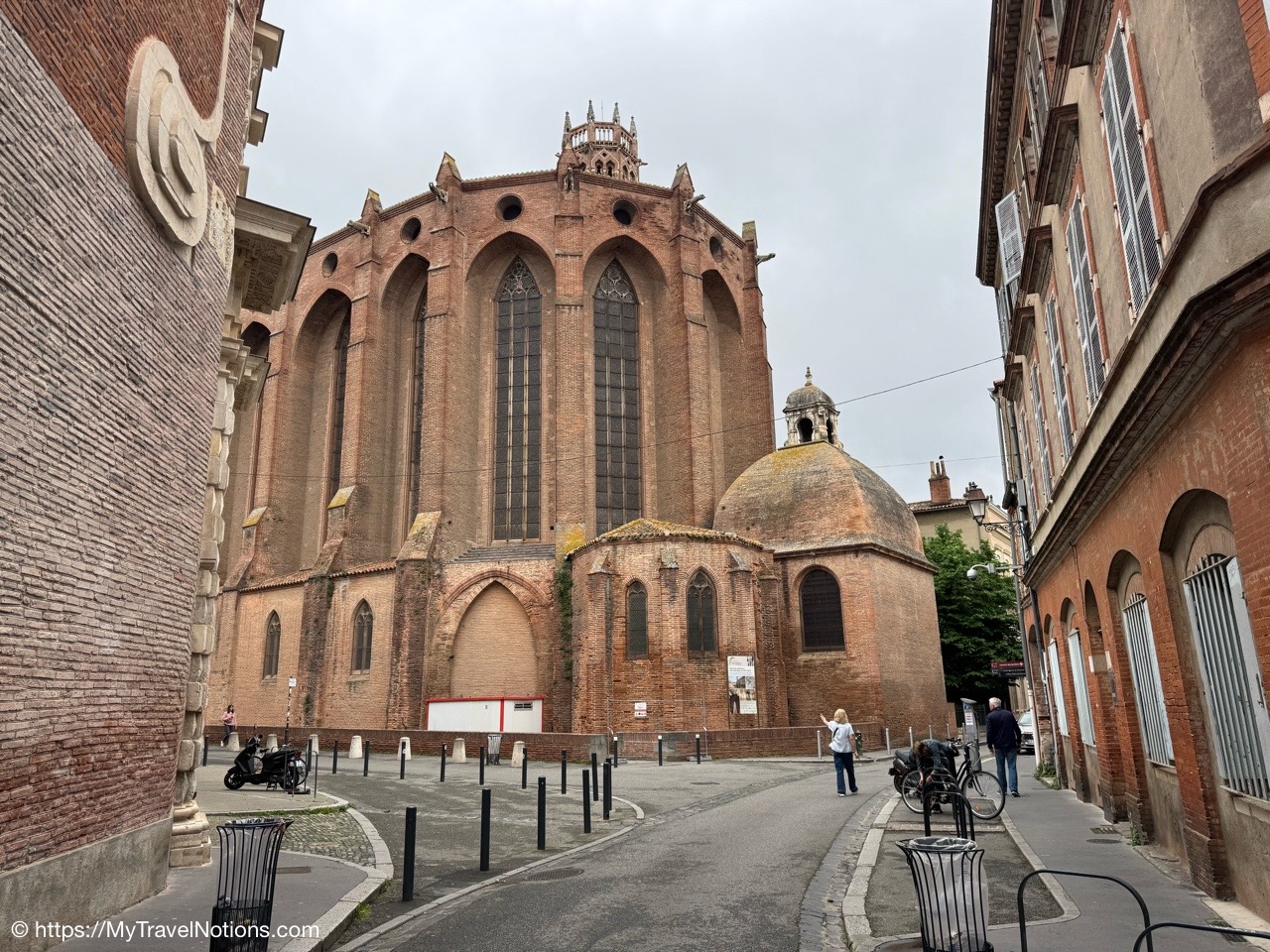
Me at Place Saint-Georges our 4th and 5th food stop but our 5th historical landmark. I’m munching on our 4th sample, a toasted baguette slice topped with rillettes d’oie from Maison Beauhaire along with violet-fig jam, pickles, pickled red onion and radishes. Rillettes d’oie is goose meat cut into small pieces, cooked very slowly in its own fat, then pressed and stored. Rillettes are similar to pâté but are coarser in texture. It was delicious, I ate it all. (May 1, 2025)Our Toulouse Gourmet Tours guide, Alex arrived on his biking kitchen container. (May 1, 2025)Our 1st stop, our meeting point, was the Hôtel d’Assezat in Toulouse. This is where Alex explained something very important to me. That historical places in France called Hôtel are actually large buildings or mansions built for families during the medieval times. It’s also where he shared how the blue de pastel exports in the 1500s brought wealth to the region and eventually led to the construction of more than 200 private mansions (hôtels particuliers). (May 1, 2025)The courtyard entrance of the Hôtel d’Assezat in Toulouse. (May 1, 2025)Inside the courtyard of the Hôtel d’Assezat in Toulouse where we began our “Toulouse Food Walking Tour with a Chef,” Alex. (May 1, 2025)The Foundation Bemberg, which owns a fine collection of paintings, sculpture and period furniture and can be accessed through the Hôtel d’Assezat in Toulouse’s courtyard. (May 1, 2025)The Foundation Bemberg, which owns a fine collection of paintings, sculpture and period furniture and can be accessed through the Hôtel d’Assezat in Toulouse’s courtyard. (May 1, 2025)After our interesting history lesson inside the courtyard of the Hôtel d’Assezat in Toulouse, we stepped outside for our 1st food tasting, the traditional chocolatine croissant from Maison Pillon. (May 1, 2025)The traditional chocolatine croissant from Maison Pillon was our 1st delicious, fresh morning pastry during our food walking tour. It’s not slathered with chocolate, instead it’s just two small pieces of dark chocolate. (May 1, 2025)Tammy, Alice and Rosie enjoying their traditional chocolatine croissant from Maison Pillon during the 1st stop of our history and food tasting tour. (May 1, 2025)Walking by the Pont Neuf over the Garonne River in Toulouse. (May 1, 2025)Overlooking the Garonne, this hospital (to the left) was founded in the 12th century by the Benedictine monks of La Daurade in Toulouse. It has a magnificent terracotta brick facade (pink), a legacy of several centuries of architectural modifications. This was our 3rd stop along the Quai de la Daurade, a picturesque riverside promenade, that serves as a gathering place for locals and visitors alike. Alex spoke to us about the Great Fire of Toulouse (1463) that led to the reconstruction of the entire city using the iconic terracotta brick that can be seen on the hospital. (May 1, 2025)And, our 2nd food tasting were these delicious macarons craquelés a l’ancienne from Au Poussin Bleu (1932), made with an ancient recipe by the Carmelite nuns. (May 1, 2025)And, our 2nd food tasting were these delicious macarons craquelés a l’ancienne from Au Poussin Bleu (1932), made with an ancient recipe by the Carmelite nuns. (May 1, 2025)Walking past the Basilica Notre-Dame de la Daurade in Toulouse. It was established in 410 when Emperor Honorius allowed the conversion of pagan temples to Christianity. The original building of Notre-Dame de la Daurade was a temple dedicated to Apollo. The basilica houses the famous Black Madonna, a revered statue that has special significance for the people of Toulouse, especially for pregnant women, which I will visit at another time. (May 1, 2025)Walking past the park and riverside promenade along the Quai de la Daurade in Toulouse which serves as a gathering place for locals and visitors alike. (May 1, 2025)Walking through Toulouse during our food walking tour to our next historical landmark, the Couvent des Jacobins. (May 1, 2025)Walking through Toulouse during our food walking tour to our next historical landmark, the Couvent des Jacobins. (May 1, 2025)The Couvent des Jacobins, our 3rd stop during our Toulouse food walking tour is a deconsecrated Roman Catholic church. It’s also where Alex, our Chef, food guide and historian, told us about the Crusades against the Cathars (1209-29), the first catholic crusade against a Christian group. (May 1, 2025)The Couvent des Jacobins, our 3rd stop during our Toulouse food walking tour is a deconsecrated Roman Catholic church. (May 1, 2025)Our food walking tour group stood across the street of the Couvent des Jacobins, a deconsecrated Roman Catholic church in Toulouse in front of this imposing grand main gate of the former Jesuit college, now the entrance for students of the current Pierre-de-Fermat College. (May 1, 2025)The grand main gate of the former Jesuit college now the entrance for students of the current Pierre-de-Fermat College in Toulouse. (May 1, 2025)Our 3rd and last taste of sweetness…for now were these crystallized violets, memorable candy of Toulouse, from the Cacao Fages shop also in Toulouse. (May 1, 2025)Our 3rd and last taste of sweetness…for now were these crystallized violets, memorable candy of Toulouse, from the Cacao Fages shop also in Toulouse. (May 1, 2025)Walking through Toulouse during our food walking tour with Alex, the Chef. (May 1, 2025)Walking through Toulouse during our food walking tour. (May 1, 2025)The 4th historical landmark was here at the Place du Capitole in Toulouse. It is the historic heart of the city with its elegant Capitole de Toulouse which fans out from the vast Place du Capitole and its Théâtre du Capitole opera house. The left end is city hall and the right end is the opera house. It was designated a monument historique by the French government in 1840. (May 1, 2025)The Le Grand Balcon in the Place du Capitole is now a hotel but it was a rooming house for the Aéropostale’s airmail service aviators in Toulouse. The Aéropostale’s were developed in the aftermath of World War I when airmail service owed much to the bravery of its earliest pilots. During the 1920s, every flight was a dangerous adventure, and sometimes fatal. Aéropostale (formally, Compagnie générale aéropostale) was a pioneering aviation company which was founded in 1918 and operated until 1933 with pilots such as Antoine de Saint-Exupéry and Jean Mermoz who once stayed here. The period was eloquently described by the French writer Antoine de Saint-Exupéry – himself an Aéropostale pilot – in his novel Vol de Nuit (“Night Flight”), in which he describes a postal flight through the skies of South America. The hotel stands out for its history, linked to the adventure of the Aéropostale, with pilots such as Antoine de Saint-Exupéry and Jean Mermoz who once stayed here. (May 1, 2025)The Le Grand Balcon in the Place du Capitole is now a hotel but it was a rooming house for the Aéropostale’s airmail service aviators in Toulouse. The Aéropostale’s were developed in the aftermath of World War I when airmail service owed much to the bravery of its earliest pilots. During the 1920s, every flight was a dangerous adventure, and sometimes fatal. Aéropostale (formally, Compagnie générale aéropostale) was a pioneering aviation company which was founded in 1918 and operated until 1933 with pilots such as Antoine de Saint-Exupéry and Jean Mermoz who once stayed here. The period was eloquently described by the French writer Antoine de Saint-Exupéry – himself an Aéropostale pilot – in his novel Vol de Nuit (“Night Flight”), in which he describes a postal flight through the skies of South America. The hotel stands out for its history, linked to the adventure of the Aéropostale, with pilots such as Antoine de Saint-Exupéry and Jean Mermoz who once stayed here. (May 1, 2025)Not sure if this is a parade or a protest in Toulouse but it is La Fête du Travail, Labour Day, or May Day, a public holiday observed on May 1st in many countries all over the world, including France. It’s the International Workers Day that started back in 19th century in the United States with a demand for an eight-hour workday. (May 1, 2025)Not sure if this is a parade or a protest in Toulouse but it is La Fête du Travail, Labour Day, or May Day, a public holiday observed on May 1st in many countries all over the world, including France. It’s the International Workers Day that started back in 19th century in the United States with a demand for an eight-hour workday. (May 1, 2025)Not sure if this is a parade or a protest in Toulouse but it is La Fête du Travail, Labour Day, or May Day, a public holiday observed on May 1st in many countries all over the world, including France. It’s the International Workers Day that started back in 19th century in the United States with a demand for an eight-hour workday. (May 1, 2025)Not sure if this is a parade or a protest in Toulouse but it is La Fête du Travail, Labour Day, or May Day, a public holiday observed on May 1st in many countries all over the world, including France. It’s the International Workers Day that started back in 19th century in the United States with a demand for an eight-hour workday. (May 1, 2025)At Place Saint-Georges for our 4th and 5th landmark in Toulouse, it is known to be quite a busy square for its playground area for the children during the day but in the evening, the Place is known for its variety of restaurants. For our history lesson, Alex delved into Jean Calas, a merchant living close-by to the the square who was tried, judicially tortured, and executed for the murder of his son, despite his protestations of innocence. Calas was a Protestant in an officially Catholic society. Calas a Huguenot, a religious group of French Protestants, was a cloth merchant whose execution caused the philosopher Voltaire to lead a campaign for religious toleration and reform of the French criminal code. Voltaire is the pen name under which French author-philosopher François-Marie Arouet published a number of books and pamphlets in the 18th century. He was a key figure in the European intellectual movement known as the Enlightenment. The Calas affair greatly strengthened the movement for criminal law reform and religious toleration in France, but the actual reforms were not instituted until the 1780s. (May 1, 2025)At the less crowded, at the time, Place Saint-Georges or Saint-Georges Square for our 4th and 5th food tasting starting with a toasted baguette slice topped with rillettes d’oie from Maison Beauhaire along with violet-fig jam, pickles, pickled red onion and radishes. Rillettes d’oie is goose meat cut into small pieces, cooked very slowly in its own fat, then pressed and stored. Rillettes are similar to pâté but are coarser in texture. (May 1, 2025)Our 4th food tasting during our Toulouse food and history walking tour were these toasted baguette slices topped with rillettes d’oie from Maison Beauhaire along with violet-fig jam, pickles, pickled red onion and radishes. Rillettes d’oie is goose meat cut into small pieces, cooked very slowly in its own fat, then pressed and stored. Rillettes are similar to pâté but are coarser in texture. (May 1, 2025)ohn, Alice and me…with Rosie eating her baguette with cheese…enjoying our rillettes d’oie from Maison Beauhaire along with violet-fig jam, pickles, pickled red onion and radishes. Rillettes d’oie is goose meat cut into small pieces, cooked very slowly in its own fat, then pressed and stored. Rillettes are similar to pâté but are coarser in texture. We were enjoying delicious food on a beautify day at Place Saint-Georges or Saint-Georges Square for this 4th food tasting. (May 1, 2025)Our 5th stop, still at the Place Saint-Georges in Toulouse where we enjoyed the véritable saucisse (sausage) de Toulouse from Maison Garcia on a white bean salad with peppers, cherry tomatoes, fennel, crispy onions, and mint with a miso-goat-cheese-garlic dressing. (May 1, 2025)The white bean salad, our 5th food tasting during our food and history walking tour. (May 1, 2025)The white bean salad, our 5th food tasting during our food and history walking tour, with added peppers, cherry tomatoes, fennel, crispy onions, and mint with a miso-goat-cheese-garlic dressing. (May 1, 2025)My white bean salad cup was our 5th food tasting during our food and history walking tour. It contained peppers, cherry tomatoes, fennel, crispy onions, and mint with a miso-goat-cheese-garlic dressing. (May 1, 2025)The tour group members including my France & Friends group of John, Alice, Rosie and Tammy enjoying the white bean salad during our 5th stop at the Place Saint-Georges in Toulouse. (May 1, 2025)Moving on from the Place Saint-Georges in Toulouse to our next stop during our food and history walking tour. (May 1, 2025)Walking through Toulouse. (May 1, 2025)Walking through Toulouse. (May 1, 2025)Our 6th historical stop of our food and history walking tour in Toulouse was this concrete building, the Marché Couvert Victor Hugo. From the tearing down of the medieval ramparts, a market has existed here since 1827 when it was named Place du Marché-au-Bois. The square was renamed Place Victor Hugo in 1886 in honor of the French poet. In 1892, the new Victor Hugo market was inaugurated as a covered market with metal halls and 283 shops crowded together. Eventually in 1959, under the mandate of Louis Bazerque, the a market-park was created decreasing the number of shops and providing paid for parking. (May 1, 2025)Our 6th historical stop of our food and history walking tour in Toulouse was this concrete building, the Marché Couvert Victor Hugo. From the tearing down of the medieval ramparts, a market has existed here since 1827 when it was named Place du Marché-au-Bois. The square was renamed Place Victor Hugo in 1886 in honor of the French poet. In 1892, the new Victor Hugo market was inaugurated as a covered market with metal halls and 283 shops crowded together. Eventually in 1959, under the mandate of Louis Bazerque, the a market-park was created decreasing the number of shops and providing paid for parking. (May 1, 2025)For our 6th food stop at Betty, in front of the Marché Couvert Victor Hugo in Toulouse, we stopped for cheese and wine. (May 1, 2025)Walking through Toulouse. (May 1, 2025)Walking through street of Rue de Taur leading to the Basilique Saint-Sernin, the final stop of our history and food tasting tour in Toulouse. (May 1, 2025).For our 7th and final stop of our history and food tasting tour is some more sweetness at the historical landmark of the Basilica Saint-Sernin in Toulouse. Alex is cutting in half the véritable gâteau fénétra (the coffin pie) from Pâtisserie Conté (1938), the oldest Toulouse pastry recipe that comes from Roman Times. (May 1, 2025)For our 7th and final stop of our history and food tasting tour is some more sweetness at the historical landmark of the Basilica Saint-Sernin in Toulouse. Alex cut in half the véritable gâteau fénétra (the coffin pie) from Pâtisserie Conté (1938), the oldest Toulouse pastry recipe that comes from Roman Times. (May 1, 2025)Getting in a group selfie with our “Toulouse Food Walking Tour with a Chef”, Alex at our last historical stop, the Basilica of Saint-Sernin. Thanks Alex for a fun, creative, historical and delicious tour. From left, Tammy, Rosie, John, Alice, Alex and me. (May 1, 2025)Entering the Basilica of Saint-Sernin in Toulouse an imposing 11th century Romanesque church after our Toulouse food walking tour. It is the oldest building in Toulouse and is a UNESCO World Heritage site. Construction began in the year 1075 and finished almost 200 years later in honor of Saint Sernin, the first bishop of Toulouse. (May 1, 2025)The second doorway, Porte Miègeville, and entrance into the Basilica of Saint-Sernin in Toulouse. (May 1, 2025)The nave inside the Basilica of Saint-Sernin in Toulouse. (May 1, 2025)The choir and altar inside the Basilica of Saint-Sernin in Toulouse. (May 1, 2025)The altar inside the Basilica of Saint-Sernin in Toulouse. (May 1, 2025)The altar inside the Basilica of Saint-Sernin in Toulouse. (May 1, 2025)The mural above the altar inside the Basilica of Saint-Sernin in Toulouse. (May 1, 2025)The pulpit inside the Basilica of Saint-Sernin in Toulouse. (May 1, 2025)The large columns inside the Basilica of Saint-Sernin in Toulouse. (May 1, 2025)The large columns by the altar inside the Basilica of Saint-Sernin in Toulouse. (May 1, 2025)A side view of the altar inside the Basilica of Saint-Sernin in Toulouse. (May 1, 2025)The Chapel of the Crucifix inside the Basilica of Saint-Sernin in Toulouse. (May 1, 2025)The Chapel of the Crucifix inside the Basilica of Saint-Sernin in Toulouse. (May 1, 2025)Walking back through the Rue de Taur street as we end back to our apartment in Toulouse. (May 1, 2025)Walking back through the Rue de Taur street as we end back to our apartment in Toulouse. (May 1, 2025)Walking through the Rue de Taur street as we end back to our apartment in Toulouse. (May 1, 2025)Walking towards the market area of the Marche de la Place du Capitole, of the Place du Capitole the city’s main square that includes the Capitole building which houses the Toulouse city hall. (May 1, 2025)Walking through the market area of the Marche de la Place du Capitole, of the Place du Capitole the city’s main square that includes the Capitole building which houses the Toulouse city hall. (May 1, 2025)A view of the de la Place du Capitole, the city’s main square with the Capitole building in Toulouse. (May 1, 2025)A view of the de la Place du Capitole, the city’s main square with the Capitole building in Toulouse. (May 1, 2025)The long entry hall to our 5-bedroom apartment in Toulouse where three bedrooms are located along the way along with a full bathroom on one side of the entryway and a toilet on the other side of the entryway. (May 1, 2025)The living room and dining room area of our 5-bedroom apartment in Toulouse with two more bedrooms located at each end of the full windows. (May 1, 2025)Alice and Tammy figuring out the dishwasher in the big kitchen of our 5-bedroom apartment in Toulouse. (May 1, 2025)And, my room in our 5-bedroom apartment in Toulouse. My room, like a couple of the other rooms, came with a shower and a sink. (May 1, 2025)For our farewell dinner with John, we ate at Le Café Chouchou in Toulouse. (May 1, 2025)Breaking up the team, it’s our last dinner with John, at Le Café Chouchou in Toulouse, as he heads back home to Seattle the next day. From left: Me, Alice, John, Tammy and Rosie as we toast to the great time we’ve all had together and to our next travel adventures. John, you will be missed. Safe travels homes. (May 1, 2025)My creamy cheesy potatoes, gravy, sausage and salad at our farewell dinner with John at Le Café Chouchou in Toulouse, as he heads back home to Seattle the next day. (May 1, 2025)
What was expected to be a warner sunny day turned into a chillier, windy day for a day trip for Tammy and myself from Toulouse to Cité de Carcassonne. Tammy had not been before but I had back in 2012 on a Rick Steves tour of France. But I really did not get a chance at the time to explore this incredible medieval fortress a little more than an hour outside of Toulouse.
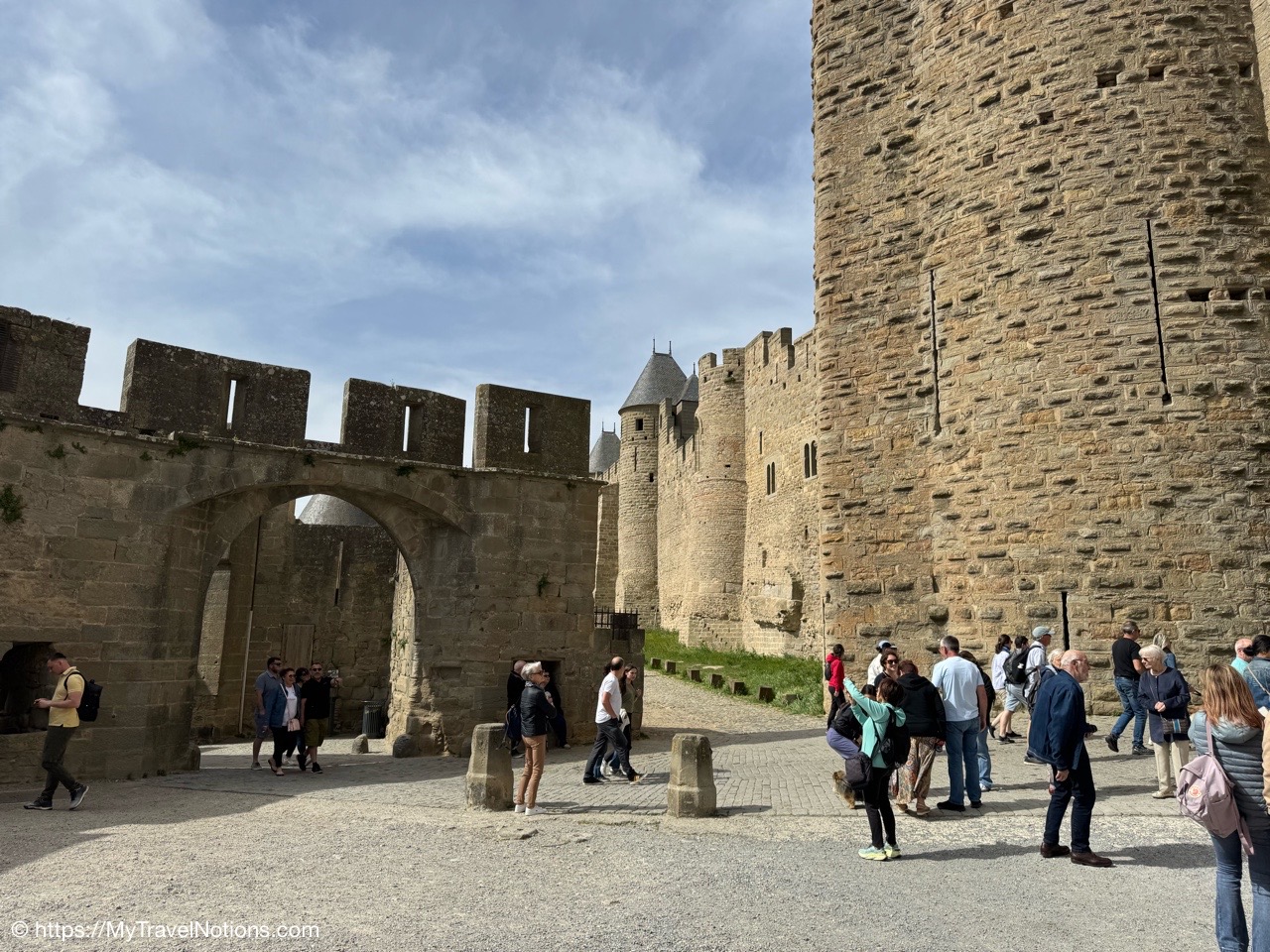
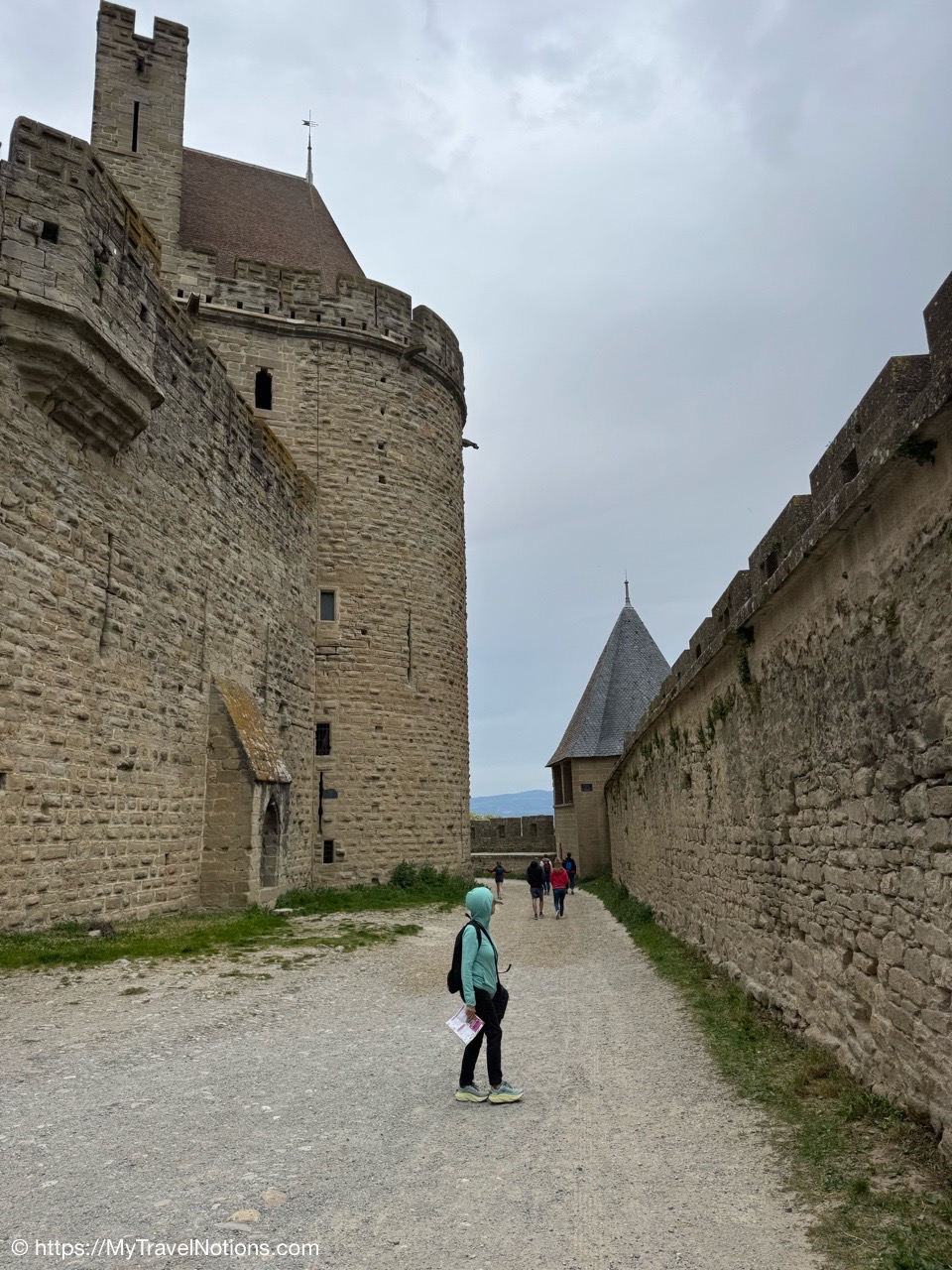
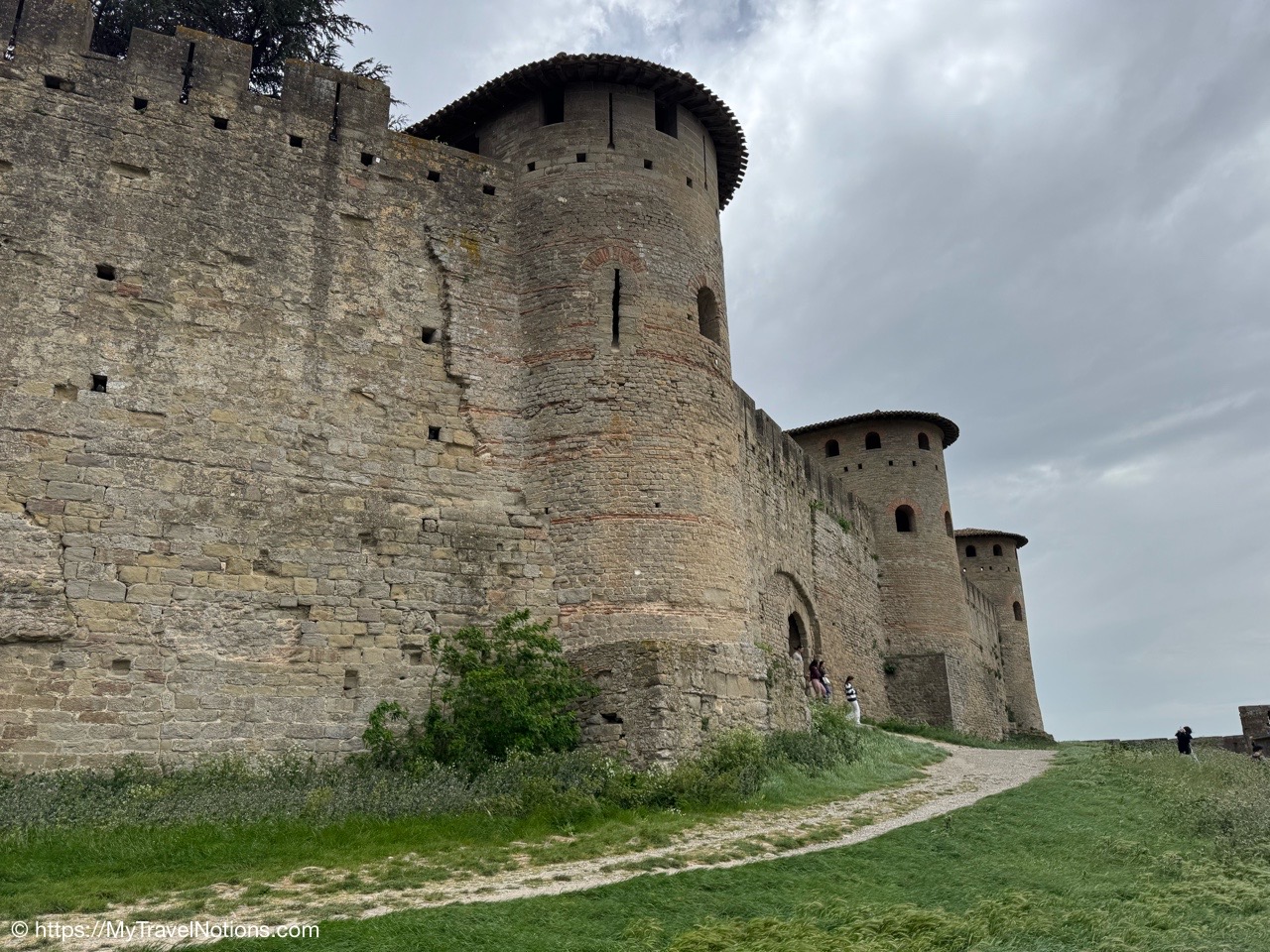
Founded during the Gallo-Roman period, the fortified city derives its reputation from its 1.9 mile or 3 kilometres long double surrounding ramparts or walls interspersed by 52 towers. The Cité de Carcassonne has about 2,500 years of history and has been occupied in different ages by Romans, Visigoths, and Crusaders.
We arrived at the Cité de Carcassonne just before 11 am by bus along with hundreds of other tourists wanting to see this UNESCO World Heritage city. But even with all the people, I saw more of the fortified city than I saw during my last visit in 2012.
Inside the Cité de Carcassonne are many things to see, but with limited time, Tammy and I concentrated on the Château Comtal or “Castle of the Counts and its adjoining ramparts,” which cost to enter, the Basilica of Saint-Nazaire and the historic essence within the walls of the Cité de Carcassonne.
Tammy and I almost missed walking along the inner ramparts or walls, which we did not figure out until later, were a part of our entrance fee into the Château Comtal, which itself has walls. There were lots of walls and lots of stairs going up and down around the walls, but we did it and we were both so glad we did.
Come step back in time with us.
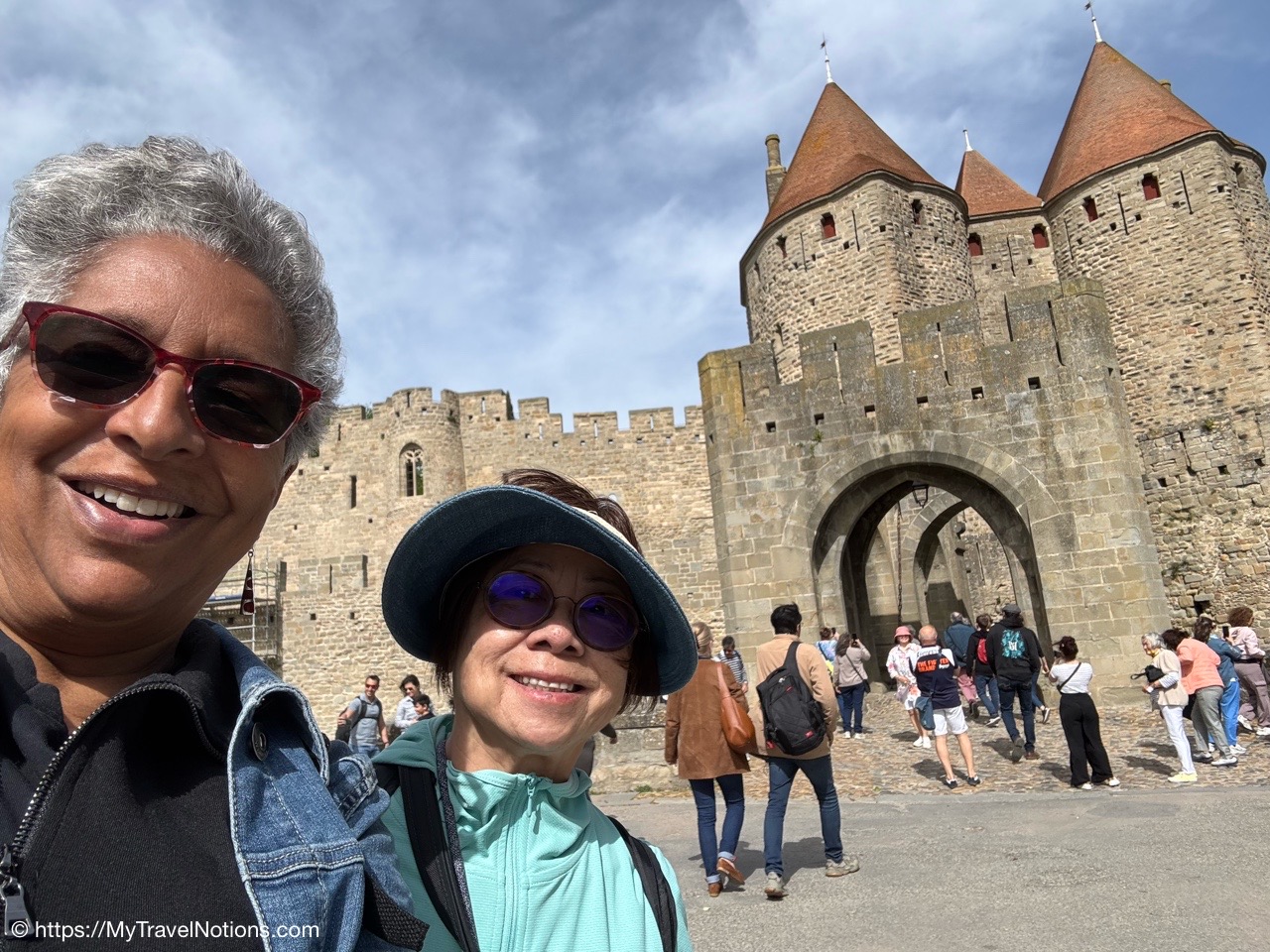
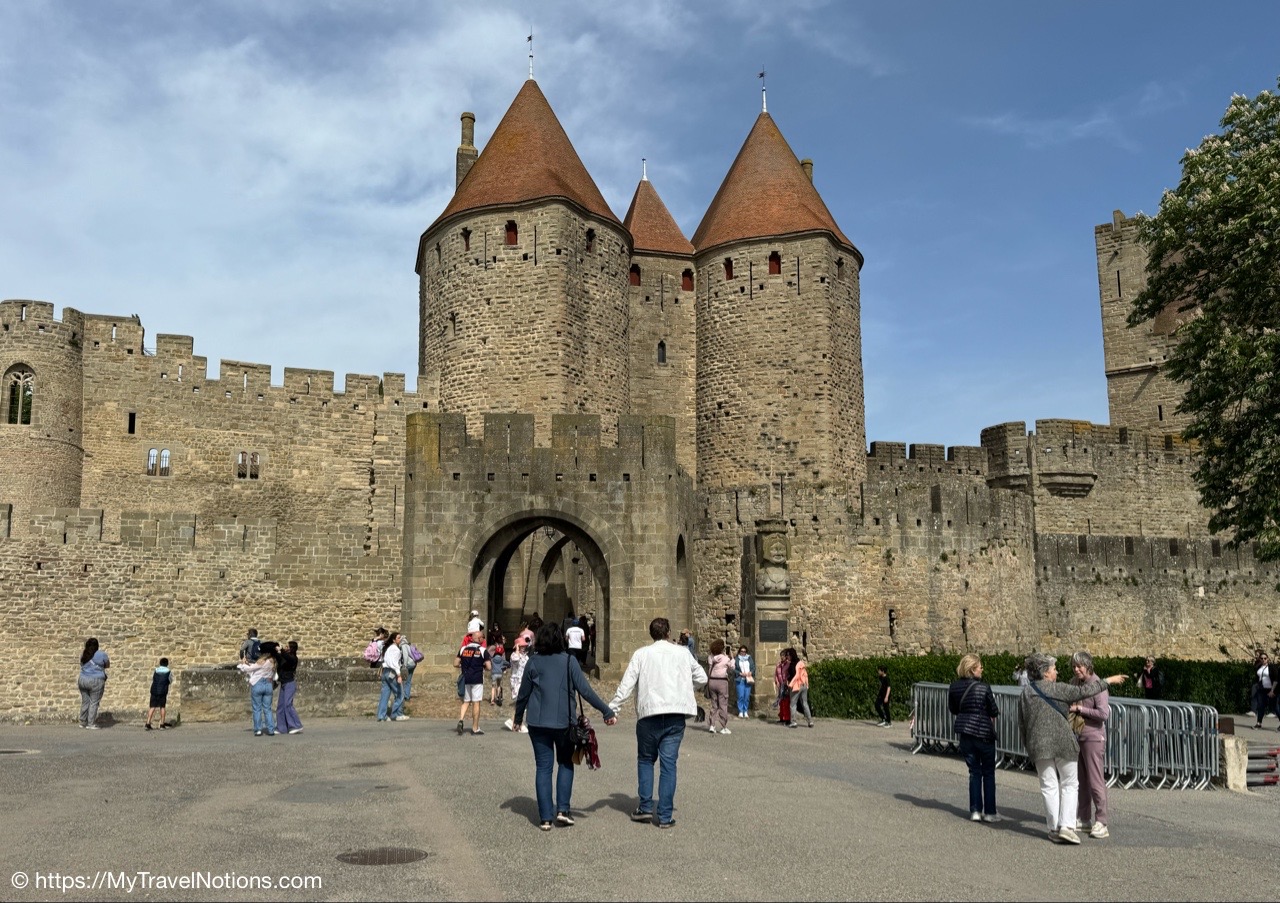
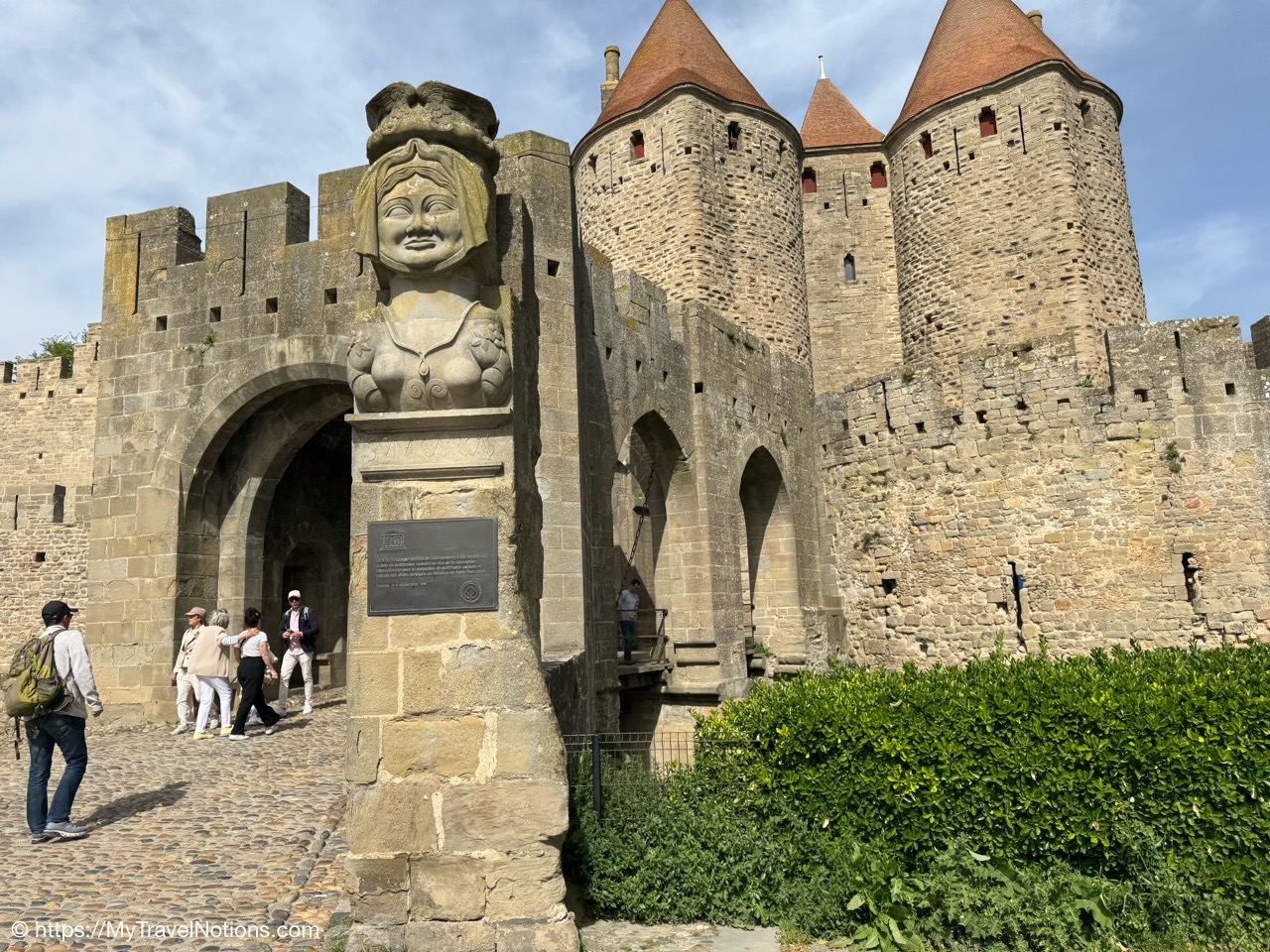
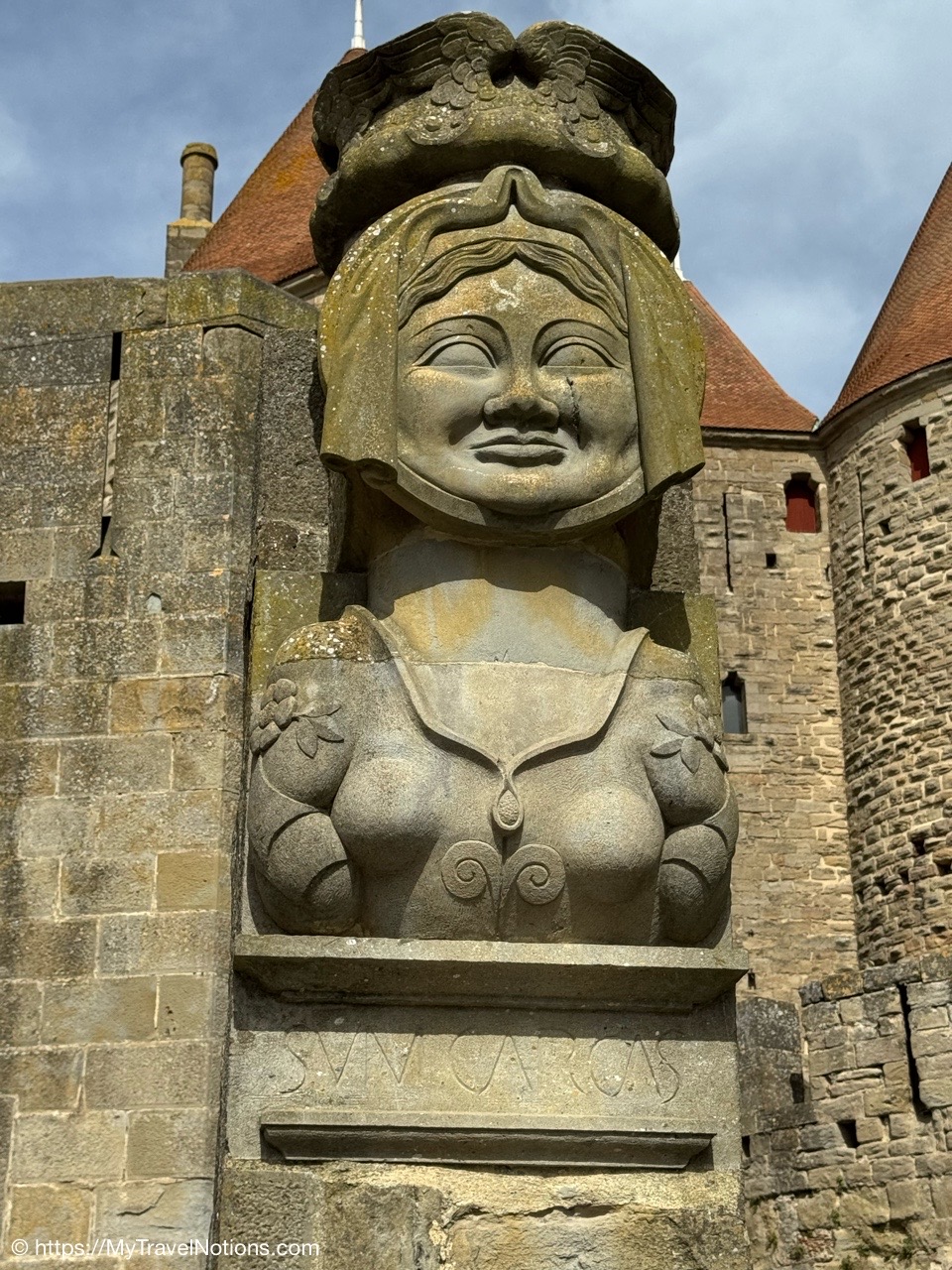
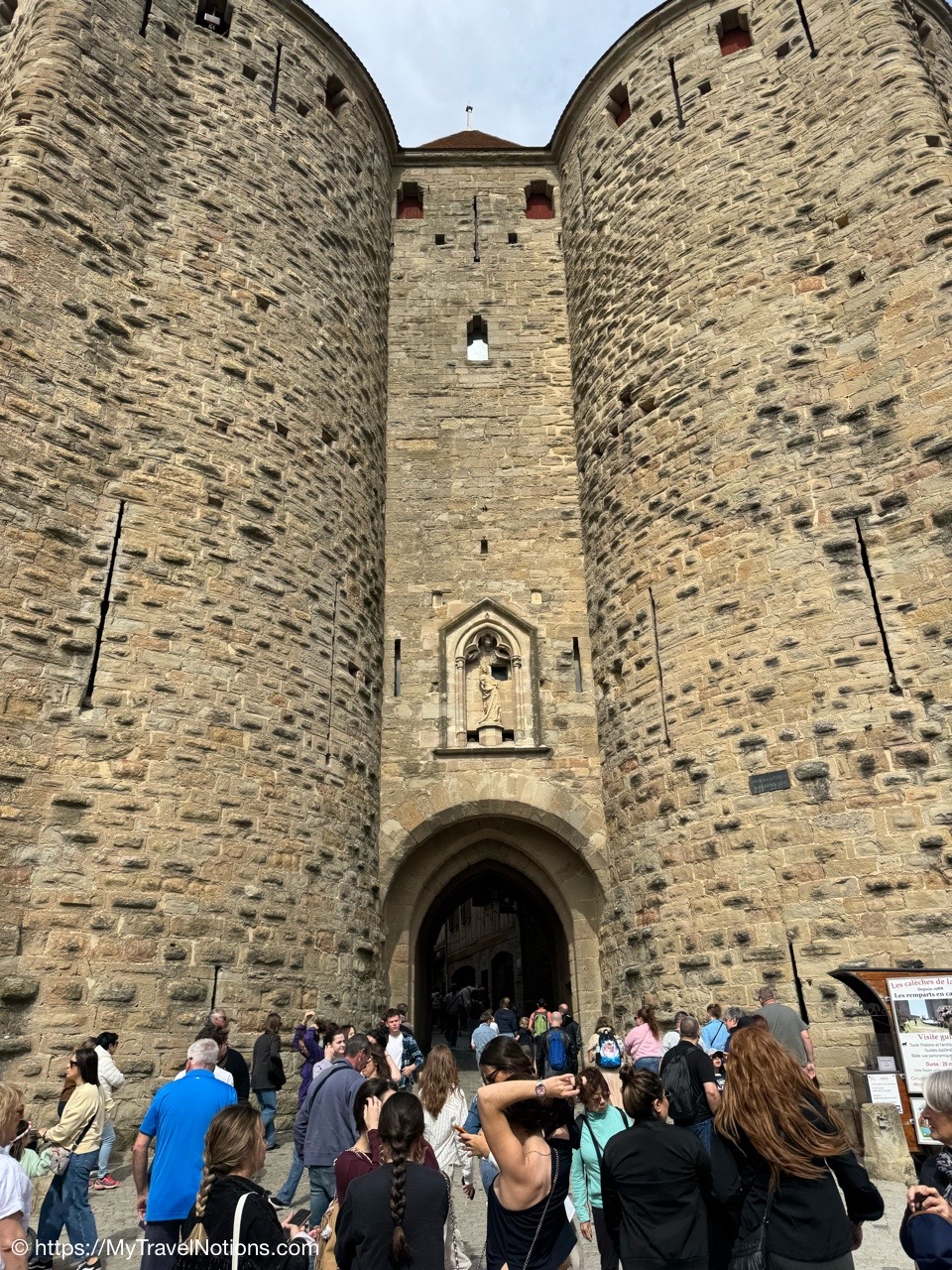
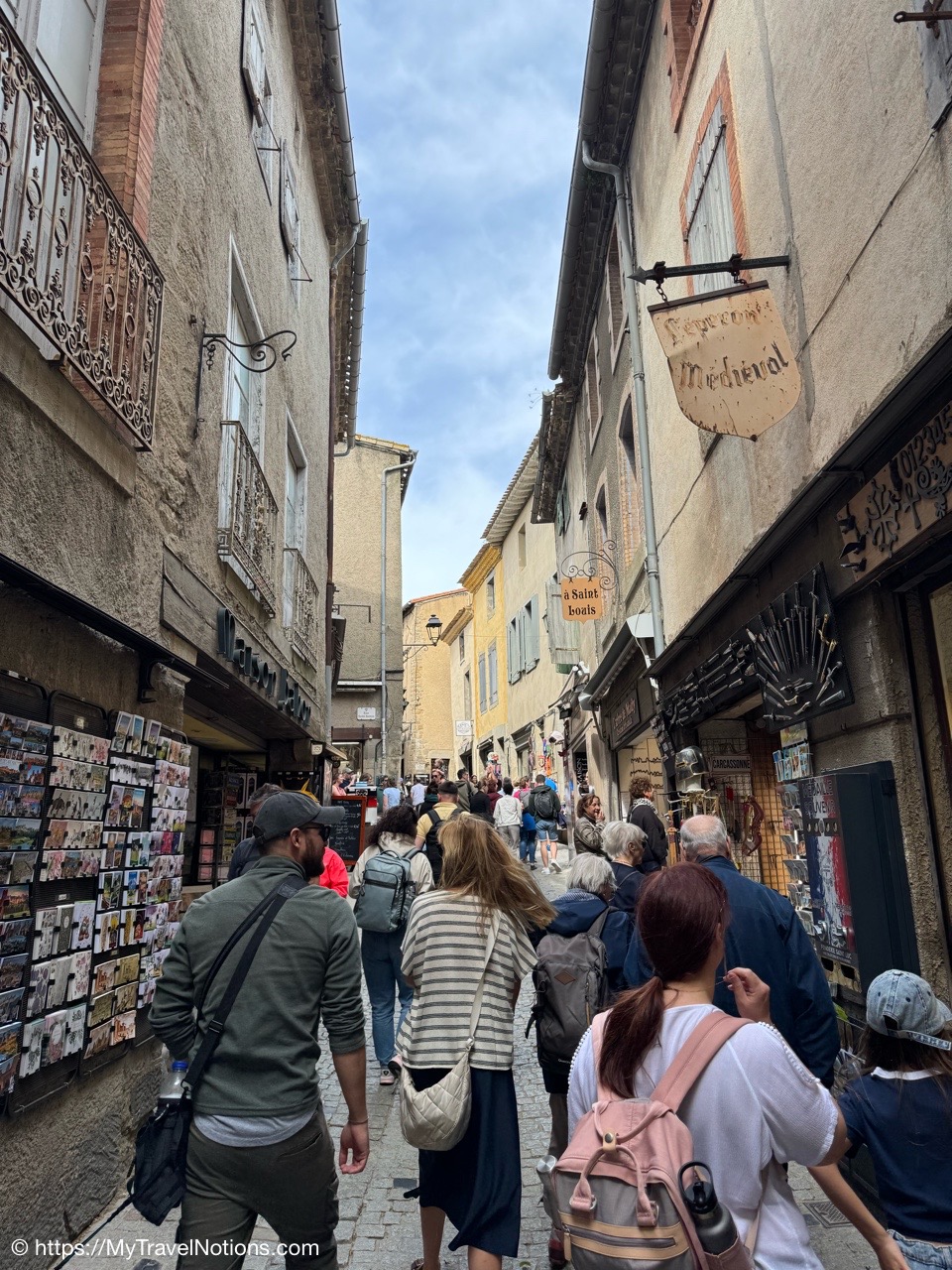
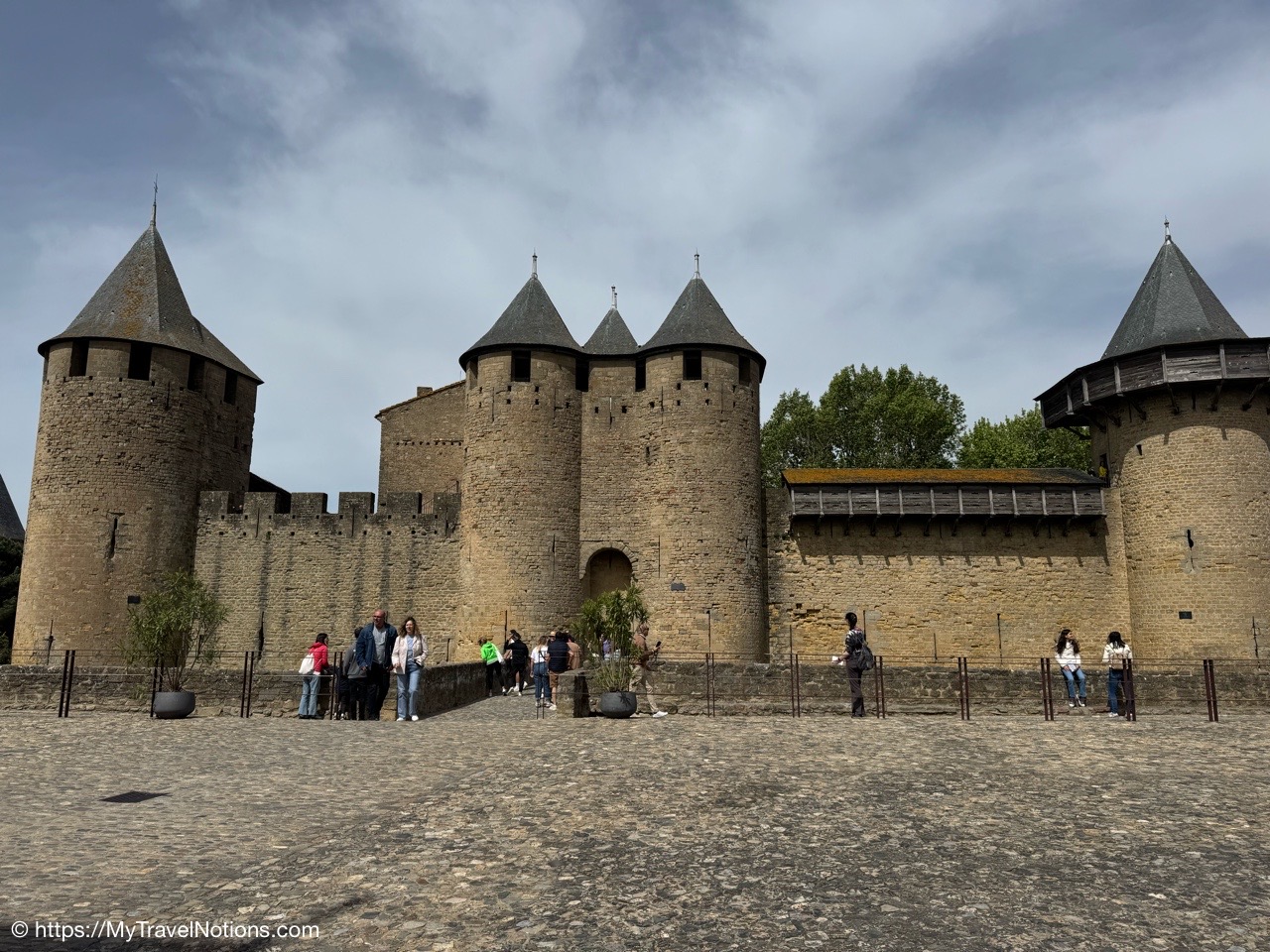
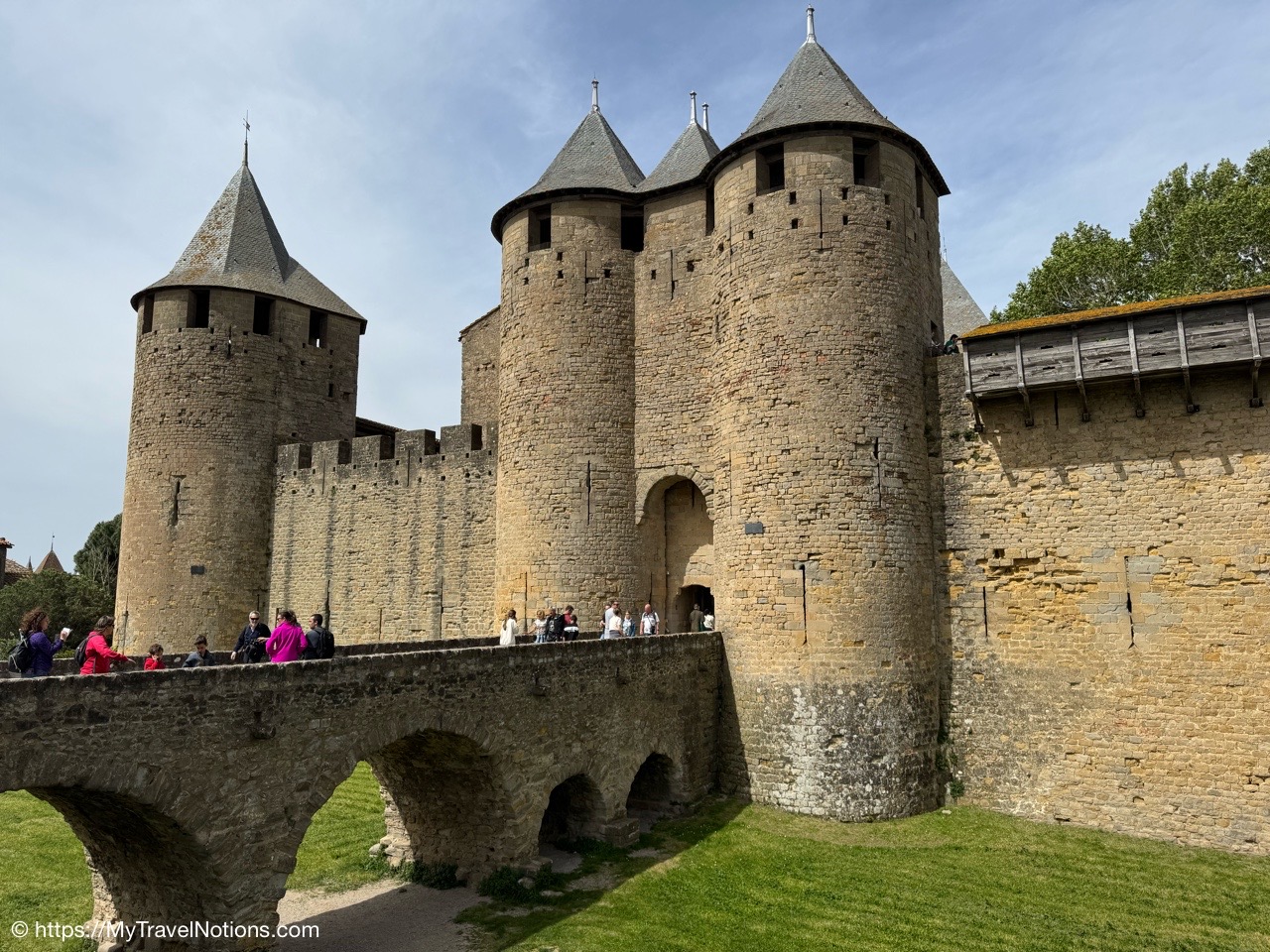
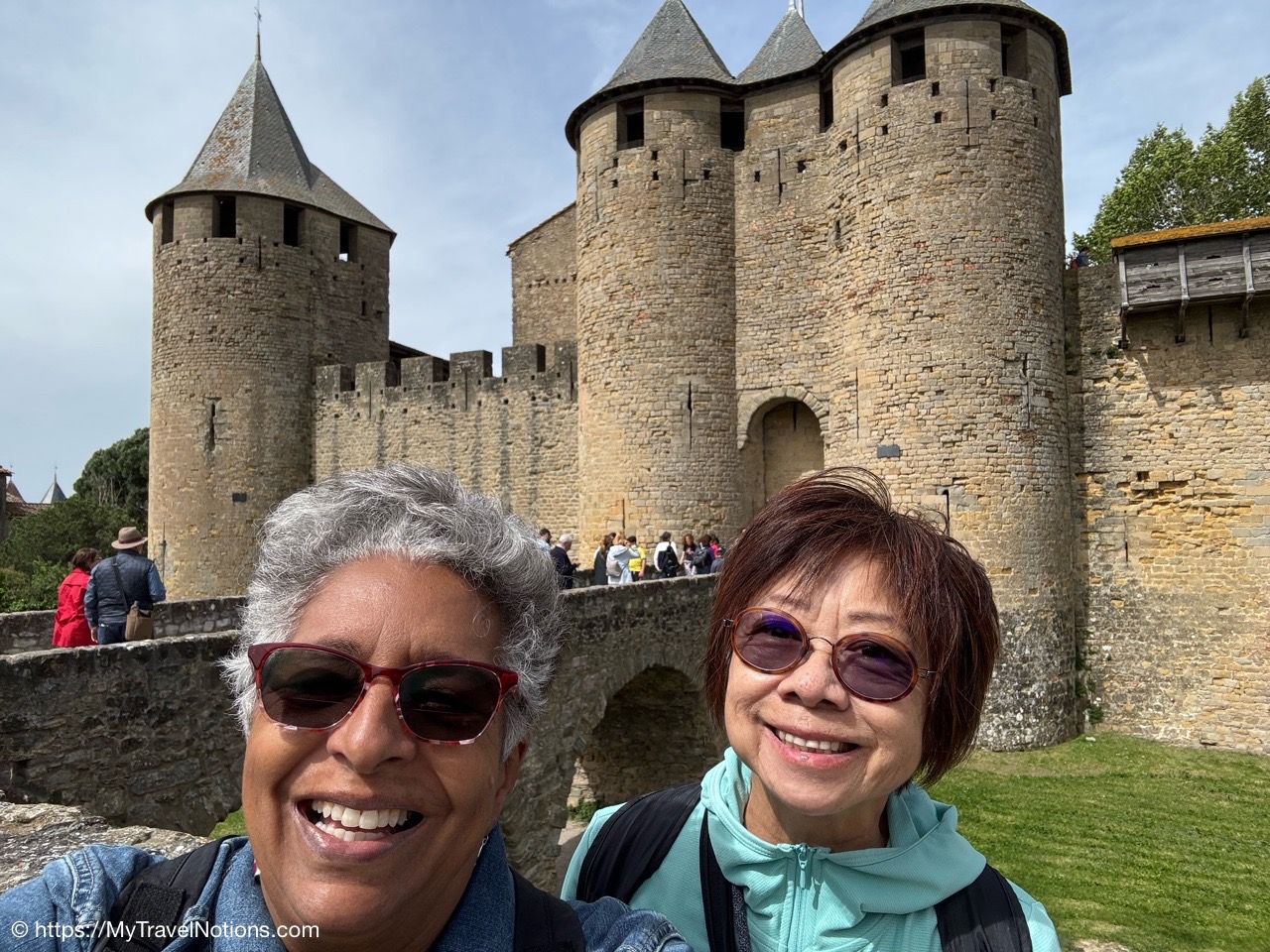
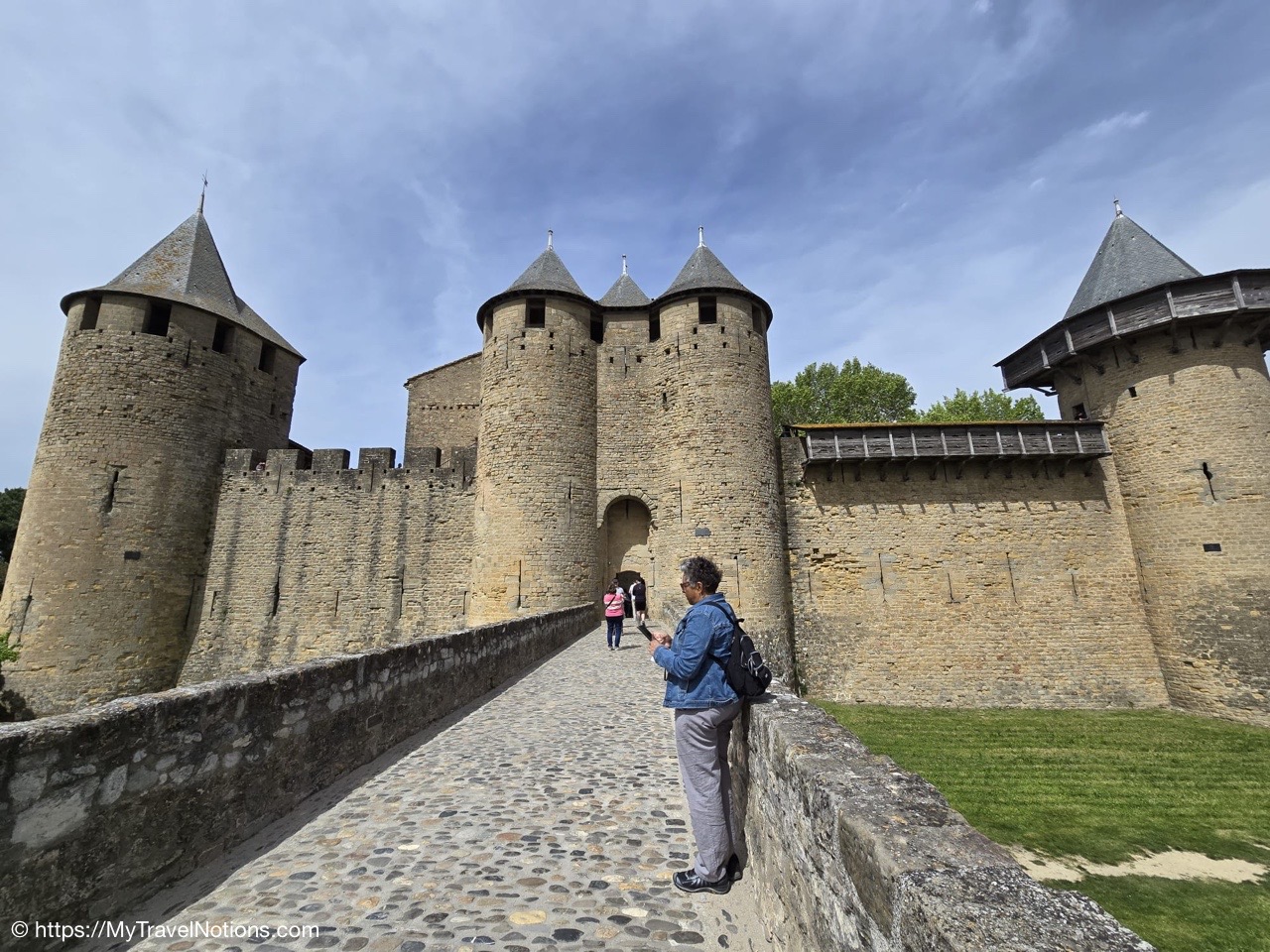
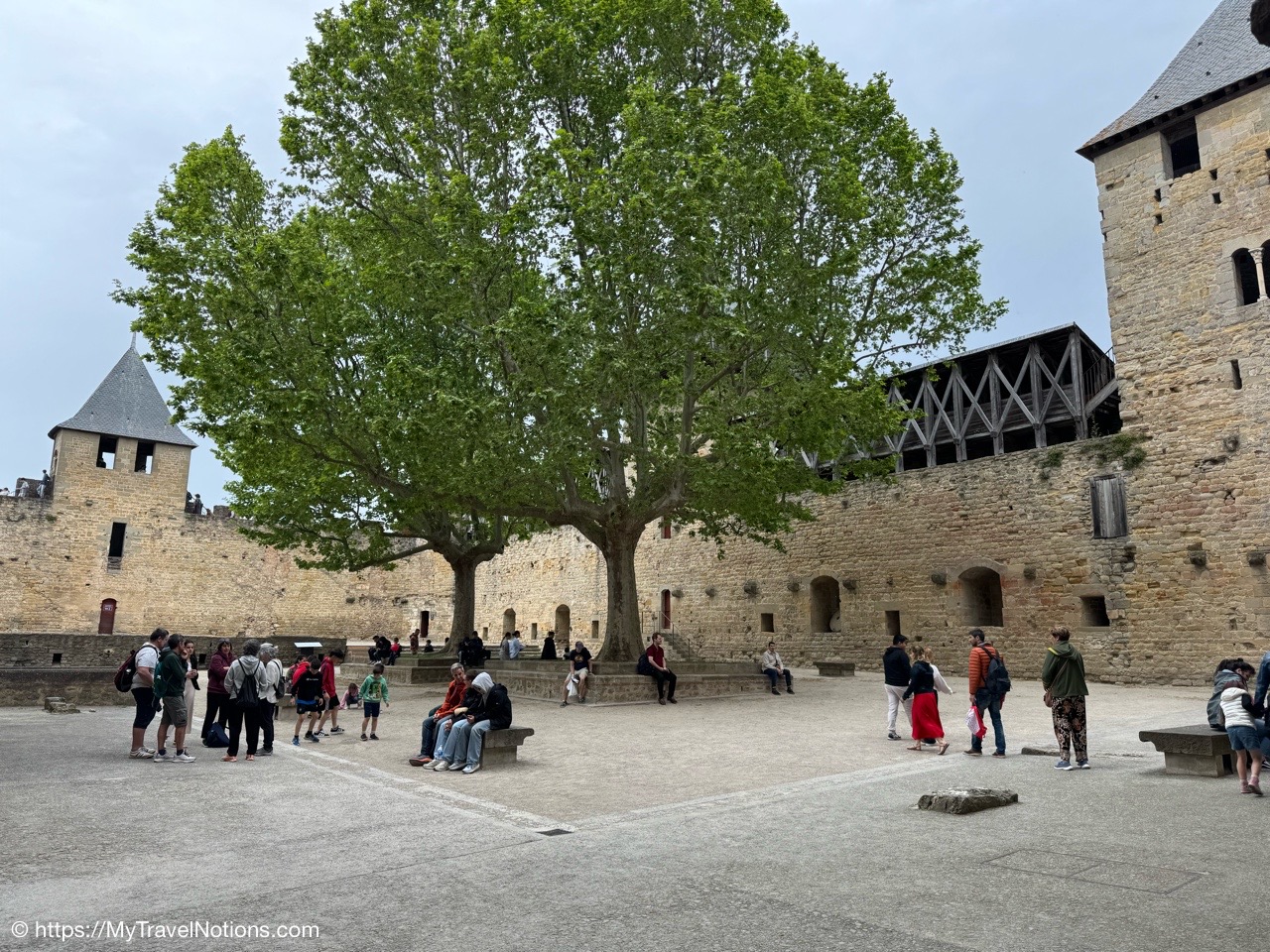
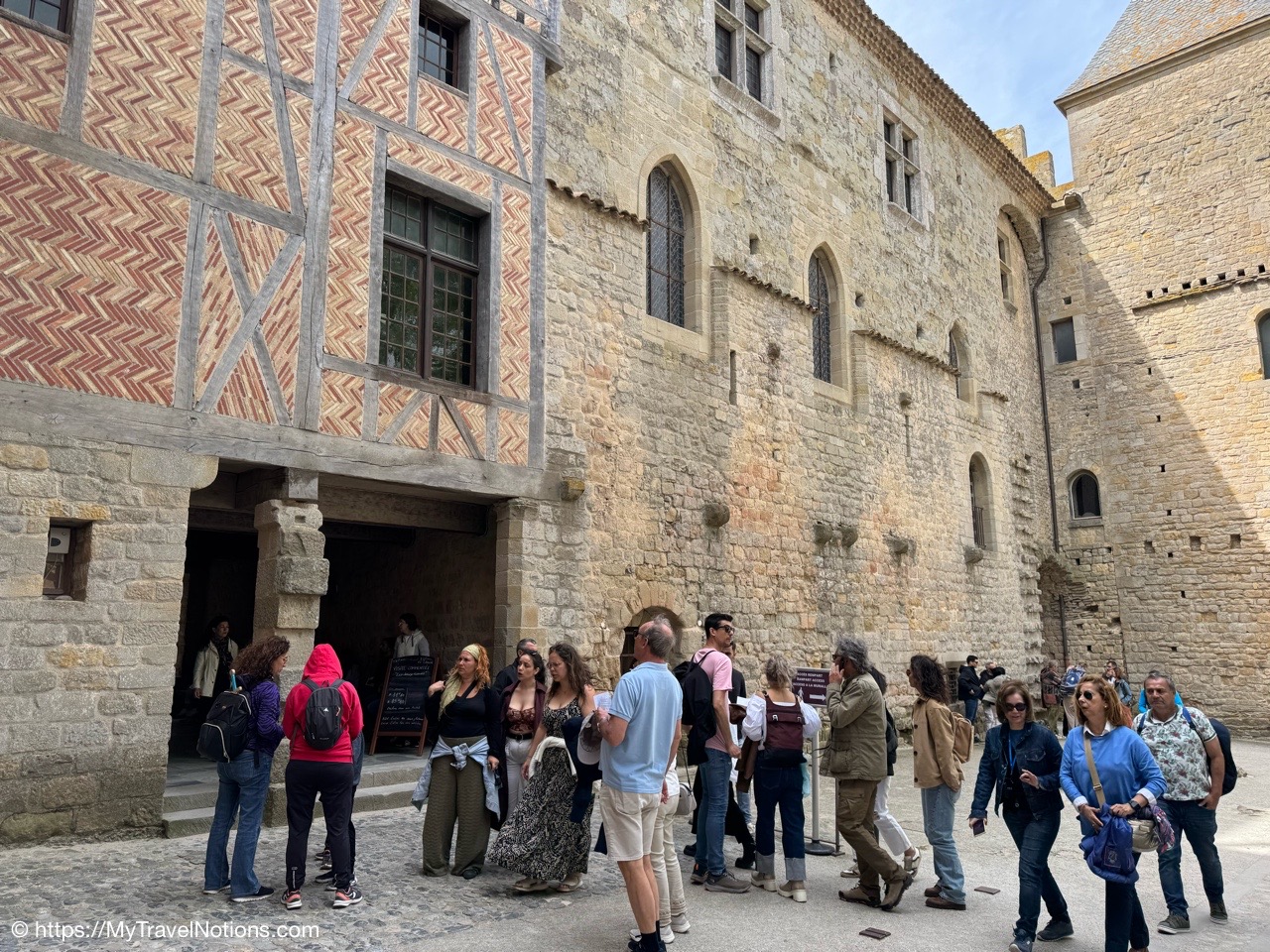
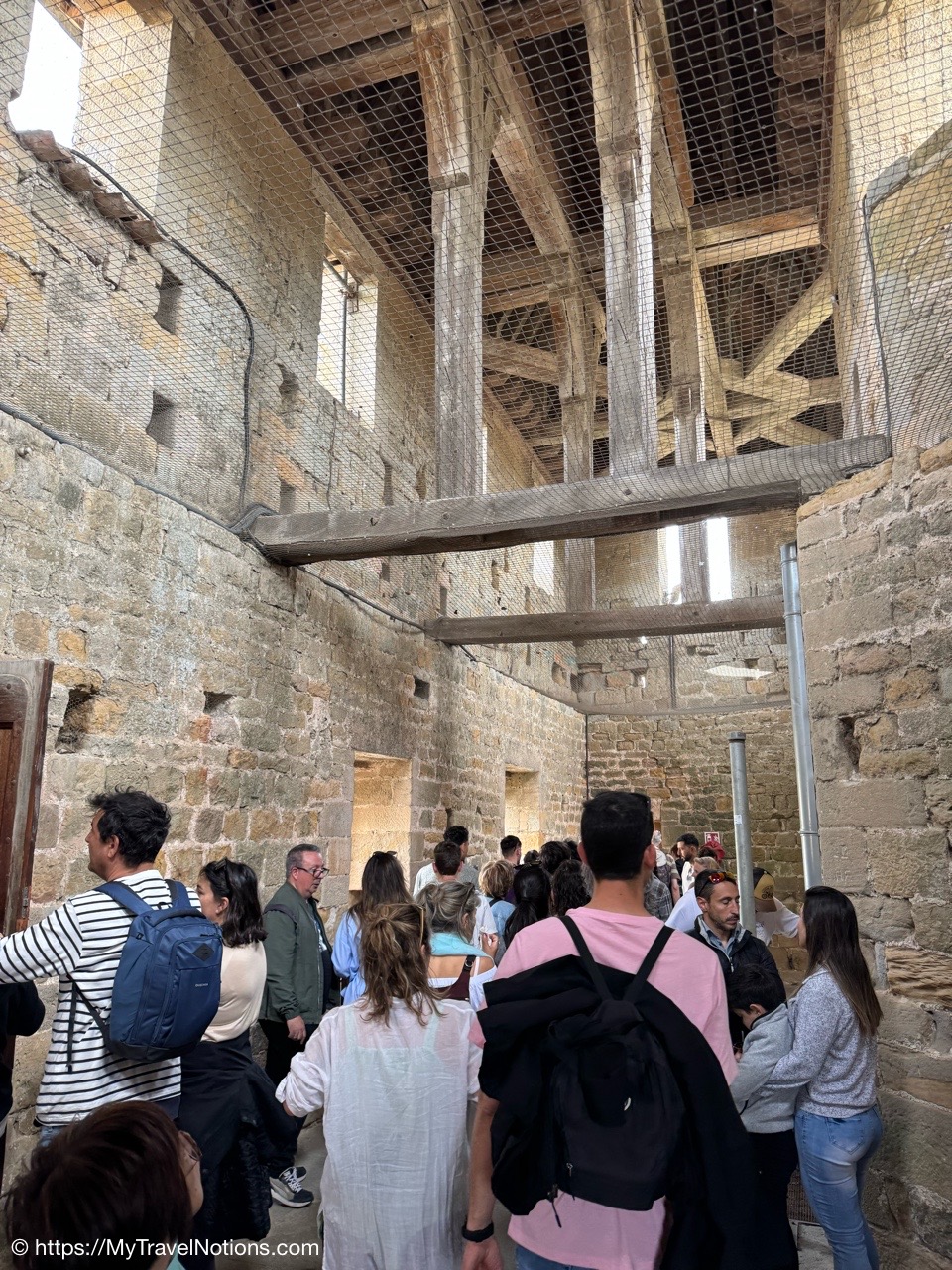
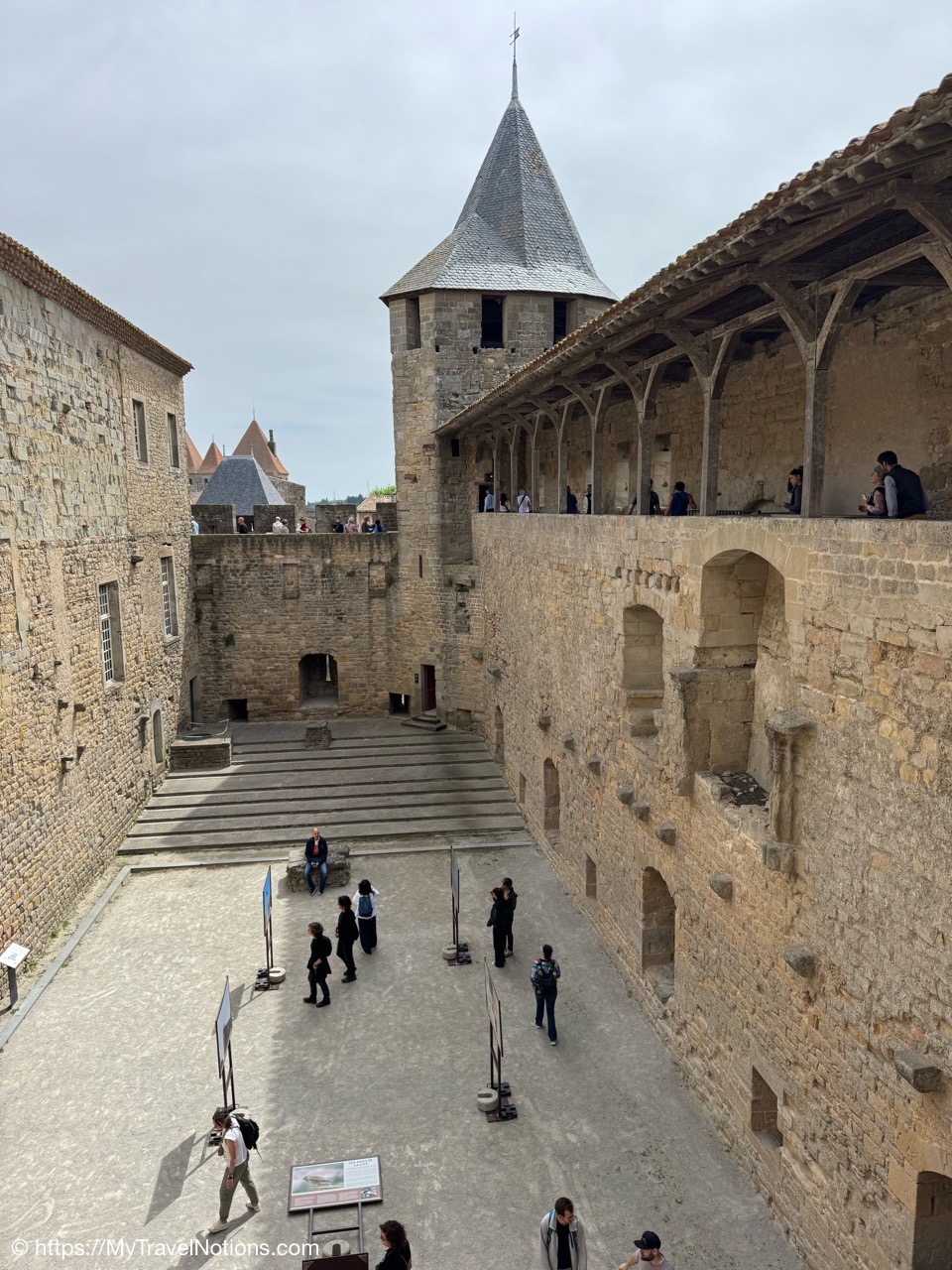
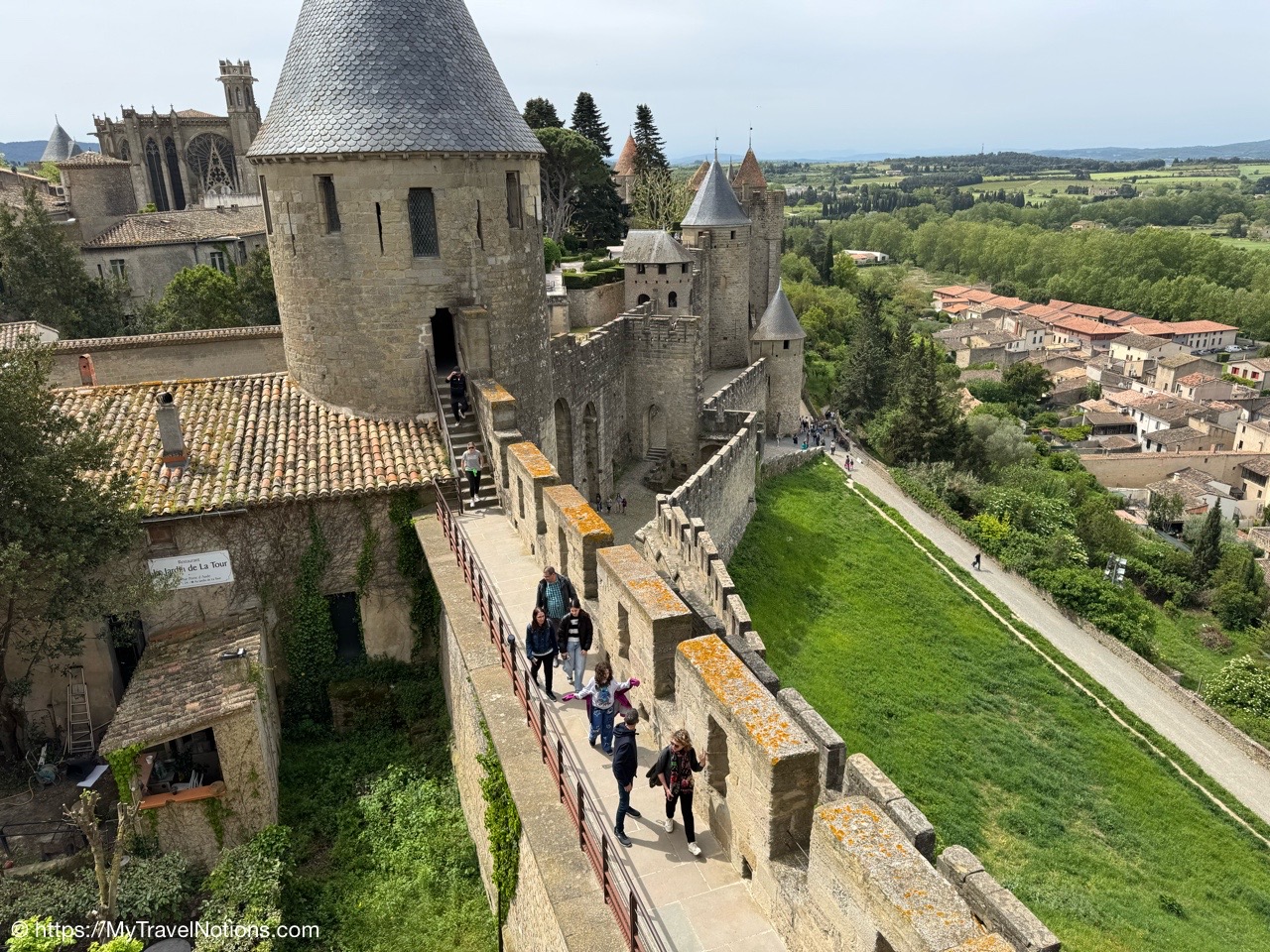
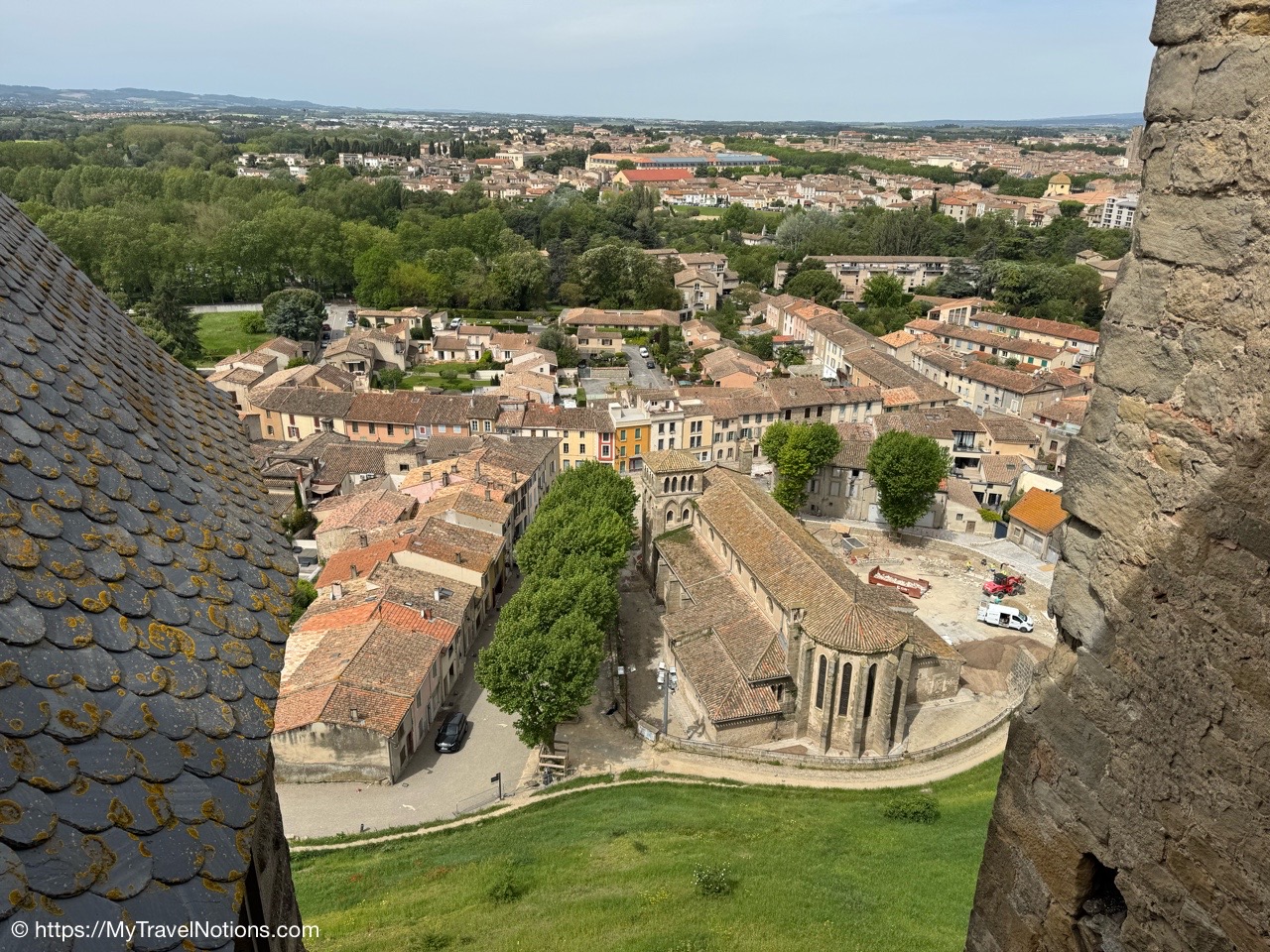
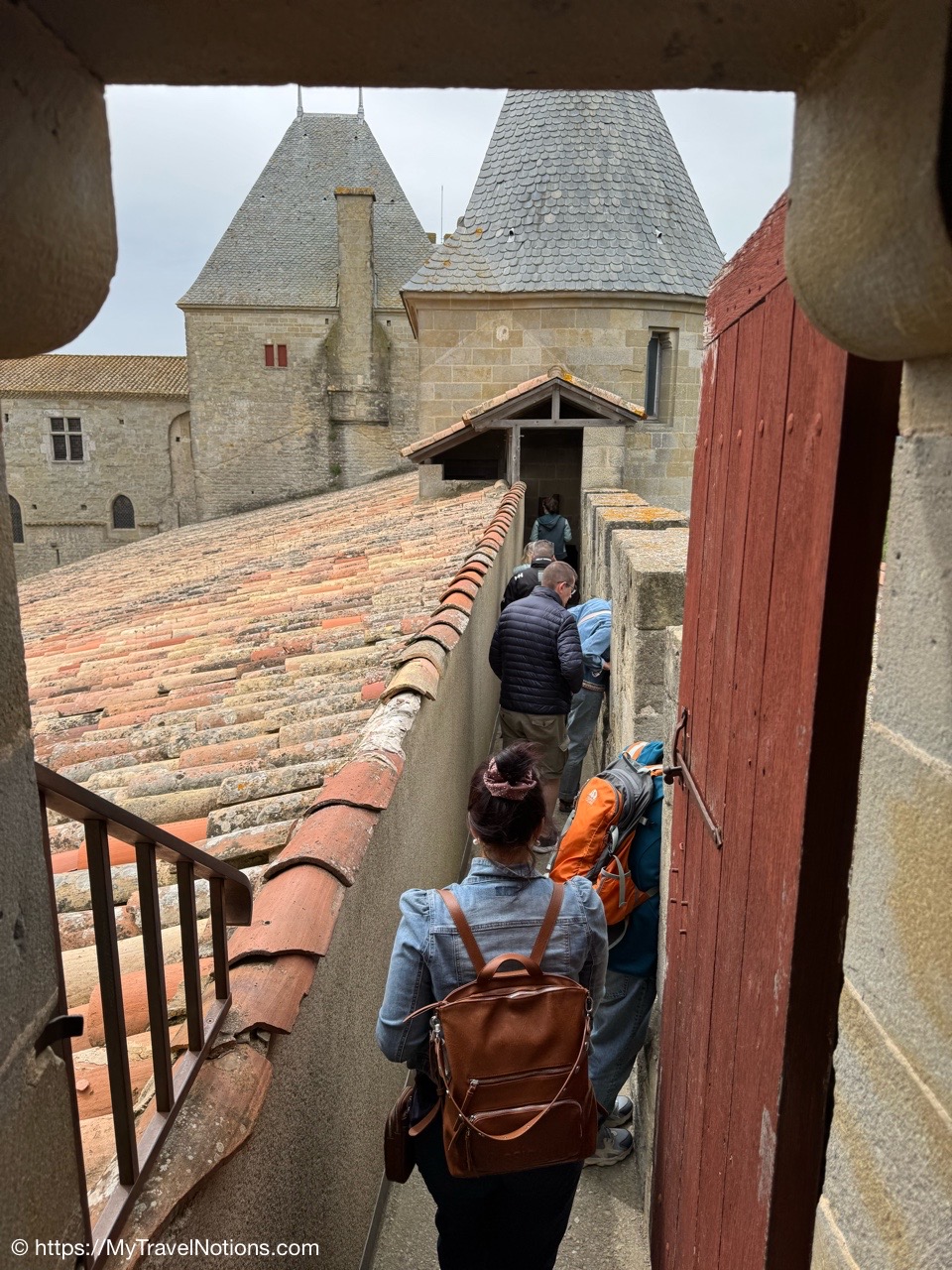
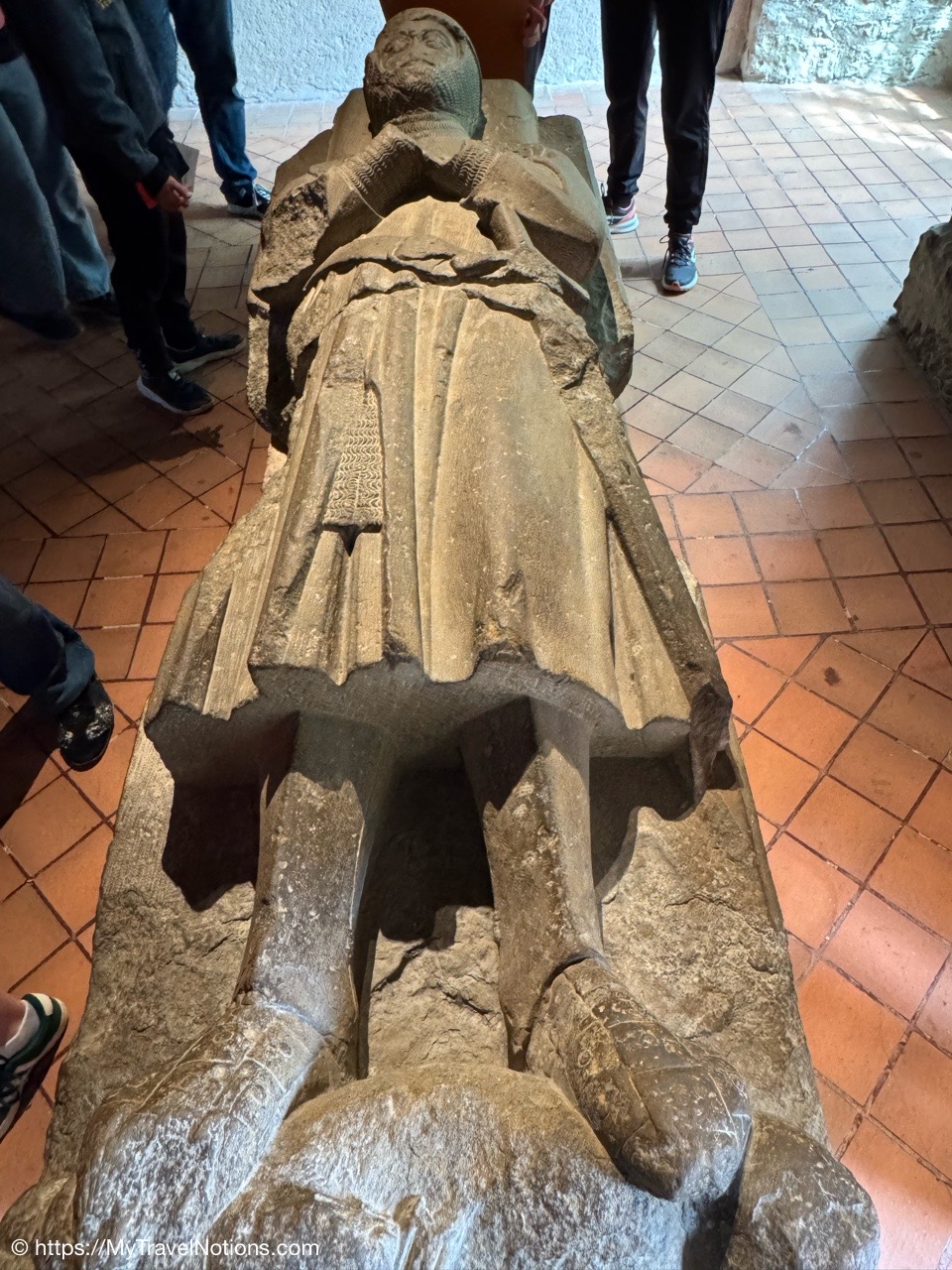
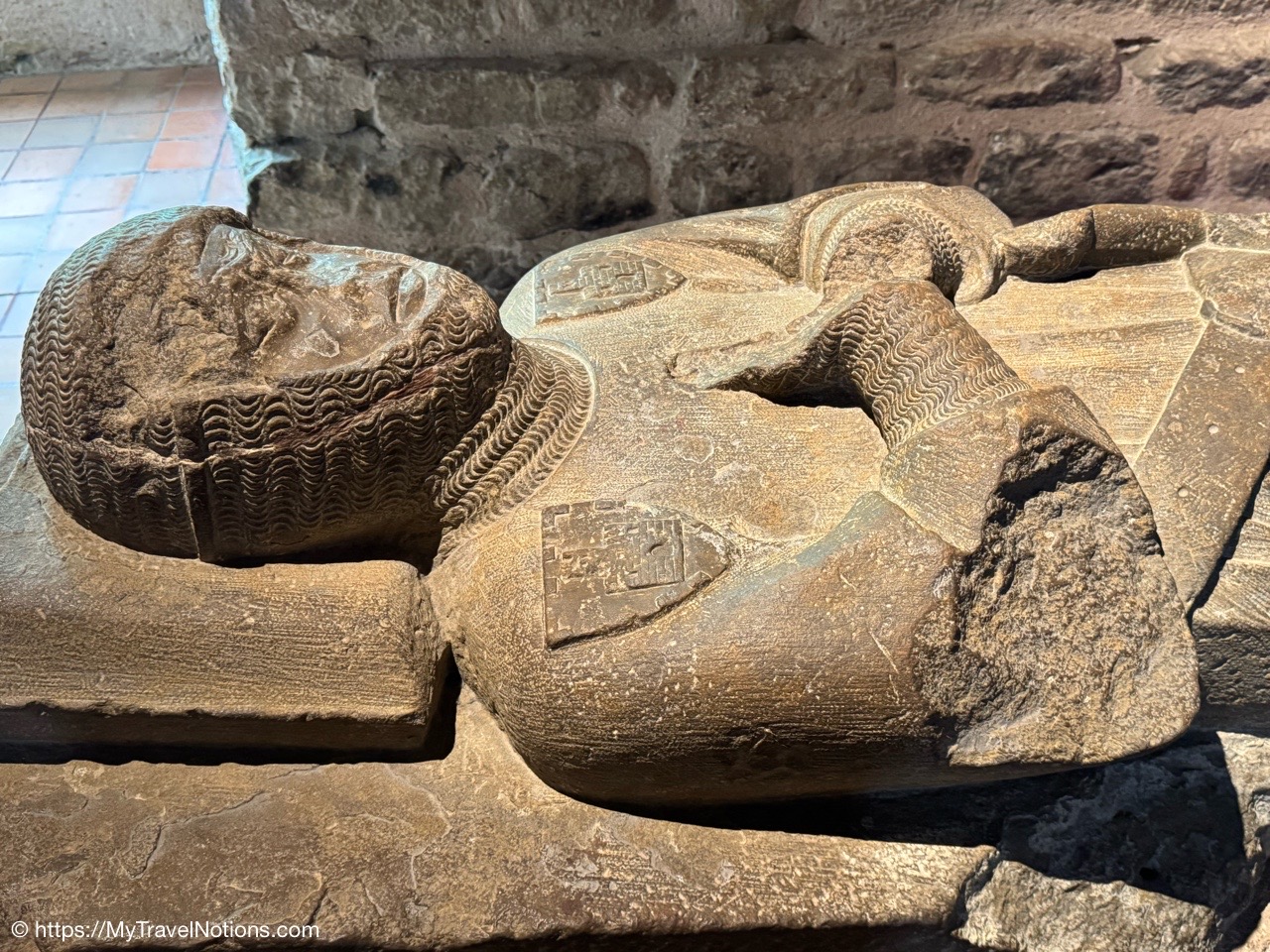
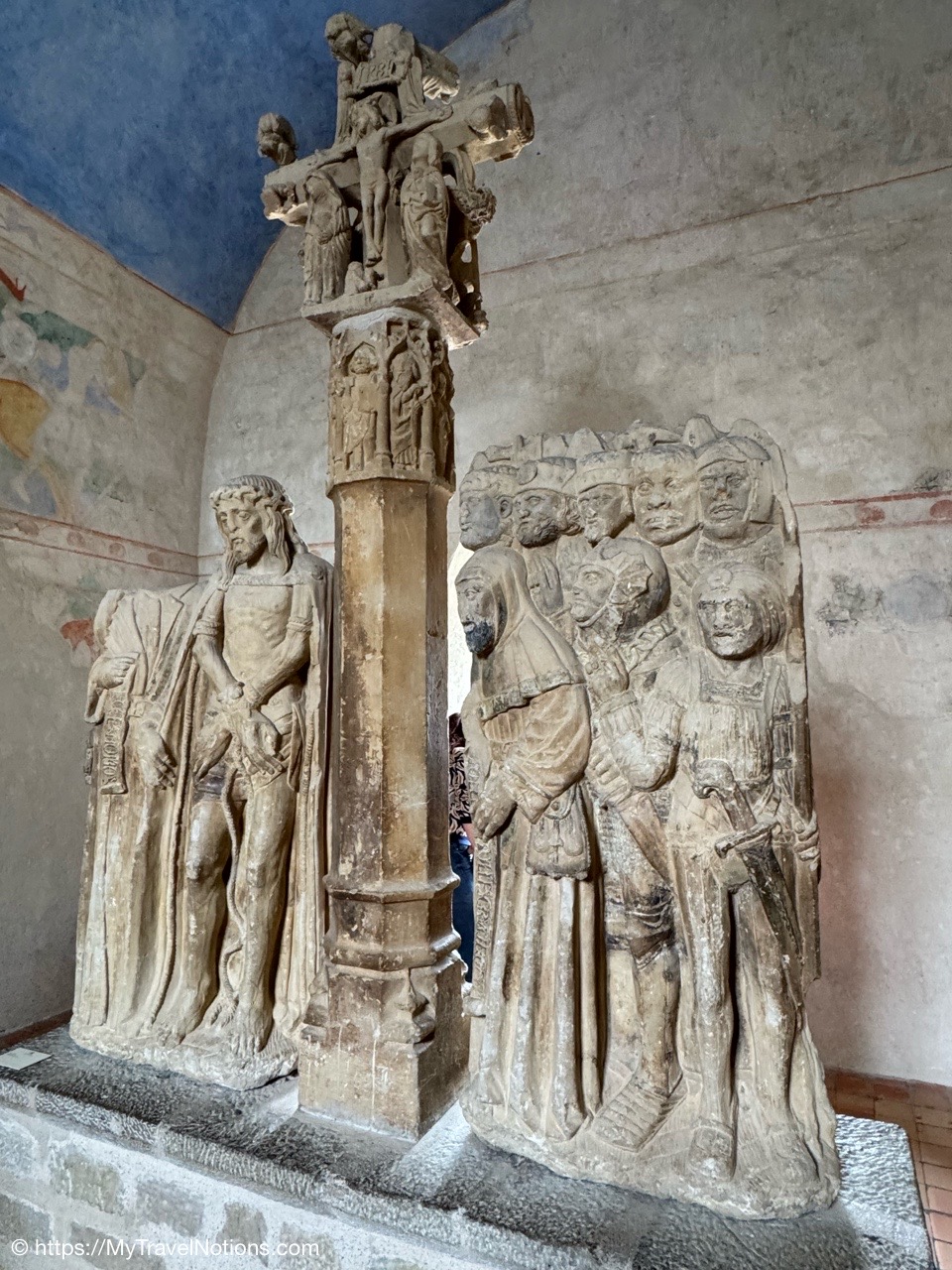
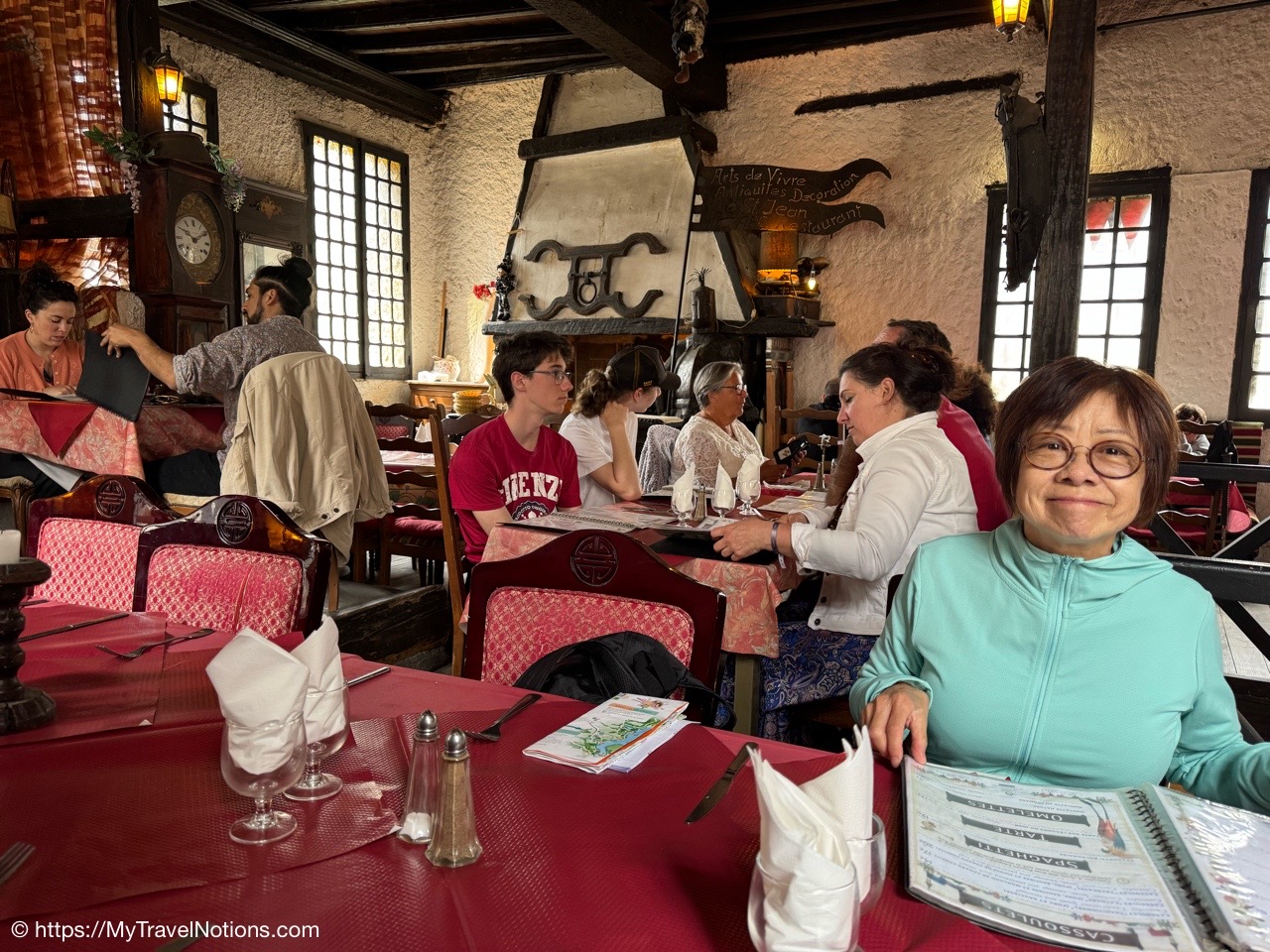
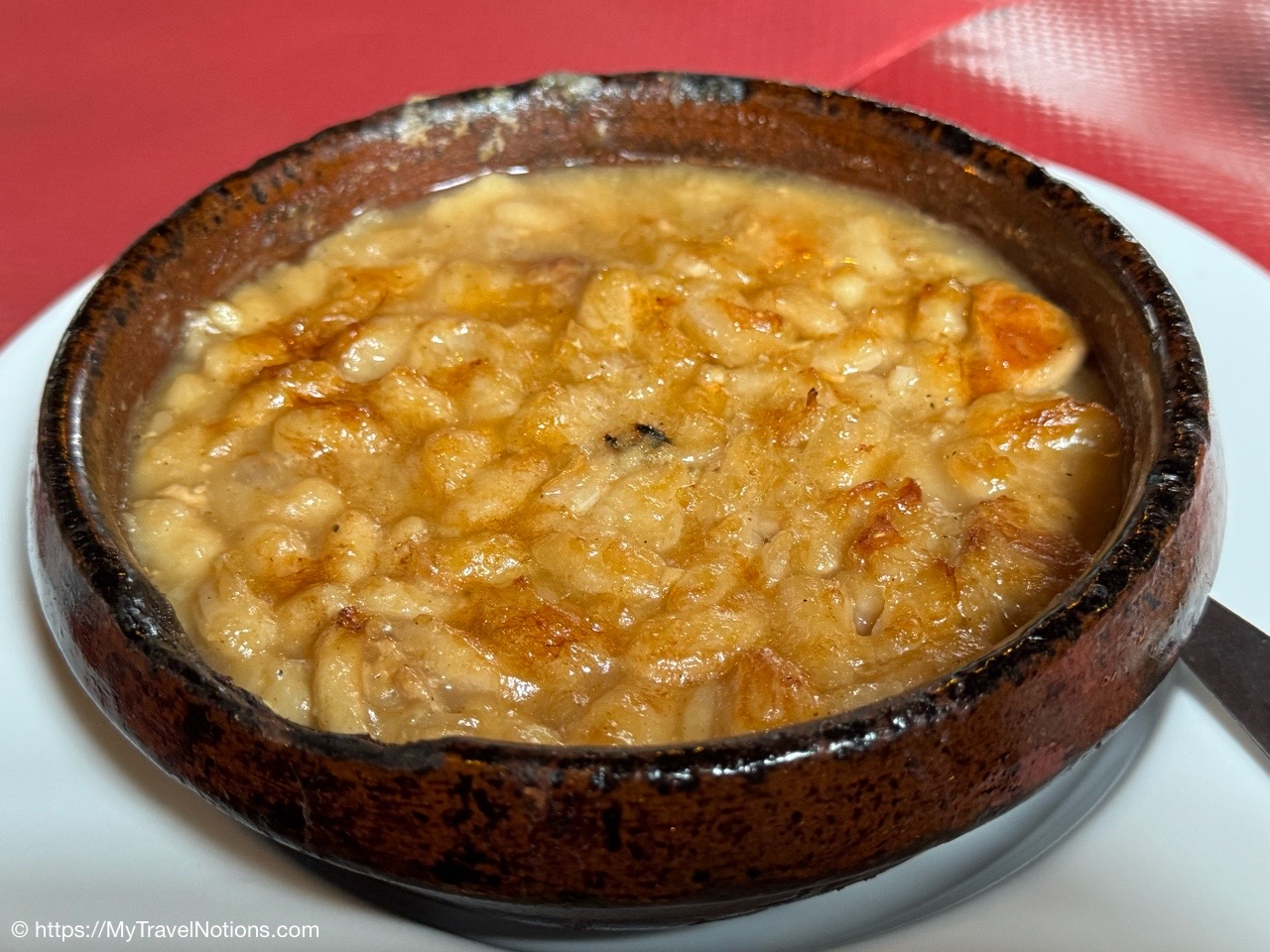
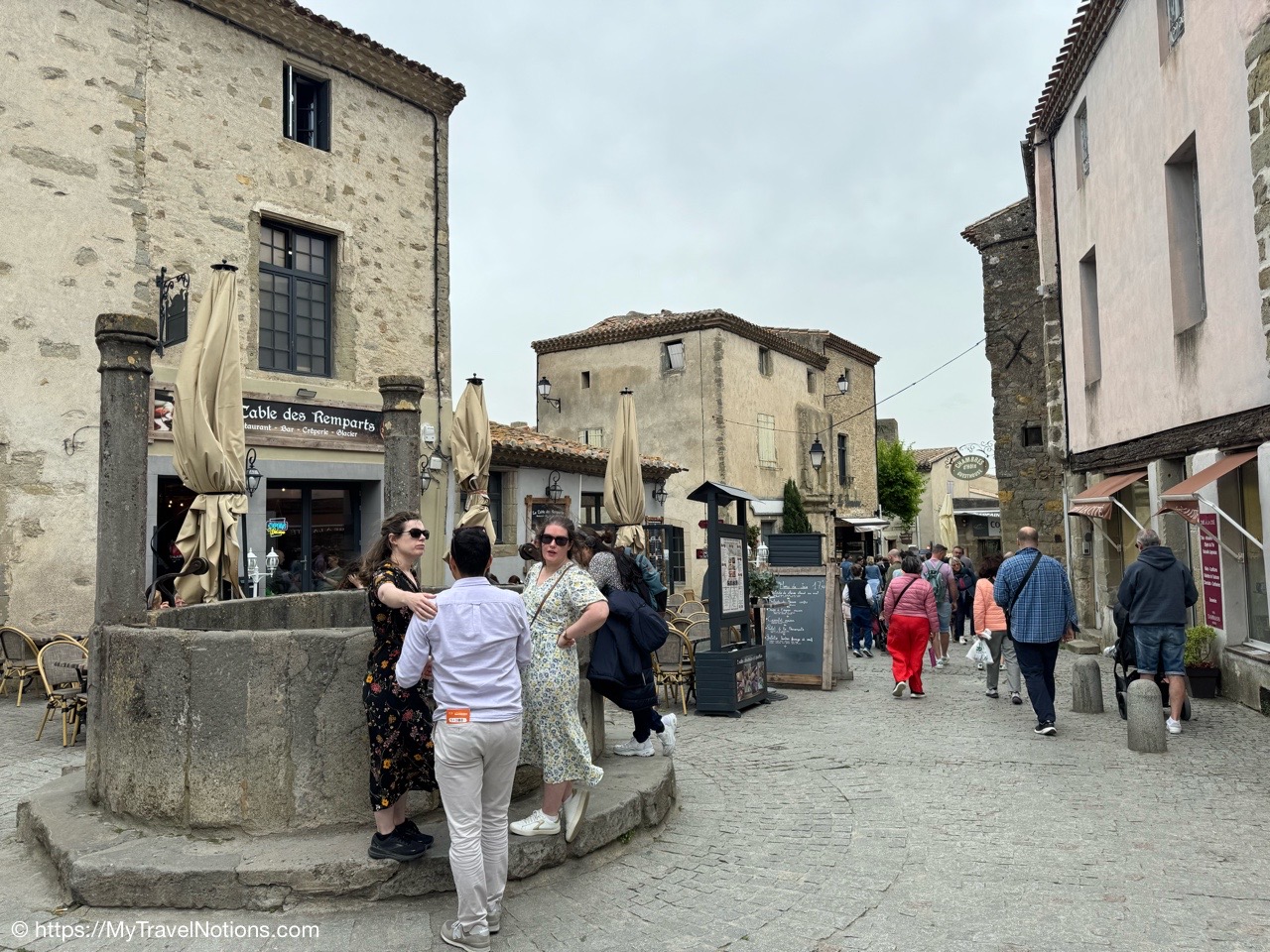
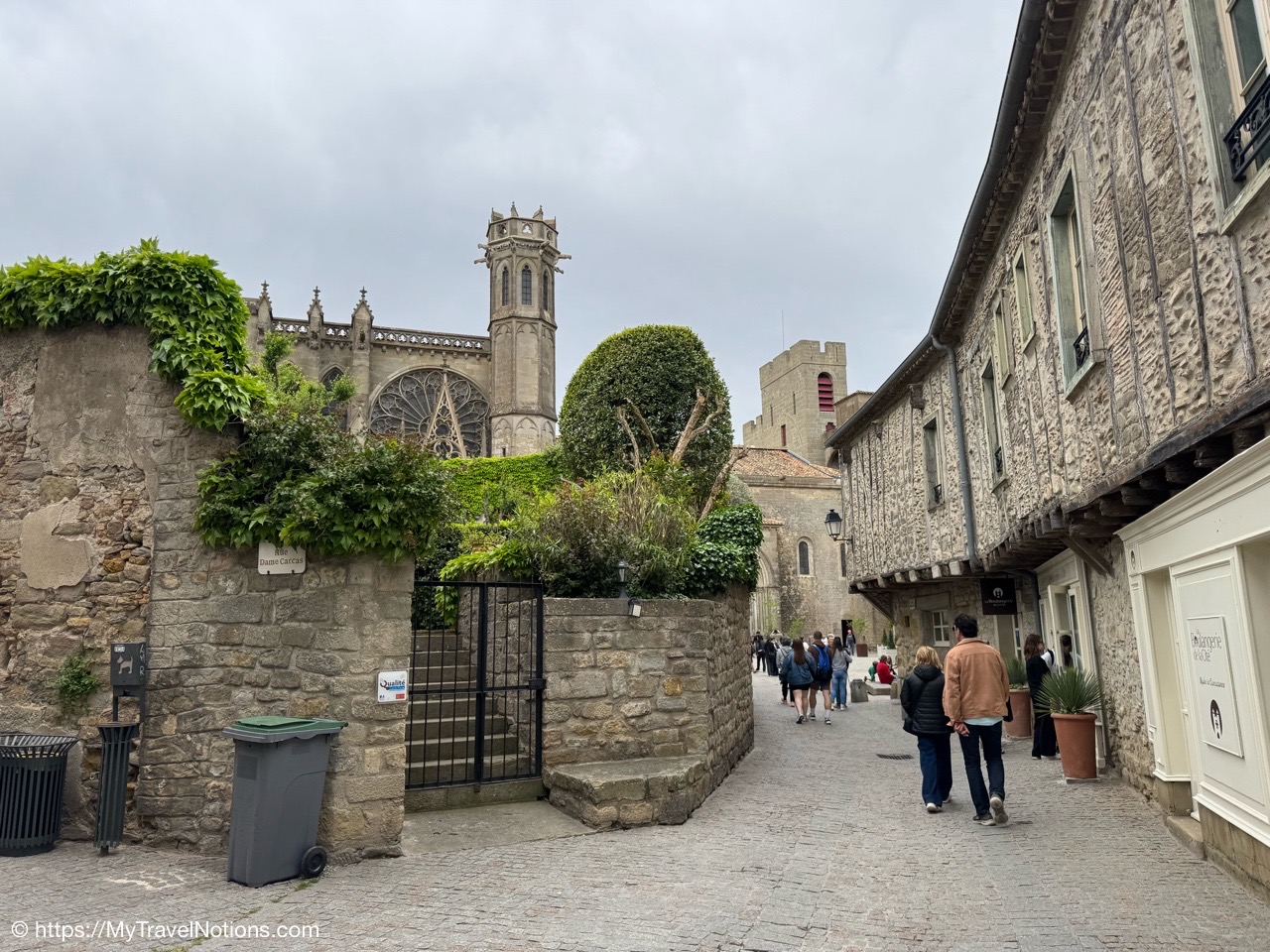
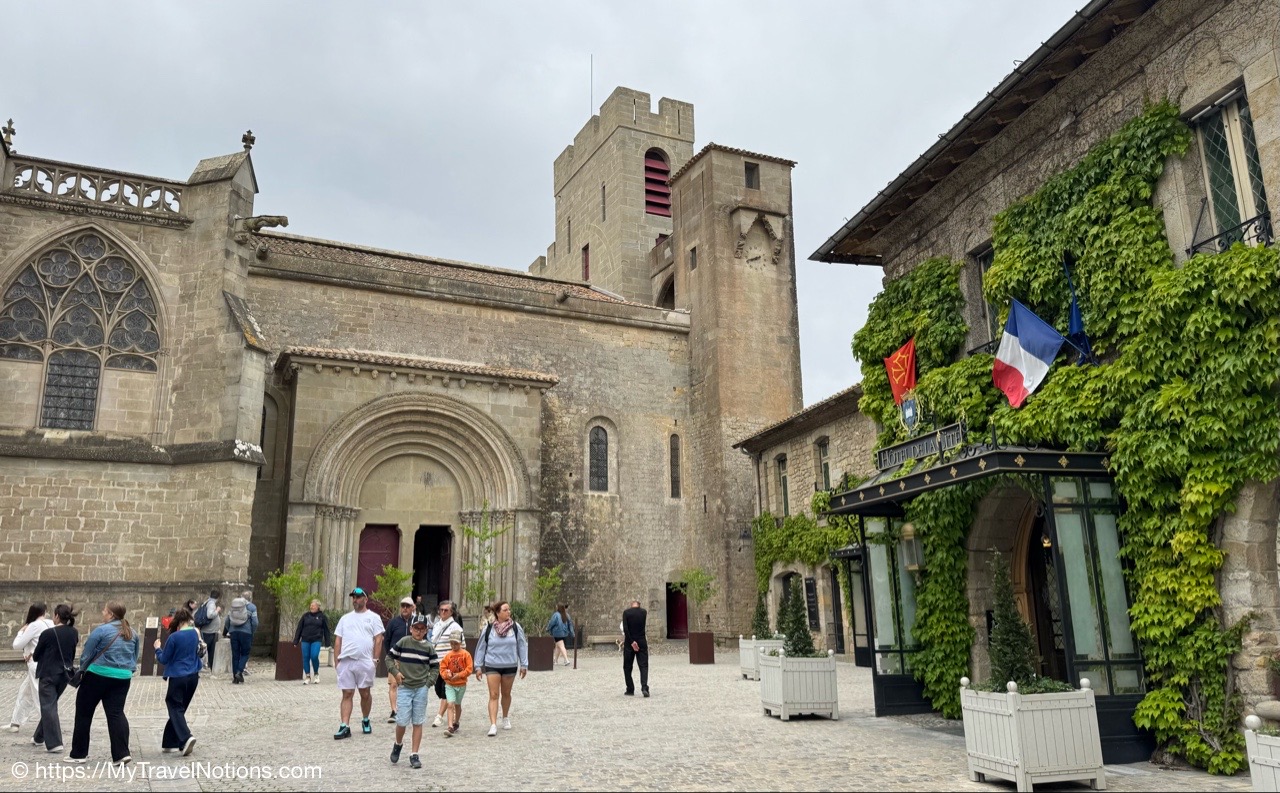
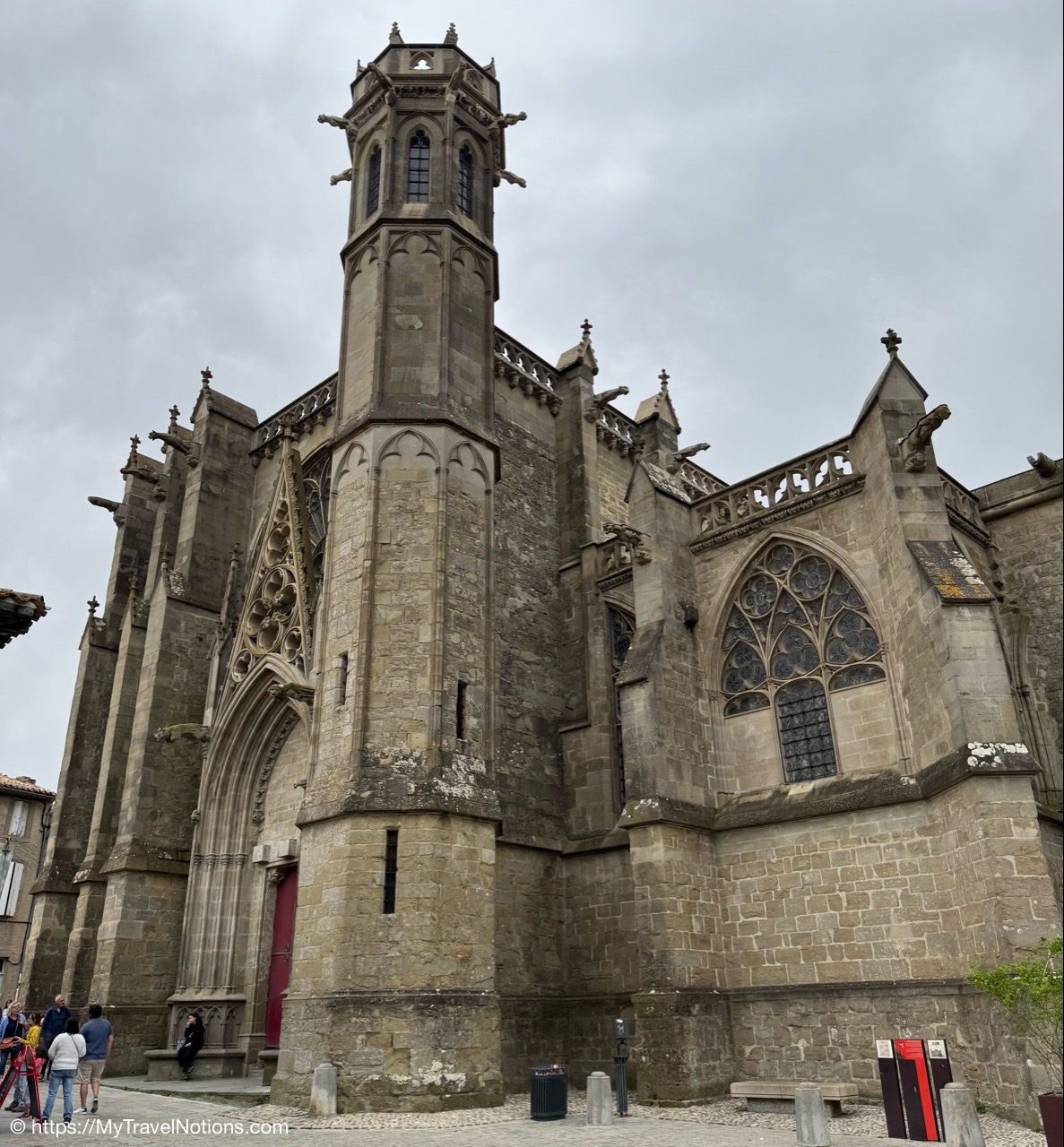
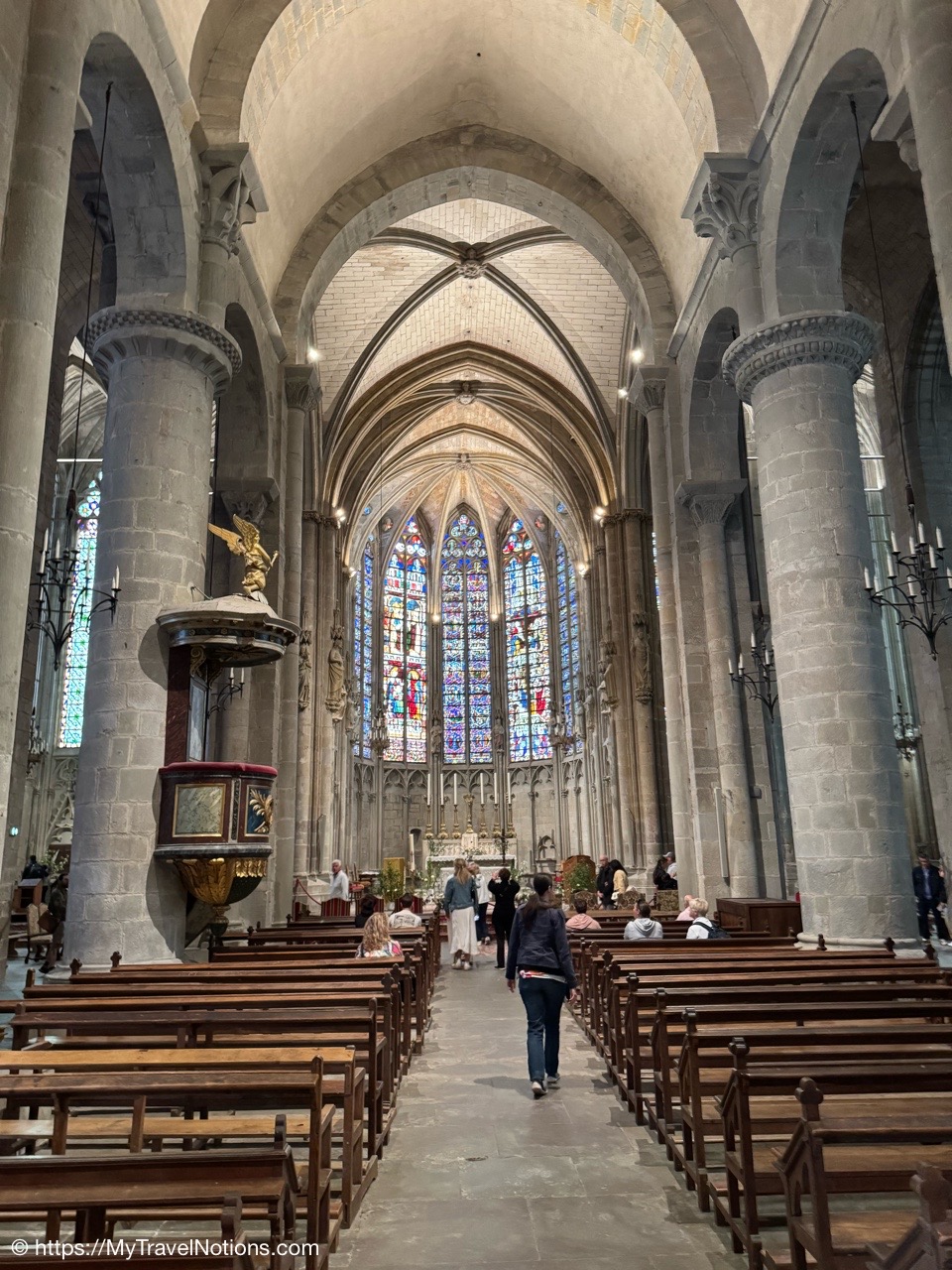
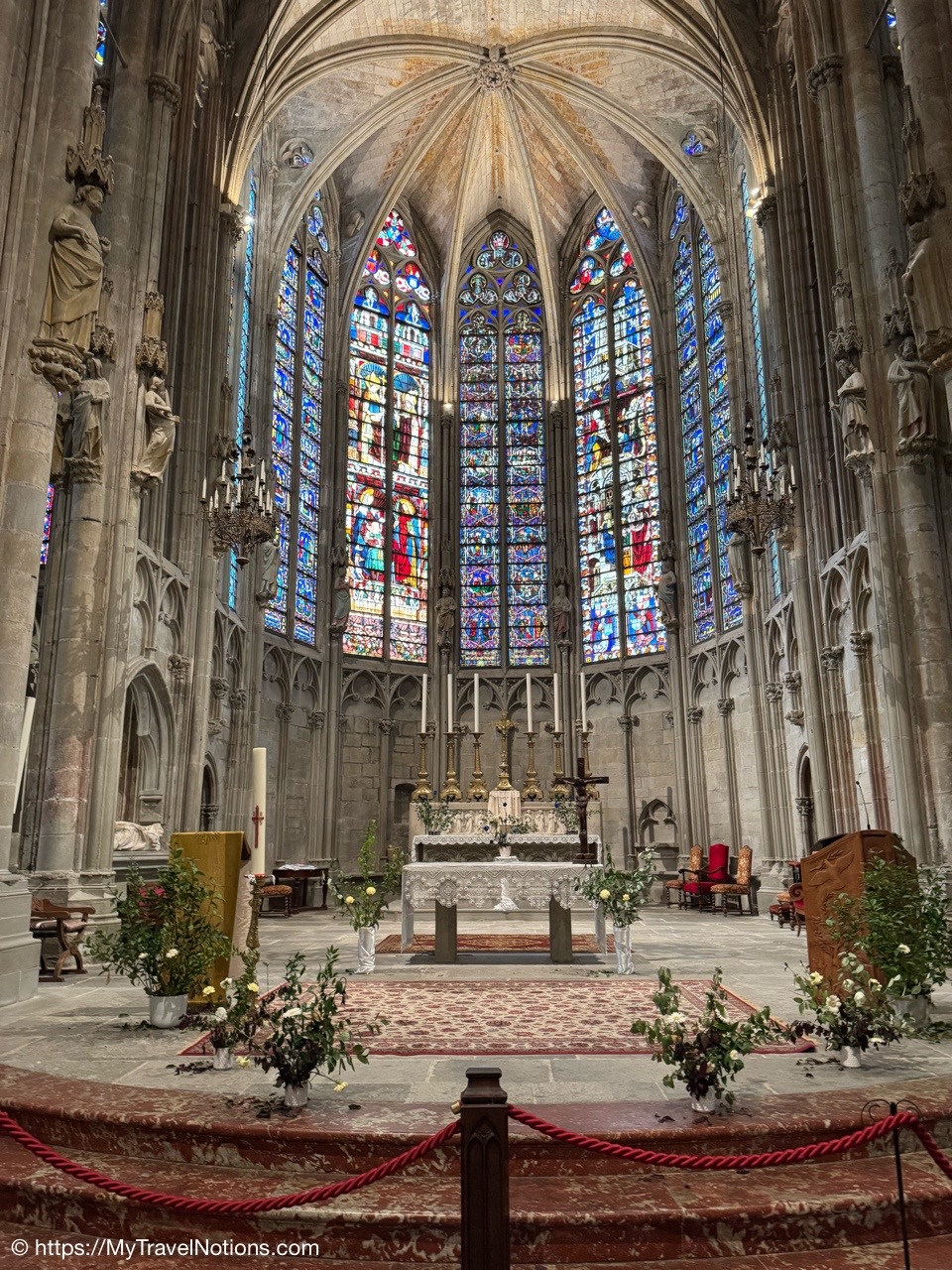
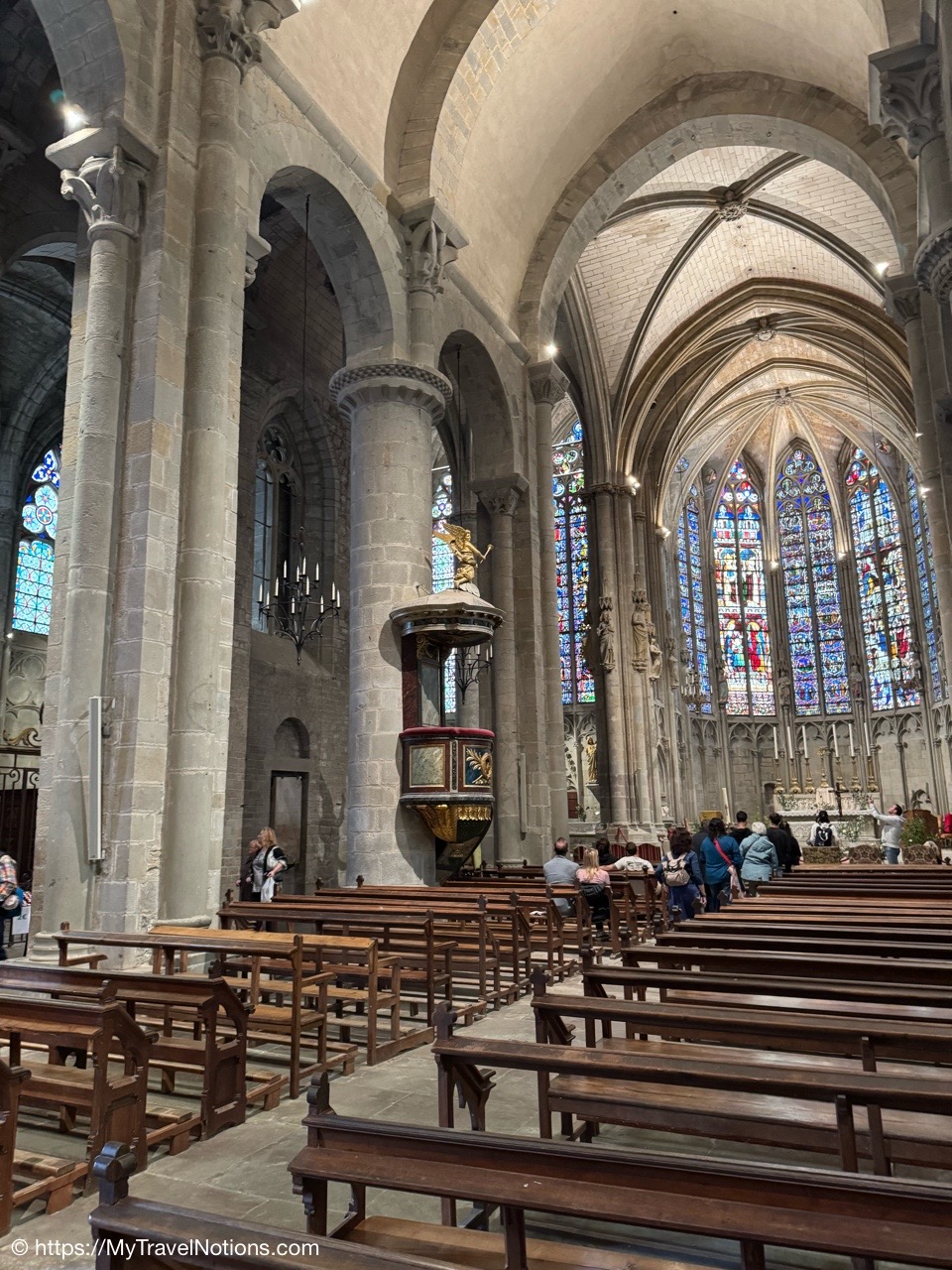
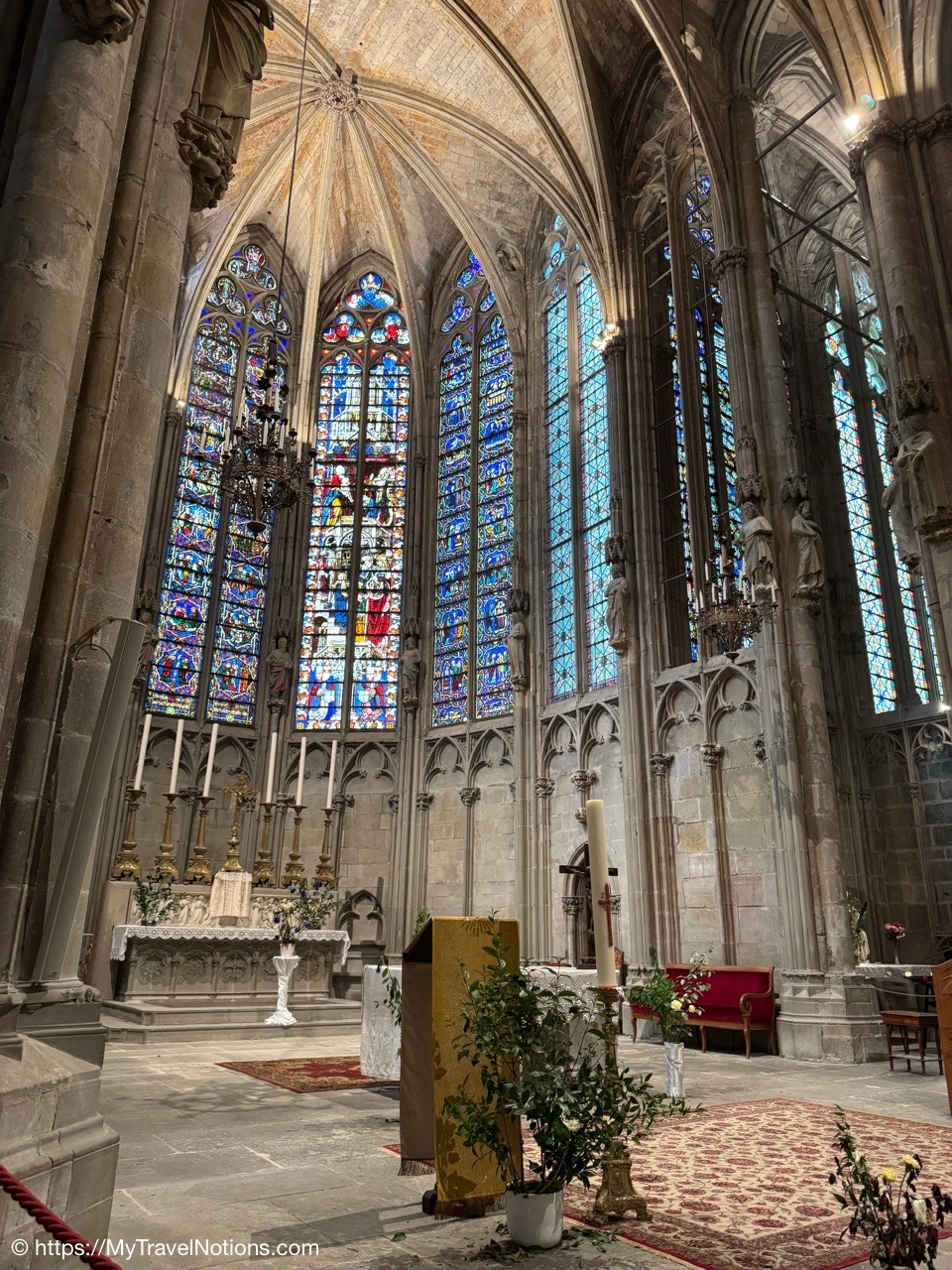
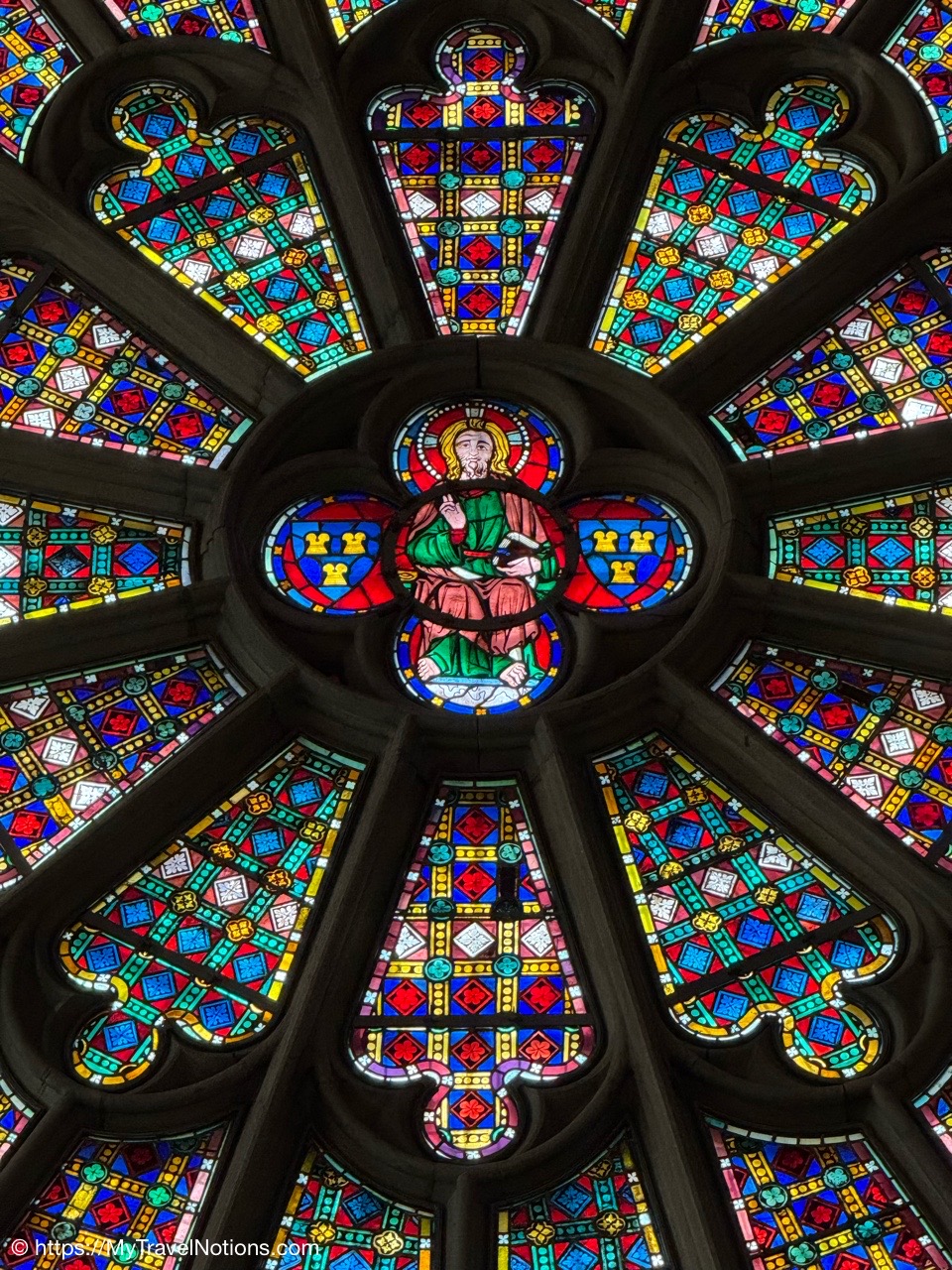
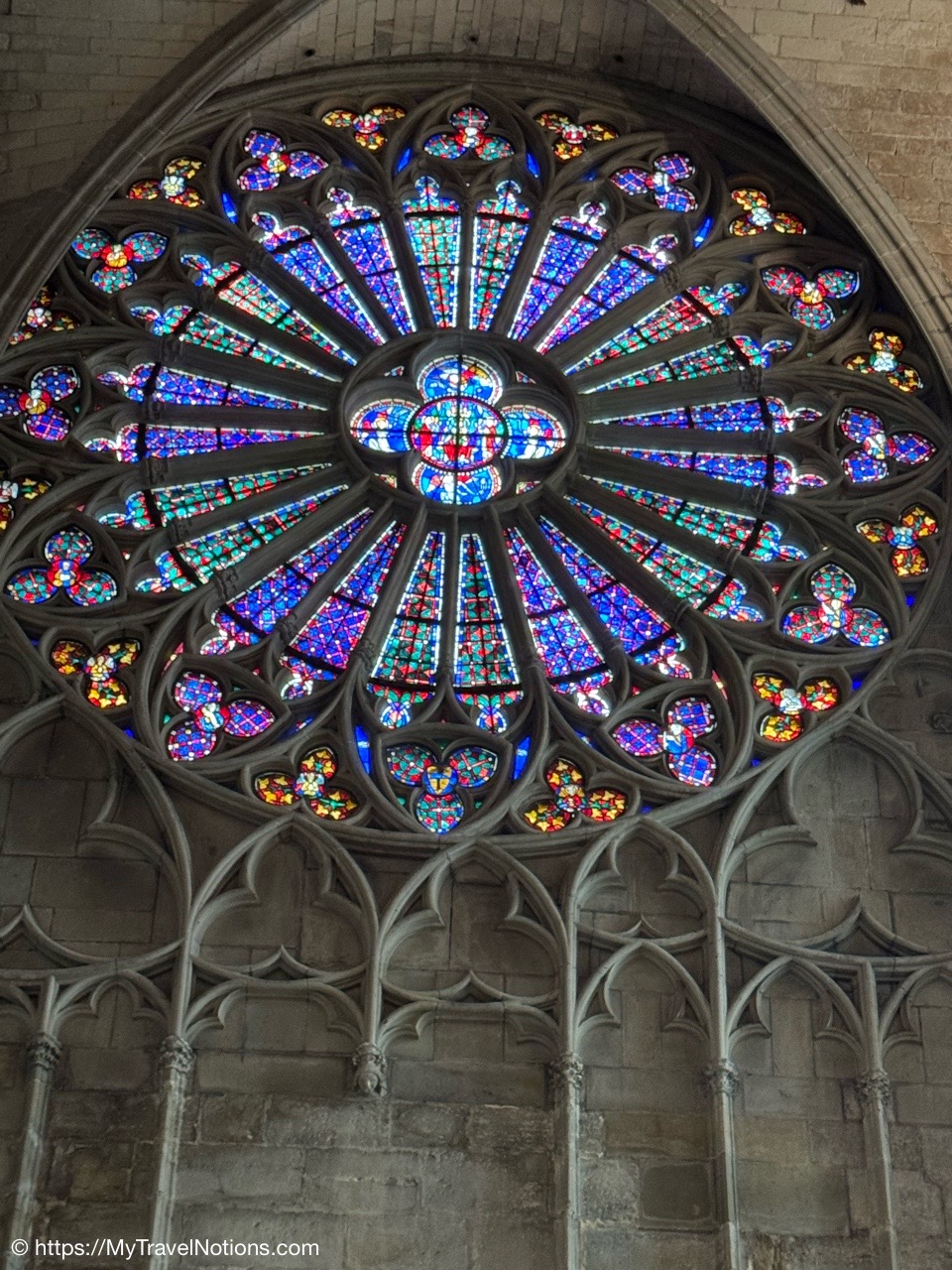
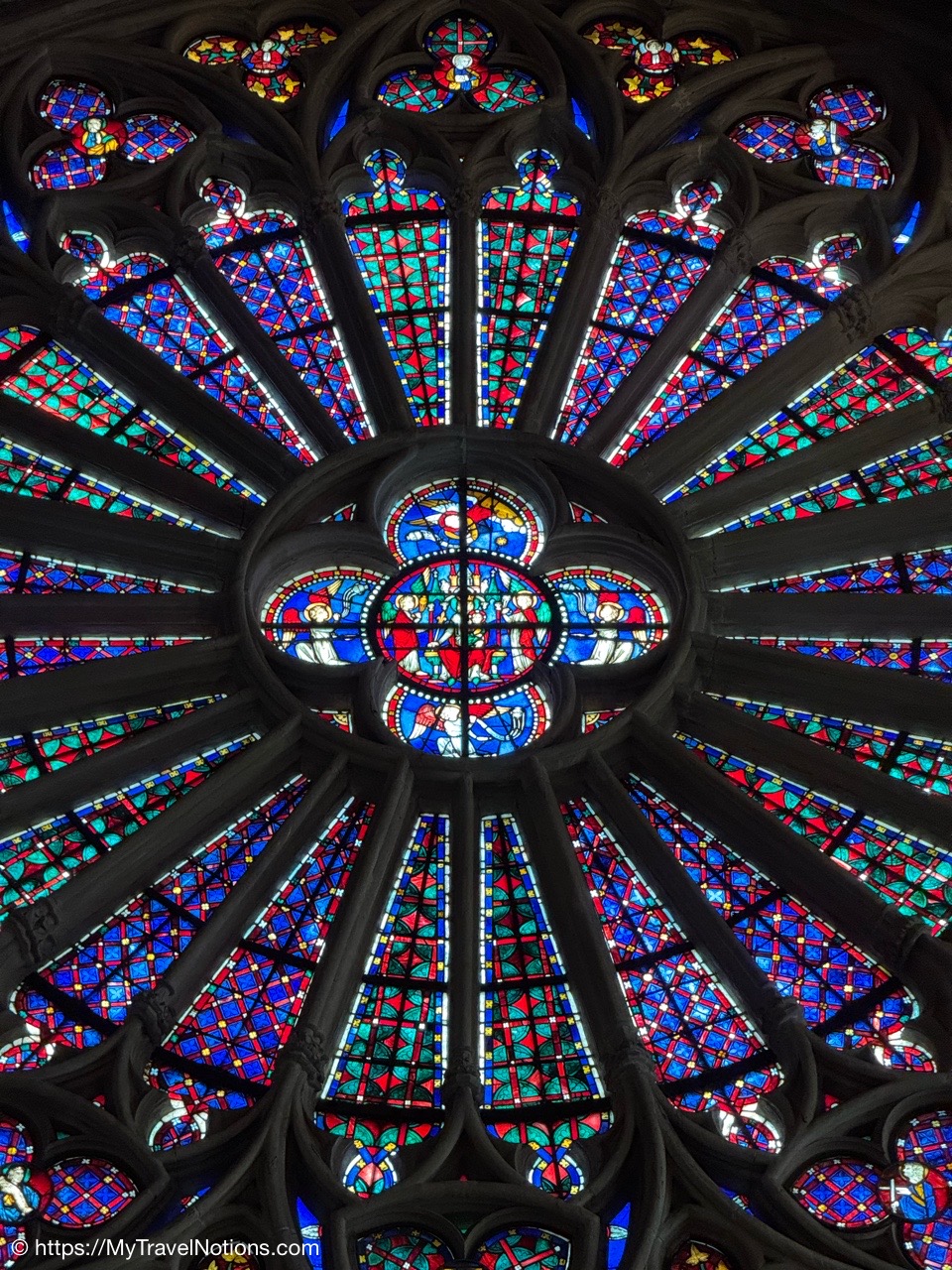
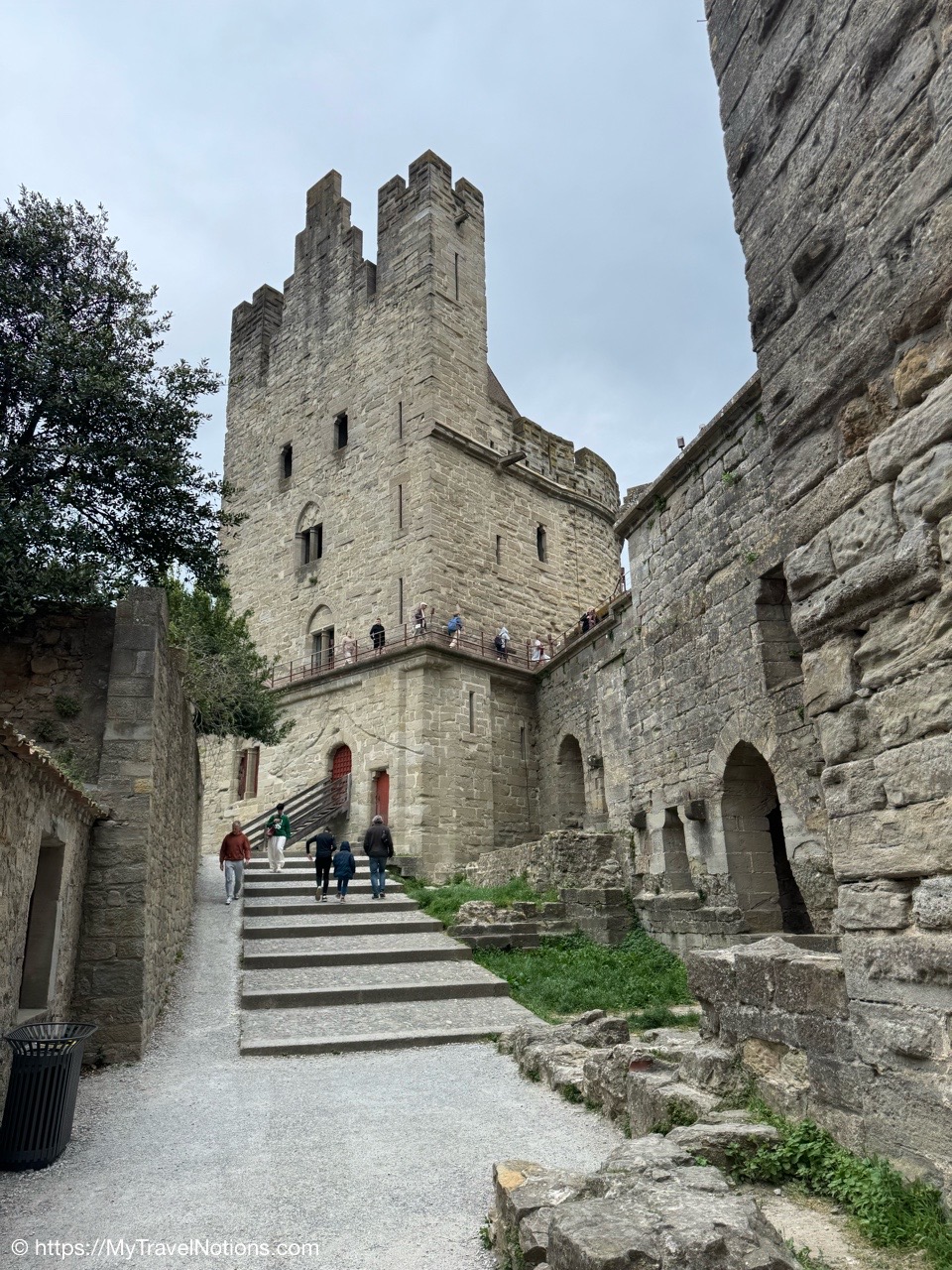
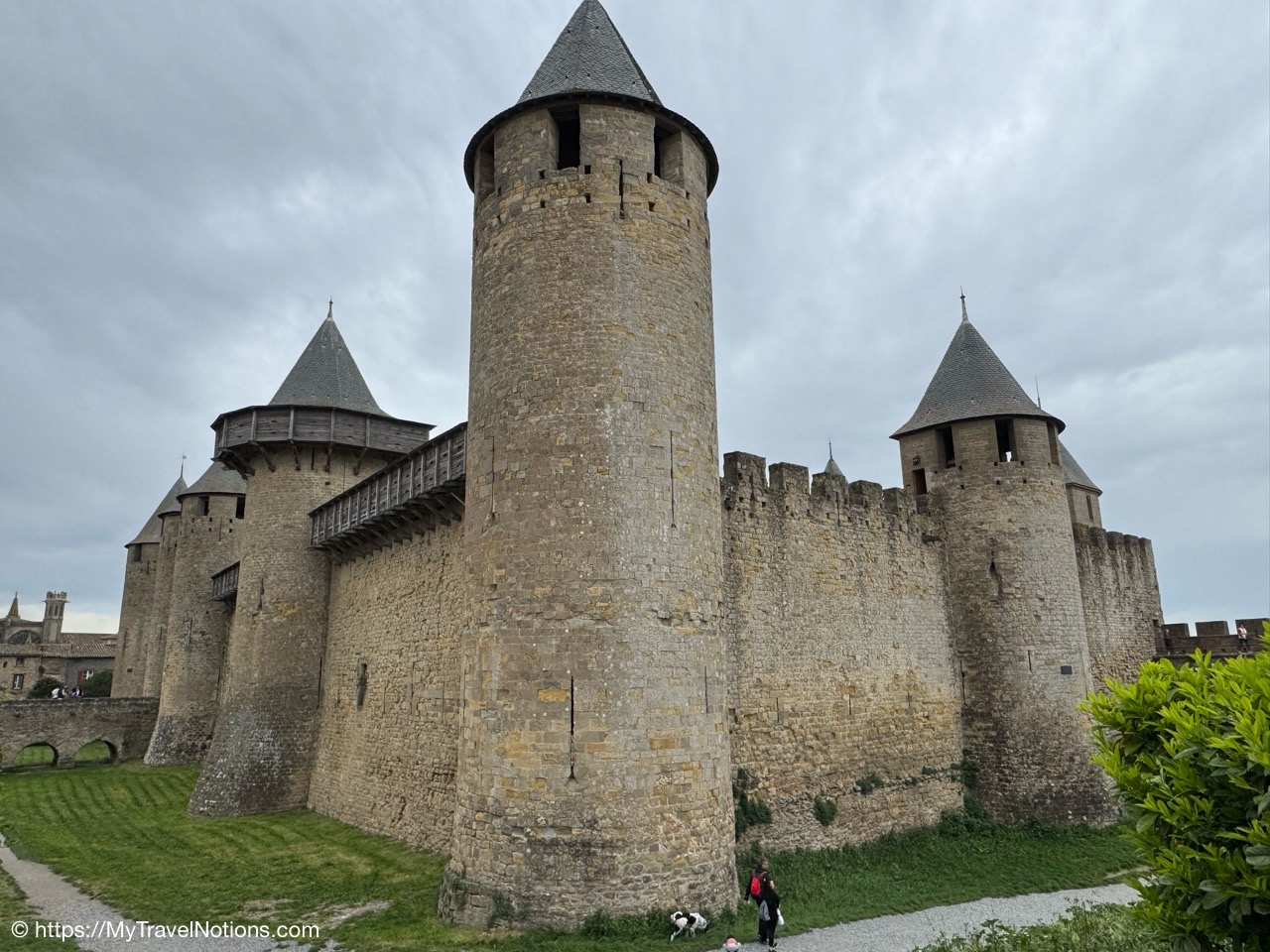
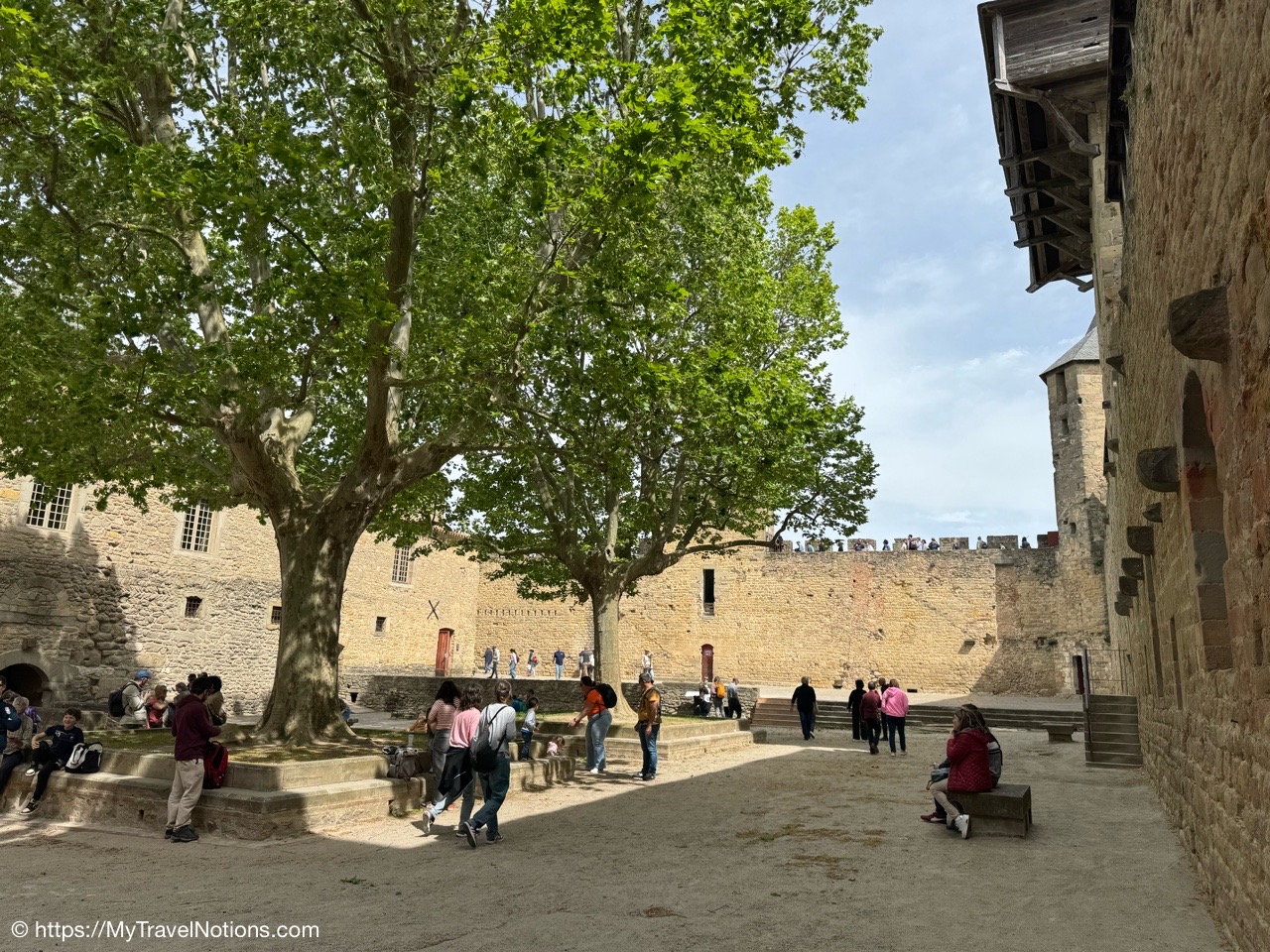
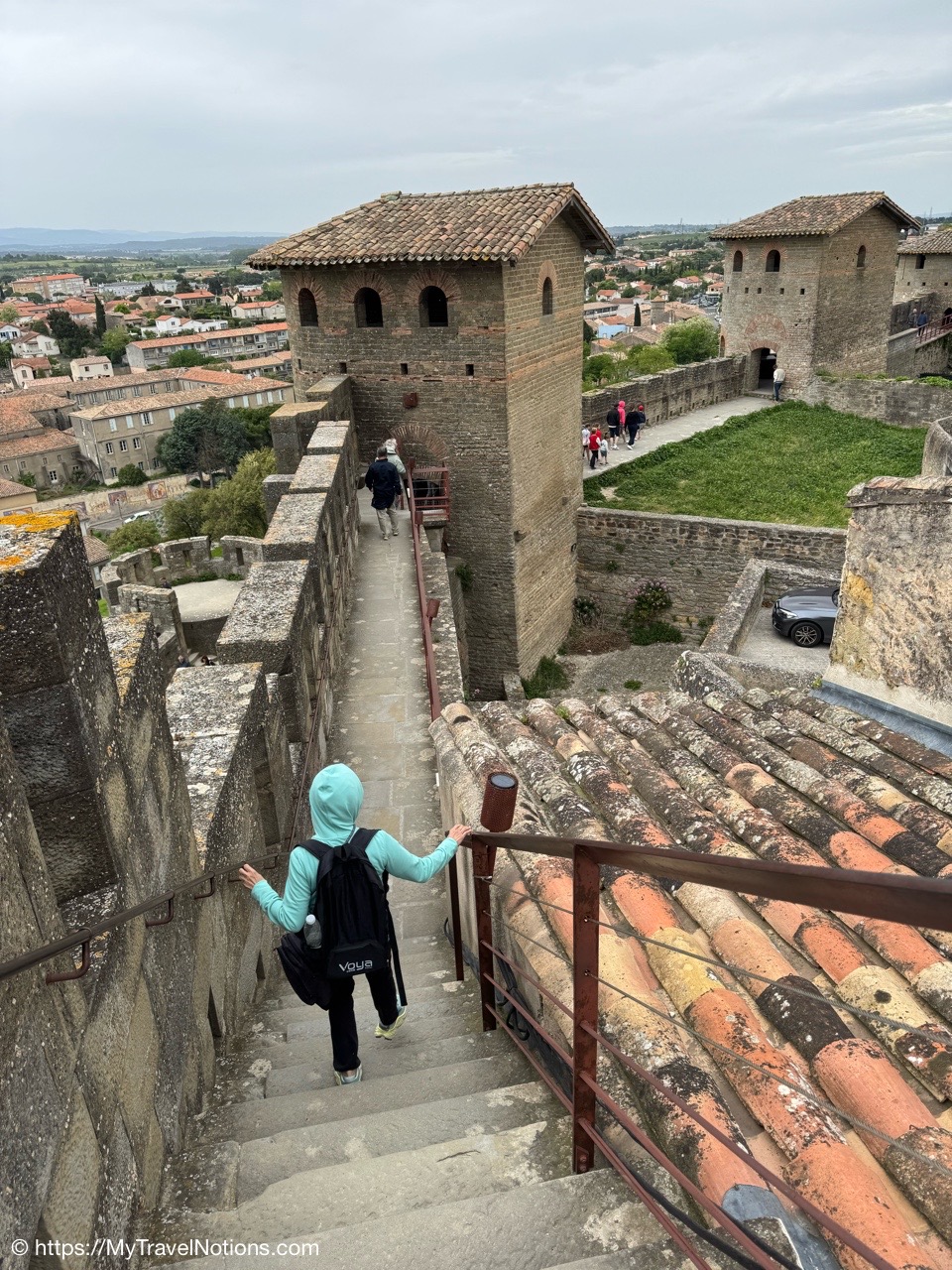
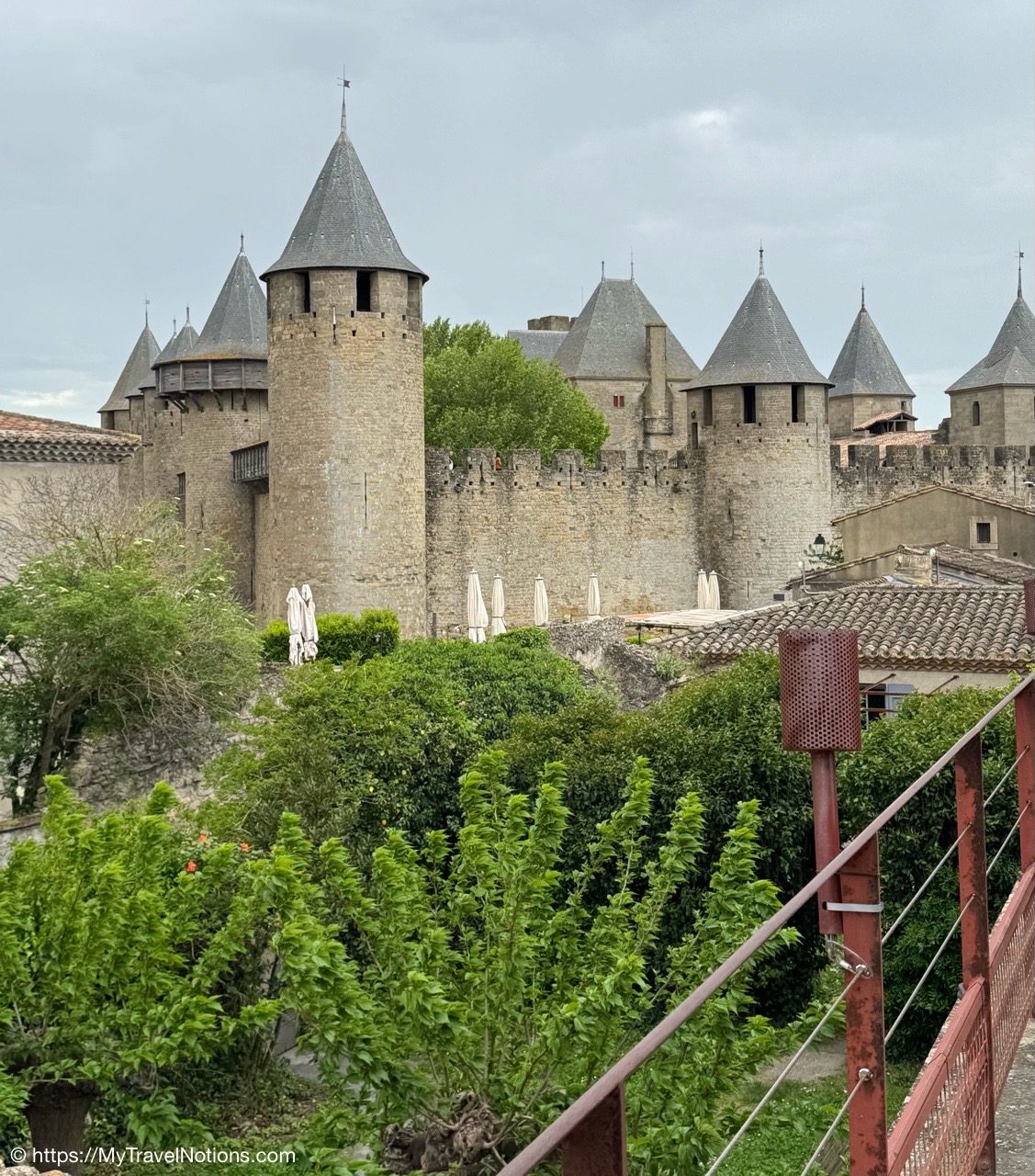
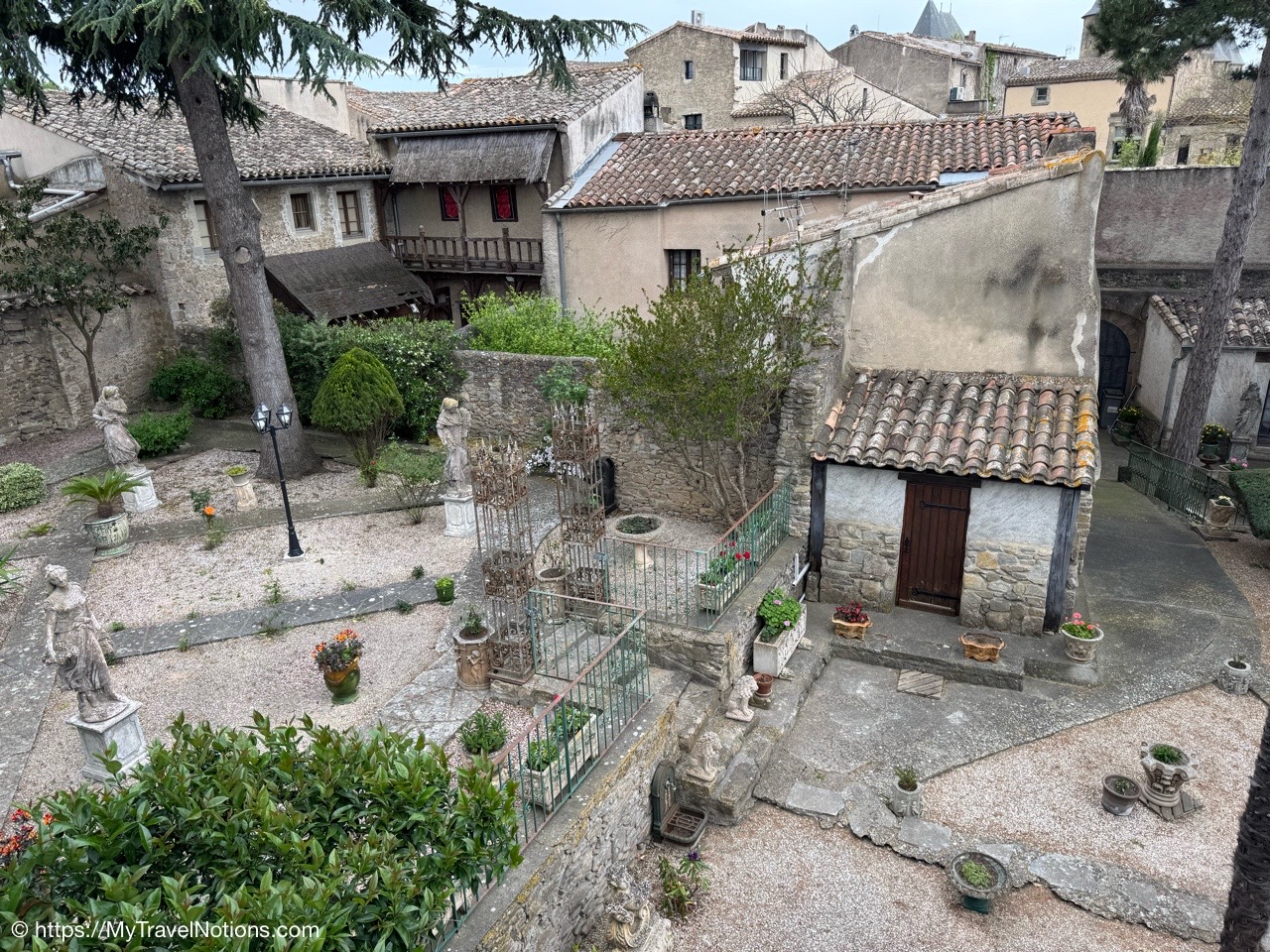
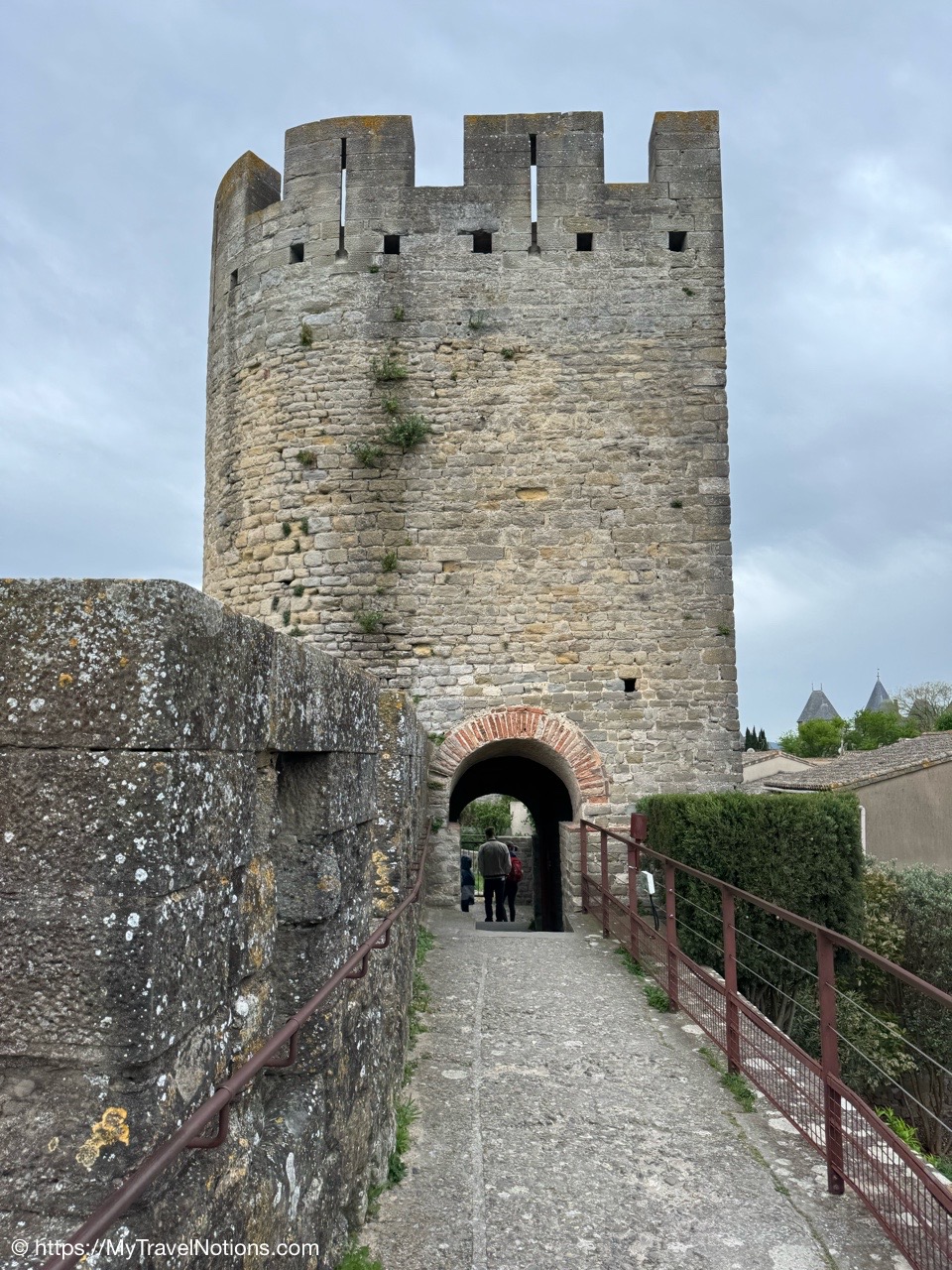
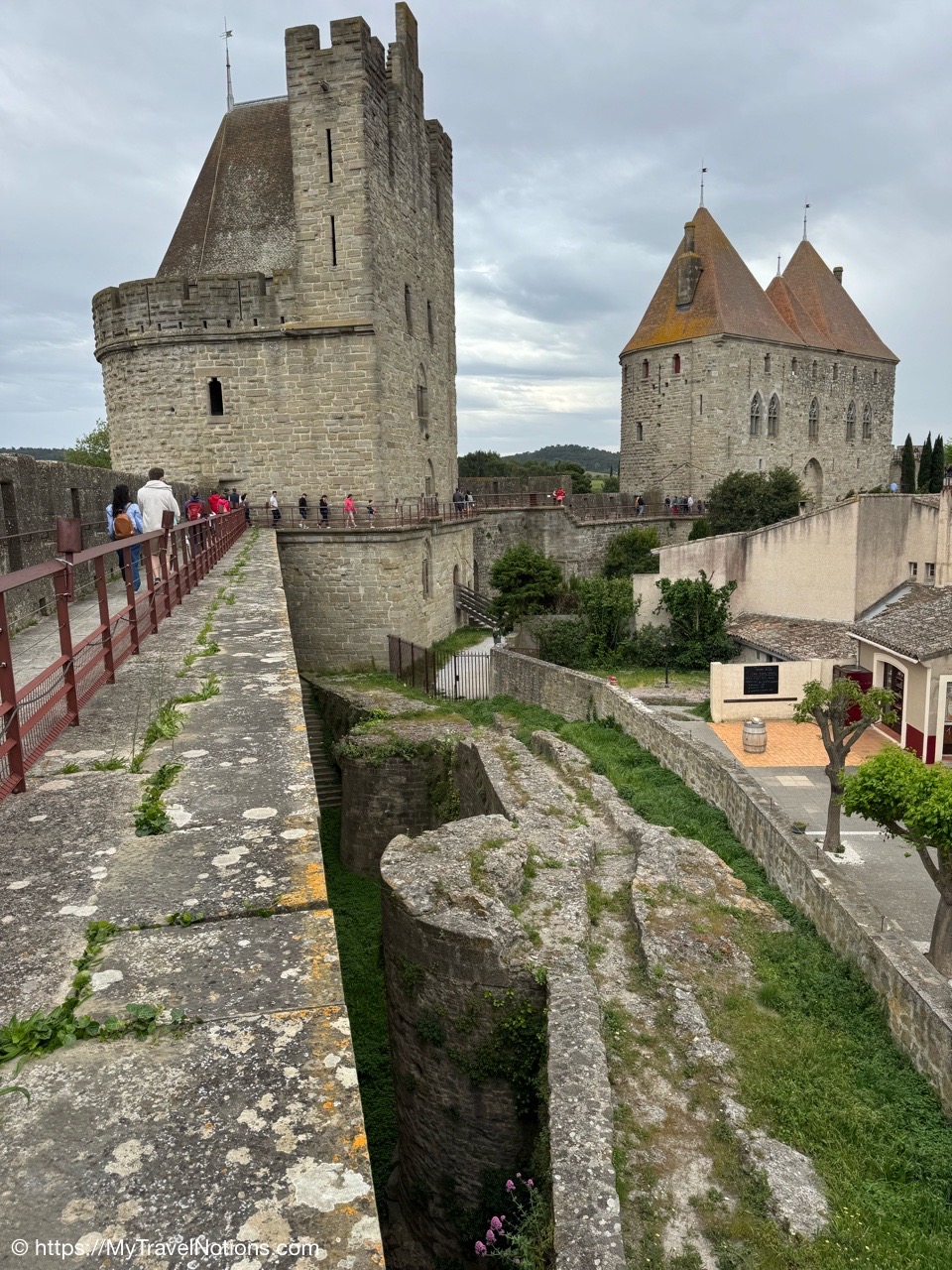
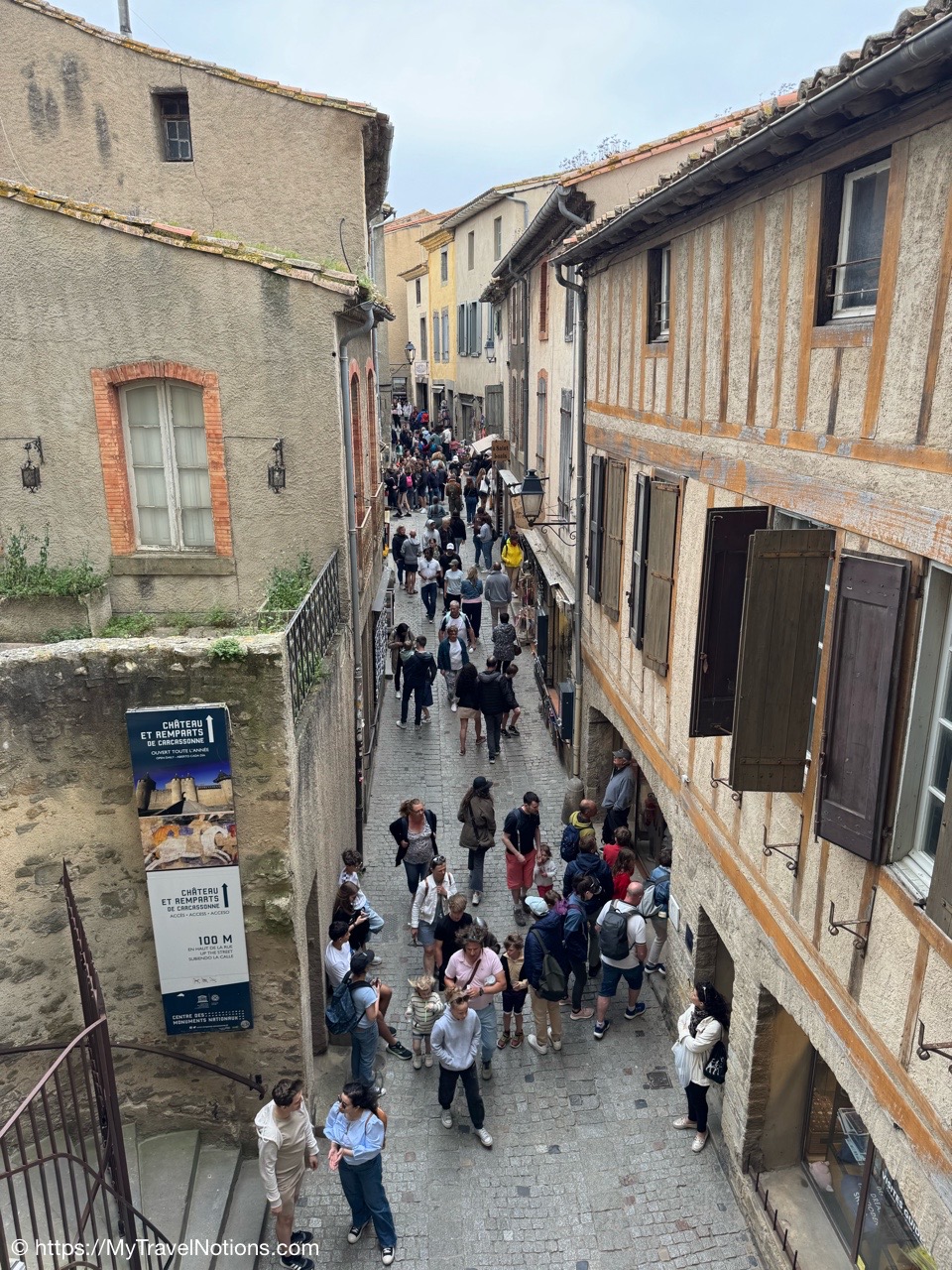
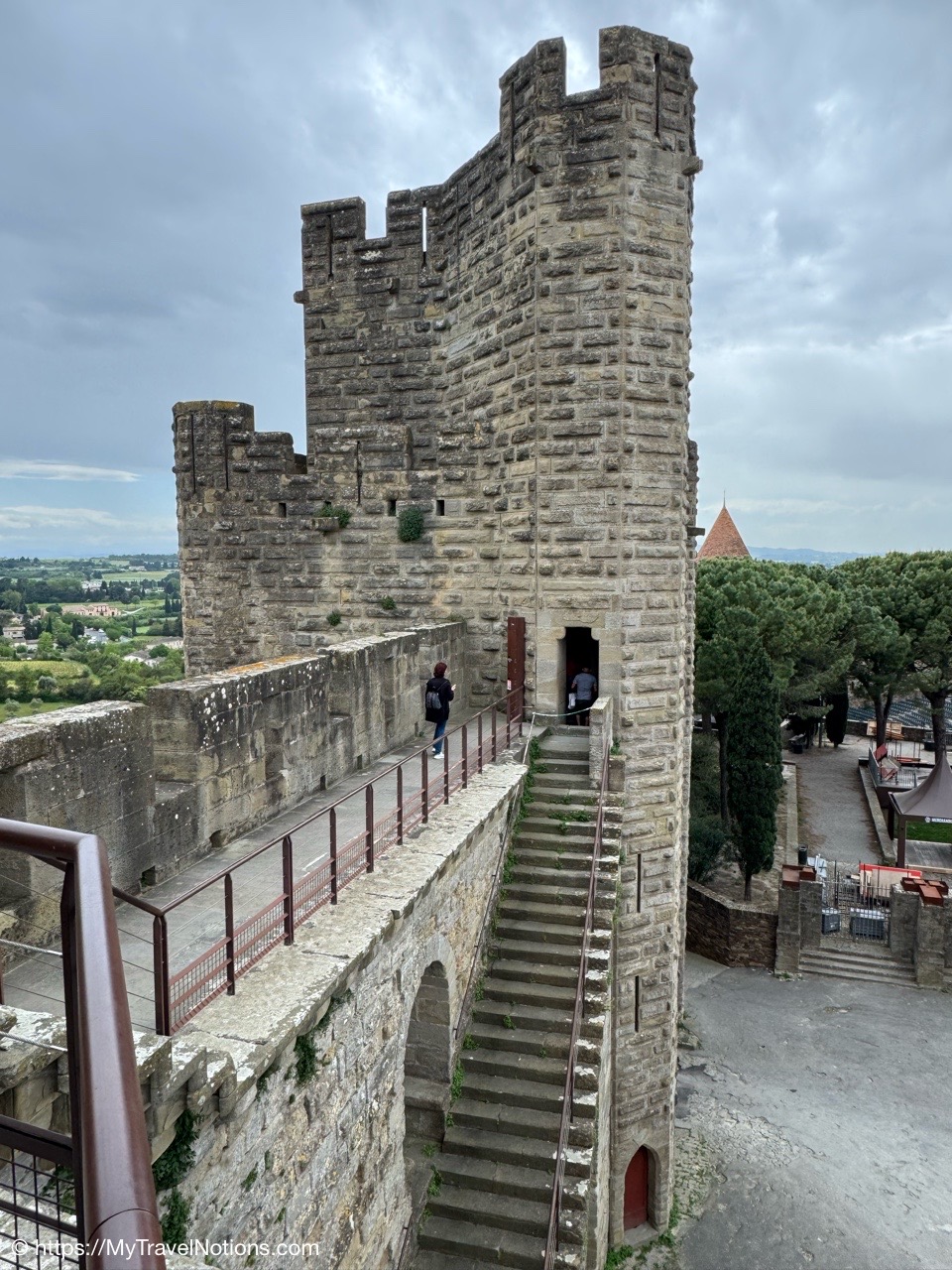
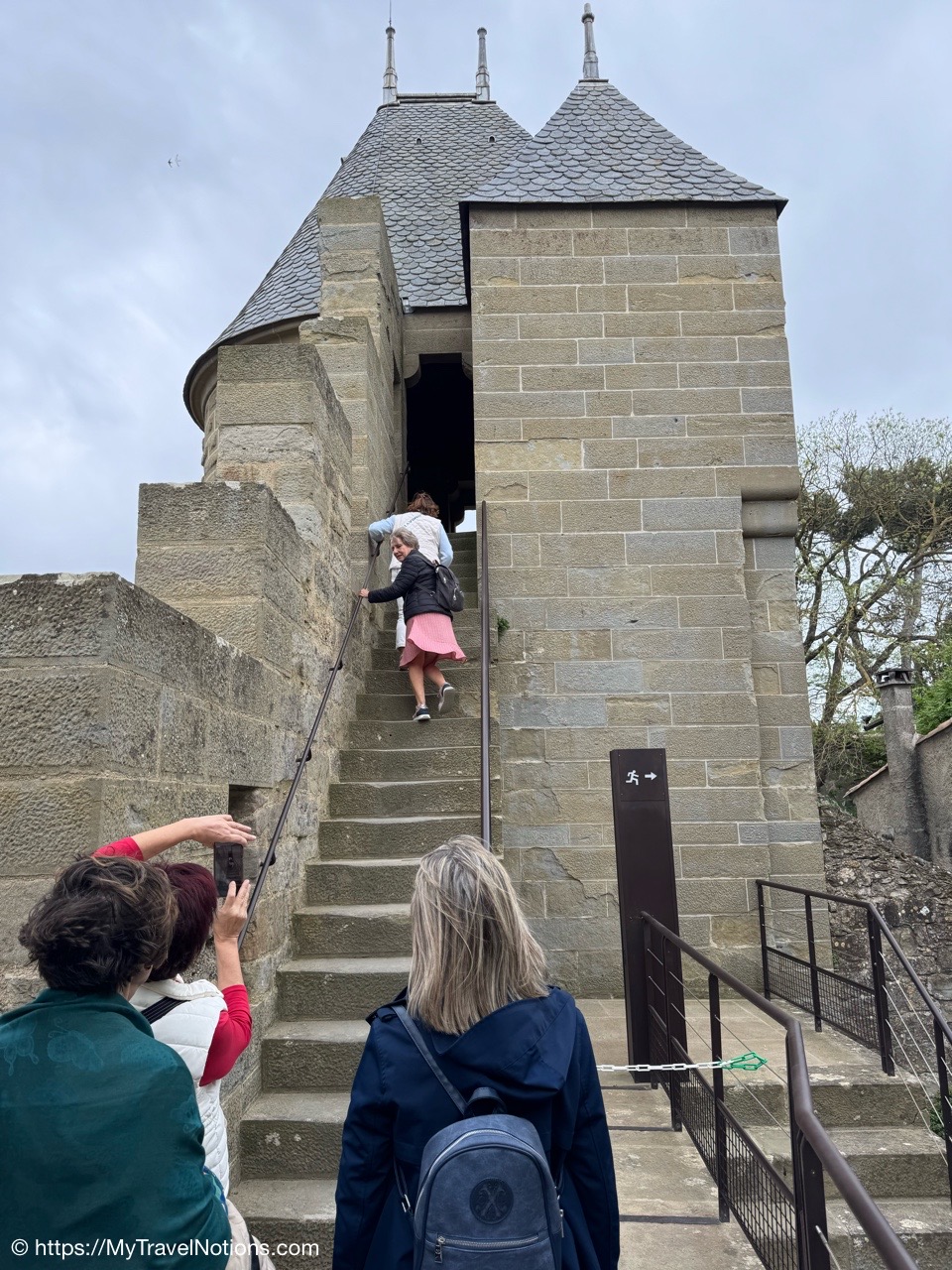
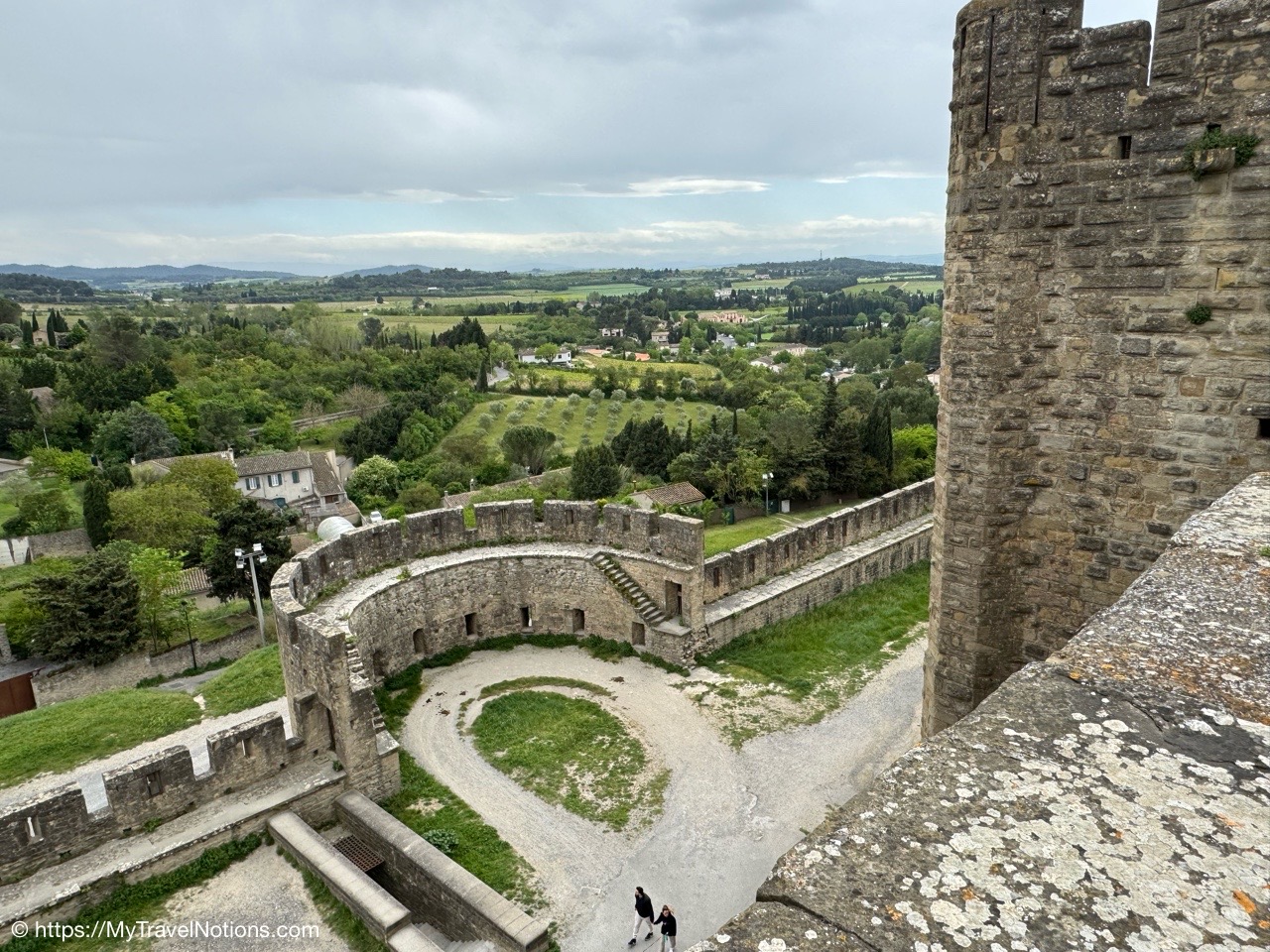
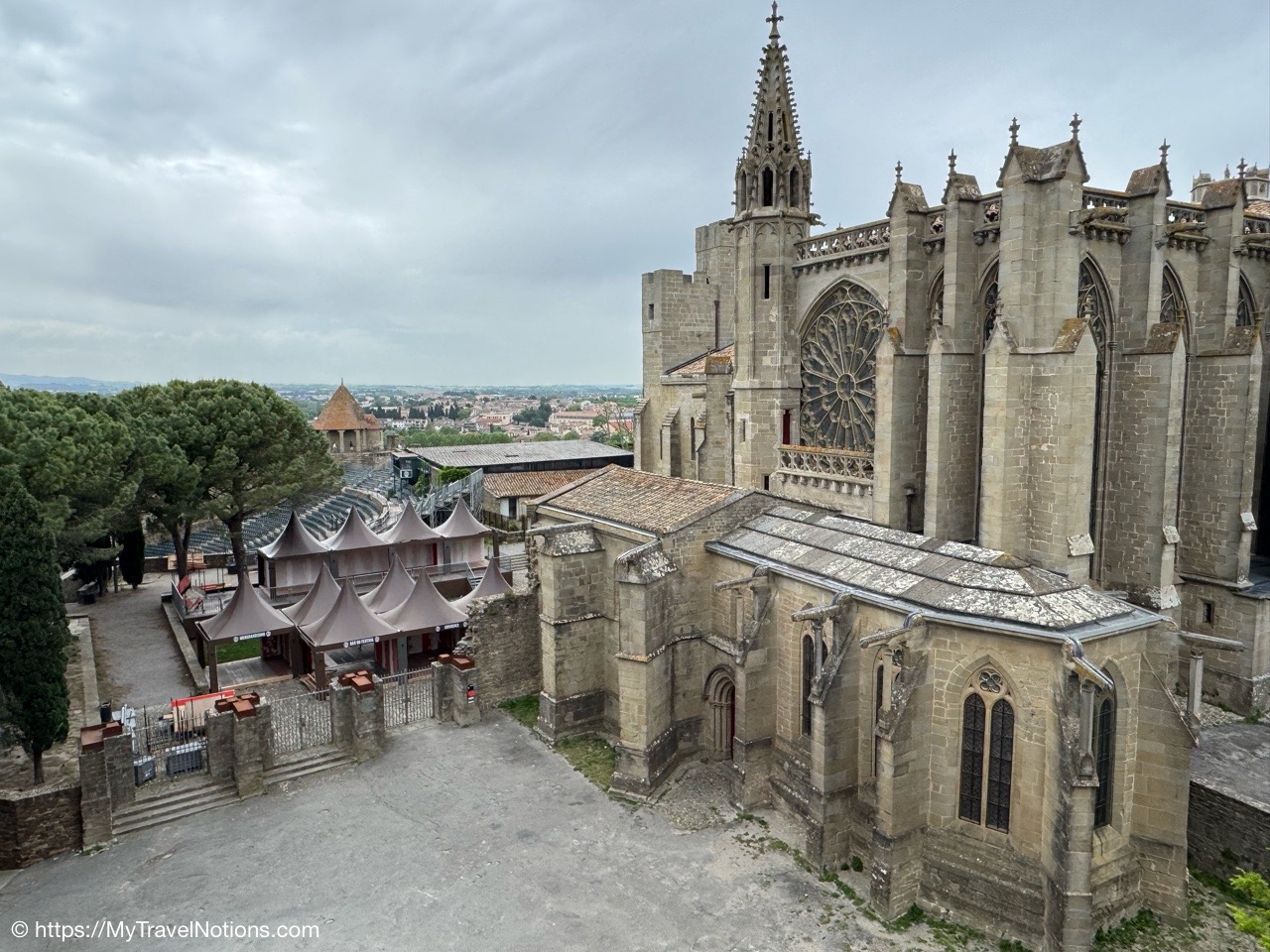
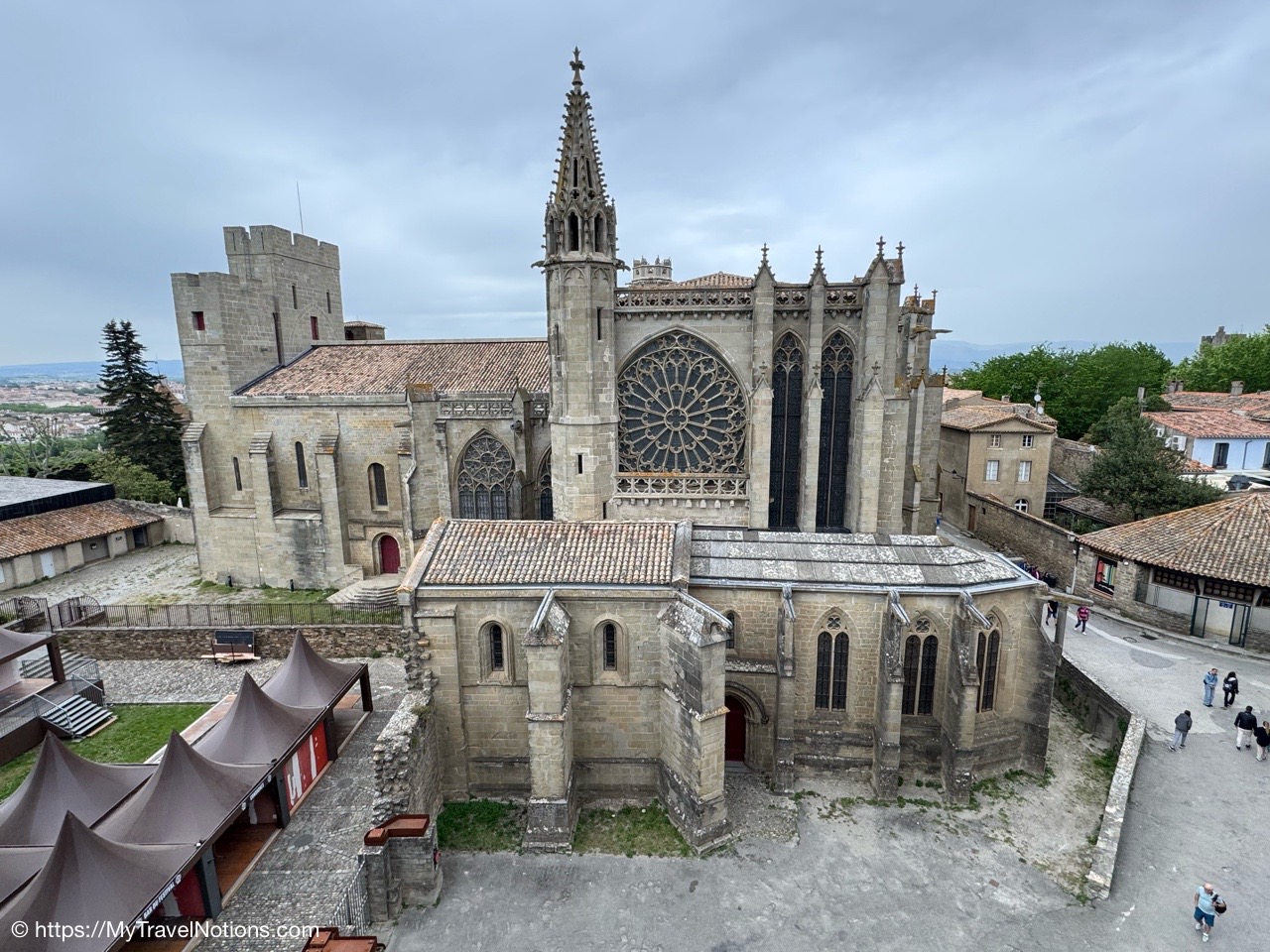
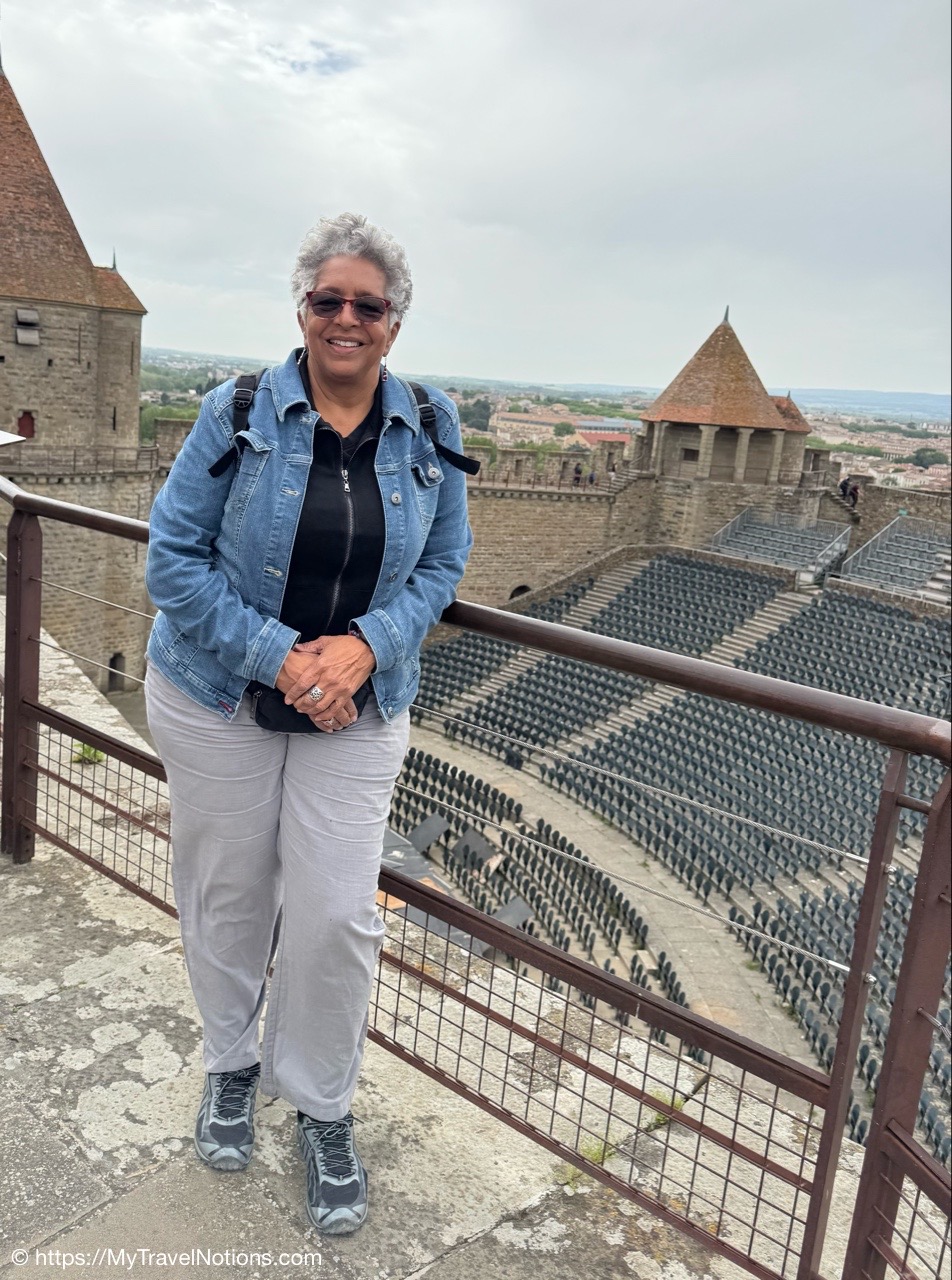
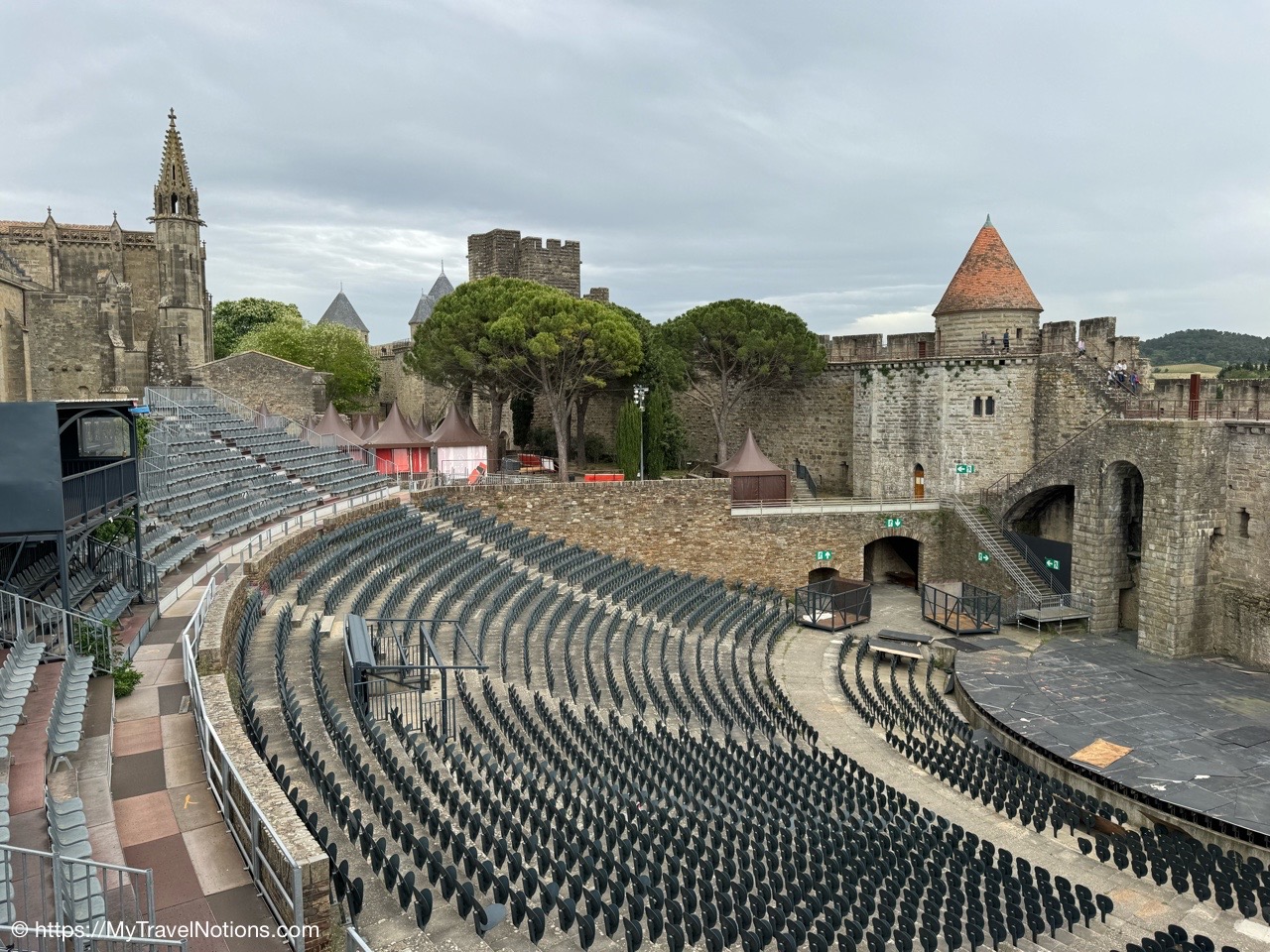
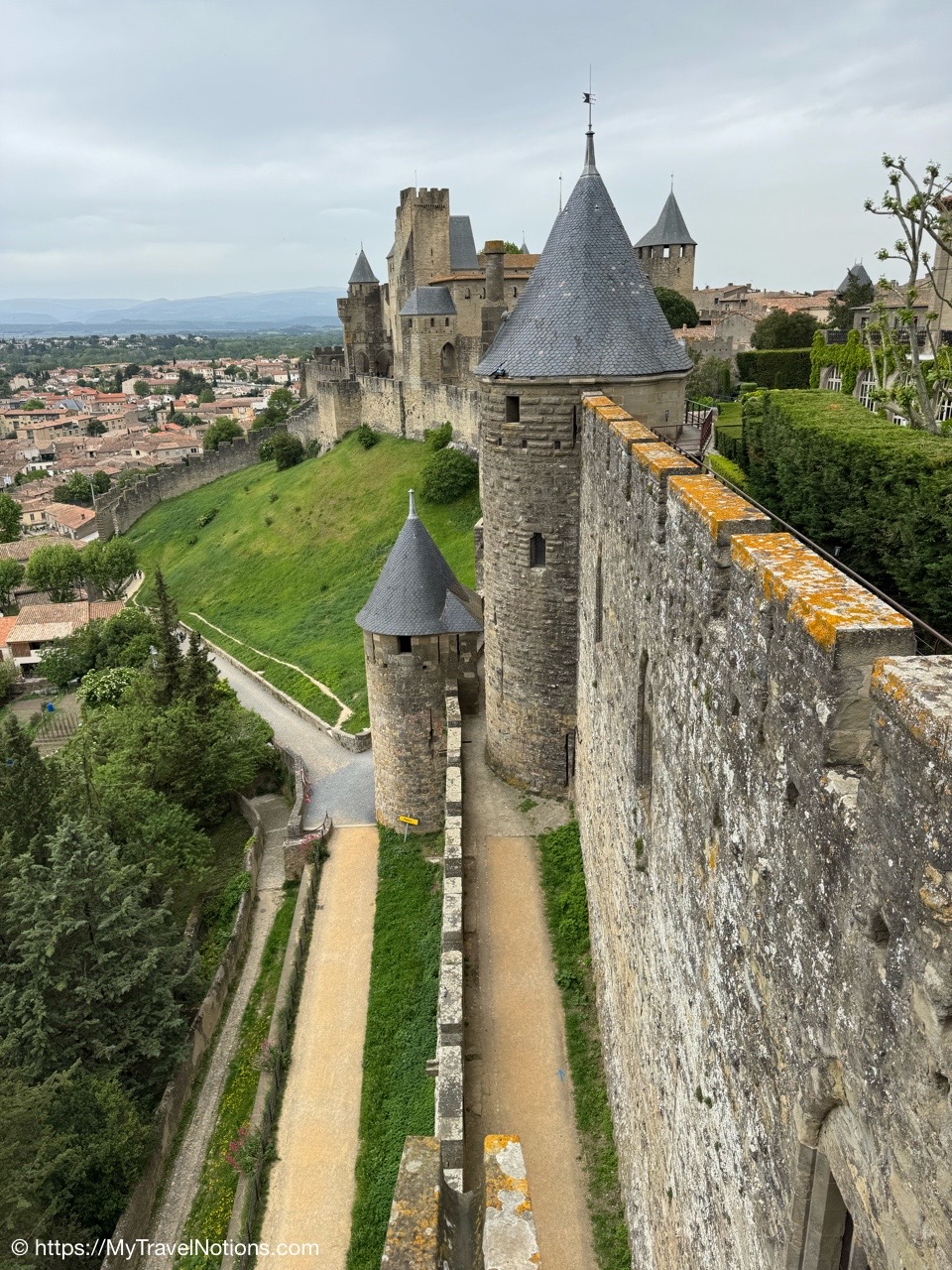
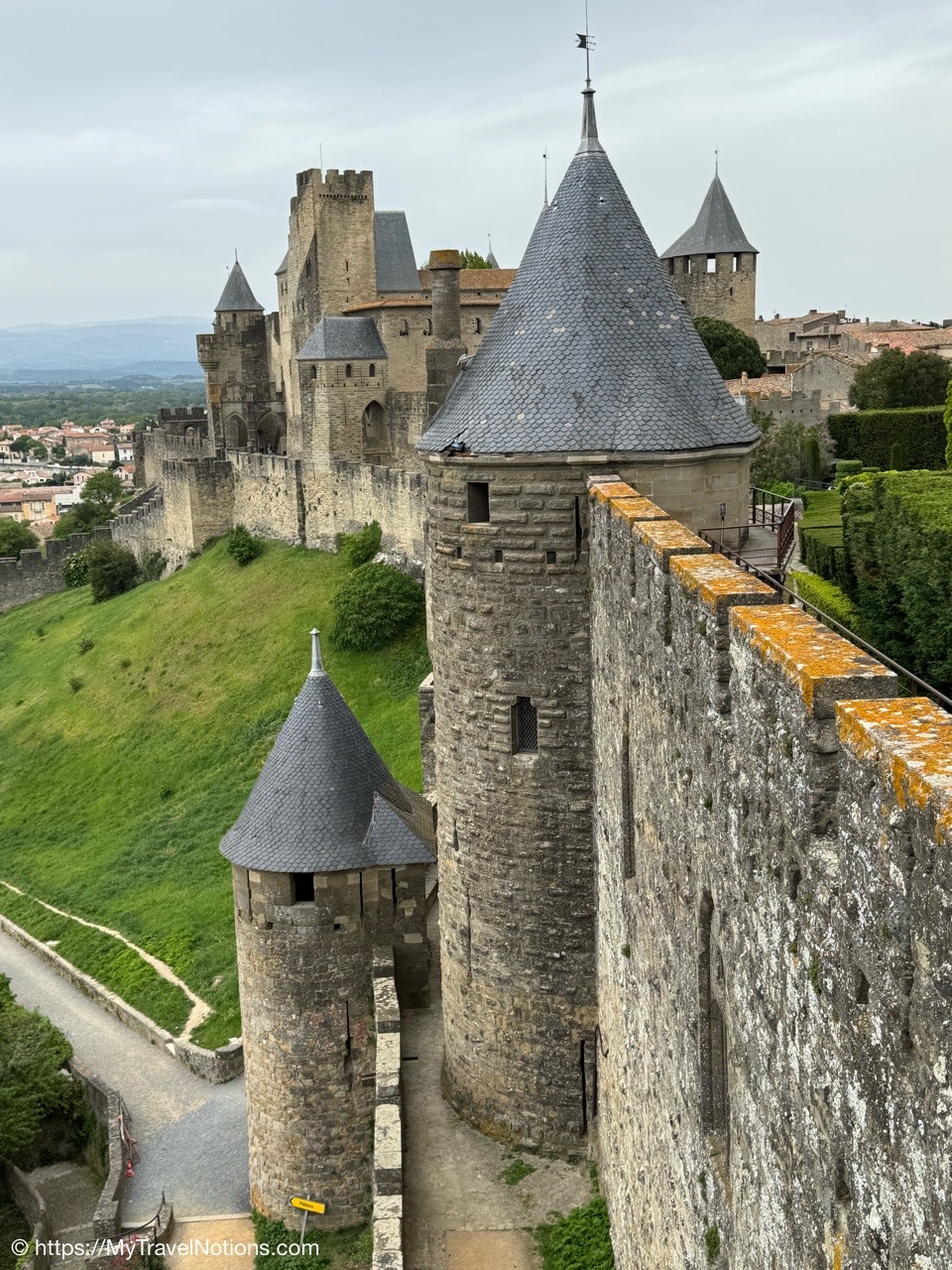
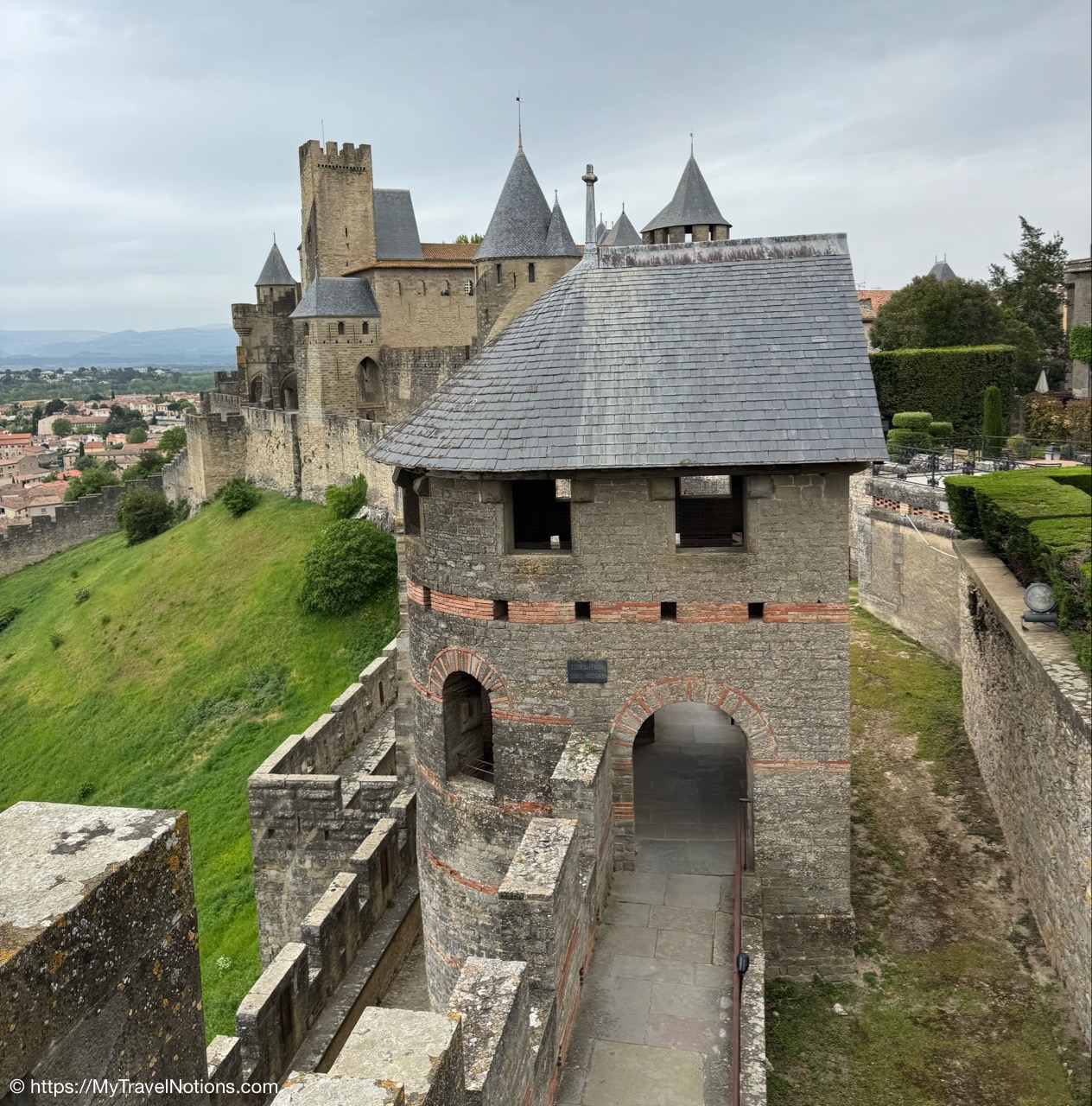
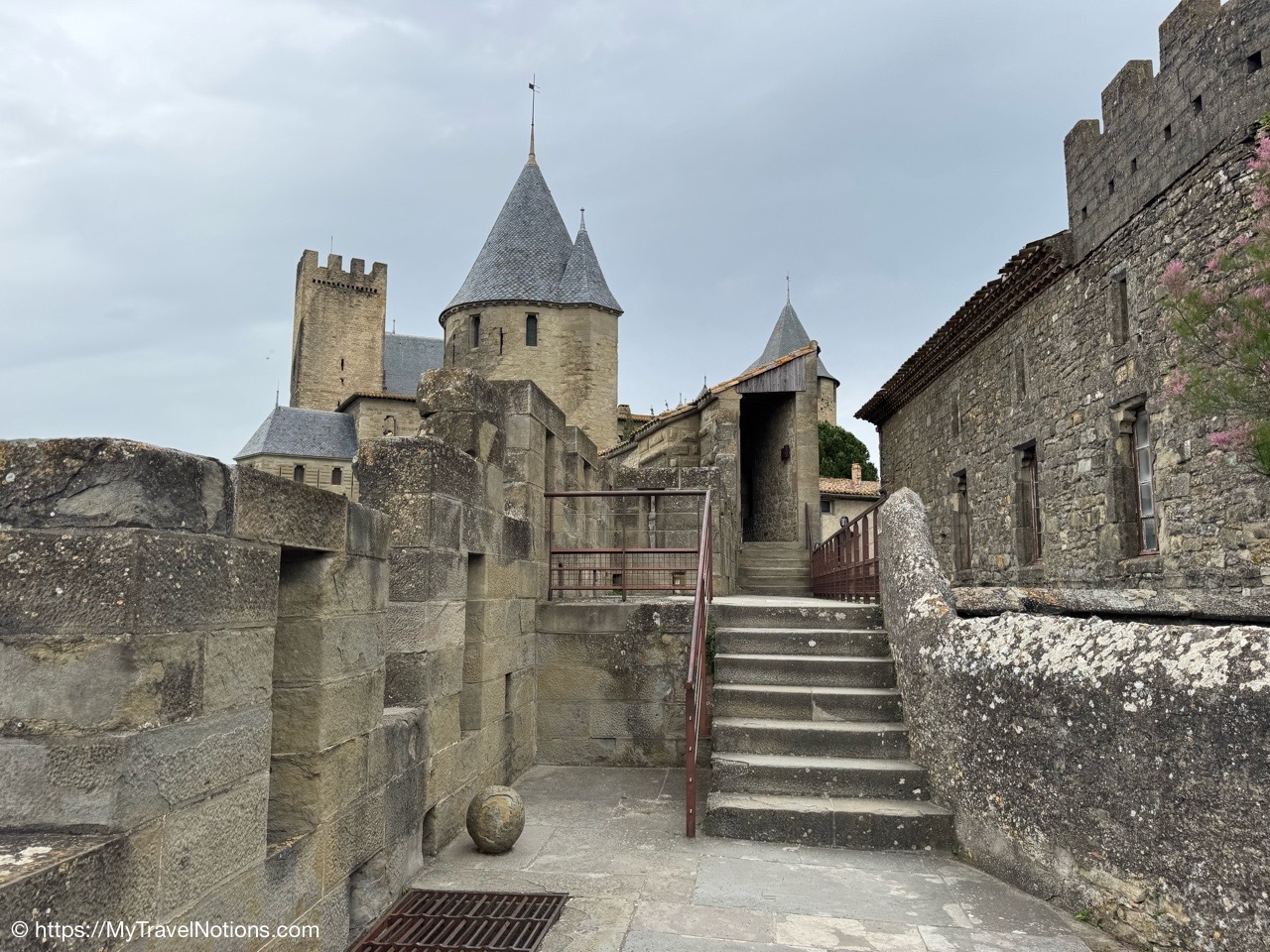
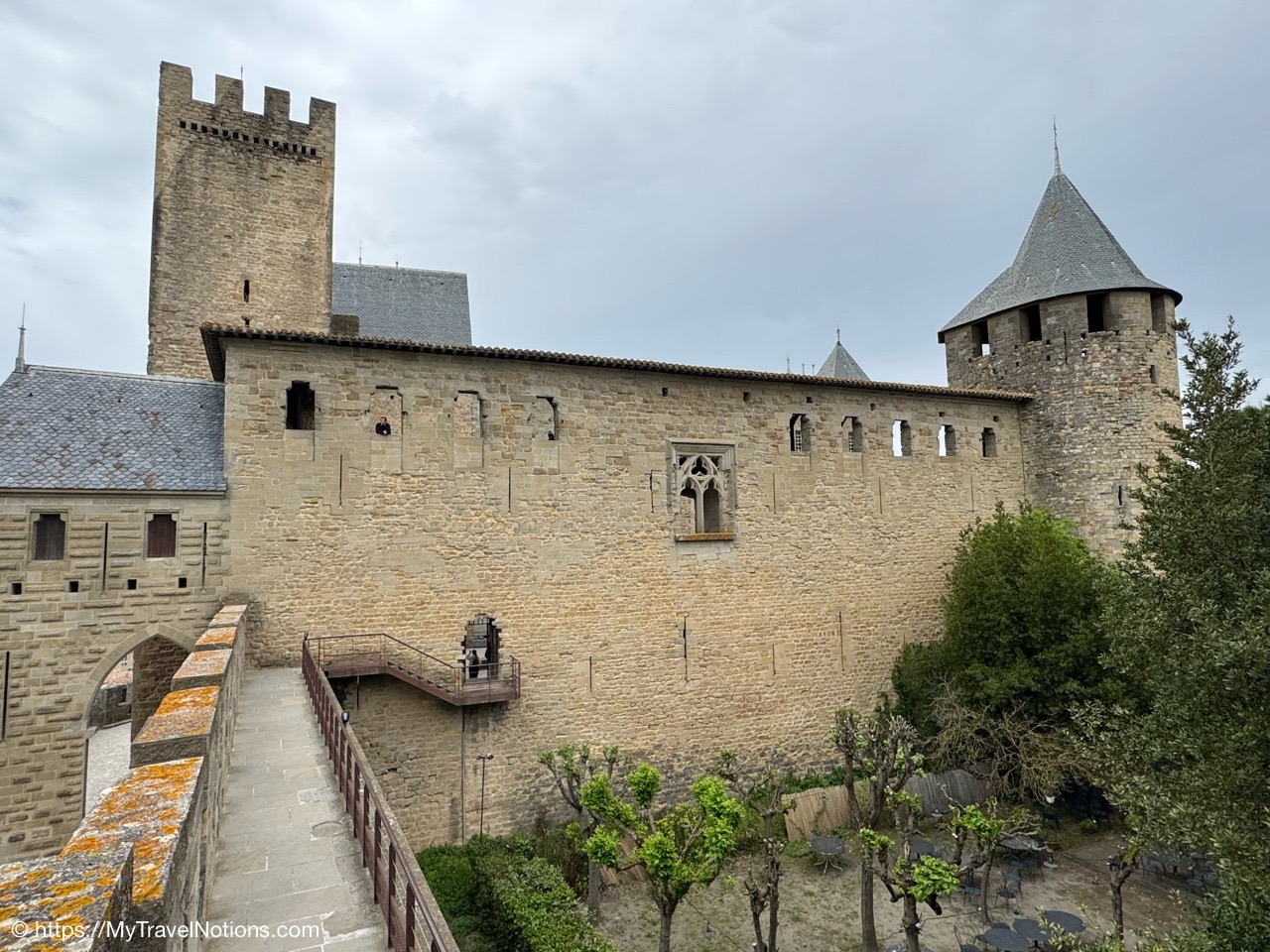
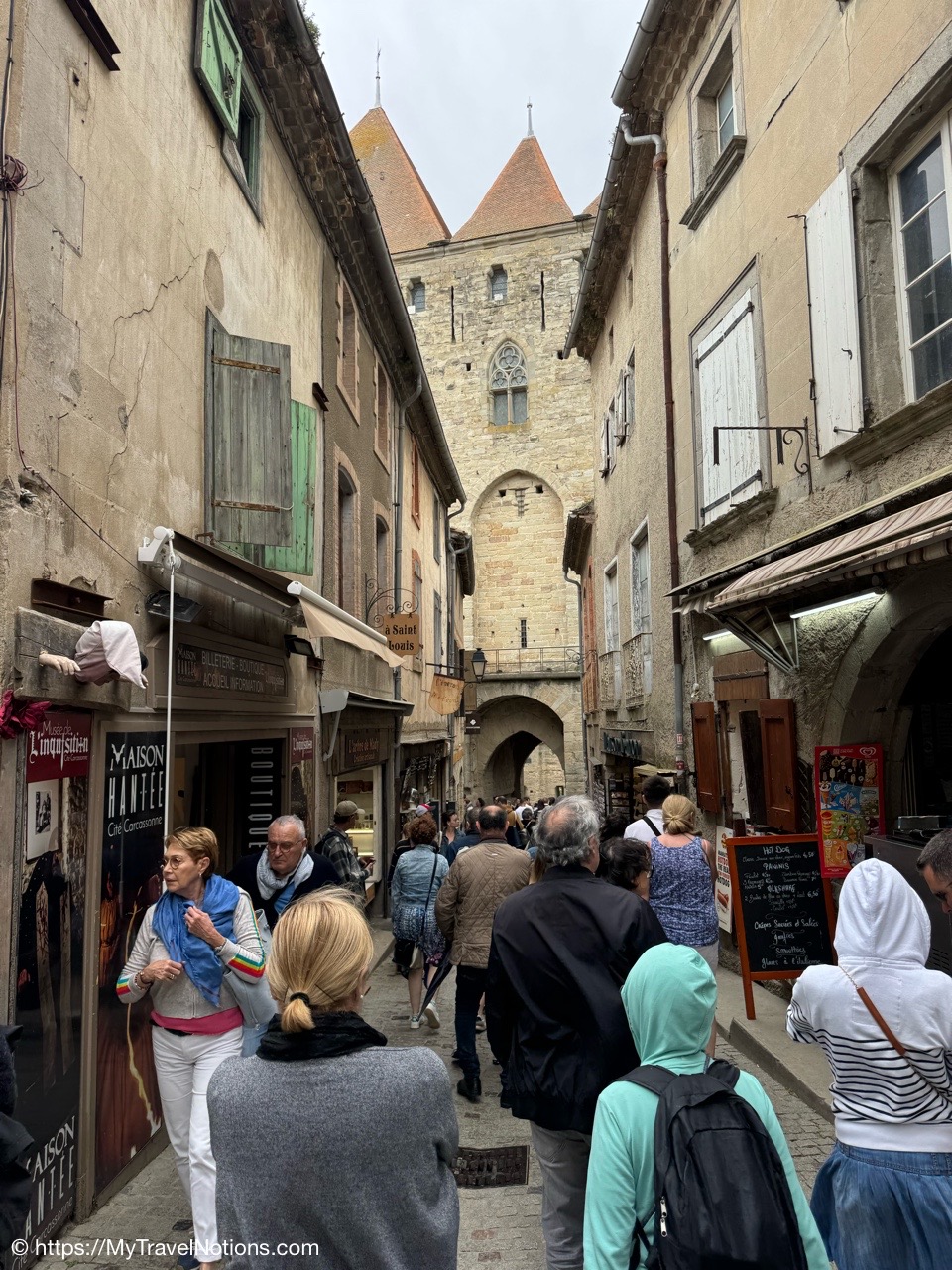
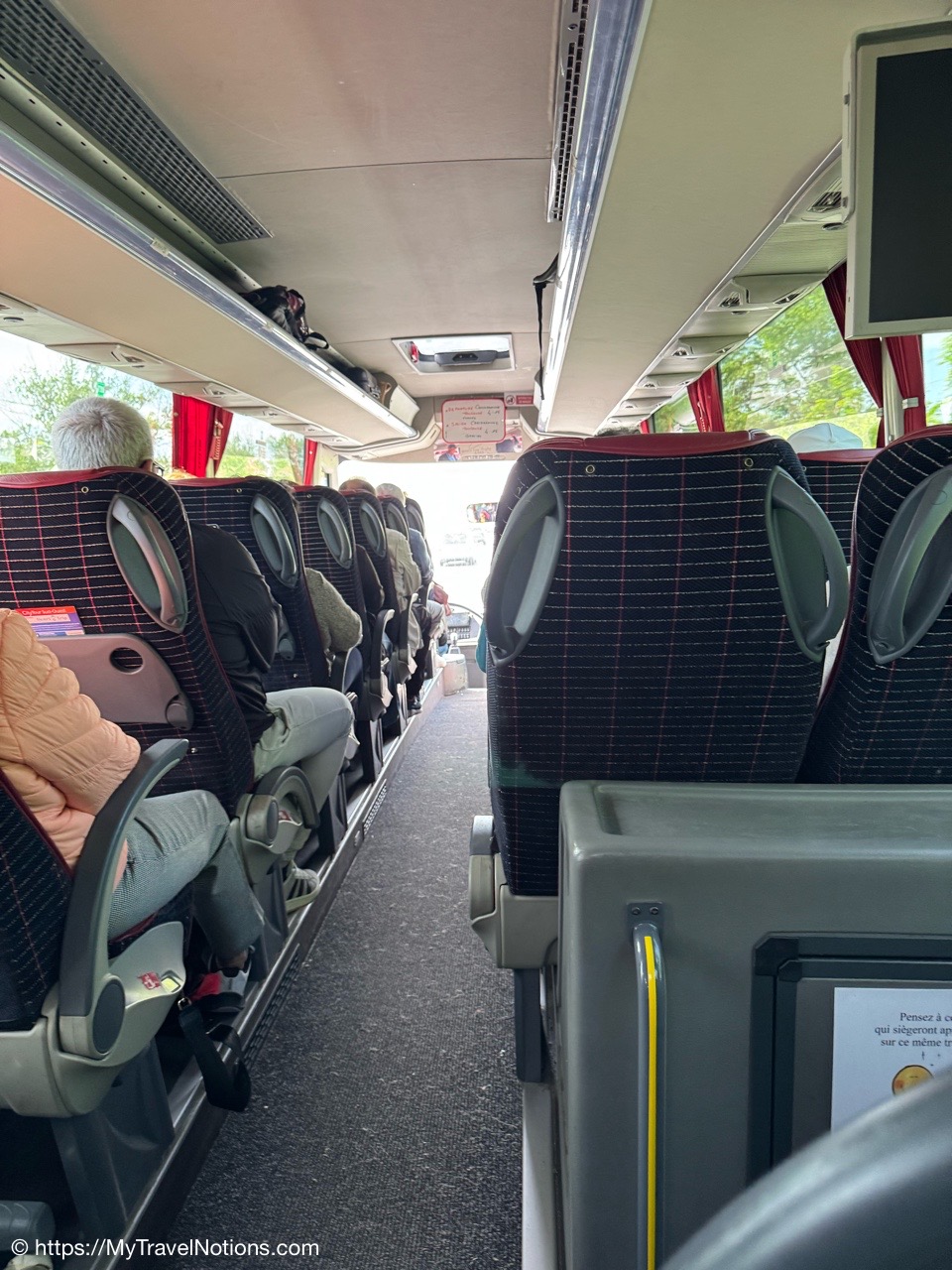
Tammy and me arriving at the entrance of the initial walled gate, the Narbonne Gate, into the Cité de Carcassonne. (May 2, 2025)The outer ramparts or wall entrance through the Narbonne Gate into the Cité de Carcassonne. (May 2, 2025)The Lady Carcas statue at the entrance of the outer rampart leading to the drawbridge entrance to the Cité de Carcassonne is, according to legend, said to be the Saracen princess who resisted Charlemagne’s forces to retain control of the citadel. And, when she sounded the citadel bell, one of Charlemagne’s men then exclaimed: “Carcas sonne!” (which means “Carcas rings”). Hence the name of the city. But alas, she appears to be a fictional character. The legend dates back to oral traditions of the 12th century. This statue is a copy, however, the original statue which dates from the 16th century is said to be preserved somewhere in the castle. (May 2, 2025)A close-up of the Lady Carcas statue at the entrance of the outer rampart leading to the drawbridge entrance to the Cité de Carcassonne is, according to legend, said to be the Saracen princess who resisted Charlemagne’s forces to retain control of the citadel. And, when she sounded the citadel bell, one of Charlemagne’s men then exclaimed: “Carcas sonne!” (which means “Carcas rings”). Hence the name of the city. But alas, she appears to be a fictional character. The legend dates back to oral traditions of the 12th century. This statue is a copy, however, the original statue which dates from the 16th century is said to be preserved somewhere in the castle. (May 2, 2025)Entering through the drawbridge (left) of the Cité de Carcassonne’s outer city ramparts or wall through the Narbonne Gate before walking through the towers and an inner city wall. (May 2, 2025)Entering through the twin towers of the Narbonne Gate up to the main street of Porte Narbonnaise in the medieval city fortress of Carcassone, the Cité de Carcassonne. Above the entrance is a statue of the Virgin Mary who watches all who enter. (May 2, 2025)Walking through the touristy, shop-filled main entrance street of Porte Narbonnaise in the medieval Cité de Carcassonne fortress. (May 2, 2025)Walking towards the Château Comtal, a feudal castle built by the Trencavels, the Viscounts of Carcassonne in the 12th century. (May 2, 2025)Château Comtal, a feudal castle built by the Trencavels, the Viscounts of Carcassonne in the 12th century. (May 2, 2025)After waiting in line to purchase our 13 euro or $14.70 USD ticket, we could enter the Château Comtal, a feudal castle built by the Trencavels, the Viscounts of Carcassonne with its own ramparts inside the Cité de Carcassonne. The Castle was built at the beginning of the 12th century, it underwent several later modifications. (May 2, 2025)Tammy and me at the bridge entrance to the Château Comtal, a feudal castle built by the Trencavels, the Viscounts of Carcassonne with its own ramparts inside the Cité de Carcassonne. The Castle was built at the beginning of the 12th century, it underwent several later modifications. (May 2, 2025)Me on the bridge to enter the Château Comtal, the fortress that housed the Viscounts of Carcassonne and its adjoining ramparts, inside the Cité de Carcassonne. Thanks Tammy for the photo. (May 2, 2025)The main courtyard of the Château Comtal or “Castle of the Counts and its adjoining ramparts,” inside the Cité de Carcassonne. (May 2, 2025)Entering the Château Comtal from its courtyard inside the Cité de Carcassonne inside the Cité de Carcassonne. The Chateau or Castle as it is sometimes referred to housed the Viscounts of Carcassonne and had its own ramparts. (May 2, 2025)Inside the Château Comtal, the fortress that housed the Viscounts of Carcassonne within the walls of the Cité de Carcassonne. (May 2, 2025)Views while walking along the walls of the Château Comtal, the fortress that housed the Viscounts of Carcassonne. (May 2, 2025)A view, inside the Château Comtal or Castle fortress that housed the Viscounts of Carcassonne, of people walking along the walls of the Chateau or Castle. (May 2, 2025)Looking down into the city of Carcassonne from inside the Château Comtal or Castle fortress that housed the Viscounts of Carcassonne, of people walking along the walls of the Chateau or Castle. (May 2, 2025)Walking along the inside walls of the Château Comtal or Castle fortress that housed the Viscounts of Carcassonne. (May 2, 2025)A tomb effigy of a knight at the Lapidary Museum of the Château Comtal or Castle fortress that housed the Viscounts of Carcassonne. (May 2, 2025)A close-up of a tomb effigy of a knight at the Lapidary Museum of the Château Comtal or Castle fortress that housed the Viscounts of Carcassonne. (May 2, 2025)This 15th century sandstone calvary at the Lapidary Museum of the Château Comtal or Castle fortress that housed the Viscounts of Carcassonne comes from a cemetery near Carcassonne. (May 2, 2025)It was almost 1:00 in the afternoon and Tammy and I were hungry so we stopped at this L’Ostal des Troubadours restaurant inside the walls of the Cité de Carcassonne for a quick lunch to see more of the medieval fortress. (May 2, 2025)I decided to try the Cassoulet at the L’Ostal des Troubadours restaurant inside the walls of the Cité de Carcassonne for a quick lunch to see more of the medieval fortress. It’s a traditional meaty French stew of poultry, sausage, pork and beans, all under a rich, dark brown crust. (May 2, 2025)After lunch, we continued our walk inside the walls of the Cité de Carcassonne. (May 2, 2025)Along seeing the Château Comtal or Castle, Tammy and I planned to walk the walls of the ramparts and see the Basilica of Saint-Nazaire all inside the walls of the Cité de Carcassonne. The Basilica can be seen in the distance. (May 2, 2025)Heading towards the Romanesque entrance southern facade of the Basilica of Saint-Nazaire inside the walls of the Cité de Carcassonne. Located near the fortified ramparts, construction of the basilica began in the 11th century. Blessed by Pope Urban II in 1096, the Romanesque basilica was destroyed in the 13th century and rebuilt in the Gothic style, retaining some elements from the previous era. (May 2, 2025)The Romanesque southern facade of the Basilica of Saint-Nazaire inside the walls of the Cité de Carcassonne. (May 2, 2025)Inside the Basilica of Saint-Nazaire inside the walls of the Cité de Carcassonne. The basilica is known for its beautiful stained glass windows. (May 2, 2025)The choir of the Basilica of Saint-Nazaire inside the walls of the Cité de Carcassonne. The basilica is known for its beautiful stained glass windows. The central stained glass window the ‘Life of Christ’ of this altar and choir is from 1280 and is considered one of the oldest stained glass in the south of France. (May 2, 2025)Inside the Basilica of Saint-Nazaire inside the walls of the Cité de Carcassonne. (May 2, 2025)The altar inside the Basilica of Saint-Nazaire inside the walls of the Cité de Carcassonne. (May 2, 2025)The South rose window of the Basilica of Saint-Nazaire inside the walls of the Cité de Carcassonne. (May 2, 2025)The North rose window of the Basilica of Saint-Nazaire inside the walls of the Cité de Carcassonne. (May 2, 2025)The North rose window of the Basilica of Saint-Nazaire inside the walls of the Cité de Carcassonne. (May 2, 2025)We could see people walking along the ramparts inside the medieval Cité de Carcassonne, but it wasn’t until we inquired about walking along the ramparts to the Tourist Information center that we found out the entrance was through the courtyard of the Château Comtal, which we had seen with our timed entry ticket. (May 2, 2025)A bit disappointed that we could not walk the ramparts without buying another ticket to enter the Château Comtal, we instead walked along the outer battlements, the area between the exterior and interior ramparts, of the medieval Cité de Carcassonne. (May 2, 2025)Walking around the outer battlements, the area between the exterior and interior ramparts, of the medieval Cité de Carcassonne. (May 2, 2025)Walking around the outer battlements, the area between the exterior and interior ramparts, of the medieval Cité de Carcassonne. (May 2, 2025)When we found our way back to the entrance of the Château Comtal, we showed our timed tickets from earlier to the same woman who sold us the tickets and explained that we did not realize the entrance to the walkable ramparts were here in the Château’s courtyard. She kindly let us back in. With less than an hour to get to our bus back to Toulouse, Tammy and I had to walk the ramparts rather quickly. (May 2, 2025)The temperature had dropped, the wind had picked up and it was drizzling but Tammy and I were able to do the last thing on our list in the Cité de Carcassonne, walk the ramparts. And, with less than an hour to get to our bus back to Toulouse, Tammy and I had to walk the ramparts rather quickly. (May 2, 2025)Another view of the Château Comtal, a feudal castle built by the Trencavels, the Viscounts of Carcassonne with its own ramparts inside the Cité de Carcassonne. (May 2, 2025)Views of homes and a garden from the walkable ramparts inside the medieval Cité de Carcassonne. (May 2, 2025)Walking through ramparts and towers of the medieval Cité de Carcassonne. (May 2, 2025)Walking through ramparts and towers of the medieval Cité de Carcassonne. (May 2, 2025)Walking above along the ramparts with views of the main street of the Porte Narbonnaise inside the medieval Cité de Carcassonne. (May 2, 2025)Walking through ramparts and towers of the medieval Cité de Carcassonne. (May 2, 2025)Walking up and down a number of stairs through ramparts and towers of the medieval Cité de Carcassonne. (May 2, 2025)Views of the outer ramparts and inner battlements area from the walkable inner ramparts inside the medieval Cité de Carcassonne. (May 2, 2025)A beautiful view of the southern side of the Basilica of Saint-Nazaire from our walk along the ramparts inside the medieval Cité de Carcassonne. (May 2, 2025)A beautiful view of the southern side of the Basilica of Saint-Nazaire from our walk along the ramparts inside the medieval Cité de Carcassonne. (May 2, 2025)Me on the ramparts with a view of the Théâtre de Carcassonne attached to the walls of the Cité de Carcassonne. (May 2, 2025)A view of the Théâtre de Carcassonne attached to the walls of the Cité de Carcassonne. (May 2, 2025)Me getting in a quick selfie on the ramparts and towers of the medieval Cité de Carcassonne. (May 2, 2025)Heading back towards the Château Comtal, a feudal castle built by the Trencavels, the Viscounts of Carcassonne with its own ramparts inside the Cité de Carcassonne. (May 2, 2025)Heading back towards the Château Comtal, a feudal castle built by the Trencavels, the Viscounts of Carcassonne with its own ramparts inside the Cité de Carcassonne. (May 2, 2025)Heading back towards the Château Comtal, a feudal castle built by the Trencavels, the Viscounts of Carcassonne with its own ramparts inside the Cité de Carcassonne. (May 2, 2025)Heading back towards the Château Comtal, a feudal castle built by the Trencavels, the Viscounts of Carcassonne with its own ramparts inside the Cité de Carcassonne. (May 2, 2025)Heading back towards the Château Comtal, a feudal castle built by the Trencavels, the Viscounts of Carcassonne with its own ramparts inside the Cité de Carcassonne. (May 2, 2025)Back on the main street inside the Cité de Carcassonne towards the Narbonne Gate entrance to catch our bus just a few minutes walk away with time to spare. (May 2, 2025)Back on our full luxury bus ride from the Cité de Carcassonne to Toulouse. Tammy and I were ready to leave since we saw what we wanted to see and with the temperature getting cooler, windier and rainier, we were ready to head back to our home base in Toulouse. (May 2, 2025)It’s Japanese food for dinner at Iori’s back in Toulouse for Tammy and me with Rosie and Alice. (May 2, 2025)
We took a little more than 30-minute train ride for a day trip to Montauban from Toulouse.
Built mainly of a reddish brick, Montauban was founded in October 1144 by the Count of Toulouse, Alphonse Jourdain.
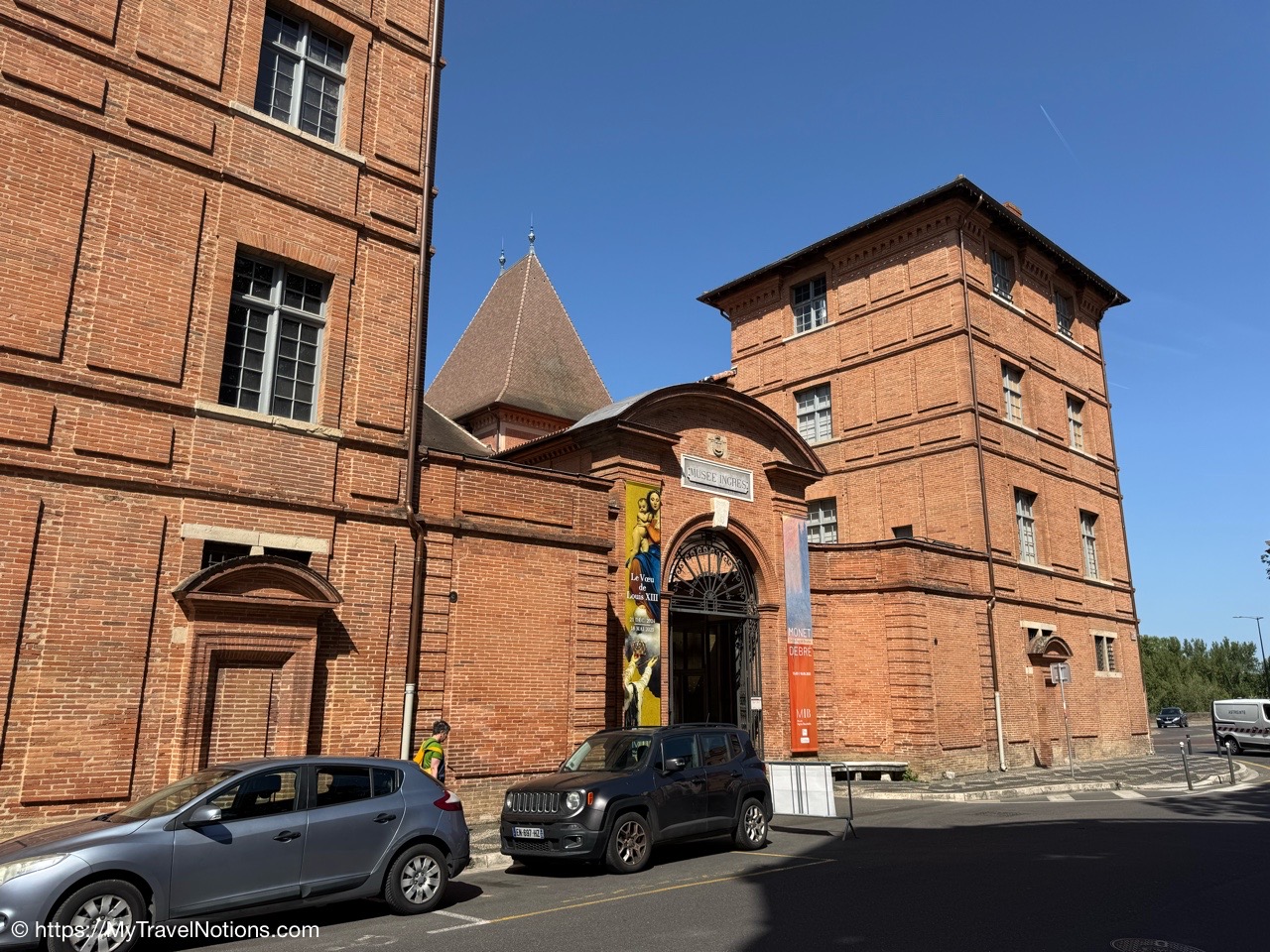
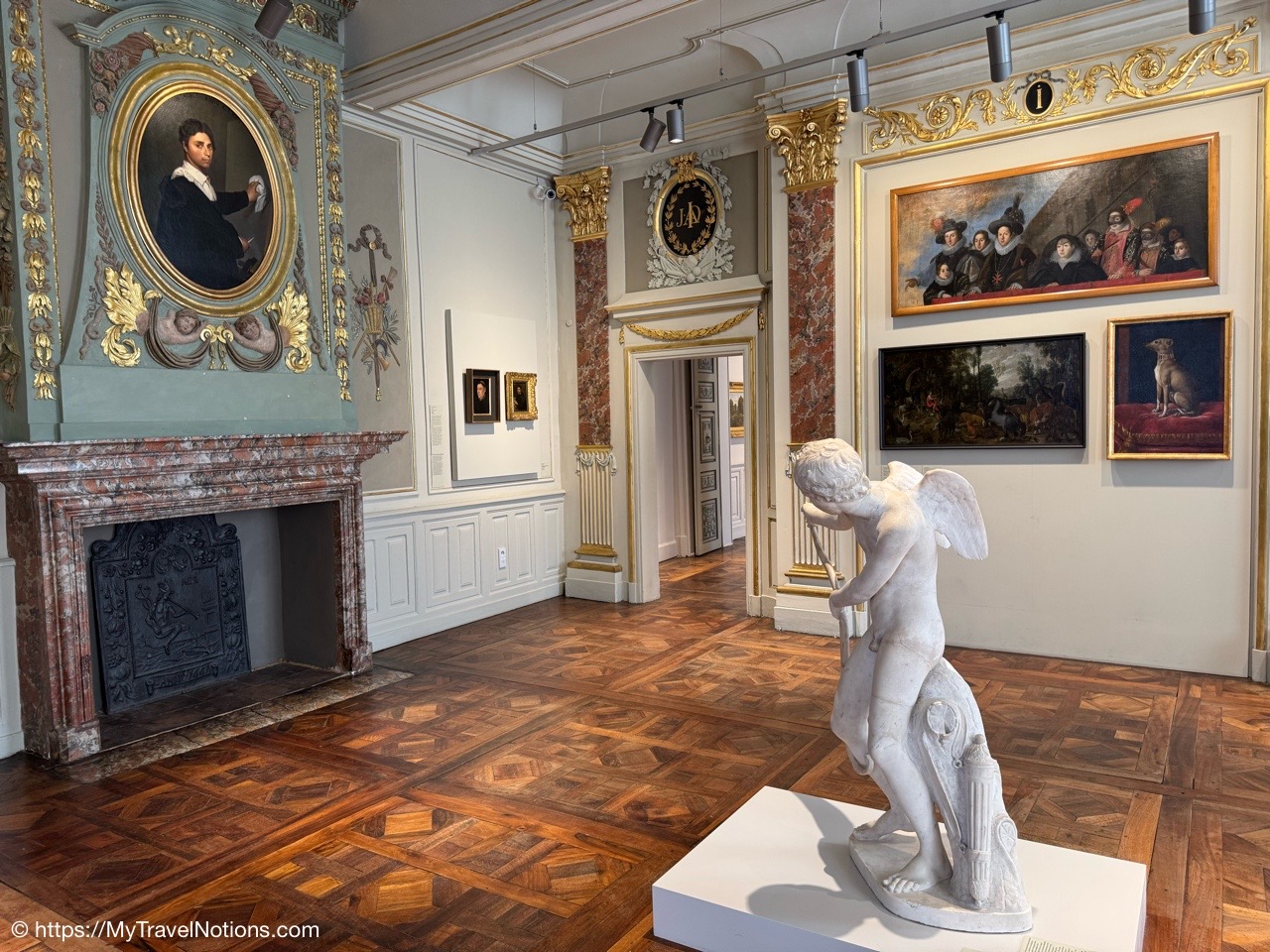
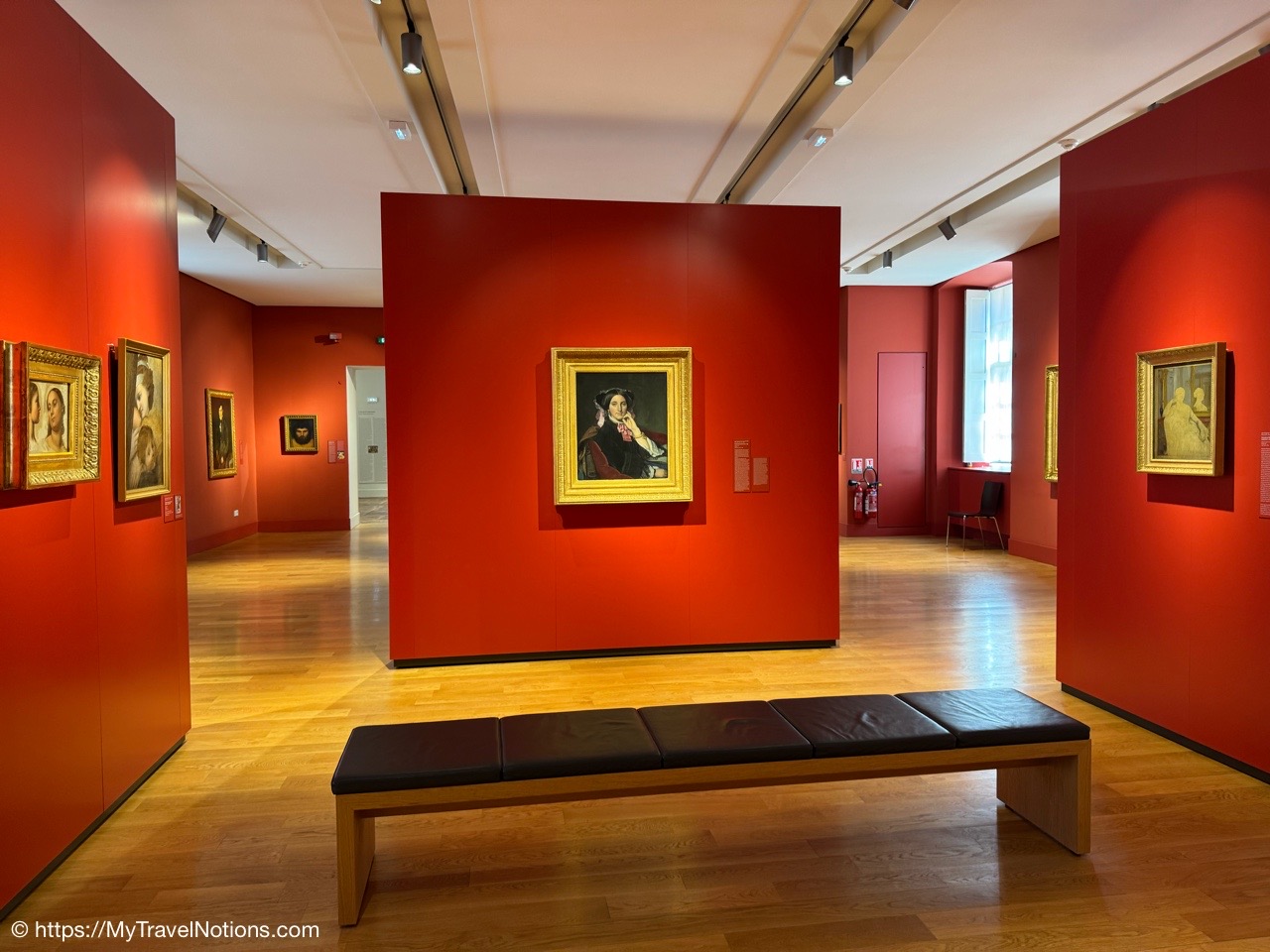
There were several highlights and one of them included the Musée Ingres-Bourdelle which houses a collection of artworks and artifacts related to two famous Montauban artists, painter Jean Auguste Dominique Ingres (1780-1867) and sculptor Antoine Bourdelle (1861-1929), as well as their own collections and other works of art. Other highlights included just enjoying the vibe and atmosphere of the gorgeous red bricked Place Nationale, Saint-Orens church, the 13th century Église Saint-Jacques de Montauban and just walking around the city before heading back to our home base of Toulouse.
Here’s a bit of Montauban.
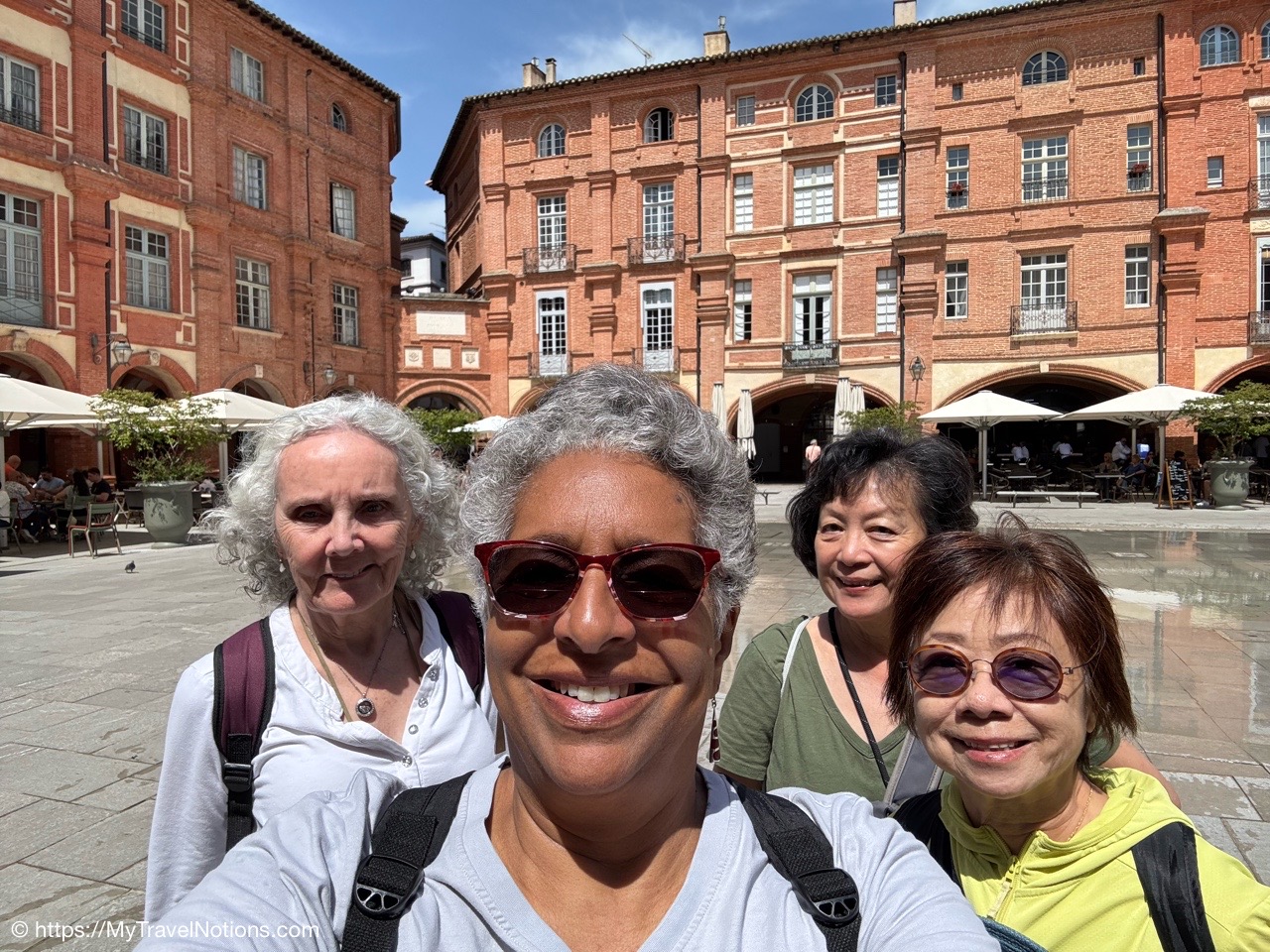
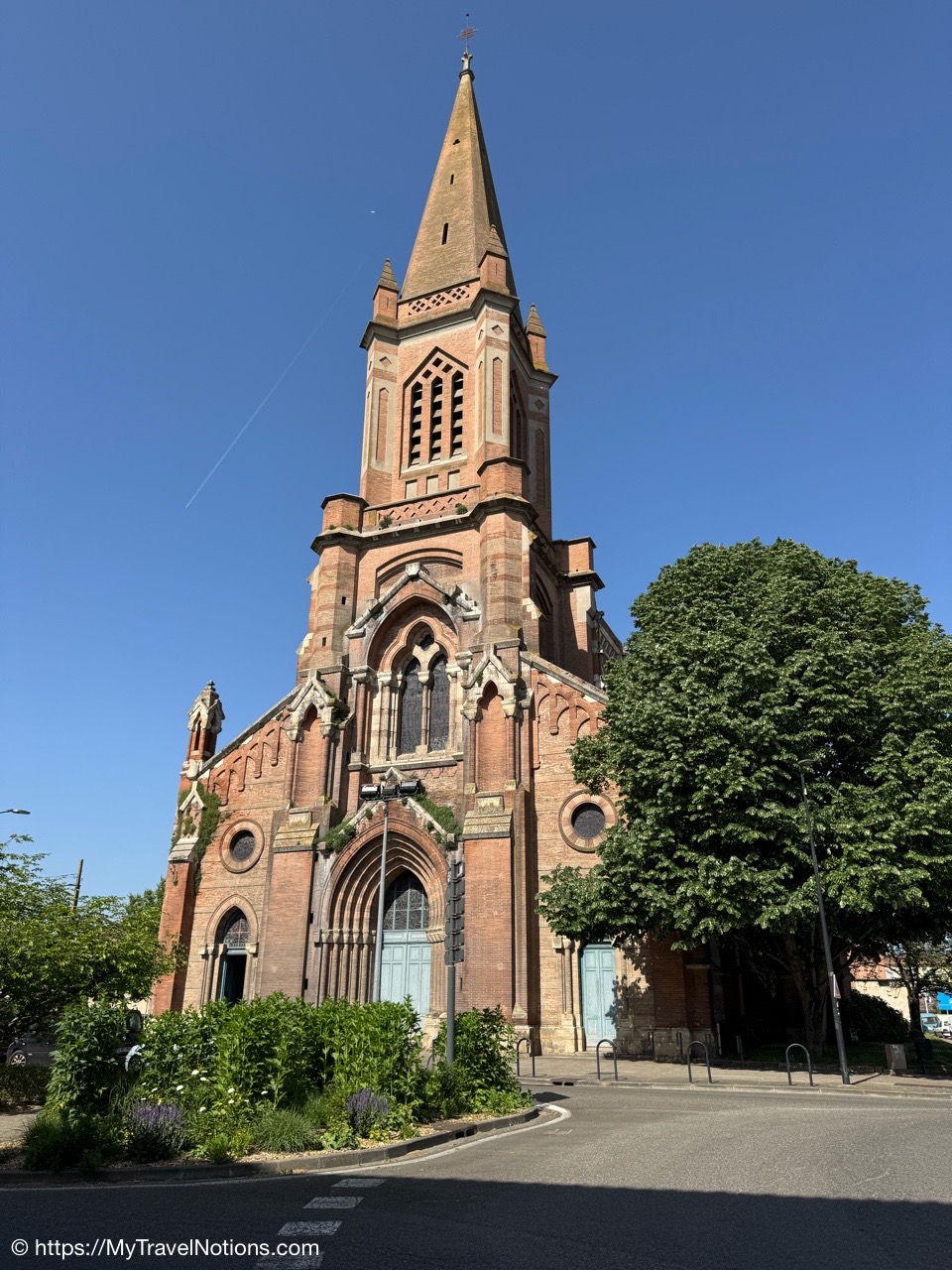
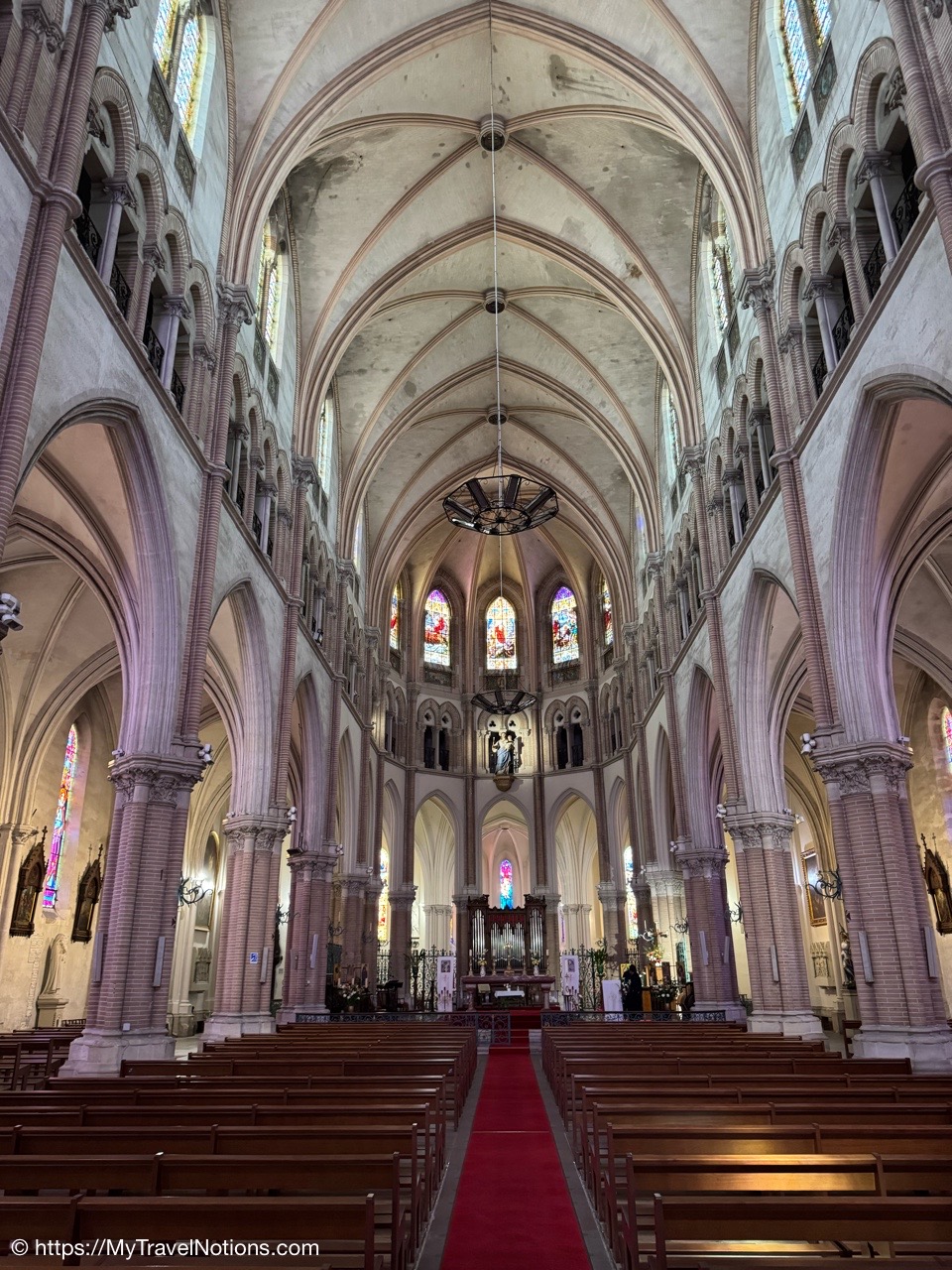
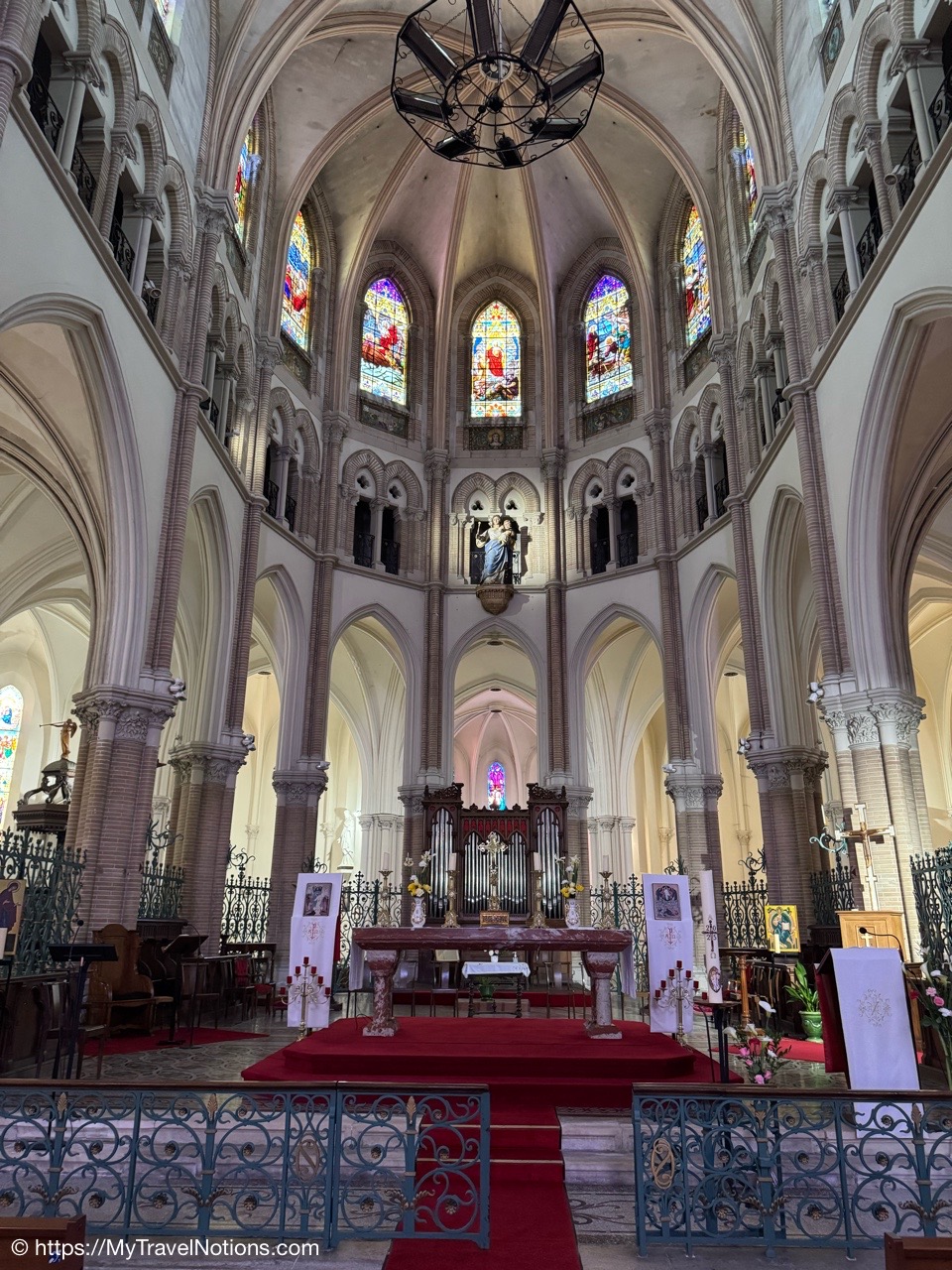
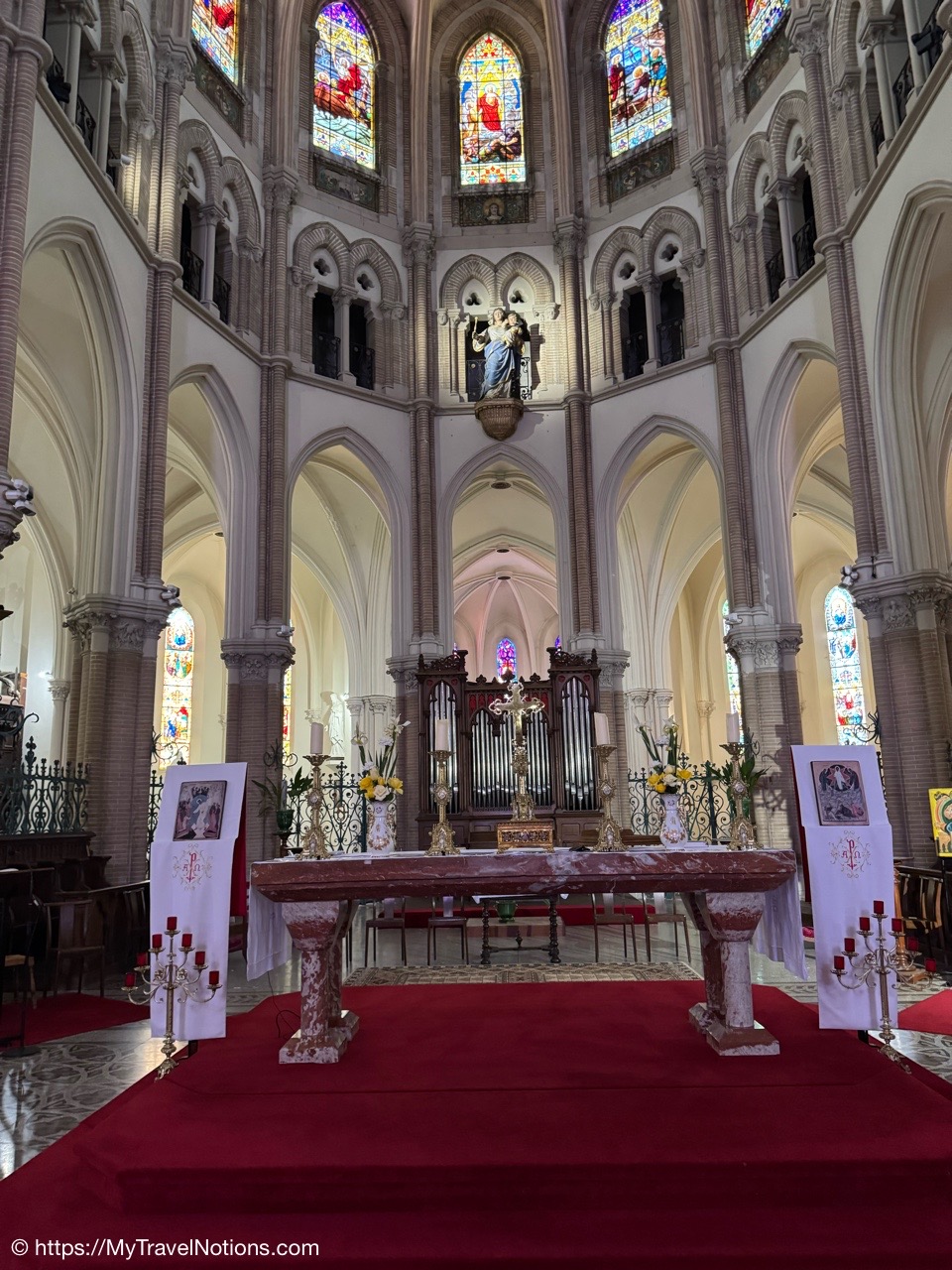
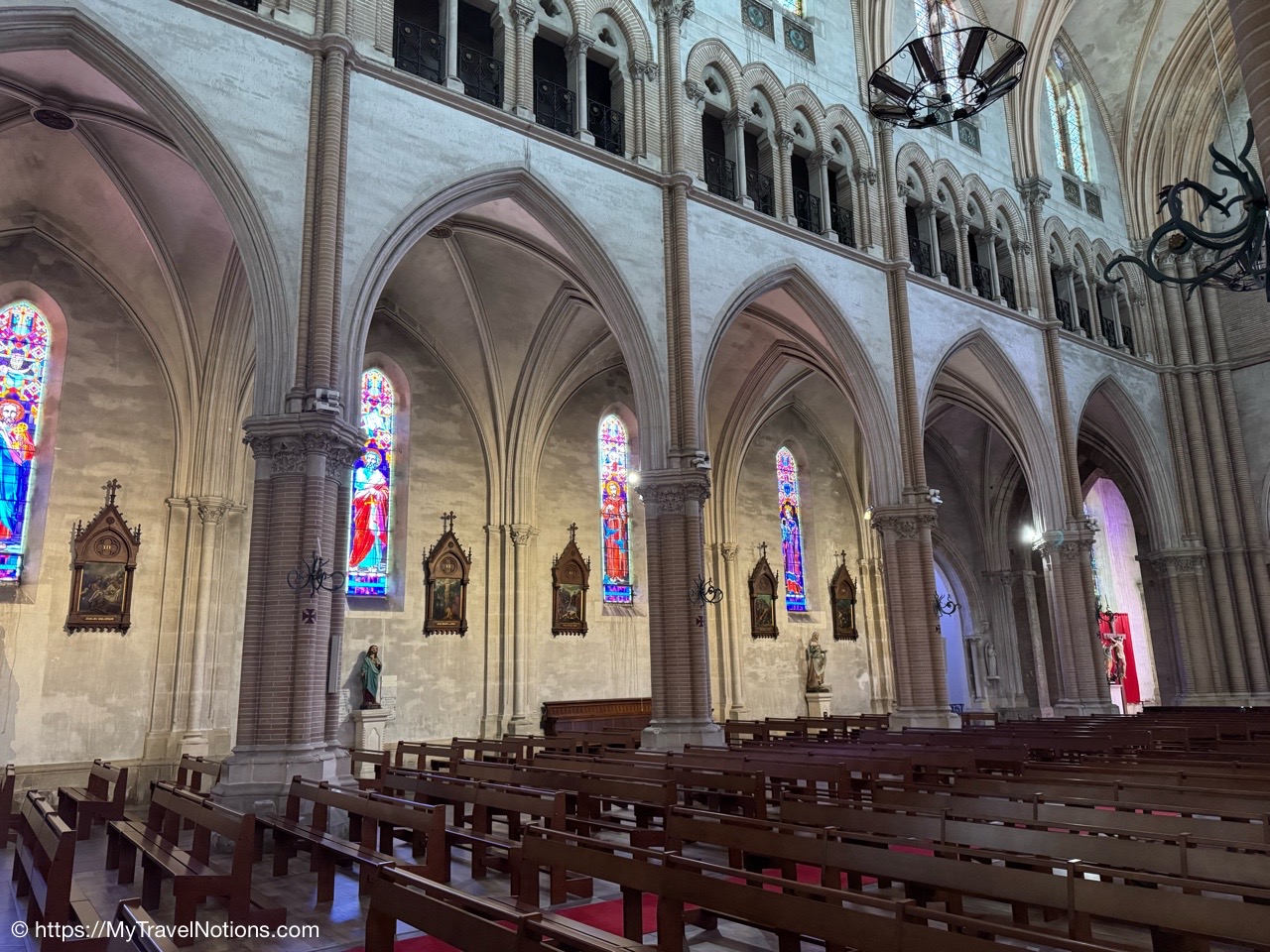
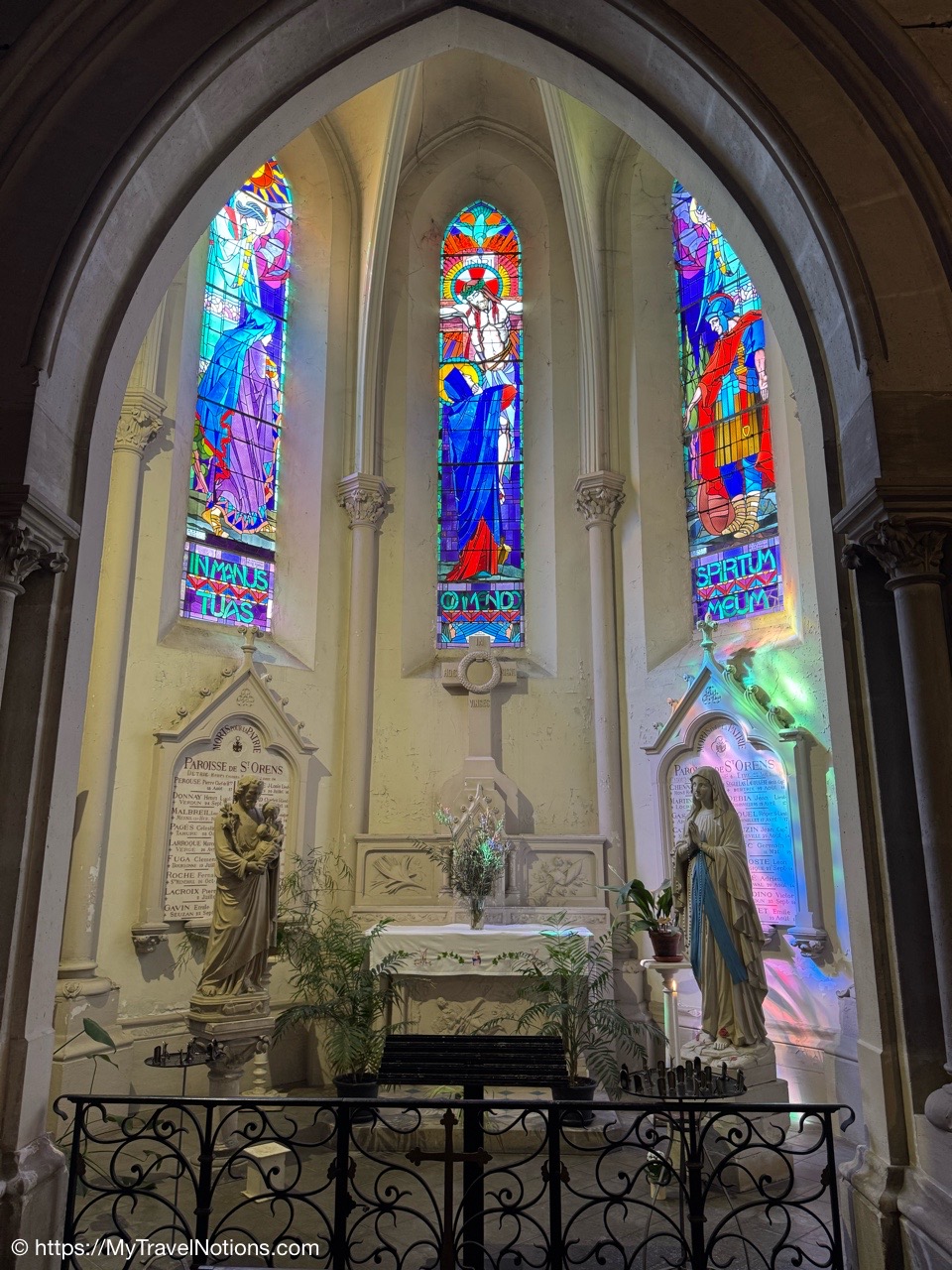
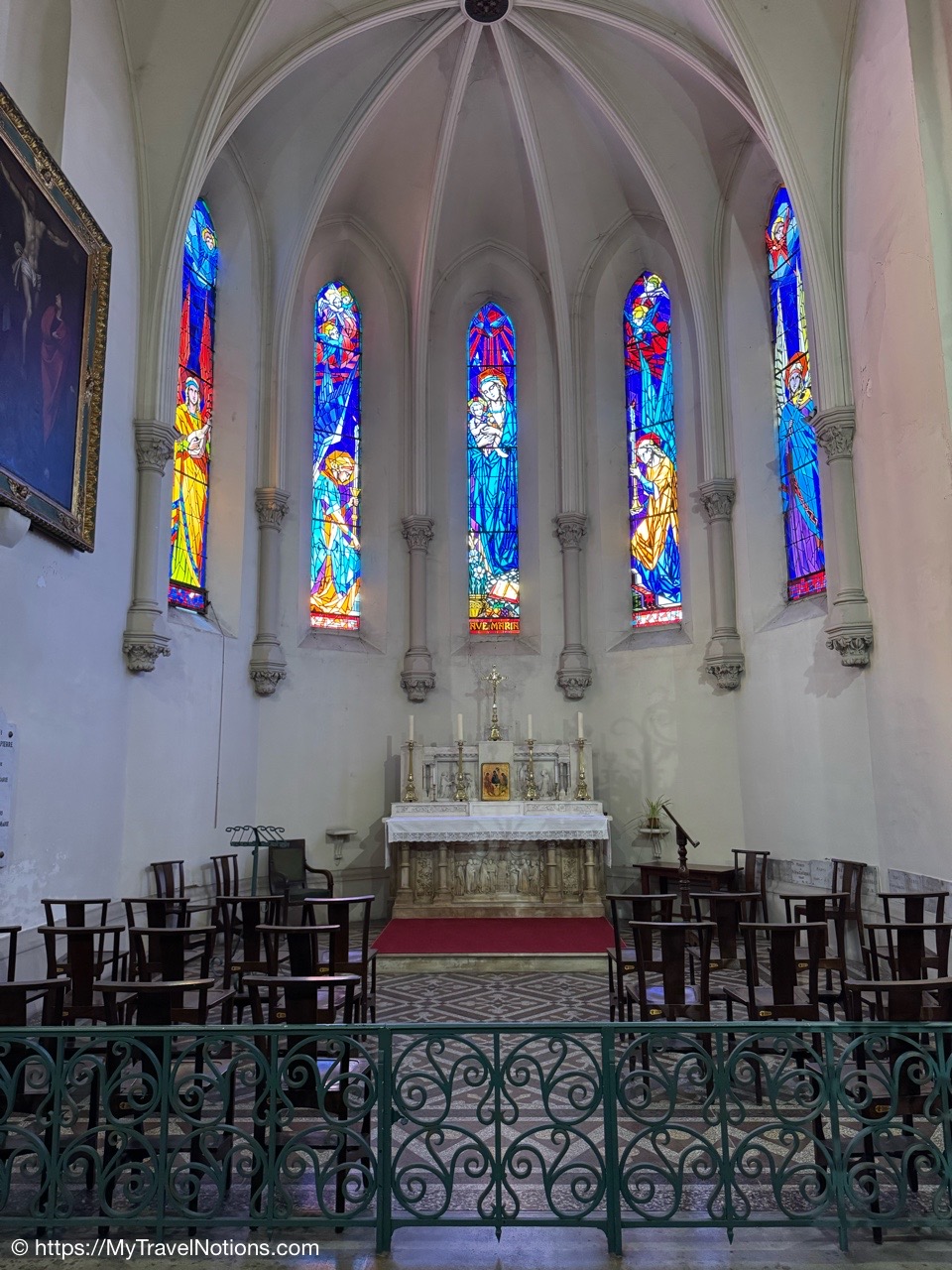
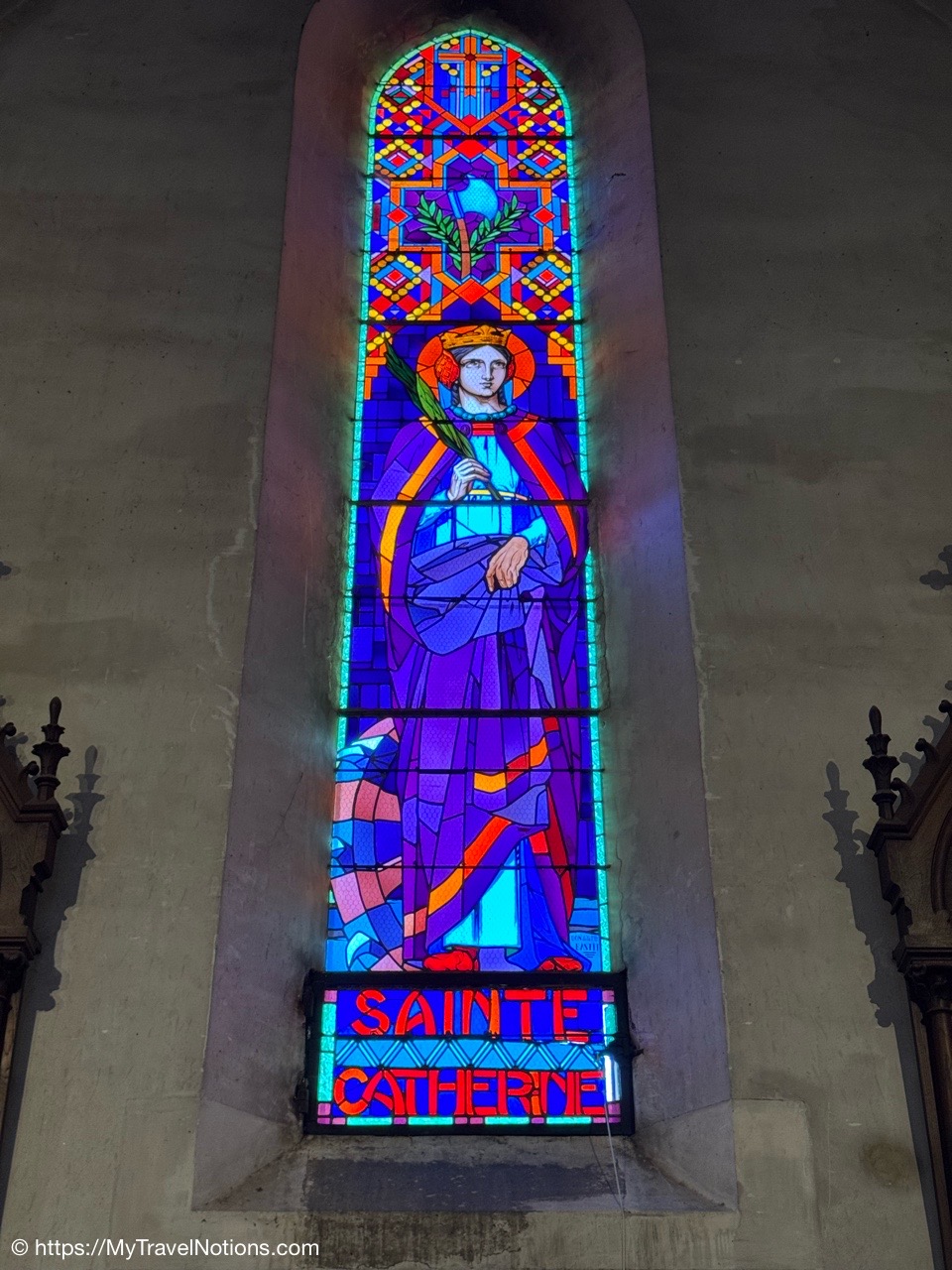
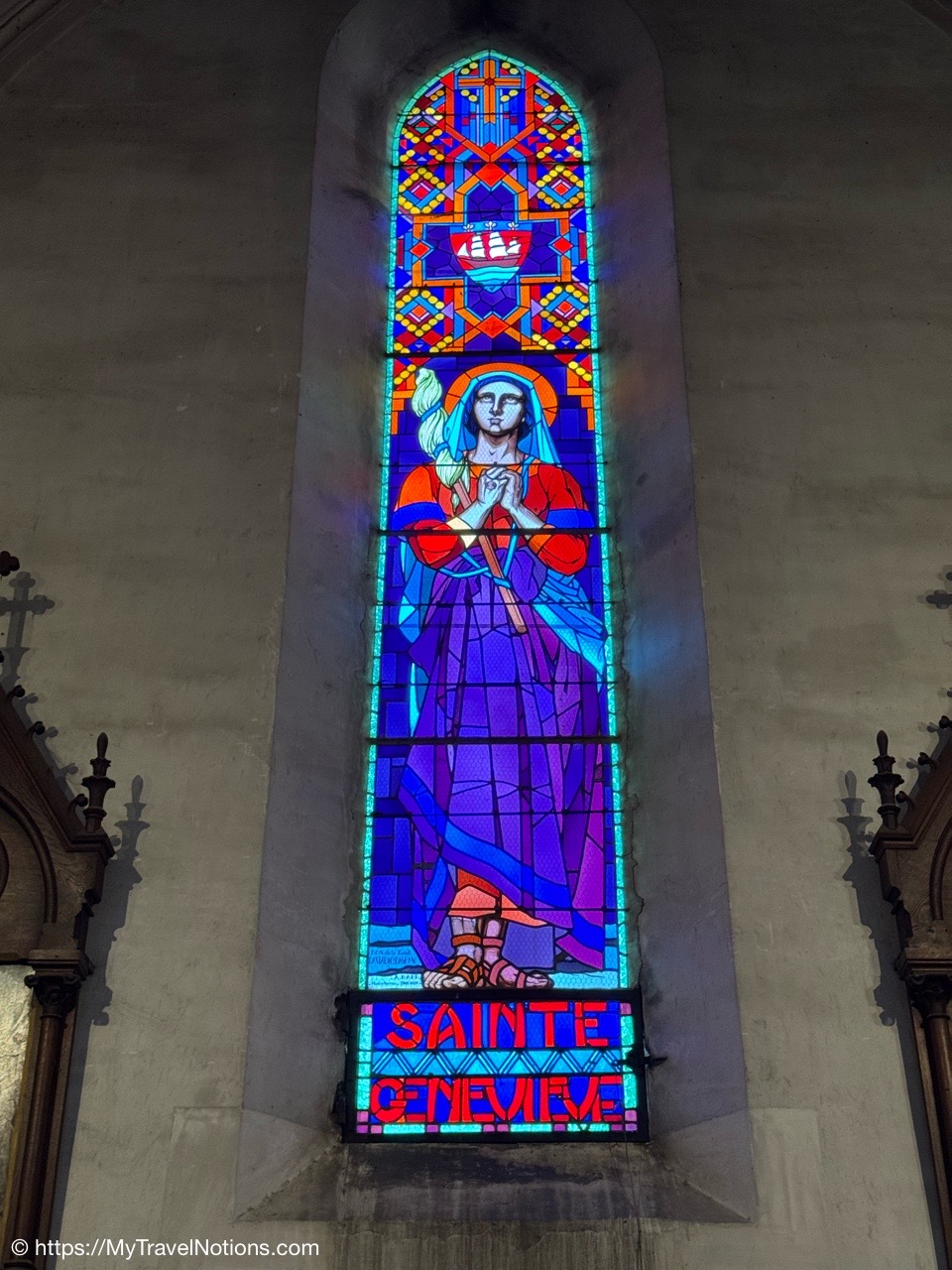
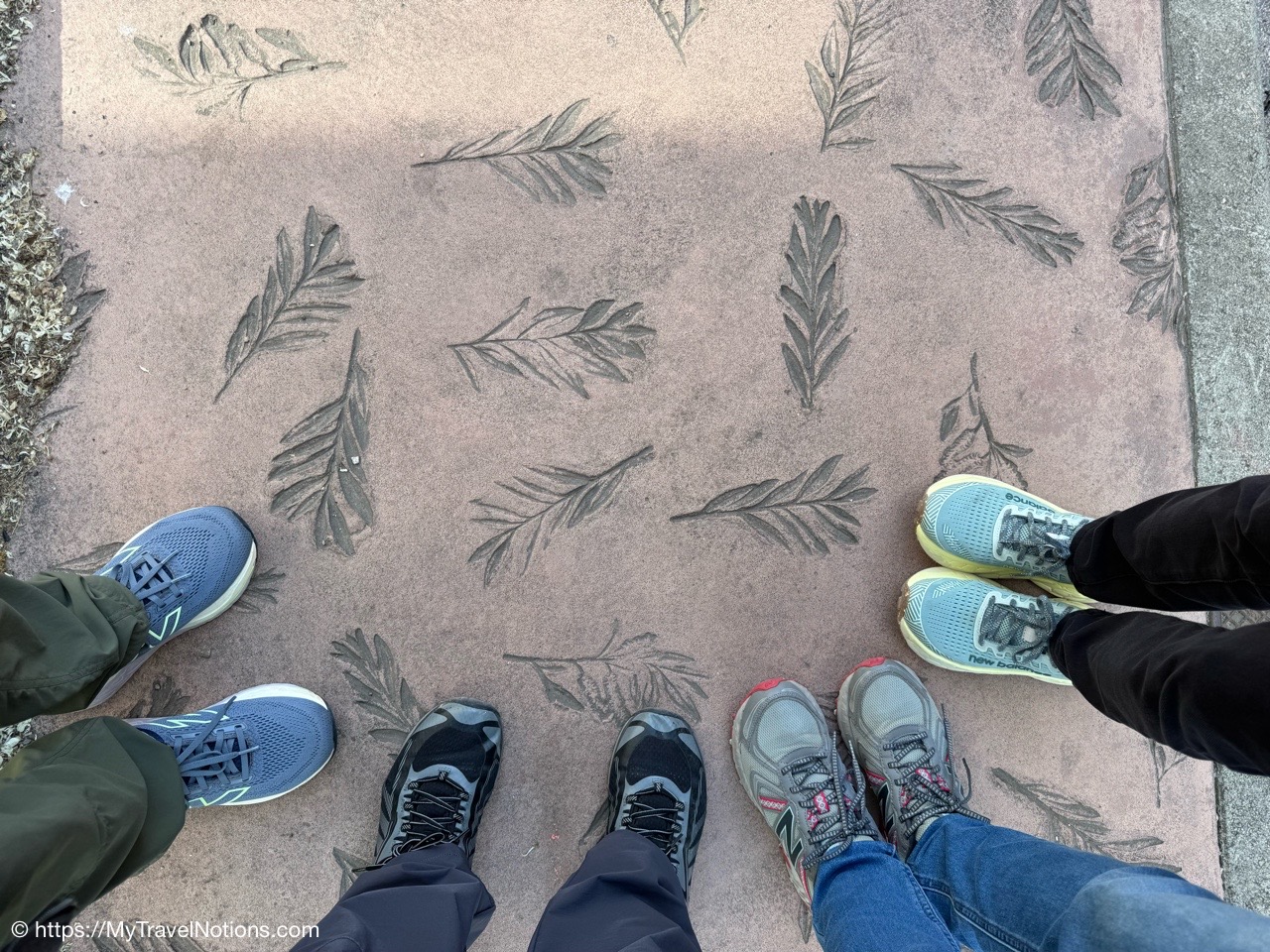
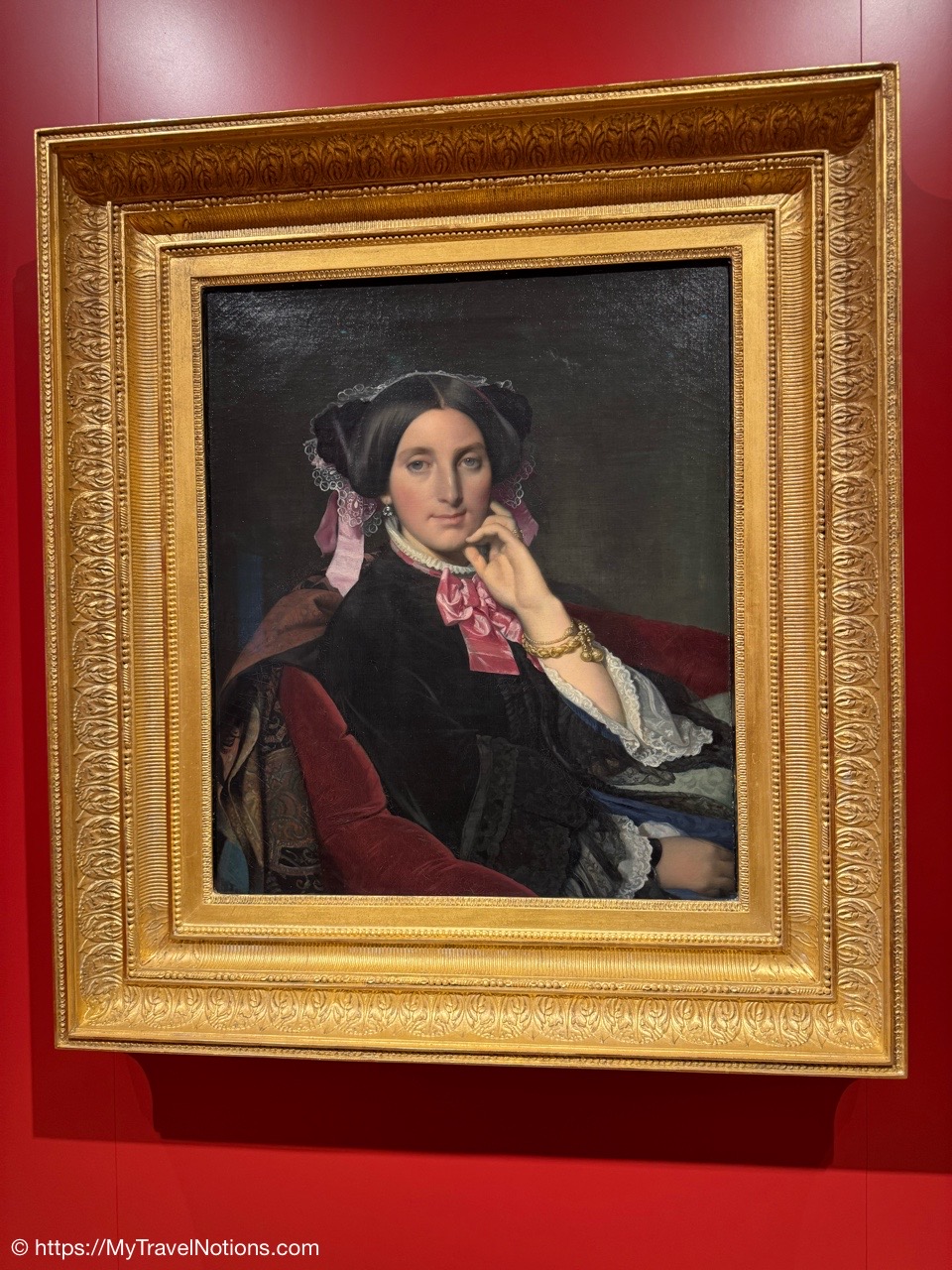
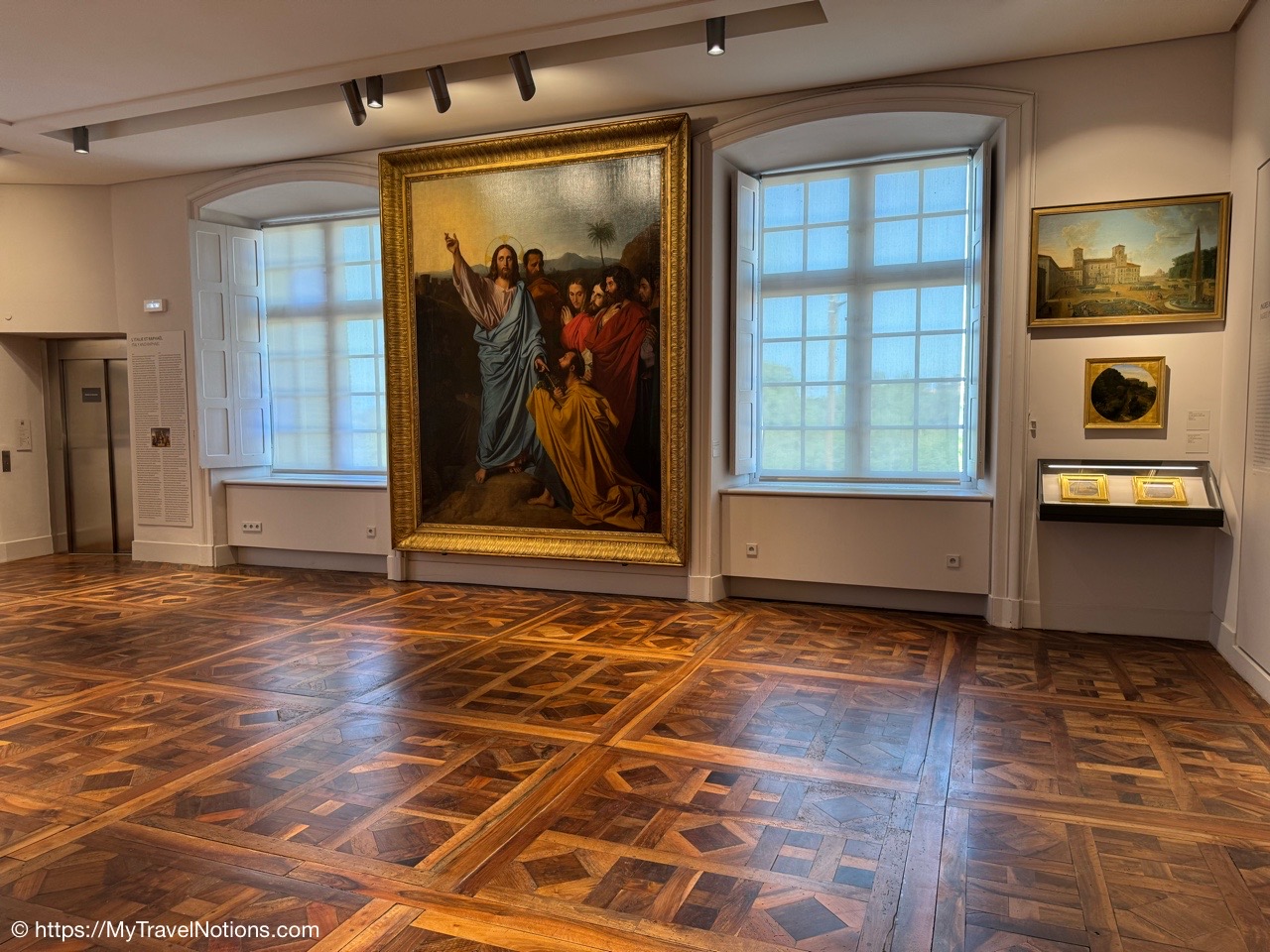
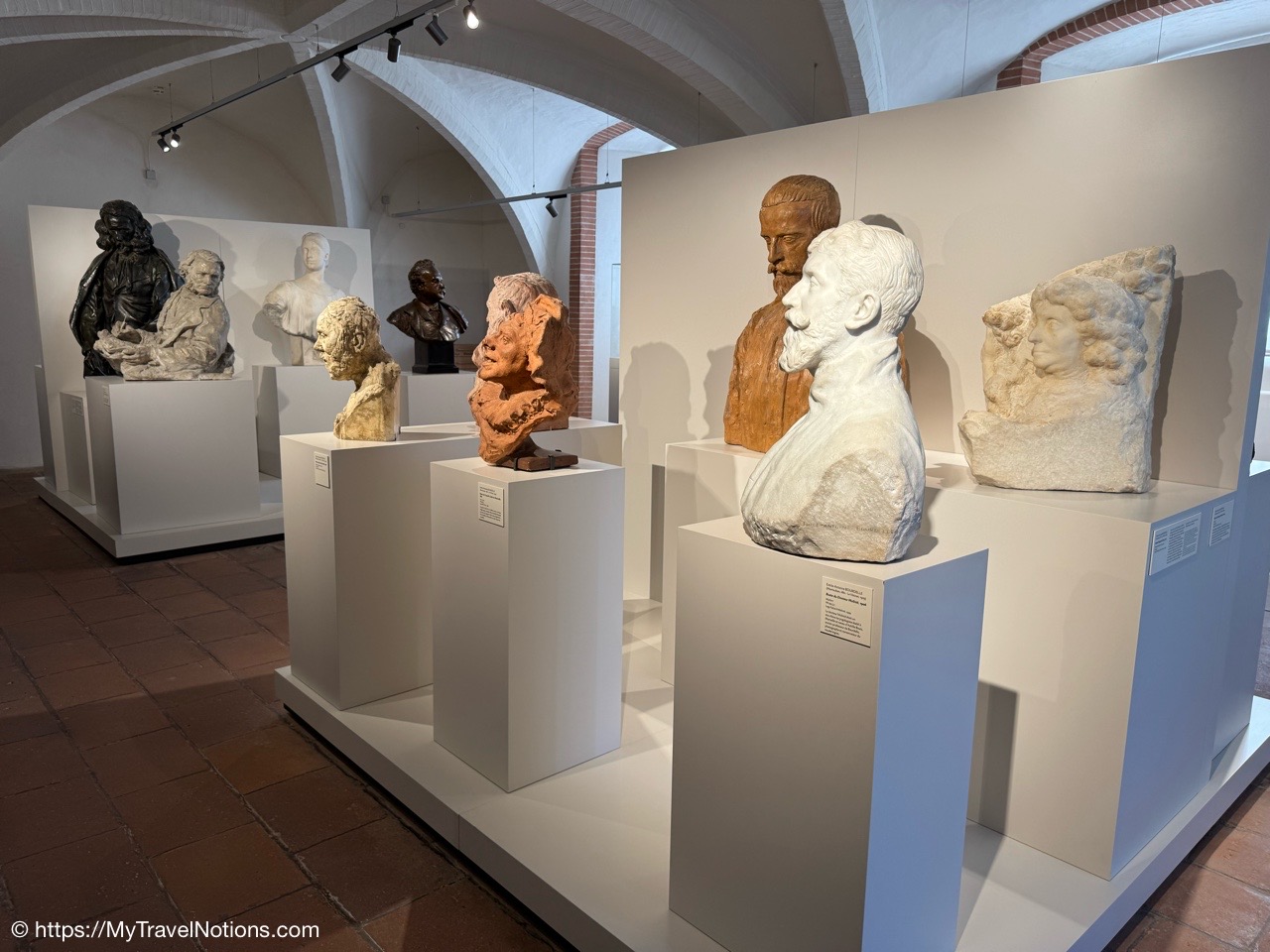
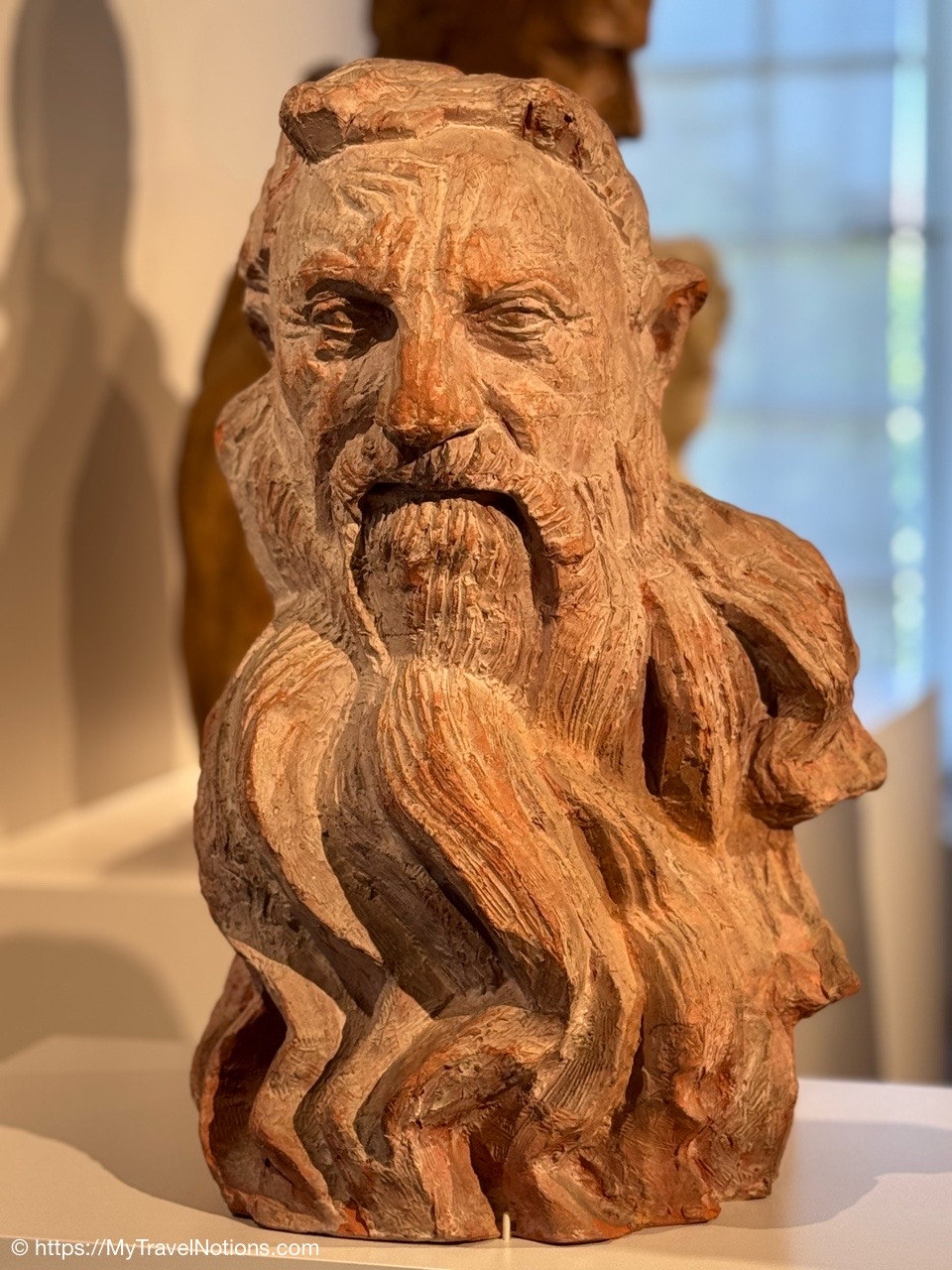
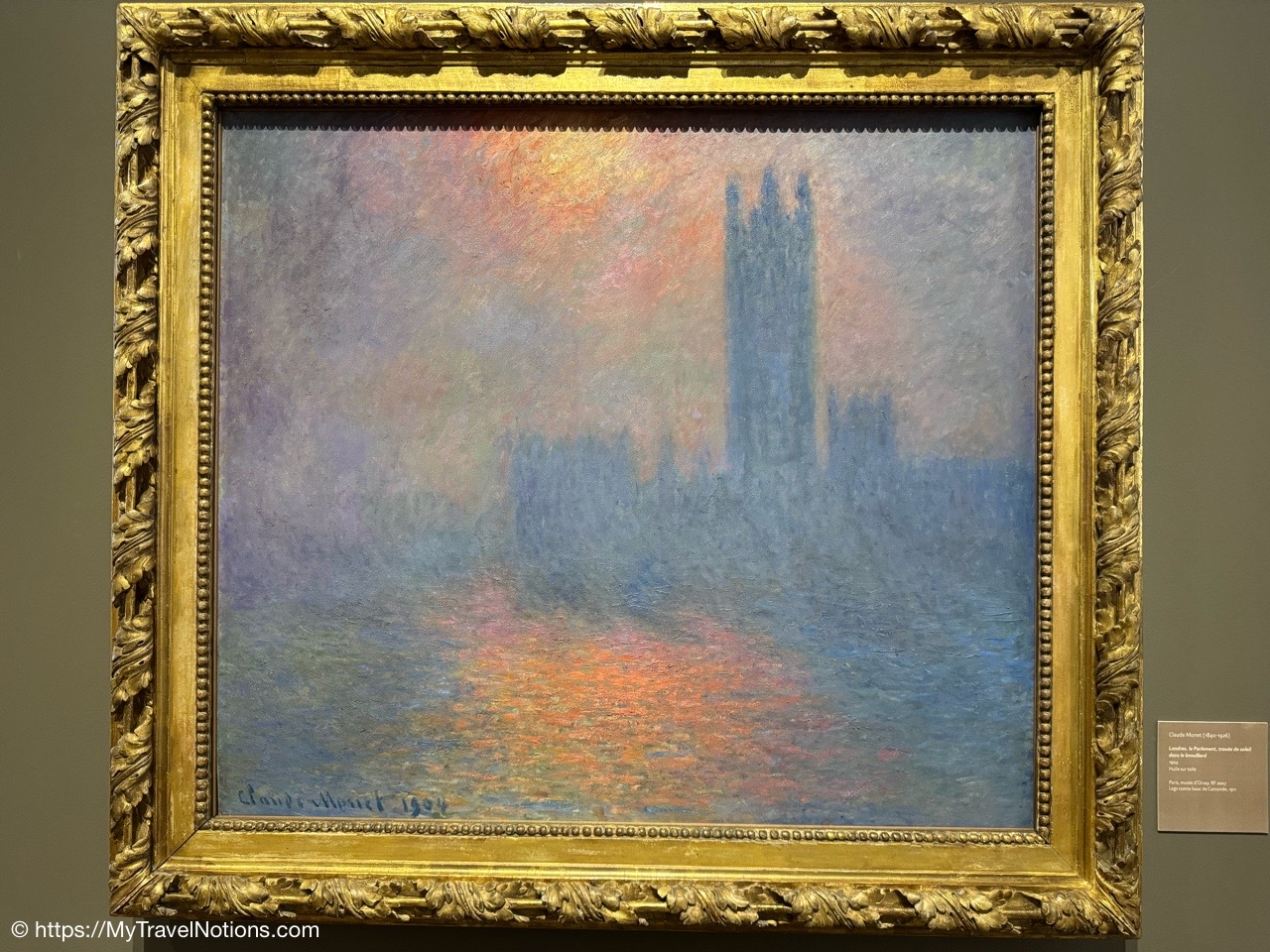
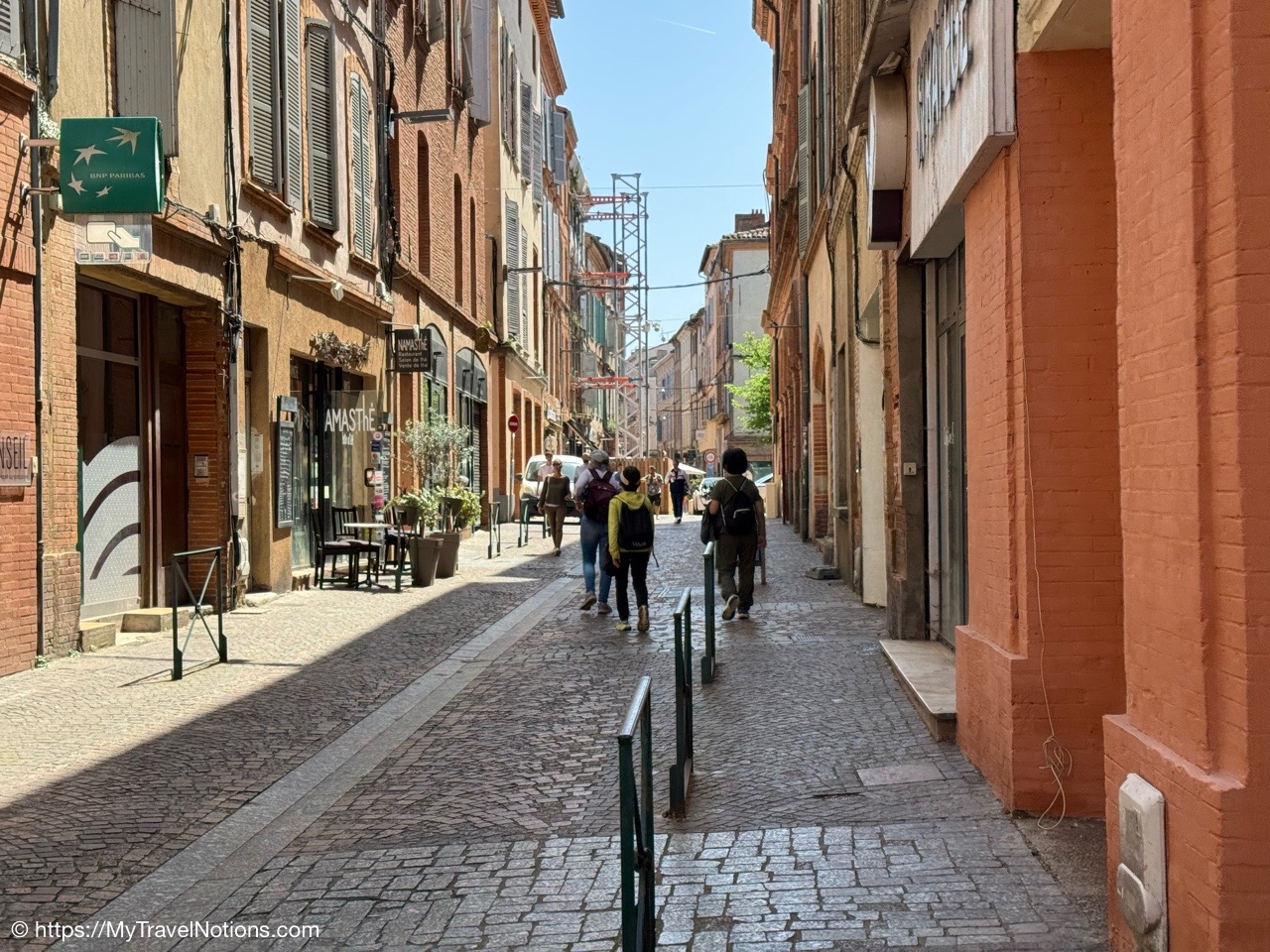
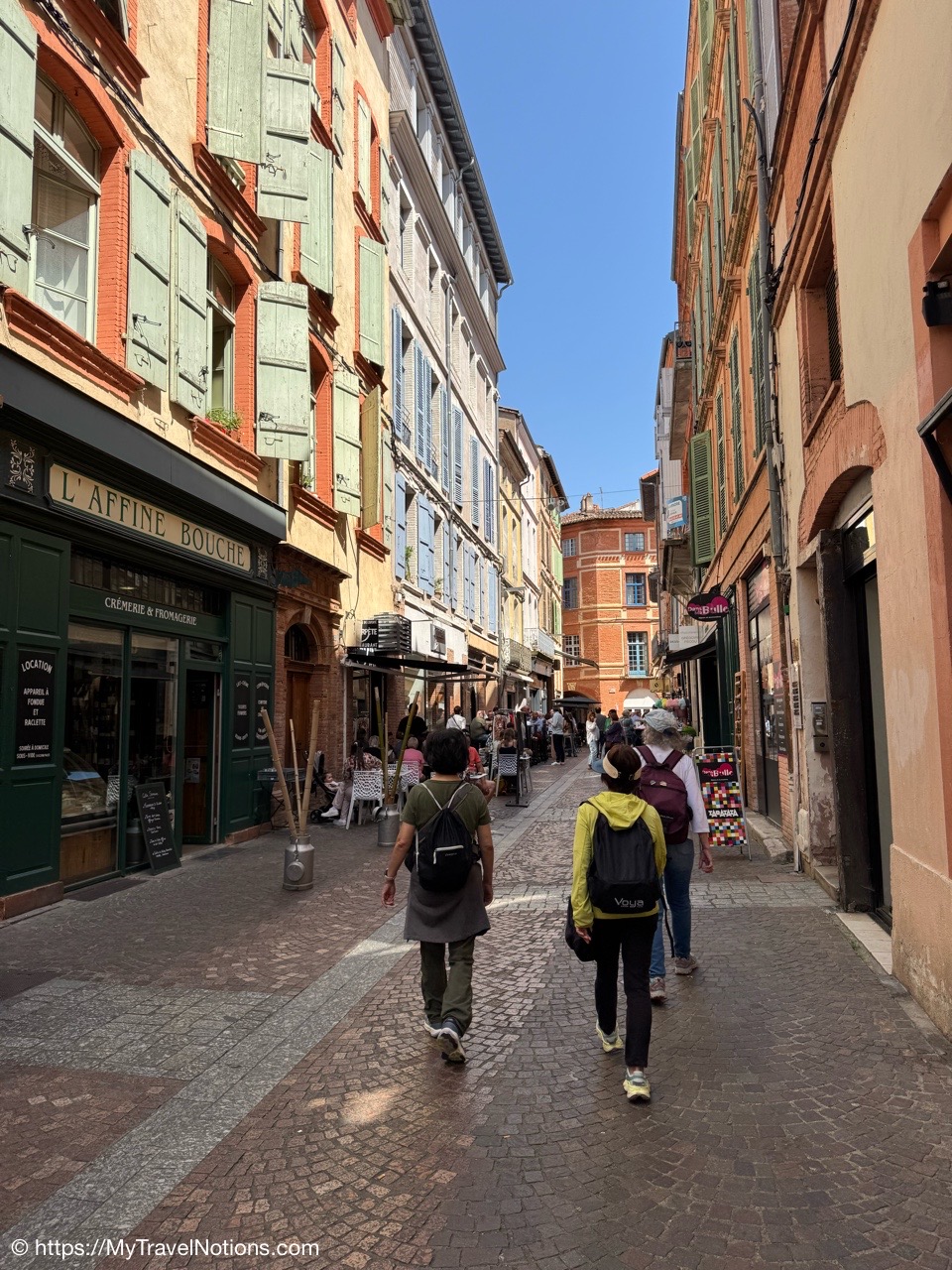
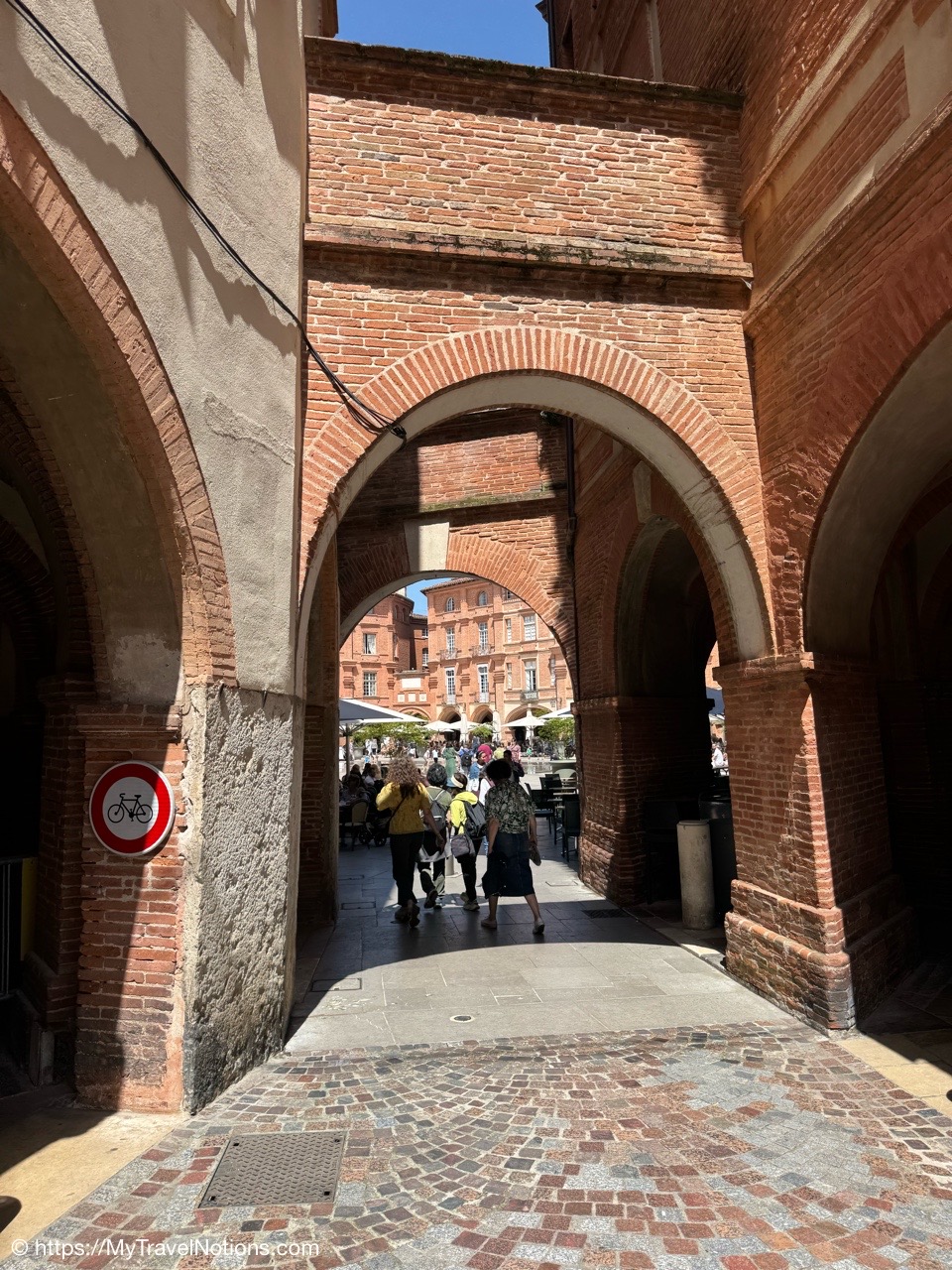
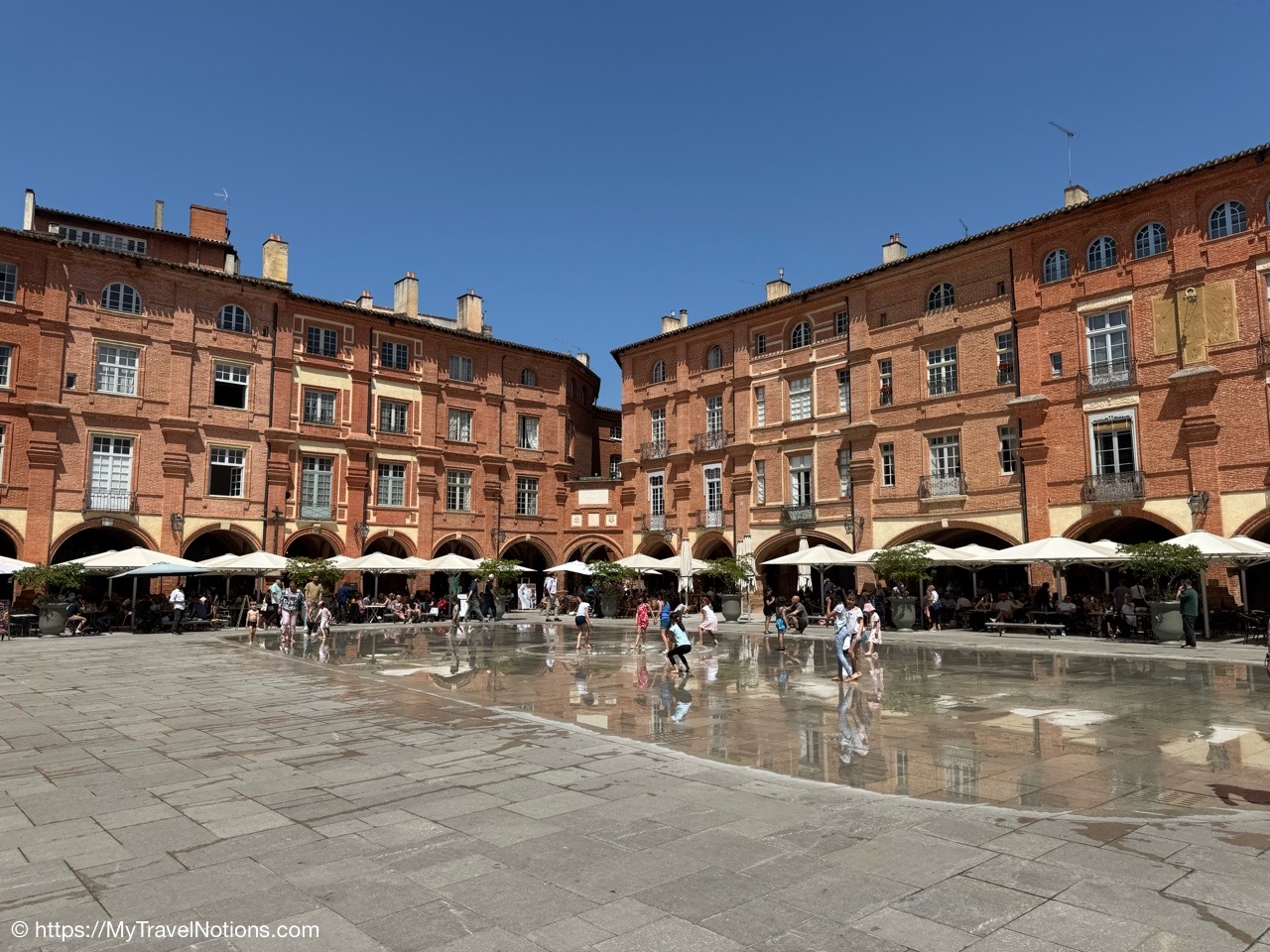
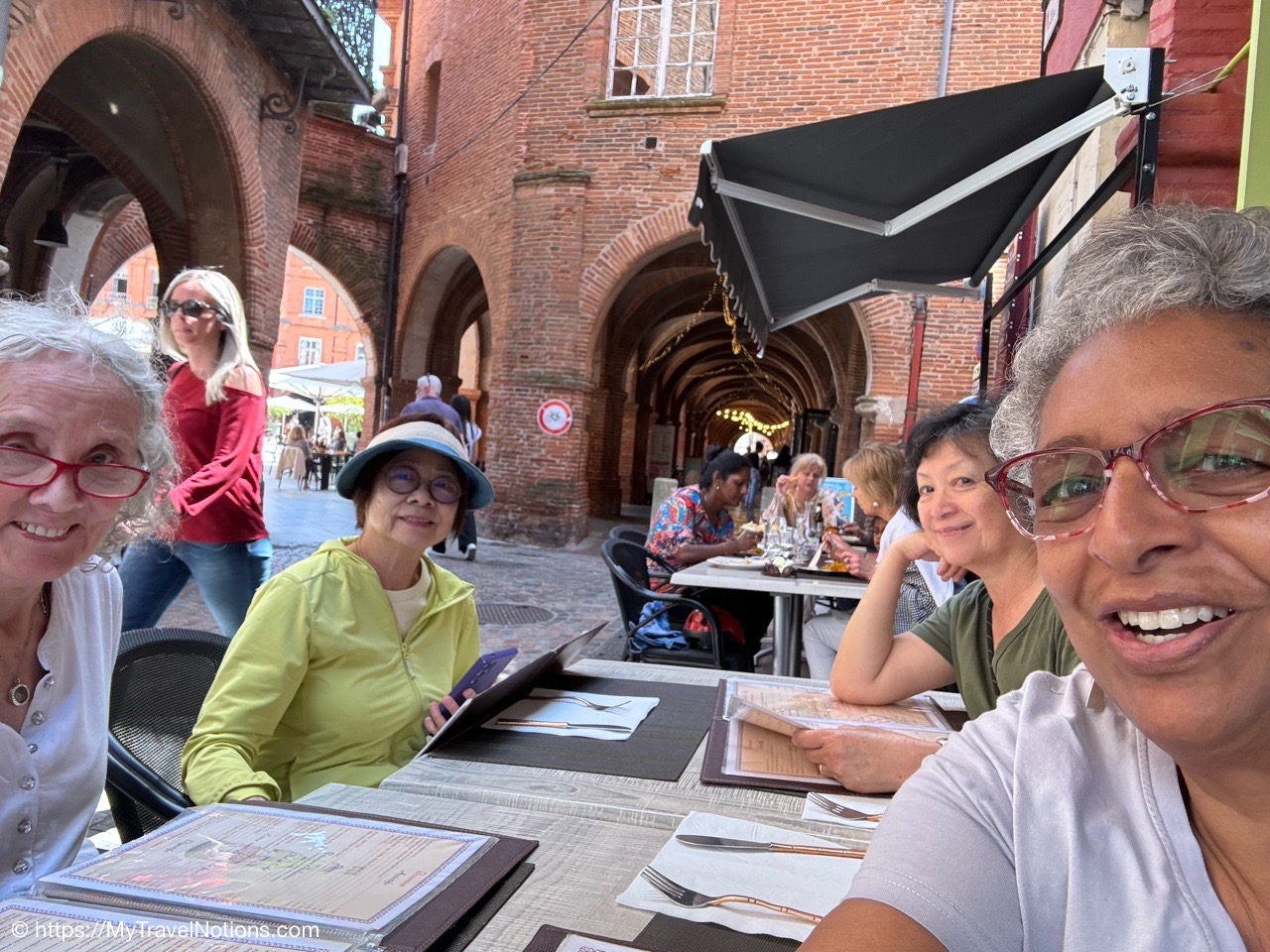
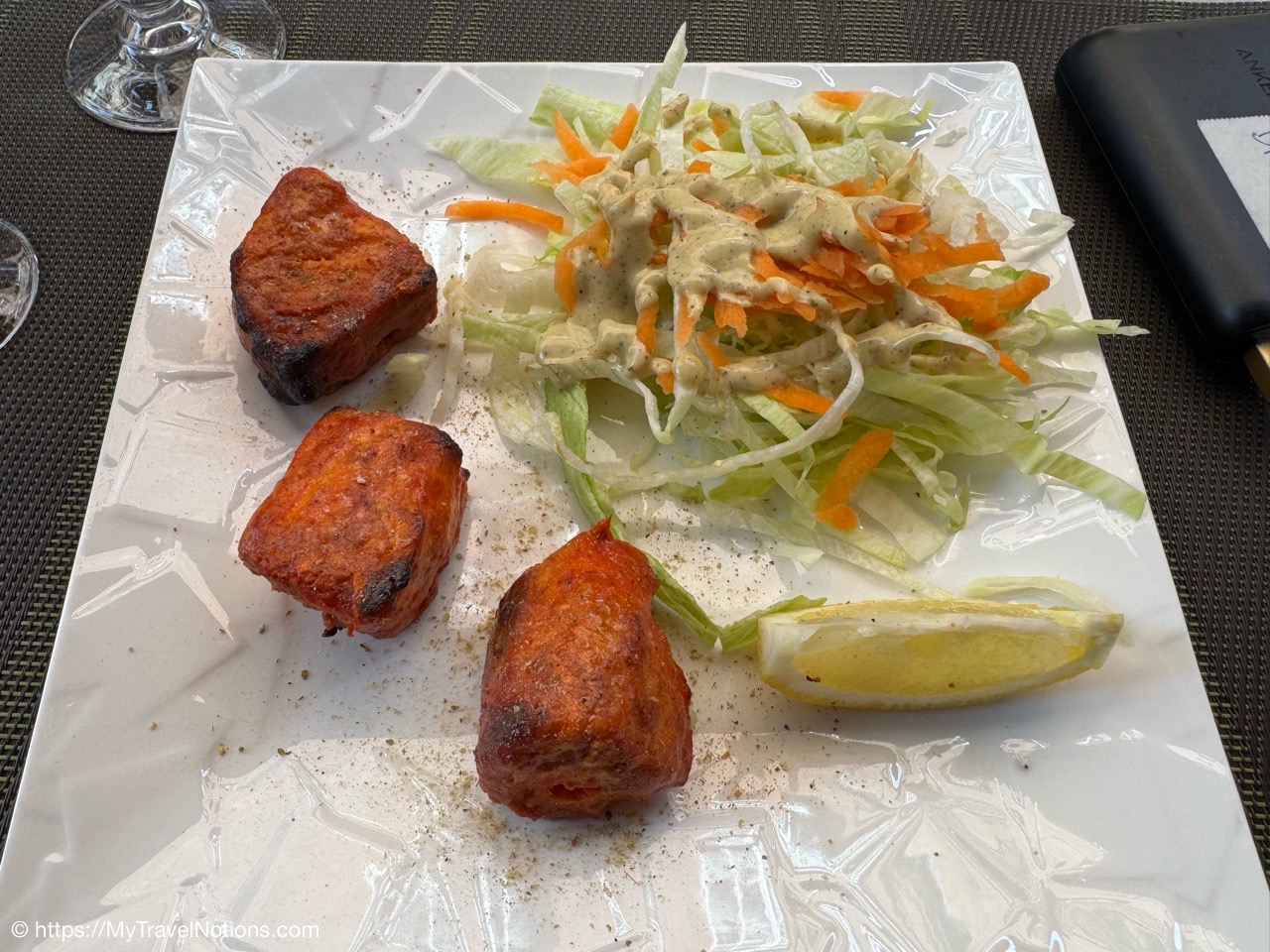
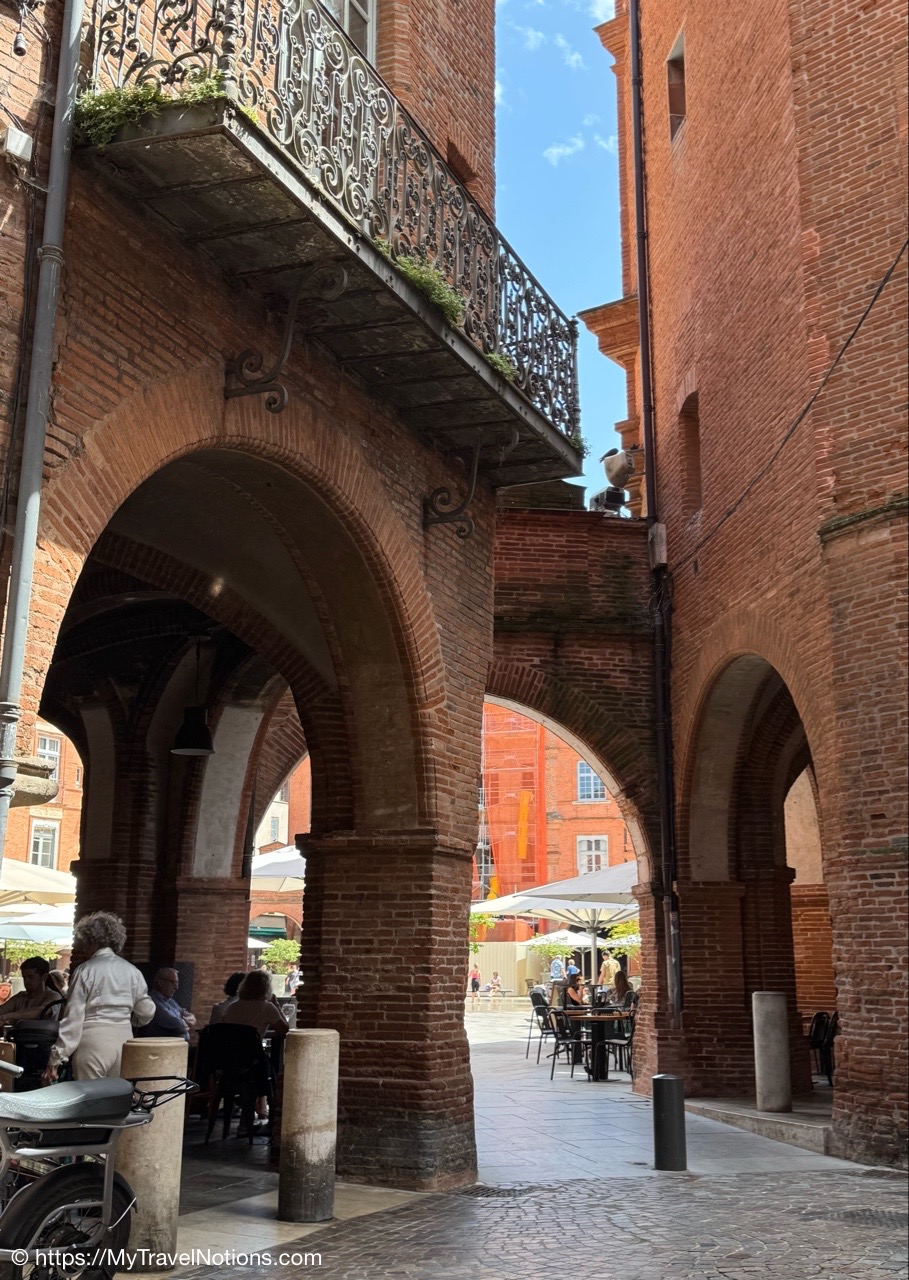
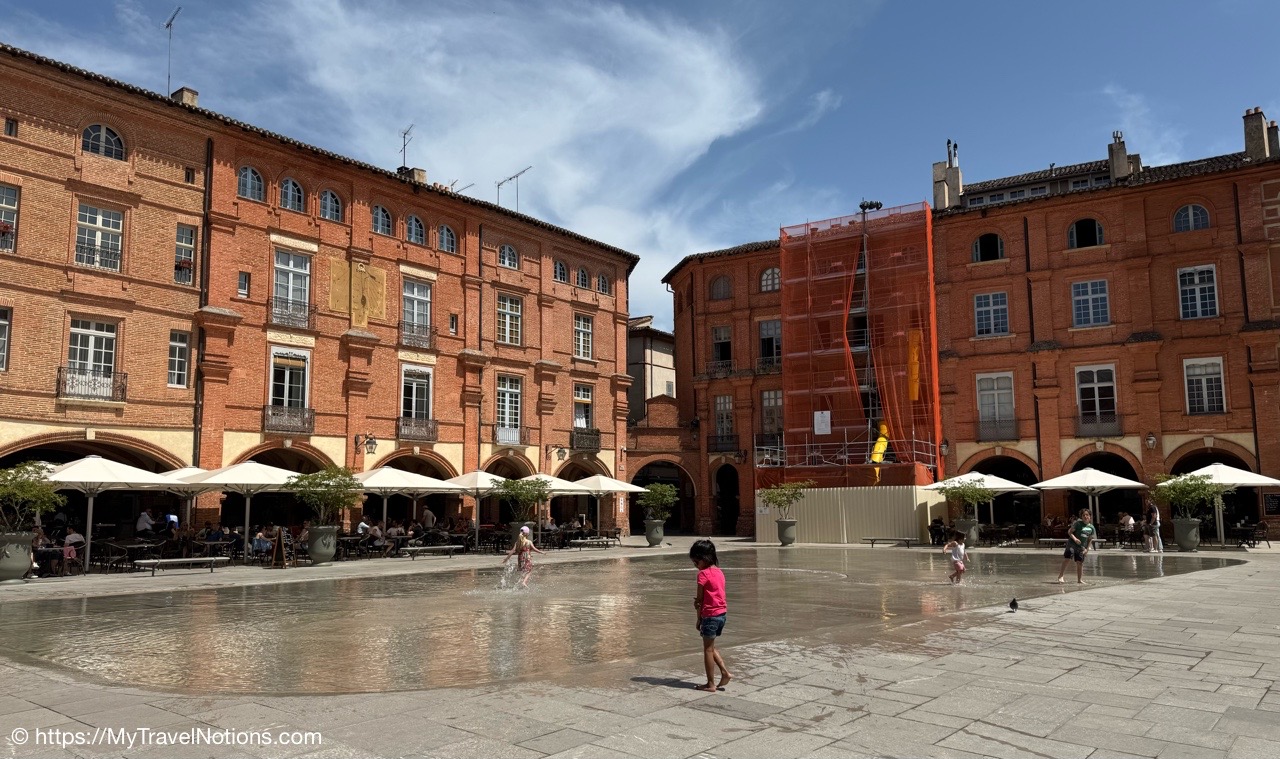
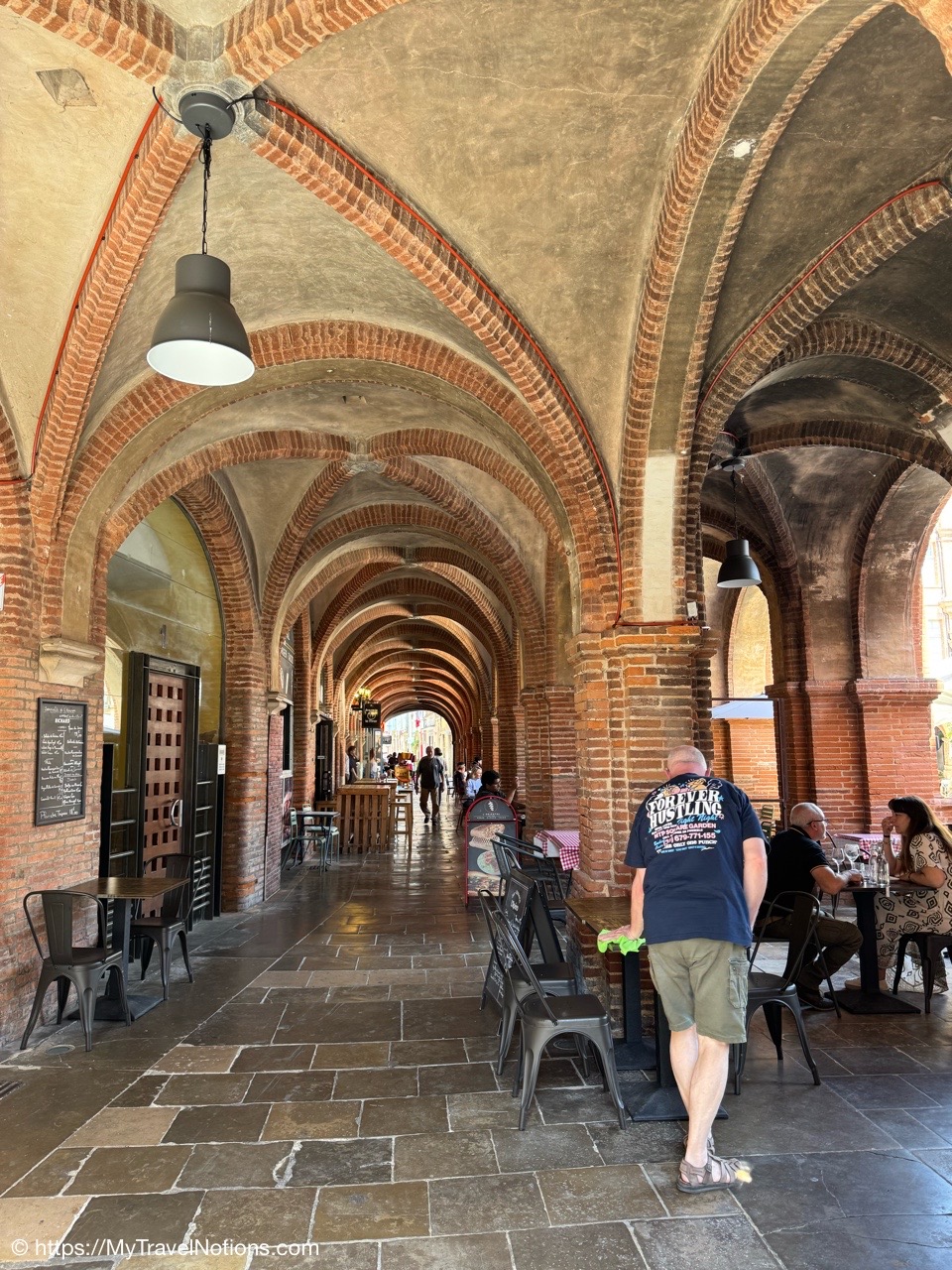
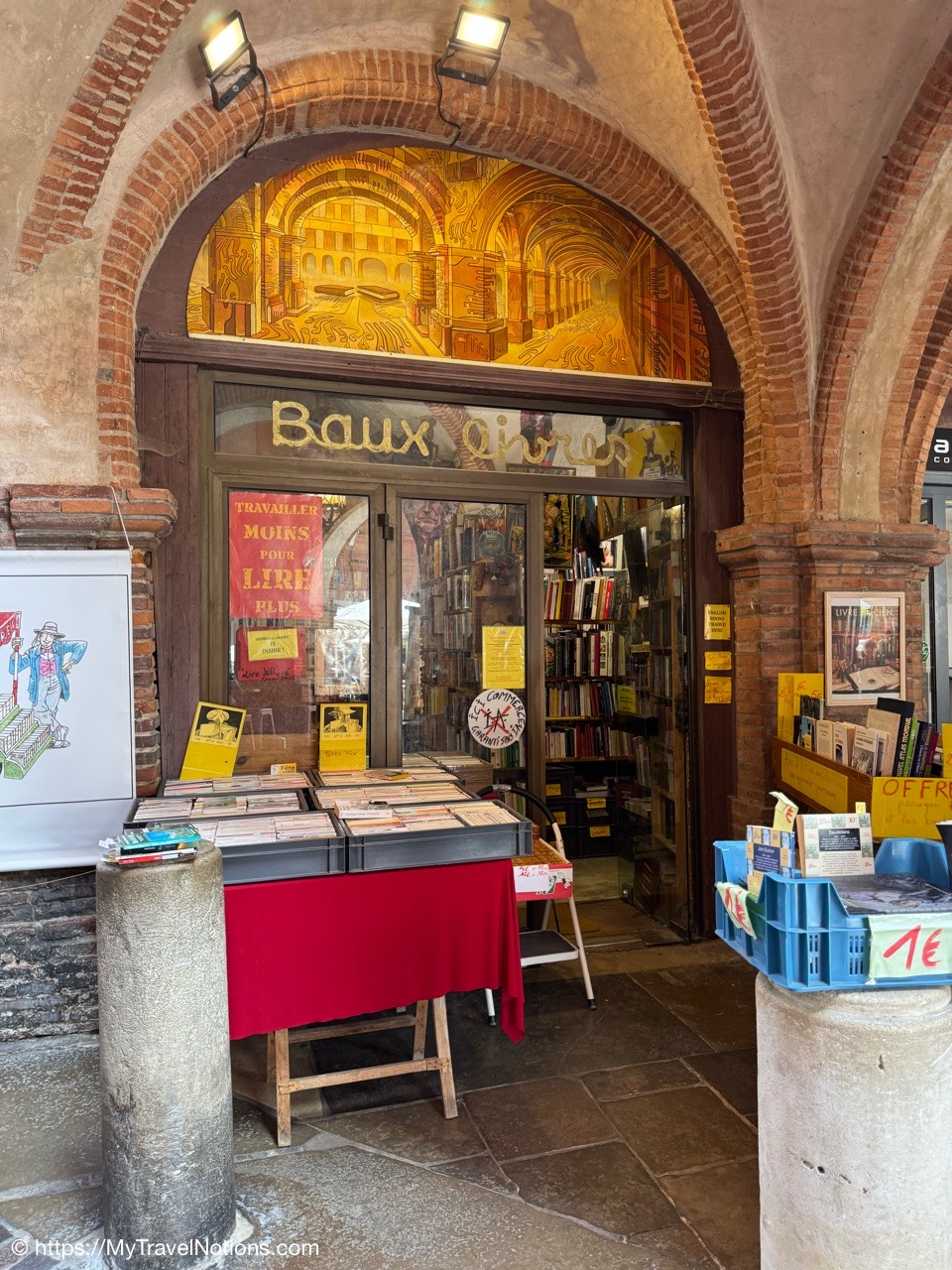
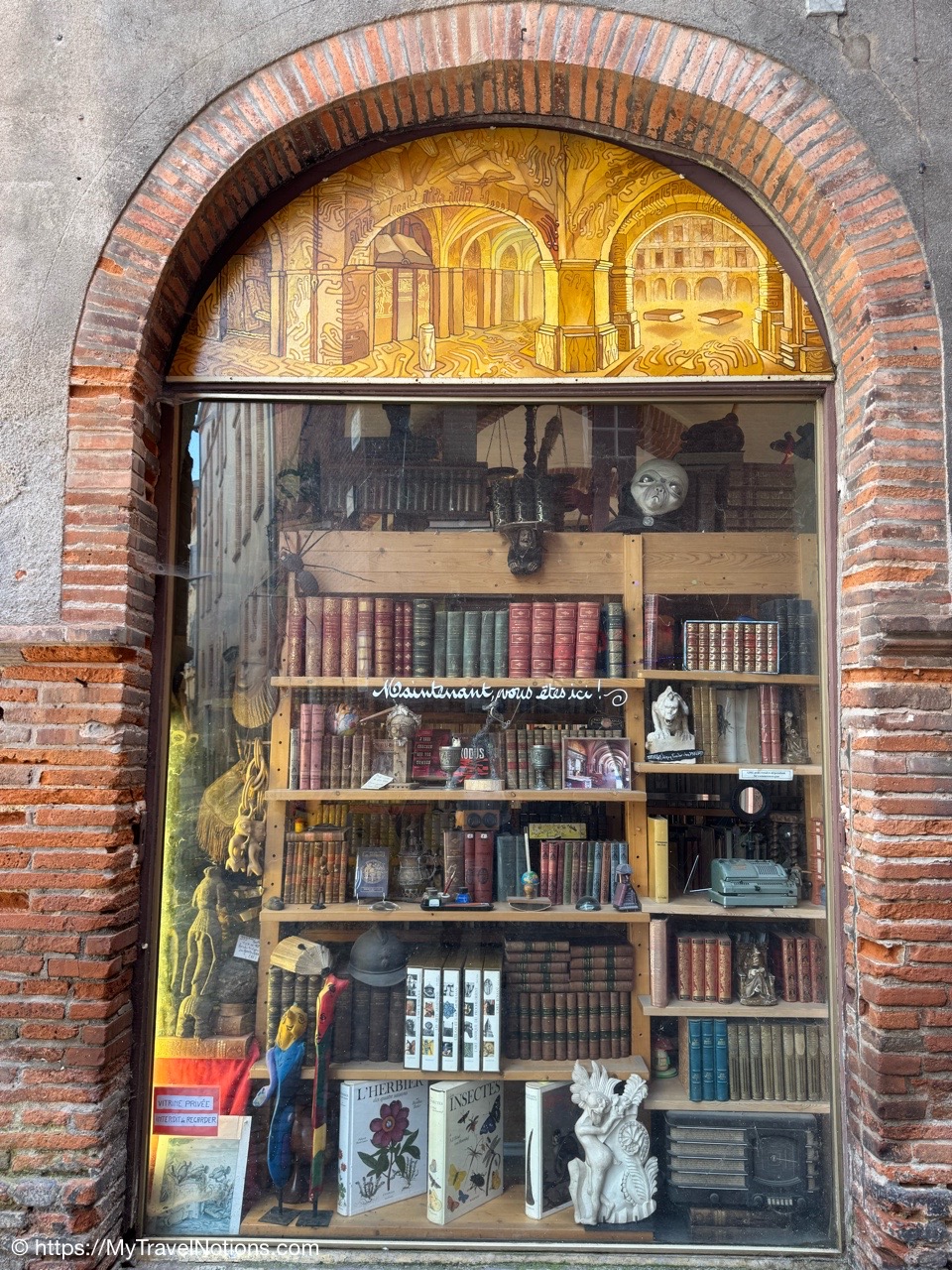
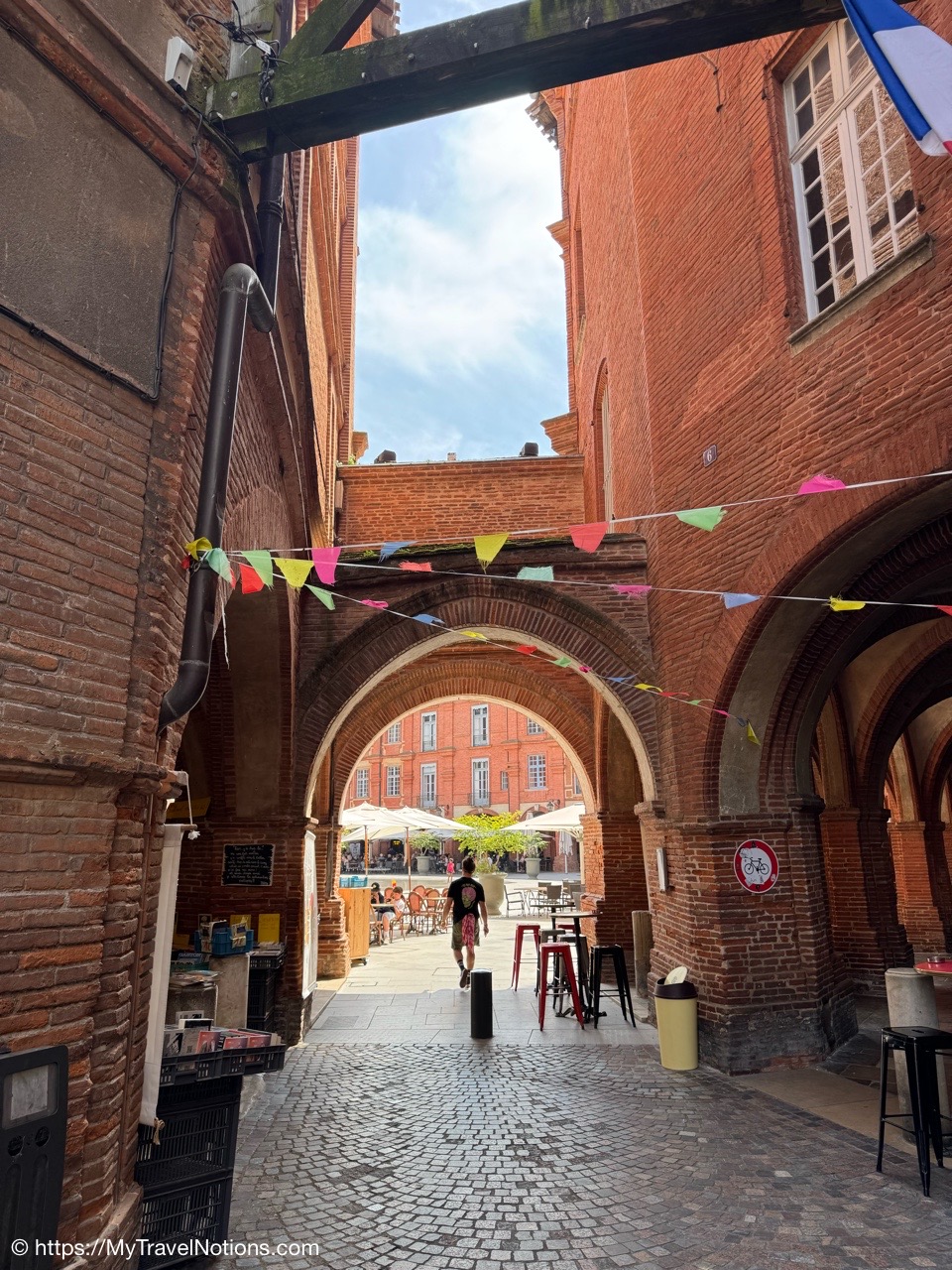
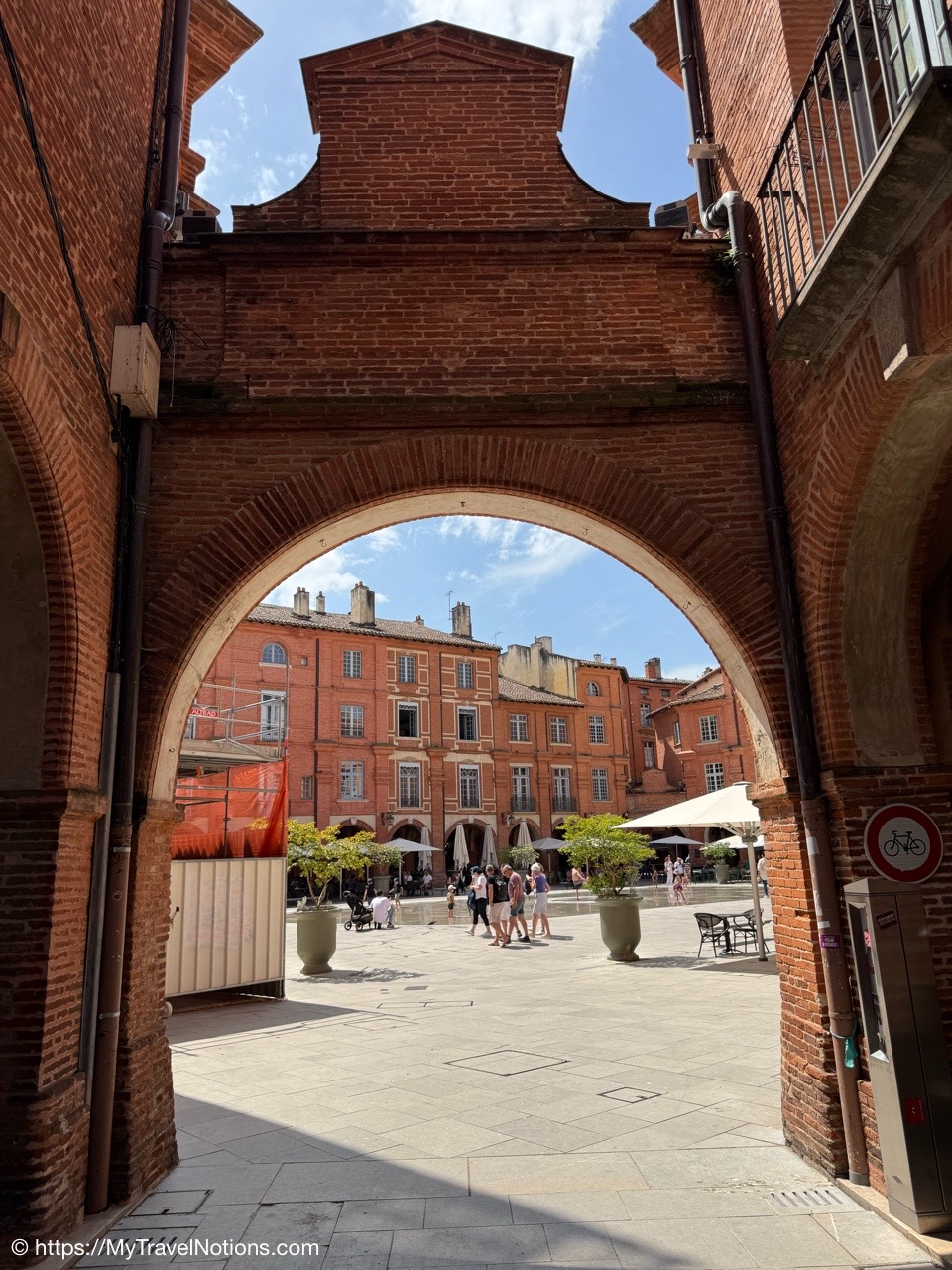
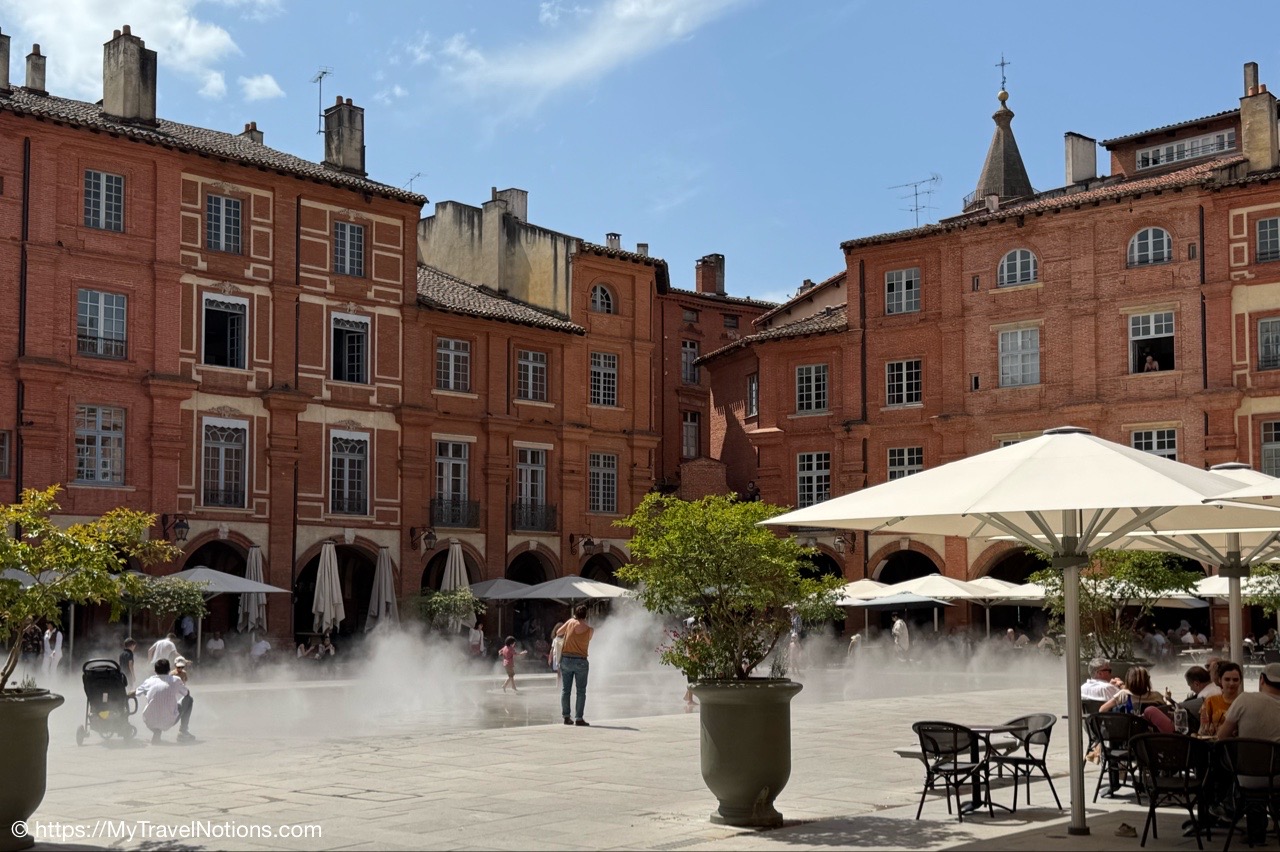
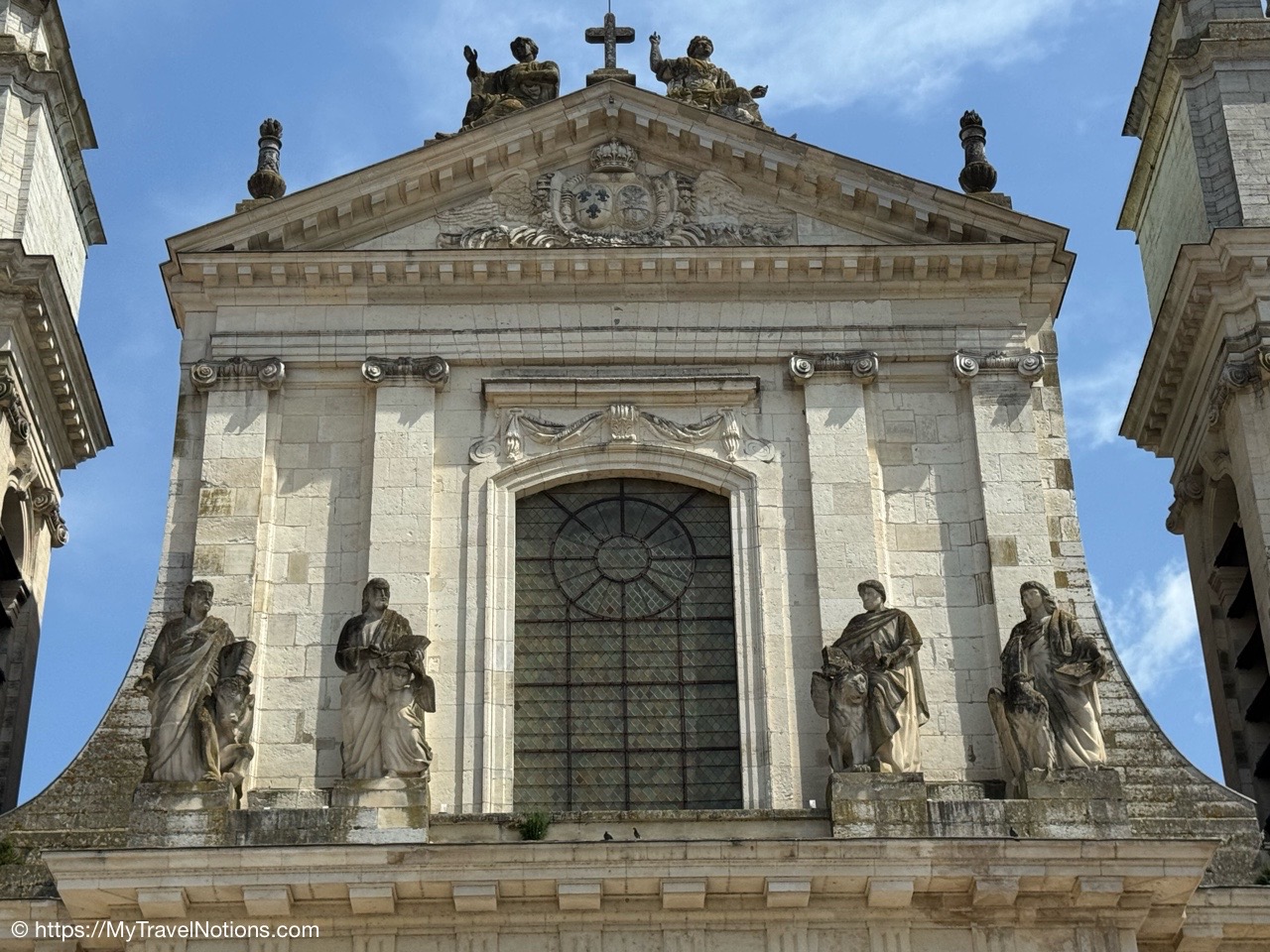
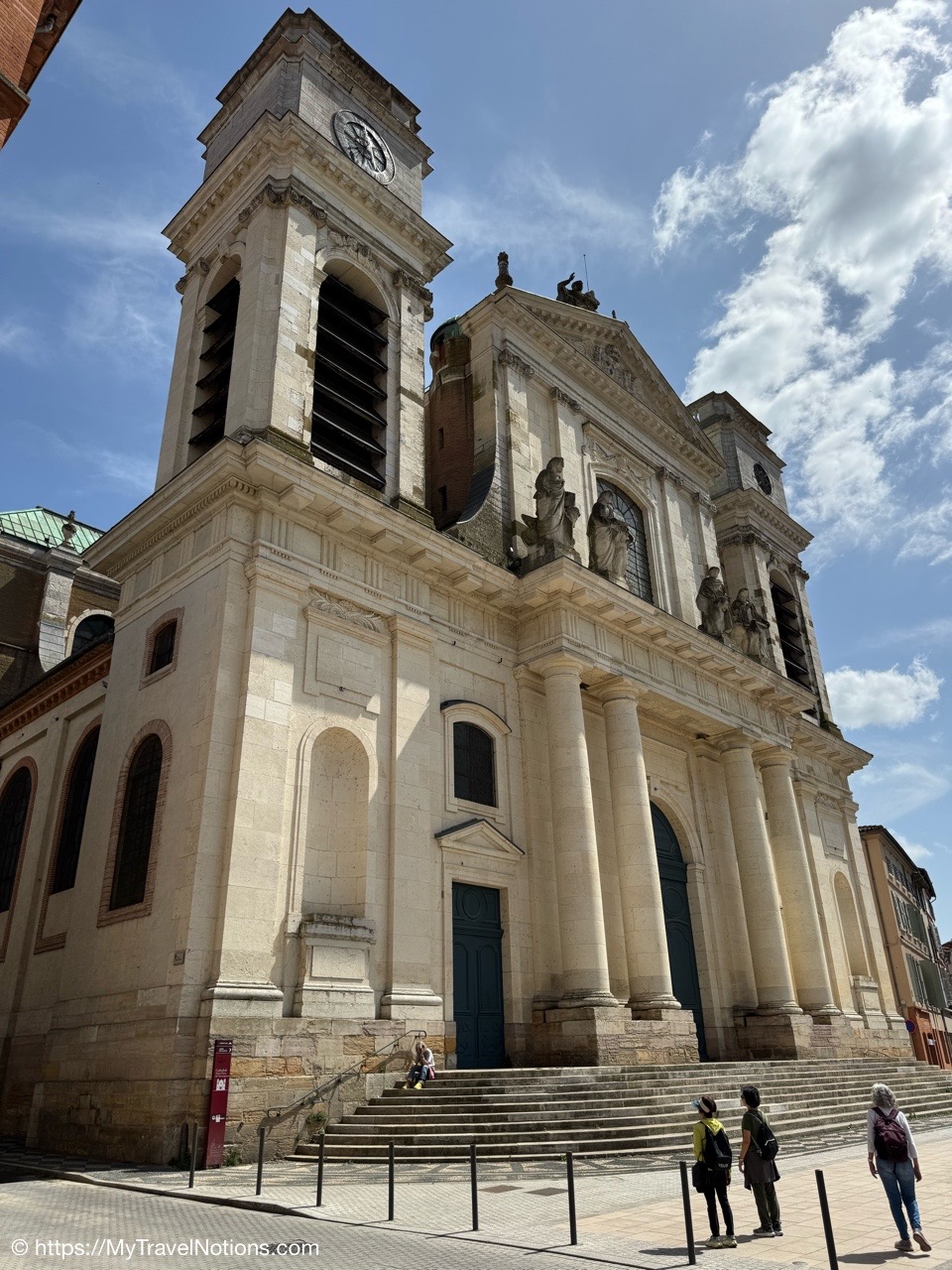
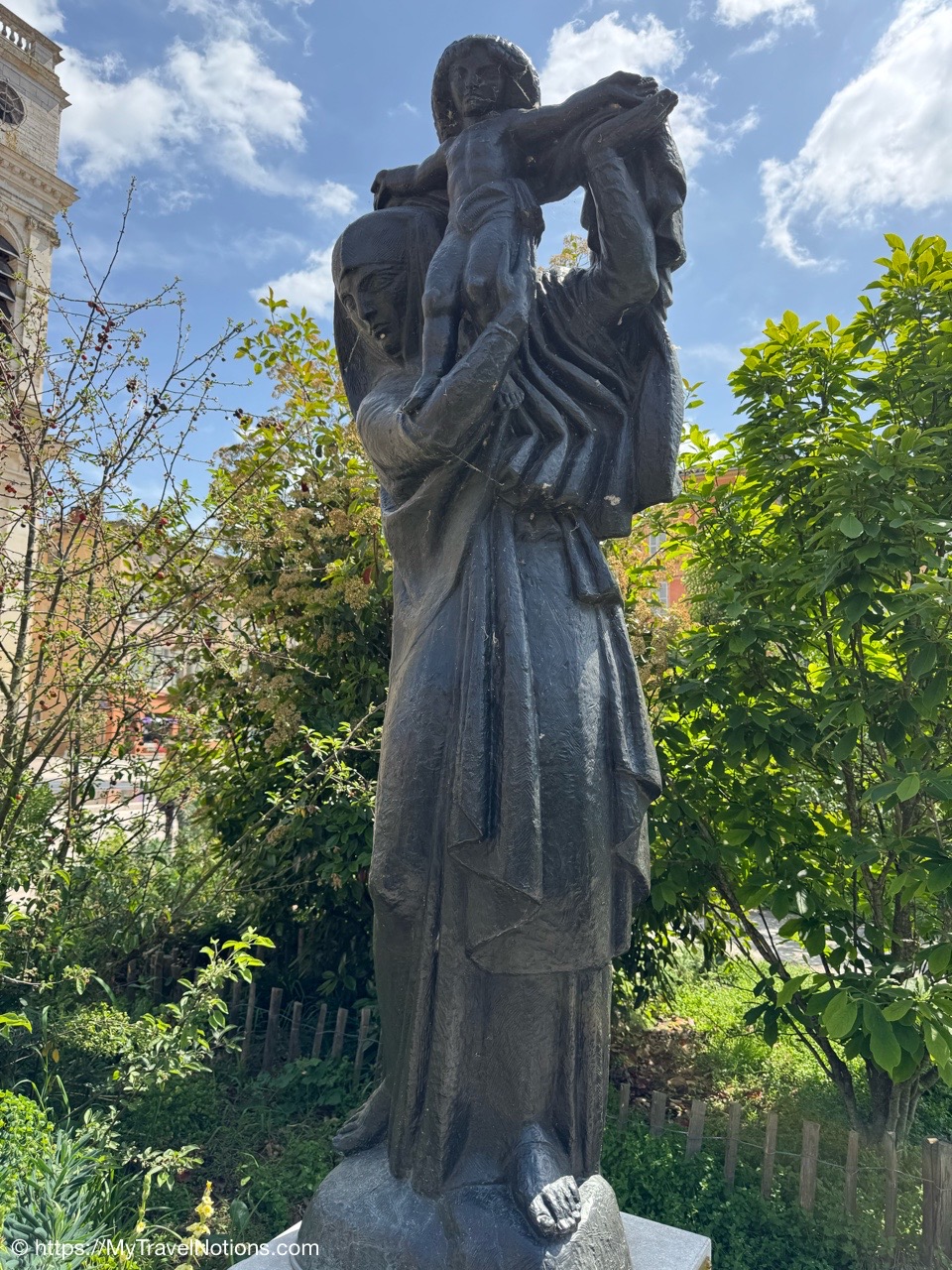
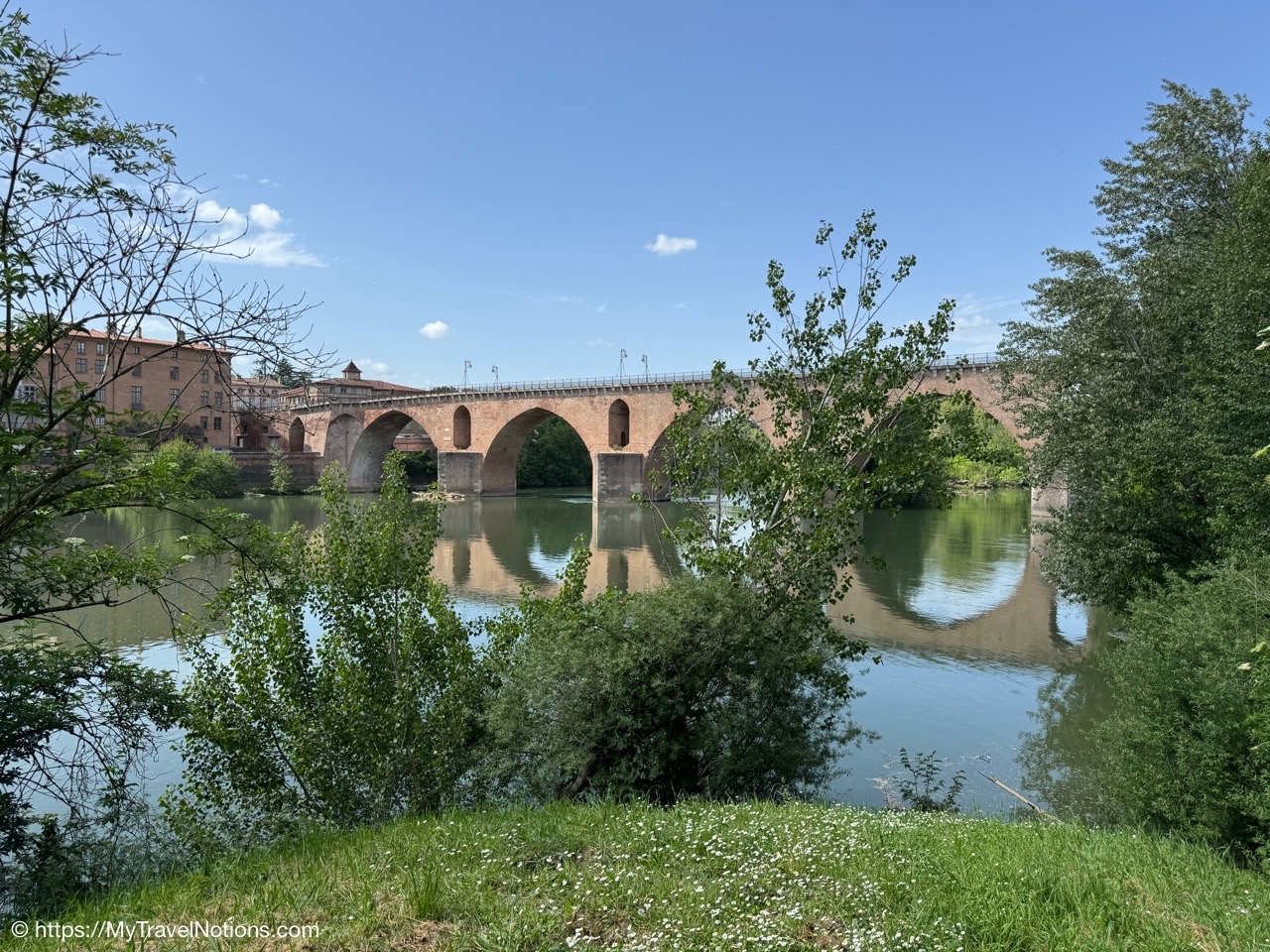
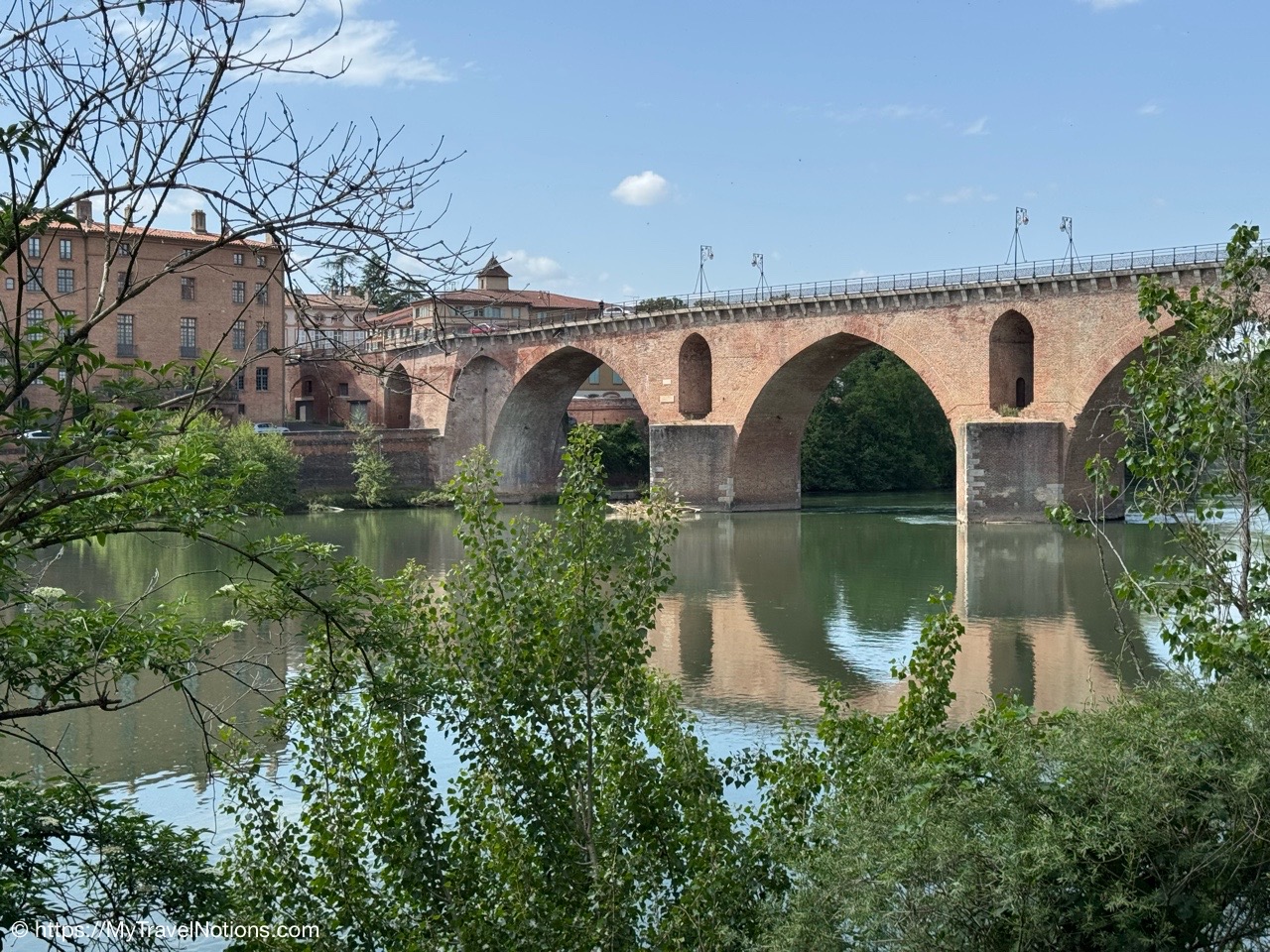
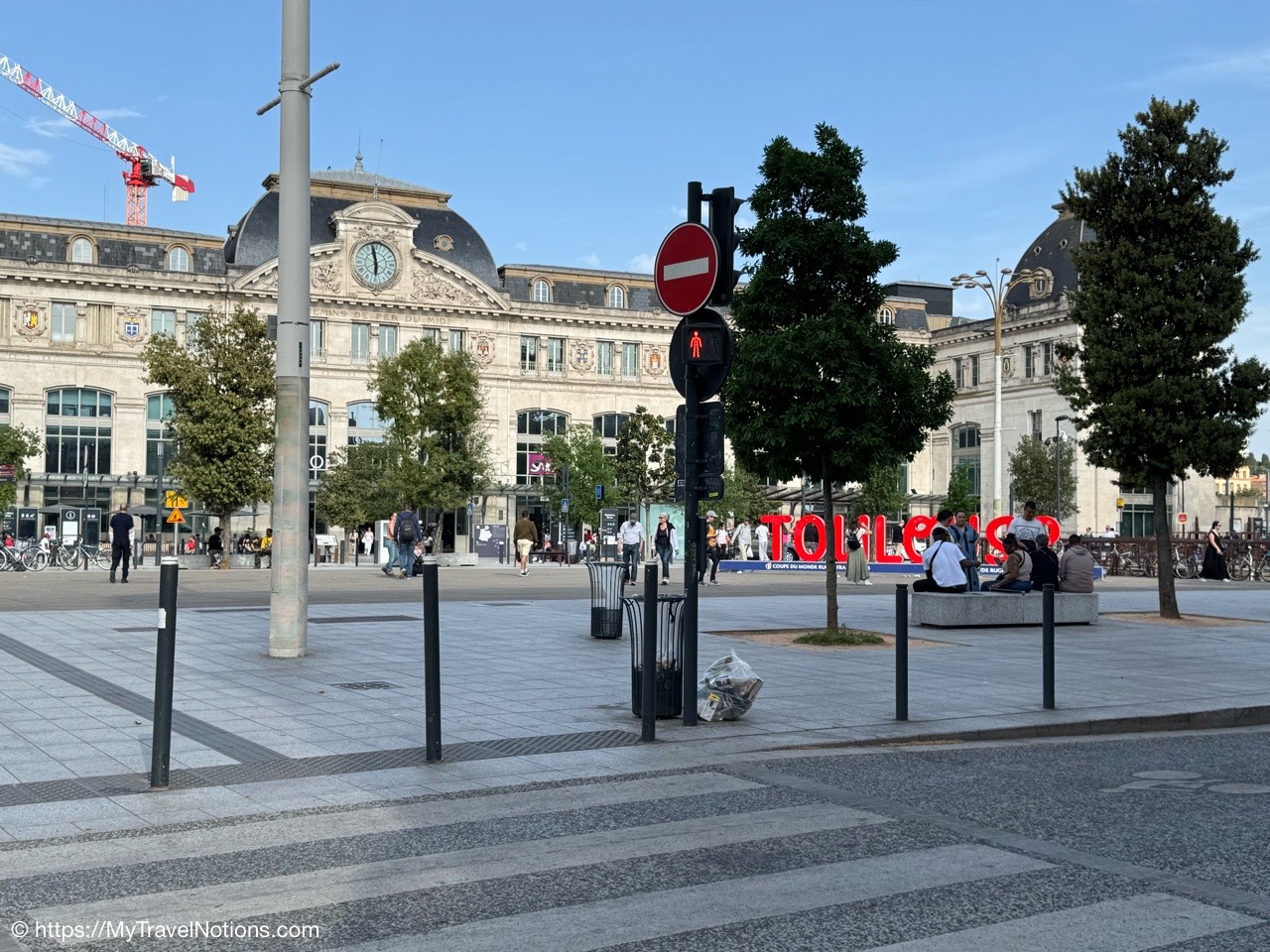
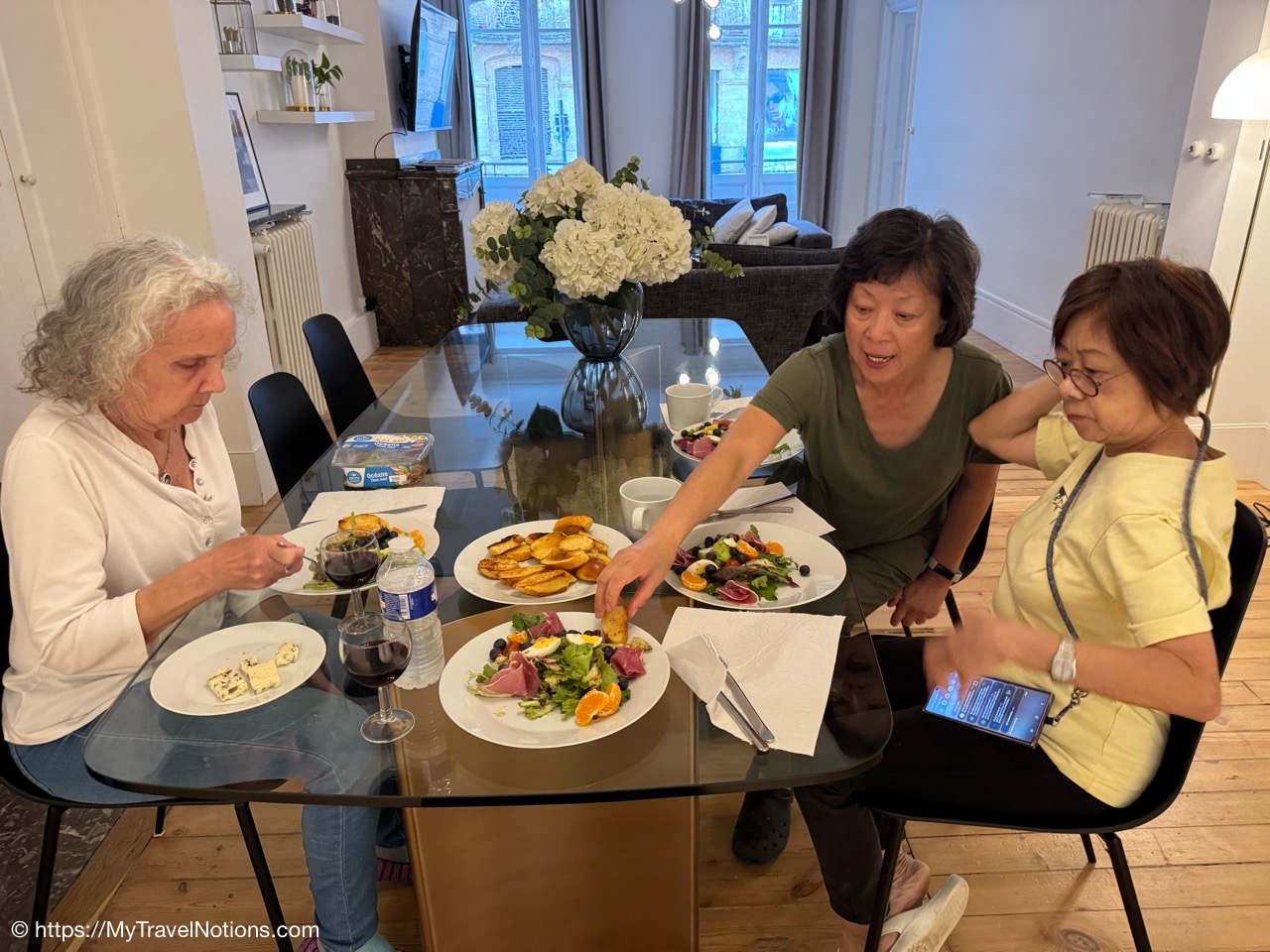
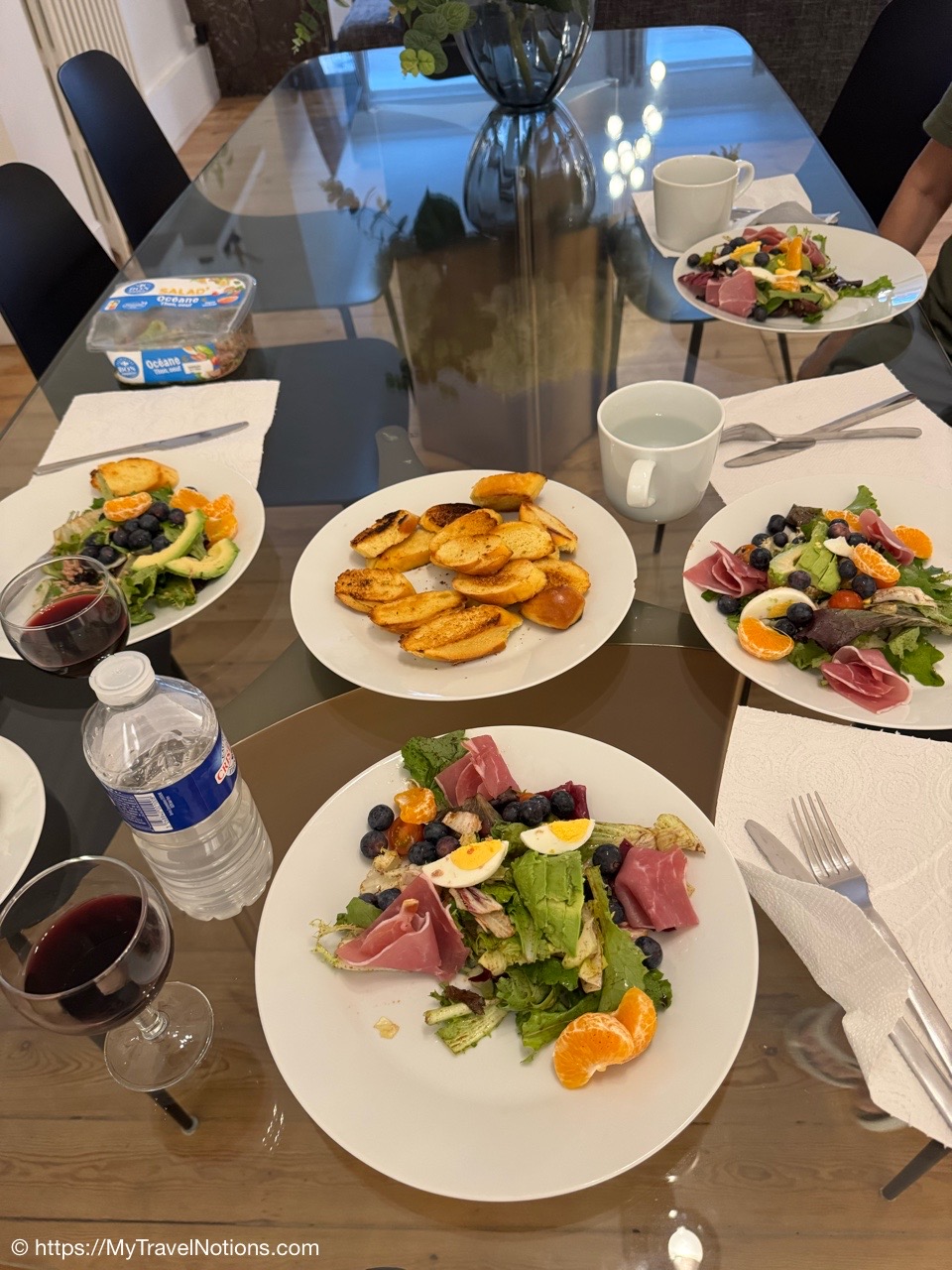
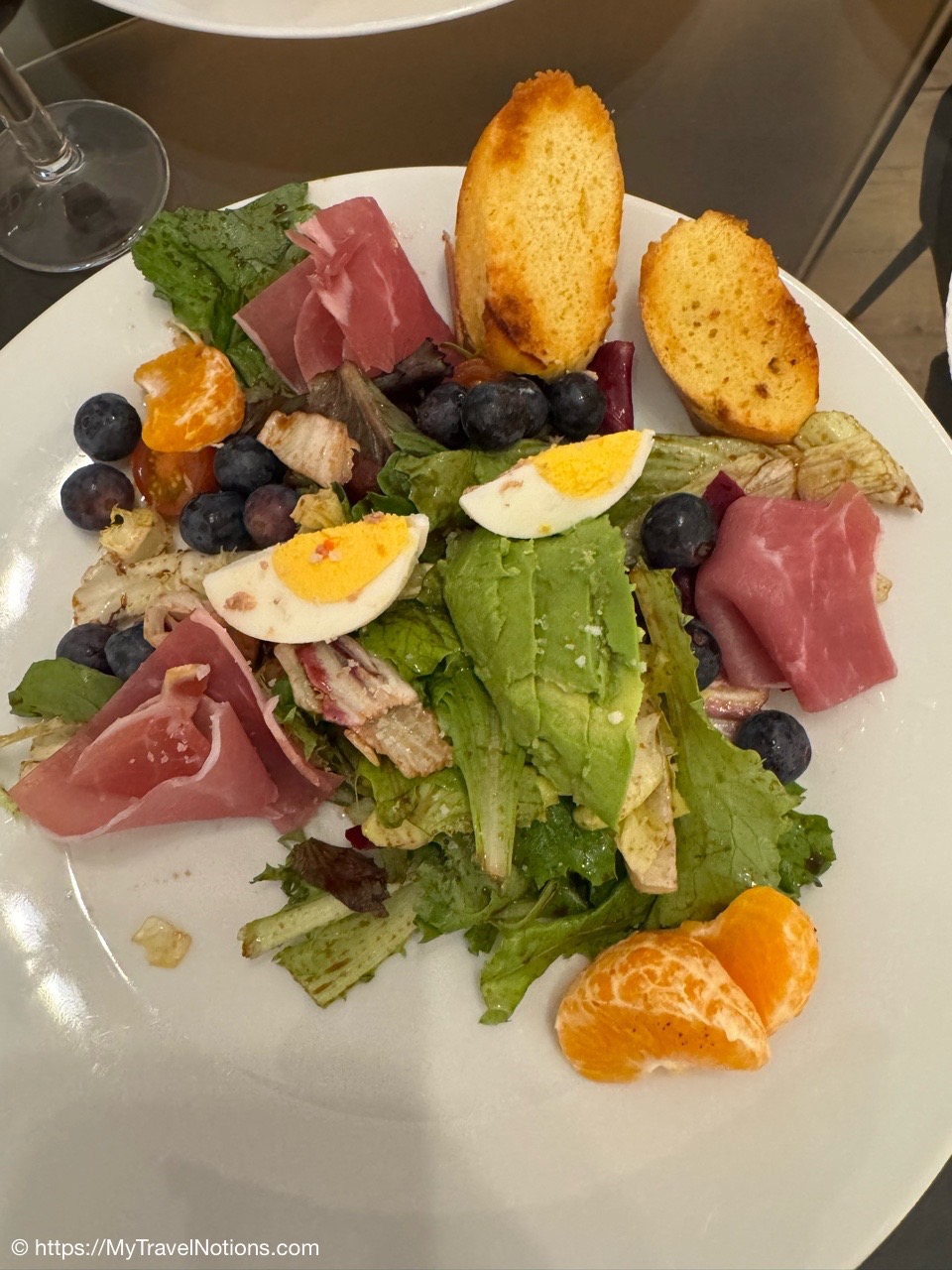
It was sweaters and jackets in the morning but by the time we arrived in Montauban, it was getting warmer. Here we are at the gorgeous red bricked Place Nationale or National Square. It’s ranked among the most beautiful squares of France. From left: Rosie, me, Alice and Tammy. (May 3, 2025)On the train from Toulouse to Montauban for a short hour-long train ride. There’s so much I love about travel, the people, the history, the food and the ease of getting from place to place on these wonderful trains. (May 3, 2025)On the train from Toulouse to Montauban for a short hour-long train ride. There’s so much I love about travel, the people, the history, the food and the ease of getting from place to place on these wonderful trains. (May 3, 2025)Walking from the Montauban train station, we came upon this beautiful red brick church, Saint-Orens. We have learned that the open and closing times on Apple’s Apps can be wrong. So, the best way to tell if a place is actually open is when the doors are open. And, in this case, they were. (May 3, 2025)Inside the Saint-Orens church in Montauban. (May 3, 2025)The altar inside Saint-Orens church in Montauban. (May 3, 2025)The altar inside Saint-Orens church in Montauban. (May 3, 2025)A view of the beautiful stained glass in the side chapels of the Saint-Oren church in Montauban. (May 3, 2025)The beautiful stained glass inside the Saint-Oren church in Montauban. (May 3, 2025)The beautiful stained glass inside the Saint-Oren church in Montauban. (May 3, 2025)The Saint Catherine stained glass inside the Saint Oren church in Montauban. (May 3, 2025)The Saint Genevieve stained glass inside the Saint Oren church in Montauban. (May 3, 2025)Walking across the Pont Neuf over the Tarn River in Montauban. (May 3, 2025)Getting in a group feet selfie along the sidewalk pavement designs in Montauban. (May 3, 2025)The Musée Ingres Bourdelle in Montauban houses a collection of artworks and artifacts related to two famous artists from Montauban, the painter Jean Auguste Dominique Ingres and sculptor Antoine Bourdelle, as well as their own art collections. (May 3, 2025)The Ingres Rooms inside the Musée Ingres-Bourdelle in Montauban. The portrait above the fireplace is of Jean Auguste Dominique Ingres at the age of 25 by Armand Cambon. (May 3, 2025)The Ingres Rooms inside the Musée Ingres-Bourdelle in Montauban. (May 3, 2025)A portrait of Caroline Gonse by Jean Auguste Dominique Ingres featured in the Ingres Rooms inside the Musée Ingres-Bourdelle in Montauban. (May 3, 2025)Christ delivering the Keys of the Kingdom of Heaven to St. Peter by Jean Auguste Dominique Ingres inside the Musée Ingres-Bourdelle in Montauban. (May 3, 2025)The sculptures of Antoine Bourdelle inside the Musée Ingres-Bourdelle in Montauban. (May 3, 2025)A close-up the bust of Auguste Rodin by one of his pupils, Antoine Bourdelle, inside the Musée Ingres-Bourdelle in Montauban. (May 3, 2025)A temporary exhibit inside the Musée Ingres-Bourdelle in Montauban is this Claude Monet (1840-1926) oil on canvas painting of the Parliament in London, ‘Sunlight in the Fog’ from 1904. (May 3, 2025)Walking around in Montauban. (May 3, 2025)Walking around in Montauban. (May 3, 2025)Entering the Place Nationale or National Plaza from one of its four archway street entrances in Montauban. (May 3, 2025)Place Nationale is a square located in the town of Montauban, France. A remnant of the old medieval fortified town, rebuilt in the 17th century after two fires, it is considered the heart of the town center. (May 3, 2025)We arrived in time for lunch at the Place Nationale in Montauban and we had a difficult time finding a place to eat because all the restaurants were packed…until we found this Indian food restaurant, Delice Indien. From left: Rosie, Tammy, Alice and me. (May 3, 2025)I was hungry for lunch but still did not want a whole lot of food and this salmon and salad appetizer place at Delice Indien in Montauban was delicious and perfectly filling. It’s odd to figure out an Indian food restaurant menu in French…thank goodness for translation Apps. (May 3, 2025)Our view from one of the intersecting streets into the Place Nationale or National Plaza in Montauban. (May 3, 2025)The water mirror in the center of the Place Nationale or National Plaza in Montauban. (May 3, 2025)An archway into and out of the red bricked Place Nationale or National Plaza in Montauban. (May 3, 2025)Just loved this little corner bookstore under the arcade at the Place Nationale or National Plaza in Montauban. (May 3, 2025)Just loved this little corner bookstore under the arcade at the Place Nationale or National Plaza in Montauban. (May 3, 2025)Walking through another one of the four archways in and out of the Place Nationale in Montauban. (May 3, 2025)Walking through one of the four archways in and out of the Place Nationale in Montauban. (May 3, 2025)The spraying water mirror in the center of the Place Nationale or National Plaza in Montauban. (May 3, 2025)The Église Saint-Jacques de Montauban was built in the 13th century, about one century after the city was founded. (May 3, 2025)The exterior and side entrance into the Église Saint-Jacques de Montauban. (May 3, 2025)The exterior and side entrance into the Église Saint-Jacques de Montauban. (May 3, 2025)Inside the Église Saint-Jacques de Montauban. (May 3, 2025)Inside the Église Saint-Jacques de Montauban. (May 3, 2025)The altar inside the Église Saint-Jacques de Montauban. (May 3, 2025)The side chapels of the Église Saint-Jacques de Montauban. (May 3, 2025)A side chapel of the Église Saint-Jacques de Montauban. (May 3, 2025)The pulpit and side chapels inside the Église Saint-Jacques de Montauban. (May 3, 2025)The pulpit inside the Église Saint-Jacques de Montauban. (May 3, 2025)Walking around in Montauban. (May 3, 2025)Walking towards the Cathedral of Notre Dame de l’Assomption de Montauban or Montauban Cathedral. (May 3, 2025)The Cathedral of Notre Dame de l’Assomption de Montauban or Montauban Cathedral. The cornerstone of the cathedral was laid in 1692, and the church was consecrated in 1739. The cathedral was Protestant from the start of the Wars of Religion until Catholicism returned to Montauban in 1629. The French Wars of Religion were a series of civil wars between French Catholics and Protestants (called Huguenots) from 1562 to 1598. The cathedral was closed. (May 3, 2025)The Cathedral of Notre Dame de l’Assomption de Montauban or Montauban Cathedral. The cornerstone of the cathedral was laid in 1692, and the church was consecrated in 1739. The cathedral was Protestant from the start of the Wars of Religion until Catholicism returned to Montauban in 1629. The French Wars of Religion were a series of civil wars between French Catholics and Protestants (called Huguenots) from 1562 to 1598. The cathedral was closed. (May 3, 2025)The Cathedral of Notre Dame de l’Assomption de Montauban or Montauban Cathedral. The cornerstone of the cathedral was laid in 1692, and the church was consecrated in 1739. The cathedral was Protestant from the start of the Wars of Religion until Catholicism returned to Montauban in 1629. The French Wars of Religion were a series of civil wars between French Catholics and Protestants (called Huguenots) from 1562 to 1598. The cathedral was closed. (May 3, 2025)The statue in the garden across from the Montauban Cathedral, a Roman Catholic cathedral and a national monument of France located in the town of Montauban. (May 3, 2025)Pont Vieux in Montauban was built between 1304 – 1335 by engineers who took up the challenge to design a 672 foot or 205 meter long structure over the Tren River while linking two banks of unequal height. (May 3, 2025)Pont Vieux in Montauban was built between 1304 – 1335 by engineers who took up the challenge to design a 672 foot or 205 meter long structure over the Tren River while linking two banks of unequal height. (May 3, 2025)Back at the Toulouse Matabiau train station from our day trip to Montauban. (May 3, 2025)Alice prepared us a delicious salad for dinner at the apartment we shared in Toulouse. This 5-bedroom, 3 bath, 2 toilets apartment is located within a 20 minute walk of most of the things we wanted to see and do while in Toulouse. Thanks Alice and Tammy. (May 3, 2025)Alice prepared us a delicious salad for dinner at the apartment we shared in Toulouse. This 5-bedroom, 3 bath, 2 toilets apartment is located within a 20 minute walk of most of the things we wanted to see and do while in Toulouse. Thanks Alice and Tammy. (May 3, 2025)My delicious dinner salad at our apartment in Toulouse. Thanks so much Alice and Tammy. (May 3, 2025)
For our last couple of days in Toulouse, the weather has run the gamut from a little warm and sunny to downright cold and overcast. So along with taking it easy, I enjoyed several highlights over the past couple of days includingthe venerated Black Madonna of the Basilica of Notre-Dame and the stunning murals, artwork and history of Toulouse inside the Toulouse Capitole.
Come check out these amazing Toulouse sites with me.
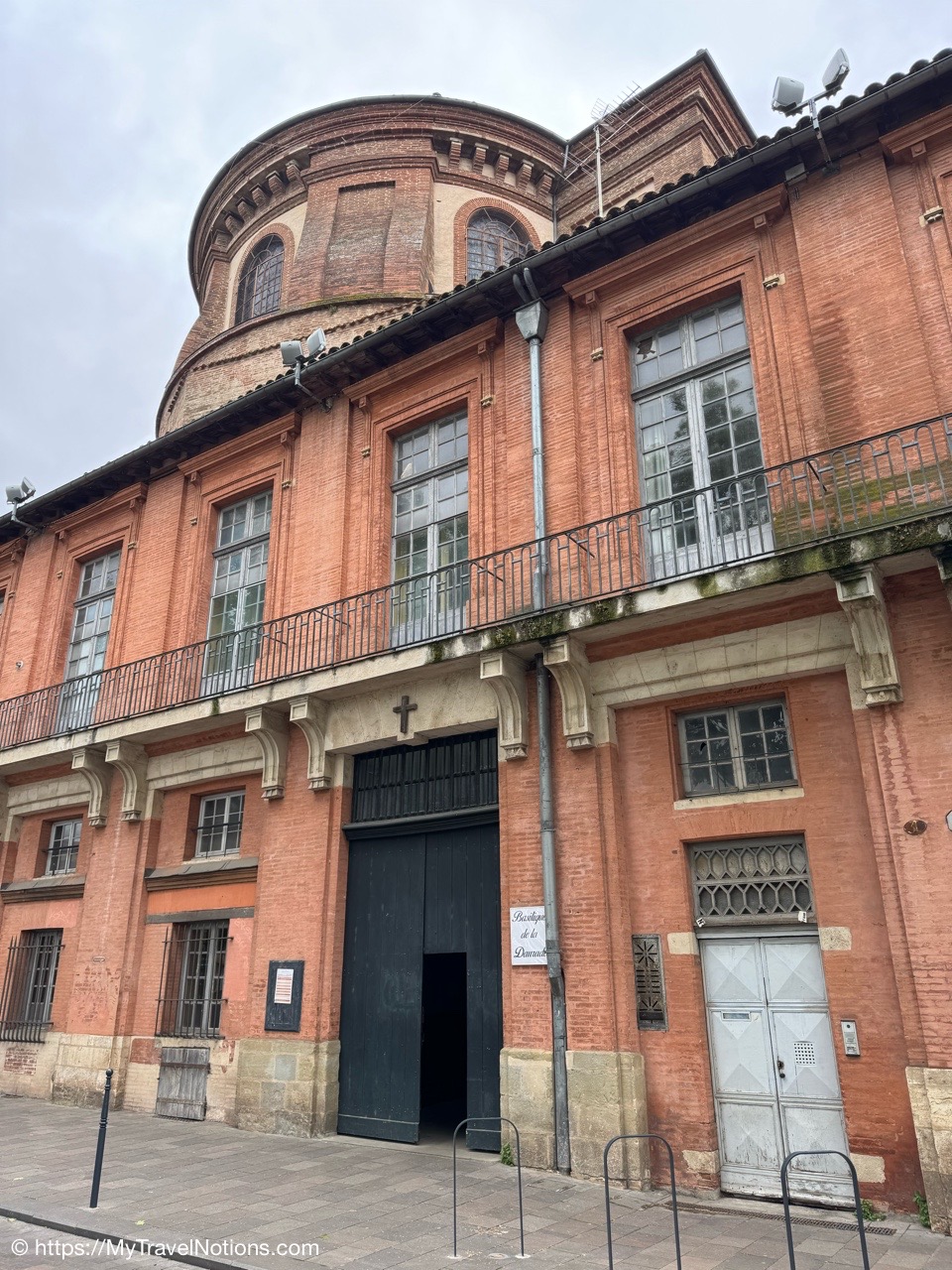
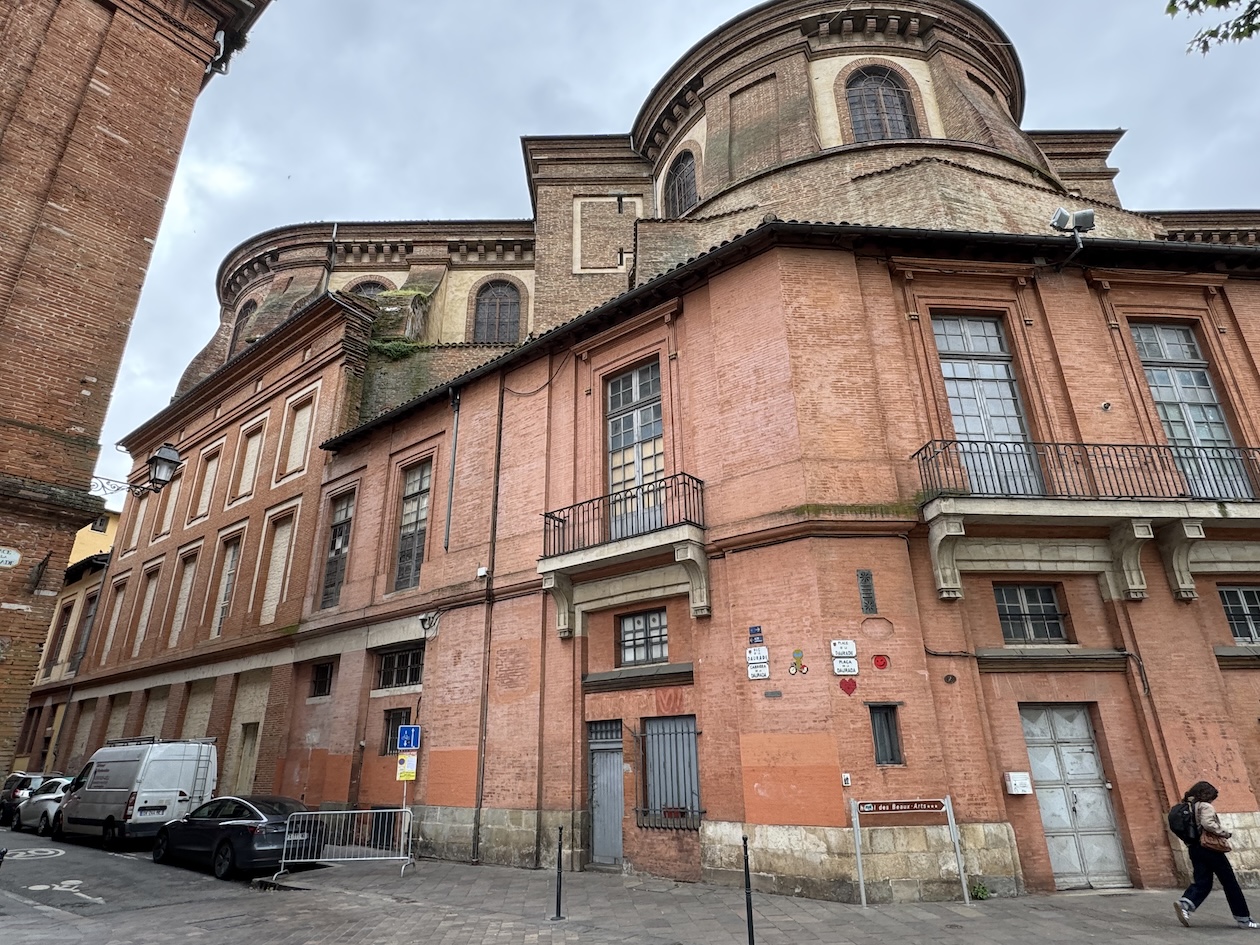
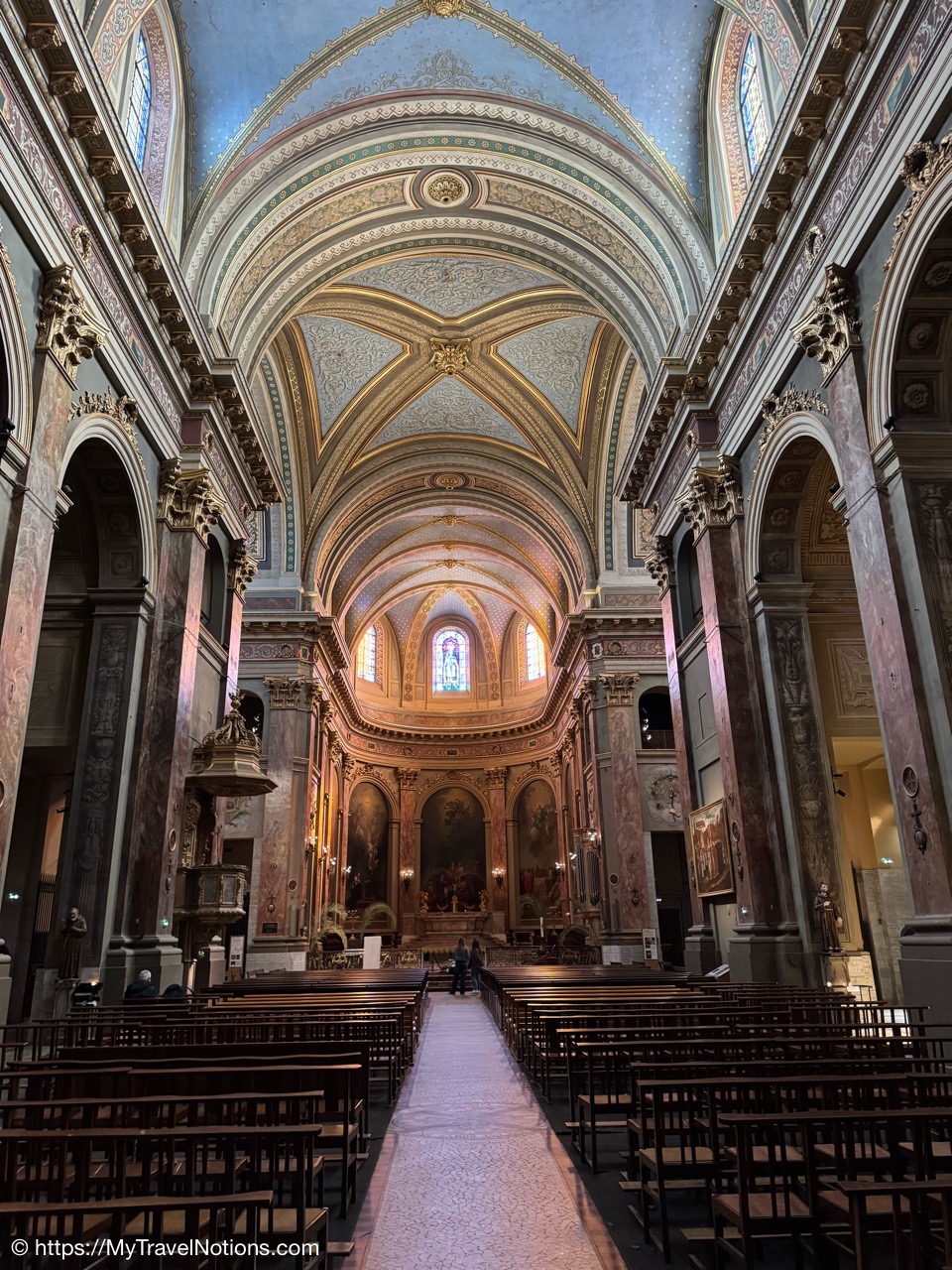
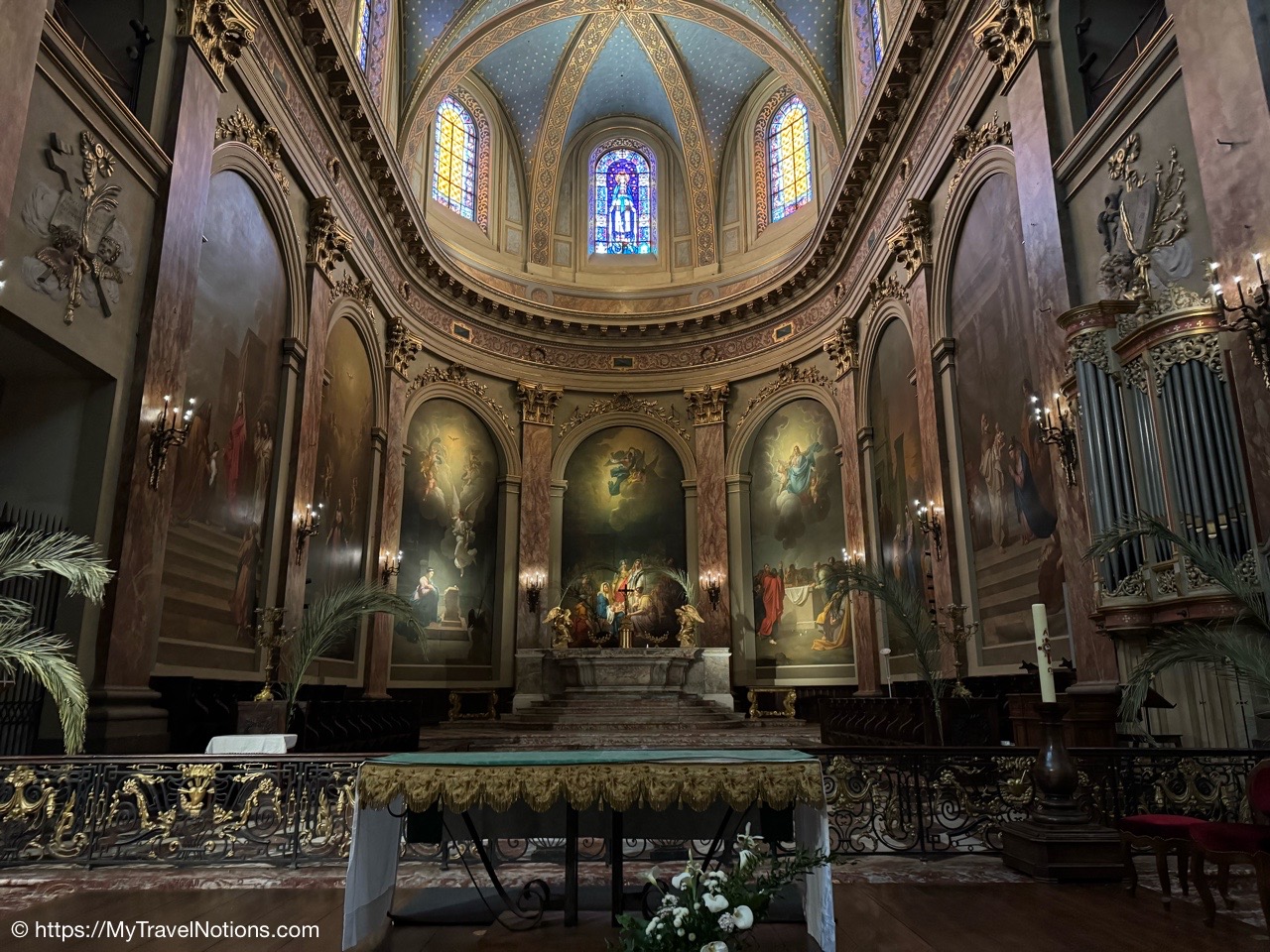
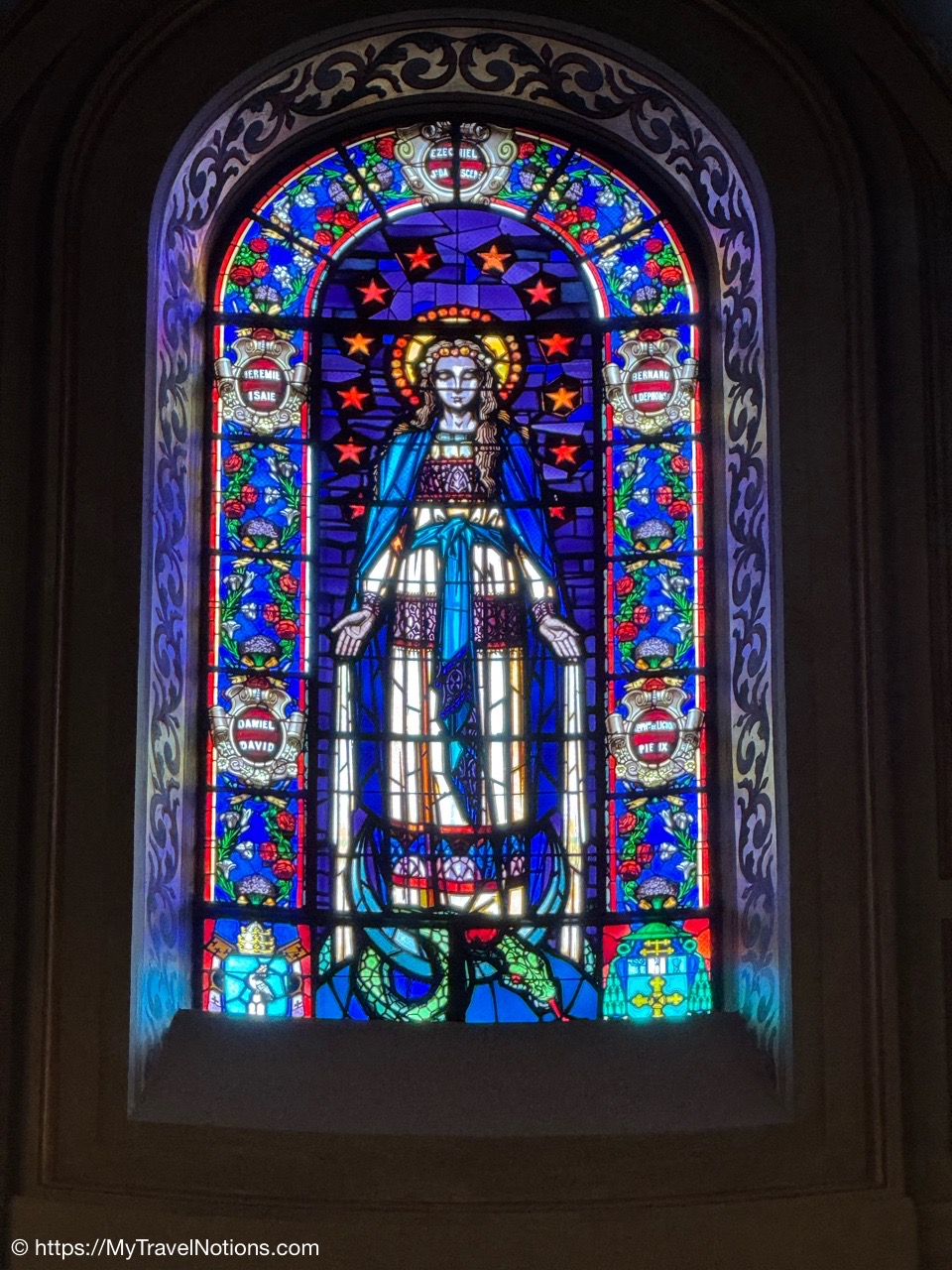
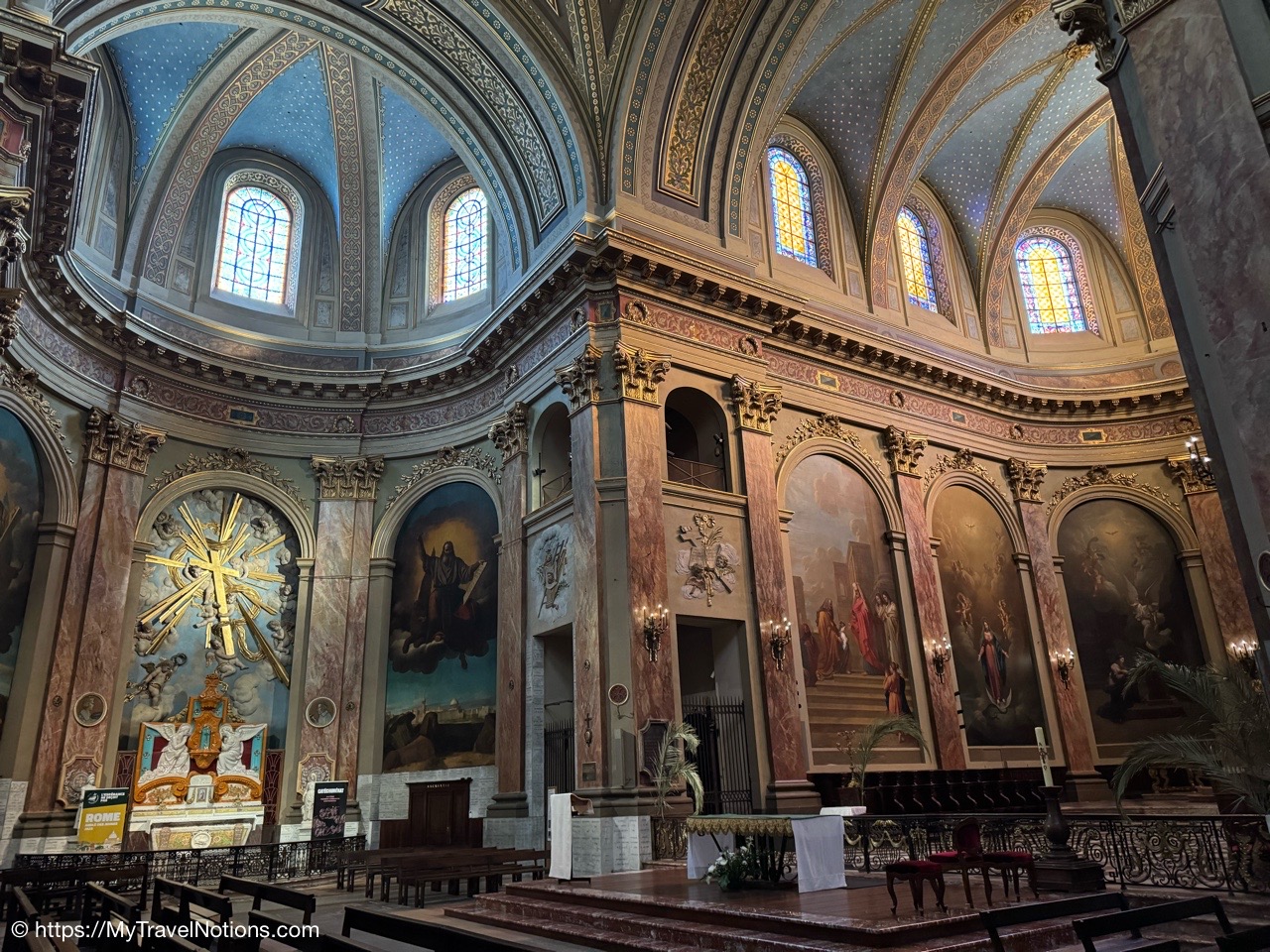
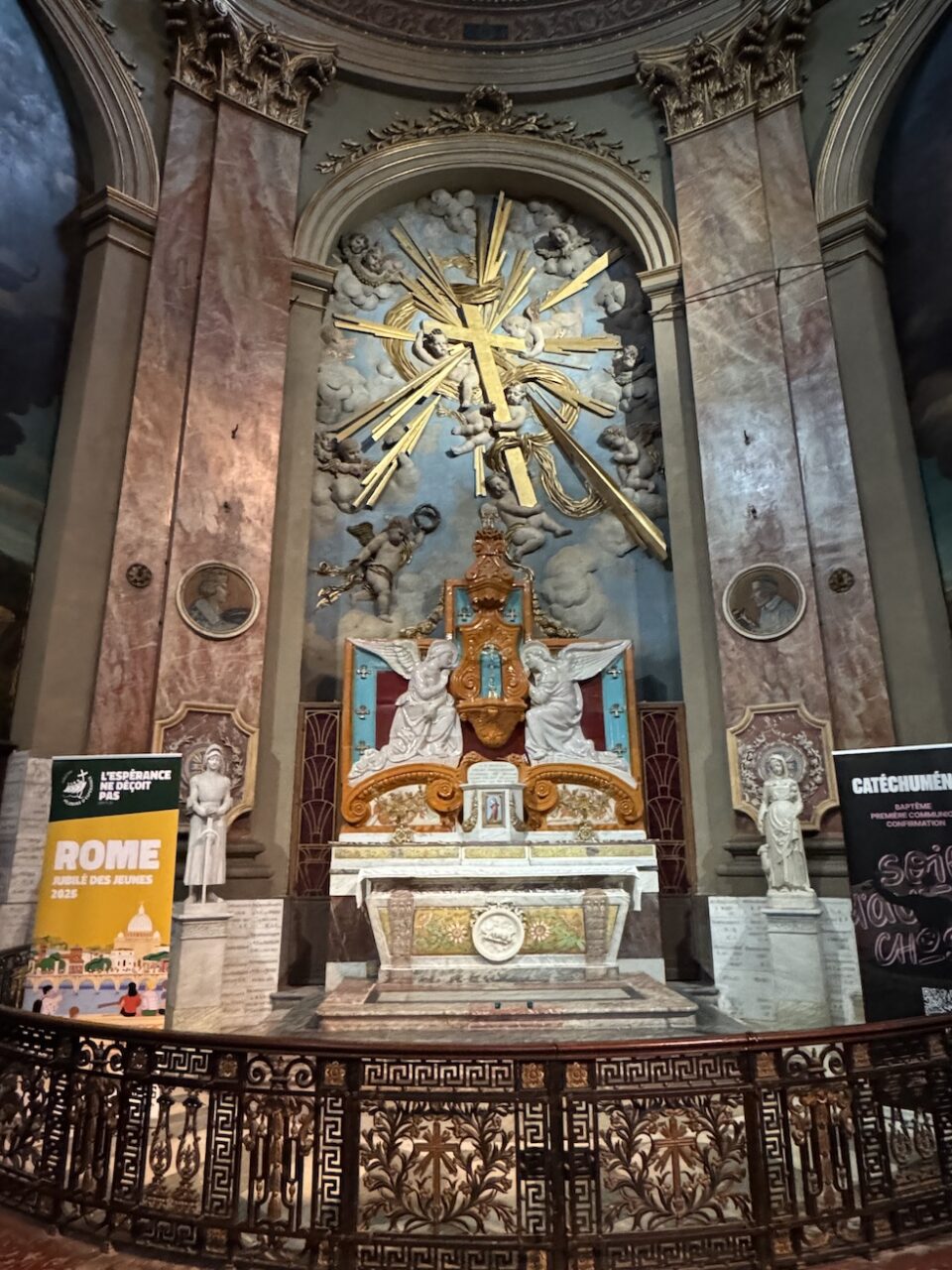
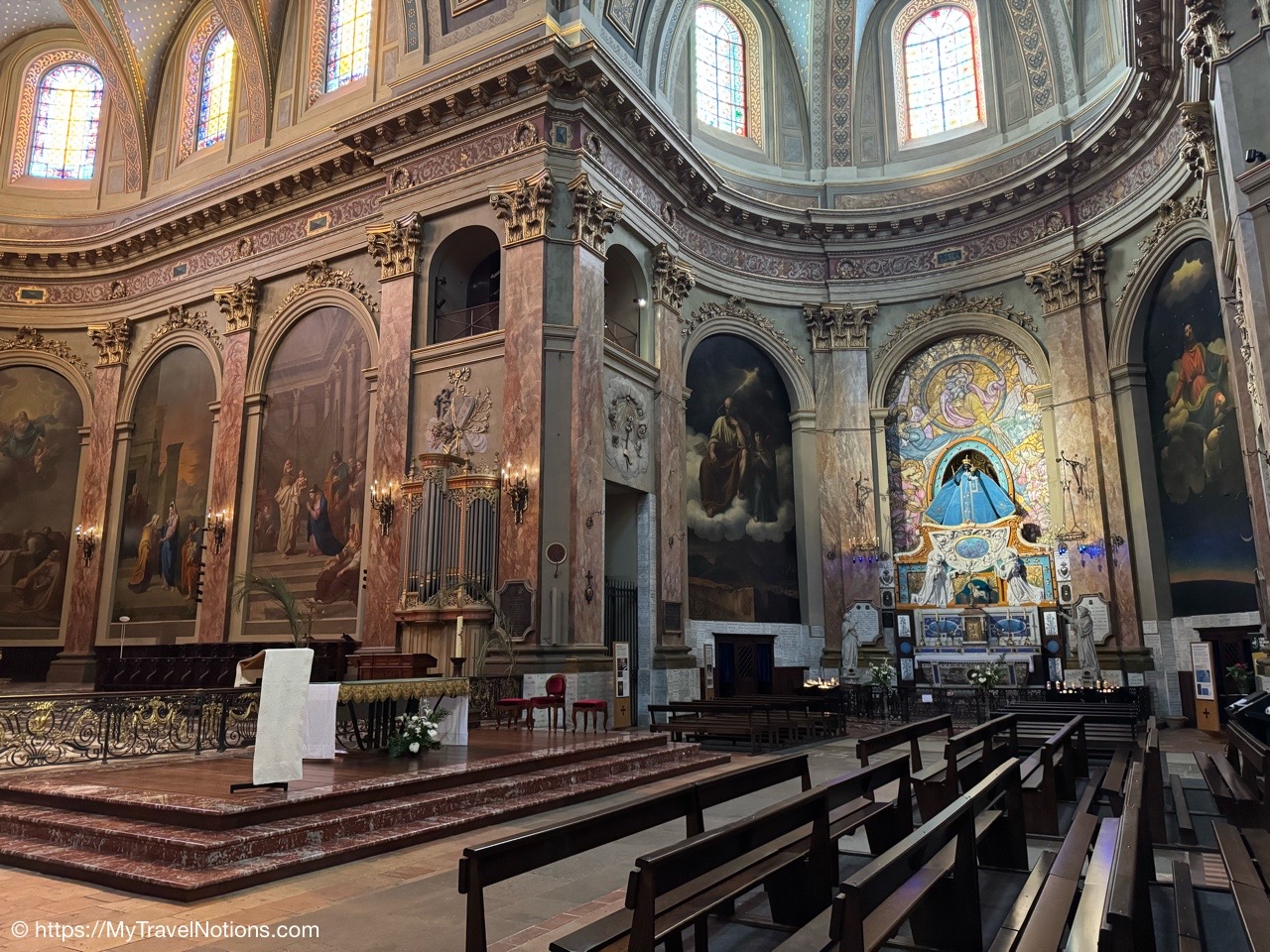
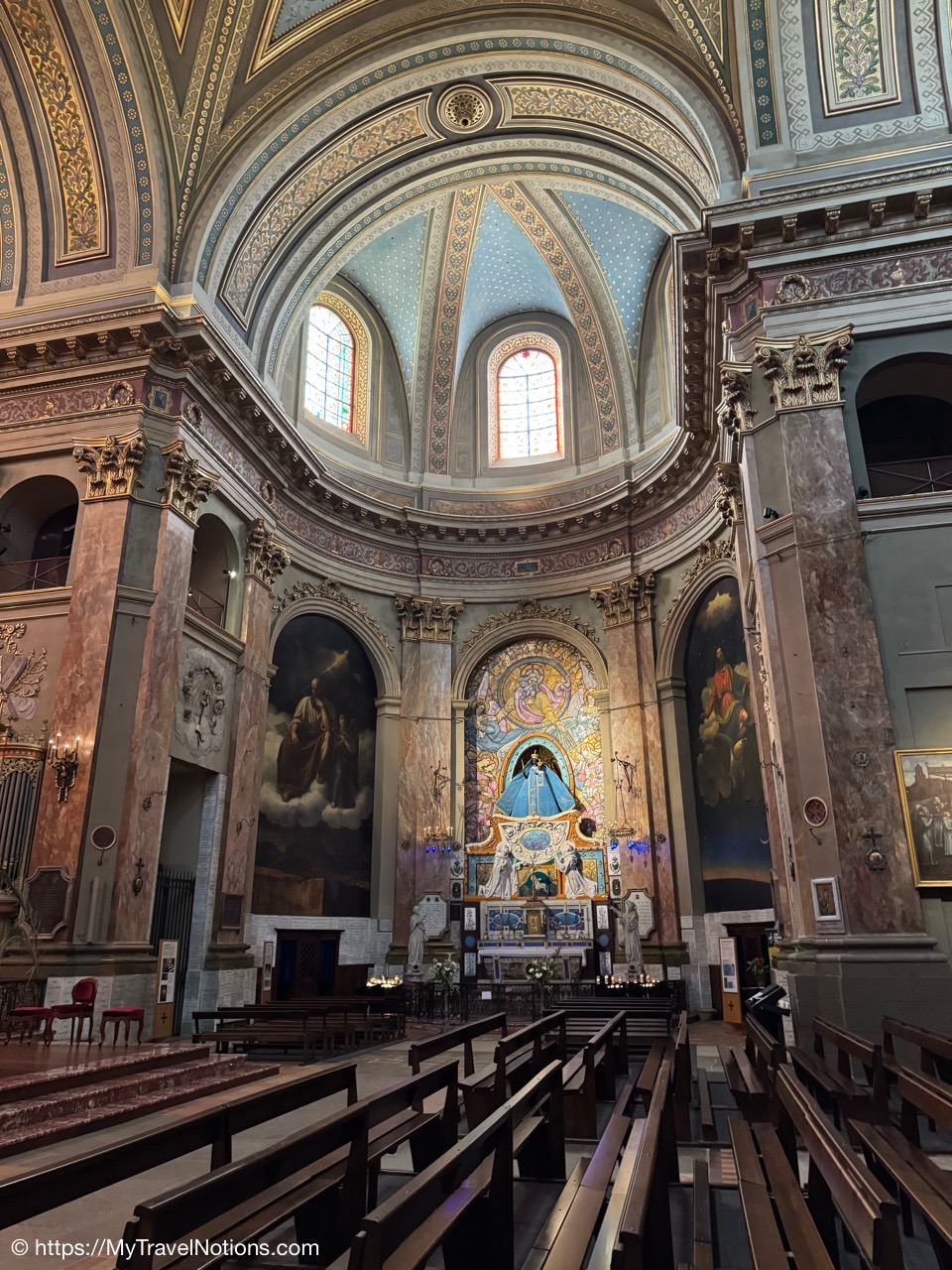
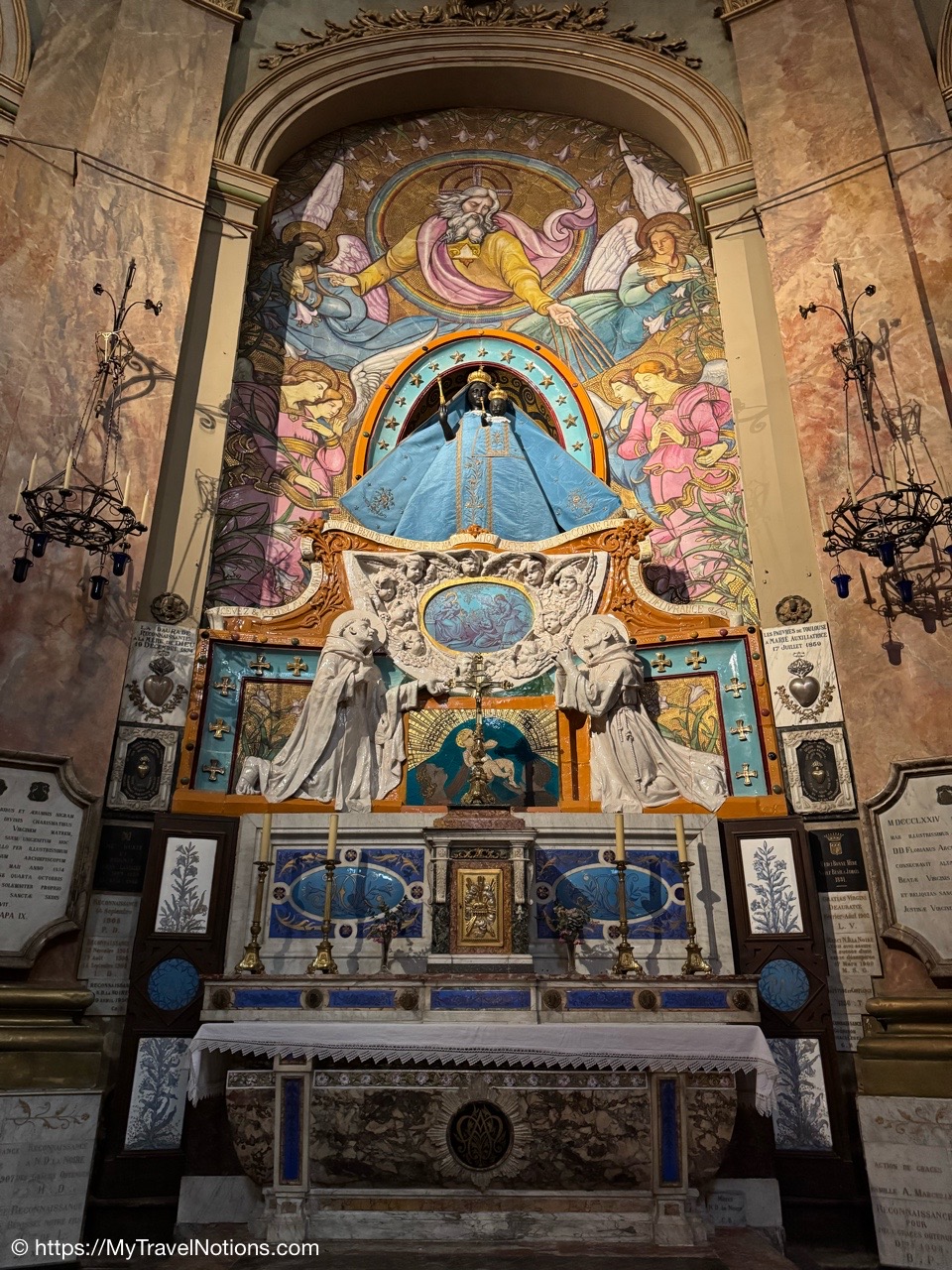
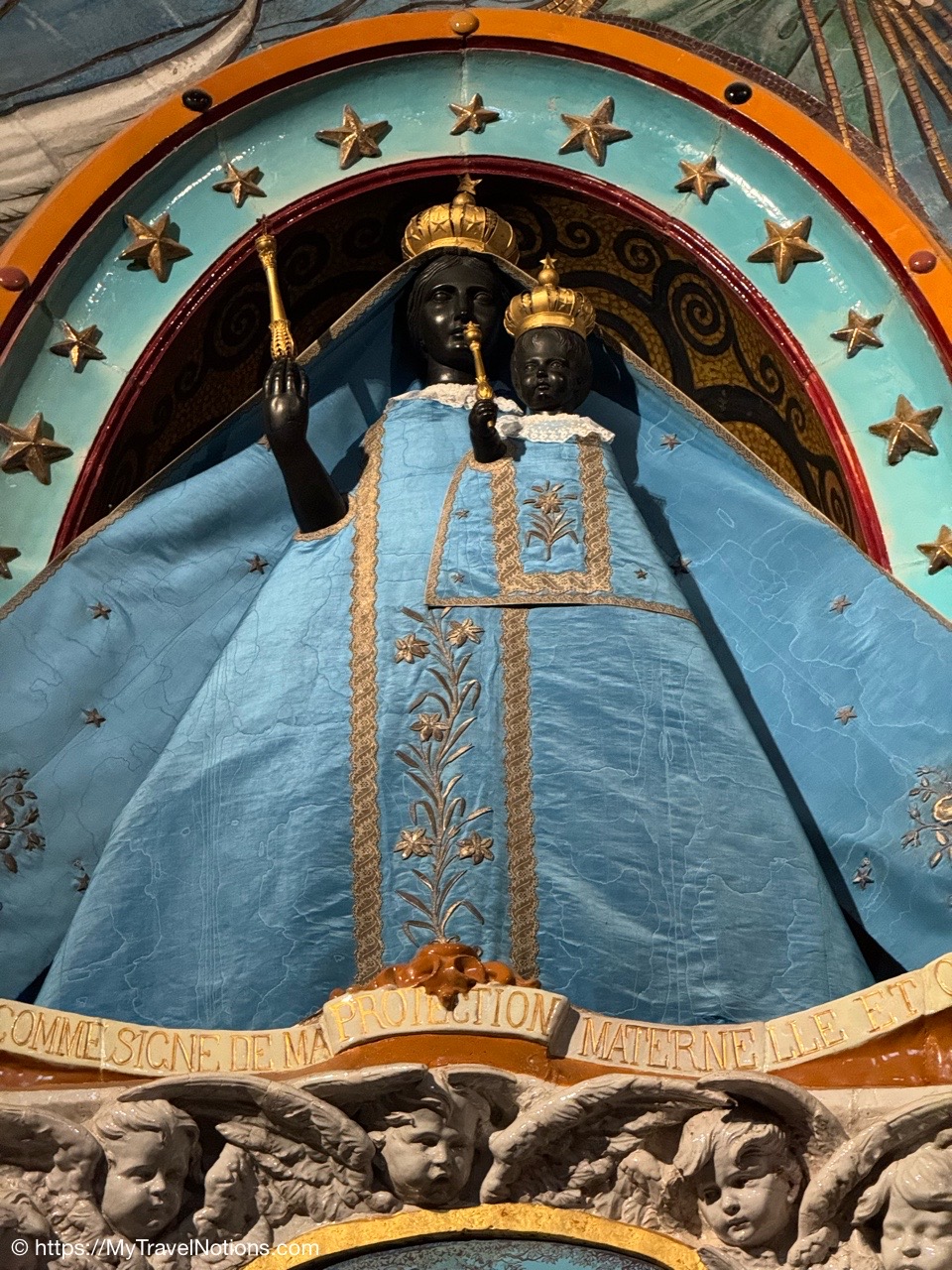
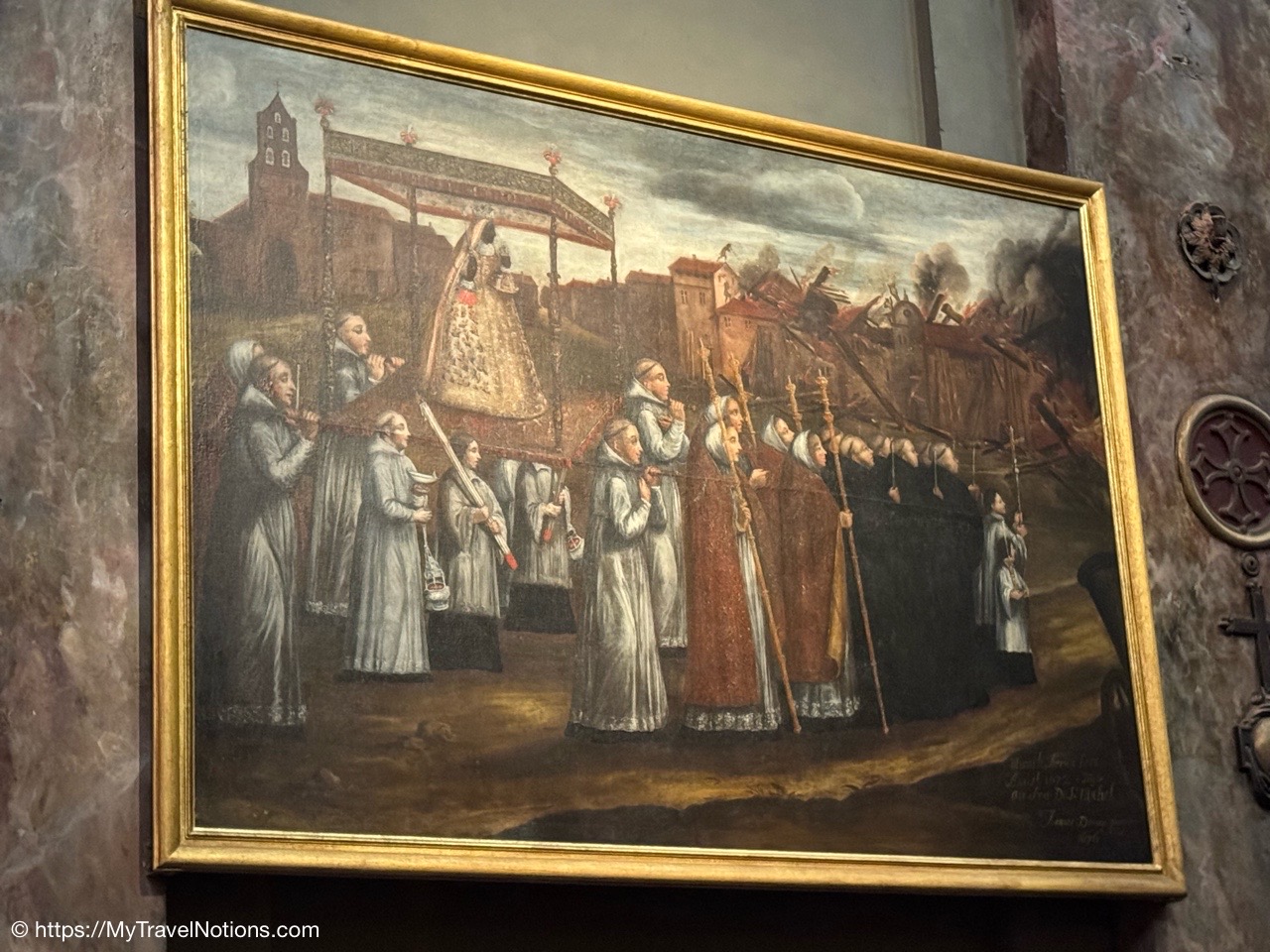
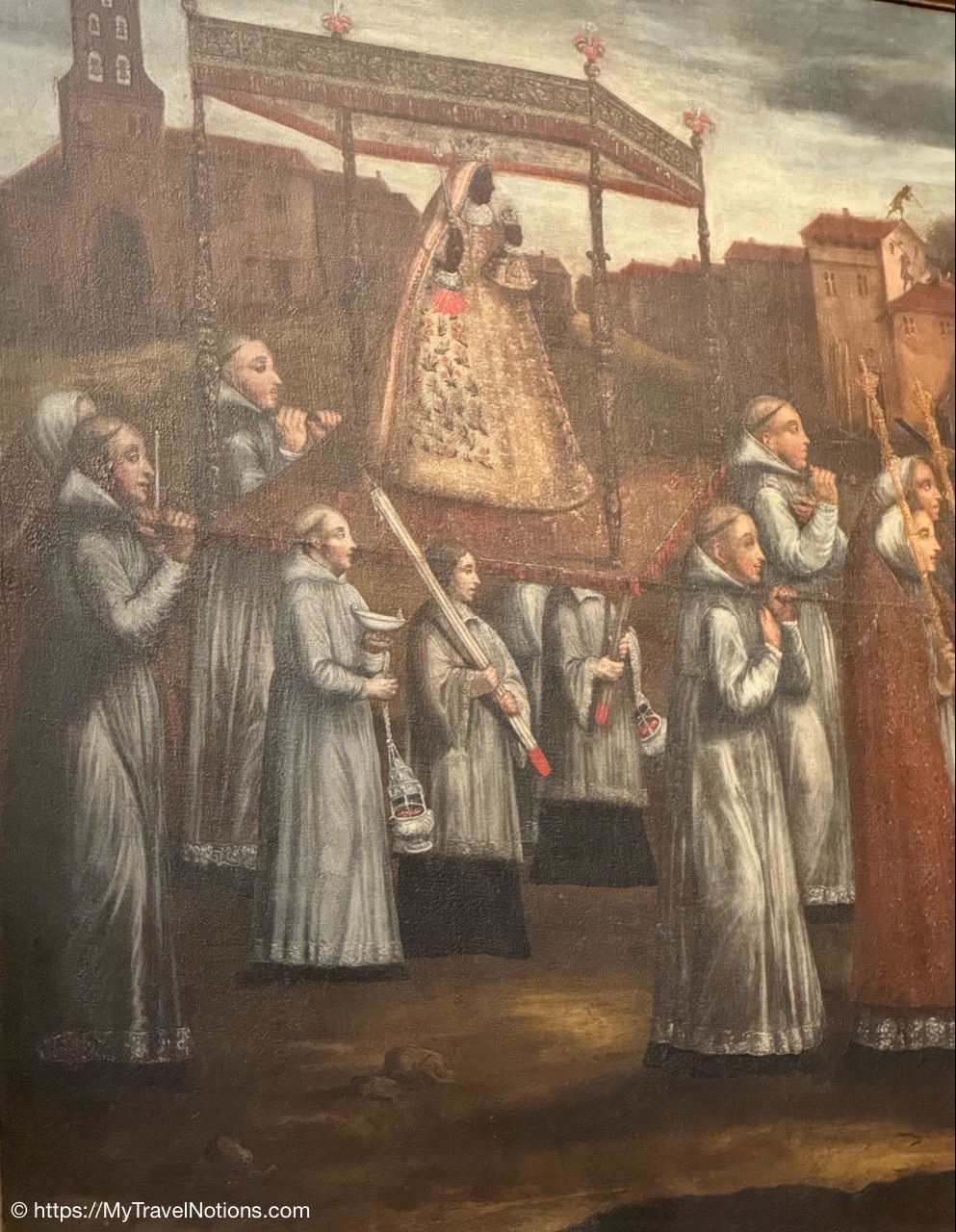
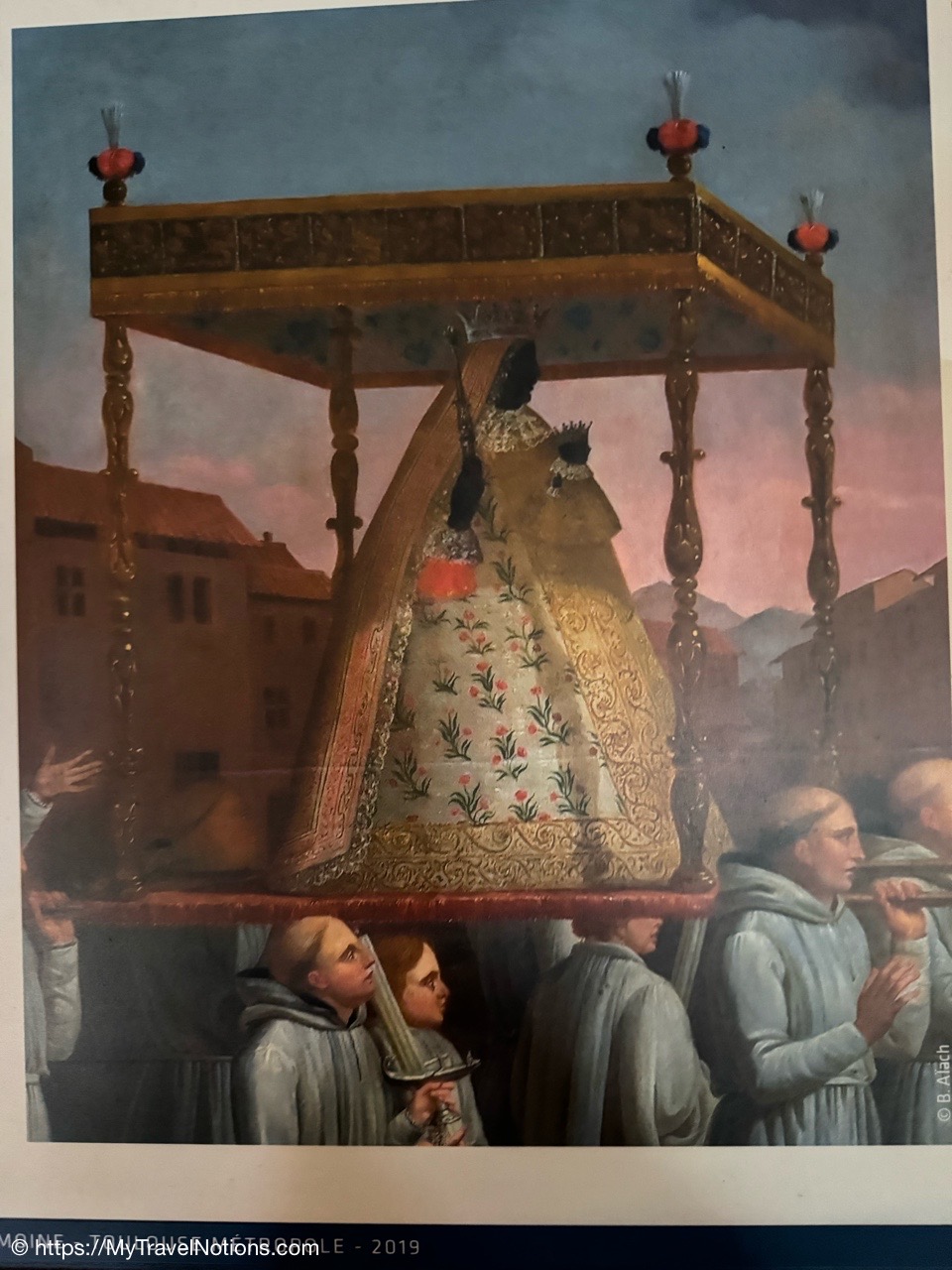
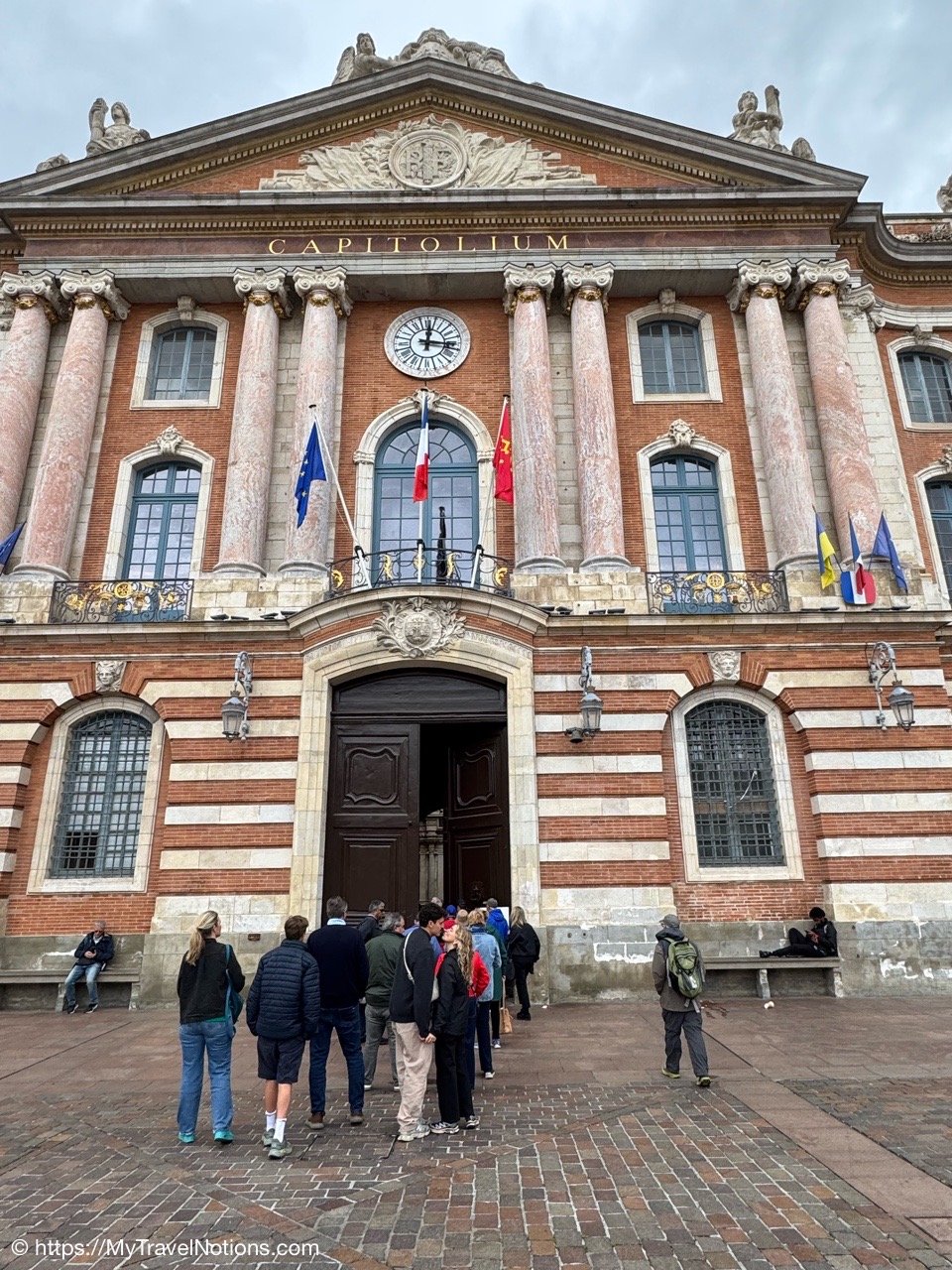
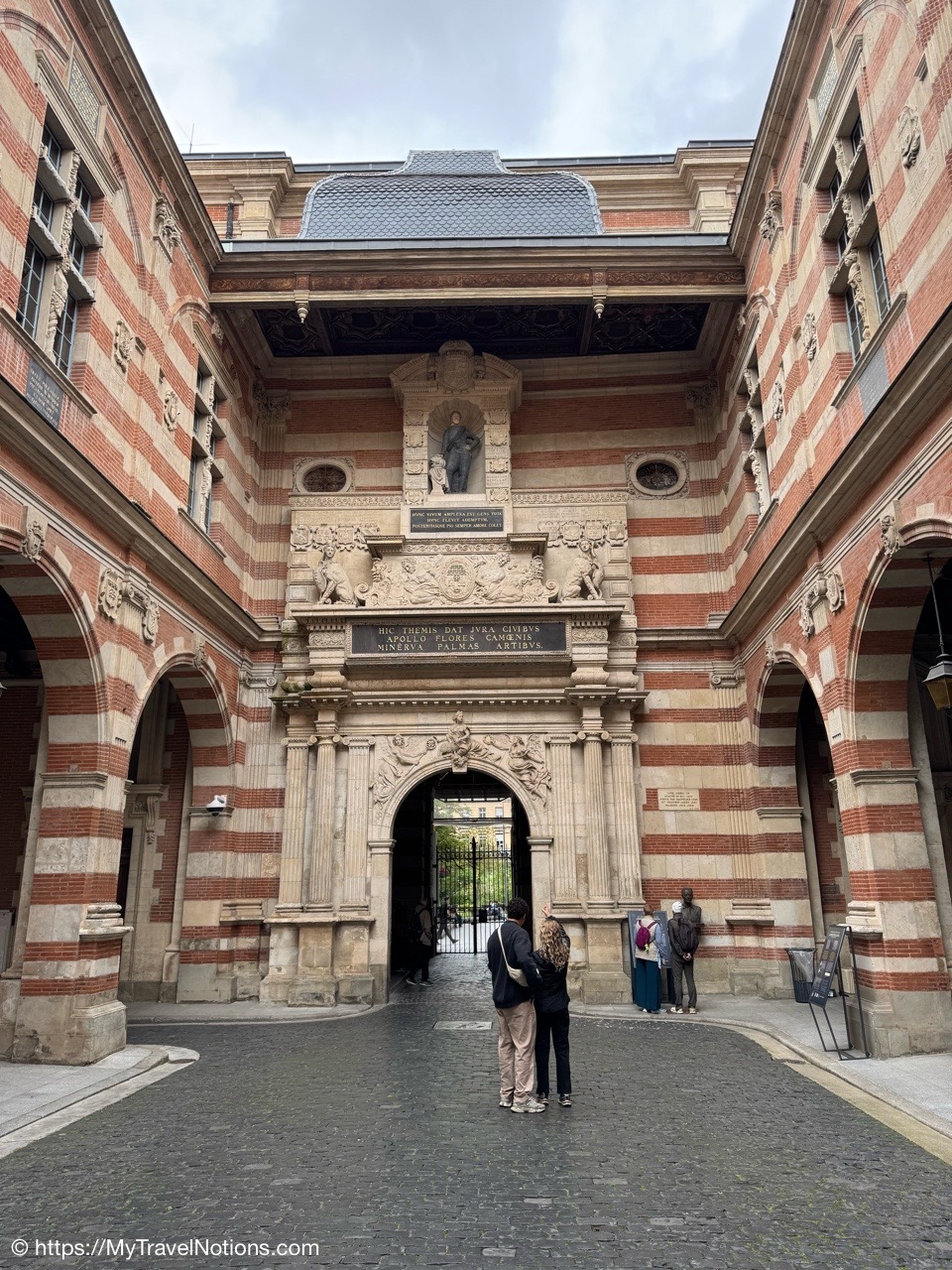
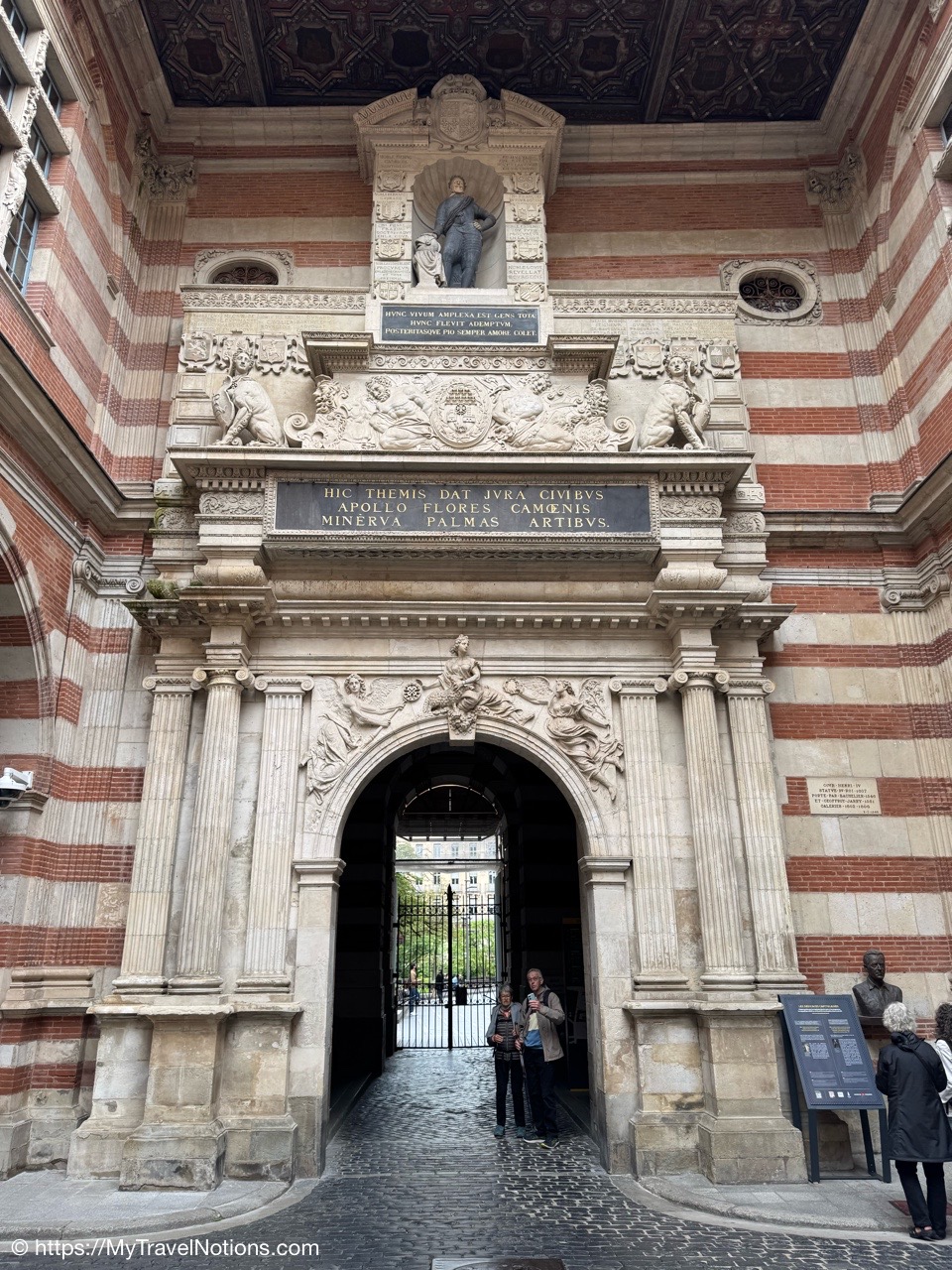
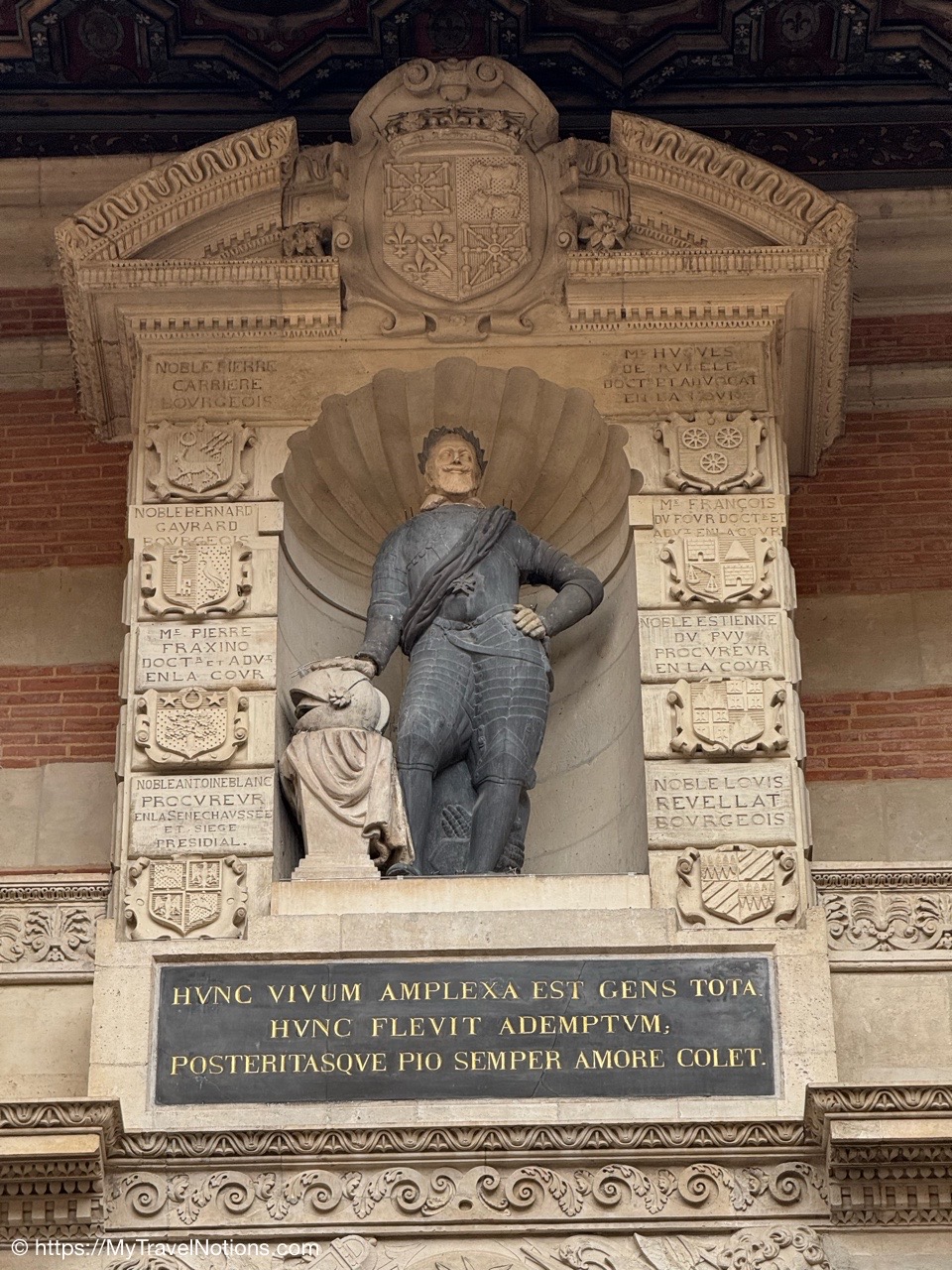
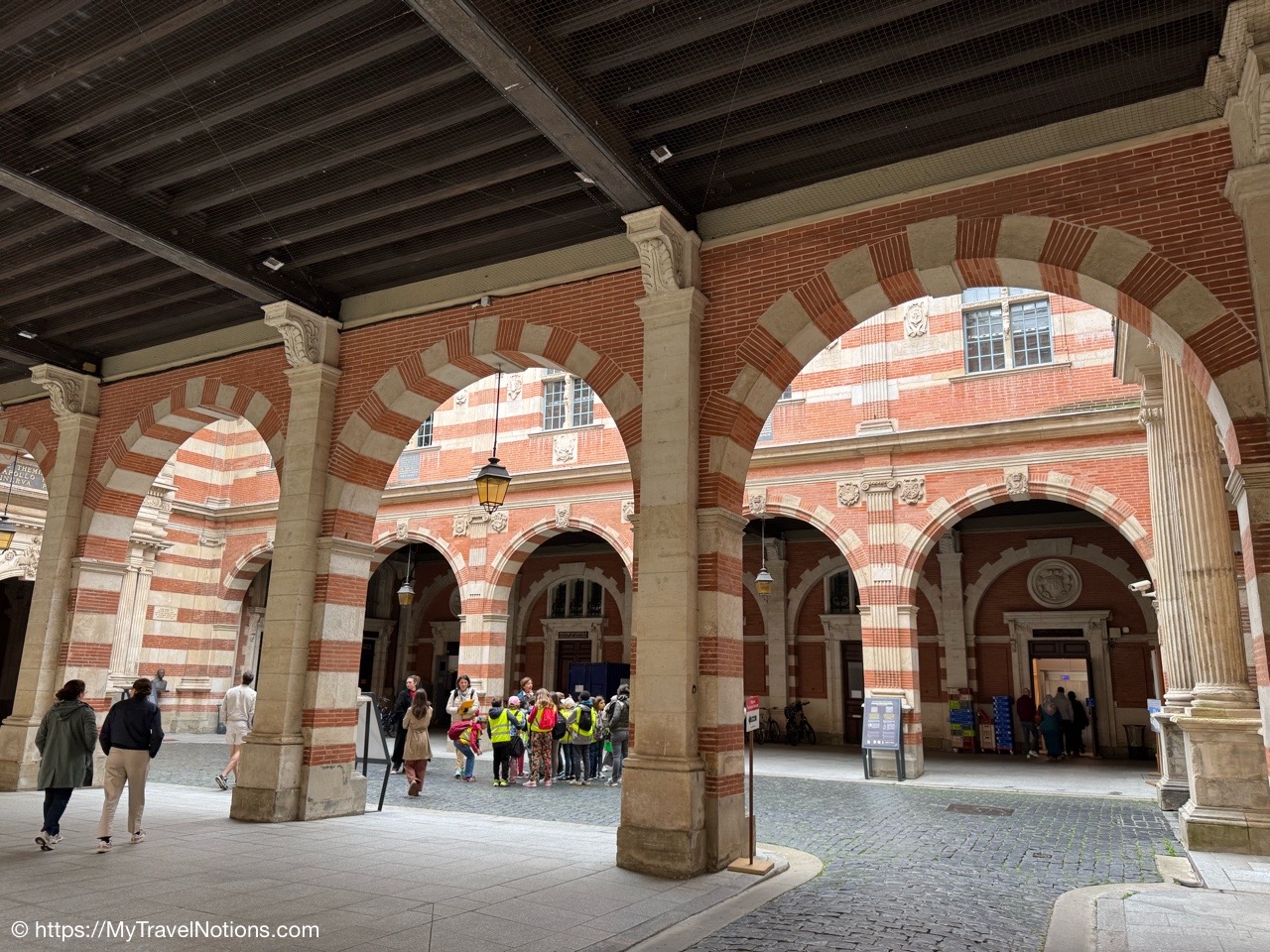
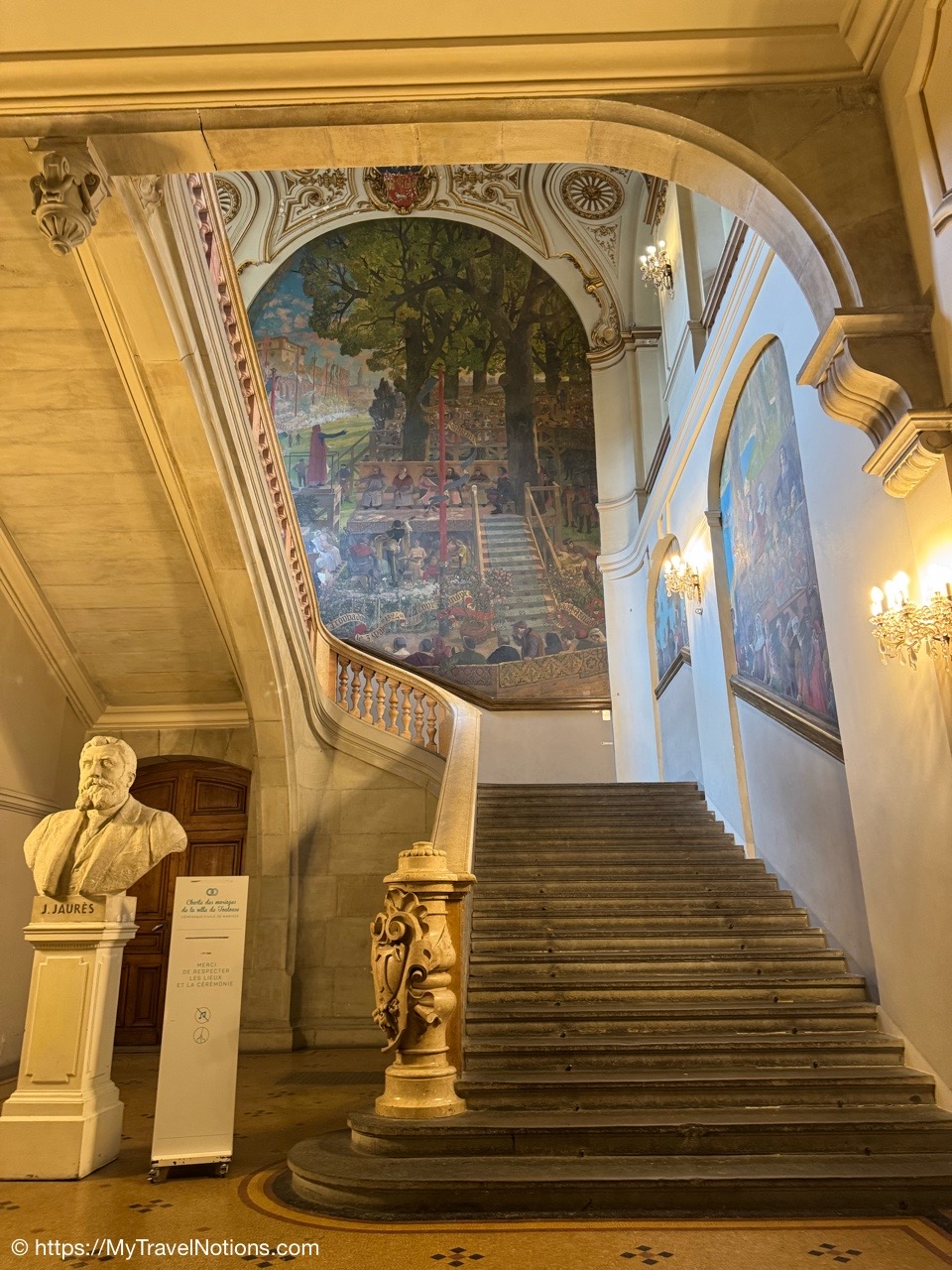
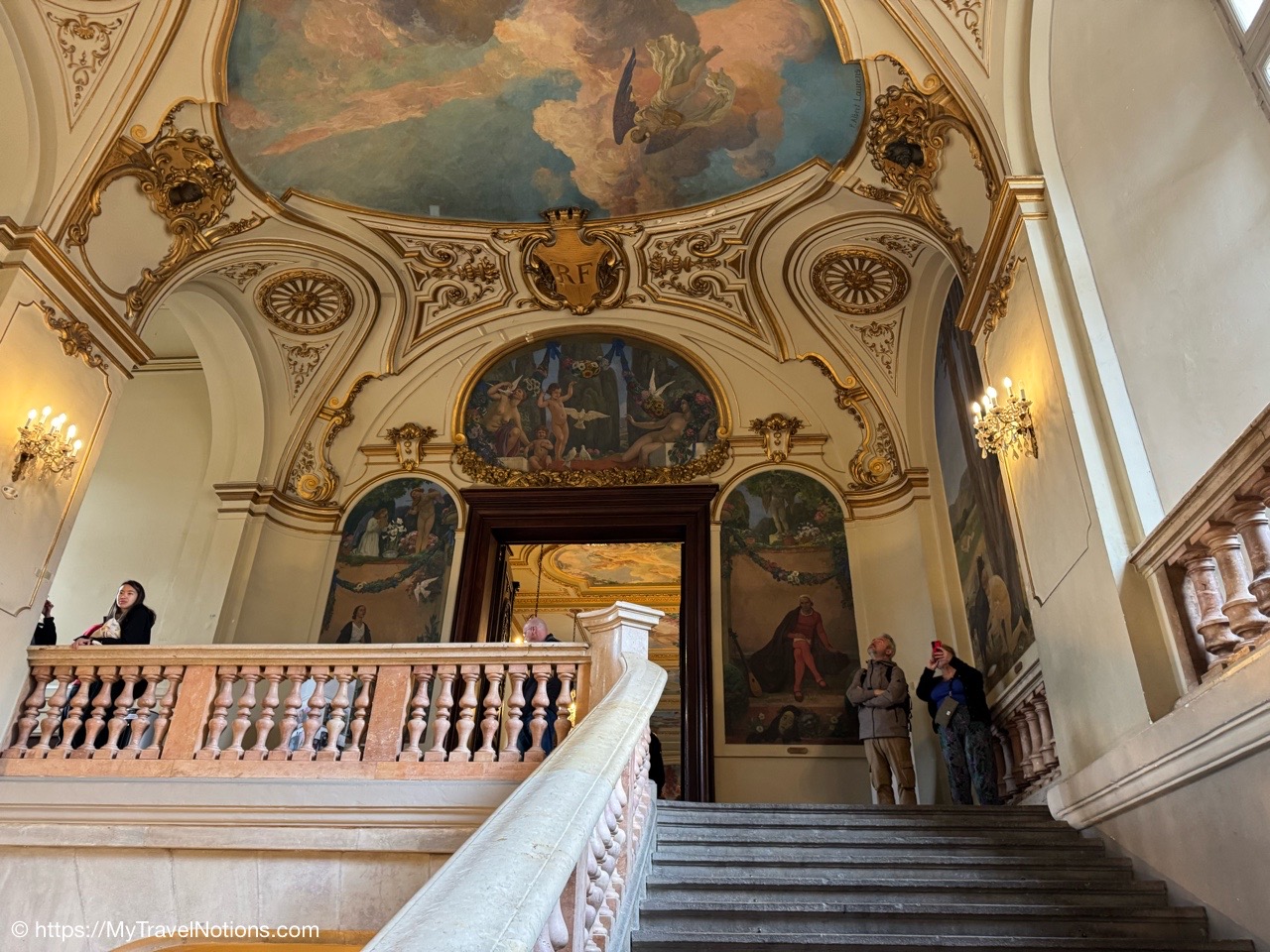
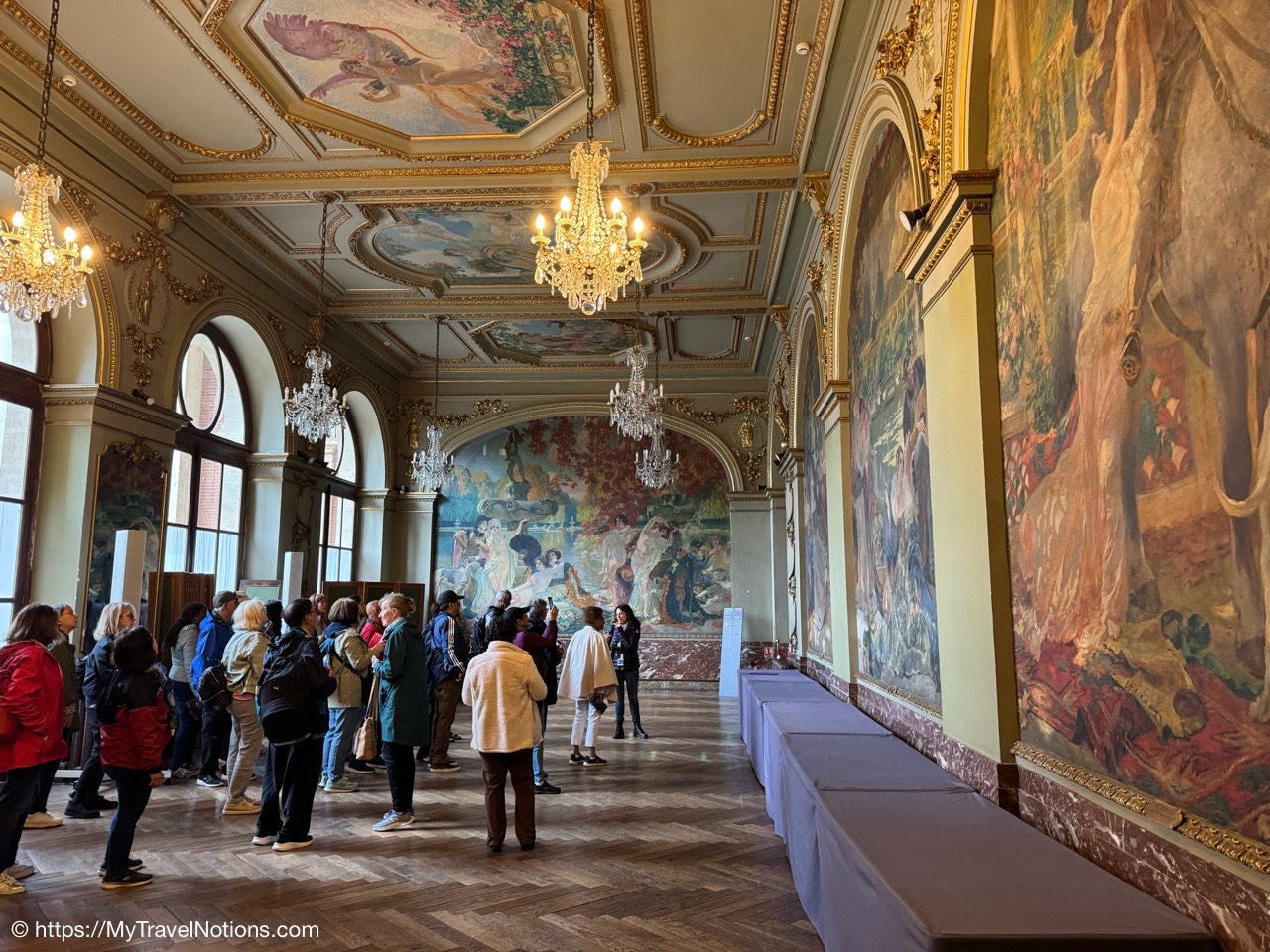
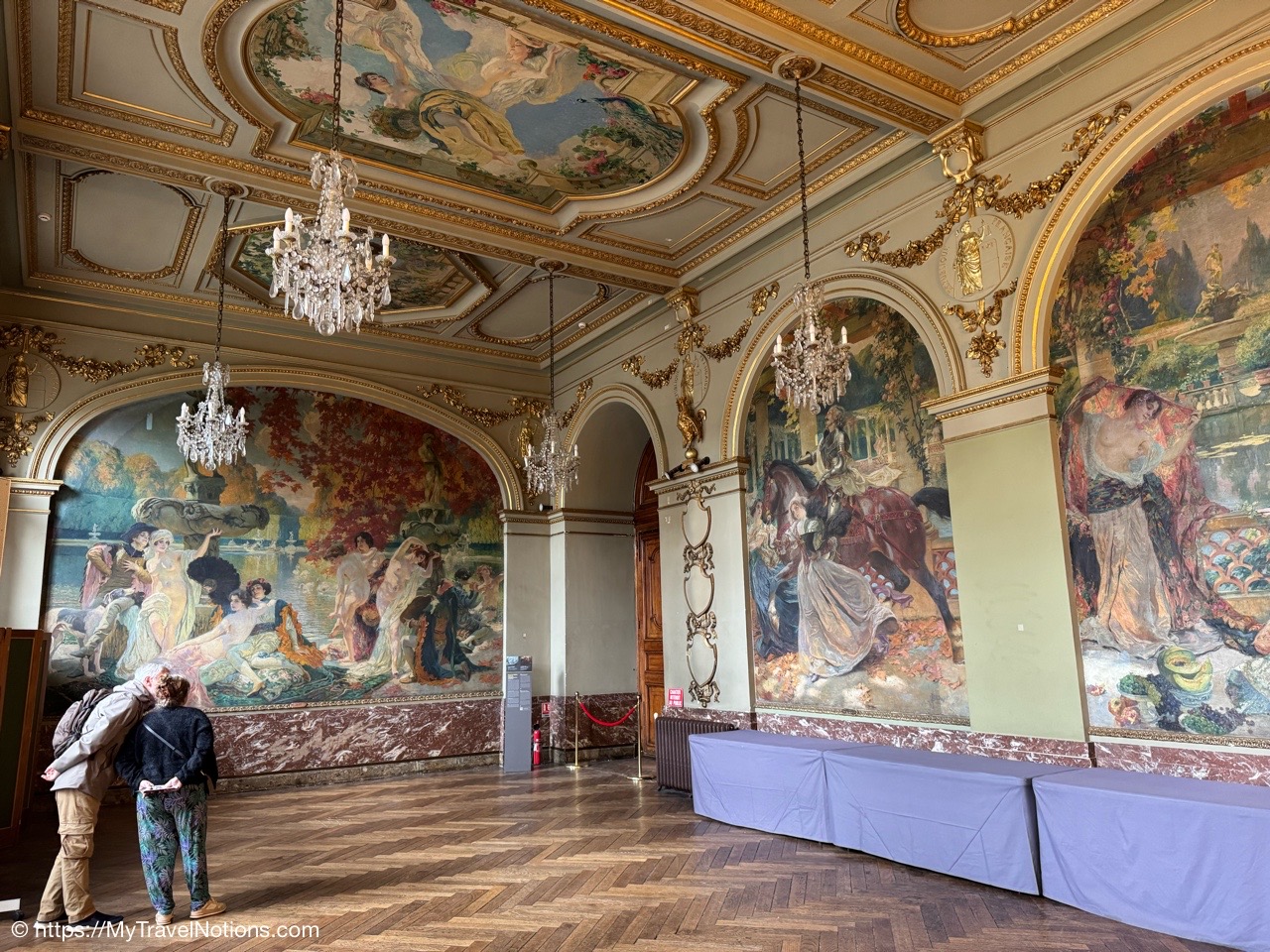
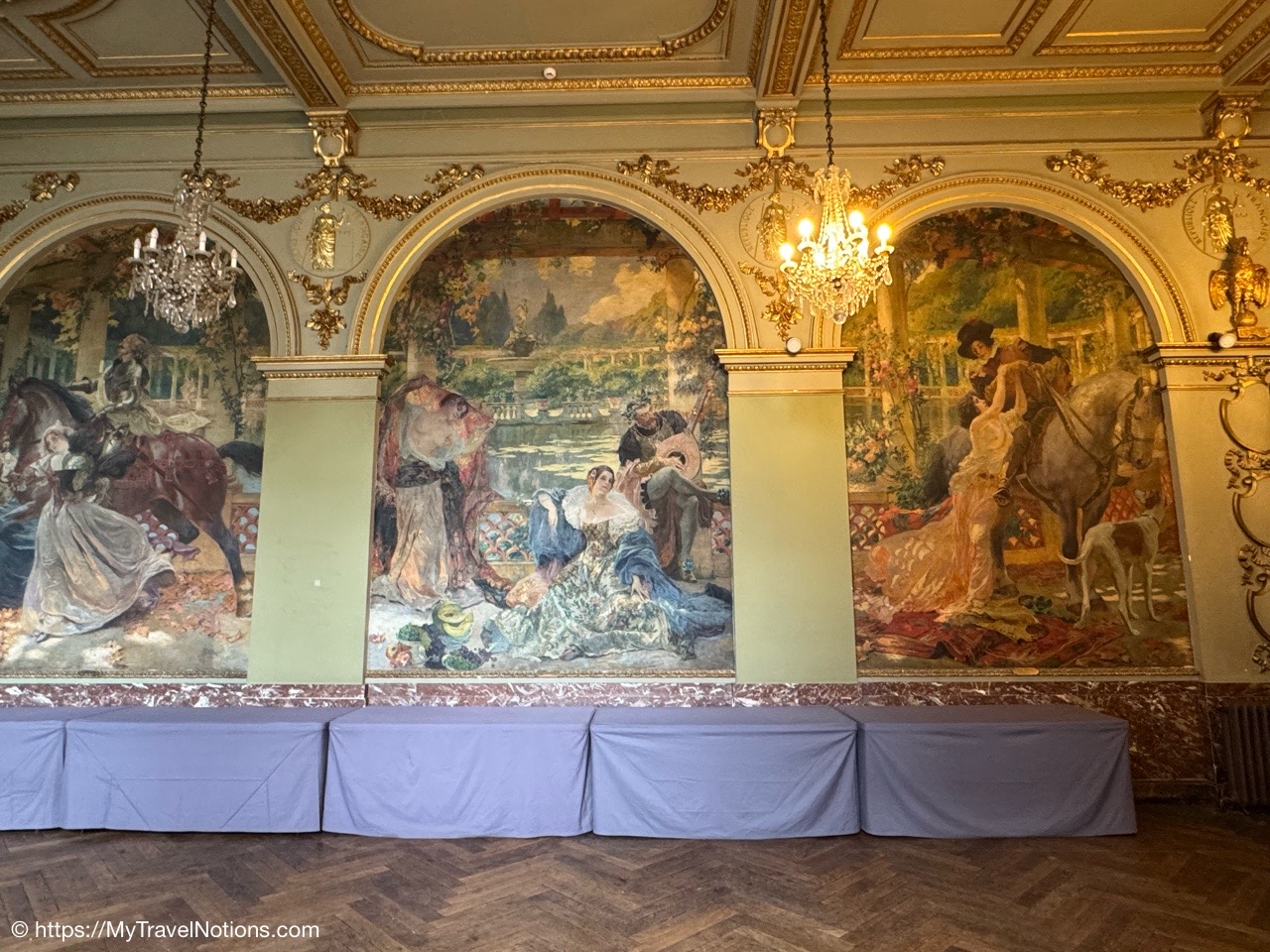
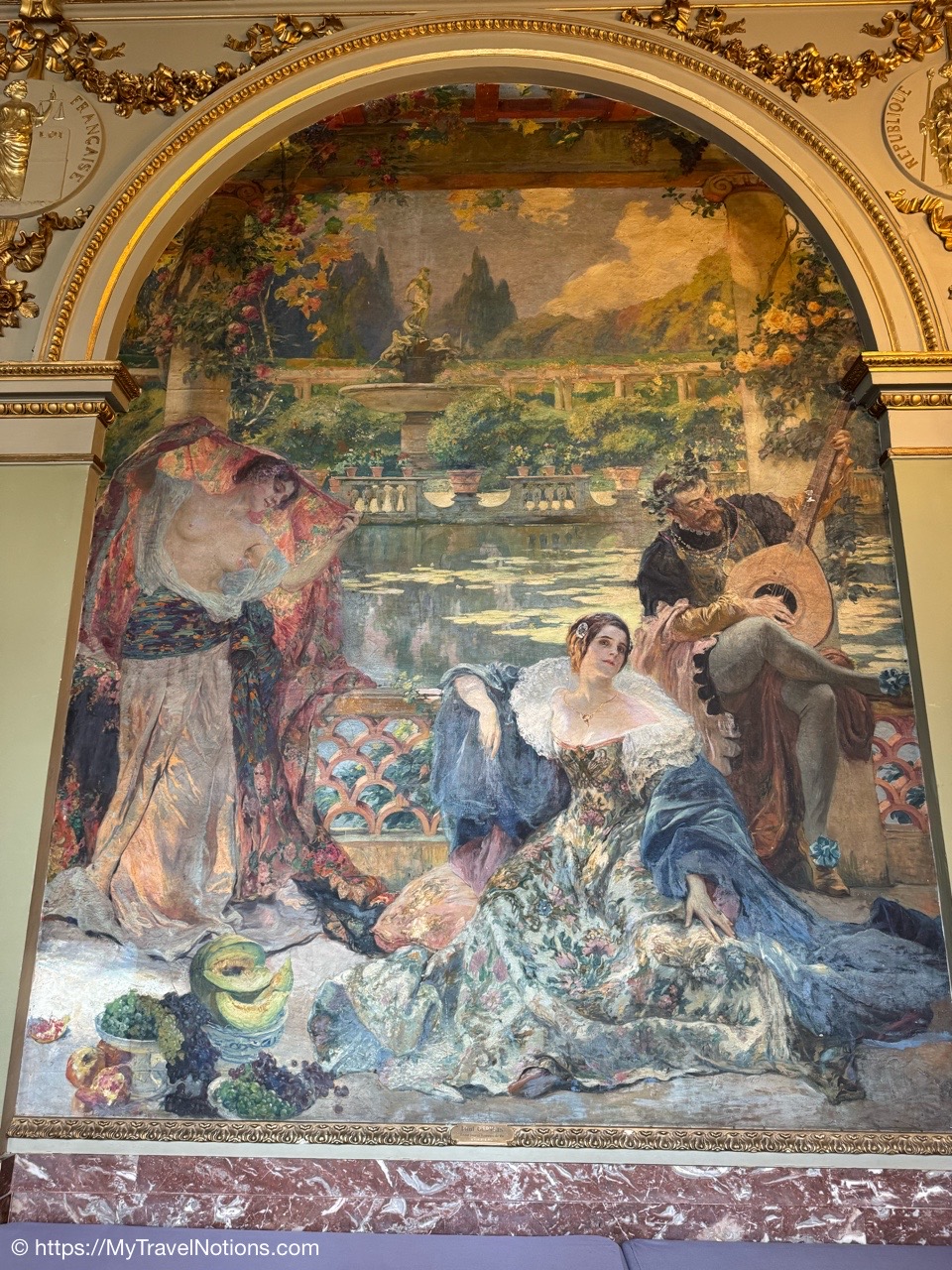
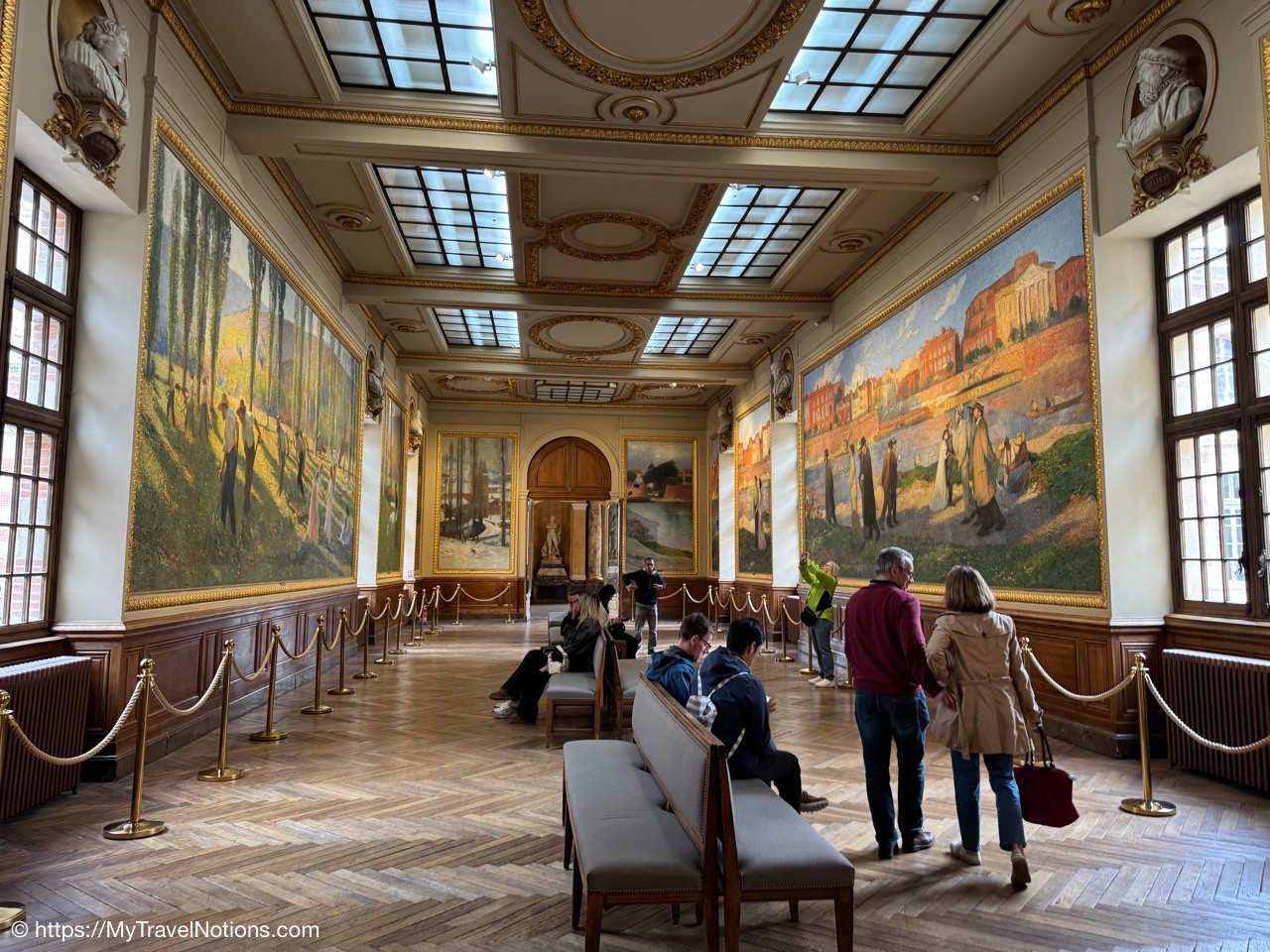
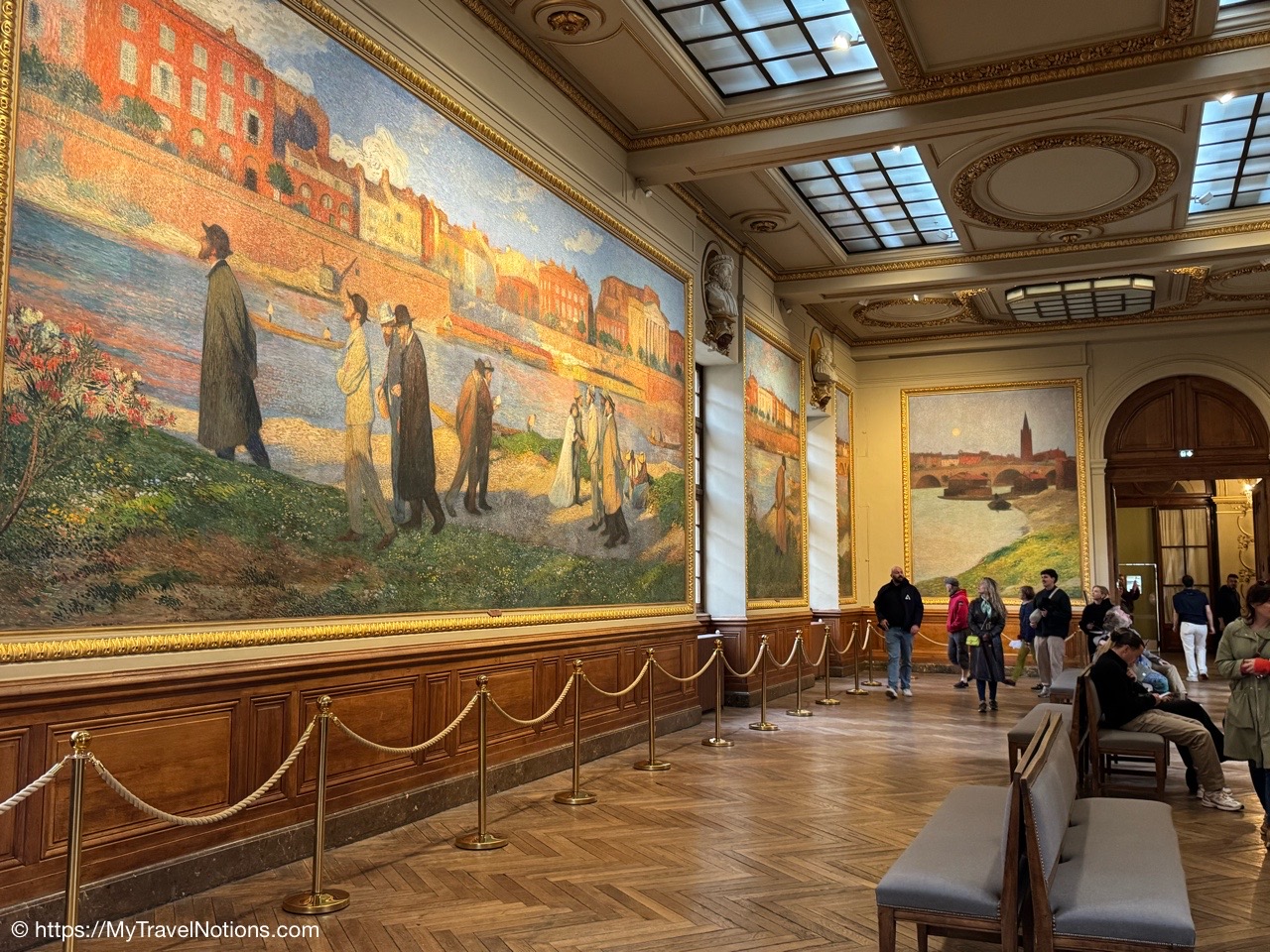
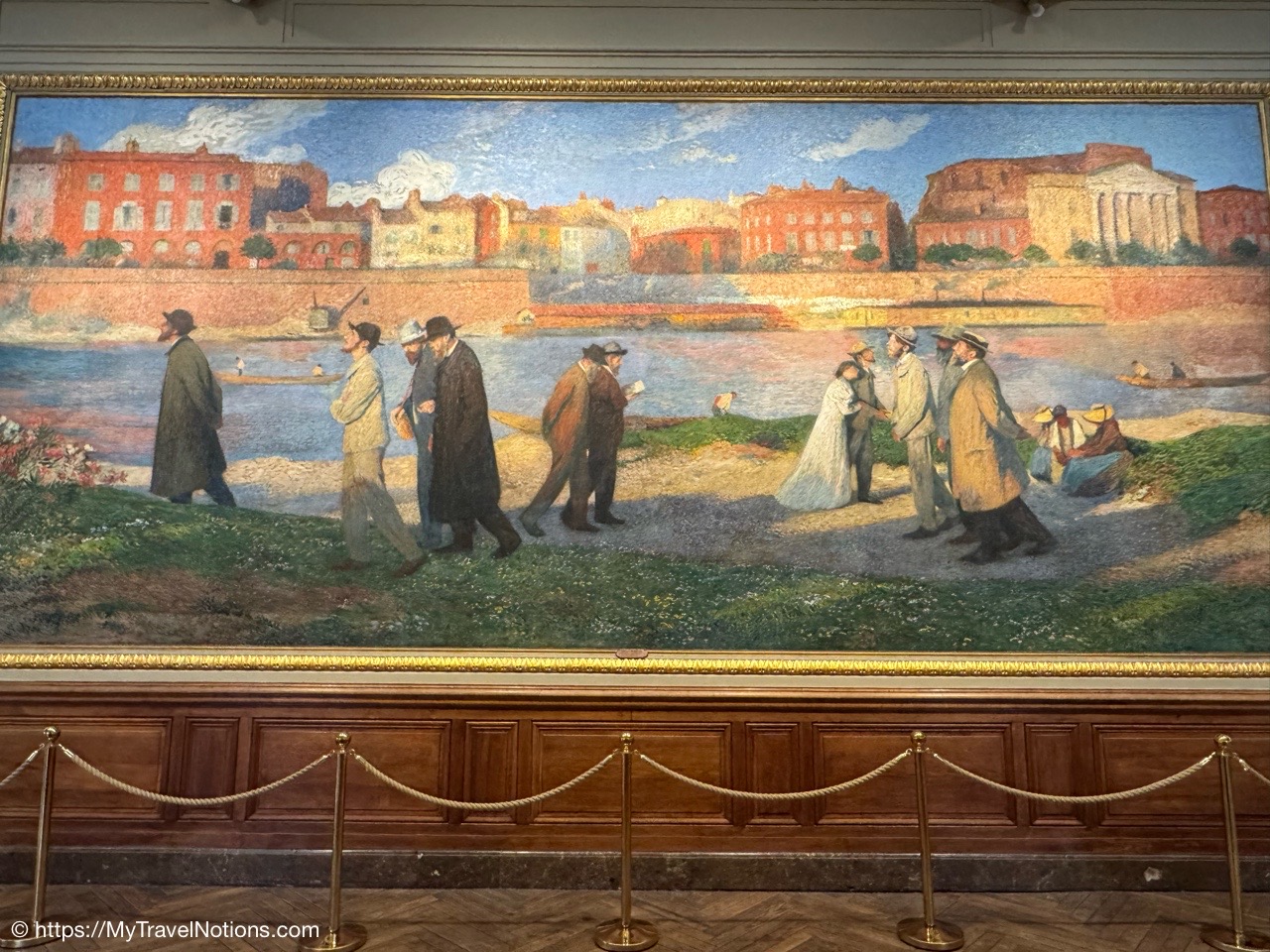
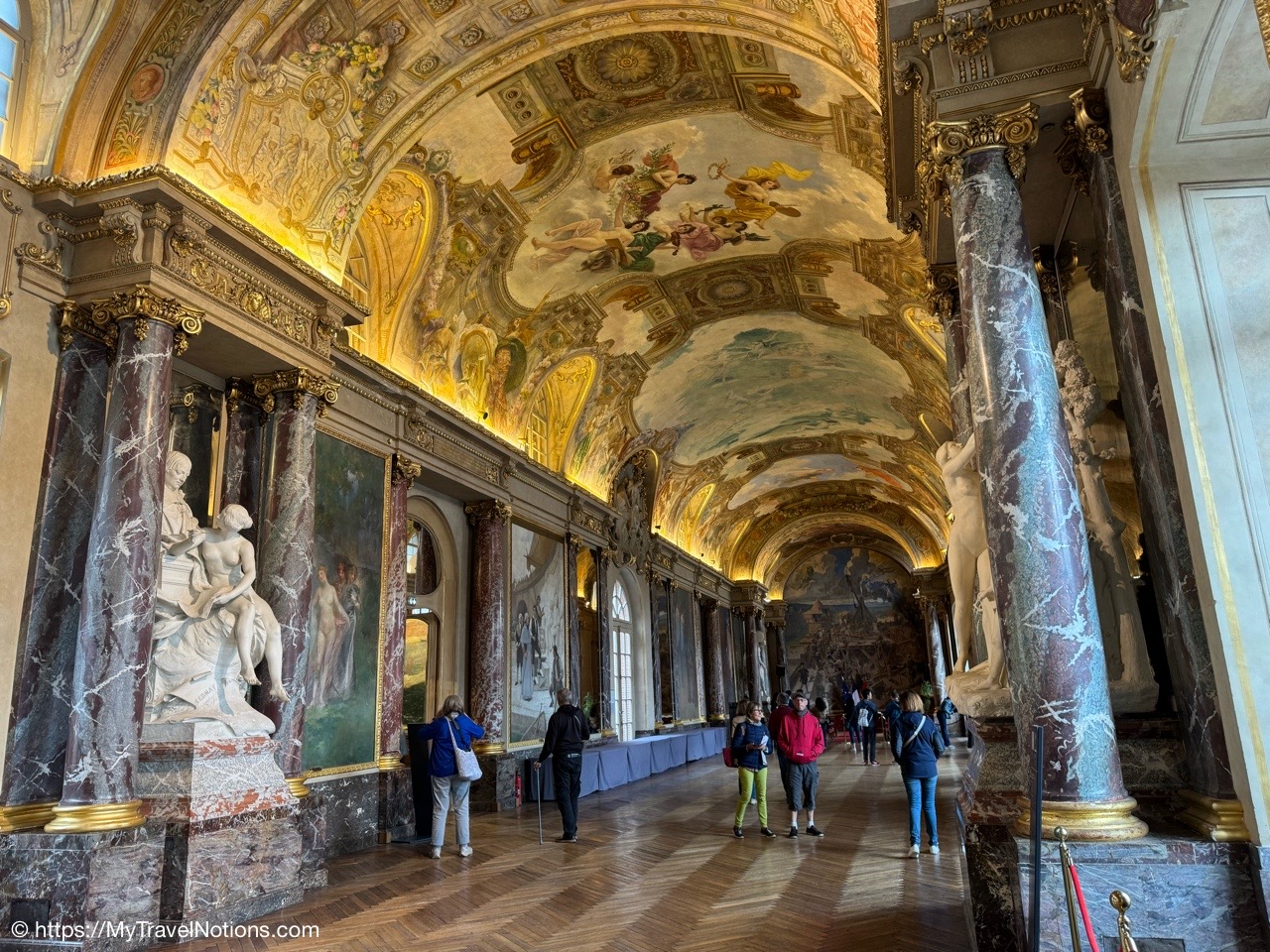
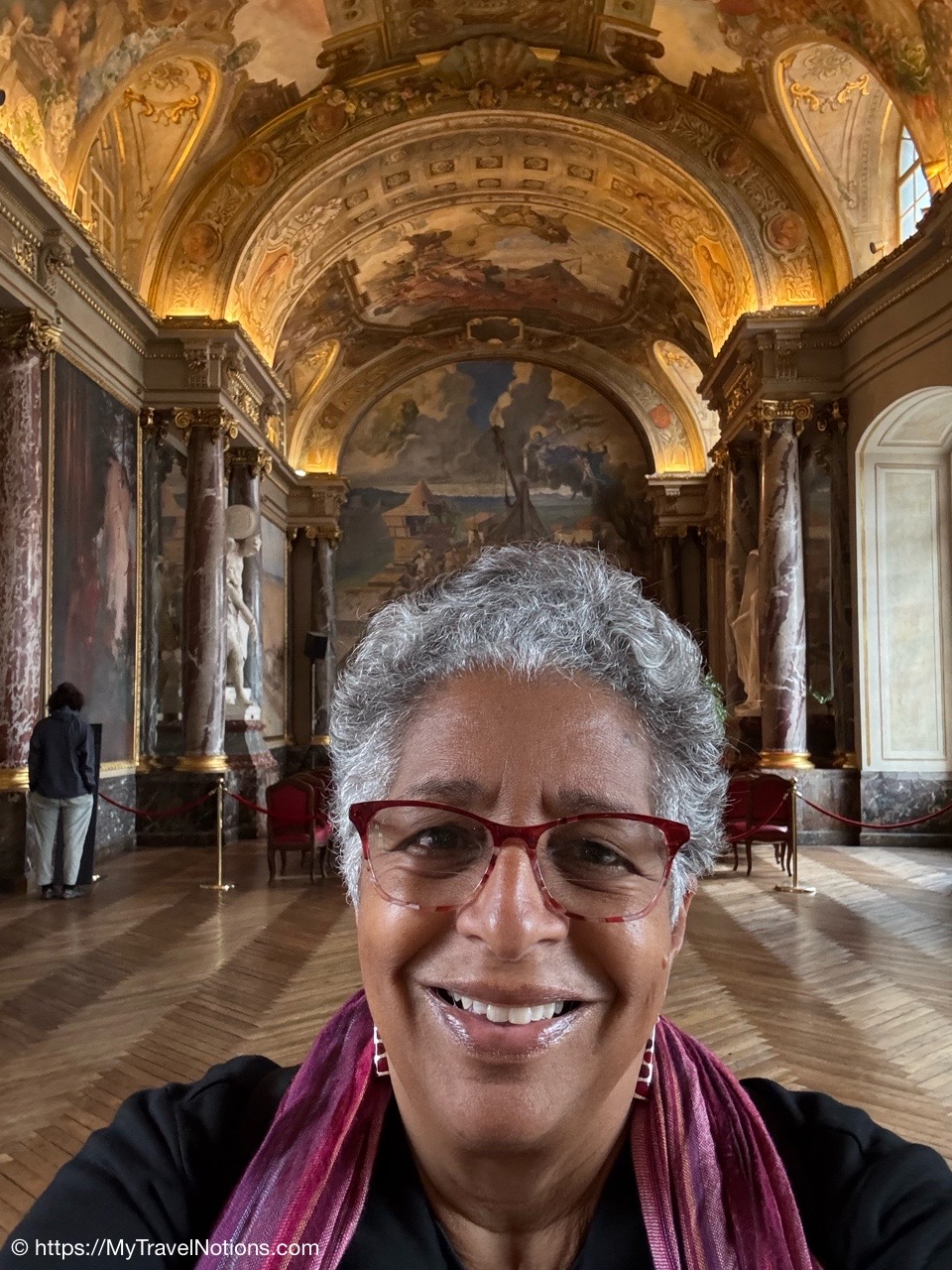
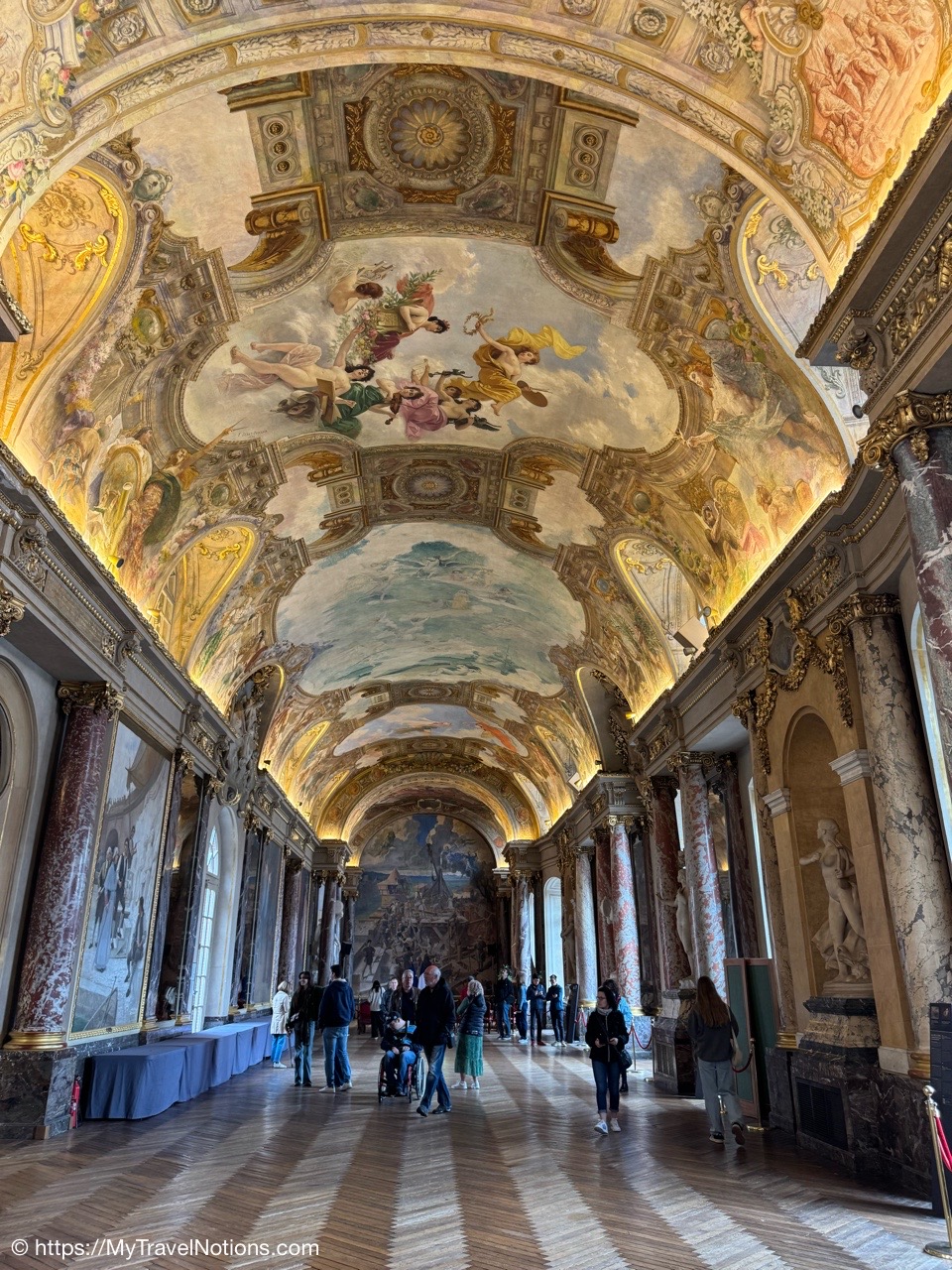
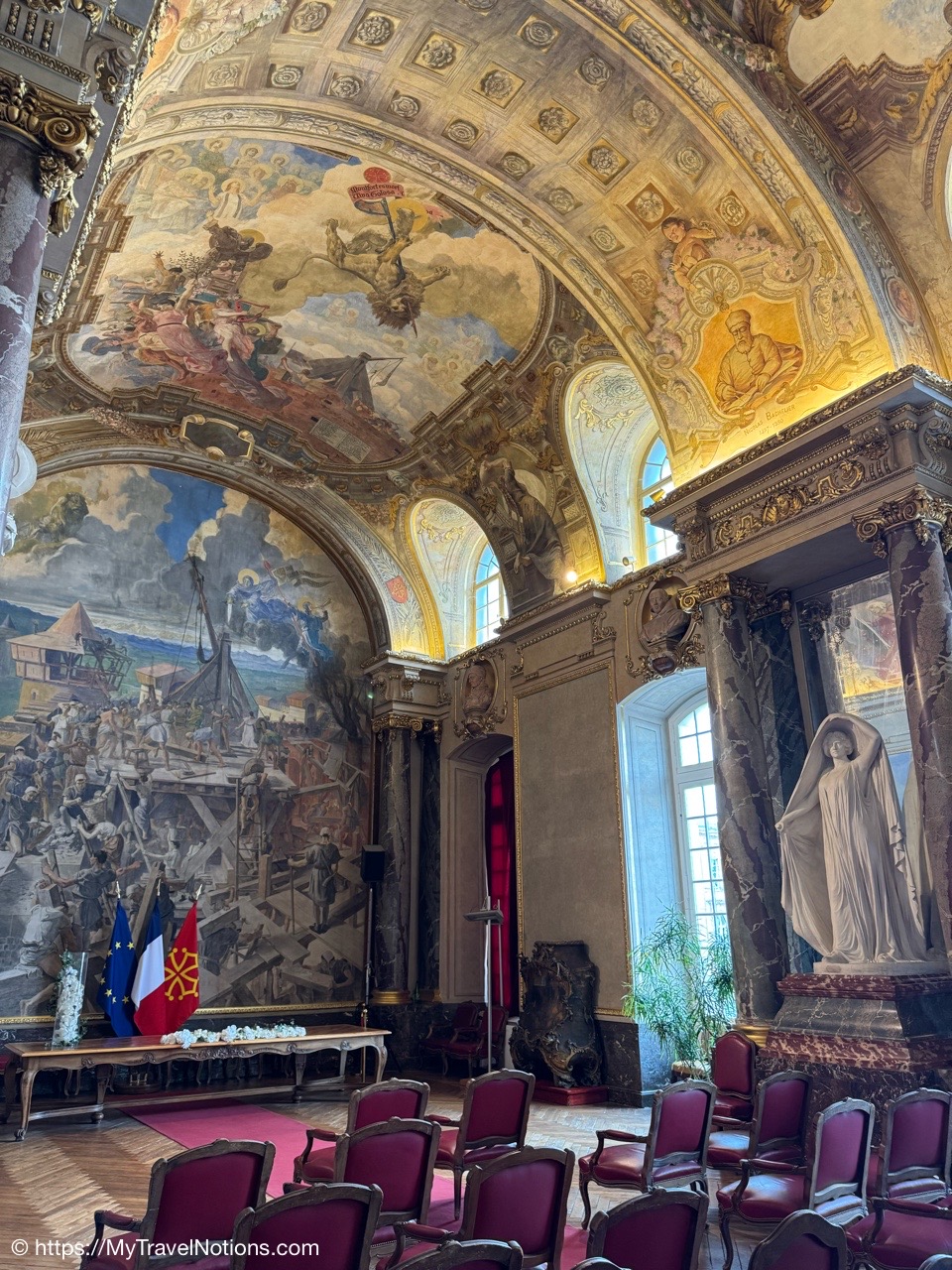
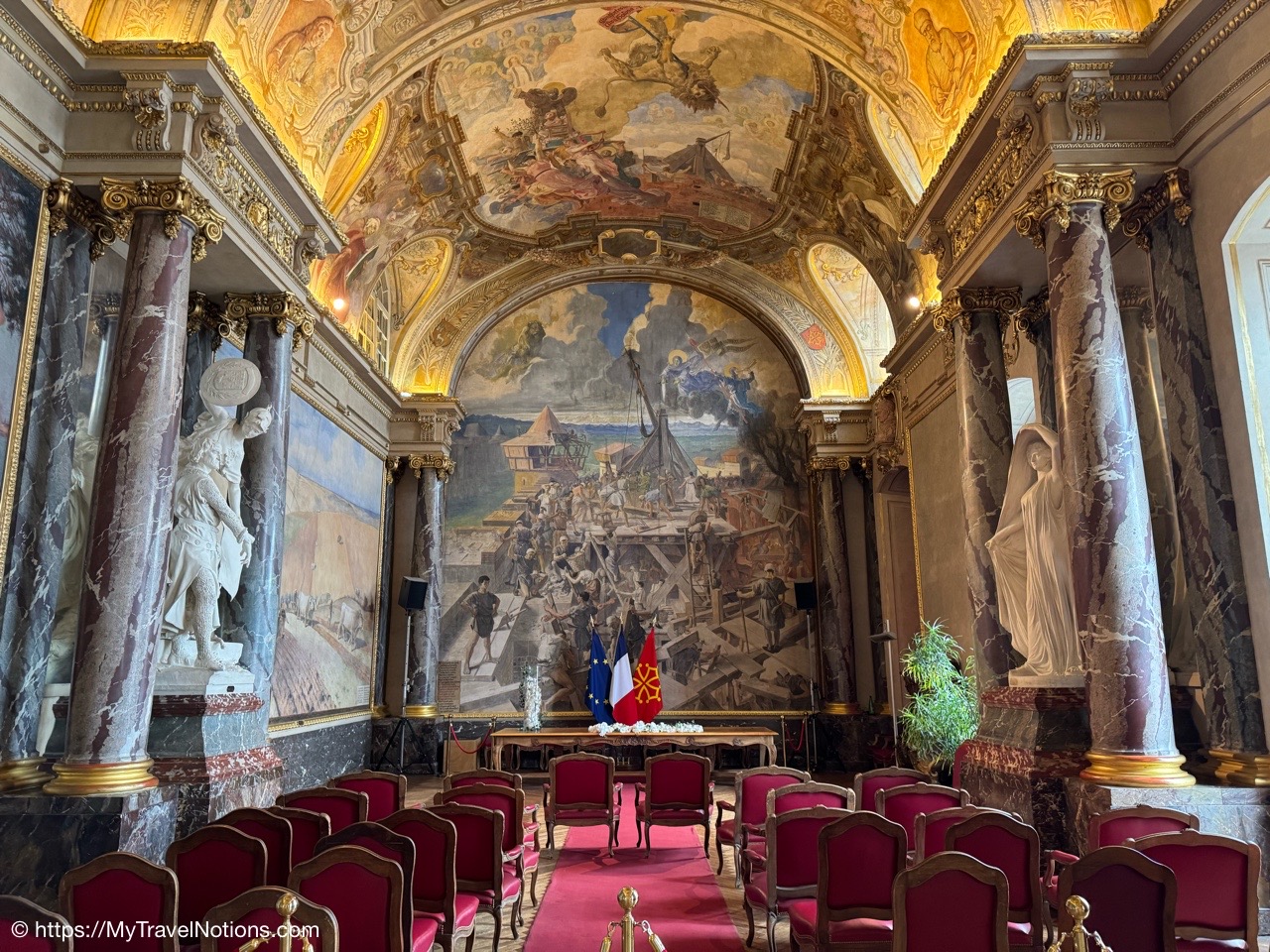
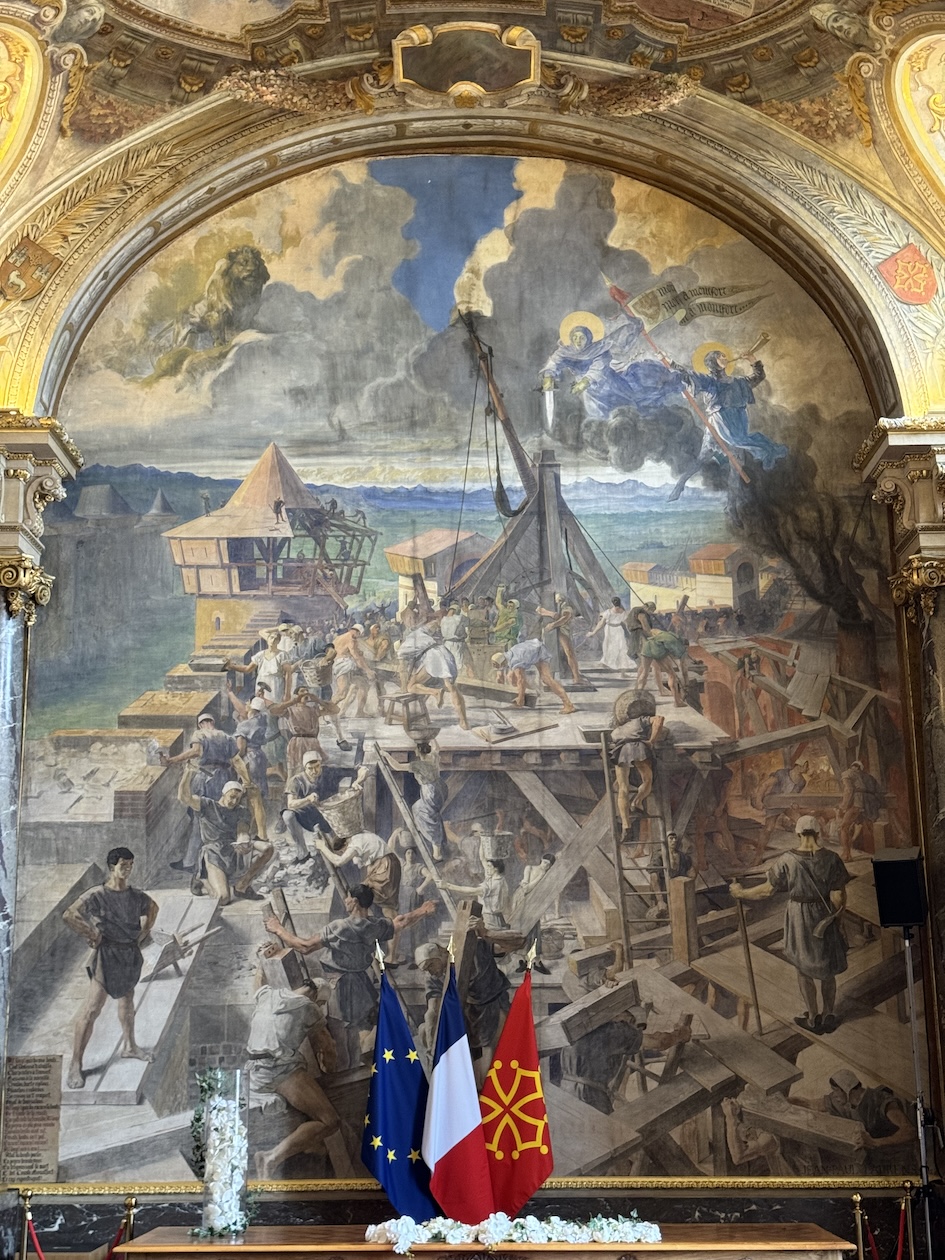
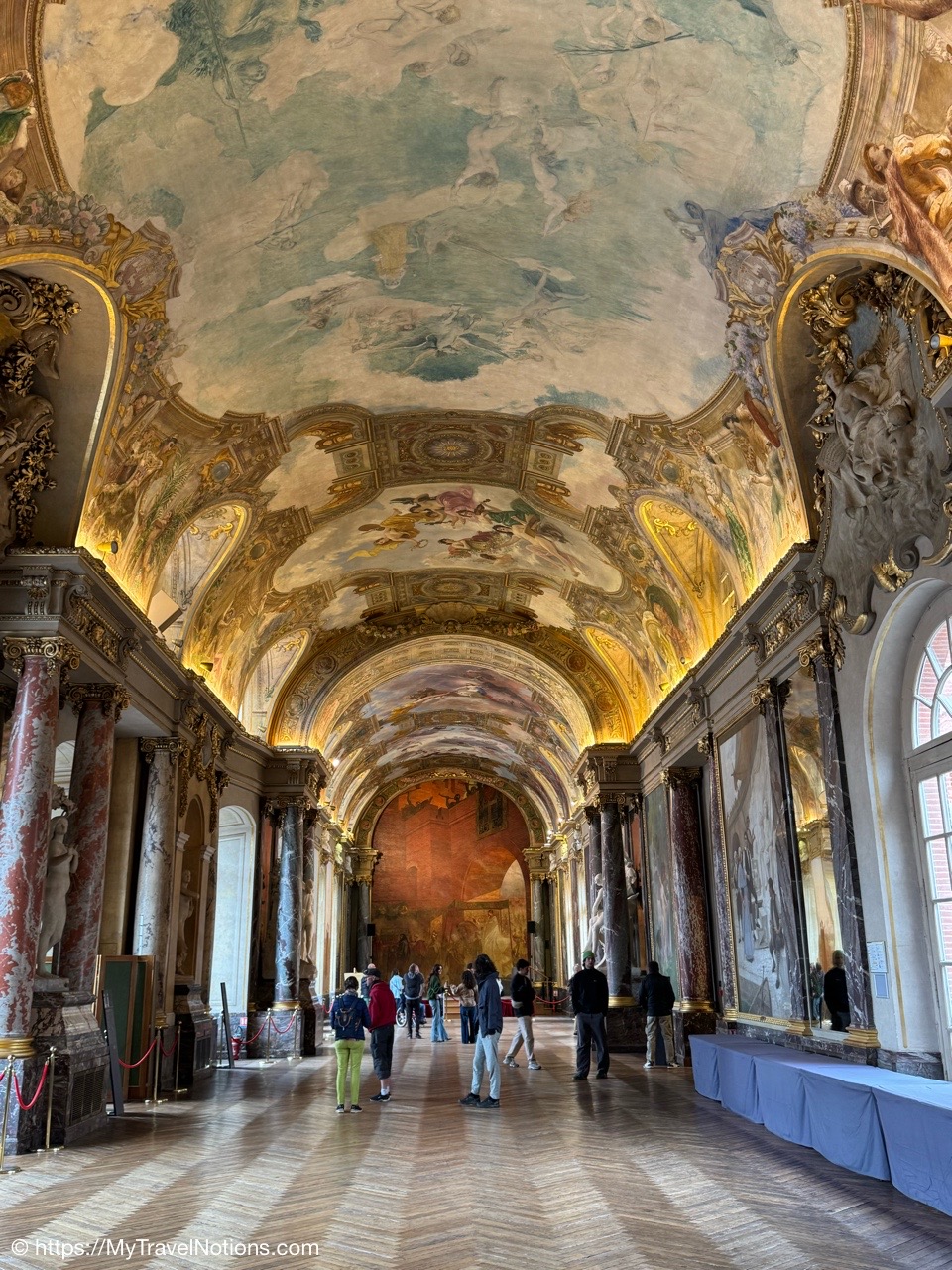
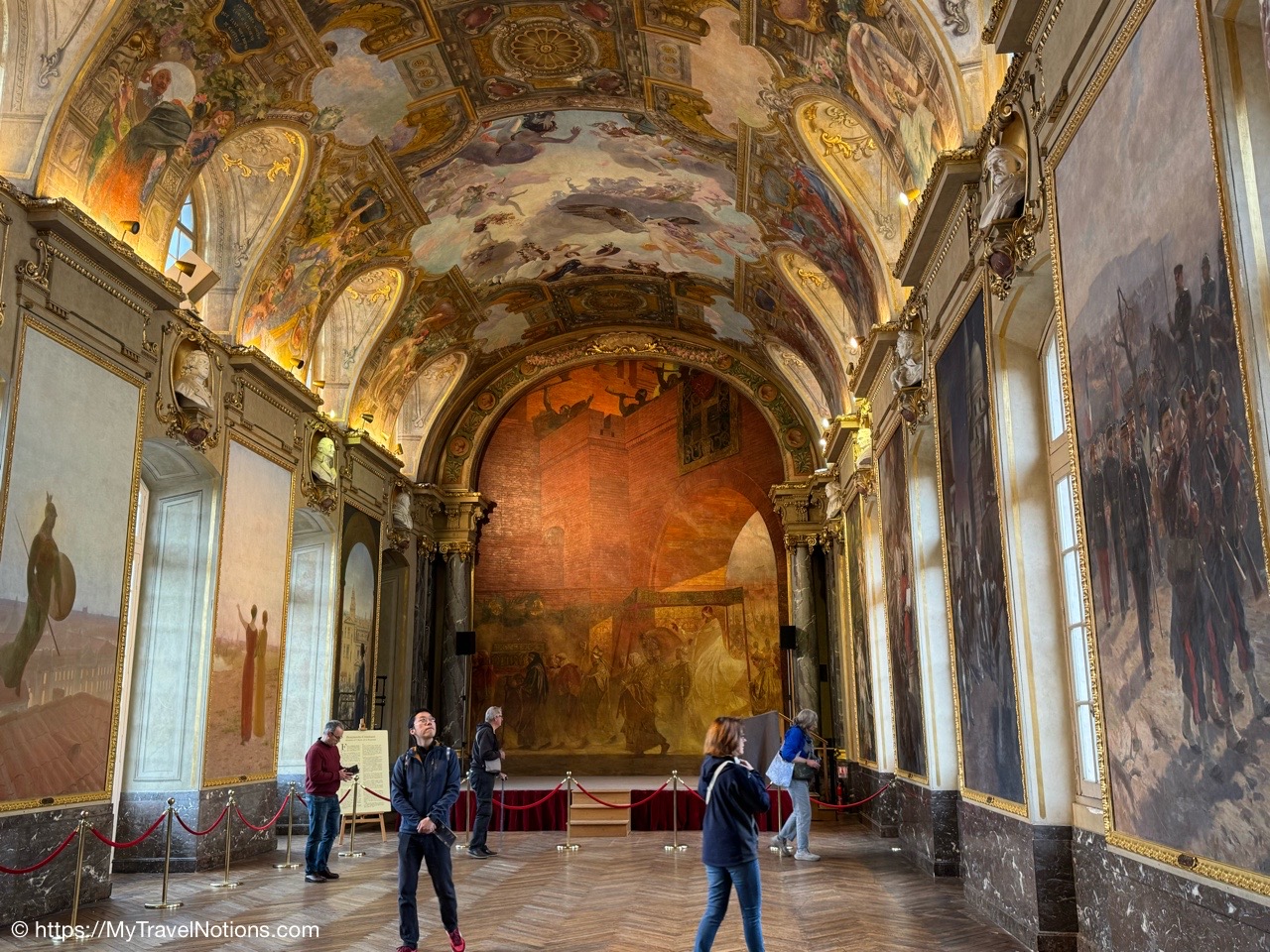
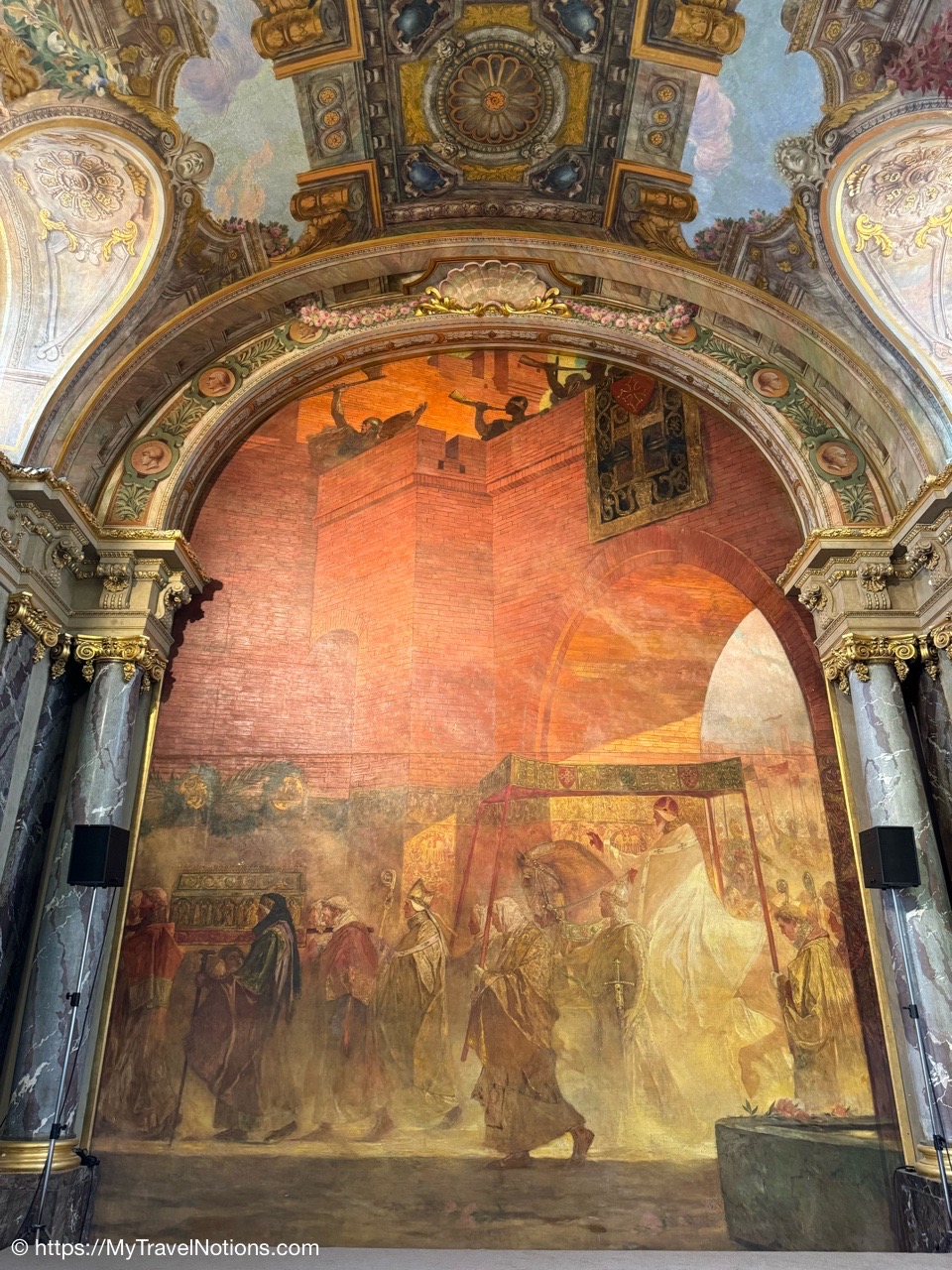
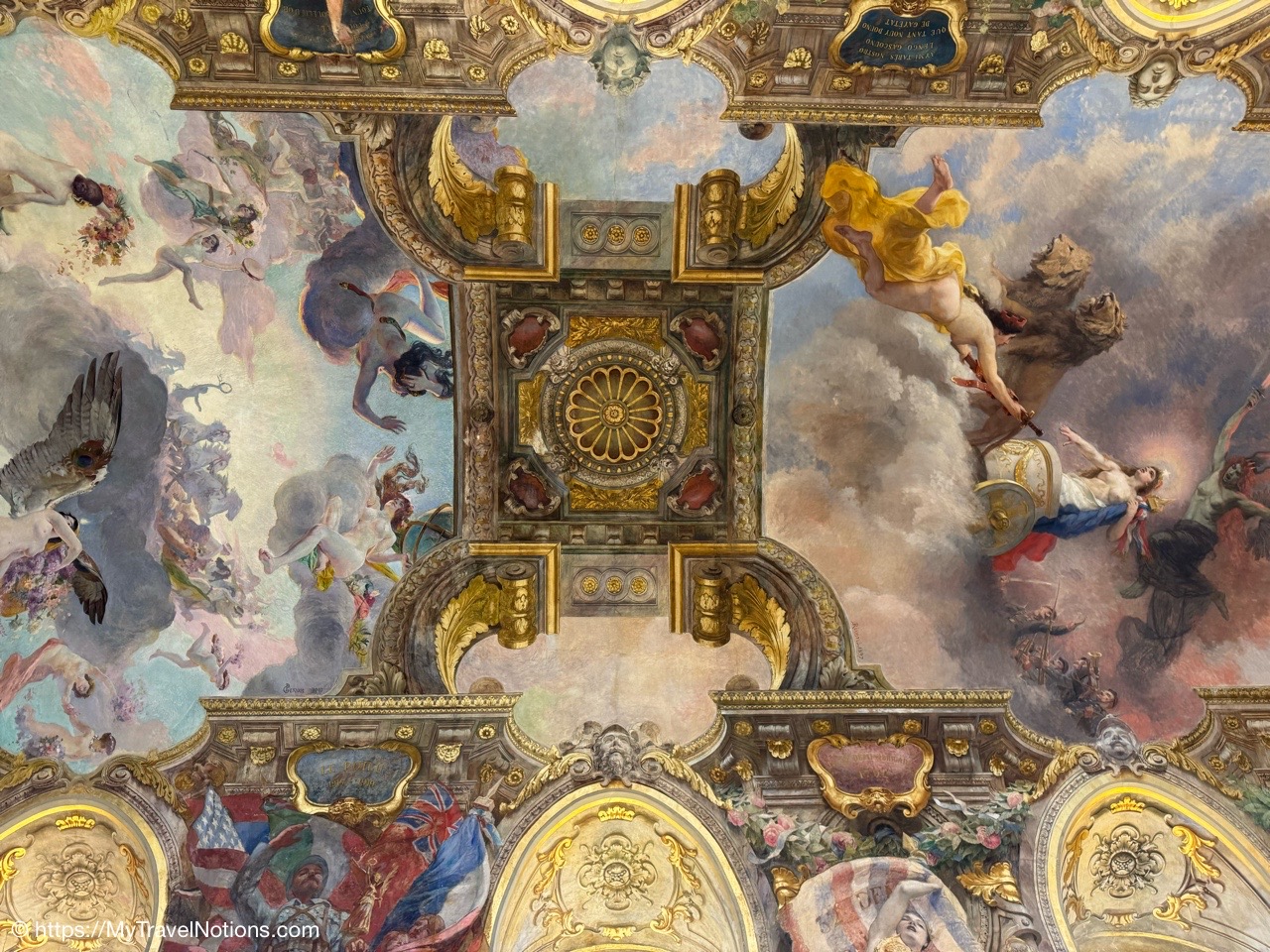
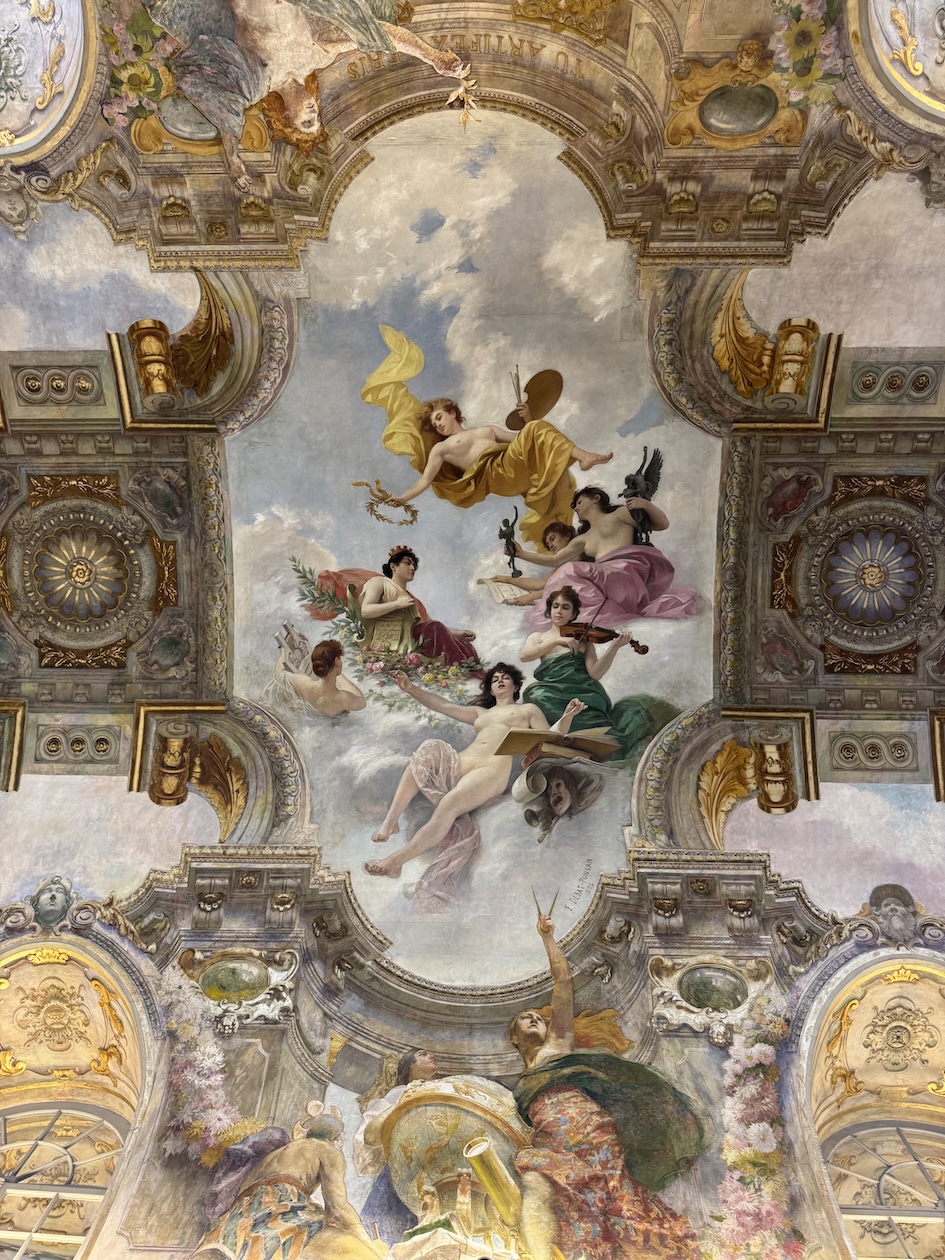
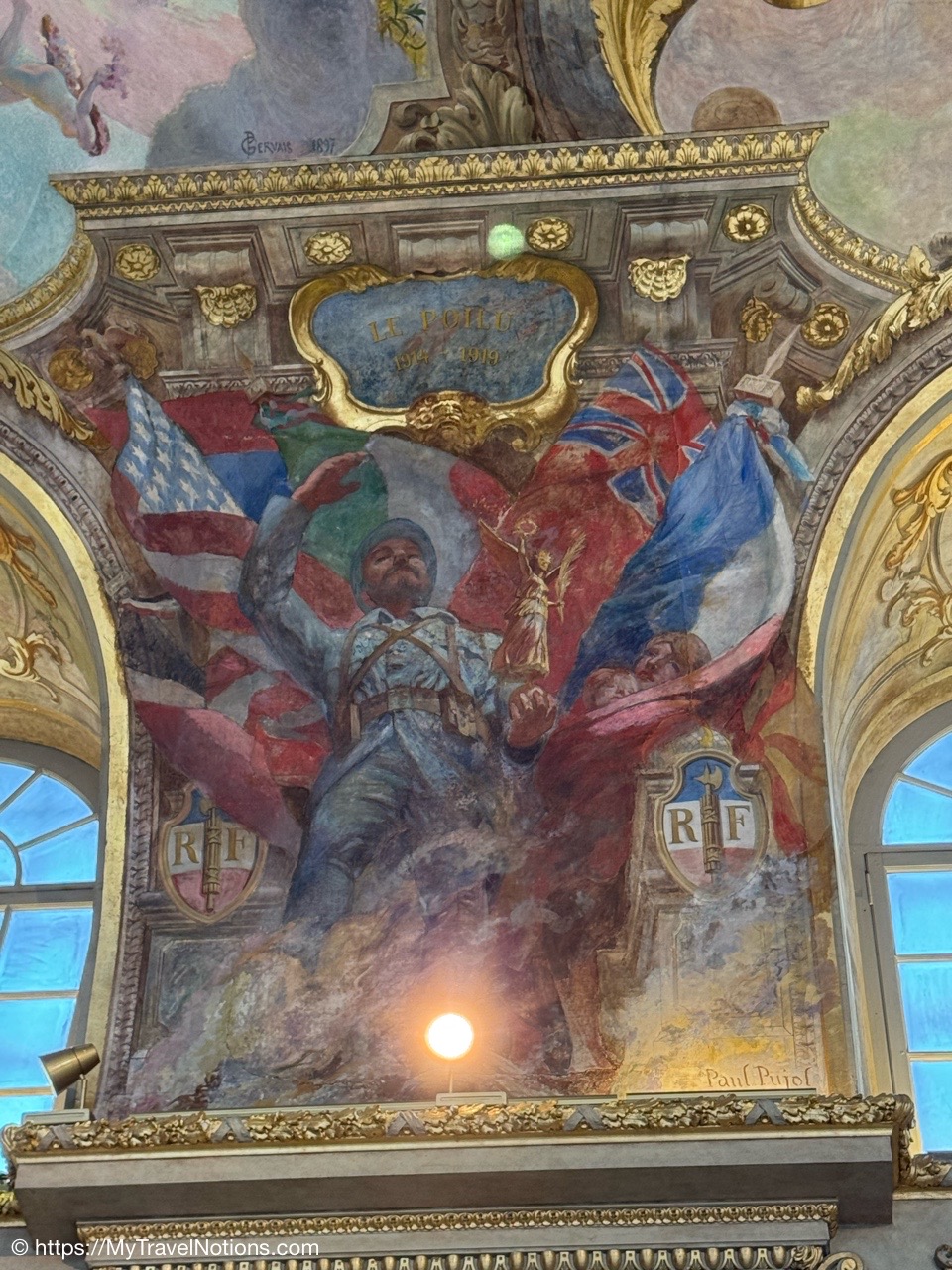
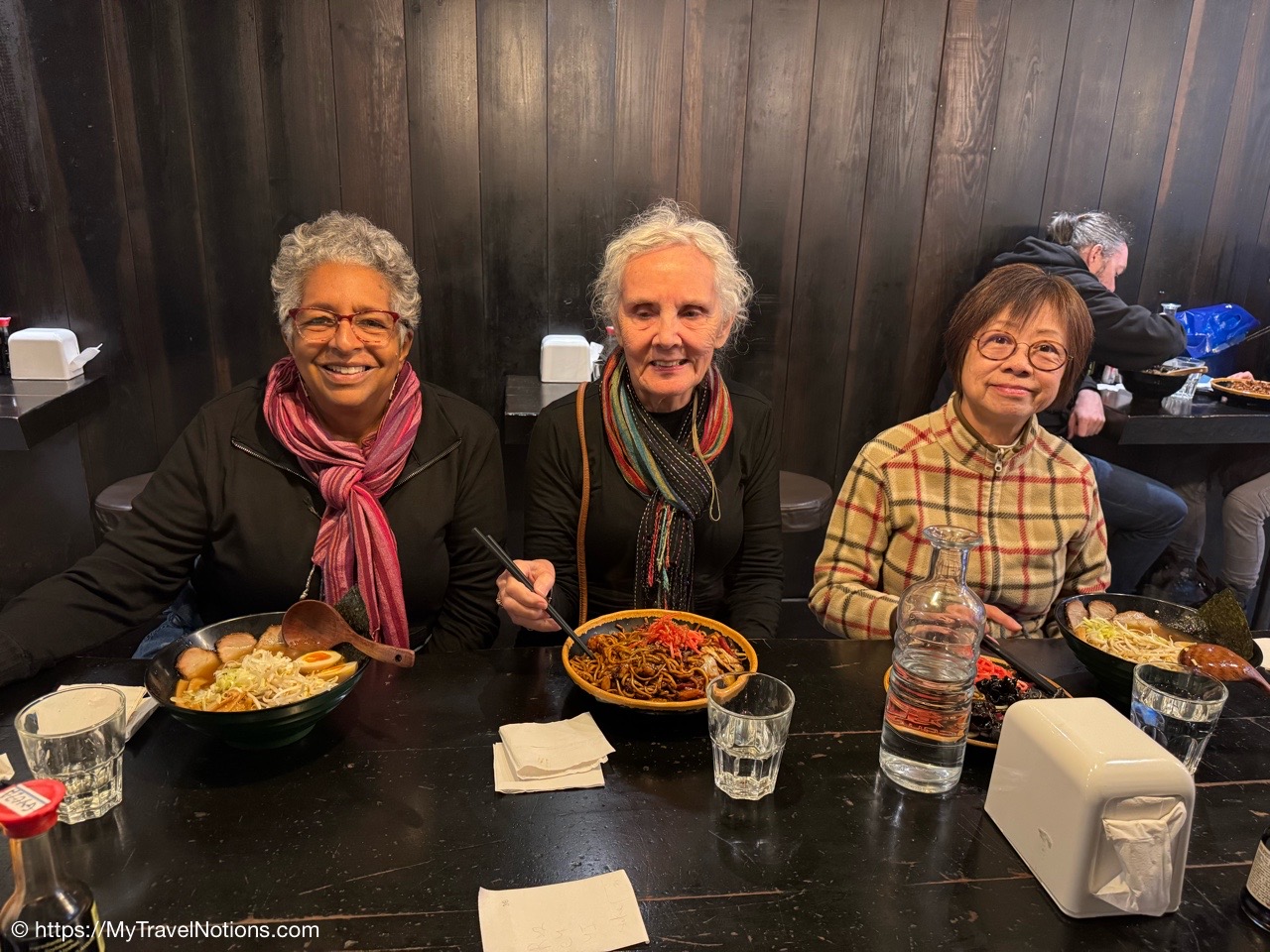
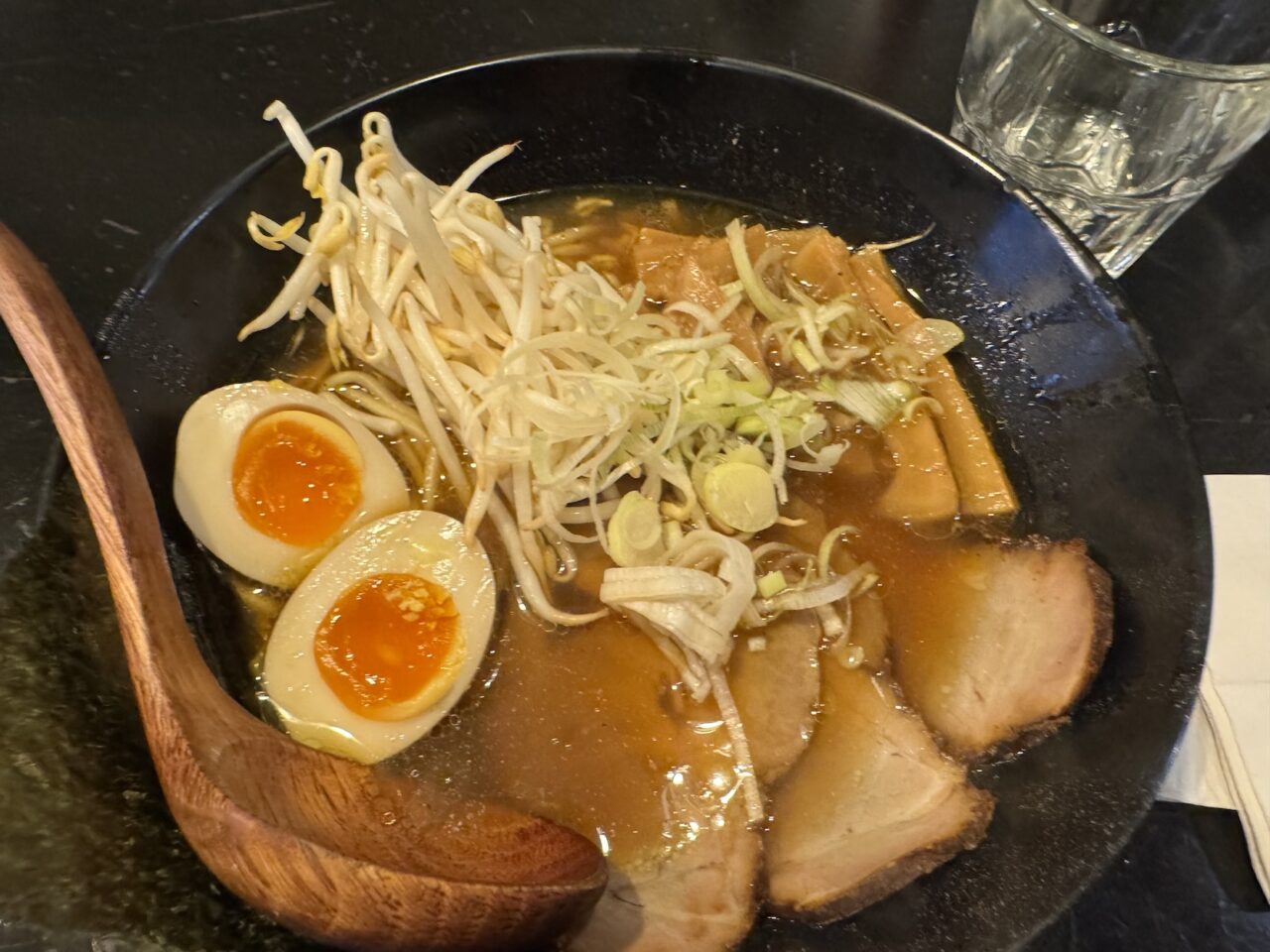
Approaching the Basilica of Notre-Dame la Daurade, also known as Sainte-Marie la Daurade in Toulouse with its classical facade facing the banks of the Garonne River. The initial structure was a pagan temple dedicated to Apollo, but Emperor Honorius in 410 allowed the conversion of pagan temples to Christianity. The church had to be demolished at the end of the 1700s and wasn’t completely rebuilt until 1883. The basilica is home to the venerated ‘Our Lady the Black’, the Black Madonna known as the protector of the city and its future mothers. (May 5, 2025)The Basilica of Notre-Dame la Daurade, also known as Sainte-Marie la Daurade in Toulouse with its classical facade facing the banks of the Garonne River. The initial structure was a pagan temple dedicated to Apollo, but Emperor Honorius in 410 allowed the conversion of pagan temples to Christianity. The church had to be demolished at the end of the 1700s and wasn’t completely rebuilt until 1883. And, this is not the entrance into the basilica. The basilica is home to the venerated ‘Our Lady the Black’, the Black Madonna known as the protector of the city and its future mothers. (May 5, 2025)The Basilica of Notre-Dame la Daurade, also known as Sainte-Marie la Daurade in Toulouse with its classical facade facing the banks of the Garonne River. The initial structure was a pagan temple dedicated to Apollo, but Emperor Honorius in 410 allowed the conversion of pagan temples to Christianity. The church had to be demolished at the end of the 1700s and wasn’t completely rebuilt until 1883. And, this is not the entrance into the basilica. The basilica is home to the venerated ‘Our Lady the Black’, the Black Madonna known as the protector of the city and its future mothers. (May 4, 2025)The left side section and entrance into the Basilica of Notre-Dame la Daurade in Toulouse with a view of the apse. (May 5, 2025)Another side view of the Basilica of Notre-Dame la Daurade in Toulouse. (May 5, 2025)The nave inside the Basilica of Notre-Dame la Daurade in Toulouse. (May 5, 2025)The altar inside the Basilica of Notre-Dame la Daurade in Toulouse where Mary is the heart of the church including these neo-classical style painting by Jose Roques (1754-1847) depicting the life of the Virgin mother. (May 5, 2025)The beautiful stained glass of Mary above the altar inside the Basilica of Notre-Dame la Daurade in Toulouse. (May 5, 2025)The left side Chapel of the Adoring Angels, from the main altar of the Basilica of Notre-Dame la Daurade in Toulouse. (May 7, 2025)The Chapelle des Anges Adorateurs or the Chapel of the Adoring Angels inside the Basilica of Notre-Dame la Daurade in Toulouse. This chapel features an altar with statues of Joan of Arc and Saint Germaine Cousin. It also includes paintings of Saint Luke and Saint Mark. (May 7, 2025)The right side chapel/altar from the altar of the Black Madonna inside the Basilica of Notre-Dame la Daurade in Toulouse. Notre Dame la Noire, a relic of the cult of the mother goddess, the miraculous black madonnas which have been in evidence since the Middle Ages. (May 7, 2025)The chapel/altar of the Black Madonna inside the Basilica of Notre-Dame la Daurade in Toulouse. Notre Dame la Noire, a relic of the cult of the mother goddess, the miraculous black madonnas which have been in evidence since the Middle Ages. (May 7, 2025)The venerated shrine of the Black Madonna inside the Basilica of Notre-Dame la Daurade in Toulouse. The Black Virgin is adorned in her most beautiful finery in dresses signed by Christian Lacroix, Jean-Charles de Castelbajac and other great couturiers. (May 5, 2025)A close-up of the Black Madonna inside the Basilica of Notre-Dame la Daurade in Toulouse. The original icon was stolen in the 15th century, and its first replacement was burned by Revolutionaries in 1799 on the Place du Capitole. The icon presented today is an 1807 copy of the 15th century Madonna created by the Toulouse sculptor Jean-Louis Ajon (1768-1843). The Notre Dame la Noire is the protector of mothers and young children. Her dresses would be placed on the bed during childbirth. The Virgin has 32 sets of dresses donated since the 18th century by the faithful. She is changed according to the liturgical calendar by her chambermaid, an important role passed down among women. (May 5, 2025)This painting hanging on a wall inside the Basilica of Notre-Dame la Daurade in Toulouse illustrates the arrival of the procession which turned the wind during a fire in the Faubourg Saint-Michel, preventing the fire from spreading. Entitled the “Miracle of 1672 at the Fire of Saint Michael,” it was painted by Joannes Danuye in 1676. (May 7, 2025)A close-up of the painting hanging on a wall inside the Basilica of Notre-Dame la Daurade in Toulouse illustrates the arrival of the procession which turned the wind during a fire in the Faubourg Saint-Michel, preventing the fire from spreading. Entitled the “Miracle of 1672 at the Fire of Saint Michael,” it was painted by Joannes Danuye in 1676. (May 7, 2025)A close-up of the painting hanging on a wall inside the Basilica of Notre-Dame la Daurade in Toulouse illustrates the arrival of the procession which turned the wind during a fire in the Faubourg Saint-Michel, preventing the fire from spreading. Entitled the “Miracle of 1672 at the Fire of Saint Michael,” it was painted by Joannes Danuye in 1676. (May 7, 2025)A side view of the smaller chapels inside the Basilica of Notre-Dame la Daurade in Toulouse. (May 7, 2025)A side view of the small chapels inside the Basilica of Notre-Dame la Daurade in Toulouse. (May 4, 2025)The Place du Capitole in Toulouse is considered as its grandiose main square and focal point in the heart of France’s “Pink City.” And its emblematic building, the Toulouse Capitole is home to the town hall, a theatre and rooms of state with beautiful artwork of murals, paintings and statues. (May 5, 2025)The Toulouse Capitole is home to the town hall, a theatre and rooms of state with beautiful artwork of murals, paintings and statues. (May 5, 2025)Standing in a line that moved quickly to enter the Toulouse Capitole, home to the town hall in Toulouse. It was free to enter the Capitole to explore its interior to view the art and architecture, but everyone had to go through security. (May 5, 2025)After going through security at the front door with its free entrance into the Toulouse Capitole is this courtyard Renaissance portal from the 16th and 17th centuries. The upper part of the portal features a statue of King Henry IV from the early 1600s. (May 5, 2025)The Renaissance portal from the 16th and 17th centuries arched entryway of the Toulouse Capitole. The upper part of the portal features a statue of King Henry IV from the early 1600s. (May 5, 2025)A close-up of the statue of King Henry IV at the arched Renaissance portal entryway of the Toulouse Capitole. The statue, in polychrome marble by the sculptor Thomas Heurtematte, represents the sovereign in foot, dressed in his armour and wearing a laurel wreath. Sculpted in 1607, it is protected from bad weather by a beautiful wooden canopy painted in 1610 by Pierre Fournier. It was commissioned to thank Henri IV for having supported a creation of a gallery for the coats of arms and portraits of the city’s leaders. He was King of France from 1589 to 1610 and was known as the “Good King Henry” or “Henry the Great”. (May 5, 2025)The Renaissance courtyard portal of the Toulouse Capitole from the 16th and 17th centuries. (May 5, 2025)The Renaissance courtyard portal of the Toulouse Capitole from the 16th and 17th centuries. (May 5, 2025)The great stairway of the Toulouse Capitole was built in 1886 and at the top of the staircase there are three main halls each with a different theme. (May 5, 2025)At the top of great stairway of the Toulouse Capitole, built in 1886, into three main halls each with a different theme. (May 5, 2025)The Salle Gervais one of the halls inside the Toulouse Capitole is decorated with paintings by Paul Gervais (1859-1944) with themes of love. (May 5, 2025)The Salle Gervais one of the halls inside the Toulouse Capitole is decorated with paintings by Paul Gervais (1859-1944) with themes of love. (May 5, 2025)The Salle Gervais one of the halls inside the Toulouse Capitole is decorated with paintings by Paul Gervais (1859-1944) with themes of love. (May 5, 2025)The Salle Gervais one of the halls inside the Toulouse Capitole is decorated with paintings by Paul Gervais (1859-1944) with themes of love. (May 5, 2025)The Salle Henri-Martin (1860-1943( one of the halls inside the Toulouse Capitole, Painting in Henri Martin hall depicts Toulouse and its former riverside with portraits of his wife, sons and close friends. (May 5, 2025)The Salle Henri-Martin (1860-1943) one of the halls inside the Toulouse Capitole, Painting in Henri Martin hall depicts Toulouse and its former riverside with portraits of his wife, sons and close friends. (May 5, 2025)The Salle Henri-Martin (1860-1943( one of the halls inside the Toulouse Capitole, Painting in Henri Martin hall depicts Toulouse and its former riverside with portraits of his wife, sons and close friends. (May 5, 2025)On either end of the Salle Des Illustres or Hall of Illustrious inside the Toulouse Capitole, two painters immortalize the great deeds of Toulouse’s history. This end of the hall by Jean -Paul Laurens evokes the defense of the city and the victory of Raymond VI over Simon de Montfort, killed in 1218 by the projectile from a catapult. (May 5, 2025)My selfie at the Salle Des Illustres or Hall of Illustrious inside the Toulouse Capitole. Some 20 Toulouse painters and sculptors took part in developing various themes inside the hall including: Glorious episodes in Toulouse life, Toulouse city of the arts and culture; and Defence of the Fatherland. (May 5, 2025)On either end of the Salle Des Illustres or Hall of Illustrious inside the Toulouse Capitole, two painters immortalize the great deeds of Toulouse’s history. This end of the hall by Jean -Paul Laurens evokes the defense of the city and the victory of Raymond VI over Simon de Montfort, killed in 1218 by the projectile from a catapult. (May 5, 2025)The defense of the city and the victory of Raymond VI over Simon de Montfort, killed in 1218 by the projectile from a catapult painting by Jean -Paul Laurens at one end of the Salle Des Illustres or Hall of Illustrious inside the Toulouse Capitole. (May 5, 2025)The defense of the city and the victory of Raymond VI over Simon de Montfort, killed in 1218 by the projectile from a catapult painting by Jean -Paul Laurens at one end of the Salle Des Illustres or Hall of Illustrious inside the Toulouse Capitole. (May 5, 2025)A close-up of the painting by Jean -Paul Laurens evoking the defense of the city and the victory of Raymond VI over Simon de Montfort, killed in 1218 by the projectile from a catapult at one end of the Salle Des Illustres or Hall of Illustrious inside the Toulouse Capitole. (May 5, 2025)On the other end of the Salle Des Illustres inside the Toulouse Capitole is this painting by Benjamin-Constant (1845-1902) depicting Pope Urban II entering the city in 1095 to summon the Court of Toulouse to take part in the first crusade to the Holy Land. (May 5, 2025)On the other end of the Salle Des Illustres inside the Toulouse Capitole is this painting by Benjamin-Constant (1845-1902) depicting Pope Urban II entering the city in 1095 to summon the Court of Toulouse to take part in the first crusade to the Holy Land. (May 5, 2025)A close-up of the painting by Benjamin-Constant (1845-1902) depicting Pope Urban II entering the city in 1095 to summon the Court of Toulouse to take part in the first crusade to the Holy Land on the other end of the Salle Des Illustres inside the Toulouse Capitole. (May 5, 2025)Paintings on the ceiling of the Salle Des Illustres or Hall of Illustrious inside the Toulouse Capitole. (May 5, 2025)Paintings on the ceiling of the Salle Des Illustres or Hall of Illustrious inside the Toulouse Capitole. (May 5, 2025)Paintings on the ceiling of the Salle Des Illustres or Hall of Illustrious inside the Toulouse Capitole. (May 5, 2025)On Mondays finding open places to eat for dinner can be difficult in Toulouse, but Alice found this place, FUFU a Japanese Noodle Bar, and recommended it to Rosie, Tammy and myself as a good place for dinner since it was both open and tasty. So, here we are enjoying Japanese food in France. (May 5, 2025)My delicious bowl of Ramen at FUFU a Japanese Noodle Bar close to our apartment in Toulouse. It’s a bowl of broth with noodles, bamboo shoots, soy, egg, seaweed and pork confit. (May 5, 2025)
For our last full day in Toulouse, we toured the Couvent des Jacobins (Convent of the Jacobins) which is made up of a church called the Church of the Jacobins, a cloister, a refectory and the Saint-Antonin chapel.
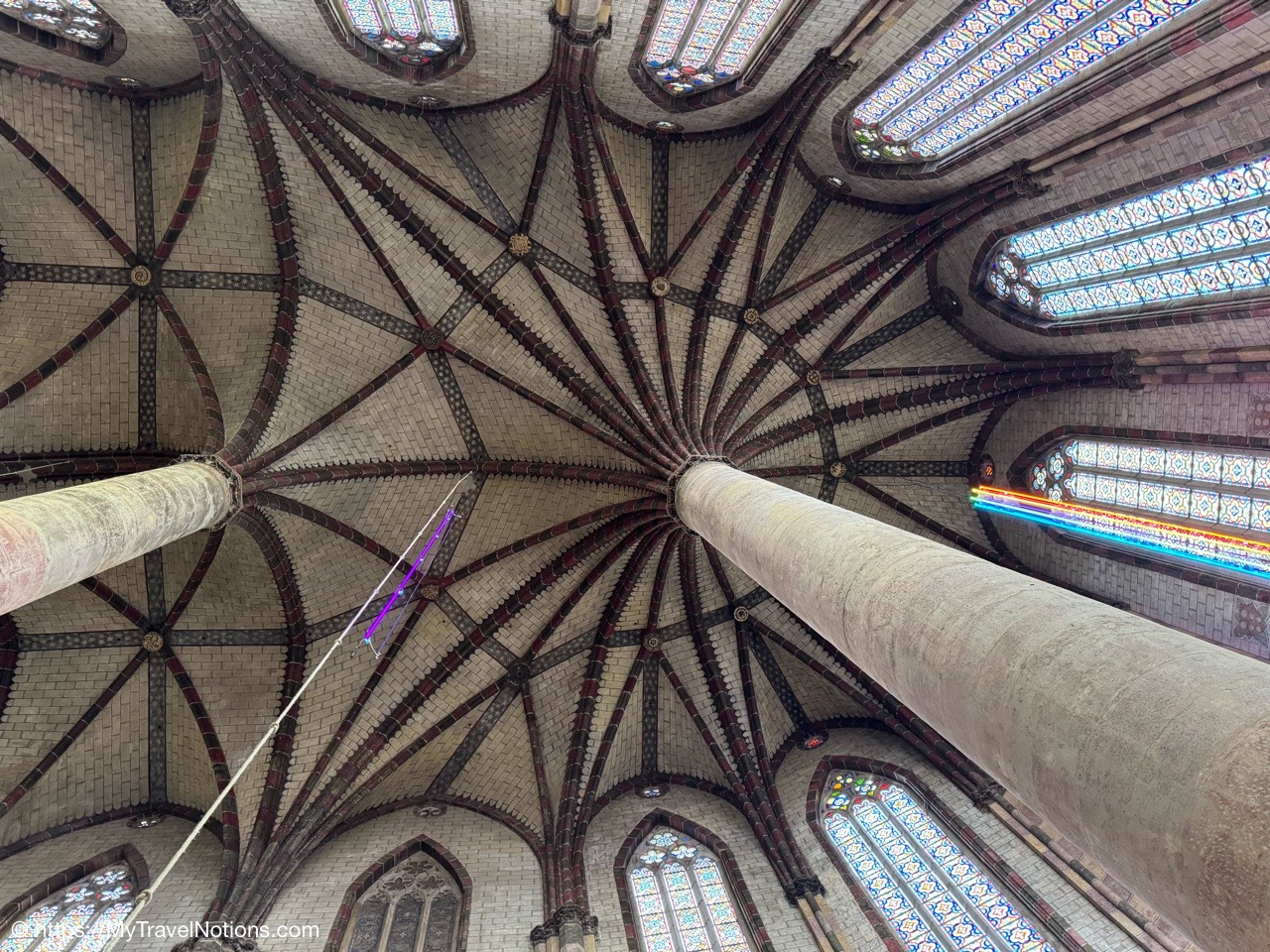
The entire complex of the Convent des Jacobins was built between 1230 and 1341 using local pink brick, a traditional material in the region. The Dominican Order, founded by Saint Dominic to preach against Catharism, began building the first church at the site. This initial structure was small, simple and half the size of the later church.
Come with me as I wrap-up our time here in Toulouse with a visit to the Couvent des Jacobins.
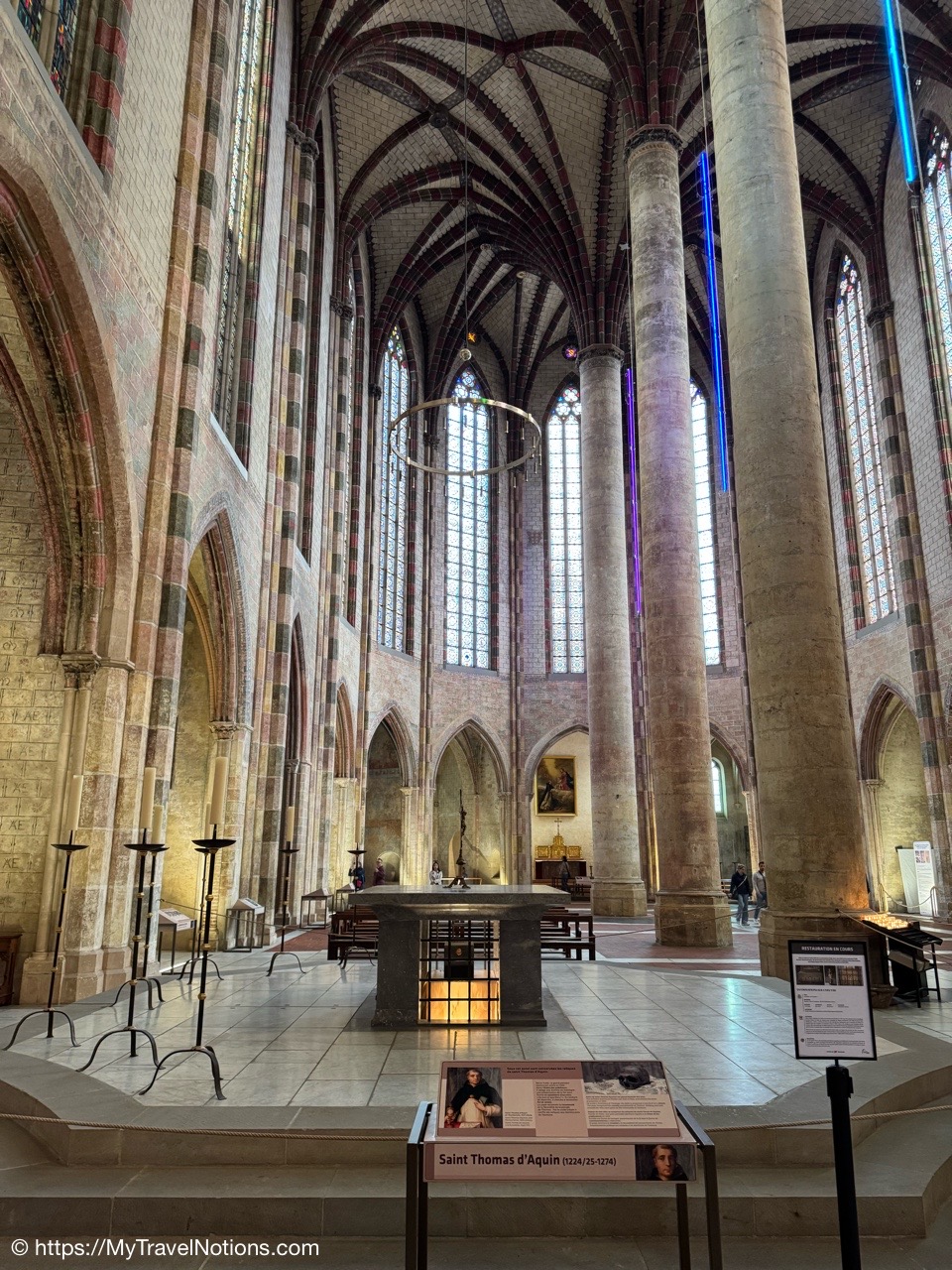
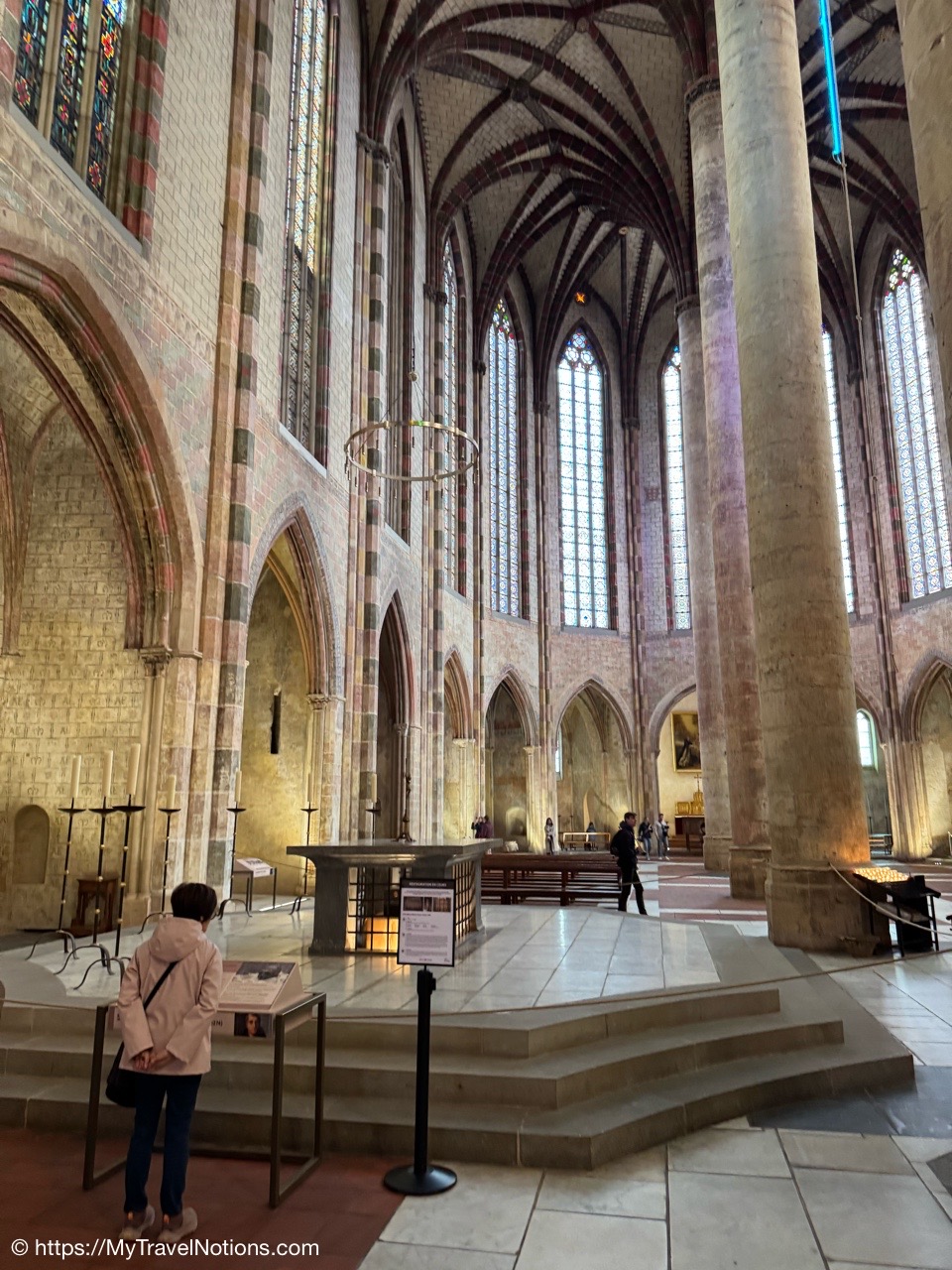
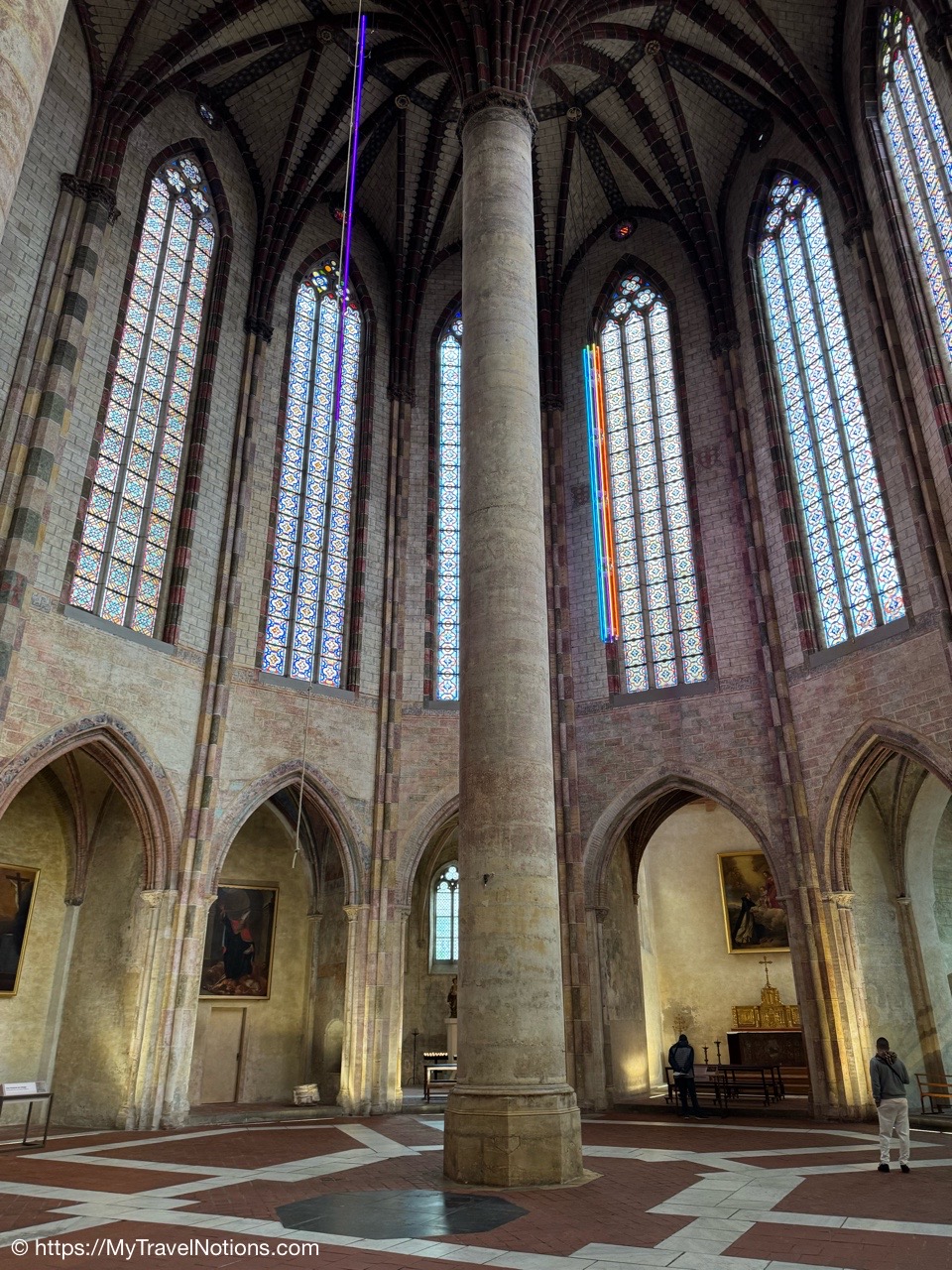
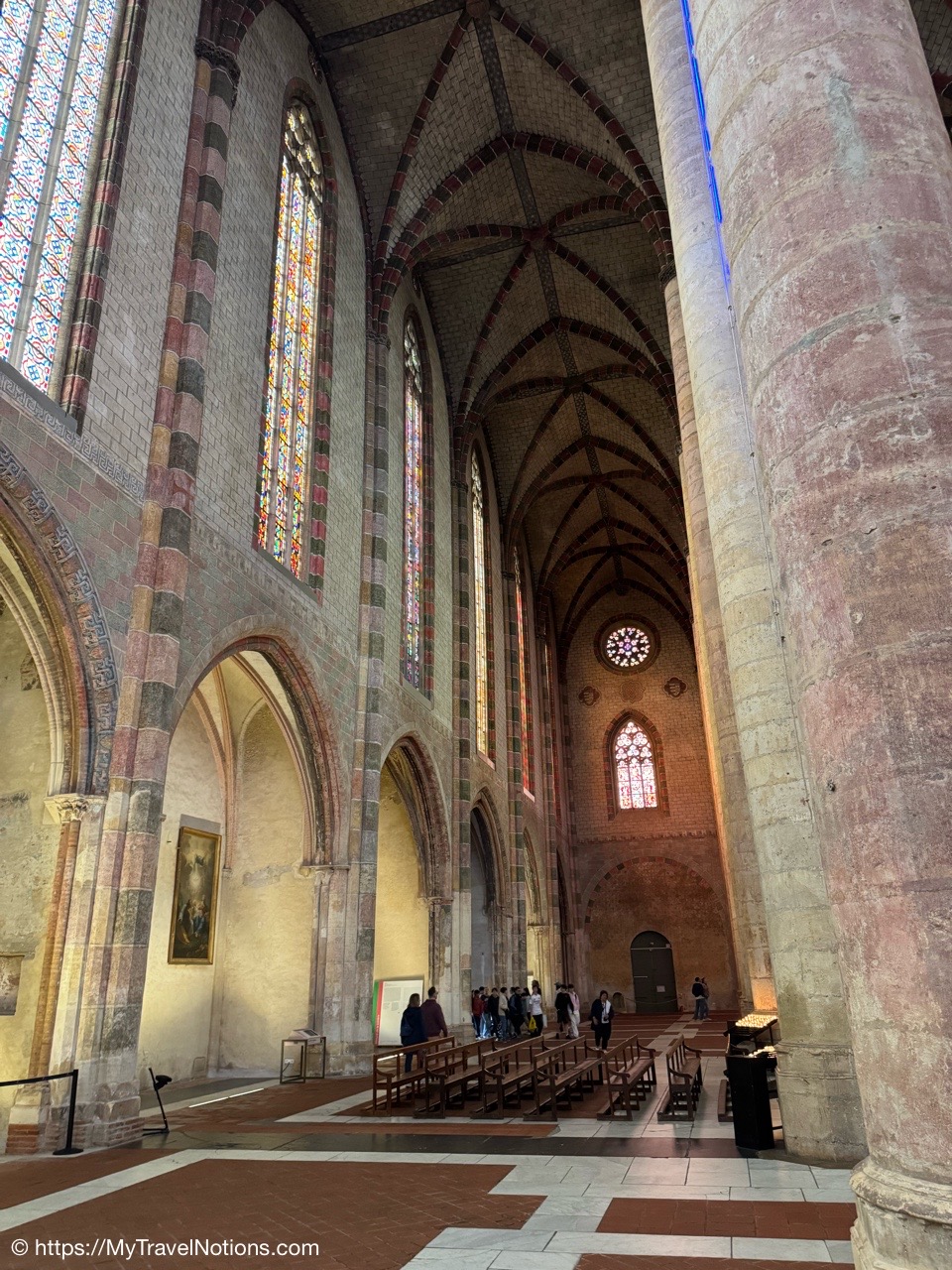
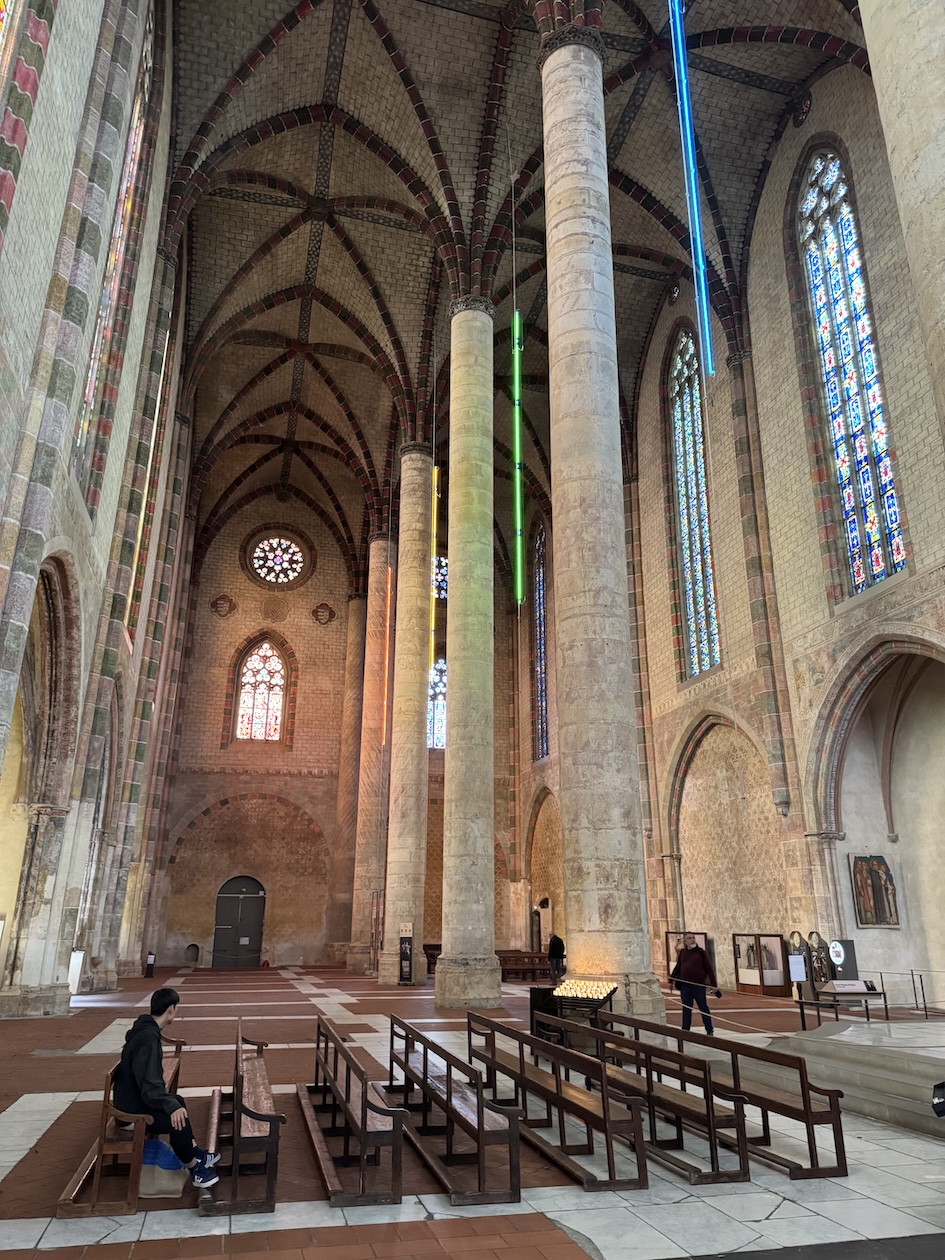
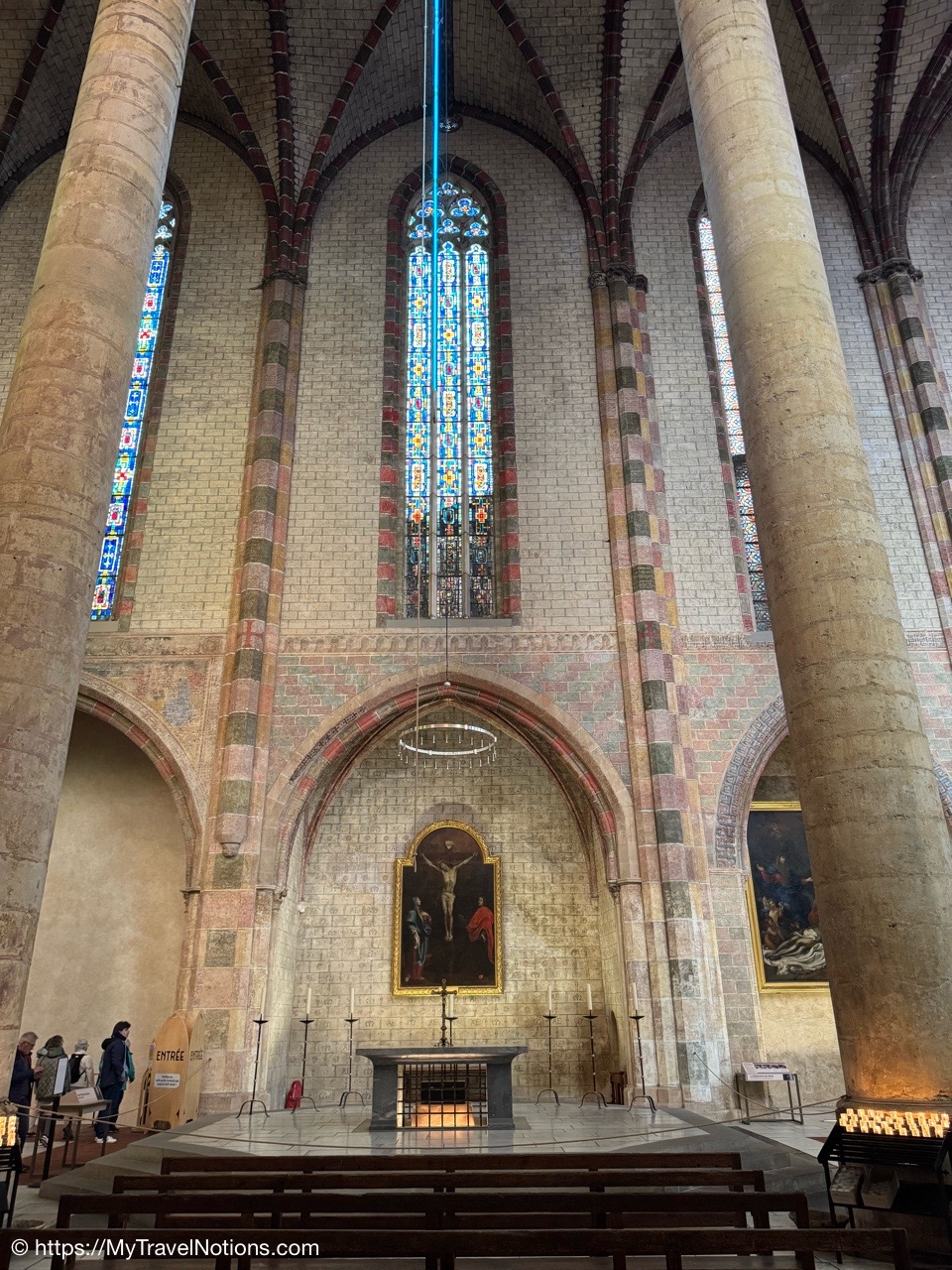
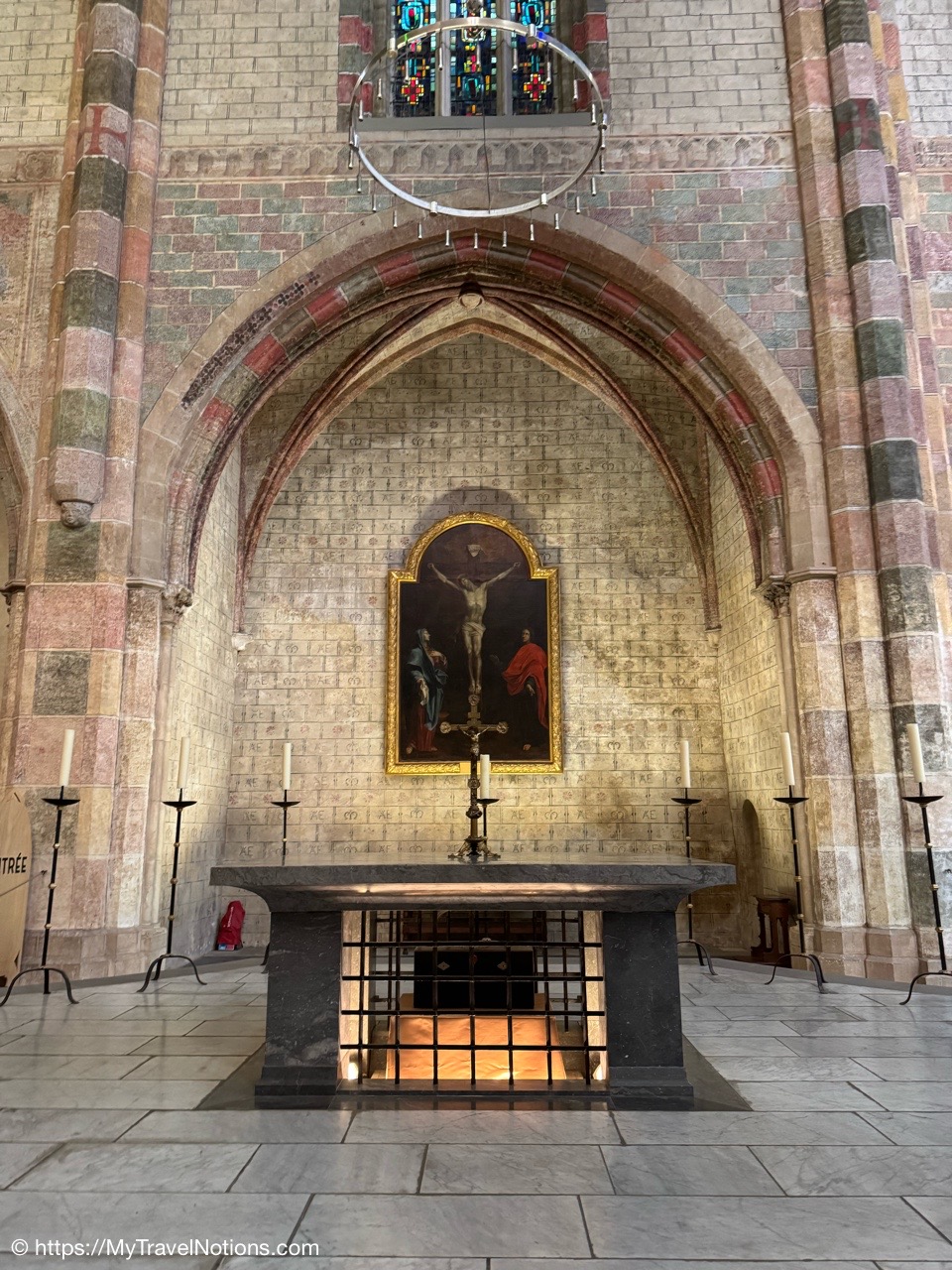
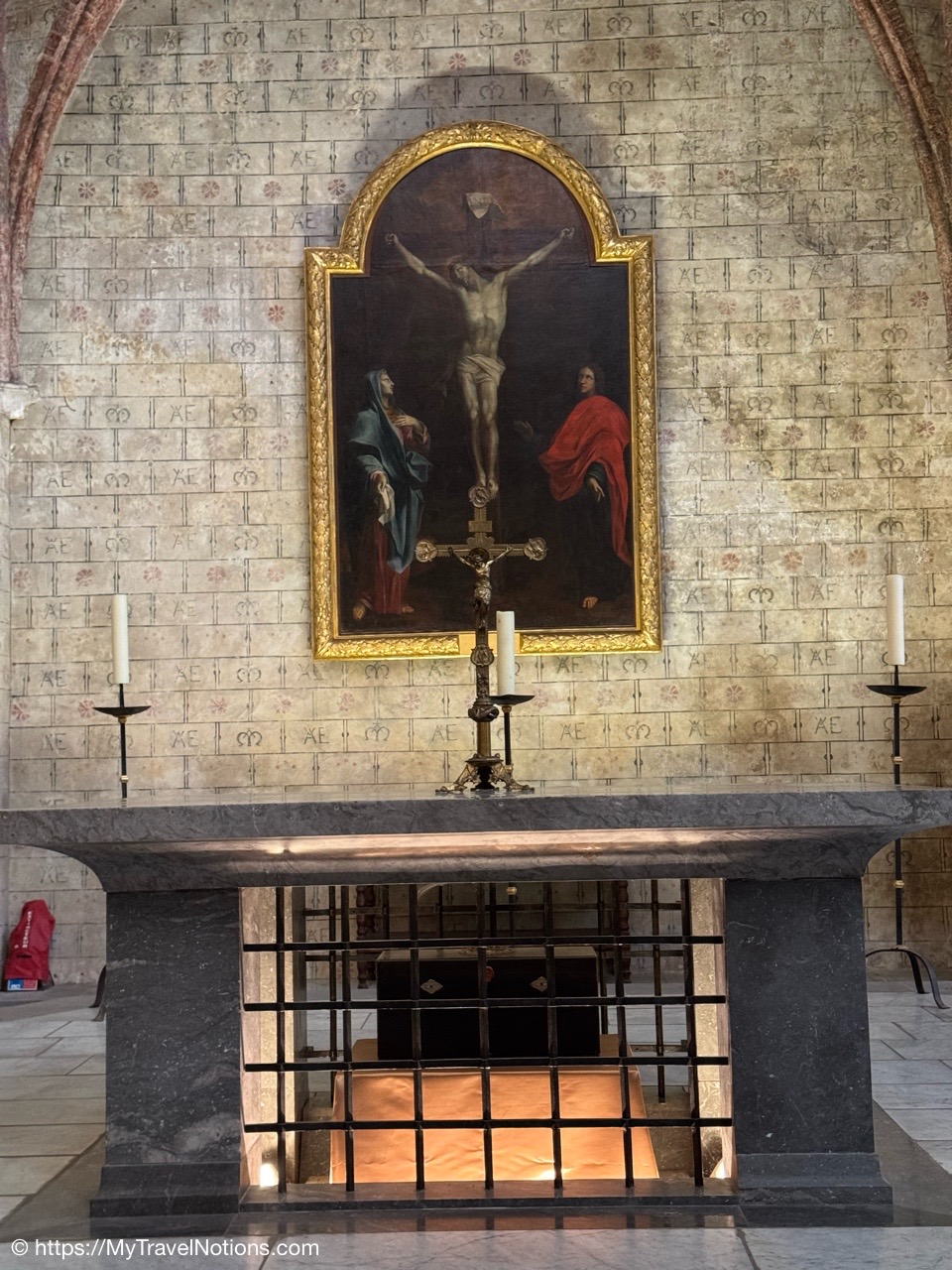
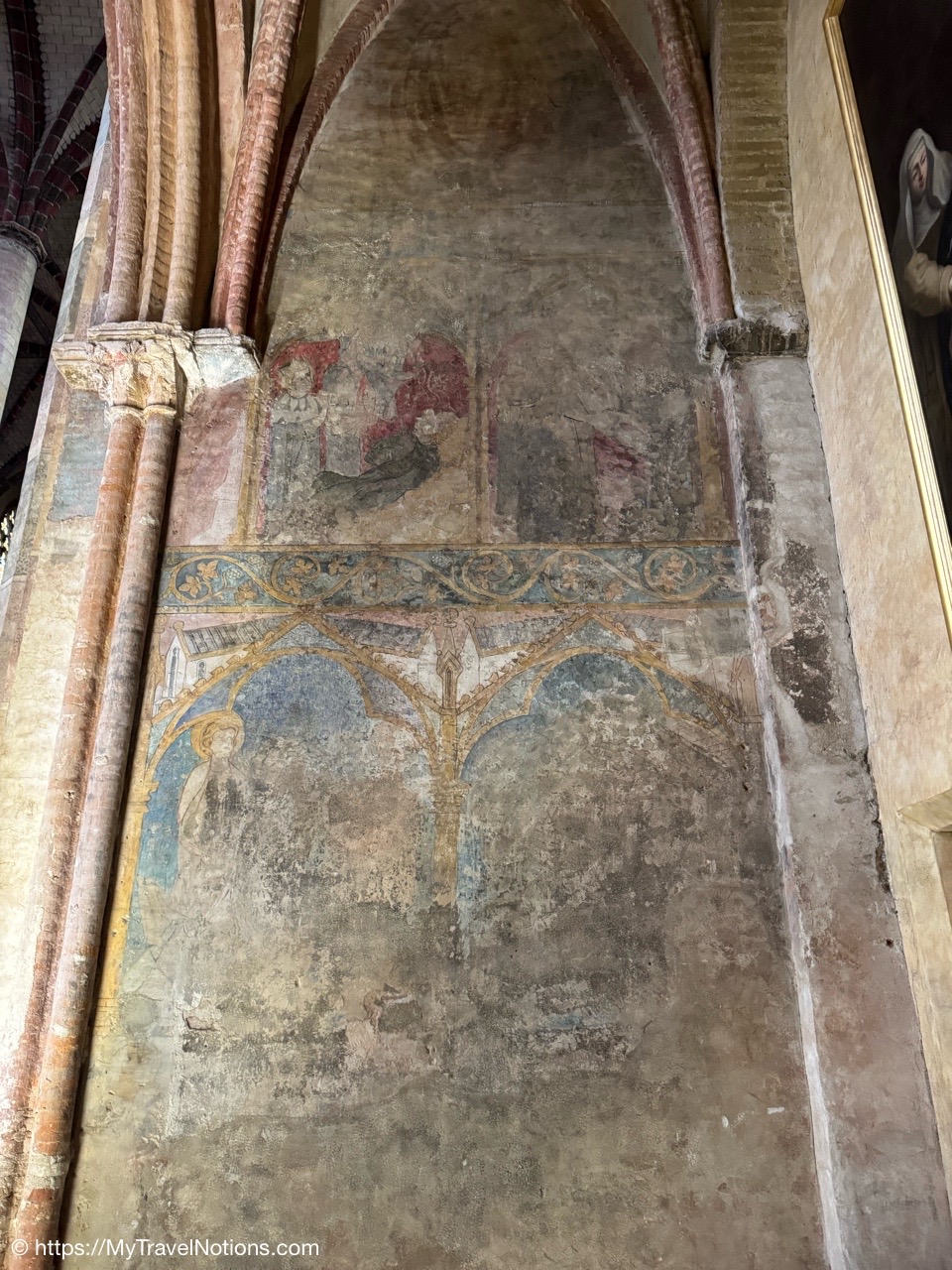
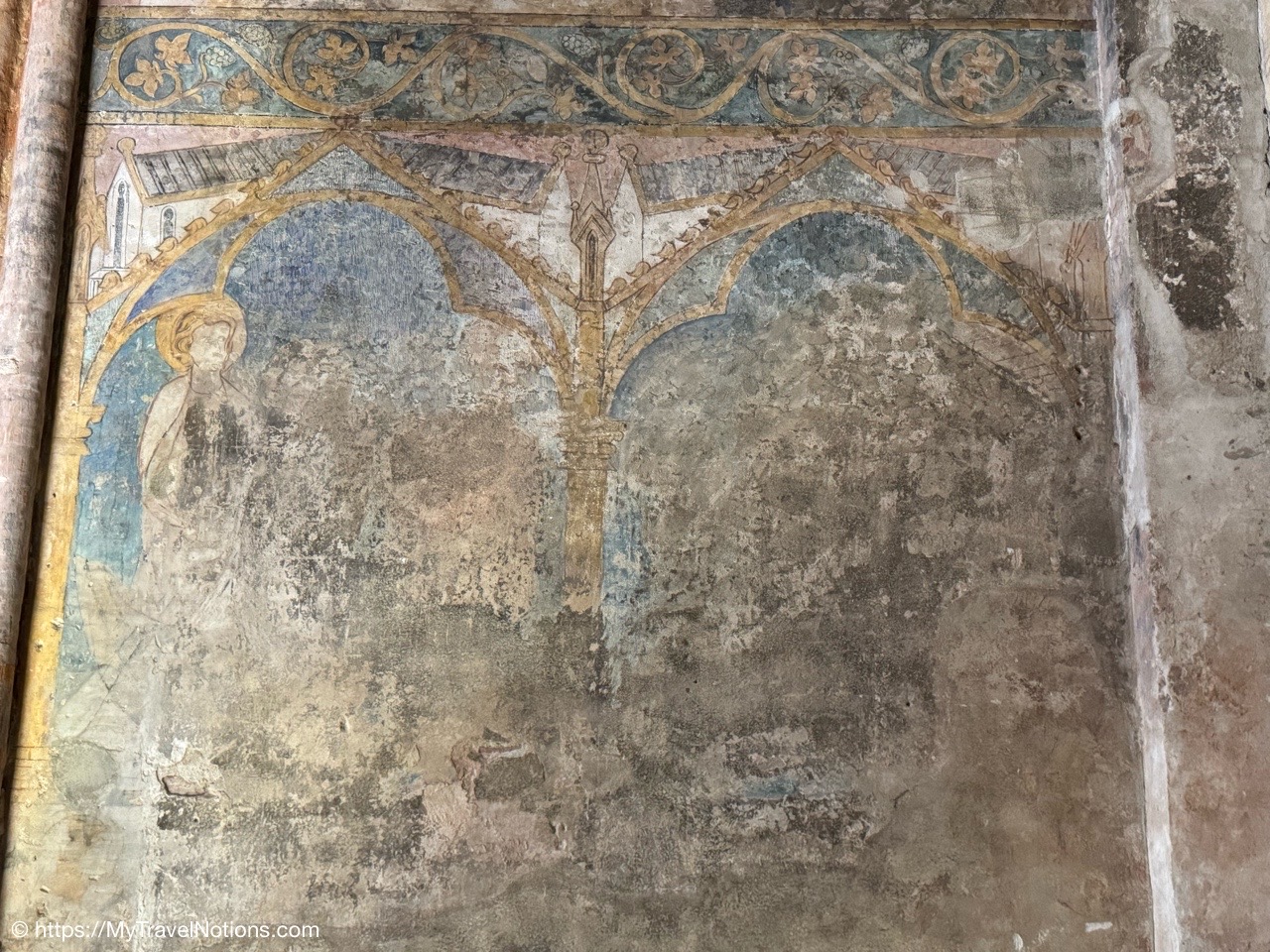
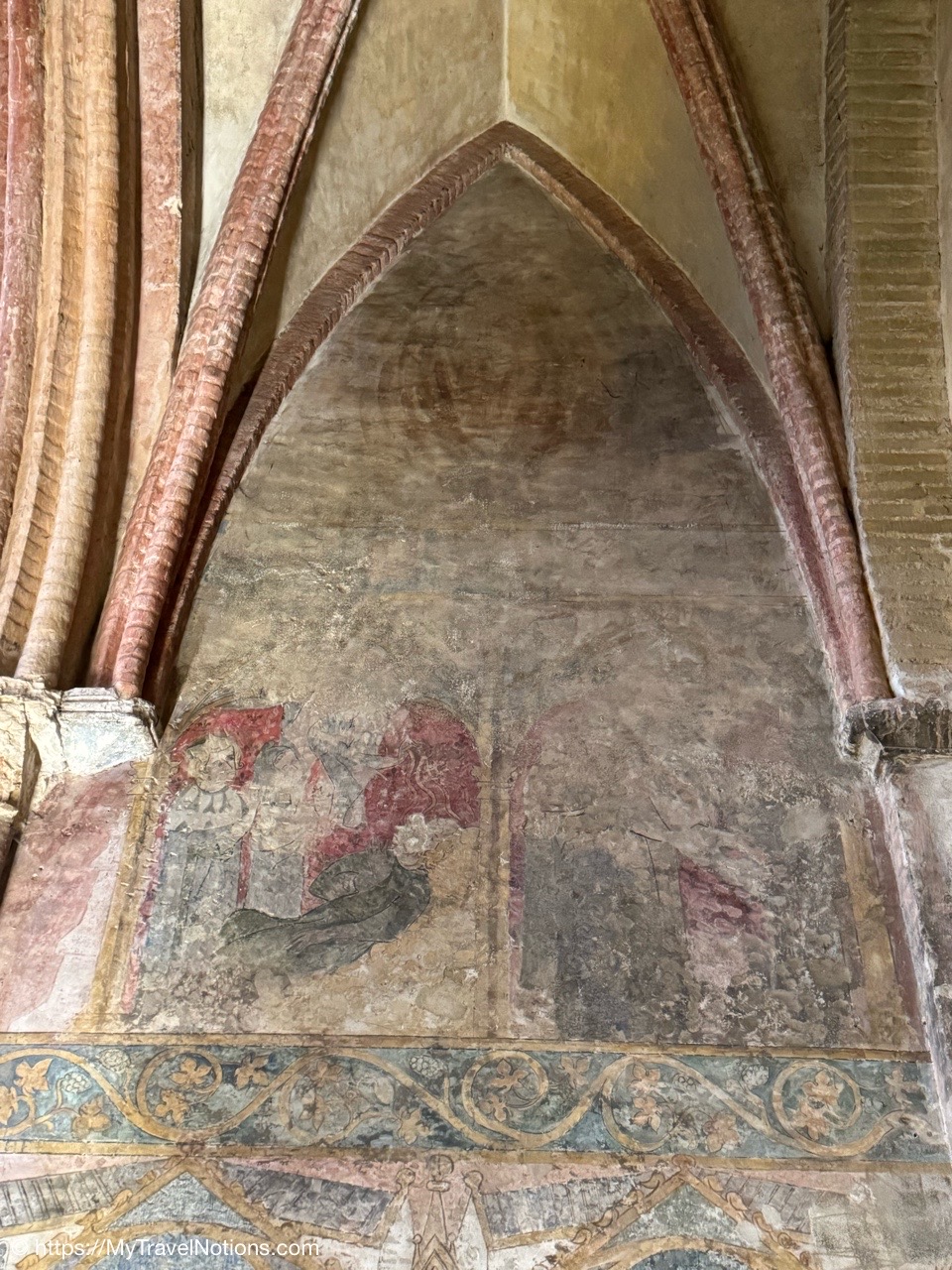
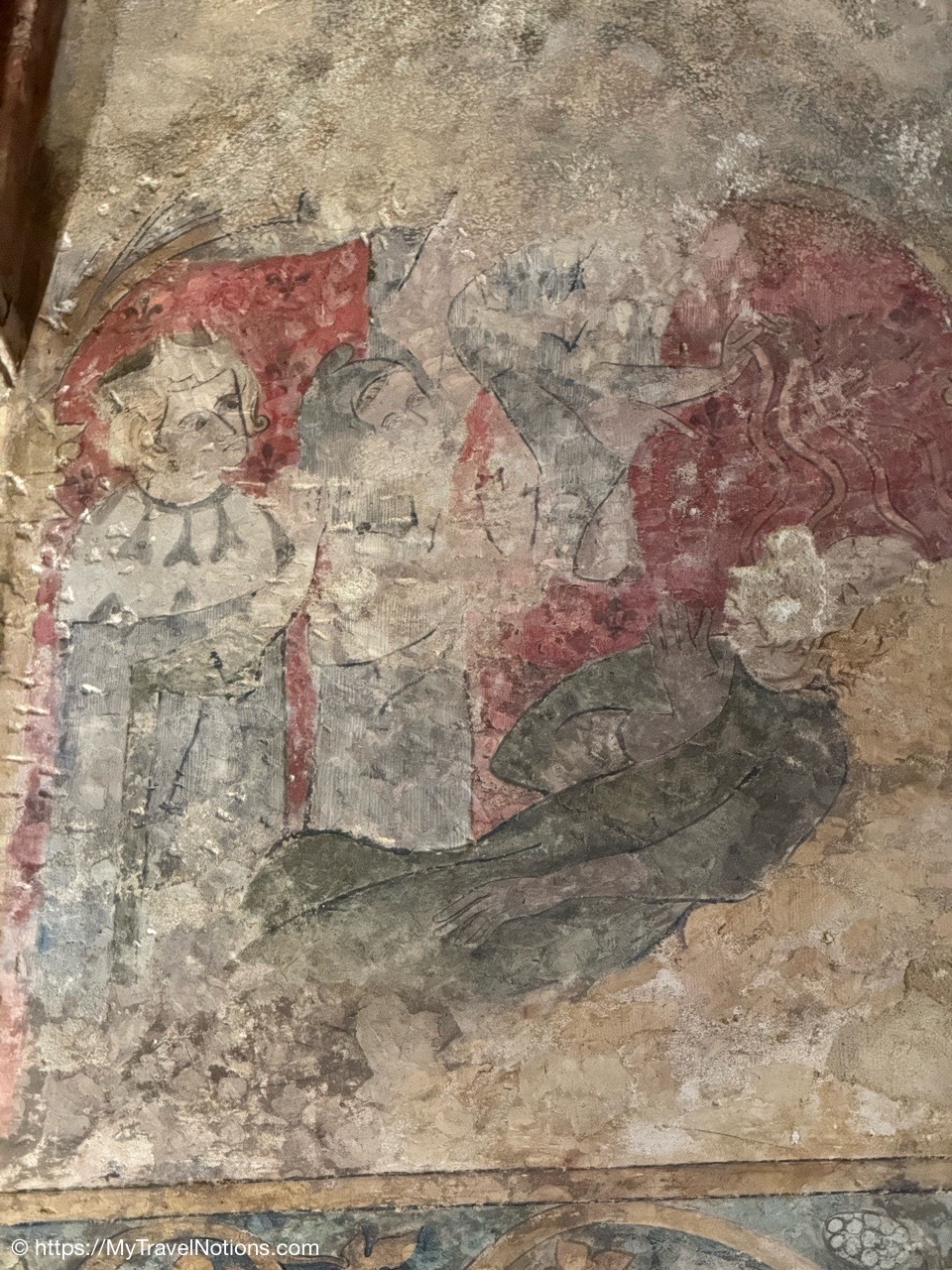
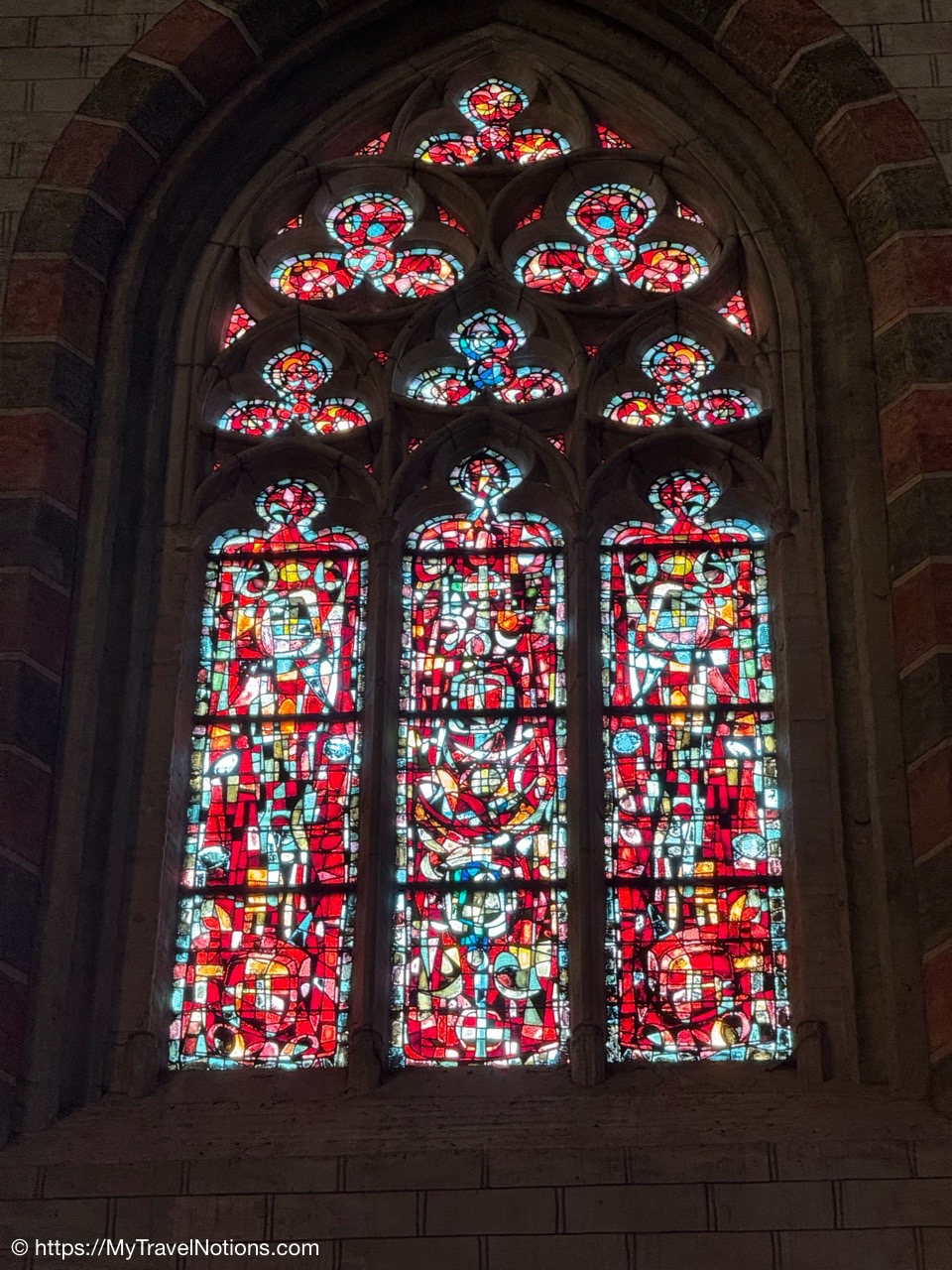
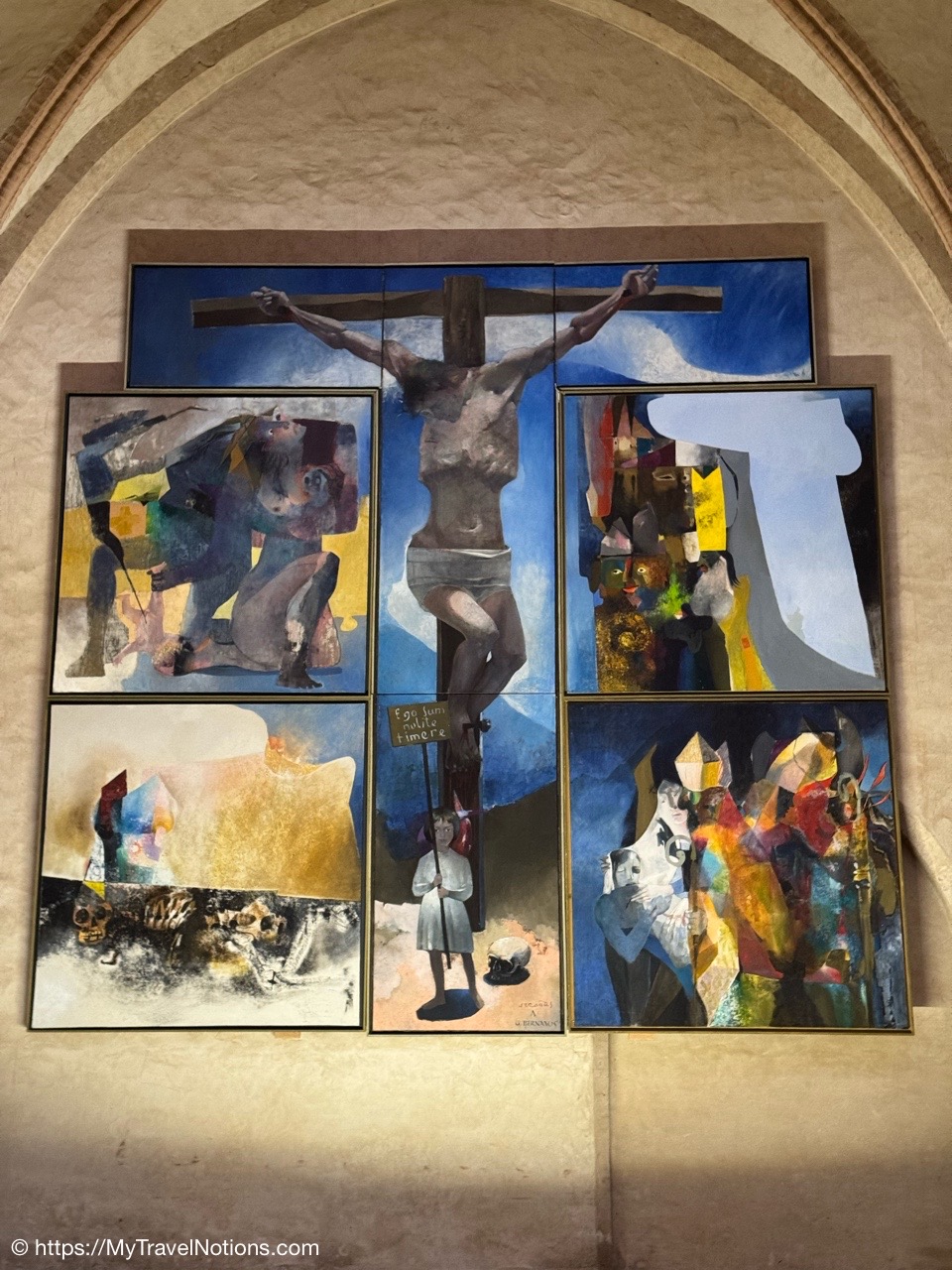
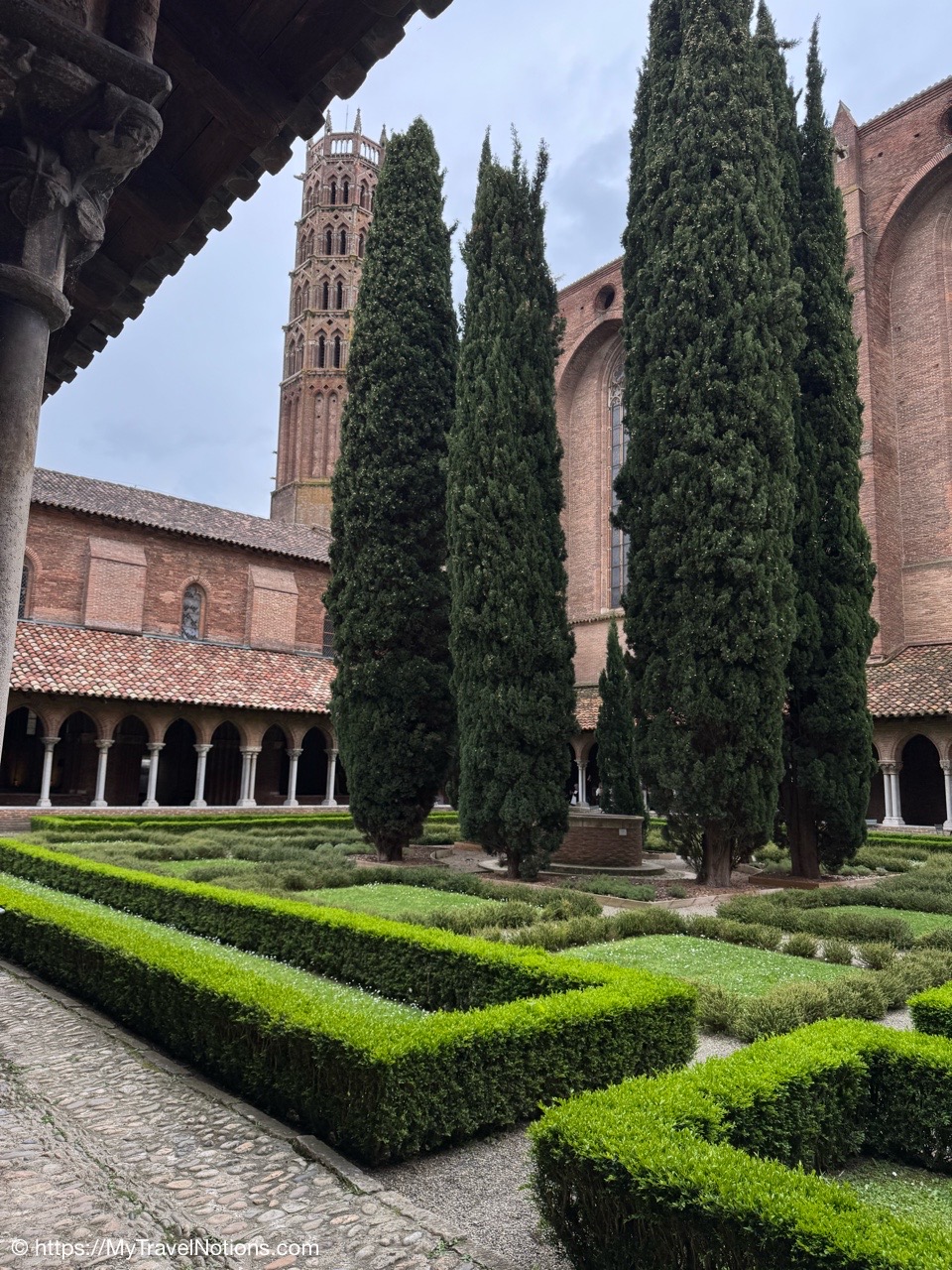
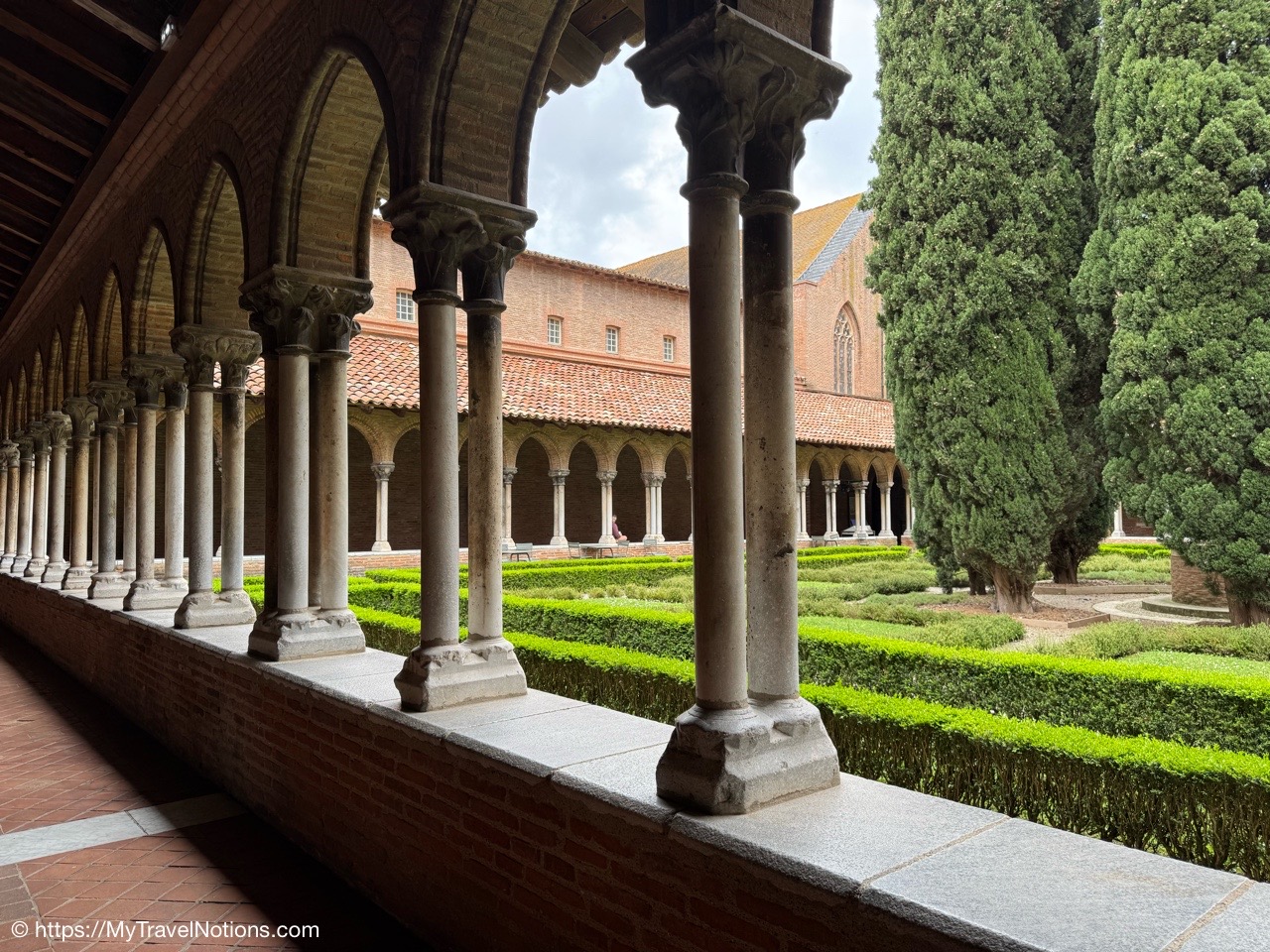
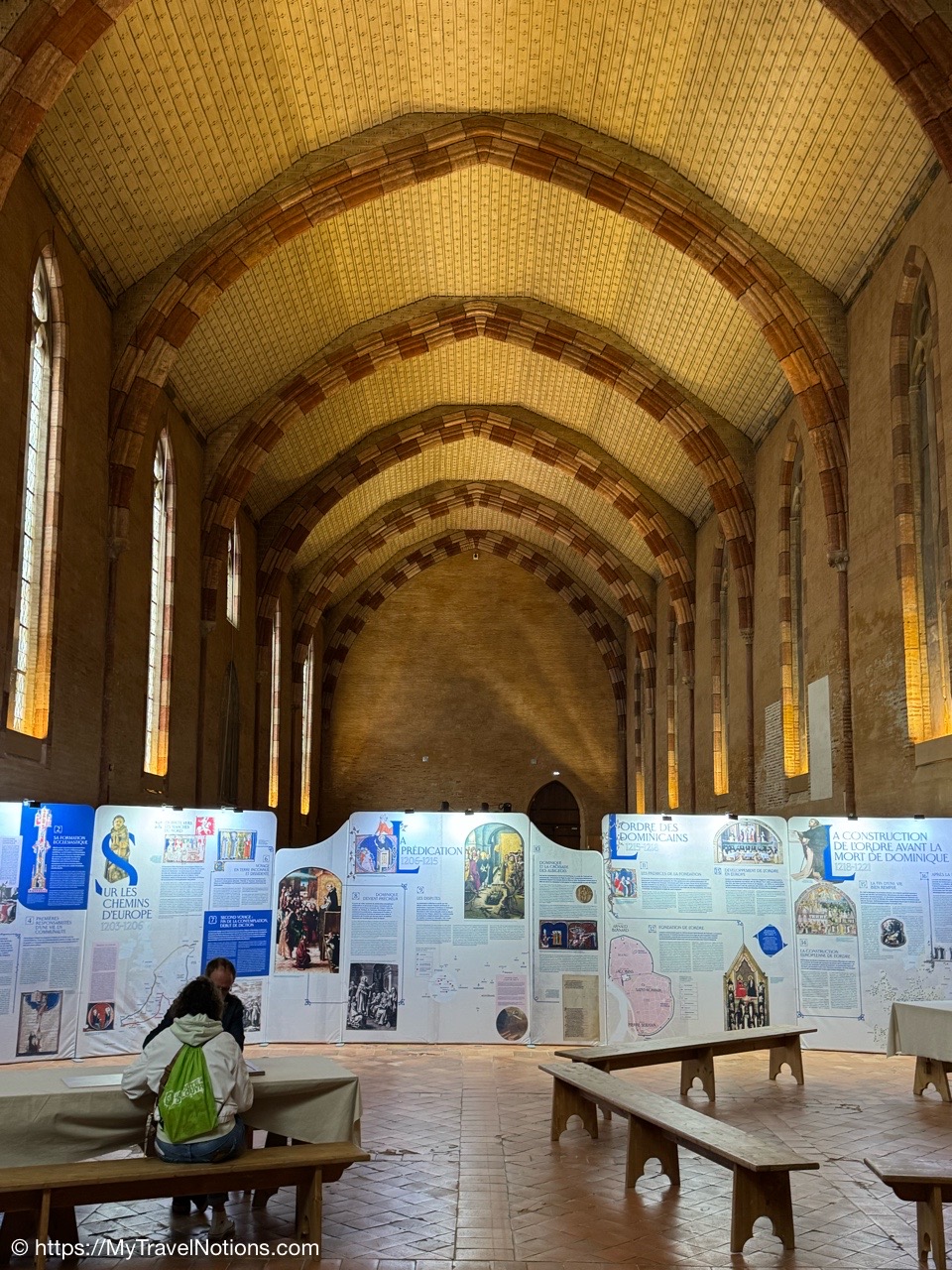
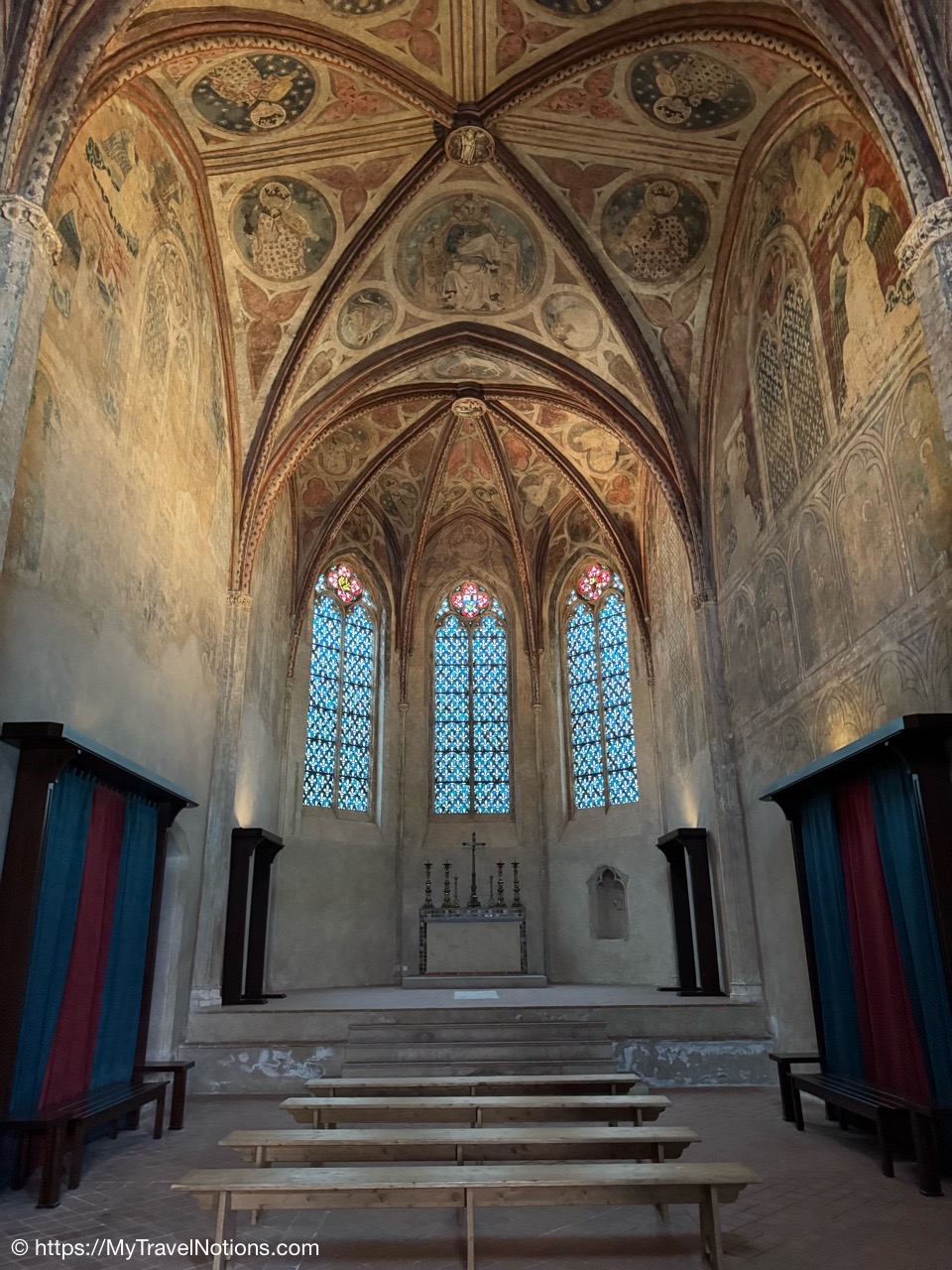
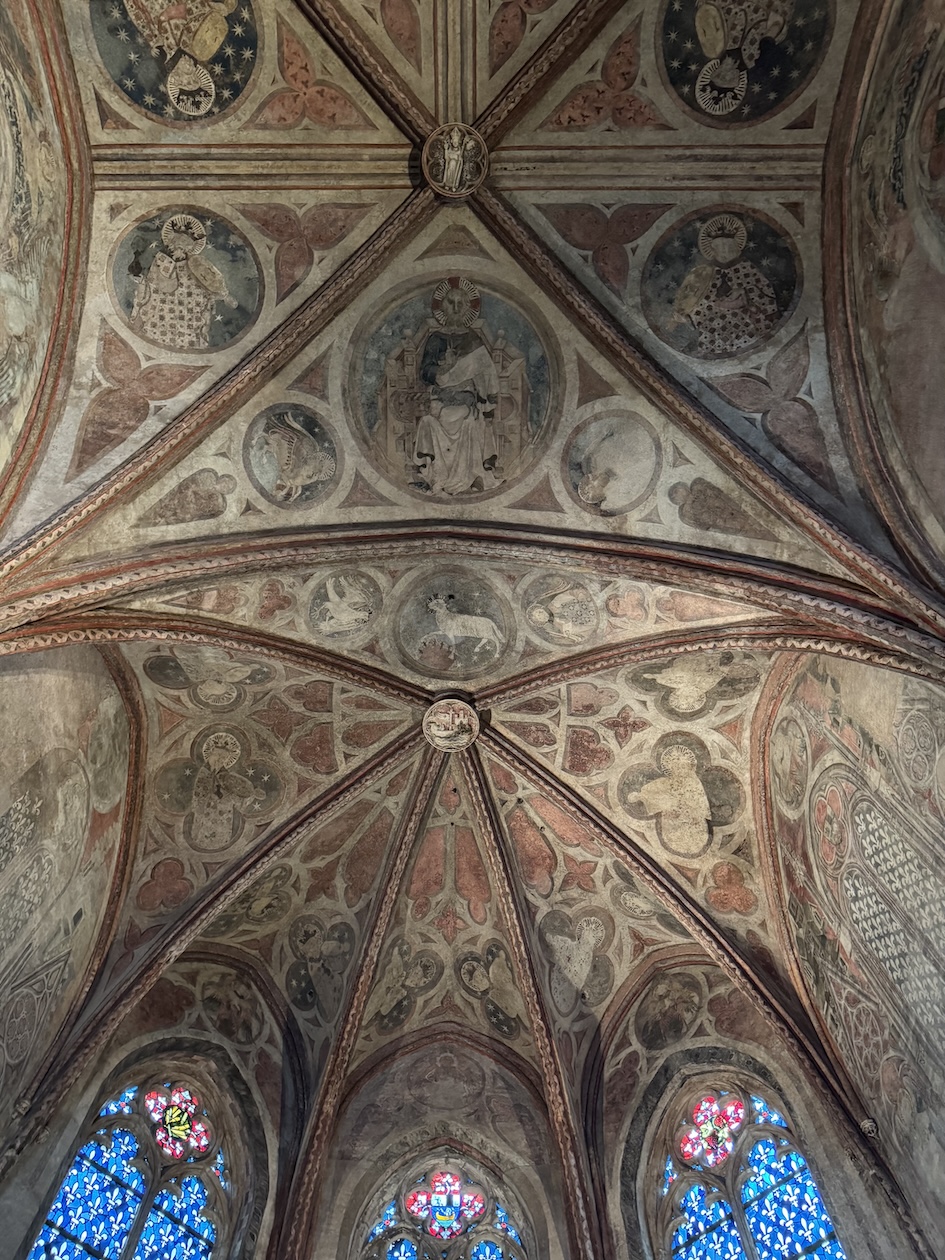
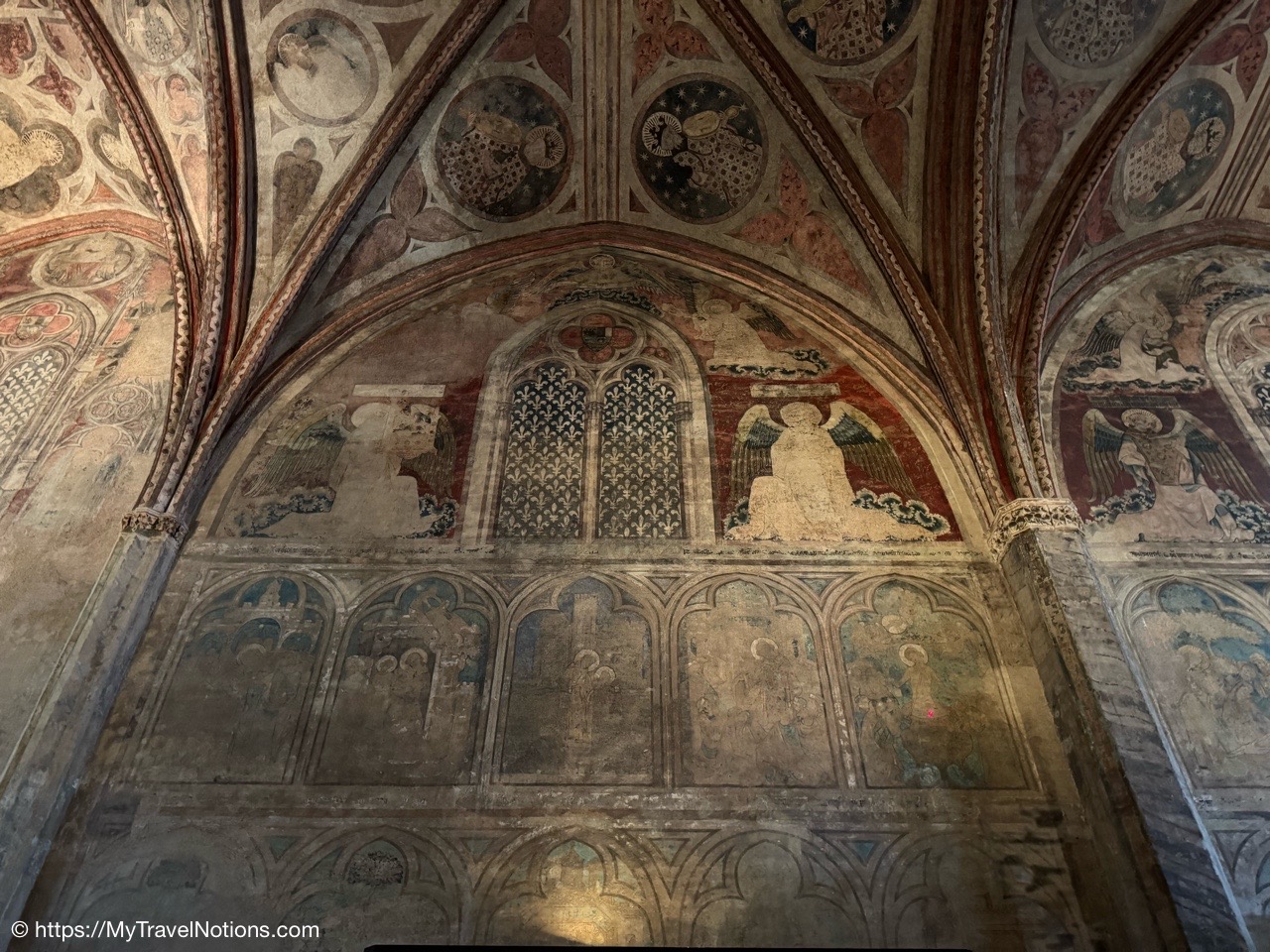
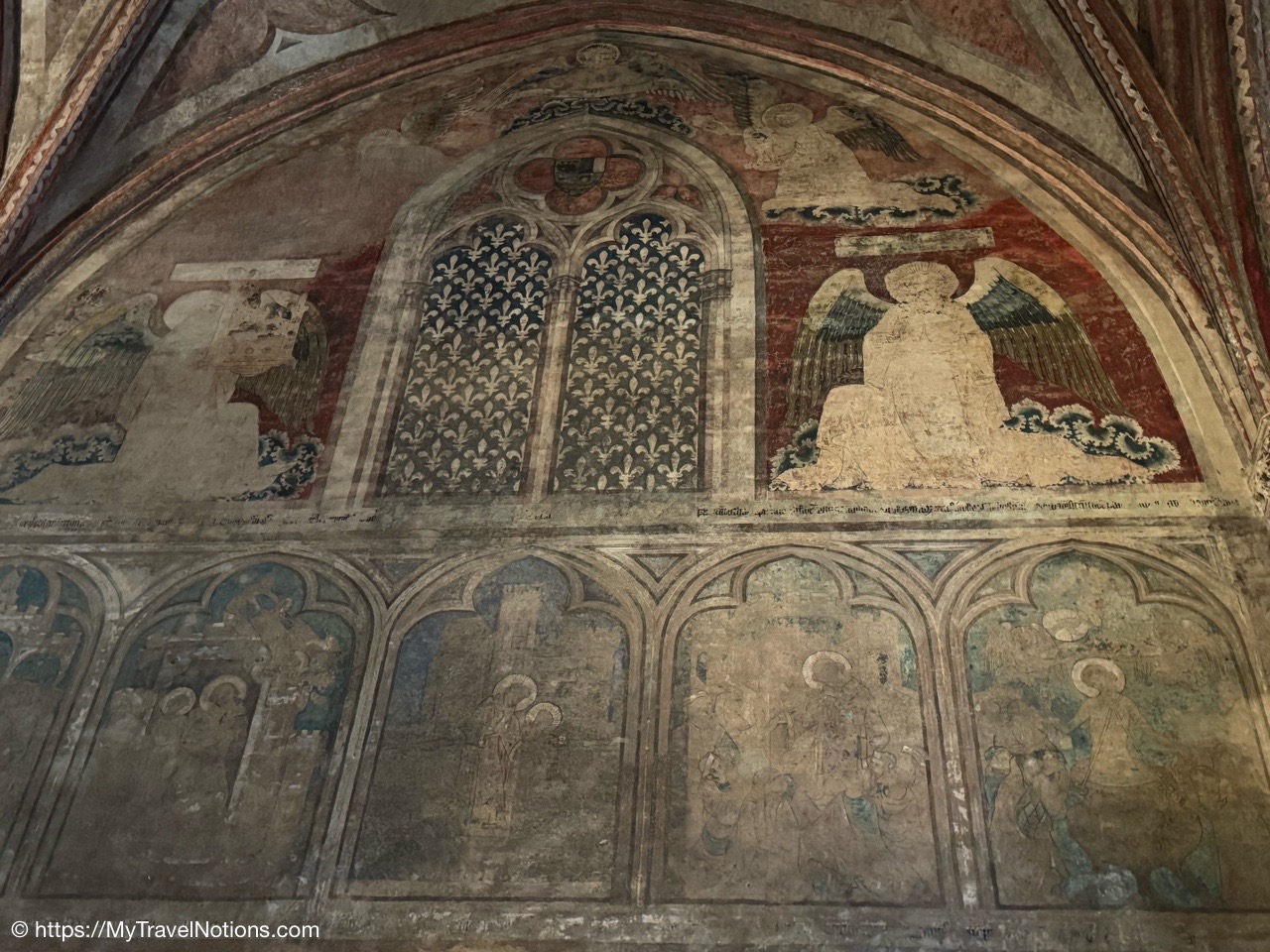
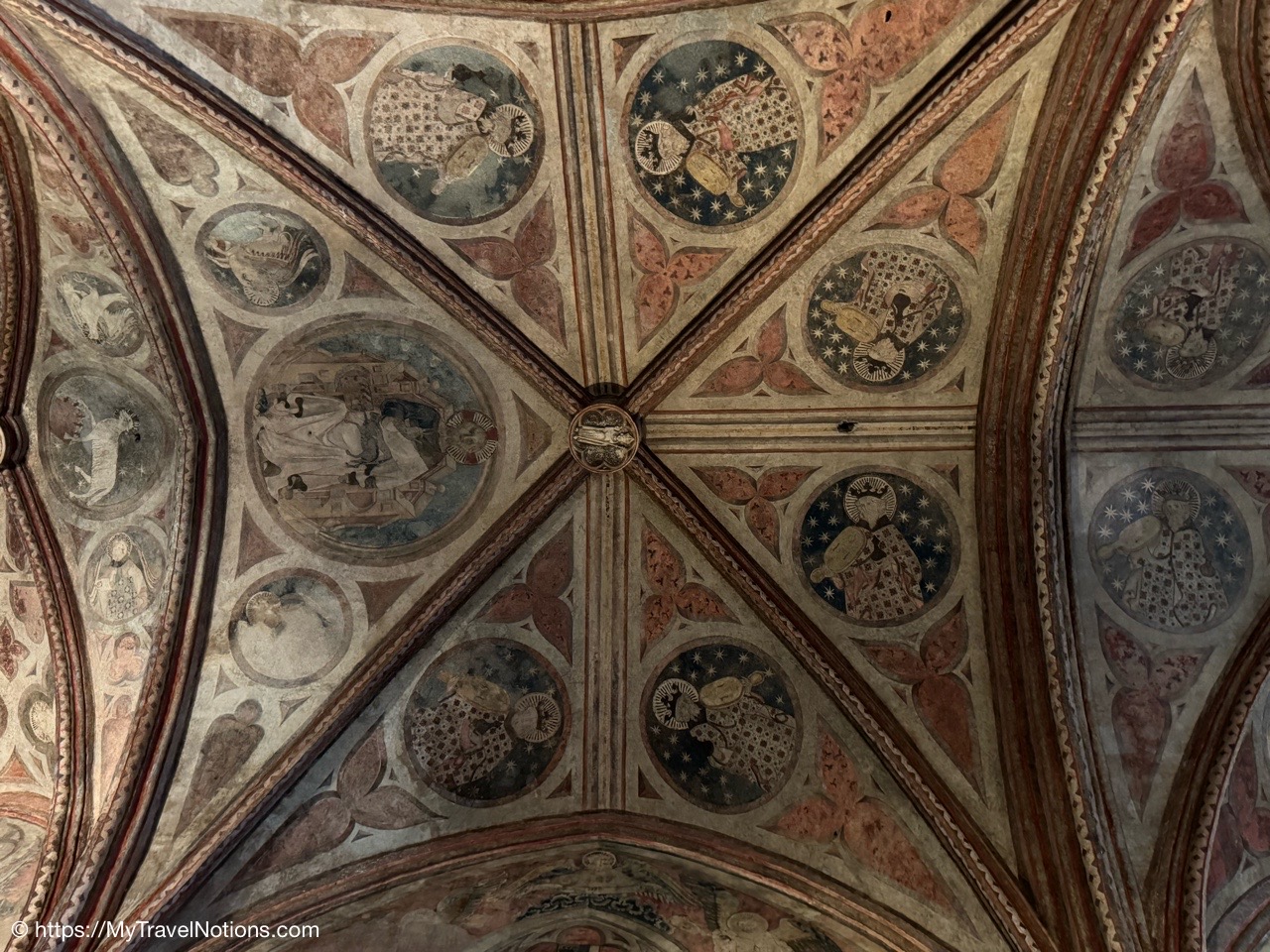
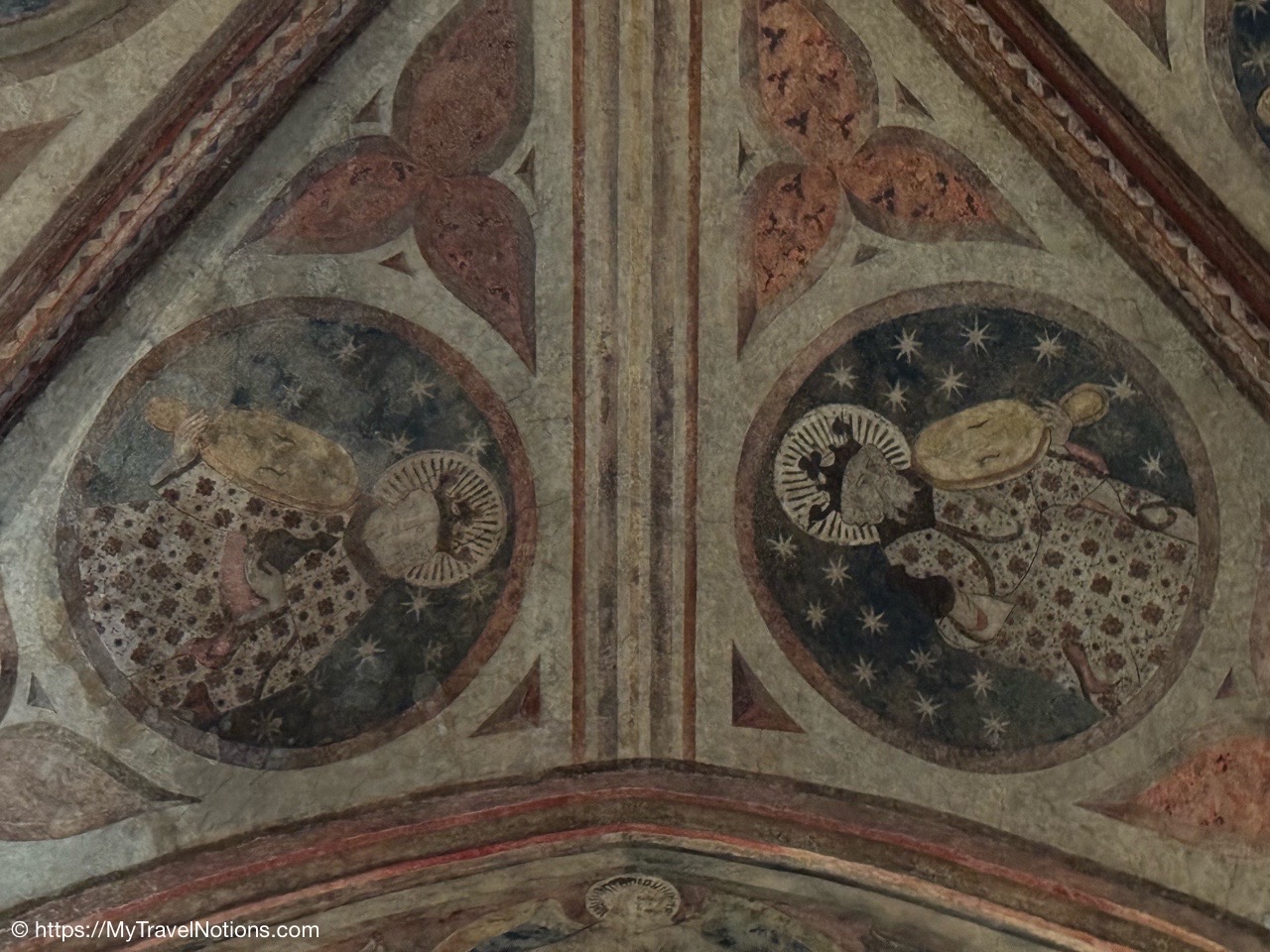
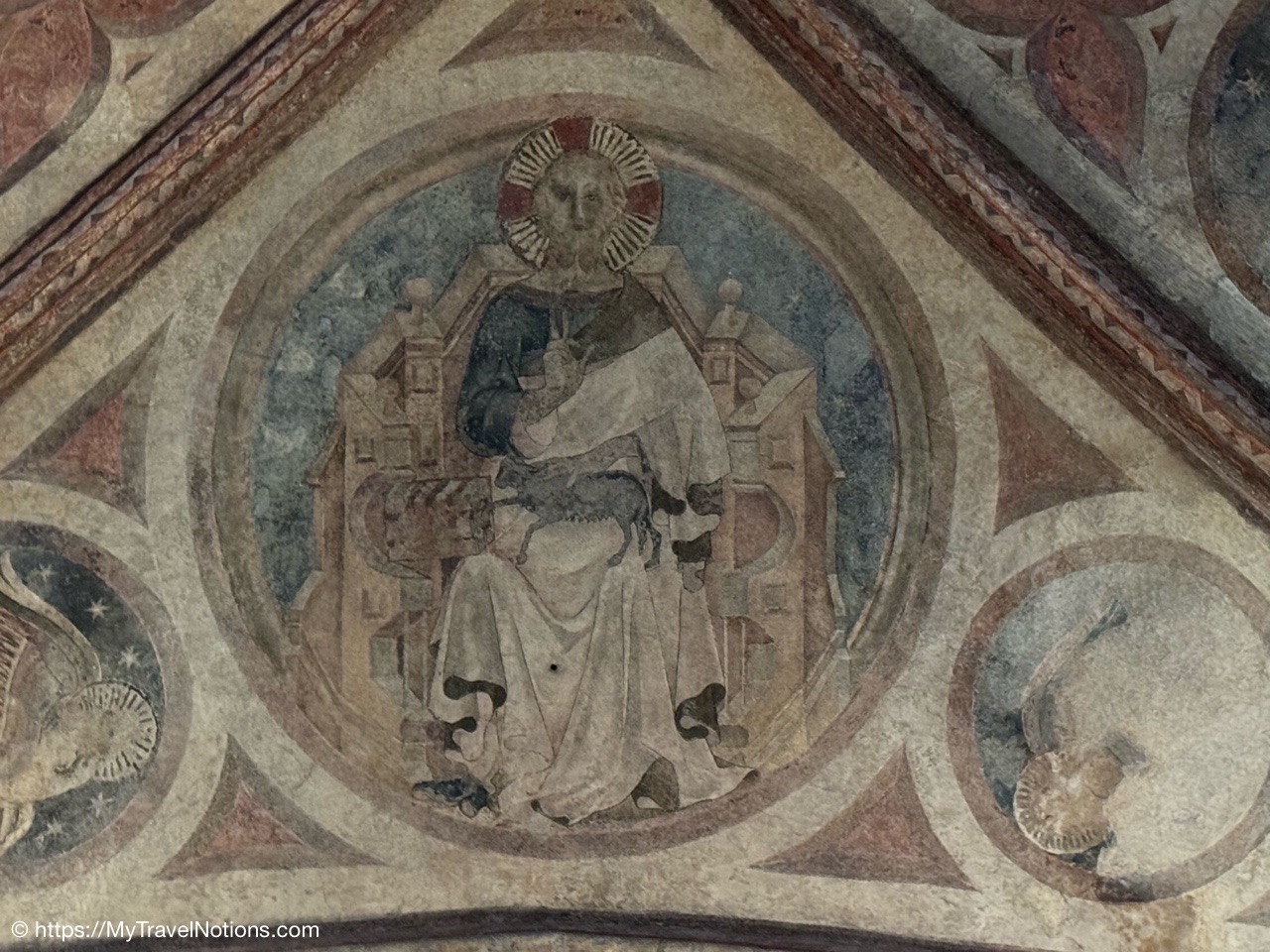
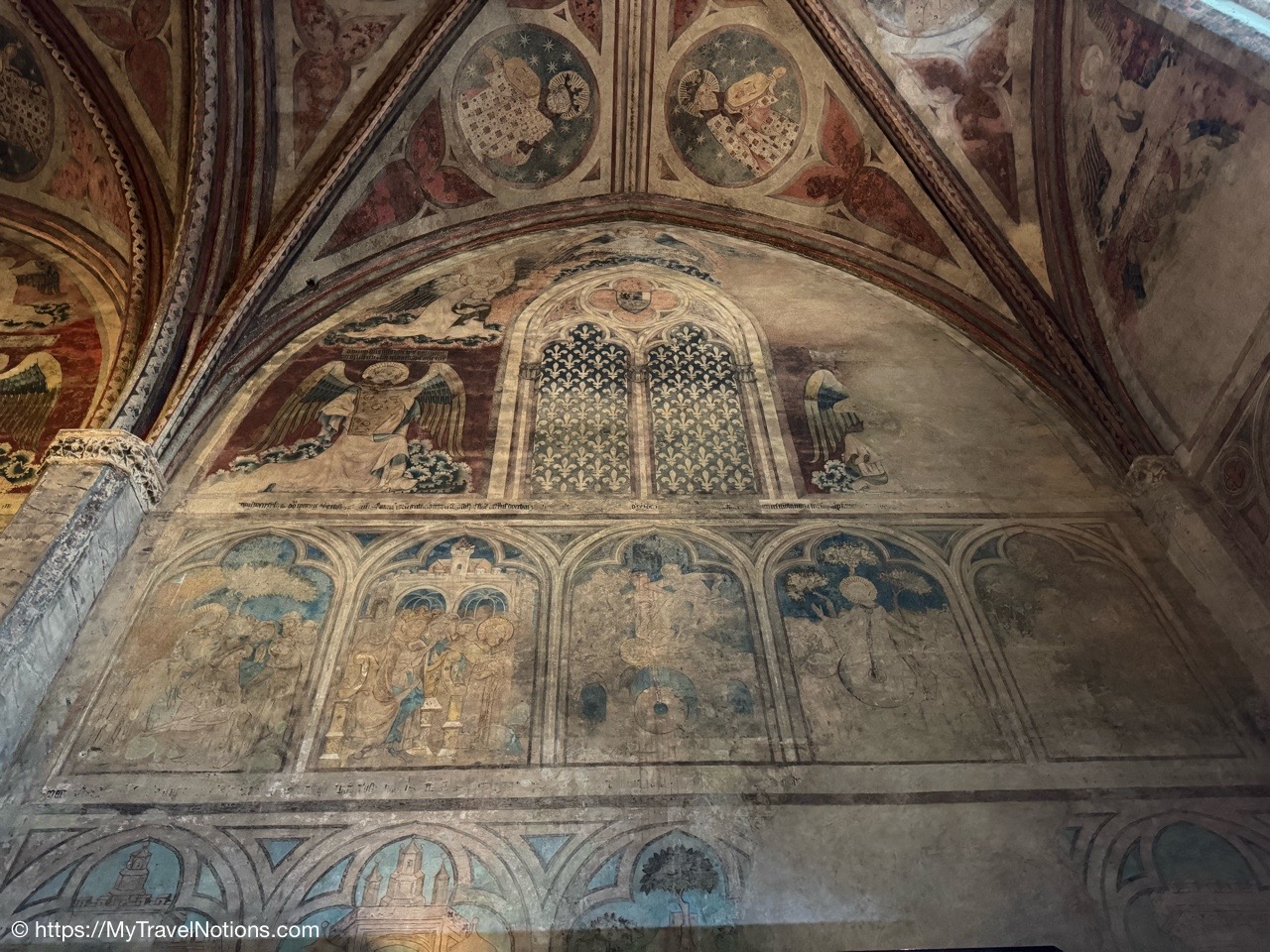
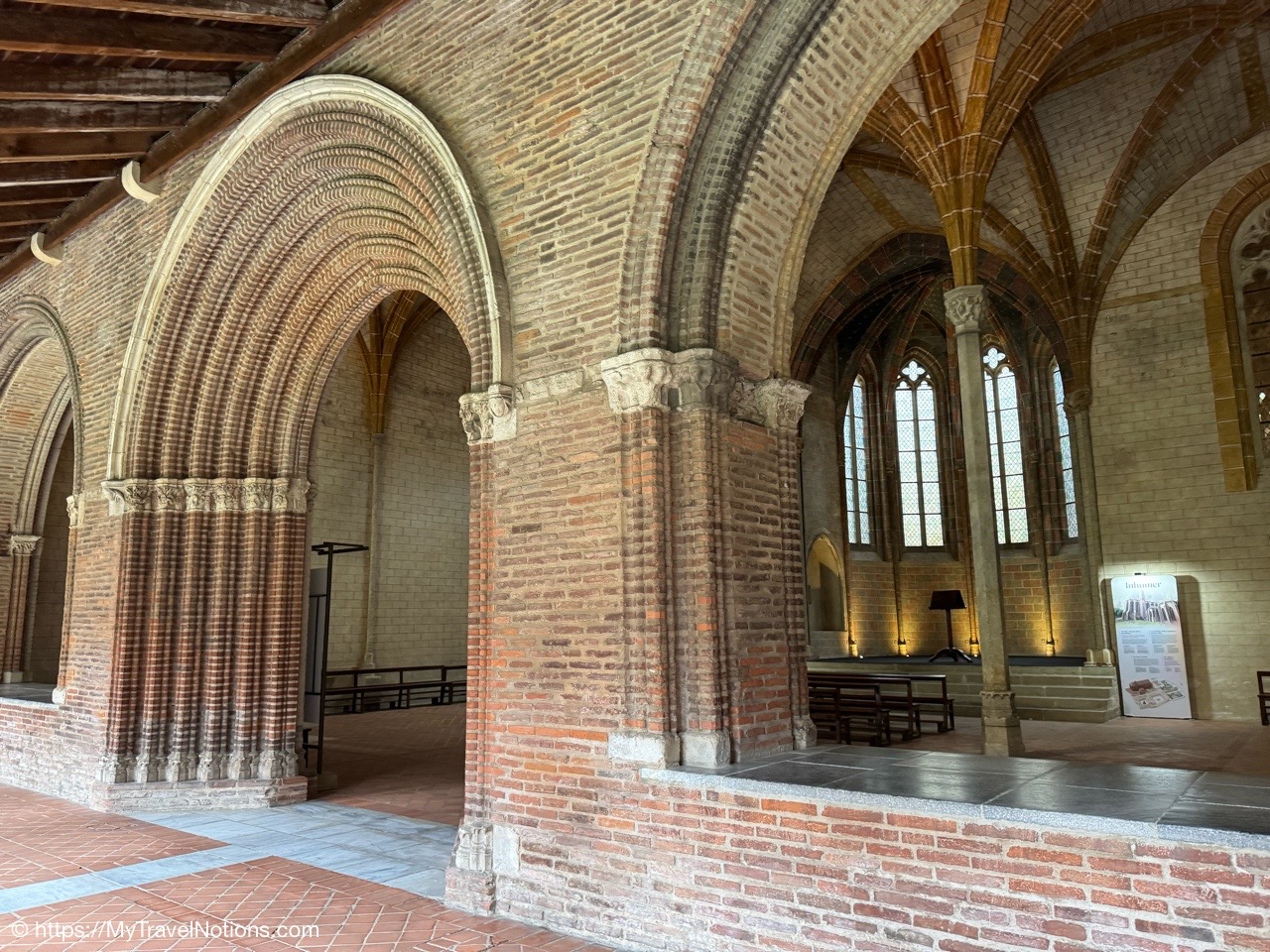
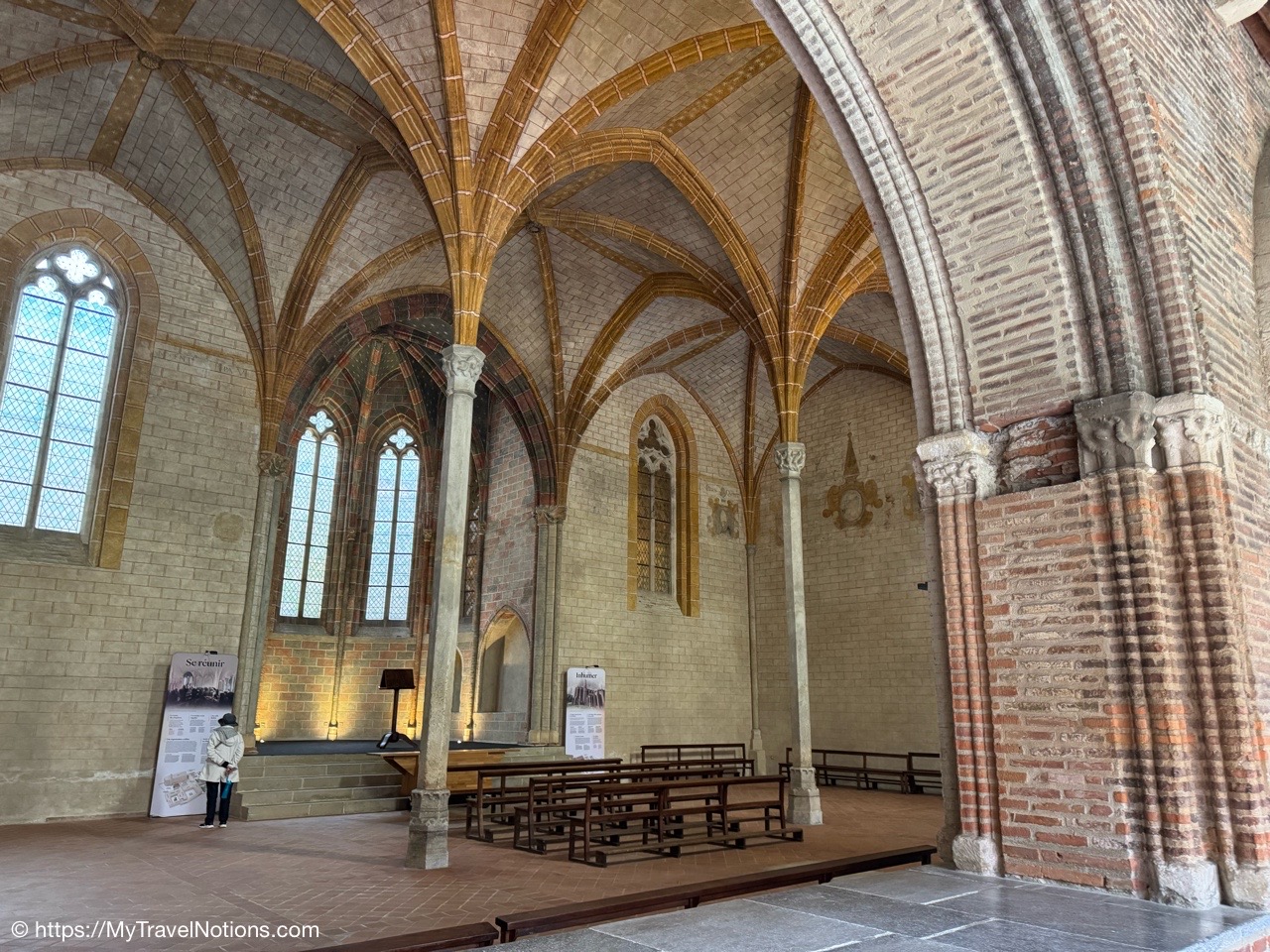
A jewel of medieval art with a rich and eventful history as well as a testament to the lives of the Dominican friars, the Couvent des Jacobins in Toulouse. It was the mother church of the Dominican Order, a small community of monastic preachers founded by Saint Dominic to combat the heresy, at the time, of the Christian Catharism. The order needed somewhere to preach and decided to build this elegant ecclesiastical building in 1229 from pink Roman brick. The Cathars were considered a heretical sect by the Catholic Church due to their distinct beliefs and practices, which deviated from mainstream Catholic doctrine. (May 6, 2025)At the heart of the Couvent des Jacobins in Toulouse is the church, which is considered a masterpiece of Gothic design. The interior is defined by its soaring nave, lined with double rows of slender columns, but the most striking feature is the “palm tree” vaulted ceiling, an architectural marvel where a single column branches out into 22 delicate ribs, resembling the leaves of a palm. (May 6, 2025)The interior of the Couvent des Jacobins in Toulouse is the church that’s defined by its soaring nave, lined with double rows of slender columns, but the most striking feature is the “palm tree” vaulted ceiling, an architectural marvel where a single column branches out into 22 delicate ribs, resembling the leaves of a palm. (May 6, 2025)The interior of the Couvent des Jacobins in Toulouse is the church that’s defined by its soaring nave, lined with double rows of slender columns, but the most striking feature is the “palm tree” vaulted ceiling, an architectural marvel where a single column branches out into 22 delicate ribs, resembling the leaves of a palm. (May 6, 2025)The interior of the Couvent des Jacobins in Toulouse is the church that’s defined by its soaring nave, lined with double rows of slender columns, but the most striking feature is the “palm tree” vaulted ceiling, an architectural marvel where a single column branches out into 22 delicate ribs, resembling the leaves of a palm. (May 6, 2025)The interior of the Couvent des Jacobins in Toulouse is the church that’s defined by its soaring nave, lined with double rows of slender columns, but the most striking feature is the “palm tree” vaulted ceiling, an architectural marvel where a single column branches out into 22 delicate ribs, resembling the leaves of a palm. (May 6, 2025)The enormous and unique “palm tree” vaulted ceiling called the Le Palmier des Jacobins, in spiked-like black and red blocks, in the church nave of the Couvent des Jacobins in Toulouse. (May 6, 2025)The altar inside the church of the Couvent des Jacobins in Toulouse. (May 6, 2025)The altar inside the church of the Couvent des Jacobins in Toulouse. (May 6, 2025)Under the altar, inside the church of the Couvent des Jacobins in Toulouse, are the relics of Saint Thomas Aquinas, a member of the Dominican Order. The Catholic Church honors Thomas Aquinas as a saint and regards him as the model teacher for those studying for the priesthood. (May 6, 2025)The remains of the 13th century paintings inside the church of the Couvent des Jacobins in Toulouse. (May 6, 2025)The remains of the 13th century paintings inside the church of the Couvent des Jacobins in Toulouse. (May 6, 2025)The remains of the 13th century paintings inside the church of the Couvent des Jacobins in Toulouse. (May 6, 2025)The remains of the 13th century paintings inside the church of the Couvent des Jacobins in Toulouse. (May 6, 2025)The stained glass inside the church Couvent des Jacobins in Toulouse. (May 6, 2025)A contemporary portrayal of the Crucification inside church of the Couvent des Jacobins in Toulouse. (May 6, 2025)The secluded cloister adjacent to the church of the Couvent des Jacobins in Toulouse. This enclosed courtyard, surrounded by elegant arcades, was historically used for meditation and daily reflection by the friars. (May 6, 2025)The secluded cloister adjacent to the church of the Couvent des Jacobins in Toulouse. This enclosed courtyard, surrounded by elegant arcades, was historically used for meditation and daily reflection by the friars. (May 6, 2025)The refectory room on the northern wing of the cloister in the Couvent des Jacobins in Toulouse. The refectory room is the former dining hall of the Dominican monks, a place where they would eat their meals together. Similar to other monasteries and religious institutions, this refectory would have been designed for communal dining, with features such as long tables for the monks to sit at. (May 6, 2025)The Chapelle Saint Antonin on the northern wing of the cloister in the Couvent des Jacobins in Toulouse. The chapel was built and decorated with its beautiful murals between 1335 and 1341. The Chapel is a sacred space that honors the memory of Saint Saturnin or Saint Serling. It is a reminder of the early Christian history of Toulouse, particularly the founding role of its first bishop and martyr. (May 6, 2025)The ceiling murals inside the Chapelle Saint Antonin, on the northern wing of the cloister, in the Couvent des Jacobins in Toulouse. The chapel was built and decorated with its beautiful murals between 1335 and 1341. (May 6, 2025)The ceiling murals inside the Chapelle Saint Antonin, on the northern wing of the cloister, in the Couvent des Jacobins in Toulouse. The chapel was built and decorated with its beautiful murals between 1335 and 1341. (May 6, 2025)The ceiling murals inside the Chapelle Saint Antonin, on the northern wing of the cloister, in the Couvent des Jacobins in Toulouse. The chapel was built and decorated with its beautiful murals between 1335 and 1341. (May 6, 2025)The ceiling murals inside the Chapelle Saint Antonin, on the northern wing of the cloister, in the Couvent des Jacobins in Toulouse. The chapel was built and decorated with its beautiful murals between 1335 and 1341. (May 6, 2025)The ceiling murals inside the Chapelle Saint Antonin, on the northern wing of the cloister, in the Couvent des Jacobins in Toulouse. The chapel was built and decorated with its beautiful murals between 1335 and 1341. (May 6, 2025)The ceiling murals inside the Chapelle Saint Antonin, on the northern wing of the cloister, in the Couvent des Jacobins in Toulouse. The chapel was built and decorated with its beautiful murals between 1335 and 1341. (May 6, 2025)The ceiling murals inside the Chapelle Saint Antonin, on the northern wing of the cloister, in the Couvent des Jacobins in Toulouse. The chapel was built and decorated with its beautiful murals between 1335 and 1341. (May 6, 2025)The chapter hall on the northern wing of the cloister in the Couvent des Jacobins complex in Toulouse is where the Dominican friars once gathered for discussions, decision-making and theological debates. This room, marked by its understated elegance, remains an important symbol of the intellectual and spiritual life that flourished within the monastery’s walls. (May 6, 2025)The chapter hall on the northern wing of the cloister in the Couvent des Jacobins complex in Toulouse is where the Dominican friars once gathered for discussions, decision-making and theological debates. This room, marked by its understated elegance, remains an important symbol of the intellectual and spiritual life that flourished within the monastery’s walls. (May 6, 2025)
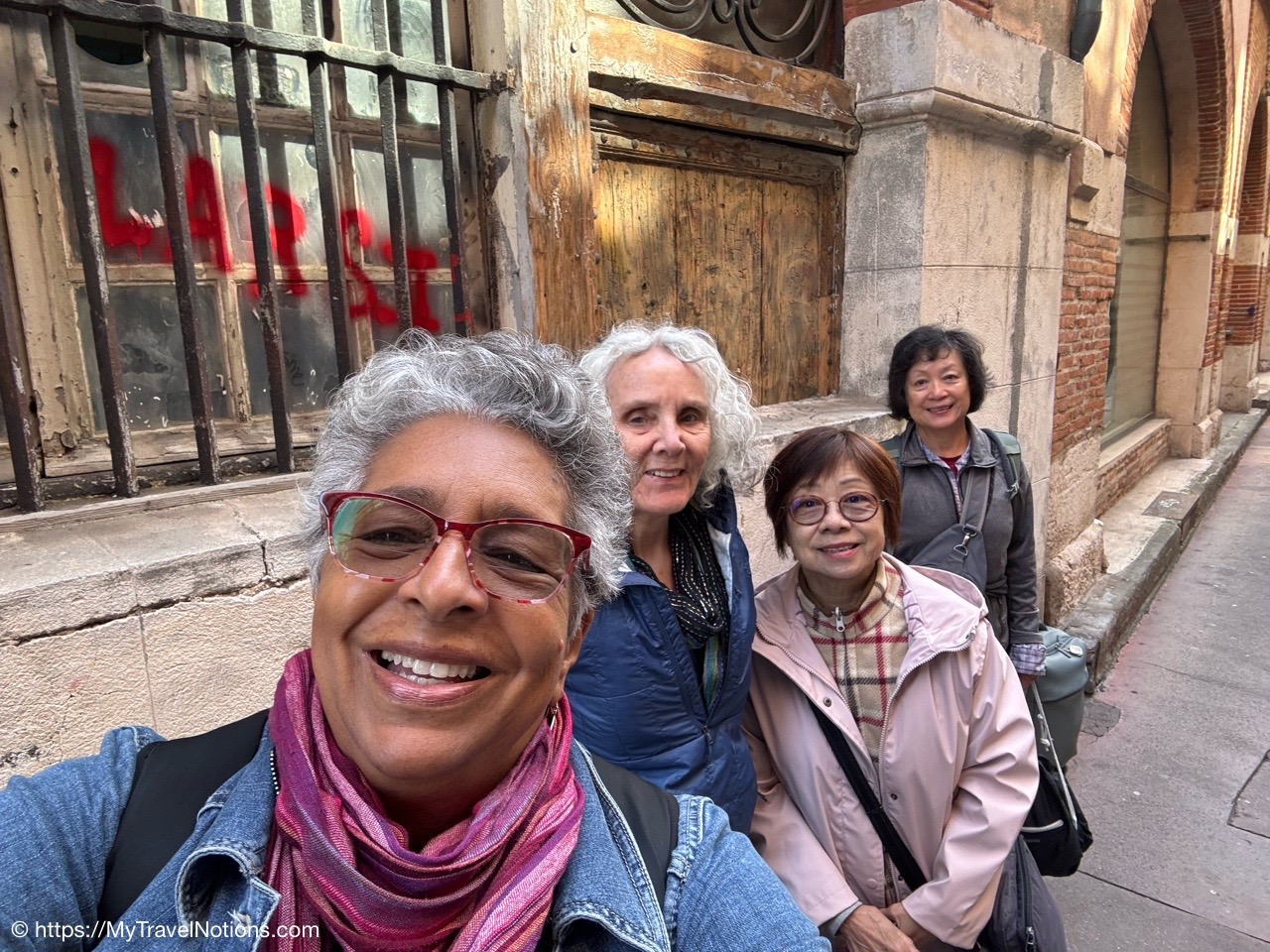
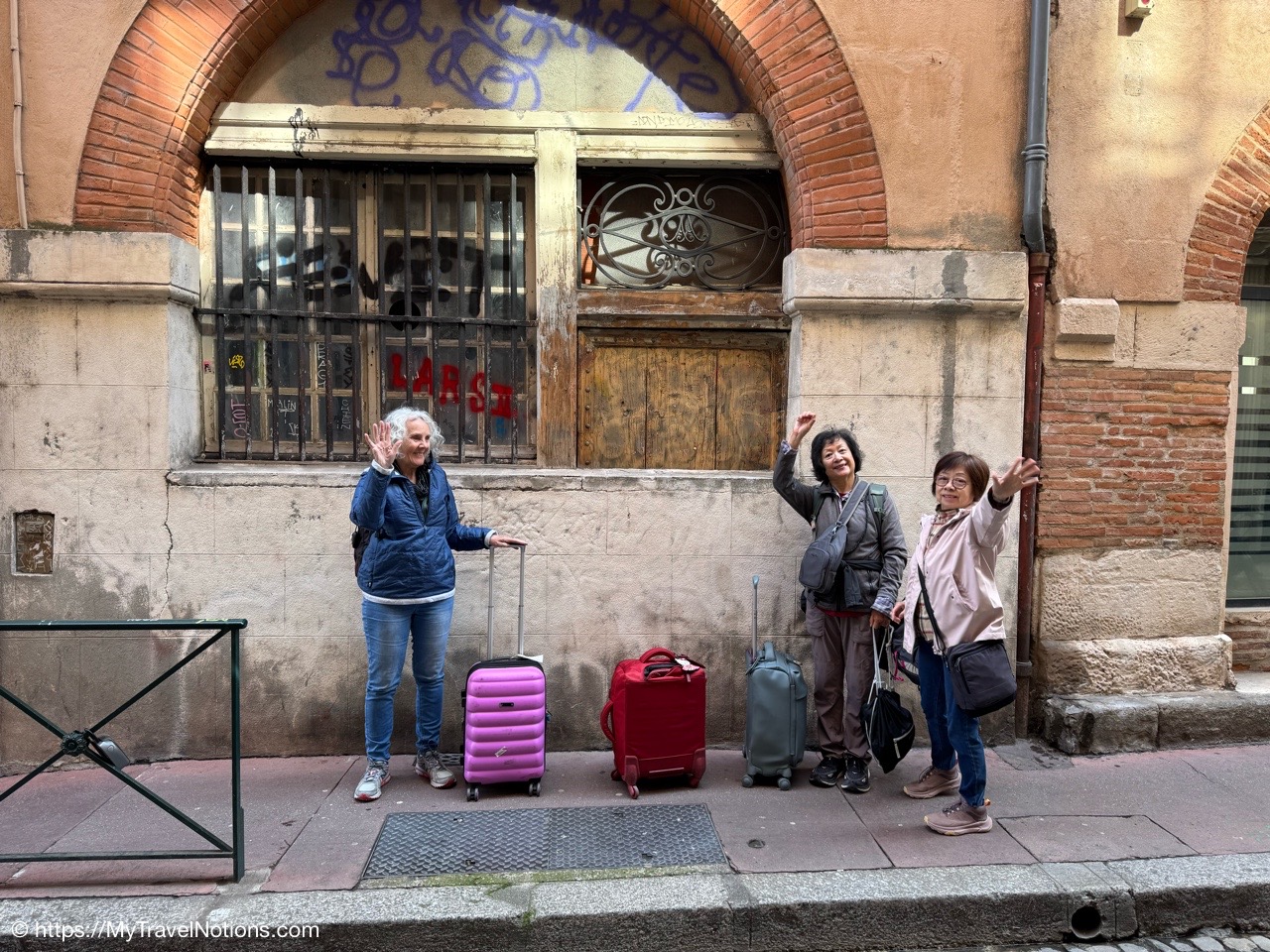
Sometimes saying goodbye can be difficult but we’ve enjoyed our week in Toulouse and now it’s time to move on…in this case, onto Montpelier to meetup with two more travel buddies to celebrate a 10-year reunion.
Standing across the street from our apartment in Toulouse waiting on our Uber to take us to the Toulouse Matabiau train station for our next stop of Montpelier. From left: Me, Rosie, Tammy and Alice. (May 7, 2025)Waving goodbye to Toulouse as we wait for our Uber to pick us up across the street from the 5-bedroom apartment we rented for our time in the heart of Toulouse. (May 7, 2025)With five bedrooms, the spacious apartment was more than big enough to accommodate the five, now four of us, during our stay in Toulouse. But in the colder days, we had to wear extra cloths because there was no heat…but we managed. (May 7, 2025)Waiting on the narrow street of our apartment, along Rue des Paradoux in Toulouse, for our Uber ride to appear and whisk us off to the train station for Montpelier. (May 7, 2025) Goodbye Toulouse.



Thank you for reaching out.