Me, at DFW Airport waiting to hop on my 13-plus hour American Airlines flight to Tokyo with a 3-hour layover before taking a Japan Airlines, almost 5-hour flight, to my final destination of Manila, Philippines.
I’m always a bit anxious before I leave on a trip, especially if I’ve been home for a while. And awhile for me is about 3 months. I get comfortable in my routines. So setting that aside means stepping into the unknown. And I love it, but I’m still anxious.
Routine time at home is over, at least for a little while as I head out not only to the Philippines but to Brunei, Singapore and Indonesia to explore countries I have never been to before. And, these four countries, added to my current list of 95 will put me at 99 U.N. Countries by the end of 2025.
For the Philippines, Brunei and Singapore, I will be on my own. And for Indonesia, I will be on an Intrepid Travel tour.
I actually start the travel process while I am planning out the details of my solo travel itinerary. I enjoy doing the research on flights, hotels, transportation and the things I want to see and do while I am in that particular country, city or town.
And now, after the planning, I get to go out and live those plans. Am I nervous about it? It’s more like an anxious excitement. I need that. Staying in one place too long, oddly enough, also makes me feel a little anxious.
I recently asked ChatGPD this question: “How should a homebody who is also a world traveling nomad live her life?”
The answer:
“That’s a great paradox — and a fascinating way to live. Being both a homebody and a world-traveling nomad means you crave comfort, stability, and cozy routines and have a deep desire for adventure, exploration, and movement. You don’t have to choose one or the other. You just need to design your life to honor both parts of you.”
I have a question for you, a little something to think about. What are the different parts of your life and are you doing what you need to do to honor them and thrive?
See you in Manila.
Me enjoying a cup of coffee at DFW Airport waiting to hop on my 13-plus hour American Airlines flight to Tokyo with a 3-hour layover before taking a Japan Airlines, almost 5-hour flight, to my final destination of Manila, Philippines. (Sept. 9, 2025)
Made it safely to Manila, the capital city of the Philippines and my 96th country on my countdown to 100 United Nations countries. There’s this thing that happens once I land in the city and country of my destination, I quickly become an experienced traveler. My gut traveling instincts have woken and are ready even on no sleep for almost 24 hours.
Once I arrived at my hotel, located in Manila’s walled city call Intramuros, I got some needed sleep and began my full day of walking tours, morning through Intramuros and afternoon through Chinatown, after a very much, also needed, breakfast at my hotel.
Just a little Philippine history, to get us started, the country was colonized by Spain (1565–1898), the United States (1898–1946) and Japan (1941–1945). There’s also been occupants including Chinese, Indian and Arab influences.
The Philippines became the First Philippine Republic on January 23, 1899, but revolutionaries declared Philippine independence from Spain in June 12, 1898. The country’s independence was not recognized by either the United States of America or Spain. The Spanish government later ceded control over the Philippines to the United States in the 1898 in the Treaty of Paris. But the Philippines did not recognize the treaty which then led to the outbreak of the Philippine–American War with the US over the latter’s assertions of sovereignty over the islands.
The US government finally recognized the independence of the Philippines on July 4, 1946. Then came Japan which occupied the Philippines during World War II, beginning with an invasion on December 8, 1941, and lasting until 1945, in an effort to gain military control over the U.S. since, at the time, the Philippines was a U.S. commonwealth. The occupation began 10 hours after the attack on Pearl Harbor.
And, back to Manila, which has faced a number of natural disasters from flooding to typhoons to earthquakes and volcanic eruptions. But the city continues to thrive and push forward.
I am staying in Manila’s Intramuros district, called the “Walled City” because it literally means “within the walls” referring to the nearly 3.1 miles or 5-kilometer-long circuit of massive stone walls and fortifications built by the Spanish to protect the city from invaders.
Intramuros was the administrative and religious center during the Spanish colonial era, is defined by these impressive defenses, making it a fortified colonial city.
Come join me in Manila’s ‘walled city’ of Intramuros including Fort Santiago, the Manila Cathedral, the Battle of Manila memorial, San Agustin Church, Casa Manila and more.
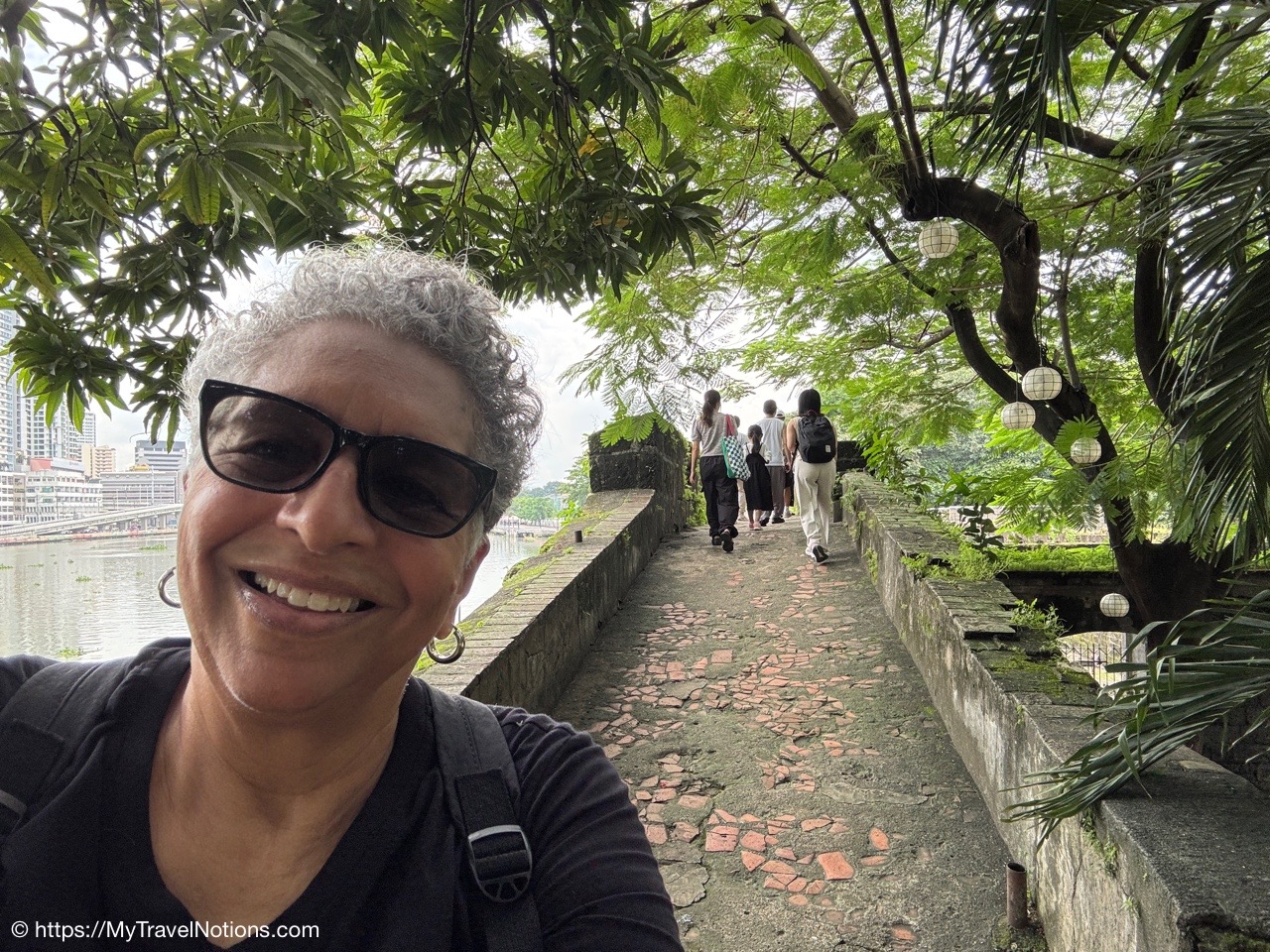
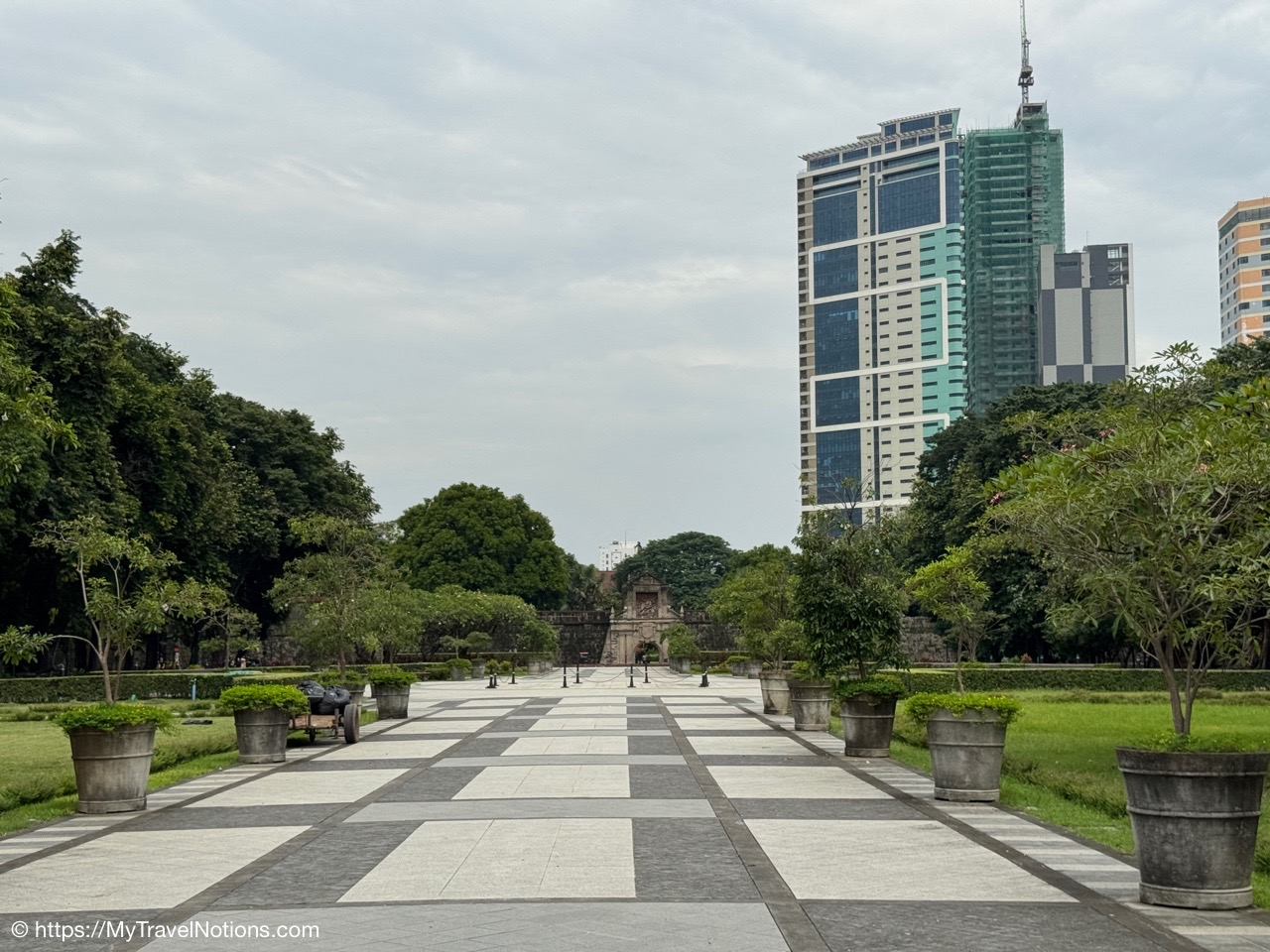
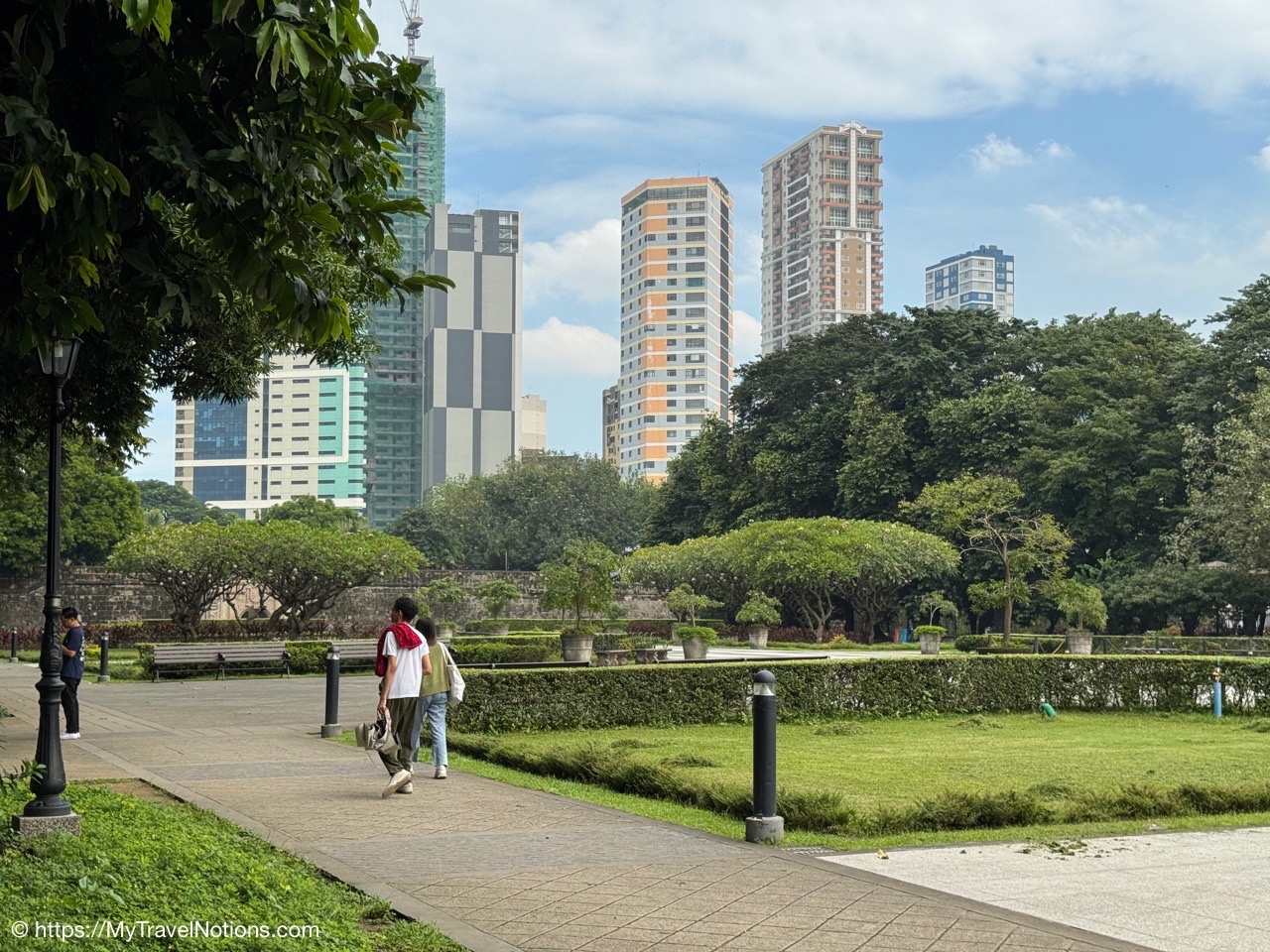
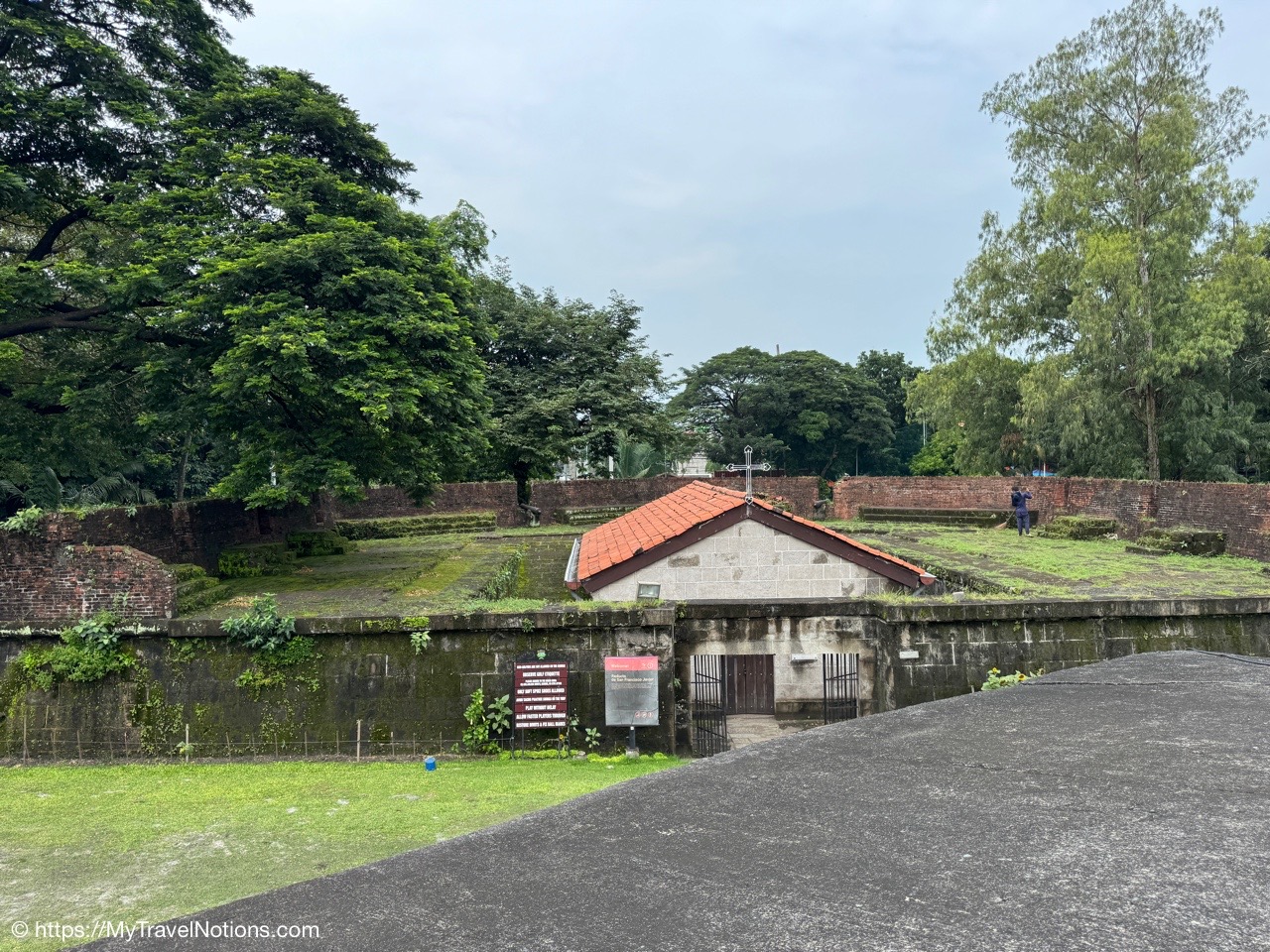
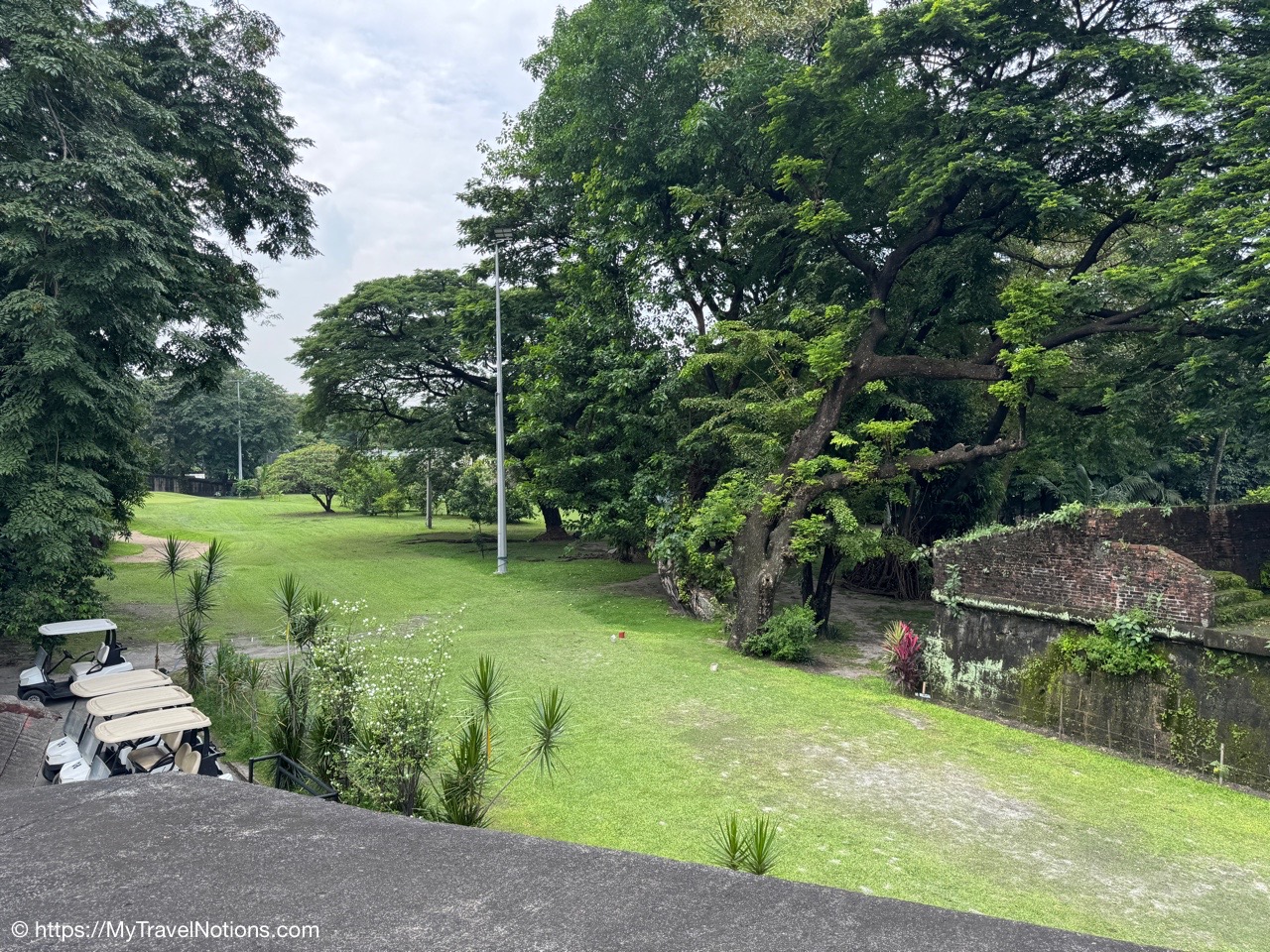
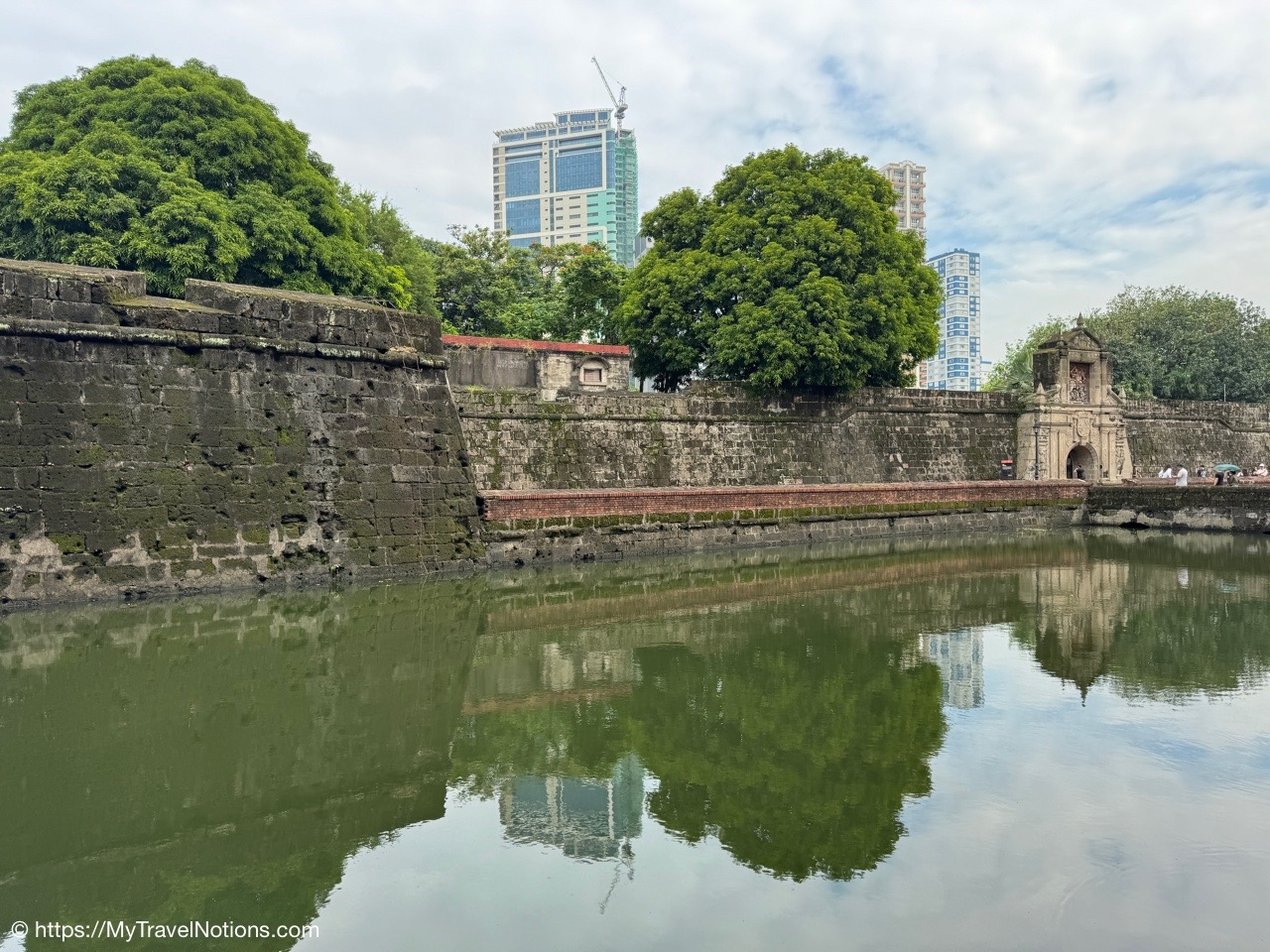
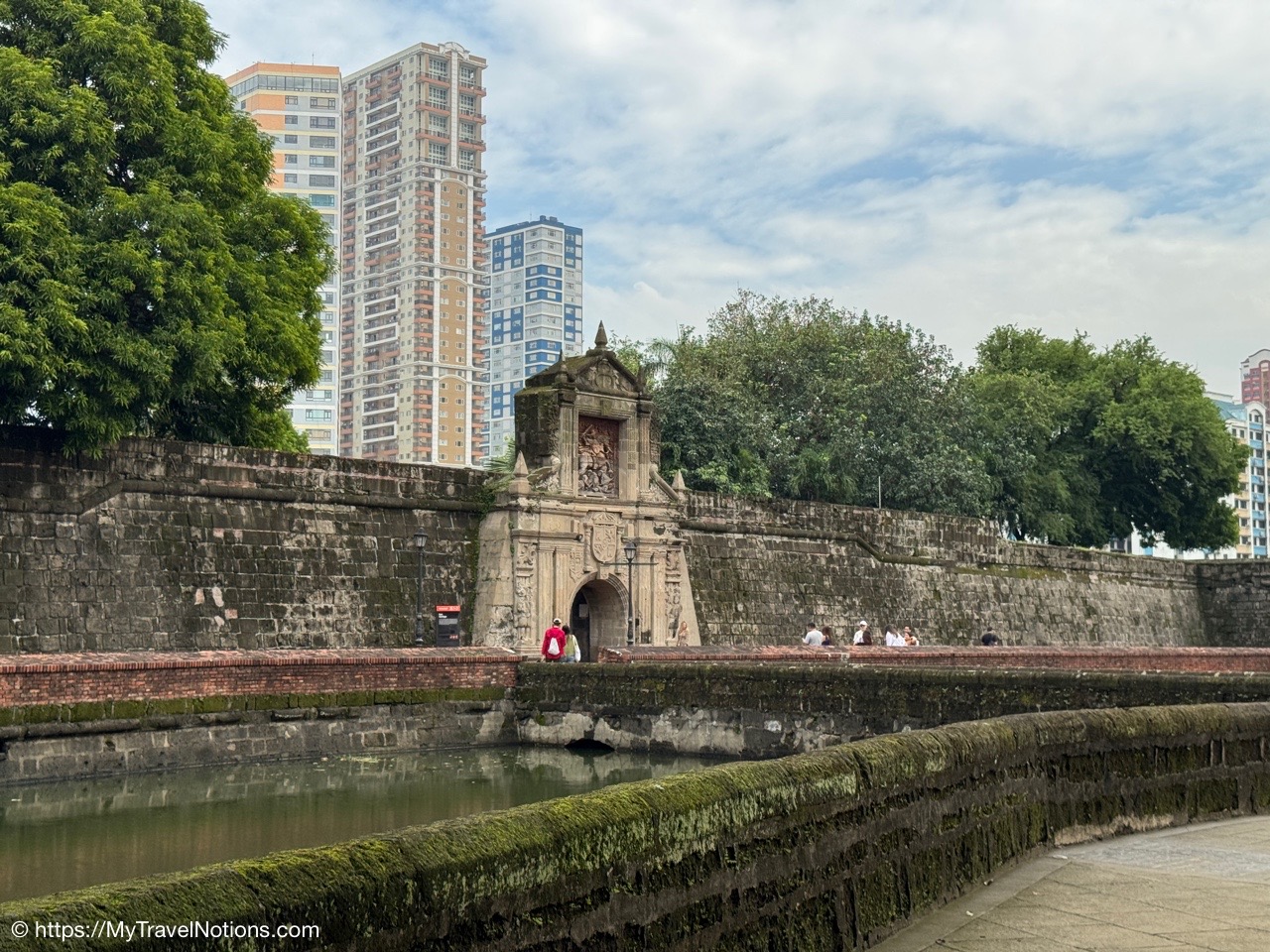
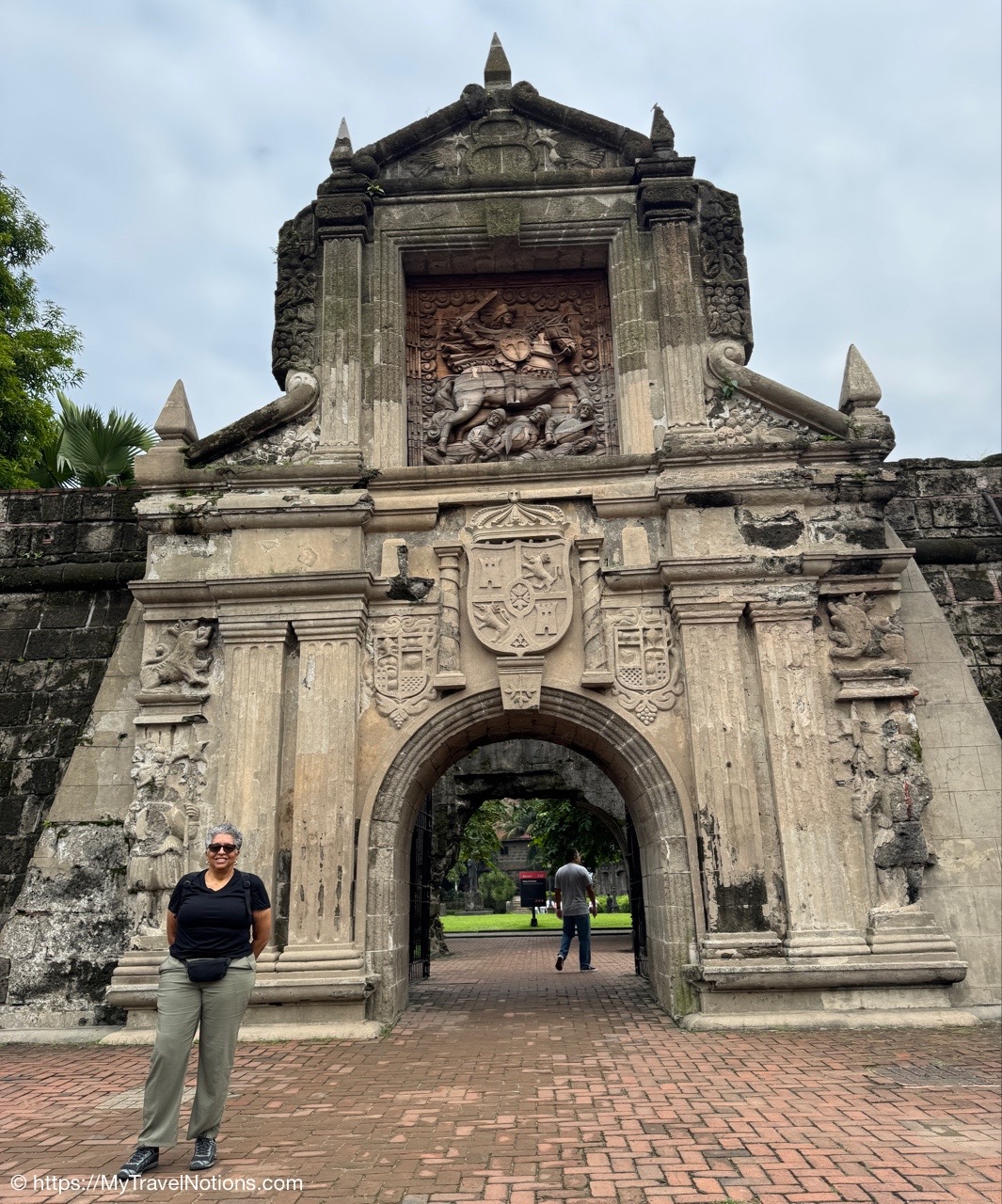
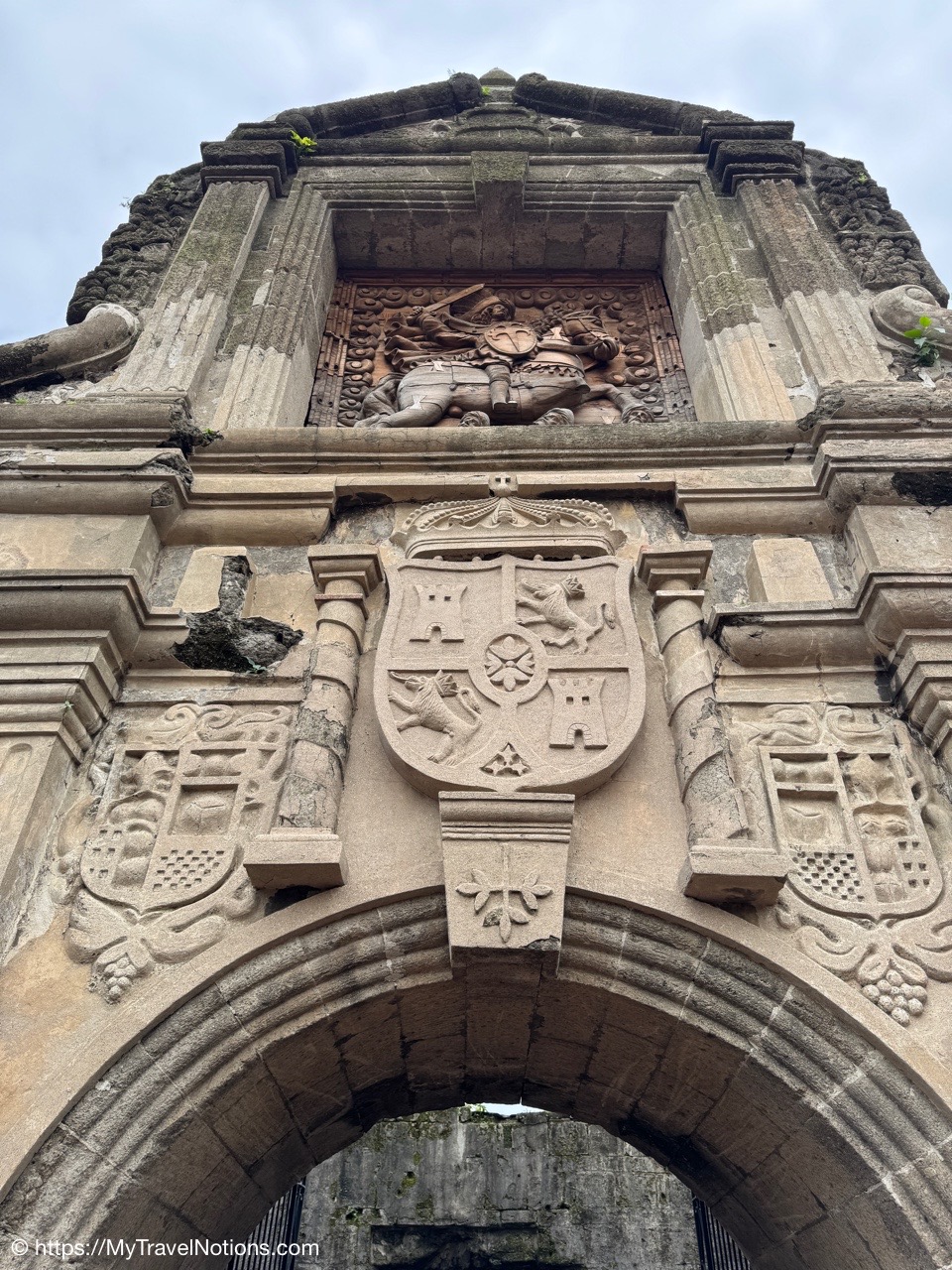
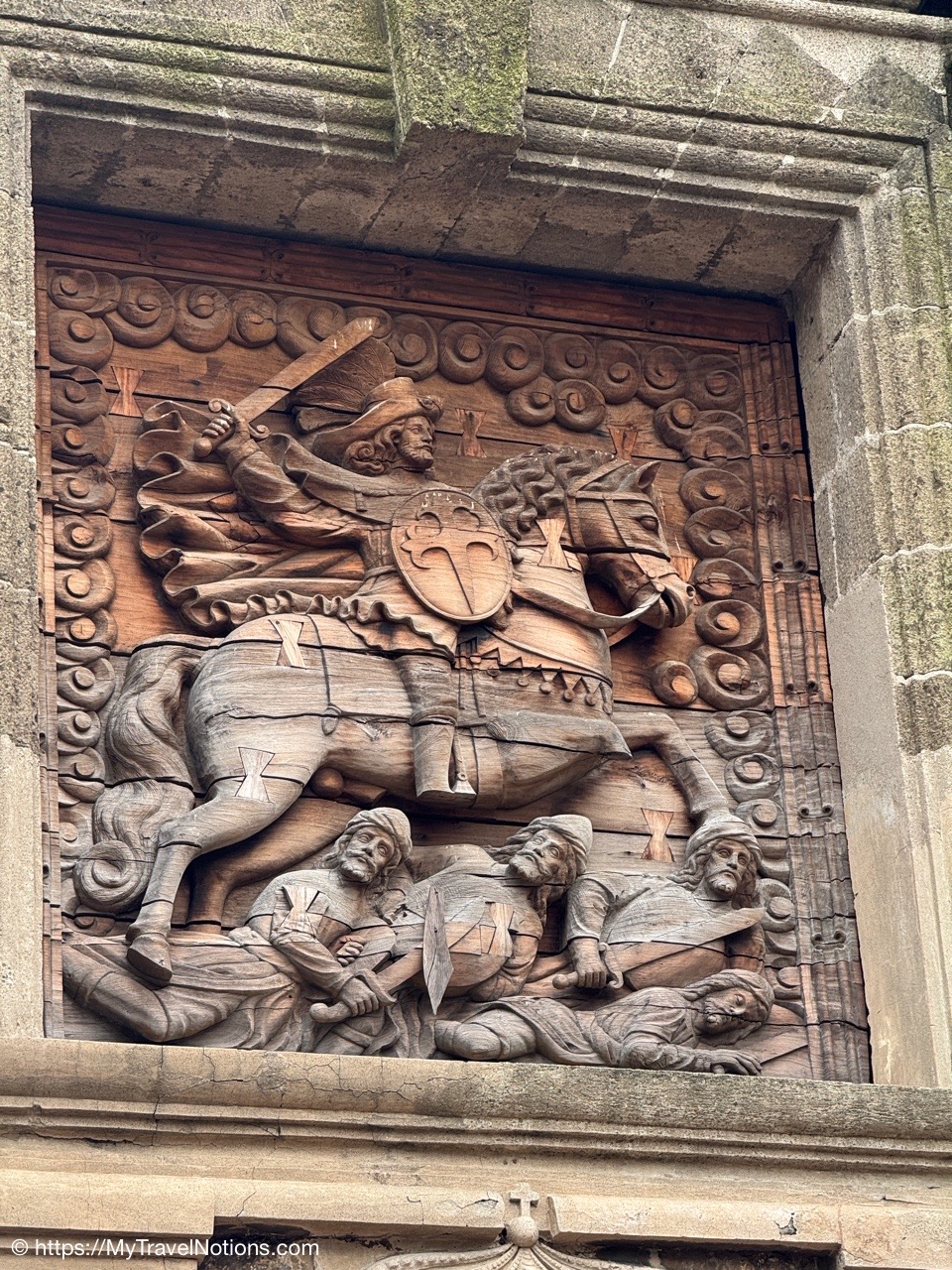
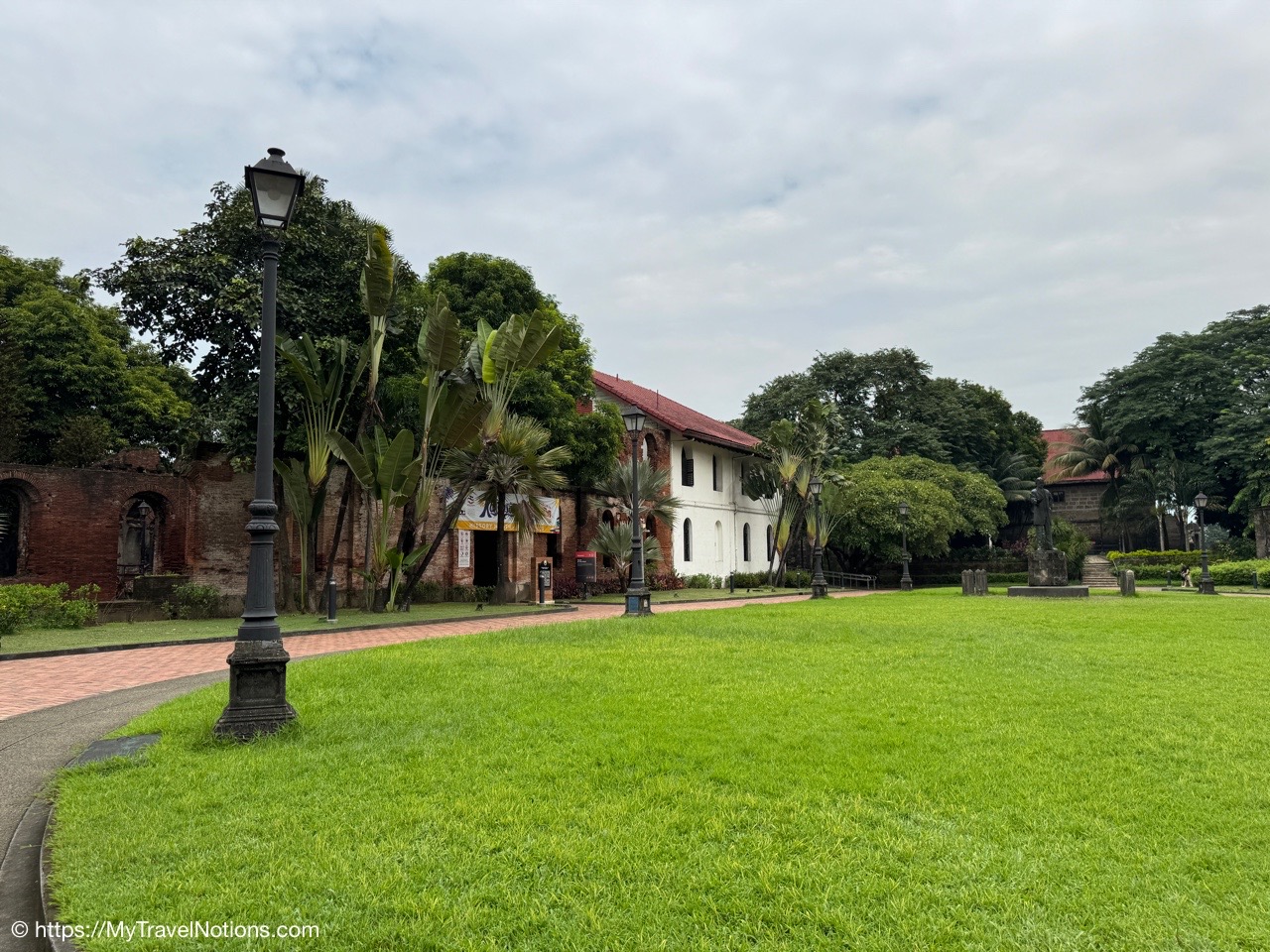
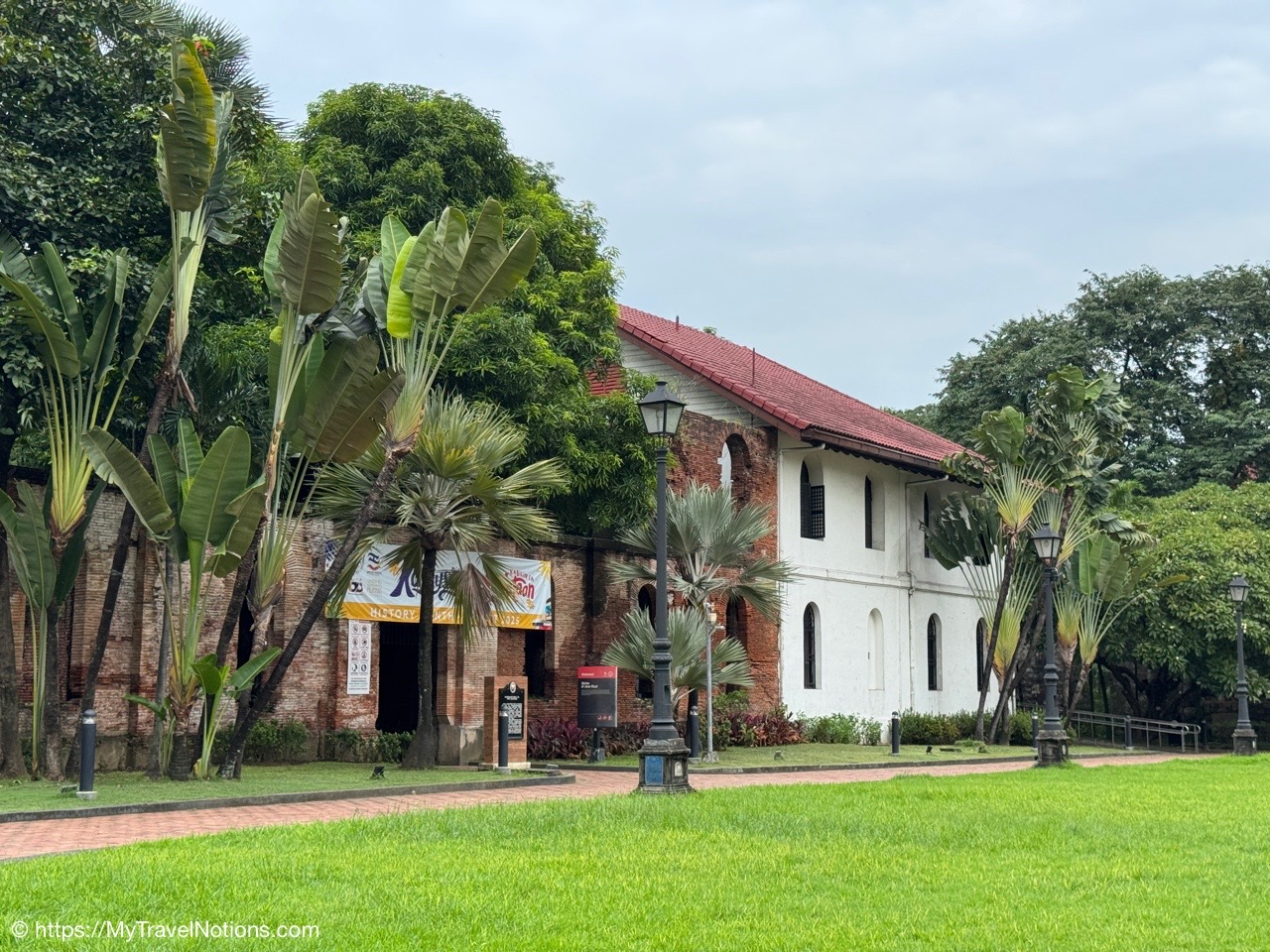
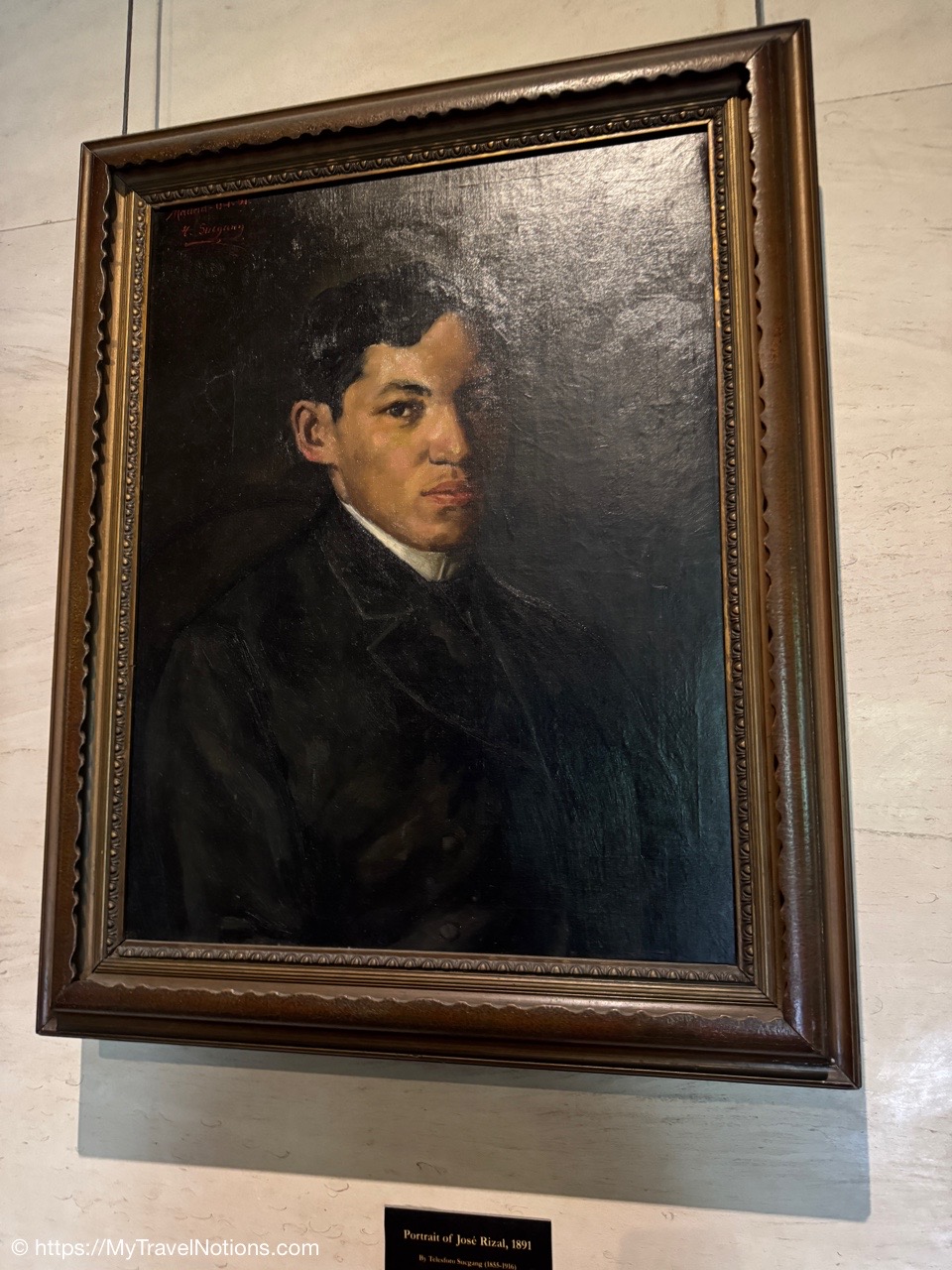
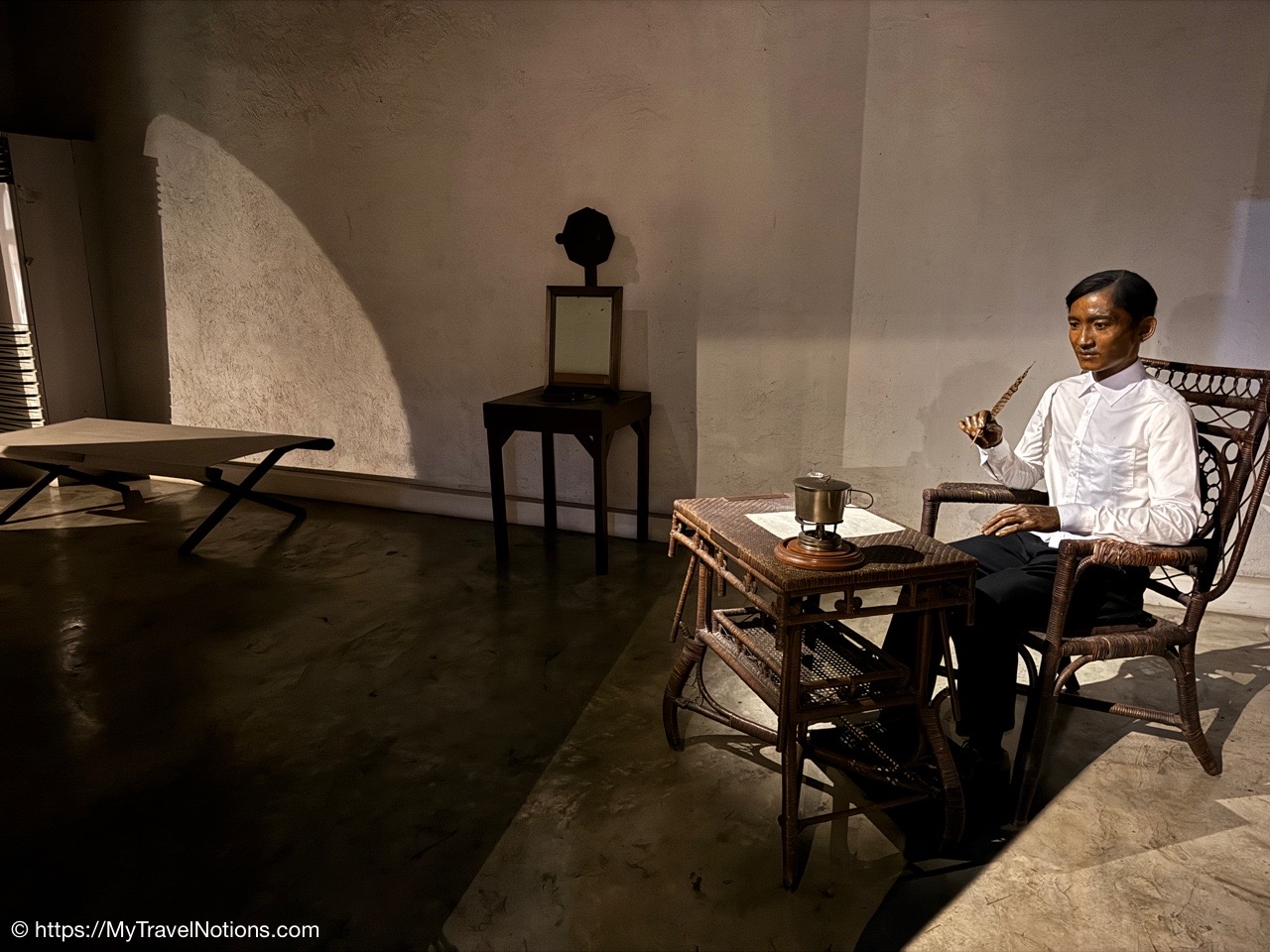
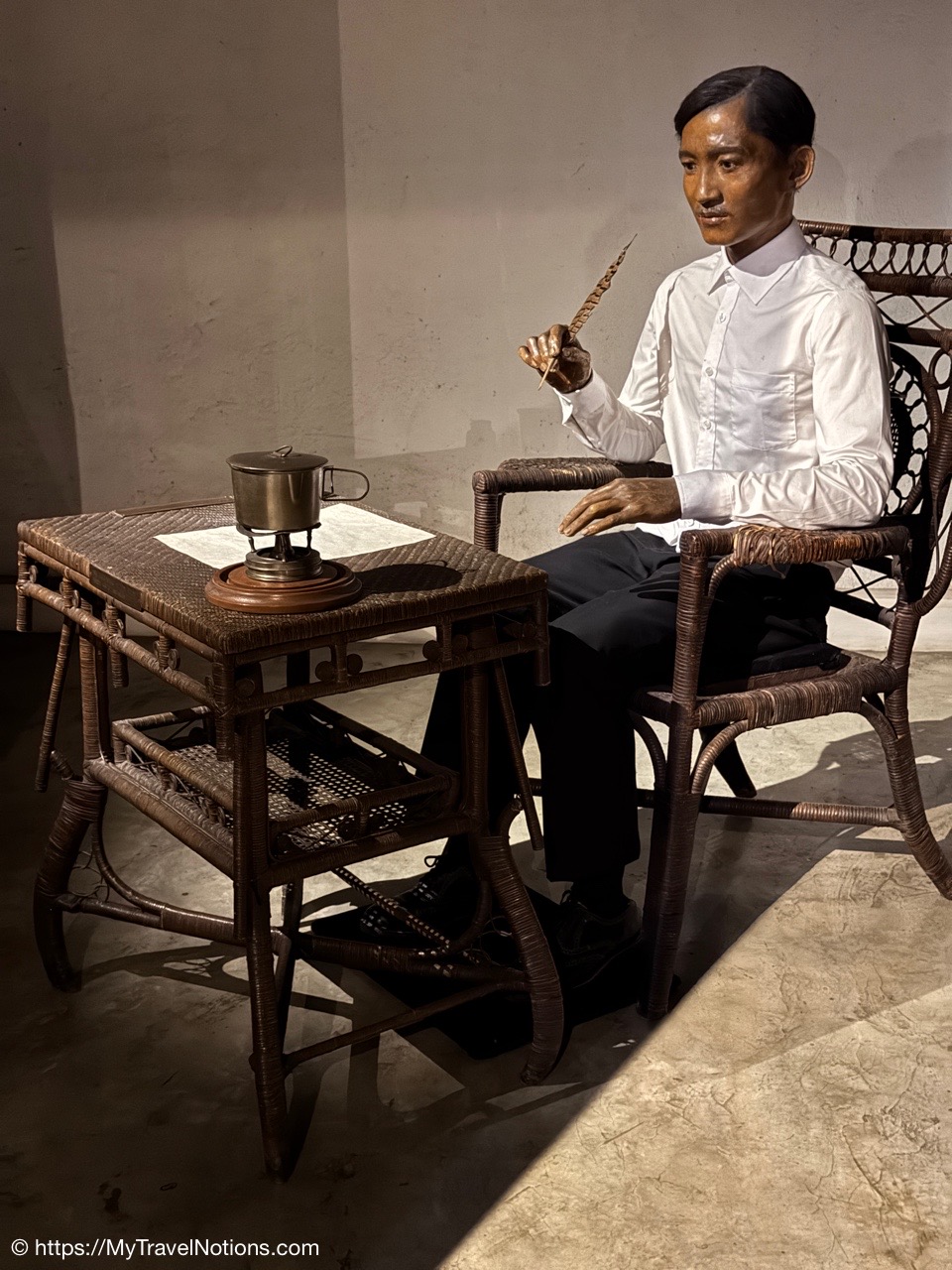
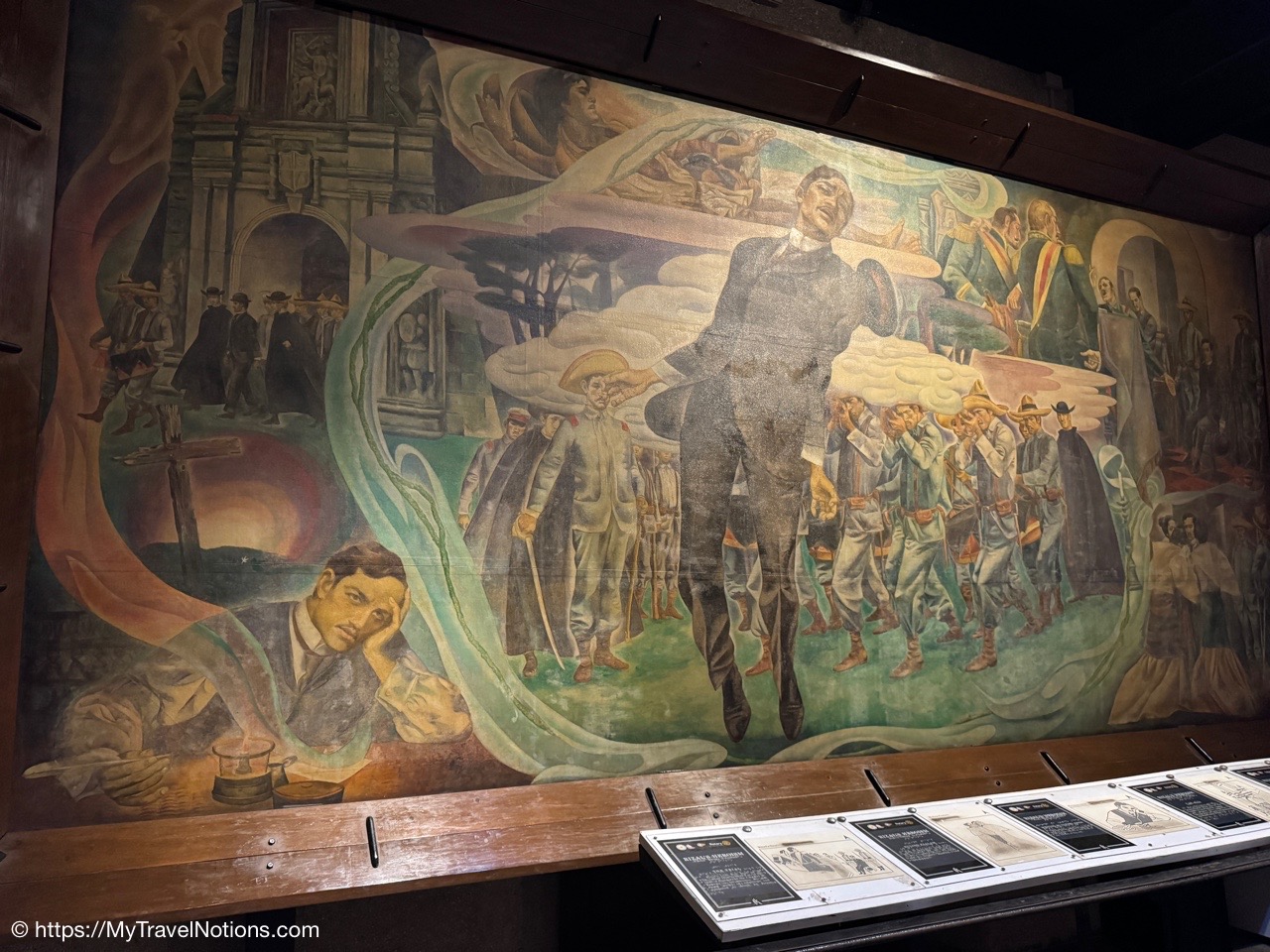
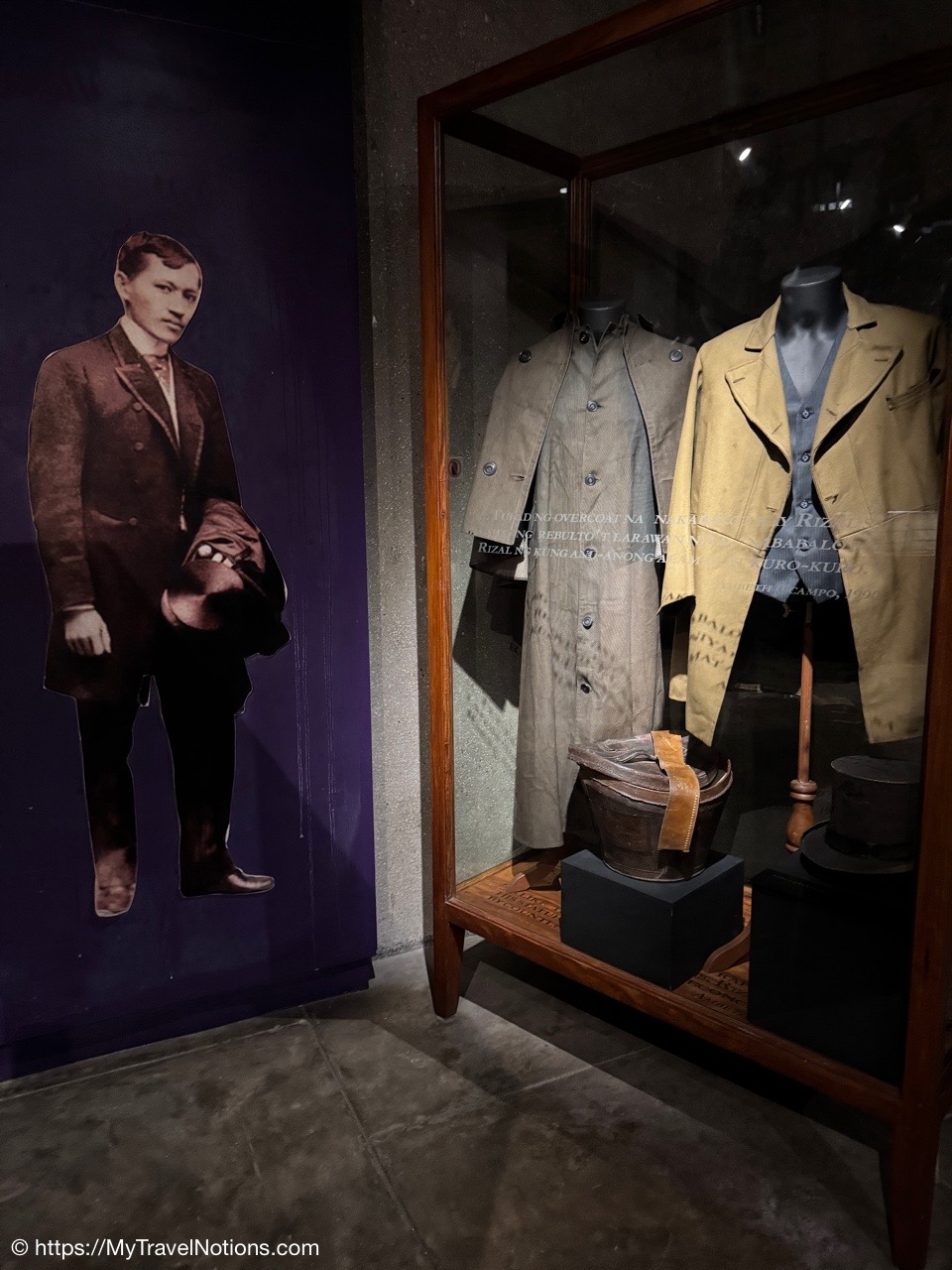
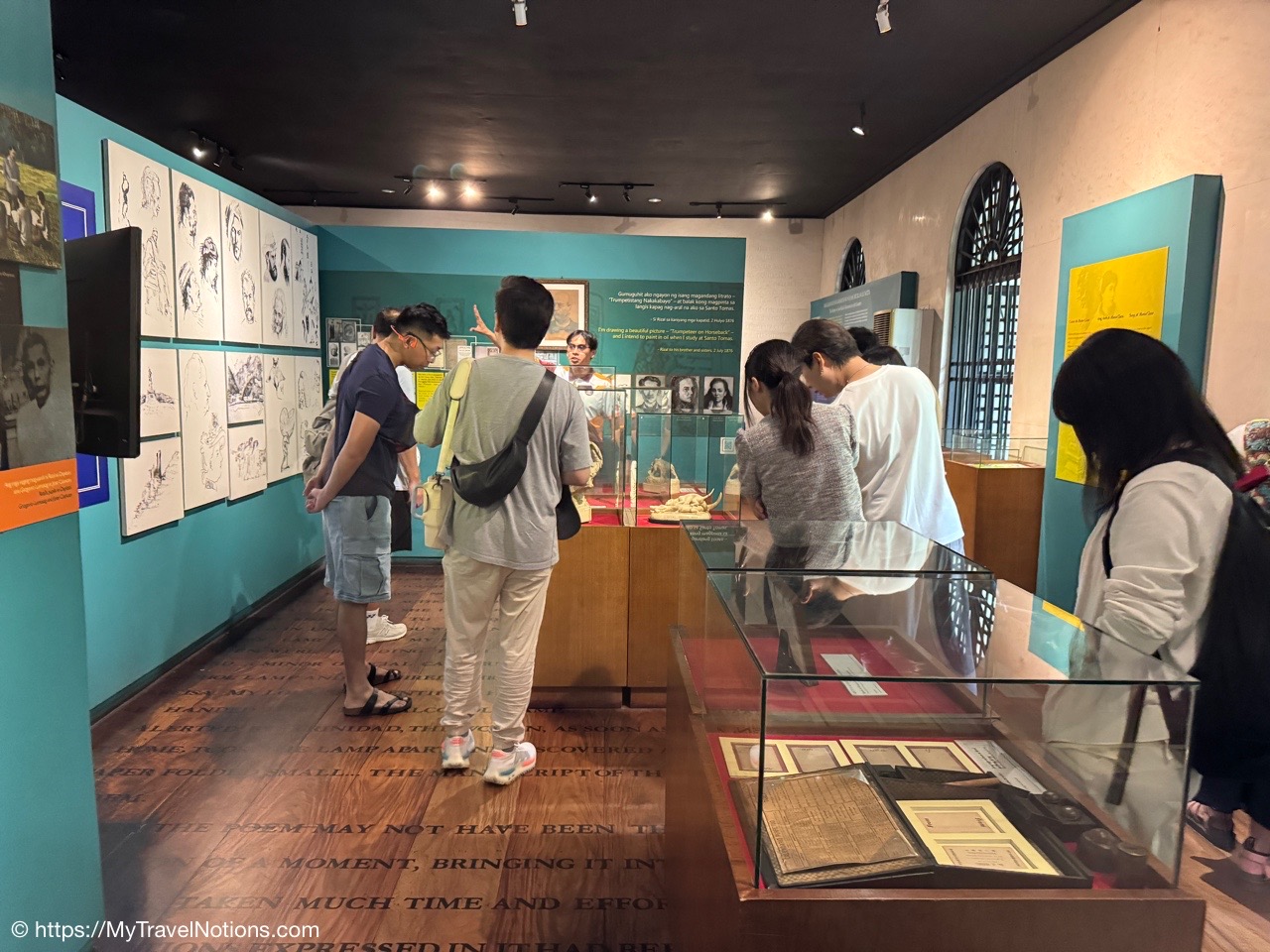
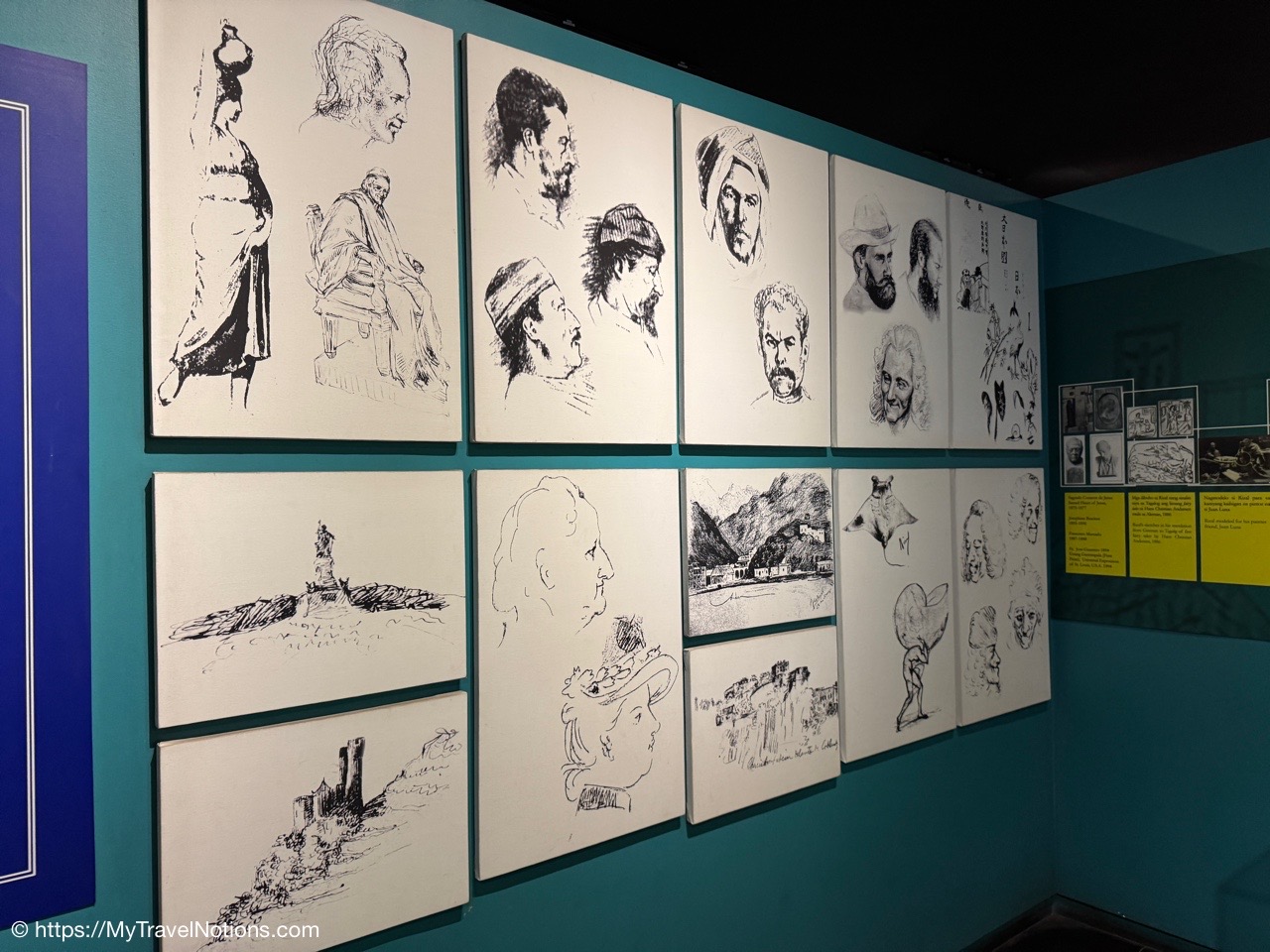
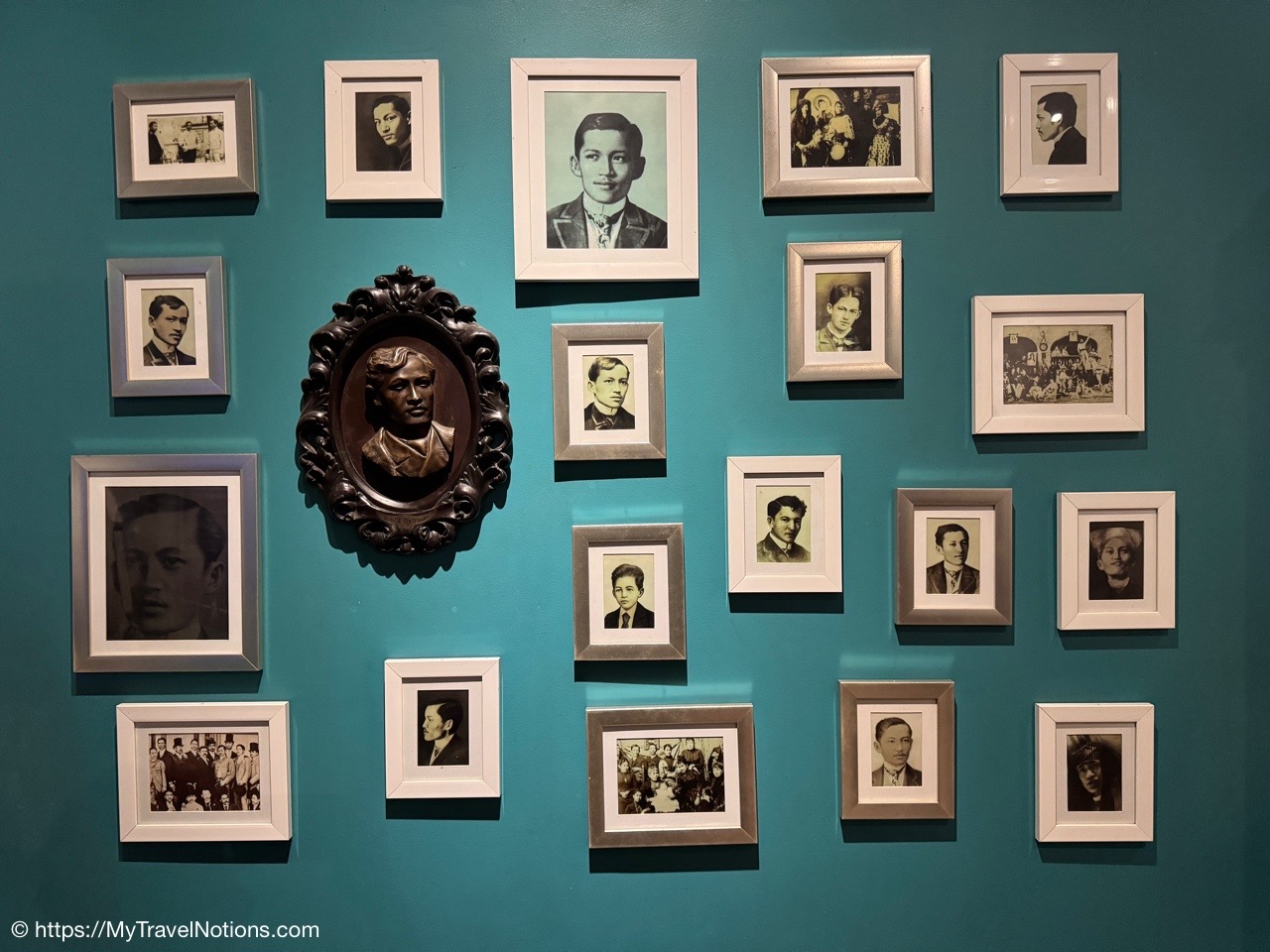
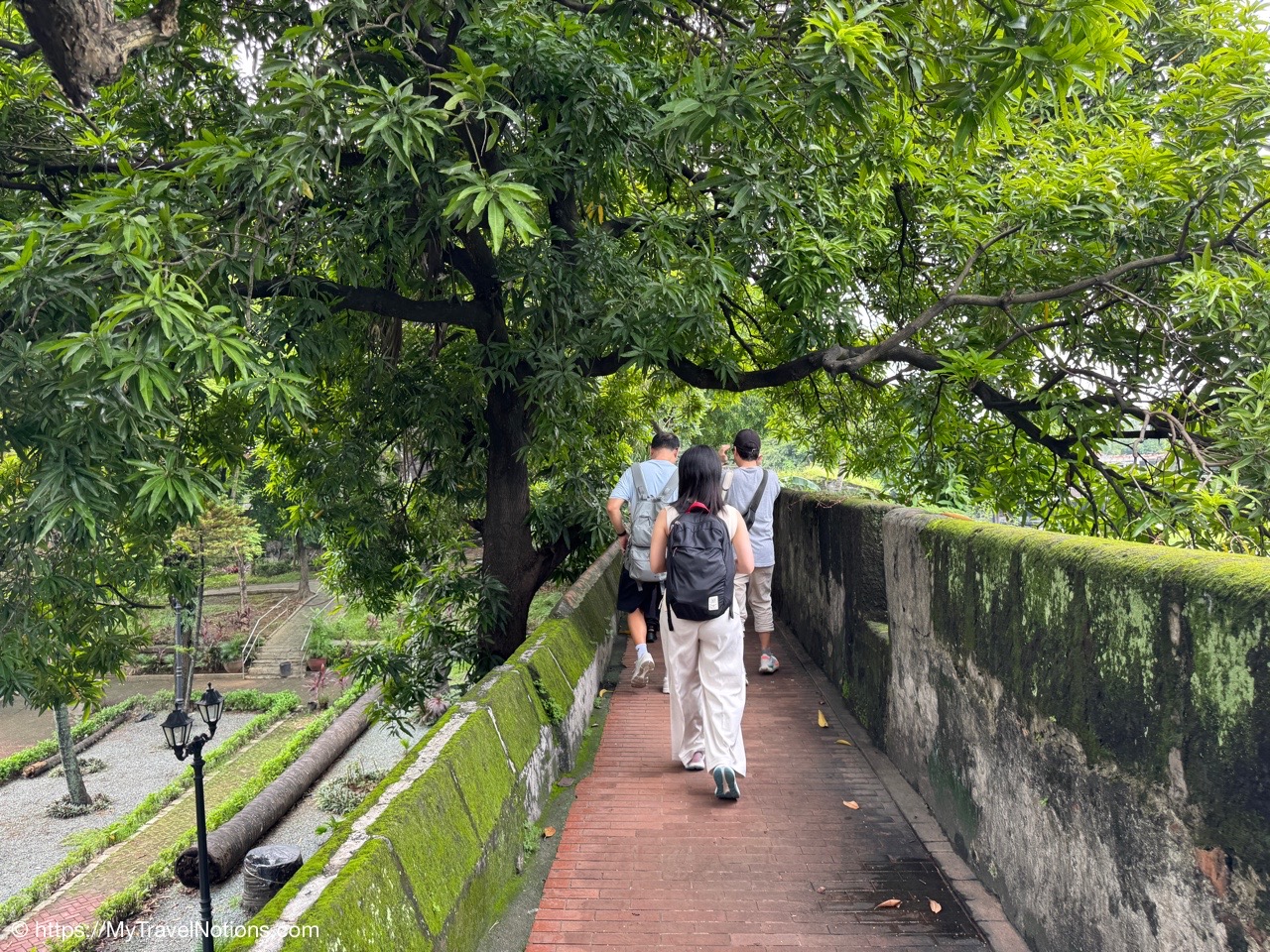
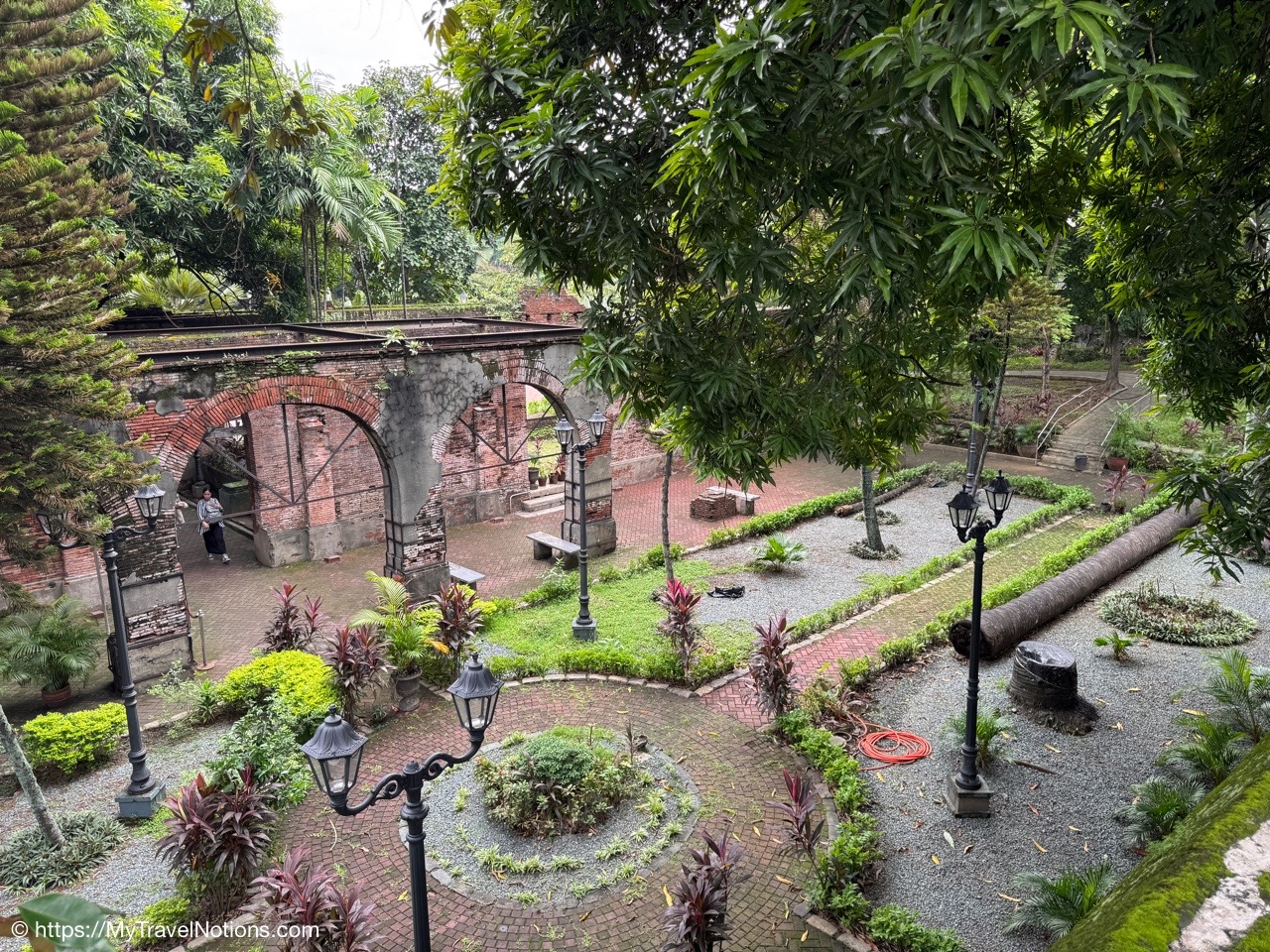
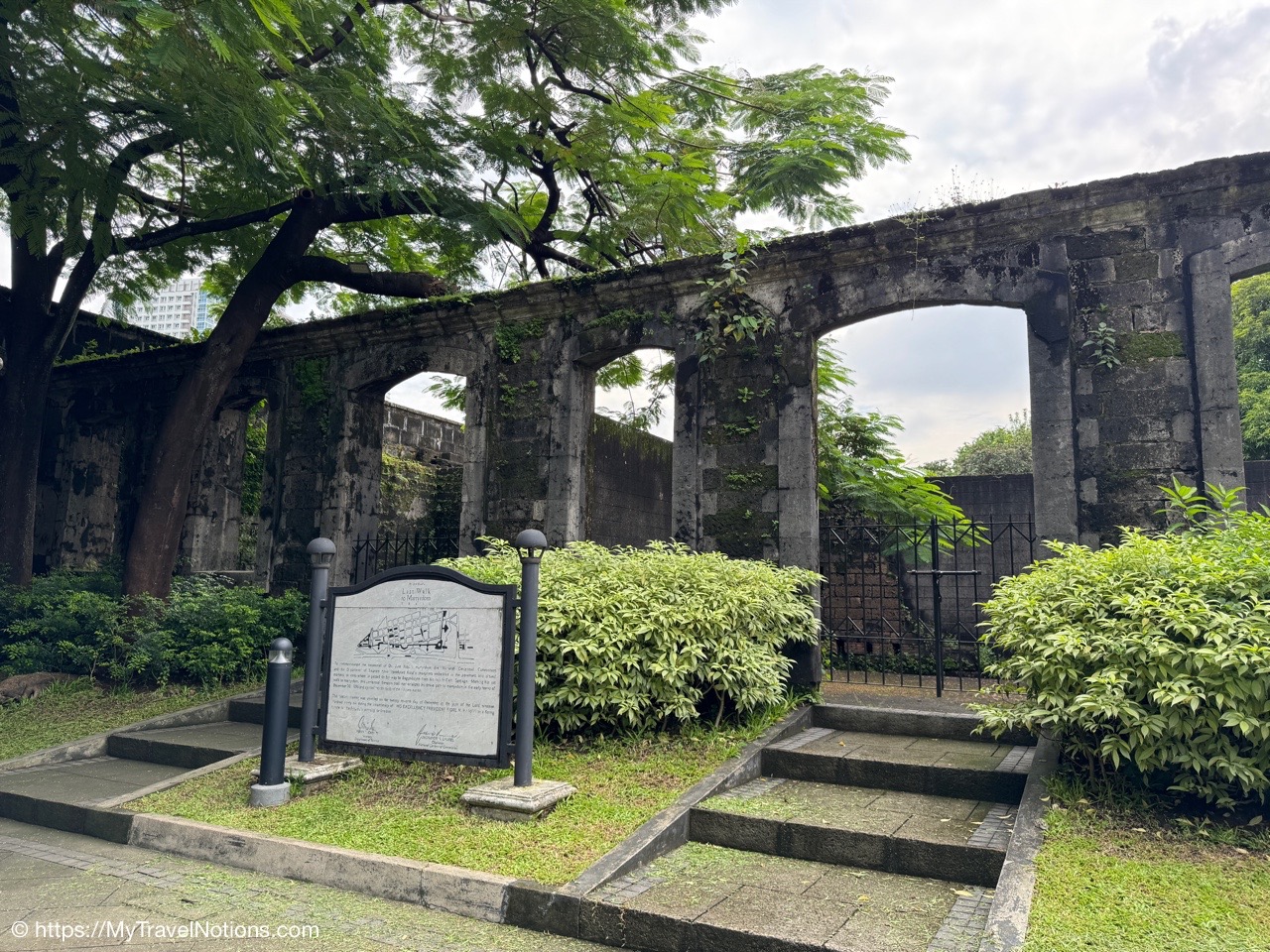
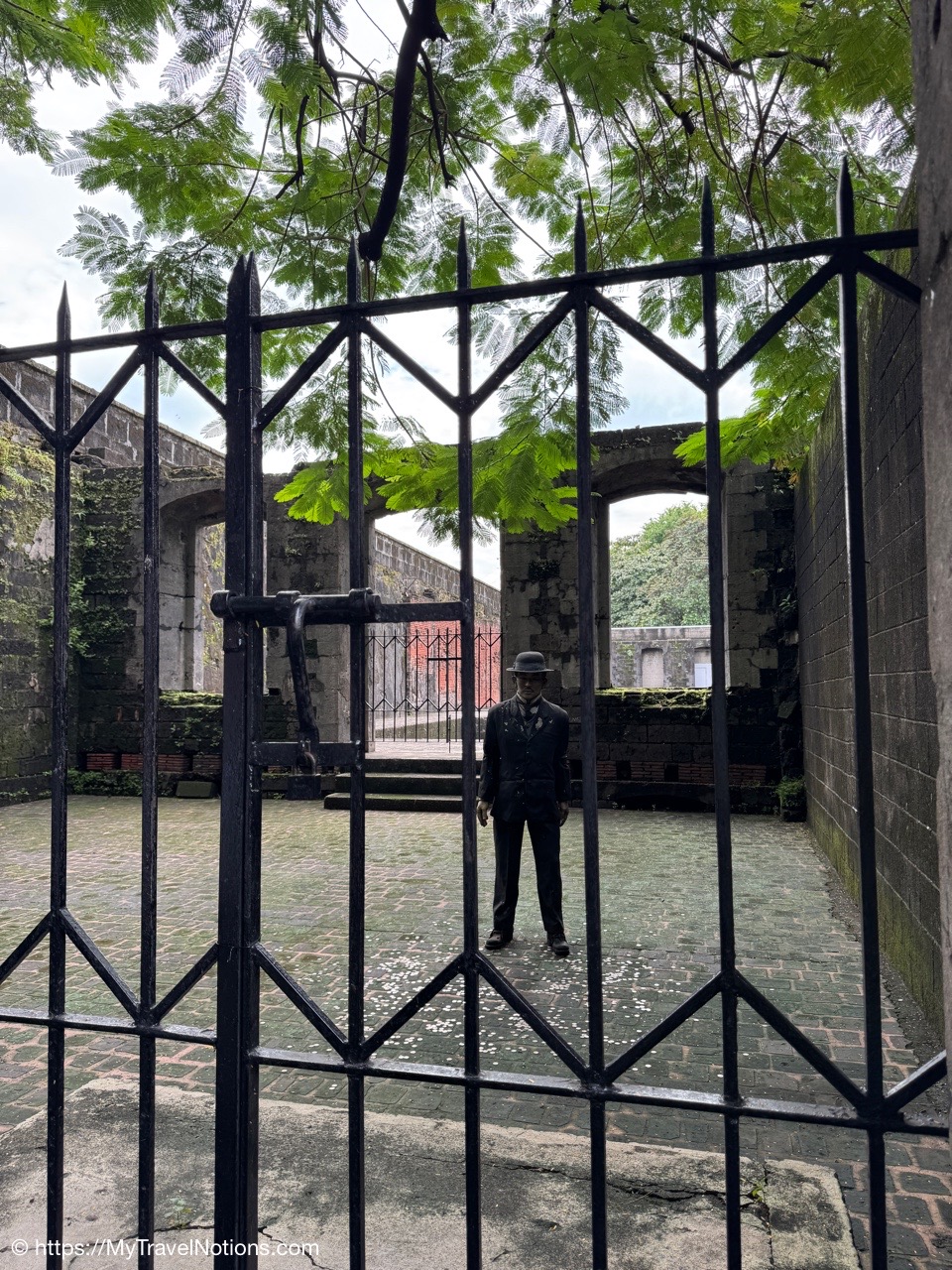
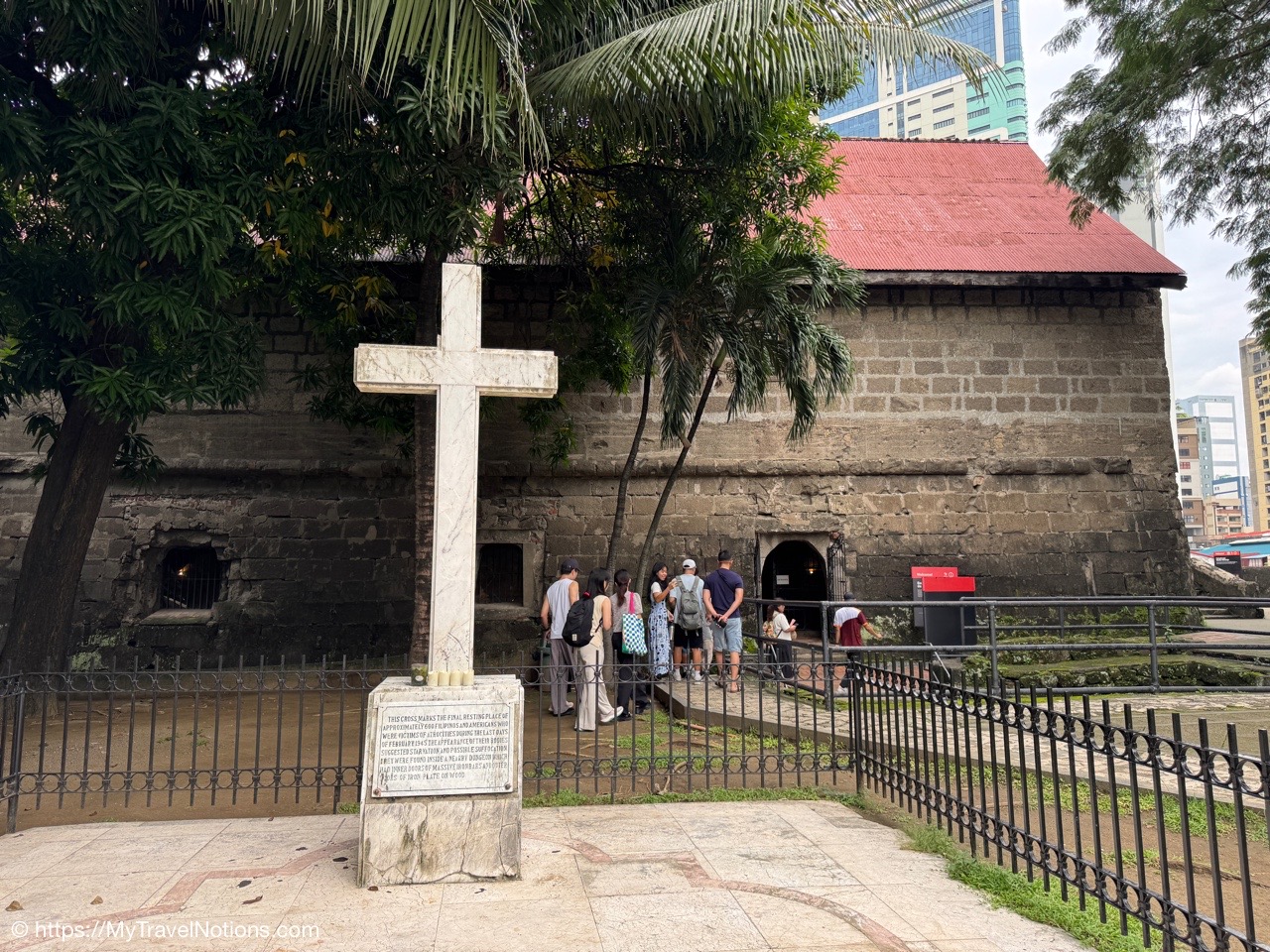
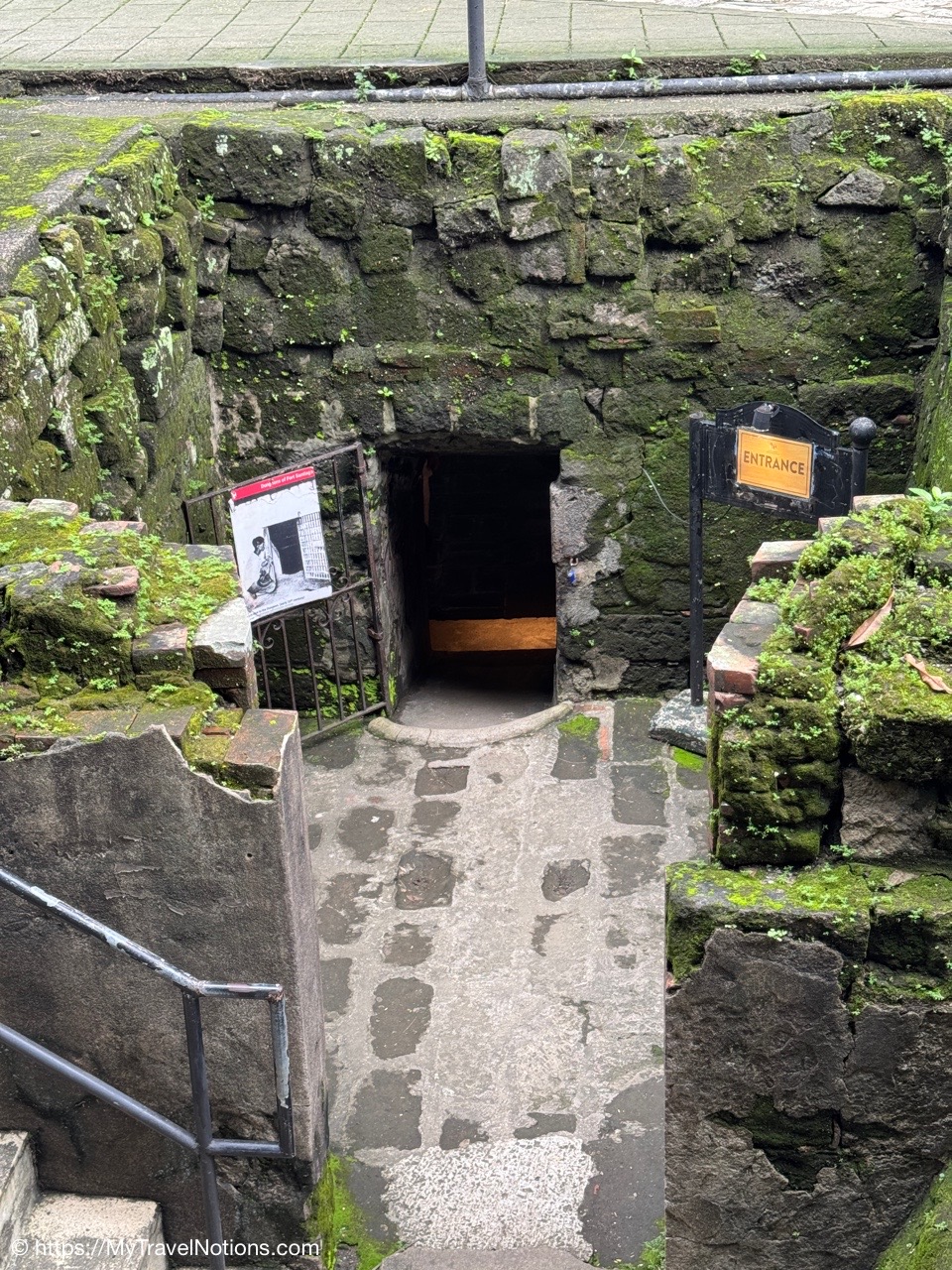
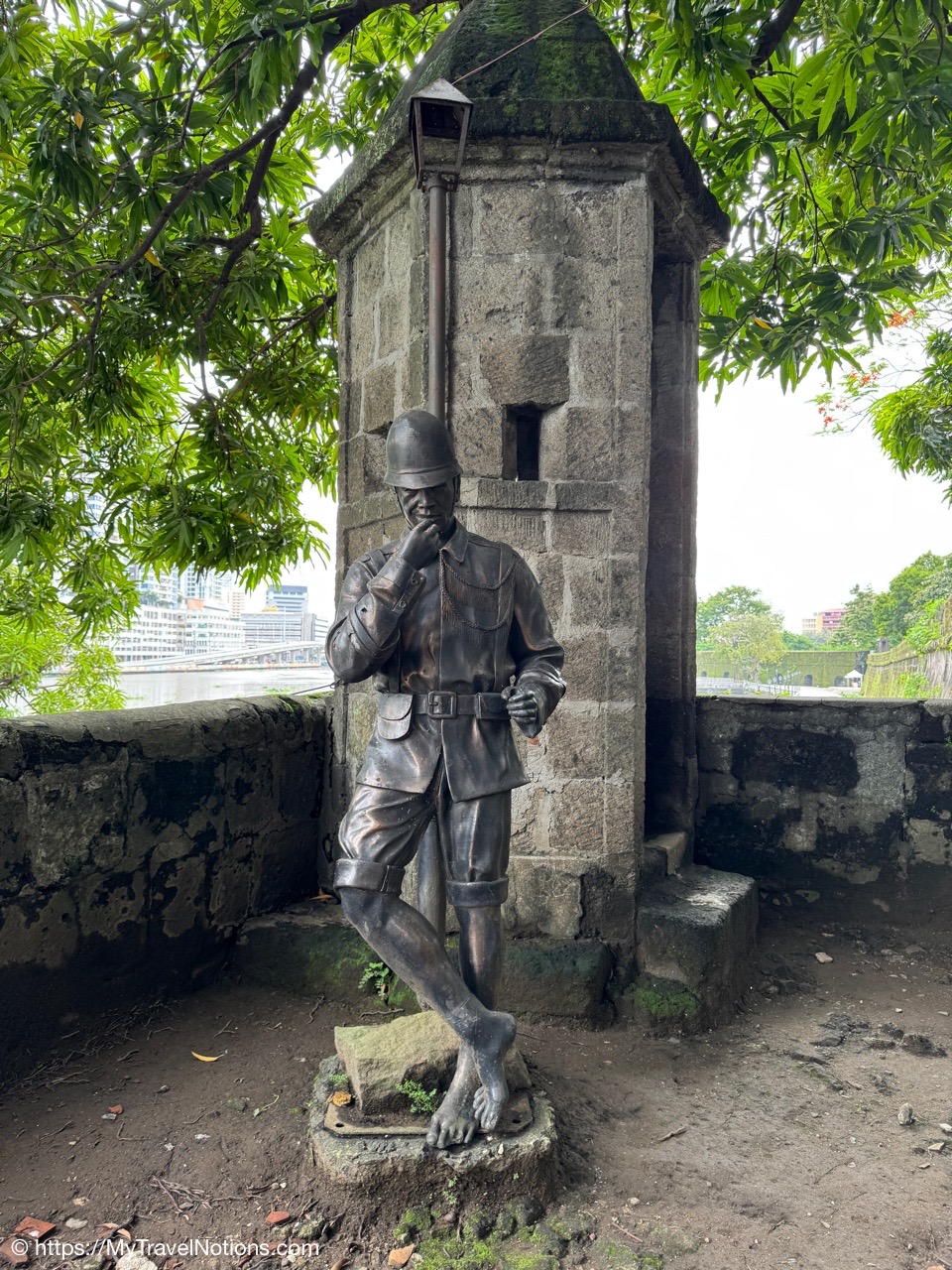
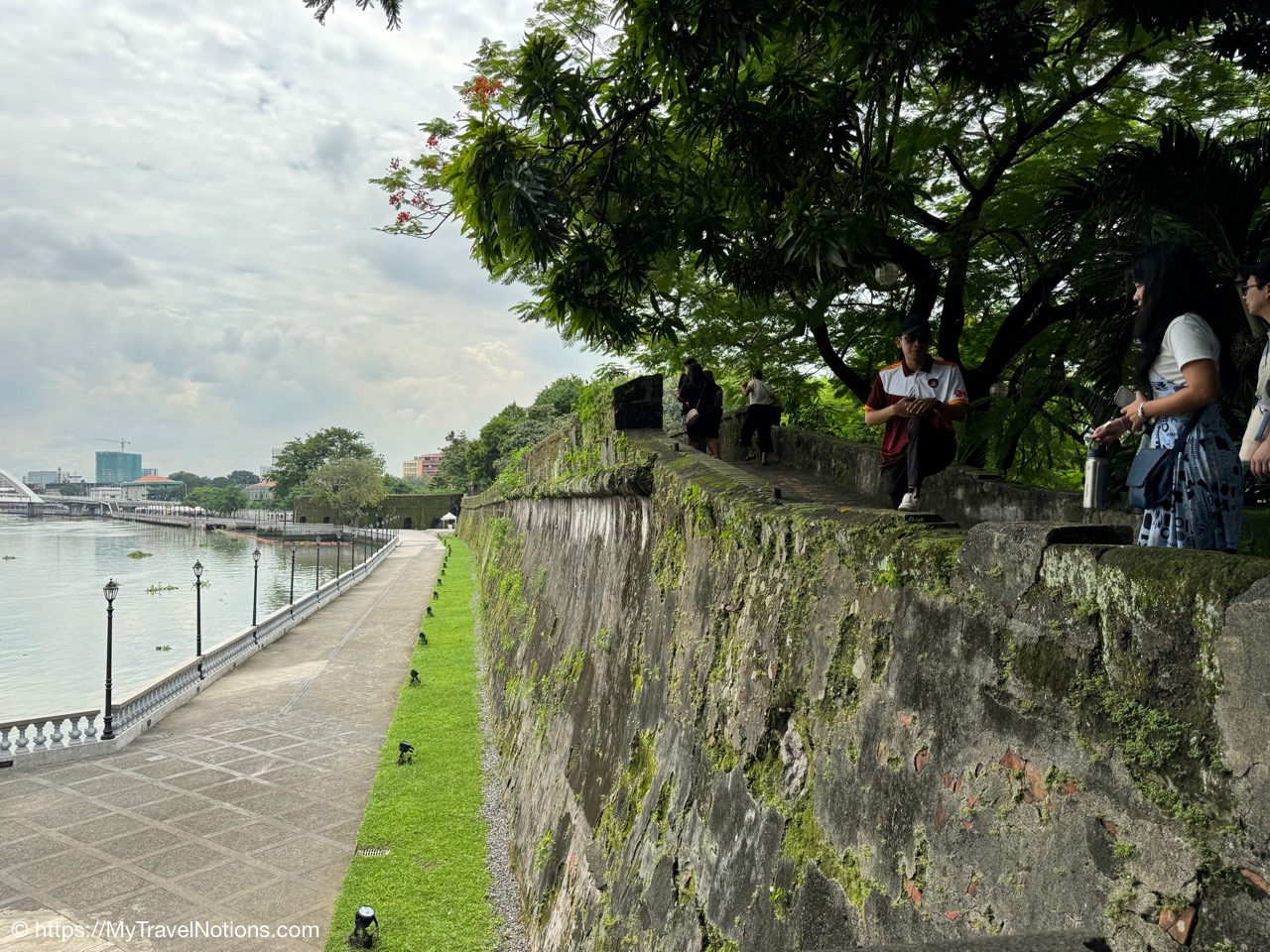
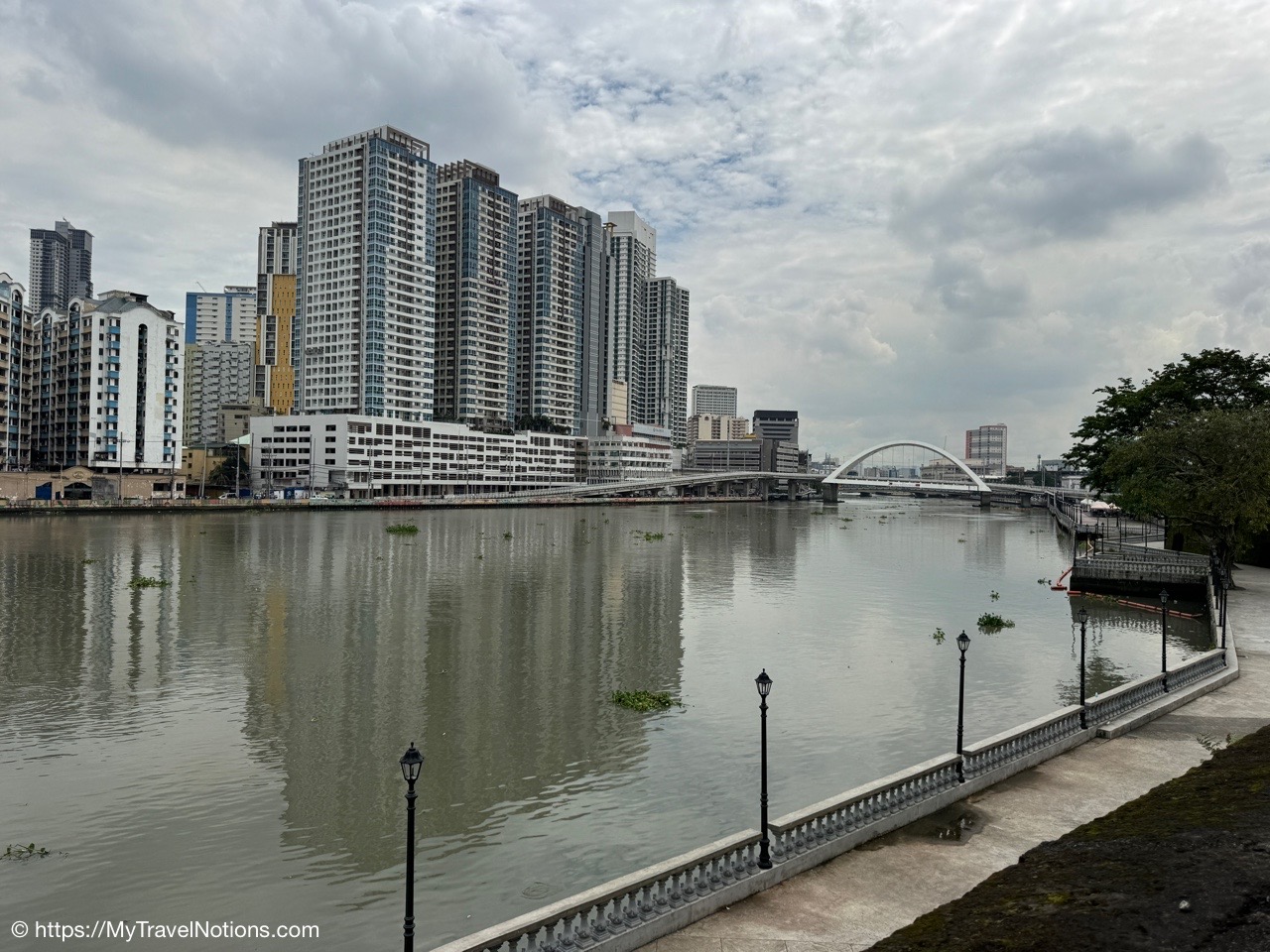
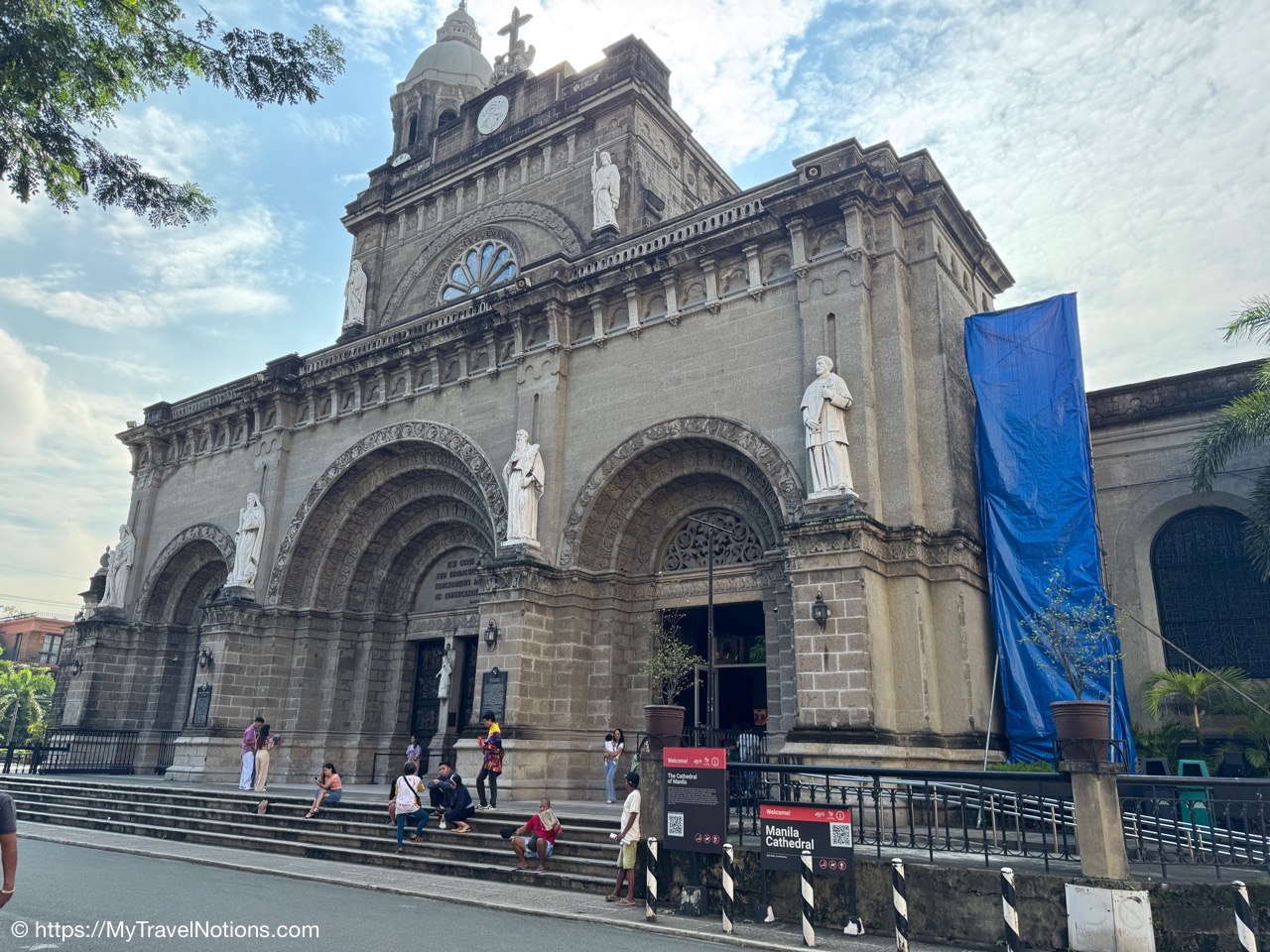
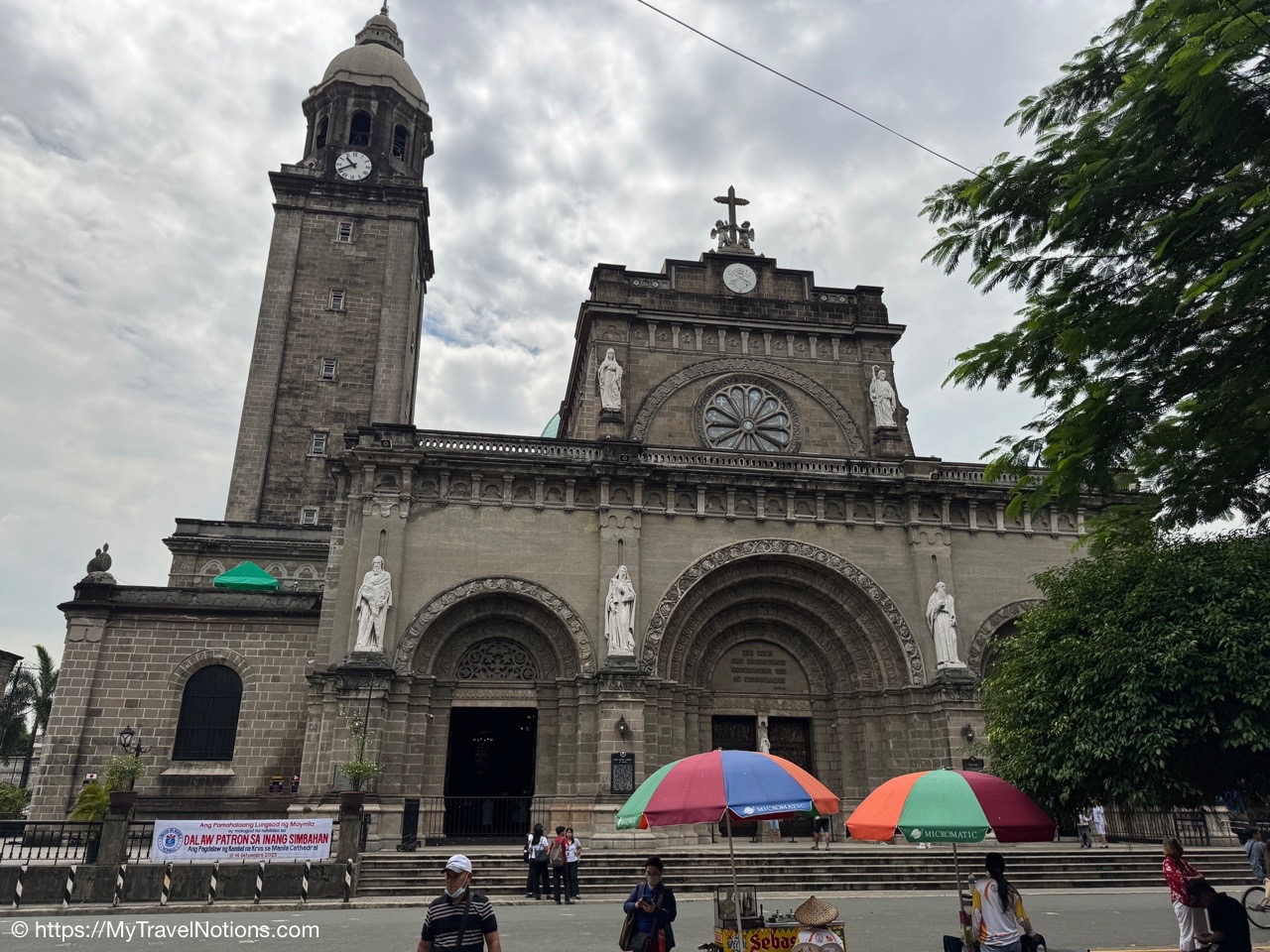
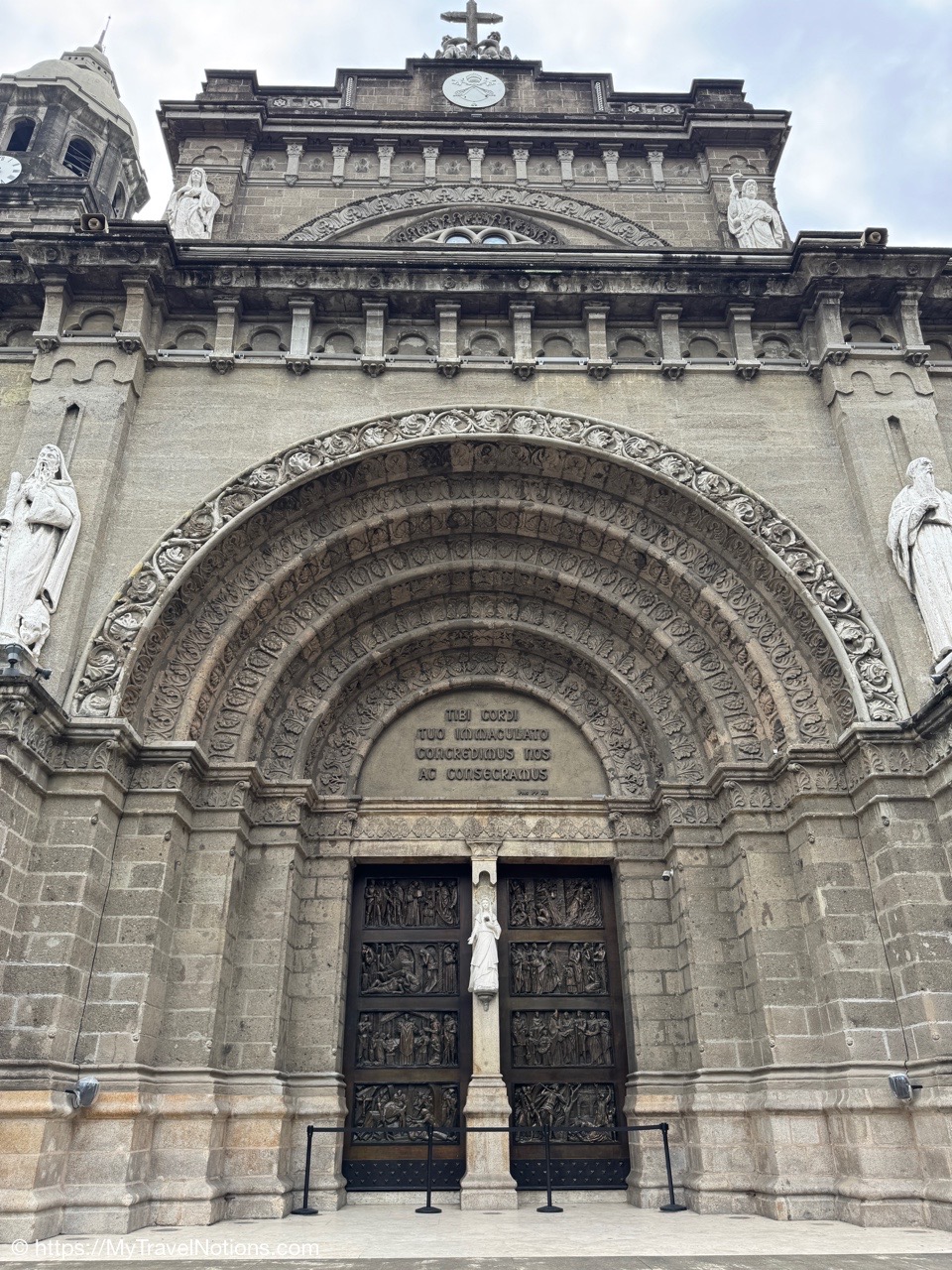
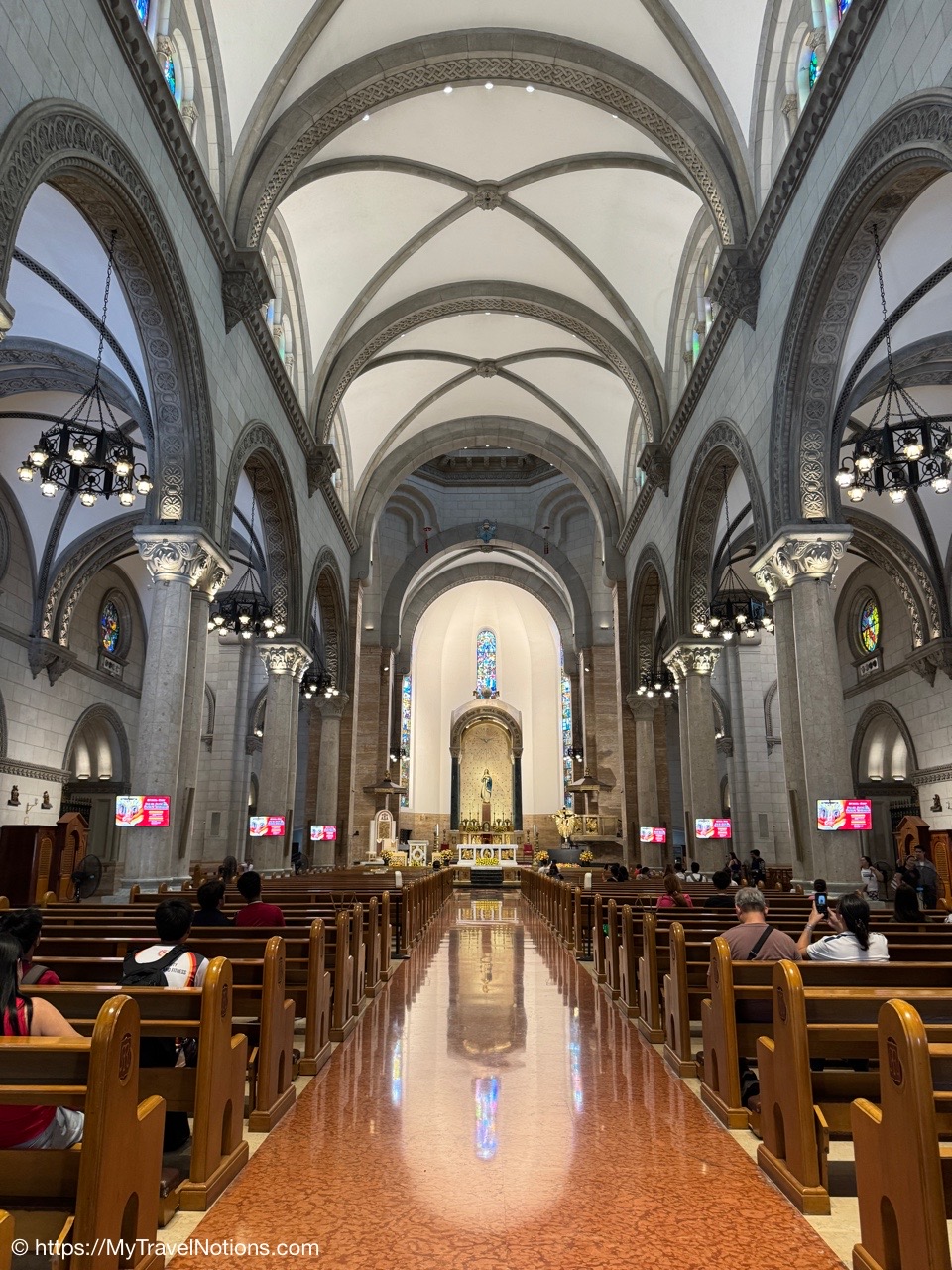
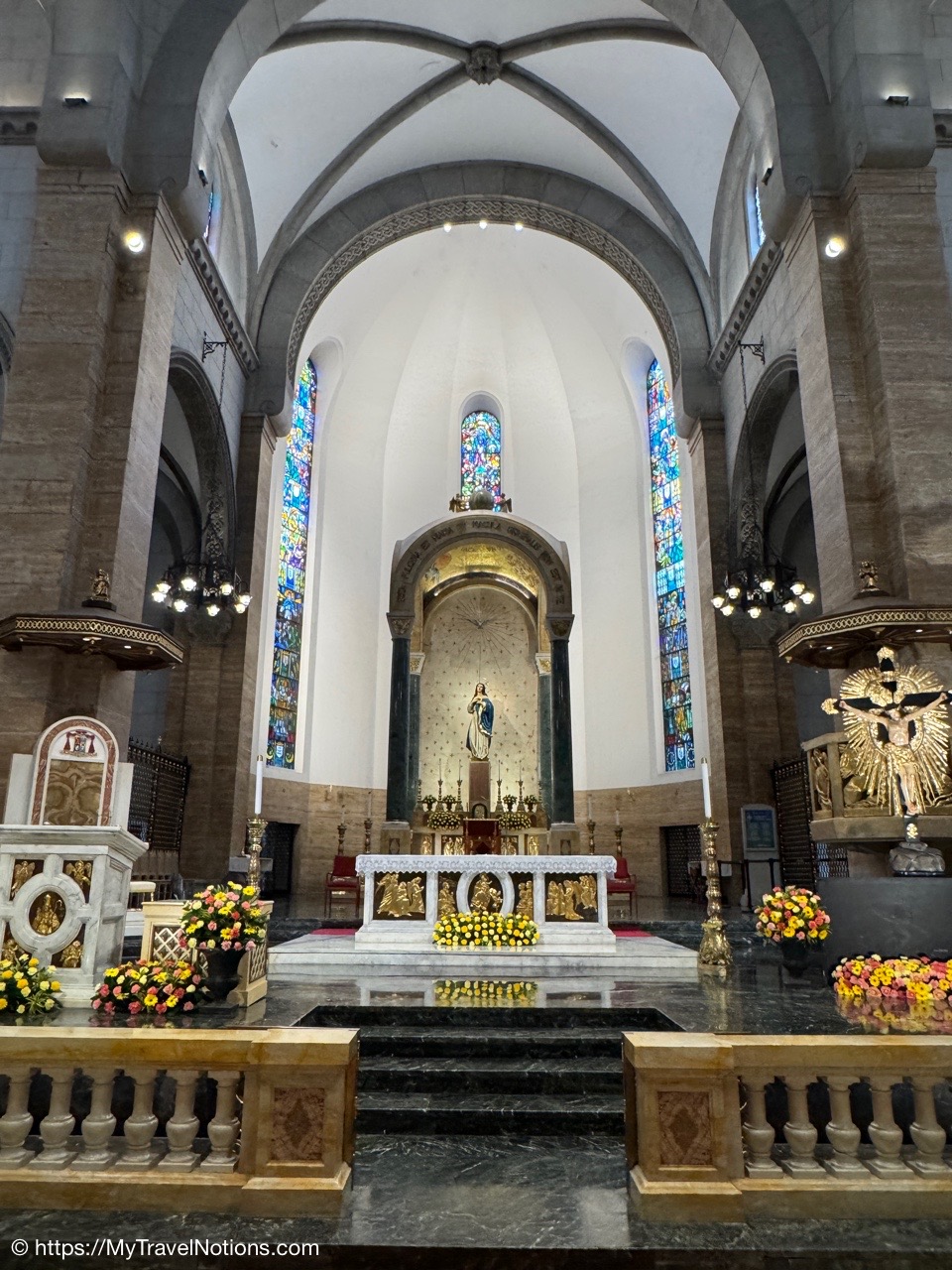
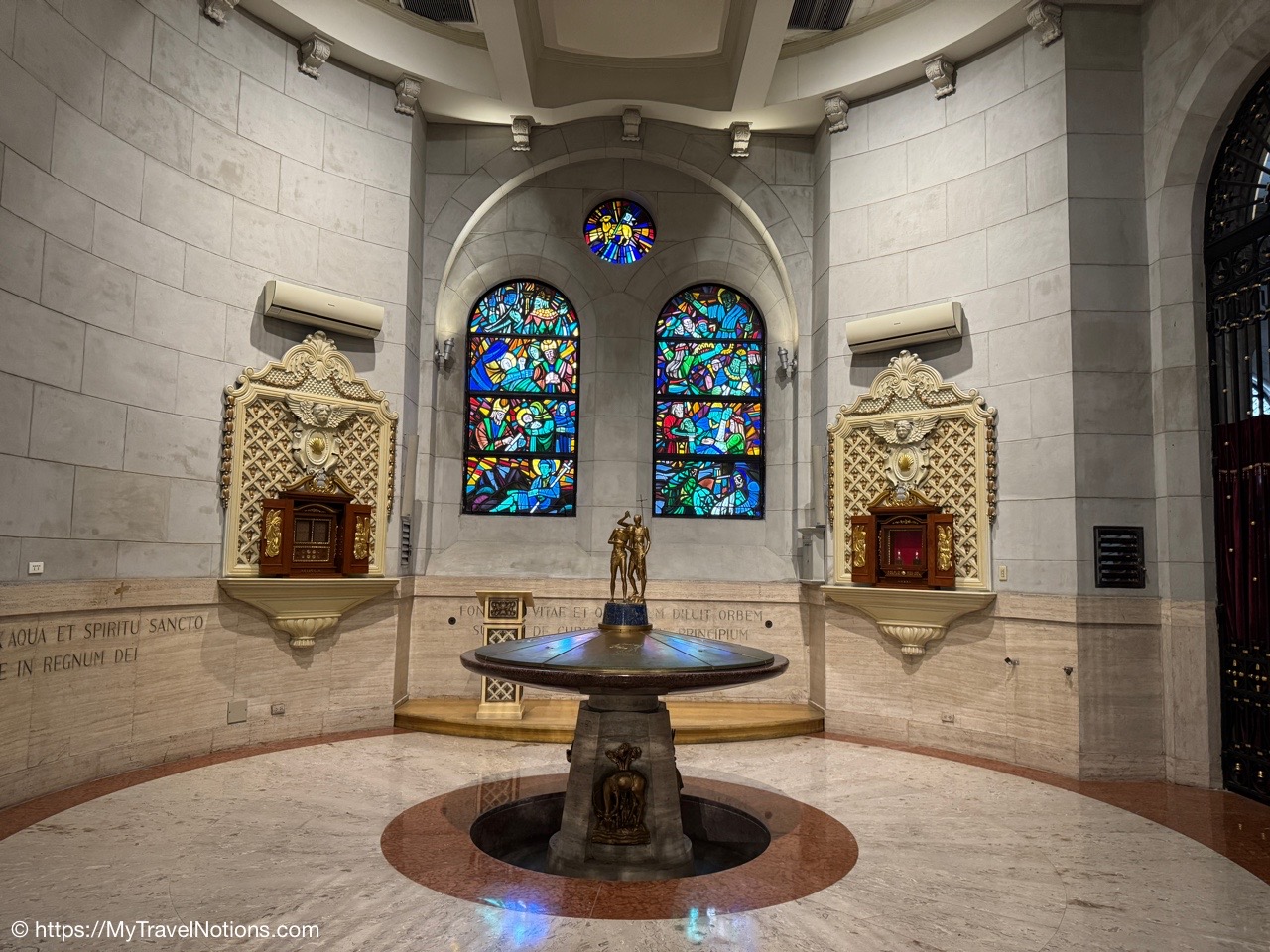
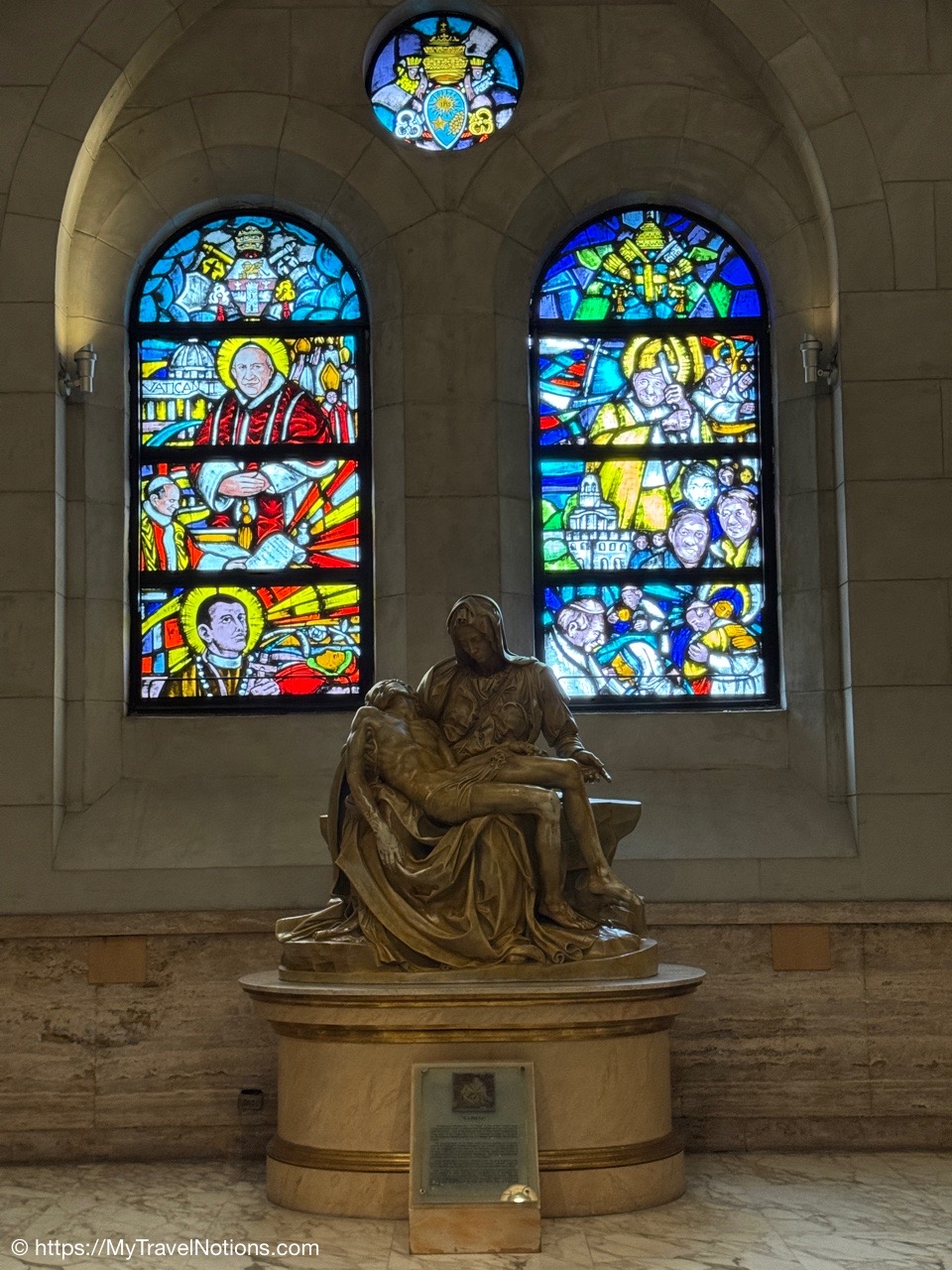
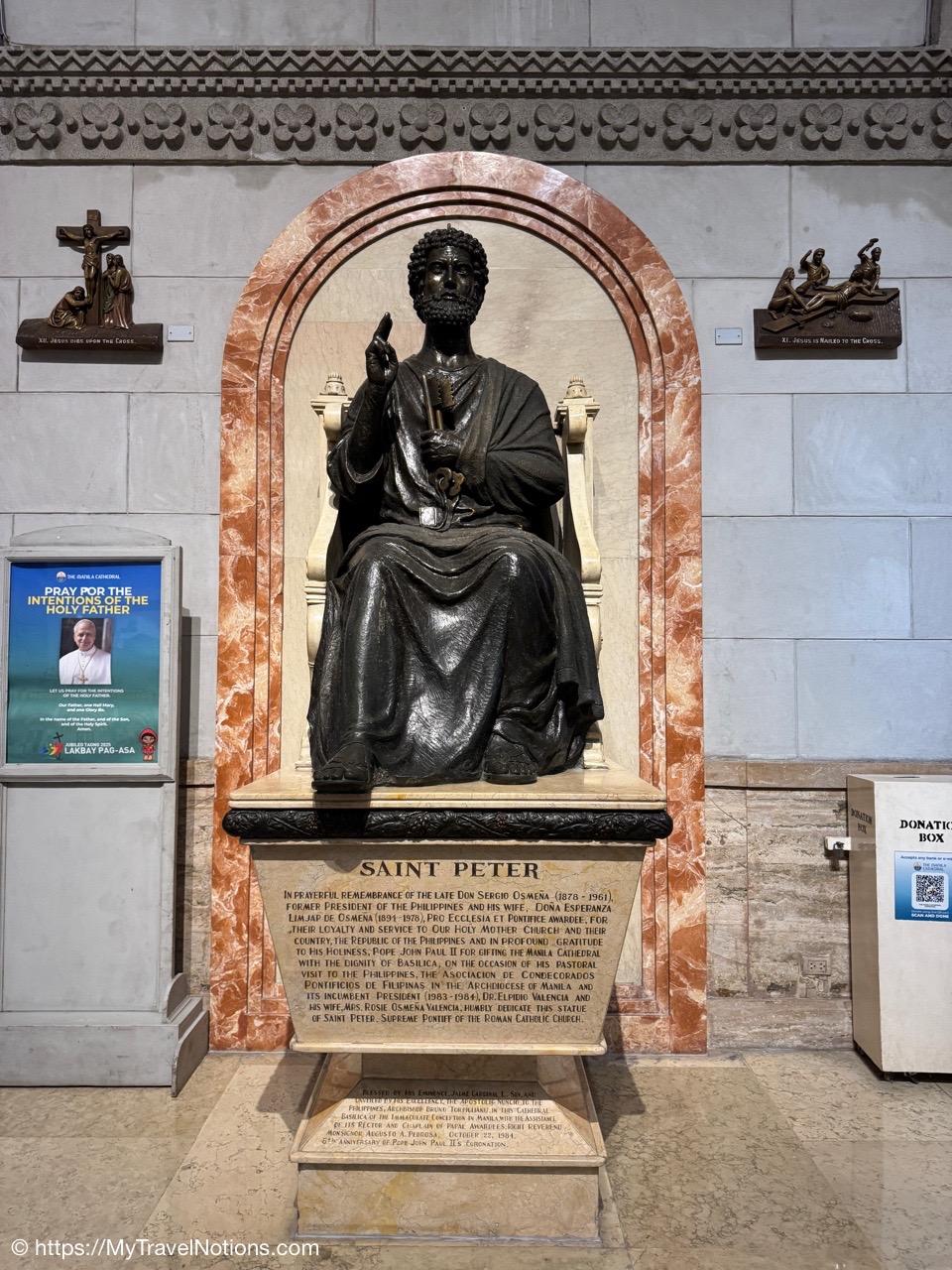
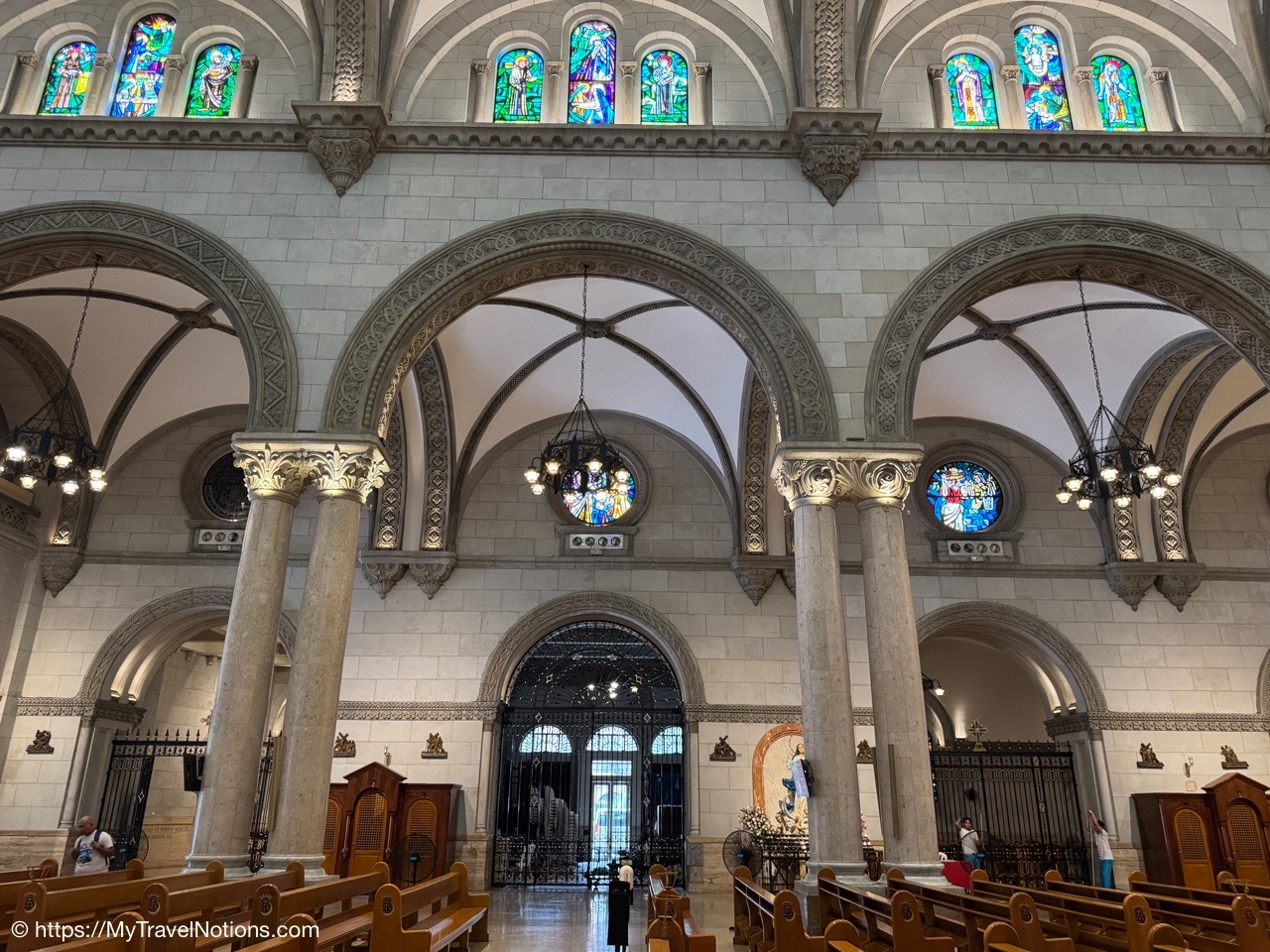
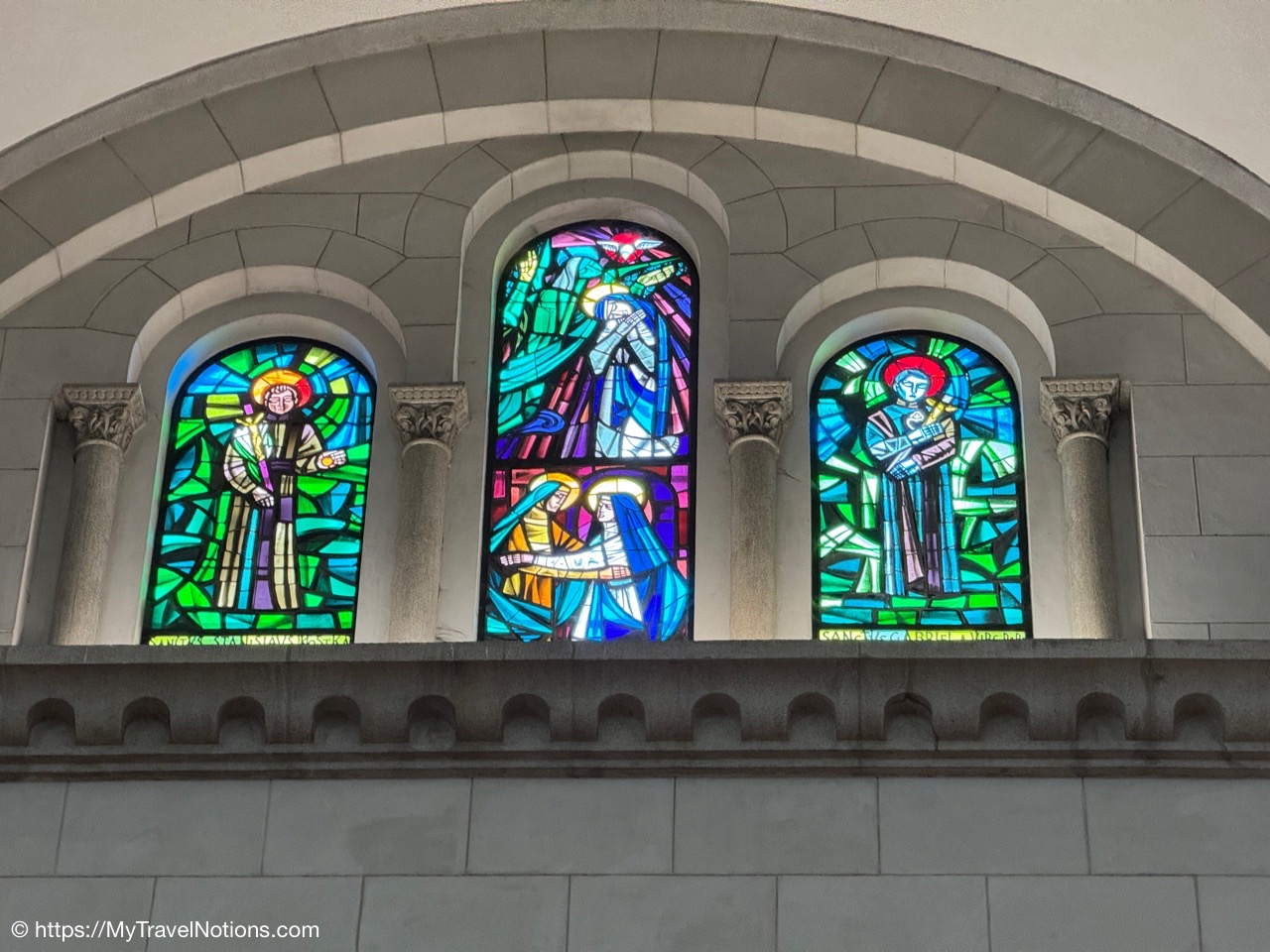
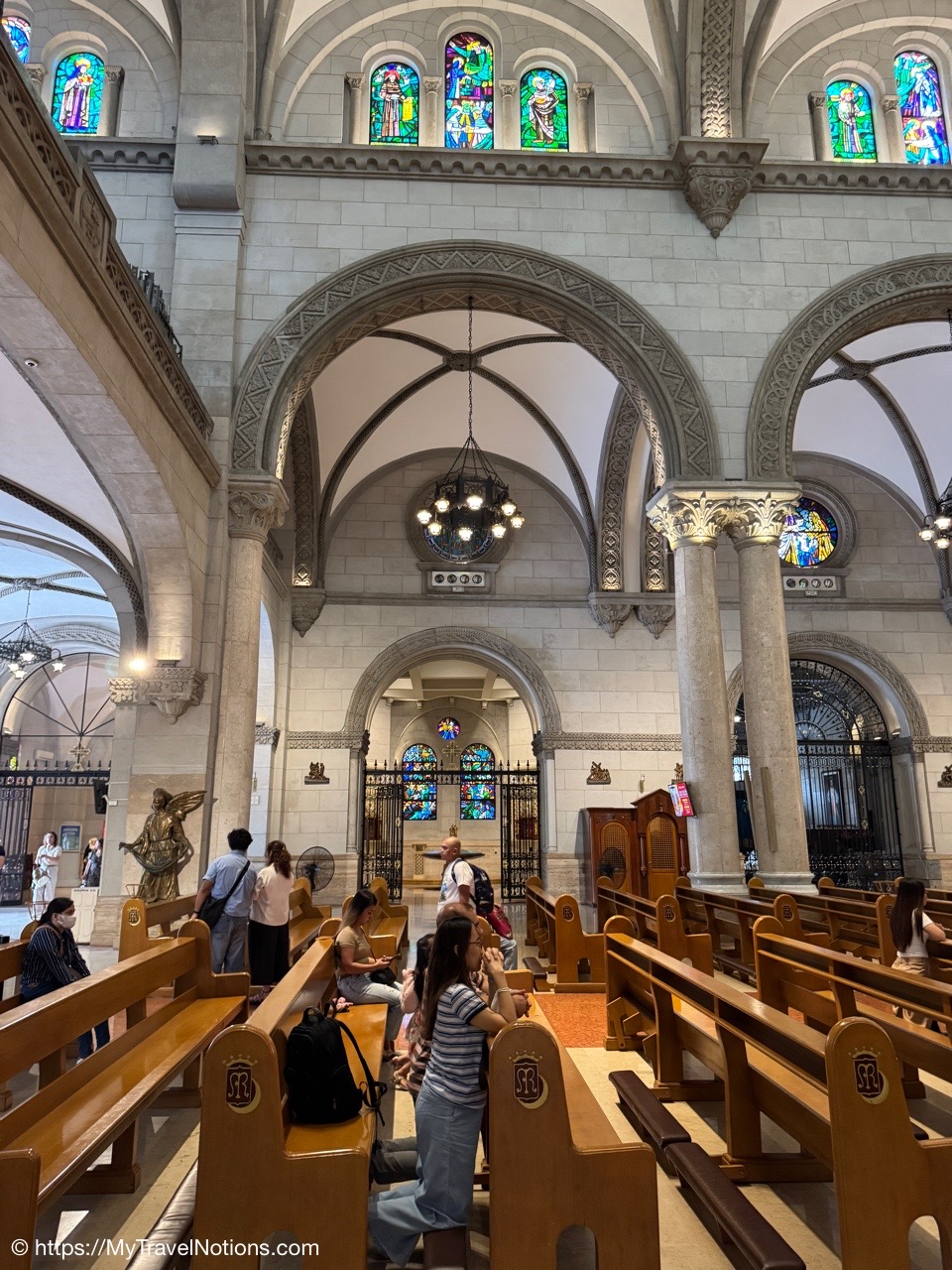
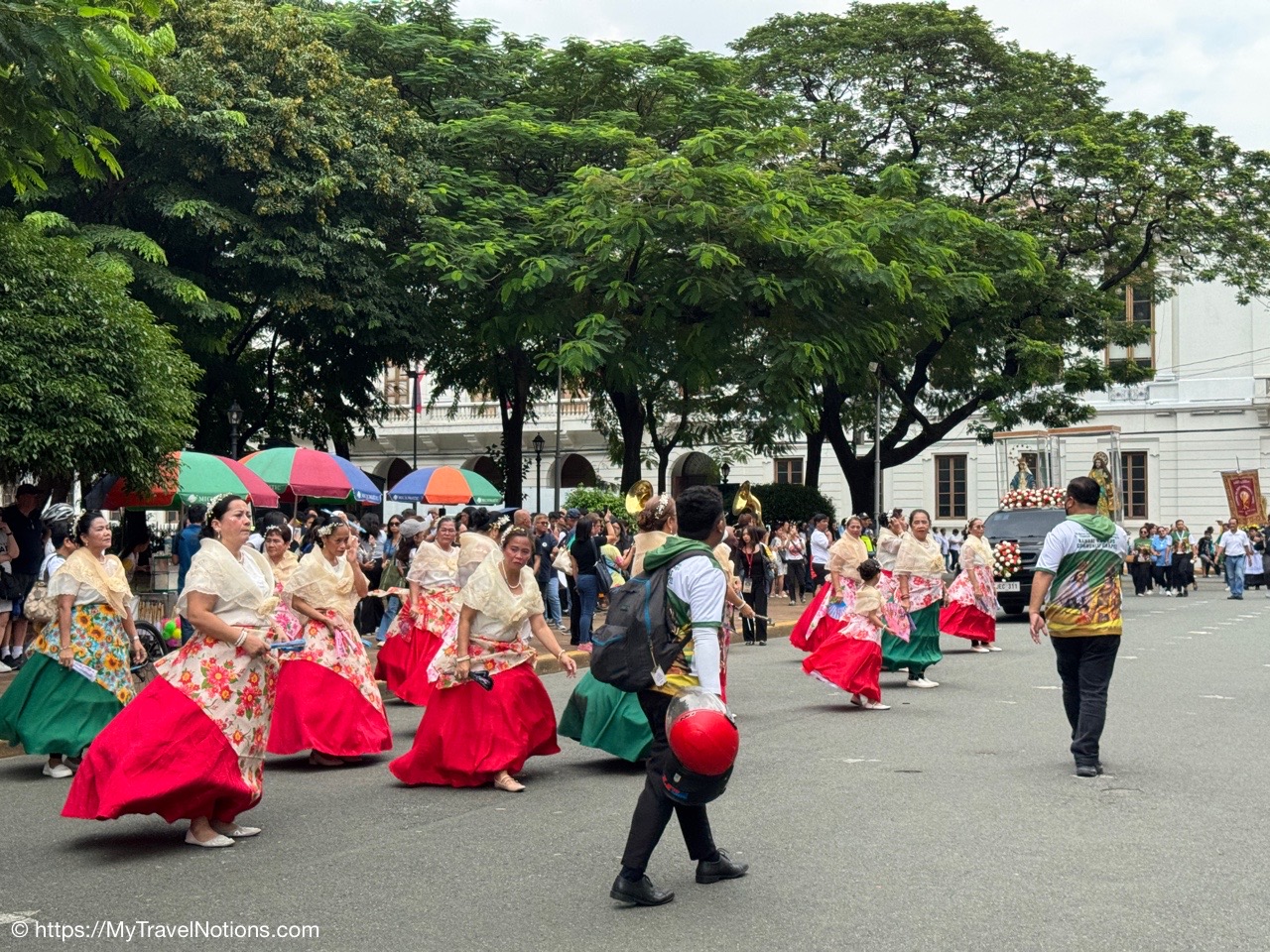
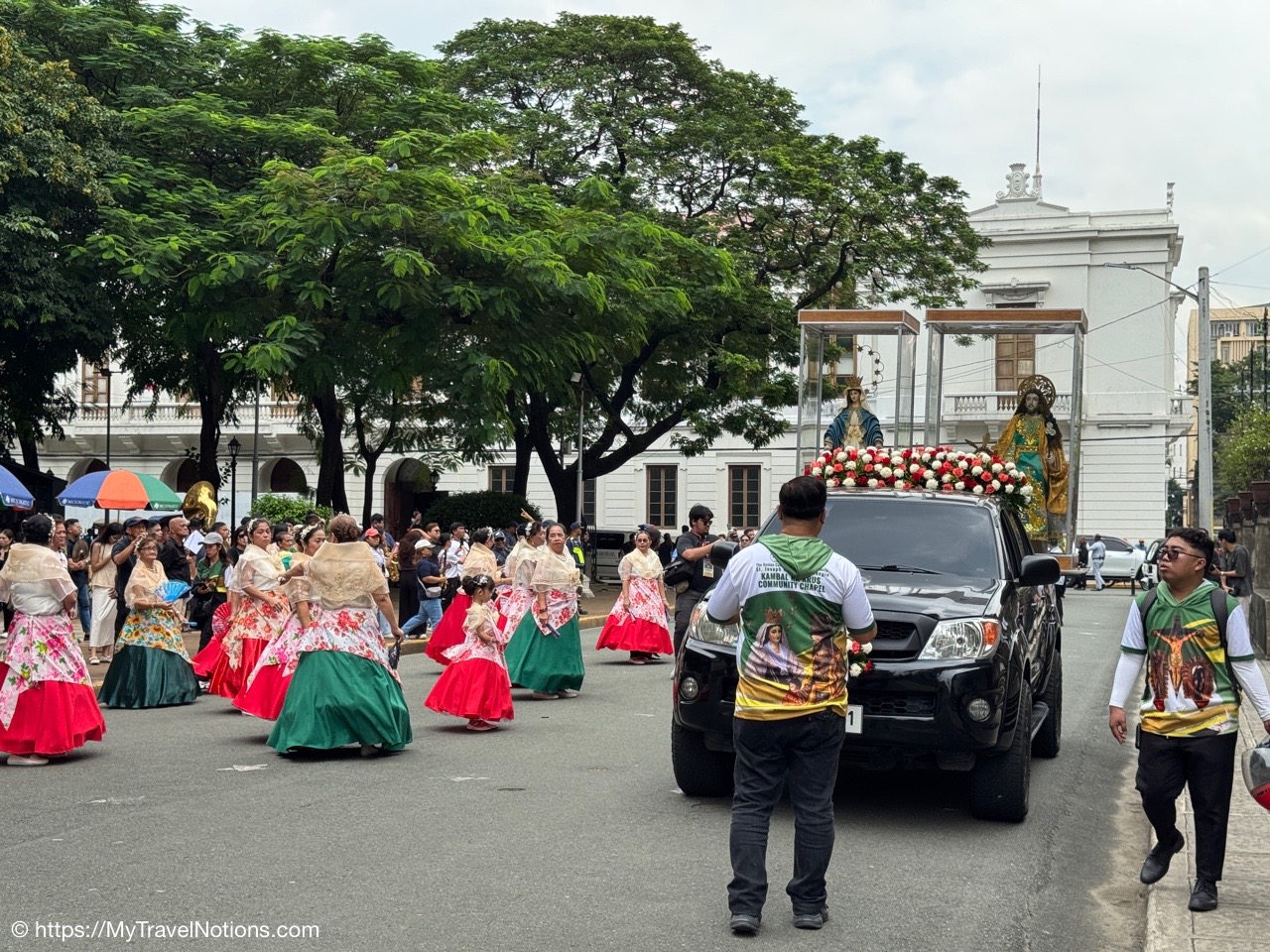
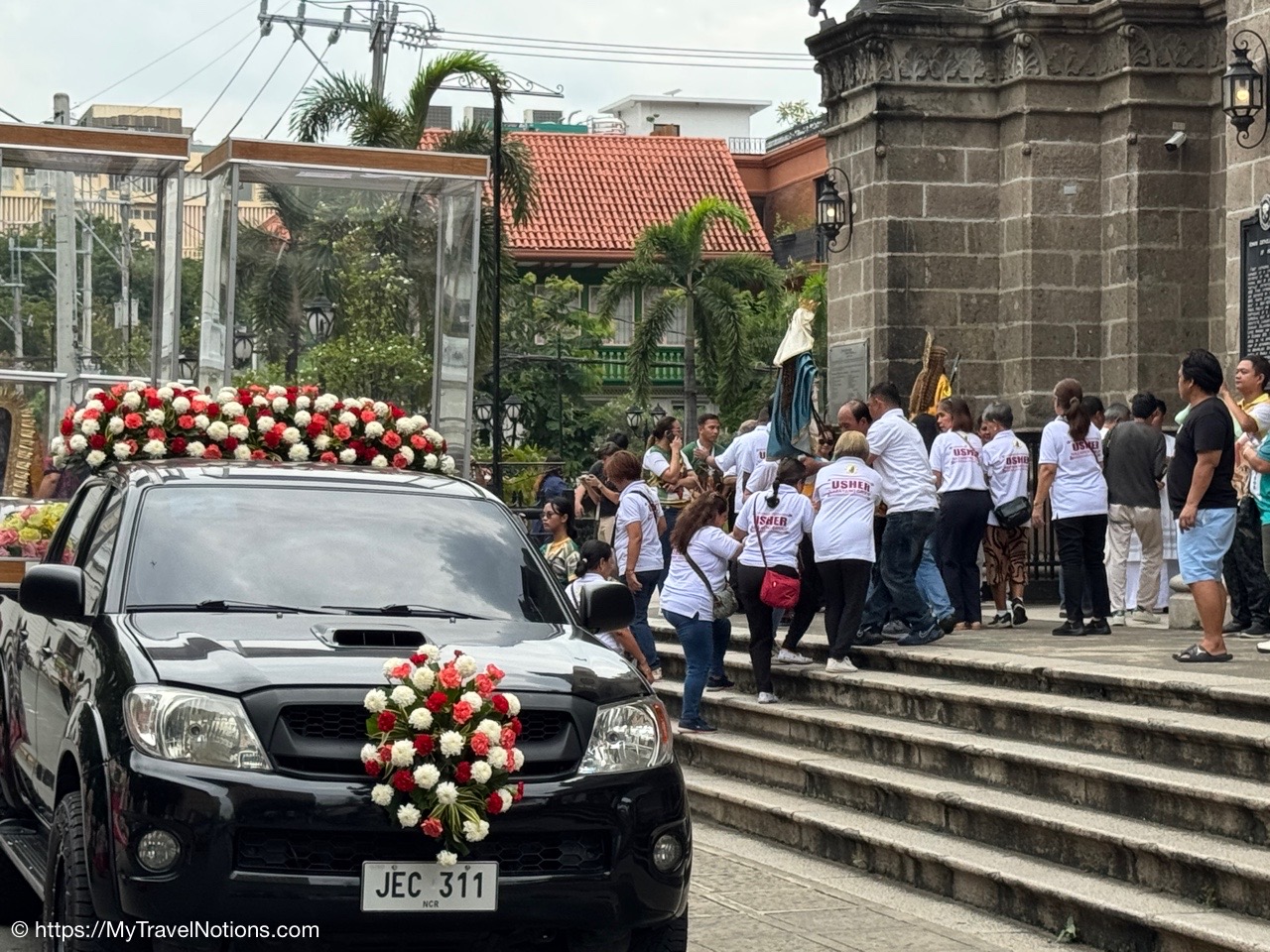
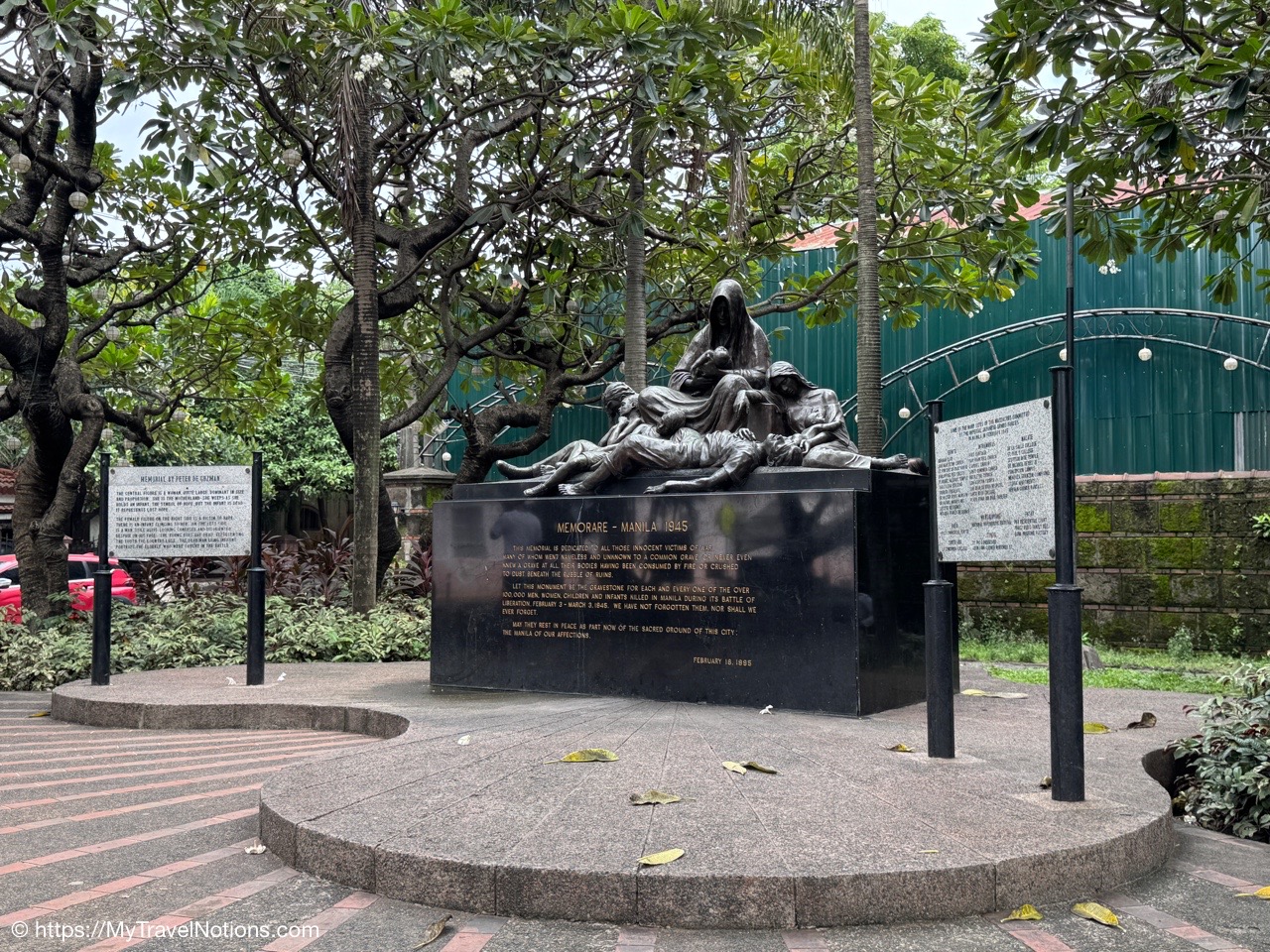
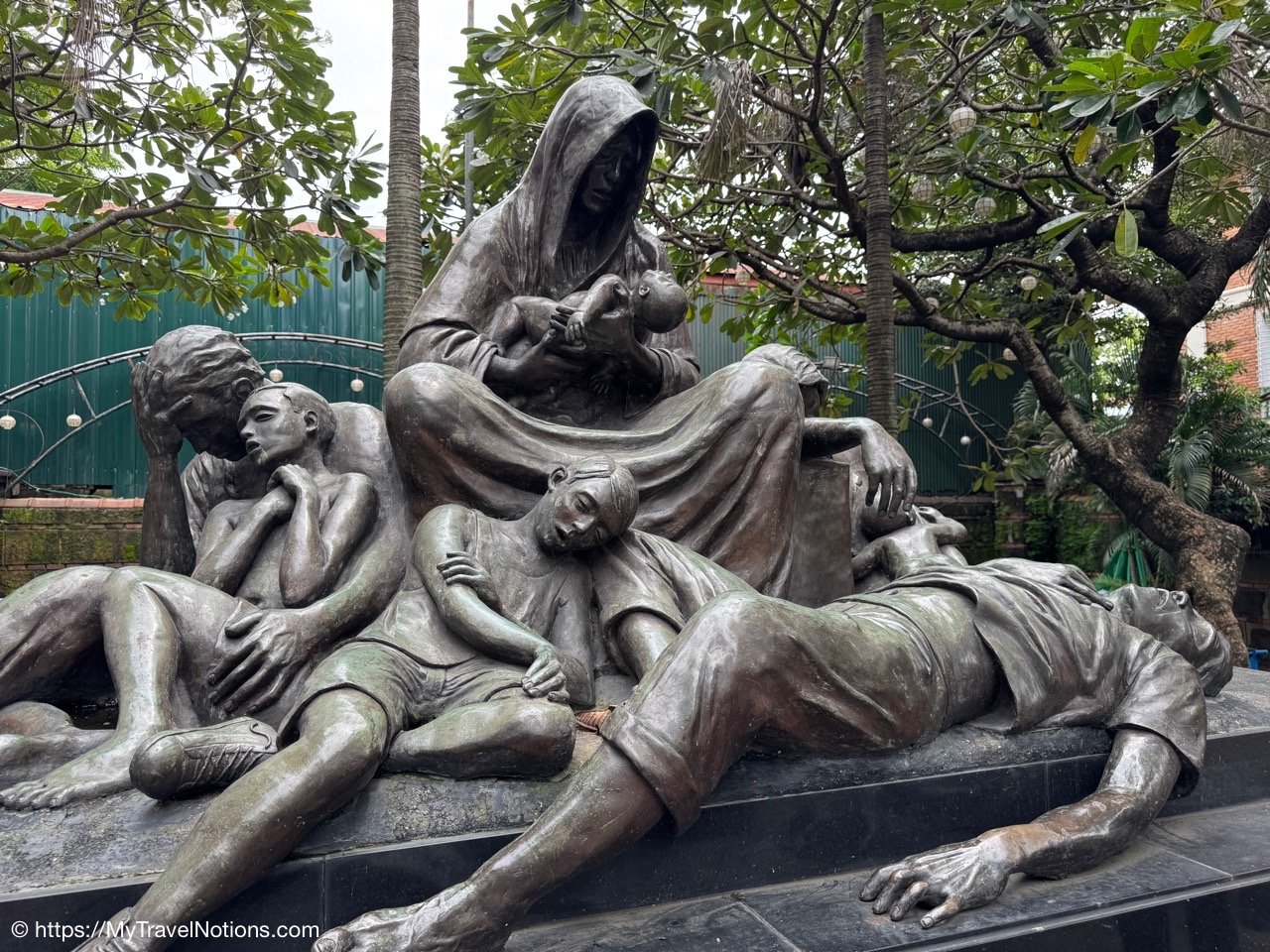
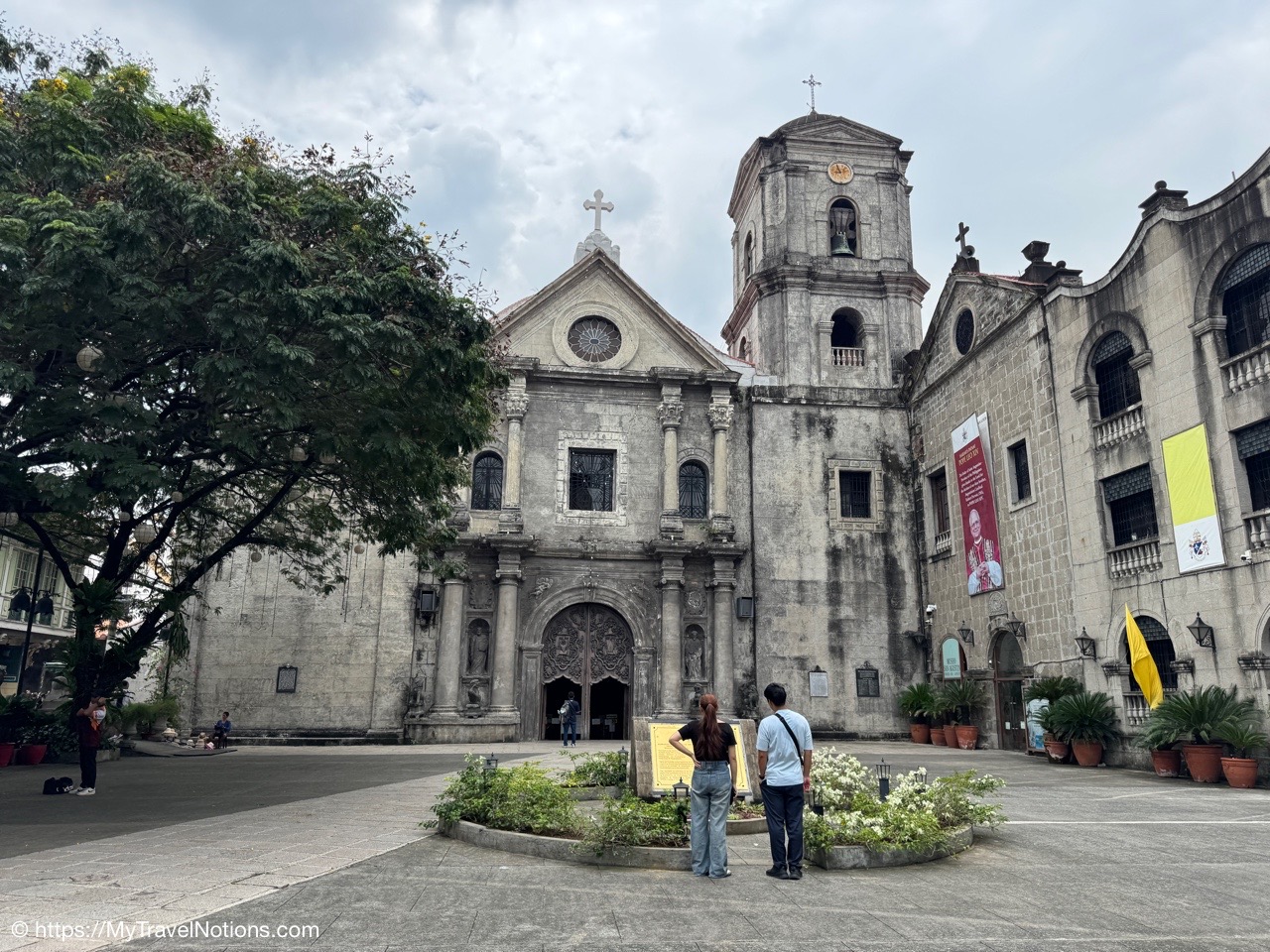
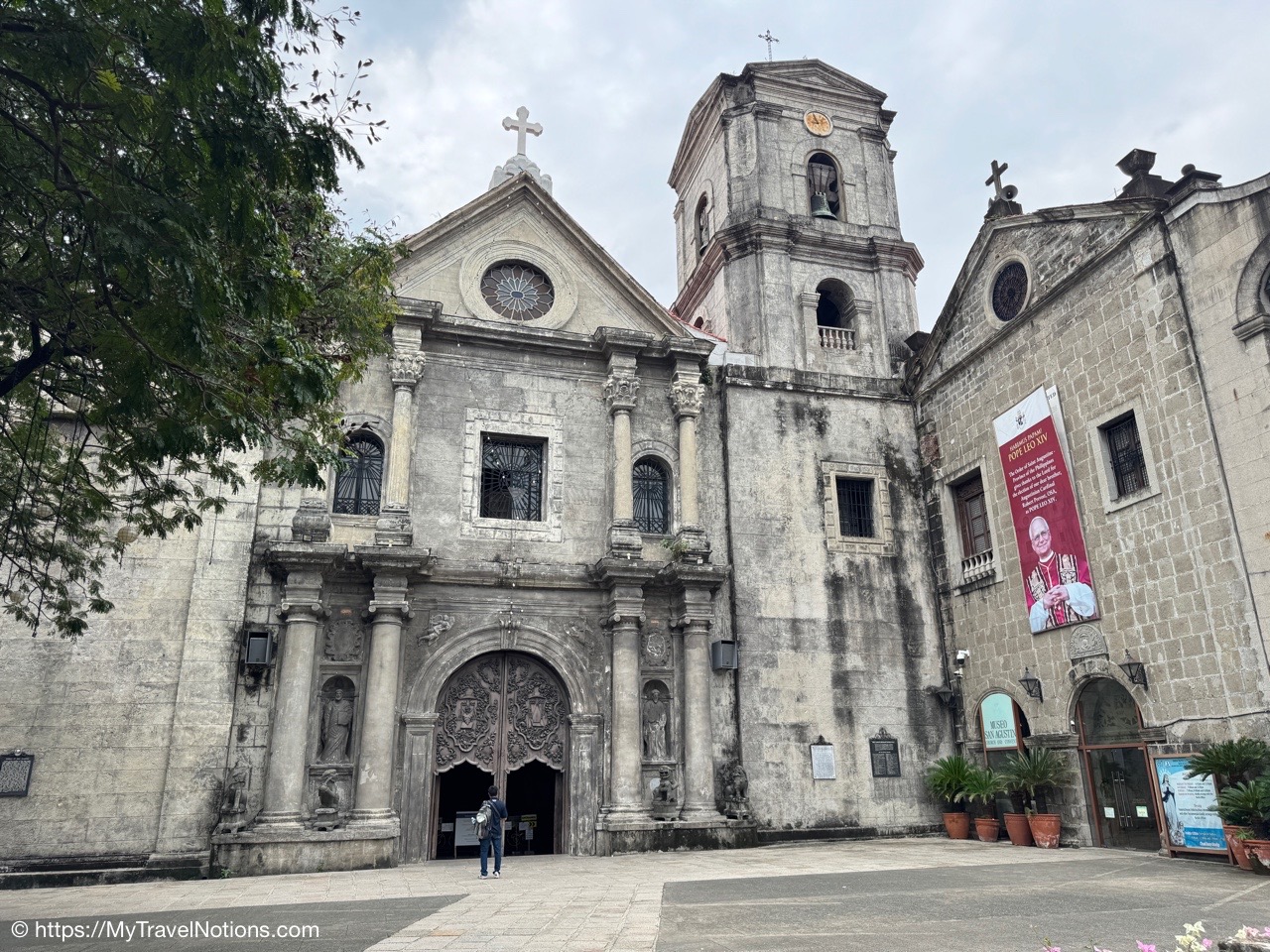
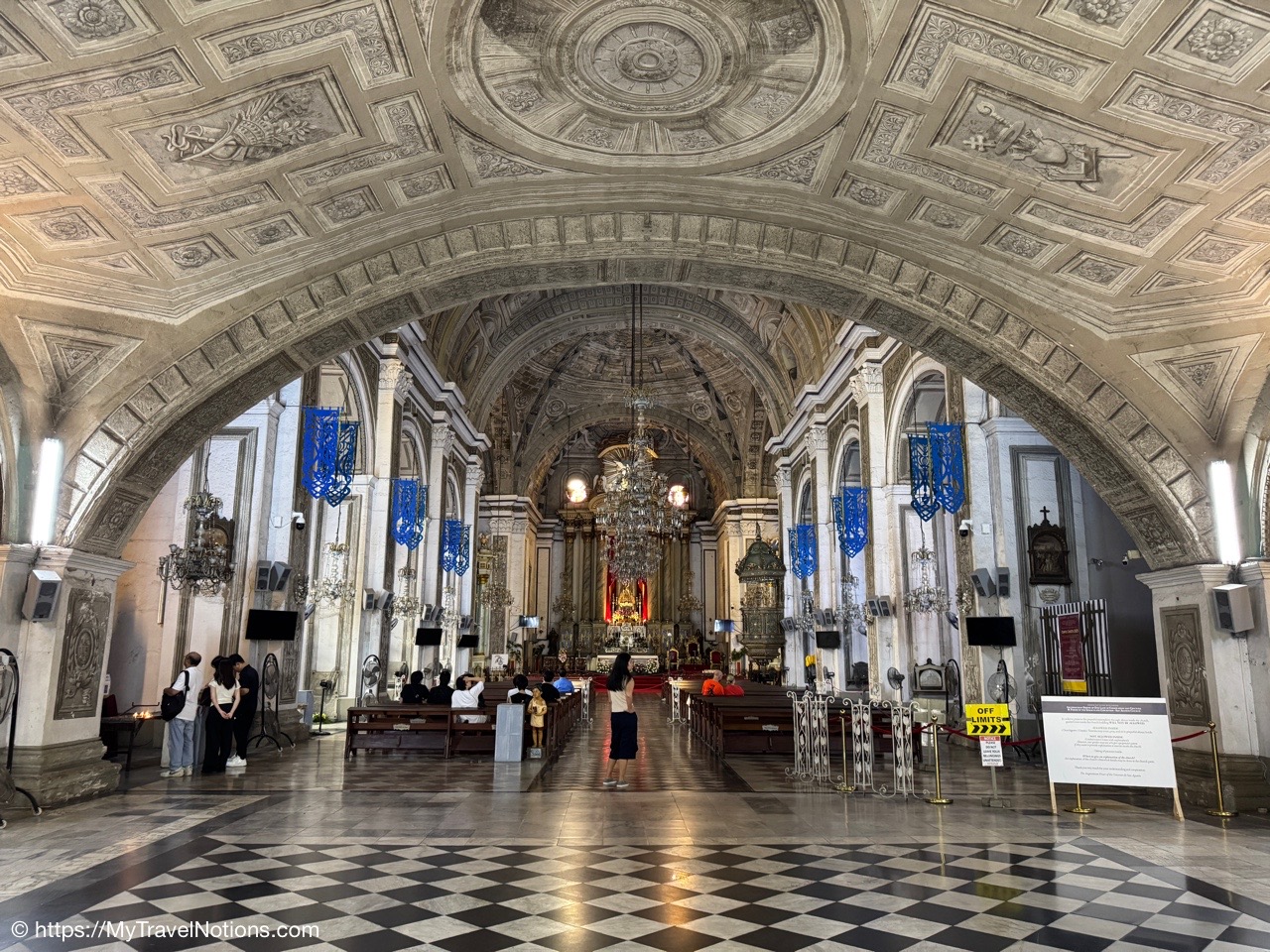
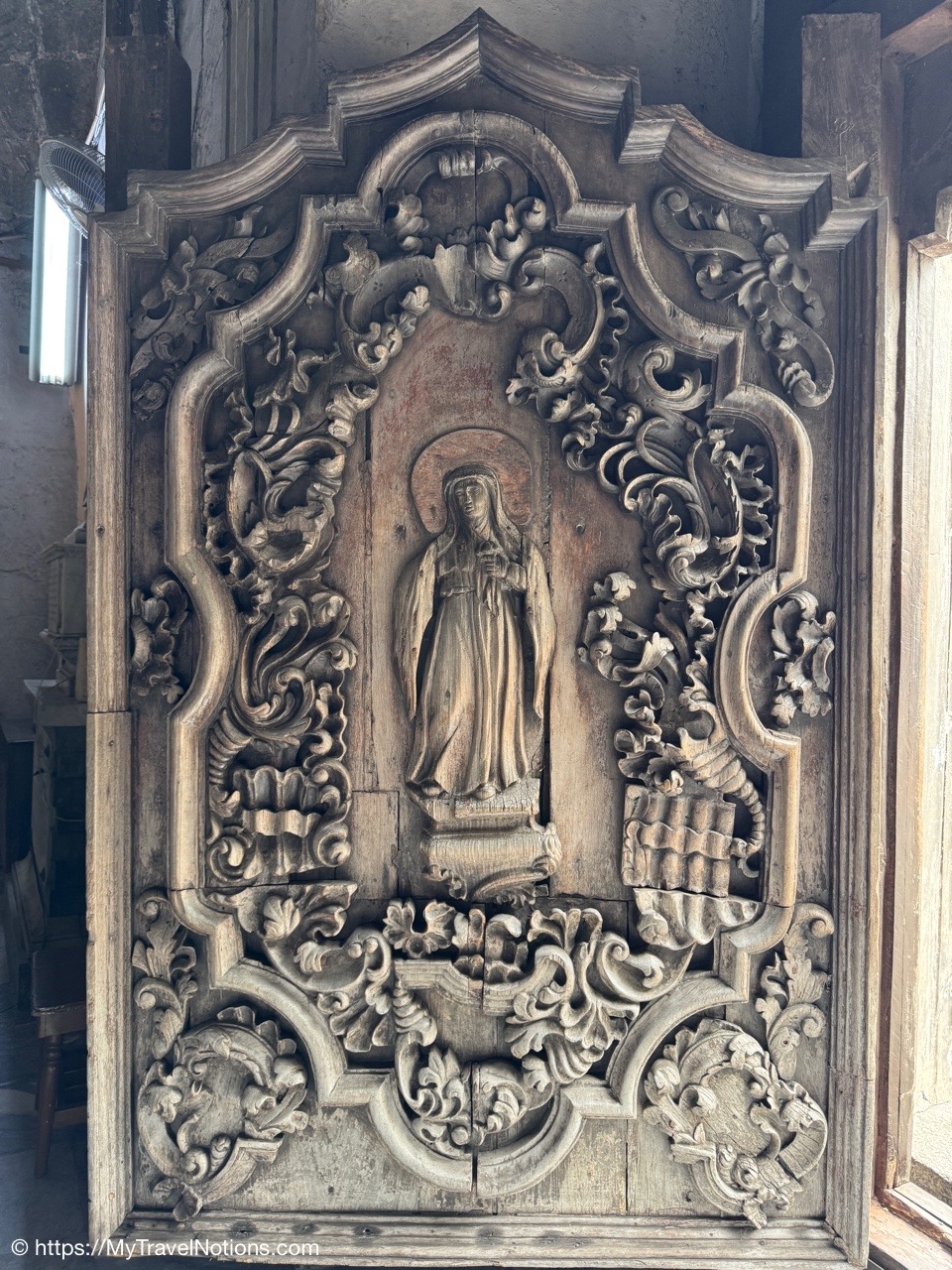
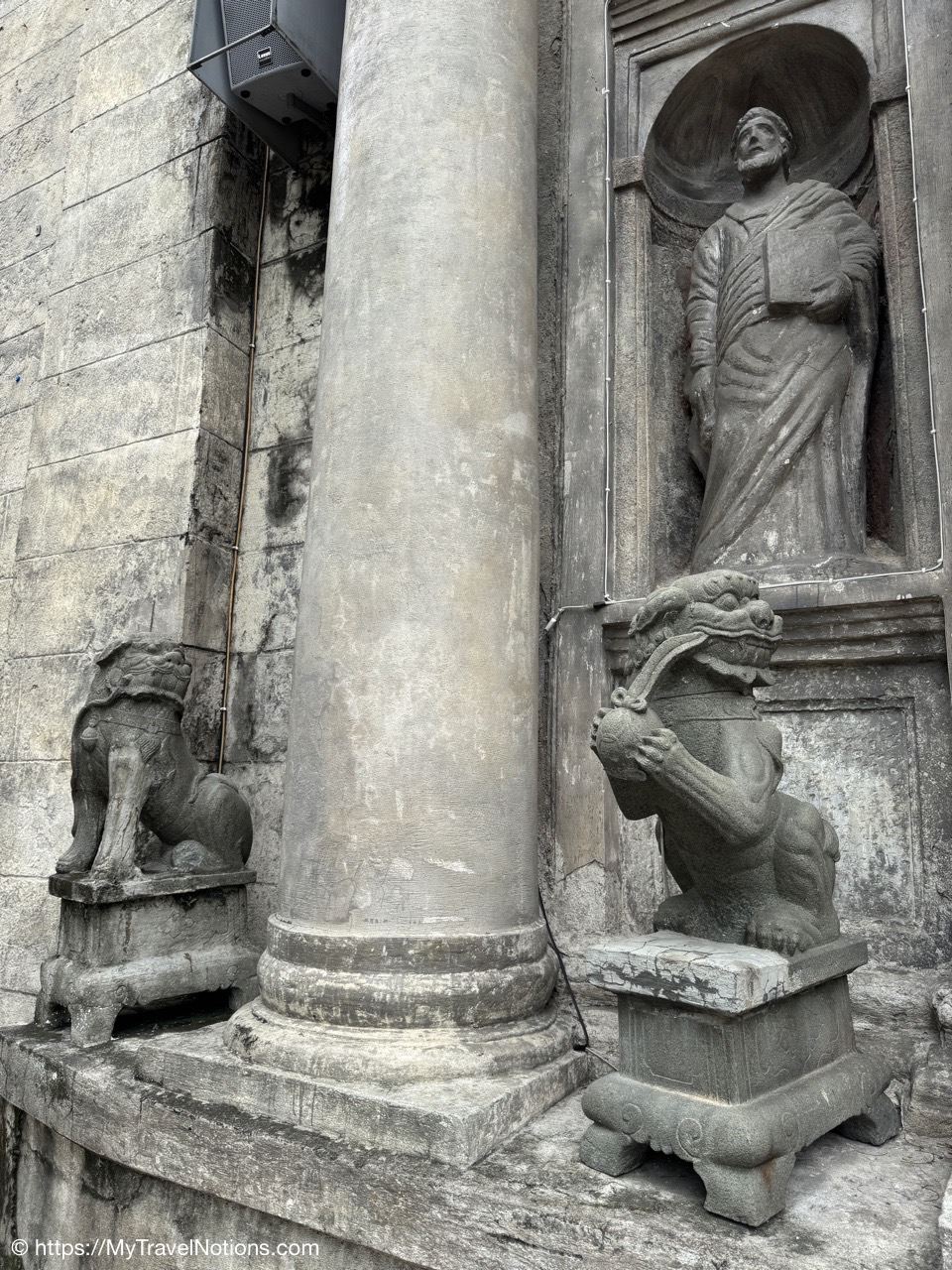
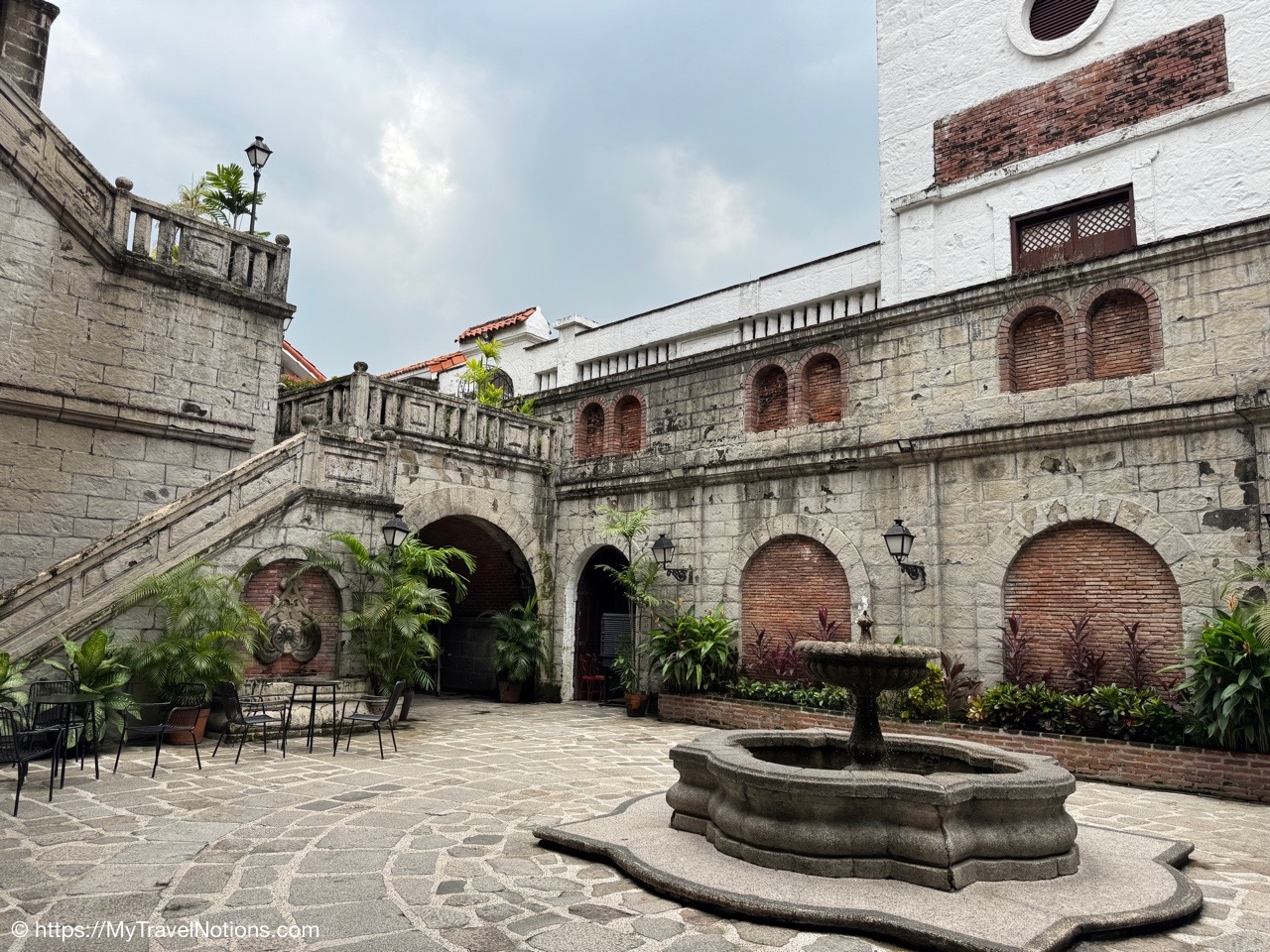
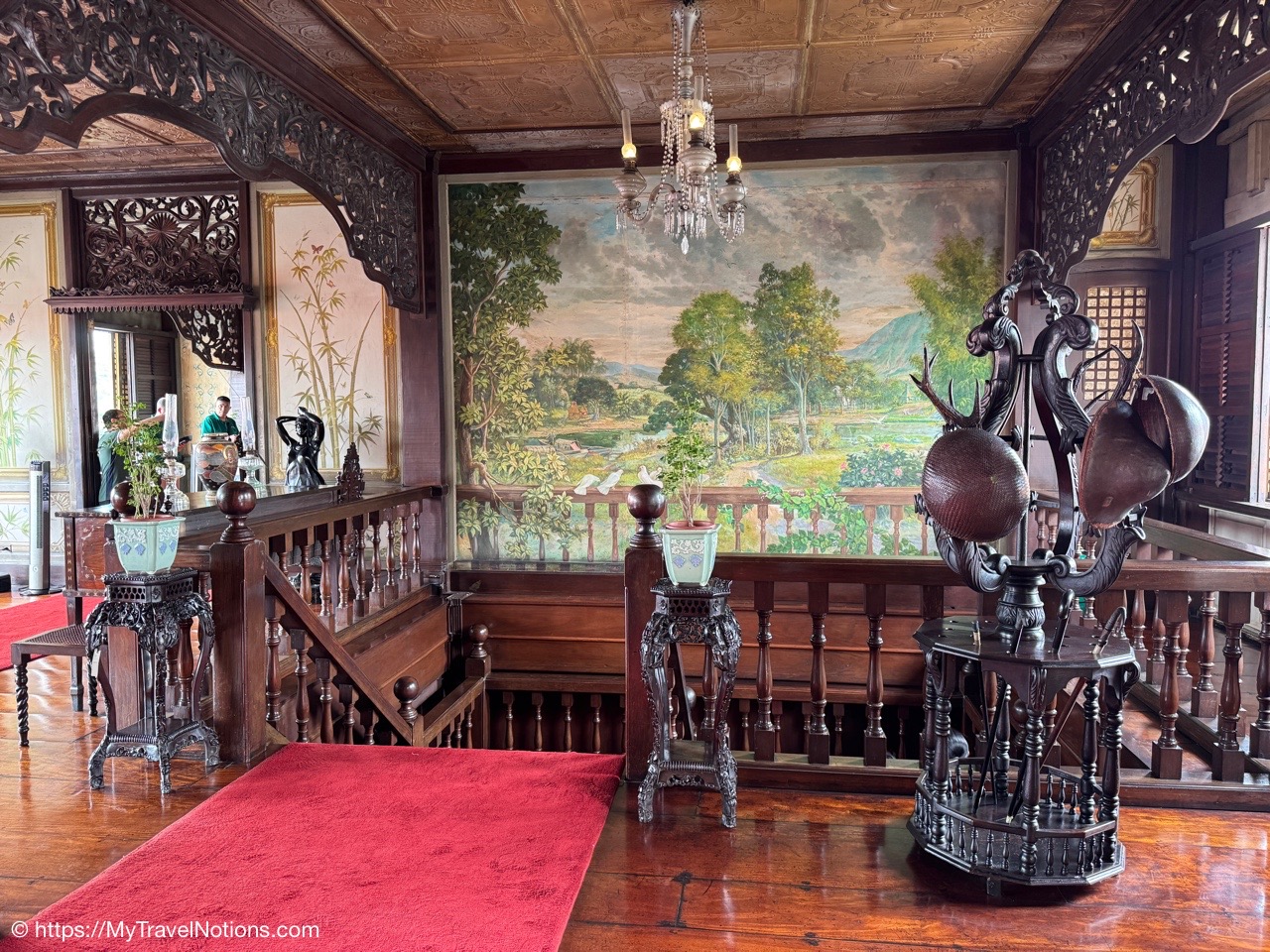
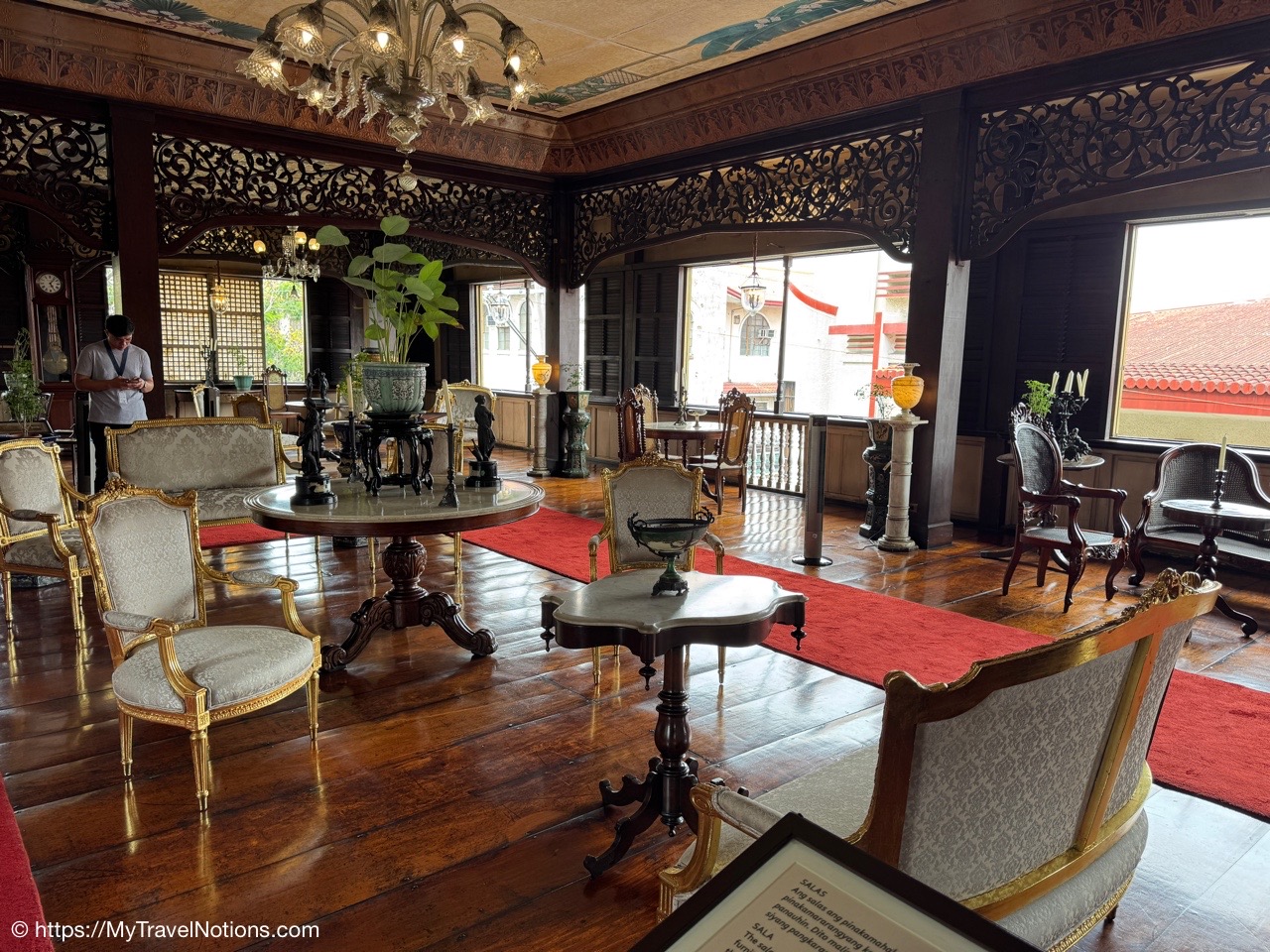
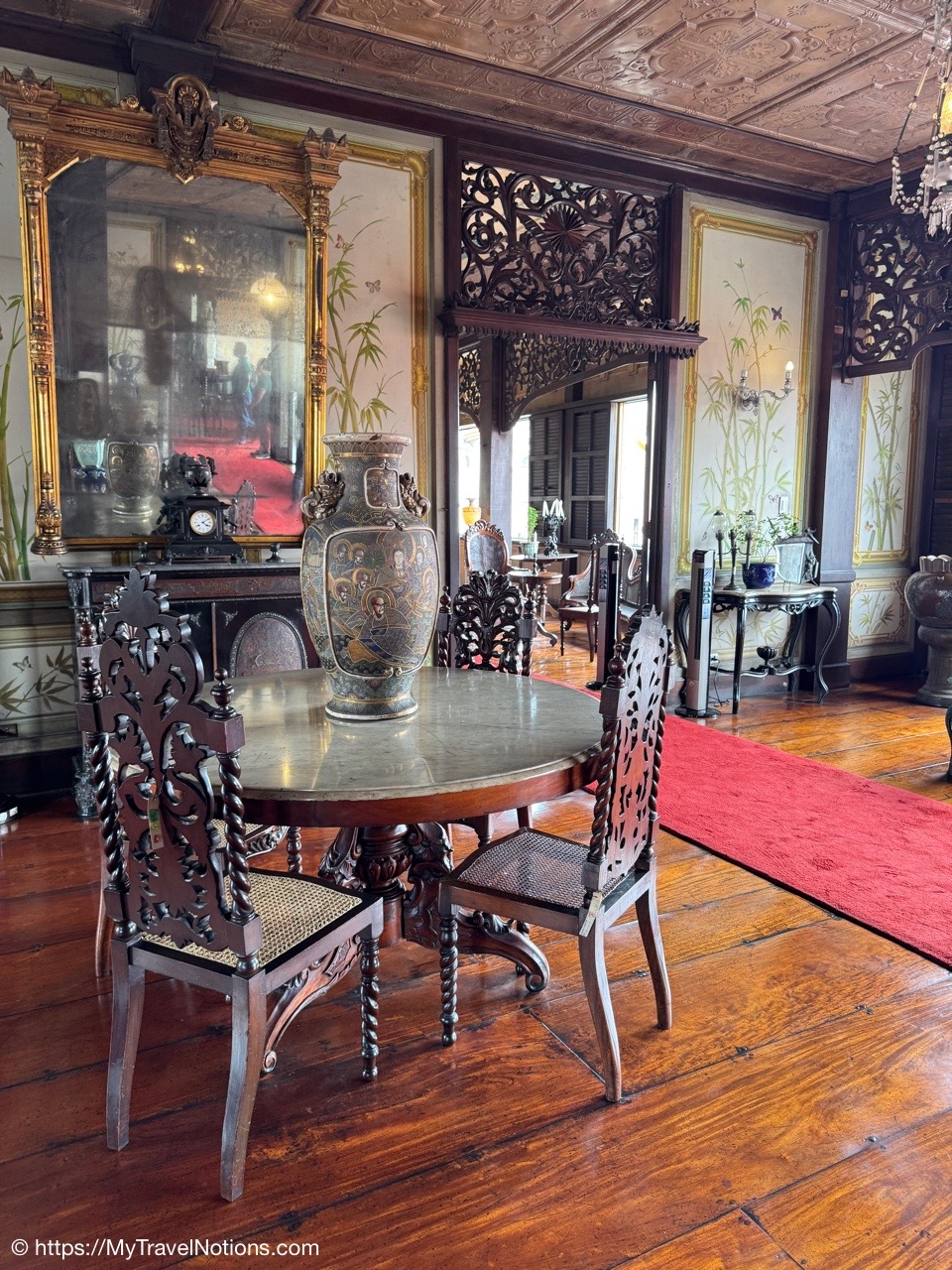
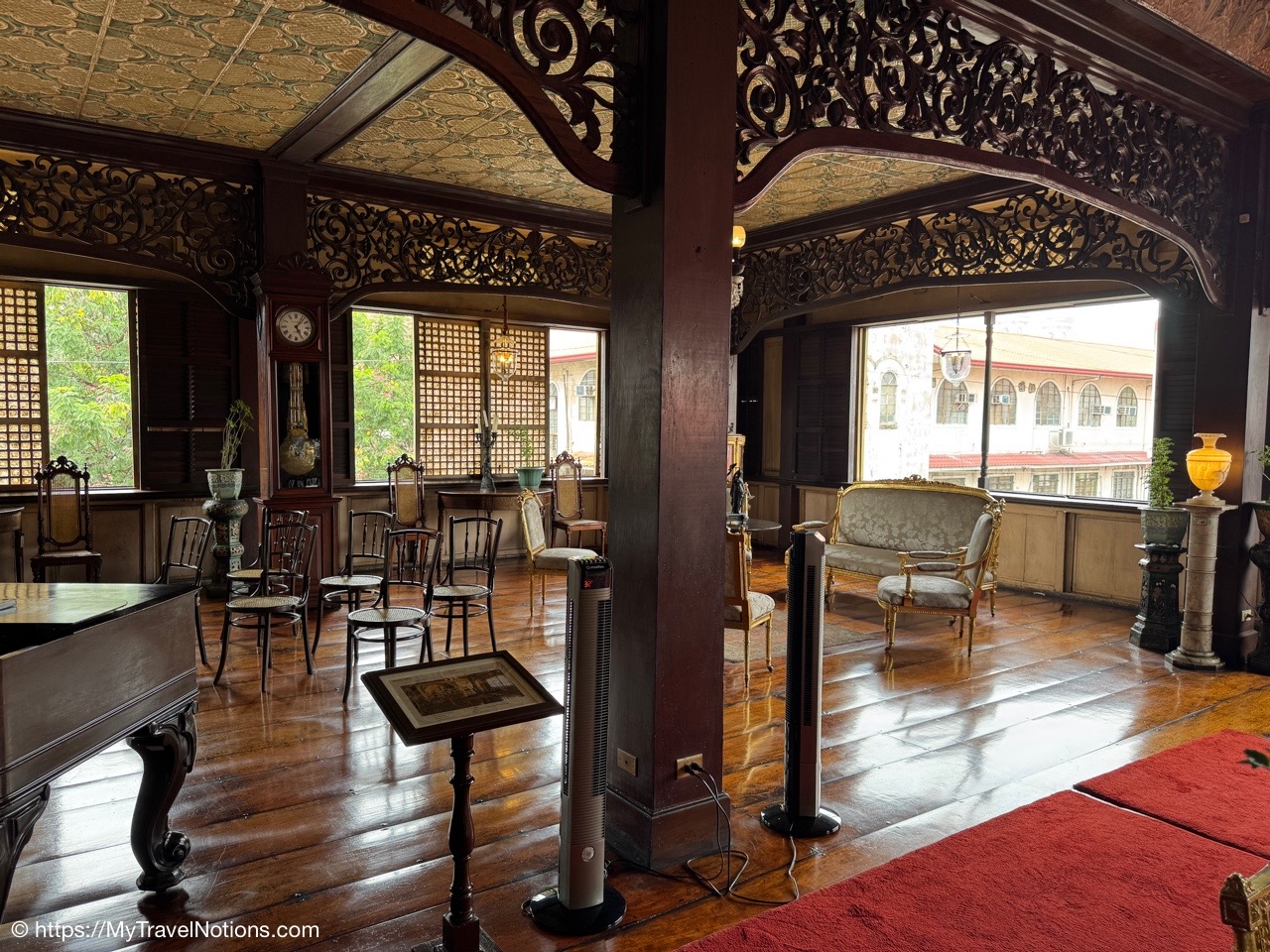
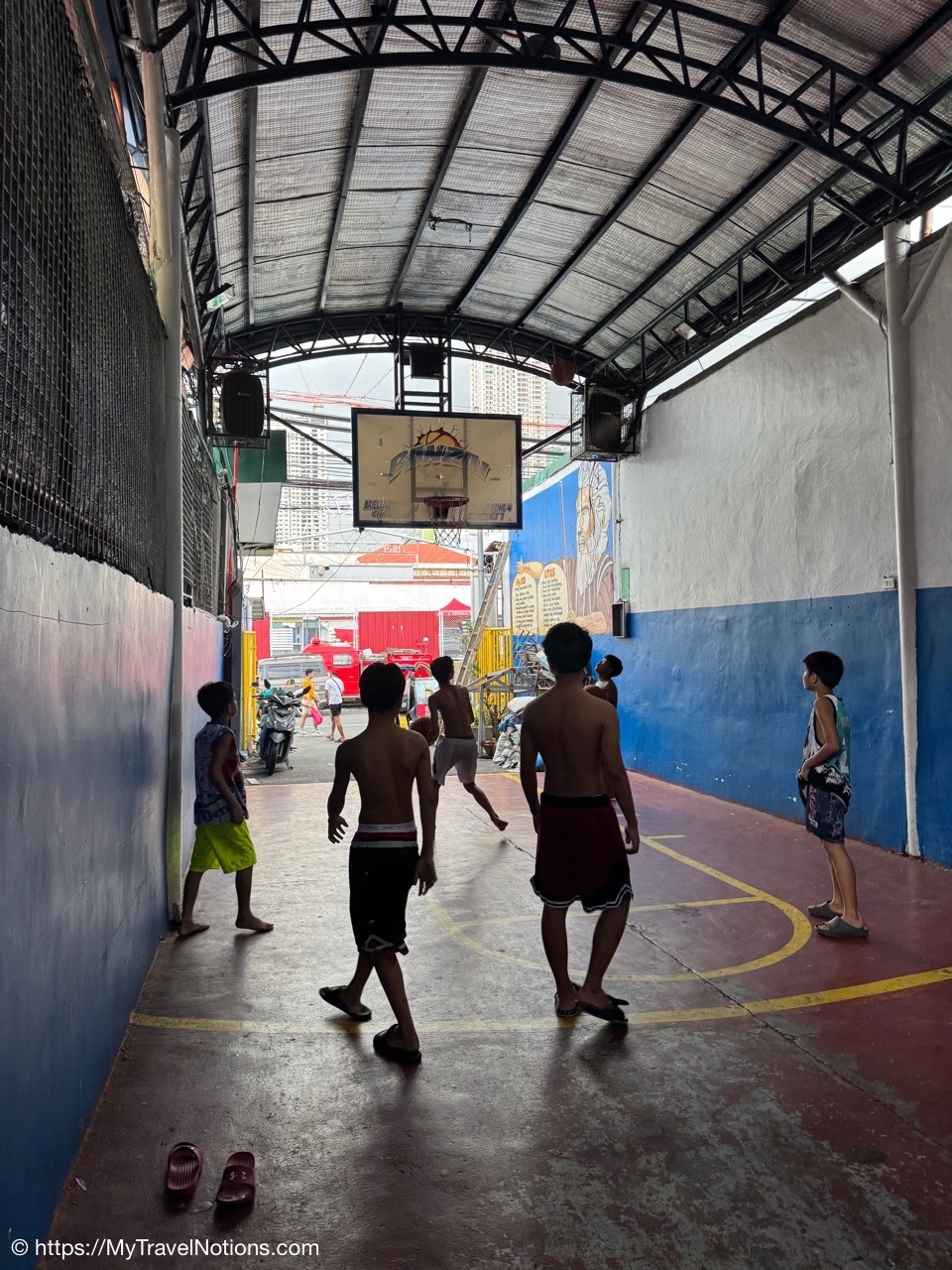
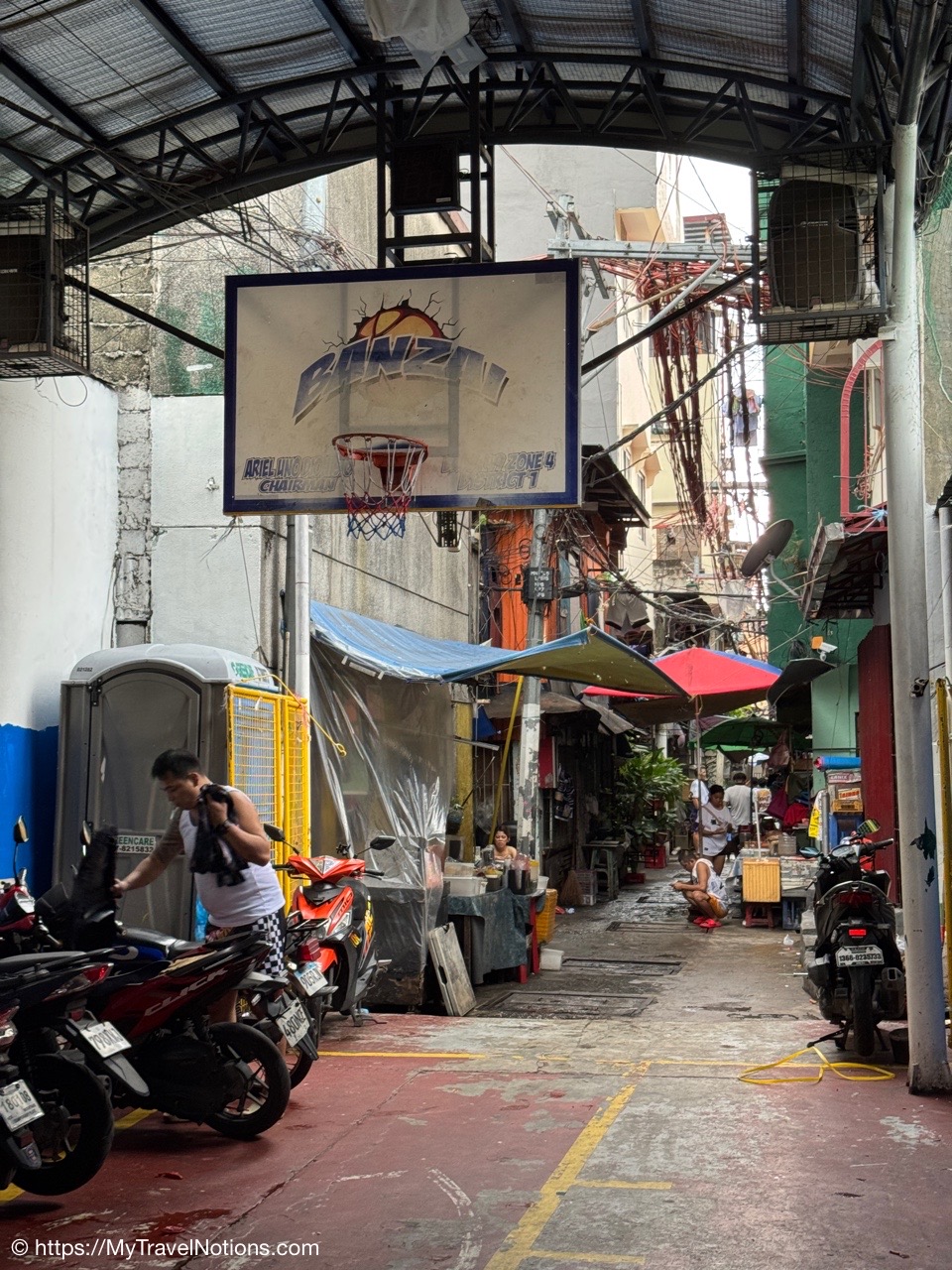
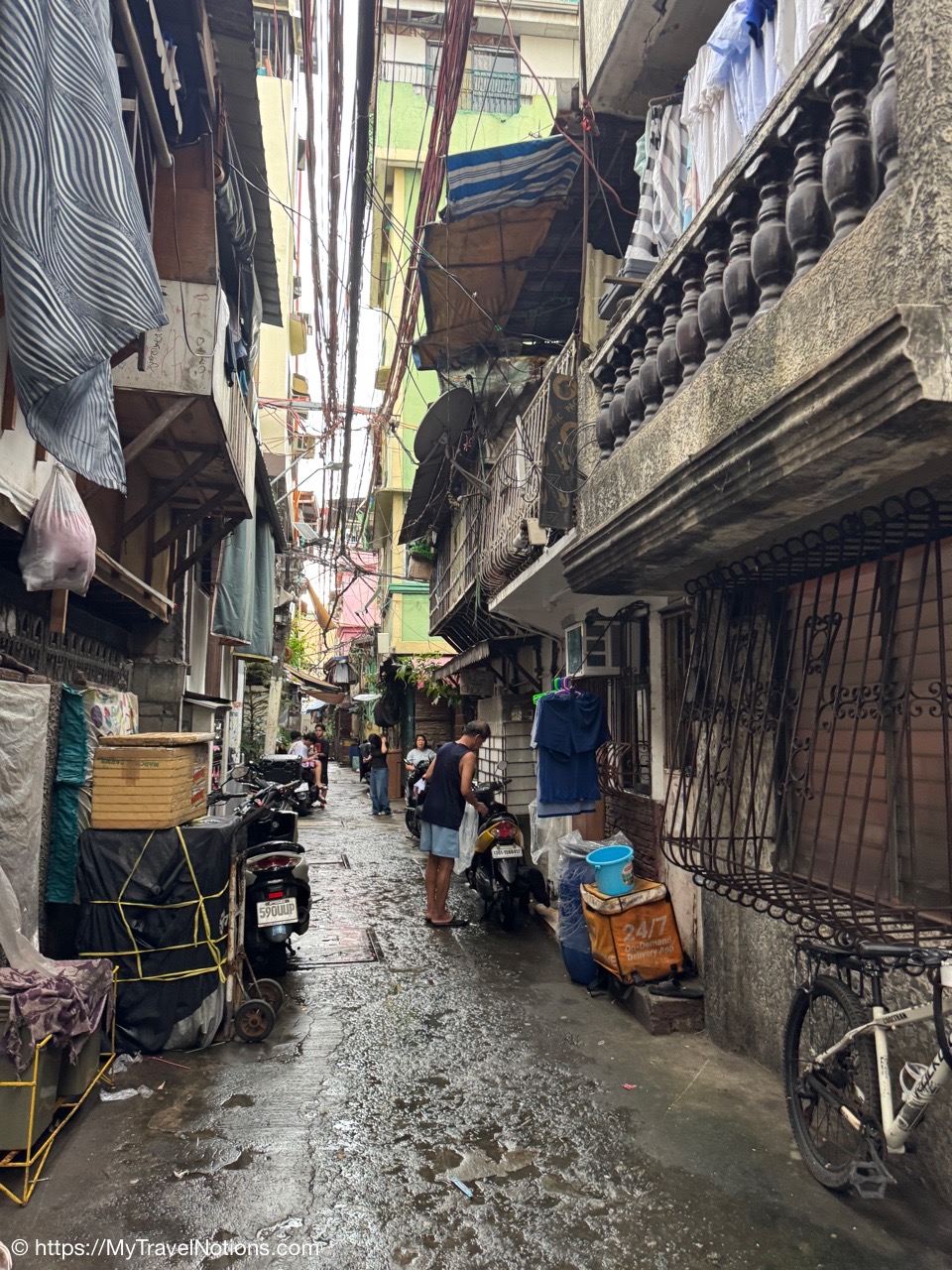
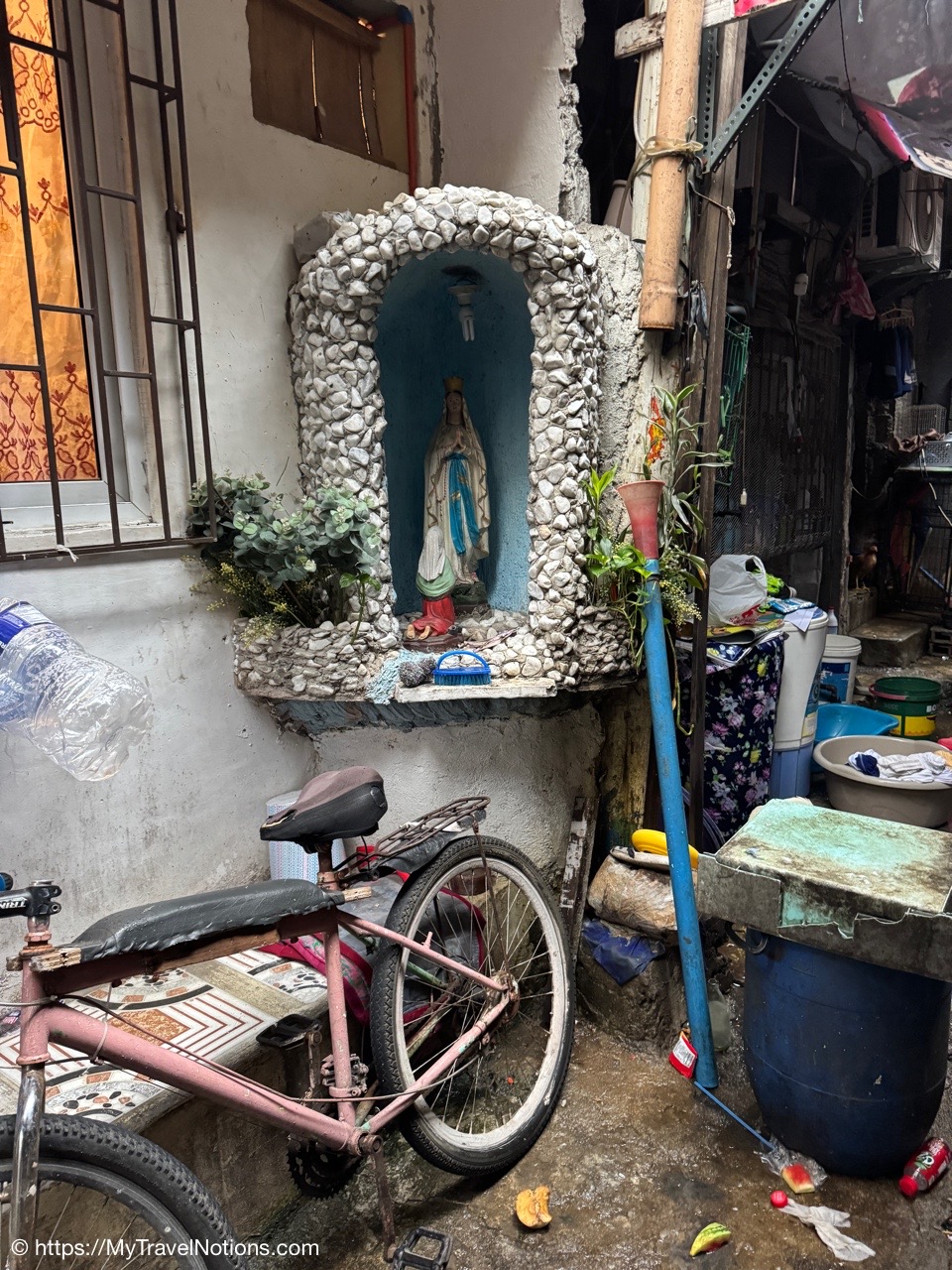
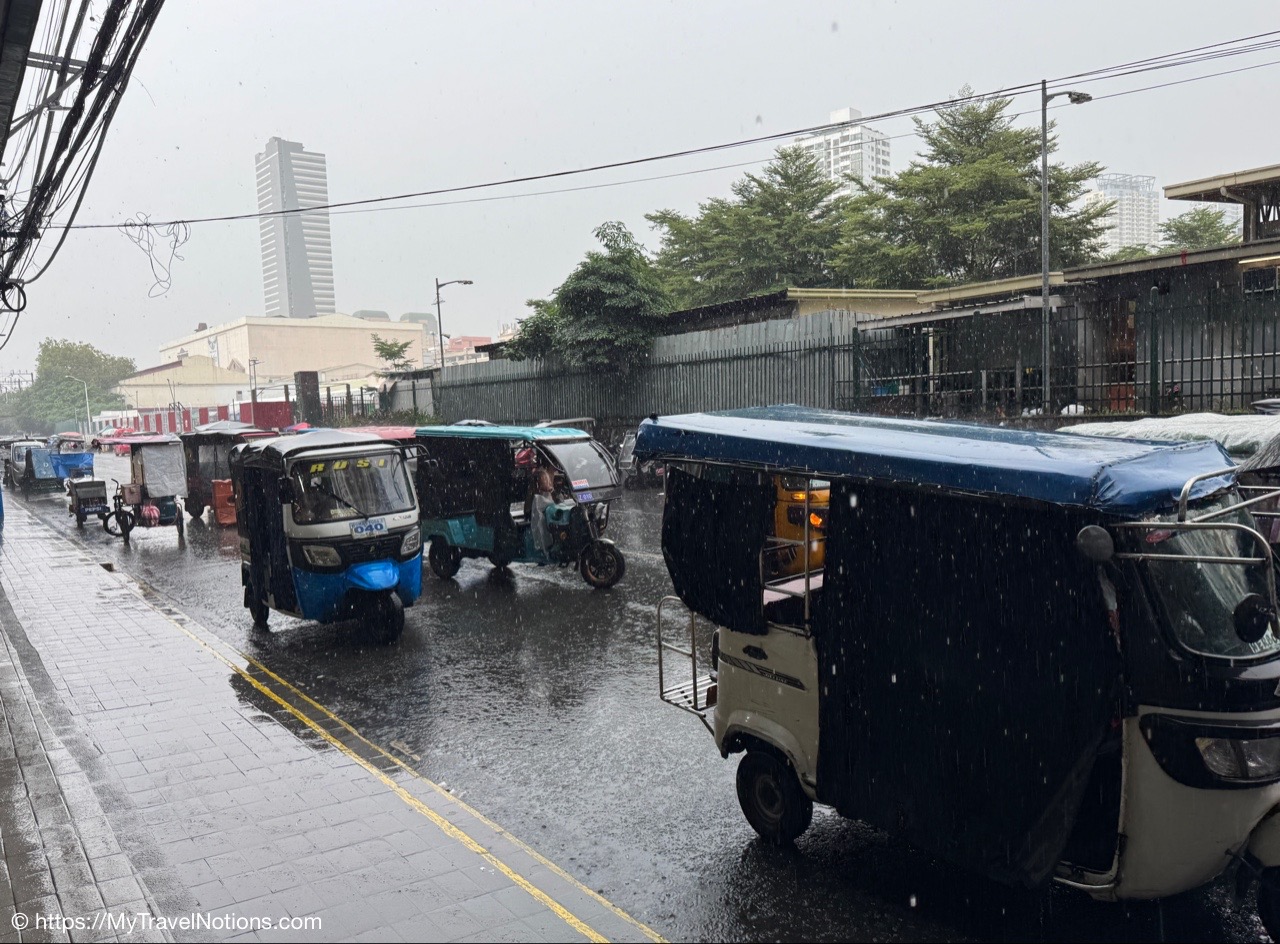
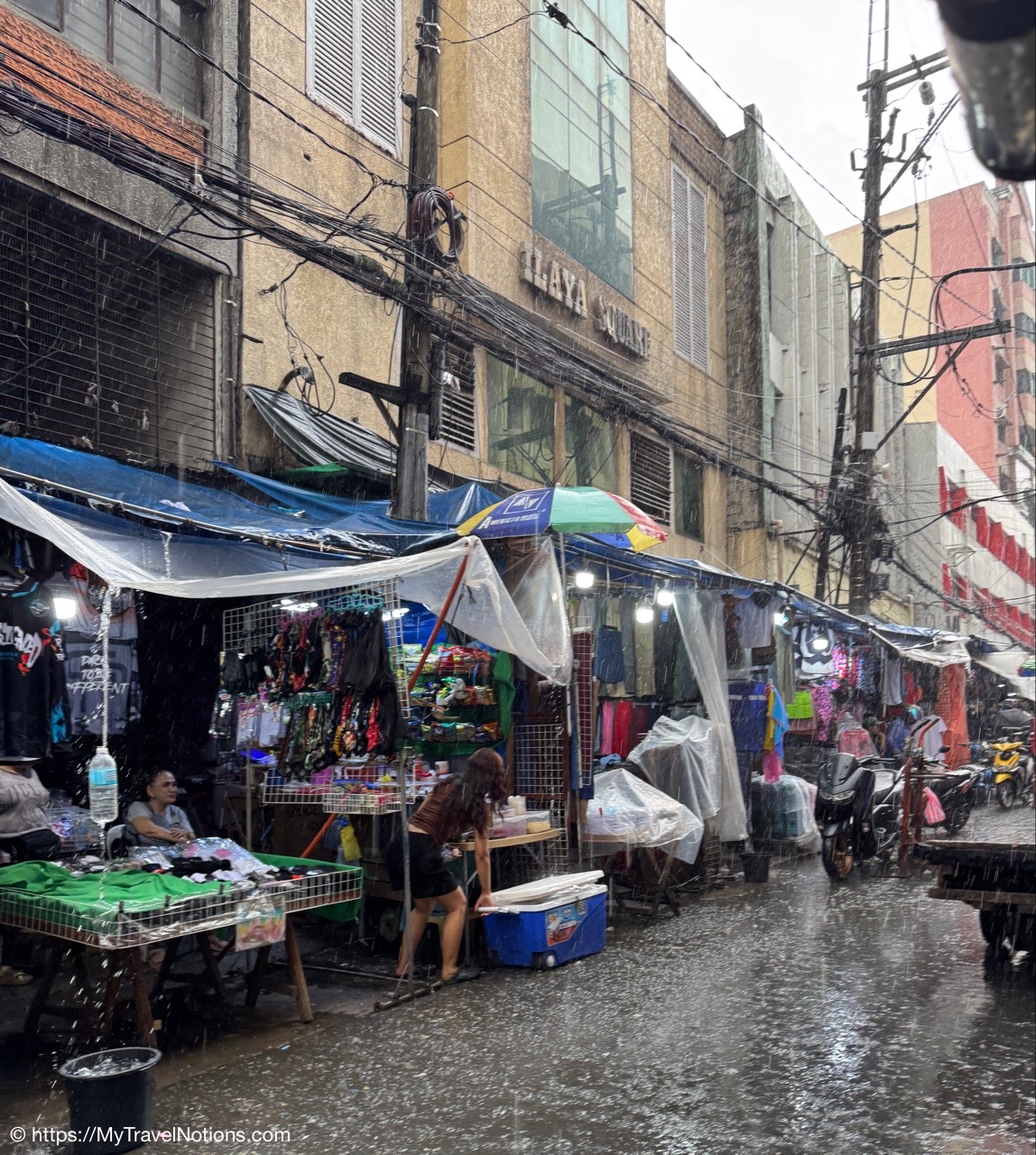
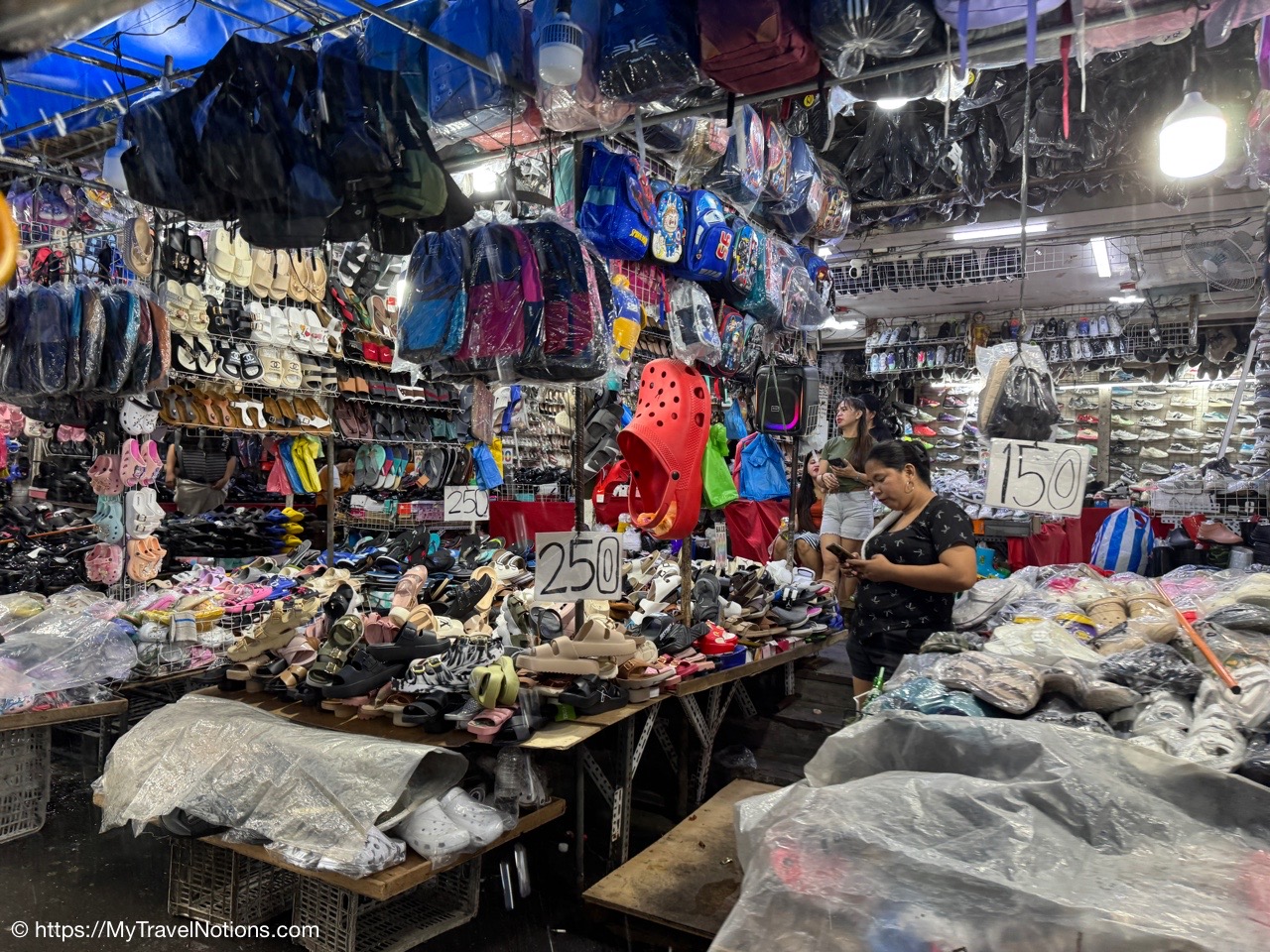
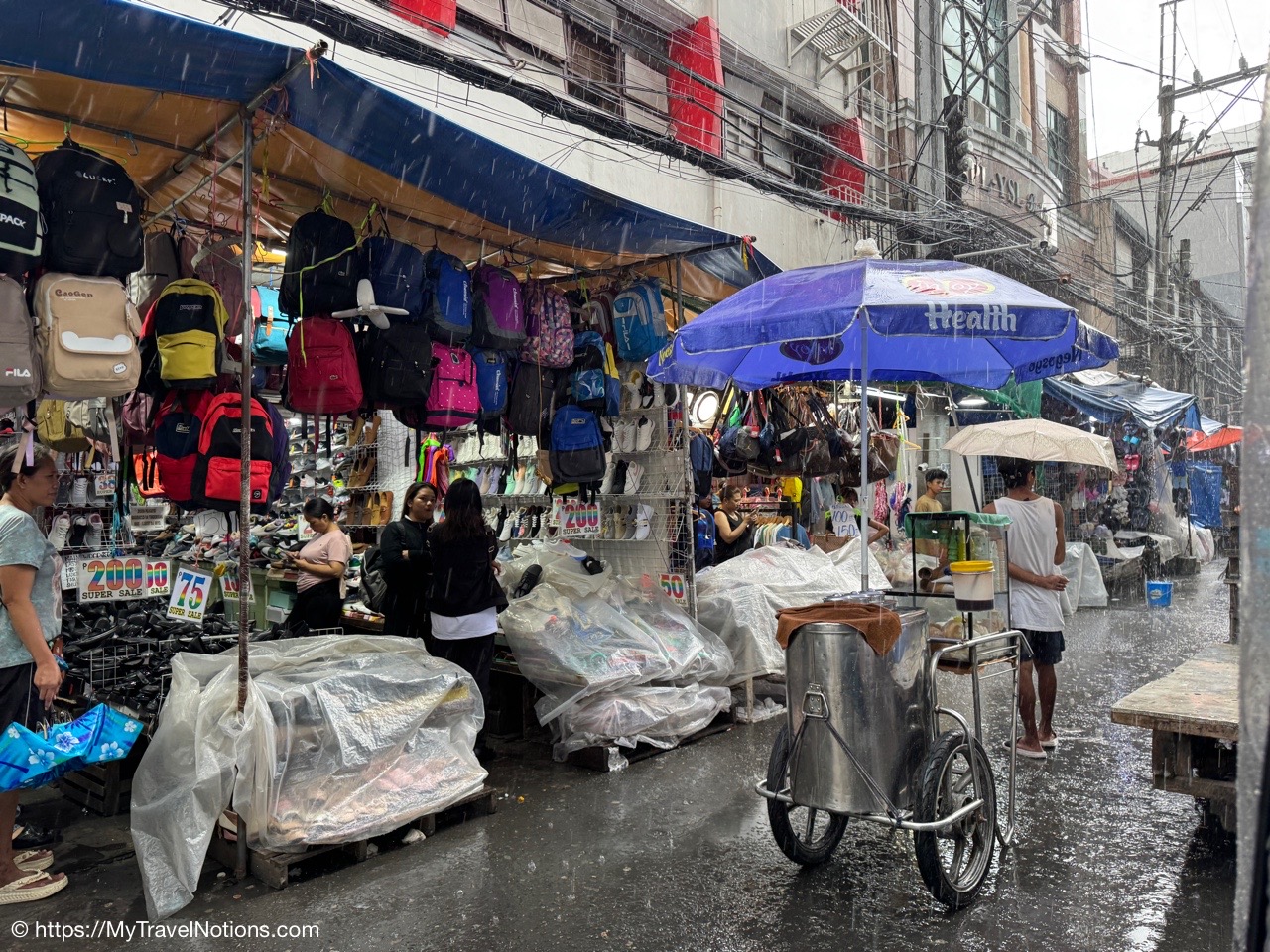
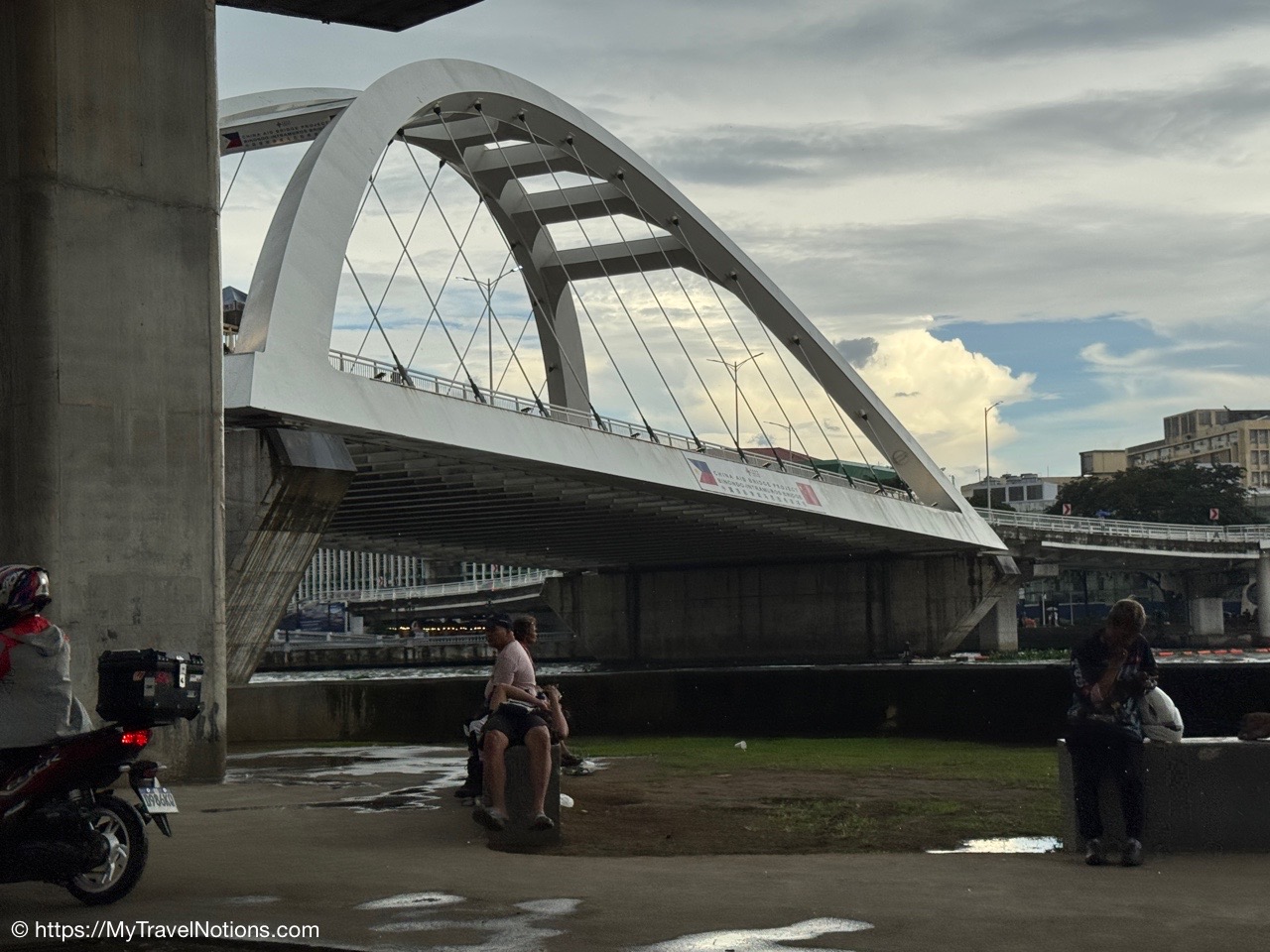
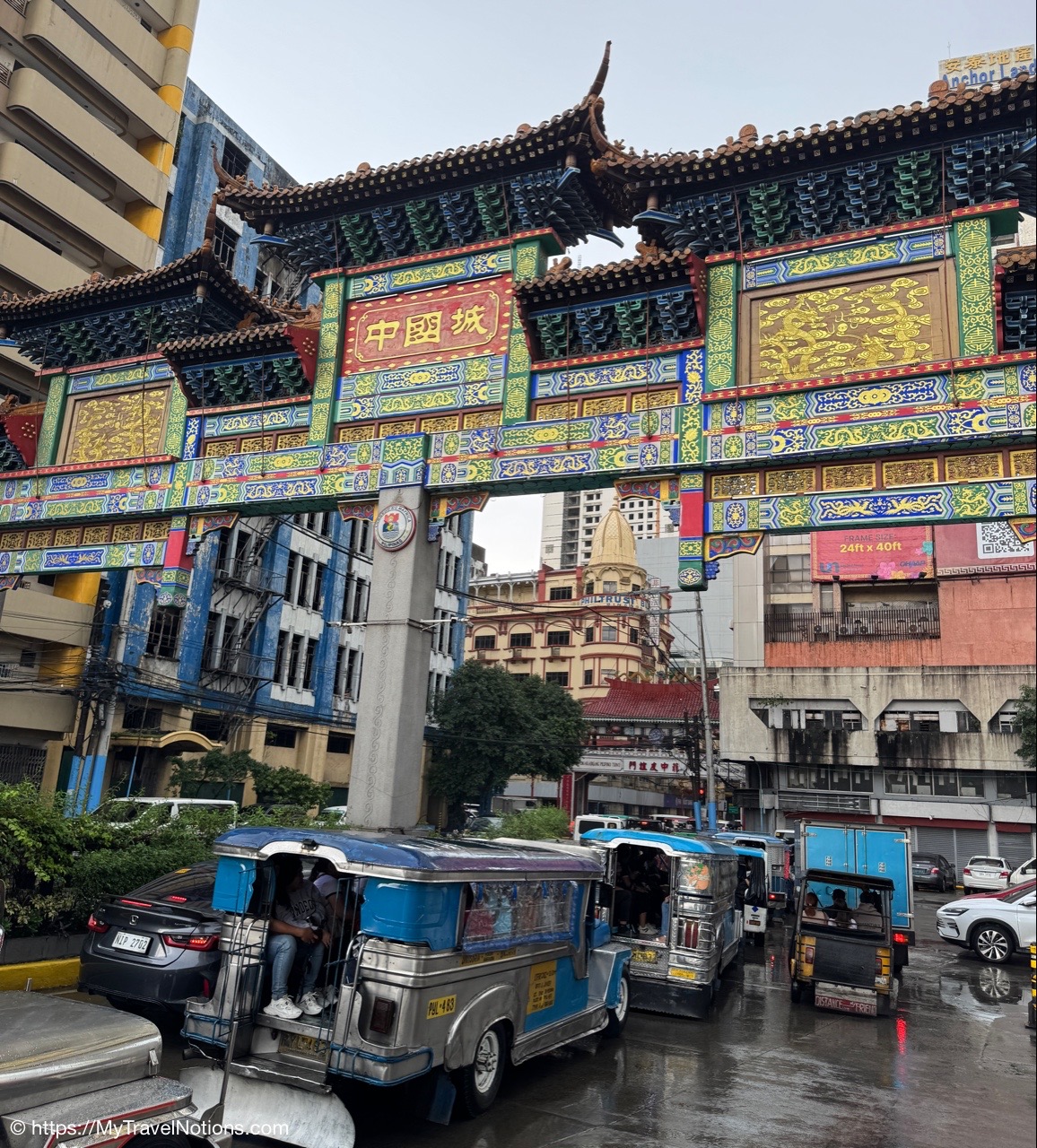
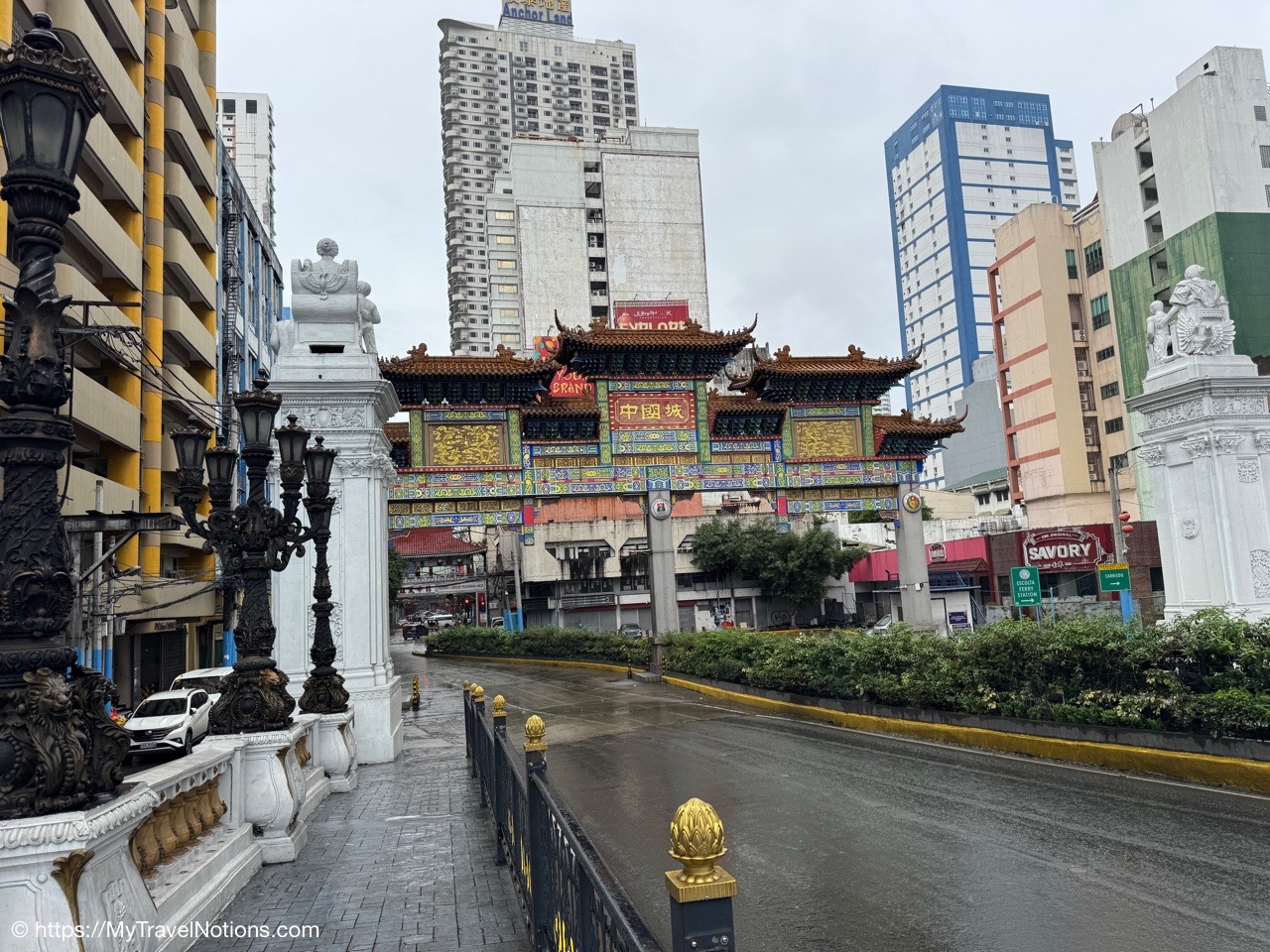
Me walking along the walls of Fort Santiago, the historic citadel within Intramuros, Manila’s walled city, built by the Spanish in 1571 to defend the city at the mouth of the Pasig River. (Sept. 12, 2025)Here we are at the entrance into Fort Santiago peering down the Plaza Moriones, a public square within the historic Fort Santiago in Manila’s Intramuros. At the end of the square is the fort’s reconstructed main gate. (Sept. 12, 2025)The Plaza Moriones, a public square within the historic Fort Santiago in Manila’s Intramuros. (Sept. 12, 2025)The former American barracks alongside the solid curtain wall of Baluartillo de San Francisco Javier and the moats surrounding the Walled City of Intramuros, including the area around Fort Santiago, were drained and converted into a golf course by the American colonial administration in the early 20th century. The original purpose of the moats was to serve as a water defense system, but they became unsanitary and a breeding ground for diseases like malaria and dengue. (Sept. 12, 2025)The former American barracks alongside the solid curtain wall of Baluartillo de San Francisco Javier and the moats surrounding the Walled City of Intramuros, including the area around Fort Santiago, were drained and converted into a golf course by the American colonial administration in the early 20th century. The original purpose of the moats was to serve as a water defense system, but they became unsanitary and a breeding ground for diseases like malaria and dengue. (Sept. 12, 2025)The restored moat, by the main gate of Fort Santiago, was a crucial element of Manila’s Intramuros defenses, a man-made canal designed to surround and protect Fort Santiago from invaders. (Sept. 12, 2025)After its destruction during WWII, Fort Santiago was declared as a Shrine of Freedom in 1950. Its restoration by the Philippine government began in 1953. (Sept. 12, 2025)Me standing at the entrance of the reconstructed main gate of Fort Santiago in Manila’s Intramuros. After its destruction during WWII, Fort Santiago was declared as a Shrine of Freedom in 1950. Its restoration by the Philippine government began in 1953. (Sept. 12, 2025)A close-up of the reconstructed main gate of Fort Santiago in Manila’s Intramuros. After its destruction during WWII, Fort Santiago was declared as a Shrine of Freedom in 1950. The wood relief of the main gate of Fort Santiago shows Santiago Matamoros (St. James the Moor-slayer), a symbol of Spanish sovereignty and Christianity’s role in Spain’s history. And, the coat of arms, of the Kingdom of Castile and León, is a symbol of Spanish sovereignty and presence in occupied territories. The entire gate, named for St. James, was built in 1714 and faithfully restored in the 1980s after its destruction during World War. (Sept. 12, 2025)A close-up of the wood relief of the main gate of Fort Santiago depicts the apostle as a warrior saint, Santiago Matamoros, St. James the Moor-slayer. It symbolizes the historical belief that St. James miraculously aided Christian forces in the Battle of Clavijo against Moorish forces during the period of Islamic rule over Iberia. (Sept. 12, 2025)The Plaza de Armas in Fort Santiago, now a historical national park, houses well-preserved legacies from the Spanish colonial period including memorabilia of José Rizal at the Rizal Shrine. (Sept. 12, 2025)At the Museo ni José Rizal or Shrine of José Rizal within Fort Santiago’s grounds in Manila’s Intramuros, are his personal effects, manuscripts, and artwork, preserving his memory as a national hero whose martyrdom inspired the Philippine Revolution and the fight for independence. Several people died in the fort’s prisons during the Spanish Empire and World War II including José Rizal, the Philippine national hero, who was imprisoned here before his execution in 1896. (Sept. 12, 2025)A portrait of José Rizal from around 1891 at the Shrine of José Rizal inside Fort Santiago in Manila’s Intramuros. Born June 19, 1861, Rizal was a Filipino nationalist, writer, artist and an ophthalmologist by profession. He is popularly considered a national hero (pambansang bayani) of the Philippines and a key member of the Filipino Propaganda Movement, which advocated political reforms for the colony under Spain. (Sept. 12, 2025)A life-size wax effigy of José Rizal is located within his actual prison cell at the Shrine of José Rizal inside Fort Santiago in Manila’s Intramuros. This exhibit reimagines the cell where Rizal spent his final days, after being charged by the colonial Spanish authorities for rebellion, sedition and formation of illegal societies from Nov. 3 to Dec. 29, 1896, a period leading up to his execution on December 30, 1896. (Sept. 12, 2025)A life-size wax effigy of José Rizal is located within his actual prison cell at the Shrine of José Rizal inside Fort Santiago in Manila’s Intramuros where Rizal penned his famous valedictory poem, “Mi Ultimo Adios”. (Sept. 12, 2025)A large mural of José Rizal, the Filipino nationalist, writer and an ophthalmologist by profession can be seen at the Shrine of José Rizal inside Fort Santiago in Manila’s Intramuros. He is considered a national hero (pambansang bayani) of the Philippines and a key member of the Filipino Propaganda Movement, which advocated political reforms and was executed by the Spanish colonial government for the crime of rebellion after the Philippine Revolution broke out; a revolution inspired by his writings. Though he was not actively involved in the planning of the revolution, he ultimately approved of its goals, which eventually resulted in Philippine Independence. (Sept. 12, 2024)Here are some of Rizal’s personal effects, including his clothes which he used in his travels through Europe on exhibit at the Shrine of José Rizal inside Fort Santiago in Manila’s Intramuros. (Sept. 12, 2025)A gallery room of drawings by Jose Riza, a Filipino nationalist, writer, artist and an ophthalmologist by profession, at the Shrine of José Rizal inside Fort Santiago in Manila’s Intramuros. (Sept. 12, 2025)A gallery room of drawings by José Rizal, a Filipino nationalist, writer, artist and an ophthalmologist by profession, at the Shrine of José Rizal inside Fort Santiago in Manila’s Intramuros. (Sept. 12, 2025)A wall of photos inside a gallery room of José Rizal, a Filipino nationalist, writer, artist and an ophthalmologist by profession, at the Shrine of José Rizal inside Fort Santiago in Manila’s Intramuros. (Sept. 12, 2025)Walking along the murallas or walls of Fort Santiago in Manila’s Intramuros. (Sept. 12, 2025)Views of this garden area along the murallas or walls of Fort Santiago in Manila’s Intramuros. (Sept. 12, 2025)The area where José Rizal, a Filipino nationalist, writer, artist and an ophthalmologist by profession, was held just before his execution by a firing squad on Dec. 30, 1896 at Bagumbayan field (now Rizal Park) in Manila. The firing squad consisted of eight Filipino soldiers, with a backup force of Spanish soldiers positioned behind them, ready to shoot the executioners if they failed to follow orders. (Sept. 12, 2025)The area where José Rizal, a Filipino nationalist, writer, artist and an ophthalmologist by profession, was held just before his execution by a firing squad on Dec. 30, 1896 at Bagumbayan field (now Rizal Park) in Manila. The firing squad consisted of eight Filipino soldiers, with a backup force of Spanish soldiers positioned behind them, ready to shoot the executioners if they failed to follow orders. (Sept. 12, 2025)The White Cross in Fort Santiago is where in 1the decomposing remains of about 600 bodies were found in the nearby dungeon were put in a mass grave marked with this white marble cross as a memorial to the victims of World War II who perished at the site. In 1945, following the liberation of Manila during the World War II, the US Army discovered 600 decomposing corpses inside the Fort Santiago dungeon with its entrance to the right of the cross. The conditions were so cramped that the Filipino and American prisoners died from suffocation, heat exhaustion and starvation. The White Cross is a mass grave for the remains of the prisoners found in the dungeon. (Sept. 12, 2025)Here’s the entrance to the nearby dungeon where in 1945, following the liberation of Manila during the Second World War, the US Army discovered 600 decomposing corpses inside the Fort Santiago dungeons. The conditions were so cramped that all prisoners died from suffocation and heat exhaustion. The remains were placed in a mass grave marked with a white marble cross. (May 12, 2025)A bastion on the defensive walls at Fort Santiago where a statue of a Filipino soldier is posted. A bastion is a protruding, angular, defensive structure designed to provide flanking fire and a clear line of sight for artillery to defend the main curtain walls against invaders like this one to protect at the Pasig River entrance. (Sept. 12, 2025)The murallas, or walls of Intramuros in Manila at Fort Santiago with views of the are massive, thick stone fortifications built by the Spanish in the late 16th century to protect the city’s center of power from invaders. (Sept. 12, 2025)The Pasig River with views of Chinatown and the Binondo-Intramuros Bridge, a modern white steel bowstring arch bridge with four lanes that connects Chinatown to Intramuros. While once a clear, bustling waterway, the Pasig River has faced significant pollution due to waste dumping and is now the subject of ongoing government and international efforts to rehabilitate it for ecological and public health benefits. (Sept. 12, 2025)Just a short distance away from Fort Santiago, we walked to the Manila Cathedral in Intramuros. The Cathedral’s history is one of repeated destruction and reconstruction, having been built and rebuilt at least eight times since its founding in 1571 as a parish church. Each iteration has faced destruction from fires, earthquakes, and war, most significantly during the World War II, leading to the current, eighth structure completed in 1958. The facade is a Neo-Romanesque structure adorned with statues of saints sculpted from Roman travertine stone and featuring artistic bronze panels on its main portal that depict historical episodes and Marian invocations. (Sept. 12, 2025)Just a short distance away from Fort Santiago, we walked to the Manila Cathedral in Intramuros. The Cathedral’s history is one of repeated destruction and reconstruction, having been built and rebuilt at least eight times since its founding in 1571 as a parish church. Each iteration has faced destruction from fires, earthquakes, and war, most significantly during the World War II, leading to the current, eighth structure completed in 1958. The facade is a Neo-Romanesque structure adorned with statues of saints sculpted from Roman travertine stone and featuring artistic bronze panels on its main portal that depict historical episodes and Marian invocations. (Sept. 12, 2025)A close-up of the exterior main portal of the Manila Cathedral in Intramuros with its carved bronze doors and inscription above the door is a Latin phrase that translates to “To You, and to Your Immaculate Heart, we entrust and consecrate ourselves”. This prayer refers to the act of consecrating the Church and the entire human race to the Immaculate Heart of Mary. (Sept. 12, 2025)Inside the central nave towards the main altar of the Manila Cathedral in Intramuros. (Sept. 12, 2025)A bronze life-sized polychromed statue of the Immaculate Conception located above the high altar with beautiful stained glass inside the Manila Cathedral in Intramuros. (Sept. 12, 2025)A side chapel inside the Manila Cathedral in Intramuros. (Sept. 12, 2025)The pieta in a side chapel inside the Manila Cathedral in Intramuros. (Sept. 12, 2025)A statue of Saint Peter inside the Manila Cathedral in Intramuros. (Sept. 12, 2025)A chapel side view inside the Manila Cathedral in Intramuros. (Sept. 12, 2025)Some of the beautiful and colorful stained glass which can be seen all around the inside of the Manila Cathedral in Intramuros. (Sept. 12, 2025)A chapel side view inside the Manila Cathedral in Intramuros. (Sept. 12, 2025)A small parade of women dancing and music playing to escort the statues of Mary and Jesus, from another church, into the Manila Cathedral in Intramuros. (Sept. 12, 2025)A small parade of women dancing and music playing to escort the statues of Mary and Jesus, from another church, into the Manila Cathedral in Intramuros. (Sept. 12, 2025)A small parade of women dancing and music playing to escort the statues of Mary and Jesus, from another church, into the Manila Cathedral in Intramuros. (Sept. 12, 2025)Walking alongside the Manila Cathedral to the Battle of Manila memorial in Intramuros. (Sept. 12, 2025)After the Manila Cathedral and small parade, we walked to the Battle of Manila memorial in Intramuros. The monument and area commemorates the more than 100,000 innocent Filipino civilians who died during the brutal Battle of Manila in February and March 1945, a key event in the World War II liberation of the Philippines from Japanese occupation. (Sept. 12, 2025)A close-up of the Battle of Manila monument in Intramuros symbolizes the suffering and is a powerful reminder of the civilian sacrifices and the gruesome atrocities of war. (Sept. 12, 2025)The stone San Agustin Church in Manila’s Intramuros was physically built by the Spanish Augustinian friars and initially completed in 1607. It is considered to be the oldest stone church in the country. (Sept. 12, 2025)The stone San Agustin Church in Manila’s Intramuros was physically built by the Spanish Augustinian friars and initially completed in 1607. It is considered to be the oldest stone church in the country. (Sept. 12, 2025)Inside the San Agustin Church in Manila’s Intramuros. I was only allowed to take a photo from this point in the church since photos are not allowed inside. (Sept. 12, 2025)One of the two beautiful wood carved doors as you enter into the San Agustin Church in Manila’s Intramuros. (Sept. 12, 2025)The stone San Agustin Church in Intramuros was constructed between 1586 and 1607 by Spanish architect Juan Macias, under the supervision of the Augustinian friars. The Philippines reinterpretation of European Baroque was built by both Chinese and Philippine craftsmen with architectural elements like the guardian lions outside the church, which are Chinese in design. (Sept. 12, 2025)The Casa Manila or “Manila House” in Intramuros across from San Augustin Church. It is a living museum that features the lifestyle of an affluent Filipino family during the late Spanish colonial period. (Sept. 12, 2025)Walking towards another entrance into the Casa Manila or “Manila House” in Intramuros across from San Augustin Church. It is a living museum that features the lifestyle of an affluent Filipino family during the late Spanish colonial period. (Sept. 12, 2025)The patio entrance to the Casa Manila or “Manila House” in Intramuros is a living museum that features the lifestyle of an affluent Filipino family during the late Spanish colonial period. (Sept. 12, 2025)The second flight staircase inside the Casa Manila or “Manila House” in Intramuros. This was actually my first ‘red carpet’ experience since all guests had to walk only on the red carpets. (Sept. 12, 2025)The interior decor of the Casa Manila or “Manila House” in Intramuros follows the taste of the early 1800s where furniture and furnishings were sourced from Europe and China. The wooden louvers are called persianas which allow air to circulate inside rooms while blocking the glare of direct sunlight. (Sept. 12, 2025)Chinese ceramics and gilded furniture shows the elegance and luxury of the Casa Manila or “Manila House” in Intramuros. (Sept. 12, 2025)
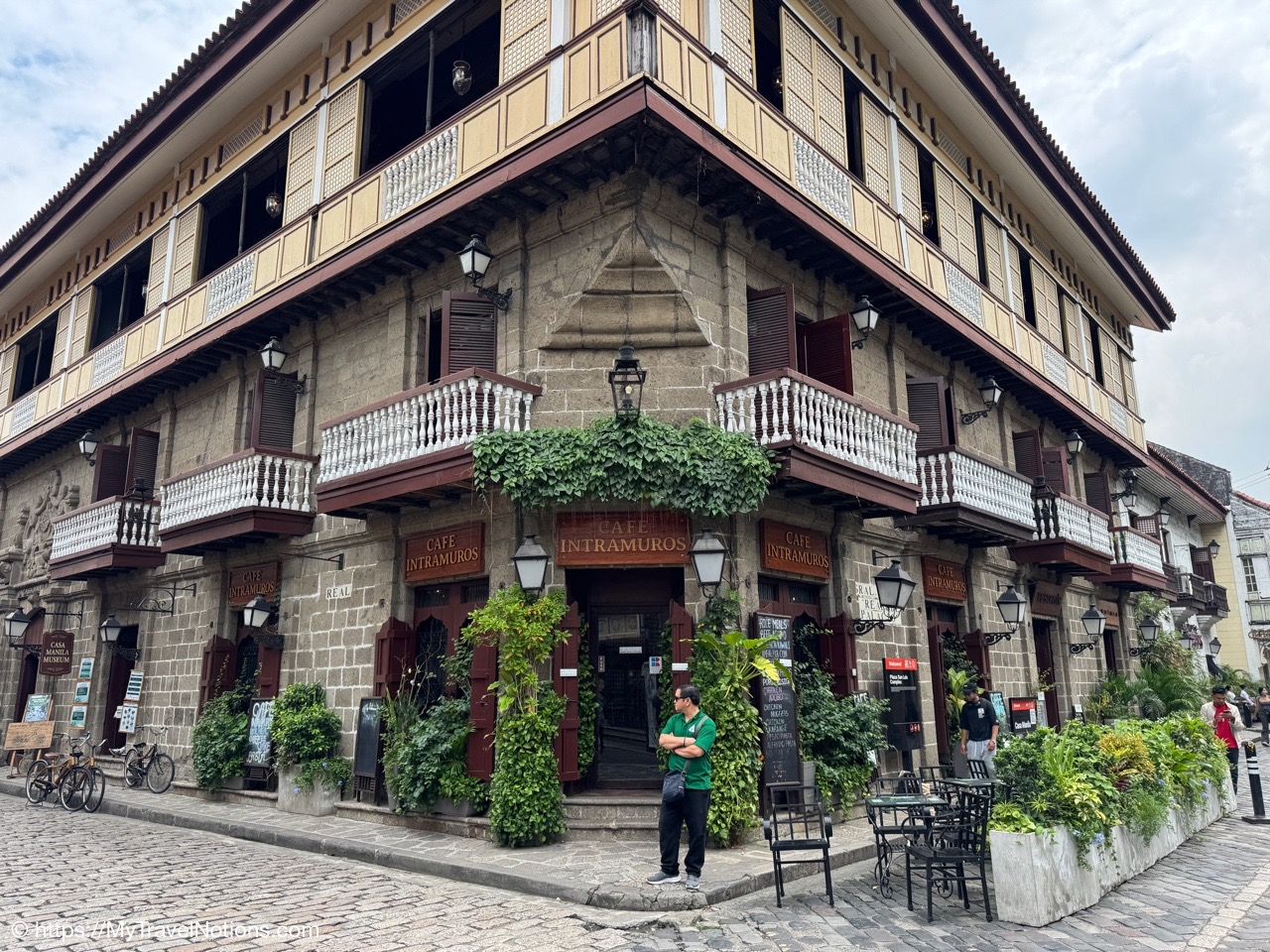
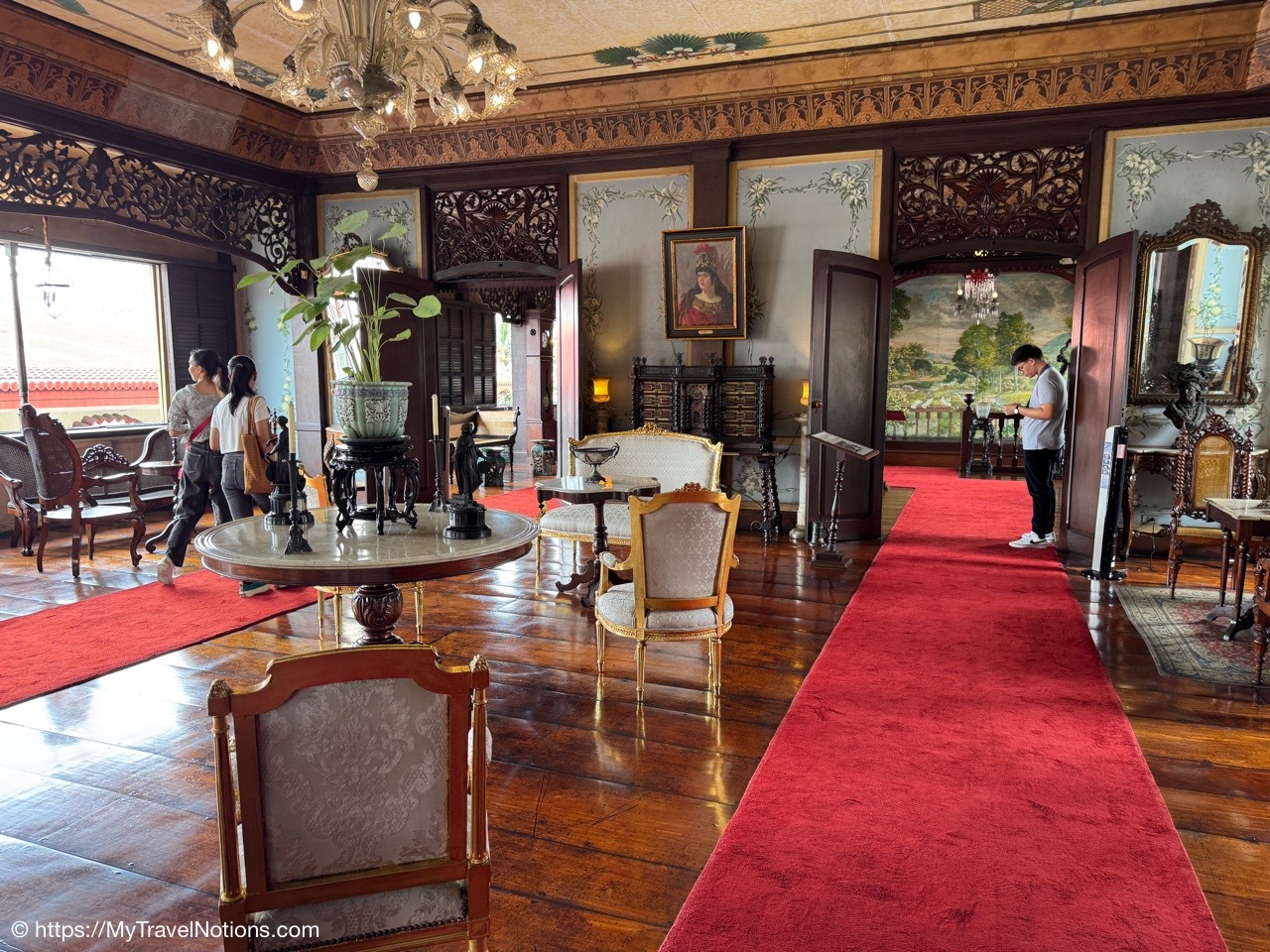
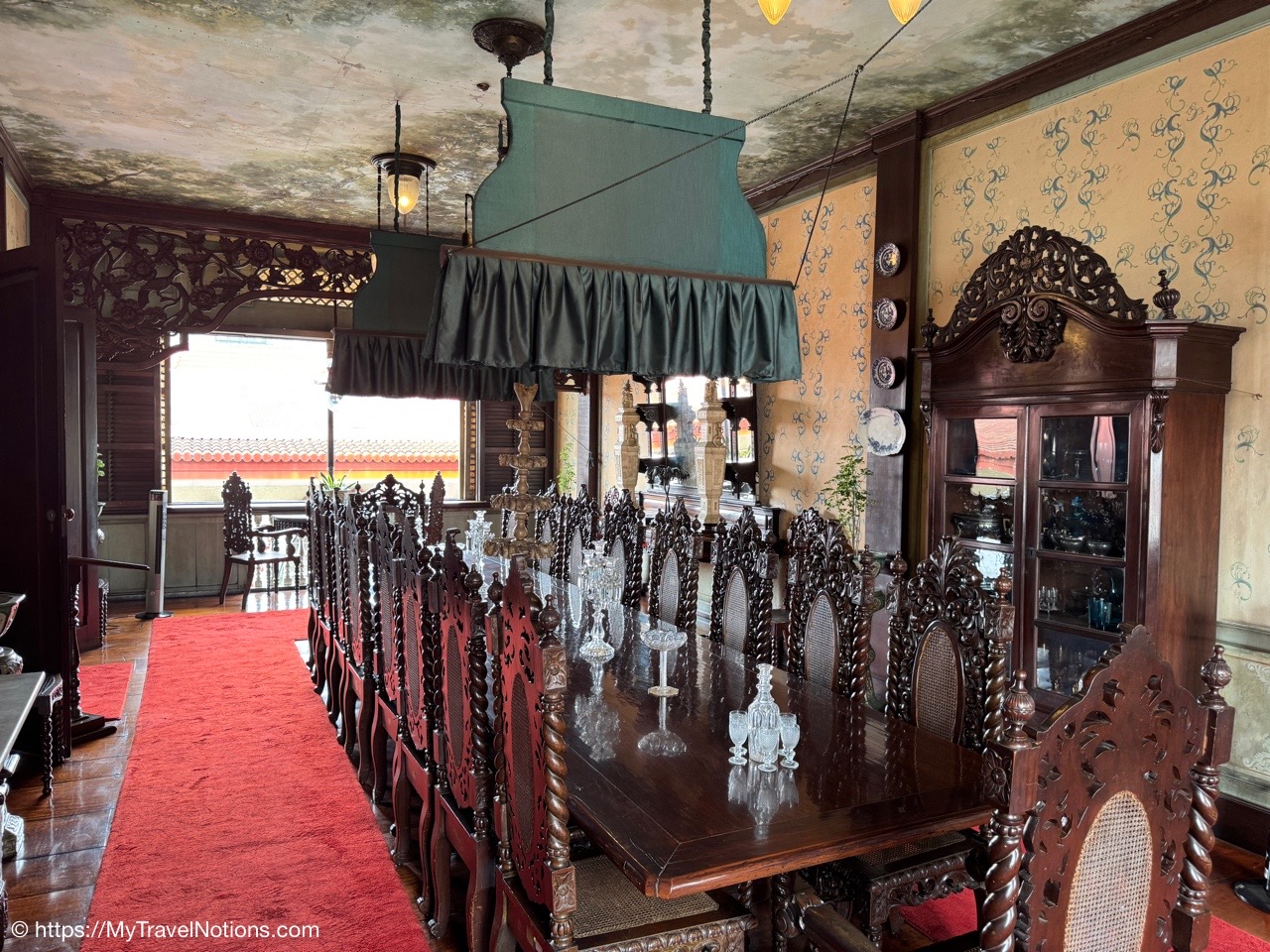
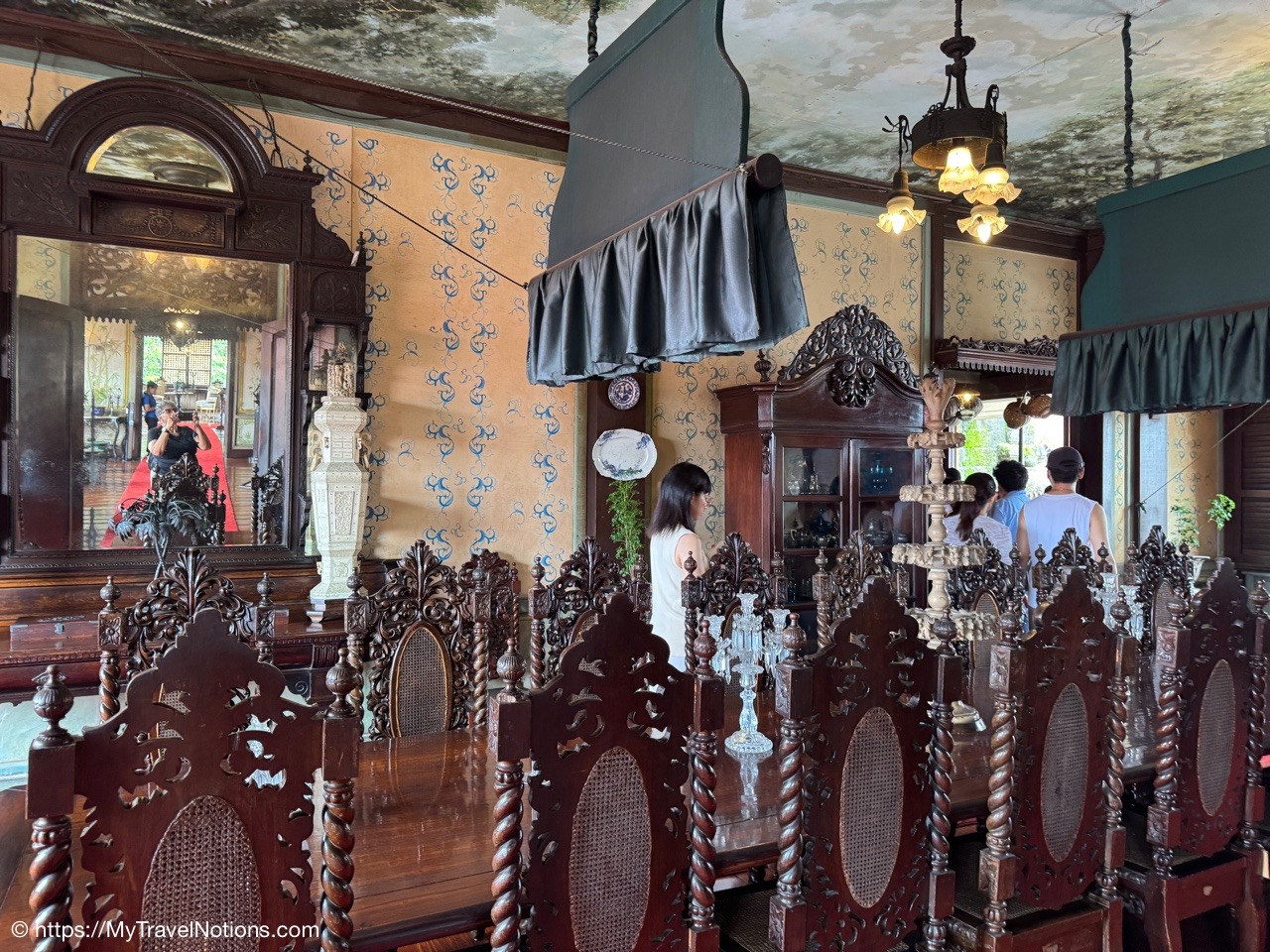
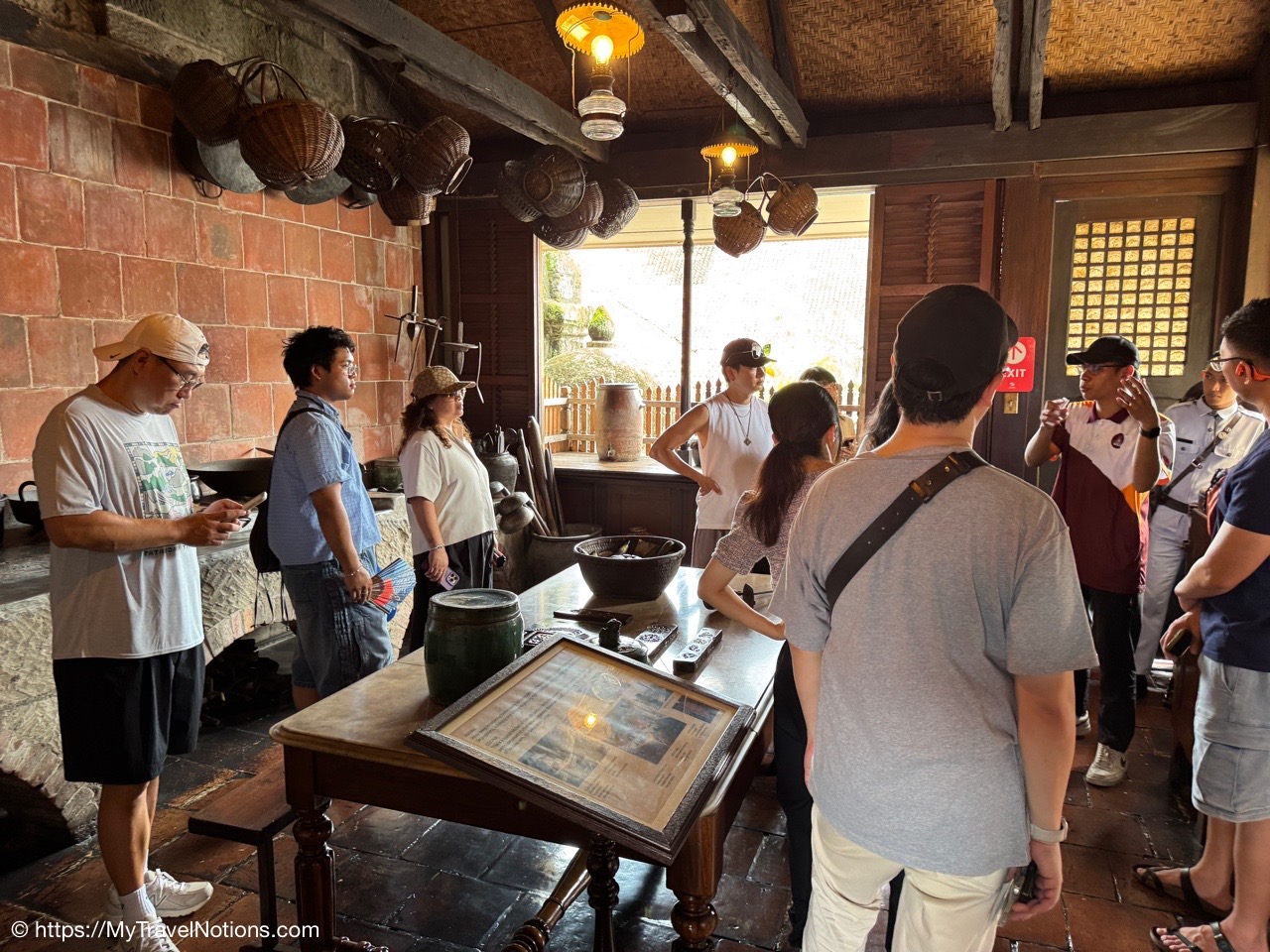
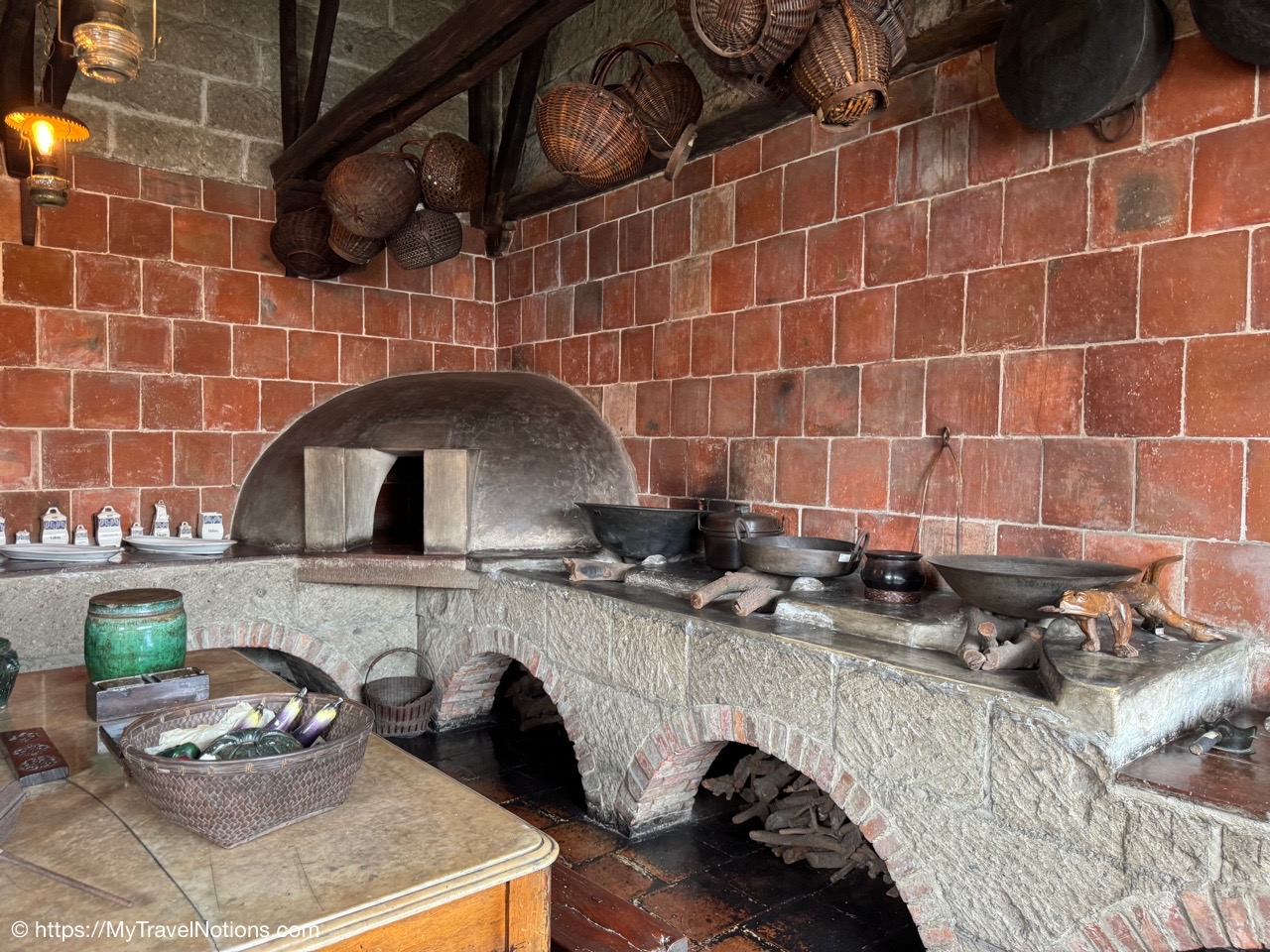
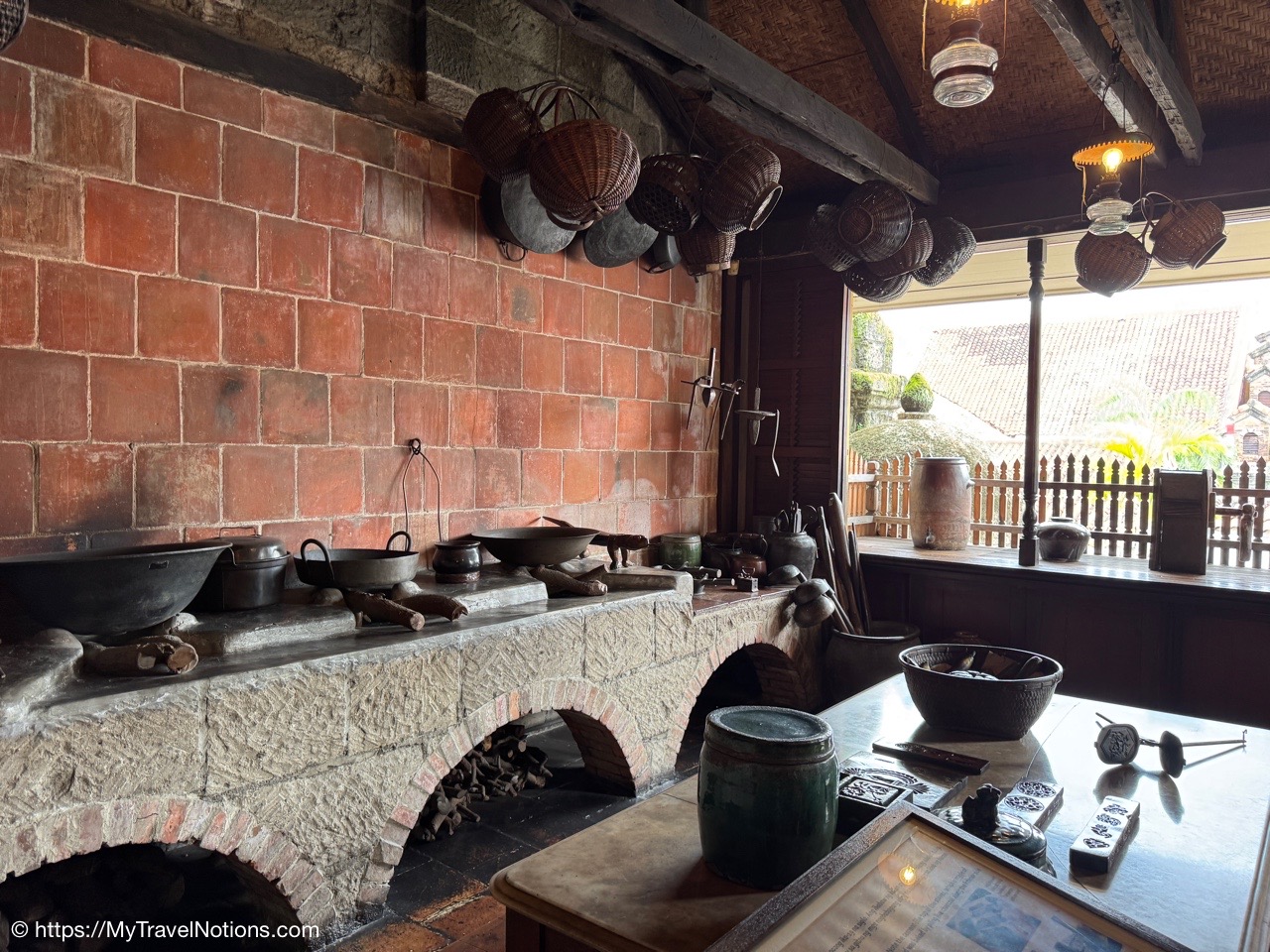
The main hall of the Casa Manila or “Manila House” in Intramuros where the large and special activities were held. (Sept. 12, 2025)The main hall of the Casa Manila or “Manila House” in Intramuros where the large and special activities were held. (Sept. 12, 2025)The comedor or dining room inside the Casa Manila or “Manila House” in Intramuros features a long dining table that can comfortably seat 18 people. The top of the table is made from a single plank of narra wood. (Sept. 12, 2025)The comedor or dining room inside the Casa Manila or “Manila House” in Intramuros features a long dining table that can comfortably seat 18 people. The top of the table is made from a single plank of narra wood. That’s my reflection in the mirror. (Sept. 12, 2025)Off the dining room inside the Casa Manila or “Manila House” in Intramuros is a functional 1800s Spanish colonial house ‘cocina’ or kitchen. (Sept. 12, 2025)Off the dining room inside the Casa Manila or “Manila House” in Intramuros is a functional 1800s Spanish colonial house ‘cocina’ or kitchen. (Sept. 12, 2025)Off the dining room inside the Casa Manila or “Manila House” in Intramuros is a functional 1800s Spanish colonial house ‘cocina’ or kitchen. (Sept. 12, 2025)
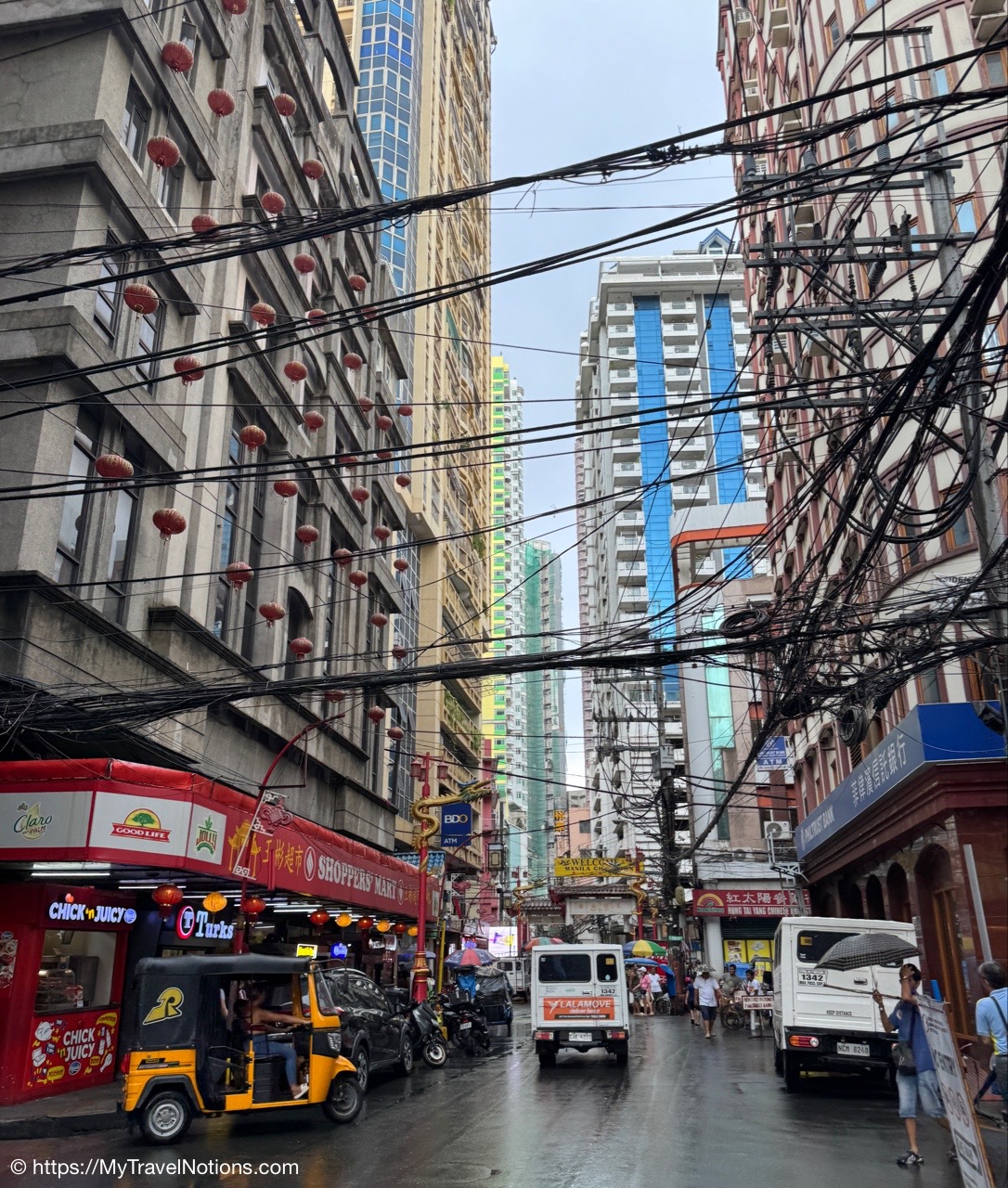
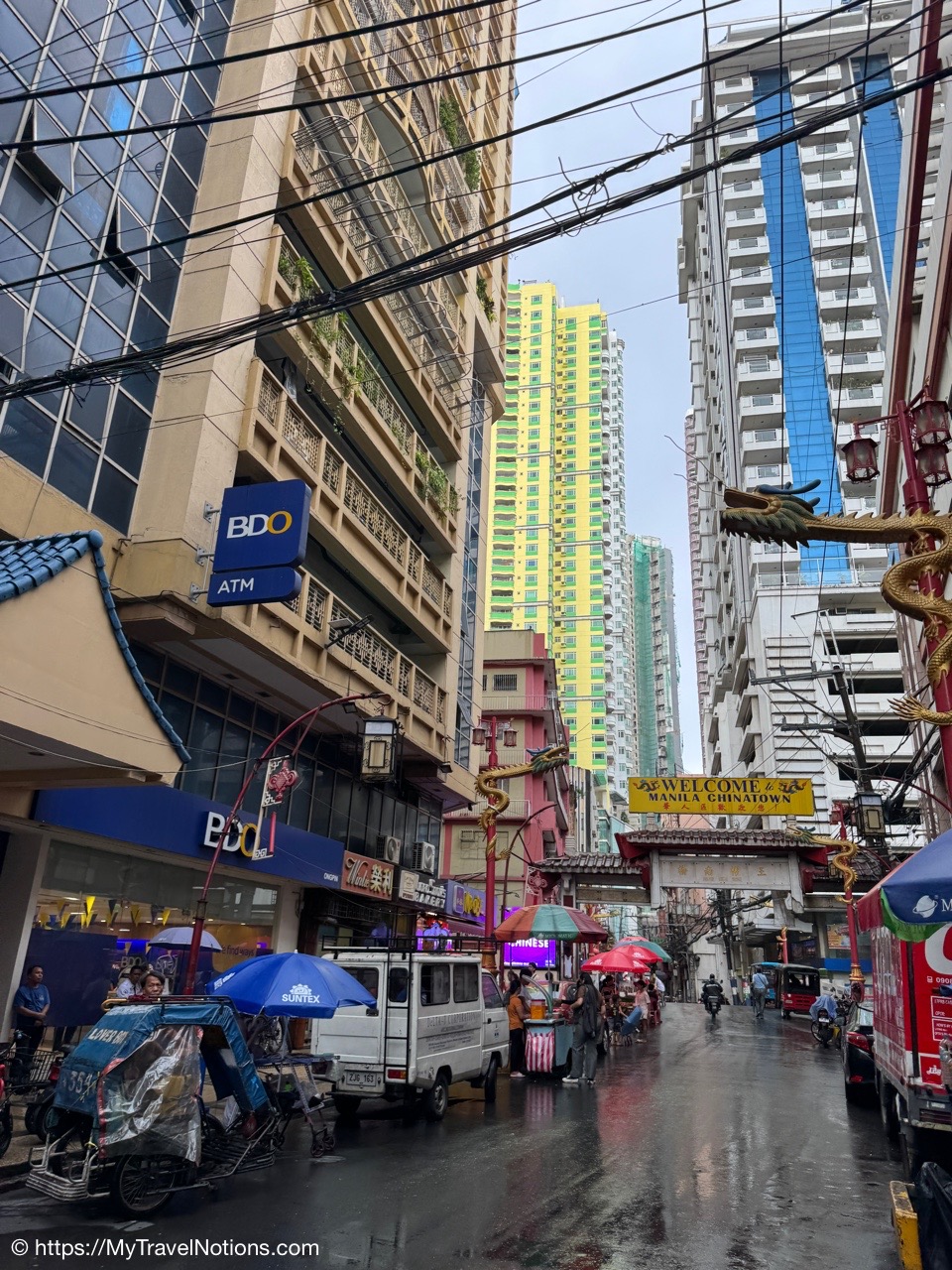
After my morning Intramuros walking tour, I took a little break before starting my afternoon walking tour of Manila’s Chinatown, called Binondo, considered the oldest Chinatown in the world. Founded by the Spanish in 1594 to house Catholic Chinese immigrants, Chinatown, Binondo, was a historically crucial financial and trade center for the Philippines. Plus, it was across the Pasig River from the Walled City of Intramuros, where the Spaniards resided.
Over centuries, Binondo evolved into a vibrant financial, culinary, and commercial district, surviving periods of political upheaval and commercial change to become a symbol of the blended Filipino-Chinese culture.
Welcome to Manila’s Chinatown of Binondo.
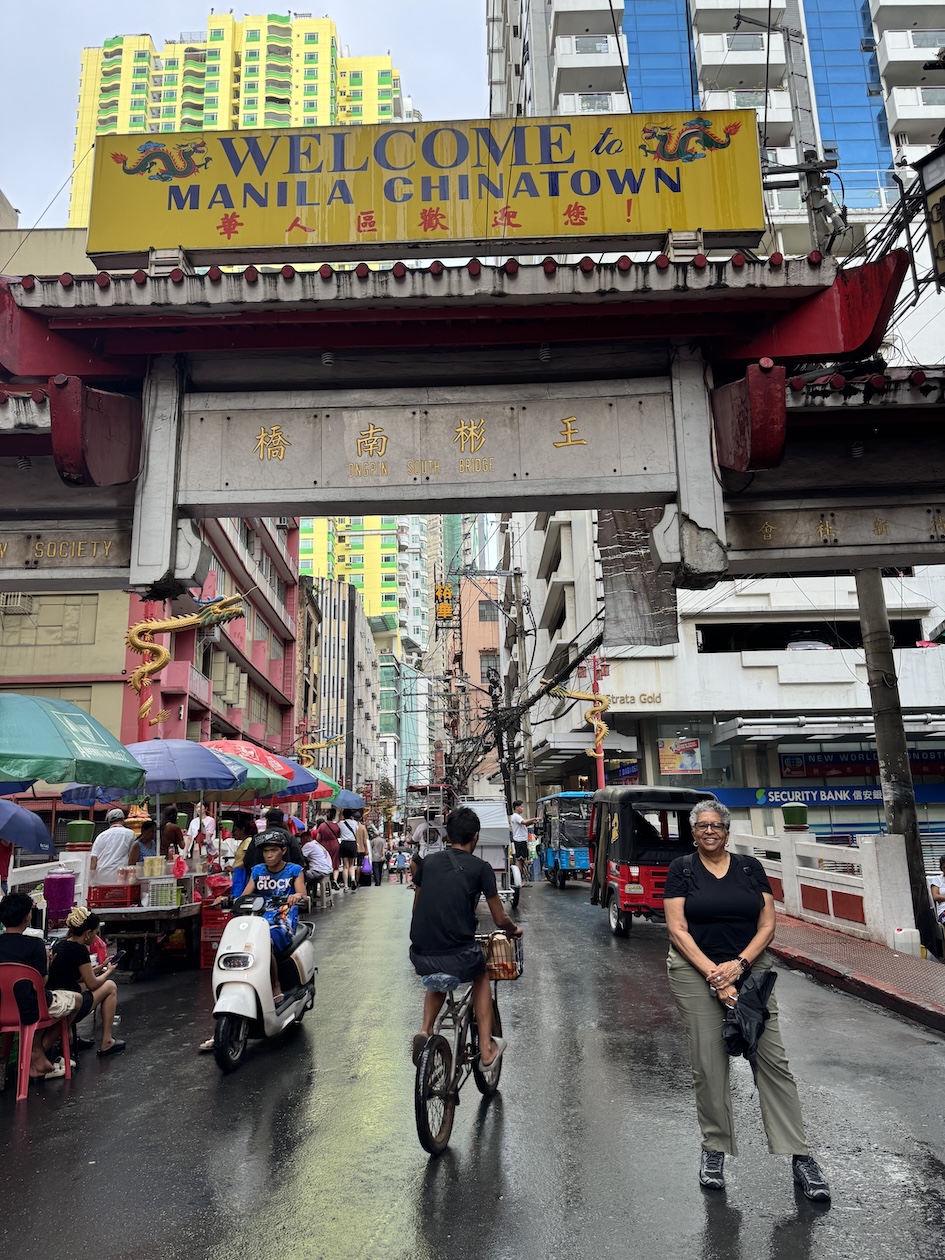
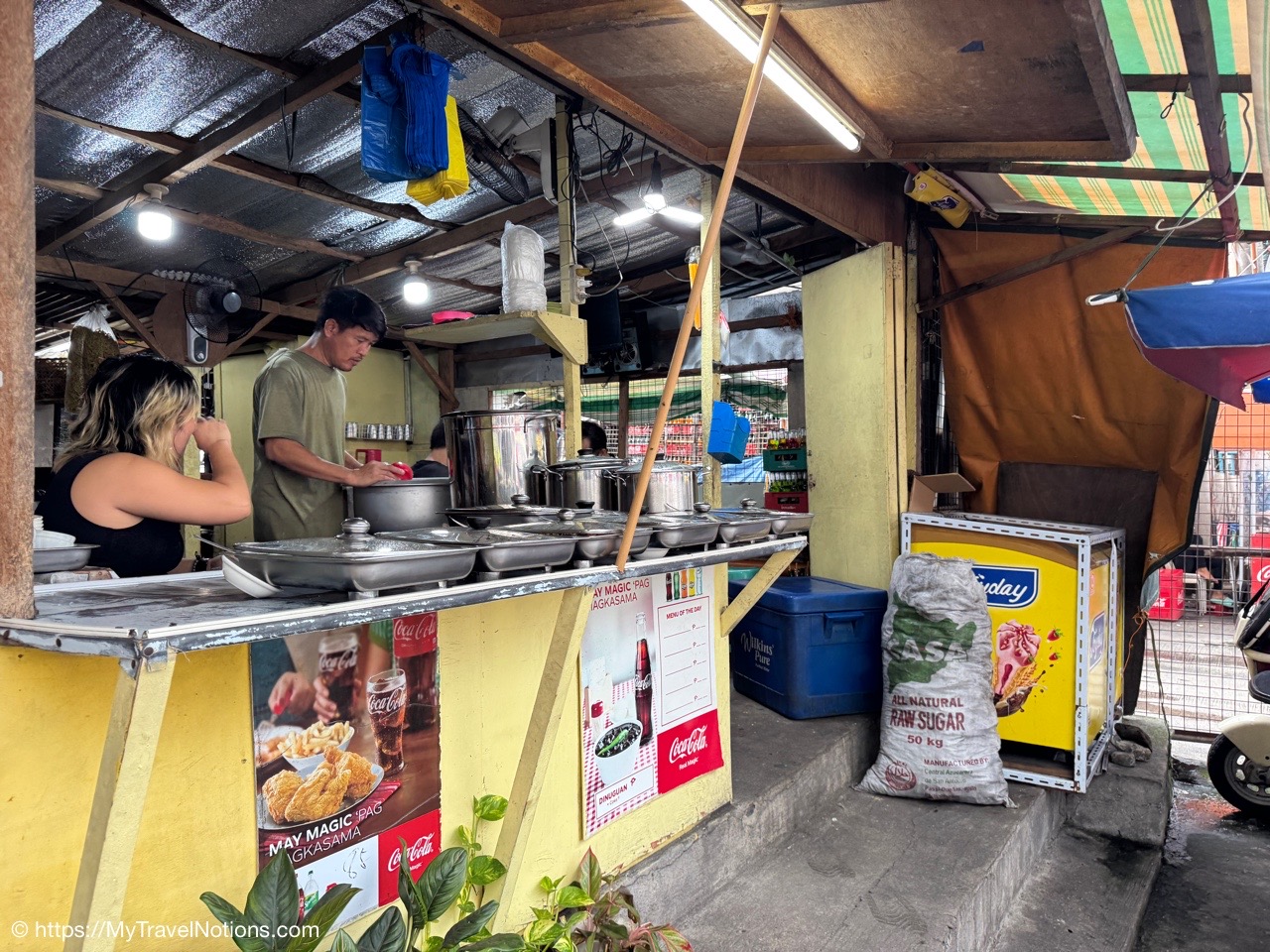
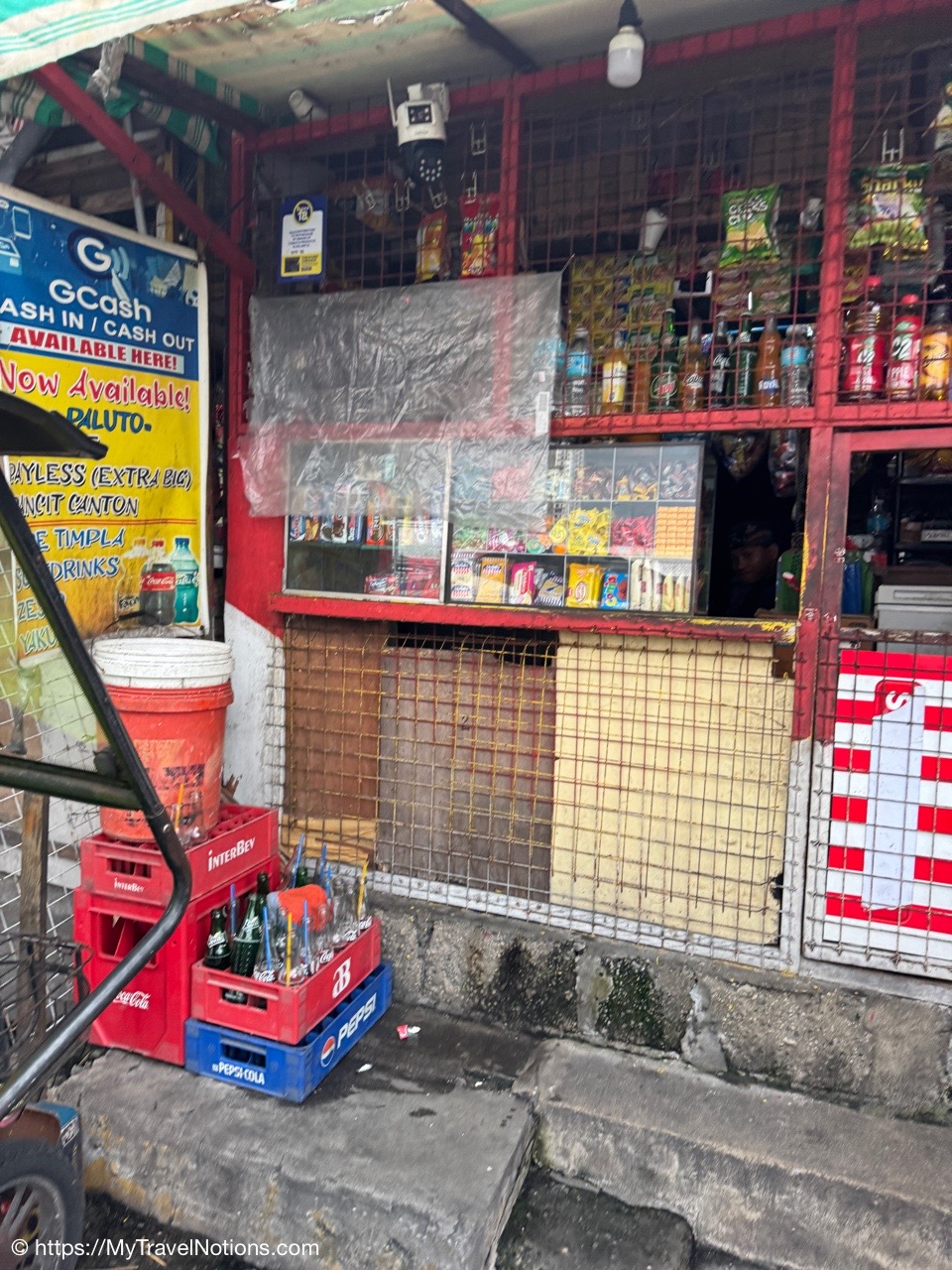
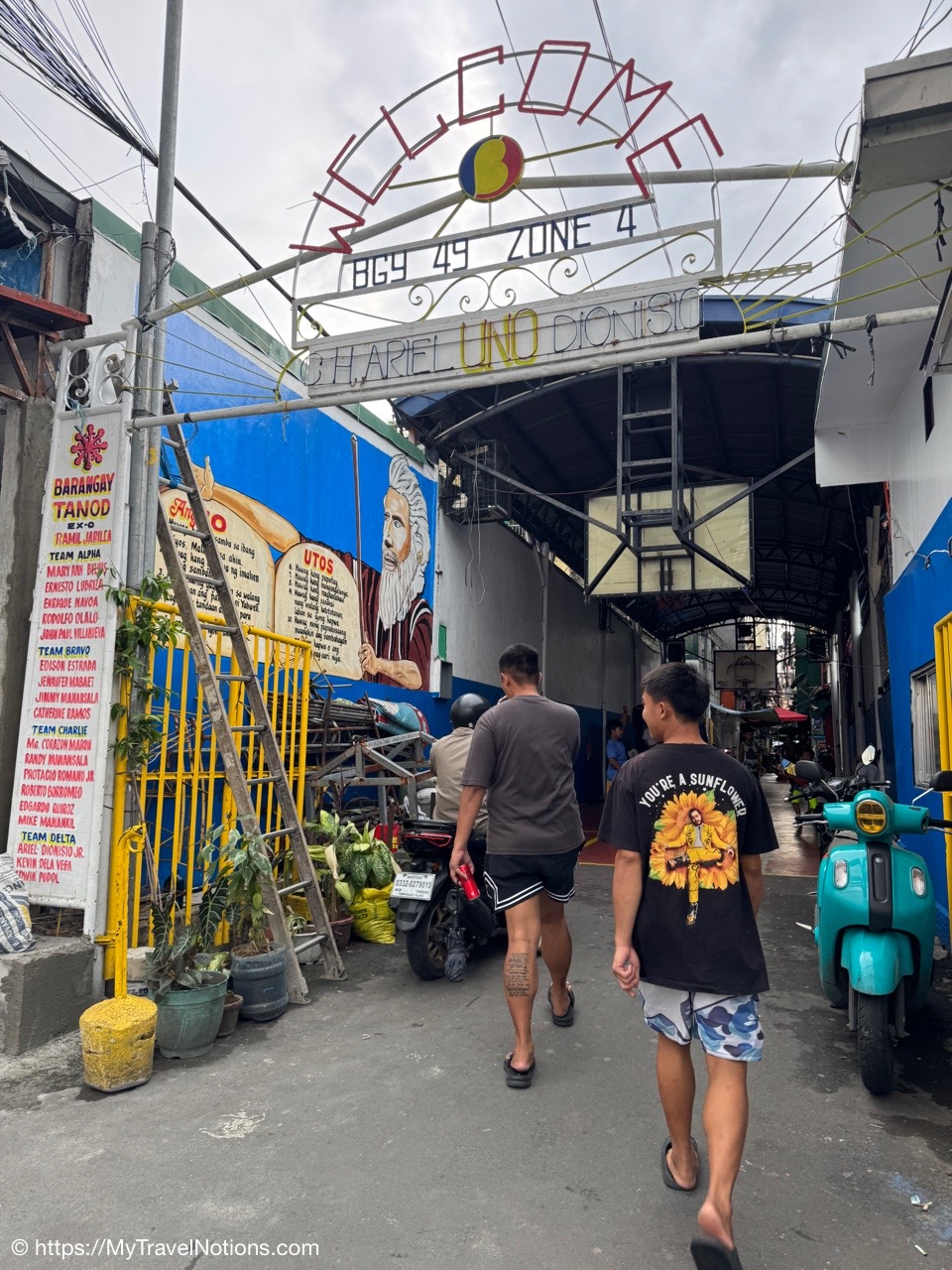
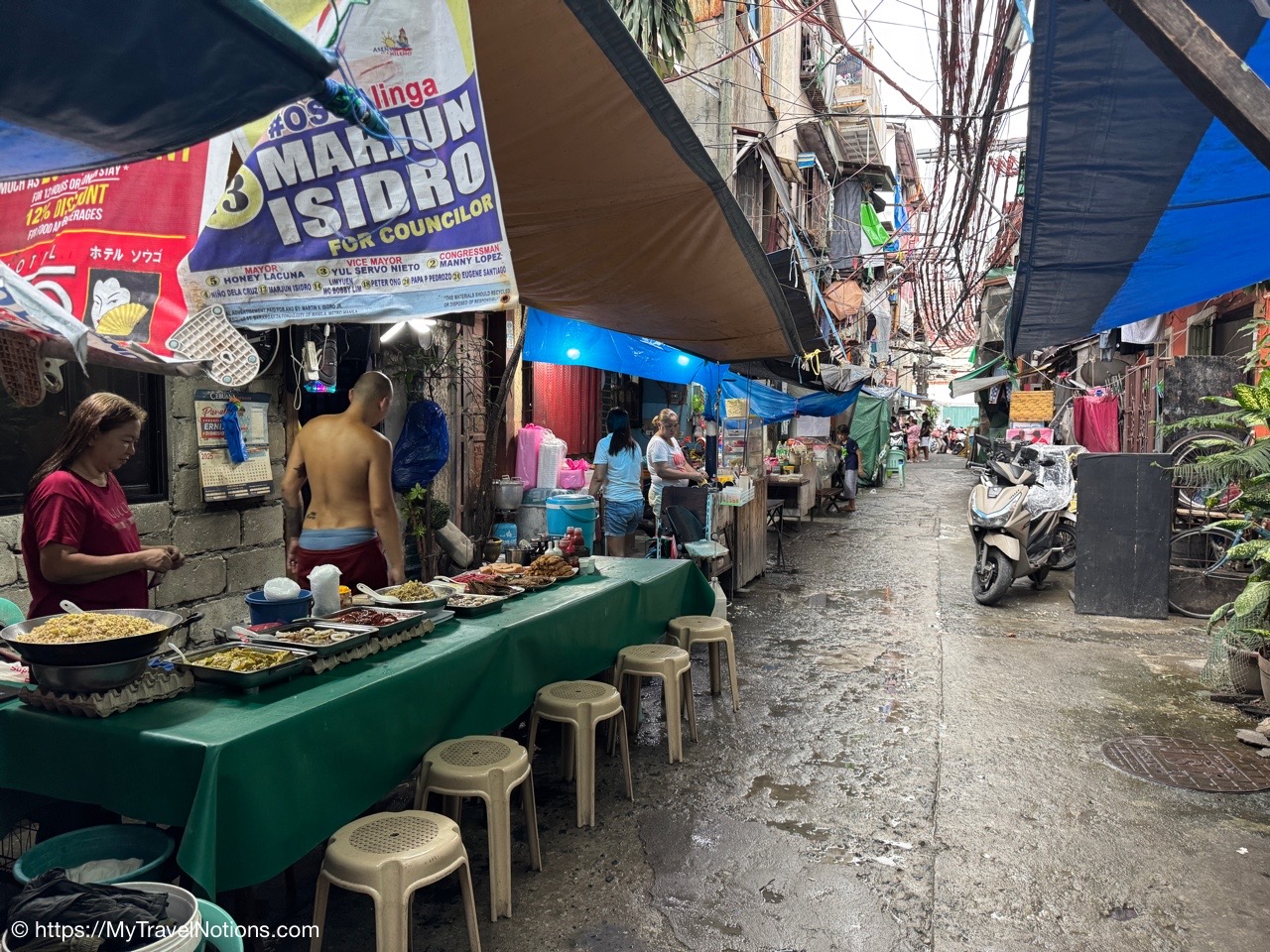
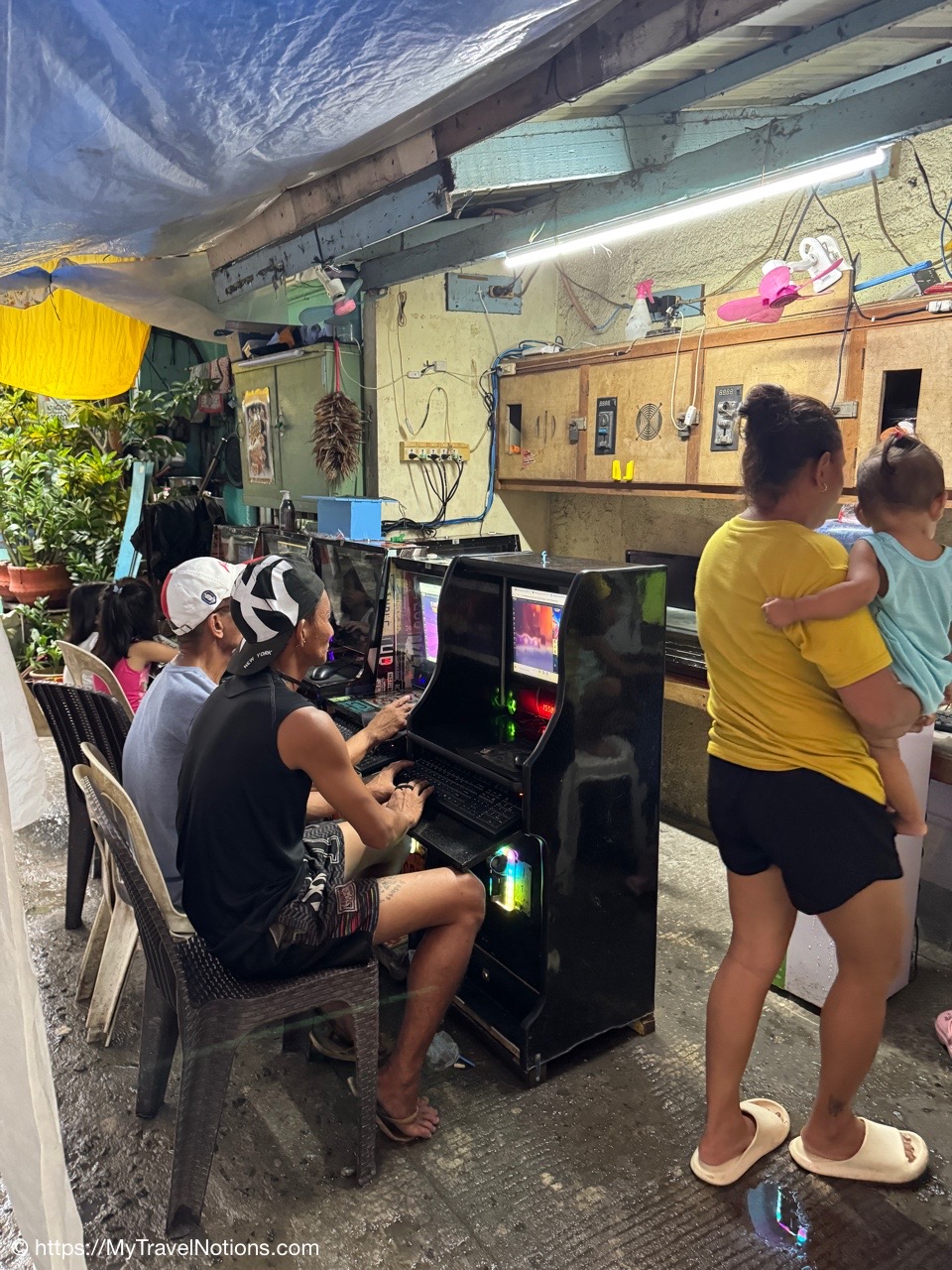
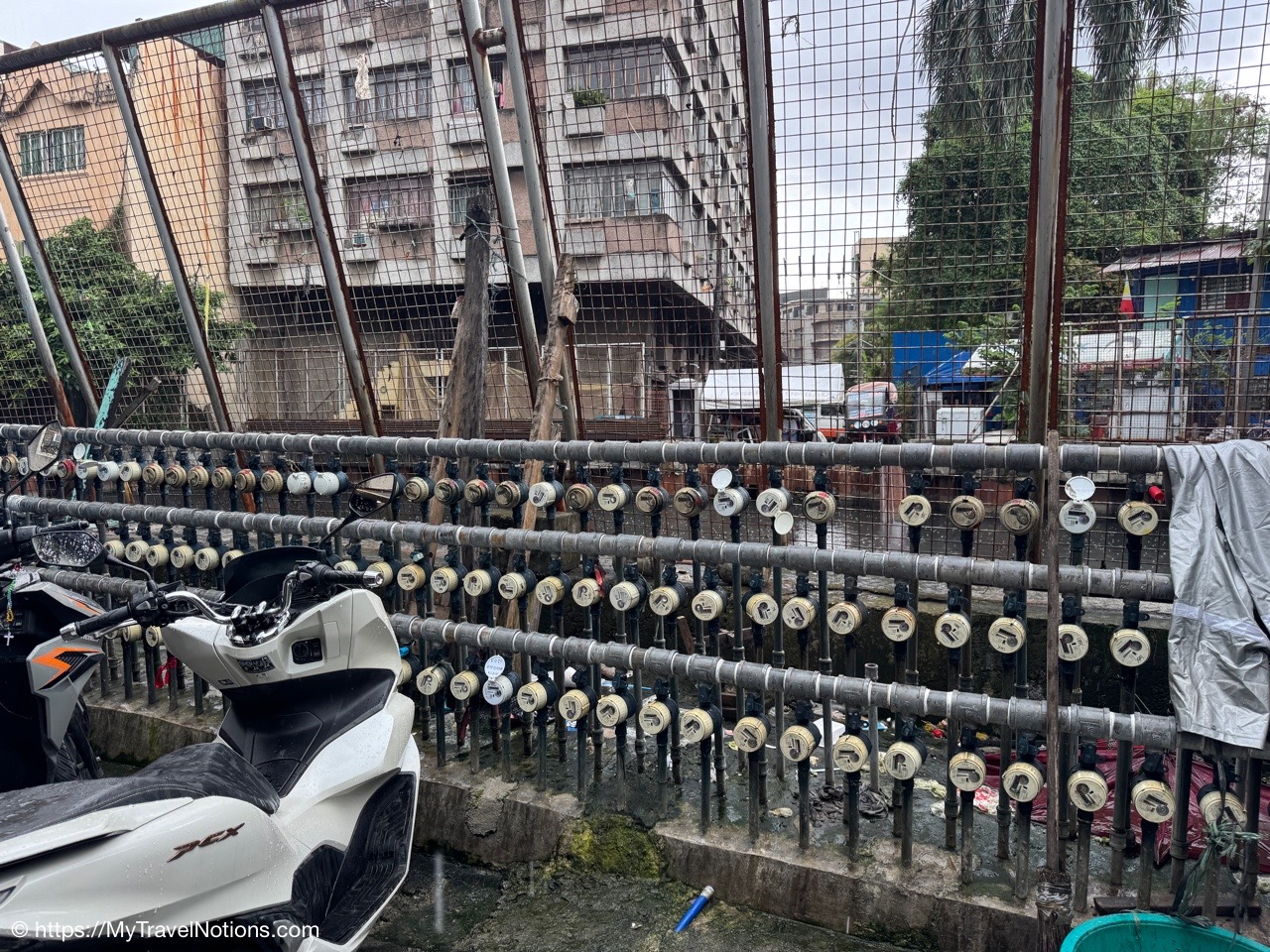
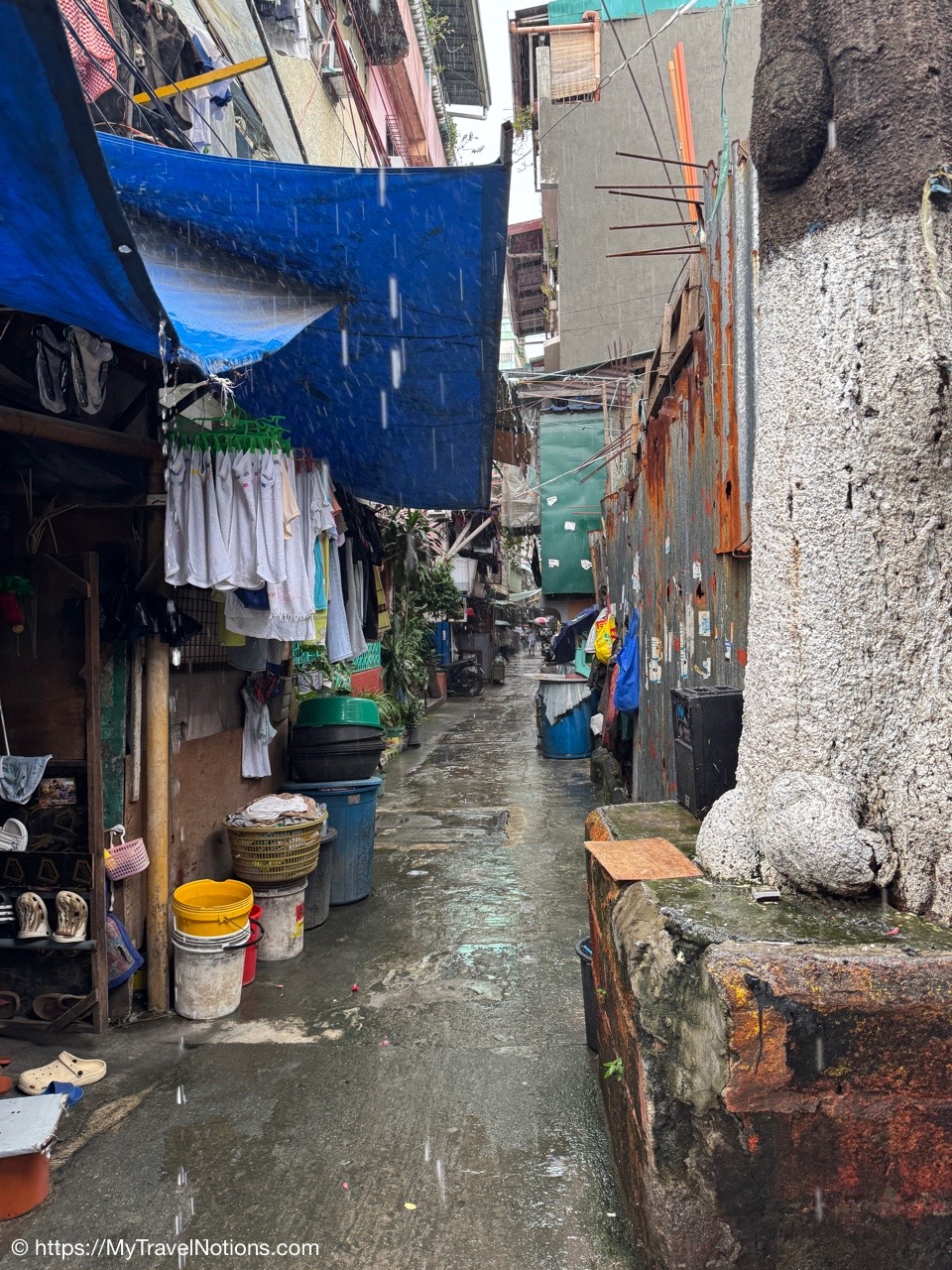
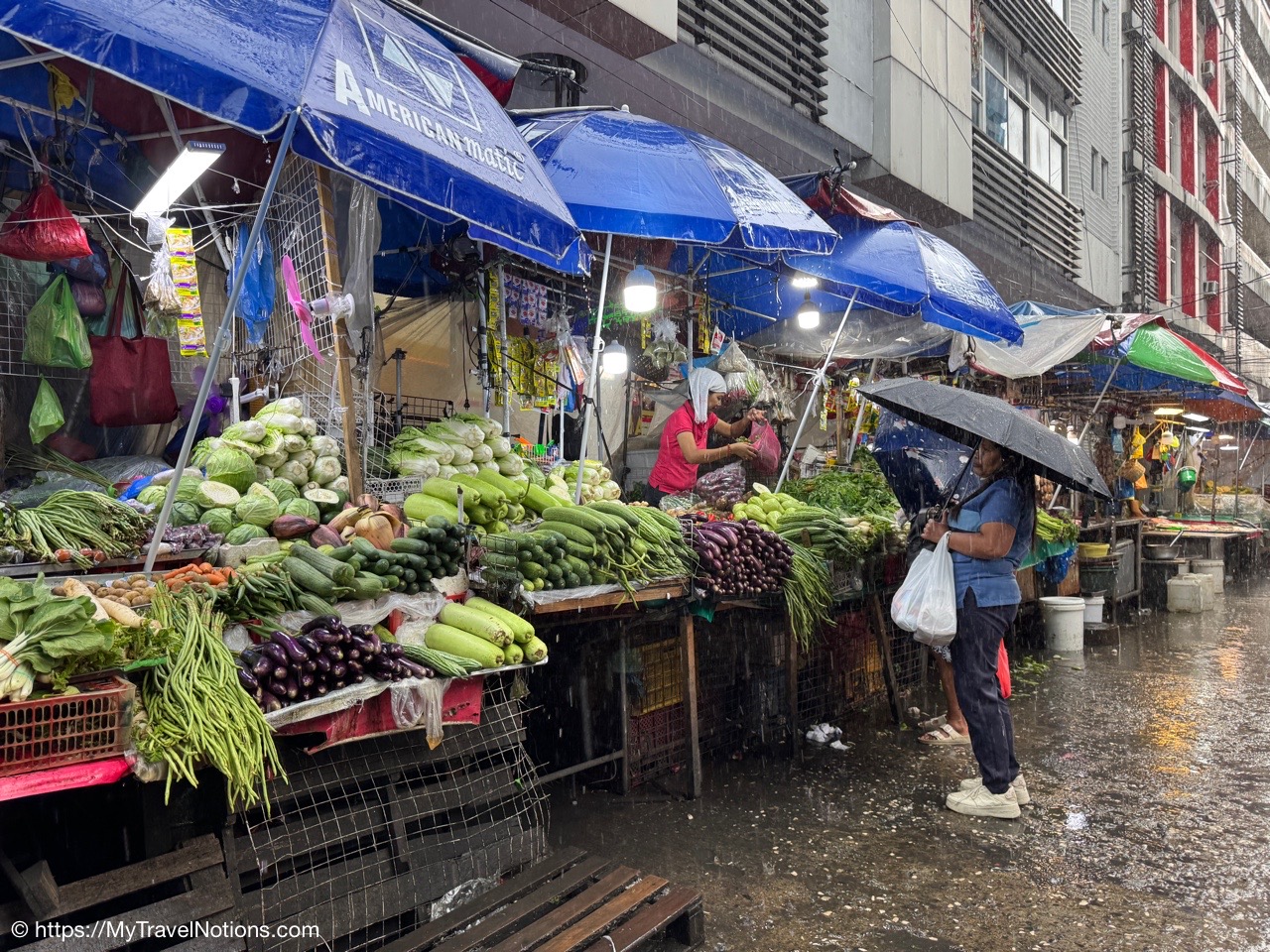
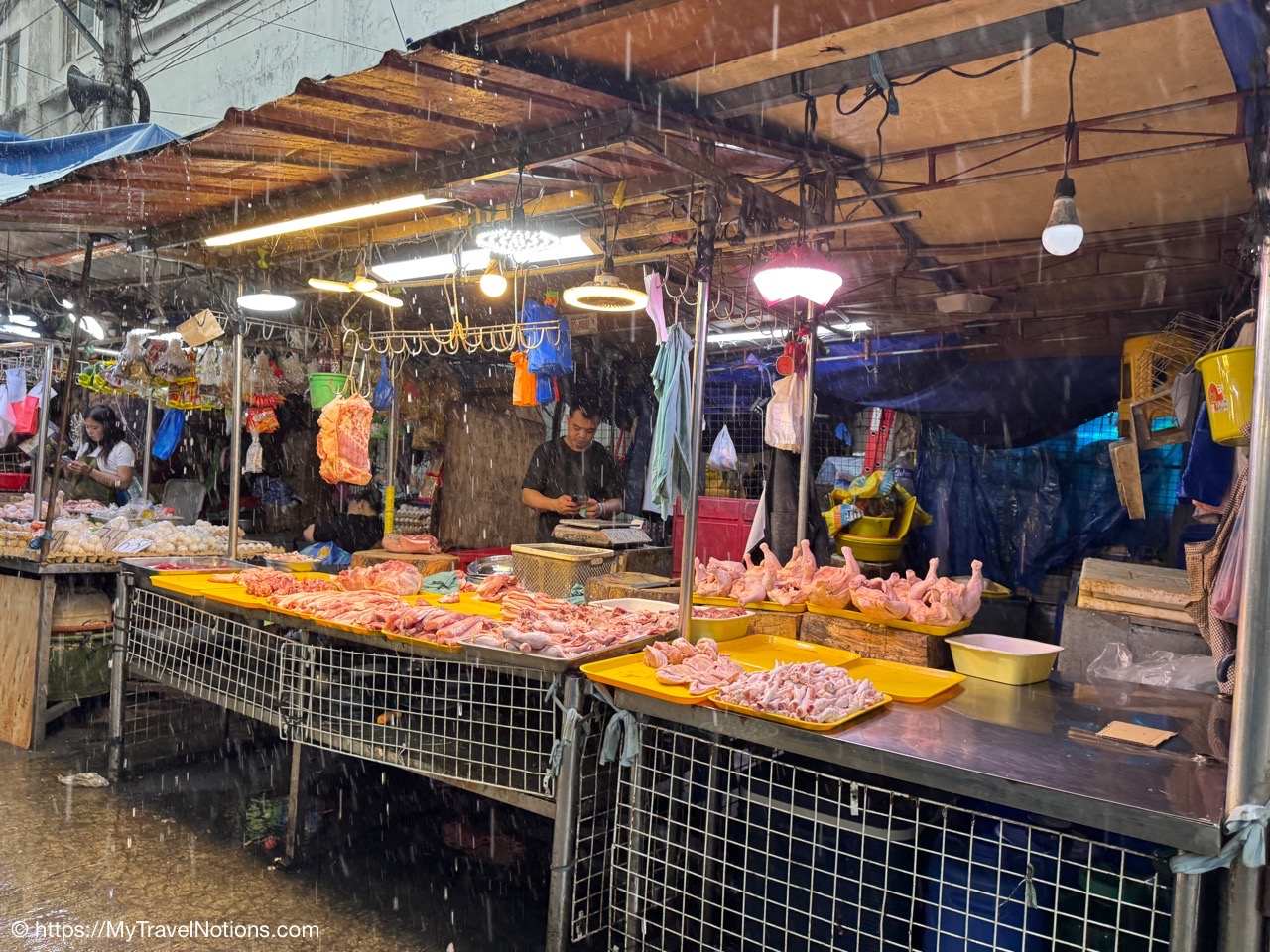
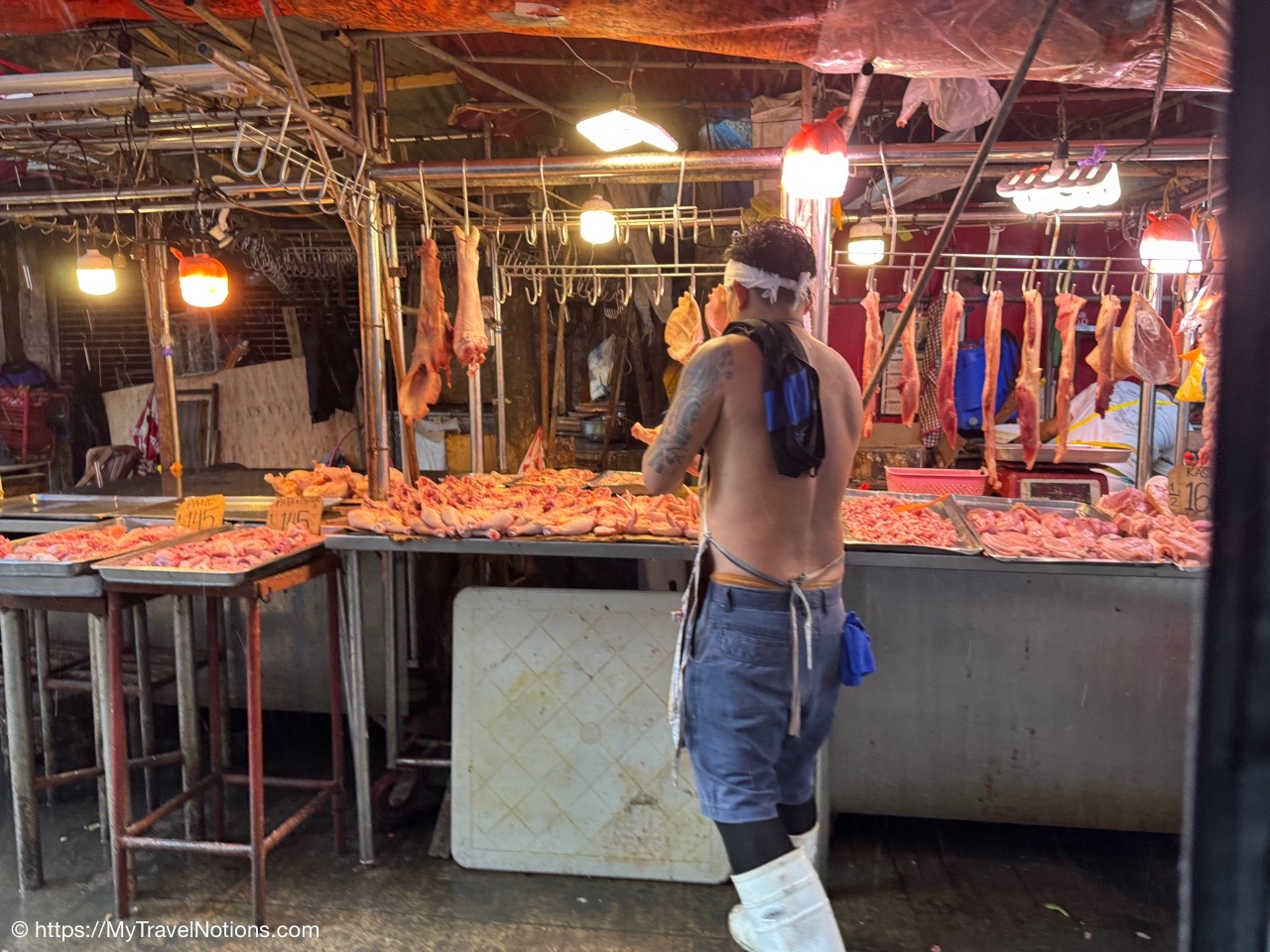
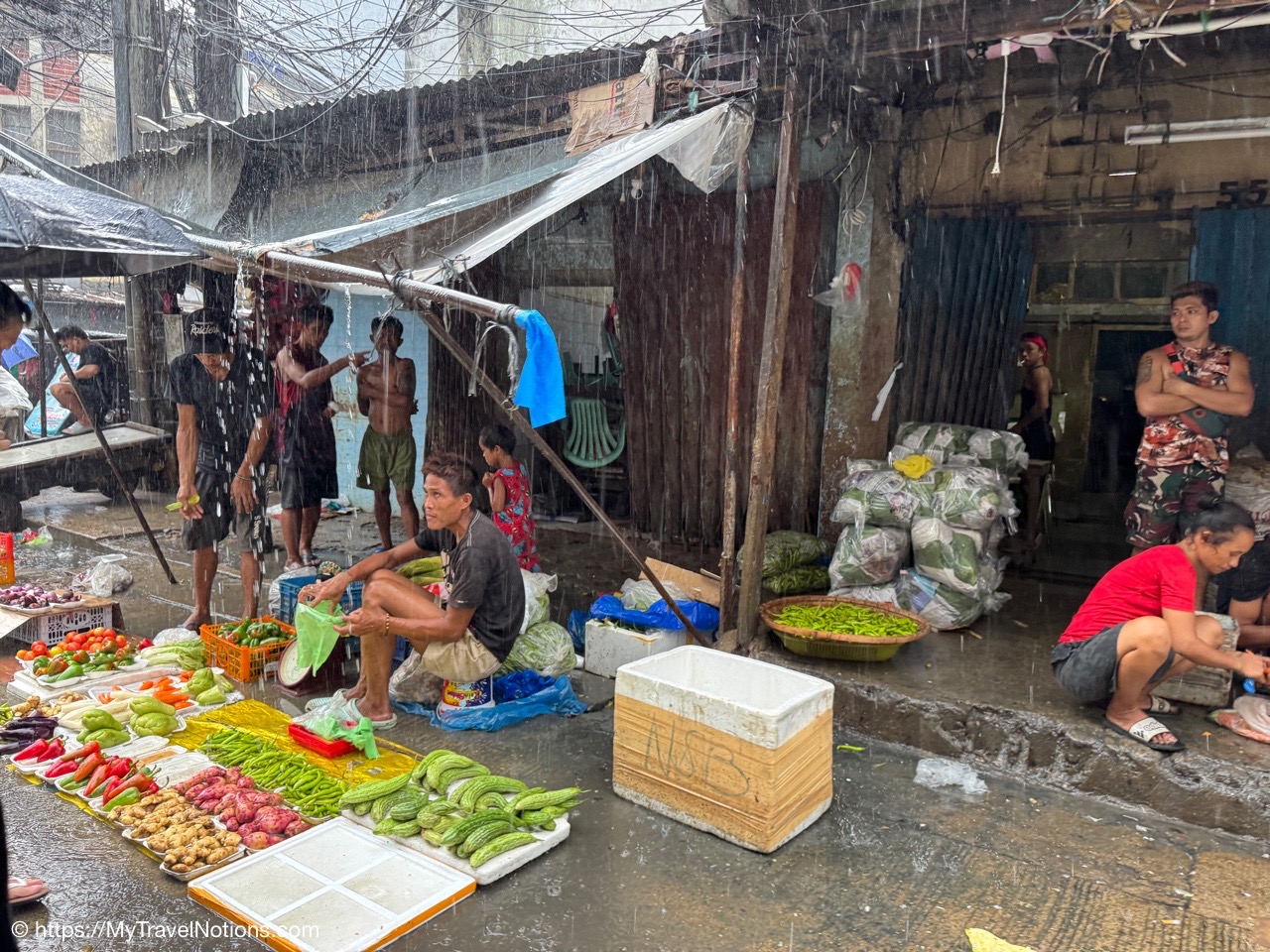
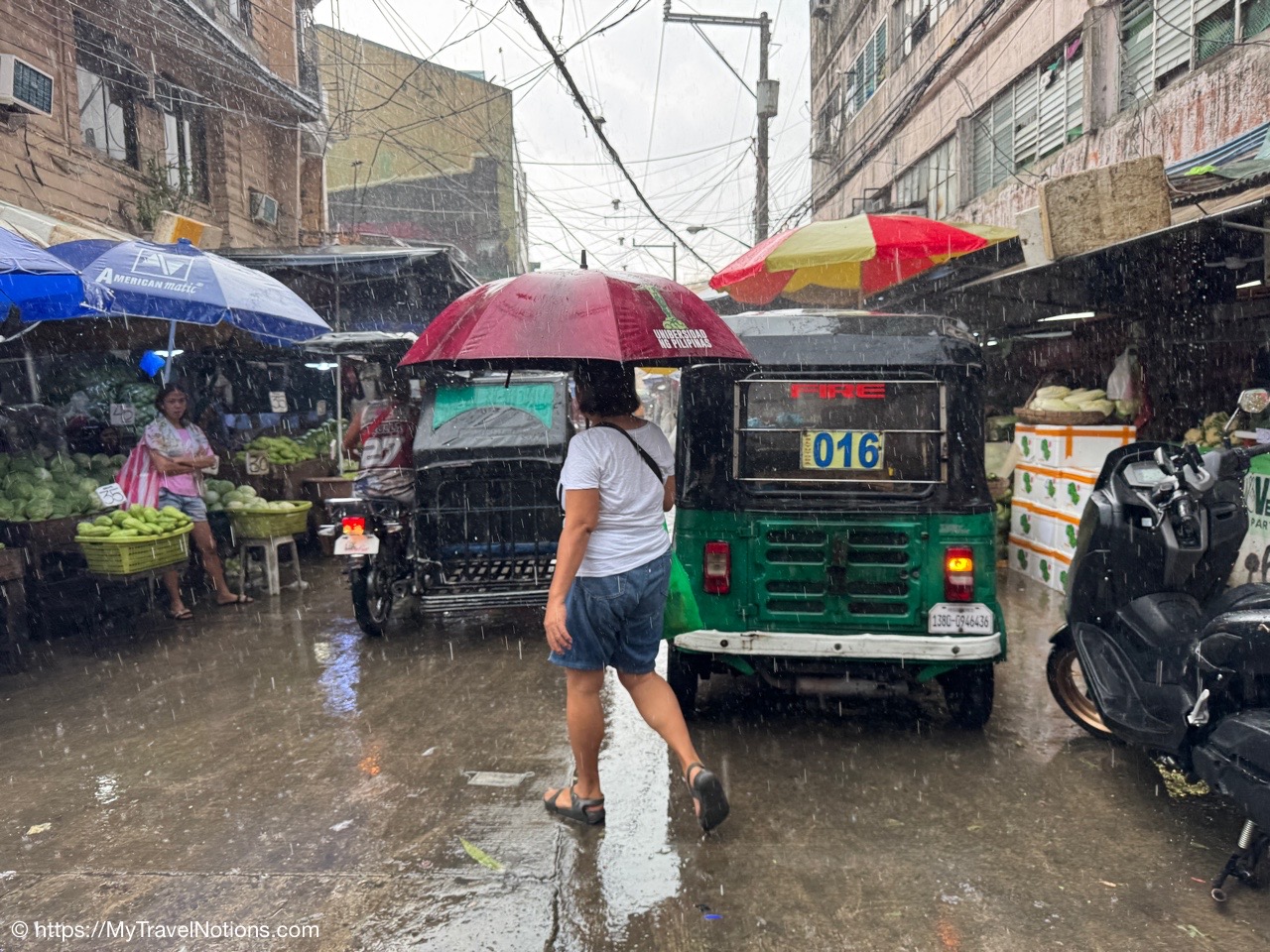
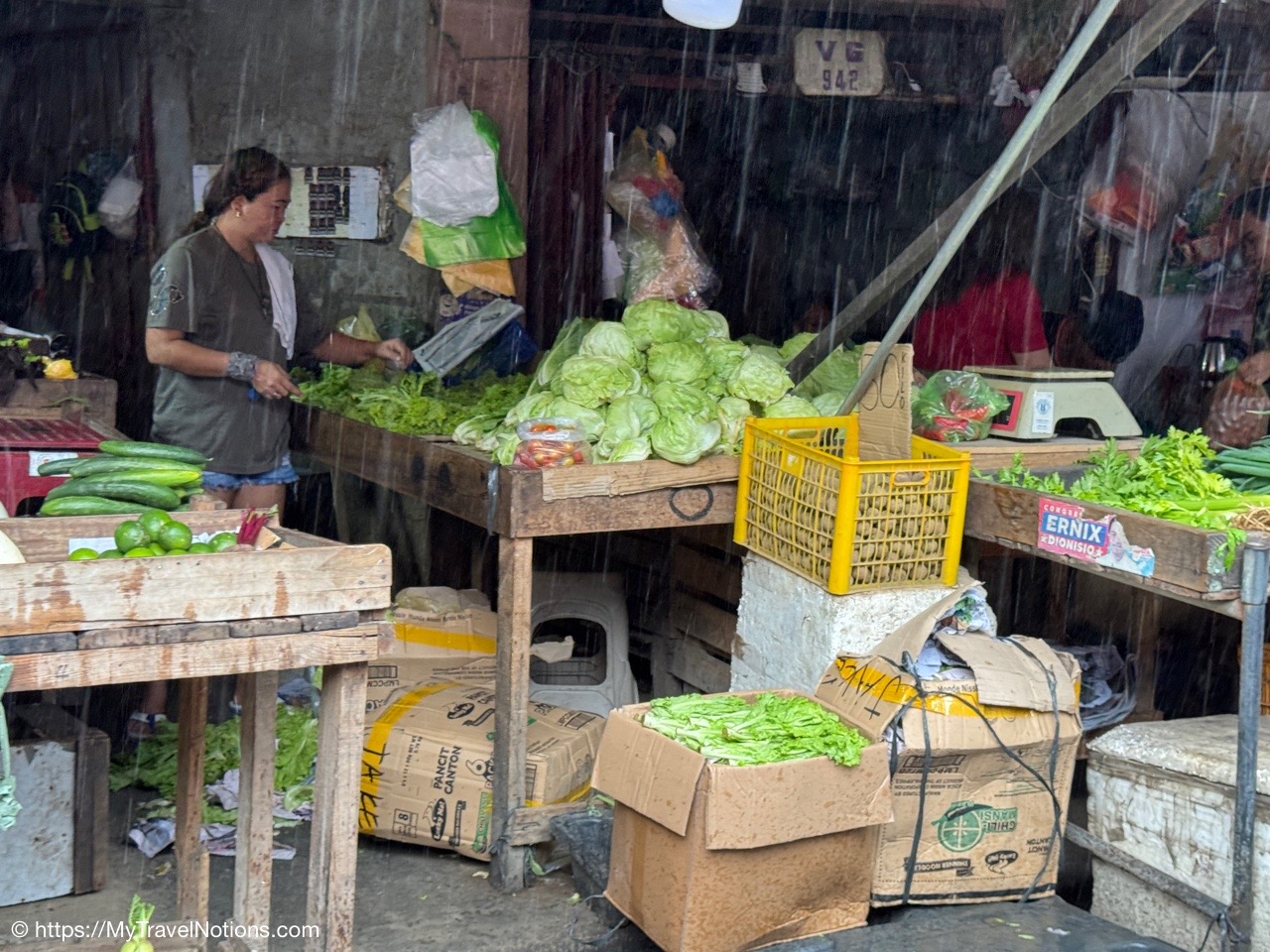
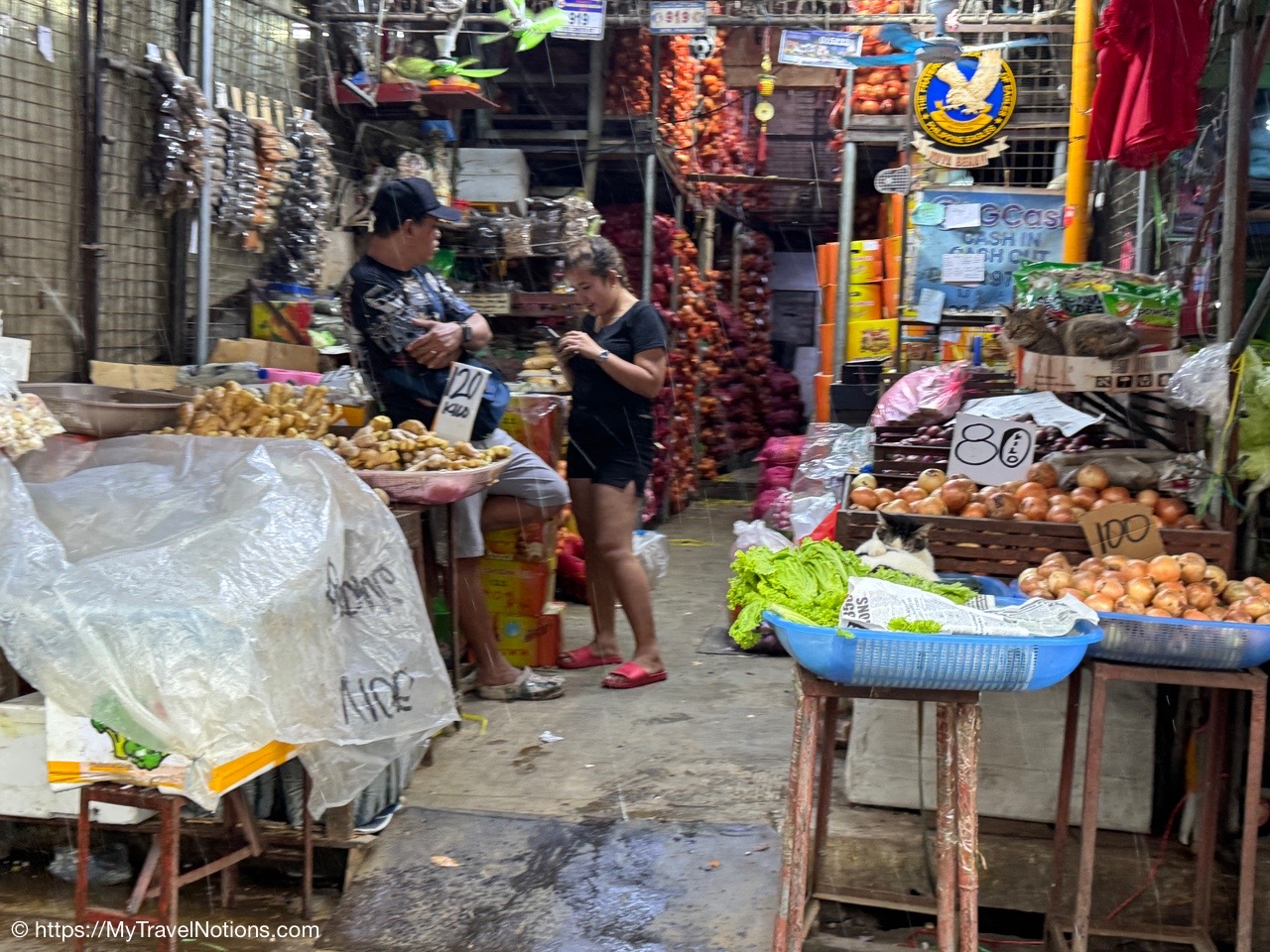
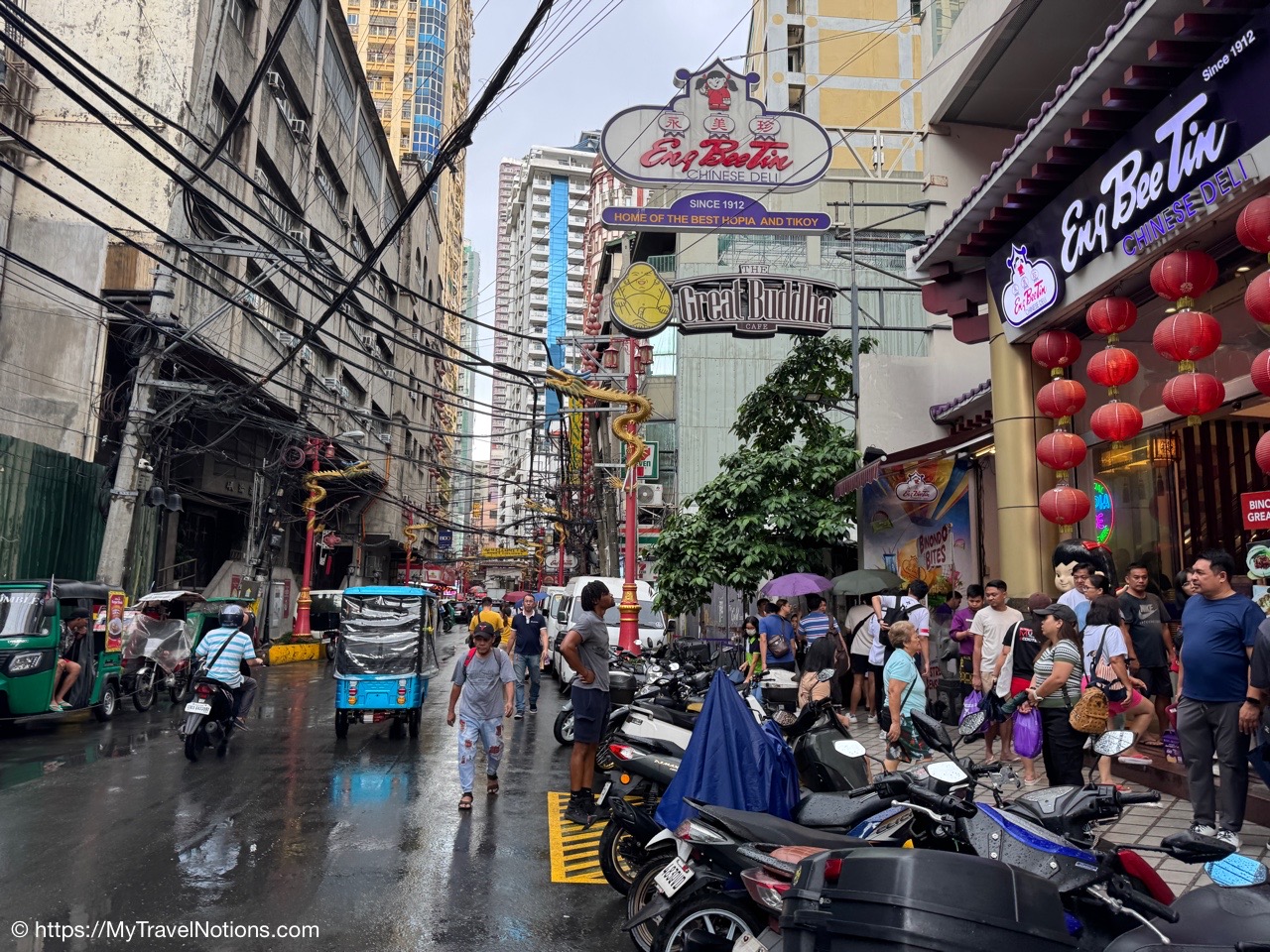
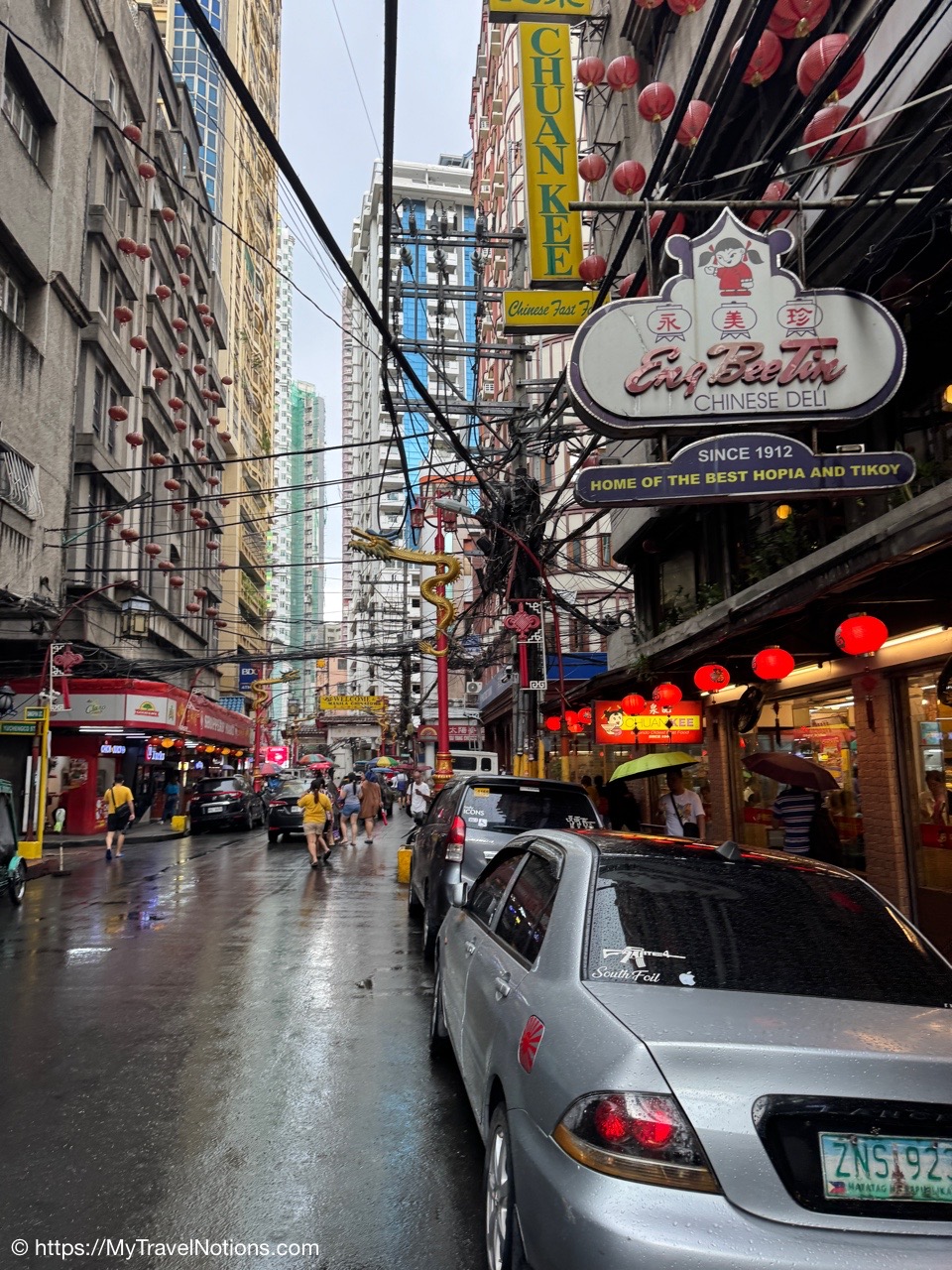
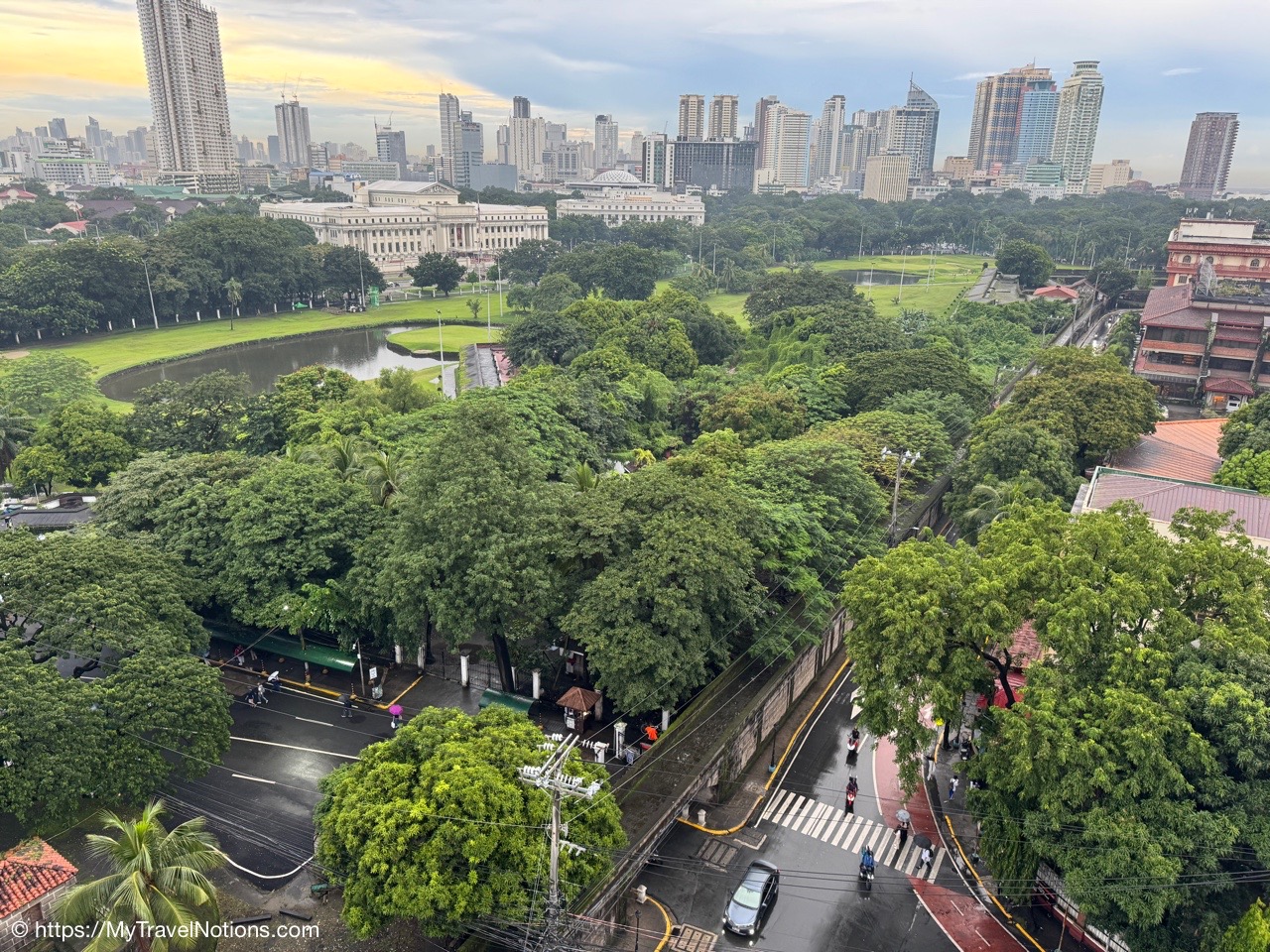
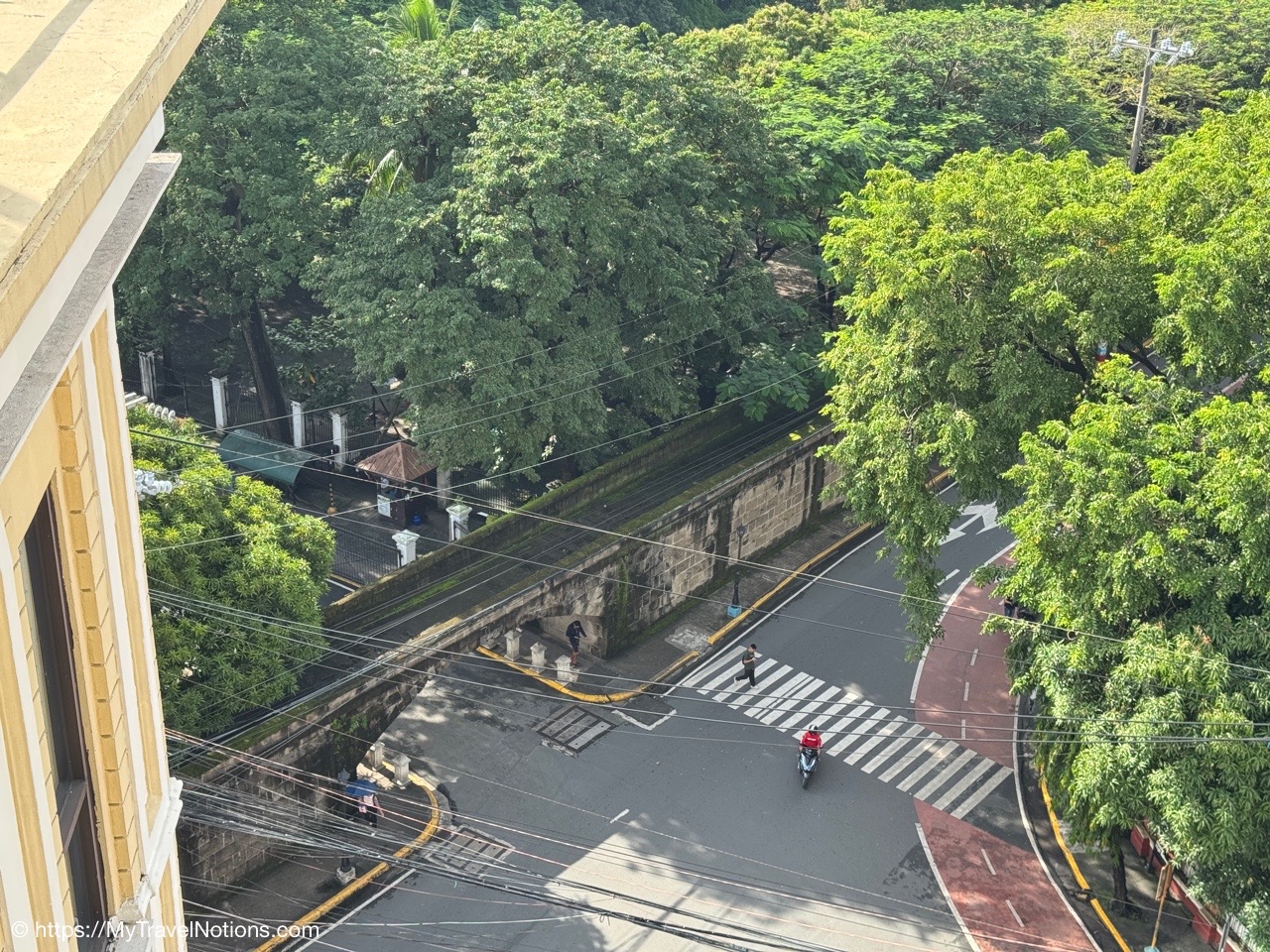
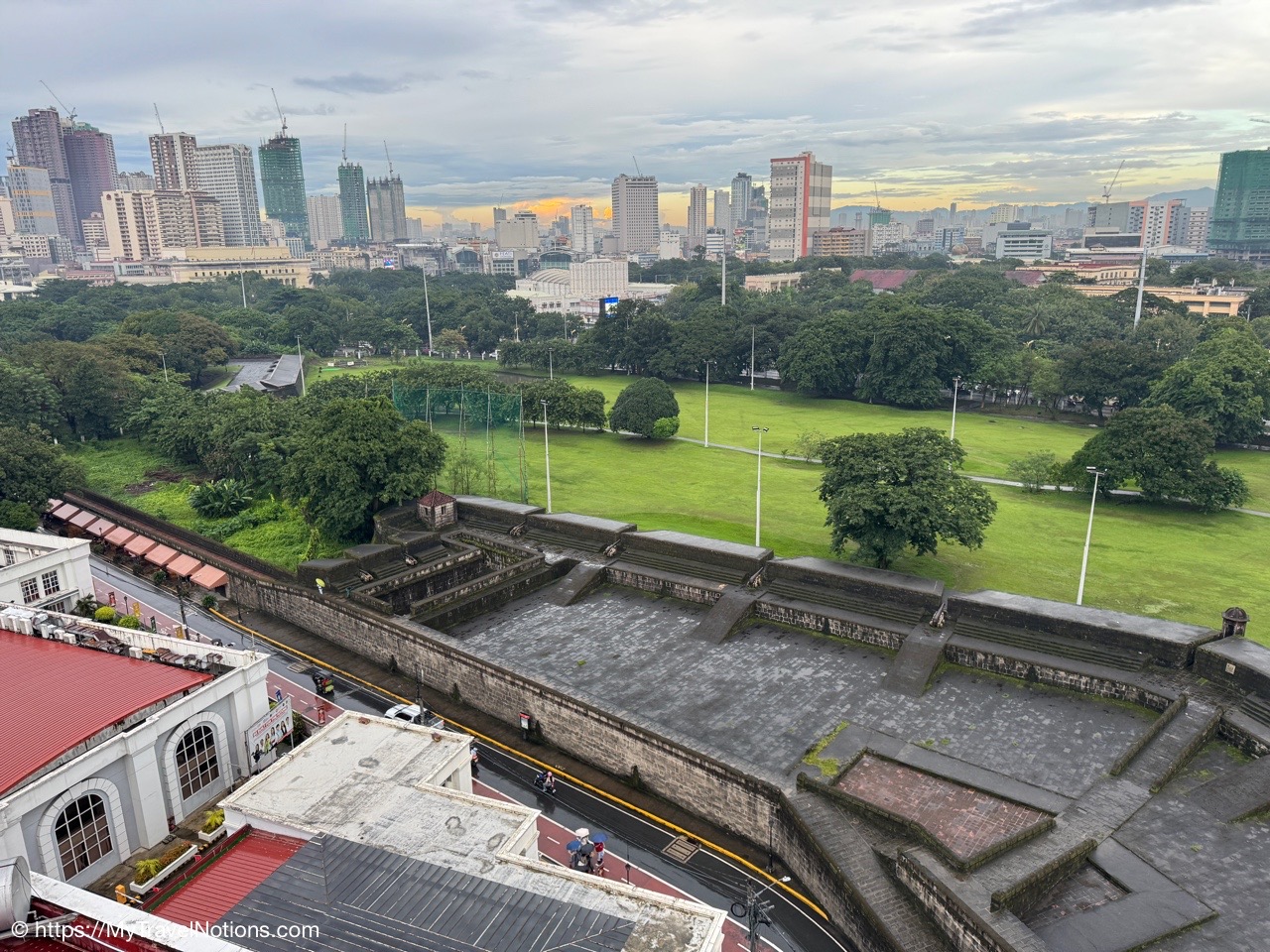
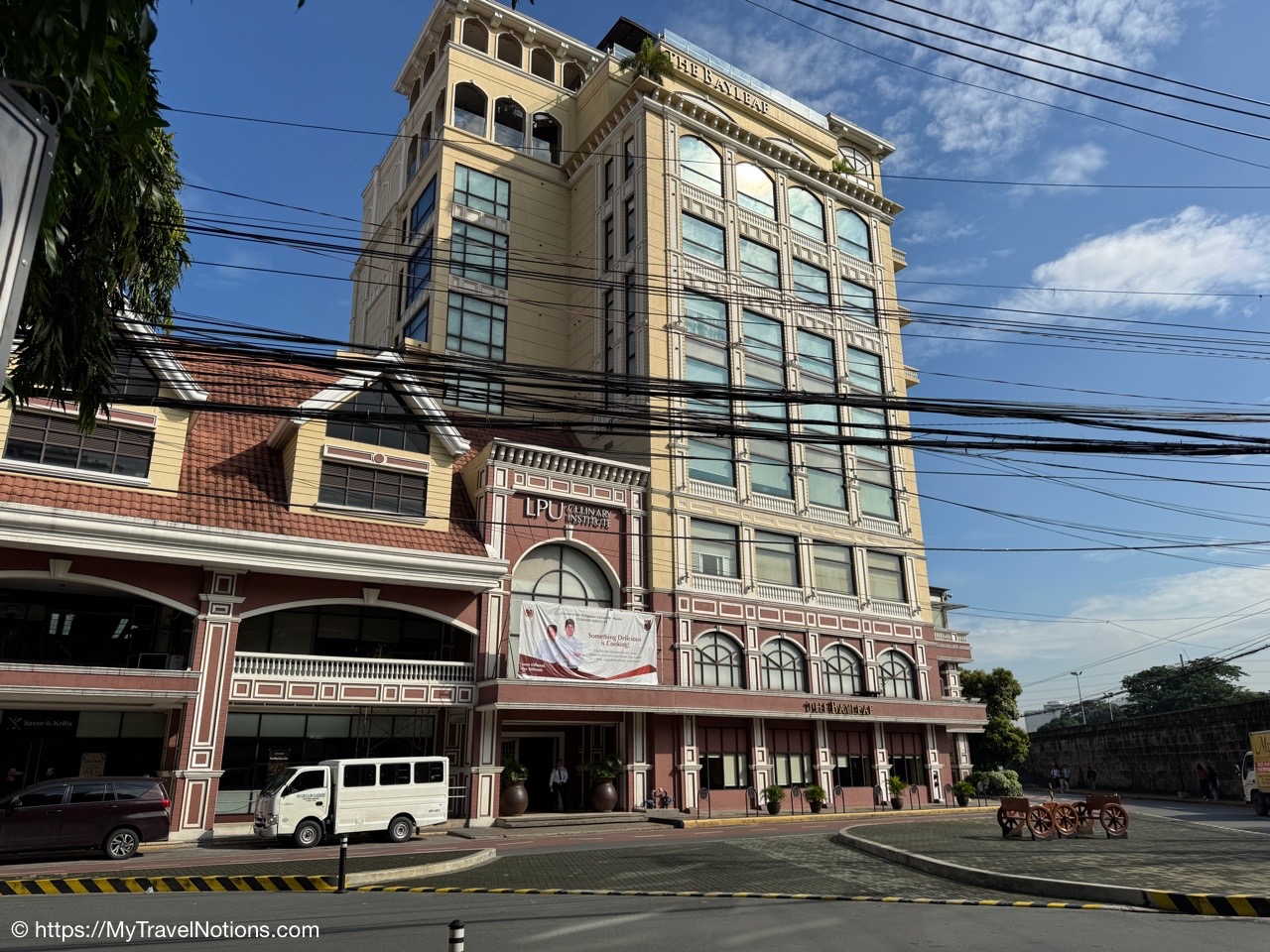
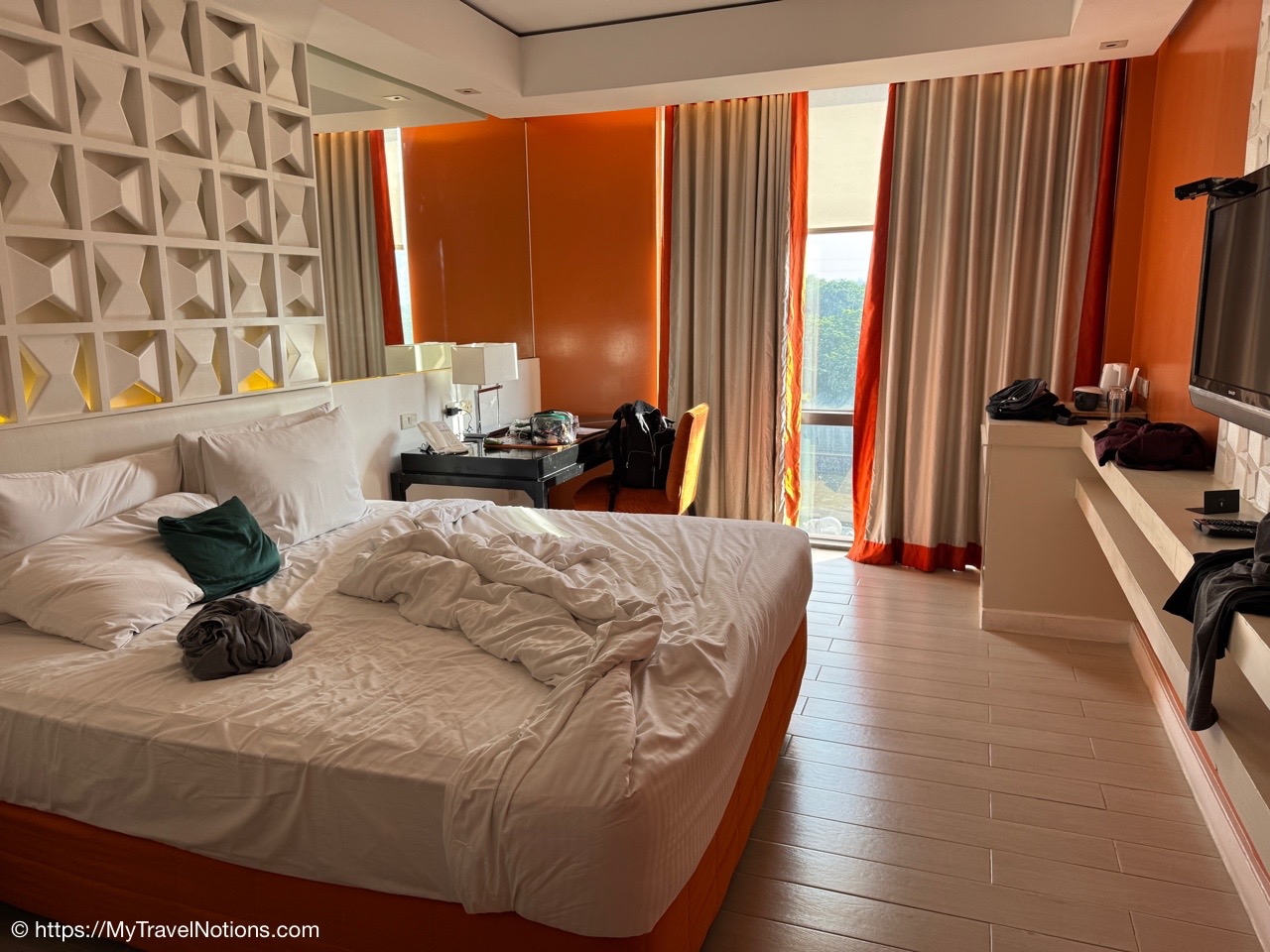
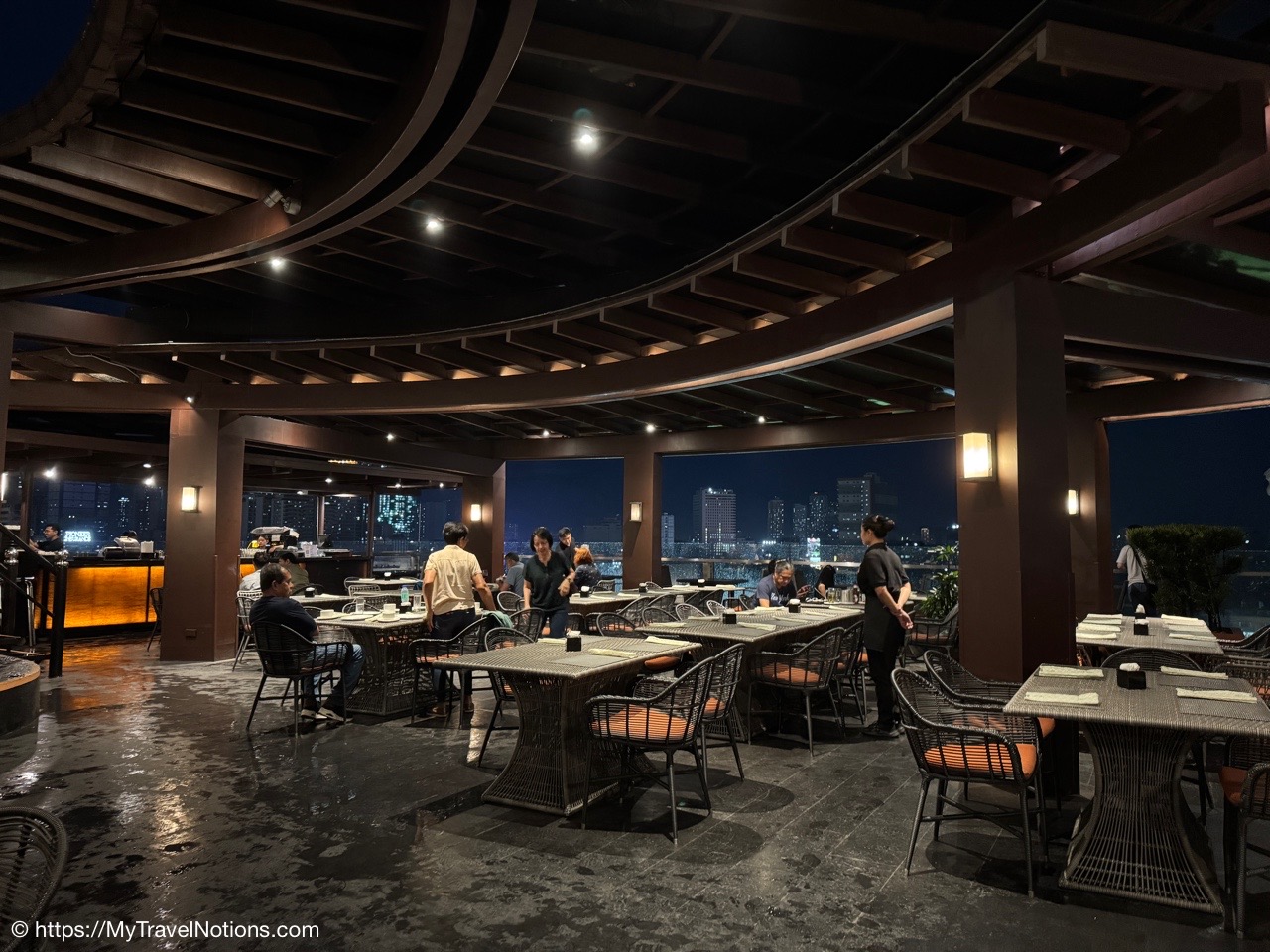
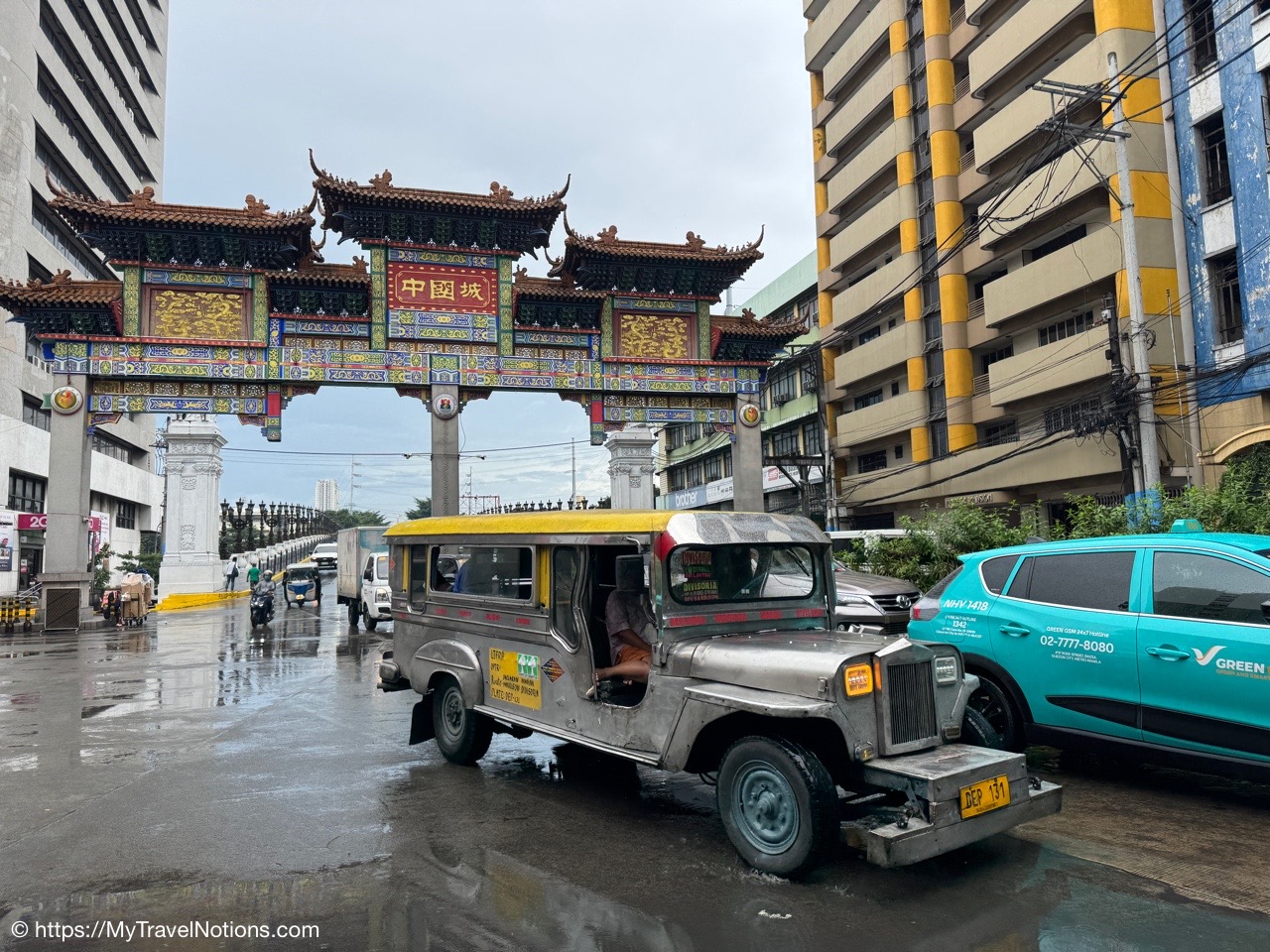
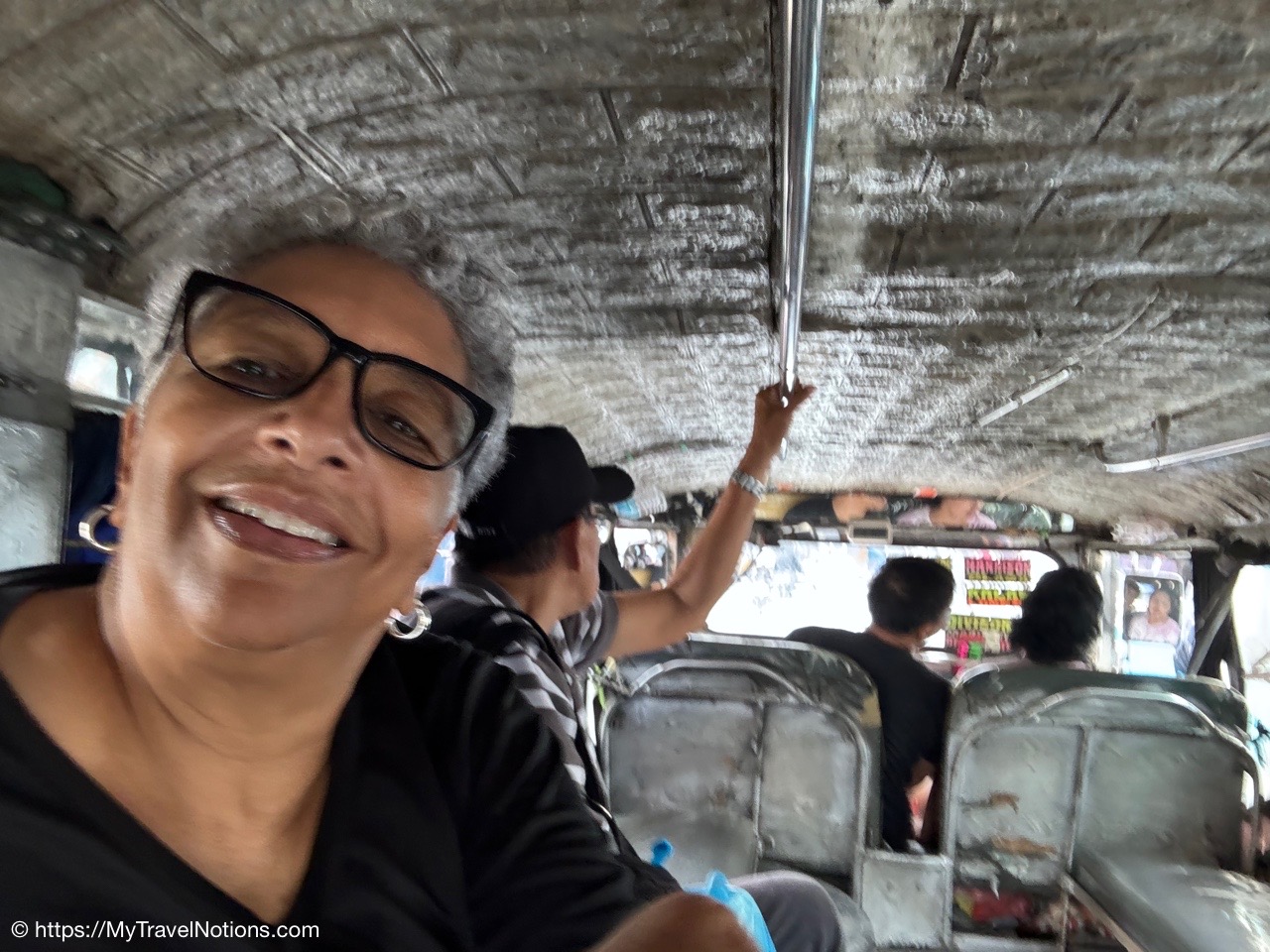
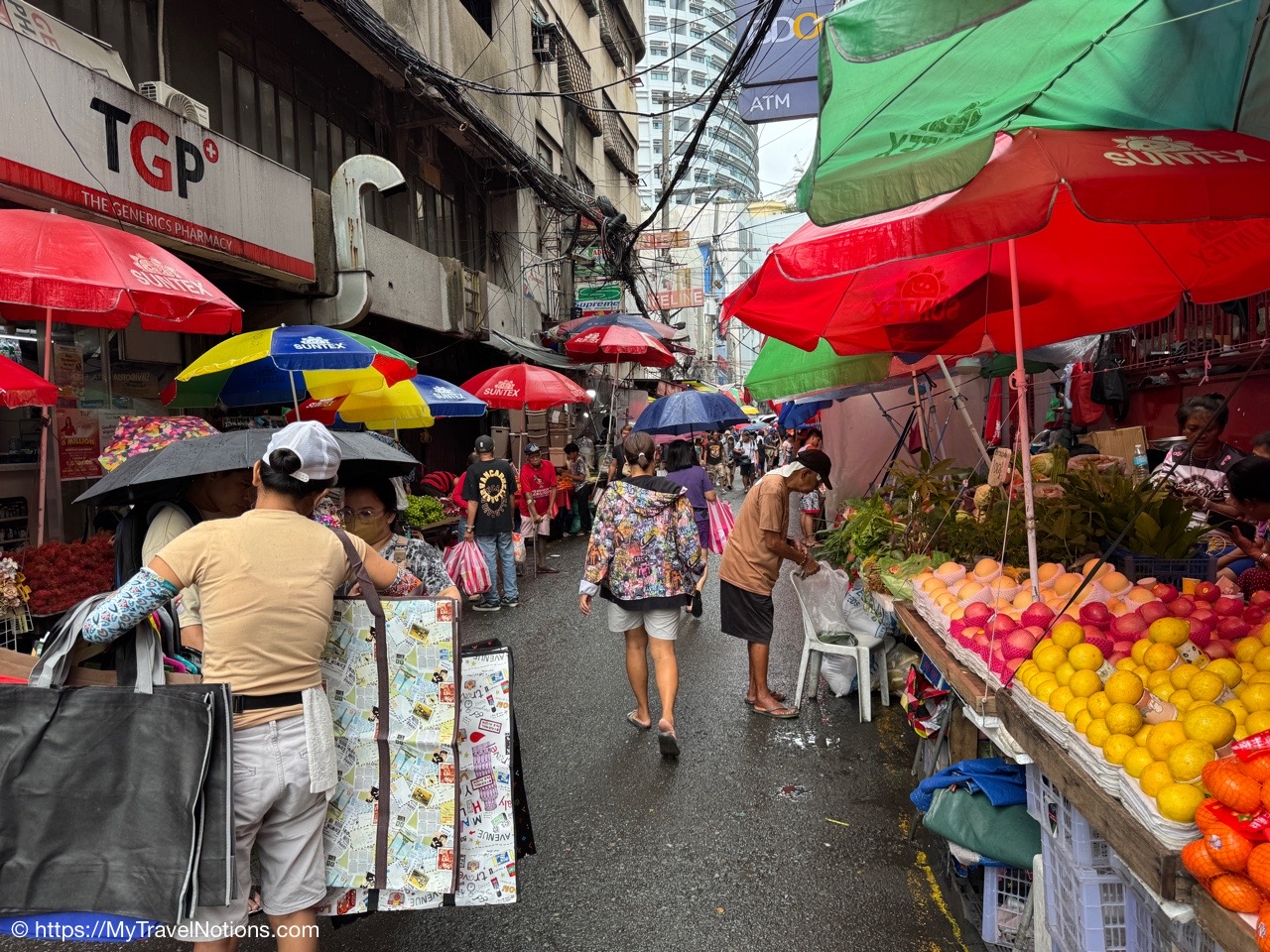
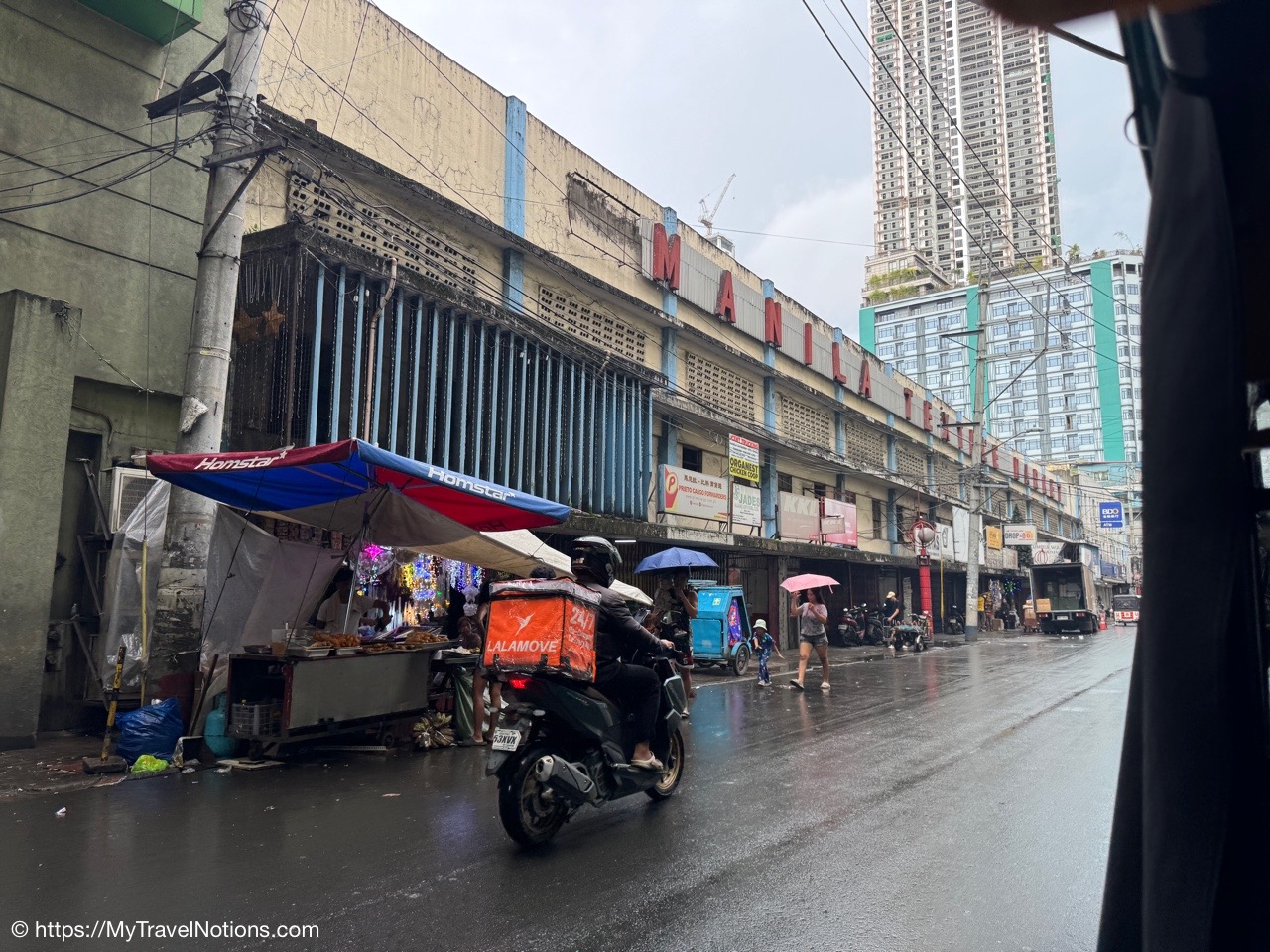
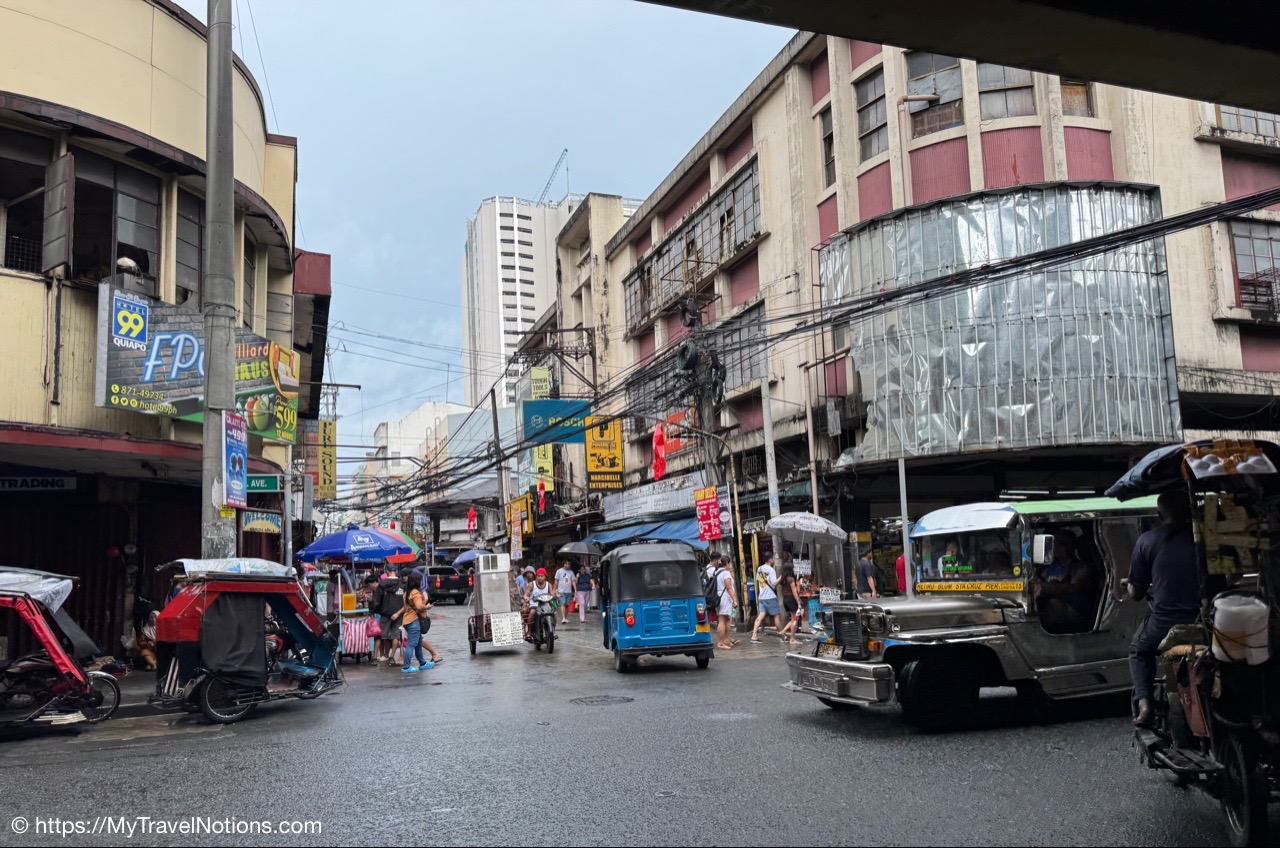
Our parents tell us not to stand in the middle of a busy street, but here I am standing under the Manila Chinatown Welcome Arch. This Chinatown area is also known as Binondo. It was established in 1594 by the Spaniards, who colonized the Philippines in 1565, as a settlement for Catholic Chinese immigrants. A thriving center for trade and Chinese culture, Manila’s Chinatown is considered as the world’s oldest Chinatown outside of China. (Sept. 12, 2025)A carinderia, sometimes spelled as karinderya, is a type of eatery in the Philippines that serves affordable and locally-inspired dishes. It’s a home-cooked affordable version of fast food for working Filipinos in Manila’s Chinatown or Binondo. (Sept. 12, 2025)A stall where the vendor sells one item, like one cigarette, to a customer during our walk in Manila’s Chinatown or Binondo. (Sept. 12, 2025)Entering, what my guide Floyd called the middle class Pilipino section of Manila’s Chinatown or Binondo. (Sept. 12, 2025)Basketball is the most popular sport overall, with numerous courts found throughout the Philippines including here during our walk through what my guide Floyd called the middle class Pilipino area of Manila’s Chinatown or Binondo. (Sept. 12, 2025)Basketball is the most popular sport overall, with numerous courts found throughout the Philippines including here during our walk through Dagupan Street an area my guide, Floyd, called the middle class Pilipino area of Manila’s Chinatown or Binondo. (Sept. 12, 2025)Walking down and through Dagupan Street, the residential Filipino middle class area of Manila’s Chinatown or Binondo. (Sept. 12, 2025)Walking down and through Dagupan Street, the residential Filipino middle class area of Manila’s Chinatown or Binondo. Some 80% of Filipinos are Catholic and there were several outdoor shrines. (Sept. 12, 2025)Another carinderia, sometimes spelled as karinderya, is a type of eatery in the Philippines that serves affordable and locally-inspired dishes. It’s a home-cooked affordable version of fast food for working Filipinos in Manila’s Chinatown or Binondo. (Sept. 12, 2025)This is a computer hub for the residential neighborhood where pay a small amount to use the computer for a certain amount of time along a side street of Dagupab Street in Manila’s Chinatown or Binondo. There’s also an additional charge for Wi-Fi use. (Sept. 12, 2025)Small round electric box meters along our walk in Manila’s Chinatown or Binondo with the Estero de la Reina, a historical tributary waterway, behind it. It once served as a vital commercial artery during the Spanish era, named after Queen Isabella II. Once a bustling network of canals used by boats to transport goods like fruits and vegetables, it is now a significantly degraded and polluted creek. (Sept. 12, 2025)Continuing our walk through a residential area along a side street of Dagupab Street in Manila’s Chinatown or Binondo. (Sept. 12, 2025)Since it was raining afternoon, we hopped on a pedicab, a motorized Tuk Tuk, an open-sided vehicle that provided some shelter from the rain while offering a traditional way to see the sights, sounds, and flavors of Manila’s bustling Chinatown or Binondo area. (Sept. 12, 2025)Entering ILaya Street and into the Divisoria Public Market in Manila’s Chinatown or Binondo during this rainy afternoon downpour. The market is a large commercial and shopping district known for its low-cost goods and vendors. The market serves as a central hub for commerce in this significant Chinese-Filipino commercial area, which began developing during the Spanish colonial era when Chinese traders were restricted from Intramuros. (Sept. 12, 2025)Riding in the pedicab while it was raining on ILaya Street through the Divisoria Public Market in Manila’s Chinatown or Binondo. (Sept. 12, 2025)Riding in the pedicab while it was raining on ILaya Street through the Divisoria Public Market in Manila’s Chinatown or Binondo. (Sept. 12, 2025)Riding in the pedicab while it was raining on ILaya Street through the Divisoria Public Market in Manila’s Chinatown or Binondo. (Sept. 12, 2025)Riding in the pedicab while it was raining on ILaya Street through the Divisoria Public Market in Manila’s Chinatown or Binondo. (Sept. 12, 2025)Riding in the pedicab while it was raining on ILaya Street through the Divisoria Public Market in Manila’s Chinatown or Binondo. (Sept. 12, 2025)Riding in the pedicab while it was raining on ILaya Street through the Divisoria Public Market in Manila’s Chinatown or Binondo. (Sept. 12, 2025)Riding in the pedicab while it was raining on ILaya Street through the Divisoria Public Market in Manila’s Chinatown or Binondo. (Sept. 12, 2025)Riding in the pedicab while it was raining on ILaya Street through the Divisoria Public Market in Manila’s Chinatown or Binondo. (Sept. 12, 2025)Riding in the pedicab while it was raining on ILaya Street through the Divisoria Public Market in Manila’s Chinatown or Binondo. (Sept. 12, 2025)Riding in the pedicab while it was raining on ILaya Street through the Divisoria Public Market in Manila’s Chinatown or Binondo. (Sept. 12, 2025)While the rain has stopped for a few minutes, we continue our pedicab ride through Manila’s Chinatown or Binondo passing a view of the Binondo-Intramuros Bridge, a modern steel bowstring arch bridge with four lanes that connects Chinatown to Intramuros. (Sept. 12, 2025)The large and colorful Filipino-Chinese Friendship Arch that leads into the residential and business section of the Chinese in Manila’s Chinatown or Binondo, with a view of another form of transportation in Manila and throughout the Philippines, the Jeepneys. These decorated, World War II-era US military jeeps are a quintessential Philippine public transport option, providing a cheap and local way to get around the city and its districts, including Chinatown. (Sept. 12, 2025)Driving, in our pedicab, along Ongpin Street considered the vibrant heart of Binondo, Manila’s Chinatown, known for its bustling atmosphere, authentic Chinese cuisine, jewelry shops, and traditional goods along with the tall residential buildings where the Chinese live. (Sept. 12, 2025)Driving, in our pedicab, along Ongpin Street considered the vibrant heart of Binondo, Manila’s Chinatown, known for its bustling atmosphere, authentic Chinese cuisine, jewelry shops, and traditional goods along with the tall residential buildings where the Chinese live. (Sept. 12, 2025)Driving, in our pedicab, along Ongpin Street considered the vibrant heart of Binondo, Manila’s Chinatown, known for its bustling atmosphere, authentic Chinese cuisine, jewelry shops, and traditional goods along with the tall residential buildings where the Chinese live. (Sept. 12, 2025)Driving, in our pedicab, along Ongpin Street considered the vibrant heart of Binondo, Manila’s Chinatown, known for its bustling atmosphere, authentic Chinese cuisine, jewelry shops, and traditional goods along with the tall residential buildings where the Chinese live. (Sept. 12, 2025)Waiting at a jeepney pick up stop in Manila’s Chinatown Binondo for a quick ride into Intramuros. (Sept. 12, 2025)Inside our jeepney ride from Manila’s Chinatown or Binondo into Intramuros. The seats are narrow and slippery but there’s a bar overhead to grab. And, payment is in cash to the two people up front. To get off the jeepney, just tap the roof and go in and out thru the rear entrance. And, by the time we arrived in Intramuros, just a short distance, the jeepney was full. (Sept. 12, 2025)Evening views just before sunset from the Sky Deck restaurant a top the Bayleaf Intramuros Hotel in Manila where I stayed and had dinner. Here’s a view of an entryway into Intramuros and the stone murallas, or walls, built by the Spanish in the late 16th century to protect the city’s center of power from invaders. (Sept. 12, 2025)Evening views just before sunset from the Sky Deck restaurant a top the Bayleaf Intramuros Hotel in Manila where I stayed and had dinner. Here’s a view of an entryway into Intramuros and the stone murallas, or walls, built by the Spanish in the late 16th century to protect the city’s center of power from invaders. (Sept. 12, 2025)Made of thick stone, the walls surround the entire district, the fortifications include bastions, like this one, the Baluarte de San Andres, as seen from the the Sky Deck restaurant a top the Bayleaf Intramuros Hotel in Manila. The walls were once surrounded by moats, which were later filled and the green space has become a golf course. (Sept. 12, 2025)Another view of the Bayleaf, my hotel within the Intramuros, the Walled City of Manila. (Sept. 11, 2025)My comfortable room at the Bayleaf withing Intramuros, the Walled City with great views of the Baluarte de San Francisco de Dilao. a historic stone bulwark and defensive structure. (Sept. 11, 2025)The Sky Deck restaurant a top the Bayleaf Intramuros Hotel in Manila where I had dinner after my two walking tours. (Sept. 12, 2025)
The rain, humidity and heat seems to be a constant during this time of the year in Manila. But I prepared and brought rain gear. And, the Filipinos, with their umbrellas or not, continue on with their everyday lives. So, I just follow them and kept moving through the rain.
And, as an aside, the Philippines is quite diverse and made up of more than 7,600 islands, not all inhabited and not all named. But it is the place I chose to concentrate my travels on while in the Philippines. Although Manila is the historical and cultural capital city, Quezon City, located northeast of Manila, is the most populous city in the Philippines. But my point is, Manila may well be the capital but it is not the only place to see in the Philippines but it’s the place I chose to explore.
The main thing I wanted to explore while in Manila and staying in its Walled City of Intramuros were the walls themselves. I’ve walked the walls of several cities throughout the world, including Dubrovnik in Croatia, Cartagena in Colombia, York in England and Avila in Spain. These historical fortifications offered unique perspectives of their cities and served as significant historical and architectural landmarks to explore. And, that’s exactly what I wanted to do in Manila, walk the walls.
To explain again, Intramuros is Manila’s historic “Walled City,” and its oldest part characterized by centuries-old Spanish colonial architecture, cobblestone streets, and the massive defensive walls built during the Spanish rule of the Philippines.
Intramuros was established in 1571 by the Spanish conquistador Miguel López de Legazpi to serve as the center of Spanish colonial rule in the Philippines. The purpose of establishing the walled city was to create a fortified administrative, religious, military, and economic hub for the Spanish colony, protecting it from invasions and serving as the seat of colonial power.
The walls can be walked on but there may not be a walkable connection between the Baluartes, a Spanish word that means rampart, stronghold or fortress. Along with the Baluartes there are also street gates for entering into Intramuros. I ventured towards the South side of the wall from my hotel and then later,I ventured alongthe open portion of the North side.
Let’s walk some of Manila’s ‘Walled City’ of Intramuros.
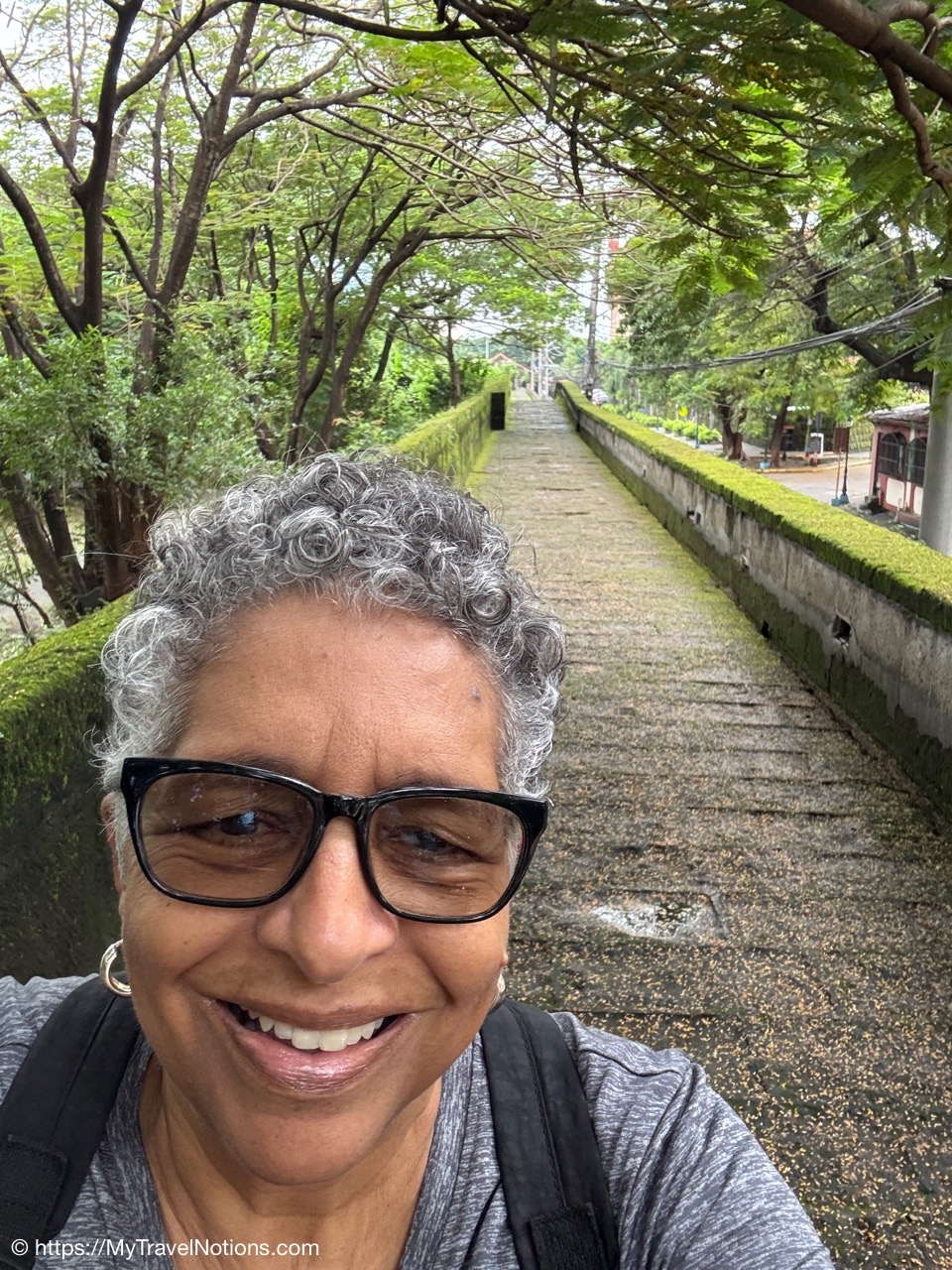
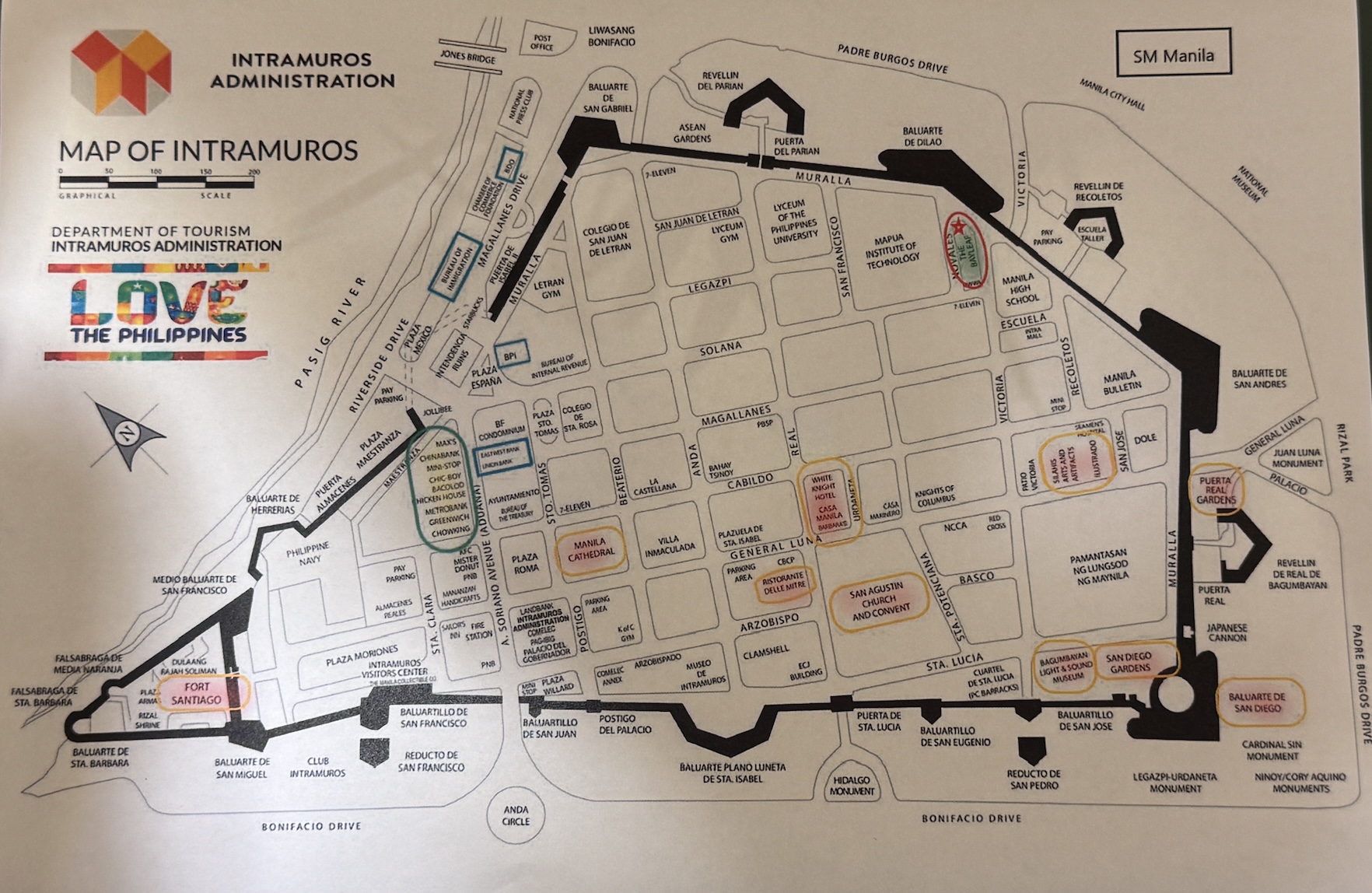
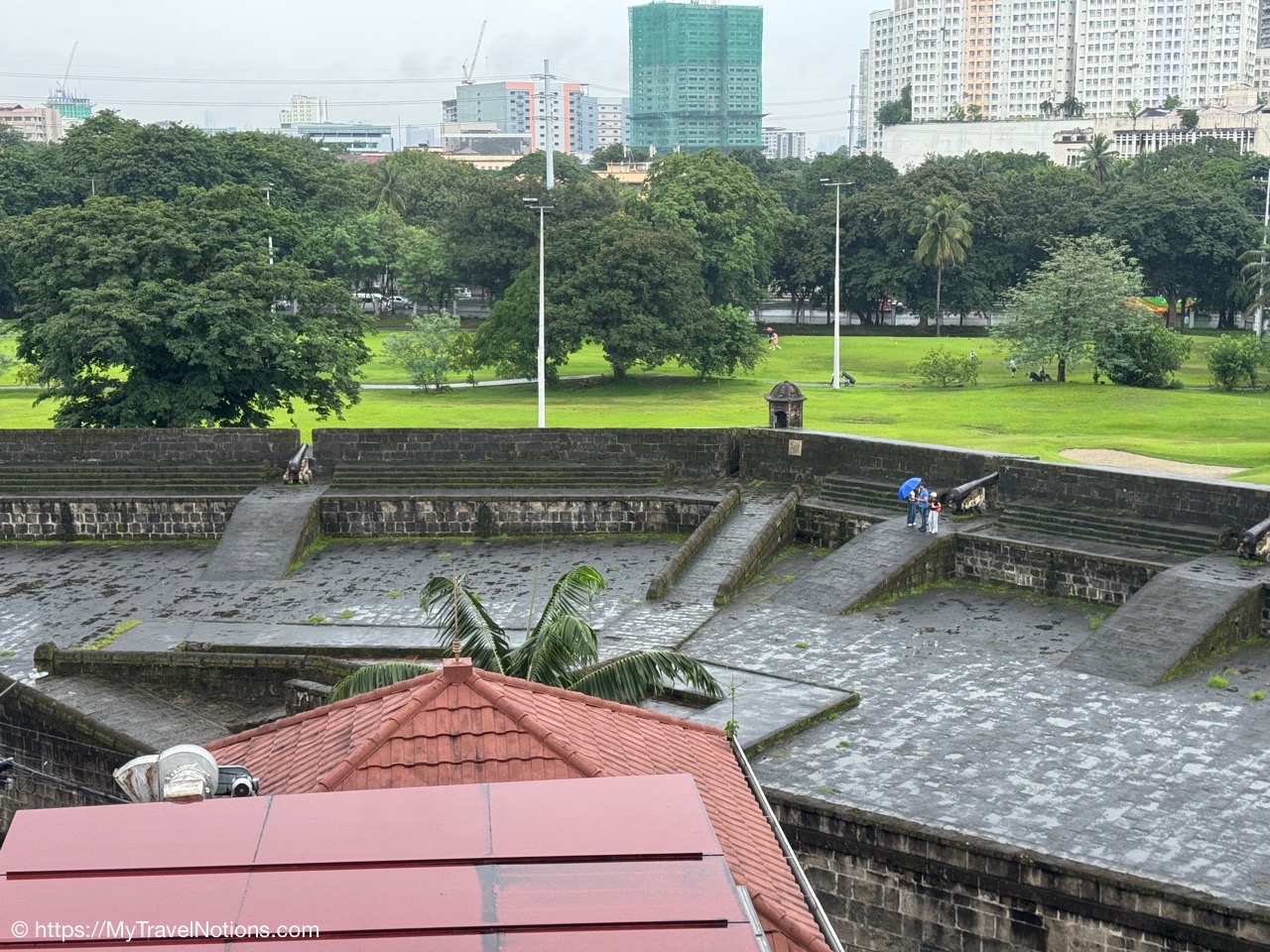
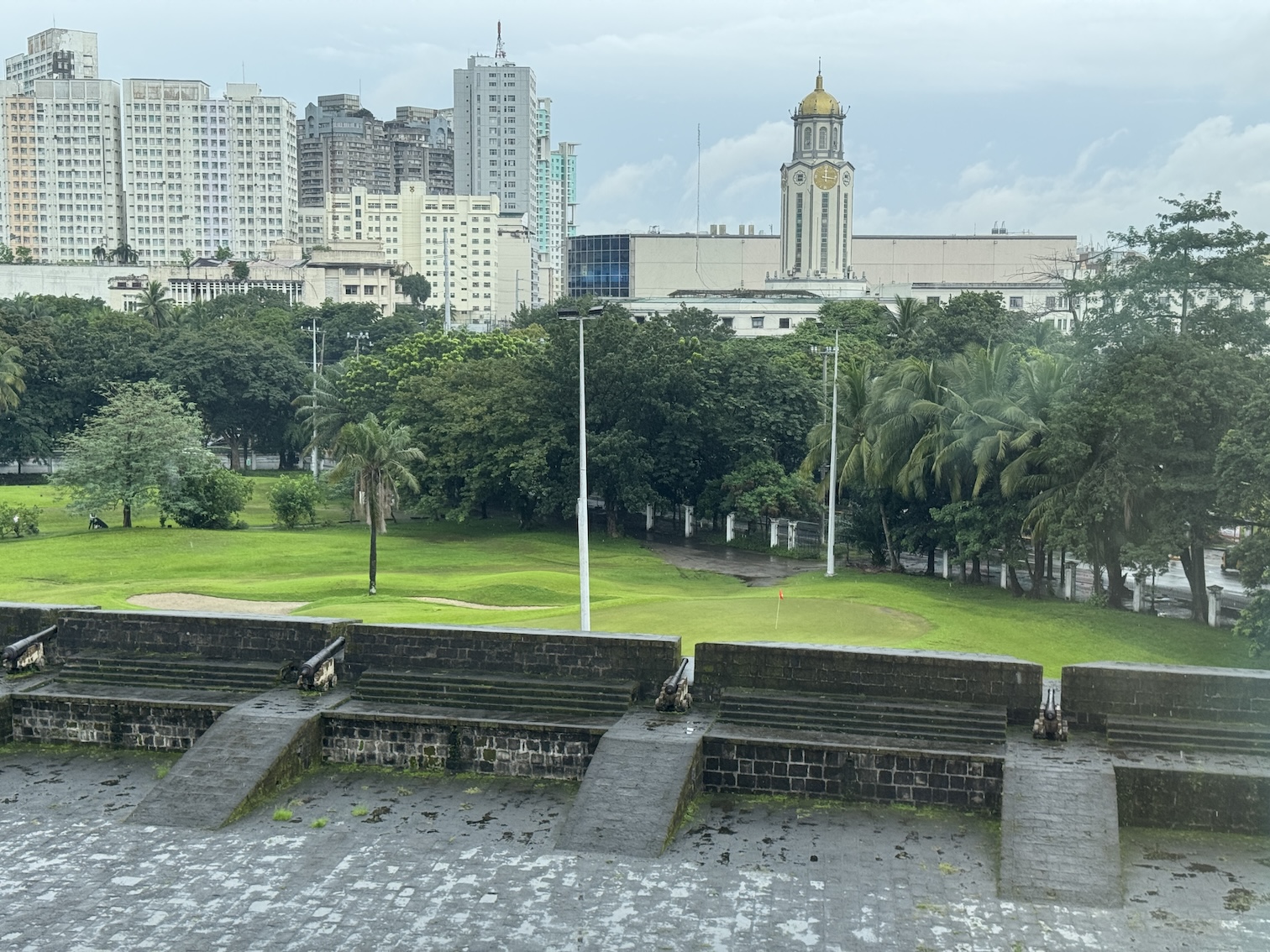
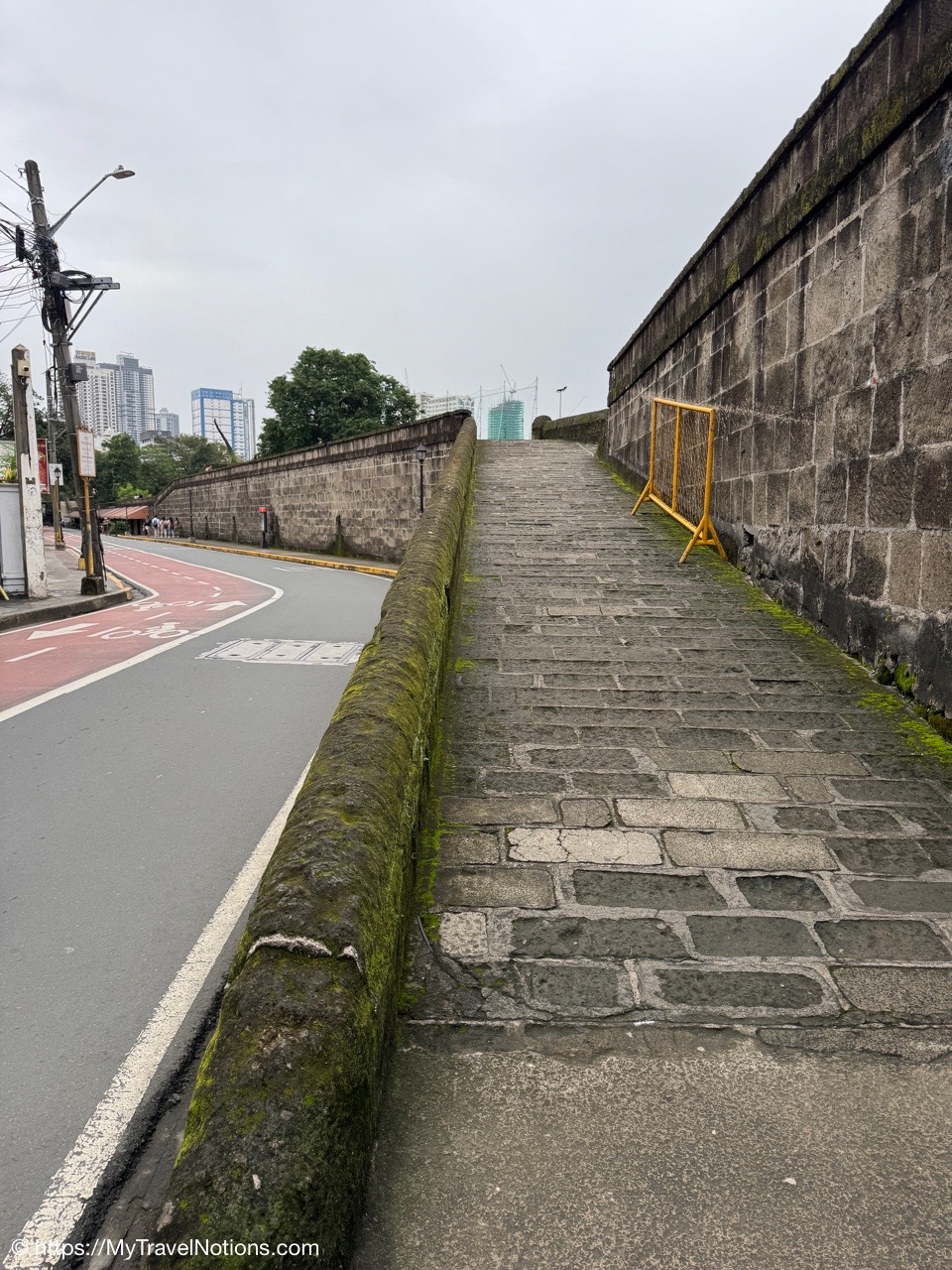
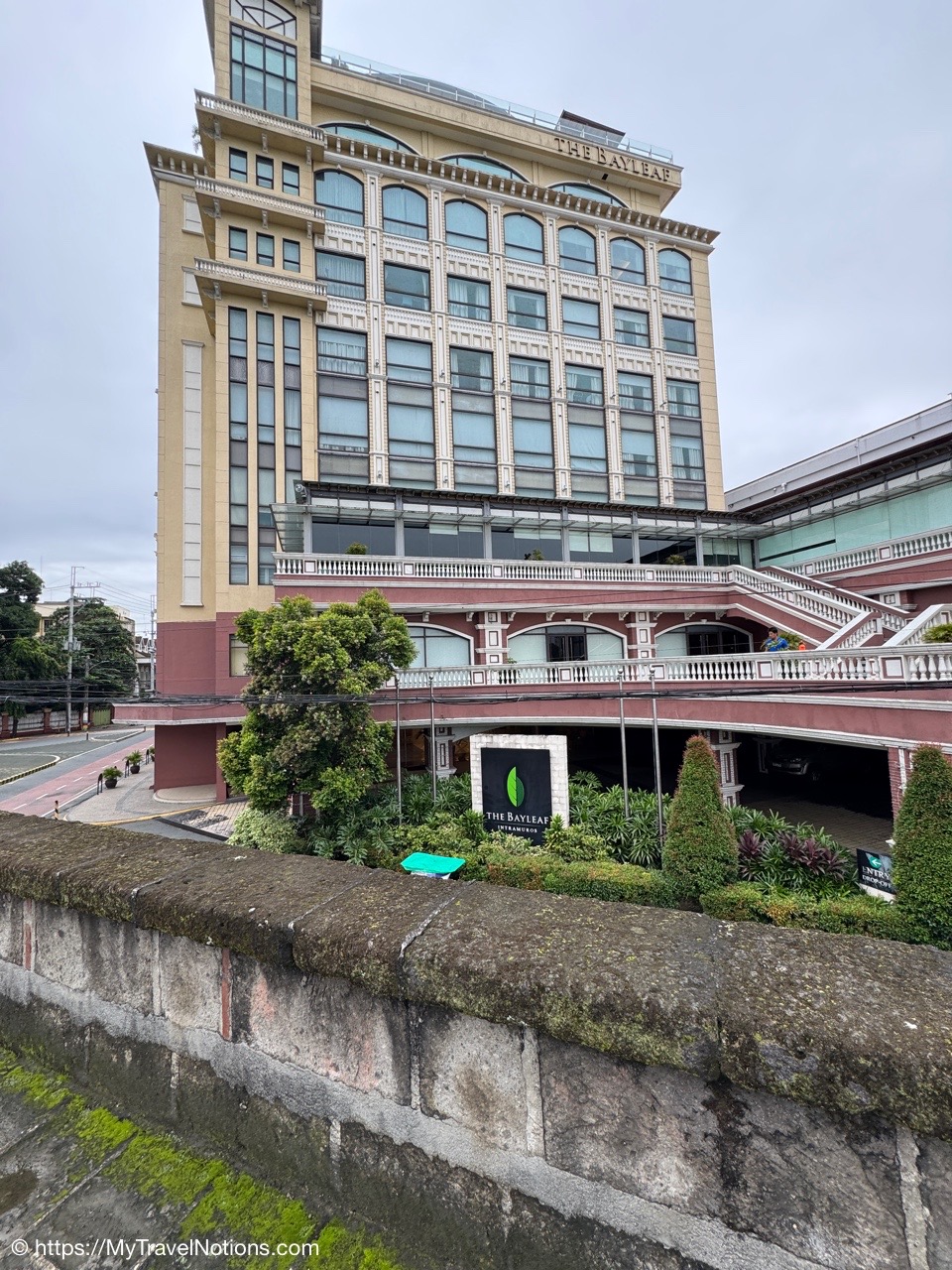
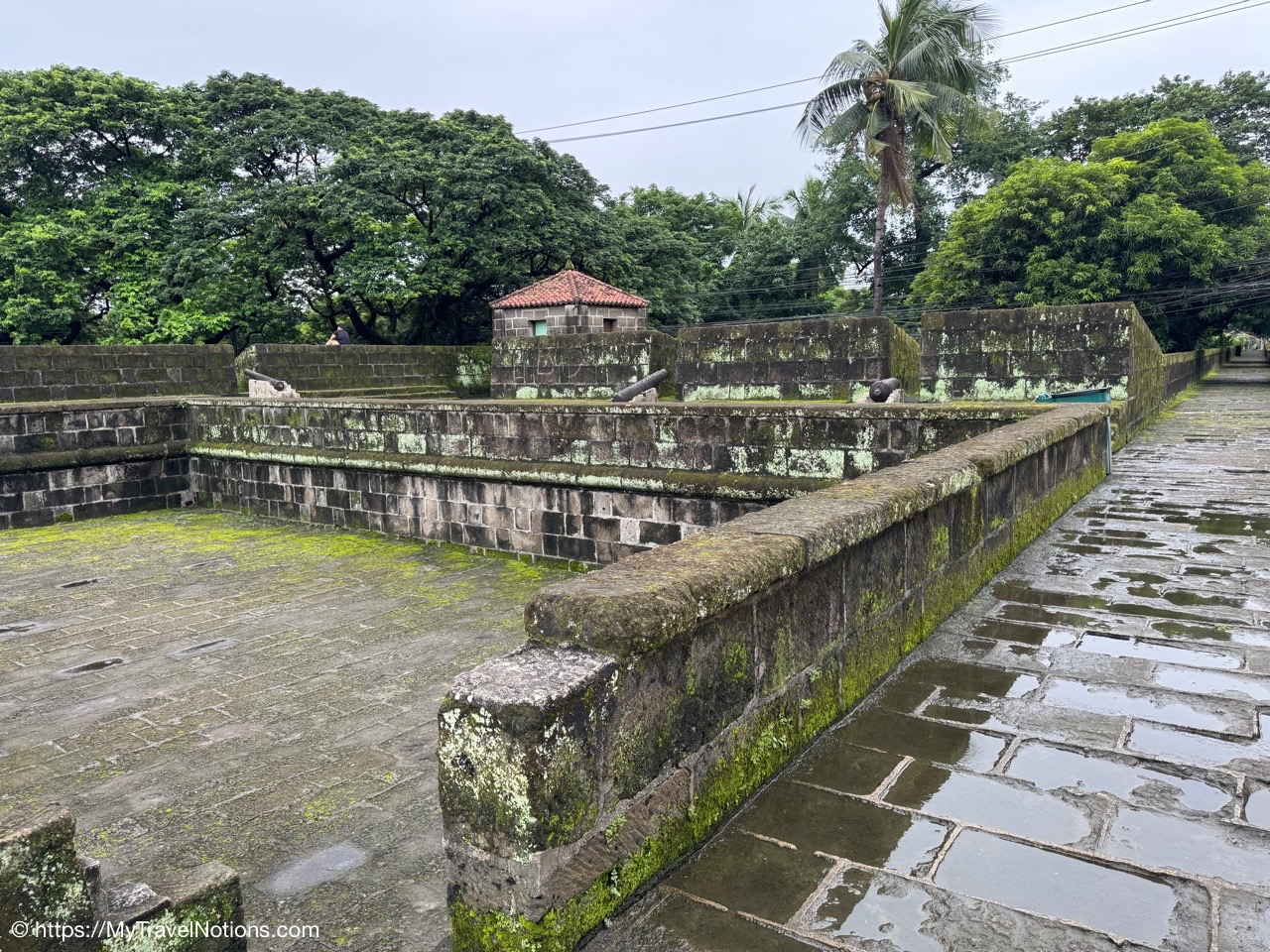
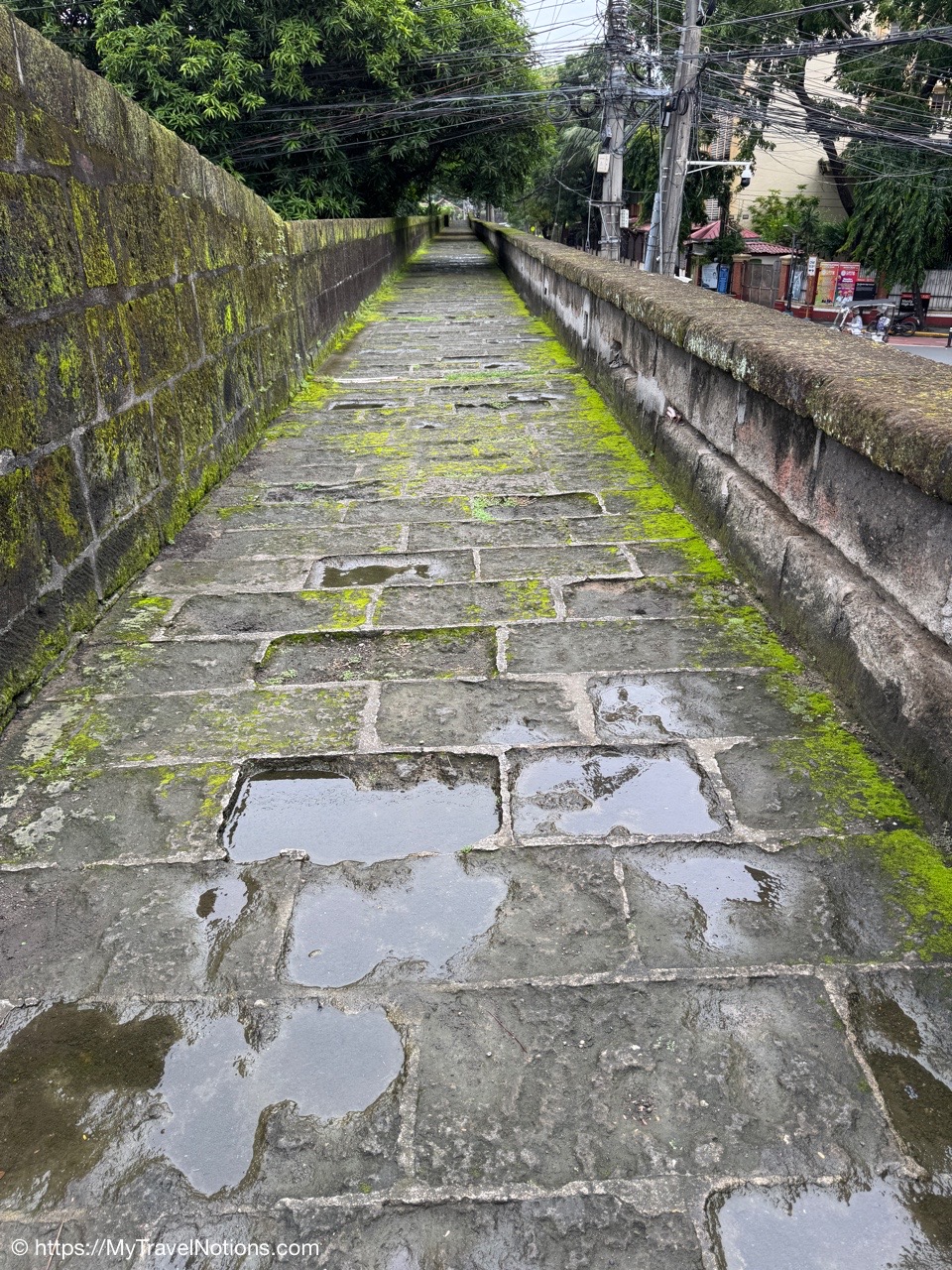
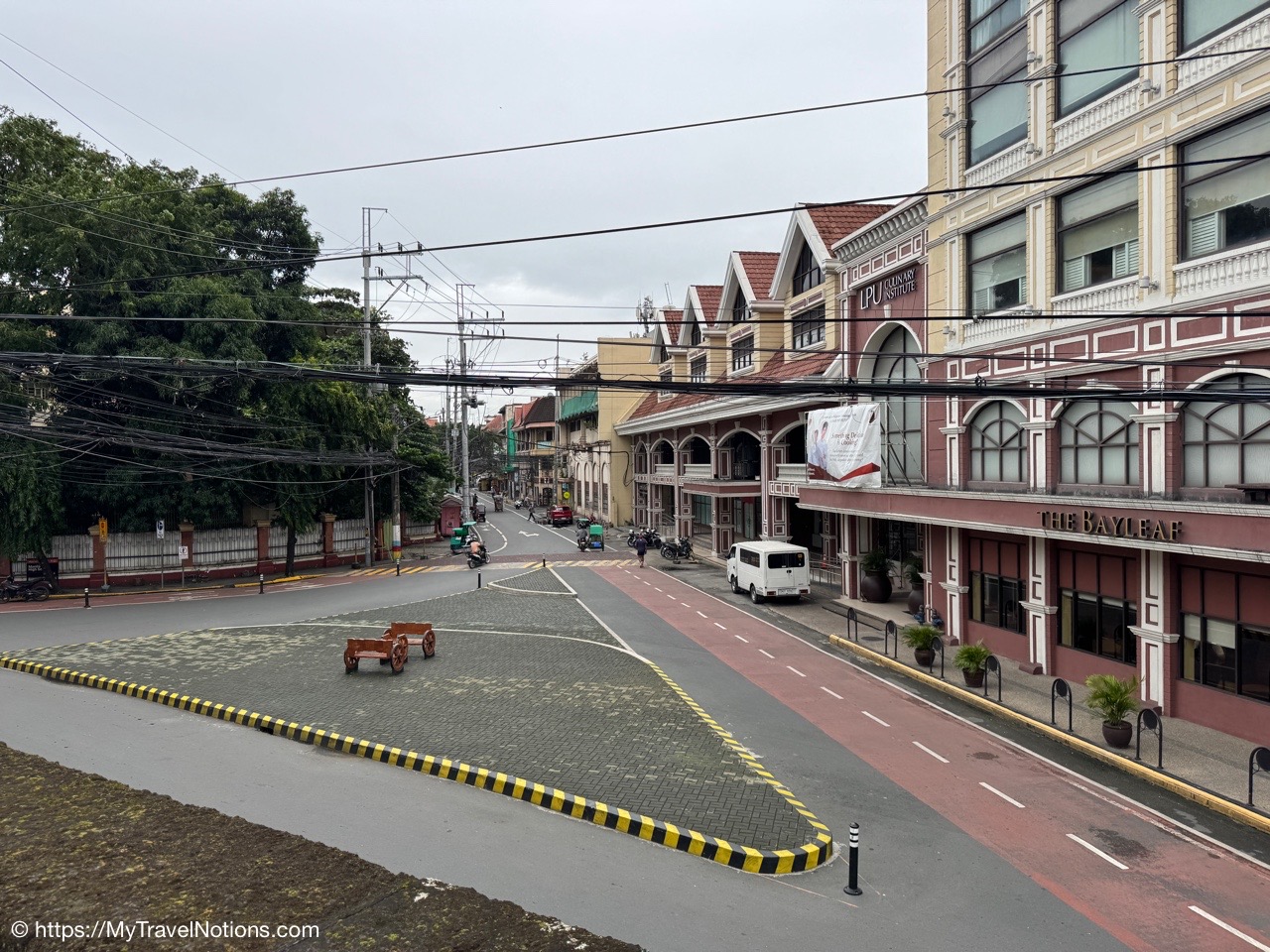
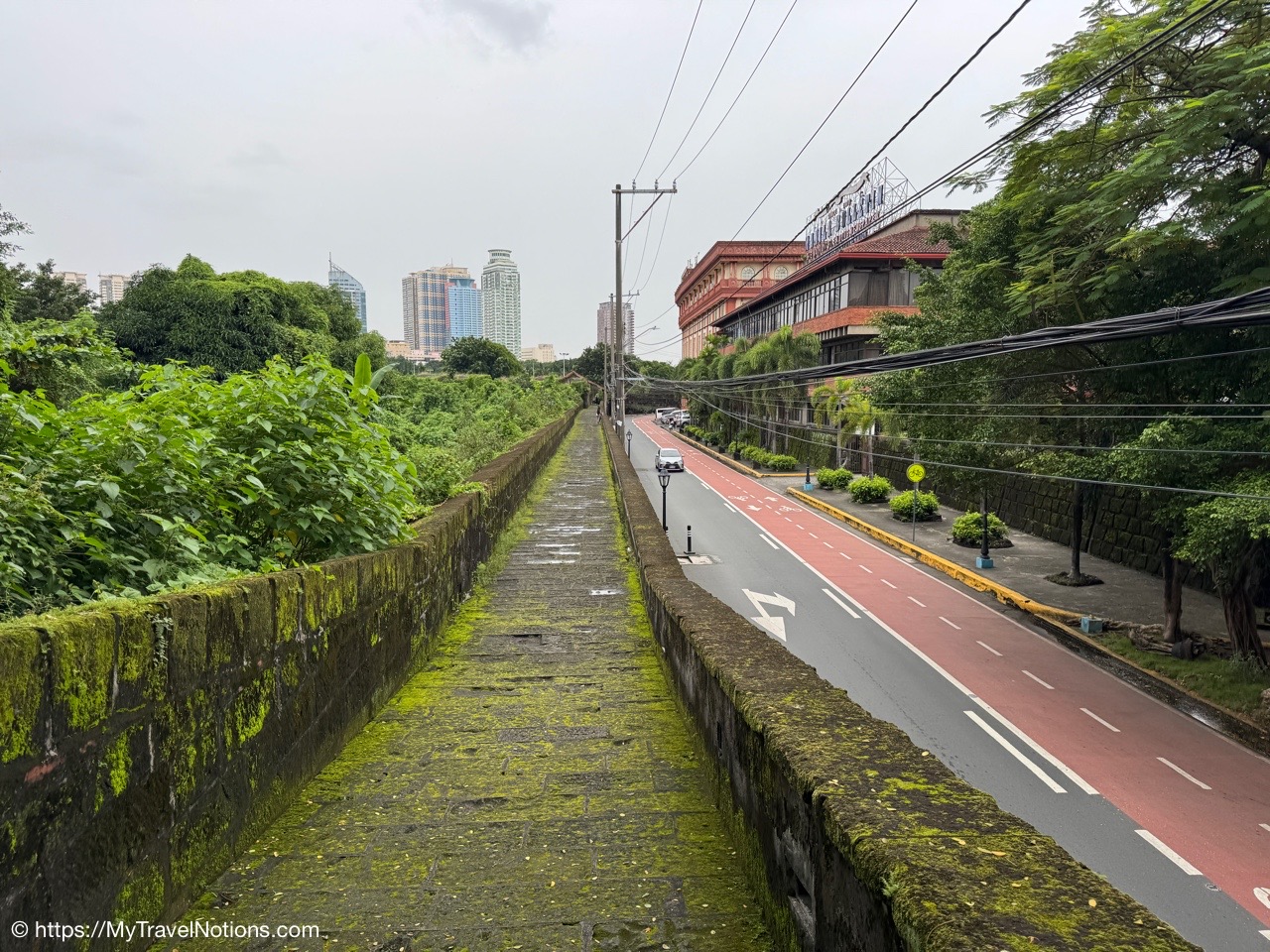
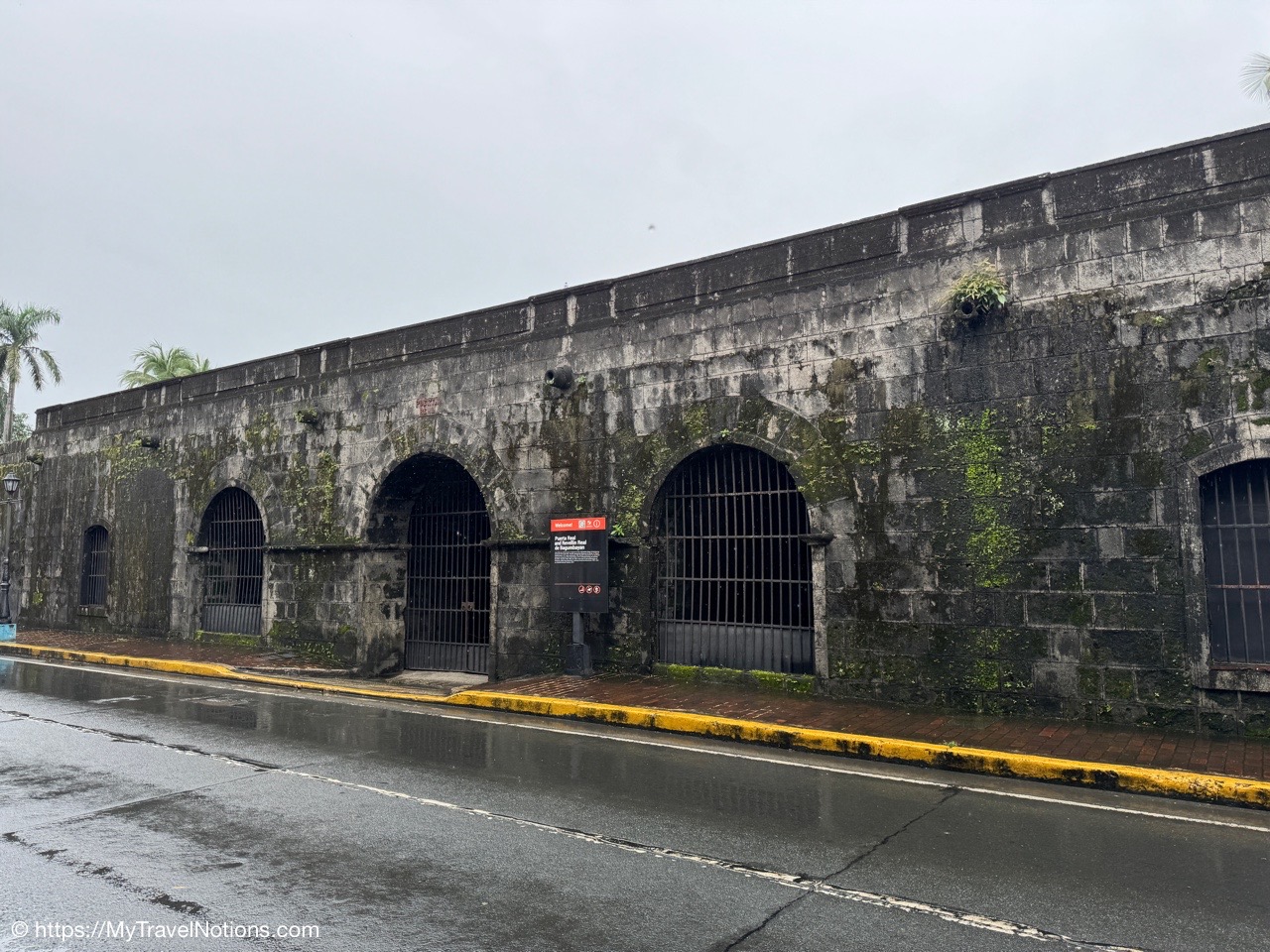
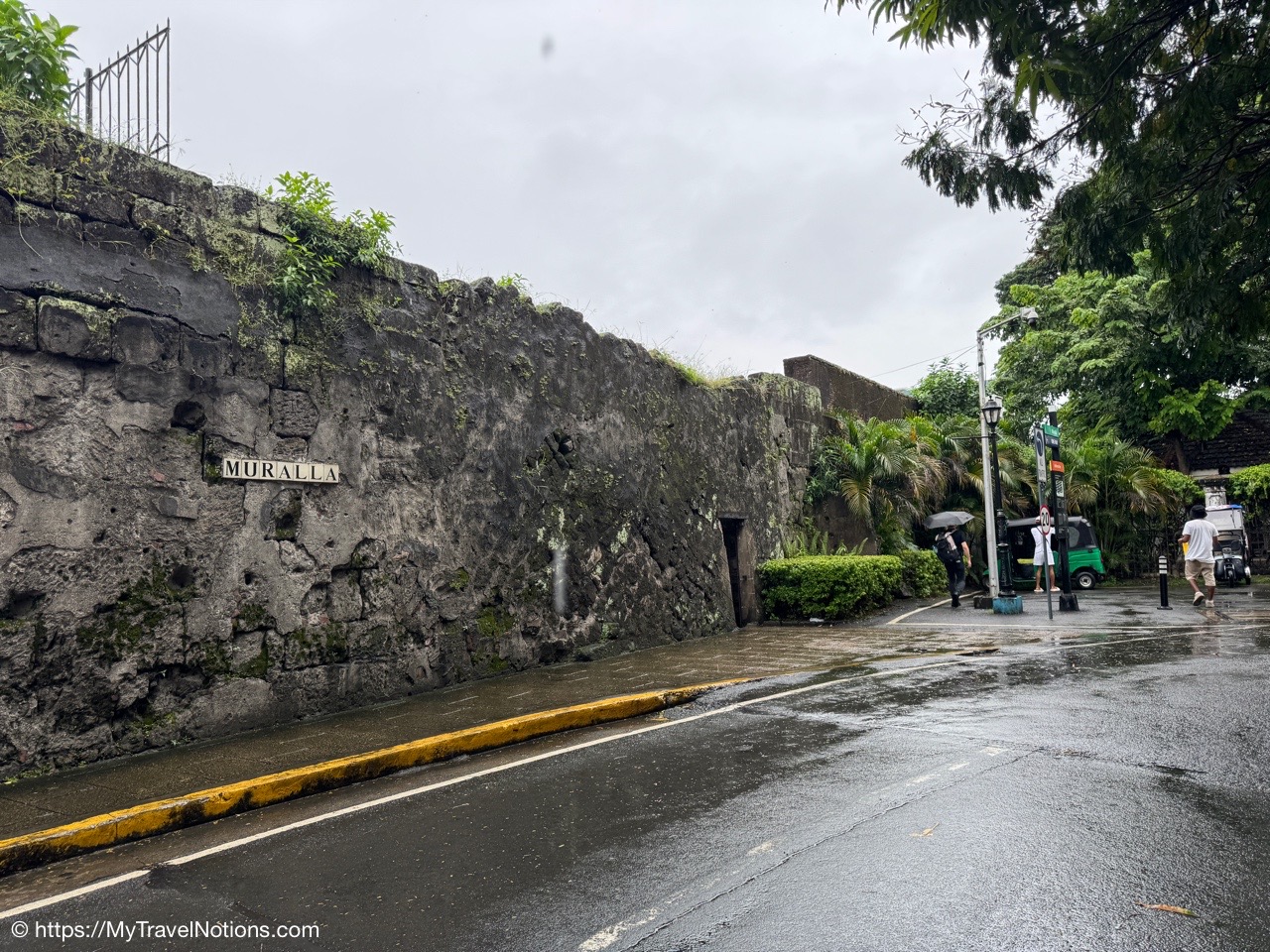
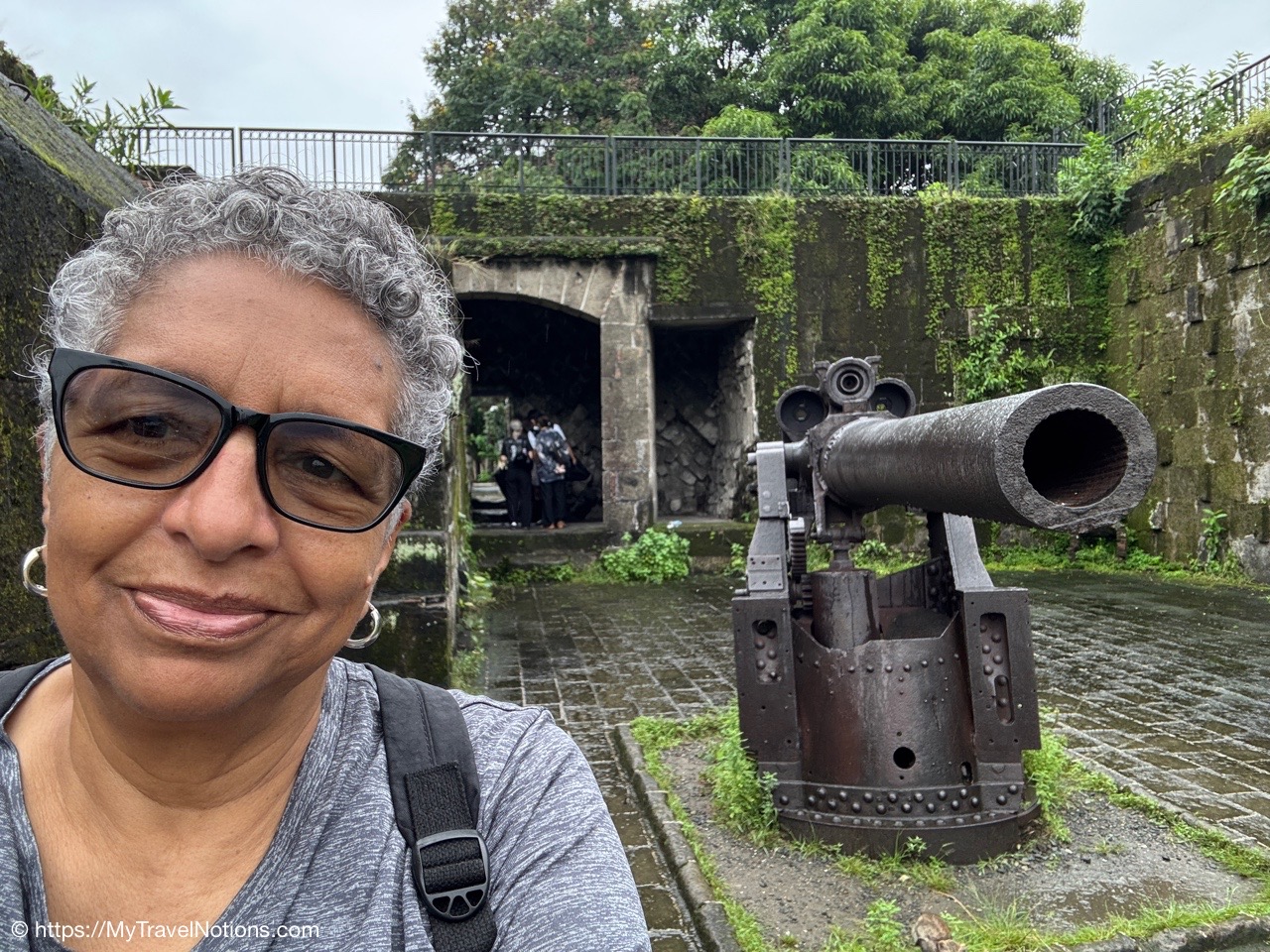
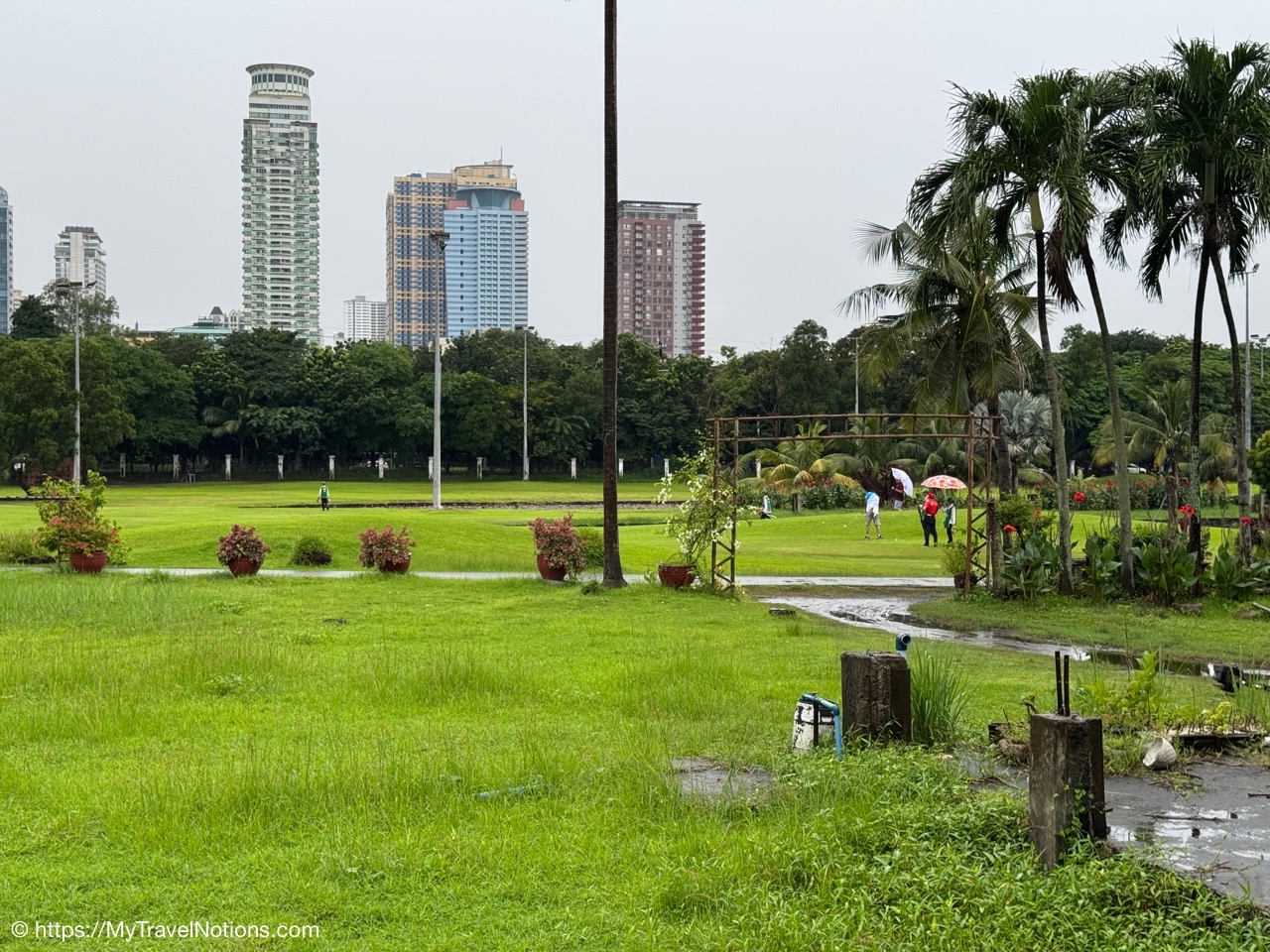
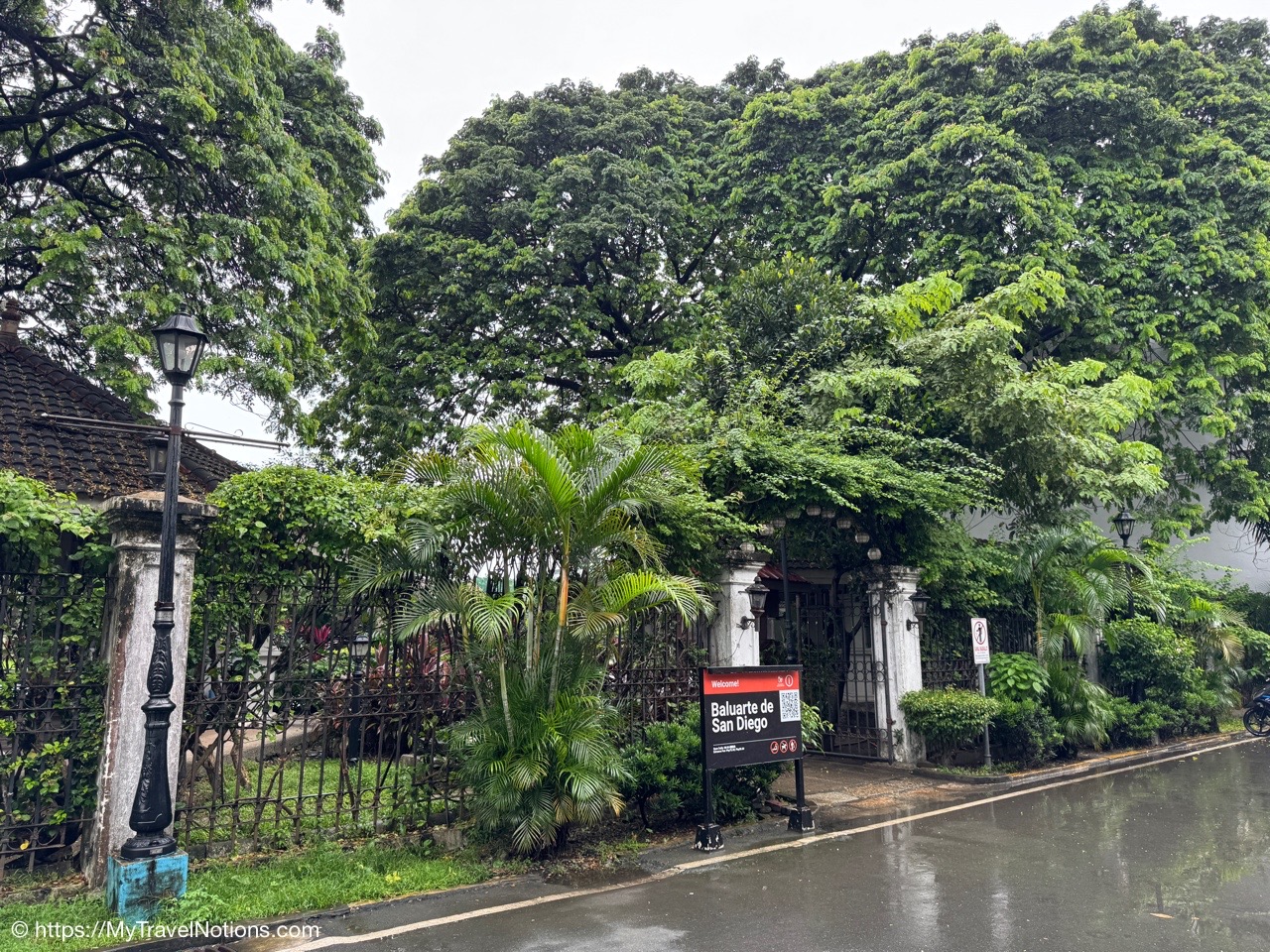
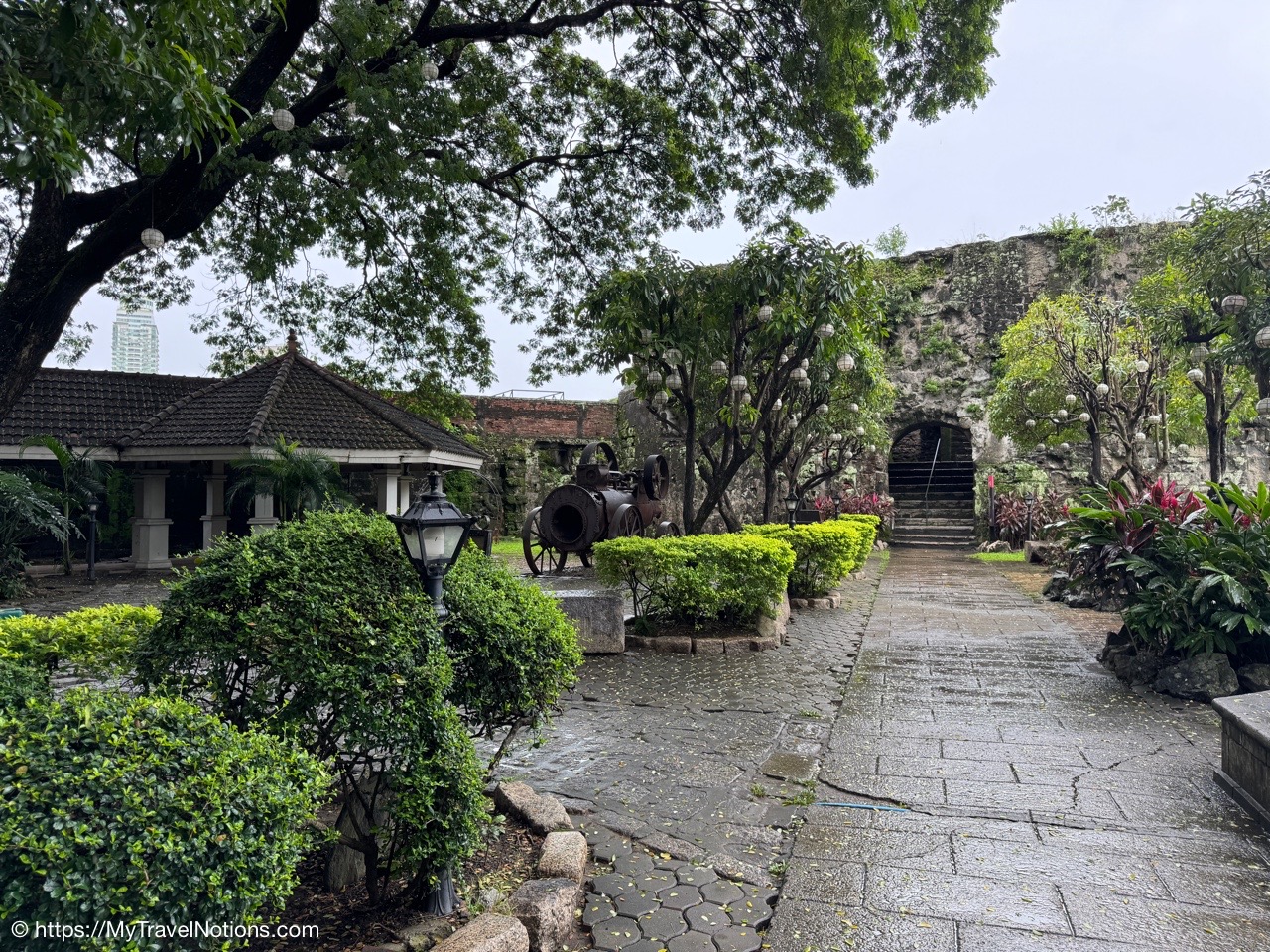
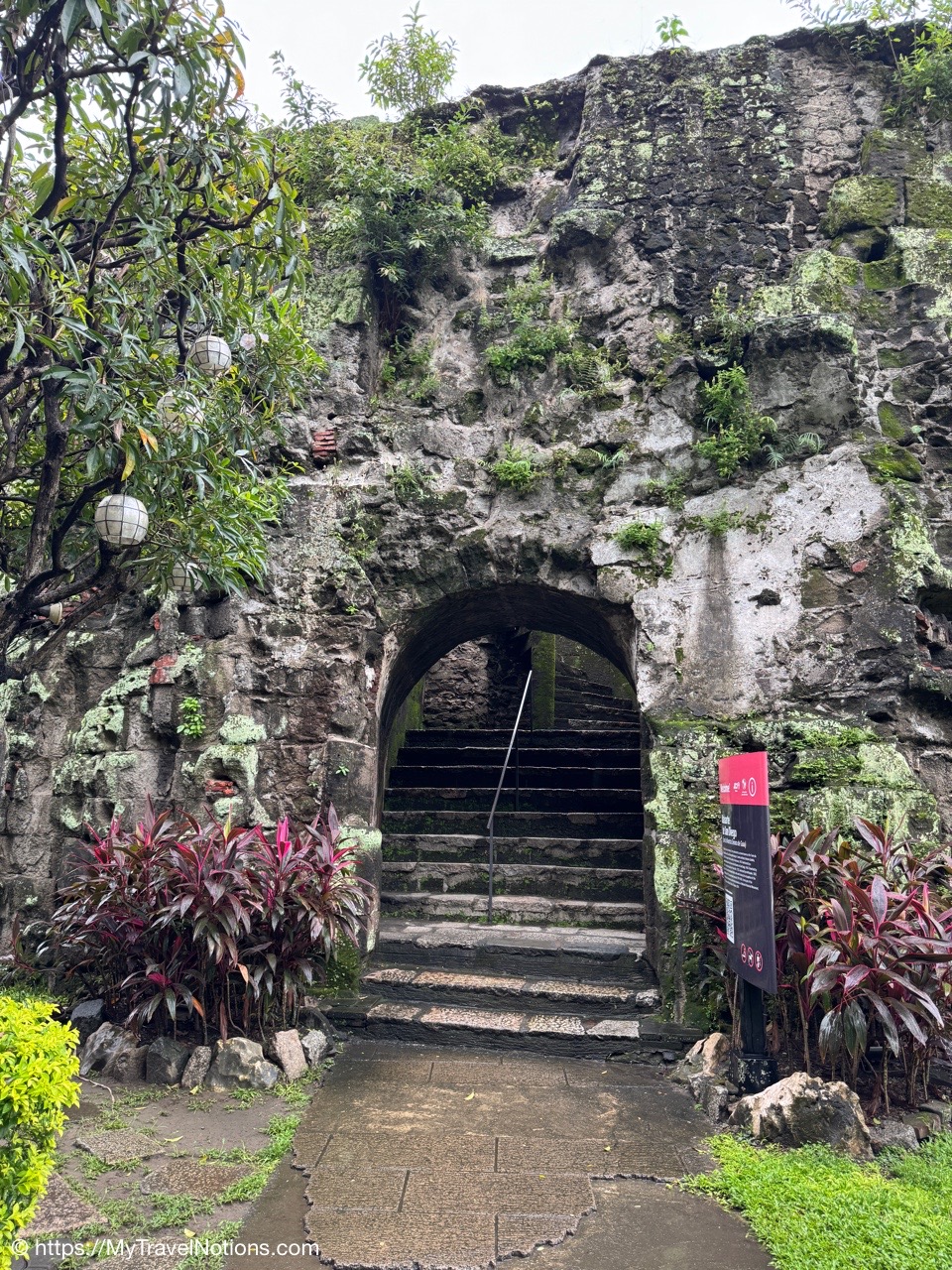
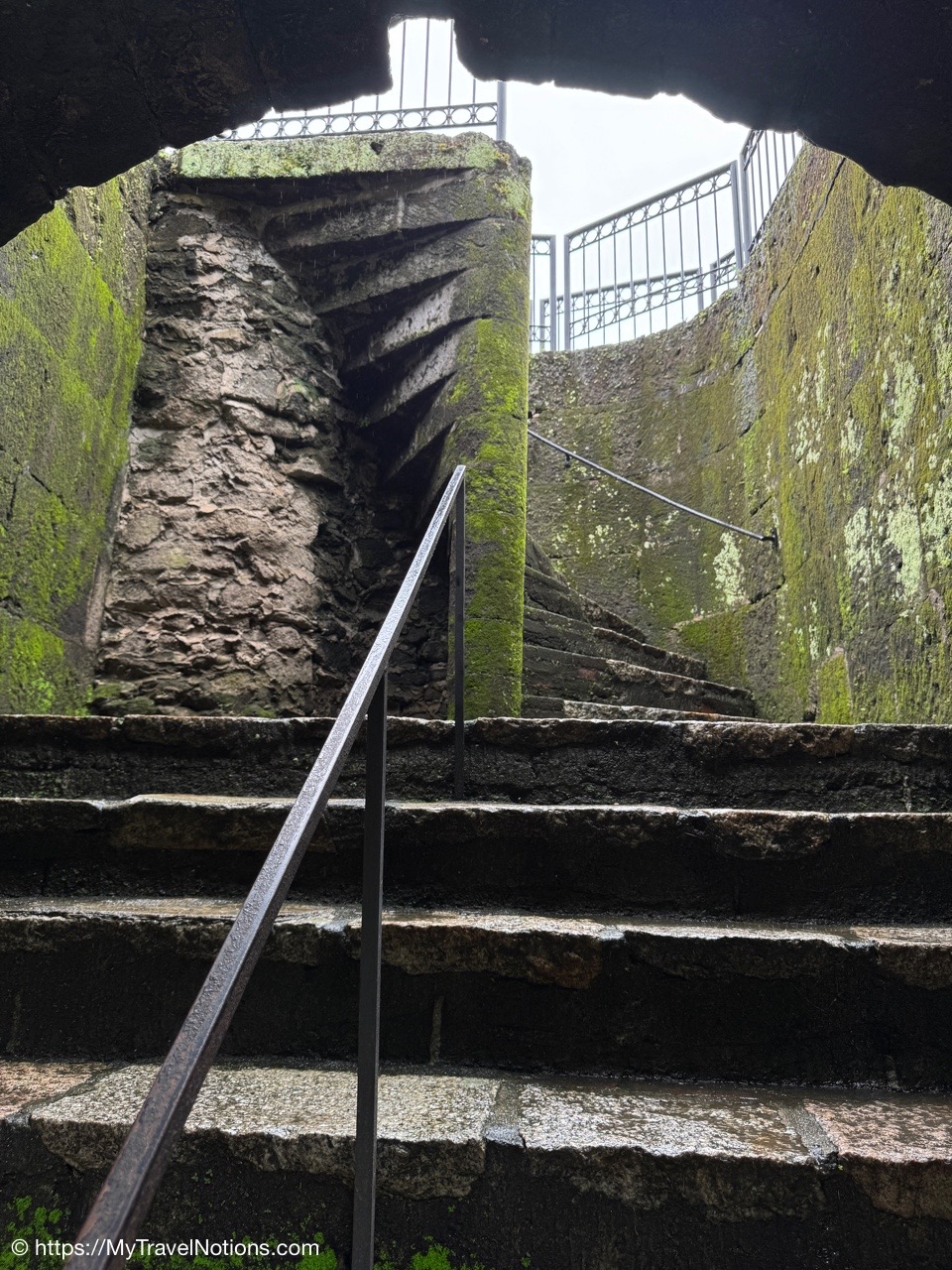
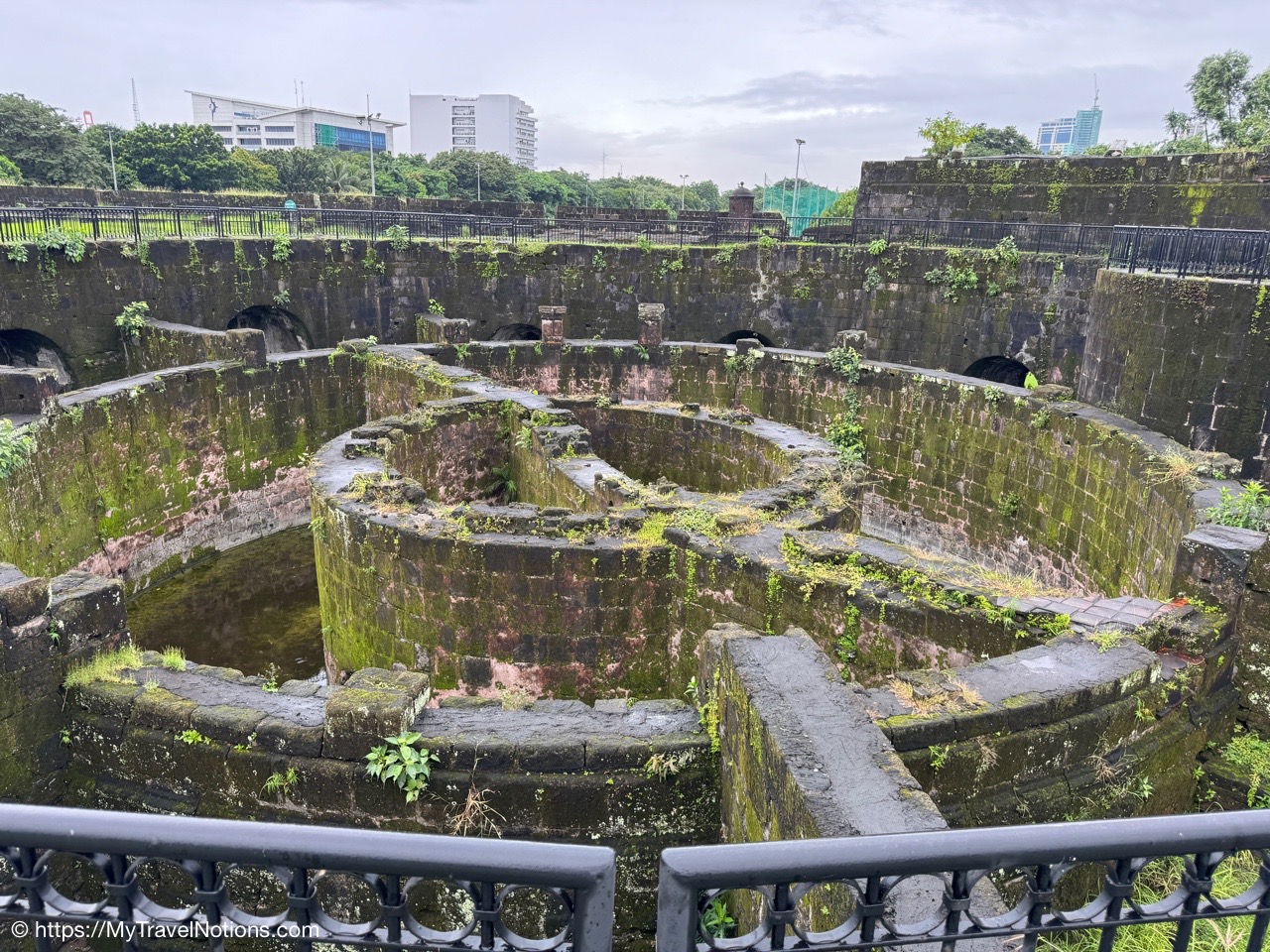
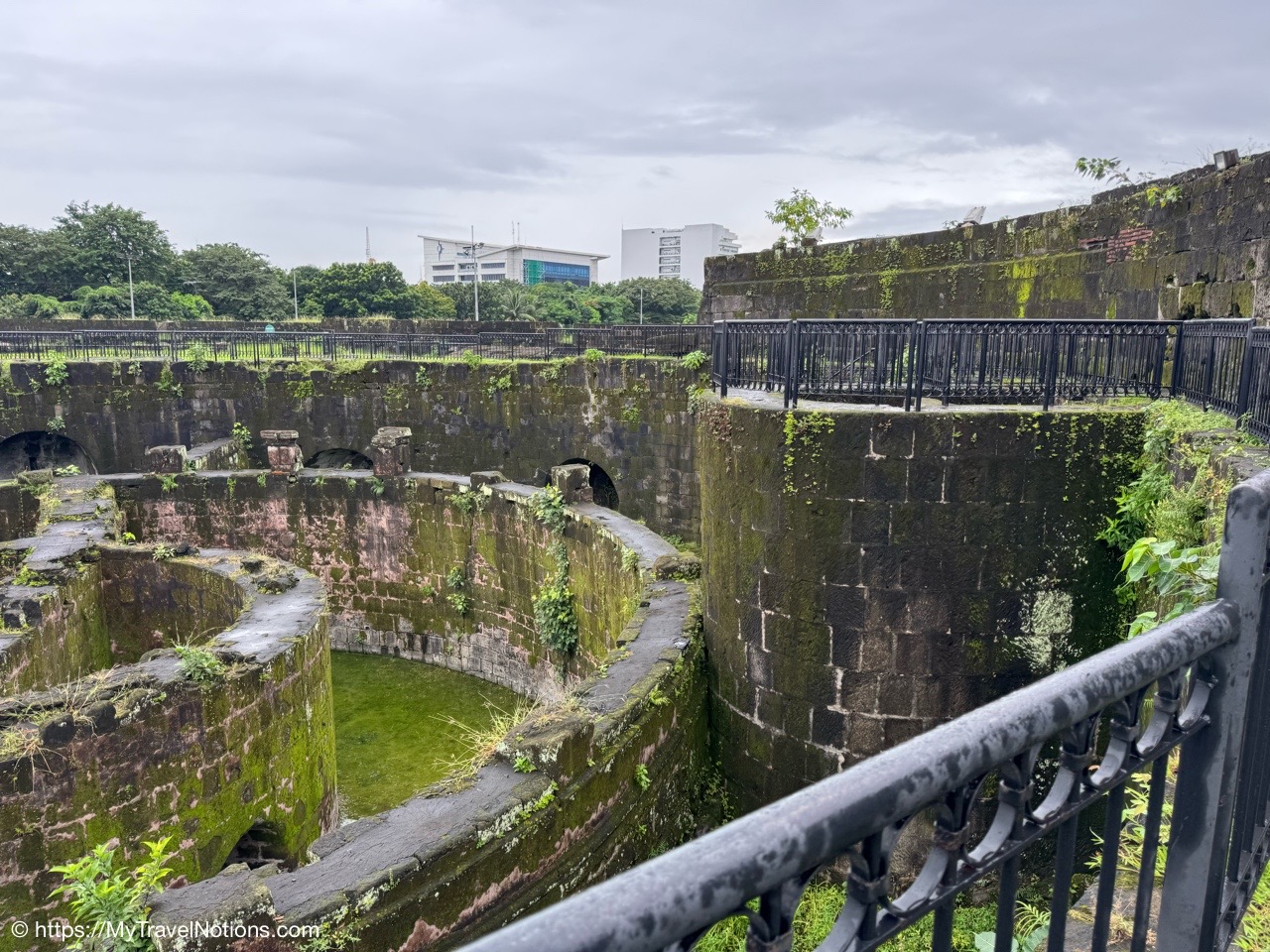
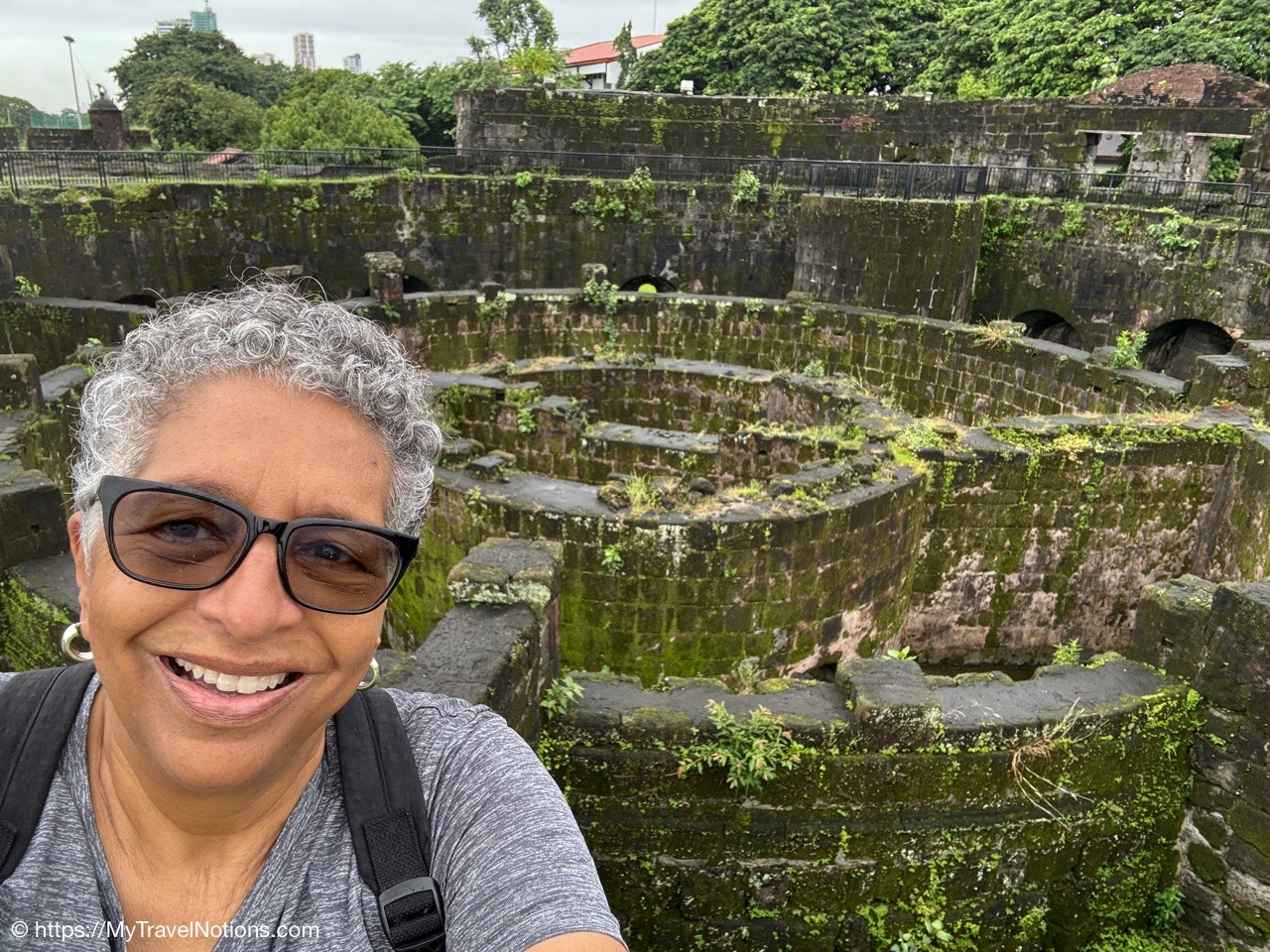
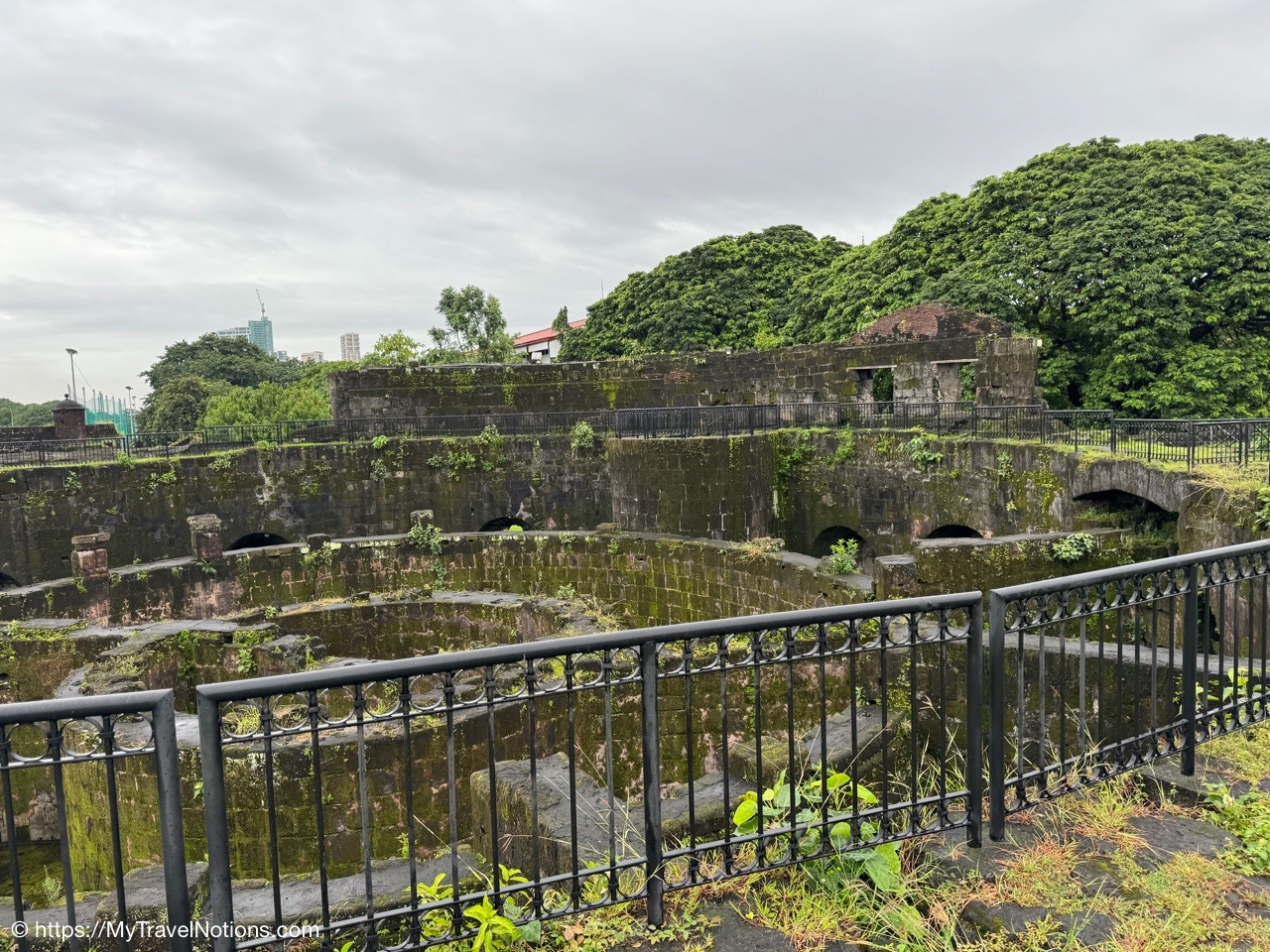
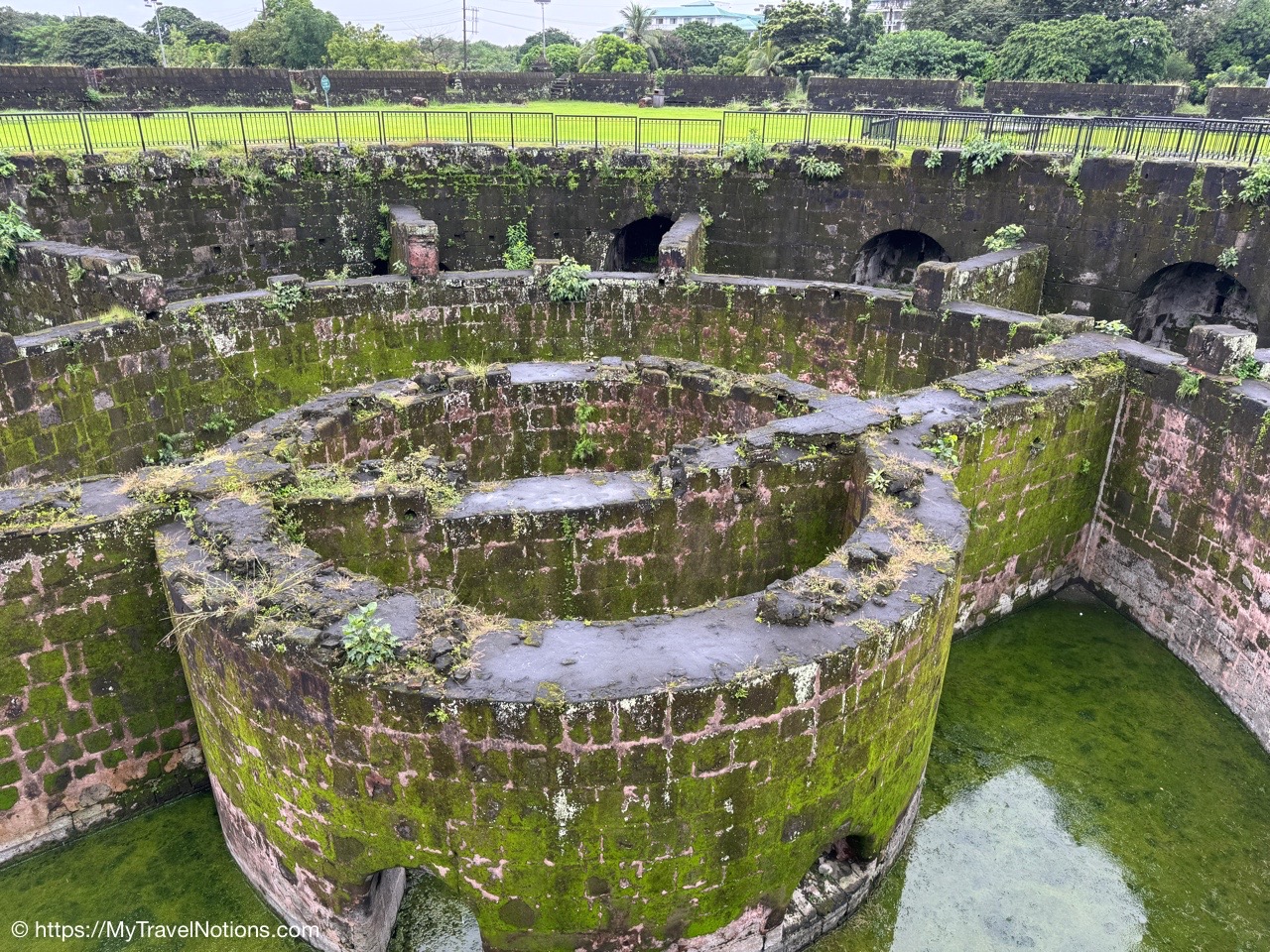
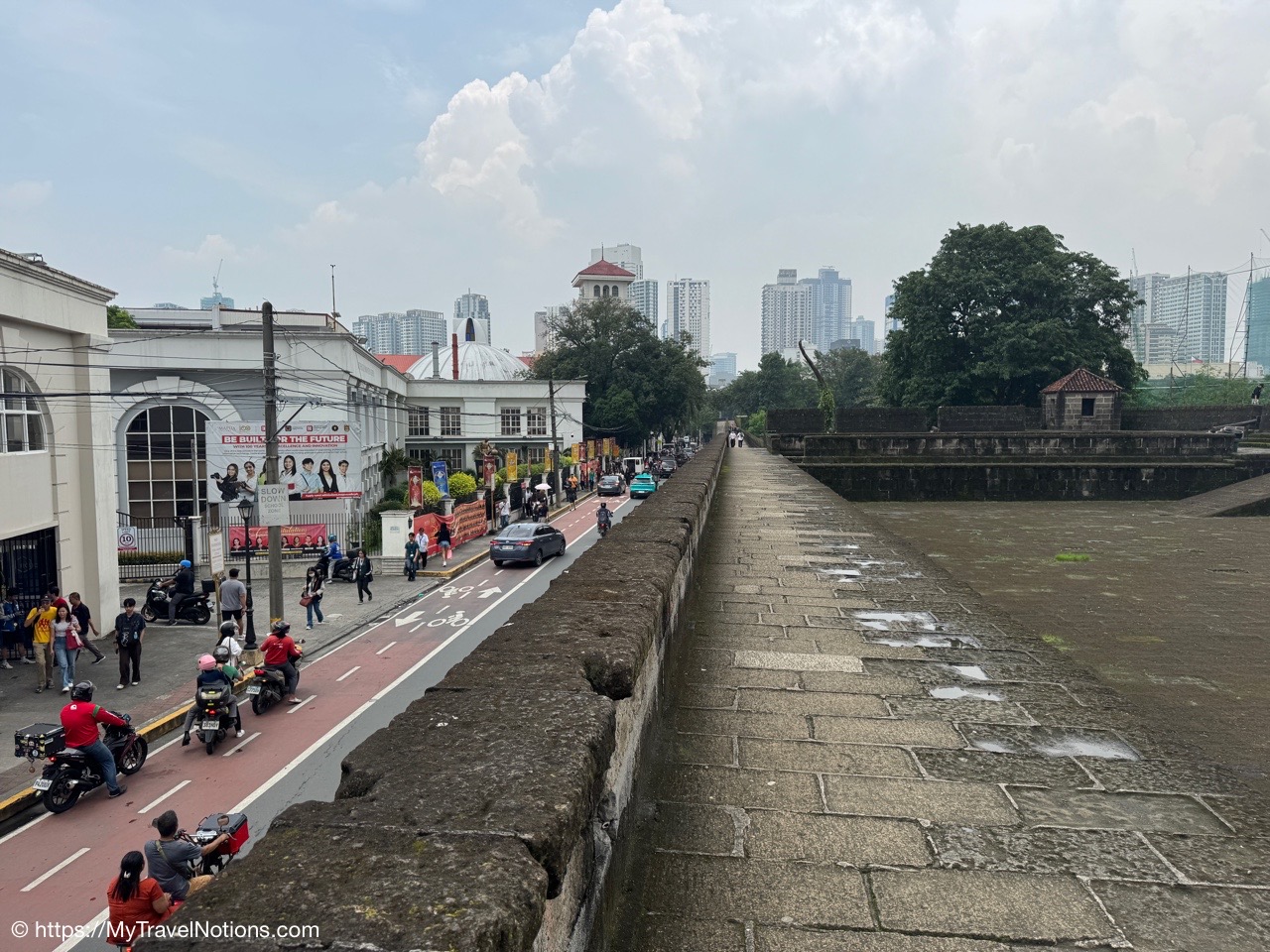
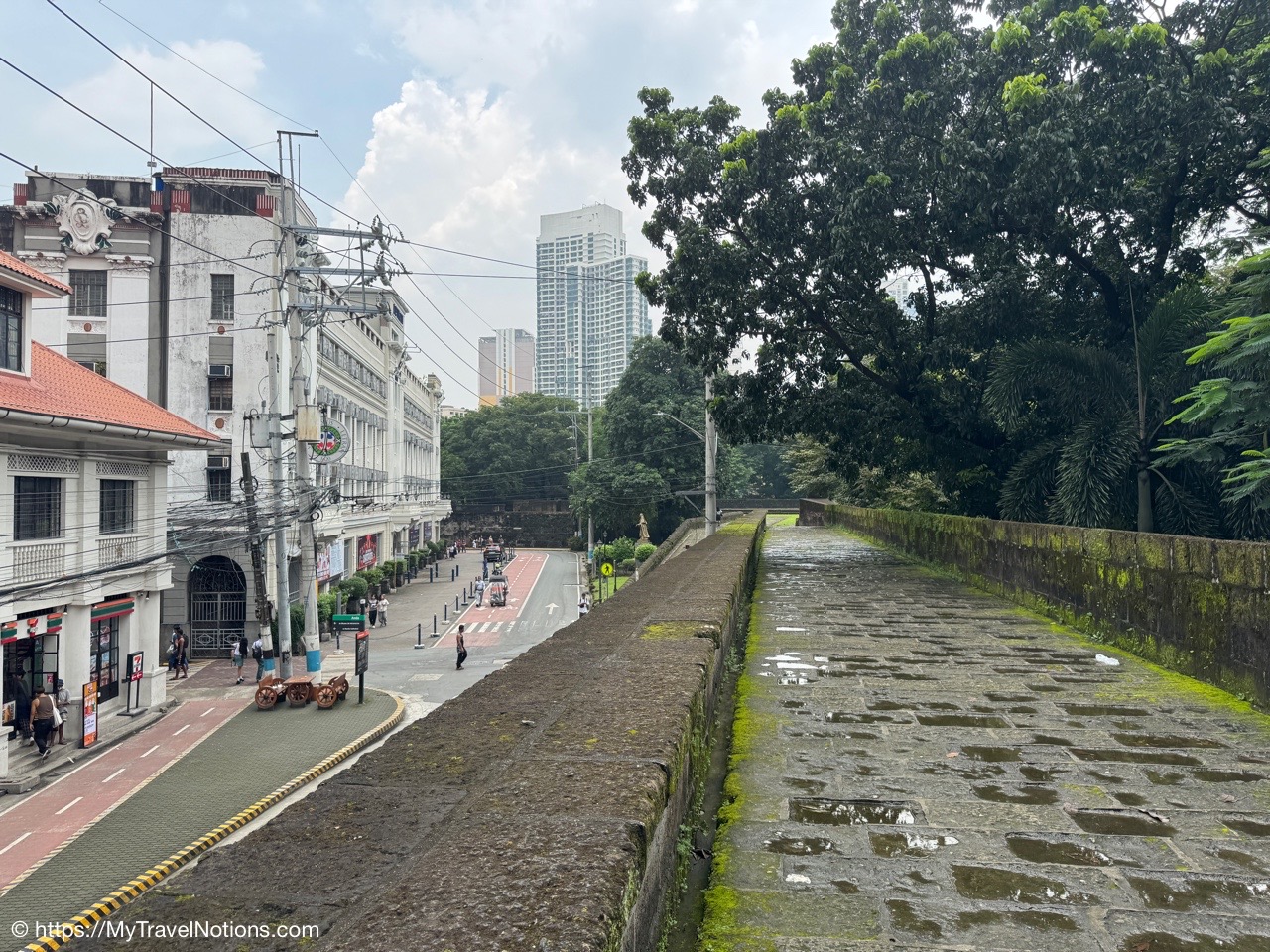
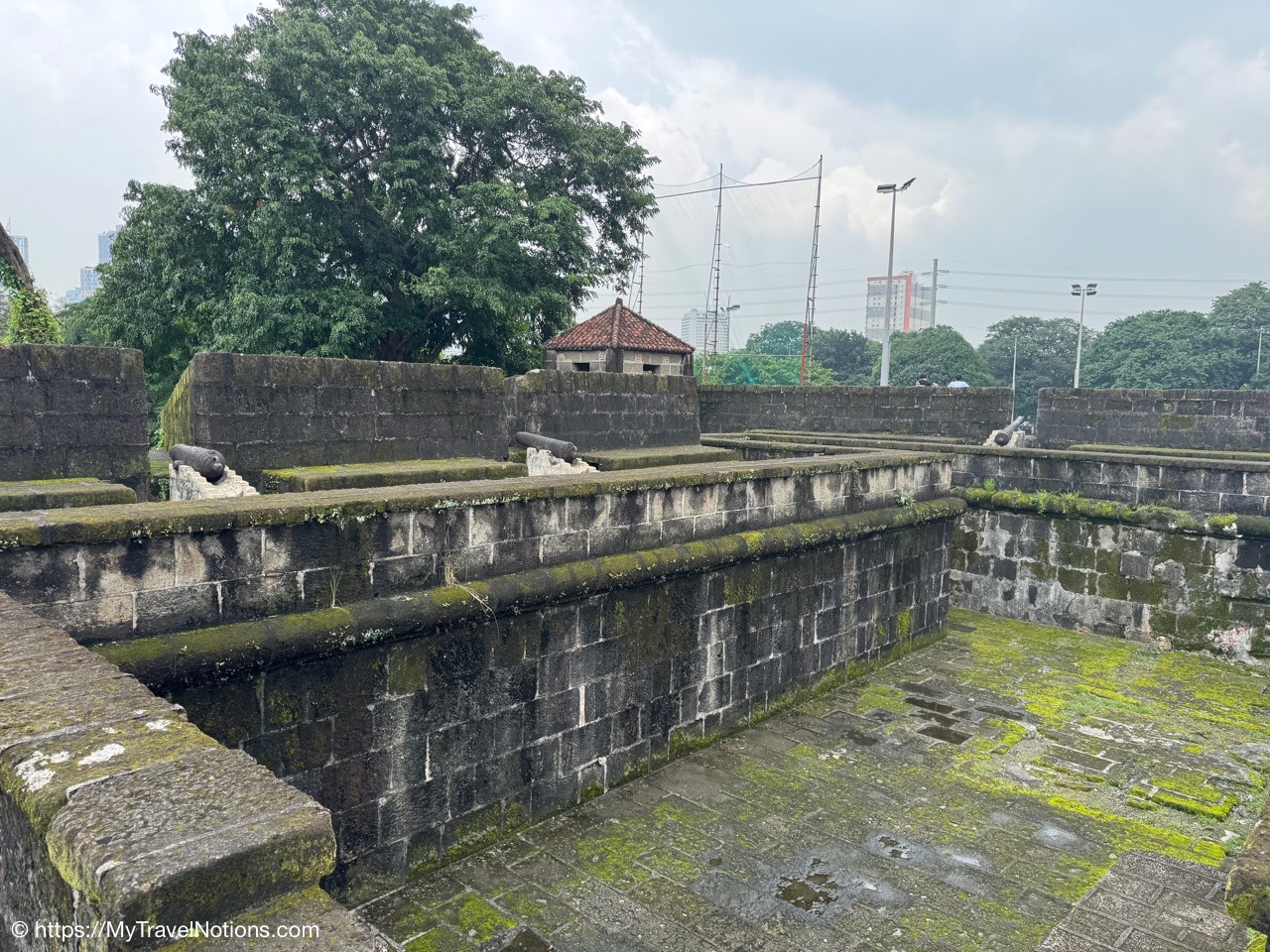
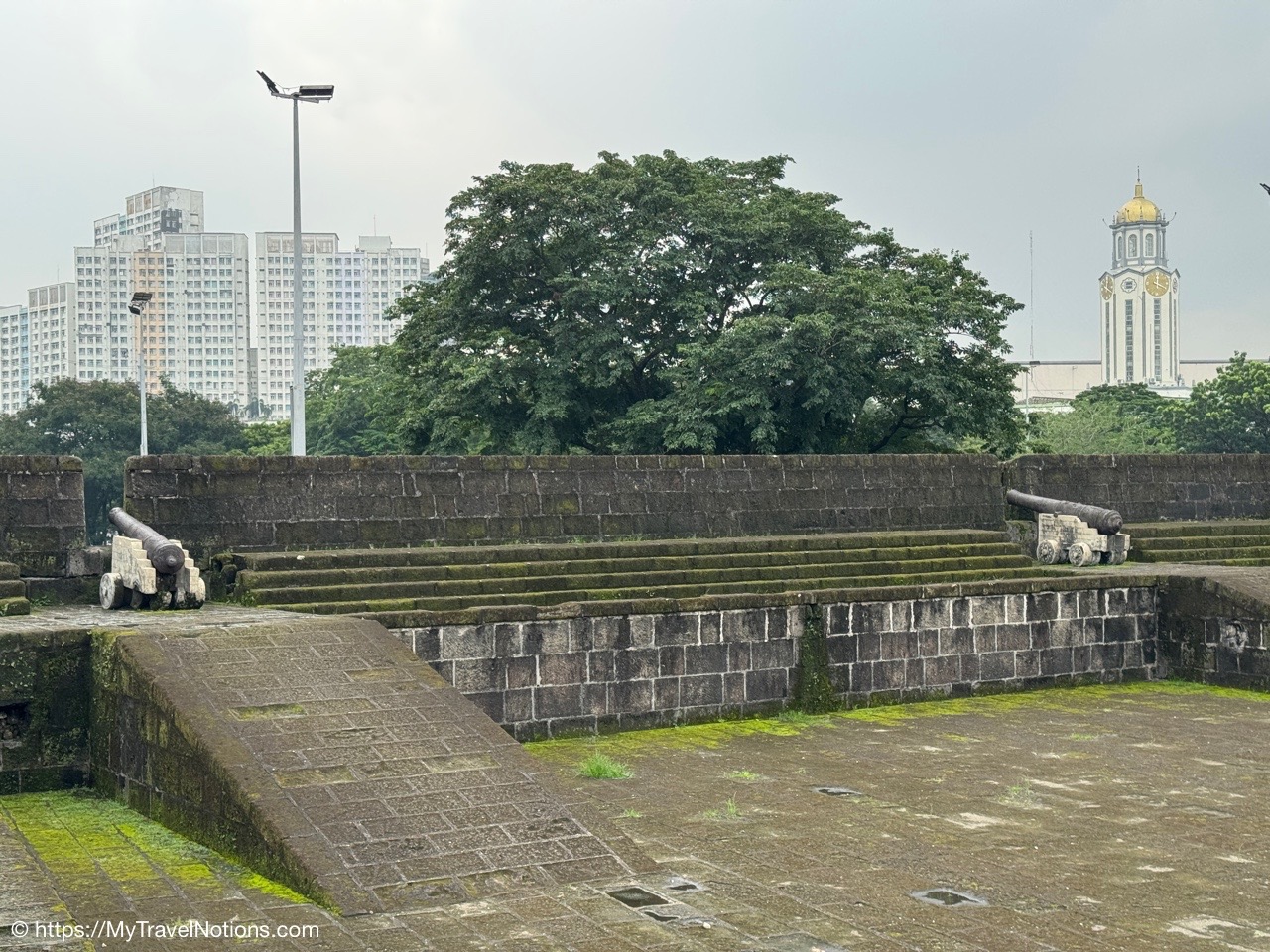
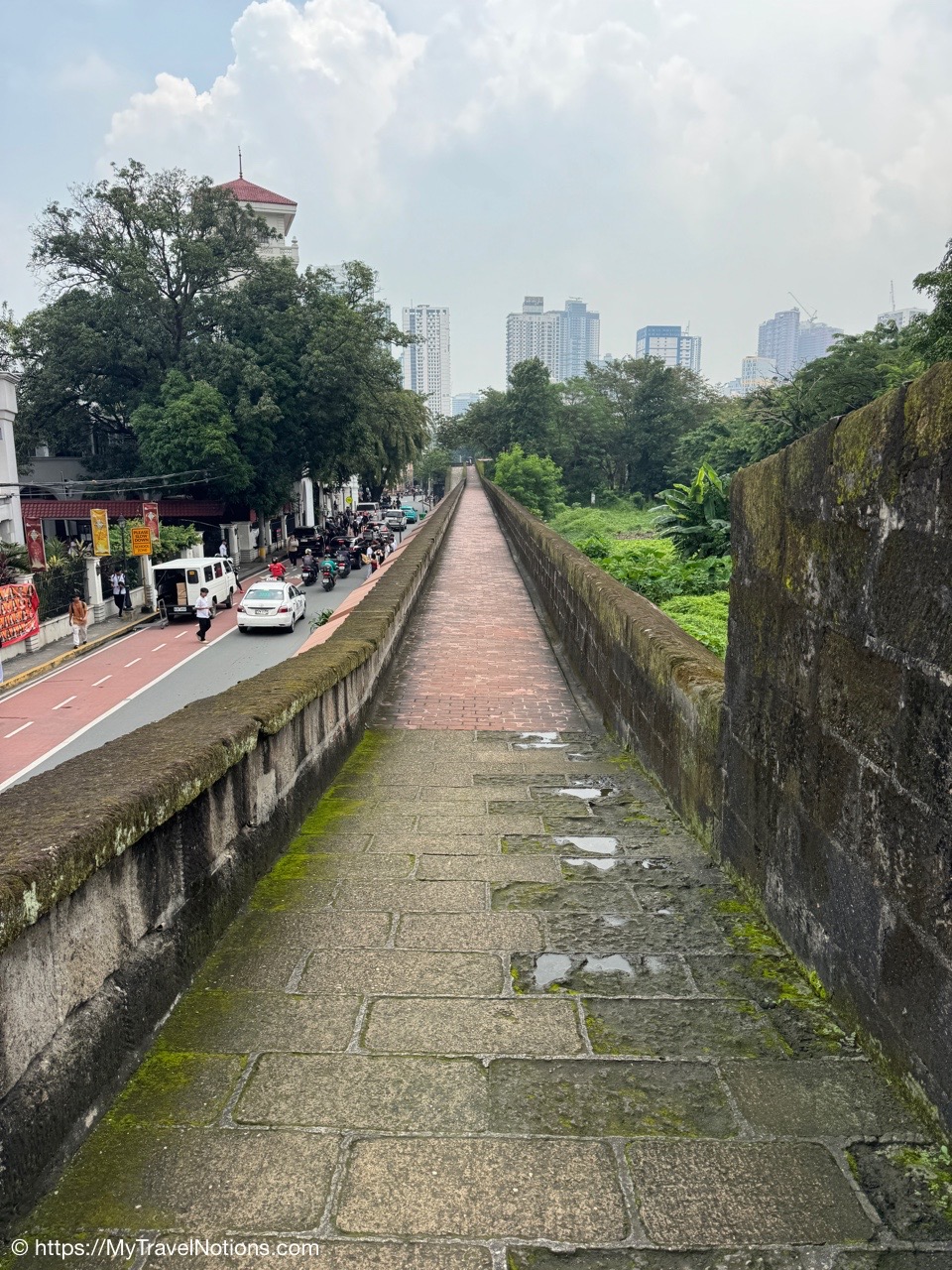
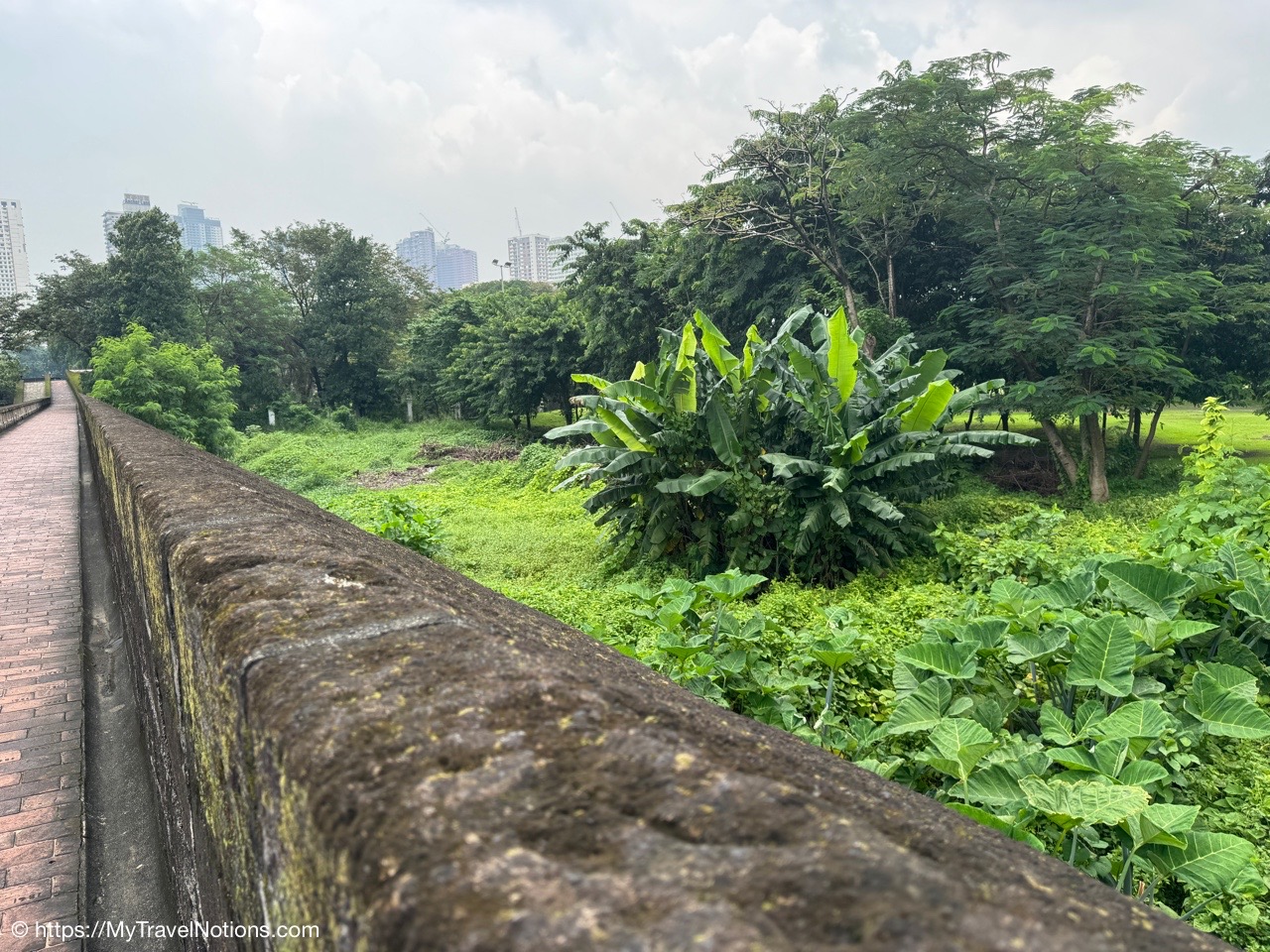
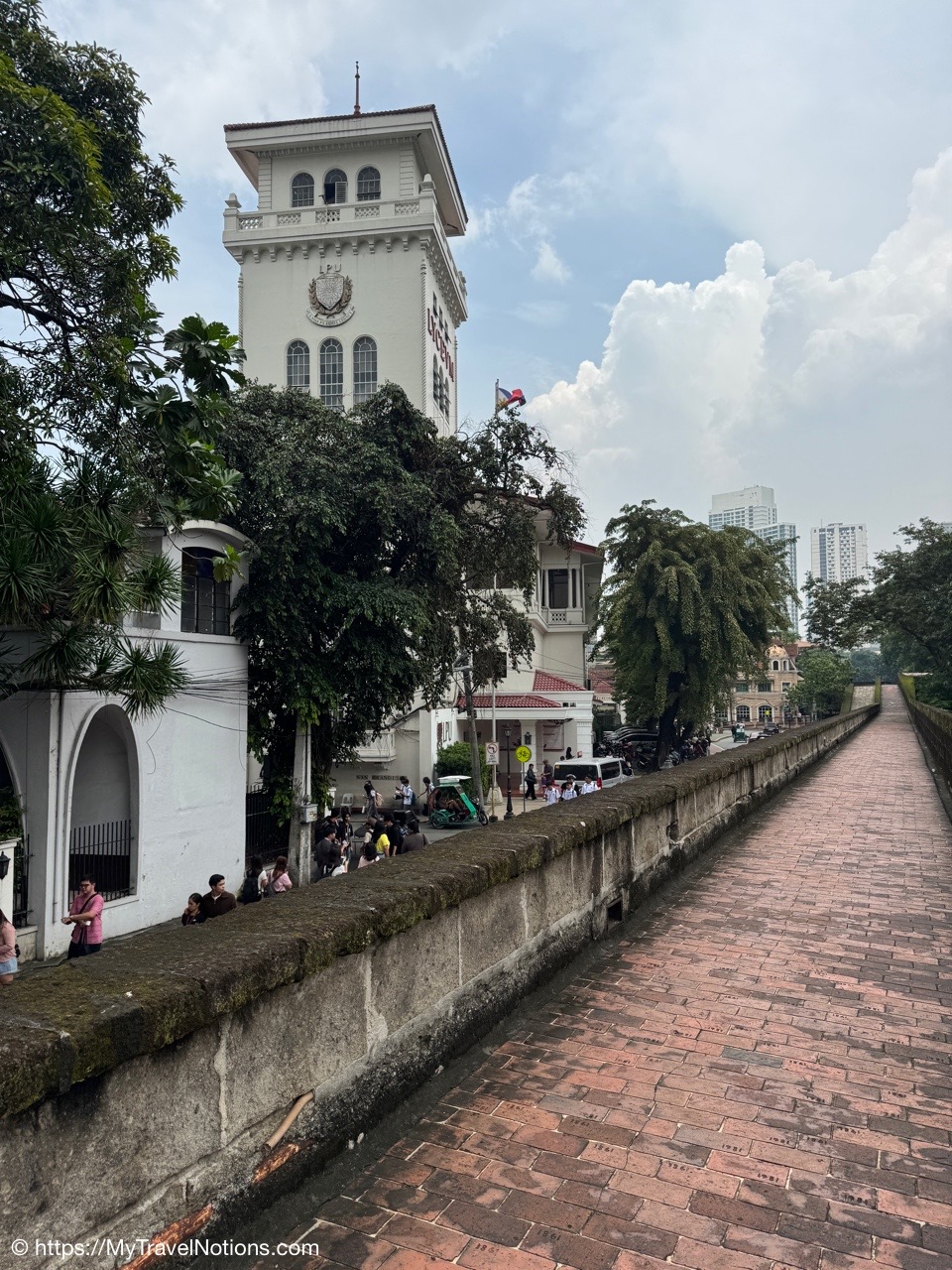
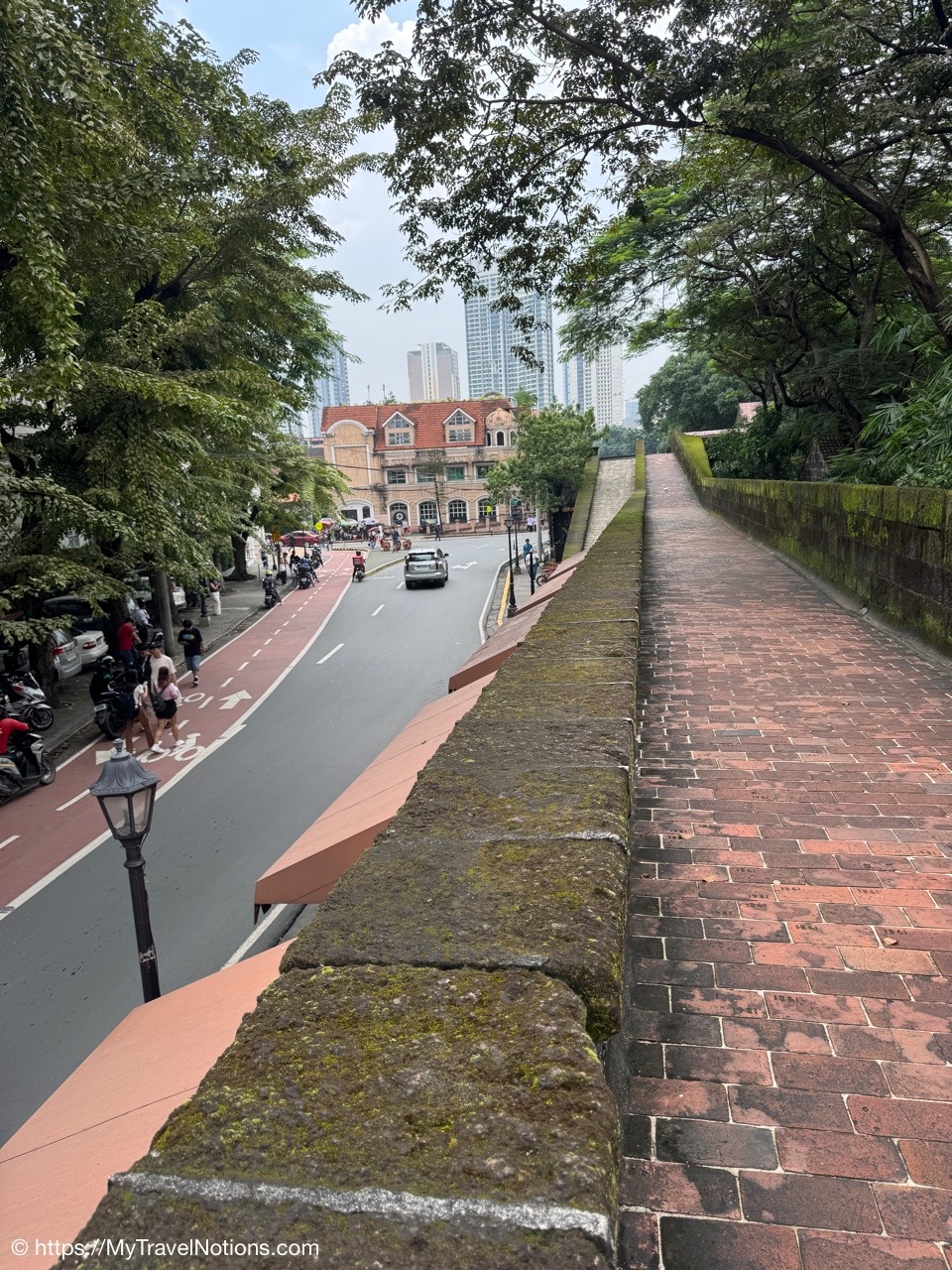
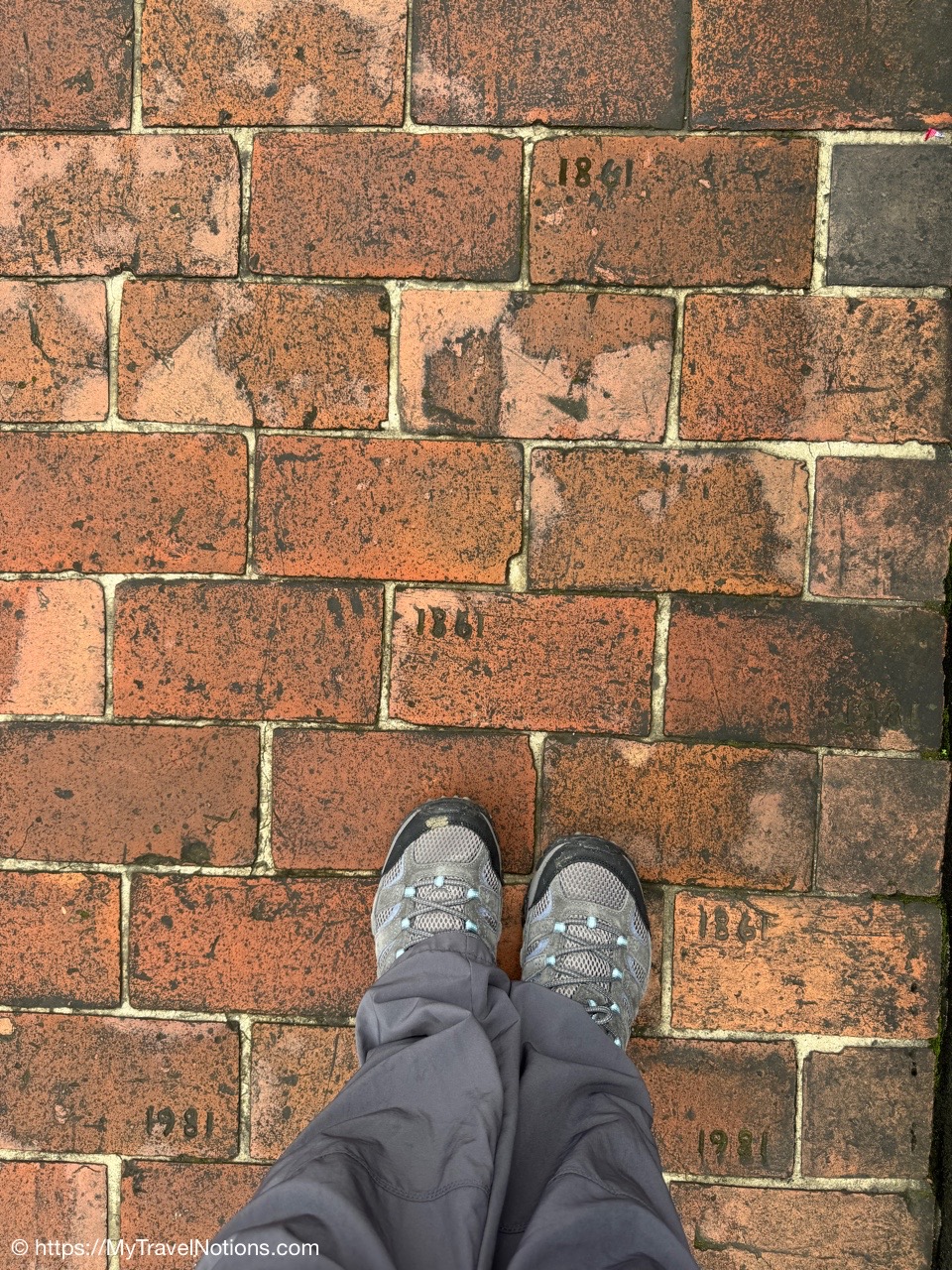
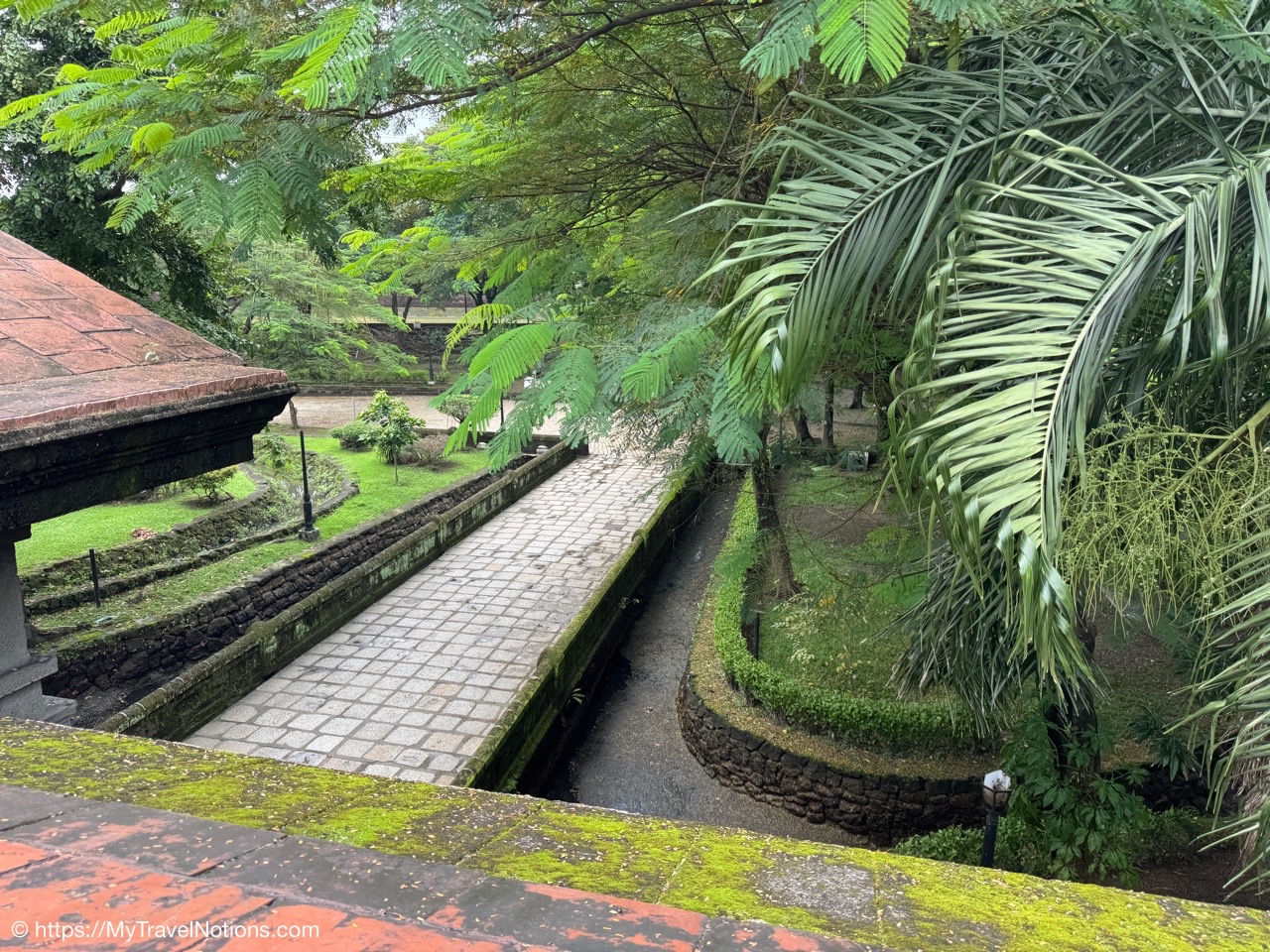
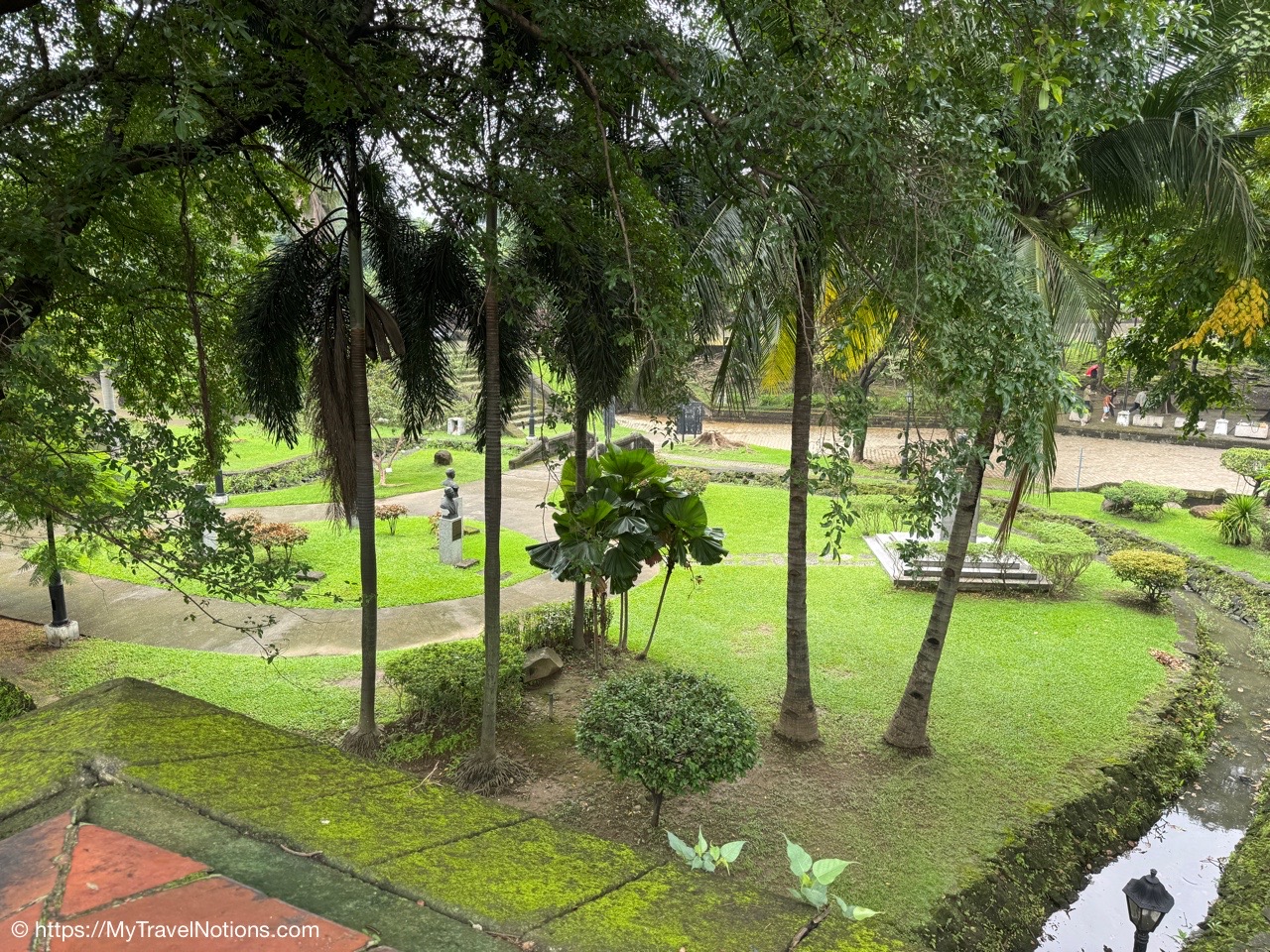
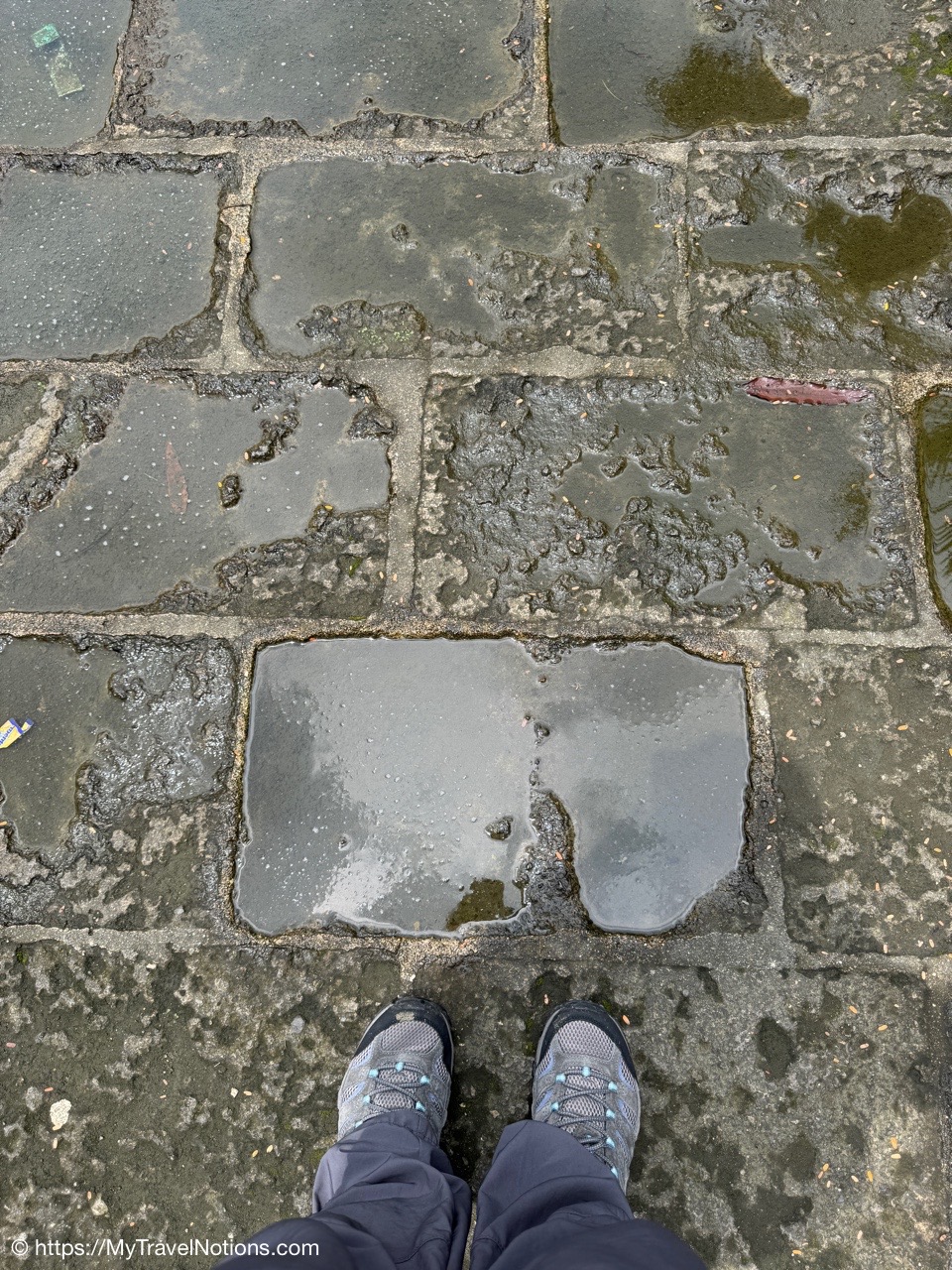
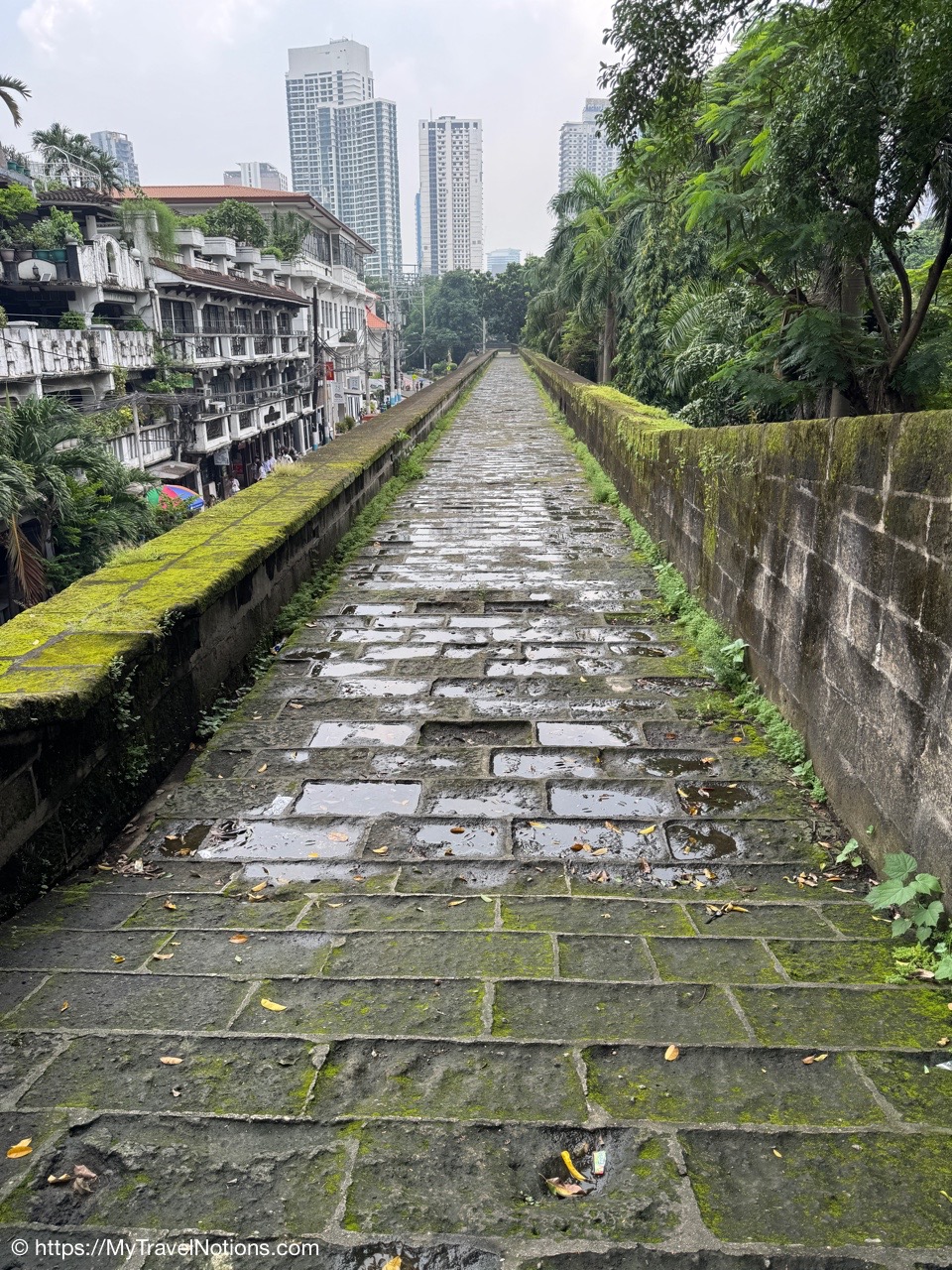
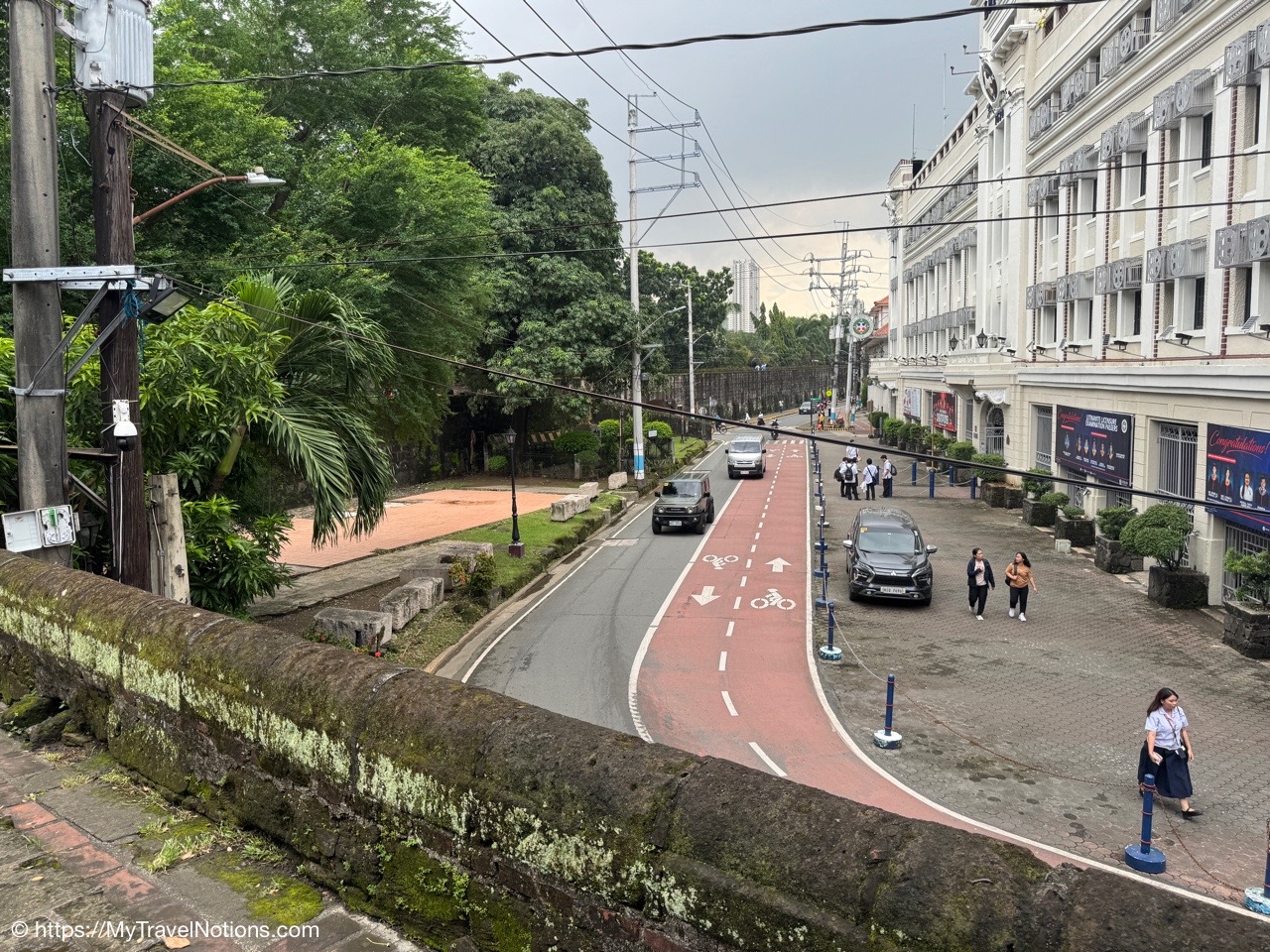
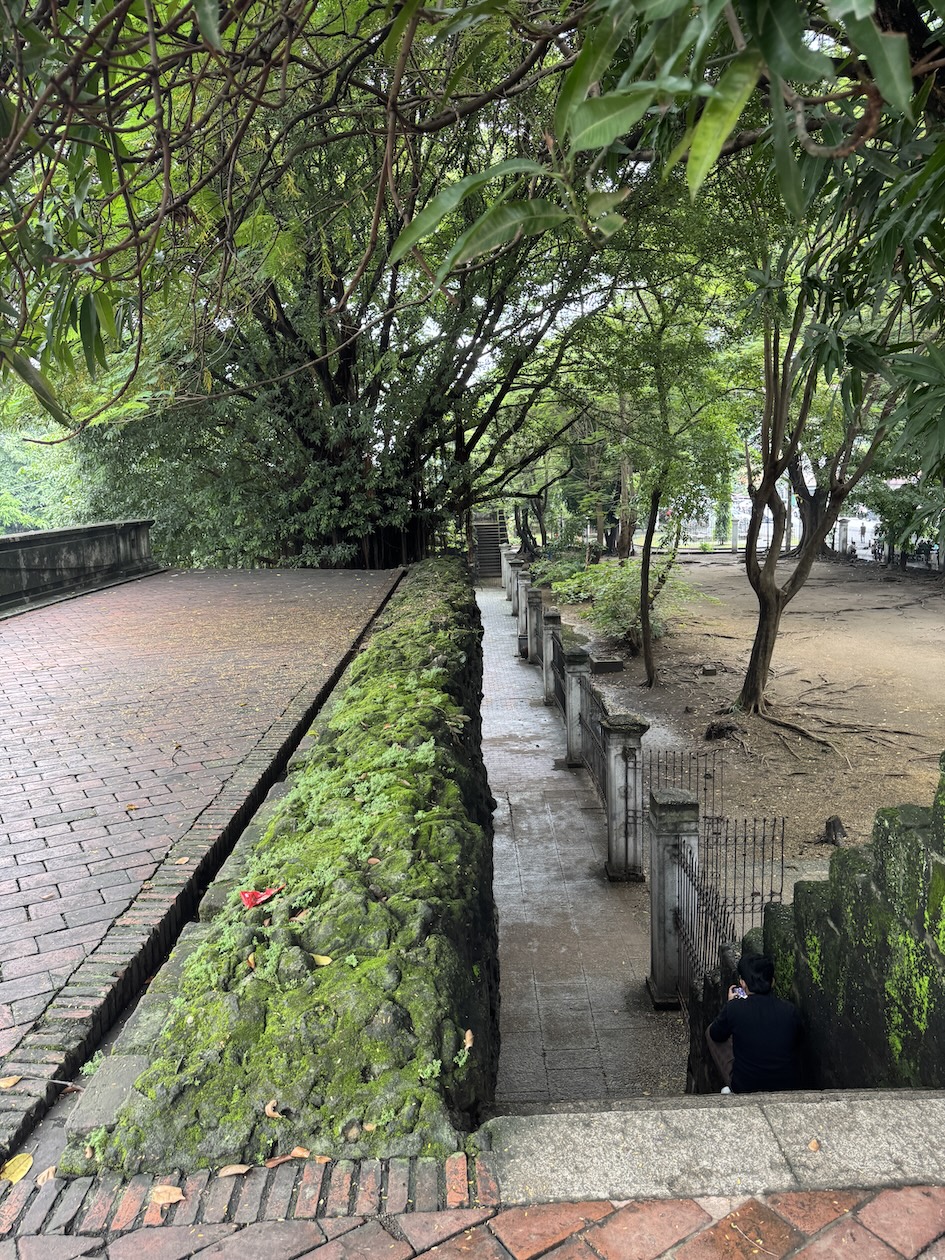
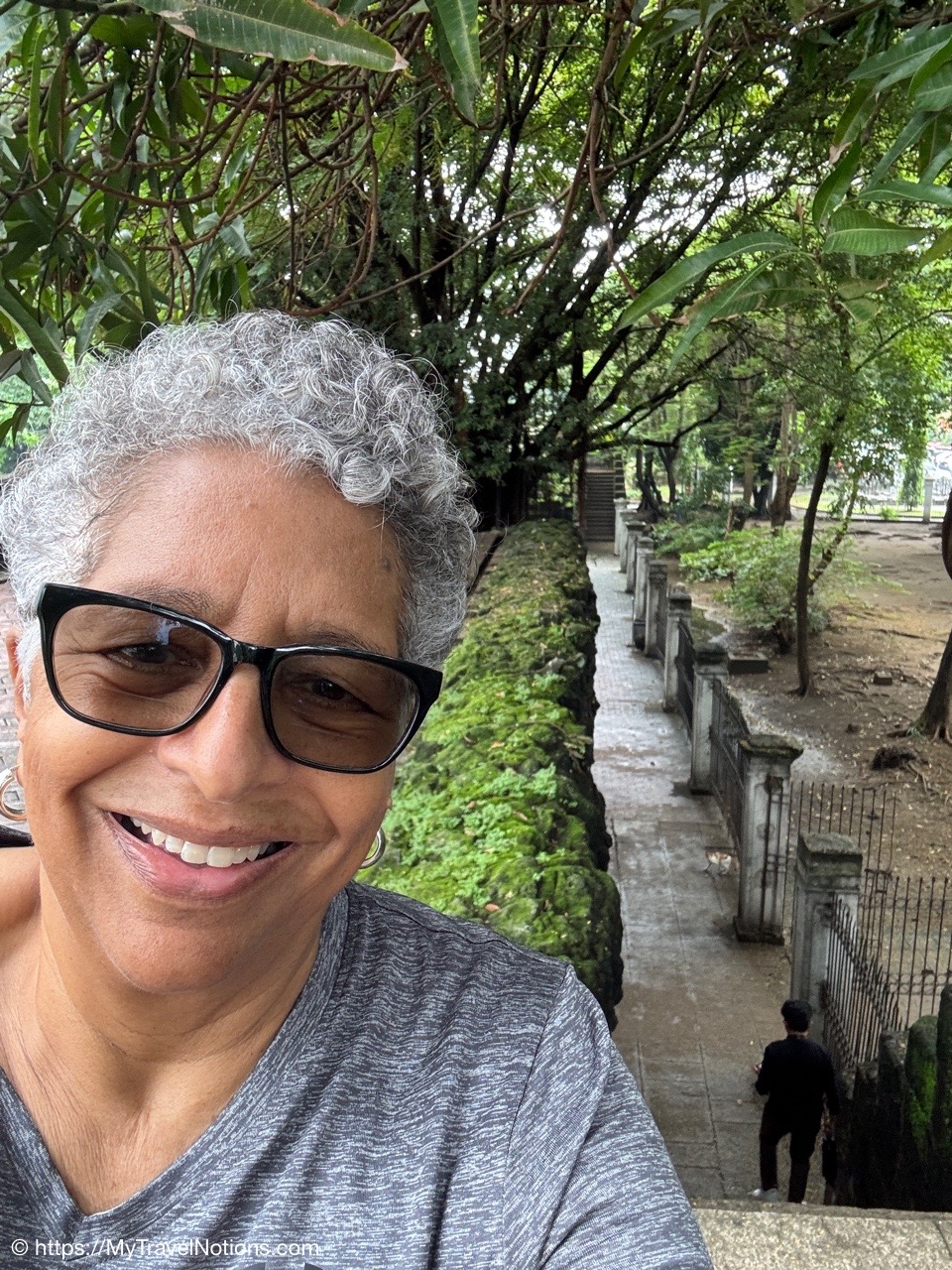
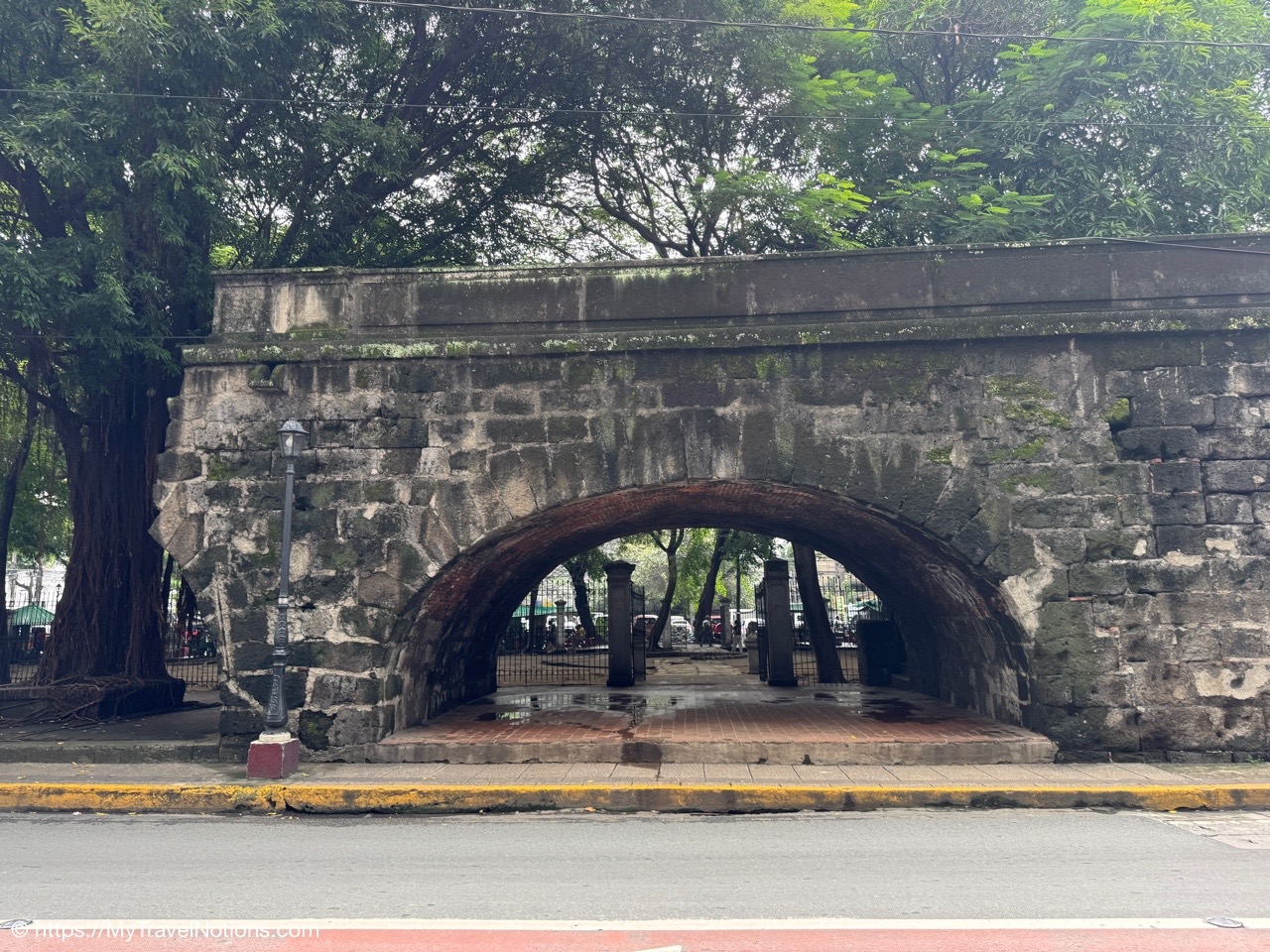
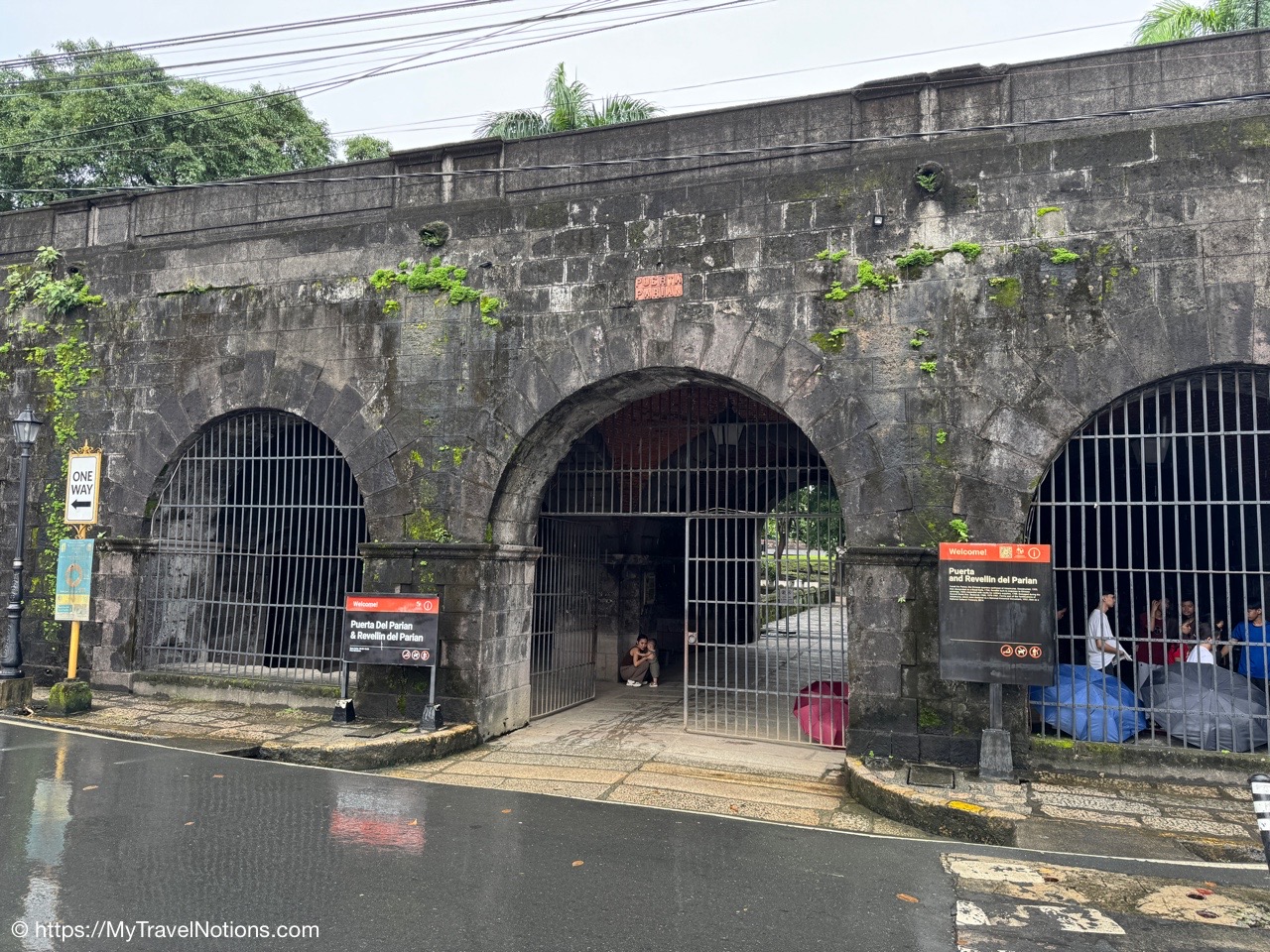
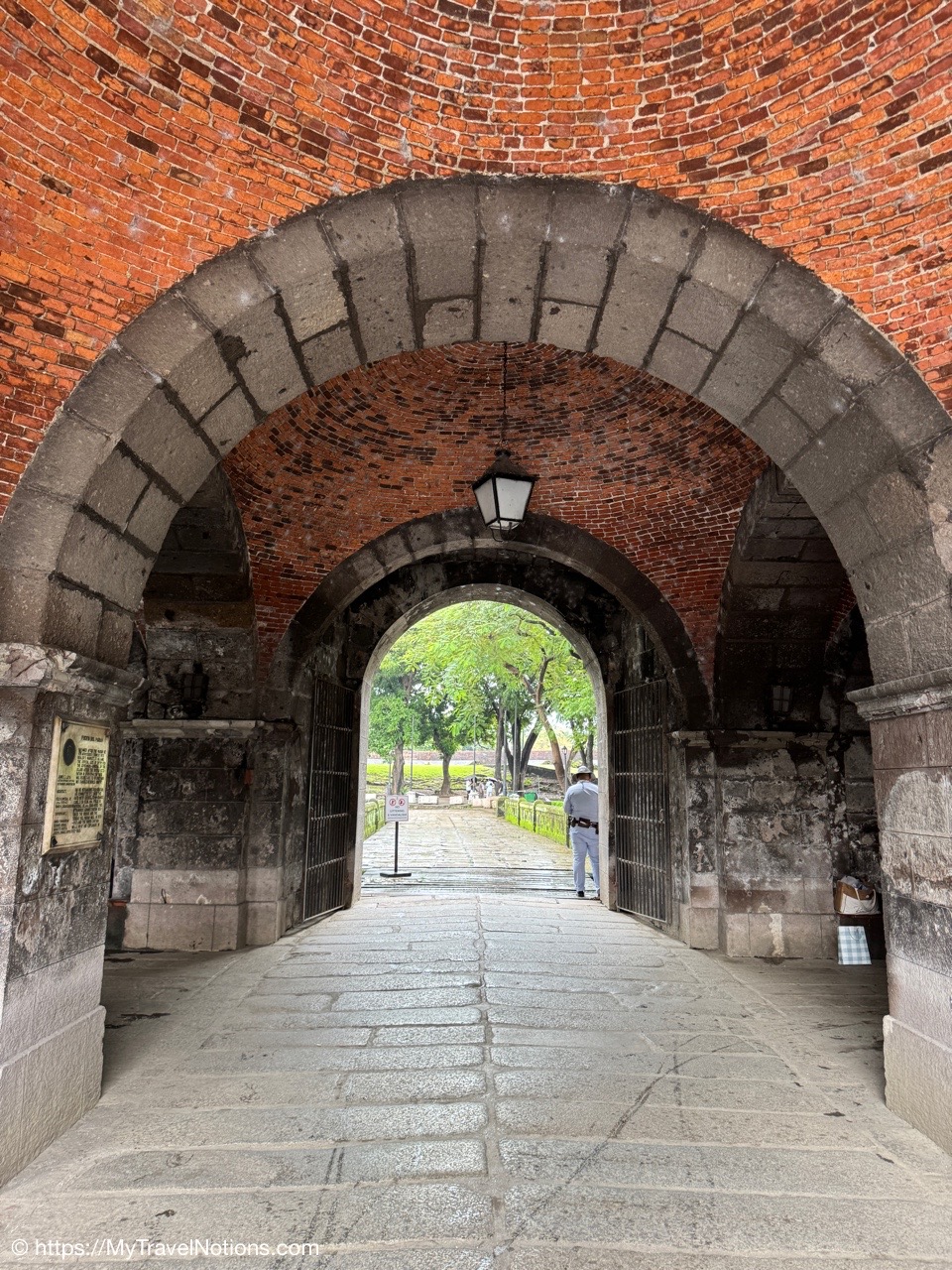
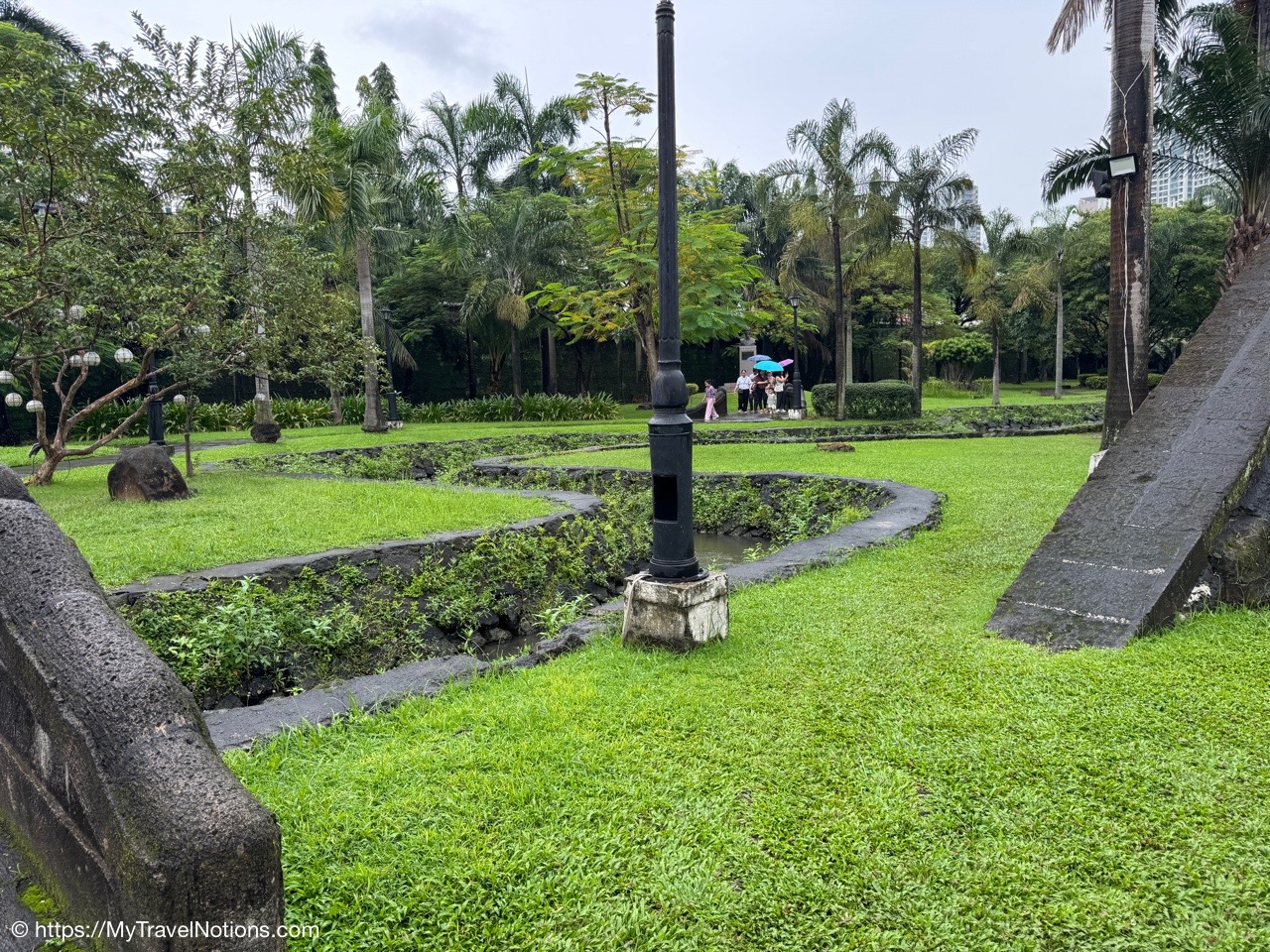
This part of the southern rampart from the Baluarte de San Francisco de Dilao to the Baluarte de San Andres was open but not to the other baluartes. To see more, I had to walk along the sidewalks inside the walled city of Manila’s Intramuros. (Sept. 14, 2025)A map of Intramuros, Manila’s ‘Walled City’.This is the Baluarte de San Francisco de Dilao is a historic stone bulwark and defensive structure within Intramuros, the Walled City of Manila, built in 1592. I am looking at it from my hotel room at the Bayleaf. (Sept. 14, 2025)This is the Baluarte de San Francisco de Dilao is a historic stone bulwark and defensive structure within Intramuros, the Walled City of Manila, built in 1592. I am looking at it from my hotel room at the Bayleaf. (Sept. 14, 2025)I literally walked out of the Bayleaf hotel lobby, crossed the street and walked up this rampart ramp entrance to the Baluarte de San Francisco de Dilao, a historic stone bulwark and defensive structure within Intramuros, the Walled City of Manila, built in 1592. (Sept. 14, 2025)A view of my hotel, the Bayleaf, across from the Baluarte de San Francisco de Dilao is a historic stone bulwark and defensive structure within Intramuros, the Walled City of Manila. (Sept. 14, 2025)The Baluarte de San Francisco de Dilao, a historic stone bulwark and defensive structure within Intramuros, the Walled City of Manila, built in 1592. It was designed to house cannons and other artillery, allowing defenders to fire upon approaching enemy forces. (Sept. 14, 2025)Walking along the ramparts of within Intramuros, the Walled City of Manila. (Sept. 14, 2025)The intersection of Victoria Street and Muralla Street, with a view of my hotel, the Bayleaf inside the Walled City of Manila’s Intramuros. (Sept. 14, 2025)Walking along the ramparts of the Walled City of Manila’s Intramuros. I had to walk slow because the rampart was slippery. (Sept. 14, 2025)And then it began raining as I walked along the ramparts of the Walled City of Manila’s Intramuros. (Sept. 14, 2025)Approaching the Baluarte de San Andres, built in 1603 as one of the main defenses of the Walled City of Manila’s Intramuros. It is dedicated to St. Andrew the Apostle, patron saint of Manila. It was damaged during World War II and restored in 1987 but the rampart to next Baluarte is closed. (Sept. 14, 2025)Some views of the Baluarte de San Andres, built in 1603 as one of the main defenses of the Walled City of Manila’s Intramuros. I could not walk through to the next Baluarte so I had to exit the rampart and walk along the sidewalk inside Intramuros. (Sept. 14, 2025)Walking along the sidewalk of Muralla Street inside the Walled City of Manila’s Intramuros. (Sept. 14, 2025)One of the gates to enter the Walled City of Manila’s Intramuros. (Sept. 14, 2025)The Puerta Real, along Muralla Street in the Walled City of Manila’s Intramuros is a historic gate originally built in 1663 and used by the Spanish Governor-General for state occasions, facing the area of Bagumbayan. Unfortunately the gate was closed. (Sept. 14, 2025)Walking towards a small entrance of a Japanese canon located close to the Baluarte de San Diego, along Muralla Street in the Walled City of Manila’s Intramuros. (Sept. 14, 2025)Me at the remnants of a Japanese naval canon located close to the Baluarte de San Diego along Muralla Street in the Walled City of Manila’s Intramuros. It is from the Battle of Manila during World War II from February to March 1945. The cannon would appear to have been initially put aboard a Japanese battleship before being dismantled to fight the Americans here in Manila. (Sept. 14, 2025)The golf course, across from the Japanese naval canon, was once a moat around the Walled City of Manila’s Intramuros. (Sept. 14, 2025)The entrance into the garden park-like area of the Baluarte de San Diego in the Walled City of Manila’s Intramuros. Entrance into the Baluarte de San Diego required a payment of less than $1.00 USD. (Sept. 14, 2025)The garden park-like entrance area of the Baluarte de San Diego in the Walled City of Manila’s Intramuros. (Sept. 14, 2025)Entering the spiral staircase of the garden park-like area into the Baluarte de San Diego, the oldest of the connected stone forts of Manila’s ‘Walled City’ of Intramuros. First constructed as a tower known as the Torre de Nuestra Señora de Guia, following the design of Jesuit architect Antonio Sedeño in 1586-1587, the fort was then integrated into the walls of Intramuros in 1593. (Sept. 14, 2025)Taking the spiral staircase up to the a circular fort area of the Baluarte de San Diego, the oldest of the connected stone forts of Manila’s ‘Walled City’ of Intramuros. (Sept. 14, 2025)The circular fort of Baluarte de San Diego, in Manila’s ‘Walled City’ of Intramuros was built between 1586 and 1663 and designed by Jesuit priest Antonio Sedeño to defend Manila’s southern bayside boundary before being damaged by war and earthquakes and eventually restored. It’s one of the oldest structures in Manila entering from a surrounding garden park-like area. (Sept. 14, 2025)The circular fort of Baluarte de San Diego, in Manila’s ‘Walled City’ of Intramuros. (Sept. 14, 2025)Me at the circular fort of Baluarte de San Diego, in Manila’s ‘Walled City’ of Intramuros. (Sept. 14, 2025)The circular fort of Baluarte de San Diego, in Manila’s ‘Walled City’ of Intramuros. (Sept. 14, 2025)The circular fort of Baluarte de San Diego, in Manila’s ‘Walled City’ of Intramuros. (Sept. 14, 2025)Walking on the north portion of the rampart from the Baluarte de San Francisco de Dilao, with its entryway in front of my hotel, the Bayleaf, in Manila’s Intramuros. (Sept. 15, 2025)Views of Intramuros from the ramparts of Manila’s murallas or walls. (Sept. 15, 2025)Walking along the ramparts of the Baluarte de San Francisco de Dilao in Manila’s Intramuros. (Sept. 15, 2025)The Baluarte de San Francisco de Dilao in Manila’s Intramuros where the canons are lined up at the ready. (Sept. 15, 2025)Walking on the north portion of the rampart from the Baluarte de San Francisco de Dilao in Manila’s Intramuros. (Sept. 15, 2025)Walking on the north portion of the rampart from the Baluarte de San Francisco de Dilao in Manila’s Intramuros with the greenery from the long covered in moat. (Sept. 15, 2025)Walking on the north portion of the rampart from the Baluarte de San Francisco de Dilao in Manila’s Intramuros with views of the walled city. (Sept. 15, 2025)Walking on the north portion of the rampart from the Baluarte de San Francisco de Dilao in Manila’s Intramuros with views of the walled city. (Sept. 15, 2025)Bricks dated from 1861 mixed in with bricks dated from 1981 along the ramparts from the Baluarte de San Francisco de Dilao in Manila’s Intramuros. (Sept. 15, 2025)Peering down into the ASEAN Garden along the ramparts by the nearby Puerta del Parian in Manila’s Intramuros. The area is designed as a tranquil, green space with open areas and lush greenery. (Sept. 15, 2025)Views of the ASEAN Garden as seen from the ramparts of Manila’s Intramuros. (Sept. 15, 2025)Also, I want to officially apologize to these ugly, bulky Merrell Women’s Moab 2 Waterproof Hiking Shoes because even though I called them brogan, they have kept my feet dry as I stepped through a variety of water puddles while also walking along a variety of uneven surfaces. I complained about bringing you on my travels but now that I’ve seen how helpful you have been, I want to apologize for being superficial and ungrateful. Thank you for your service. (Sept. 15, 2025)Good thing I have on my Merrill’s, this rampart along the walls in Manila’s Intramuros took time and concentration to get through. (Sept. 15, 2025)Views of Intramuros from the ramparts of Manila’s murallas or walls. (Sept. 15, 2025)At the end of the ramparts of Manila’s murallas or walls and taking the stairs down to head back to the Bayleaf, my hotel in Intramuros. (Sept. 15, 2025)Me at the end of the ramparts of Manila’s murallas or walls and taking the stairs down to head back to the Bayleaf, my hotel in Intramuros. (Sept. 15, 2025)The Puerta de Isabel II and the end of this section of the ramparts of Manila’s, so walking along Murallas Street to get back to the Bayleaf, my hotel in Intramuros. (Sept. 15, 2025)The Puerta del Parian in Manila’s Intramuros, the access gate to the ASEAN Garden, an area designed as a tranquil, green space with open areas and lush greenery. (Sept. 15, 2025)The Puerta del Parián leads to the ASEAN Garden, a tranquil, green space with open areas and lush greenery on the other side of the walls in Manila’s Intramuros. Sept. 15, 2025)The Puerta del Parián leads to the ASEAN Garden on the other side of the walls in Manila’s Intramuros. Sept. 15, 2025)The ASEAN Garden from the Puerta del Parián on the other side of the walls in Manila’s Intramuros. Sept. 15, 2025)The ASEAN Garden from the Puerta del Parián on the other side of the walls in Manila’s Intramuros. Sept. 15, 2025)The ASEAN Garden from the Puerta del Parián on the other side of the walls in Manila’s Intramuros. Sept. 15, 2025)The ASEAN Garden from the Puerta del Parián on the other side of the walls in Manila’s Intramuros. Sept. 15, 2025)
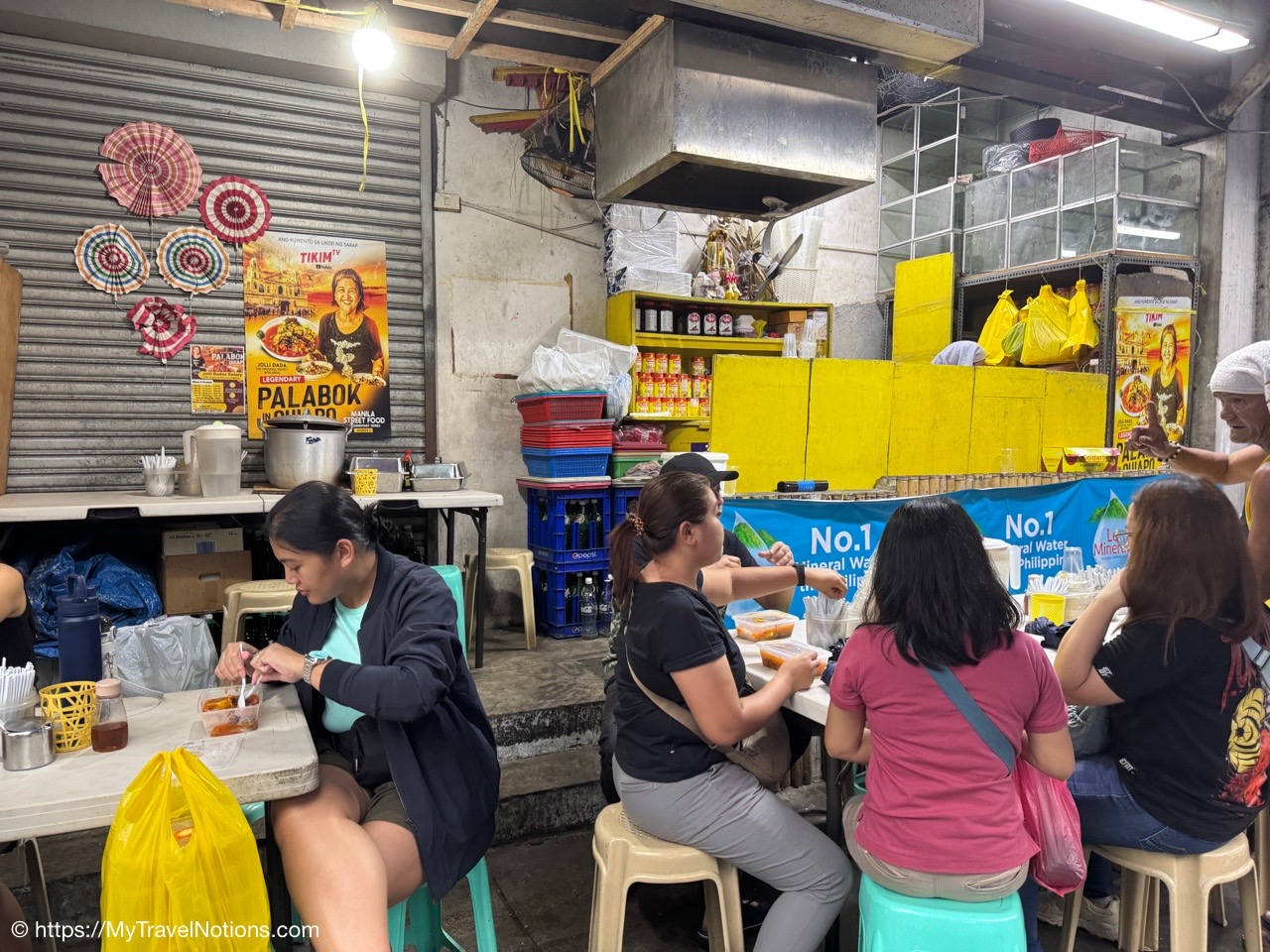
My street food walking tour of Manila’s Chinatown, called Binondo, was previously canceled and then rescheduled only to find out that I was the only person to show up for the rescheduled street food walking tour. And, honestly, although my guide was kind and helpful, the food choices and experience were just not that inspiring.
At any rate, I may be unfairly blaming the street food because I do tend to be a boring food person. I eat for sustenance and good taste. I will try something once and if it doesn’t speak to me, I’m done. But if it does speak to my taste buds, I’m known to eat on repeat.
My lack of food diversity is the prime reason why I love taking food walking tours. I’m also not one of those travelers who patronizes street food vendors, but I know a number of travelers do. And this why I chose this street food walking tour in Binondo. What better way to throw myself into the street food culture than with a good guide by my side and other foodie travelers joining me, which unfortunately was not the case for this tour.
I didn’t get much out of the food but it did give me an opportunity to see another side of Binondo by walking through its food markets.
Here’s another look at Chinatown, called Binondo, in Manila with stops for ‘nothing to really brag about’ street food.
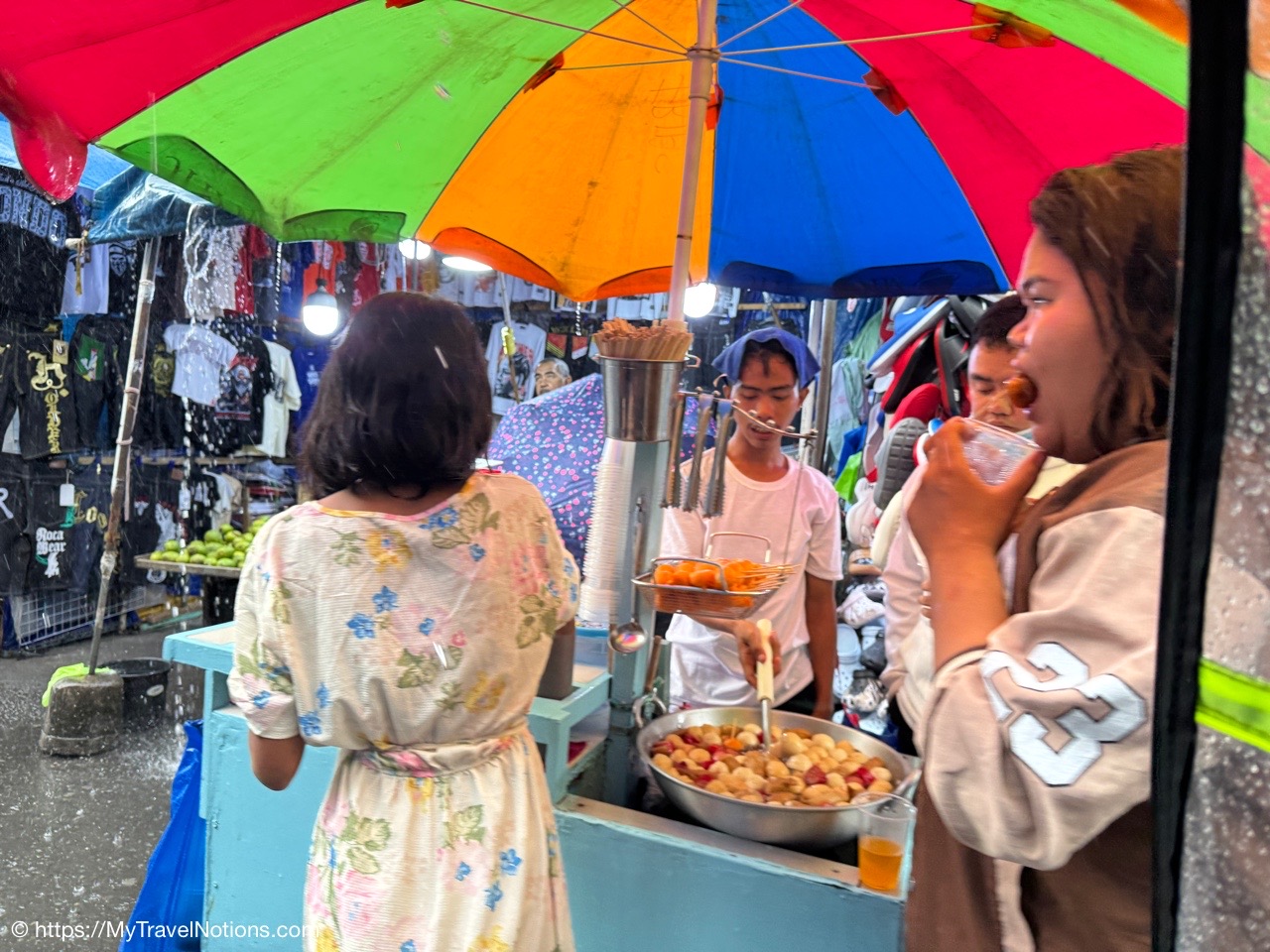
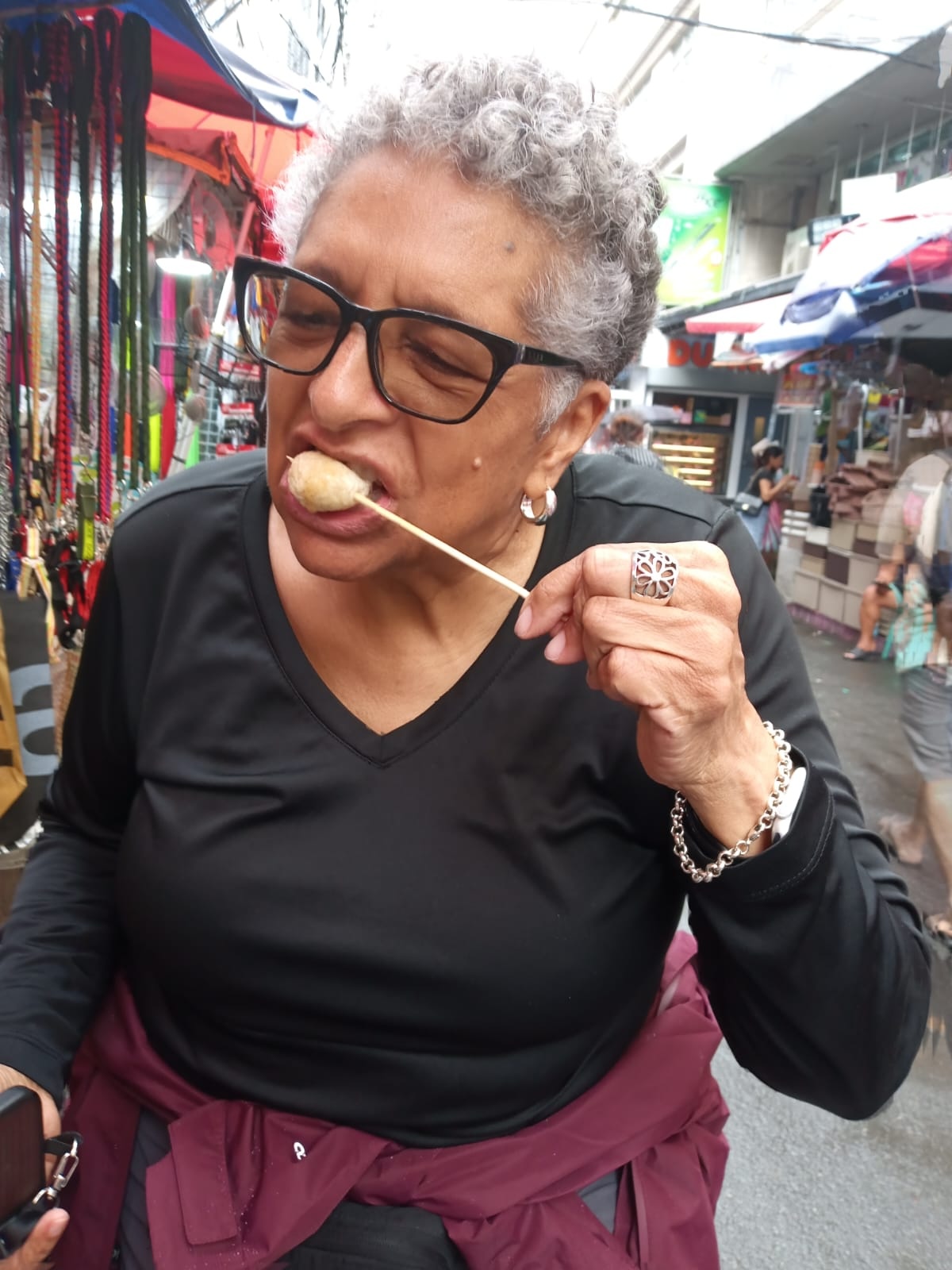
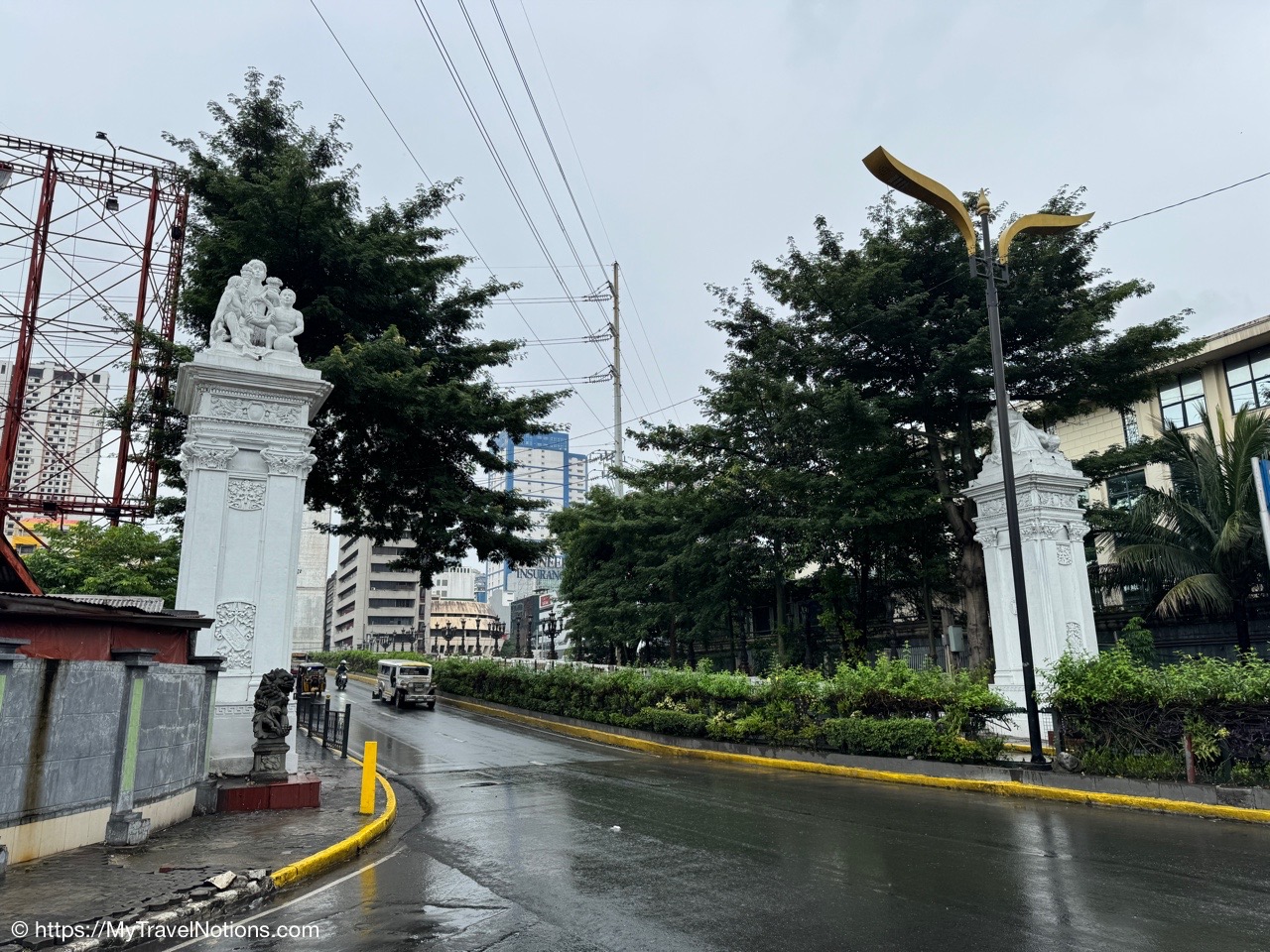
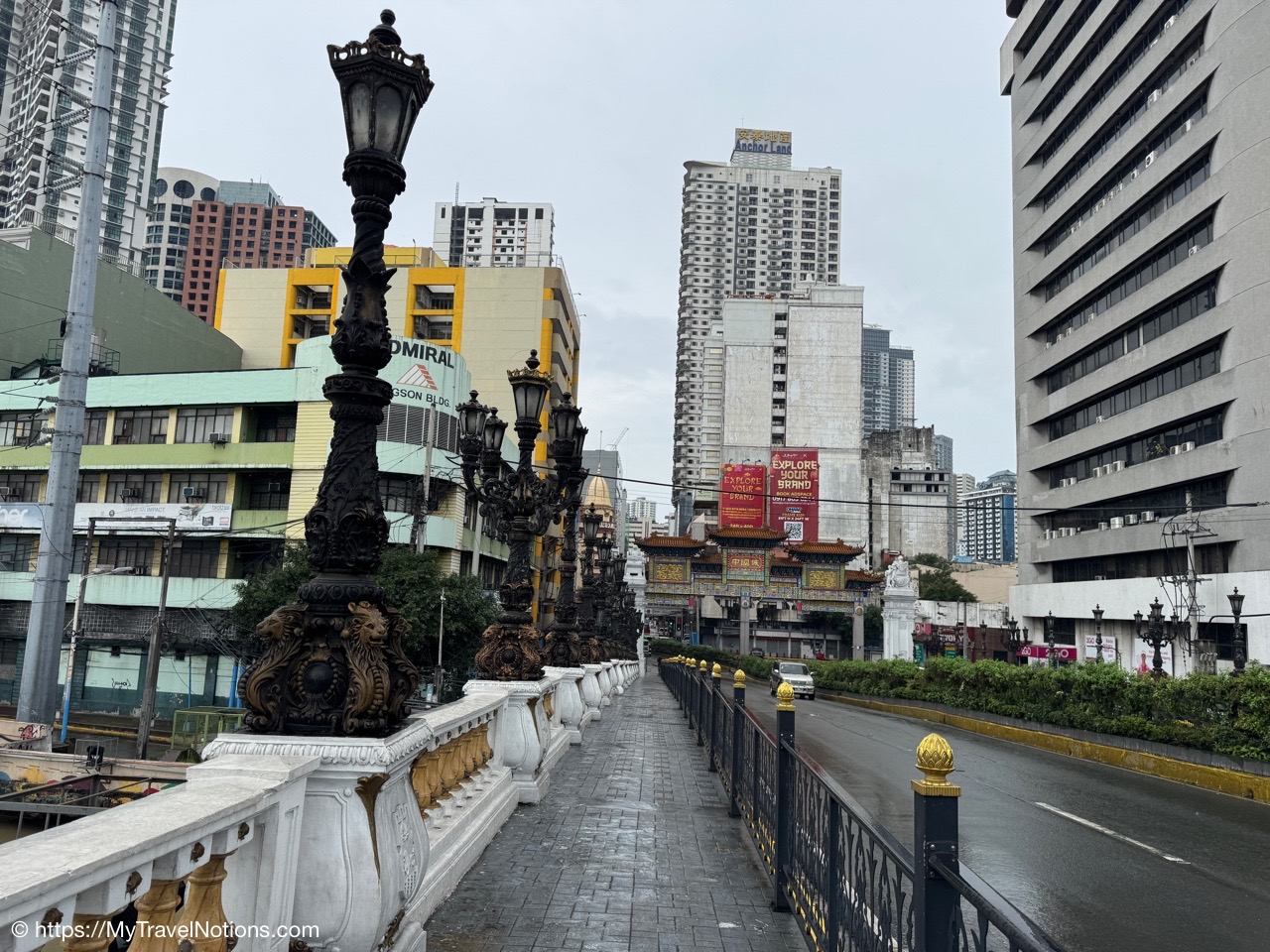
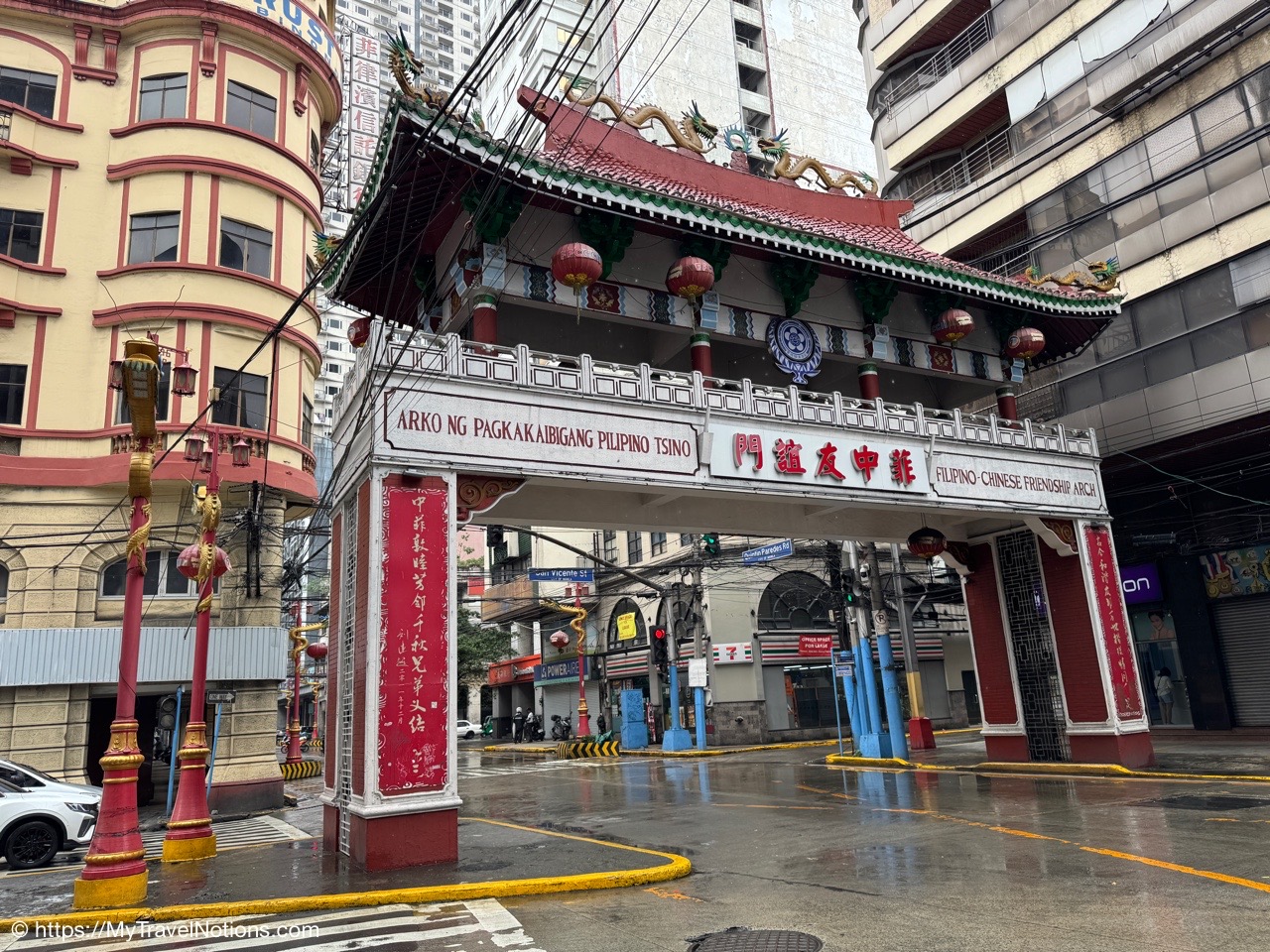
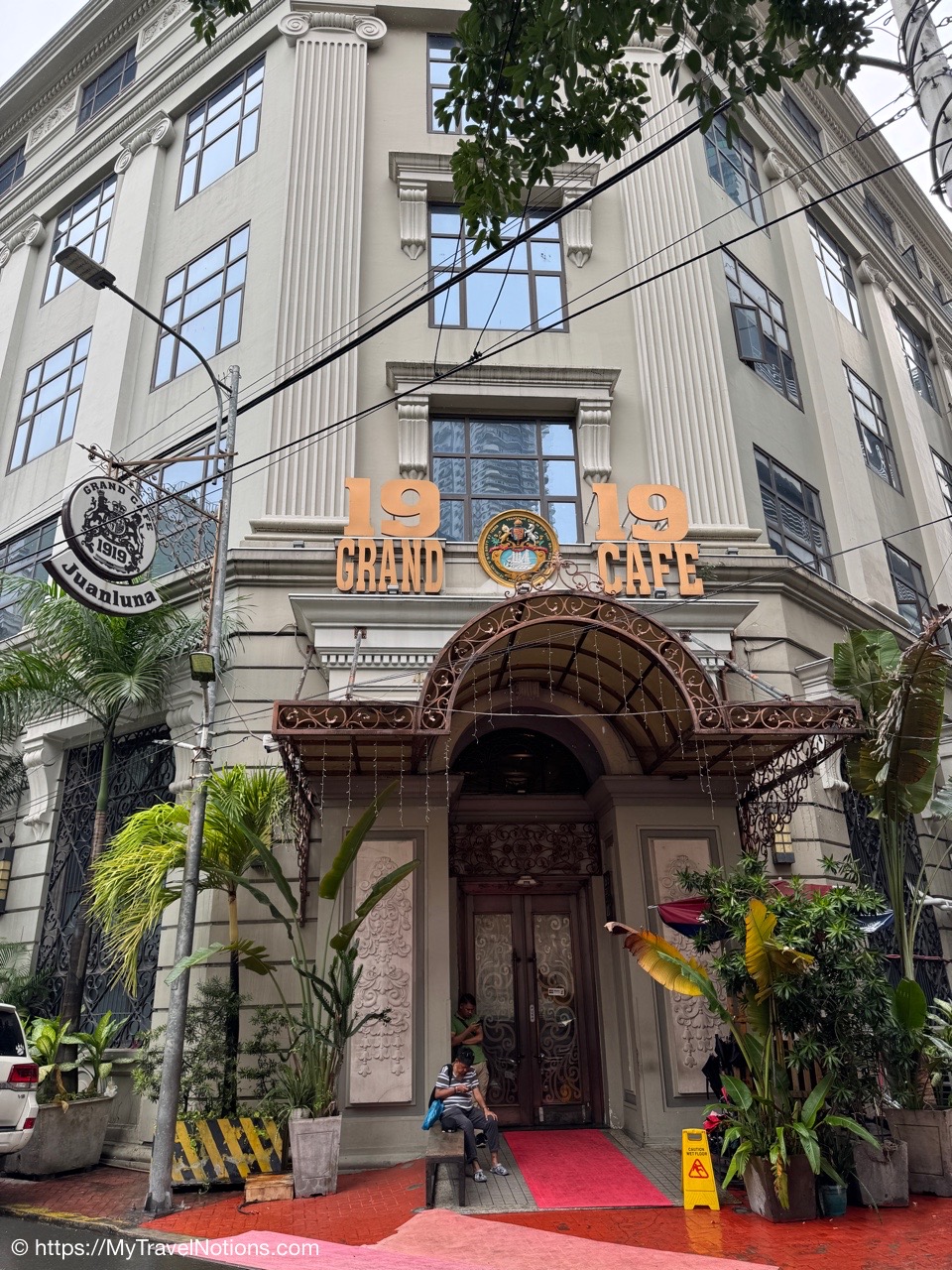
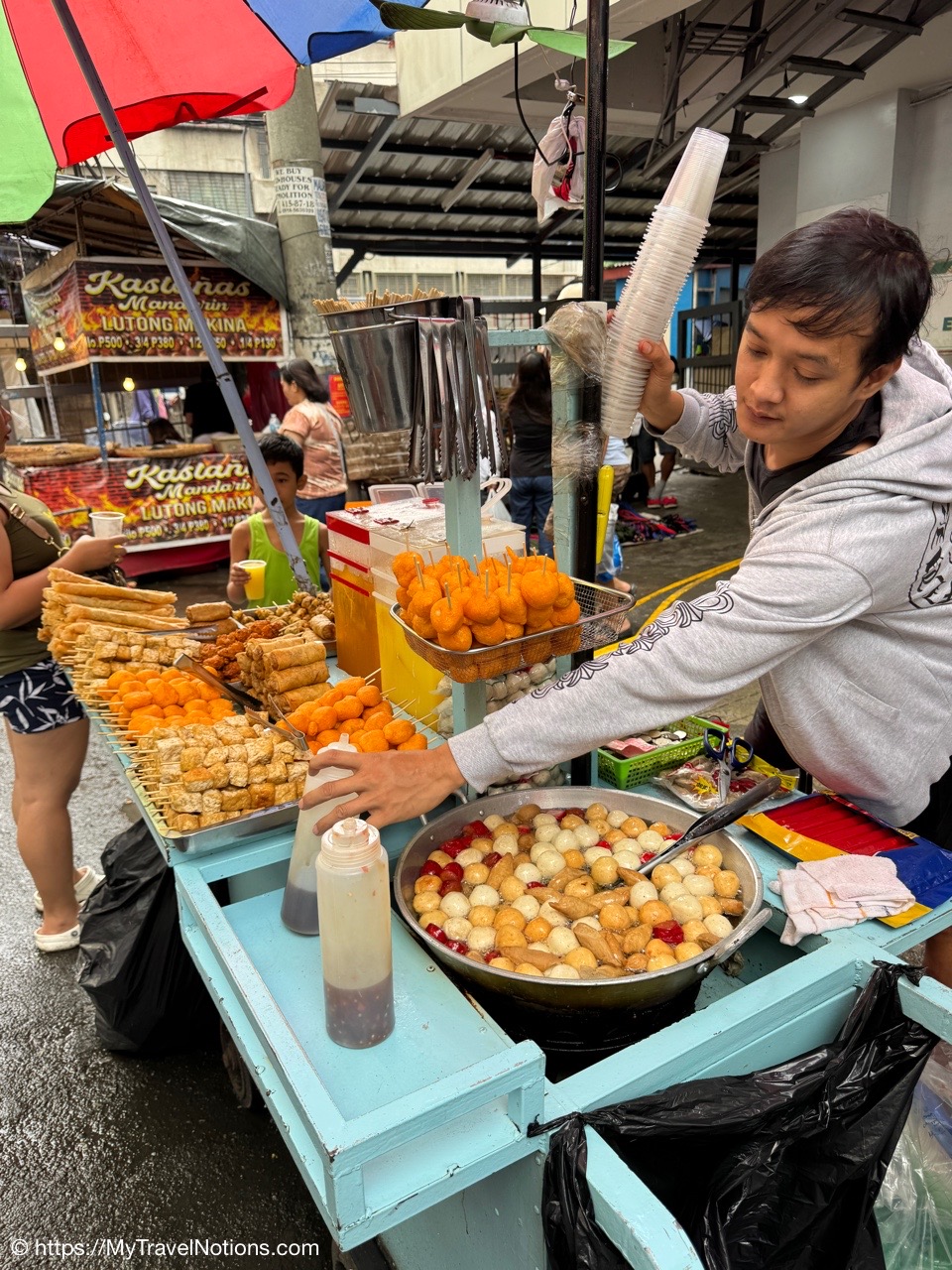
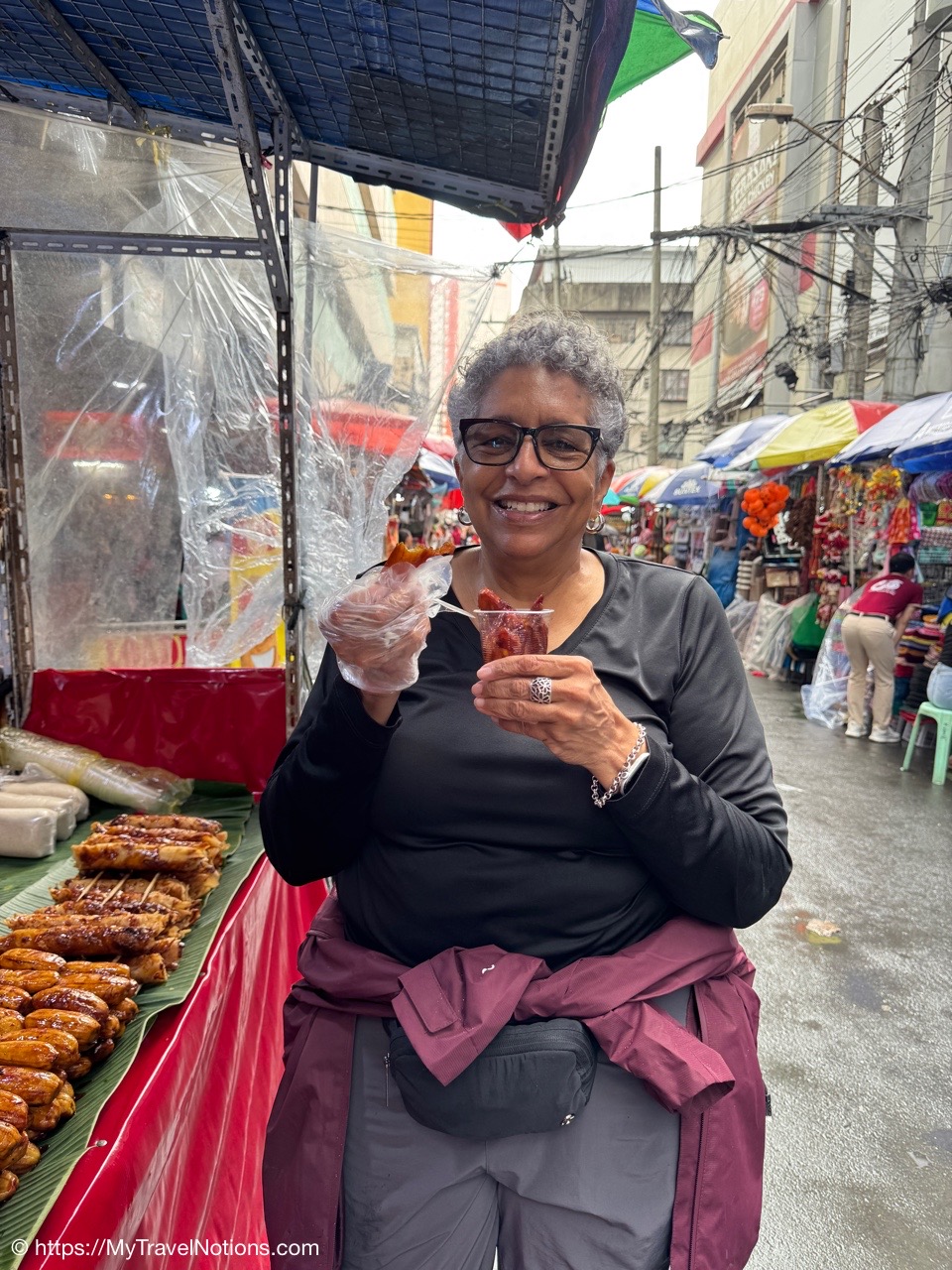
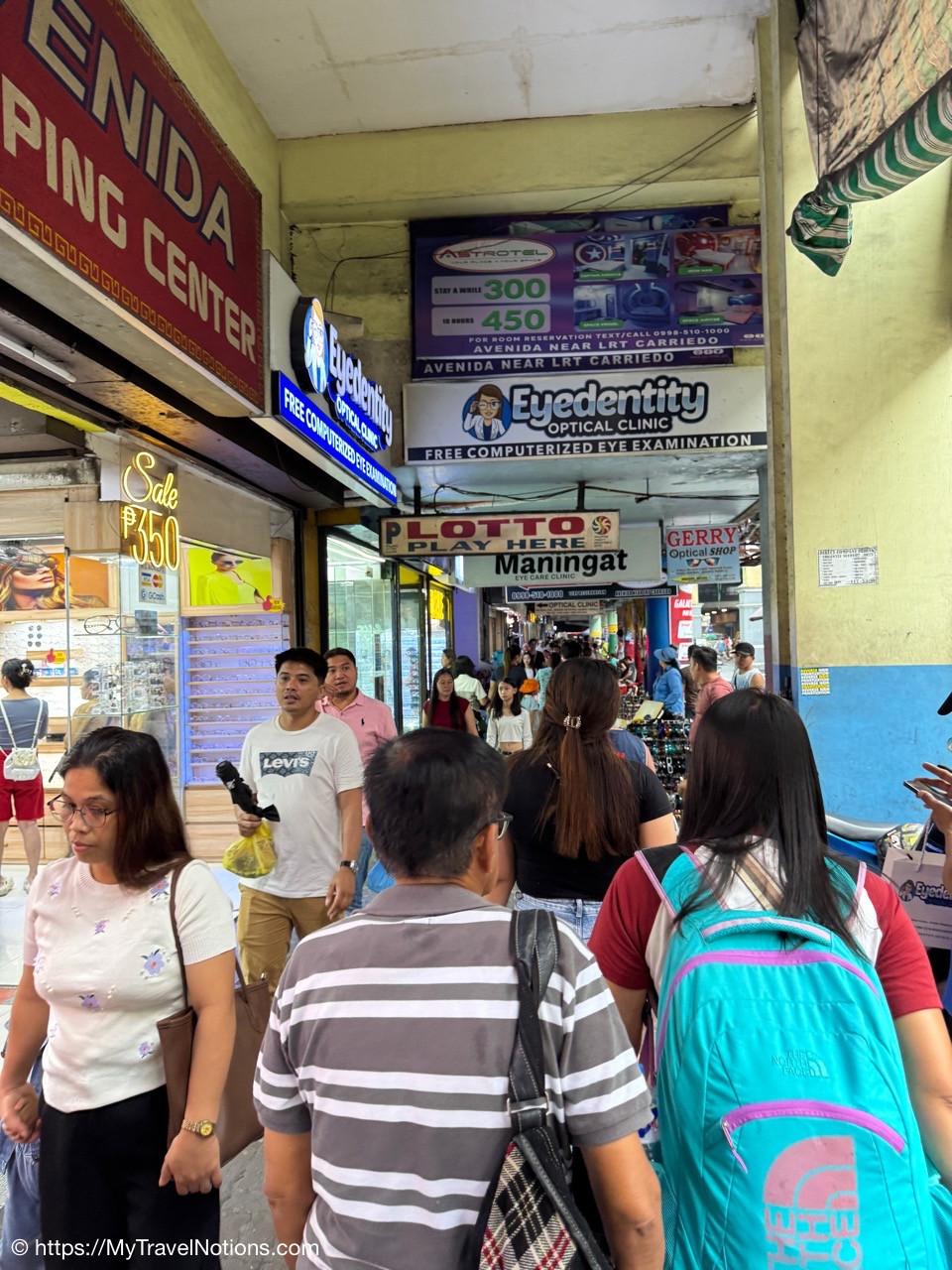
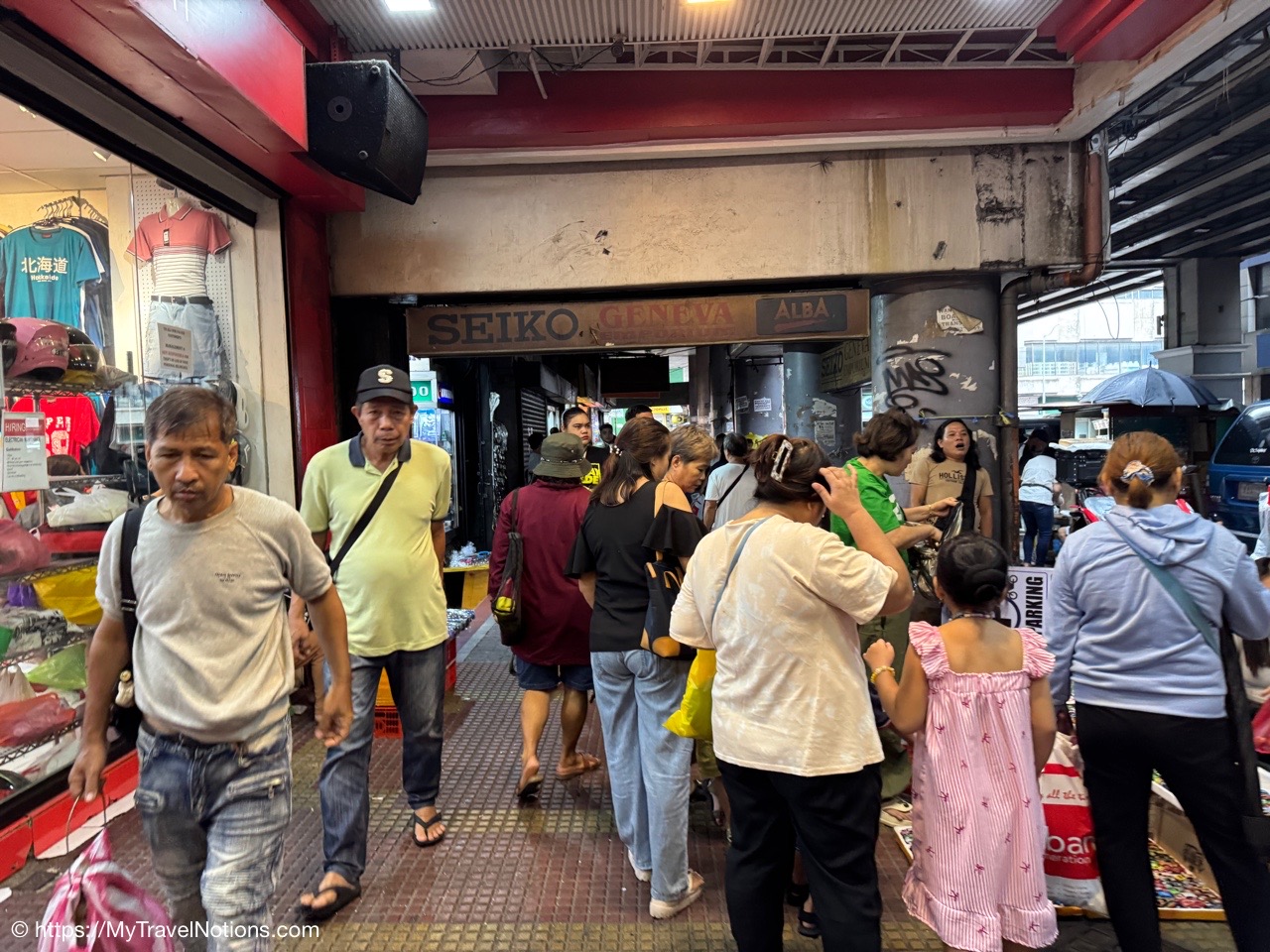
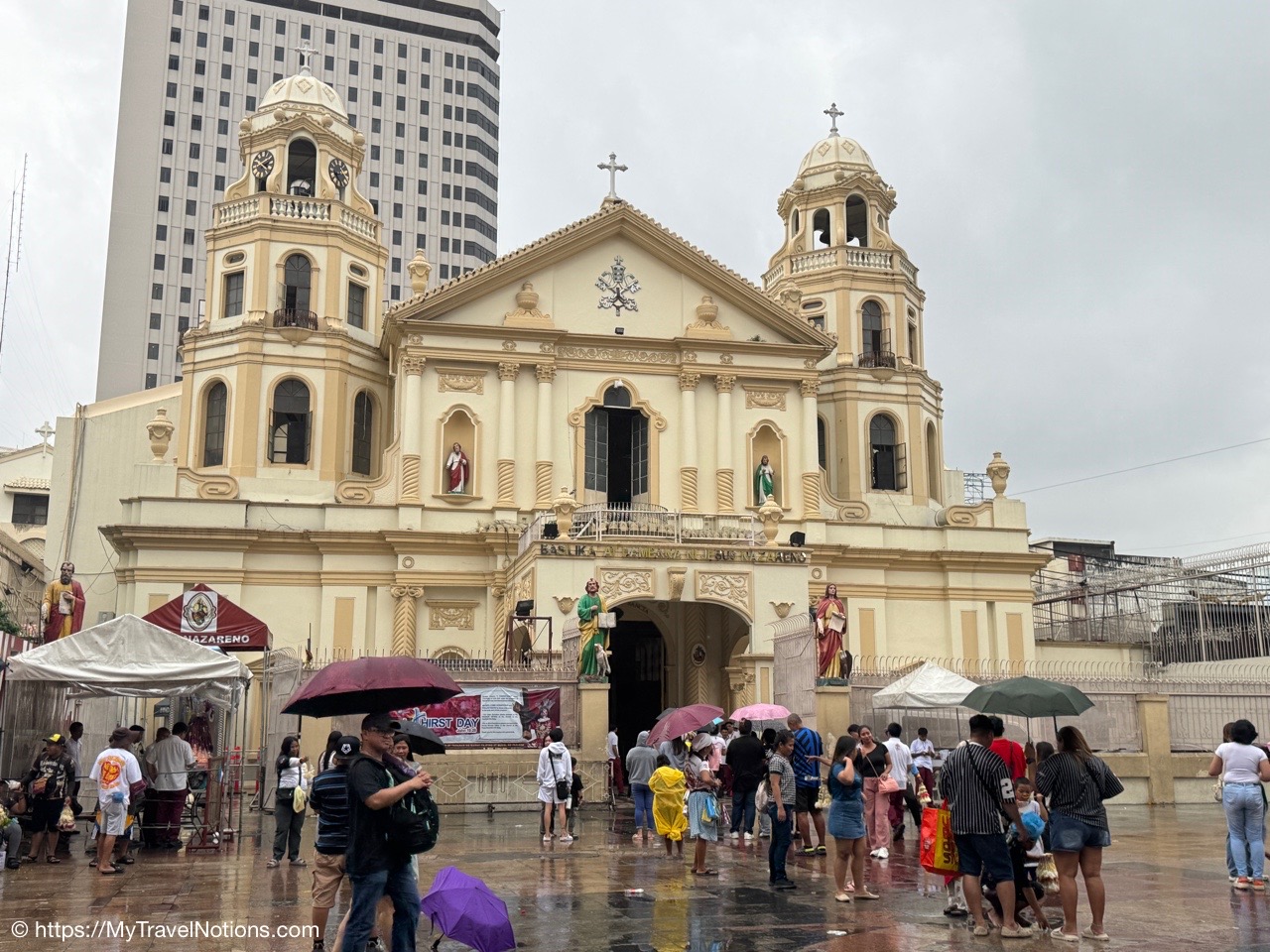
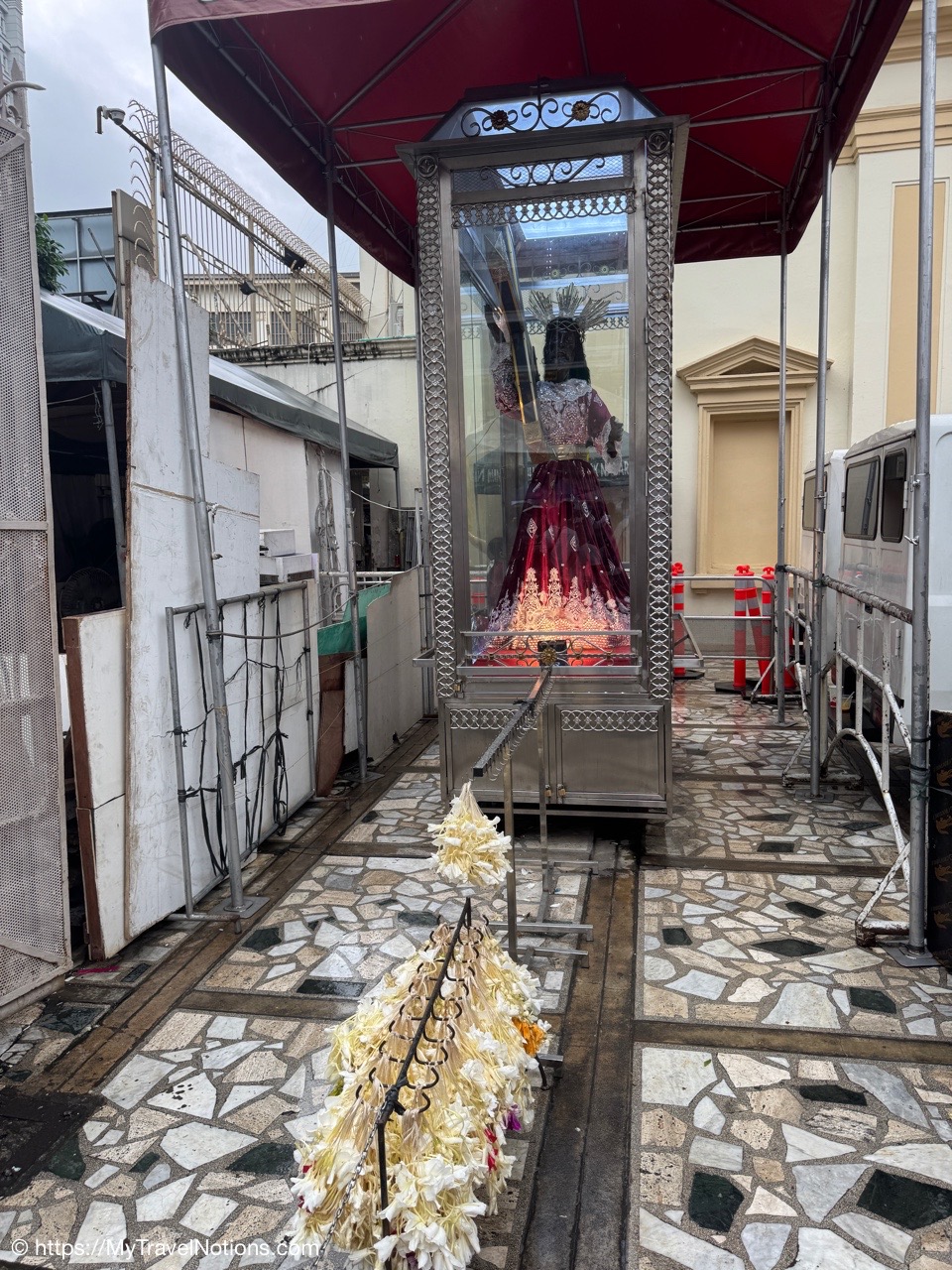
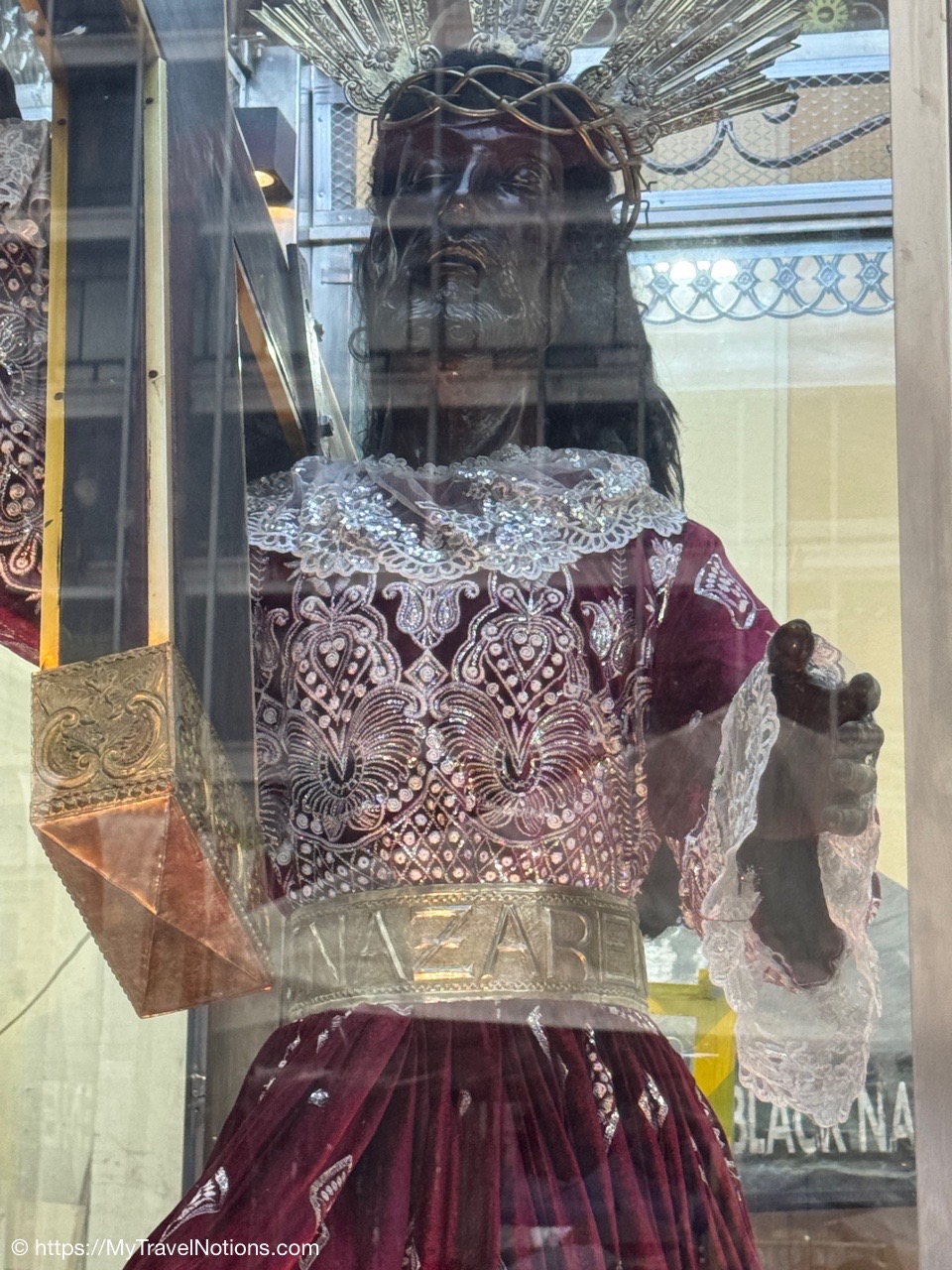
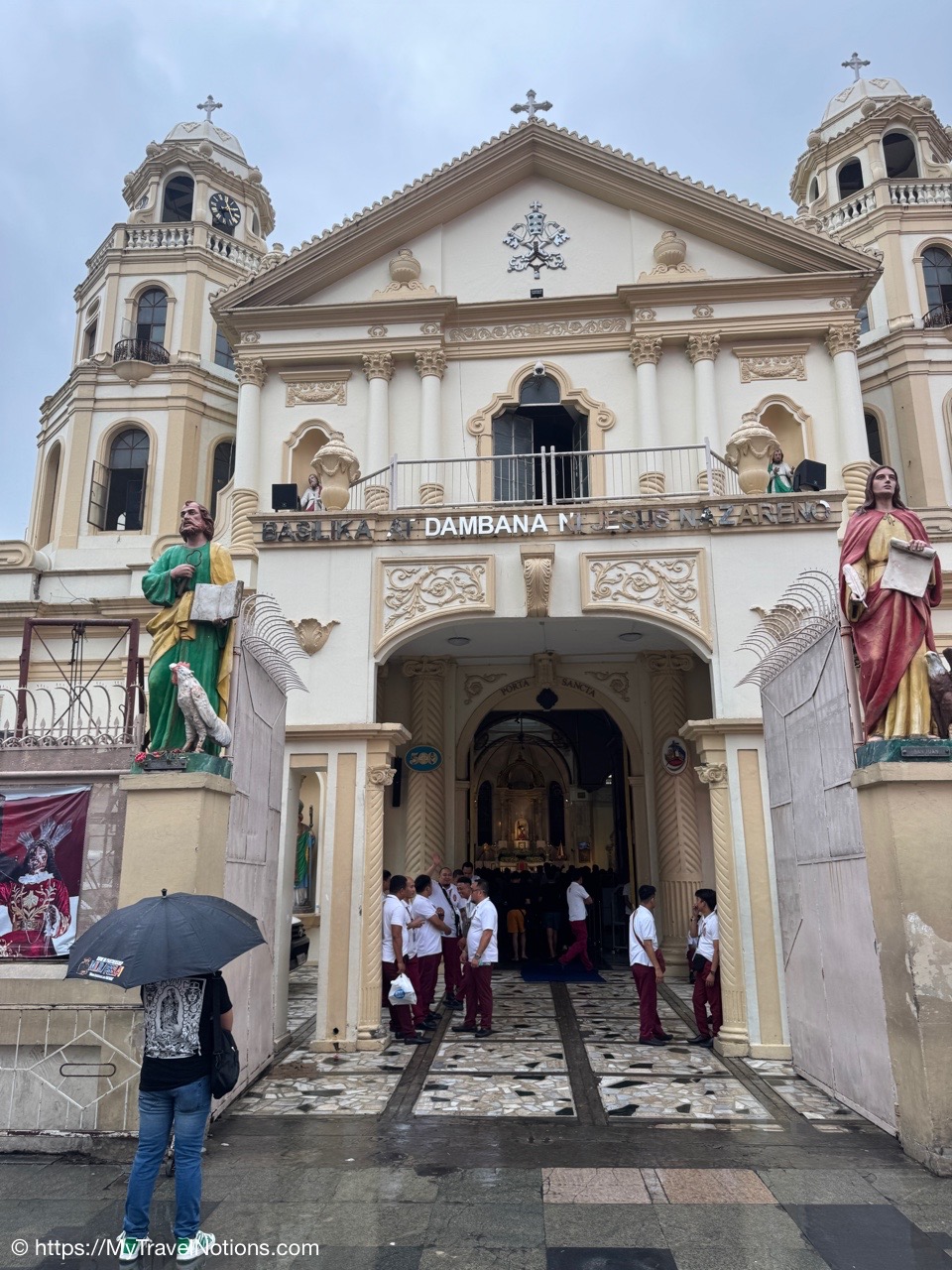
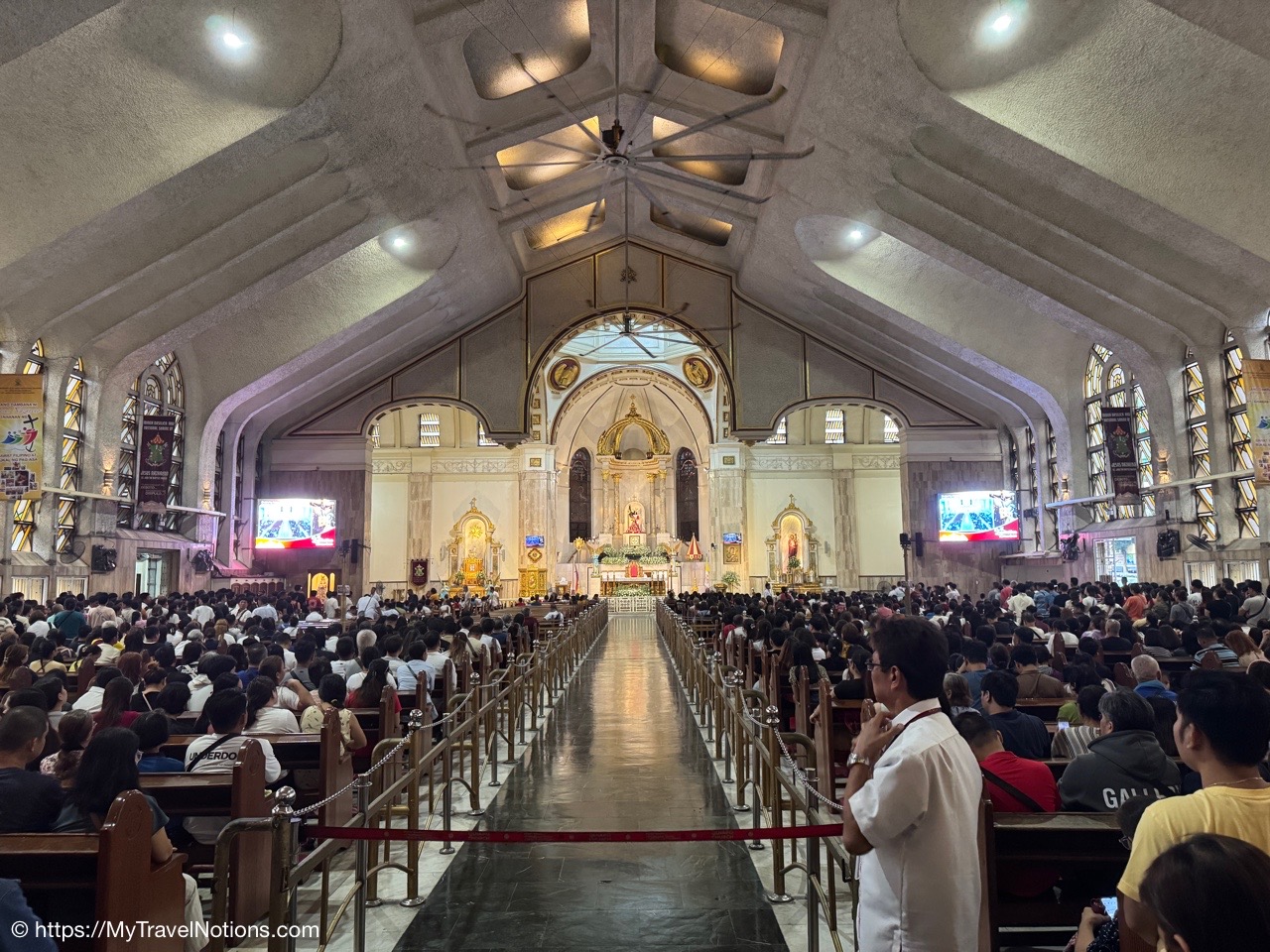
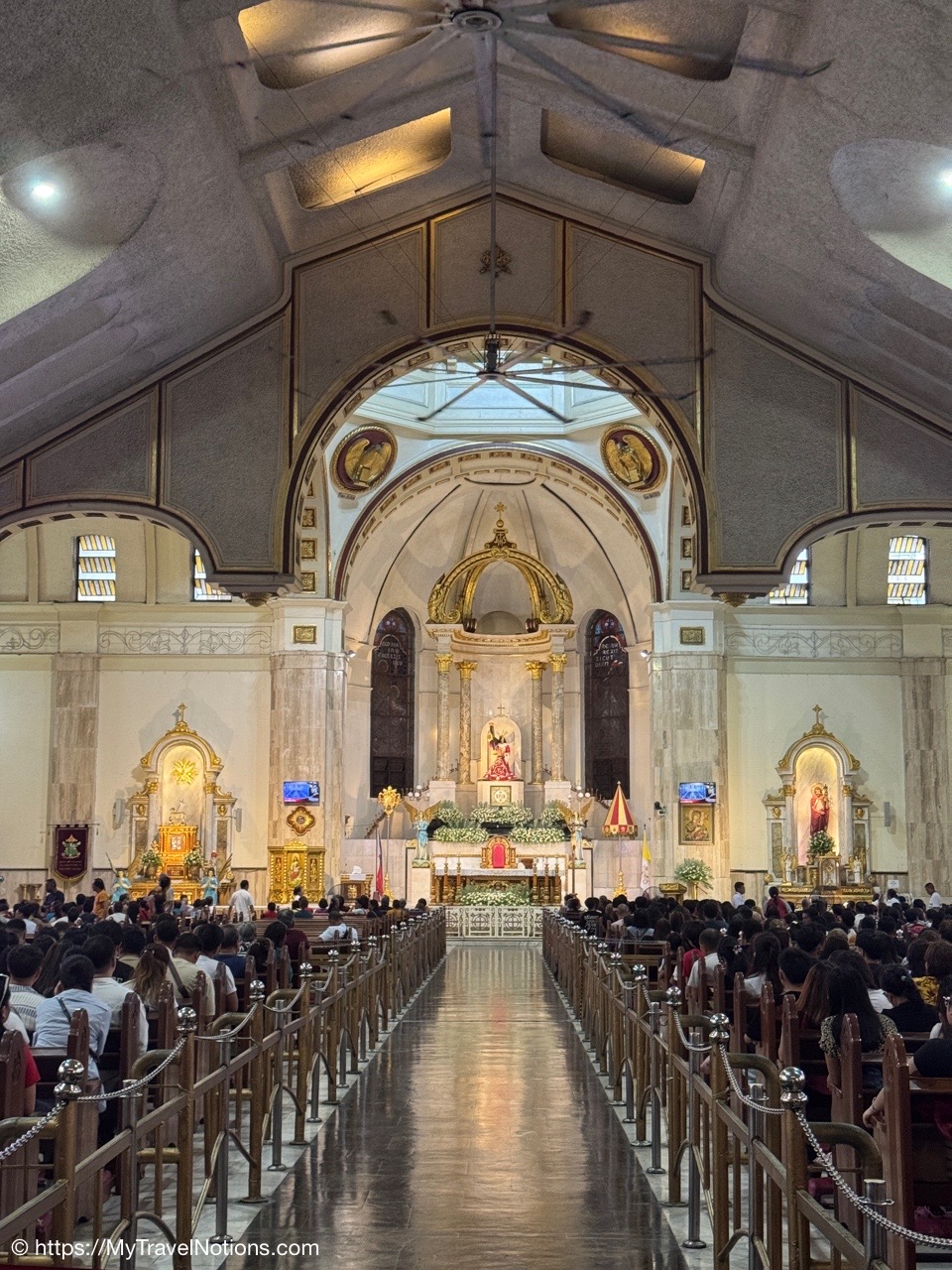
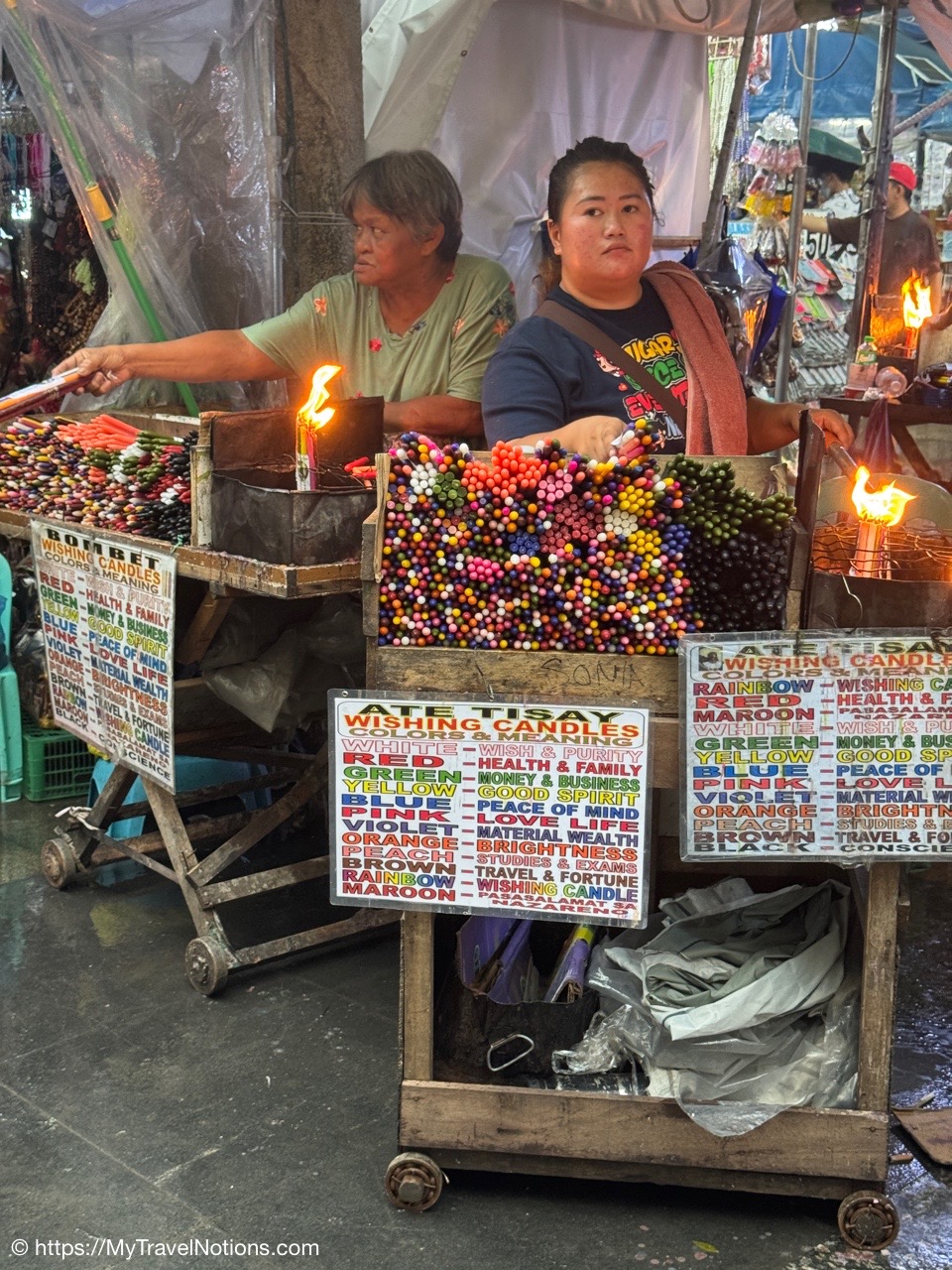
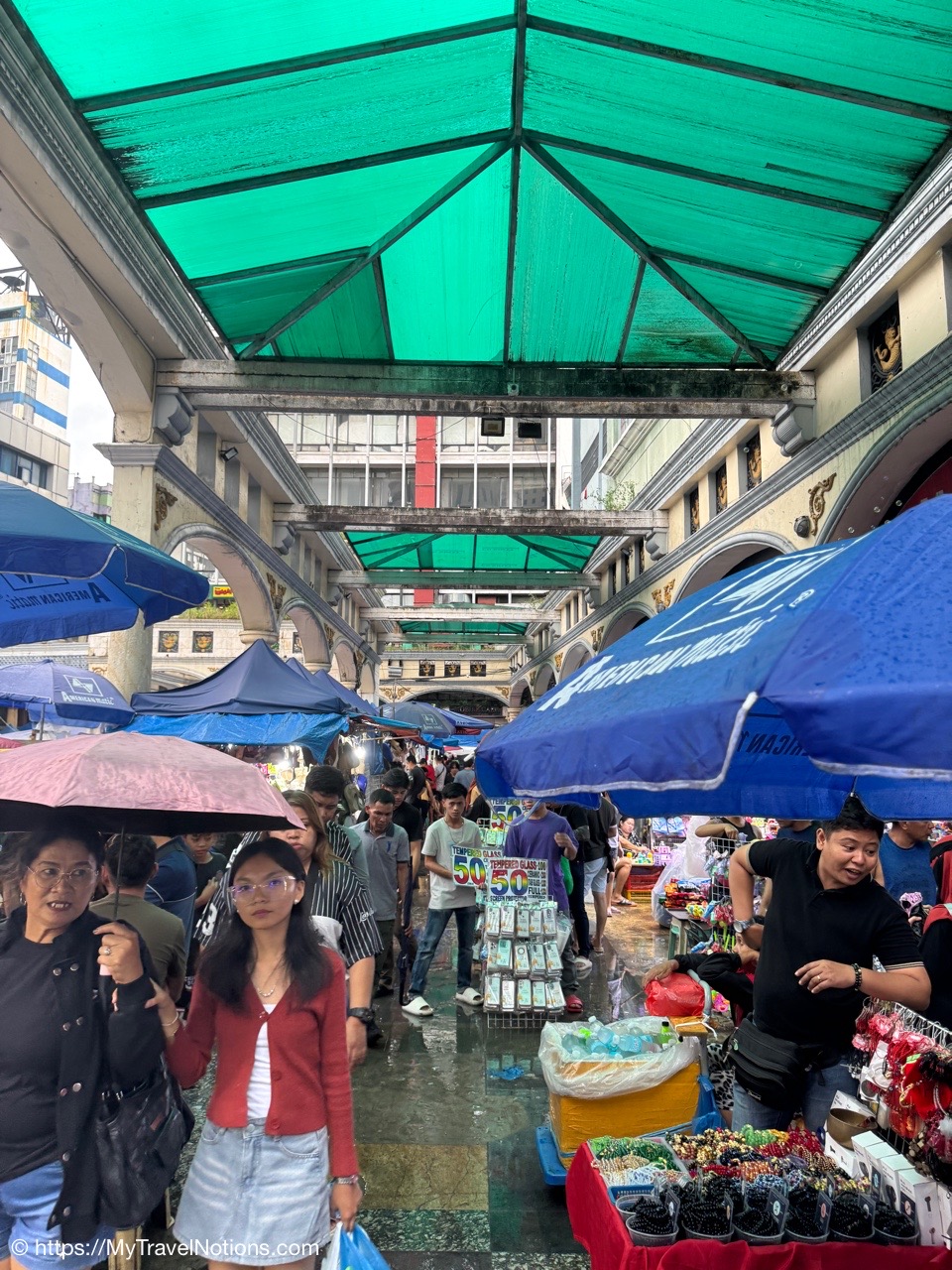
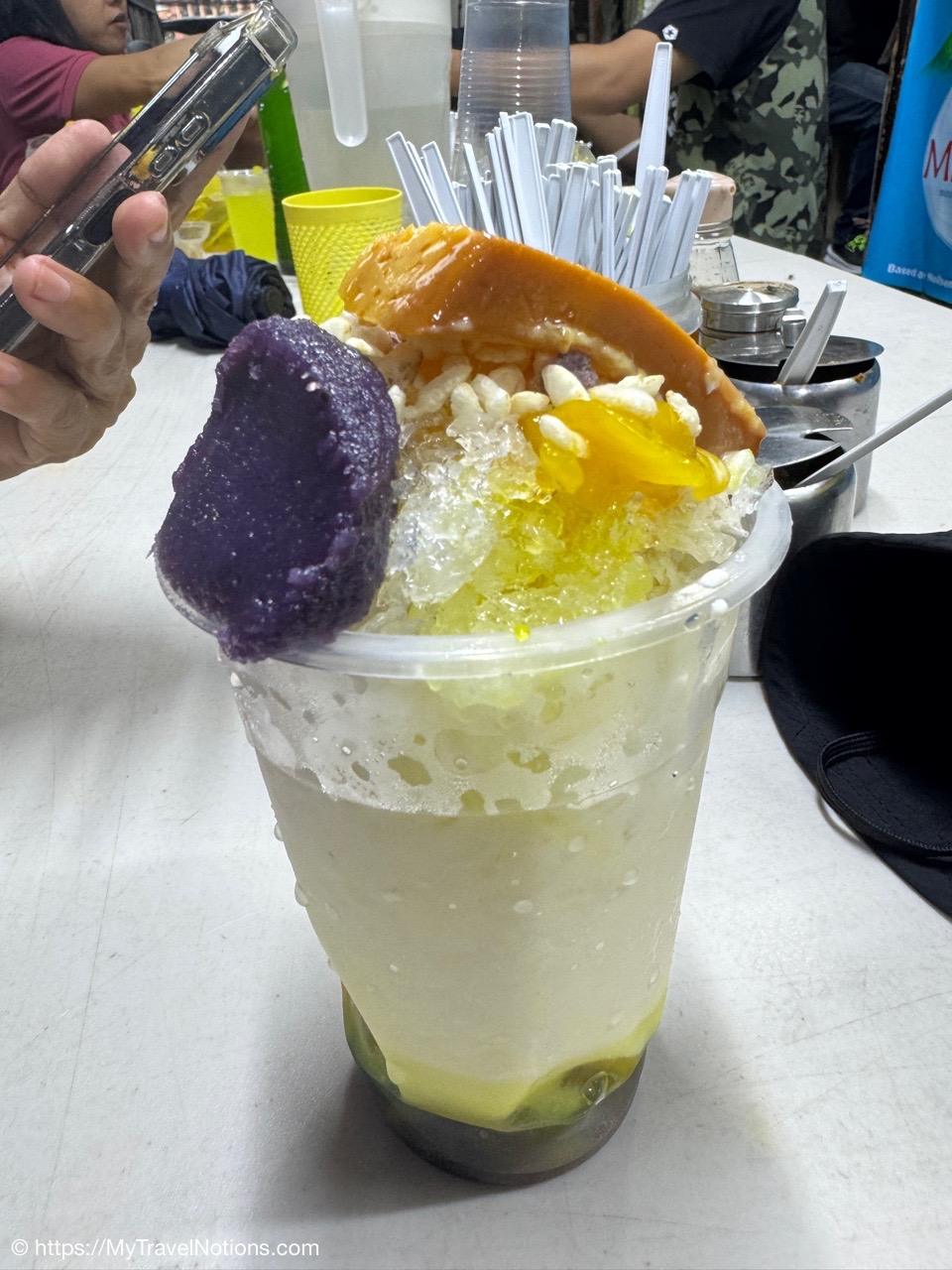
Me eating the 1st bite of food, a chicken ball, on my Manila Street Food and Drinks walking tour in Manila’s Chinatown, called Binondo. I’m trying this fried chicken snack with some chili for added spice. It had a bit of a taste but can’t say I would go back for more. Thanks Tessie for the photo. (Sept. 14, 2025)I’m walking to the meeting point for my Manila Street Food and Drinks walking tour in Manila’s Chinatown, called Binondo. It was just a 14-minute walk from the hotel across the Jones Bridge over the Pasig River connecting Intramuros with Chinatown. (Sept. 14, 2025)Walking across the Jones Bridge, over the Pasig River, connecting Manila’s Intramuros with its Chinatown called Binondo. (Sept. 14, 2025)Walking across the Jones Bridge, over the Pasig River, connecting Manila’s Intramuros with its Chinatown called Binondo. And approaching the Binondo Chinatown Arch also known as the Chinese Goodwill Arch, a large, ornate structure that serves as a grand entrance to the world’s oldest Chinatown. (Sept. 14, 2025)And behind the colorful Chinatown Arch was another Filipino-Chinese Friendship Arch into Manila’s Chinatown called Binondo. (Sept. 14, 2025)Met my street food tour guide here at the 19 Grand Cafe in Manila’s Chinatown, called Binondo. I ended up having a private food, which would have been great if I enjoyed the food choices, but I didn’t. And please don’t take this as a criticism of the food itself. Like I said, I can be a very boring eater. (Sept. 14, 2025)Picking up this jeepney for a quick local ride to our first street food stop in Manila’s Chinatown, called Binondo. (Sept. 14, 2025)Trying to take a selfie inside, my now second, jeepney ride to our first street food stop in Manila’s Chinatown, called Binondo. (Sept. 14, 2025)Heading into the Divisoria Public Market in Manila’s Chinatown, called Binondo, for the first two stops of my Manila Street Food and Drinks walking tour. The market is famous for its shopping and also offers a selection of street snacks. (Sept. 14, 2025)The 1st stop of my Manila Street Food and Drinks walking tour at the Divisoria Public Market in Manila’s Chinatown, called Binondo, was to try out the chicken balls. The small, deep-fried meatballs, often made from ground chicken and seasoned with garlic and onion, are a type of Filipino snack sold as street food. They can be dipped in a spicy or sweet and sour sauce. I chose the spicy. I ate a couple, which were a bit tasteless to me. (Sept. 14, 2025)I tried the deep fried banana coated with caramelized brown sugar is considered Filipino comfort food at the 1st stop of my Manila Street Food and Drinks walking tour at the Divisoria Public Market in Manila’s Chinatown, called Binondo. (Sept. 14, 2025)From the Divisoria Public Market in Manila’s Chinatown called Binondo we took a Tuk Tuk to the next street food area. (Sept. 14, 2025)The rainy views of Manila’s Chinatown, called Binondo, from my Tuk Tuk ride. (Sept. 14, 2025)The rainy views of Manila’s Chinatown, called Binondo, from my Tuk Tuk ride. (Sept. 14, 2025)After the Tuk Tuk ride, we walked along Avenida Rizal, a street full of eyeglass businesses in Manila’s Chinatown, called Binondo. (Sept. 14, 2025)Walking along Avenida Rizal, a street full of eyeglass businesses in Manila’s Chinatown, called Binondo. (Sept. 14, 2025)Walking through Manila’s Chinatown, called Binondo. (Sept. 14, 2025)Walking through Manila’s Chinatown, called Binondo. (Sept. 14, 2025)Walking through Manila’s Chinatown, called Binondo. (Sept. 14, 2025)Walking through the 2nd street market area in Manila’s Chinatown, called Binondo. (Sept. 14, 2025)The 3rd street food stop during my Manila Street Food and Drinks walking tour was at Sotanghon noodle soup in Manila’s Chinatown, called Binondo. (Sept. 14, 2025)The 3rd street food stop during my Manila Street Food and Drinks walking tour was at Sotanghon noodle soup in Manila’s Chinatown, called Binondo. (Sept. 14, 2025)Me, at our 3rd street food stop during my Manila Street Food and Drinks walking tour at Sotanghon noodle soup in Manila’s Chinatown, called Binondo. Sotanghon noodles are a popular and comforting Filipino noodle soup featuring clear, cellophane noodles (sotanghon) made from mung bean starch, simmered in a savory broth with beef and a whole egg. In all honesty, for me, it was just okay and again, rather tasteless. (Sept. 14, 2025)Heading through the market area towards the Plaza Miranda, a historic and bustling public square in the heart of the Quiapo district of Manila and the famous Quiapo Church. (Sept. 14, 2025)Heading through the market area towards the Plaza Miranda, a historic and bustling public square in the heart of the Quiapo district of Manila and the famous Quiapo Church. (Sept. 14, 2025)The Minor Basilica of the Black Nazarene or commonly known as the Quiapo Church at the central Plaza Miranda in Manila. (Sept. 14, 2025)The Nuestro Padre Jesús Nazareno, officially and liturgically known as Jesús Nazareno to the side of the Minor Basilica and National Shrine of Jesus Nazareno, commonly known as Quiapo Church, a Catholic basilica and national shrine located in the district of Quiapo in Manila. The Jesús Nazareno is a life-sized dark statue of Jesus Christ carrying the True Cross. It is venerated by devotees and regarded by many as miraculous. The image was reputedly carved by an unknown Mexican artist in the 16th century and then brought to the Philippines in 1606. It depicts Jesus en route to his crucifixion. (Sept. 14, 2025)The Jesús Nazareno, a life-sized dark statue of Jesus Christ carrying the True Cross at the Minor Basilica and National Shrine of Jesus Nazareno, commonly known as Quiapo Church. It is venerated by devotees and regarded by many as miraculous. The image was reputedly carved by an unknown Mexican artist in the 16th century and then brought to the Philippines in 1606. It depicts Jesus en route to his crucifixion. (Sept. 14, 2025)The Minor Basilica of the Black Nazarene, commonly known as Quiapo Church, and canonically as Saint John the Baptist Parish in Quiapo in Manila. (Sept. 14, 2025)The central nave and altar inside the very packed Minor Basilica of the Black Nazarene, commonly known as Quiapo Church, a Catholic basilica and national shrine located in the district of Quiapo in Manila. (Sept. 14, 2025)The central nave and altar inside the very packed Minor Basilica of the Black Nazarene, commonly known as Quiapo Church, a Catholic basilica and national shrine located in the district of Quiapo in Manila. (Sept. 14, 2025)The multicolored candle vendors at Plaza Miranda, just outside the Quiapo Church in Manila. The colors of the candles are associated with the personal intentions of the person who buys them: e.g., red is for love, green is for money or financial/business success, and blue for peace of mind. (Sept. 14, 2025)The vendors around the Plaza Miranda in Manila on the way to our next and last street food stop during my street food walking tour. (Sept. 14, 2025)We walked to the Quinta Market in Manila where we came to our last street food stop for a drink, the Halo-Halo at the Jollibee. (Sept. 14, 2025)The Halo-Halo at the Jollibee, my last meal-like drink at the Quinta Market in Manila. The Halo-Halo is a popular Filipino dessert consisting of layers of shaved ice, sweetened beans, fruits, jellies, and other ingredients, topped with milk, and sometimes ice cream or leche flan. Customers are meant to stir all the components together before eating, creating an explosion of different flavors and textures. (Sept. 14, 2025)
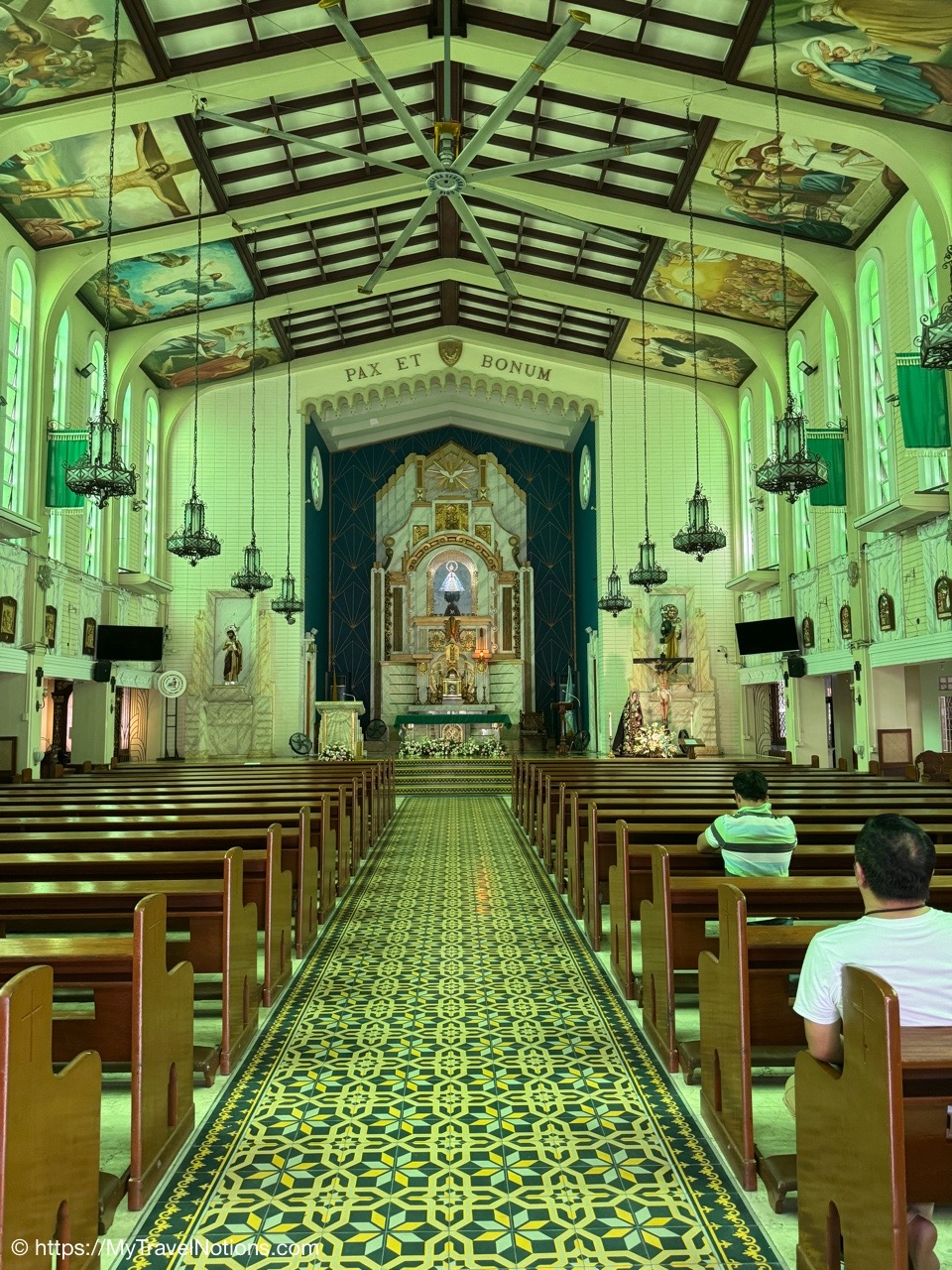
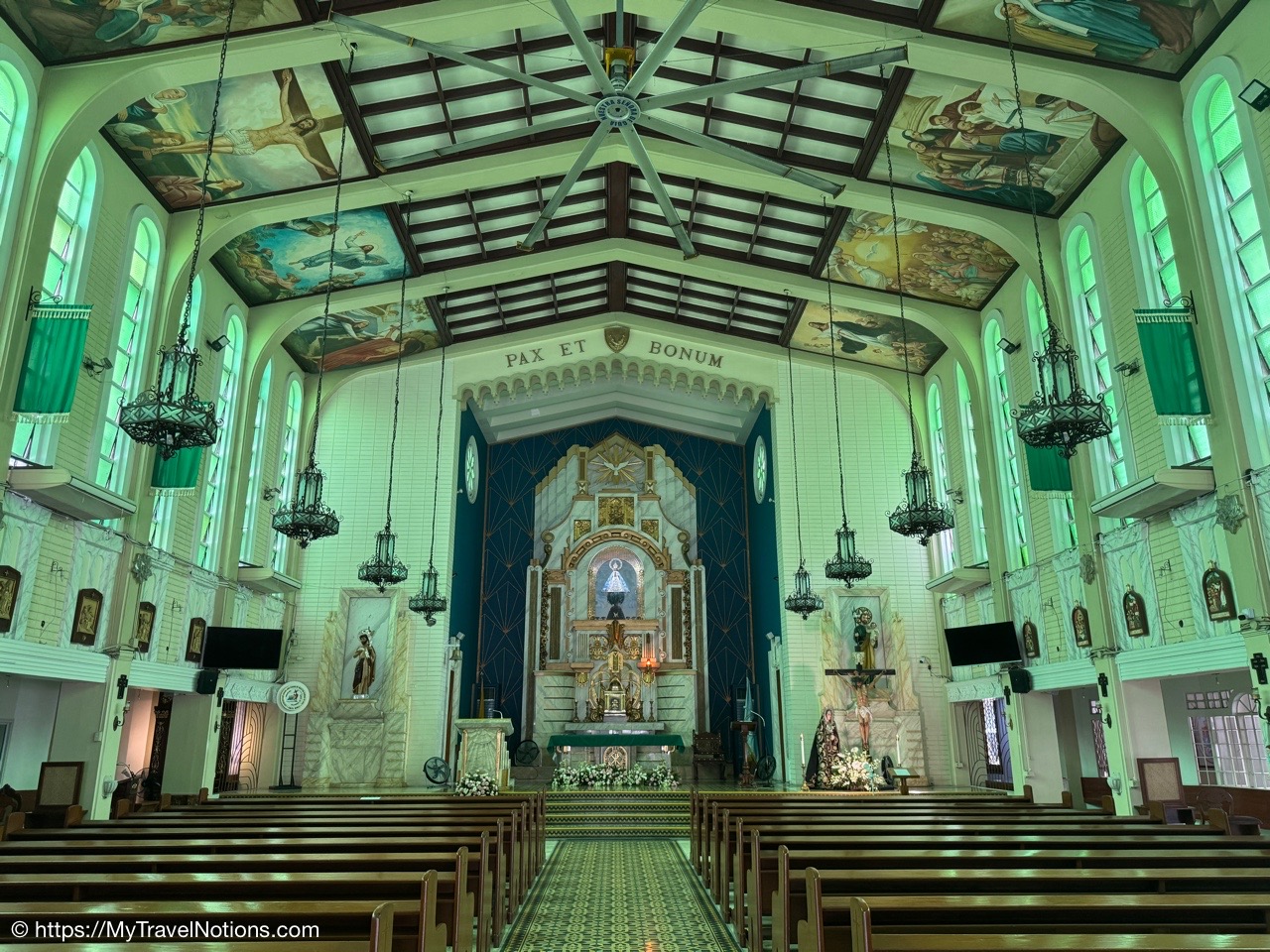
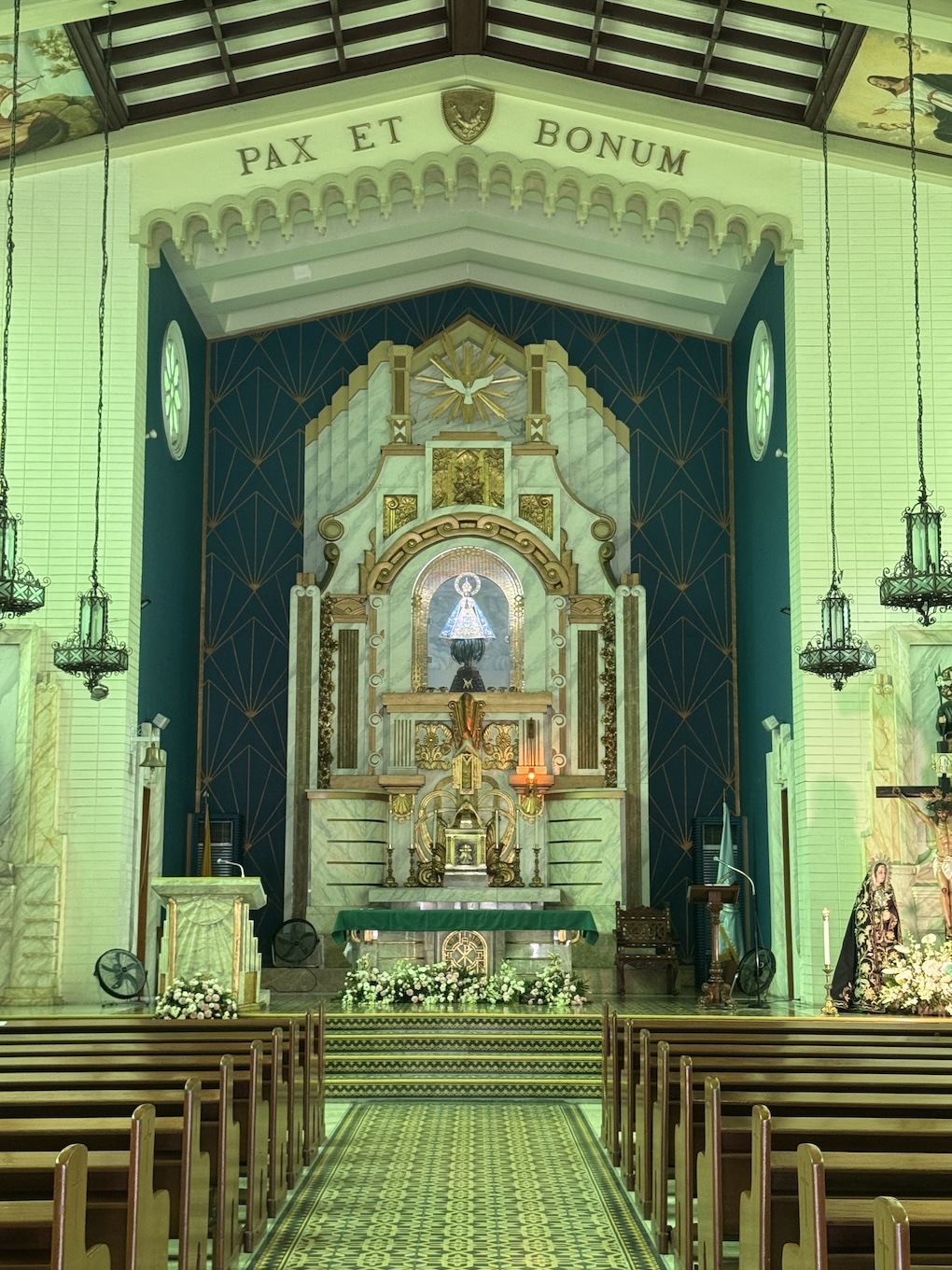
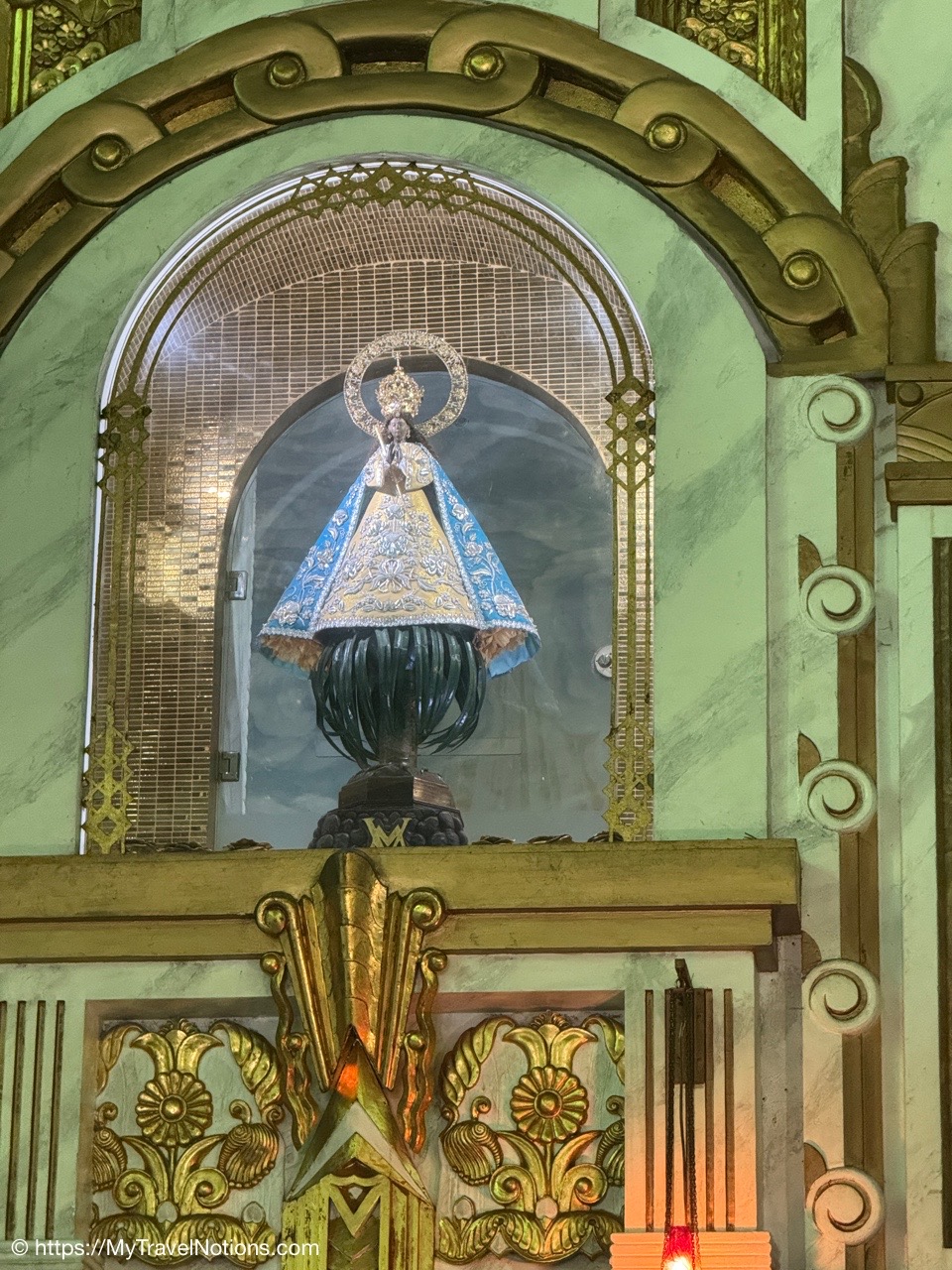
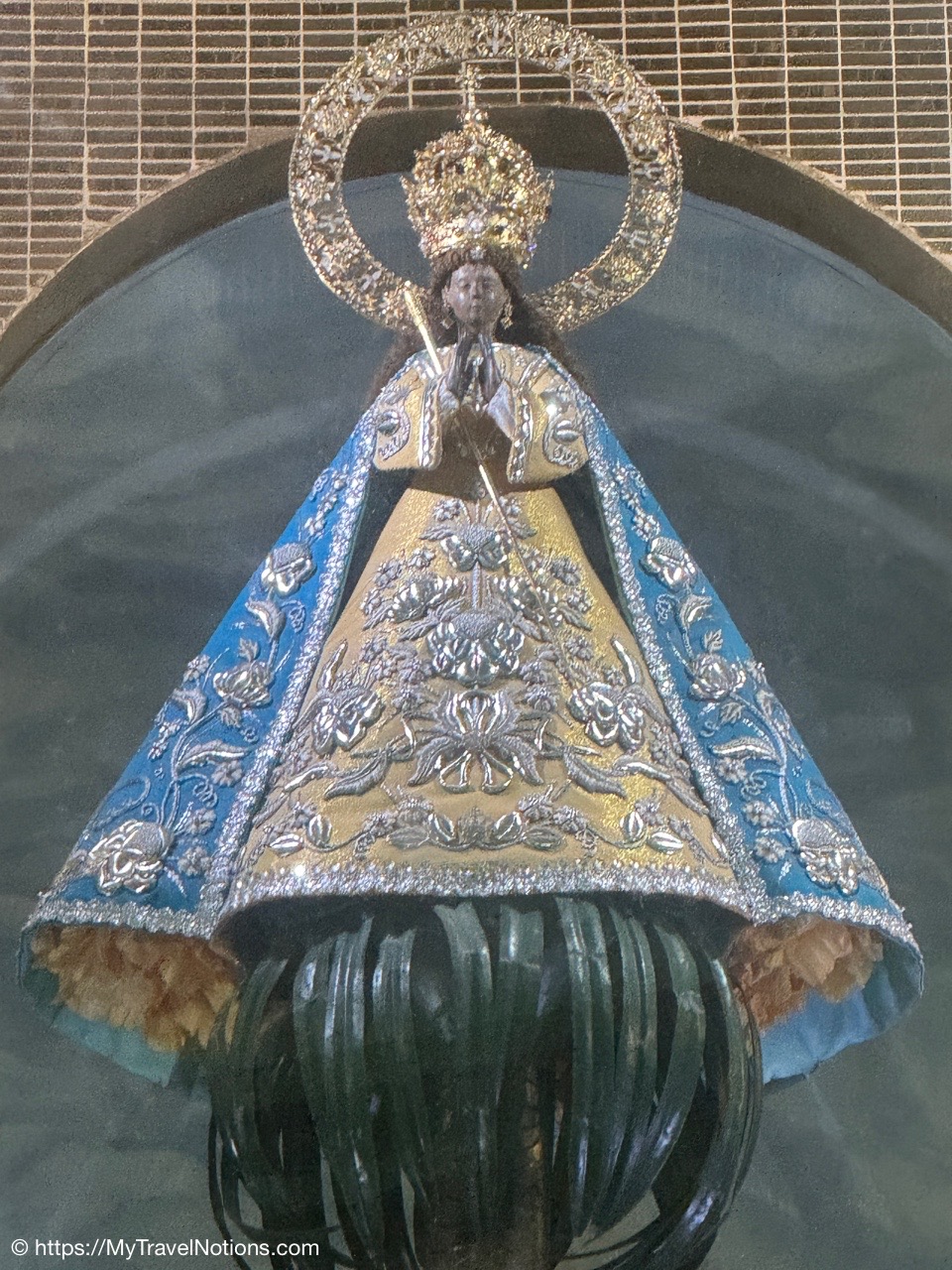
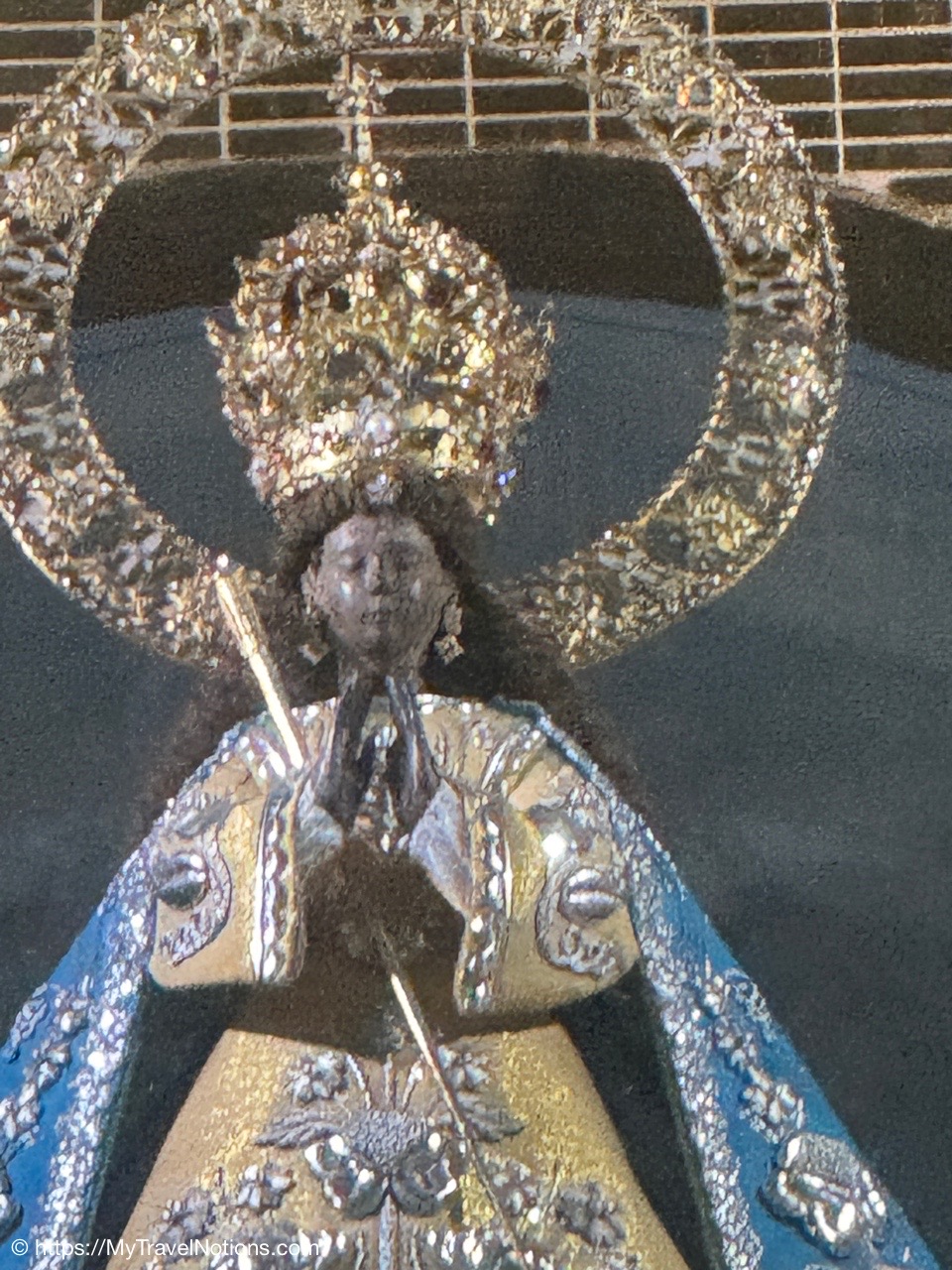
I’ve been on a quest to see as many Black Madonnas as I can during my travels so I was thrilled to learn that Manila is home to the oldest Marian statue in the Philippines. .
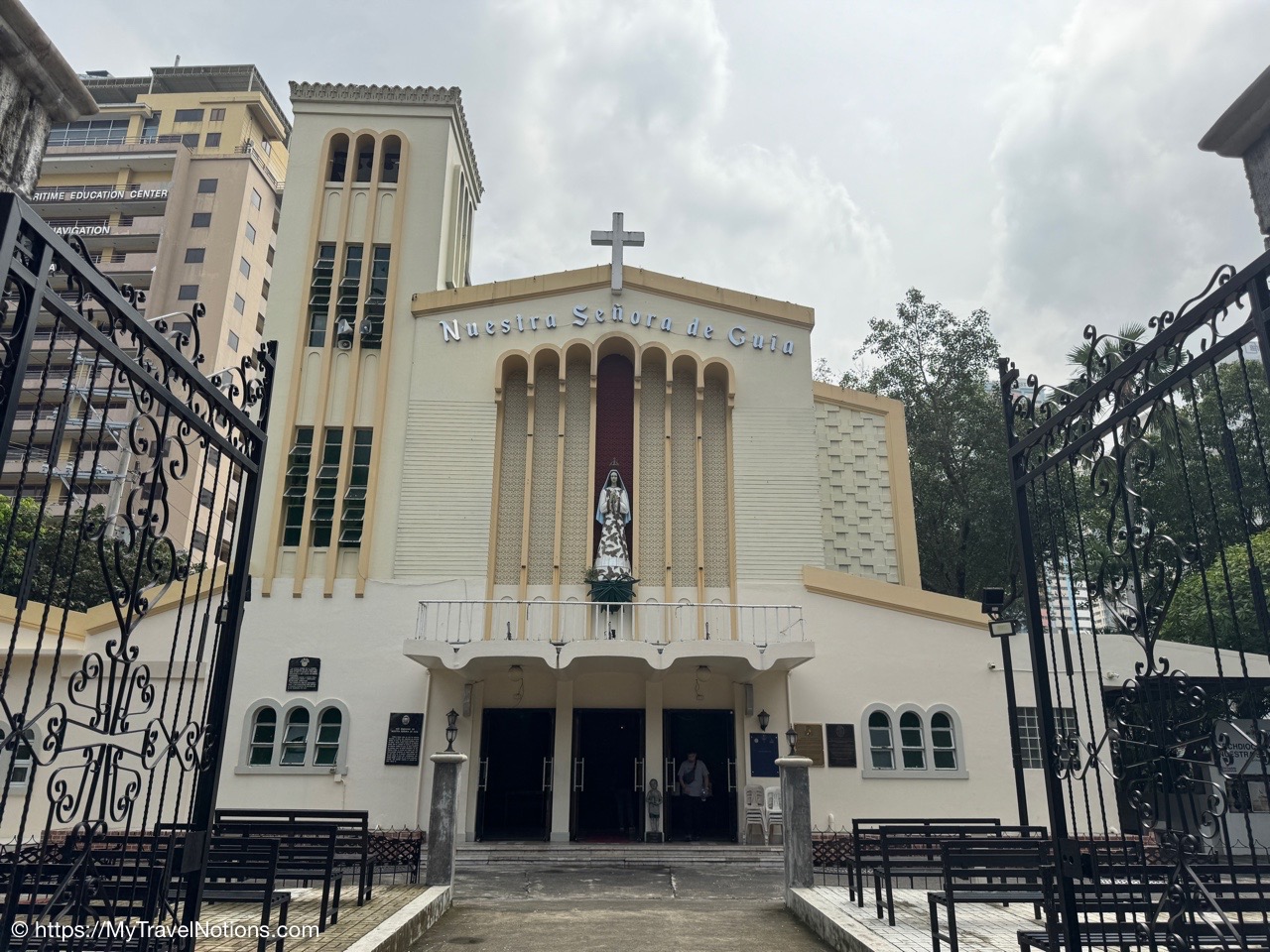
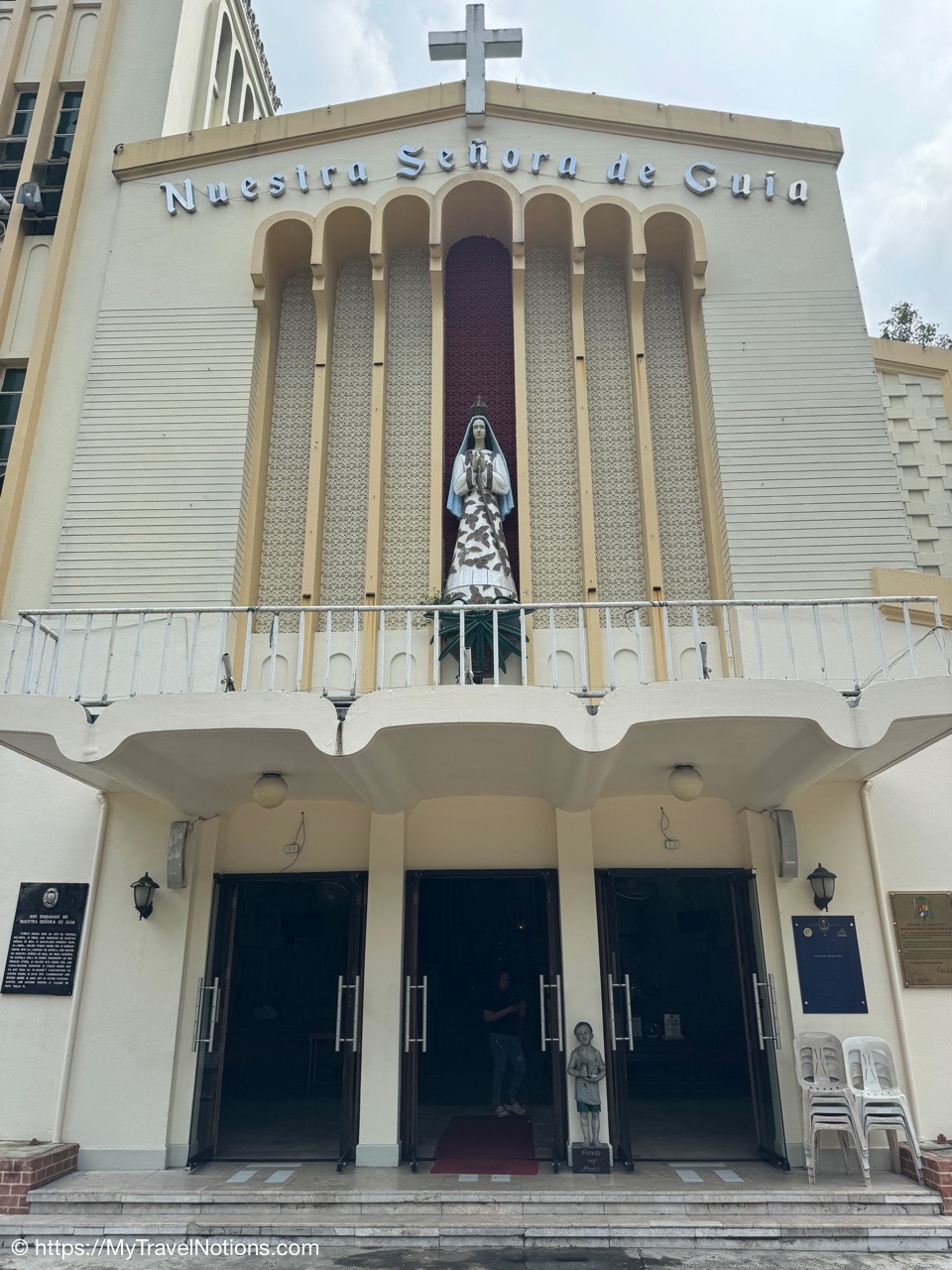
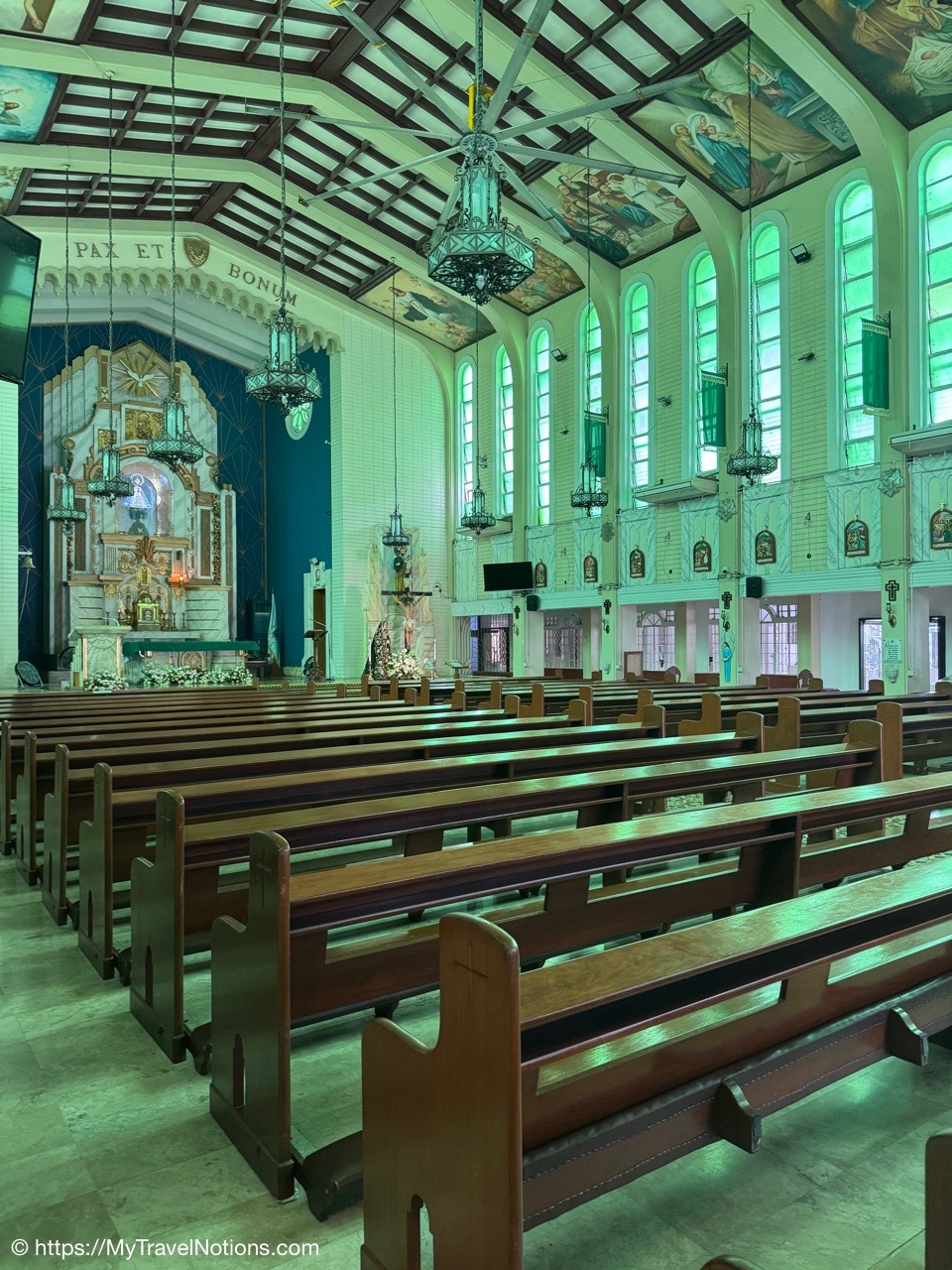
She’s located in a small church on a busy street in a city called Ermita about a 25 minute walk from my hotel, the Bayleaf. This is not your touristy part of Manila but it is a working class Manila neighborhood where this Black Madonna, Our Lady of Guidance, is being venerated at the Shrine of Nuestra Señora de Guia, commonly known as Ermita Shrine or Ermita Church. She is an ancient 16th-century wooden statue and the oldest Marian statue in the Philippines and is considered the patroness of navigators, travelers, and Overseas Filipino Workers (OFWs).
Founded as a small hermitage in the 16th century, the Ermita Shrine has been rebuilt several times after damage from earthquakes and World War II, with the current structure completed in 1953.
Let’s visit the shrine and Our Lady of Guidance in Manila.
(Saying goodbye to the Philippines and moving onto Brunei)
The Archdiocesan Shrine of Nuestra Señora de Guia, commonly known as Ermita Shrine or Ermita Church, is a Roman Catholic church and shrine located in the district of Ermita in the city of Manila. (Sept. 14, 2025)The Archdiocesan Shrine of Nuestra Señora de Guia, commonly known as Ermita Shrine or Ermita Church, is a Roman Catholic church and shrine located in the district of Ermita in the city of Manila. (Sept. 14, 2025)Inside the Archdiocesan Shrine of Nuestra Señora de Guia, commonly known as Ermita Shrine or Ermita Church, a Roman Catholic church and shrine located in the district of Ermita in the city of Manila. (Sept. 14, 2025)Inside the Archdiocesan Shrine of Nuestra Señora de Guia, commonly known as Ermita Shrine or Ermita Church, a Roman Catholic church and shrine located in the district of Ermita in the city of Manila. (Sept. 14, 2025)The altar inside the Archdiocesan Shrine of Nuestra Señora de Guia, commonly known as Ermita Shrine or Ermita Church, a Roman Catholic church and shrine located in the district of Ermita in the city of Manila. (Sept. 14, 2025)The wooden Black Madonna statue of the Virgin Mary, known as Nuestra Señora de Guía at the Ermita Shrine, is considered the oldest Marian in the Philippines, found in 1571. (Sept. 14, 2025)The wooden Black Madonna statue of the Virgin Mary, known as Nuestra Señora de Guía at the Ermita Shrine, is considered the oldest Marian in the Philippines, found in 1571. (Sept. 14, 2025)The wooden Black Madonna statue of the Virgin Mary, known as Nuestra Señora de Guía at the Ermita Shrine, is considered the oldest Marian in the Philippines, found in 1571. (Sept. 14, 2025)Inside the Archdiocesan Shrine of Nuestra Señora de Guia, commonly known as Ermita Shrine or Ermita Church, a Roman Catholic church and shrine located in the district of Ermita in the city of Manila. (Sept. 14, 2025)




Thank you for reaching out.