Paris. This is my 6th visit to the ‘City of Light’. Rosie and I made it to our tiny Parisian hotel room, yesterday afternoon, at the Hôtel des Mines along the Boulevard Saint-Michel, a major street in the Latin Quarter. And, for our first full day, Rosie toured Giverny and the charming garden home of impressionist painter Claude Monet, which I’ve joyfully seend before, while I spent the day enthralled by the beautiful art of black artists, enjoyed a delicious lunch and explored Paris’ Pantheon. Before any of these activities took place, my gorgeous first Parisian day began with a walk.
It may not be ‘April in Paris’ but it was certainly a beautiful May Day for a walk. A walk that actually had a purpose, to get to the Centre Pompadour for their incredible ‘Paris Noir’ exhibition. But my goodness this is Paris and a walk is a treat in and of its self.
I could have taken the metro but it was a little more than a mile’s walk from our hotel, Hôtel des Mines in the 5th Arrondissement, to the Centre Pompadour and it was a beautiful morning for a Parisian stroll.
Come join me on my morning Parisian walk.
(More on the Pompadour and the Panthéon after the walk.)
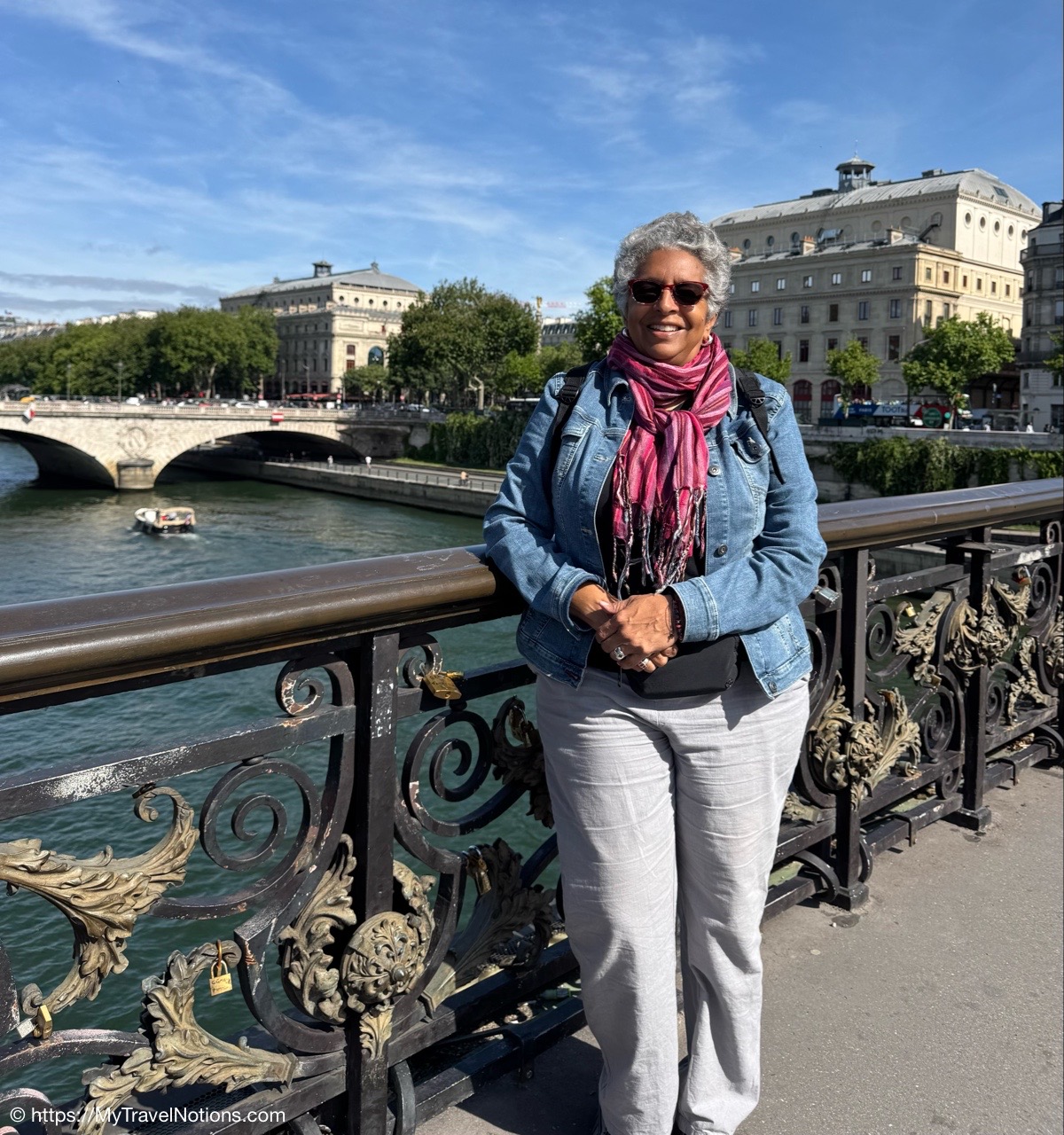
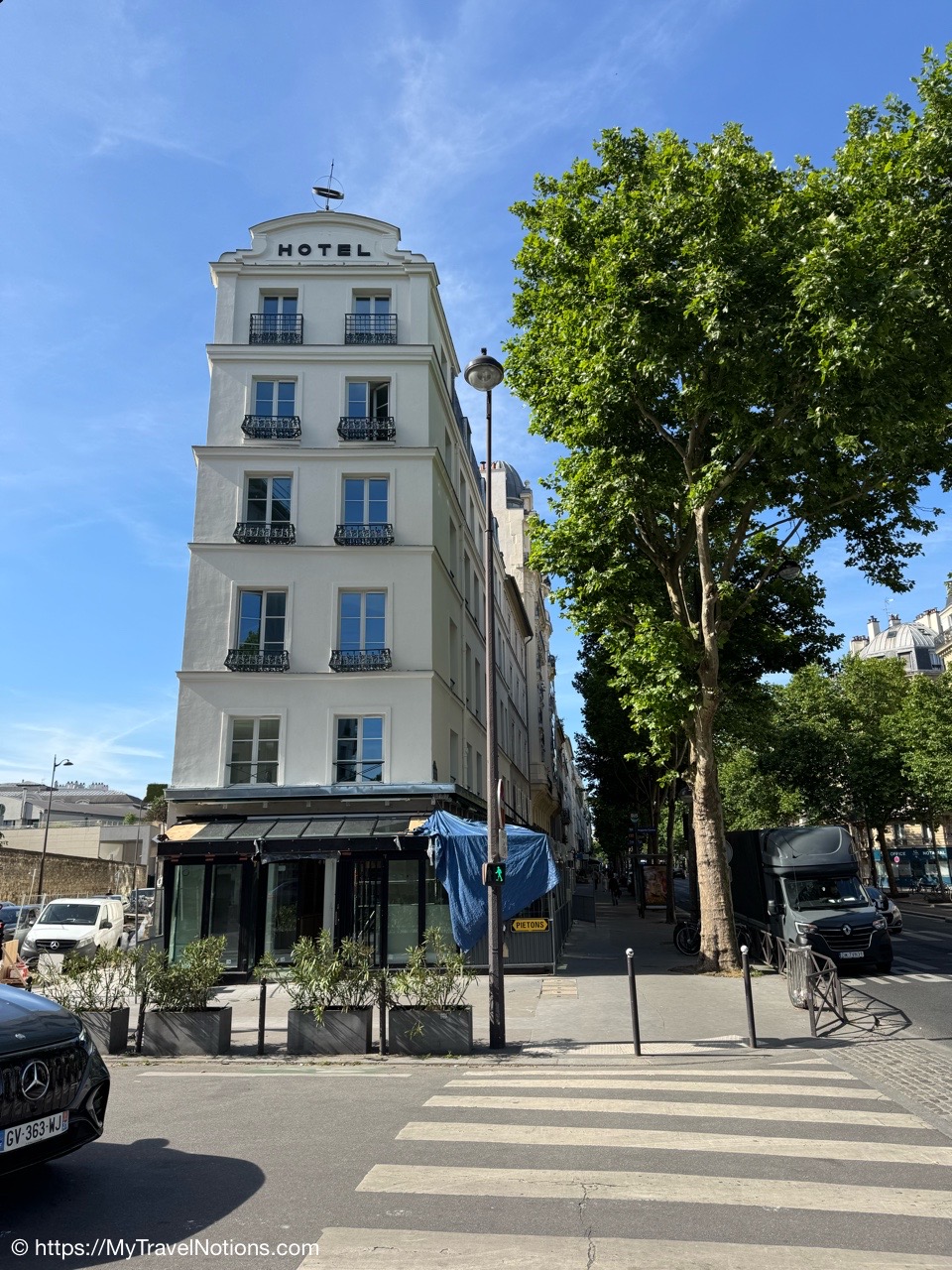
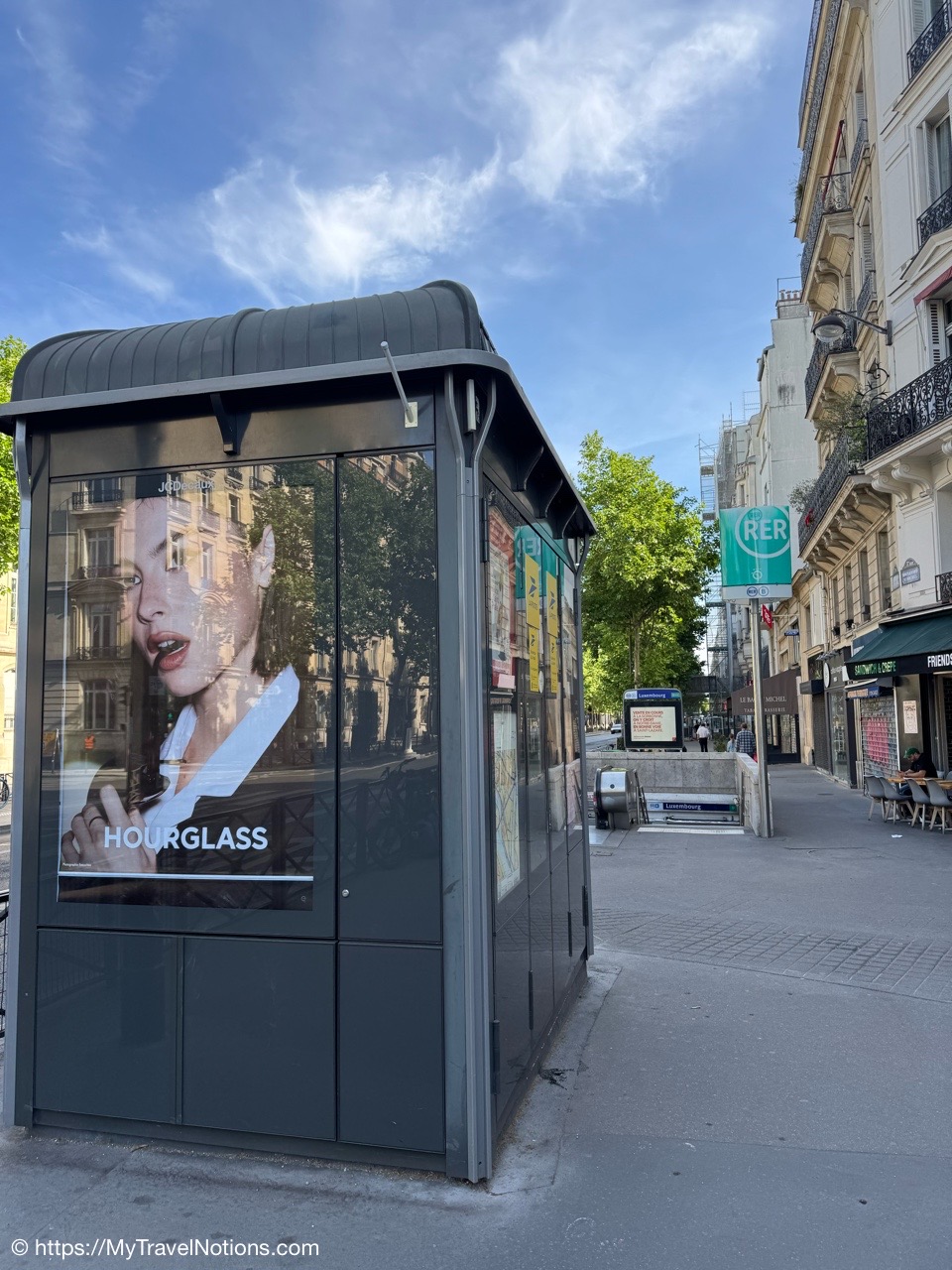
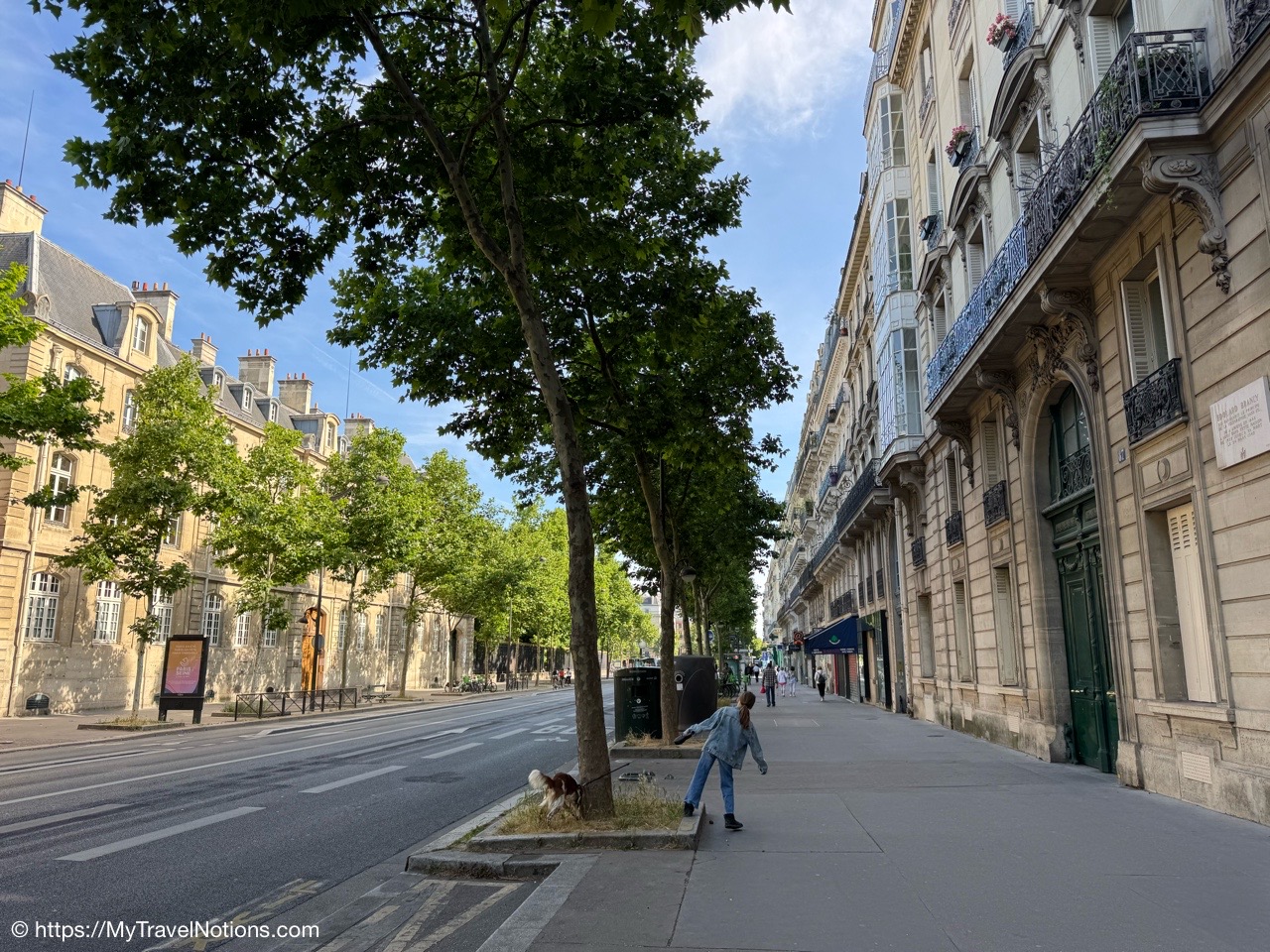
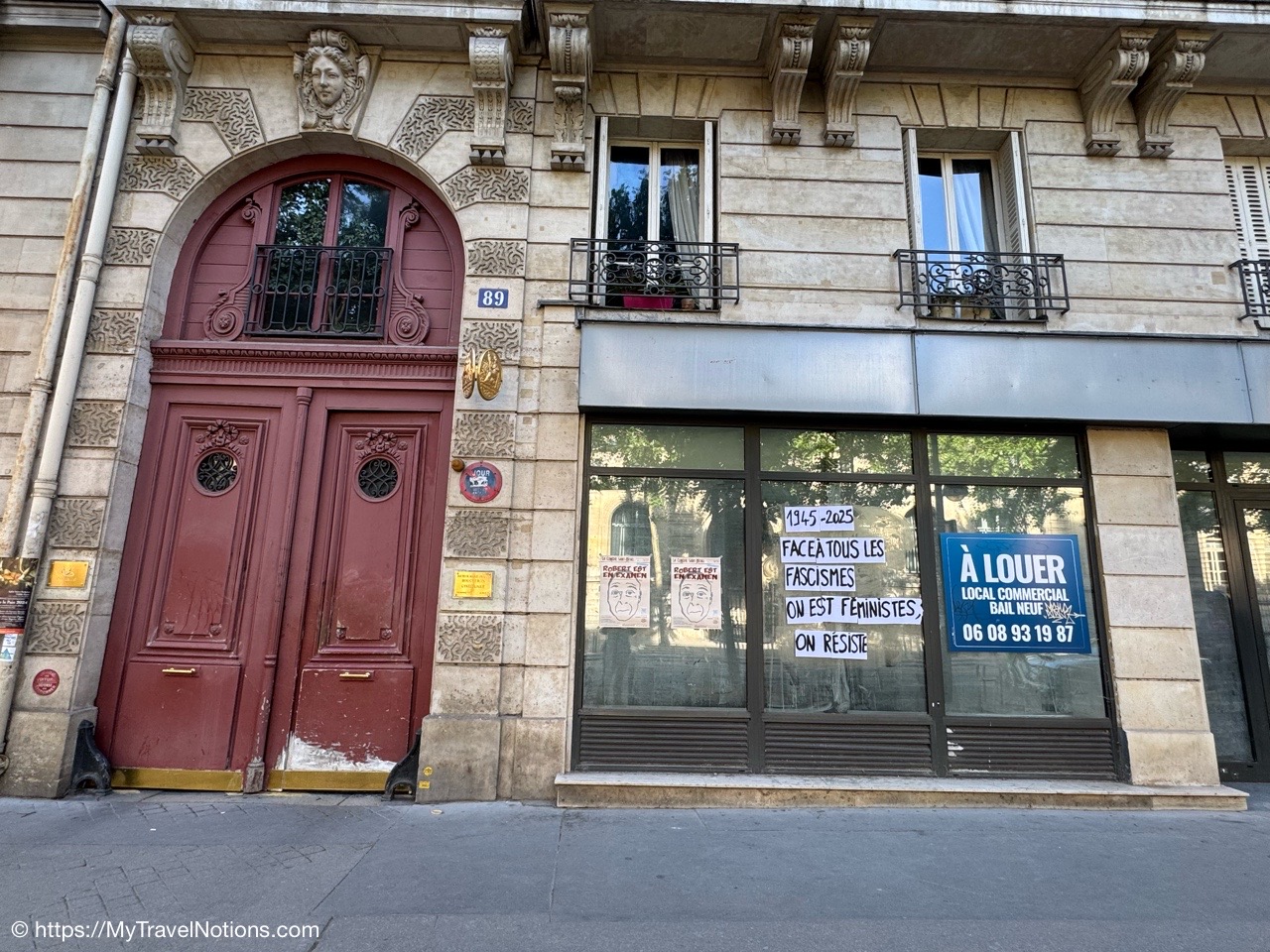
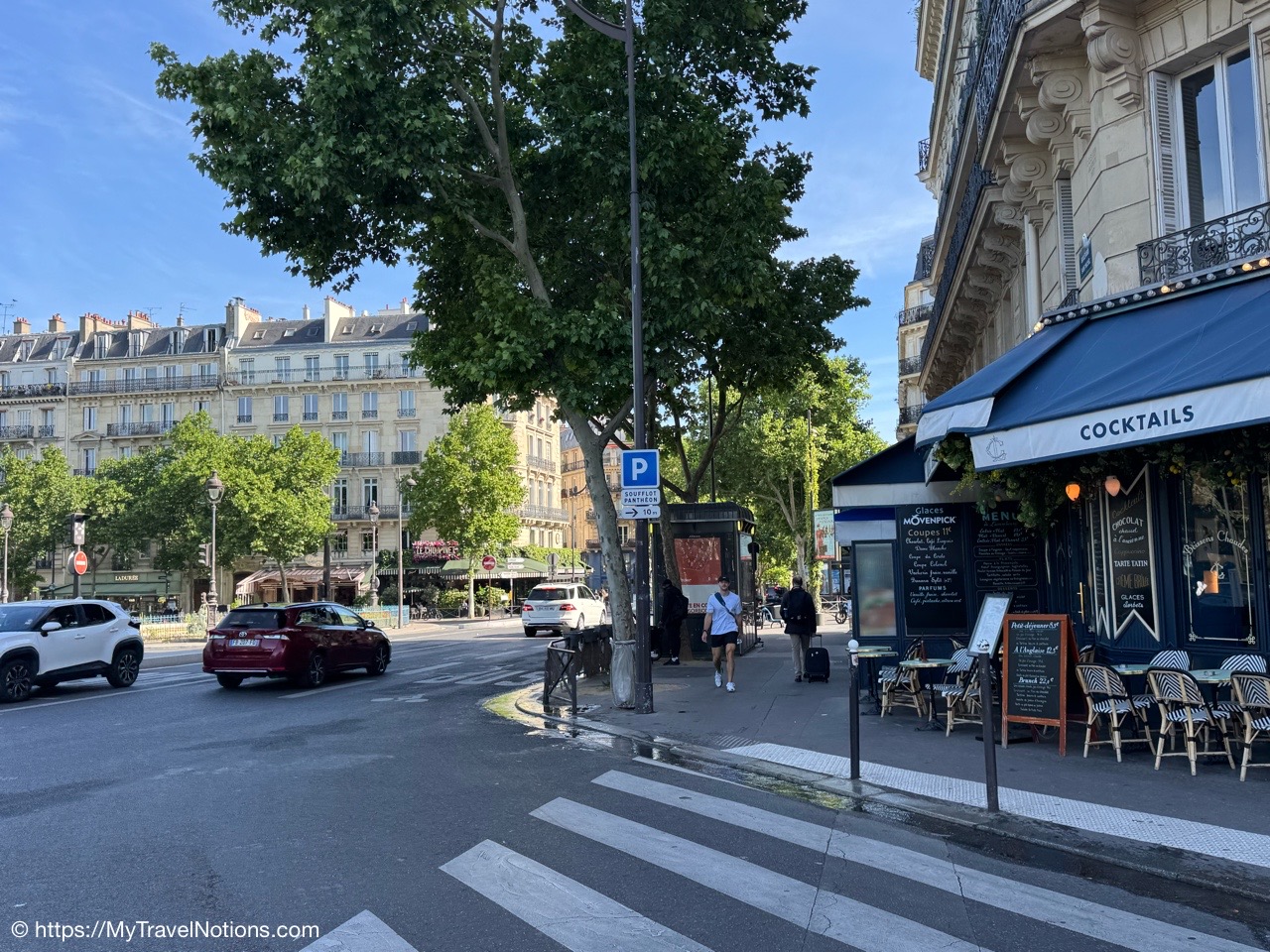
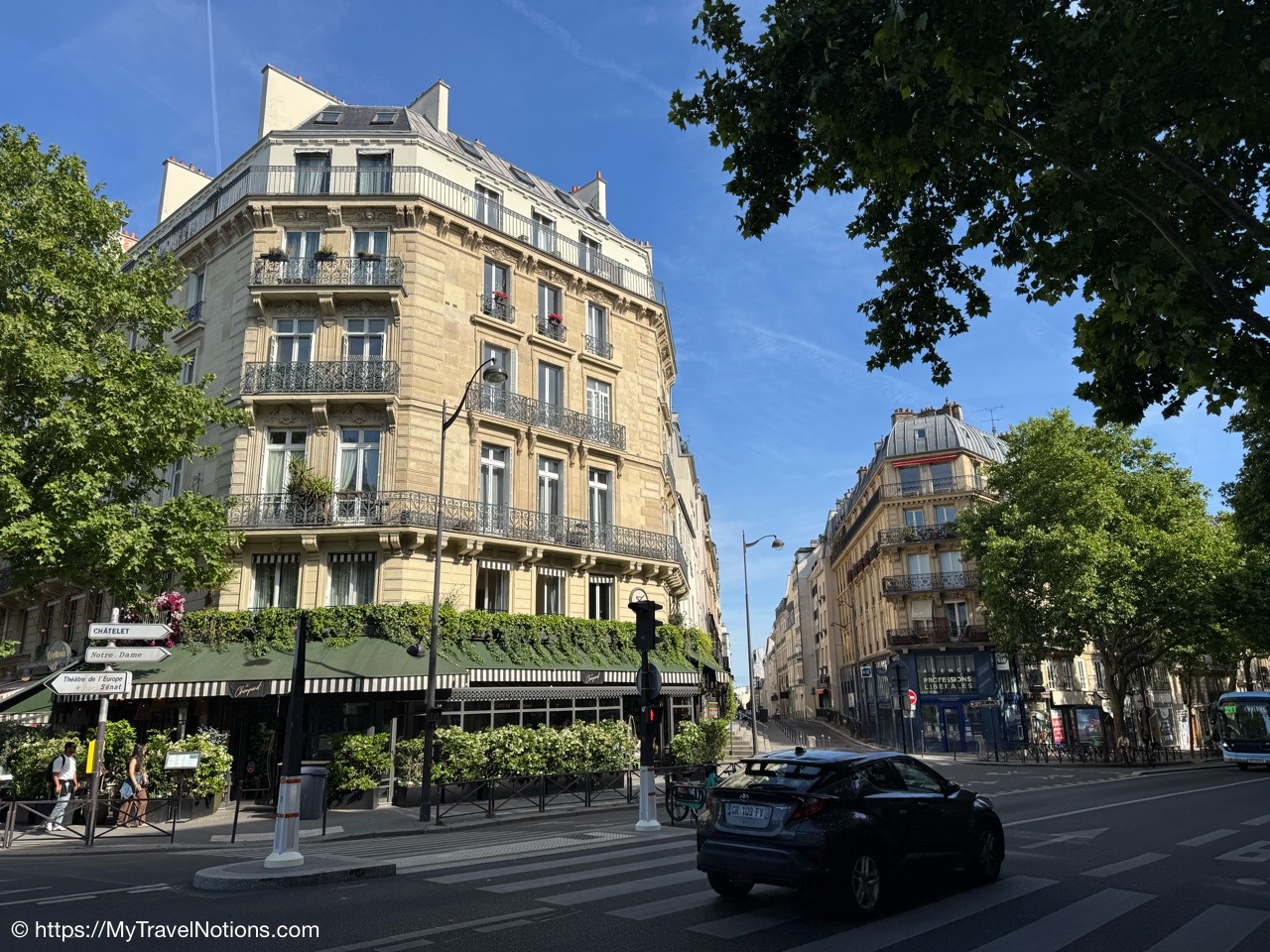
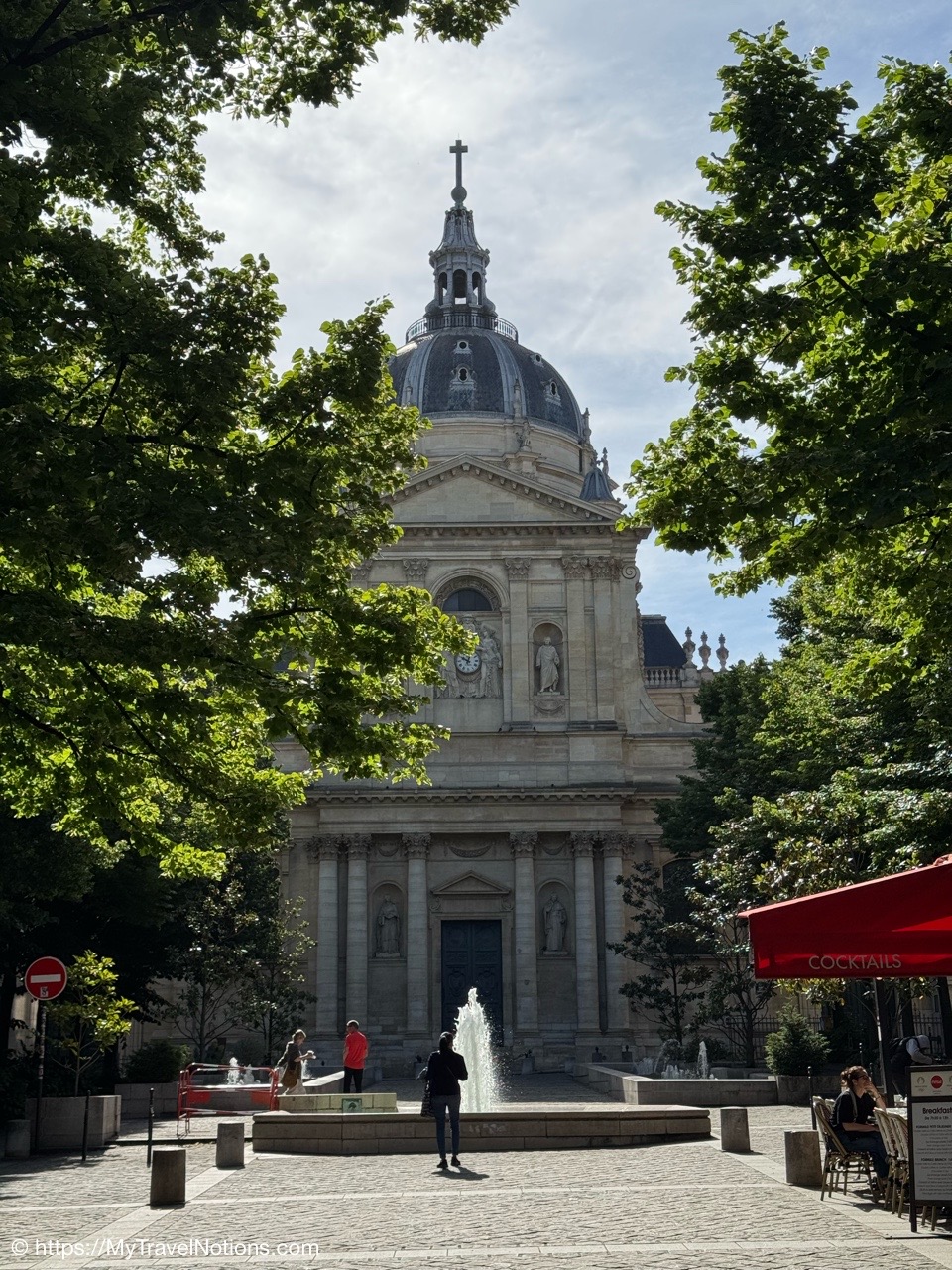
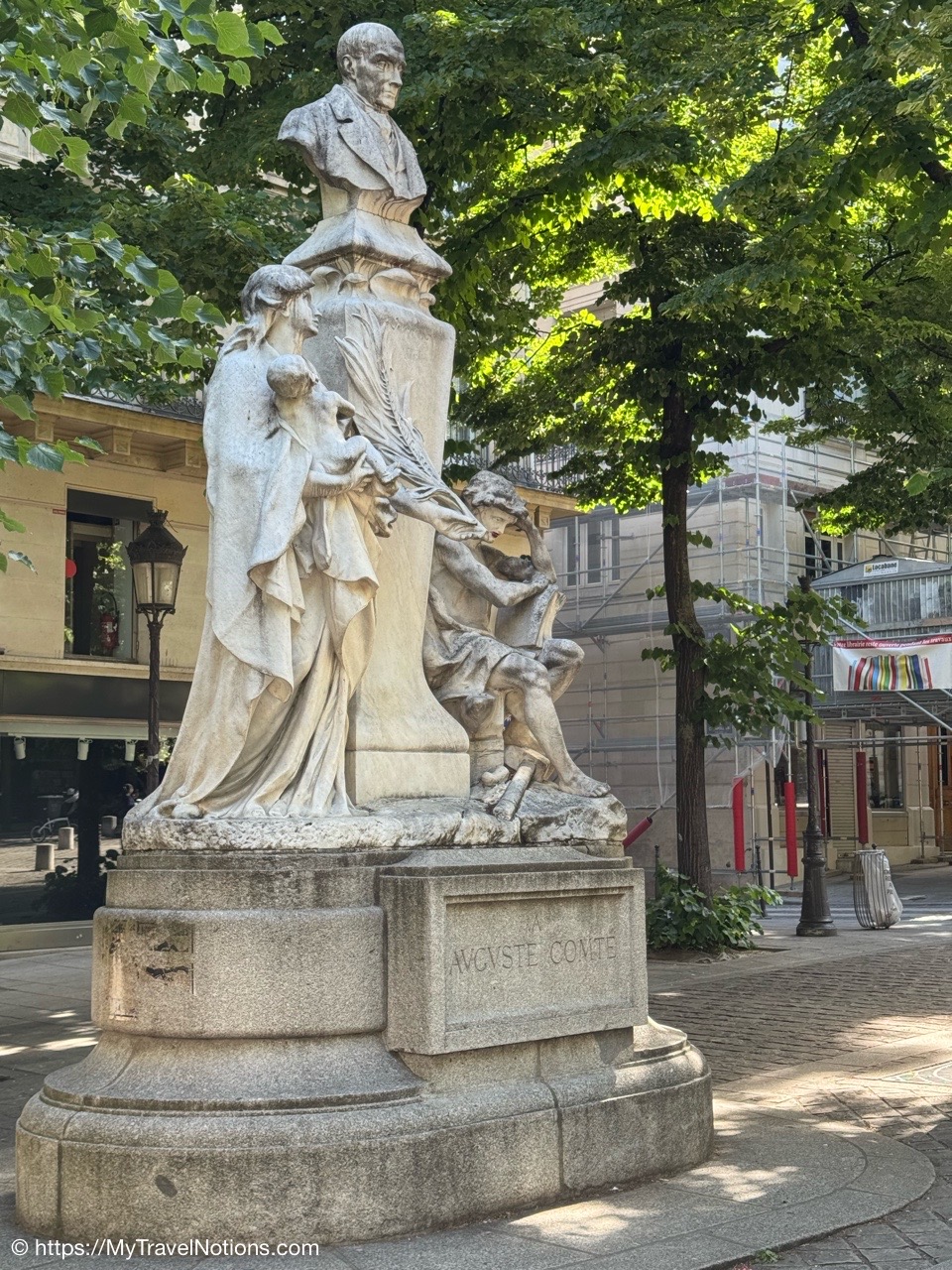
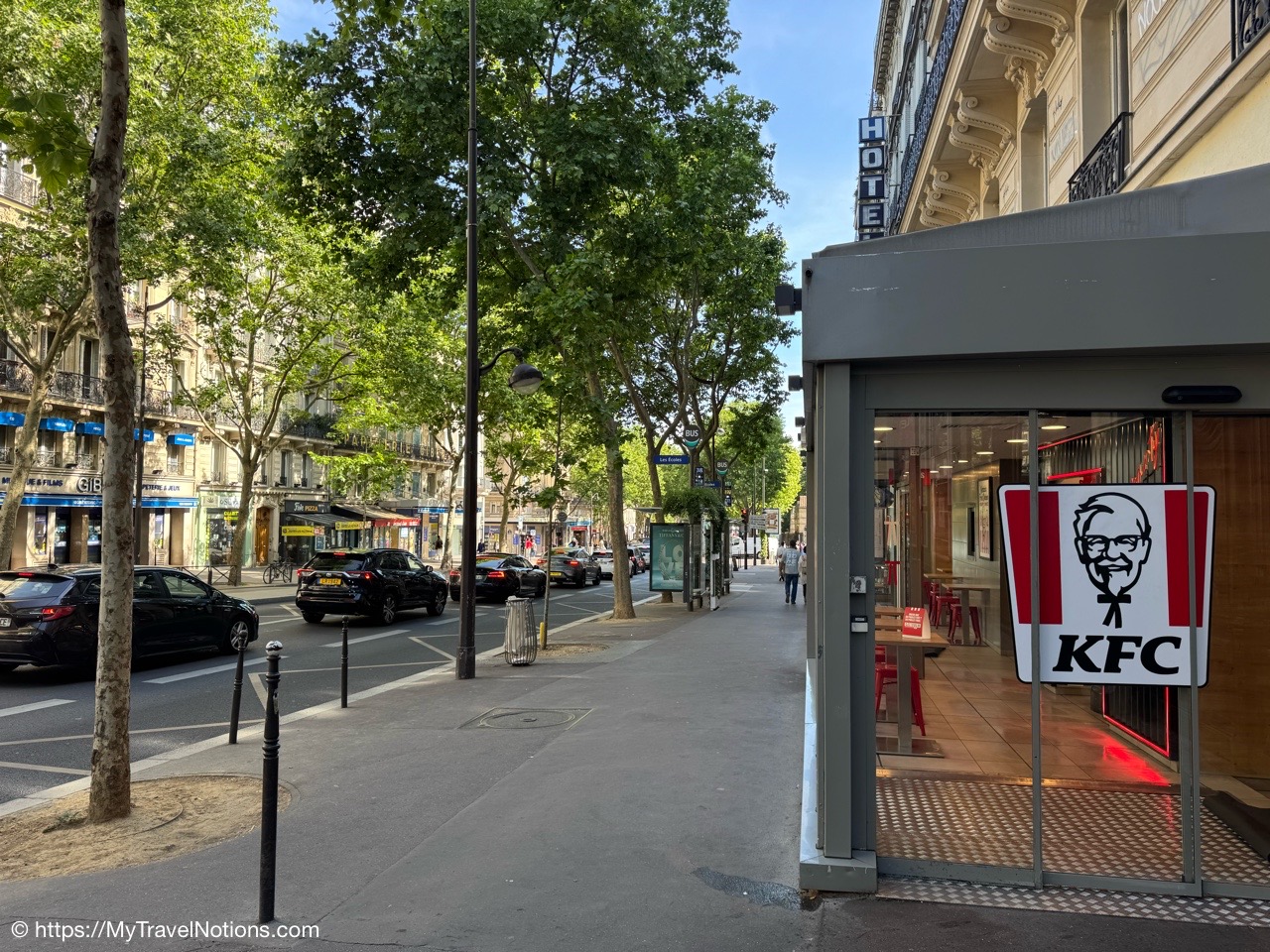
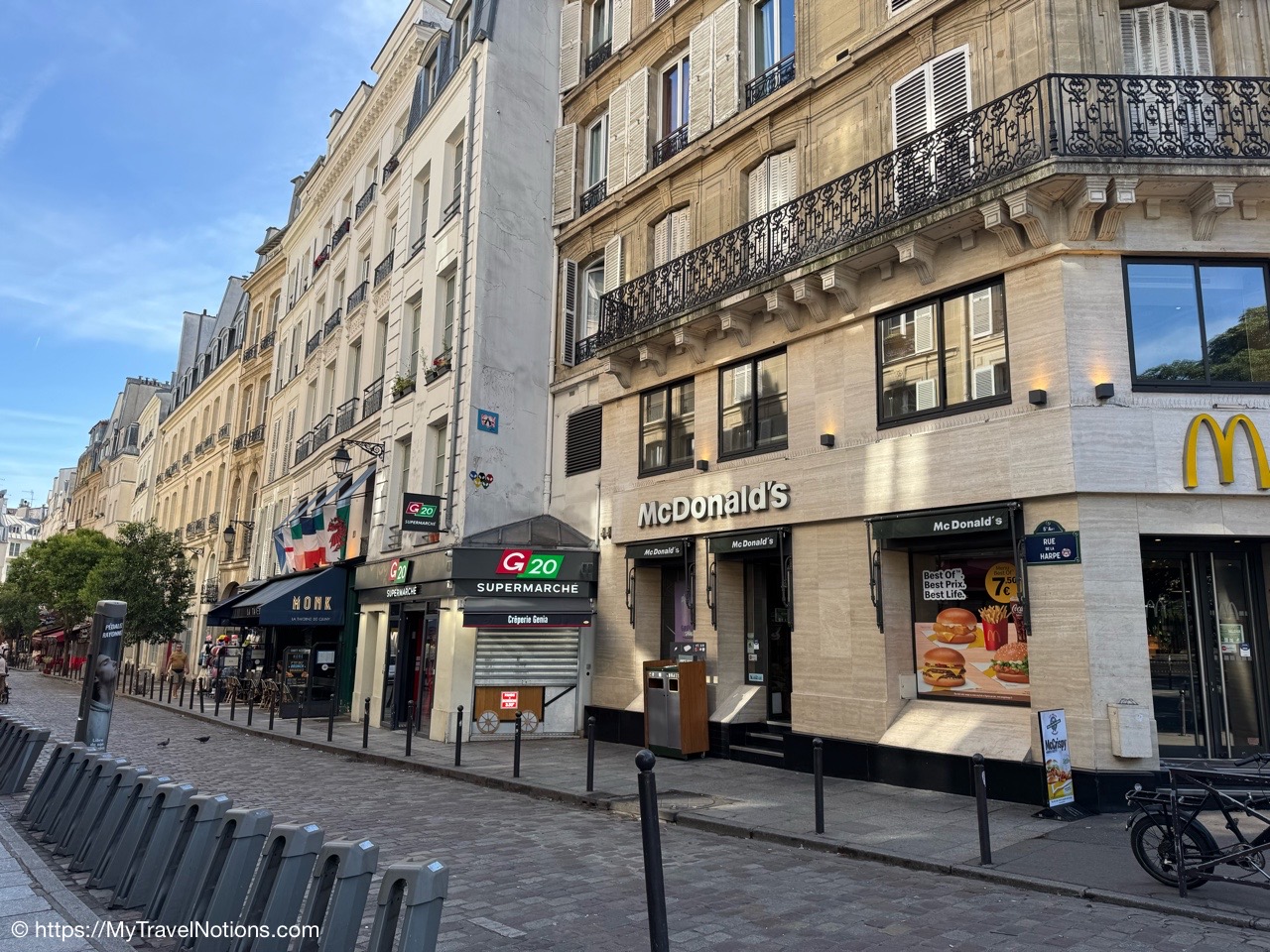
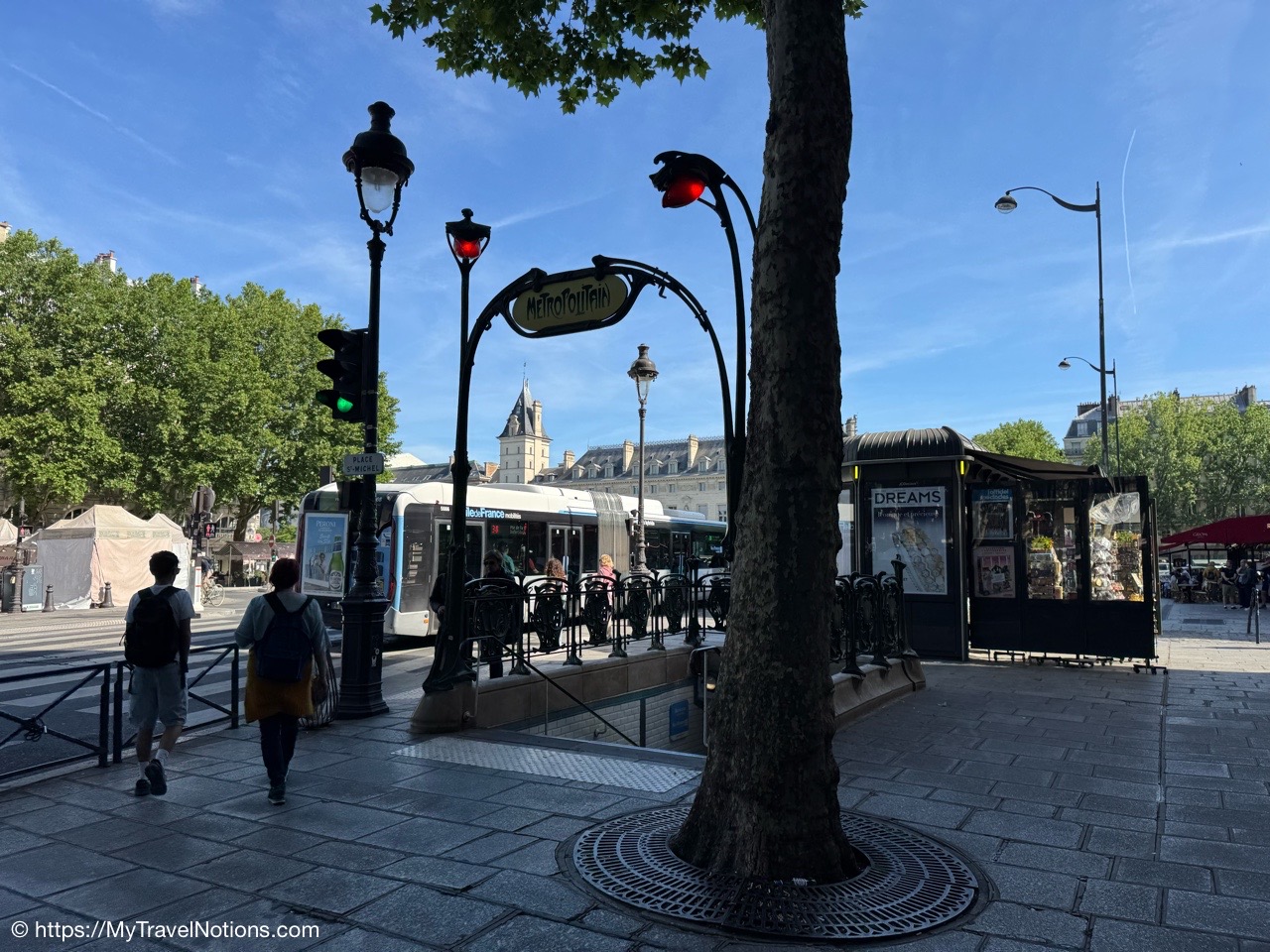
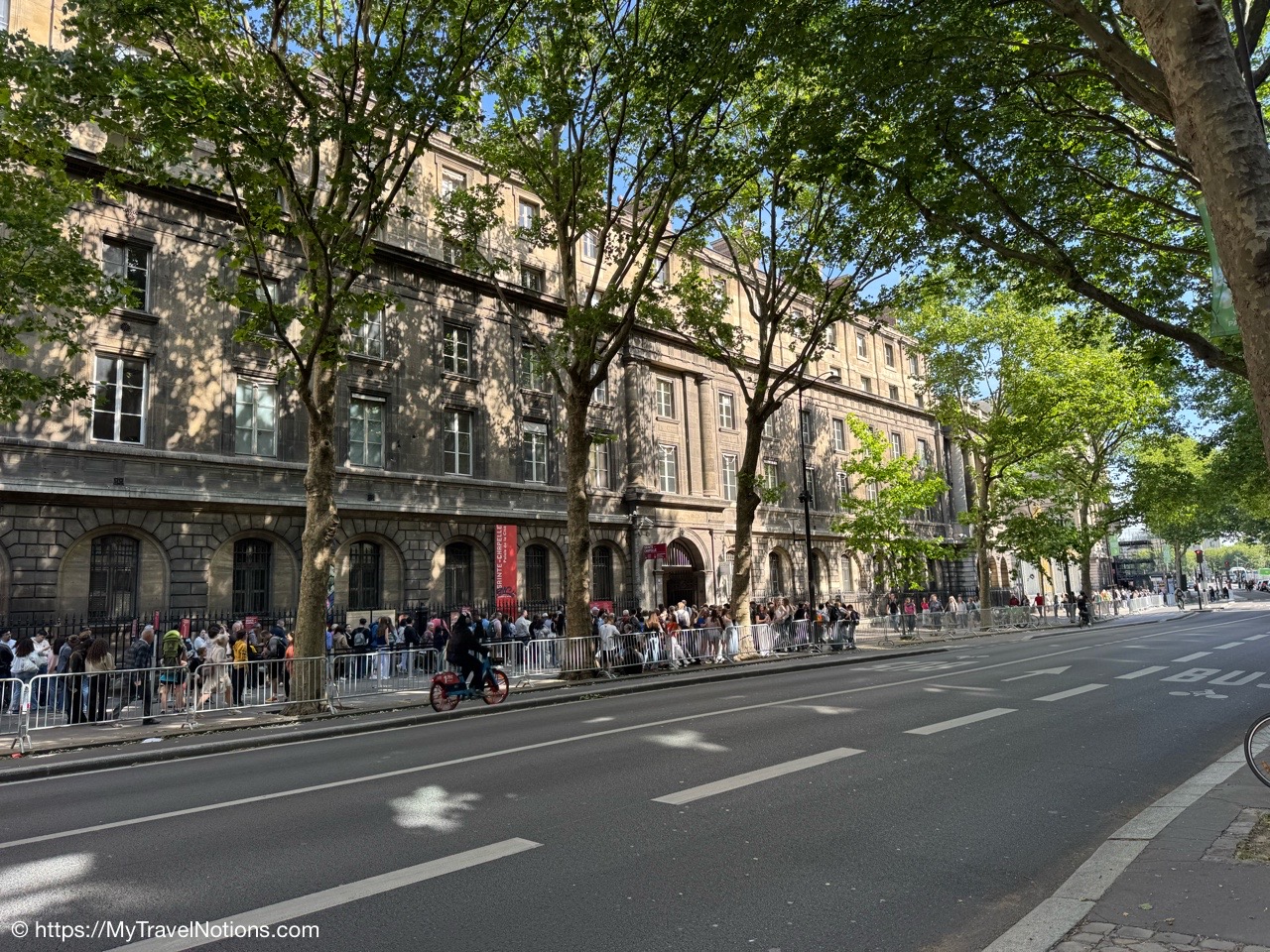
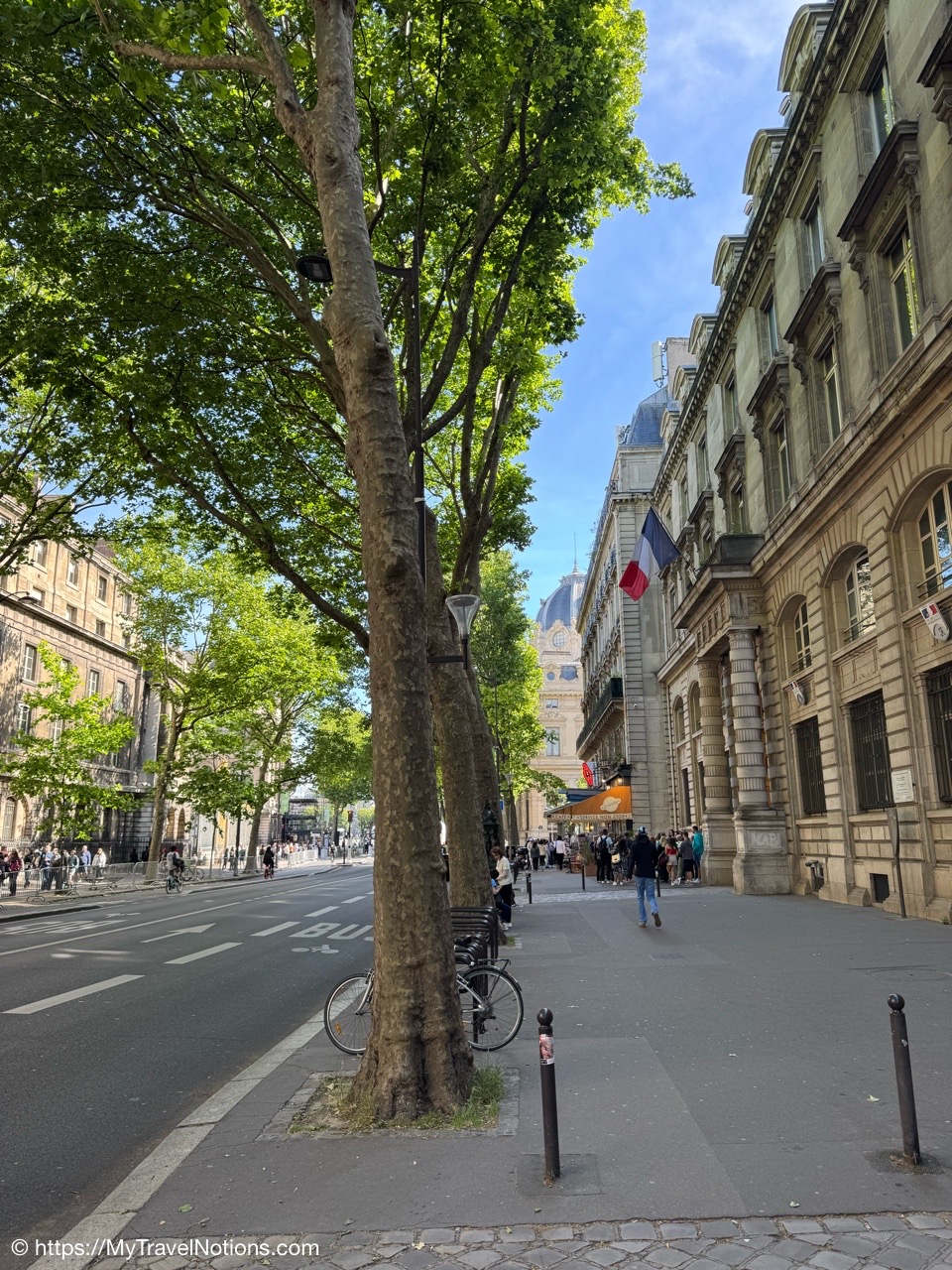
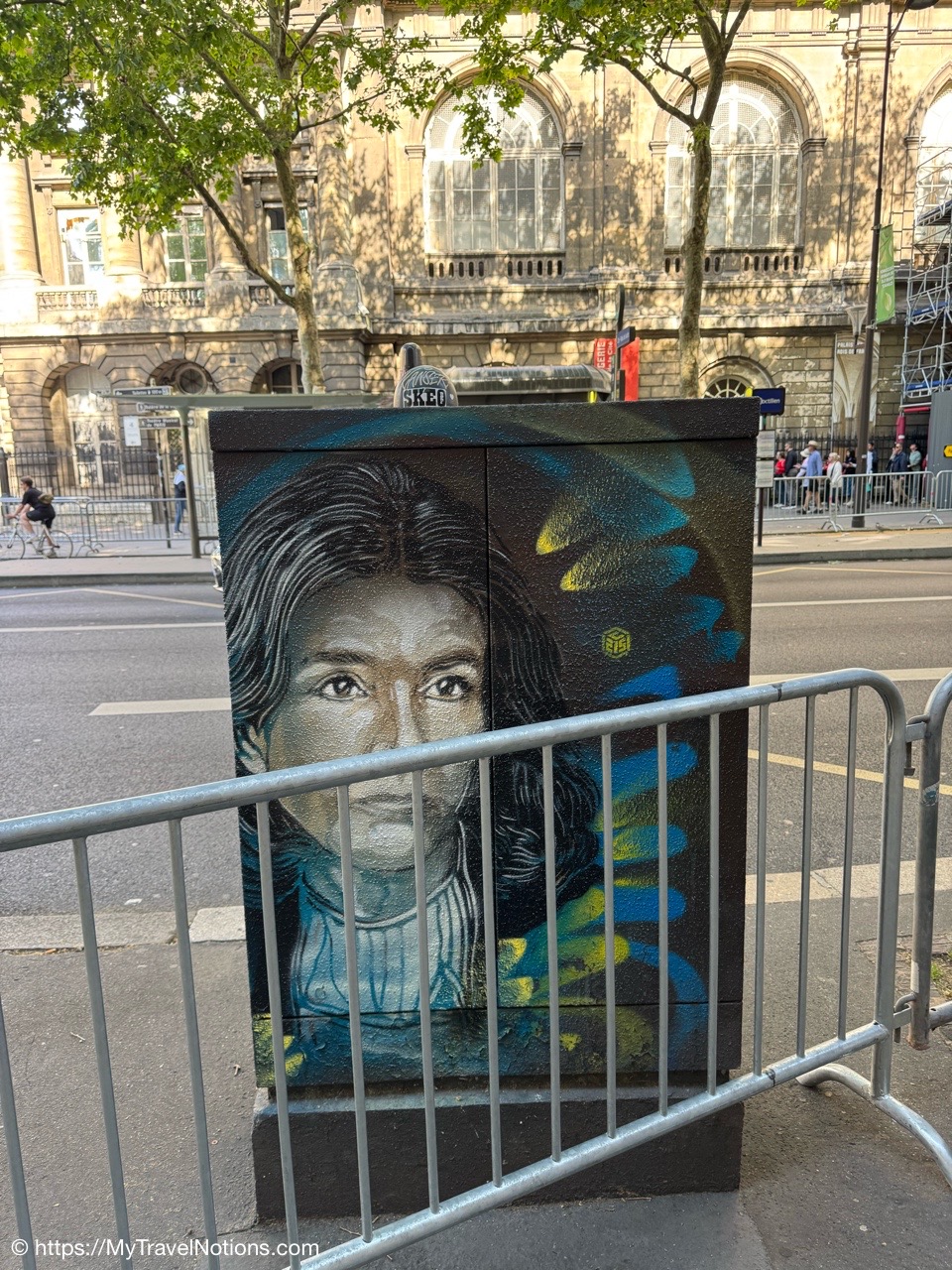
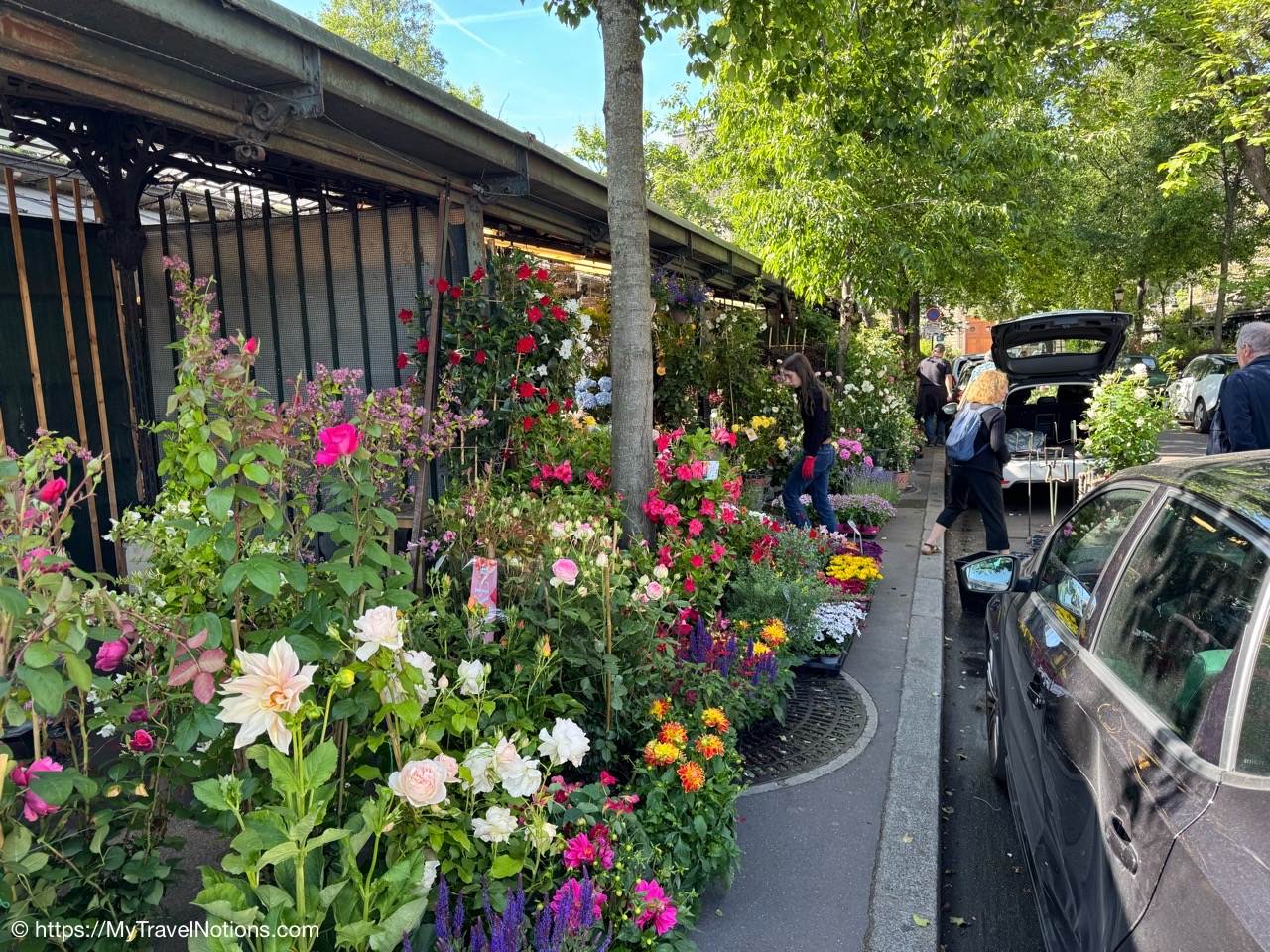
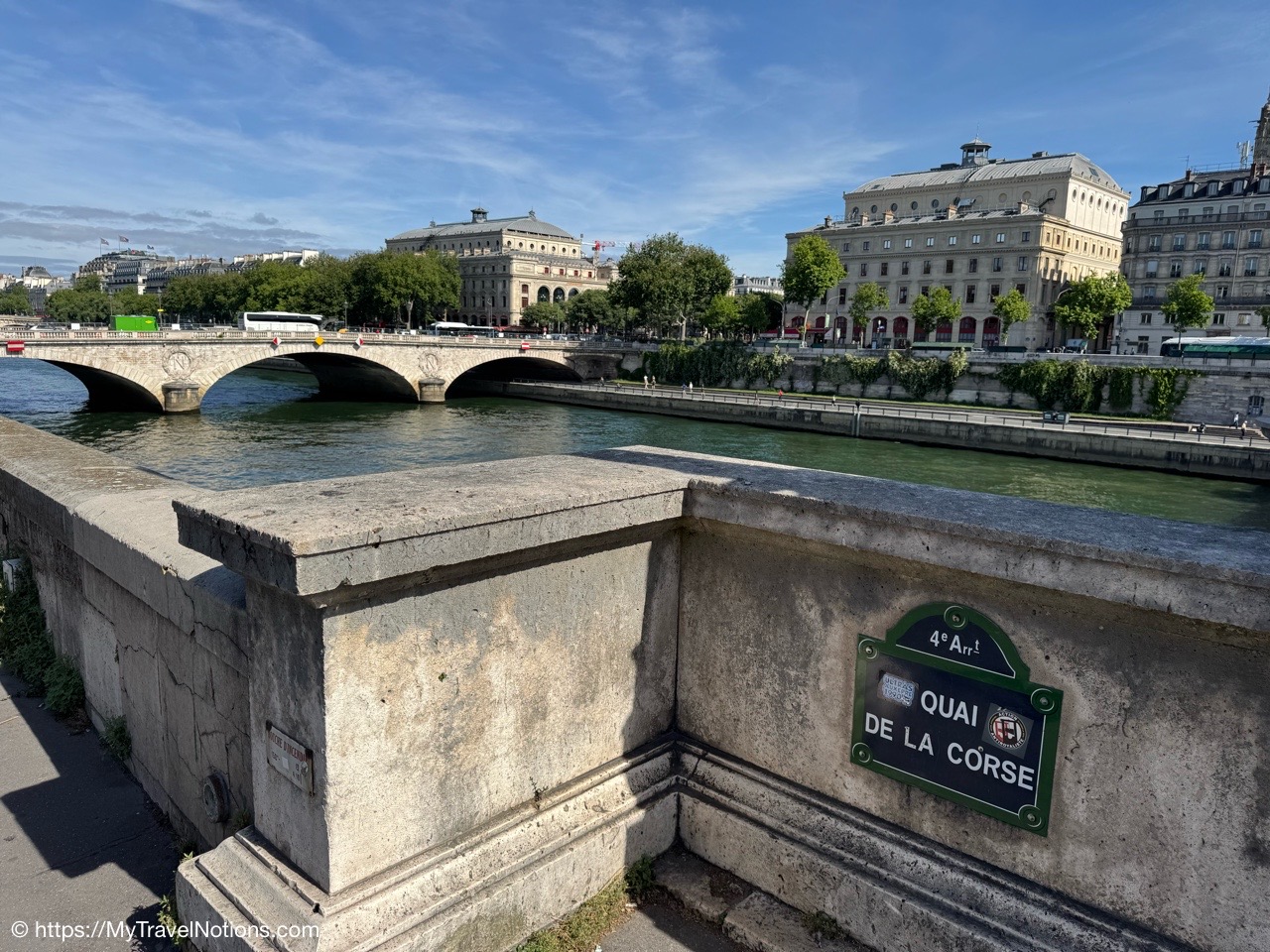
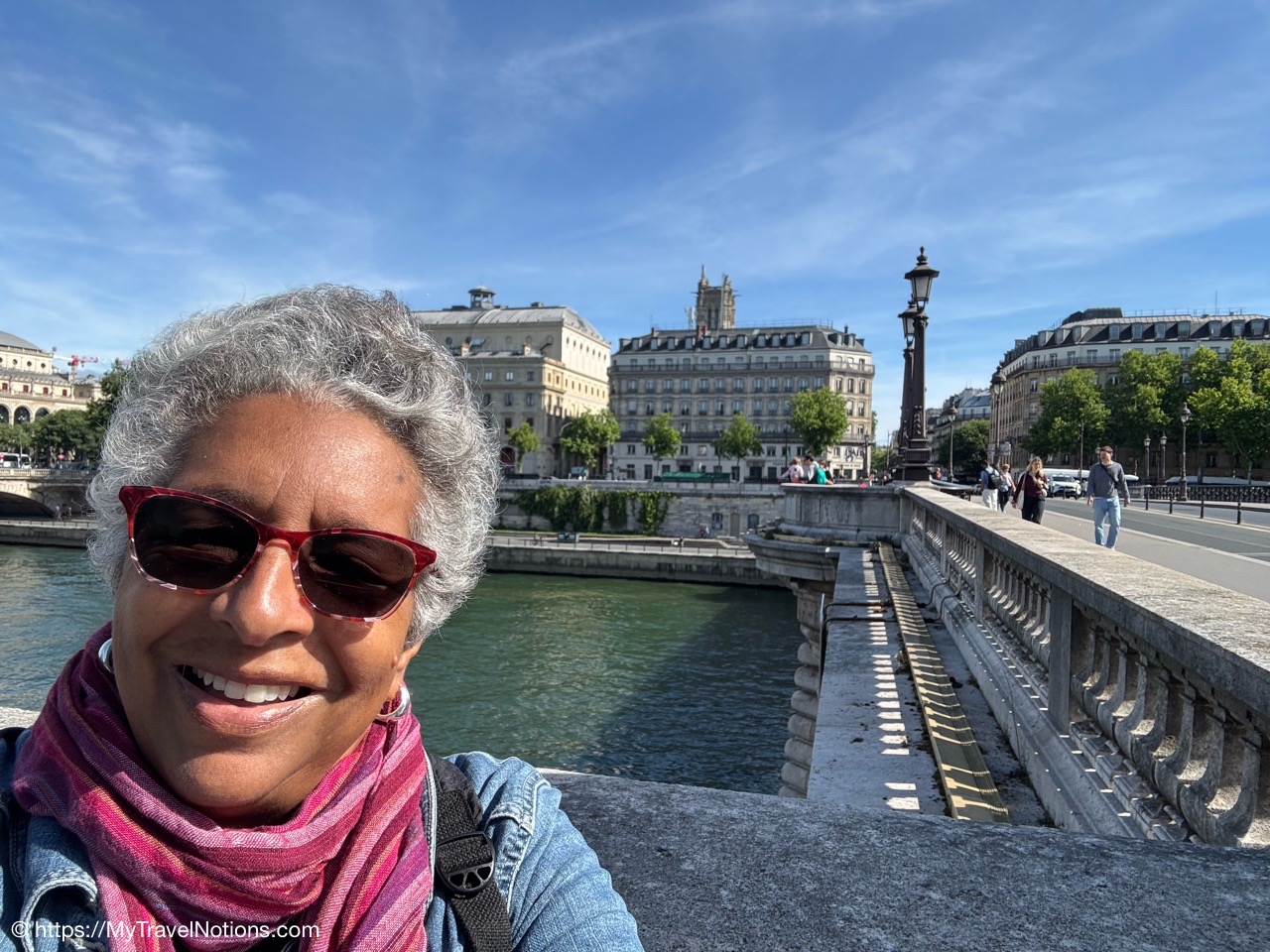
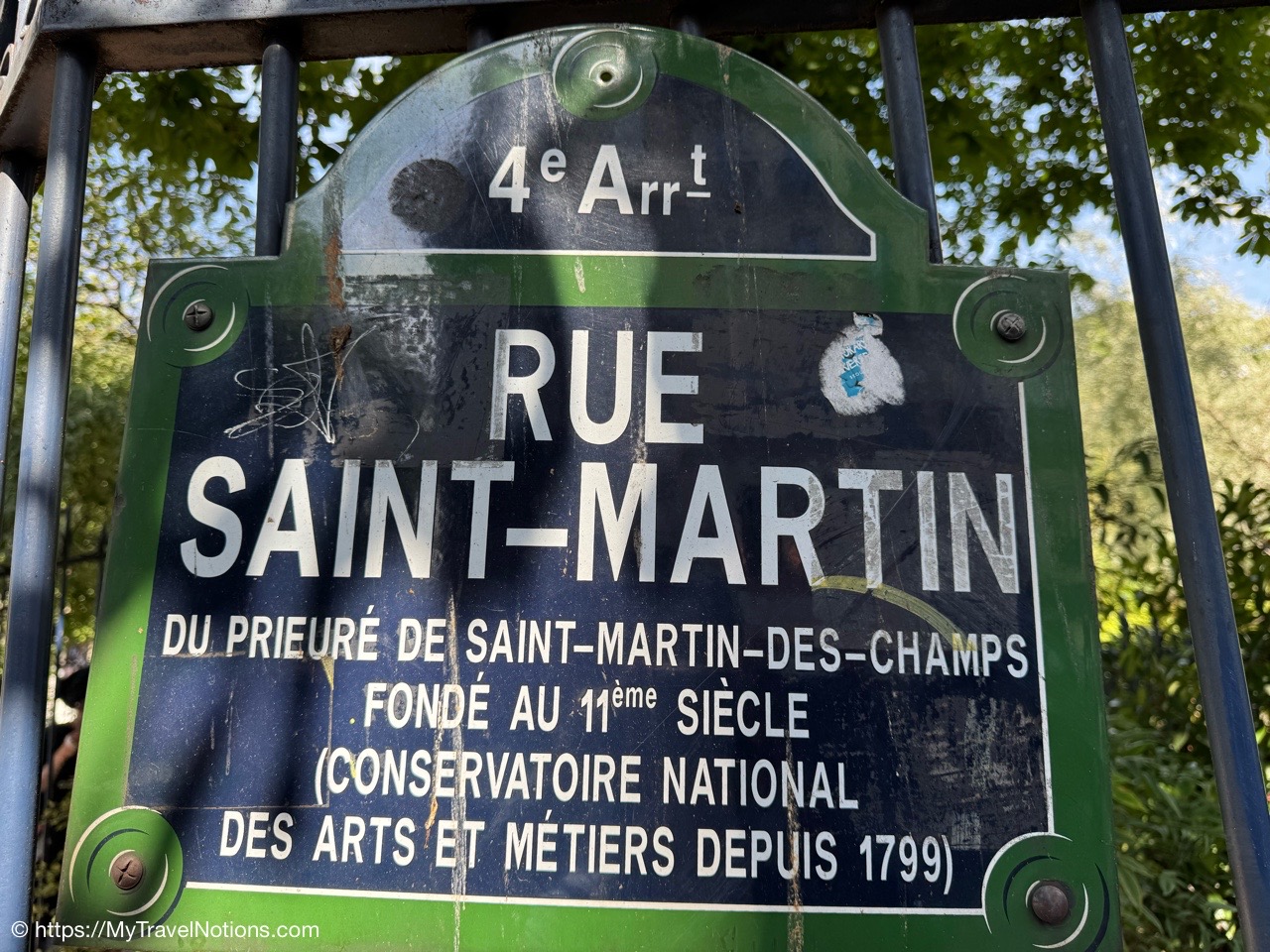
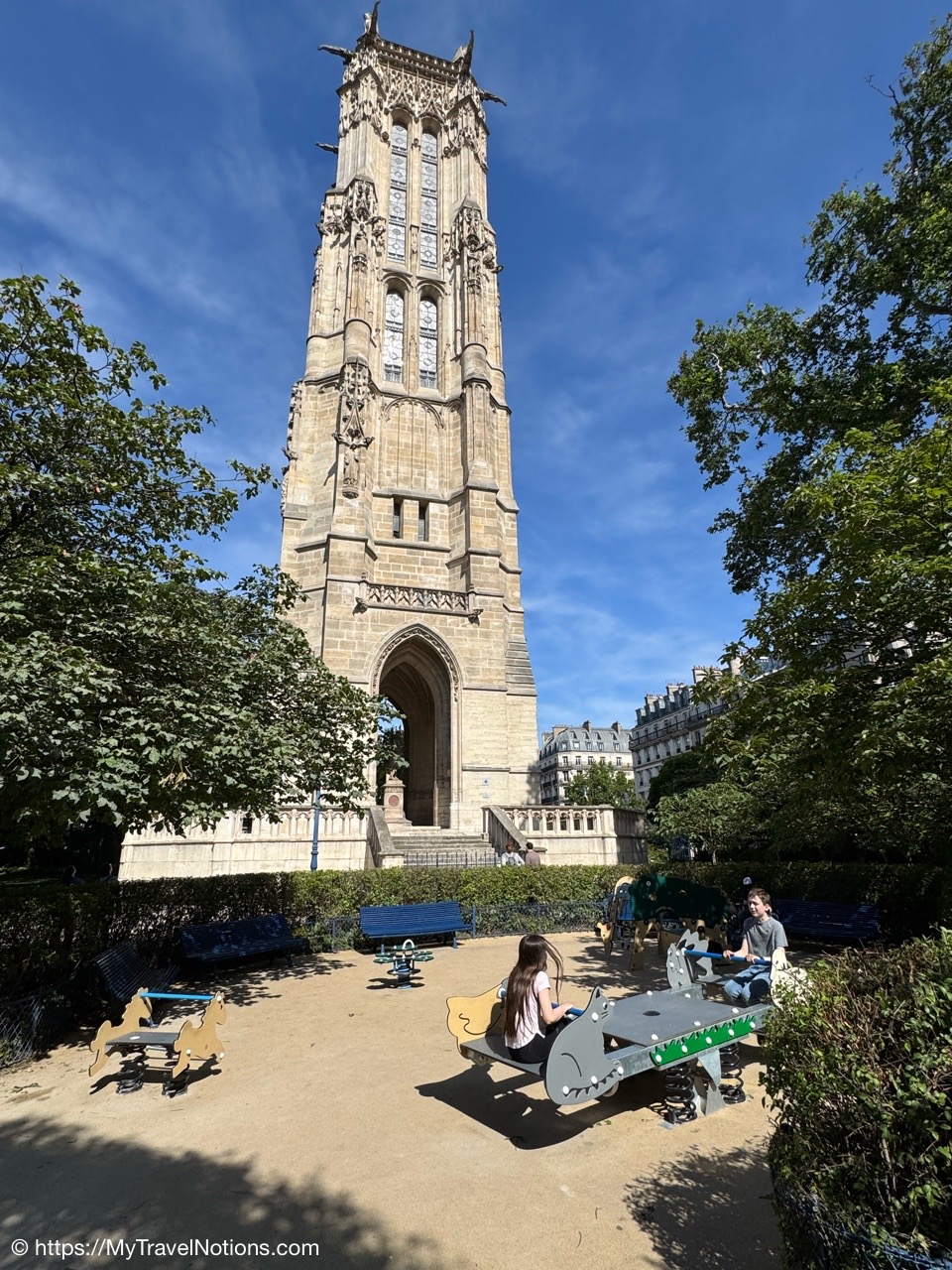
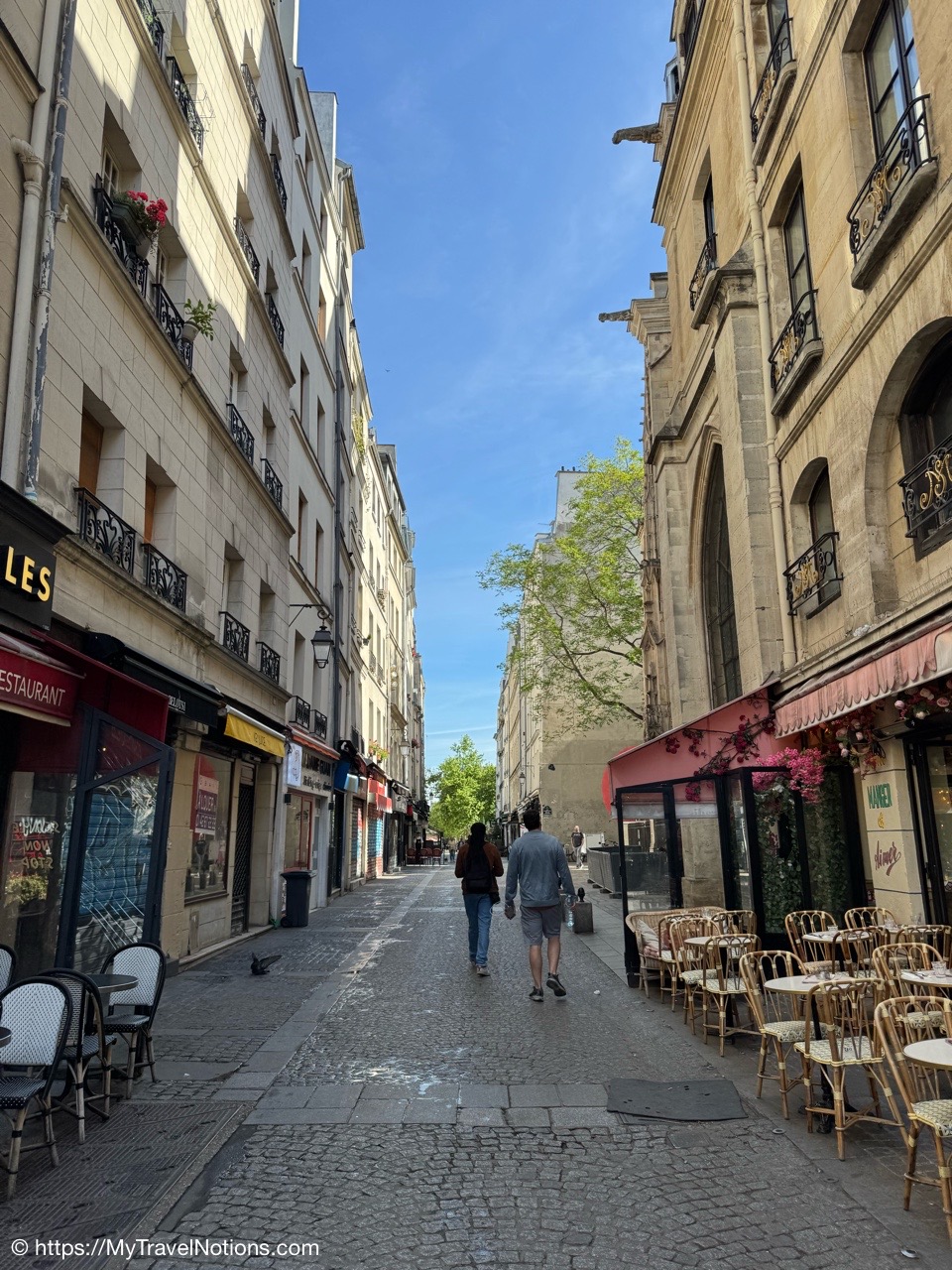
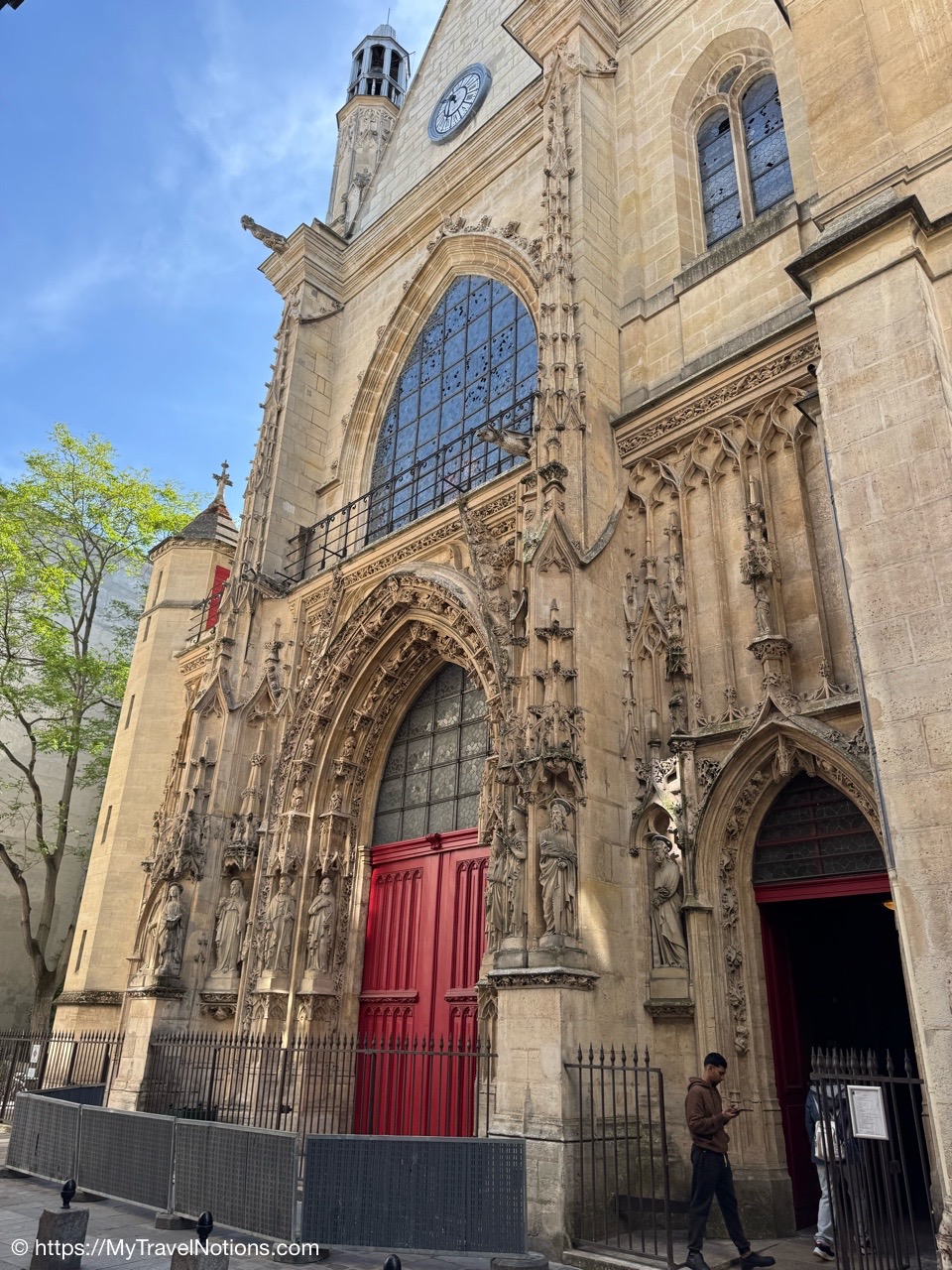
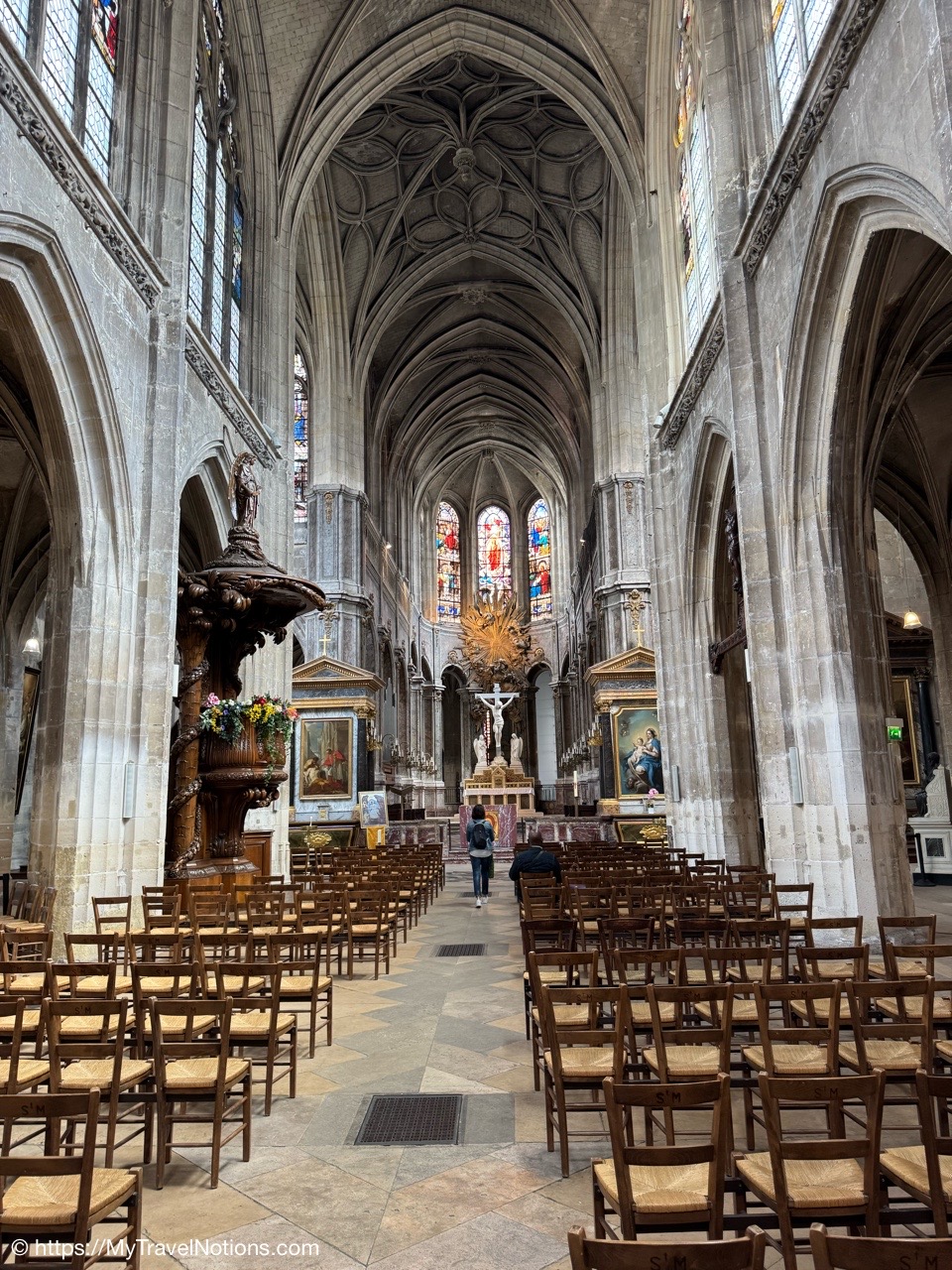
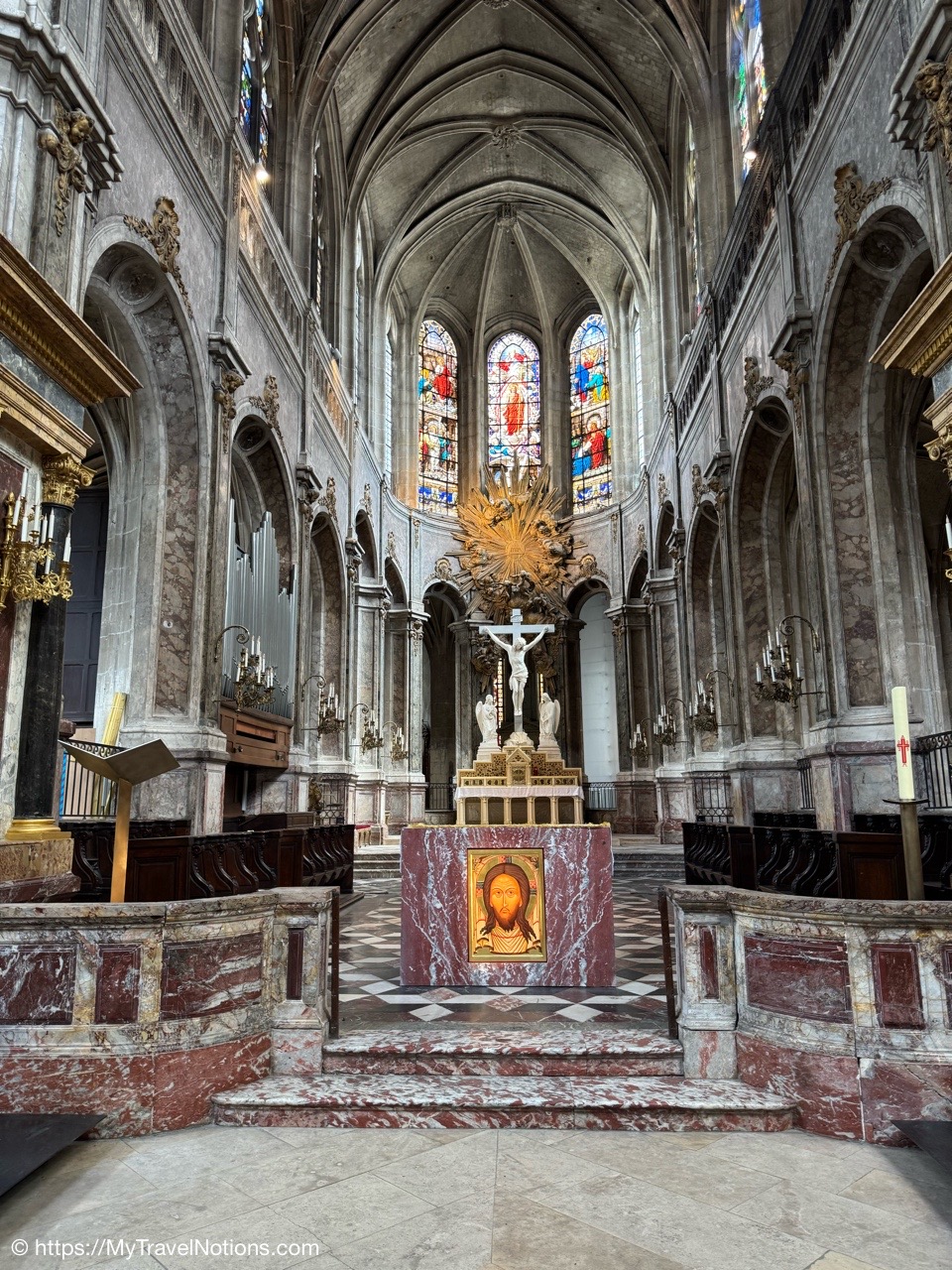
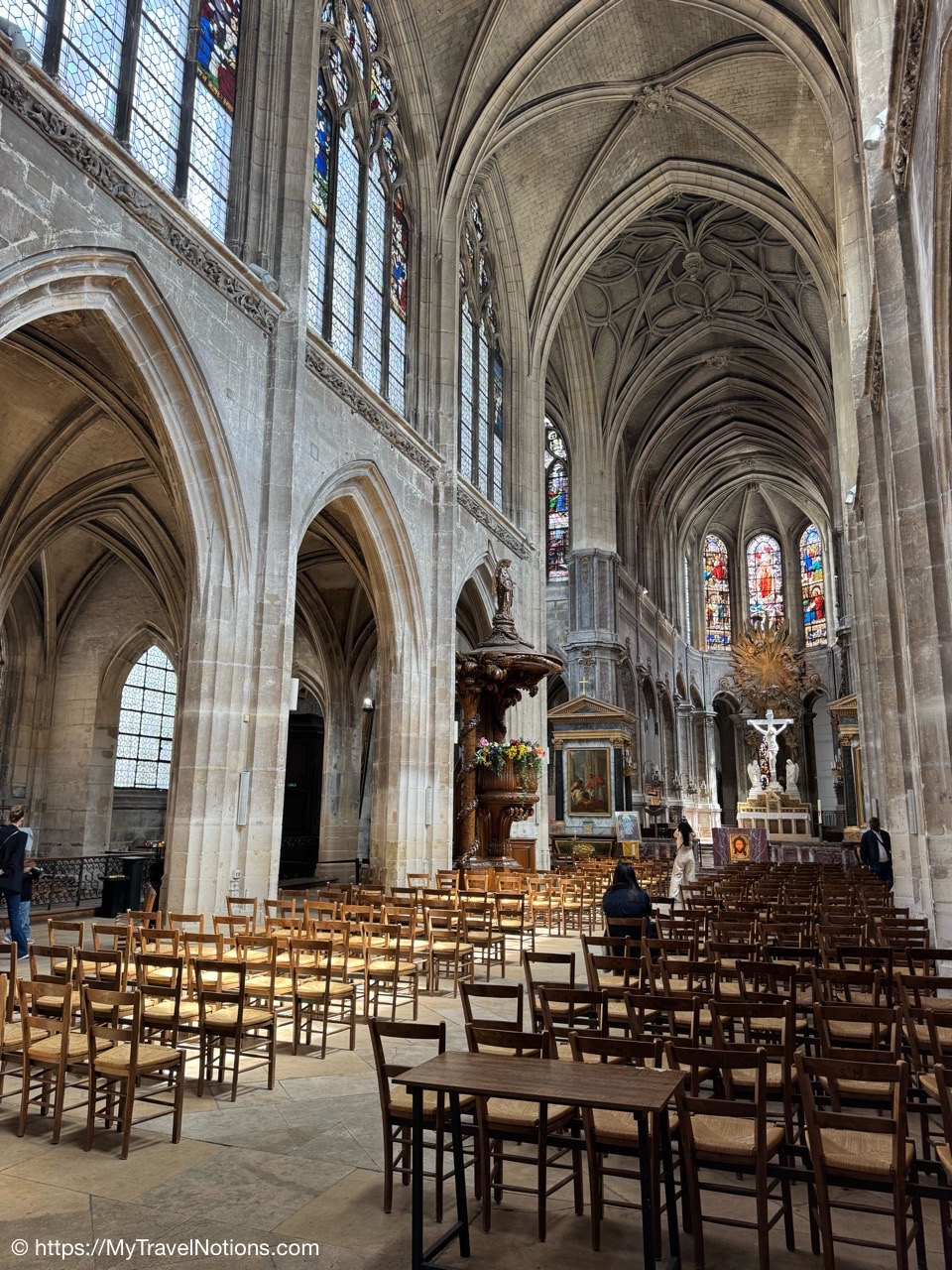
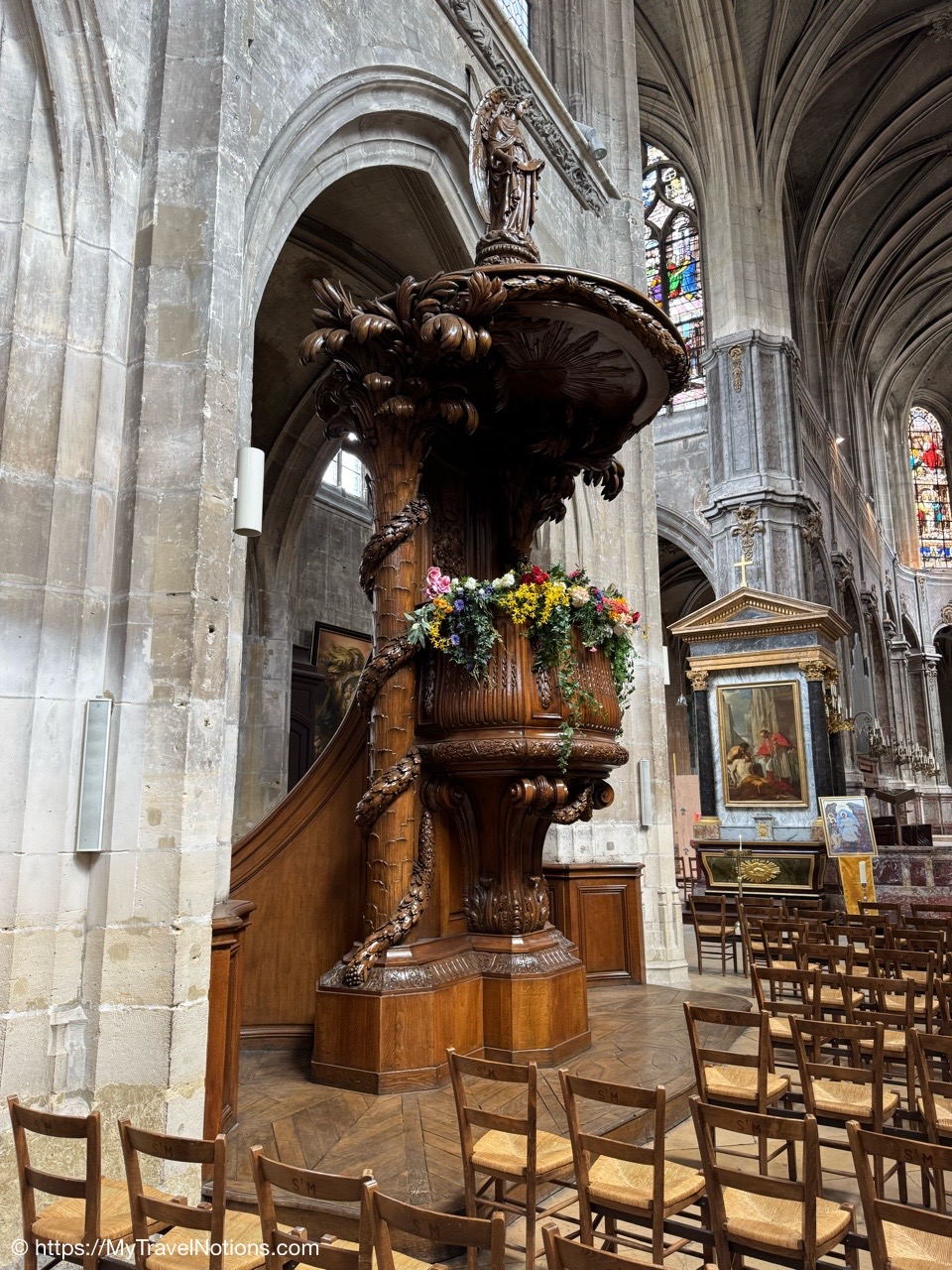
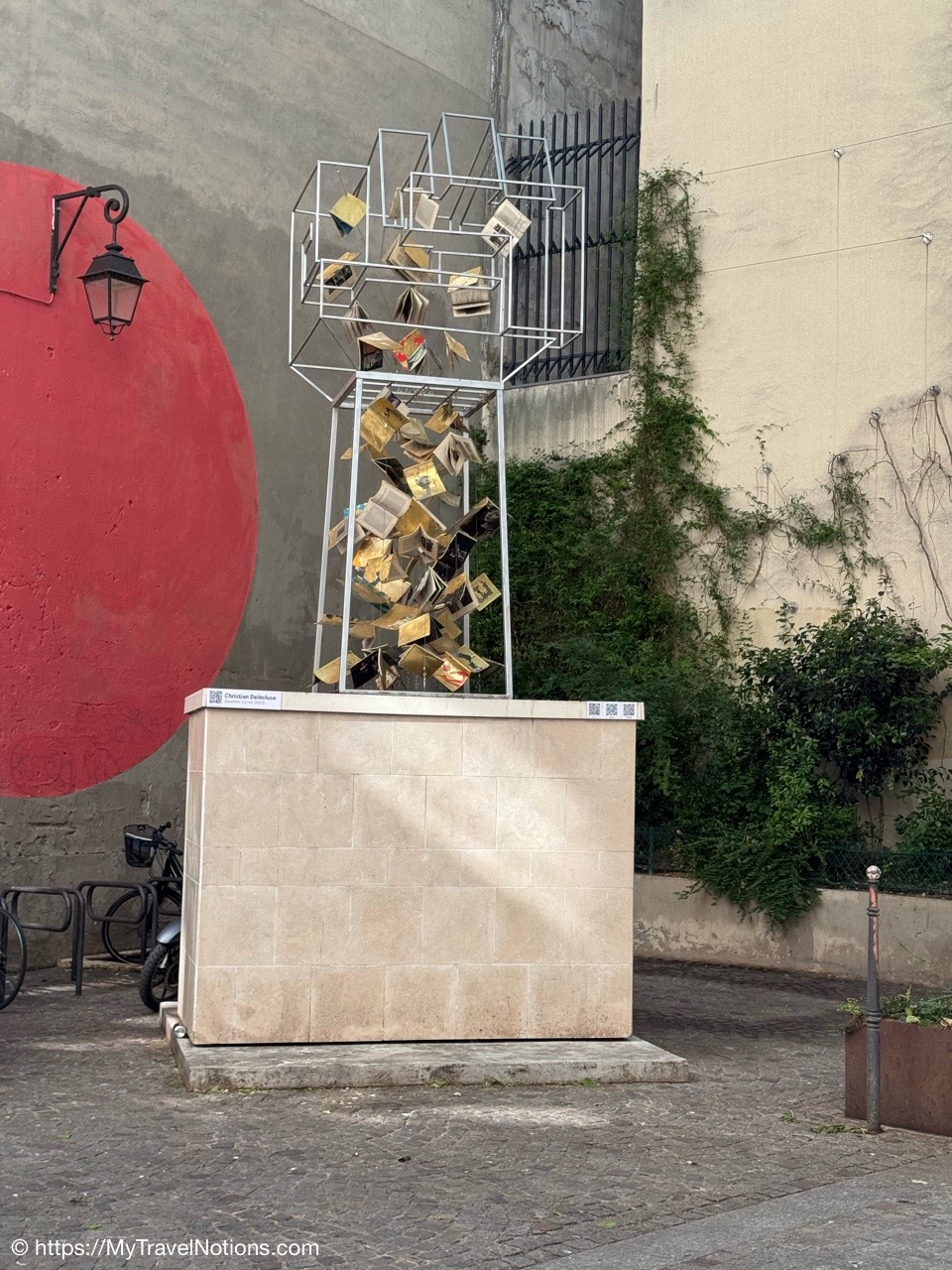
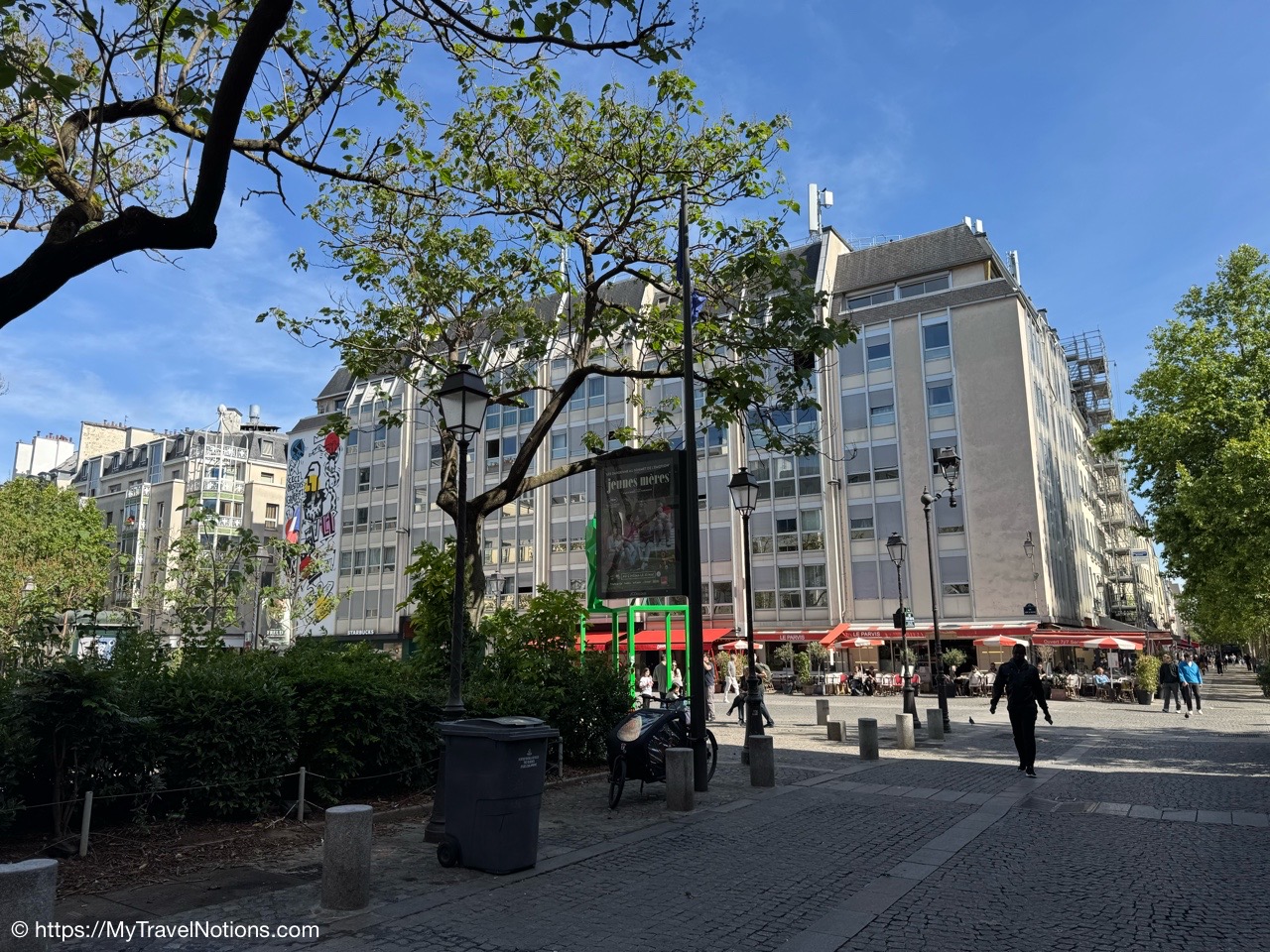
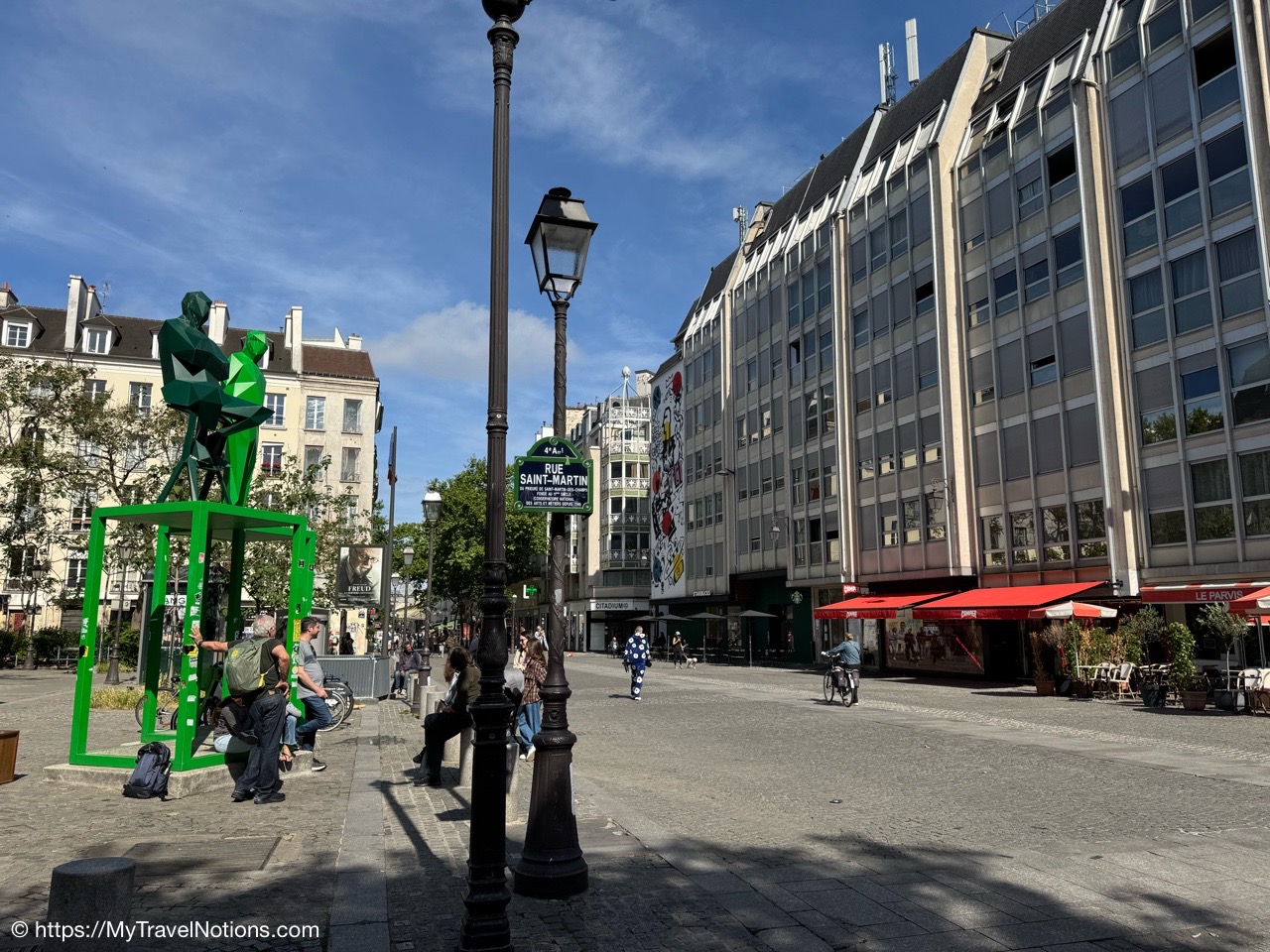
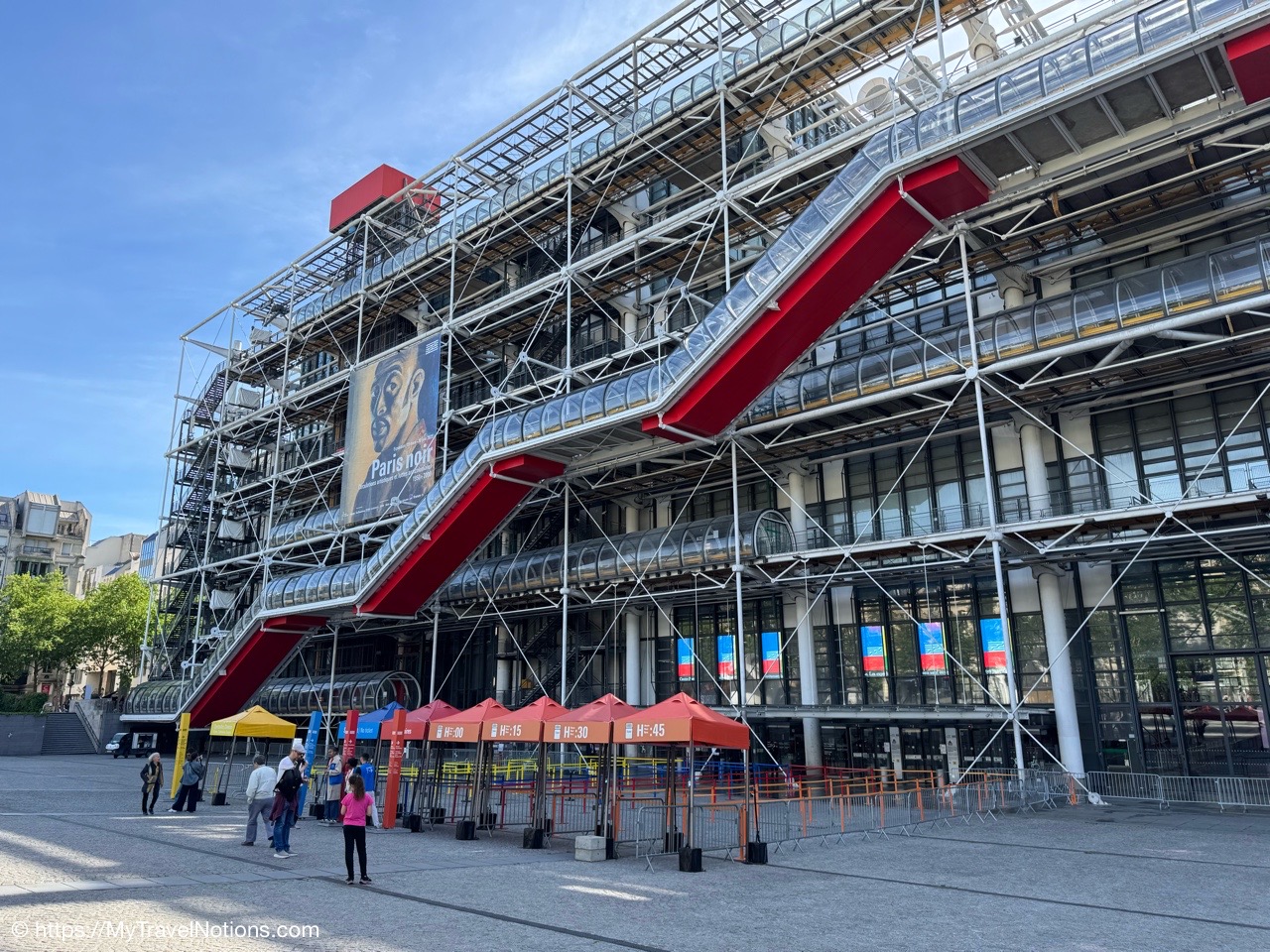
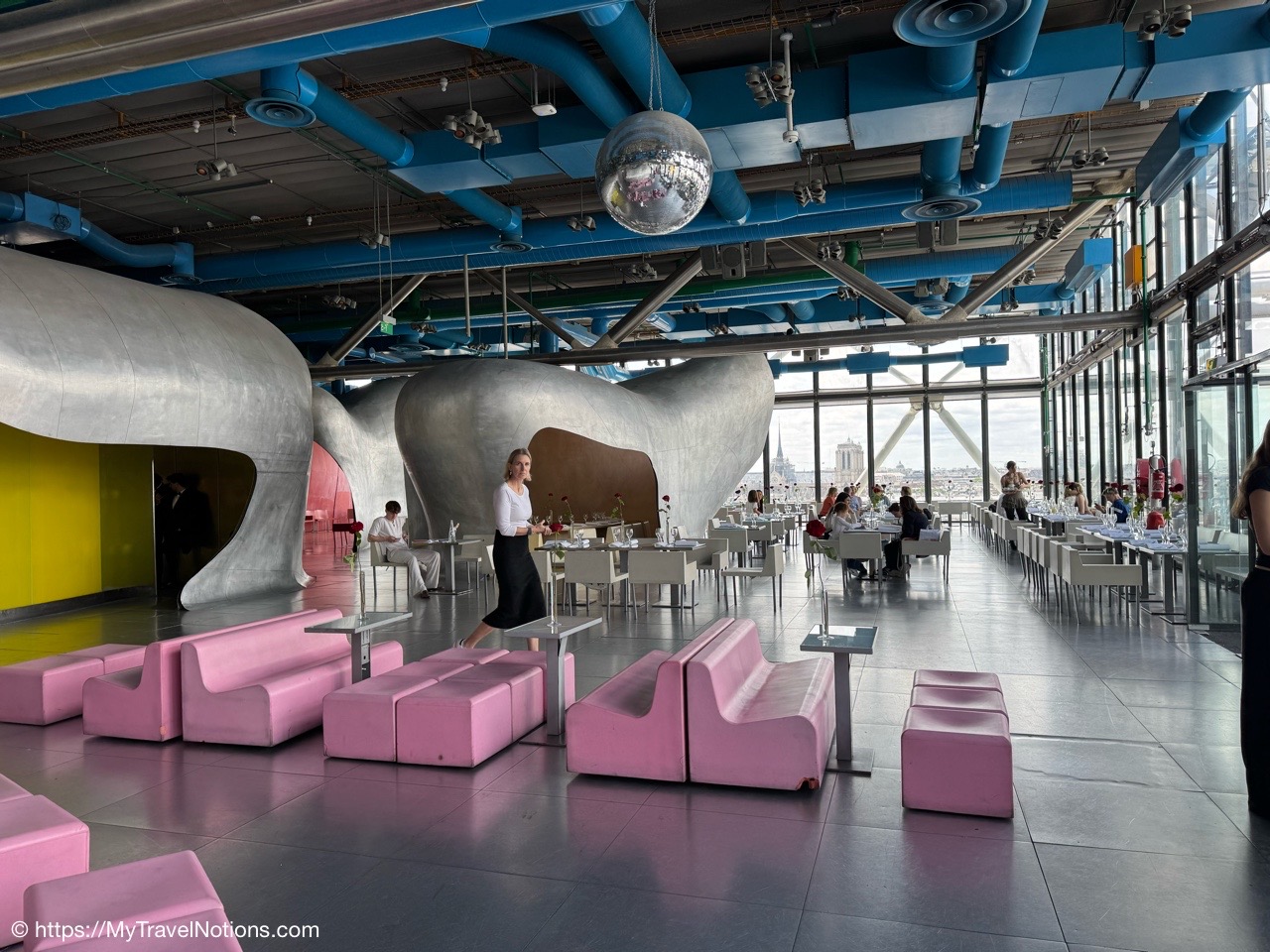
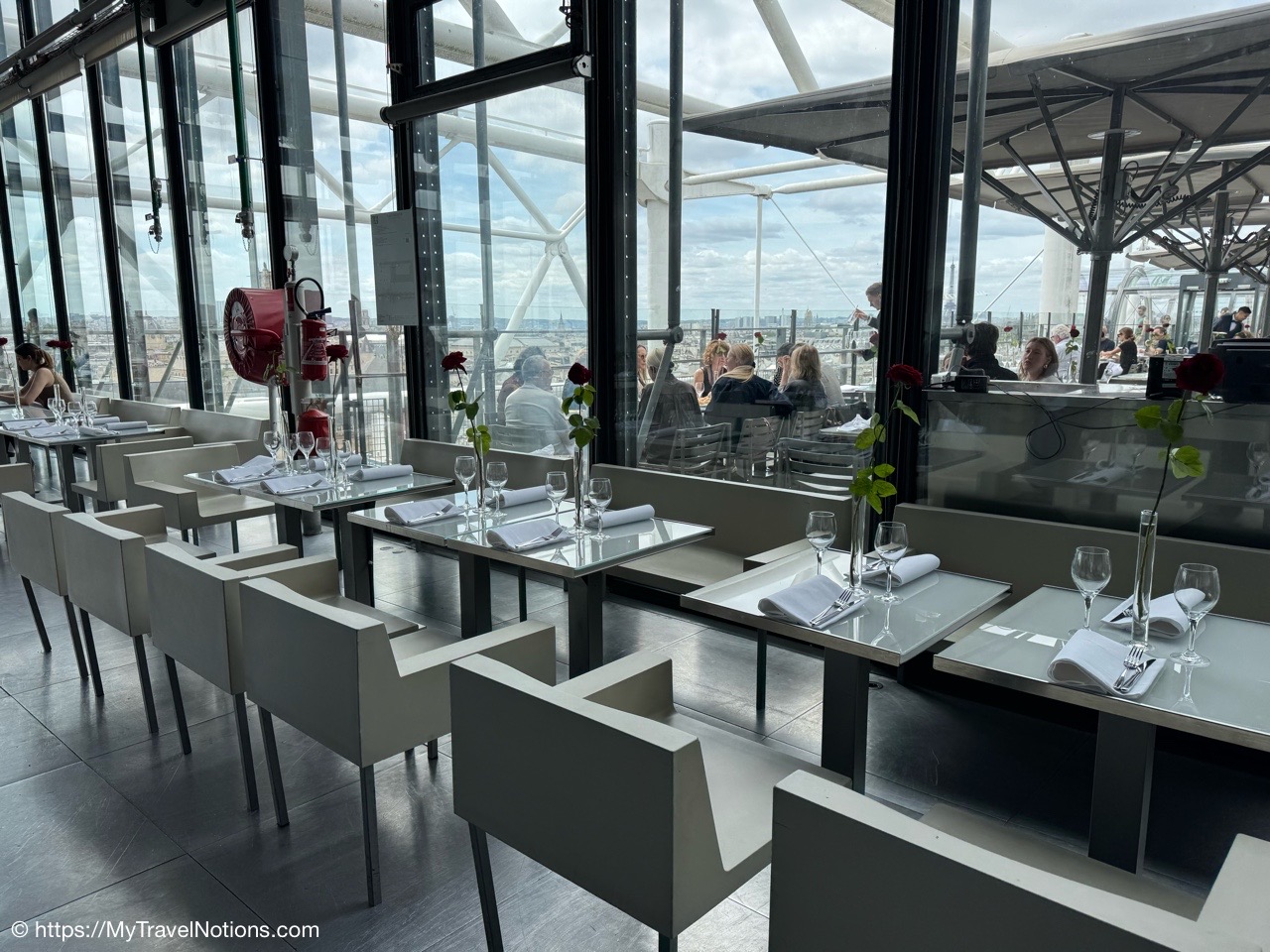
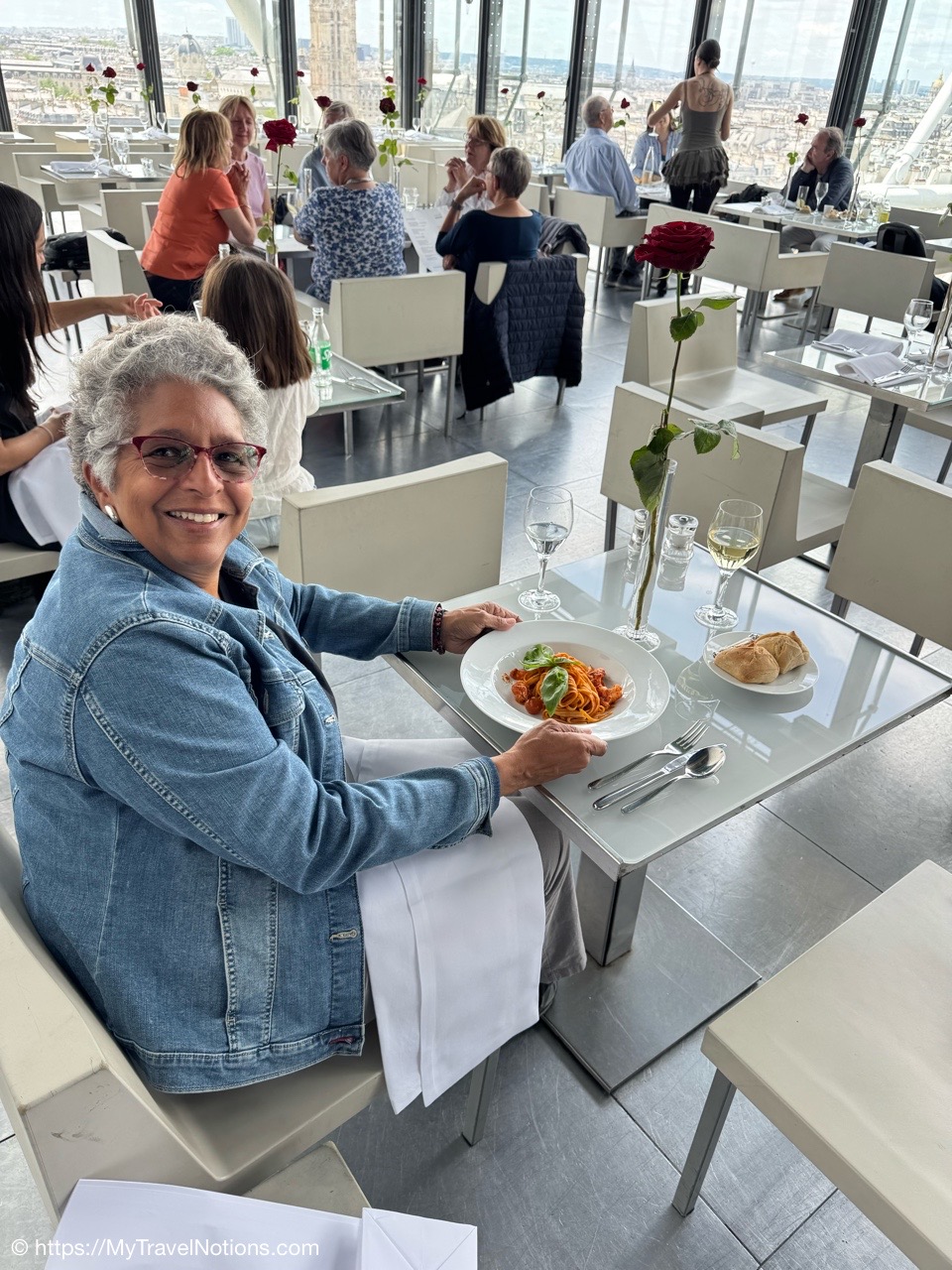
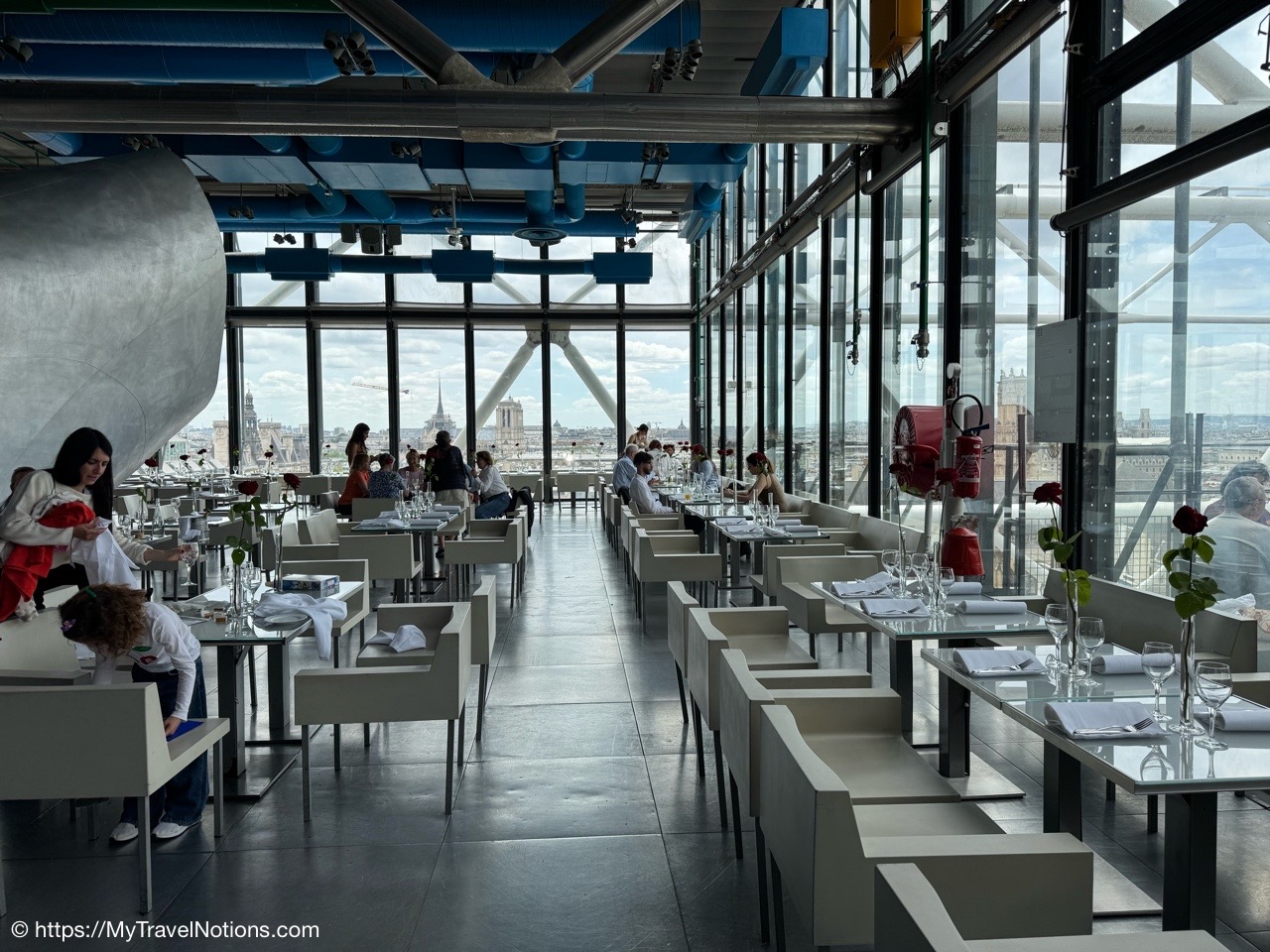
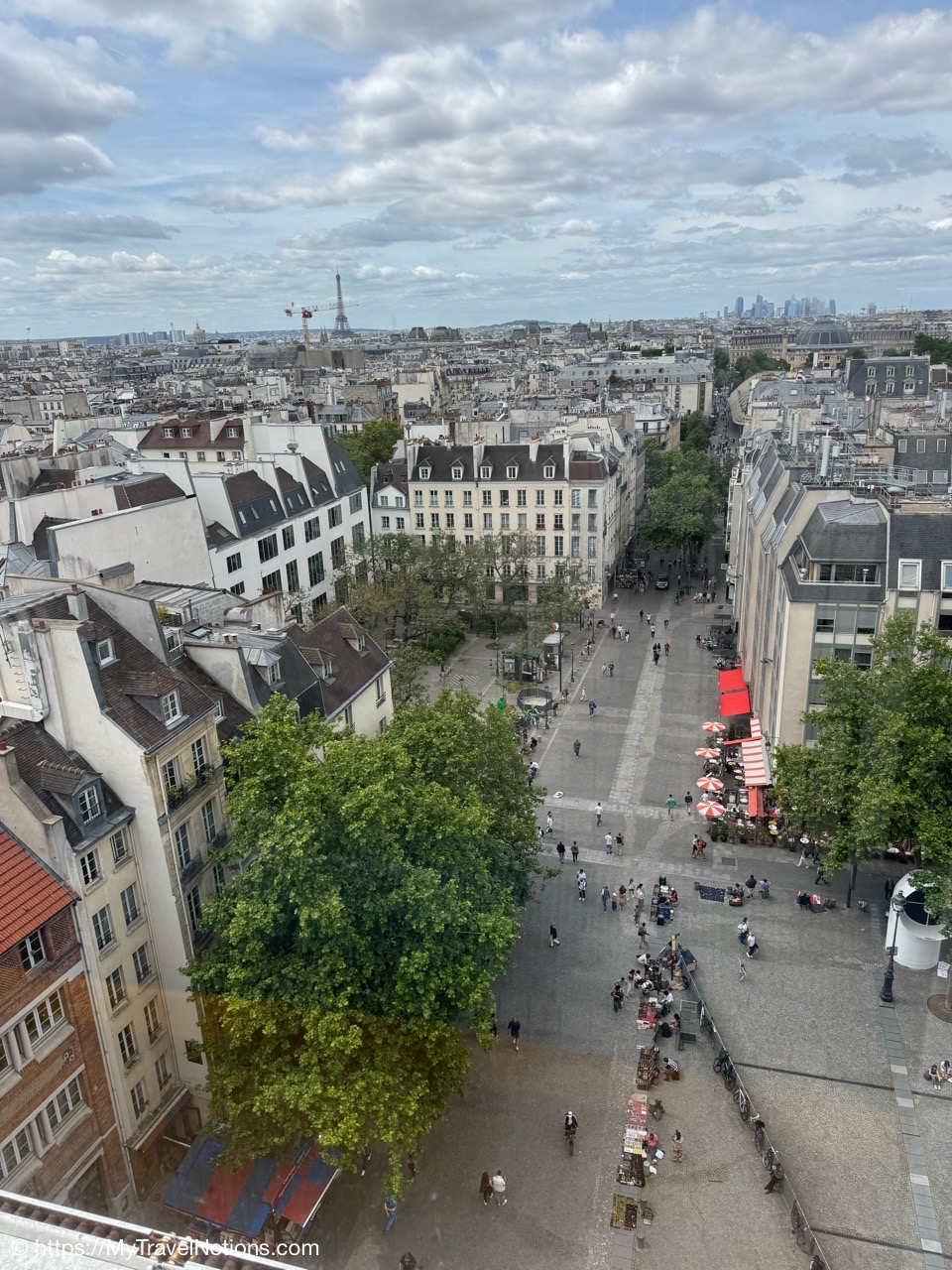
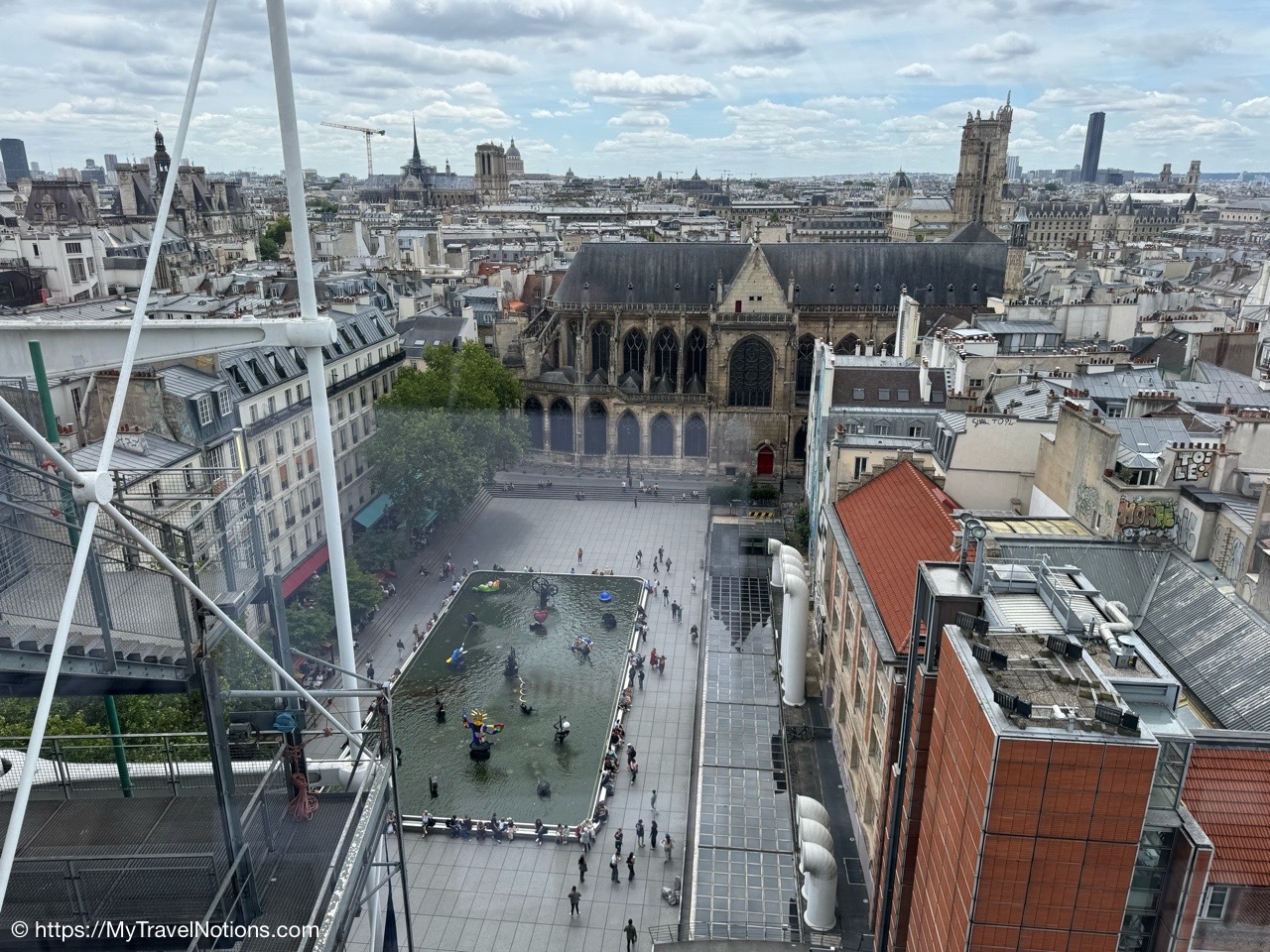
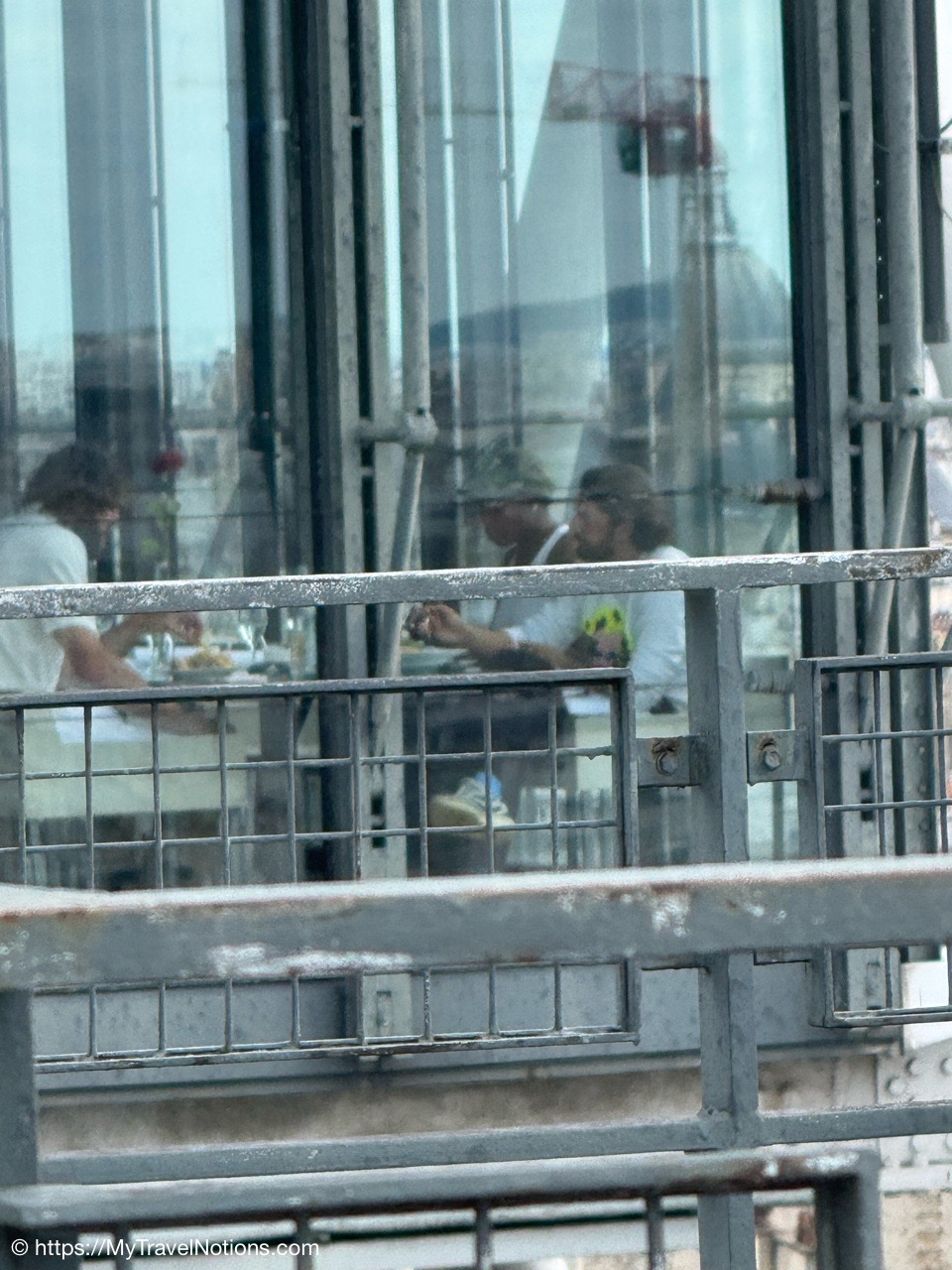
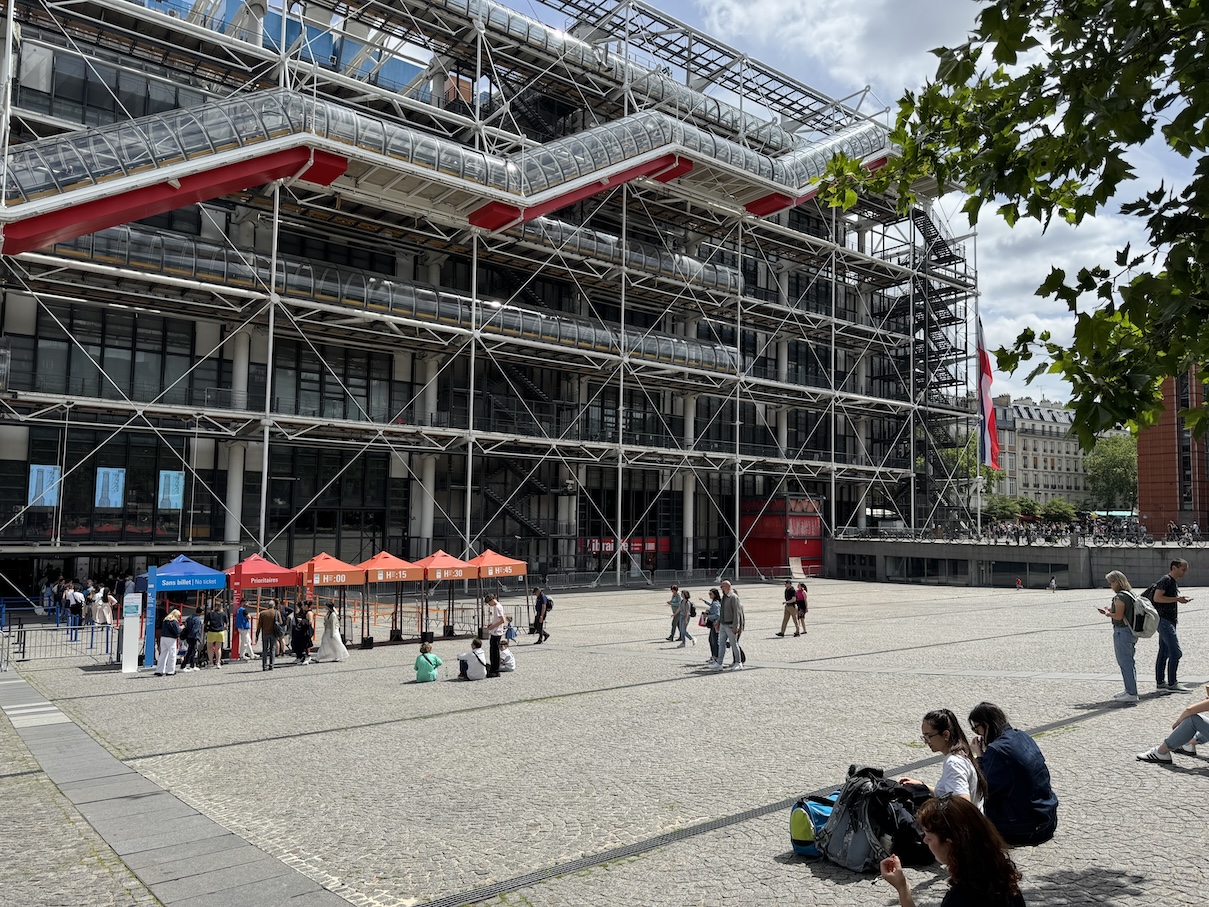
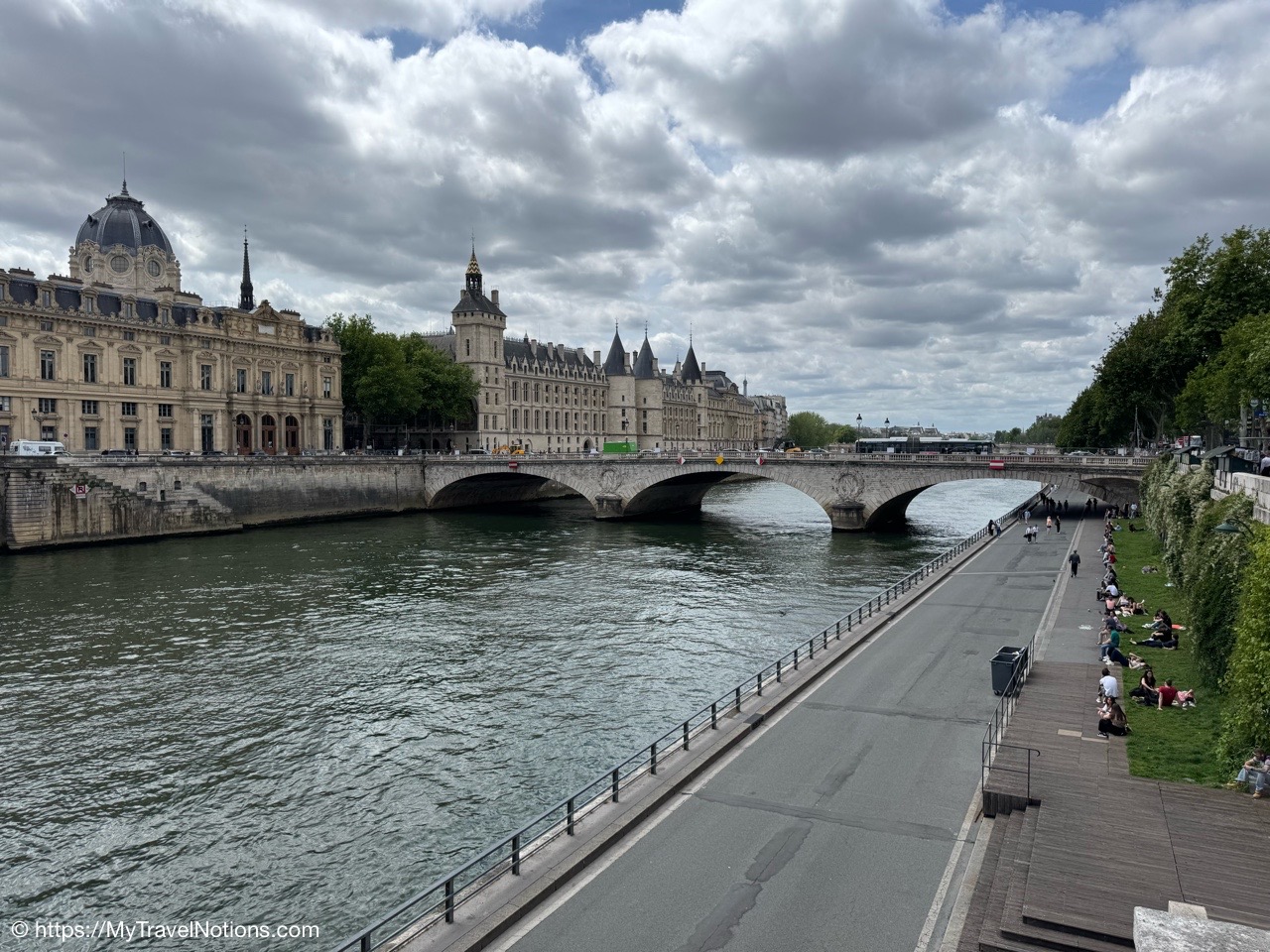
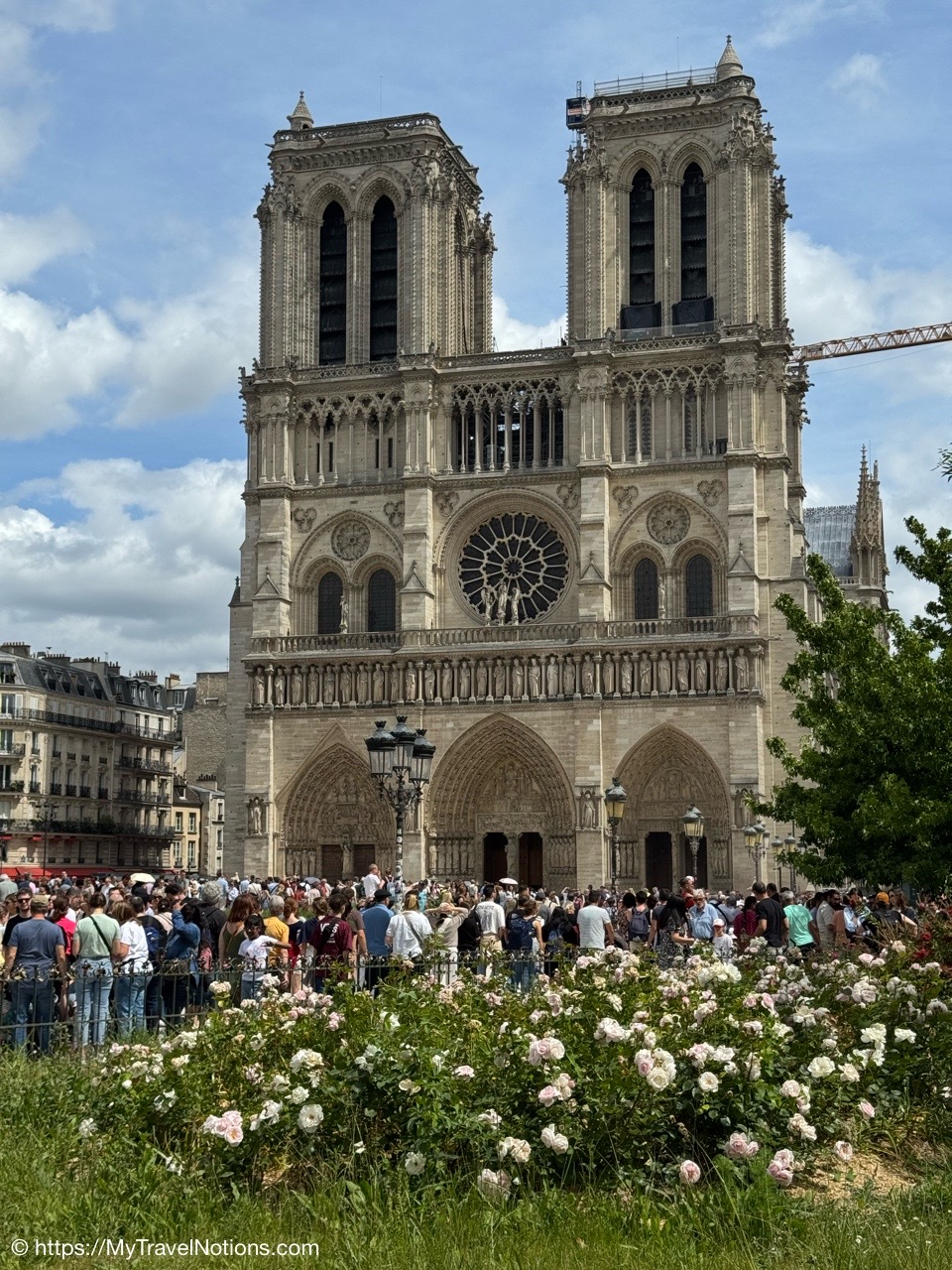
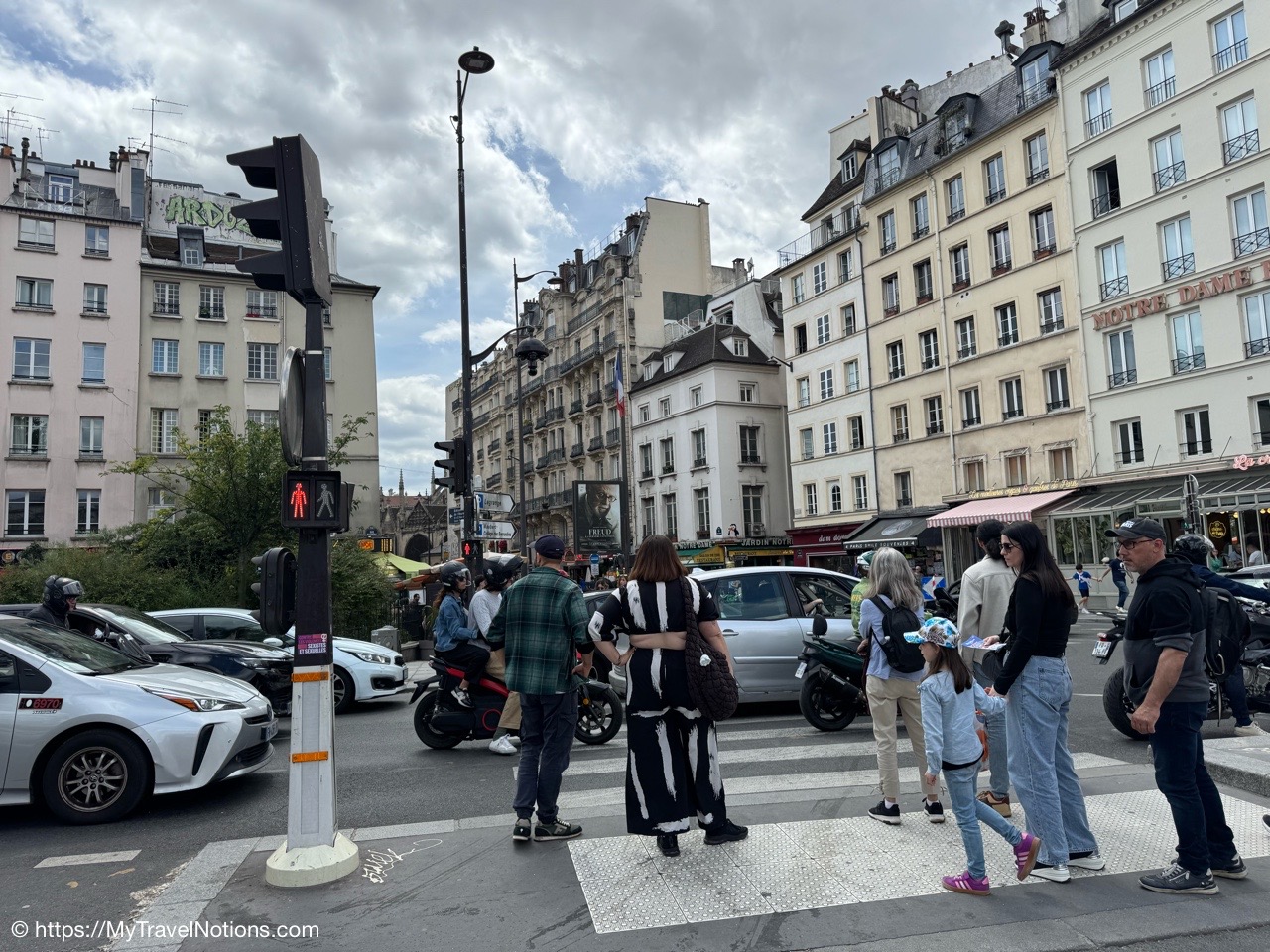
Me standing at the Pont Notre-Dame bridge over the Seine in Paris’ 4th Arrondissement. The current bridge, inaugurated in 1919, is an arch bridge with a central metal arch and two smaller stone arches. (May 29, 2025)Walking along the Boulevard Saint-Michel from my hotel, the Hôtel des Mines in the Latin Quarter, a lively and historic area of Paris. I’ve previously stayed at this hotel, the Hotel Observatoire Luxembourg, which is undergoing a complete renovation. (May 29, 2025)Love that the Hôtel des Mines along Boulevard Saint-Michel is close to the Luxembourg train station which makes it easier to get around Paris and even to the Charles de Gaulle Airport when it’s time to head back home. (May 29, 2025)Walking along the quite wide sidewalks along Boulevard Saint-Michel in Paris. That’s because Paris is made for walkers. (May 29, 2025)The doors and doorway to a Parisian flat along the Boulevard Saint-Michel in Paris with a protest sign in French, when translated, states: IN THE FACE OF ALL FASCISM, WE ARE FEMINISTS, WE RESIST. (May 29, 2025)My morning walk down Boulevard Saint-Michel in Paris. (May 29, 2025)Morning views of Paris along Boulevard Saint-Michel in the 5th Arrondissement. (May 29, 2025)The Place de la Sorbonne square along Boulevard Saint-Michel in the Latin Quarter of Paris. It’s named after the historic Sorbonne University. (May 29, 2025)The statue of Auguste Comte, located on Place de la Sorbonne in Paris. This statue was erected in 1902 to honor Comte, considered the founding father of sociology and the philosophy of science. (May 29, 2025)Some American fast food influence with this KFC along Boulevard Saint-Michel in Paris. (May 29, 2025)And, now a McDonald’s along a side street off Boulevard Saint-Michel in Paris. (May 29, 2025)An iconic Parisian metro station entrance along Boulevard Saint-Michel in Paris. That Art Nouveau style entrances are made of cast iron and glass, featuring sinuous plant-like motifs and graceful, flowing lines, earning them a place as architectural emblems of Paris. Between 1900 and 1913, Hector Guimard was responsible for the first generation of entrances to the underground stations of the Paris Métro. (May 29, 2025)People lined up to enter the Sainte-Chapelle Church in Paris, which now functions more as a historical site and museum than a place of regular worship. (May 29, 2025)The Palais de Justice or Court of Appeal of Paris occupies a large part of the medieval Palais de la Cité, the former royal palace of the kings of France, which also includes Sainte Chapelle, the royal chapel. (May 29, 2025)Now continuing my morning walk along Boulevard Du Palais in Paris. (May 29, 2025)Art work on a utility box along the Boulevard Du Palais in Paris. (May 29, 2025)Walking by a beautiful flower shop along the Boulevard Du Palais in Paris. (May 29, 2025)Getting ready to cross the Pont Notre-Dame bridge that crosses the Seine River and connects the Île de la Cité with the Right Bank. It is named after the nearby Notre Dame Cathedral, has a history stretching back to Roman times, and the current version was inaugurated in 1919. (May 29, 2025)Standing by the Pont Notre-Dame bridge along the Quai de la Corse on this beautiful Paris morning. (May 29, 2025)Love the iconic blue, green and white official street name signs in Paris. Most plaques feature a rounded top, which includes the number of the arrondissement (district) where the street is located. The current blue and white enamel plaque, ordered by Prefect Claude-Philibert Barthelot, comte de Rambuteau, was mandated to replace the older signs. (May 29, 2025)The Square of Saint-Jacques Tower is a charming public square located in the heart of Paris and known for its striking Gothic tower and the only thing that remains of the former 16th century Church of Saint-Jacques-de-la-Boucherie (‘Saint James of the Meat Market’), which was demolished in 1797, during the French Revolution. The tower was was built from 1509 to 1523 as a landmark to welcome pilgrims setting out on the road that led to Tours and headed for the Way of St. James, which led to the major pilgrimage destination of Santiago de Compostela. (May 29, 2025)Walking along the Rue Saint Martin in the 4th Arrondissement in Paris. (May 29, 2025)The Church of Saint-Merri, a parish church in Paris located near the Centre Pompidou on my walk along the Rue Saint Martin in the 4th arrondissement was built upon the same site as a too small church in about 1200. But this present church began under King Francois I in about 1520 and was completed in about 1560. (May 29, 2025)Inside the Church of Saint-Merri, a parish church in Paris located near the Centre Pompidou on my walk along the Rue Saint Martin in the 4th arrondissement. (May 29, 2025)A close-up of the altar inside the Church of Saint-Merri, a parish church in Paris located near the Centre Pompidou on my walk along the Rue Saint Martin in the 4th arrondissement. (May 29, 2025)A quick look inside the Church of Saint-Merri, a parish church in Paris located near the Centre Pompidou on my walk along the Rue Saint Martin in the 4th arrondissement. (May 29, 2025)The beautiful wooden pulpit inside the Church of Saint-Merri, a parish church in Paris located near the Centre Pompidou on my walk along the Rue Saint Martin in the 4th arrondissement. (May 29, 2025)An art display of books along the Rue Saint Martin in the 4th arrondissement of Paris. (May 29, 2025)Walking to the Pompadour in the Latin Quarter of Paris. (May 29, 2025)Walking to the Pompadour in the Latin Quarter of Paris. (May 29, 2025)Made it to my destination, the Centre Pompadour and its unusual “inside-out” appearance designed by architects Renzo Piano and Richard Rogers, which places all the building’s functional elements like pipes, escalators, and ducts on the exterior, painted in bright colors to separate systems. The bright, industrial, and multi-colored exterior contrasts sharply with traditional Parisian architecture, and the building sparked significant debate upon its 1977 opening, but is now considered an iconic example of modern architecture. (May 29, 2025)
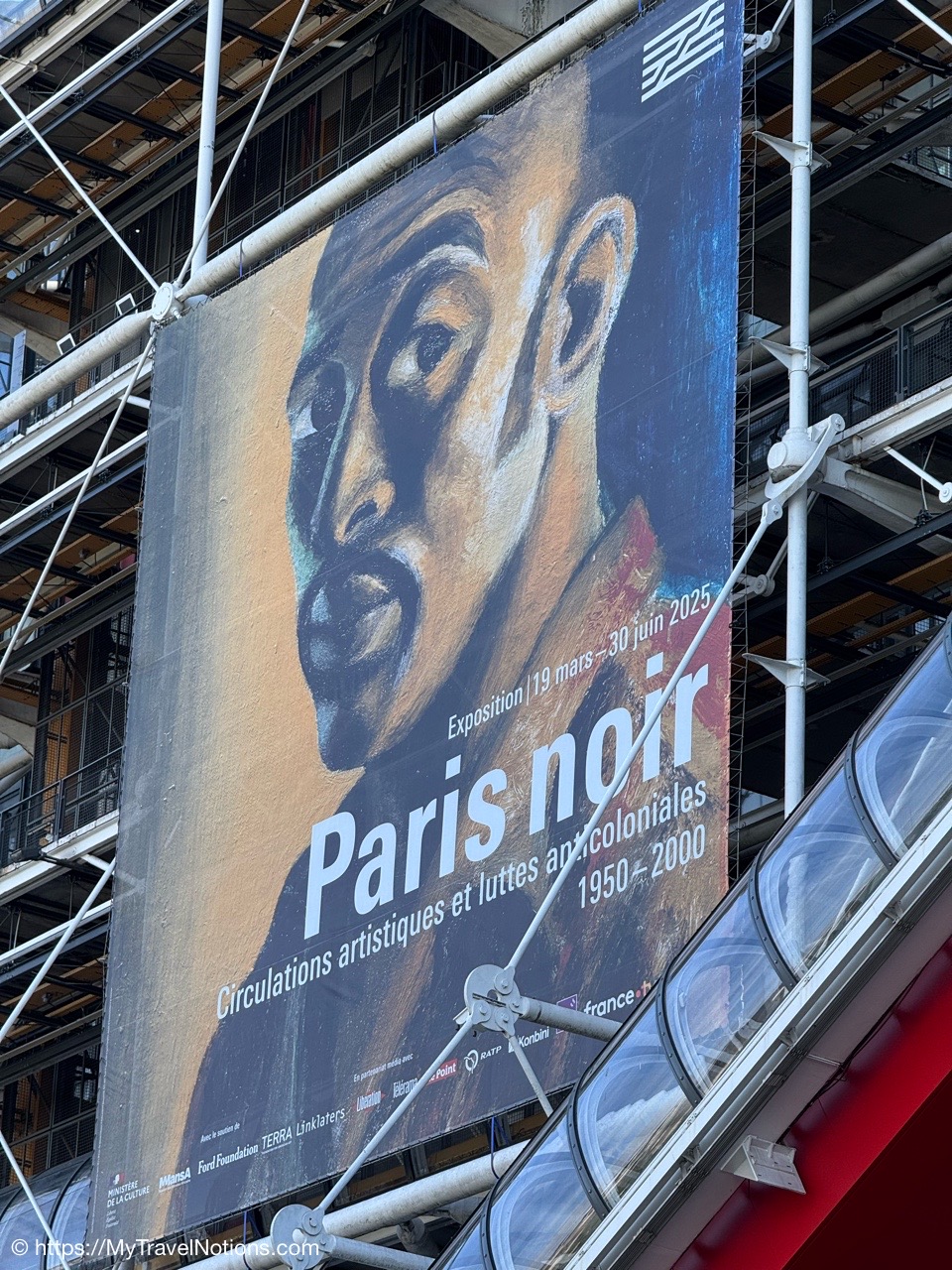
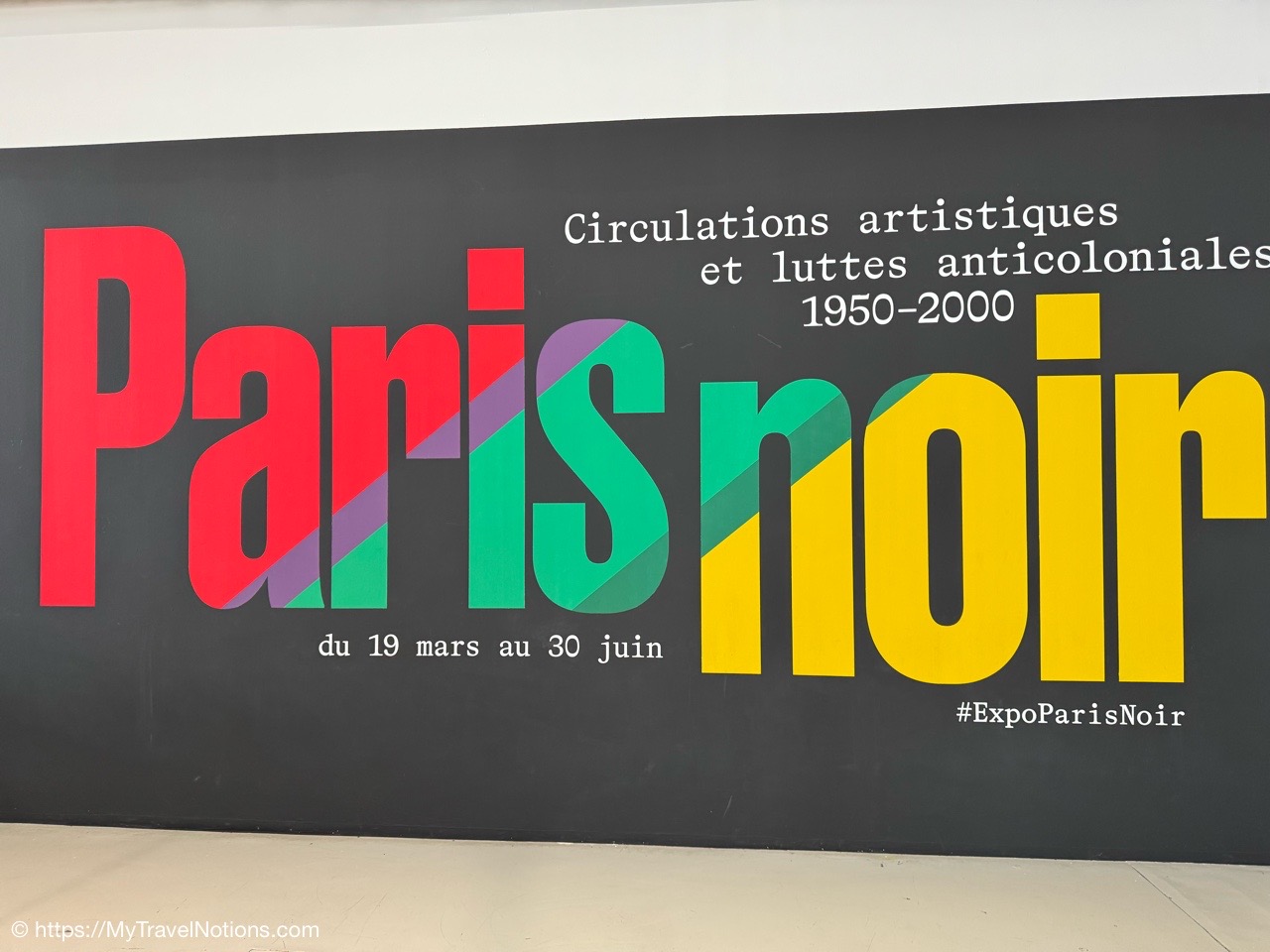
I came to the Centre Pompidou, located in the Beaubourg area of the 4th arrondissement of Paris, to see the “Paris Noir” exhibition which focused on Black artists in France from 1950 to 2000.
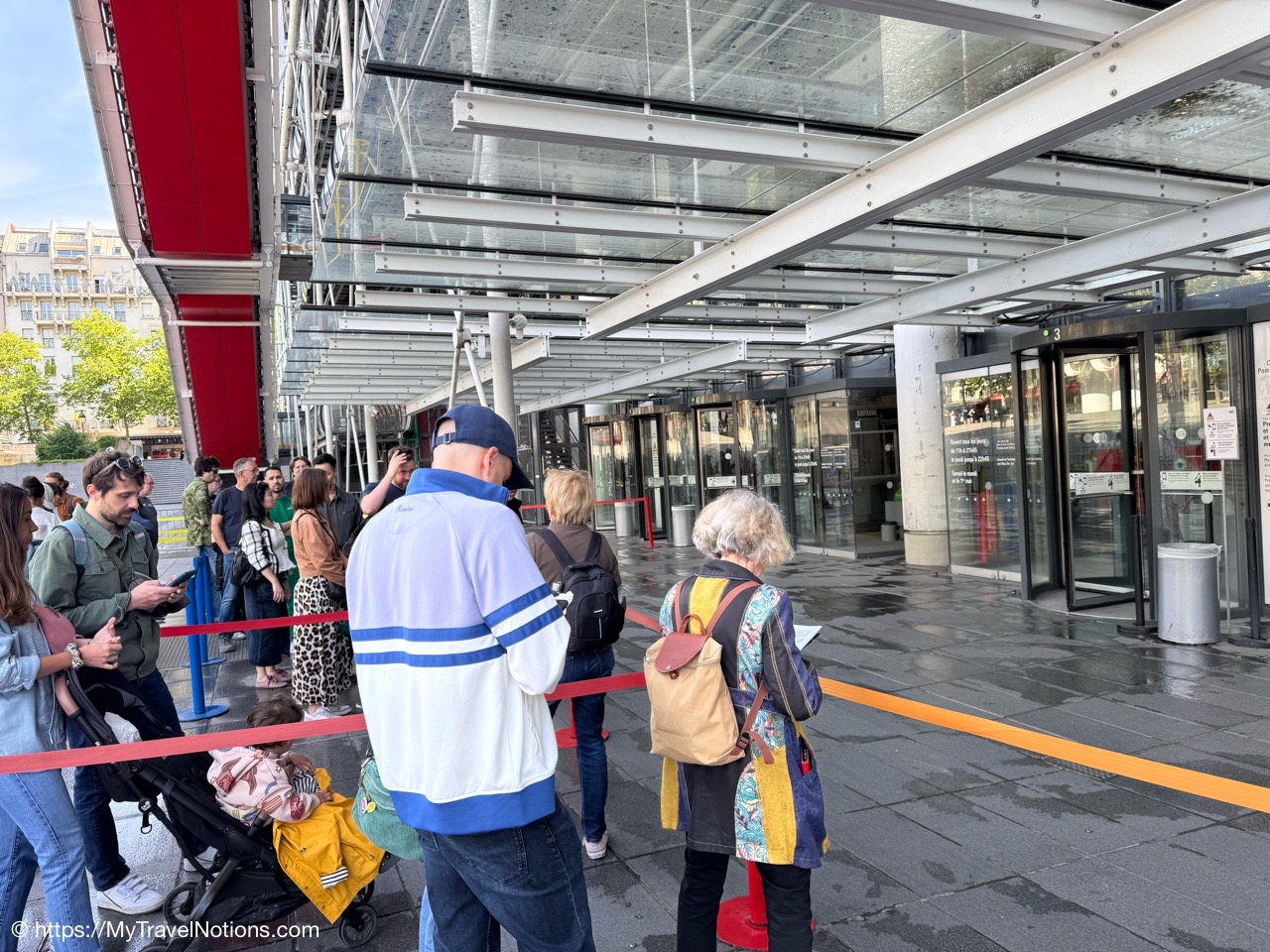
I waited in a short line but I had a prepaid ticket I bought online thanks to Janet for advising me to see this exhibit and purchase the ticket in advance.
I literally spent almost two hours admiring, reading and taking a ton of photos of the exhibit. I honestly felt privileged to see this wonderful compilation of Black artists because the exhibit was scheduled to end June 30 while the Centre Pompidou was scheduled to close in September 2025 for at least five years. This exhibit was exactly what my soul needed from Paris. I took about 400 photos of my walk to the Pompadour, of the Pompadour and the Paris Noir exhibit.
I also ate a fairly expensive lunch at Le Georges rooftop restaurant at the Centre Pompadour with its beautiful city views. At first I thought I was being ignored or that the service sucked. The servers were fancy dressed young men and women and as I was the only solo person, sometimes it can be easy to be overlooked. But when my server did finally arrive, a very attractive young woman, she had a big smile and suggested the wine for my lunch, the spicy, which really was not spicy, Lobster Linguine. It had a wonderful taste and I ate all of it.
And, while I charged my IPhone and got directions for my walk to the Panthéon to see Josephine Baker’s memorial or whatever the French call it because she’s not buried in France, but Monaco, in walked this tall, statuesque black woman. I immediately recognized her, it was Venus Williams. She is quite statuesque and distinguished even under a baseball cap, white t-shirt and jacket, Venus walked in with no fanfare on the arm of a man just slightly shorter than her, whom I later found out was her fiancé, now husband, and another man, taller than her.And, she’s tall. The three were taken to the back corner where they could eat quite privately.
As great as it was to see Venus Williams in person, the “Paris Noir” exhibition was also quite impressive. Here’s to the uplifting “Paris Noir” exhibit at the Centre Pompadour and to the memory of Josephine Baker at the Panthéon for my first full day in Paris.
NOTE: Le Georges rooftop restaurant and the Centre Pompadour are now closed for unknown length of time.
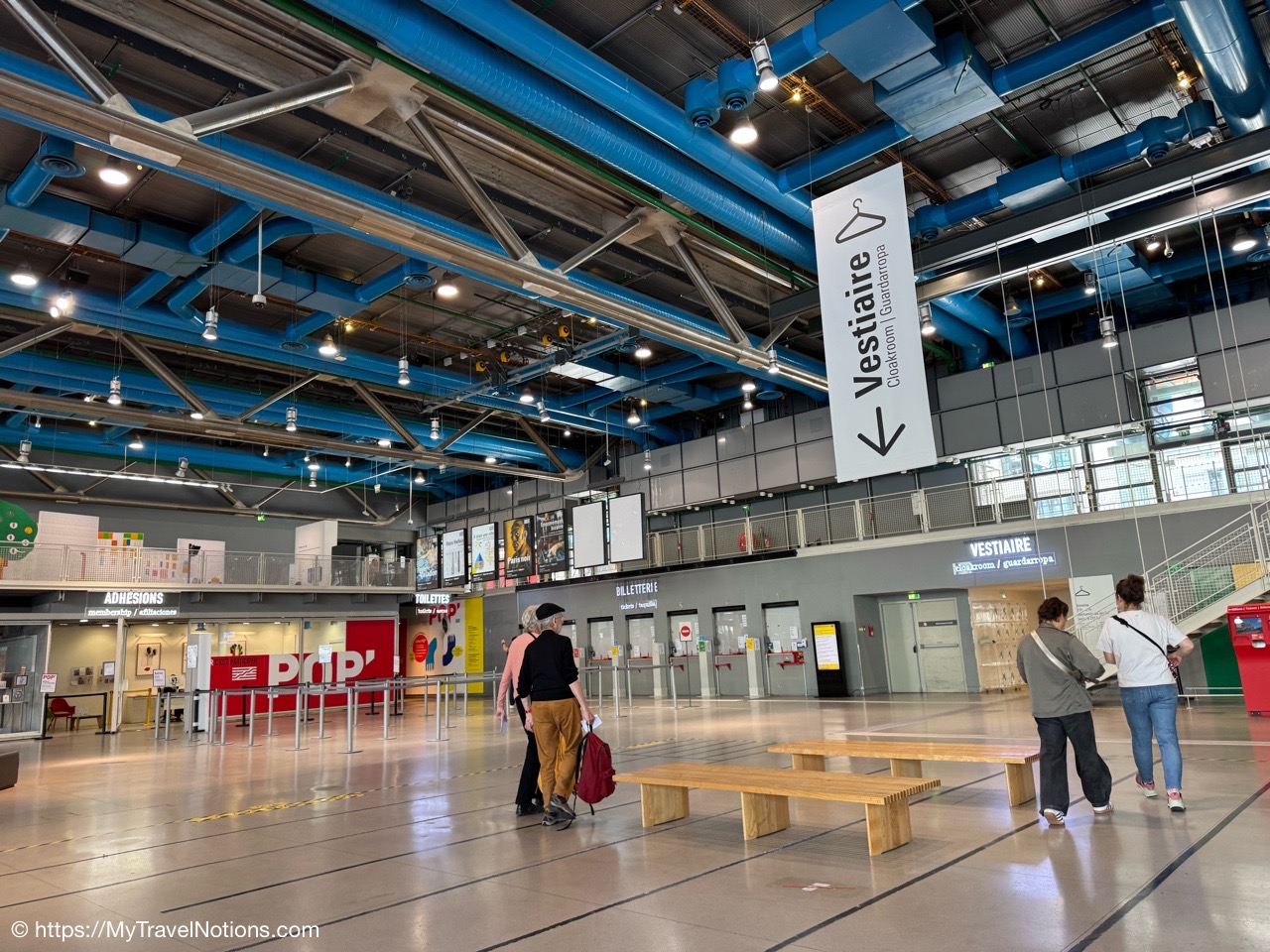
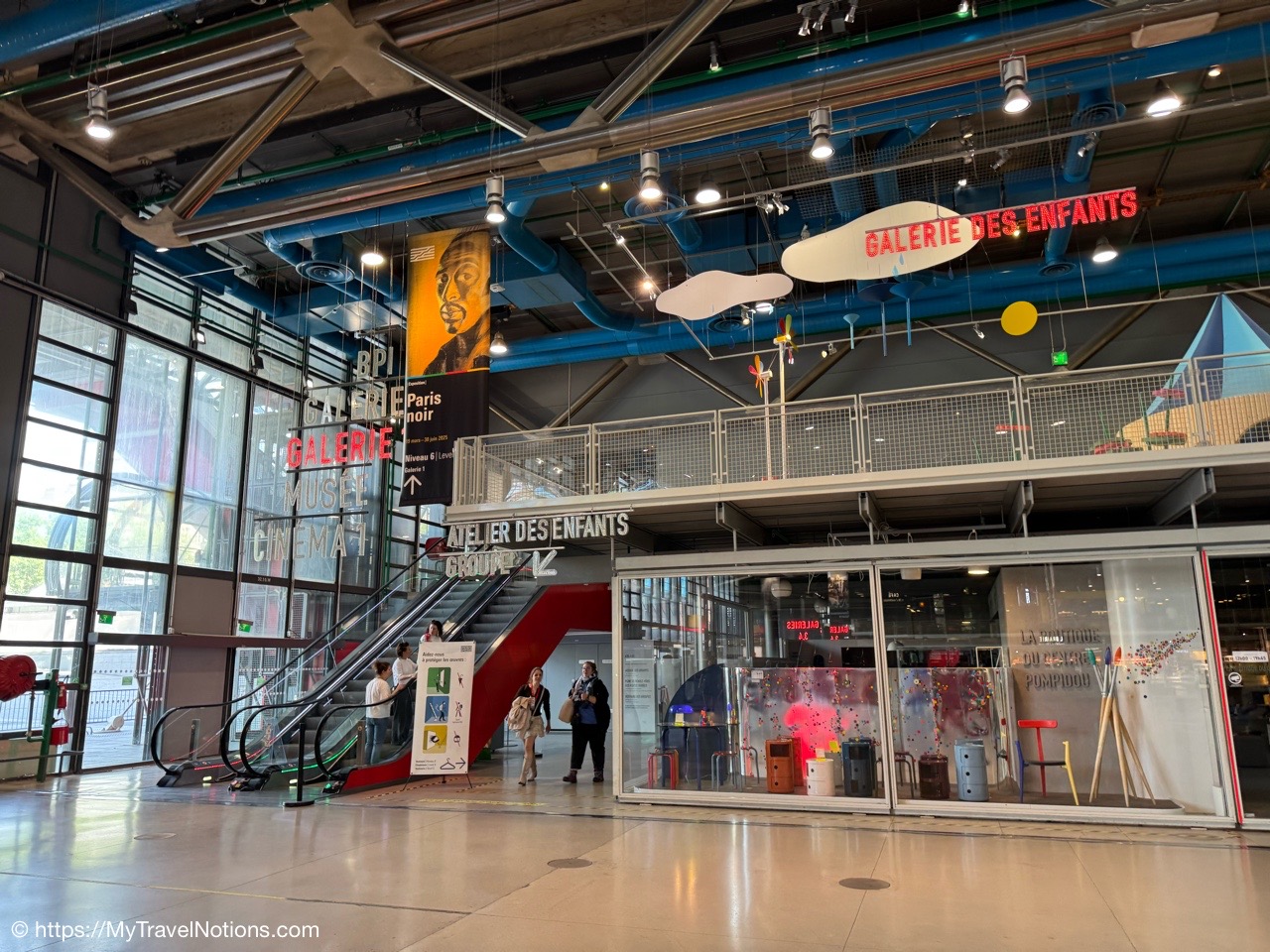
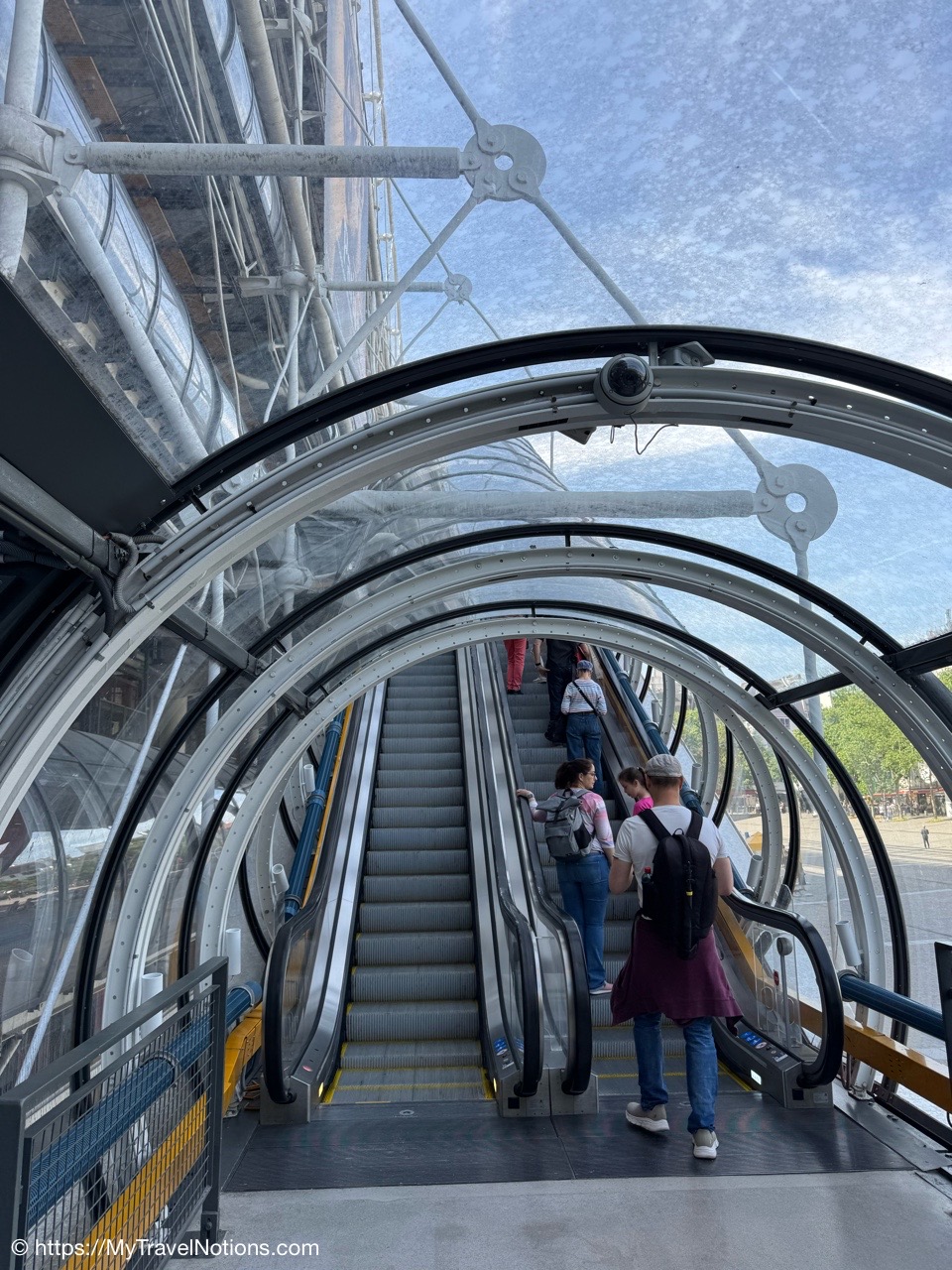
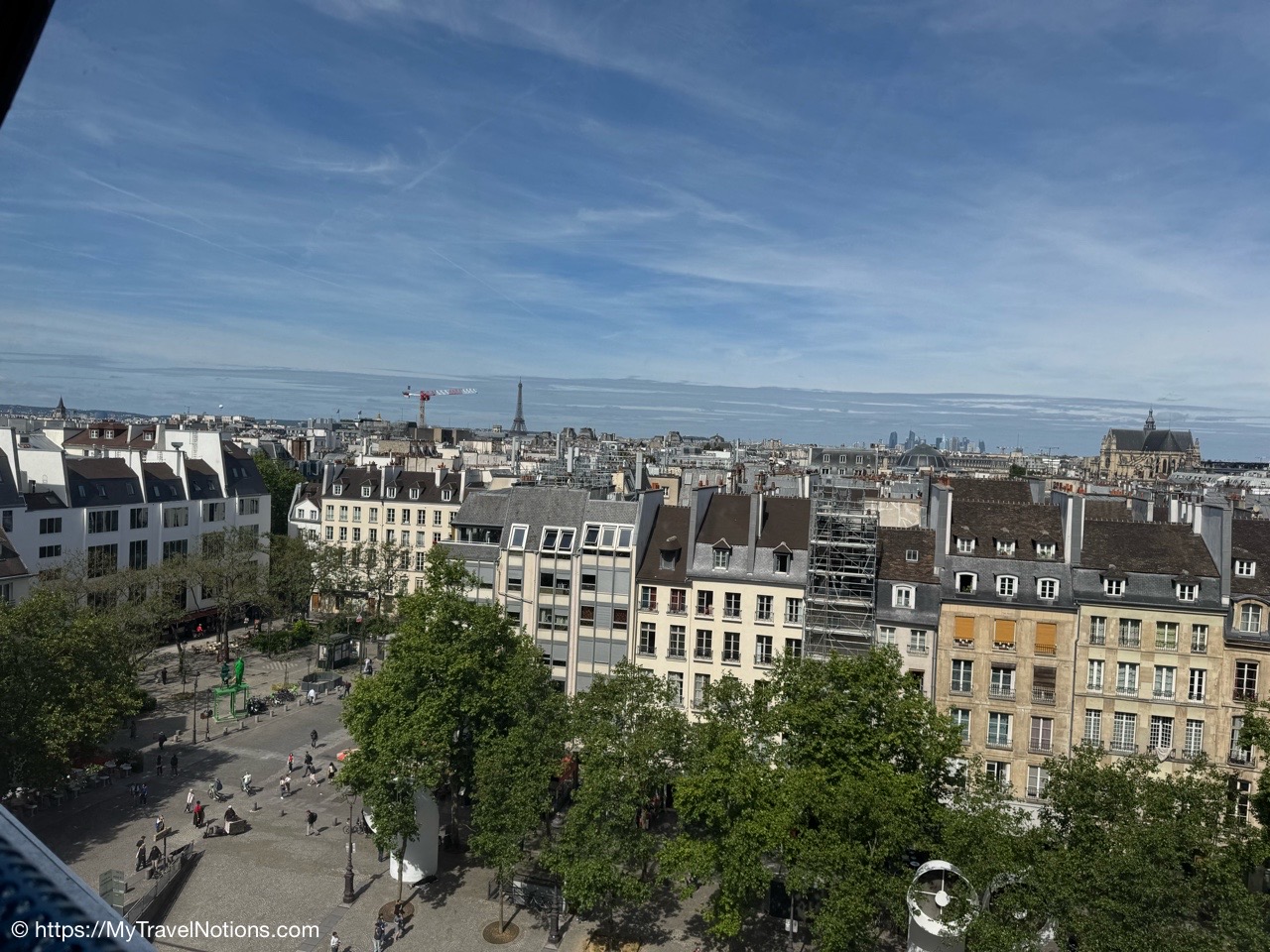
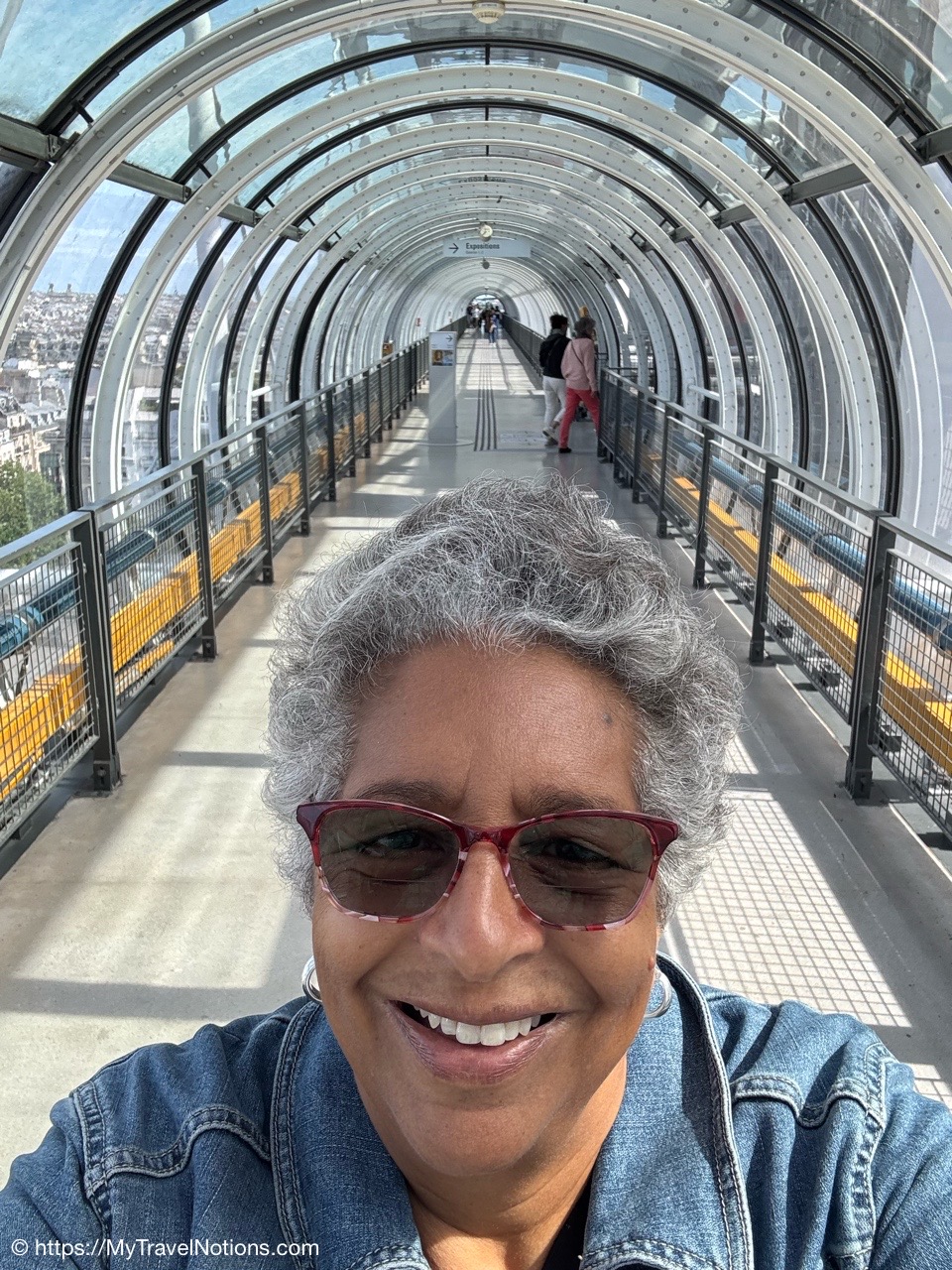
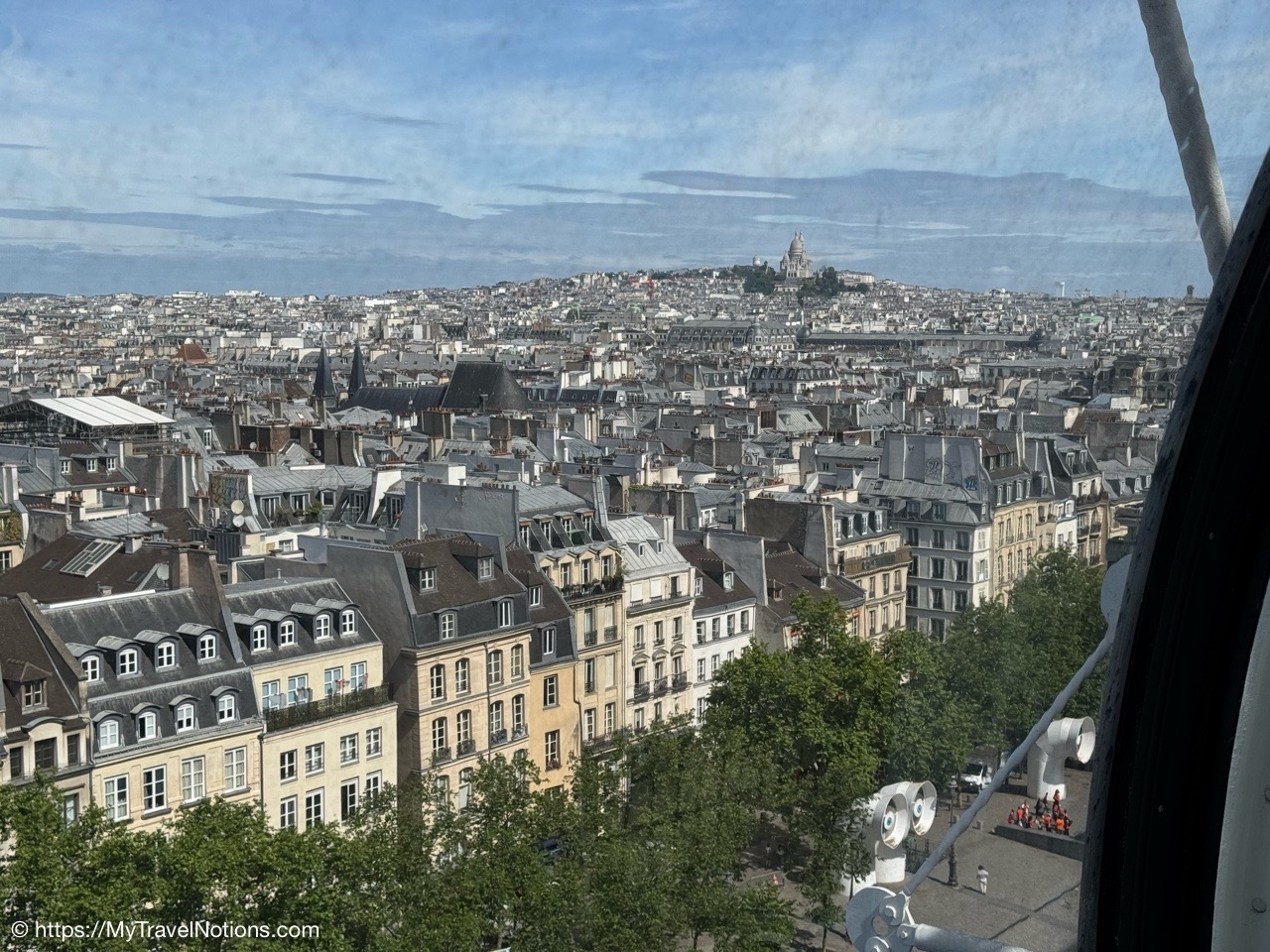
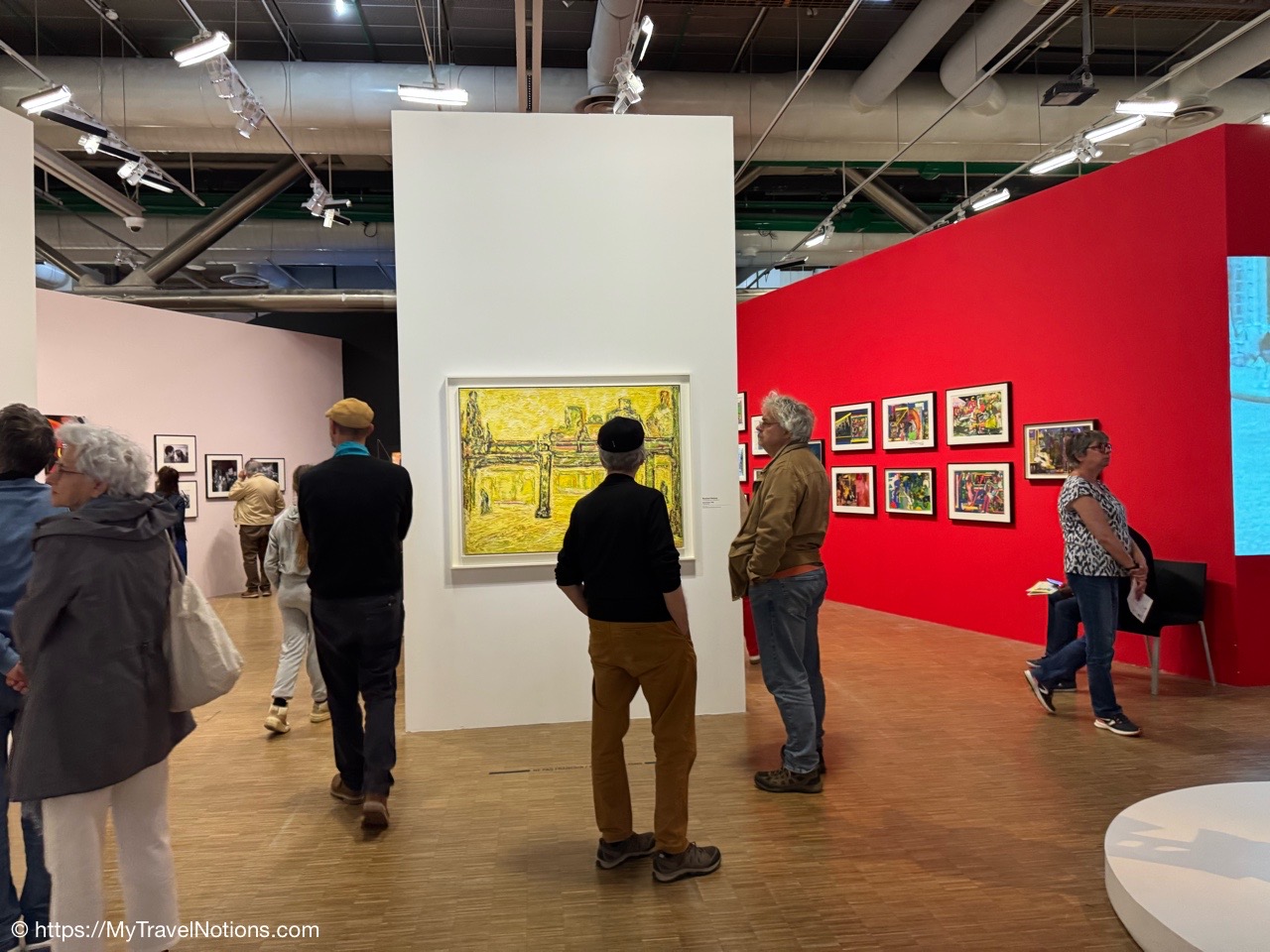
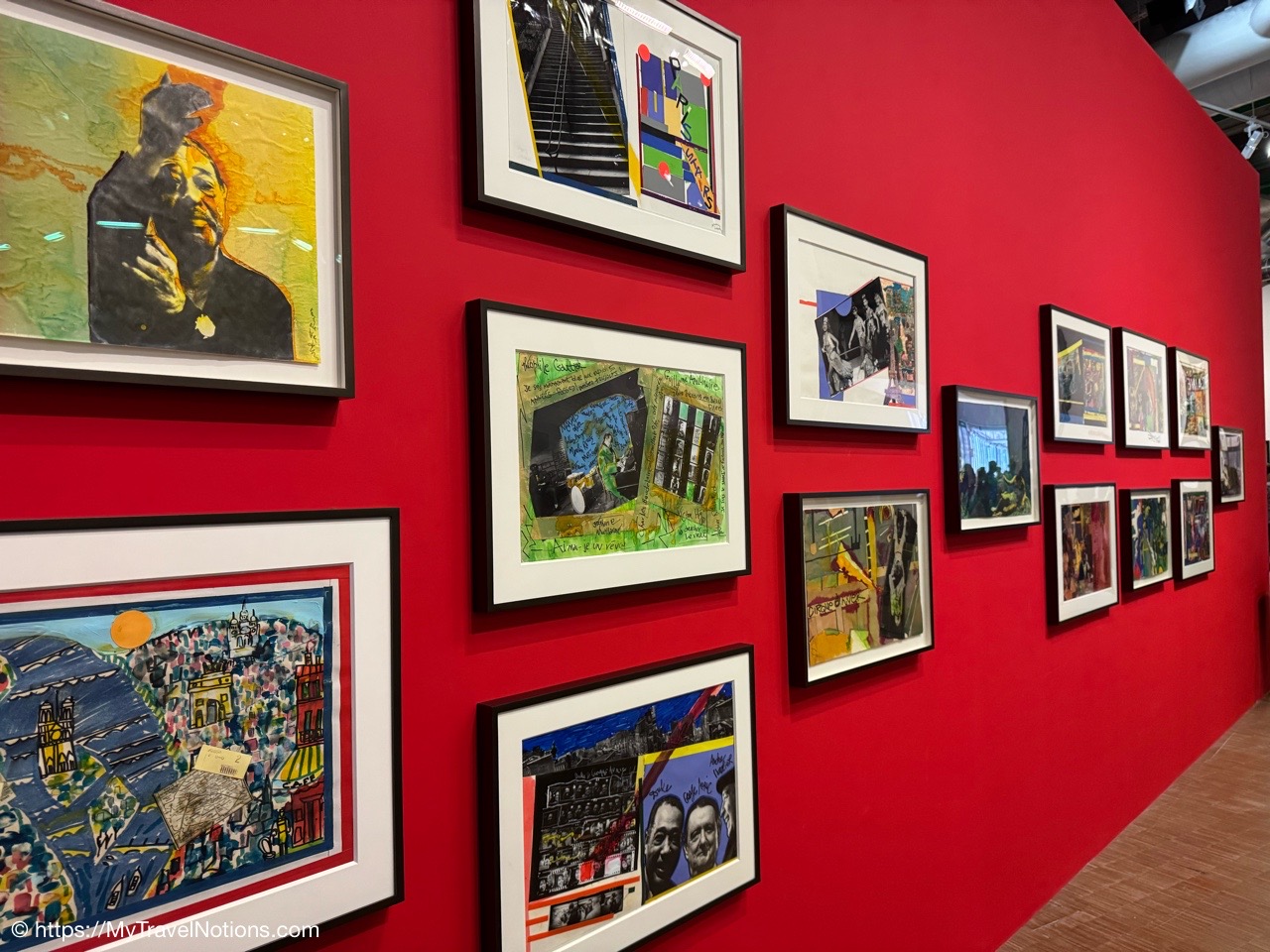
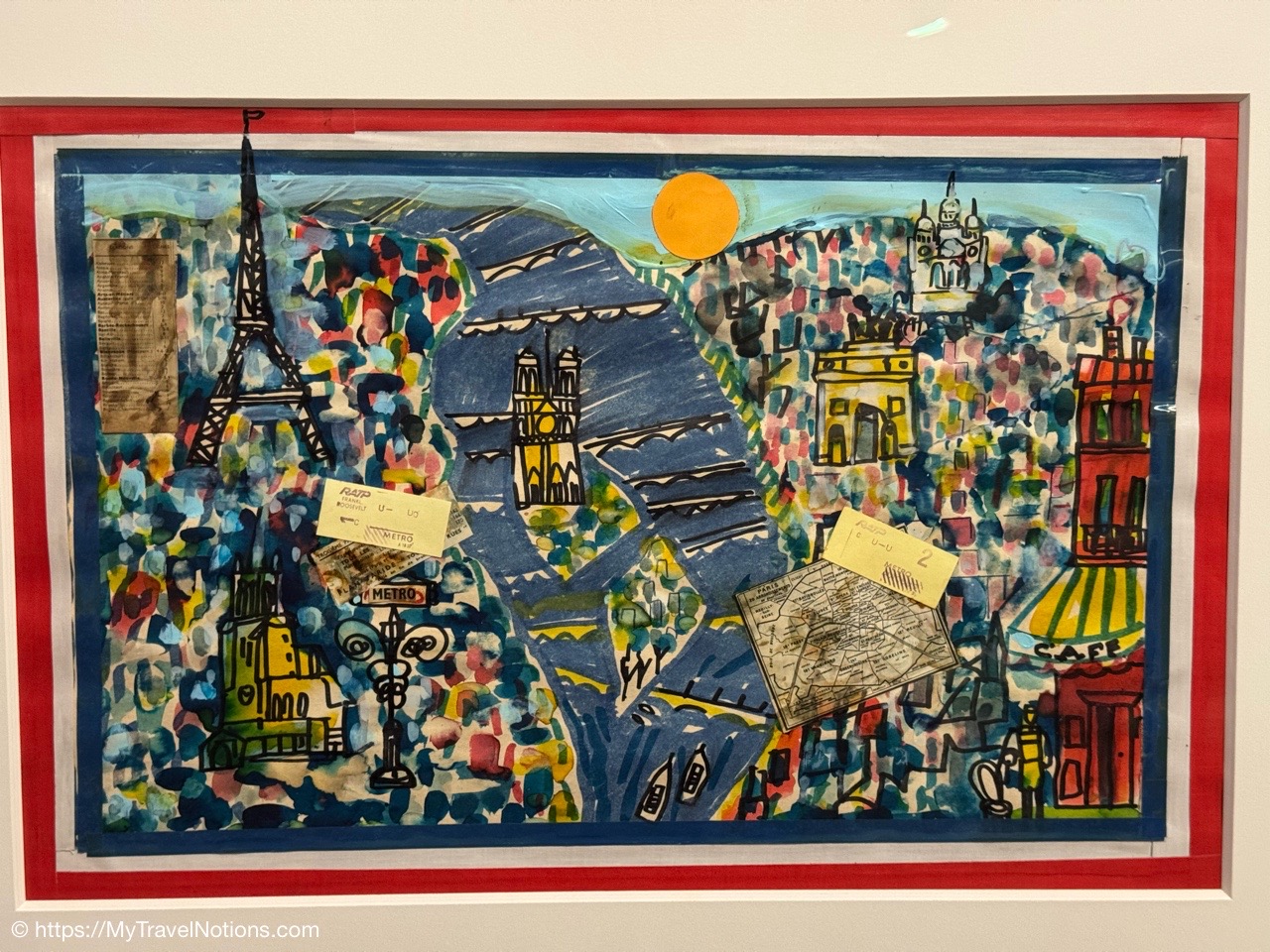
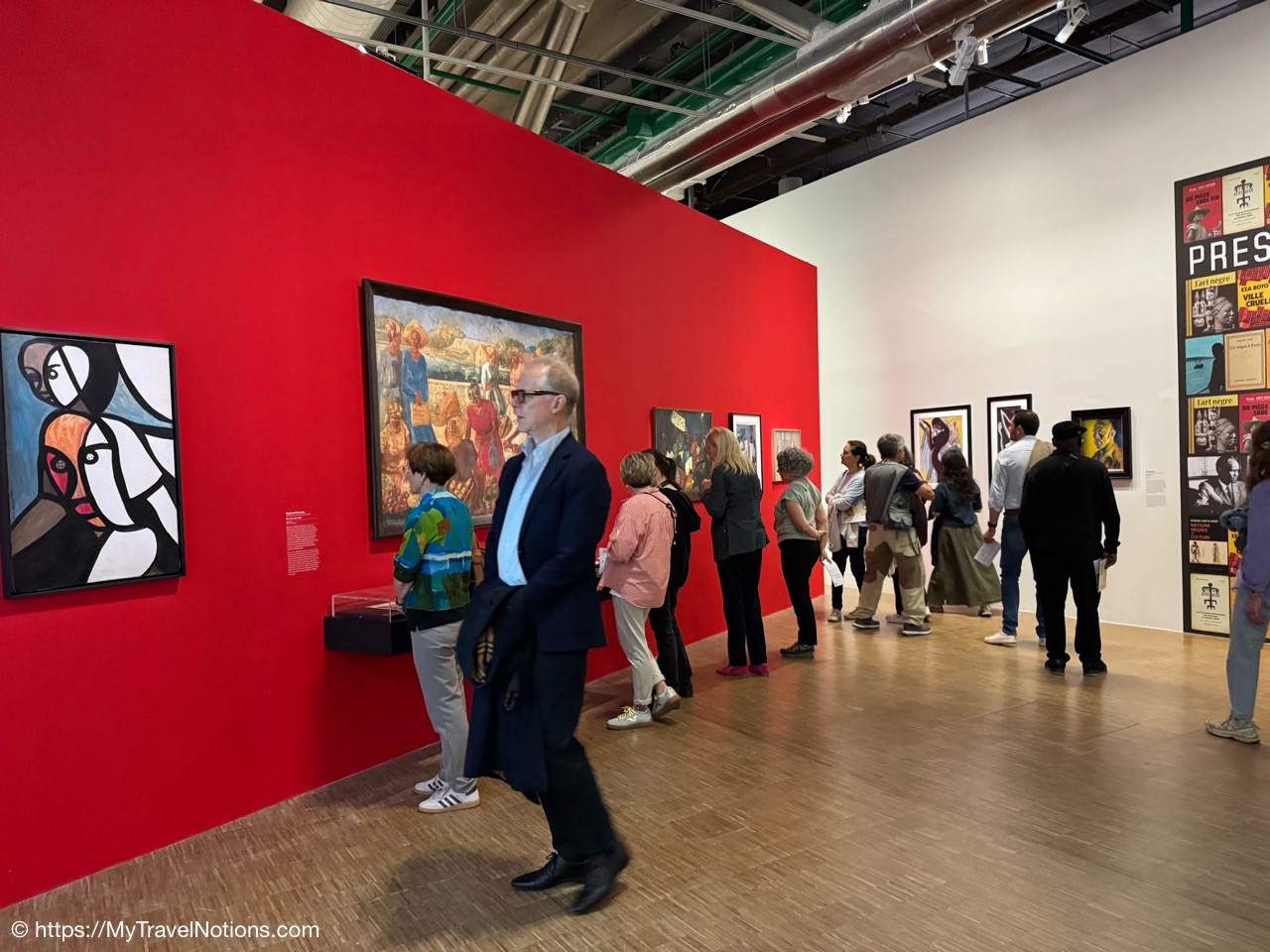
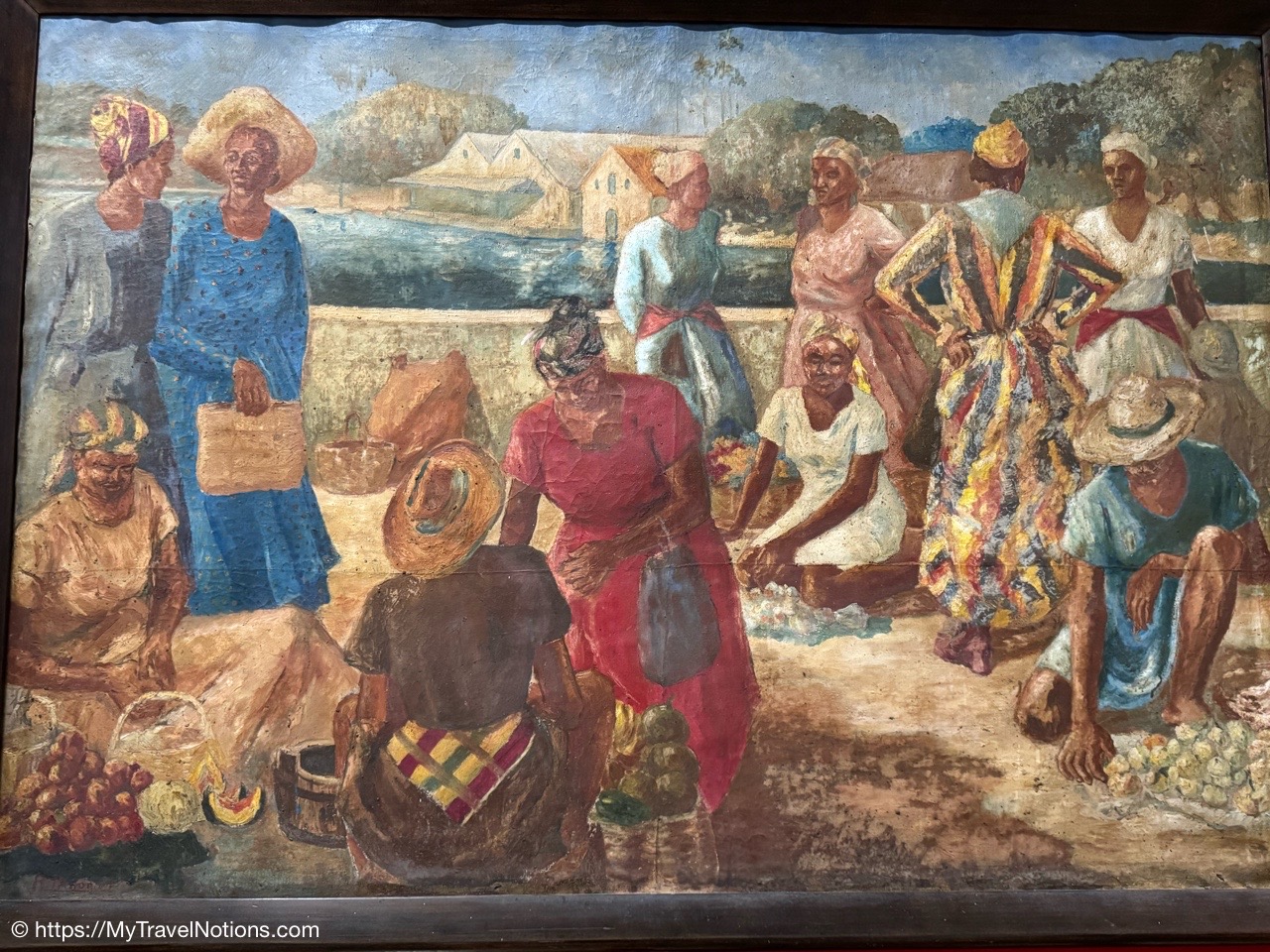
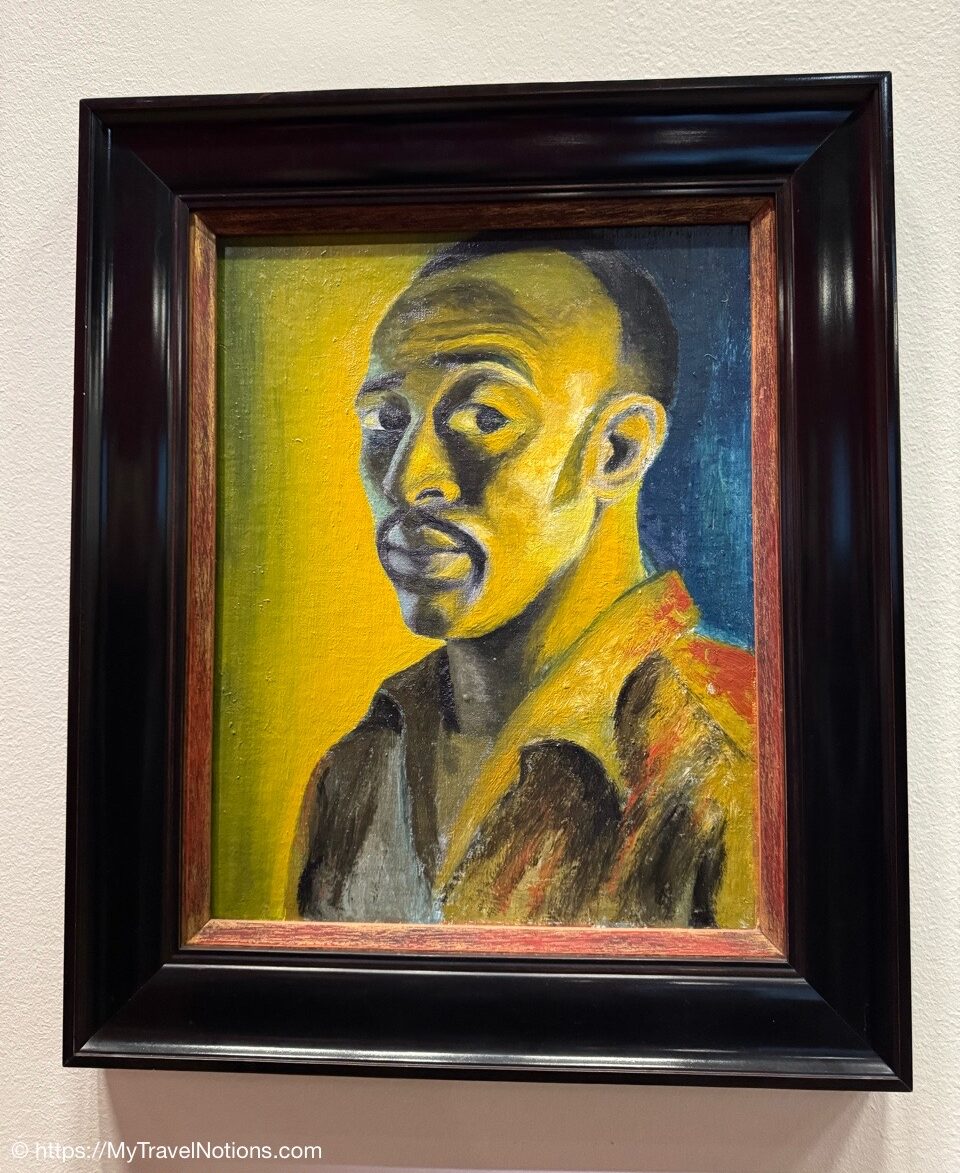
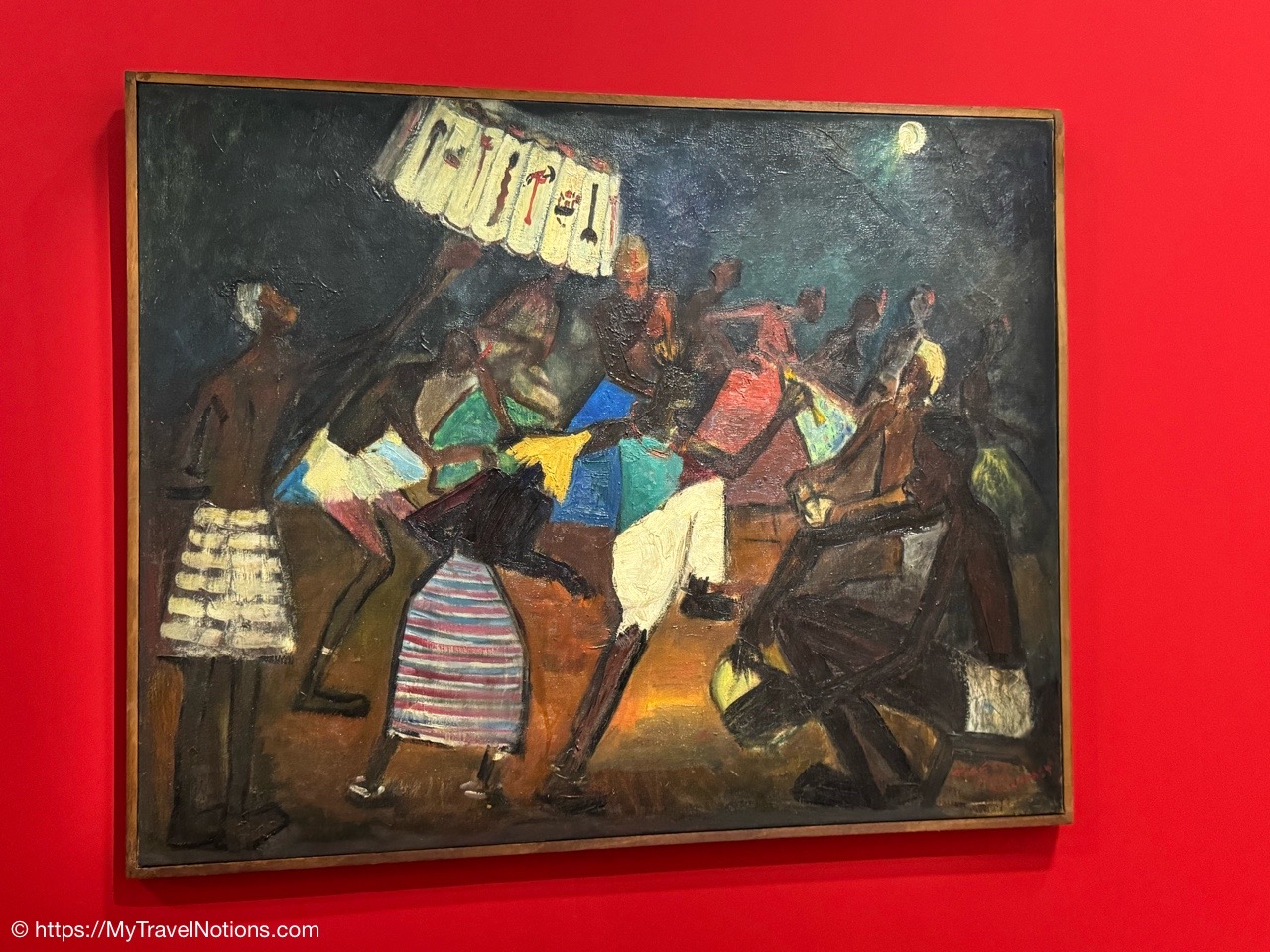
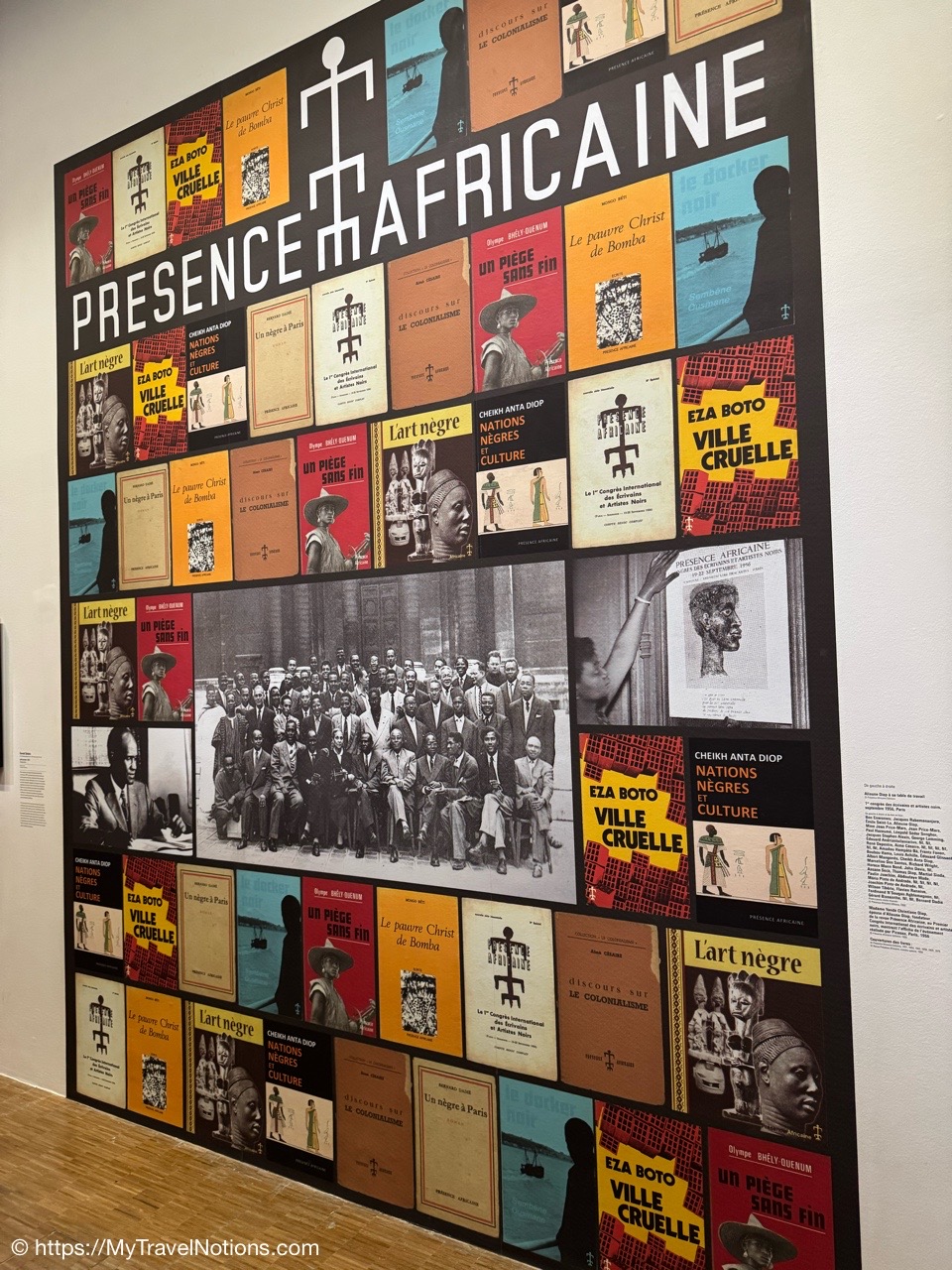
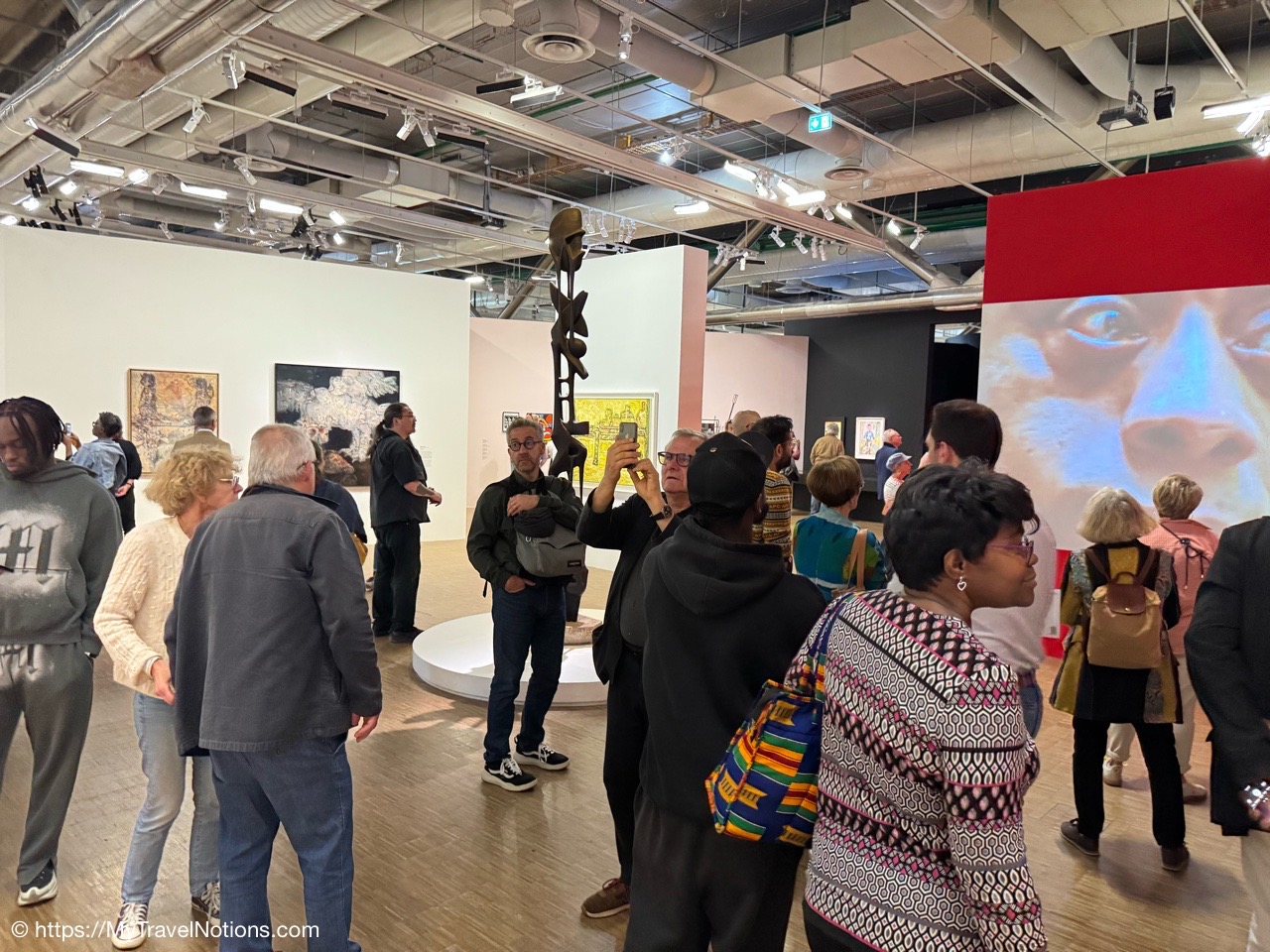
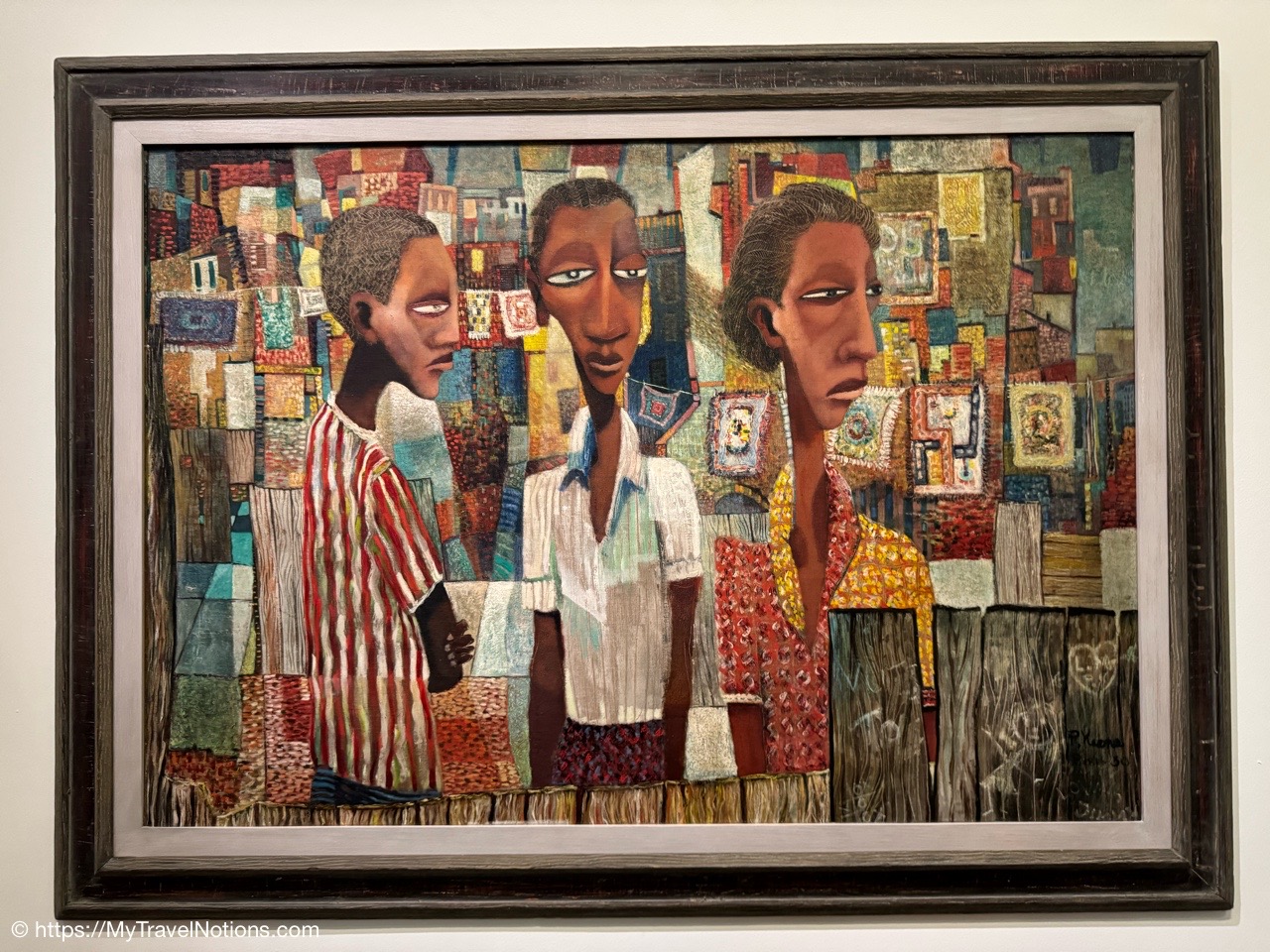
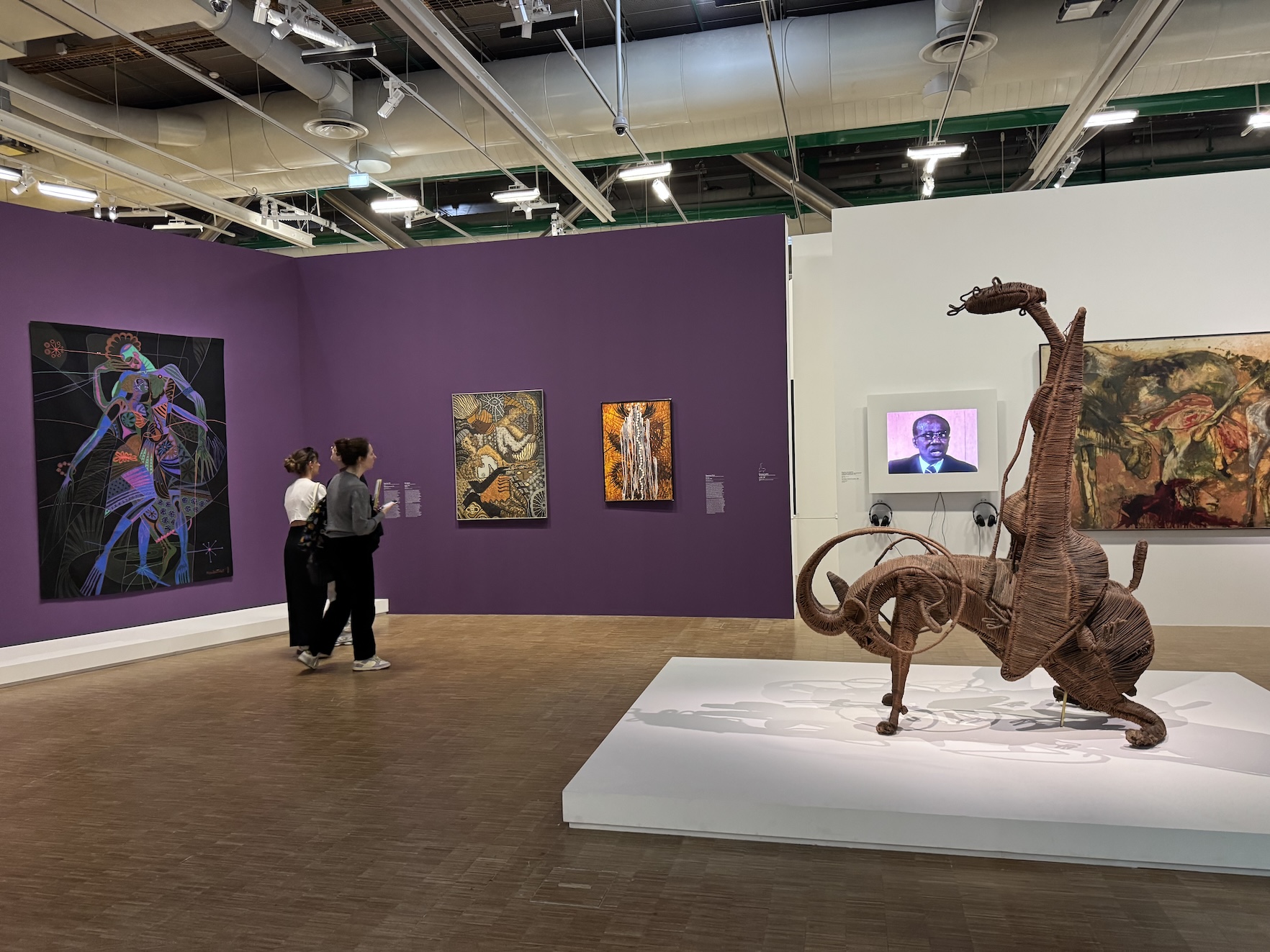
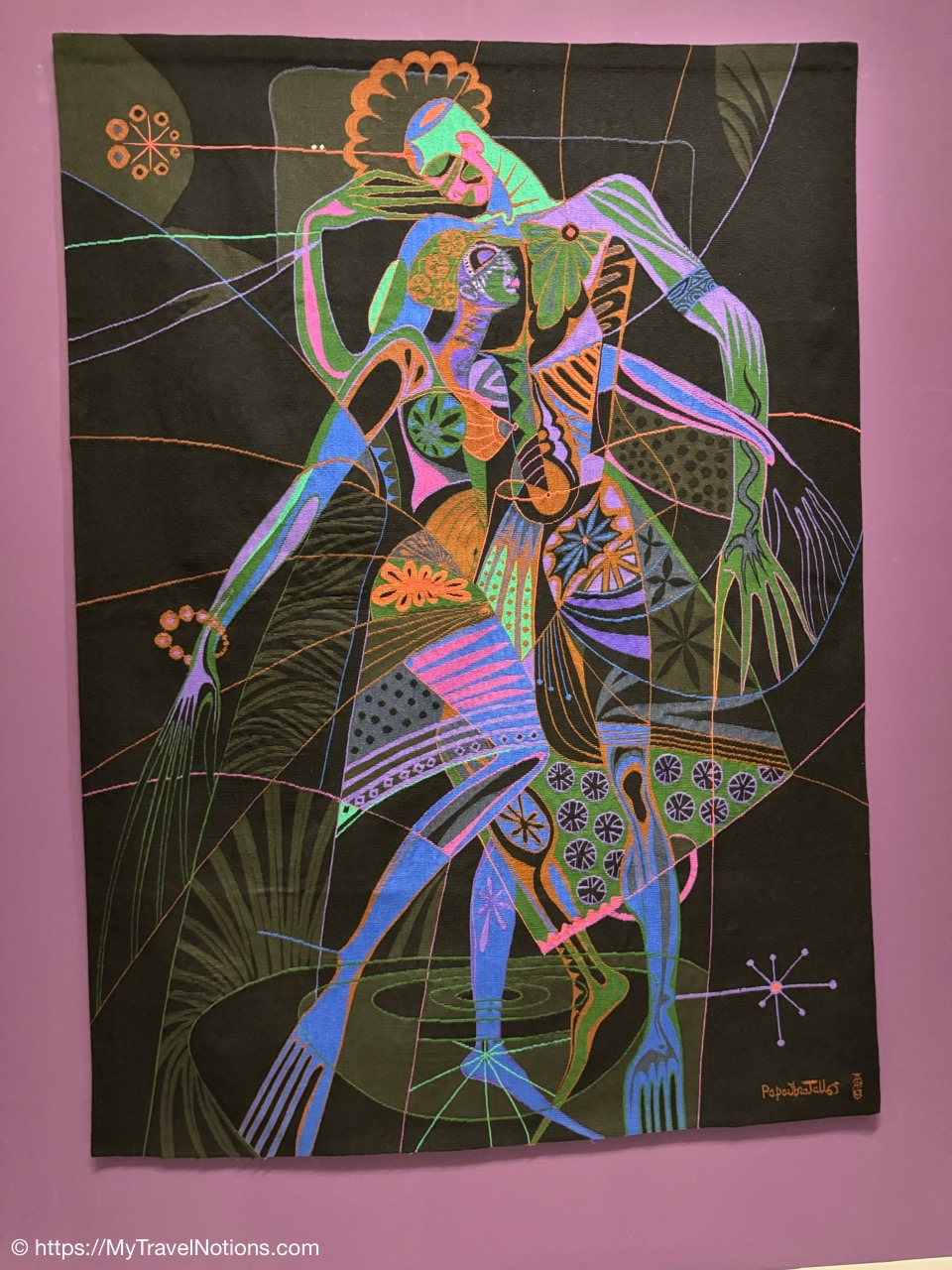
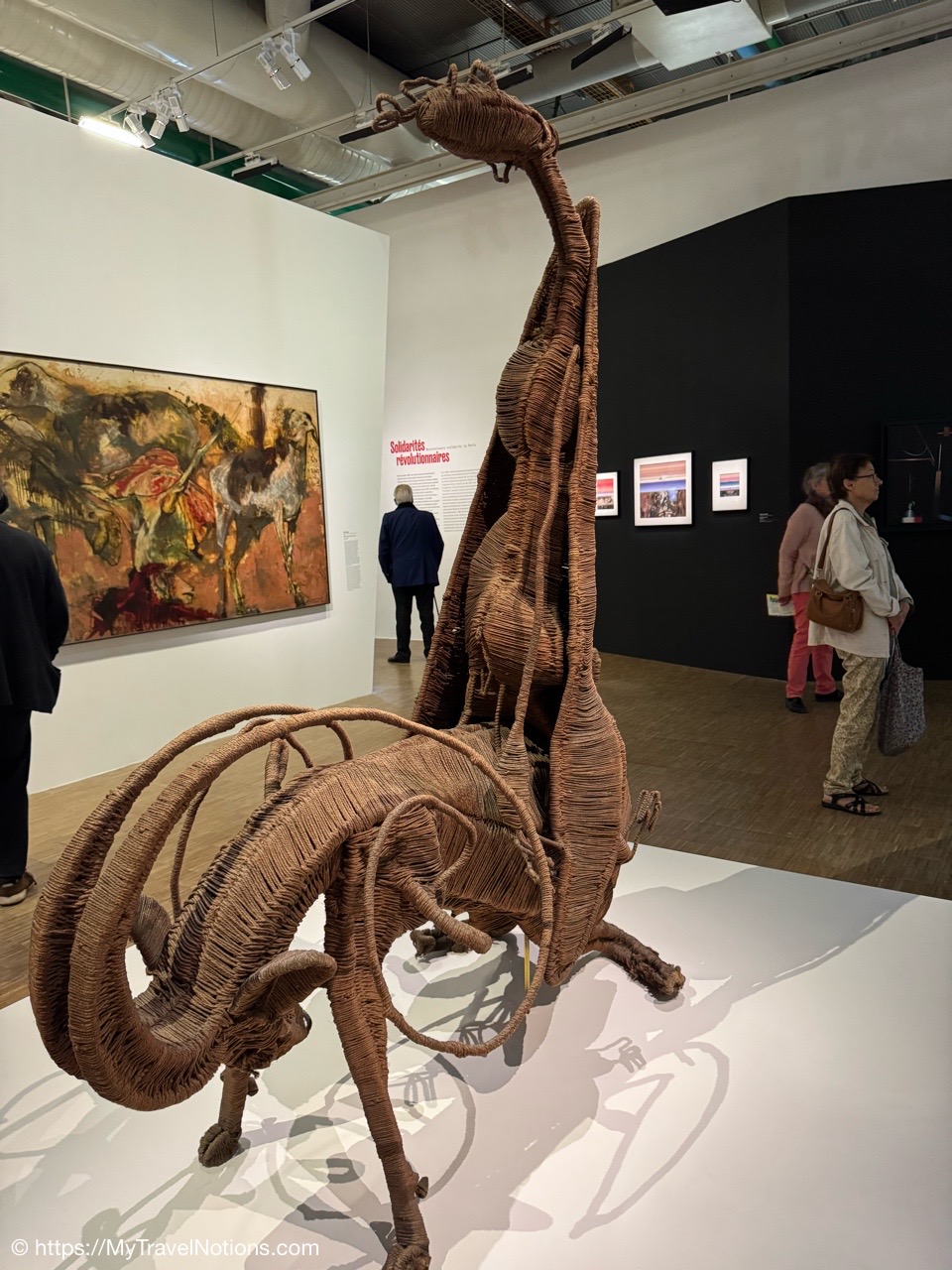
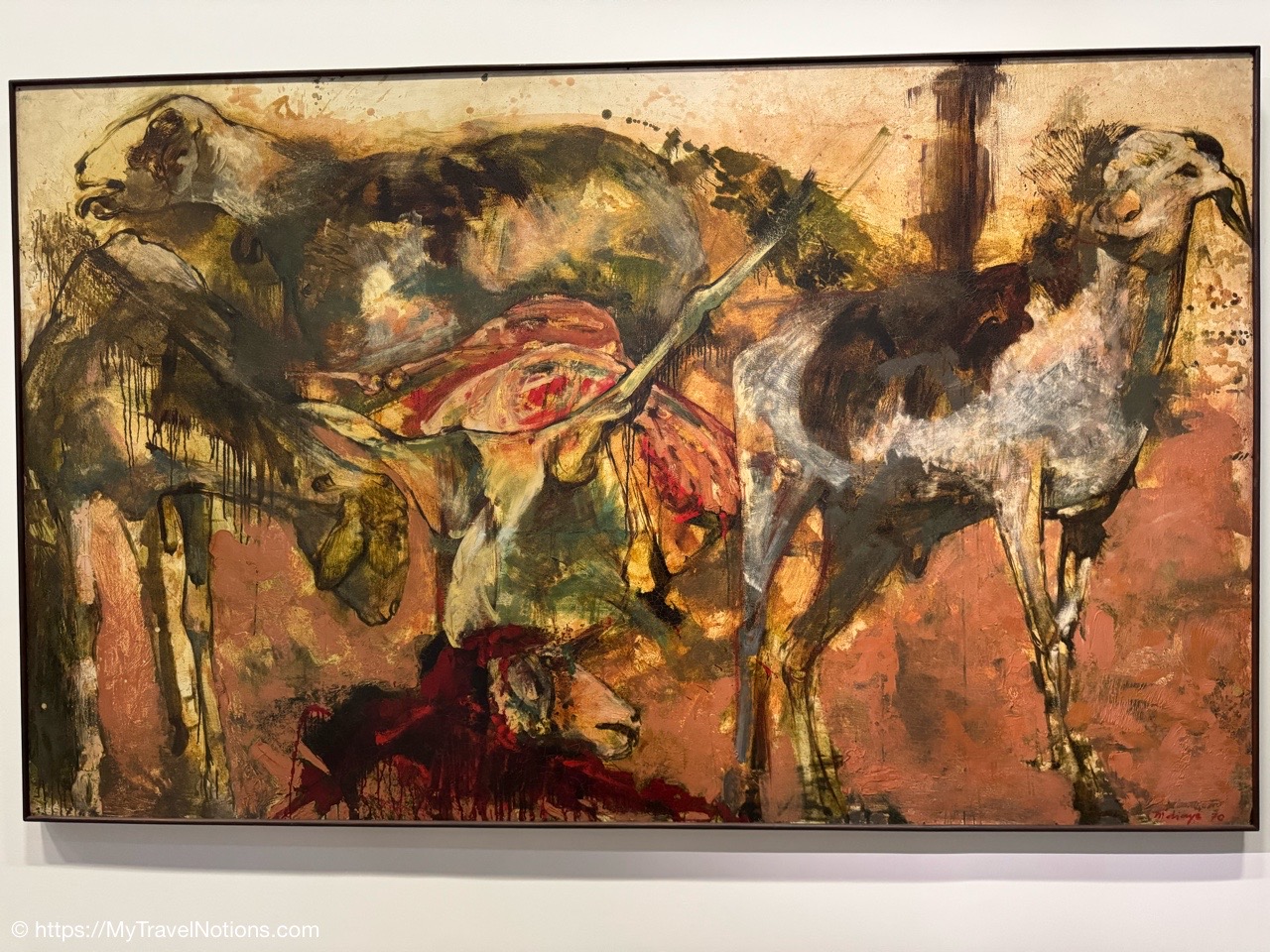
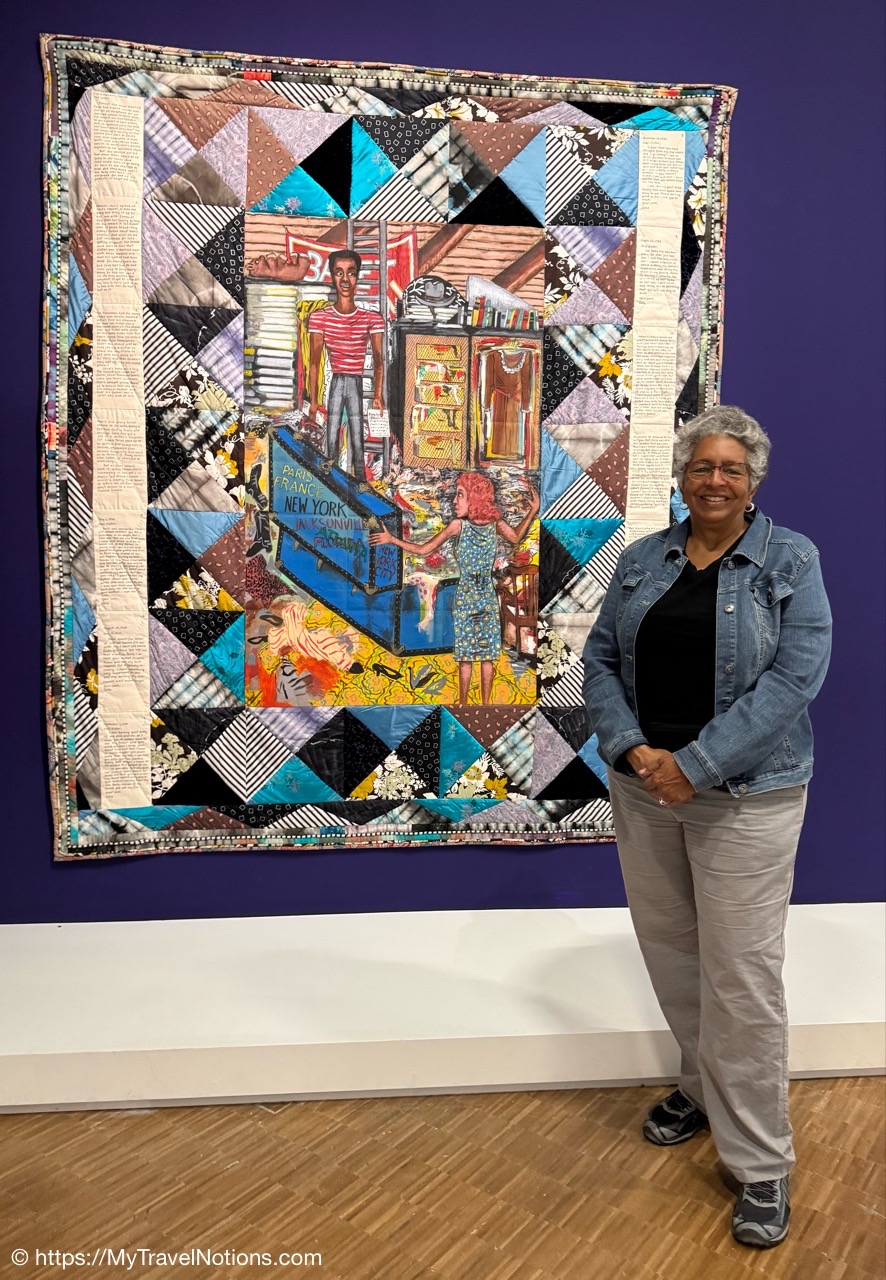
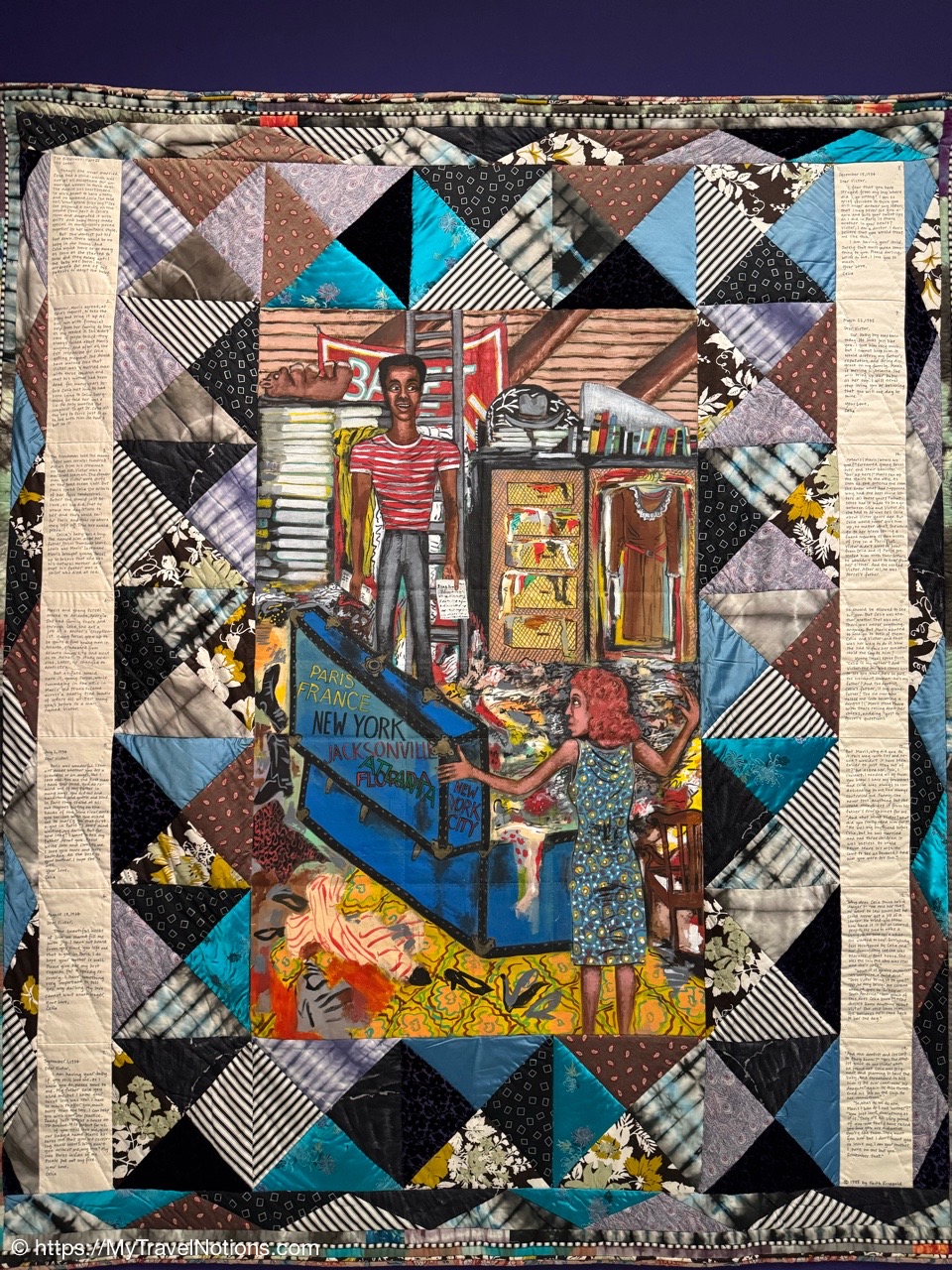
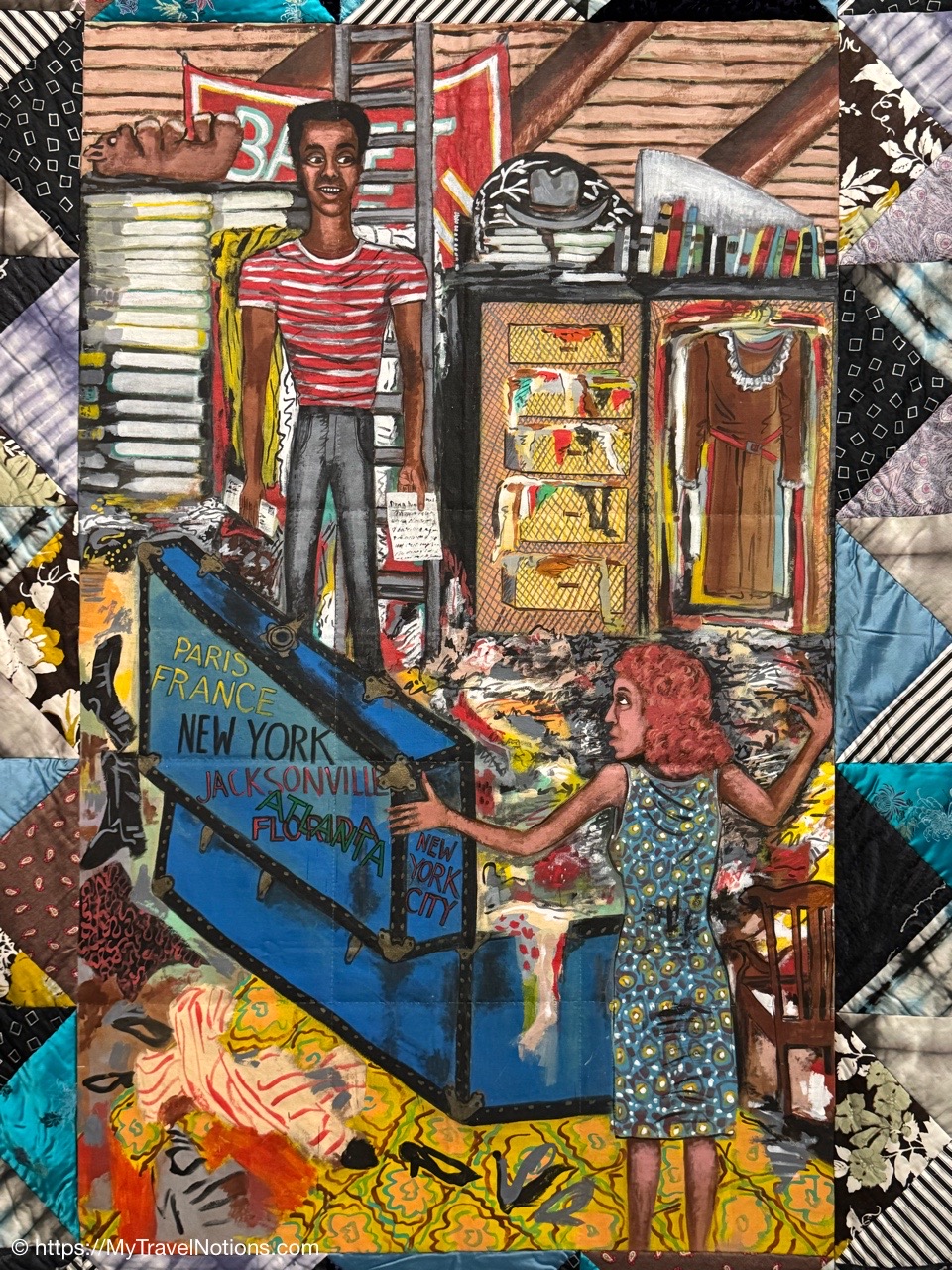
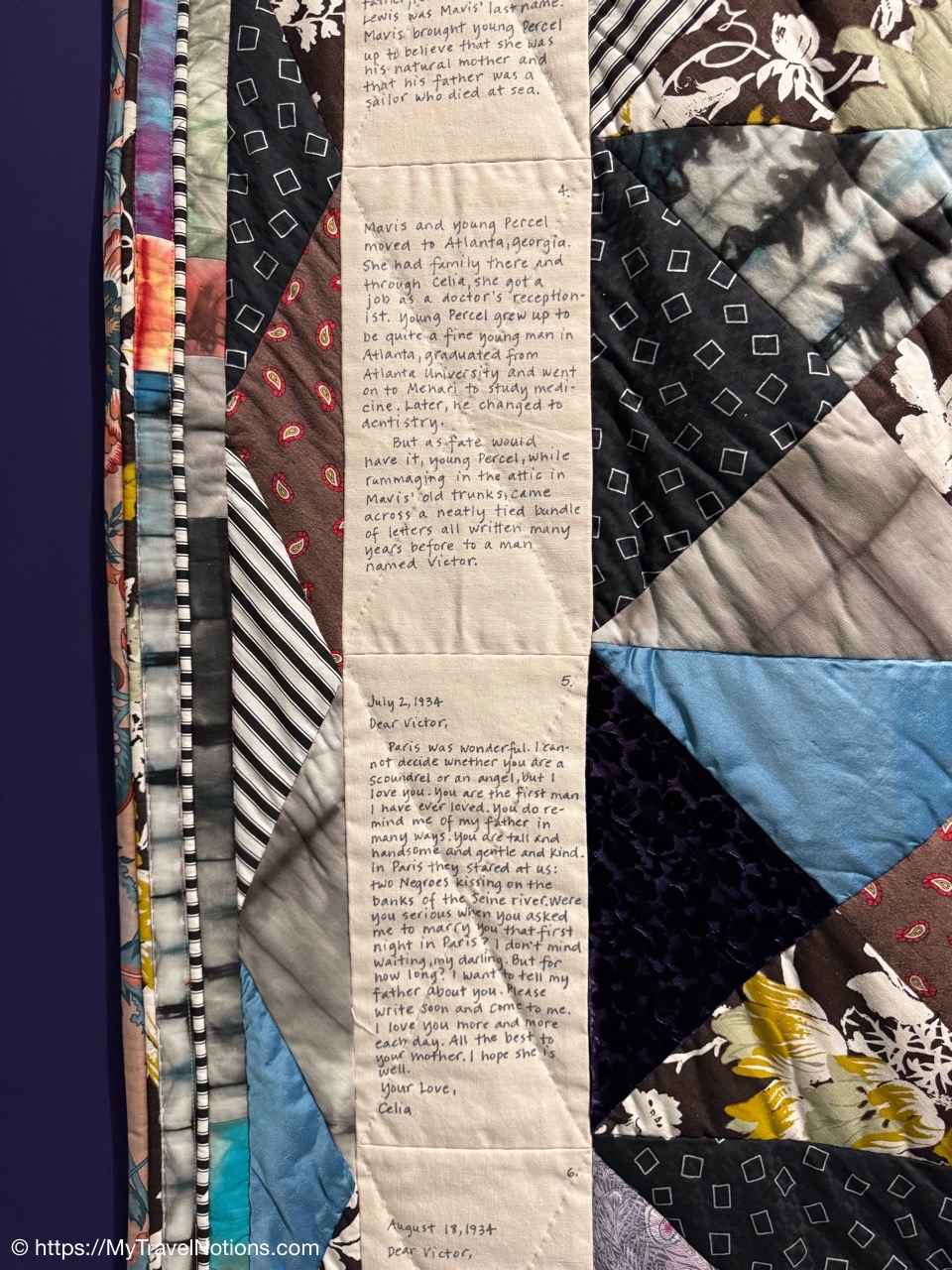
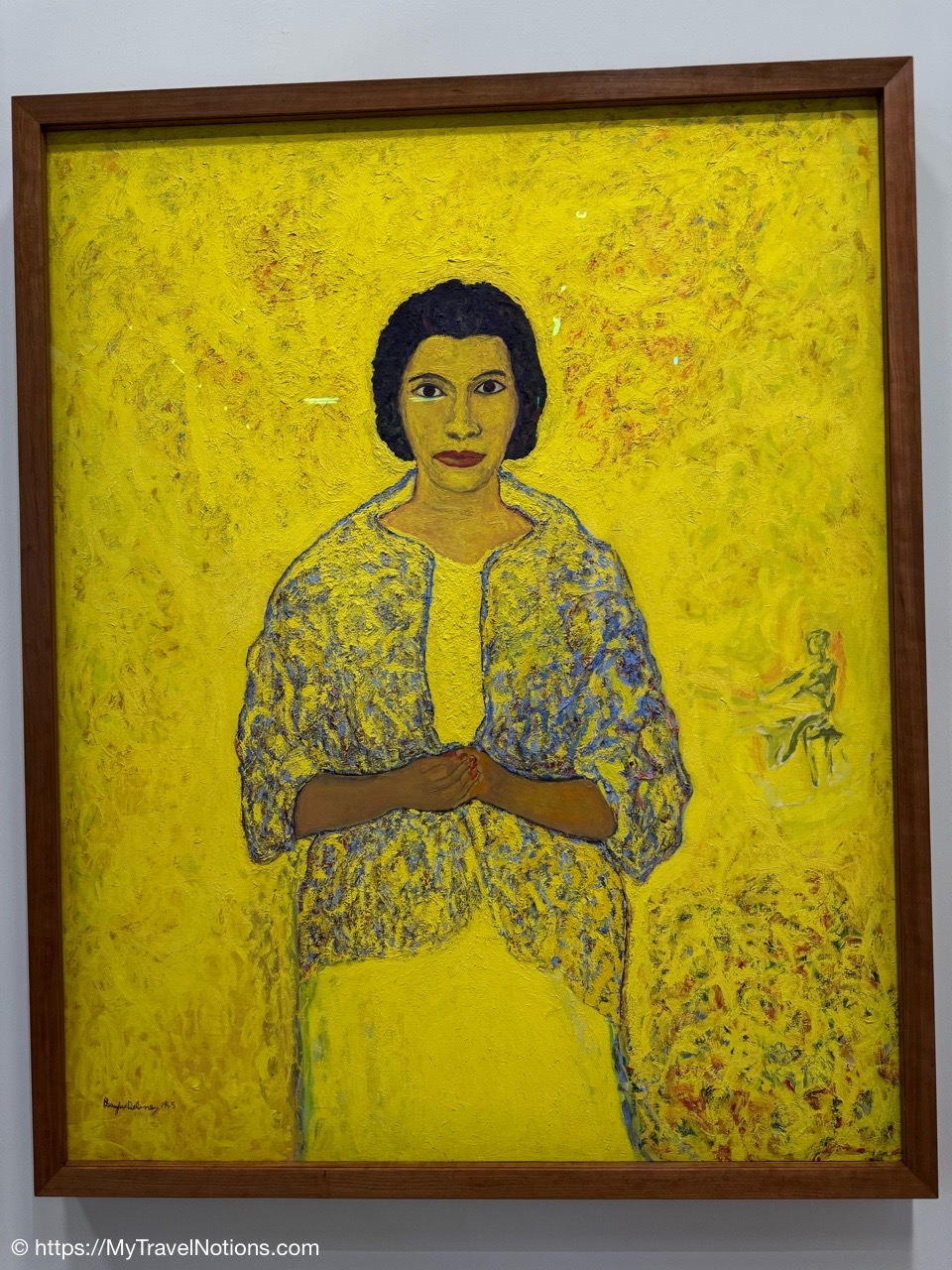
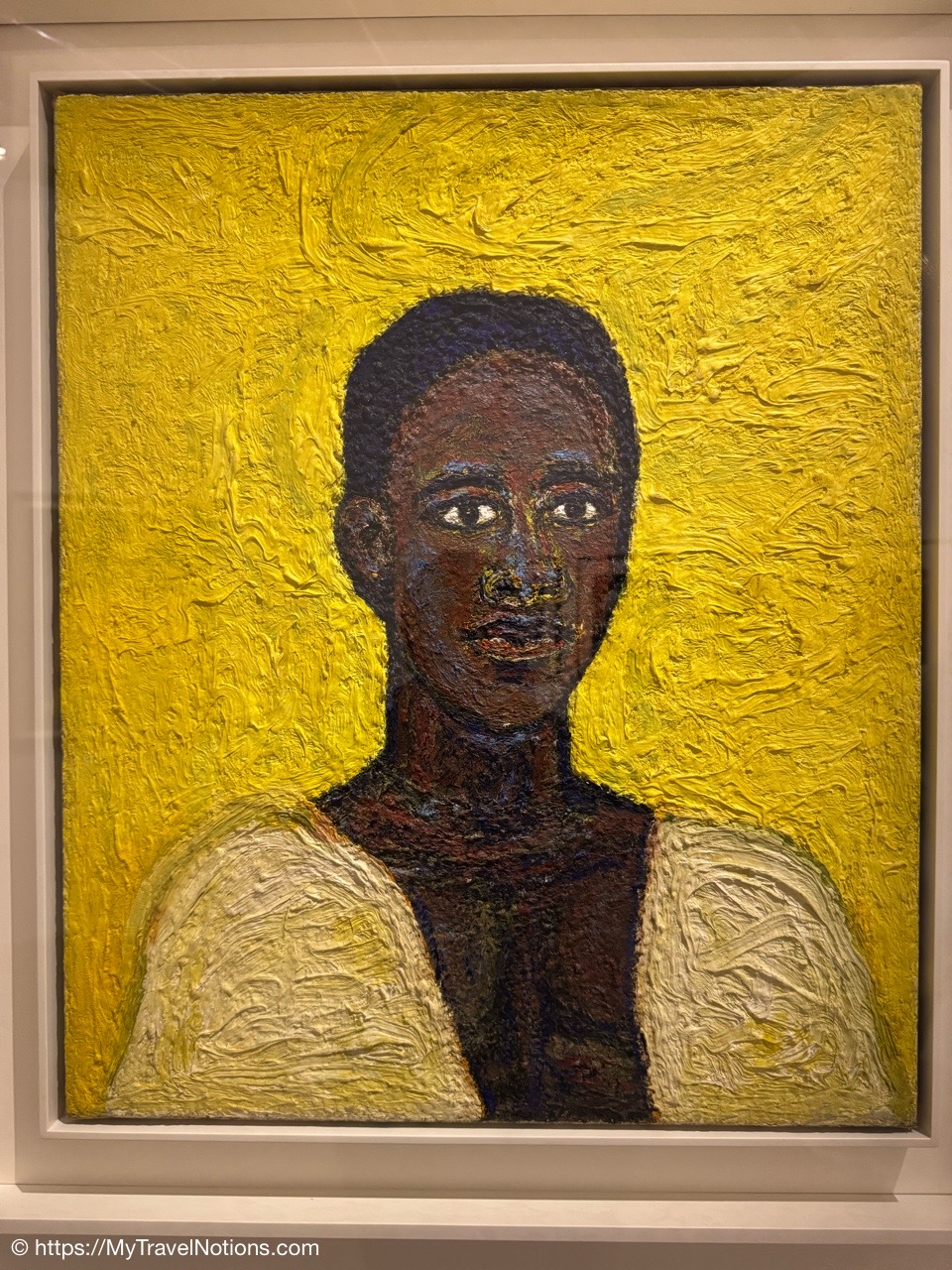
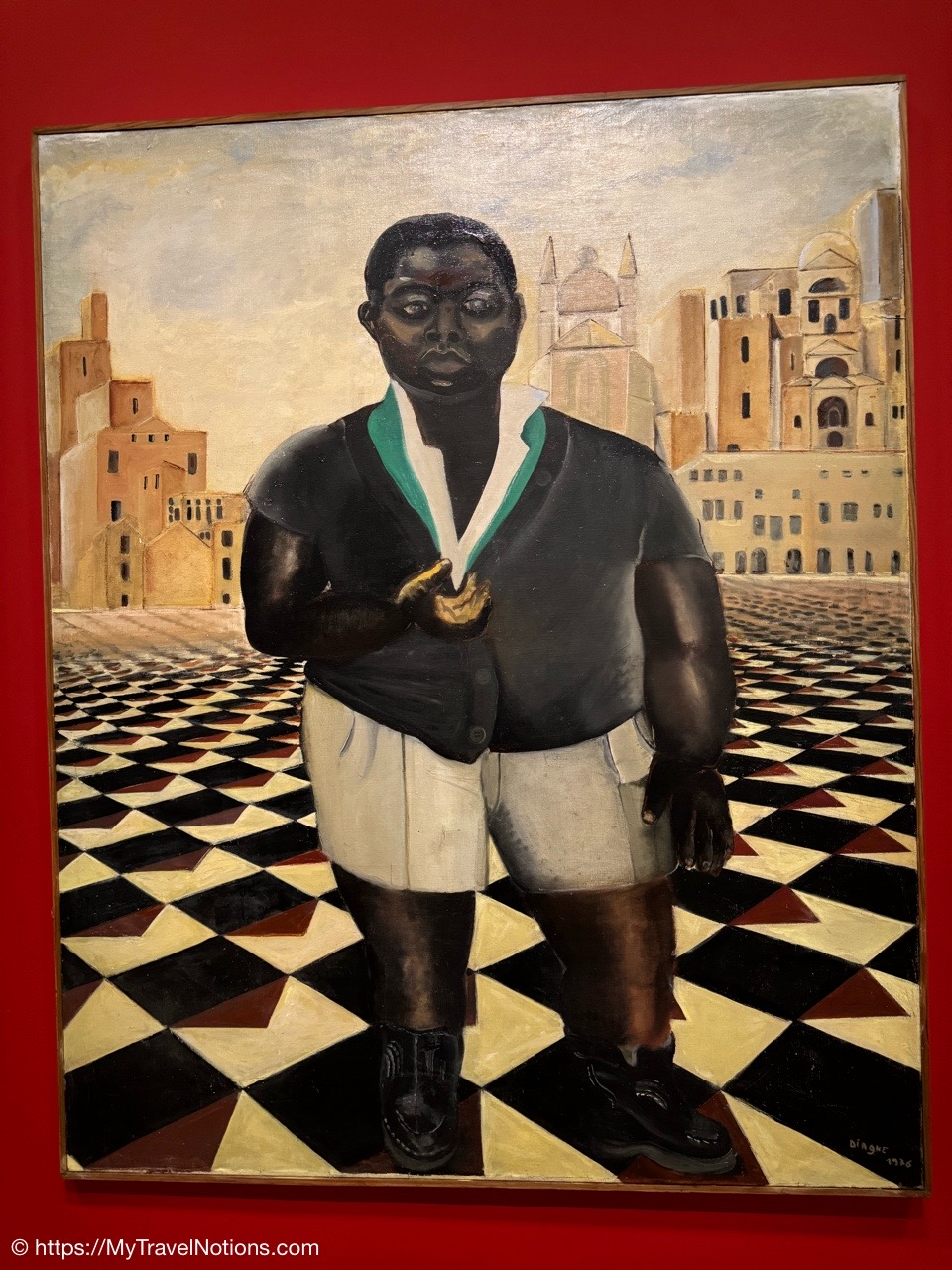
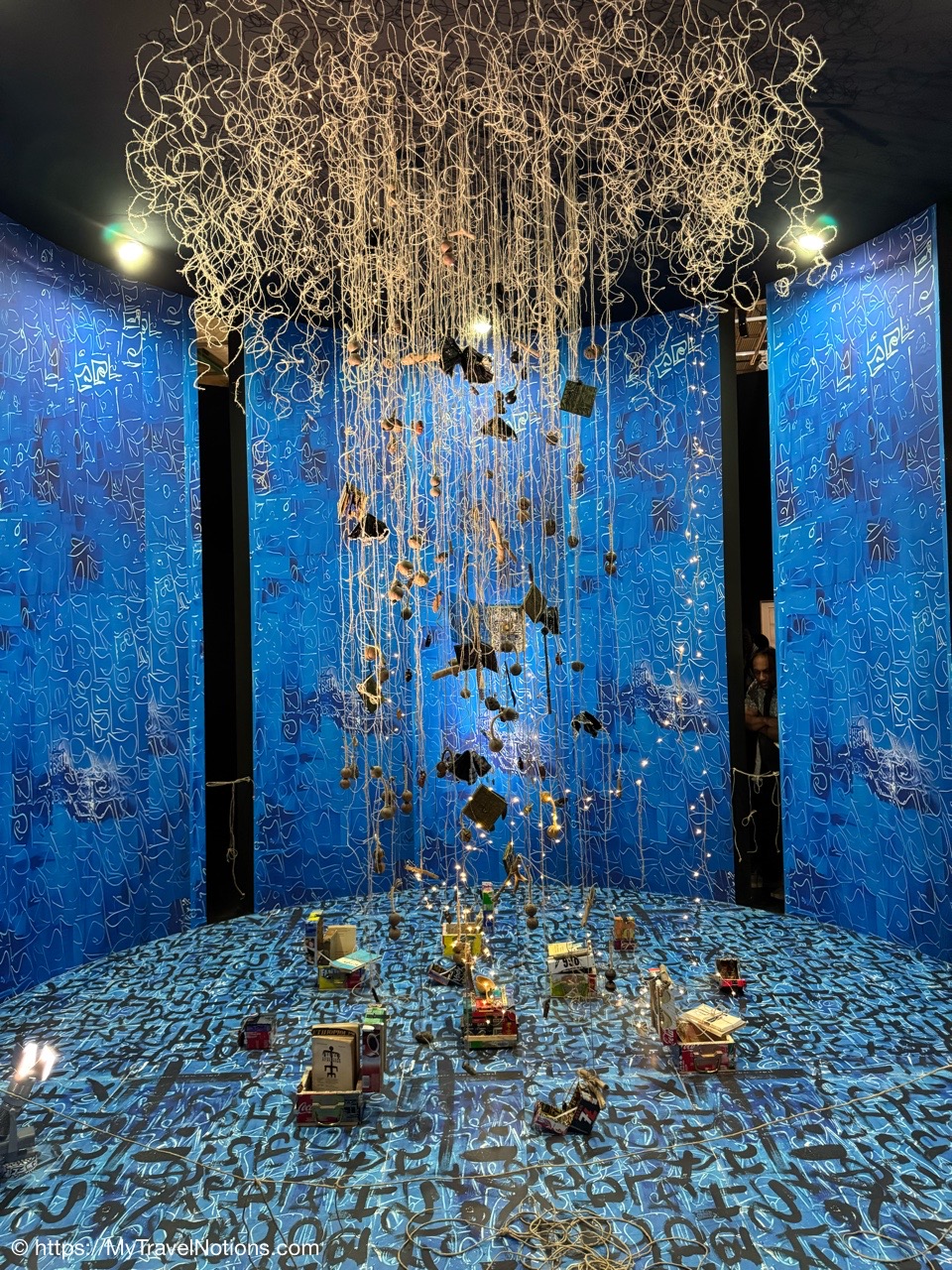
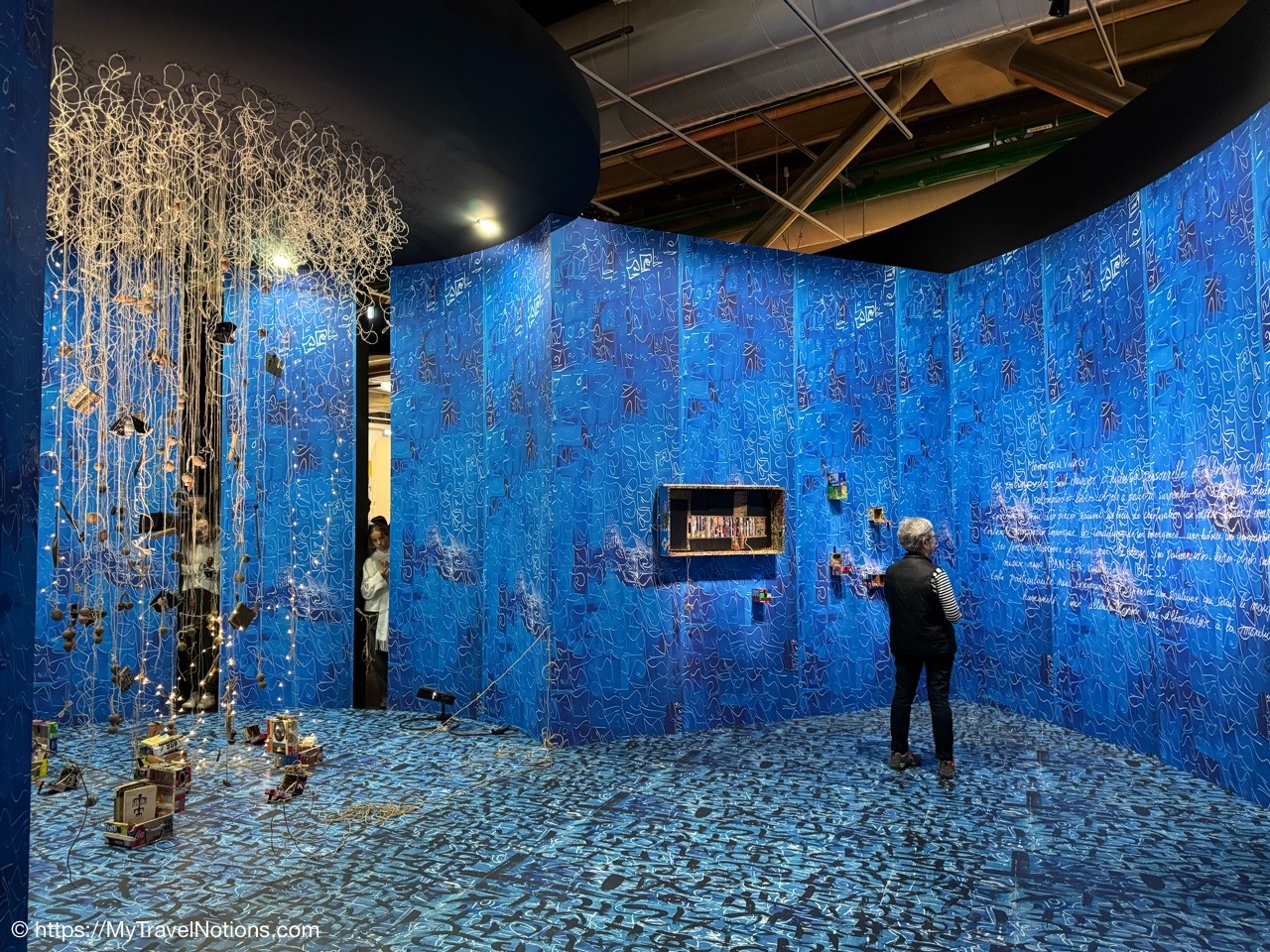
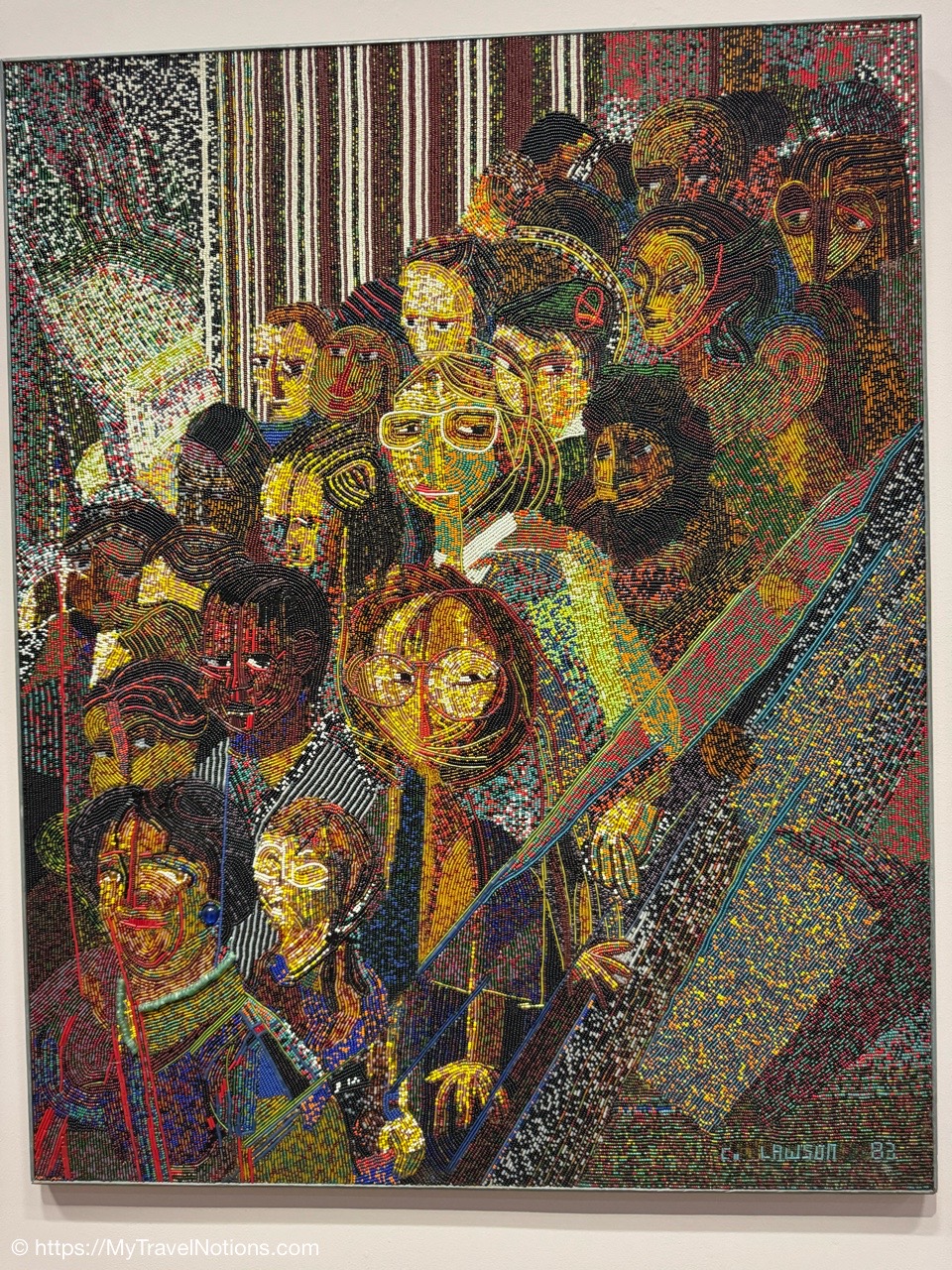
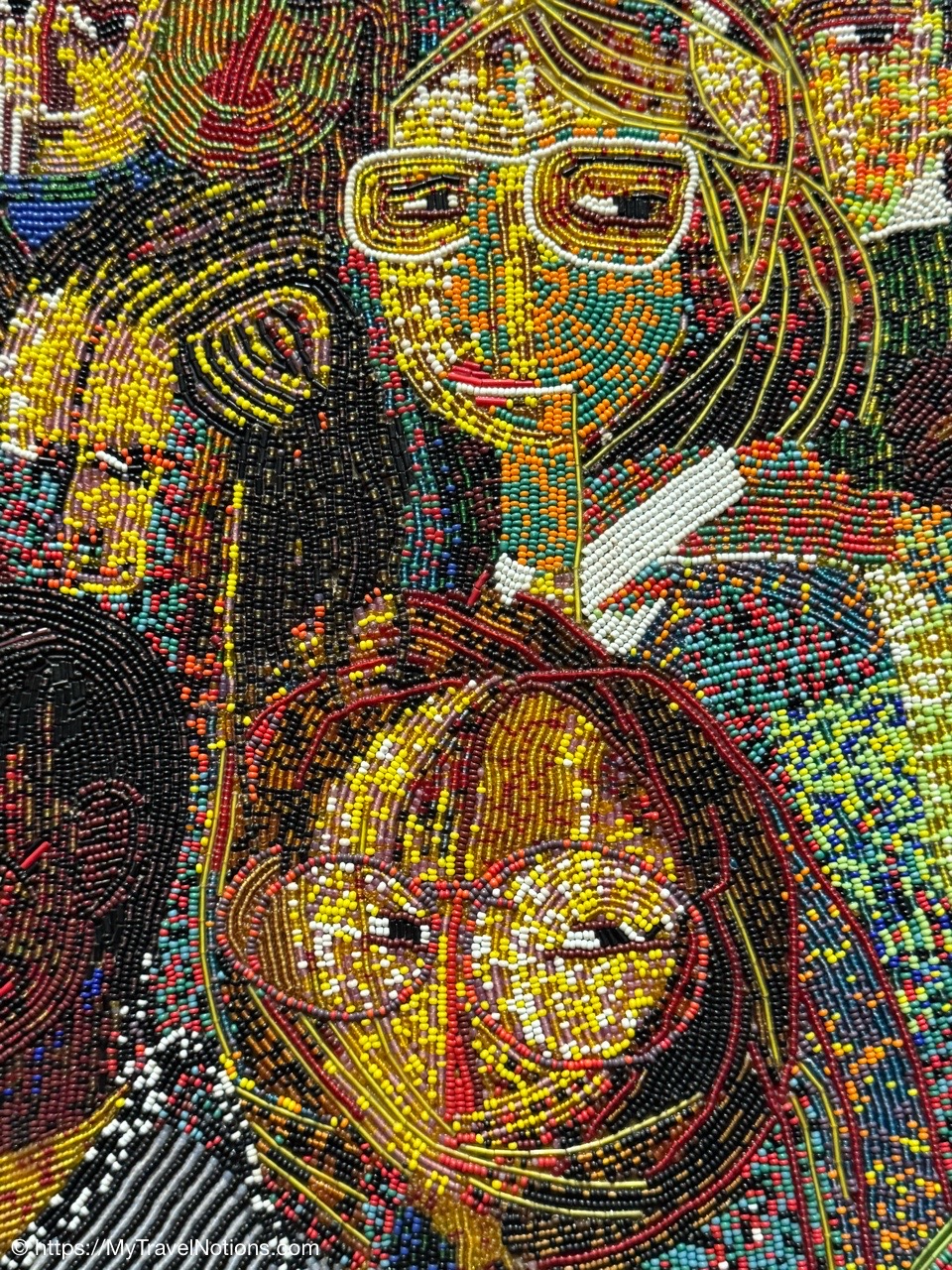
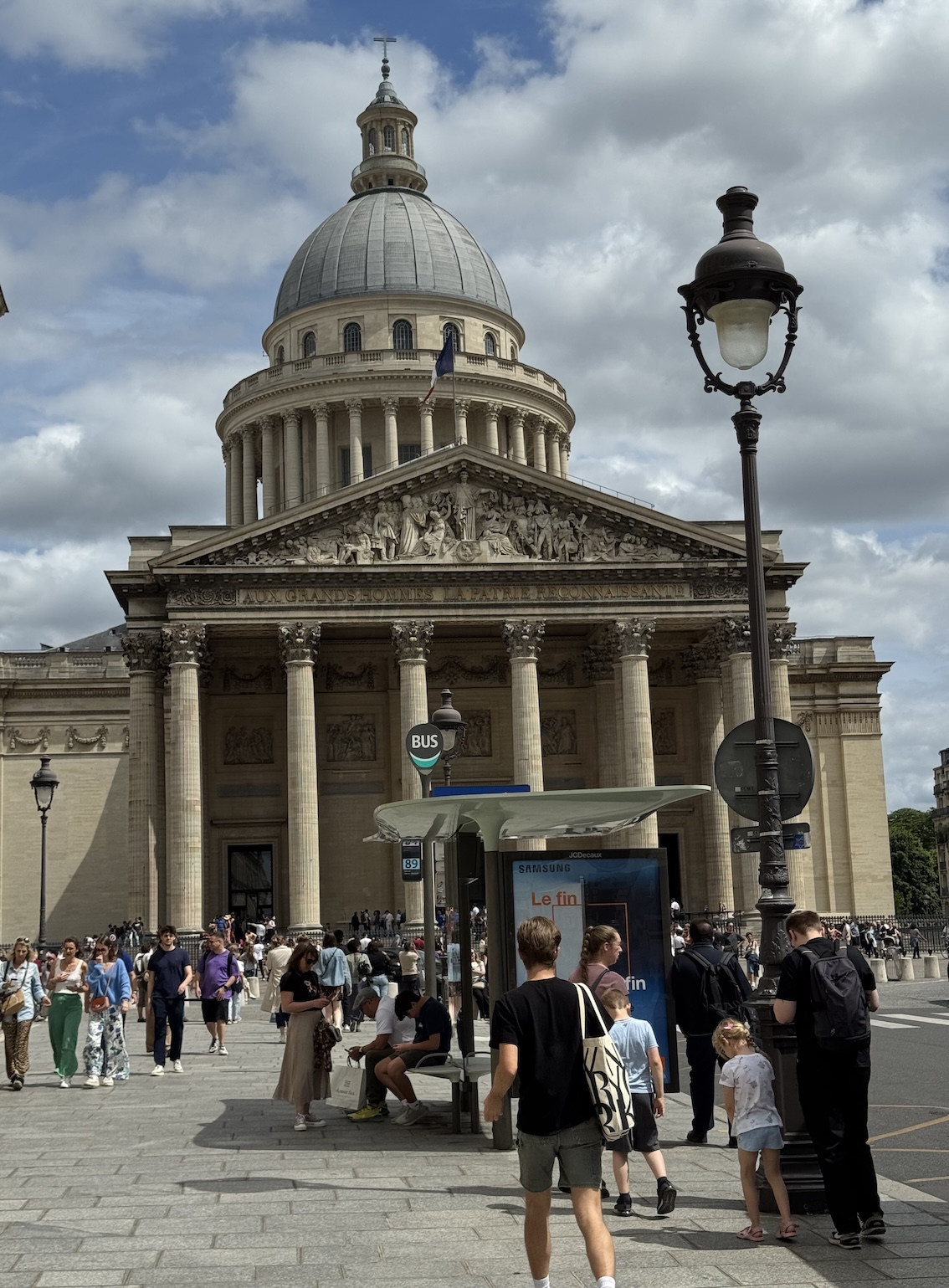
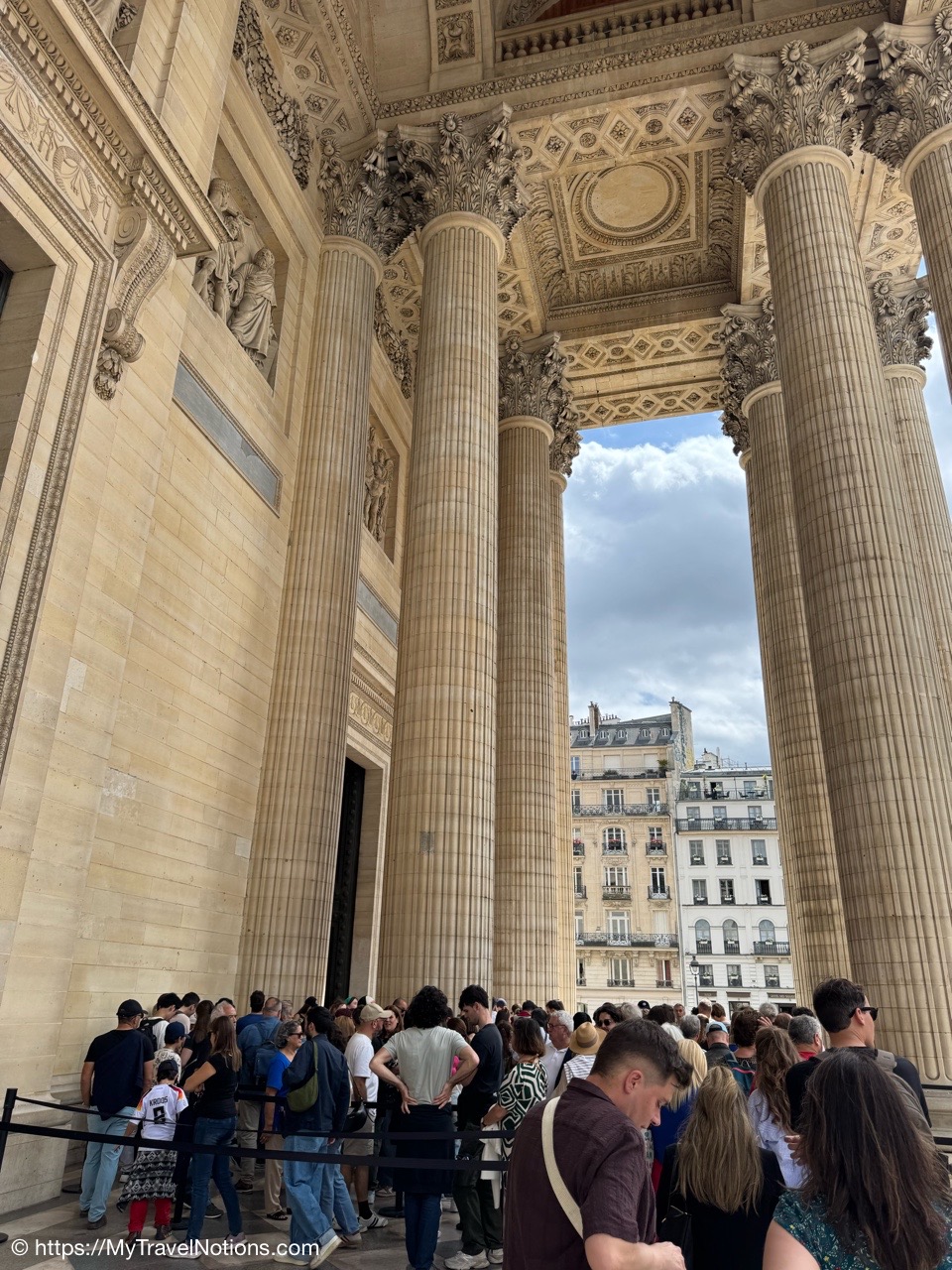
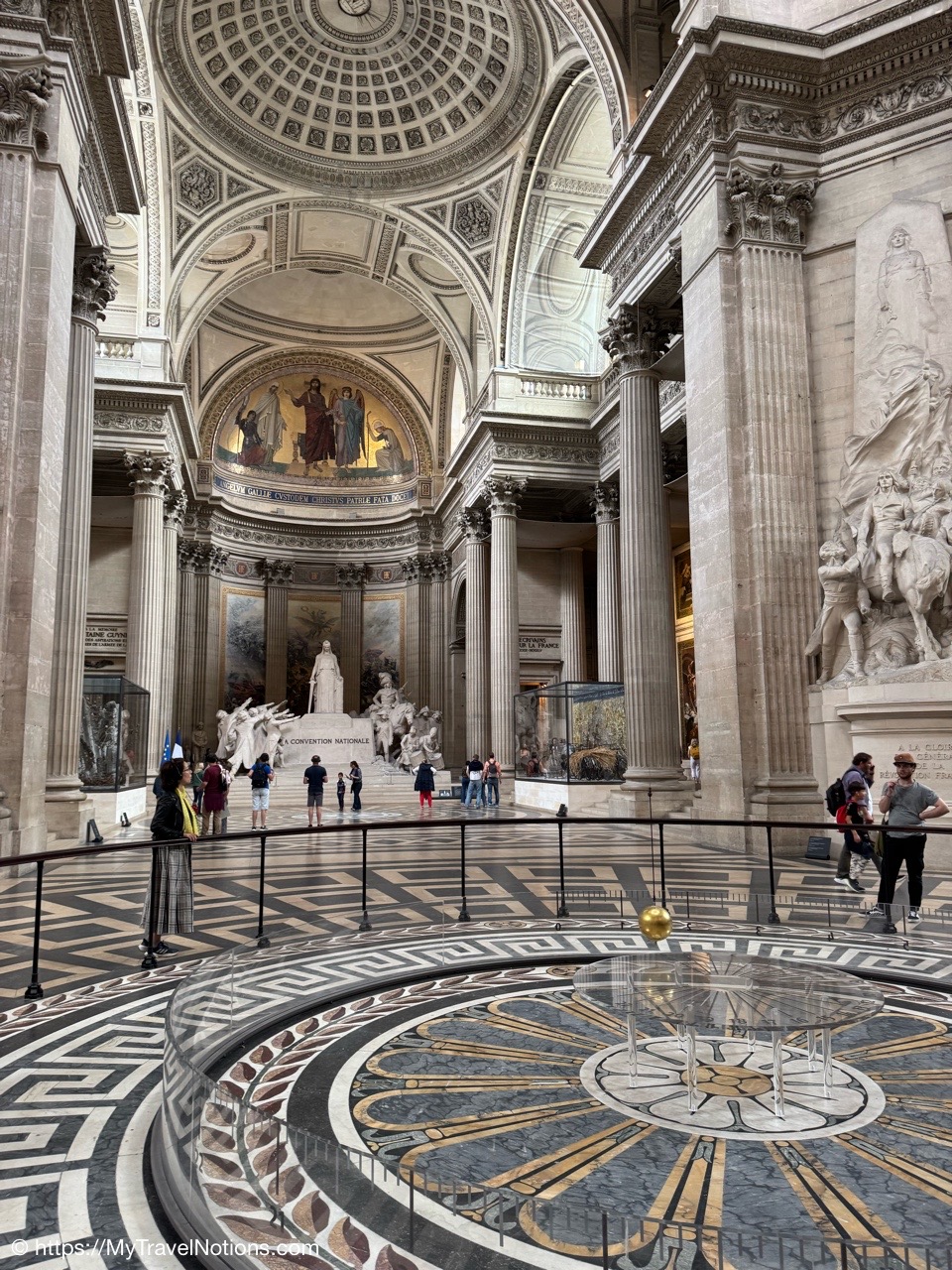
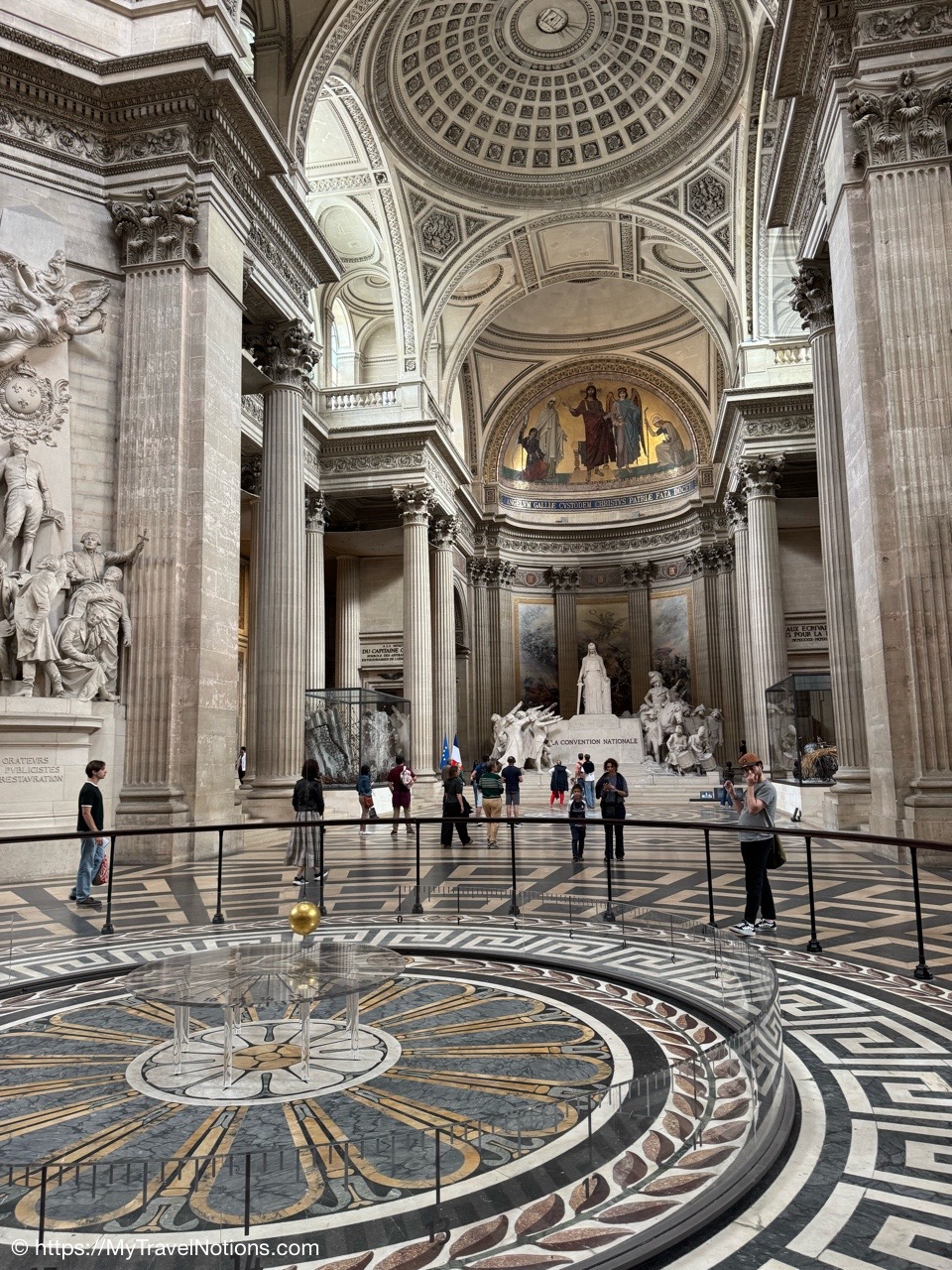
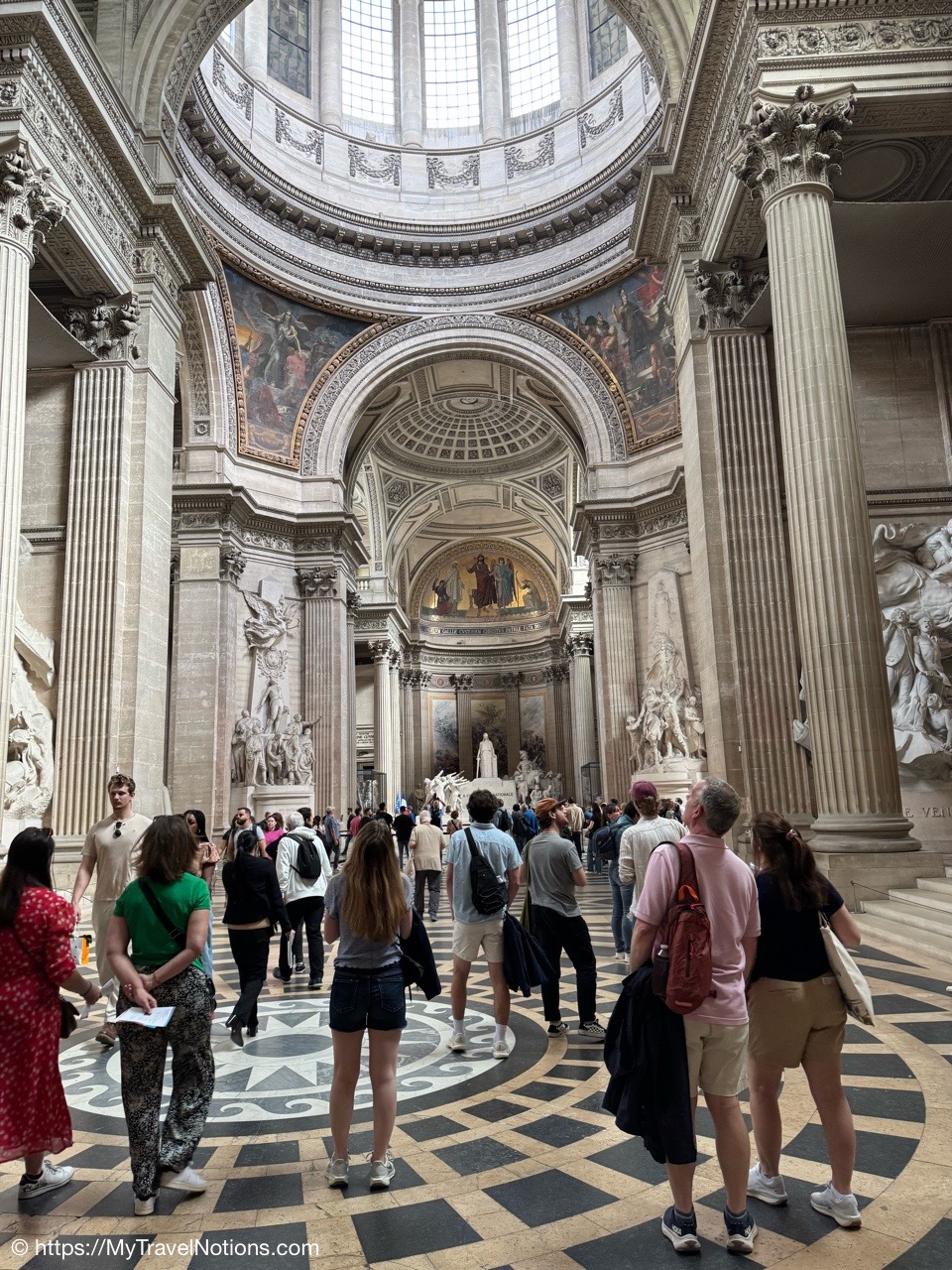
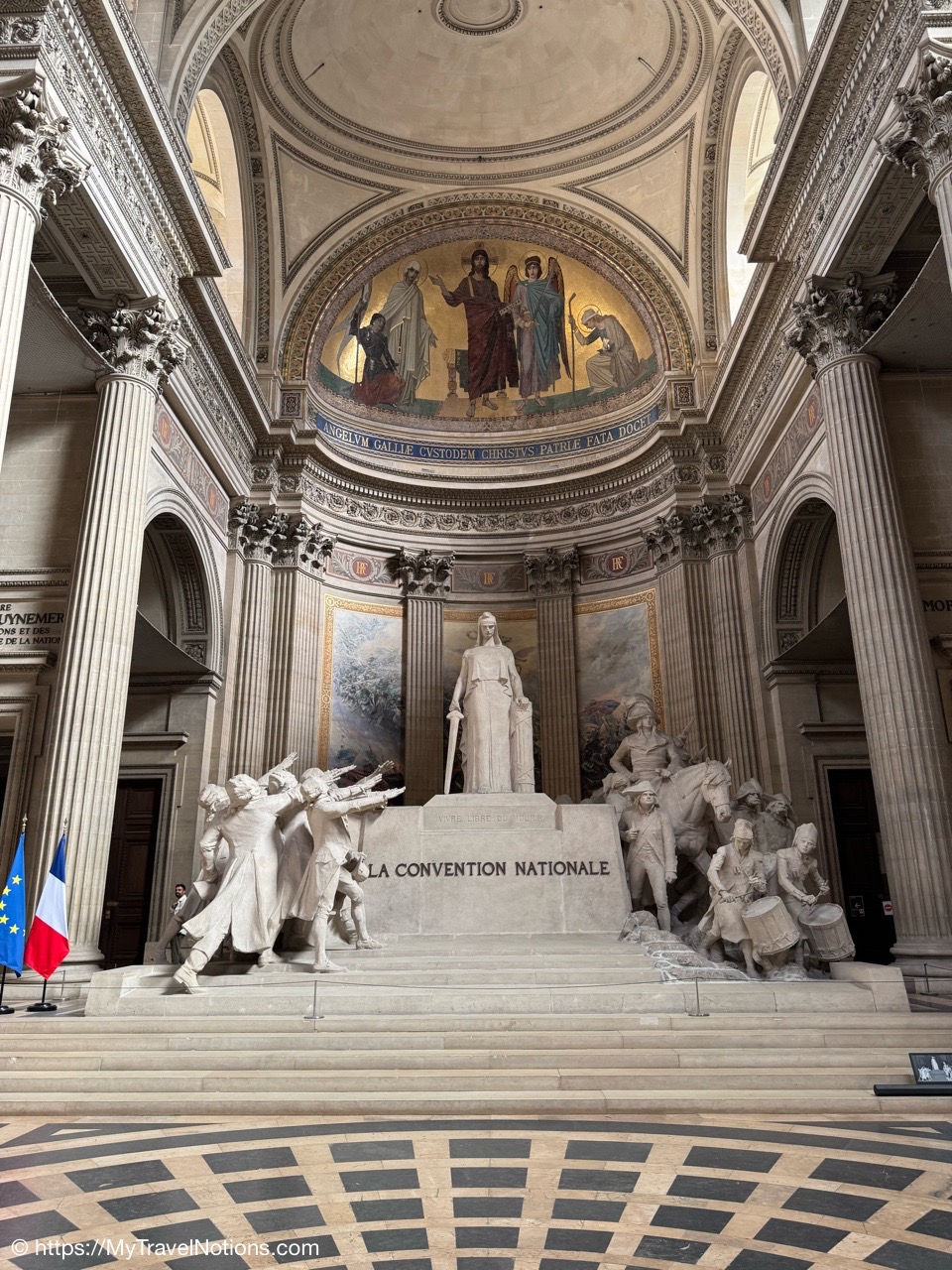
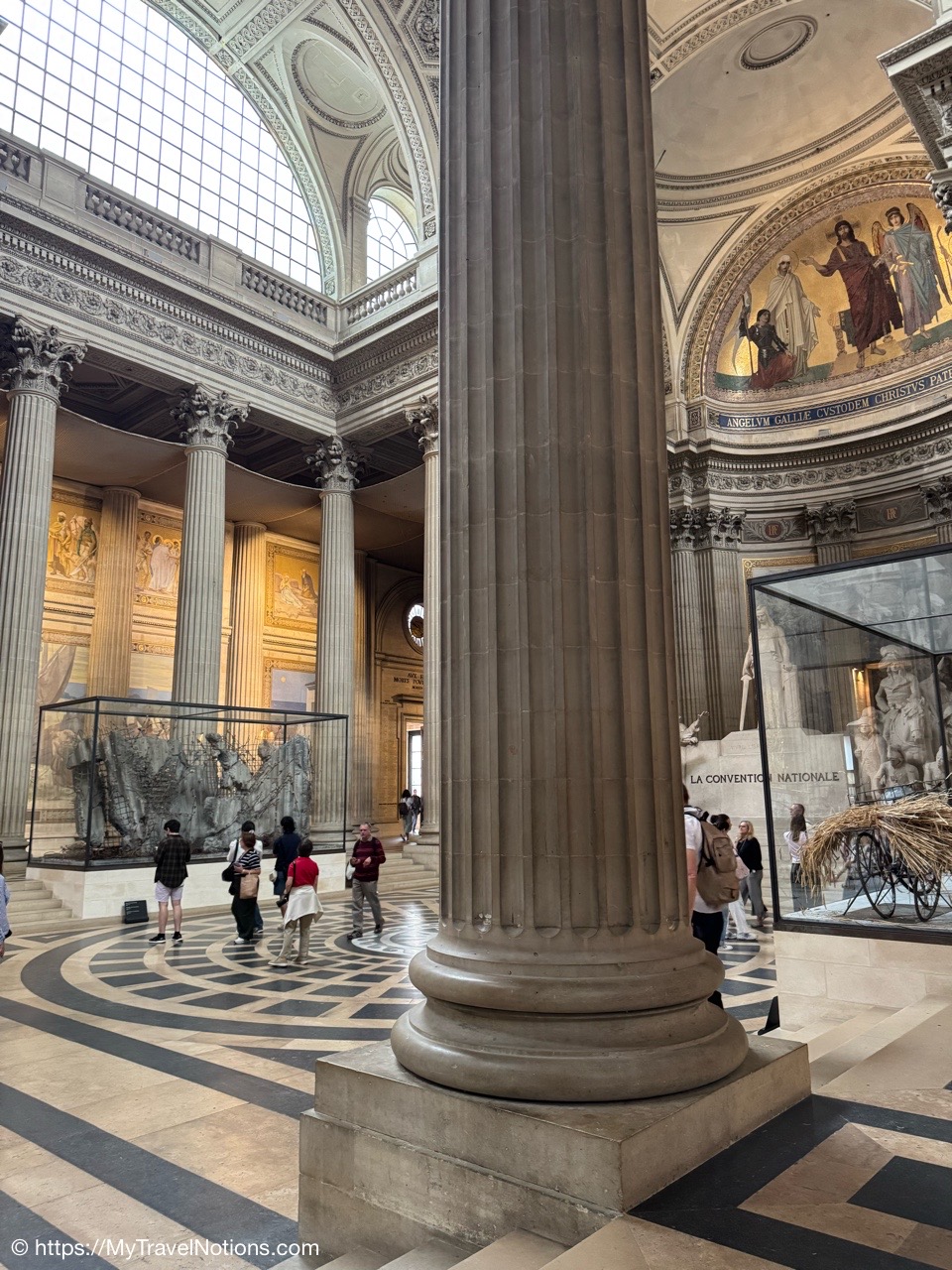
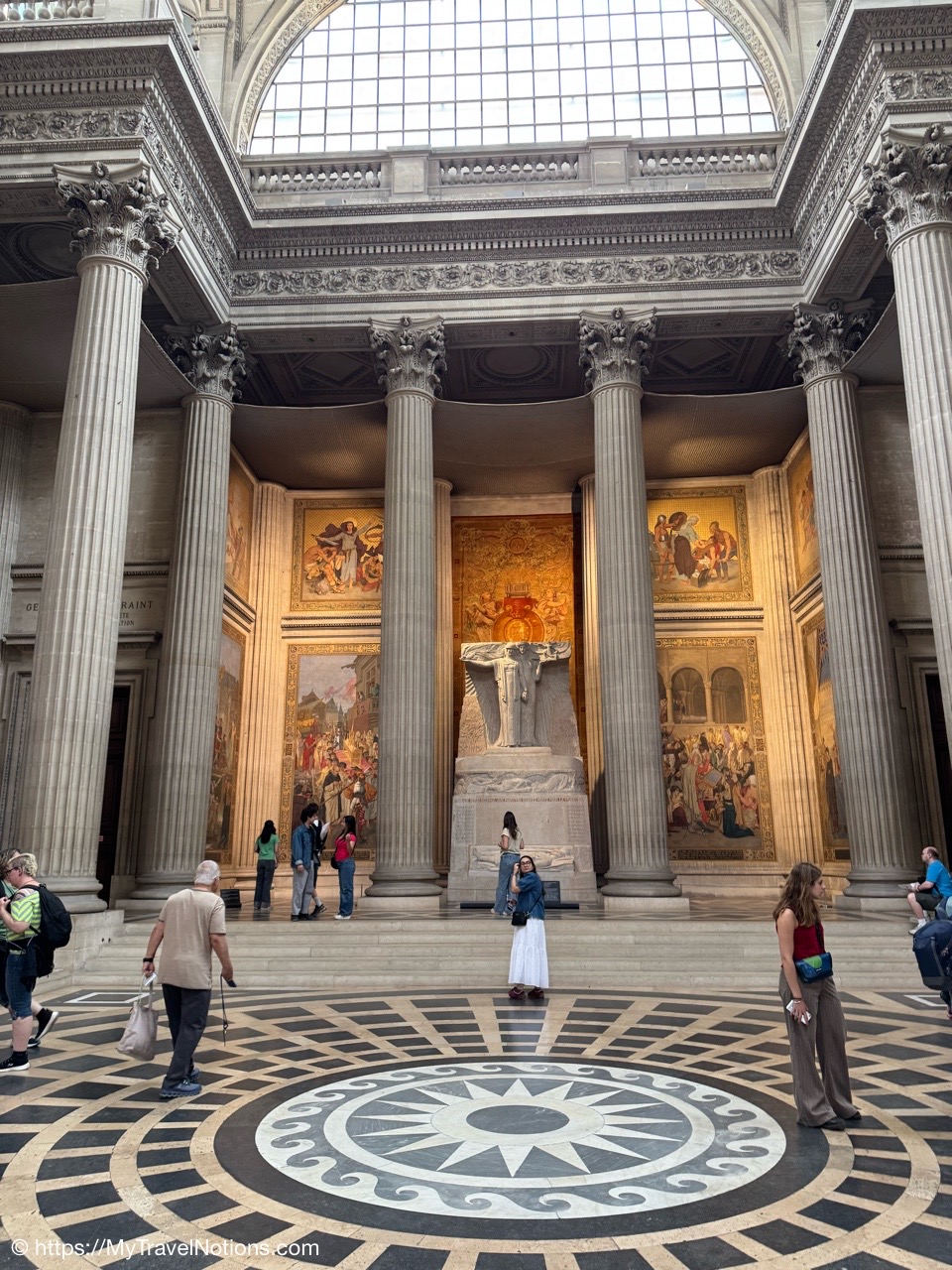
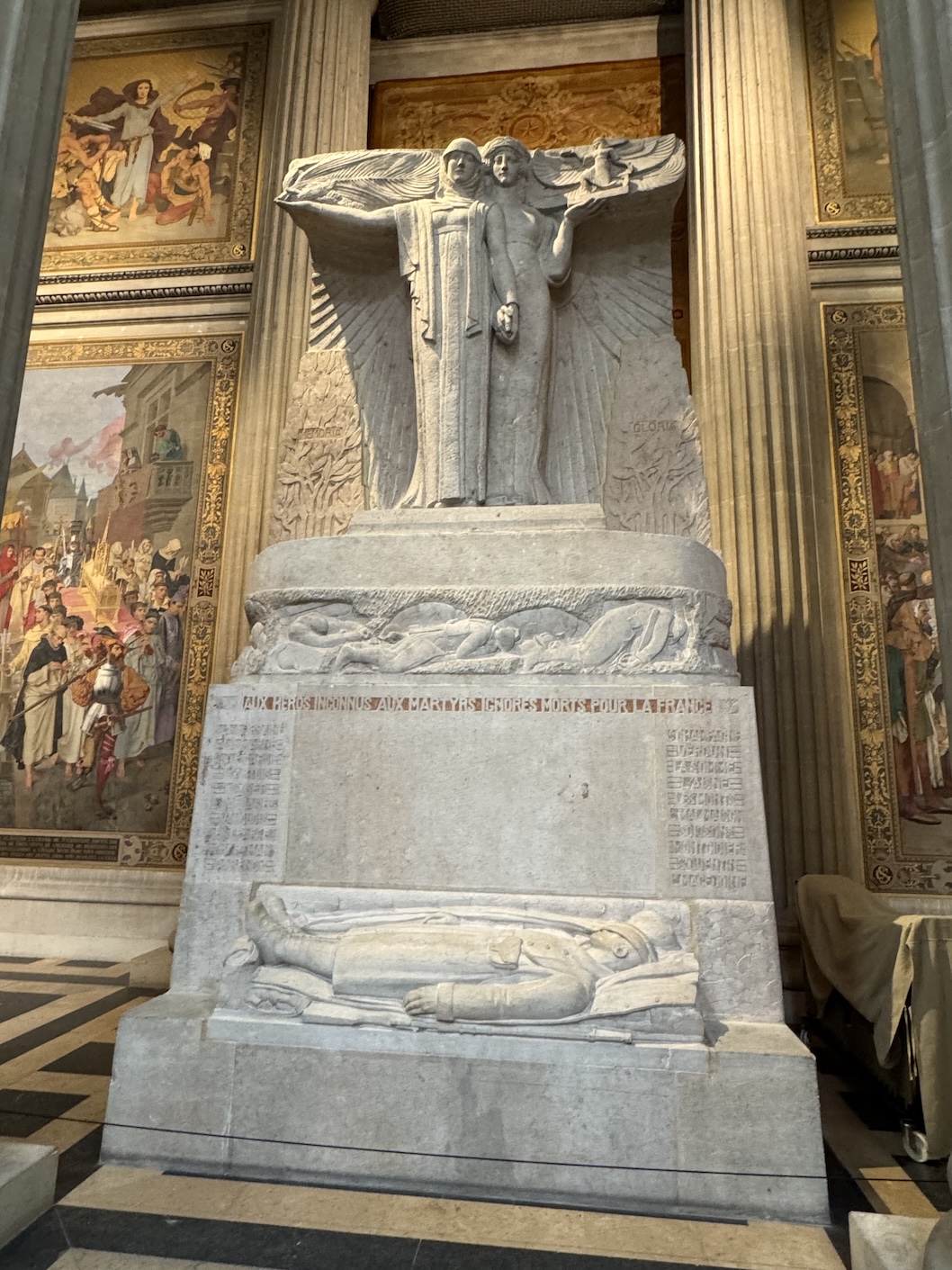
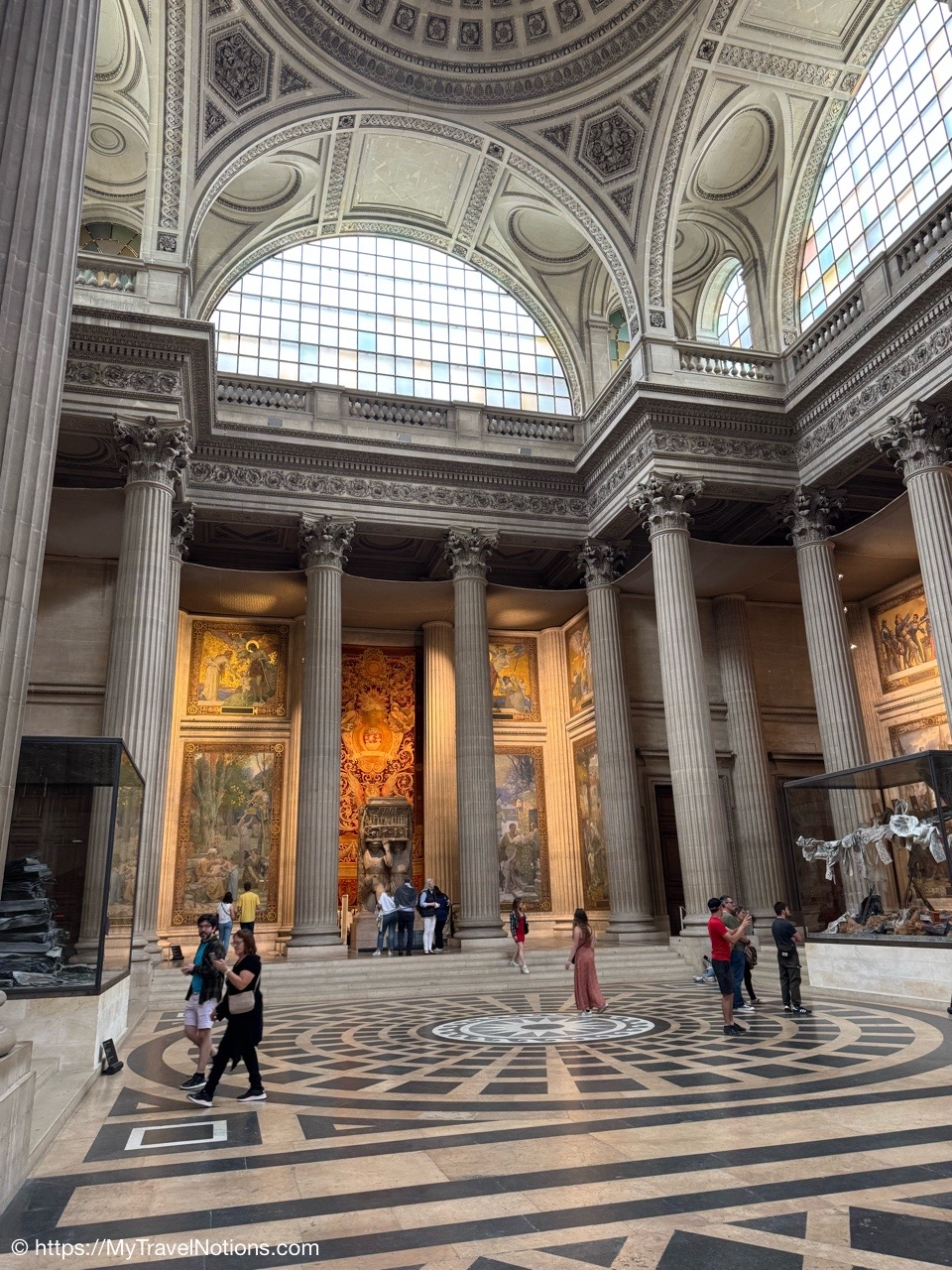
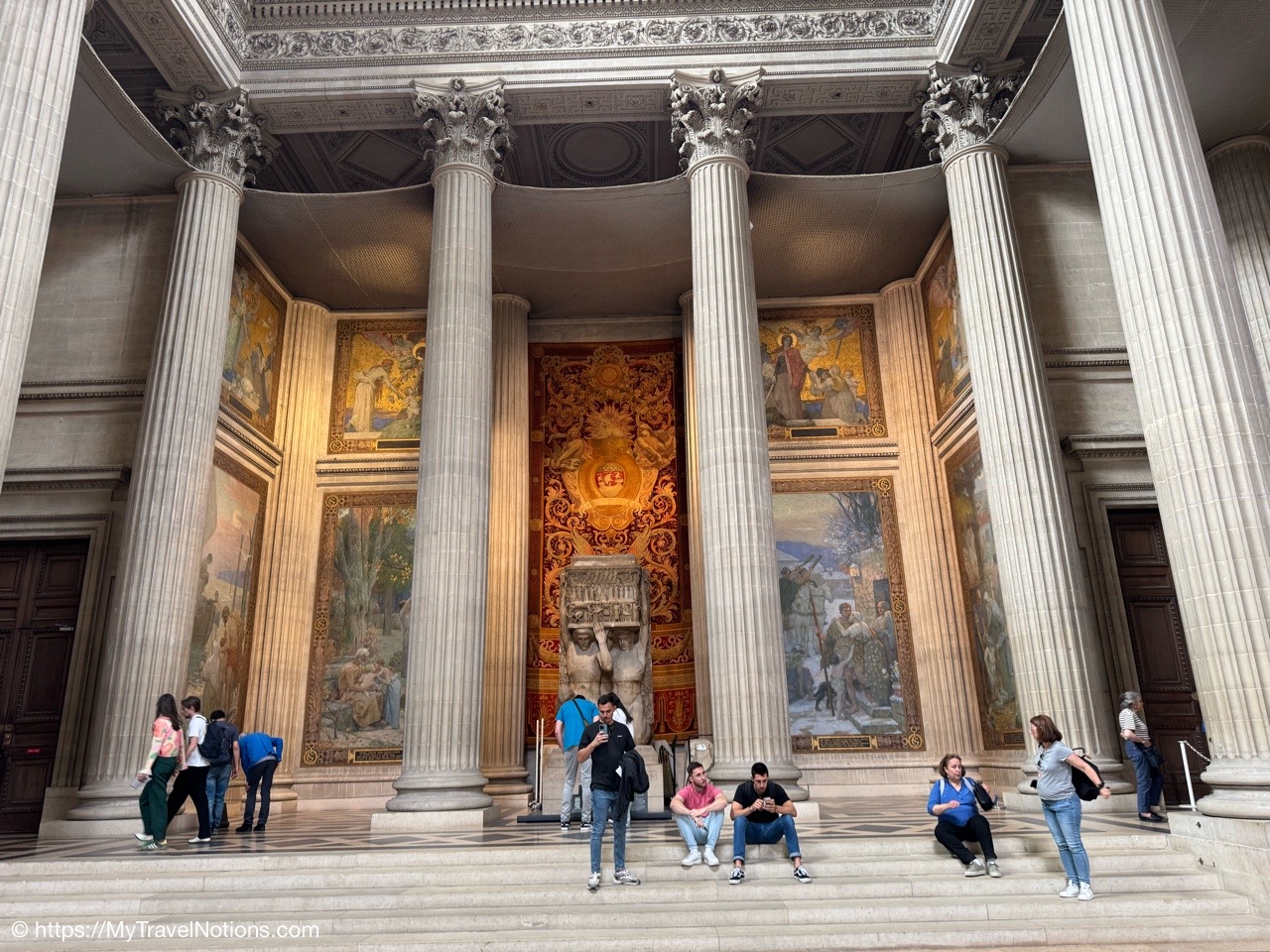
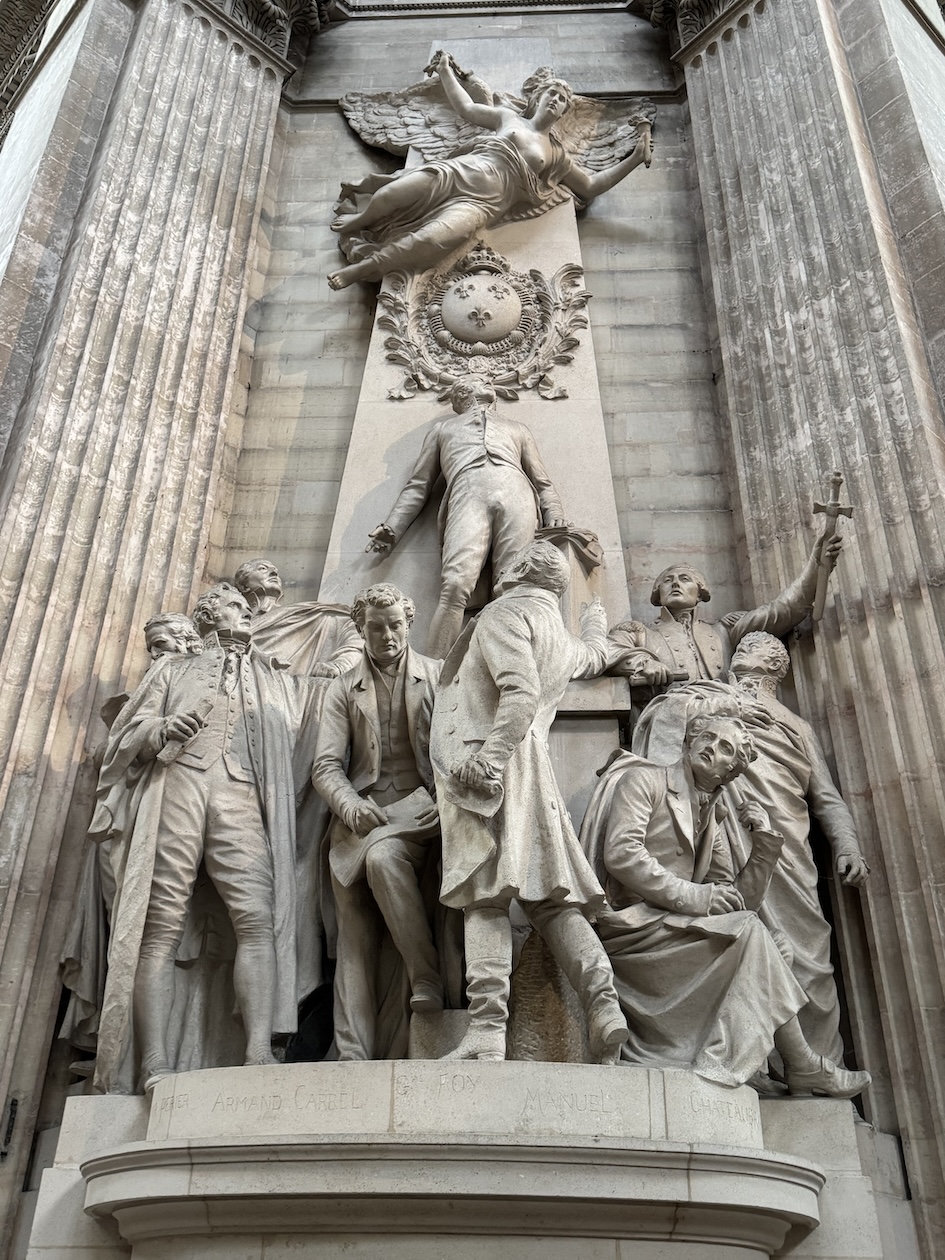
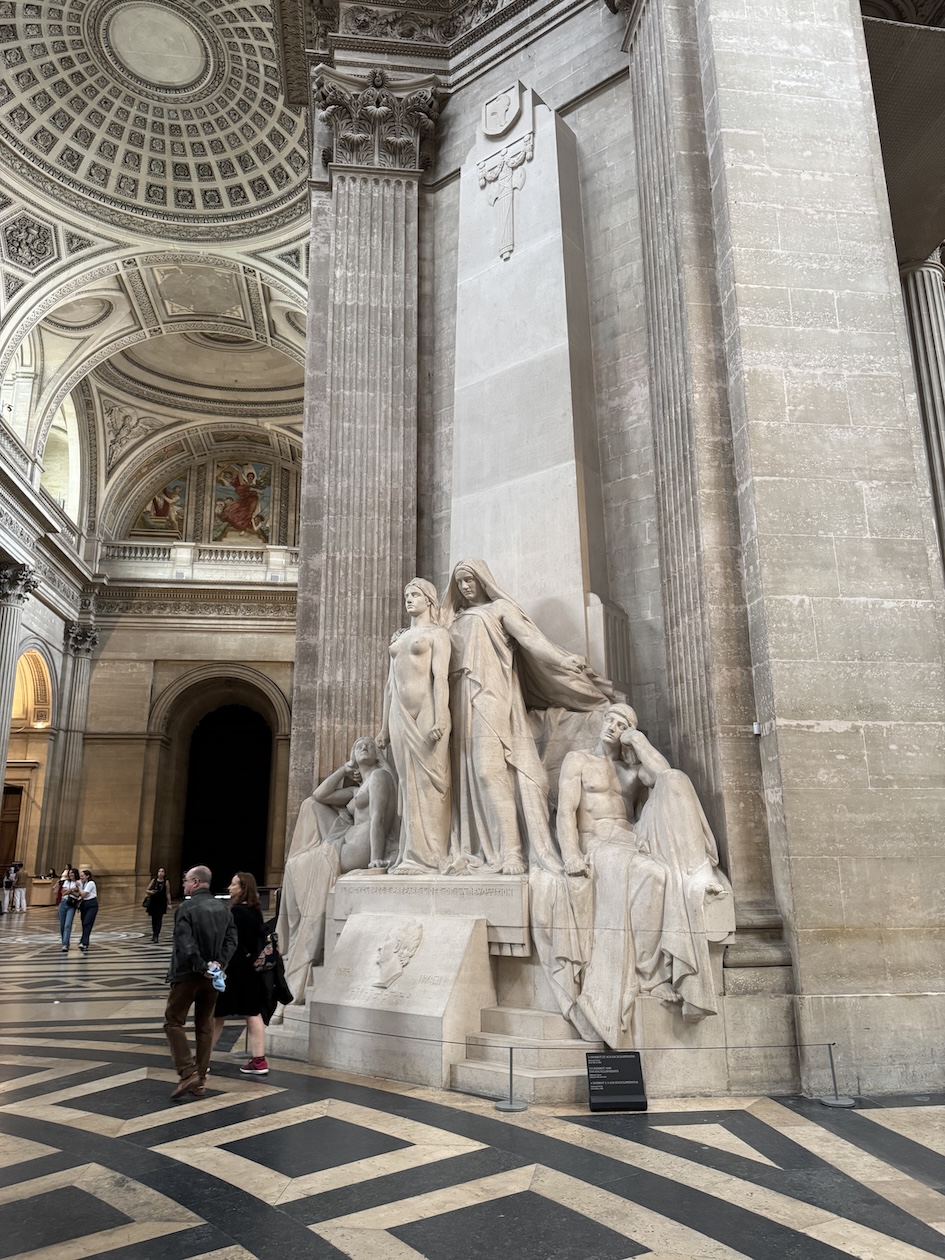
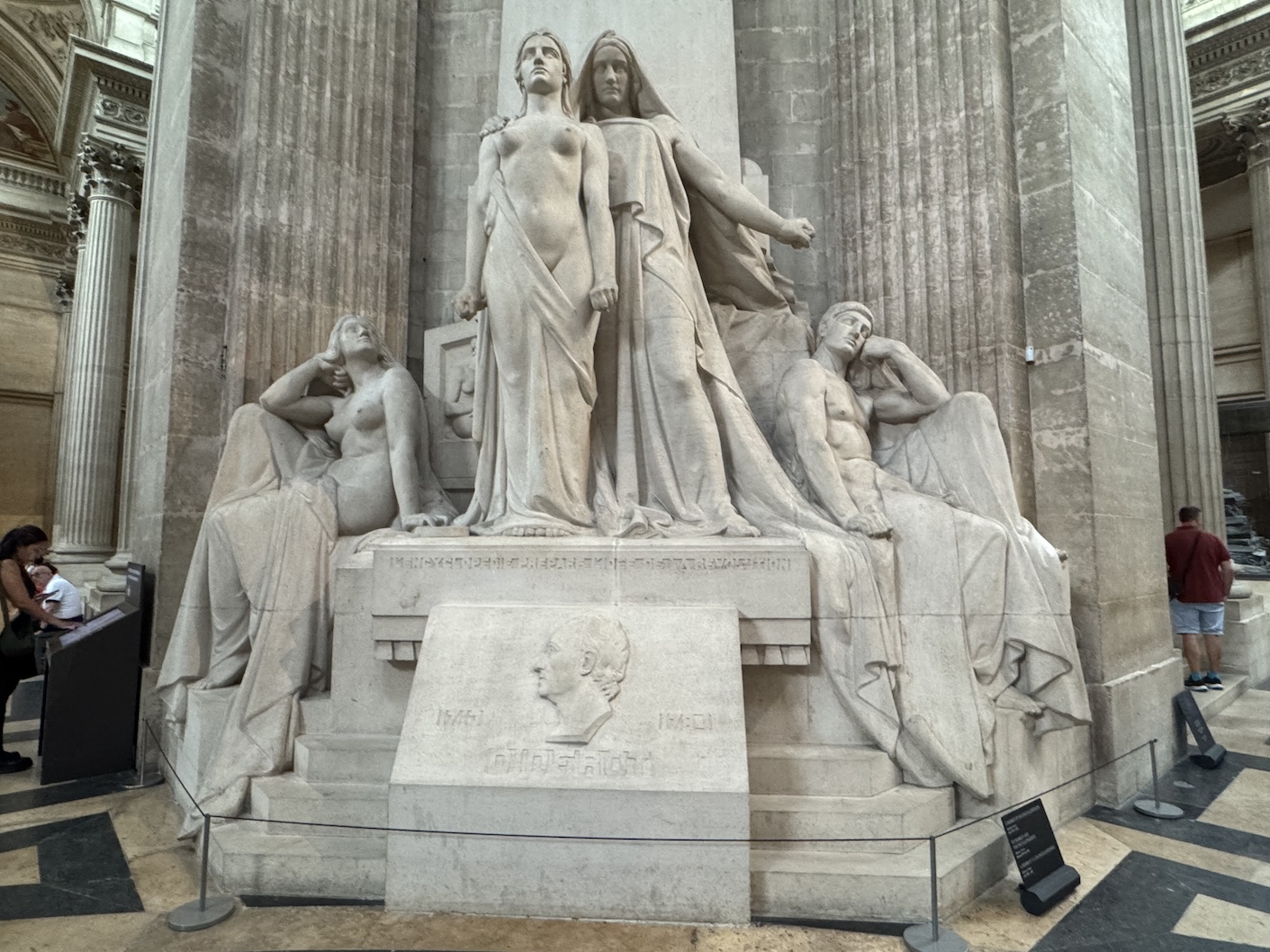
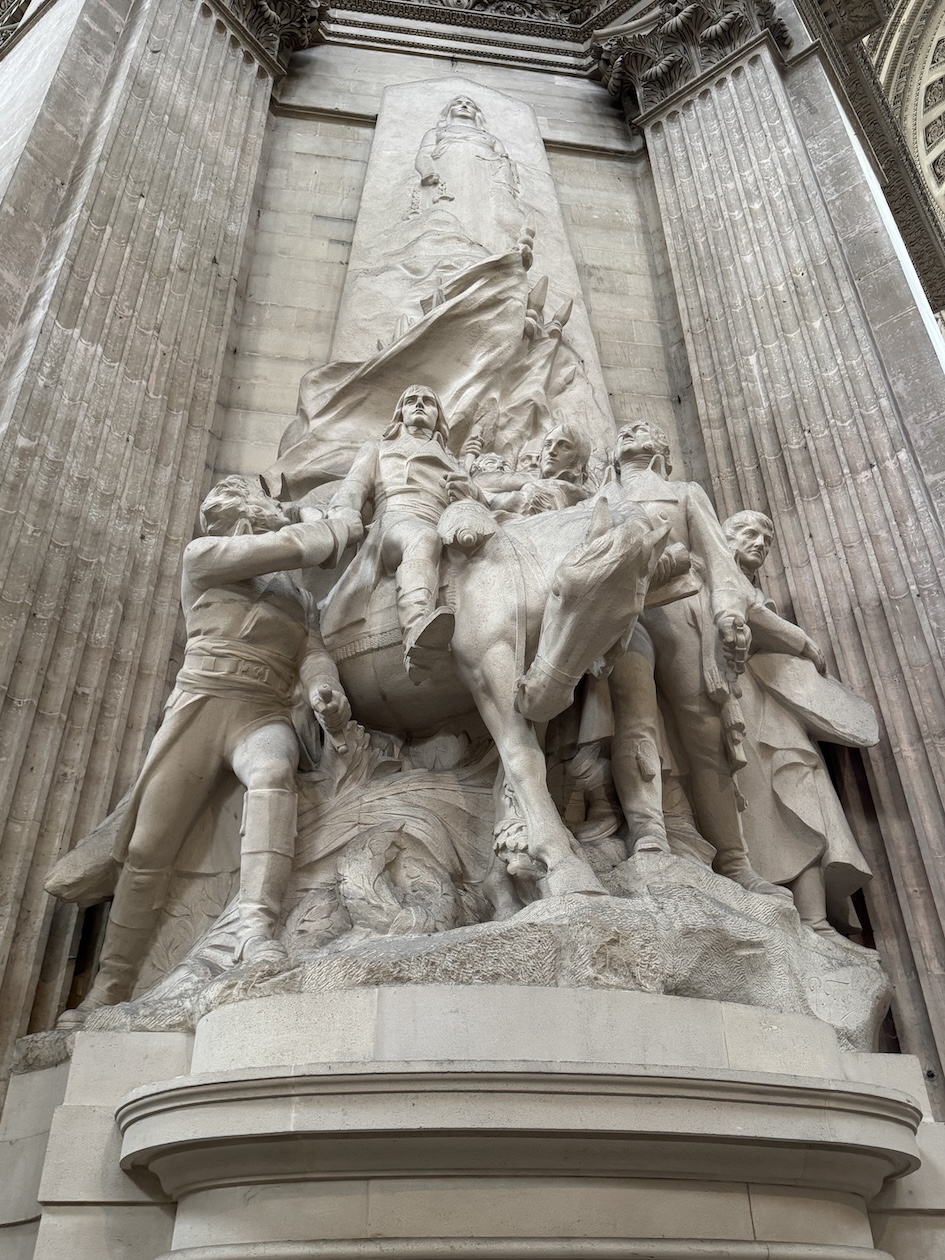
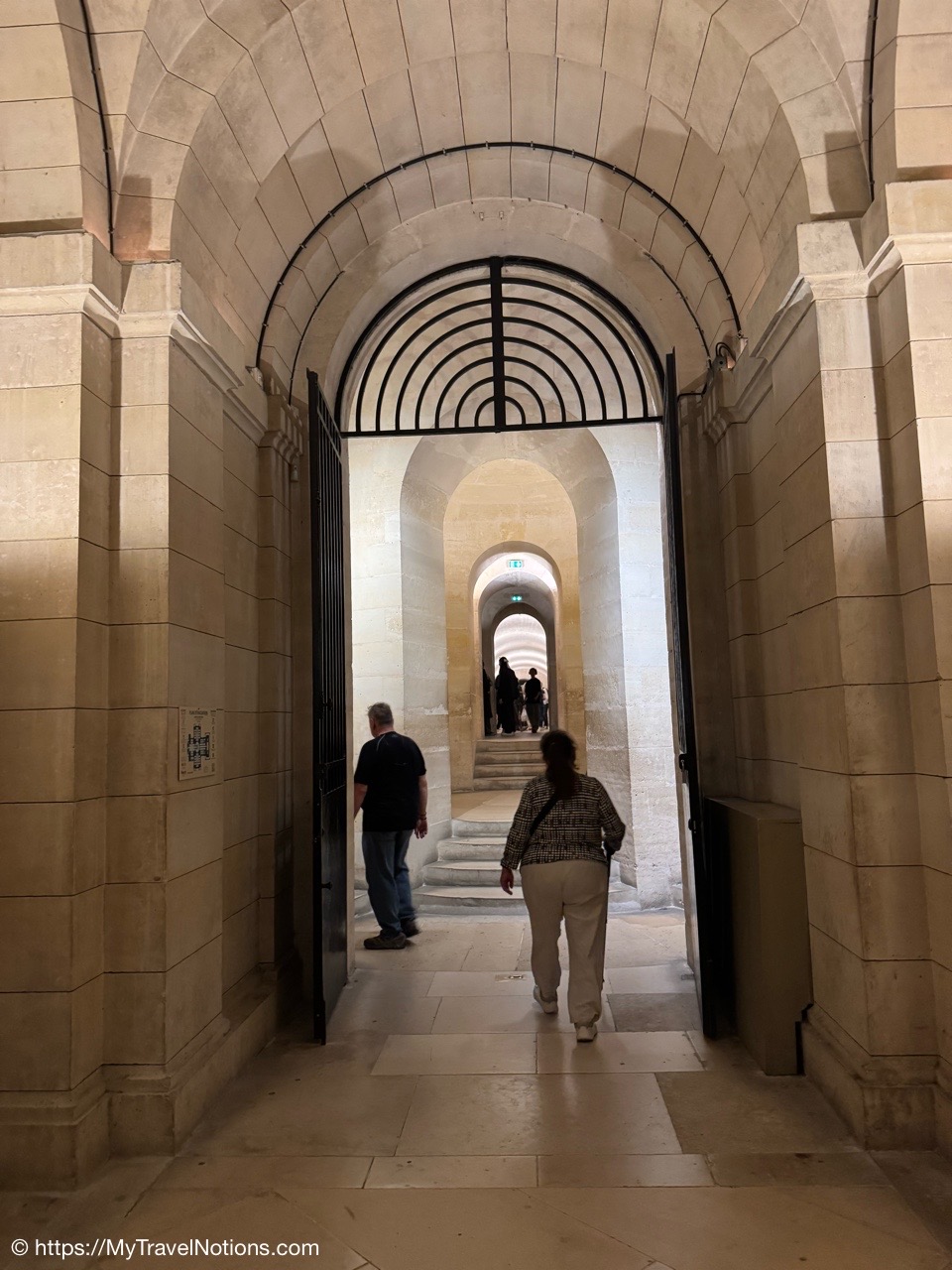
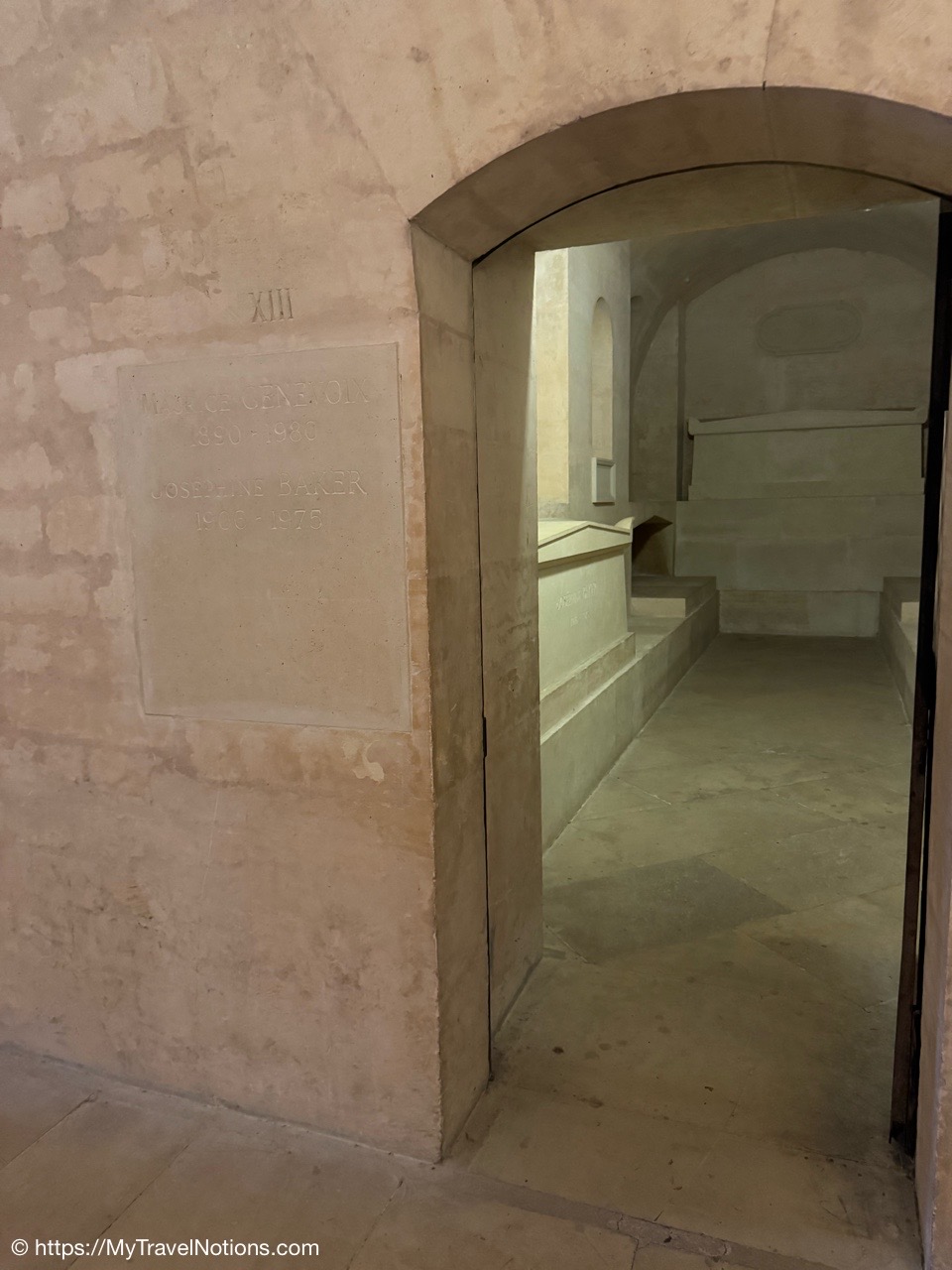
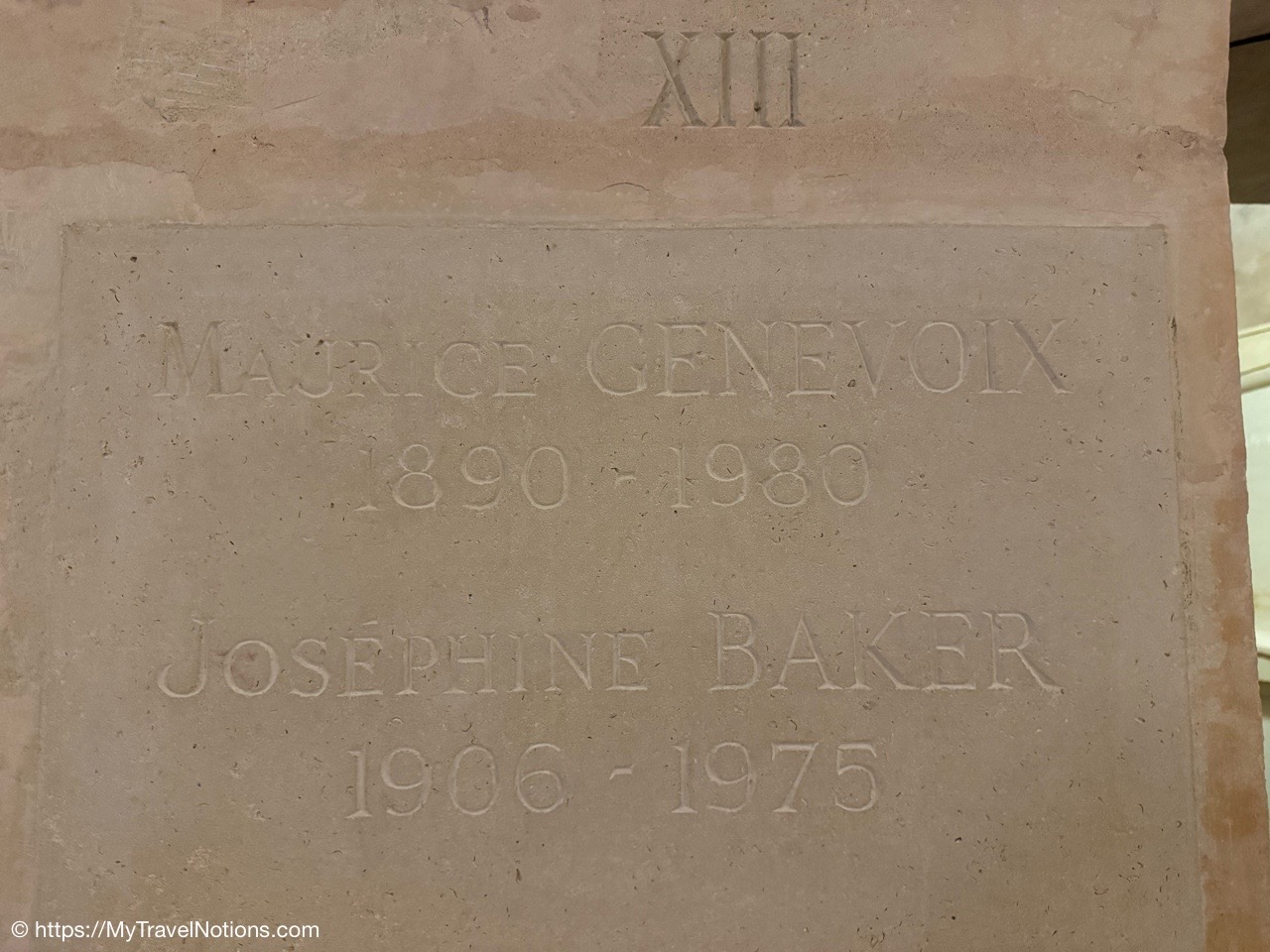
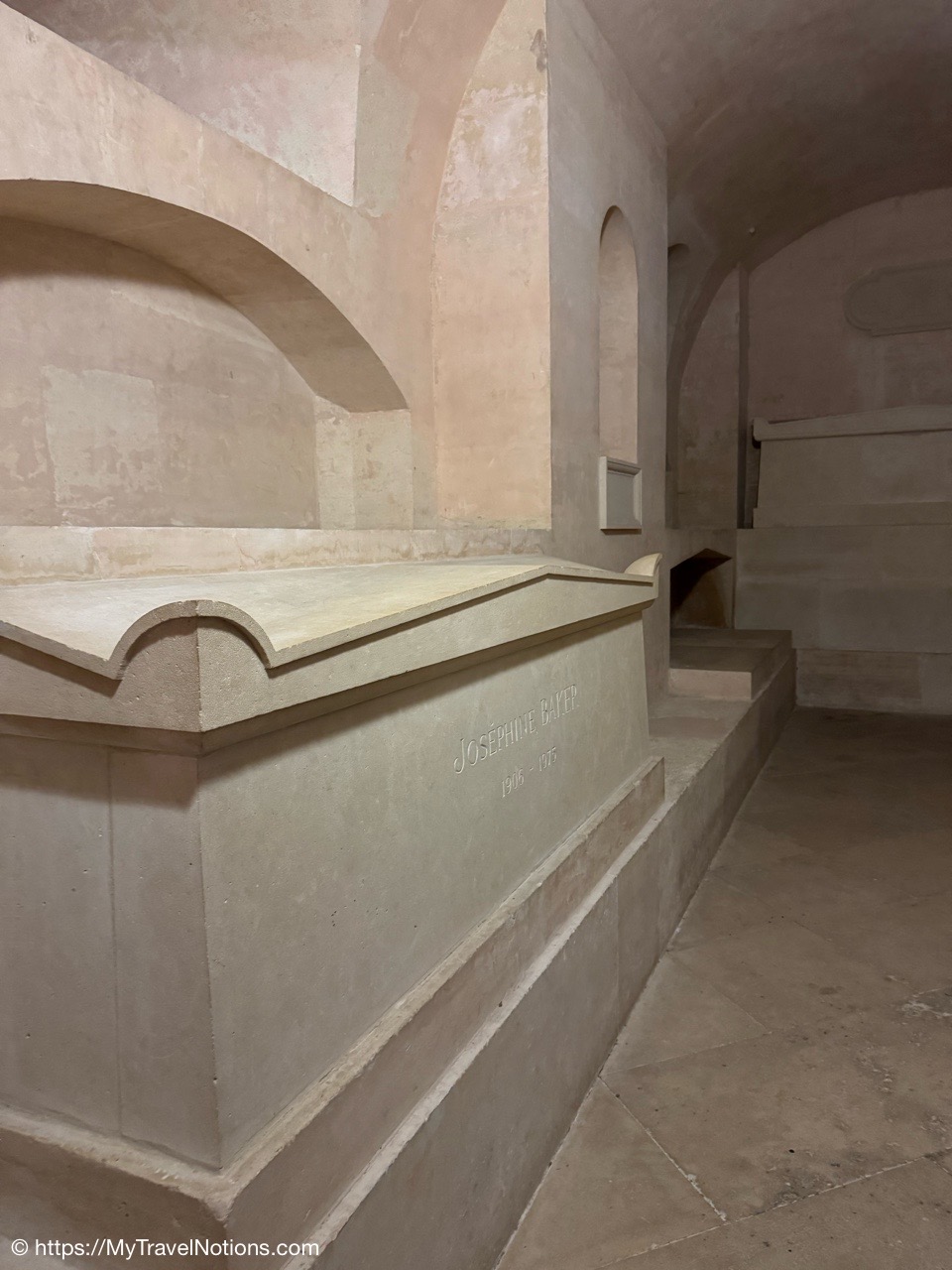
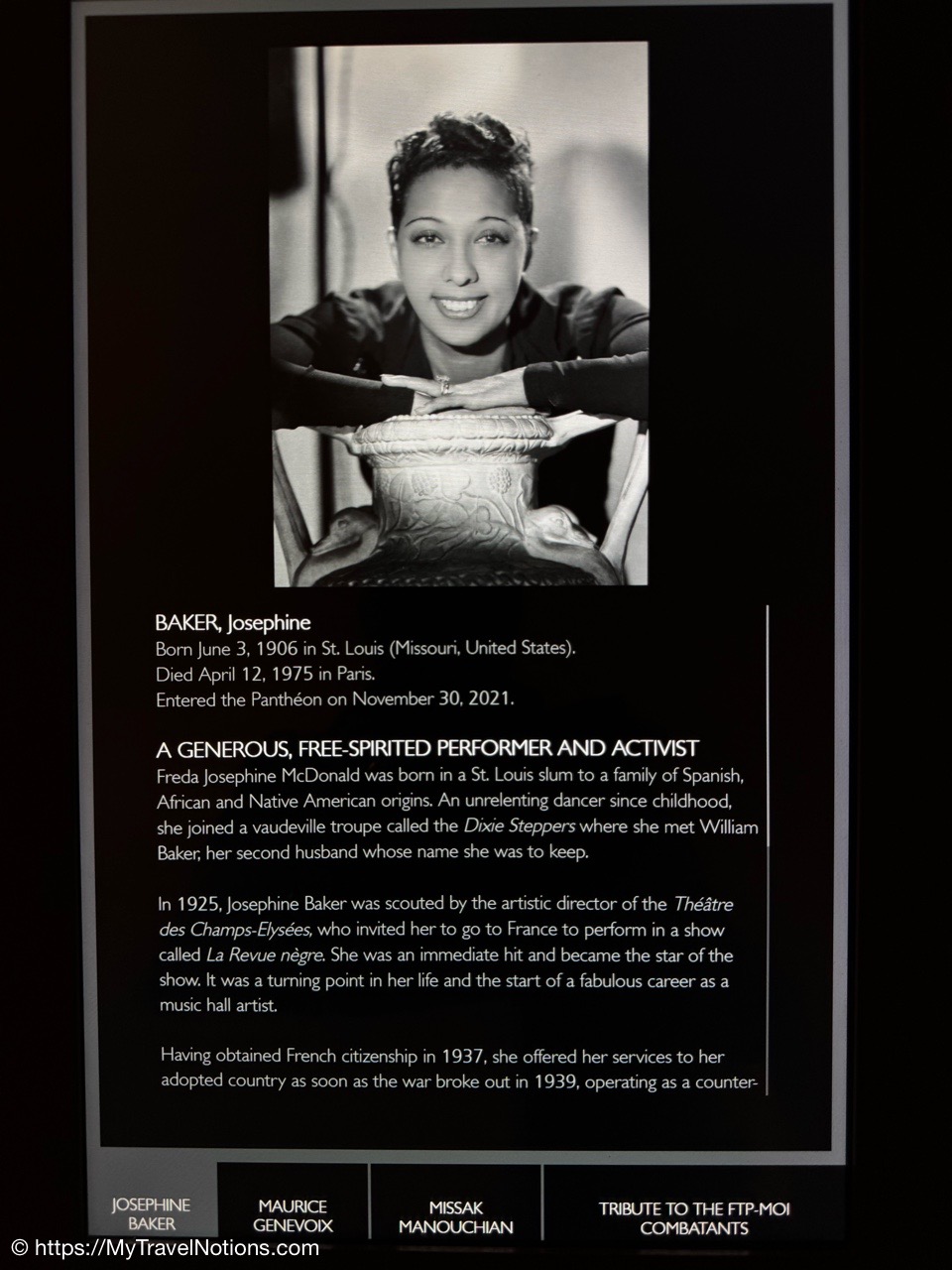
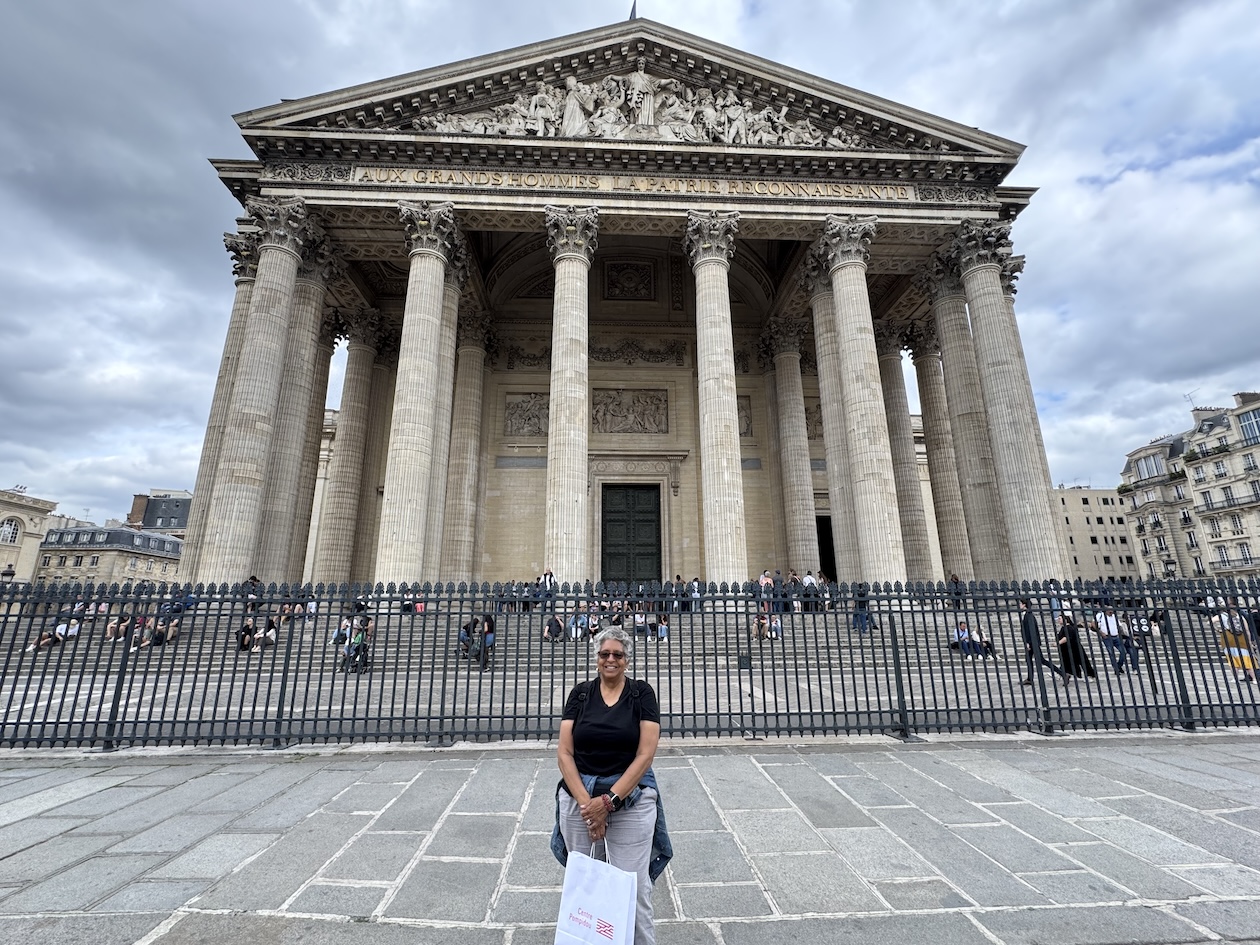
The “Black Paris, artistic circulations and anticolonial resistance, 1950-2000” exhibition explores 50 years of artistic expression in Paris, a center for education and intellectual discourse that nurtured Black consciousness. Over this period, more than 150 African, African-American and Caribbean artists developed pan-African aesthetics stemming from the Négritude movement, a literary and cultural movement in 1930s Paris started by French-speaking Black intellectuals from Africa and the Caribbean to protest French colonialism and racism. (May 29, 2025)I purchased my Paris Noir exhibit ticket online so I was literally one of the first people in line to enter the Centre Pompidou. It is known for its “inside-out” architecture, housing the National Museum of Modern Art, a public library, and a center for music research. (May 29, 2025)Inside the Centre Pompidou in Paris. (May 29, 2025)Inside the Centre Pompidou in Paris. (May 29, 2025)Taking the exterior escalators up to the “Paris Noir” exhibit on Level 6 at the Centre Pompidou in Paris which ran from March 19 to June 30, 2025 and featured the work of 150 artists of African descent. (May 29, 2025)Views of the Beaubourg area of the 4th arrondissement from the Centre Pompidou in Paris. (May 29, 2025)Getting in a selfie on Level 6 at the Centre Pompidou in Paris where I’m heading to the “Paris Noir” exhibit. (May 29, 2025)Views of the Beaubourg area of the 4th arrondissement from the Centre Pompidou in Paris. (May 29, 2025)From Paris, the “Paris Noir” exhibition at the Centre Pompidou follows the history of African independence movements, the civil rights in the United States, and the fight for equality in France at the end of the 20th century. While social history informs many of the works, the exhibition also highlights individual artistic explorations that share aesthetic affinities. (May 29, 2025)Inside a gallery of the “Paris Noir” exhibition at the Centre Pompidou in Paris. (May 29, 2025)The art of Romare Bearden along a gallery wall at the “Paris Noir” exhibition at the Centre Pompidou in Paris. “Inspired by his time in Paris in 1950, Romare Bearden’s Paris Blues/Jazz series consists of approximately 20 collages, conceived as the pages of an oversized book in response to the 1961 film of the same name. In this series, Bearden explores the connections between visual art, jazz, and the urban landscapes of Paris, Harlem, and New Orleans, while celebrating the emancipatory creativity of Black musicians like Duke Ellington and Louis Armstrong. His compositions, influenced by Matisse and Picassc, merge African American and European avant-garde traditions to visually capture the spirit of jazz.“ (May 29, 2025)“Being in Paris” by Romare Bearden (1911-1988) from 1981 at the “Paris Noir” exhibition at the Centre Pompidou in Paris. (May 29, 2025)The exhibit space inside the Centre Pompidou of the “Paris Noir”, Black Paris, exhibit. (May 29, 2025)“The West Indies Woman” by Raymond Honorien (1920-1988 from 1956 at the “Paris Noir” exhibition at the Centre Pompidou in Paris. “Born in Paris in 1920, Raymond Honorien was inspired by the writings of Joseph Zobel as were fellow artists Marcel Mystille and Germain Tiquant. Togather, they founded Martinique’s first artistic movement: Atelier 45. Although their work reflects influences from Paul Gauguin and Paul Cézanne, their painting broke free from European cultural heritage, rejecting West Indian exoticism or “doudouism” to reveal a true representation of Martinique. In 1956, Honorien painted “The West Indies Woman” in her environment, embodying pride and autonomy with warm tones and bold, direct brushstrokes, depicting a new reality.” (May 29, 2025)“Self-portrait” by Gerard Sekoto (1913-1993) from 1947 at the “Paris Noir” exhibition at the Centre Pompidou in Paris. “This three-quarter-view, bust-length self-portrait, painted in a modernist style a few days before Gerard Sekoto’s arrival in London in 1947, stands as an act of self-affirmation. Bold color contrasts and the artist’s probing gaze draw the viewer in, conveying a subtle unease about the future. As a South African political exile, Sekoto faced harsh living conditions upon settling into Paris. Despite being unable to go back home, he kept depicting the daily lives of Black communities in South African townships, transforming these scenes into a dynamic realm of esthetic exploration.” (May 29, 2025)“Scene from the Voodoo festival in Dahomey” undated by Wilson Tiberio (1920-2005). (May 29, 2025)“Aimé Césaire’s Discourse on Colonialism” from 1950 at the “Paris Noir” exhibition at the Centre Pompidou in Paris. This was followed by the first Congress of Black Writers and Artists at La Sorbonne (1956), fueled the rise of pan-African and anticolonial thought in France. “As the fight for independence in Africa intersects with the Civil Rights Movement in the United States, decolonization unfolds through culture as well. From the beginning, artists infused their innovations with poetic and political messages. American writer James Baldwin, who arrived in Paris in 1948, surrounded himself with numerous artists. Aimé and Suzanne Césaire contributed to shaping a Martinican identity free from “doudouist” stereotypes through their work in the Tropiques journal. Haitian writers René Depestre and Jacques Stephen Alexis explored a marvellous realism that transcended the principles of “spontaneous” Haitian art.” (May 29, 2025)A gallery inside the Centre Pompidou of the “Paris Noir,” Black Paris, exhibit. (May 29, 2025)“The Cliff Dwellers” from 1950 by Paul Keene (1920-2009) at the “Paris Noir” exhibition at the Centre Pompidou in Paris. “Likely drawing inspiration from George Bellows’ 1913 work of the same name, Keene depicts working-class residents of urban of New York’s Lower East Side. In Keene’s version, flattened figures exchange skeptical glances within a geometric composition. The proportions and patchwork background reflect the influence of Cubism and Atrican sculpture, both of which he encountered during his time in Paris. A student at the Académie Julian from 1949 to 1951, Keene also frequented Atelier 17 and co-founded Galerie Huit, one of the first cooperative galleries organized by an American artists’ collective in Paris. Moving between social realism and abstraction, he developed an early Afrocentrism shaped by Négritude philosophy and the collections of the Musée de l’Homme.” (May 29, 2025)Inside a gallery of the “Paris Noir” exhibition at the Centre Pompidou in Paris. (May 29, 2025)“Couple in the Night” by Papa Ibra Tall (1935-2015) from 1965 at the “Paris Noir” exhibition at the Centre Pompidou in Paris. “Disillusioned with the teachings at the Ecole Nationale Supérieure des Beaux-Arts in Paris, Papa Ibra Tall turned to tapestry, silkscreen printing, mosaics, and monumental sculpture, approaching these mediums from an African perspective. A prominent pan-African figure, he was deeply involved with the Présence Africaine movement and in 1959 was appointed by Léopold Sédar Senghor to head the “Negro Visual Research” section at the newly established École des Arts in Dakar. There, he championed the development of a visual language inspired by Négritude, which became evident in the works created by artists — many of whom had passed through the Manufactories of Gobelins and Aubusson – working at the Manufactures Sénégalaises in Dakar and in Thies, where he served as director from 1962.” (May 29, 2025)“The Ram” by Christian Lattier (1925-1978) from 1965 at the “Paris Noir” exhibition at the Centre Pompidou in Paris. (May 29, 2025)“Tabaski” by Iba N’Diaye (1928-2008 from 1970 at the “Paris Noir” exhibition at the Centre Pompidou in Paris. “This work is part of a significant series inspired by the Muslim festival of Tabaski (the equivalent of Eid al-Kébir in West Africa), during which a sheep is sacrificed. The sheep figures and human faces that emerge in the background, fused into the materiality of the painting, are barely distinguishable. N’Diaye, influenced by classical European references, intertwines his reflections on figuration and abstraction here, sharing these ideas with his fellow artists at La Ruche, an artists’ residence in Montparnasse, while also addressing the political issues surrounding Africa’s post-colonial future. A first painting from the series was shown in 1963 at the International Biennale of Young Artists in Paris. In the exhibition, he represented Senegal, where he had returned at the invitation of Léopold Sedar Senghor, teaching at the Maison des Arts du Sénégal before participating in the 1966 World Festival of Negro Arts. In open conflict with the teachings of the Dakar School, where he championed a universalist approach, the artist returned to France in 1967. (May 29, 2025)Me standing by the work of a woman who inspired me to become a quilter, Faith Ringgold, an American painter, author, sculptor, and activist, best known for her “story quilts” that explored themes of family, race, and gender. When I turned the corner of the Paris Noir exhibit and got a quick glimpse, I knew this was a Ringgold story quilt and I felt this wonderful sense of pride and excitement. It’s ‘The Bitter Nest, Part IV: The Letter’ from 1988, the fourth chapter in Ringgold’s ‘The Bitter Nest’ series exploring the dynamics of a Black family in Harlem. (I will explain more about this quilt in coming photos.) (May 29, 2025)A close-up of “The Bitter Nest, Part IV: The Letter” by Faith Ringgold (1930-2024) from 1988 at the “Paris Noir” exhibition at the Centre Pompidou in Paris. “The fourth chapter in Faith Ringgold’s “The Bitter Nest” series, “The Letter” explores the dynamics of a Black family in Harlem. The story follows Celia, an accomplished doctor who returns to New York pregnant and abandoned after a tragic romance in Paris. Her journey reflects the tension between personal emancipation and family responsibilities. Her son, Percel, is raised by a friend and uncovers the truth about his origins through love letters. In this work, the artist and militant feminist draws on the African American tradition of quilting, which she reinterprets through the influence of Nigerian Kuba textiles. Ringgold amplifies the voices of Black women, whose experiences have long been overlooked in art history intertwining themes or women’s emancipation with the secrets passed down through generations.” (May 29, 2025)A close-up of “The Bitter Nest, Part IV: The Letter” by Faith Ringgold (1930-2024) from 1988 at the “Paris Noir” exhibition at the Centre Pompidou in Paris. “The fourth chapter in Faith Ringgold’s “The Bitter Nest” series, “The Letter” explores the dynamics of a Black family in Harlem. The story follows Celia, an accomplished doctor who returns to New York pregnant and abandoned after a tragic romance in Paris. Her journey reflects the tension between personal emancipation and family responsibilities. Her son, Percel, is raised by a friend and uncovers the truth about his origins through love letters. In this work, the artist and militant feminist draws on the African American tradition of quilting, which she reinterprets through the influence of Nigerian Kuba textiles. Ringgold amplifies the voices of Black women, whose experiences have long been overlooked in art history intertwining themes or women’s emancipation with the secrets passed down through generations.” (May 29, 2025)A close-up of “The Bitter Nest, Part IV: The Letter” by Faith Ringgold (1930-2024) from 1988 at the “Paris Noir” exhibition at the Centre Pompidou in Paris. “The fourth chapter in Faith Ringgold’s “The Bitter Nest” series, “The Letter” explores the dynamics of a Black family in Harlem. The story follows Celia, an accomplished doctor who returns to New York pregnant and abandoned after a tragic romance in Paris. Her journey reflects the tension between personal emancipation and family responsibilities. Her son, Percel, is raised by a friend and uncovers the truth about his origins through love letters. In this work, the artist and militant feminist draws on the African American tradition of quilting, which she reinterprets through the influence of Nigerian Kuba textiles. Ringgold amplifies the voices of Black women, whose experiences have long been overlooked in art history intertwining themes or women’s emancipation with the secrets passed down through generations.” (May 29, 2025)“Marian Anderson” by Beauford Delaney (1901-1979) from 1965 at the “Paris Noir” exhibition at the Centre Pompidou in Paris. “In his portrait of Marian Anderson, the acclaimed African American contralto and a key figure in the Civil Rights movement, Delaney explored the interplay between color and motif. Set against a bright yellow background, which symbolizes transcendence and hope — an idea Delaney had been experimenting with since the 1960s – Anderson is portrayed frontally, evoking the style of a Byzantine icon. Fascinated by the way visual art can translate auditory experience, Delaney created a work that ‘vibrates like a strange music.’ His use of impasto captures the texture of sound, resulting in a rich, abstract, and expressionistic surface. This portrait from Paris reflects Delaney’s deep admiration for Anderson, blending abstraction and representation to convey the spiritual essence of his subject.” (May 29, 2025)“Portrait of a Young Man” by Beauford Delaney (1901-1979) from 1965 at the “Paris Noir” exhibition at the Centre Pompidou in Paris. (May 29, 2025)“The Night of the Boxer” by Diagne Chanel from 1985 at the “Paris Noir” exhibition at the Centre Pompidou in Paris. “The Boy from Venice is one of the earliest examples of Black contemporary figuration that sticks to the formal codes from art history. In the foreground, a young man — one of the artist’s classmates from the École Nationale des Arts Décoratifs – gazes directly at the viewer, set against a richly detailed backdrop of Venetian architecture. The composition employs vanishing-point perspective and a checkerboard floor, reminiscent of Renaissance depictions of idealized cities. Positioned within this utopian space, the figure becomes a political statement in itself. The work anticipates Diagne Chanel’s 1980s exploration of African communities in Paris and the role of boxing as a form of political resistance.” (May 29, 2025)A Palimpseste by Valérie John at the “Paris Noir” exhibition at the Centre Pompidou in Paris. From 1981 to 1983, Valérie John studied scenography, visual art, semiology, and the history of the loincloth in Paris. Between 1983 and 1987, she traveled through Africa, visiting Senegal, Mali, and Mauritania, before returning to Martinique. This work is an interactive installation that immerses viewers in the color indigo, the artist’s visual signature. The natural blue dye, which carries both magical and historical significance in Africa and the Caribbean, is linked to the history of slavery. The blending of images and objects creates multiple layers of meaning, forming a palimpsest, akin to an altar of memory connecting Césaire and Senghor, Fort-de-France and Dakar, via Paris. (May 29, 2025)A Palimpseste by Valérie John at the “Paris Noir” exhibition at the Centre Pompidou in Paris. (May 29, 2025)“Anxiety on the escalator” by Clem Lawson from 1983 at the “Paris Noir” exhibition at the Centre Pompidou in Paris. “After completing a thesis titled ‘The Use of Beads in the Togo Artistic Renaissance,’ Lawson began using glass beads to depict everyday life in Paris during the 1970s. This material carries a rich and complex history, from artifacts discovered in Egyptian tombs to contemporary adornments, including the beads traded through the transatlantic slave trade. In ‘Anxiety on the Escalator,’ Lawson captures the weary faces of commuters in the new underground station at Les Halles. The beads are arranged according to the principles of optical mixing, creating a range of visual effects that shift depending on the lighting and the viewer’s perspective. (May 29, 2025)A close-up of “Anxiety on the escalator” by Clem Lawson from 1983 at the “Paris Noir” exhibition at the Centre Pompidou in Paris. (May 29, 2025)The entrance to Le Georges rooftop restaurant at the Centre Pompadour where I decided to treat myself to an expensive but delicious lunch with a view of Paris. (May 29, 2025)Inside Le Georges rooftop restaurant at the Centre Pompadour where I decided to treat myself to an expensive but delicious lunch with a view of Paris. (May 29, 2025)Me treating myself to a delicious lightly spicy Lobster Linguine lunch with a delicious glass of wine at Le Georges rooftop restaurant at the Centre Pompadour in Paris after enjoying the “Paris Noir” exhibition and before walking to the Panthéon. (May 29, 2025)Inside Le Georges rooftop restaurant at the Centre Pompadour where I decided to treat myself to an expensive but delicious lunch with a view of Paris. (May 29, 2025)Views from just outside Le Georges rooftop restaurant at the Centre Pompadour in Paris. (May 29, 2025)Views from just outside Le Georges rooftop restaurant at the Centre Pompadour in Paris. (May 29, 2025)So, this is definitely not up to paparazzi standards but the woman (sitting next to the man in the white shirt) is Venus Williams at the corner of Le Georges rooftop restaurant at the Centre Pompadour in Paris. I recognized her from the second she walked into the restaurant, but I don’t think anyone else did. What struck me was just how tall and statuesque she is and quite beautifully distinctive. (May 29, 2025)Leaving the Centre Pompadour to make my way through the wonderful streets of Paris to check out the Panthéon. (May 29, 2025)Walking through the wonderful streets of Paris to check out the Panthéon. (May 29, 2025)Walking through the wonderful streets of Paris to check out the Panthéon. (May 29, 2025)Walking through the wonderful streets of Paris to check out the Panthéon. (May 29, 2025)Walking through the wonderful streets of Paris to check out the Panthéon. (May 29, 2025)Crossing over the Siene as I make my way through the wonderful streets of Paris to check out the Panthéon. (May 29, 2025)Crossing over the Siene as I make my way through the wonderful streets of Paris to check out the Panthéon. (May 29, 2025)The crowds waiting to get in line with a free ticket reservation or waiting in a line without a ticket at the Notre-Dame de Paris, the medieval Catholic cathedral, reopened Dec. 7, 2024 following completion of the restoration work five years after a fire that destroyed the cathedral’s spire and roof caused extensive damage to its interior on 15 April 2019. (May 29, 2025)Walking through the wonderful streets of Paris to check out the Panthéon. (May 29, 2025)Reaching the Panthéon originally built between 1758 and 1790 as the Church of Saint Genevieve, Paris’ patron saint whose relics were to be housed in the church. It was nearly complete with only the interior decorations unfinished when the French Revolution began in 1789. In 1790, the Marquis de Vilette proposed that it be made a temple devoted to liberty, on the model of the Panthéon in Rome. Then in 1791, the National Constituent Assembly voted to transform the church into a mausoleum to honor the remains of distinguished French citizens who passed away fighting for the new chapter of French history. (May 29, 2025)Lining up to enter into the Panthéon in Paris, but I was standing in the line of people wanting to buy a ticket to get in and as soon as I realized that, I found the shorter line for people like me with pre-purchased online tickets. (May 29, 2025)The Foucault Pendulum in the central nave or main hall of the Panthéon in Paris is a copy of the pendulum used to demonstrate the Earth’s rotation. (May 29, 2025)The Foucault Pendulum in the central nave or main hall of the Panthéon in Paris is a copy of the pendulum used to demonstrate the Earth’s rotation. (May 29, 2025)Inside the vast cathedral-like nave or main hall of the Panthéon in Paris with its detailed sculptures depicting scenes from French history added over time, reflecting the building’s dual history as a church and a secular mausoleum. (May 29, 2025)“The Convention Nationale” sculpture by François-Léon Siccard from 1921 inside the main hall of the Panthéon in Paris references the beginnings of the French Revolution. And the above mosaic is of Chris showing the Angel of France the “Destiny of Her People.” (May 29, 2025)The central nave or main hall of the Panthéon in Paris houses several large-scale sculptures added over time reflecting the building’s dual history as a church and a secular mausoleum depicting scenes from French history. (May 29, 2025)The central nave or main hall of the Panthéon in Paris. (May 29, 2025)“To The Unknown Heroes Who Gave Their Lives For France,” by Louis-Henri Bouchard from between 1913 and 1920 at the central nave or main hall of the Panthéon in Paris. Atop the monument stand two women representing Memory and Glory and beneath their feet, the bodies of unknown heroes lie in the trenches and finally, the body of an anonymous infantryman occupies the lower portion. This soldier’s body evokes the tradition of recumbent tomb effigies, much like those appearing on the tombs of French royalty. (May 29, 2025)The central nave or main hall of the Panthéon in Paris. (May 29, 2025)The central nave or main hall of the Panthéon in Paris. (May 29, 2025)“To the Orators and Writers of the Bourbon Restoration” the inscription on this monument inside the Panthéon honors the intellectual and political figures of that era, a period of French history from 1814 to 1830 when the Bourbon monarchy was restored after Napoleon’s fall. The central nave or main hall of the Panthéon in Paris houses several large-scale sculptures added over time reflecting the building’s dual history as a church and a secular mausoleum depicting scenes from French history. (May 29, 2025)“To Diderot and the Encyclopédistes” refers to the event of transferring the remains of French philosopher Denis Diderot and the recognition of the Encyclopédistes to the Panthéon, a mausoleum for France’s national heroes. This act, announced by President François Hollande in 2013, symbolizes a posthumous honor for their significant contributions to the Enlightenment and their role in shaping French thought. The central nave or main hall of the Panthéon in Paris houses several large-scale sculptures added over time reflecting the building’s dual history as a church and a secular mausoleum depicting scenes from French history. (May 29, 2025)A close-up of “To Diderot and the Encyclopédistes” refers to the event of transferring the remains of French philosopher Denis Diderot and the recognition of the Encyclopédistes to the Panthéon, a mausoleum for France’s national heroes. This act, announced by President François Hollande in 2013, symbolizes a posthumous honor for their significant contributions to the Enlightenment and their role in shaping French thought. The central nave or main hall of the Panthéon in Paris houses several large-scale sculptures added over time reflecting the building’s dual history as a church and a secular mausoleum depicting scenes from French history. (May 29, 2025)“To the Glory of the Generals of the Revolution” pays tribute to France’s national history and key figures from the French Revolution and Napoleonic Wars. The sculpture itself features Napoleon Bonaparte on horseback, accompanied by his generals and other figures representing the army and the Republic. The central nave or main hall of the Panthéon in Paris houses several large-scale sculptures added over time reflecting the building’s dual history as a church and a secular mausoleum depicting scenes from French history. (May 29, 2025)Corridors leading to the crypt inside the Panthéon in Paris where internment is severely restricted and allowed only by a parliamentary act for “National Heroes”. This national mausoleum contains the remains of over 70 illustrious people who have made significant contributions to France. Although I mainly came to pay my respects to Josephine Baker, the American-born dancer, civil rights activist and French resistance fighter, whose home I visited in the Dordogne, there are others like Voltaire, Jean-Jacques Rousseau, Victor Hugo, Émile Zola, and Alexandre Dumas are among the famous writers and thinkers entombed. And scientists like Louis Braille, Paul Langevin, and the husband-and-wife team Pierre and Marie Curie. (May 29, 2025)Joséphine Baker (1906-1975) an American-born dancer, civil rights activist and French resistance fighter, whose home I visited in the Dordogne, became the first Black woman honored at the Panthéon here at vault #13. Baker’s final resting place is actually in Monaco, where she spent her twilight years, at the Cimetière de Monaco located in the Monaco-Ville district. Her family did not want her bodily remains moved so instead a coffin filled with soil from significant locations in her life, called a cenotaph or tomb for the deceased without a body, was placed in vault 13 of the crypt during a 2021 induction ceremony at the Panthéon. (May 29, 2025)Vault #13 where Josephine Baker’s cenotaph with soil from her birthplace in Missouri, from France, and from her final resting place at the Monaco Cemetery, were honored and interred in the crypt at the Panthéon. (May 29, 2025)Vault #13 where Josephine Baker’s cenotaph with soil from her birthplace in Missouri, from France, and from her final resting place at the Monaco Cemetery, were honored and interred in the crypt at the Panthéon. (May 29, 2025)The short biography of Freda Josephine McDonald, better known as Josephine Baker, who was born in a St. Louis slum to a family of Spanish, African and Native American origins. An unrelenting dancer since childhood, she joined a vaudeville troupe called the Dixie Steppers where she met William Baker, her second husband whose name she was to keep, inside the crypt of the Panthéon in Paris. (May 29, 2025)I asked someone to take a photo of me in front of the Panthéon after visiting and paying my respects to Joséphine Baker whose cenotaph with soil from her birthplace in Missouri, from France, and from her final resting place at the Monaco Cemetery, were honored and interred in the crypt. (May 29, 2025)
Today was all about the Louvre. For my first time in Paris, almost 20 years ago, in celebration of my 50th birthday, I took myself to Europe. I started in Rome, went to Venice then came to Paris before ending, my solo do-it-myself planning trip, in London. The two things I wanted to do in Paris, at the time, was to visit the Louvre and see Versailles. I did not make it to Versailles, at least not during that trip, but I did return to the Louvre two days in a row.
So, I was looking forward to being in the presence, walking the halls, seeing the incredible historical pieces of art and really just basking in the magical essence of the Louvre.
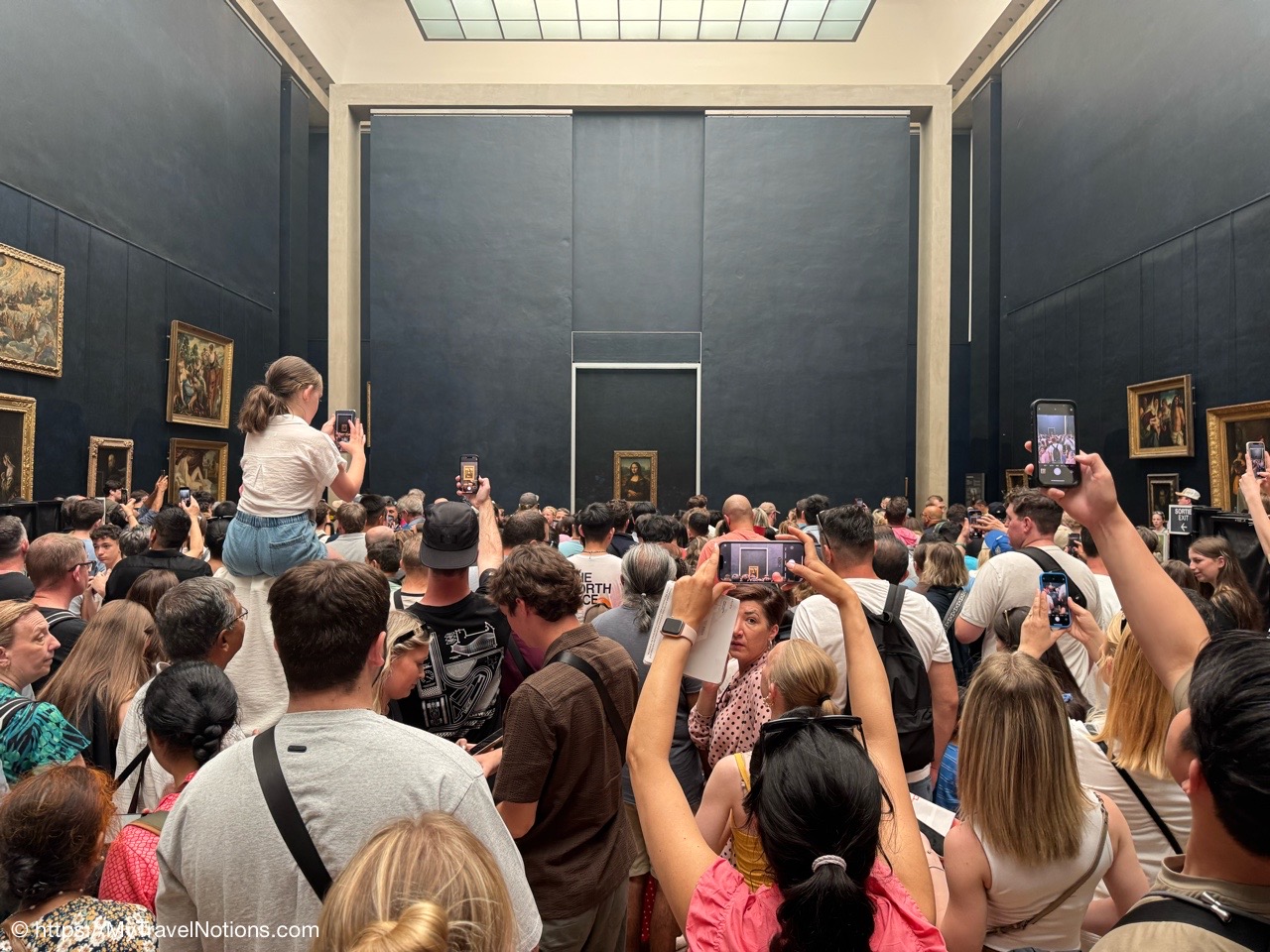
My nostalgic wonderment of the Louvre hit an unexpected wall when I was confronted by the sheer number of people just trying to enter the Louvre. And, like me, they had timed entry, advanced purchased tickets. There were a couple of people outside the Louvre trying to direct the people traffic but for the most part, this was an unorganized mess.
I was hoping, more magical thinking, that maybe because the Louvre is so large that maybe the crowds would be easily spread out. They were not. It was crowded and tiring. My plan was to casually spend the day at the Louvre seeing the highlights and some new wings. Then, I finally got into the Louvre and needless to say, it was crowded too. There was no way to escape the crowds.
The Louvre is actually divided into three main wings: Sully, Denon, and Richelieu organized into curatorial departments like: Egyptian Antiquities, Near Eastern Antiquities, Greek, Etruscan, and Roman Antiquities, Islamic Art, Paintings, Sculpture, Decorative Arts, and Prints and Drawings.
I did see a few of the pieces I wanted to see, but it was just so crowded, I really did not enjoy the experience. Why sell ticketed time entries if you can’t even control the crowds. I was frustrated and heartbroken. And, frankly couldn’t wait to get out of there.
I took my time walking back to the hotel and stopped at one of those cute outdoor restaurants for a nice meal and drink, while doing the French thing of people watching, to soothe my disappointing Louvre experience.
Here’s my quick trip through the Louvre in Paris.
(Editor’s Note: A couple of weeks after my visit to the Louvre, there was a staff walkout on June 16. It was a spontaneous strike by gallery attendants, ticket agents, and security personnel protesting unmanageable crowds and poor working conditions which led to the museum closing for several hours. Then on Oct. 19, the Louvre was robbed in a daylight heist that occurred around 9:30 a.m.. Thieves used a truck-mounted ladder to access the Galerie d’Apollon or Apollo Gallery, smashed display cases, and stole nine pieces of priceless French crown jewels before escaping on motorbikes. Needless to say, the Louvre has had a difficult 2025.)
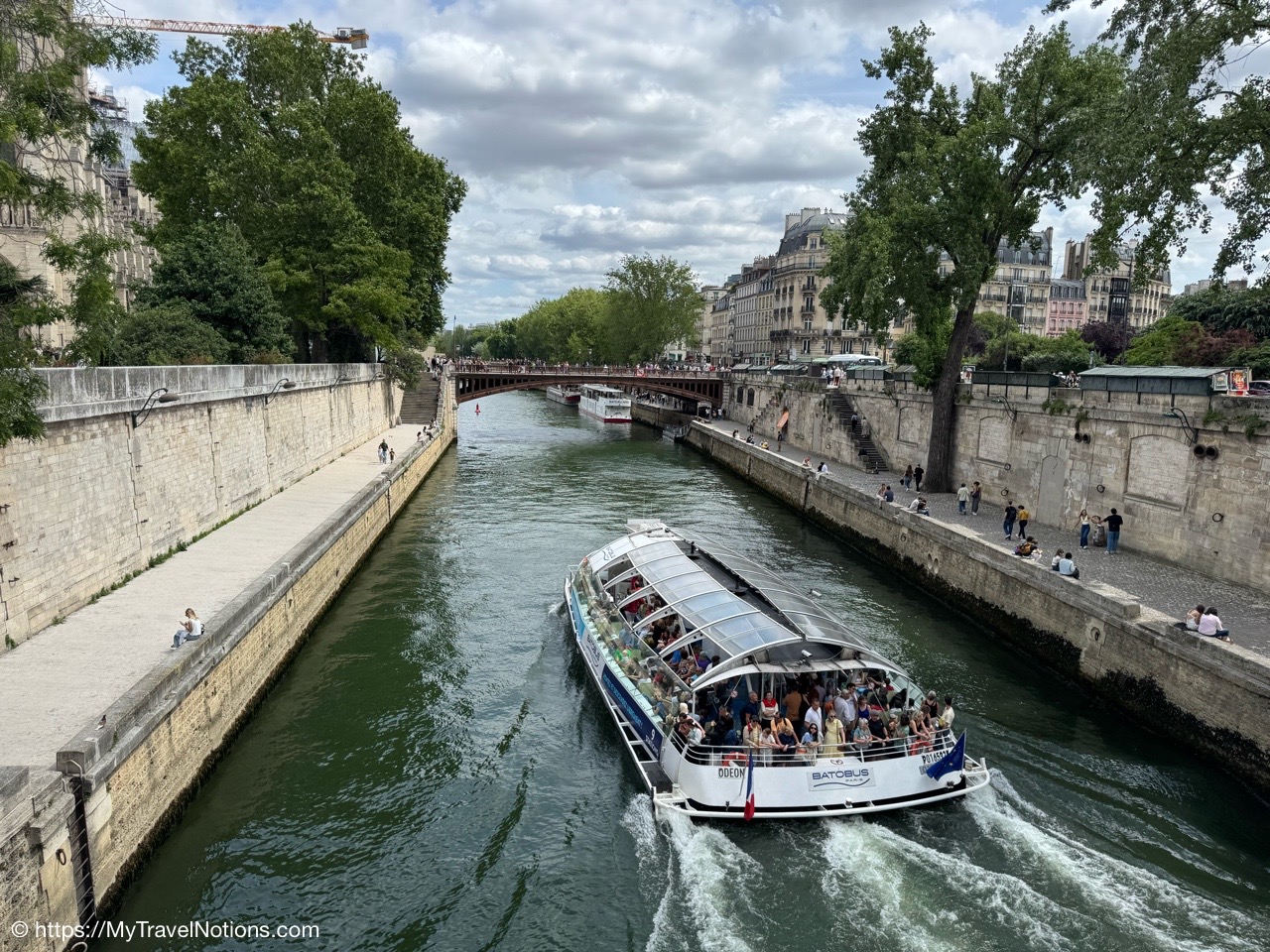
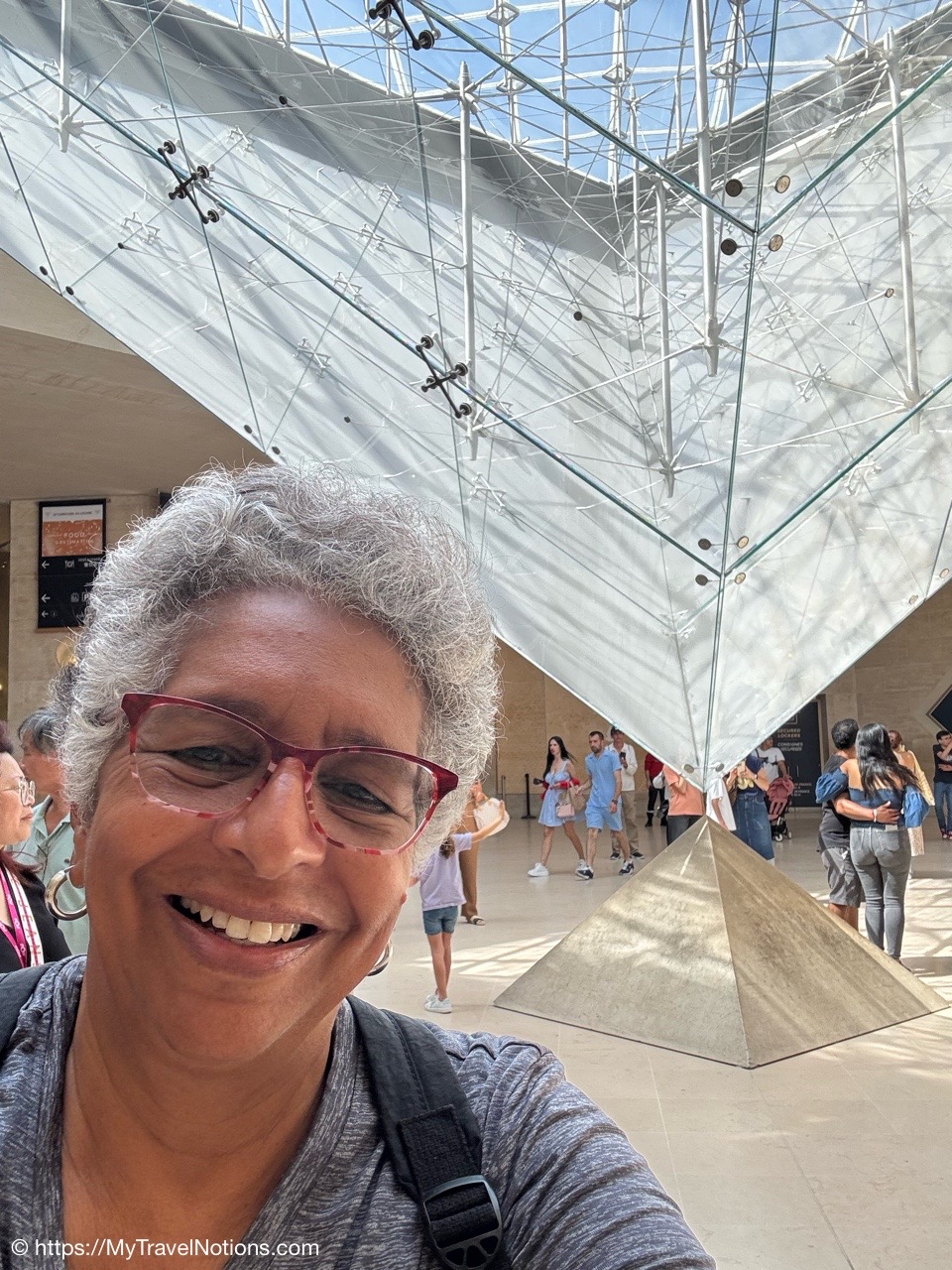
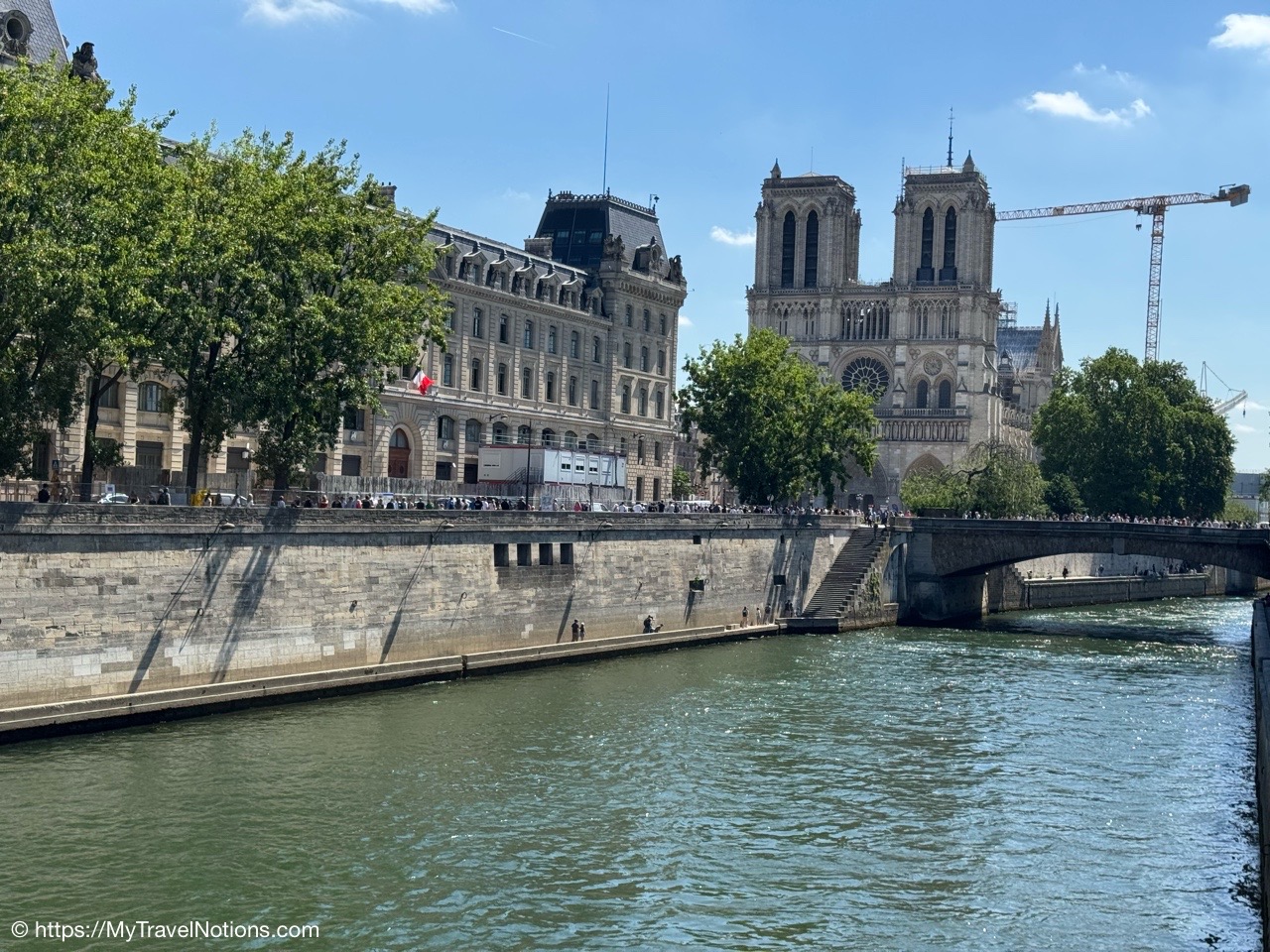
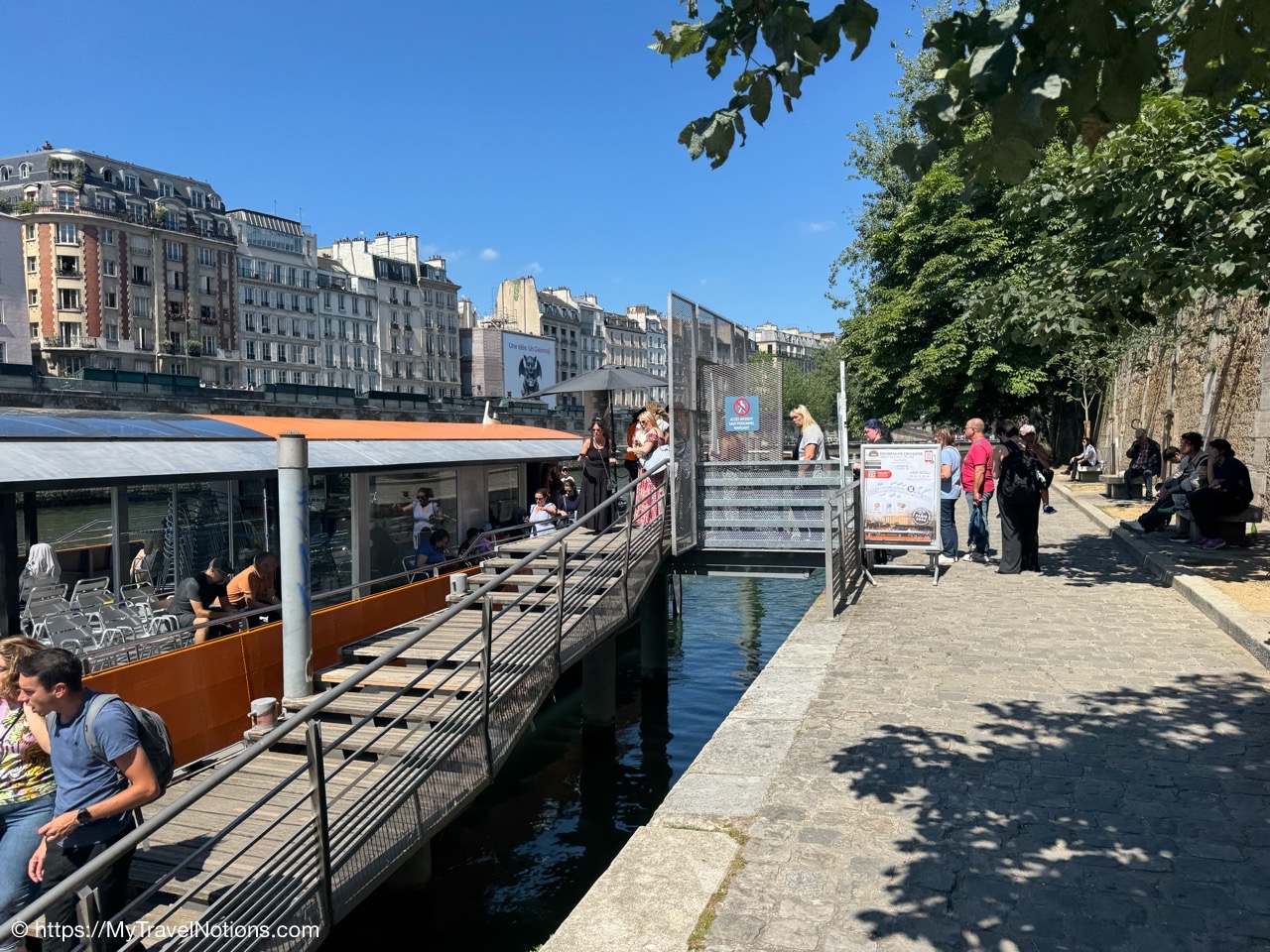
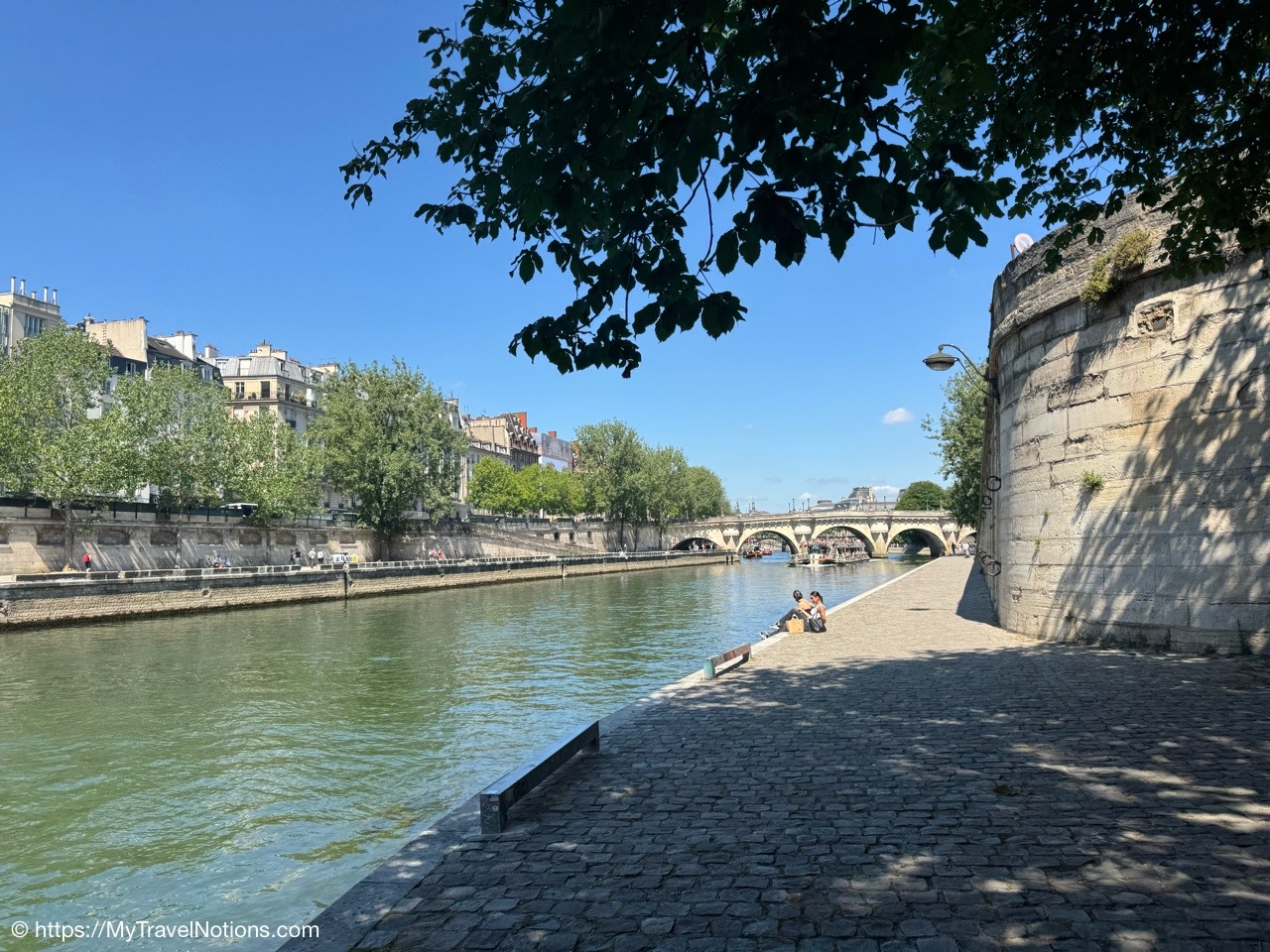
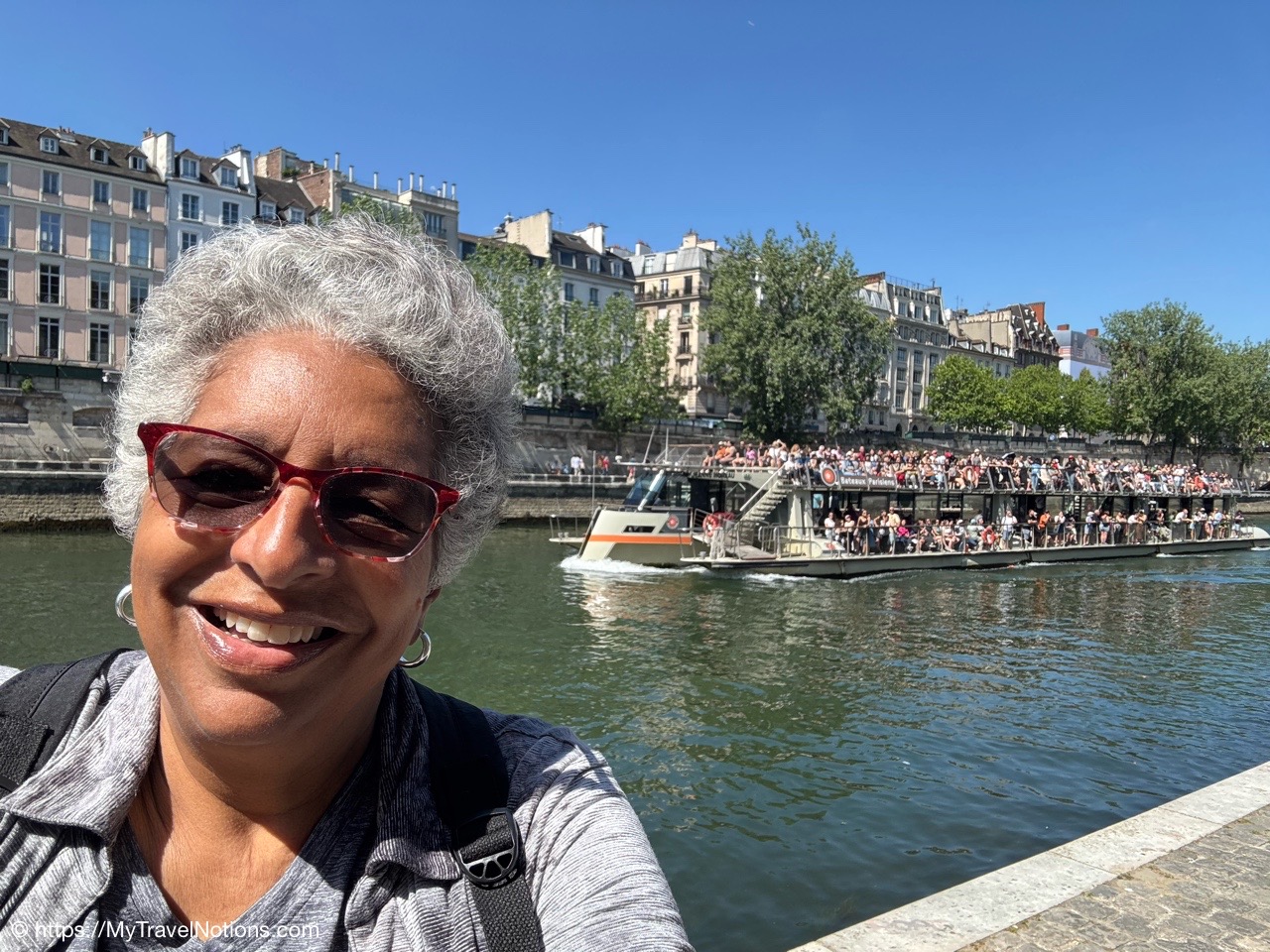
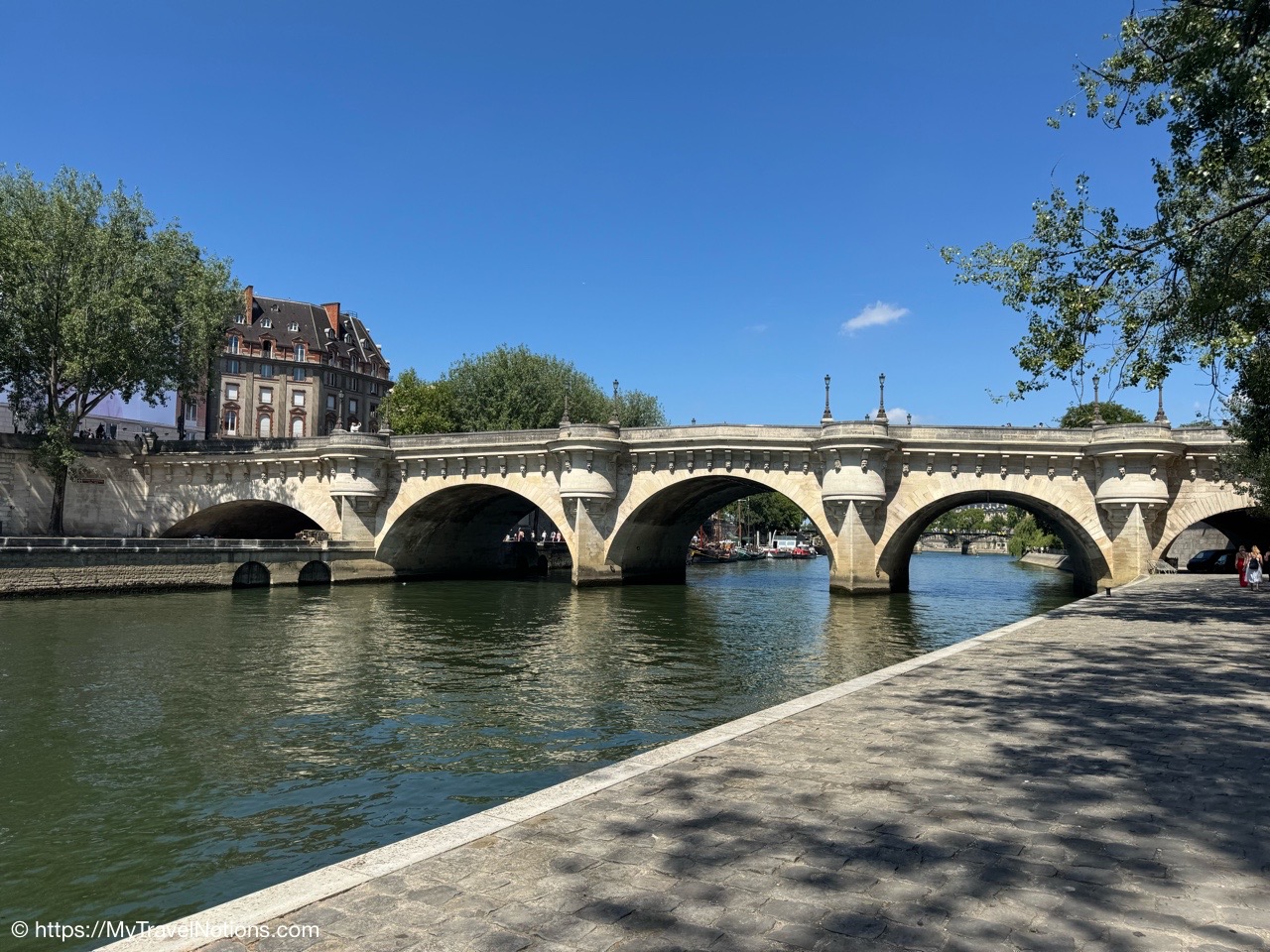
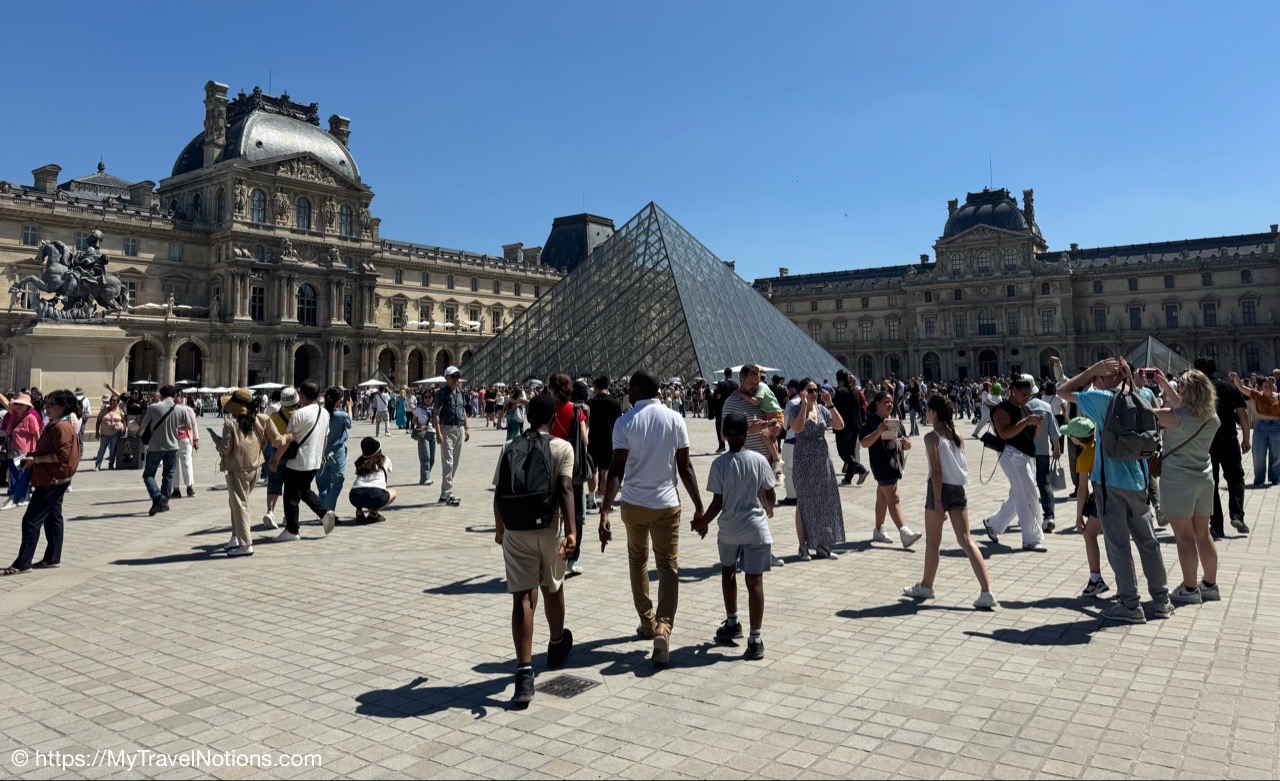
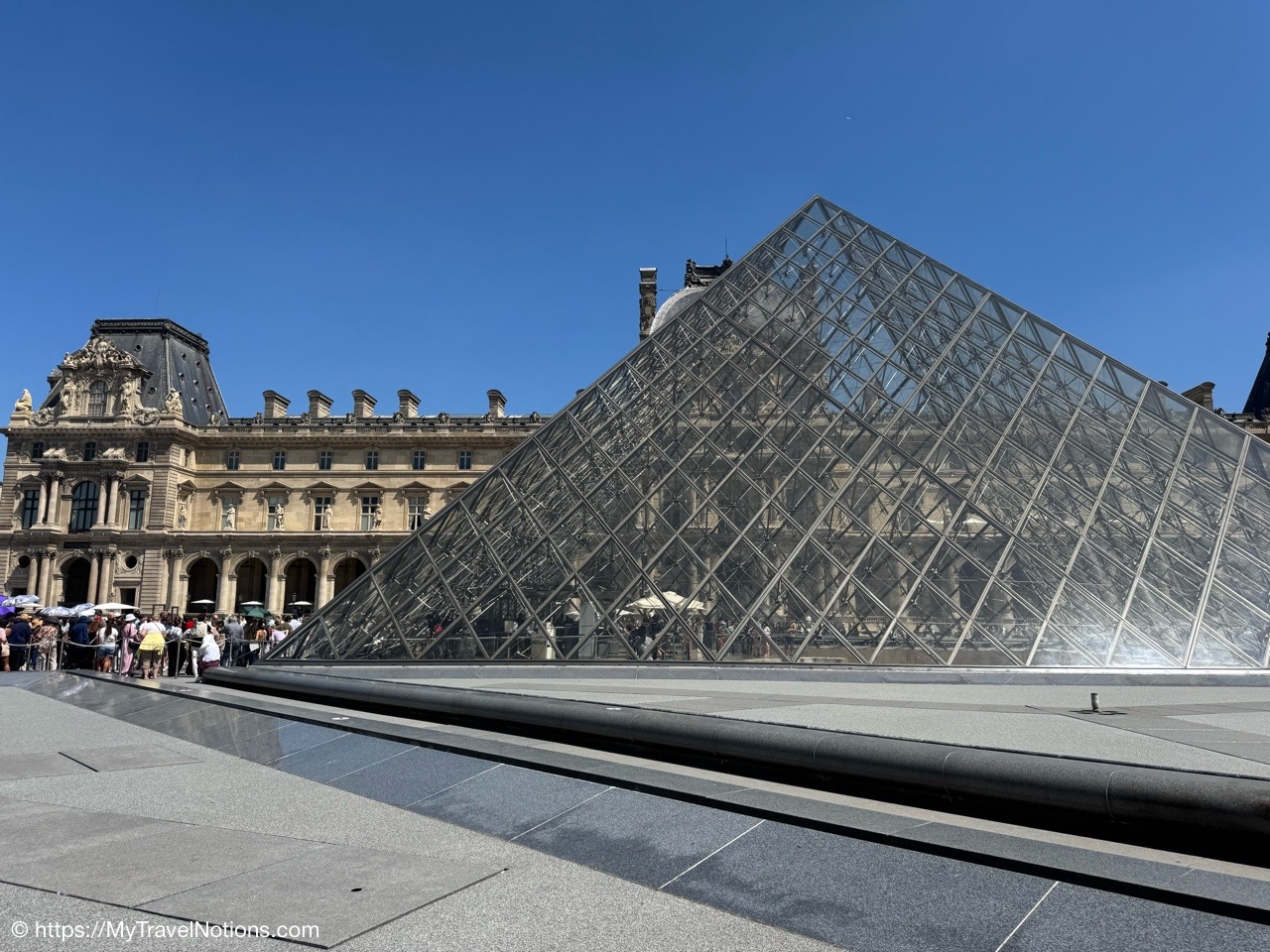
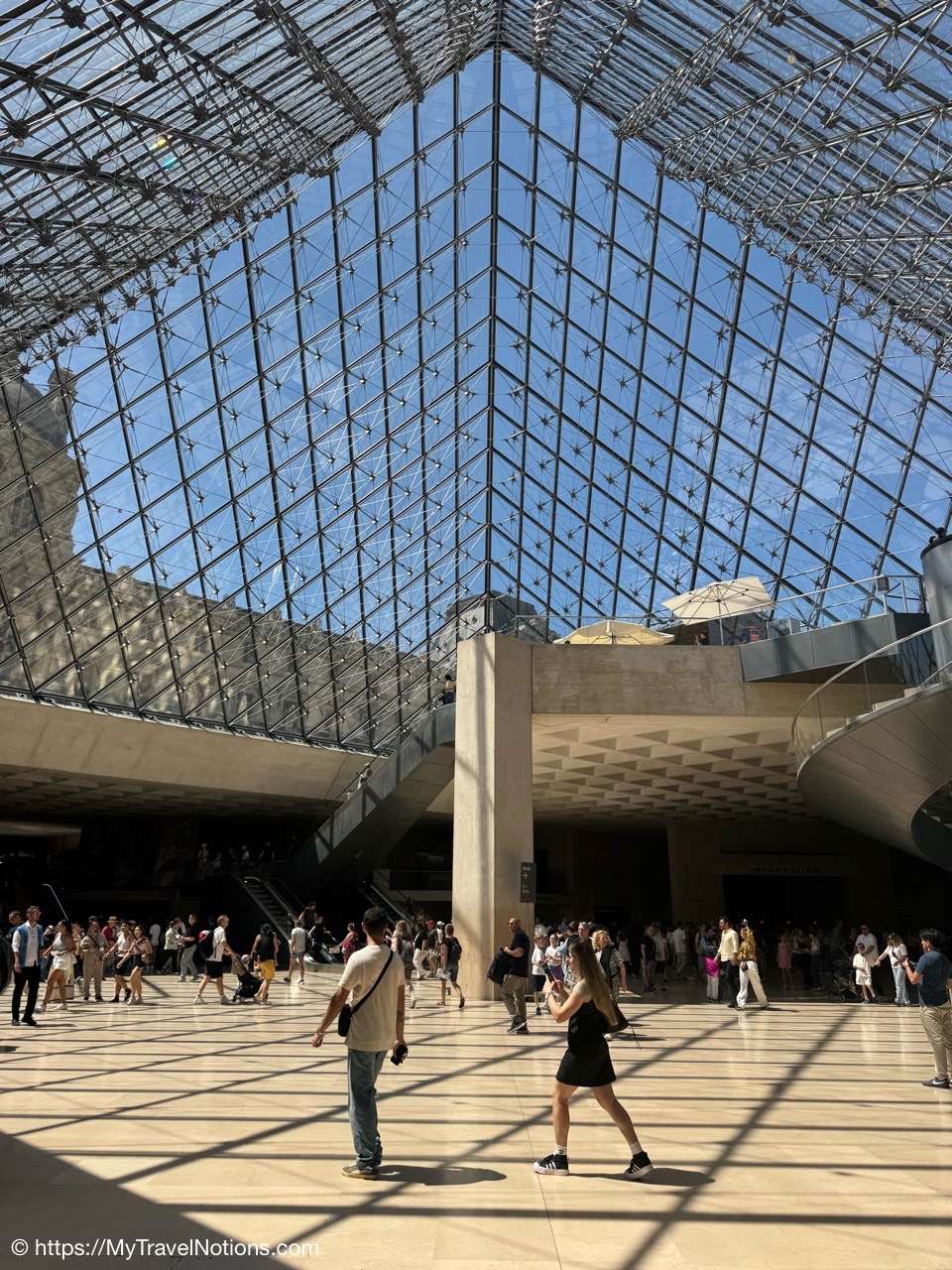
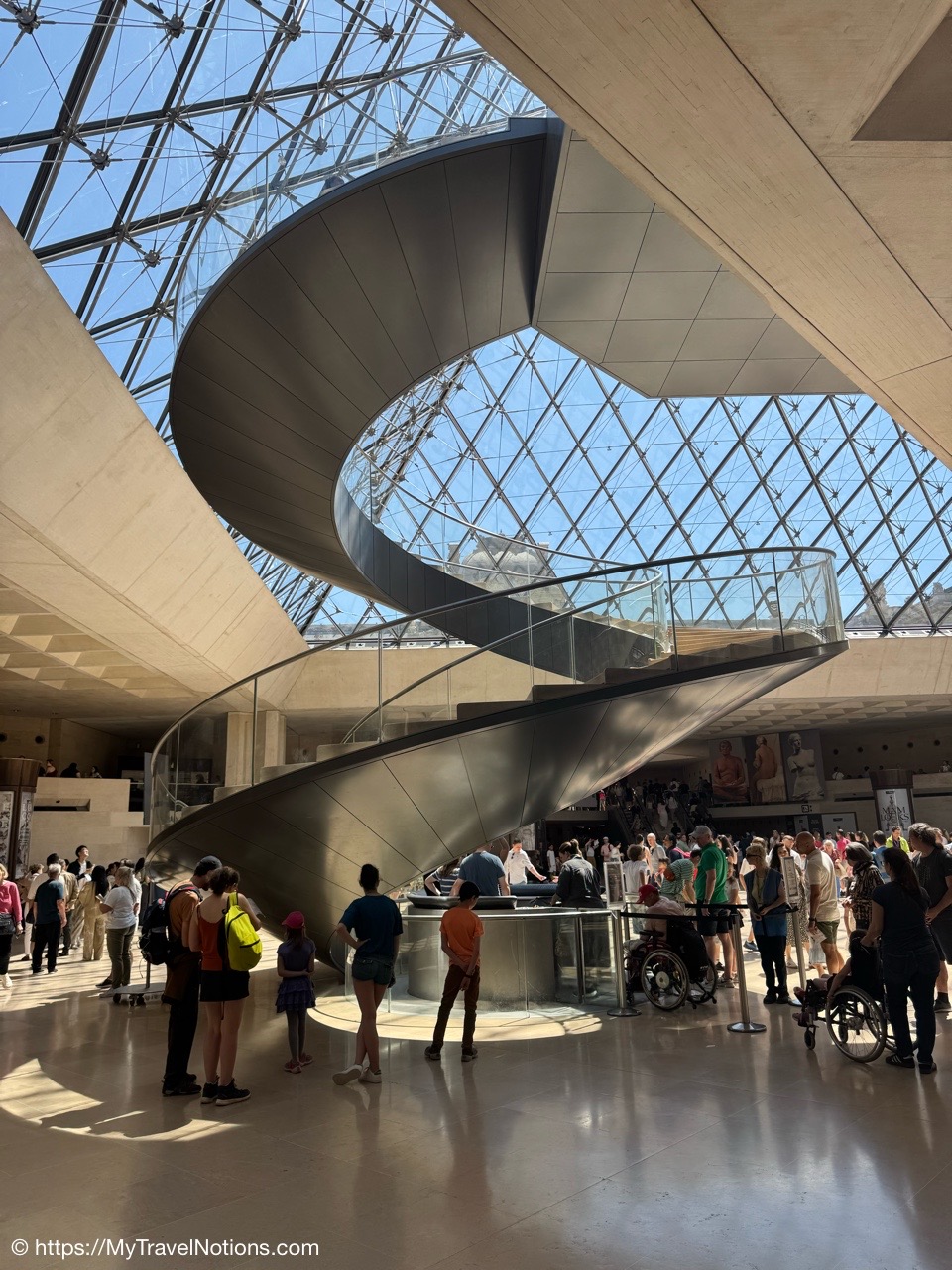
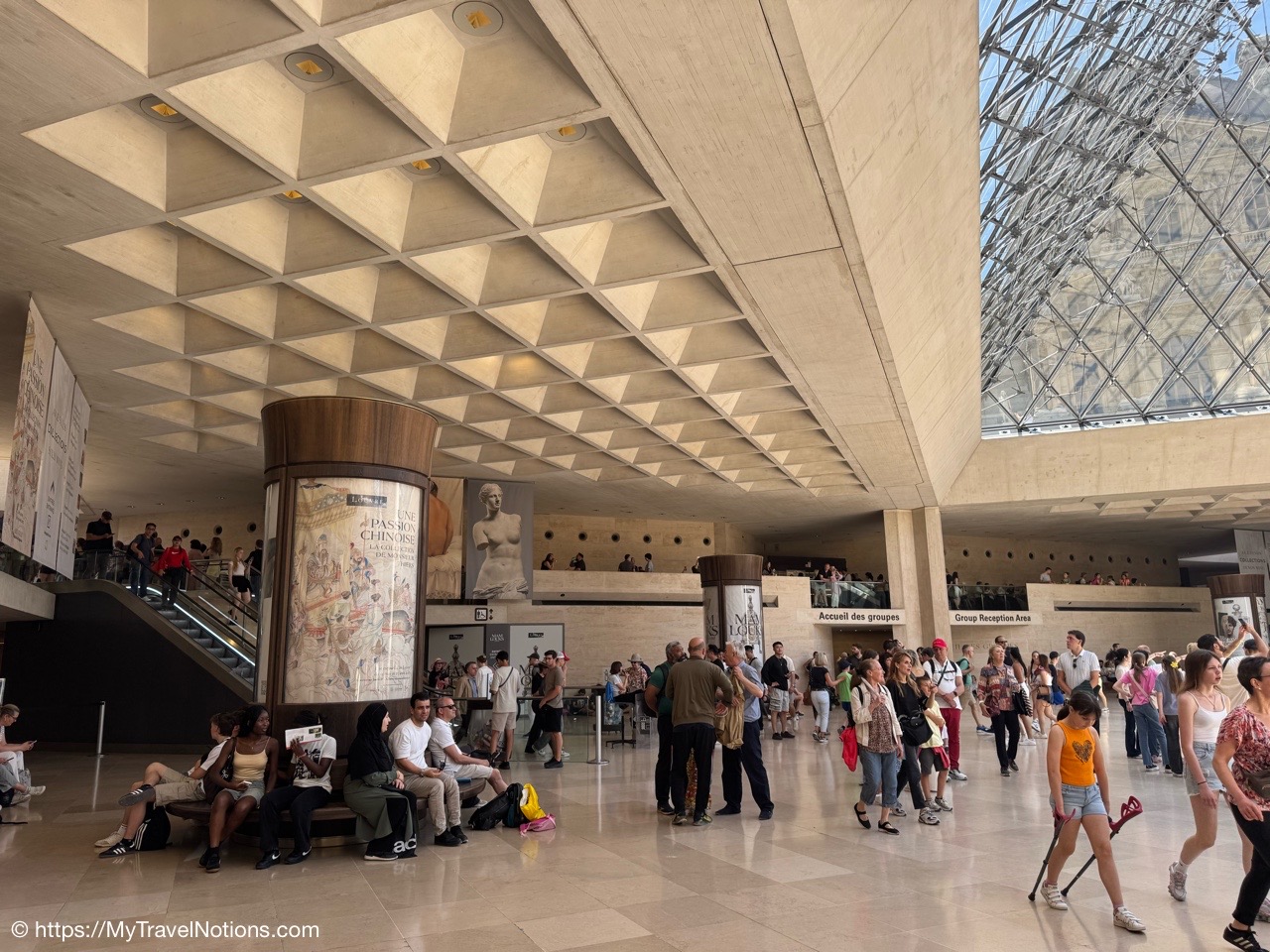
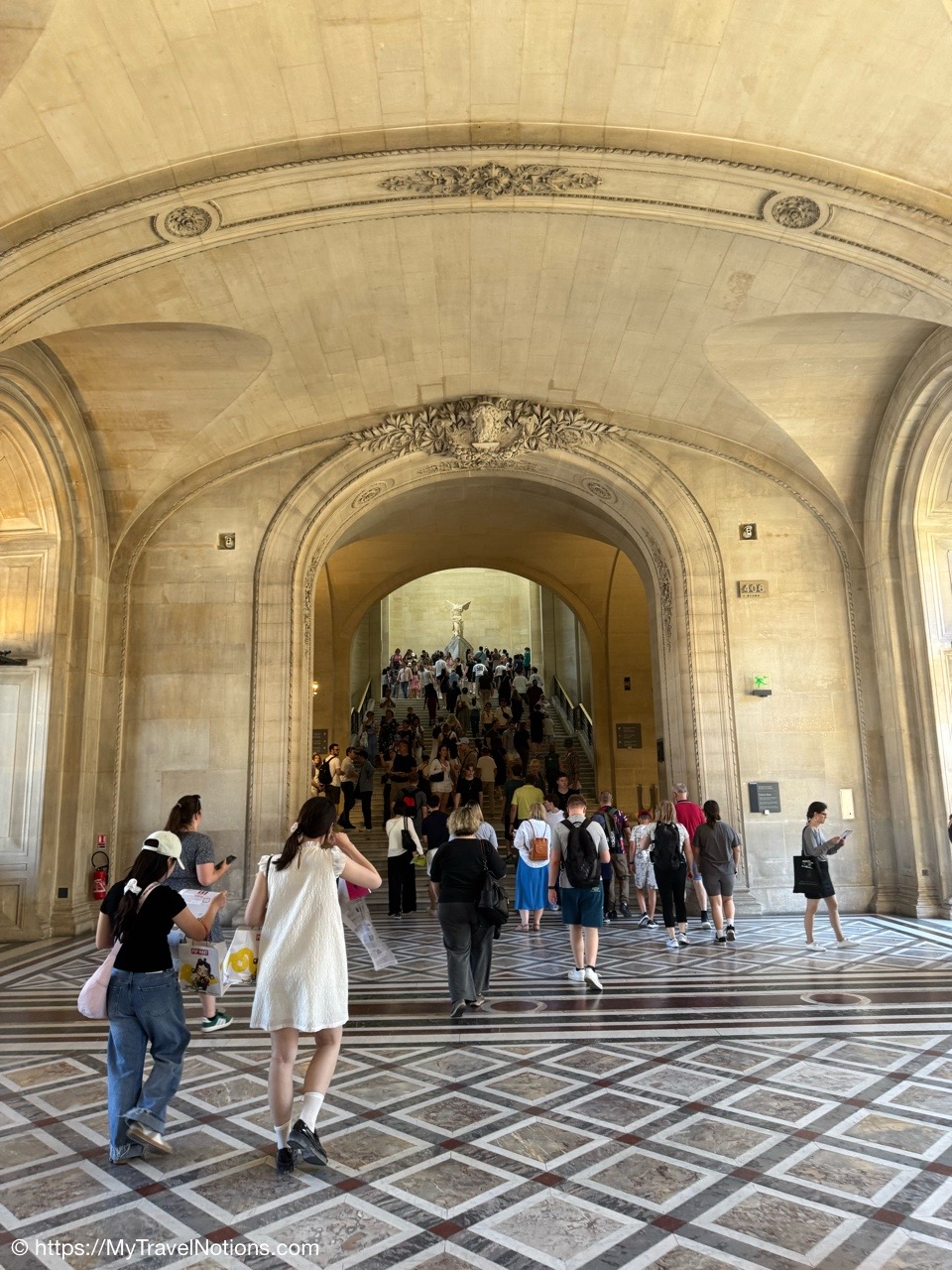
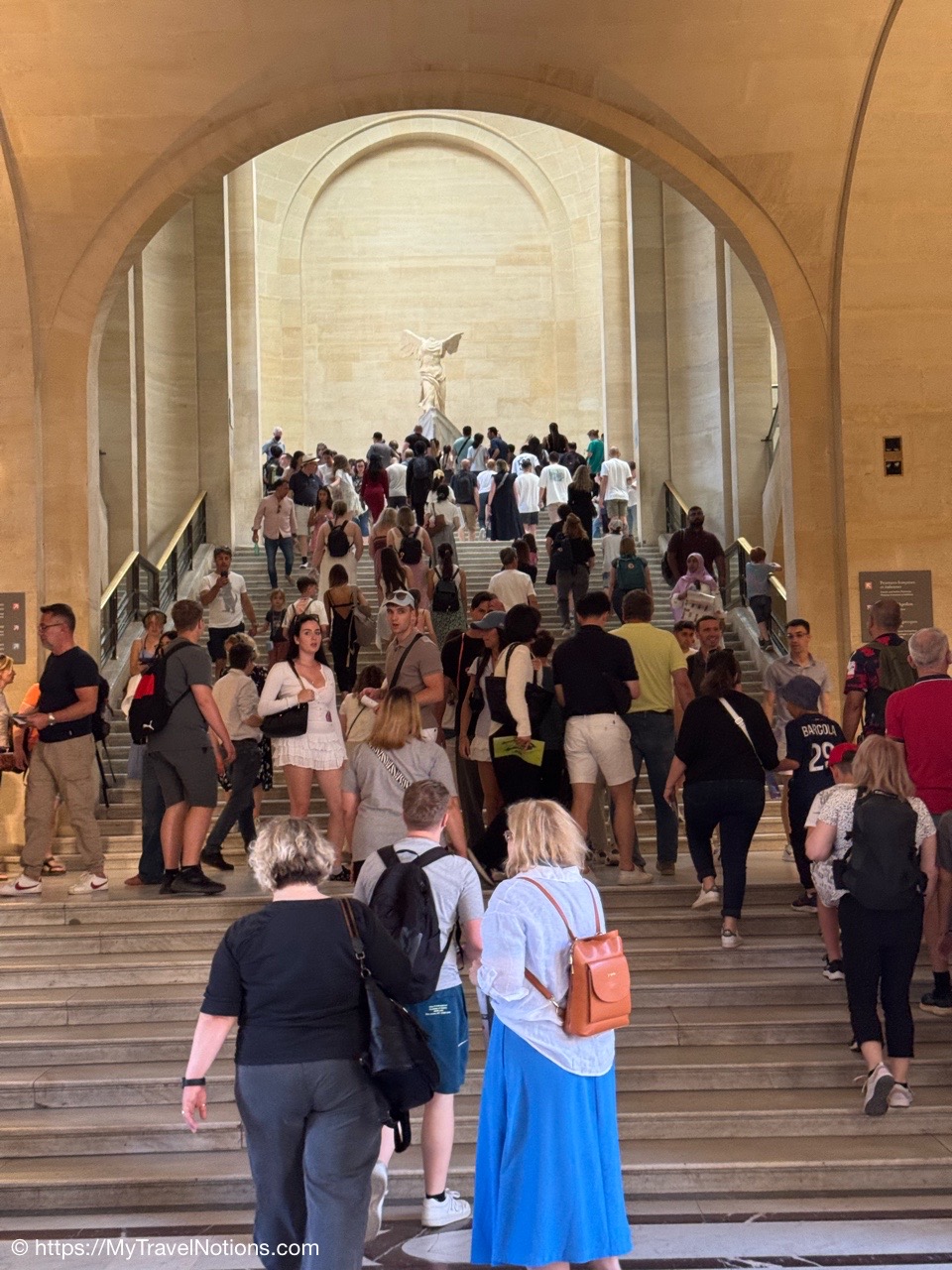
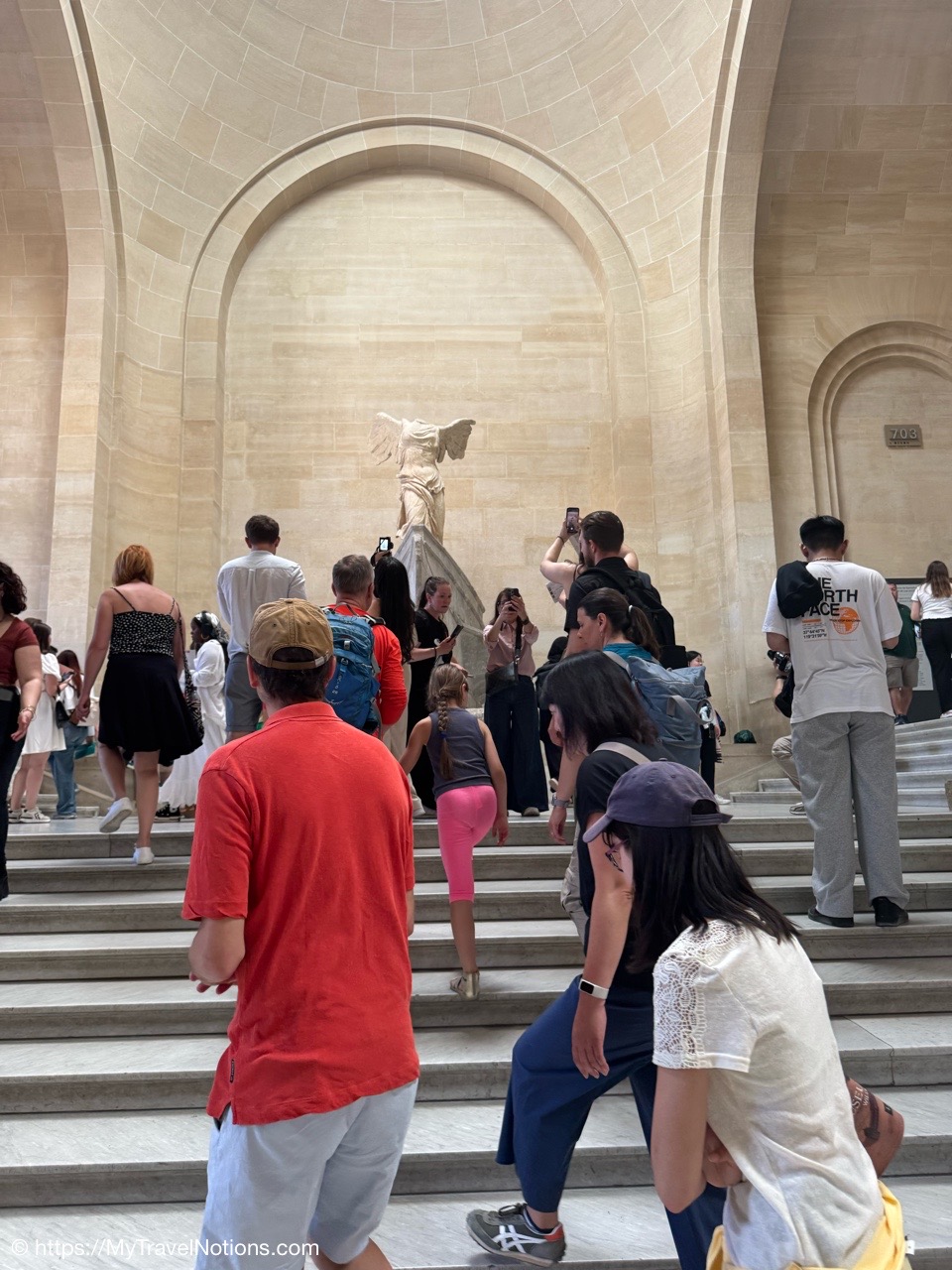
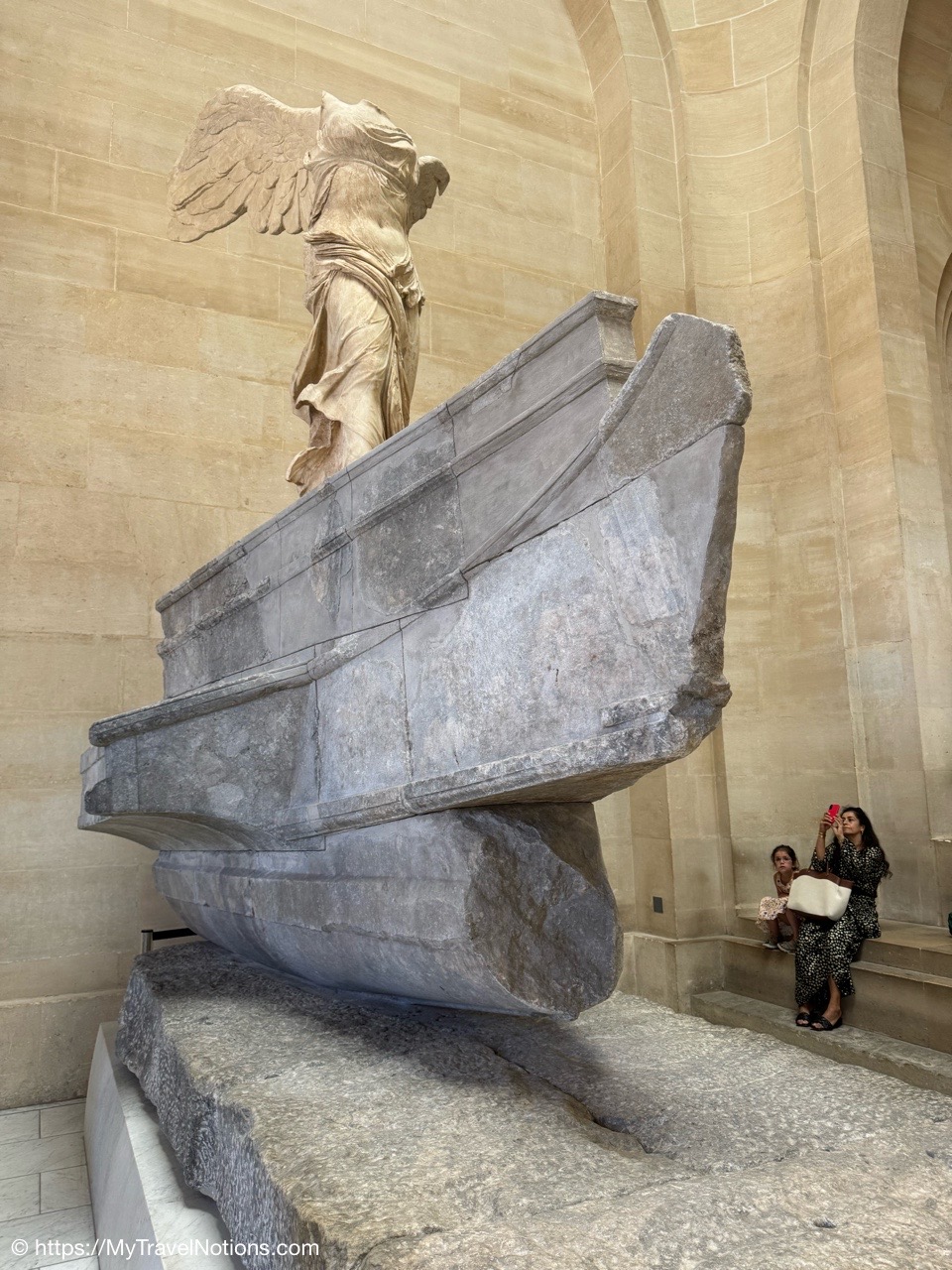
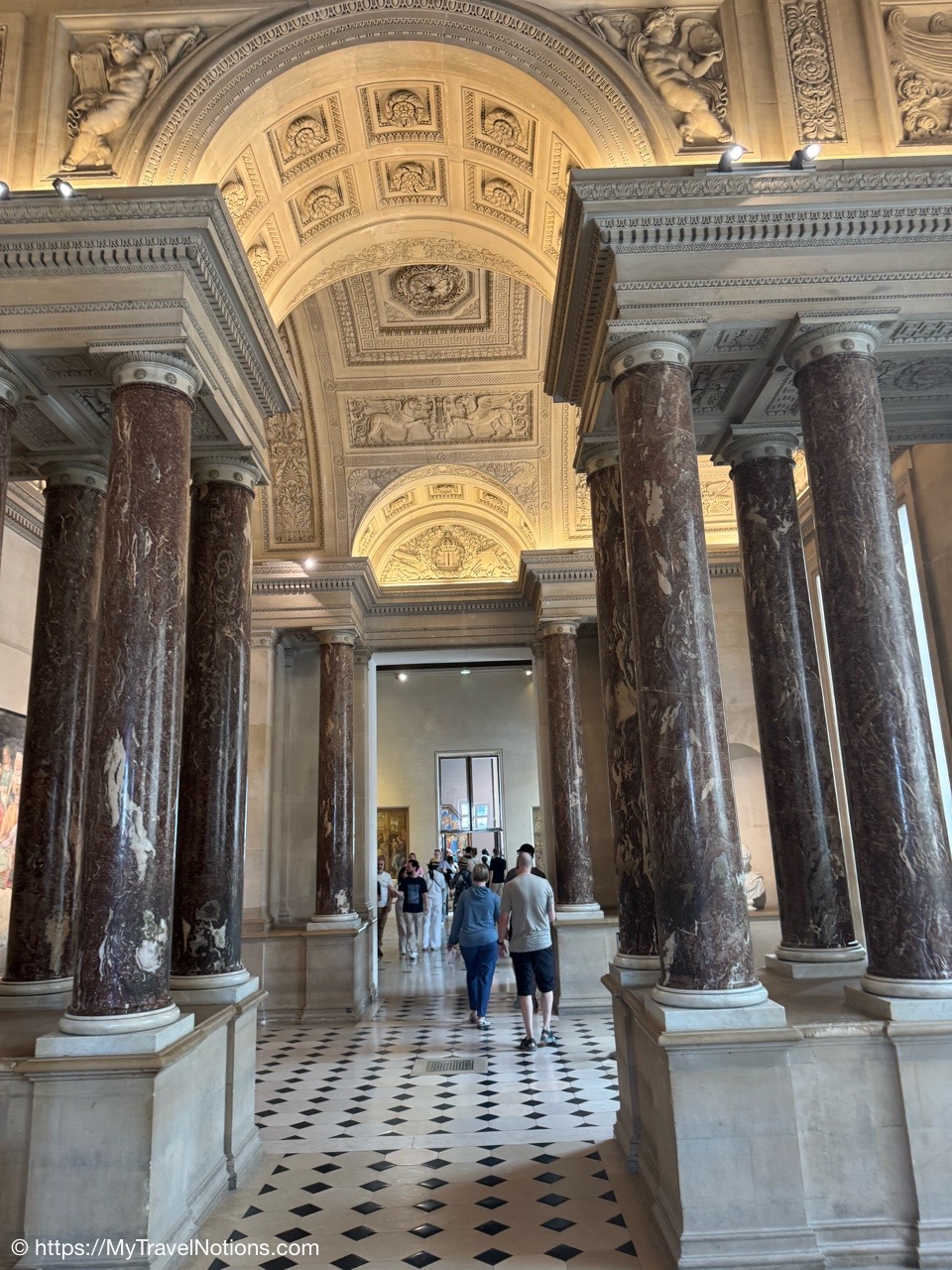
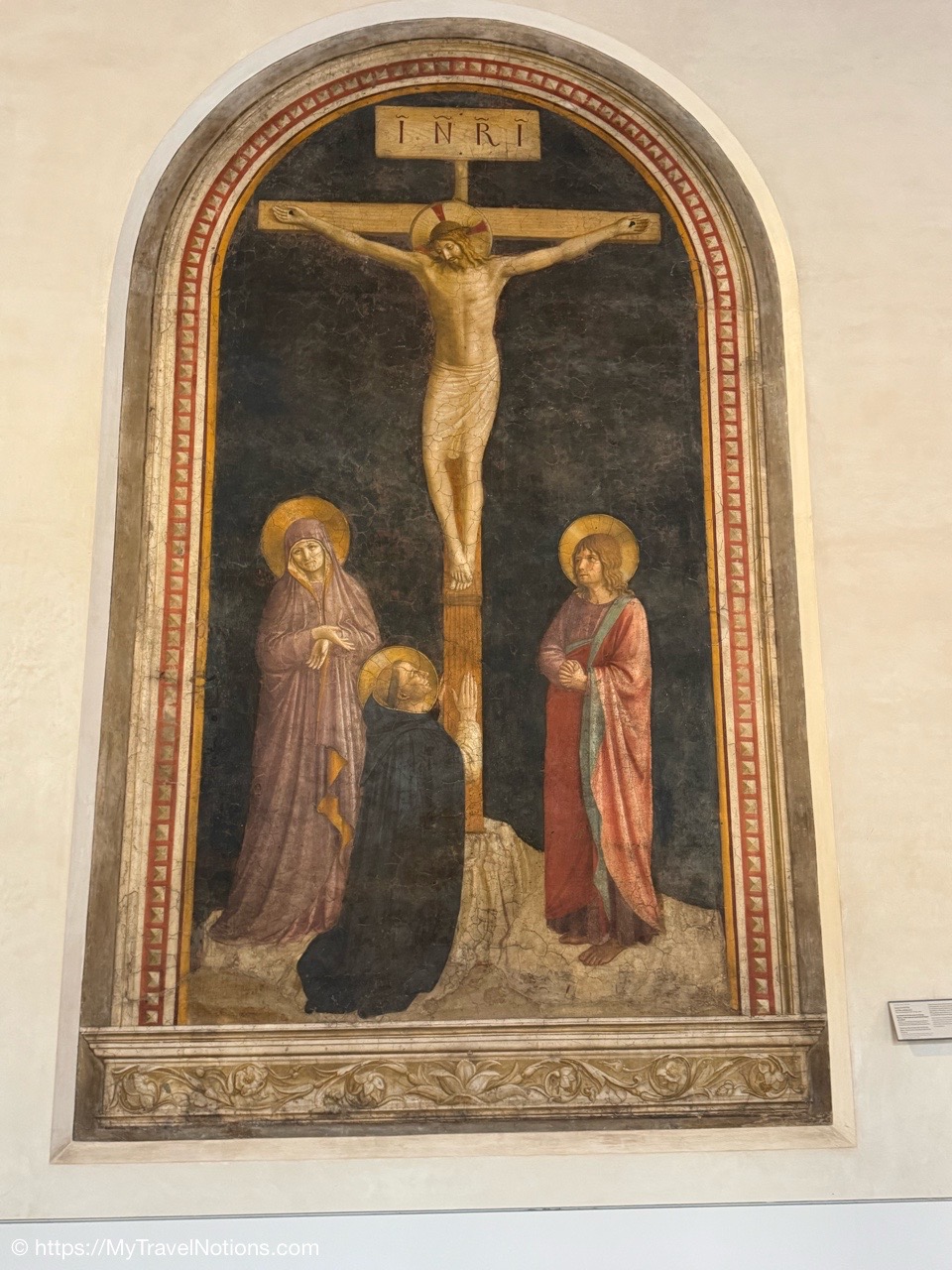
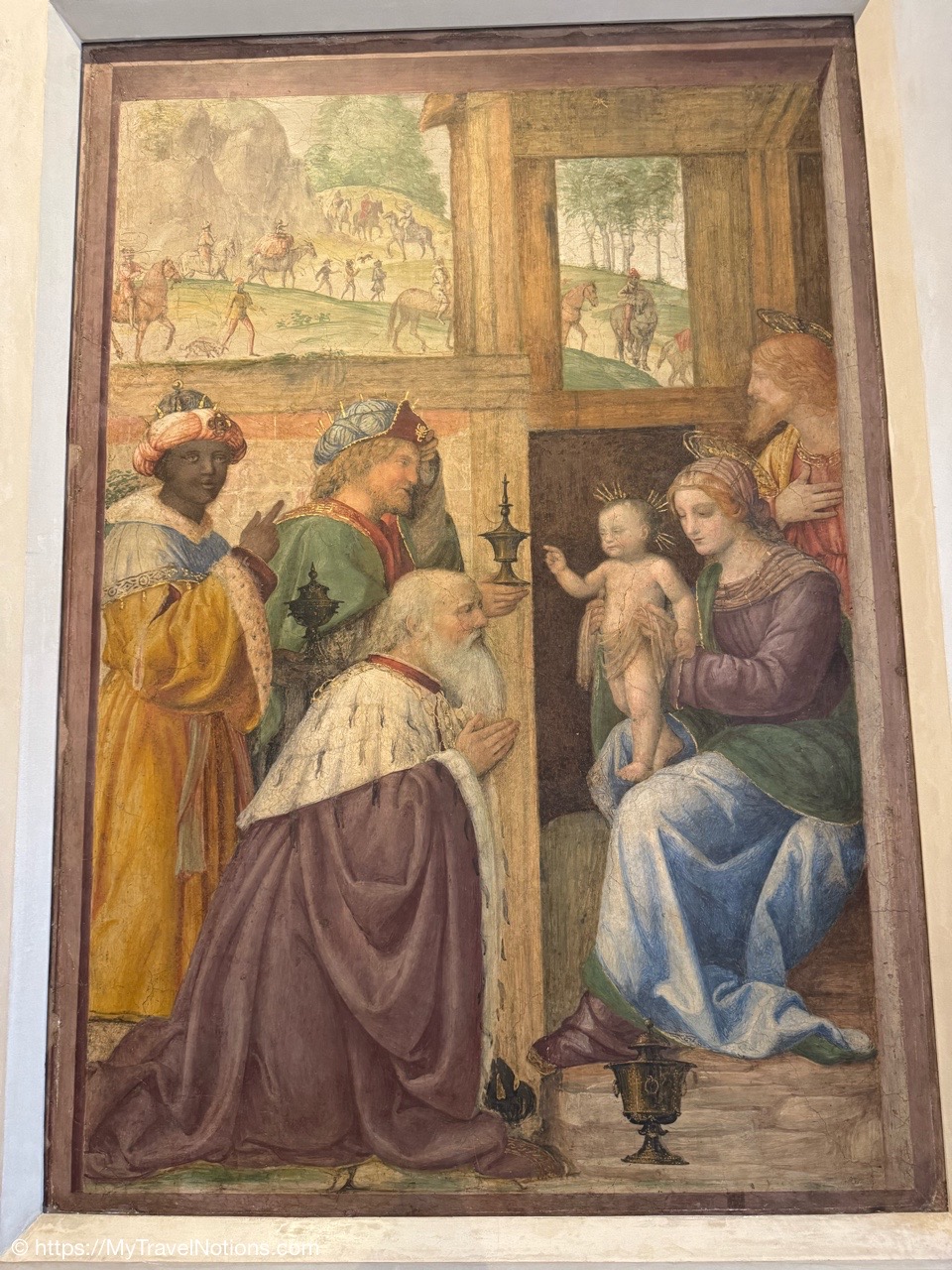
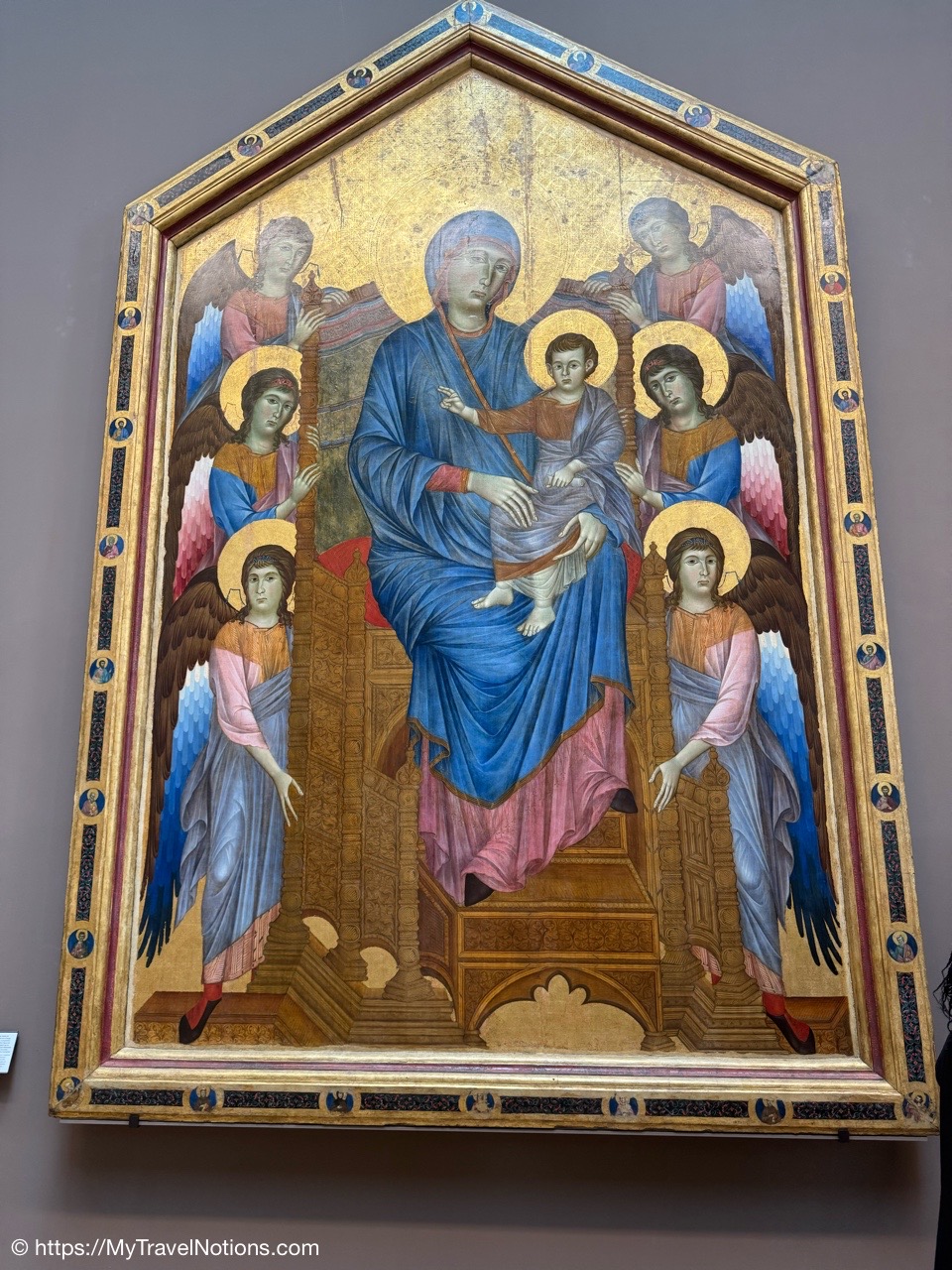
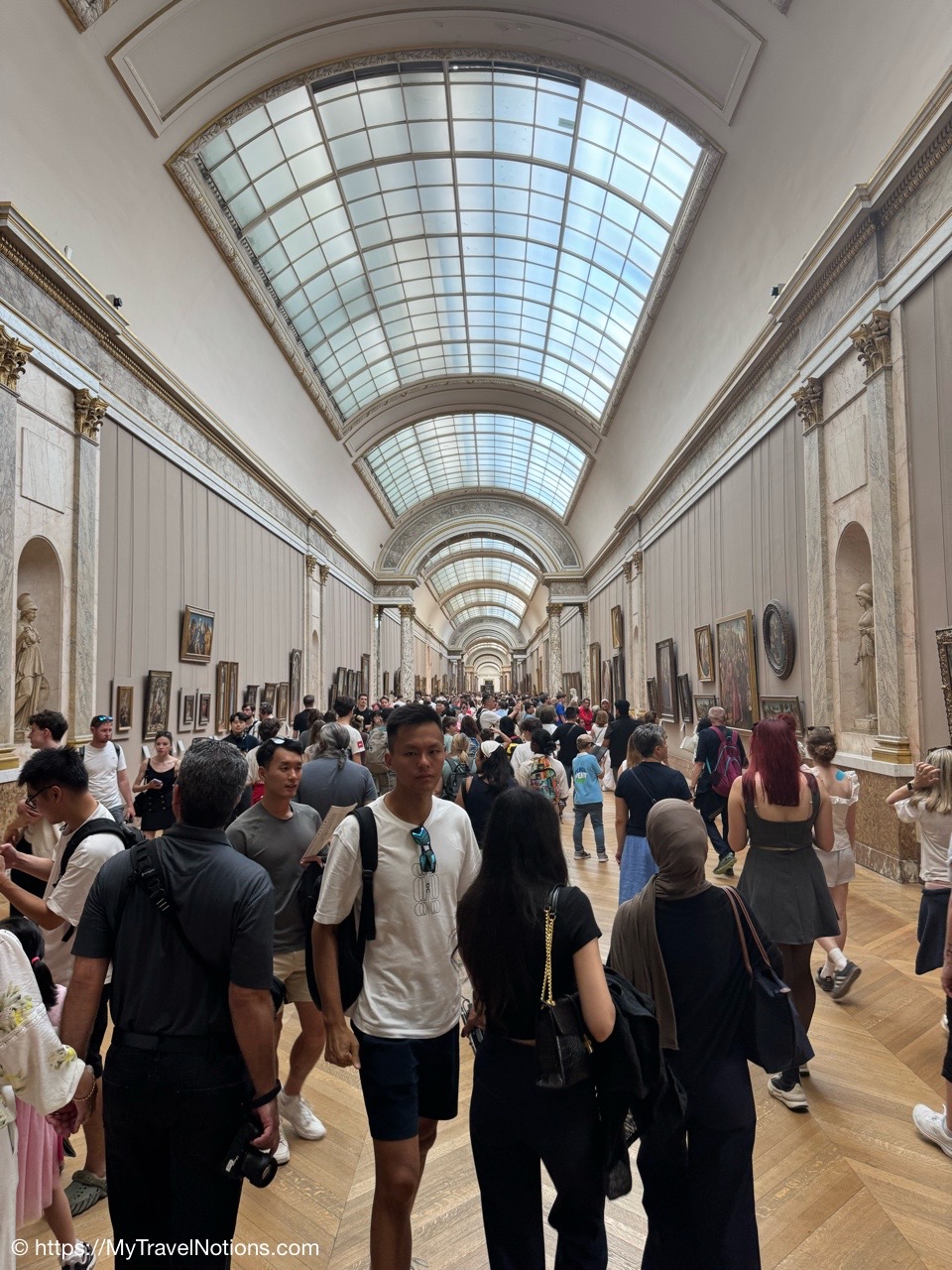
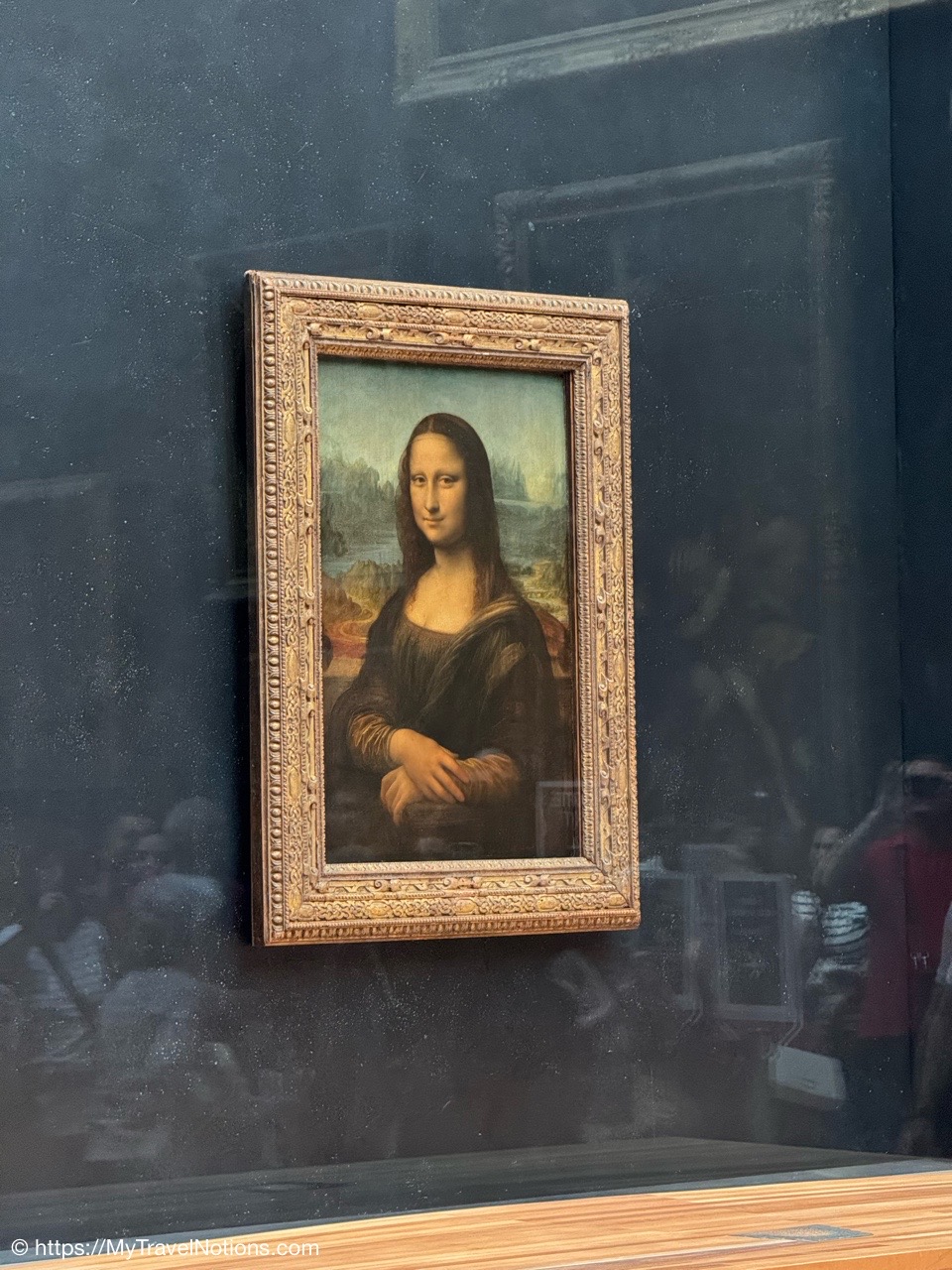
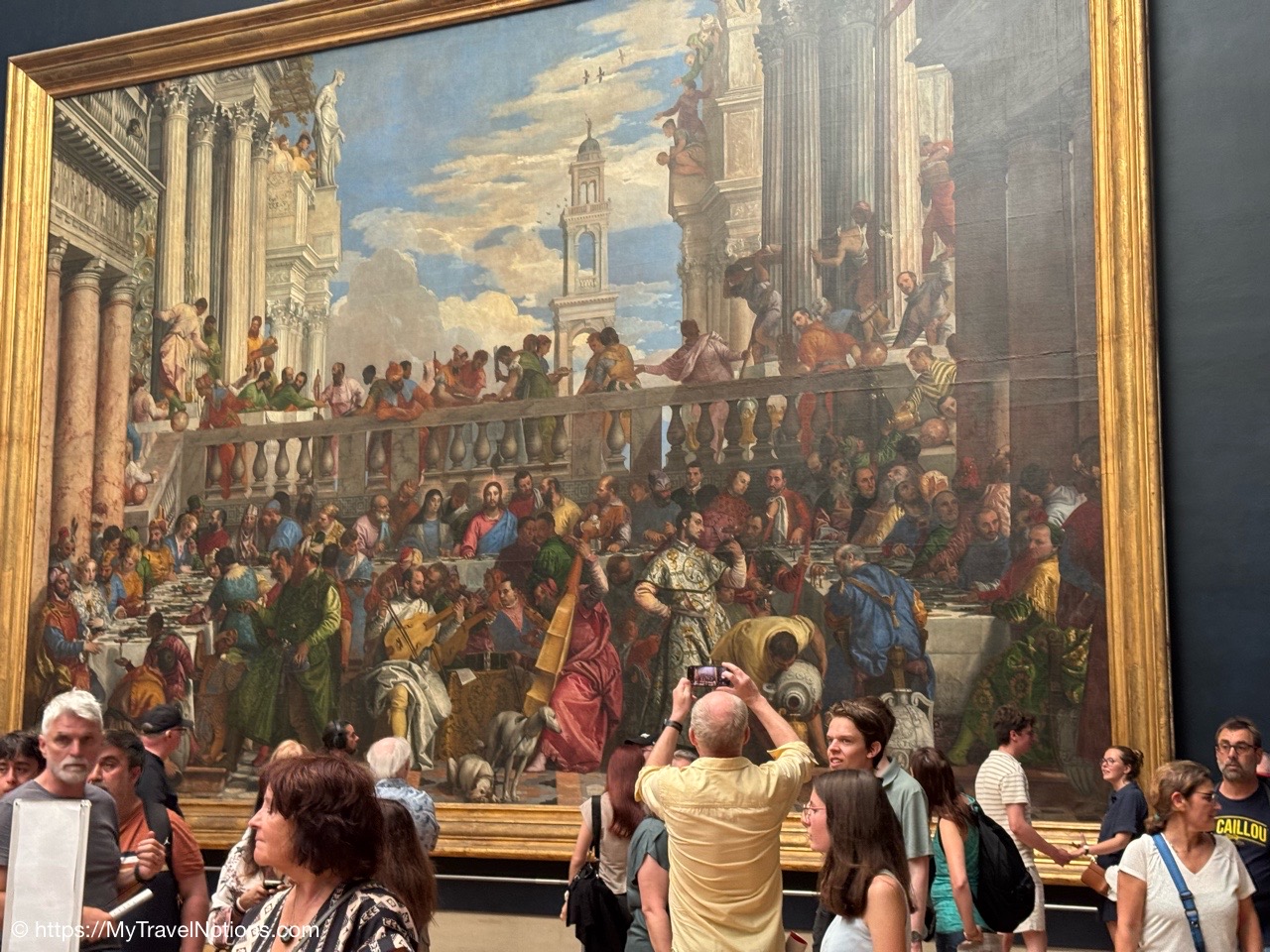
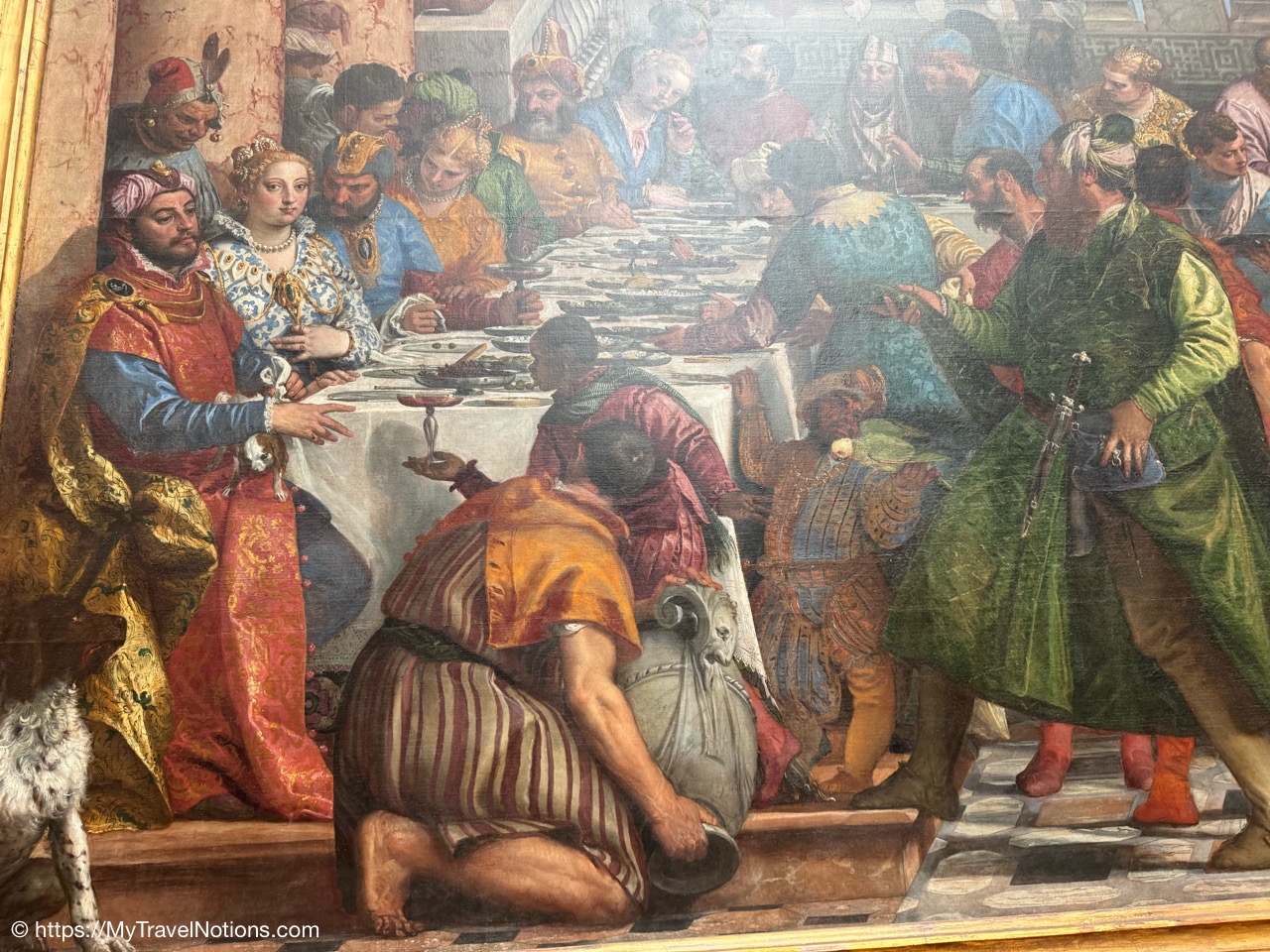
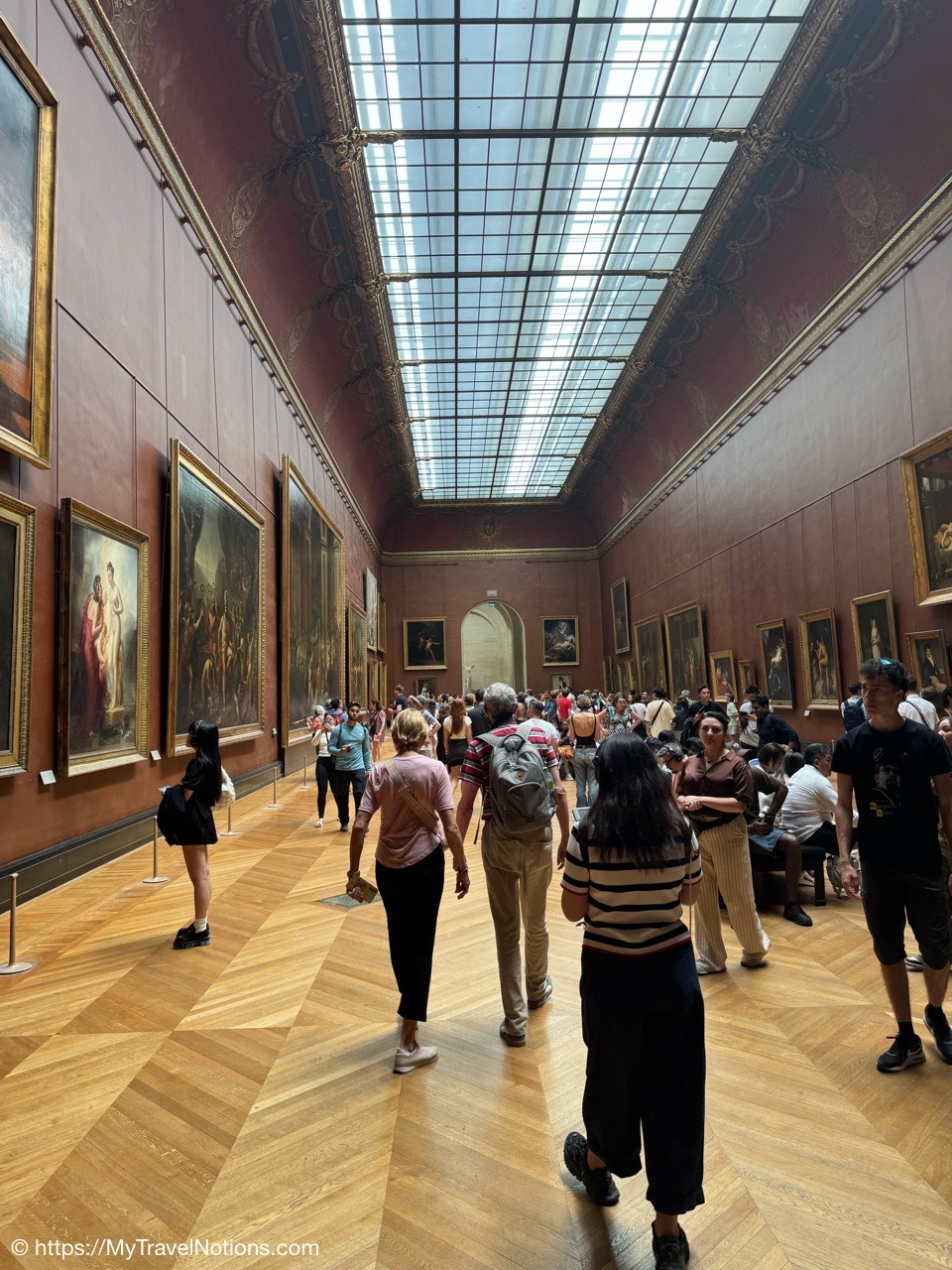
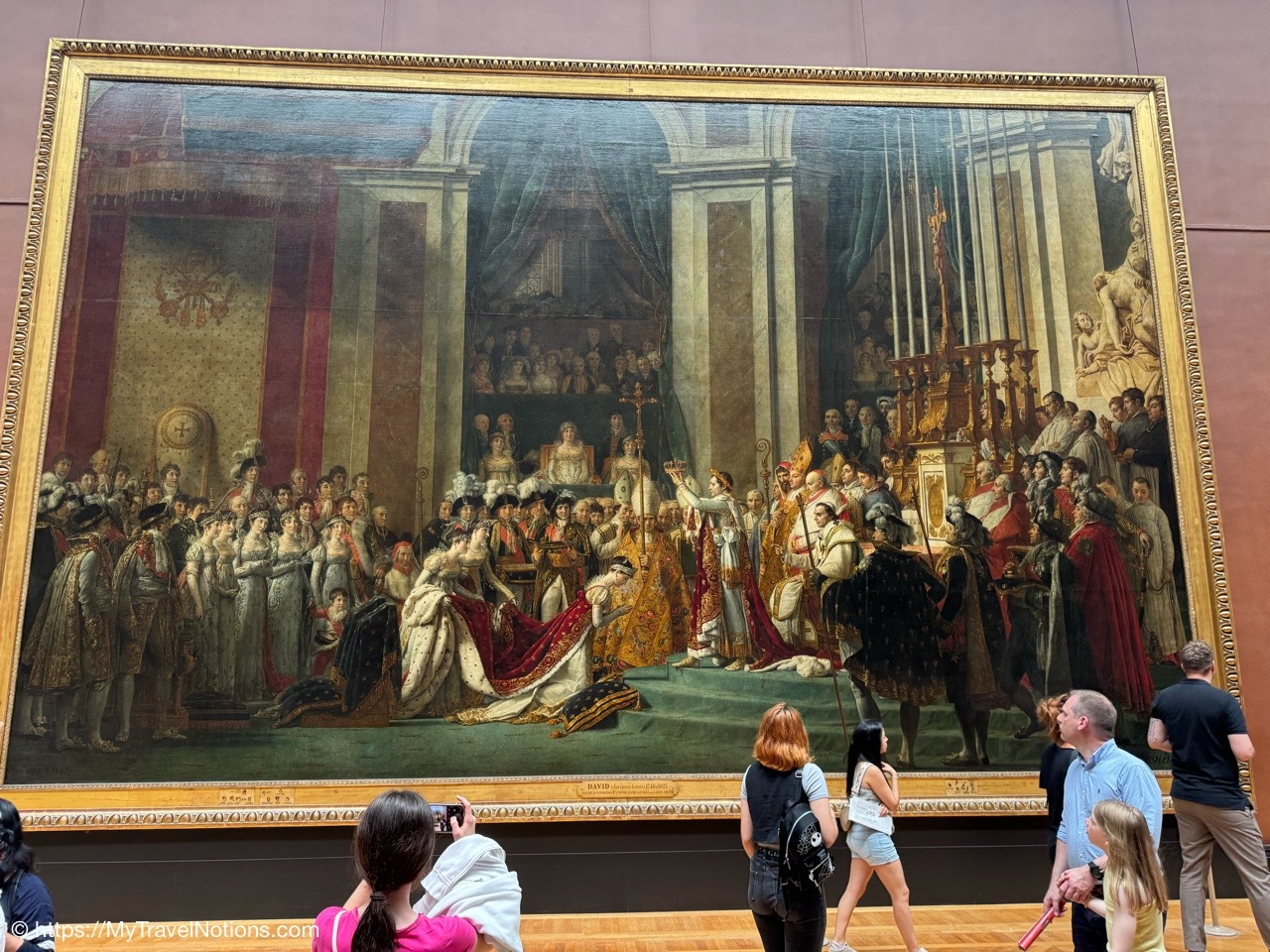
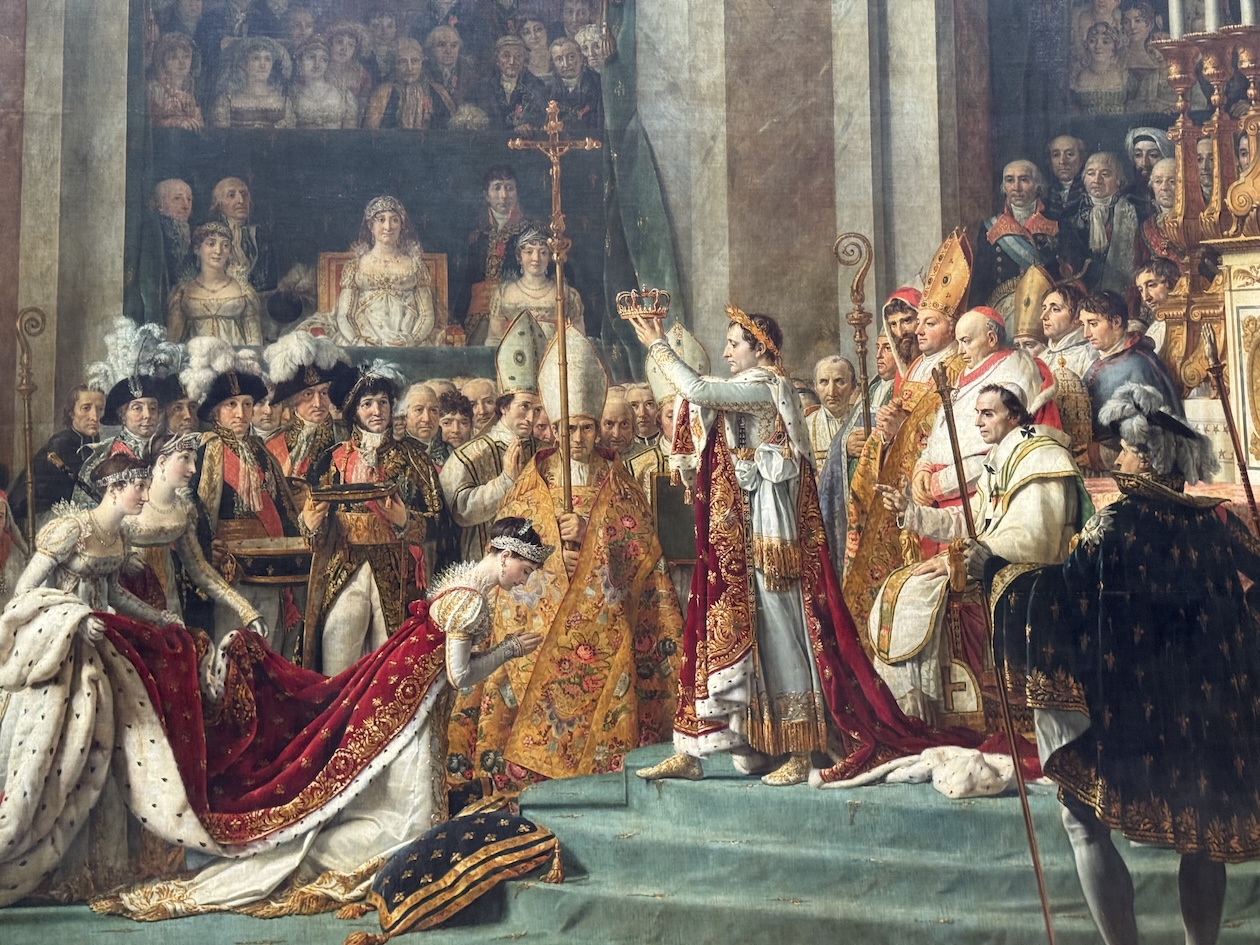
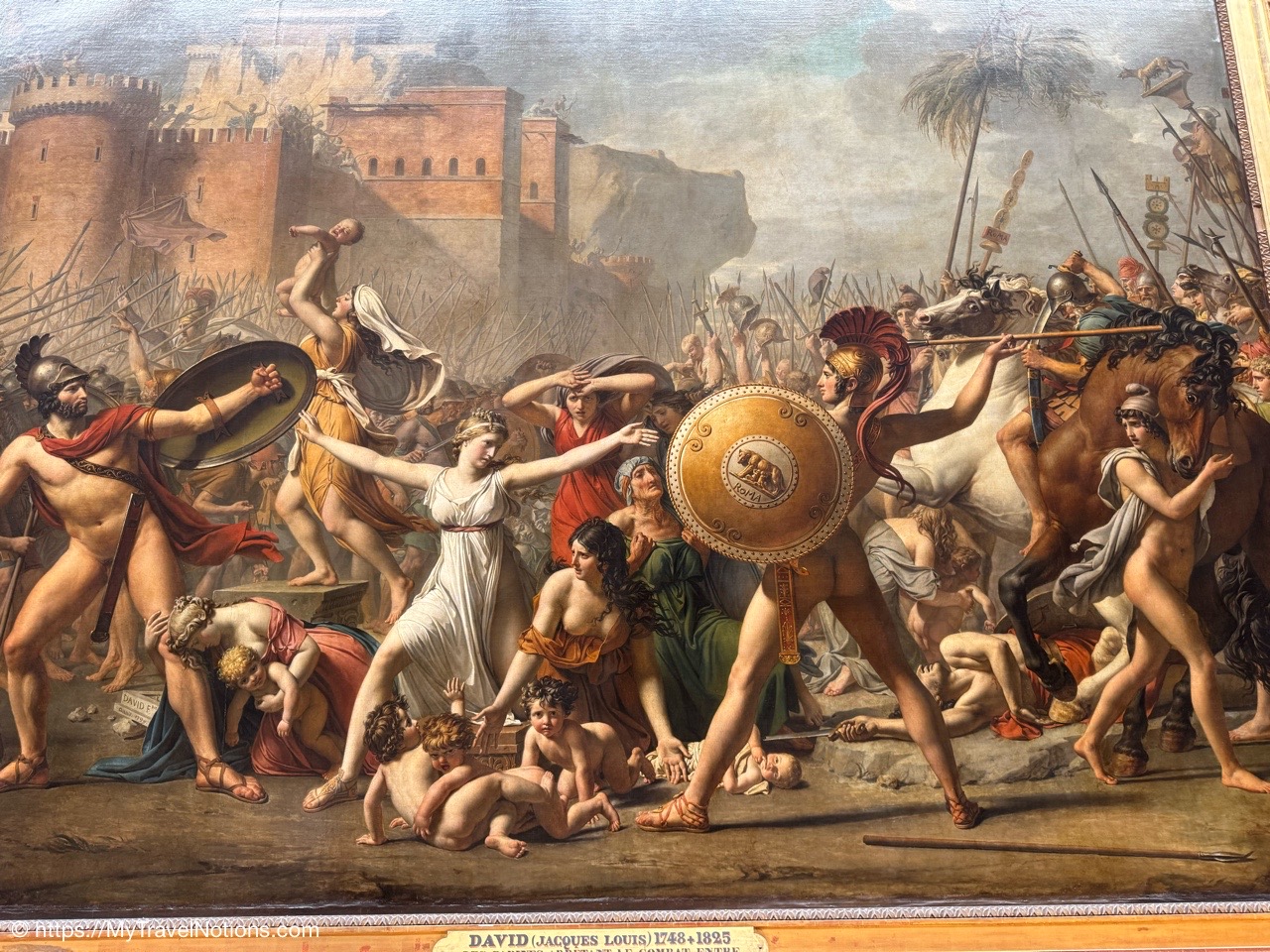
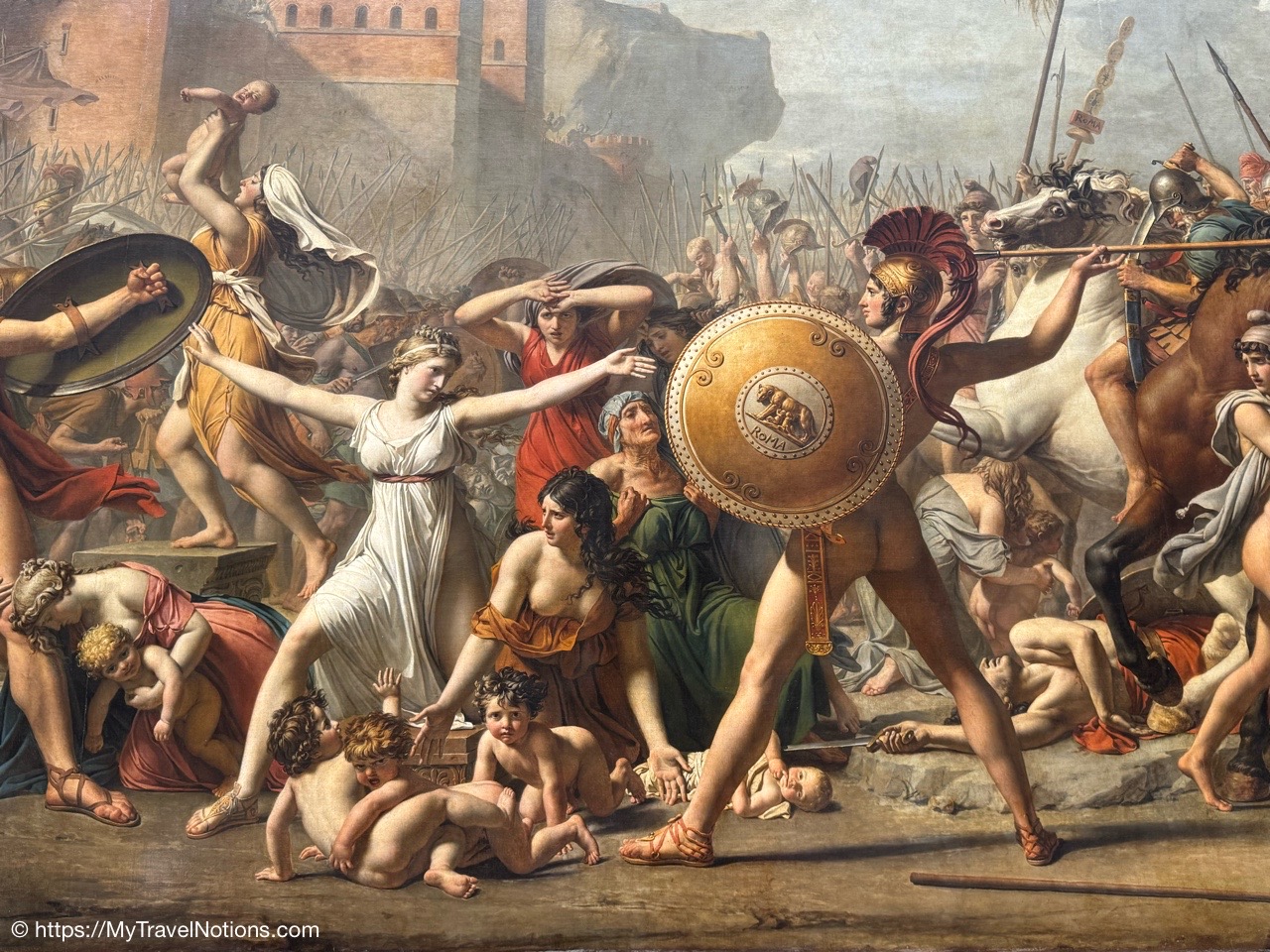
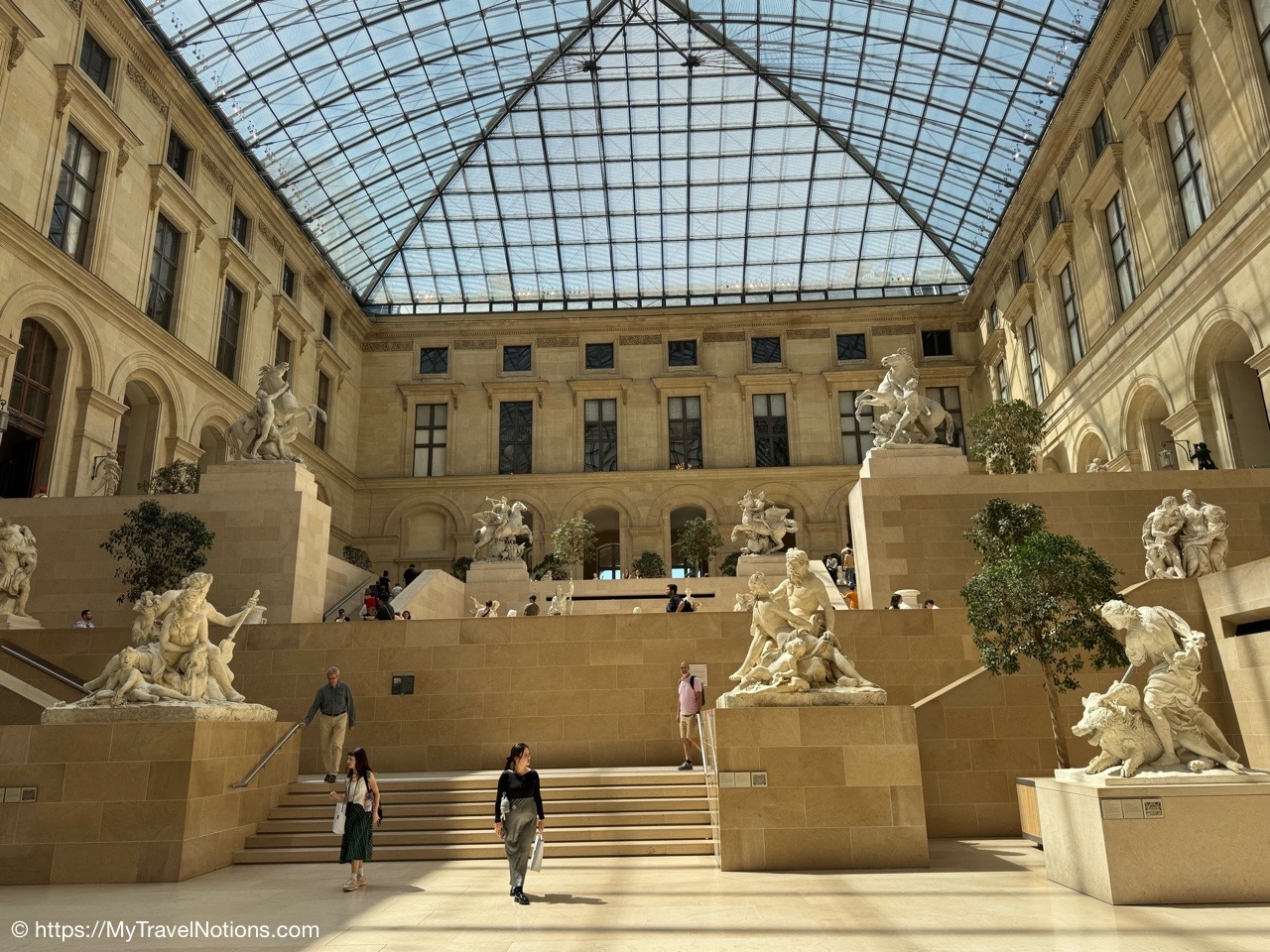
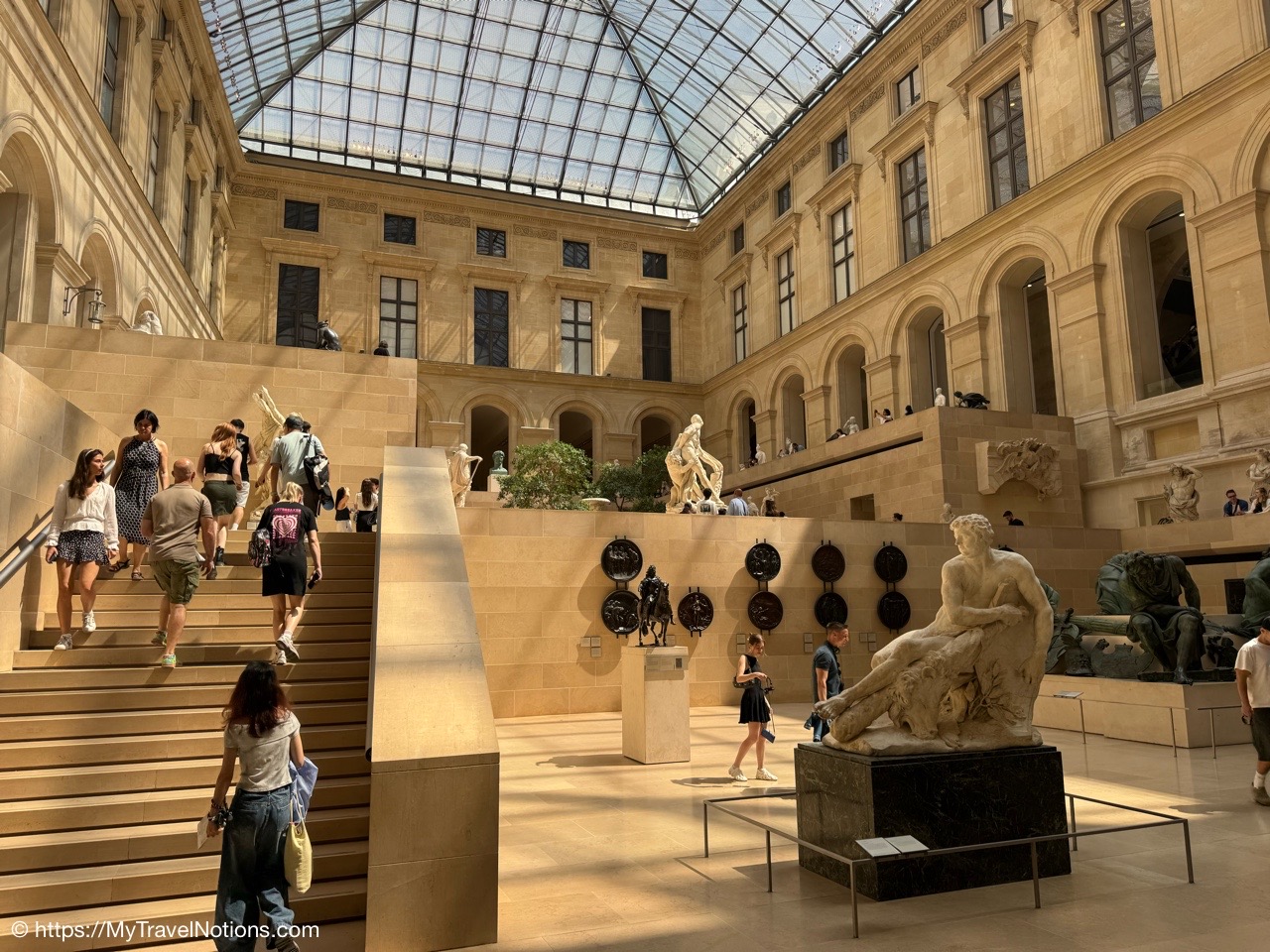
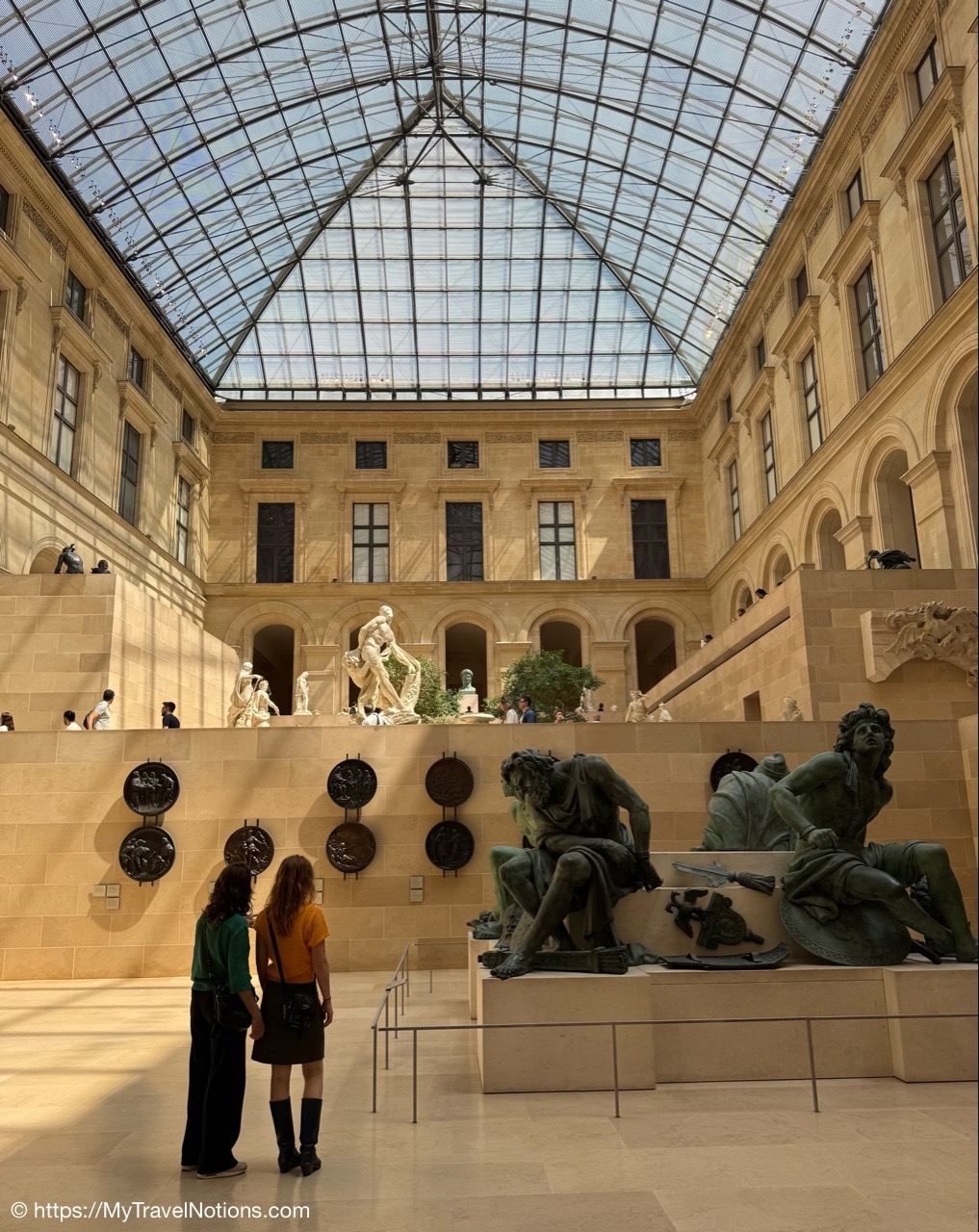
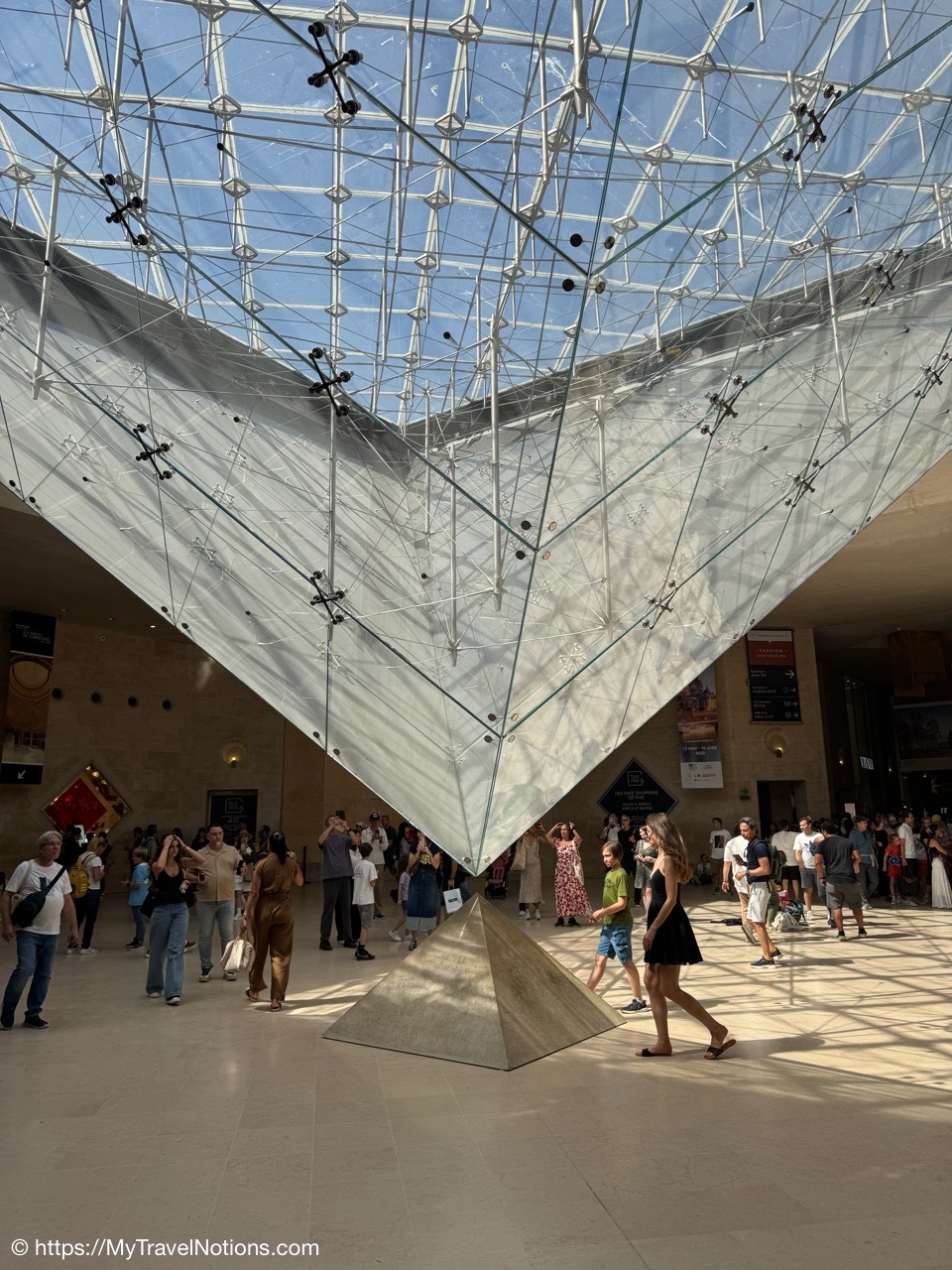
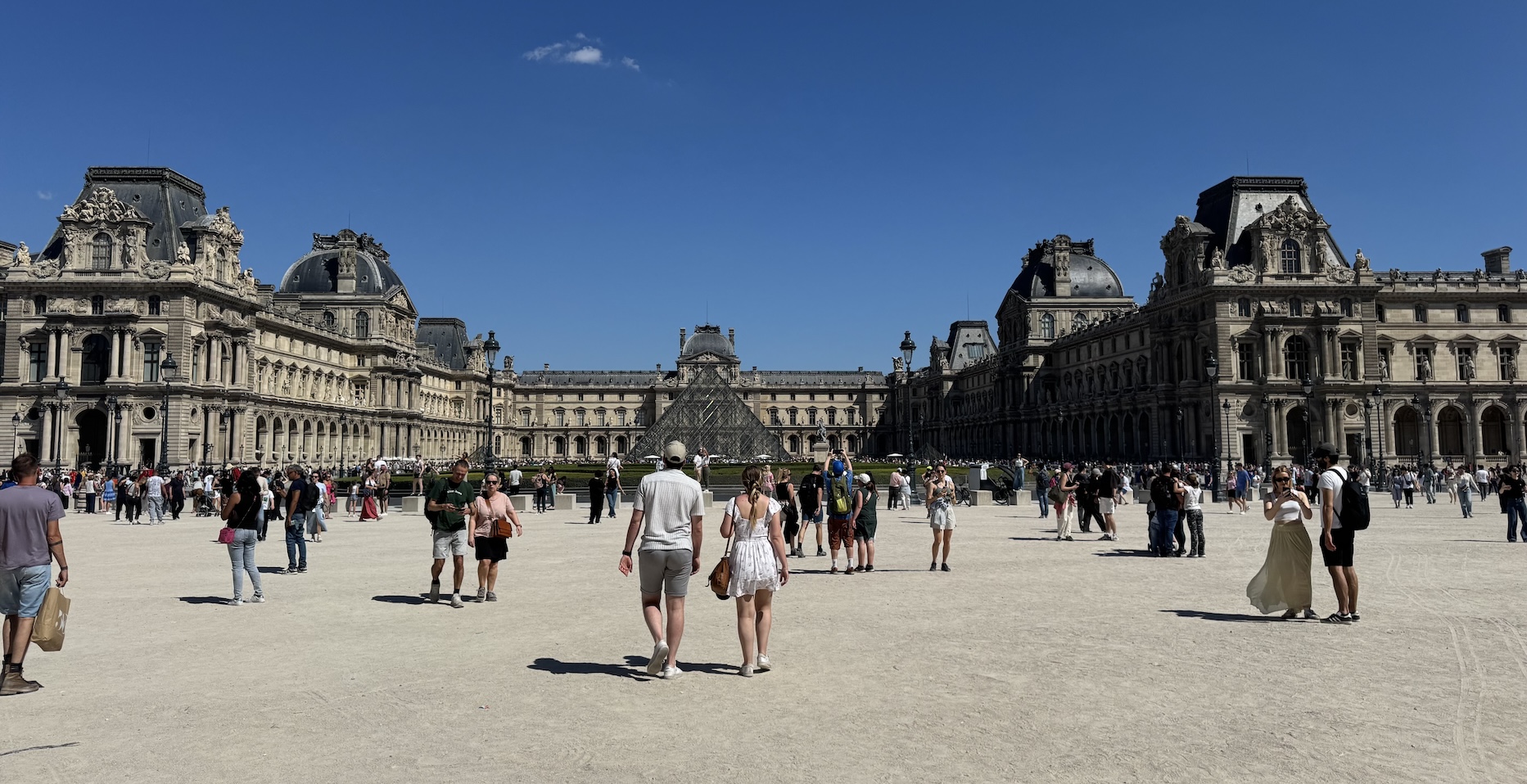
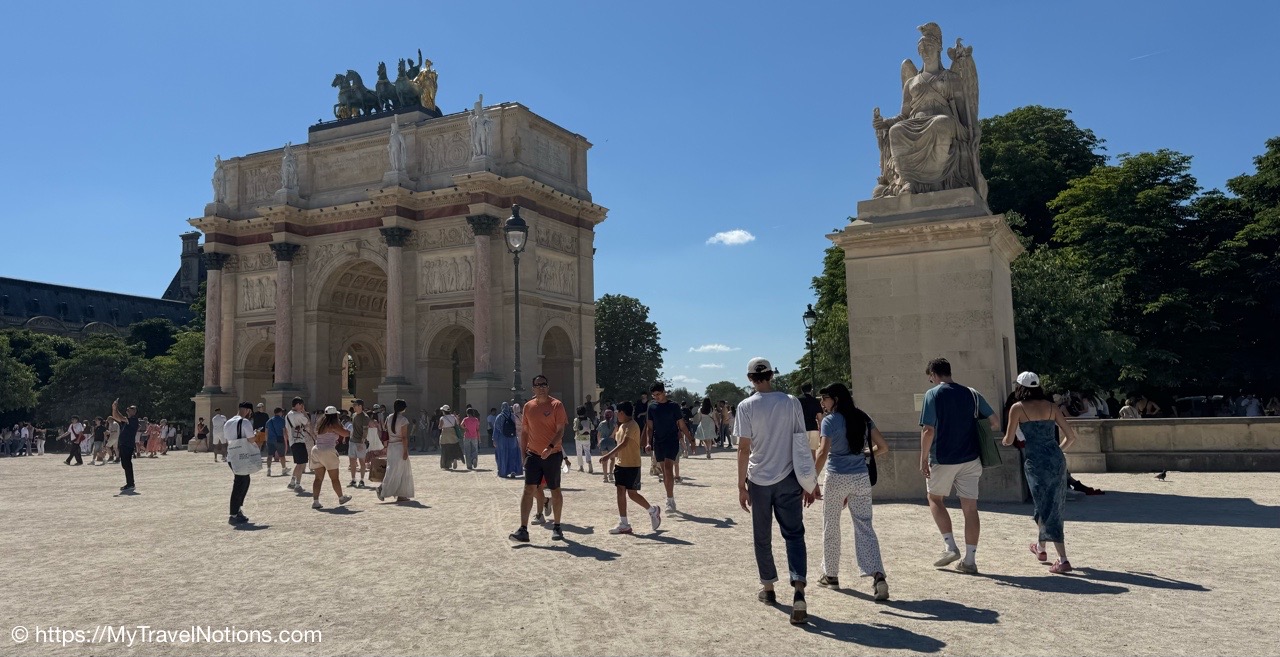
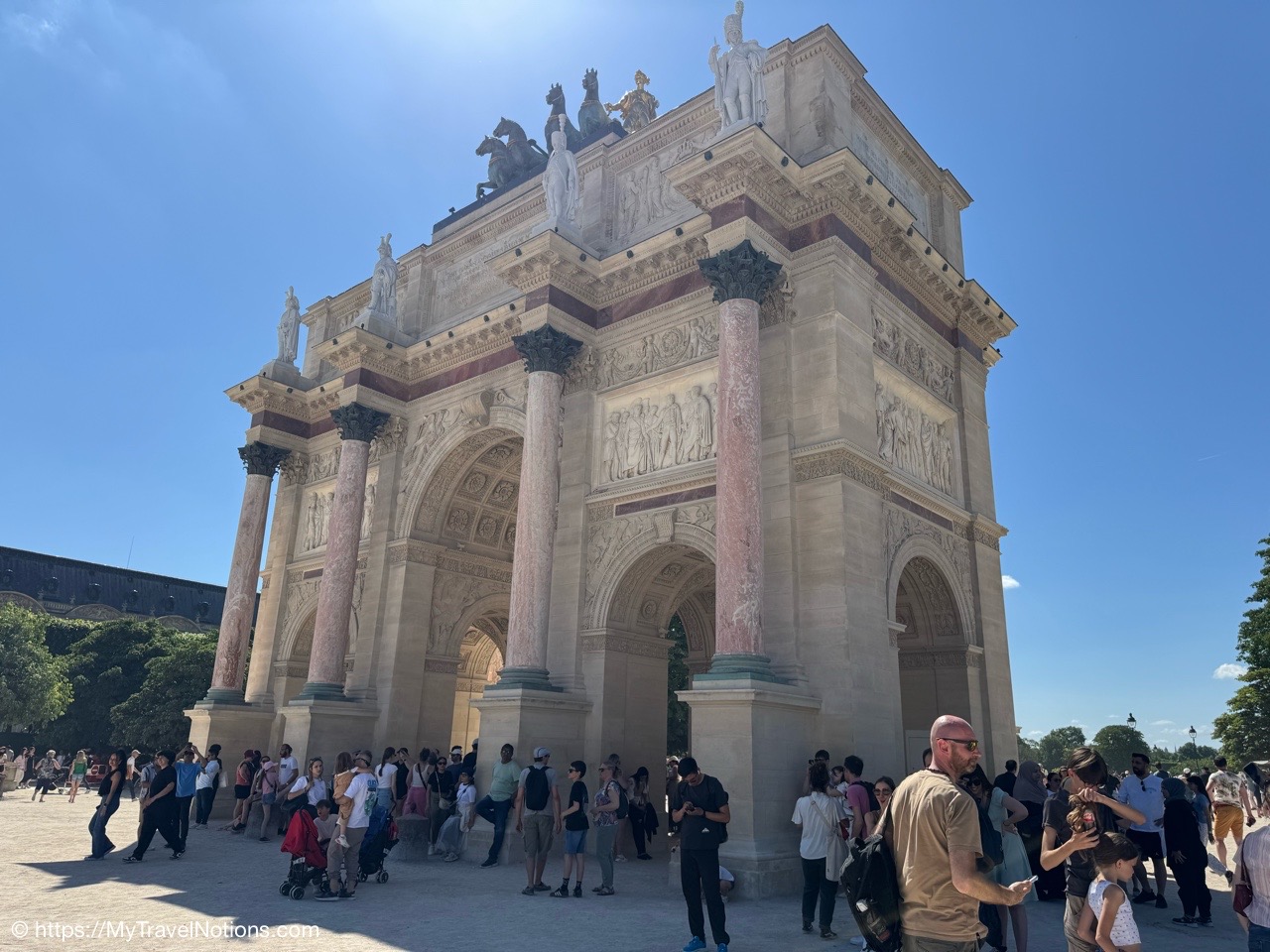
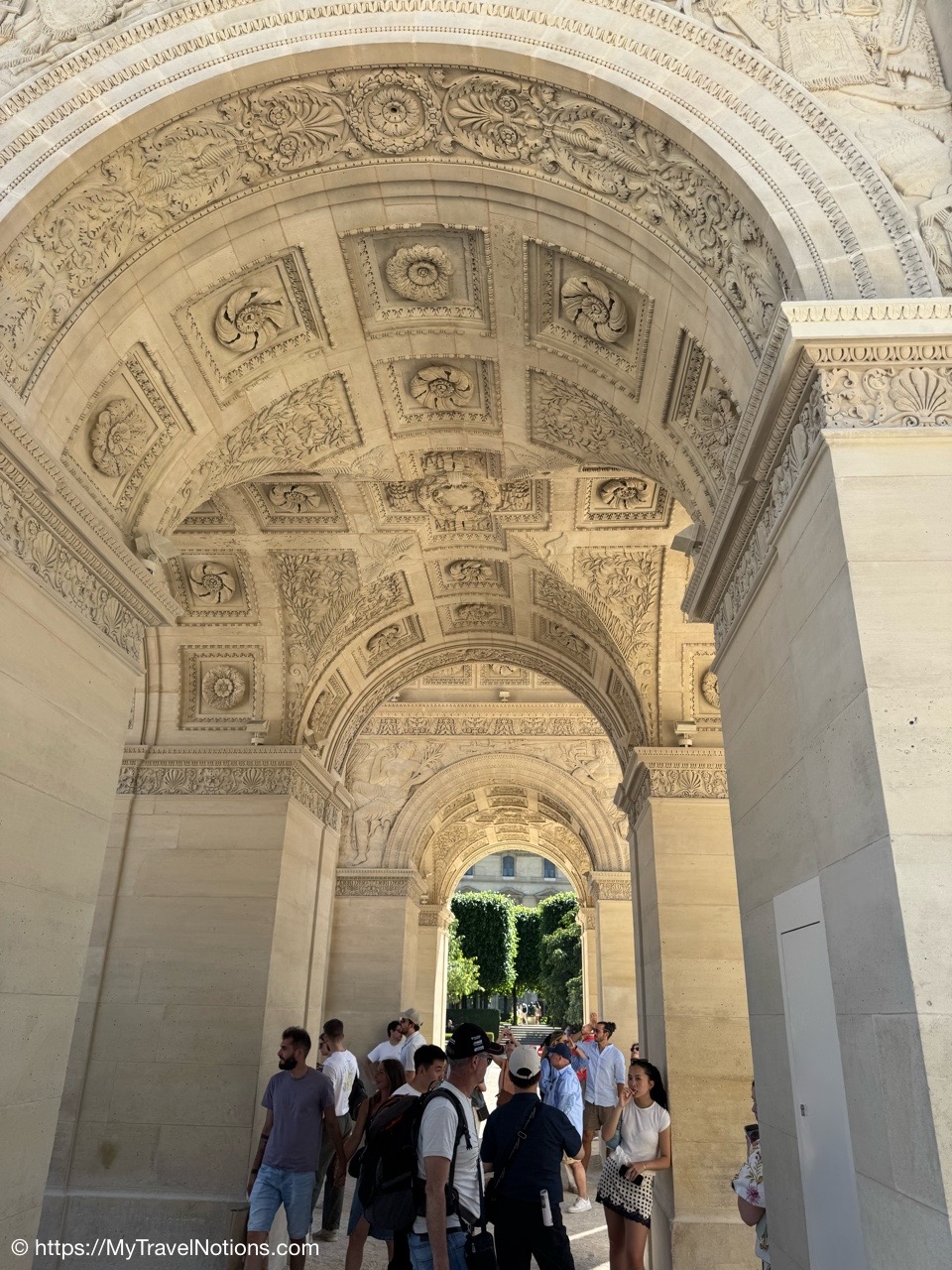
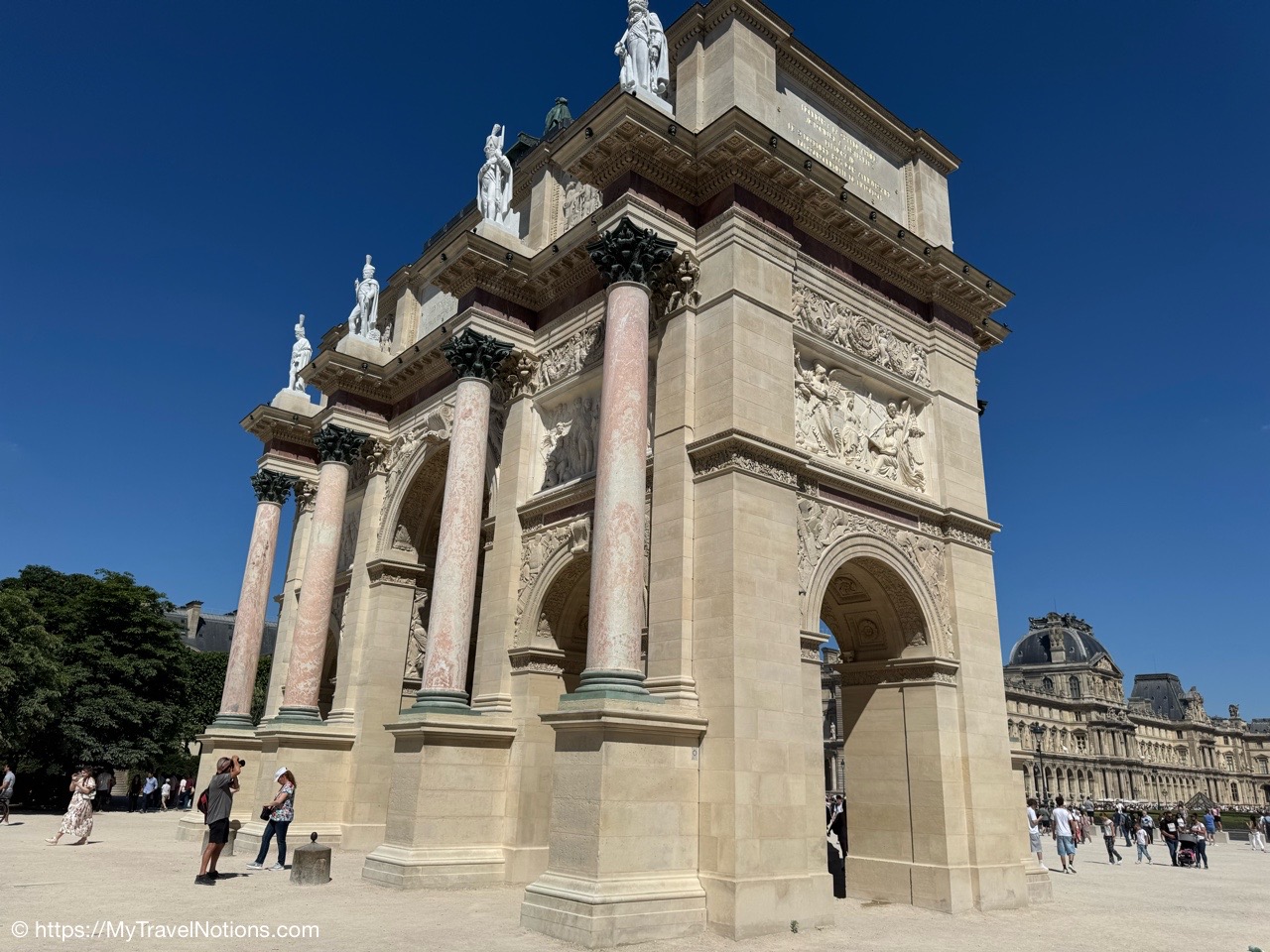
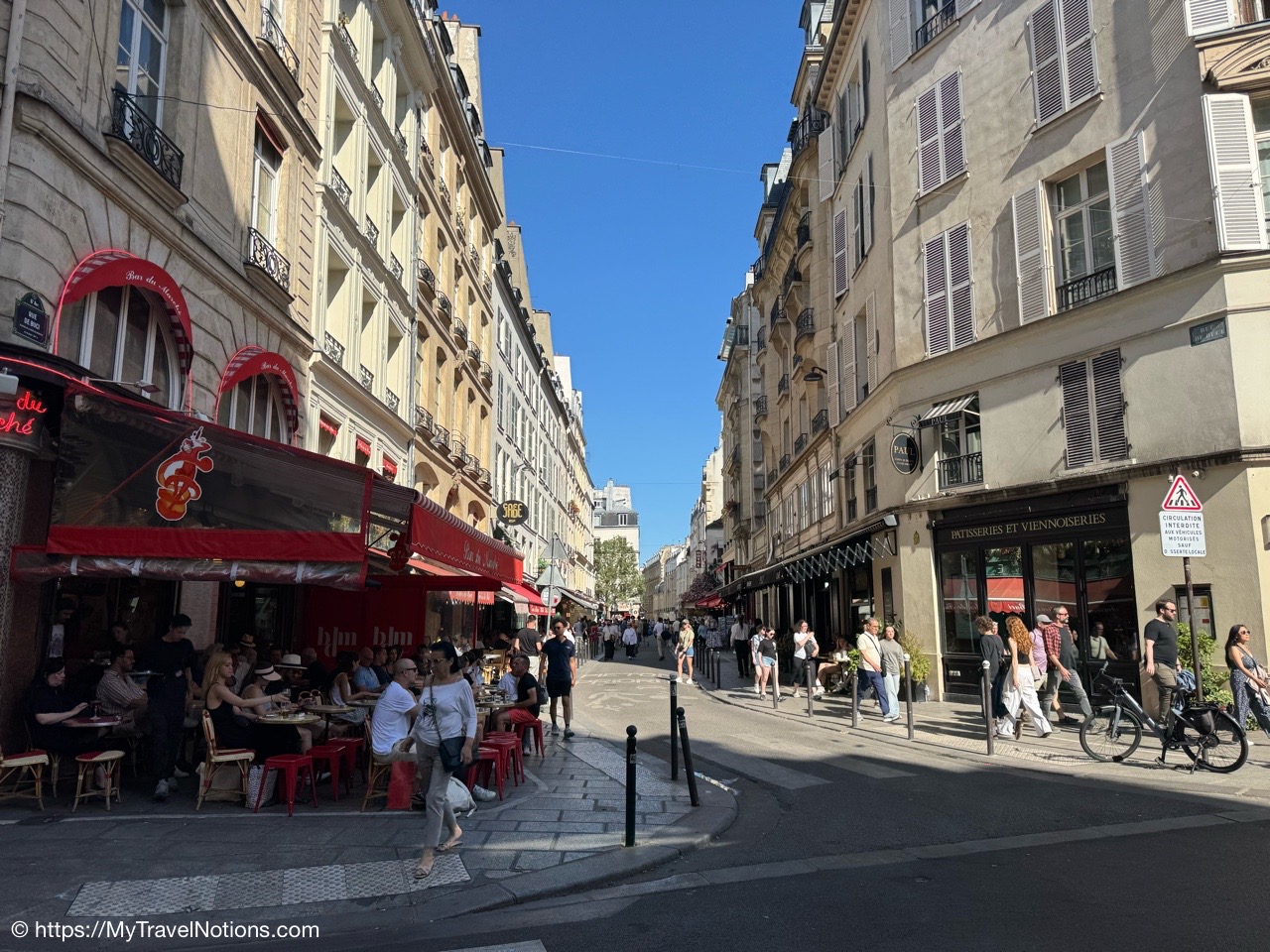
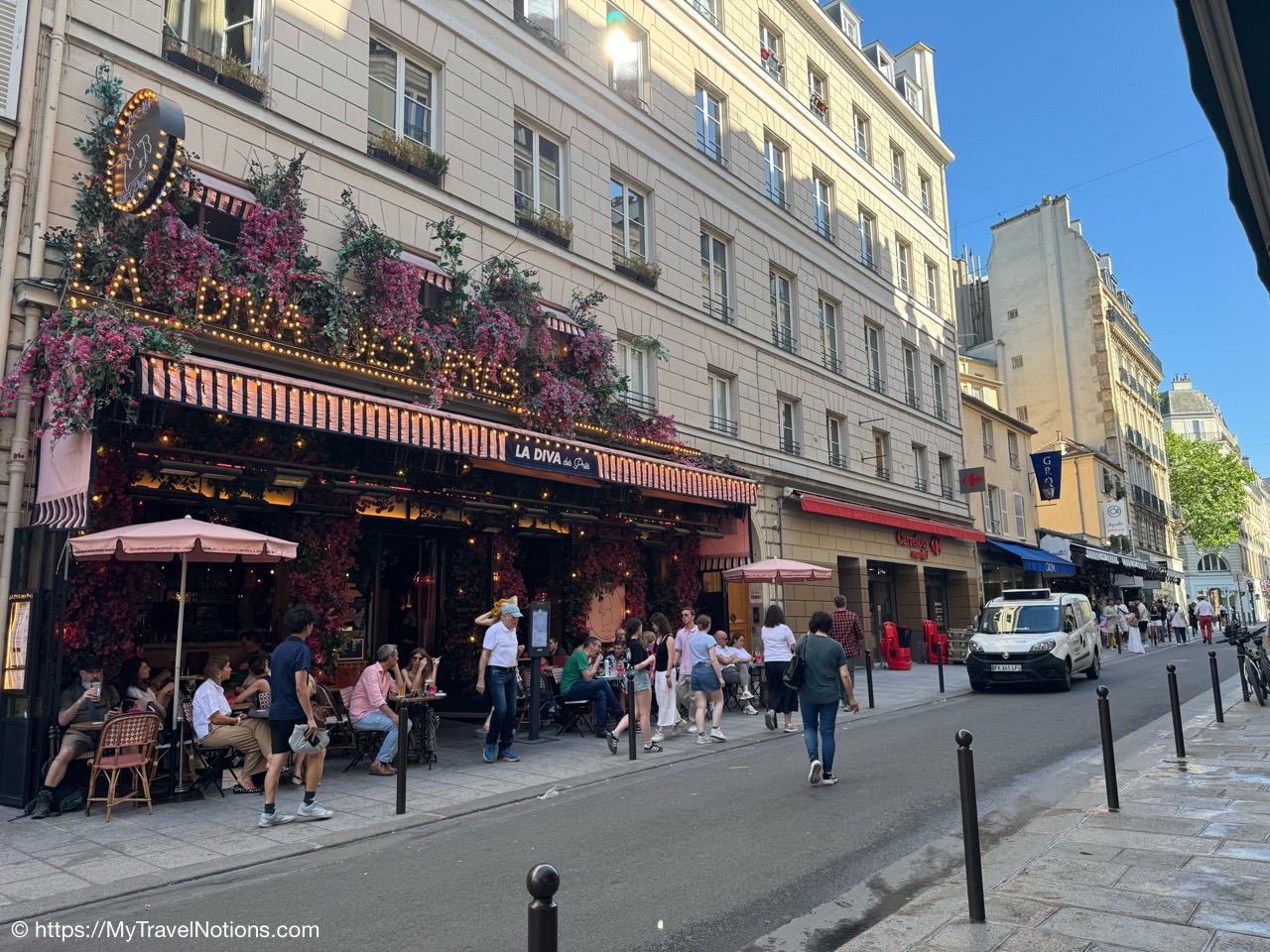
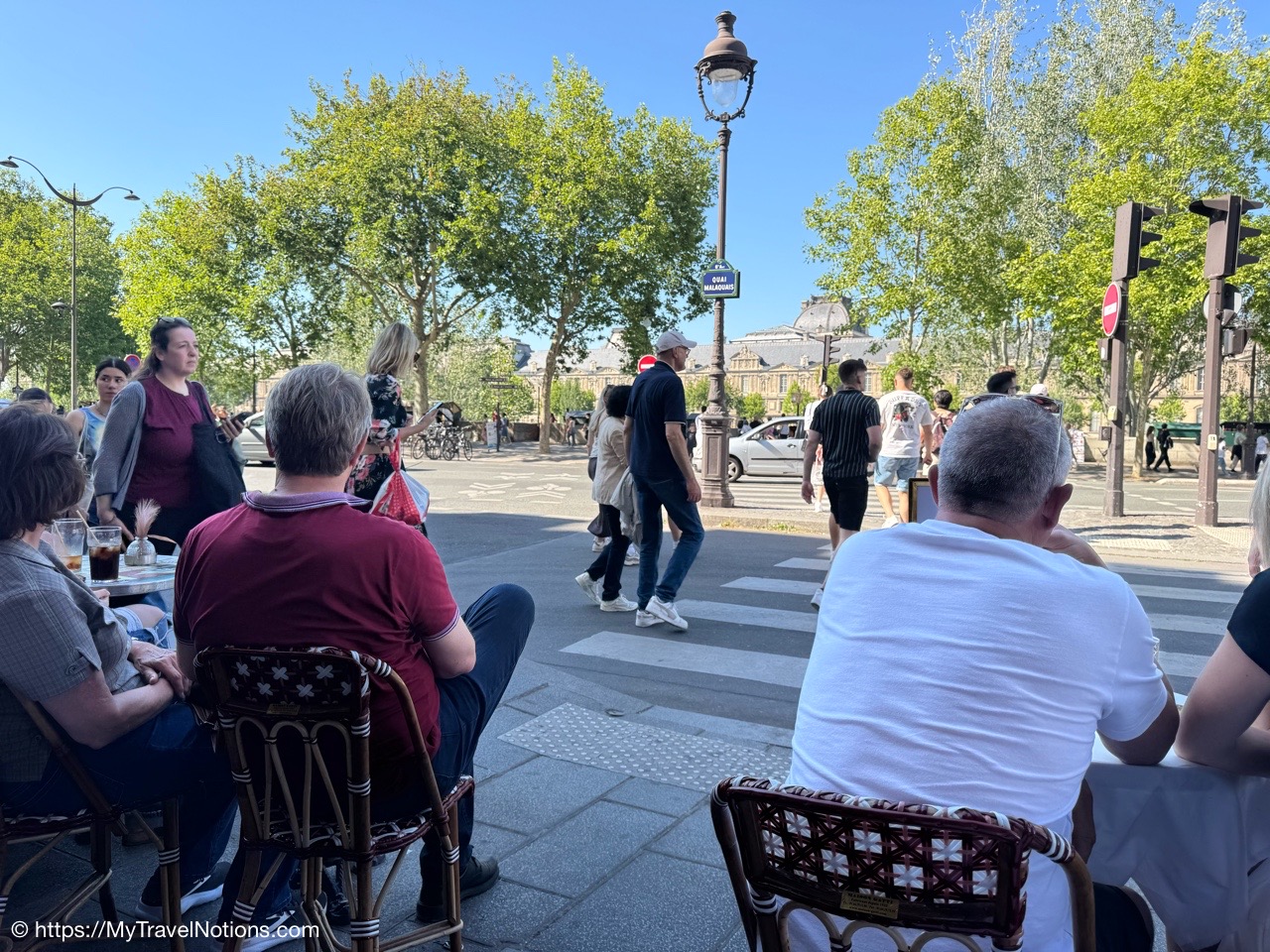
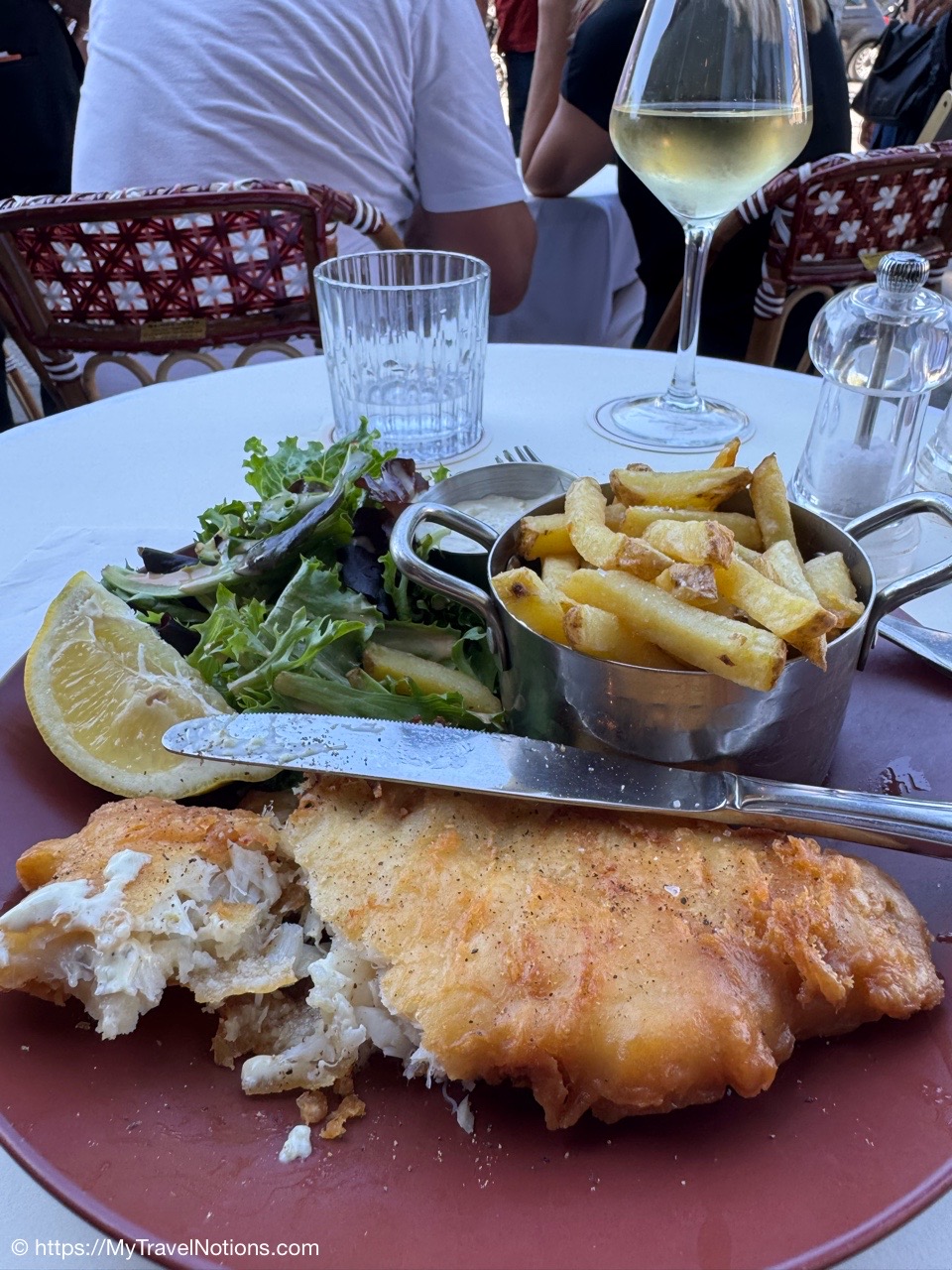
Me at the Louvre Inverted Pyramid, a skylight constructed in the Carrousel du Louvre, an underground shopping mall in front of the Louvre Museum. Directly below the tip of the downwards-pointing glass pyramid, a small stone pyramid is stationed on the floor, as if mirroring the larger structure above with the tips of the two pyramids almost touching. (May 30, 2025)Views along the Siene river with the Notre-Dame Cathedral on my way to the Louvre. The Siene divides Paris into the Right Bank (Rive Droite) to the north and the Left Bank (Rive Gauche) to the south. (May 30, 2025)People boarding a scenic boat tour Views from the quay or embankment along the river Siene.(May 30, 2025)Views along the quay or embankment along the river Siene on the way to the Louvre. (May 30, 2025)Me along the quay or embankment of the river Siene with views of a tour boat sailing along the river. (May 30, 2025)Views along the quay or embankment along the river Siene on the way to the Louvre. (May 30, 2025)Approaching the very distinguished and historic palace of the Louvre in Paris, now the world’s largest art museum. Originally built as a fortress in the 12th century, it was later transformed into a royal residence before becoming a public art museum after the French Revolution in 1793. The current structure is a vast complex of buildings that reflects centuries of architectural changes. (May 30, 2025)The Louvre’s exterior glass triangle was completed in 1989 as a central part of the “Grand Louvre” project, which began in 1981 under French President François Mitterrand. Designed by architect I. M. Pei, the pyramid serves as the main public entrance, providing a functional and modern gateway to the expanded museum and a skylight for the underground lobby, a concept that was initially controversial due to its modern design contrasting with the historic palace. (May 30, 2025)The modern glass pyramid from the interior lobby of the Louvre was a later addition, commissioned by President François Mitterrand. (May 30, 2025)The spiral interior staircase of the Louvre along with the crowds of people. (May 30, 2025)Inside the main lobby of the Louvre in Paris leading to the three main wings of the Sully, Denon and Richelieu. (May 30, 2025)Heading up to the top of the Daru staircase to see the Winged Victory of Samothrace in the Denon Wing of the Louvre in Paris. (May 30, 2025)Following the crowd up to the top of the Daru staircase to see the Winged Victory of Samothrace in the Denon Wing of the Louvre in Paris. (May 30, 2025)I was actually waiting for some of the crowd to thin out so I could take this photo of the Winged Victory at the Louvre. (May 30, 2025)The Winged Victory in the Louvre is a marble statue depicting Nike, the Greek goddess of victory. It represents the goddess on the prow of a warship and is believed to have been created around 190 BCE to commemorate a naval victory. (May 30, 2025)The Percier and Fontaine Rooms inside the Louvre in Paris. (May 30, 2025)“Christ on the Cross with the Virgin Mary, Saint John and Saint Dominic Praying,” a fresco painted by Guido DI PIETRO dit FRA ANGELICO about 1440-1445 inside the Louvre. This fresco was painted by Fra Angelico to decorate the refectory of the monastery of San Marco in Florence. (May 30, 2025)“The Adoration of the Magi” a fresco by Bernardino Luini from about 1520-1525 of the three kings who came to adore the new-born Christ at the Louvre in Paris. (May 30, 2025)“The Virgin and Child Enthroned with Six Angels” by Cenni di Pepe dit Cimabue from about 1280 inside the Louvre in Paris. In this painting, Cimabue departed from traditional depictions of the Virgin and Child enthroned. The composition is still symmetrical, but the diagonally placed throne creates the illusion of three-dimensional space. The painter conveys a sense of the bodies beneath the clothes, accentuating the humanity of the figures. (May 30, 2025)A crowded hallway inside the Louvre. (May 30, 2025)The Salle des États (Room 711) in the Denon wing of the Louvre Museum where one of the world’s most famous paintings is center stage…the Mona Lisa. Created by Leonardo da Vinci between 1503 and 1519, the Mona Lisa is famous for its enigmatic smile, masterful artistic techniques and it dramatic and captivating history which includes being stole in 1911 leading to worldwide attention. Although most of the attention in this large room is given to the Mona Lisa, at the opposite end is the grand “The Wedding Feast at Cana” by Paolo Veronese. (May 30, 2025)Not sure how I got this close, to the most famous portrait in the world, the Mona Lisa, but I did. She is said to be Lisa Gherardini, wife of the Florentine silk merchant Francesco del Giocondo. The painting’s creator was painter, sculptor, architect, inventor and more, the Renaissance man himself, Leonardo da Vinci who used his sfumato technique to create a soft, hazy, and smoky transition between colors and tones, blending them so seamlessly that harsh outlines are eliminated. (May 30, 2025)The Wedding Feast at Cana by Paolo Veronese (1528–1588), just opposite the Mona Lisa at the Louvre, is the biblical story of Jesus’ first miracle, where he turned water into wine at a wedding celebration in Cana, Galilee, after his mother, Mary, told him the hosts were out of wine. This event is depicted in numerous artworks and is interpreted as Jesus’ approval of marriage and celebration, a moment of abundant grace, and a sign of salvation. The feast itself is described as a multi-day event where Jesus, his disciples, and Mary were guests. This monumental painting was originally for the refectory of the San Giorgio Maggiore monastery in Venice. (May 30, 2025)A close-up of a section of “The Wedding Feast at Cana” by Paolo Veronese (1528–1588), just opposite the Mona Lisa at the Louvre, is the biblical story of Jesus’ first miracle, where he turned water into wine at a wedding celebration in Cana, Galilee, after his mother, Mary, told him the hosts were out of wine. (May 30, 2025)Walking through the halls of the Louvre with its distinctive parquet floors. (May 30, 2025)“The Coronation of Napoleon” on Dec. 2, 1804 at the Notre-Dame Cathedral is a massive oil painting by Jacques-Louis David from 1807 inside the Louvre. Commissioned by Napoleon, it depicts him placing the crown on his own head after being crowned by Pope Pius VII, a moment of historical drama that was altered in the painting for propaganda purposes, as Napoleon actually crowned himself before the Pope could. (May 30, 2025)A close-up of “The Coronation of Napoleon” on Dec. 2, 1804 at the Notre-Dame Cathedral is a massive oil painting by Jacques-Louis David from 1807 inside the Louvre. (May 30, 2025)“The Intervention of the Sabine Women” painted by Jacques-Louis David between 1796 and 1799 at the Louvre shows a legendary episode following the abduction of the Sabine women by the founding generation of Rome. He began the project while in prison, inspired by his estranged wife and the theme of love overcoming conflict. (May 30, 2025)A close-up of “The Intervention of the Sabine Women” painted by Jacques-Louis David between 1796 and 1799 at the Louvre shows a legendary episode following the abduction of the Sabine women by the founding generation of Rome. He began the project while in prison, inspired by his estranged wife and the theme of love overcoming conflict. (May 30, 2025)The Cour Marly, an outdoor courtyard covered with a glass roof, inside the Louvre. It is home to French sculptures from the 17th and 18th centuries. (May 30, 2025)The Cour Puget, another glass-covered indoor courtyard of the Richelieu wing inside the Louvre, is filled with large marble and stone statues from the 17th and 18th centuries. (May 30, 2025)The Cour Puget, another glass-covered indoor courtyard of the Richelieu wing inside the Louvre, is filled with large marble and stone statues from the 17th and 18th centuries. (May 30, 2025)One more look at the Louvre Inverted Pyramid, a skylight constructed in the Carrousel du Louvre, an underground shopping mall in front of the Louvre Museum. Profession Robert Langdon, the protagonist of American author Dan Brown’s 2003 international bestseller ‘The Da Vinci Code’, is reads symbols and concludes that the inverted glass pyramid is perceived as a Chalice, a feminine symbol, whereas the stone pyramid below is interpreted as a Blade, a masculine symbol: the whole structure could thus express the union of the sexes. Moreover, Brown’s protagonist concludes that the tiny stone pyramid is a secret chamber containing the sarcophagus remains of Mary Magdalene. In reality, the smaller stone pyramid can be pushed aside to facilitate maintenance and cleaning of the glass pyramid above. (May 30, 2025)Leaving the Louvre to find a restaurant for an early dinner and to make my way back to my hotel in Paris. (May 30, 2025)The Arc de Triomphe du Carrousel, close to the Louvre, was built between 1806 and 1808 to commemorate Napoleon’s military victories in the Wars of the Third and Fourth Coalitions. The original horses, taken from St. Mark’s Basilica in Venice, were returned after Napoleon’s defeat. The current quadriga was installed in 1828. (May 30, 2025)The Arc de Triomphe du Carrousel, built between 1806 and 1808, is a smaller triumphal arch commissioned by Napoleon to commemorate his military victories, located between the Louvre Museum and the now-gone Tuileries Palace. Atop the arch is a bronze quadriga, a four-horse chariot driven by the goddess of Victory, which replaced the original horses taken from St. Mark’s Square in Venice. The current quadriga was installed in 1828. (May 30, 2025)The bas-relief under the main arch of the Arc de Triomphe du Carrousel, close to the Louvre, was built between 1806 and 1808 to commemorate Napoleon’s military victories in the Wars of the Third and Fourth Coalitions. (May 30, 2025)The other side of the Arc de Triomphe du Carrousel, with views of the Louvre, was built between 1806 and 1808 to commemorate Napoleon’s military victories in the Wars of the Third and Fourth Coalitions. (May 30, 2025)Walking down Rue de Seine in search of a quaint Parisian restaurant for an early dinner. (May 30, 2025)Walking down Rue de Seine in search of a quaint Parisian restaurant for an early dinner. (May 30, 2025)I sat along the terrace of La Diva des Prés along the Rue de Seine for an early dinner after my crowded day at the Louvre and my last day in Paris. (May 30, 2025)My people watching view on the terrace of La Diva des Prés along the Rue de Seine for an early dinner after my crowded day at the Louvre and my last day in Paris. (May 30, 2025)I’m by no means a fancy eater and when I saw fish and chips on the La Diva des Prés menu with a nice glass of Prosecco to go along with my meal, I dove in as I enjoyed my food and terrace views along the Rue de Seine in Paris. (May 30, 2025)
Not sure why Rosie and I deduced to take the Paris Food Walking tour during our last day in Paris, but I’m glad we did. It turned out to be a nice way to bring an end to our few days in Paris and a nice close to our stay in France.
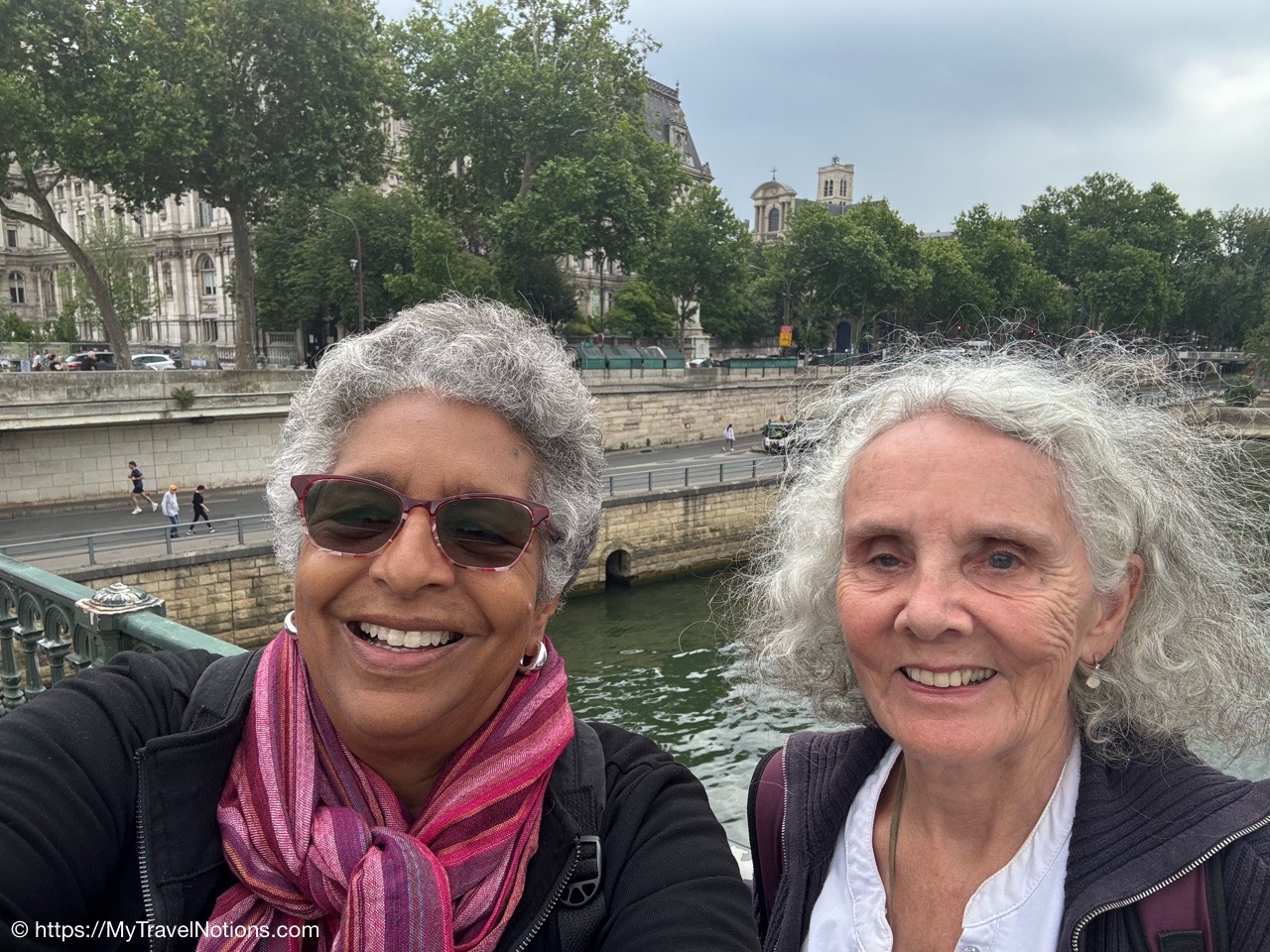
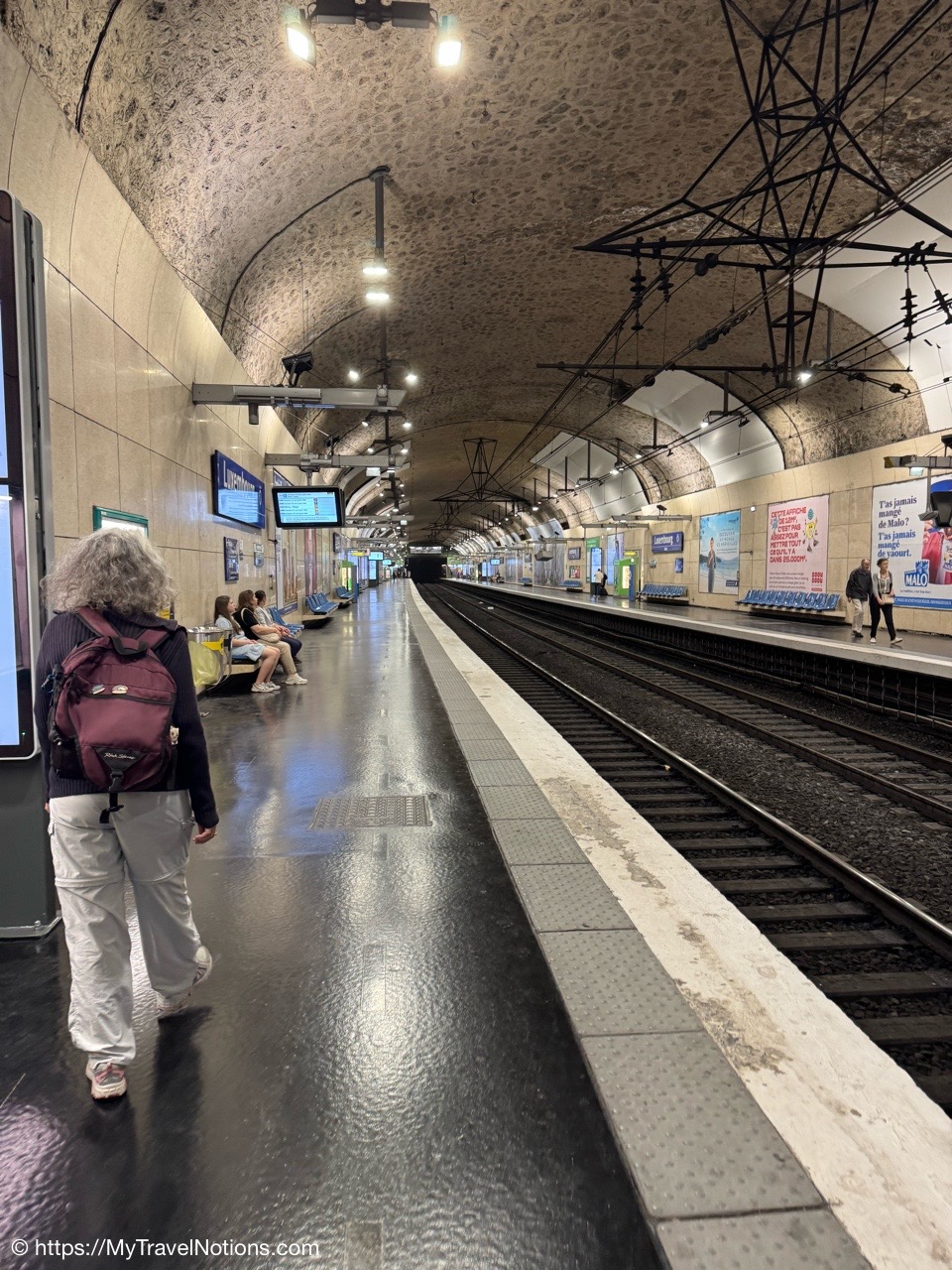
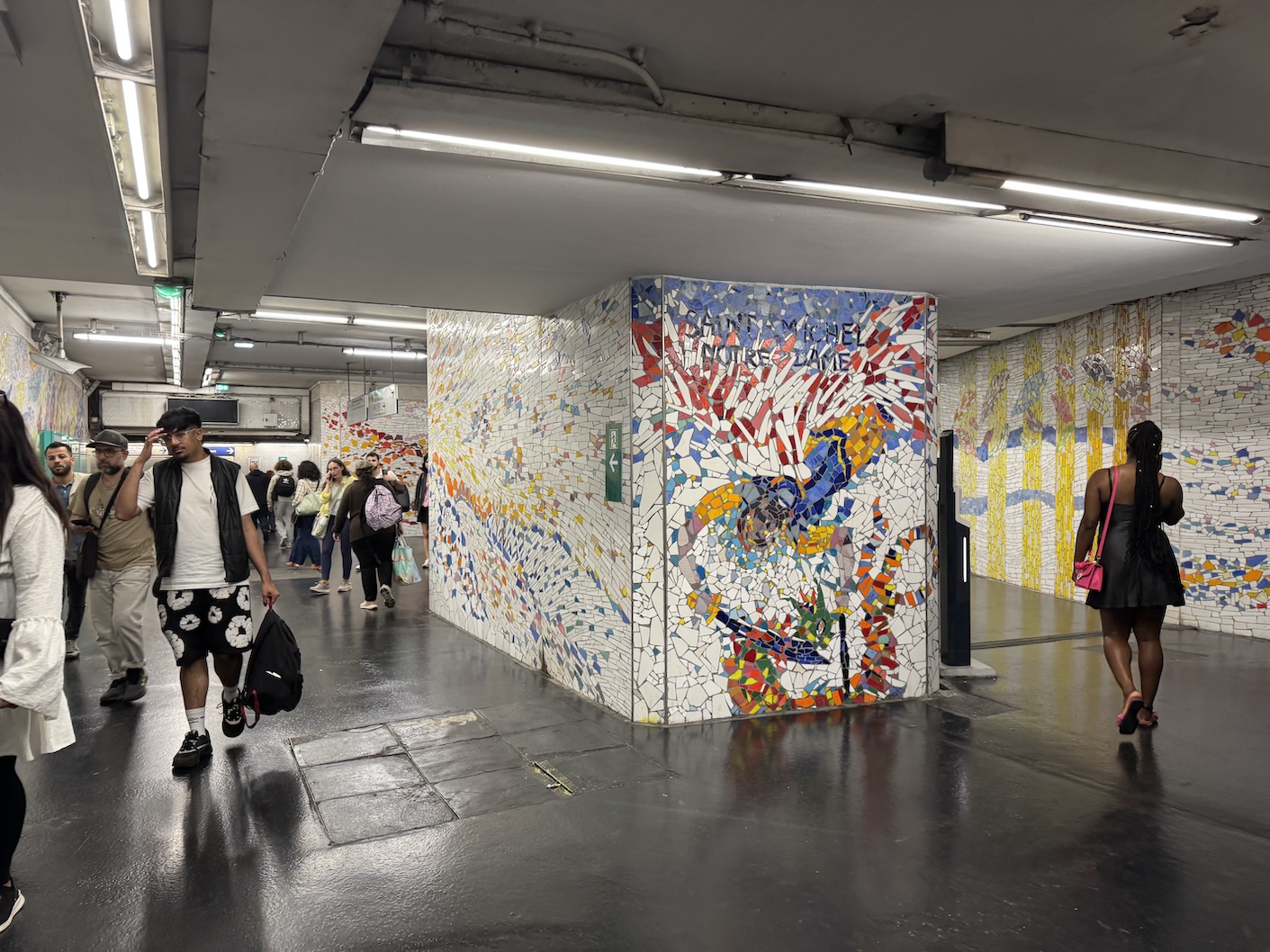
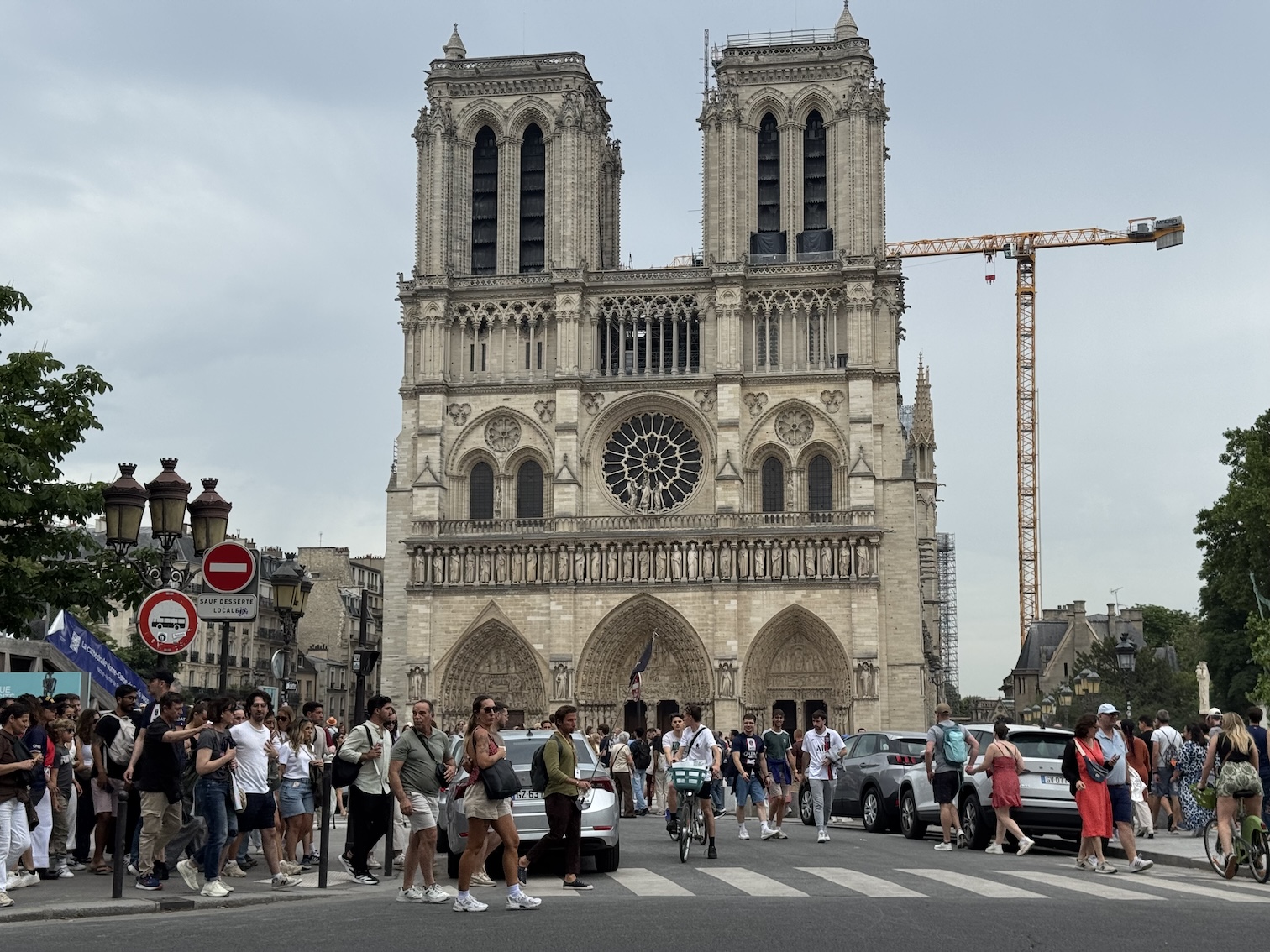
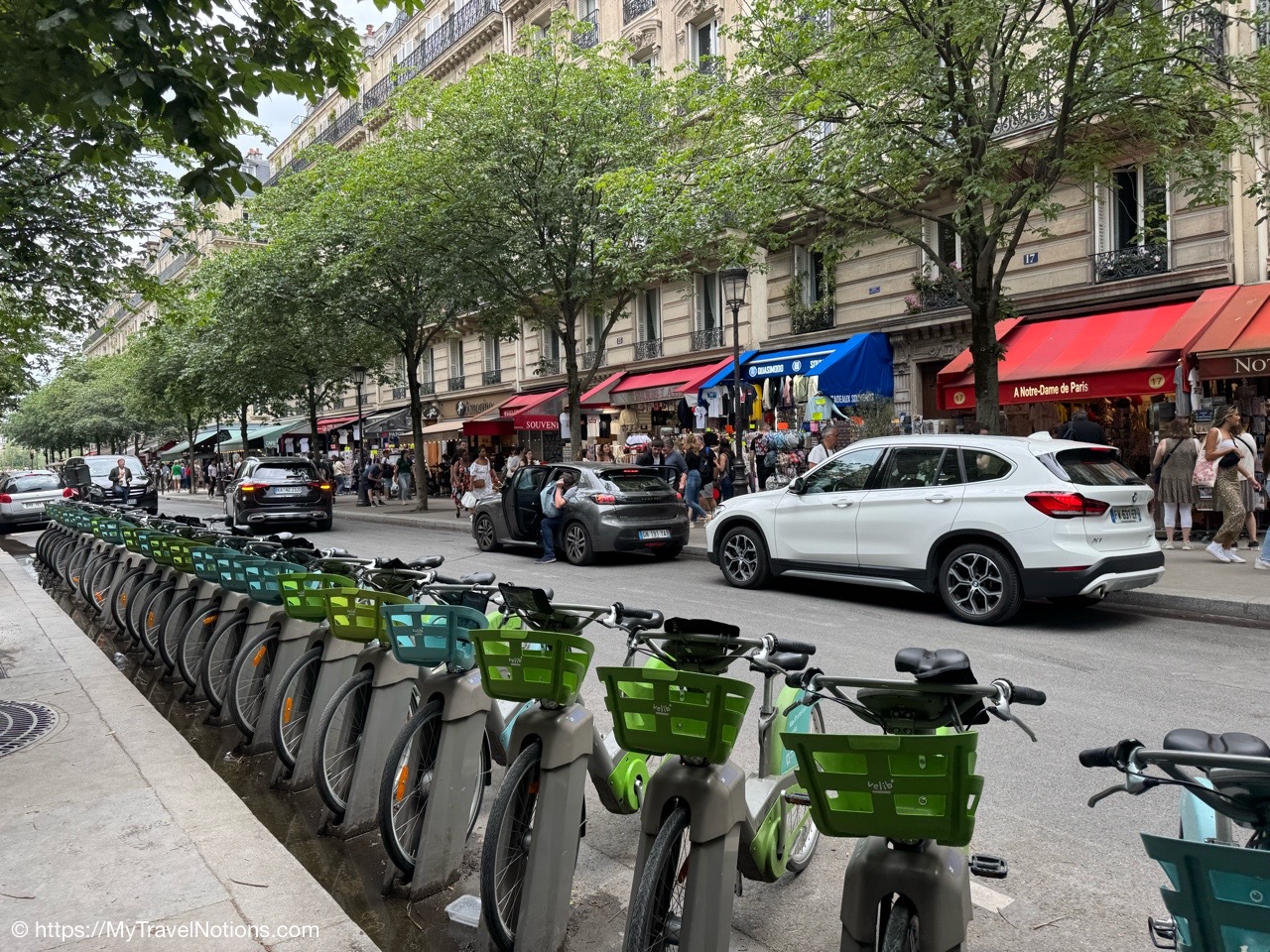
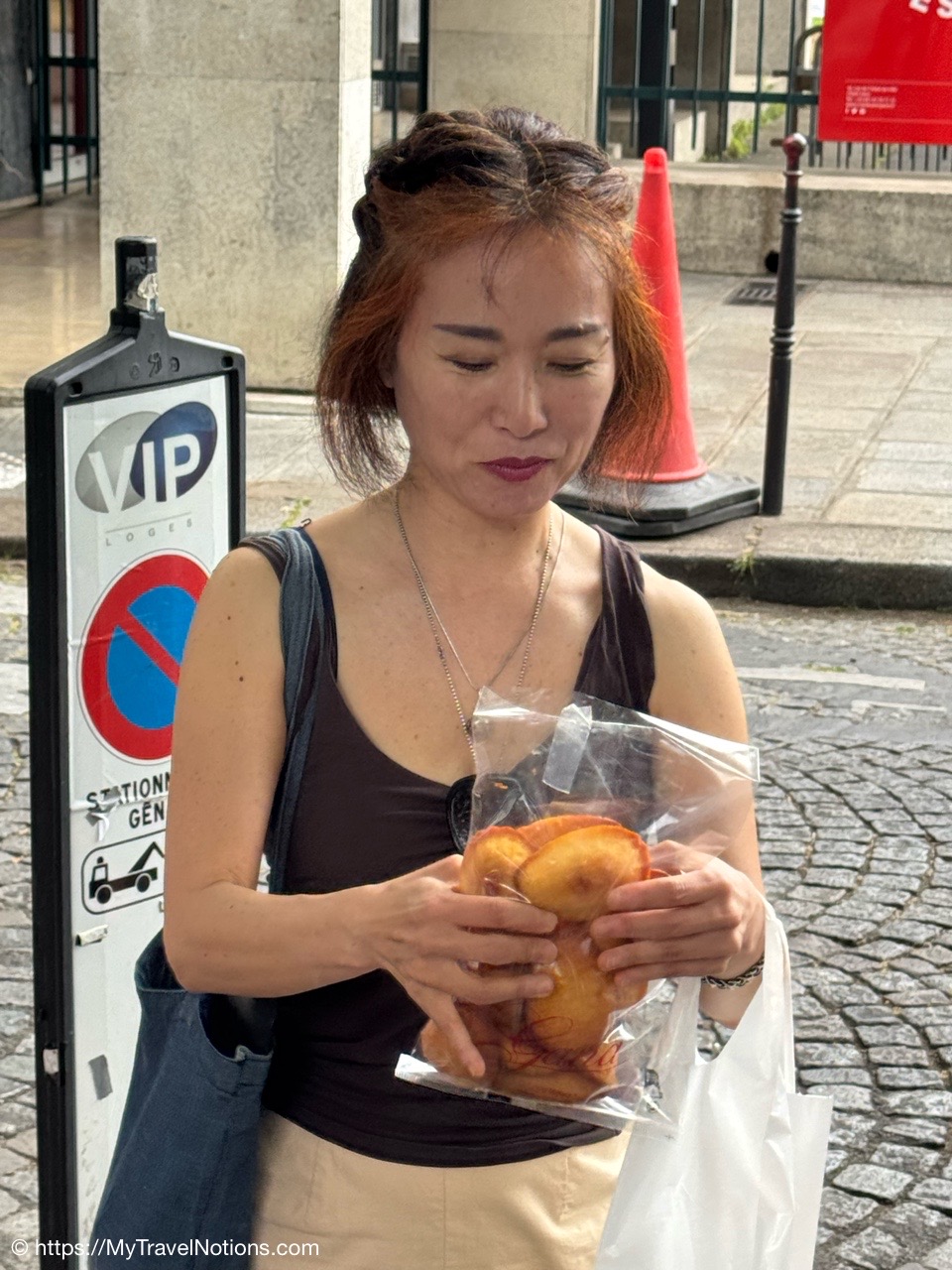
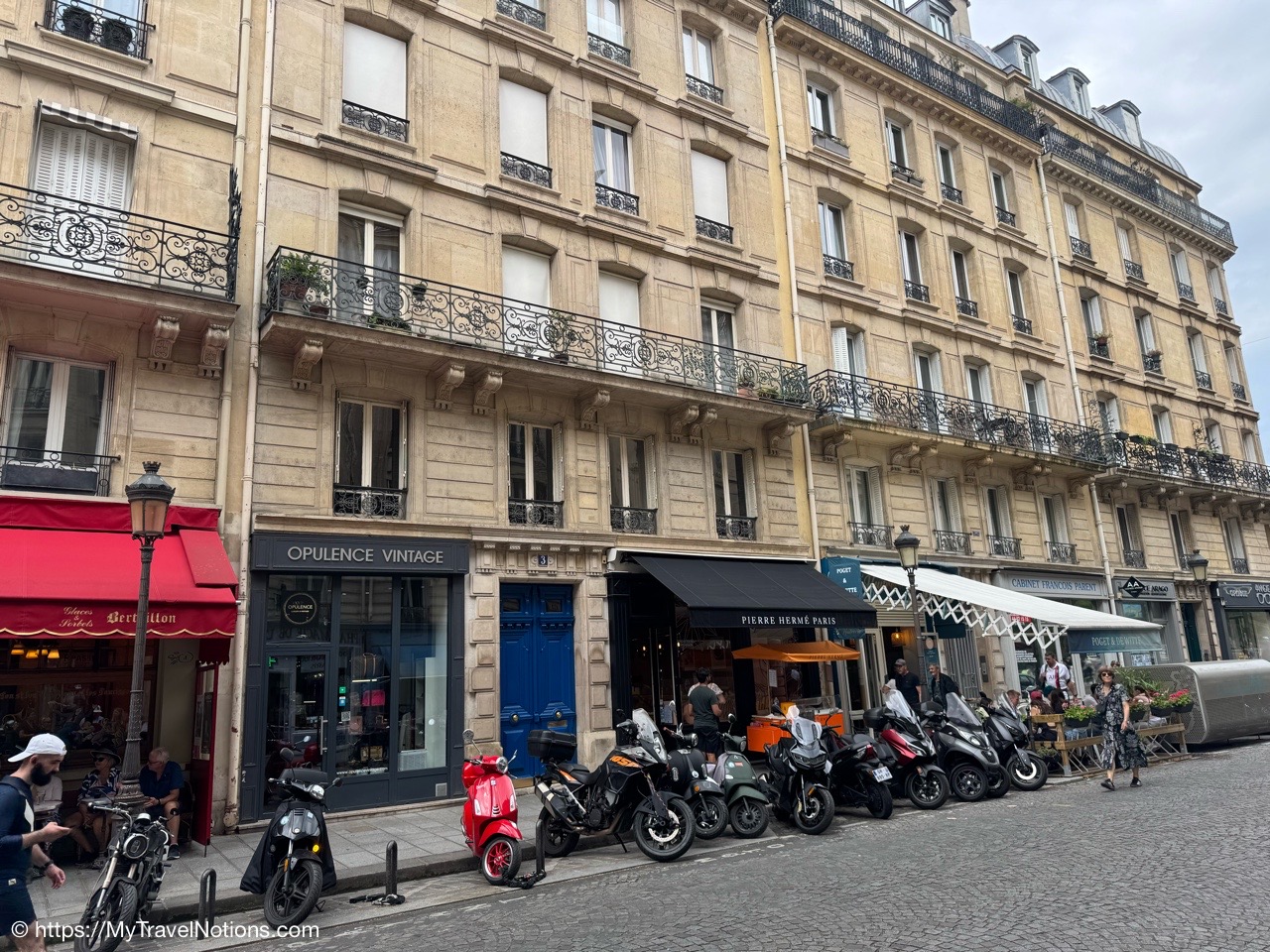
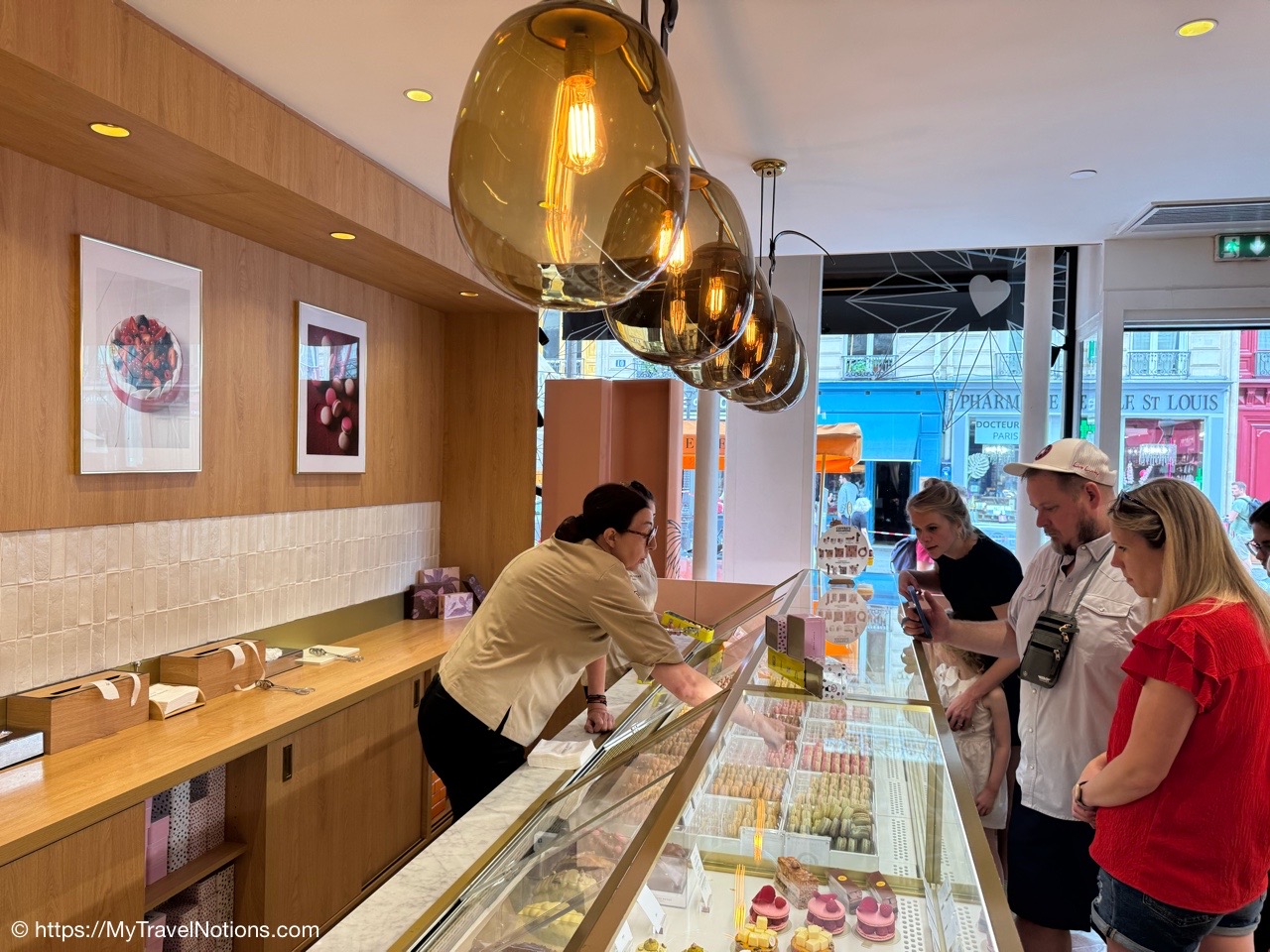
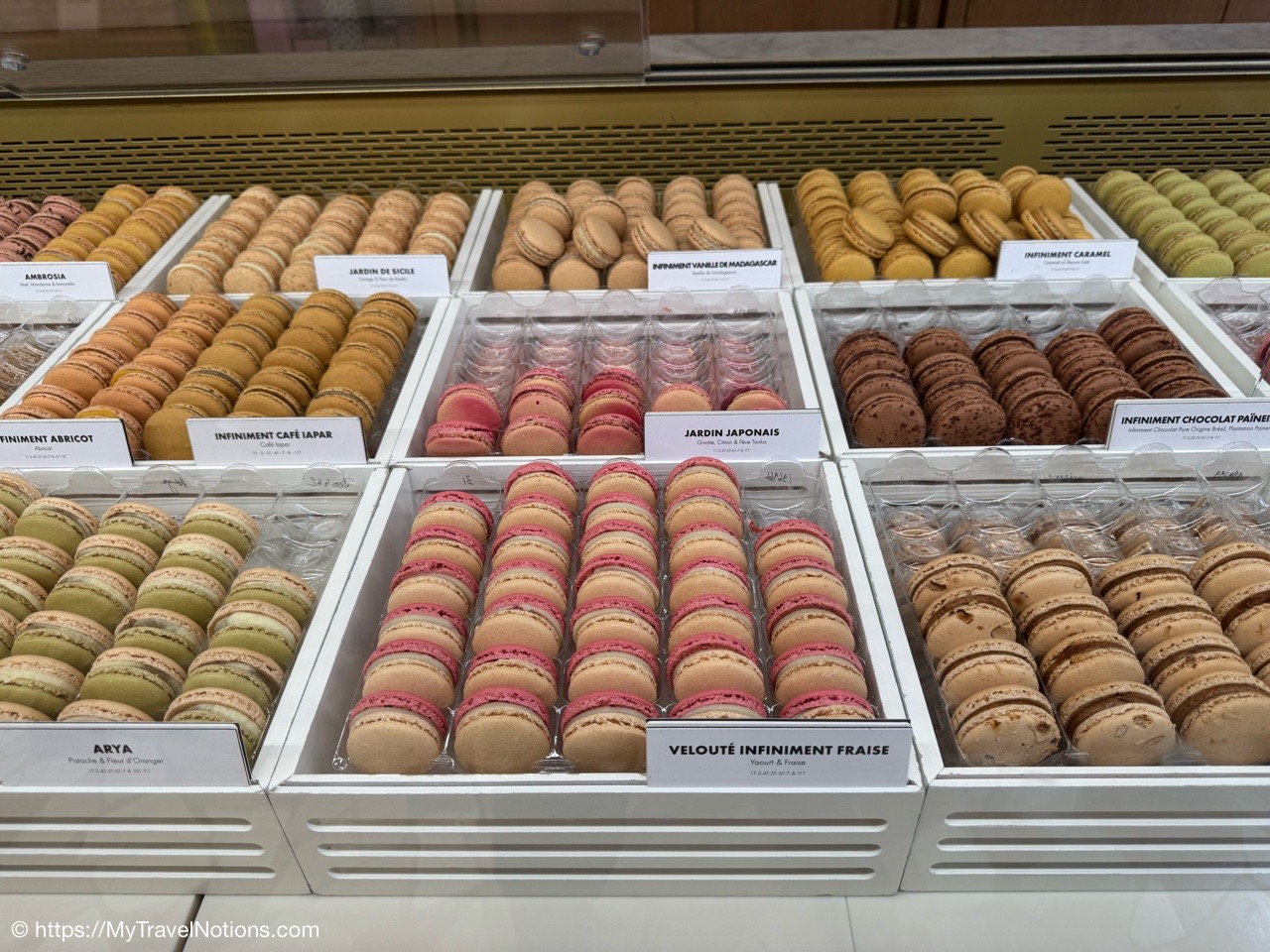
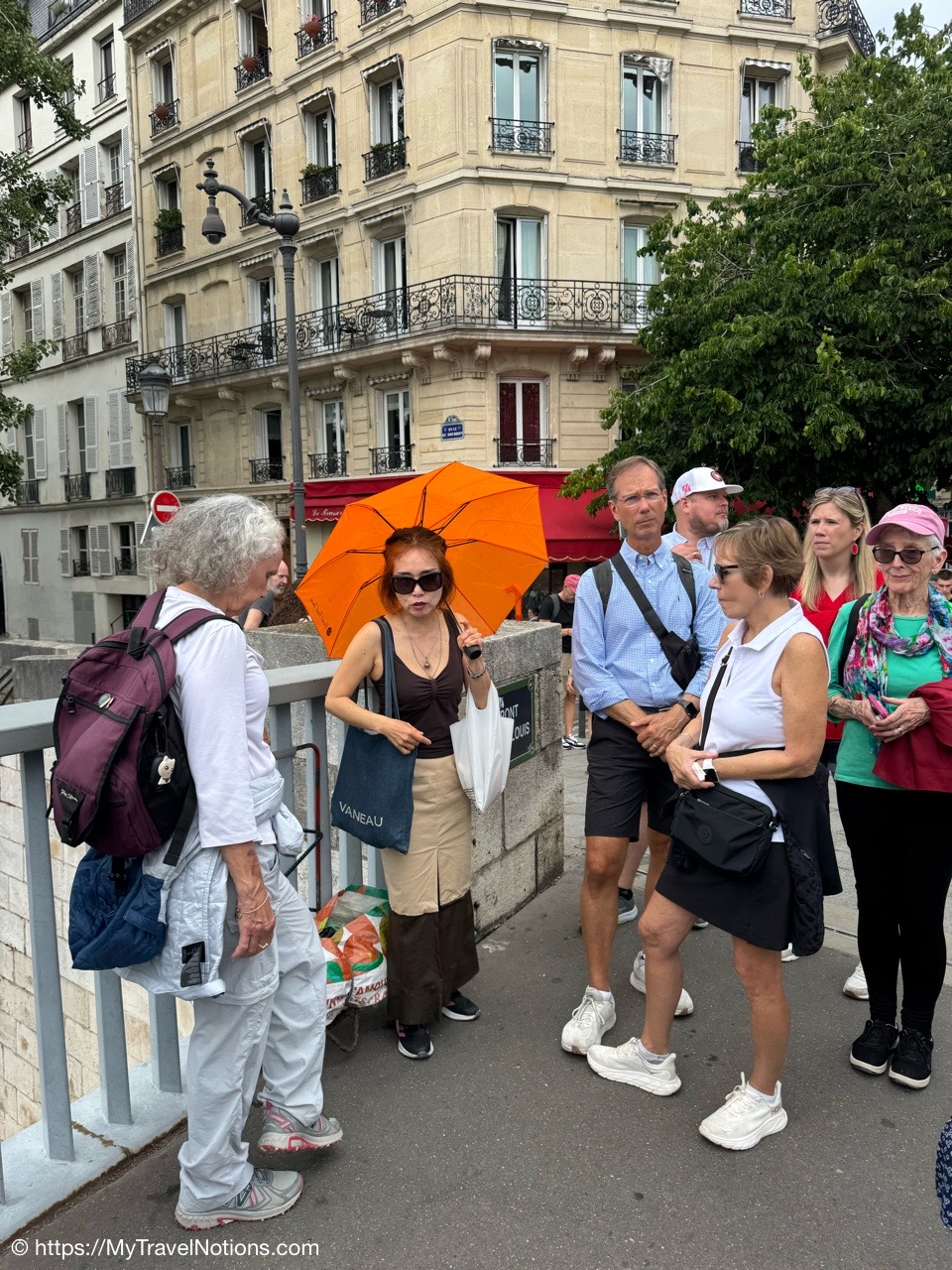
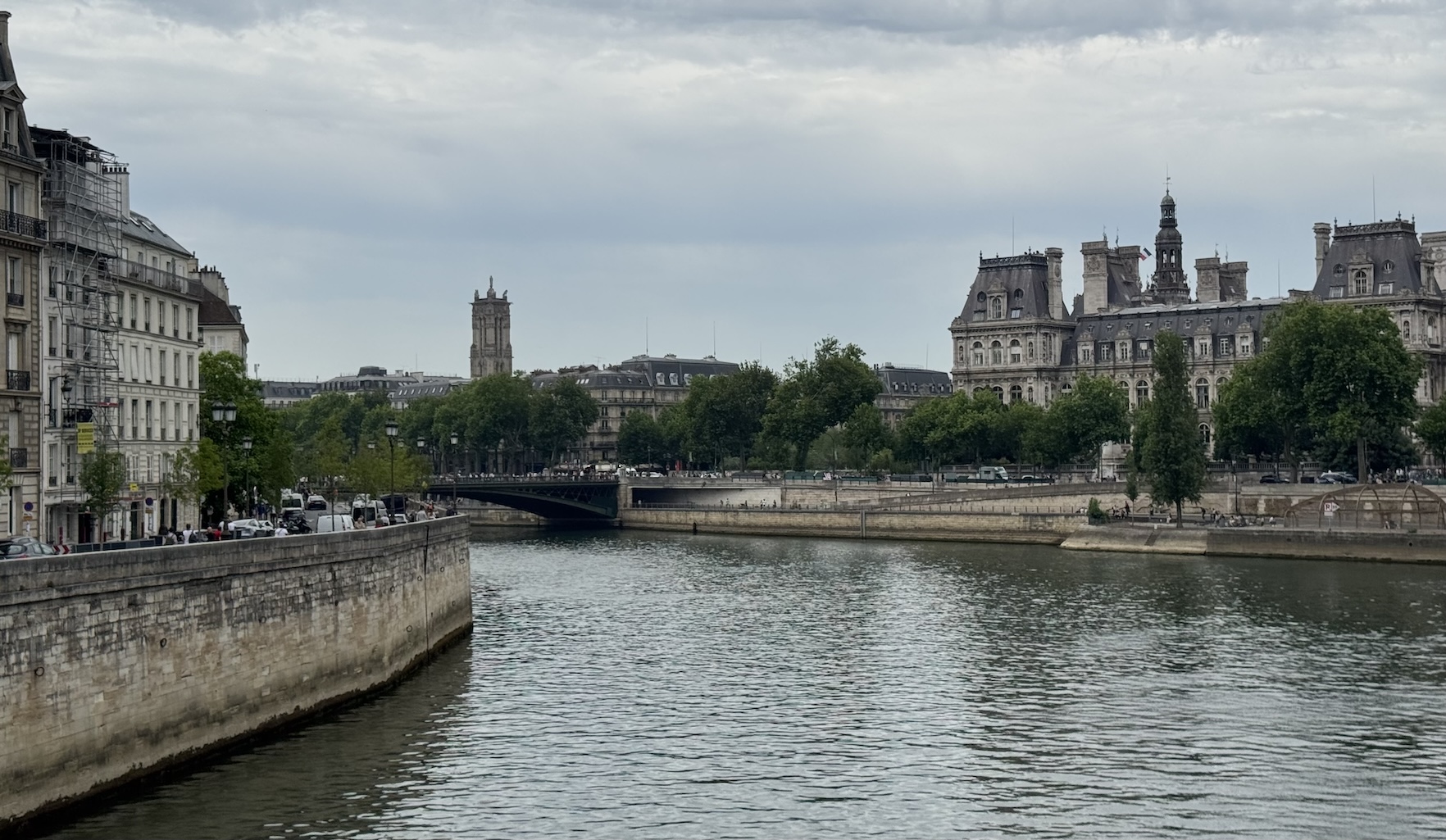
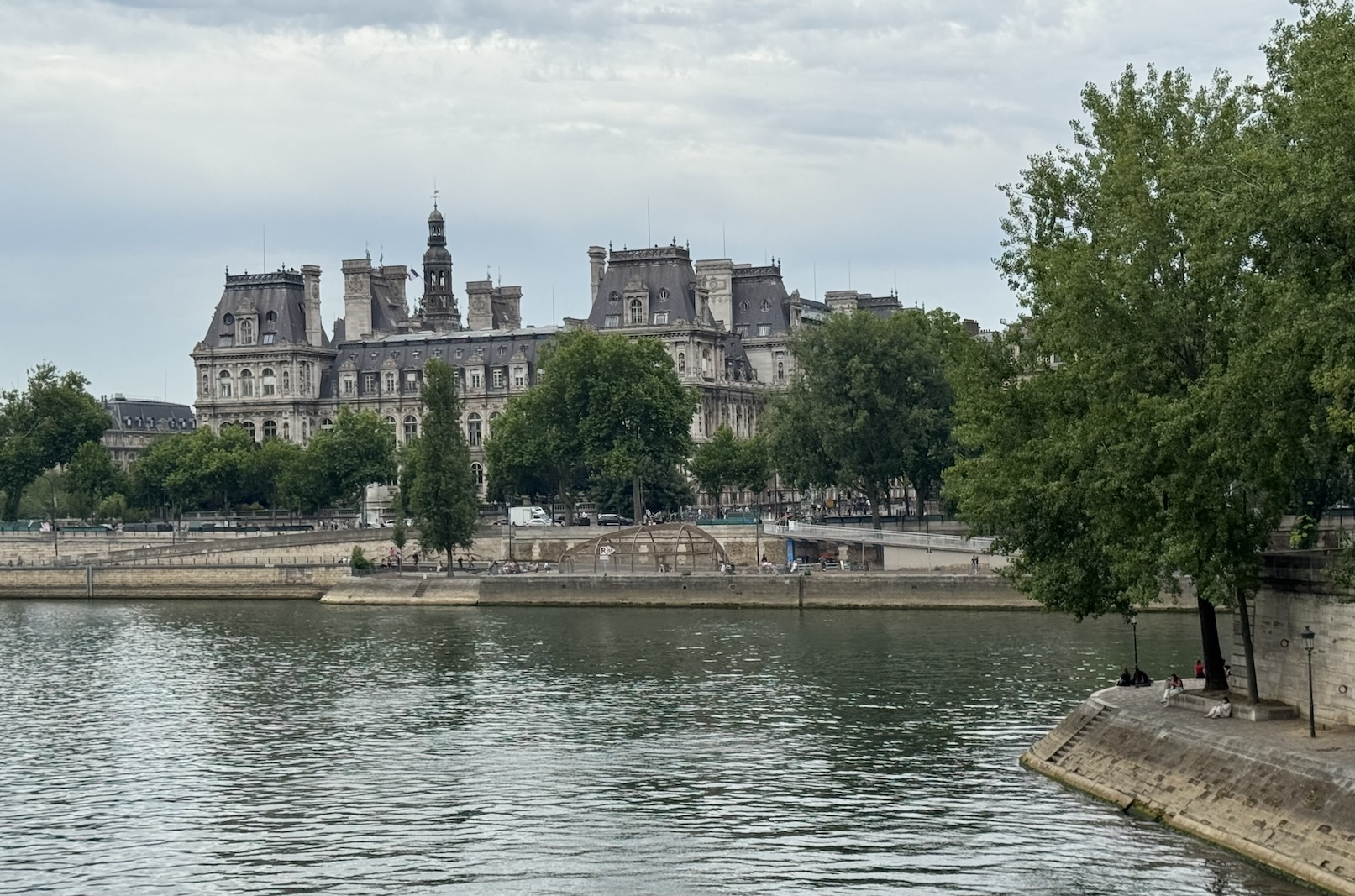
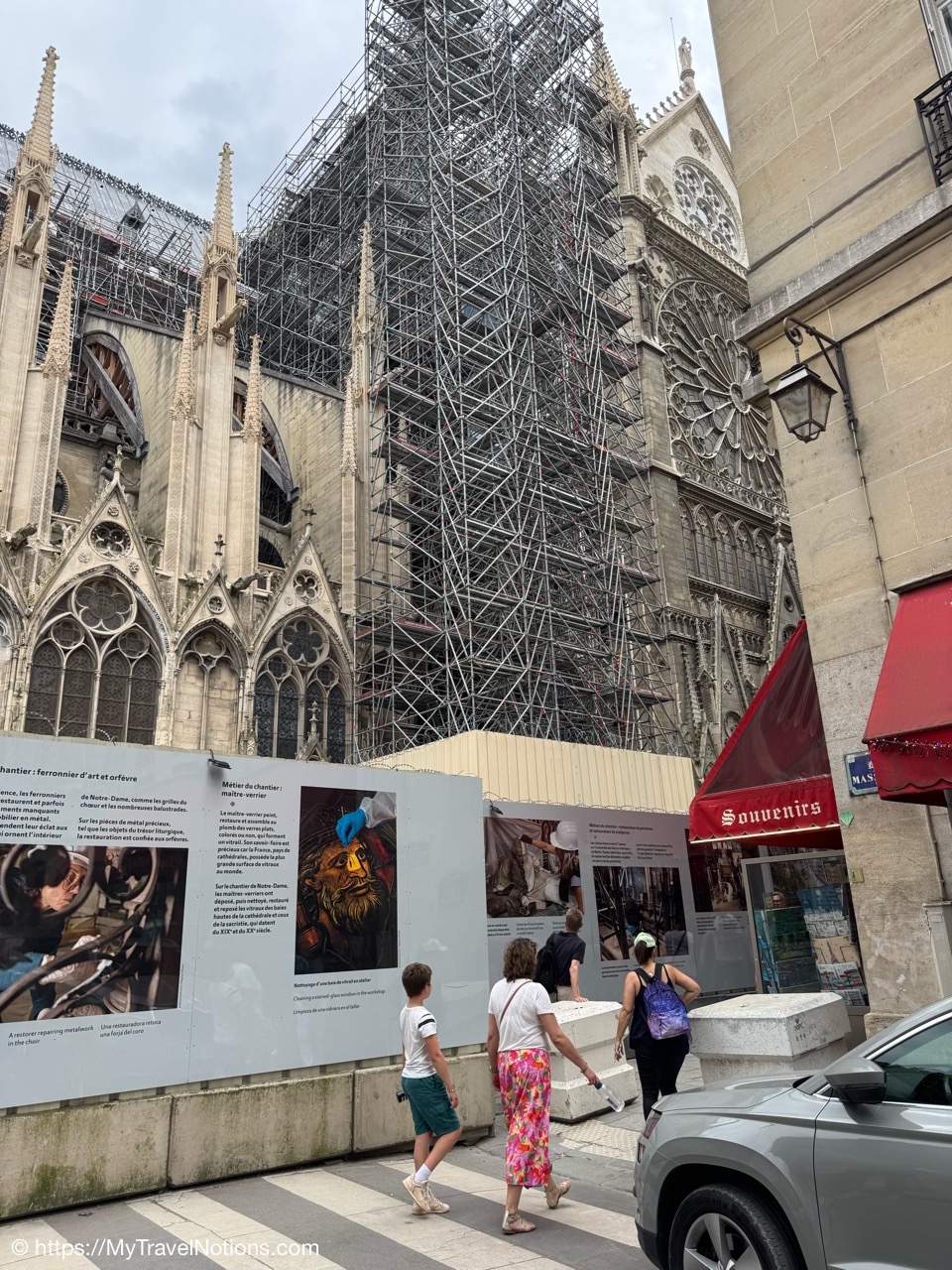
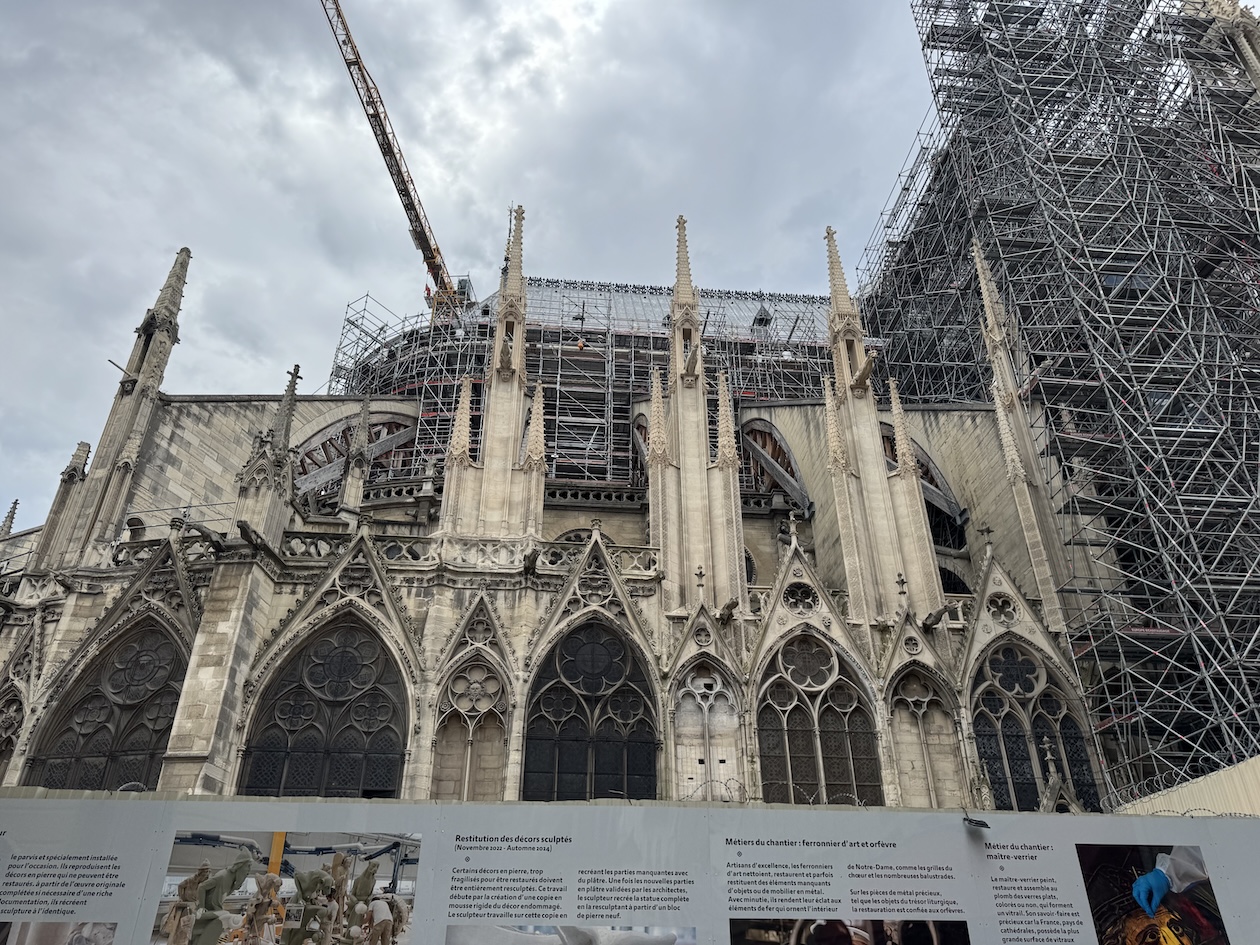
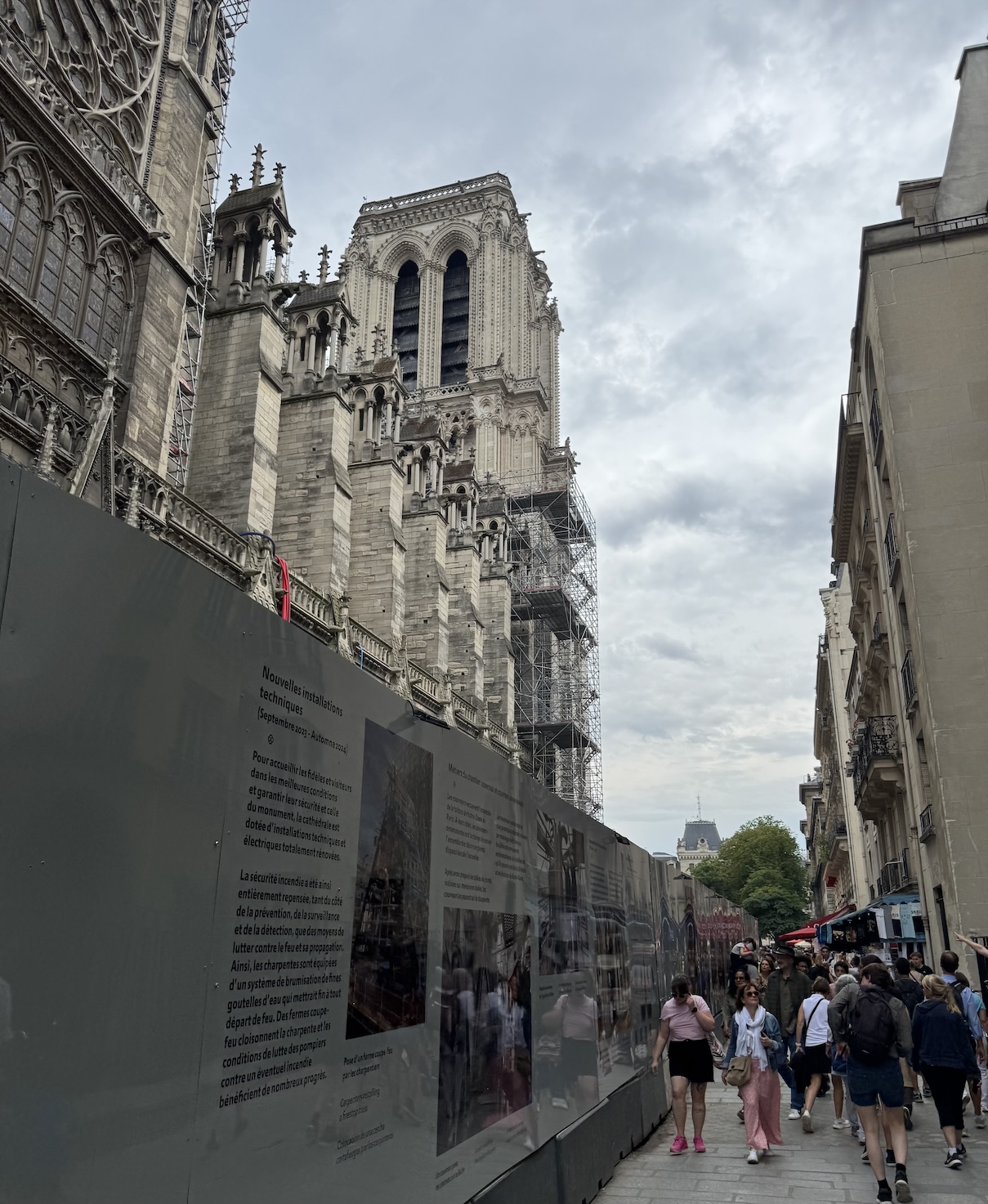
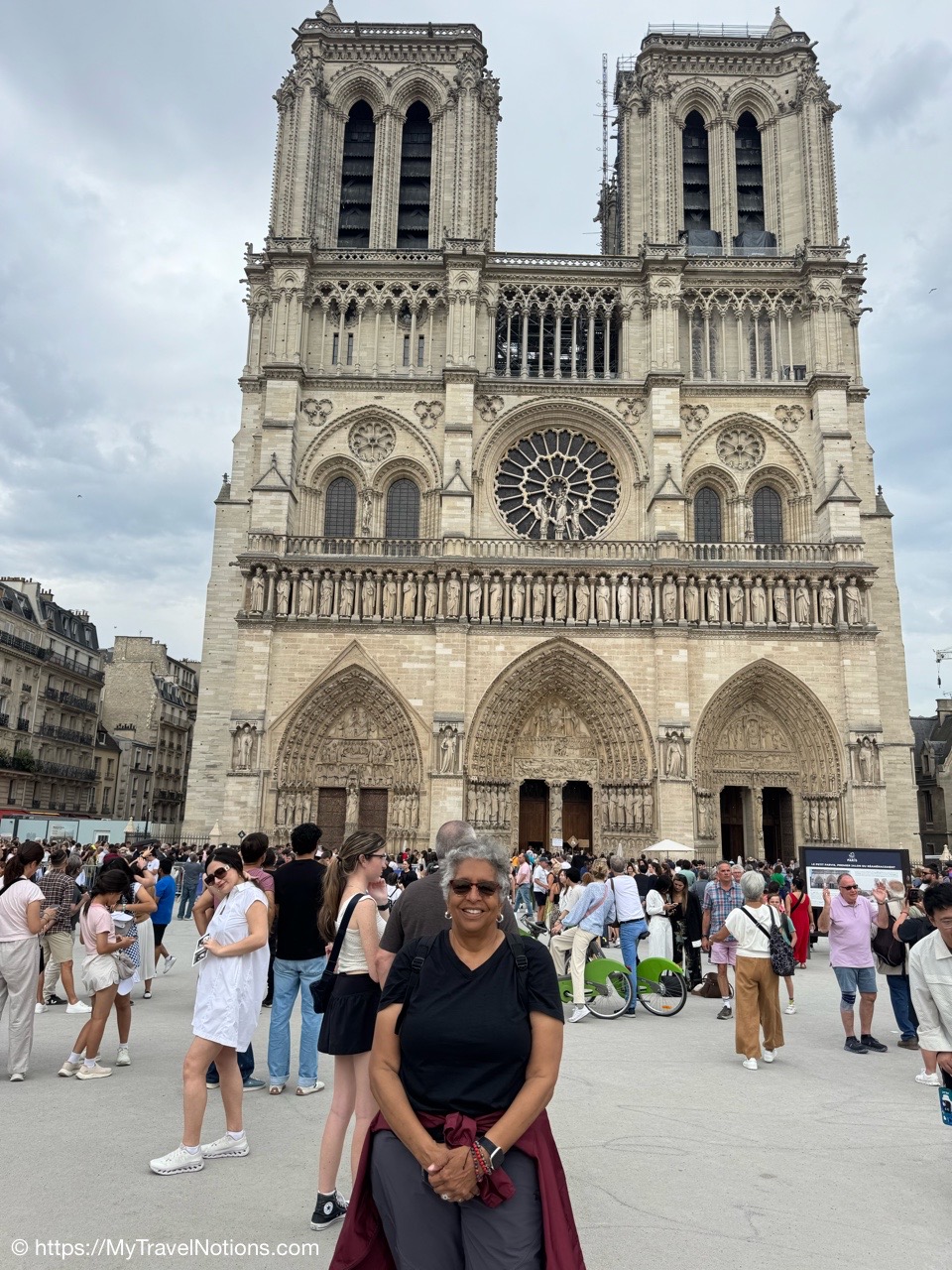
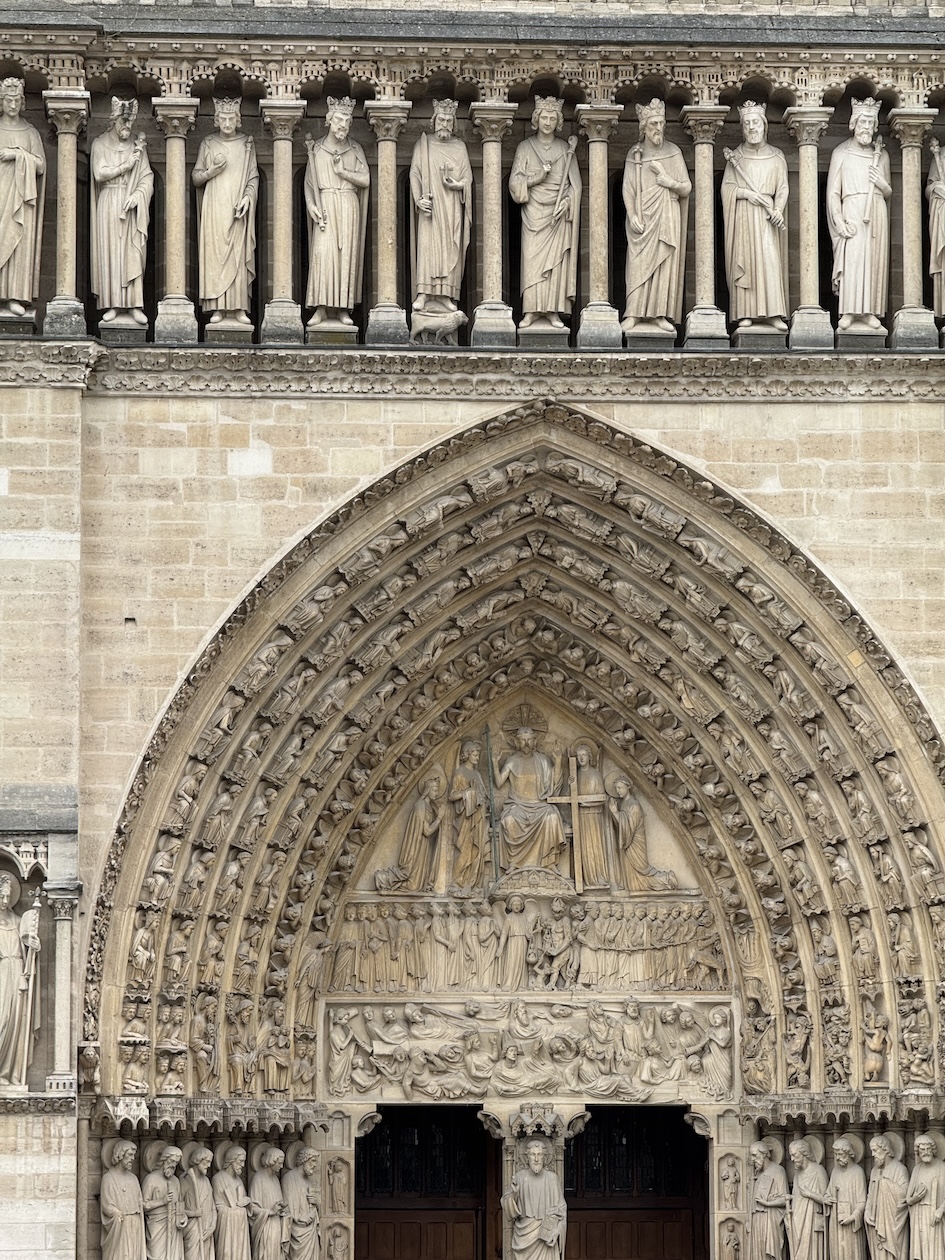
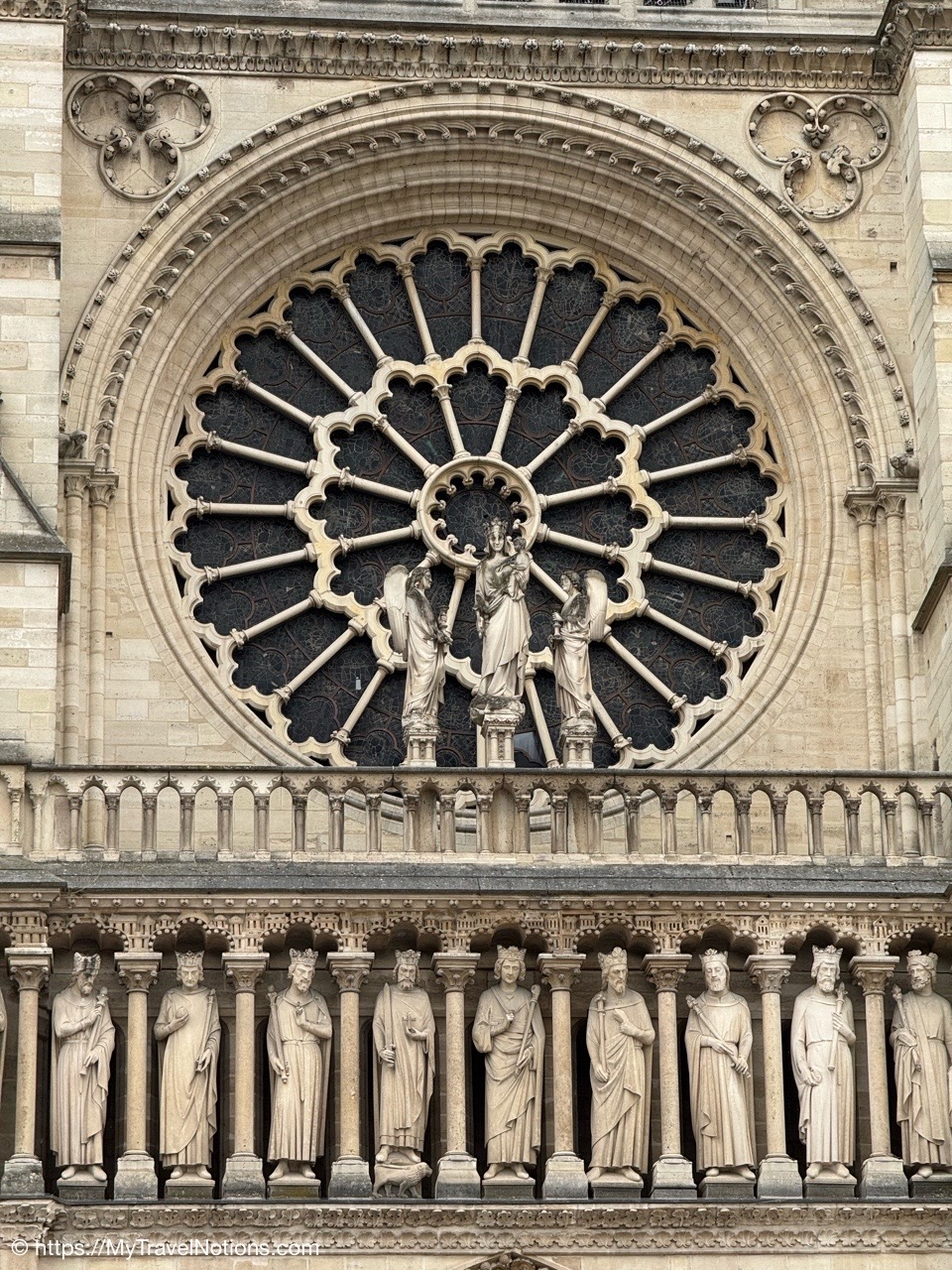
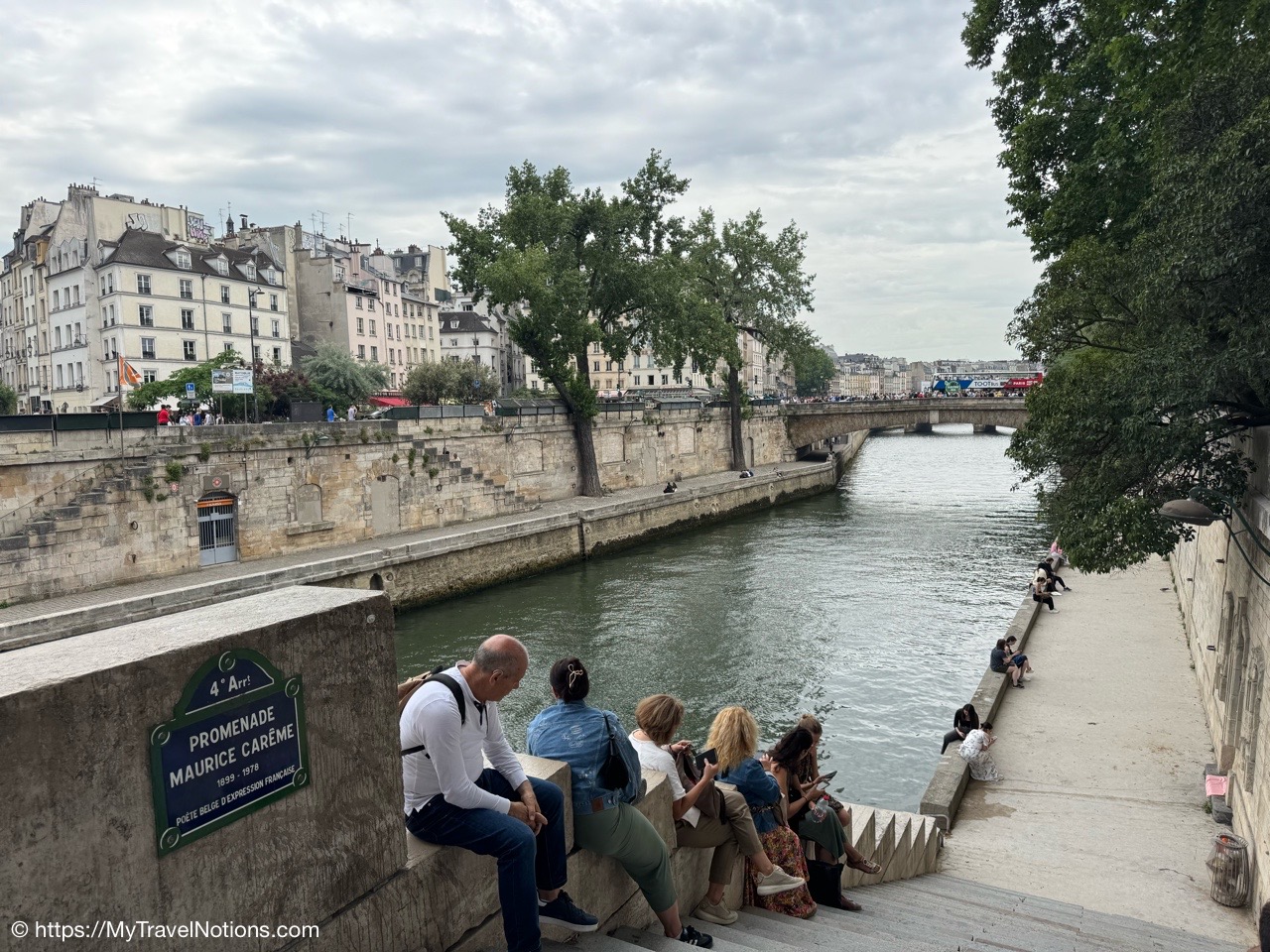
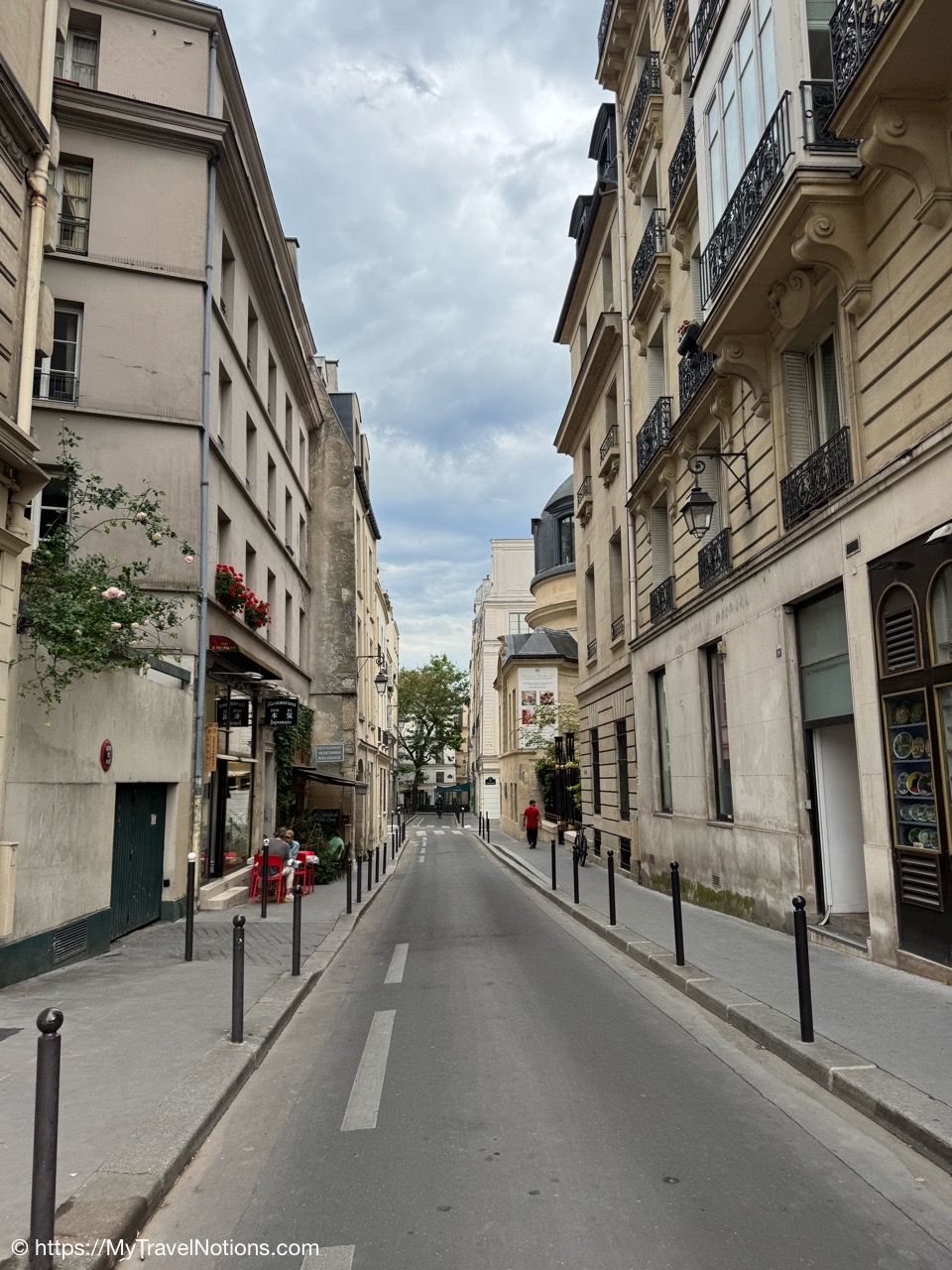
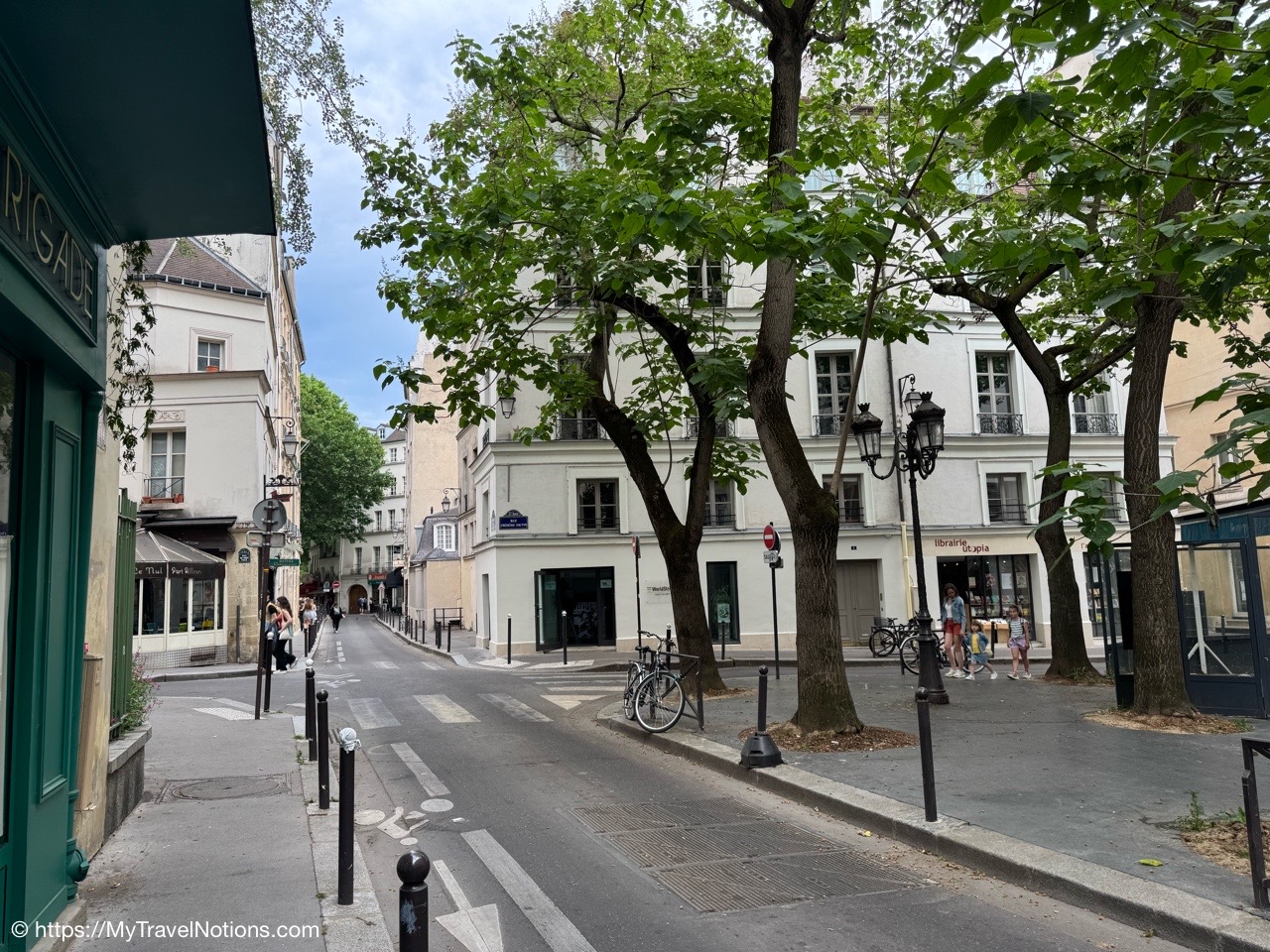
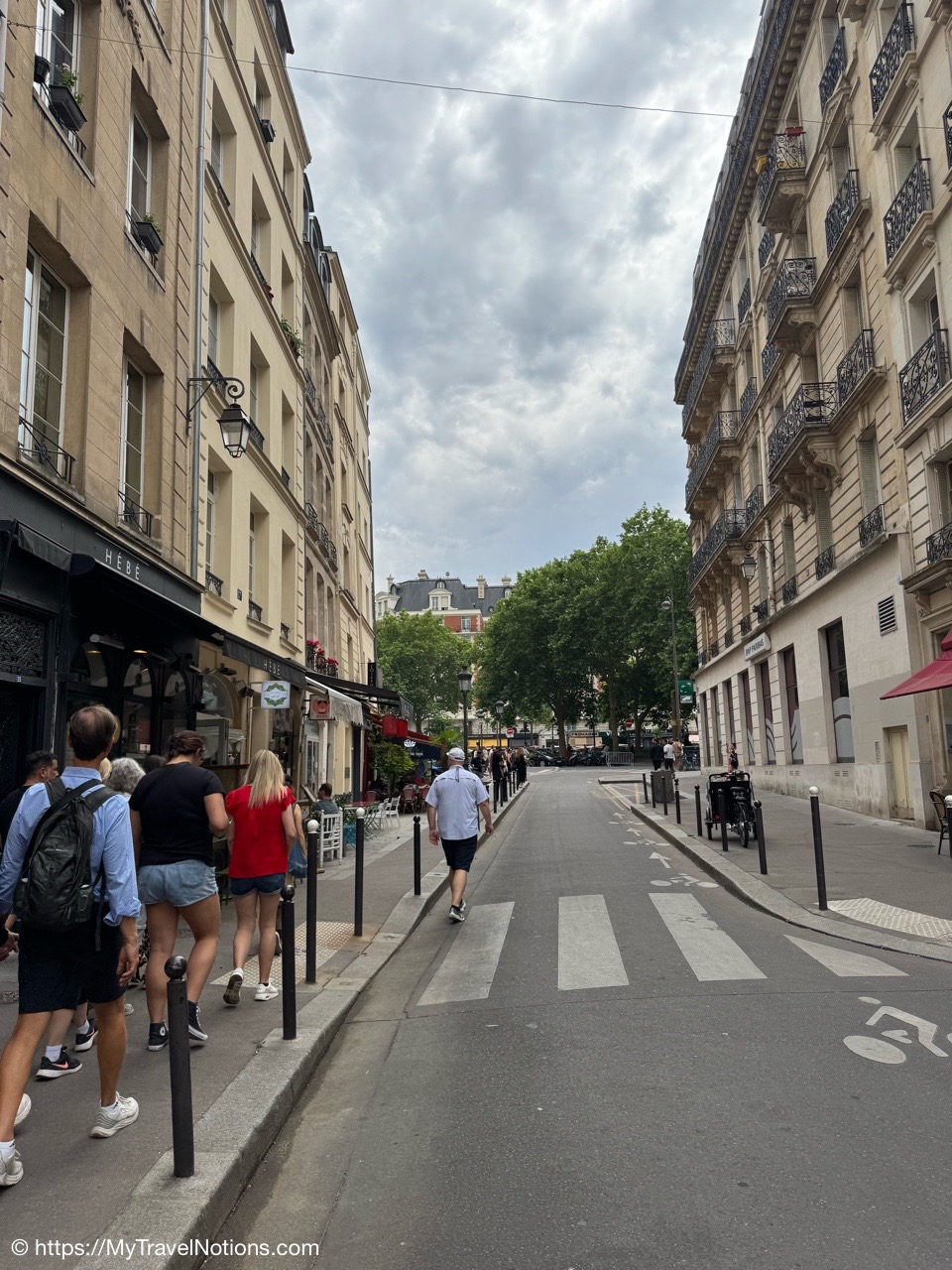
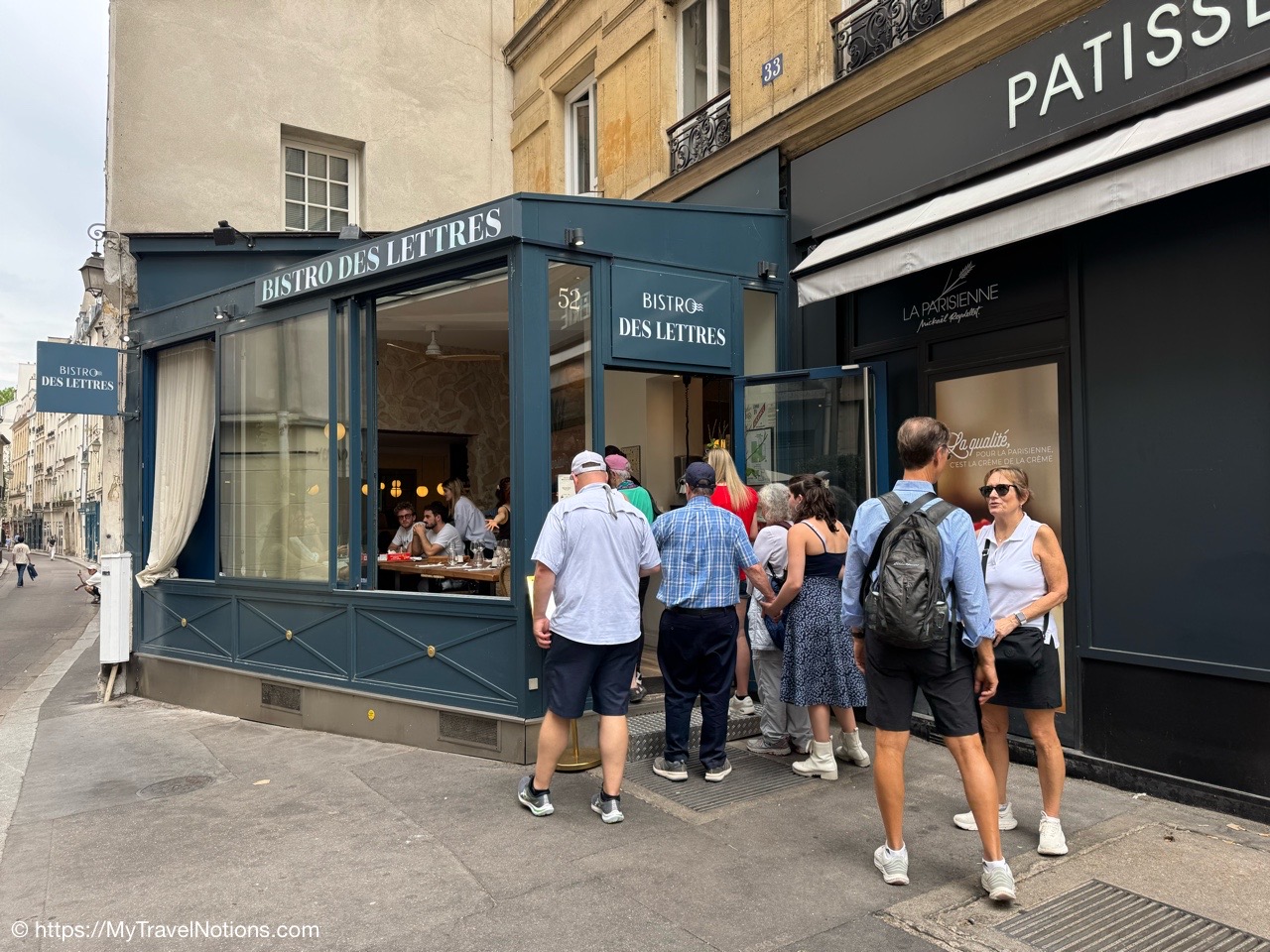
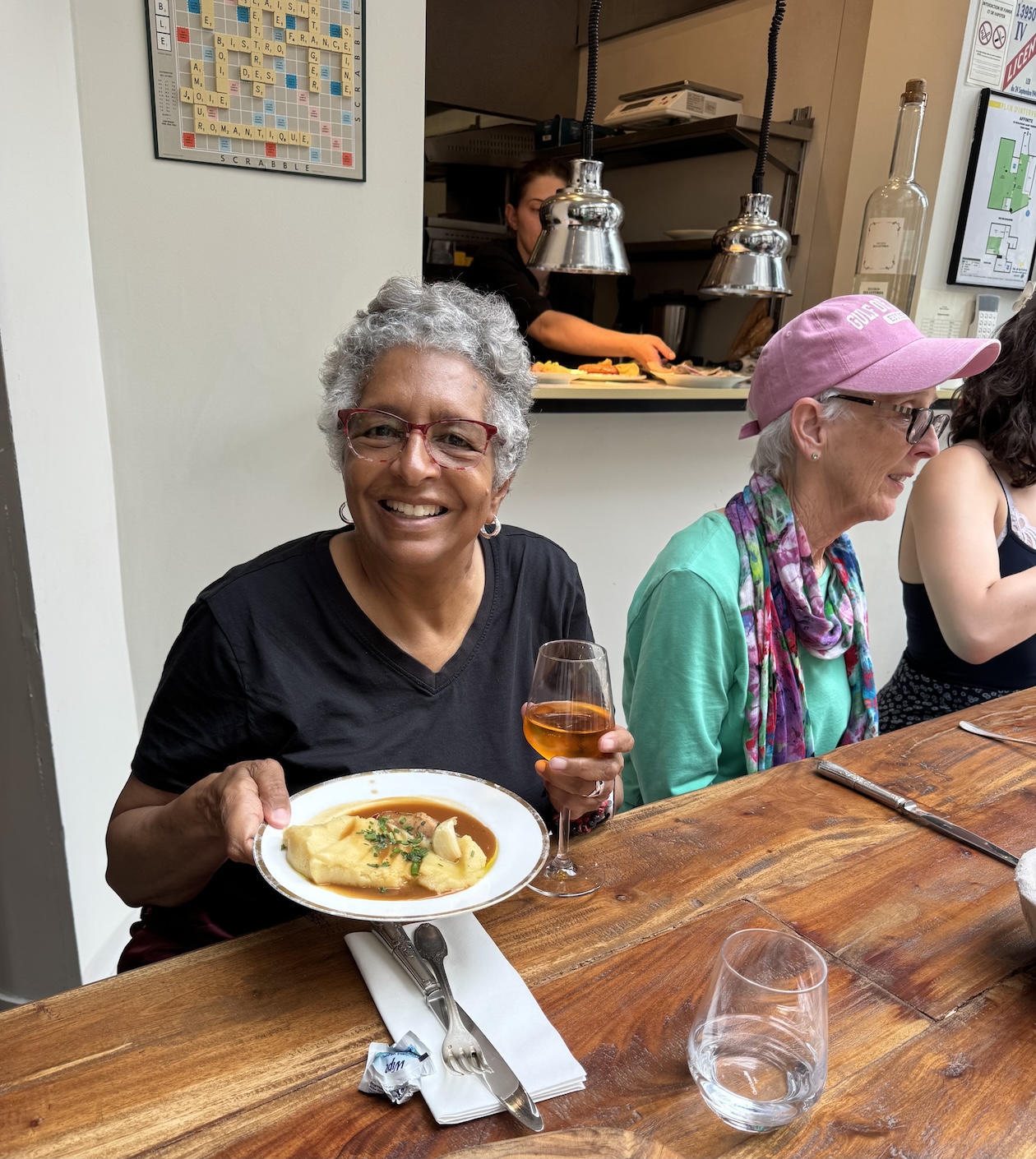
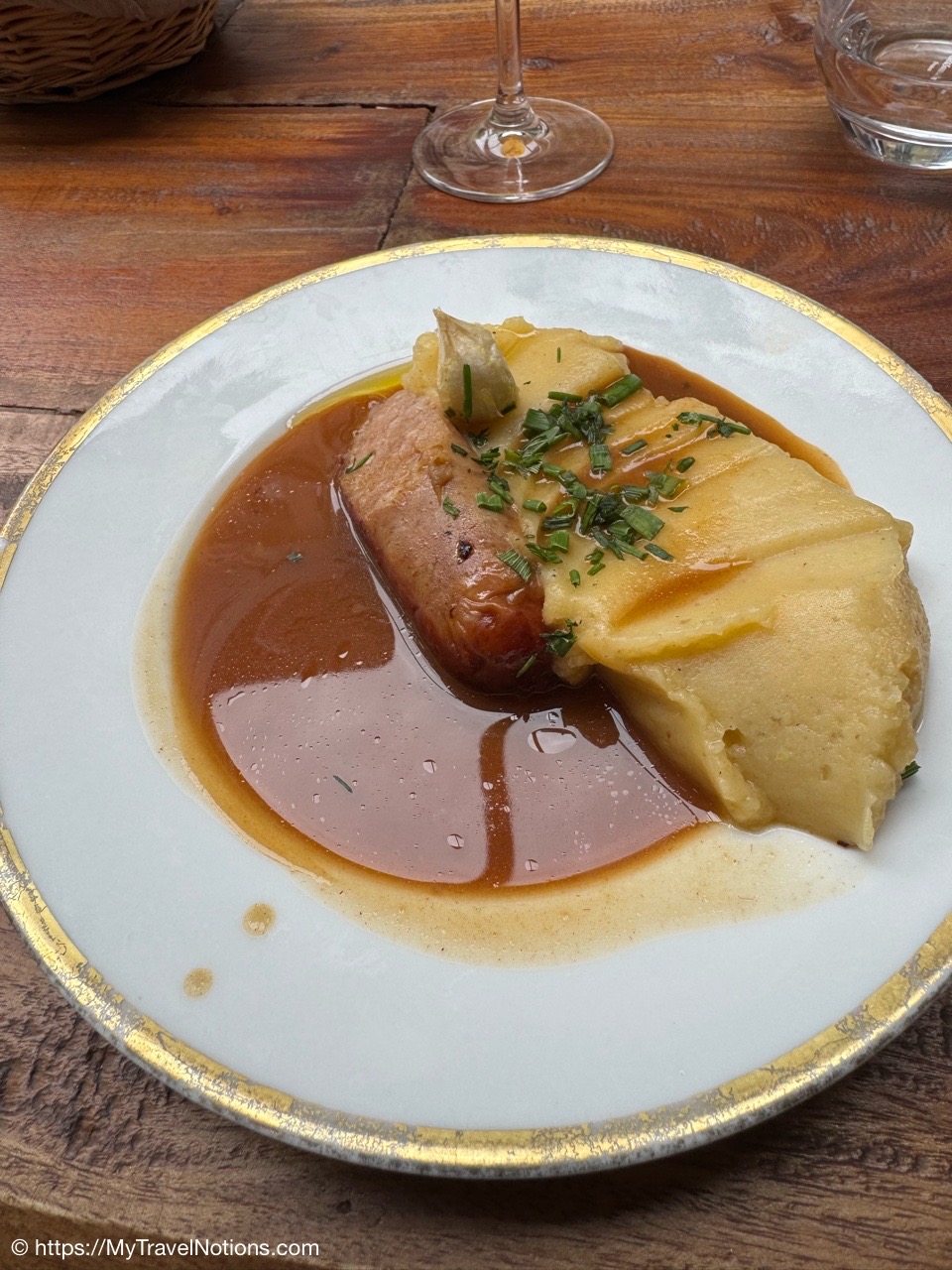
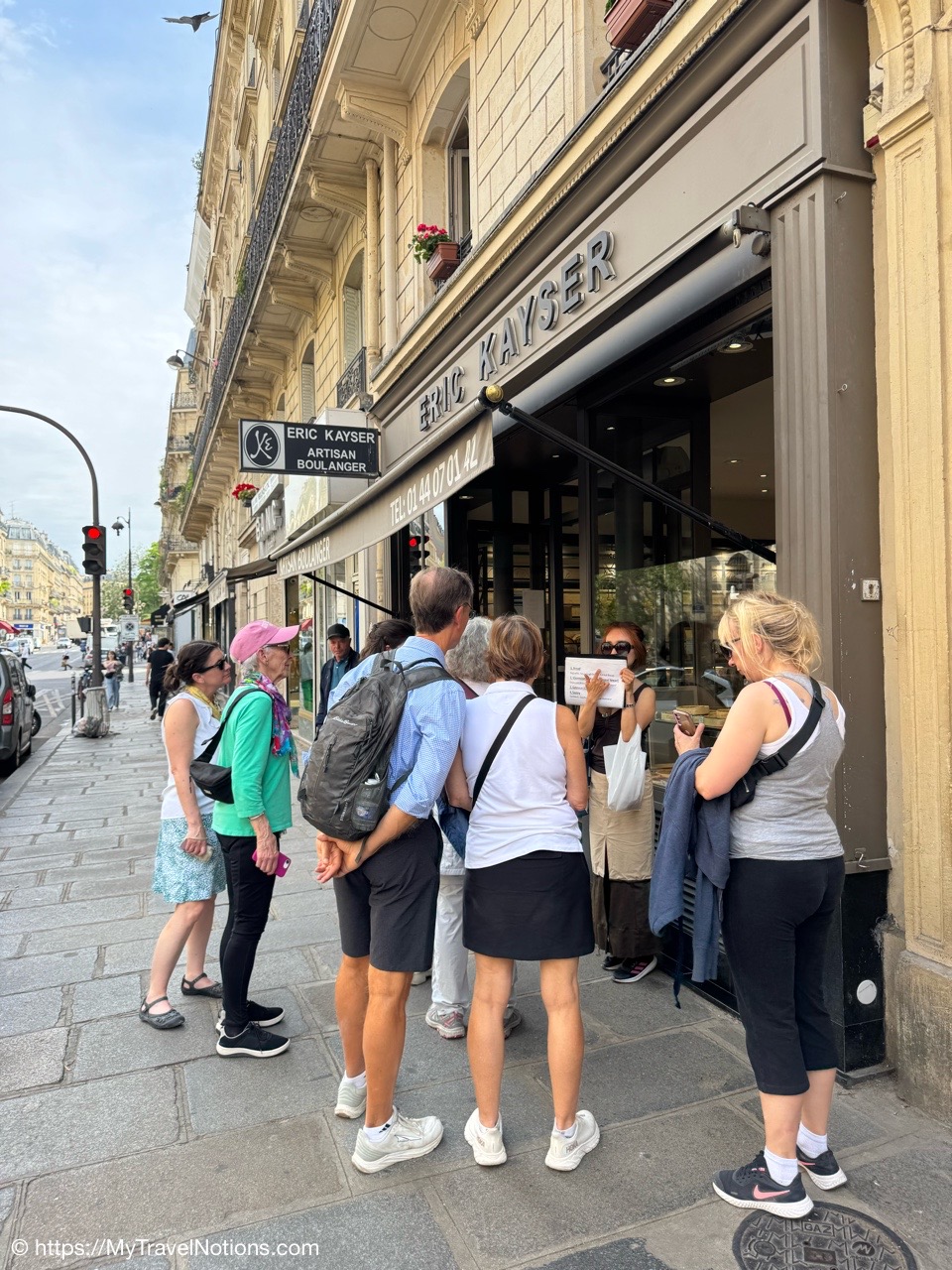
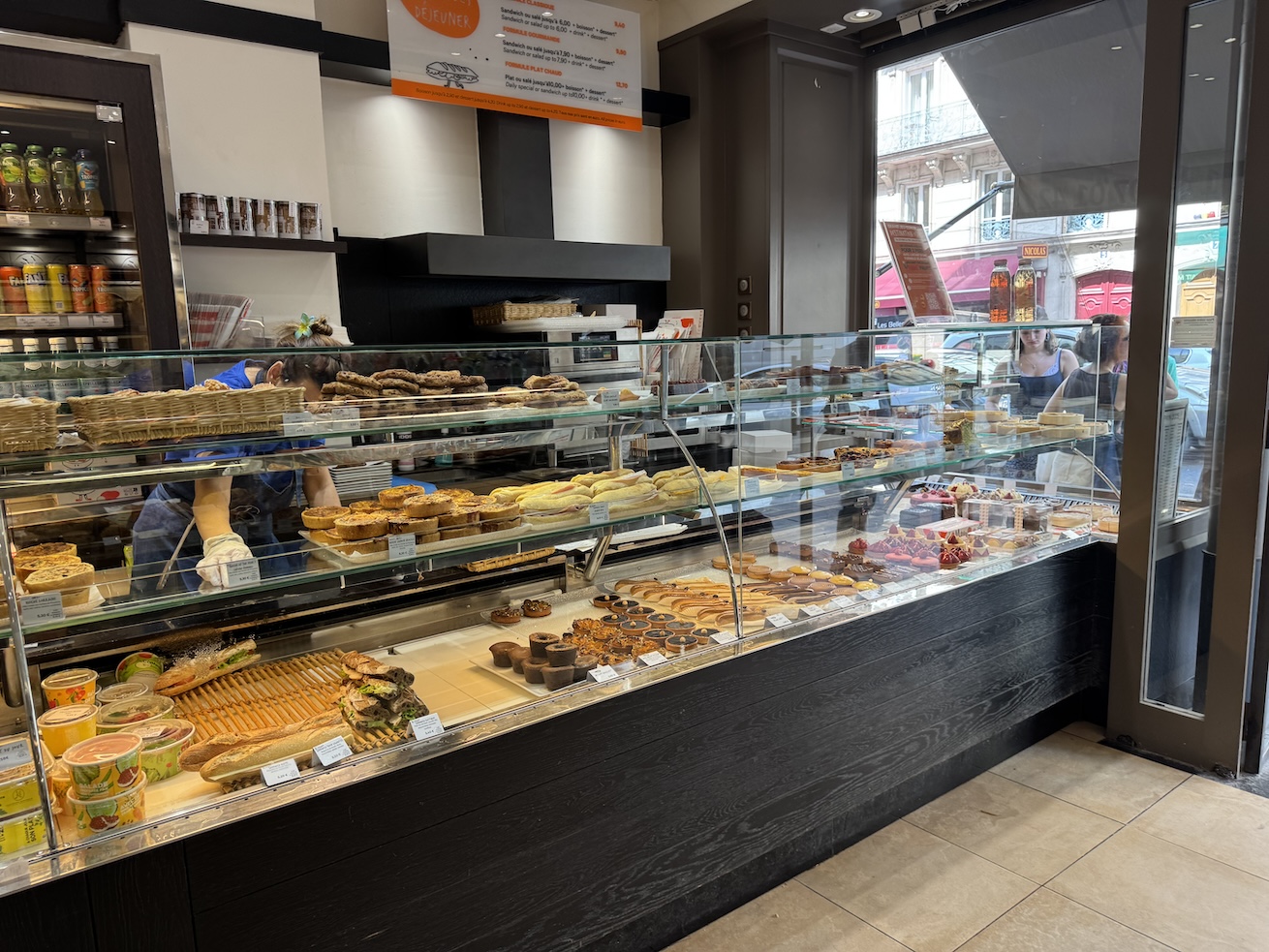
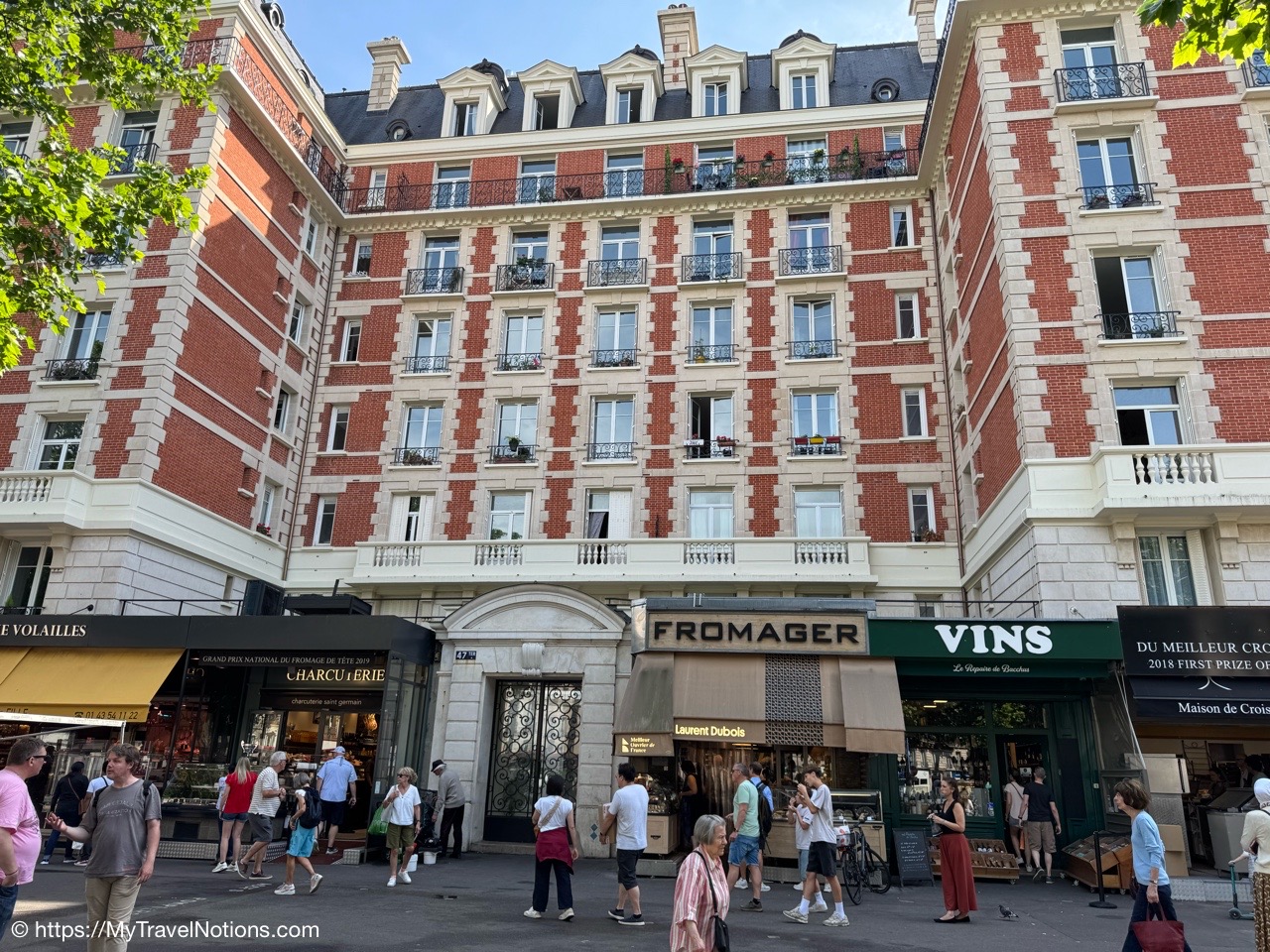
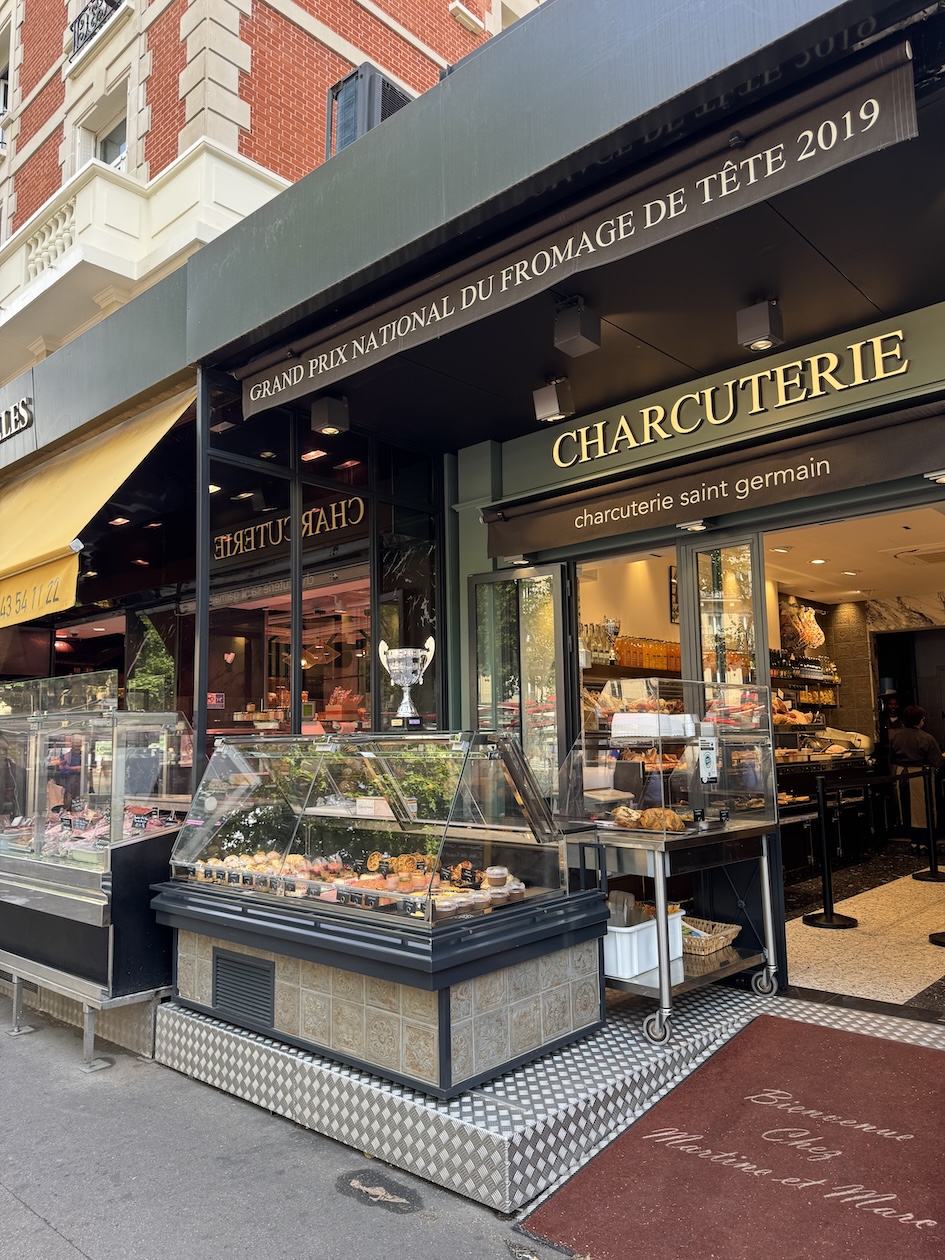
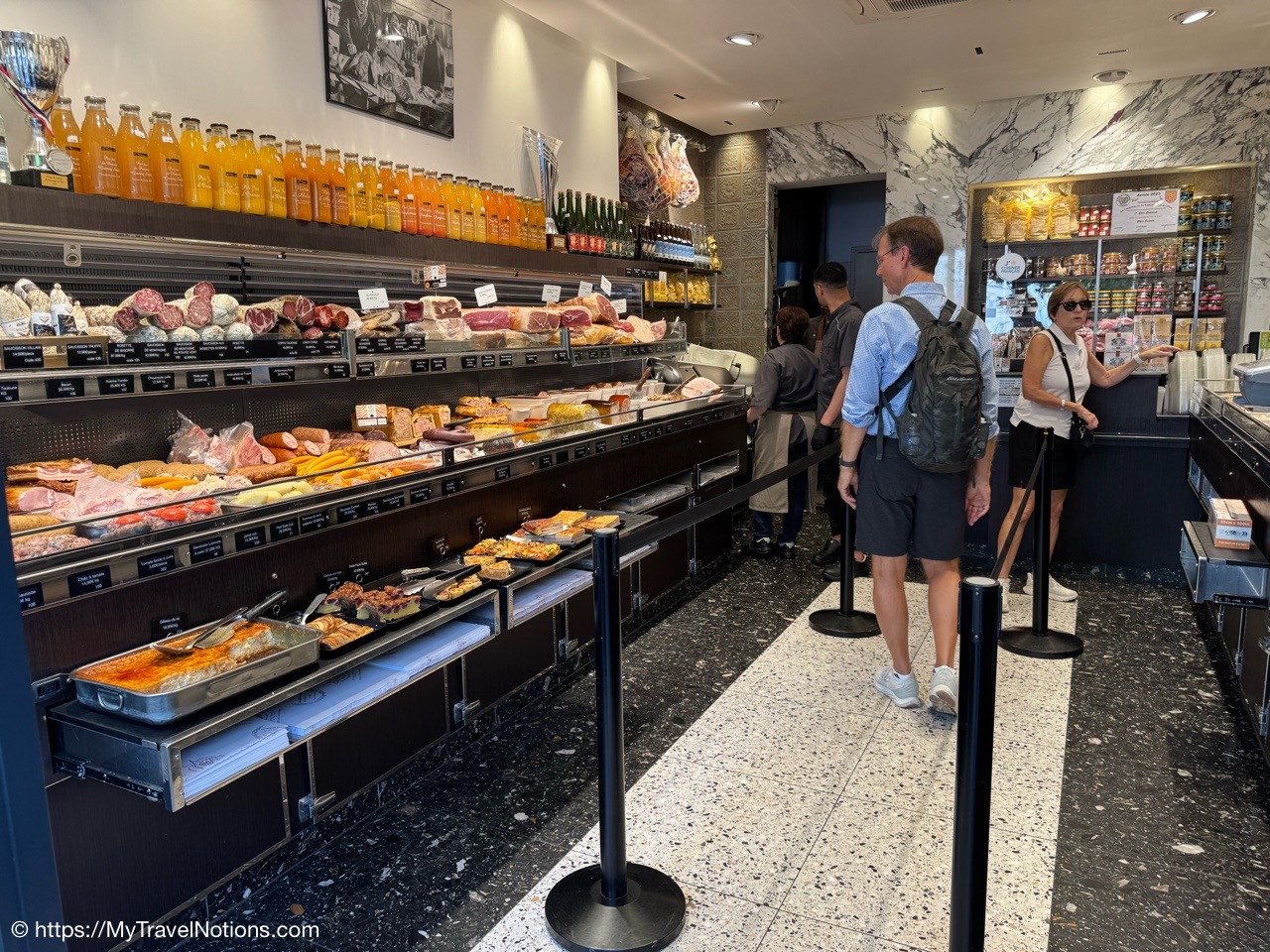
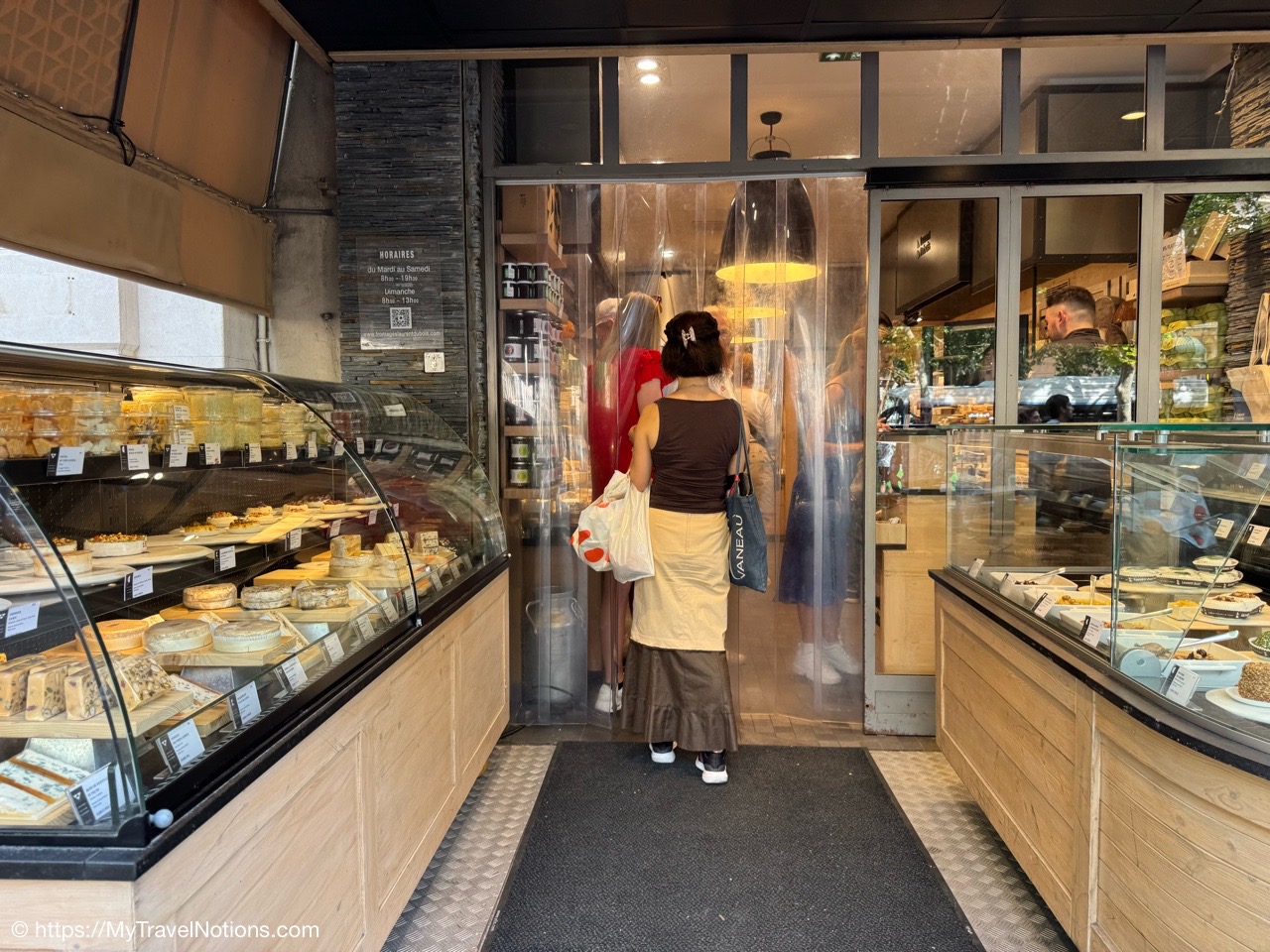
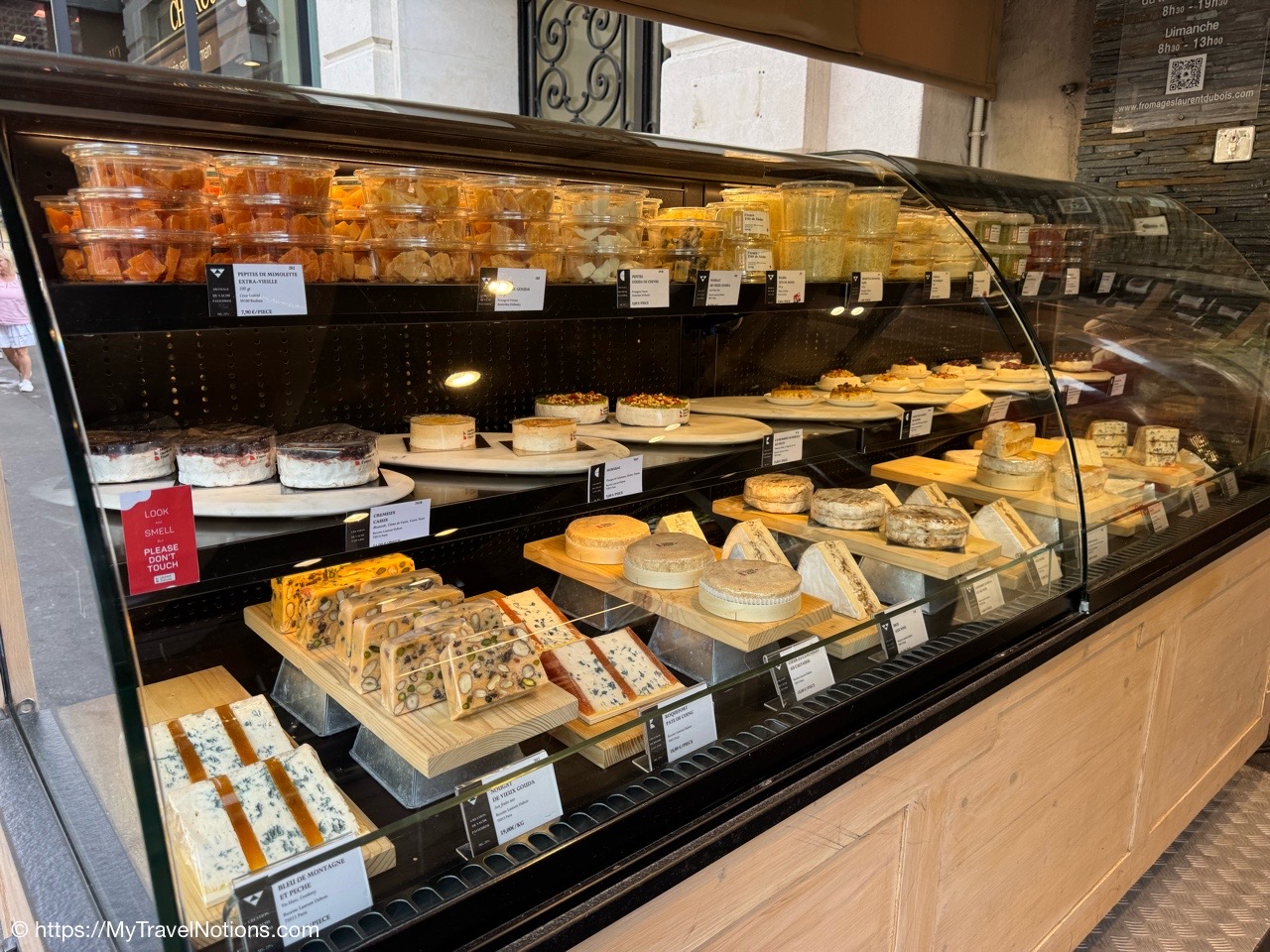
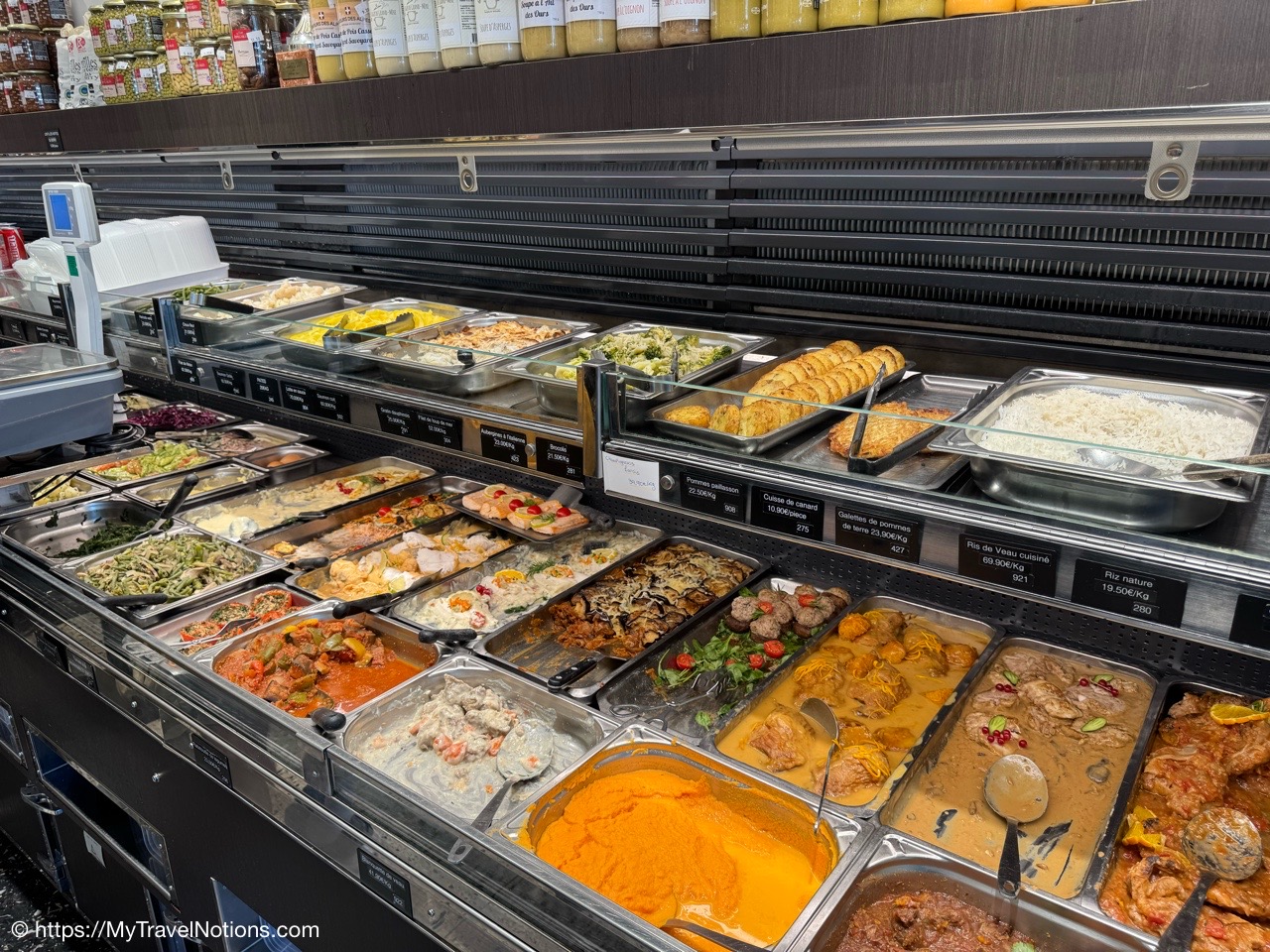
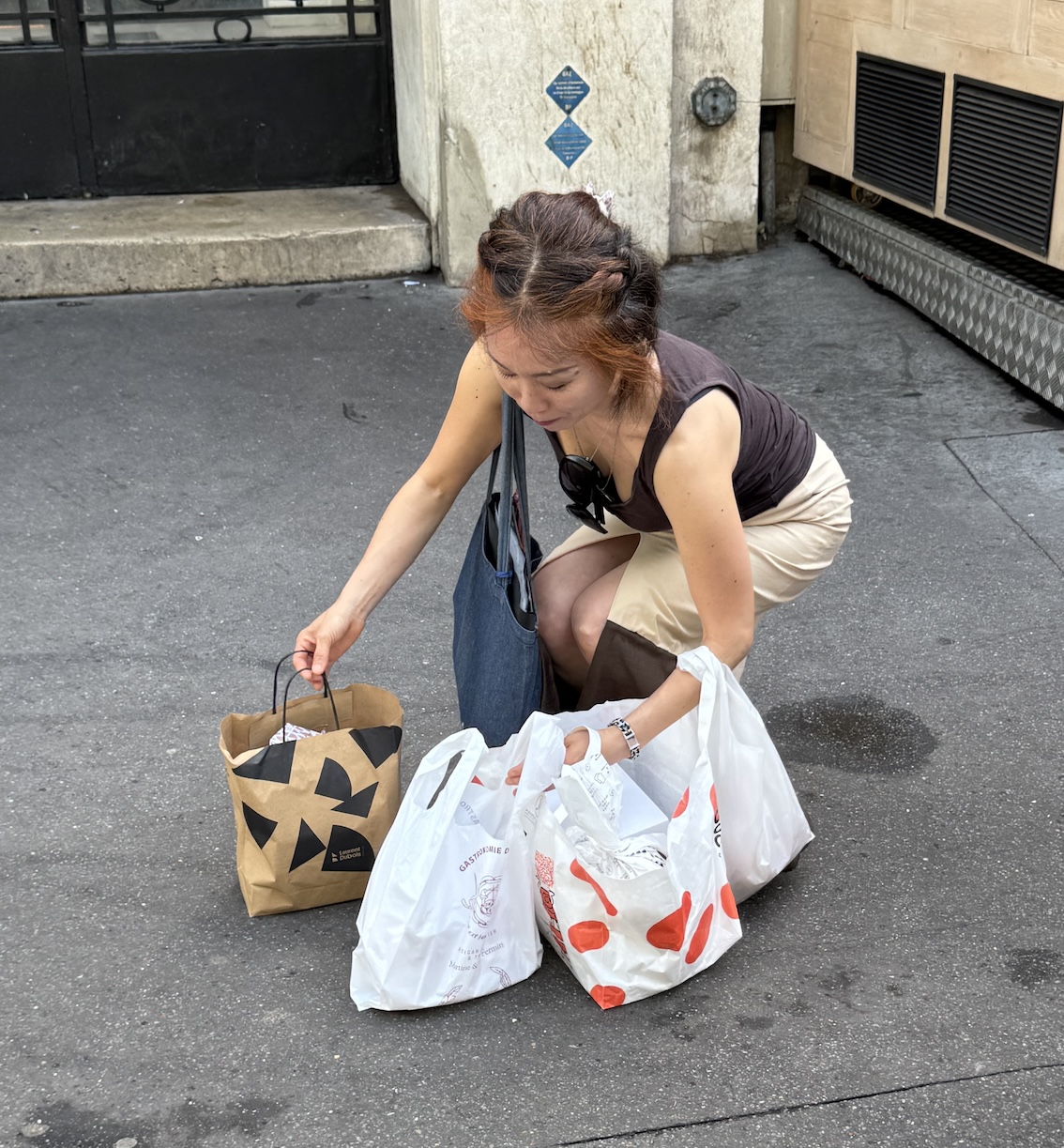
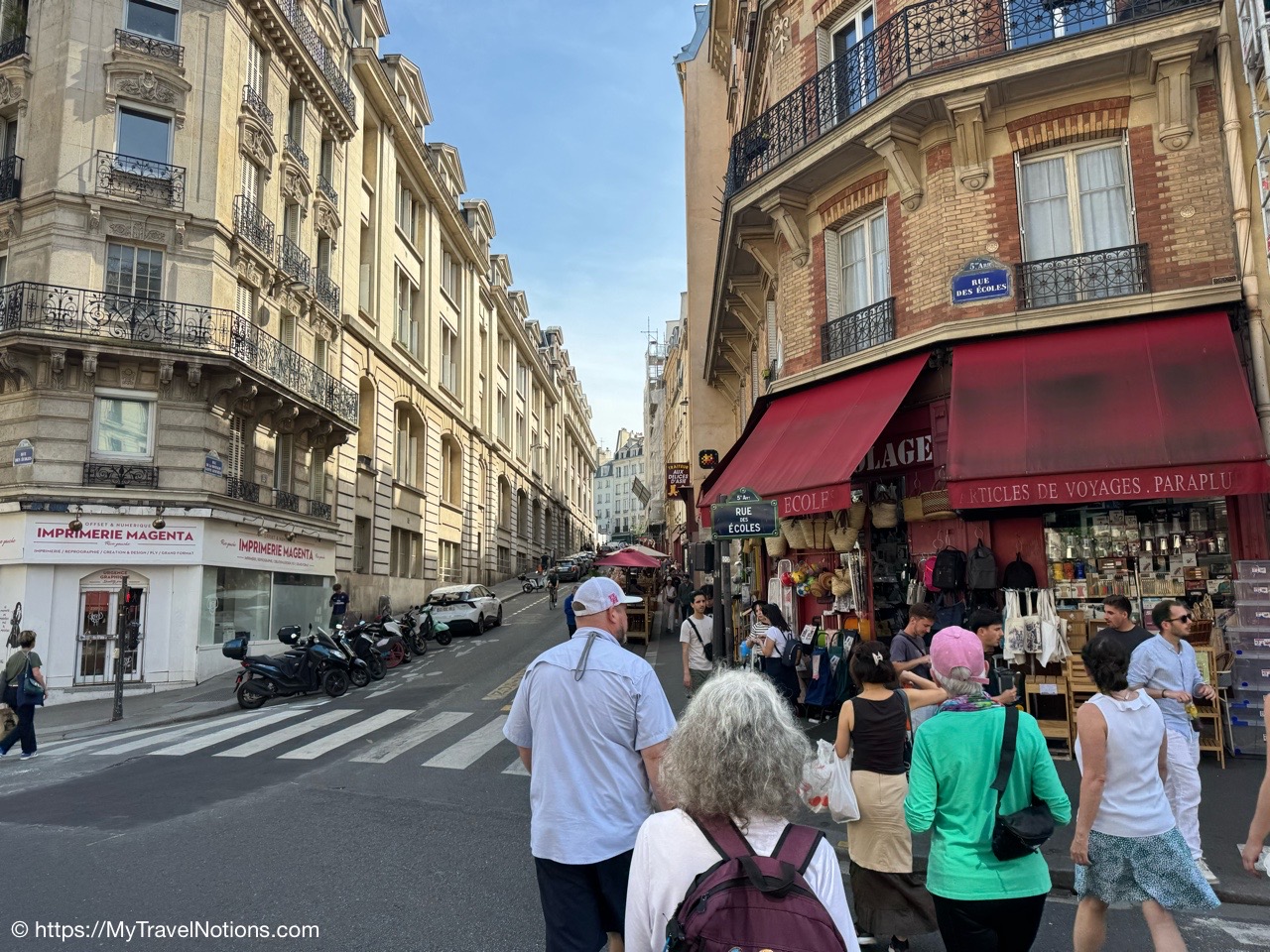
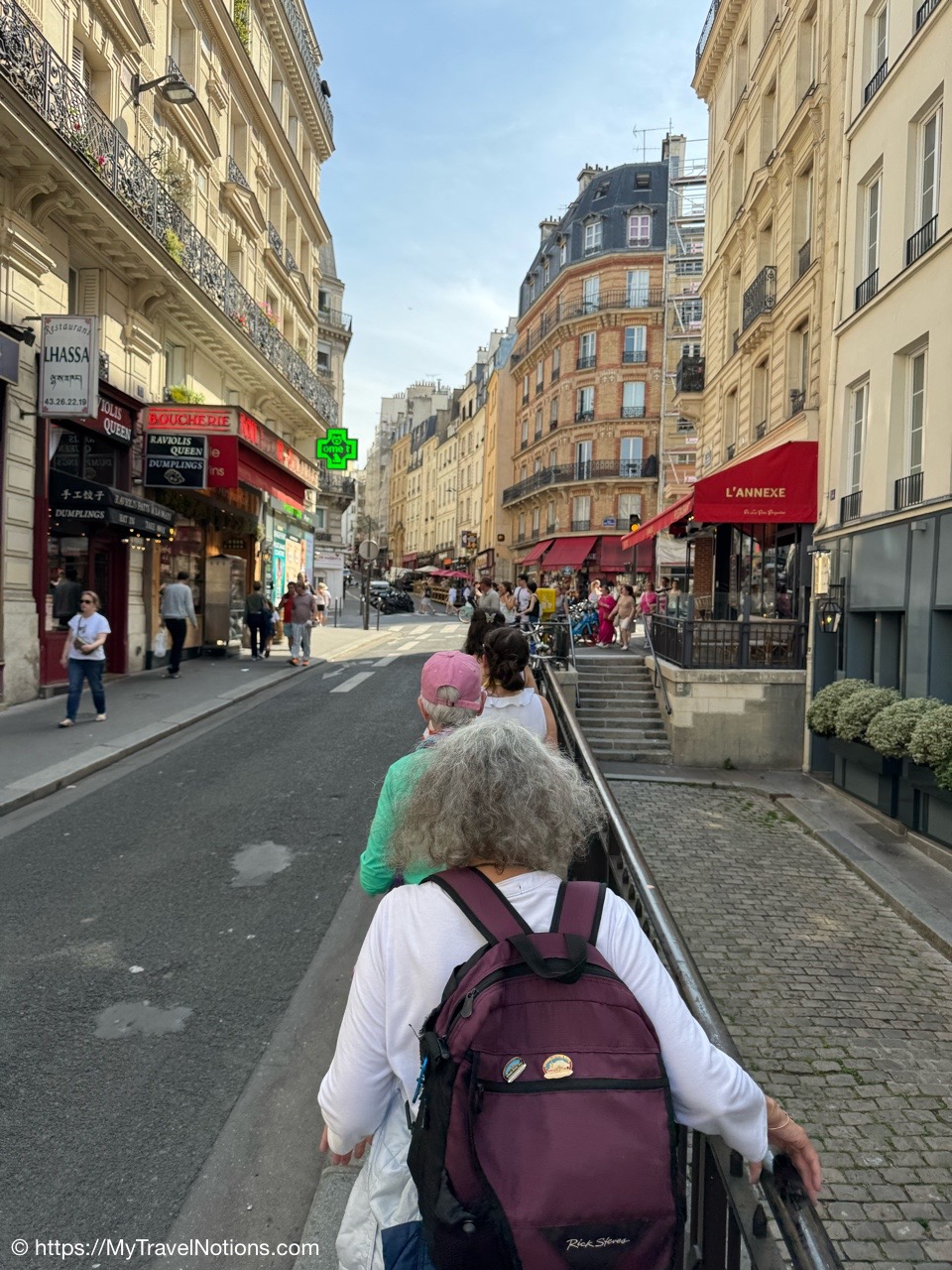
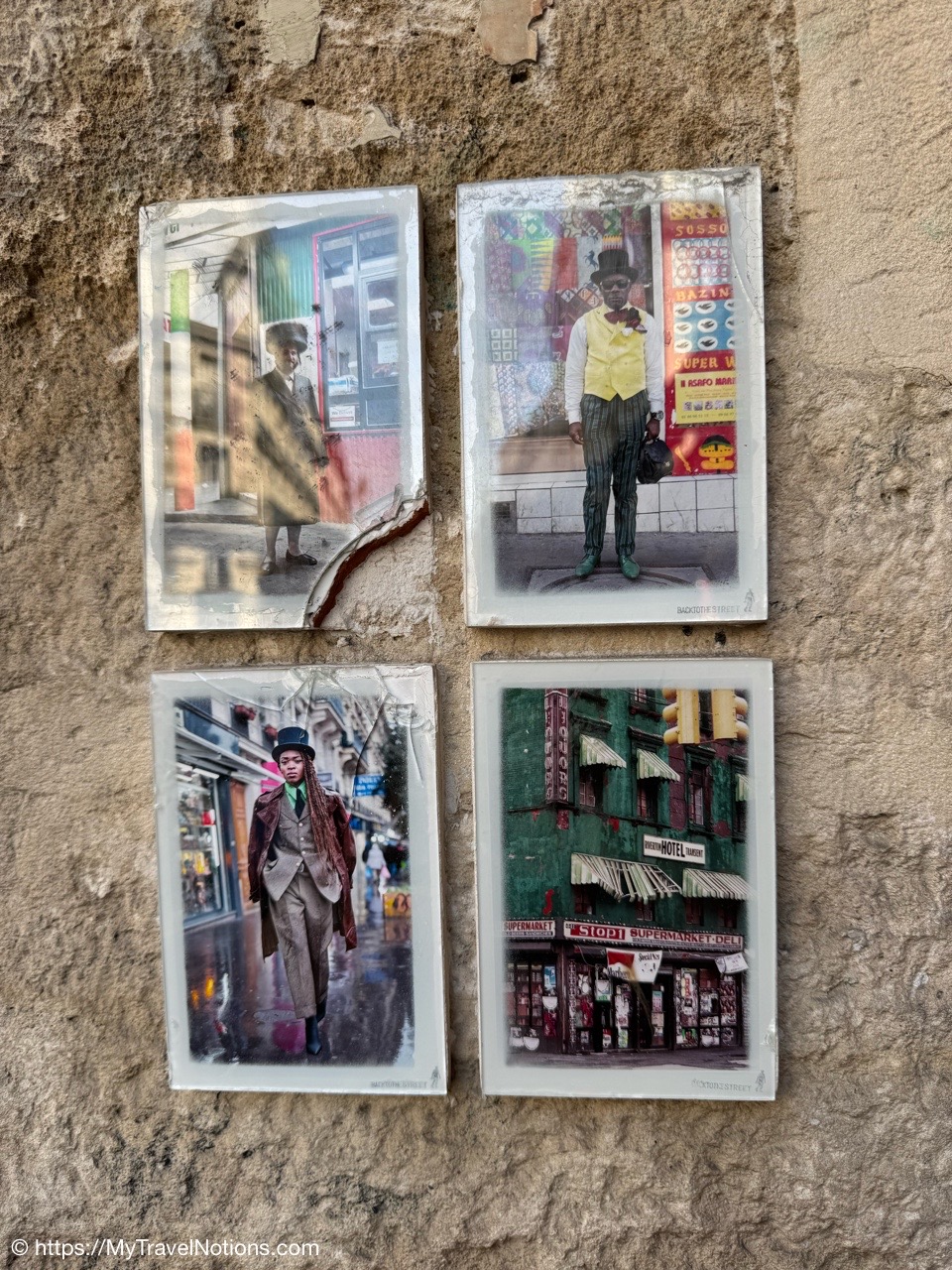
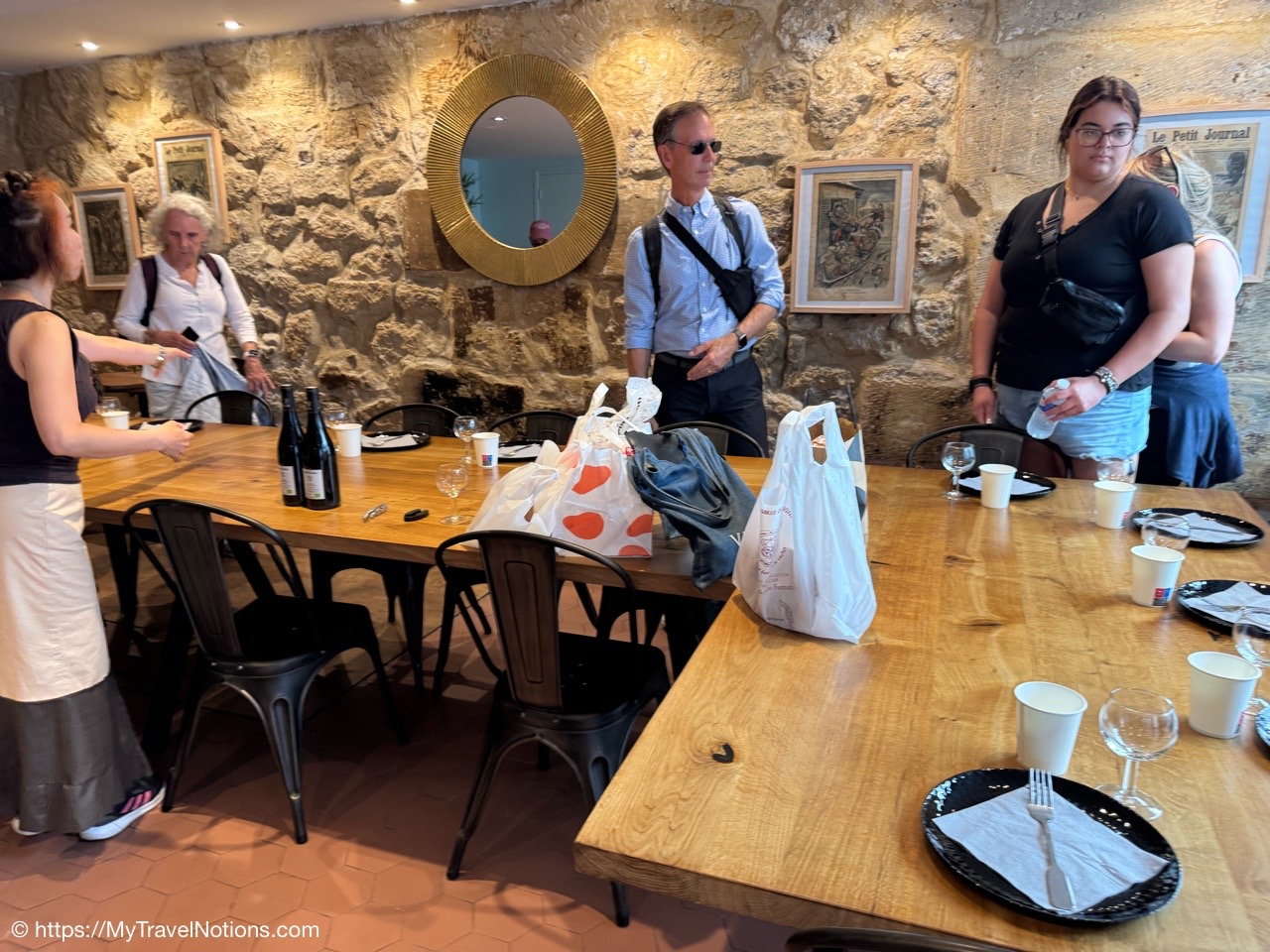
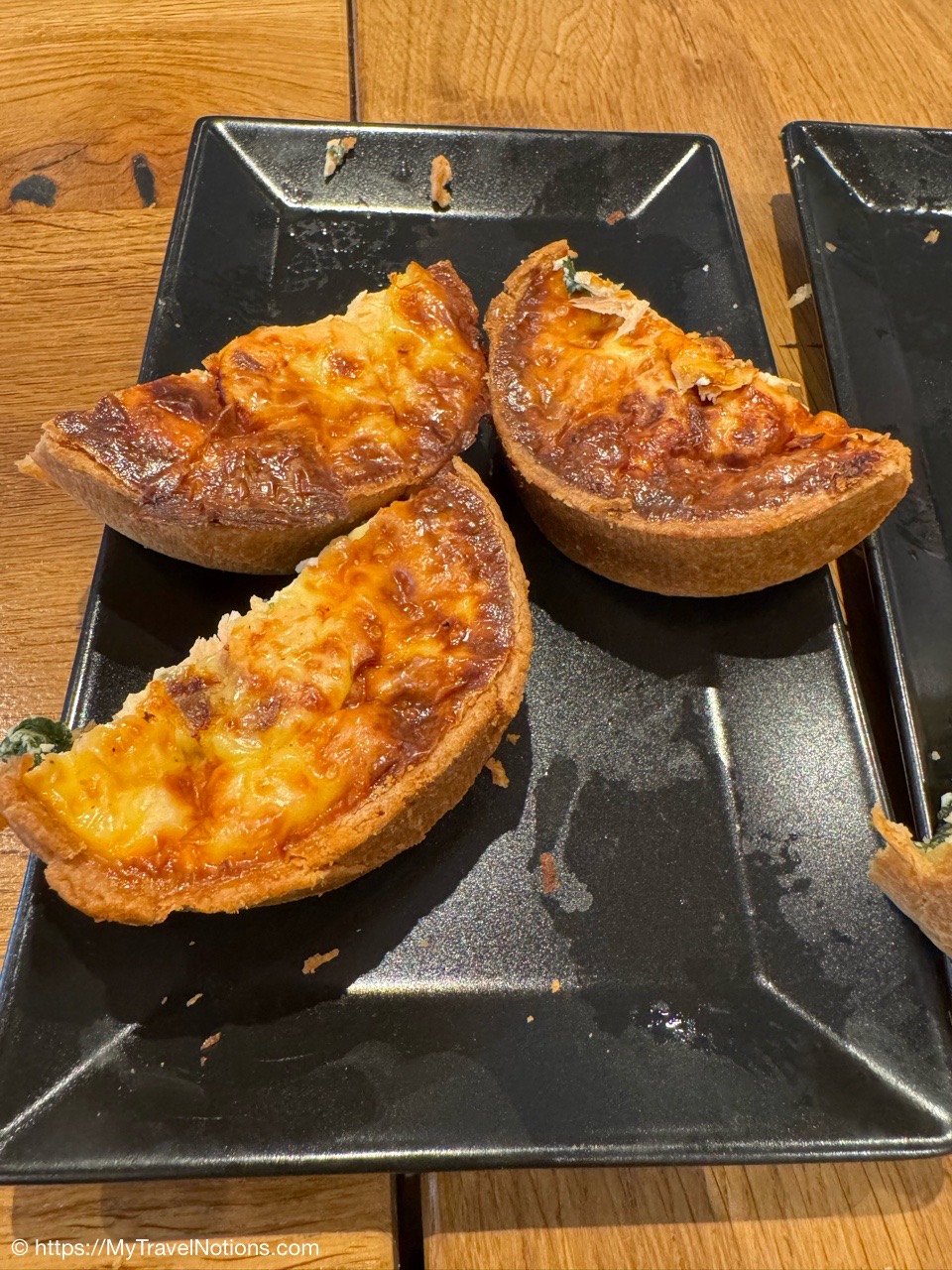
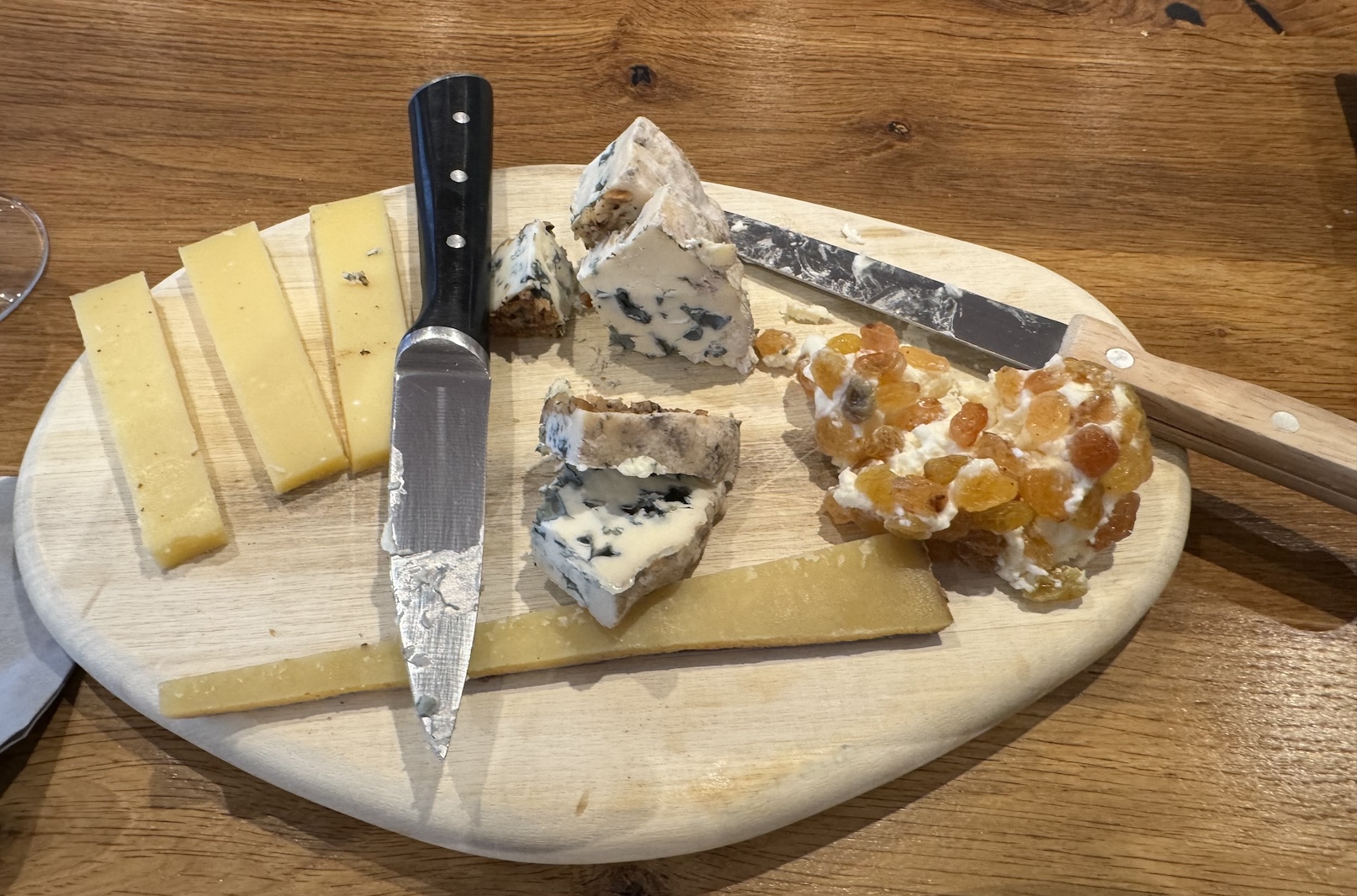
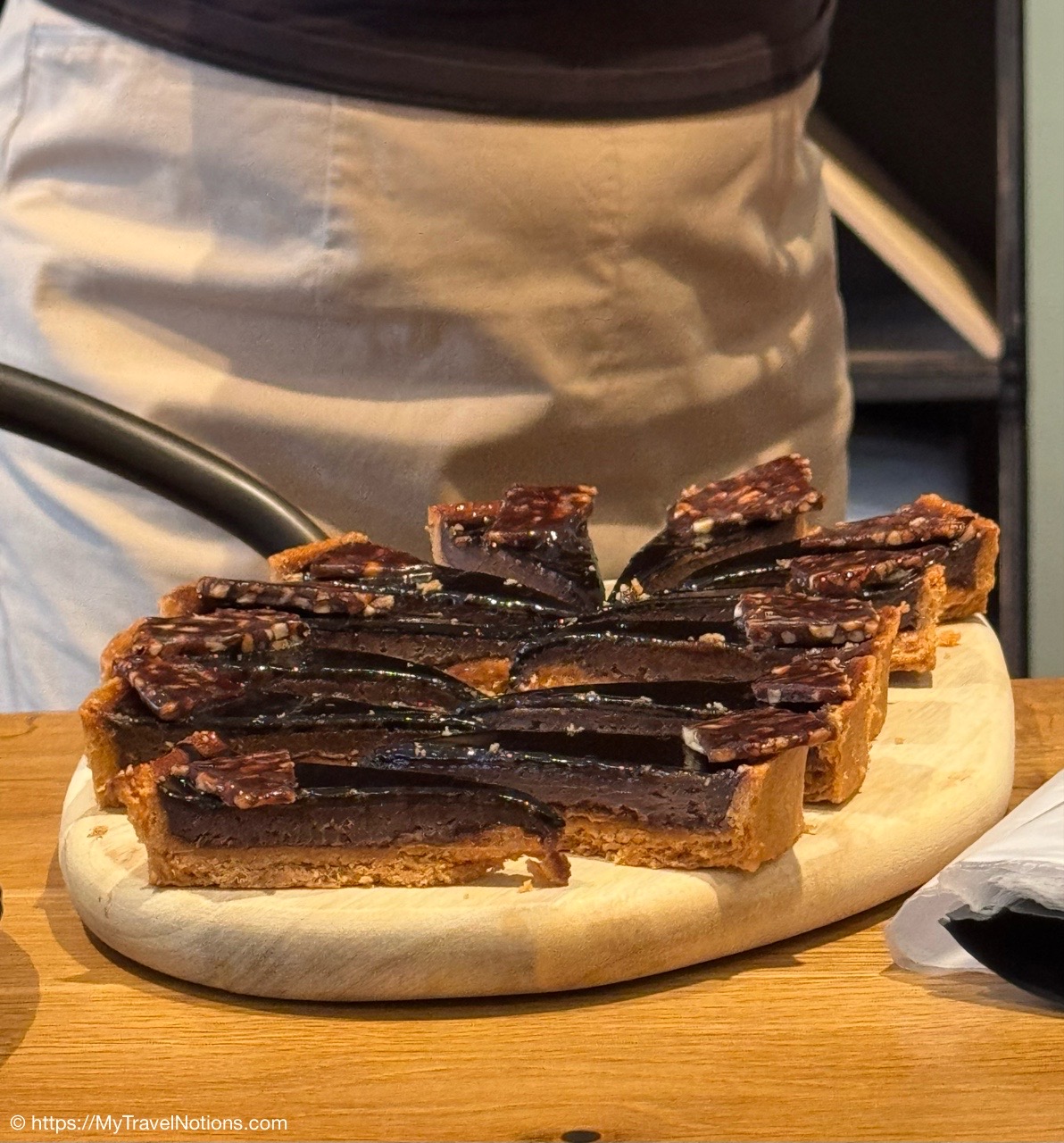
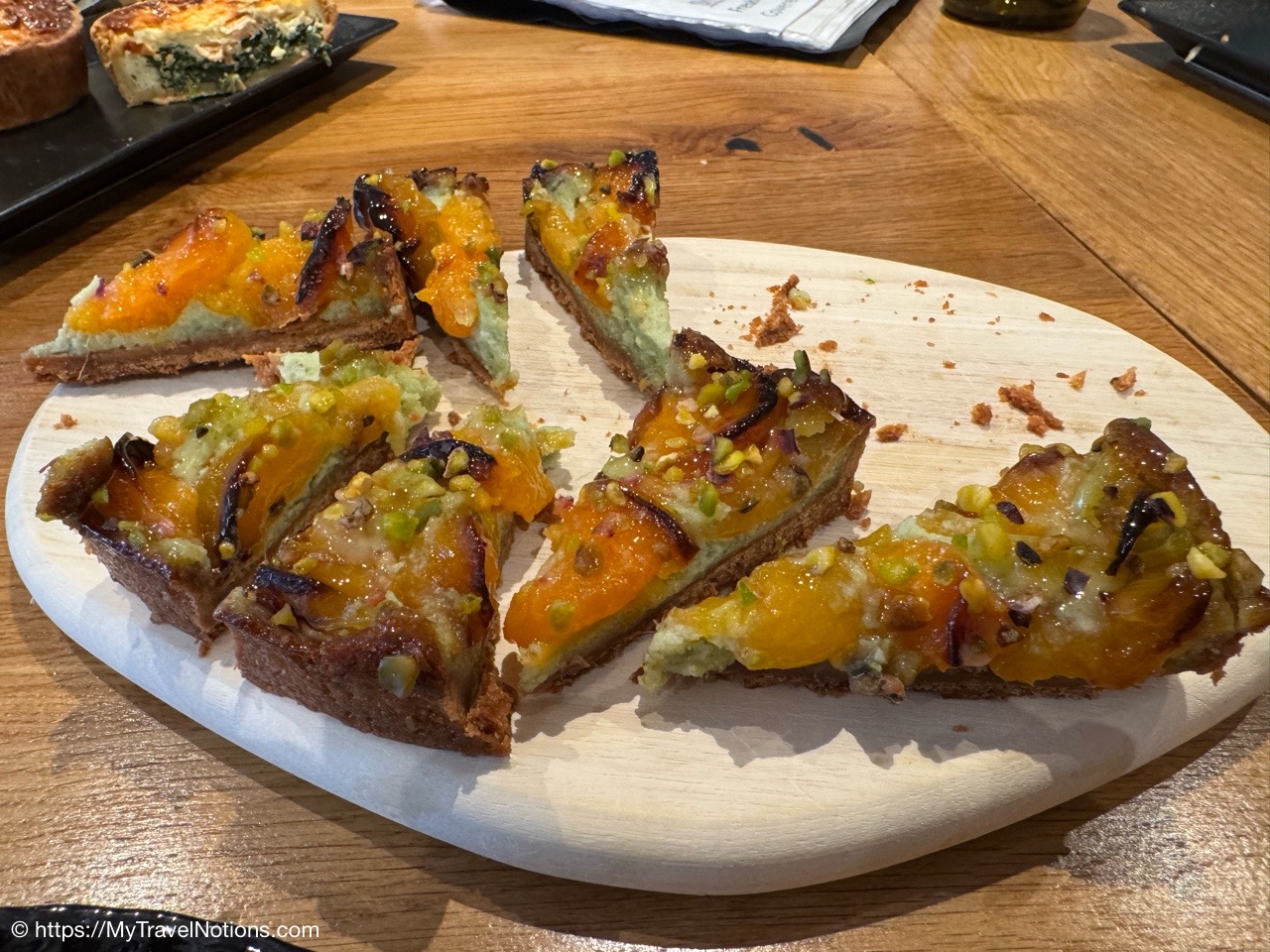
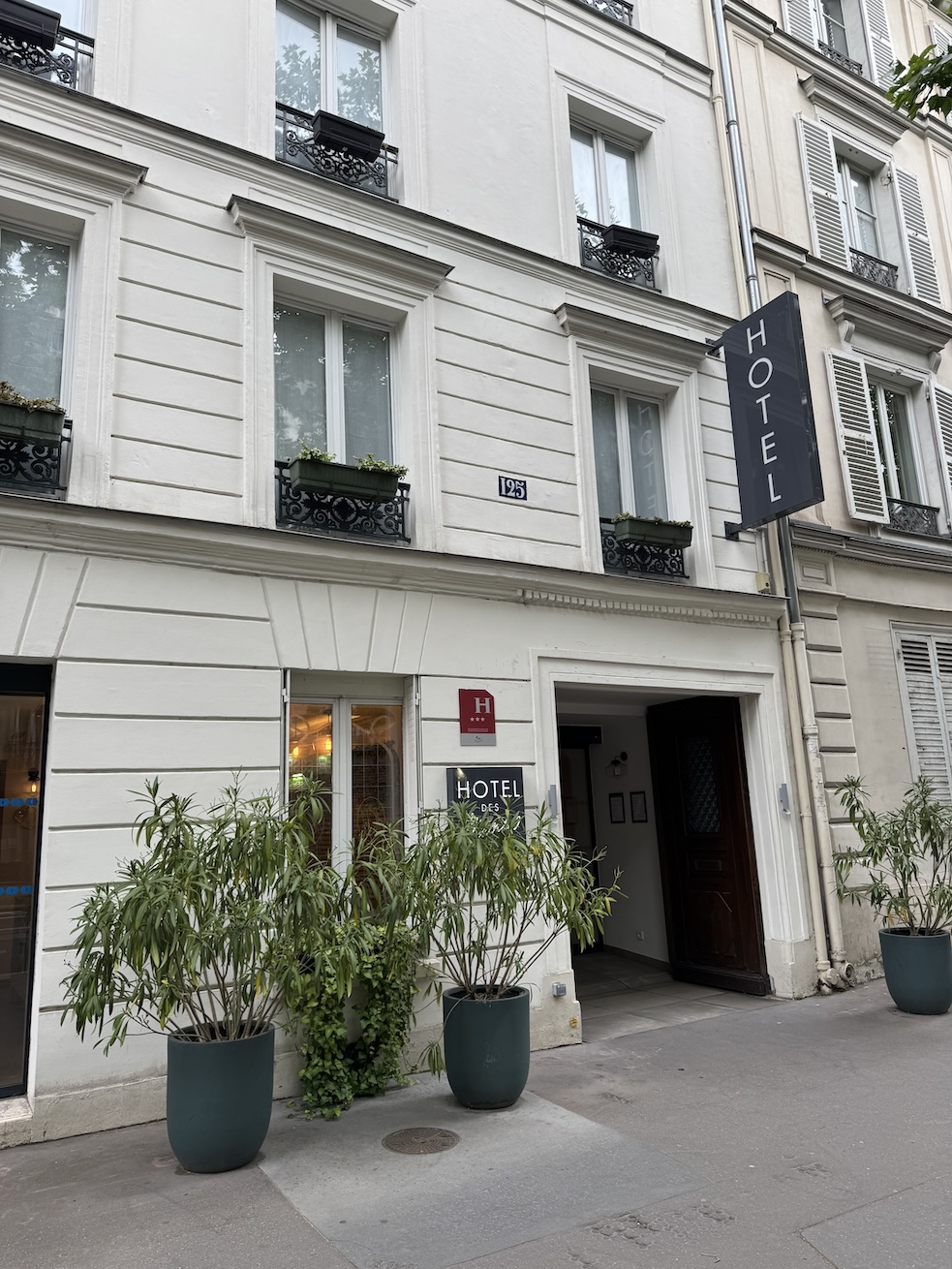
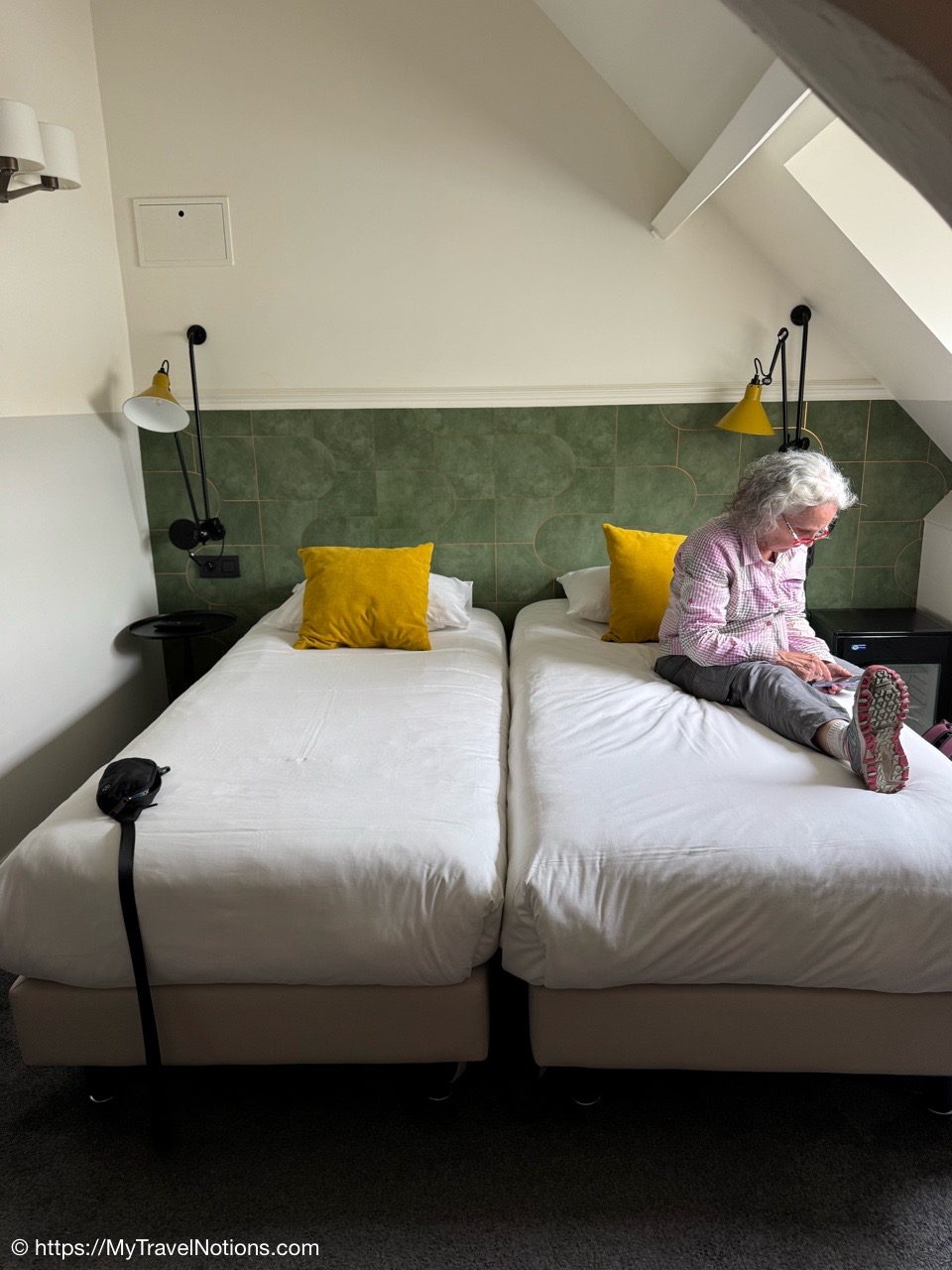
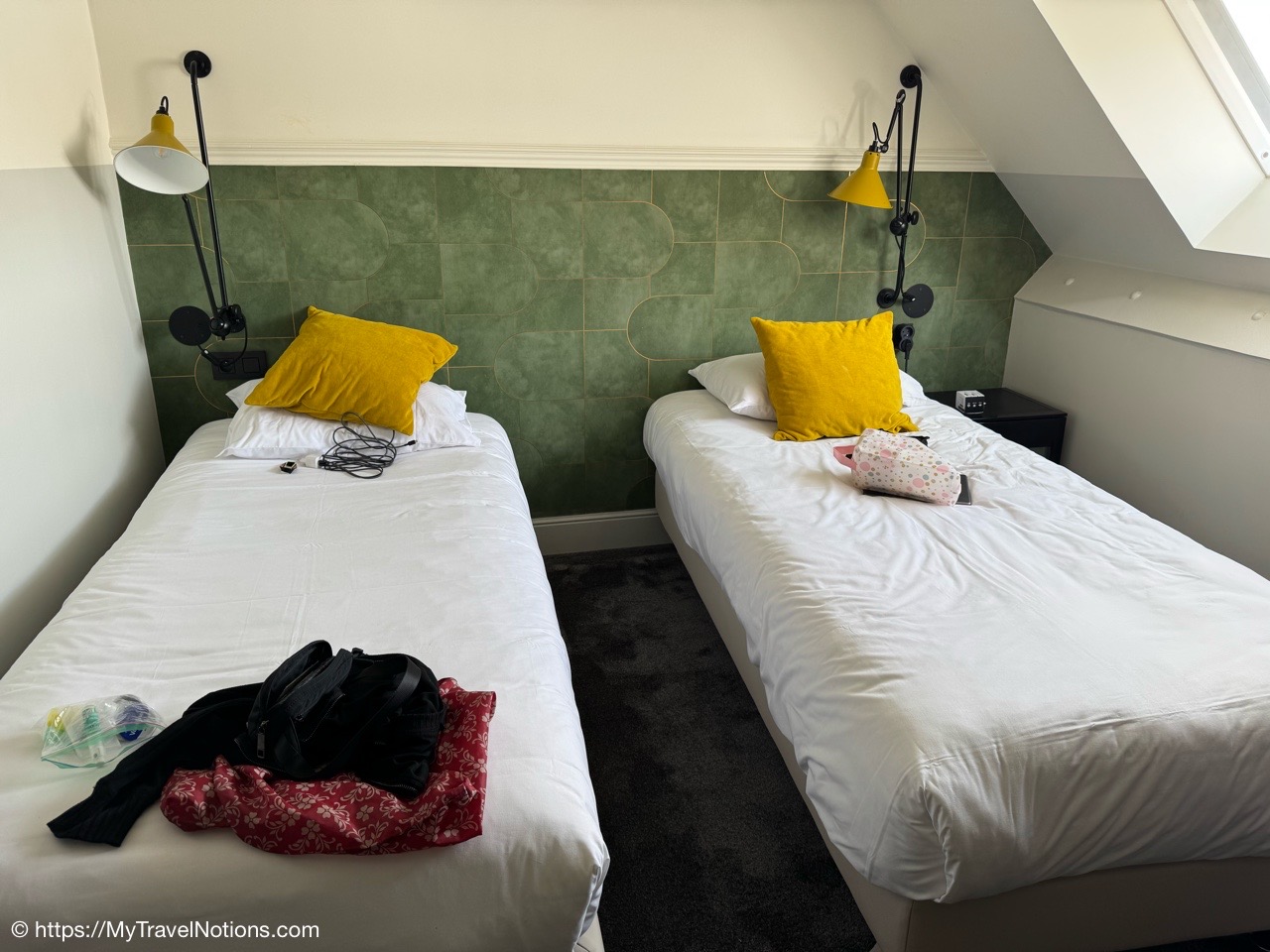
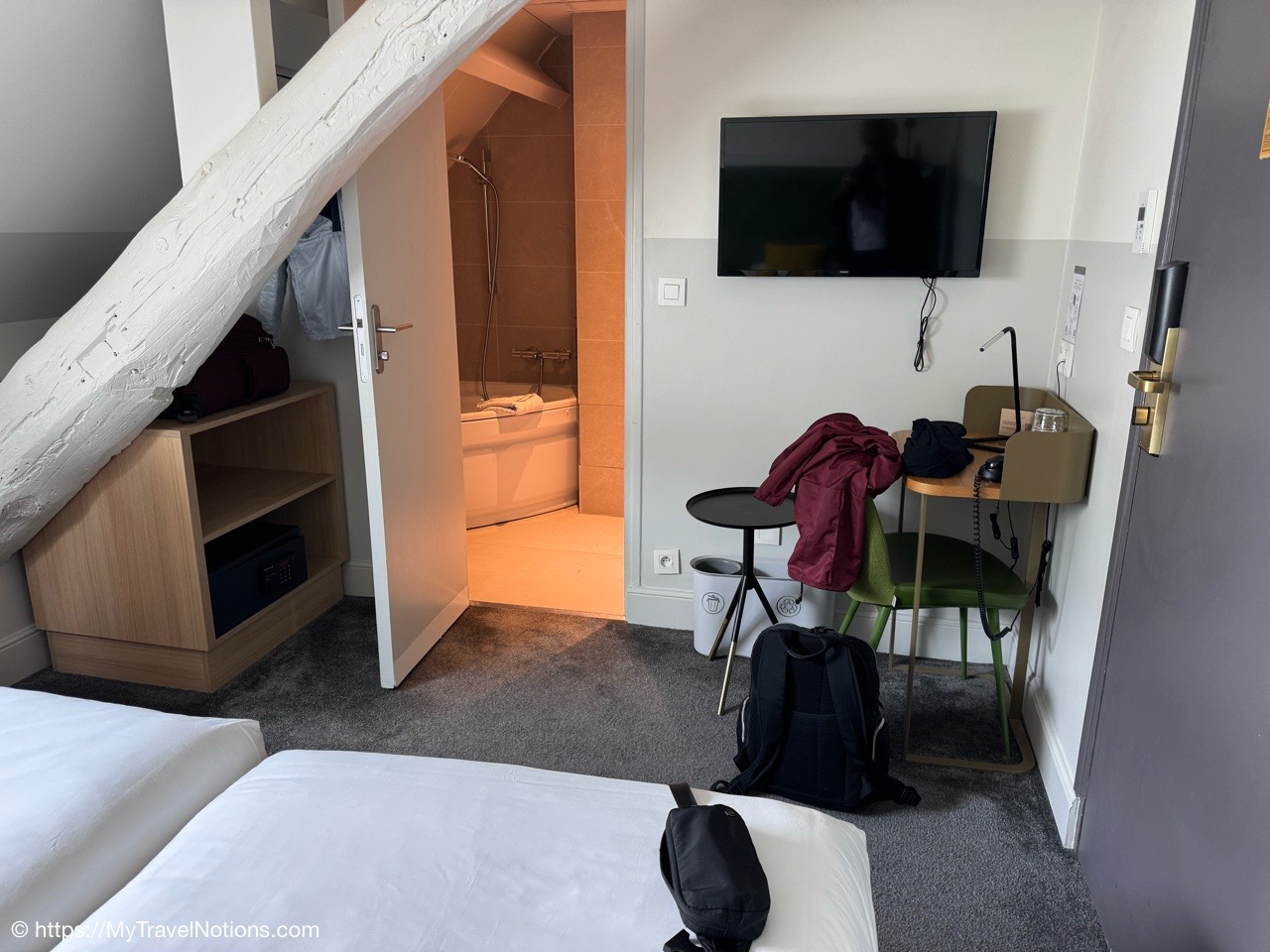
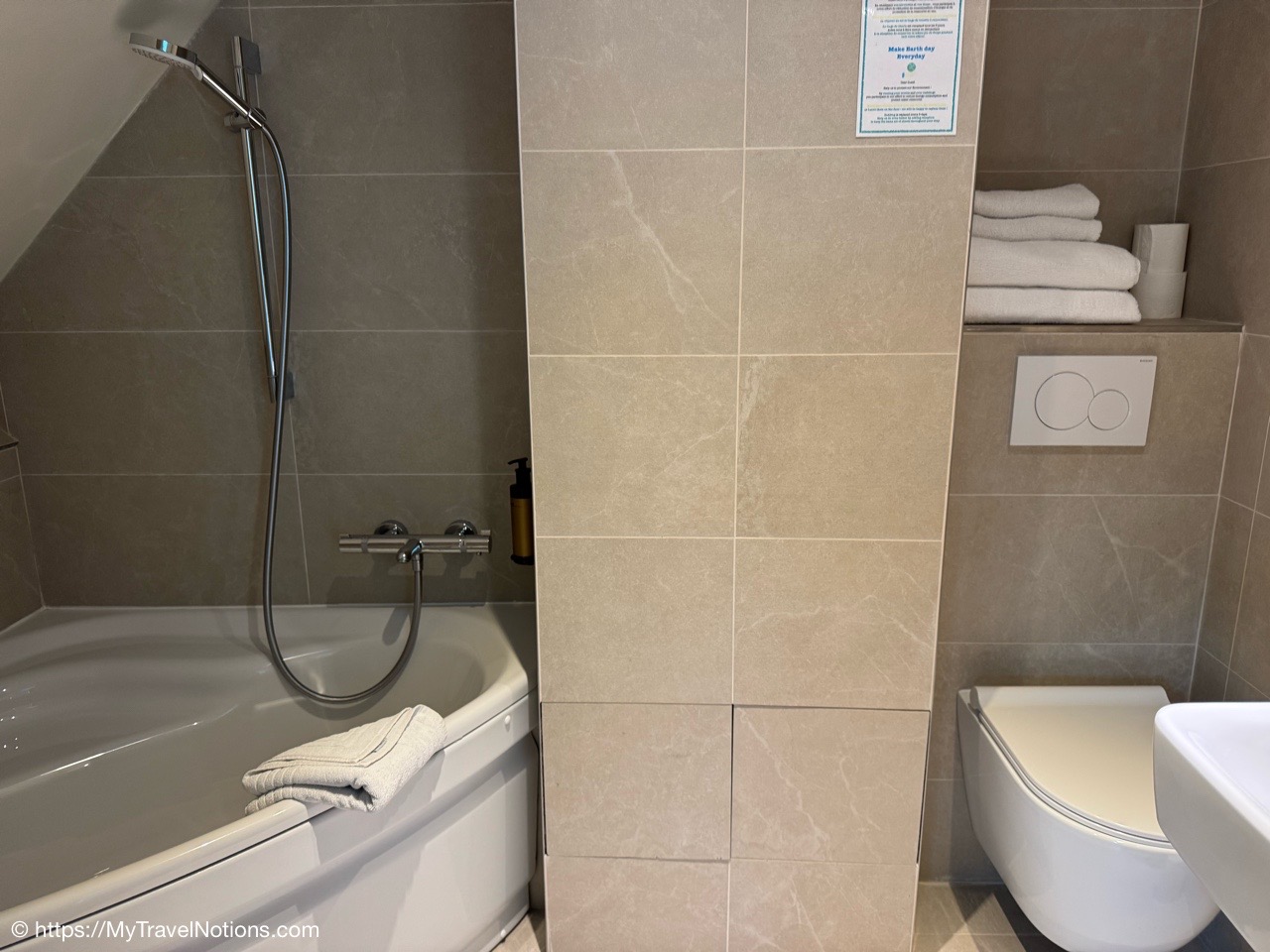
Rosie and I during our last full day in Paris as we head to our Paris Food Walking Tour meet-up, where we took the metro and then did some walking from our hotel. (May 31, 2025)Thanks to Rosie, who figured out which train we needed to take, we made our way to our Paris Food Walking Tour meet-up. (May 31, 2025)Our metro exit at the St. Michel Notre-Dame in Paris. This was good practice for taking the train to the airport for tomorrow. (May 31, 2025)The magnificent Notre-Dame Cathedral on the way to our Paris Food Walking Tour meet-up, where we took the metro here and now walking. (May 31, 2025)Rental bikes lined up along Rue d’Arcole as Rosie and I made our way to the meeting point of our Paris Food Walking Tour. (May 31, 2025)Walking to the meet-up point of our Paris Food Walking Tour. (May 31, 2025)Meeting our Food Walking Tour guide, Nana, who brought our little group some Madeleine cakes which were a delicious treat because I had not eaten breakfast. Madeleine cakes are made from butter, flour, eggs and sugar mixed together well. Then the dough is placed in the oven in a shell-shaped baking pan. (May 31, 2025)And, the first stop on our Paris Food Tasting Tour was to Pierre Hermé, a patisserie, a specialized pastry shop that sells sweet baked goods, such as cakes, tarts, and macarons, and is distinct from a boulangerie which focuses primarily on bread. This renowned haute patisserie is known for its high-end pastries, macarons, chocolates and even ice cream. But our treat was one of the macarons. (May 31, 2025)Inside the Pierre Hermé patisserie and their case of deliciousness, specifically macarons at the first stop on our Paris Food Tasting Tour. (May 31, 2025)Inside the Pierre Hermé patisserie and their case of deliciousness, specifically macarons at the first stop on our Paris Food Tasting Tour. (May 31, 2025)Stopping along the pedestrian Pont Saint-Louis at the Île de la Cité, a historic island in the river Seine considered the birthplace of Paris. It is home to major landmarks like the Notre Dame Cathedral and Sainte-Chapelle was the location of the original settlement of the Parisii tribe, a fishing village settlement established around 250 B.C. and became the foundation for the city of Paris. The island is the political, spiritual, and cultural center of Paris and is connected to the mainland by several bridges. (May 31, 2025)Views from the Pont Saint-Louis of the Île de la Cité, a historic island in the river Seine considered the birthplace of Paris. (May 31, 2025)Views from the Pont Saint-Louis of the Île de la Cité, a historic island in the river Seine considered the birthplace of Paris. (May 31, 2025)Walking through the small but charming Île Saint-Louis, from the pedestrian Pont Saint-Louis with its elegant 17th century architecture, boutique shops and cafes. (May 31, 2025)Walking through the small but charming Île Saint-Louis, from the pedestrian Pont Saint-Louis with its elegant 17th century architecture, boutique shops and cafes. (May 31, 2025)Walking along the north side of the Notre-Dame Cathedral in Paris where there’s still scaffolding to complete the final stages of the roof and spire reconstruction. (May 31, 2025)Walking along the north side of the Notre-Dame Cathedral in Paris where there’s still scaffolding to complete the final stages of the roof and spire reconstruction. (May 31, 2025)Walking along the north side of the Notre-Dame Cathedral in Paris where there’s still scaffolding to complete the final stages of the roof and spire reconstruction. (May 31, 2025)Me at the Notre-Dame Cathedral in Paris on the way to our next food tasting stop during our Paris Food Tasting Tour. (May 31, 2025)The Gallery of Kings lined up above and across the central portal of the Last Judgment on the western facade of the Notre-Dame Cathedral. Installed between 1220 and 1230, it depicts God’s judgment, according to Saint Matthew, where the cursed are punished, and the blessed are welcomed into eternal life. (May 31, 2025)The western rose window facade, the entrance to the Notre-Dame Cathedral in Paris, features the Madonna and Child and below that is the Gallery of Kings. (May 31, 2025)Views of the Seine riverside walkway of the Promenade Maurice Carême on the Left Bank of the Île de la Cité, near the Notre Dame Cathedral. (May 31, 2025)Walking through the streets of Paris to the next location on our Paris Food Walking Tour. (May 31, 2025)Walking through the streets of Paris to the next location on our Paris Food Walking Tour. (May 31, 2025)Walking through the streets of Paris to the next location on our Paris Food Walking Tour. (May 31, 2025)Entering the second stop of our Paris Food Walking Tour, the Bistro Des Lettres, for a sit down traditional French meal of saucisse purée, sausage and mashed potatoes. (May 31, 2025)Me with my plate of saucisse purée, sausage and mashed potatoes during the second stop of our Paris Food Walking Tour at the Bistro Des Lettres for a sit down traditional French meal and a glass of apple cider. (May 31, 2025)My plate of saucisse purée, sausage and mashed potatoes during the second stop of our Paris Food Walking Tour at the Bistro Des Lettres for a sit down traditional French meal and a glass of apple cider. (May 31, 2025)Stopping at the Maison Keiser bakery to purchase sweets to take away for our next meal, a late lunch/early picnic dinner during our Paris Food Walking Tour. (May 31, 2025)Stopping at the Maison Keiser bakery to purchase sweets and quiche for our next meal, a late lunch/early picnic dinner during our Paris Food Walking Tour. (May 31, 2025)Then we came to the Place Maubert market area to purchase cheese and some other goodies to take-away for our next meal, a late lunch/early picnic dinner during our Paris Food Walking Tour. (May 31, 2025)The Charcuterie Saint-German at the Place Marche where we stopped to purchase items for our late lunch/early picnic dinner during our Paris Food Walking Tour. (May 31, 2025)The Charcuterie Saint-German at the Place Marche where we stopped to purchase items for our late lunch/early picnic dinner during our Paris Food Walking Tour. (May 31, 2025)The cheese shop of the Charcuterie Saint-German at the Place Marche where we stopped to purchase take-away cheese for our late lunch/early picnic dinner during our Paris Food Walking Tour. (May 31, 2025)The cheese shop of the Charcuterie Saint-German at the Place Marche where we stopped to purchase take-away cheese for our late lunch/early picnic dinner during our Paris Food Walking Tour. (May 31, 2025)A cornucopia of prepared food at meat shop the Charcuterie Saint-German at the Place Marche where we stopped to purchase items for our late lunch/early picnic dinner during our Paris Food Walking Tour. (May 31, 2025)Our Paris Food Walking Tour guide, Nana, with the bags of various goodies purchased at the Place Marche for our late lunch/early picnic dinner during our food walking tour. (May 31, 2025)Walking to our undisclosed and unknown picnic place to eat the various goodies purchased at the Place Marche where we stopped to purchase items for our late lunch/early picnic dinner during our Paris Food Walking Tour. (May 31, 2025)Walking to our undisclosed and unknown picnic place to eat the various goodies purchased at the Place Marche where we stopped to purchase items for our late lunch/early picnic dinner during our Paris Food Walking Tour. (May 31, 2025)Pieces of Parisienne art on a wall along our walk to our undisclosed and unknown picnic place to eat the various goodies purchased at the Place Marche where we stopped to purchase items for our late lunch/early picnic dinner during our Paris Food Walking Tour. (May 31, 2025)Arriving at our picnic place along Rue de la Montagne in the Saint-Geneviève area to enjoy the various goodies purchased at the Place Marche for our late lunch/early picnic dinner during our Paris Food Walking Tour. (May 31, 2025)Spinach quiche, one of the many goodies we had at our picnic place along Rue de la Montagne in the Saint-Geneviève area that were purchased at the Place Marche for our late lunch/early picnic dinner during our Paris Food Walking Tour. (May 31, 2025)Some of the goodies we had at our picnic place along Rue de la Montagne in the Saint-Geneviève area, that were purchased at the Place Marche for our late lunch/early picnic dinner during our Paris Food Walking Tour, included three different cheeses: Comté, cow’s milk cheese; Fourme d’Ambert, a soft, creamy blue cheese and St. Uguzon, cow’s milk cheese slightly dipped in Rum and covered with raisins. (May 31, 2025)A desert of chocolate bread tart, at our picnic place along Rue de la Montagne in the Saint-Geneviève area, that were purchased at the Place Marche for our late lunch/early picnic dinner during our Paris Food Walking Tour. (May 31, 2025)And, another desert of fruit tart pastry, at our picnic place along Rue de la Montagne in the Saint-Geneviève area, that were purchased at the Place Marche for our late lunch/early picnic dinner during our Paris Food Walking Tour. (May 31, 2025)Views of Paris as we walked back to our hotel. (May 31, 2025)Views of Paris as we walked back to our hotel. (May 31, 2025)Views of Paris as we walked back to our hotel. (May 31, 2025)Just sharing where Rosie and I stayed during our rather quick 4-nights in Paris, her at the Hôtel des Mines along the Boulevard Saint-Michel, a major street in the Latin Quarter of Paris. (May 29, 2025)The small twin bed attic room Rosie and I shared during our 4-night stay at the Hôtel des Mines along the Boulevard Saint-Michel, a major street in the Latin Quarter of Paris. This small room actually cost about 1,122 Euros, about $650 USD each after we split the cost in half. (May 29, 2025)We ended up removing the small side table out of the way so we could move the beds apart in our small twin bed attic room Rosie and I shared during our 4-night stay at the Hôtel des Mines along the Boulevard Saint-Michel, a major street in the Latin Quarter of Paris. (May 28, 2025)The small twin bed attic room Rosie and I shared during our 4-night stay at the Hôtel des Mines along the Boulevard Saint-Michel, a major street in the Latin Quarter of Paris. (May 28, 2025)And, the small bathroom Rosie and I shared during our 4-night stay at the Hôtel des Mines along the Boulevard Saint-Michel, a major street in the Latin Quarter of Paris. (May 28, 2025)
Goodbye Paris…for now.
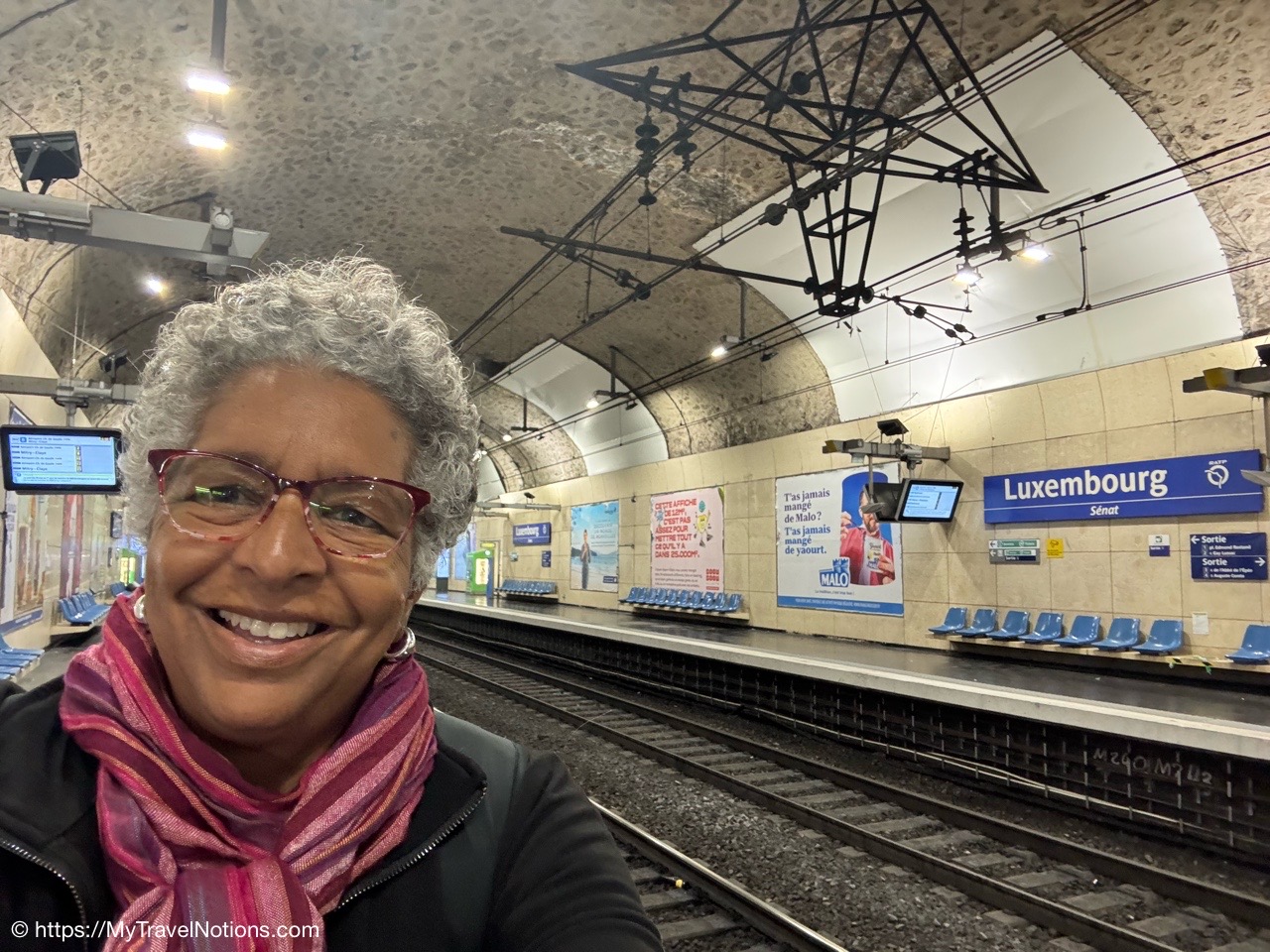
Had to carry my luggage down two sets of 30 stairs each but my mobile ticket I purchased online through Bonjour RAPT worked. It cost 14 euros to buy using Apple Pay. That’s from the Luxembourg train stop to the CDG Airport’s Terminal 2E for my Air France flight home. (June 1, 2025)


Thank you for reaching out.