We, Alice, Rosie and myself, arrived in Lyon staying at the La Loge Du Vieux in View Lyon, which translates to Old Lyon. It is the oldest, largest and best-preserved Renaissance and Medieval districts in Lyon. Rosie and I shared a large apartment with two bedrooms, one above the other and Rosie was gracious enough to take the upper bedroom. The kitchen came fully stocked with breakfast items for our 8-day stay and a washer/dryer combo to get some clothes washing done.
But obviously, clothes washing aside, we began our stay in Lyon with one of our favorite things to do to introduce ourselves to a city, a walking tour. Actually two walking tours, one for today, another tomorrow and a street food walking tour the next day.
The third largest city in France, after Paris and Marseille, Lyon’s Roman history dating back to the original medieval city Lugdunum, officially founded in 43 BC.
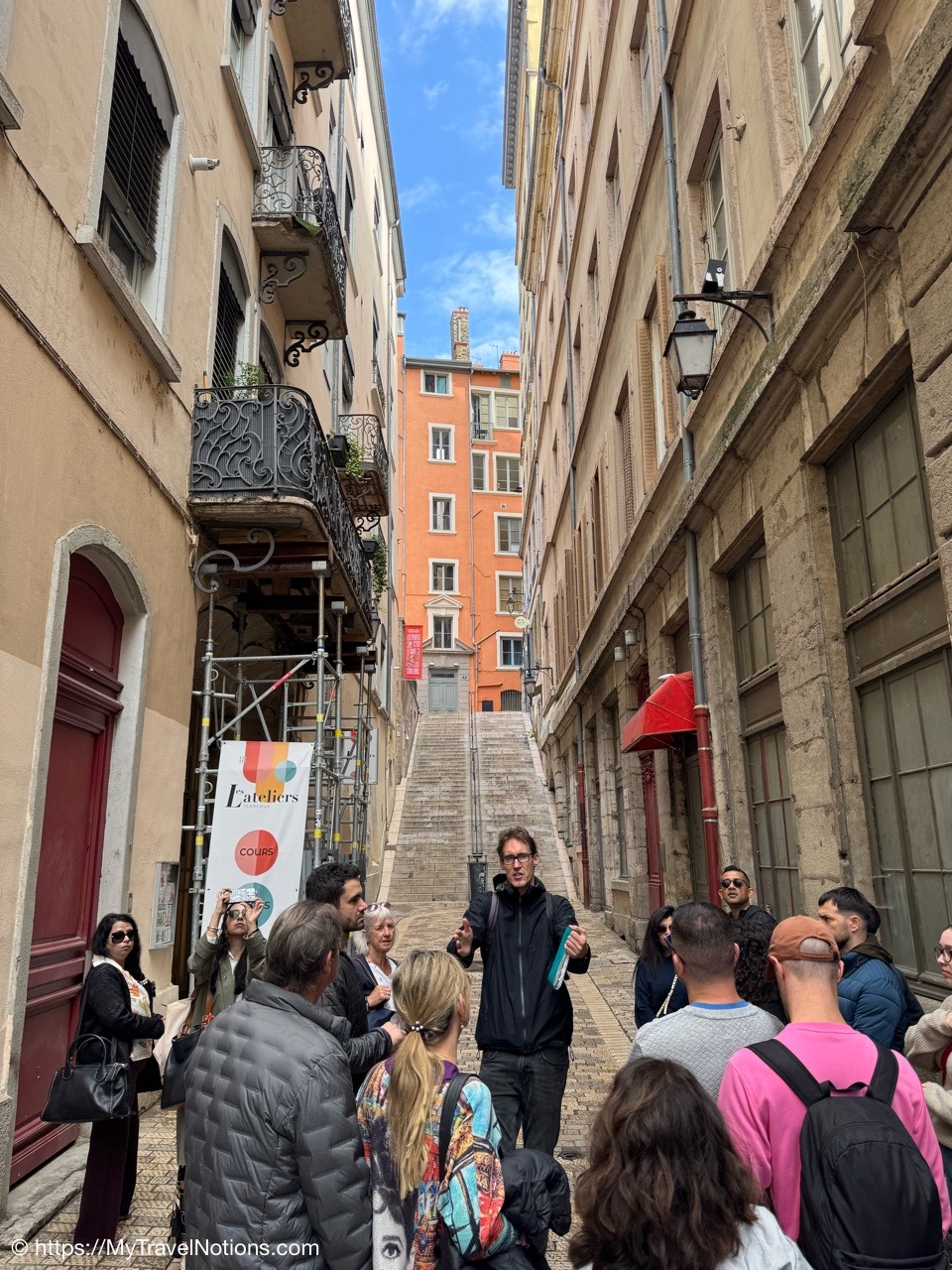
An important part of today’s essential free morning walking tour was through the passageways used by 19th-century silk workers, Canuts, to transport their goods to market while sheltered from the weather. Also, during World War II, the hidden passages were used by the French Resistance to evade Nazi patrols, hold secret meetings and move supplies. These passageways and courtyards were a hidden area known as ‘traboule’, coming from the Latin ‘trans ambulare’ meaning ‘to walk through.
Let’s explore Lyon on today’s free walking tour.
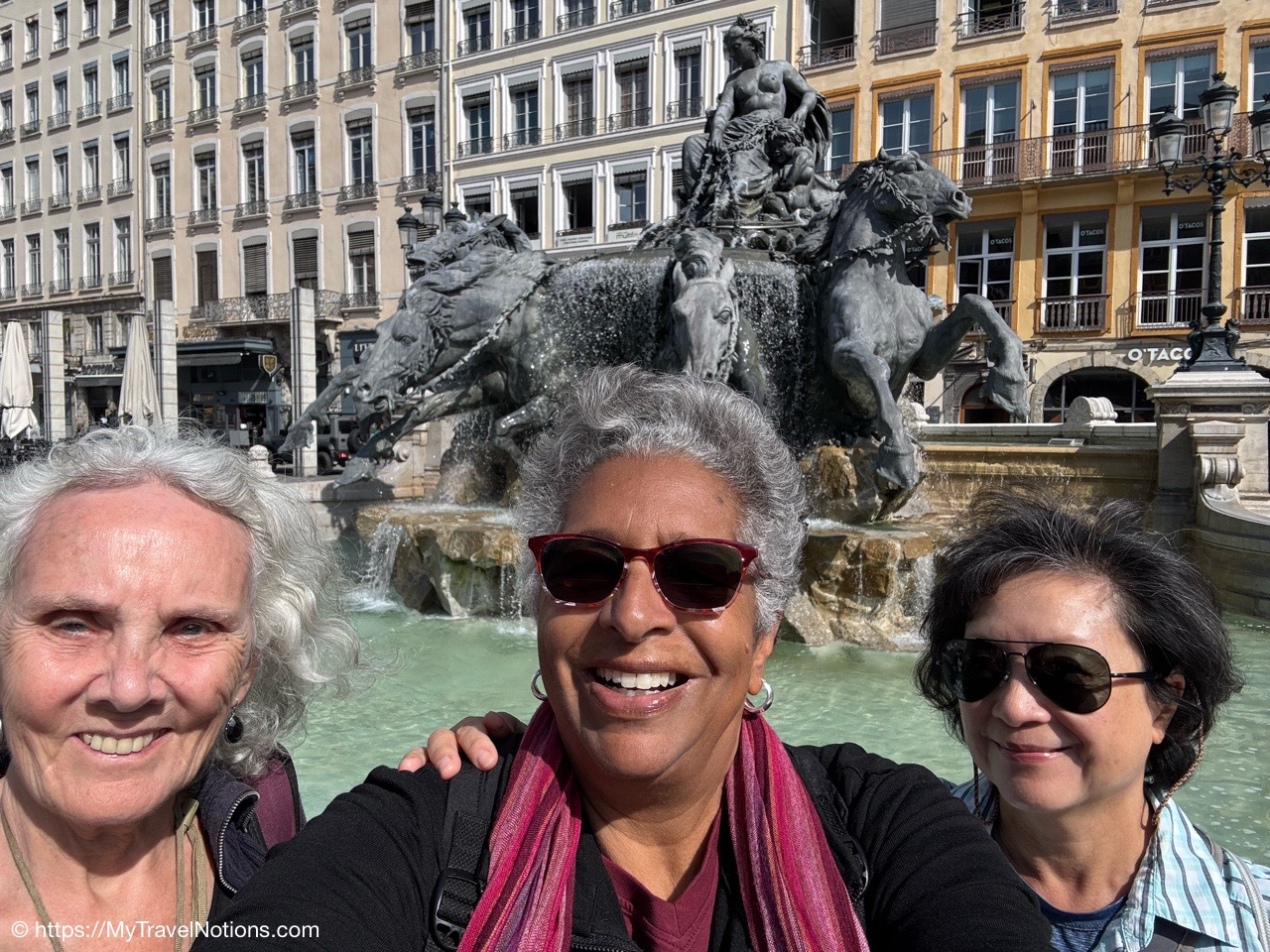
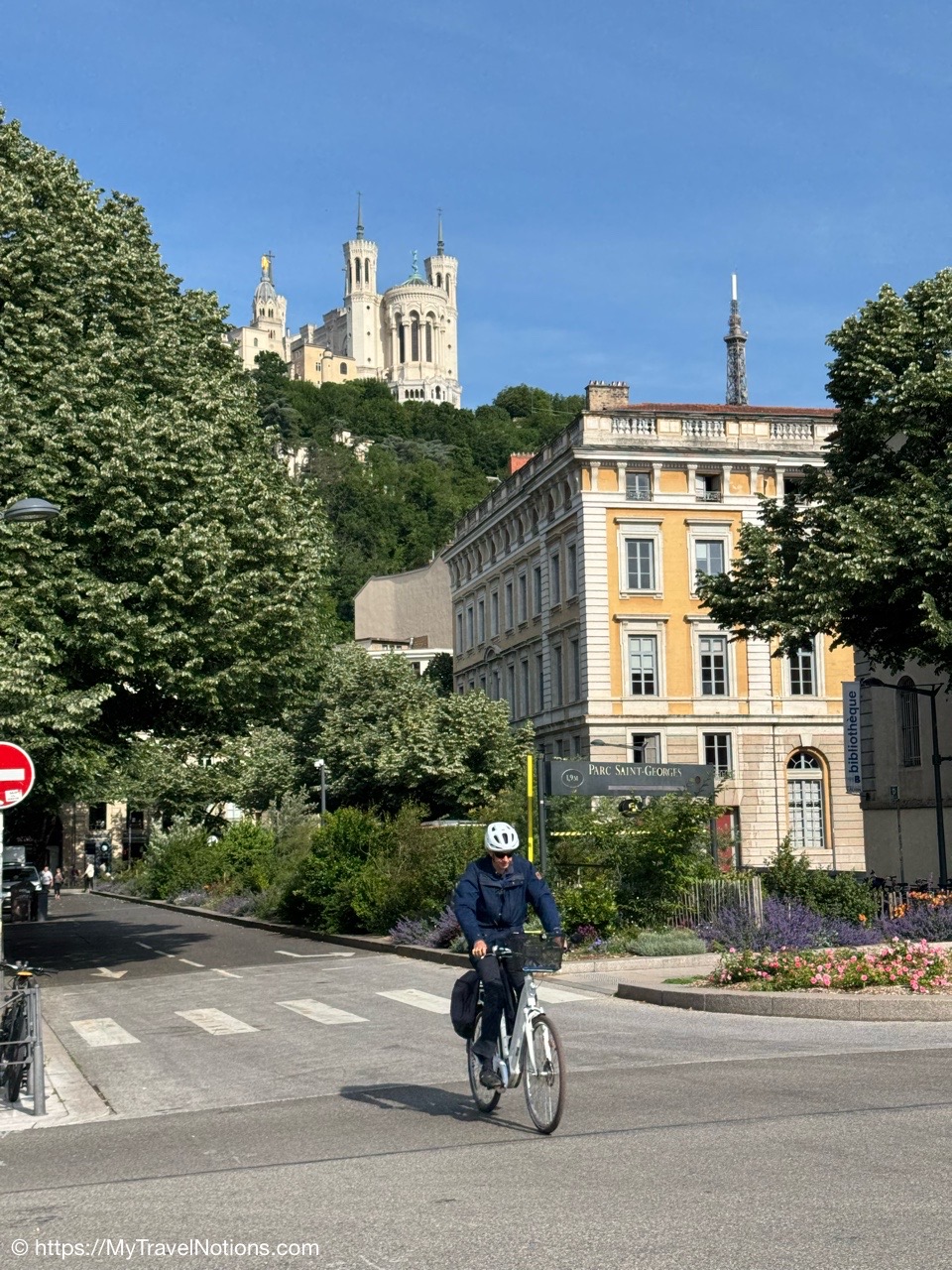
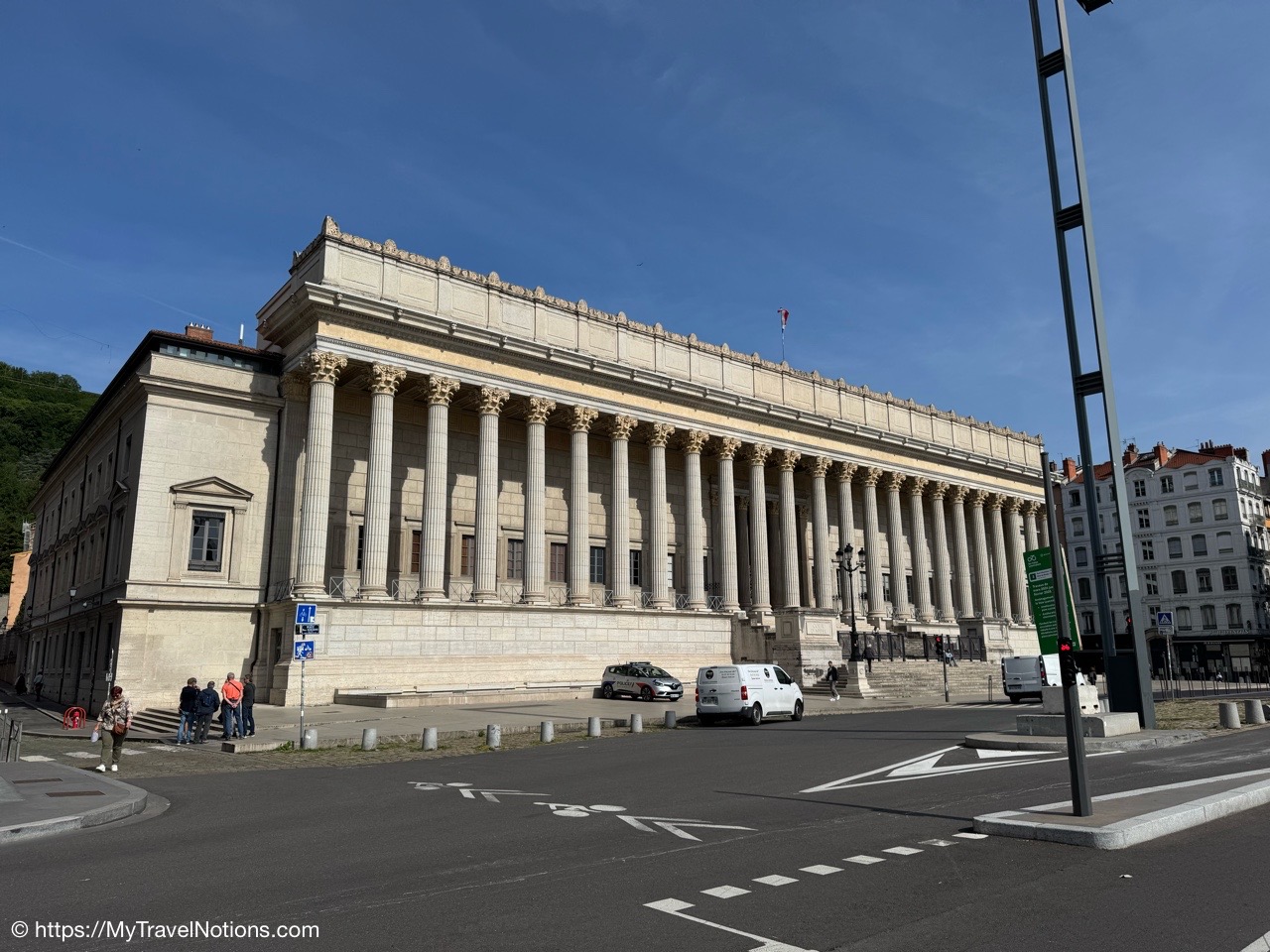
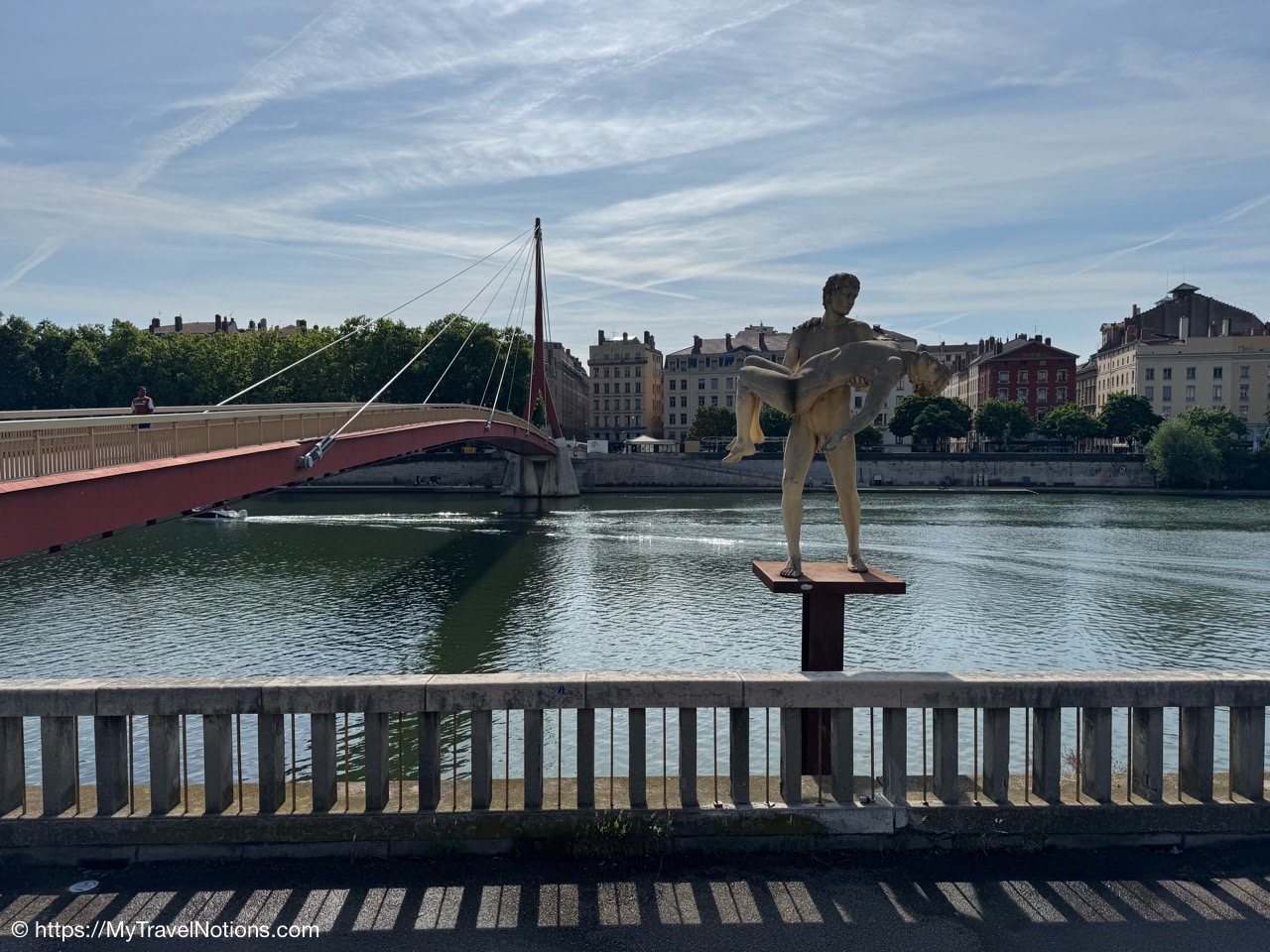
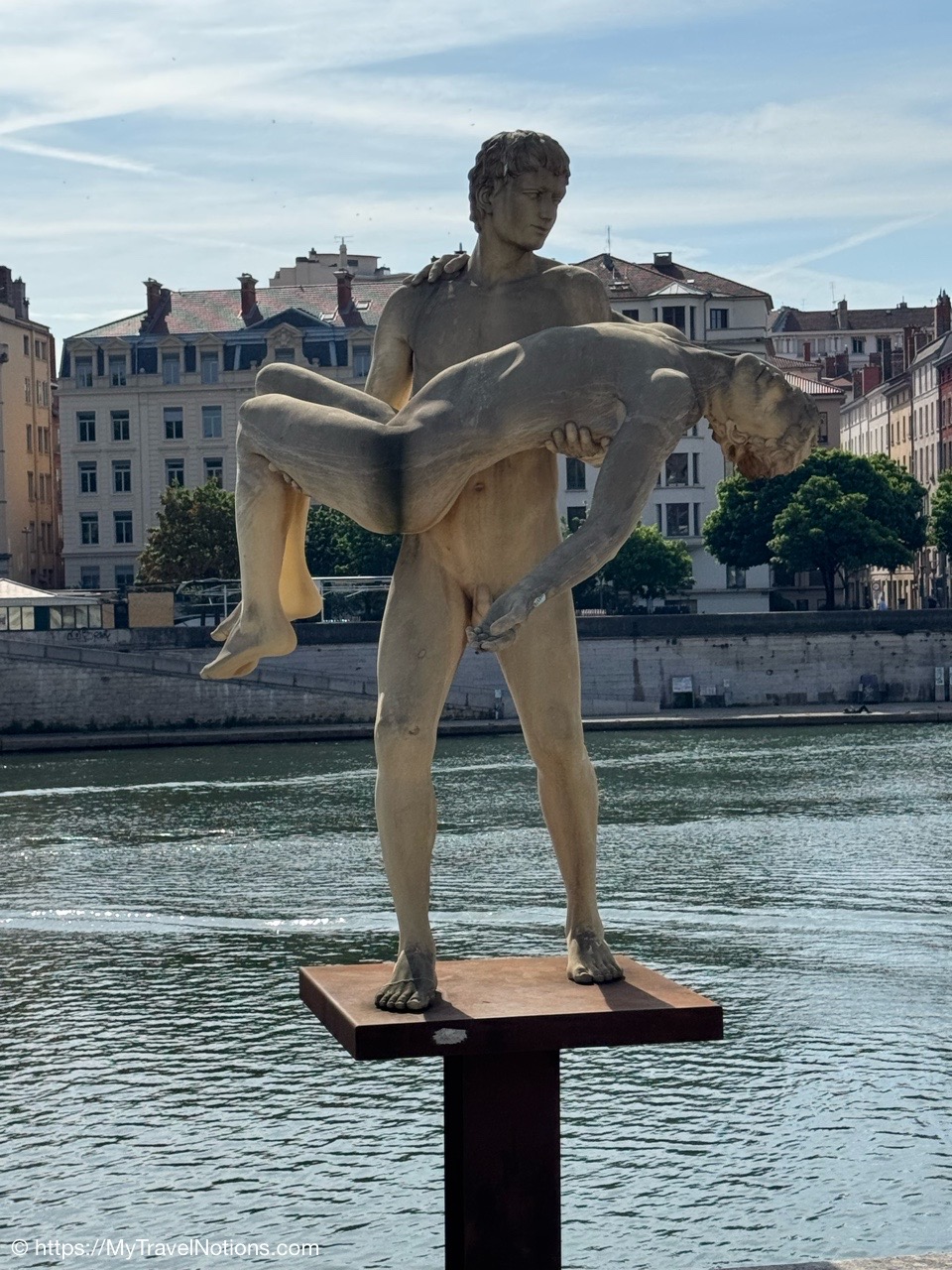
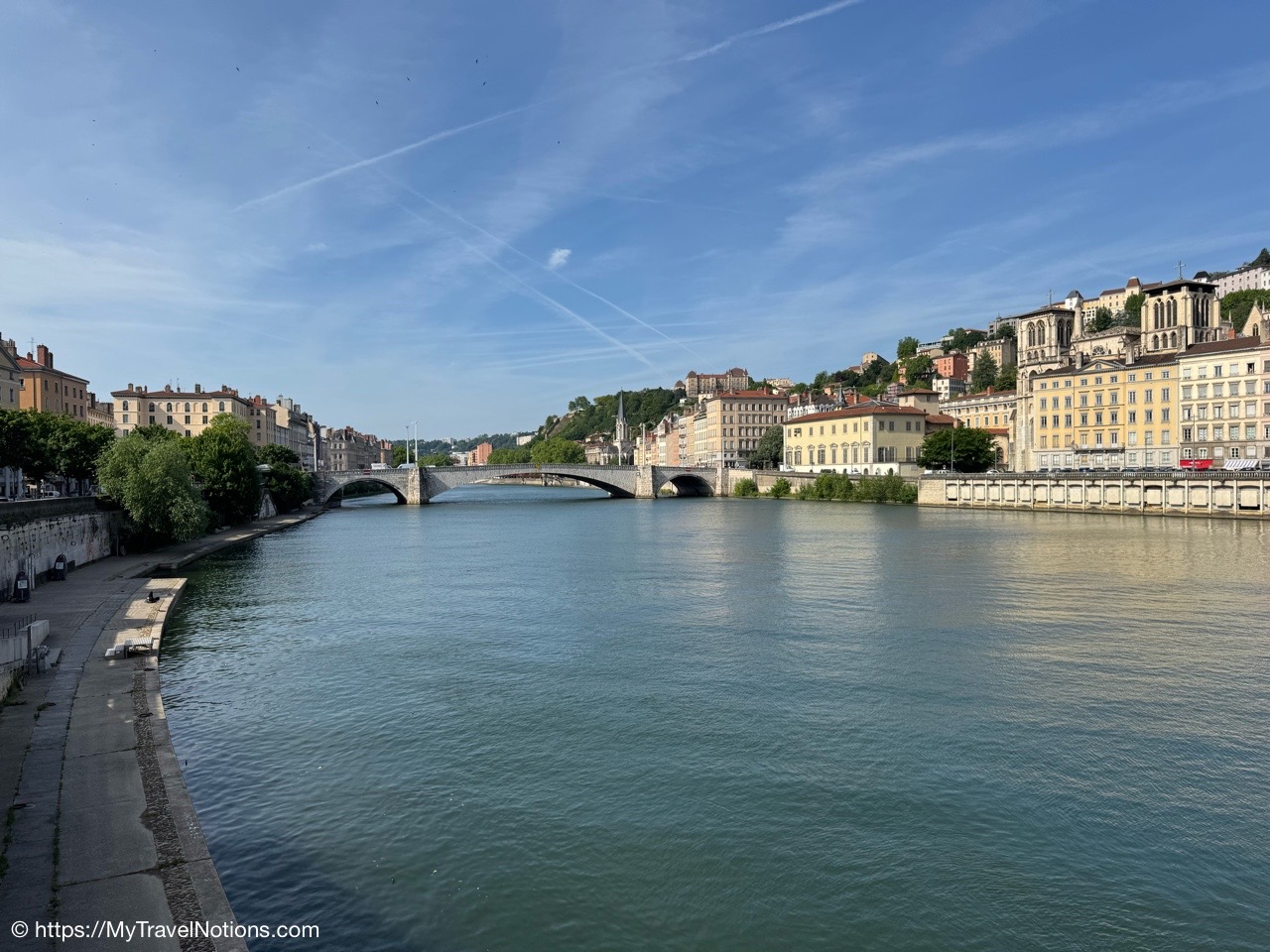
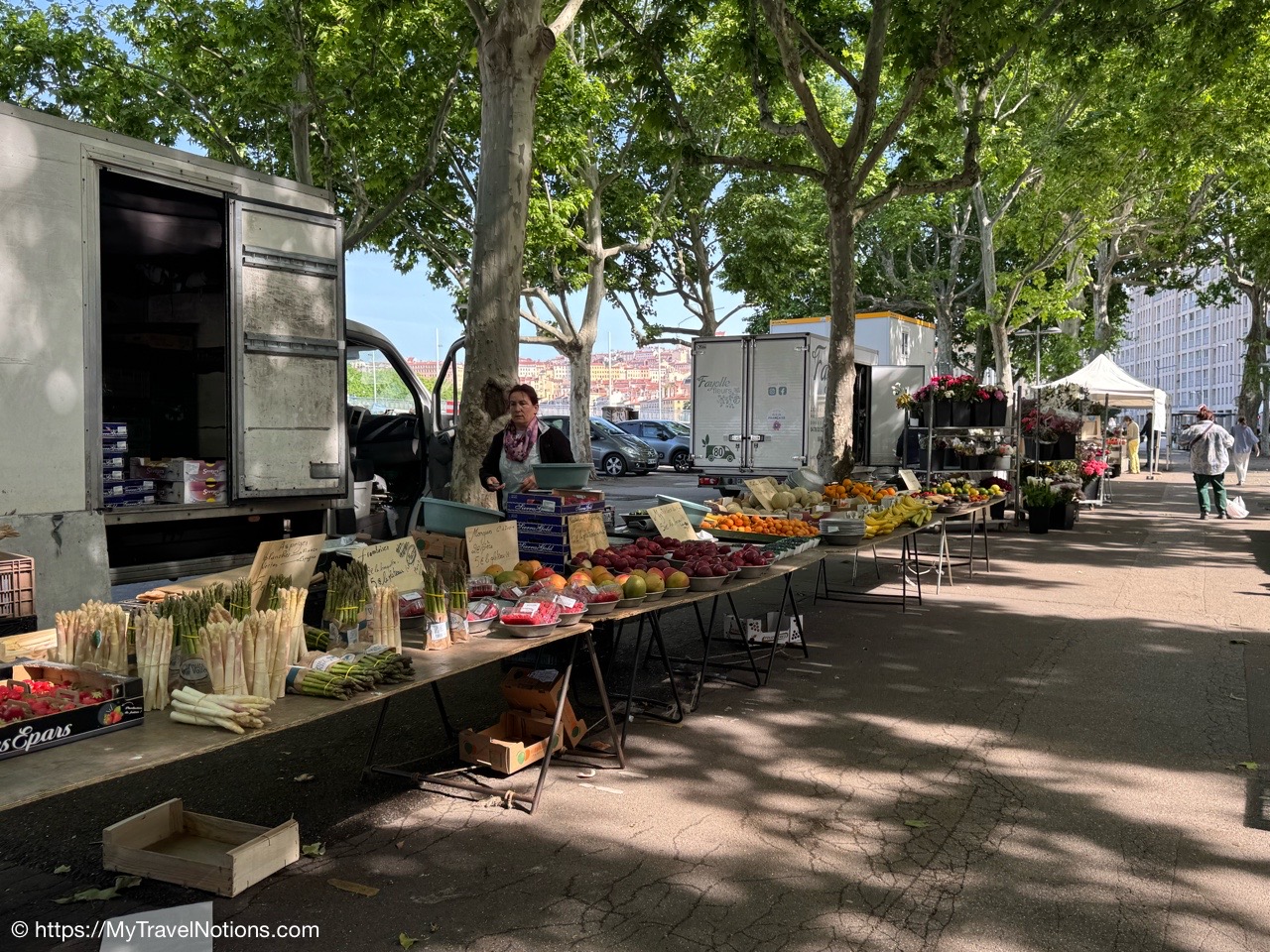
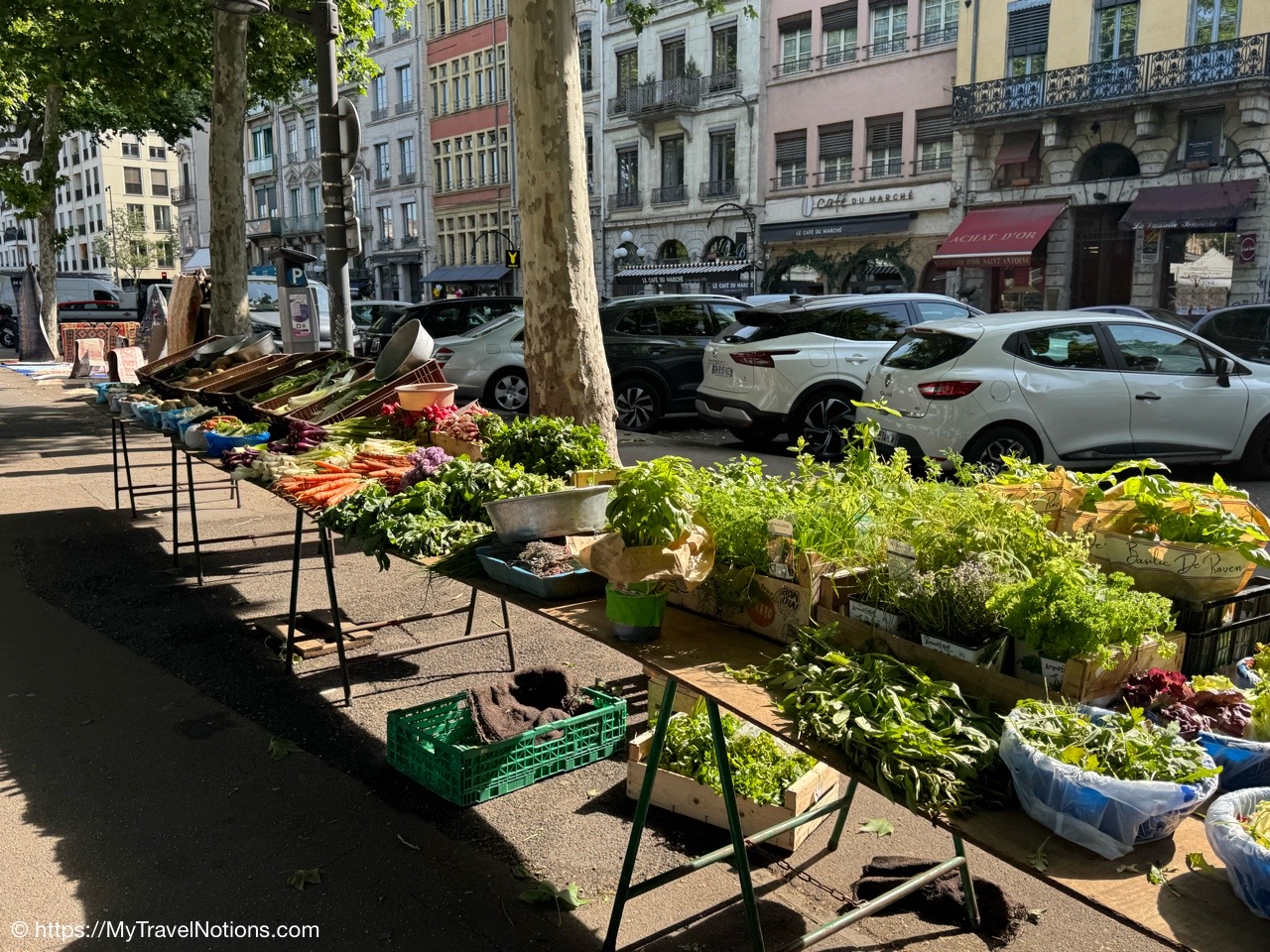
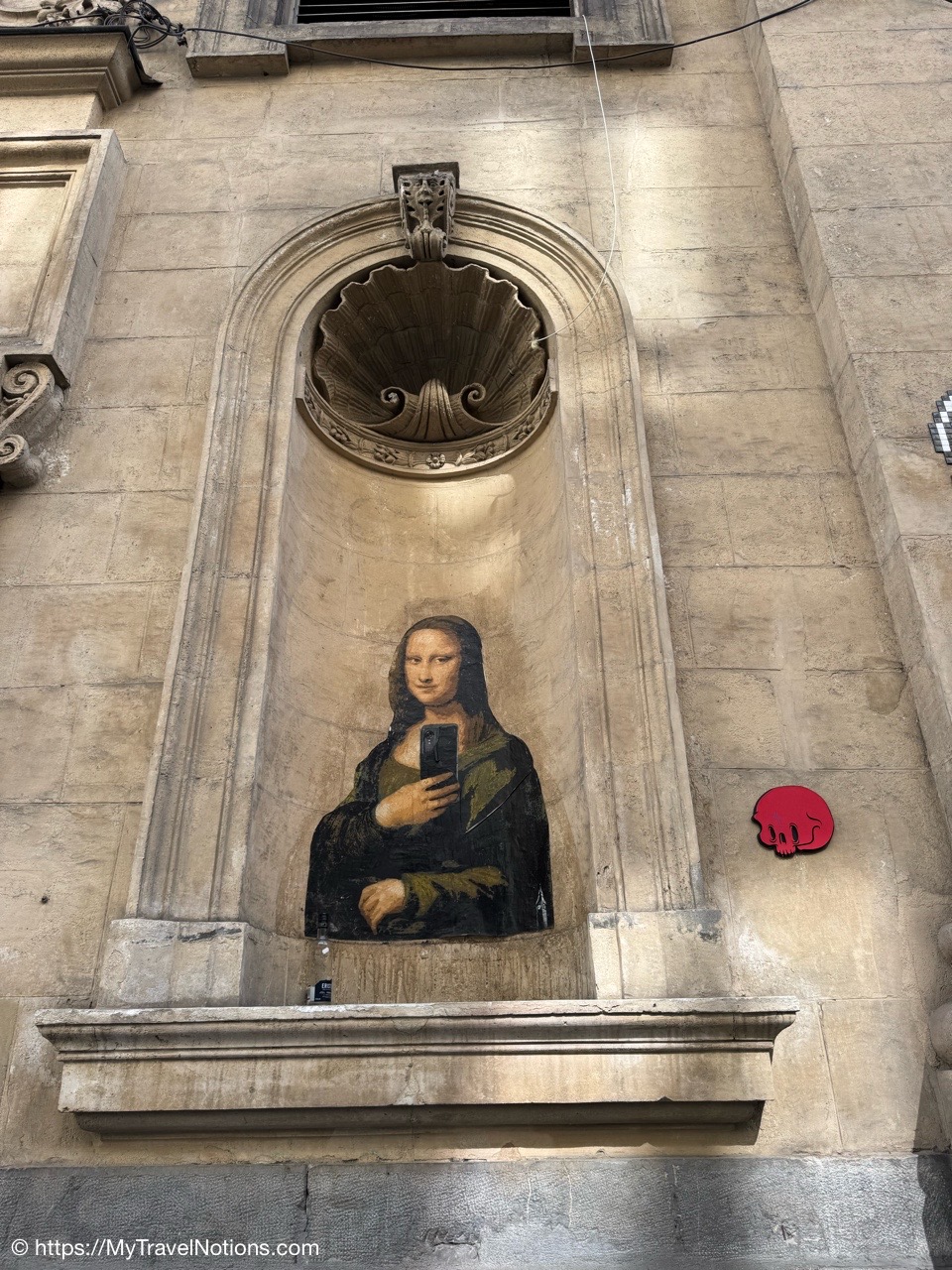
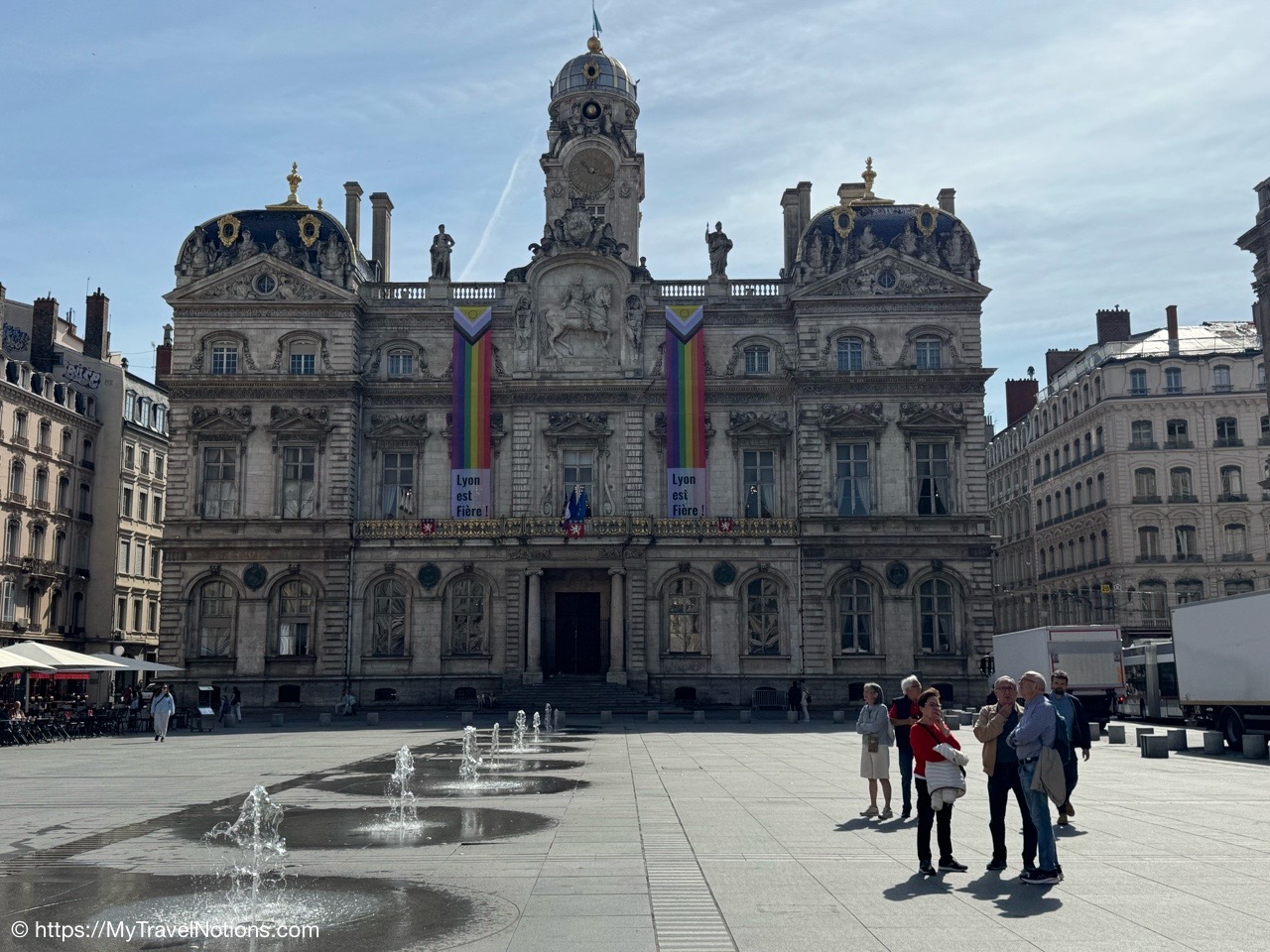
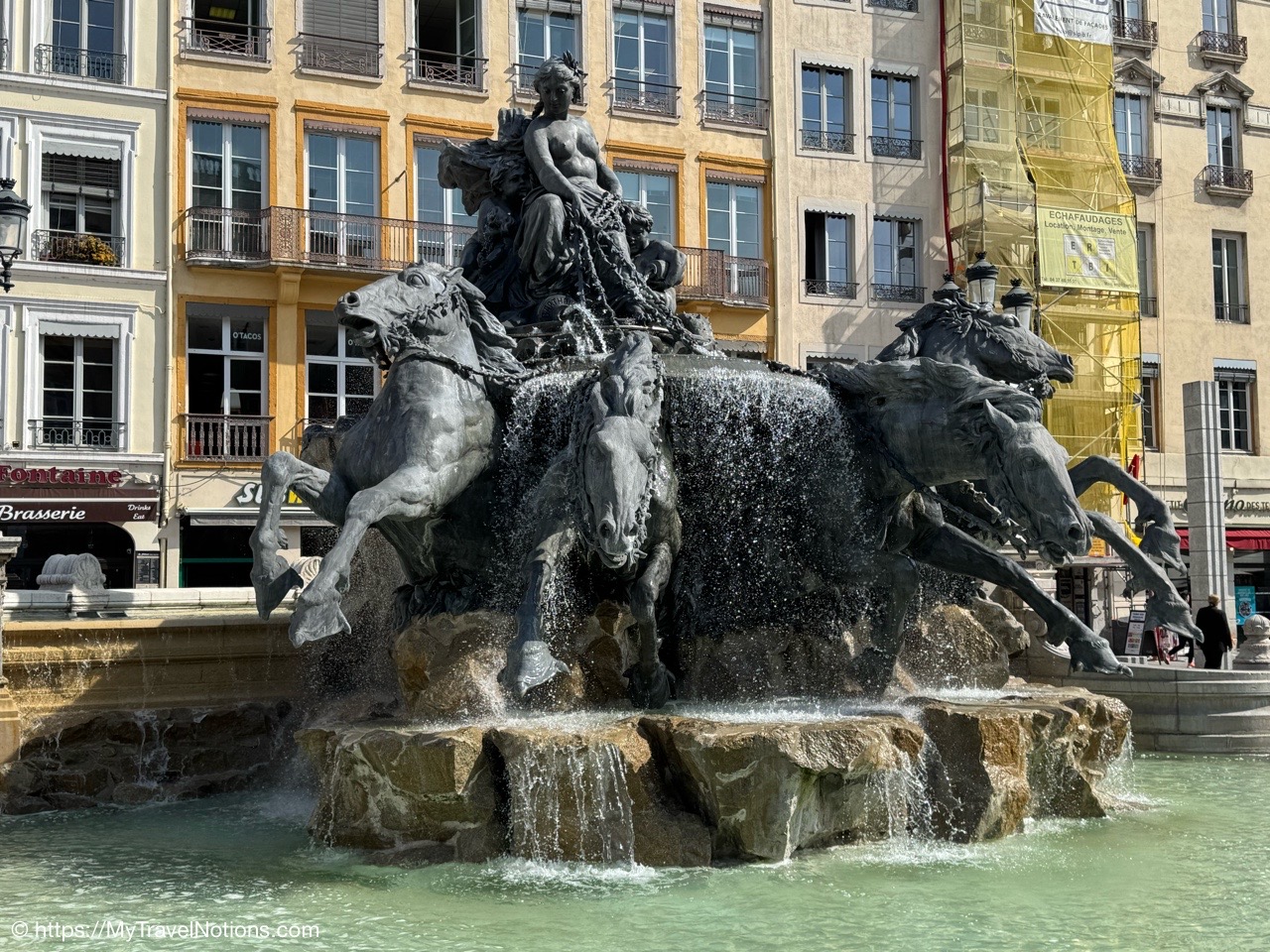
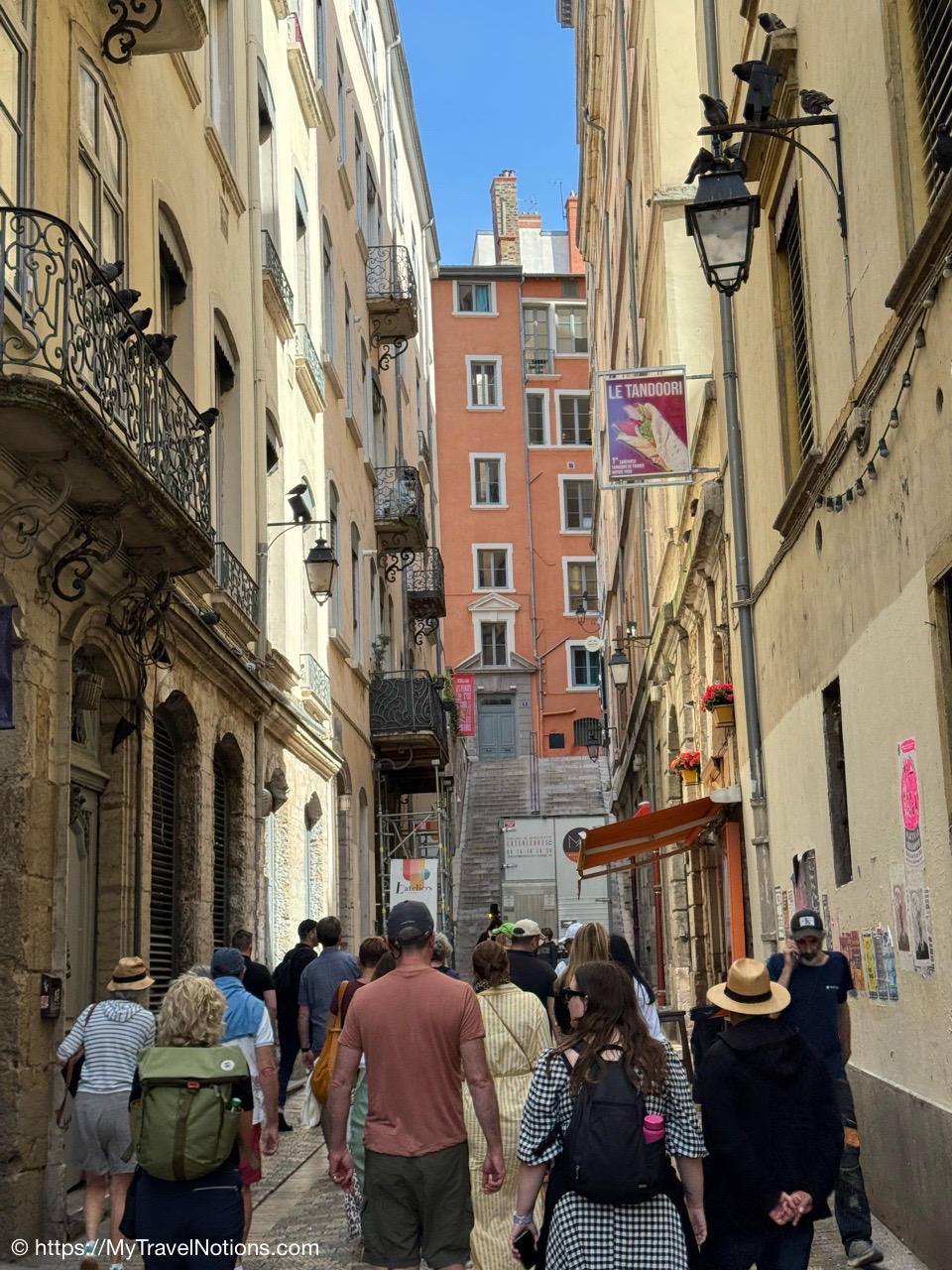
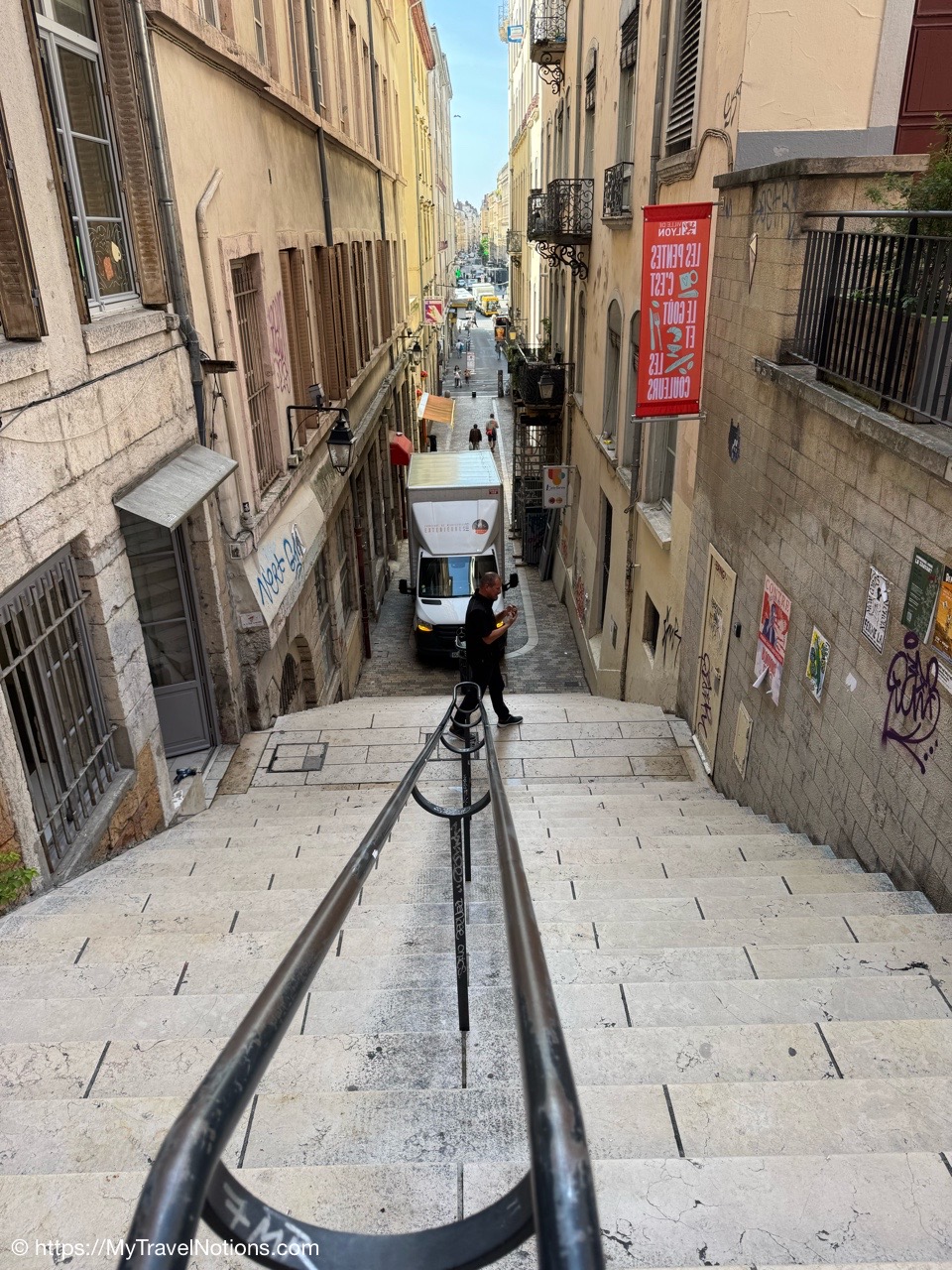
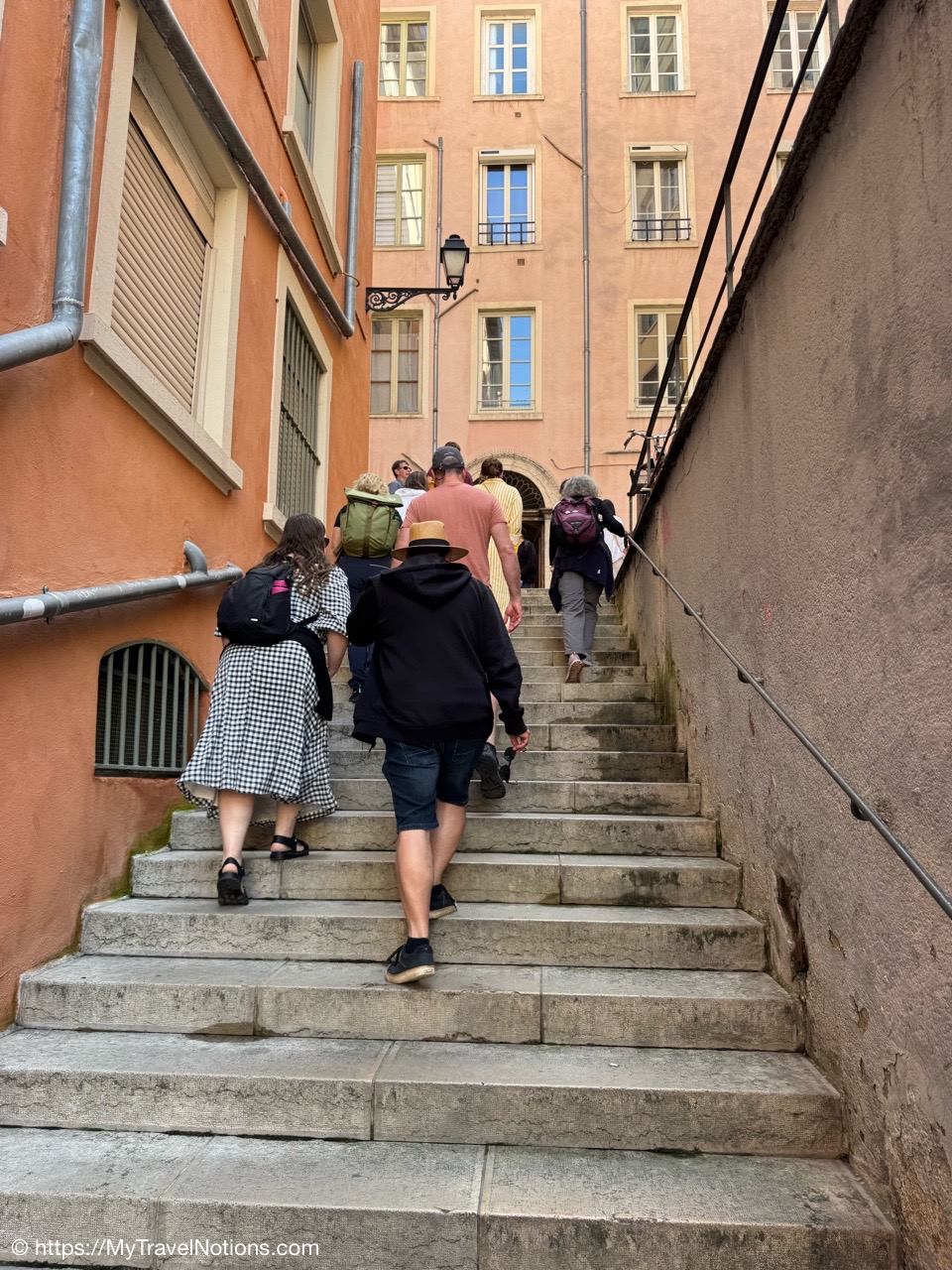
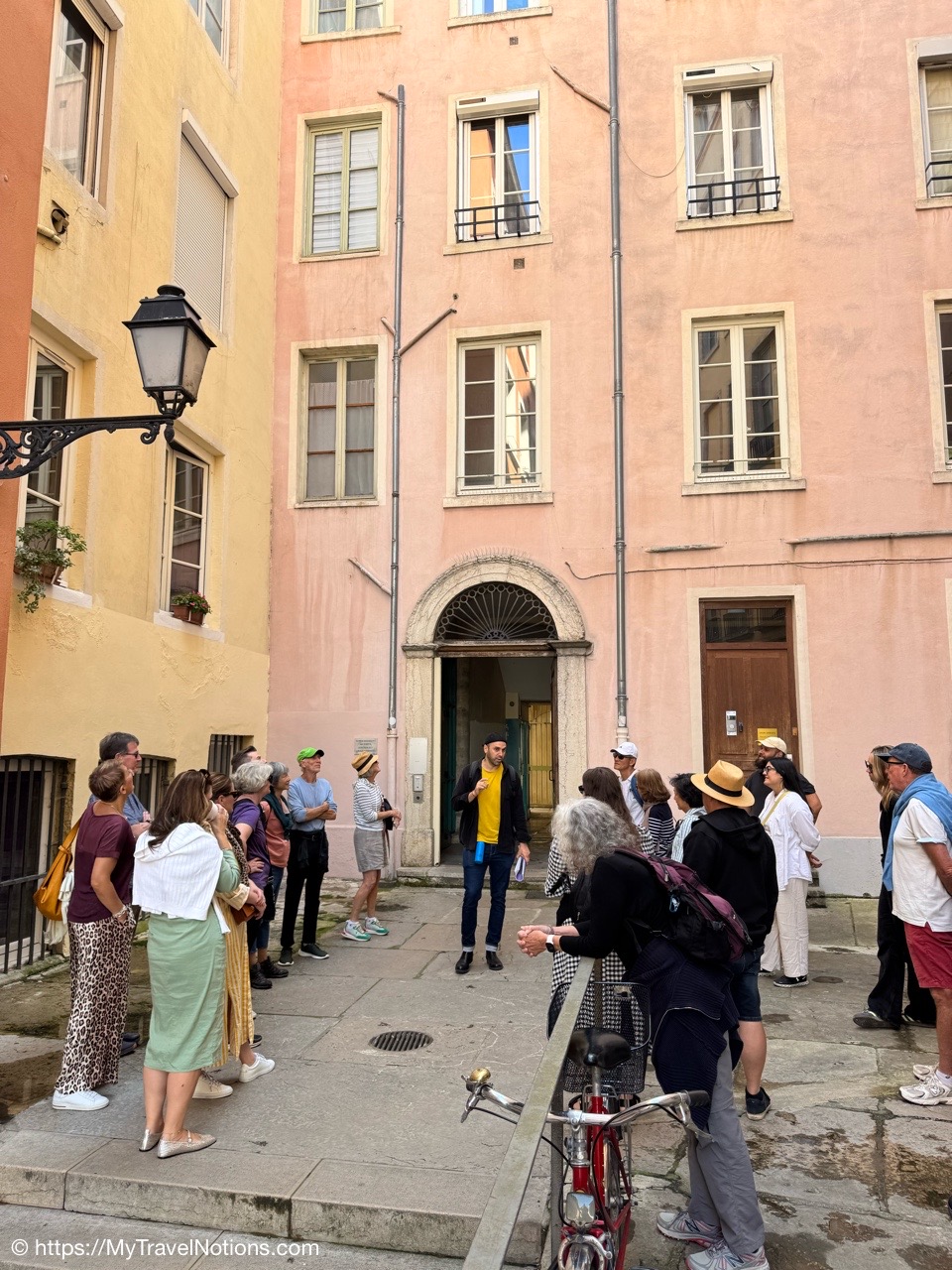
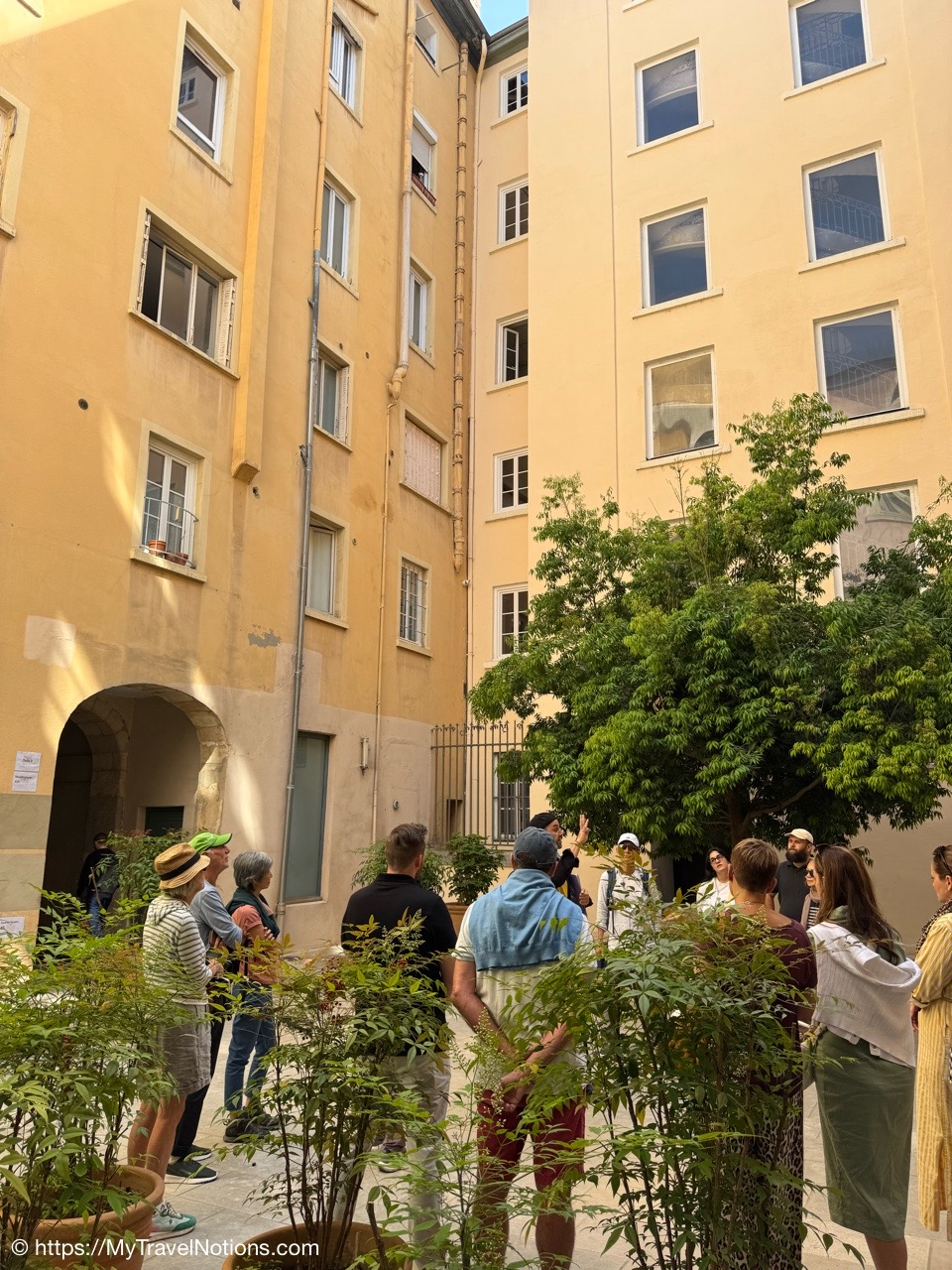
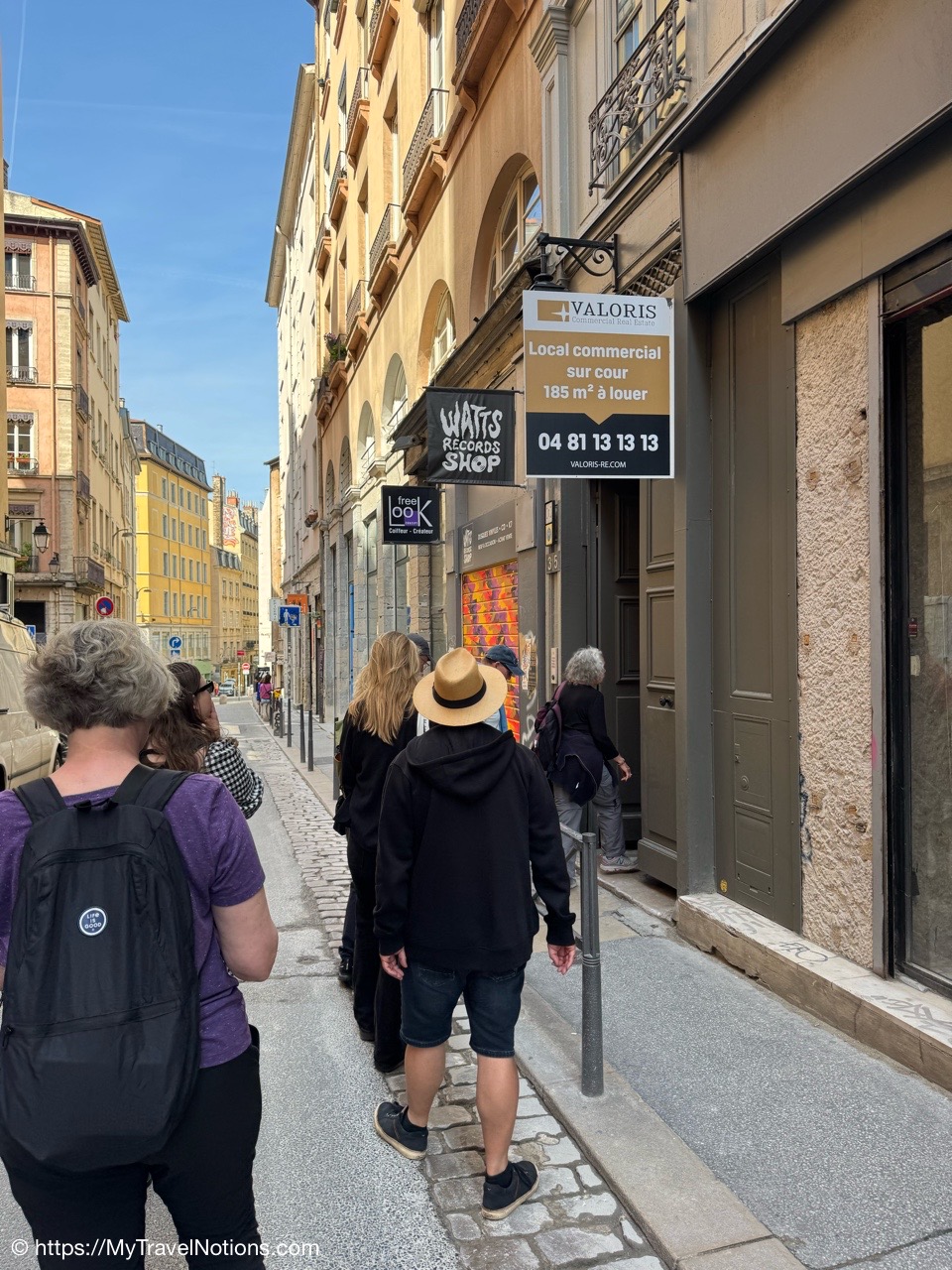
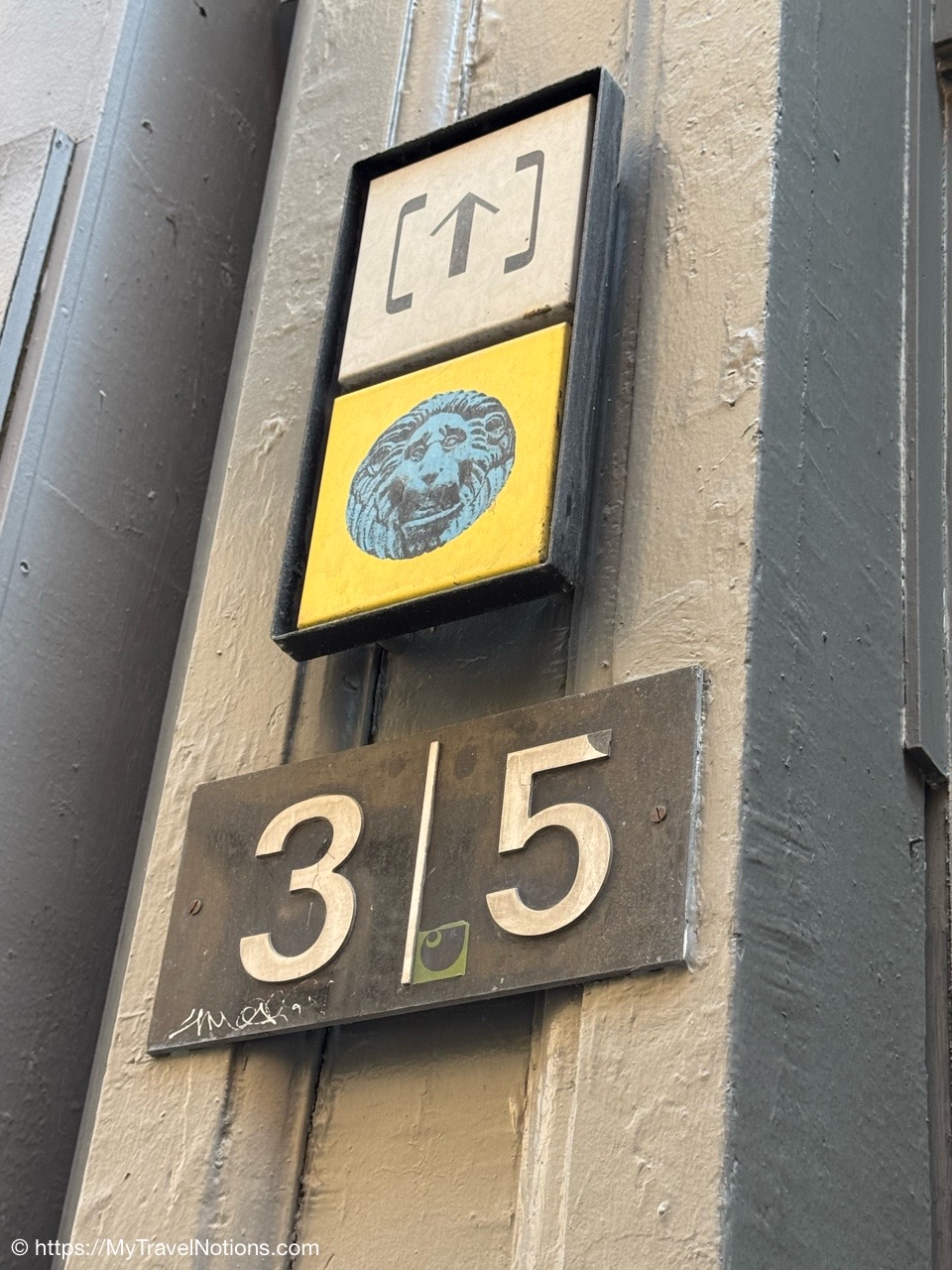
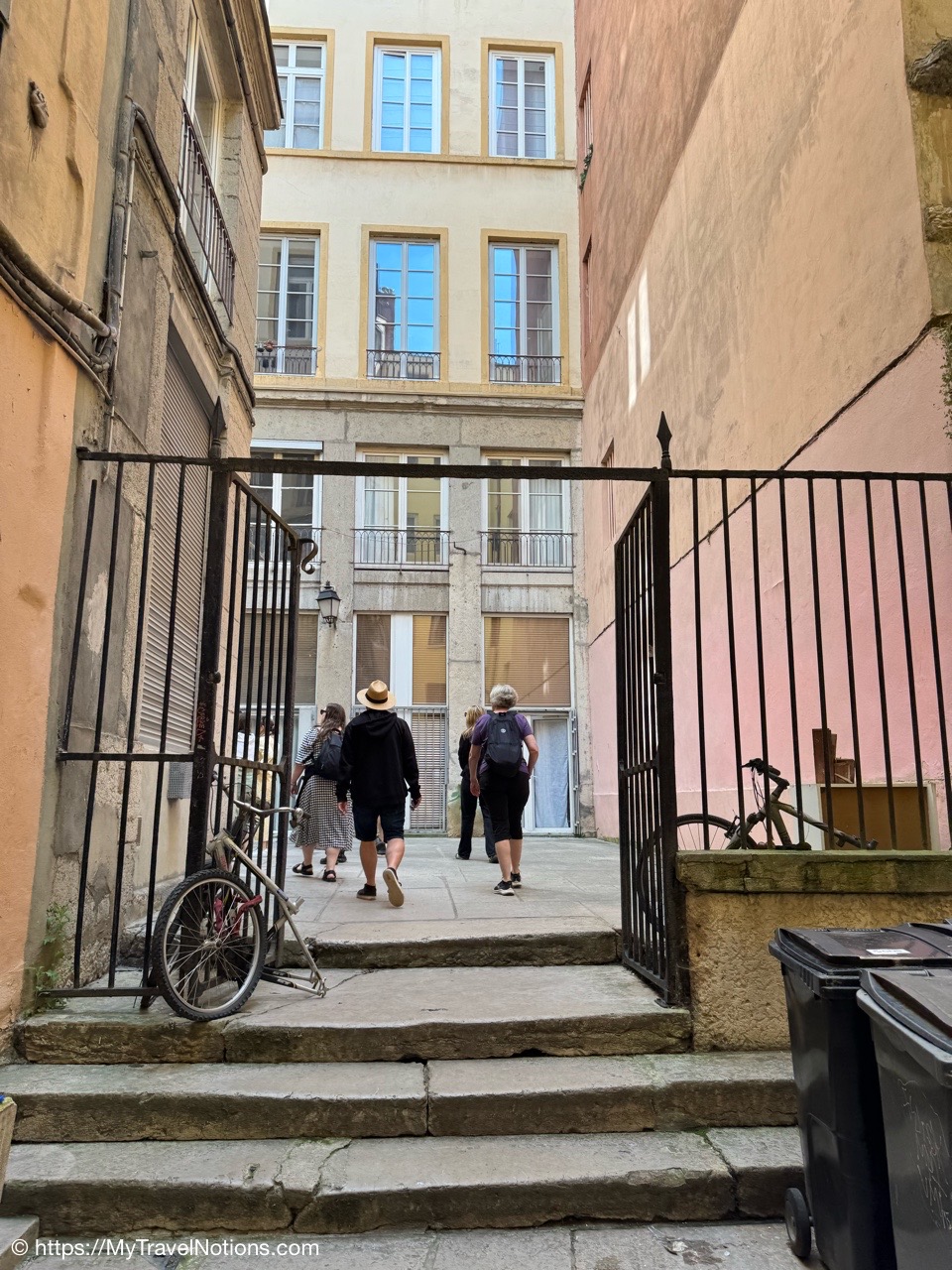
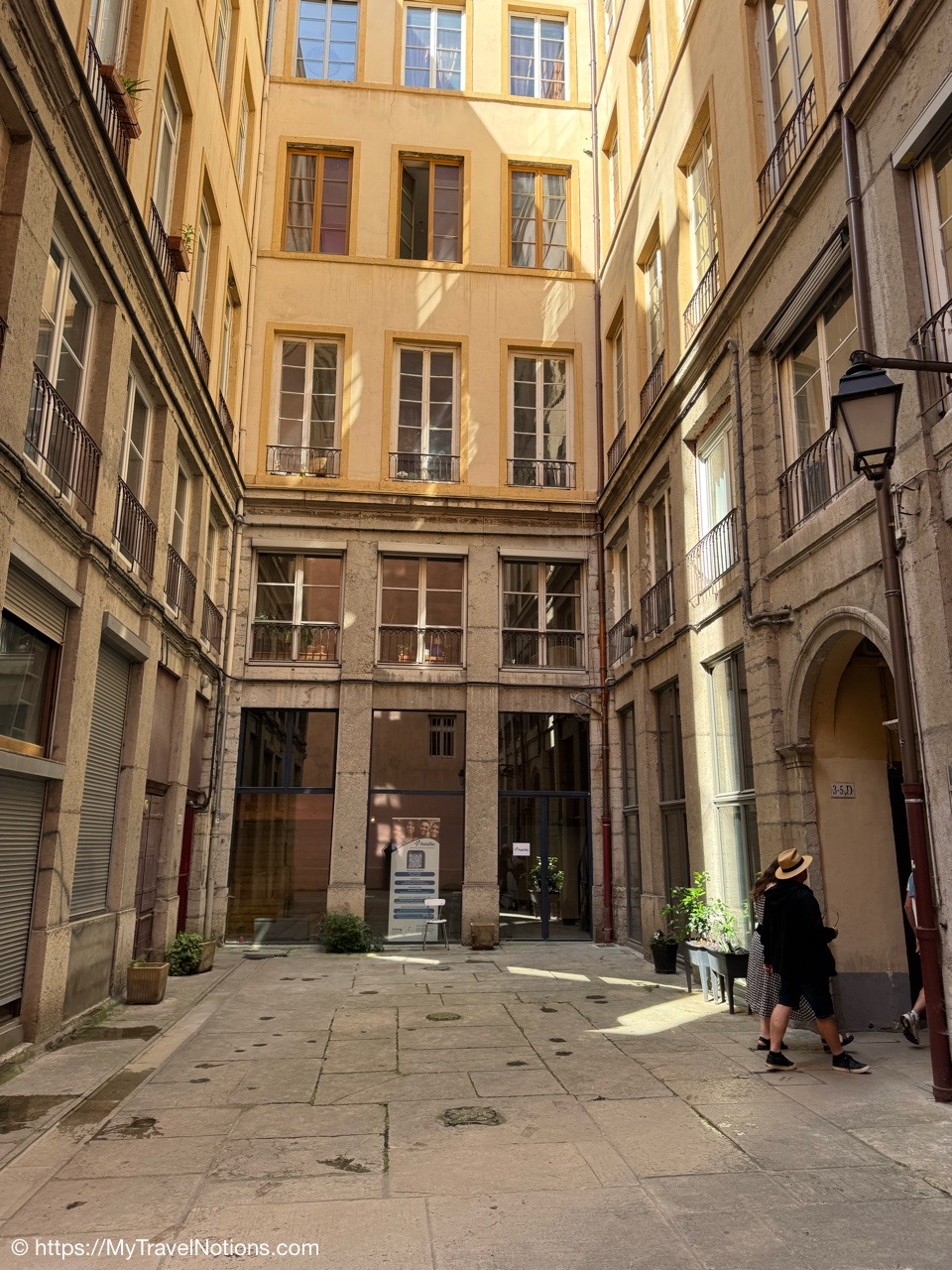
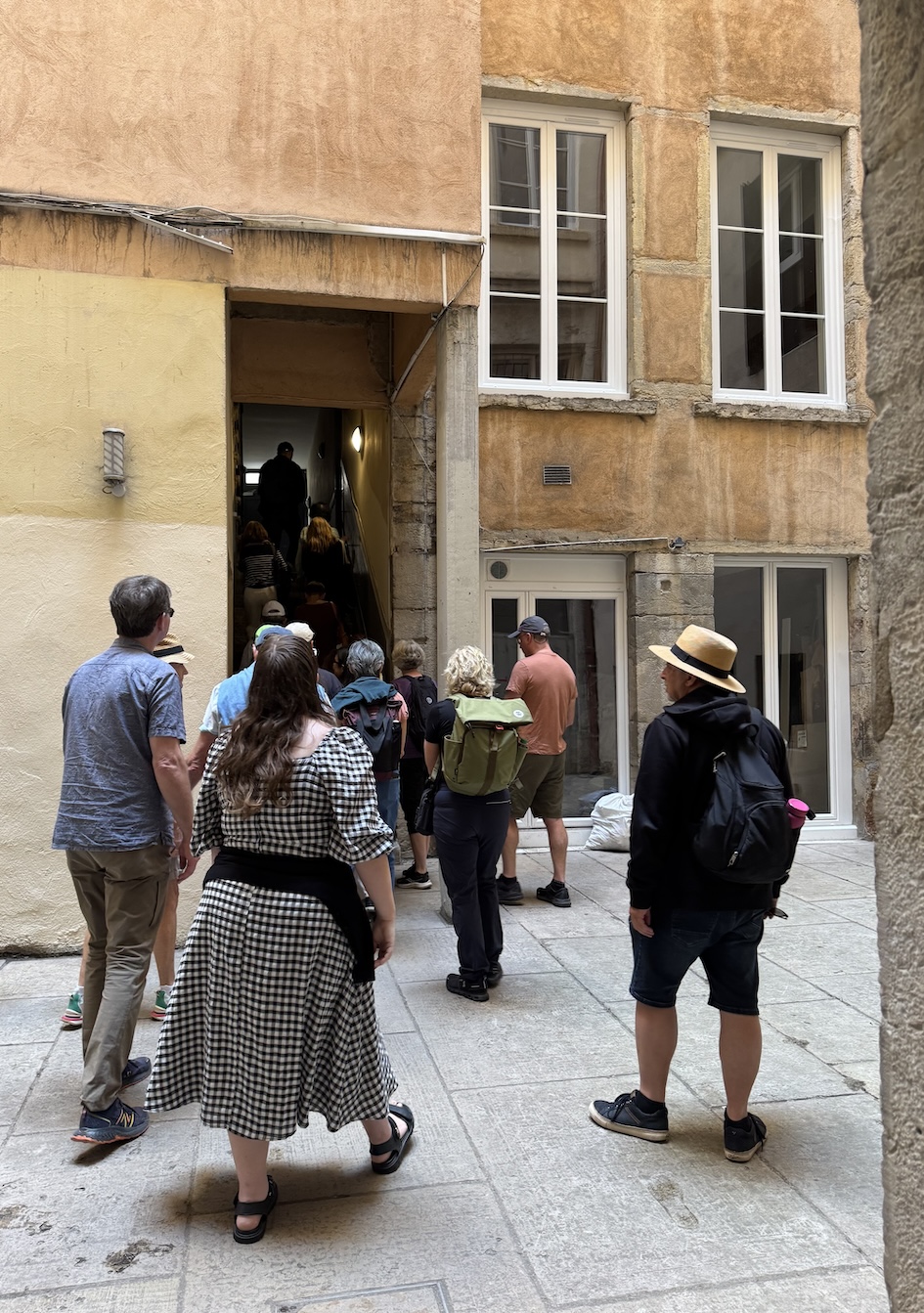
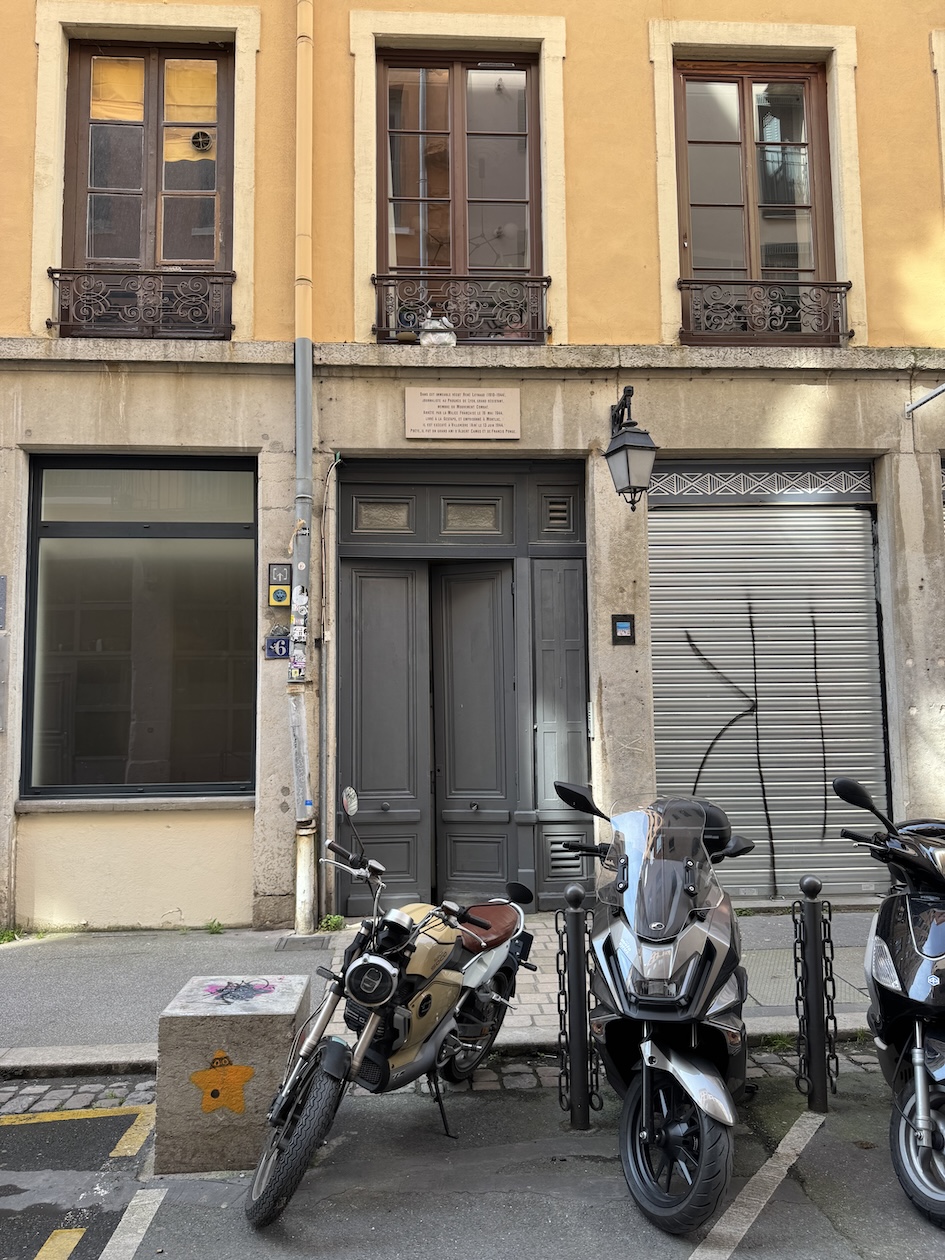
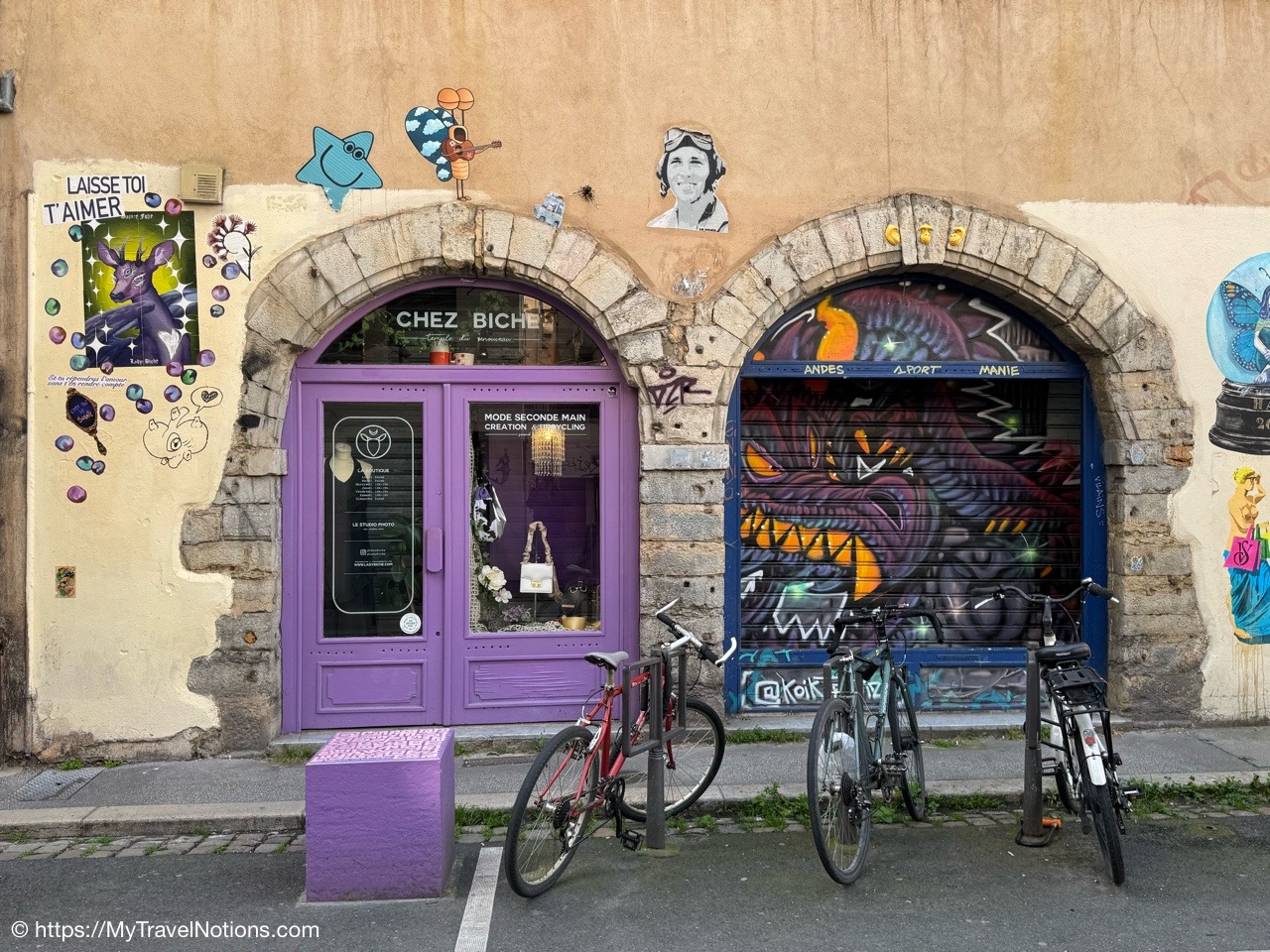
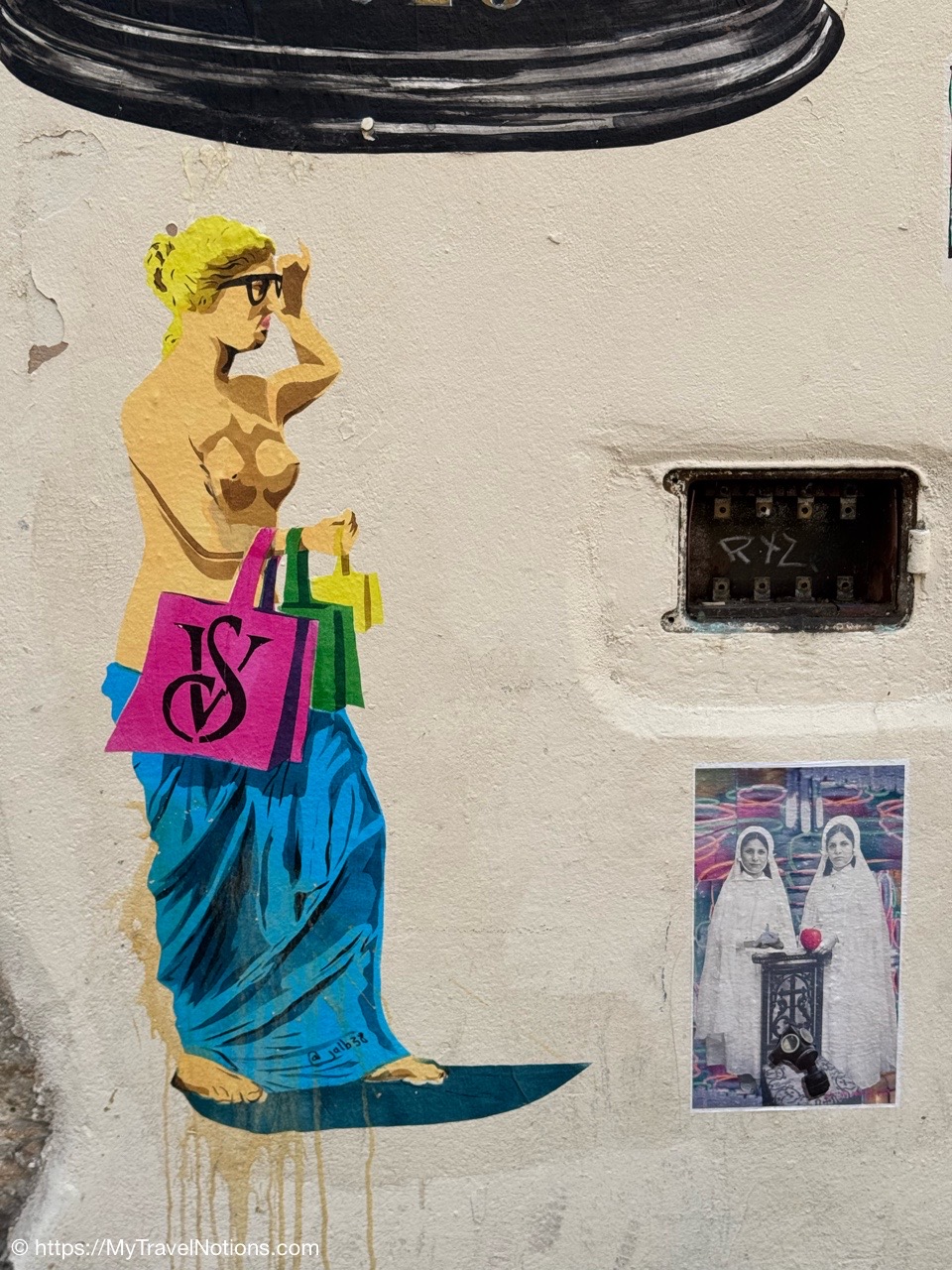
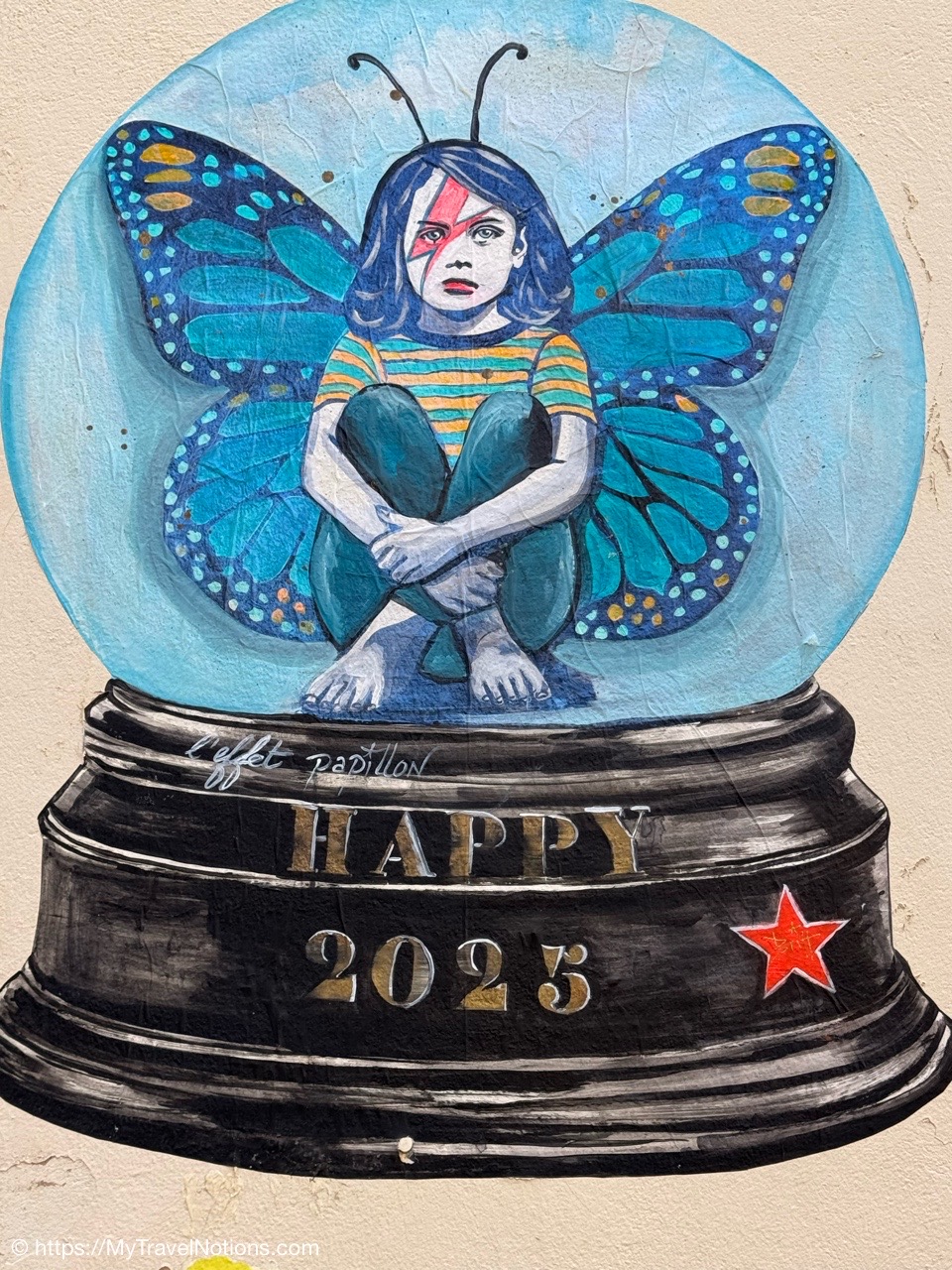
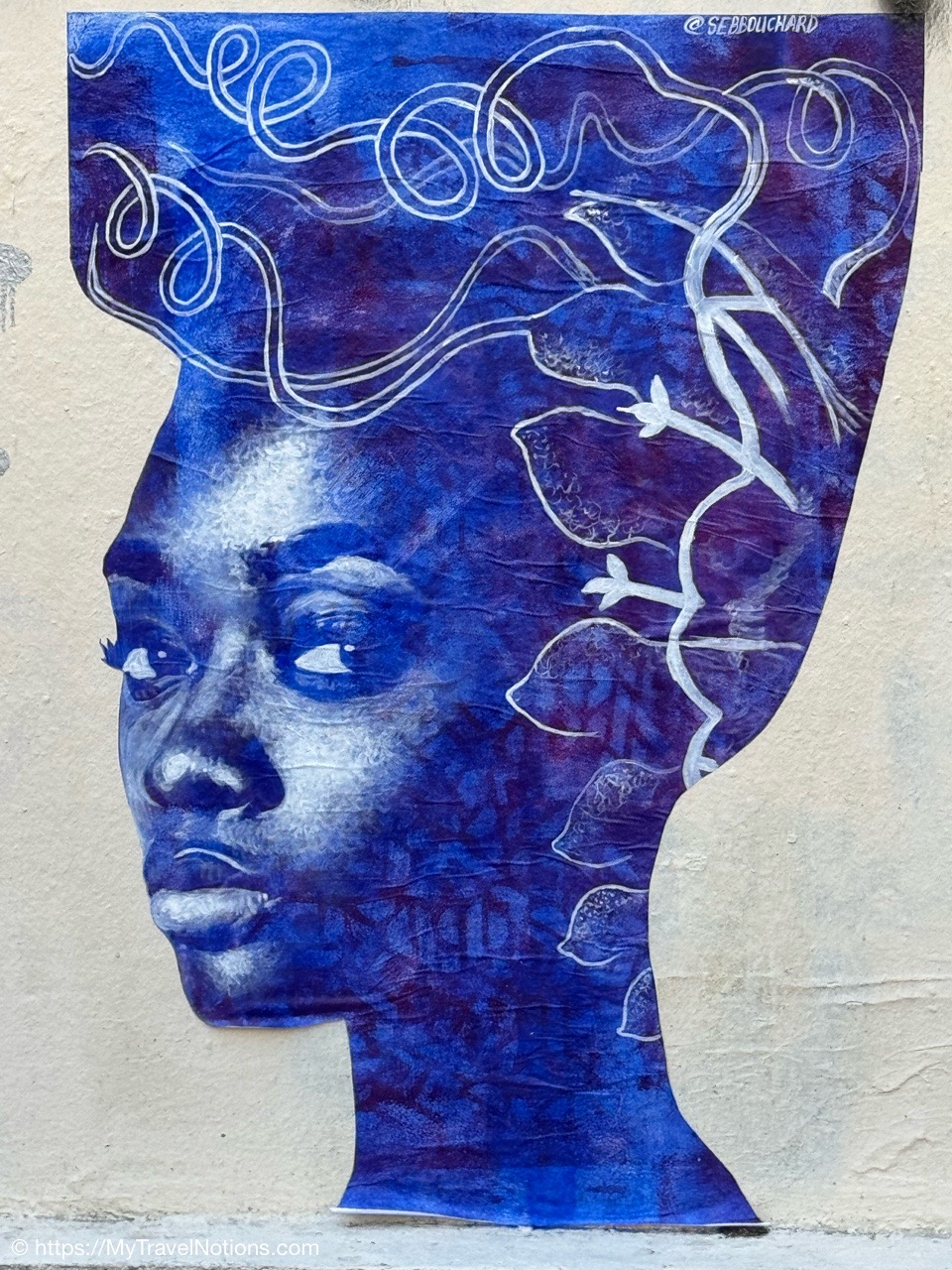
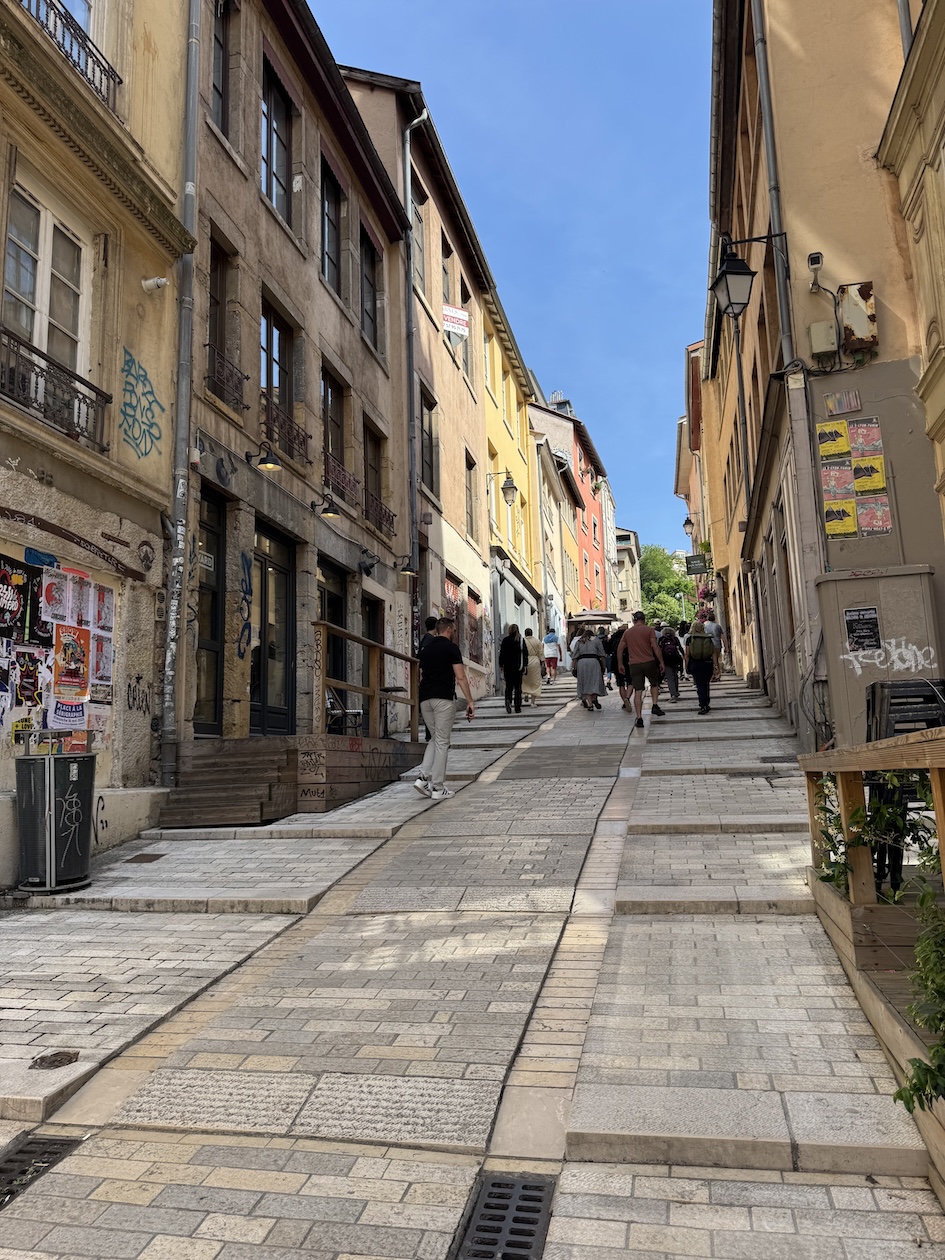
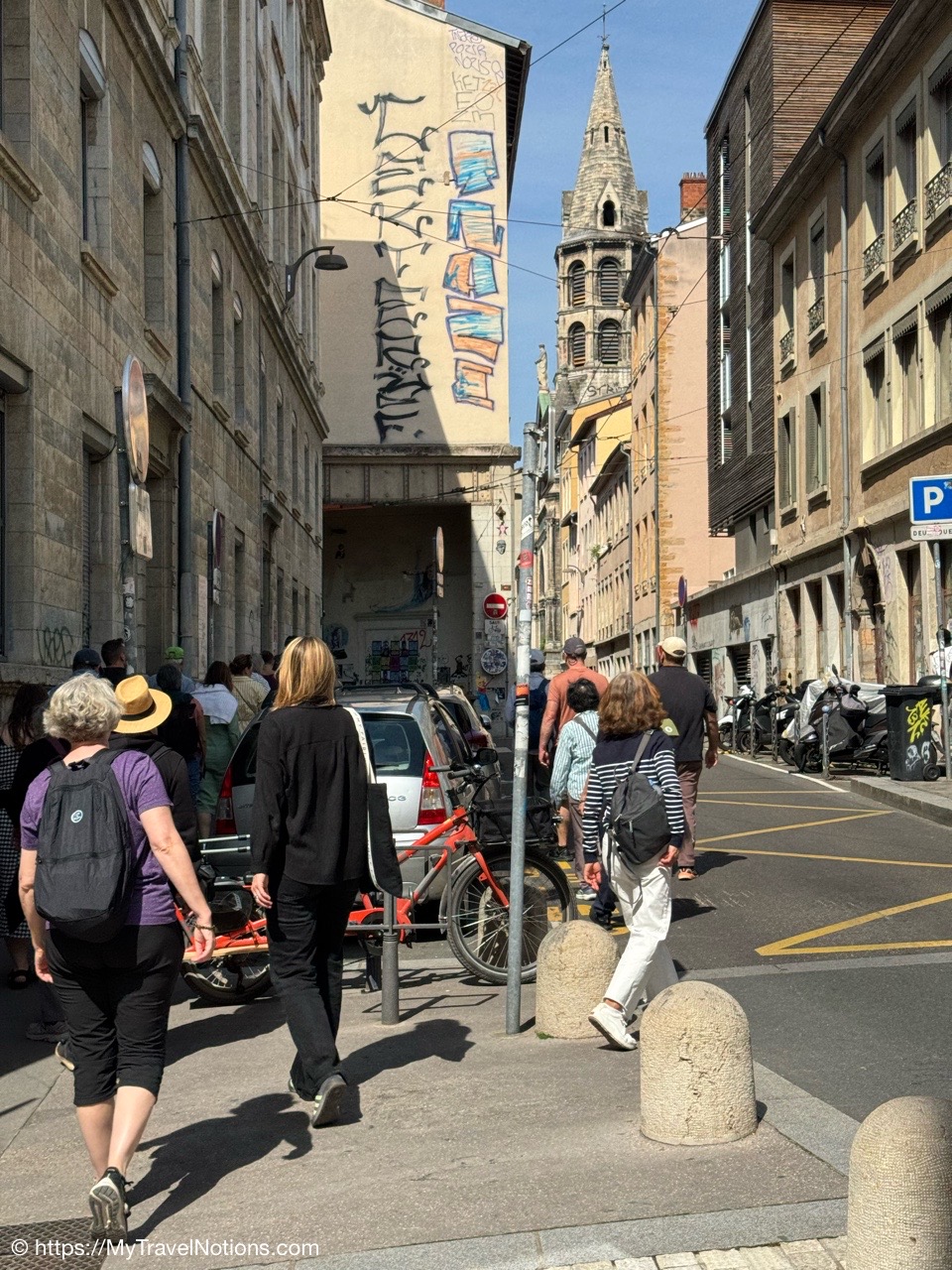
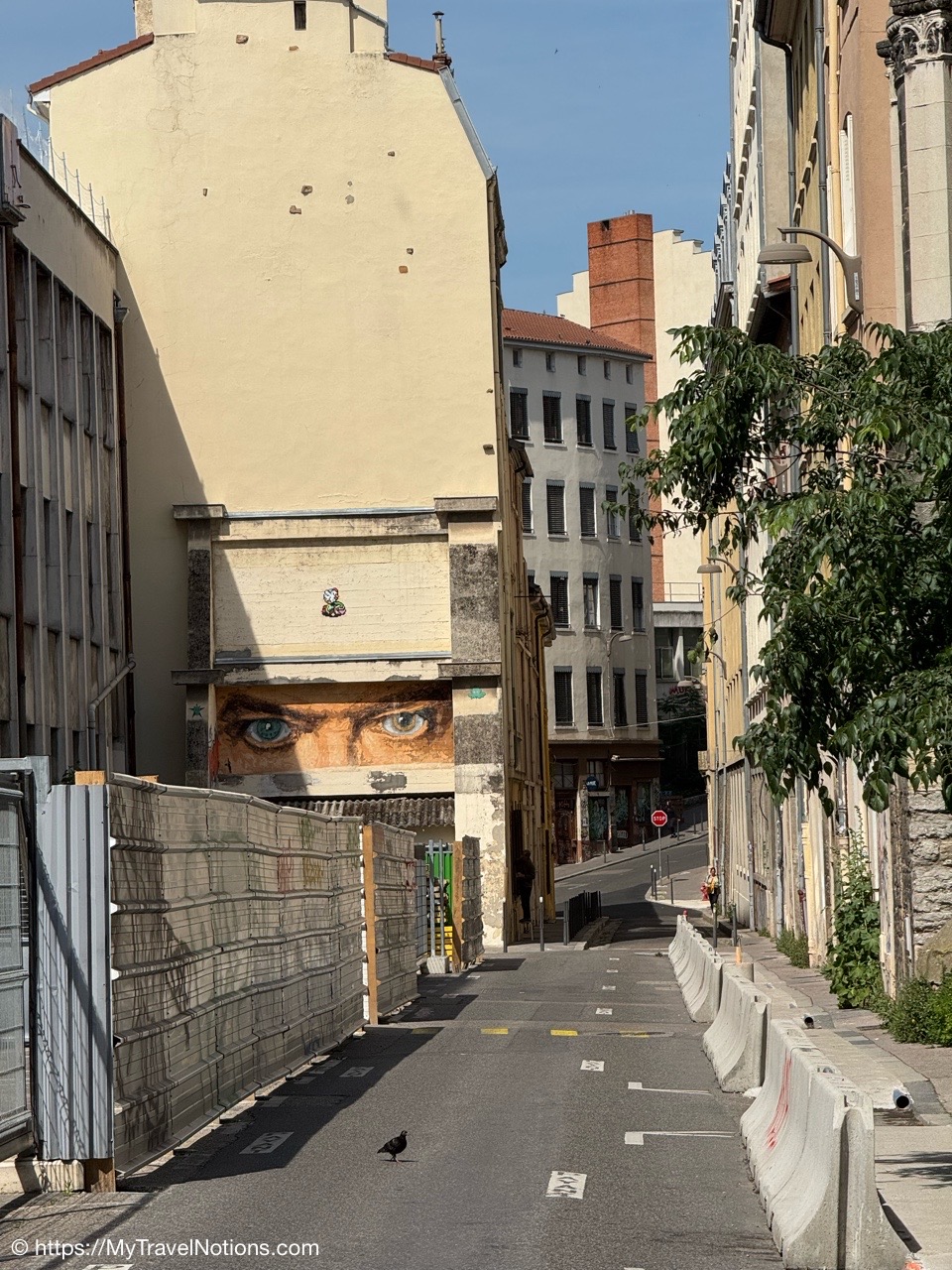
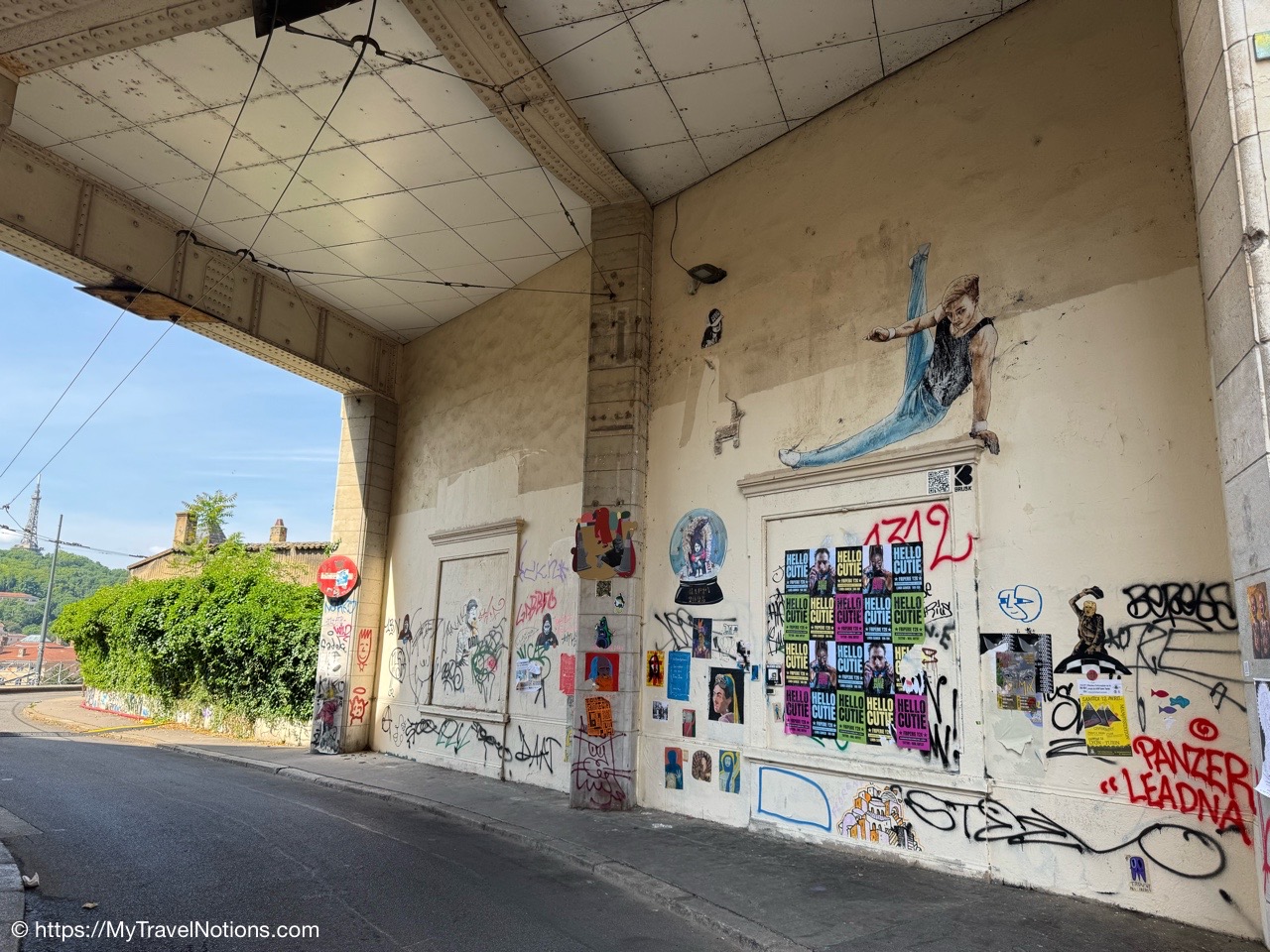
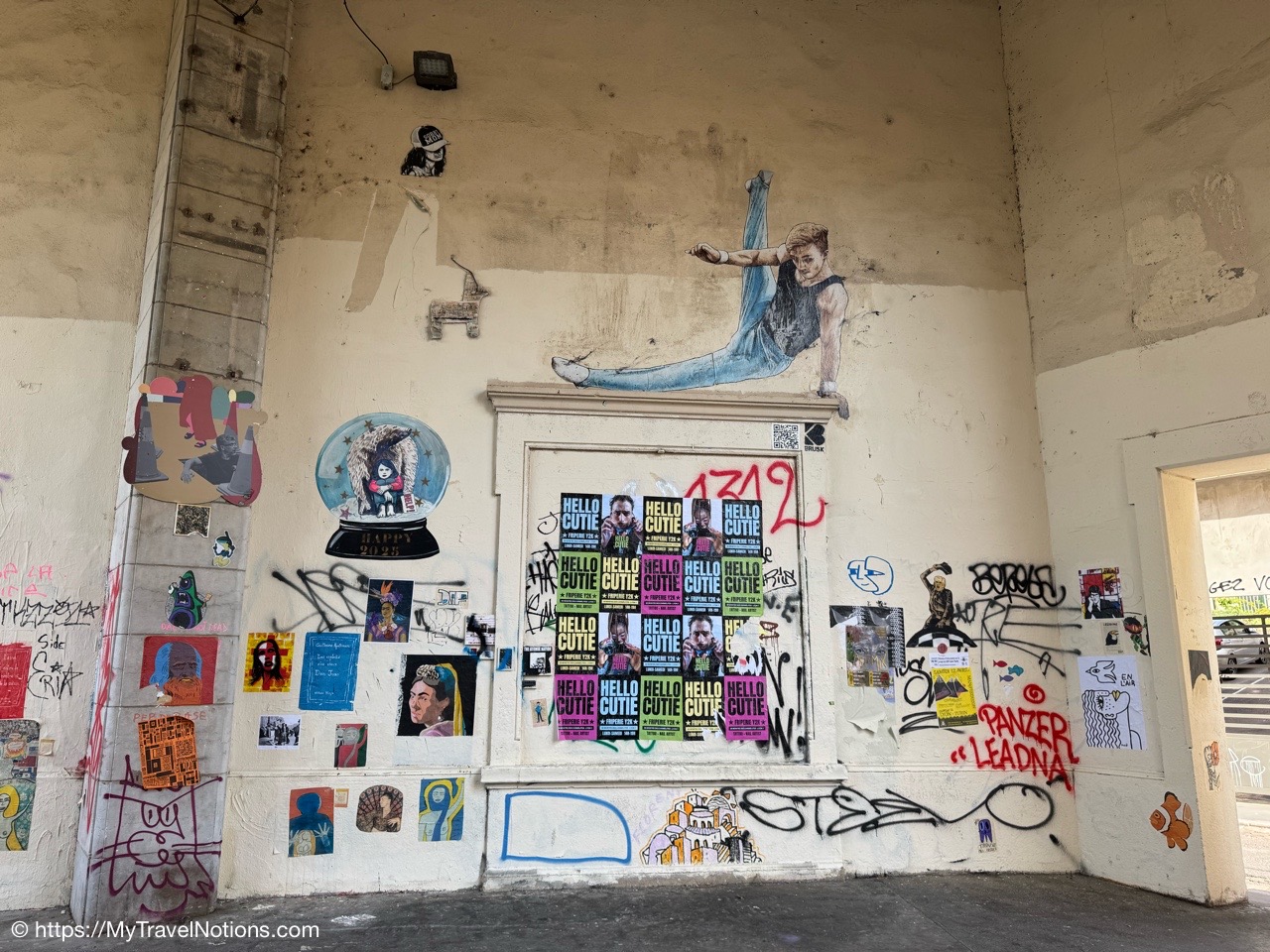
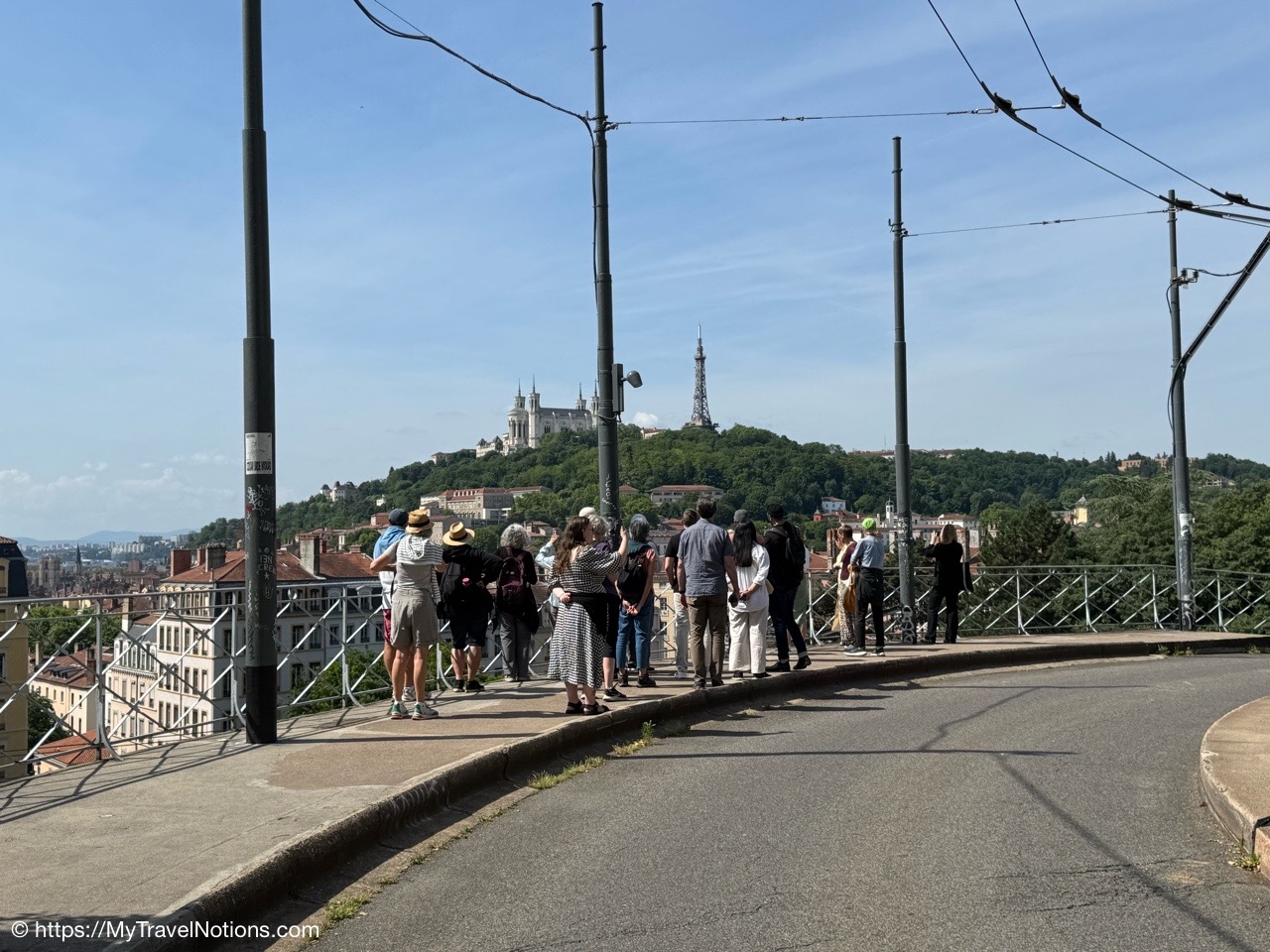
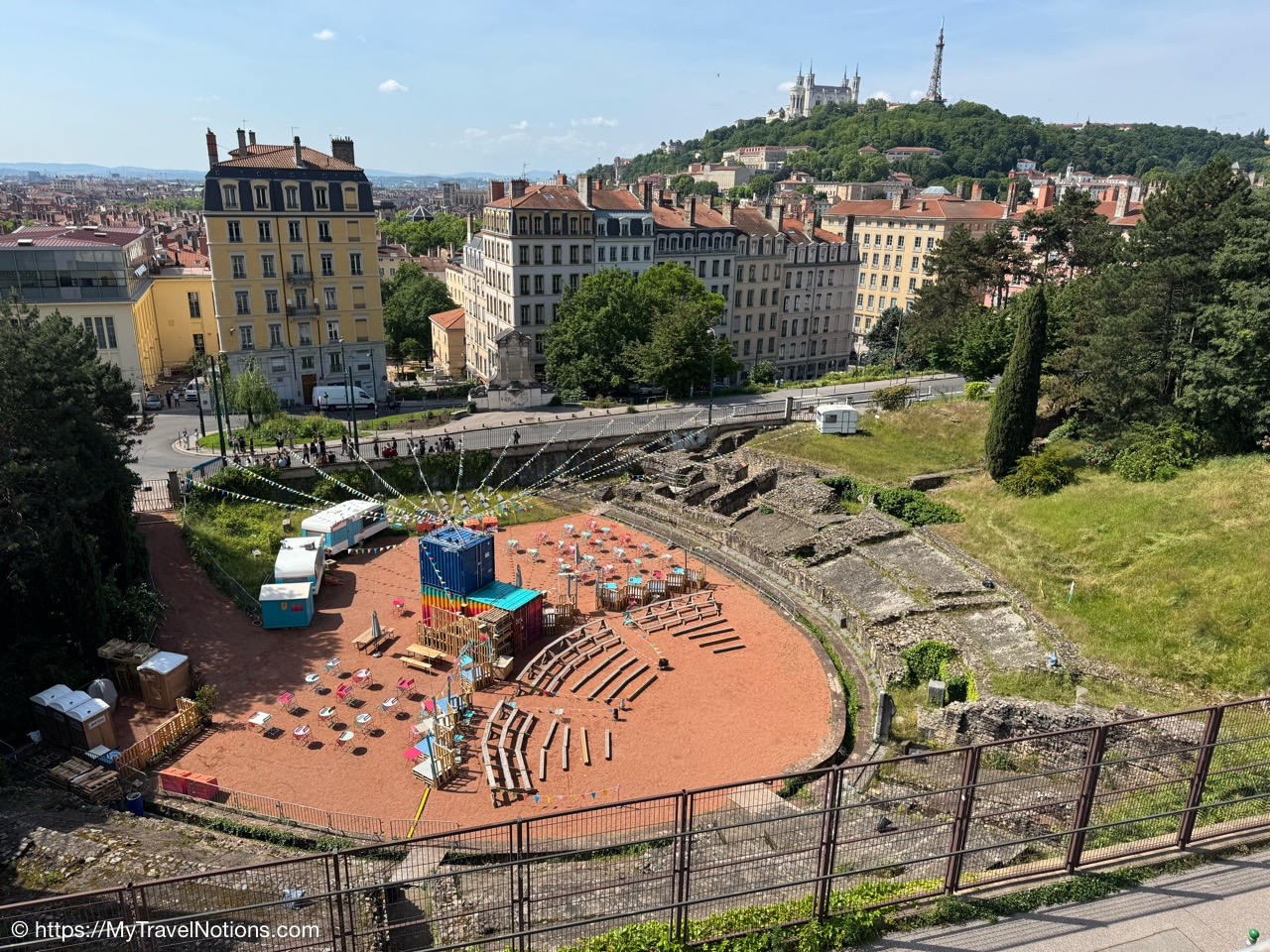
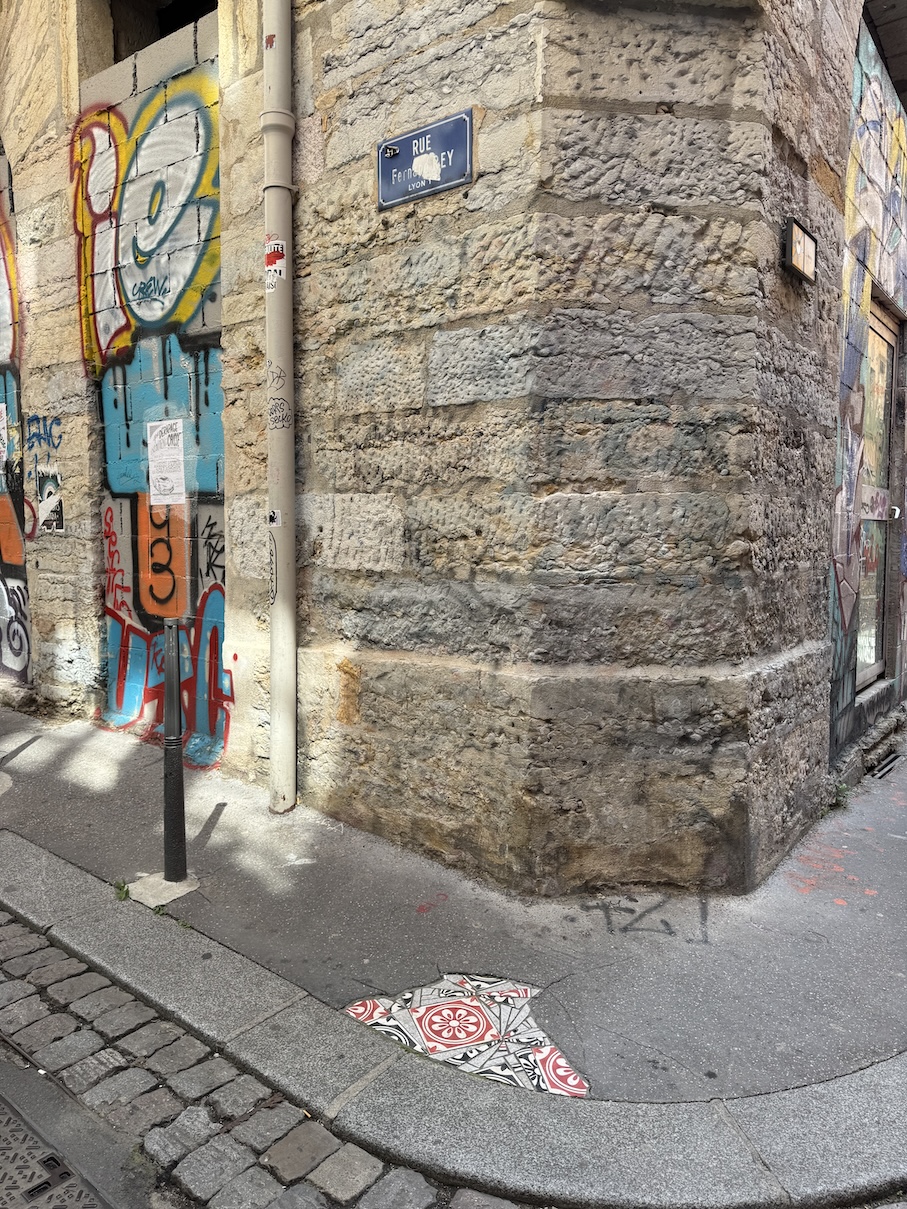
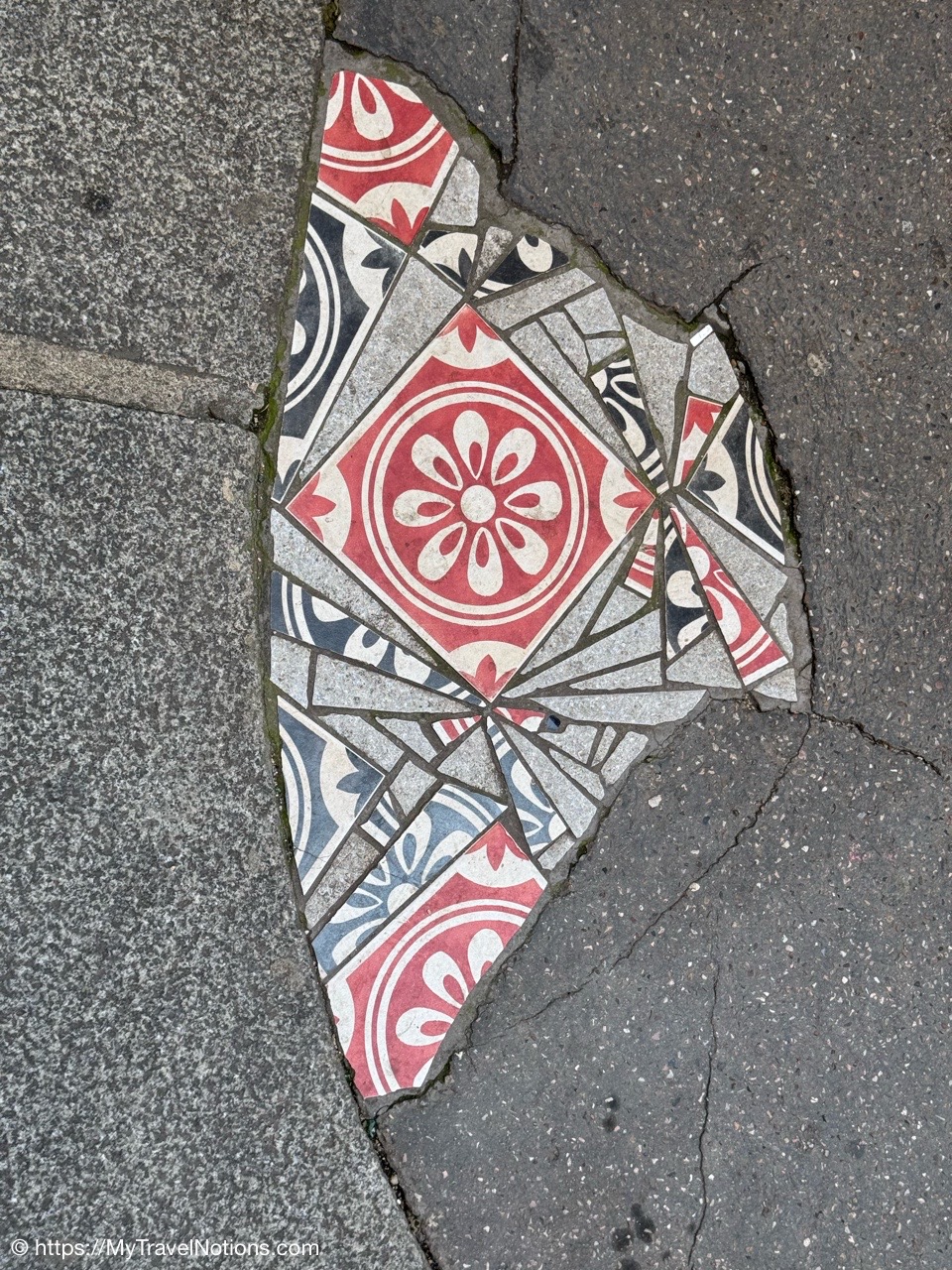
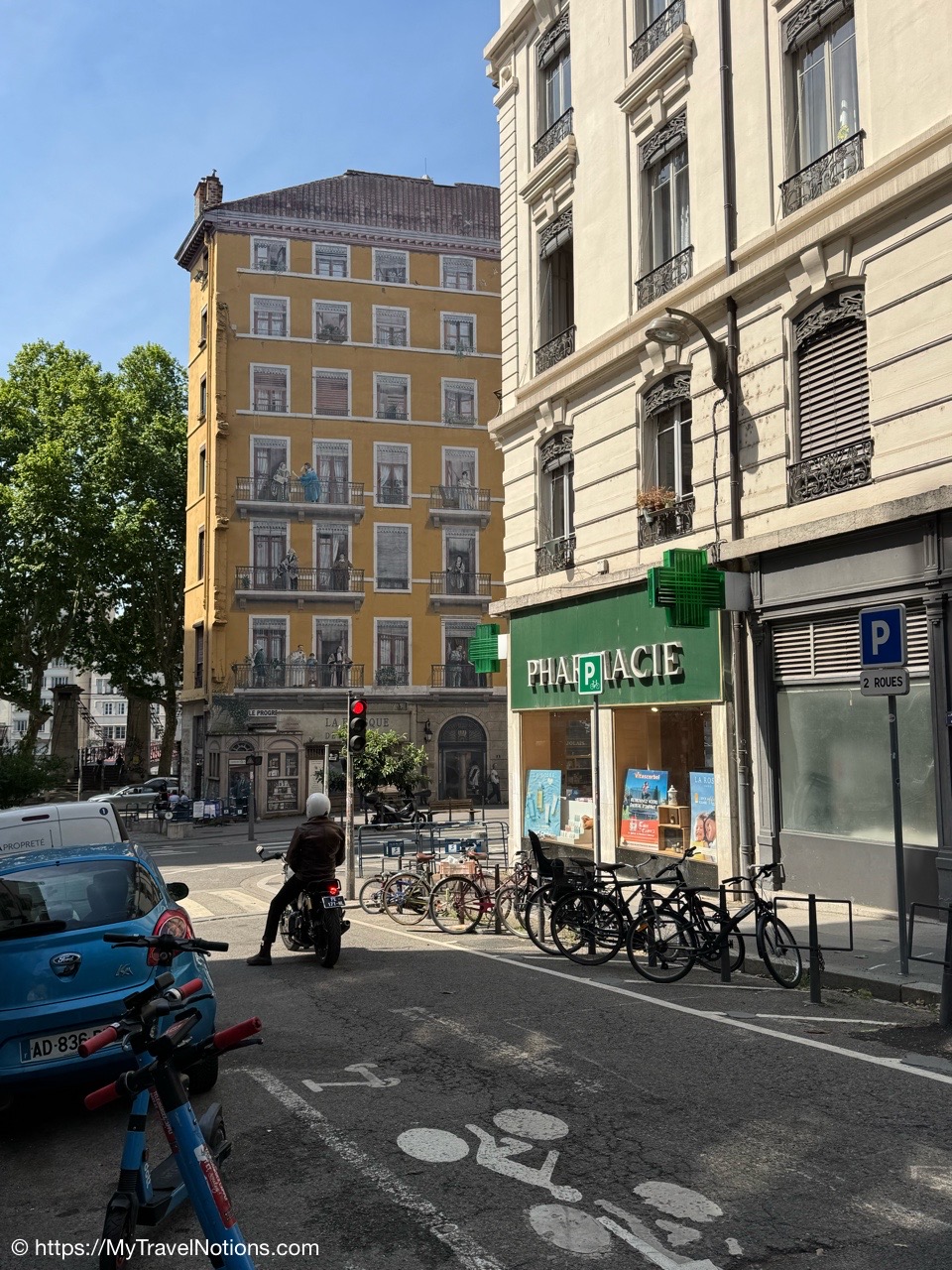
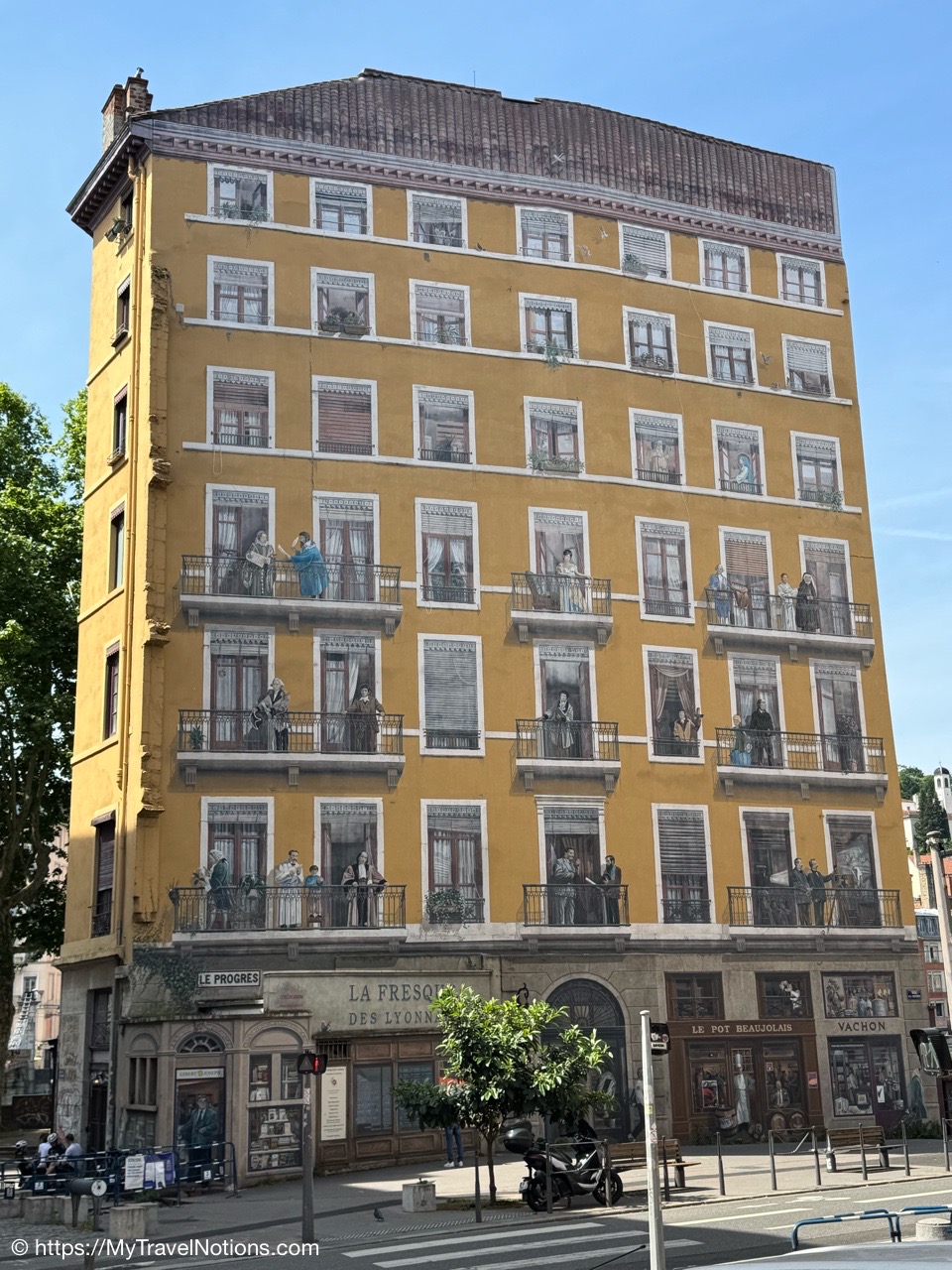
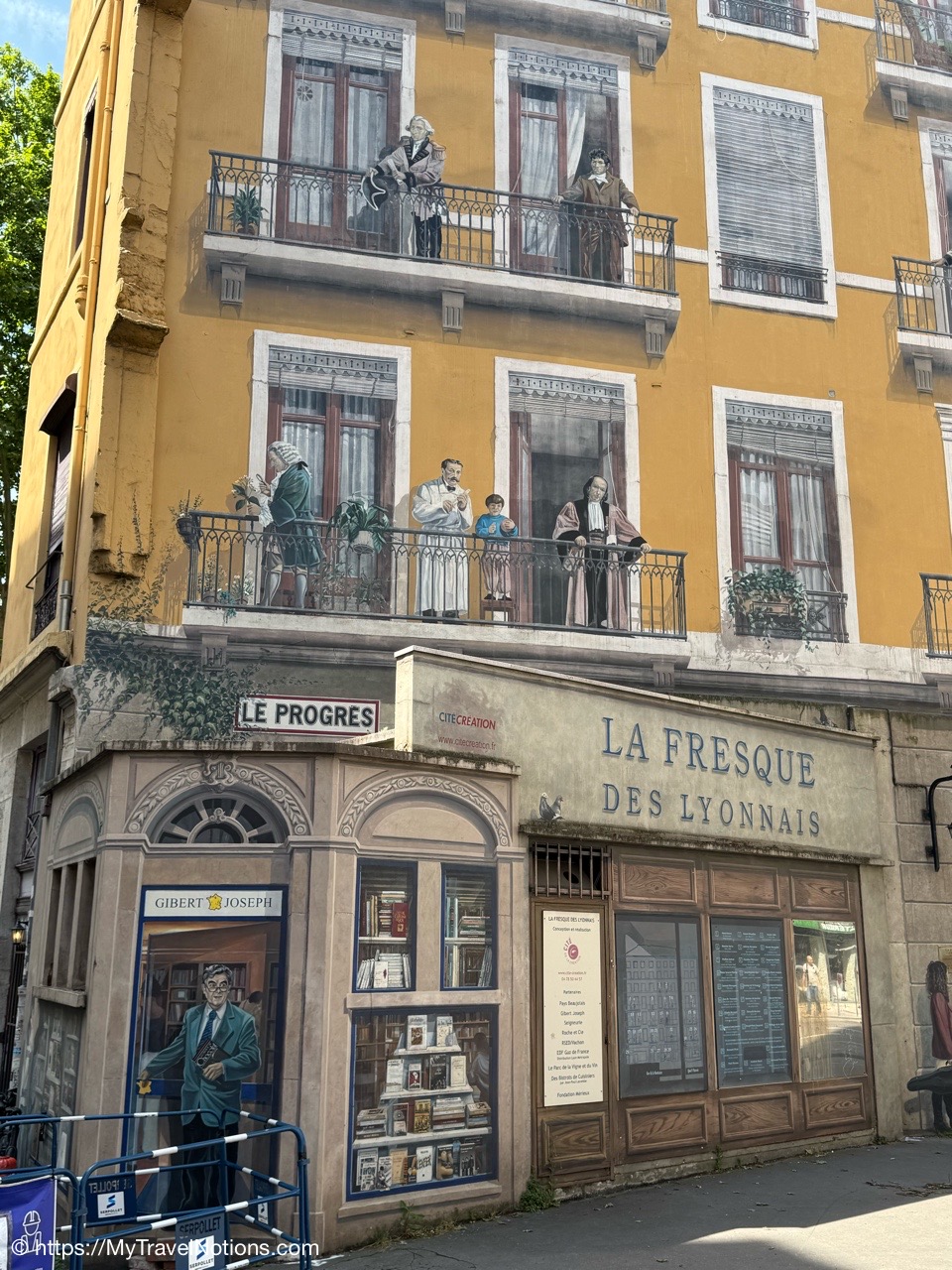
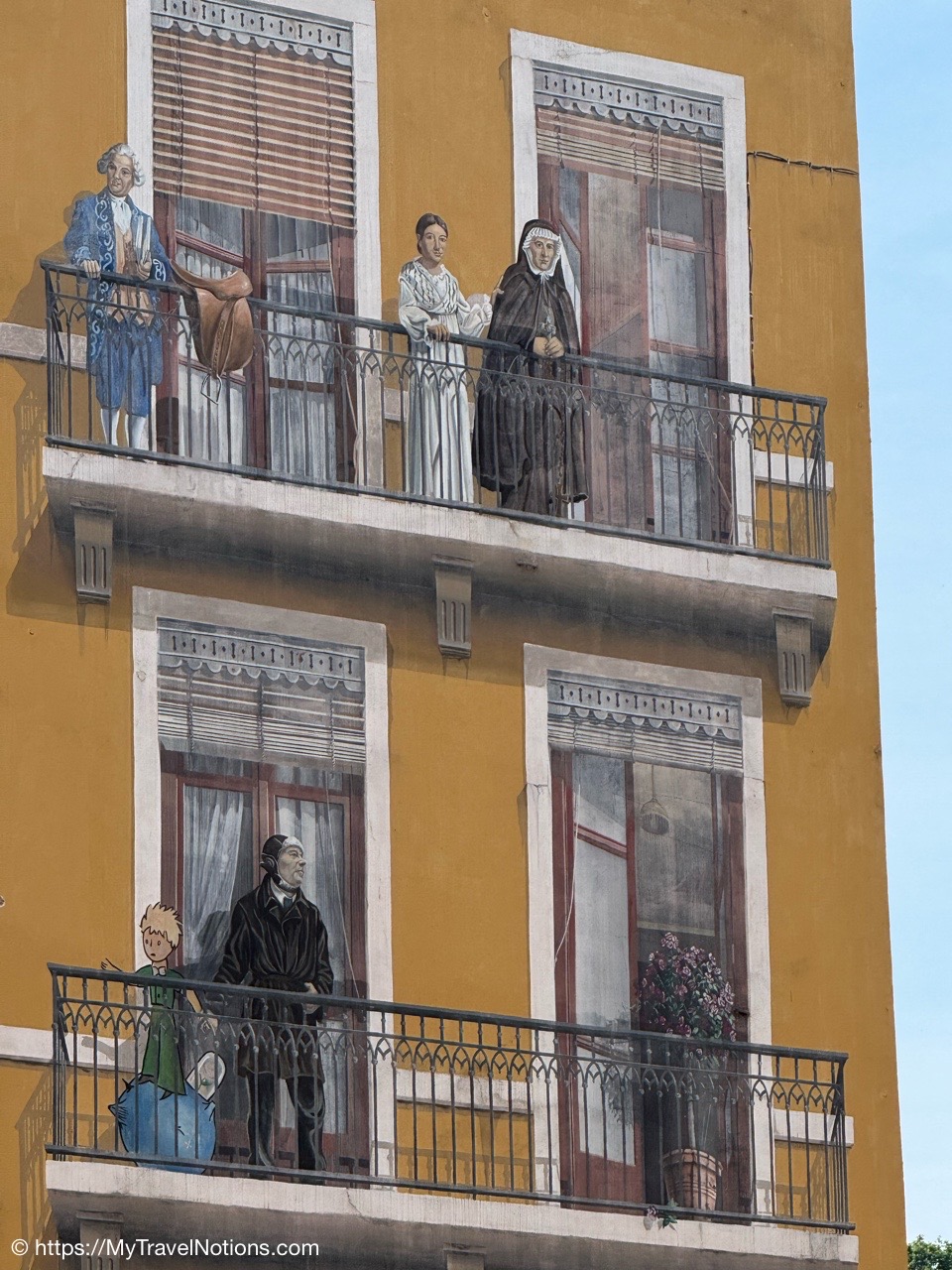
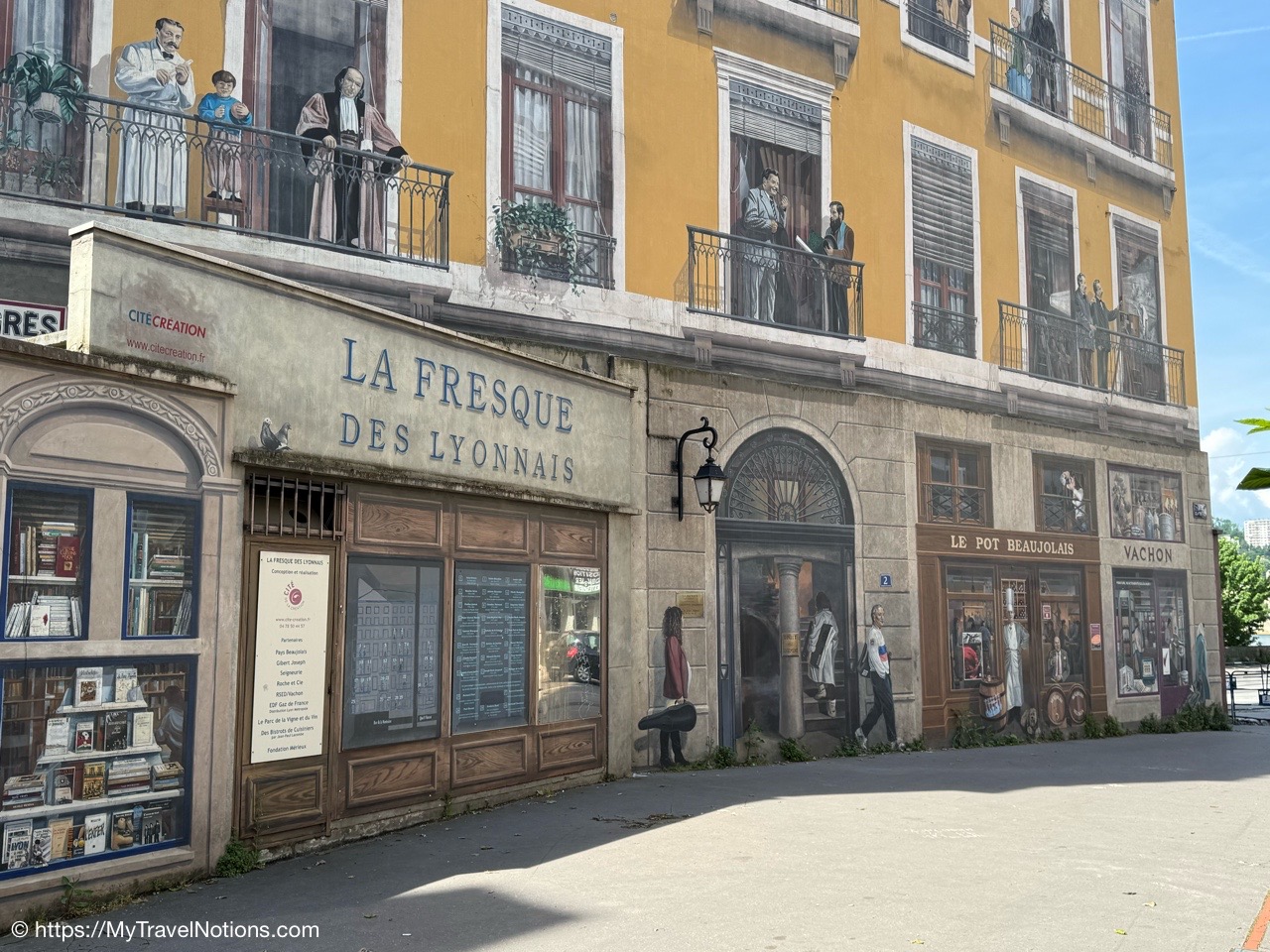
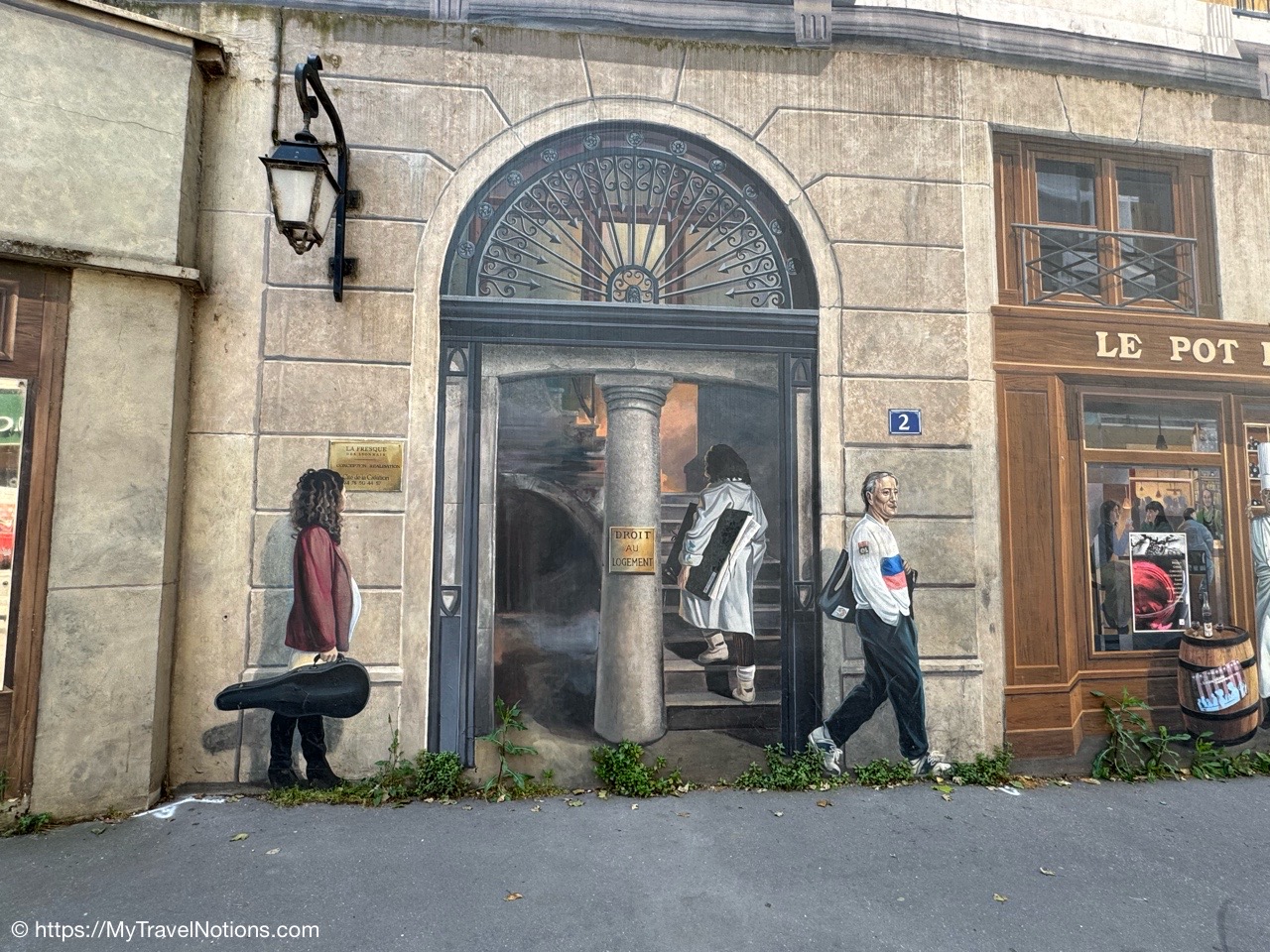
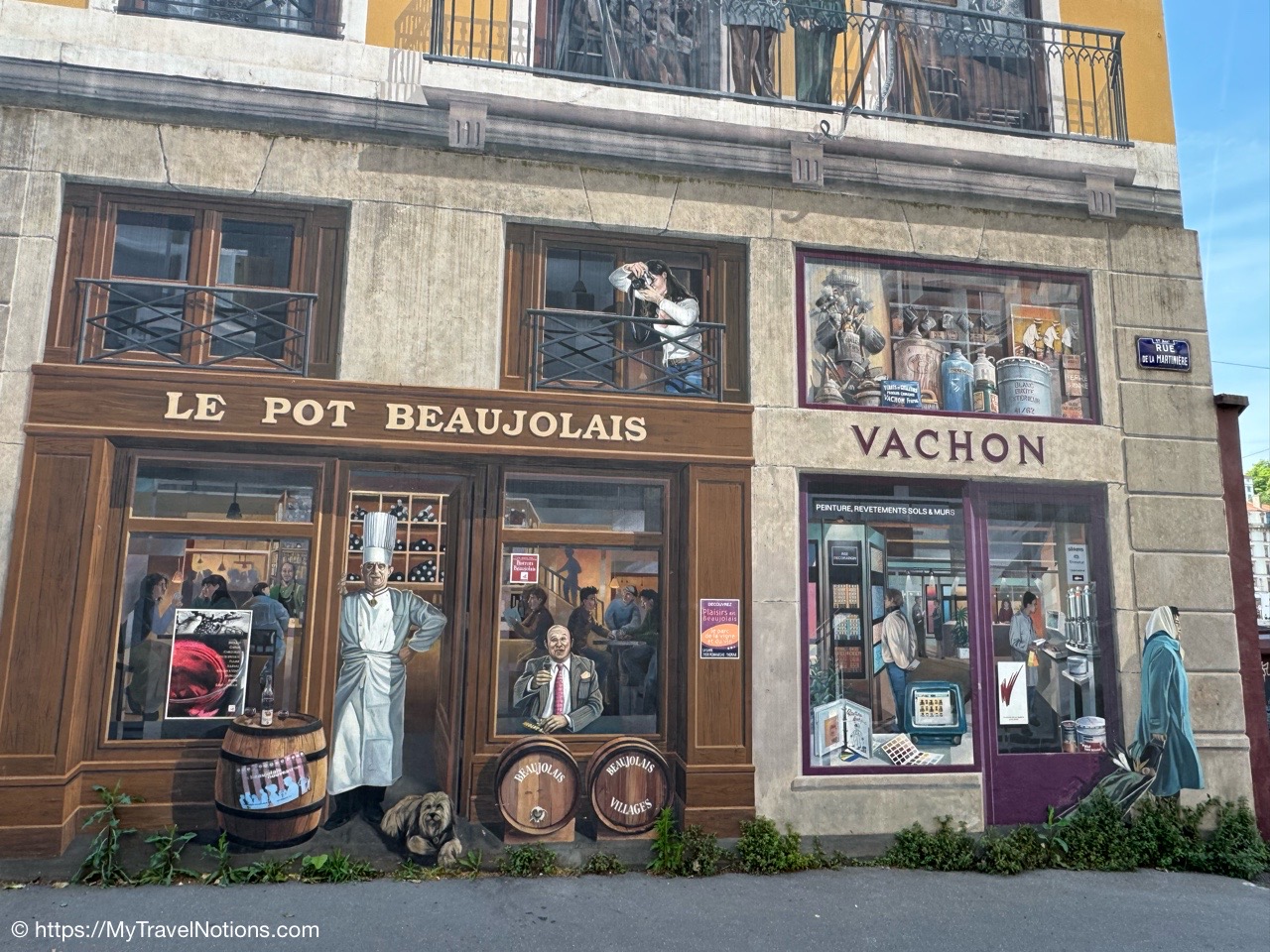
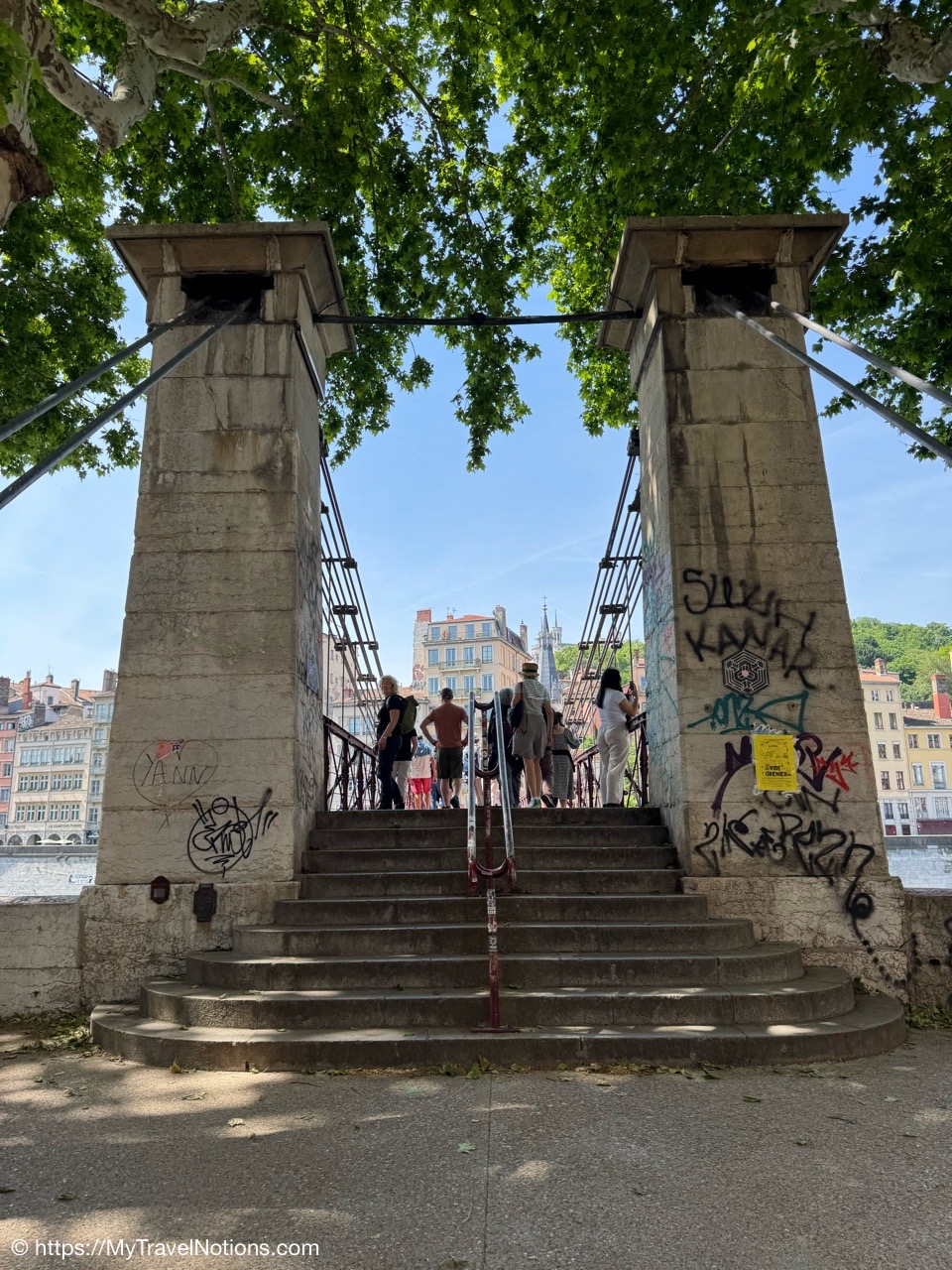
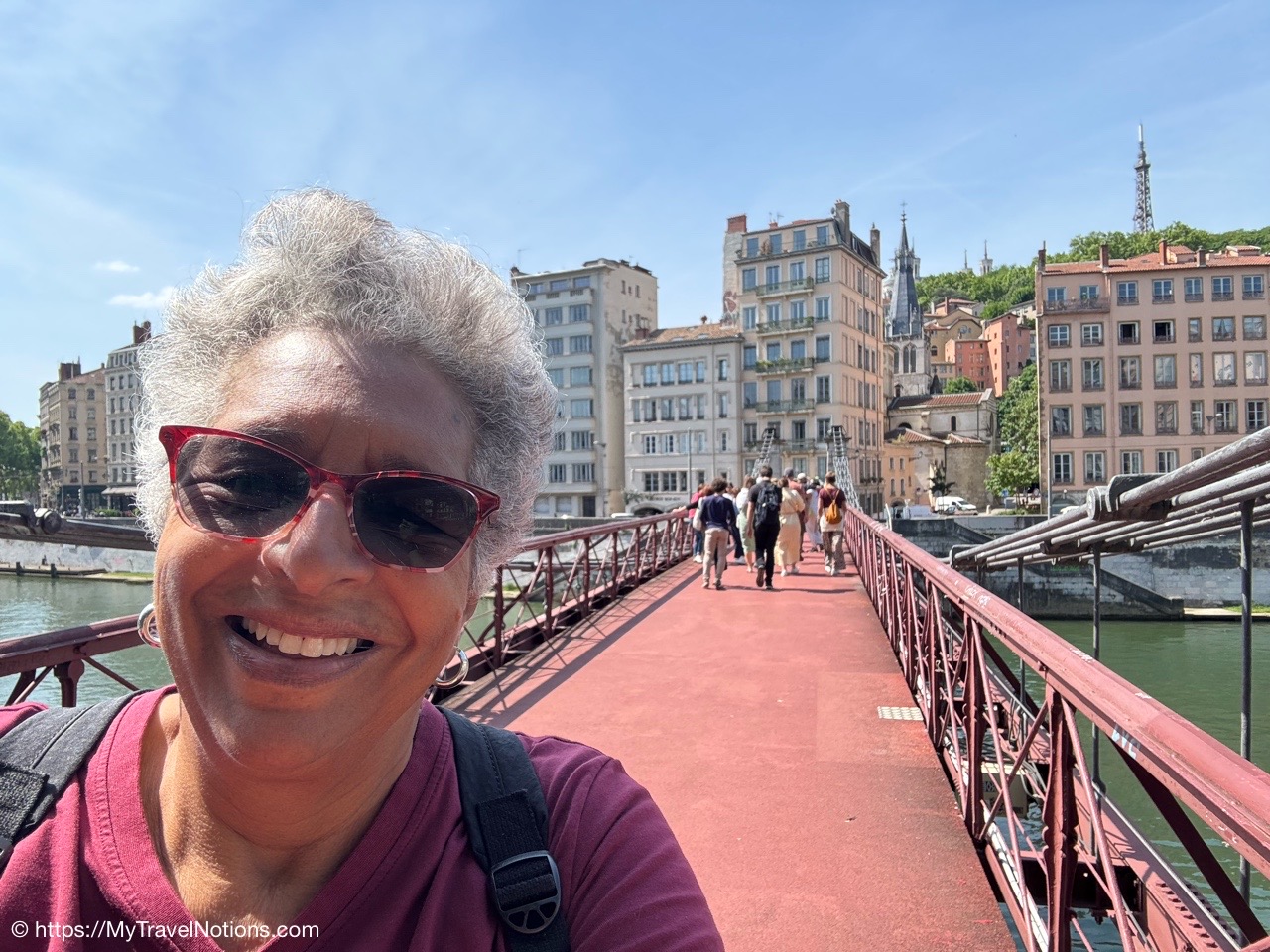
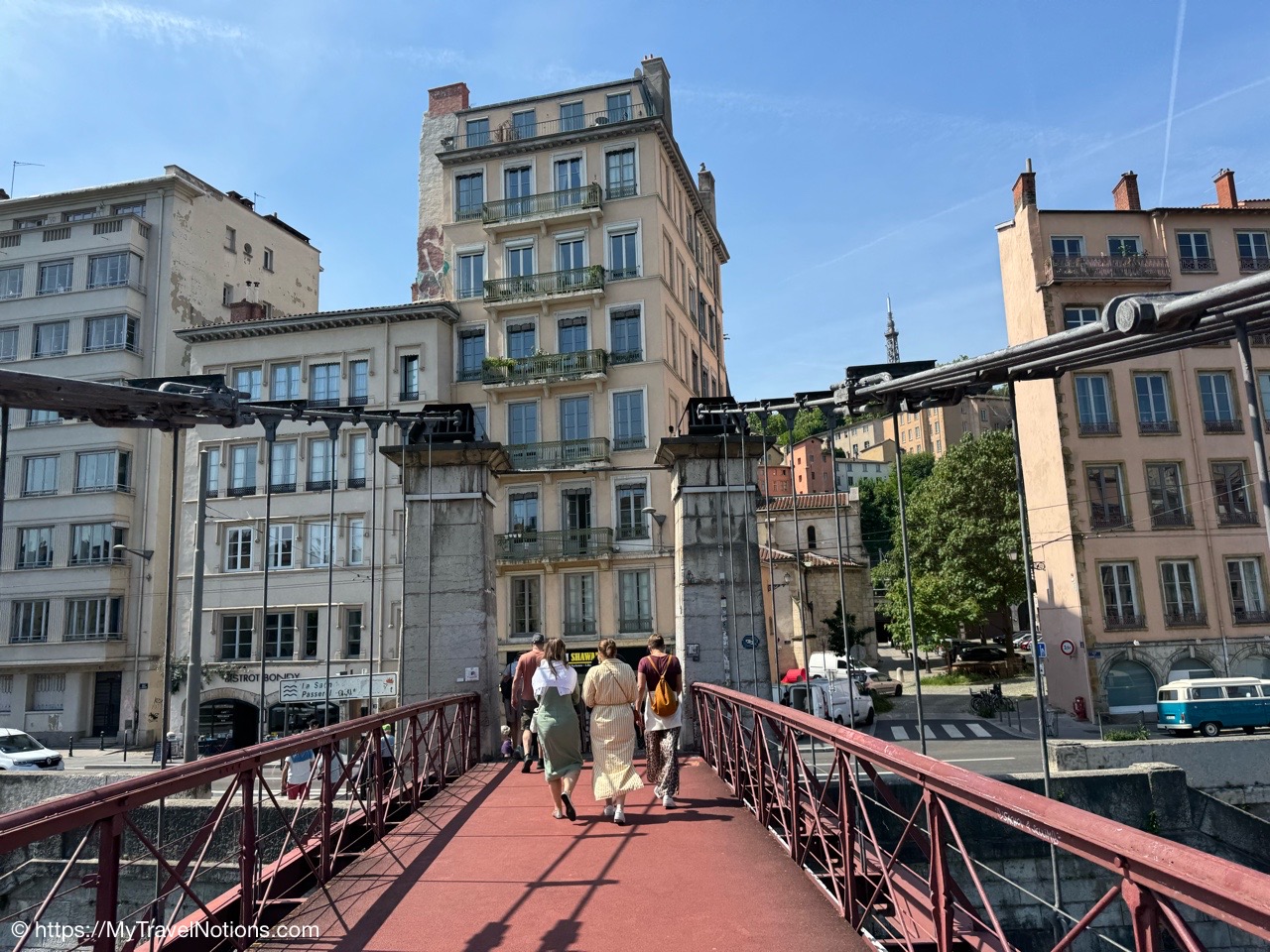
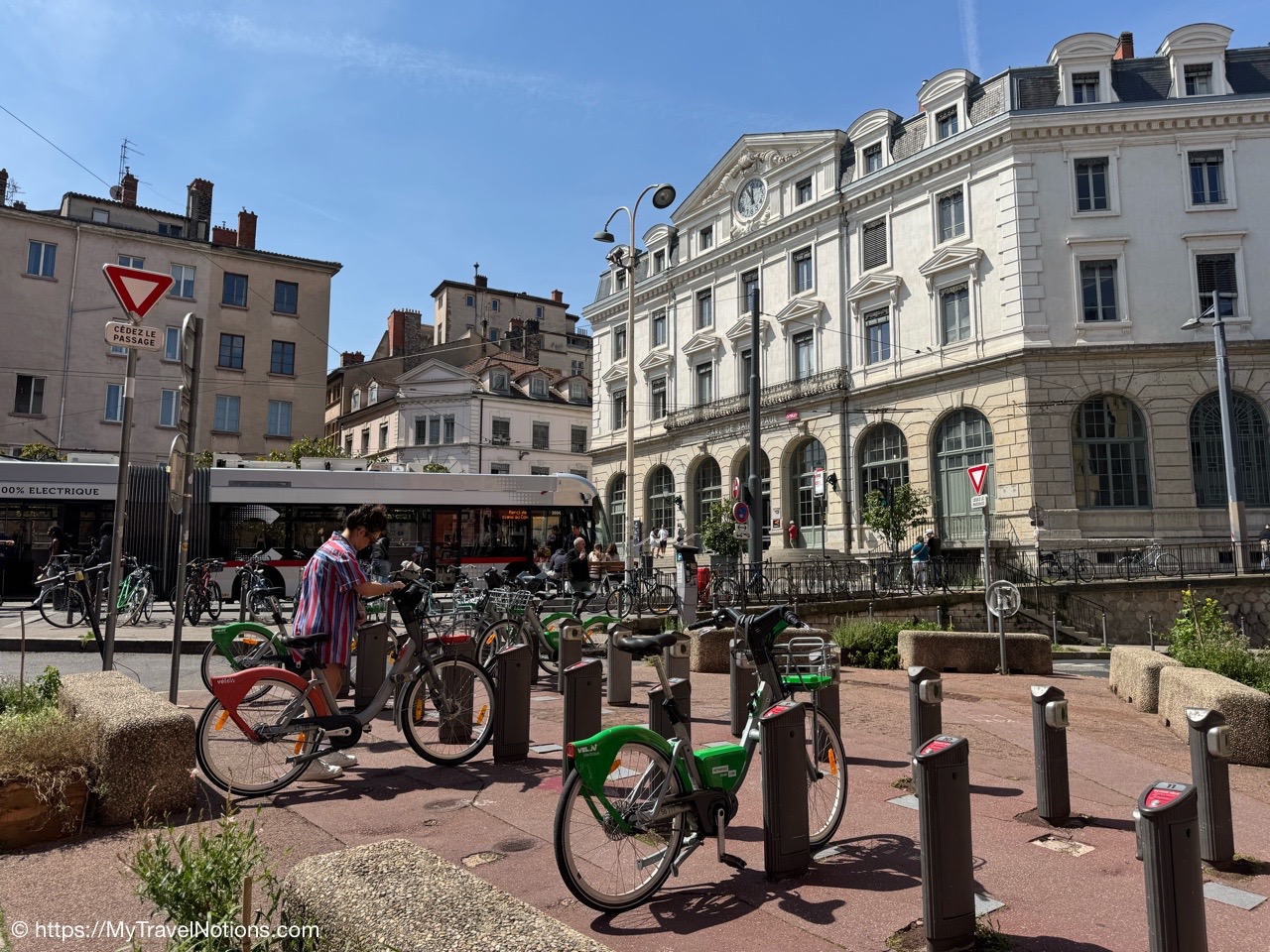
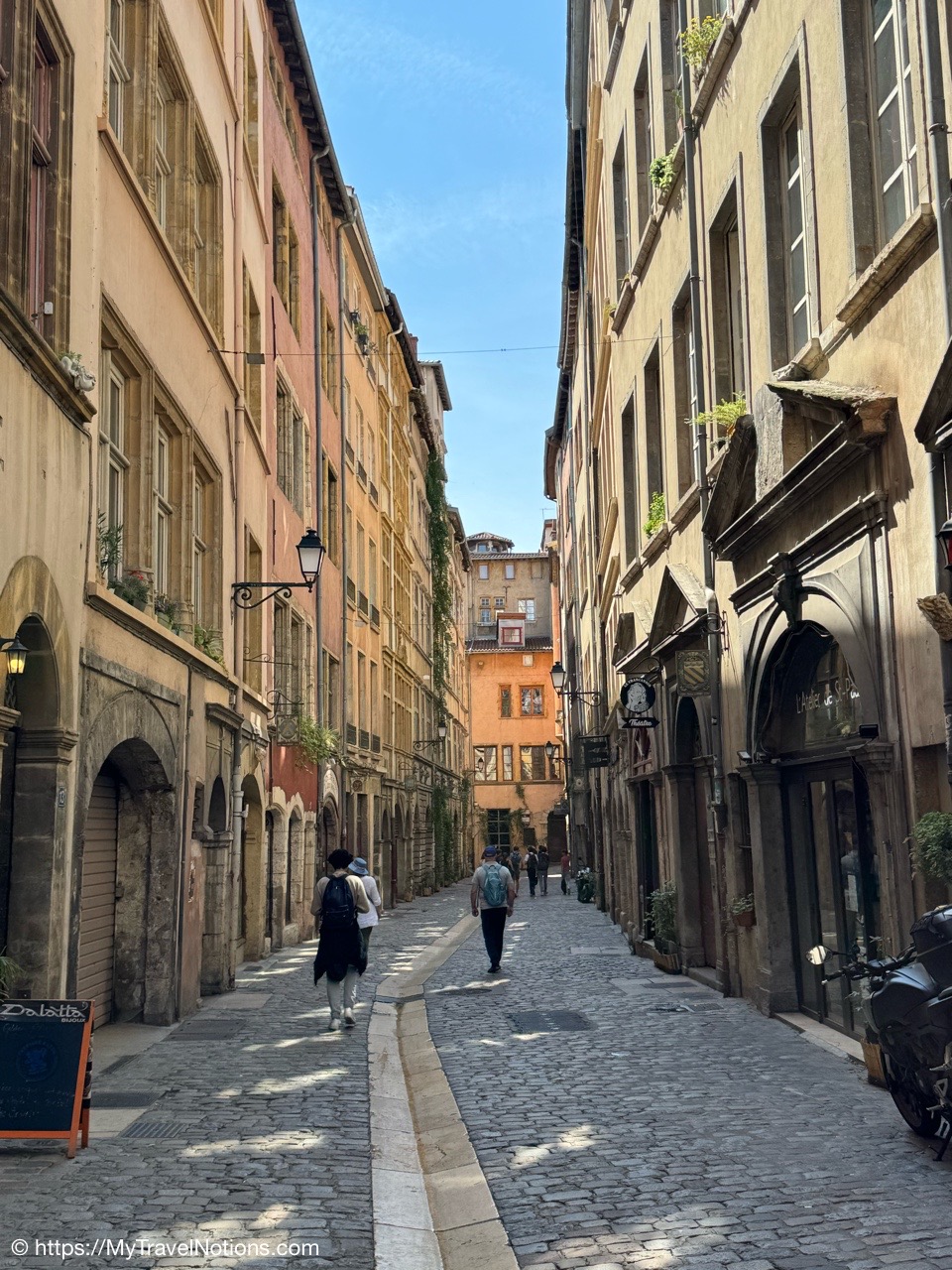
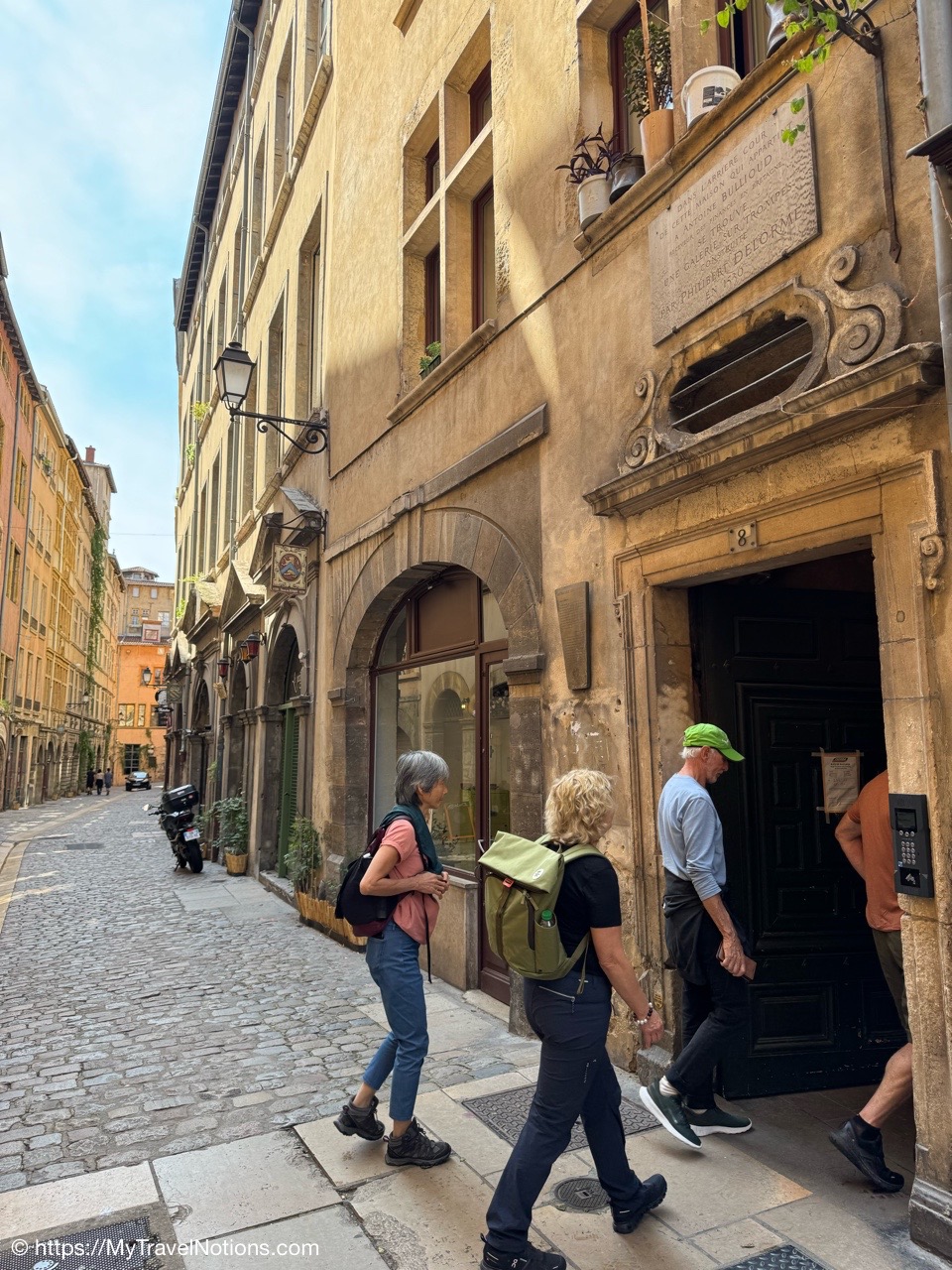
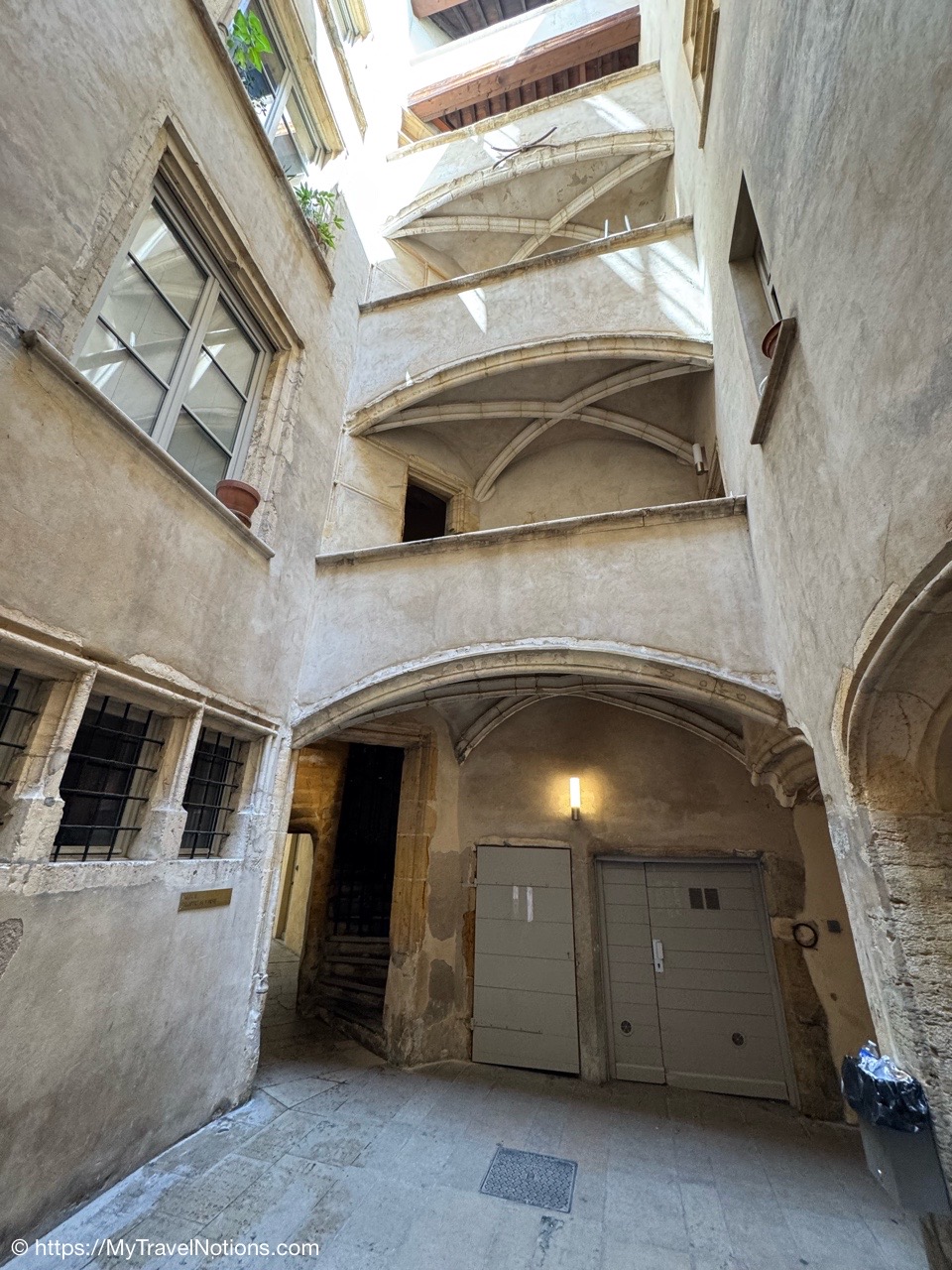
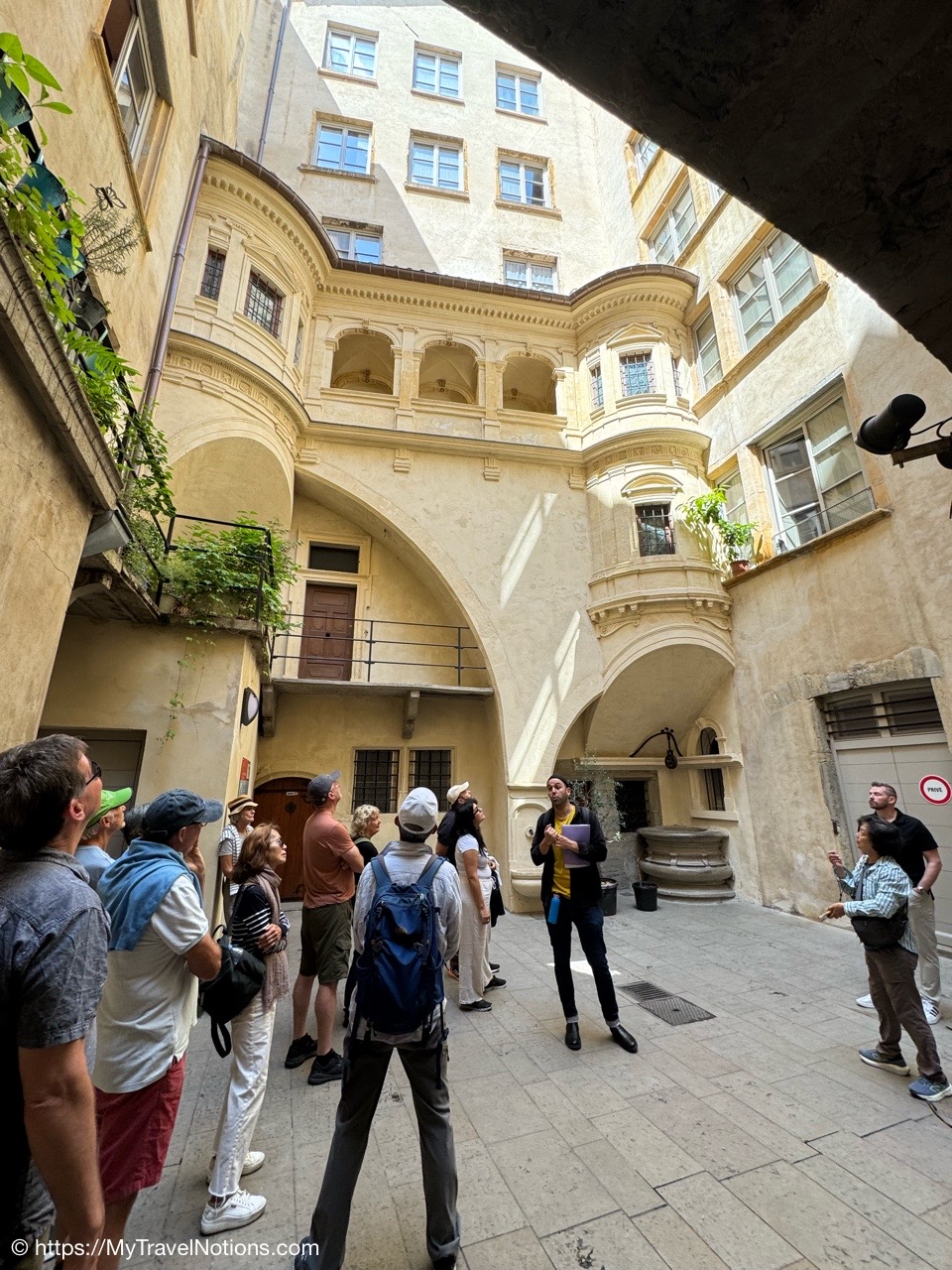
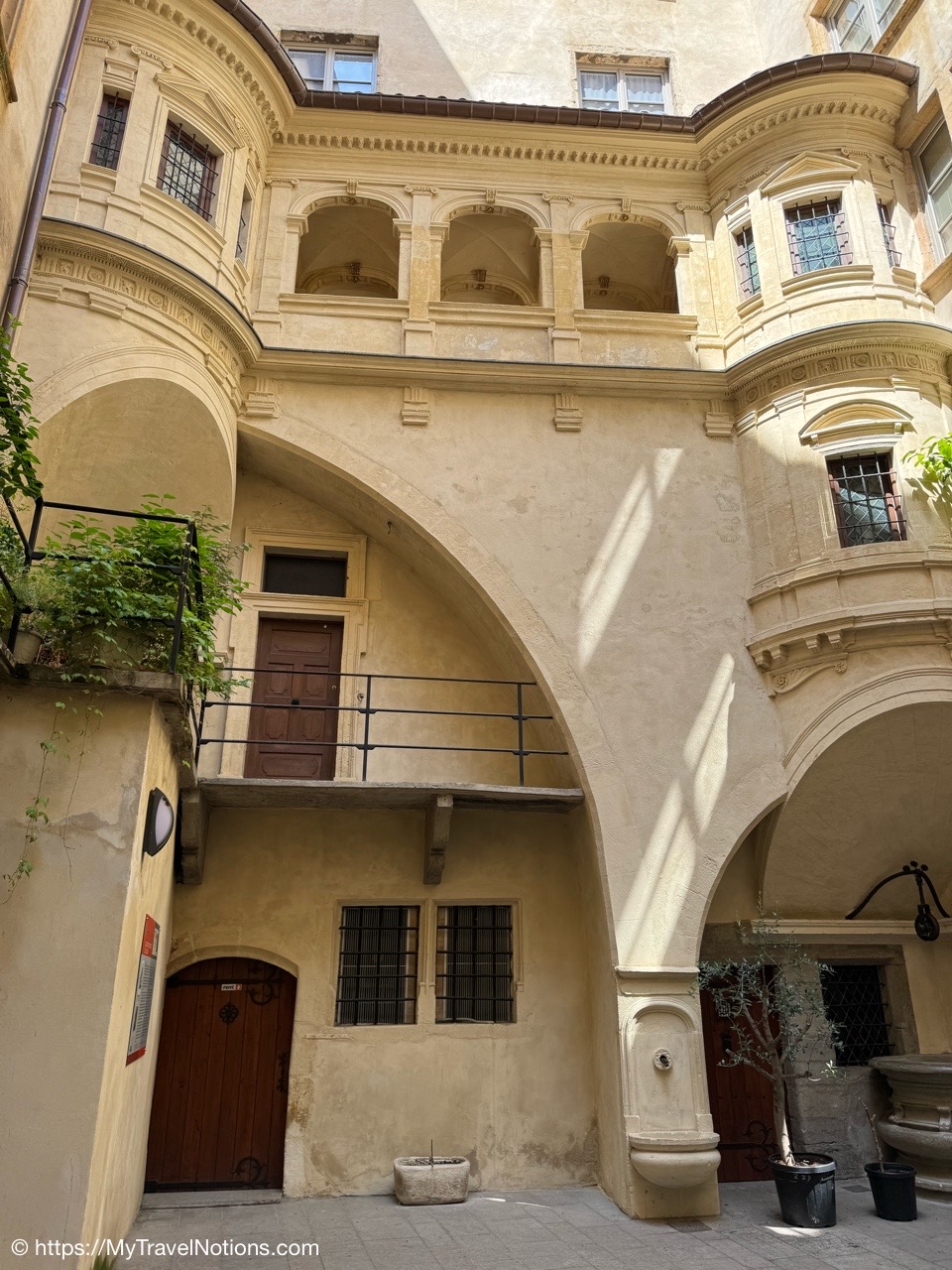
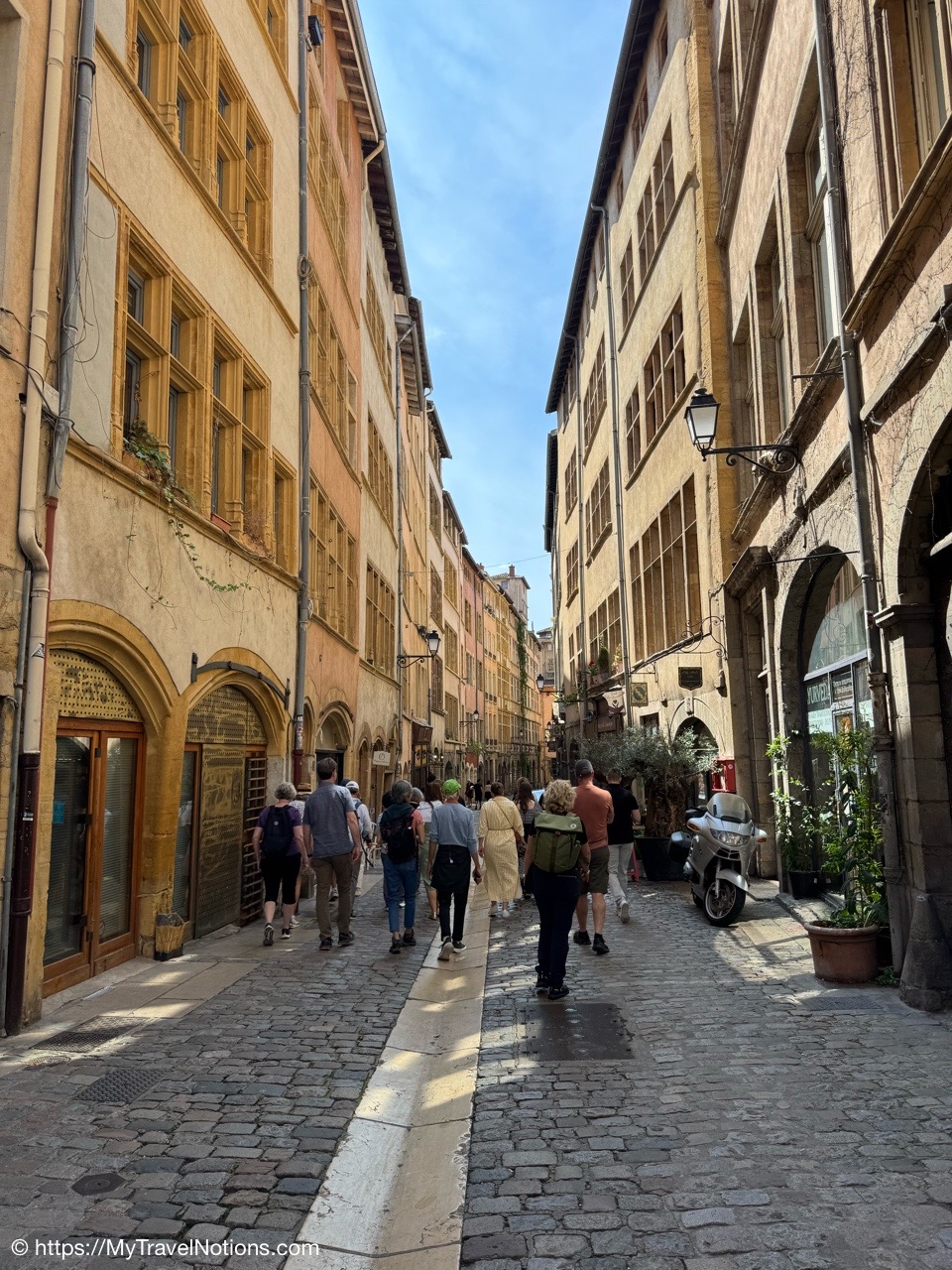
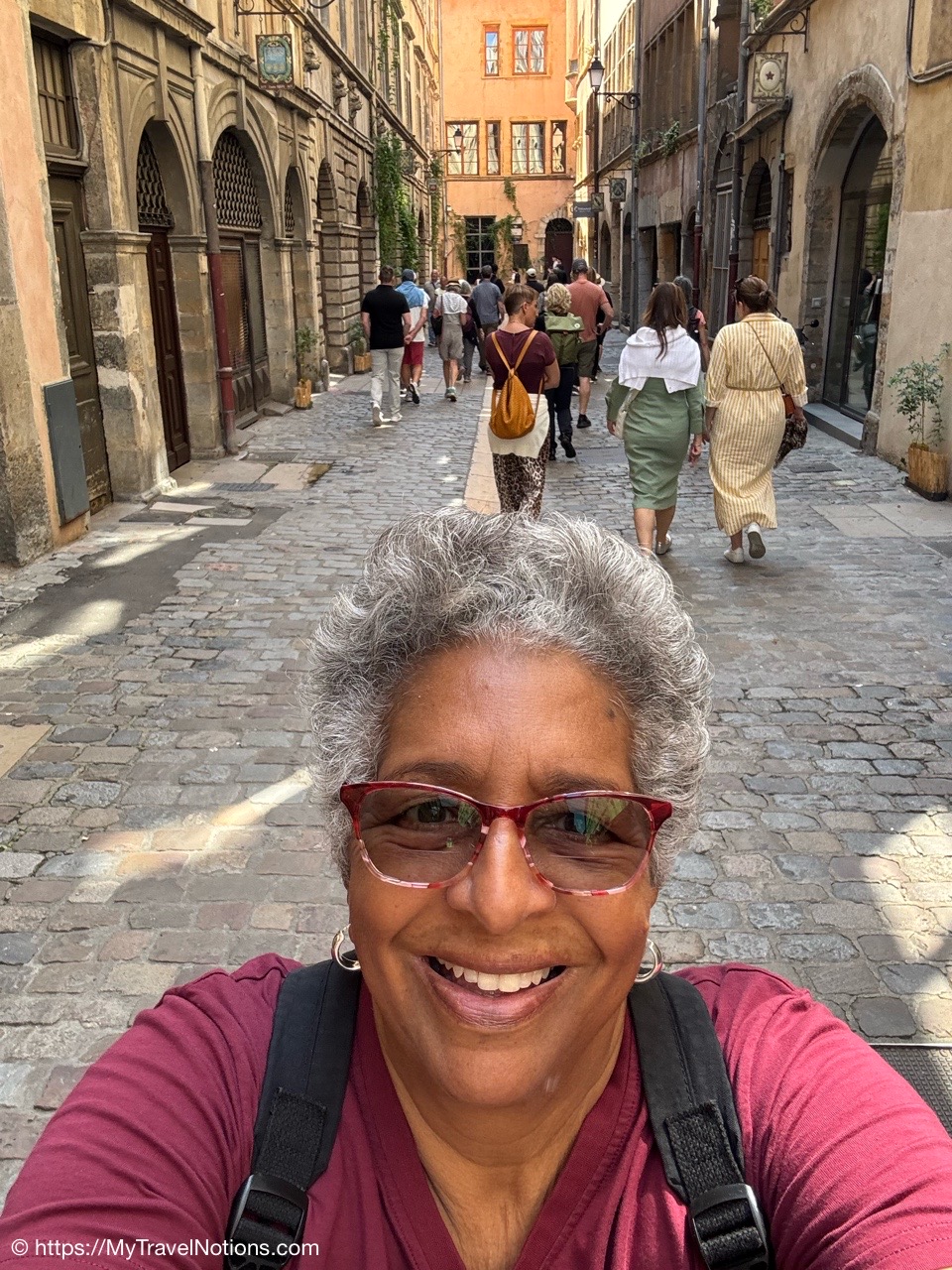
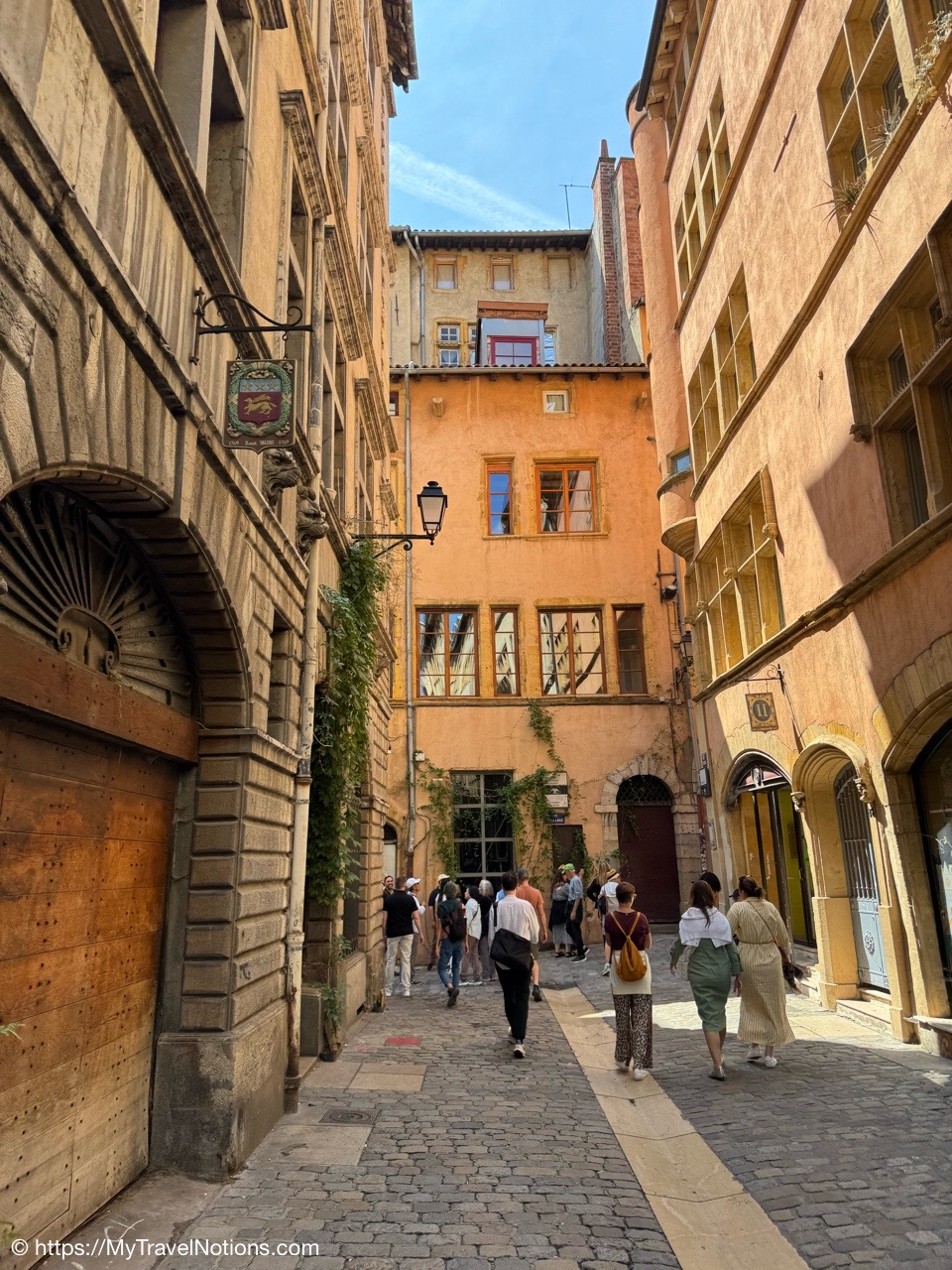
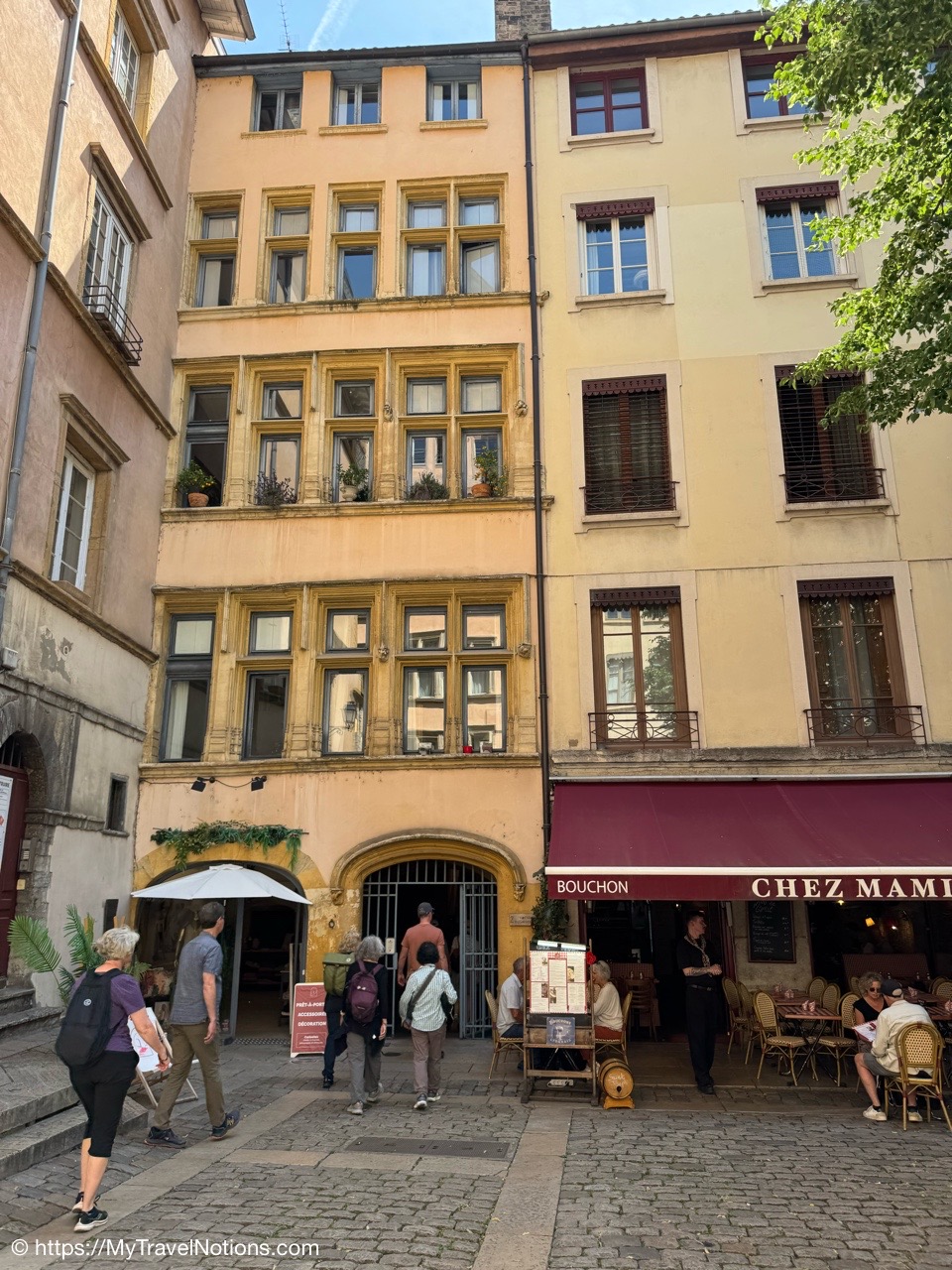
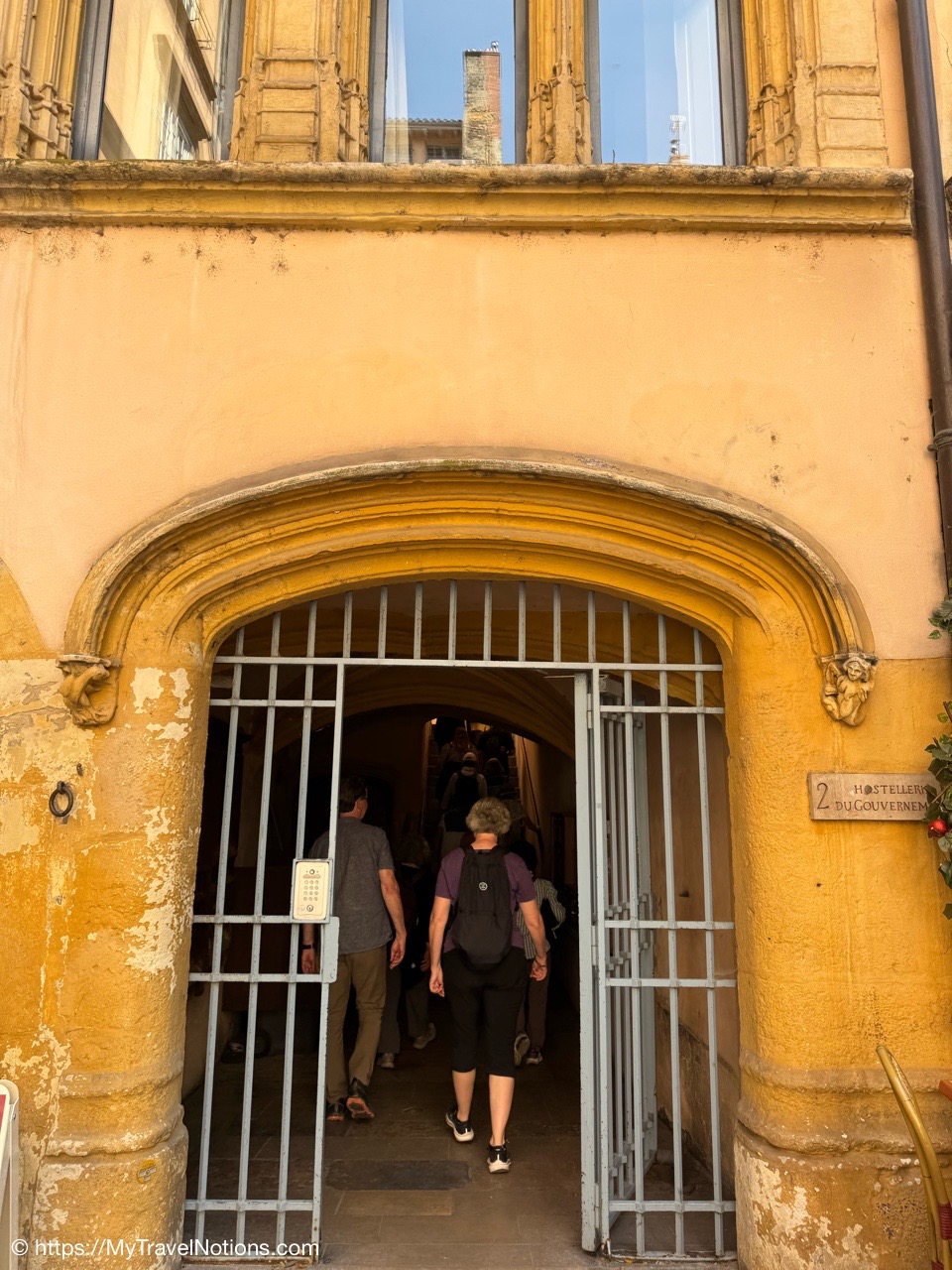
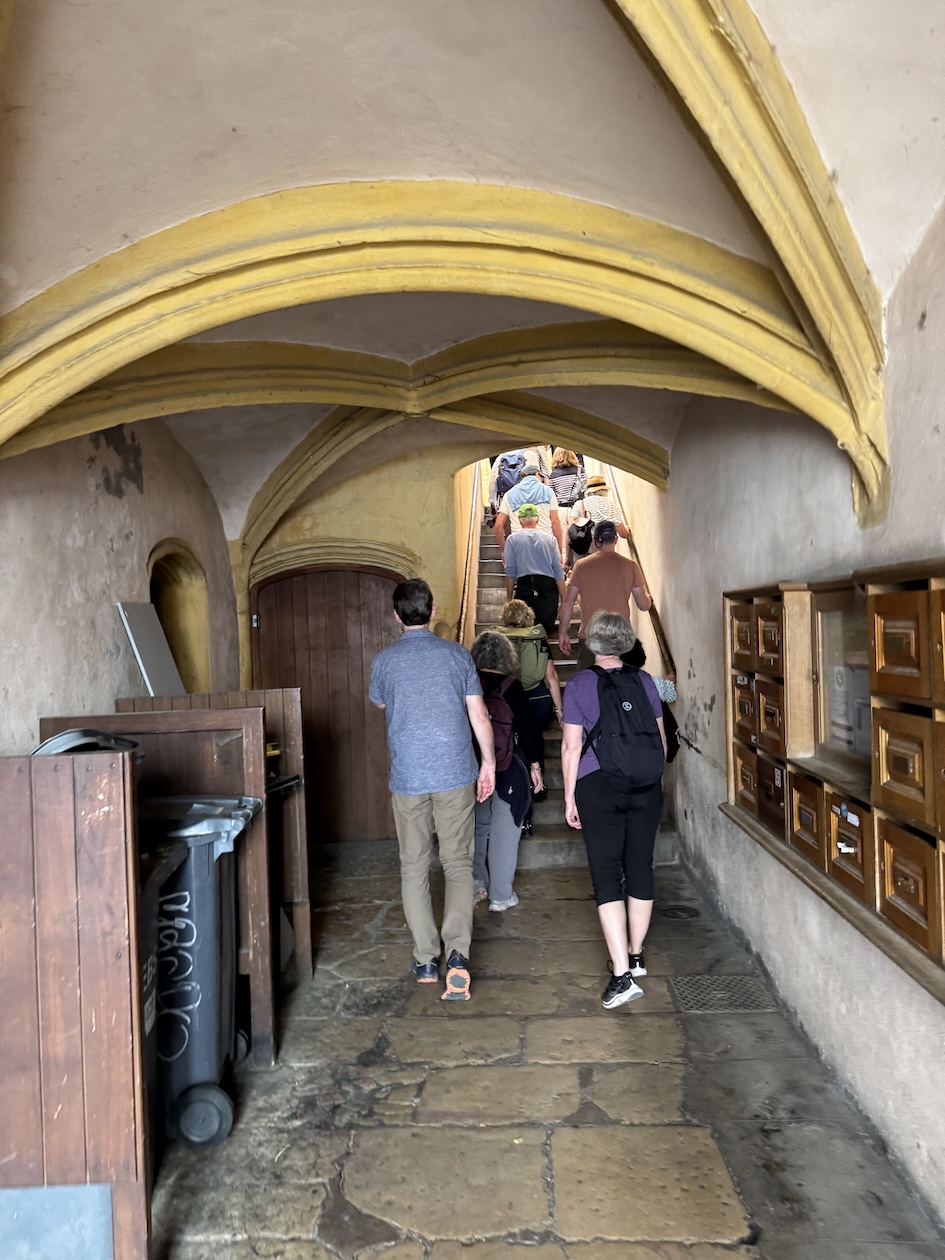
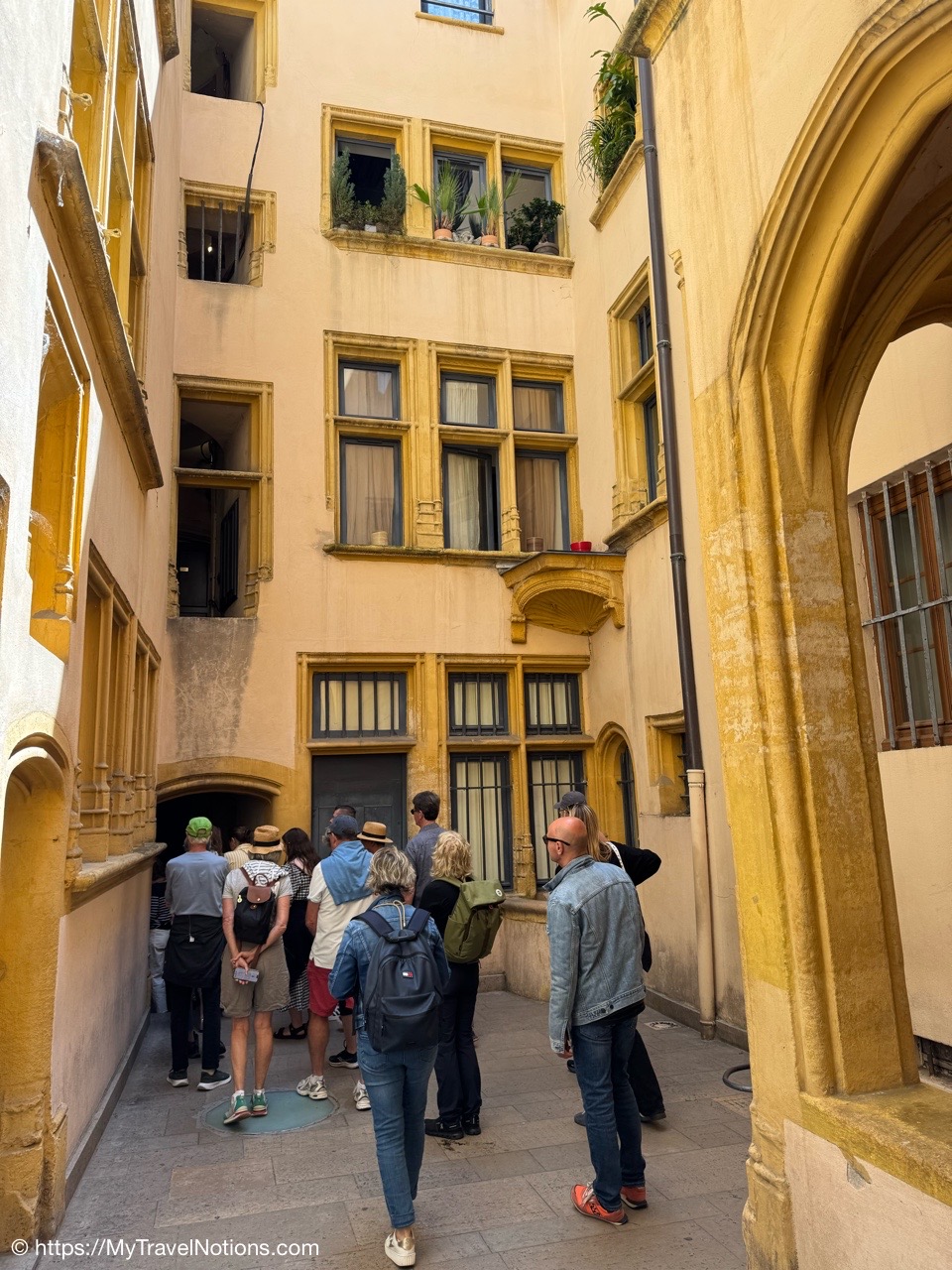
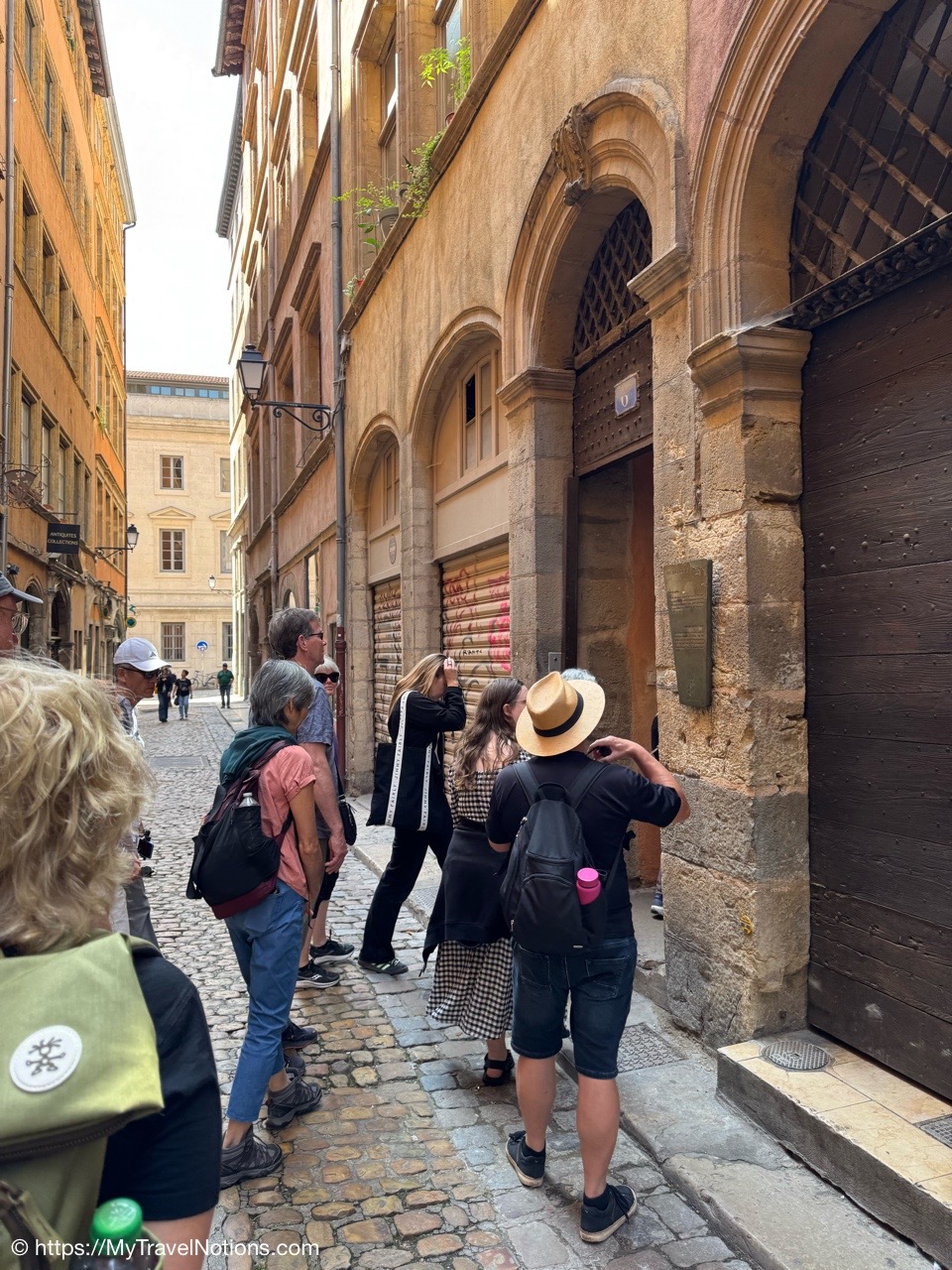
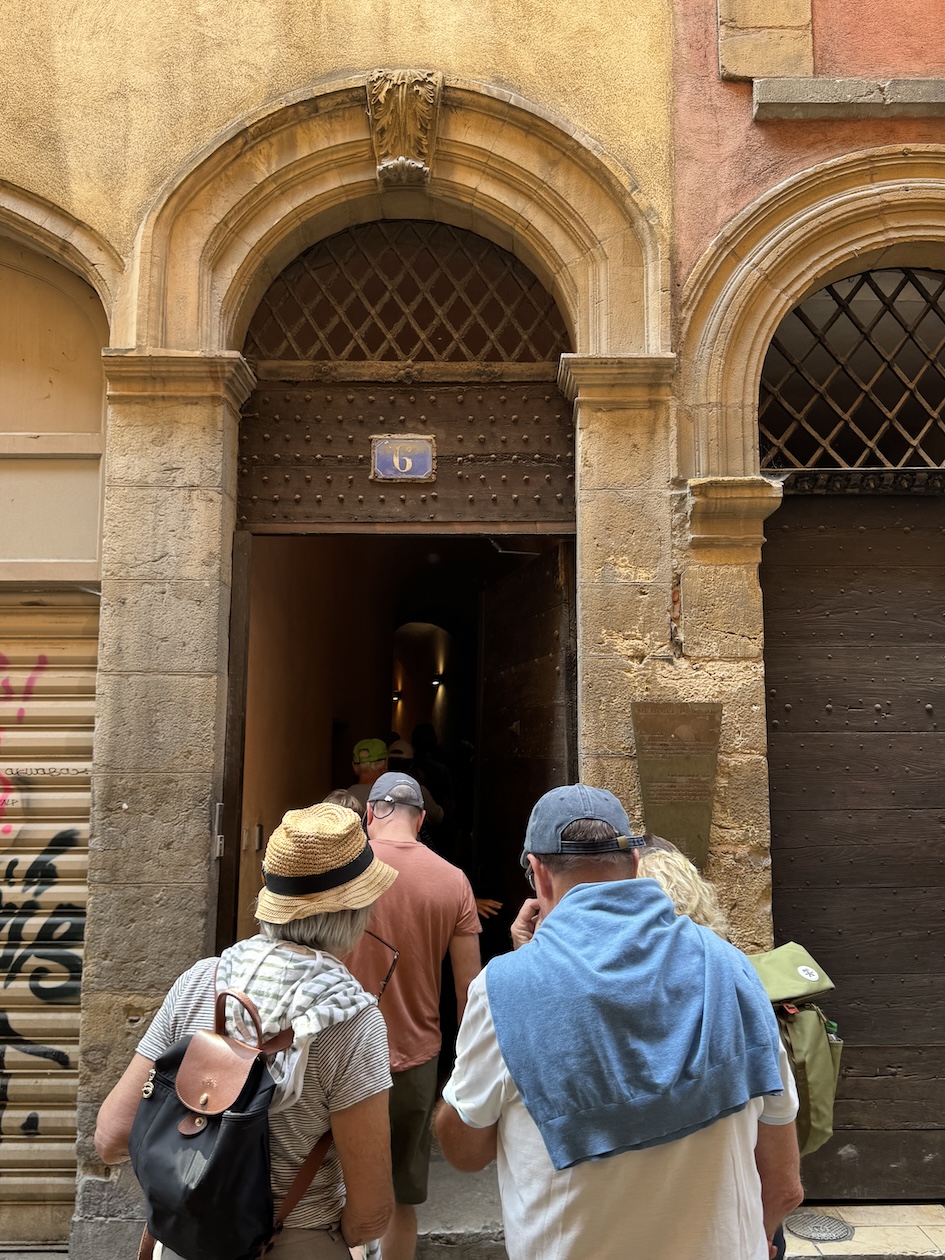
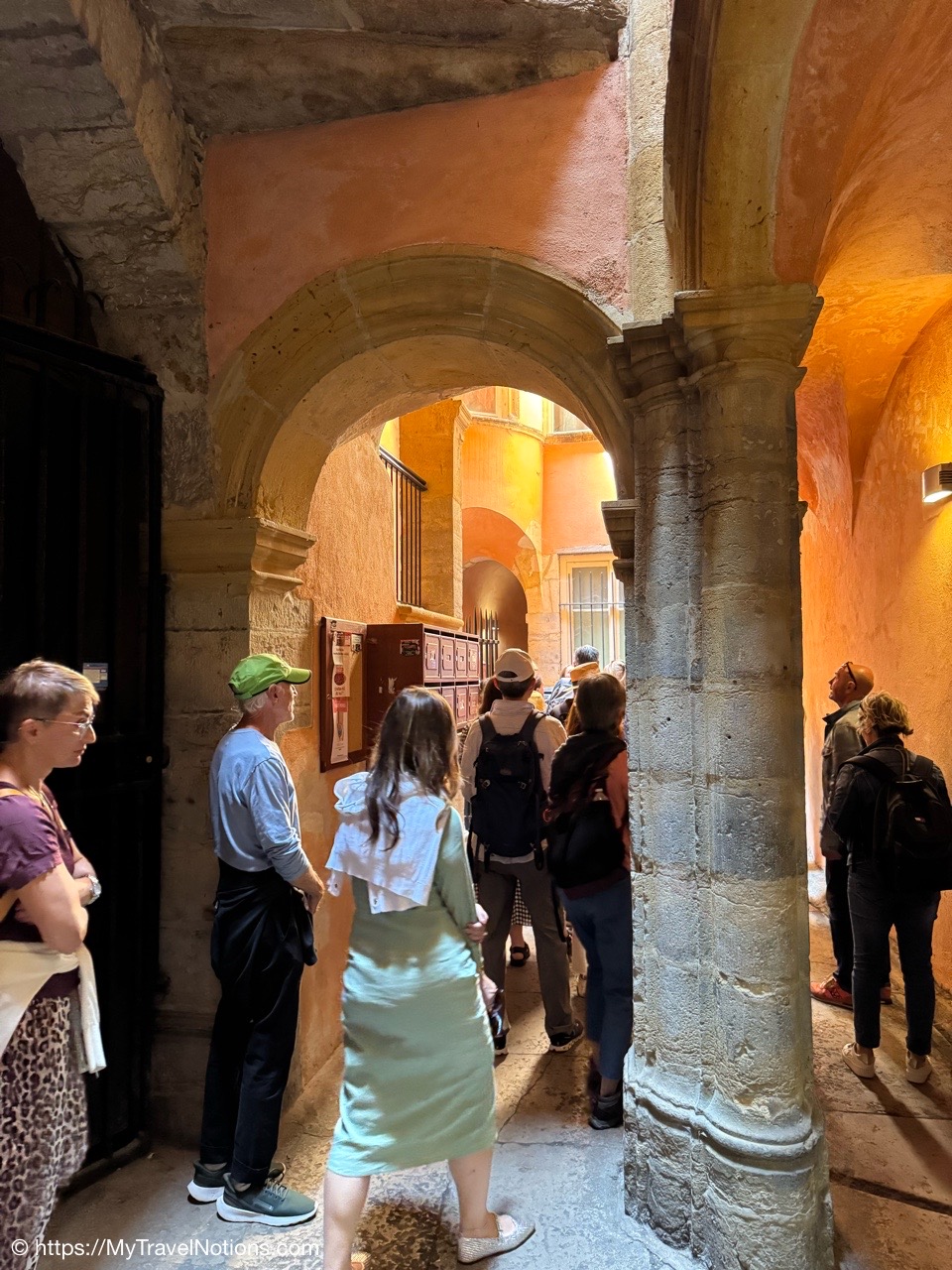
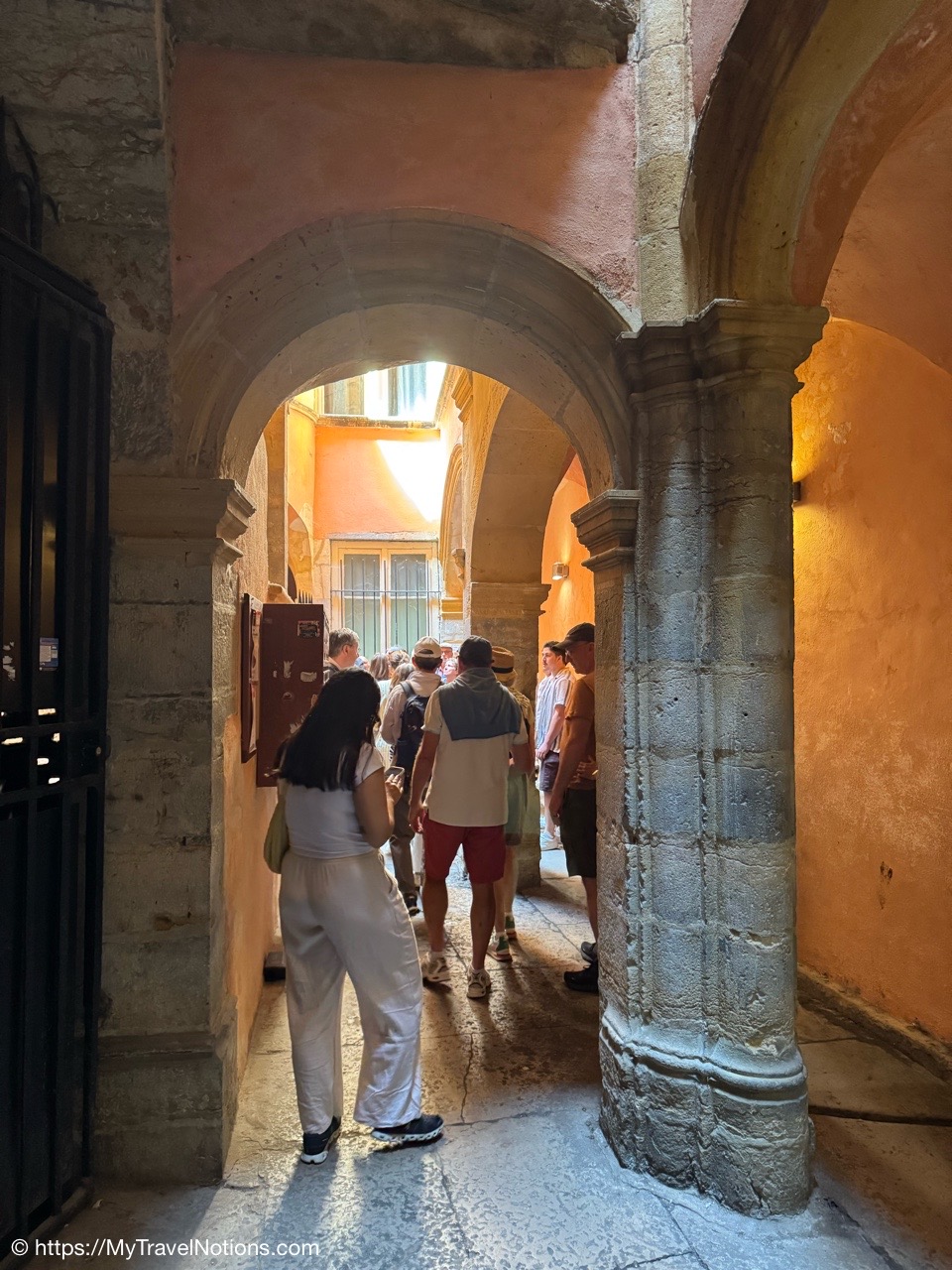
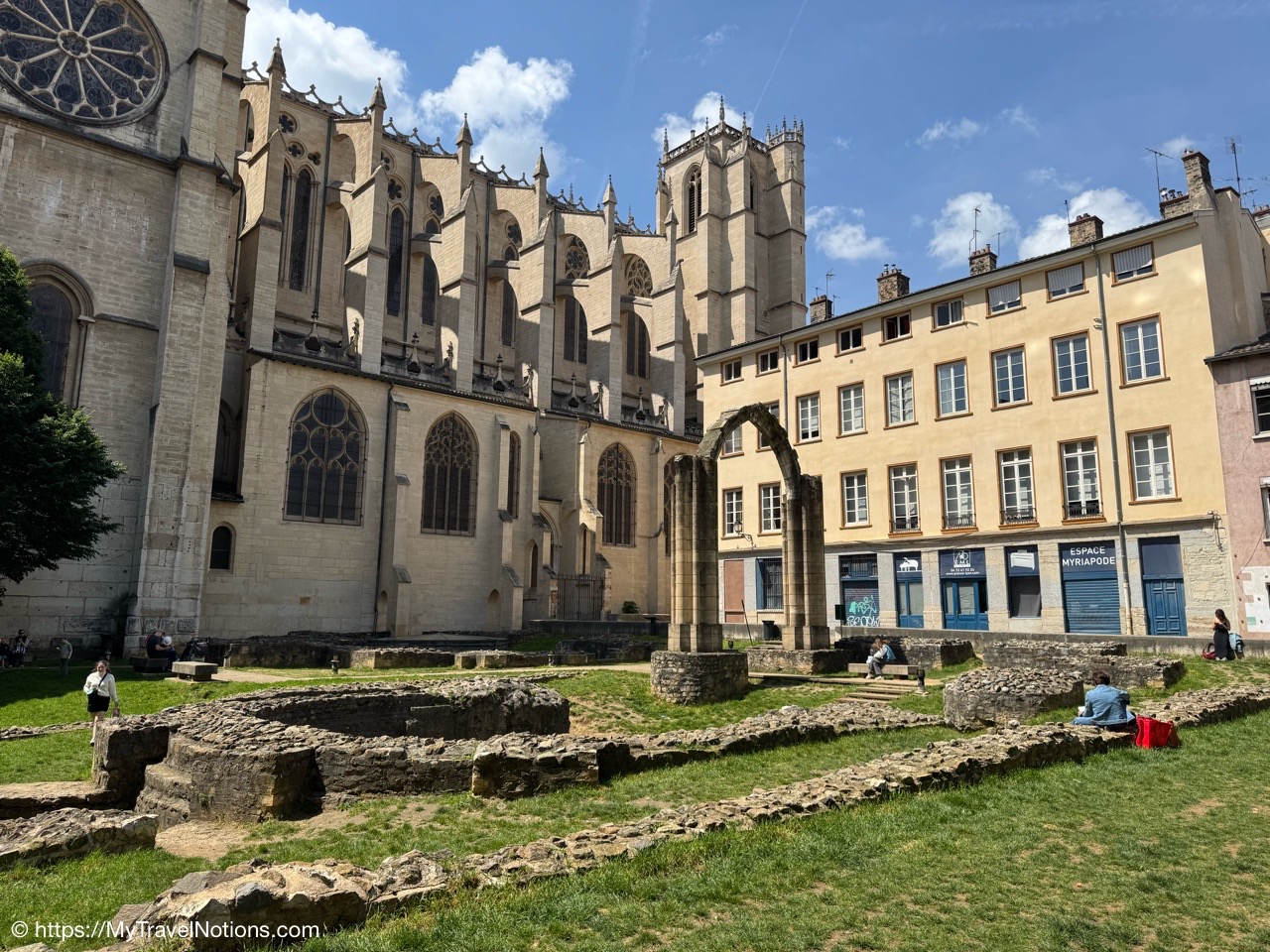
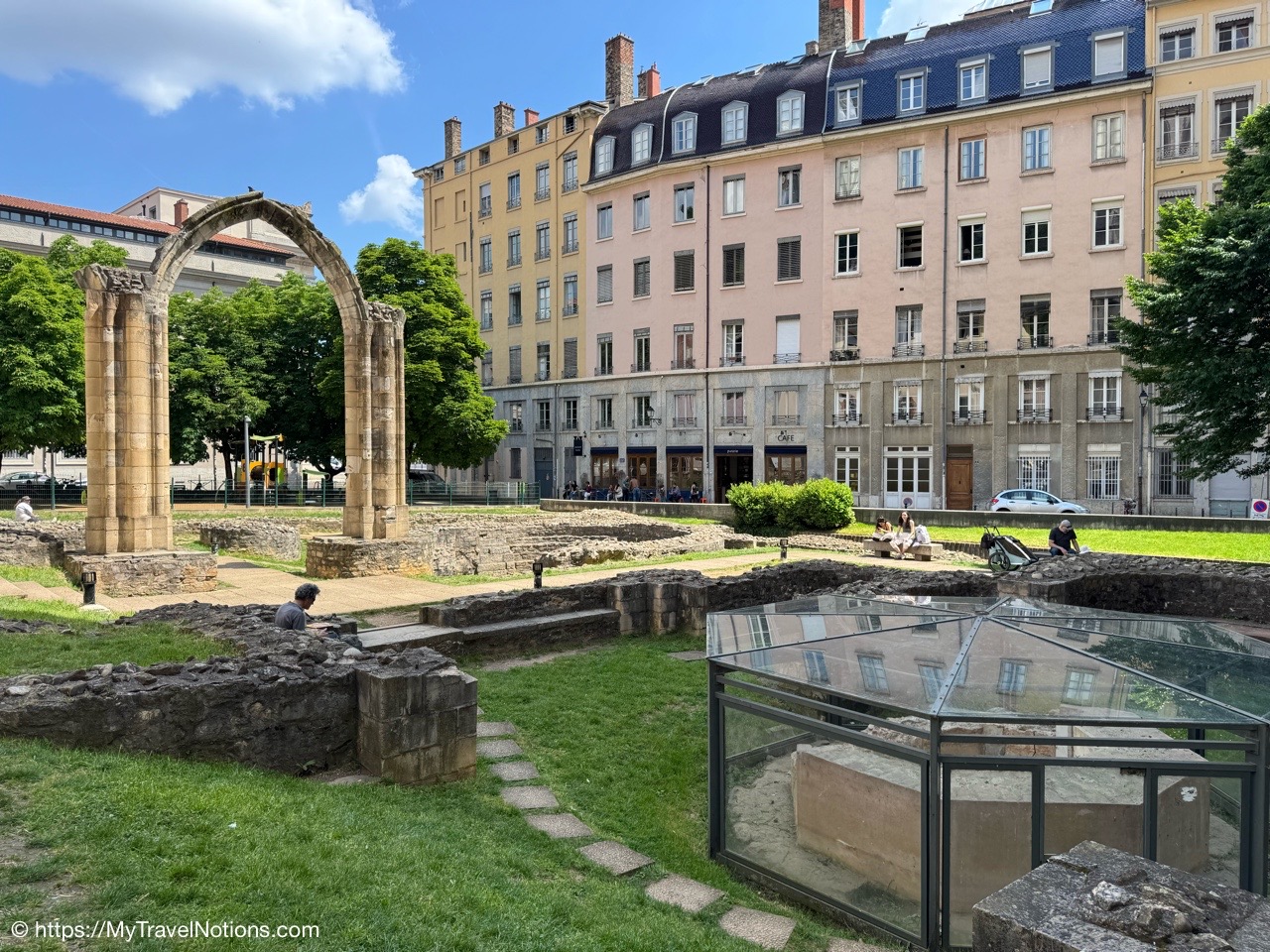
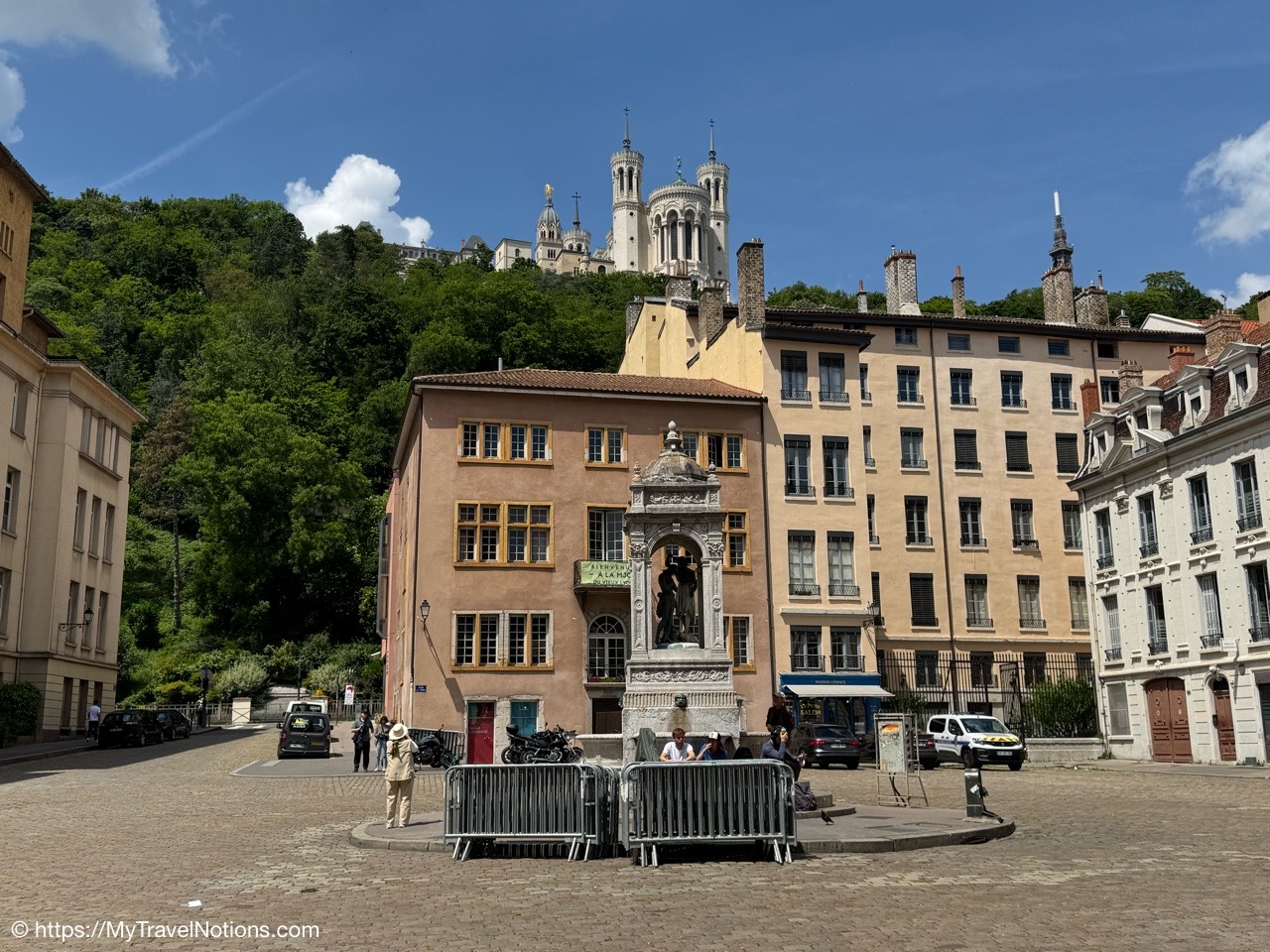
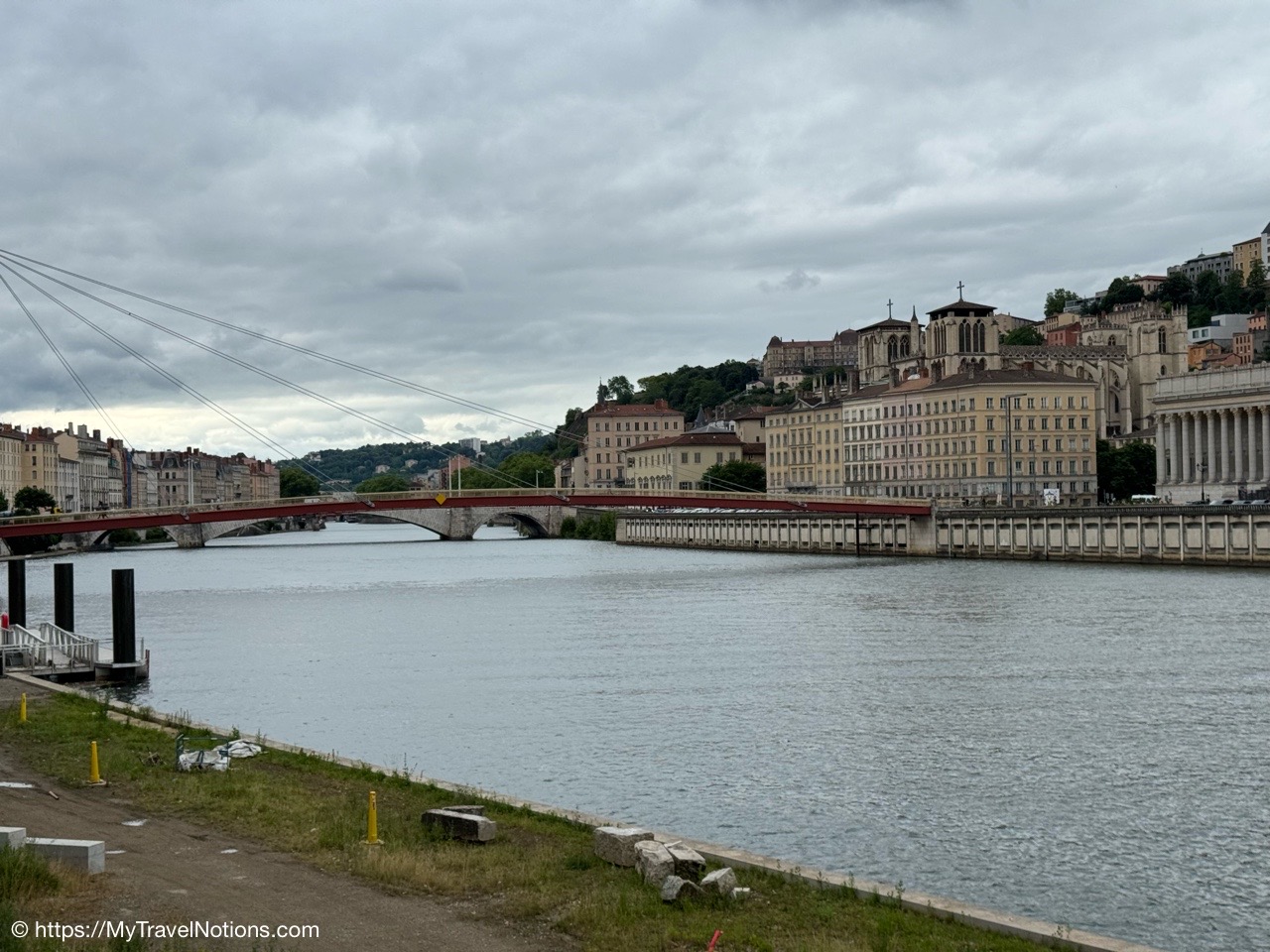
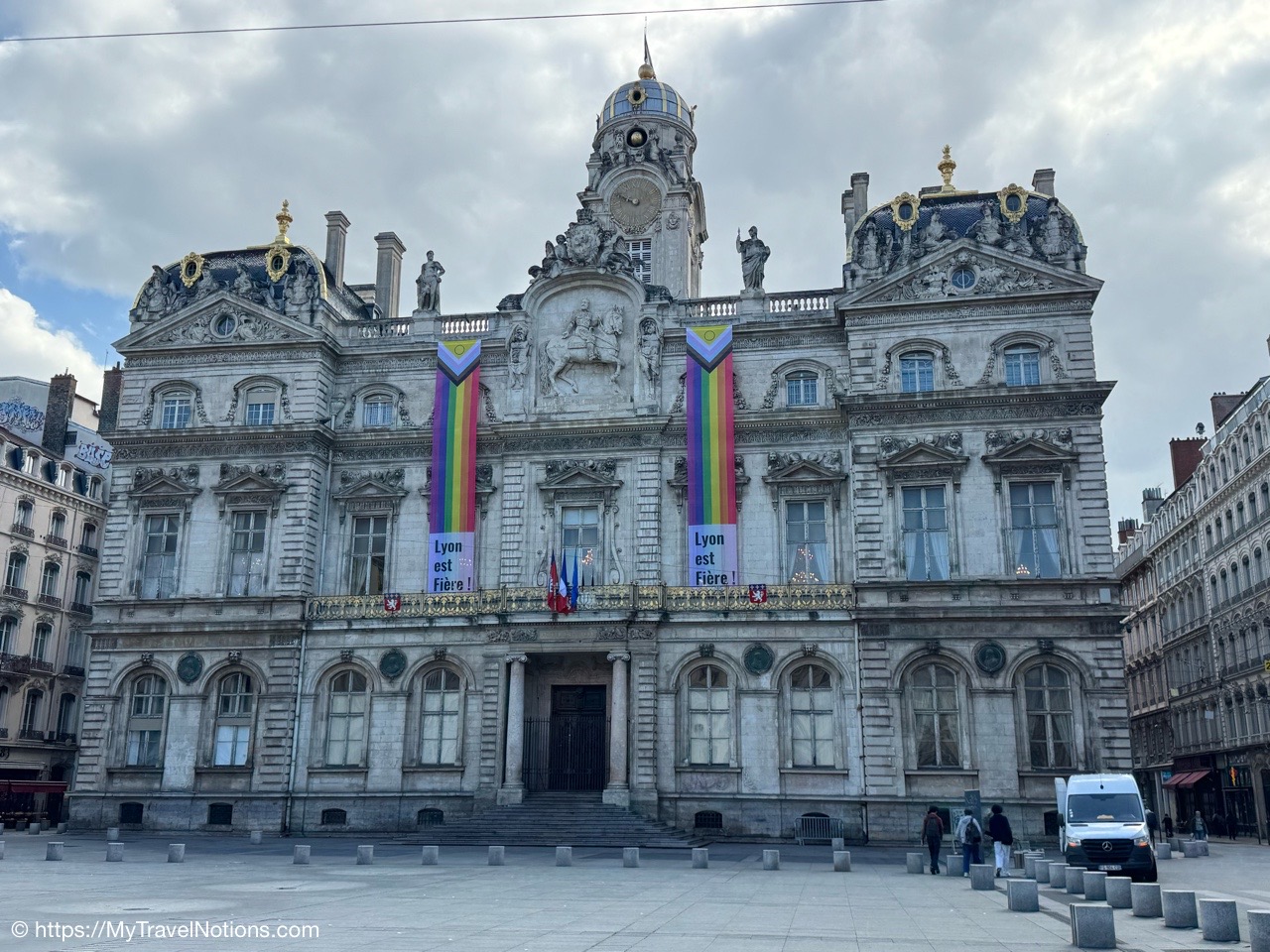
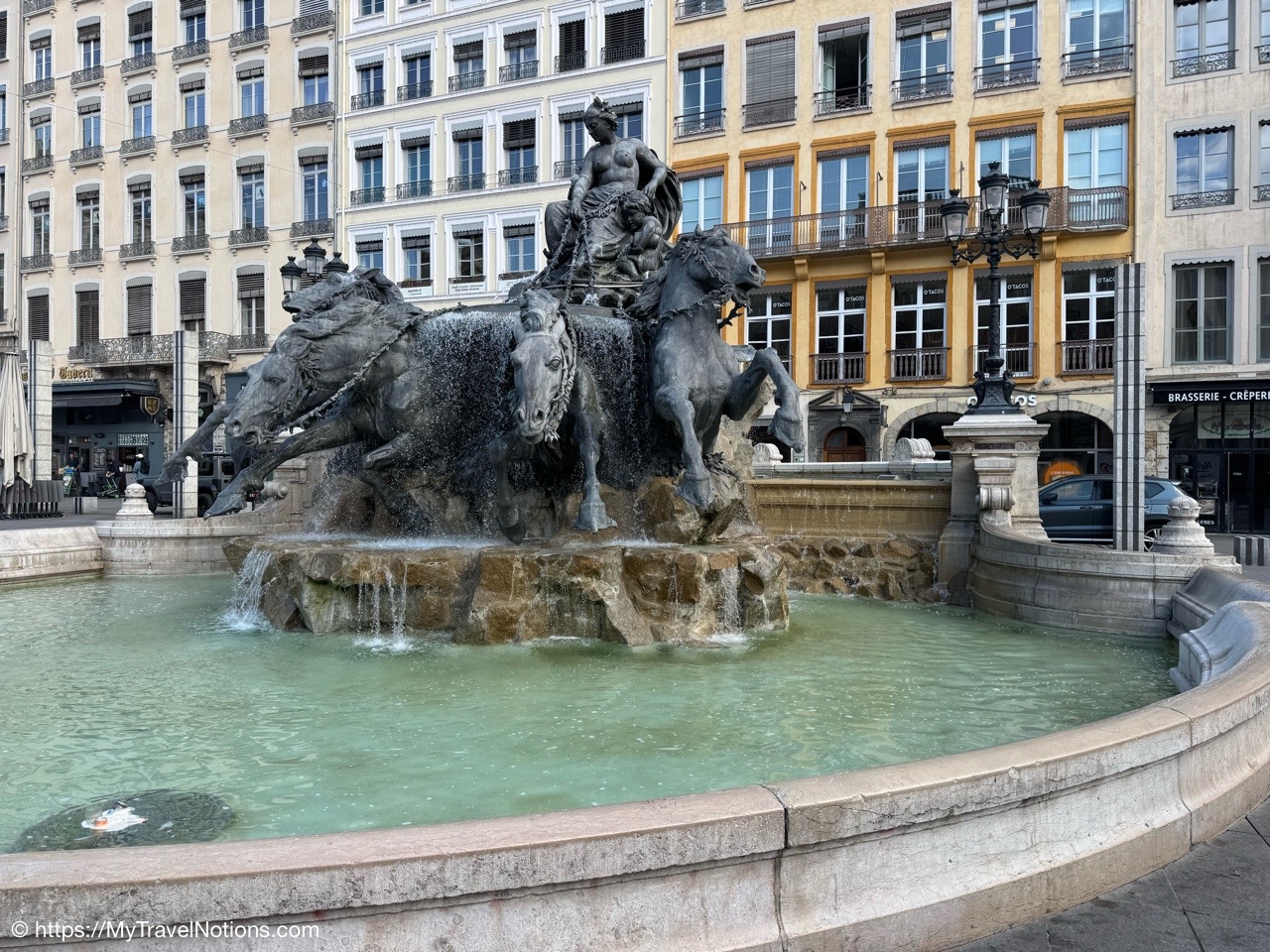
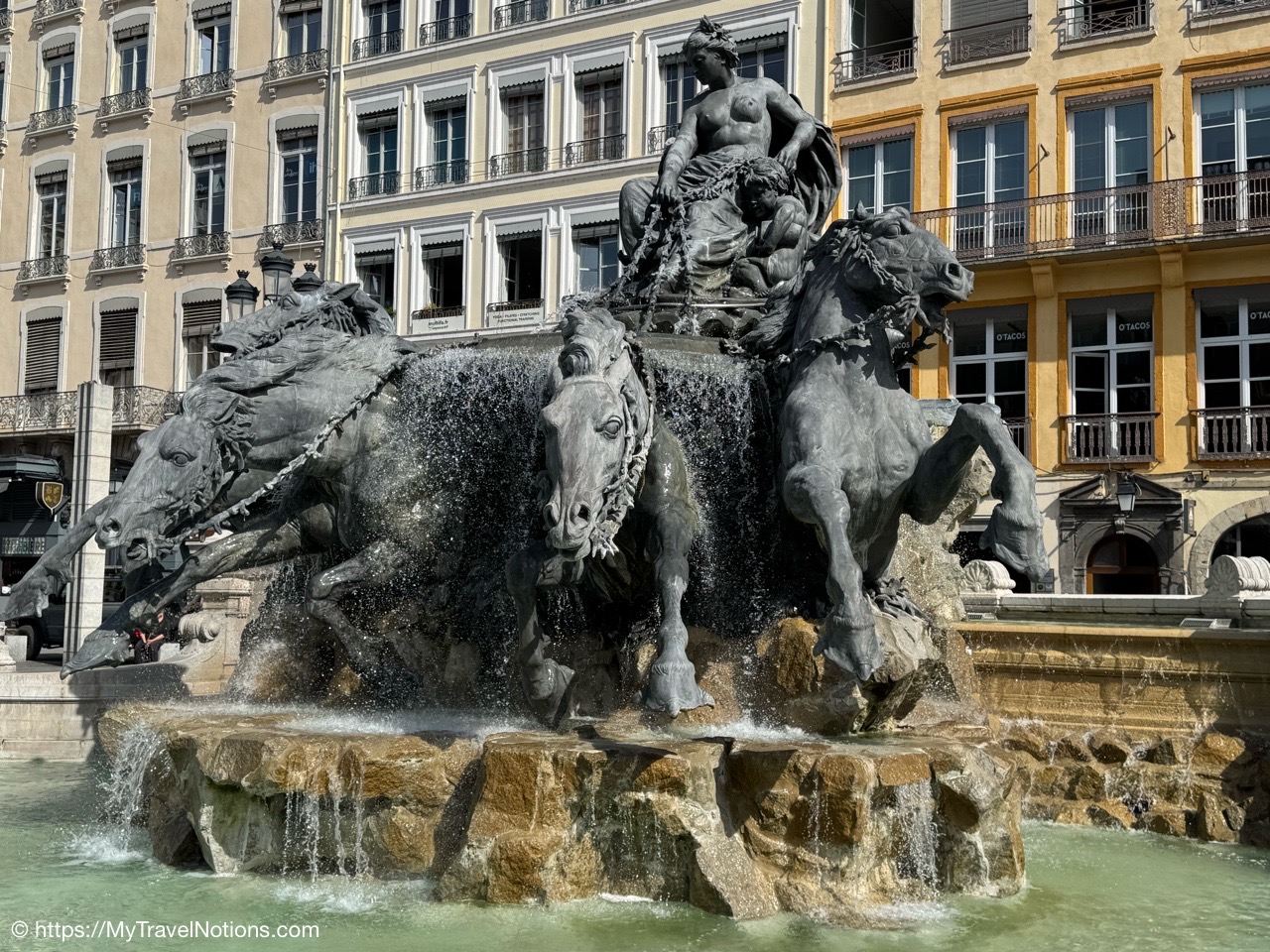
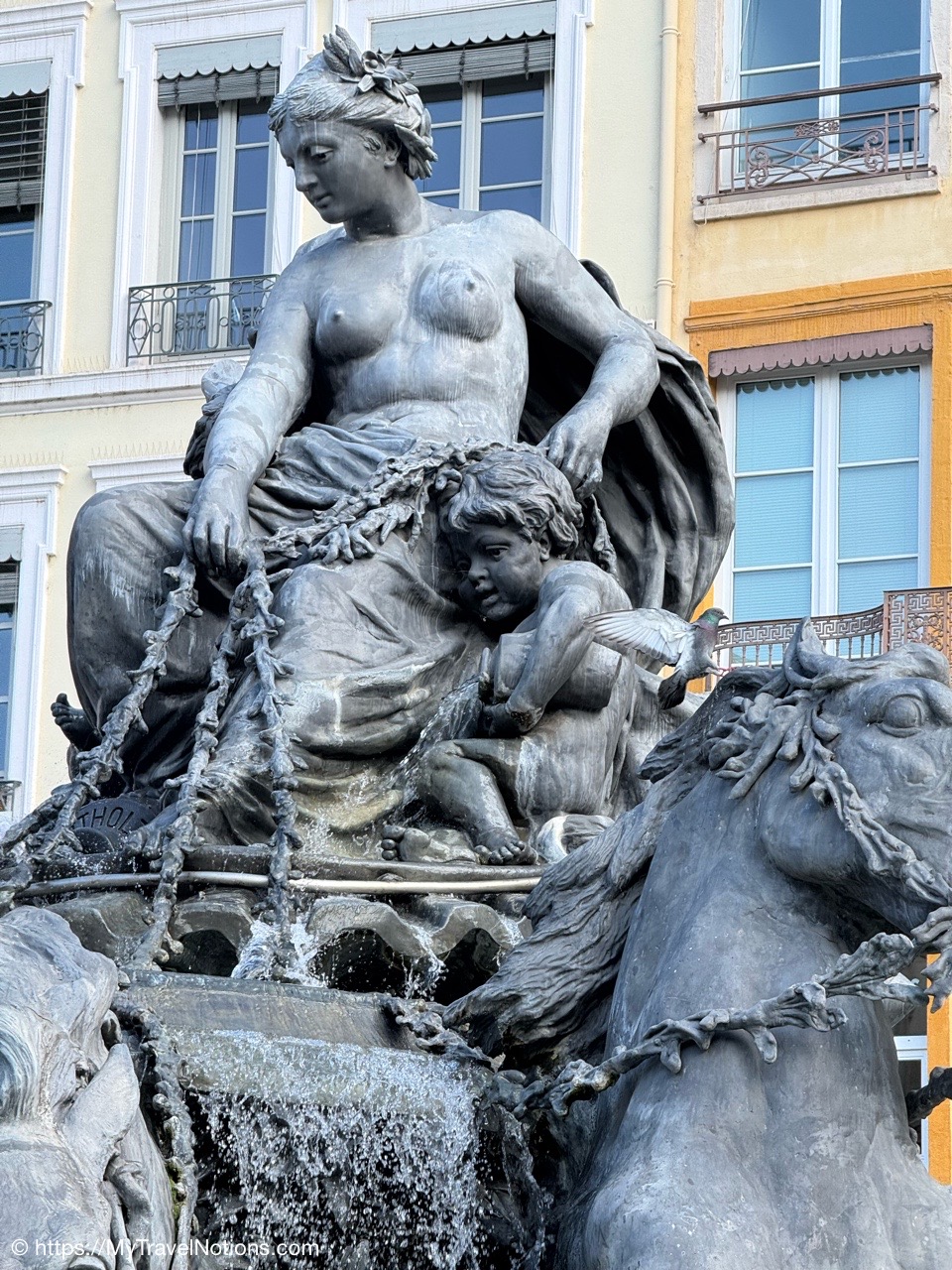
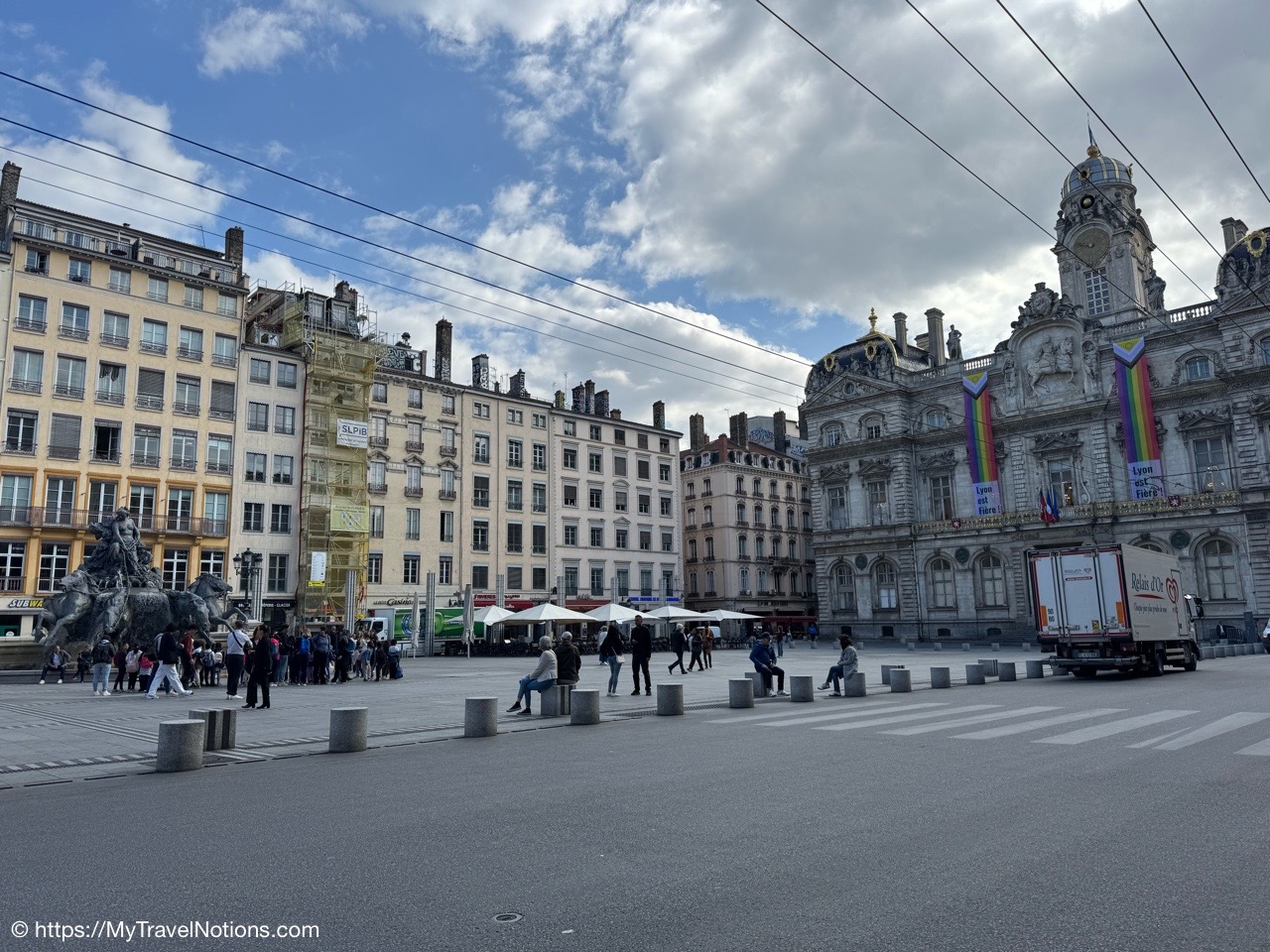
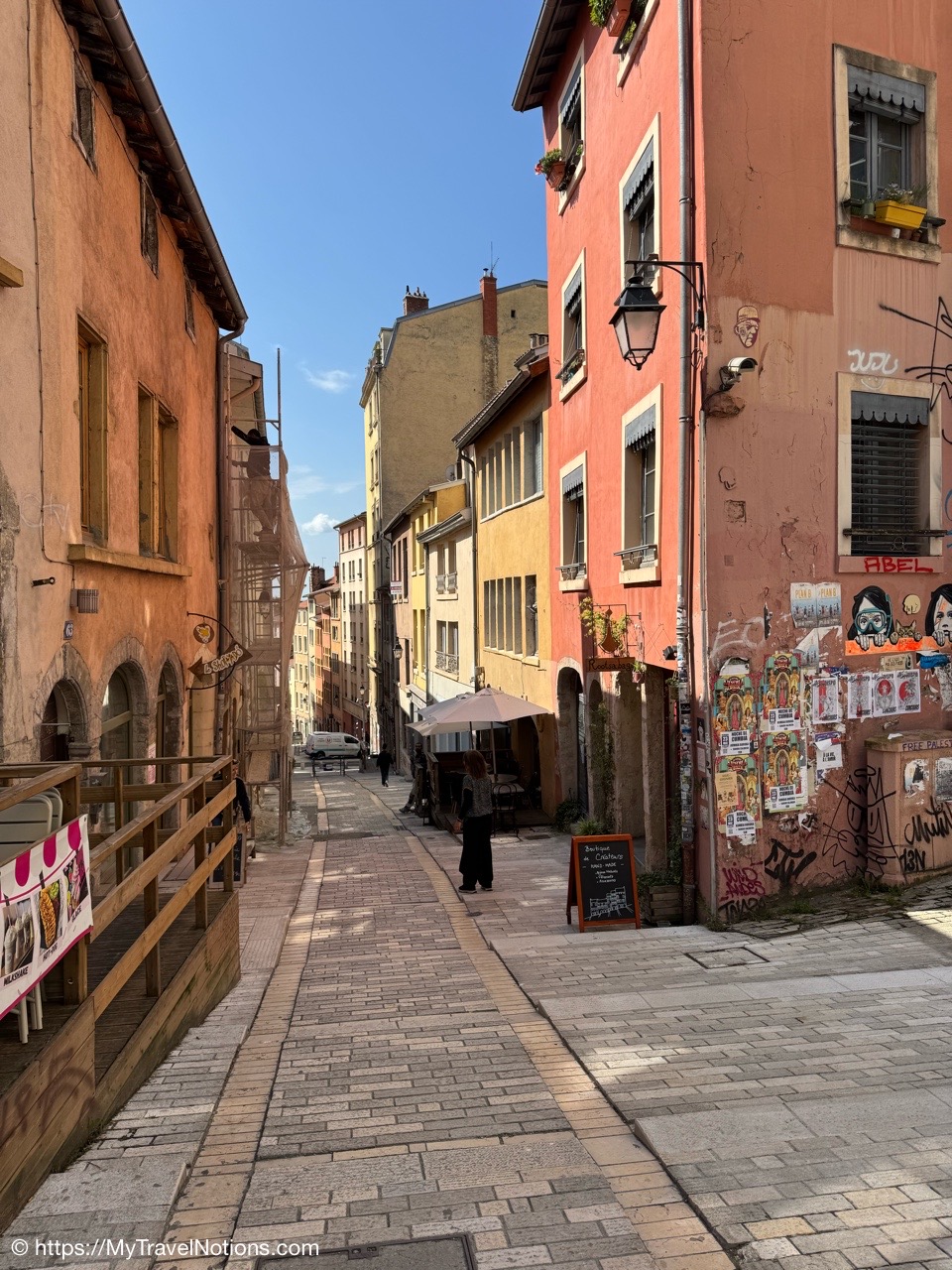
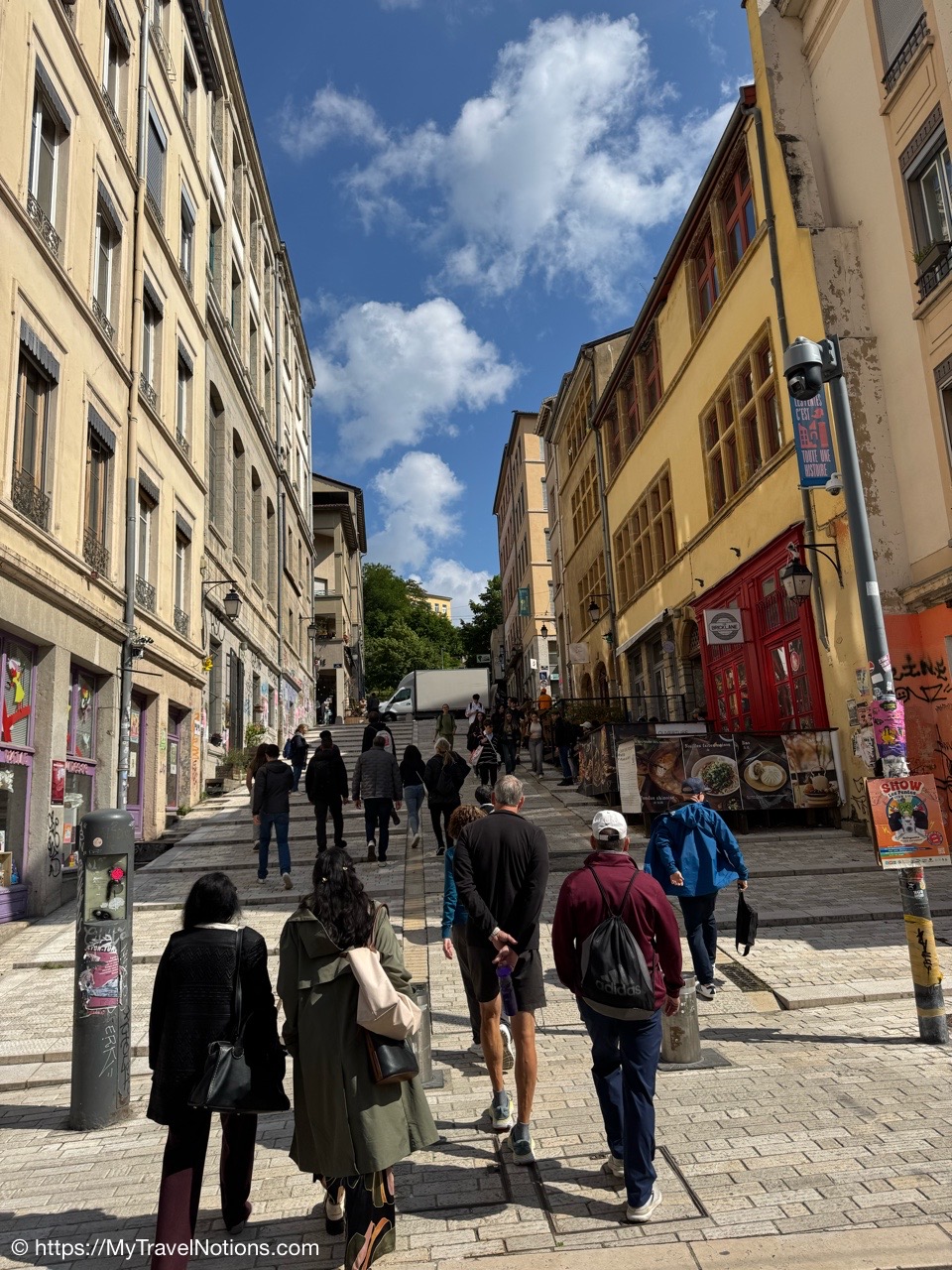
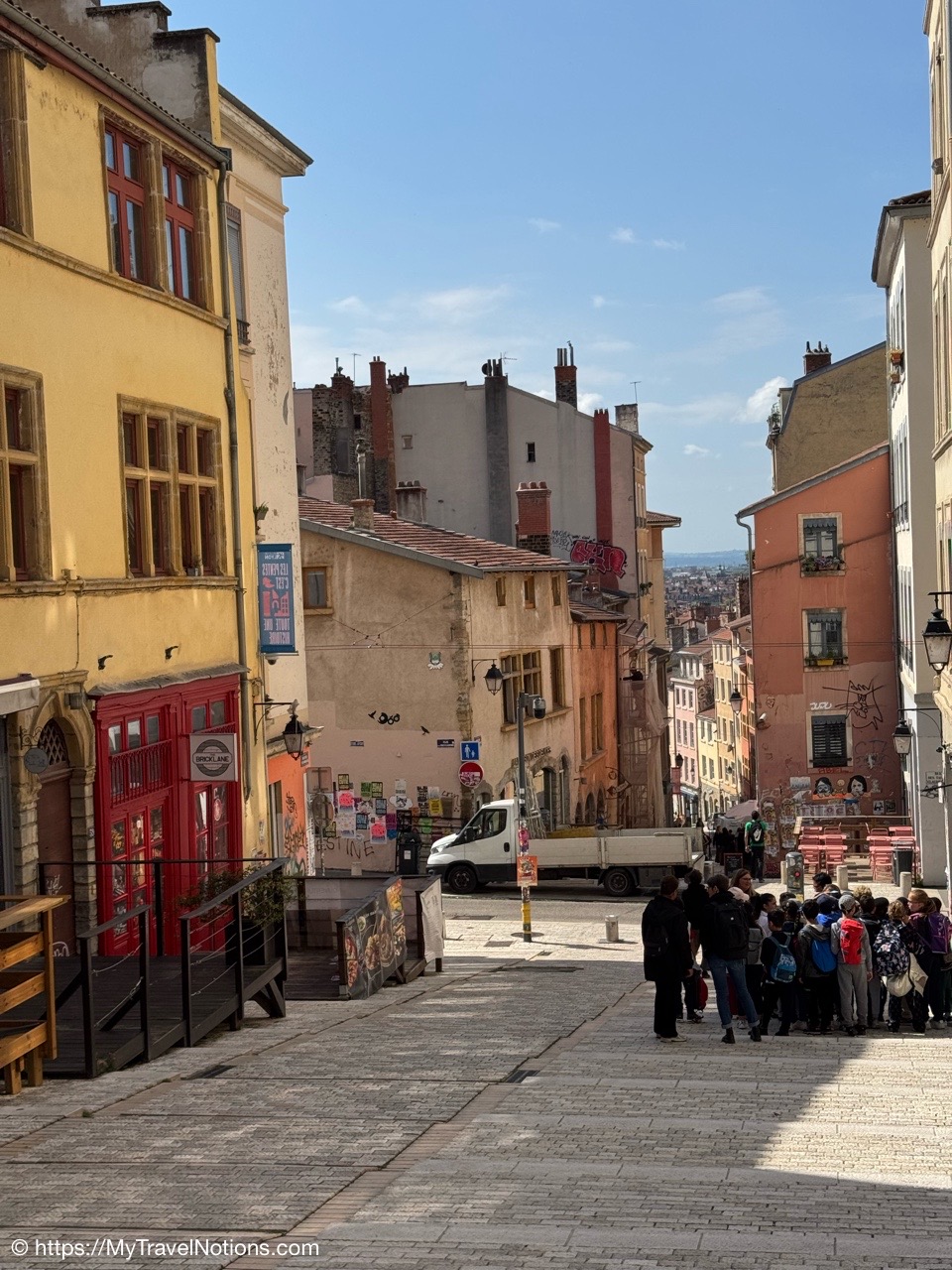
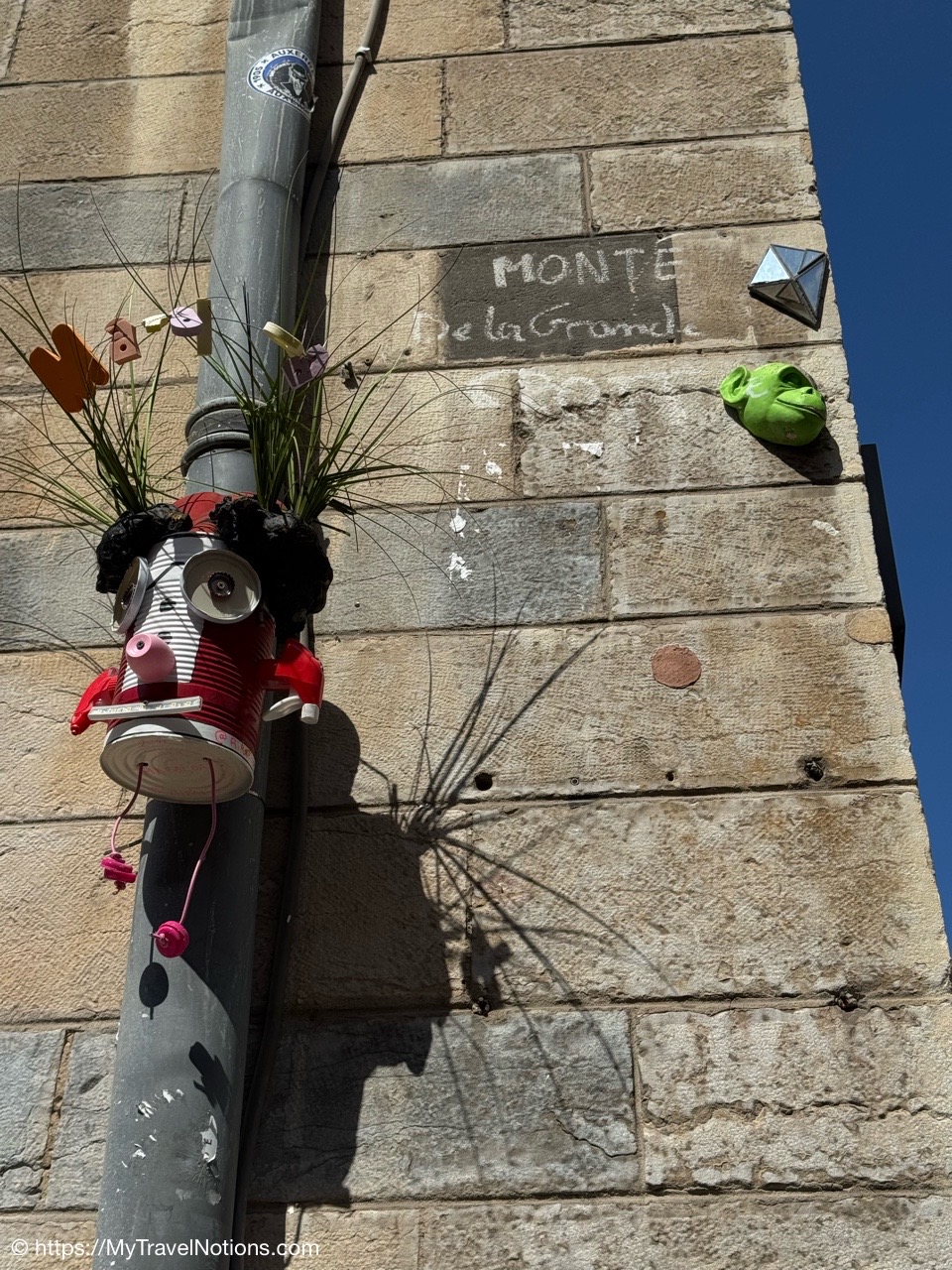
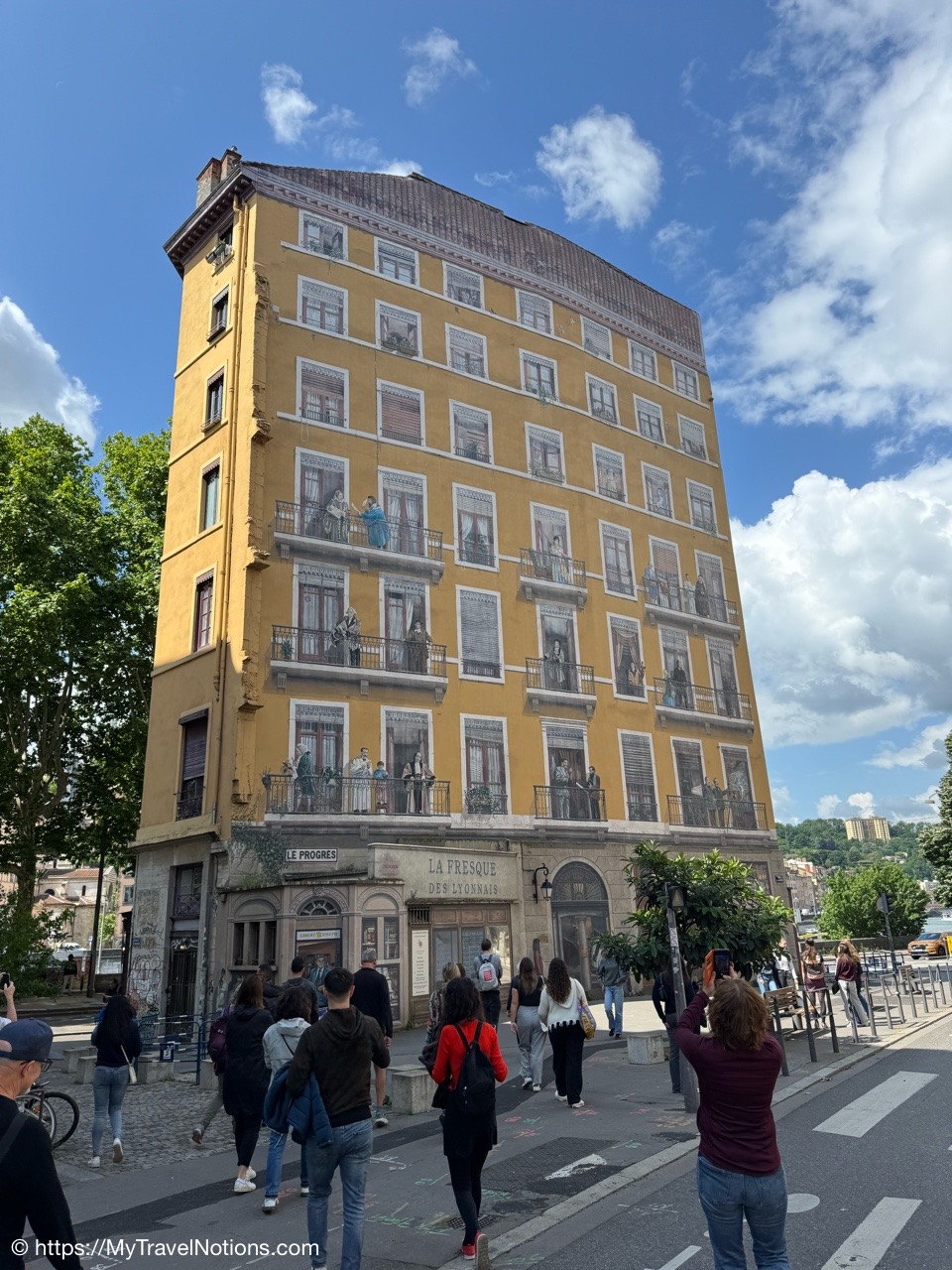
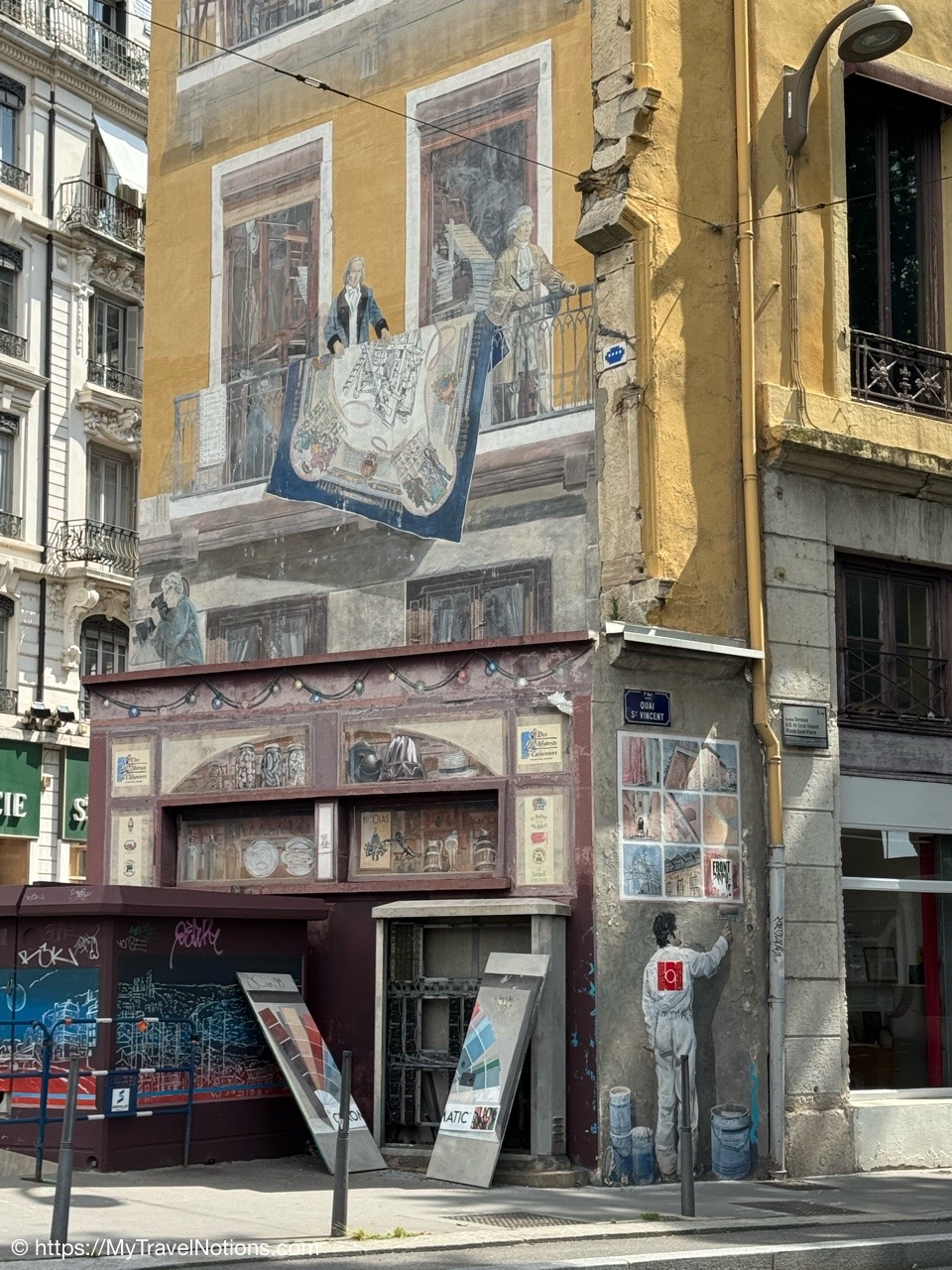
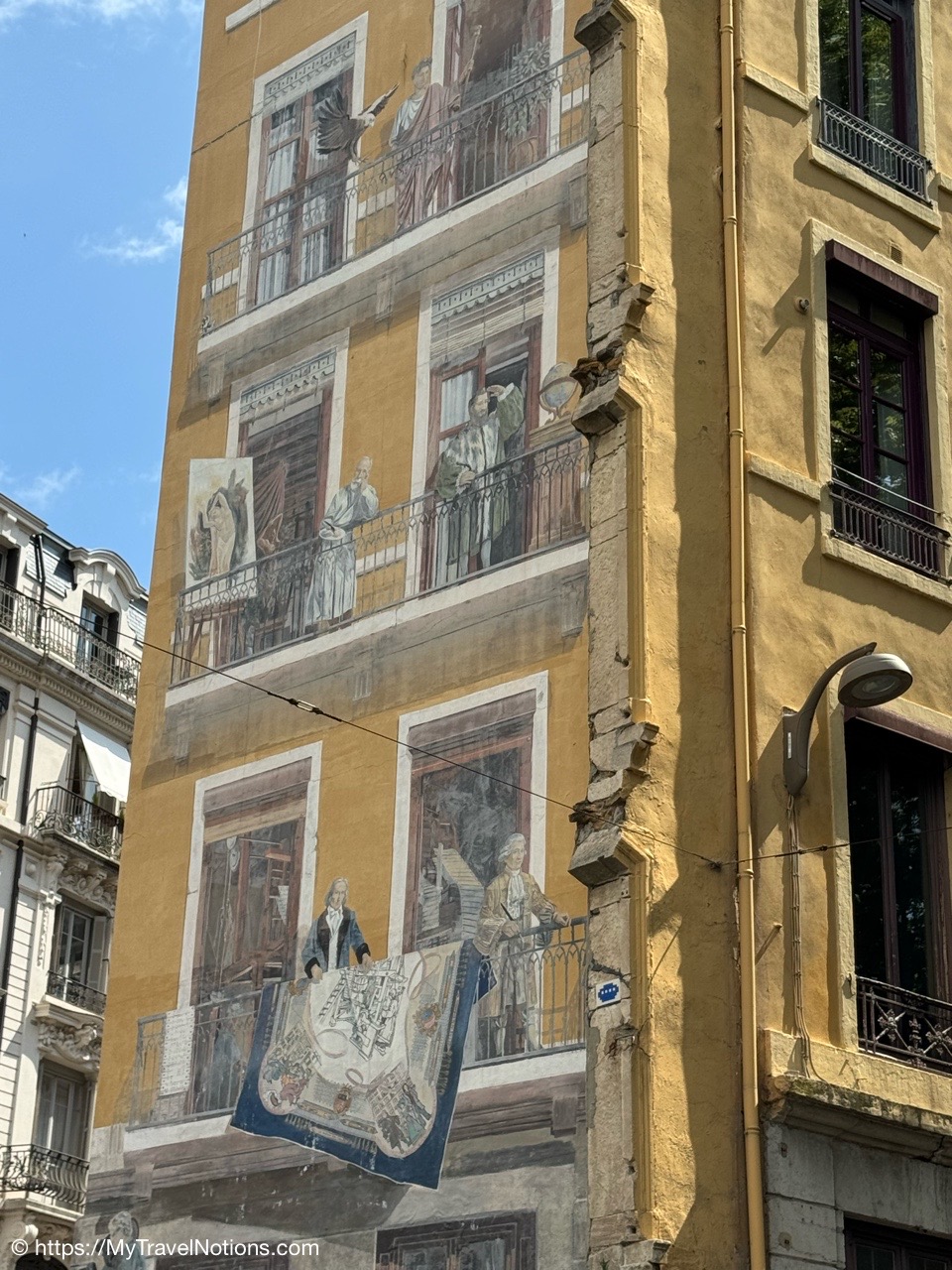
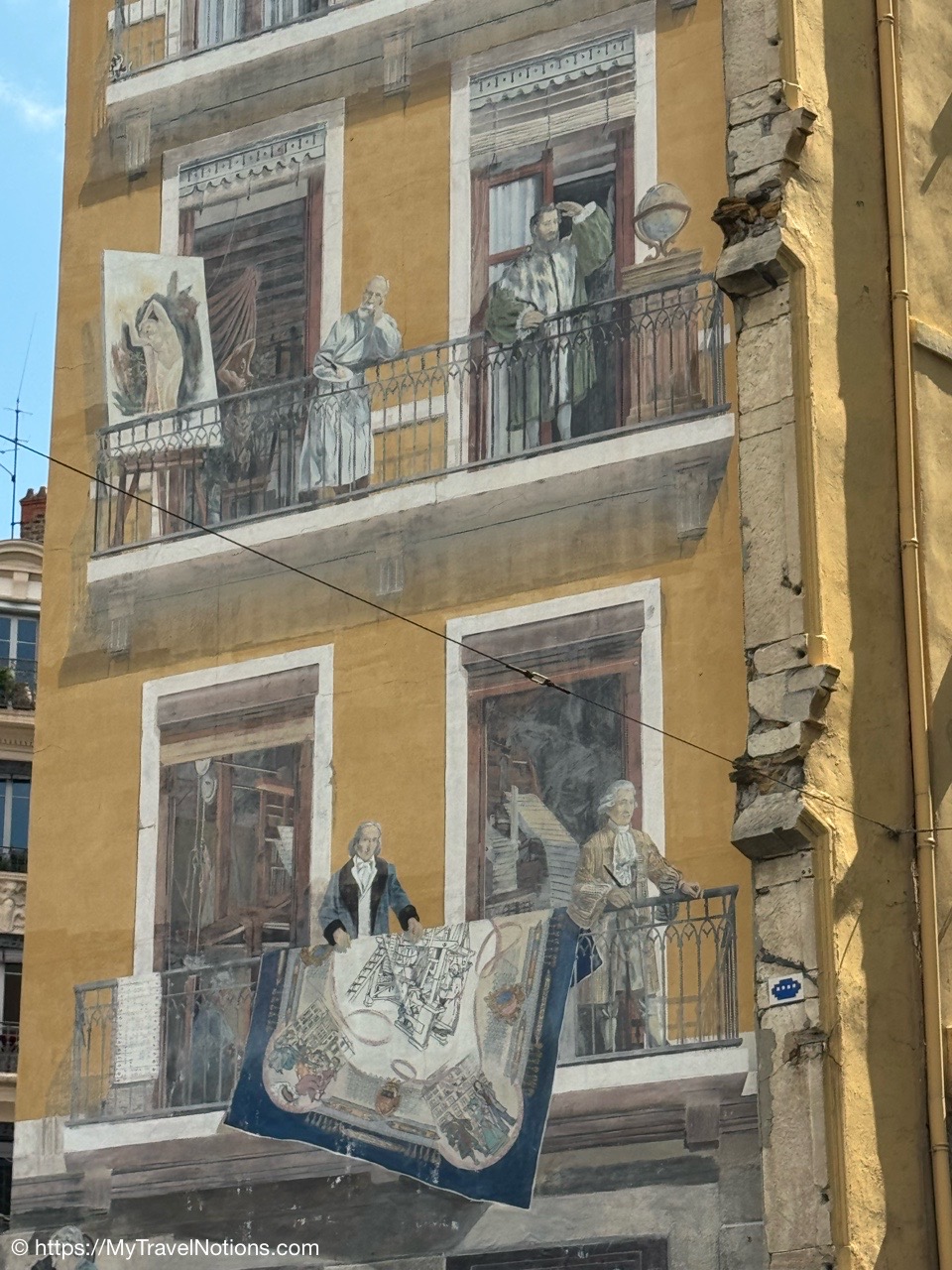
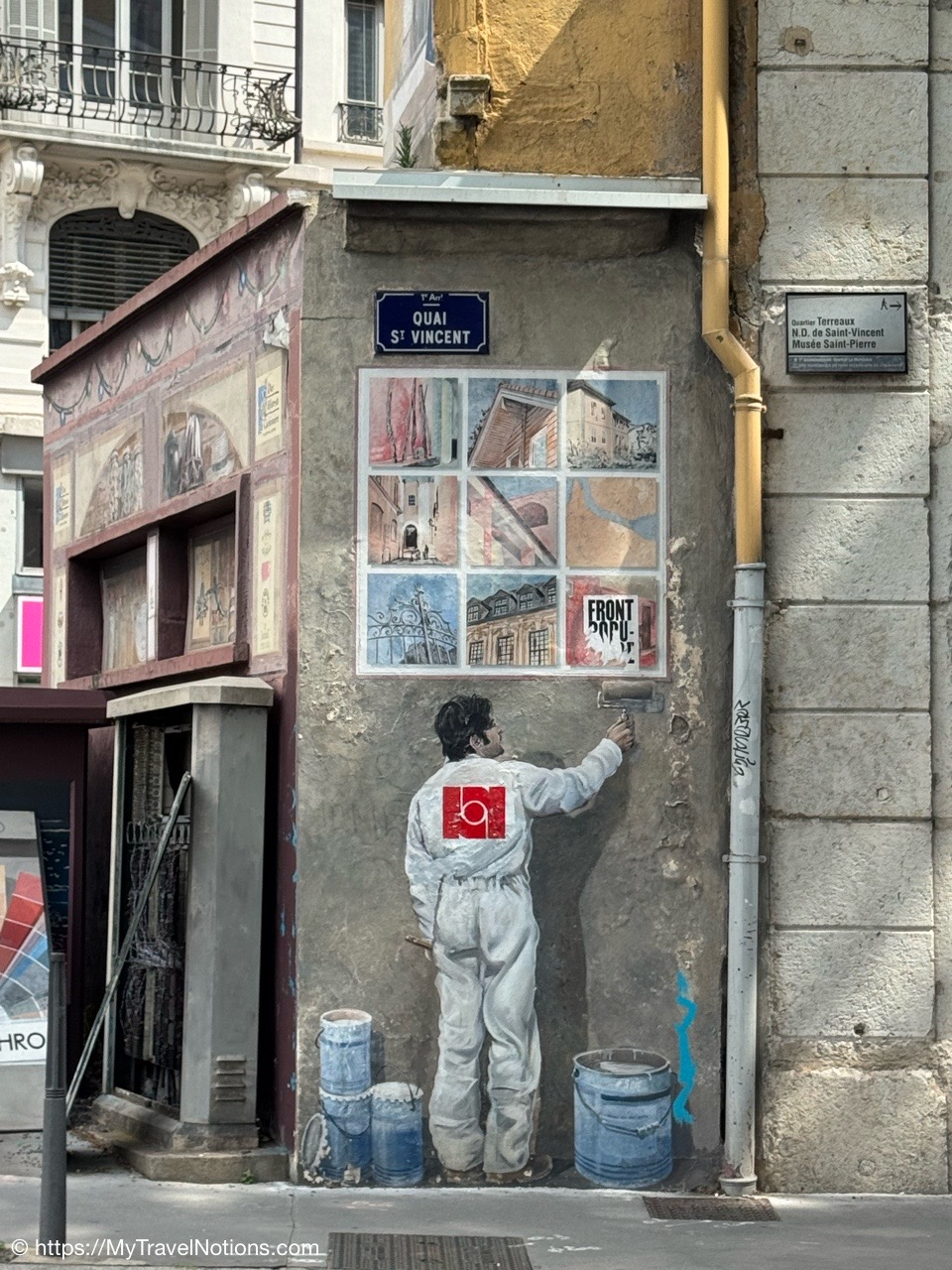
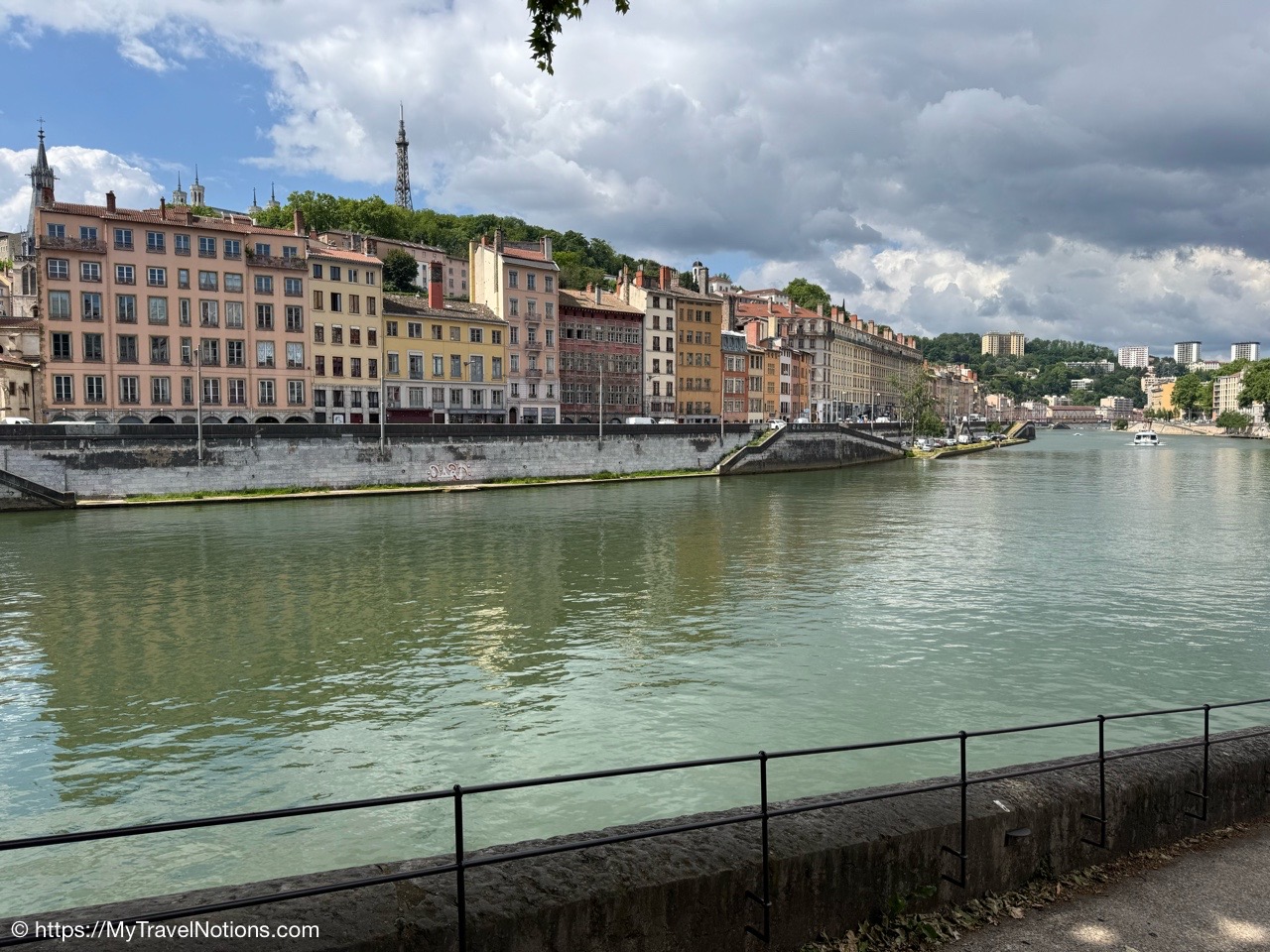
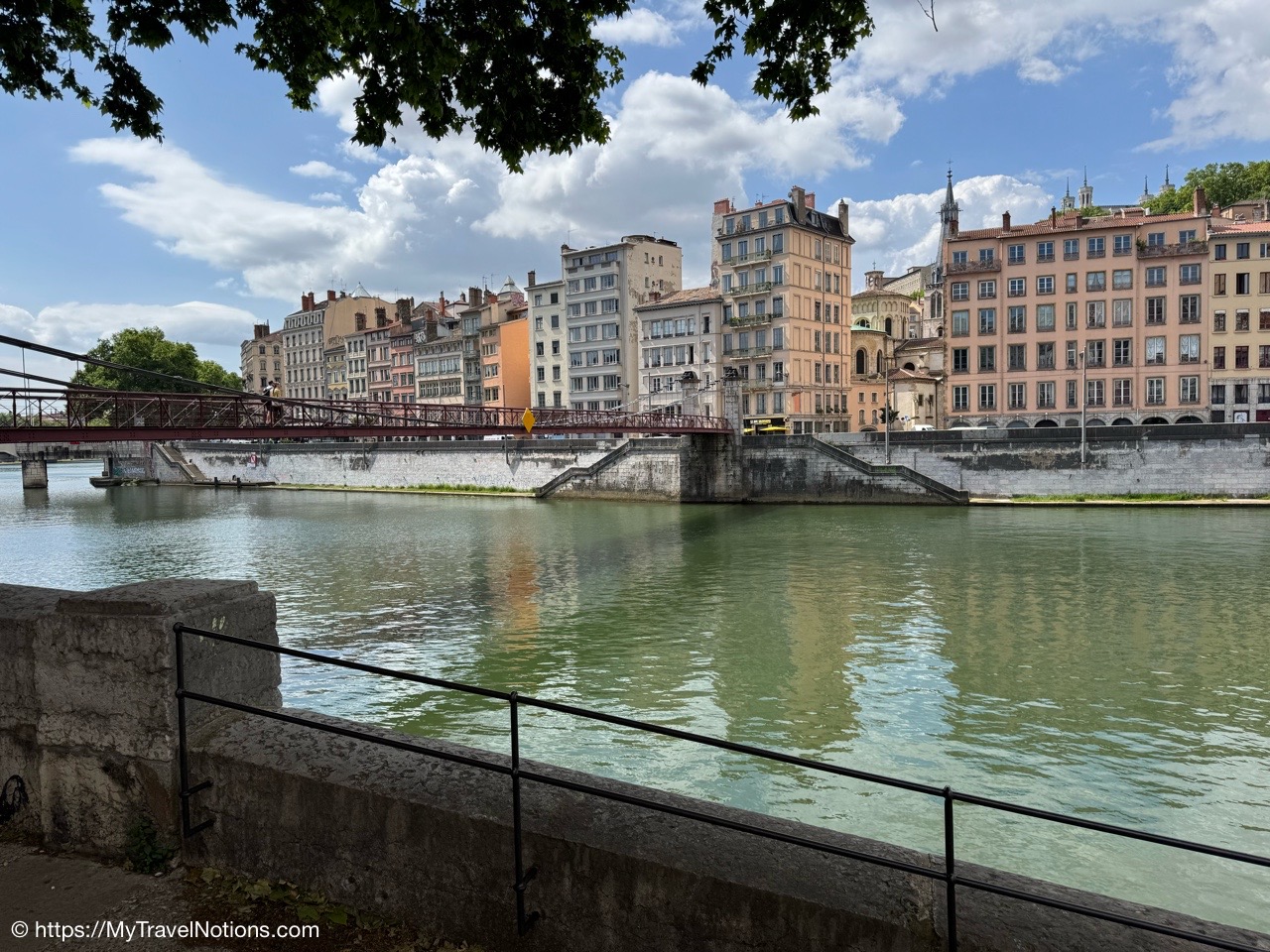
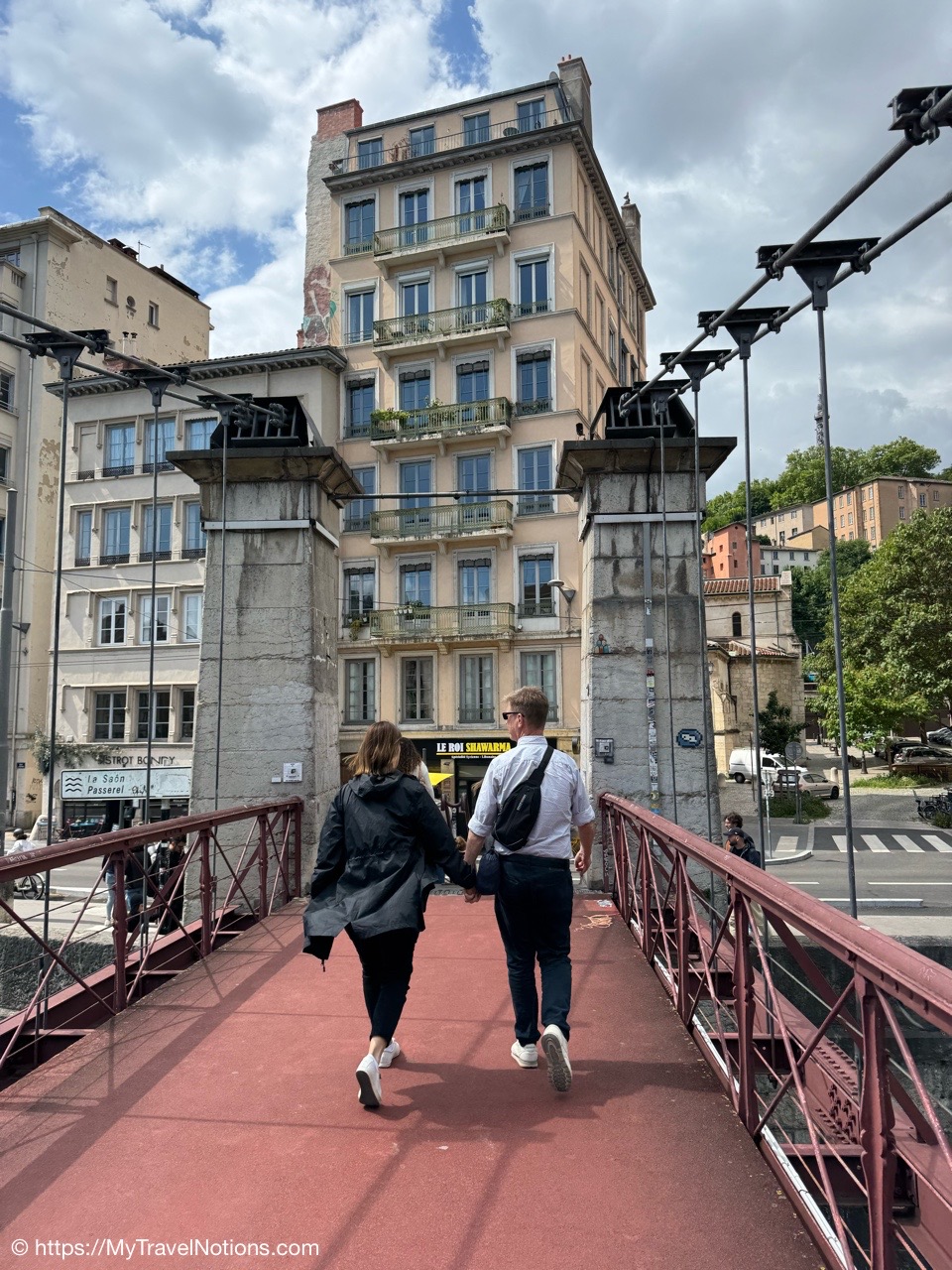
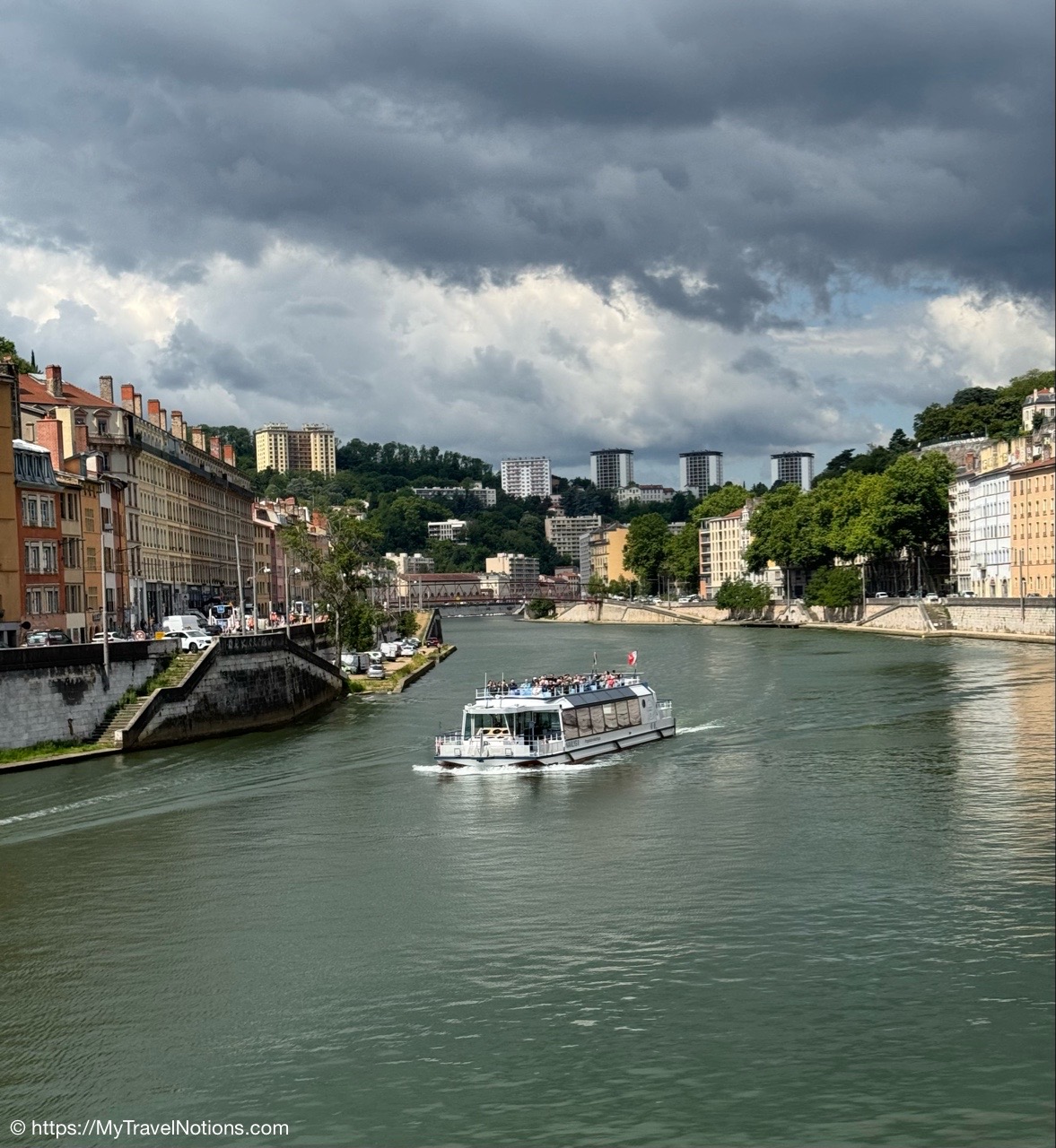
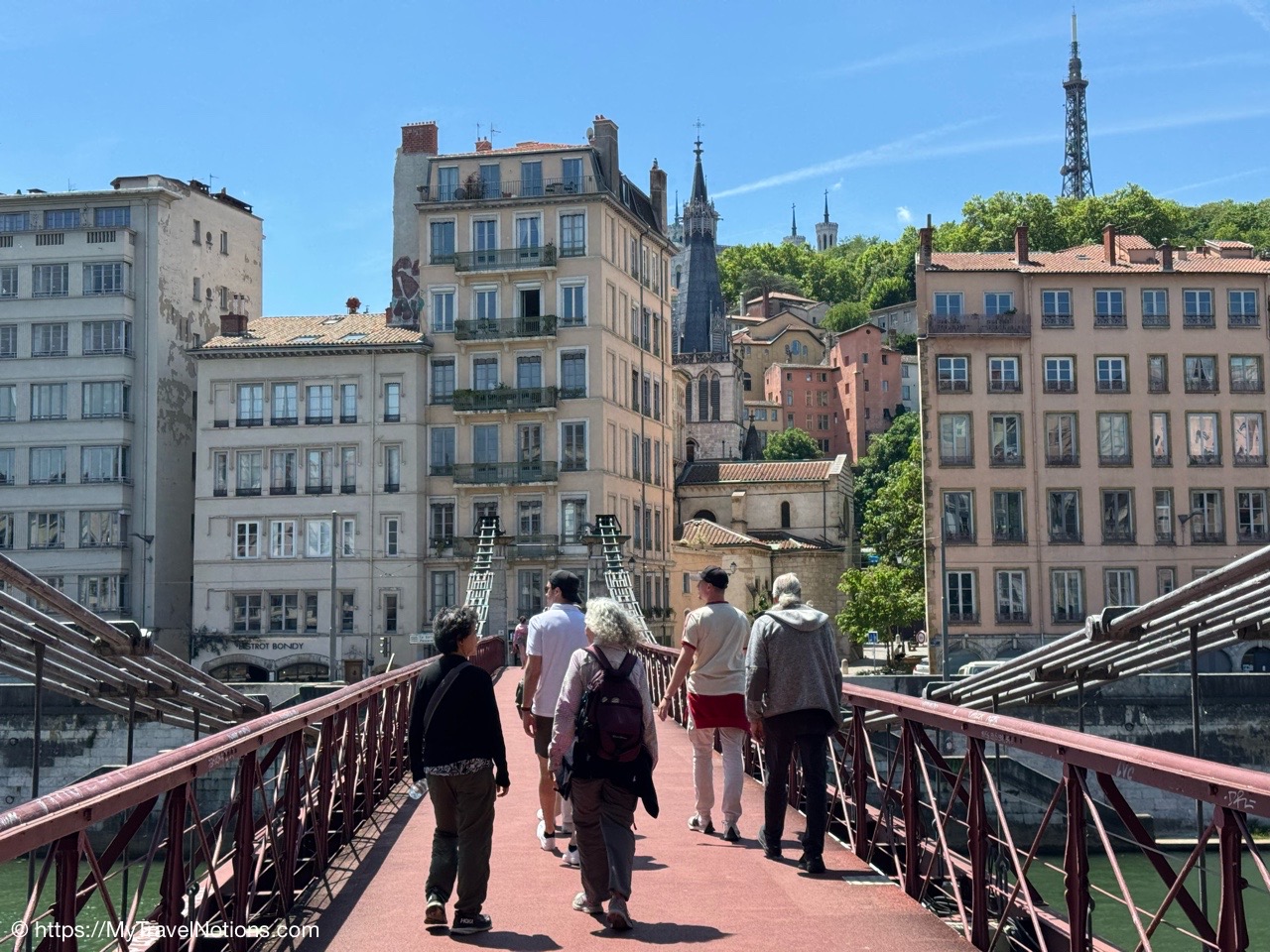
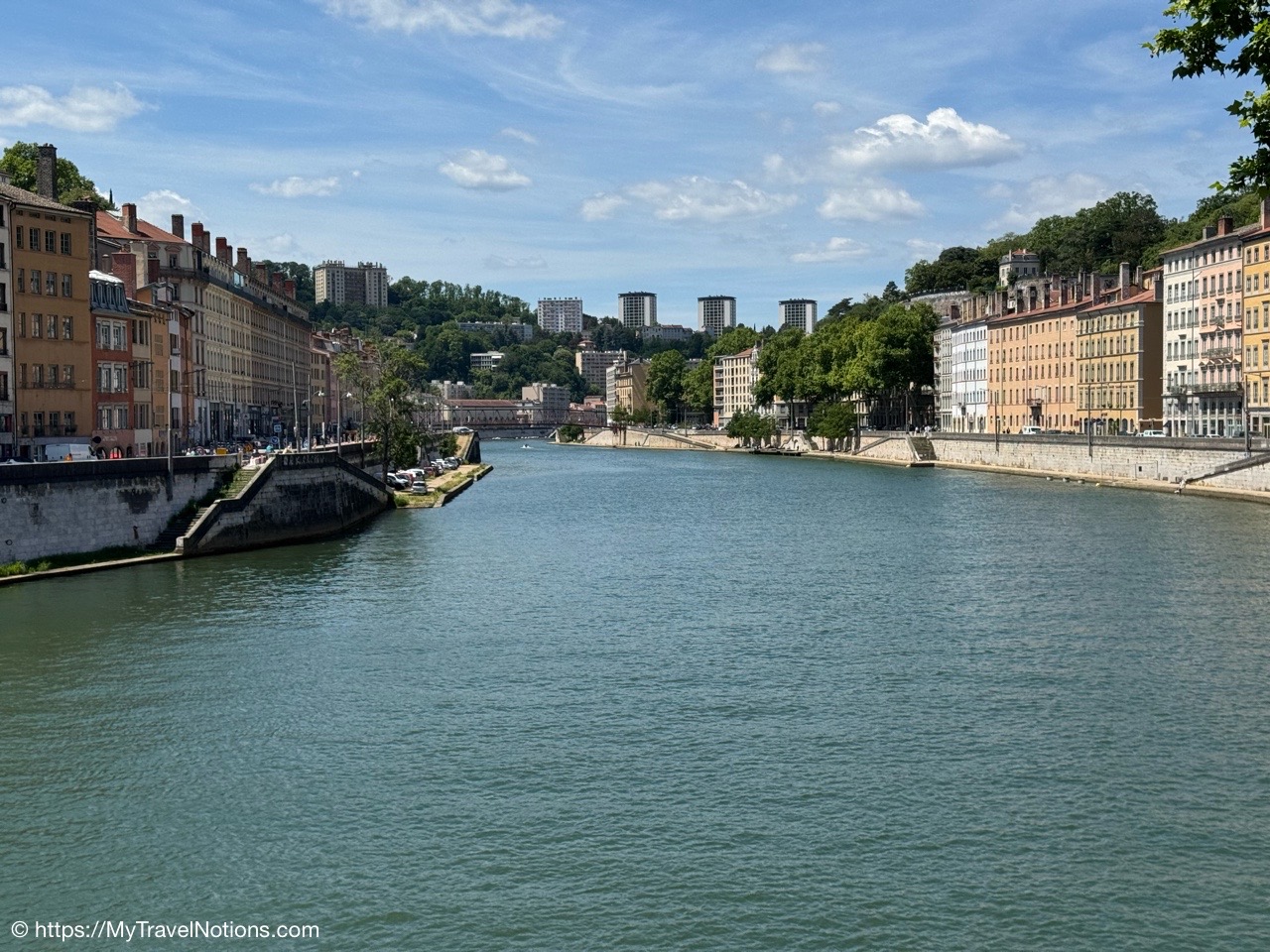
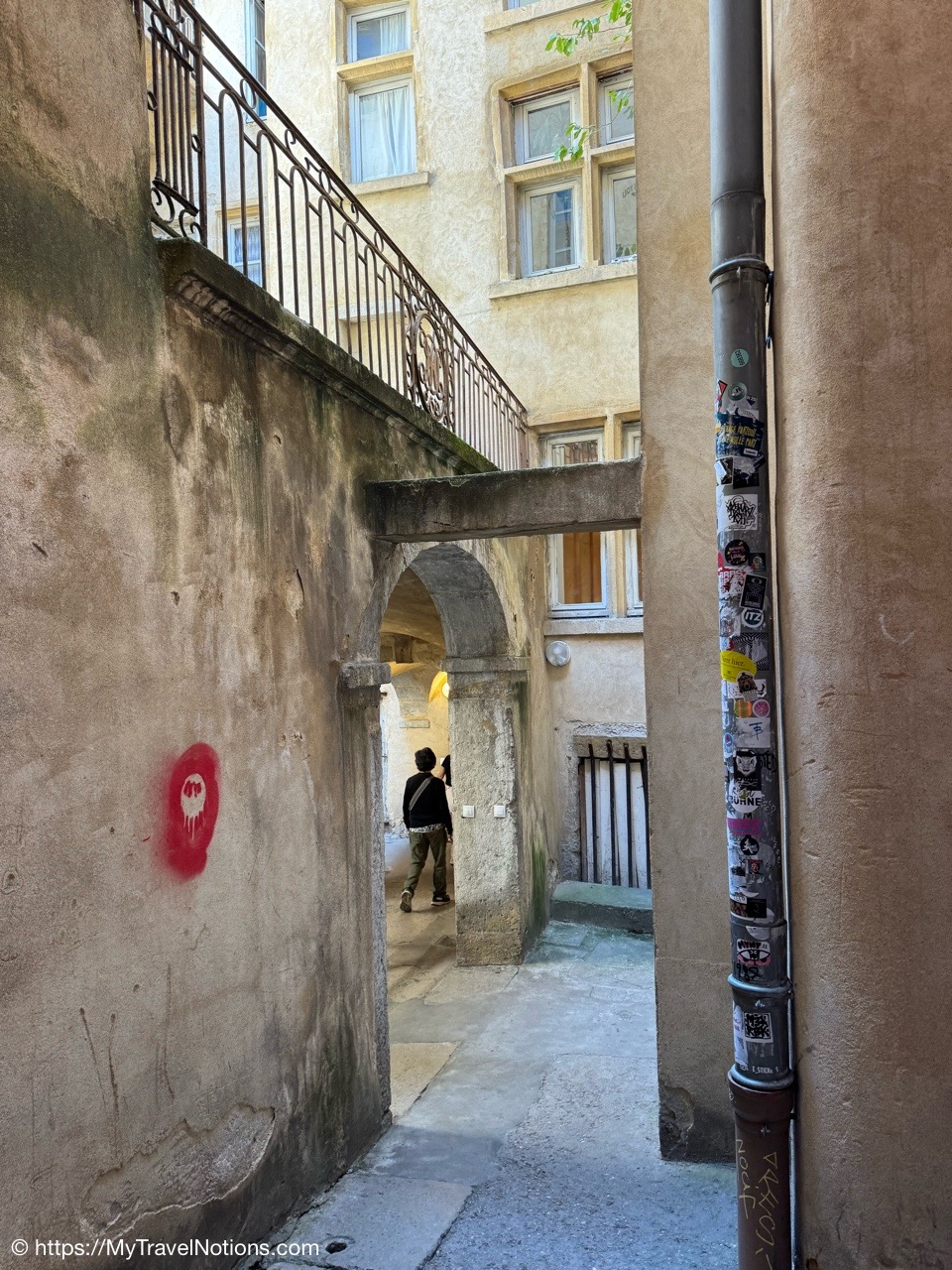
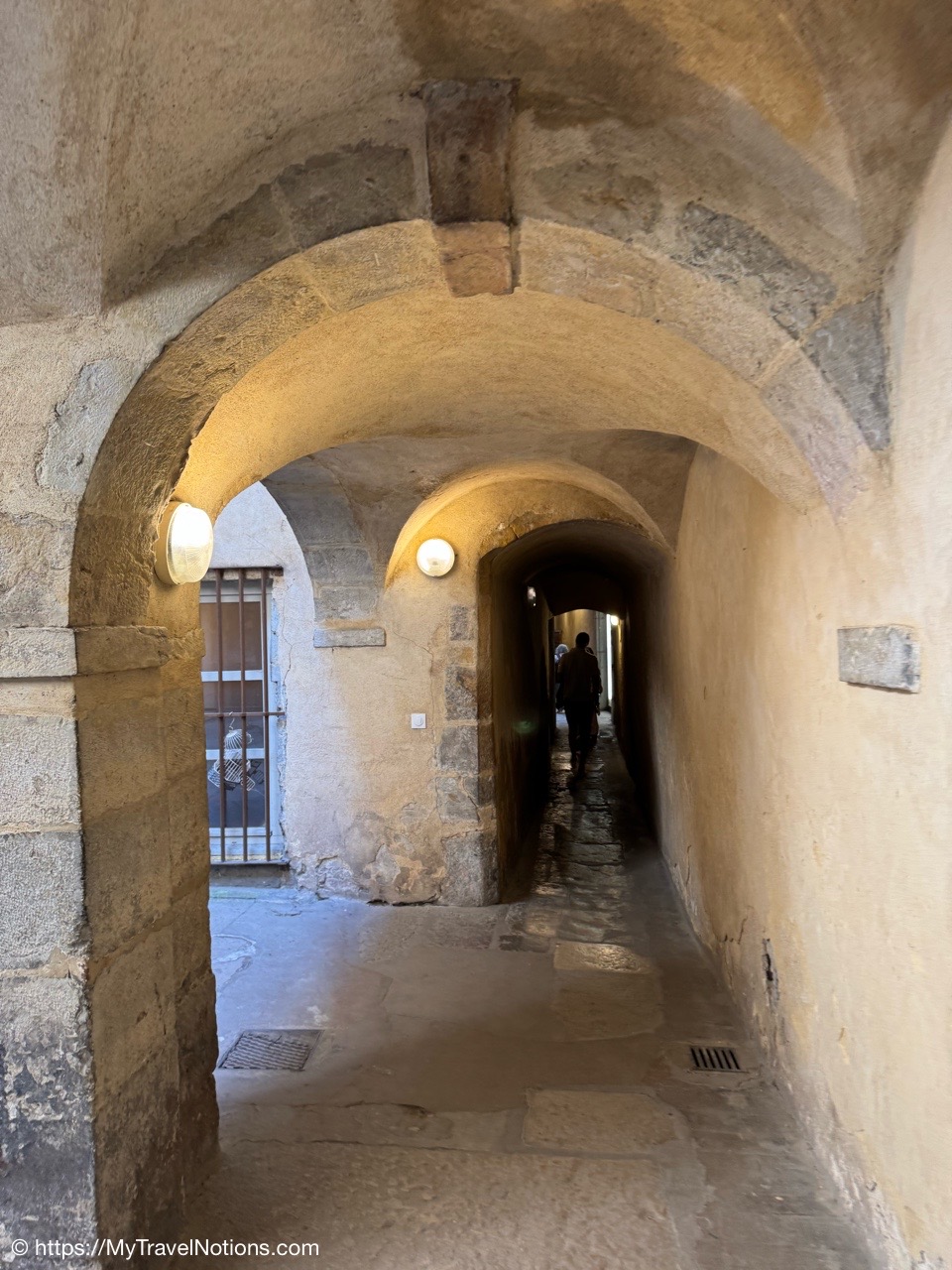
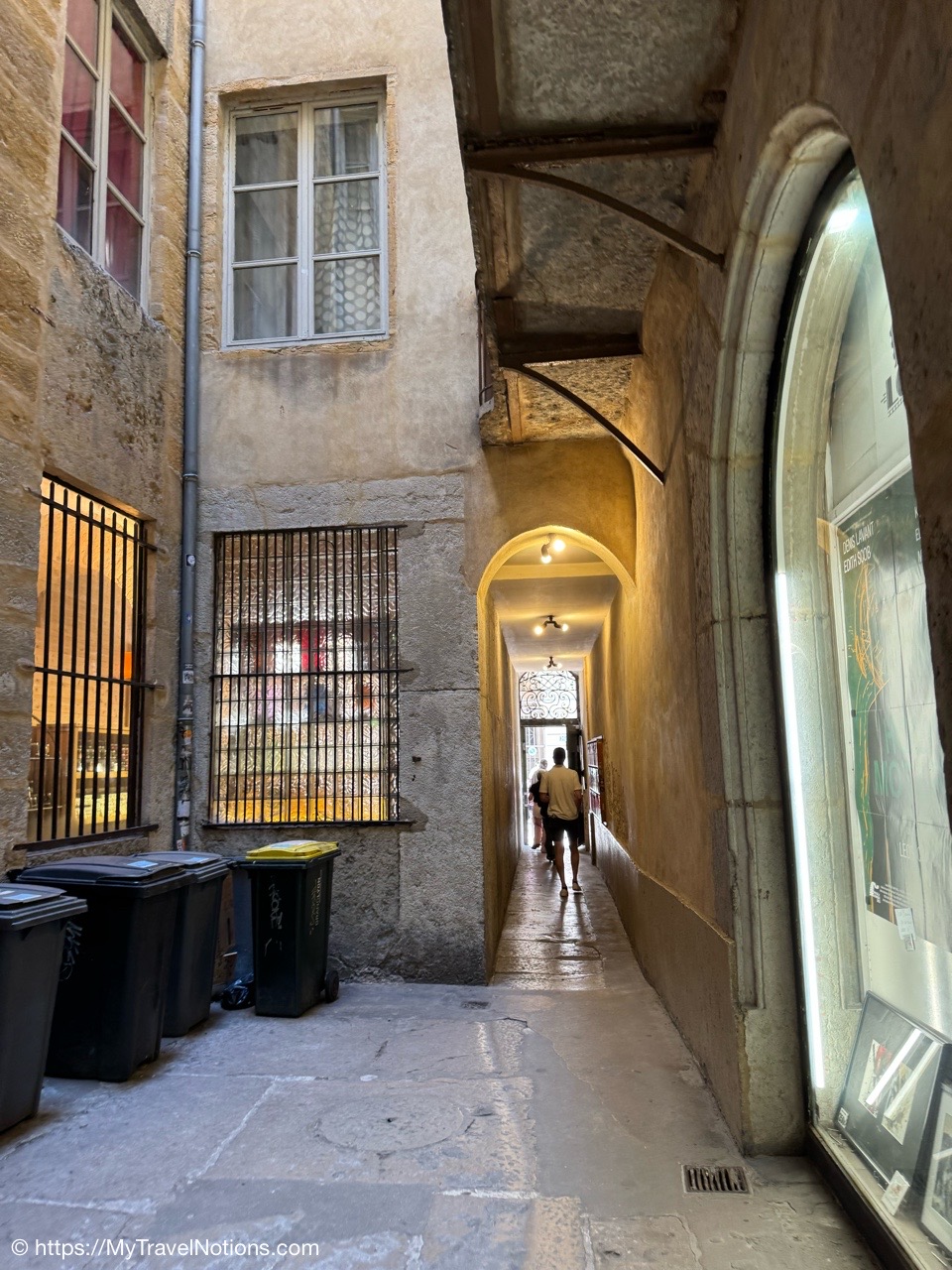
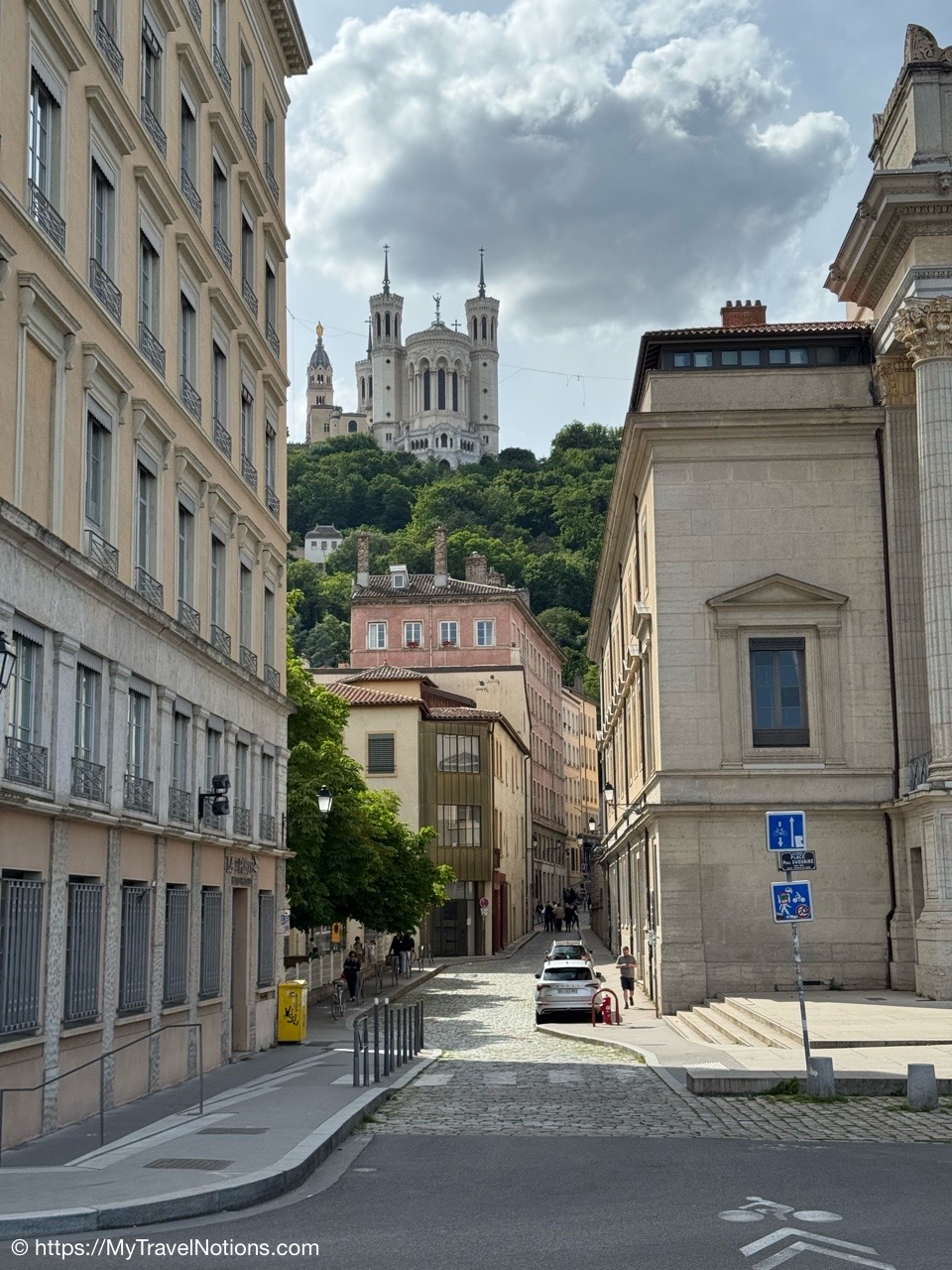
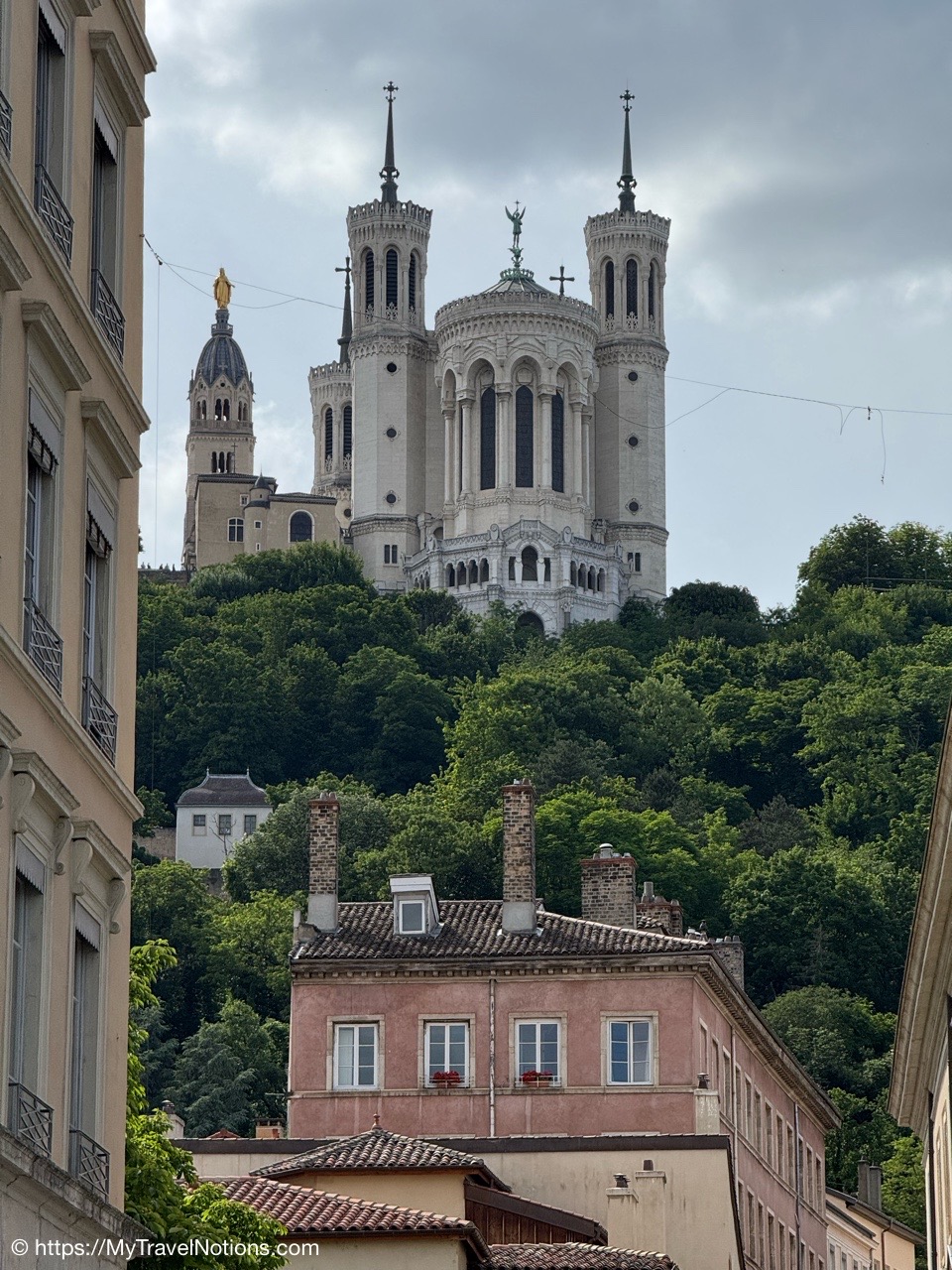
Getting in a group selfie at the Fountain Bartholdi, sculpted by Frédéric Auguste Bartholdi and realised in 1889 by Gaget & Gautier. It was erected at the Place des Terreaux, in the 1st arrondissement of Lyon, in September 1892. From left: Rosie, me and Alice. (May 21, 2025)Views while walking from our apartment in the Vieux Lyon or Old Town Lyon to our walking tour across the Saône river. And, views of the stunning Basilica of Notre Dame of Fourvière perched on the top of “the hill which prays” dedicated to the Virgin Mary. (May 21, 2025)Views of the Palais de Justice Historique de Lyon (Courthouse) as we make our way to the Passerelle du Palais de Justice pedestrian walking bridge across the Saône river. (May 21, 2025)The Passerelle du Palais de Justice pedestrian walking bridge across the Saône river with the ‘Weight of One Self’ statue on the banks of the river. (May 21, 2025)The Weight of One Self Sculpture on the banks of the Saône River near the Palais de Justice (Courthouse) in Lyon. This sculpture, by artists Michael Elmgreen and Ingmar Dragset, depicts two identical-looking men, with one carrying the other in his arms. The work is a metaphorical exploration of carrying one’s own burdens and being one’s own savior. (May 21, 2025)Views of the Saône river while walking across the pedestrian bridge of the Passerelle du Palais de Justice in Lyon. (May 21, 2025)Passing the Marche Alimentaire Saint-Antoine Célestins, the outdoor market by the Saône River in Lyon. It is Lyon’s largest food market and features a wide variety of vendors selling fresh produce, cheeses, meats, fish, and other goods, with many stalls also selling hot and ready-to-eat dishes. The market’s origins date back to the early 1900s, when boats full of produce would dock on the Saône’s banks. (May 21, 2025)Passing the Marche Alimentaire Saint-Antoine Célestins, the outdoor market by the Saône River in Lyon. It is Lyon’s largest food market and features a wide variety of vendors selling fresh produce, cheeses, meats, fish, and other goods, with many stalls also selling hot and ready-to-eat dishes. The market’s origins date back to the early 1900s, when boats full of produce would dock on the Saône’s banks. (May 21, 2025)A “Mona Lisa” street art piece our way to our walking tour meeting point at the in the middle of the Place Des Terreaux. The city of Lyon is known for its vibrant street art. This mural depicts a modern Mona Lisa holding a cellphone. This piece is by the French artist Big Ben. (May 21, 2025)At our tour meeting point in the middle of the Place Des Terreaux where the Hôtel de Ville or city hall and the Fountain Bartholdi are located in Lyon. (May 21, 2025)The Bartholdi Fountain in the Place Des Terreaux where the Hôtel de Ville or city hall is located in Lyon. Designed by Frédéric Auguste Bartholdi, the French sculptor behind the Statue of Liberty, the Bartholdi Fountain allegorically represents water and light. (May 21, 2025)This was a walking tour, so needless to say, there was a lot of walking, especially up and down stairs to reach the traboules or passageways in the Croix-Rousse district, which was incorporated into Lyon in 1852 and was the “birthplace of the Canuts,” the silk workers of Lyon. (May 21, 2025)A look back at the staircase we just climbed up to reach the traboules or passageways in the Croix-Rousse district, which was incorporated into Lyon in 1852 and was the “birthplace of the Canuts,” the silk workers of Lyon. (May 21, 2025)This was a walking tour, so needless to say, there was a lot of walking, especially up and down stairs to reach the traboules or passageways in the Croix-Rousse district, which was incorporated into Lyon in 1852 and was the “birthplace of the Canuts,” the silk workers of Lyon. (May 21, 2025)Taking a time out in one of the network of hidden courtyards leading to the passageways in the Croix-Rousse district that allow people to walk through buildings to connect to different streets in Lyon. Called traboules, these were built in the 4th century to navigate a growing city with limited space to provide access to the Saône river for water and commerce. (May 21, 2025)Taking a time out in one of the network of hidden courtyards leading to the passageways in the Croix-Rousse district that allow people to walk through buildings to connect to different streets in Lyon. Called traboules, these were built in the 4th century to navigate a growing city with limited space to provide access to the Saône river for water and commerce. (May 21, 2025)Walking into another traboule or passageway leading to the silk industry of the Renaissance in Lyon. (May 21, 2025)This arrow and lion’s head sign helps navigate visitors through the traboules in the Croix-Rousse, which was incorporated into Lyon in 1852 and was the “birthplace of the Canuts,” the silk workers of Lyon. (May 21, 2025)Walking into a passageway of the silk industry connecting workshops with the Saône river in the Croix-Rousse, which was incorporated into Lyon in 1852 and was the “birthplace of the Canuts,” the silk workers of Lyon. (May 21, 2025)The courtyard and passage way of the silk industry of Croix-Rousse in Lyon which lasted some 400 years from around 1536 to its decline in the early 20th century. (May 21, 2025)Walking through another courtyard with a passageway up through a staircase of Croix-Rousse in Lyon. (May 21, 2025)Coming out of a building with both the arrow and lion’s head sign helping to navigate visitors through the traboules along with a sign indicating that Rene Leynaud (1910-1944), a journalist at the Le Progres de Lyon, lived in this building and was arrested by the French militia on May 16, 1944, surrendered to the gestapo and imprisoned. He was executed on June 13, 1944. (May 21, 2025)Lyon is well-known and internationally recognized for its vibrant street art scene, characterized by large-scale murals, frescoes, mosaics, and other art forms that transform the city’s public spaces into an open-air gallery. (May 21, 2025)Lyon is well-known and internationally recognized for its vibrant street art scene, characterized by large-scale murals, frescoes, mosaics, and other art forms that transform the city’s public spaces into an open-air gallery. (May 21, 2025)Lyon is well-known and internationally recognized for its vibrant street art scene, characterized by large-scale murals, frescoes, mosaics, and other art forms that transform the city’s public spaces into an open-air gallery. (May 21, 2025)Lyon is well-known and internationally recognized for its vibrant street art scene, characterized by large-scale murals, frescoes, mosaics, and other art forms that transform the city’s public spaces into an open-air gallery. (May 21, 2025)Walking up the hilly terrain of the Croix-Rousse, a historic hill and neighborhood known as the center of Lyon’s silk-weaving industry, giving it the nickname “the hill that works”. The area is characterized by its steep, narrow streets, unique architecture for silk workers, and famous hidden passageways called traboules. (May 21, 2025)Walking through the streets of Croix-Rousse, a neighborhood known as the center of Lyon’s silk-weaving industry. (May 21, 2025)The Bowie eyes on the slopes of Croix-Rousse in Lyon where David Bowie’s famous eyes stare at you from the end of the street. (May 21, 2025)Walking through a graffiti and art-filled tunnel in Croix-Rousse, a neighborhood known as the center of Lyon’s silk-weaving industry. (May 21, 2025)Walking through a graffiti and art-filled tunnel in Croix-Rousse, a neighborhood known as the center of Lyon’s silk-weaving industry. (May 21, 2025)Some of the art and graffiti along a tunnel in Croix-Rousse, a neighborhood known as the center of Lyon’s silk-weaving industry. (May 21, 2025)Some of the art and graffiti along a tunnel in Croix-Rousse, a neighborhood known as the center of Lyon’s silk-weaving industry. (May 21, 2025)Past the tunnel along the Rue Des Tables-Claudiennes, a street on the slopes of the Croix-Rousse hill in Lyon that is named for the discovery of the “Claudian Tables” (Tables Claudiennes) with views of the Amphitheatre of the Three Gauls of Lugdunum. The tables are fragmented bronze plaques containing a speech by the Roman Emperor Claudius in AD 48, advocating for the admission of notable men from the three Gallic provinces into the Roman Senate. (May 21, 2025)Looking down onto the Amphitheatre des Trois Gauls in the Croix-Rousse quarter of Lyon, considered the first amphitheatre to be constructed in the city. The Amphitheatre of the Three Gauls of Lugdunum was part of the Sanctuary of the Three Gauls dedicated to the cult of Rome and Augustus celebrated by the 60 Gallic tribes when they gathered at Lugdunum. was an early 1st century amphitheatre in Lyon, France. (In the distance you can see the Fourvière hillside and the Basilique Notre-Dame de Fourvière. The basilica is a famous landmark built on top of the hill, which overlooks the old part of Lyon.) (May 21, 2025)Walking through the streets of Lyon and spotting these colorful mosaic sidewalk repairs by a Lyon artist known as “the Pavement Surgeon.” (May 21, 2025)A close-up of the the colorful mosaic sidewalk repairs by a Lyon artist known as “the Pavement Surgeon.” (May 21, 2025)Approaching the beautiful Fresque des Lyonnais Célébres or the Mural of Lyonnais in Lyon. This large scale mural, a stunning example of trompe-l’œil, a technique that creates the illusion of three-dimensionality, covers the back and side of a bright yellow building on the Saône side of the 1st arrondissement. ( May 21, 2025)Although I’ve seen this beautiful Fresque des Lyonnais Célébres or the Mural of Lyonnais, it’s always a pleasure to see it again. This large scale mural, a stunning example of trompe-l’œil, a technique that creates the illusion of three-dimensionality, covers the back and side of a bright yellow building on the Saône side of the 1st arrondissement. Created by the Lyon-based art collective CitéCréation, this mural celebrates 30 of Lyon’s most influential figures. Each character, from ancient historical icons to contemporary legends, has played a pivotal role in shaping the city’s identity. The mural’s subjects are a diverse group, highlighting Lyon’s contributions to literature, science, gastronomy, and the arts. (May 21, 2025)The Fresque des Lyonnais Célébres or the Mural of Lyonnais is a stunning example of trompe-l’œil, a technique that creates the illusion of three-dimensionality. Through clever use of perspective and intricate detailing, the mural makes it appear as though the figures are standing in windows, leaning on balconies, and interacting with their surroundings. This optical illusion gives the mural a dynamic and lifelike quality, captivating passersby and inviting them to take a closer look. (May 21, 2025)The Fresque des Lyonnais Célébres or the Mural of Lyonnais is a stunning example of trompe-l’œil, a technique that creates the illusion of three-dimensionality. Through clever use of perspective and intricate detailing, the mural makes it appear as though the figures are standing in windows, leaning on balconies, and interacting with their surroundings. This optical illusion gives the mural a dynamic and lifelike quality, captivating passersby and inviting them to take a closer look. (May 21, 2025)The Fresque des Lyonnais Célébres or the Mural of Lyonnais is a stunning example of trompe-l’œil, a technique that creates the illusion of three-dimensionality. This large scale mural covers the back and side of a bright yellow building on the Saône river side of the 1st arrondissement in Lyon. (May 21, 2025)A close-up of a section of the Fresque des Lyonnais Célébres or the Mural of Lyonnais, a stunning example of trompe-l’œil which is a technique that creates the illusion of three-dimensionality. (May 21, 2025)The Fresque des Lyonnais Célébres or the Mural of Lyonnais is a stunning example of trompe-l’œil, a technique that creates the illusion of three-dimensionality. This large scale mural covers the back and side of a bright yellow building on the Saône river side of the 1st arrondissement in Lyon. (May 21, 2025)Approaching the Passerelle (walking bridge) Saint-Vincent over to the 5th arrondissement, the Vieux Lyon or old town, which stretches along the left bank of the Saône River towards our 4th food tasting stop during our Lyon Street Food tour. (May 21, 2025)Me crossing the Passerelle (walking bridge) Saint-Vincent over to the 5th arrondissement, the Vieux Lyon or old town, which stretches along the left bank of the Saône River. The bridge opened to the public at the end of 1832. In 1840, the bridge deck was damaged by flooding. It was repaired and has not needed major work since then. (May 21, 2025)Crossing the Passerelle (walking bridge) Saint-Vincent over to the 5th arrondissement, the Vieux Lyon or old town, which stretches along the left bank of the Saône River towards our 4th food tasting stop during our Lyon Street Food tour. The bridge opened to the public at the end of 1832. In 1840, the bridge deck was damaged by flooding. It was repaired and has not needed major work since then. (May 21, 2025)Walking past the Gare de Saint Paul train station in Lyon. (May 21, 2025)The historic street of Rue Juiverie in Lyon’s Vieux-Lyon or Old Town Lyon district, characterized by charming Renaissance façades, hidden passageways called traboules, and a variety of architectural features. (May 21, 2025)Walking through the entrance of the Bullioud’s House on the historic street of Rue Juiverie in Lyon’s Vieux-Lyon or Old Town Lyon district, known for its Renaissance architecture and its past as a center for the Jewish community during the Middle Ages. The Bullioud’s House is a late 15th century set of buildings belonging to the Bullioud family. (May 21, 2025)Inside another section of the Bullioud’s House, a late 15th century set of buildings, on the historic street of Rue Juiverie in Lyon’s Vieux-Lyon or Old Town Lyon district known for its Renaissance architecture and its past as a center for the Jewish community during the Middle Ages. (May 21, 2025)The inner courtyard of the Bullioud’s House, a late 15th century set of buildings, on the historic street of Rue Juiverie in Lyon’s Vieux-Lyon or Old Town Lyon district known for its Renaissance architecture and its past as a center for the Jewish community during the Middle Ages. (May 21, 2025)The inner courtyard of the Bullioud’s House, a late 15th century set of buildings, on the historic street of Rue Juiverie in Lyon’s Vieux-Lyon or Old Town Lyon district known for its Renaissance architecture and its past as a center for the Jewish community during the Middle Ages. (May 21, 2025)The historic street of Rue Juiverie in Lyon’s Vieux-Lyon or Old Town Lyon district, characterized by charming Renaissance façades, hidden passageways called traboules, and a variety of architectural features. (May 21, 2025)Me during our walking tour along the historic street of Rue Juiverie in Lyon’s Vieux-Lyon or Old Town Lyon district, characterized by charming Renaissance façades, hidden passageways called traboules, and a variety of architectural features. (May 21, 2025)The historic street of Rue Juiverie in Lyon’s Vieux-Lyon or Old Town Lyon district, characterized by charming Renaissance façades, hidden passageways called traboules, and a variety of architectural features. (May 21, 2025)Walking toward a traboule-covered passageway that allows pedestrians to pass through buildings and courtyards, you start from the historic Place du Gouvernement in Lyon’s Vieux Lyon or Old Town Lyon district. Formerly known as Place du Petit Palais, this square was the site of the governor’s mansion from 1512 to 1734. Today, it’s a charming public space surrounded by historic buildings, known for its vibrant atmosphere, with cafés, boutiques, and access to one of the city’s famous traboules. (May 21, 2025)The entrance to a well-known traboule located at 2 Place du Gouvernement in Lyon’s Vieux Lyon (Old Town) district, another hidden passageway that provides a glimpse into the city’s history and architecture. (May 21, 2025)Walking through the well-known traboule located at 2 Place du Gouvernement in Lyon’s Vieux Lyon or Old Town Lyon district, another hidden passageway that provides a glimpse into the city’s history and architecture. (May 21, 2025)A courtyard in the passageway of the the well-known traboule located at 2 Place du Gouvernement in Lyon’s Vieux Lyon or Old Town Lyon district, another hidden passageway that provides a glimpse into the city’s history and architecture. (May 21, 2025)Entering another beautiful traboule passes through two perfectly restored little courtyards with galleries from the 16th century along Rue des Trois Maries in Lyon’s Vieux Lyon or Old Town Lyon district. (May 21, 2025)Walking through the narrow doorway into traboule passes through two perfectly restored little courtyards with galleries from the 16th century along Rue des Trois Maries in Lyon’s Vieux Lyon or Old Town Lyon district. (May 21, 2025)Walking through the narrow courtyards of a traboule from the 16th century along Rue des Trois Maries in Lyon’s Vieux Lyon or Old Town Lyon district. (May 21, 2025)Walking through the narrow courtyards of a traboule from the 16th century along Rue des Trois Maries in Lyon’s Vieux Lyon or Old Town Lyon district. (May 21, 2025)The Jardin Archéologique by the Saint-Jean Cathedral in Lyon is a historical garden showcasing medieval ruins of early 5th century Christian churches including a baptistery circle, an arch from the former Sainte-Croix church and remnants of ancient choir walls. (May 21, 2025)The Jardin Archéologique by the Saint-Jean Cathedral in Lyon is a historical garden showcasing medieval ruins of early 5th century Christian churches including a baptistery circle, an arch from the former Sainte-Croix church and remnants of ancient choir walls. (May 21, 2025)
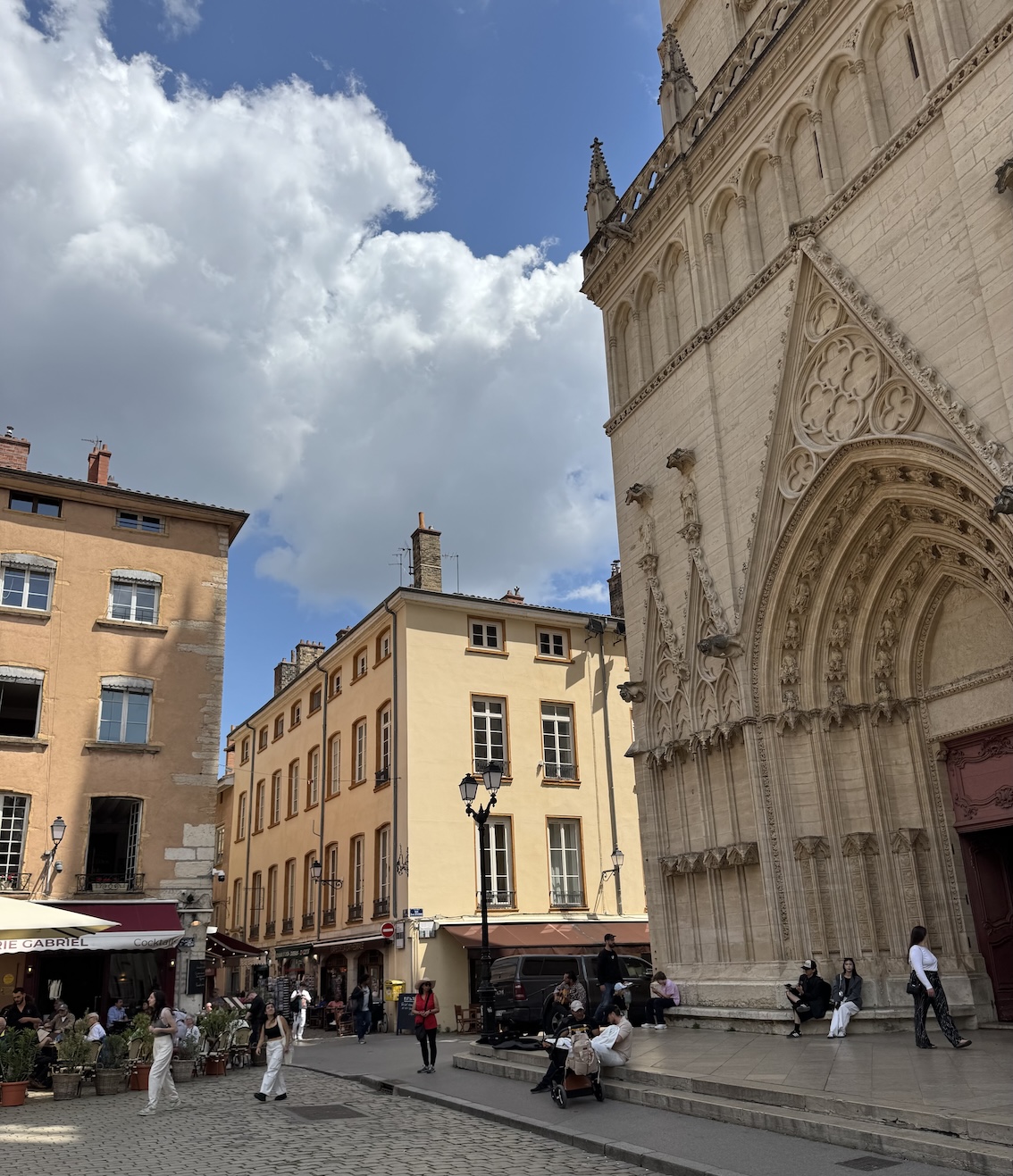
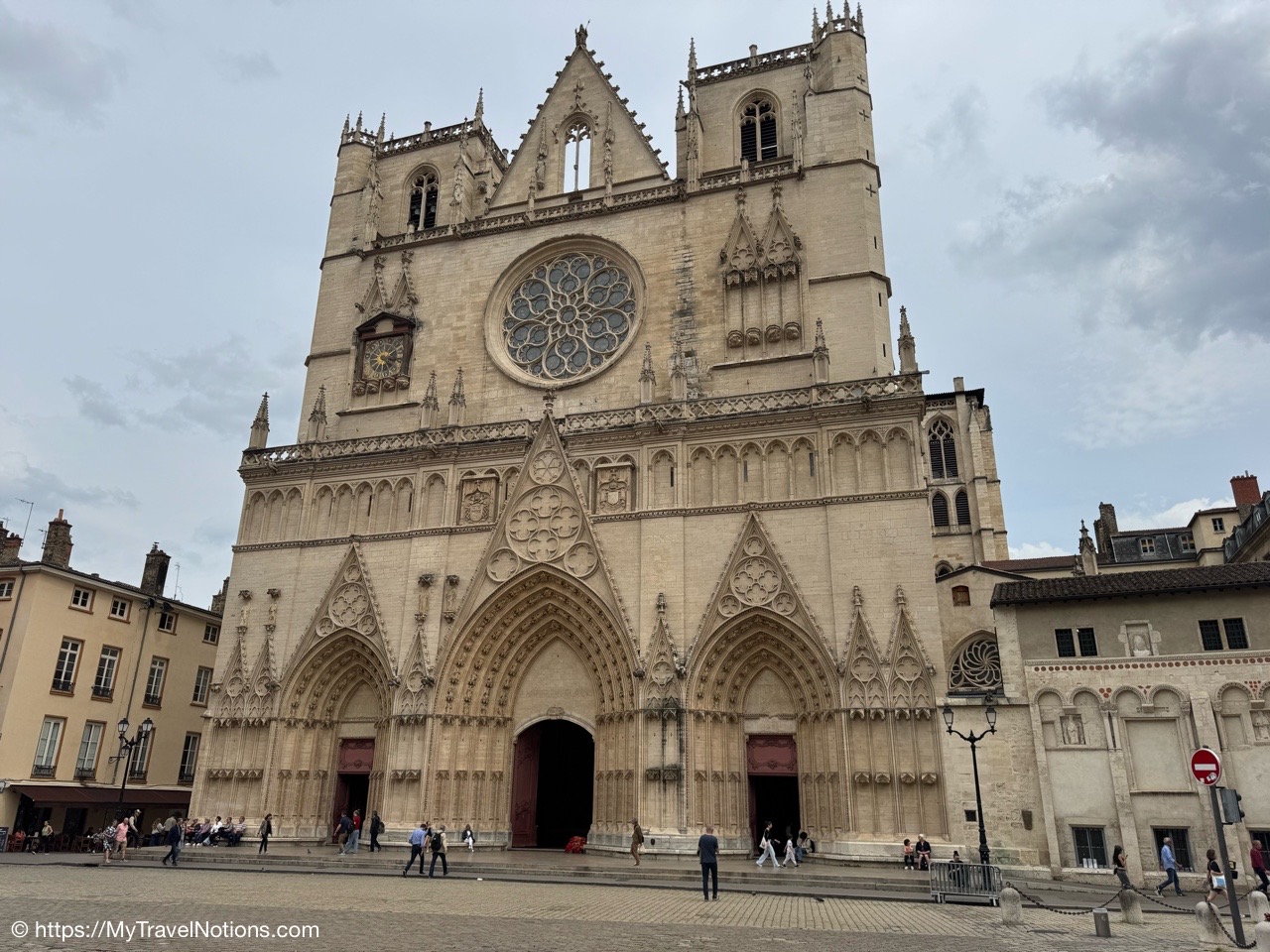
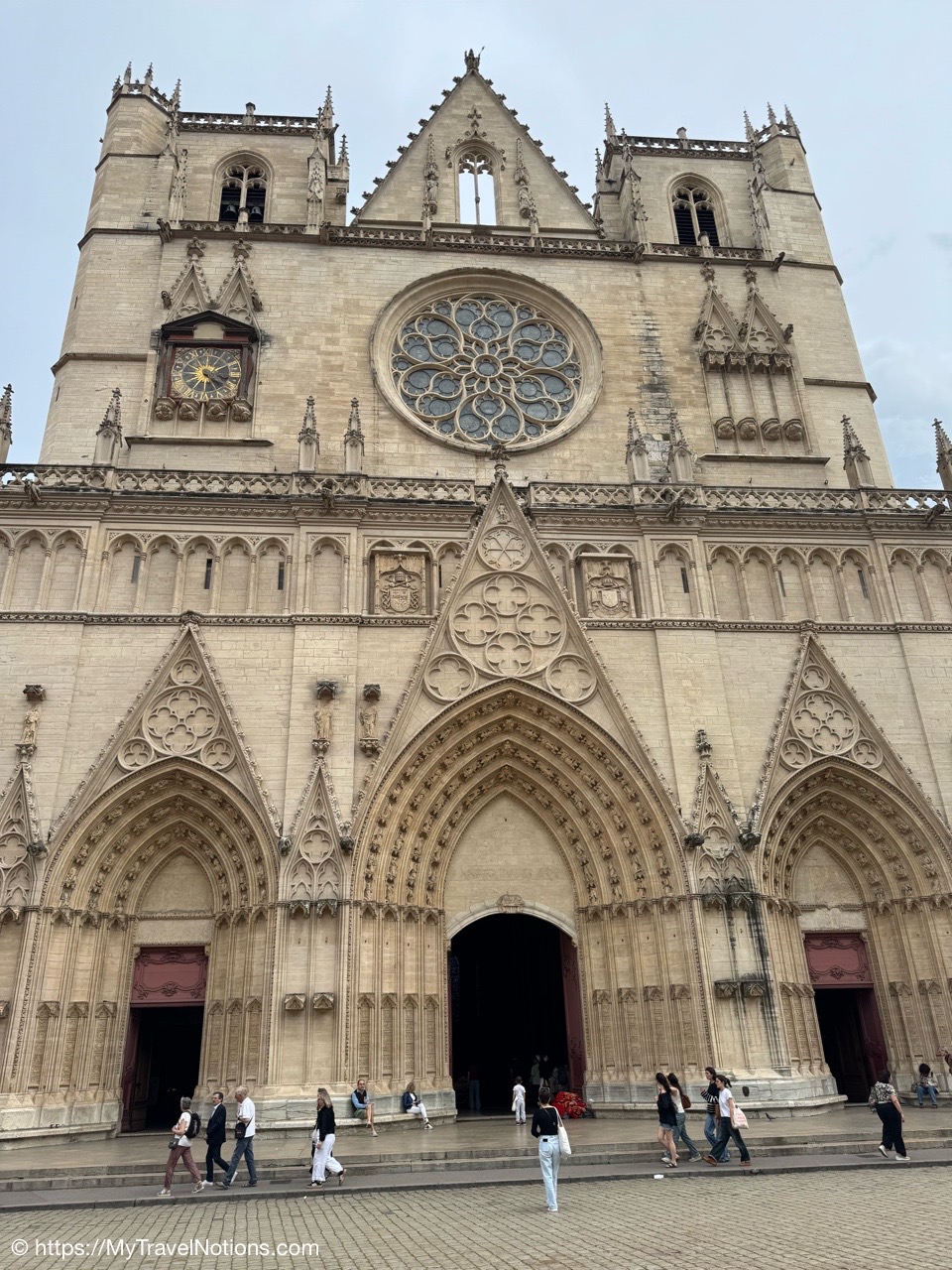
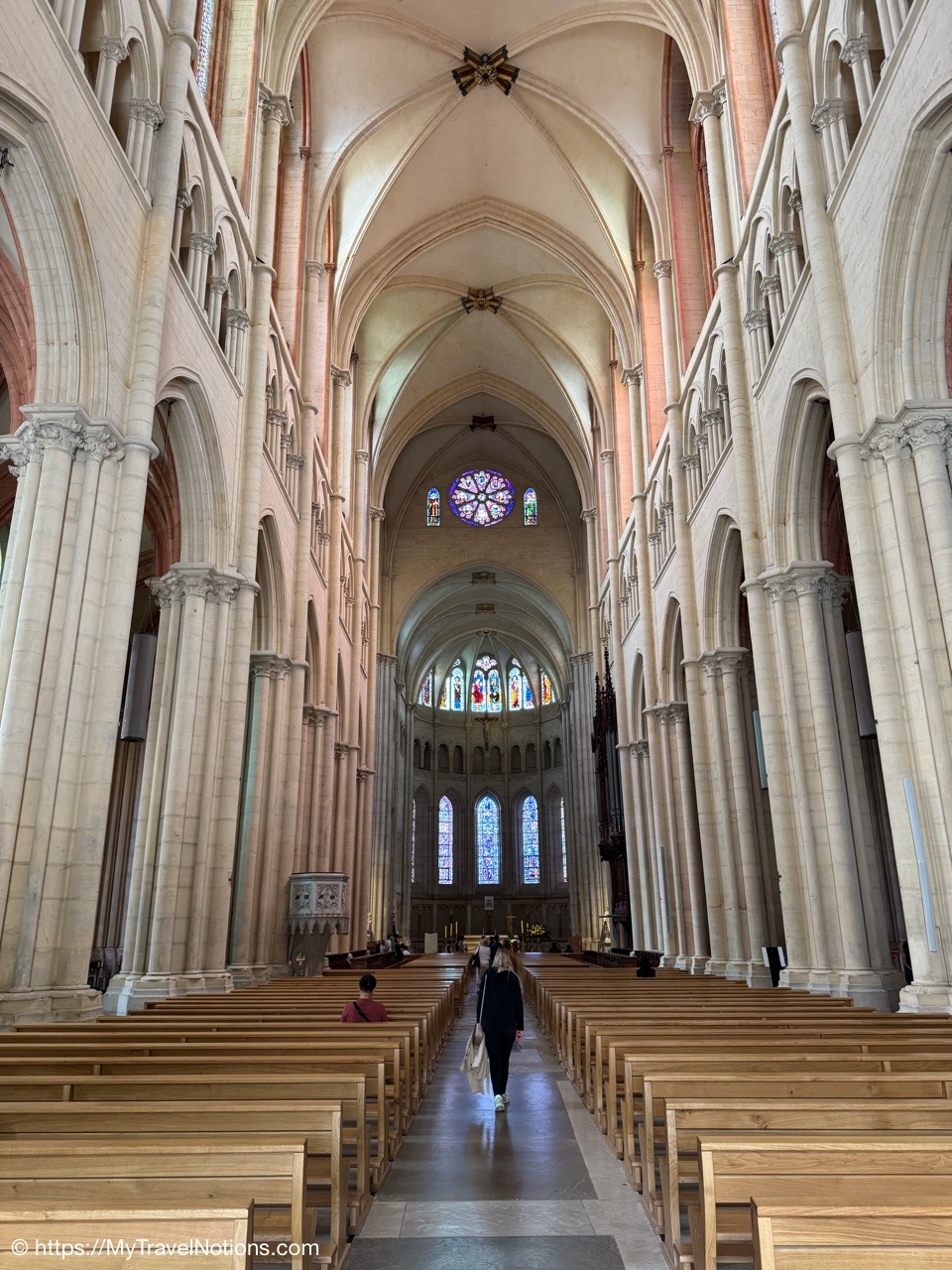
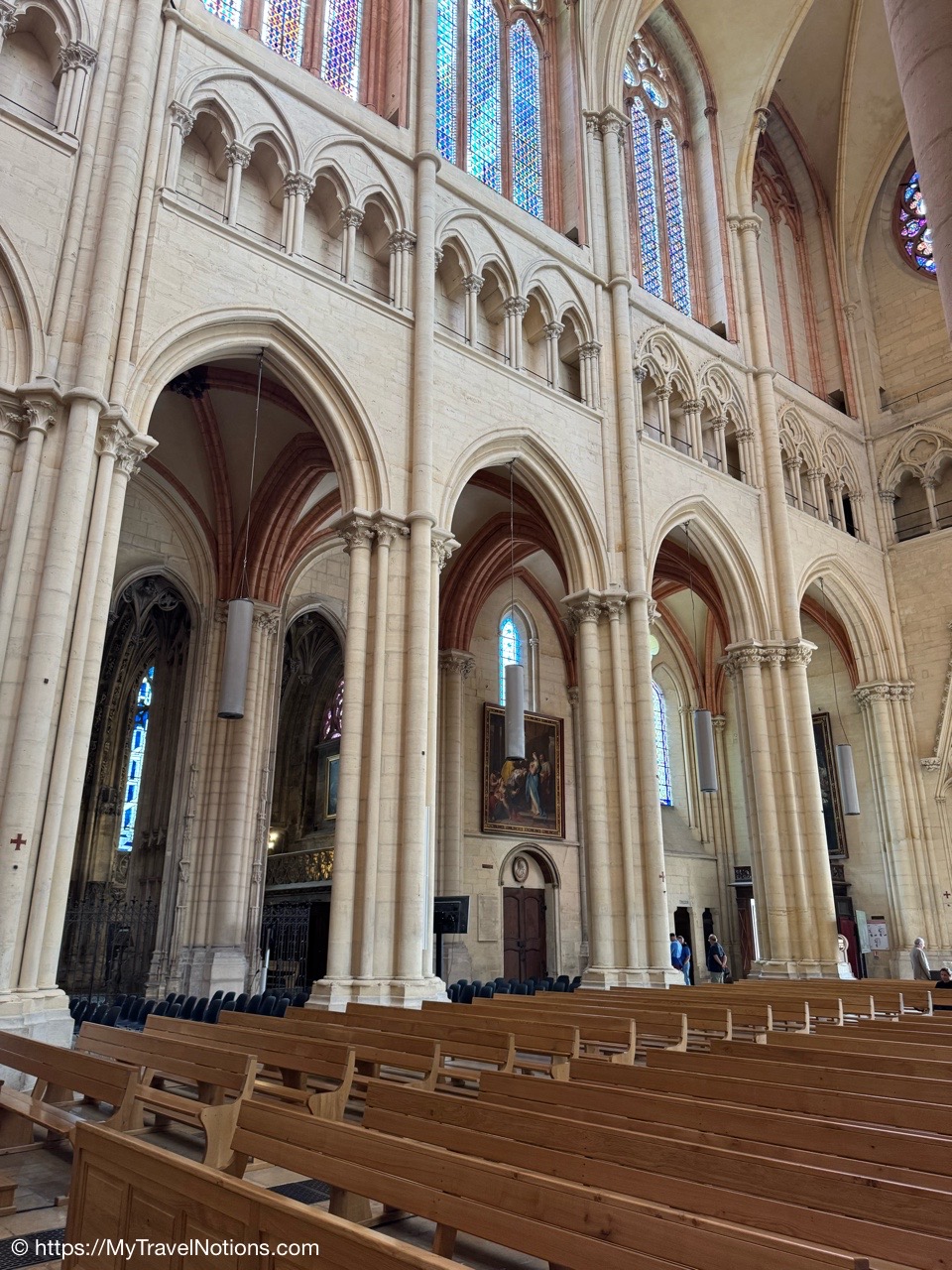
After the walking tour, I alittle time to visitthe Lyon Cathedral or the Cathedral of Saint John the Baptist located on Place Saint-Jean within a few minutes walking distance of our apartment in the heart of Vieux Lyon or Old Town Lyon. The cathedral is dedicated to Saint John the Baptist, and is the seat of the Archbishop of Lyon. Begun in 1180 on the ruins of a 6th-century church, it was completed in 1476. Several times throughout French history, it has served as the setting for important events: the marriage of Henri IV and Marie de’ Medici in 1600, and the ceremony for the presentation of the cardinal’s biretta to Richelieu in 1622.
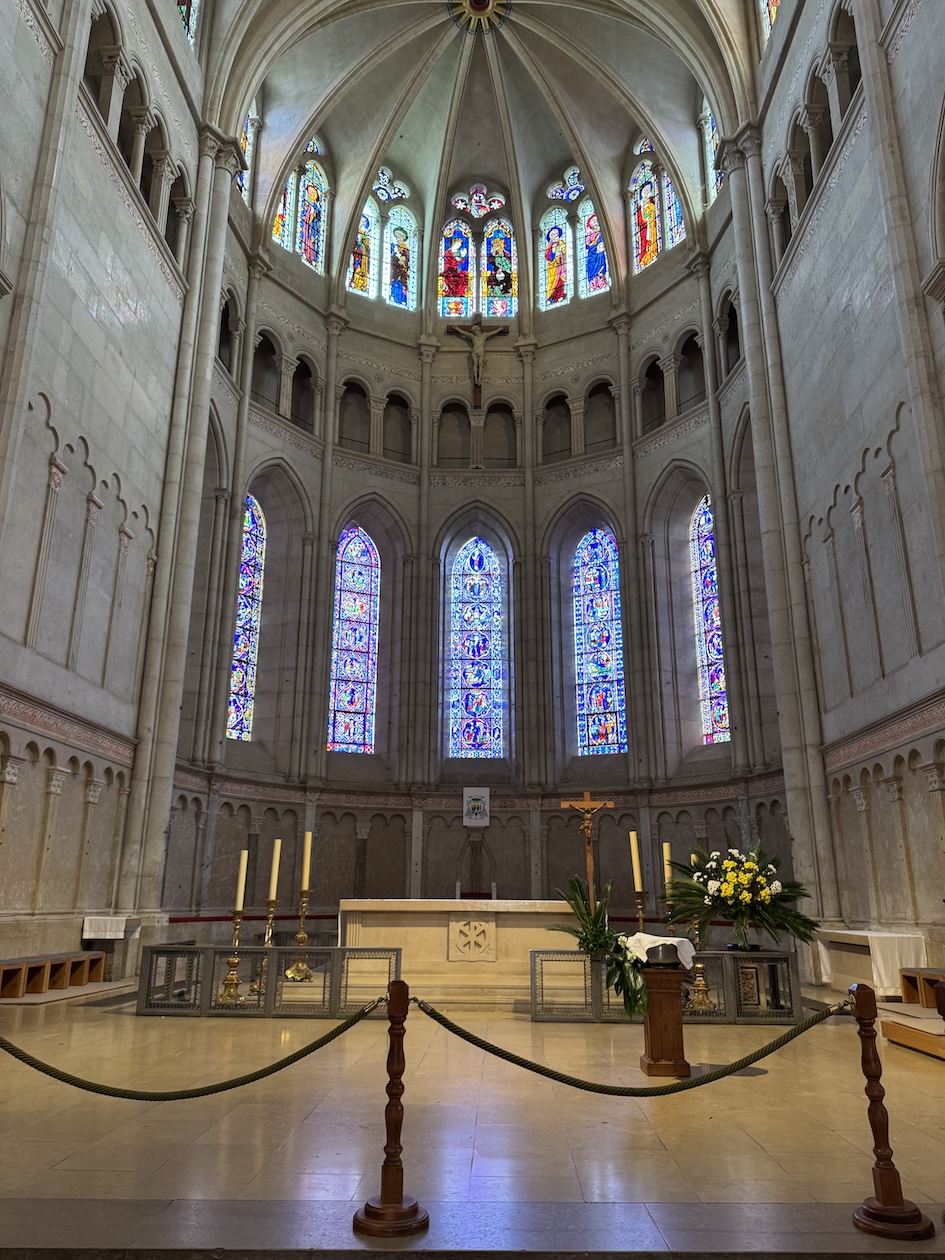
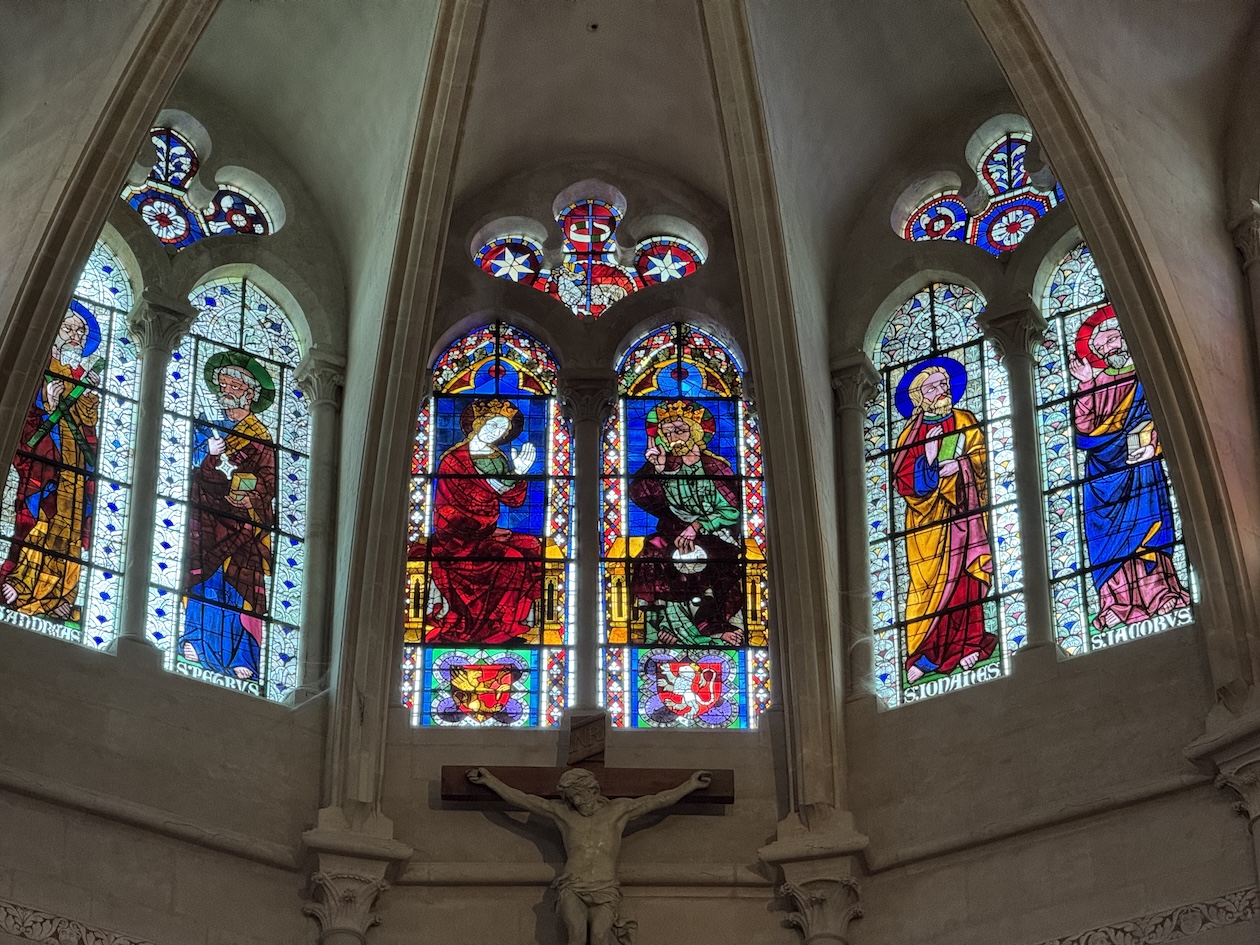
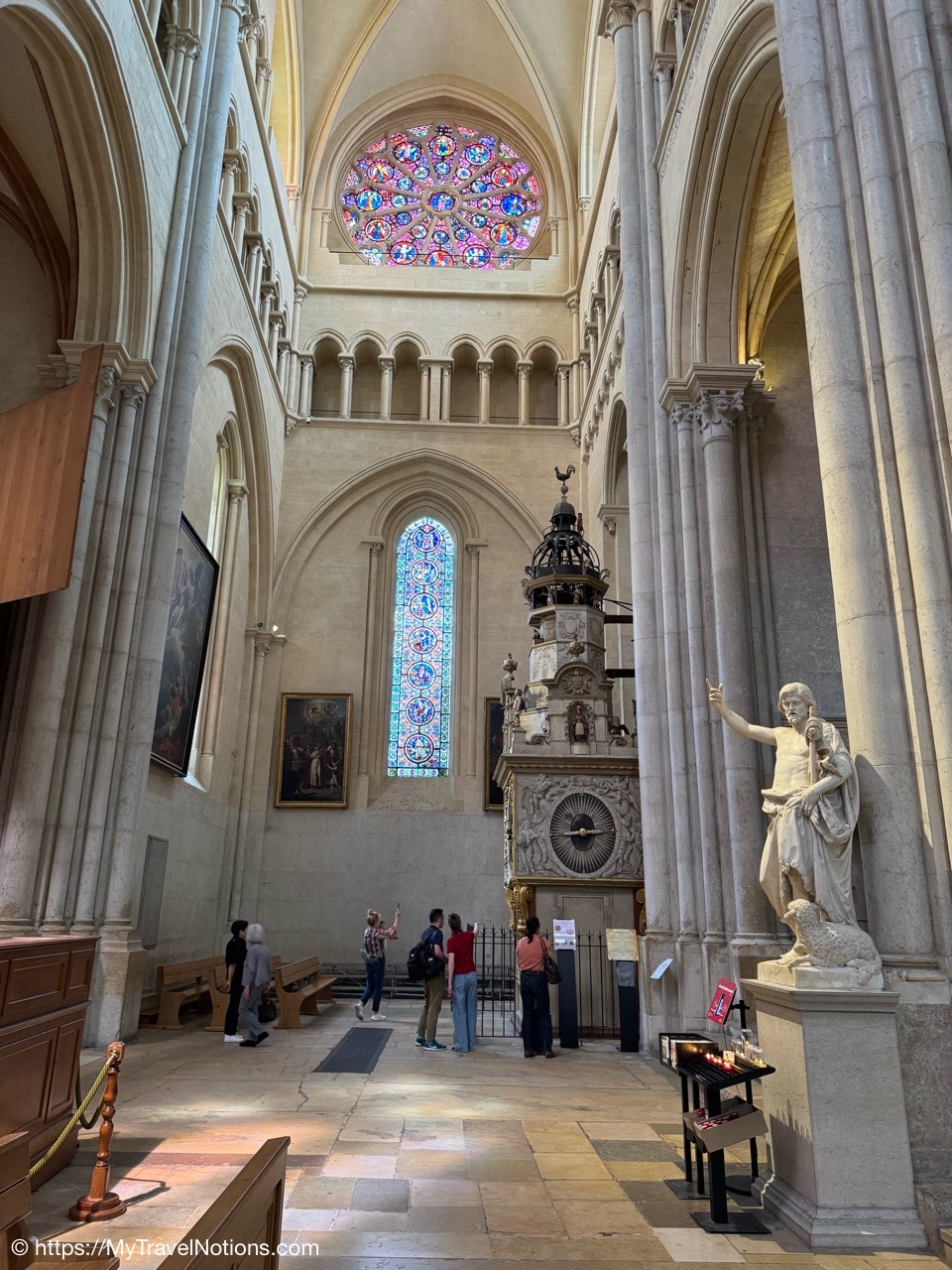
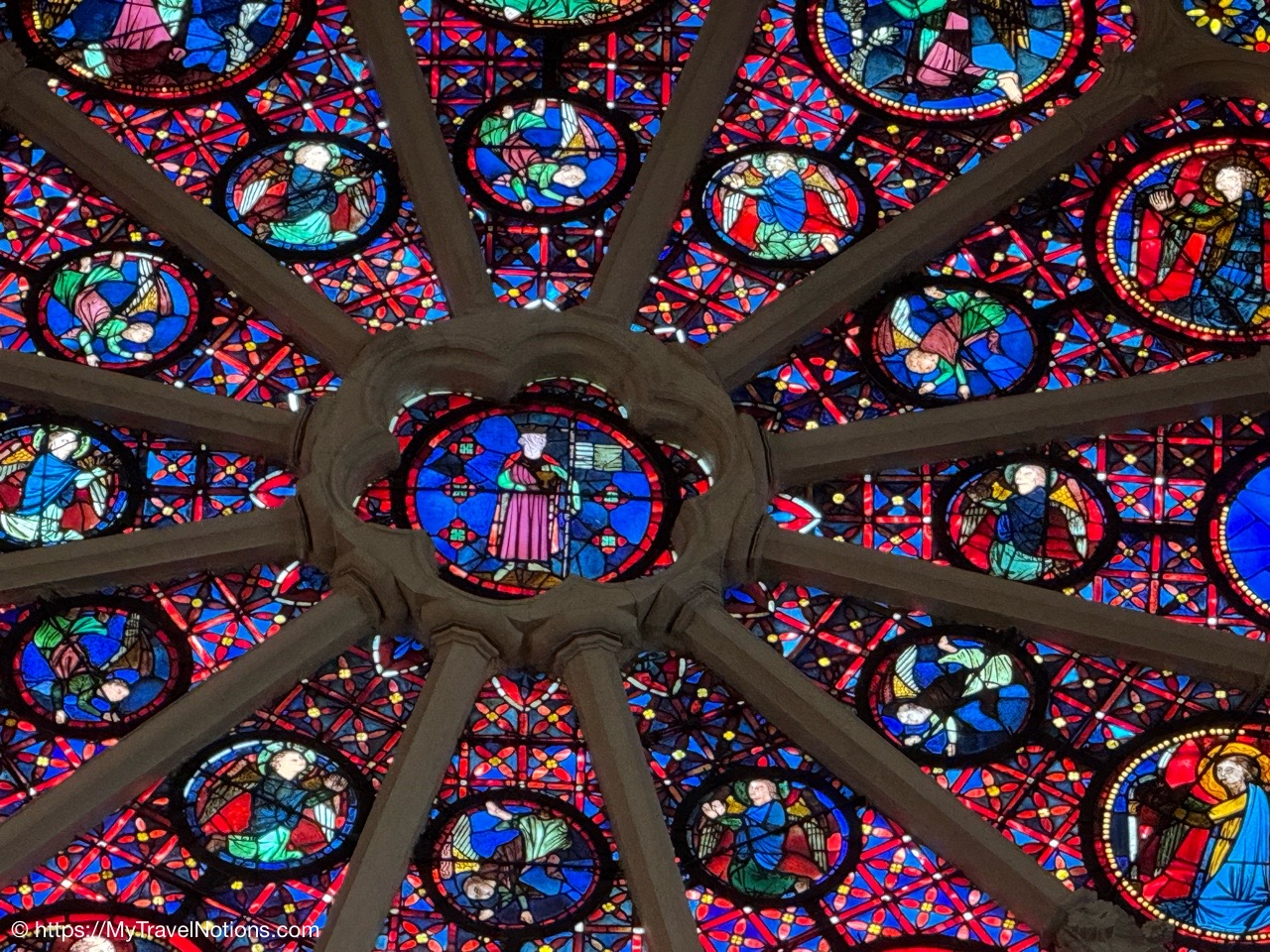
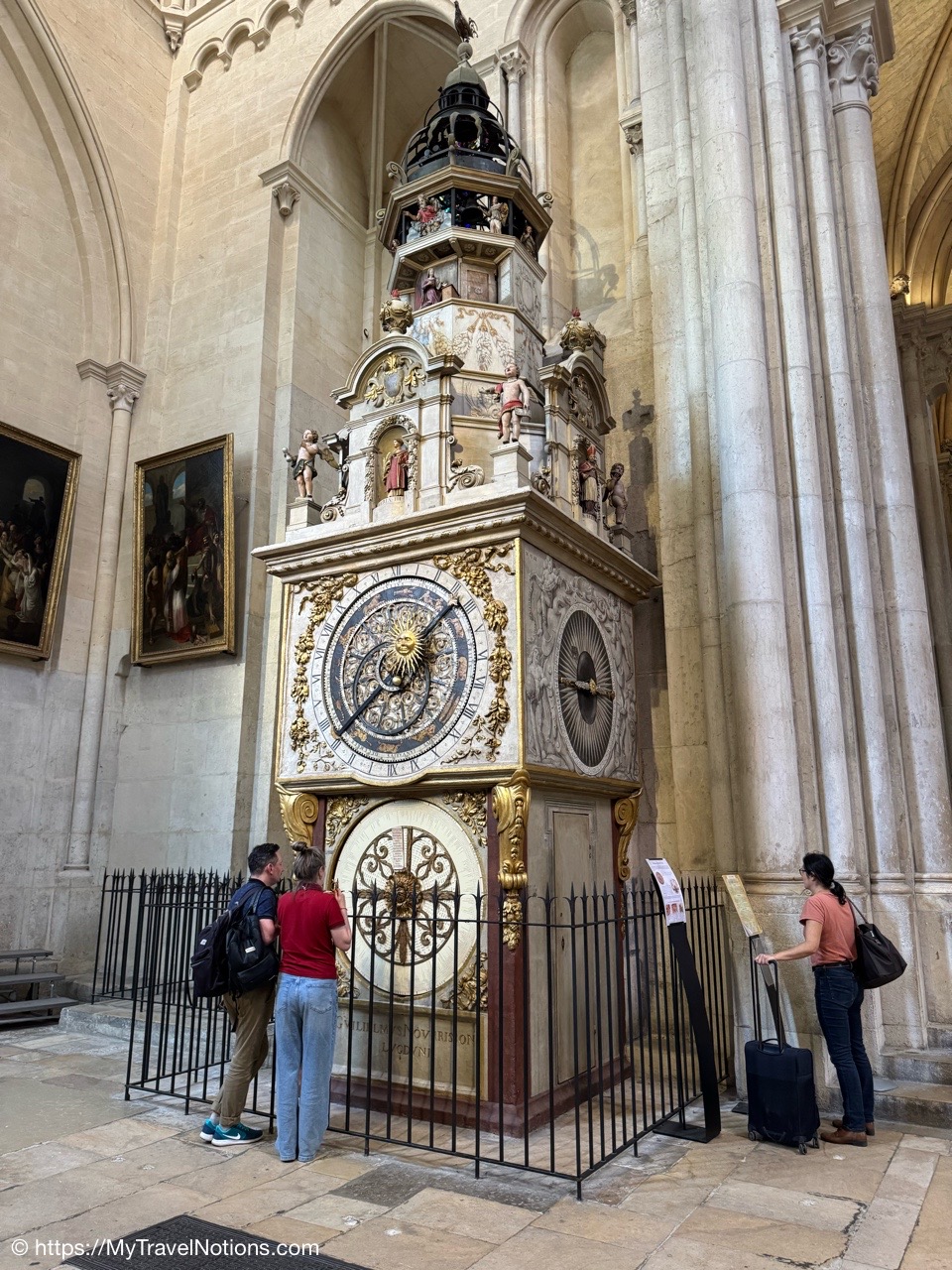
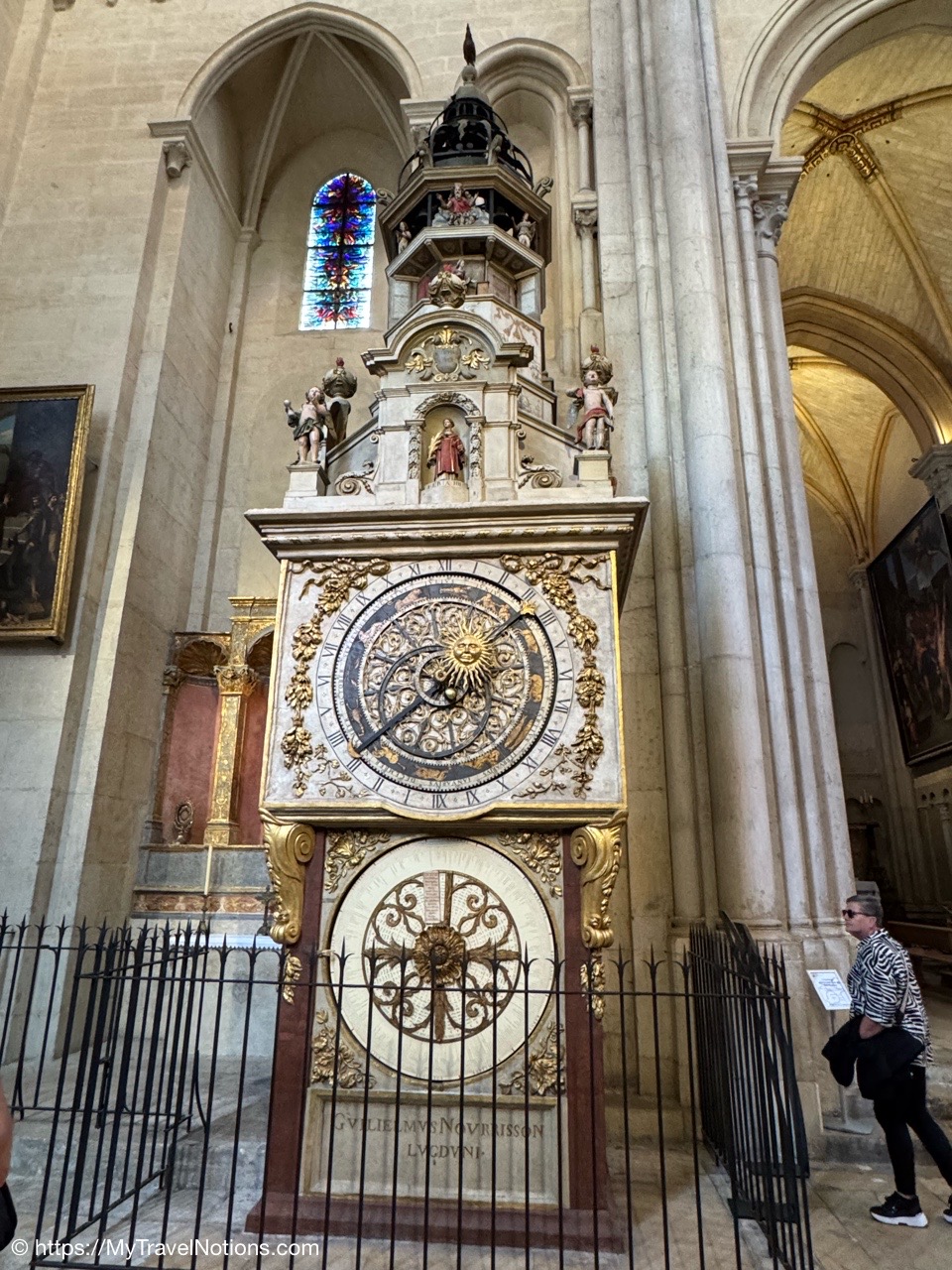
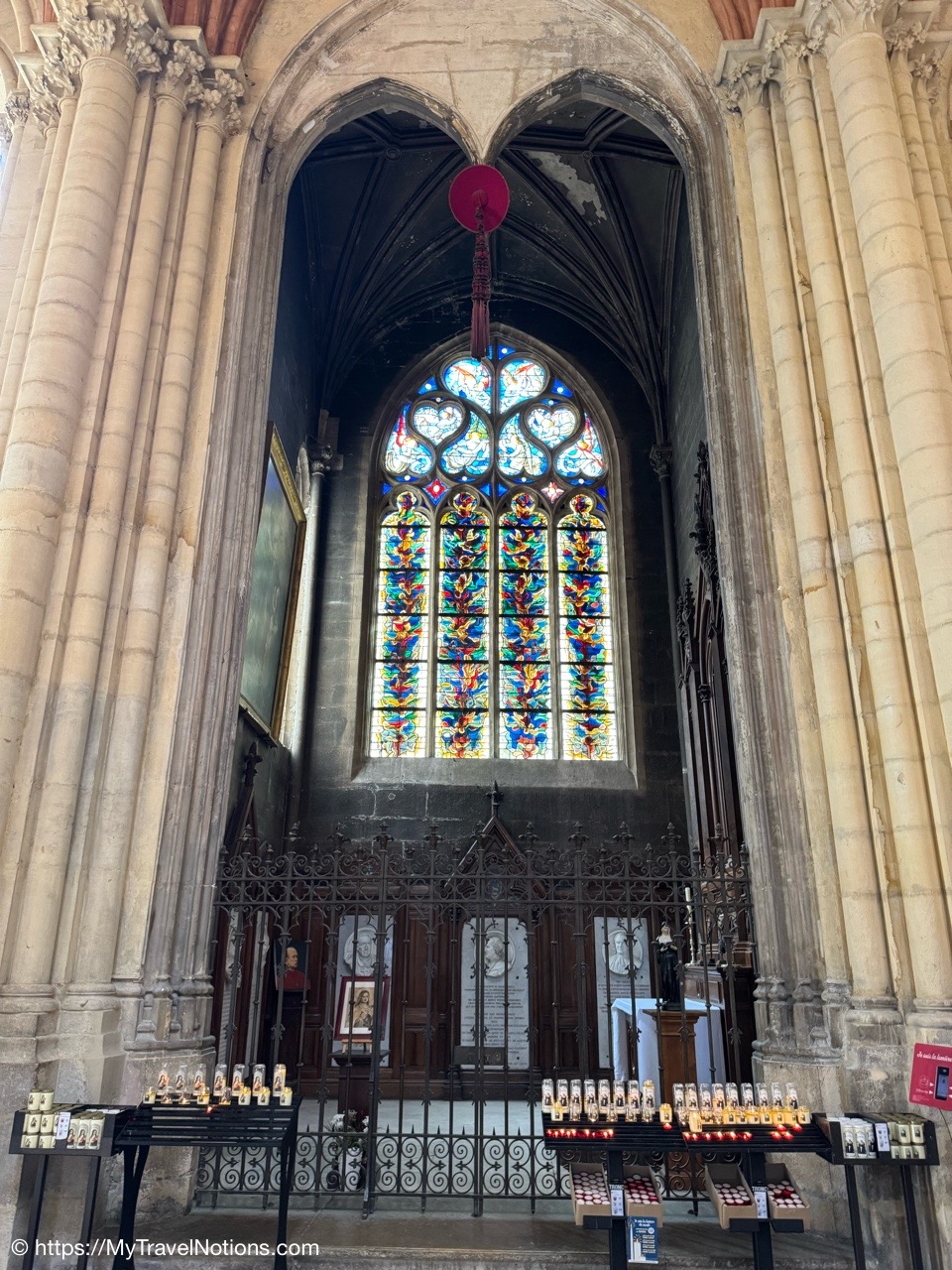
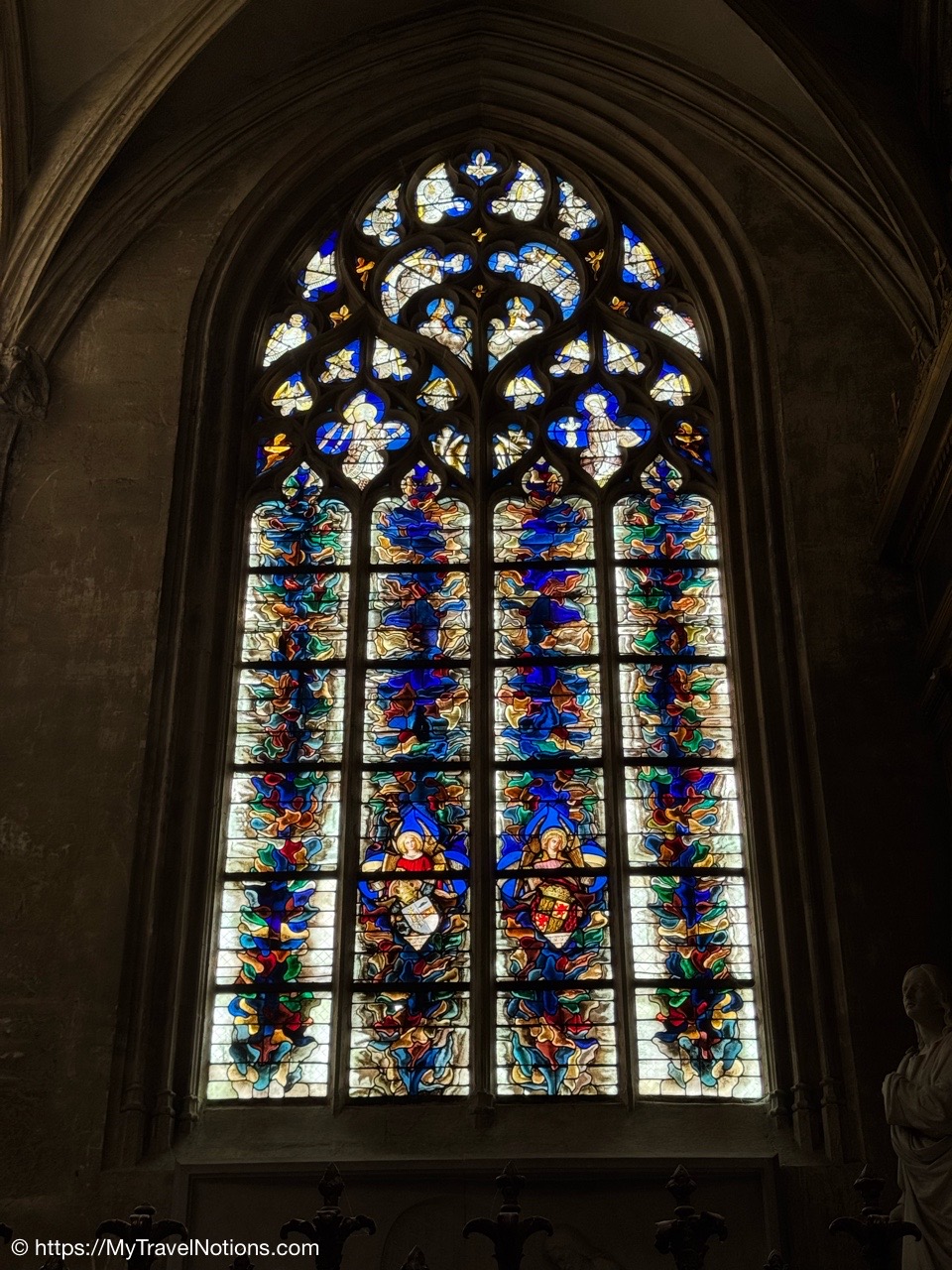
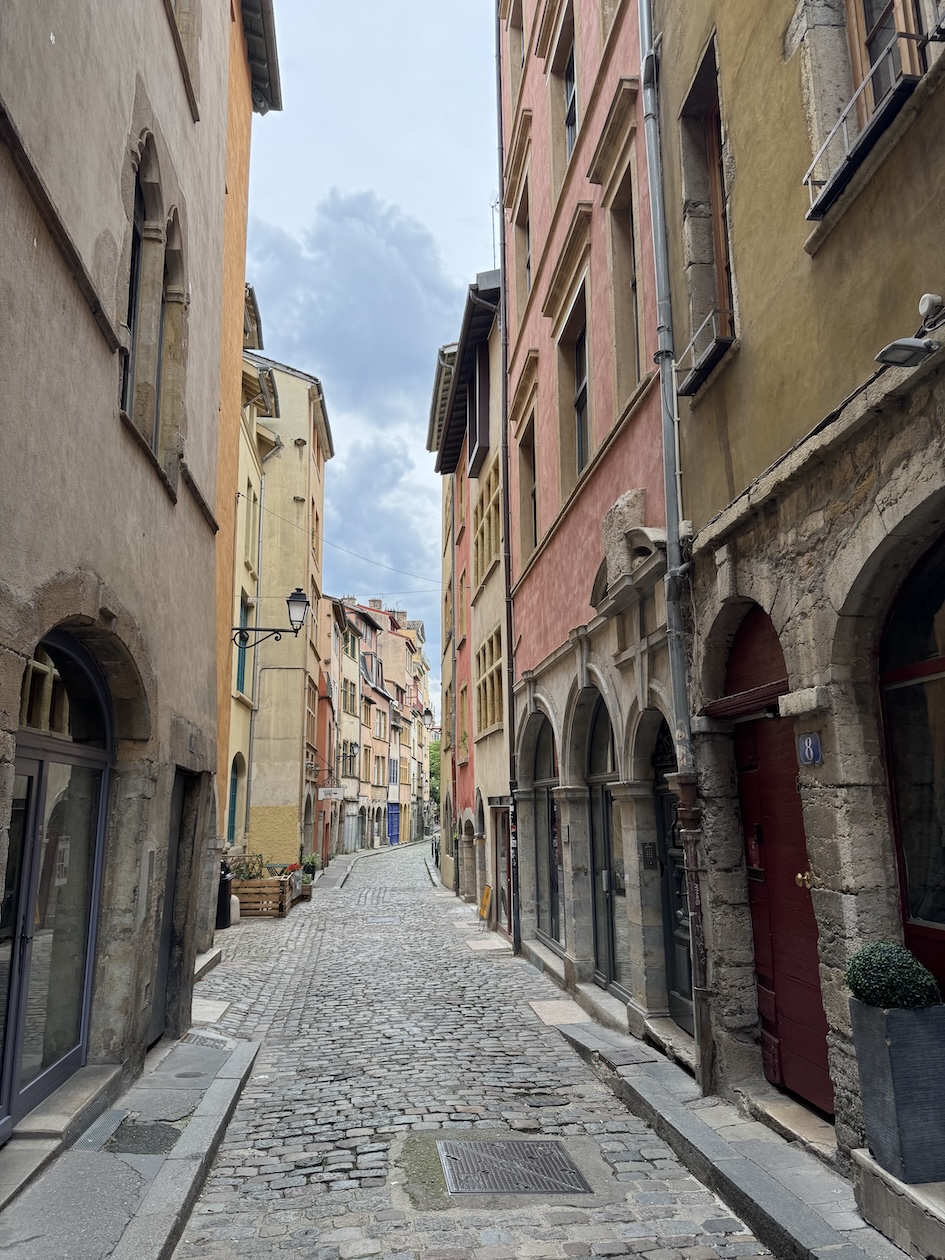
The Place Saint-Jean in Vieux Lyon or Old Town Lyon and the Lyon Cathedral or the Cathedral of Saint John the Baptist. (May 21, 2025)The Lyon Cathedral or the Cathedral of Saint John the Baptist in Vieux Lyon or Old Town Lyon was built over several centuries, with construction beginning around 1175 and concluding in 1480. (May 21, 2025)The Lyon Cathedral or the Cathedral of Saint John the Baptist was built over several centuries, with construction beginning around 1175 and concluding in 1480. (May 21, 2025)Inside the Lyon Cathedral or the Cathedral of Saint John the Baptist. (May 21, 2025)The altar inside the Lyon Cathedral or the Cathedral of Saint John the Baptist. (May 21, 2025)The beautiful 12th century stained glass above the altar 12th-century windows in the Chapel of the Virgin depicting the lives of St. Peter and St. Paul, 13th-century apse windows focusing on the theme of the Redemption, inside the Lyon Cathedral or the Cathedral of Saint John the Baptist. (May 21, 2025)The 1662 astronomical clock inside the Lyon Cathedral or the Cathedral of Saint John the Baptist and the stained glass rose window above. (May 21, 2025)A close-up of the rose window inside the Lyon Cathedral or the Cathedral of Saint John the BaptistThe astronomical clock inside the Lyon Cathedral or the Cathedral of Saint John the Baptist. The current version was completed in 1662 by Guillaume Nourissier, but the history of a clock in the cathedral goes back to 1383. It is the oldest in Europe to have kept its original mechanism, and it has been maintained through the centuries to continue functioning. (May 21, 2025)The astronomical clock inside the Lyon Cathedral or the Cathedral of Saint John the Baptist. It displays the date, including the day of the week, month, and year, and can calculate the dates for religious feasts and holidays. The clock uses an astrolabe to show the position of the sun, moon, and stars, which was a significant feat of medieval and Renaissance technology. The clock also features a religious scene that is reenacted by moving figures at noon and other specific hours, depicting figures like the Annunciation. (May 21, 2025)A view of the chapels inside the Lyon Cathedral or the Cathedral of Saint John the Baptist. (May 21, 2025)The angels stained glass chapel inside the Lyon Cathedral. (May 21, 2025)A close-up of the stained glass angels inside the Lyon Cathedral. (May 21, 2025)Just outside of the Lyon Cathedral in Vieux Lyon or Old Town Lyon in the Place Saint-Jean are views of the Basilica of Notre-Dame de Fourvière on the hilltop. Prior to the construction of the basilica, the Lyon Cathedral was the pre-eminent church in Lyon. (May 21, 2025)Heading back to my apartment in the Vieux Lyon Lyon or Old Town Lyon. The road to the right leads uphill to the Basilica Notre-Dame de Fourvière. And, the small alleyway to the left leads to our apartment, the La Loge Du Vieux Lyon along Rue Saint Georges. (May 21, 2025)The Rue Saint George where our apartment, at the La Loge Du Vieux Lyon #8 to the right, in the Vieux Lyon or Old Town Lyon. (May 21, 2025)
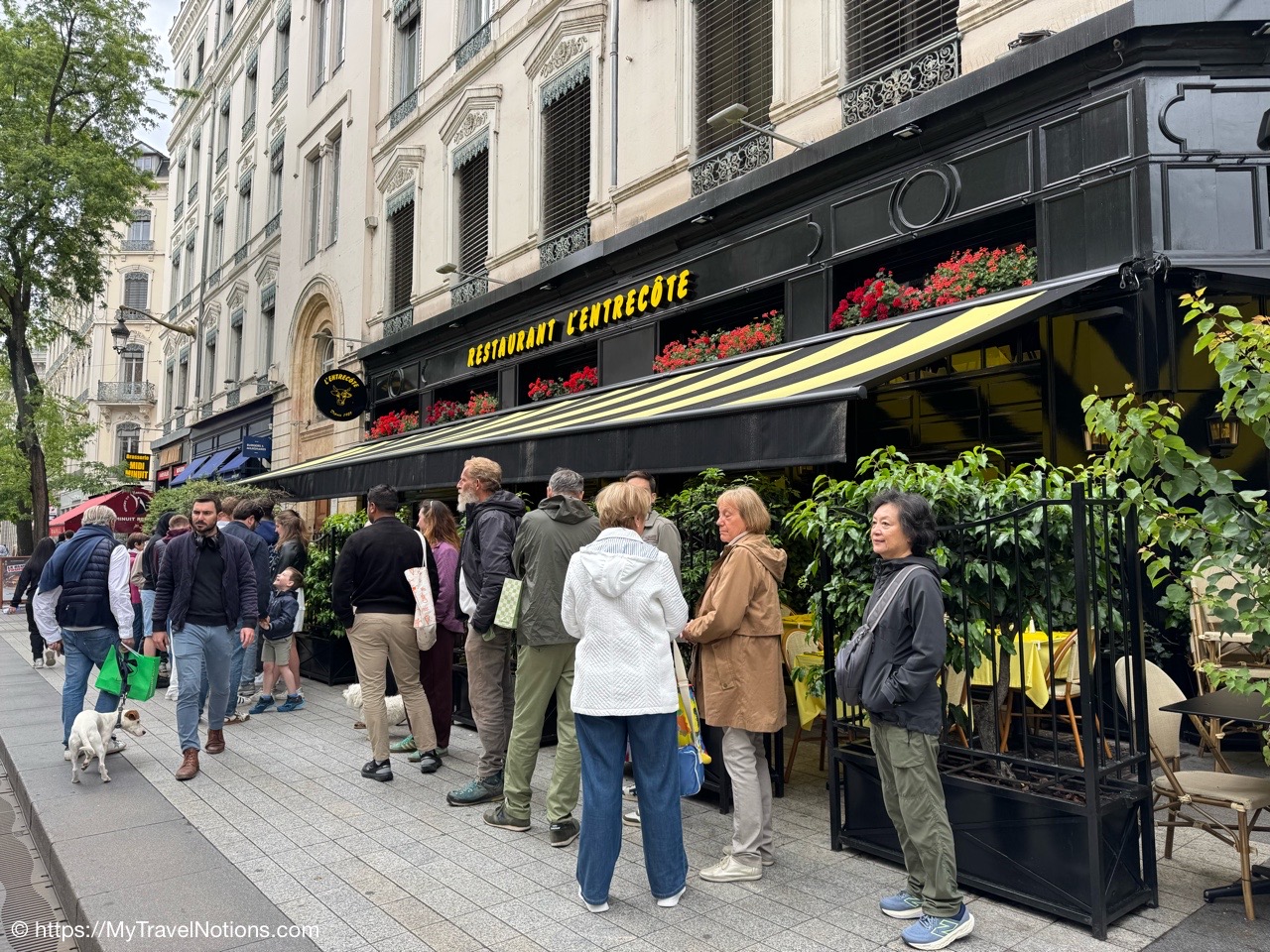
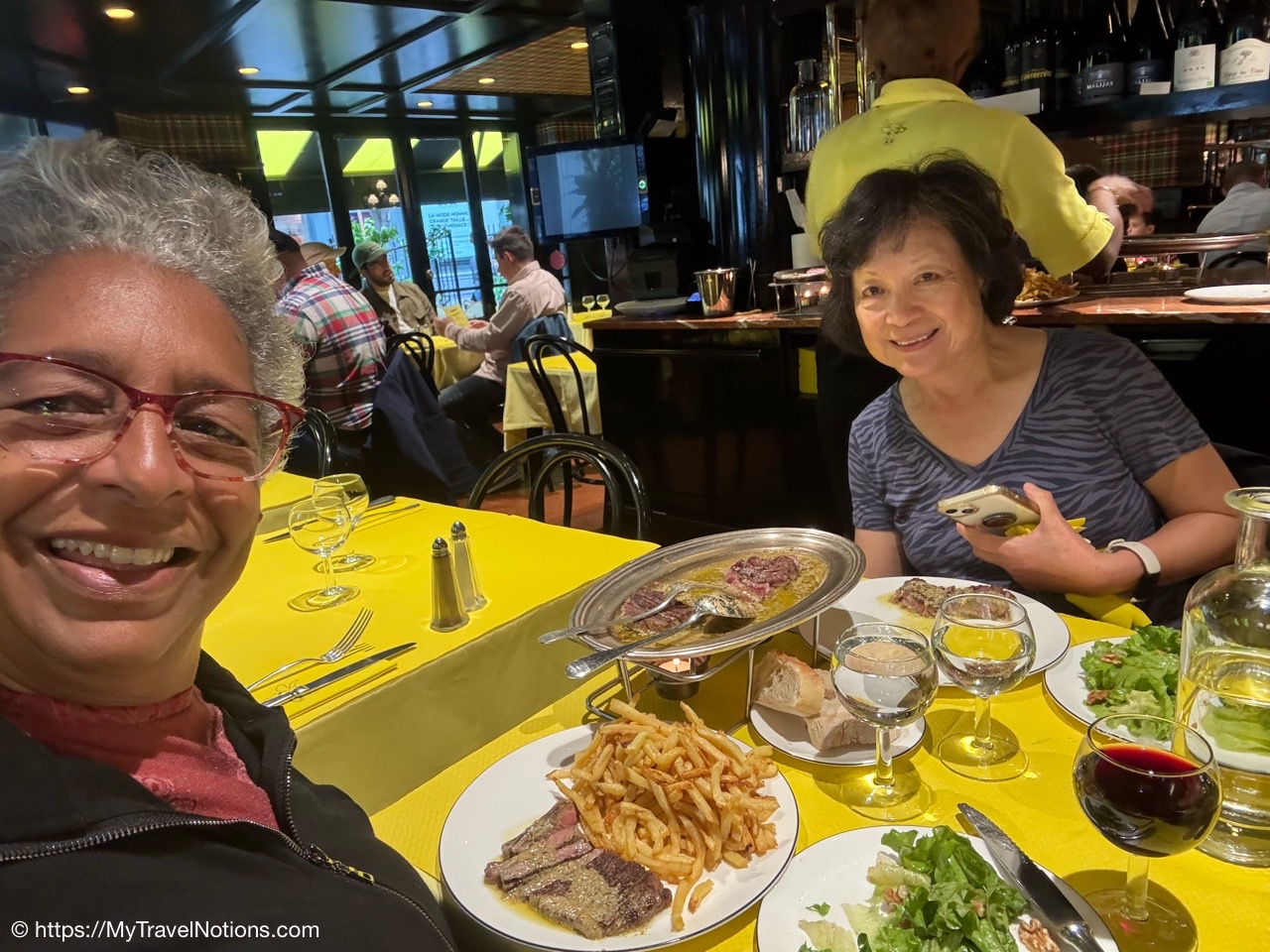
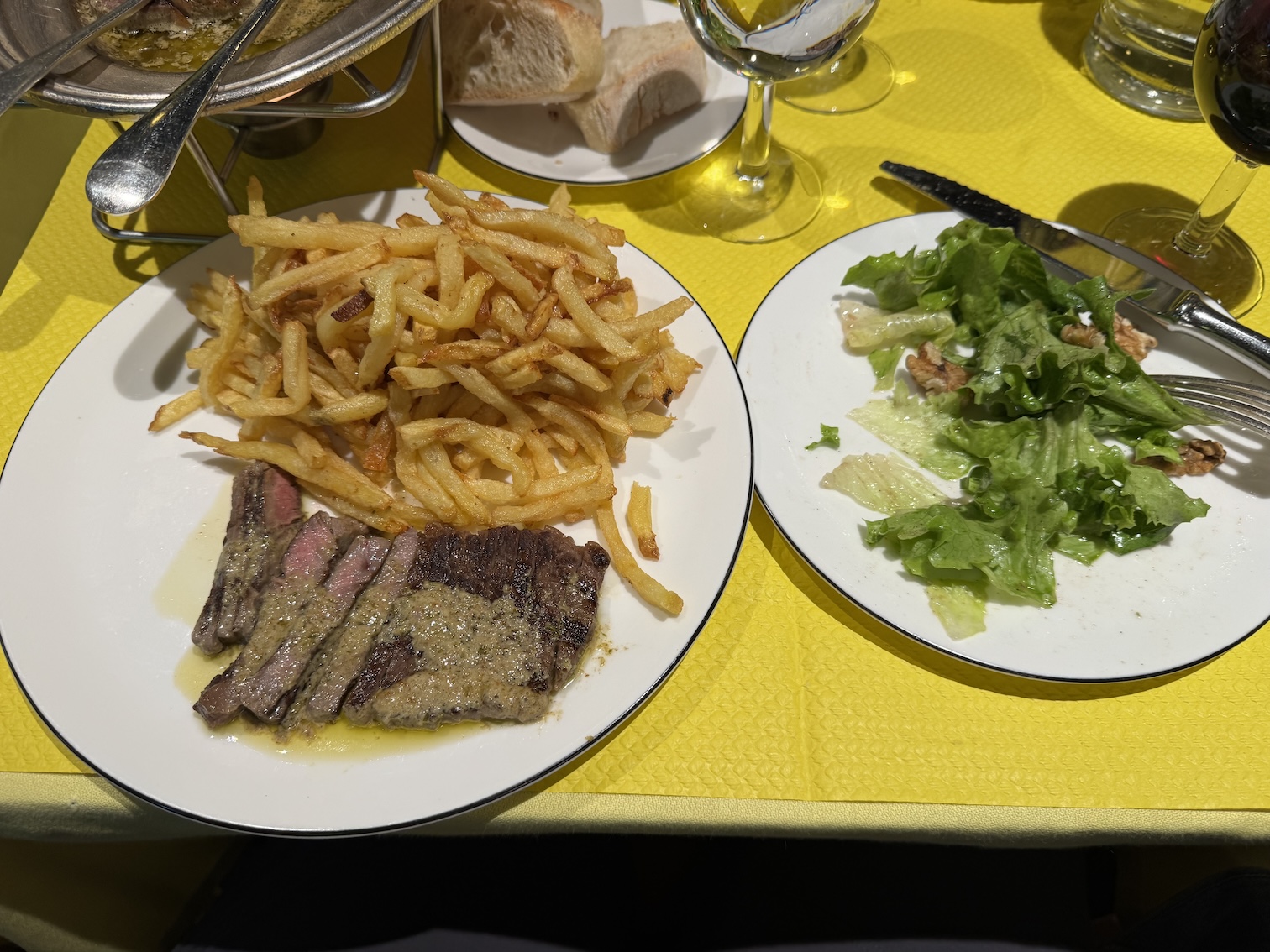
Besides a leisurely walk and a very nice afternoon nap, the only thing planned for today was lunch with my favorite traveler, Alice, at my favorite steak place in France, Restaurant L’Entrecôte with a location here in Lyon.
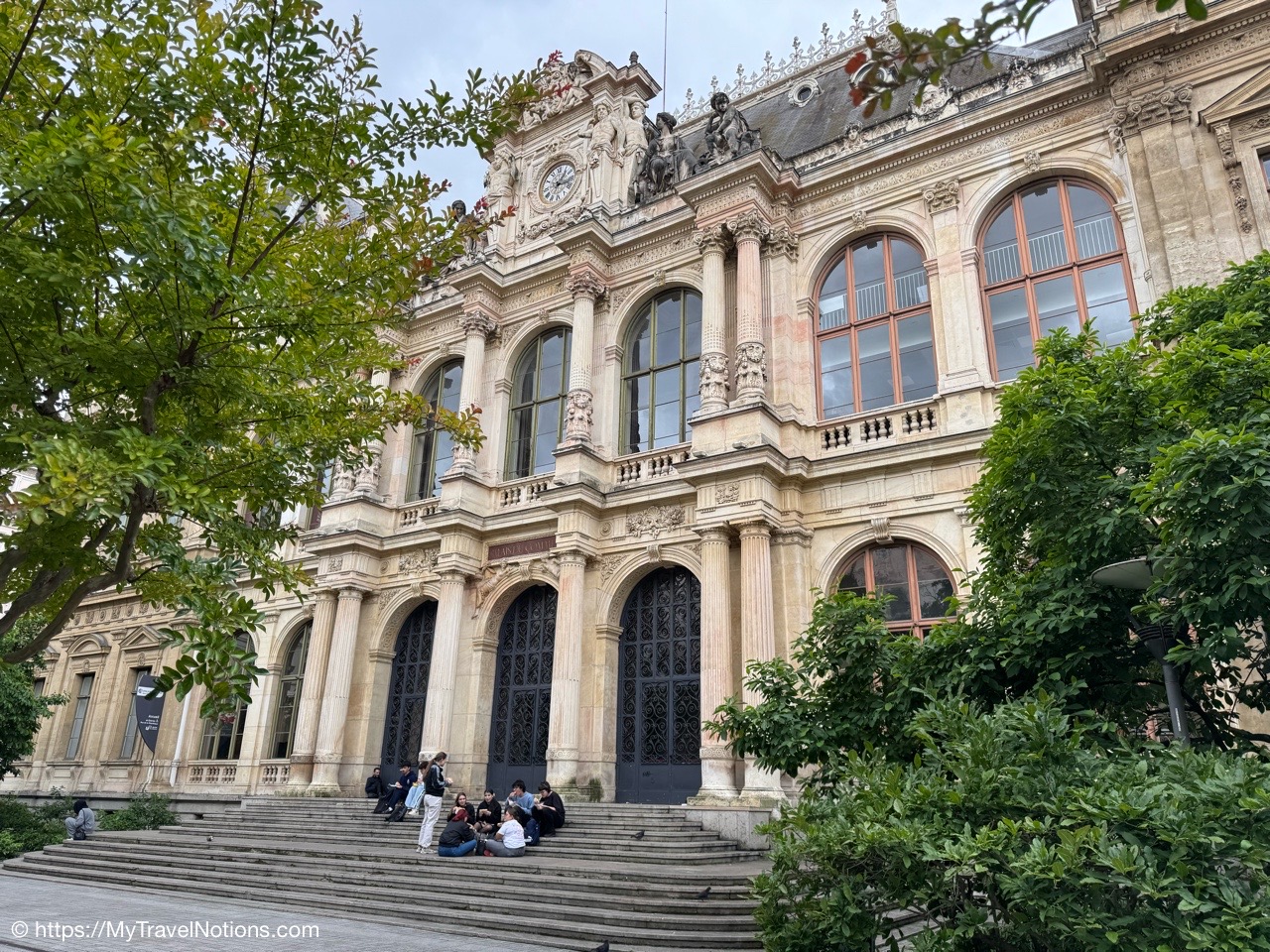
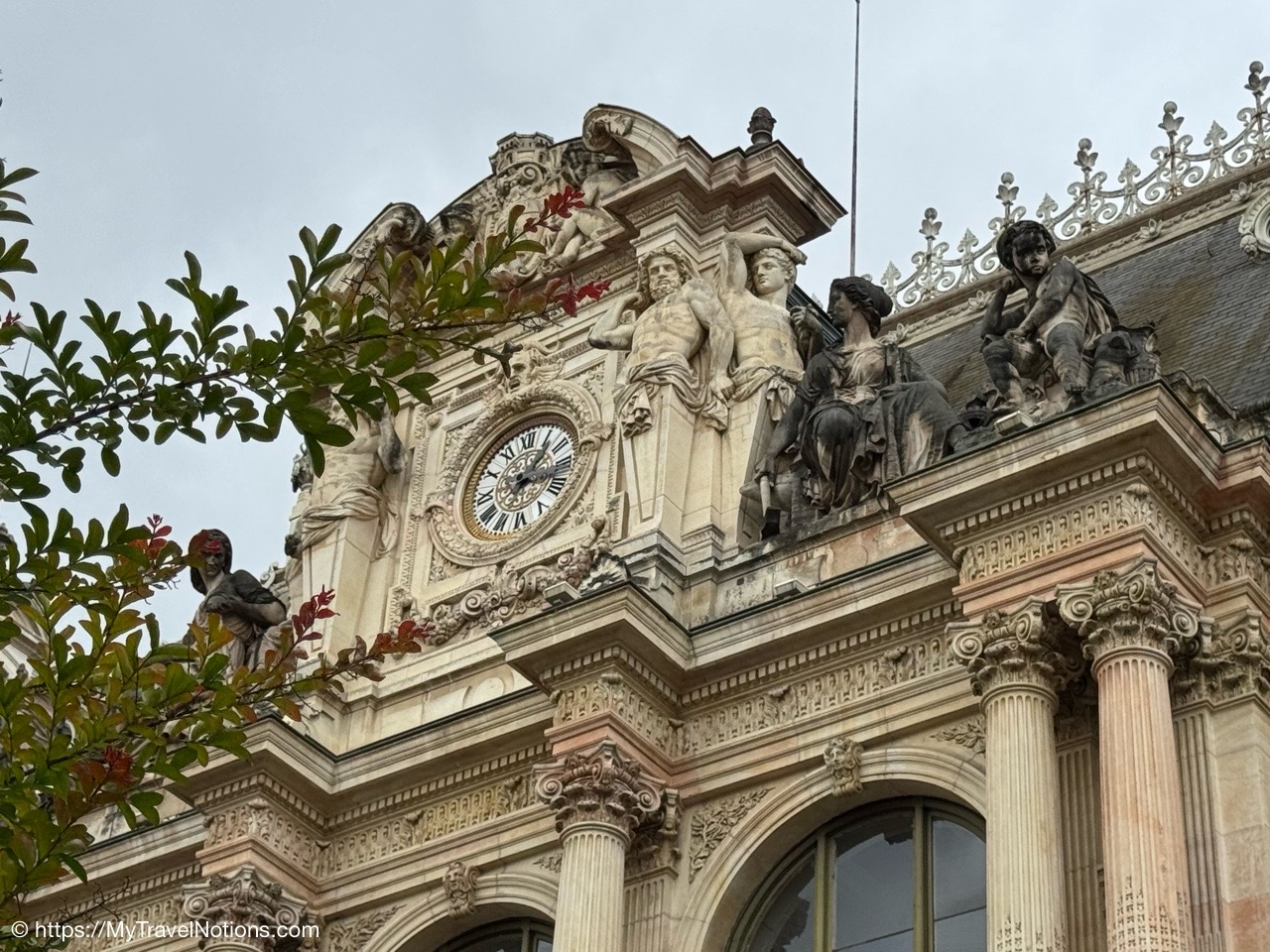
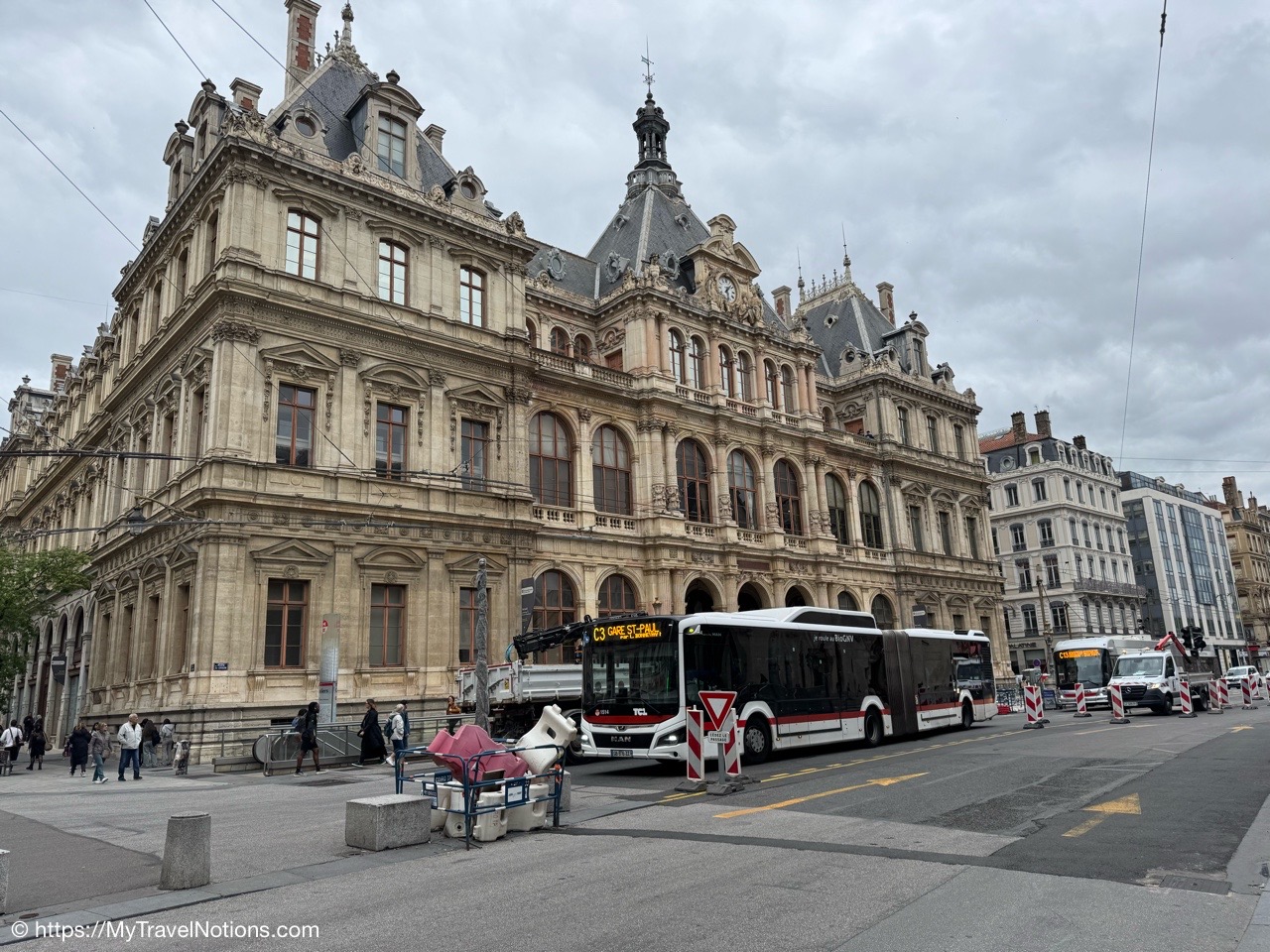
This is the line waiting to enter the Restaurant L’Entrecôte in Lyon before it even opened for lunch. Seems like lines are just a part of eating at this restaurant. (May 22, 2025)Alice and me getting ready to dig into our delicious steak lunch at Restaurant L’Entrecôte in Lyon. Coming to this restaurant has been a treat since I’ve visited several of them throughout my stay in France. (May 22, 2025)My delicious plate of steak and fries at the Restaurant L’Entrecôte in Lyon. (May 22, 2025)The Palais de la Bourse, built between 1856 and 1860, along the Rue de la Republique in Lyon. (May 22, 2025)Close-up of the clock and statues of the Palais de la Bourse, built between 1856 and 1860, along the Rue de la Republique in Lyon. (May 22, 2025)Walking off my steak lunch, while heading back to the apartment, I passed by the Palais de la Bourse, built between 1856 and 1860, along the Rue de la Republique in Lyon. (May 22, 2025)Walking across the Saône river back to my apartment in Vieux Lyon or Old Town Lyon. (May 22, 2025)
Coming back from a free day to relax and get caught up on sleep, rest and writing, Alice, Rosie and I were back on another walking tour of Lyon today.
Here’s to some new sights including the traboules or covered passageways associated with the city of Lyon and some more gems along the way.
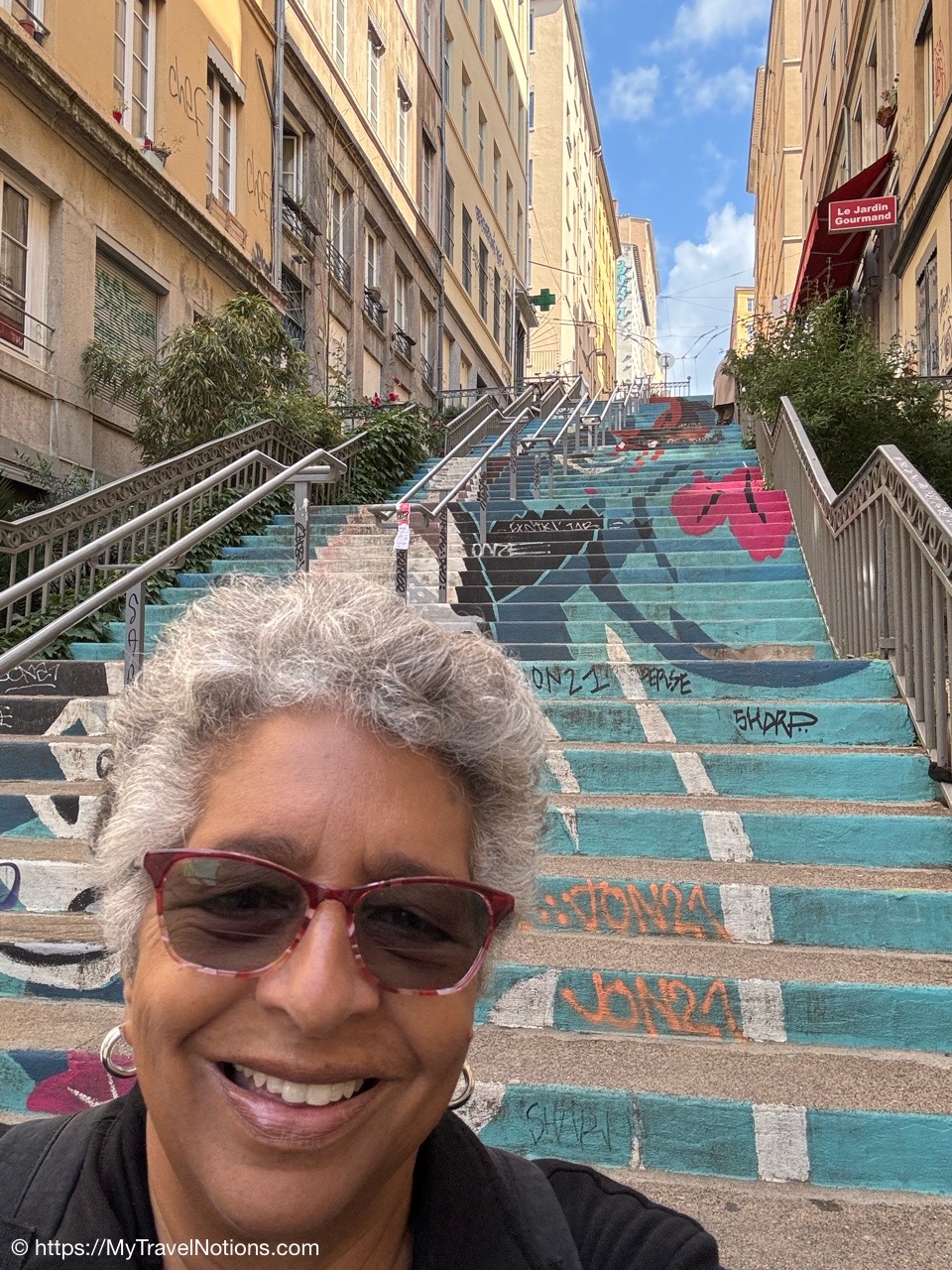
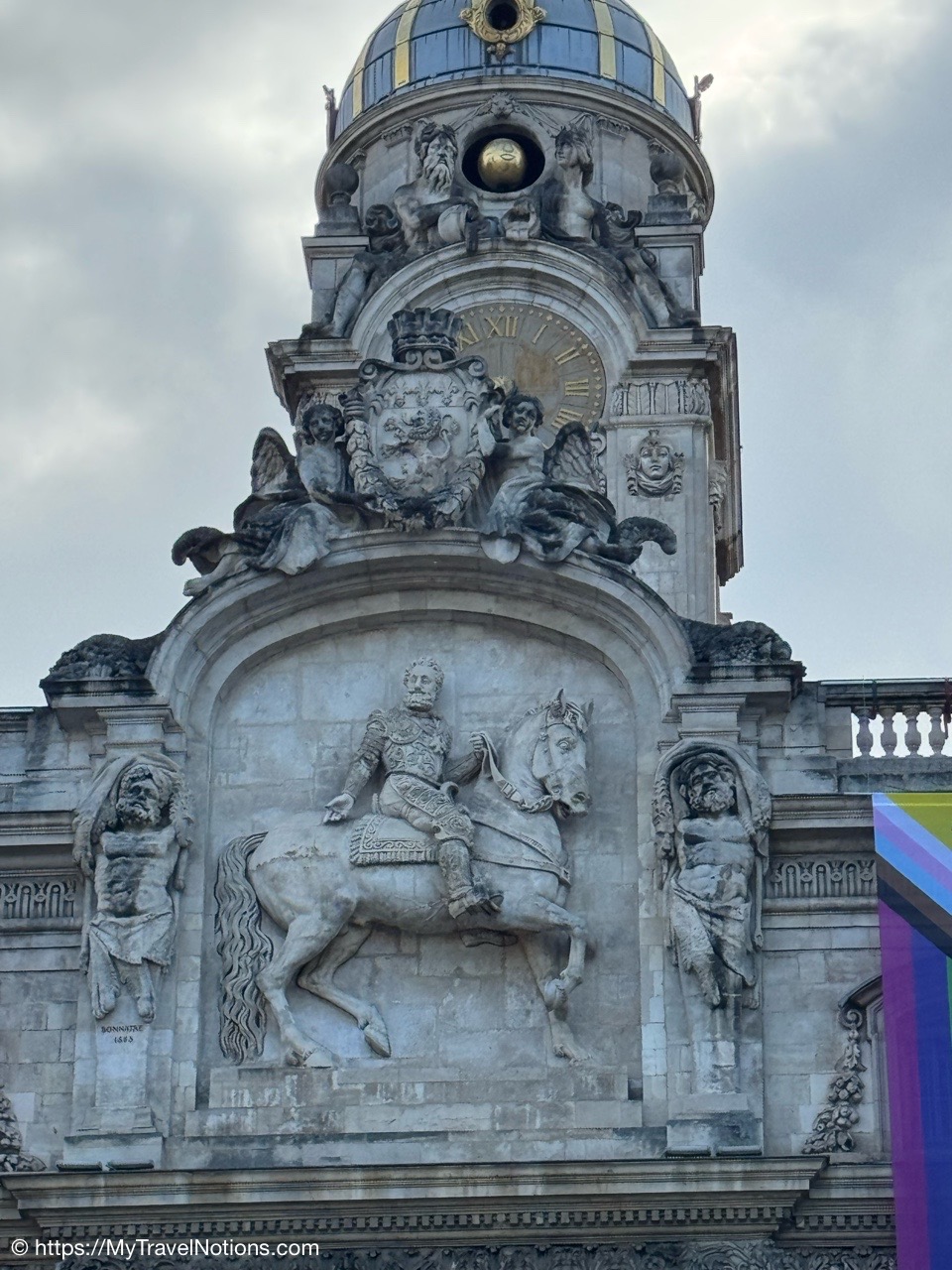
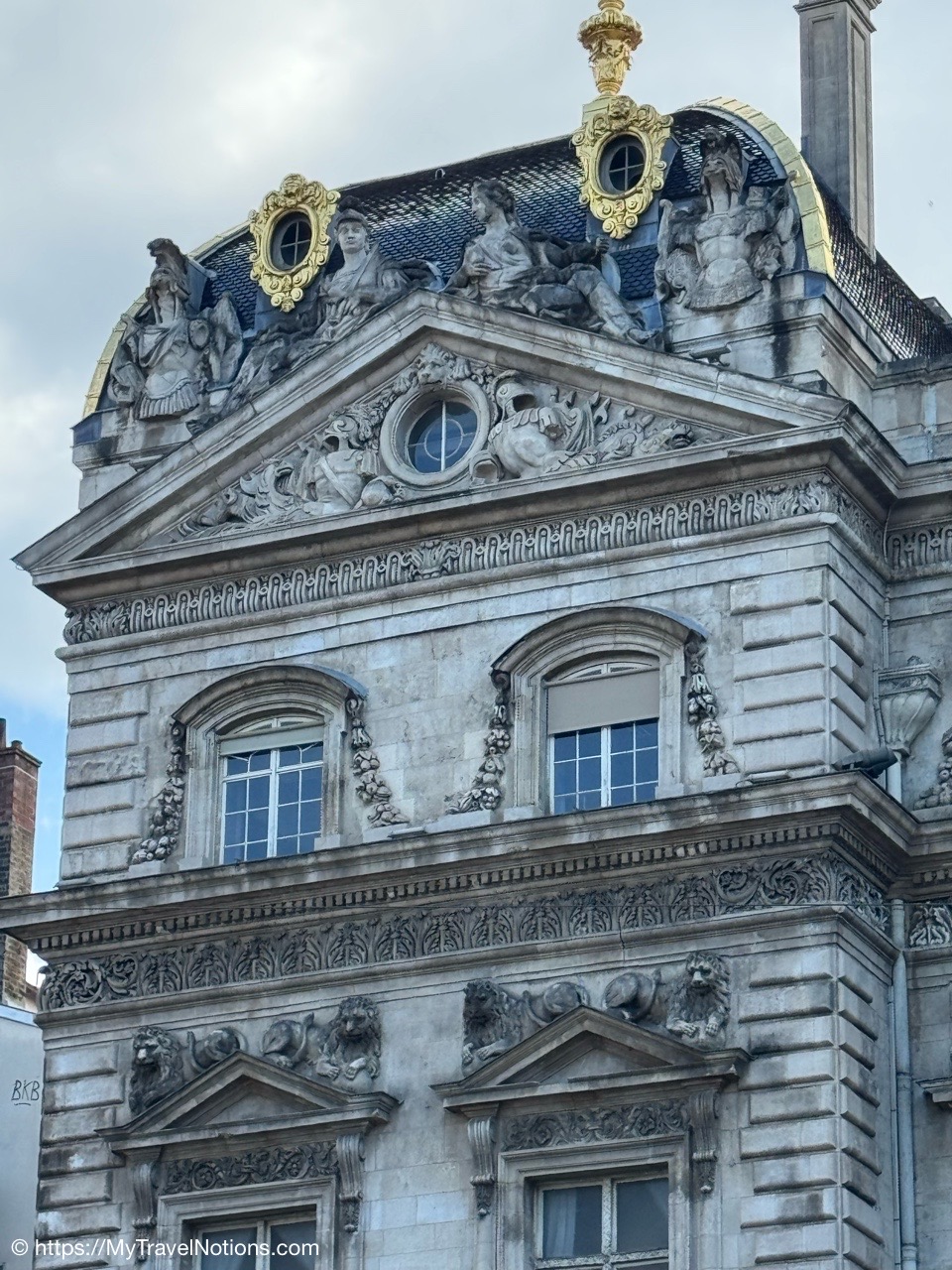
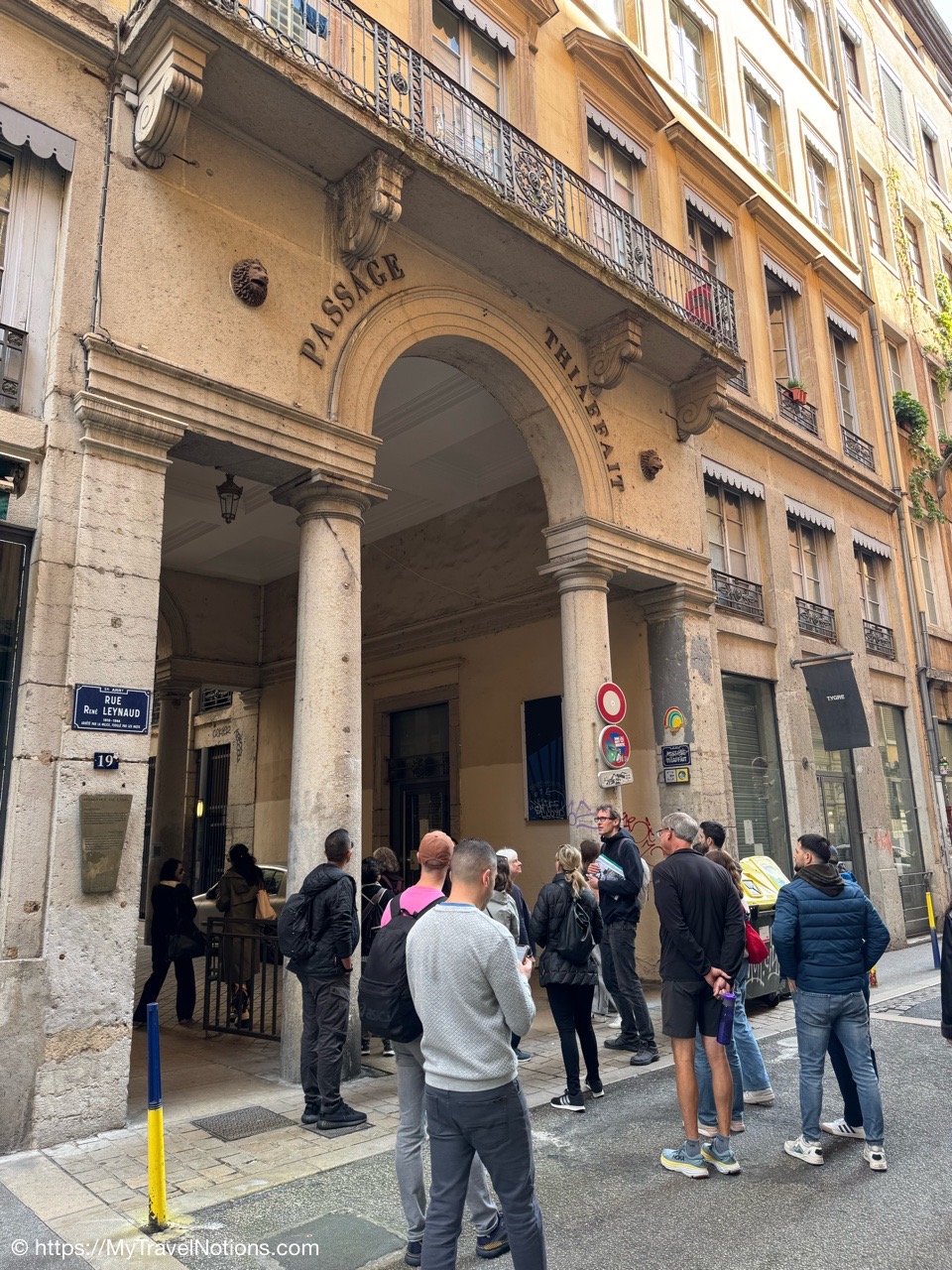
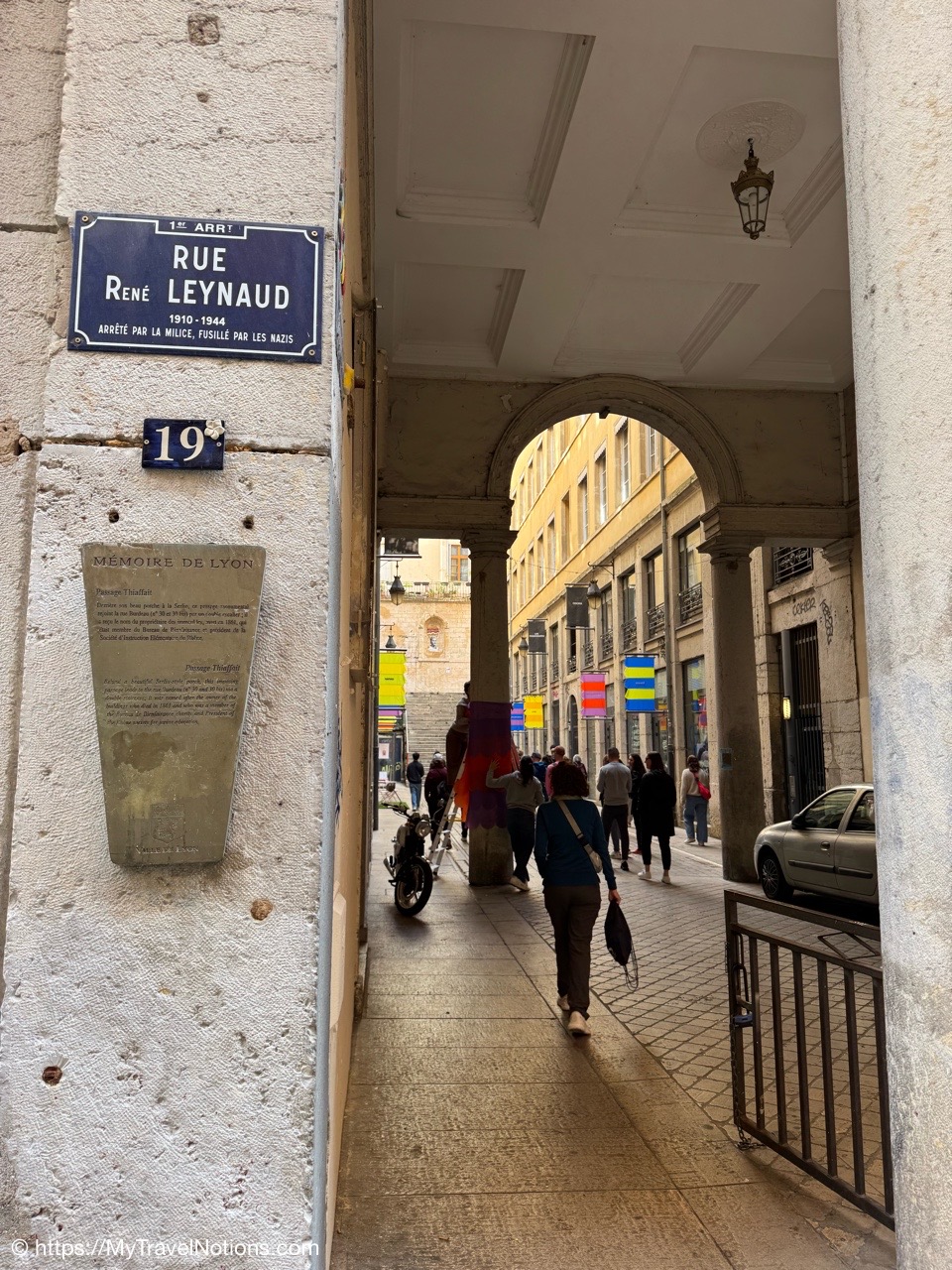
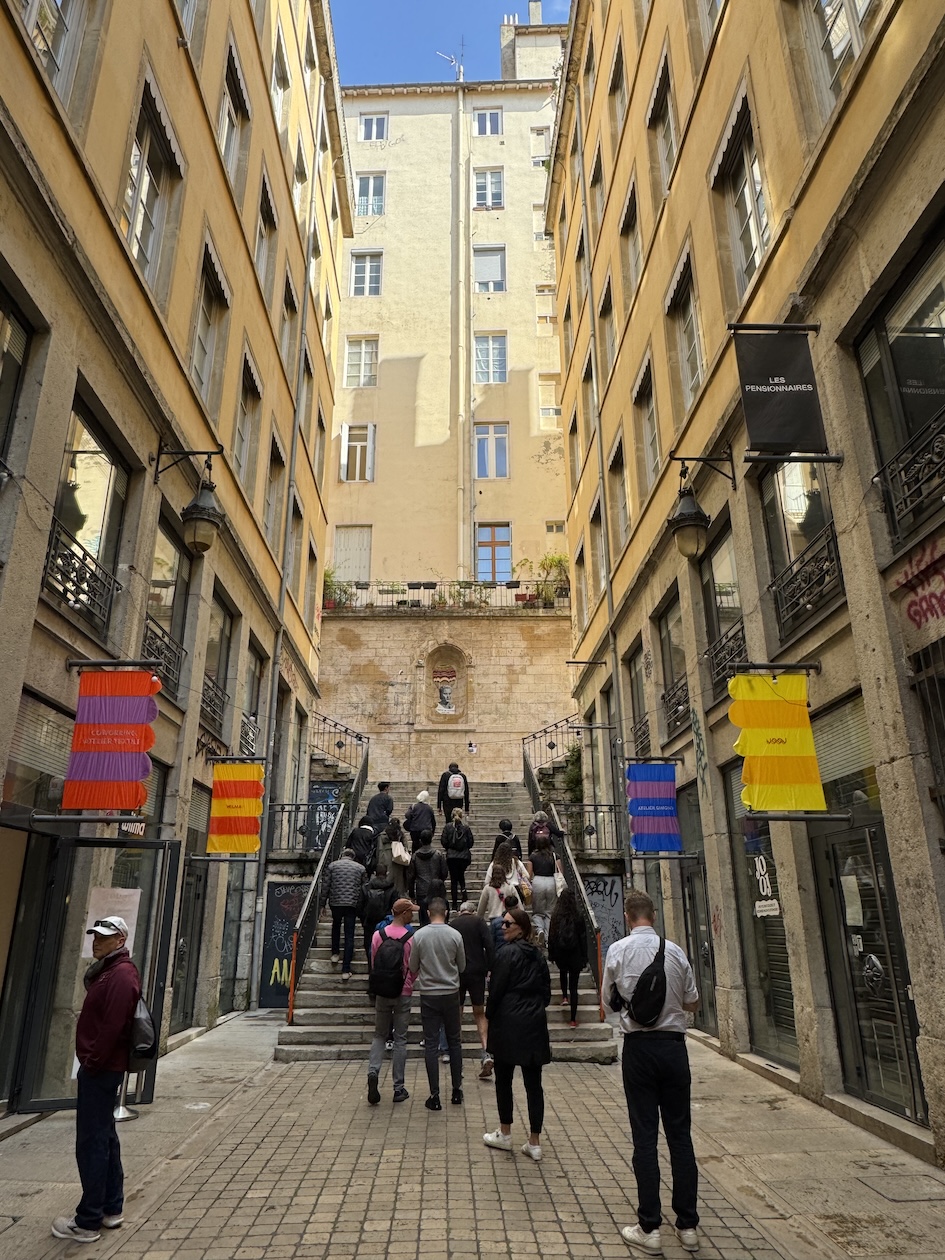
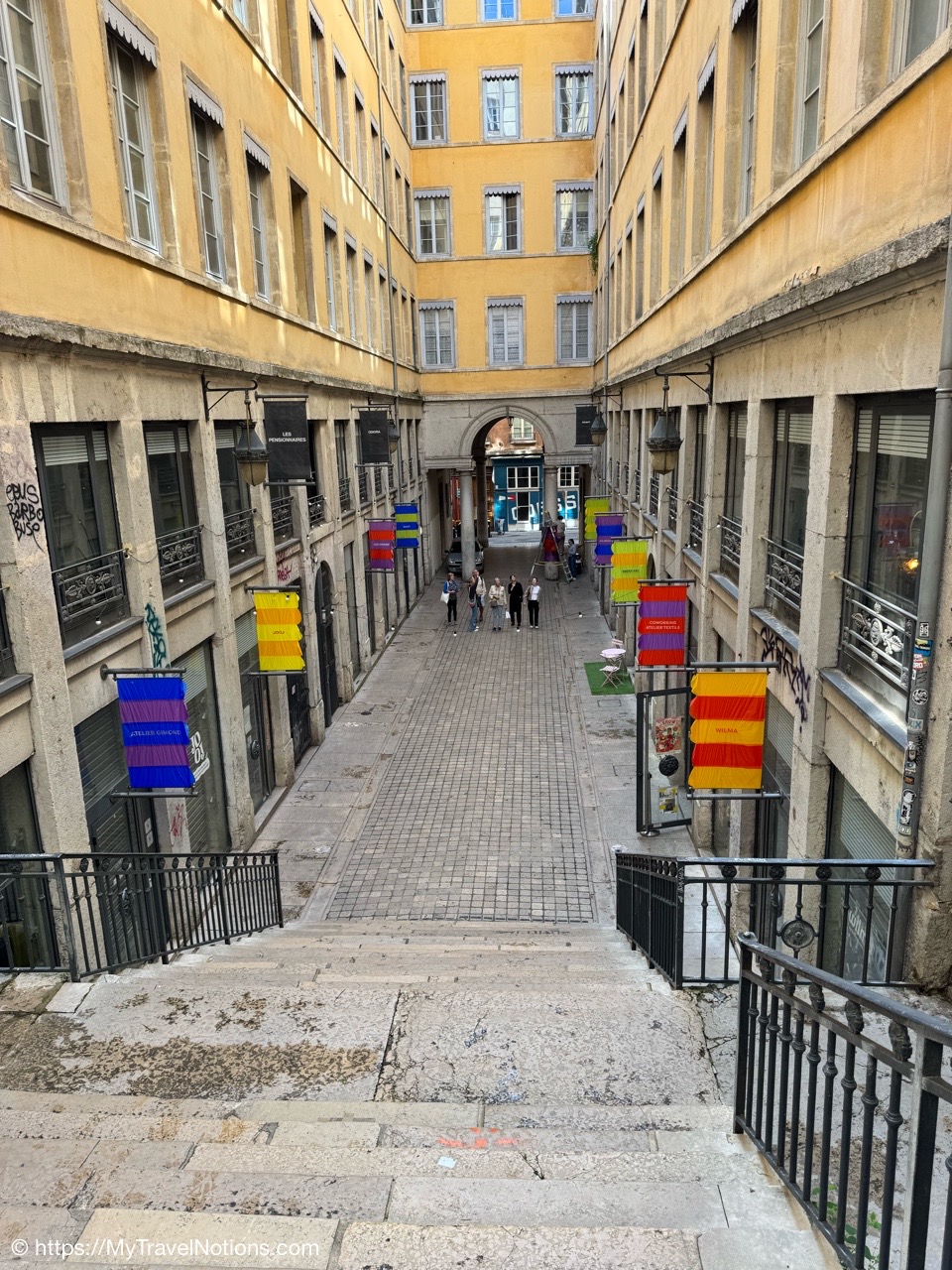
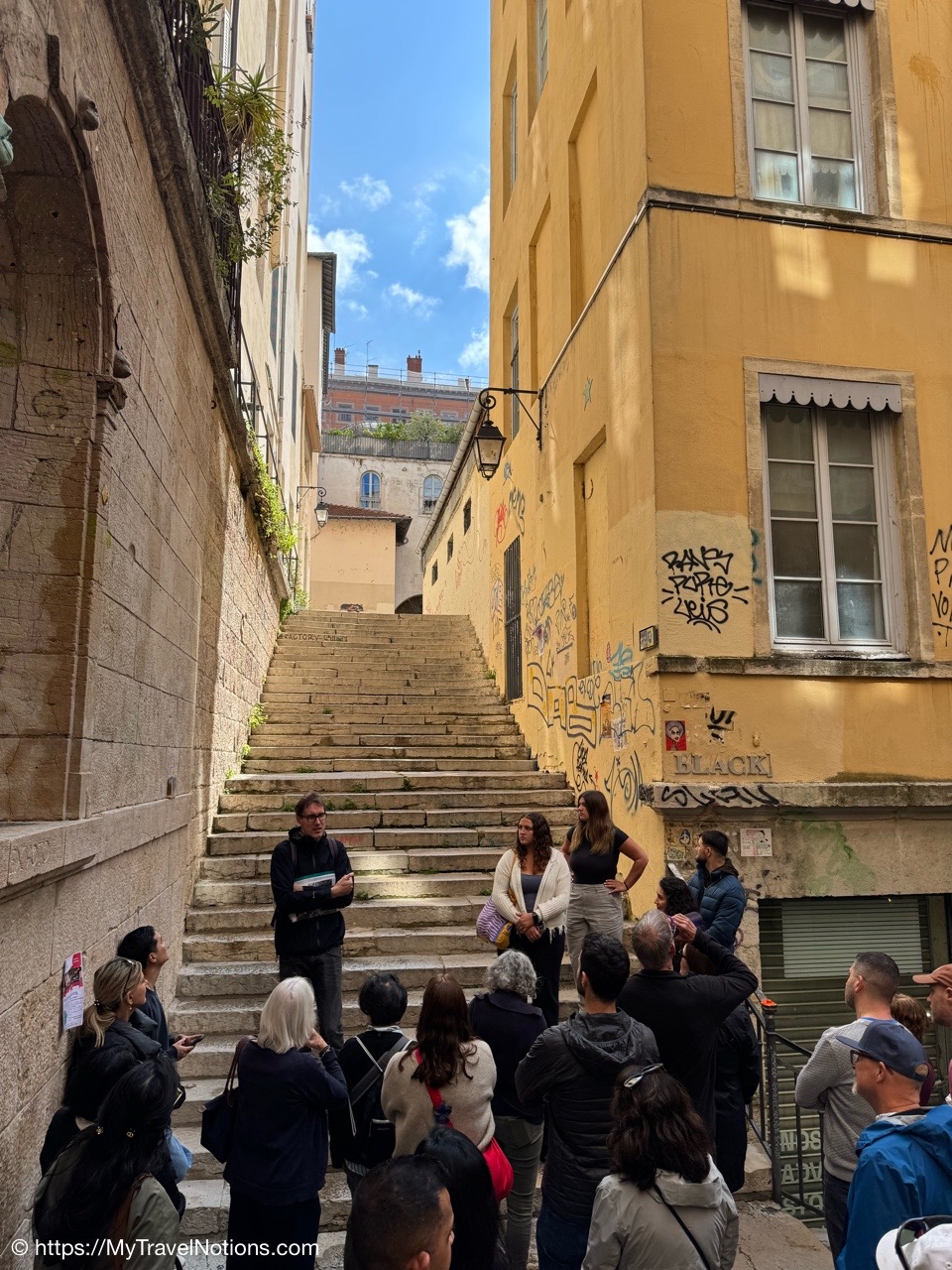
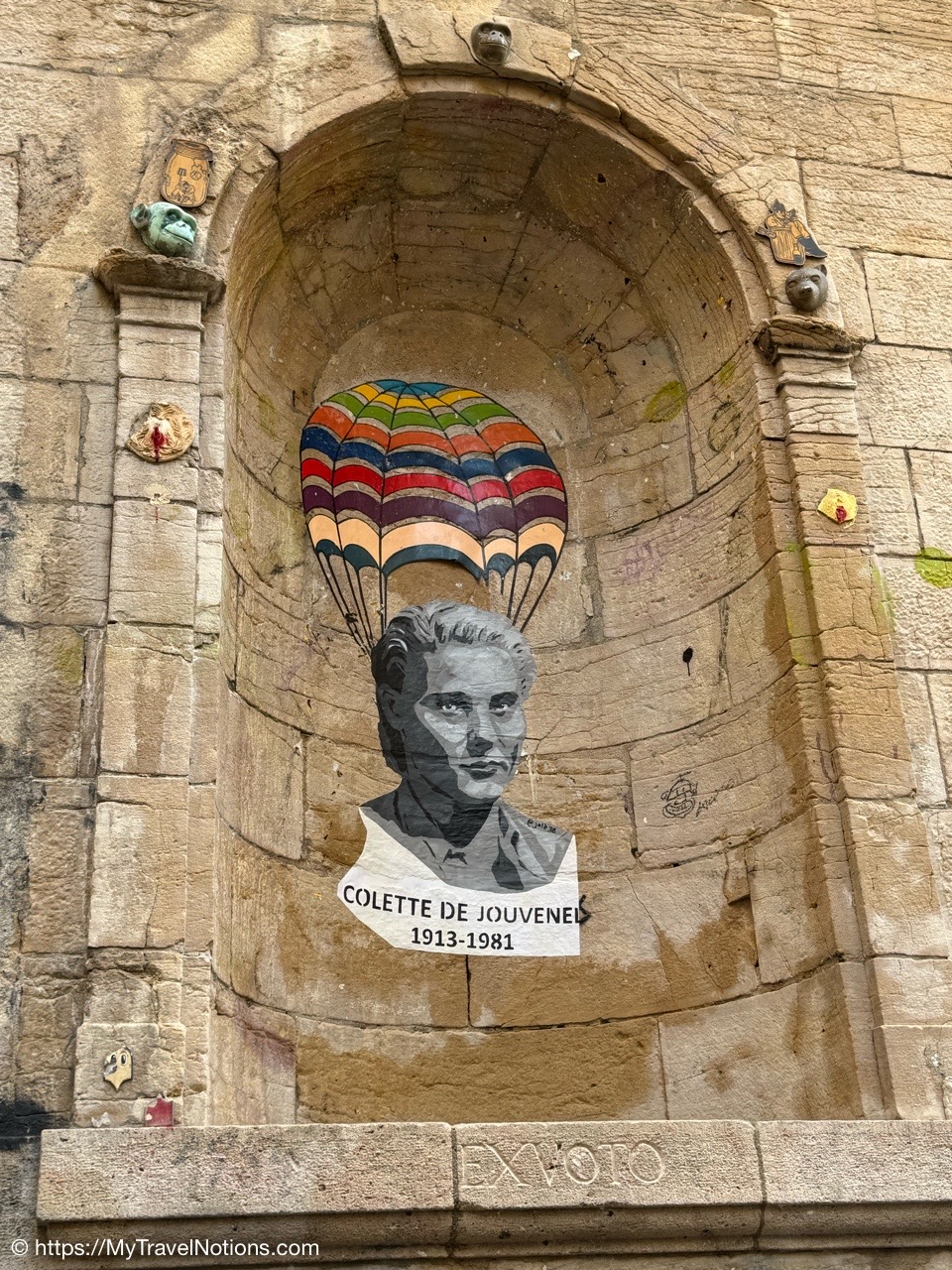
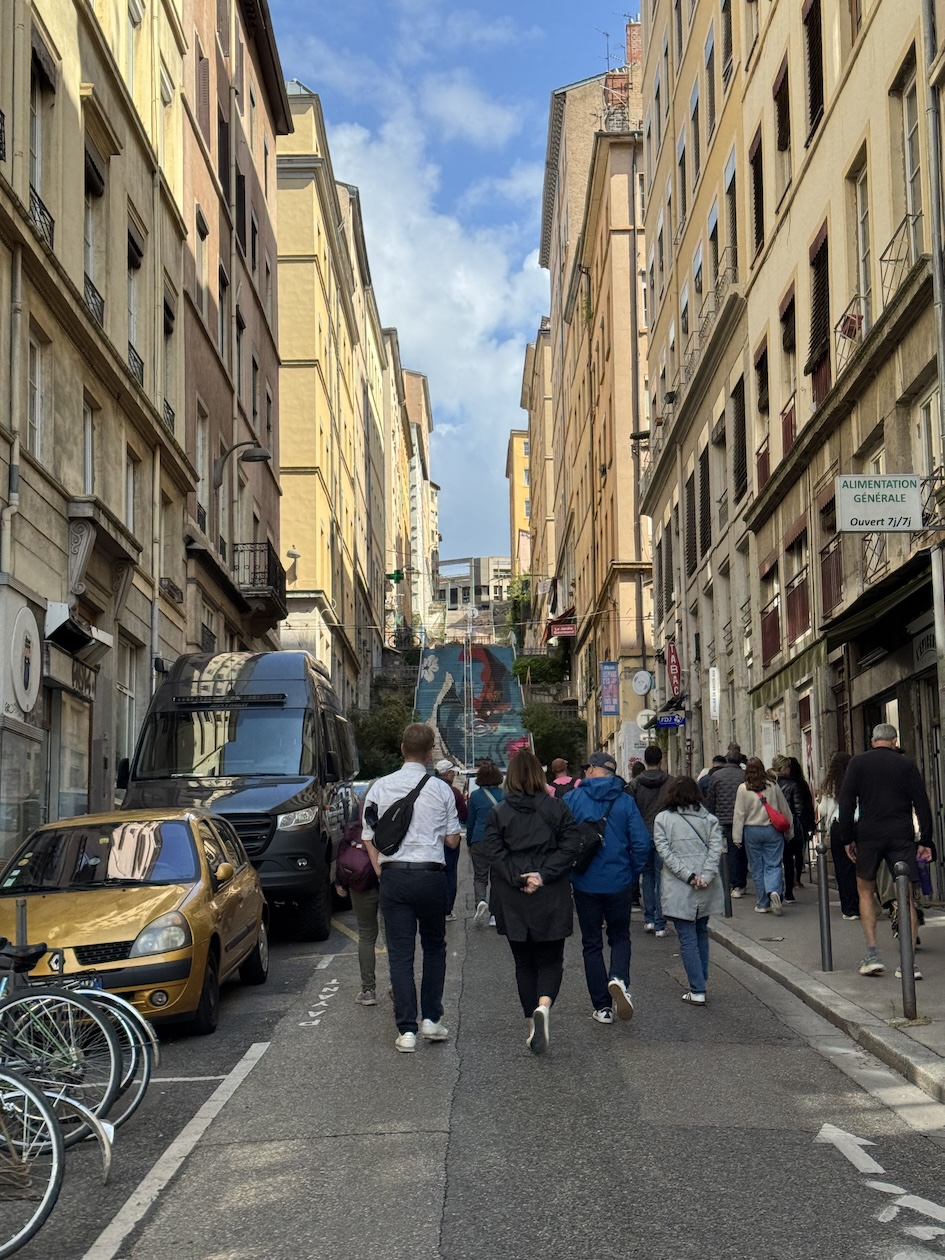
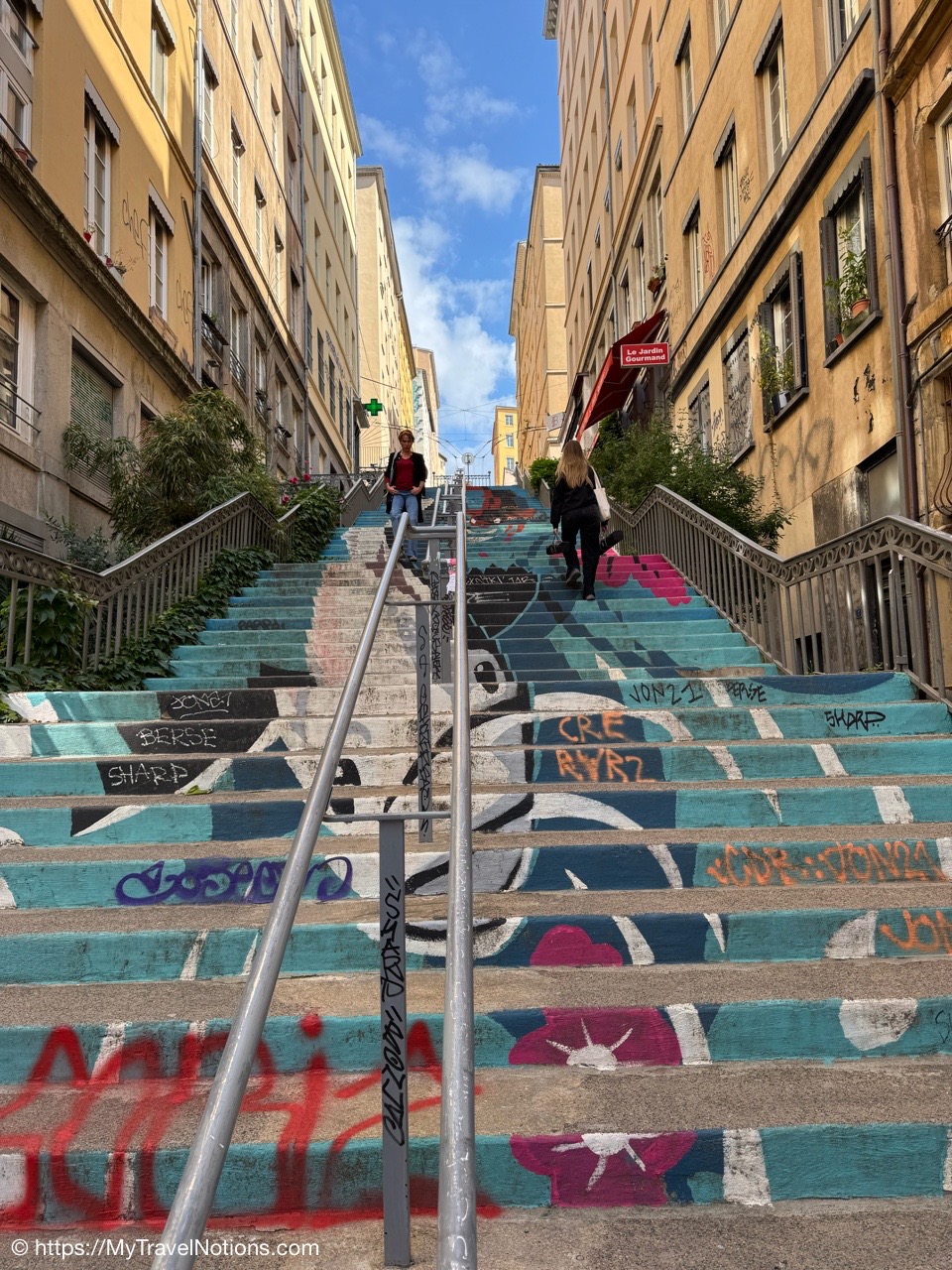
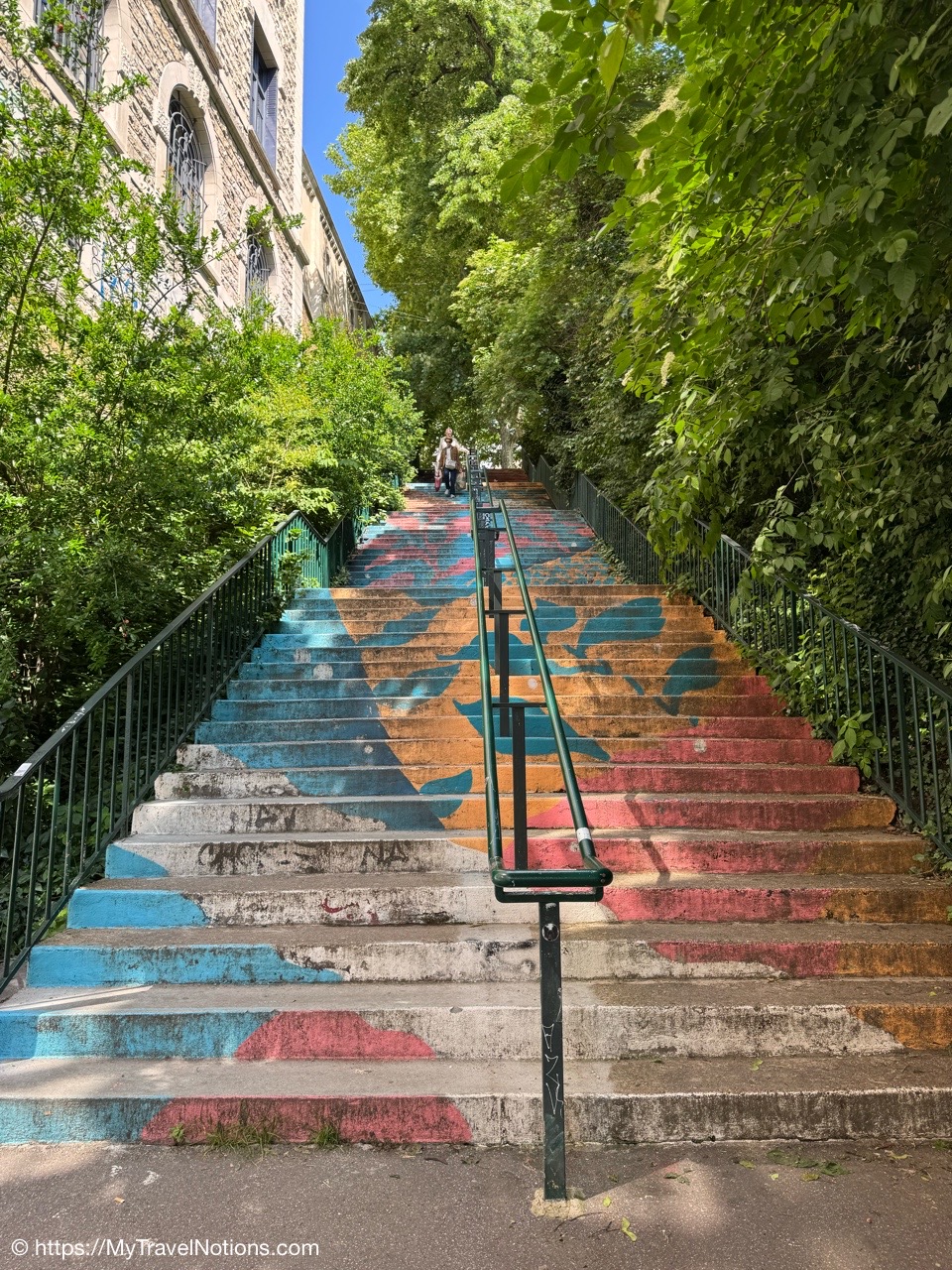
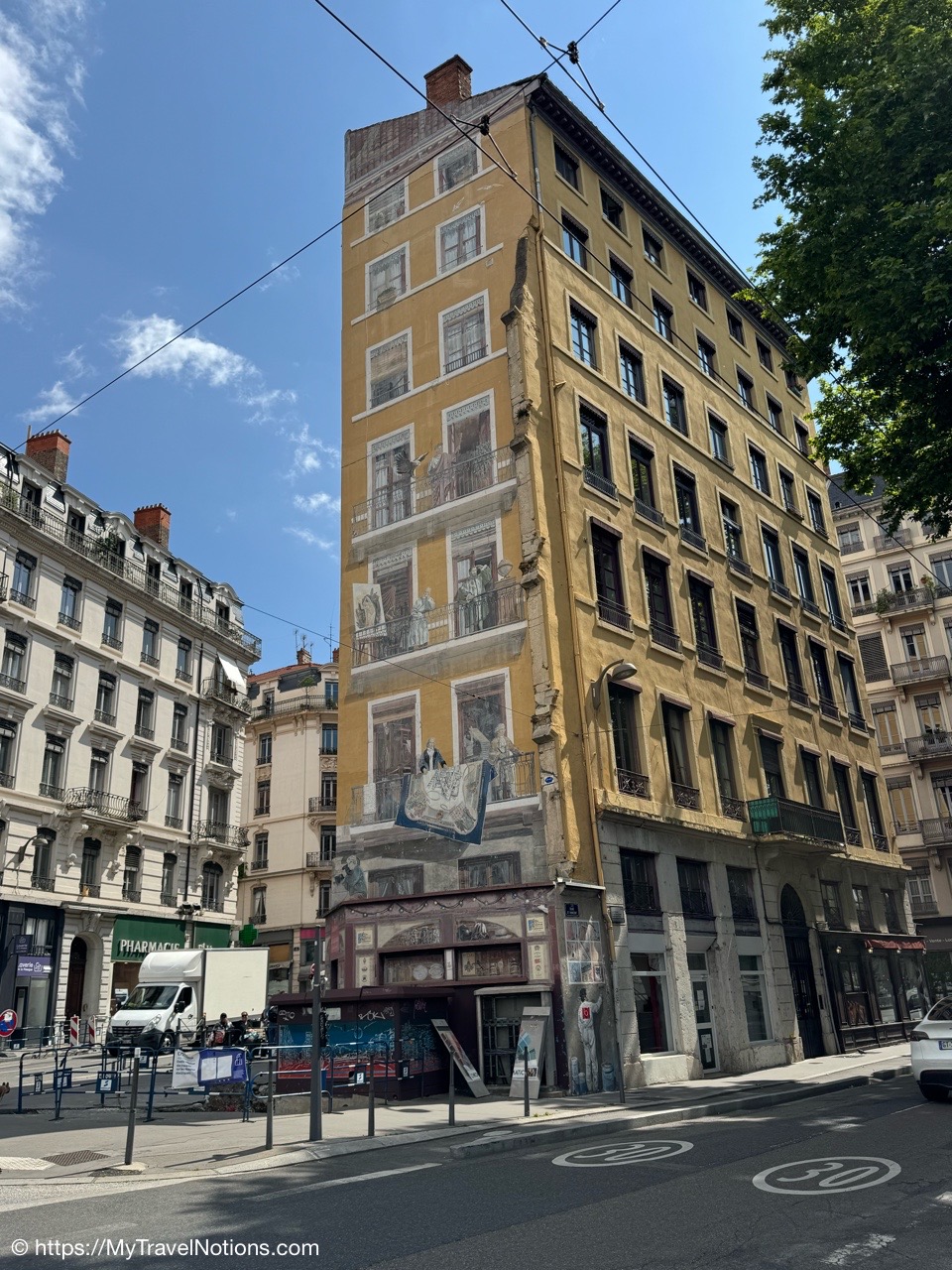
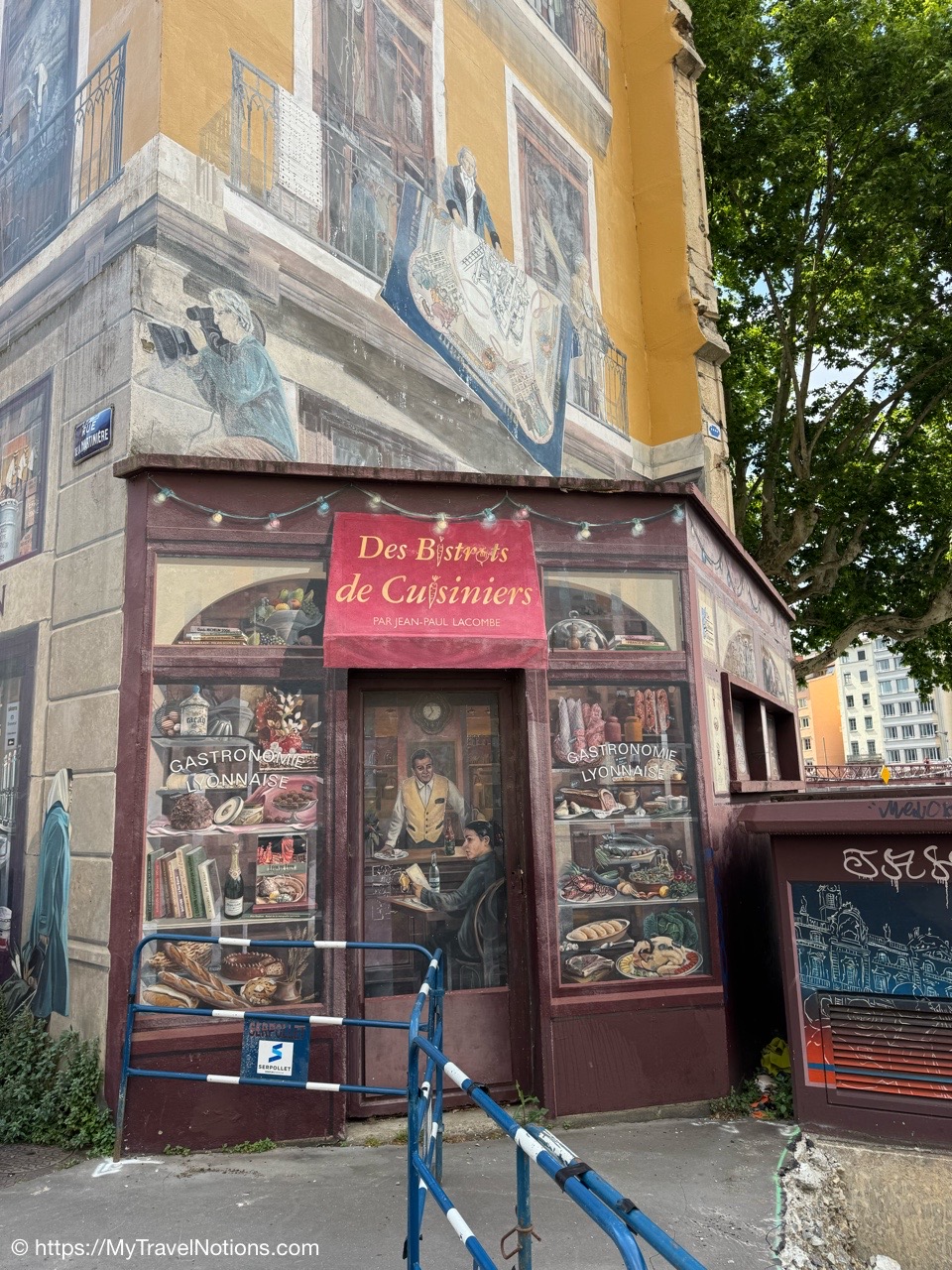
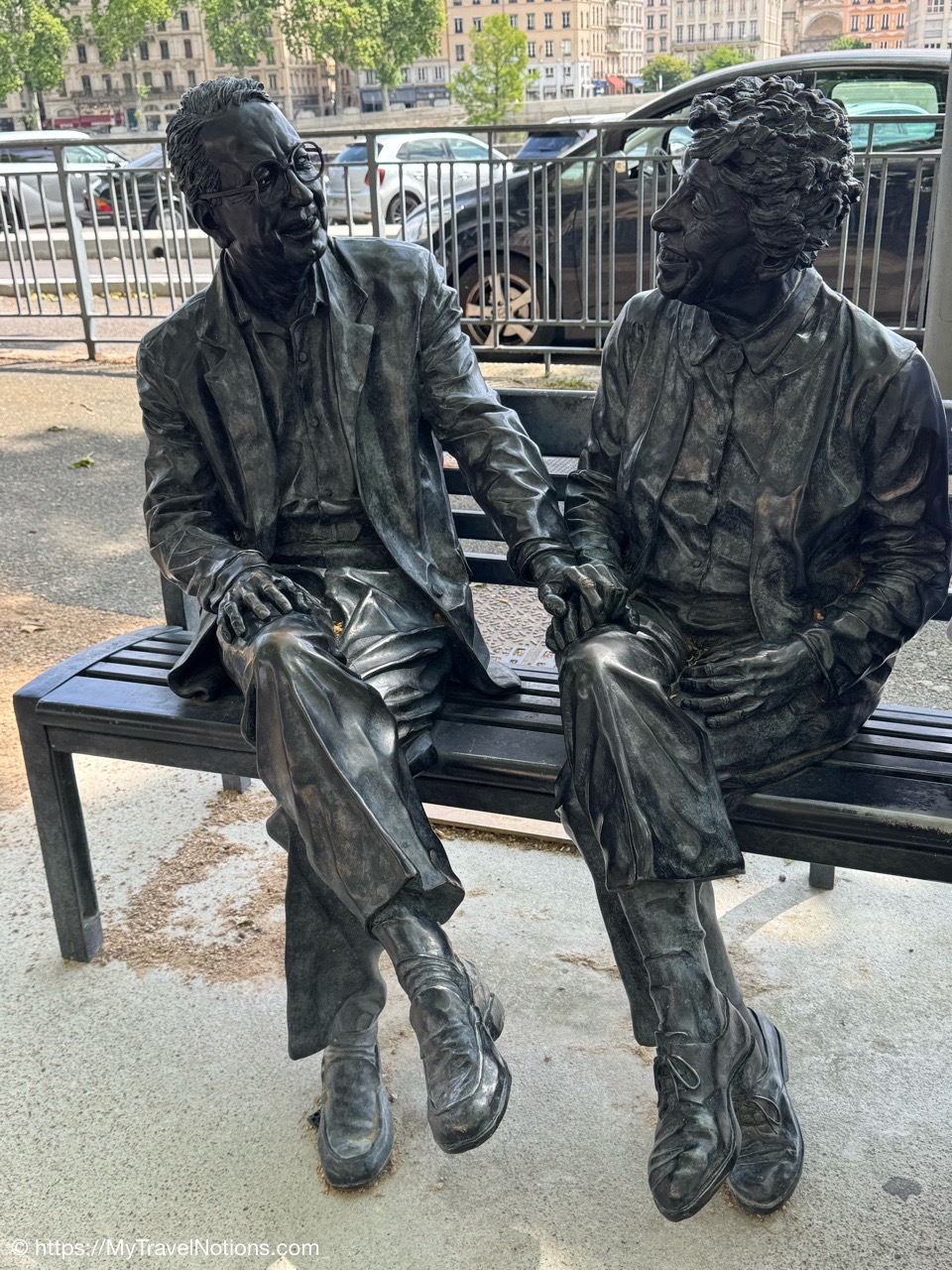
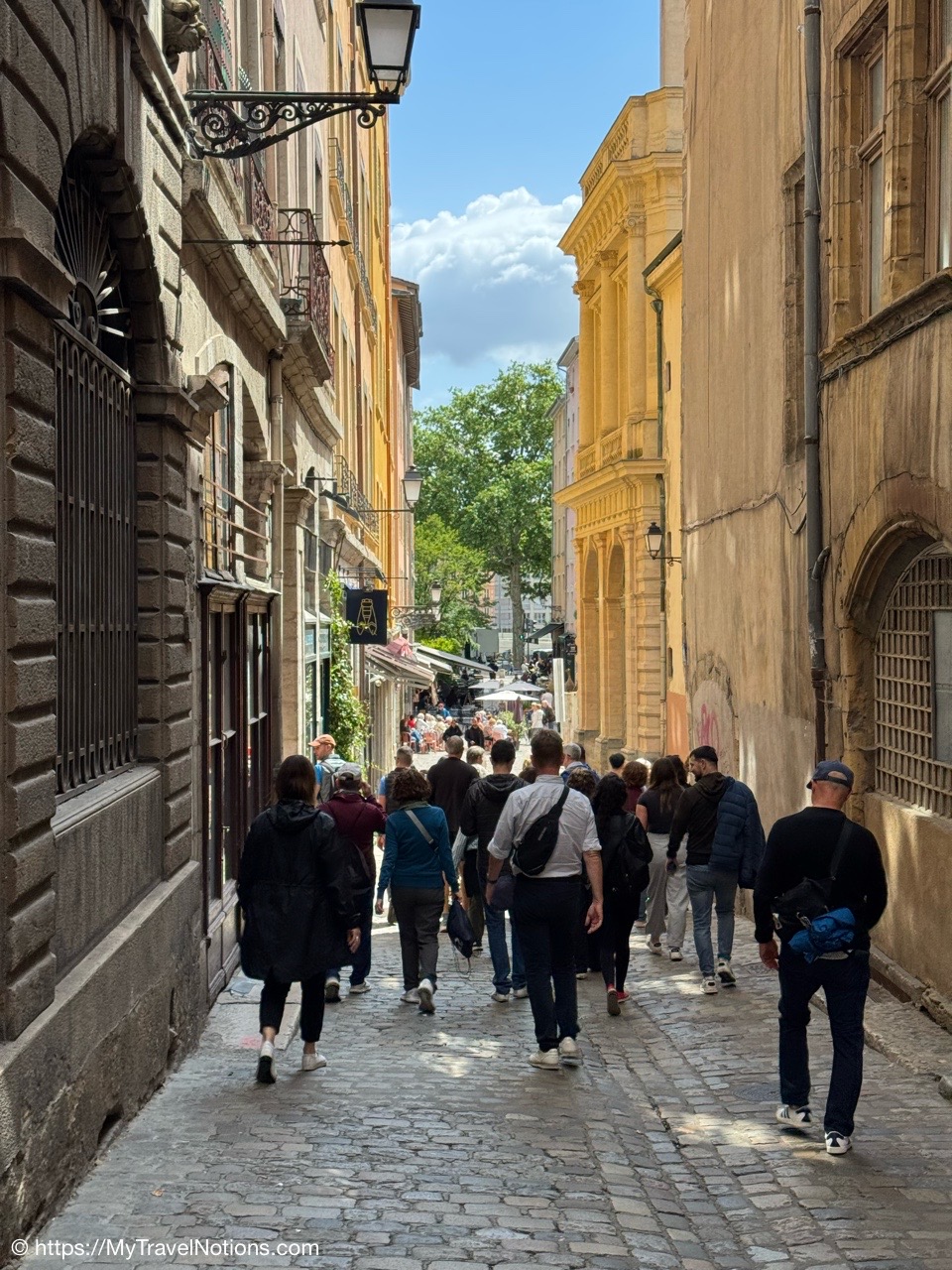
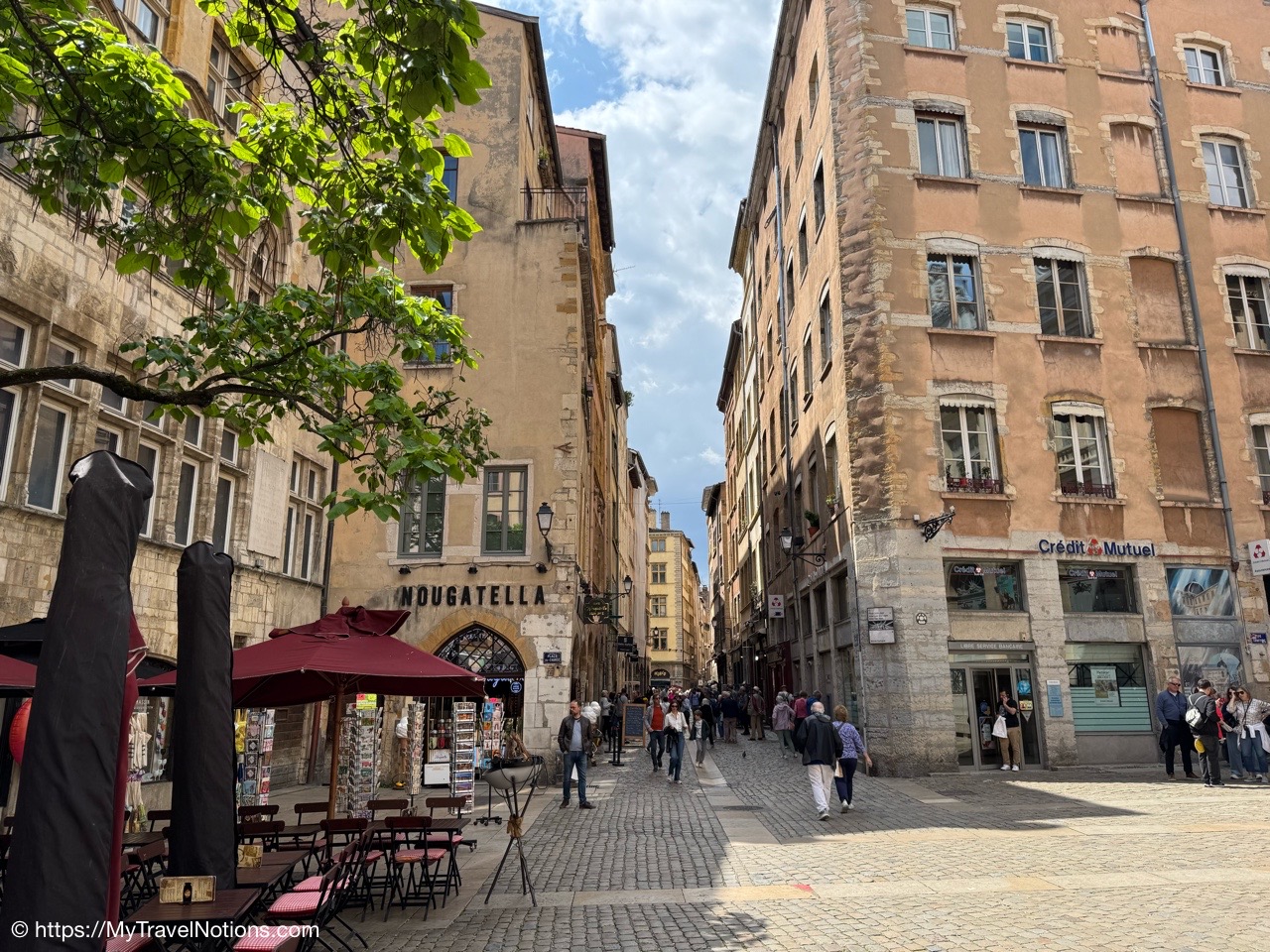
Me at one of several colorful staircases in Lyon during our walking tour. The Croix-Rousse district staircases have become canvases for colorful street art, like this one at Rue Pouteau and Rue des Tables-Claudiennes. (May 23, 2025)We met this tour group again at the Place des Terreaux, which features this impressive Hôtel de Ville or City Hall of Lyon and the grand Bartholdi Fountain, serving as a vibrant, historically rich public space and a key part of the city’s UNESCO World Heritage site. It was built between 1646 and 1672 but a 1674 fire required extensive reconstruction. And, has since undergone additional reconstructions and restorations. (May 23, 2025)The pediment and belfry of the impressive Hôtel de Ville or City Hall in the Place des Terreaux in Lyon. (May 23, 2025)Another close-up view of the impressive Hôtel de Ville or City Hall in the Place des Terreaux in Lyon. (May 23, 2025)The monumental Bartholdi Fountain in Lyon’s Place des Terreaux, near the City Hall, was designed by the renowned French sculptor Frédéric Auguste Bartholdi (creator of the Statue of Liberty), the fountain was unveiled in Lyon in 1892. (May 23, 2025)The monumental Bartholdi Fountain in Lyon’s Place des Terreaux, near the City Hall, was designed by the renowned French sculptor Frédéric Auguste Bartholdi (creator of the Statue of Liberty), the fountain was unveiled in Lyon in 1892. (May 23, 2025)A close-up of the Bartholdi Fountain in Lyon’s Place des Terreaux, near the City Hall where this central female figure is an allegorical representation of France, seated on a chariot. Four wild, rearing horses pull the chariot, representing France’s four major rivers. The horses appear full of energy, with flowing manes and muscles. (May 23, 2025)A view of the Place Des Terreaux where the Hôtel de Ville or city hall and the Fountain Bartholdi are located in Lyon. (May 23, 2025)From the from the Place des Terreaux, we took the stairs up to the traboules or passageways in the Croix-Rousse district, which was incorporated into Lyon in 1852 and was the “birthplace of the Canuts,” the silk workers of Lyon. (May 23, 2025)Entering the Passage Thiaffait, a famous traboule (covered passageway) in Lyon, is located on the slopes of the Croix-Rousse hill which has been transformed into a hub for designers and artists. The Passage Thiaffait is a UNESCO World Heritage Site that offers a glimpse into both Lyon’s industrial past and its modern artistic culture. (May 23, 2025)Entering the Passage Thiaffait, a famous traboule (covered passageway) in Lyon, is located on the slopes of the Croix-Rousse hill which has been transformed into a hub for designers and artists. The Passage Thiaffait is a UNESCO World Heritage Site that offers a glimpse into both Lyon’s industrial past and its modern artistic culture. (May 23, 2025)Walking through the Passage Thiaffait, a famous traboule (covered passageway) in Lyon, is located on the slopes of the Croix-Rousse hill which has been transformed into a hub for designers and artists. The Passage Thiaffait is a UNESCO World Heritage Site that offers a glimpse into both Lyon’s industrial past and its modern artistic culture. (May 23, 2025)A view down, from the stairway, into the Passage Thiaffait, a famous traboule (covered passageway) in Lyon, is located on the slopes of the Croix-Rousse hill which has been transformed into a hub for designers and artists. The Passage Thiaffait is a UNESCO World Heritage Site that offers a glimpse into both Lyon’s industrial past and its modern artistic culture. (May 23, 2025)Standing at the top of the staircase of the into the Passage Thiaffait, a famous traboule (covered passageway) in Lyon, is located on the slopes of the Croix-Rousse hill which has been transformed into a hub for designers and artists. (May 23, 2025)The artwork of Colette De Jouvenels (1913-1981) in a cove above the staircase of the Passage Thiaffait a famous traboule (covered passageway) in Lyon, is located on the slopes of the Croix-Rousse hill. De Jouvenels was a mime, actress and journalist. Colette is best known in the English-speaking world for her 1944 novella Gigi, which was the basis for the 1958 film and the 1973 stage production of the same name. (May 23, 2025)Walking up the Rue Pouteau in the Croix-Rousse district of Lyon, the neighborhood historically known for its silk workers. And, for his colorful steep stairs. (May 23, 2025)The colorful stairs up the Rue Pouteau in the Croix-Rousse district of Lyon. (May 23, 2025)Walking along the steep historic street of Montée de la Grande Côte, that connects the Terreaux quarter with the Croix-Rousse hill, is known for its role in the silk industry and its blend of old and new architecture. It is a pedestrian-friendly area featuring shops, bars, restaurants and public spaces like the colorful staircases. (May 23, 2025)Walking along the steep historic street of Montée de la Grande Côte, that connects the Terreaux quarter with the Croix-Rousse hill, is known for its role in the silk industry and its blend of old and new architecture. It is a pedestrian-friendly area featuring shops, bars, restaurants and public spaces like the colorful staircases. (May 23, 2025)Walking along the steep historic street of Montée de la Grande Côte, that connects the Terreaux quarter with the Croix-Rousse hill, is known for its role in the silk industry and its blend of old and new architecture. It is a pedestrian-friendly area featuring shops, bars, restaurants and public spaces like the colorful staircases. (May 23, 2025)I just love the different pieces of art along the walls in the Croix-Rousse district of Lyon. The monkey faces you can see on the walls in Lyon are street art by the artists Zorm and Kalouf, as well as works by the French art duo Monkey Bird. While Lyon is known for its large, realistic murals, many smaller pieces of urban art feature monkeys and other animals. (May 23, 2025)Another colorful staircase in Lyon. (May 23, 2025)Another view of La Fresque des Lyonnais or Mural of Lyonnais, which is painted on a residential apartment building, is a large, realistic, trompe-l’oeil mural that depicts the history and people of Lyon. The mural covers the back of the bright yellow building and on the Saône river side of the 1st arrondissement. (May 23, 2025)Walking around the side of the residential apartment building of La Fresque des Lyonnais or Mural of Lyonnais in Lyon. (May 23, 2025)A close-up side view of La Fresque des Lyonnais or Mural of Lyonnais in Lyon. (May 23, 2025)A close-up side view of La Fresque des Lyonnais or Mural of Lyonnais in Lyon. (May 23, 2025)A close-up side view of La Fresque des Lyonnais or Mural of Lyonnais in Lyon. (May 23, 2025)A close-up side view of La Fresque des Lyonnais or Mural of Lyonnais in Lyon. (May 23, 2025)A close-up side view of La Fresque des Lyonnais or Mural of Lyonnais in Lyon. (May 23, 2025)A view of the Saône, a major river in eastern France that joins the Rhône River in Lyon. (May 23, 2025)A view of the Saône, a major river in eastern France that joins the Rhône River in Lyon. (May 23, 2025)Walking across the Passerelle Saint-Vincent pedestrian suspension bridge that crosses the Saône River in Lyon. (May 23, 2025)Views of the Saône River in Lyon while walking across the Passerelle Saint-Vincent pedestrian suspension bridge. (May 23, 2025)Admiring the man and woman, Régis and Annie Neyret bronze sculptures, holding hands on a bench along the Quais de Saône or banks of the Saône River in front of the Vieux Lyon or Old Town Lyon. The statue commemorates Annie and Régis Neyret, a couple who campaigned for decades to preserve the historic Vieux-Lyon (Old Lyon) neighborhood. The sculpture was inaugurated in December 2023. (May 23, 2025)Walking through the Vieux Lyon or Old Town Lyon. (May 23, 2025)Walking through Vieux Lyon or Old Town Lyon. (May 23, 2025)Heading into another traboule that connects the Quai Romain Rolland to the Place du Gouvernement in Lyon. This traboule passes through the site of a 15th-century inn and includes a notable staircase. (May 23, 2025)Walking up the staircase into the Quai Romain Rolland to the Place du Gouvernement traboule in Lyon. (May 23, 2025)Passing through the Quai Romain Rolland to the Place du Gouvernement traboule of a former 15th century inn in Lyon. (May 23, 2025)Standing inside the courtyard and passageway through the Quai Romain Rolland to the Place du Gouvernement traboule of a former 15th century inn in Lyon. (May 23, 2025)A balcony off the courtyard and passageway through the Quai Romain Rolland to the Place du Gouvernement traboule of a former 15th century inn in Lyon. (May 23, 2025)
Lyon, known as the capital of gastronomy, is a wonderfully walkable French city that offers a blend of of Roman ruins, Renaissance architecture, and a less-touristy atmosphere than Paris while also being a UNESCO World Heritage Sit.It’s also famous for its gourmet restaurants, bustling markets along the the Saône River, and even hidden Renaissance passageways called traboules. It’s a city full of food, history and culture.
We’ve been in Lyon for several days now and by we I mean, Alice, Rosie and me. We’ve taken two walking tours and now this Lyon Street Food walking tour.
A number of the things we saw on the walking tours were also a part of the food tour… just minus the food plus a Renaissance Festival.
Lyonnaise cuisine is so famous, it is considered the gastronomical capital of France. But it’s street food, well most of it, was good and some of it…well, just was not.
But here’s a chance to check out some of Lyon and find out what’s meant by street food in Lyon. Here we go.
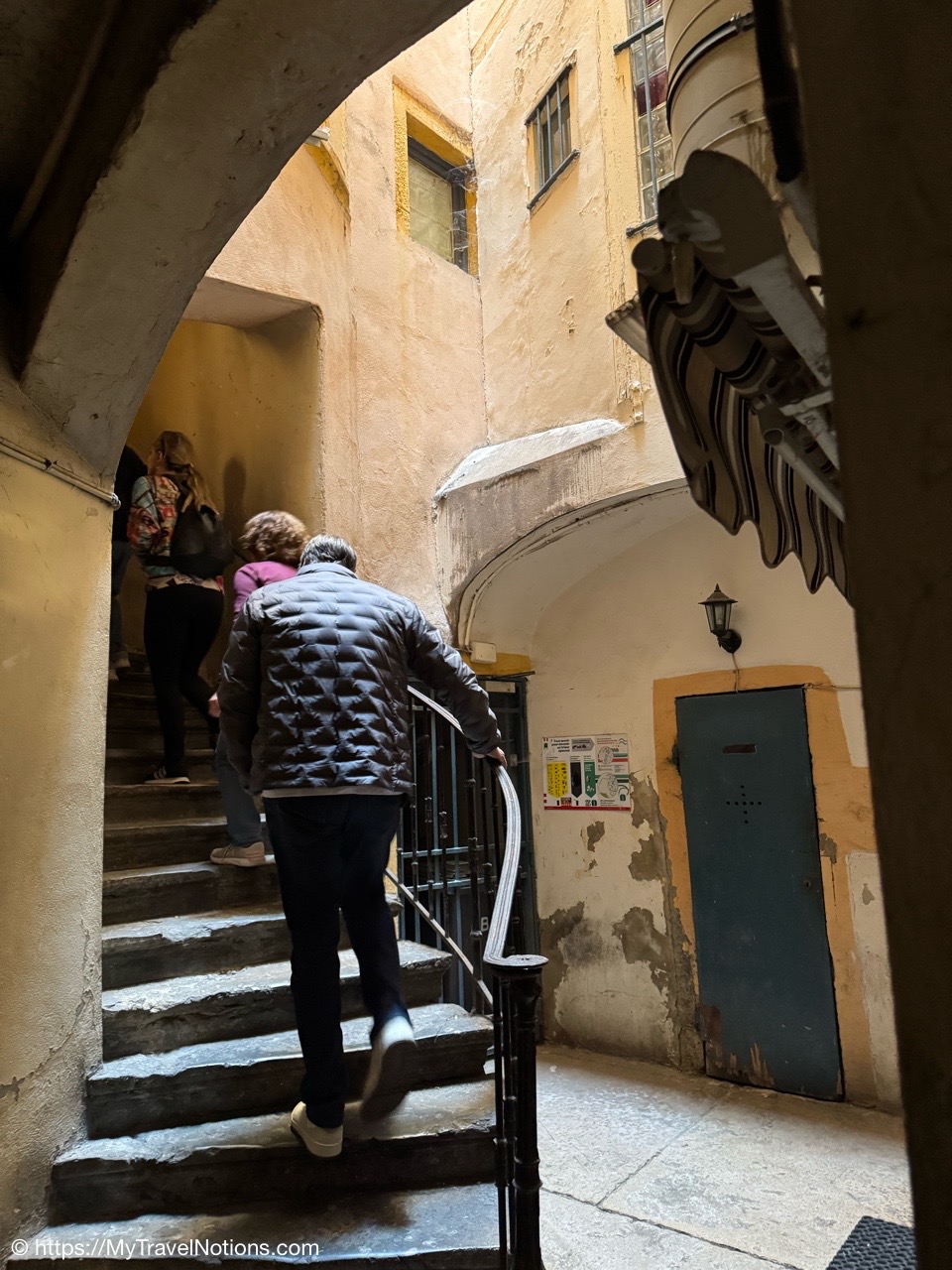
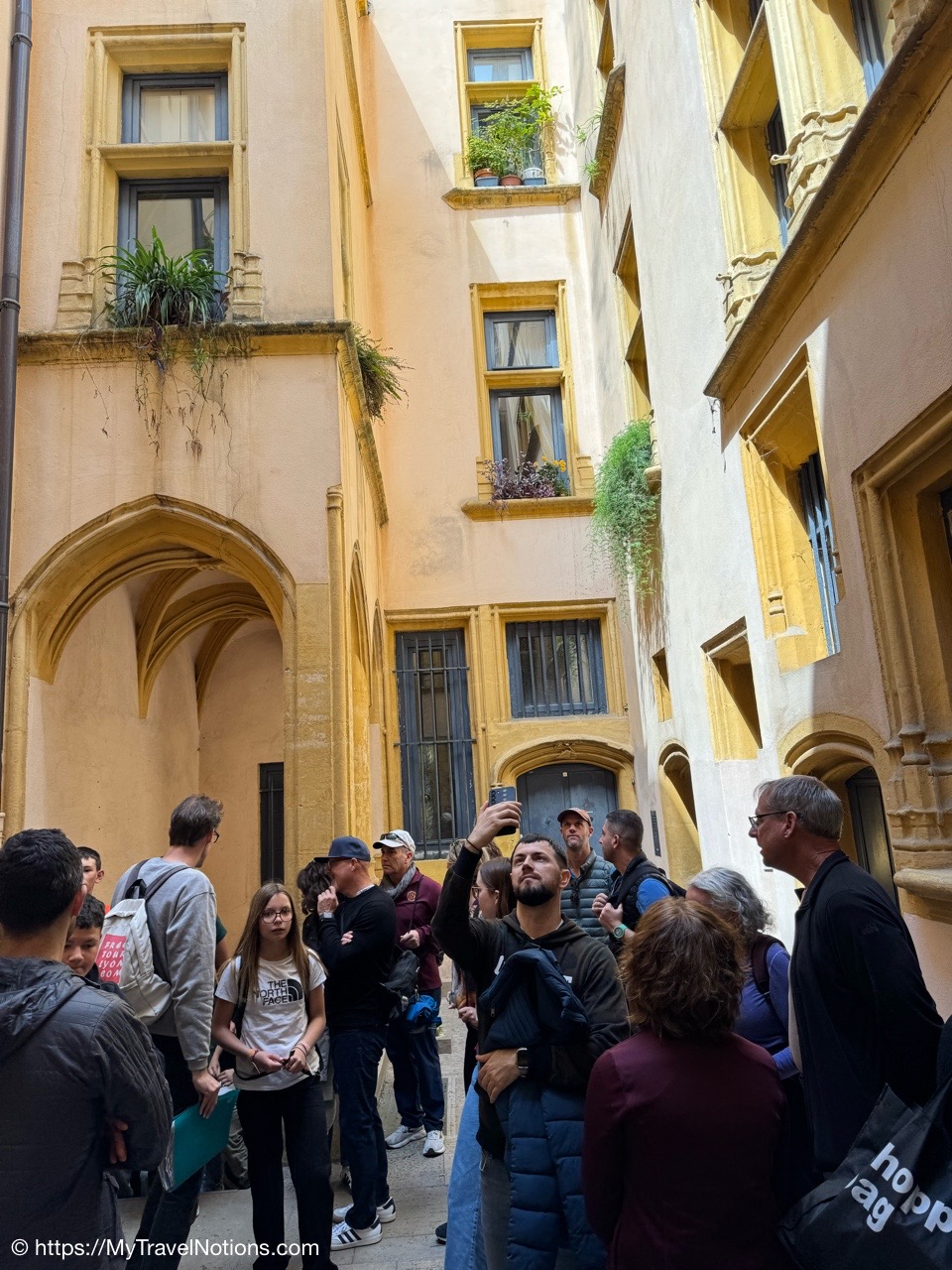
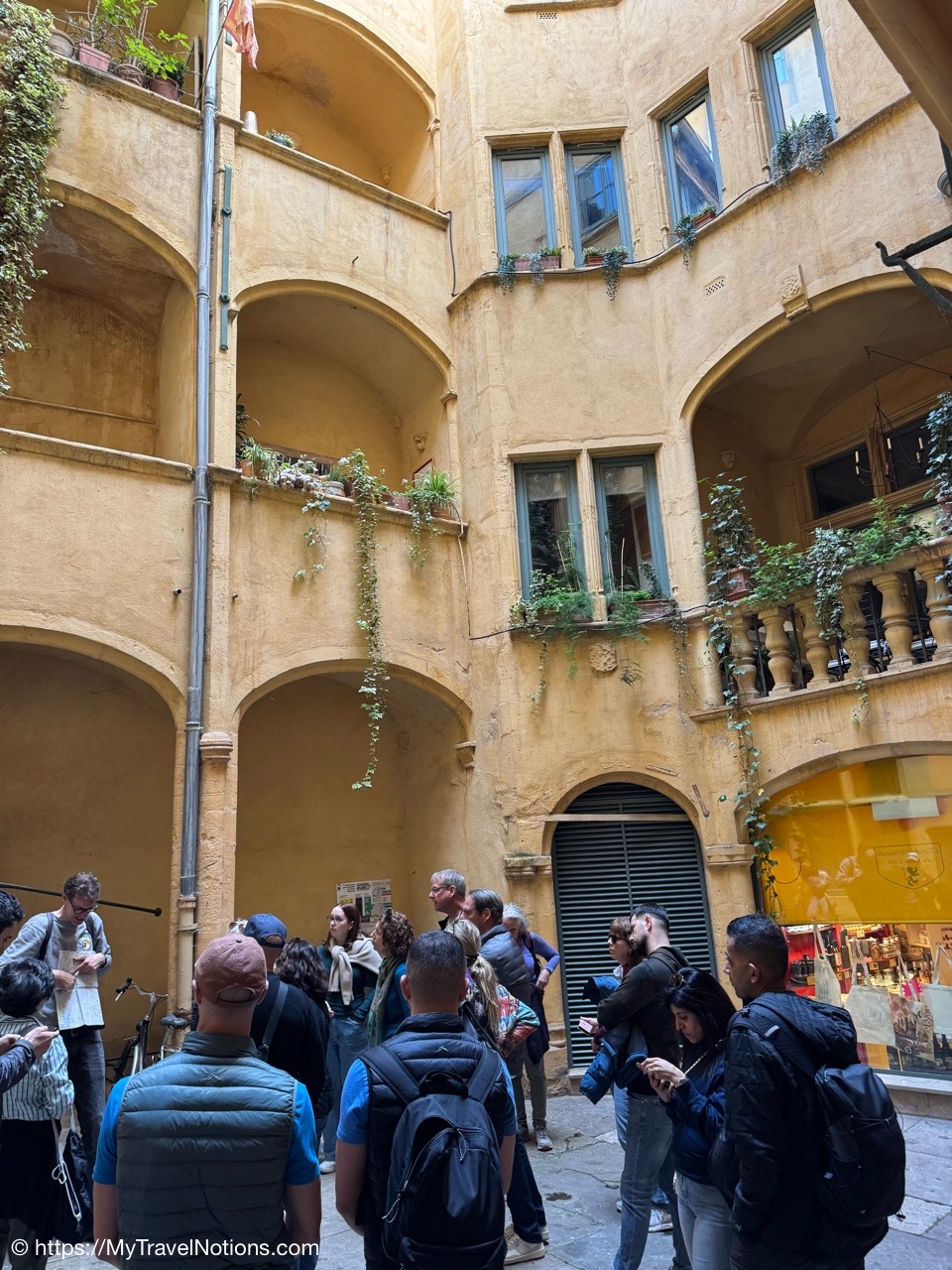
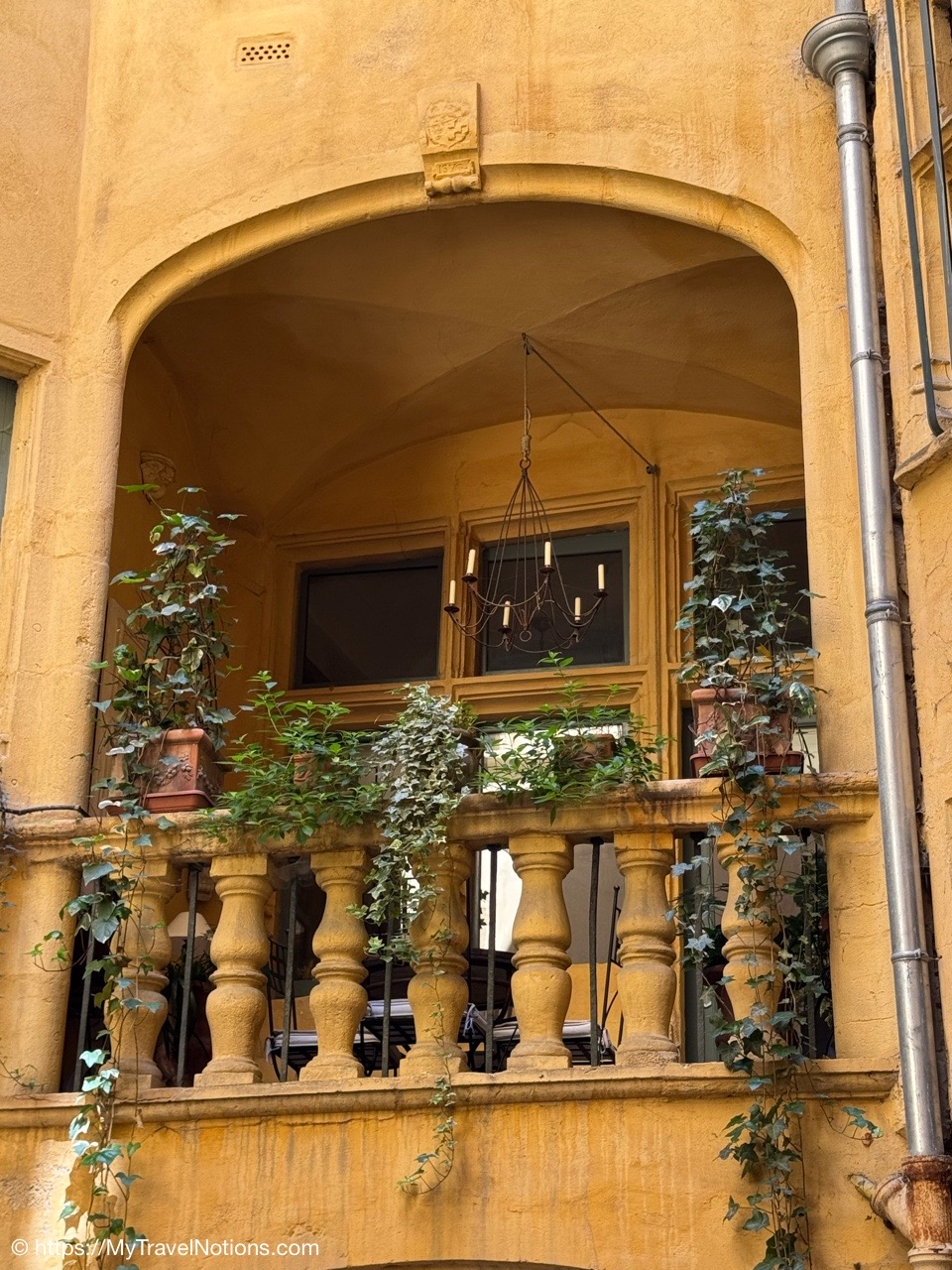
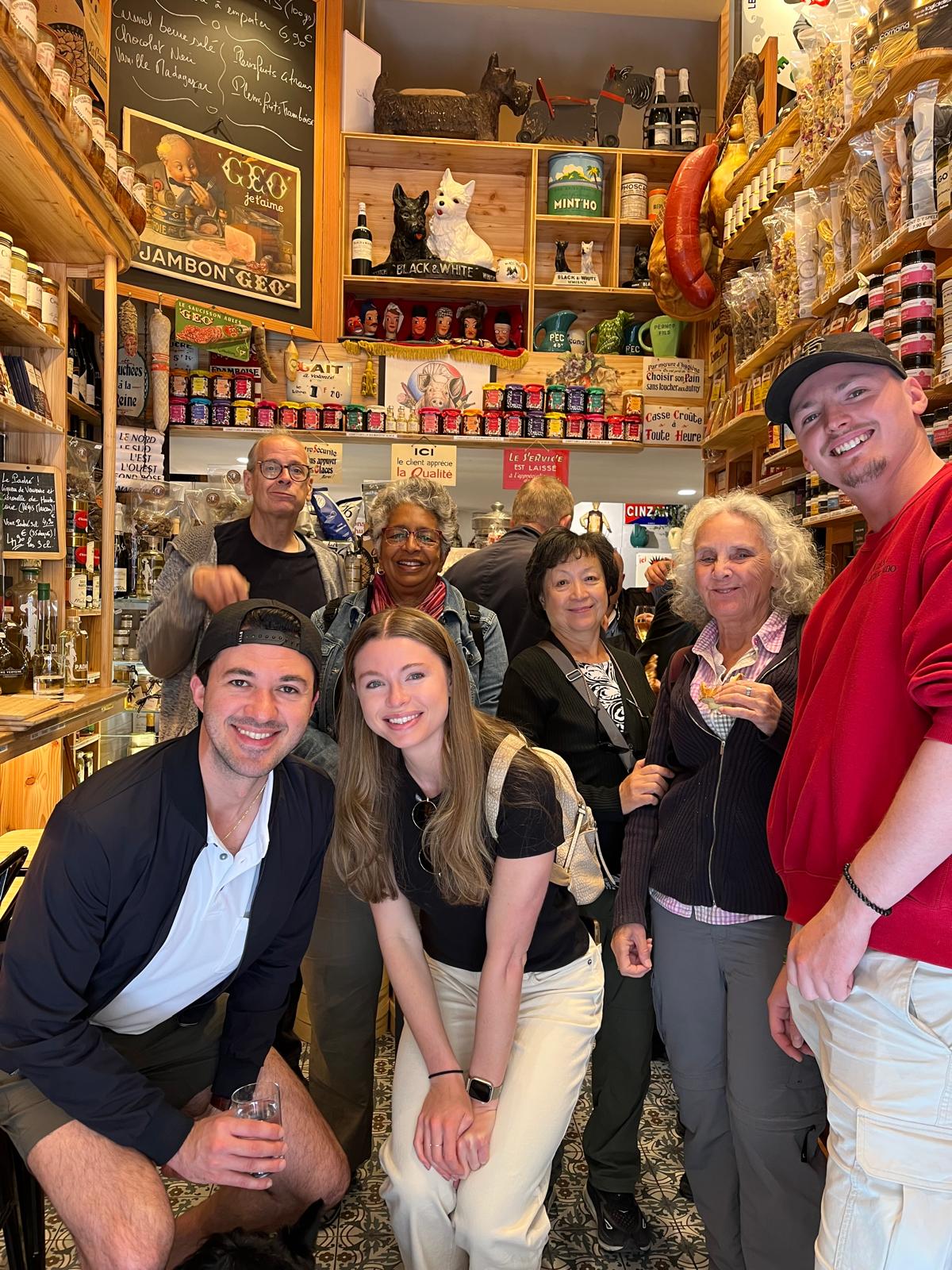
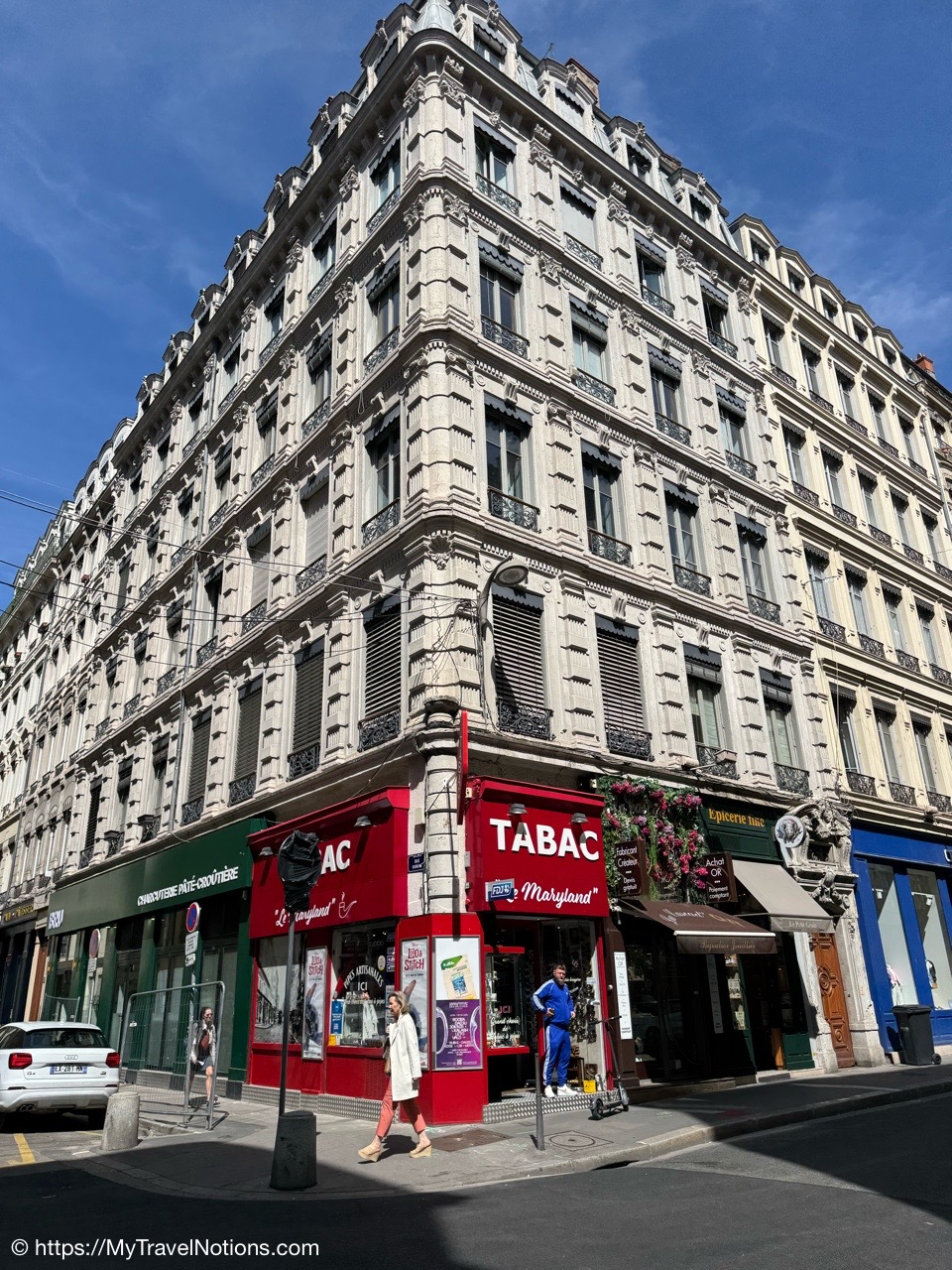
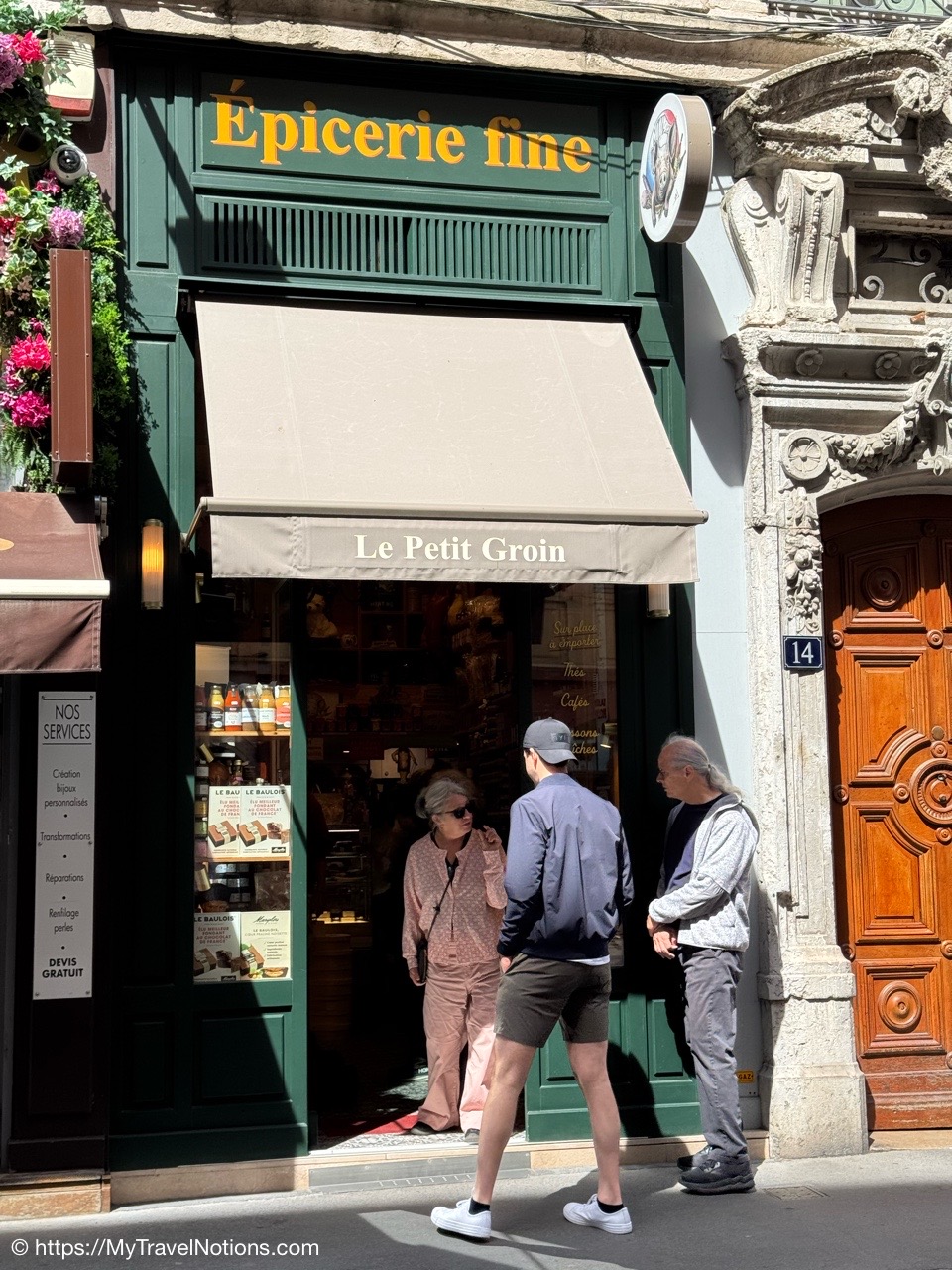
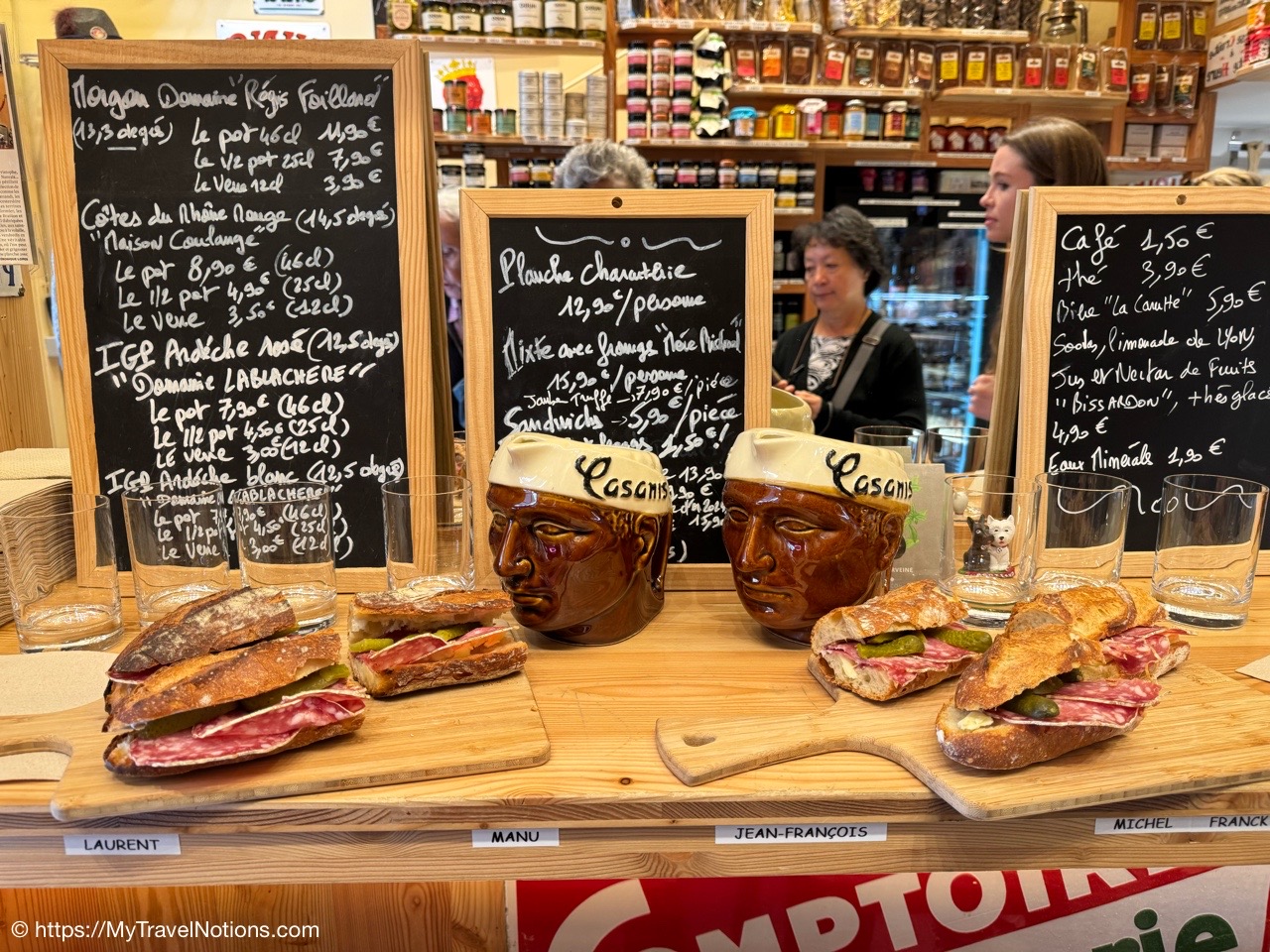
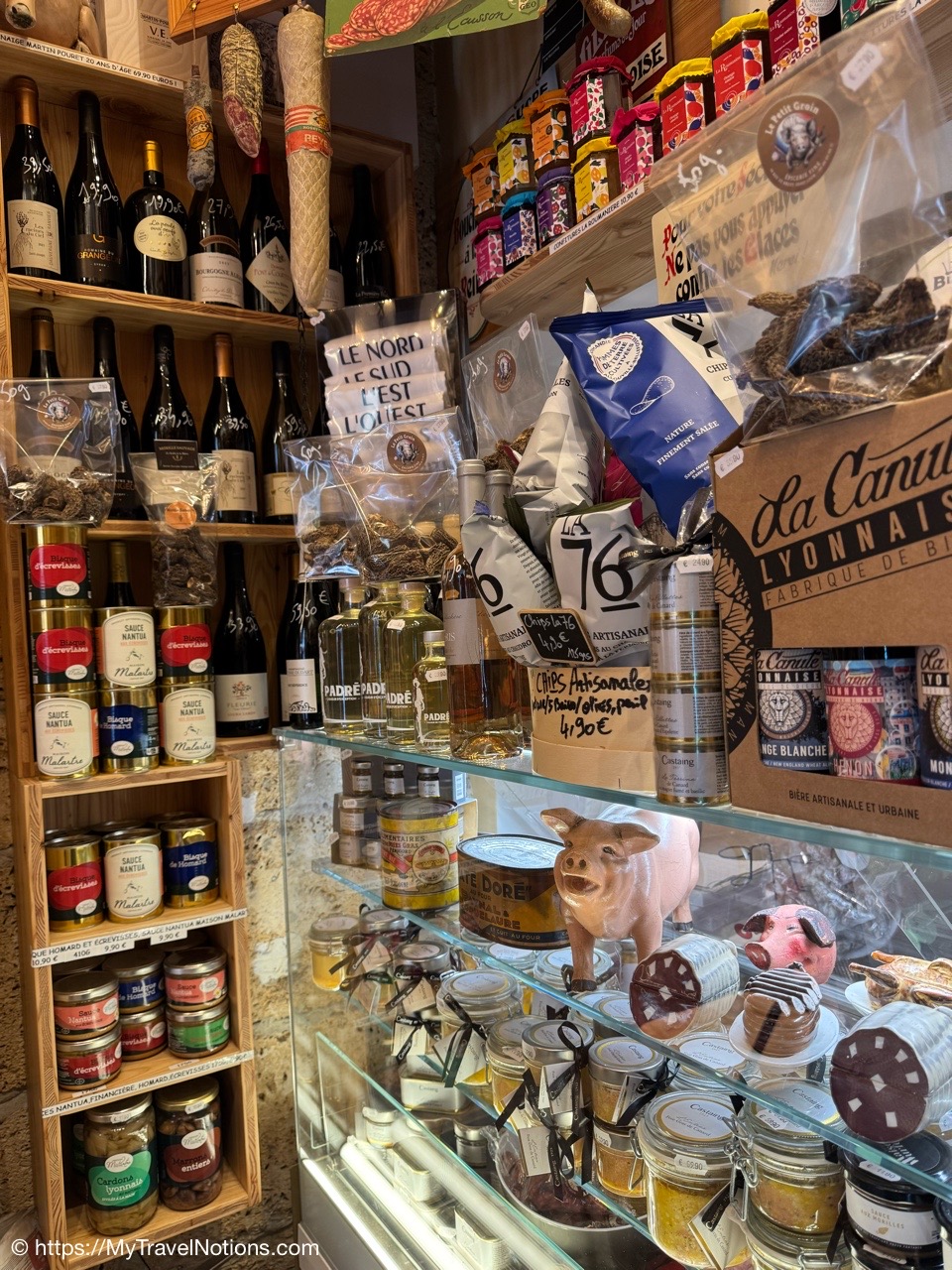
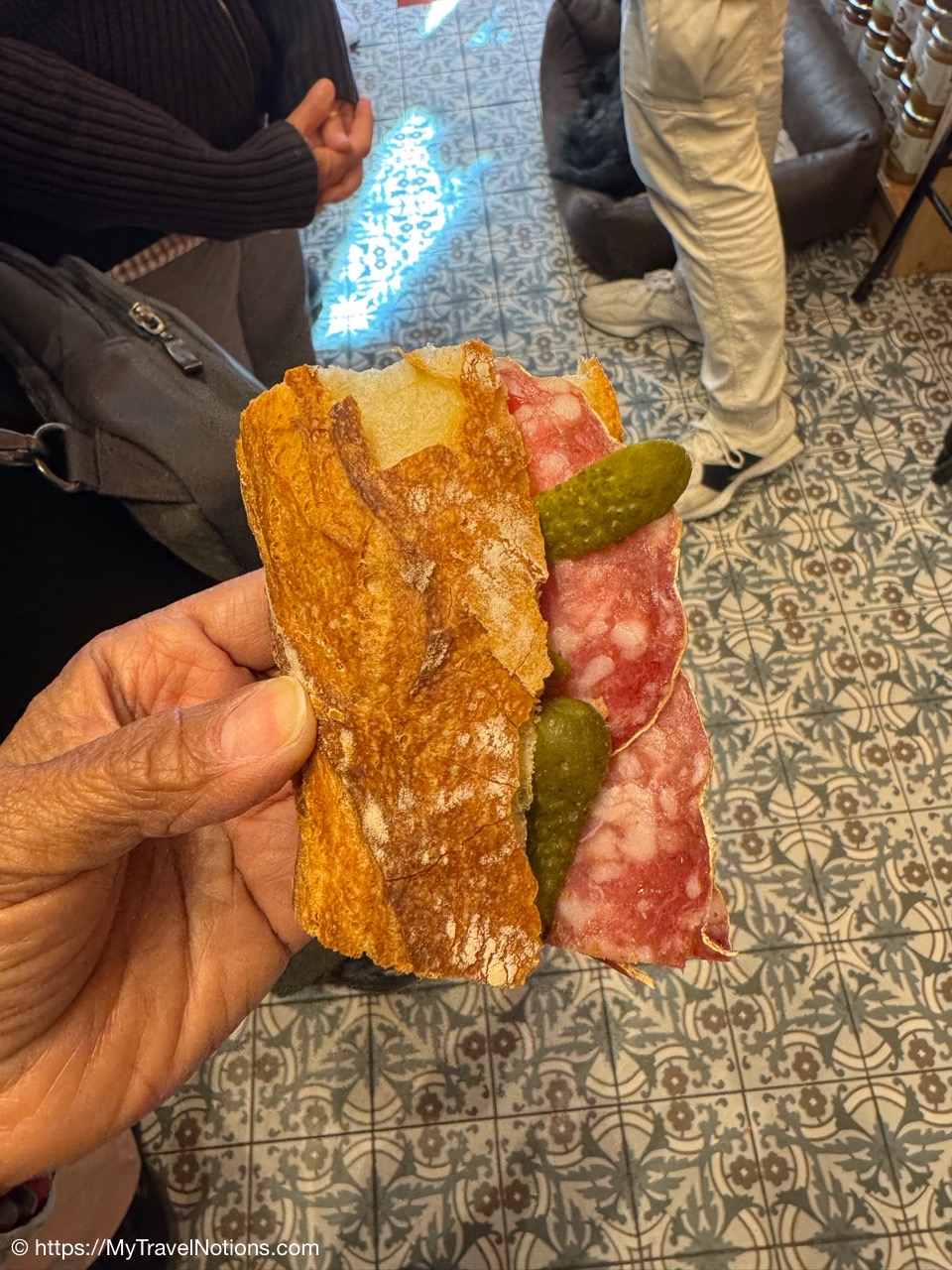
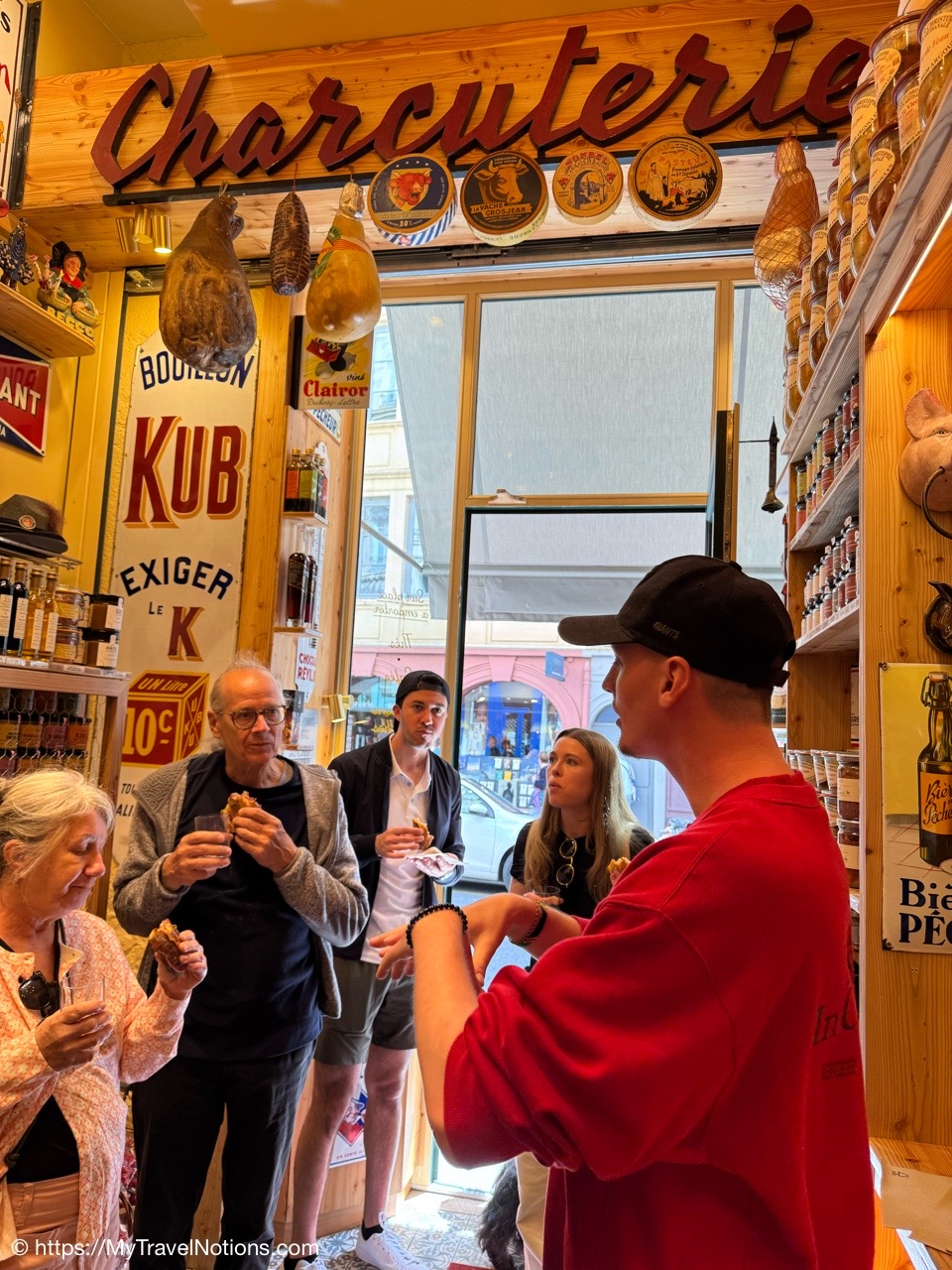
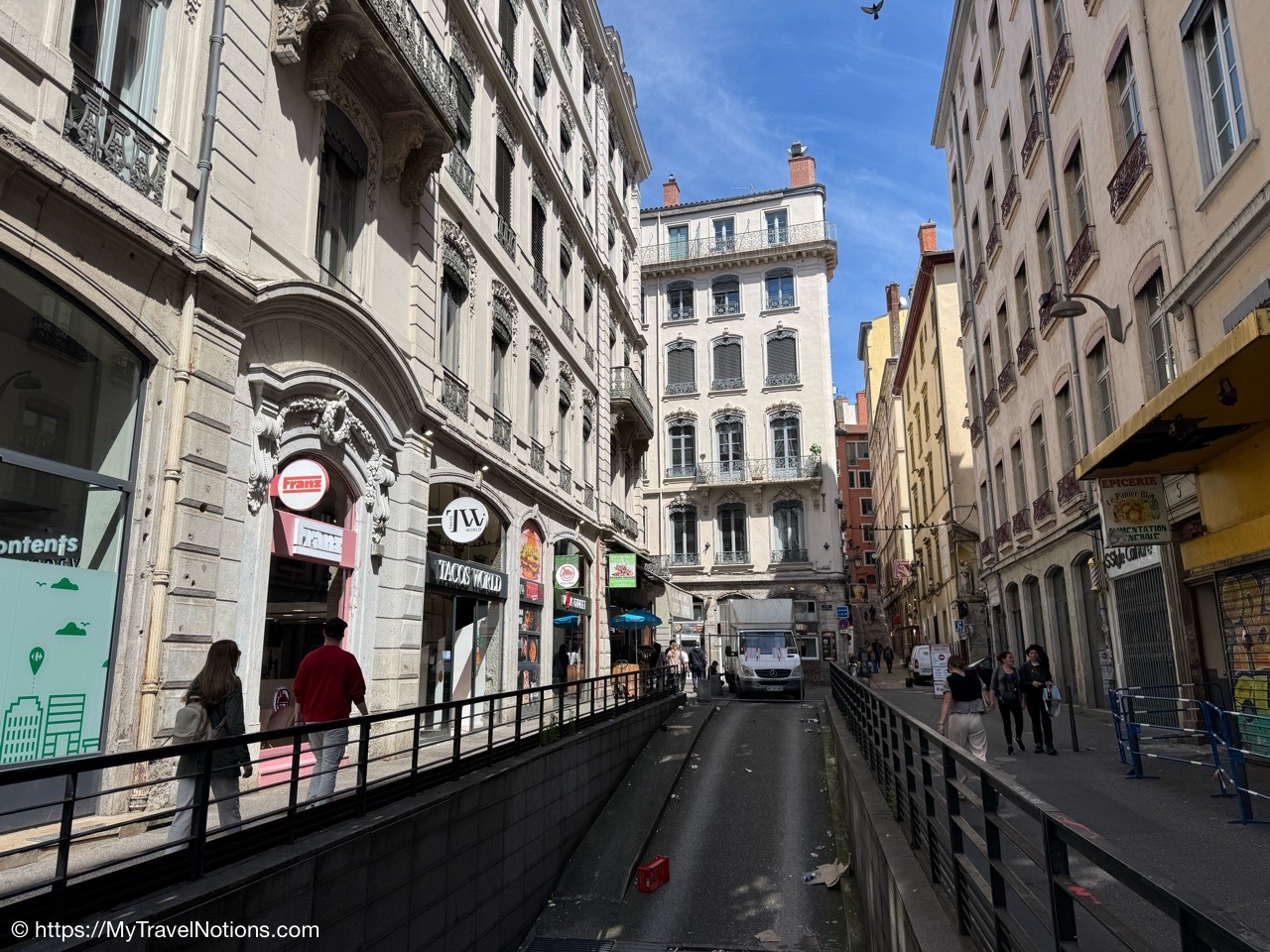
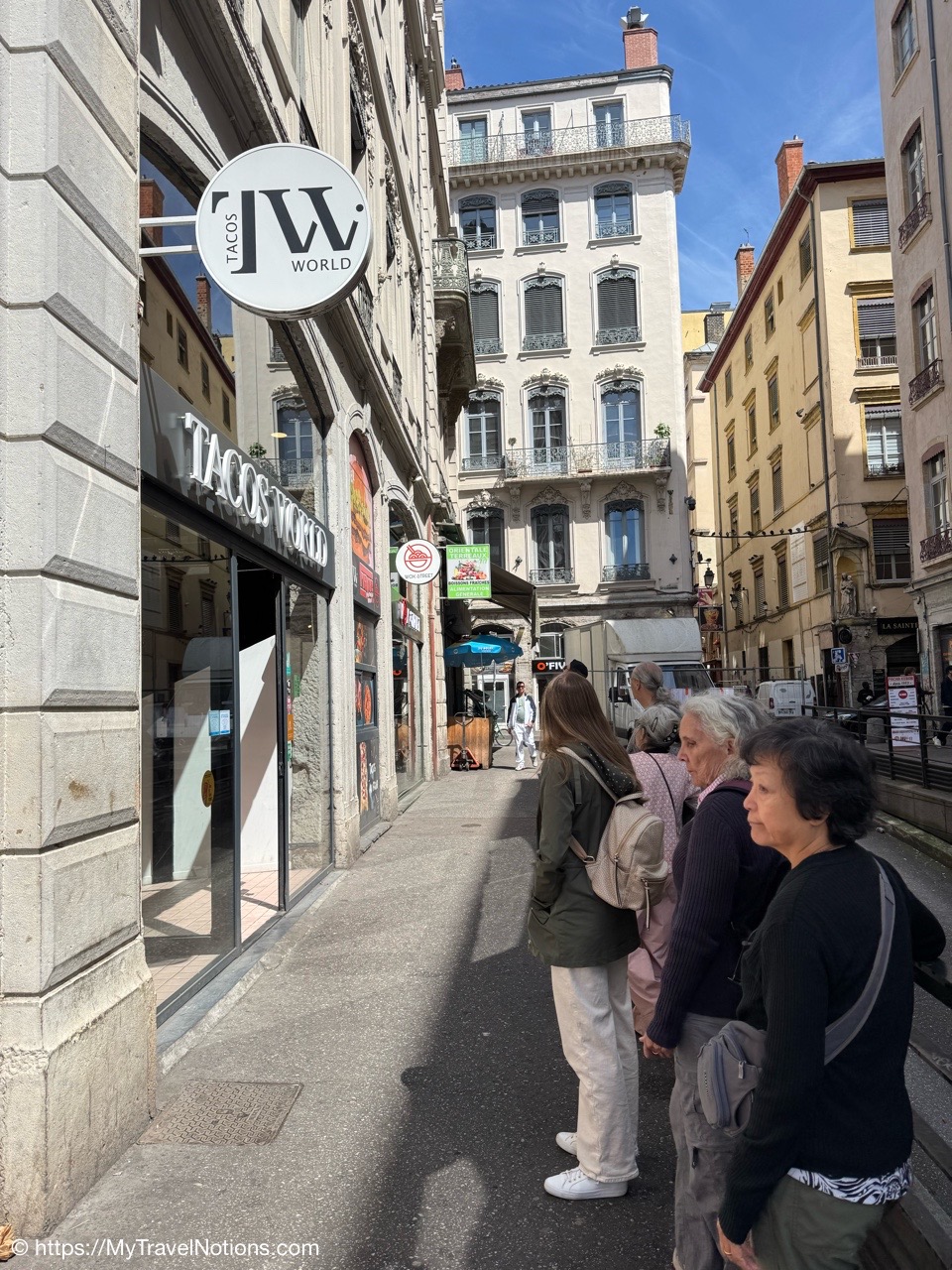
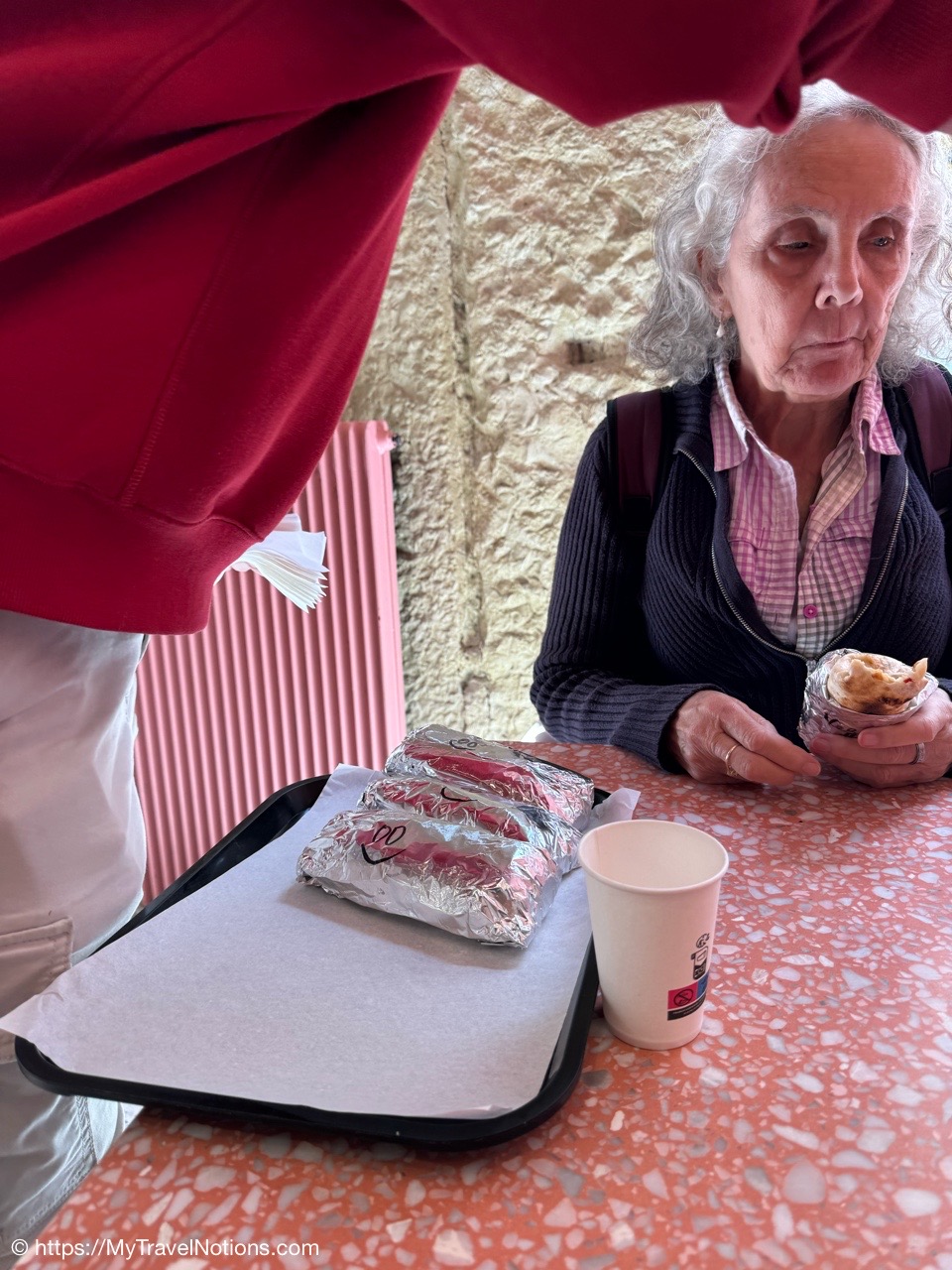
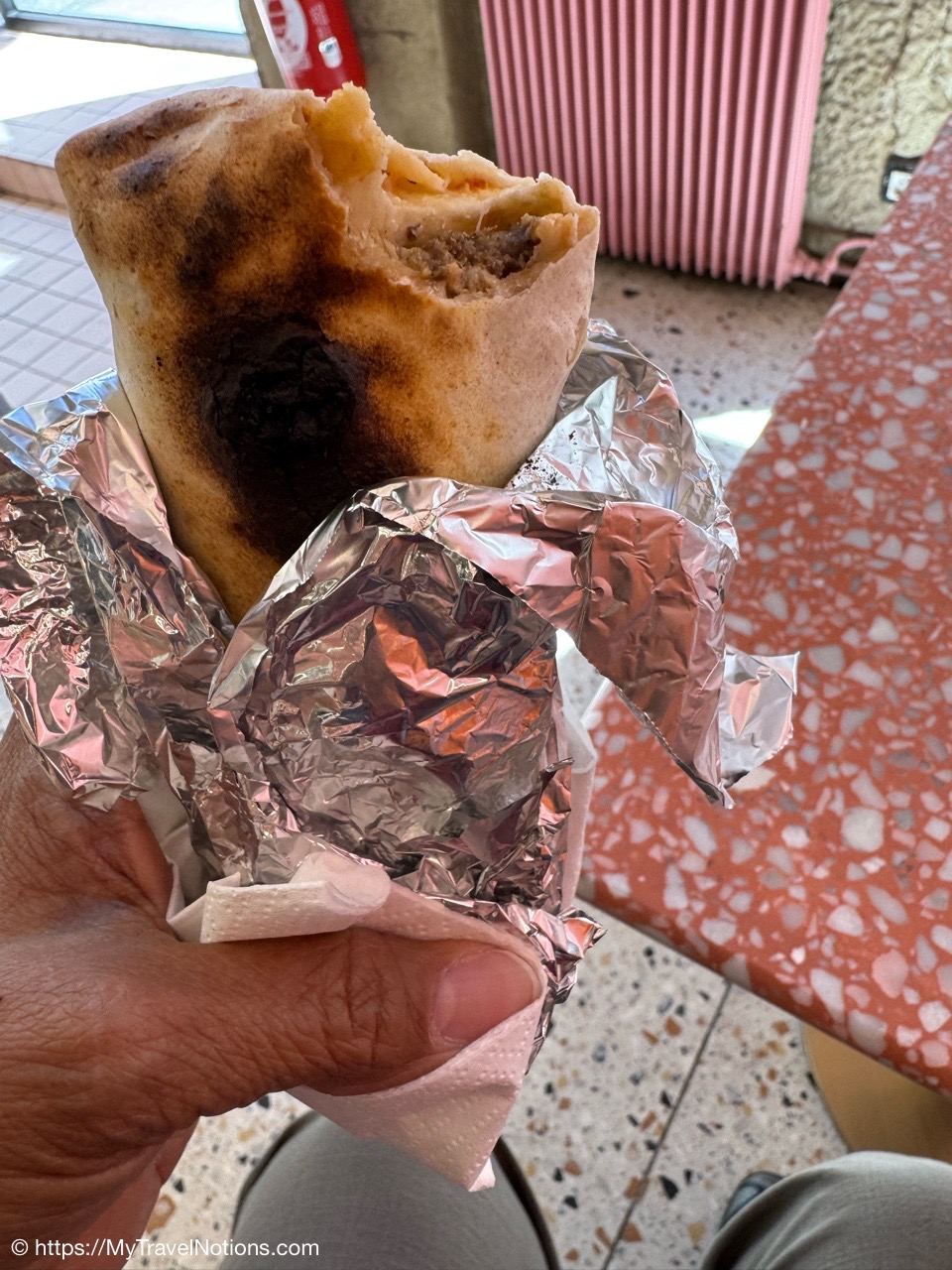
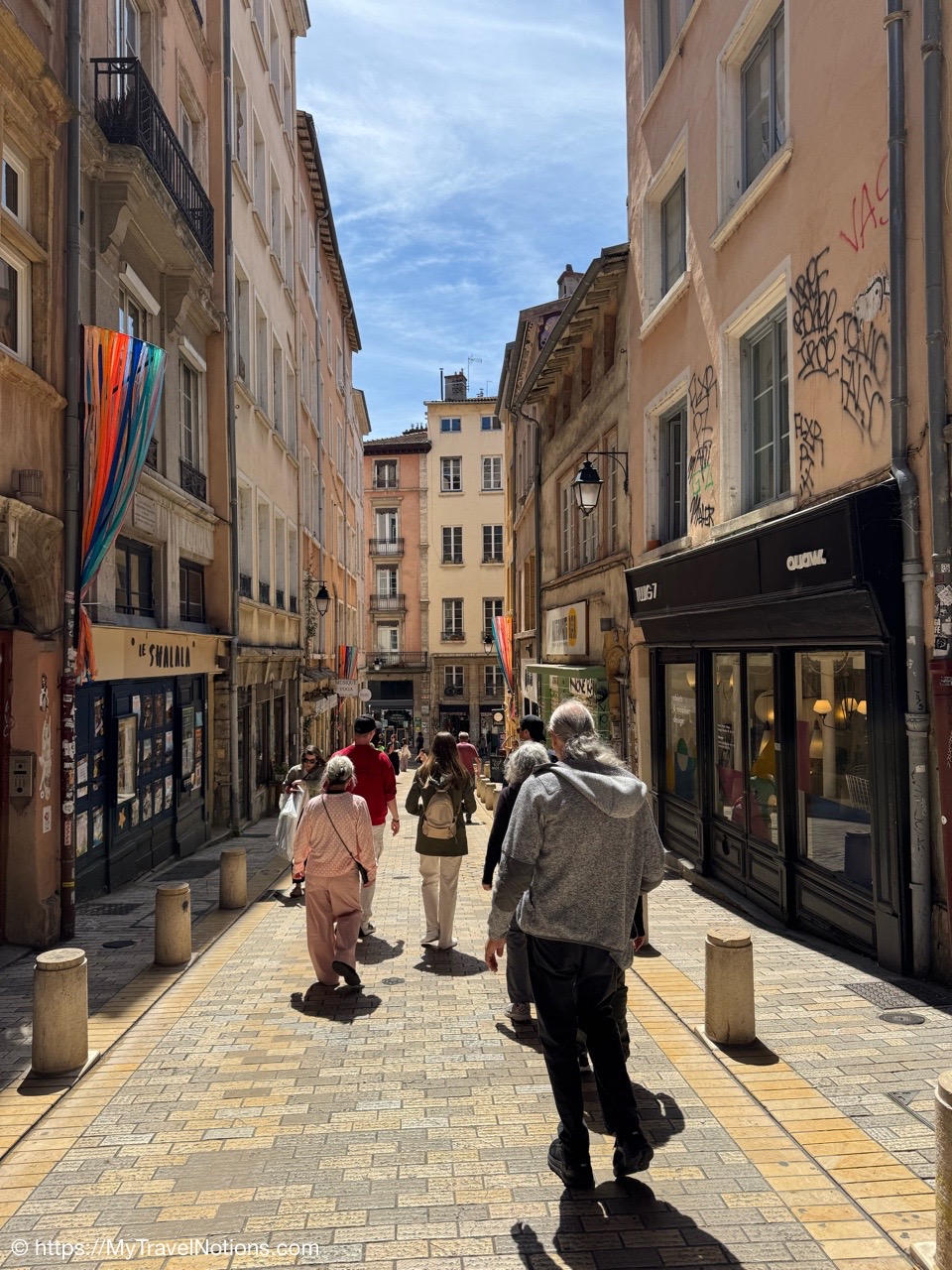
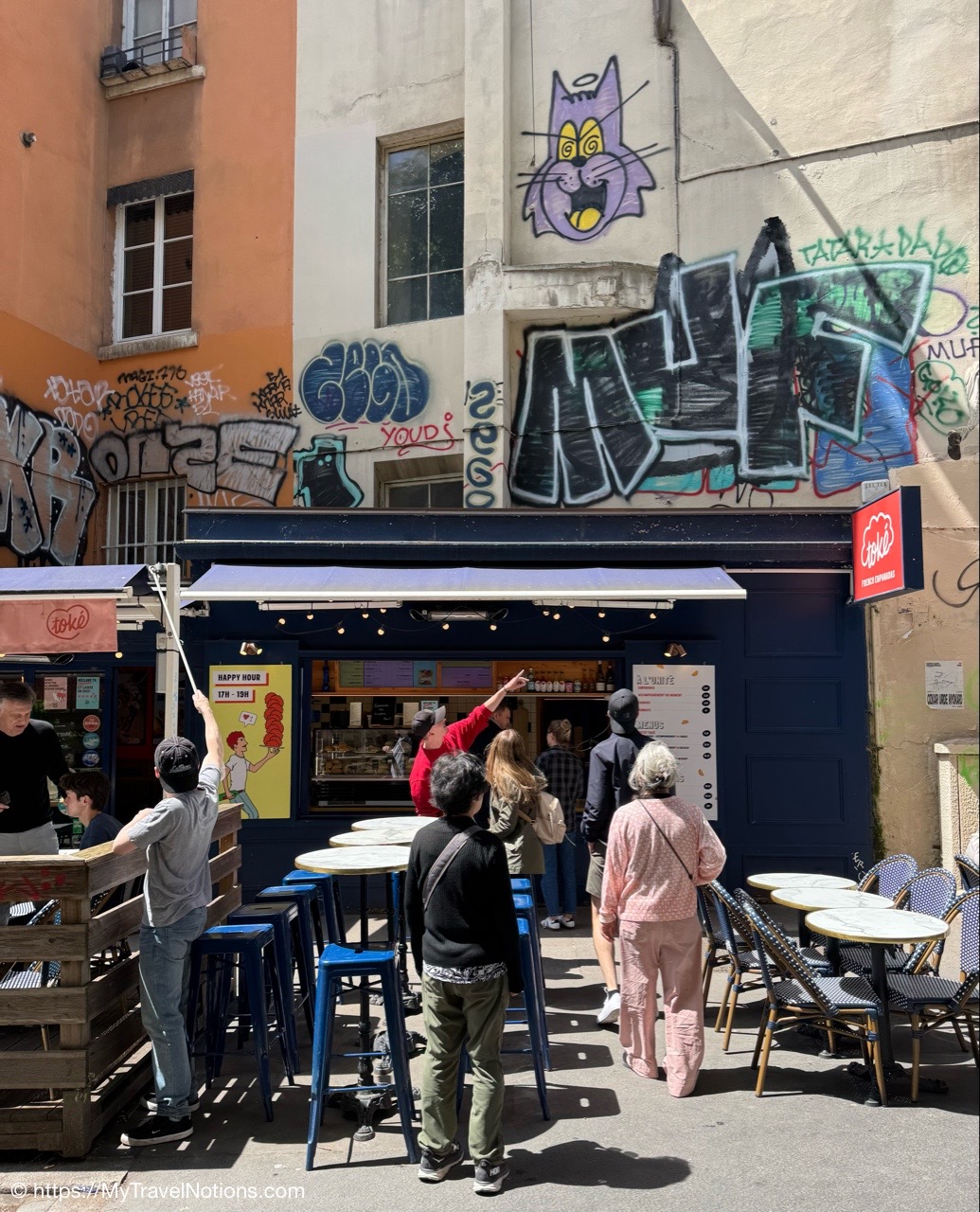
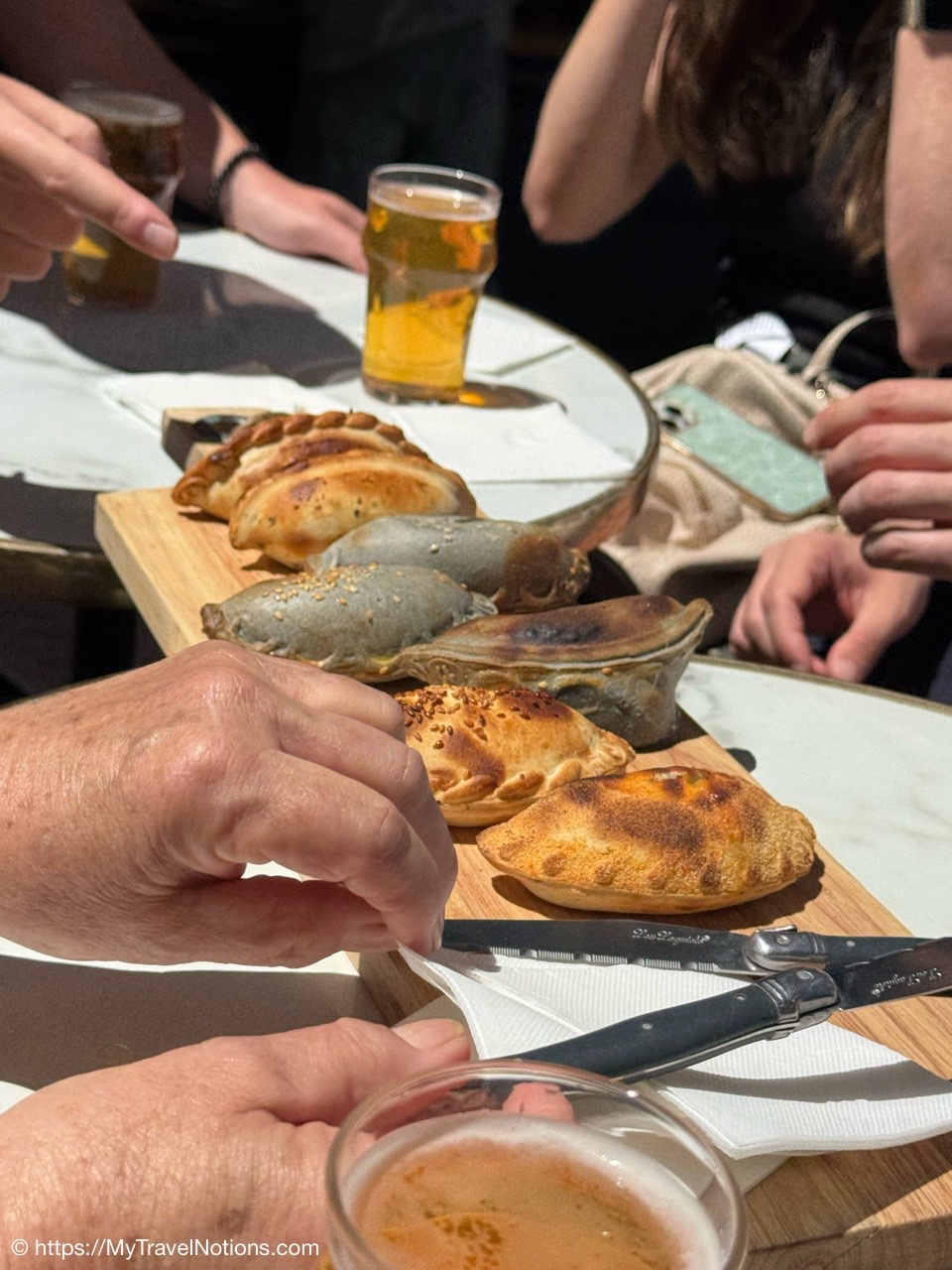
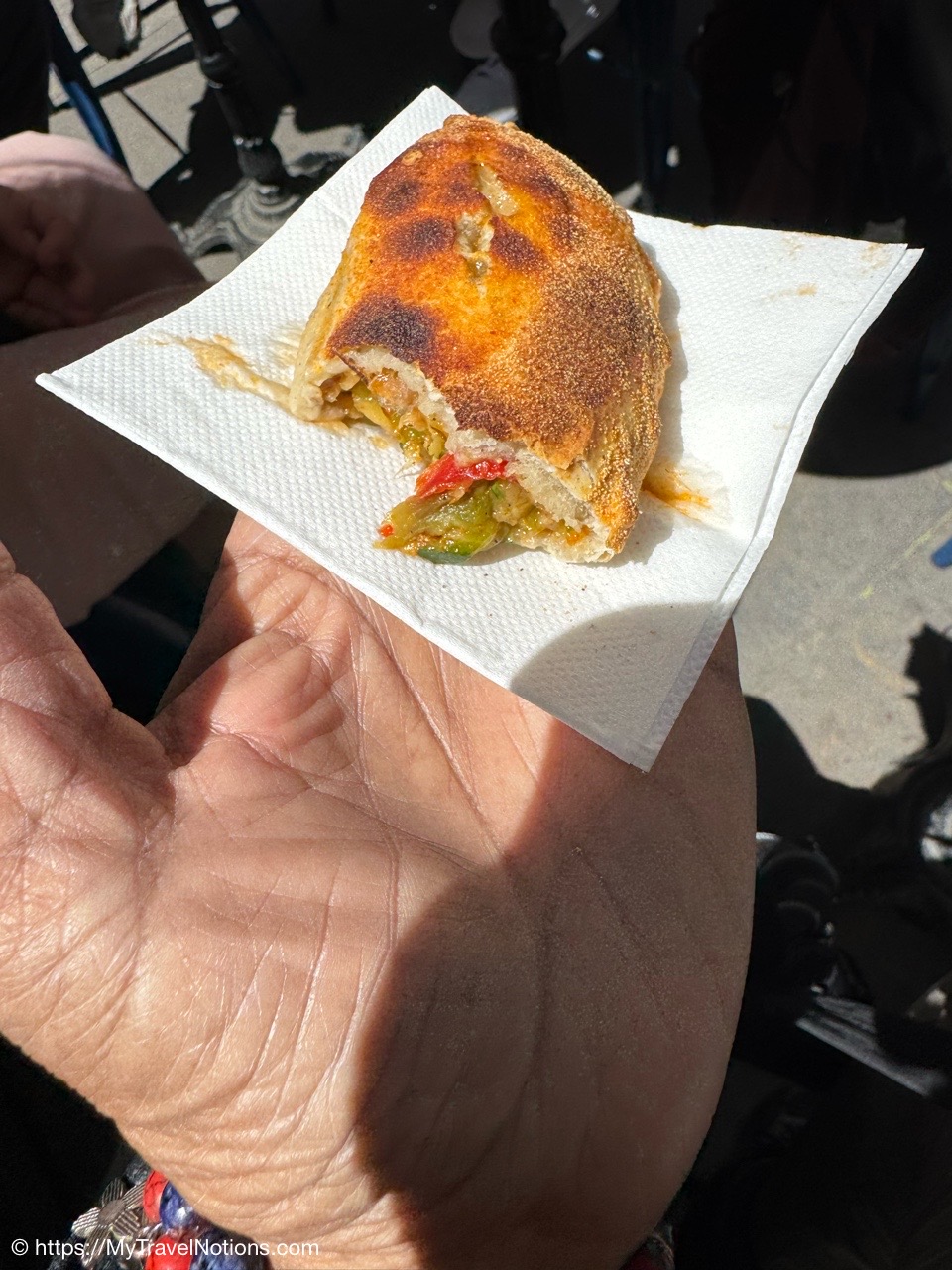
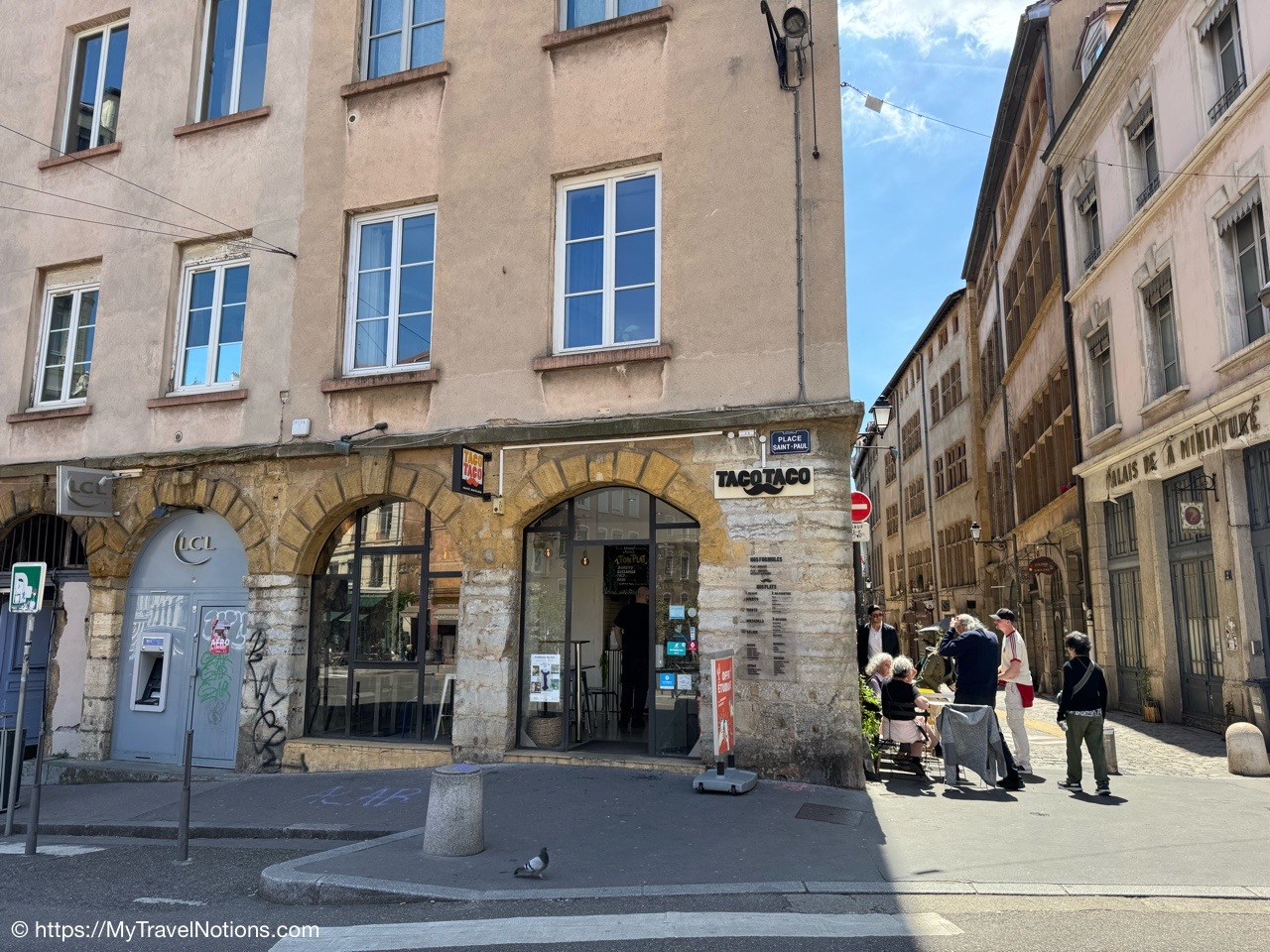
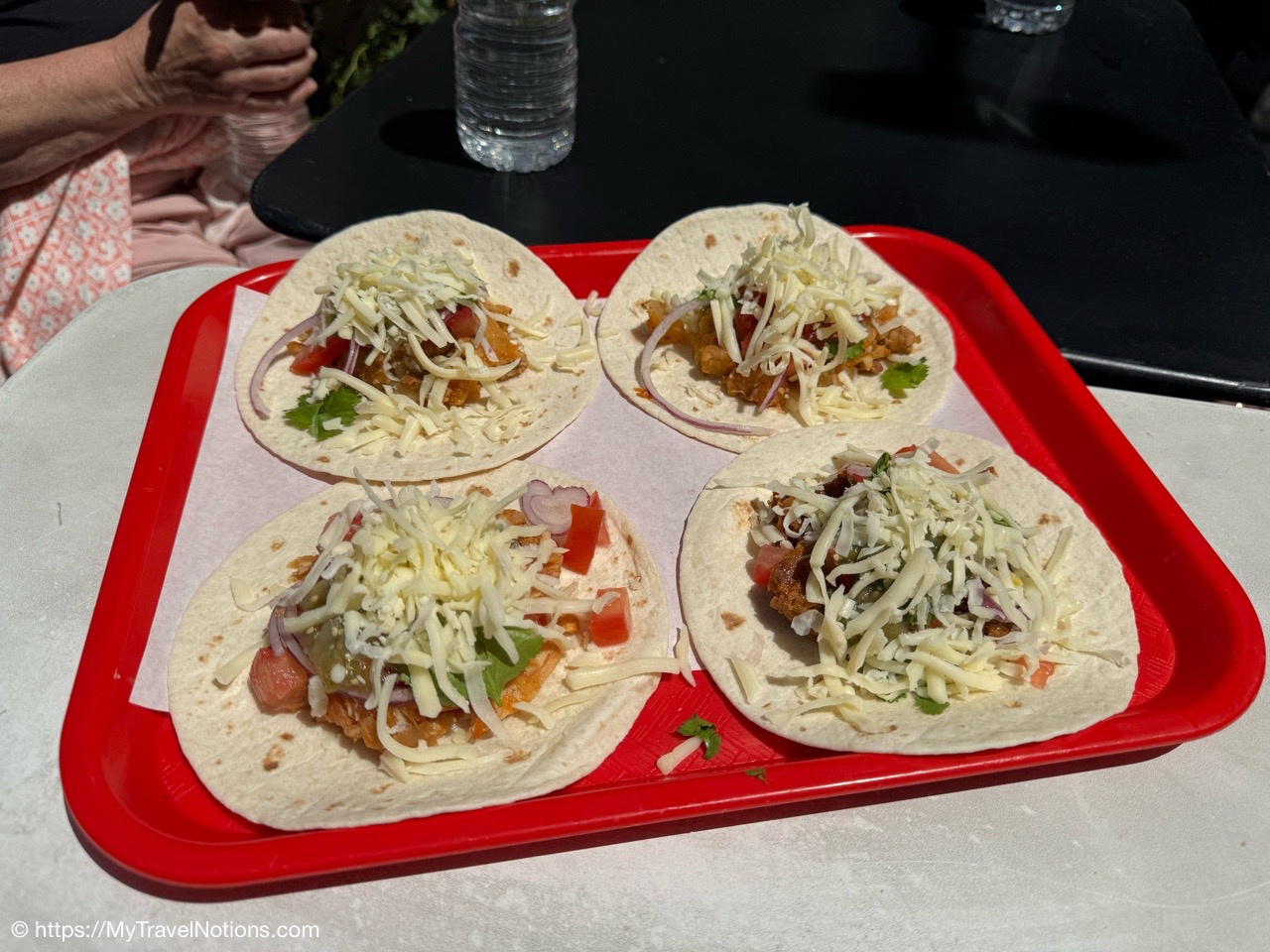
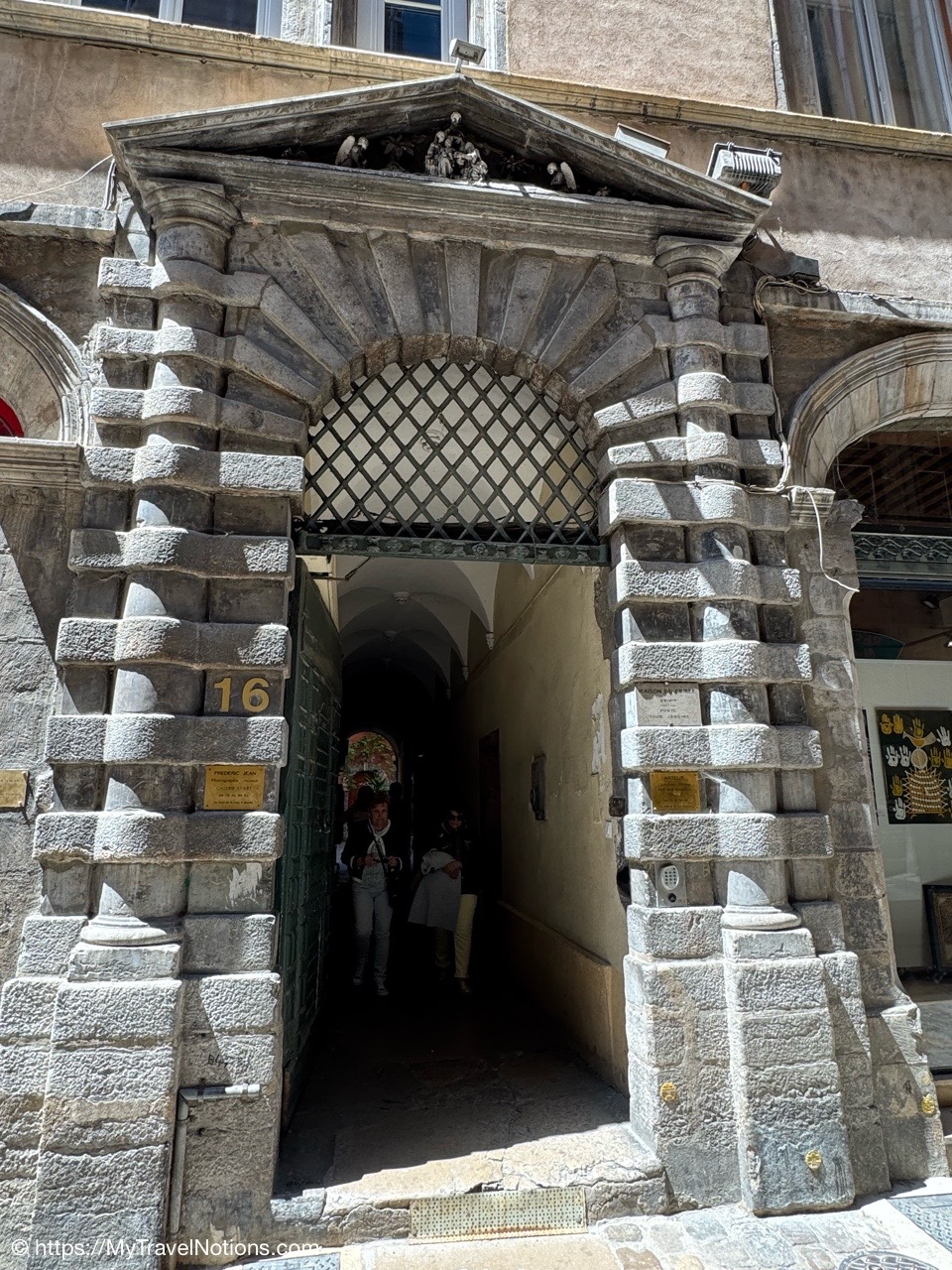
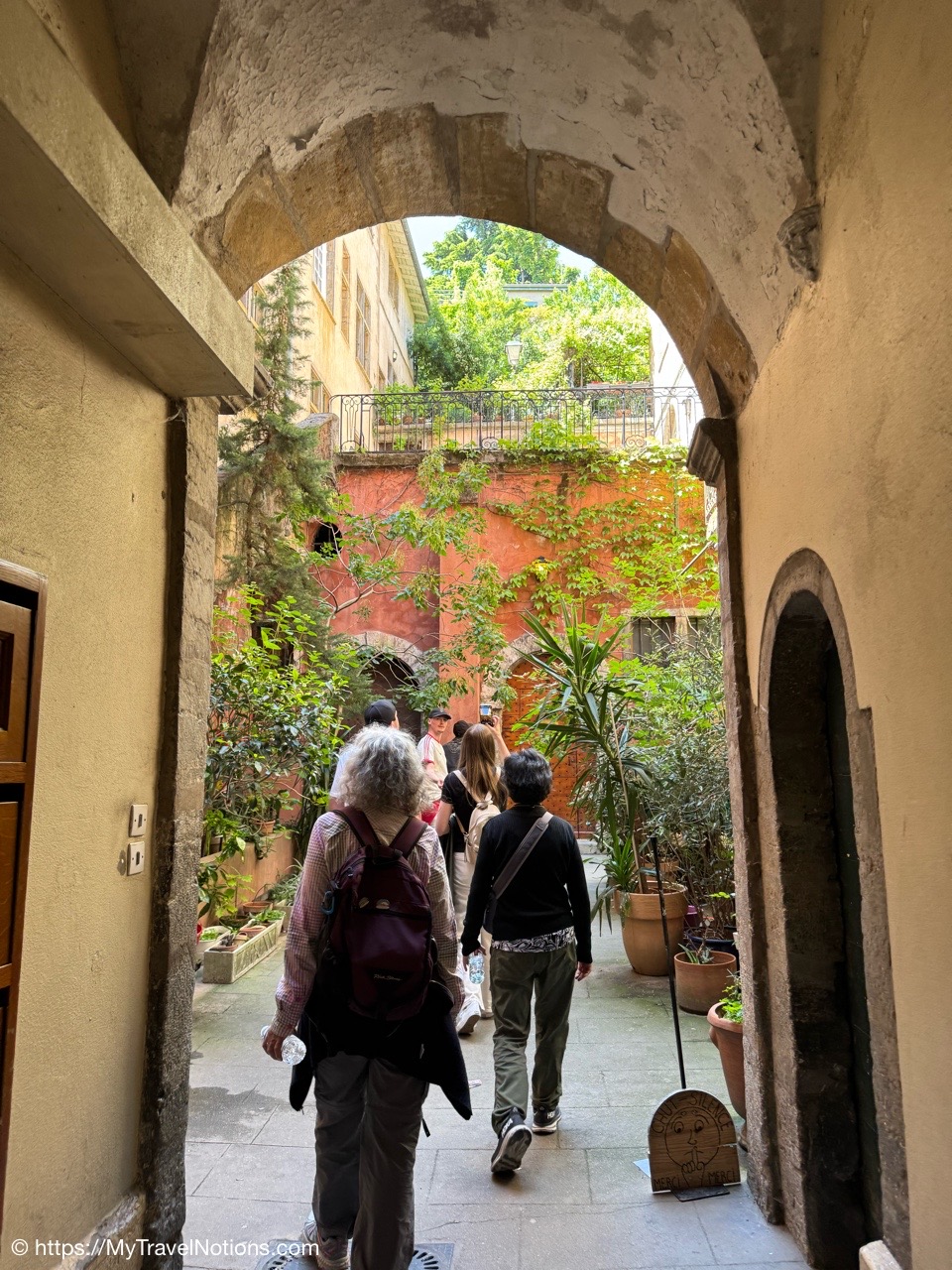
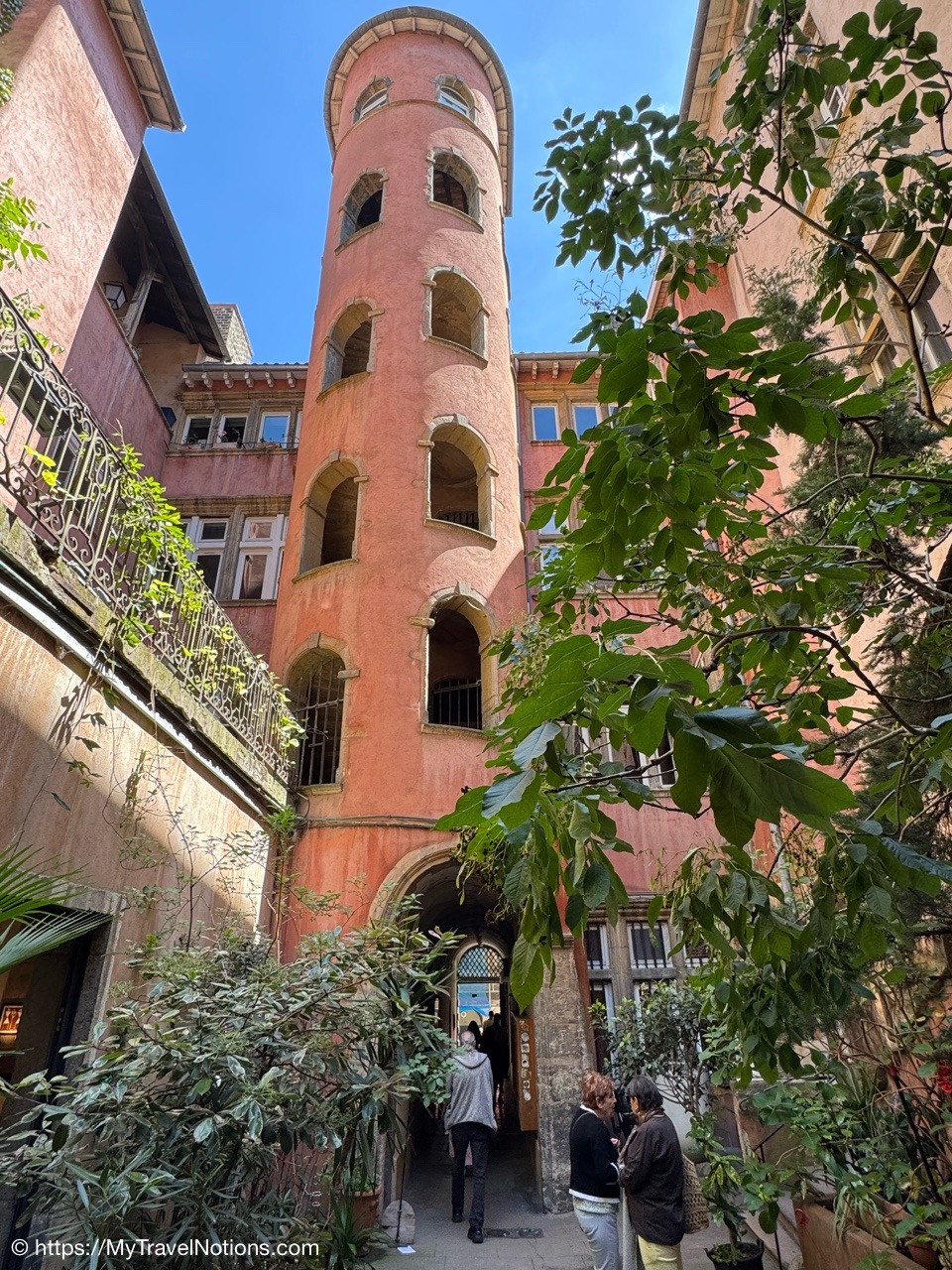
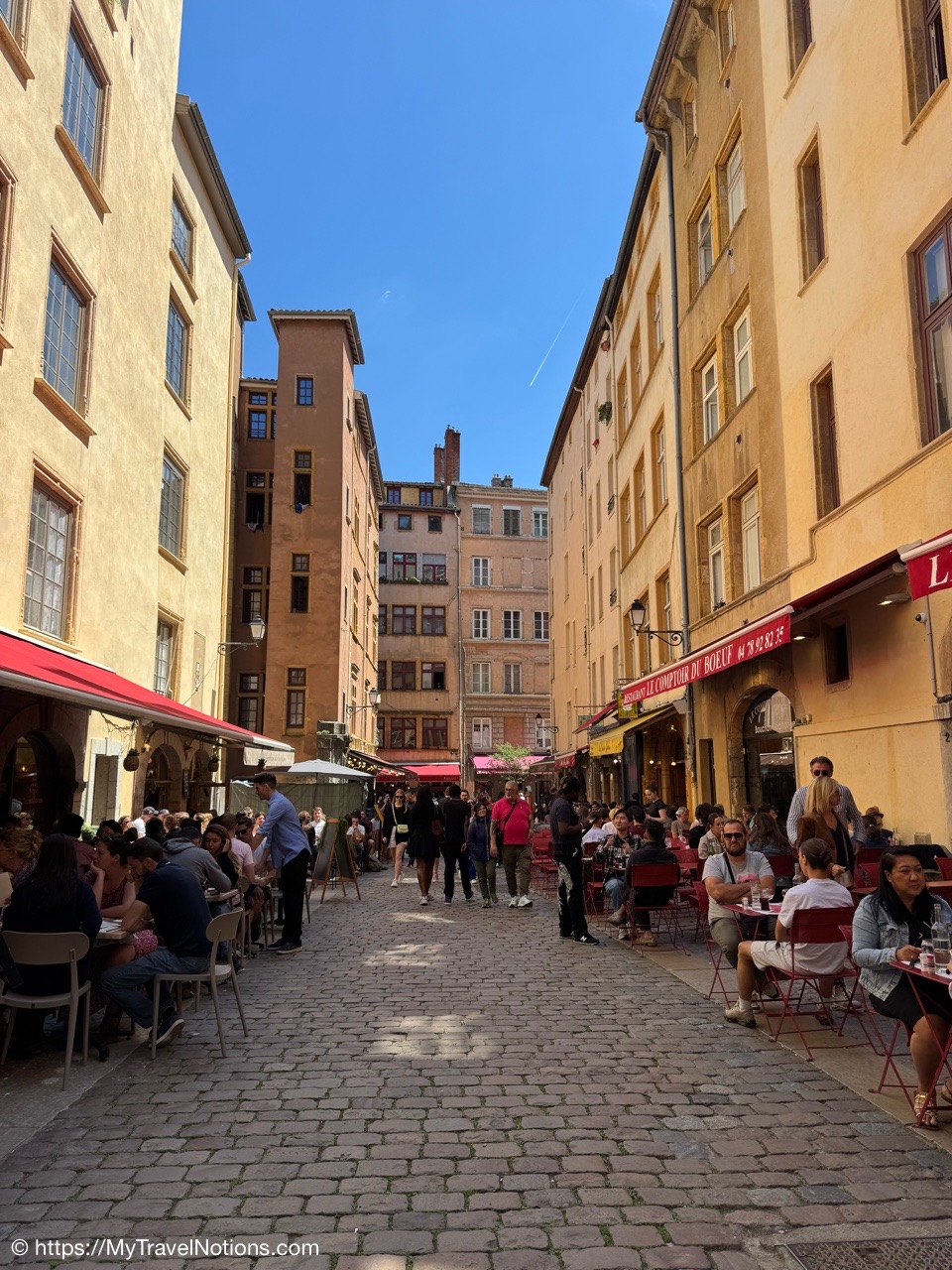
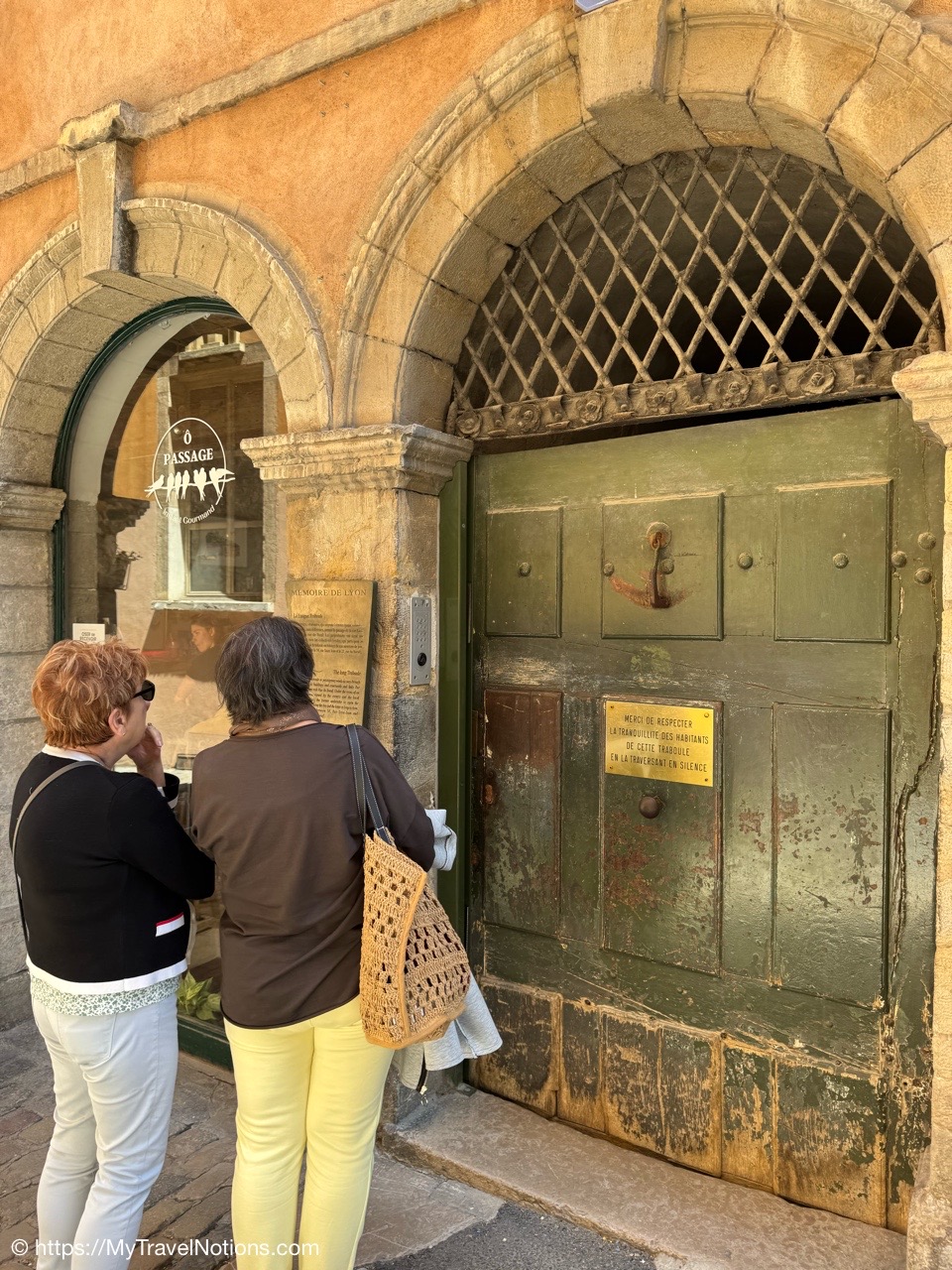
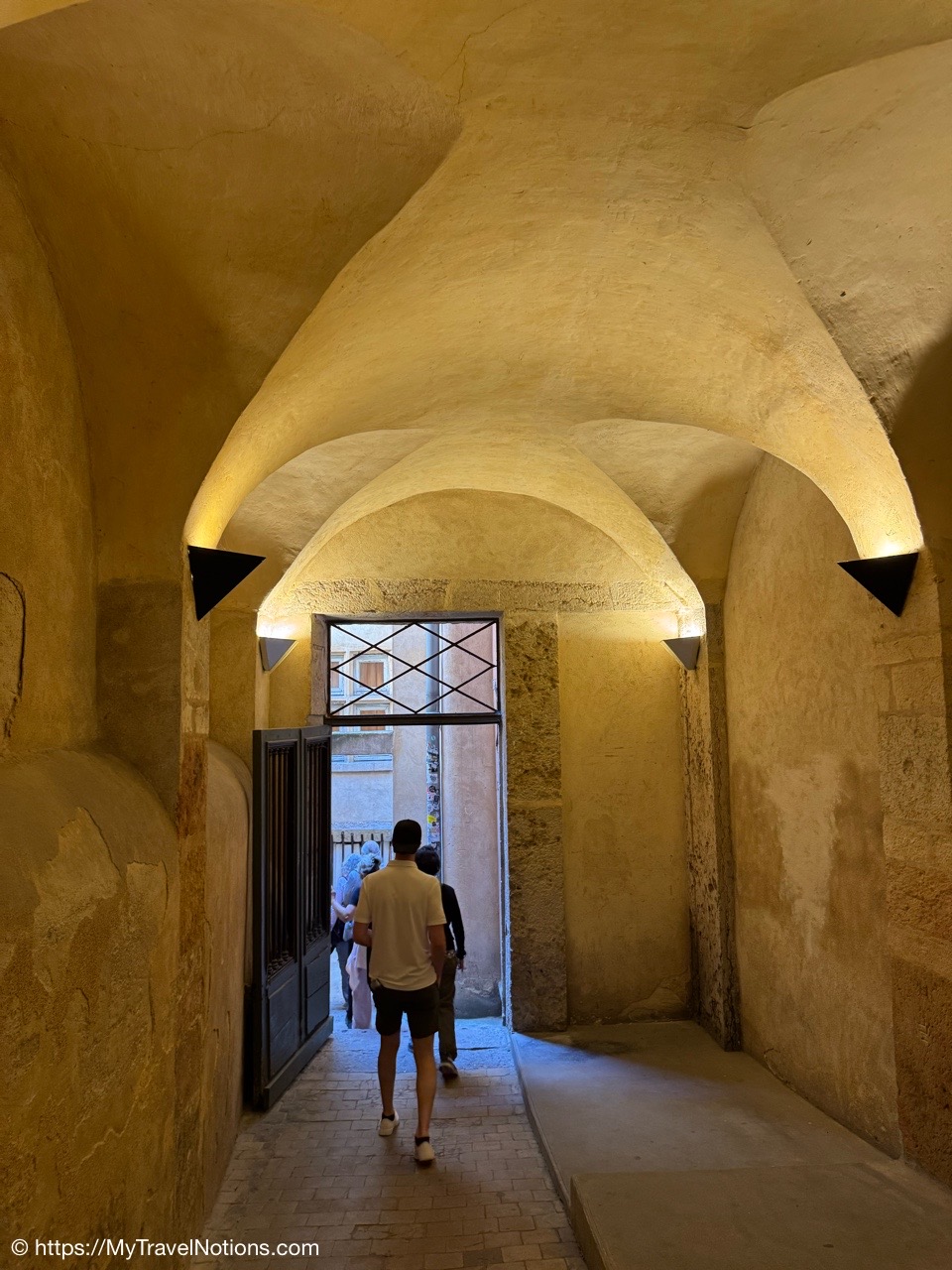
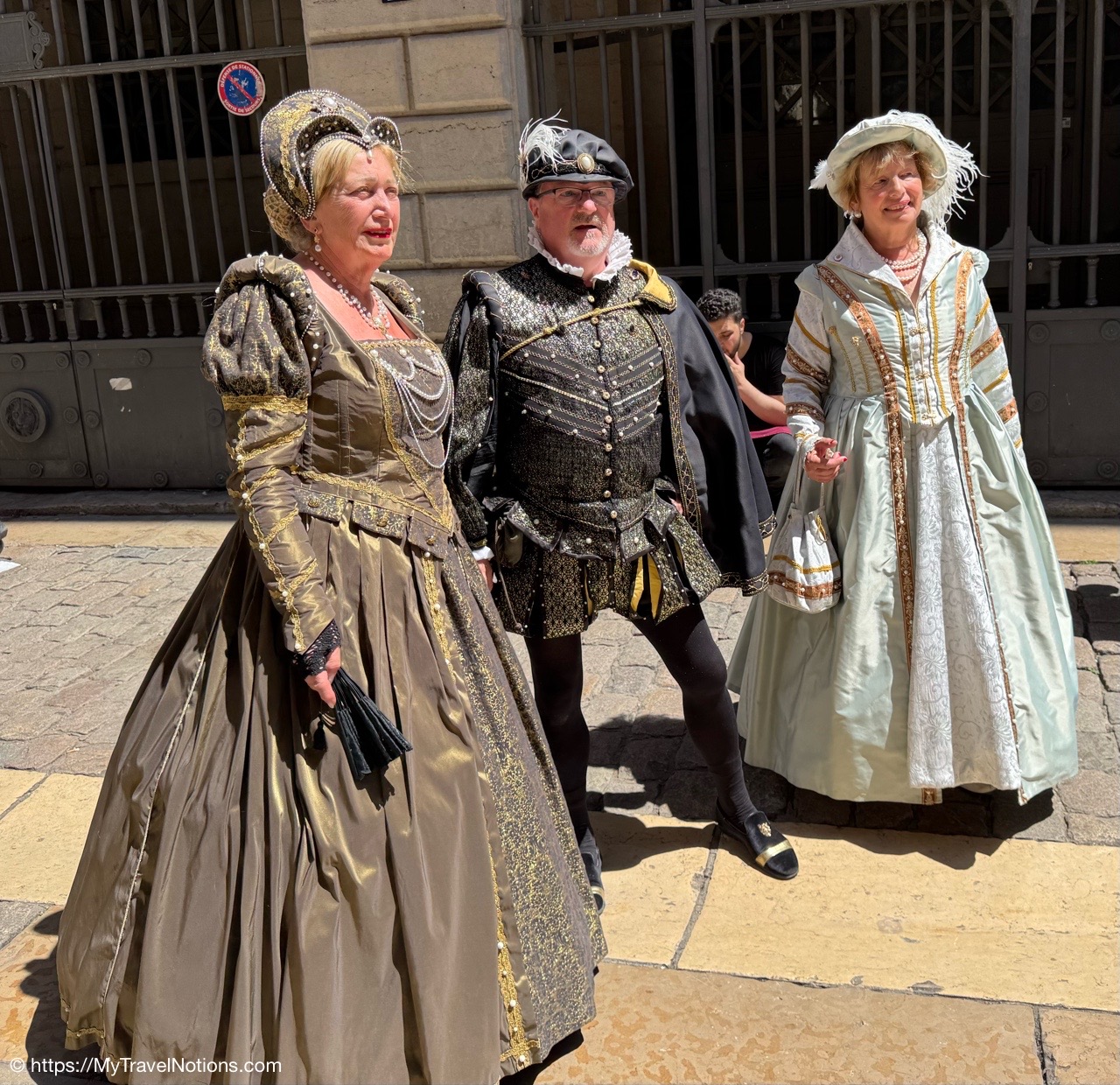
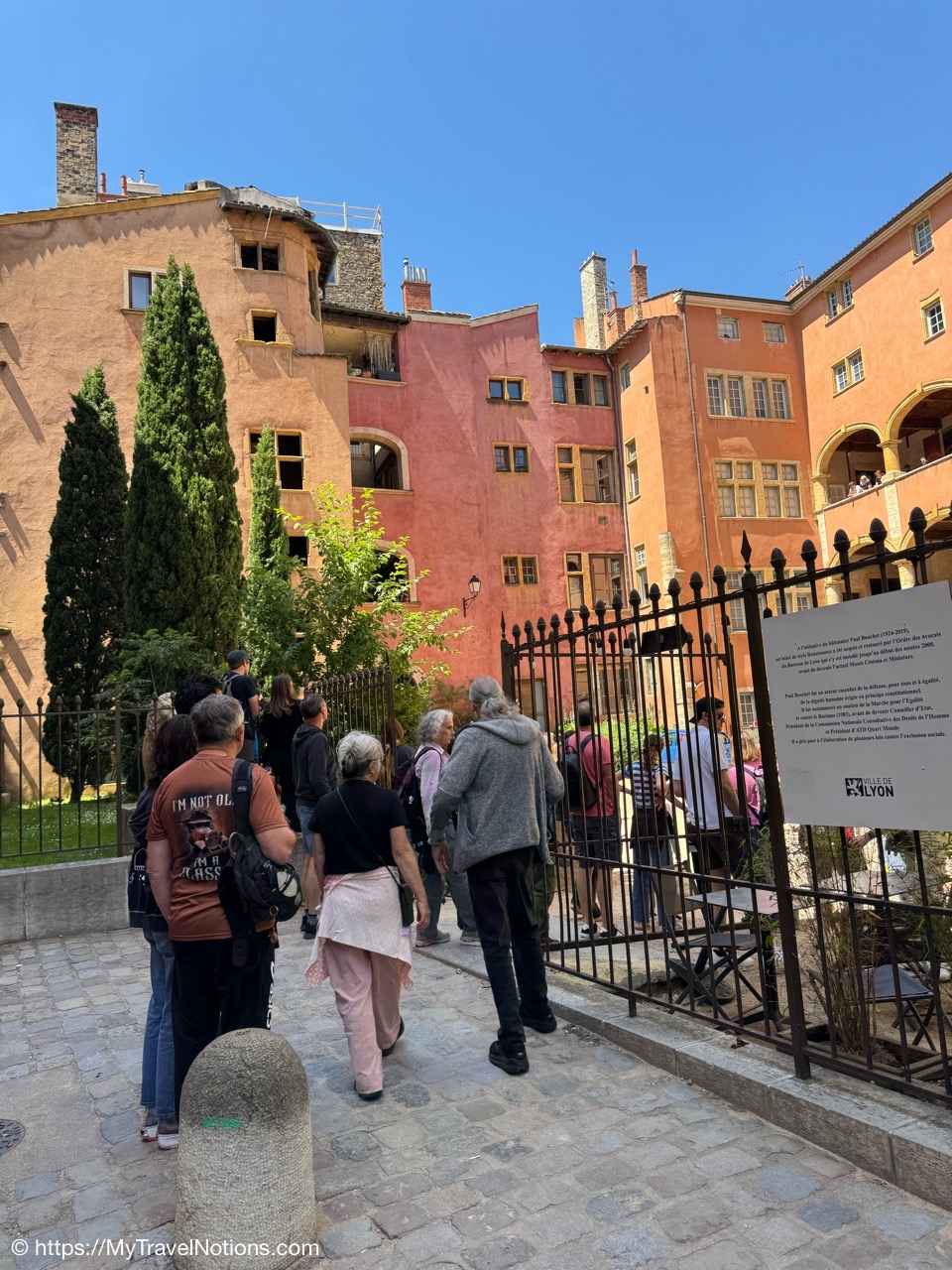
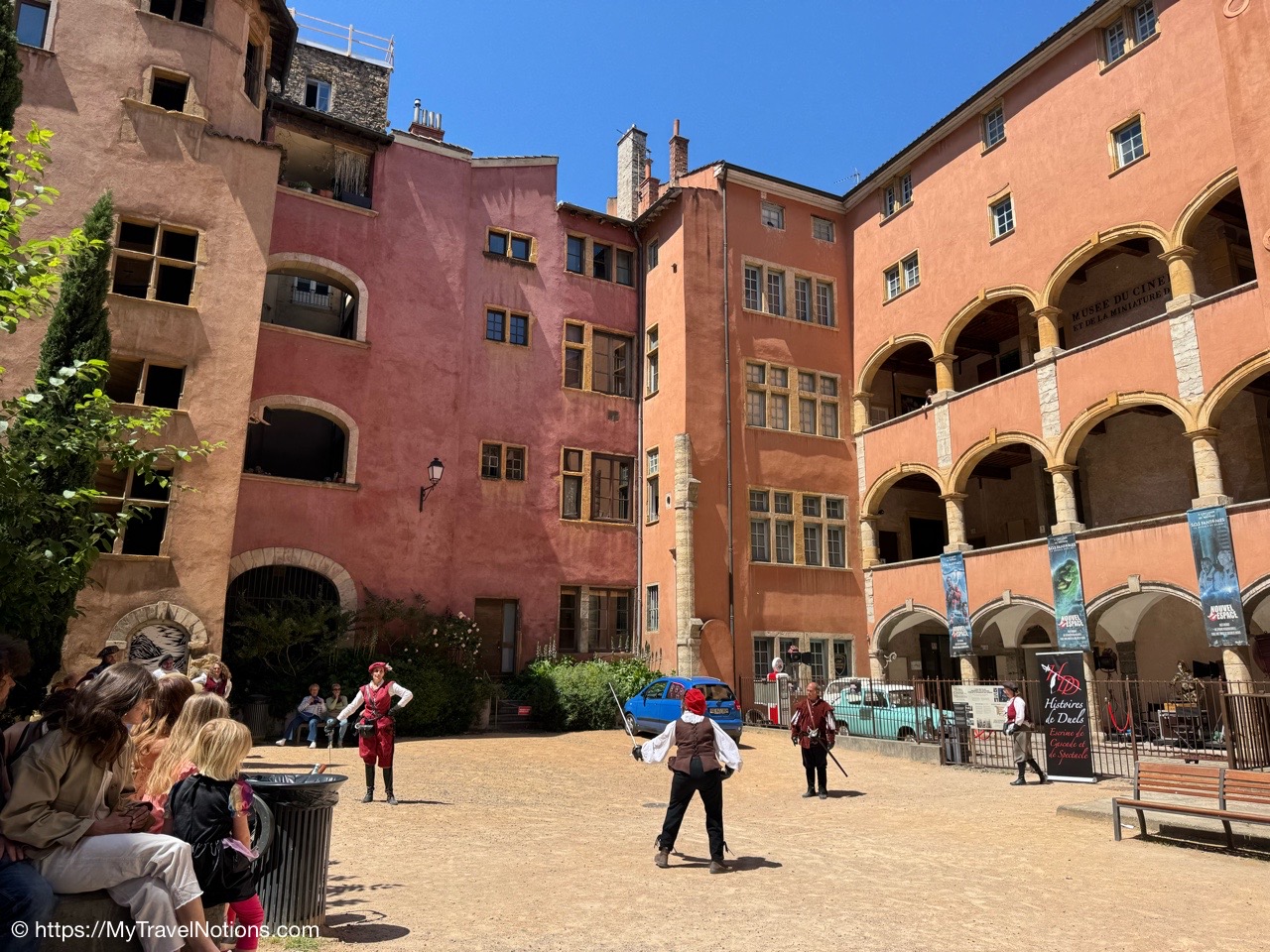
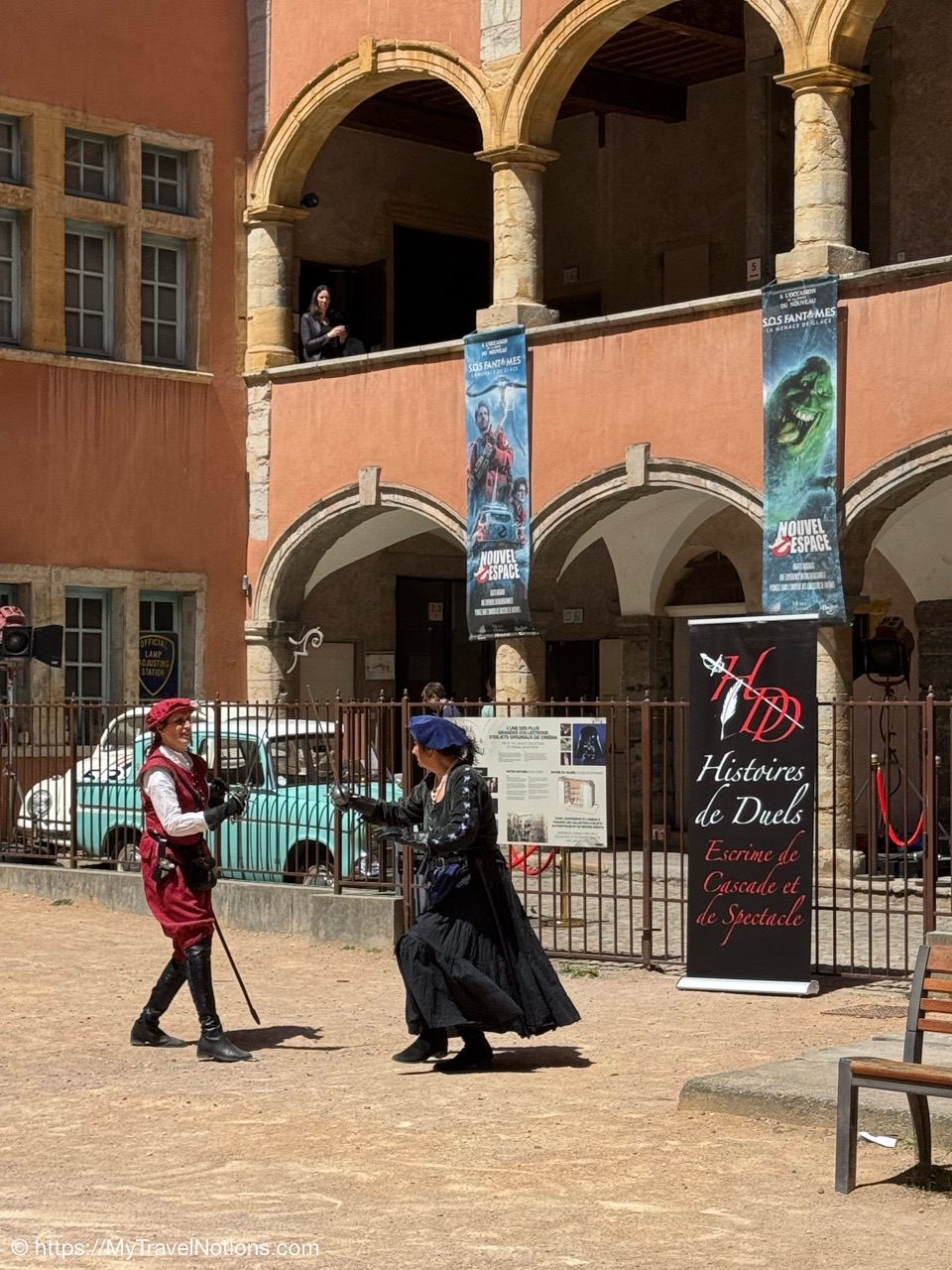
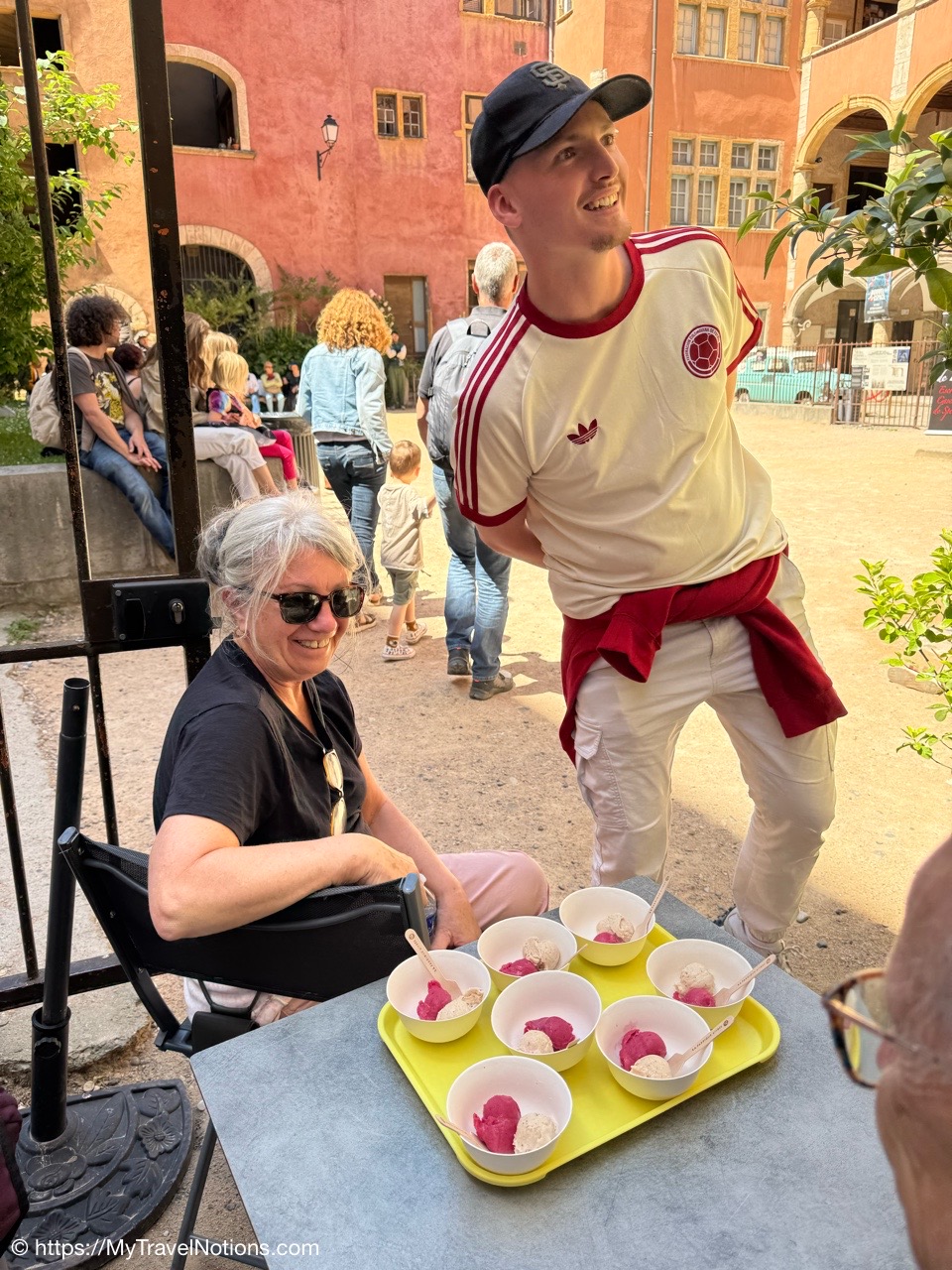
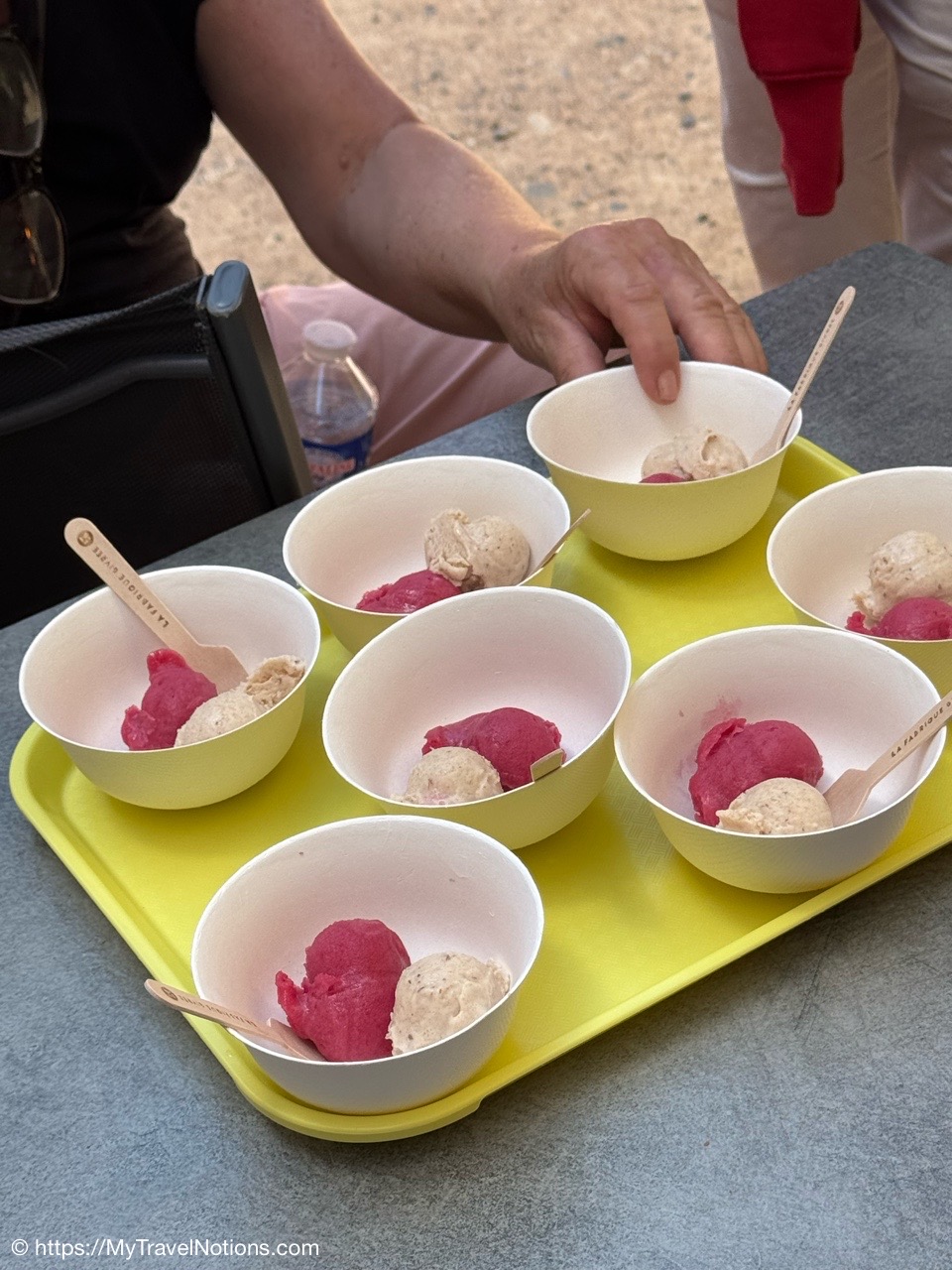
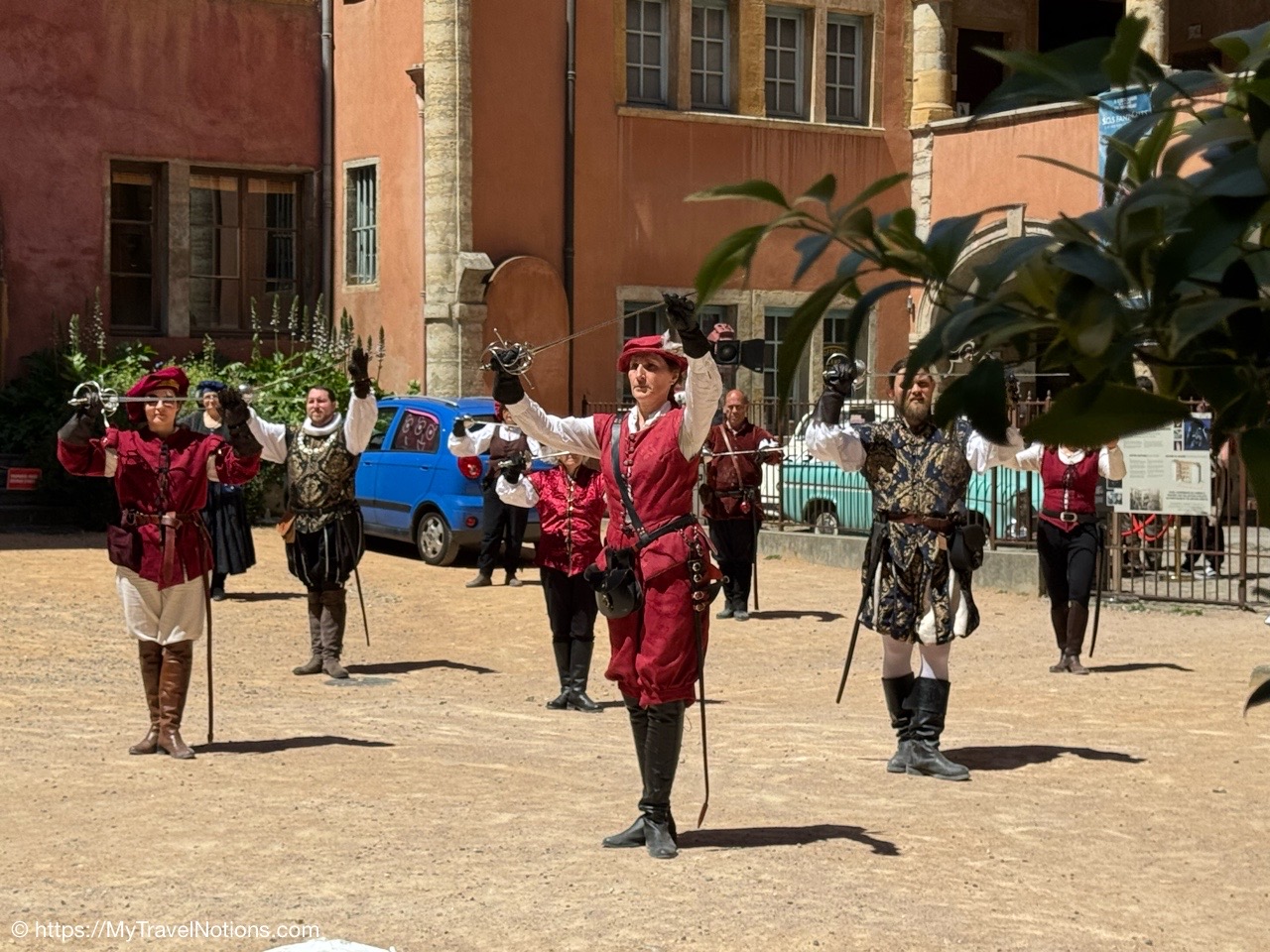
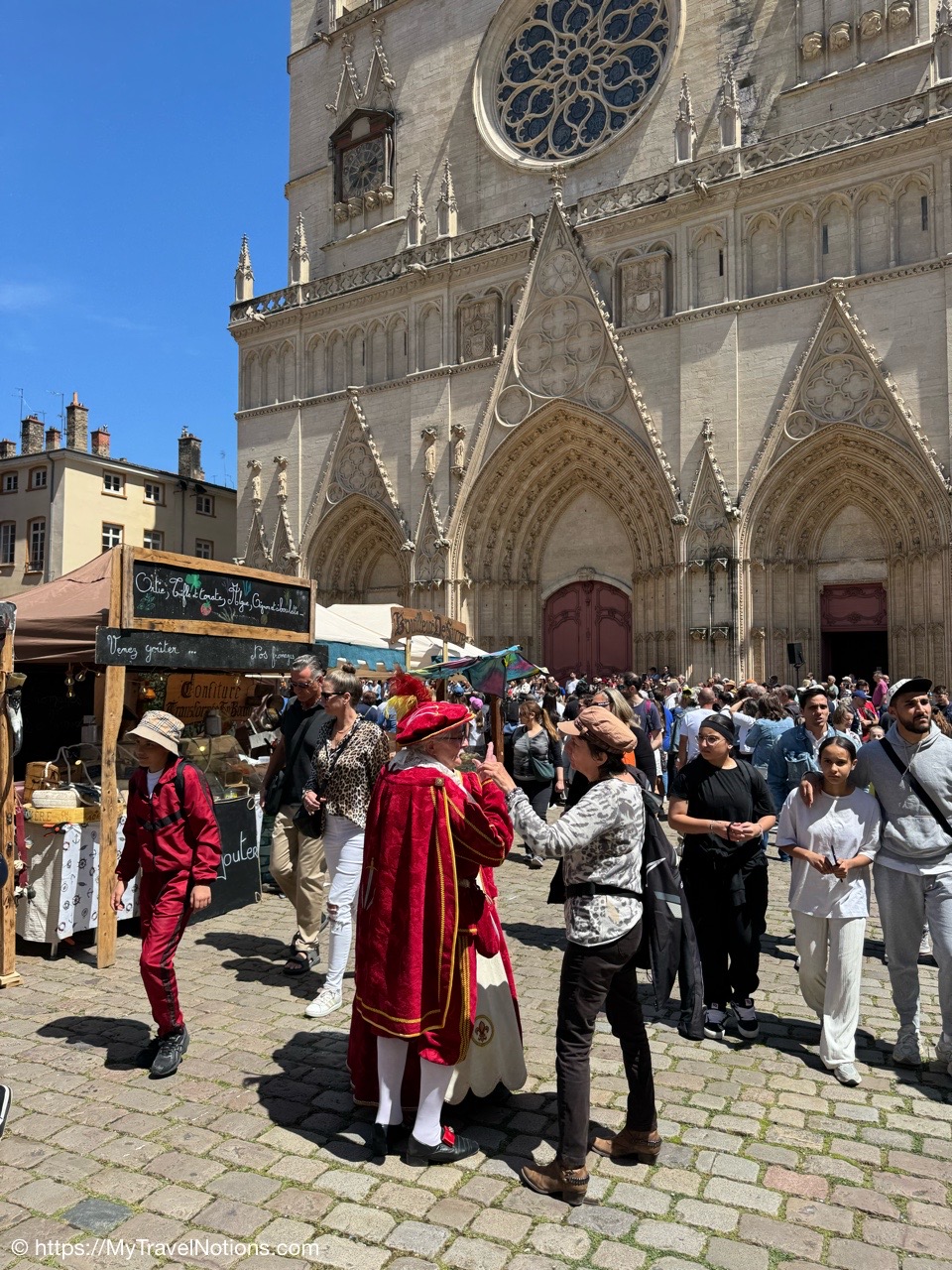
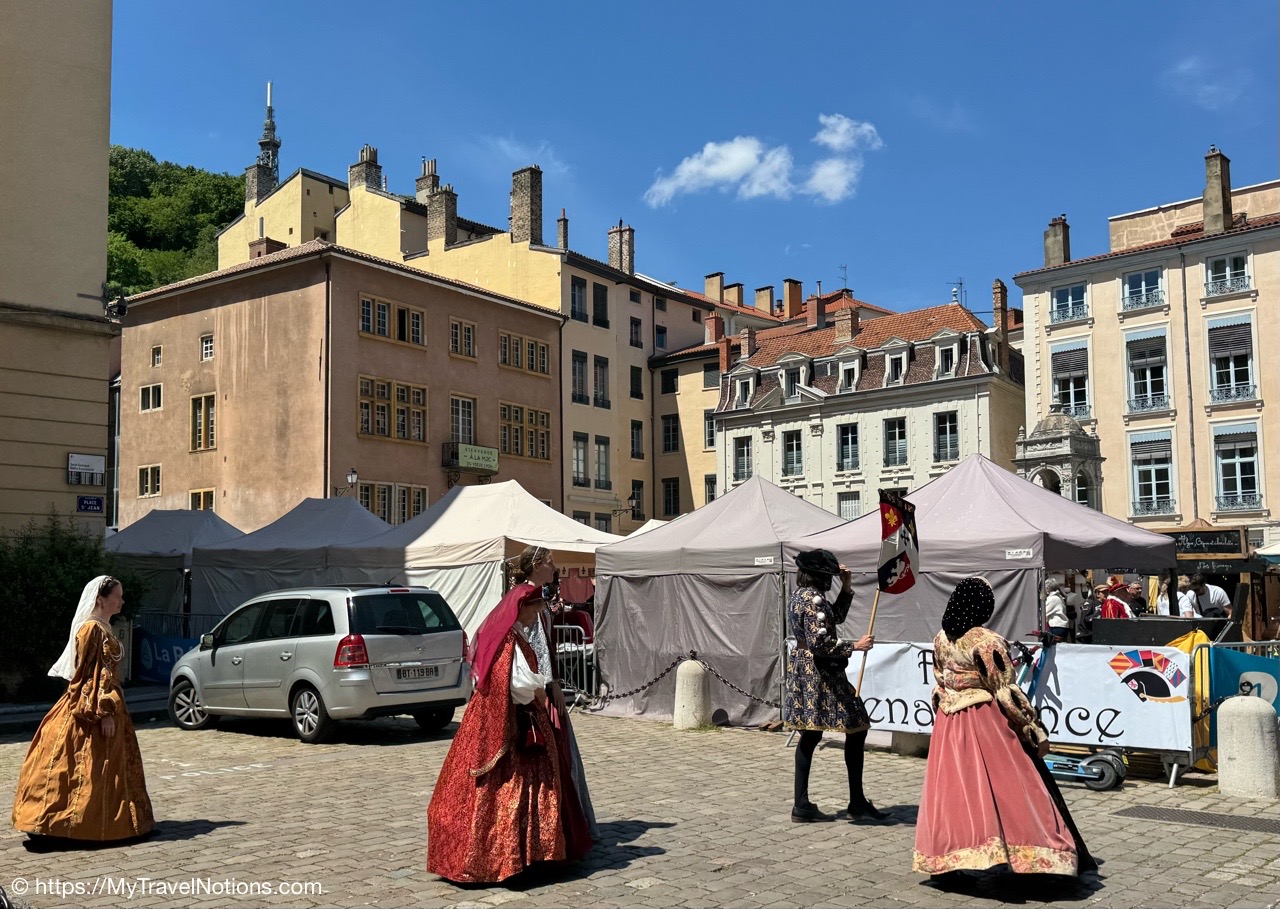
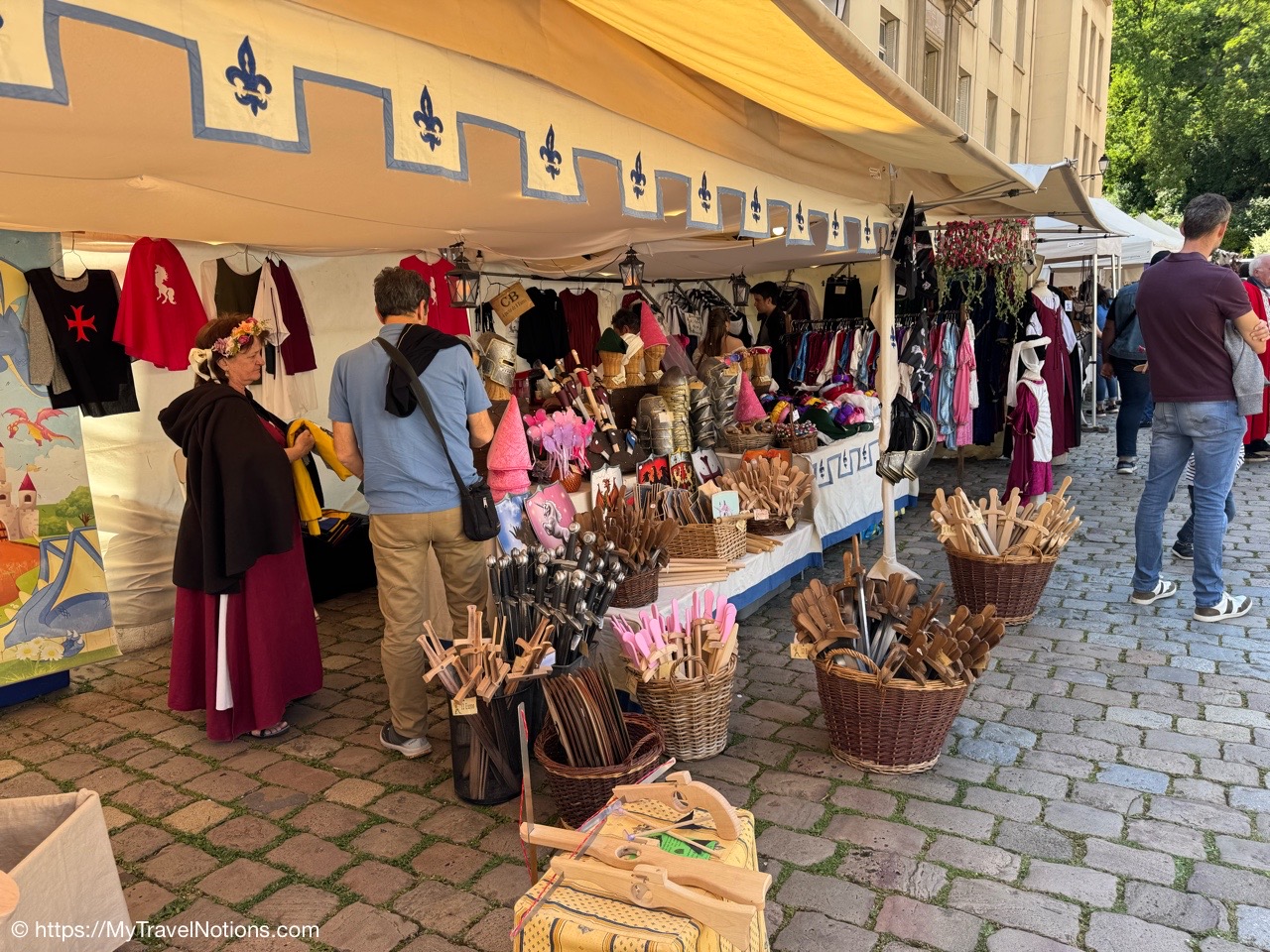
Our street food walking tour group inside the rather small and cozy Le Petit Groin for our 1st street food meal during our Lyon Street Food walking tour with our food guide, Nate, in the red top to the right. (May 24, 2025)It’s a beautiful morning and we’re heading to our 1st food stop of five different places during our Lyon Street Food tour. (May 24, 2025)Entering the Le Petit Groin for our 1st street food meal during our Lyon Street Food walking tour. (May 24, 2025)Prepared and waiting for us inside our 1st stop at the Le Petit Groin during our Lyon Street Food tour are these baguette sandwiches made with saucisson, similar to salami, made of pork, a creamy and delicious tasting butter and or a mixture of pork and other meats, saucisson are a type of charcuterie similar to salami and a dill-tasting gherkin. (May 24, 2025)Inside the counters of the small Le Petit Groin shop where we had our 1st food tasting during our Lyon Street Food tour, a baguette sandwich. (May 24, 2025)Although the bread is crunchy, it was tasty and so was the saucisson, similar to salami, and the dill-tasting gherkins. The creamy butter was slathered on the underside of the baguette. I was pretty hungry and this was delicious. The baguette was both crunchy and soft. (May 24, 2025)And, yes, we’re all standing as we’re eating our baguette sandwiches during the first stop of our Lyon food tasting tour at Le Petit Groin. I’m wondering is street food where you stand to eat it inside a small, cozy shop? Not sure. (May 24, 2025)After consuming the delicious baguette sandwich, we’re off to our 2nd tasting during our Lyon Street Food tour, to a taco place called Tacos World. (May 24, 2025)Not sure why we were supposed to wait outside of Tacos World, our 2nd food tasting stop during our Lyon Street Food tour, but I was tired of standing and there were empty seats inside beckoning me to chill. After I sat down, the group all trickled in. (May 24, 2025)Evidently this kebab taco is hugely popular with young people and a staple of our street food, it is said that the French Taco was born in Lyon in the 2000s and is the most sold street food. Here our street food guide, Nate, is handing out the taco that’s very much looking like a burrito to me, and explaining that it’s a popular selling meal on the go fast food that’s a grilled flour tortilla folded around a filling of French fries, cheese sauce and meat. A little burrito history according to the burritogallery.com: “The word “burrito” itself is relatively modern, and its exact origins are a bit unclear. The term “burrito” means “little donkey” in Spanish, and there are several theories about how this name came to be associated with the wrapped tortilla. One popular theory suggests that the name was coined in the Mexican state of Chihuahua in the early 20th century. According to legend, a vendor named Juan Méndez would sell food from his donkey-drawn cart, wrapping the food in tortillas to keep it warm and convenient for his customers. These wrapped tortillas became known as “burritos,” which eventually spread beyond Chihuahua and into the broader Mexican cuisine.” (May 24, 2025)I only took a bite of my French taco at Tacos World, our 2nd stop of our Street Food tour, before it was time to leave and walk to our next step. The point being, I guess, to eat your street food as we’re walking along the street. Again, not sure. After that bite, I covered the warm ‘taco’ with the aluminum wrap, stuffed it in my backpack and kept walking. (May 24, 2025)Walking through the lively 1st arrondissement in Lyon to our 3rd food tasting stop of our Lyon Street Food tour. (May 24, 2025)Taking a moment to hear about Lyon’s silk industry which began in 1466 when King Louis XI set up a national silk industry in Lyon’s 1st arrondissement. It consisted largely of Italian workers from the region of Calabria, known for its master silk weavers. The ground floor, with its tall ceilings, were set up to accommodate the looms while the floors above provided housing for the workers. (May 24, 2025)One of many street art displayed along the streets of Lyon in the the lively 1st arrondissement as we walk to our 3rd food tasting stop during our Lyon Street Food tour. (May 24, 2025)Walking through the lively 1st arrondissement in Lyon to our 3rd food tasting stop of our Lyon Street Food tour. (May 24, 2025)Arriving at the 3rd food tasting stop of our Lyon Street Food tour, Toké French Empanadas. (May 24, 2025)Time to enjoy some blonde beer and empanadas during our 3rd food tasting stop at Toké French Empanadas during our Lyon Street Food tour. (May 24, 2025)Along with my light, cool and refreshing blonde beer, I ordered the very tasty Chorizo empanada with peppers, zucchini, onions and mozzarella during the 3rd food tasting stop at Toké French Empanadas during our Lyon Street Food tour. (May 24, 2025)Crossing the Passerelle (walking bridge) Saint-Vincent over to the 5th arrondissement, the Vieux Lyon or old town, which stretches along the left bank of the Saône River towards our 4th food tasting stop during our Lyon Street Food tour. The bridge opened to the public at the end of 1832. In 1840, the bridge deck was damaged by flooding. It was repaired and has not needed major work since then. (May 24, 2025)Views of the Saône river, the main tributary of the Rhône, that crosses the city from North to South and together meets with the Rhône along the island of Lyon. (May 24, 2025)The 4th food tasting stop of our Lyon Street Food tour is this Taco Taco place in the Vieux Lyon or old town Lyon on the left bank of the Saône river. (May 24, 2025)Well, these tacos definitely look like tacos I’m more familiar with at our 4th food tasting stop, Tacos Tacos, during our Lyon Street Food tour. And, they taste delicious, like the tacos I’m familiar with. (May 24, 2025)From our tacos tasting, we ventured through one of the things Lyon is known for, its Traboules, a type of secret covered passageways through buildings. The street door in the Vieux Lyon and passageway leading to the Maison du Crible, also known as the “Pink Tower” because of its characteristic ochre spiral staircase was one of our stops before our 5th food tasting stop, some desert. (May 24, 2025)Walking into the beautiful courtyard of the Maison du Crible, also known as the “Pink Tower” in the Vieux Lyon or old town Lyon. But it’s not until we turn around and look back does the true aweness of this courtyard come alive. (May 24, 2025)The Maison du Crible (“The House of the Sieve”), more commonly known as La Tour Rose (“The Pink Tower”) for its attached staircase tower of ocher color, was a stunner to see when I turned around in the courtyard. The Pink Tower is considered one of the most remarkable buildings of Lyon’s Saint-Jean neighborhood in the 5th arrondissement, the heart of Vieux Lyon. (May 24, 2025)Walking along Saint Jean street in the Saint-Jean neighborhood of the 5th arrondissement of Lyon, the heart of Vieux Lyon. We are still heading to the 5th food tasting stop of our Lyon Street Food tour. (May 24, 2025)The front door to what is considered the ‘long traboule’ runs through four buildings between 54 Rue Saint-Jean and 27 Rue du Bœuf in Vieux Lyon. So, what are traboules? They are Lyon’s secret covered passageways winding their way through buildings, courtyards, and up and down staircases. The traboules were once used by silk weavers, called canuts, to transport their goods sheltered from the elements. (May 24, 2025)Walking through the ‘long traboule’ which runs through four buildings between 54 Rue Saint-Jean and 27 Rue du Bœuf in Vieux Lyon. So, what are traboules? They are Lyon’s secret covered passageways winding their way through buildings, courtyards, and up and down staircases. The traboules were once used by silk weavers, called canuts, to transport their goods sheltered from the elements. (May 24, 2025)Walking through the ‘long traboule’ which runs through four buildings between 54 Rue Saint-Jean and 27 Rue du Bœuf in Vieux Lyon. So, what are traboules? They are Lyon’s secret covered passageways winding their way through buildings, courtyards, and up and down staircases. The traboules were once used by silk weavers, called canuts, to transport their goods sheltered from the elements. (May 24, 2025)Walking through the ‘long traboule’ which runs through four buildings between 54 Rue Saint-Jean and 27 Rue du Bœuf in Vieux Lyon. So, what are traboules? They are Lyon’s secret covered passageways winding their way through buildings, courtyards, and up and down staircases. The traboules were once used by silk weavers, called canuts, to transport their goods sheltered from the elements. (May 24, 2025)Walking through the ‘long traboule’ which runs through four buildings between 54 Rue Saint-Jean and 27 Rue du Bœuf in Vieux Lyon. So, what are traboules? They are Lyon’s secret covered passageways winding their way through buildings, courtyards, and up and down staircases. The traboules were once used by silk weavers, called canuts, to transport their goods sheltered from the elements. (May 24, 2025)The Renaissance Festival, an annual event celebrating the city’s medieval heritage, was taking place along the streets of the Vieux Lyon. The festival is a tribute to the year 1320 when the city declared its communal freedom. It was fun to see people dressed up in renaissance attire as we walked through the Vieux Lyon to our 5th and final food tasting stop of our Lyon Street Food tour. (May 24, 2025)Entering into the courtyard of the Maison des Avocats, located in the heart of Vieux Lyon, is a place full of history. (May 24, 2025)Inside the courtyard of the Maison des Avocats, located in the heart of Vieux Lyon where a show telling the “Stories of Duels and Stunt Fencing” is being re-enacted by some of the oldest buildings in the city during the Renaissance Festival. (May 24, 2025)Although the re-enactors all spoke French, it was fun to watch the swash buckling sword fights take place inside the courtyard of the Maison des Avocats, located in the heart of Vieux Lyon where a show telling the “Stories of Duels and Stunt Fencing” was being as part of the Renaissance Festival activities. (May 24, 2025)And, while we sat watching the sword duels in the courtyard of the Maison des Avocats, our food tour guide Nate, delivered our ice cream treats from La Fabrique Givrée, our 5th and final food tasting stop of our Lyon Street Food tour. (May 24, 2025)The ice creams were definitely an unusual blend from the La Fabrique Givrée in the Vieux Lyon for our 5th and final food tasting stop of our Lyon Street Food tour. The lighter ice cream was dates and orange blossoms while the second scoop was grapefruit and hibiscus. I ate both, but neither were my favorites. (May 24, 2025)And, just like the Lyon Street Food tour, the duel and stunt fencing show in the courtyard of the Maison des Avocats in Vieux Lyon came to an end with the re-enactors taking their bow. (May 24, 2025)But the Renaissance Festival activities continued in the Place Saint-Jean in front of the Cathédrale Saint-Jean-Baptiste de Lyon or Lyon Cathedral in the Vieux Lyon. (May 24, 2025)But the Renaissance Festival activities continued in the Place Saint-Jean in front of the Cathédrale Saint-Jean-Baptiste de Lyon or Lyon Cathedral in the Vieux Lyon. (May 24, 2025)Vendors at the Renaissance Festival in the Place Saint-Jean in front of the Cathédrale Saint-Jean-Baptiste de Lyon or Lyon Cathedral in the Vieux Lyon. (May 24, 2025)
I am constantly amazed by the beauty and art of the churches, cathedrals and basilicas in Europe. And, even though, I’m not a practicing Catholic, I spiritually enjoy connecting with my faith when I enter these consecrated grounds and/or attend mass. This post is about ascending to Lyon’s hilltop to take in the beauty and grace of its most stunning Basilica of Notre-Dame de Fourvière and the Roman ruins on that same hilltop of Fourvière Hill.
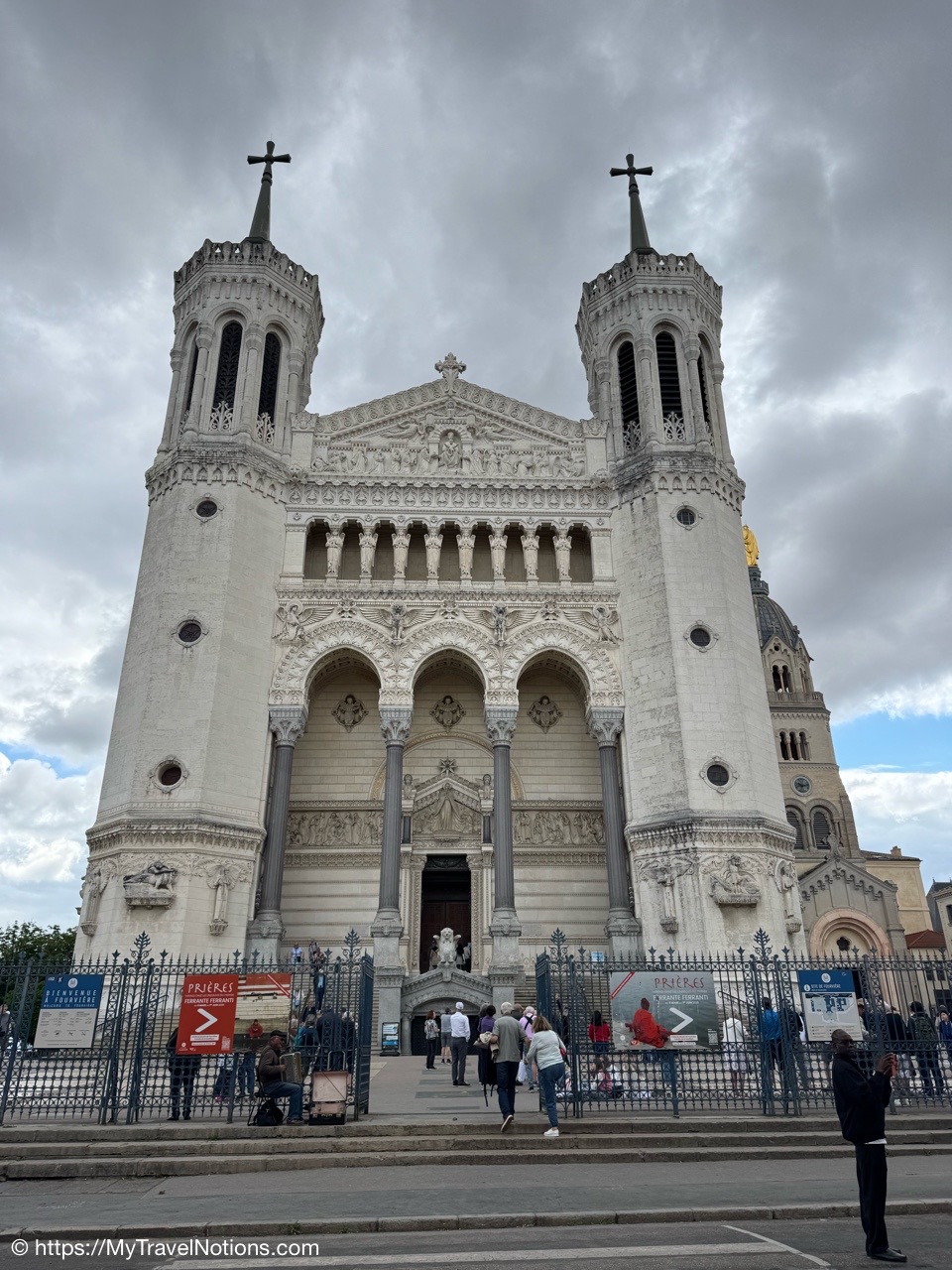
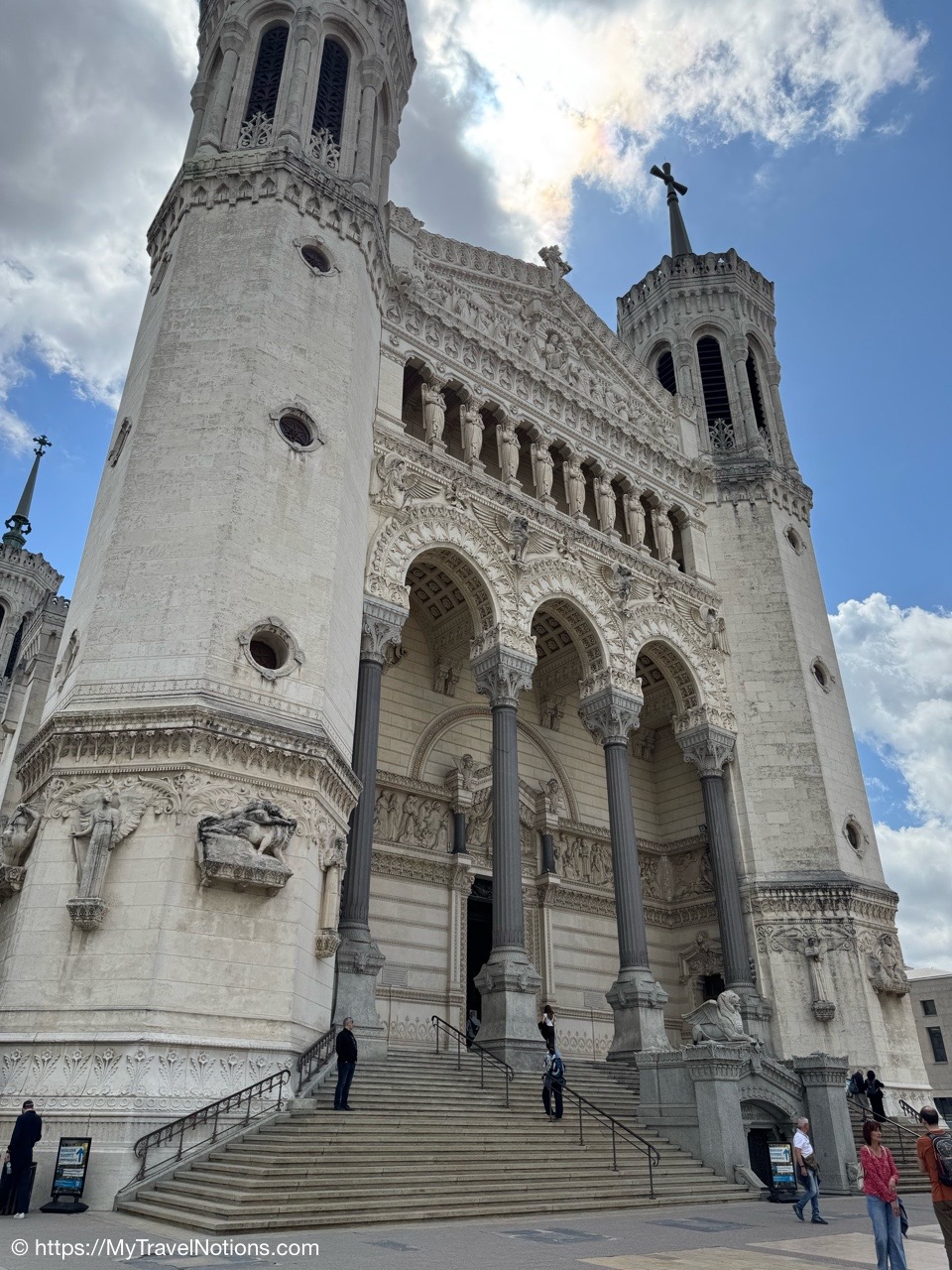
The Basilica of Notre-Dame de Fourvièreis a minor basilica in Lyon, France. It was built with private funds between 1872 and 1896 in a dominant position overlooking the city. The site it occupies was once the Roman forum of Trajan. And, the Roman theater constructed around 15-17 BCE was later expanded under Emperor Hadrian. It was part of a monumental complex with a smaller theater, the odeon, and a temple to the goddess Cybele. The theater served as a major cultural and political center, hosting performances and important addresses, such as Emperor Claudius’s speech, and was a key site for Romanization.
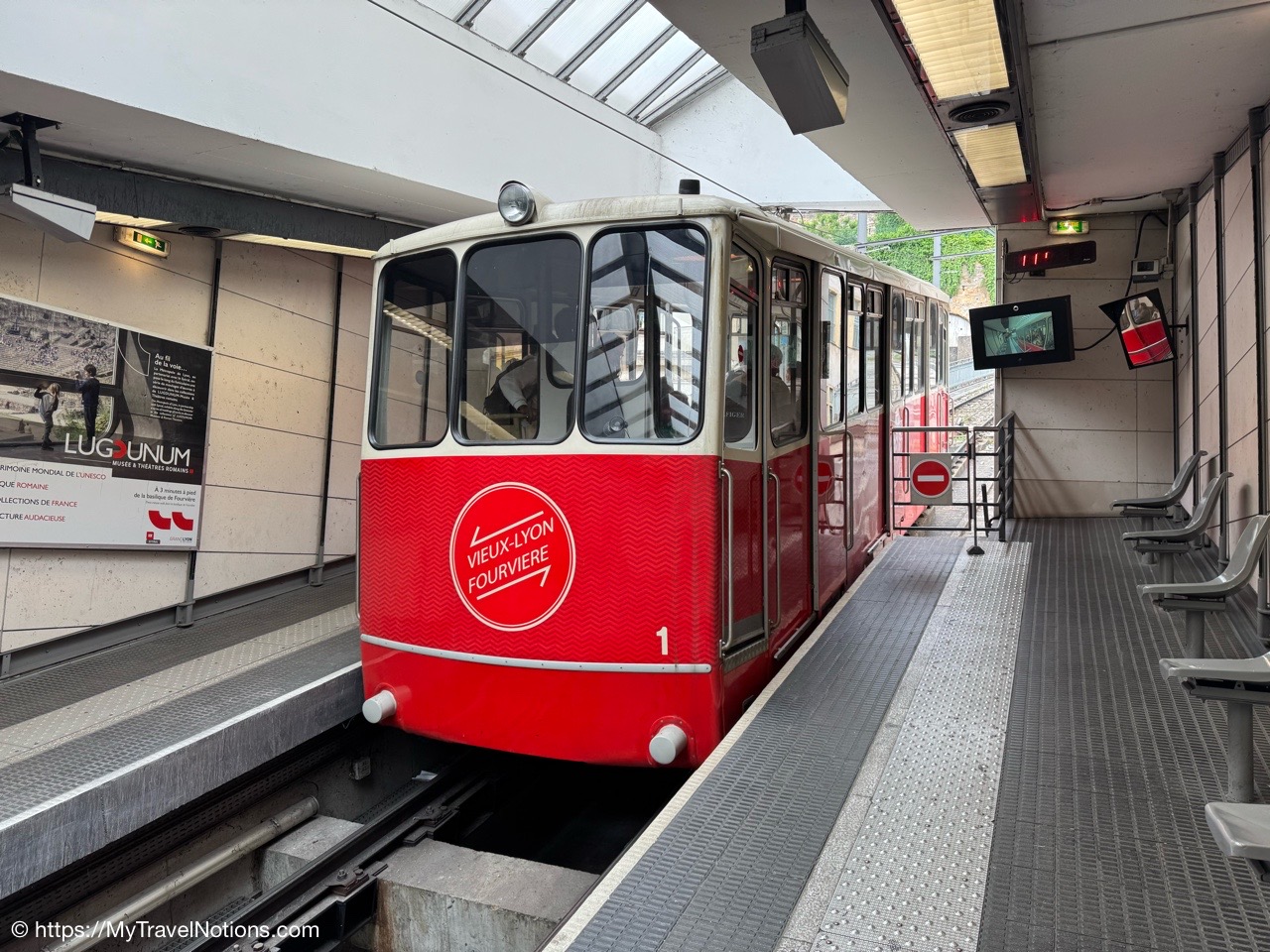
The basilica can be seen majestically from lower Lyon. We had the option to walk up to the basilica, which Alice did twice, or ride up in less than five minutes on the funicular, which is exactly what Rosie and I did. Then after appreciating the art and worship of the basilica, we walked down to the Roman theater and Odeon ruins of the once Roman city of Lugdunum, now Lyon.
Here’s to a day of beauty and history in Lyon.
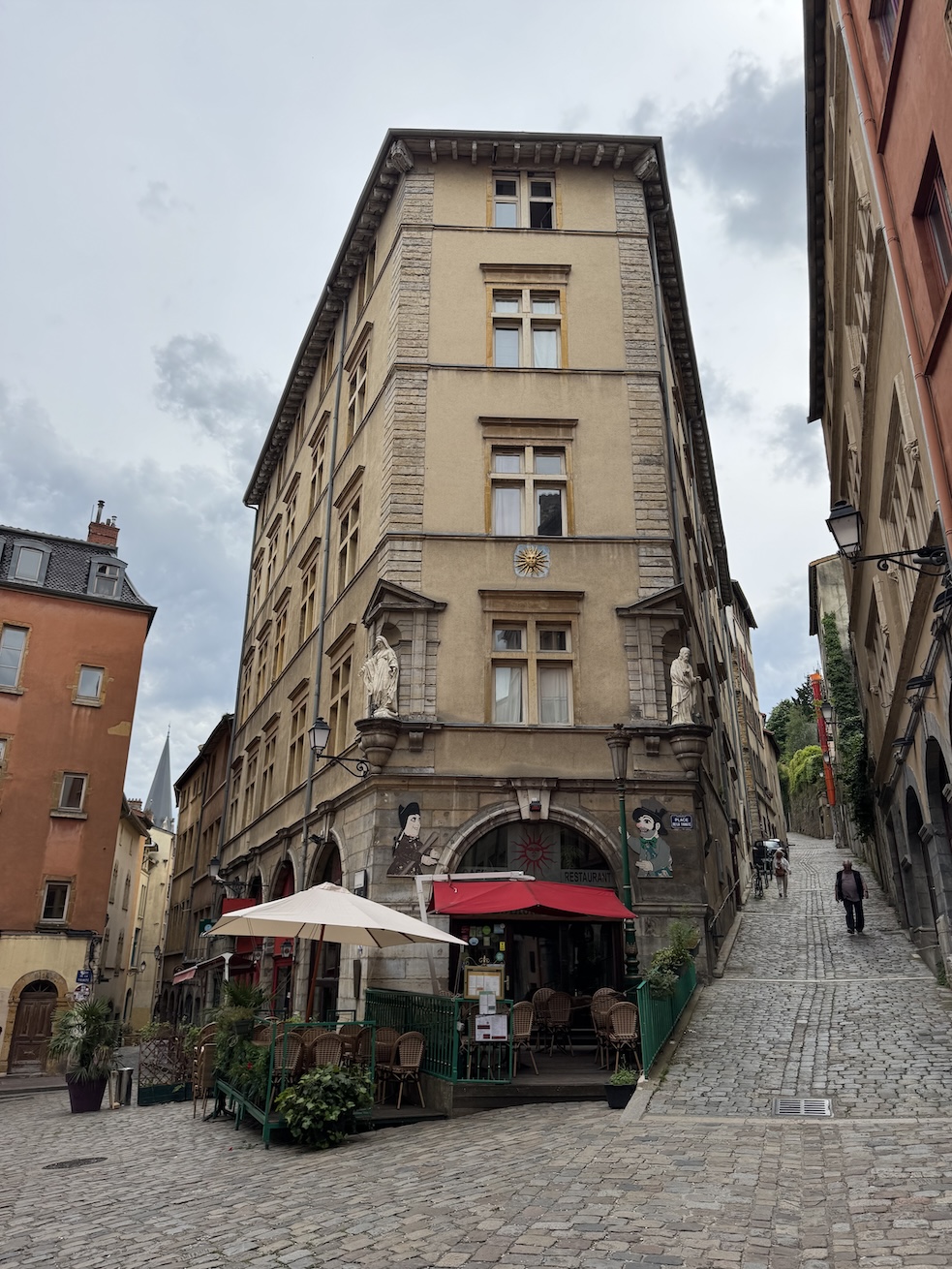
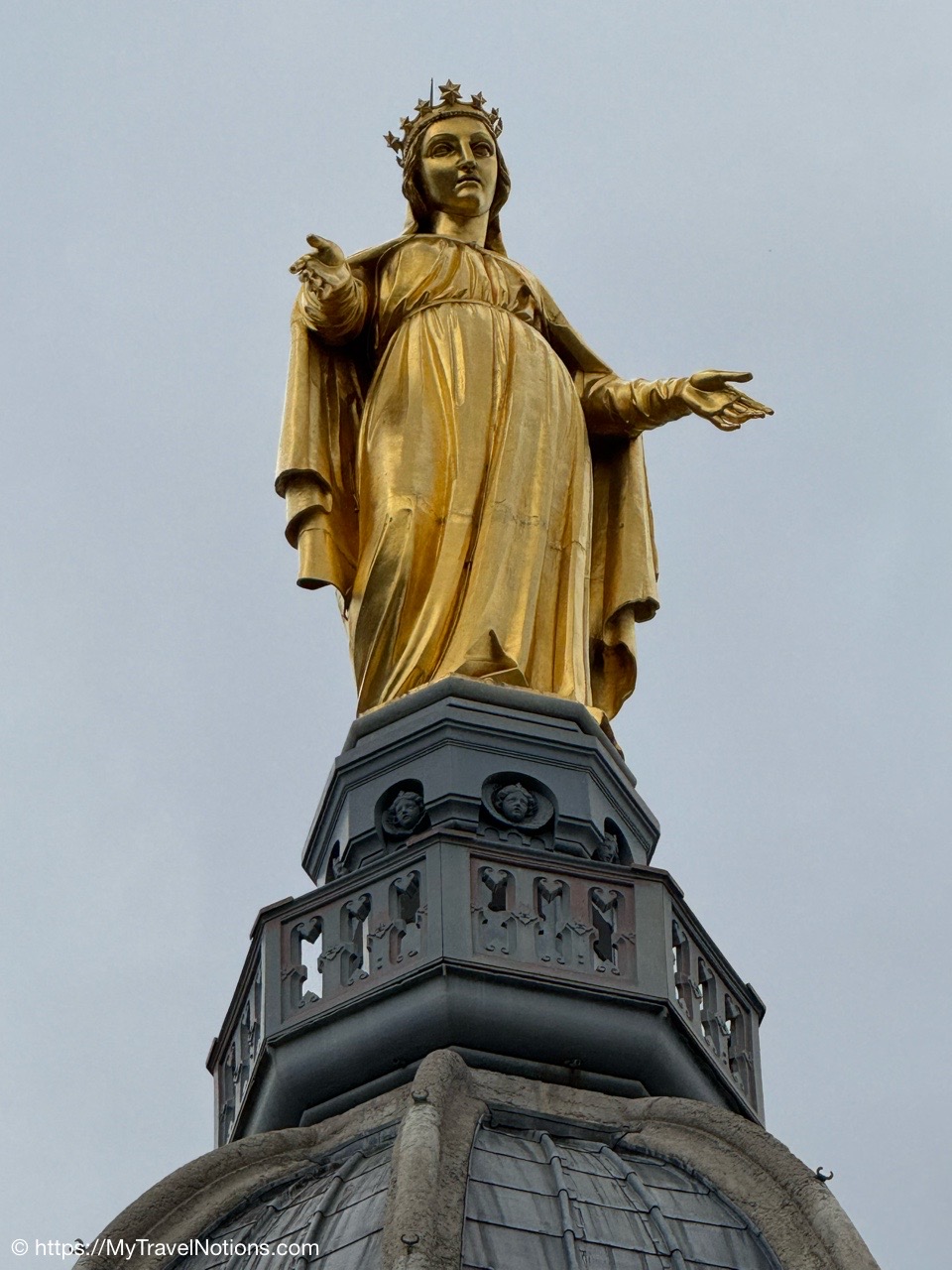
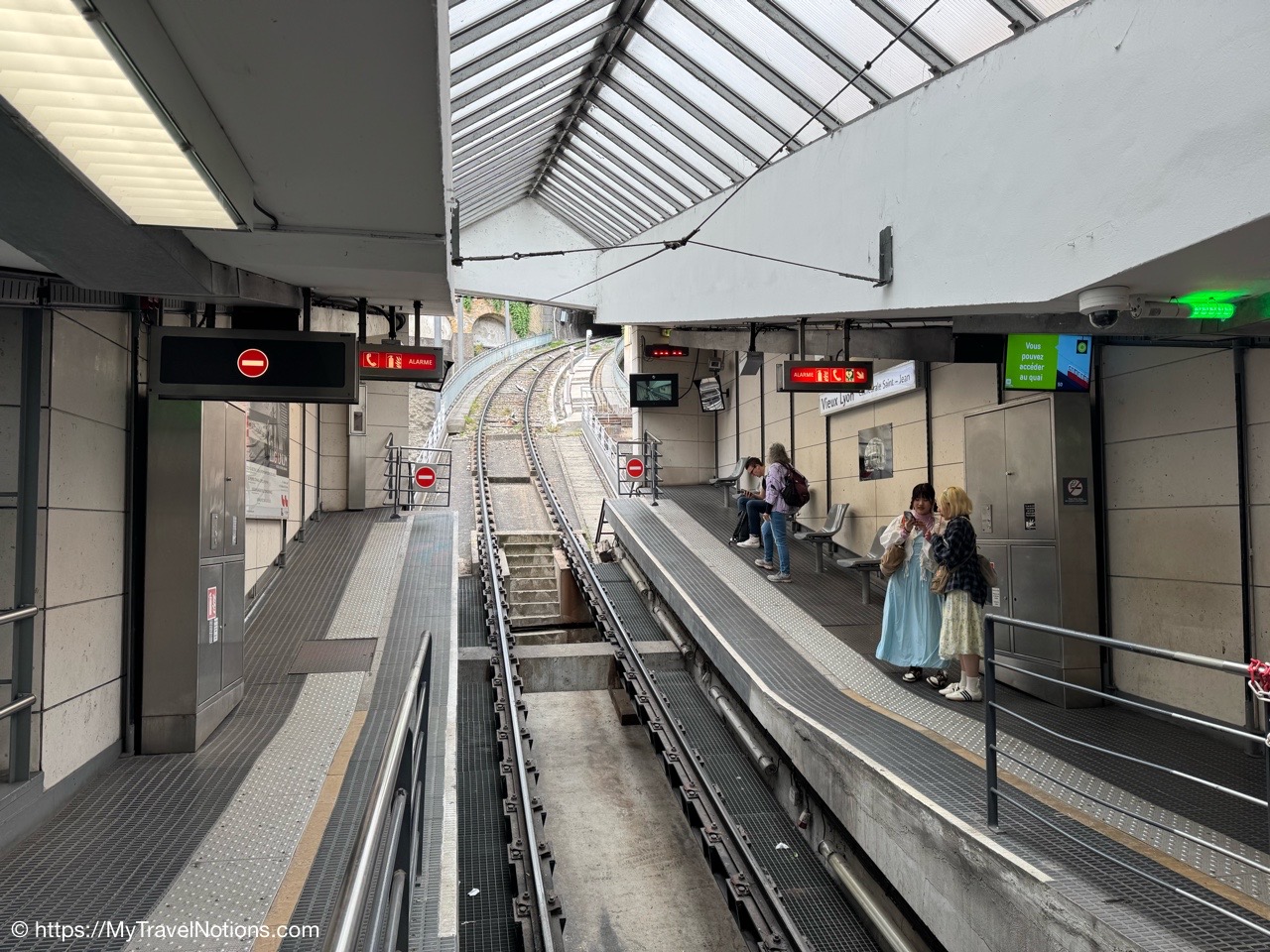
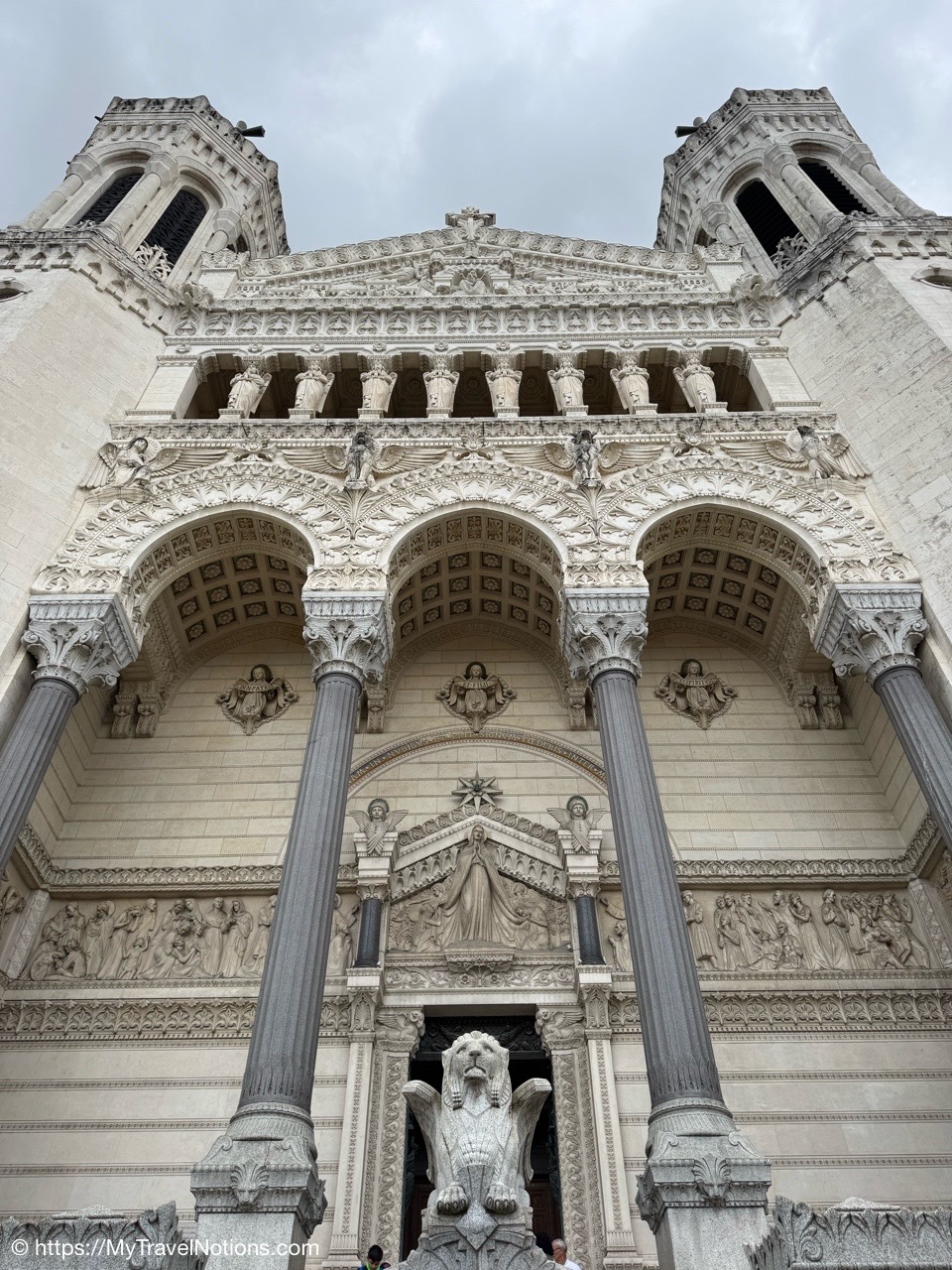
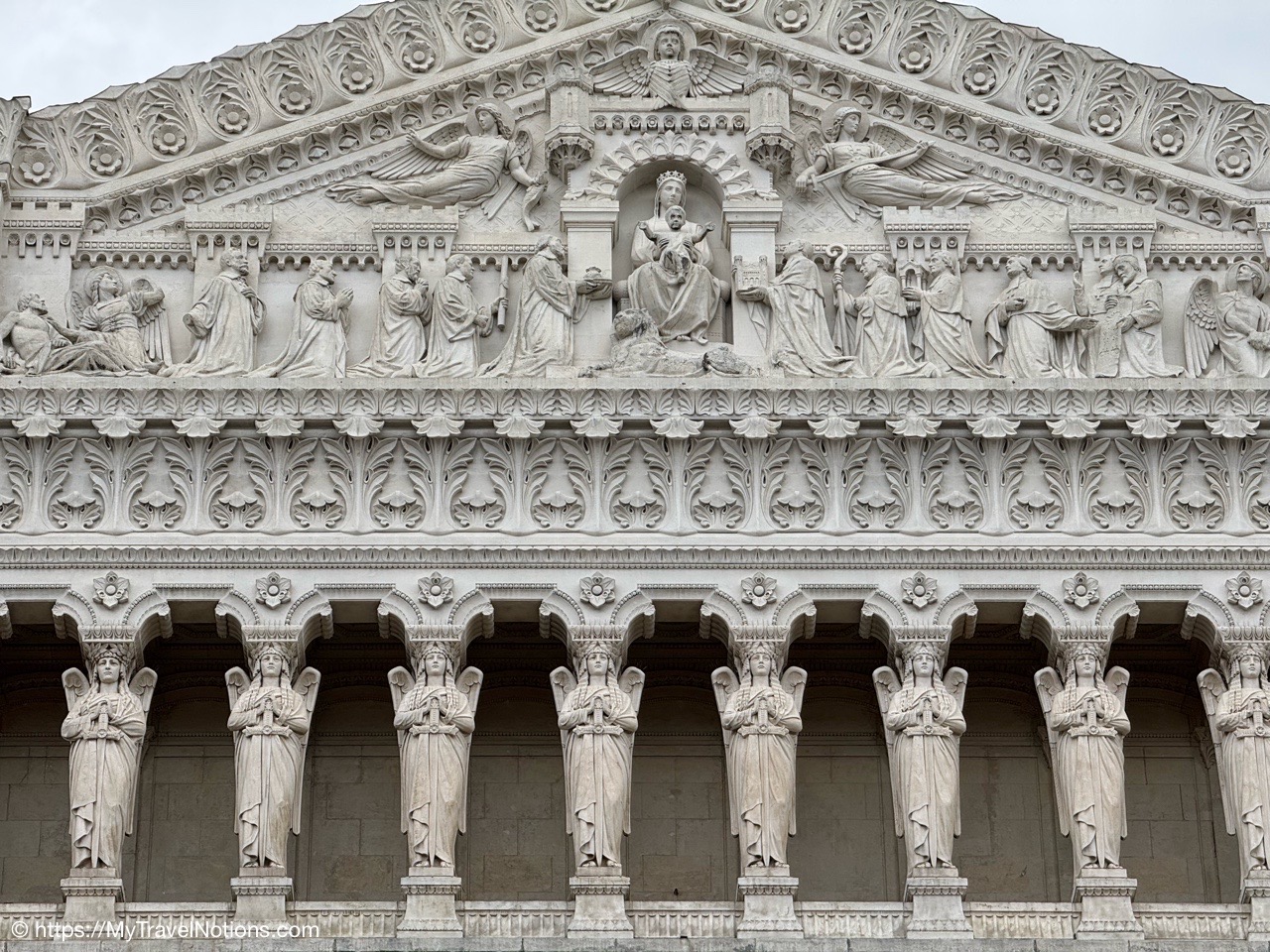
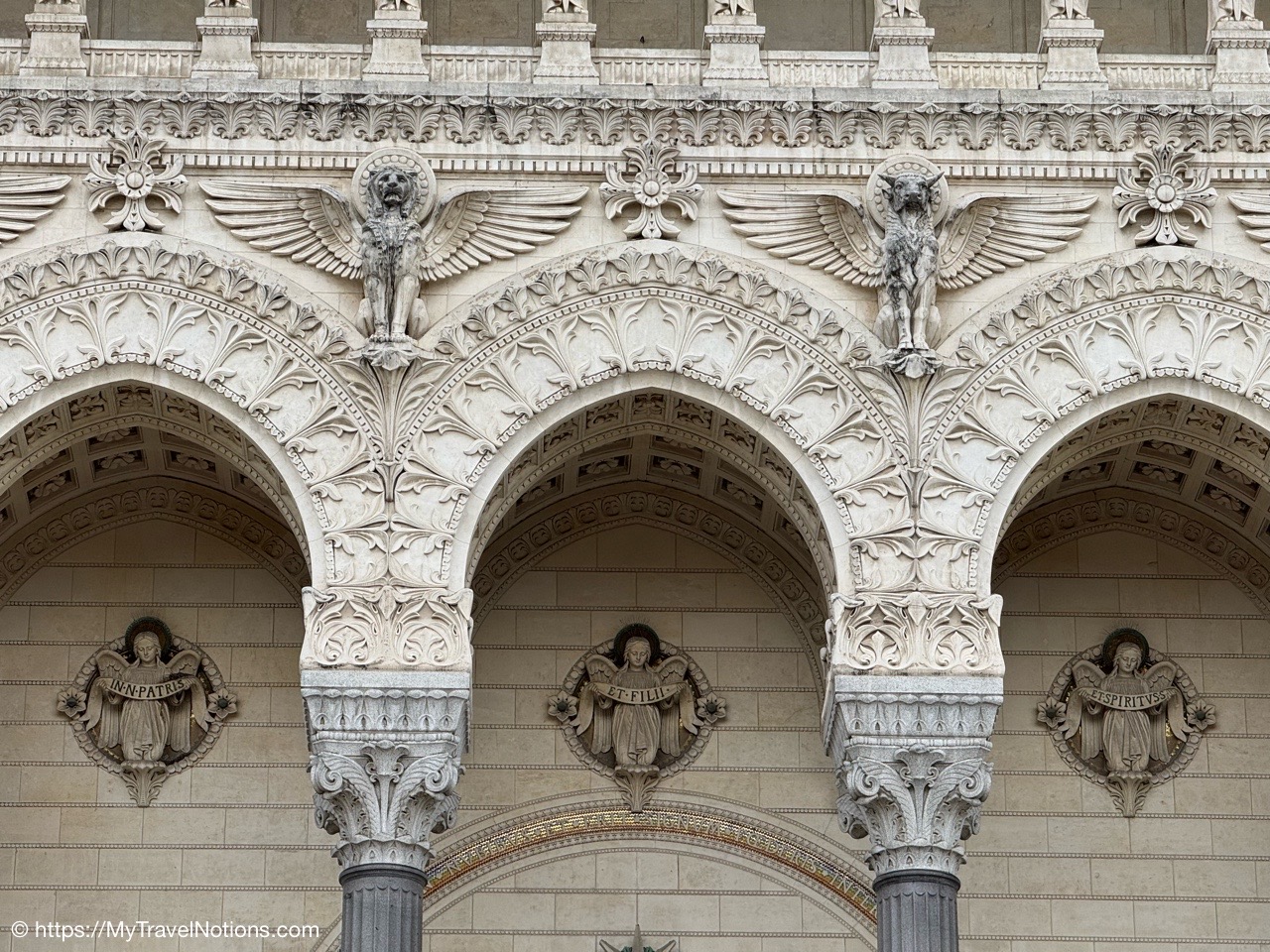
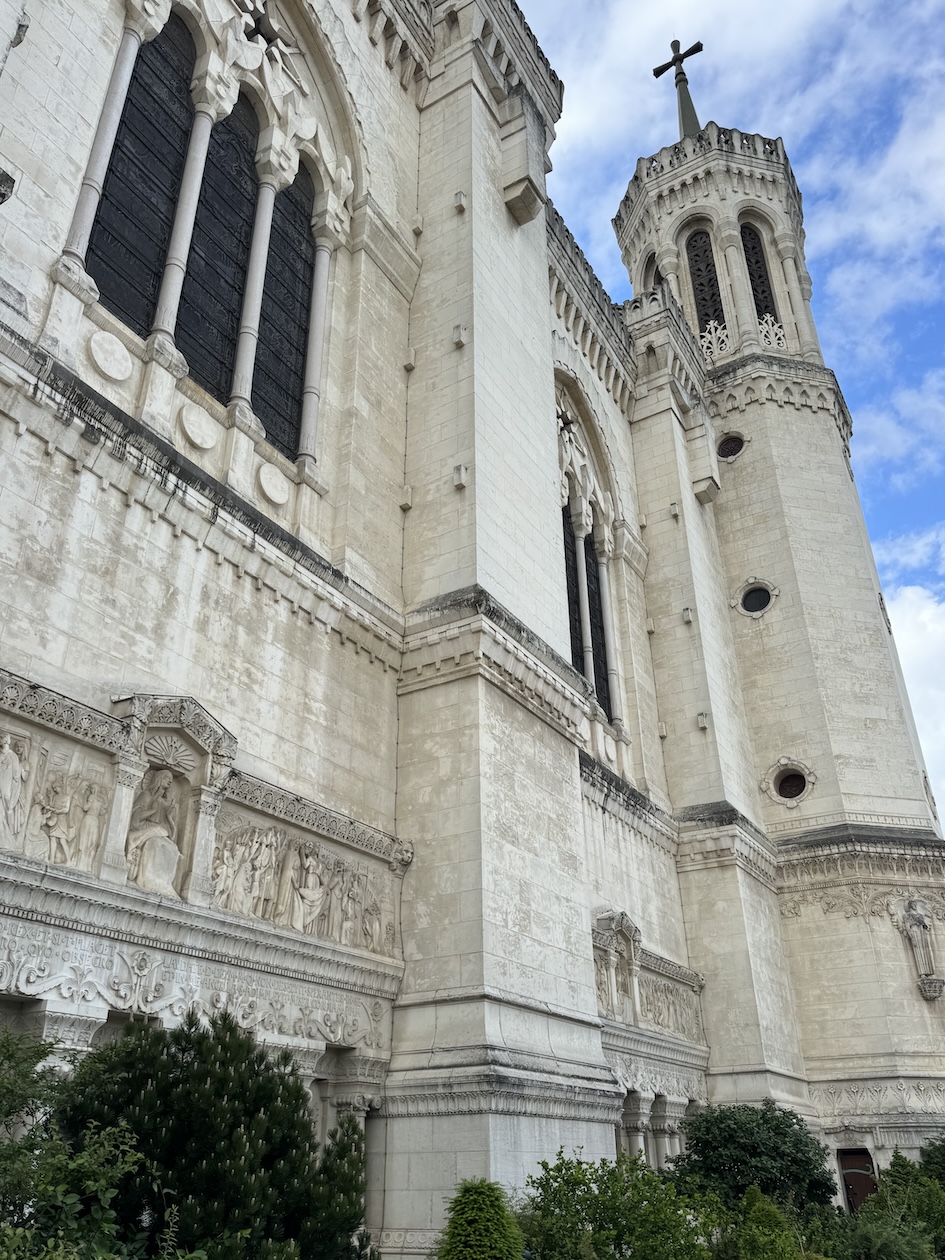
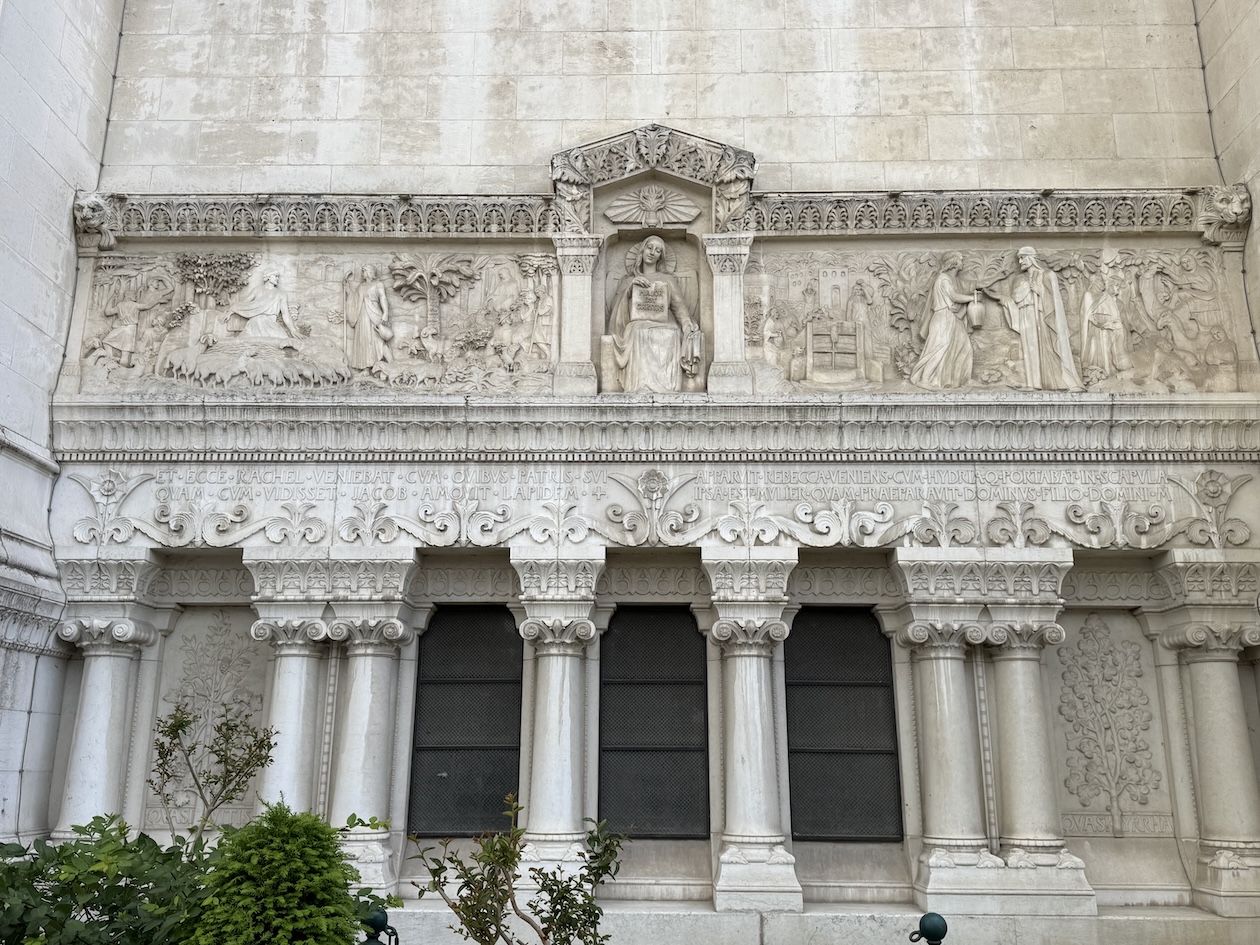
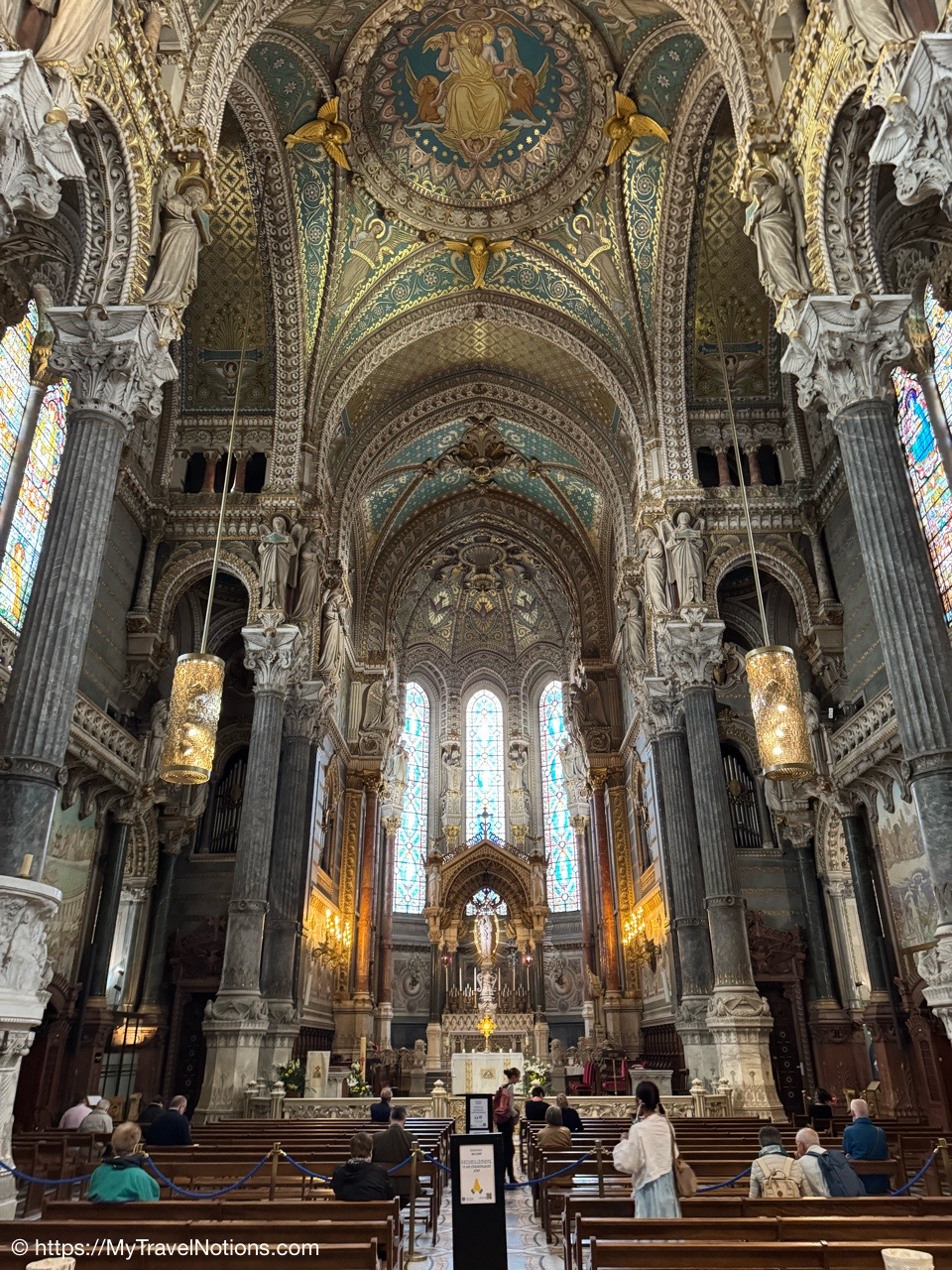
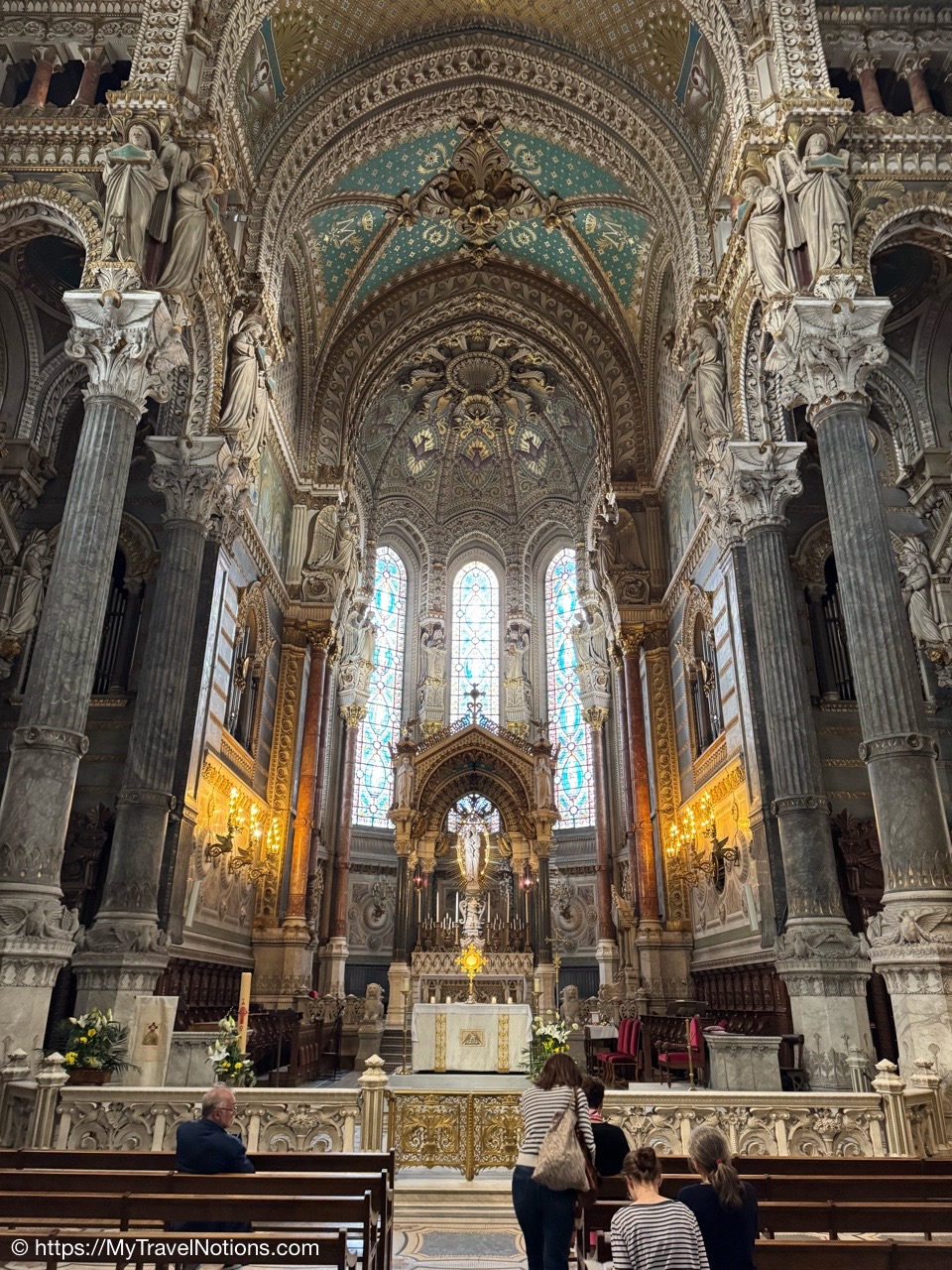
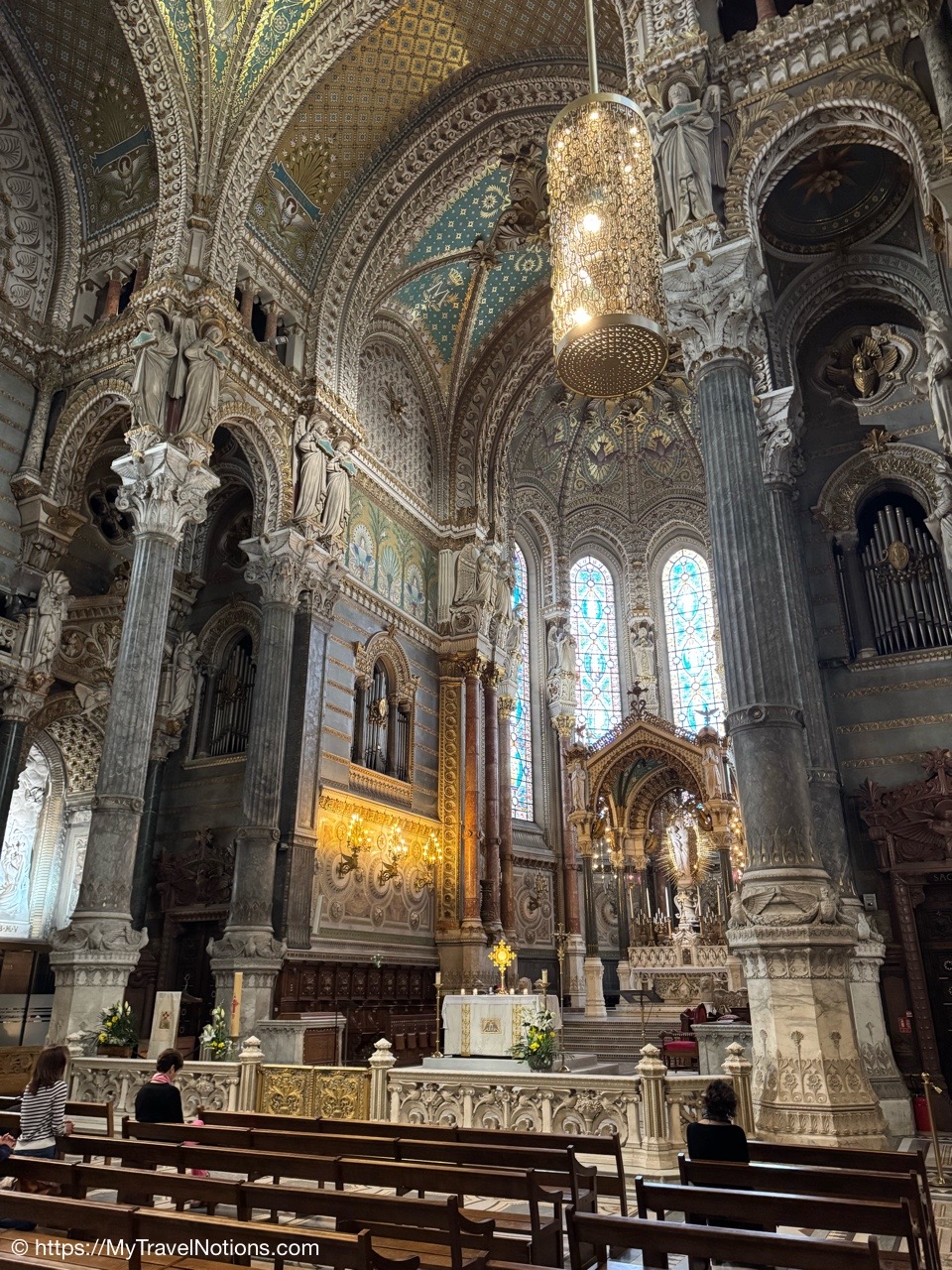
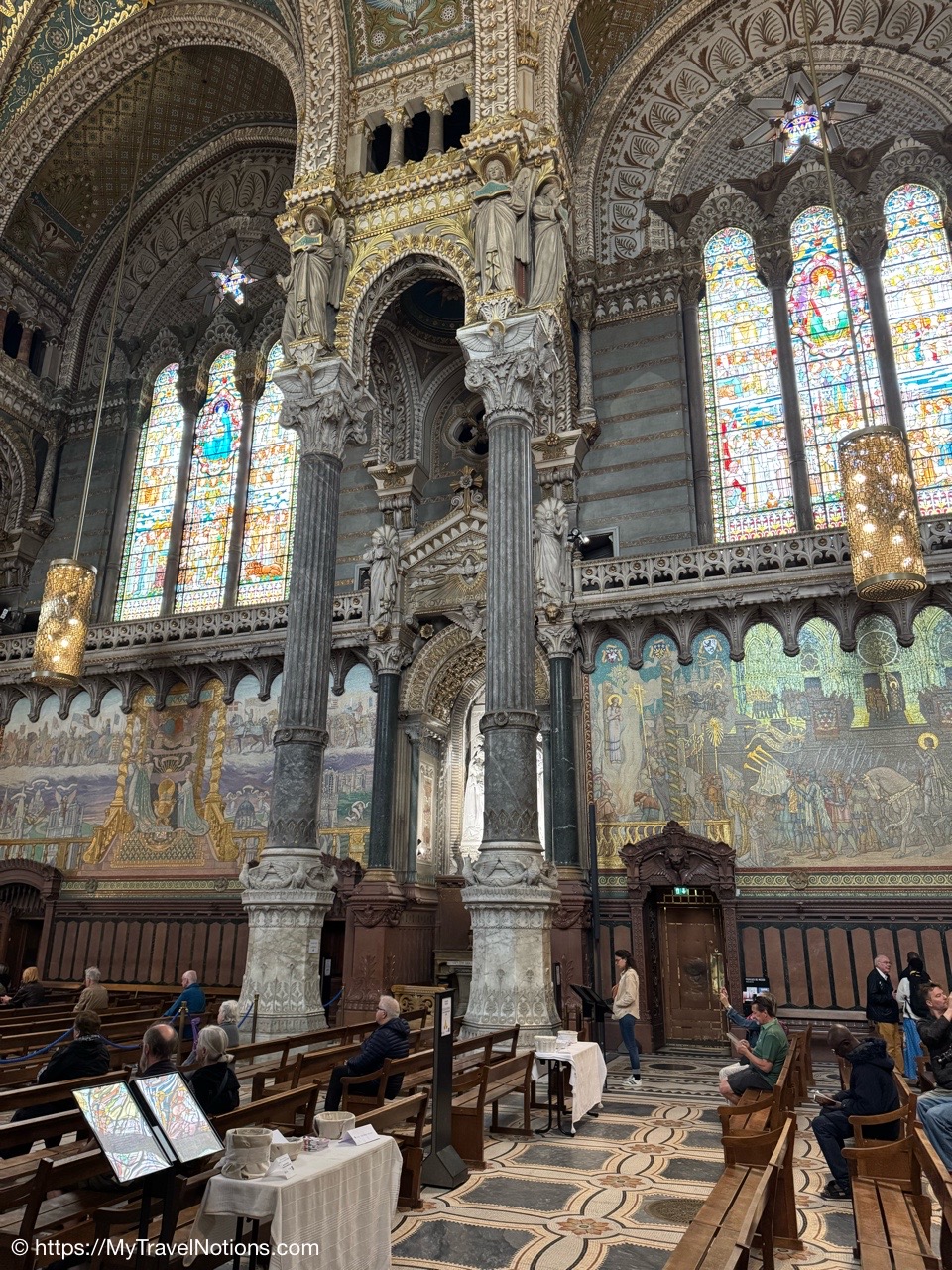
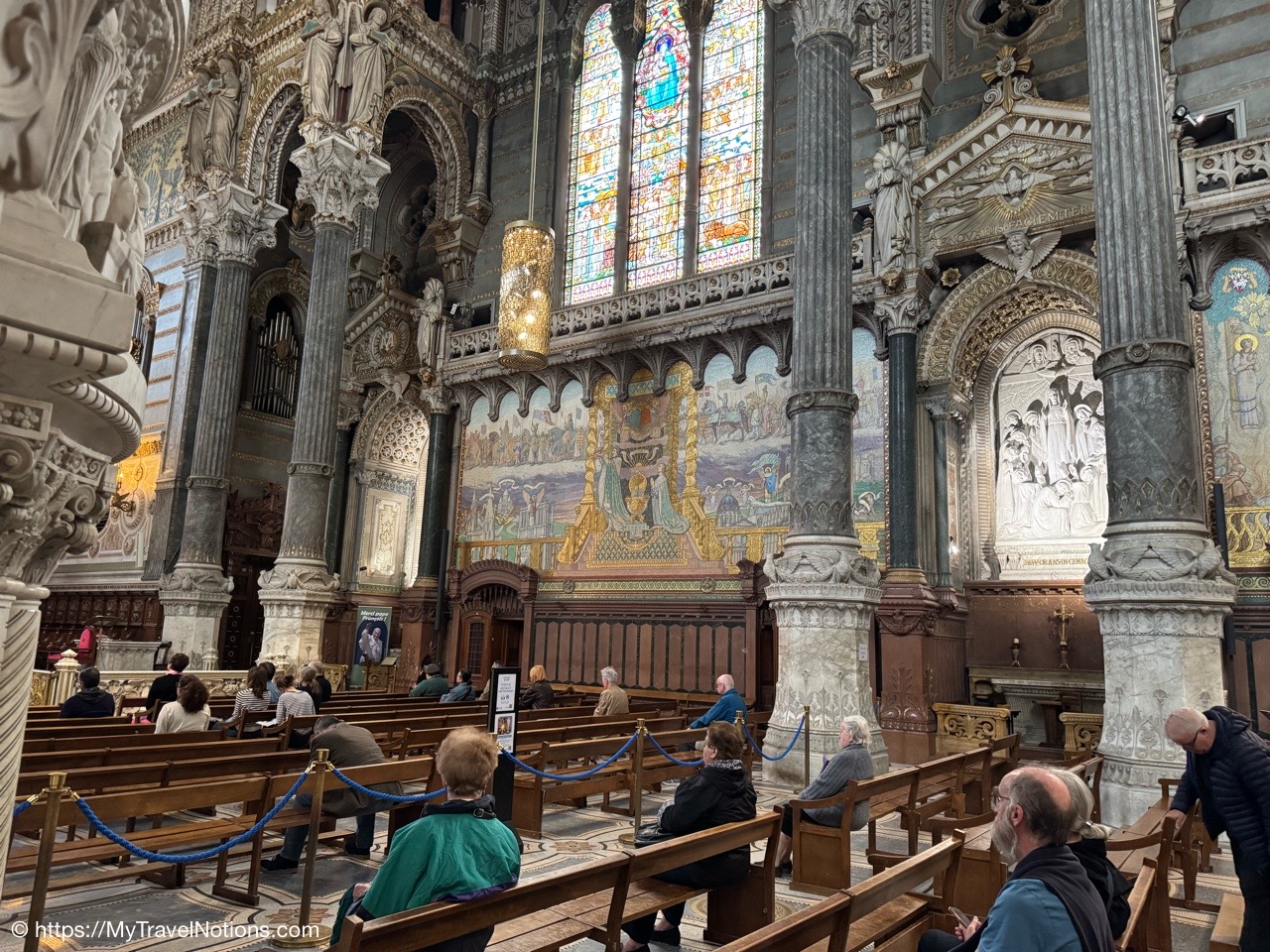
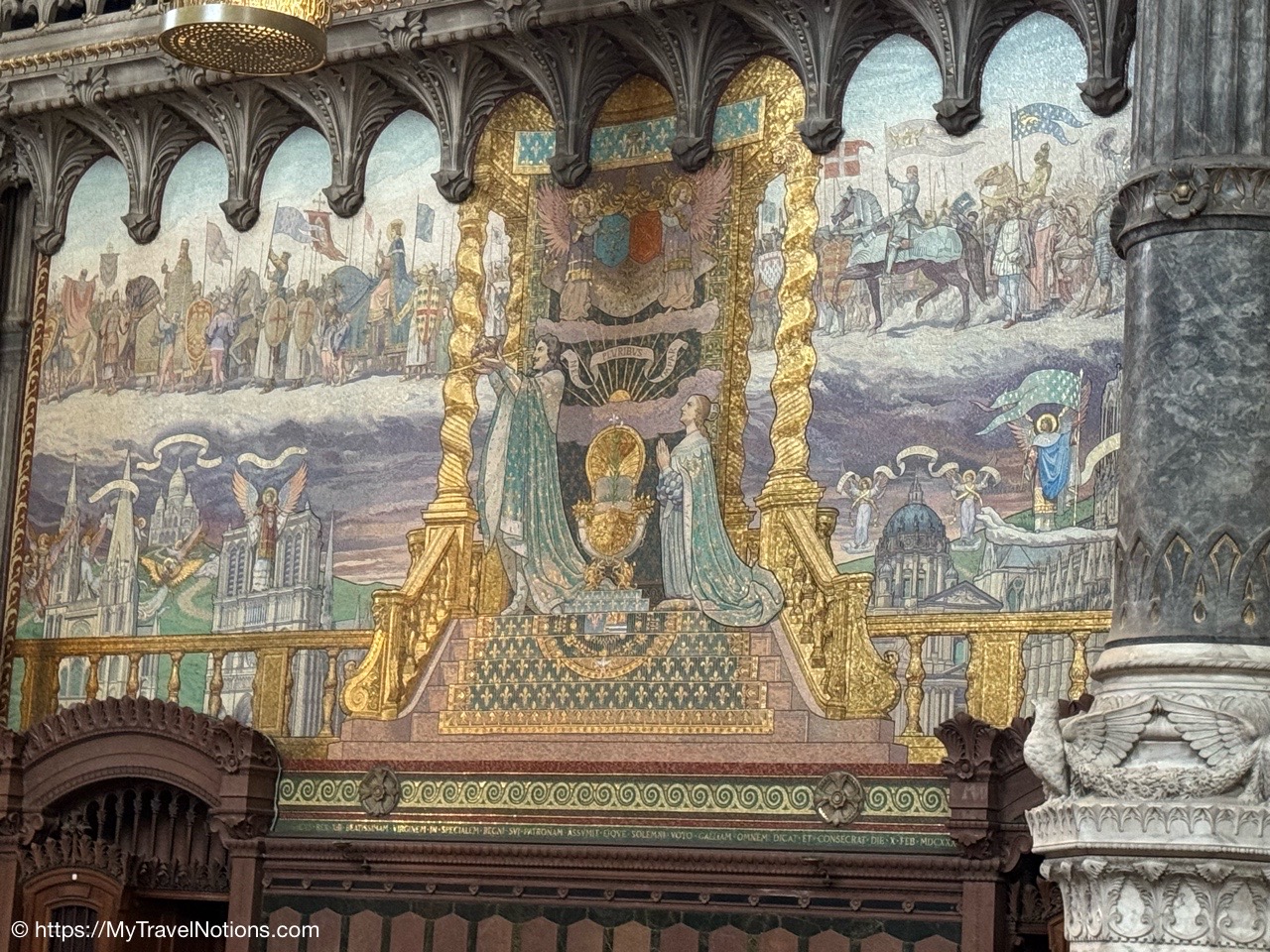
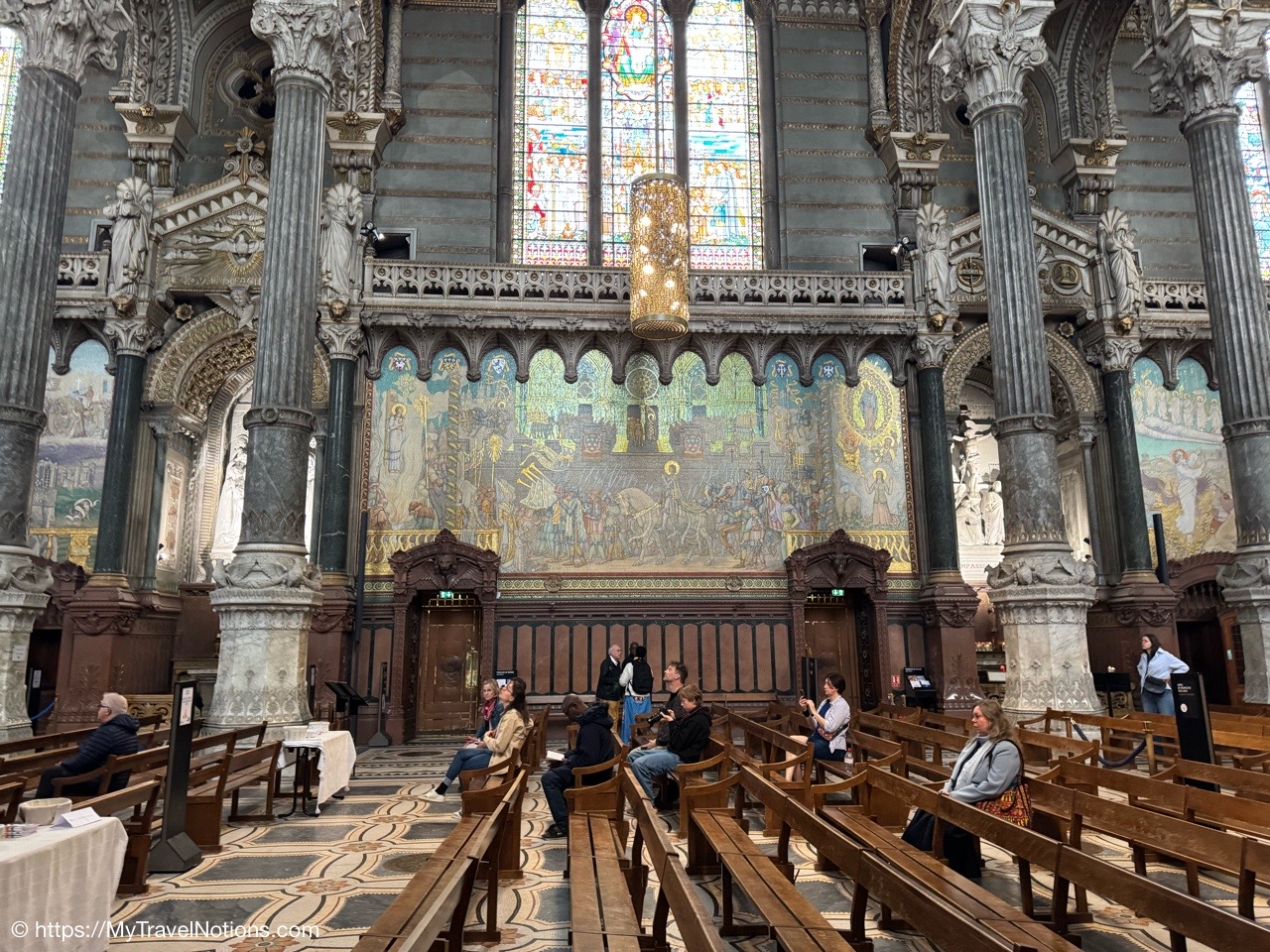
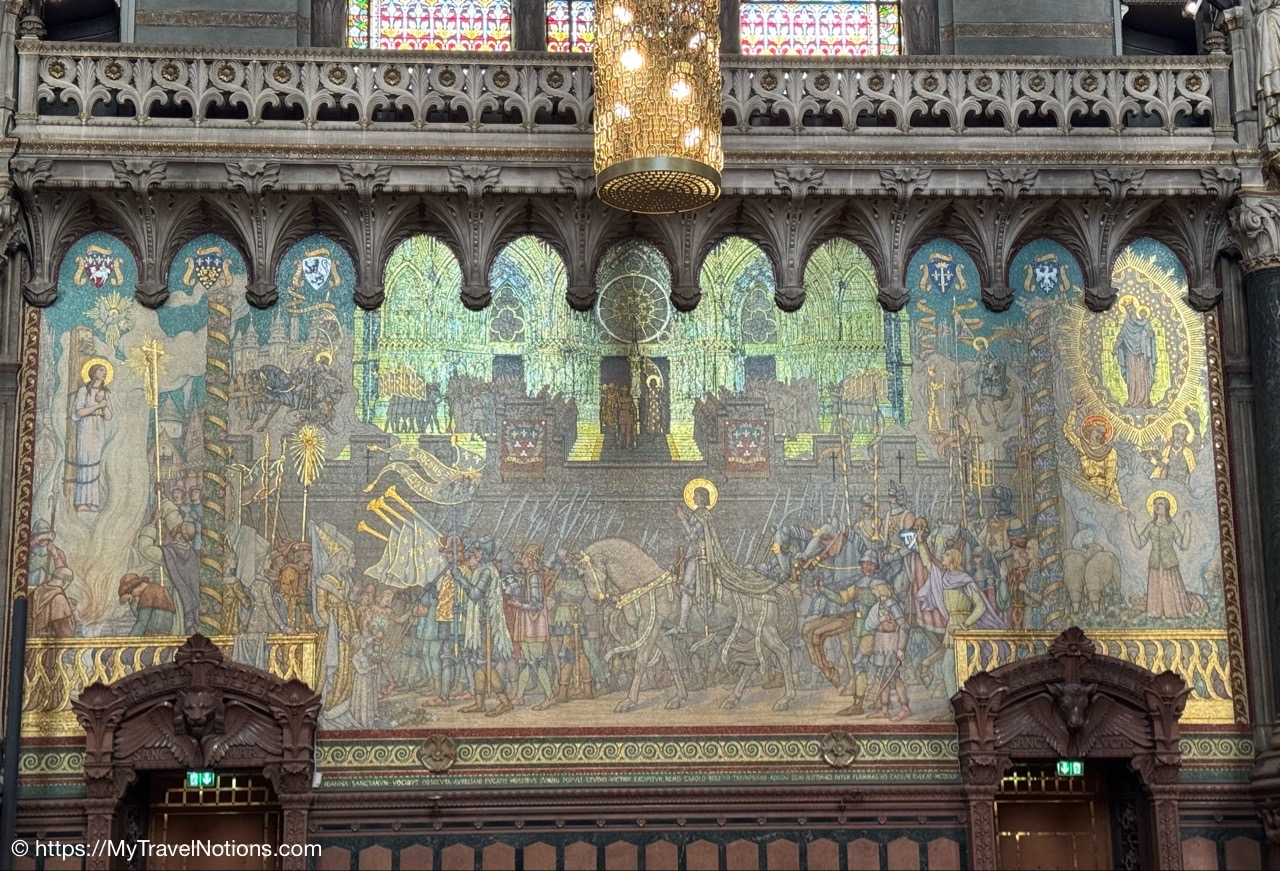
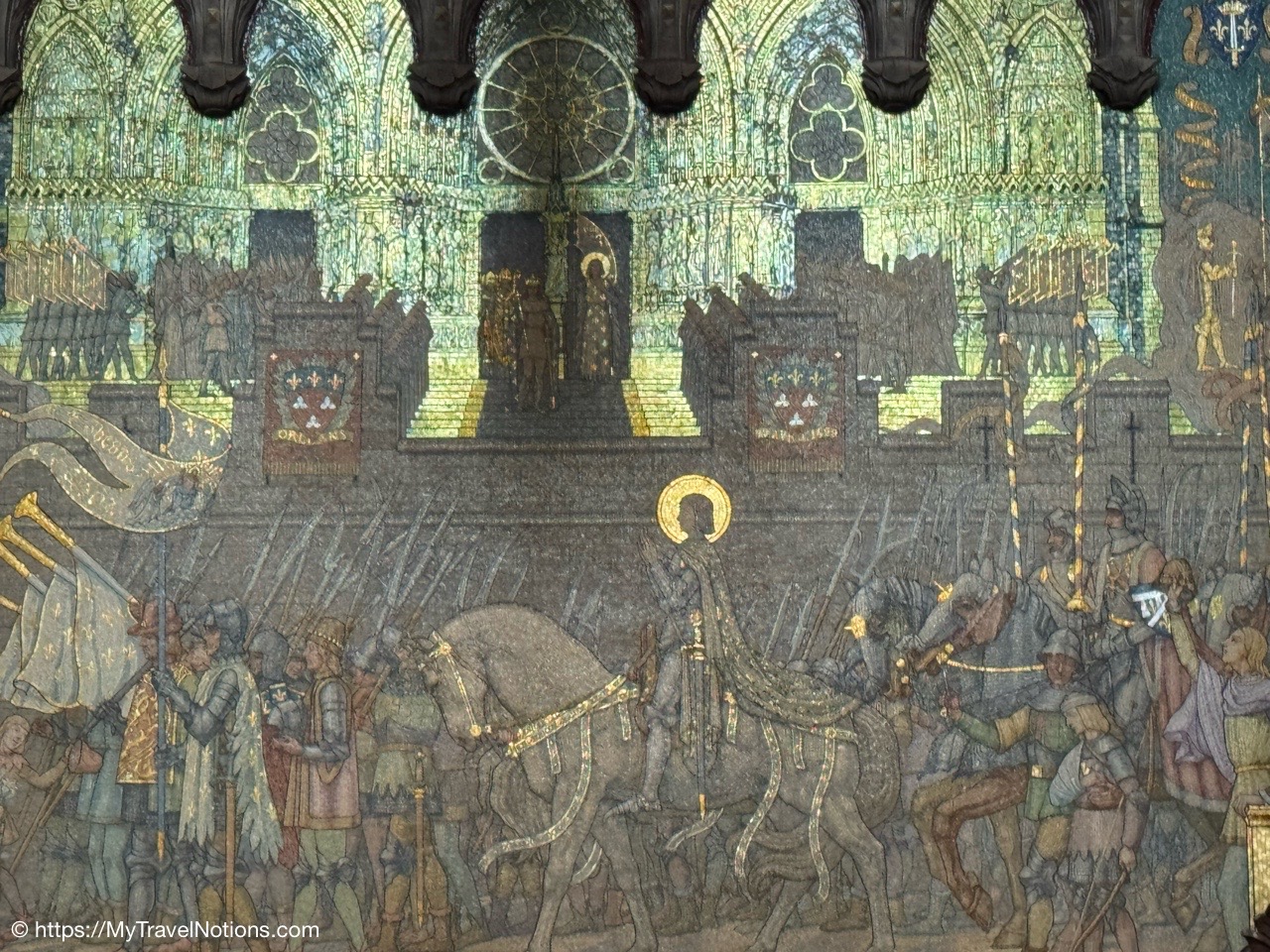
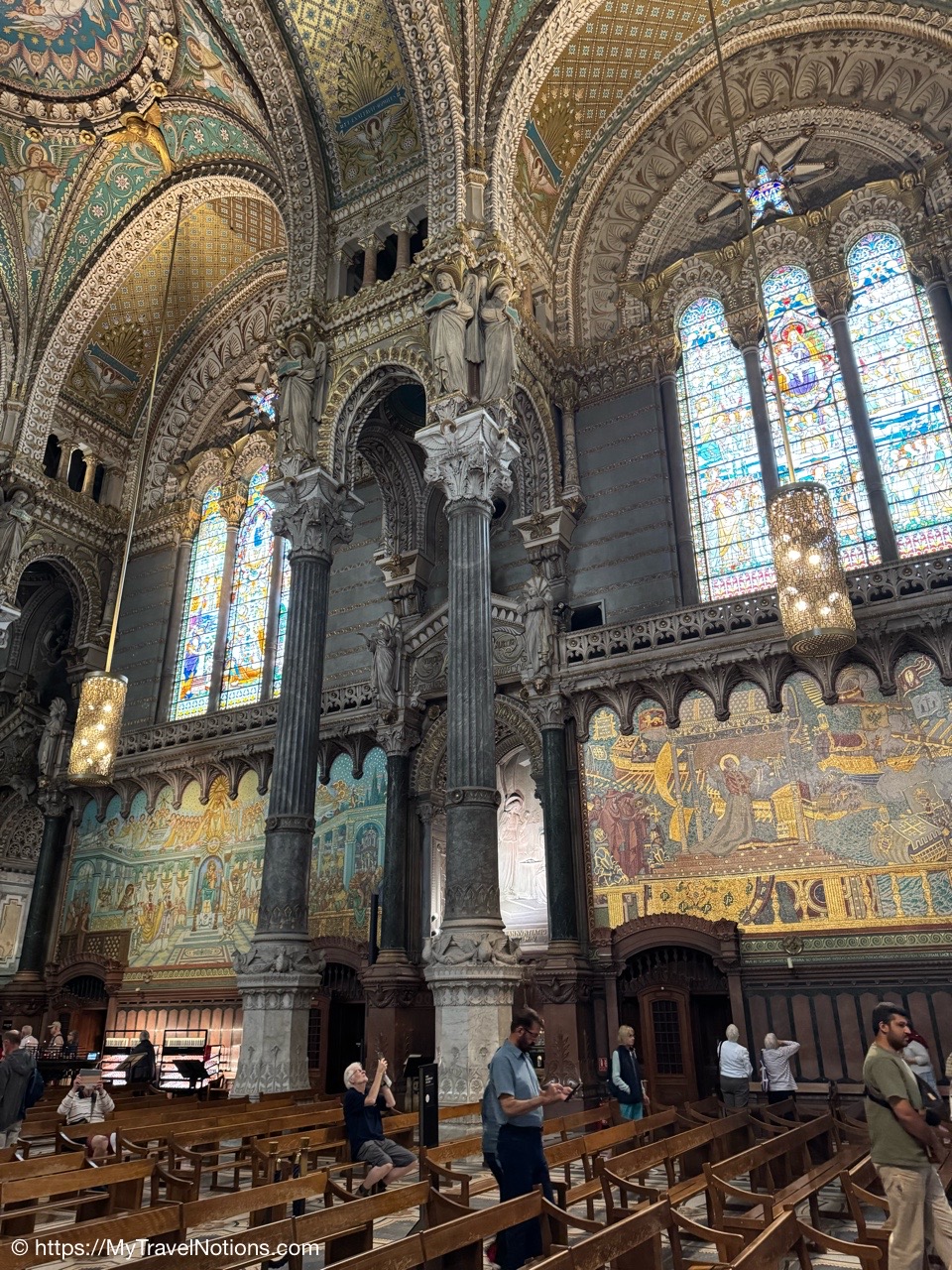
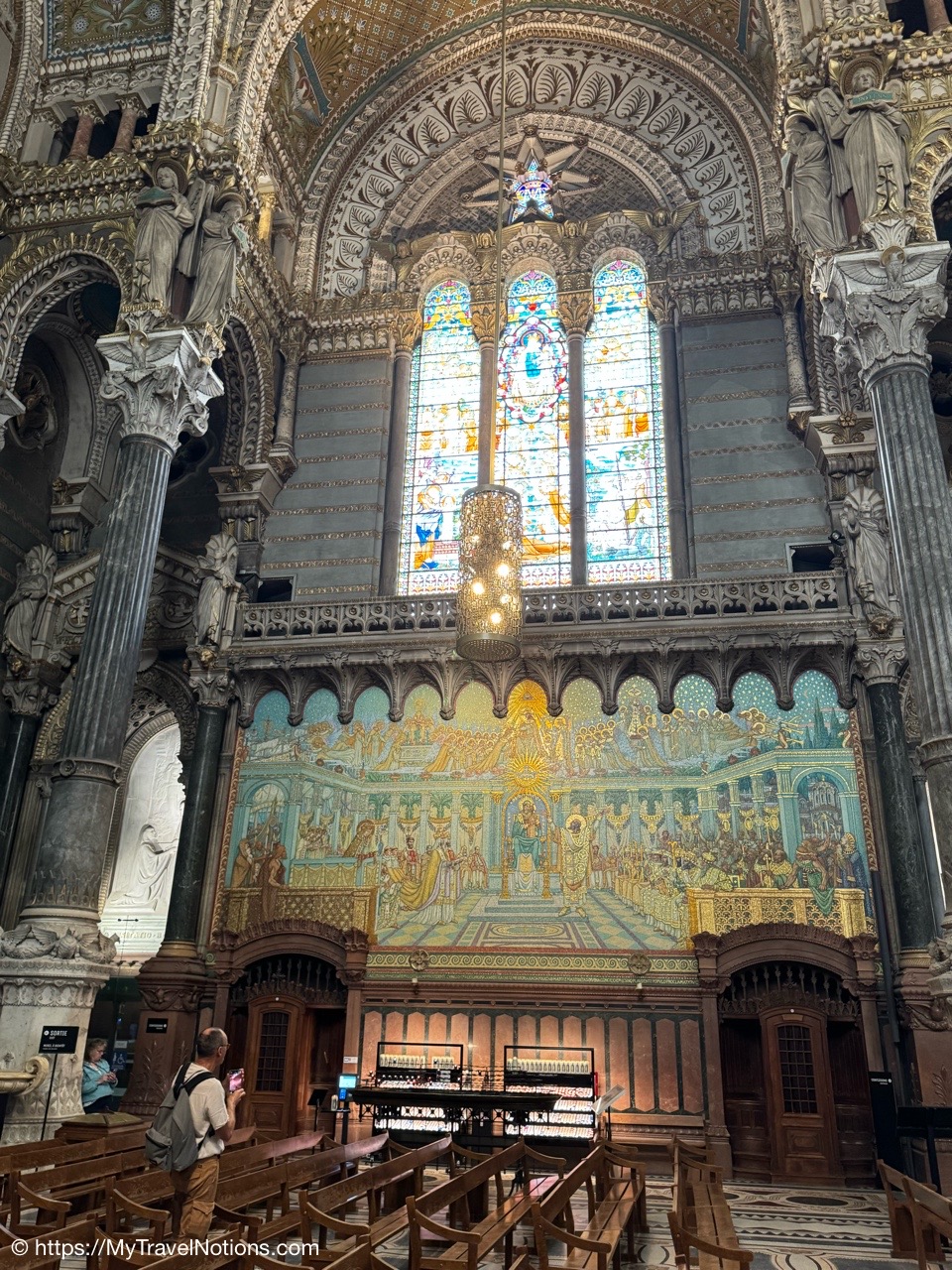
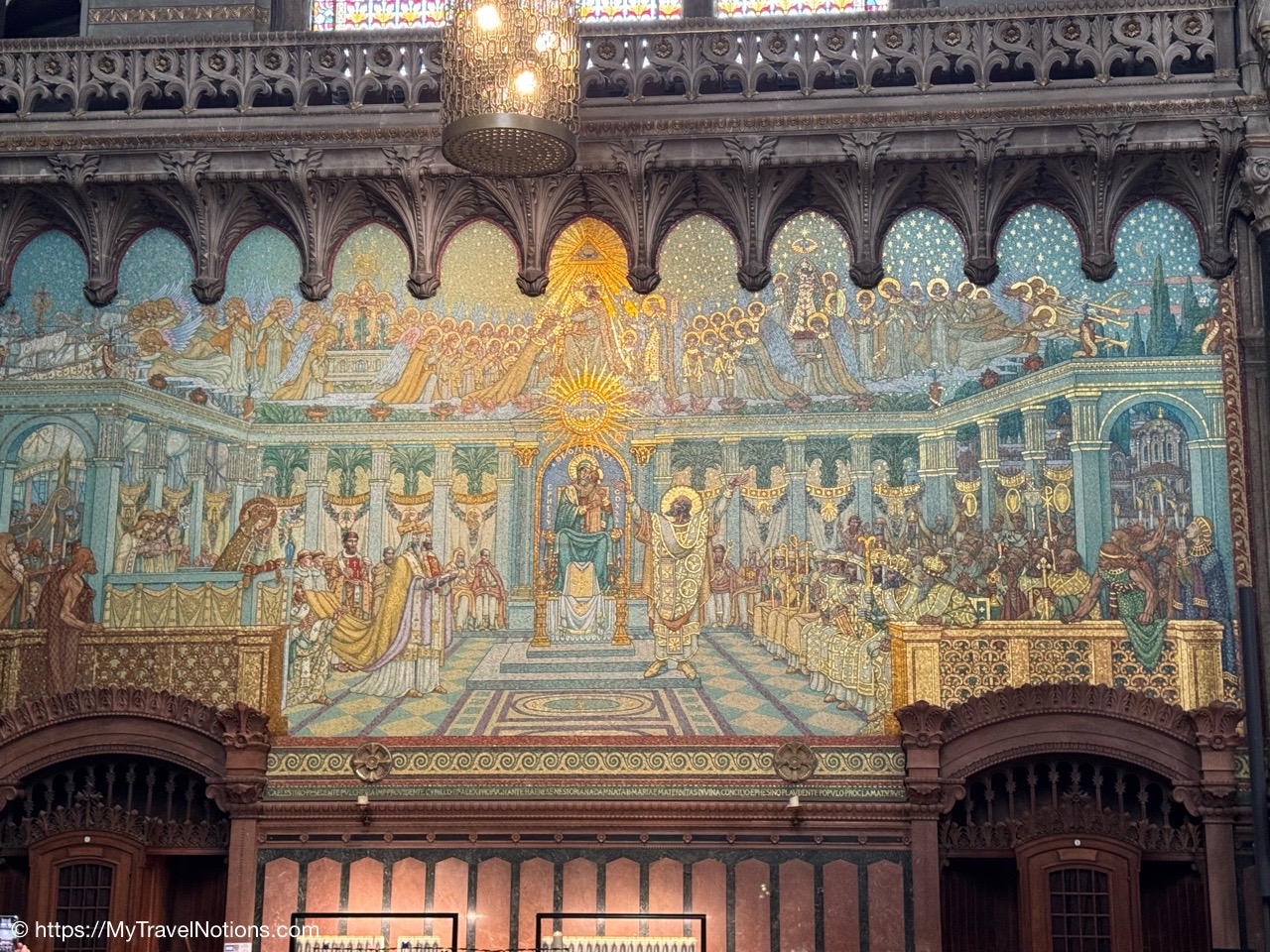
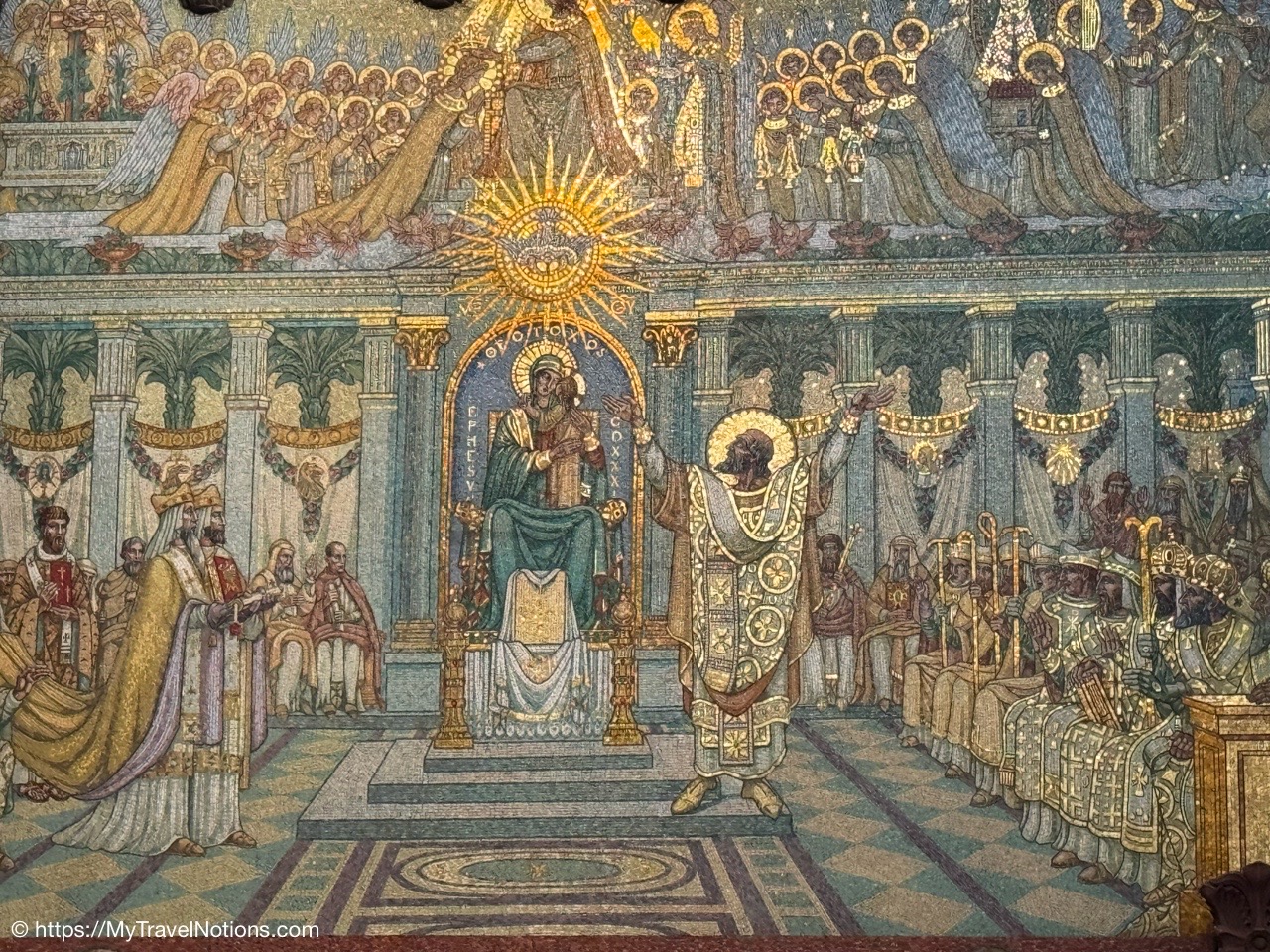
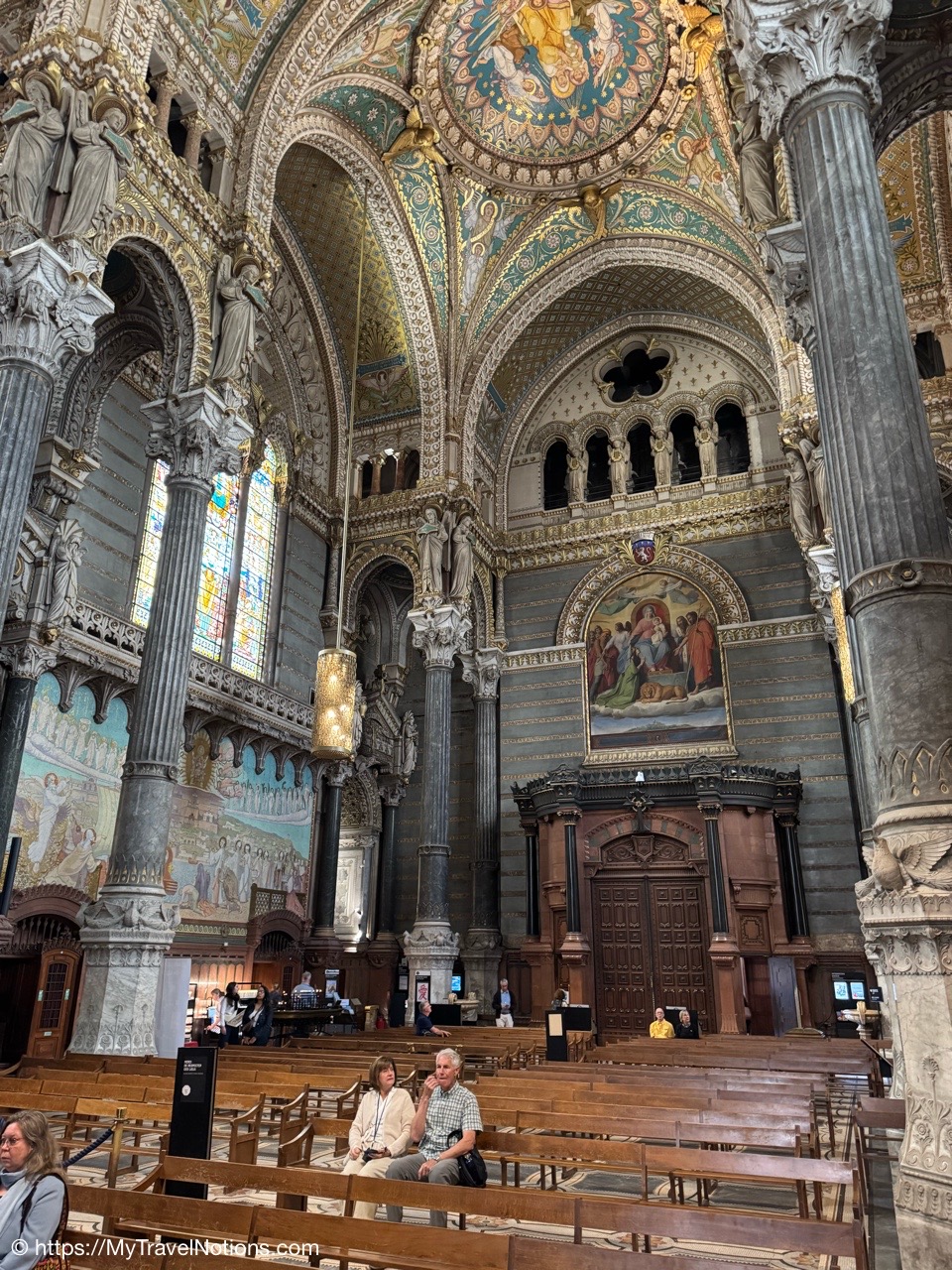
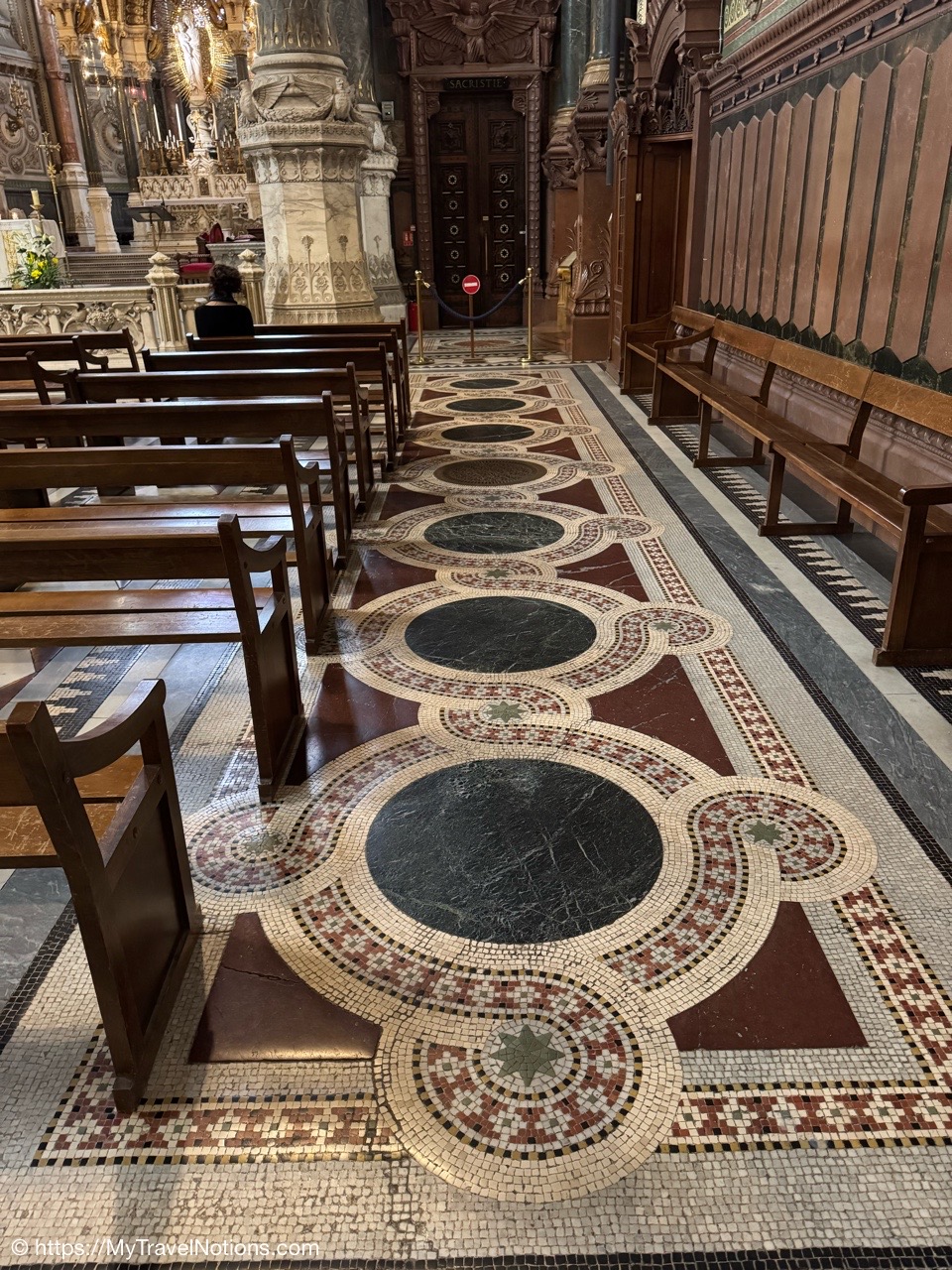
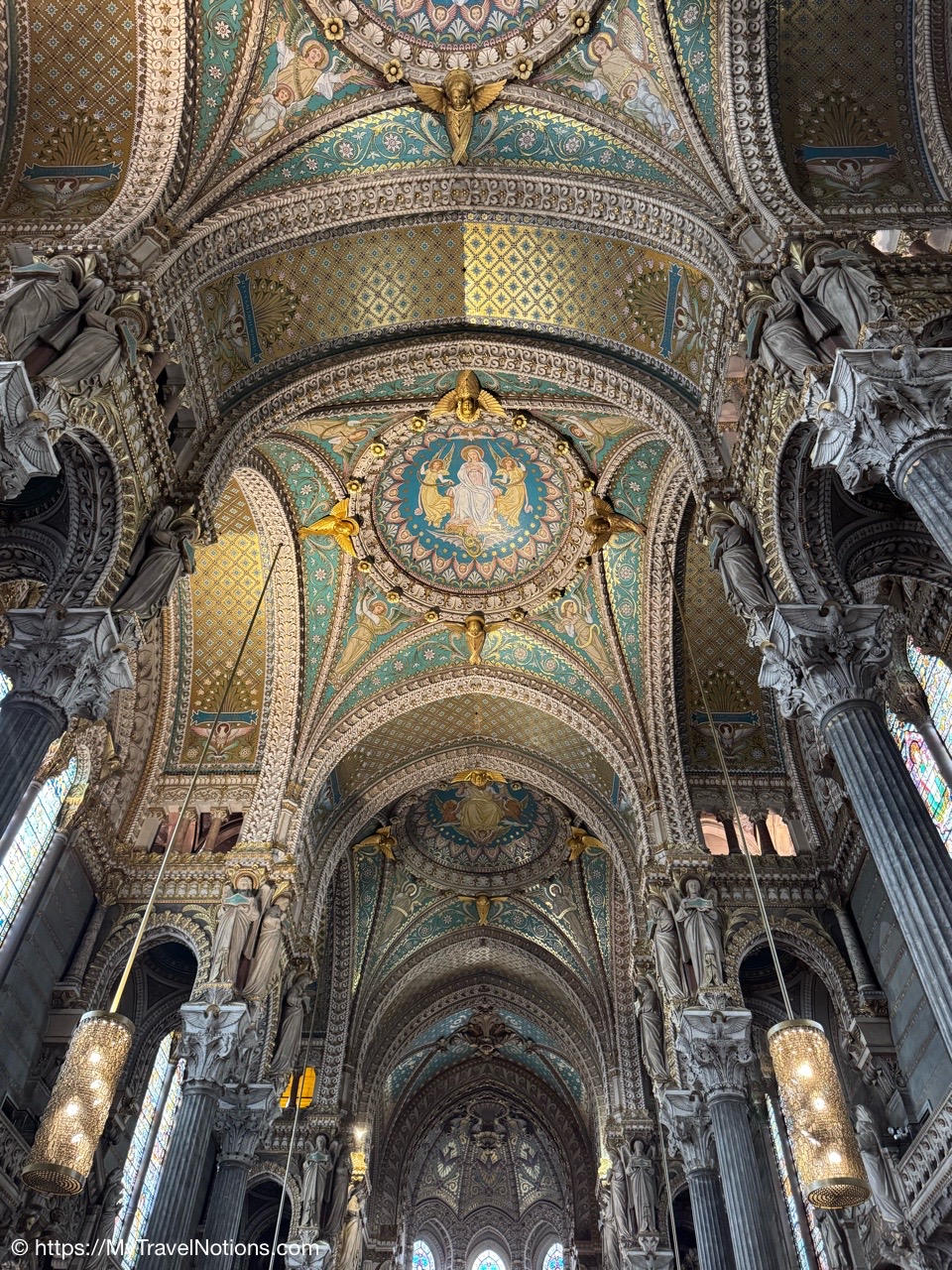
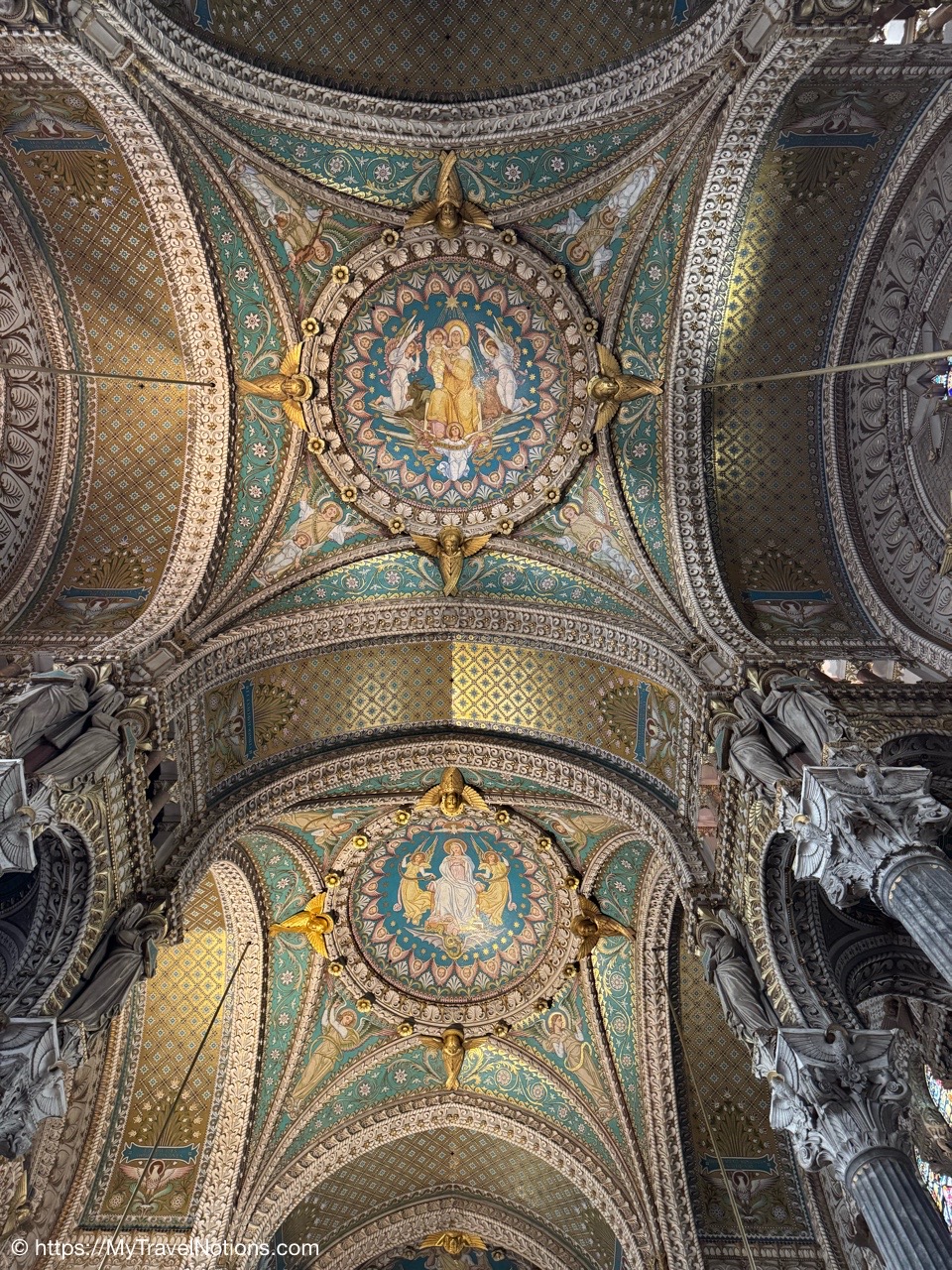
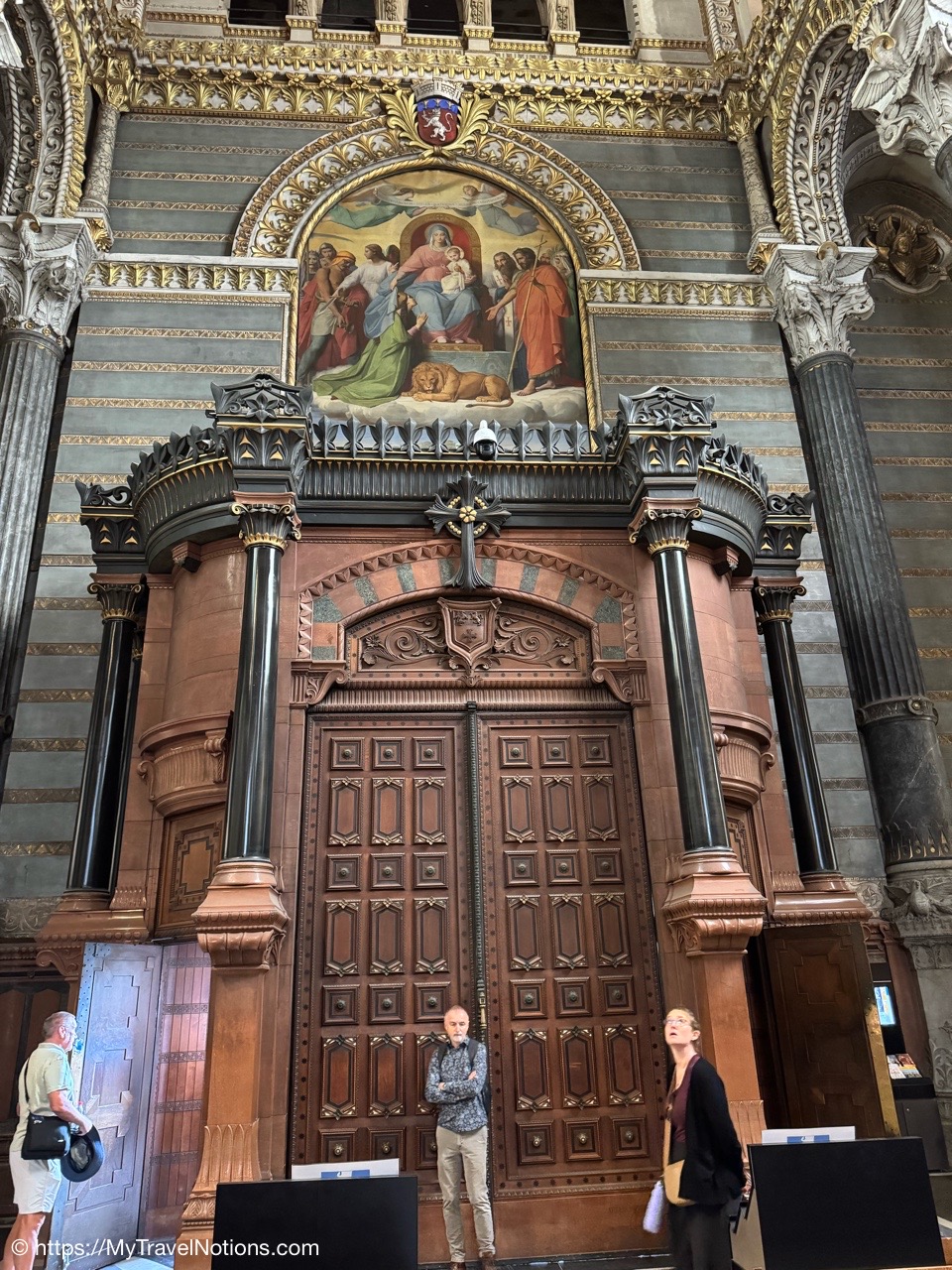
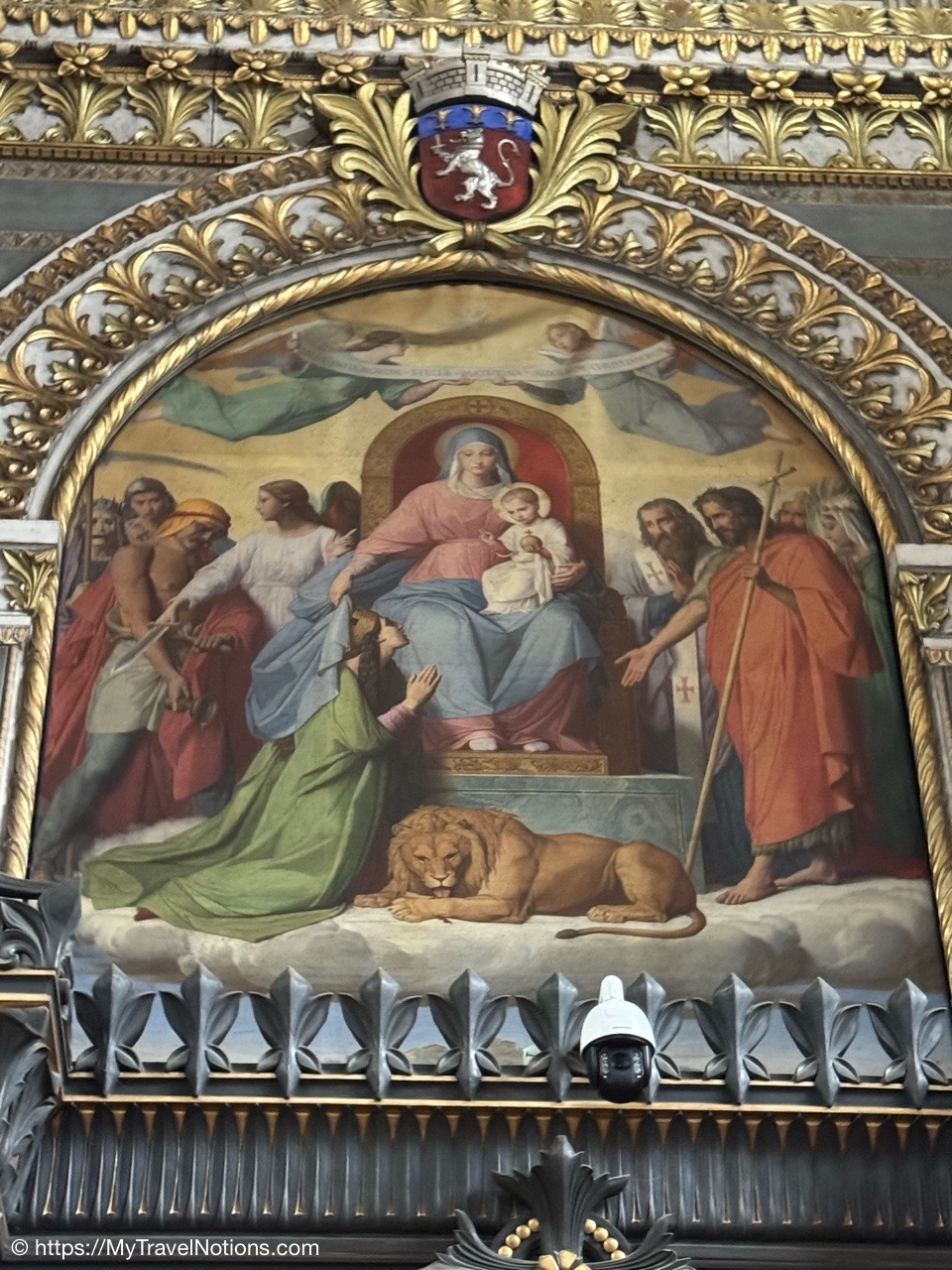
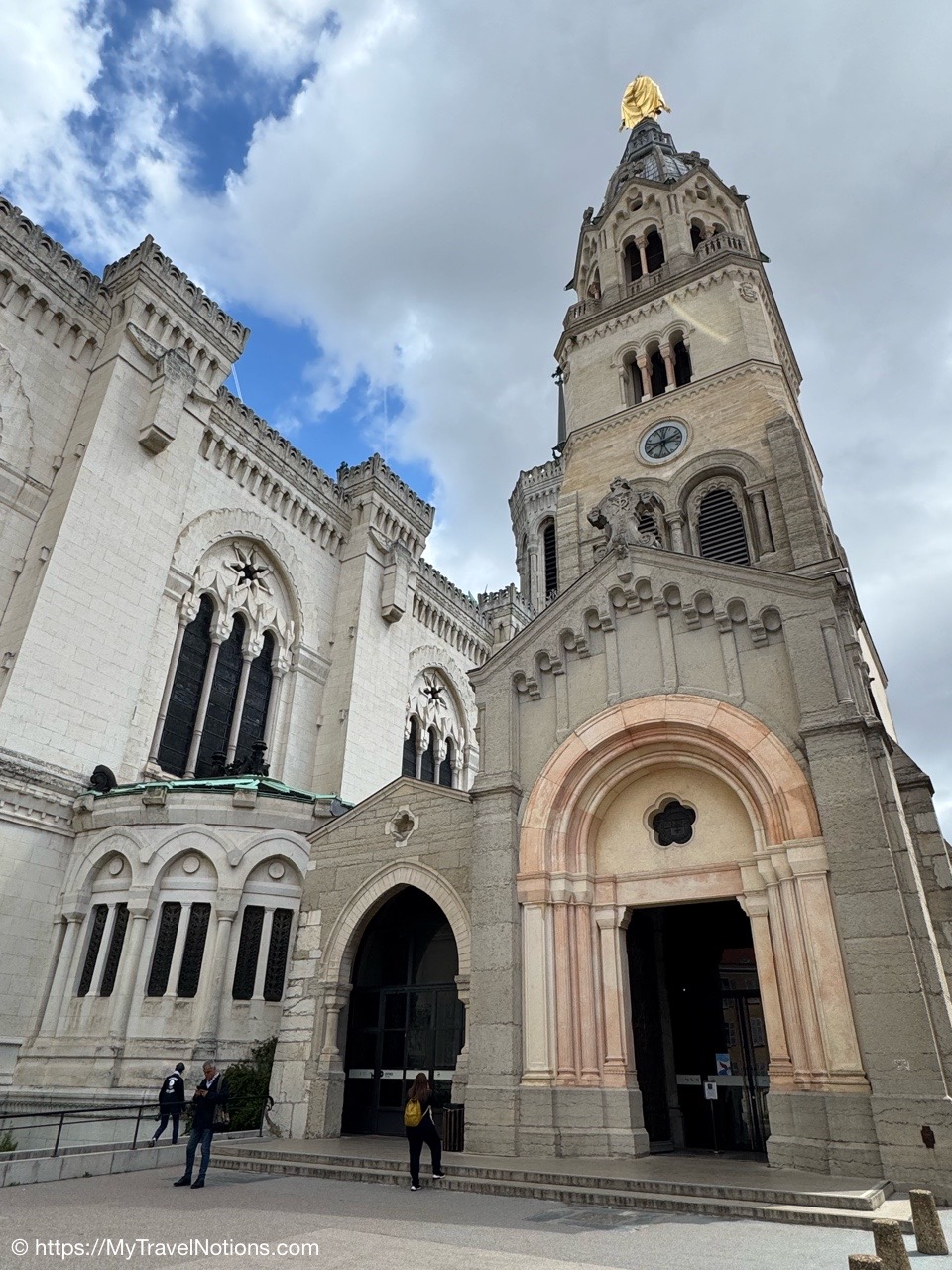
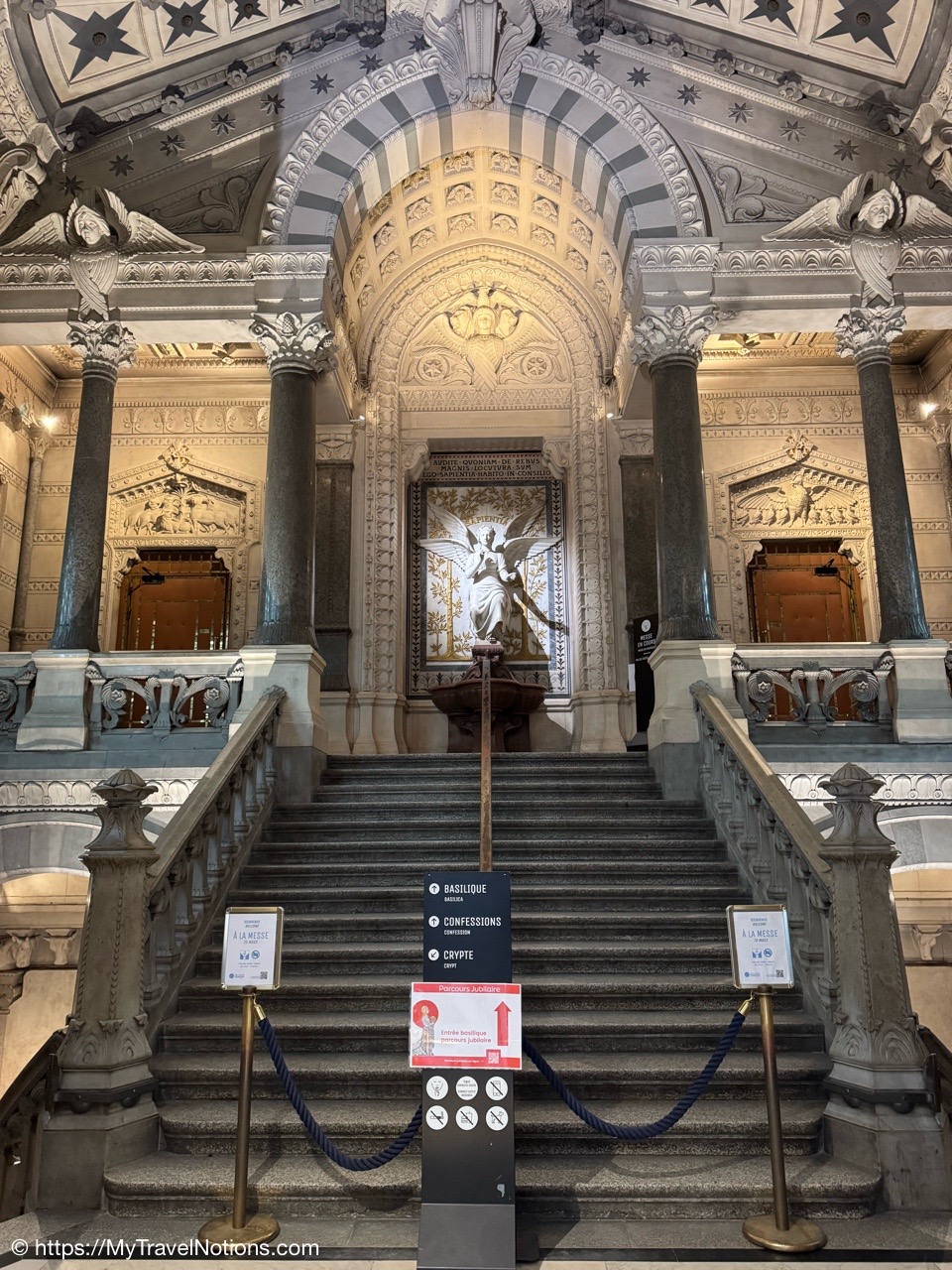
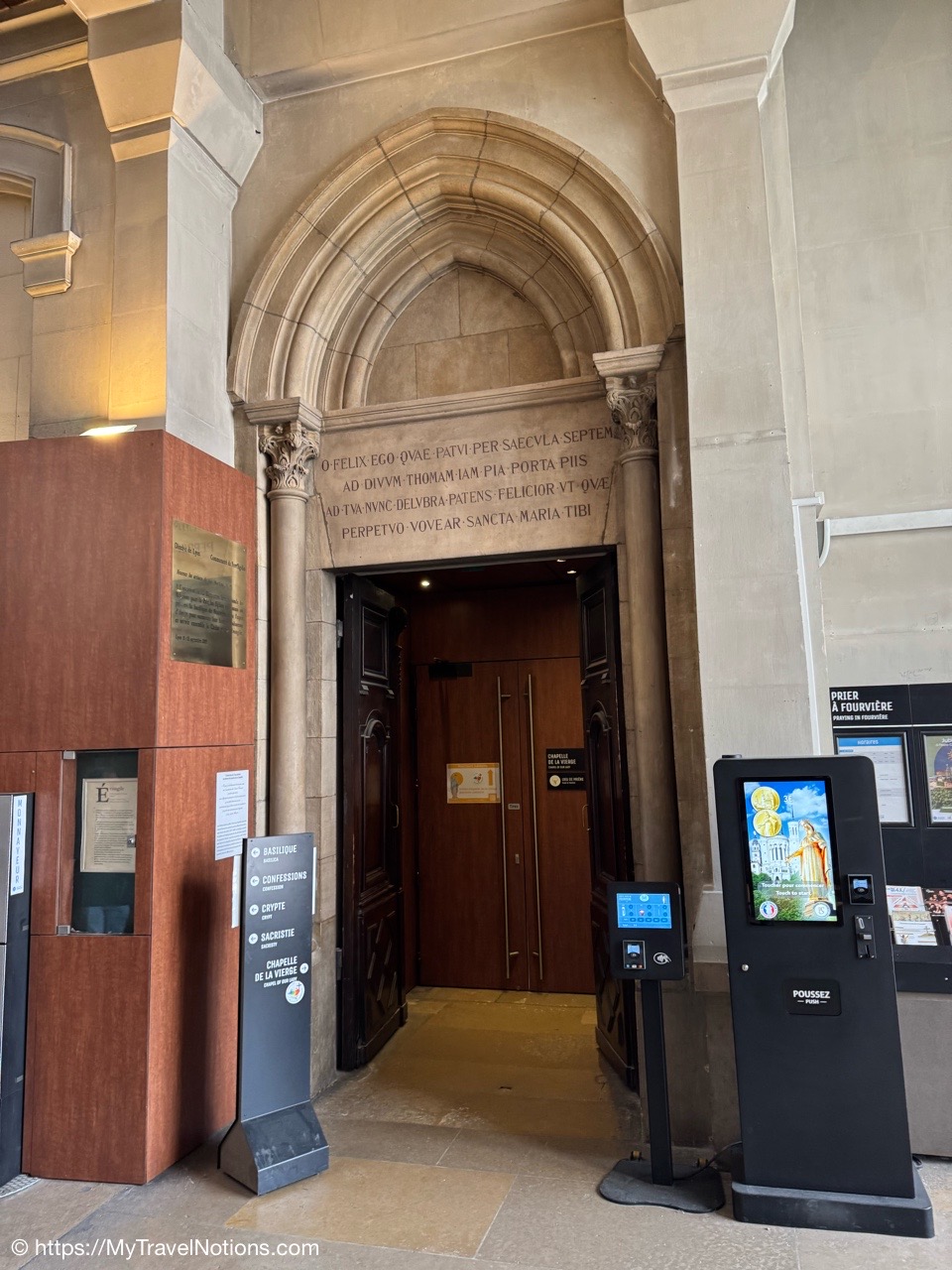
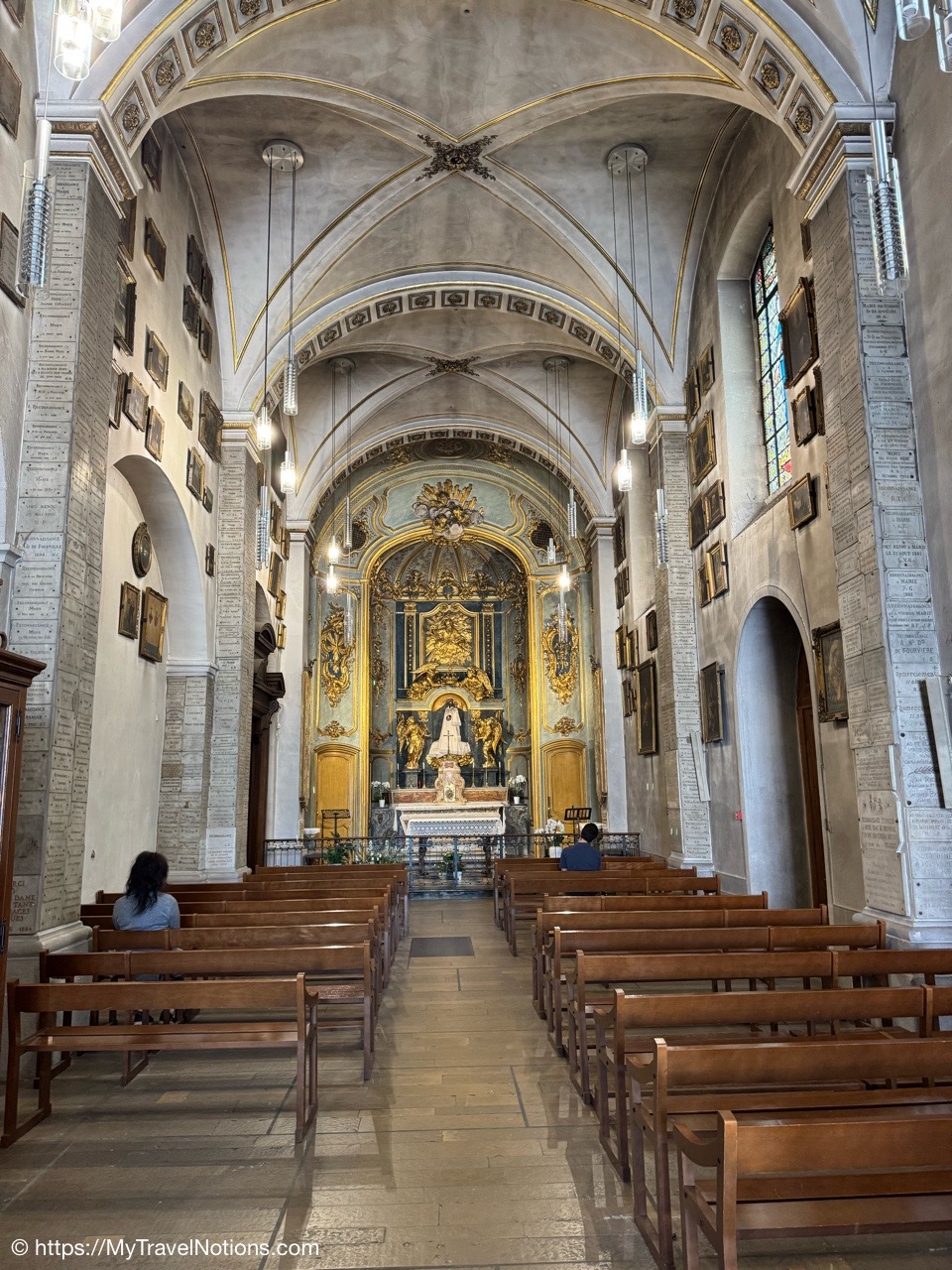
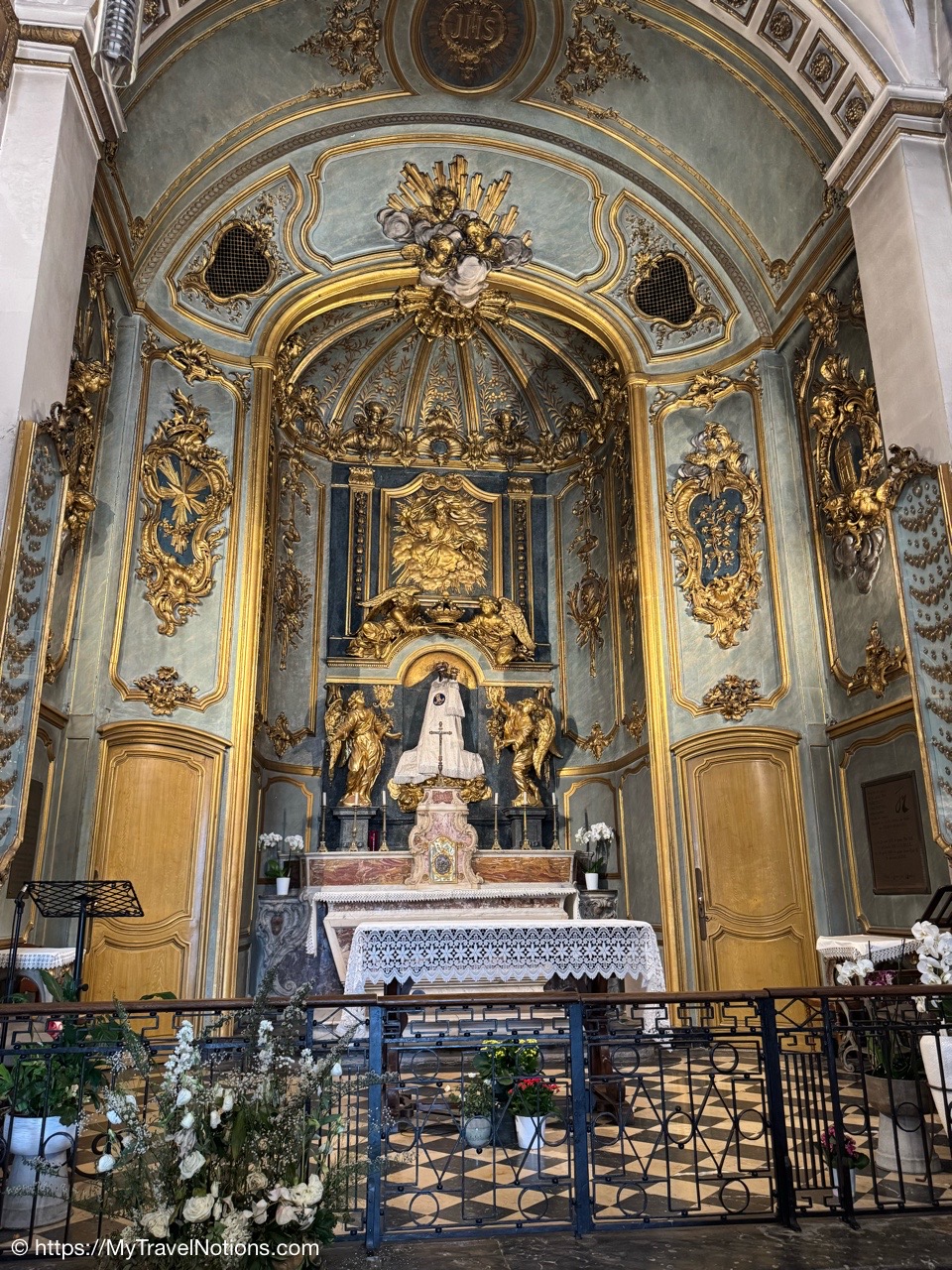
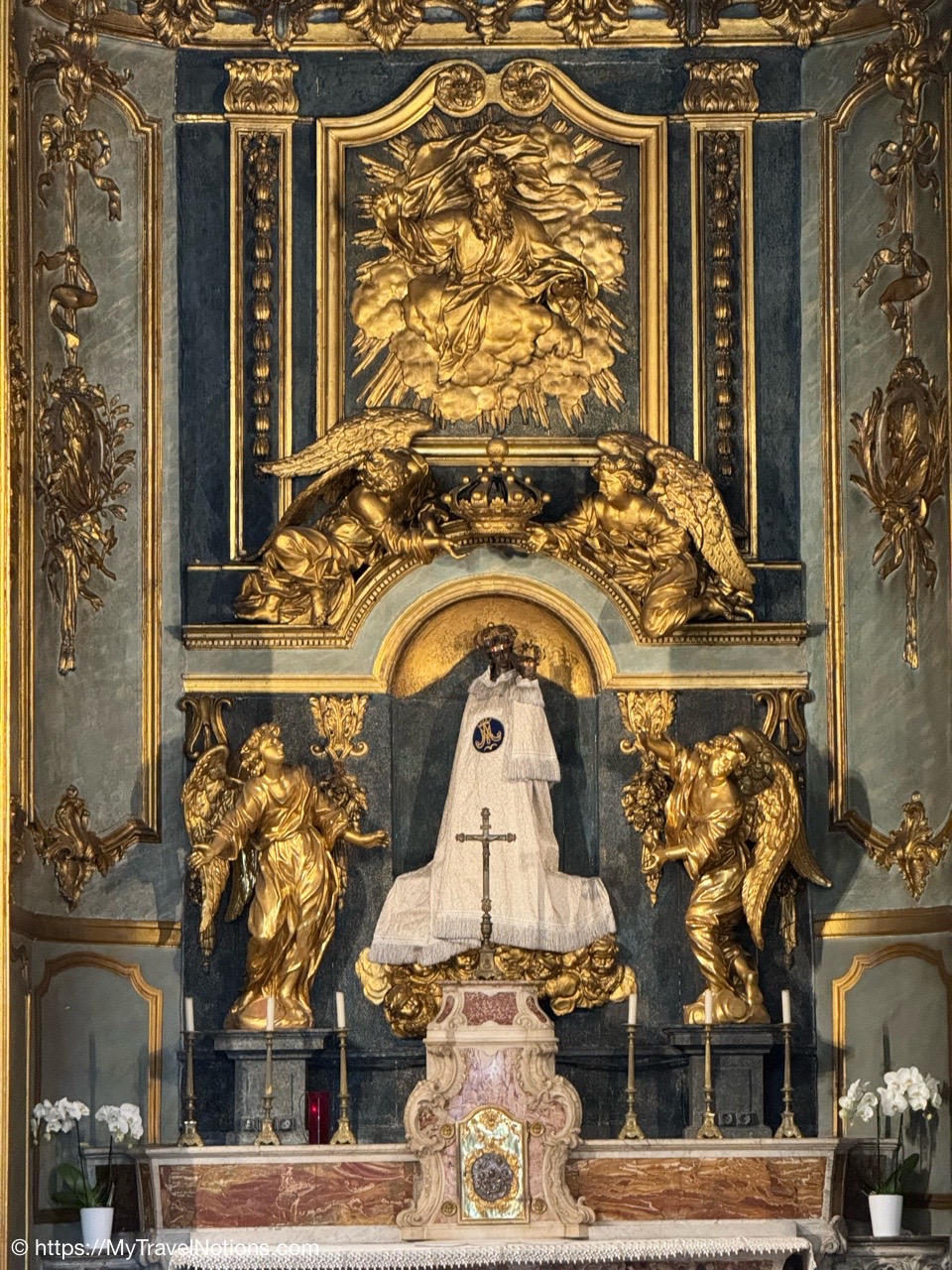
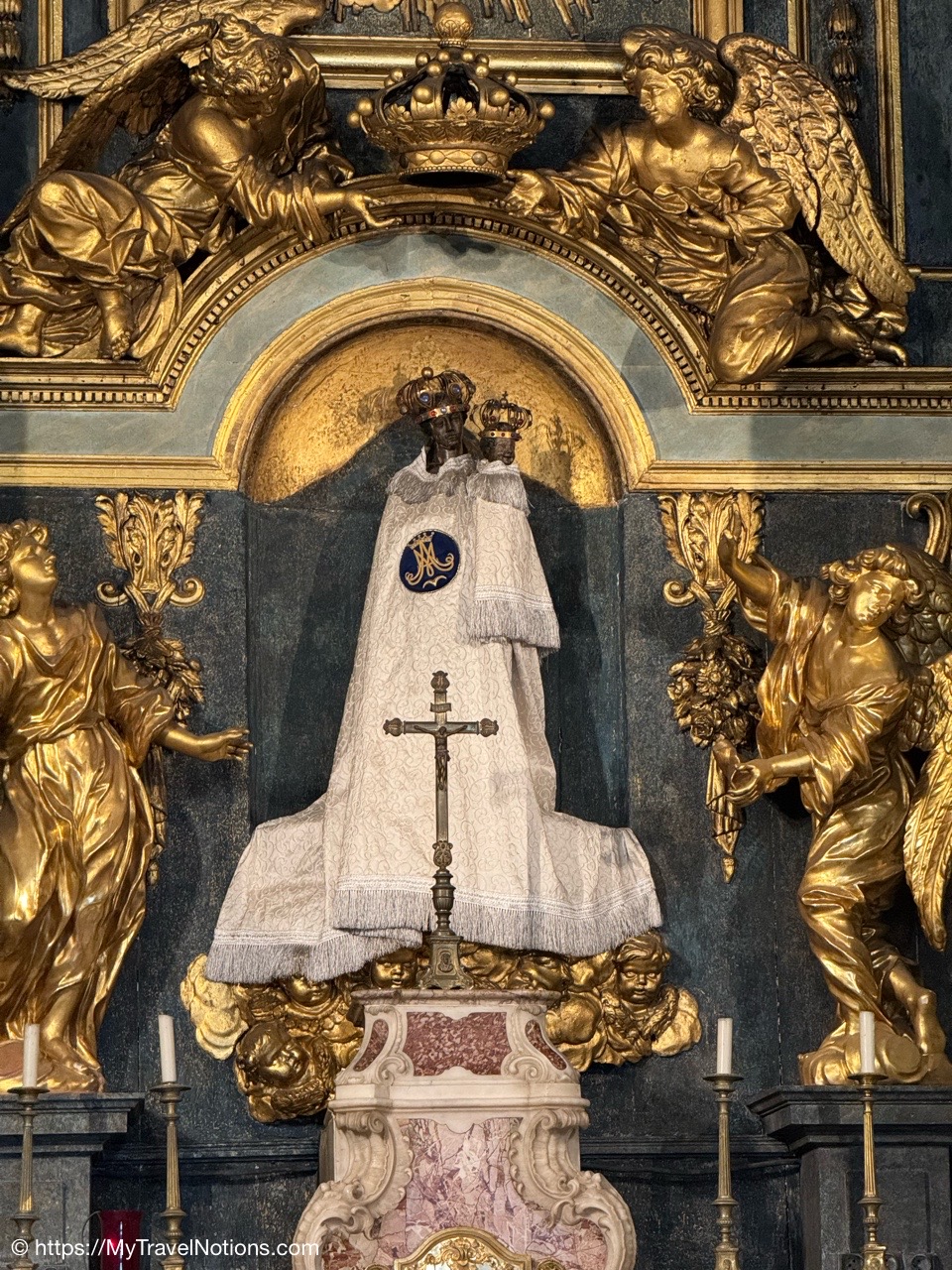
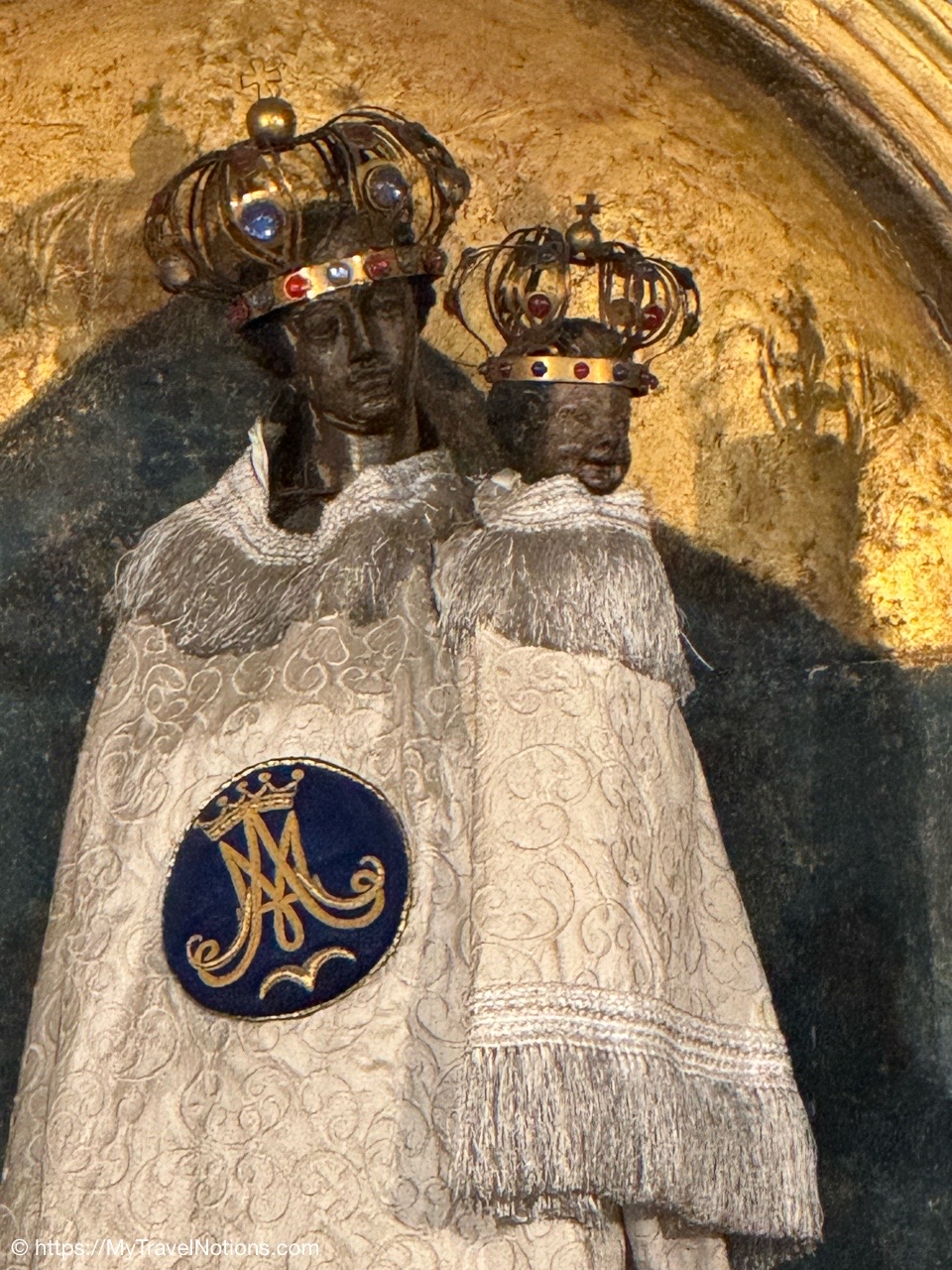
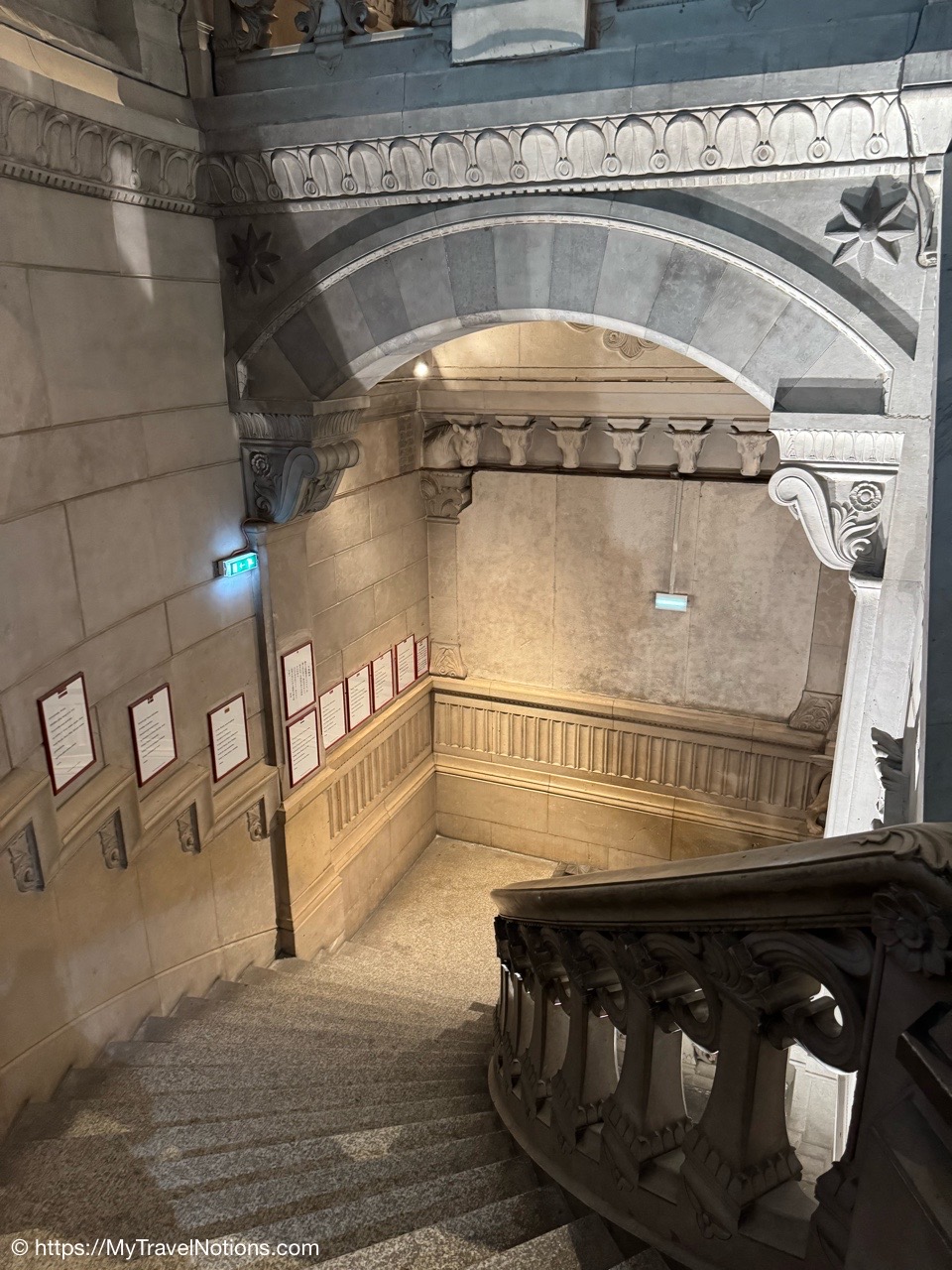
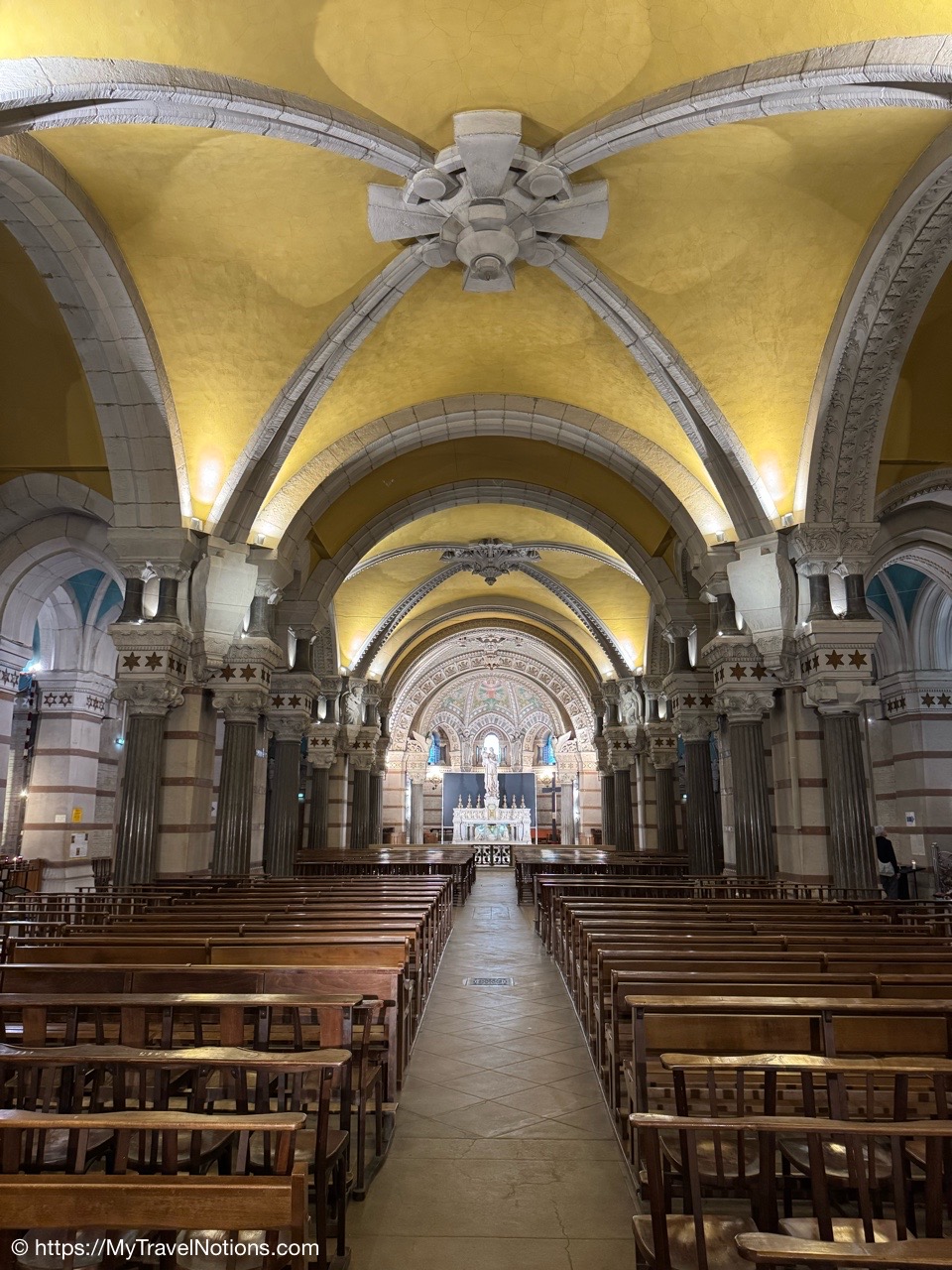
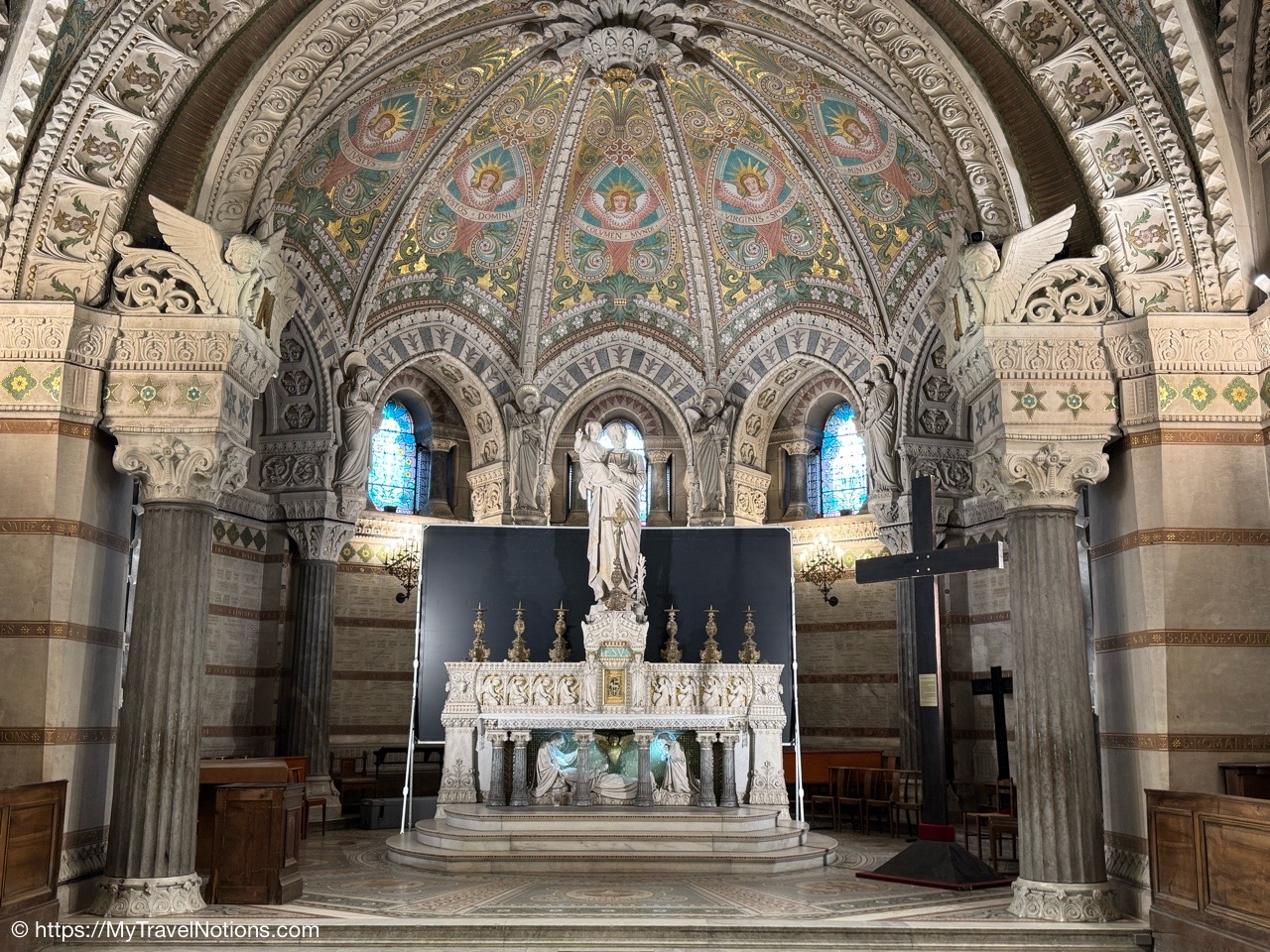
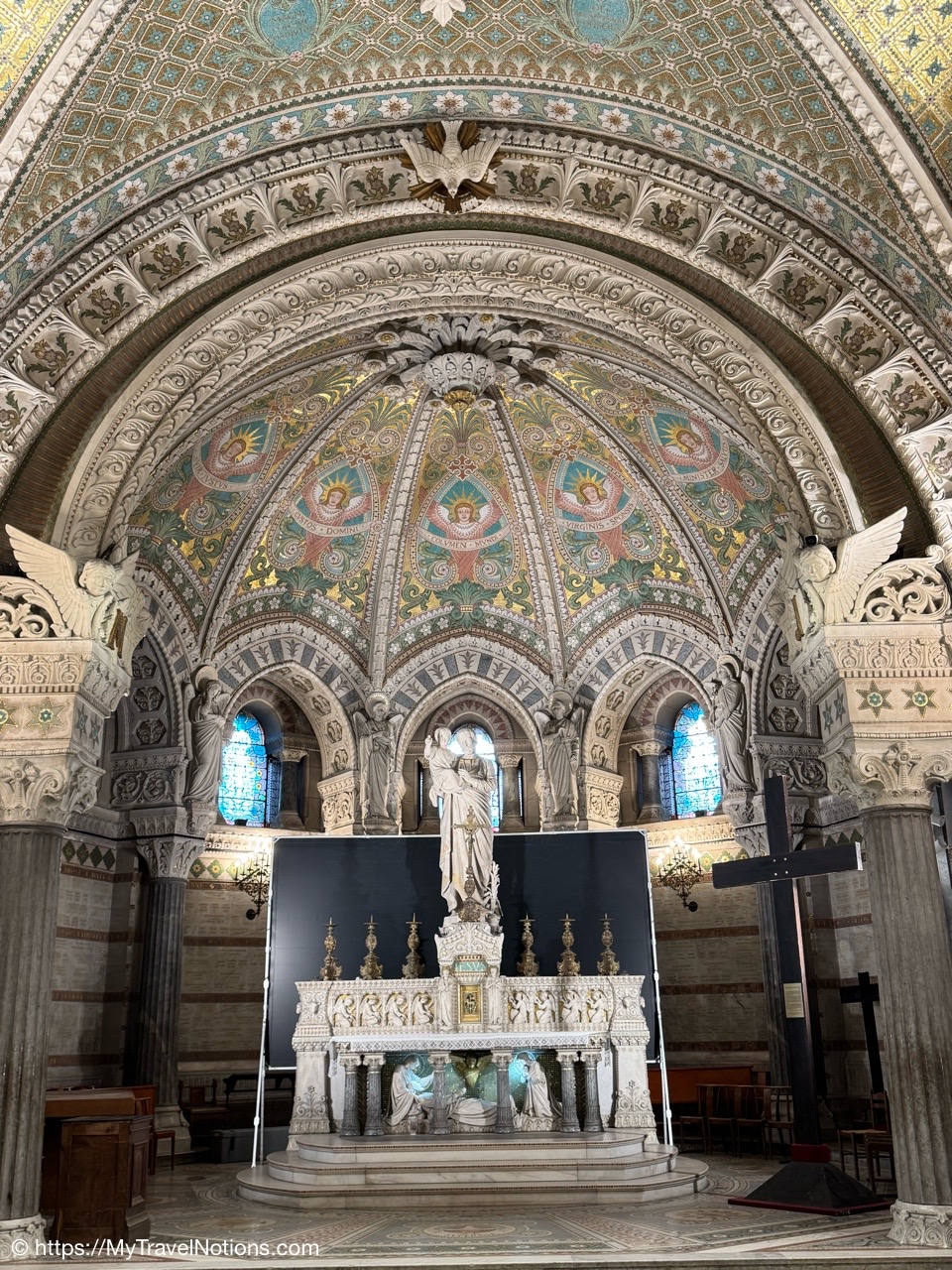
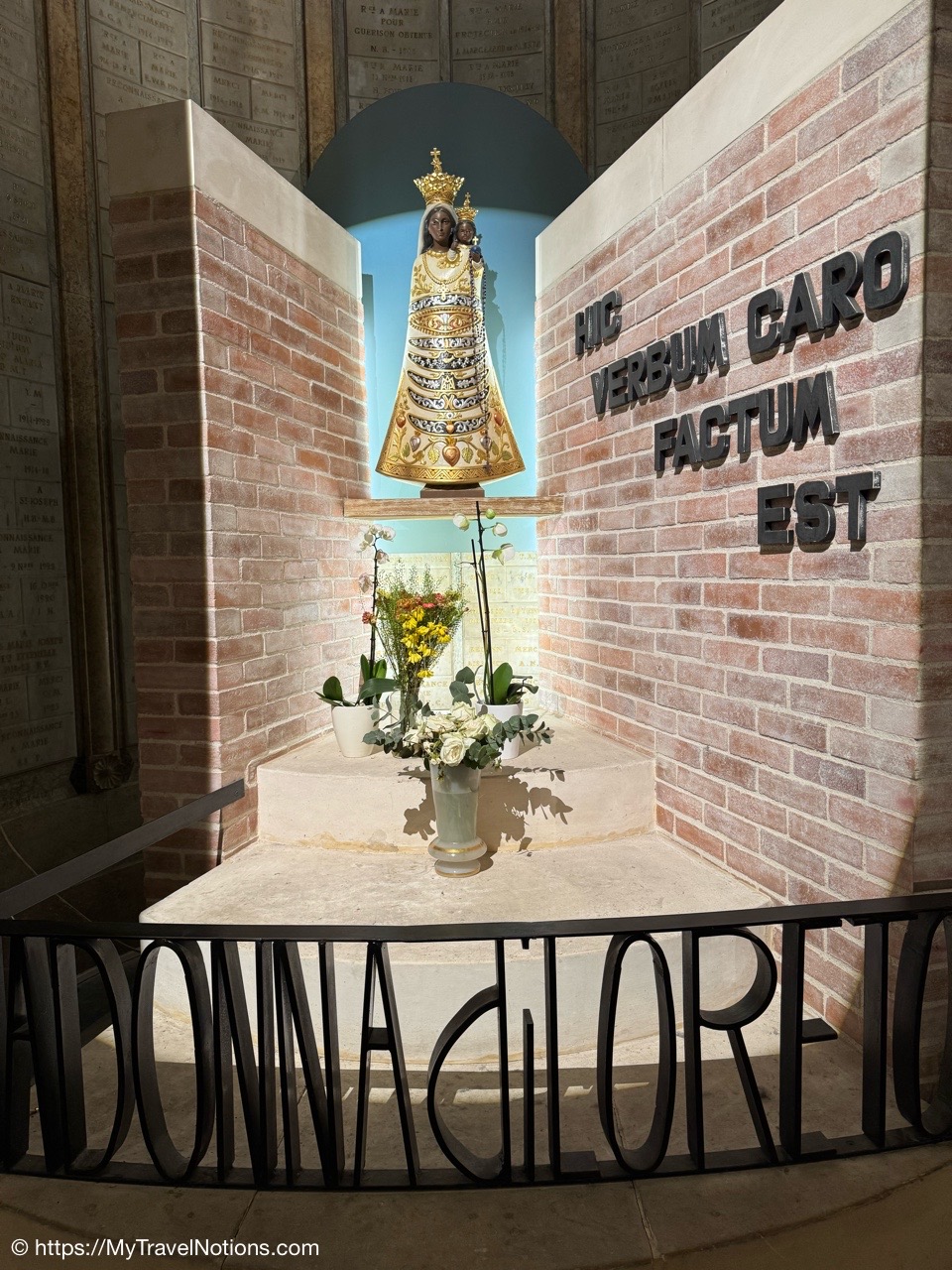
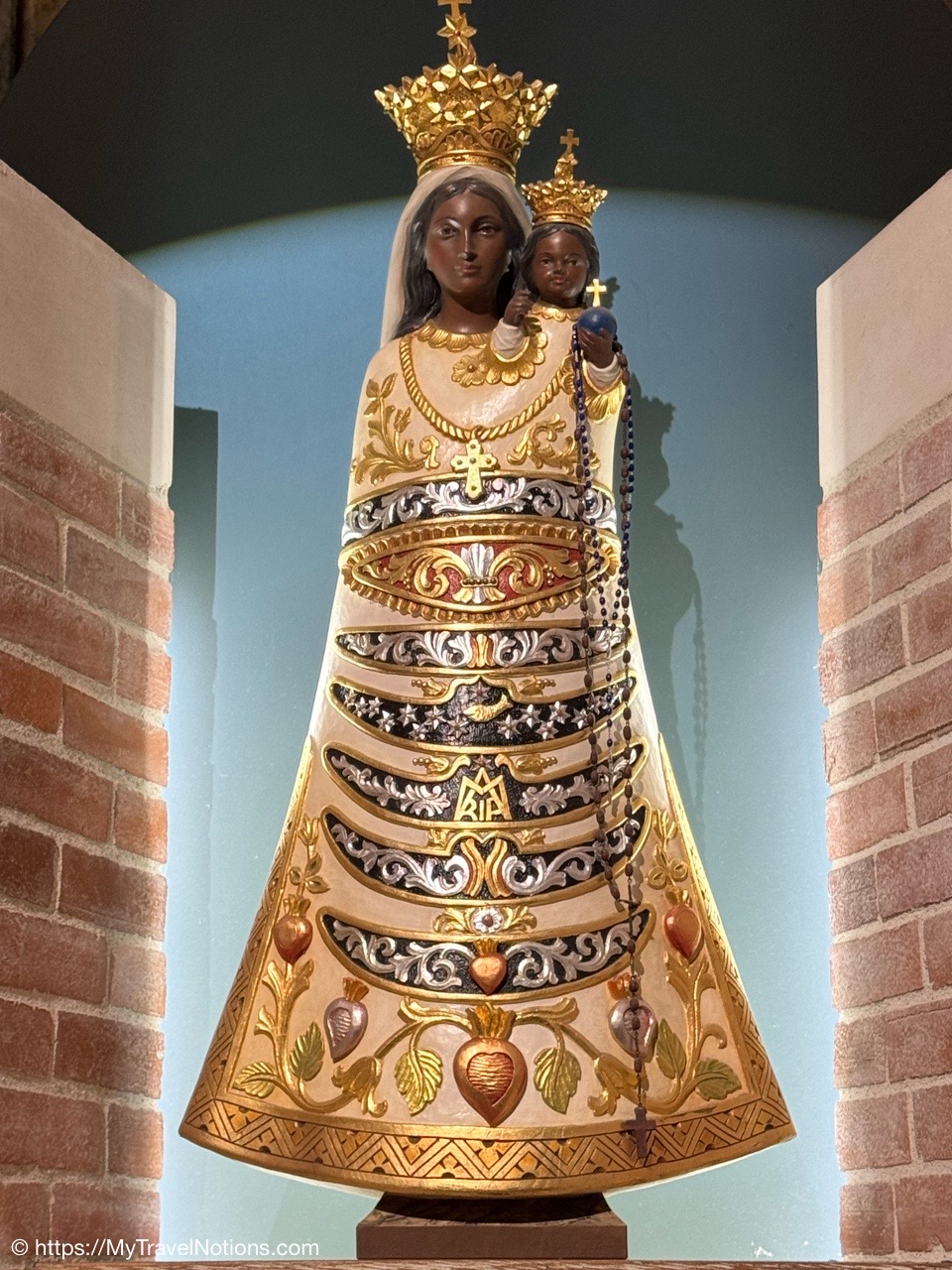
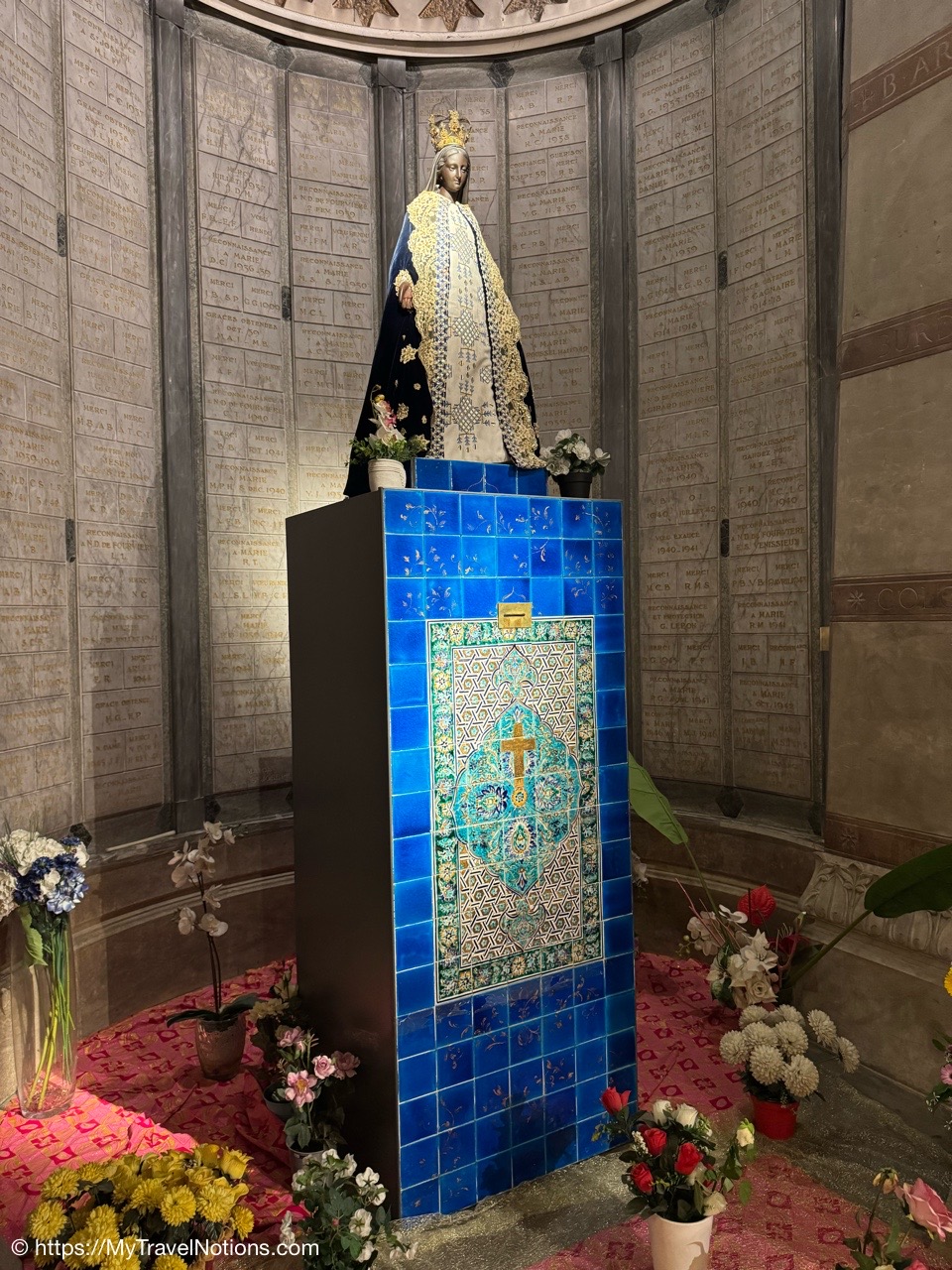
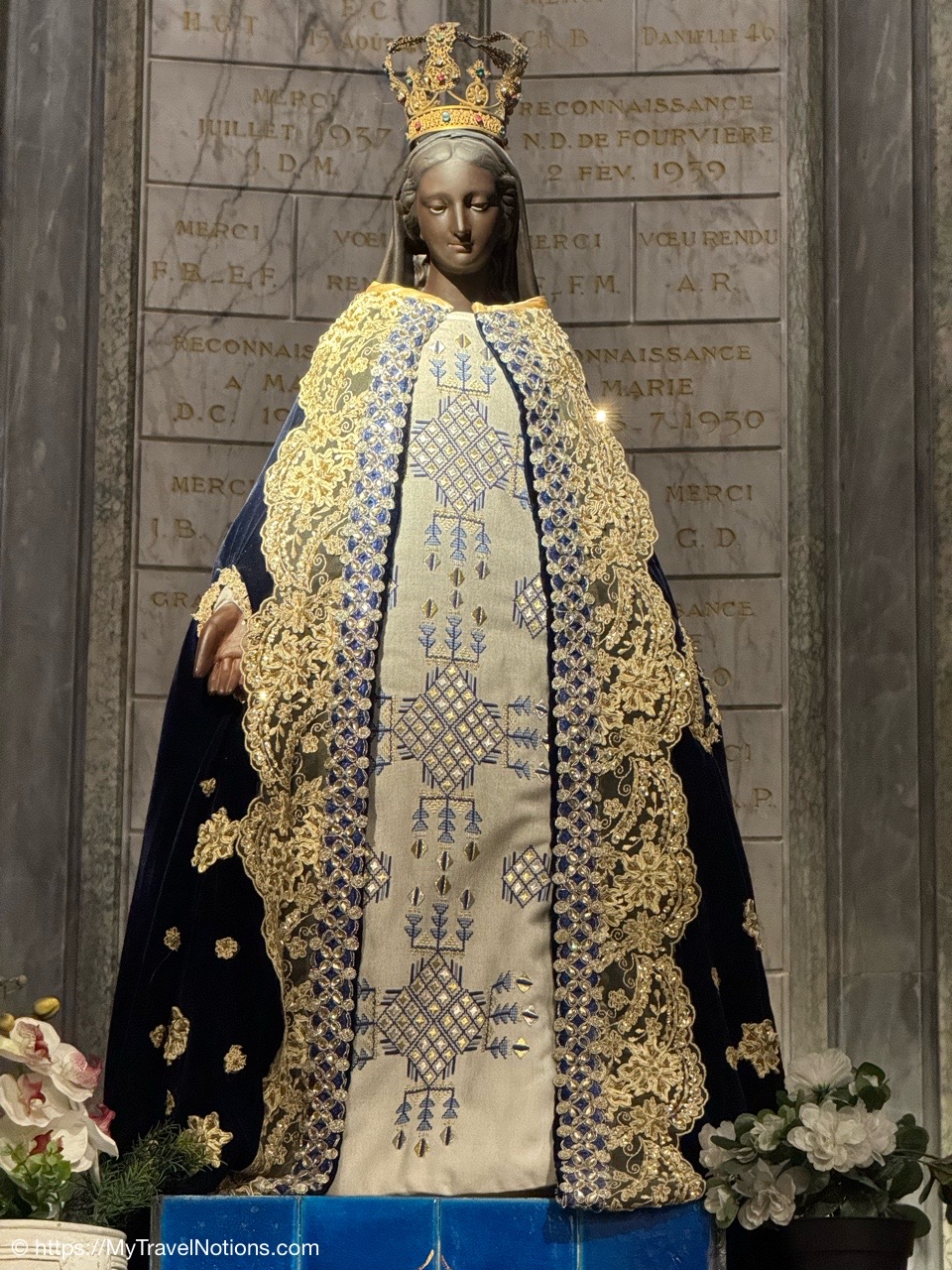
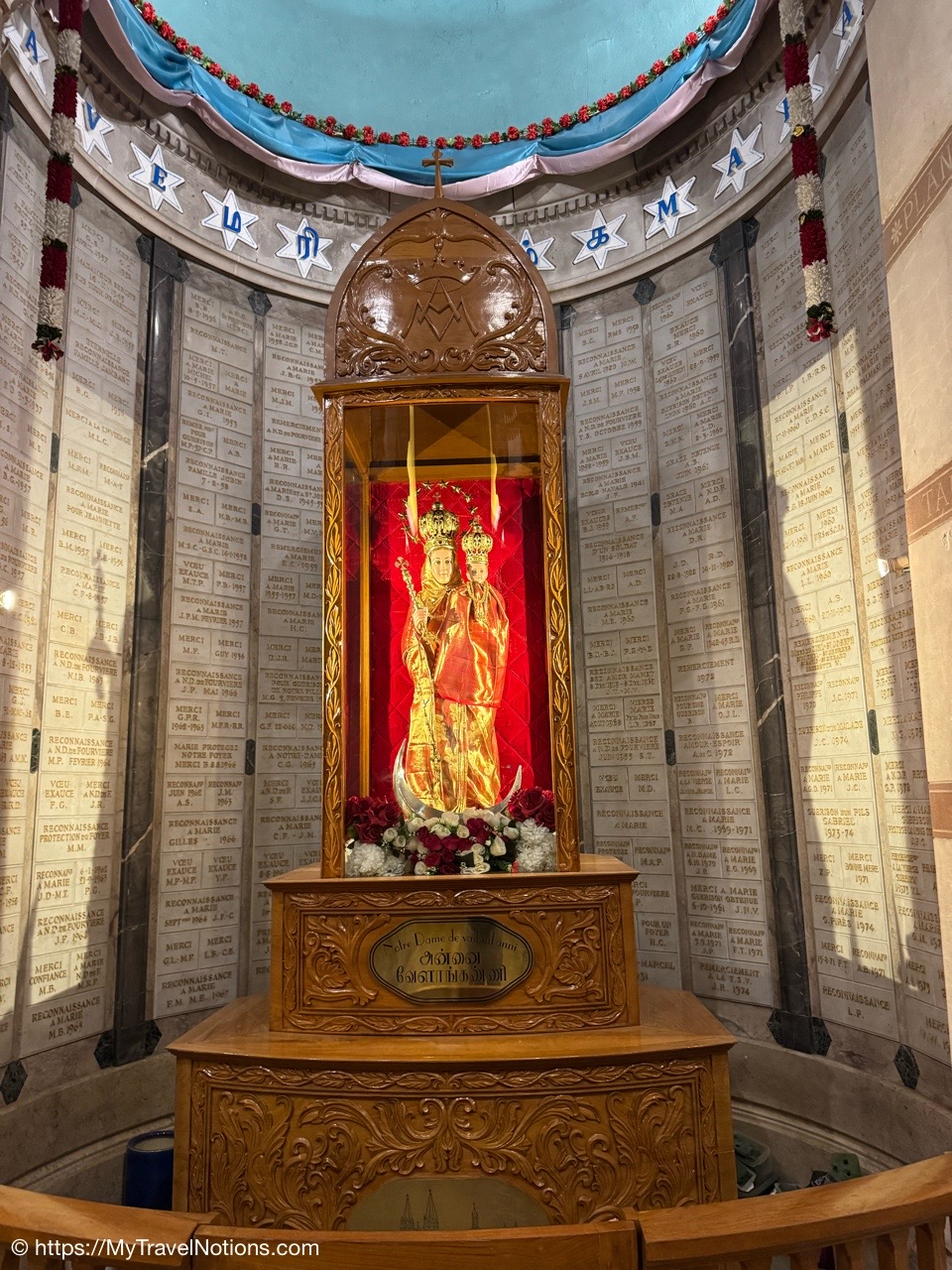
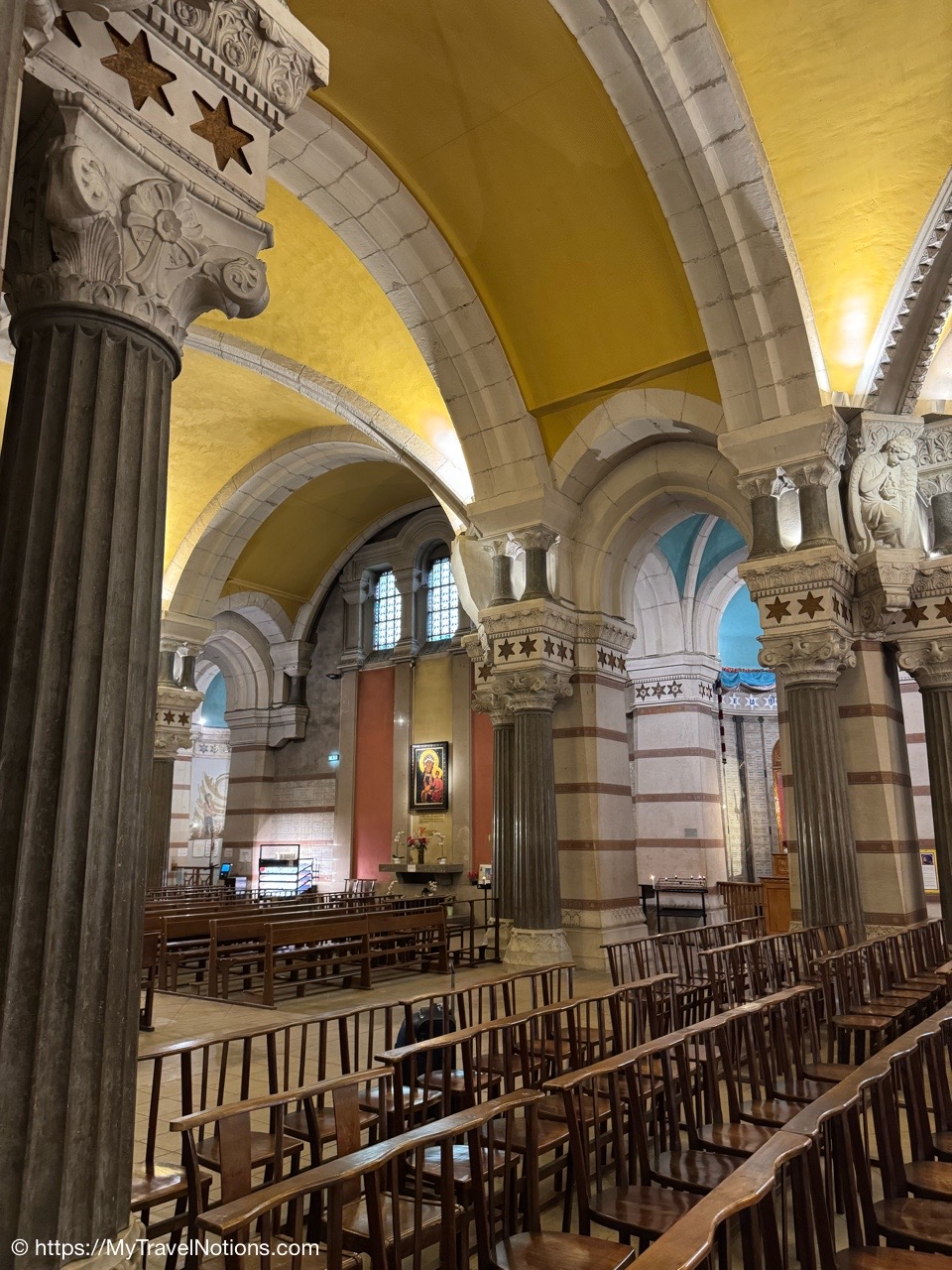
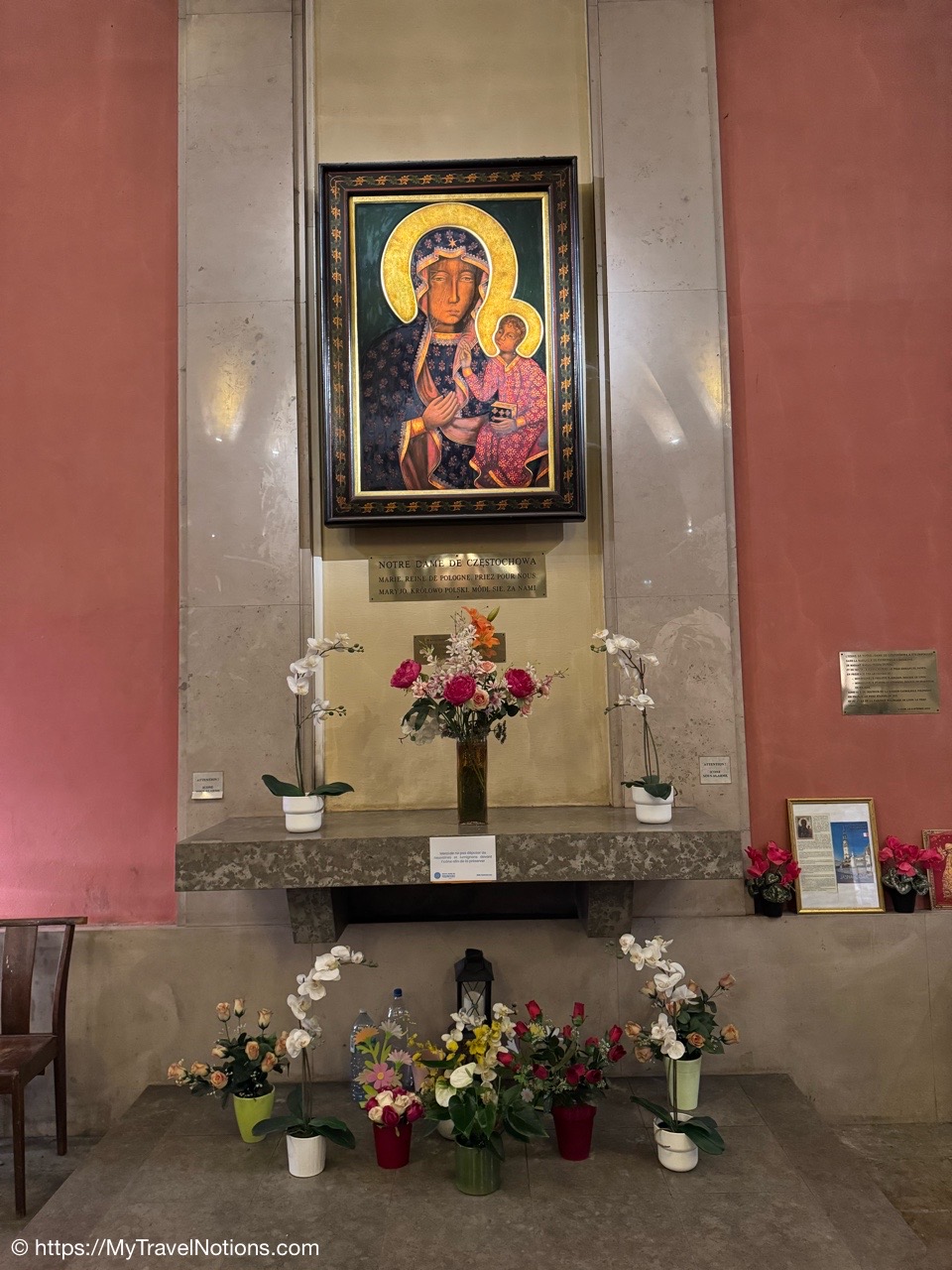
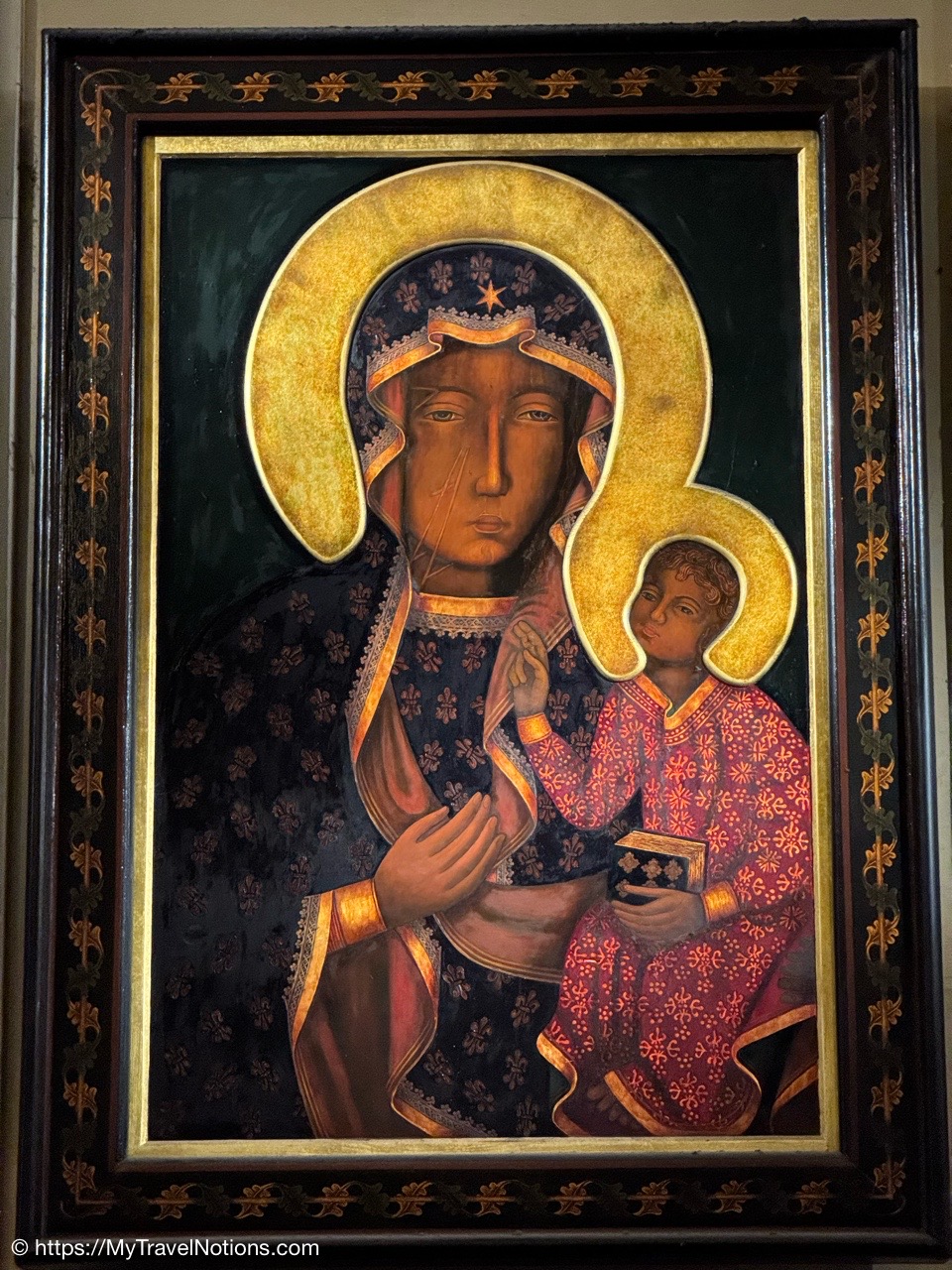
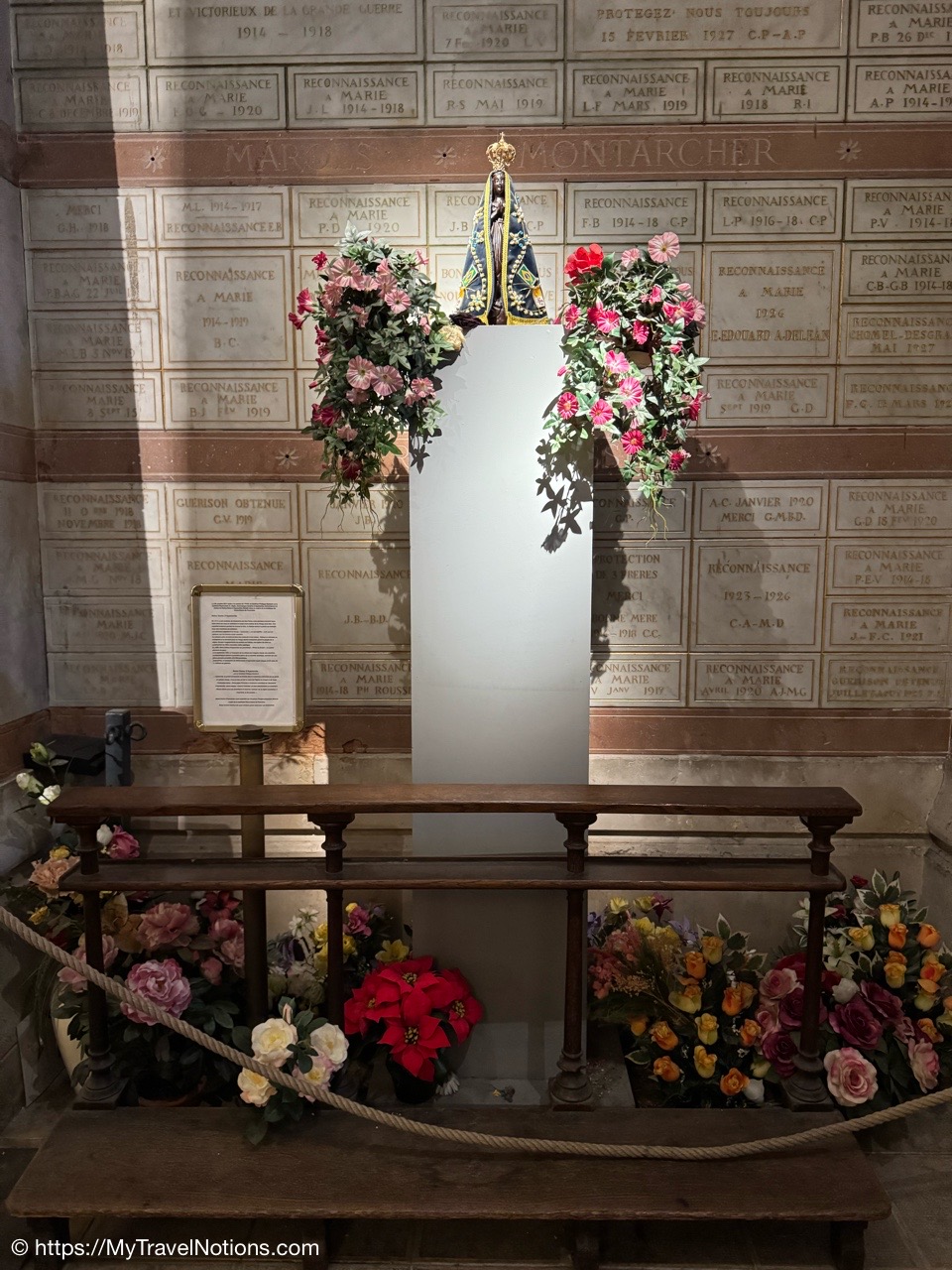
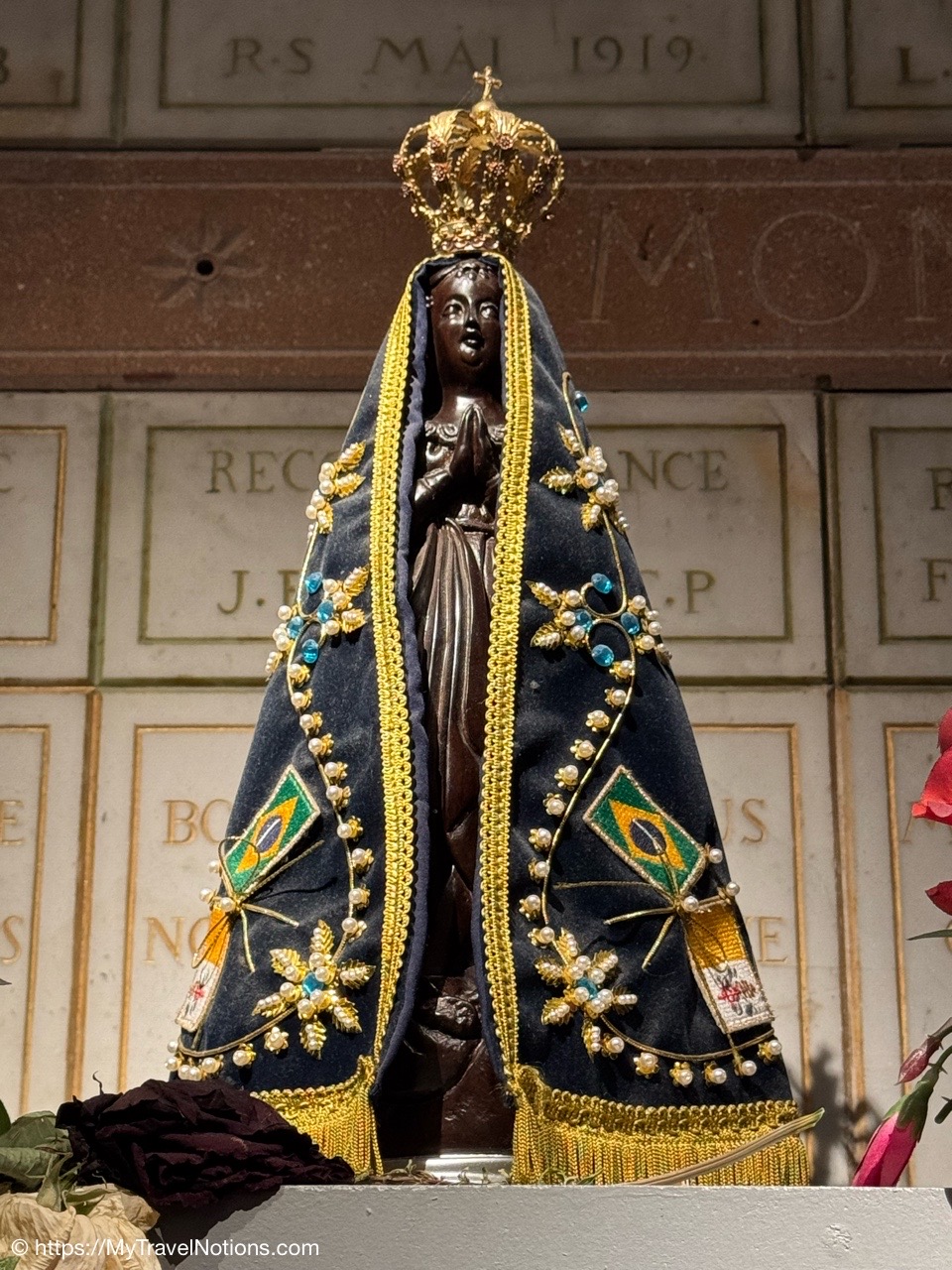
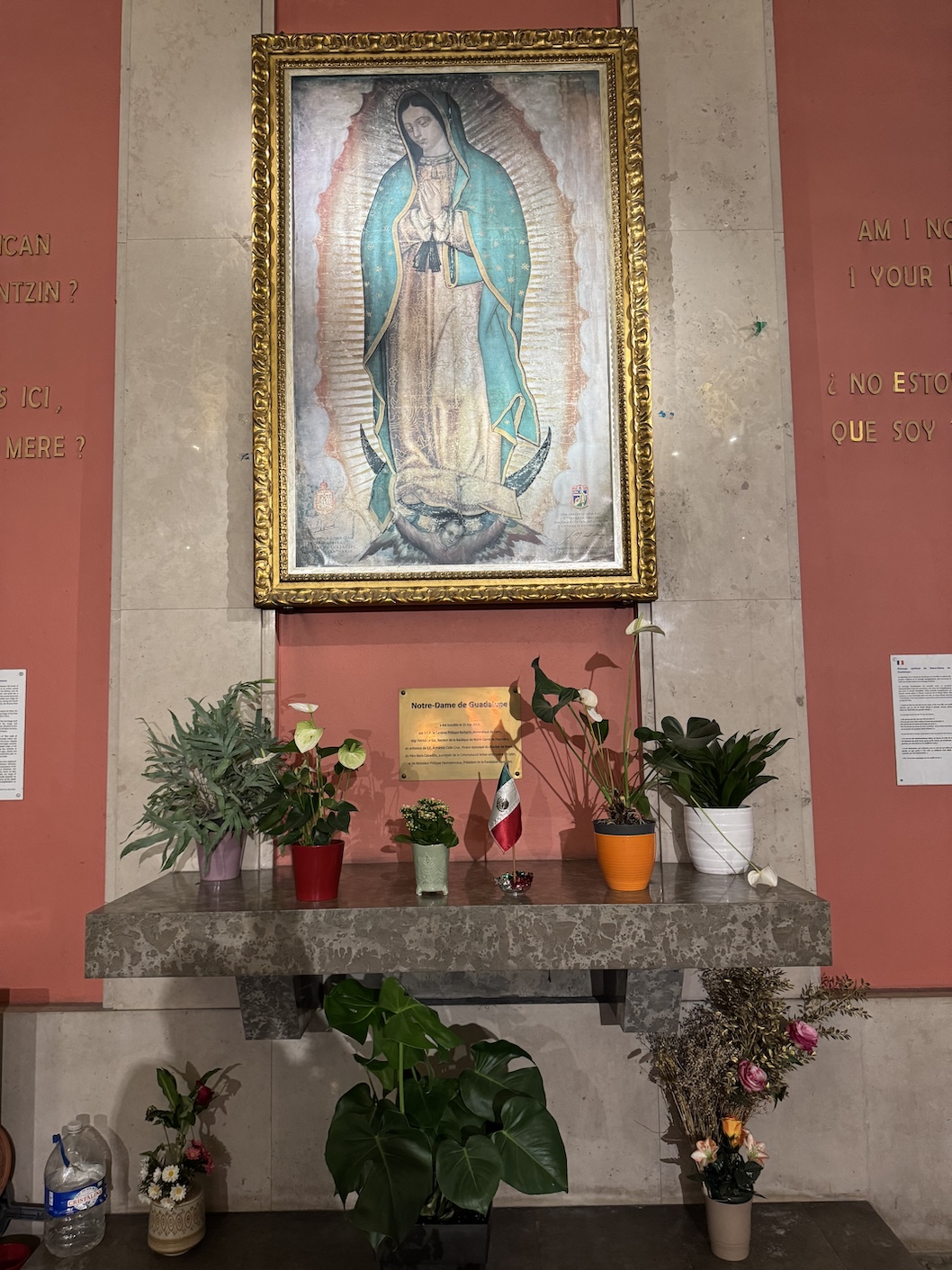
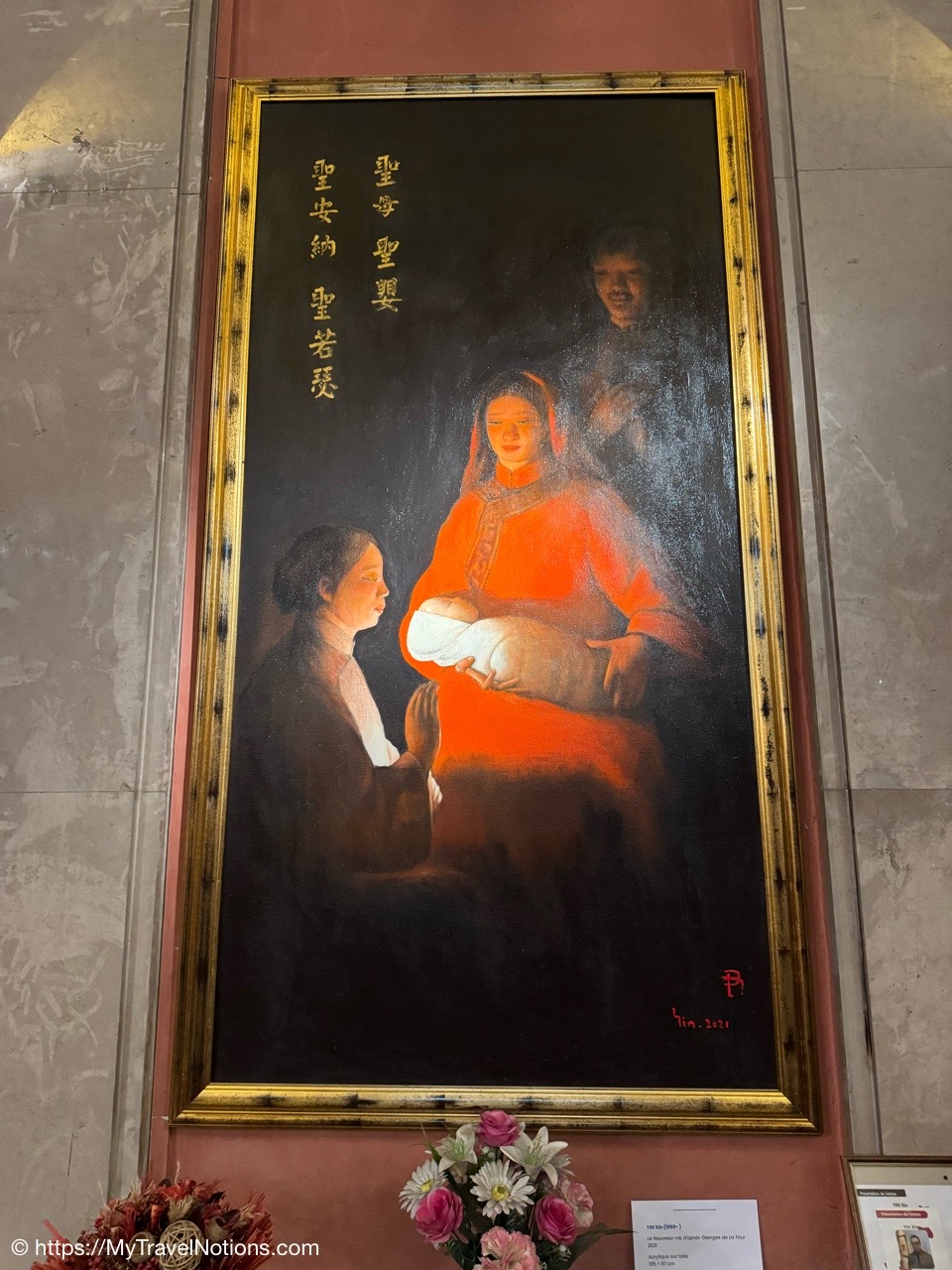
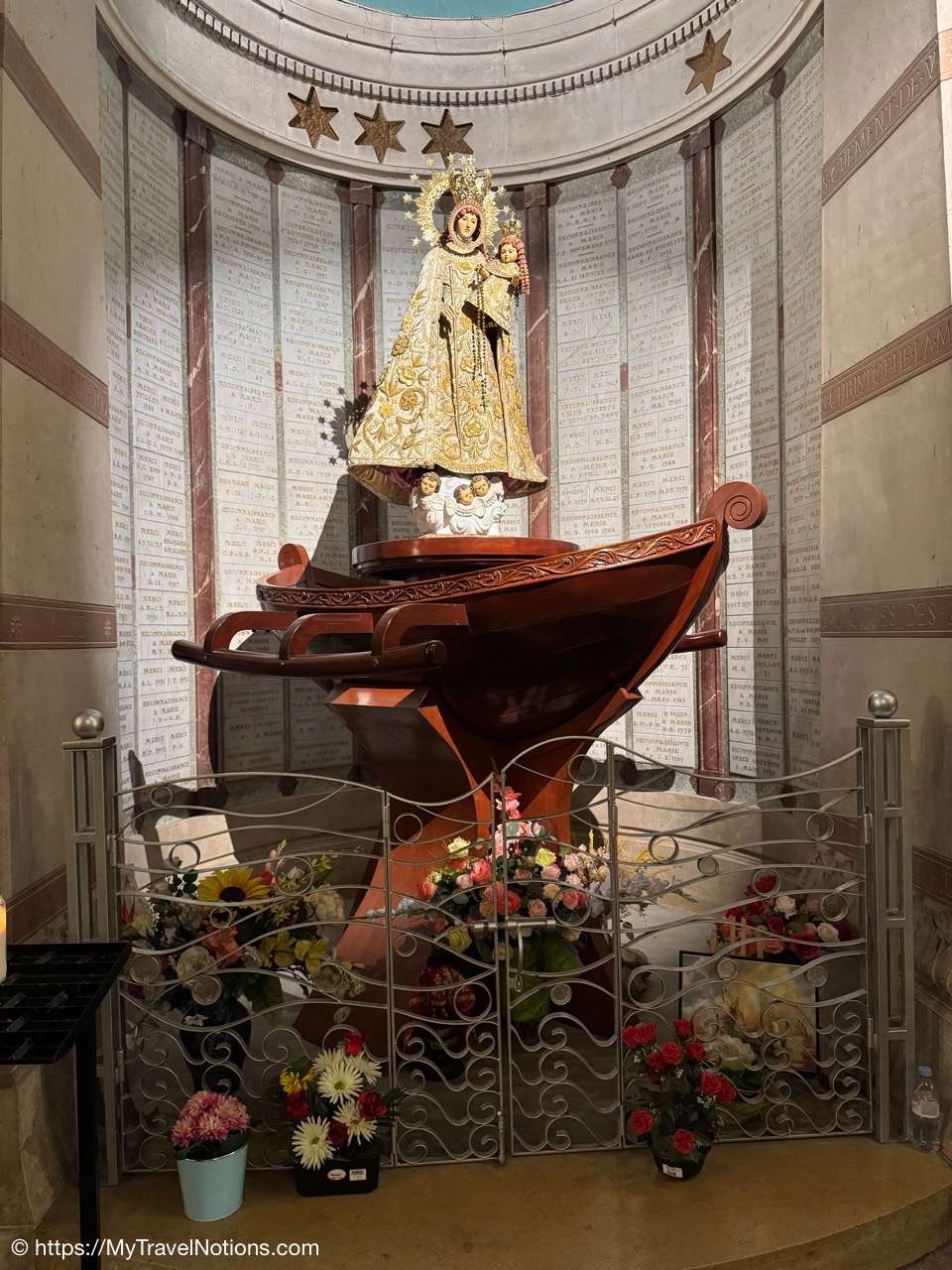
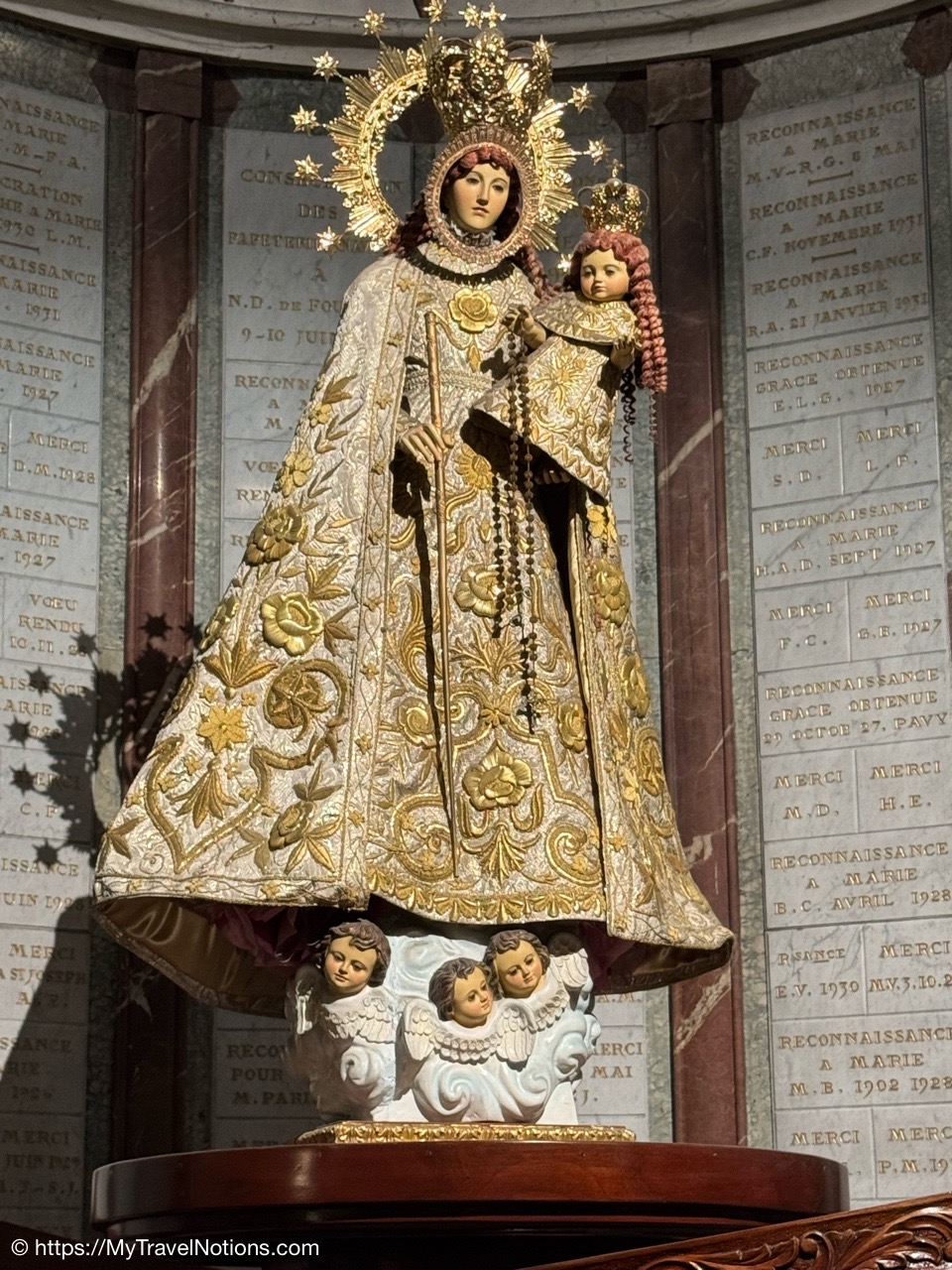
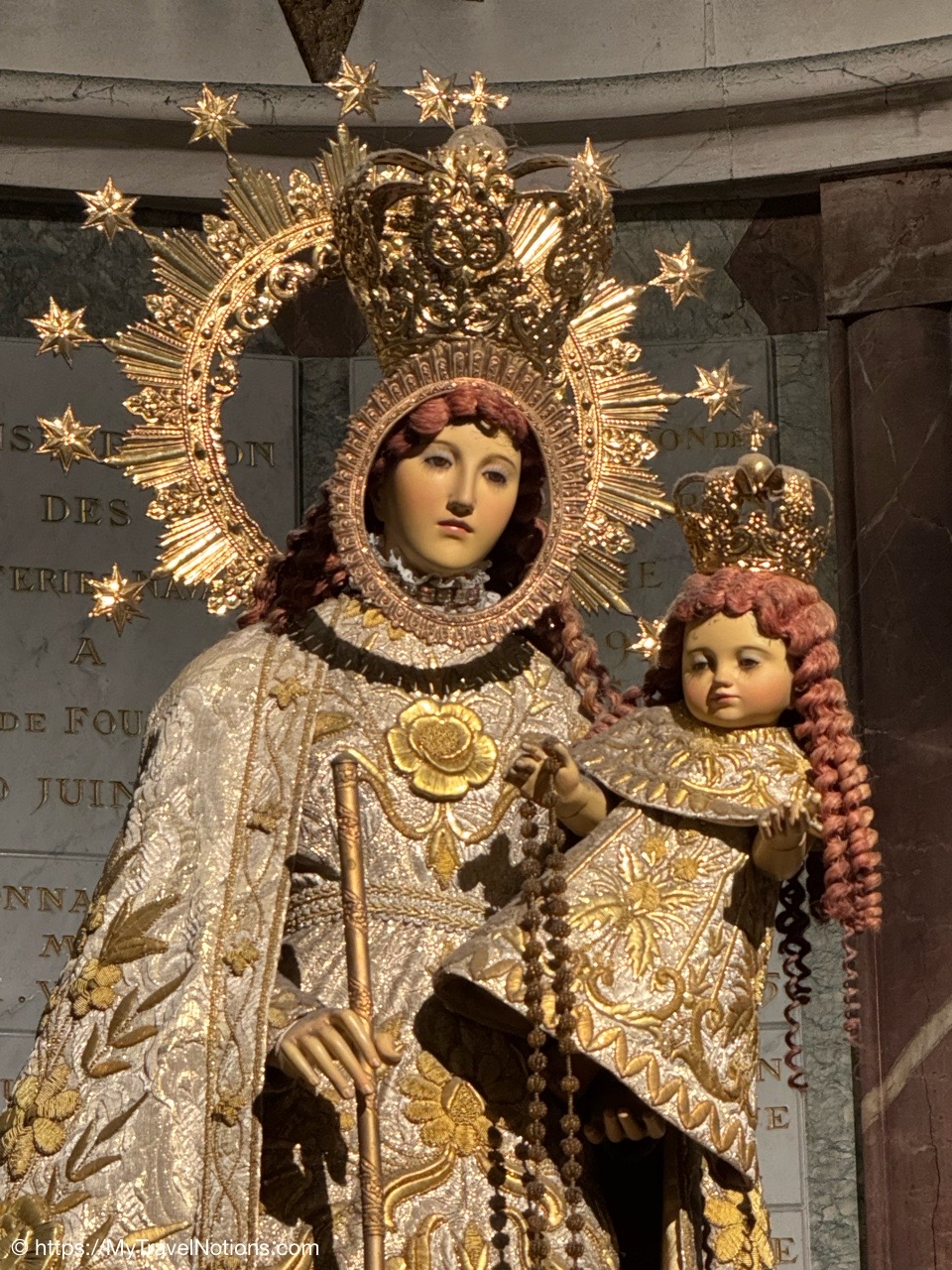
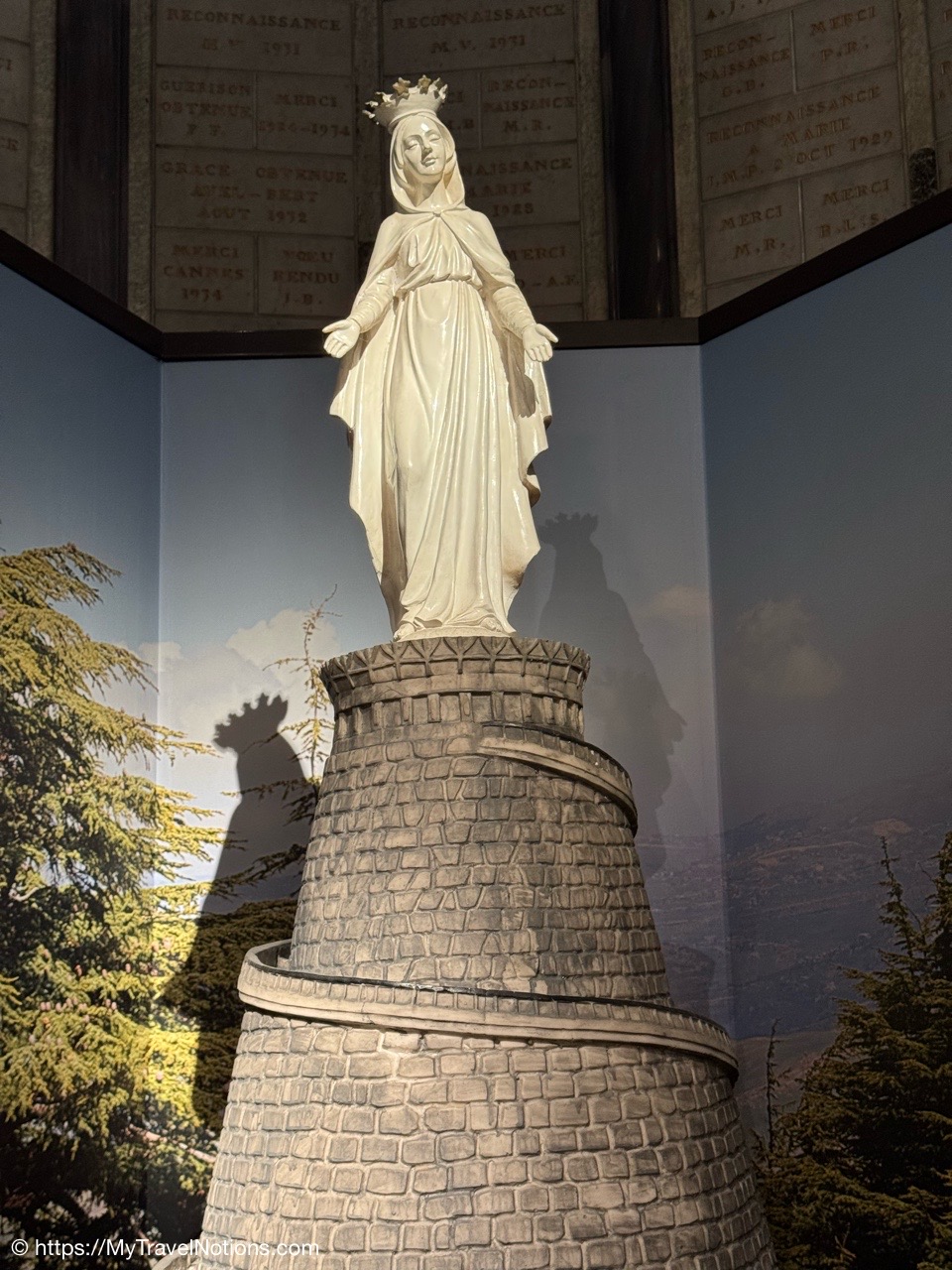
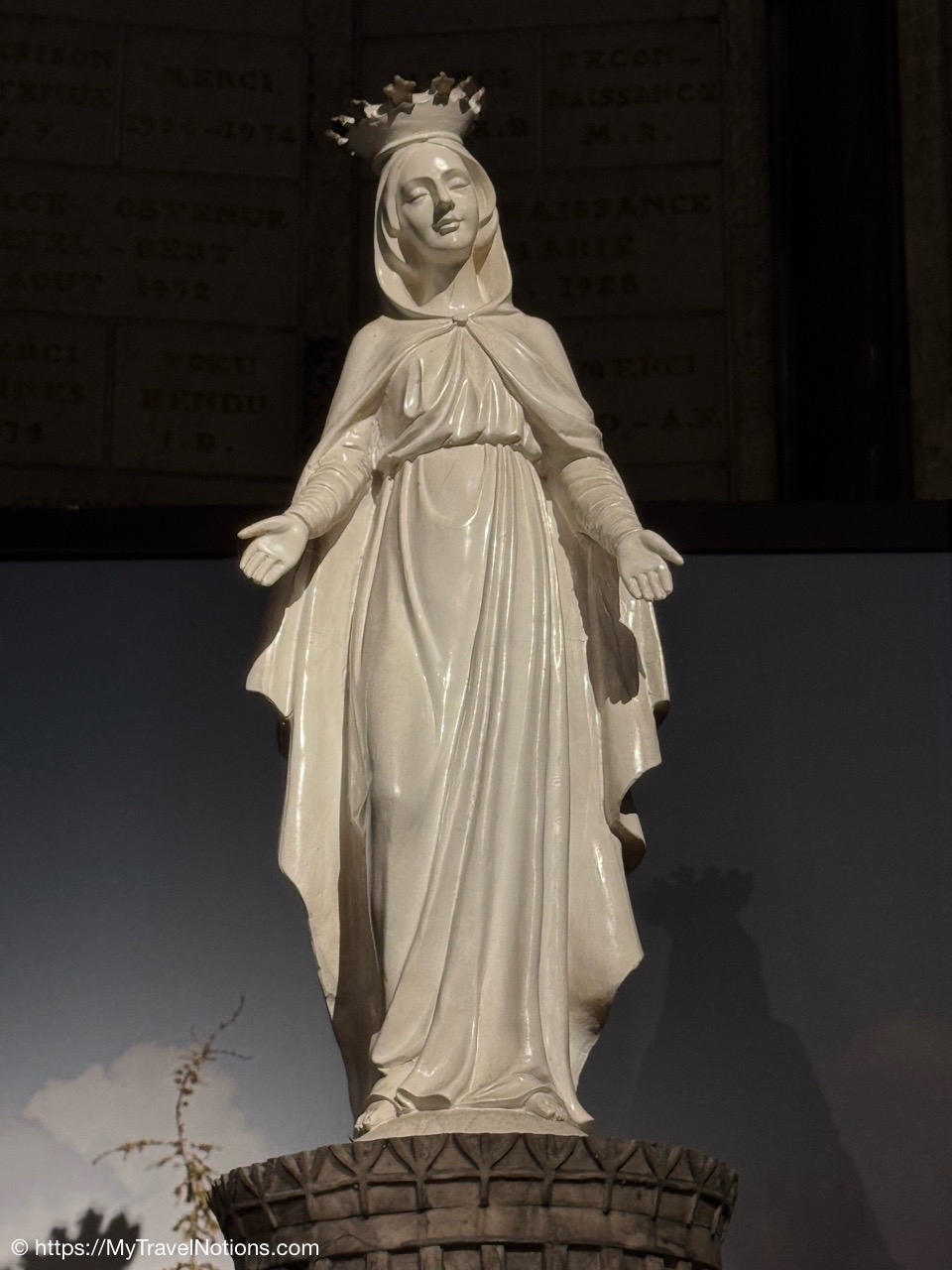
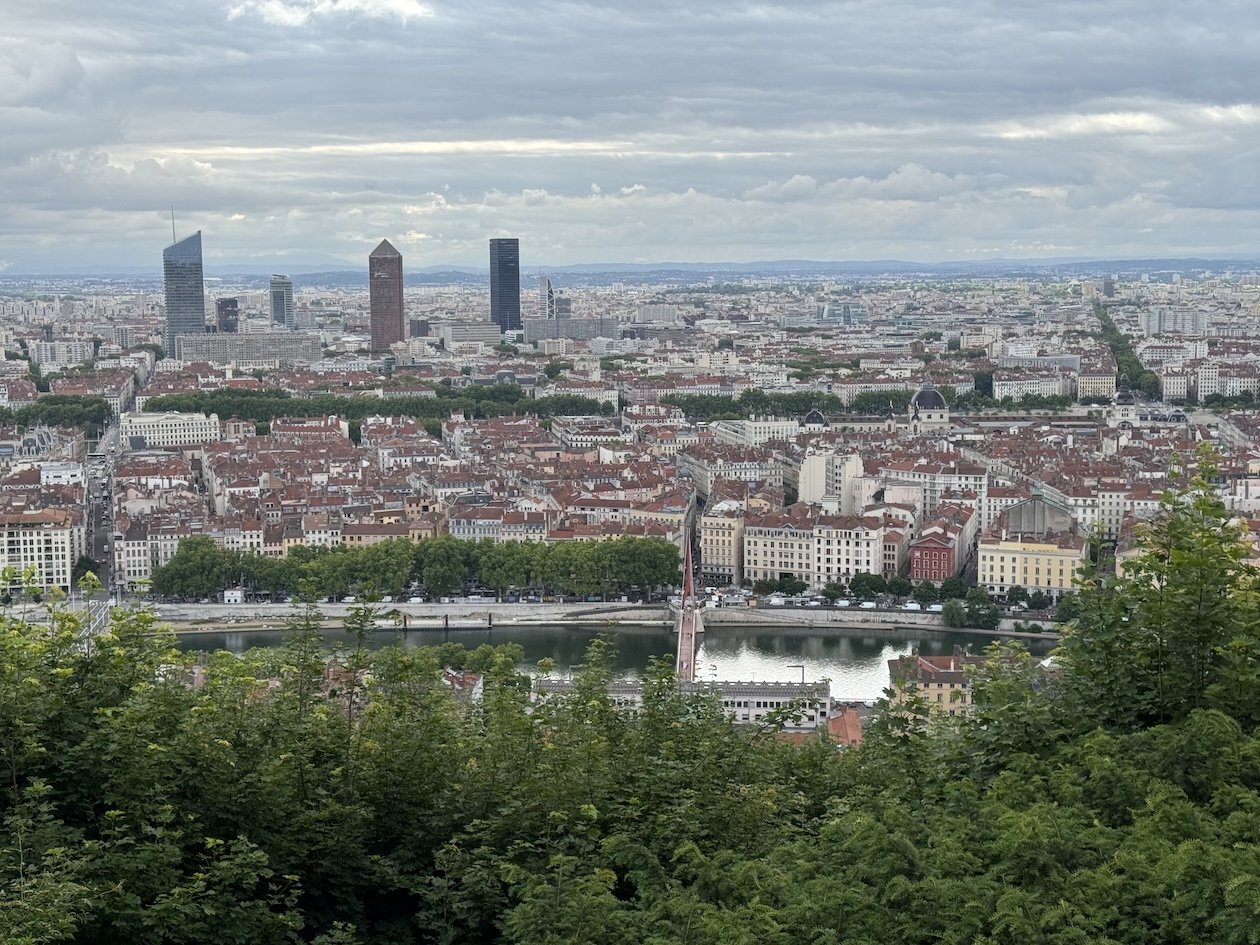
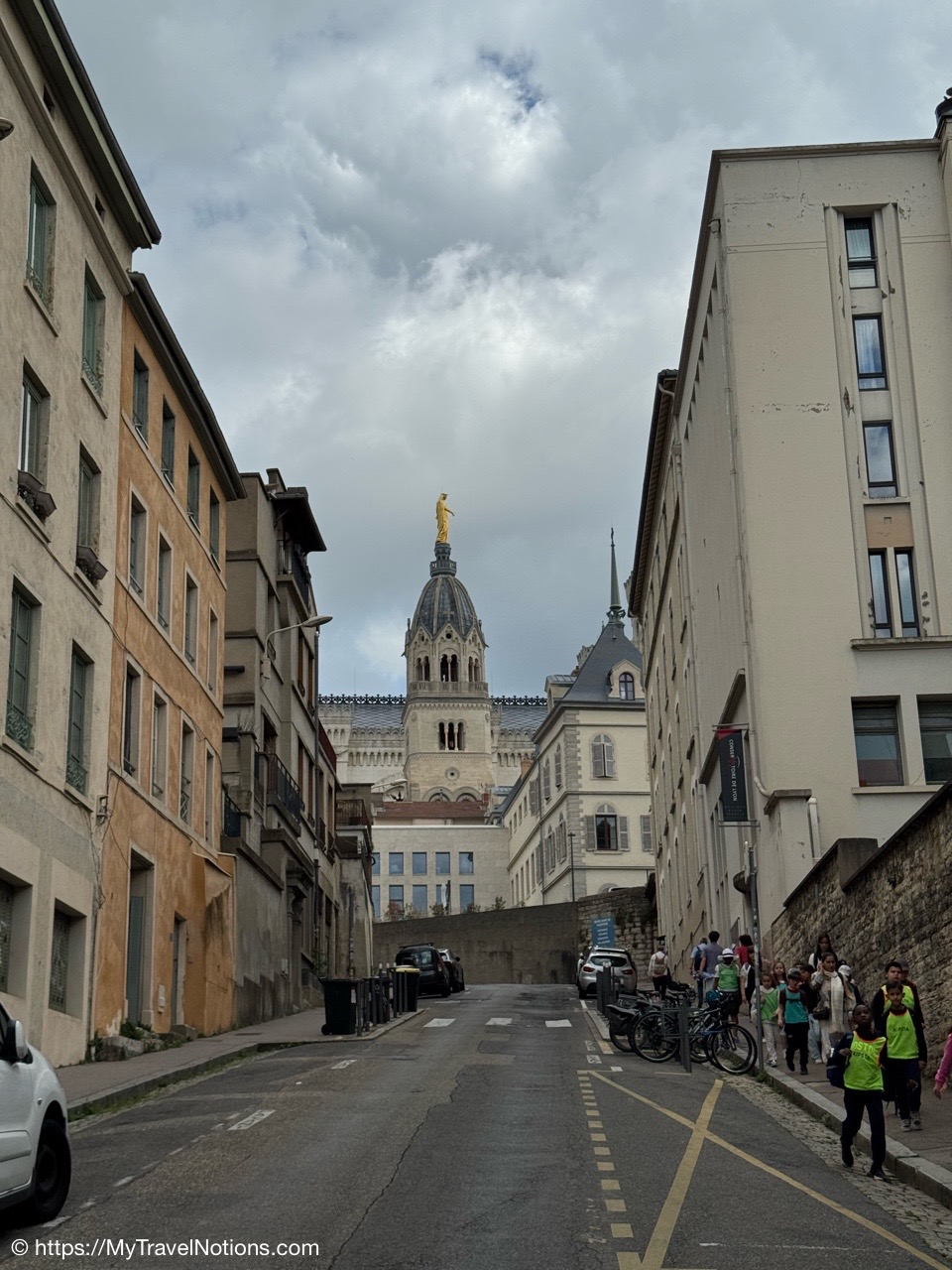
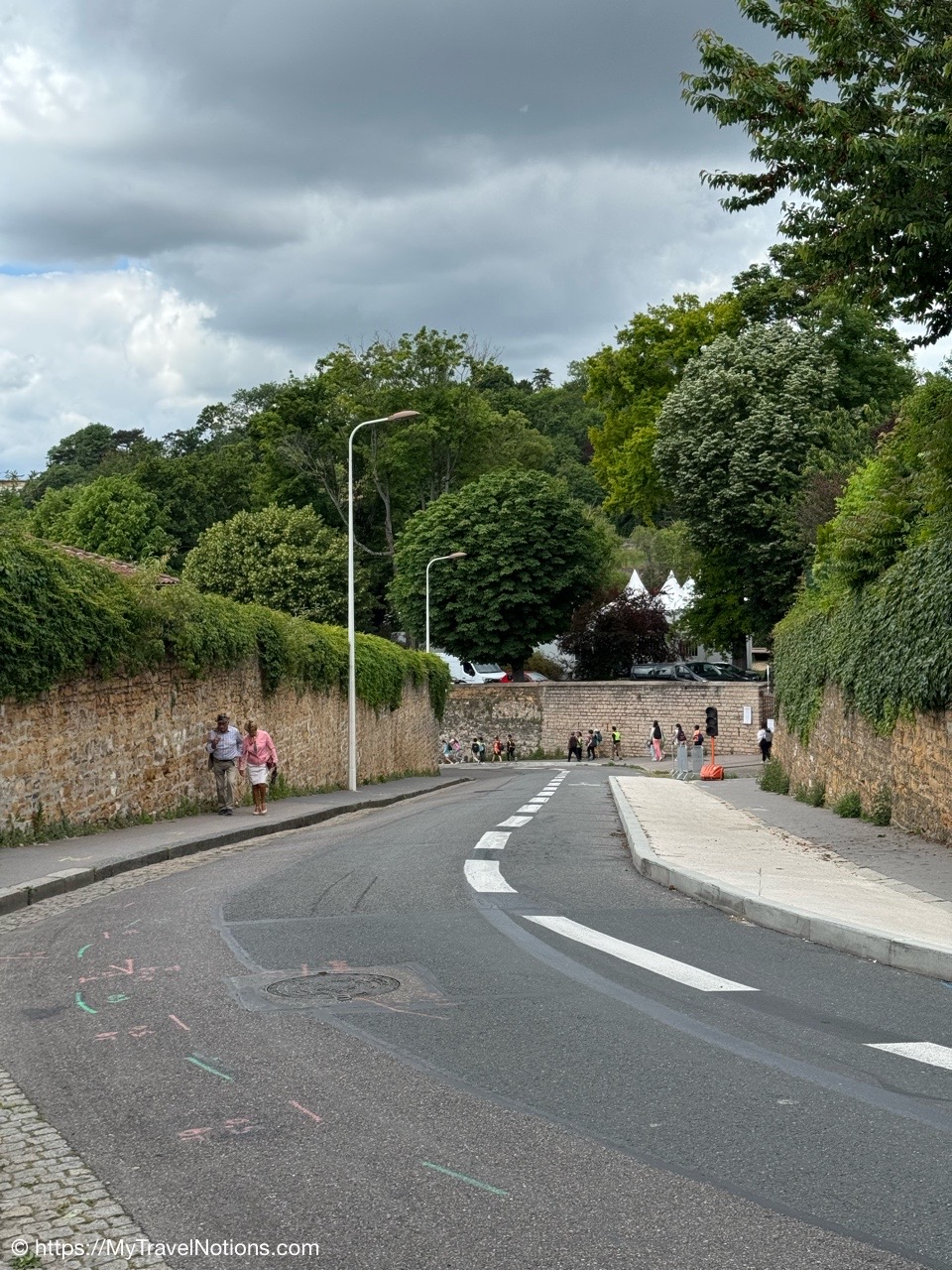
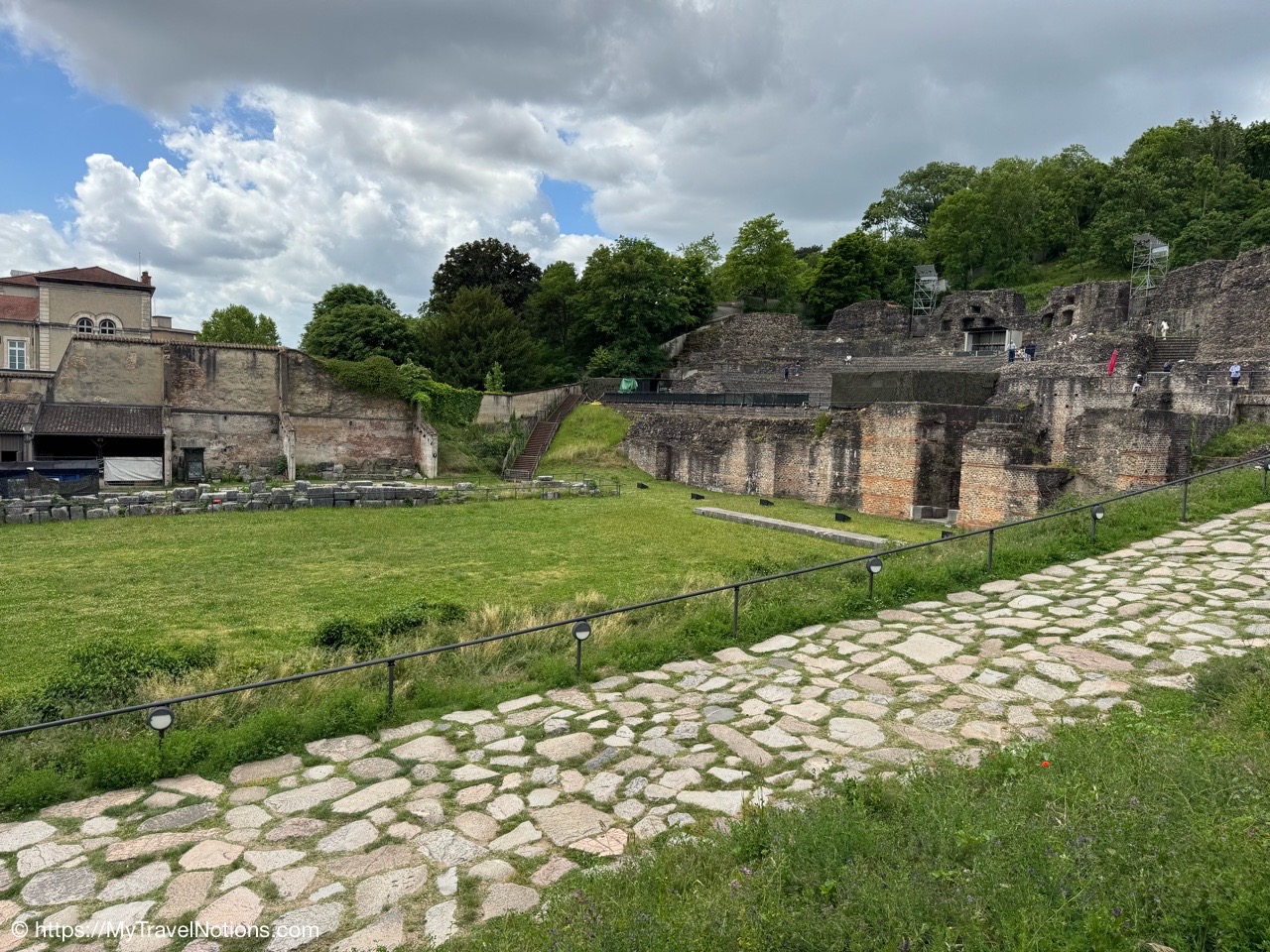
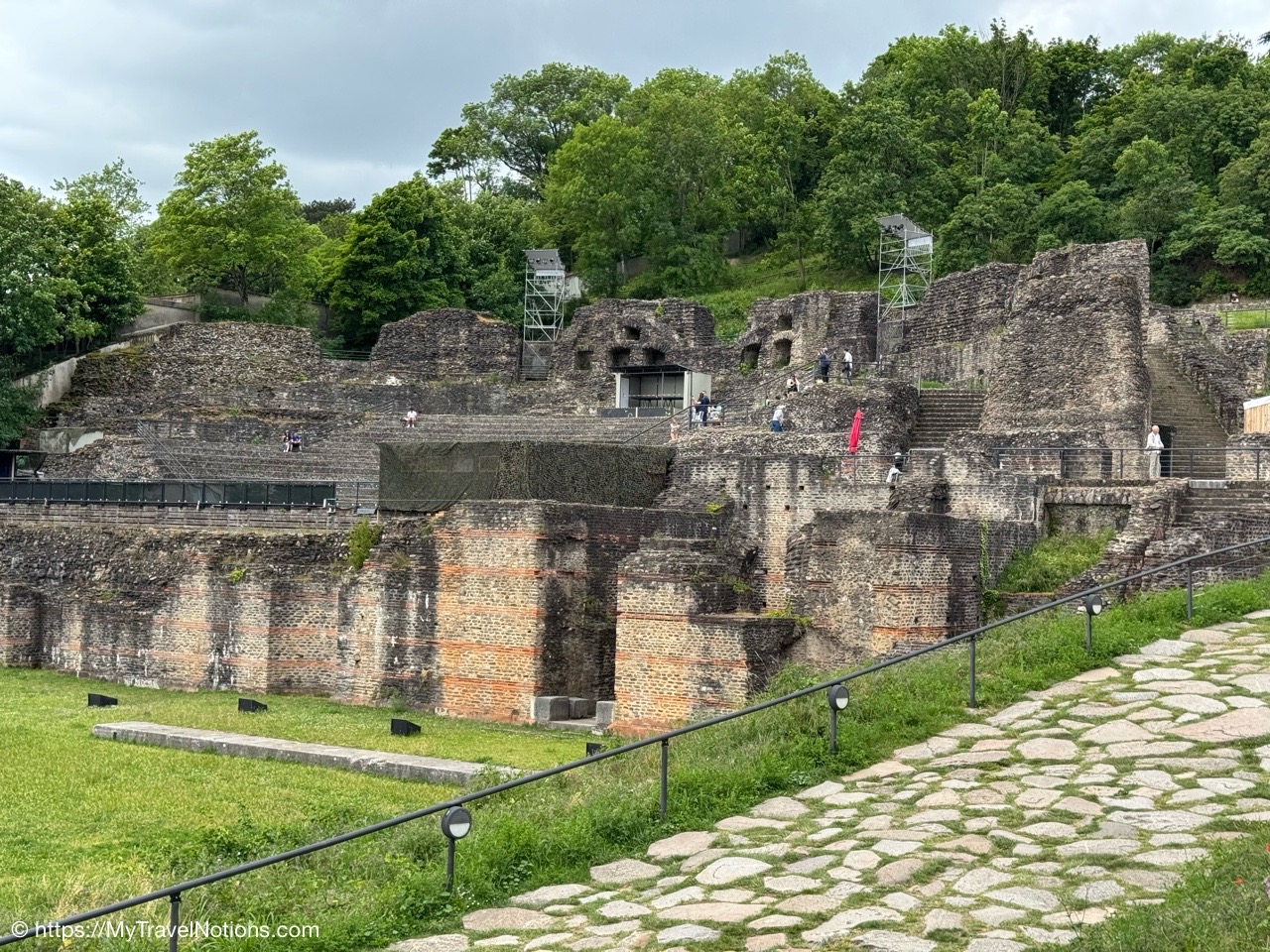
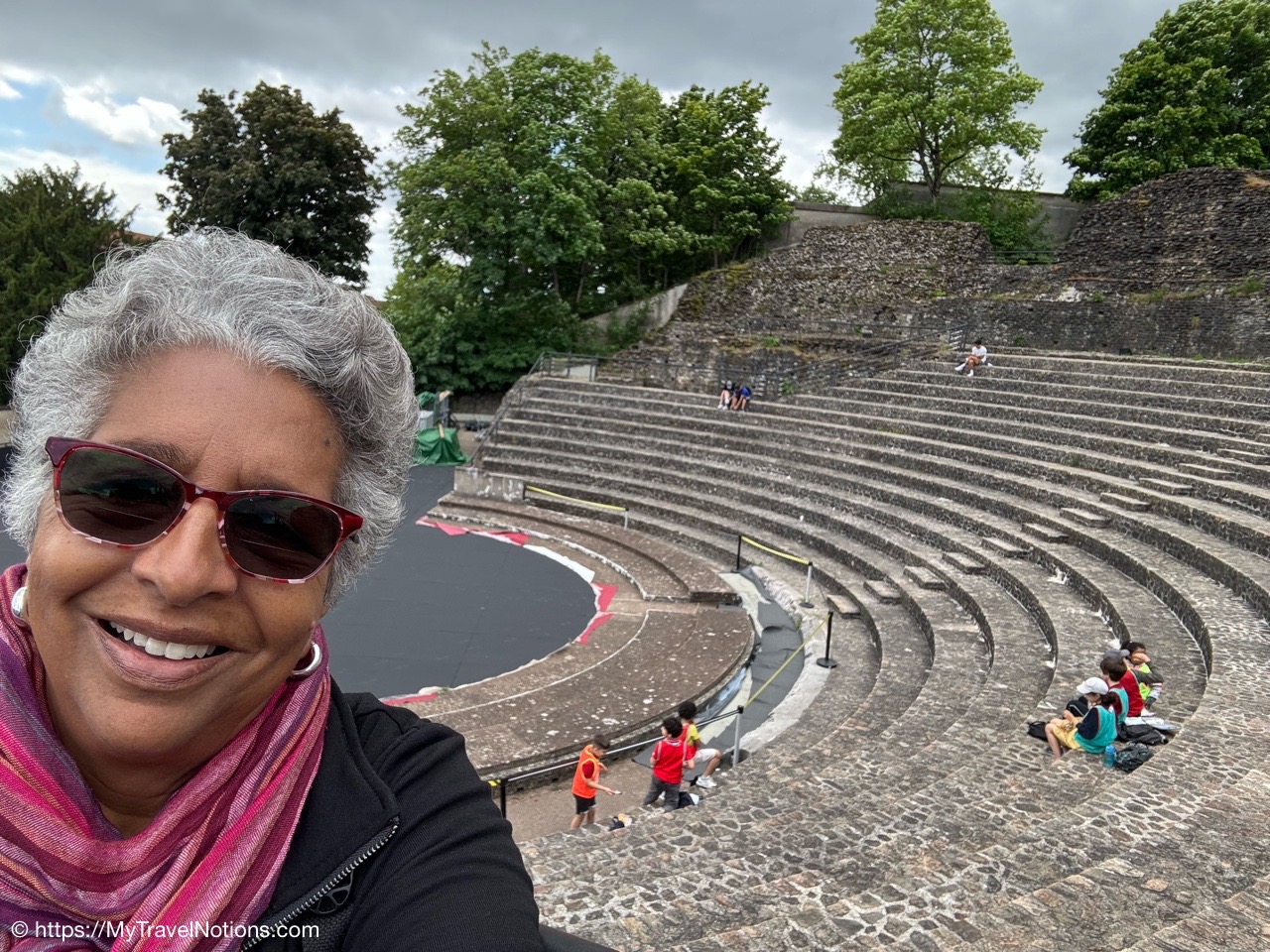
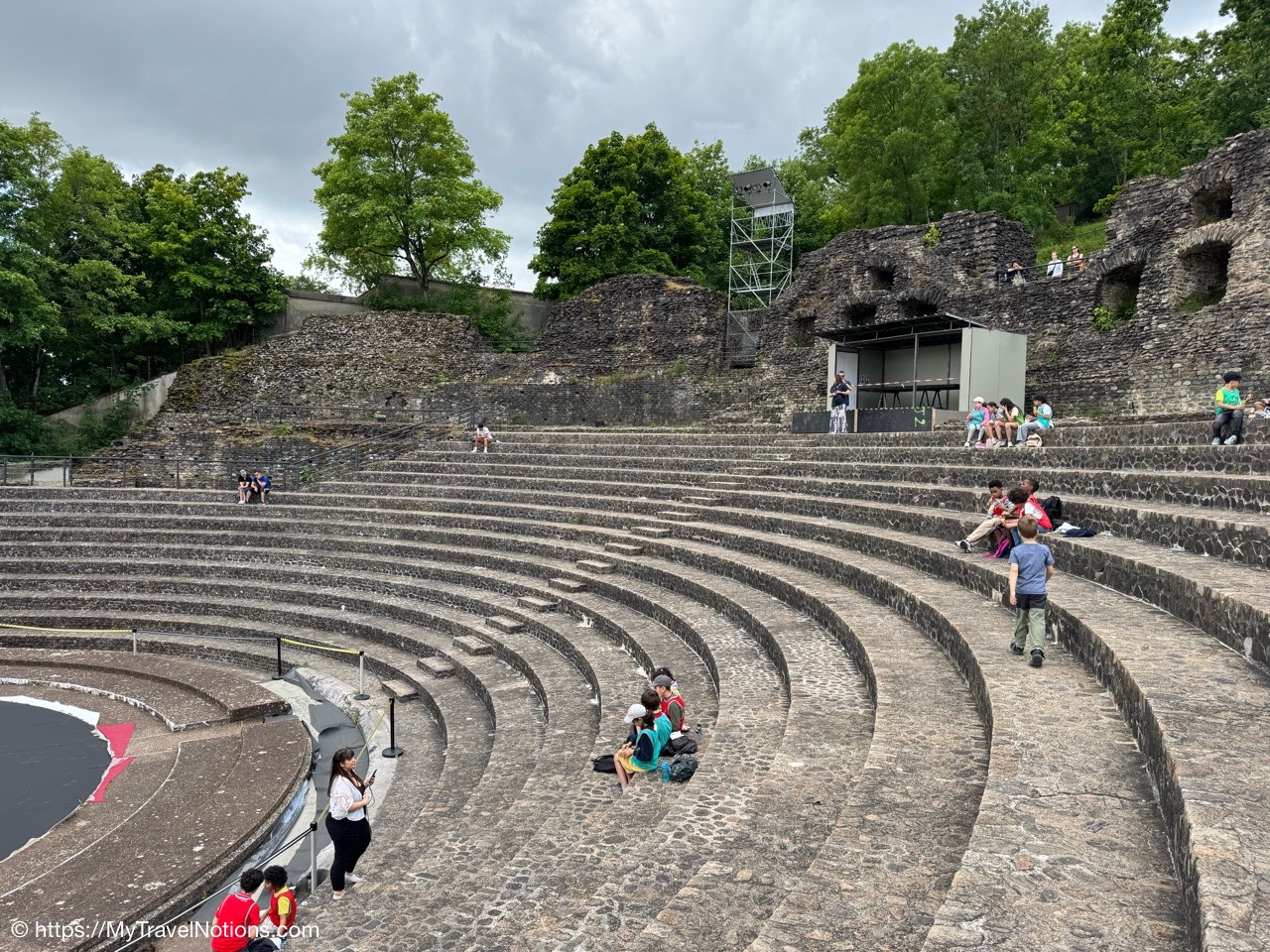
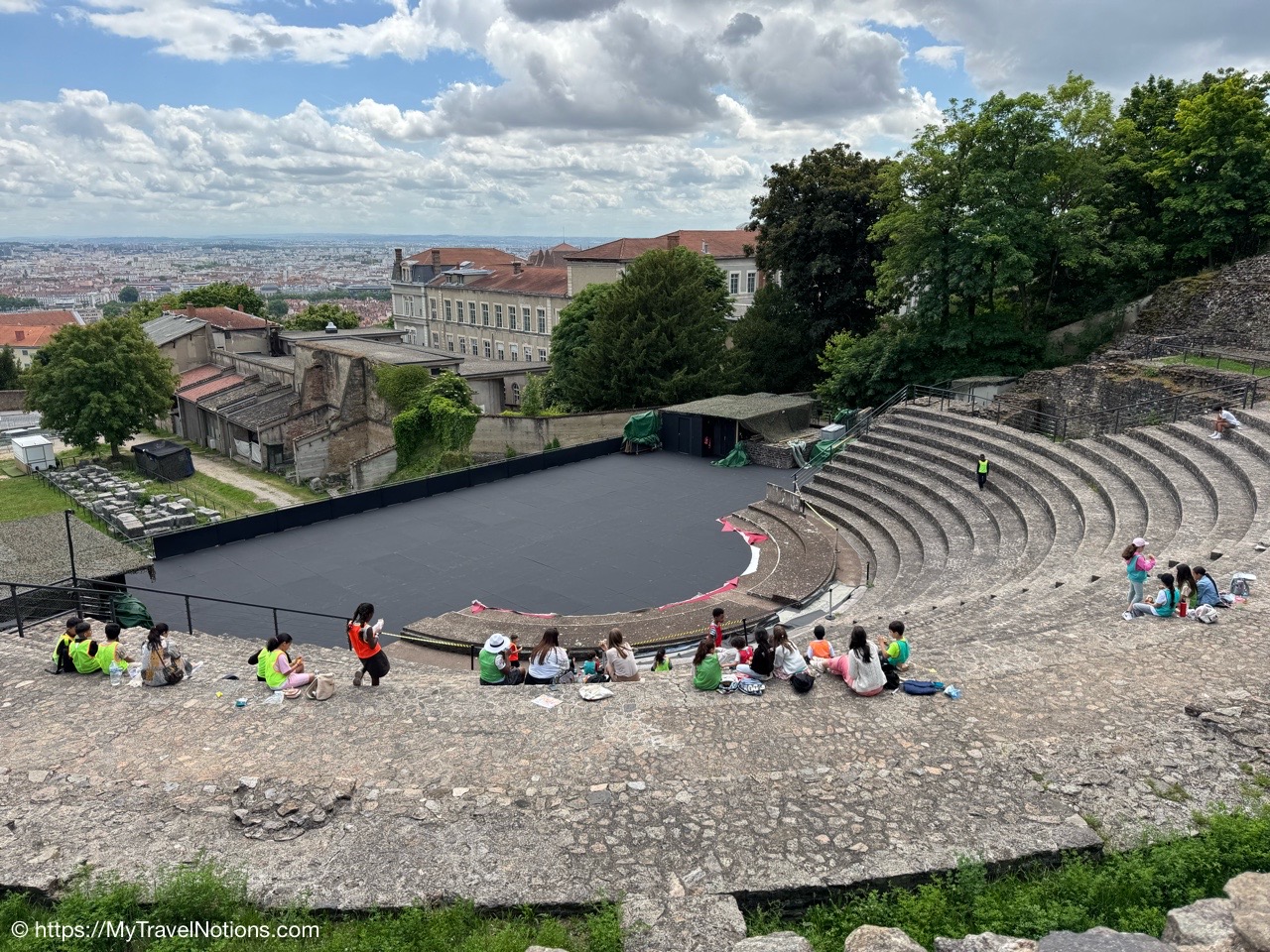
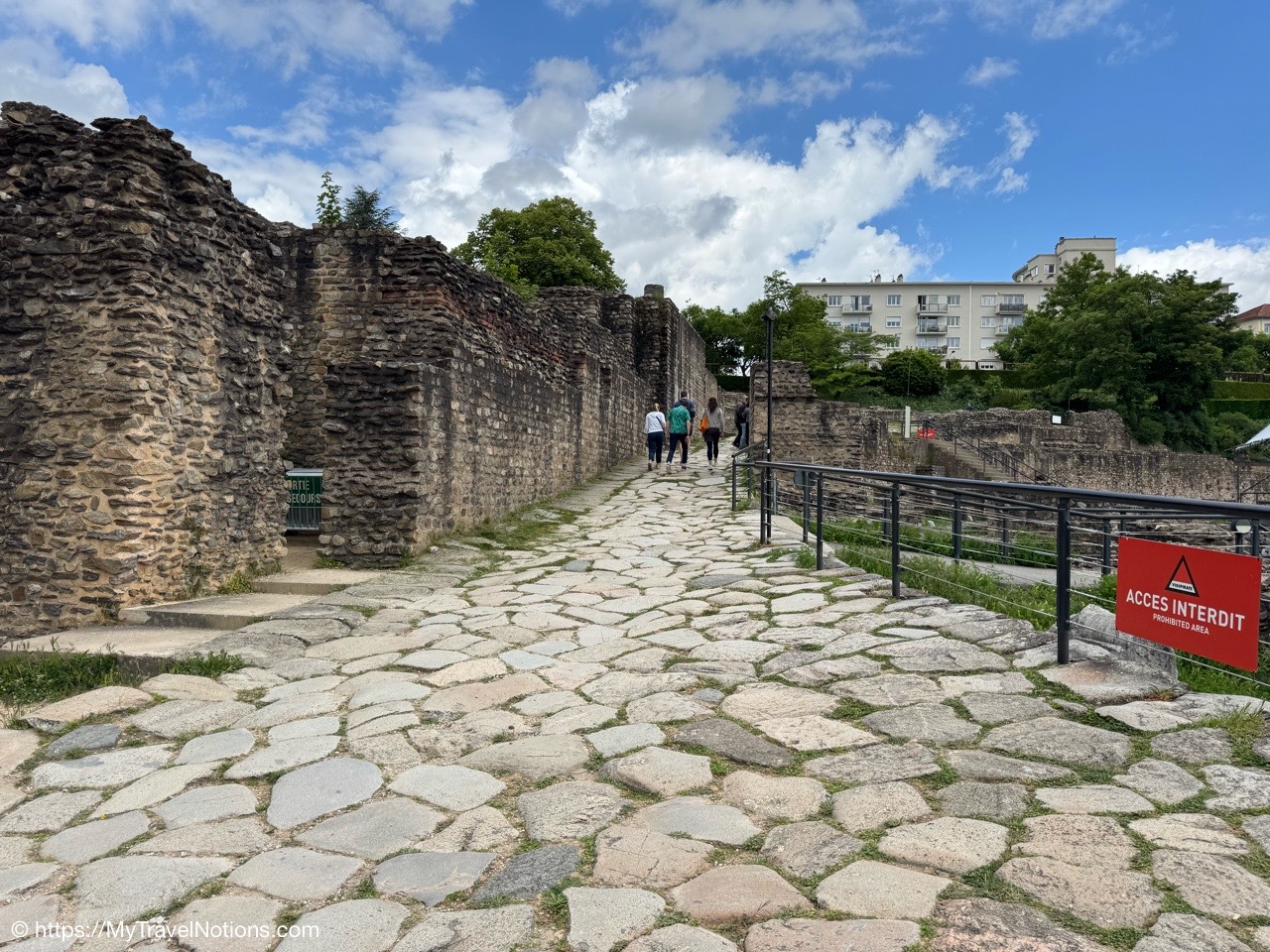
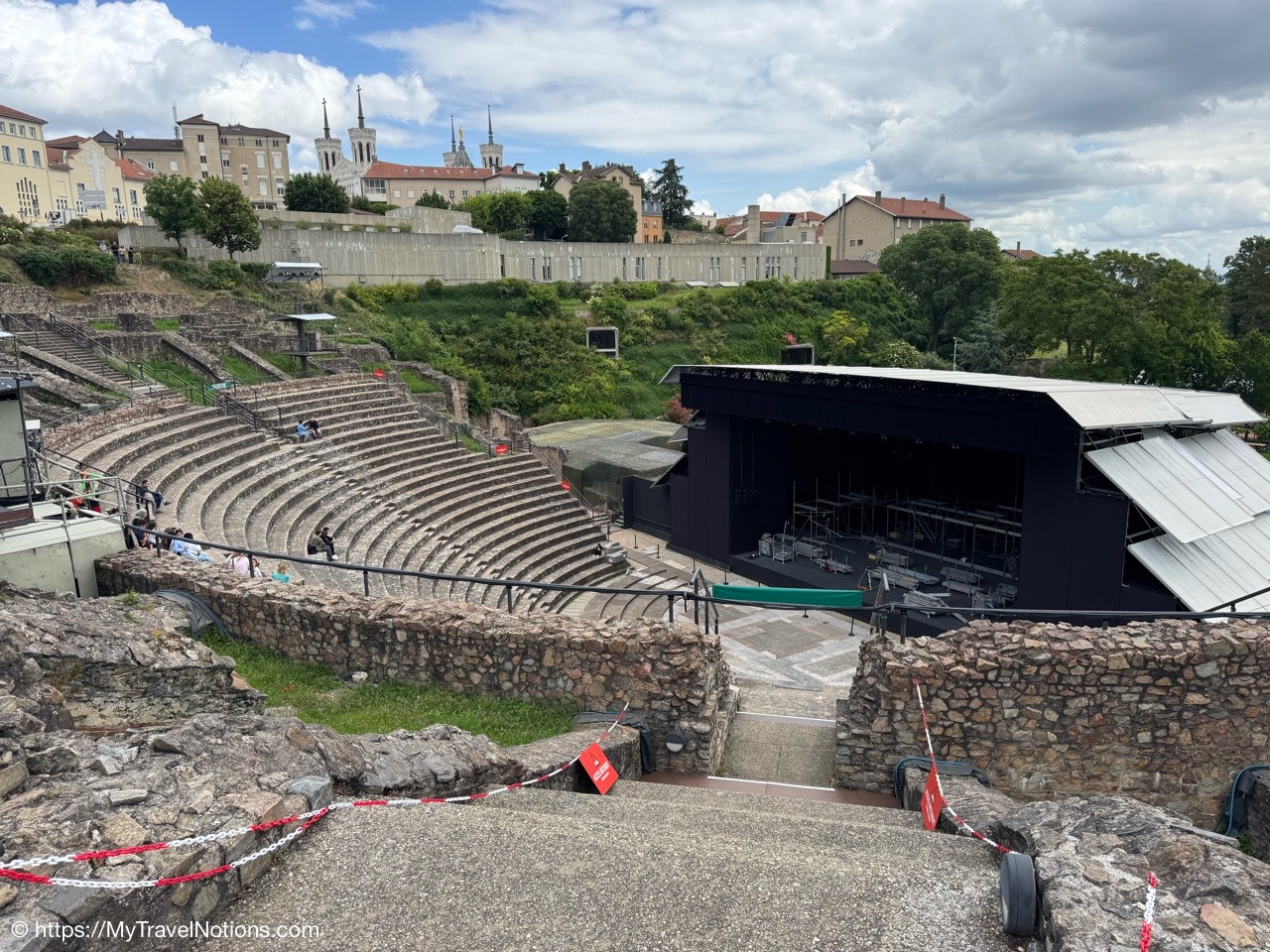
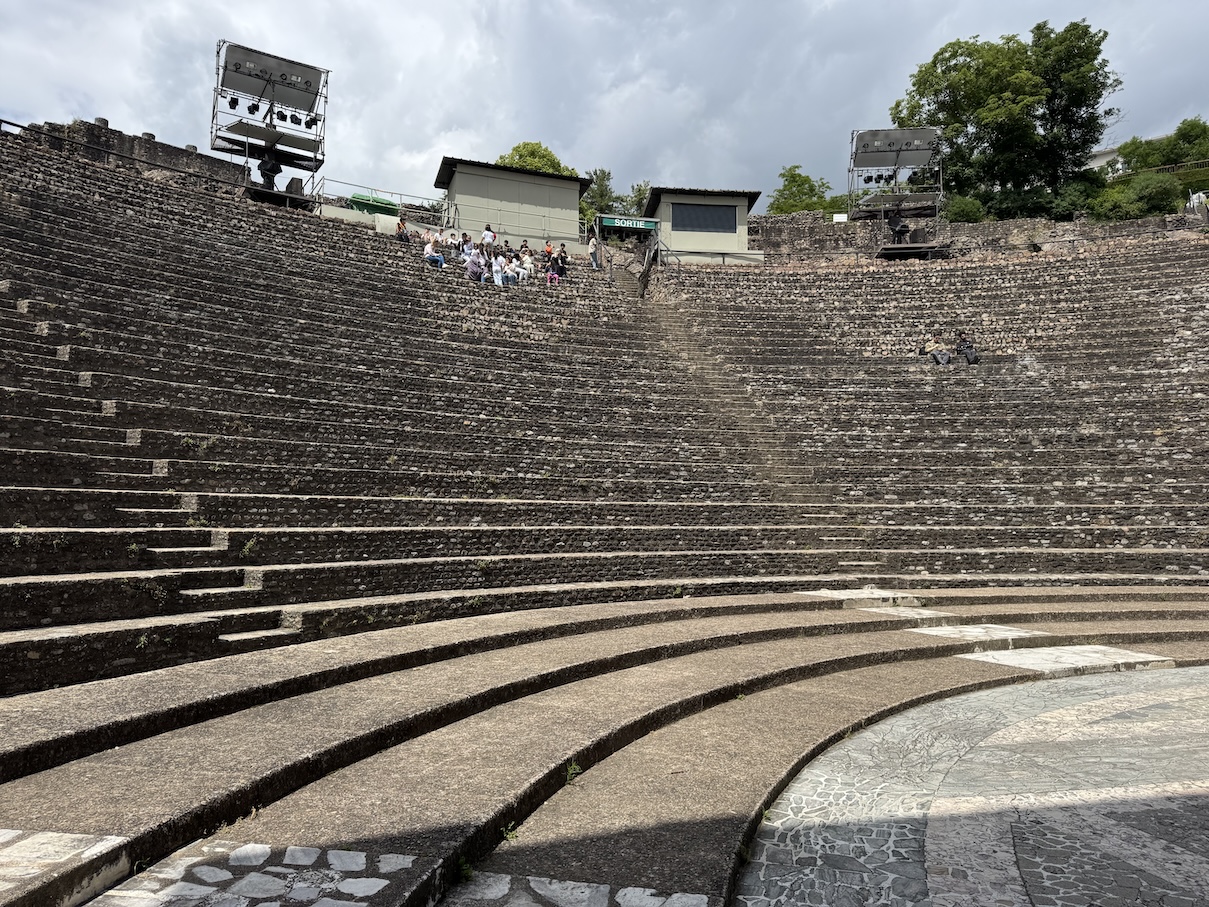
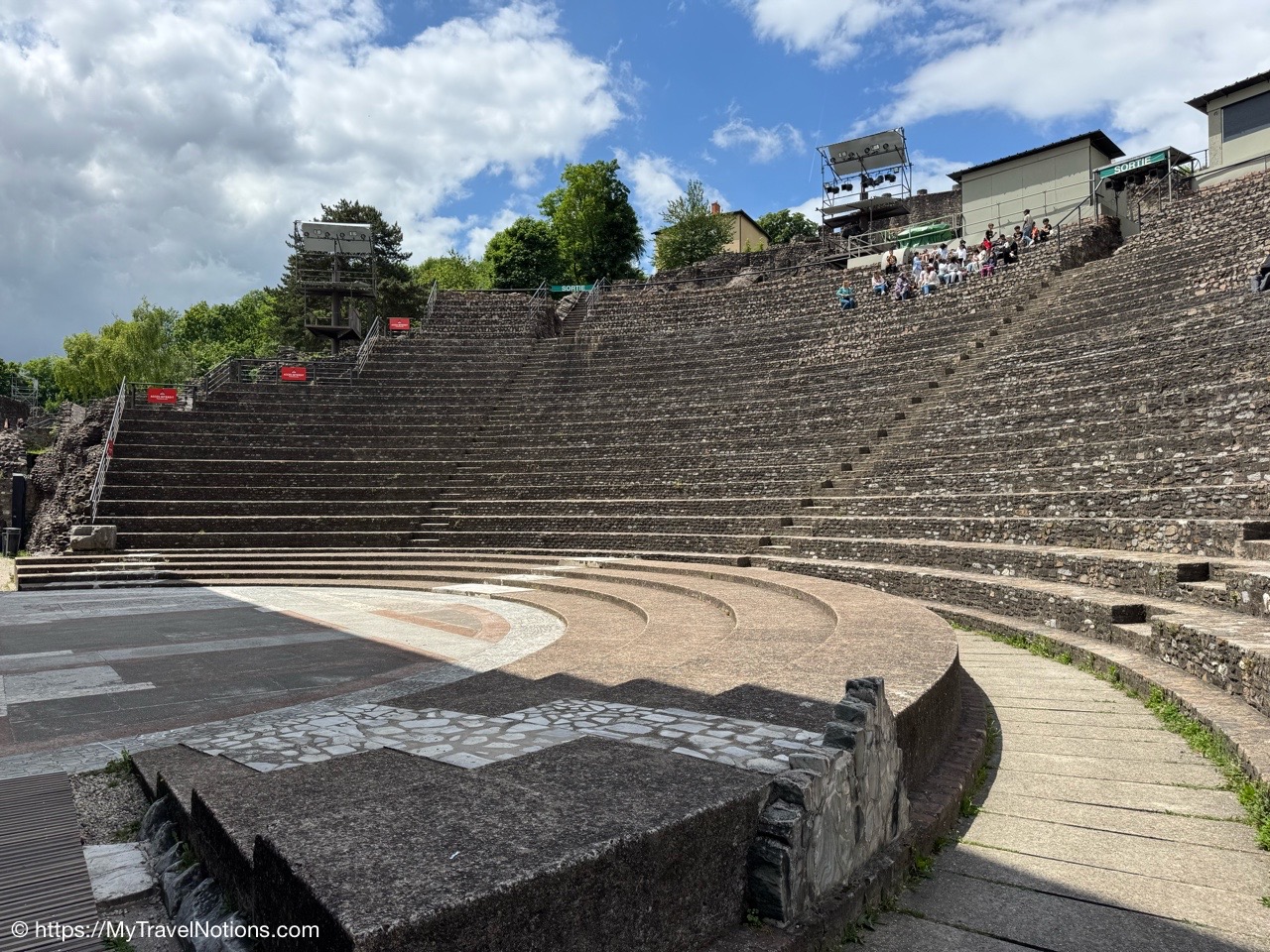
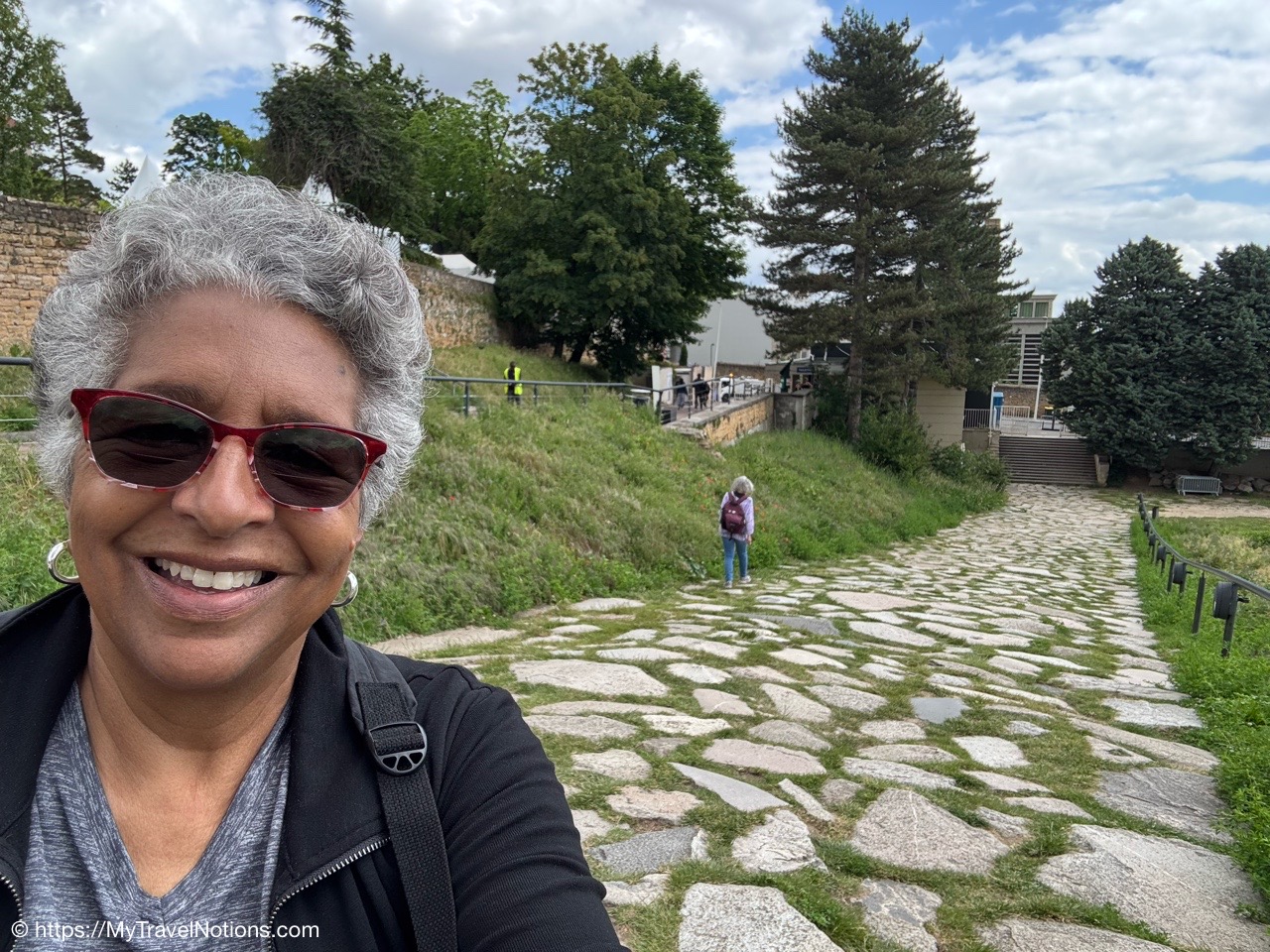
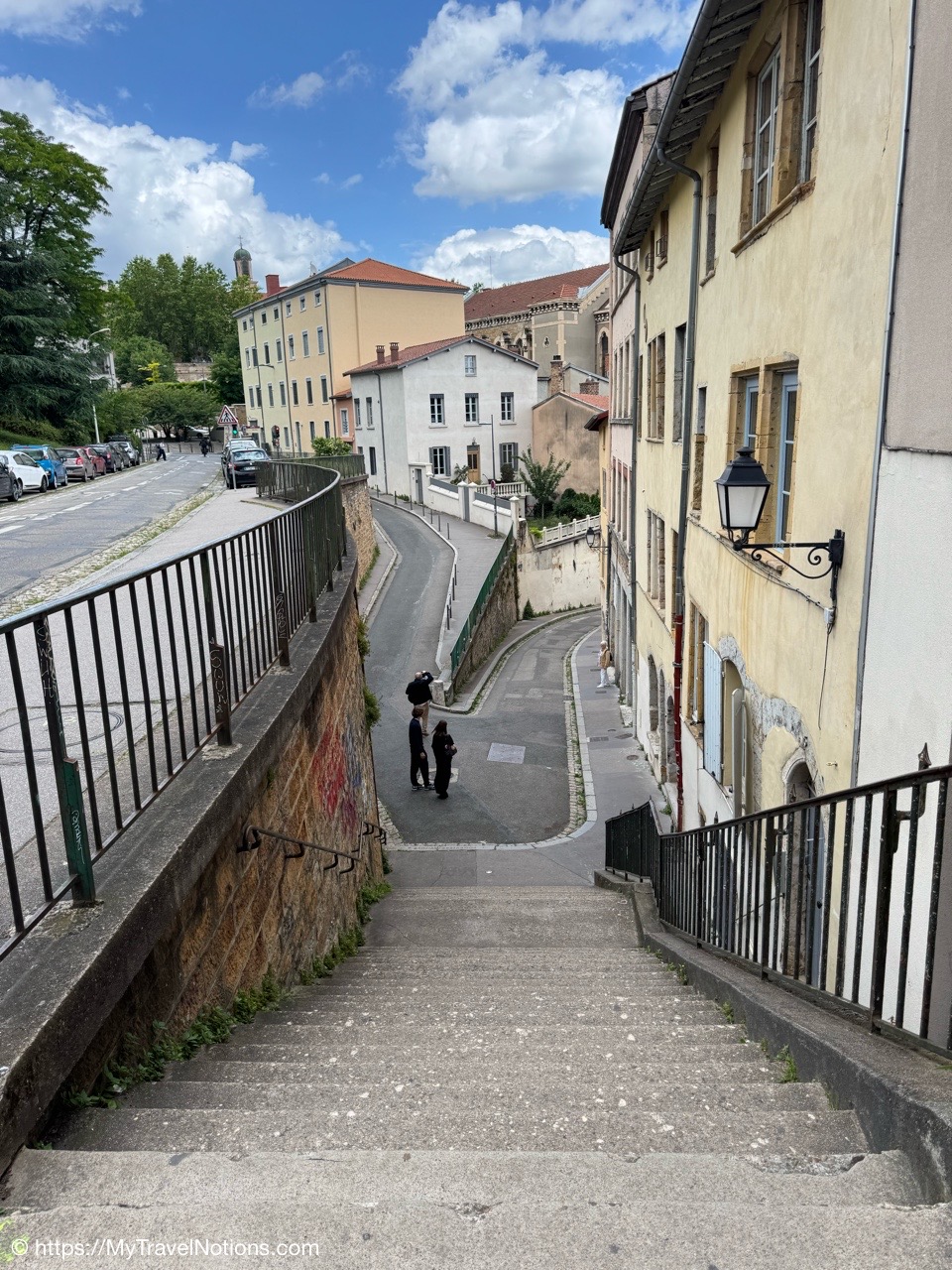
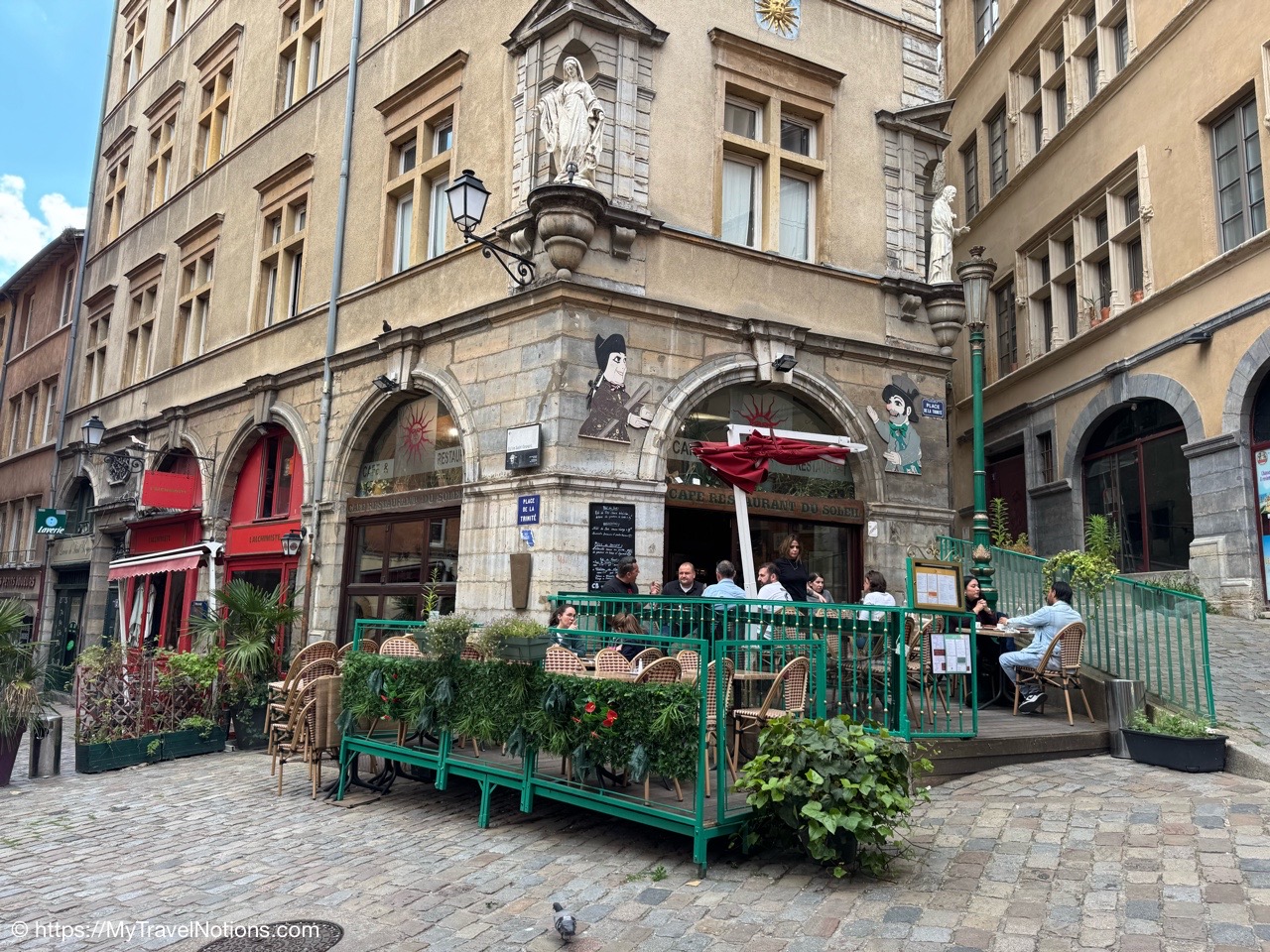
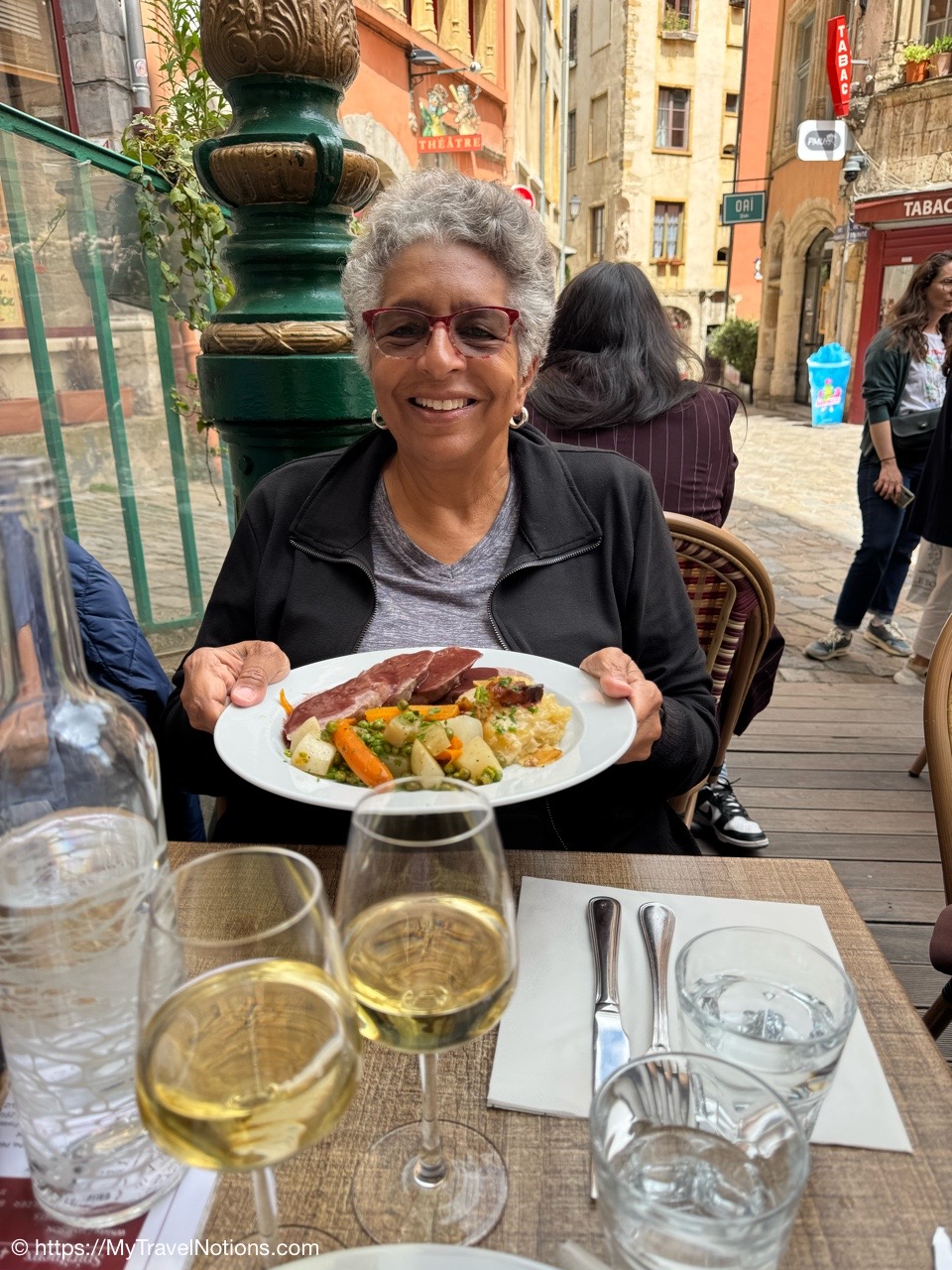
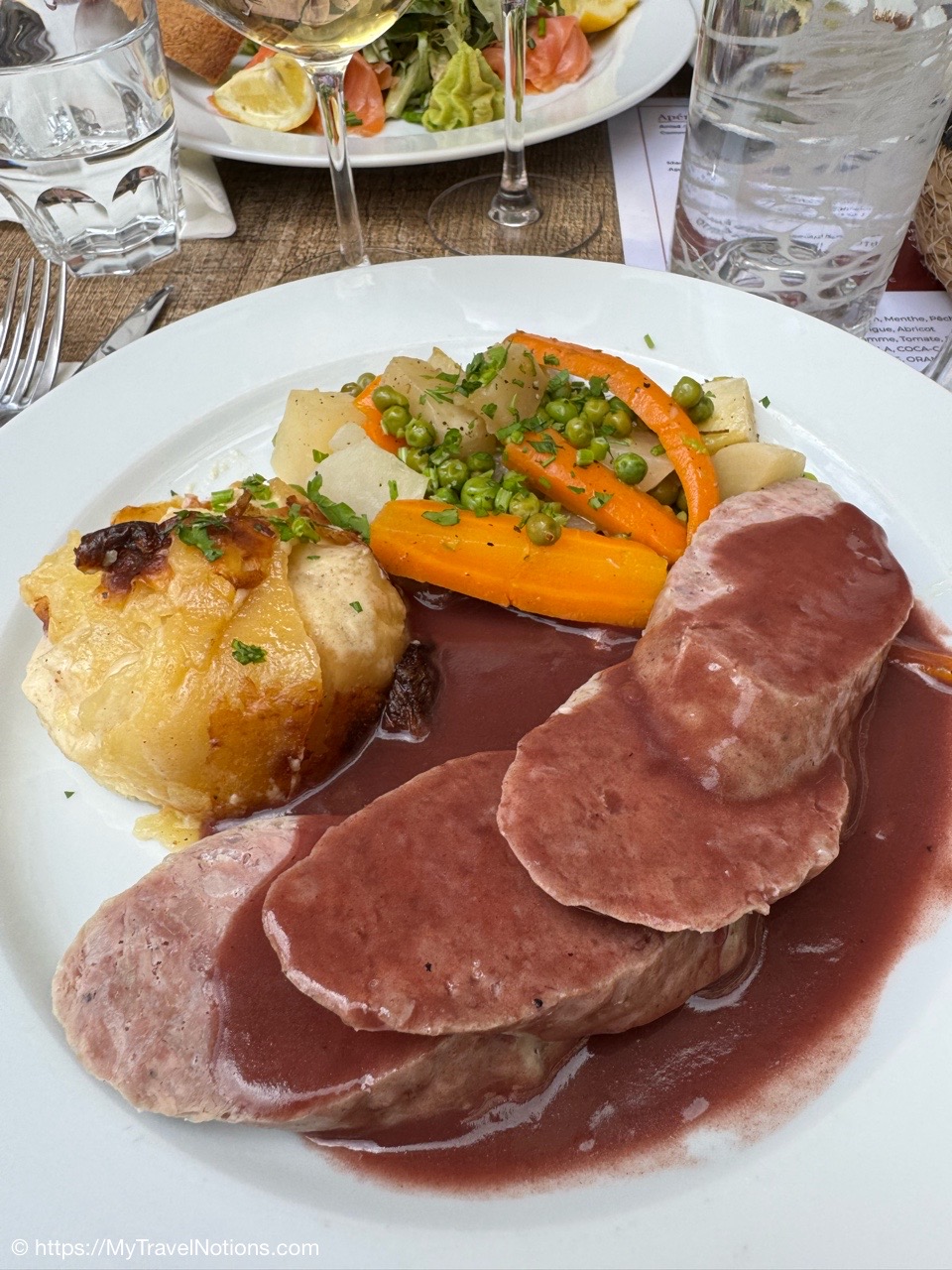
The golden statue of the Virgin Mary, sculpted by Joseph-Hugues Fabisch (1812–1886), sits a top the Saint-Thomas Chapel attached to the Basilica of Notre-Dame de Fourvière on “the hill which prays” in Lyon. She’s known as the “Golden Virgin,” and although made of gilded bronze, is indeed gold. Notre-Dame de Fourvière is dedicated to the Virgin Mary who is said to have saved Lyon from the Black Death that swept through Europe in 1643. (May 26, 2025)Built with private funds between 1872 and 1896, the Basilica of Notre-Dame de Fourvièr’s almost gleaming white Carrara marble and ‘Golden Virgin’ looming impressively over Lyon from a top the Fourvière hill where the city had its beginnings as the Roman city of Lugdunum. (May 26, 2025)Built with private funds between 1872 and 1896, the Basilica of Notre-Dame de Fourvièr’s almost gleaming white Carrara marble and ‘Golden Virgin’ looming impressively over Lyon from a top the Fourvière hill where the city had its beginnings as the Roman city of Lugdunum. (May 26, 2025)Rosie and I decided to take the funicular at the Saint Jean station, very close to our apartment, in the Vieux Lyon or Old Lyon, the largest Renaissance district of Lyon, that rides through a tunnel up to Fourvière, the hill immediately west of Old Lyon. You can definitely walk up, which our dear Alice did twice, but Rosie and I decided to ride up and walk down instead. Supposedly Lyon was the first city in the world to have a funicular in 1862, but the original no longer exists. (May 26, 2025)The funicular at the Saint Jean station in the Vieux Lyon or Old Lyon, the largest Renaissance district of Lyon, that rides through a tunnel up to Fourvière, the hill immediately west of Old Lyon. (May 26, 2025)After exiting the less than 5-minutes funicular ride, this is what we immediately saw, the stunning white Carrara marbled exterior of the Basilica of Notre-Dame de Fourvière in Lyon. (May 26, 2025)The white Carrara marble carved entrance, after climbing the the stairs on each side, to the Basilica of Notre-Dame de Fourvière in Lyon. (May 26, 2025)A close-up of the exterior statues and carvings of the Basilica of Notre-Dame de Fourvière in Lyon. (May 26, 2025)A close-up of the exterior statues and carvings of the Basilica of Notre-Dame de Fourvière in Lyon. (May 26, 2025)A side exterior view of the Basilica of Notre-Dame de Fourvière in Lyon. (May 26, 2025)The white Carrara carved marble side exterior of the Basilica of Notre-Dame de Fourvière in Lyon. (May 26, 2025)The white Carrara marble entrance, after climbing the the stairs on either side, to the Basilica of Notre-Dame de Fourvière in Lyon. (May 26, 2025)Even more stunning are the interior views of the Basilica of Notre-Dame de Fourvière in Lyon. The basilica’s interior is adorned with white Carrara marble, pink and blue marble, green onyx, gold and silver, and ebony and ivory, along with vivid mosaics and stained glass. It is also a veneration to the Virgin Mary. (May 26, 2025)The altar inside the Basilica of Notre-Dame de Fourvière in Lyon. (May 26, 2025)Even more stunning are the interior views of the Basilica of Notre-Dame de Fourvière in Lyon. The basilica’s interior is adorned with white Carrara marble, pink and blue marble, green onyx, gold and silver, and ebony and ivory, along with vivid mosaics and stained glass. It is also a veneration to the Virgin Mary. (May 26, 2025)On the side walls of the Basilica of Notre-Dame de Fourvière in Lyon are six large mosaics of 538 square feet or 50 square metres, by Charles Lameire et Georges Décote. The mosaics to the left of the Basilica show the link of Mary to the catholic church and on the right the relationship of Mary with France. The mosaic to the left of this photo is the “Consecration of France to Mary, Louis XIII’s vow” and the mosaic to the right is Joan of Arc. (May 26, 2025)The “Consecration of France to Mary Louis XIII’s vow” mosaic inside the Basilica of Notre-Dame de Fourvière in Lyon. (May 26, 2025)The inscription for the “Consecration of France to Mary Louis XIII’s vow” mosaic inside the Basilica of Notre-Dame de Fourvière in Lyon reads: “On February 10, 1638, King Louis XIII proclaimed the Virgin Mary patron saint of his kingdom and dedicated France to her.” A description of the mosaic states: “King Louis XIII, standing, presents his scepter and crown to the Virgin Mary; behind him, Queen Anne of Austria joins in his prayer. The top of the composition is a sort of annals of Christian France, from Clovis to Saint Louis and Duguesclin, on the left, and from Joan of Arc to Chateaubriand and Pauline Jaricot on the right. The bottom of the composition features several emblematic churches of France. From left to right, Chartres Cathedral, the Sacré-Coeur de Montmartre, Notre-Dame Cathedral in Paris, the Val de Grâce Church, Reims Cathedral and finally the Notre-Dame de Fourvière Basilica with its symbolic lion surrounded by a banner bearing the words of Pope Leo XIII: “Lugdunum suum”. (May 26, 2025)The Joan of Arc mosaic inside the Basilica of Notre-Dame de Fourvière in Lyon. (May 26, 2025)The description of the Joan of Arc mosaic inside the Basilica of Notre-Dame de Fourvière in Lyon states that “At both ends, the beginning and the end of her life. On the right, Joan listens to her voices, Saint Michael, Saint Catherine, and Saint Margaret. Above this scene, the image of Our Lady of Puy recalls that Joan of Arc’s mother, Isabelle Romée, went to the sanctuary of Puy-en-Velay during the Jubilee of 1429 to commend her daughter, who had just left for war, to the Virgin Mary. In the center, the triumphal entry into Orléans on May 8, 1429. On the left, the pyre on the Old Market Square in Rouen on May 30, 1431. Joan’s eyes are fixed on the crucifix held out to her by a monk.” (May 26, 2025)The inscription for the Joan of Arc mosaic inside the Basilica of Notre-Dame de Fourvière reads: “Blessed Joan of Arc, at the command of her voices, freed Orléans from its besieged enemy. Amidst a great gathering of people, she stood victorious near King Charles VII, who was crowned in Reims. She died amidst the flames in Rouen in 1431.” (May 26, 2025)Inside the Basilica of Notre-Dame de Fourvière in Lyon. (May 26, 2025)The Council of Ephesus mosaic inside the Basilica of Notre-Dame de Fourvière where Mary is affirmed as the Mother of God. The inscription reads: “to the applause of the Council of Ephesus, the definition of the divine Motherhood of Mary was announced to the Christian people.” (May 26, 2025)The Council of Ephesus mosaic inside the Basilica of Notre-Dame de Fourvière is described as: “On the right, the assembly of bishops approves Cyril of Alexandria. Standing in a solemn pose, he proclaims the legitimacy of this title, the Mother of God. This is why the center is occupied by a throne where Mary, presenting her son Jesus, is surrounded by the title “Theotokos” (Mother of God).” (May 26, 2025)The Council of Ephesus mosaic inside the Basilica of Notre-Dame de Fourvière is described as: “On the right, the assembly of bishops approves Cyril of Alexandria. Standing in a solemn pose, he proclaims the legitimacy of this title, the Mother of God. This is why the center is occupied by a throne where Mary, presenting her son Jesus, is surrounded by the title “Theotokos” (Mother of God).” (May 26, 2025)The wood carved and elaborate entrance to the Basilica of Notre-Dame de Fourvière with the painting of the Virgin Mary, by Victor Orsel, protecting the city of Lyon with her cloak, represented by a woman praying and imploring at her feet. She is wearing a green gown, symbol of hope, and a cranelleted crown symbolizing the city. (May 26, 2025)The beautiful mosaic floors inside the Basilica Notre-Dame de Fourvière in Lyon are made from various marbles and hard stones, forming geometric and floral patterns. (May 26, 2025)The elaborately decorated ceiling inside the Basilica of Notre-Dame de Fourvière in Lyon. (May 26, 2025)The elaborately decorated ceiling inside the Basilica of Notre-Dame de Fourvière in Lyon. (May 26, 2025)The beautiful wood carved doors to enter the Basilica of Notre-Dame de Fourvière in Lyon. (May 26, 2025)The painting of the Virgin Mary, by Victor Orsel, at the entrance to the Basilica of Notre-Dame de Fourvière portrays her as protecting the city of Lyon with her cloak, represented by a woman praying and imploring at her feet. She is wearing a green gown, symbol of hope, and a cranelleted crown symbolizing the city. (May 26, 2025)Connected to the Basilica of Notre-Dame de Fourvière is both connected internally and externally to this, the Saint-Thomas Chapel topped with golden statue of Mary on the bell tower. The Saint-Thomas Chapel to the right of the basilica represents the oldest part of the Fourvière sanctuary. It contains the Chapelle de la Vierge or Chapel of the Virgin with the Black Madonna and is topped with a dome and the golden statue of the Virgin Mary on the bell tower. The Virgin Mary’s golden statue was created by Joseph-Hugues Fabisch in 1852. The Saint-Thomas Chapel has undergone multiple reconstructions since it was built in the 1180s by Dean Olivier de Chavannes on Roman forum ruins. (May 26, 2025)From an exit door inside the Basilica of Notre-Dame de Fourvière is the ‘Stairs of Wisdom’ leading to the crypt stairs and the Saint-Thomas Chapel, which can also be entered from its own exterior door. A description of the monumental staircase states that it is “a masterpiece of Sainte-Marie Perrin carved out of red marble…at the top of the stairs is the Wisdom of Dufraine statue welcoming visitors inside the basilica. (May 26, 2025)The entrance to the Chapelle de la Vierge or Chapel of the Virgin or Our Lady of Fourvière or the Chapel of the Black Madonna from either the entrance to the Saint-Thomas Chapel or the Stairs of Wisdom from the Basilica of Notre-Dame de Fourvière. The Saint-Thomas Chapel is the oldest part of the Fourvière sanctuary. Consecrated first to Saint-Thomas and then to the Virgin, it has been repeatedly destroyed and rebuilt. (May 26, 2025)I have seen this called the Chapel of the Virgin, Our Lady of Fourvière and the Chapel of the Black Madonna inside the Saint-Thomas Chapel adjoined to the Basilica of Notre-Dame de Fourvière. The main altar of the chapel was built in 1751 in order to replace an old one ruined during the wars of religion. And, on Sept. 8, 1900, the Mother and Child statue was crowned at the same time as the one in the basilica. (May 26, 2025)The altar of the Chapel of the Virgin, Our Lady of Fourvière or the Chapel of the Black Madonna inside the Saint-Thomas Chapel adjoined to the Basilica of Notre-Dame de Fourvière. The main altar of the chapel was built in 1751 in order to replace an old one ruined during the wars of religion. And, on Sept. 8, 1900, the Mother and Child statue was crowned at the same time as the one in the basilica. (May 26, 2025)The statue of the Chapel of the Virgin, Our Lady of Fourvière or the Chapel of the Black Madonna inside the Saint-Thomas Chapel adjoined to the Basilica of Notre-Dame de Fourvière. The main altar of the chapel was built in 1751 in order to replace an old one ruined during the wars of religion. And, on Sept. 8, 1900, the Mother and Child statue was crowned at the same time as the one in the basilica. (May 26, 2025)The statue of the Chapel of the Virgin, Our Lady of Fourvière or the Chapel of the Black Madonna inside the Saint-Thomas Chapel adjoined to the Basilica of Notre-Dame de Fourvière. The main altar of the chapel was built in 1751 in order to replace an old one ruined during the wars of religion. And, on Sept. 8, 1900, the Mother and Child statue was crowned at the same time as the one in the basilica. (May 26, 2025)The statue of the Chapel of the Virgin, Our Lady of Fourvière or the Chapel of the Black Madonna inside the Saint-Thomas Chapel adjoined to the Basilica of Notre-Dame de Fourvière. The main altar of the chapel was built in 1751 in order to replace an old one ruined during the wars of religion. And, on Sept. 8, 1900, the Mother and Child statue was crowned at the same time as the one in the basilica. (May 26, 2025)Taking the staircase down to the lower church or crypt of the Basilica of Notre-Dame de Fourvière by the ‘Stairs of Wisdom’. The basilica actually contains two churches, one on top of the other. The upper sanctuary is obviously quite ornate, while the lower is a much simpler design. Work on the triumphant basilica was begun in 1872 and finished in 1884. Finishing touches in the interior were not completed until as late as 1964. An impressive lower church welcoming Virgins from all over the world. Fourvière’s crypt, dedicated to Saint Joseph, is identified as the lower church. (May 26, 2025)Inside the impressive lower church, which is the crypt of the Basilica of Notre-Dame de Fourvière. It is dedicated to Saint Joseph and has the same surface area as the basilica above. The altar, dedicated to Saint Joseph, is decorated with his statue carrying the infant Jesus and a sculpted group representing his death. At the foot of the statue, a mosaic of the “seven deadly sins” opens a symbolic axis of the victory of good over evil. (May 26, 2025)The altar of the lower church, which is the crypt of the Basilica of Notre-Dame de Fourvière, is dedicated to St. Joseph, who is represented both by the statue of him carrying the infant Jesus, and by the group sculpted beneath the altar evoking his death. (May 26, 2025)The altar of the lower church, which is the crypt of the Basilica of Notre-Dame de Fourvière, is dedicated to St. Joseph, who is represented both by the statue of him carrying the infant Jesus, and by the group sculpted beneath the altar evoking his death. (May 26, 2025)Our Lady of Loretto displayed in the lower church or crypt of the Notre-Dame de Fourvière in Lyon. In the basilica of Loretto in Italy, the statue of Our Lady, made in Lebanon cedar coming from the Vatican gardens, has been worshipped since the Middle Ages. Our Lady Of Loretto is the patron saint of the aviators. (May 26, 2025)A close-up of Our Lady of Loretto displayed in the lower church or crypt of the Notre-Dame de Fourvière in Lyon. In the basilica of Loretto in Italy, the statue of Our Lady, made in Lebanon cedar coming from the Vatican gardens, has been worshipped since the Middle Ages. Our Lady Of Loretto is the patron saint of the aviators. (May 26, 2025)Our Lady of Africa displayed in the lower church or crypt of the Notre-Dame de Fourvière in Lyon. Our Lady of Africa also known as Our Mother of Africa, is a Catholic title of the Blessed Virgin Mary, the Black Madonna in the major shrine of Notre-Dame d’Afrique in Algiers. (May 26, 2025)A close-up of Our Lady of Africa displayed in the lower church or crypt of the Notre-Dame de Fourvière in Lyon. Our Lady of Africa also known as Our Mother of Africa, is a Catholic title of the Blessed Virgin Mary, the Black Madonna in the major shrine of Notre-Dame d’Afrique in Algiers. (May 26, 2025)Our Lady of Good Health of Velankanni displayed in the lower church or crypt of the Notre-Dame de Fourvière in Lyon. The Virgin Mary appeared to a young shepherd in the village of Velankanni in India. The emblematic representation of the Virgin is unique because it is one of the two icons in which Mary is shown dressed in an Indian sari. (May 26, 2025)The lower church or crypt of the Notre-Dame de Fourvière houses 11 statues of the Virgin Mary, known as the “Virgins of the World,” from sanctuaries around the world. These Mary figures originate from places such as Brazil, Mexico, India, China, Italy, the Philippines, Portugal, Poland, Hungary, Africa, and Lebanon, highlighting the global nature of Marian devotion at the Basilica. (May 26, 2025)Our Lady of Czestochowa, also known as the Black Madonna, is an image of Mary located in Poland. The legend says that the image of the Black Virgin of Czestochowa was painted by Saint Luke the Evangelist on a wood board that had been part of the table in the home of the Holy Family. (May 26, 2025)Our Lady of Czestochowa displayed in the lower church or crypt of the Notre-Dame de Fourvière in Lyon is also known as the Black Madonna, an image of Mary located in Poland. The legend says that the image of the Black Virgin of Czestochowa was painted by Saint Luke the Evangelist on a wood board that had been part of the table in the home of the Holy Family. (May 26, 2025)Our Lady Aparecida or Our Lady the Appeared is a title of the Blessed Virgin Mary associated with the Immaculate Conception, displayed in the lower church or crypt of the Notre-Dame de Fourvière in Lyon. In 1929, our Lady of Aparecida was proclaimed “Queen of Brazil” and the official patron saint of the country by Pope Pius XI. (May 26, 2025)A close-up of Our Lady Aparecida or Our Lady the Appeared is a title of the Blessed Virgin Mary associated with the Immaculate Conception, displayed in the lower church or crypt of the Notre-Dame de Fourvière in Lyon. In 1929, our Lady of Aparecida was proclaimed “Queen of Brazil” and the official patron saint of the country by Pope Pius XI. (May 26, 2025)Our Lady of Guadalupe displayed in the lower church or crypt of the Notre-Dame de Fourvière in Lyon. On the 9th of December 1531, on top of the hill of Tepeyac, north of Mexico, a young lady “dazzlingly shining” appears to Juan Diego Cuauhtlatoatzin, just baptized. She introduces herself as the Virgin Mary and makes him responsible for asking the bishop to have a church built right here on the apparition spot. (May 26, 2025)The Newborn Madonna displayed in the lower church or crypt of the Notre-Dame de Fourvière in Lyon. This contemporary reinterpretation by artist Yin Xin is ethnically Chinese but painted in the style of an old European master. By recasting the biblical scene with a Chinese mother and baby, Yin Xin universalizes the theme of maternal love. The tenderness, delight, and humanity of the mother-and-child bond are portrayed as timeless and recognizable across different cultures. (May 26, 2025)Our Lady of La Naval displayed in the lower church or crypt of the Notre-Dame de Fourvière in Lyon. According to the tradition in the Philippines, the Virgin helped to successfully push away the Dutch protestant invasion forces during the battles of La Naval in Manila, just like the battle of Lepanto in 1571. In 2009, the Philippine government named the icon and its Sanctuary as a national cultural treasure. (May 26, 2025)A close-up of Our Lady of La Naval displayed in the lower church or crypt of the Notre-Dame de Fourvière in Lyon. According to the tradition in the Philippines, the Virgin helped to successfully push away the Dutch protestant invasion forces during the battles of La Naval in Manila, just like the battle of Lepanto in 1571. In 2009, the Philippine government named the icon and its Sanctuary as a national cultural treasure. (May 26, 2025)A close-up of Our Lady of La Naval displayed in the lower church or crypt of the Notre-Dame de Fourvière in Lyon. According to the tradition in the Philippines, the Virgin helped to successfully push away the Dutch protestant invasion forces during the battles of La Naval in Manila, just like the battle of Lepanto in 1571. In 2009, the Philippine government named the icon and its Sanctuary as a national cultural treasure. (May 26, 2025)Our Lady of Lebanon (Notre Dame du Liban) displayed in the lower church or crypt of the Notre-Dame de Fourvière in Lyon. is a title for the Virgin Mary and a famous pilgrimage site centered around a large bronze statue in Harissa, Lebanon. The shrine, overlooking the bay of Jounieh, is a major religious and tourist landmark, symbolizing a beacon of faith for both Lebanese Christians and Muslims. (May 26, 2025)A close-up of Our Lady of Lebanon (Notre Dame du Liban) displayed in the lower church or crypt of the Notre-Dame de Fourvière in Lyon. is a title for the Virgin Mary and a famous pilgrimage site centered around a large bronze statue in Harissa, Lebanon. The shrine, overlooking the bay of Jounieh, is a major religious and tourist landmark, symbolizing a beacon of faith for both Lebanese Christians and Muslims. (May 26, 2025)Views of Lyon from a viewpoint by the Basilica Notre-Dame de Fourvière in Lyon. (May 26, 2025)Getting in a selfie with views of Lyon from a viewpoint by the Basilica Notre-Dame de Fourvière in Lyon. (May 26, 2025)Walking just a few minutes down from the Basilica Notre-Dame de Fourvière to the Ancient Theatre of Fourvière in Lyon. (May 26, 2025)Looking back and seeing the gleaming golden statue of the Virgin Mary a top the domed bell tower of the Basilica Notre-Dame de Fourvière’s Saint-Thomas chapel as I made my way to the Ancient Theatre of Fourvière in Lyon. (May 26, 2025)Continuing my walk down from the Basilica Notre-Dame de Fourvière to the Ancient Theatre of Fourvière in Lyon. (May 26, 2025)I entered the Roman ruins, which are free to see and walk through, with views of the Odéon, the smaller theater to the left of the complex containing the Ancient Theatre of Fourvière in Lyon. These two structures, located side by side, formed a unique set in the Roman-Gaul city of Lugdunum, now Lyon, which was founded in 43 BC. Transformed into quarries in late antiquity, they had almost disappeared from the landscape. Work to reveal and restore the Odéon took 17 years, between 1941 and 1958. (May 26, 2025)Entering the Roman ruins, which are free to see and walk through, with views of the Odéon, the smaller theater to the left of the complex containing the Ancient Theatre of Fourvière in Lyon. (May 26, 2025)Me at the Odéon, the smaller theater of the Roman Fourvière complex, was built to house 3,000 spectators for political or philosophical orators, music, poets and an intellectual elite. It had a smaller seating capacity compared to the Ancient Theatre of Fourvière which could seat up to 10,000 spectators. Work to reveal and restore the Odéon took 17 years, between 1941 and 1958. (May 26, 2025)The Odéon, the smaller theater of the Roman Fourvière complex in ancient Lugdunum, now Lyon, was for political or philosophical orators, music, poets and an intellectual elite with a seating capacity for 3,000 spectators. (May 26, 2025)Views of Lyon from a top the Odéon, the smaller theater of the Roman Fourvière complex in ancient Lugdunum, now Lyon, was for political or philosophical orators, music, poets and an intellectual elite with a seating capacity for 3,000 spectators. (May 26, 2025)Walking on what appears to be a rocky Roman street connecting the Roman ruins of the Odéon and the Ancient Theatre of Fourvière in Lyon. These two structures, located side by side, formed a unique set in the Roman-Gaul city of Lugdunum, now Lyon, which was founded in 43 BC. (May 26, 2025)The Ancient Theatre of Fourvière is a Roman theatre built in two phases starting in 15 BC on the hill of Fourvière, in the center of the ancient Roman-Gaul city Lugdunum, present day Lyon. It was dedicated to tragedies and comedies and could hold 4,700 people but was extended under Hadrian’s rule to 10,700 seats in 120 AD. (May 26, 2025)Standing in the Ancient Theatre of Fourvière built in two phases starting in 15 BC on the hill of Fourvière, in the center of the ancient Roman-Gaul city Lugdunum, present day Lyon. The theater is a UNESCO World Heritage Site protecting the historic center of Lyon. (May 26, 2025)Standing in the Ancient Theatre of Fourvière built in two phases starting in 15 BC on the hill of Fourvière, in the center of the ancient Roman-Gaul city Lugdunum, present day Lyon. The theater is a UNESCO World Heritage Site protecting the historic center of Lyon. (May 26, 2025)Rosie and I taking what appears to be the rocky Roman street down to exit the Ancient Theatre of Fourvière and the Odéon to make our way down to Old Lyon, food and our apartment. (May 26, 2025)Walking down from Fourvière hill to something to eat and our apartment in Vieux Lyon or Old Lyon. It just hows how many layers there are to the city. (May 26, 2025)Continuing our walk from Fourvière hill to something to eat and our apartment in Vieux Lyon or Old Lyon. (May 26, 2025)Continuing our walk from Fourvière hill to something to eat and our apartment in Vieux Lyon or Old Lyon. These brick streets, though lovely, are difficult to walk on. (May 26, 2025)Continuing our walk from Fourvière hill to something to eat and our apartment in Vieux Lyon or Old Lyon. (May 26, 2025)While we are continuing to slowly walk from Fourvière hill to something to eat and our apartment in Vieux Lyon or Old Lyon, these guys are running down and mind you these brick streets are difficult to walk on. I’m also wondering if this could be the ruins of a former Roman aqueduct. Lyon supposedly has several aqueduct ruins constructed by the Romans to supply the expanding city of Lugdunum with fresh water. (May 26, 2025)Looking back to see where we just walked down from as we continue walking from Fourvière hill to something to eat and our apartment in Vieux Lyon or Old Lyon. (May 26, 2025)I see signs that we are getting close to our destination as we continue walking from Fourvière hill to something to eat and our apartment in Vieux Lyon or Old Lyon. (May 26, 2025)I see signs that we are getting close to our destination as we continue walking from Fourvière hill to something to eat and our apartment in Vieux Lyon or Old Lyon. (May 26, 2025)We’ve arrived at the Place de la Trinité in Old Lyon which is more like a junction point or passageway than a plaza. It’s where several streets are connected and people pass through. It’s also where we stopped to eat since our apartment was just a few steps away. (May 26, 2025)We actually ate outside this wonderful little restaurant, the Cafe Restaurant de Soleil at the Place de la Trinité in Old Lyon and literally just a two minute walk back to our apartment. (May 26, 2025)I ordered a Main course meal, the Warm Lyon style sausage in red wine sauce thinking that’s what the gentlemen next to me was eating at the Cafe Restaurant de Soleil at the Place de la Trinité in Old Lyon but it was actually a Beaujolaise chitterlings sausage. (May 26, 2025)My plate of food at the Cafe Restaurant de Soleil at the Place de la Trinité in Old Lyon was the Warm Lyon style sausage in red wine sauce with creamy and rich Lyonnaise potatoes along with vegetables of more potatoes, pease and carrots. I was not expecting these sliced cut chunks of meat and ended up only eating two of them, but the meat and the wine sauce had a lot of flavor and paired well. (May 26, 2025)
On Tuesday, Rosie and I said goodbye to Alice who was leaving Lyon for Rouen and on Wednesday Rosie and I said goodbye to Lyon too as we made our way to Paris for the next 4-nights before each of us head back home.
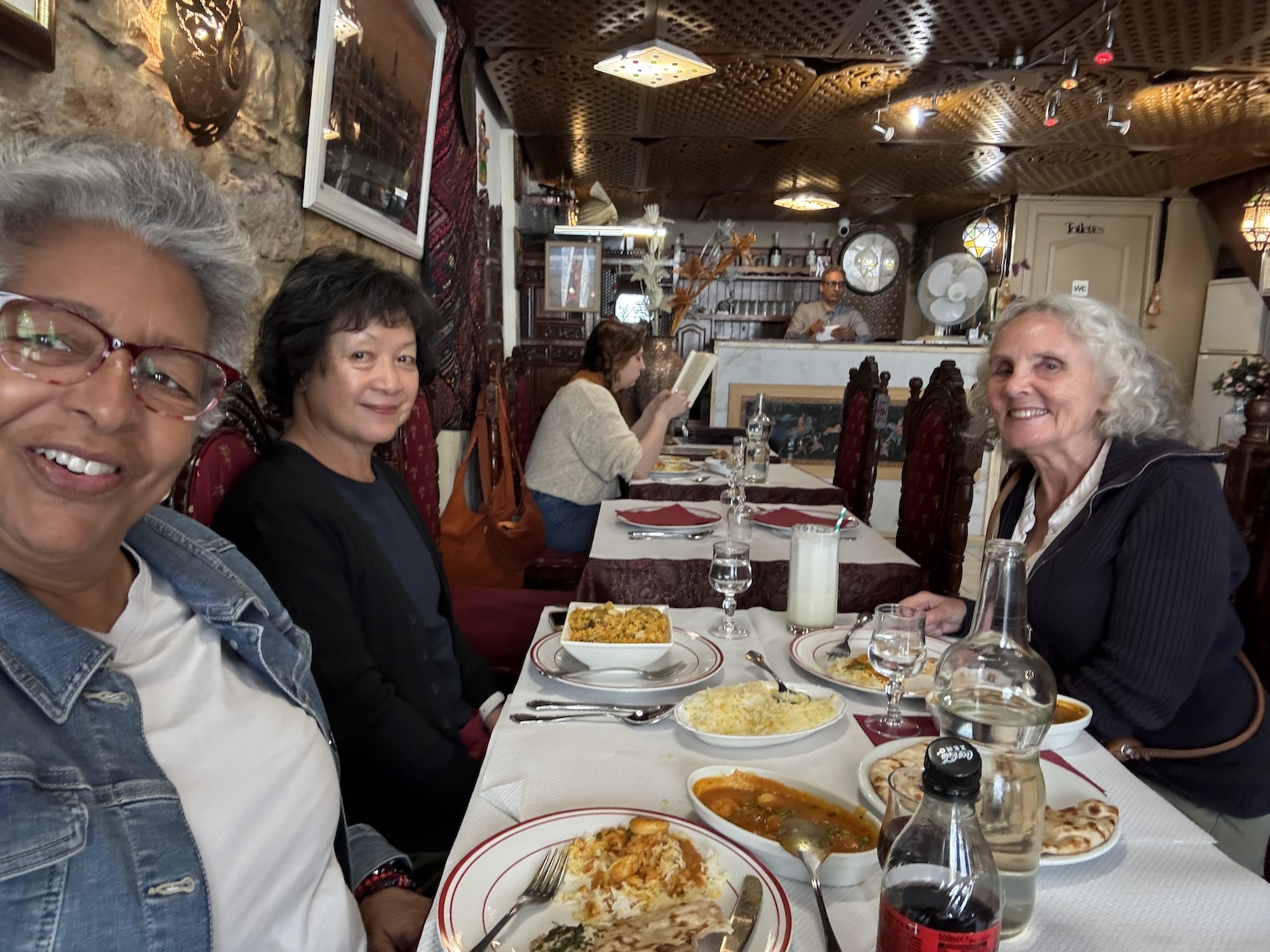
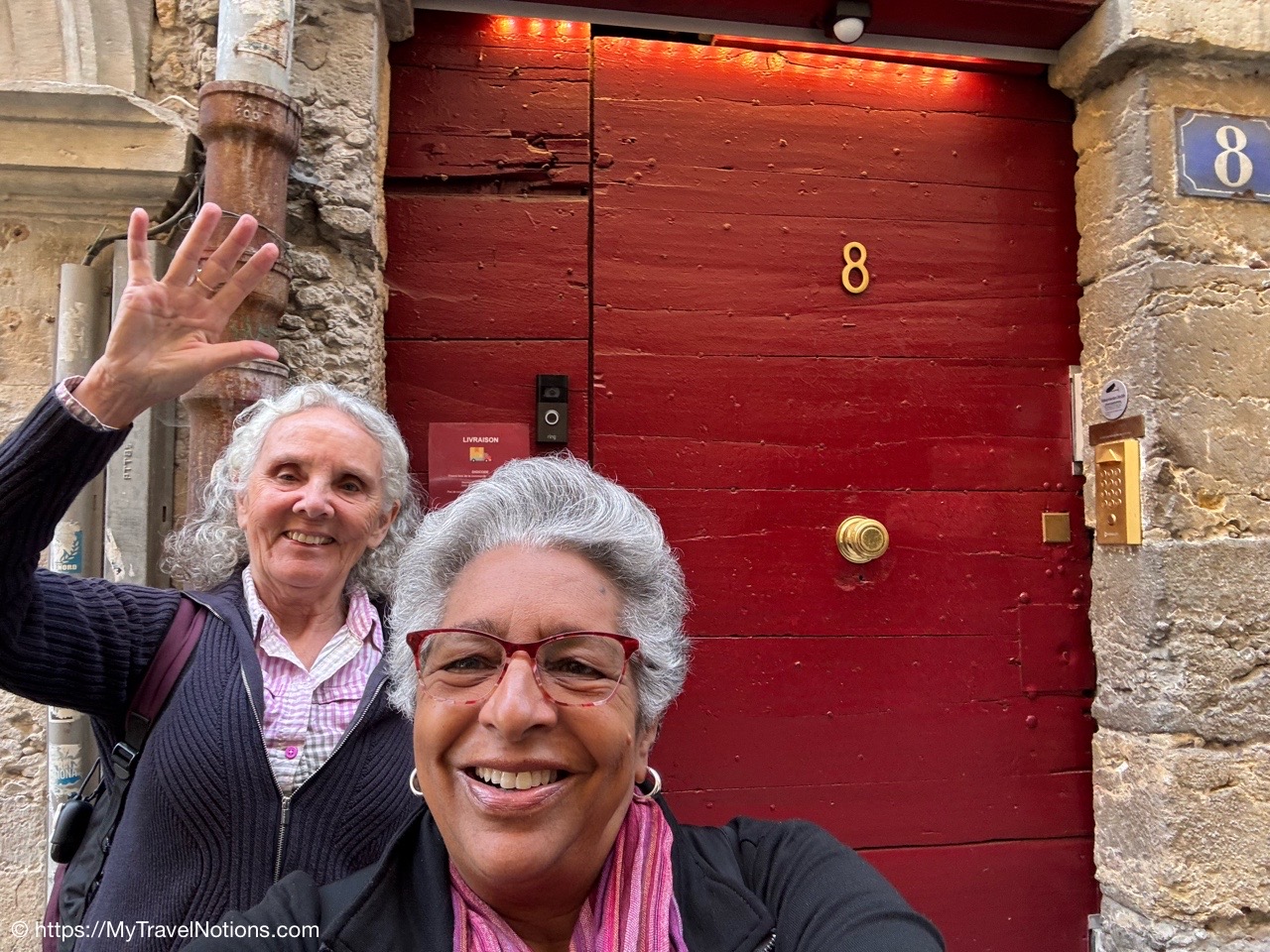
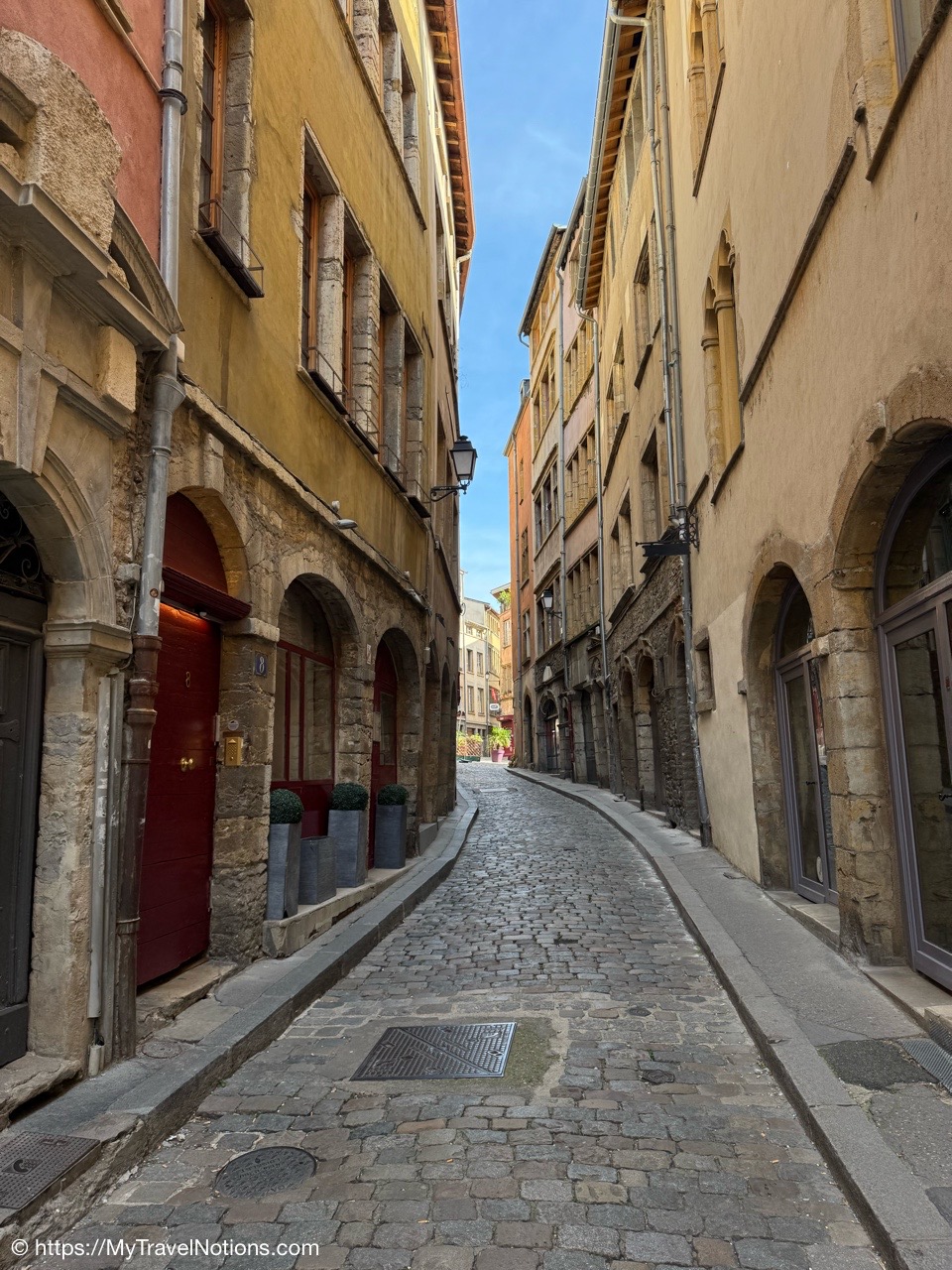
Rosie and I having a good-bye Tuesday lunch with Alice at the New Delhi Restaurant in the the Vieux Lyon or Old Town Lyon just a few minutes from our apartments. Safe travels Alice and thank you again for putting together such a wonderful itinerary for our travels through France. While Alice goes to Rouen, Rosie and I will be going to Paris for three nights before heading back to our respective homes. And to our travelers who joined along the way, John, Tammy, Kara and Janet, wow we had a great time traveling together. (May 27, 2025)Rosie and I saying a morning goodbye to Lyon at the front door of our apartment along the Rue Saint George in the the Vieux Lyon or Old Town Lyon. Paris, here we come. (May 28, 2025)Saying goodbye to our wonderful street along the Rue Saint George in the Vieux Lyon or Old Town Lyon. Paris, here we come. (May 28, 2025)Saying goodbye to our wonderful street along the Rue Saint George in the Vieux Lyon or Old Town Lyon. Paris, here we come. (May 28, 2025)



Thank you for reaching out.