We have arrived at our new home base for the next week or so at the most well-preserved medieval townscape dating back from the 13th to 16th centuries…Sarlat-la-Canéda.
Sarlat is a town in the southwestern region of Nouvelle-Aquitaine and the department of Dordogne. France has 18 regions and 101 departments which includes 13 regions and 96 departments in Metropolitan France plus five overseas regions and five departments. A region (région) is a top-level administrative division, comparable to a state or province in other countries. And, a French department is part of the administrative structure below the regional level, similar to a U.S. county. I have personally had a difficult time understanding the difference between a French region and a French department, so I’m understanding the difference a bit better and I hope you do too.
The Dordogne department is renowned for its prehistoric sites, medieval castles, charming villages, and delicious food, particularly duck, truffles and local wines. Sarlat’s traceable past actually begins in the 9th century with the founding of a Benedictine abbey.
I’ve been to Sarlat before for a couple short days and loved it but this time we are staying 9-days with several day trips.
Here’s to much more to come during our stay in Sarlat and visits through the Dordogne.
Here we are having our first dinner in Sarlat at a restaurant where my order was forgotten but eventually came. And it was descent for fish and chips. Thankfully there are a host of restaurants to choose from in Sarlat. From left: Rosie, me, Alice, John and Tammy. (April 22, 2025)On our close to 3-hour train ride from Bordeaux to Sarlat. (April 22, 2025)A car service picked us up from the Sarlat train station and parked as close as possible to our hotel, La Villa des Consuls but we still had to walk a short distance, with help from our drivers carrying our luggage, through the cobblestone streets to our hotel. (April 22, 2025)Entering the gate to our home for our 8-night stay in Sarlat, La Villa des Consuls along the Rue Jean-Jacques Rousseau while being close to the main street of Rue de la République. (April 22, 2025)The reception and hotel entrance door to our home for our 8-night stay in Sarlat, La Villa des Consuls along the Rue Jean-Jacques Rousseau while being close to the main street of Rue de la République. (April 22, 2025)My room was on the second floor (the U.S.3rd floor) up a wooden spiral staircase at La Villa des Consuls off the Rue de la République in Sarlat. (April 22, 2025)My top floor comfy room during my 8-night stay in Sarlat at La Villa des Consuls off the Rue de la République. The room was rather chilly when I first arrived, but the heater warmed it up. (April 22, 2025)My bathroom, with a separate toilet at the entrance into my room, at La Villa des Consuls off the Rue de la République in Sarlat. (April 22, 2025)The separate toilet, at the doorway entrance of my room at La Villa des Consuls off the Rue de la République in Sarlat. (April 22, 2025)Walking down the alleyway from our hotel, La Villa des Consuls to the main street of Rue de la République in Sarlat. (April 22, 2025)Walking down the alleyway from our hotel, La Villa des Consuls to the main street of Rue de la République in Sarlat. (April 22, 2025)The main street of Rue de la République, just down from our hotel, La Villa des Consuls in Sarlat. (April 22, 2025)Going down the side street from the Rue de la République into the old town of Sarlat which dates from both medieval and renaissance times. (April 22, 2025)Sarlat, a charming village in the Dordogne region of France, filled with 15th and 16th century stone buildings. (April 22, 2025)Sarlat, a charming village in the Dordogne region of France, filled with 15th and 16th century stone buildings. (April 22, 2025)Sarlat, a charming village in the Dordogne region of France, filled with 15th and 16th century stone buildings. (April 22, 2025)Sarlat, a charming village in the Dordogne region of France, filled with 15th and 16th century stone buildings. (April 22, 2025)Pollard trees in a Sarlat parking lot. A pollard has been repeatedly pruned to a specific height, resulting in a characteristic knobby head of branches and foliage. This pruning technique, known as pollarding, is used to control tree size and encourage dense regrowth. (April 22, 2025)
It’s a rainy market day in Sarlat. I picked up a few goodies and enjoyed a quiet day indoors but even on a rainy market day, Sarlat is still buzzing and filled with wonderful charm.
Walking through the Wednesday market in the medieval town center, specifically on Place de la Liberté, of Sarlat. The Wednesday market is generally smaller than the Saturday market, with fewer stalls and more local produce. (April 23, 2025)Walking through the Wednesday market in the medieval town center, specifically on Place de la Liberté, of Sarlat. The Wednesday market is generally smaller than the Saturday market, with fewer stalls and more local produce. (April 23, 2025)Walking through the Wednesday market in the medieval town center, specifically on Place de la Liberté, of Sarlat. The Wednesday market is generally smaller than the Saturday market, with fewer stalls and more local produce. (April 23, 2025)Walking through the Wednesday market in the medieval town center, specifically on Place de la Liberté, of Sarlat. The Wednesday market is generally smaller than the Saturday market, with fewer stalls and more local produce. (April 23, 2025)Walking through the Wednesday market in the medieval town center, specifically on Place de la Liberté, of Sarlat. The Wednesday market is generally smaller than the Saturday market, with fewer stalls and more local produce. (April 23, 2025)Walking through the Wednesday market in the medieval town center, specifically on Place de la Liberté, of Sarlat. The Wednesday market is generally smaller than the Saturday market, with fewer stalls and more local produce. (April 23, 2025)Walking through the Wednesday market in the medieval town center, specifically on Place de la Liberté, of Sarlat. The Wednesday market is generally smaller than the Saturday market, with fewer stalls and more local produce. (April 23, 2025)Walking through the Wednesday market in the medieval town center, specifically on Place de la Liberté, of Sarlat. The Wednesday market is generally smaller than the Saturday market, with fewer stalls and more local produce. (April 23, 2025)
The rain finally stopped and it turned out to be a beautiful day to visit the former home of the incredible Josephine Baker. Just a few miles from our hotel in Sarlat, France, we took a taxi service to the Château des Milandes, Baker’s home for close to 30 years. Today, the château is a museum dedicated to her life and legacy.
Joséphine Baker was an African-American born French dancer, singer and actress.
Born into poverty in St. Louis, Missouri, in 1906, Baker had grown up fatherless and was forced to work at a young age. She had only sporadic schooling and married for the first time at age 13, divorcing a year later. At age 15, she joined a black theater troupe, with which she traveled around the country.
Then at the age of 19, Josephine Baker moved to France with the hope of leaving racial discrimination, persecution for her sexuality and segregation that hindered her American aspirations behind. She quickly became famous for her singing and dancing, including her beloved act where she wore only a skirt made of rubber bananas. In Paris she found a tolerant and accepting environment.
The Château des Milandes that Josephine Baker called home was built in 1489 by François de Caumont on the initiative of his wife Claude de Cardaillac in the town of Castelnaud-la-Chapelle near the Dordogne area of France. In 1940, Josephine Baker rented the château, and moved there after the German invasion of Paris in 1941, using it as a center for resistance activity and in 1947 she purchased the château.
Baker aided the French Resistance during World War II, and also worked with the British Secret Intelligence Service and the US Secret Service, the extent of which didn’t get publicized until 2020 when French documents were unclassified.
In the 1950s, Baker started adopting children from around the world, her “Rainbow Tribe,” with her fourth husband Jo Bouillon and raised them in France at the Château des Milandes.
Even though Baker was attached to France, she also worked with the NAACP and openly supported the American Civil Rights Movement. In 1963, alongside Martin Luther King Jr at the March on Washington, she gave a memorable speech on the freedom that she gained in France, contrasting it with the oppression she had experienced in the United States.
In 1969, the Château des Milandes estate was sold for a fraction of its value. Baker, due to unpaid debts, lost her home. After sending her children away, she was evicted, but she refused to leave the château. However, she was saved by her friend and patron, Princess Grace, the former American actress Grace Kelly, who gave her a place to live and financed a come-back tour.
Baker’s remarkable life ended on April 12, 1975 when she suffered a brain hemorrhage while in Paris just a few days after her performance at the Bobino Theater to celebrate her 50 years in show business. She was buried in Monaco, home of Princess Grace. She’s actually still buried there but samples of soil from the cemetery are symbolically interred in the Panthéon in Paris.
In 2001, Claude de Labarre and her daughter Angélique de Saint-Exupéry, bought the château. Angélique’s mission has been to create the museum as a homage to Josephine Baker. She has done it in the castle the charismatic performer so loved, telling the story of this extraordinary woman’s life.
Me at the former home of U.S. born, Civil Rights activist, French entertainer and resistance activist Josephine Baker, at the Château des Milandes. In 1940, she rented the château, and moved there after the German invasion of Paris in 1941, using it as a center for resistance activity. In 1947 she bought the château and lived there until she evicted from her home in the late 1960s. The château is now a museum dedicated to her life and legacy. Thanks John for the photo. (April 24, 2025)Built in 1489 by François de Caumont, Seigneur de Castelnaud, on the initiative of his wife Claude de Cardaillac, the Château des Milandes, a Renaissance chateau is located in Castelnaud-la-Chapelle, France. It’s a town in the Dordogne area. Josephine Baker rented the chateau in 1940 before purchasing it in 1947 and renovating it. (April 24, 2025)An illustrated map of what the Château des Milandes looks like today. (April 24, 2025)Entering into the Caumont Room in the Château des Milandes. It was once considered the principal room reserved for the lord and his family and where he would carry out all his negotiations. (April 24, 2025)Taking the stairs to reach the interior part of the Château des Milandes. (April 24, 2025)View of one of the tower from the terrace of the Château des Milandes. (April 24, 2025)Views of a portion of the gardens and the Chapel from the terrace of the Château des Milandes. (April 24, 2025)A photo of Josephine Baker from 1940. On June 3, 1906, Baker was born Freda Josephine McDonald in St. Louis, Missouri. Baker was forced to work as a child to help the family survive, cleaning homes and caring for the children of wealthy white families. During periods when work became scarce, Baker would dance on the streets, collecting money from onlookers. At age 15, she joined a black theater troupe, with which she traveled around the country. She also got married for a second time (her first at age 13 ended in a quick divorce) to a railway porter named Willie Baker. She dropped her first name while taking her husband’s last name, thereby becoming known as Josephine Baker. Baker quickly built a reputation as a Vaudeville dancer, a popular 20th century form of entertainment incorporating music and dance. Later, she moved to New York City and became involved with the Harlem Renaissance. Then in 1925, she traveled to Paris, France, a move that allowed her to more than double her salary in New York. (April 24, 2025)The Grand Drawing Room on the 2nd floor level at the Château des Milandes was completely restored during the winter of 2016-2017. It has been refurbished in the same colors and similar wall fabric that Josephine Baker had chosen. The Versailles parquet floor has also undergone a major restoration. Various wardrobe pieces from Baker’s performance days. (April 24, 2025)Josephine Baker in her famous banana costume in 1927. It consisted of a skirt made of 16 artificial bananas, worn as part of her “Danse Sauvage” routine at the Folies Bergère in Paris. The skirt was made of rubber and attached to a belt around her waist. She also wore matching pearl necklaces and other jewelry. This iconic costume, along with her energetic and sensual dancing, made her a sensation in Paris and a symbol of the Jazz Age.Various wardrobe pieces from Josephine Baker’s performance days are exhibited in the Grand Drawing Room on the 2nd floor level of the Château des Milandes. (April 24, 2025)A gown worn by Josephine Baker in a display case on the 2nd floor level of the Château des Milandes. (April 24, 2025)The Morning Room where family members and friends would gather inside the Château des Milandes. (April 24, 2025)The Morning Room leads to this bathroom inside the Château des Milandes. (April 24, 2025)The office area inside the Château des Milandes. This room was used as an office by Josephine Baker’s accountant who dealt with all the accounts from their holiday complex business, founded in 1949. Over the years Château des Milandes developed into a successful tourist business e.g. hotel, recreation park, music-hall and restaurant. (April 24, 2025)A bedroom of one of Josephine Baker’s 12 adopted children she raised in France here at the Château des Milandes. She set about building a family of children of all races and nationalities who would be raised in brotherhood to form the “Rainbow Tribe.” To the right of the window, Josephine embraces her second son Janot. (April 24, 2025)Josephine Baker’s bedroom inside the Château des Milandes. This simply furnished bedroom remains unchanged since Josephine Baker’s departure from the castle. The ebony sculpted furniture was a wedding gift to Josephine and her husband Jo Bouillon from the King of Indonesia. (April 24, 2025)The hallway with family photos and Josephine Baker’s various accommodations leads to French Resistance Room inside the Château des Milandes. (April 24, 2025)The French Resistance Room inside the Château des Milandes. Faithful to her adoptive country, Josephine Baker joined the Resistance, working for Free France’s intelligence service serving as a sub-lieutenant in the Women’s Auxiliary of the Free French Air Force. (April 24, 2025)The French Resistance Room inside the Château des Milandes. Faithful to her adoptive country, Josephine Baker joined the Resistance, working for Free France’s intelligence service serving as a sub-lieutenant in the Women’s Auxiliary of the Free French Air Force. (April 24, 2025)Josephine Baker may have been famous for her risqué performances, but she responded to the start of World War II by becoming a spy for the French Resistance. Known as the “Creole Goddess” of France, Baker used her celebrity to gain access to high-ranking German and Italian officials. Josephine Baker is seen in uniform being awarded the Legion of Honour medal in 1961 by Général Valin. And, in 2021, Baker was admitted into the Pantheon in Paris in 2021, one of only five women to earn a place there. (AFP via Getty Images) For more on Josephine Baker’s heroism in standing up against the Nazi’s, go to: https://miami.consulfrance.org/IMG/pdf/josephine_baker_the_resistant_updated_pdf.pdfA display case in the French Resistance Room inside the Château des Milandes of Josephine Baker’s medals. (April 24, 2025)A display case in the French Resistance Room inside the Château des Milandes of Josephine Baker’s uniform. (April 24, 2025)Some of the honors Josephine Baker received displayed on the hallway wall by the French Resistance Room inside the Château des Milandes. (April 24, 2025)Josephine Baker was also a vocal opponent of segregation and discrimination, often initiating one-woman protests against racial injustice. In 1963, at the age of 57, Baker flew in from France, her adopted homeland, to appear before the largest audience in her career, the 250,000 gathered at the March on Washington. Wearing her uniform of the French Resistance, in which she was active in World War II, she and Daisy Bates were the only women to address the audience. Baker spoke just before Dr. Martin Luther King gave his “I Have a Dream” oration. (April 24, 2025)The kitchen inside the Château des Milandes with photos of her family to the right. (April 24, 2025)The kitchen inside the Château des Milandes. The photograph to the left was taken in 1959 of her adopted son Moise and Josephine’s mother, Carrie Mac Donald. (April 24, 2025)In 1969, the Château des Milandes estate was sold for a fraction of its value. Baker, due to unpaid debts, lost her home. After sending her children away, she was evicted, but she refused to leave the château. The photo of an older, exhausted Josephine, sitting on her kitchen steps, surrounded by a few belongings, are heartbreaking. She was saved by her friend and patron, Princess Grace, the former American actress Grace Kelly, who gave her a place to live and financed a come-back tour in 1975, “Joséphine à Bobino” (Josephine in Bobino.) The shows were sold out months in advance. “La Baker” was finally back in Paris, her beloved city, to commemorate her 50 years in show business. All of Josephine’s friends showed up on opening night. But just a few days after her Bobino performance in Paris, Baker died in her sleep of an apparent cerebral hemorrhage. She was 68. (Photograph by French Press.)Alice and me at the former home of U.S. born, Civil Rights activist, French entertainer and resistance activist Josephine Baker, at the Château des Milandes. In 1940, she rented the château, and moved there after the German invasion of Paris in 1941, using it as a center for resistance activity. In 1947 she bought the château and lived there until she evicted from her home in the late 1960s. The château is now a museum dedicated to her life and legacy. Thanks John for the photo. (April 24, 2025)The private chapel at Château des Milandes, which has undergone extensive restoration. It was built at the beginning of the 1500’s by François de Caumont who built Château des Milandes in 1489. In 1947, the chapel hosted the marriage of Joséphine Baker to Jo Bouillon. Their adopted children were baptized as Catholics in the chapel. (April 24, 2025)The private chapel at Château des Milandes, which has undergone extensive restoration. It was built at the beginning of the 1500’s by François de Caumont who built Château des Milandes in 1489. In 1947, the chapel hosted the marriage of Joséphine Baker to Jo Bouillon. Their adopted children were baptized as Catholics in the chapel. (April 24, 2025)Inside the private chapel at Château des Milandes. (April 24, 2025)Inside the private chapel at Château des Milandes. (April 24, 2025)Inside the private chapel at Château des Milandes. (April 24, 2025)The restored mural inside the private chapel at Château des Milandes. (April 24, 2025)The restored mural inside the private chapel at Château des Milandes. (April 24, 2025)The waterfall garden at the Château des Milandes. (April 24, 2025)The waterfall garden’s “water steps,” at the Château des Milandes. The steps are made of brushed stainless steel and are powered by four pumps to ensure a continuous fall of water like a perpetual wave. (April 24, 2025)The Brassiere at the Château des Milandes where we had lunch before attending the ‘Birds of Prey’ show at the chateau. (April 24, 2025)Inside the Brassiere at the Château des Milandes where we had lunch before attending the ‘Birds of Prey’ show at the chateau. And, it’s where several photos hang of Joséphine Baker. (April 24, 2025)Inside the Brassiere at the Château des Milandes where we had lunch before attending the ‘Birds of Prey’ show at the chateau. And, it’s where several photos hang of Joséphine Baker. (April 24, 2025)Our group selfie in the Brassiere at the Château des Milandes where we had lunch before attending the ‘Birds of Prey’ show at the chateau. From left: John, Alice, Tammy, Rosie and me. (April 24, 2025)My well done French hamburger with fries from the Brassiere at the Château des Milandes. (April 24, 2025)The bird cages at the Château des Milandes. A daily “Birds of Prey Show” is performed daily where a dozen or so birds are presented by falconers. (April 24, 2025)The Lanner Falcons at the Château des Milandes. (April 24, 2025)The Ural Owl at the Château des Milandes. (April 24, 2025)The Great Horned Owl at the Château des Milandes. (April 24, 2025)Walking towards the Château des Milandes north facade where the “Birds of Prey Show” takes place. (April 24, 2025)The “Birds of Prey Show” at the Château des Milandes. Unfortunately the woman falconer only spoke French so I didn’t understand a thing she was saying. But the birds in flight were beautiful. (April 24, 2025)The falconer at the “Birds of Prey Show” on the grounds of the Château des Milandes. (April 24, 2025)The falconer holding a beautiful Owl at the “Birds of Prey Show” on the grounds of the Château des Milandes. (April 24, 2025)The Bald Eagle showing off its beautiful wing span at the “Birds of Prey Show” on the grounds of the Château des Milandes. The Bald Eagle was designated as the national emblem by the U.S. Congress in 1782. (April 24, 2025)
Finally, after several days of rain, cool temperatures and cloudy, gray skies, it was asunny and warm day to explore Sarlat on a self-walking tour. As modern history has largely passed it by, Sarlat remains impeccably well-preserved and is considered as one of France’s best examples of a 14th century town. Located in the heart of the Dordogne, Sarlat is the capital of the Périgord Noir and is famous for its culinary delights including Foie gras, duck, truffles, cheese and walnut wine.
Sarlat-la-Canéda Sarlat and La Canéda were distinct towns until merged into one commune in March 1965.
The Tourist Information Center in Sarlat provides both a pamphlet, “The Keys to Sarlat” witha step by step written guide, map and an audio of the historical places in Sarlat.
This medieval town actually developed around a large Benedictine abbey of Carolingian origin. The medieval abbey appears in records as early as 1081 and was dedicated to Saint Sacerdos by 1318. Sarlat and the abbey were one of the few regions that was not raided by the Vikings.
Sarlat was a prosperous town throughout the 16, 17 and 18 centuries but after that, too far removed from the main stream, like the sleeping beauty, it fell into lethargy for nearly 150 years, to wake up again only some thirty years ago when road transport supplanted river and railroad as means of communication.
In 1962 Sarlat became the trial town of a new law called the ‘loi Malraux’ which set about to protect the patrimony of French towns. Money was provided to restore Sarlat’s fine buildings and it now has the highest density of ‘Historic Monuments’ and ‘Classified Monuments’ of any town in France.
Come walk with me through the medieval town of Sarlat.
A group selfie in front of the Hôtel de Ville, now the Town Hall, on the corner of Rue Fénélon and Place de la Liberté which was built in the 17th century and replaced the old consul building. From left, Tammy, Rosie, me, Alice and John. Note: In French “hôtel” means a mansion, palace or large house. (April 25, 2025)The Place du Peyrou in Sarlat. (April 25, 2025)The Place du Peyrou in Sarlat. (April 25, 2025)Walking from the Place du Peyrou in Sarlat. (April 25, 2025)The Saint-Sacerdos Cathedral in Sarlat’s Place du Peyrou. In 1317, the Pope at Avignon, Jean XXII decided that the abbey at Sarlat would become a bishop’s diocese: the abbey church therefore became a cathedral. The dilapidated Romanesque abbey church was destroyed leaving only the bell tower and work began on this new Gothic cathedral. Construction was spread over several centuries due to a shortage of funds: the pentagonal chancel dates from early 16th century, and the nave wasn’t finished until 1865. (April 25, 2025)A view inside the Saint-Sacerdos Cathedral in Sarlat. (April 25, 2025)The side chapel area inside the Saint-Sacerdos Cathedral in Sarlat.A side view, with the pulpit, inside the Saint-Sacerdos Cathedral in Sarlat. (April 25, 2025)A choir area behind the high altar inside the Saint-Sacerdos Cathedral in Sarlat’s Place du Peyrou. (April 25, 2025)The pipe organ inside the Saint-Sacerdos Cathedral in Sarlat’s Place du Peyrou. (April 25, 2025)The medieval courtyard of the Cour des Fontaines, a spring that attracted the monks who founded the abbey now the Saint-Sacerdos Cathedral in Sarlat. (April 25, 2025)The Cour des Fontaines a spring that attracted the monks who founded the abbey now the Saint-Sacerdos Cathedral in Sarlat. (April 25, 2025)The Chapelle Saint-Benoit in Sarlat was the heart of the ancient abbey from the 12th century. (April 25, 2025)The Chapelle Saint-Benoit in Sarlat was the heart of the ancient abbey from the 12th century. (April 25, 2025)A passage leading from Chapelle Saint-Benoit in Sarlat to another passage with views of the Lanterne des Morts in Sarlat. (April 25, 2025)The tombs on the ground at Jardin des Enfeus are the only remains of the first cemetery in Sarlat behind the situation behind the Saint-Sacerdos Cathedral. (April 25, 2025)The tombs on the ground at Jardin des Enfeus are the only remains of the first cemetery in Sarlat behind the situation behind the Saint-Sacerdos Cathedral. (April 25, 2025)The tombs on the ground at Jardin des Enfeus are the only remains of the first cemetery in Sarlat behind the situation behind the Saint-Sacerdos Cathedral. (April 25, 2025)The Lanterne des Morts in Sarlat is a cylindrical tower which has been called the Lantern of the Dead since the 17th century. It is topped by an elongated conical cupola with three toric bands. However the origins of the tower have always been a mystery. It was built around 1170 which gave rise to the theory that it was built to commemorate the visit of Saint Bernard to Sarlat in 1147. (April 25, 2025)The Lanterne des Morts in Sarlat is a cylindrical tower which has been called the Lantern of the Dead since the 17th century. It is topped by an elongated conical cupola with three toric bands. However the origins of the tower have always been a mystery. It was built around 1170 which gave rise to the theory that it was built to commemorate the visit of Saint Bernard to Sarlat in 1147. (April 25, 2025)Continuing our walk from the Lanterne des Morts in Sarlat. (April 25, 2025)Walking down the Rue Landry in Sarlat towards the Présidial, a royal system of justice set up in 1552 and established by royal edict in 1640 and was used until the French Revolution. (April 25, 2025)Me at the Présidial, a royal system of justice set up in 1552 and established by royal edict in 1640 and was used until the French Revolution. The building, which dates from around 1620 was modified in the 18th century to include a grand stairway lit by a lantern. There were cells in the basement where prisoners were held until they were transferred to prison. The Présidial, now a restaurant, is one of very few judicial buildings to have survived from the era of the French monarchy. (April 25, 2025)The Présidial was a royal system of justice set up in 1552, and established by royal edict in 1640 and was used until the French Revolution. The building, which dates from around 1620 was modified in the 18th century to include a grand stairway lit by a lantern. There were cells in the basement where prisoners were held until they were transferred to prison. The Présidial, now a restaurant, is one of very few judicial buildings to have survived from the era of the French monarchy. (April 25, 2025)Walking through Sarlat. (April 25, 2025)The Hôtel de Grézel on Rue de la Salamandre in Sarlat was one of the first buildings to have a tower marking it as a noble’s house in the 15th century. After the Hundred Years War, new noble families showed off their social standing by creating urban palaces. This is a particularly good example: a polygonal tower with a staircase was built on to an older building in the 15th century with a Flamboyant Gothic style ogee-arched doorway decorated with a central motif decorated with cabbage leaves. Note: In French “hôtel” means a mansion, palace or large house.(April 25, 2025)The front door entrance to the 15th century Hôtel de Grézel in Sarlat with its Flamboyant Gothic style arched doorway decorated with a central motif of cabbage leaves. Note: In French “hôtel” means a mansion, palace or large house.(April 25, 2025)The center of Sarlat’s old town consists of impeccably restored stone buildings and is largely car-free. (April 25, 2025)The center of Sarlat’s old town consists of impeccably restored stone buildings and is largely car-free. (April 25, 2025)Walking through the Rue de Salamandre passageway from the Hôtel de Grézel to the Place de la Liberté and Hôtel de Ville in Sarlat. (April 25, 2025)The Hôtel de Ville, now the Town Hall, in Sarlat’s Place de la Liberté. Built in the 17th century this building replaced the old consul building. The building is topped by a steeply sloped slate roof. During the Revolution the town council was transferred to the old Bishop’s Palace. The building was then turned into a market on the ground floor and a club upstairs. It was restored in 1899 and inaugurated by the Deputy-Mayor of Sarlat, Pierre Sarrazin, who turned it back into a Town Hall in 1900. Note: In French “hôtel” means a mansion, palace or large house.(April 25, 2025)The Hôtel de Ville, now the Town Hall, in Sarlat’s Place de la Liberté. (April 25, 2025)The Hôtel de Ville, now the Town Hall, in Sarlat’s Place de la Liberté. (April 25, 2025)The big S outside the front door of the Hôtel de Ville, now the Town Hall, in Sarlat’s Place de la Liberté. (April 25, 2025)The Badaud statue of a young man by Gerard Auliac sitting on a wall overlooking the Place de la Liberté in Sarlat. (April 25, 2025)The Badaud statue of a young man by Gerard Auliac sitting on a wall overlooking the Place de la Liberté in Sarlat. (April 25, 2025)Looking down into the Place de la Liberté, the center of old town Sarlat. (April 25, 2025)The Place du Marché-aux-Oies where the Manoir de Gisson and the Statues des Trois Oies are located in Sarlat. The Gisson family, who owed their position to successful careers in the Présidial became owners of this building in the 13th century. The building is one of the oldest in Sarlat. And, the life-size statue of three bronze geese stand as an important culinary symbol of the region and where the former Goose Market Square existed where live geese were once sold. (April 25, 2025)Alice standing by the Statues des Trois Oies in Sarlat’s place du Marché aux Oies (Goose Market Square), one of the most important culinary symbols of this region. The life-size statue of three bronze geese, in the former Goose Market Square, is where live geese were once sold. (April 25, 2025)The Panaramic Lift of Sarlat is the former Sainte-Marie church tower. (April 25, 2025)We stopped along out “Keys to Sarlat” self walking tour to have lunch at a pretty delicious pizza joint, La Romane, before continuing on with our walk. (April 25, 2025)Still following “The Keys to Sarlat” walking tour from the Tourist Information Center, we walk through the narrow walkway through Rue Jean-Jacques Rousseau, pass this closed Chapel of the White Penitents from the 17th Century, and just across the way from our hotel, La Villa des Consuls in Sarlat. (April 25, 2025)Walking along the pedestrian street of Ru Jean-Jacques Rousseau in Sarlat. (April 25, 2025)Walking along the pedestrian street of Ru Jean-Jacques Rousseau in Sarlat. (April 25, 2025)Walking along the pedestrian street of Ru Jean-Jacques Rousseau in Sarlat. (April 25, 2025)Walking along the pedestrian street of Ru Jean-Jacques Rousseau in Sarlat. (April 25, 2025)At this 3-way corner along Rue Jean-Jacques Rousseau is the 17th century Abbey Sainte-Claire, the former Convent of the Poor Clares. Tammy, Alice and John reading about how the nuns, from “The Keys to Sarlat”, who came to Sarlat in 1621 to teach young girls. The former convent, now a six unit apartment building, is made up of two buildings linked by a big staircase. (April 25, 2025)At this 3-way corner along Rue Jean-Jacques Rousseau in Sarlat is the 17th century Abbey Sainte-Claire, the former Convent of the Poor Clares. (April 25, 2025)Walking along the narrow pedestrian street of Rue du Siège in Sarlat. (April 25, 2025)Walking along the narrow pedestrian street of Rue du Siège in Sarlat. (April 25, 2025)The Hôtel de Cerval, built by the Marqueyssac family in the 17th century and passed to the Cerval family in the 18th century in Sarlat. Note: In French “hôtel” means a mansion, palace or large house. (April 25, 2025)Back on the main street traffic and pedestrian street with shops and all kinds of eateries, the of Rue de la République. (April 22, 2025)Back on the main street traffic and pedestrian street with shops and all kinds of eateries, the of Rue de la République. (April 22, 2025)A busy pedestrian side street off the main street of the Rue de la République in Sarlat. (April 22, 2025)A busy pedestrian side street off the main street of the Rue de la République in Sarlat. (April 22, 2025)We ended our self walking tour of “The Keys to Sarlat” here at the Hôtel de Vienne. Jean de Vienne was steward to King Henry IV in 1594. A true urban palace with its Renaissance fireplace and monumental staircase. Note: In French “hôtel” means a mansion, palace or large house. (April 25, 2025)After our group self-walking tour, I decided to visit the Manoir de Gisson, in the heart of Sarlat and dating from the 13th century, to get a taste of how the bourgeoisie lived. (April 25, 2025)The entrance to the Manoir de Gisson in the heart of Sarlat. Formed by two constructions of different architecture, linked with each other by a staircase inside a hexagonal tower, it dates back to the 13th century. It is one of the oldest buildings in Sarlat. Thanks to many archives, marriage certificates and inventories, it is known that the “de Gisson” family lived in this mansion of 15 rooms. In this family, since the reign of Charles IX (1560-1574), all first-born sons of the family had a position in the bailiff’s court as royal notaries, lawyers, but specially consul of the town and judicial member of the bailiff’s court. They are also professional military men, captains of the cavalry and knights in the royal order of Saint Louis. For this distinction one had to be of nobility, of catholic faith, having served as an officer for 20 years and having taken the oath to the king and to God. (April 25, 2025)A map of the Manoir de Gisson in the heart of Sarlat. Formed by two constructions of different architectures, it is linked with each other by a staircase inside a hexagonal tower. (April 25, 2025)The kitchen of the Manoir de Gisson in the heart of Sarlat. Recently refurbished, this very old kitchen has a nice stone fireplace, with a little oven inside for biscuits. The movable strut inside the fireplace, also called “hearth maid”, made it possible to suspend cauldrons above the fire. In the window frame there’s a remarkable stone carved sink from the Middle Ages with its two drain gutters. (April 25, 2025)The kitchen of the Manoir de Gisson in the heart of Sarlat. Recently refurbished, this very old kitchen has a nice stone fireplace, with a little oven inside for biscuits. The movable strut inside the fireplace, also called “hearth maid”, made it possible to suspend cauldrons above the fire. In the window frame there’s a remarkable stone carved sink from the Middle Ages with its two drain gutters. (April 25, 2025)The Hall of Honor room inside the Manoir de Gisson in the heart of Sarlat. Here in the Sarlat area walnut is king. The furniture, woodwork, chairs and the mantelpiece have all been manufactured from this noble wood. The garments are from a special exhibit from April to mid-November 2025 called “Gold and Silk, Ornaments of Power in the Renaissance”. This exhibit provides a glimpse into the aristocratic fashion during the Renaissance, between 1494 and 1610. (April 25, 2025)The Hall of Honor room inside the Manoir de Gisson in the heart of Sarlat. Here in the Sarlat area walnut is king. The furniture, woodwork, chairs and the mantelpiece have all been manufactured from this noble wood. The garments are from a special exhibit from April to mid-November 2025 called “Gold and Silk, Ornaments of Power in the Renaissance”. This exhibit provides a glimpse into the aristocratic fashion during the Renaissance, between 1494 and 1610. (April 25, 2025)The library in the Hall of Honor room inside the Manoir de Gisson in the heart of Sarlat. The possession of books in houses of nobility was an indication of a taste for science and sometimes it prevails over the desire to show off. They are meanwhile a sure value, a sign of wealth like silverware, jewels. paintings, tapestry, plates and dishes, equipment (horses, carriages, hounds). The garments are from a special exhibit from April to mid-November 2025 called “Gold and Silk, Ornaments of Power in the Renaissance”. This exhibit provides a glimpse into the aristocratic fashion during the Renaissance, between 1494 and 1610. (April 25, 2025)The fireplace inside the Manoir de Gisson in the heart of Sarlat. The furniture, woodwork, chairs and the mantelpiece have all been manufactured from this noble wood. (April 25, 2025)A view of Sarlat’s town hall from inside the Manoir de Gisson in the heart of Sarlat. (April 25, 2025)The Travel Buffet inside the Manoir de Gisson in Sarlat was used by those who had a summer residence and a winter residence, like the Gisson family. They took certain pieces of furniture with them during their stay. That is the case with this travel buffet, in Renaissance style. It consists of two separate parts, one on top of the other, with solid handles on either side in wrought iron to displace them easily. (April 25, 2025)The spiral stairs of the 15th century hexagonal tower inside the Manoir de Gisson links two older houses on each side of it. In medieval times, 22 towers were built over time, some round, some hexagonal, but the oldest ones were square. Generally they hold a staircase inside, as in this case, to reach the different floors of the dwelling. (April 25, 2025)The Grand Salon inside the Manoir de Gisson in the heart of Sarlat was part of the private apartments of the Gisson family. The room has been used in several films for the furniture’s original woodwork, the parquet floor, the paintings and the celling created in the 18th century. (April 25, 2025)Views of Sarlat’s former Saint-Marie church tower, now the Panaramic Lift of Sarlat from inside the Manoir de Gisson. (April 25, 2025)The Boudoir of the Madame inside the Manoir de Gisson in the heart of Sarlat is where the Madame liked to read and receive her friends while she was doing some needlework. (April 25, 2025)The Boudoir of the Madame inside the Manoir de Gisson in the heart of Sarlat is where the Madame liked to read and receive her friends while she was doing some needlework. (April 25, 2025)The Master Bedroom inside the Manoir de Gisson in the heart of Sarlat. (April 25, 2025)The Master Bedroom inside the Manoir de Gisson in the heart of Sarlat. (April 25, 2025)The staircase leading down to the Exposition Hall and the Cabinets of Curiosities inside the Manoir de Gisson in the heart of Sarlat. (April 25, 2025)The Cabinets of Curiosities inside the Manoir de Gisson in the heart of Sarlat. Wealthy aristocrats, eager to acquire oddities to impress those around them, would purchase these items from traveling hawkers. A fashion was born: The Cabinets of Curiosities. They flourished in all noble houses, becoming the first museums in the world. (April 25, 2025)The Cabinets of Curiosities inside the Manoir de Gisson in the heart of Sarlat. Wealthy aristocrats, eager to acquire oddities to impress those around them, would purchase these items from traveling hawkers. A fashion was born: The Cabinets of Curiosities. They flourished in all noble houses, becoming the first museums in the world. (April 25, 2025)The Cabinets of Curiosities inside the Manoir de Gisson in the heart of Sarlat. Wealthy aristocrats, eager to acquire oddities to impress those around them, would purchase these items from traveling hawkers. A fashion was born: The Cabinets of Curiosities. They flourished in all noble houses, becoming the first museums in the world. (April 25, 2025)The Cabinets of Curiosities inside the Manoir de Gisson in the heart of Sarlat. Wealthy aristocrats, eager to acquire oddities to impress those around them, would purchase these items from traveling hawkers. A fashion was born: The Cabinets of Curiosities. They flourished in all noble houses, becoming the first museums in the world. (April 25, 2025)Our self-guided walking tour of Sarlat and my walk through the 13th century Manoir de Gisson came to a close with a great group dinner at a delicious Indian food restaurant, Chez Maanija. From left: Rosie, Tammy, John, Alice and me. (April 25, 2025)
The weather forecast for our “Sarlat Market & Dordogne Culinary Tour : A Taste of Local Flavors” was no rain. That proved to be not true but the tastings opened my pallete to foie gras, duck and pork cooked in duck fat.
The food tasting tour was also during Sarlat’s vibrantSaturday Morning Market where food products of all kinds are sold around the along the Place de la Liberté with a variety of crafts along the Rue de la République.
Come enjoy 800-year-old vibrant market, our private food tasting tour and the beauty of medieval Sarlat.
Me dressed up in my rain gear for Sarlat’s Saturday market. The great food stalls in the old town center of the Place de la Liberté selling local produce. (April 26, 2025)Our first stop along the Main Street of Sarlat, the Rue de la République, was for the cheese tasting at Chez Pierrô. (April 26, 2025)Inside the cheese store of Chez Pierrô, the first stop of our food tasting market tour located along the Rue de la République in Sarlat. Cheese, to the French is considered to be a symbol of Frenchness. (April 26, 2025)Inside the cheese store of Chez Pierrô, the first stop of our food tasting market tour located along the Rue de la République in Sarlat. (April 26, 2025)Our cheese tasting plate Inside the cheese store of Chez Pierrô, the first stop of our food tasting market tour located along the Rue de la République in Sarlat. From left: Rocamadour goat cheese with walnuts, traditional from the Sarlat region; Organic cow’s cheese made near Bergerac; Brie de Meaux, cow cheese from the Paris region and a mixed Tomme cheese, half sheep and half cow from the Pyrenees but aged in Sarlat. (April 26, 2025)The Saturday market in Sarlat where seasonal, organic and regional products are sold. (April 26, 2025)Walking to our second food tasting stop in Sarlat. (April 26, 2025)Vendors lined up in front of the Cathedral of Saint-Sacerdos during Sarlat’s Saturday Morning Food Market. (April 26, 2025)Walking through Sarlat’s Saturday Morning Food Market. (April 26, 2025)Le Cellier du Périgord, by the Hôtel de Vienne, the second stop of our food tasting tour in Sarlat. (April 26, 2025)Inside the Le Cellier du Périgord, the second stop of our food tasting tour in Sarlat. (April 26, 2025)Inside the Le Cellier du Périgord, the second stop of our food tasting tour in Sarlat, we had three delicious samples of local food. From left: Foie gras, Pork confit cooked in duck fat and walnut cheese. Foie gras, made of duck or goose liver has a rich, buttery and delicate taste. (April 26, 2025)Foie gras, made of duck or goose liver is French for ‘fat liver’ and to my surprise was actually delicious. I’ll try most things during a food tasting tour at the Le Cellier du Périgord, which I did here and actually enjoyed the taste. (April 26, 2025)Although I enjoyed the foie gras, this pork confit with duck fat turned out to be my favorite at the Le Cellier du Périgord, the second stop of our food tasting tour in Sarlat. (April 26, 2025)Our food and Sarlat history walking tour guide, Martin, at our second food tasting of Le Cellier du Périgord letting us know about the ingredients in the walnut cheese. He shared plenty of stories about Sarlat. (April 26, 2025)Duck souvenirs for sale in Sarlat as we walk to our last food tour stop. (April 26, 2025)Stopping to take in a little historic about the old 17th century Hôtel Dieu which was renovated in 2014 into a restaurant. (April 26, 2025)The fresh seasonal fruits and vegetables at Sarlat’s Saturday Morning Food Market in the Place de la Liberté. (April 26, 2025)The fresh seasonal fruits and vegetables at Sarlat’s Saturday Morning Food Market in the Place de la Liberté. (April 26, 2025)Even though it was raining people were still out shopping during Sarlat’s Saturday Morning Food Market in the Place de la Liberté. (April 26, 2025)Even though it was raining people were still out shopping during Sarlat’s Saturday Morning Food Market in the Place de la Liberté. (April 26, 2025)Walking through Sarlat’s Saturday Morning Food to the third and last treat of our food walking tour. (April 26, 2025)Walking through Sarlat’s Saturday Morning Food to the third and last treat of our food walking tour. (April 26, 2025)Walking through Sarlat’s Saturday Morning Food to the third and last treat of our food walking tour. (April 26, 2025)Walking through Sarlat’s Saturday Morning Food to the third and last treat of our food walking tour. We all bought a small reusable packet of truffle salt to take home but I plan to use mine while I’m traveling through France. (April 26, 2025)The Les Toques de la Noix, along the Rue de la République in Sarlat, was our the last stop of our food walking tour. (April 26, 2025)Sweet treat at the Les Toques de la Noix, along the Rue de la République in Sarlat, for the last treats of our food tasting tour. (April 26, 2025)Our three sweet treats at the Les Toques de la Noix, along the Rue de la République in Sarlat, for the last treats of our food tasting tour. From left: Hazelnut flour and walnut cake; walnut biscuits and walnut pie with caramel and walnuts. (April 26, 2025)
It turned out to be a beautiful day trip from Sarlat to hop around the villages of the Dordogne River. We began in the pilgrimage village of Rocamadour, went on to Domme where we had lunch, then took a walk down through Beynac-et-Cazenac and a short boat ride along the Dordogne in La Roque-Gageac.
Let’s enjoy a beautiful day along the villages of the Dordogne Valley.
With the Dordogne River as our backdrop we’re in the last village of our sailing village tour, LaRoque-Gageac. From left: Tammy, Benoit our wonderful village guide and driver, me, Alice, John and Rosie. (April 27, 2025)We began our village tour with these gorgeous views of Rocamadour set in a gorge above a tributary of the Dordogne River. A UNESCO World Heritage Site, Rocamadour has been an important religious site along the St . James’ Way pilgrimage route to Santiago de Compostela. (April 27, 2025)The three levels of the village of Rocamadour which dates from the Middle Ages and reflects the three orders of medieval society: the knights above, linked to religious clerics in the middle and the lay workers down near the river. (April 27, 2025)The first fortified gate entering in the into the medieval village of Rocamandour. The gates were part of a defensive system put in place from the 13th century onwards, designed primarily to protect the Sanctuary found above the village area and its riches, which were highly sought-after by robbers. (April 27, 2025)The long village street of Rocamadour that leads to the Holy Way stairs and the Sanctuary. Finally, on the higher stretches, the ramparts provide protection from any attack from the plateau. However, with its kilometre-long street, Rocamadour was impossible to defend against attack! The village was not built to withstand a siege, but as a place to welcome pilgrims. Consequently it has been looted on several occasions. (April 27, 2025)Me at the second gate of the long medieval street of Rocamadour. A UNESCO Heritage Site, Rocamadour has been an important religious site along the St James’ Way pilgrimage route. (April 27, 2025)Views of the Sanctuary, also known as the Religious City of Rocamadour, built against the cliffs high above the medieval village. The Sanctuary, at the top of the cliff with more than 200 steps to climb, is composed of a cluster of seven chapels and churches. (April 27, 2025)Views of the Sanctuary, also known as the Religious City of Rocamadour, built against the cliffs high above the medieval village. (April 27, 2025)Walking up the Holy Way of more than 200 steps to the Sanctuary, at the top of the cliff, where a cluster of seven chapels and churches are located. The chief chapel is the pilgrimage Chapel of Notre Dame (rebuilt in its present configuration from 1479), containing the wooden Black Madonna reputed to have been carved by Saint Amadour himself. Saint Amadour is the legendary founder of the shrine of Our Lady of Rocamadour, the Black Madonna. In 1166, an ancient tomb containing an unidentified body was found at Rocamadour near the entrance to the Notre-Dame chapel. The legend of Amadour began to develop about this time. (April 27, 2025)A view of the Rocamadour village below as I make my way up the 200 plus Holy Way stairs to the top of the cliff where a cluster of seven chapels and churches are located with stunning views over the village and the valley. (April 27, 2025)A much-frequented pilgrimage site, I continue to make my ascent to the Rocamadour Sanctuary to the top of the cliff where a cluster of seven chapels and churches are located. (April 27, 2025)Looking up the cliff side as I continue to make my ascent to the Rocamadour Sanctuary to the top of the cliff where a cluster of seven chapels and churches are located. (April 27, 2025)And, yes, more steps up to the Rocamadour Sanctuary where a cluster of seven chapels and churches are located. This is a pilgrimage trail of more than 200 steps that ends in the Chapelle Notre-Dame, where the Black Madonna statue awaits visitors hoping for a miracle, a cure or protection. (April 27, 2025)Made it up the more than 200 steps to the Rocamadour Sanctuary at the top of the cliffside made up of a group of beautiful buildings in a cluster of seven chapels and churches. (April 27, 2025)The Rocamadour Sanctuary at the top of the cliffside made up of a group of beautiful buildings in a cluster of seven chapels and churches. (April 27, 2025)The baptismal chapel of the Rocamadour Sanctuary where a baby is being baptized. The Sanctuary is made up of a group of beautiful buildings in a cluster halfway up the rock face and with stunning views over the village and the valley. (April 27, 2025)Heading up even more stairs to the Chapelle of Notre-Dame in the Rocamadour Sanctuary where the venerated Black Madonna statue awaits visitors hoping for a miracle, a cure or protection. The monumental medieval pilgrimage site on the side of a cliff is where the pilgrimage ends in the Chapelle Notre-Dame. (April 27, 2025)Just next to the entrance of the Chapelle of Notre-Dame in the Rocamadour Sanctuary where the Black Madonna statue is located is also this crypt where a body was found in 1166, said to be the remains of the disciple Zaccheus while others believe it belongs to Saint Amadour, a hermit who lived inside the caves. In any case, the miracle propelled Rocamadour to become one of the four pillars of Christendom in the Middle-Ages, on a par with Jerusalem, Compostela and Rome. A black wooden statue, venerated as the Black Madonna, was found alongside the body and has been linked to many subsequent miracles. (April 27, 2025)The entrance to the Chapelle of Notre Dame in Rocamadour Sanctuary where the Black Madonna statue awaits visitors hoping for a miracle, a cure or protection. (April 27, 2025)Inside the Chapelle of Notre-Dame in the Rocamadour Sanctuary where the Black Madonna statue is venerated for her miracles especially for protecting sailors in times of peril. (April 27, 2025)The Black Madonna at the altar inside the Chapelle of Notre-Dame at the Rocamadour Sanctuary as a baby is being baptized. The Madonna is dressed and both she and the baby Jesus have crowns on their heads. (April 27, 2025)A close-up of the Black Madonna inside the Chapelle of Notre-Dame at the Rocamadour Sanctuary. She is dressed and both she and the baby Jesus have crowns on their heads. (April 27, 2025)Inside the Chapelle of Notre-Dame in the Rocamadour Sanctuary where the Black Madonna statue is venerated for her miracles especially for protecting sailors in times of peril. (April 27, 2025)Lighting candles in prayer inside the Chapelle of Notre-Dame in the Rocamadour Sanctuary where the Black Madonna statue is venerated for her miracles. (April 27, 2025)A postcard photo of the venerated, Our Lady of Rocamadour, the statue of the Black Madonna that can be seen inside the Chapelle of Notre-Dame in the Rocamadour Sanctuary. The wooden Black Madonna is reputed to have been carved by Saint Amadour and was said to have been found alongside his body in the crypt located next to the Chapelle of Notre-Dame. Thousands of pilgrims have since made the journey to worship the Black Madonna statue of Rocamadour. I love this definition of the Black Madonna from “The story of the Black Madonnas” by Ferren Gipson: “Irrespective of their origin, the reverence of a Holy Mother with dark skin lifts black and brown women up within Christian iconology, connecting them to the Virgin’s symbolism of maternal sacrifice and love.” (April 27, 2025)The bottom entrance to the Basilique Saint Sauveur above the staircase, at the Rocamadour Sanctuary was where mass was being held so we could not go in. But we did enter the Saint Amadour crypt chapel, which is listed as a UNESCO World Heritage Site, located beneath the Basilique Saint Sauveur. The crypt chapel dates from the 12th century and has a very simple design, with a single nave and no altar or transept. (April 27, 2025)Inside the Saint Amadour crypt chapel, which is listed as a UNESCO World Heritage Site, located beneath the Basilique Saint Sauveur. The crypt chapel dates from the 12th century and has a very simple design, with a single nave and no altar or transept. (April 27, 2025)The altar inside the Saint Amadour crypt chapel, which is listed as a UNESCO World Heritage Site, located beneath the Basilique Saint Sauveur. The crypt chapel dates from the 12th century and has a very simple design, with a single nave. (April 27, 2025)The altar inside the Saint Amadour crypt chapel, which is listed as a UNESCO World Heritage Site, located beneath the Basilique Saint Sauveur. The crypt chapel dates from the 12th century and has a very simple design, with a single nave. (April 27, 2025)Exiting the Saint Amadour crypt chapel, which is listed as a UNESCO World Heritage Site, located beneath the Basilique Saint Sauveur. The crypt chapel dates from the 12th century and has a very simple design, with a single nave. (April 27, 2025)Leaving Rocamadour for Domme, our next village along the Dordogne River. (April 27, 2025)Passing the beautiful Chateau Belcastel on our drive across the French countryside to Domme. (April 27, 2025)A close-up of the beautiful Chateau Belcastel on our drive across the French countryside to Domme. (April 27, 2025)Crossing a bridge along the Dordogne River to the village of Domme. (April 27, 2025)The sheep grazing along the French countryside on our way to Domme. (April 27, 2025)The Château de Montfort is a castle in the French commune of Vitrac in the Dordogne département, part of the region of Nouvelle-Aquitaine. (April 27, 2025)Crossing the Dordogne River again on a different bridge. (April 27, 2025)Arriving in the village of Domme for lunch and a walk to the village’s viewpoint of the Dordogne Valley. Domme is a bastide, a small, planned fortified village created from scratch in the Middle Ages. (April 27, 2025)But first lunch at L’auberge de la Rode restaurant in Domme. I ordered what I translated to be Salmon (Salmon grevlax and yuzu cream) with some kind of cream. Okay, I can work with that. But what I did not expect and do not eat is raw Salmon. So even though it came on a beautifully presented plate, I was not eating it. Thankfully I’m traveling with people who do. (April 27, 2025)Alice and Tammy had no problem eating my raw salmon and sharing their foie gras, from Alice; and duck from Tammy during our lunchtime stop at the village of Domme. (April 27, 2025)And even though my plate did not look as beautifully plated when it was served, I enjoyed the foie gras from Alice and the duck and mash potatoes from Tammy during our lunchtime stop at the village of Domme. Along with some pretty tasty bread to eat with my foie gras. (April 27, 2025)Domme is famous for its fortifications, which were completed by 1310. This is the exit side of the Porte des Tours gate inside of Domme. (April 27, 2025)And this is the entrance side of the Porte des Tours or Towers Gate with its two drum-shaped towers of stone on the east and west part of the wall. The gate is where the Knight Templars were imprisoned from 1307 to 1318 during the trials against them. (April 27, 2025)The fortified wall to the left entrance side of the Porte des Tours or Towers Gate in Domme. (April 27, 2025)The fortified wall to the right entrance side of the Porte des Tours or Towers Gate in Domme. (April 27, 2025)Getting in a selfie as we walk along the Grand Rue, the main street in Domme. (April 27, 2025)Grand Rue, the main street in Domme. (April 27, 2025)Grand Rue, the main street in Domme. (April 27, 2025)The 17th century covered Old Market Hall in Domme. (April 27, 2025)The Church of Our Lady of the Assumption in Domme dates from the 17th century and is dedicated to Our Lady of the Assumption. The church was actually built using the stones from the original church which was destroyed by the Huguenot captain Geoffroy de Vivans in 1589. When Catholic worship returned to the area in 1622 , people used the stones of the old building to build a new one at the same location. (April 27, 2025)The entrance to the Church of Our Lady of the Assumption in Domme dates from the 17th century. (April 27, 2025)Walking towards the Belvedere de la Barre in Domme for a great viewpoint of the Dordogne Valley. (April 27, 2025)The Belvedere de la Barre in Domme offered a stunning viewpoint across the Dordogne Valley. (April 27, 2025)The Belvedere de la Barre in Domme offered a stunning viewpoint across the Dordogne Valley including views of the meandering Dordogne River. (April 27, 2025)The Belvedere de la Barre in Domme offered a stunning viewpoint across the Dordogne Valley including views of the meandering Dordogne River. (April 27, 2025)The Belvedere de la Barre in Domme offered a stunning viewpoint across the Dordogne Valley including views of the meandering Dordogne River. (April 27, 2025)La Roque-Gageac is another village in the Dordogne that is between a cliff and the Dordogne River. (April 27, 2025)La Roque-Gageac is another village in the Dordogne that is between a cliff and the Dordogne River. (April 27, 2025)La Roque-Gageac is another village in the Dordogne that is between a cliff and the Dordogne River. (April 27, 2025)Getting ready to board a gabarre for a boat ride along just a small portion of the Dordogne River at La Roque-Gageac. Once a bustling river port, the village was one of the Dordogne Valley’s most important trading points where flat-bottomed boats would be used to transport goods like wood, wine or salt to other regions in France. (April 27, 2025)Me with my English translation headset on the gabarre, a flat bottom boat, for a ride just a small portion of the Dordogne River in La Roque-Gageac. (April 27, 2025)Perched above the river Dordogne, is the village of La Roque-Gageac. (April 27, 2025)Floating across the Dordogne River in a flat bottom boat called a gabarre in La Roque-Gageac. (April 27, 2025)Floating across the Dordogne River in a flat bottom boat called a gabarre in La Roque-Gageac. (April 27, 2025)Floating across the Dordogne River in a flat bottom boat called a gabarre in La Roque-Gageac. (April 27, 2025)The Château de La Malartrie along the Dordogne River in La Roque-Gageac. (April 27, 2025)Floating across the Dordogne River in a flat bottom boat called a gabarre in La Roque-Gageac. (April 27, 2025)The Château de La Malartrie along the Dordogne River in La Roque-Gageac. (April 27, 2025)Reaching the Château de Castelnaud, a medieval fortress in the commune of Castelnaud-la-Chapelle, on our boat ride along the Dordogne river. (April 27, 2025)Returning back to shore from our boat ride along the Dordogne River in La Roque-Gageac. (April 27, 2025)A quick walk around La Roque-Gageac. (April 27, 2025)To see the views of La Roque-Gageac means walking up more stairs. (April 27, 2025)Cliffside views of the Dordogne River in La Roque-Gageac. (April 27, 2025)Cliffside views of La Roque-Gageac. (April 27, 2025)Cliffside views of La Roque-Gageac. (April 27, 2025)Driving towards our next and last village, Beynac-et-Cazenac for a stroll through the village. (April 27, 2025)For the village of Beynac-et-Cazenac, we just took a stroll from top to bottom. The houses along the steeply sloping cobbled paths proudly display slate roofs. (April 27, 2025)The Château de Beynac, a castle in Beynac-et-Cazenac, was built in the 12th century. Unfortunately we just did not have enough time to visit it. (April 27, 2025)A side view of the Château de Beynac, a castle in Beynac-et-Cazenac, was built in the 12th century. Unfortunately we just did not have enough time to visit it. (April 27, 2025)A side view of the Château de Beynac, a castle in Beynac-et-Cazenac, was built in the 12th century. Unfortunately we just did not have enough time to visit it. (April 27, 2025)An old stone house with a slate roof along the sloping cobblestone streets in Beynac-et-Cazenac. (April 27, 2025)Walking down the cobblestone streets of Beynac-et-Cazenac. (April 27, 2025)Walking down the cobblestone streets of Beynac-et-Cazenac. (April 27, 2025)Views of the Dordogne River as we continue our walk down the cobblestone streets of Beynac-et-Cazenac. (April 27, 2025)Getting in a selfie with Tammy as we continue our walk down the cobblestone streets of Beynac-et-Cazenac. (April 27, 2025)Just a little more of the medieval architecture in the village of Beynac-et-Cazenac before heading back to our home base of Sarlat. (April 27, 2025)
Today was about taking a journey into prehistoric history by visiting the Lascaux and Rouffignac caves, during a day trip from Sarlat. I was thrilled to see the actual drawings of Rouffignac (even though photographs were not allowed) but felt the Lascaux IV copy was more like entering a cave museum. Either way it turned out be a beautiful day to step back in time.
Before ever entering either of the caves, Tammy and I, the only ones of our France & Friends group to take the tour, and two others along with our guide and driver Benoit from our Dordogne villages tour, began the day at the National Museum of Prehistory in the town of Les Eyzies in the heart of the Vezere Valley surrounded by many caves.
The museum houses a vast collection of prehistoric artifacts, including over 6 million objects, particularly from the Paleolithic era. It was a quick walk through but I’m glad I got to see some of these pieces up close.
After the museum we made it to the Rouffignac Cave, also known as the Cave of the Hundred Mammoths, for our timed entrance. This prehistoric site in the Dordogne is famous for its extensive collection of cave paintings and engravings from the Magdalenian period is thought to be at least 13,000 years old.
The cave’s formation, however, is much older, dating back between 3 and 2 million years ago. It served as a natural shelter for bears, with scratch marks on the cave walls and remains of their hibernation nests, before humans arrived much later to decorate the walls with paintings and engravings.
We explored the cave on a guided tour via a small electric train that took about 30 of us deep into the cave containing some 250 engravings and cave paintings with an emphasis on mammoths dating back to the Upper Paleolithic. Rouffignac, in the Dordogne, is a UNESCO World Heritage Site.
Unfortunately, photographs were not allowed inside during the cave tour. But the cave paintings and the bear hibernation dens were rather incredible.
Tammy and I had a nice but quick lunch back at Les Eyzies with a quick walk before being driven to the very fancy Lascaux IV cave. Since the closure of the original cave in 1963, Lascaux IV, a full exact replica of the cave, is located at the International Centre for Cave Art in Montignac in the Dordogne.
The cave paintings in the original Lascaux cave are estimated to be around 17,000 to 20,000 years old. While the cave itself is much older, the specific parietal wall paintings are dated to the Upper Paleolithic period, specifically the Magdalenian age. The cave was closed to the public in 1963 to protect the prehistoric cave paintings from damage caused by human presence.
Here’s to seeing two different kinds of prehistoric cave art in the Dordogne.
The town of Les Eyzies in the heart of the Vezere Valley is renowned as the “world capital of prehistory”. This French village, located in the Dordogne department, is celebrated for its exceptional concentration of prehistoric sites, including numerous caves, rock shelters, and the National Museum of Prehistory. It’s also a UNESCO World Heritage site, particularly noted for its Upper Paleolithic and Middle Paleolithic archaeological finds. (April 28, 2025)The town of Les Eyzies in the heart of the Vezere Valley is renowned as the “world capital of prehistory”. This French village, located in the Dordogne department, is celebrated for its exceptional concentration of prehistoric sites, including numerous caves, rock shelters, and the National Museum of Prehistory. It’s also a UNESCO World Heritage site, particularly noted for its Upper Paleolithic and Middle Paleolithic archaeological finds. (April 28, 2025)The town of Les Eyzies in the heart of the Vezere Valley is renowned as the “world capital of prehistory”. (March 28, 2025)Outside the museum stands an iconic statue of primitive man, sculpted in 1931 by Paul Dardé, symbolizing Les Eyzies’ deep connection to its prehistoric past. (April 28, 2025)Walking from the National Museum of Prehistory, along the rock face of Rue du Moyen-Age, in Les Eyzies, an area renowned for being the location where the first anatomically modern human remains, known as Cro-Magnon, were discovered in 1868. The area is part of the Vézère Valley, a UNESCO World Heritage Site. The rock face itself is a natural shelter that was inhabited by prehistoric humans, and today it houses a museum and a visitor center providing insights into the lives of our ancestors. (April 28, 2025)Walking from the National Museum of Prehistory, along the rock face of Rue du Moyen-Age, in Les Eyzies, an area renowned for being the location where the first anatomically modern human remains, known as Cro-Magnon, were discovered in 1868. (March 28, 2025)Walking from the National Museum of Prehistory, along the rock face of Rue du Moyen-Age, in Les Eyzies, an area renowned for being the location where the first anatomically modern human remains, known as Cro-Magnon, were discovered in 1868. (March 28, 2025)Walking from the National Museum of Prehistory, along the rock face of Rue du Moyen-Age, in Les Eyzies, an area renowned for being the location where the first anatomically modern human remains, known as Cro-Magnon, were discovered in 1868. (March 28, 2025)The Vézère, a 131 mile or 211 kilometer long river in the town of Les Eyzies, is an important tributary to the Dordogne. (April 28, 2025)The Vézère, a 131 mile or 211 kilometer long river in the town of Les Eyzies, is an important tributary to the Dordogne. (April 28, 2025)Waiting to enter the National Museum of Prehistory, located in the heart of Les Eyzies, where many prehistoric discoveries are preserved. (April 28, 2025)A timeline of human evolution on the wall entrance inside the National Museum of Prehistory in Les Eyzies. The museum’s entrance evokes the development of hominids, starting with early Australopithecines and highlighting the story of “Lucy” (a 3.5-million-year-old skeleton found in Ethiopia). (April 28, 2025)The lower gallery inside the National Museum of Prehistory in the town of Les Eyzies houses a curated selection of artifacts from the Ice Age, including statues, jewelry, harpoons, lamps, and various stone tools. The museum’s collections span 400,000 years of human history, showcasing the evolution of tools and artistic expression. (April 28, 2025)The remains a Neanderthal inside the National Museum of Prehistory in Les Eyzies. The Neanderthals were the first prehistoric population discovered that differed from modern humans. With a complex scientific history, they have been portrayed in a variety of ways; for example, as speechless “ape-men” in the late 19th century, cannibals until the 1940s, primitive beings struggling against a hostile environment, and now, a genuine humanity belonging to a branch of the human species parallel to modern humans. Some 50,000 years ago, the Neanderthals occupied a territory that stretched from northern Europe to the Iberian Peninsula, and from the Atlantic Coast to the Near East. Of average height, with a brain volume larger than or equal to our own, the Neanderthals exhibit a number of morphological differences with present-day humans, but none that suggest any physical or cognitive inferiorities. (April 28, 2025)The lower gallery inside the National Museum of Prehistory in the town of Les Eyzies houses a curated selection of artifacts from the Ice Age, including statues, jewelry, harpoons, lamps, and various stone tools. The museum’s collections span 400,000 years of human history, showcasing the evolution of tools and artistic expression. (April 28, 2025)Our guide and driver, Benoit, pointing to this painting of nomads setting up shelter in a ravine at the National Museum of Prehistory in the town of Les Eyzies. (April 28, 2025)The remains of a prehistoric burial, the Saint-Germain-La-Rivière, at the National Museum of Prehistory in Les Eyzies. Discovered in 1934, the tomb contained the skeleton of a richly attired woman of about the age of 30. The sides of the grave were reinforced with slabs forming a box, in turn covered by two big flat stones as a lid. The skeleton has been dated to be 15,780 B.P., like other human fossils in the region. (Note: In archaeological and geological dating, “BP” stands for Before Present, with “present” defined as the year 1950. It’s a time scale used to specify when events occurred relative to the beginning of radiocarbon dating, which was established in the 1950s. So, 1000 BP would mean 1000 years before 1950, or 950 AD.) (April 28, 2025)A drawing of the remains of a prehistoric burial, the Saint-Germain-La-Rivière, at the National Museum of Prehistory in Les Eyzies. (Note: In archaeological and geological dating, “BP” stands for Before Present, with “present” defined as the year 1950. It’s a time scale used to specify when events occurred relative to the beginning of radiocarbon dating, which was established in the 1950s. So, 1000 BP would mean 1000 years before 1950, or 950 AD.) (April 28, 2025)Burial ornaments of deer canine and shells from the Magdalenian tomb at Saint-Germain-la-Rivière dates at the Nation Museum of Prehistory in Les Eyzies. These ornaments date from about 15,780 B.P. (Note: In archaeological and geological dating, “BP” stands for Before Present, with “present” defined as the year 1950. It’s a time scale used to specify when events occurred relative to the beginning of radiocarbon dating, which was established in the 1950s. So, 1000 BP would mean 1000 years before 1950, or 950 AD.) (April 28, 2025)A small bison art piece carved from a deer antler from over 15,000 years ago at the National Museum of Prehistory in Les Eyzies is part of a collection of Paleolithic art. (April 28, 2025)The Paleolithic “lamps” display at the National Museum of History in Les Eyzies were typically made of sandstone and used for illumination in caves, particularly those with prehistoric cave art. One prominent example is a spoon-shaped lamp found in Lascaux cave, dating back to the Magdalenian period (17,000 years ago). It features a shallow cup that held fuel and wick, with soot residue and wick remains still visible. (April 28, 2025)The Paleolithic “lamps” display at the National Museum of History in Les Eyzies were typically made of sandstone and used for illumination in caves, particularly those with prehistoric cave art. One prominent example is a spoon-shaped lamp found in Lascaux cave, dating back to the Magdalenian period (17,000 years ago). It features a shallow cup that held fuel and wick, with soot residue and wick remains still visible. (April 28, 2025)Our first cave, Rouffignac Caves (Grotte de Rouffignac), near Les Eyzes, a UNESCO World Heritage Site, is renowned for its extensive network of cave paintings and engravings dating back to the Upper Paleolithic period. (April 28, 2025)Entering the Rouffignac Cave (Grotte de Rouffignac), near Les Eyzes, a UNESCO World Heritage Site, is renowned for its extensive network of cave paintings and engravings dating back to the Upper Paleolithic period. The cave is huge and situated on a forested limestone plateau, with its entrances opening into the Labinche Valley. It was occupied by cave bears and prehistoric artists and is part of the Vézère Valley cave art area, known for its prehistoric art. (April 28, 2025)The inside entrance of the Rouffignac cave where an electric train system transports about 30 visitors at a time deep inside the cave on a guided tour. The tour, which took a little more than an hour, included stops where we could get off the train and view the drawings and engravings somewhat up close. The guide on board provided commentary, in this case, in English. Photos of the interior of the cave are not allowed during the tour. (April 28, 2025)Bears were the first occupants of the Rouffignac cave prior to human activity. They left these hollow hibernations on the ground along with vertical streaks of bear scratches on the walls. Photo from the Bradshaw Foundation.Bear claw scratches below the the art inside of the Rouffignac cave. The bears occupied the caves long before human activity. Photo from the Bradshaw Foundation.Mammoths represent over 60% of the figures in the cave. There are also bison, horses, ibex and rhinos, providing a specific guide to the animal life some 13,000 years ago. Photo from the Bradshaw Foundation.Since photos are not allowed inside the Rouffignac Cave, also known as the Cave of the Hundred Mammoths, one could only buy these renderings…which I did not do. The cave art in Rouffignac is primarily executed in black, either painted or engraved. Unlike caves like Lascaux, there’s no polychrome (multi-colored) art. As depicted in these renderings, the artwork in Rouffignac is primarily in black, using manganese dioxide for line drawings and engravings, rather than the colored paints found in some other caves. (April 28, 2025)Since photos are not allowed inside the Rouffignac Cave, also known as the Cave of the Hundred Mammoths, one could only buy these renderings…which I did not do. The cave art in Rouffignac is primarily executed in black, either painted or engraved. Unlike caves like Lascaux, there’s no polychrome (multi-colored) art. As depicted in these renderings, the artwork in Rouffignac is primarily in black, using manganese dioxide for line drawings and engravings, rather than the colored paints found in some other caves. (April 28, 2025)Since photos are not allowed inside the Rouffignac Cave, also known as the Cave of the Hundred Mammoths, one could only buy these renderings…which I did not do. The cave art in Rouffignac is primarily executed in black, either painted or engraved. Unlike caves like Lascaux, there’s no polychrome (multi-colored) art. As depicted in these renderings, the artwork in Rouffignac is primarily in black, using manganese dioxide for line drawings and engravings, rather than the colored paints found in some other caves. (April 28, 2025)My sausage, fries and salad lunch back at the delightful town of Les Eyzies at the O Croc-Mignon restaurant where Tammy and I ate and then did some walking around the town. (April 28, 2025)Back at the delightful town of Les Eyzies. (April 28, 2025)Back at the delightful town of Les Eyzies. (April 28, 2025)The Le Cro-Magnon hotel (right) next to the Cro-Magnon rock shelter in Les Eyzies in the Dordogne. The shelter is the site of the discovery of anatomically modern human remains, apparently buried at the site, dated to about 28,000 years ago. (April 28, 2025)The Le Cro-Magnon hotel (right) next to the Cro-Magnon rock shelter in Les Eyzies in the Dordogne. The shelter is the site of the discovery of anatomically modern human remains, apparently buried at the site, dated to about 28,000 years ago. (April 28, 2025)The closed Cro-Magnon rock shelter in Les Eyzies in the Dordogne. The shelter is the site of the discovery of anatomically modern human remains, apparently buried at the site, dated to about 28,000 years ago. (April 28, 2025)The closed Cro-Magnon rock shelter in Les Eyzies in the Dordogne. The shelter is the site of the discovery of anatomically modern human remains, apparently buried at the site, dated to about 28,000 years ago. (April 28, 2025)Views of the town of Les Eyzies from a top the National Museum of Prehistory. Thanks Tammy for the photo. (April 28, 2025)Views of the town of Les Eyzies from a top the National Museum of Prehistory. Thanks Tammy for the photo. (April 28, 2025)From a top the National Museum of Prehistory, stands an iconic statue of primitive man, sculpted in 1931 by Paul Dardé, symbolizing Les Eyzies’ deep connection to its prehistoric past. Thanks Tammy for the photo. (April 28, 2025)From a top the National Museum of Prehistory in Les Eyzies. Thanks Tammy for the photo. (April 28, 2025)Walking to the Lascaux IV at the International Centra for Cave Art in Montignac which includes the complete immersive replica of the Lascaux cave and other multimedia exhibitions. We toured the replica cave with a guide. Photographs inside the replica cave are not allowed. The cave’s construction was took two years of hand-painting by 25 artists. To ensure the highest level of accuracy, artists used the same pigments that the prehistoric painters used 20 000 years ago to recreate the 1 900 paintings and engravings that adorn the walls of Lascaux IV. (April 28, 2025)Walking to the Lascaux IV at the International Centra for Cave Art in Montignac which includes the complete immersive replica of the Lascaux cave and other multimedia exhibitions. We toured the replica cave with a guide. Photographs inside the replica cave are not allowed. The cave’s construction was took two years of hand-painting by 25 artists. To ensure the highest level of accuracy, artists used the same pigments that the prehistoric painters used 20 000 years ago to recreate the 1 900 paintings and engravings that adorn the walls of Lascaux IV. (April 28, 2025)Walking inside the Lascaux IV International Centre for Cave Art to the replica cave where photos are not allowed. (April 28, 2025)Inside the replica cave of the Lascaux IV International Centre for Cave Art. Photo from the Musée d’Archéologie Nationale.After walking through the replica cave and feeling a bit nauseated from having to look up to see the art, the next part of the Lascaux IV International Centre for Cave Art is this L’Atelier. This area, where photos are allowed, acts as a transition space, from the replica cave to this and other exhibition areas within the center. (April 28, 2025)After walking through the replica cave and feeling a bit nauseated from having to look up to see the art, the next part of the Lascaux IV International Centre for Cave Art is this L’Atelier. This area, where photos are allowed, acts as a transition space, from the replica cave to this and other exhibition areas within the center. (April 28, 2025)After walking through the replica cave and feeling a bit nauseated from having to look up to see the art, the next part of the Lascaux IV International Centre for Cave Art is this L’Atelier. This area, where photos are allowed, acts as a transition space, from the replica cave to this and other exhibition areas within the center. (April 28, 2025)After walking through the replica cave and feeling a bit nauseated from having to look up to see the art, the next part of the Lascaux IV International Centre for Cave Art is this L’Atelier. This area, where photos are allowed, acts as a transition space, from the replica cave to this and other exhibition areas within the center. (April 28, 2025)The natural pigments of manganese, yellow ochre, red ochre and white clay replicas, along with a stone mortar, were used for the Lascaux cave art on display at the Lascaux IV International Centre for Cave Art in Montignac. (April 28, 2025)Lamps used by cave artists, like a simple block of limestone bearing marks of burning and a carved sandstone block, on display at the Lascaux IV International Centre for Cave Art in Montignac. (April 28, 2025)After walking through the replica cave and feeling a bit nauseated from having to look up to see the art, the next part of the Lascaux IV International Centre for Cave Art is this L’Atelier. This area, where photos are allowed, acts as a transition space, from the replica cave to this and other exhibition areas within the center. (April 28, 2025)After walking through the replica cave and feeling a bit nauseated from having to look up to see the art, the next part of the Lascaux IV International Centre for Cave Art is this L’Atelier. This area, where photos are allowed, acts as a transition space, from the replica cave to this and other exhibition areas within the center. (April 28, 2025)After walking through the replica cave and feeling a bit nauseated from having to look up to see the art, the next part of the Lascaux IV International Centre for Cave Art is this L’Atelier. This area, where photos are allowed, acts as a transition space, from the replica cave to this and other exhibition areas within the center. (April 28, 2025)The discoverers wall of images at the Lascaux IV International Centre for Cave Art pays homage to the discoverers who found the Lascaux cave on Sept. 12, 1940. (April 28, 2025)The discoverers wall of images at the Lascaux IV International Centre for Cave Art pays homage to the discoverers who found the Lascaux cave on Sept. 12, 1940. Four French teenagers: Marcel Ravidat, Jacques Marsal, Georges Agnel, and Simon Coencas. They were exploring the countryside near Montignac in the Dordogne when their dog fell into a hole, leading them to the cave entrance. (April 28, 2025)
I spent my last full day in Sarlat sleeping late, writing, getting in a relaxing walk and ending the day with a picnic-style dinner with my ‘France & Friends’ travelers.
Au revoir for now Sarlat. I’ve really enjoyed getting to know you.
Here we are on Alice and John’s outdoor porch area at our hotel, La Villa des Consuls. Located up a slight hill from the main commercial street of Rue de la République and just across the way from Sarlat’s historical core, the hotel has been a comfortable and convenient place to stay. From left: John, Tammy, Alice, Rosie and me. (April 29, 2025)
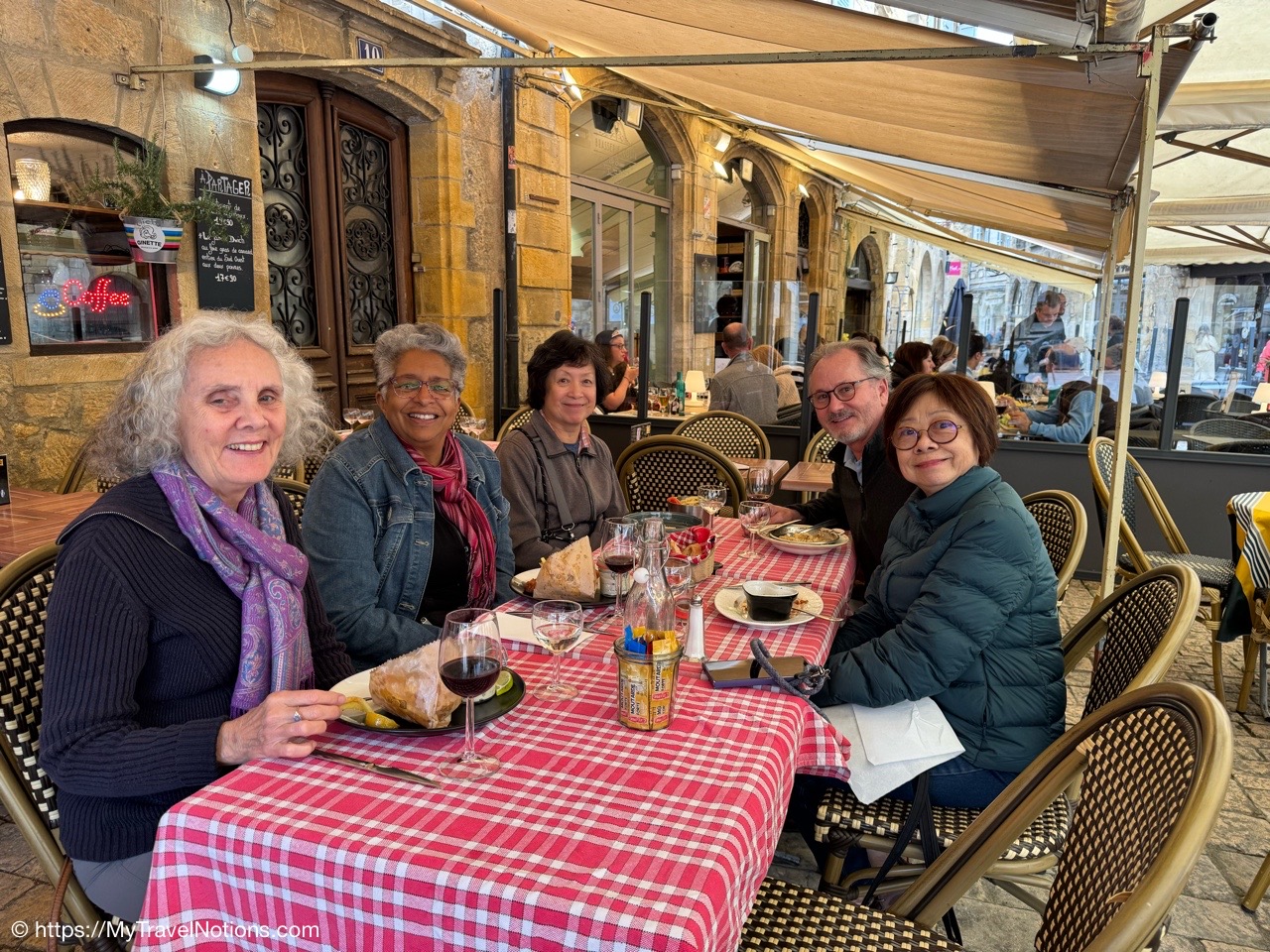

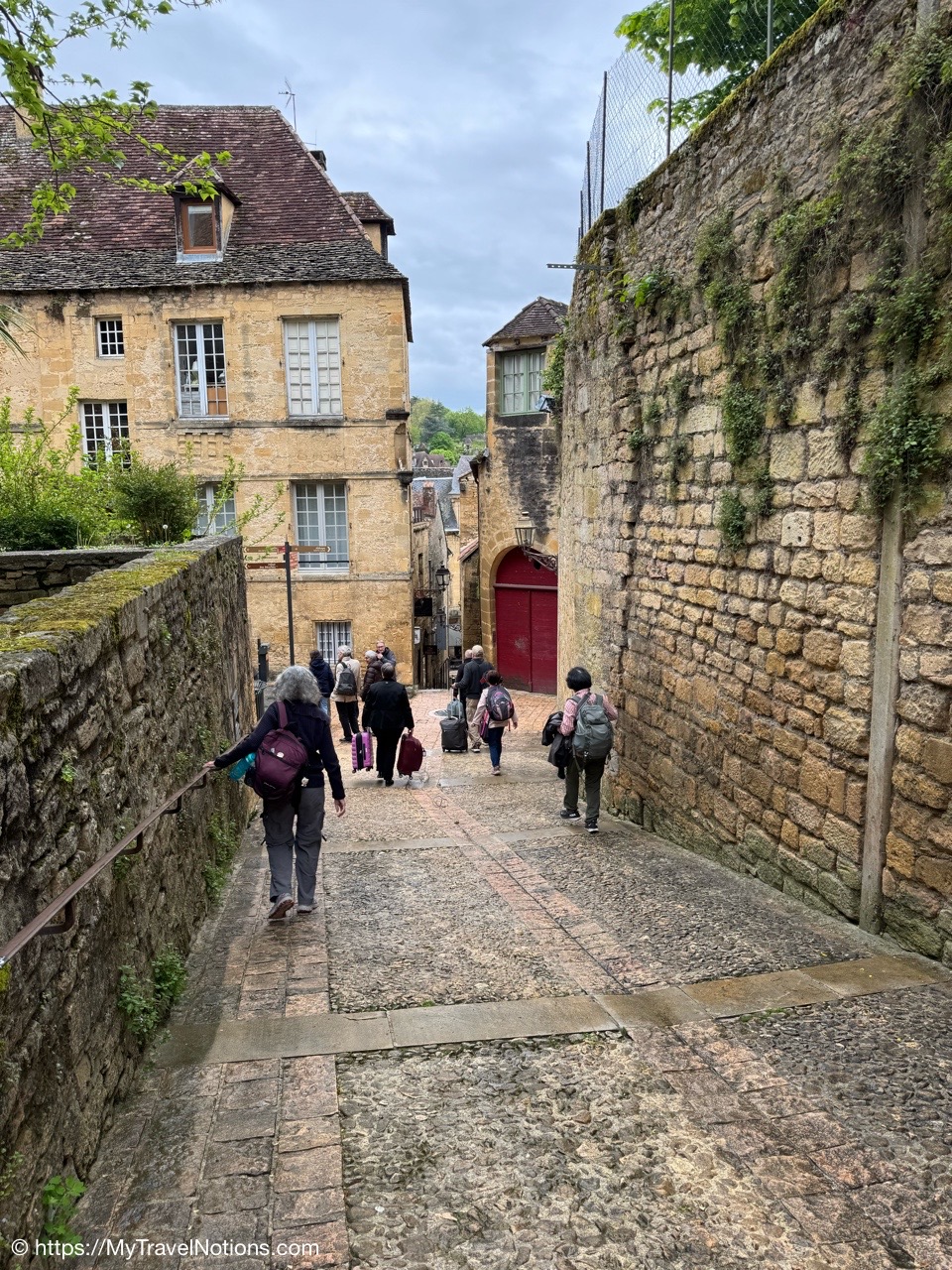
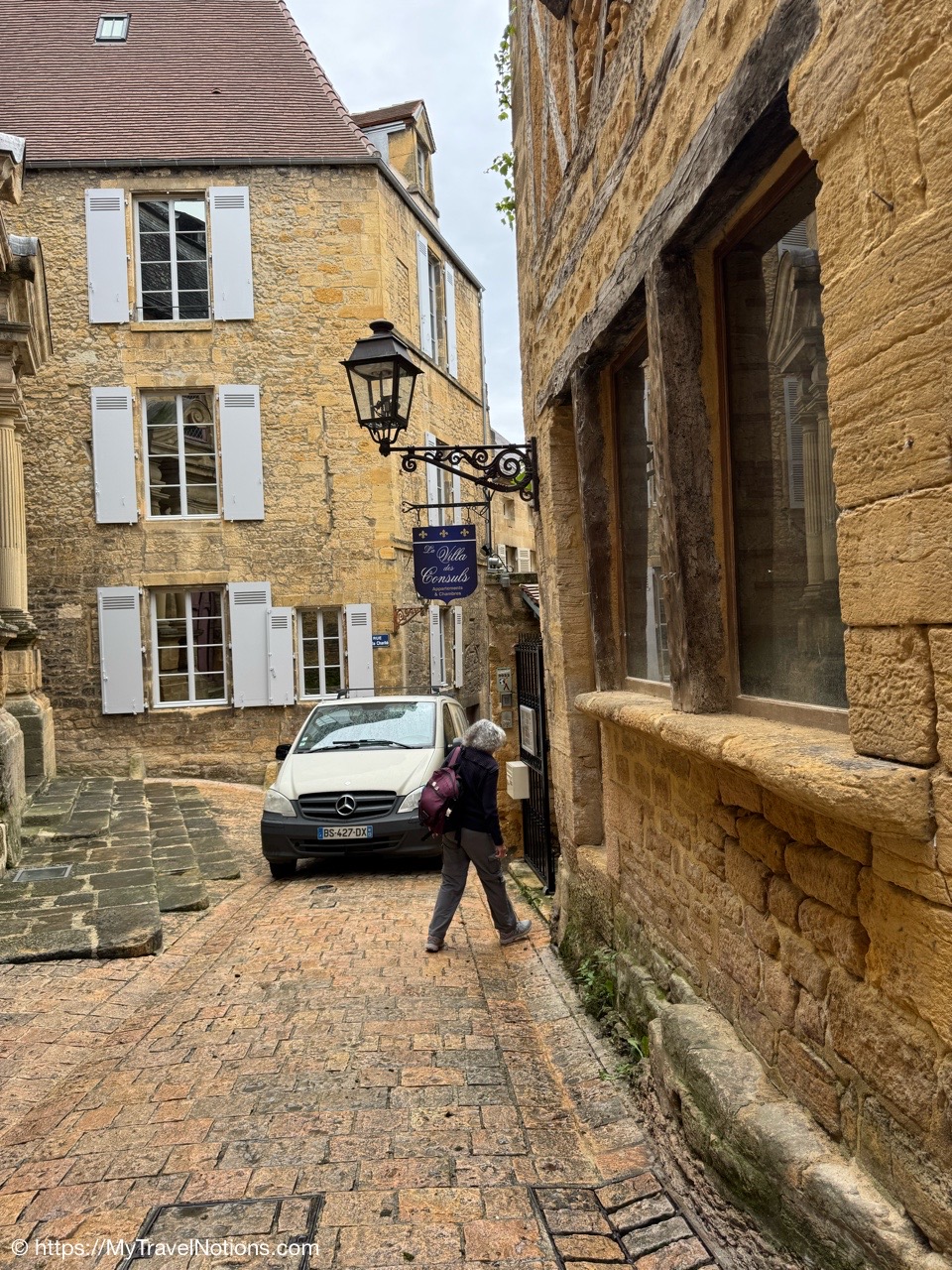
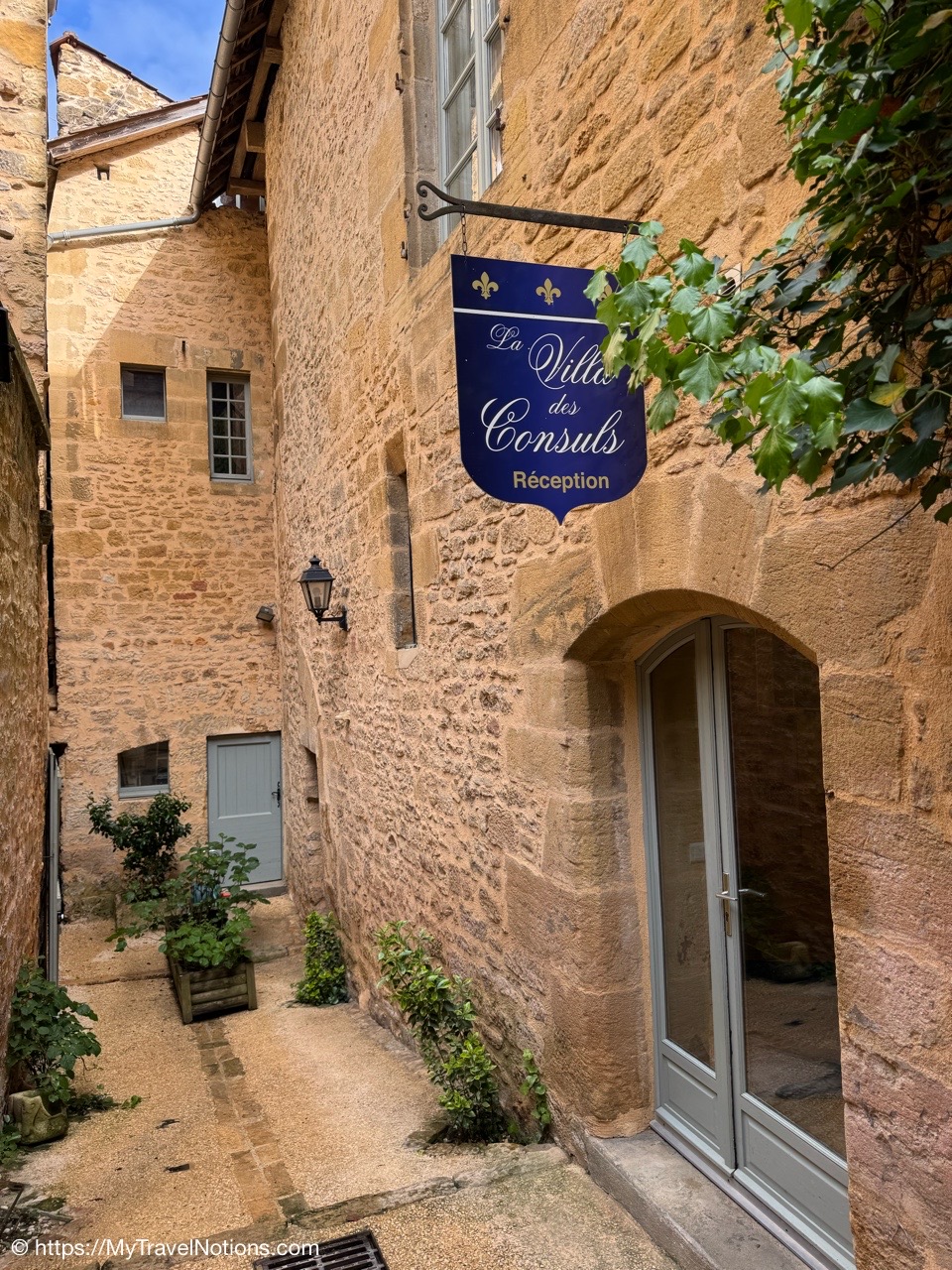
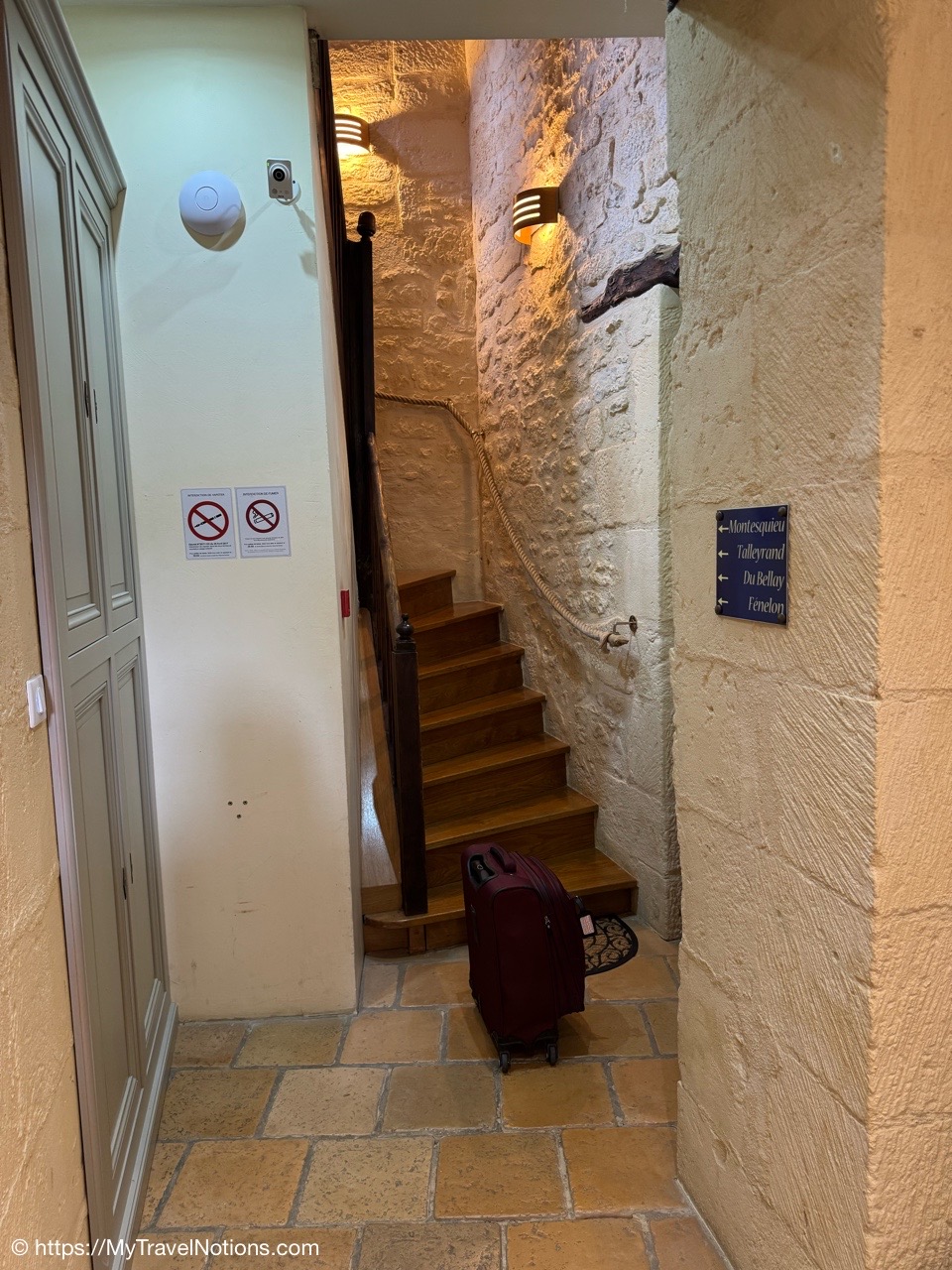
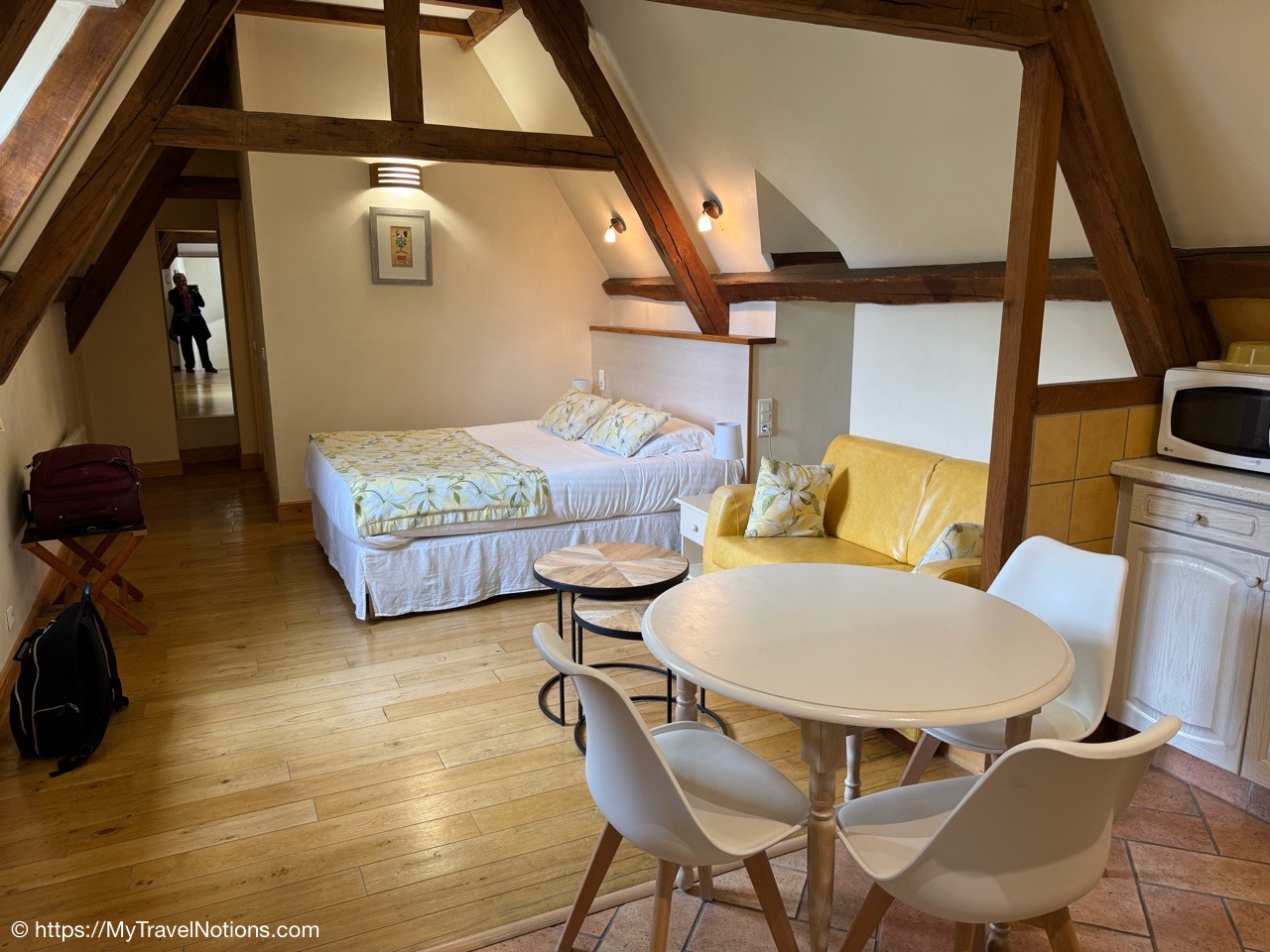
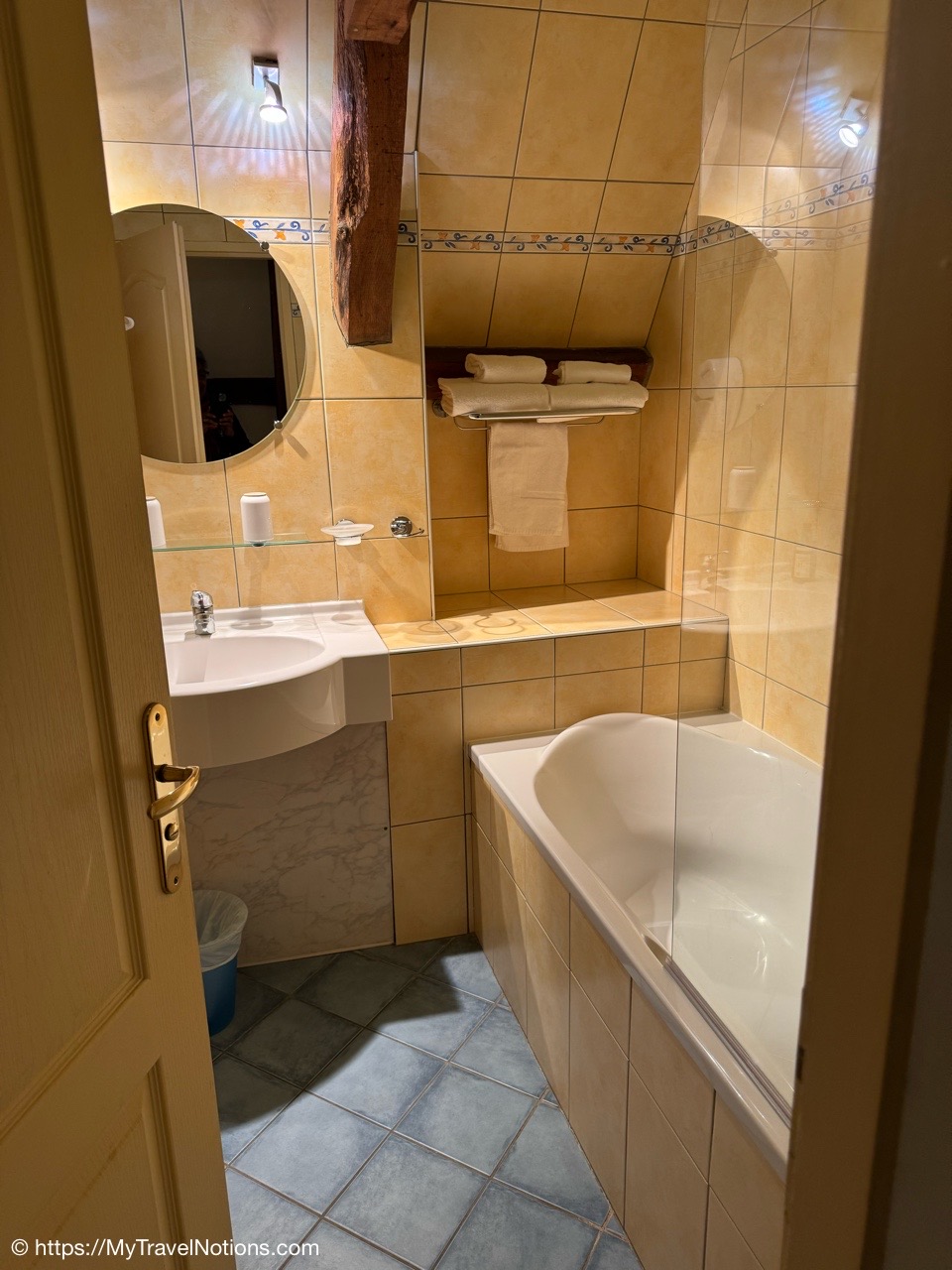
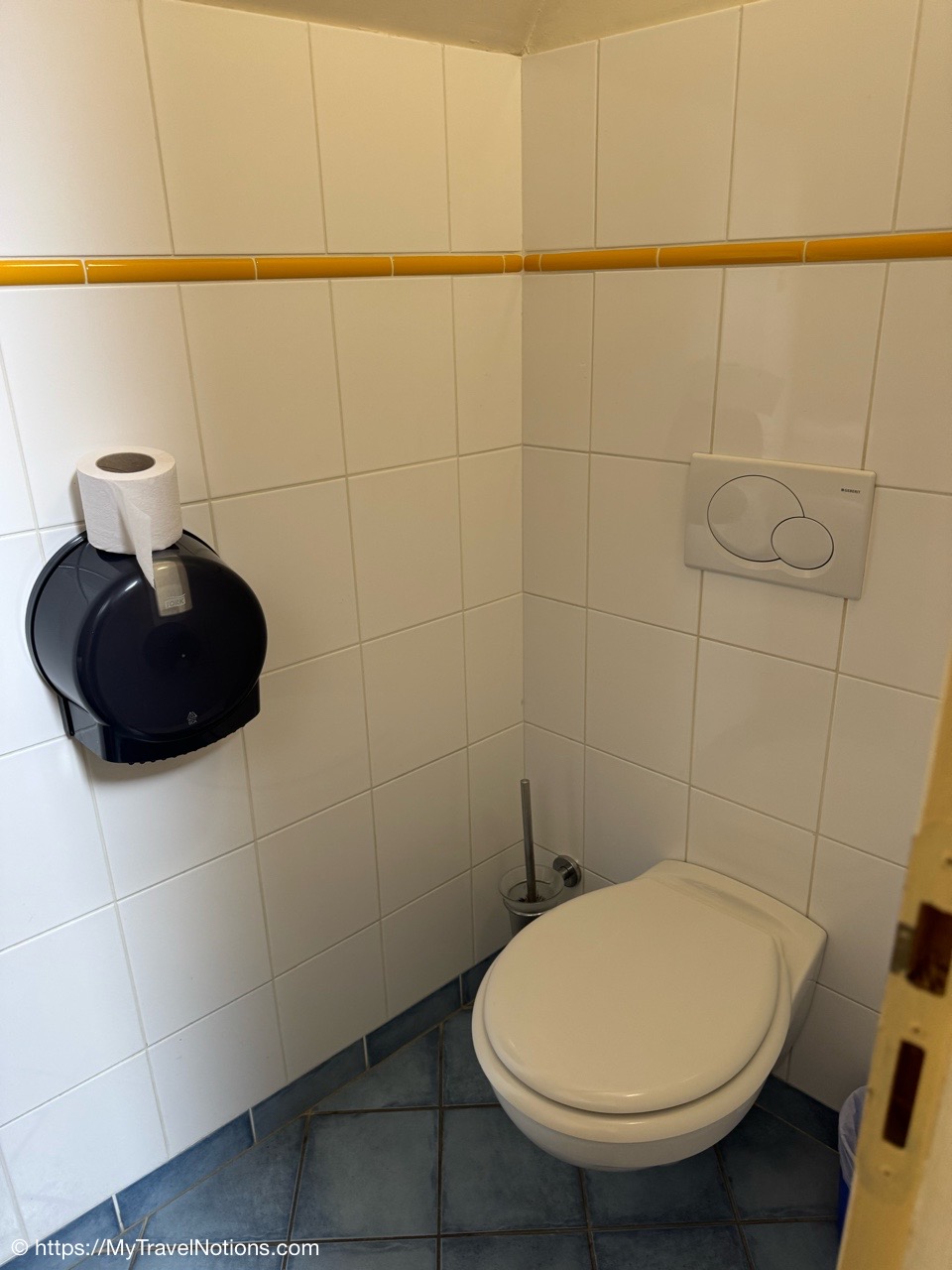
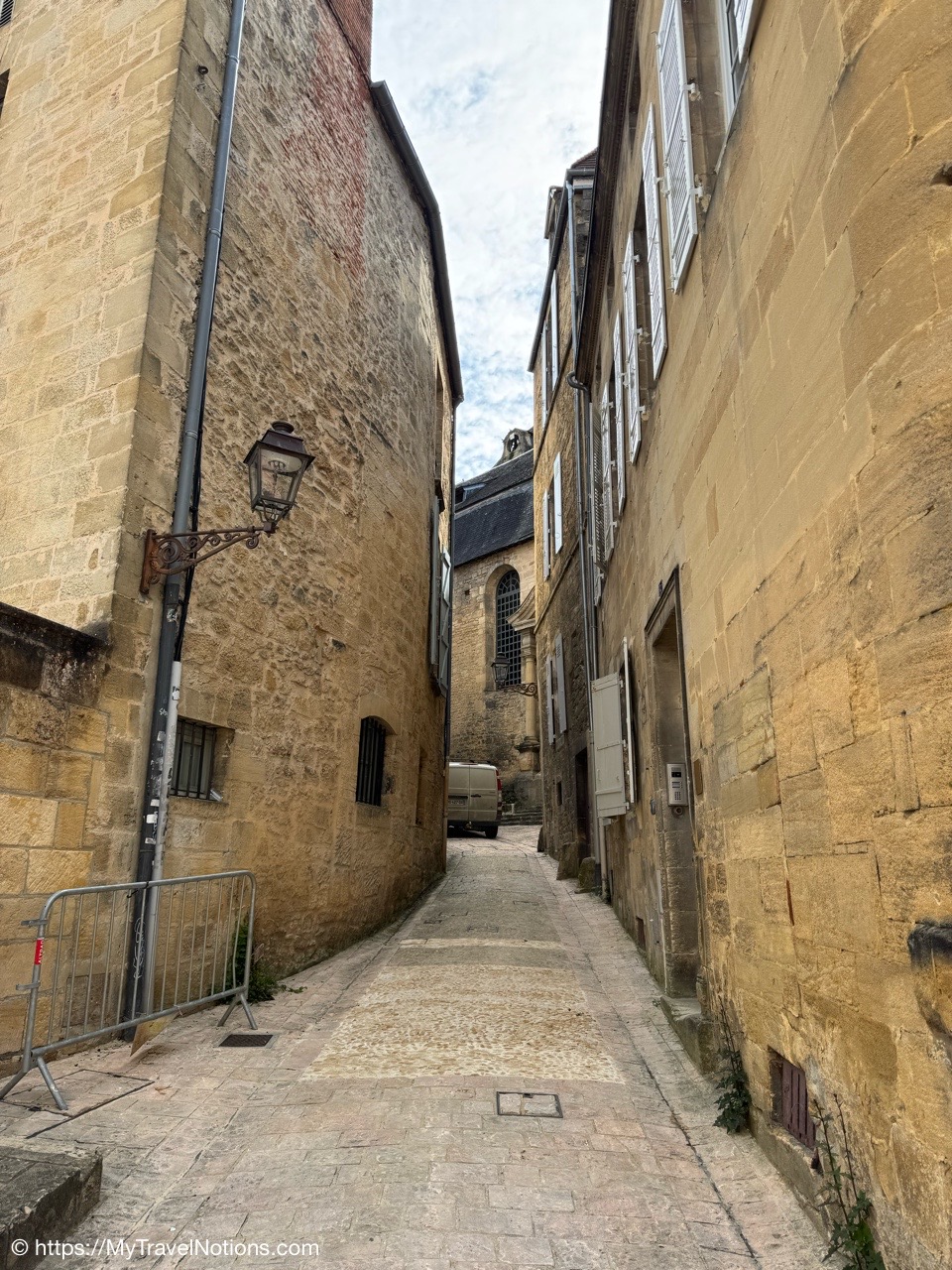
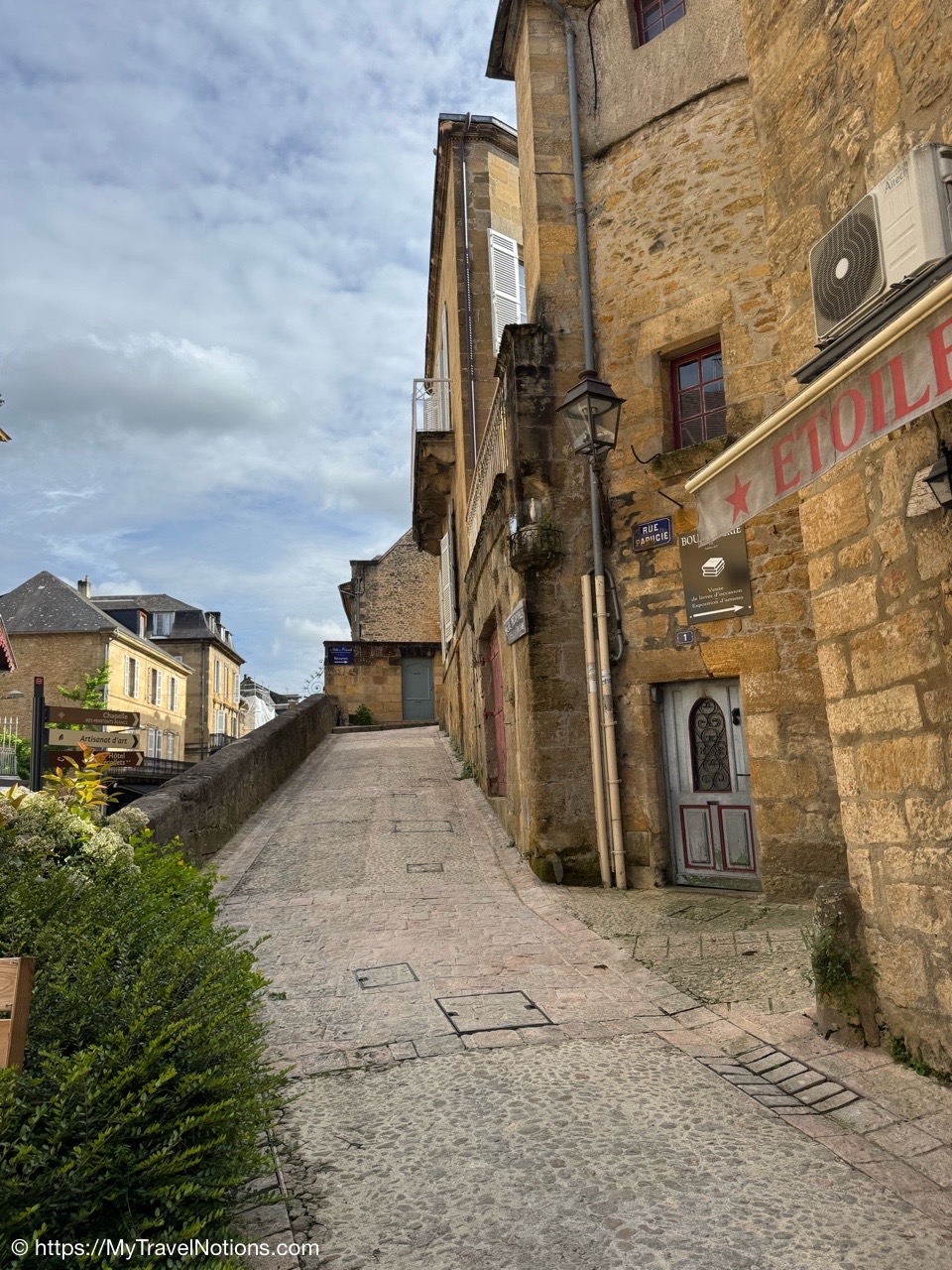
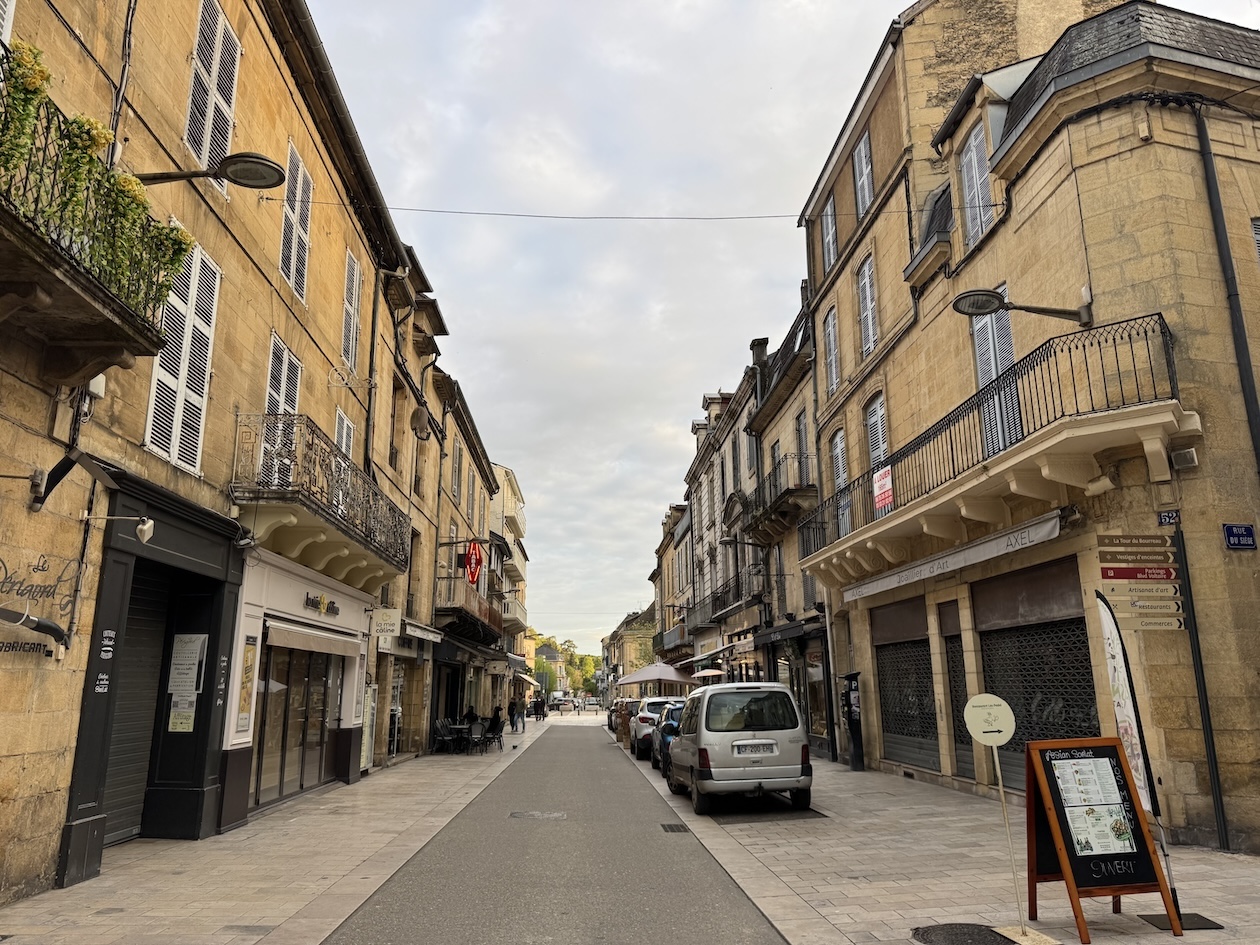
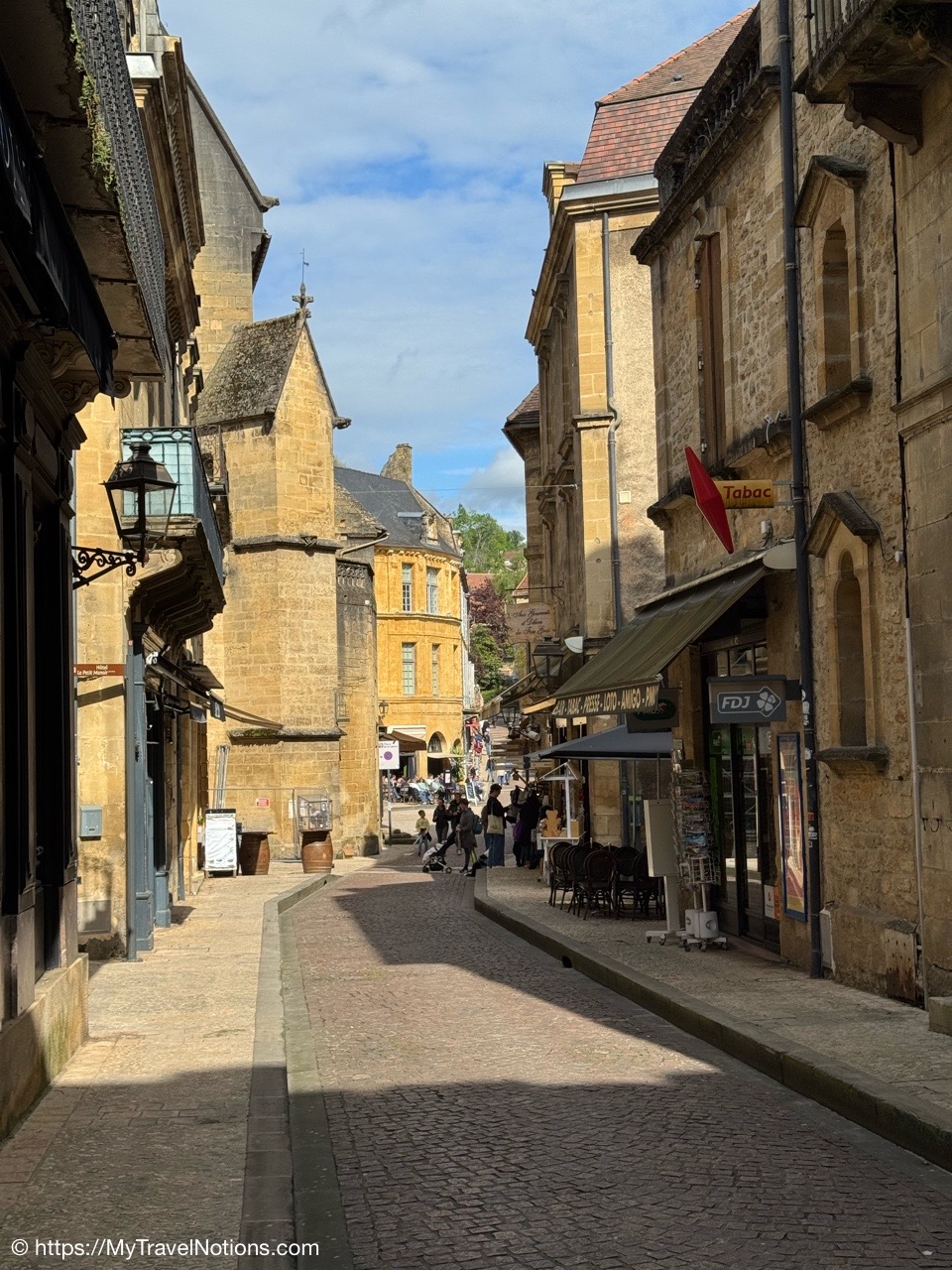
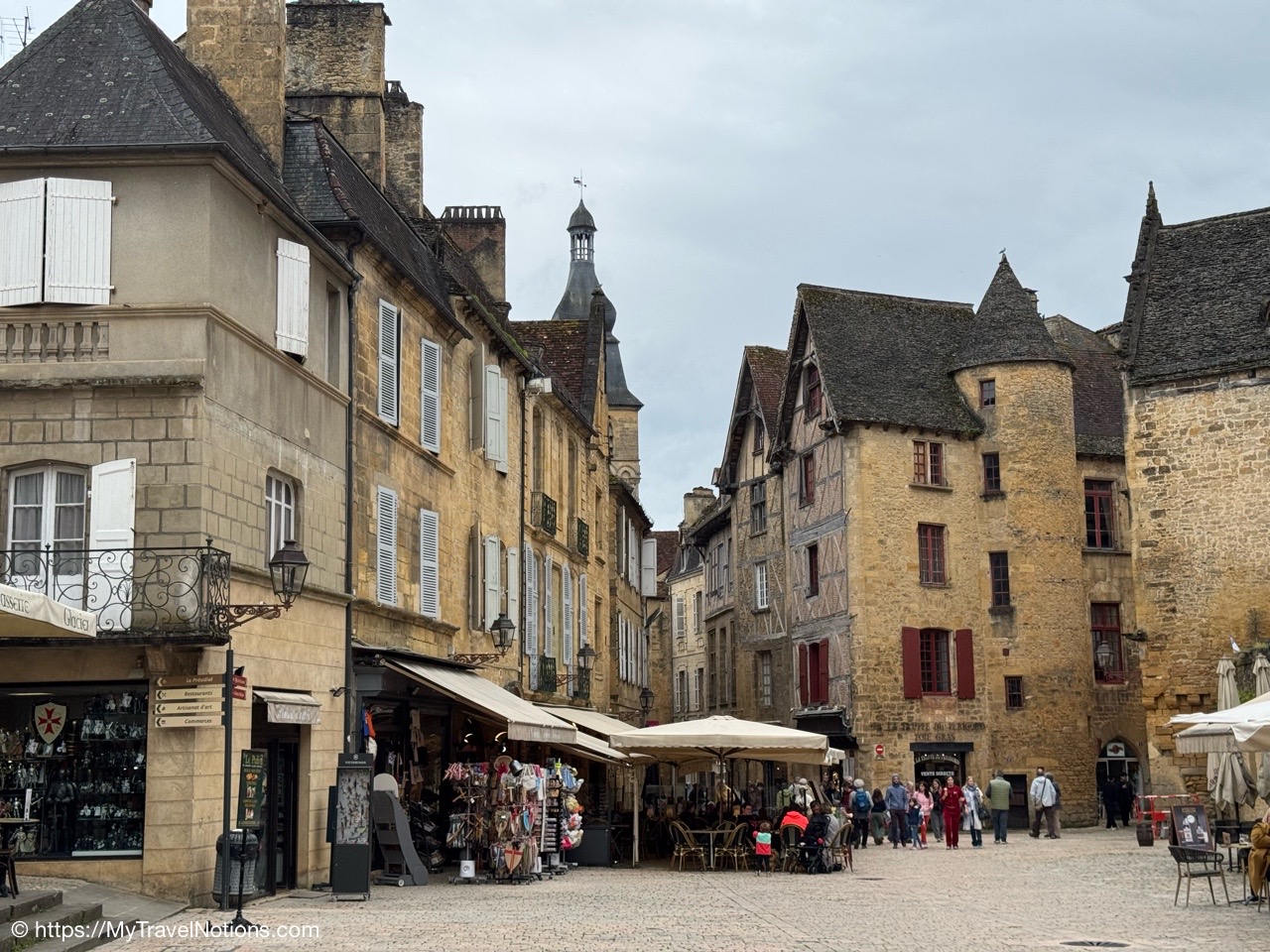
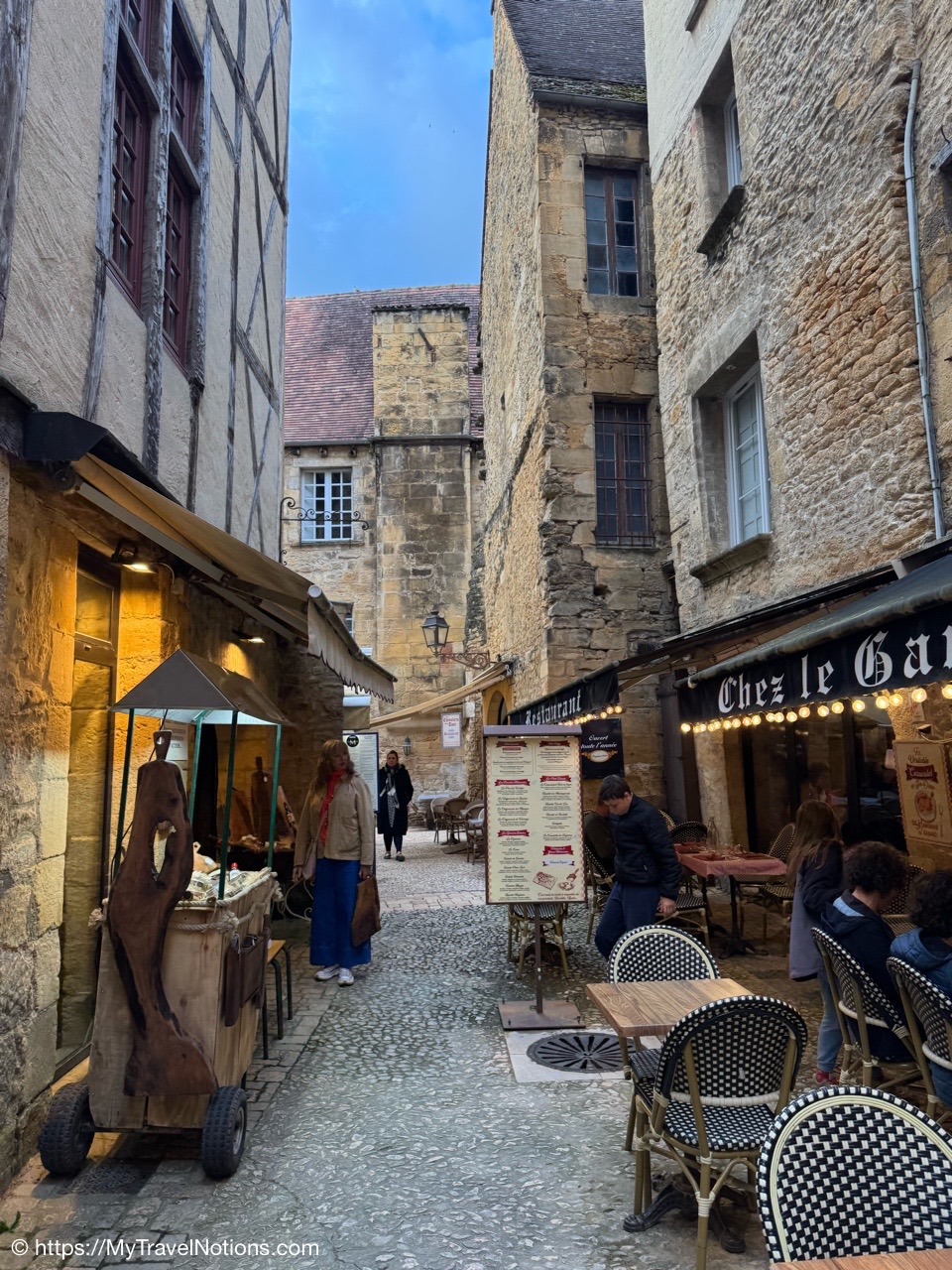
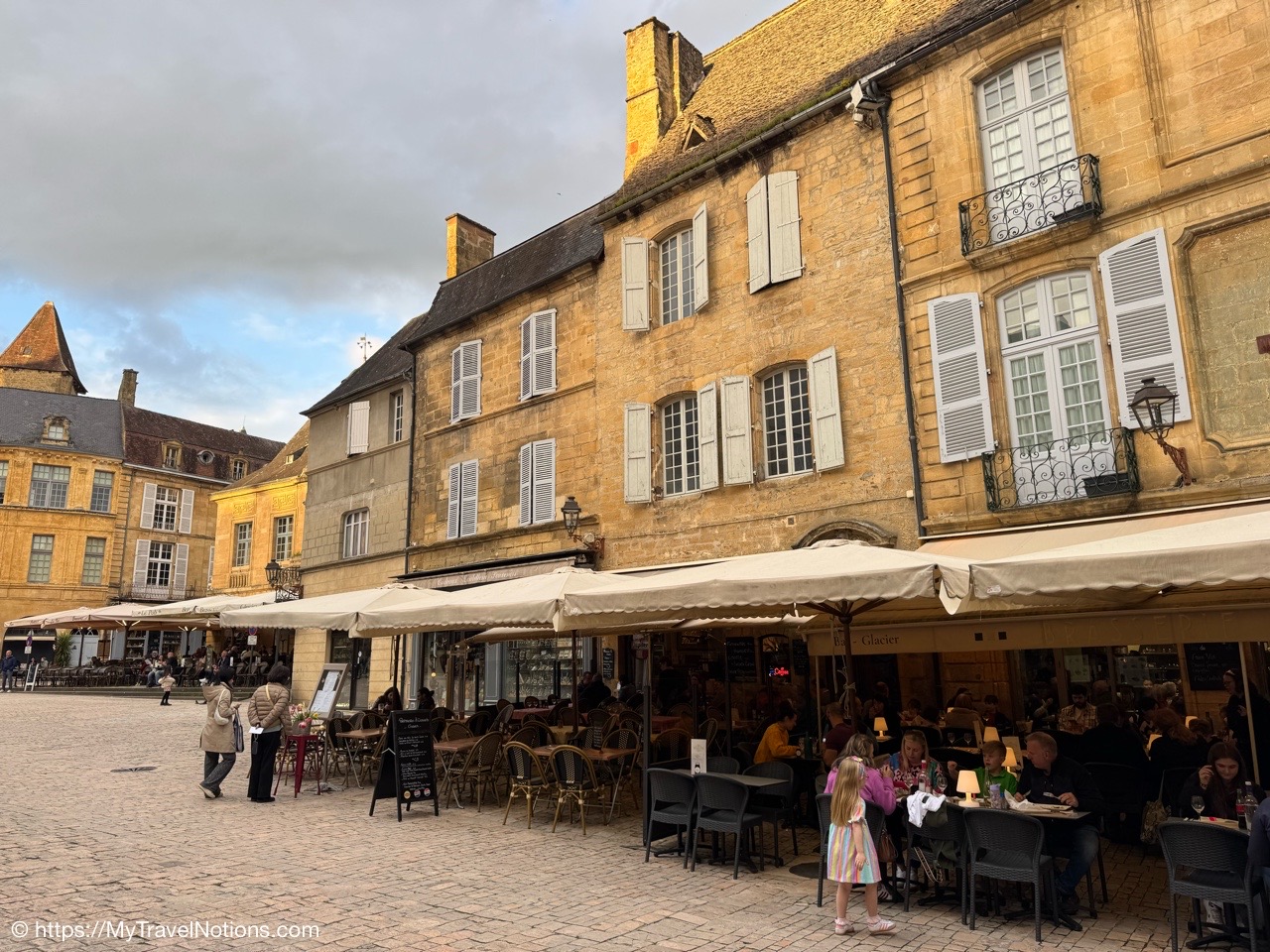
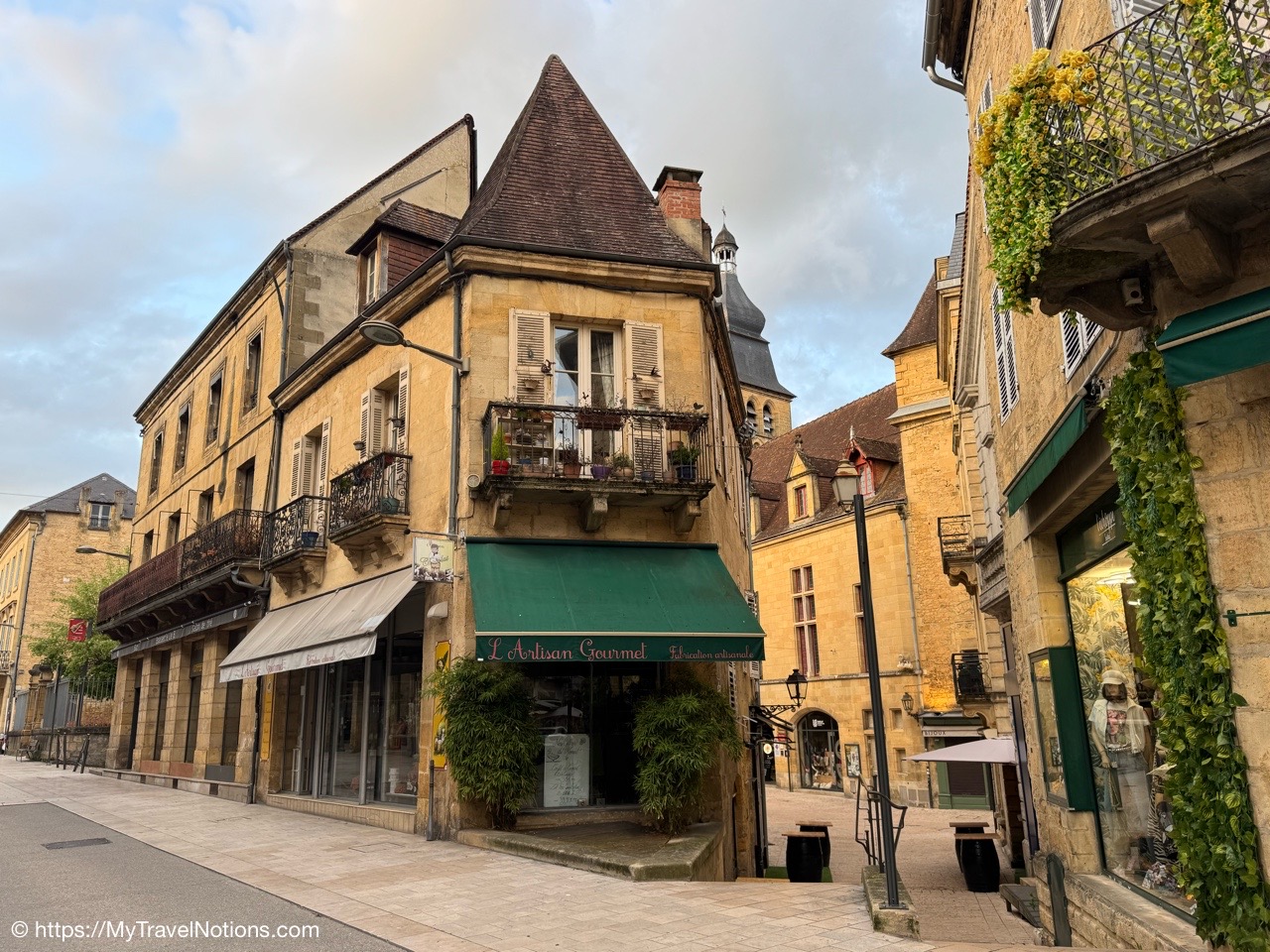
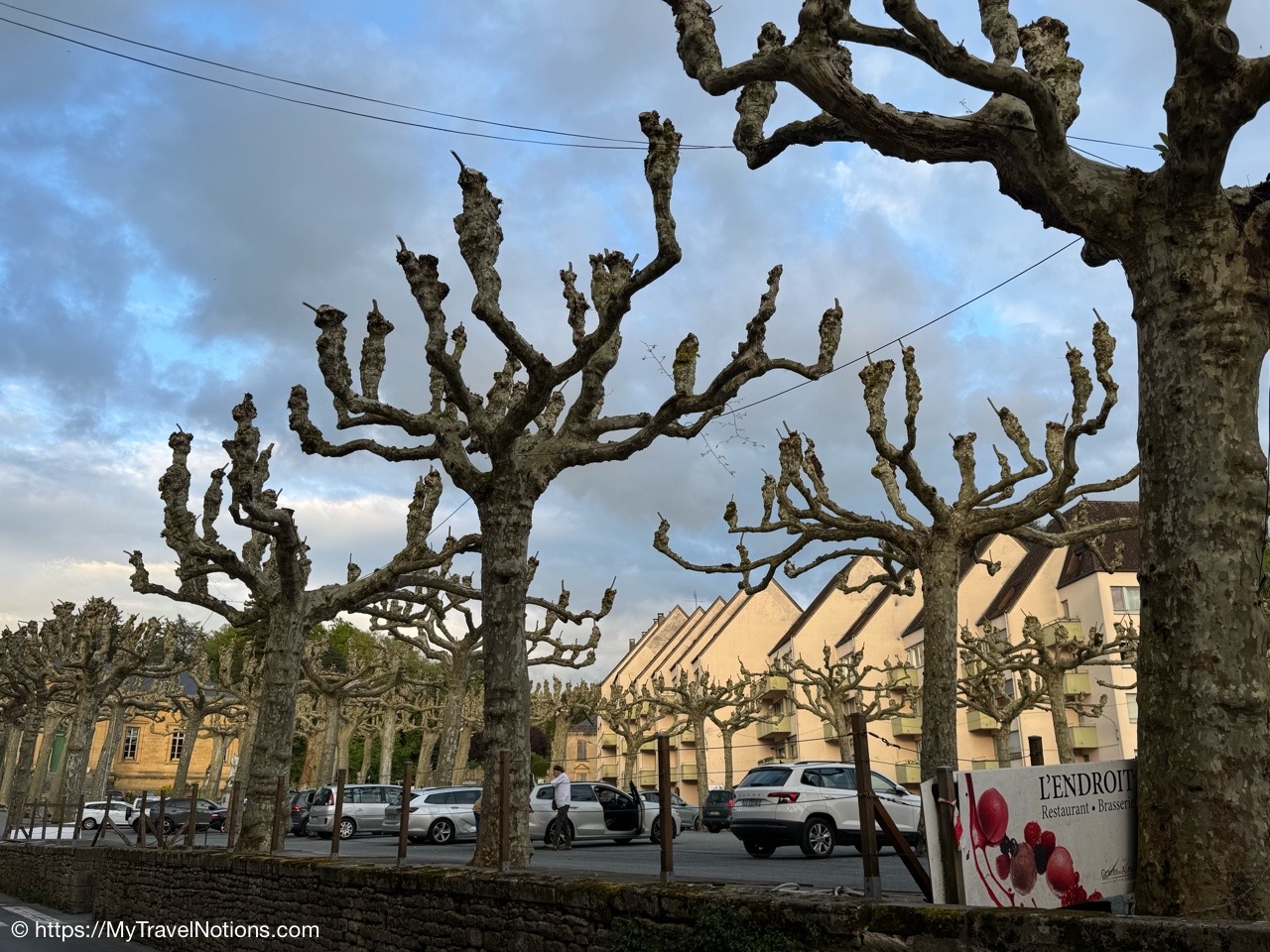
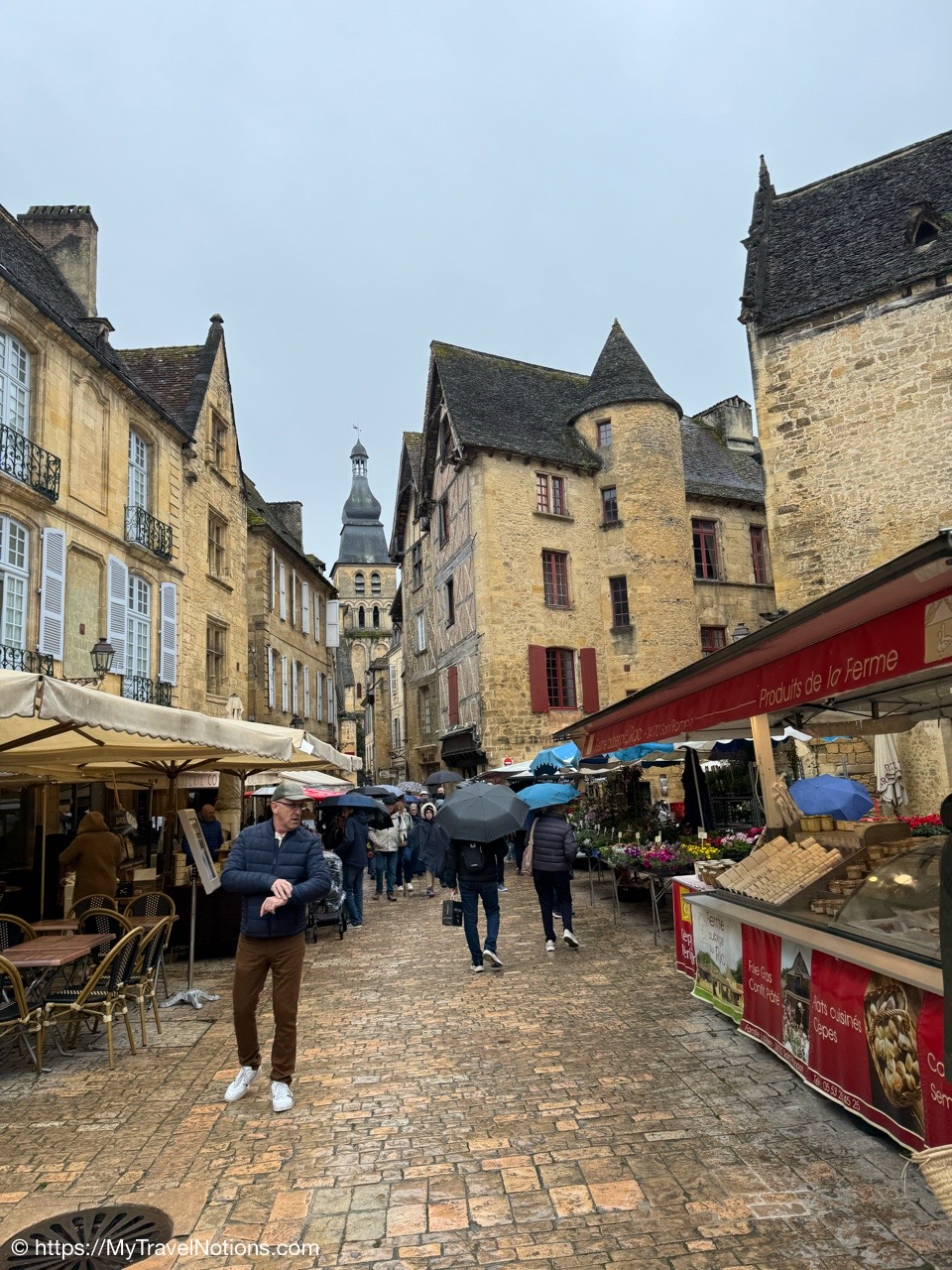
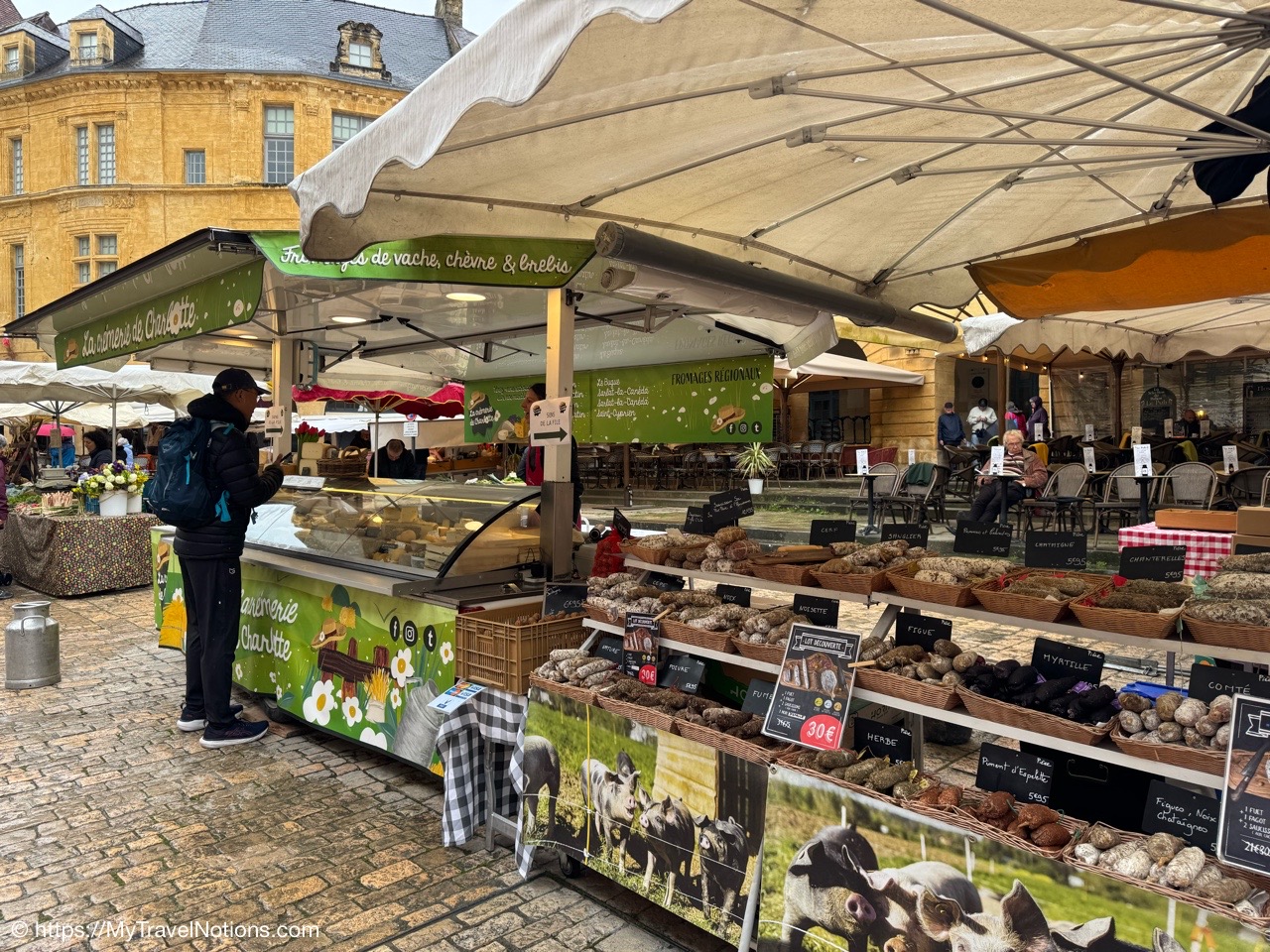
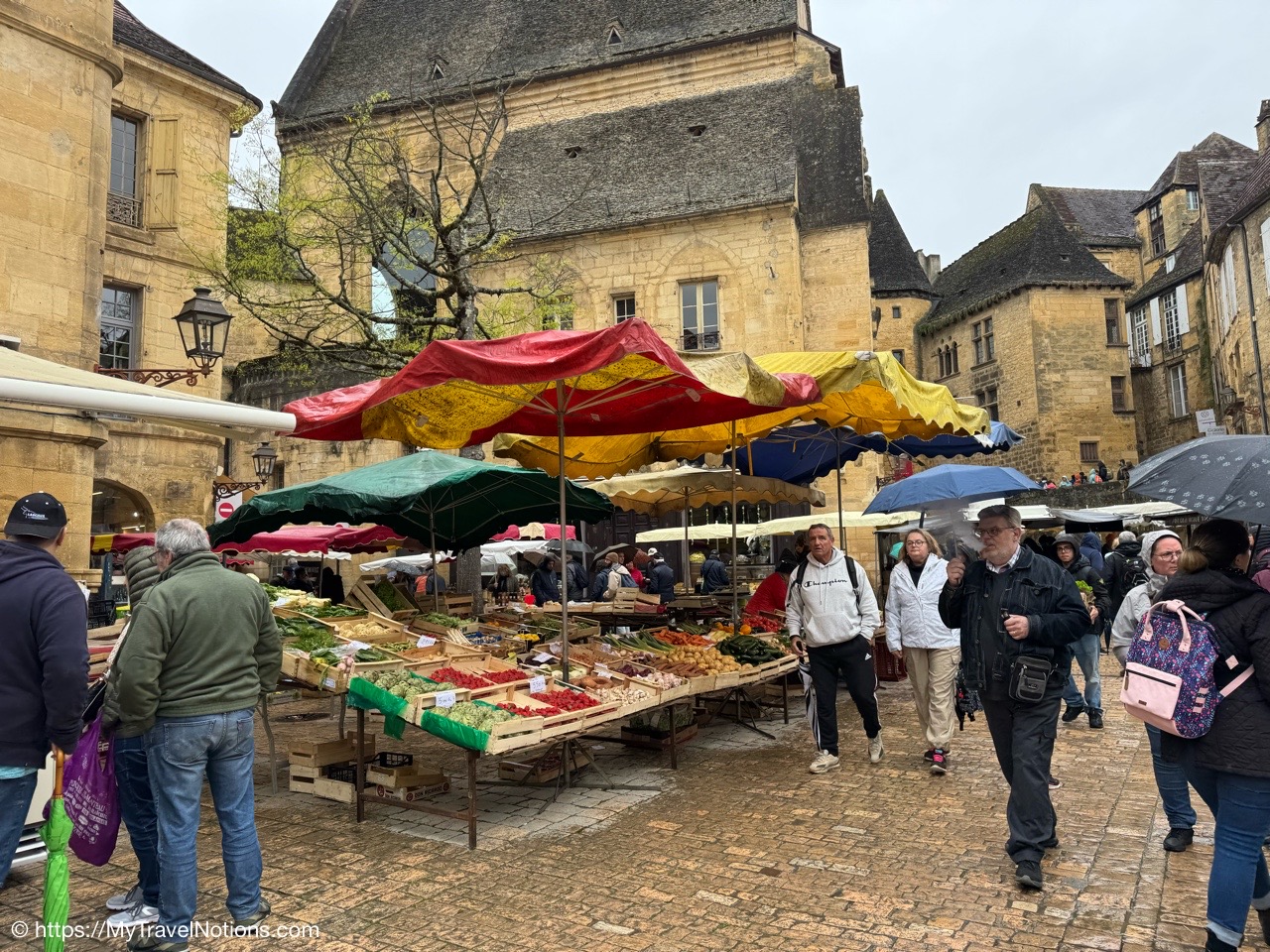
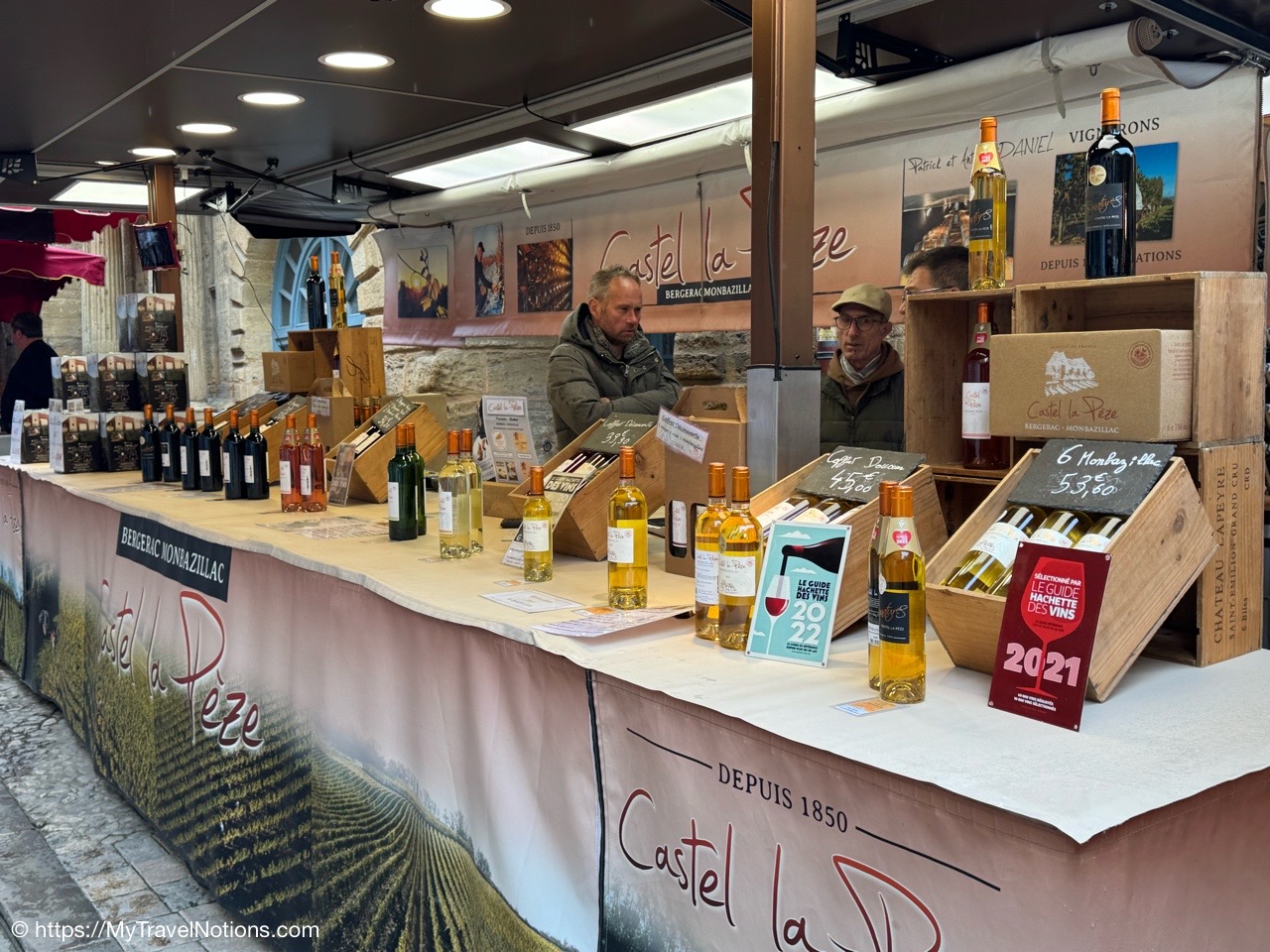
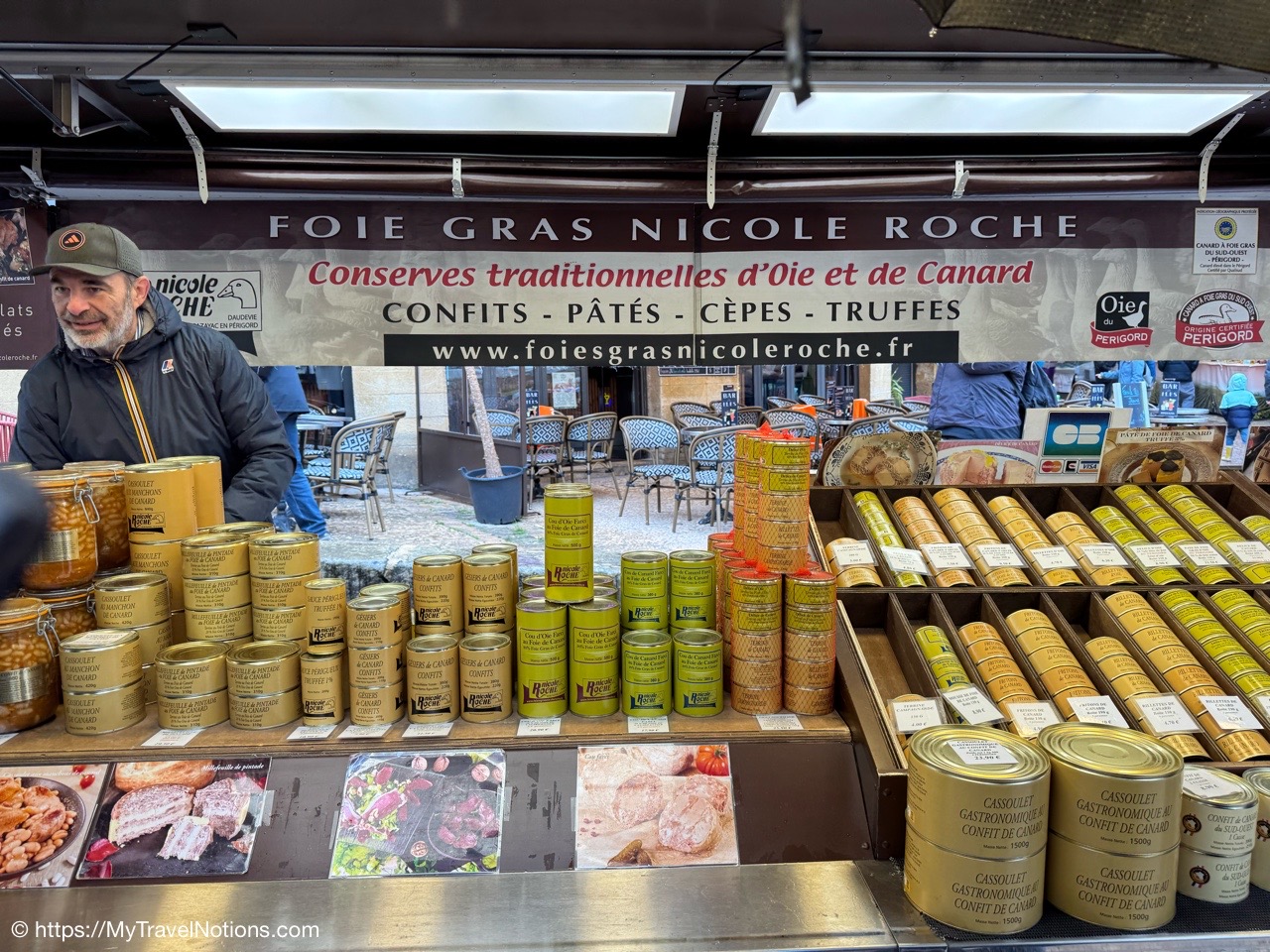
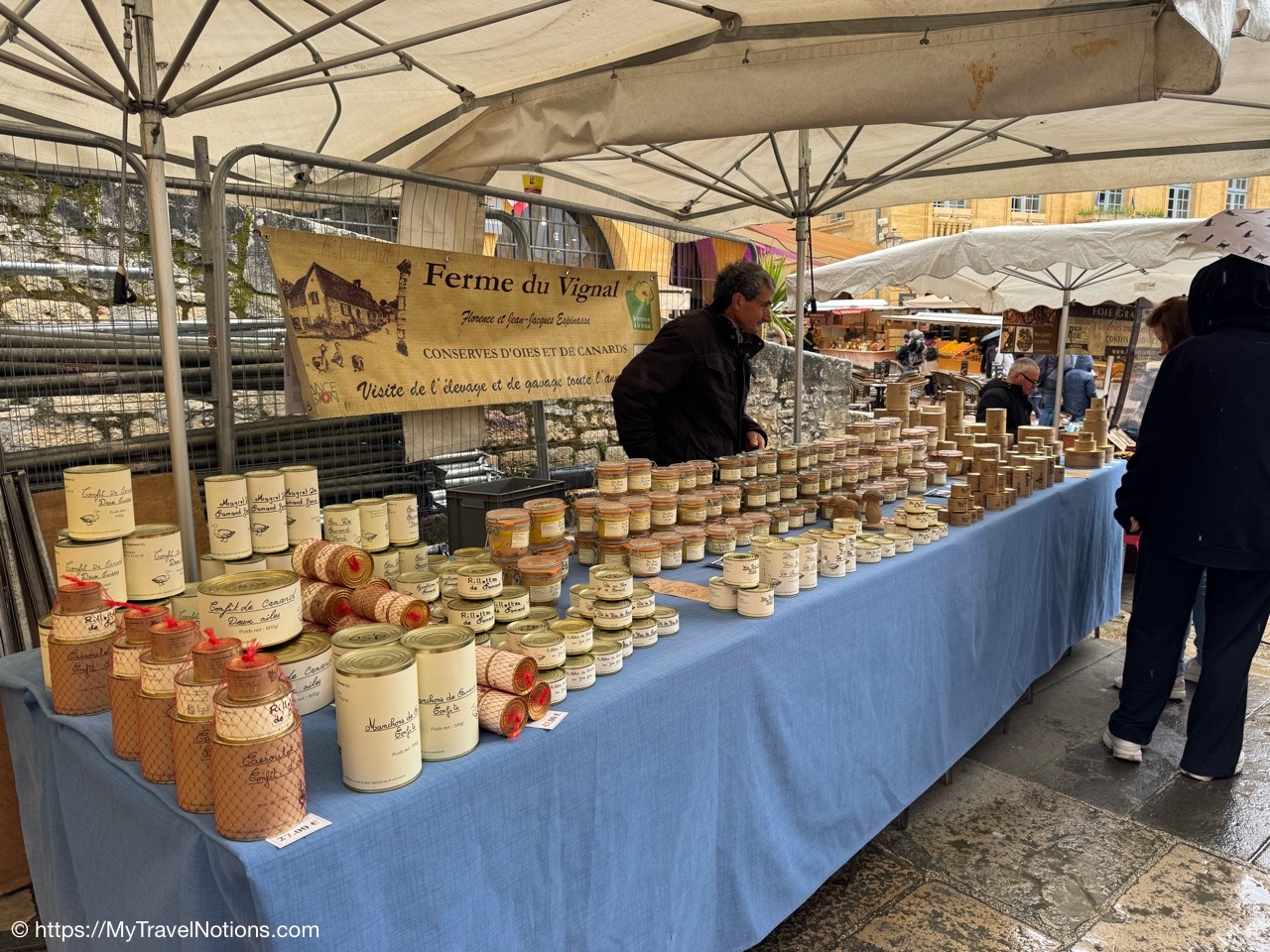
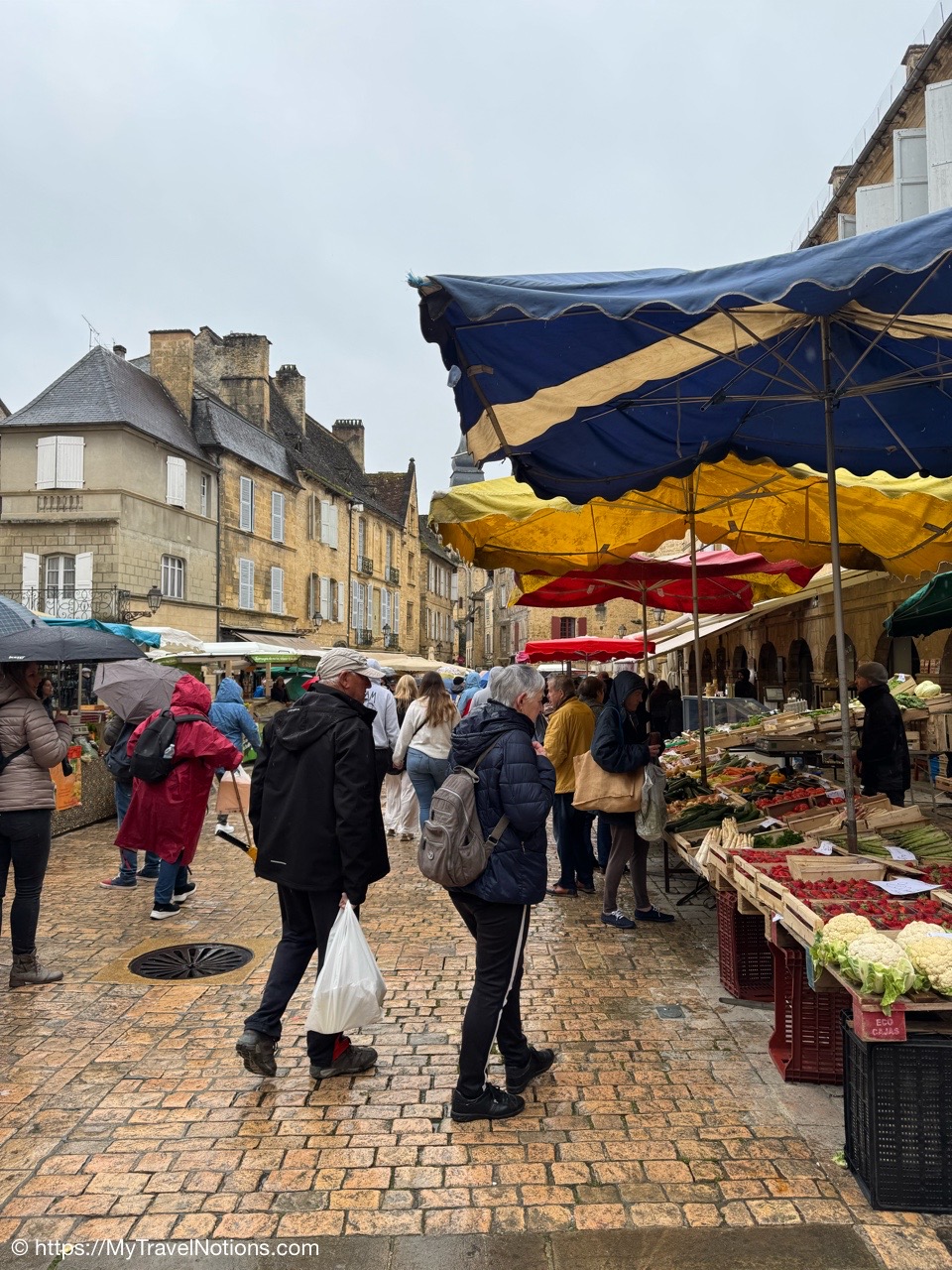
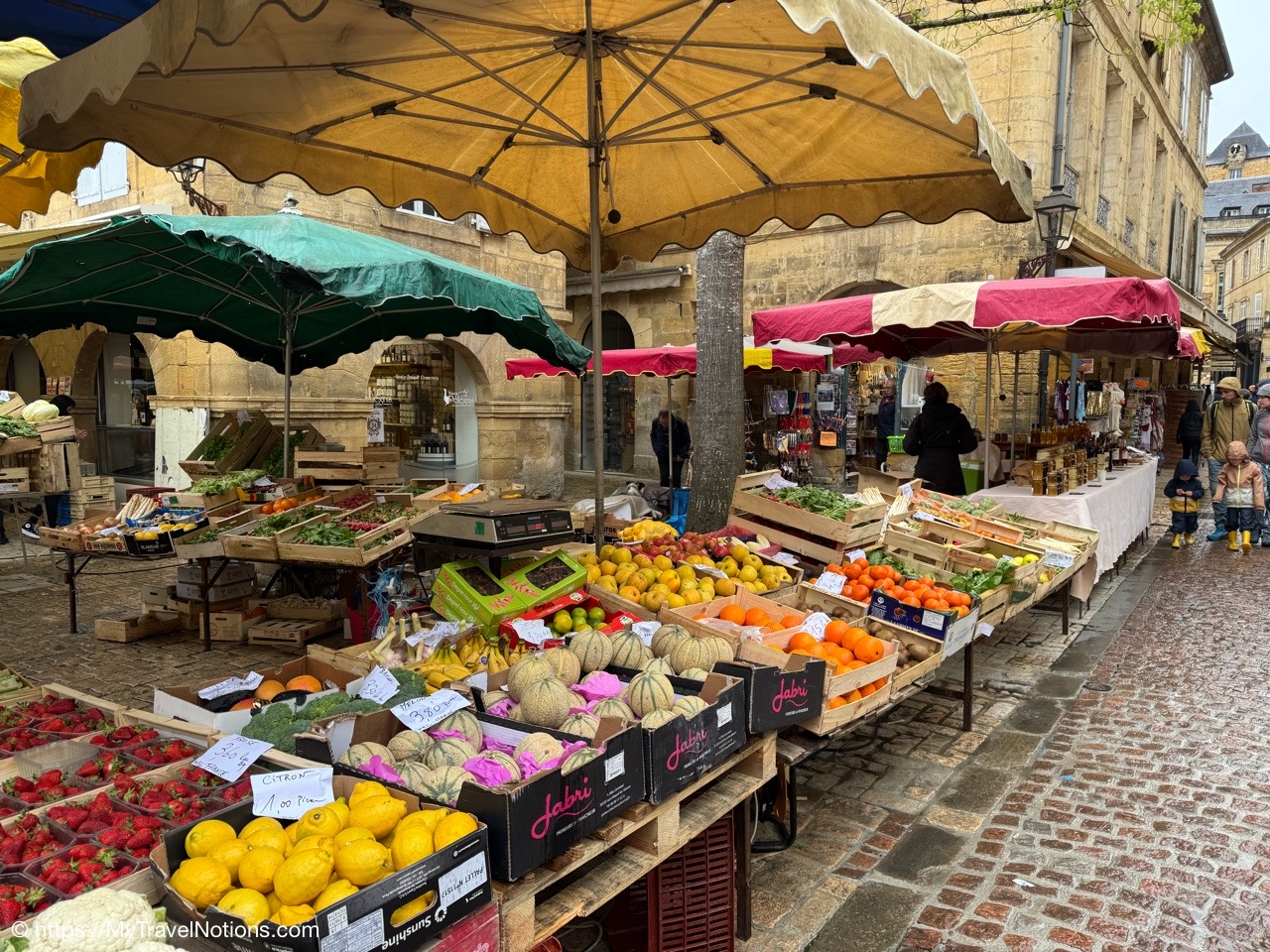
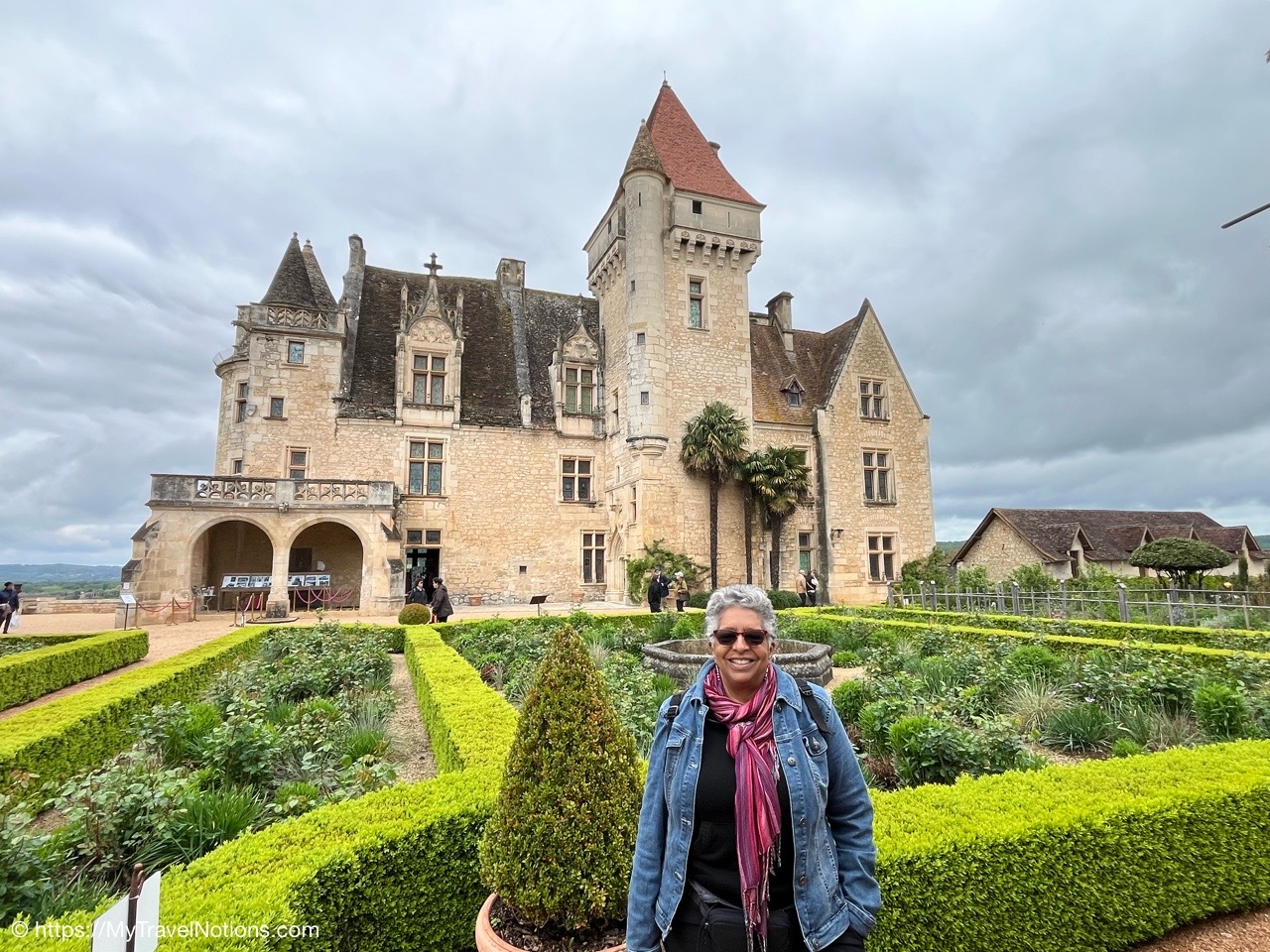
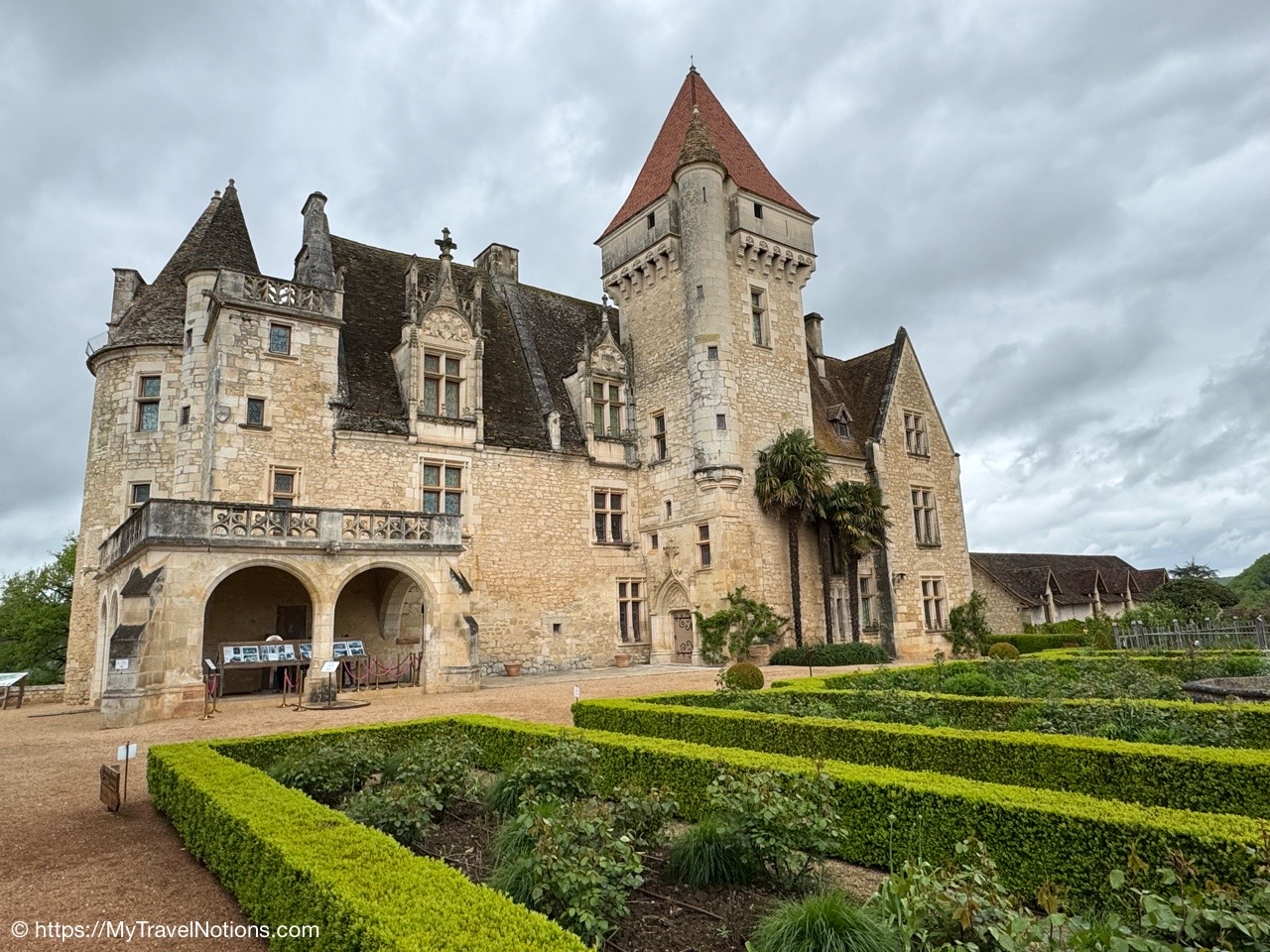
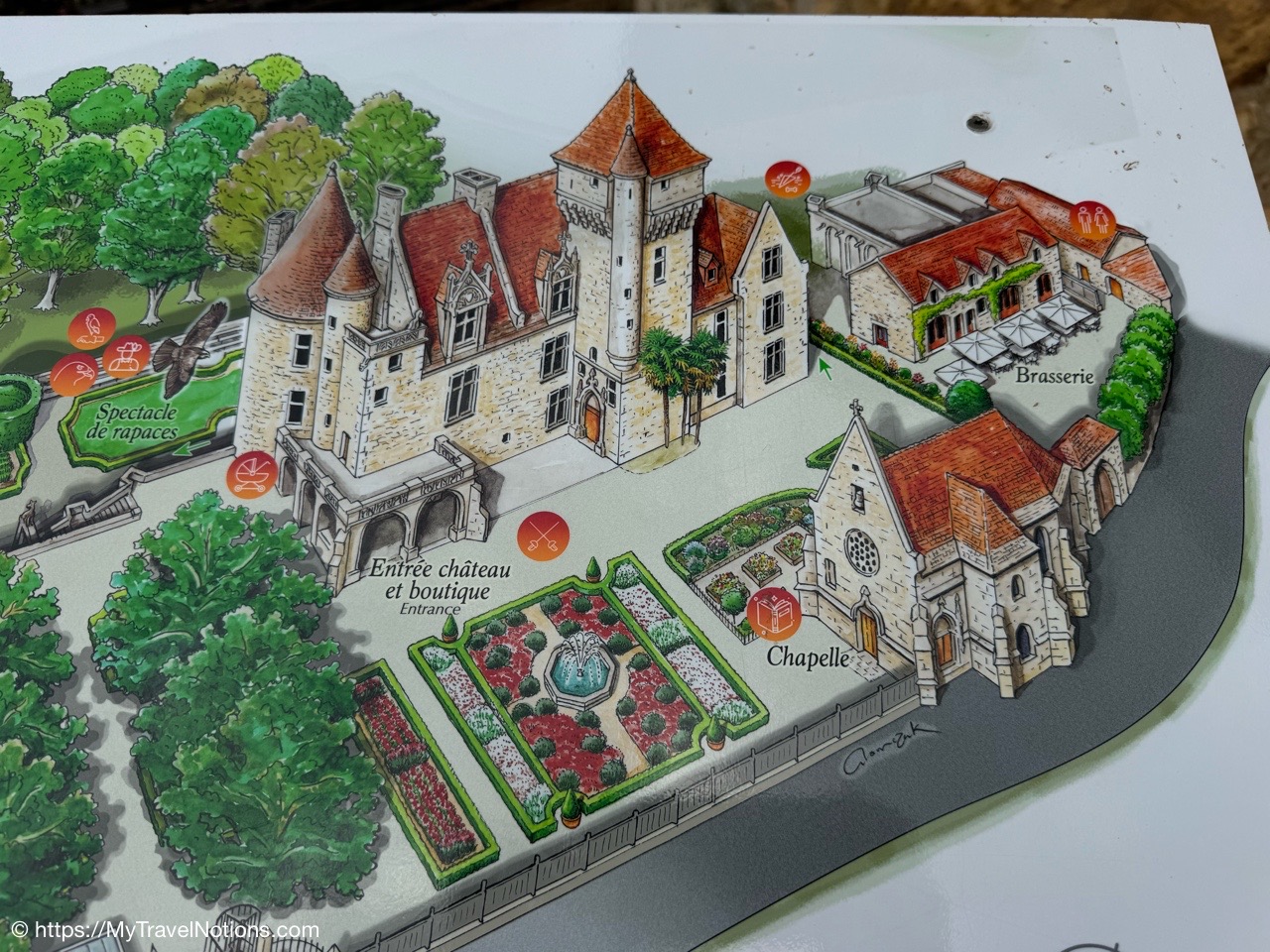
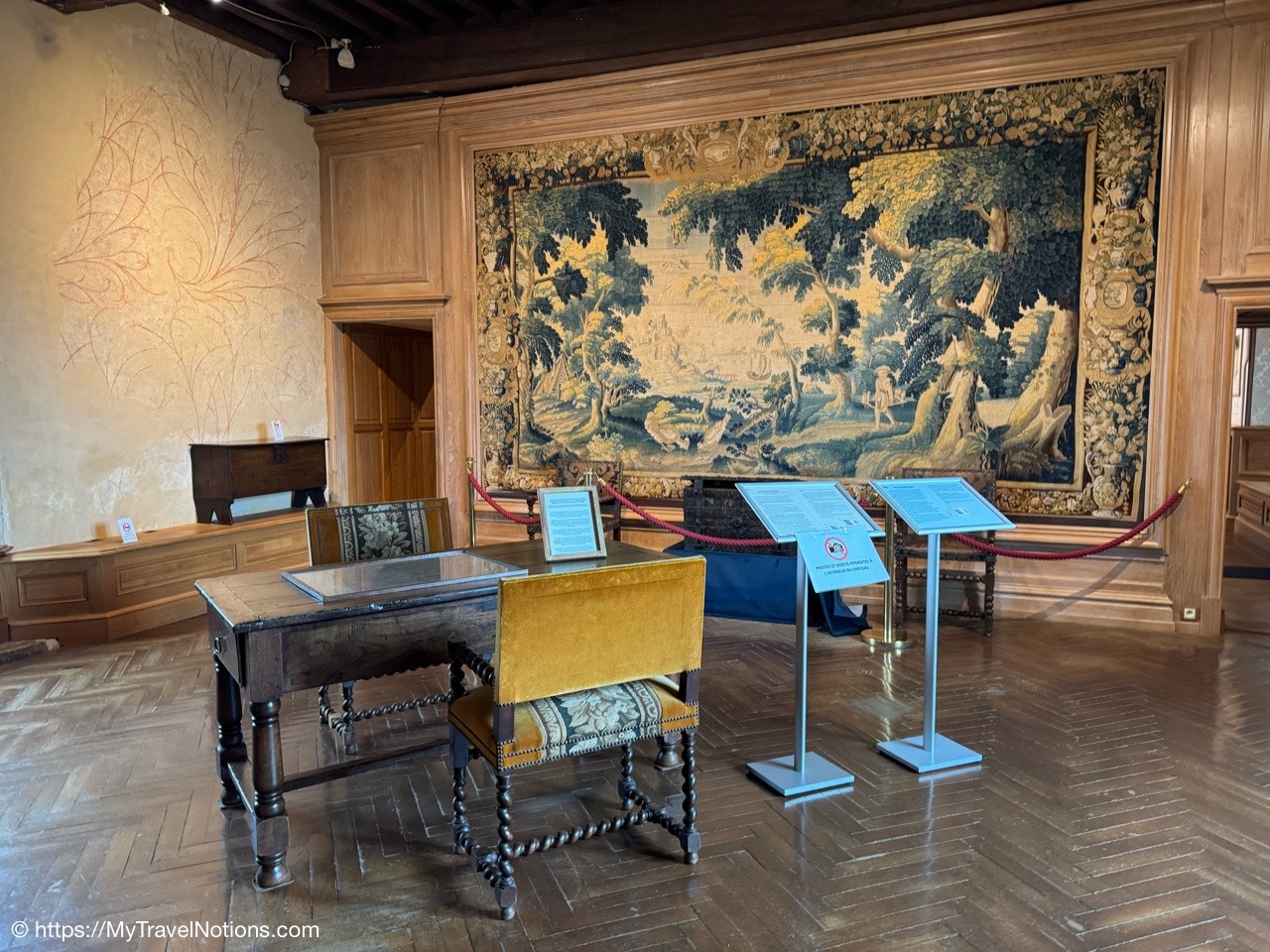
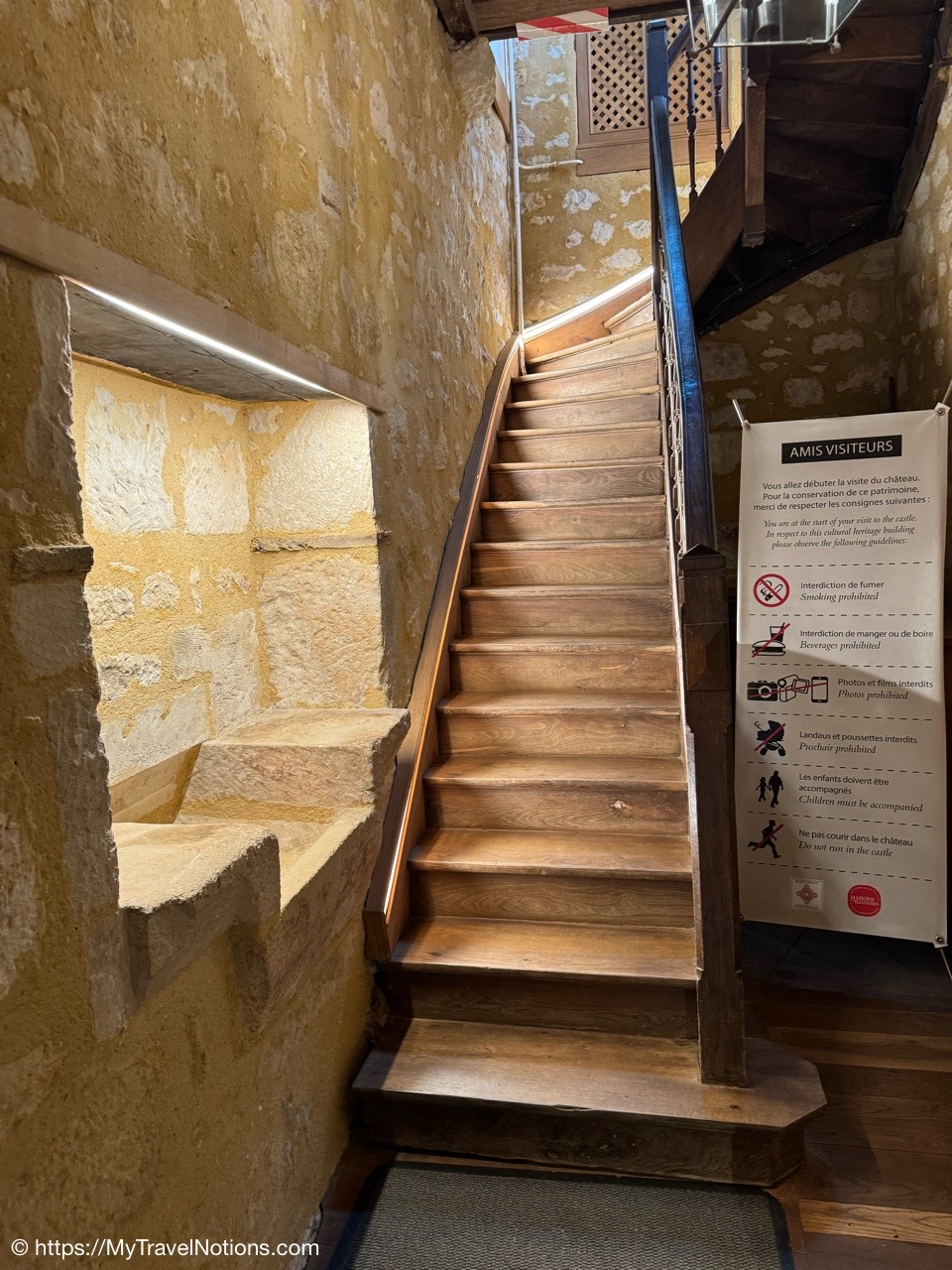
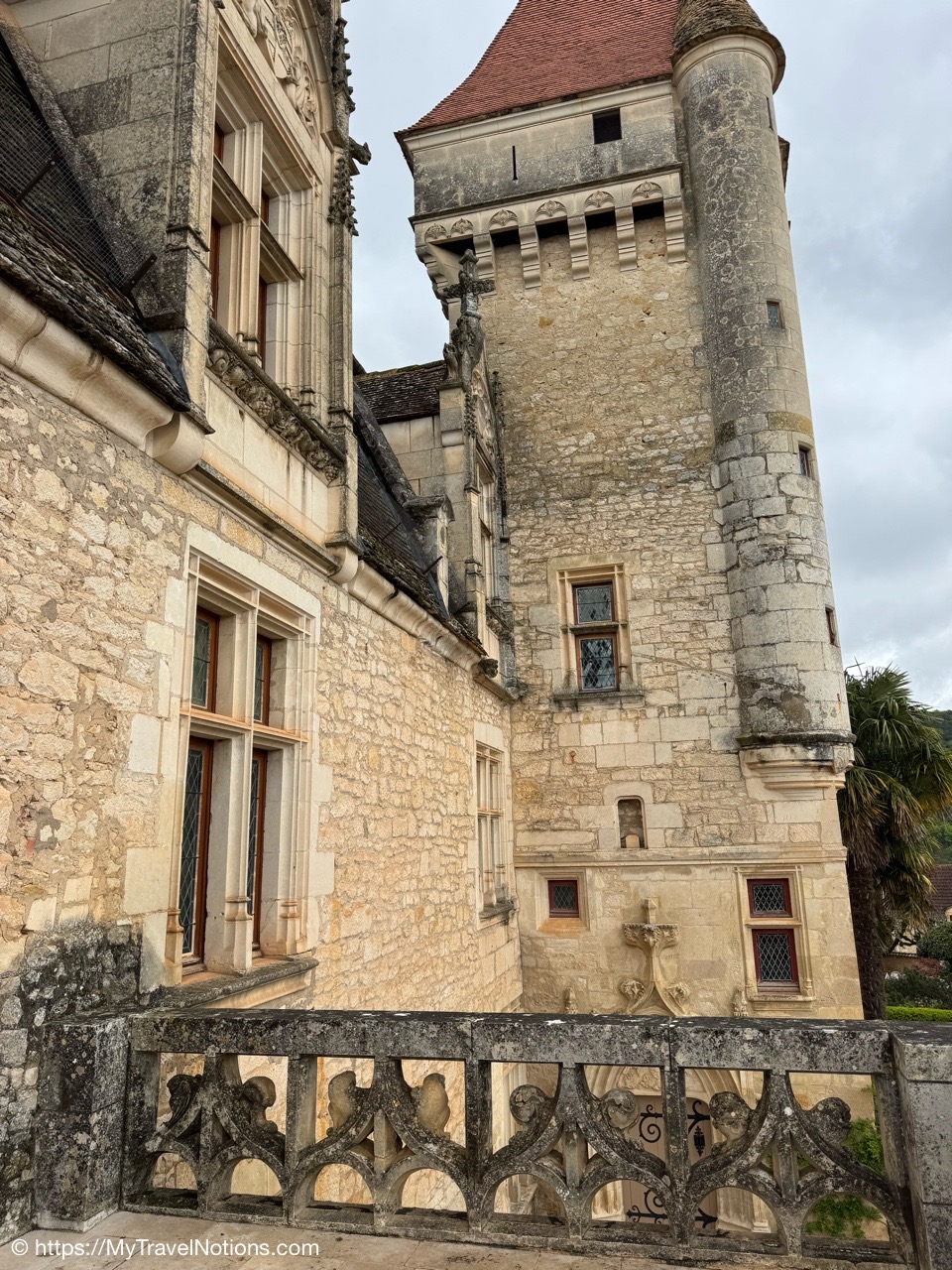
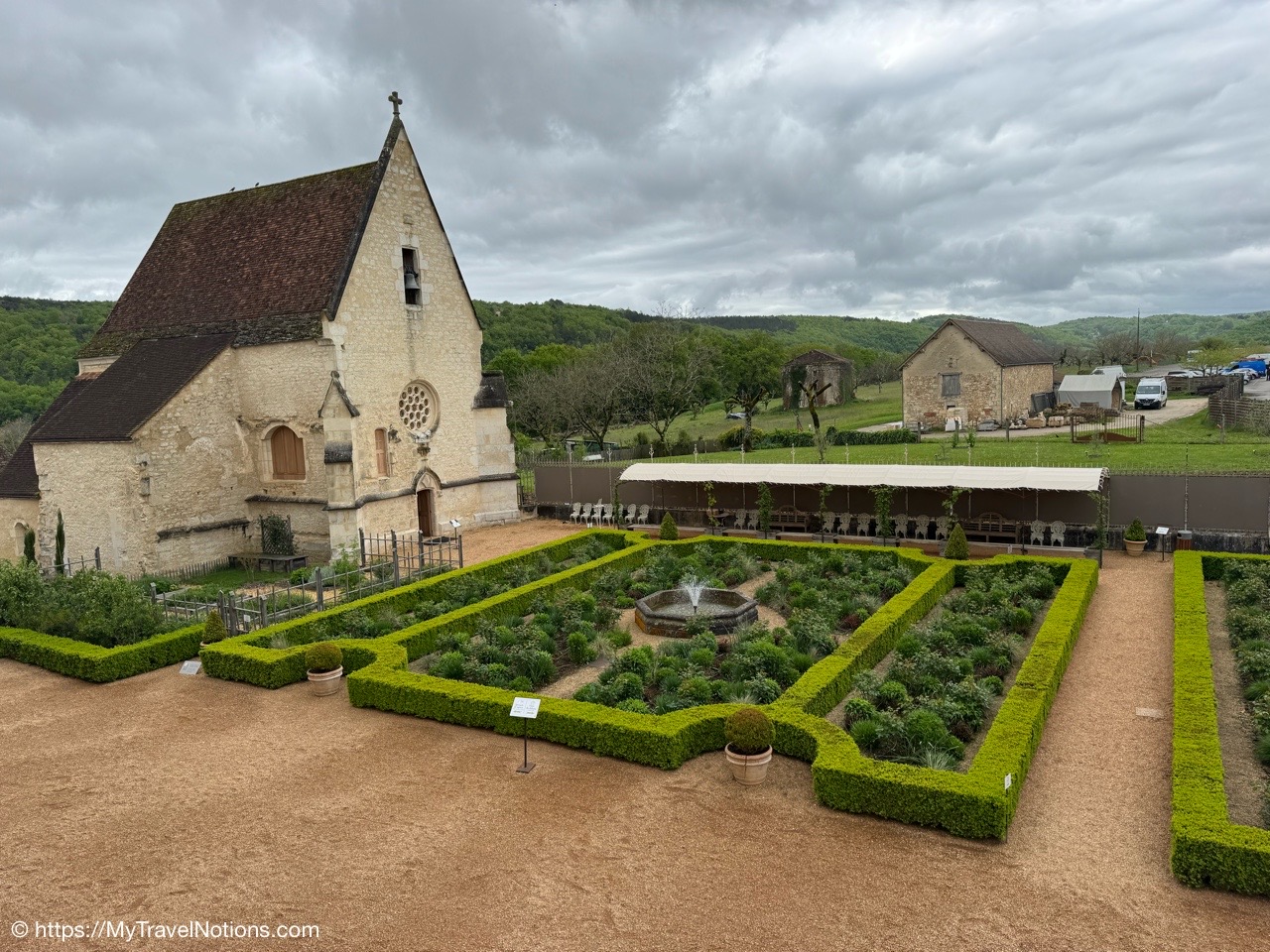

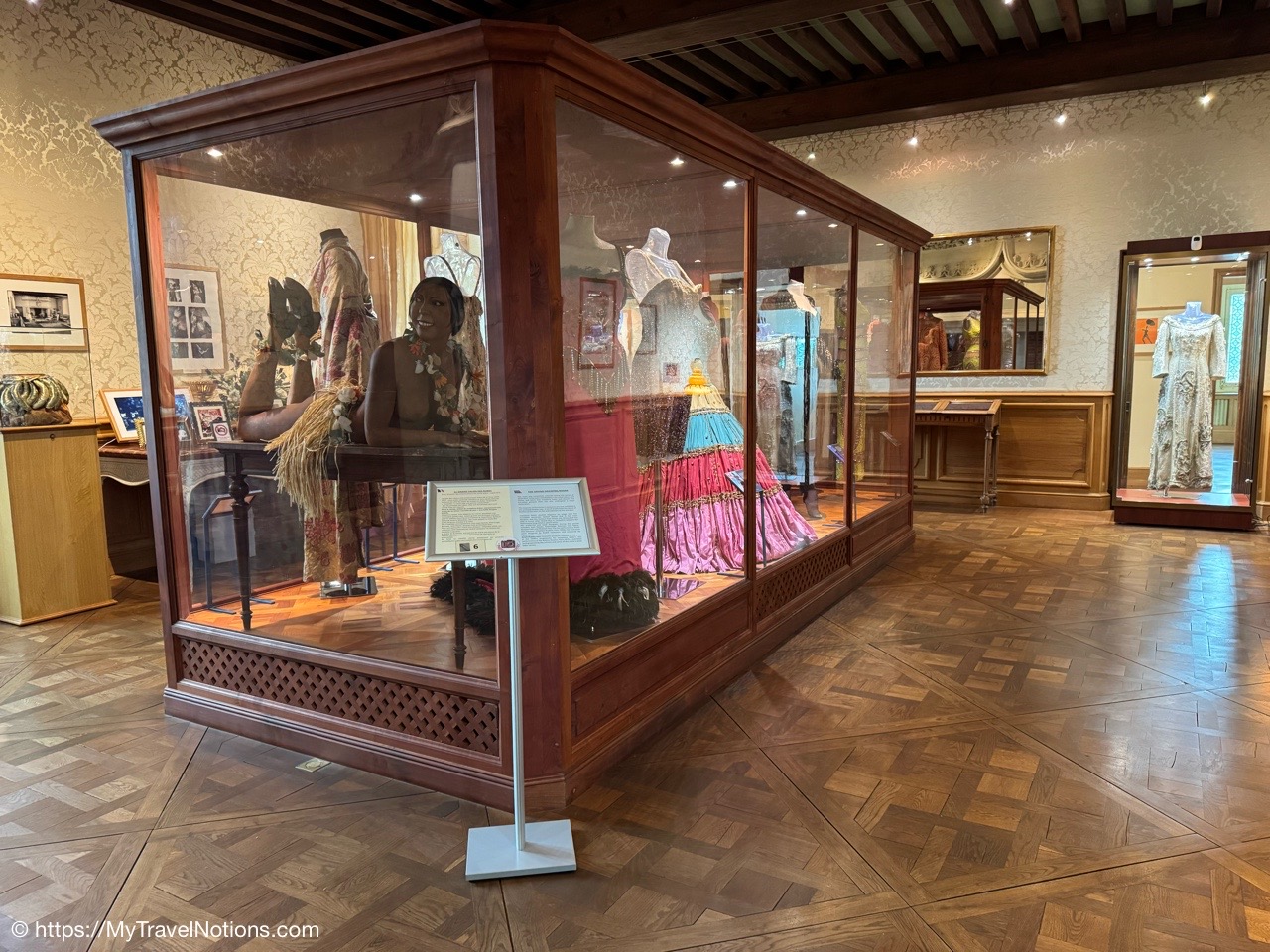

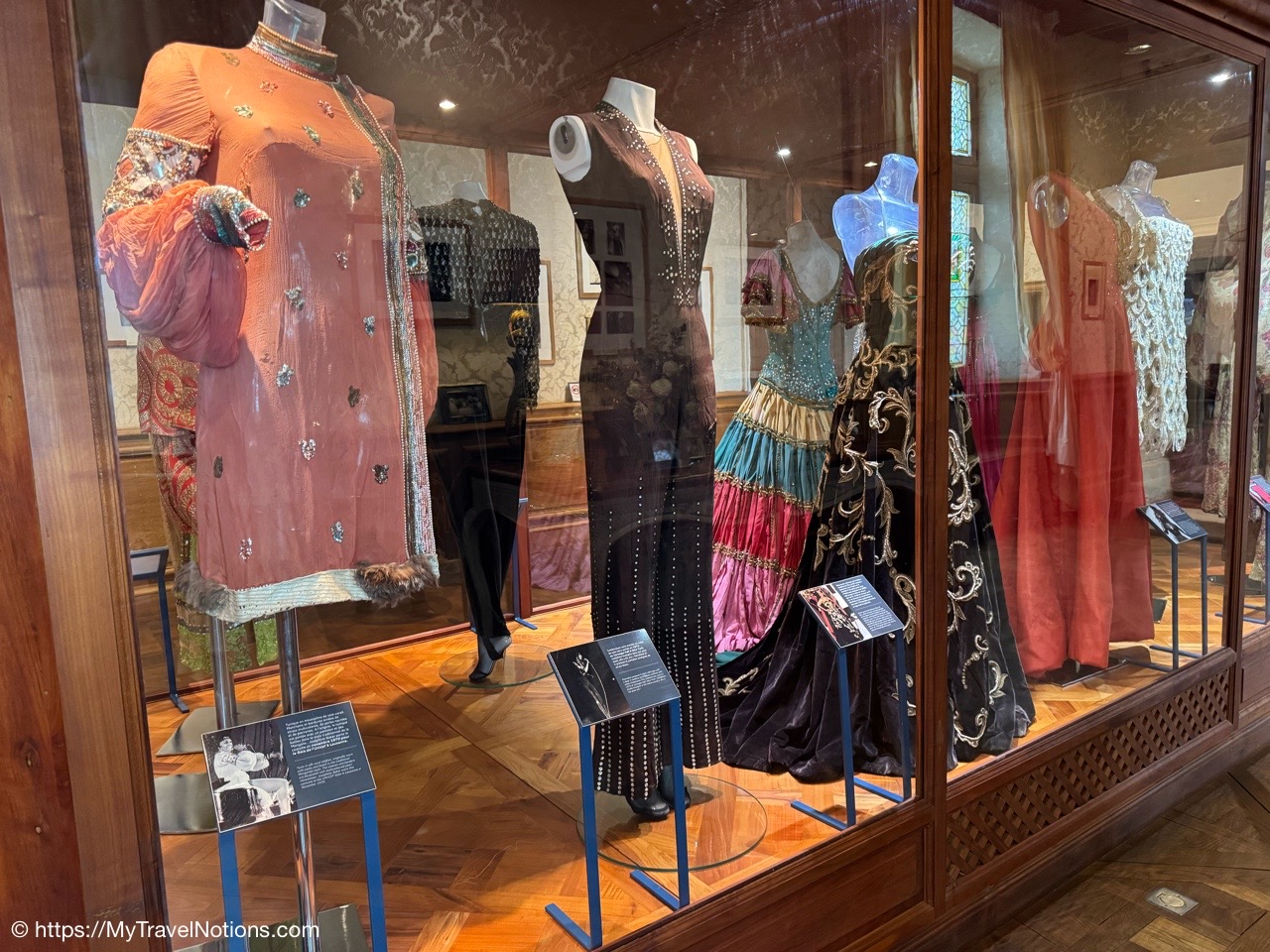
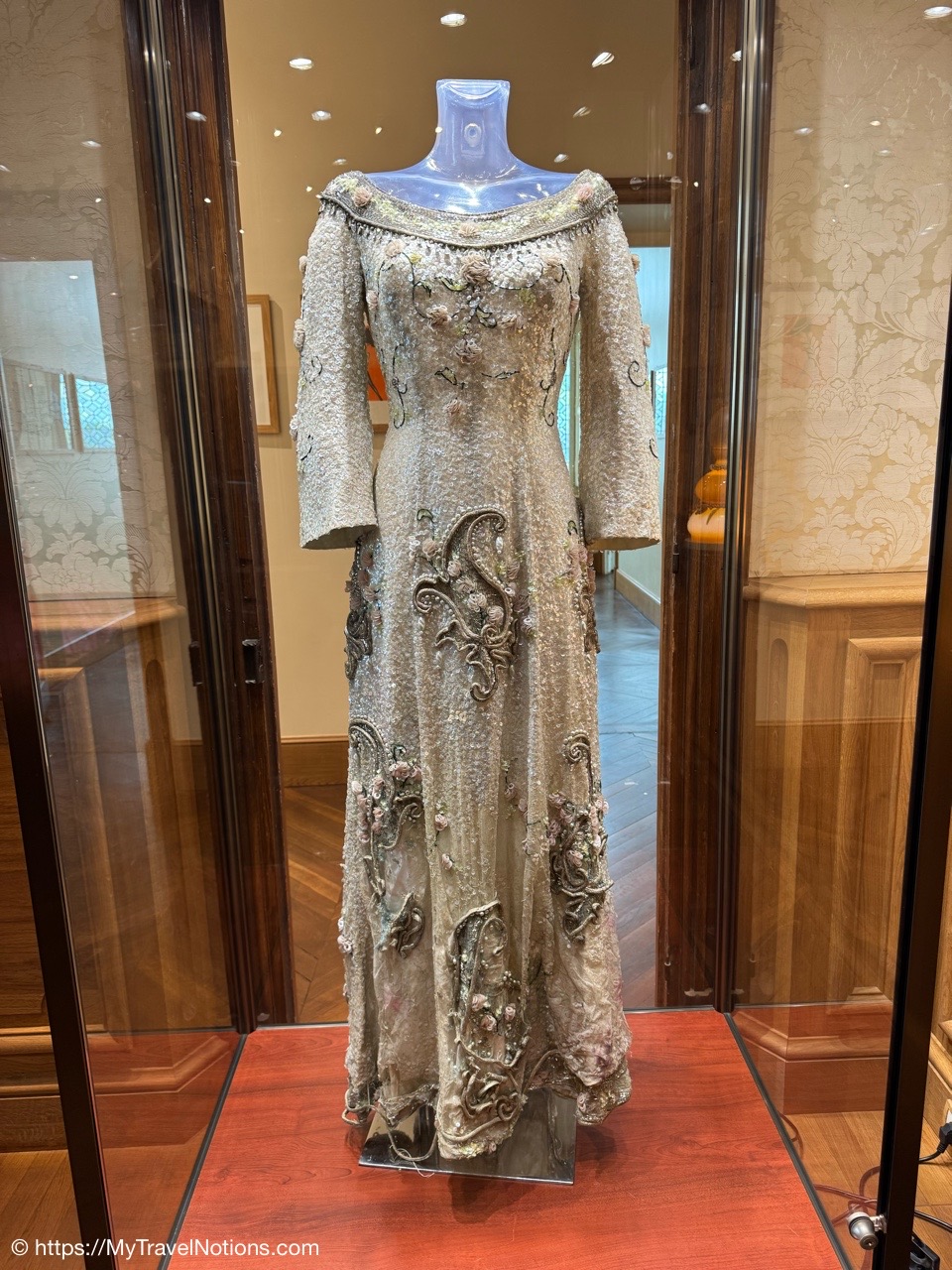
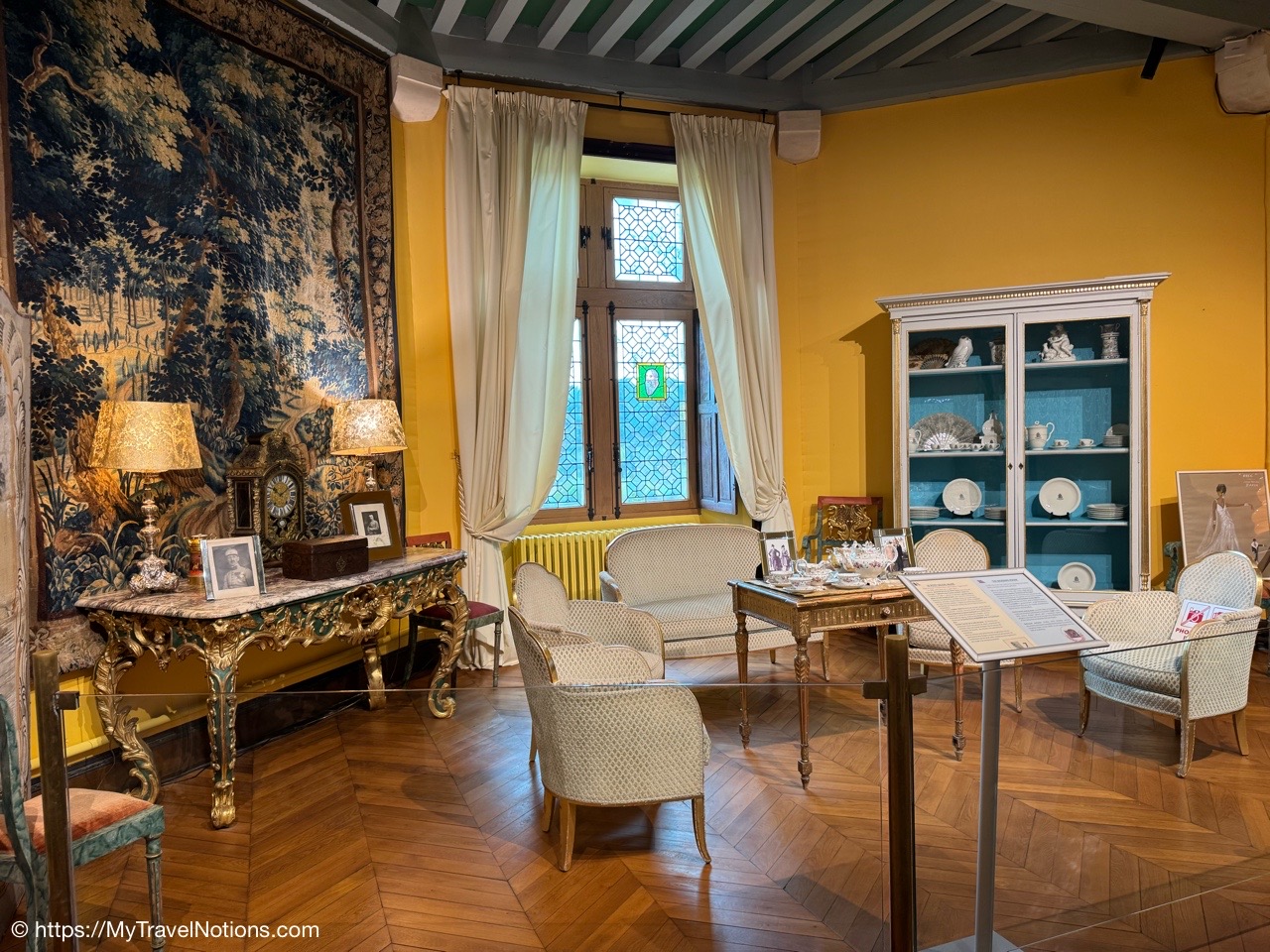
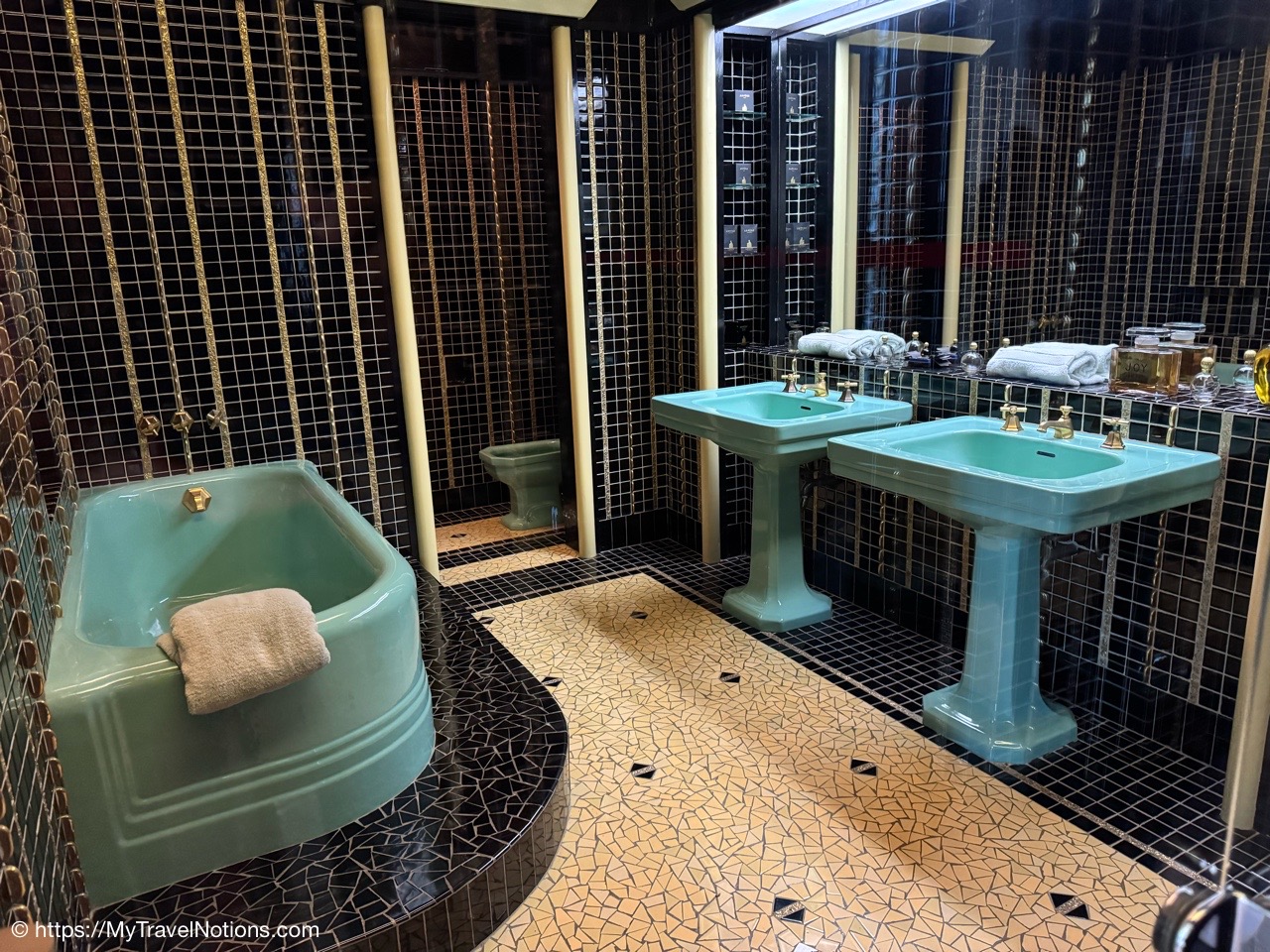
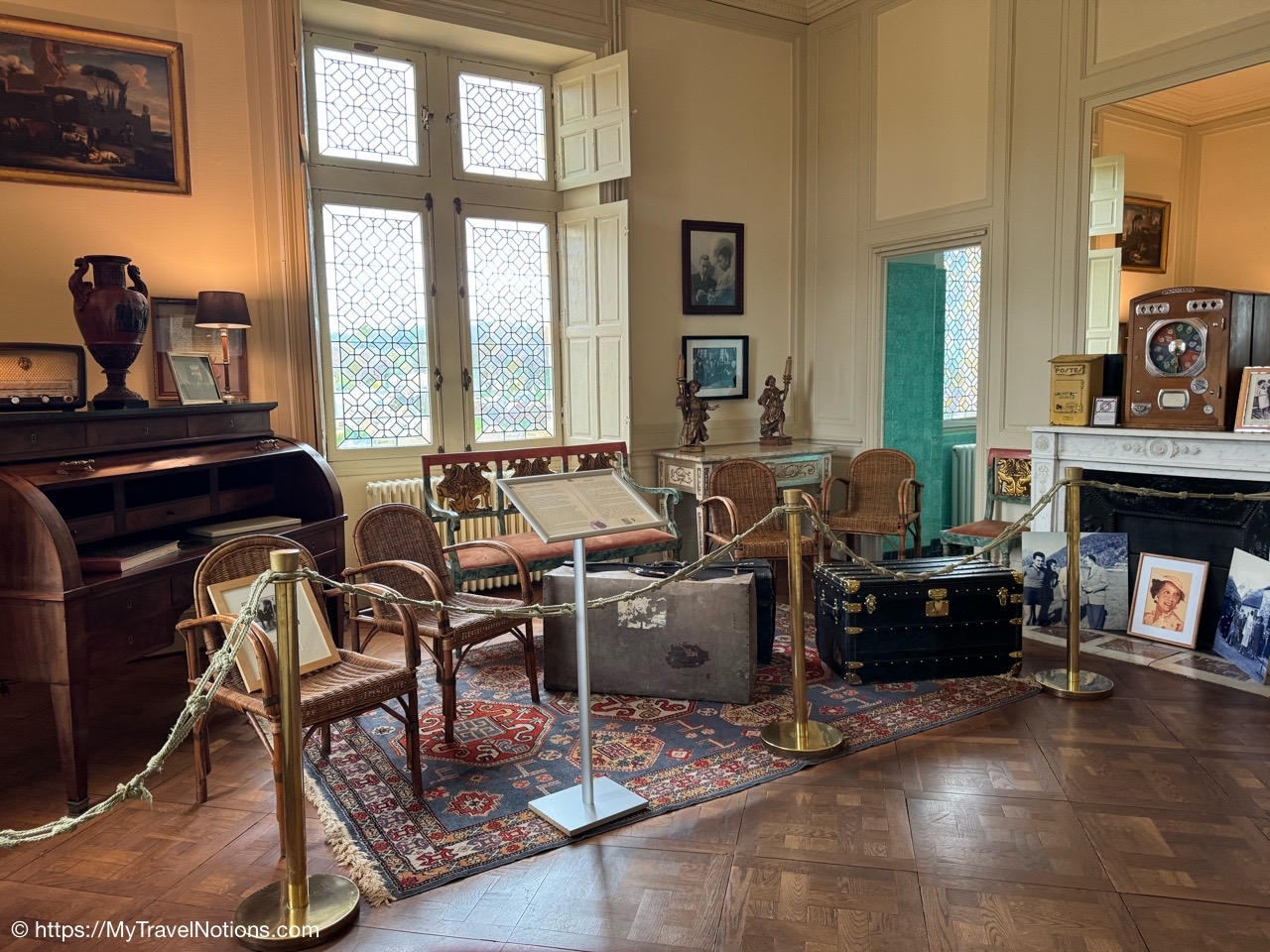
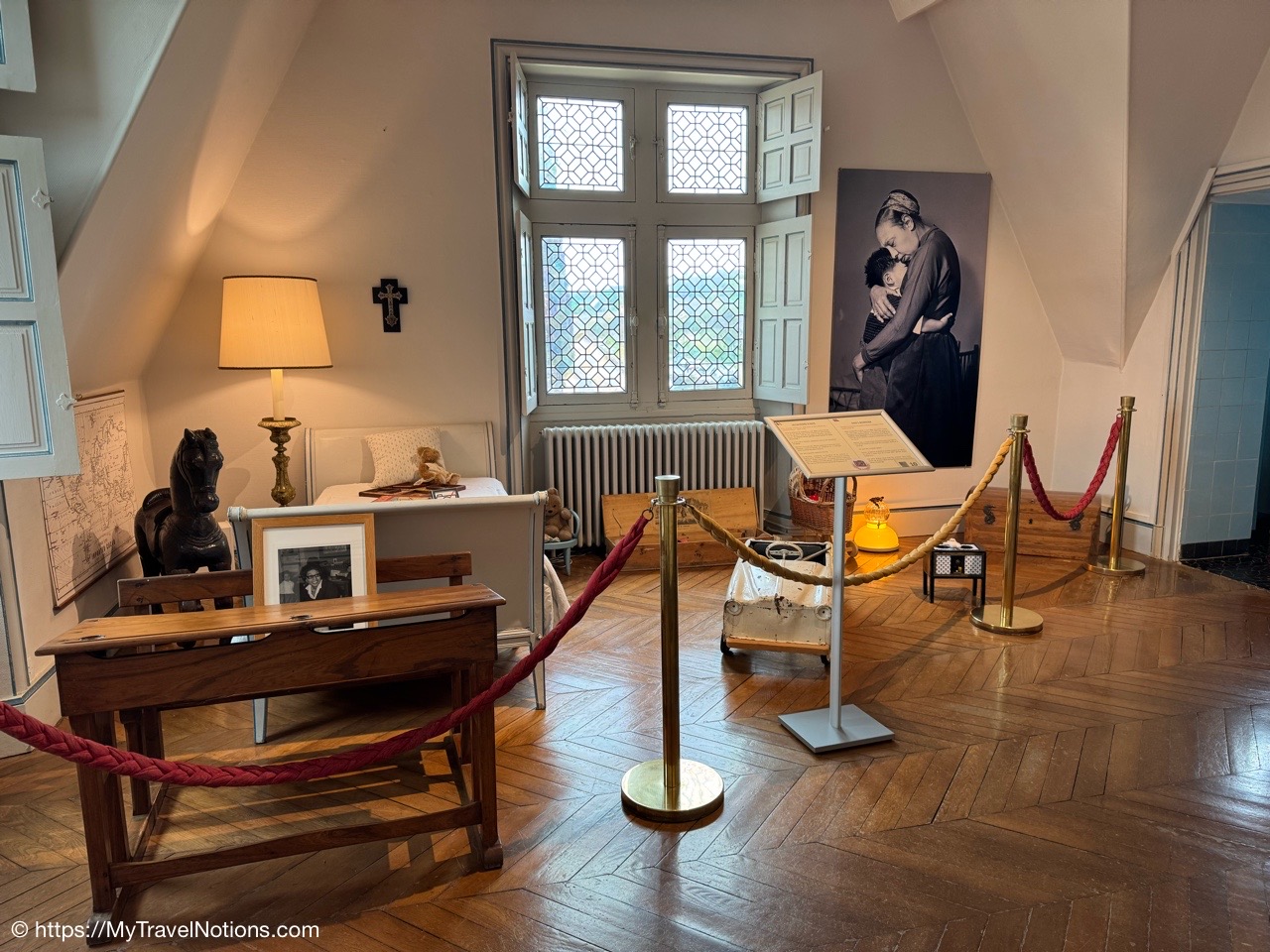
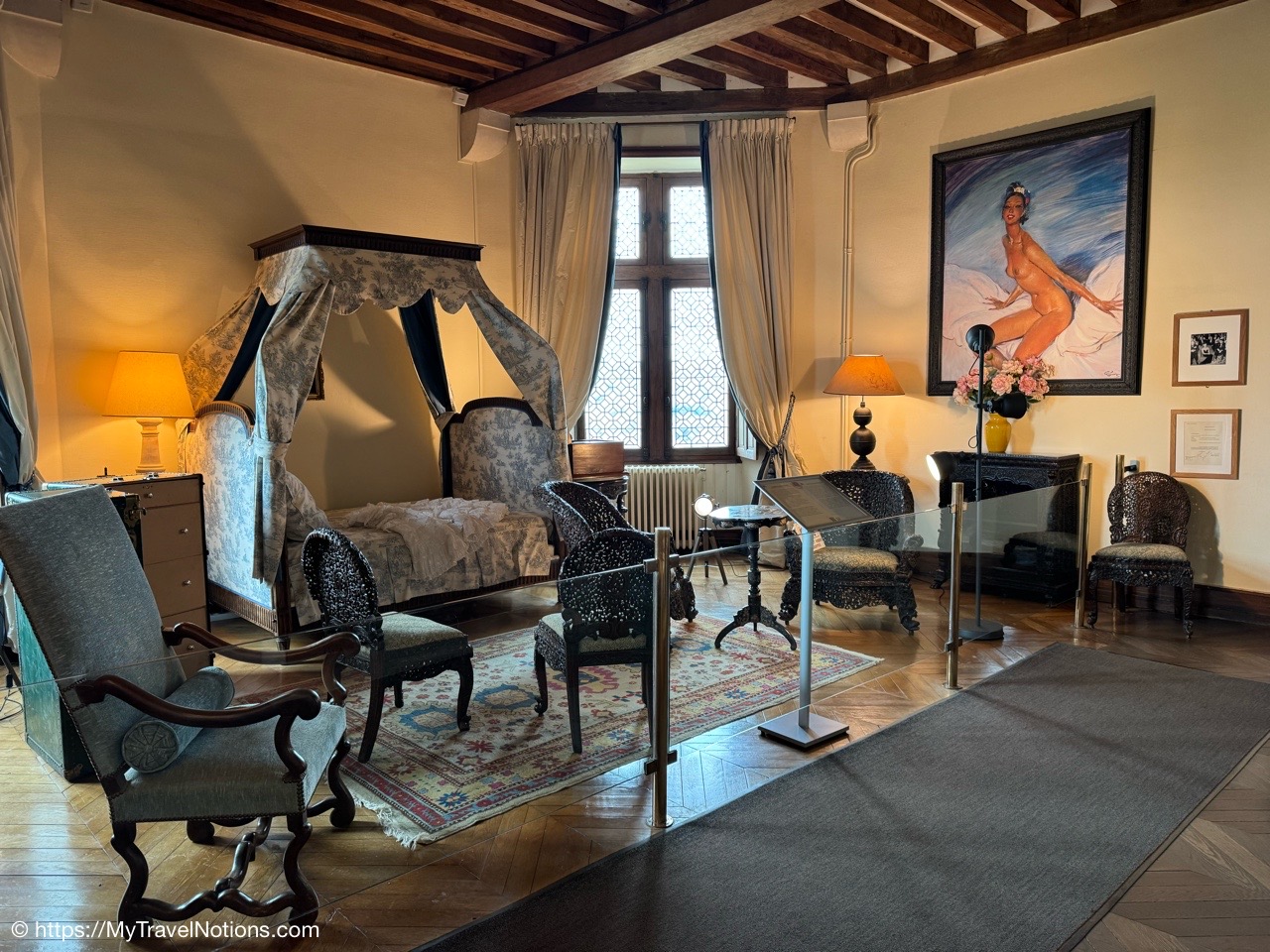
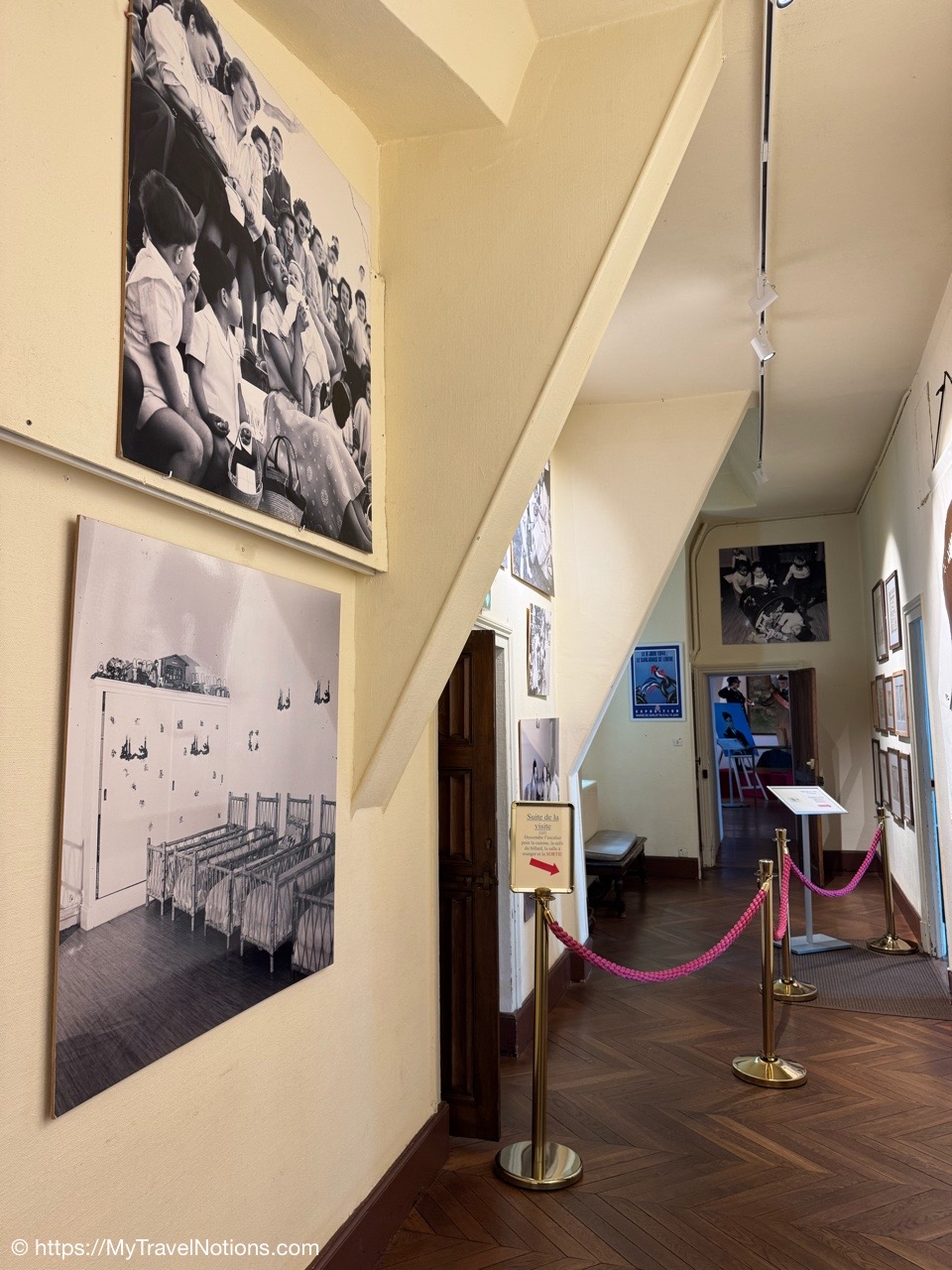
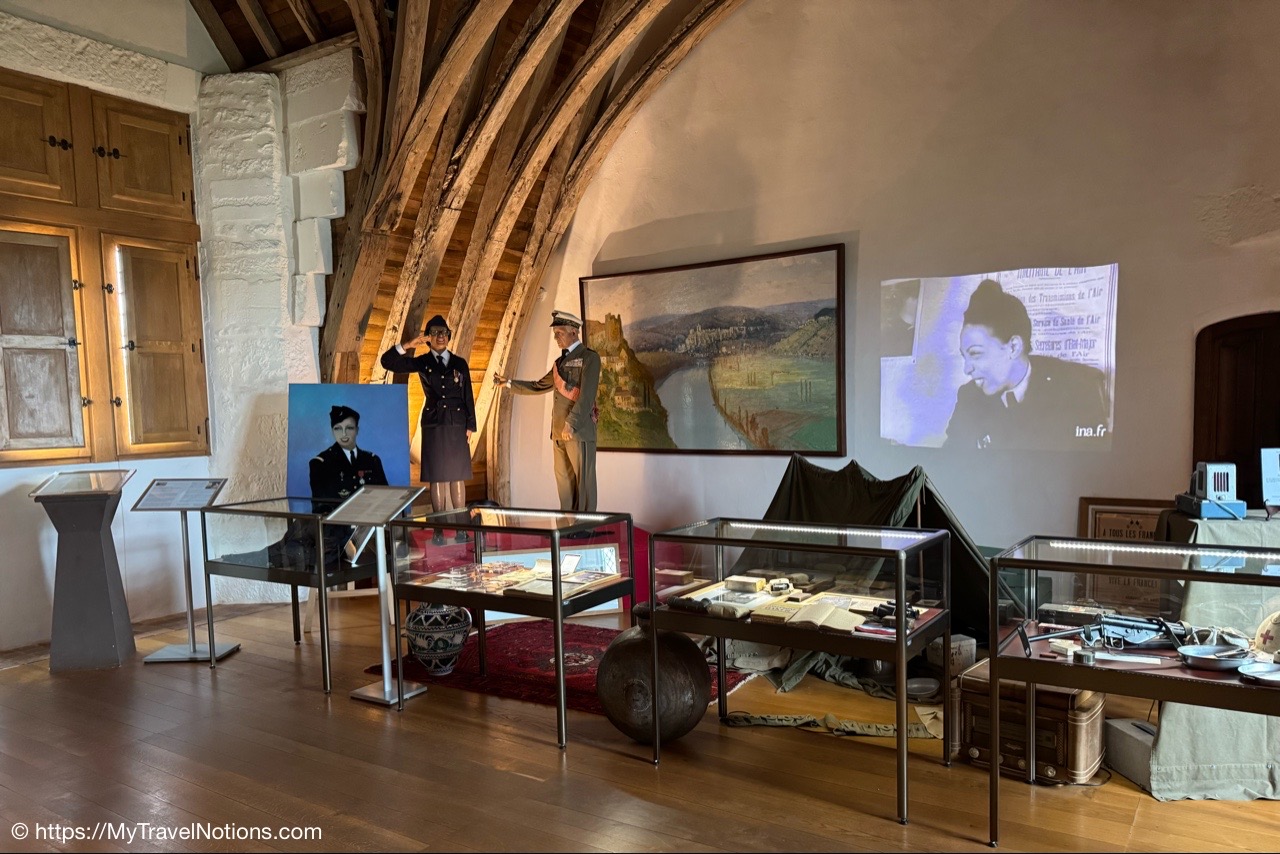
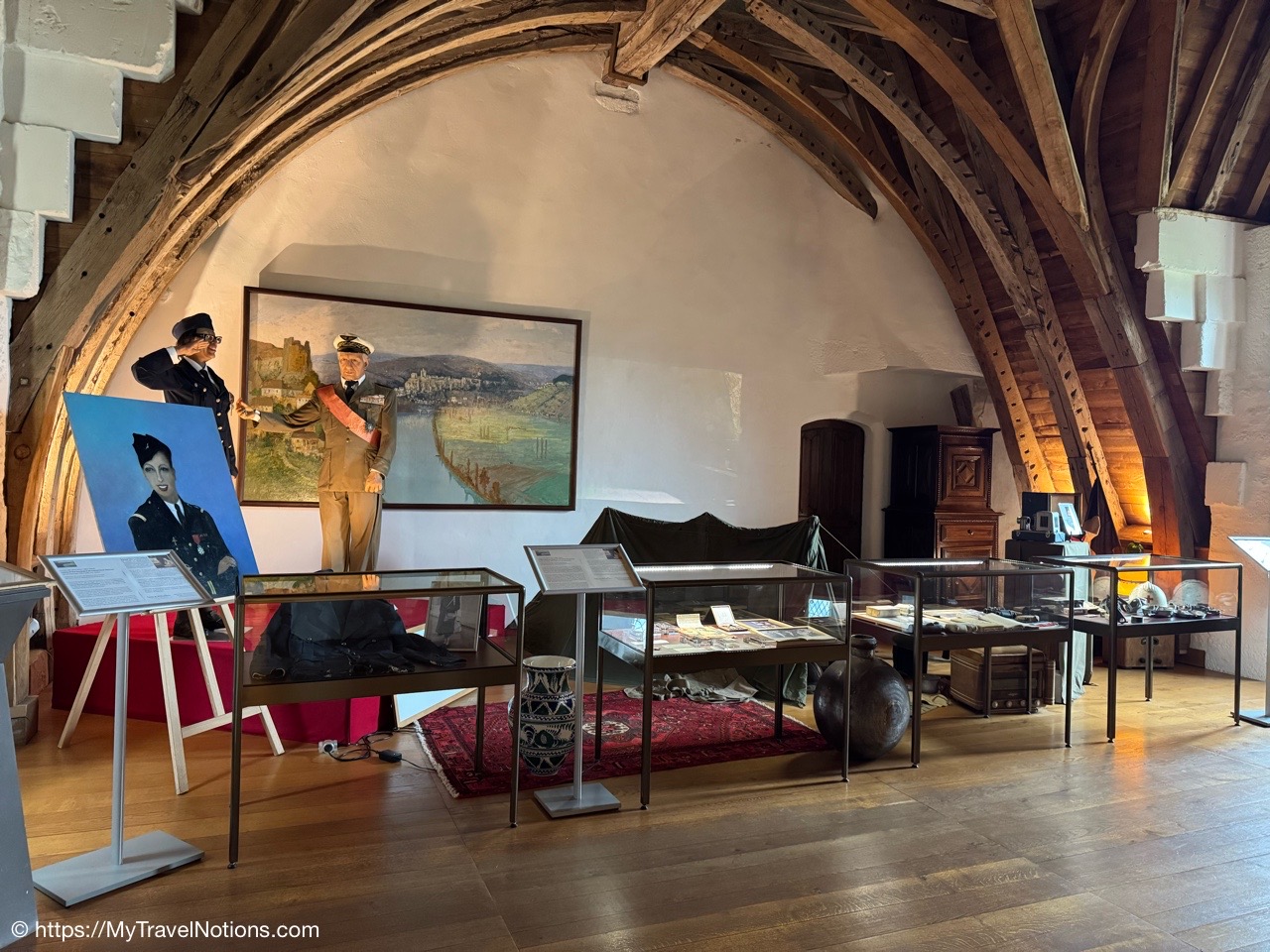
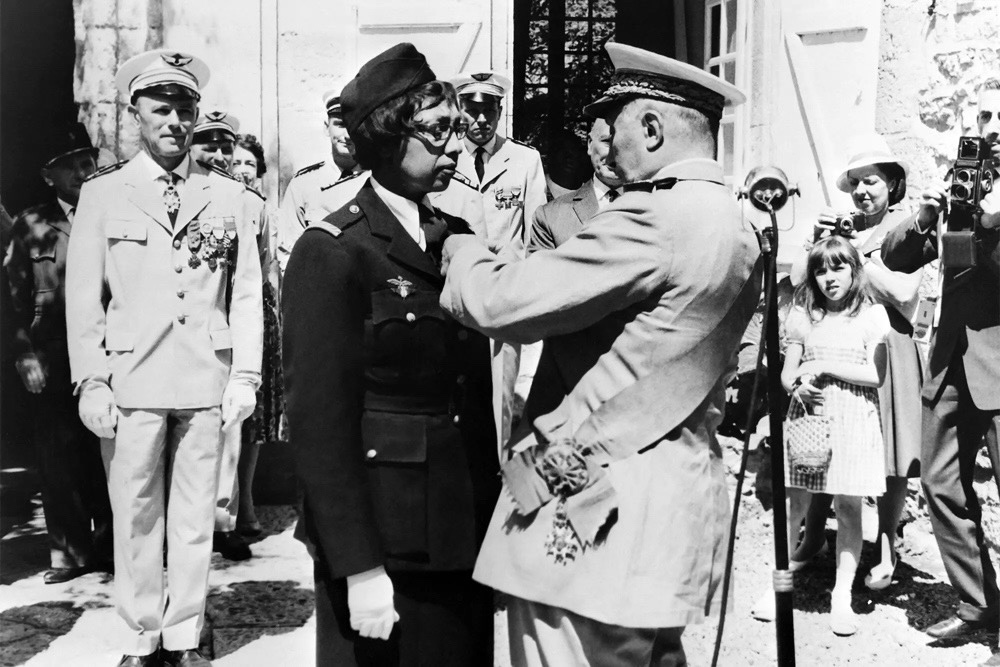
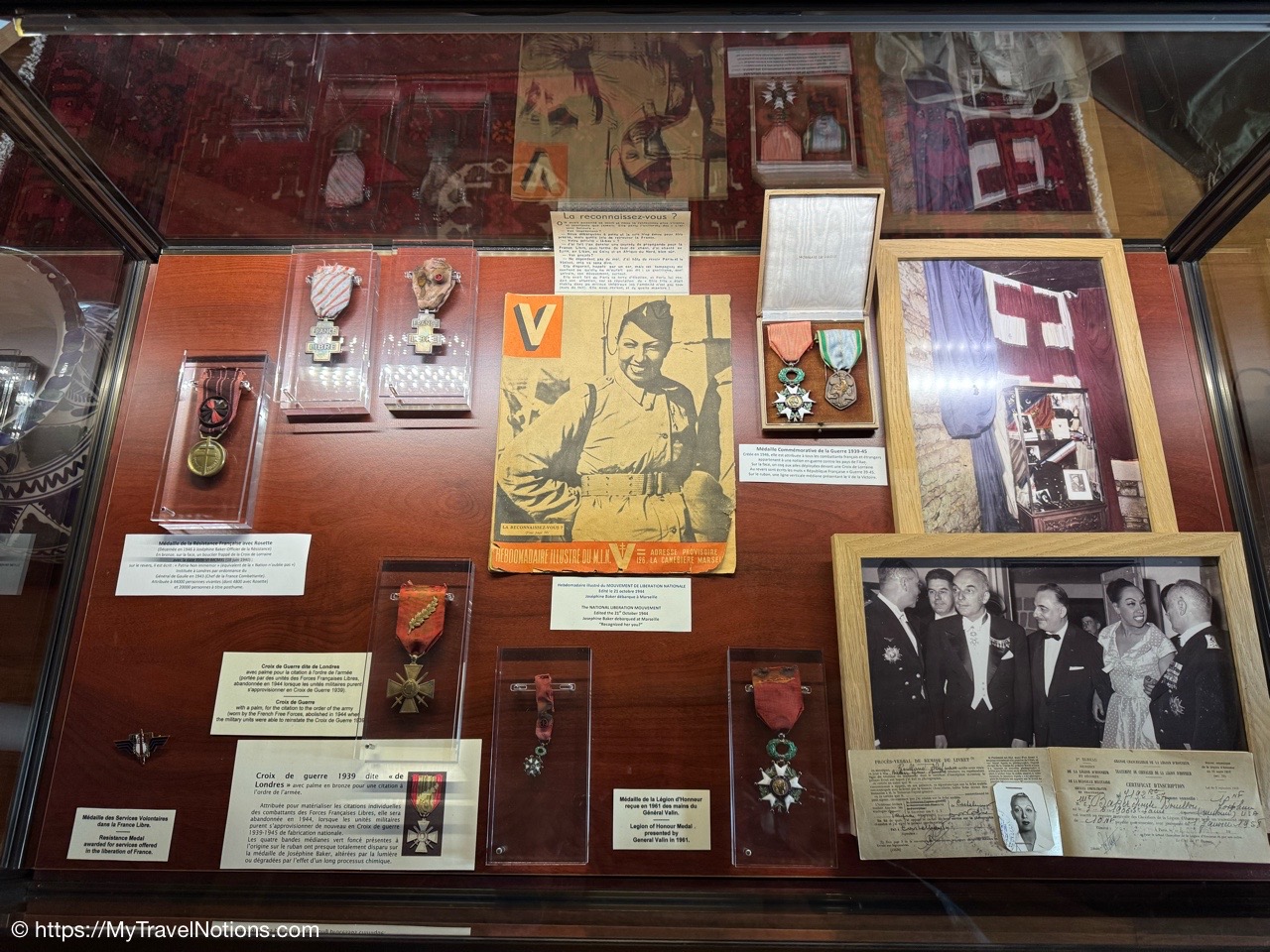
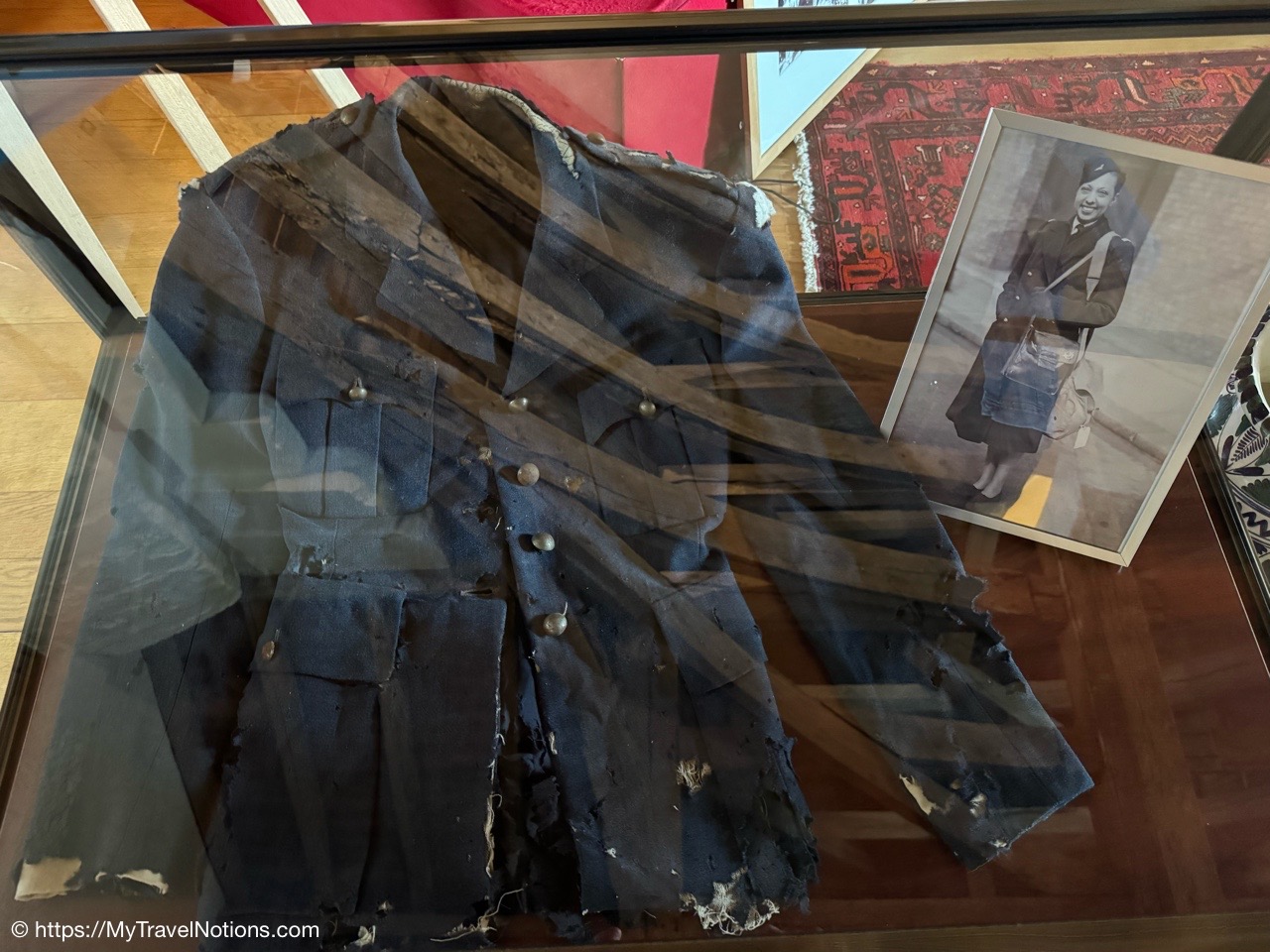
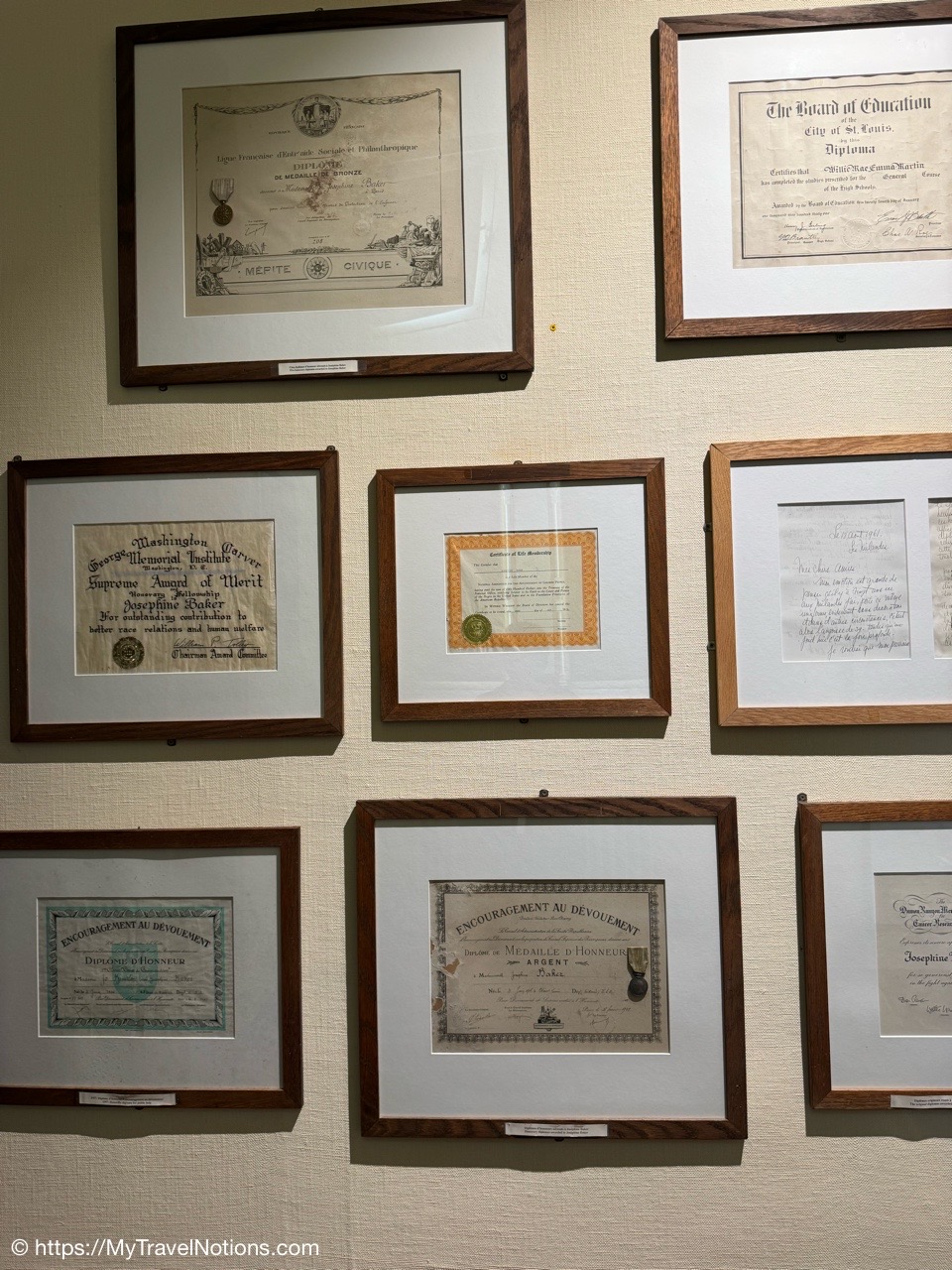

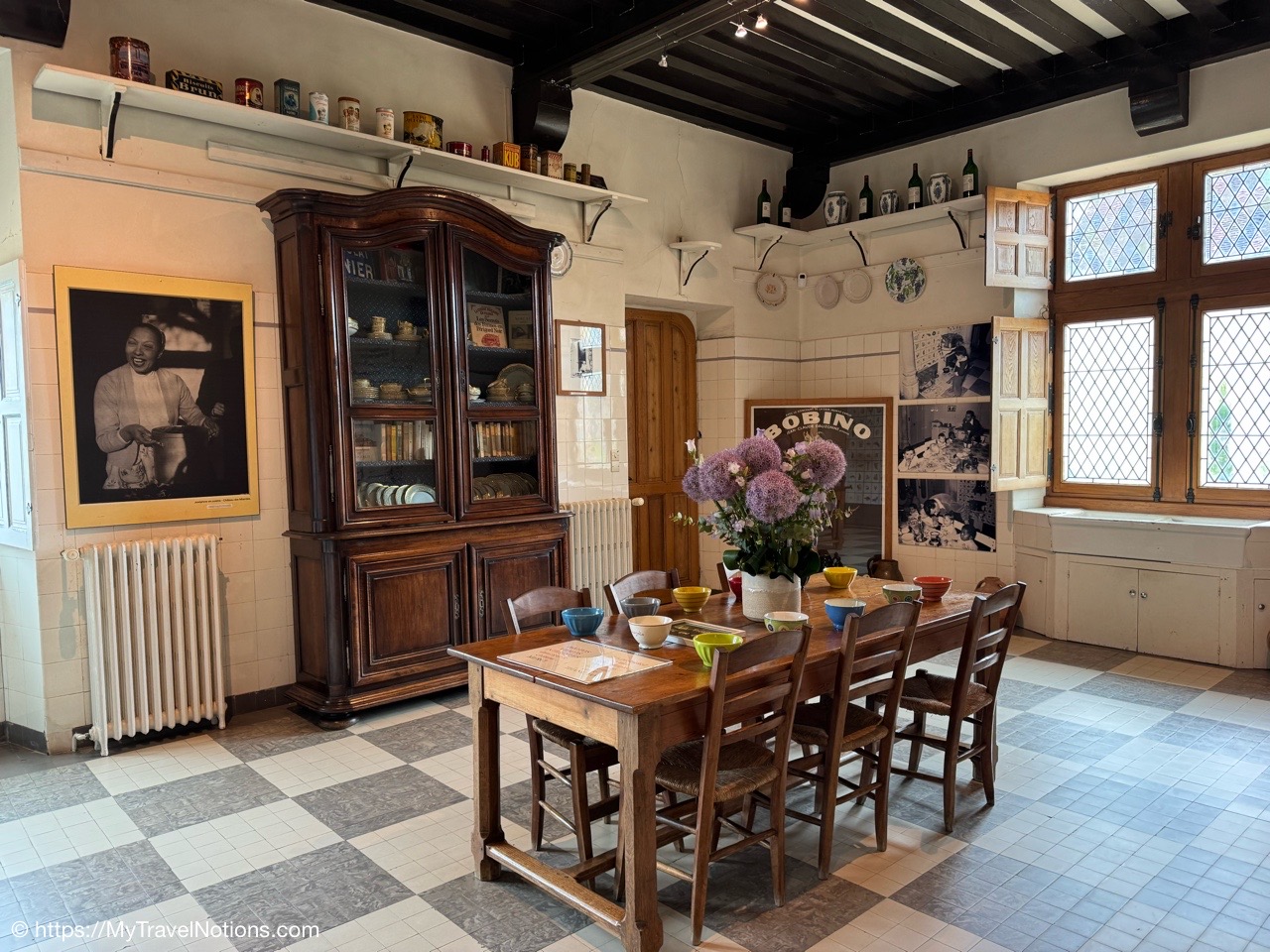
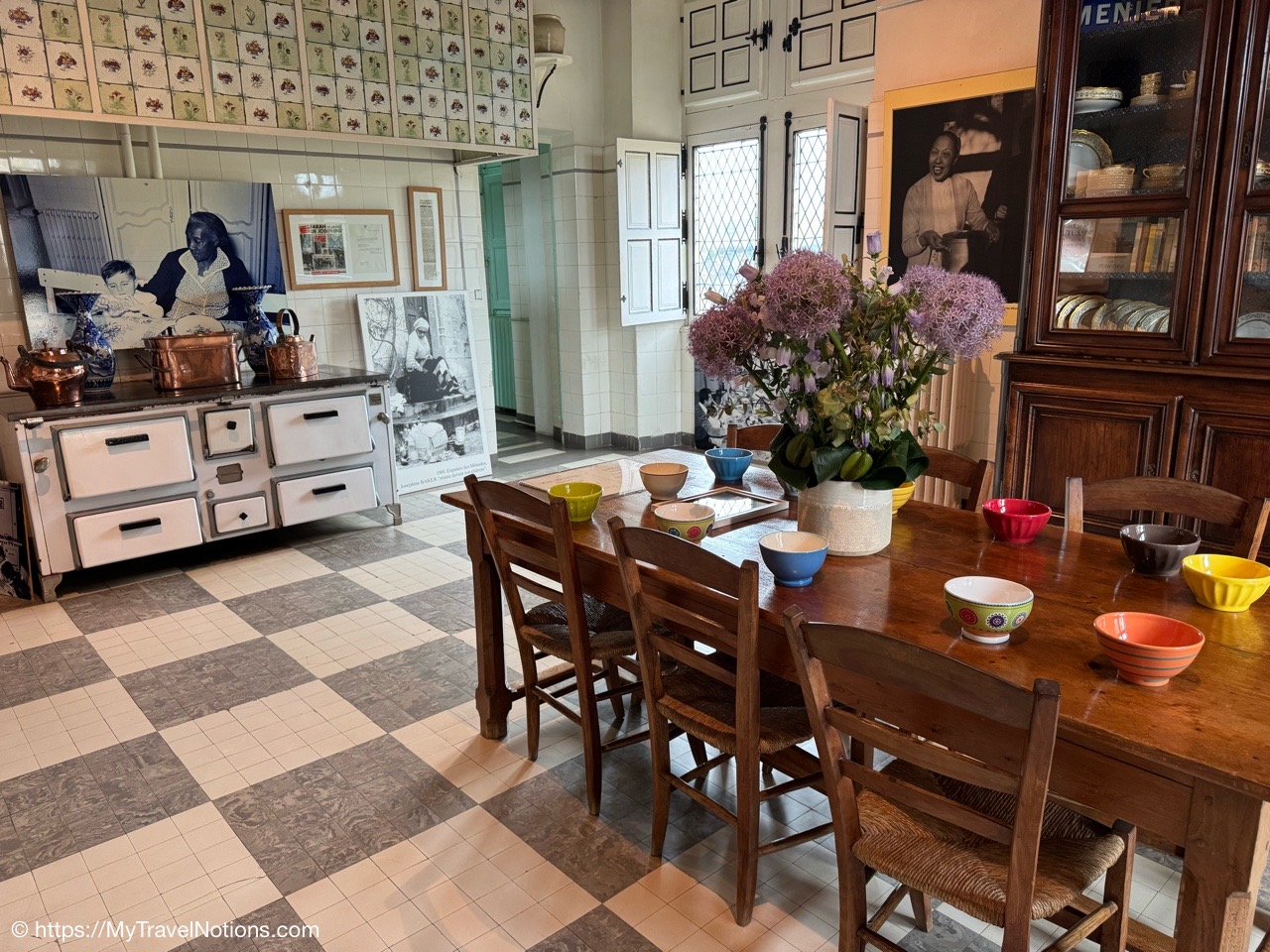
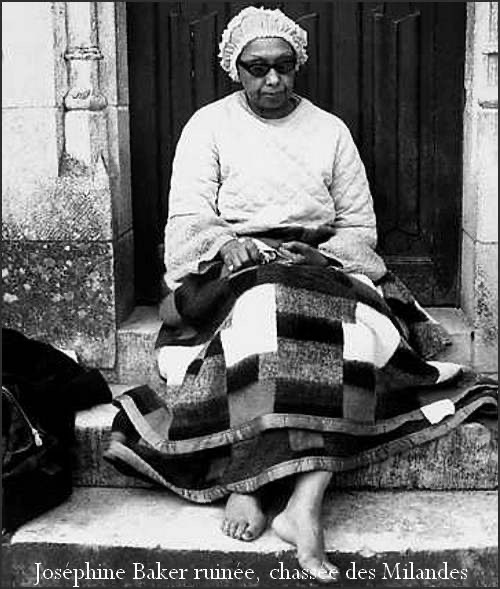
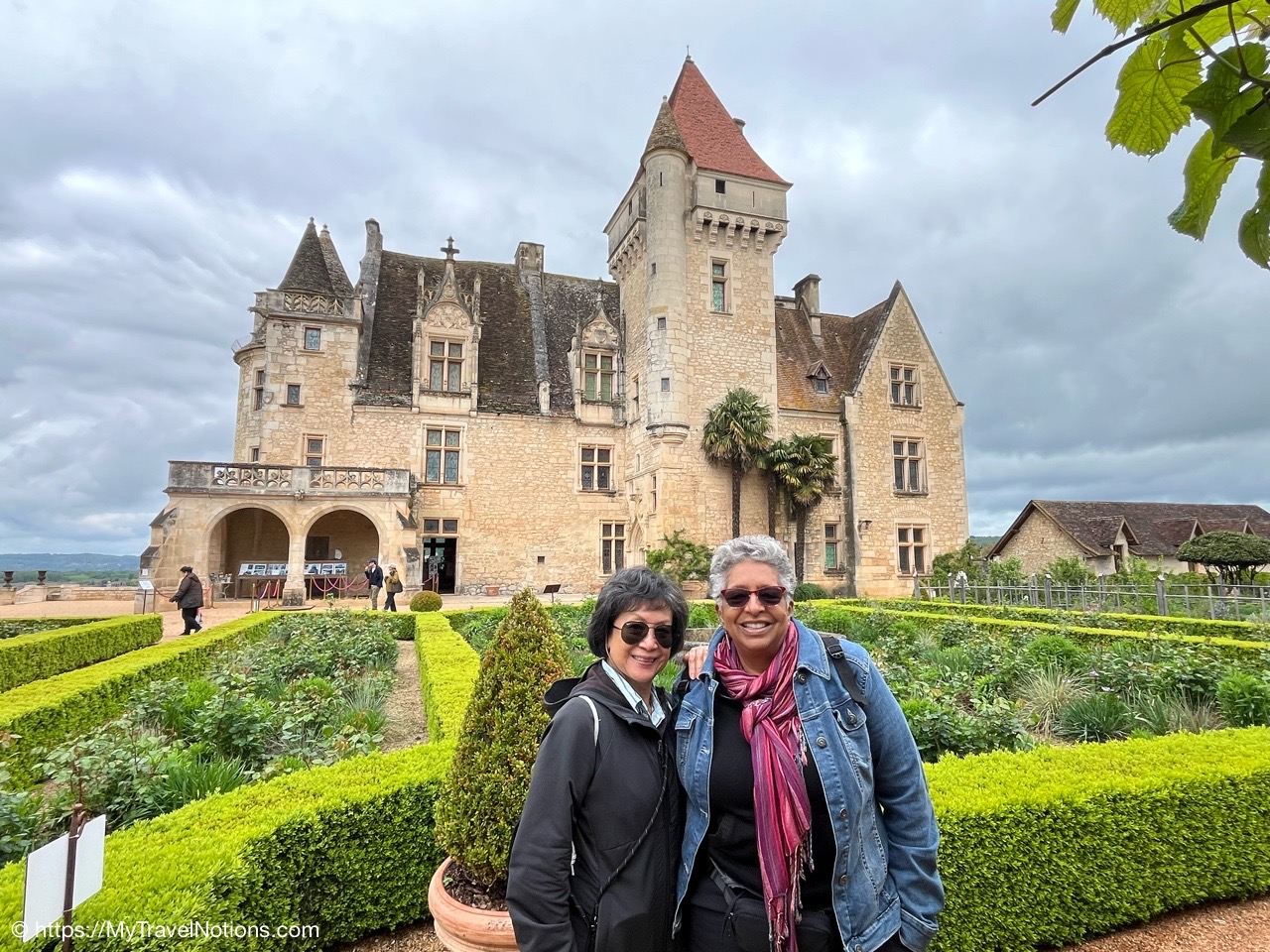
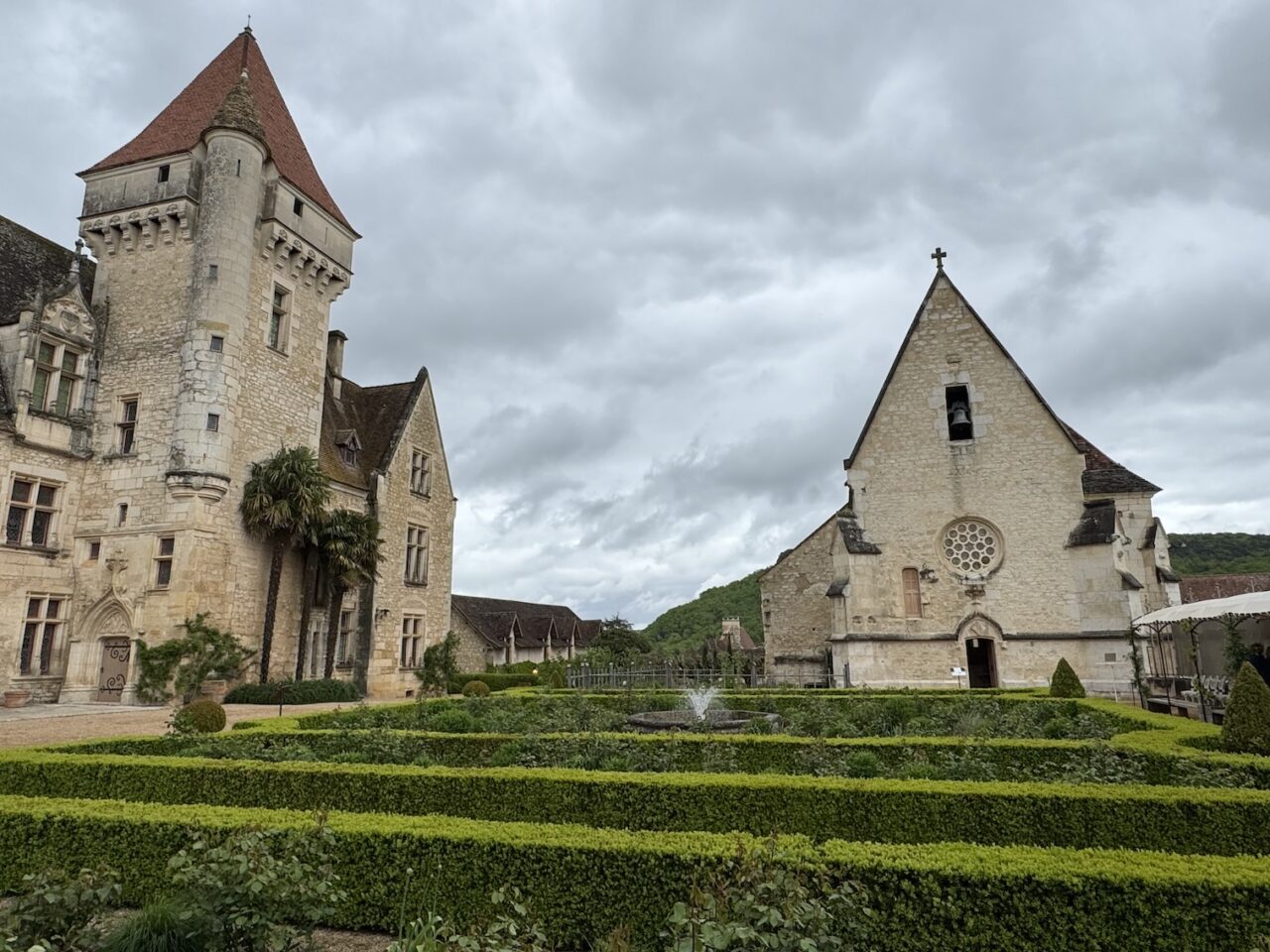
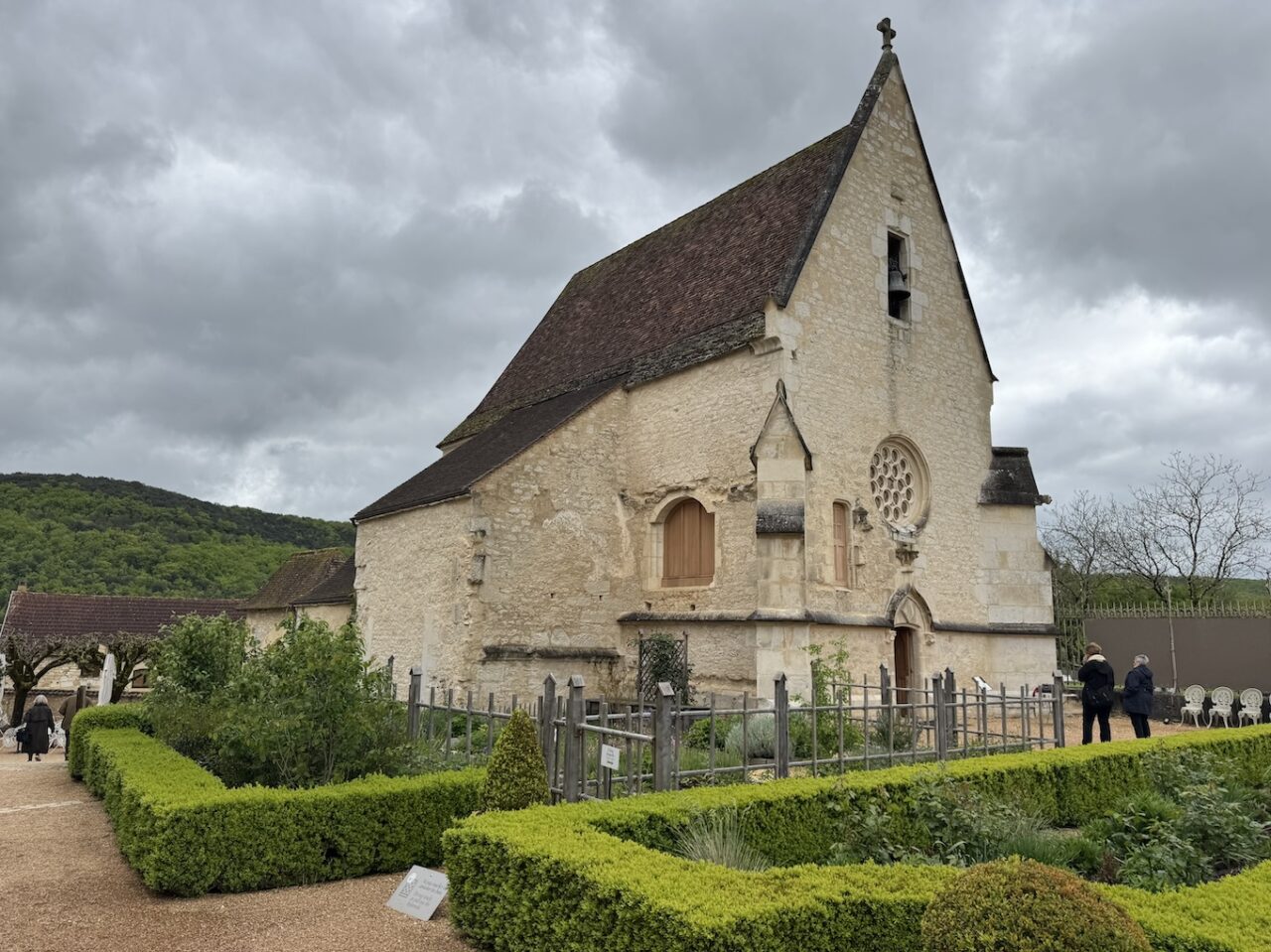
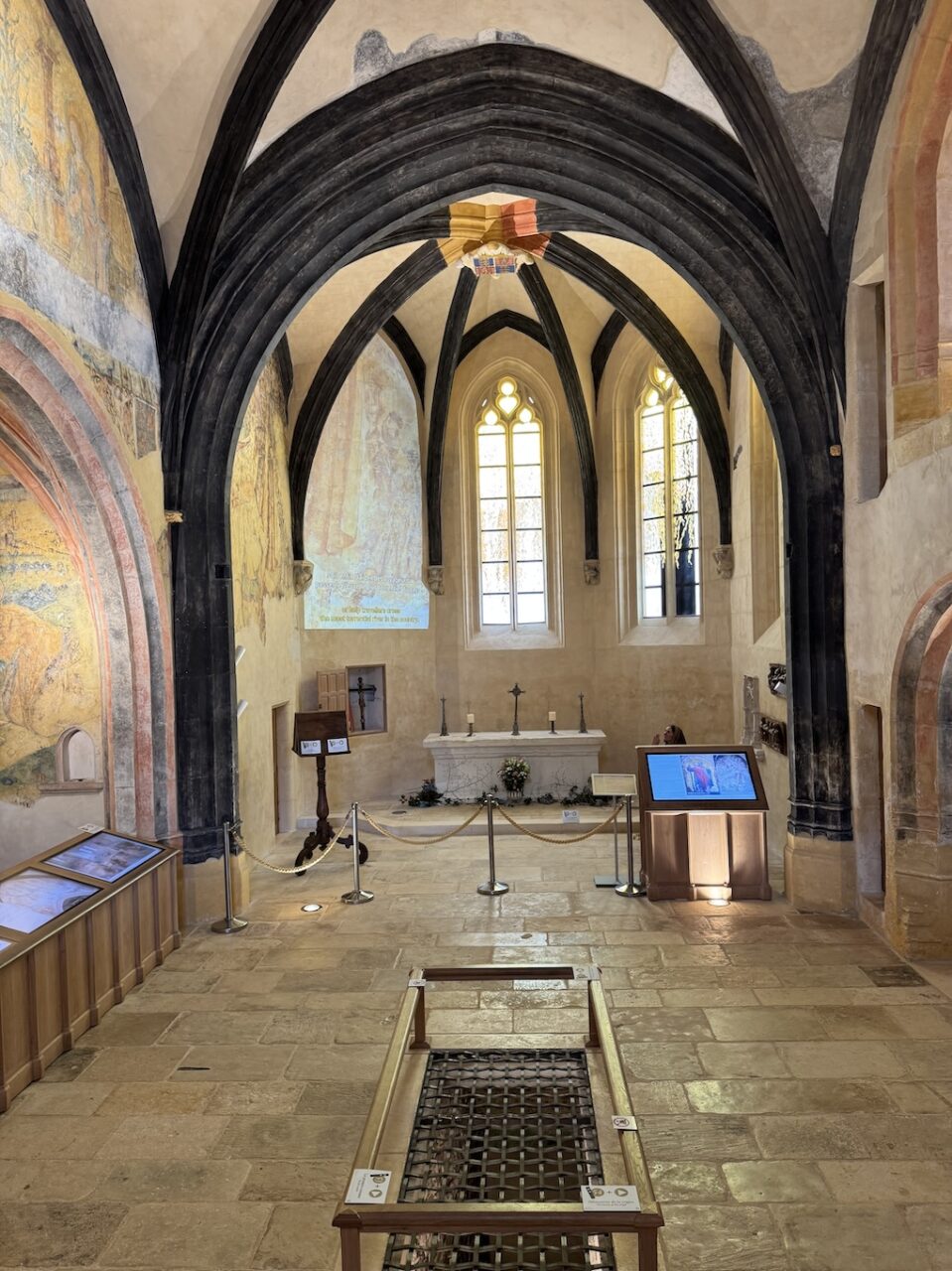
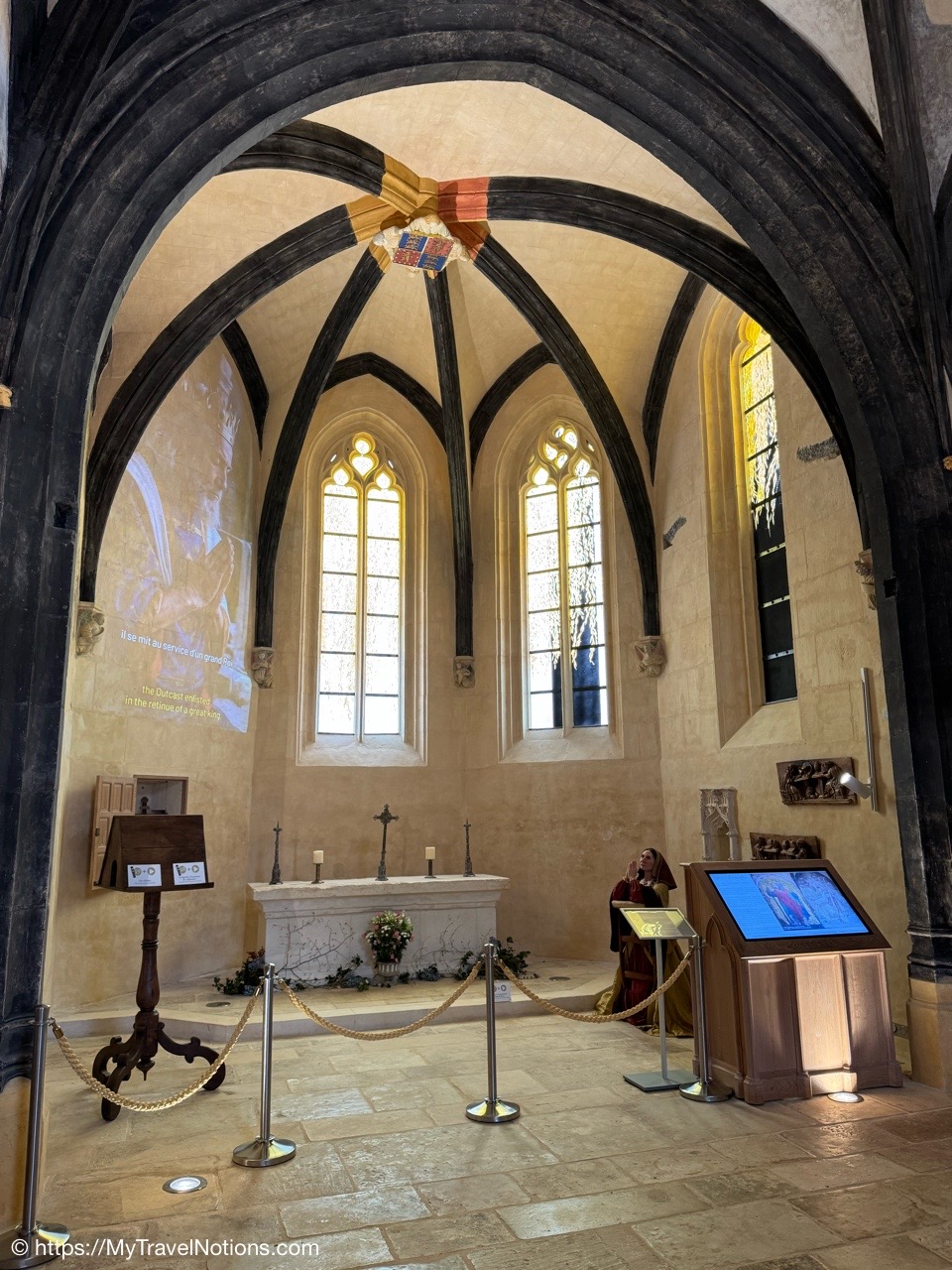
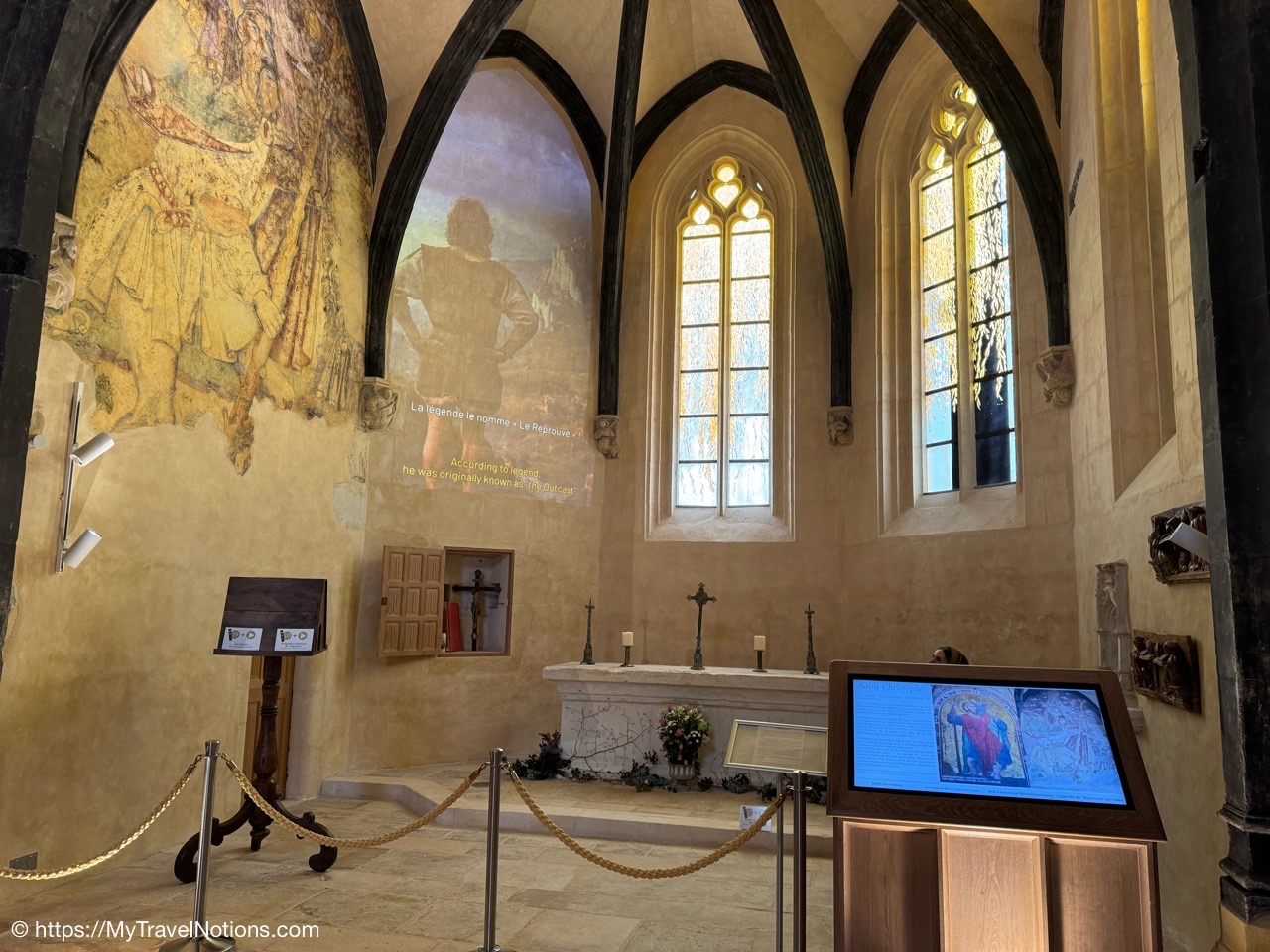
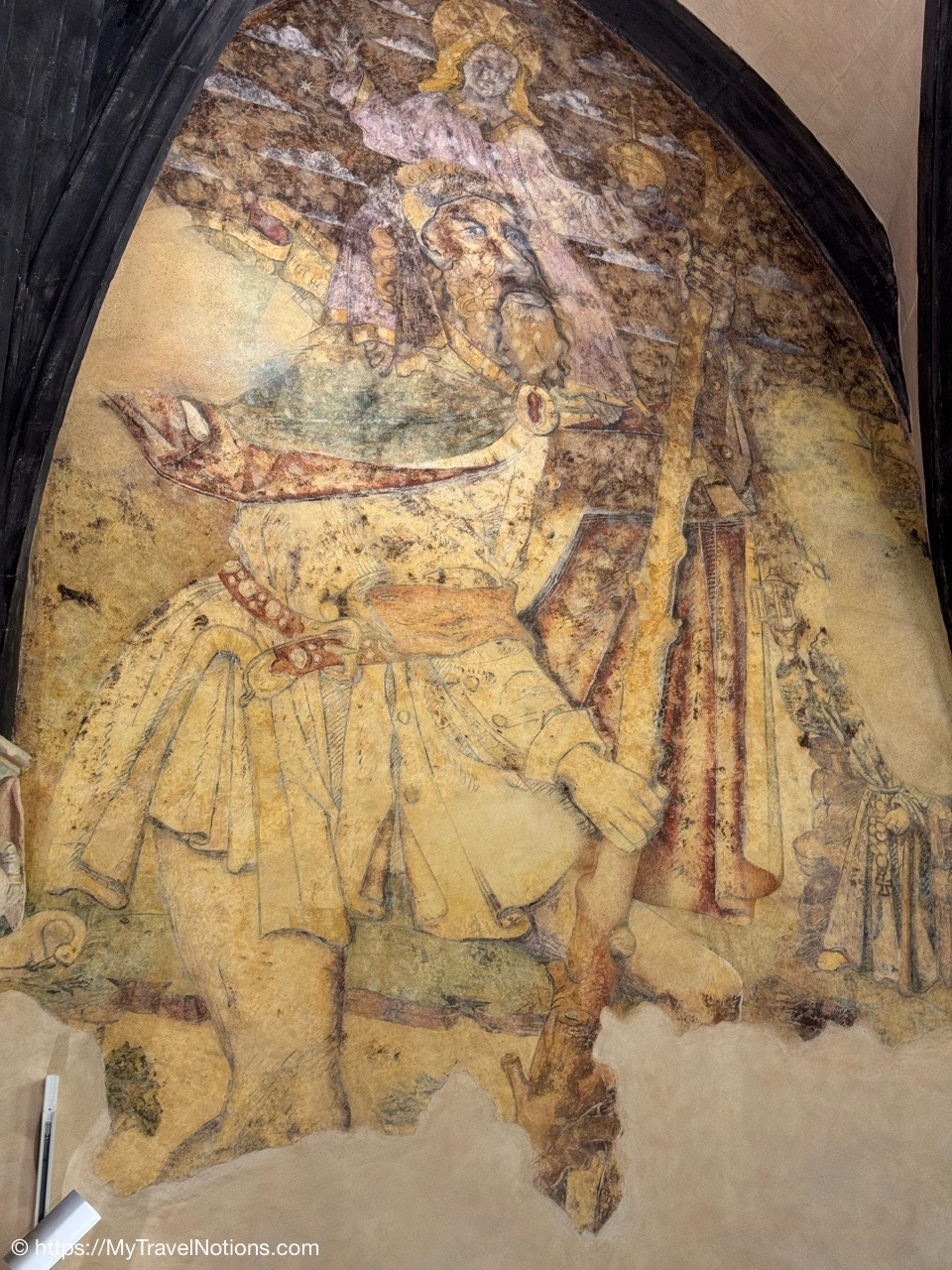
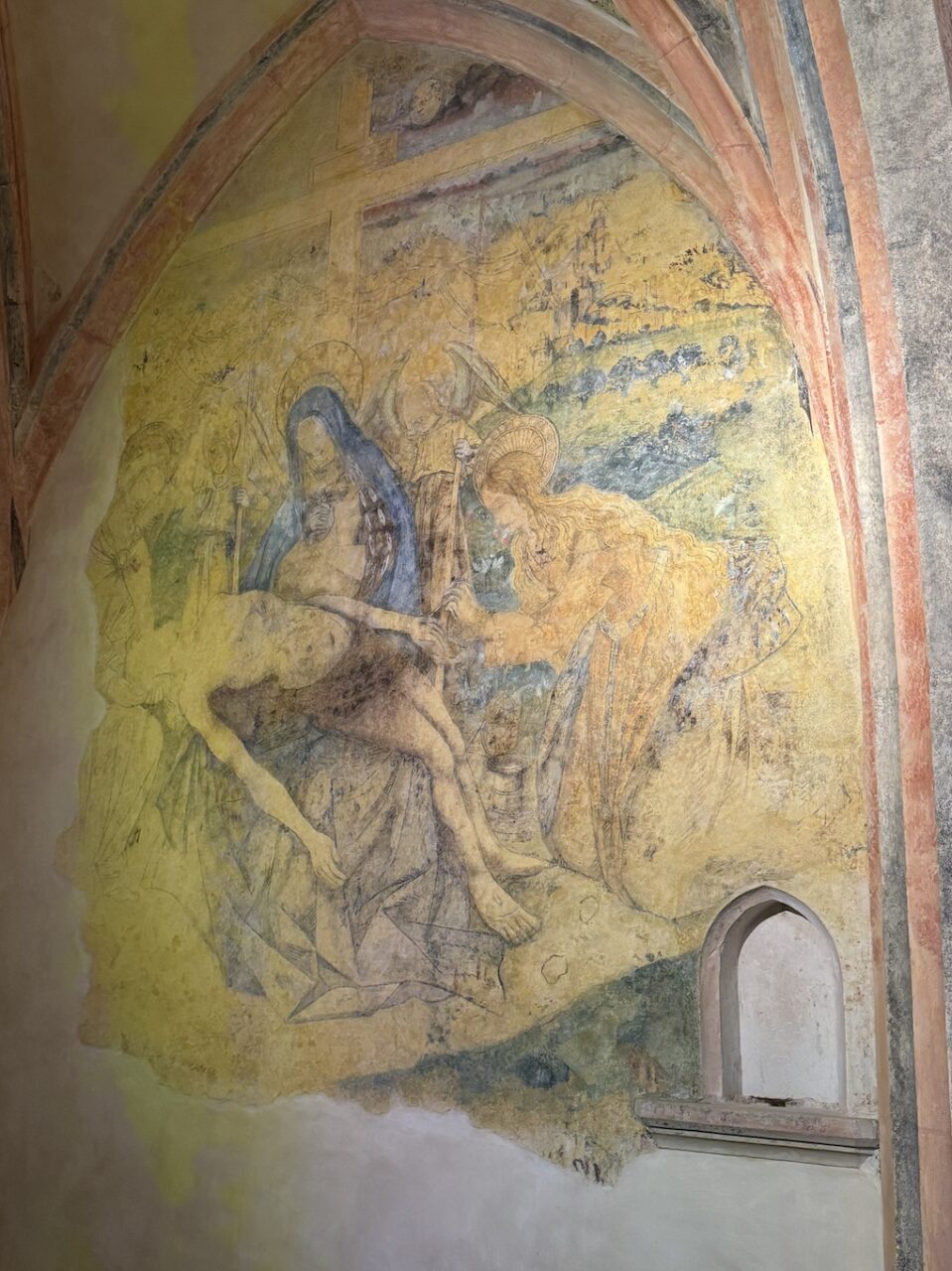
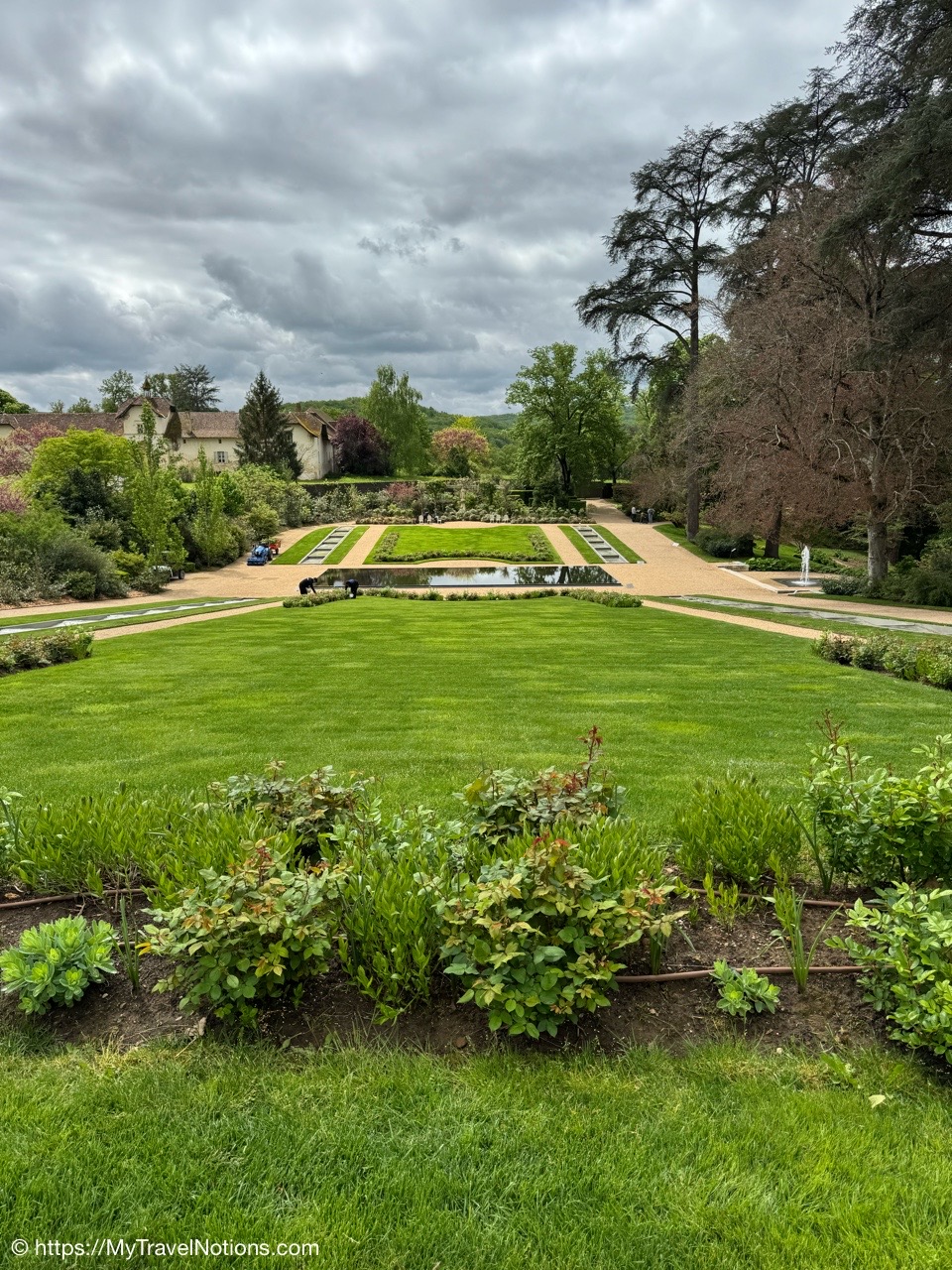
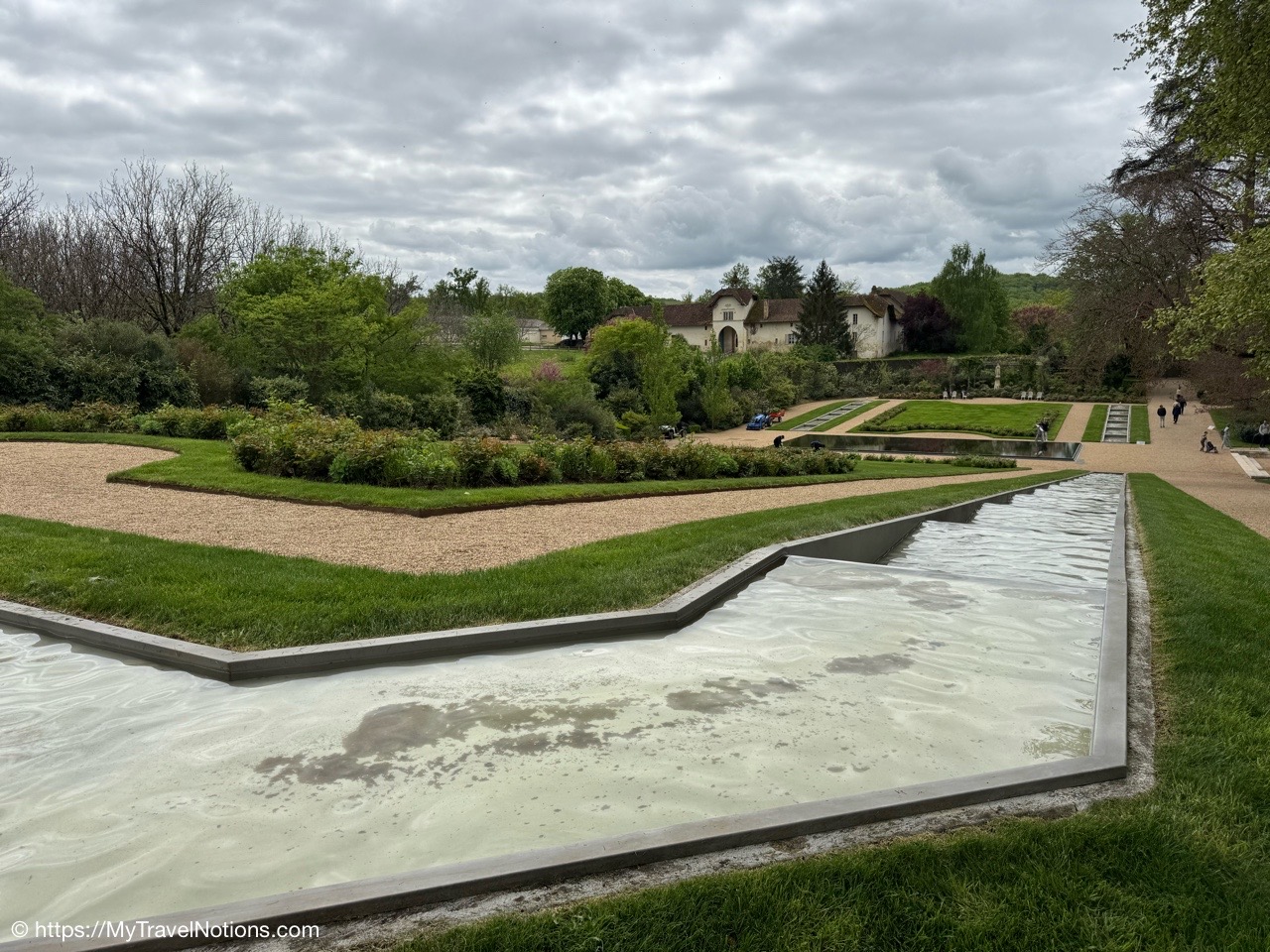
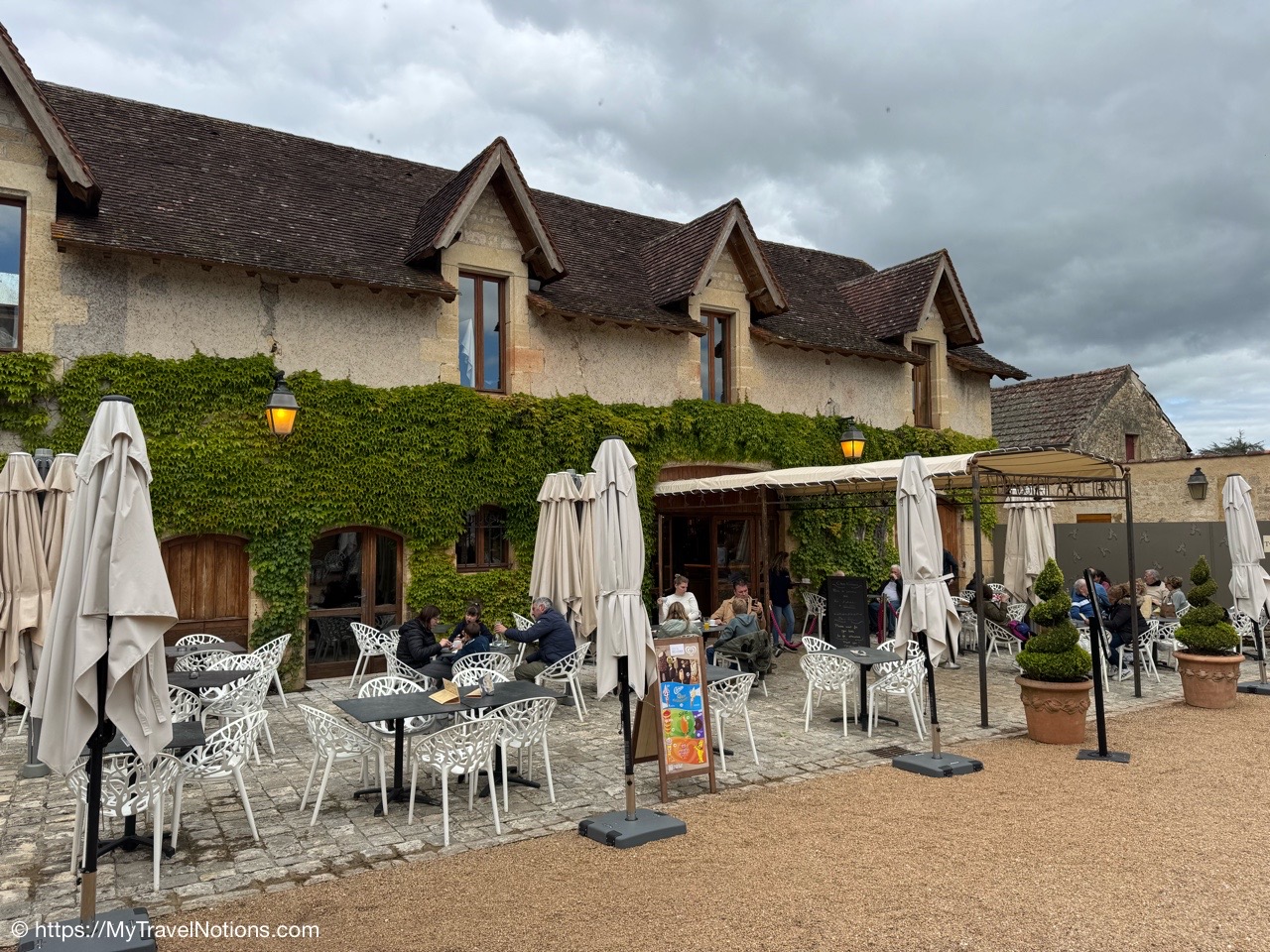
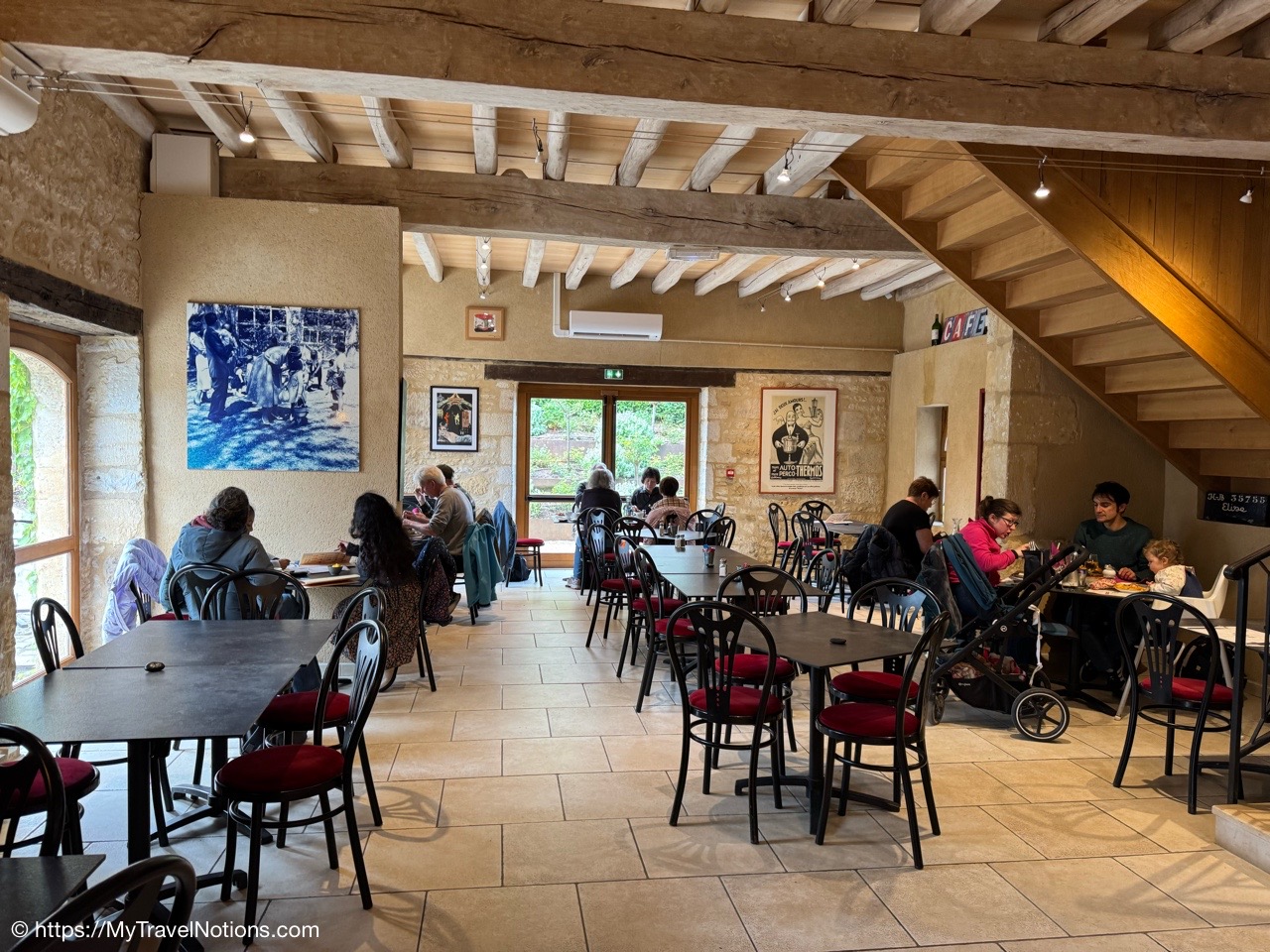
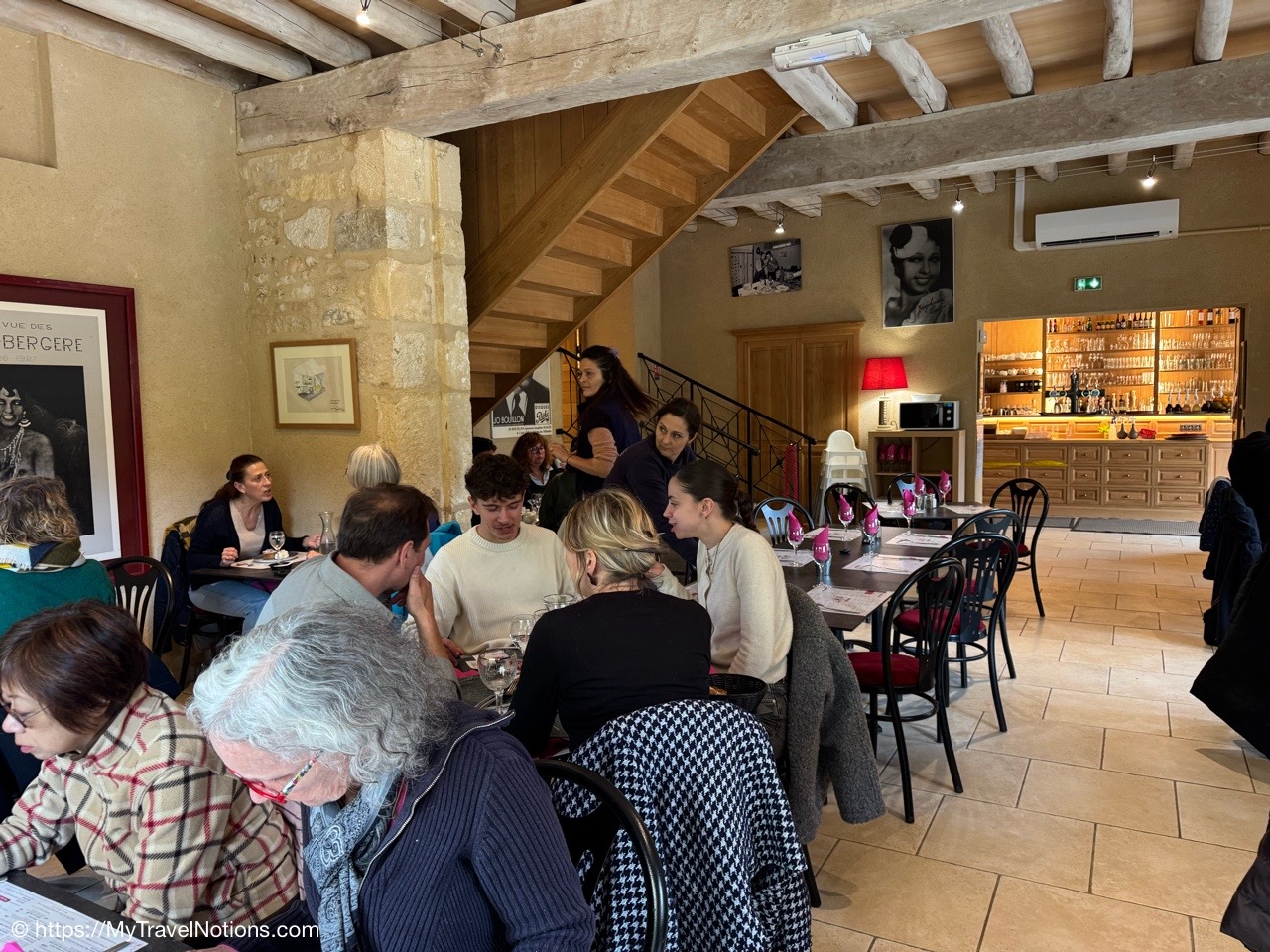

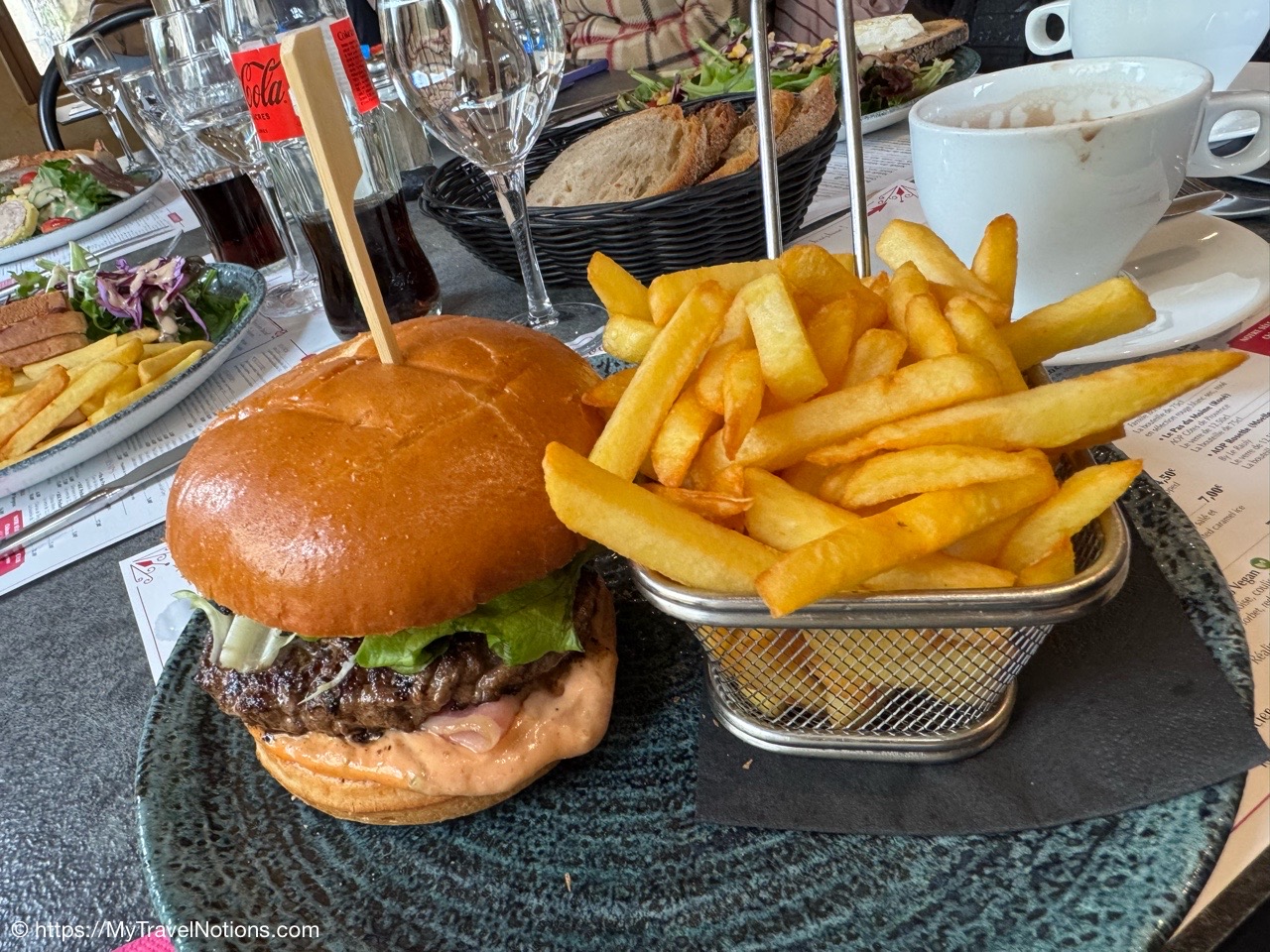
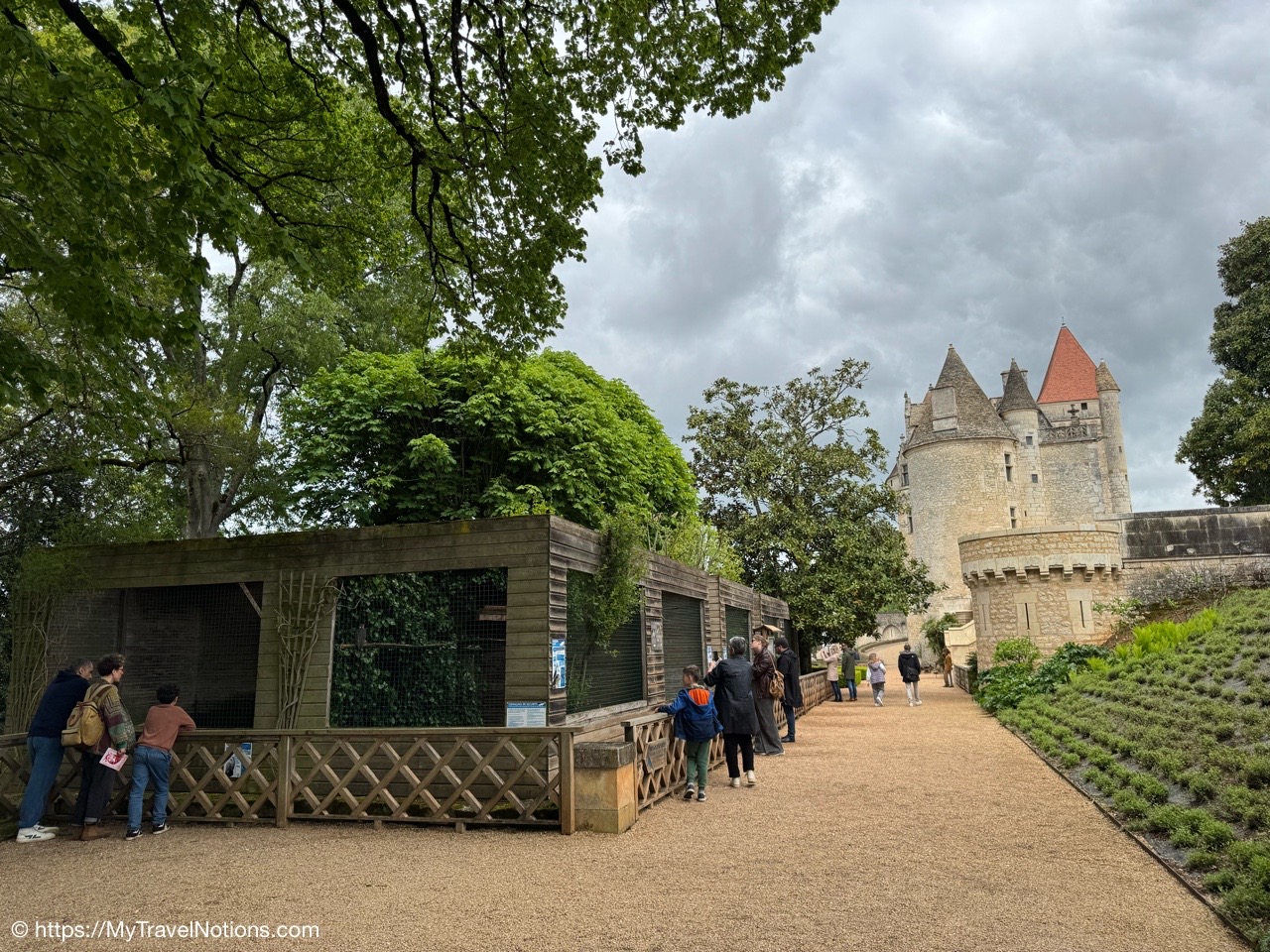
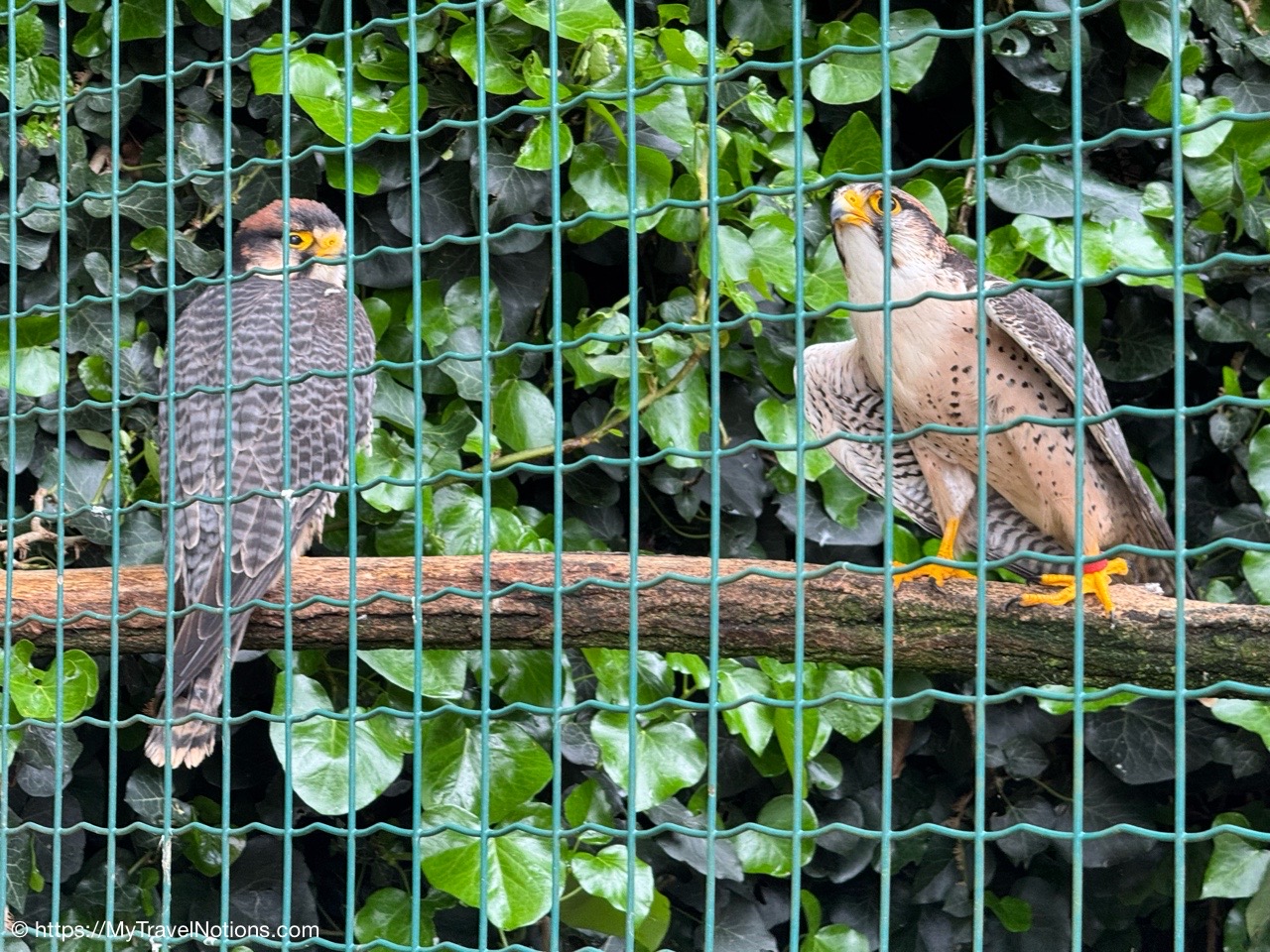
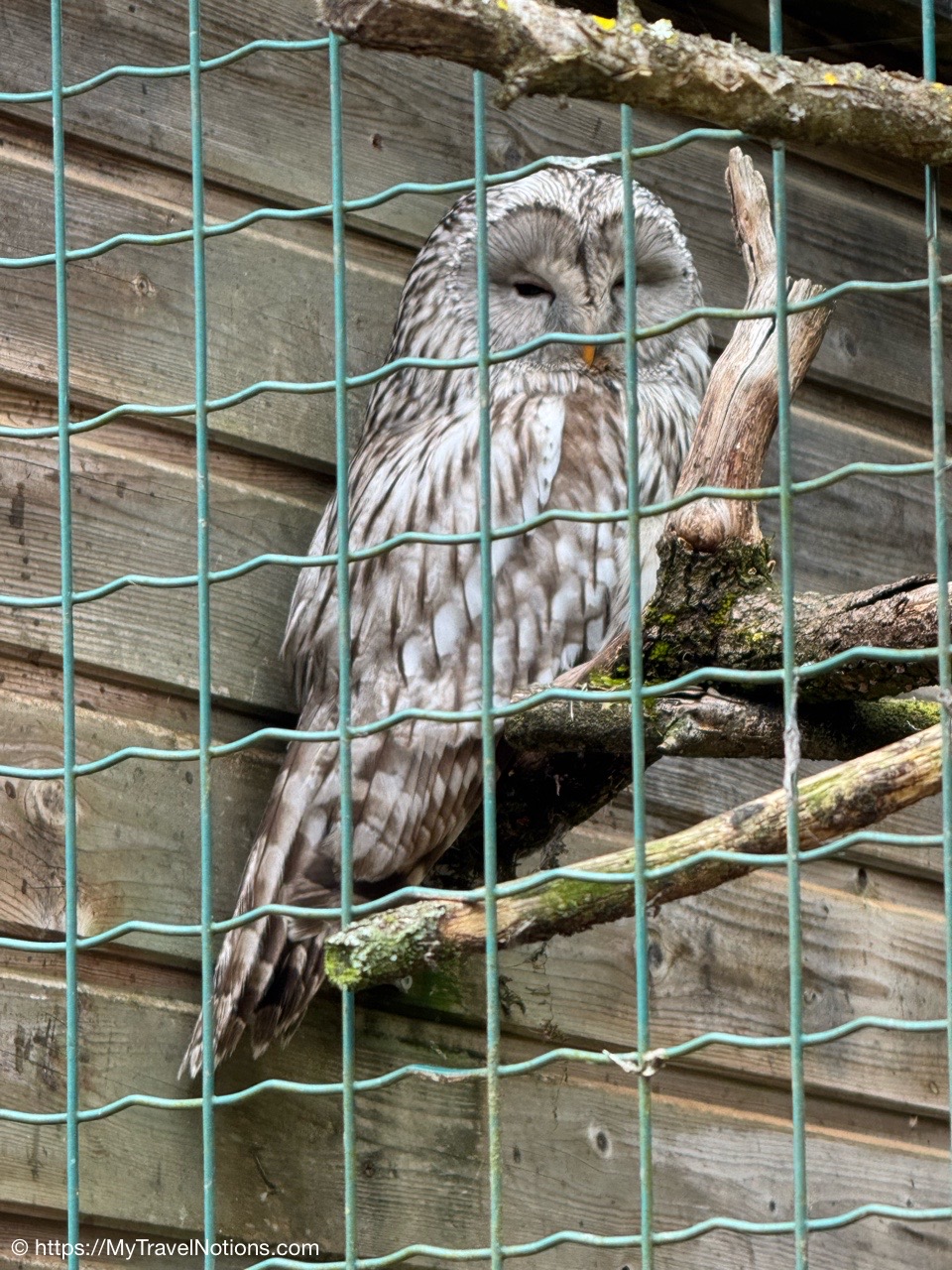
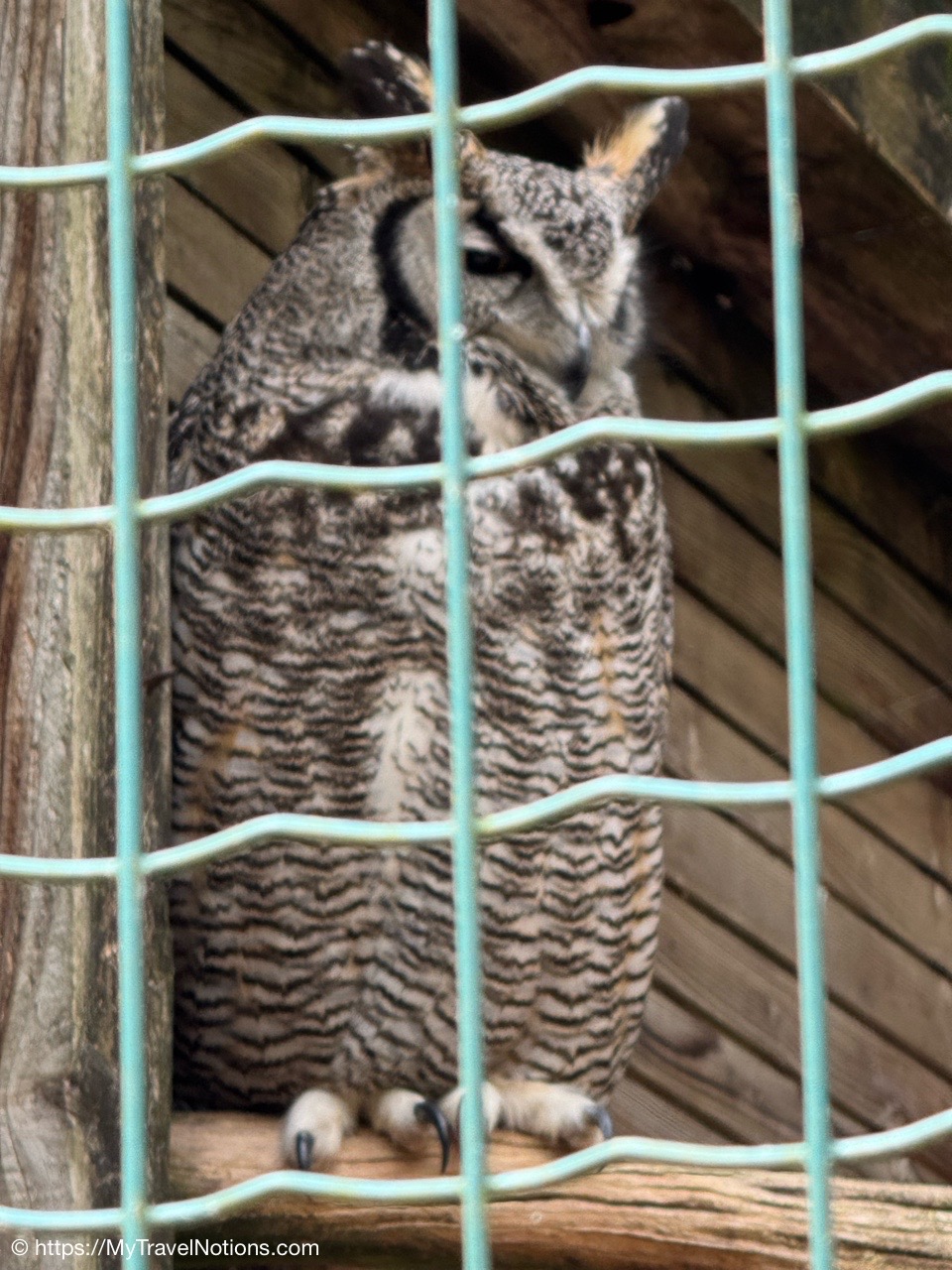
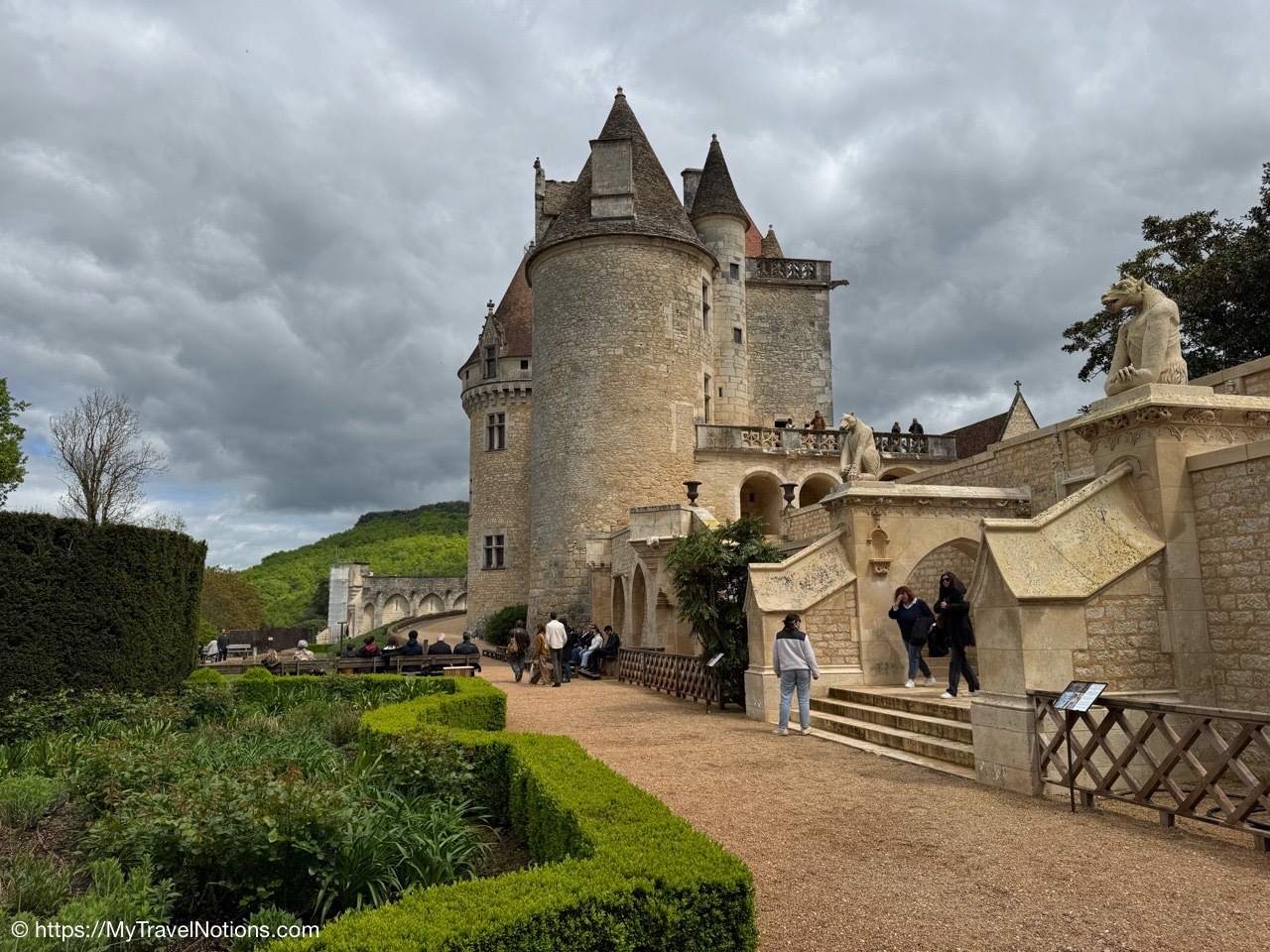
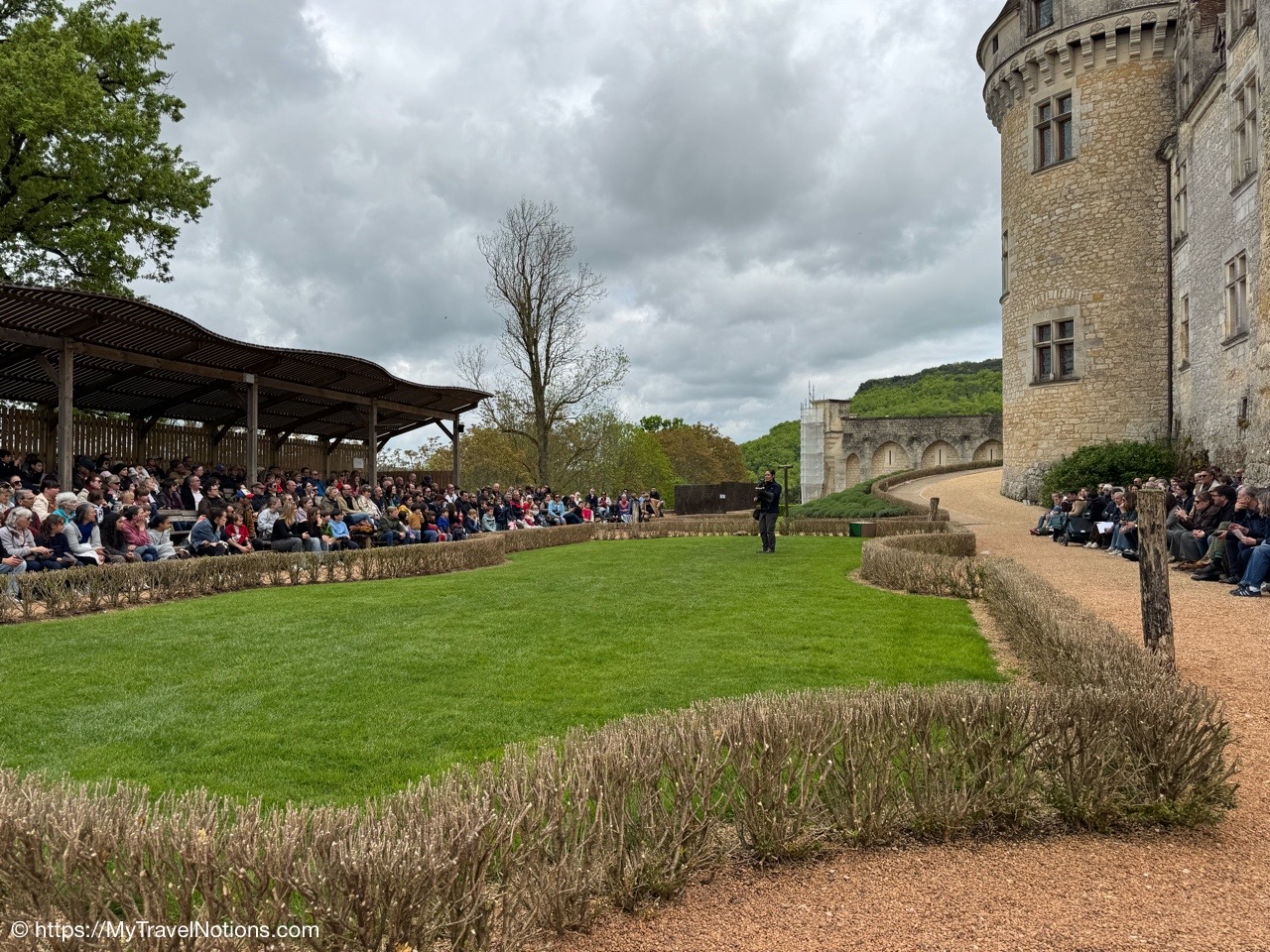
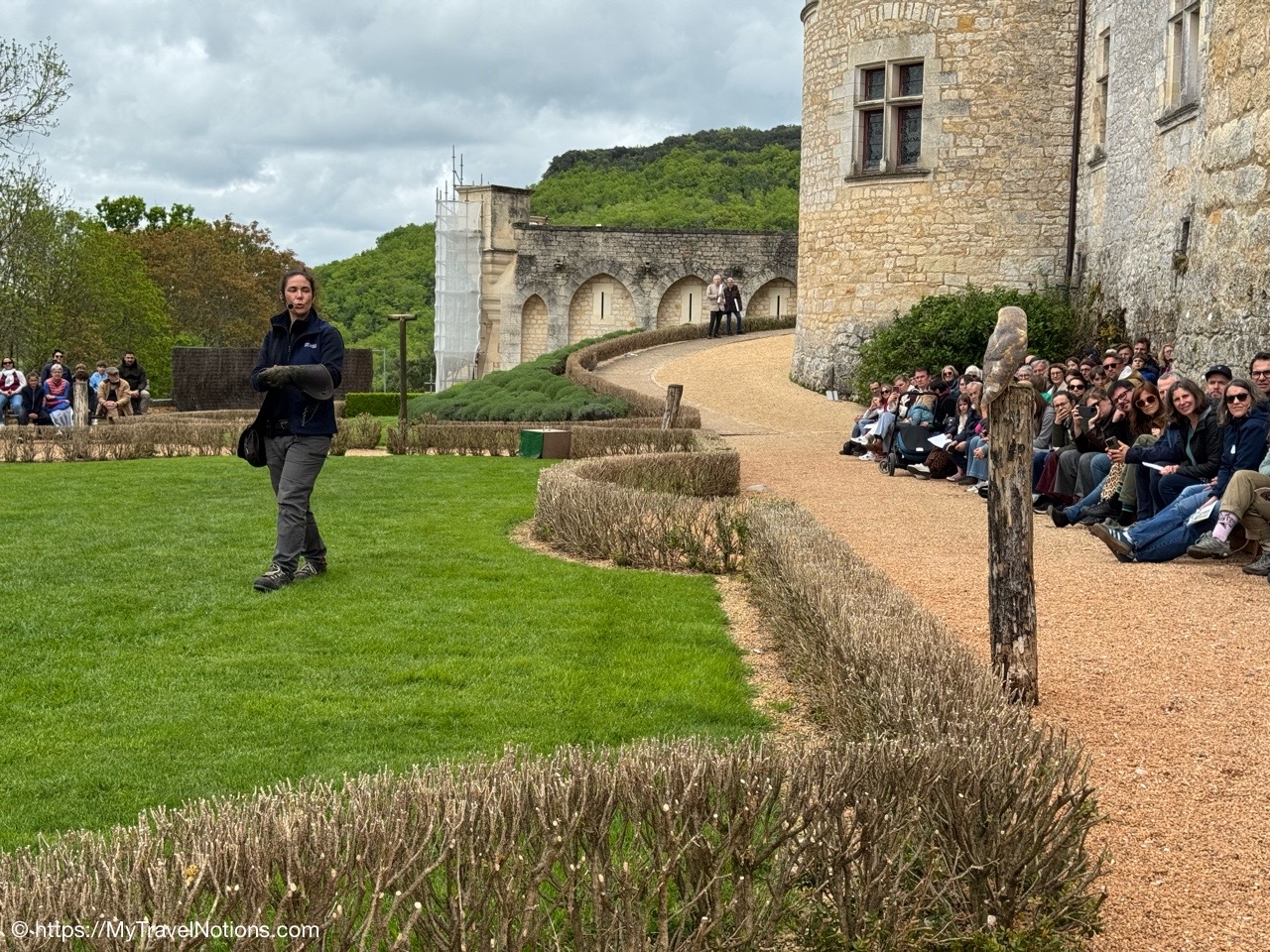
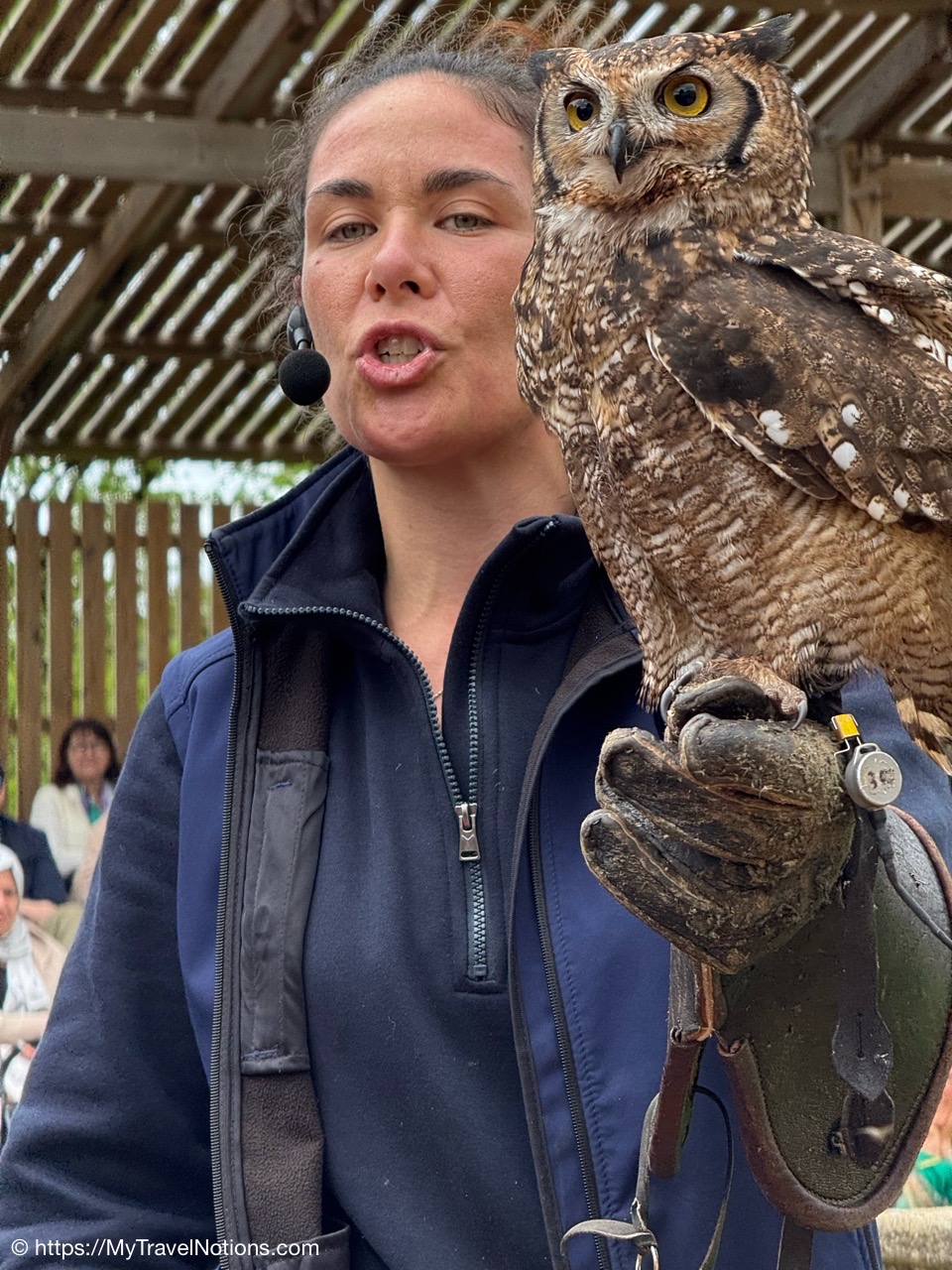
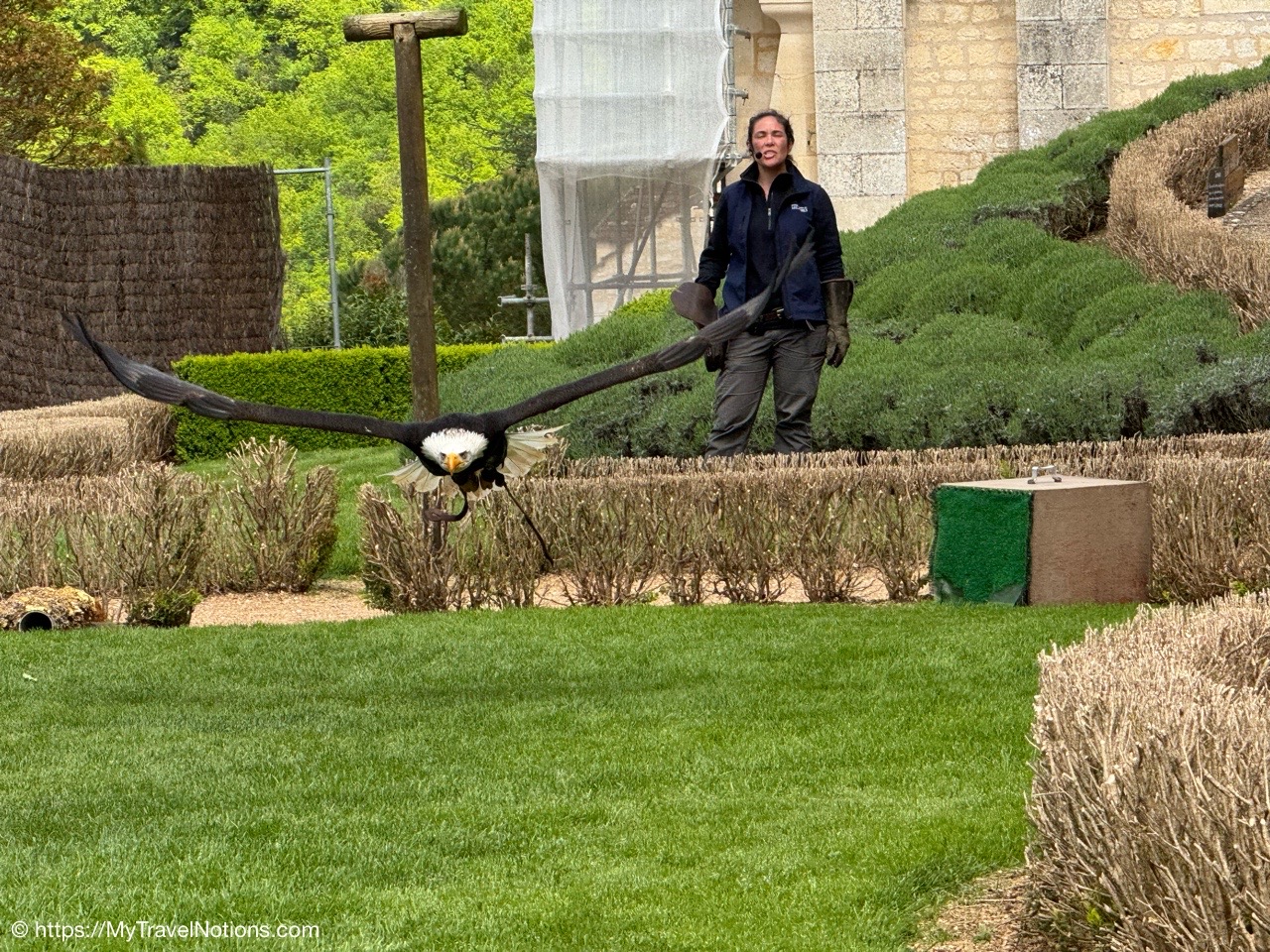
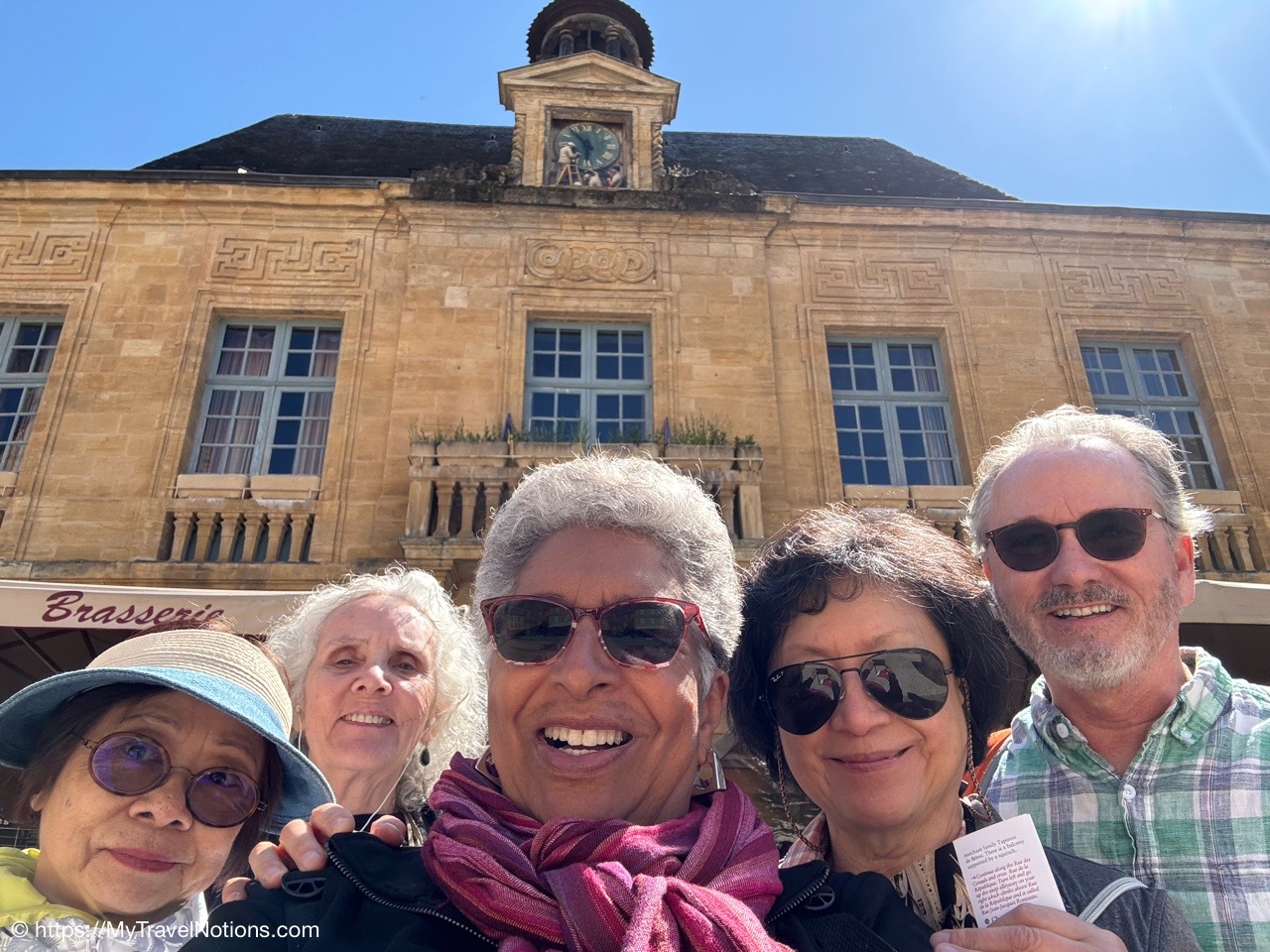
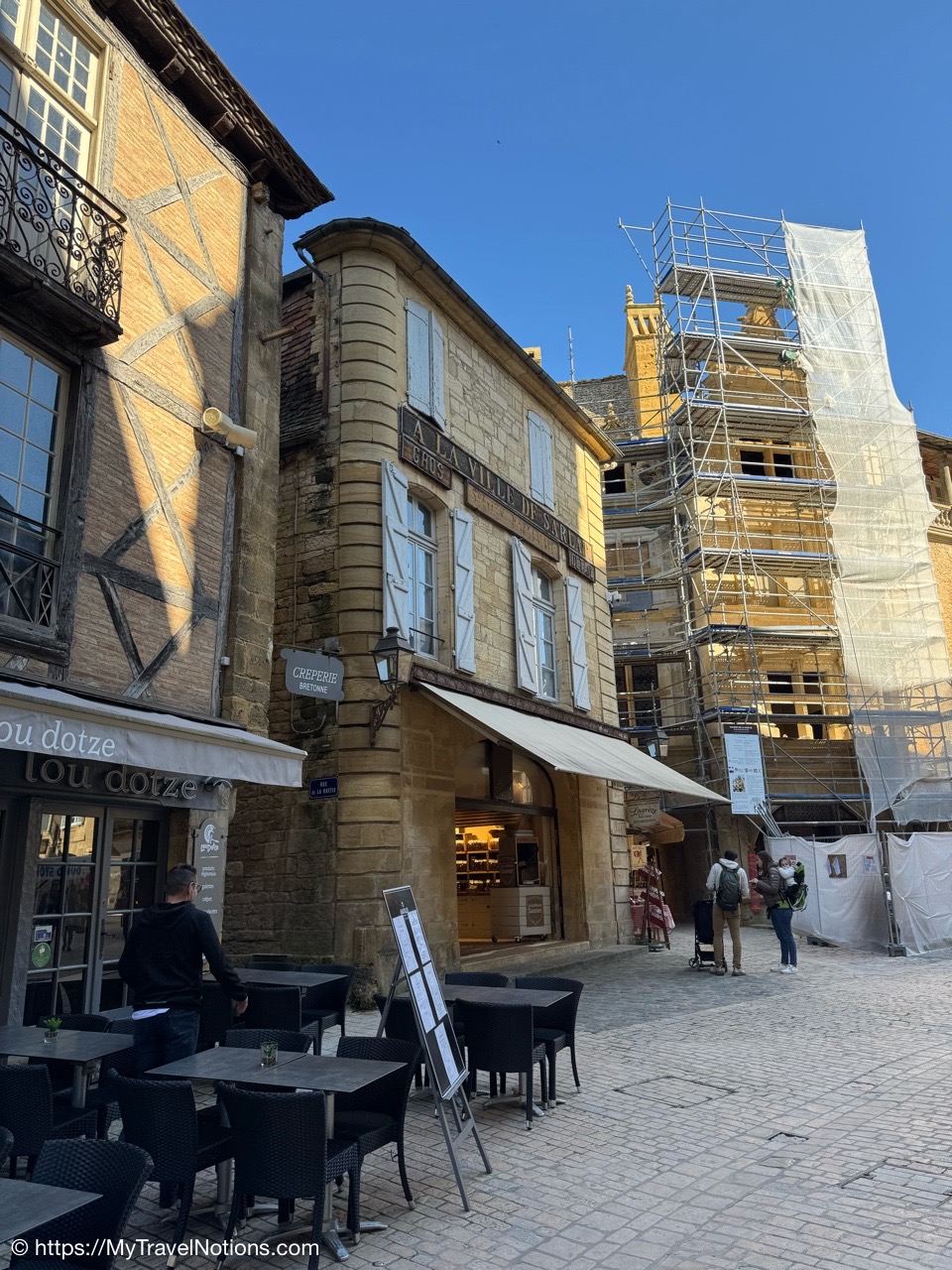
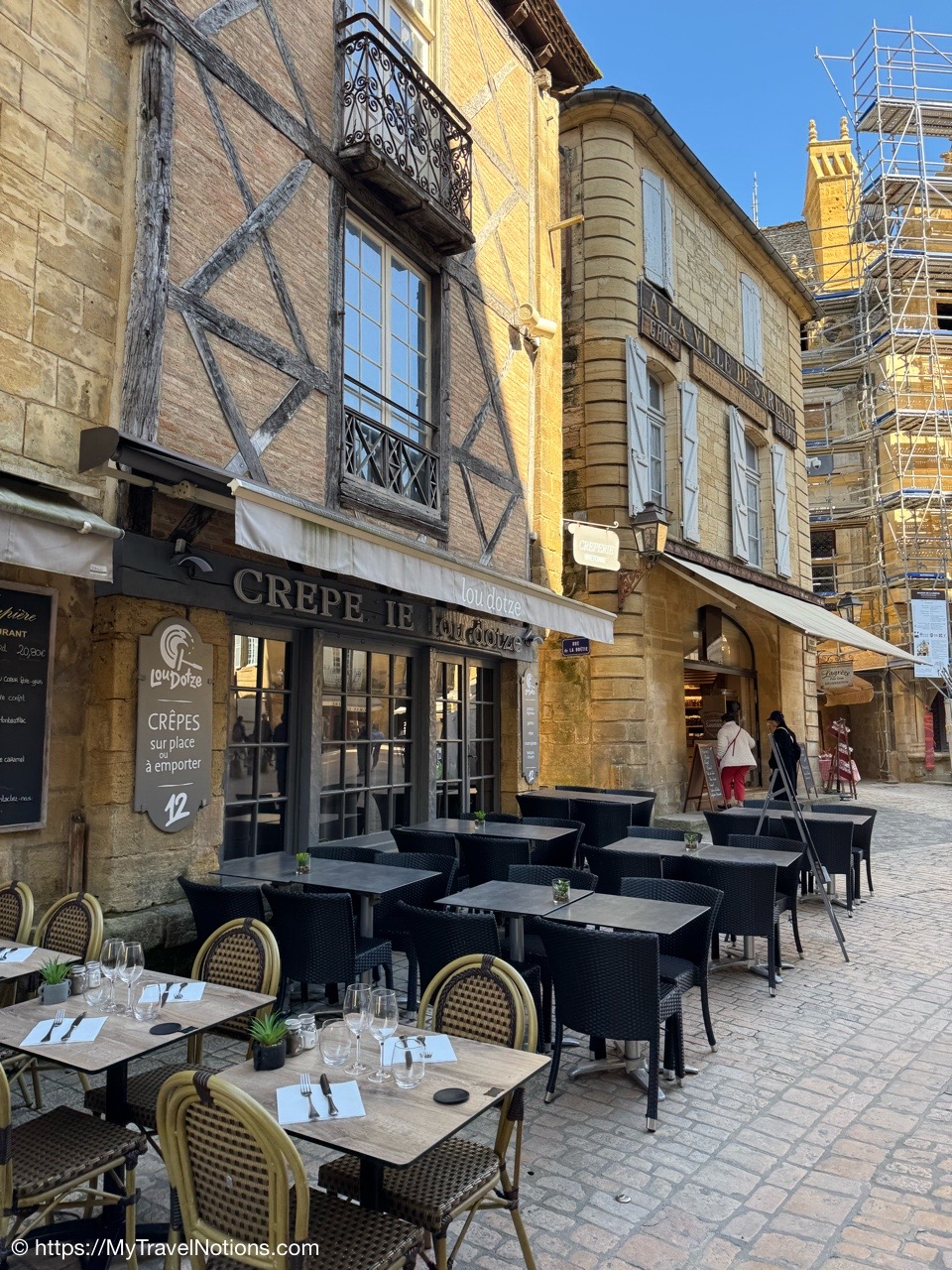
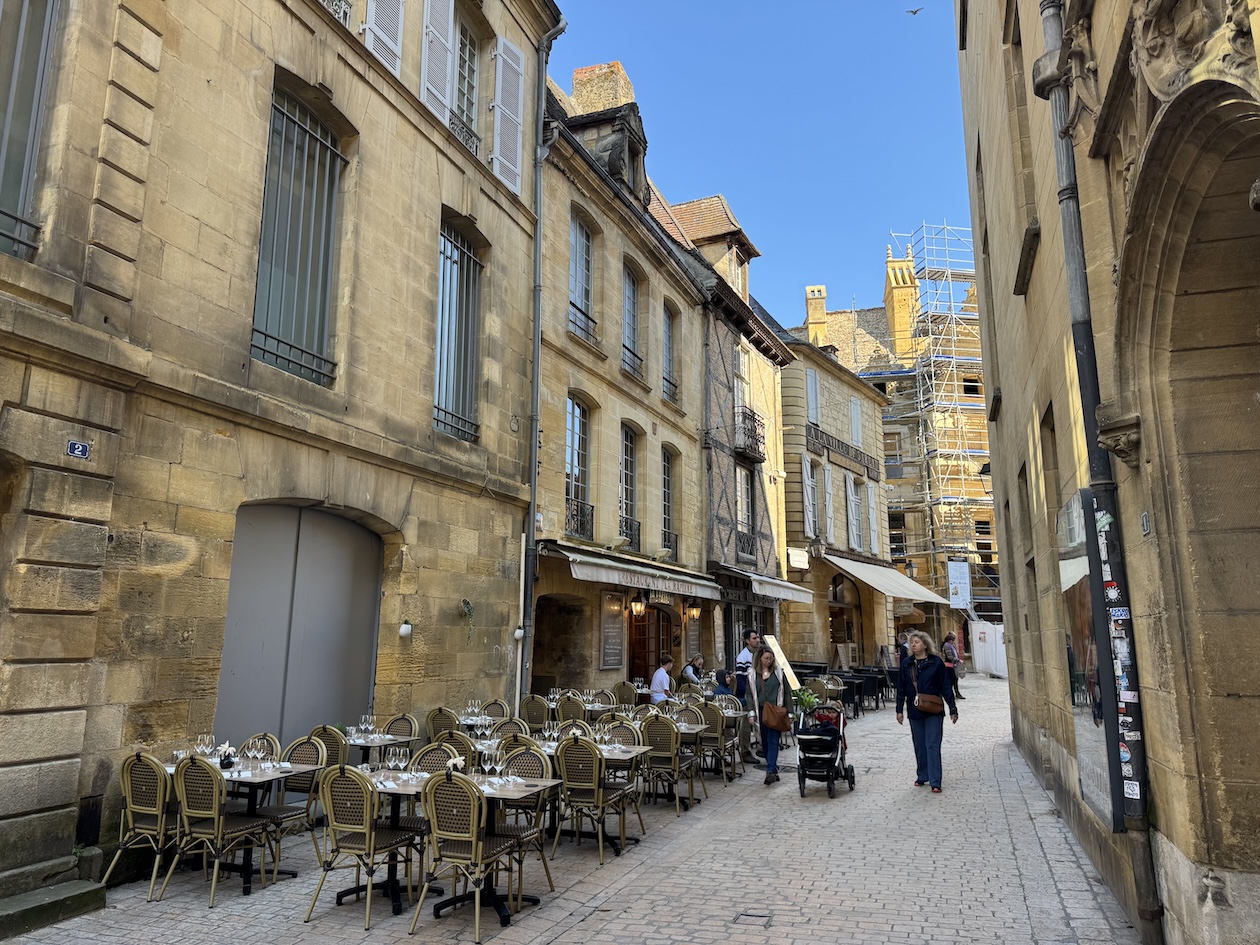
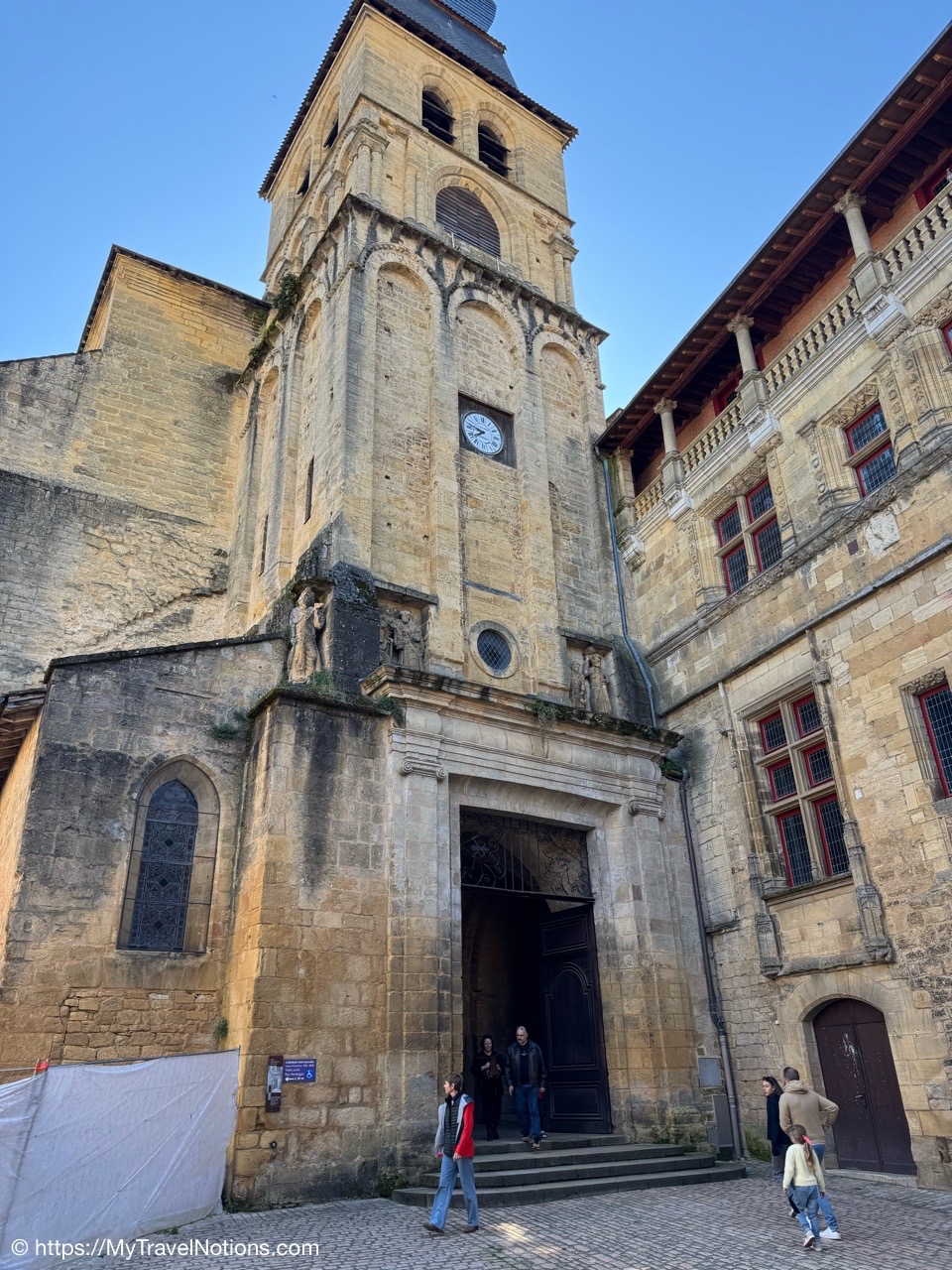
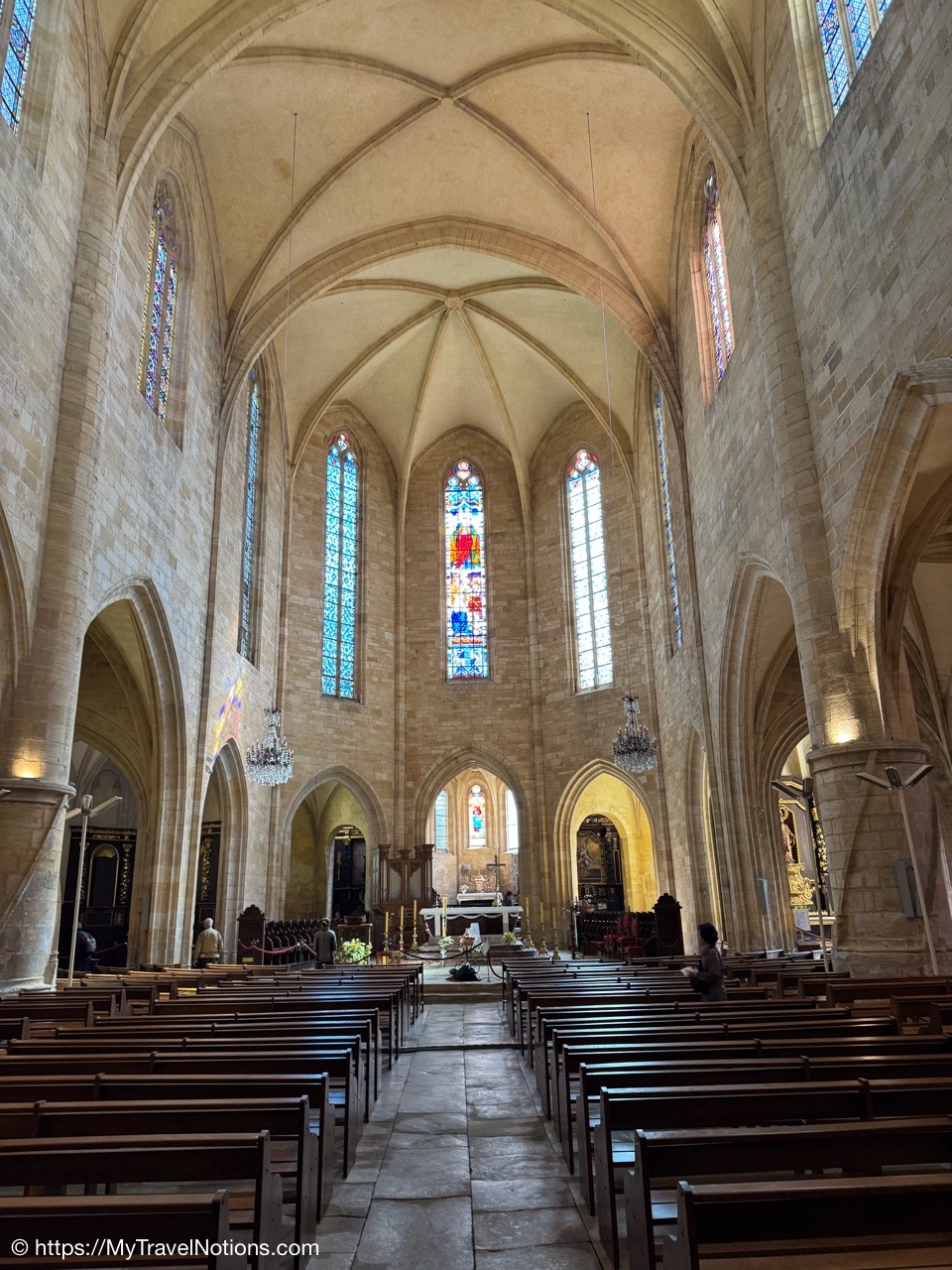
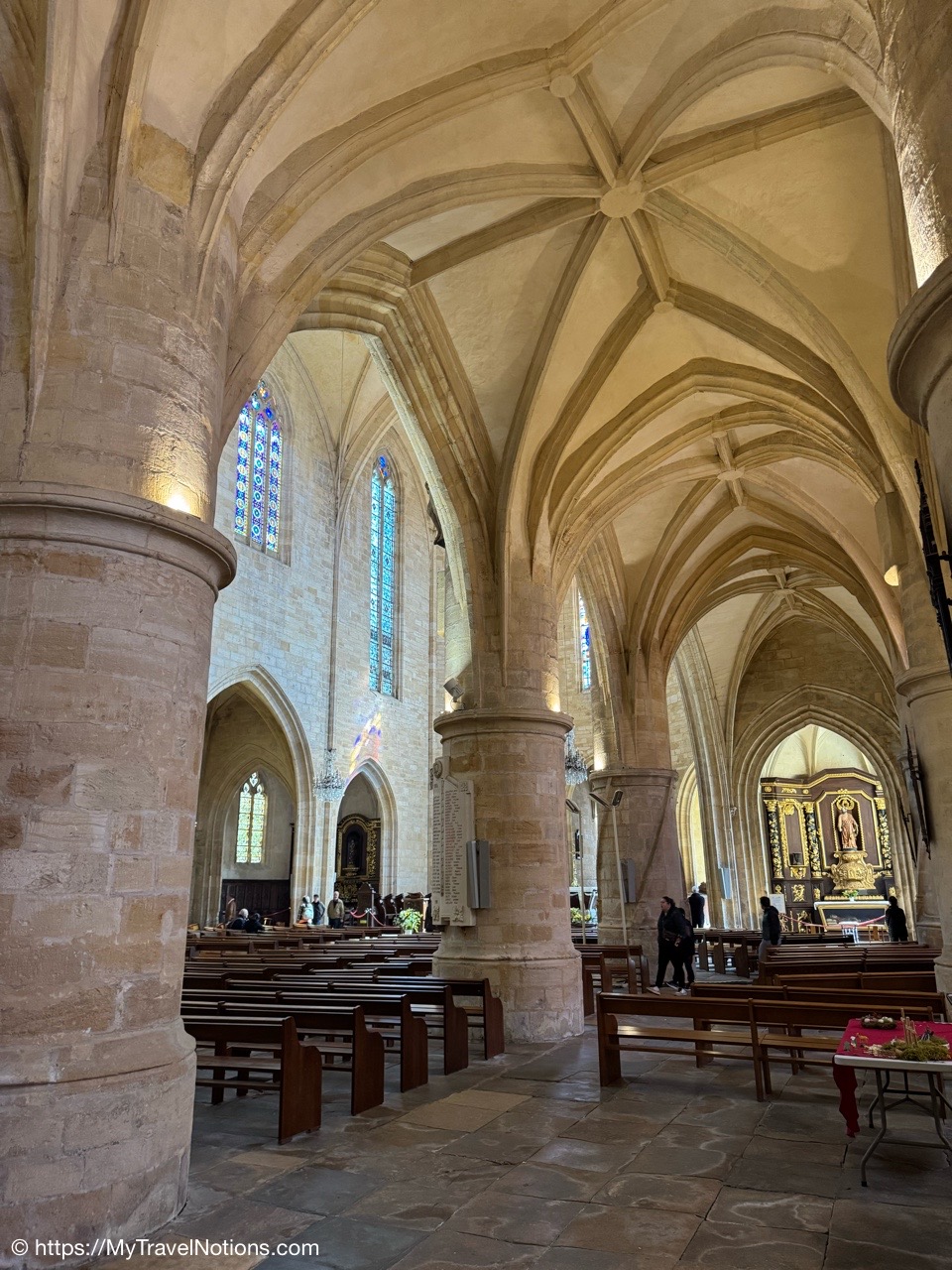
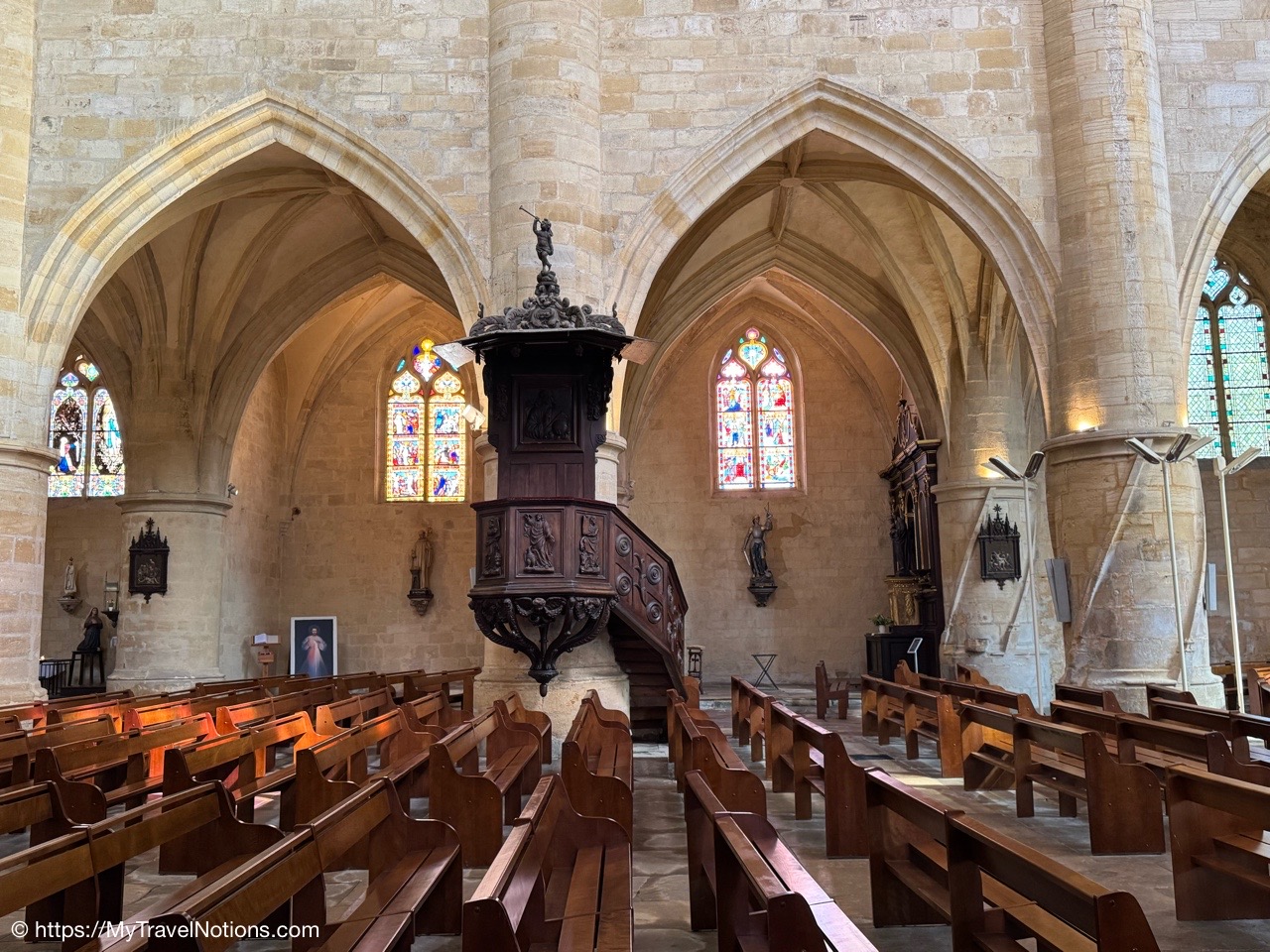
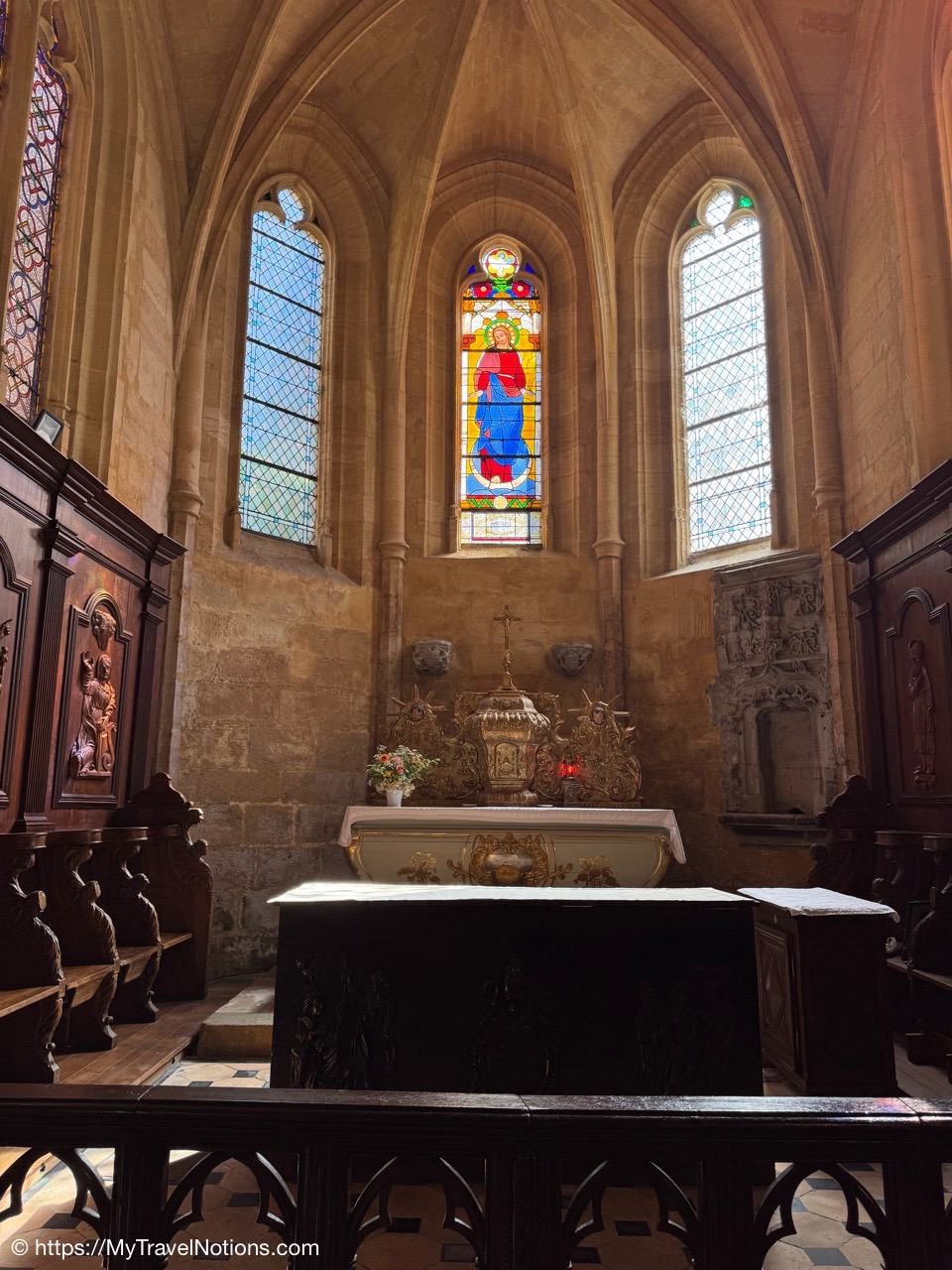
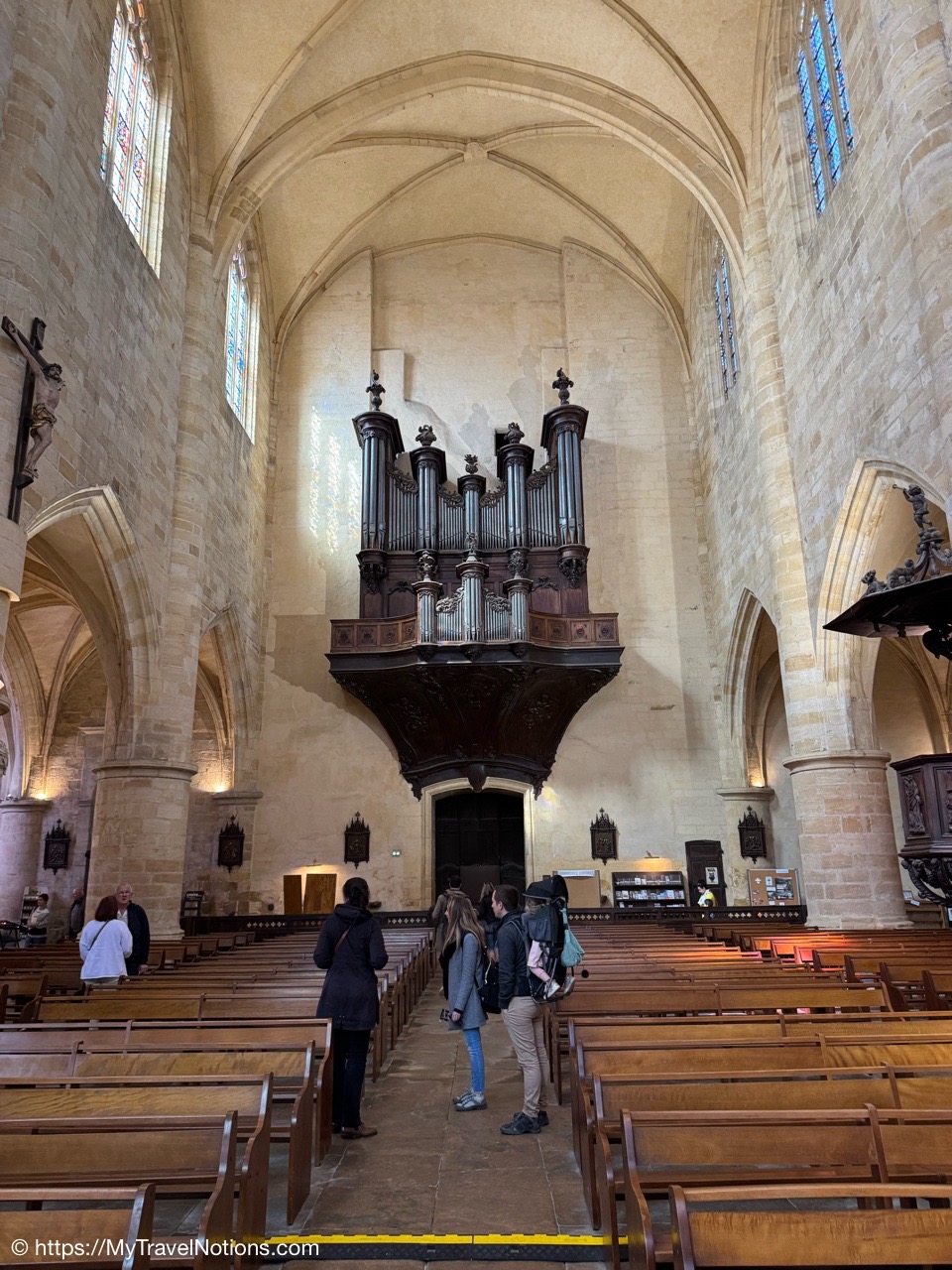
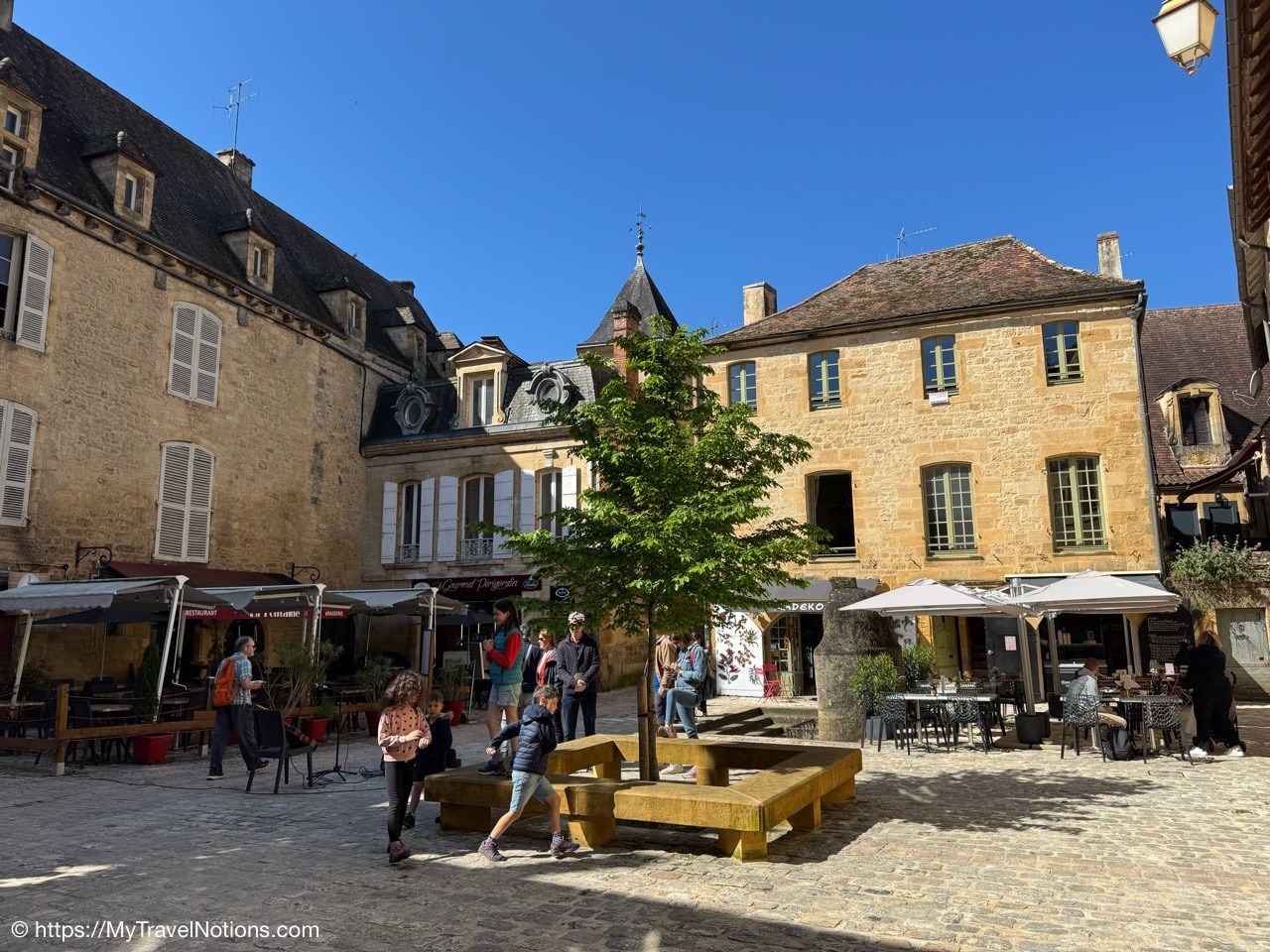
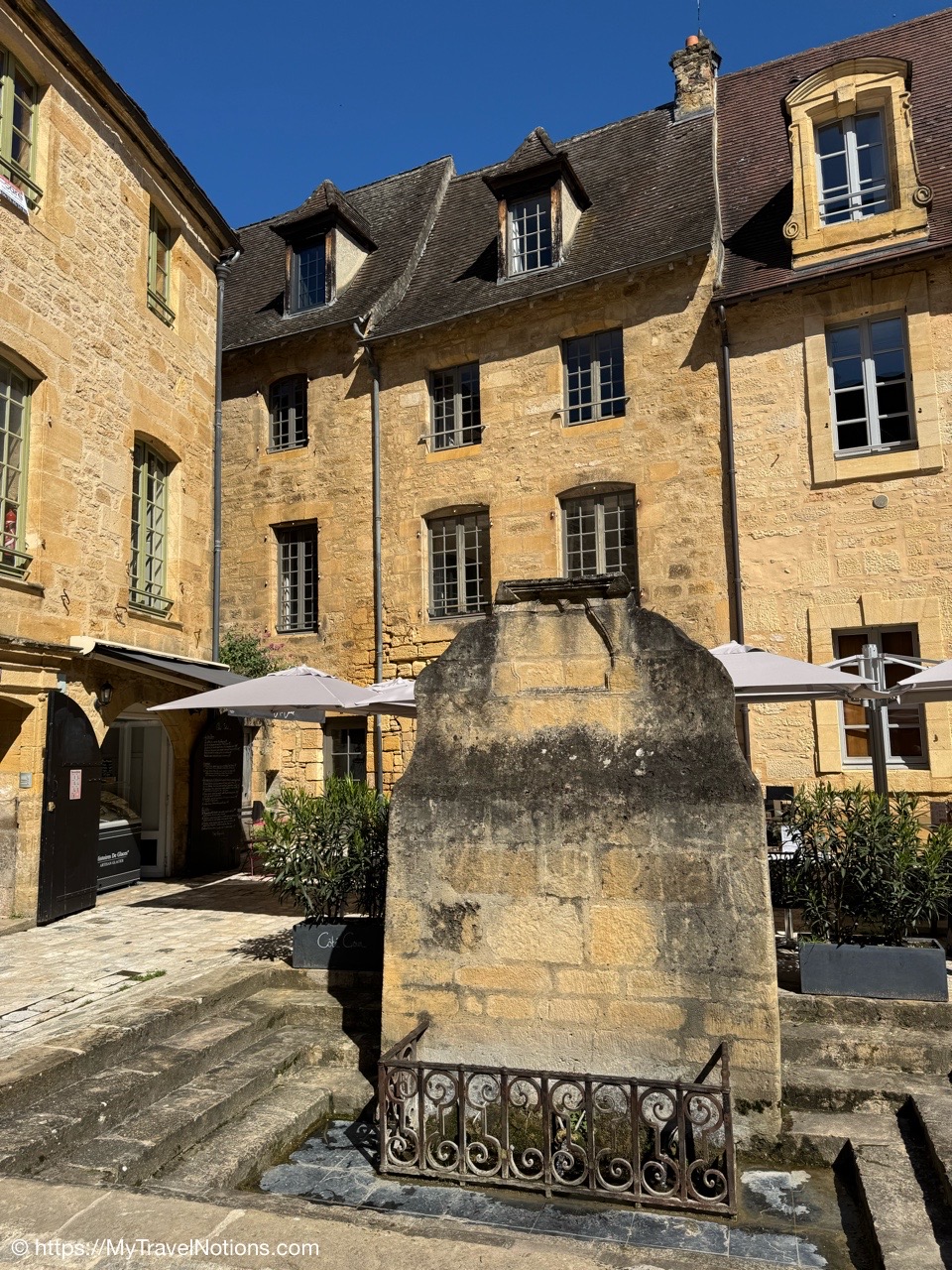
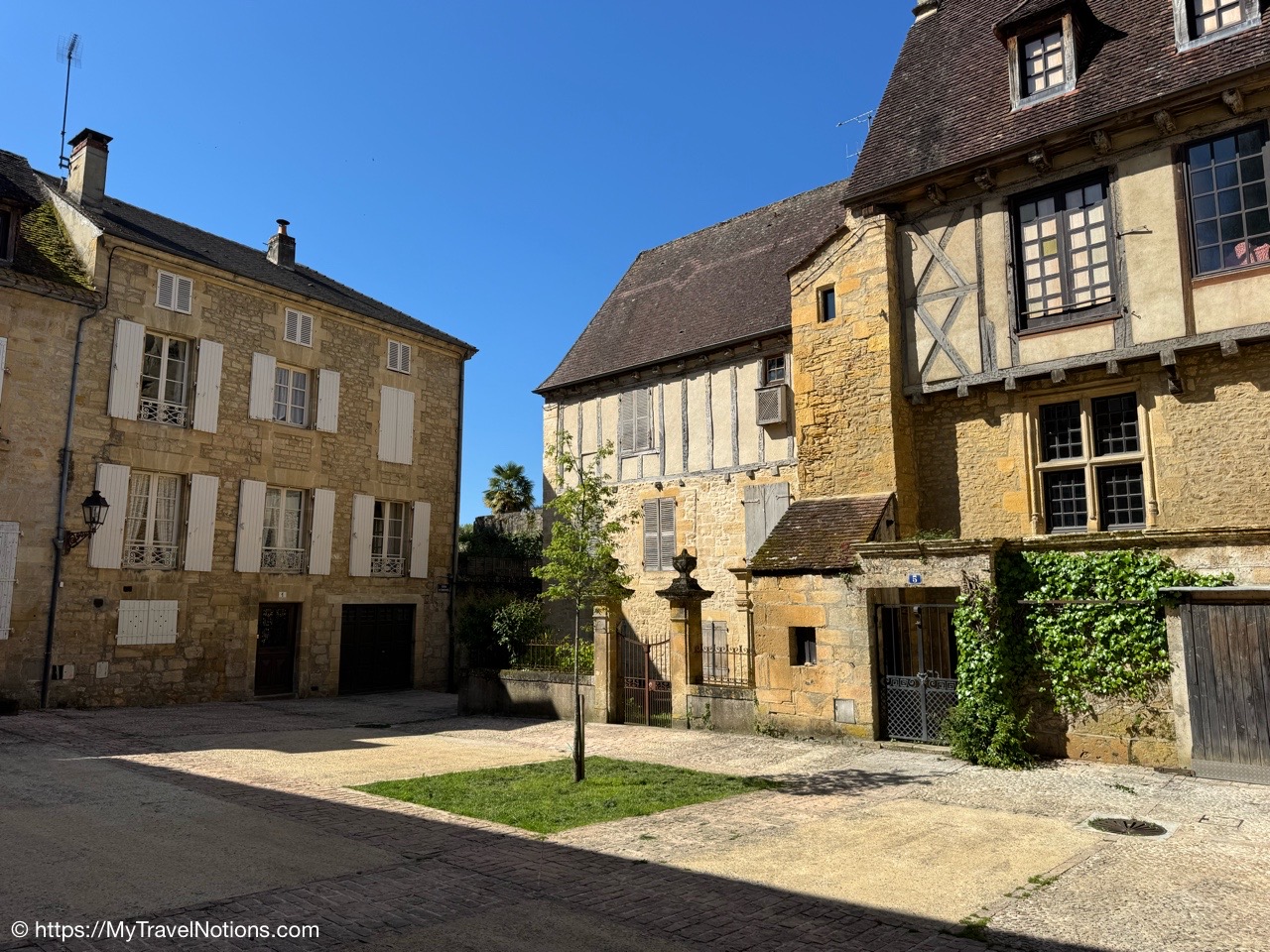
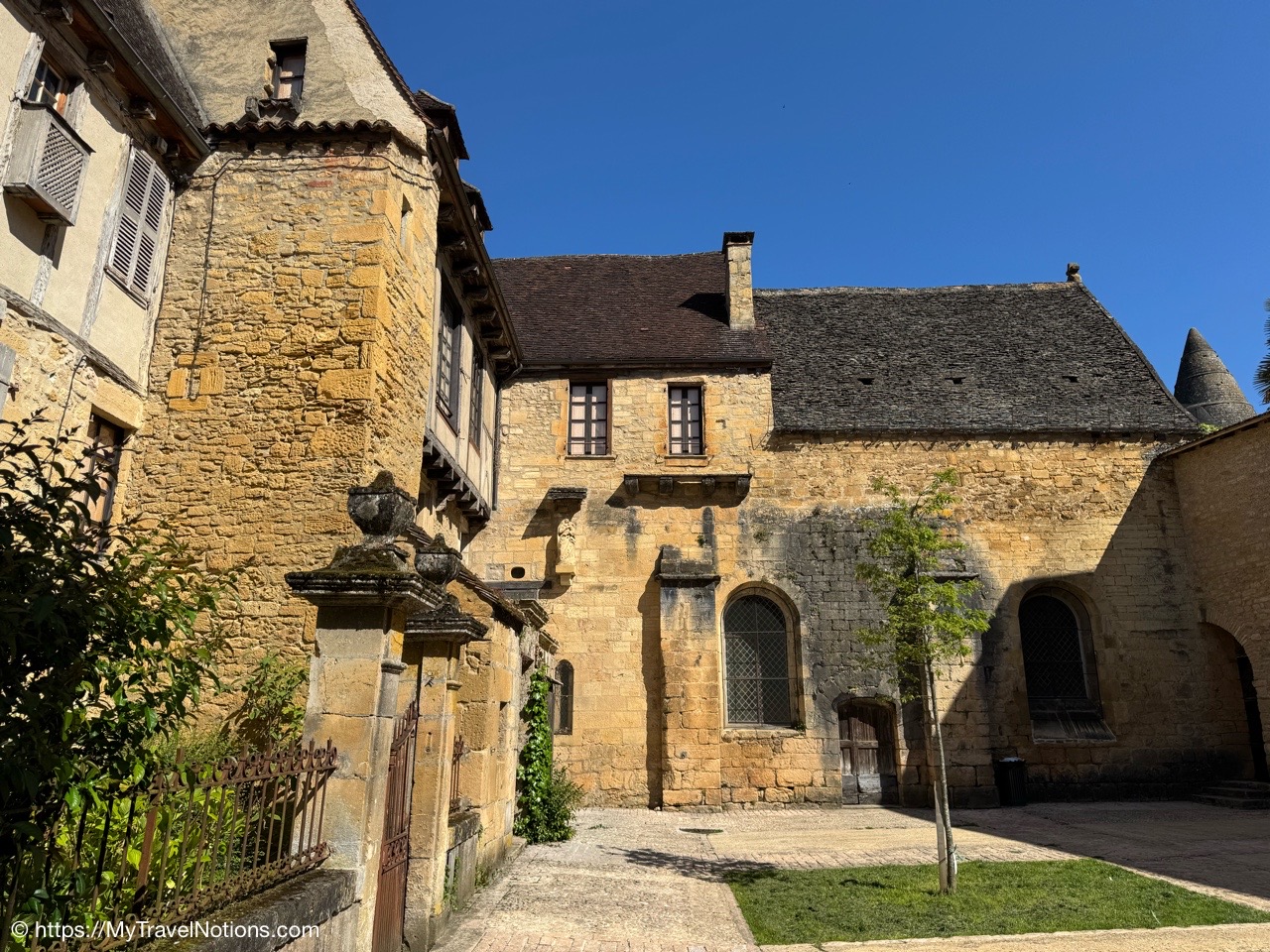
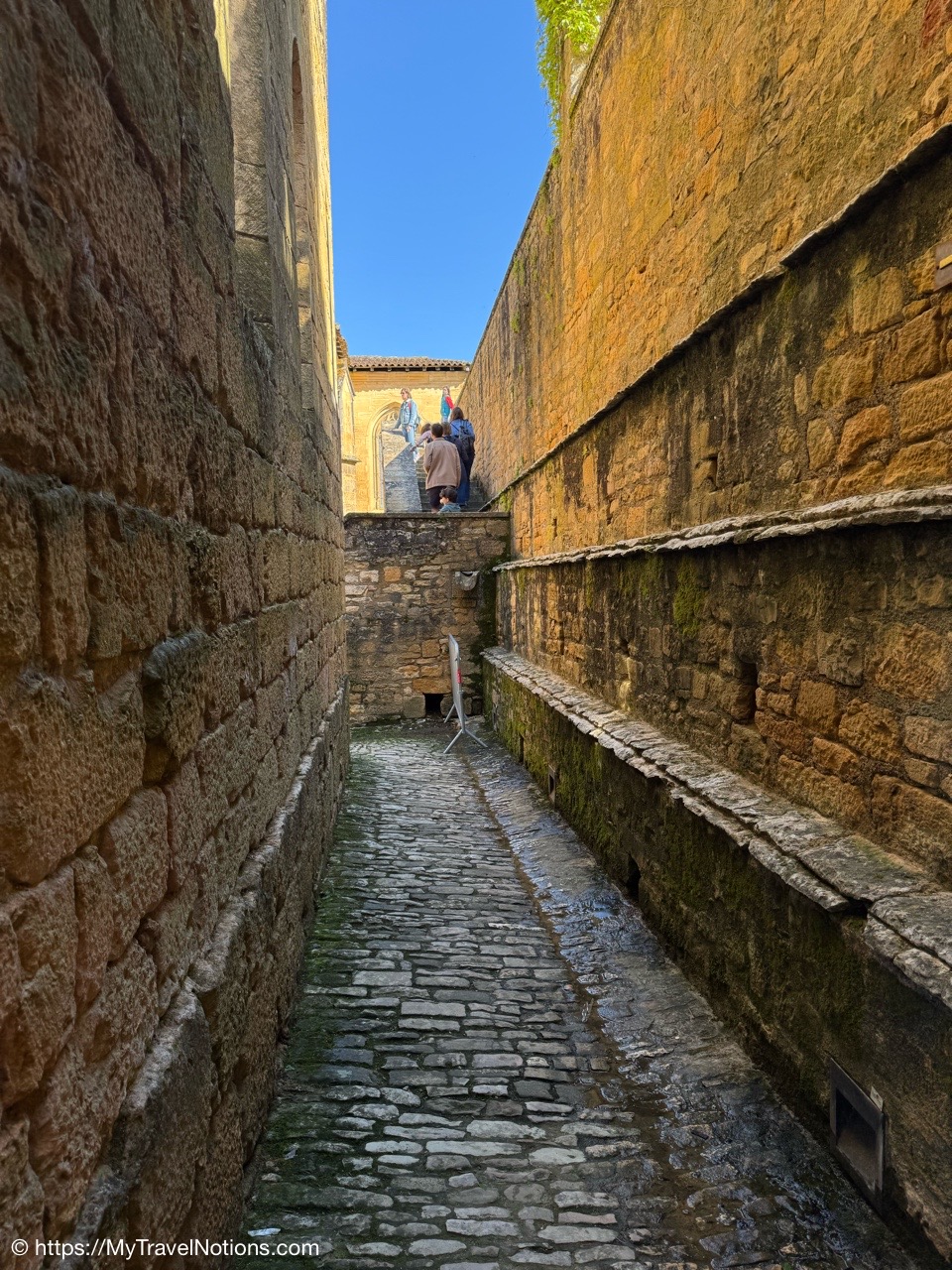
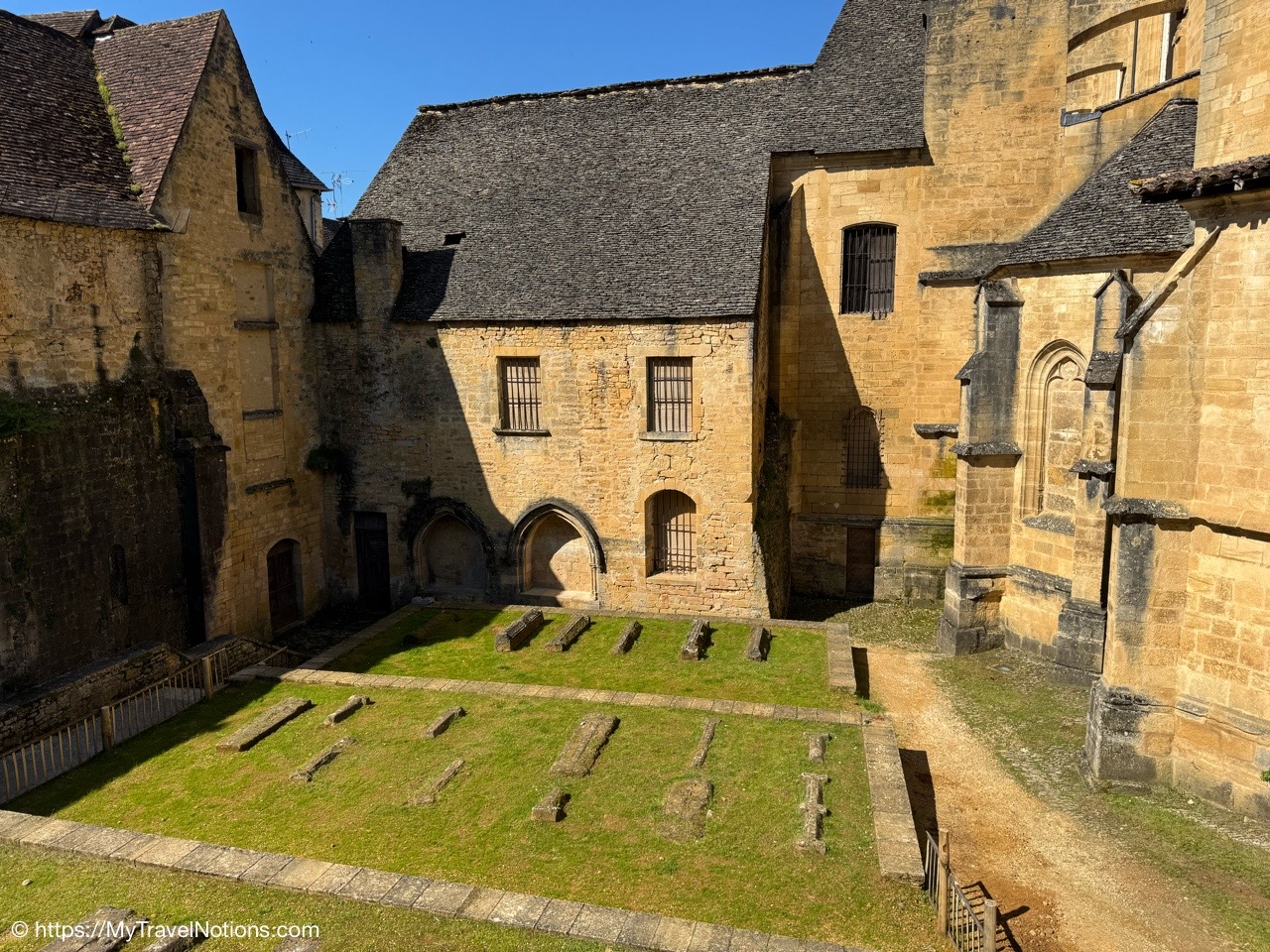
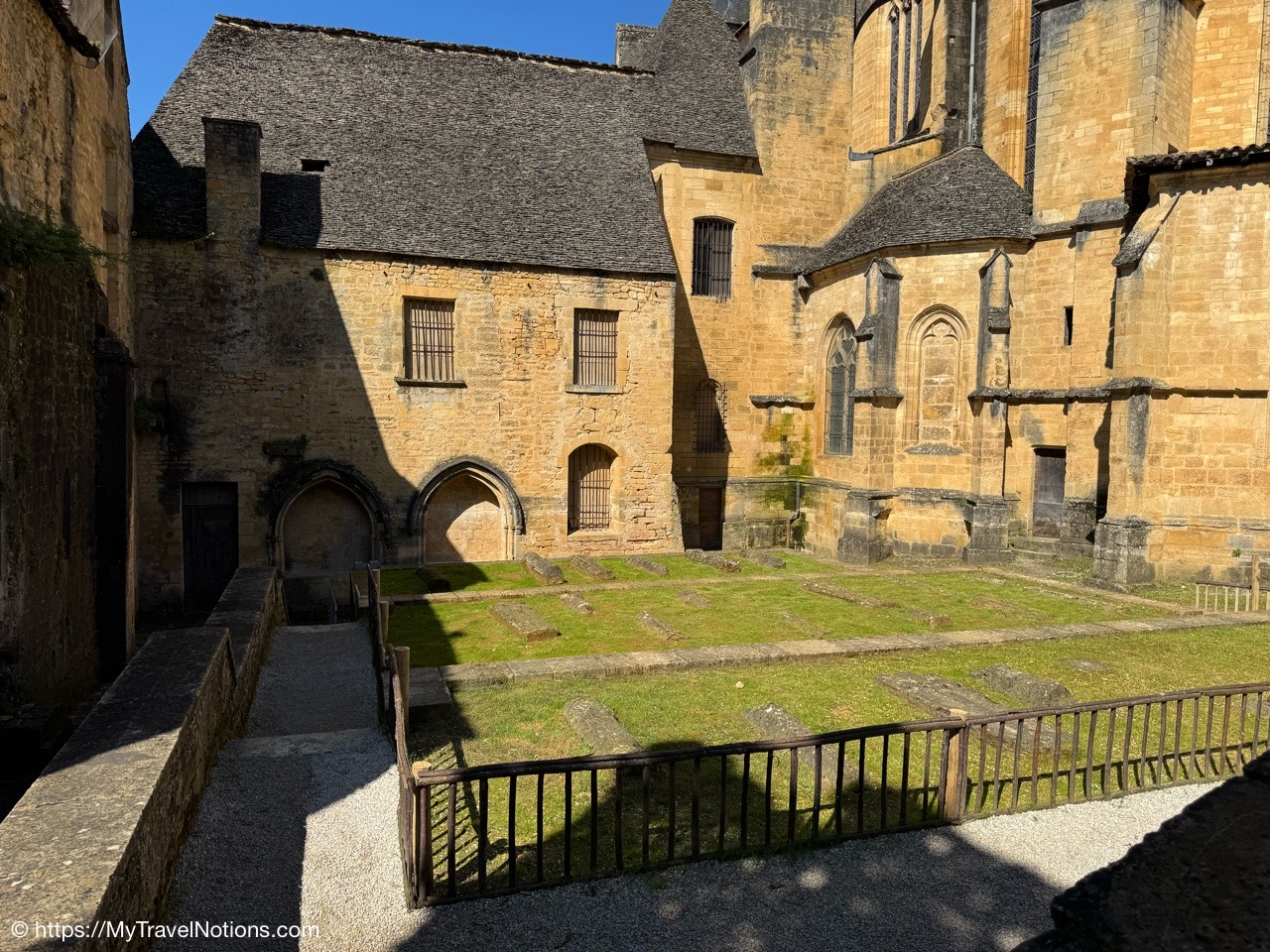
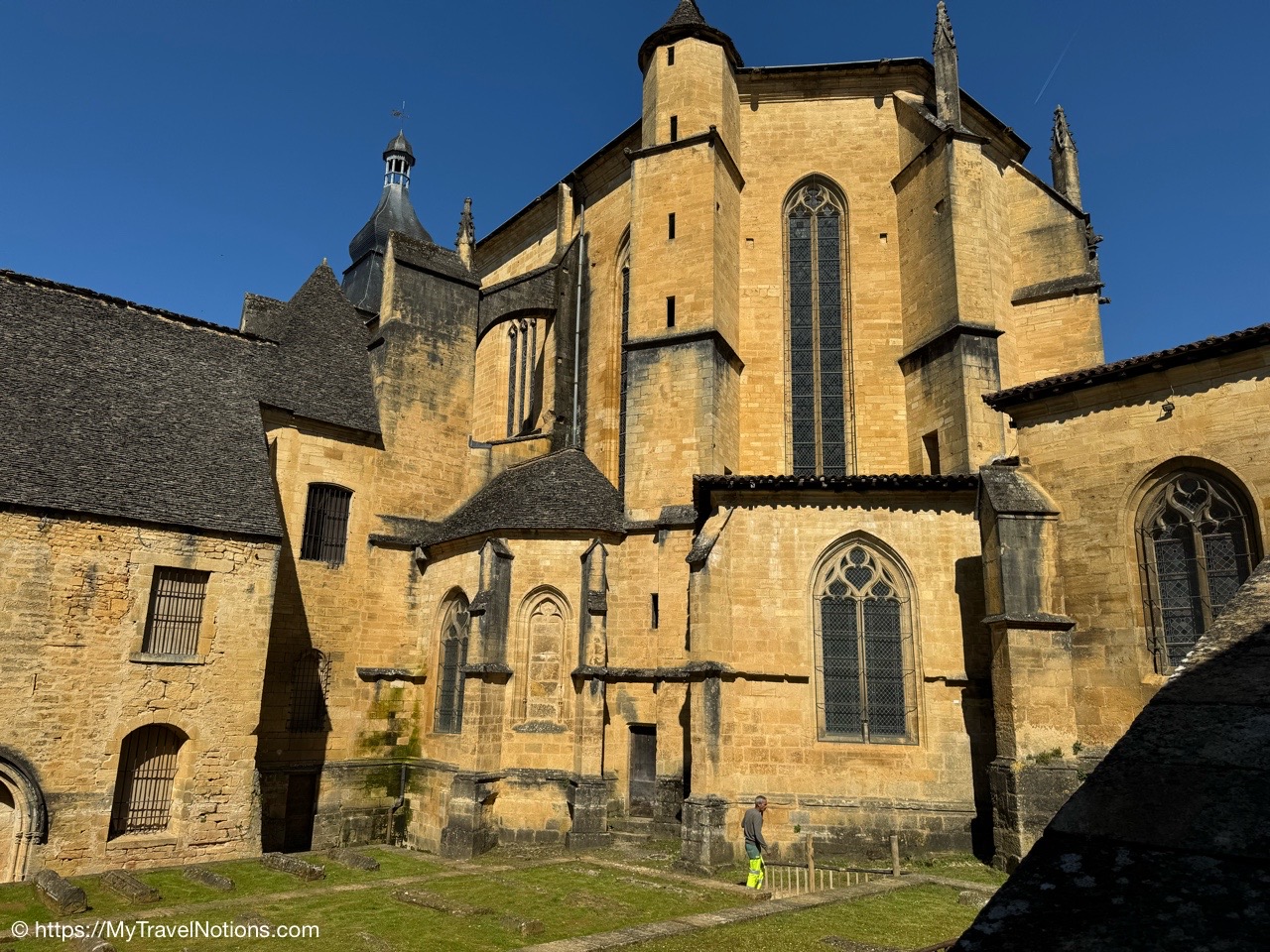
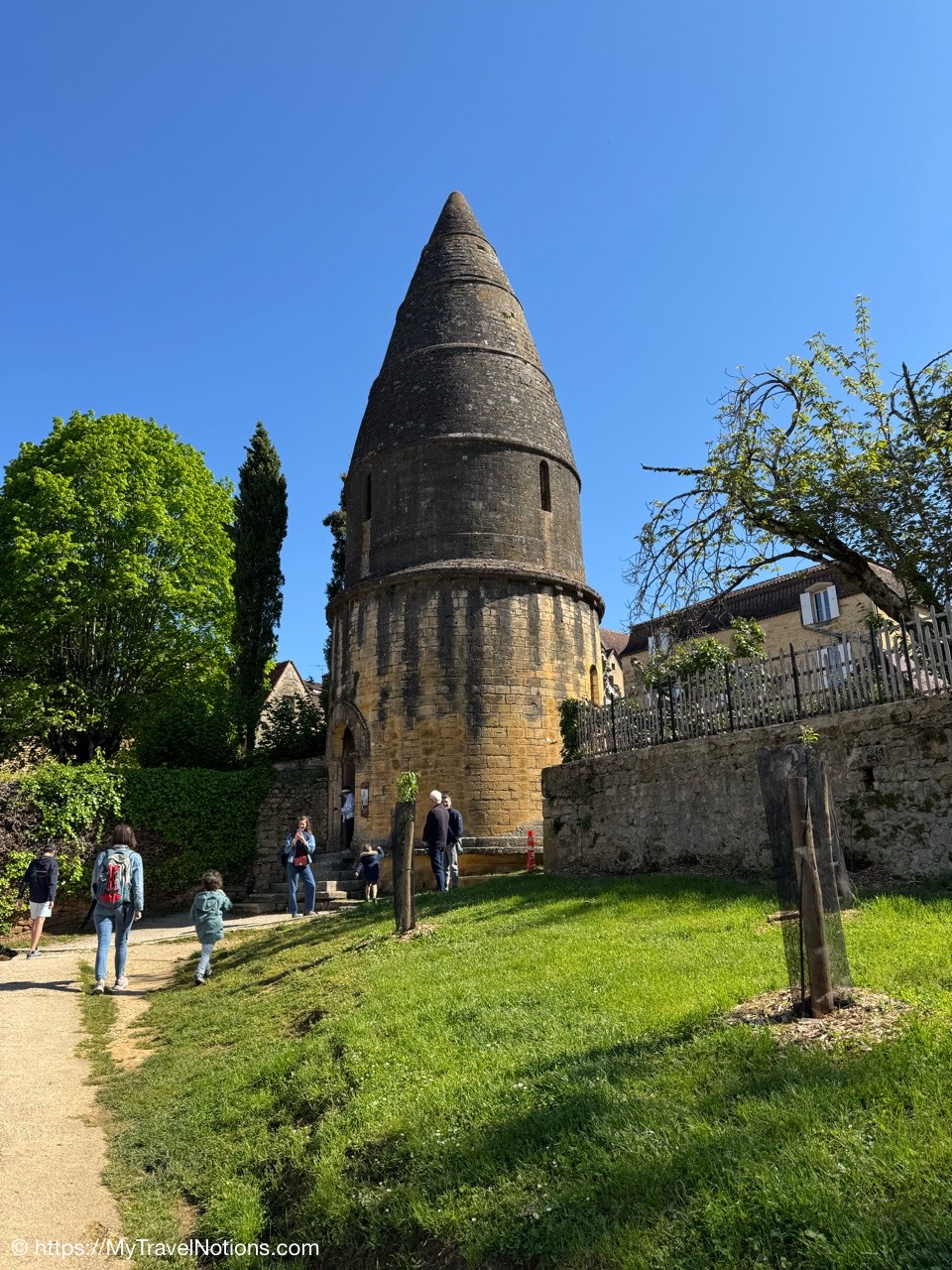
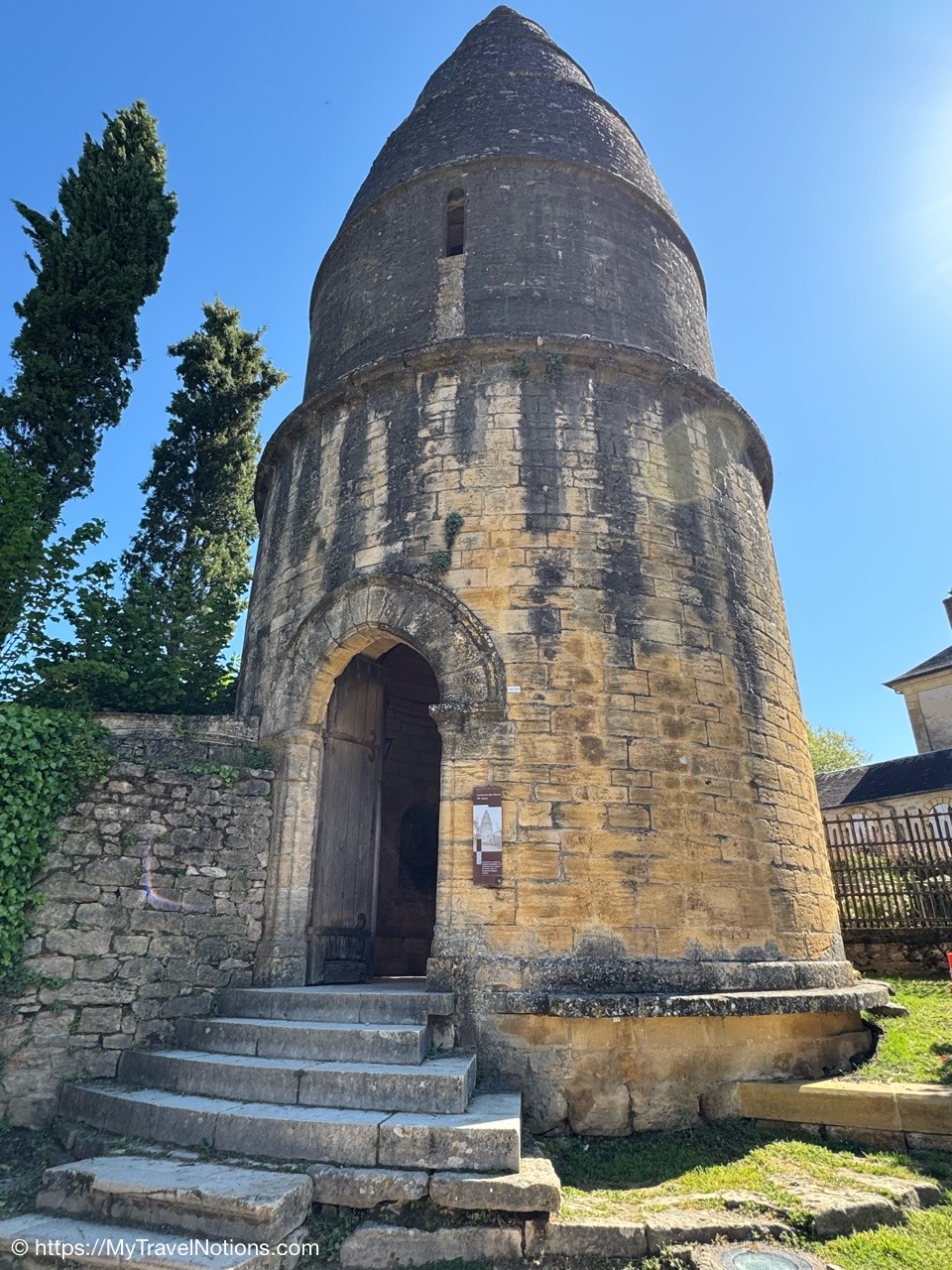
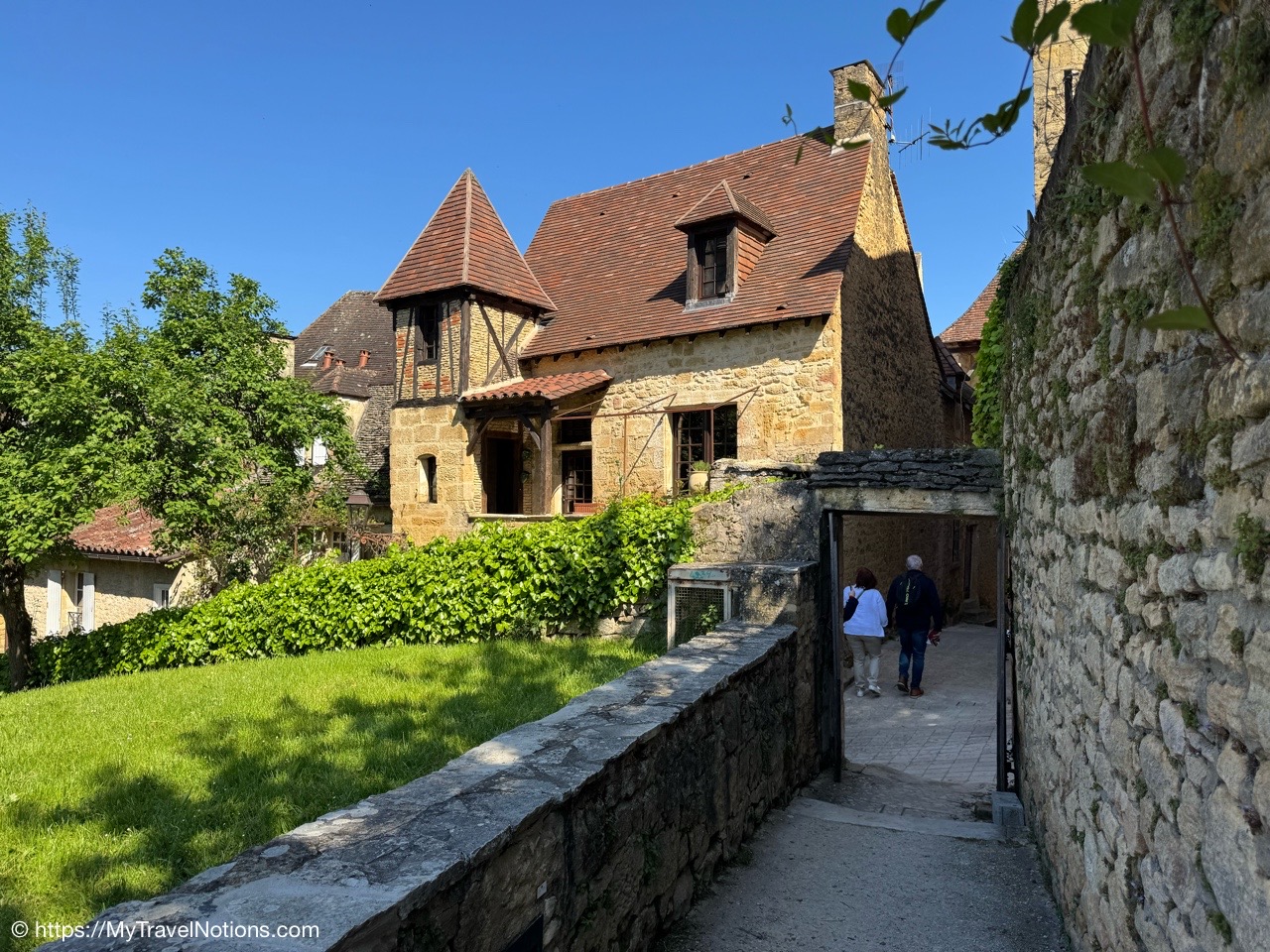
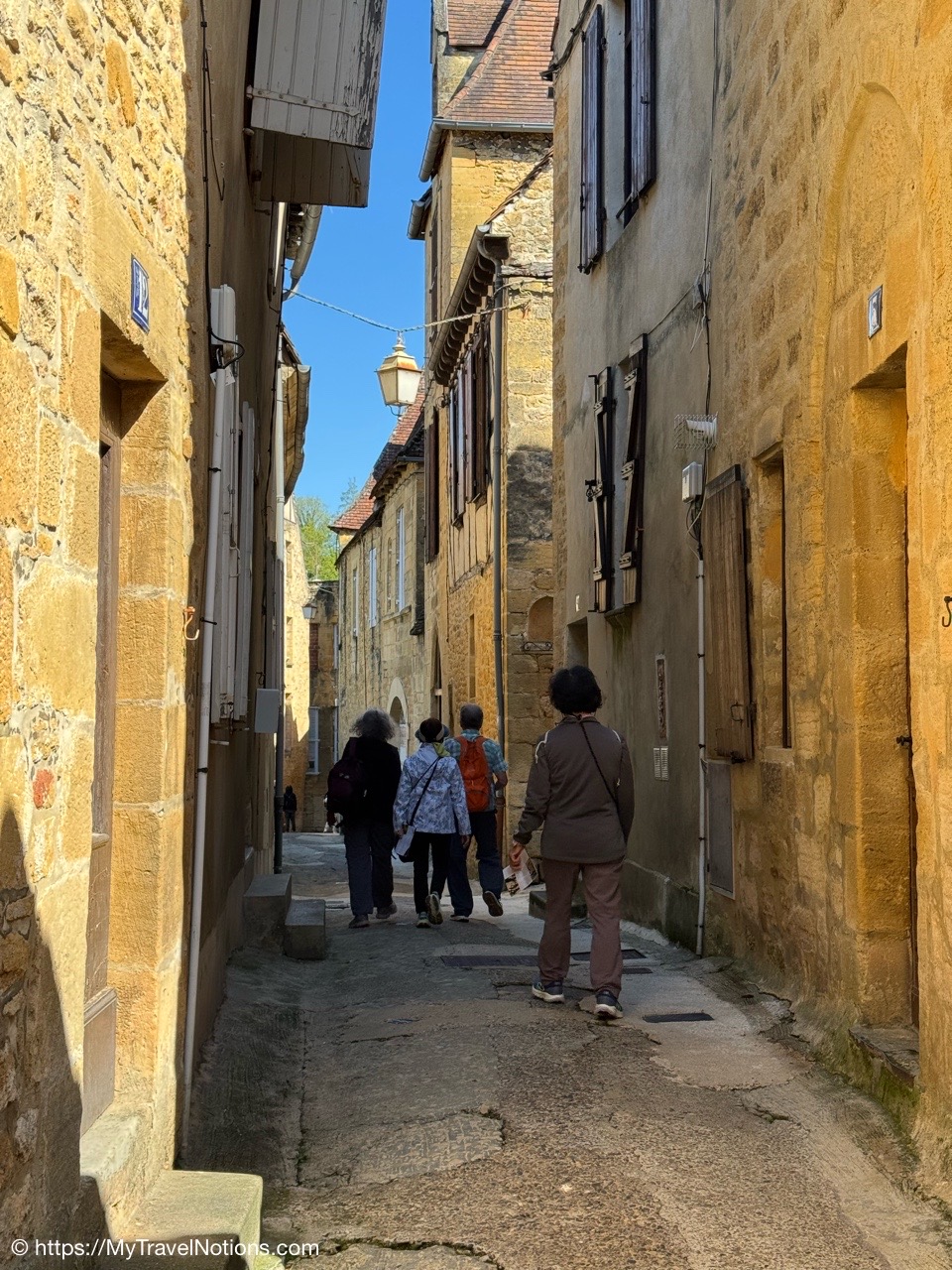
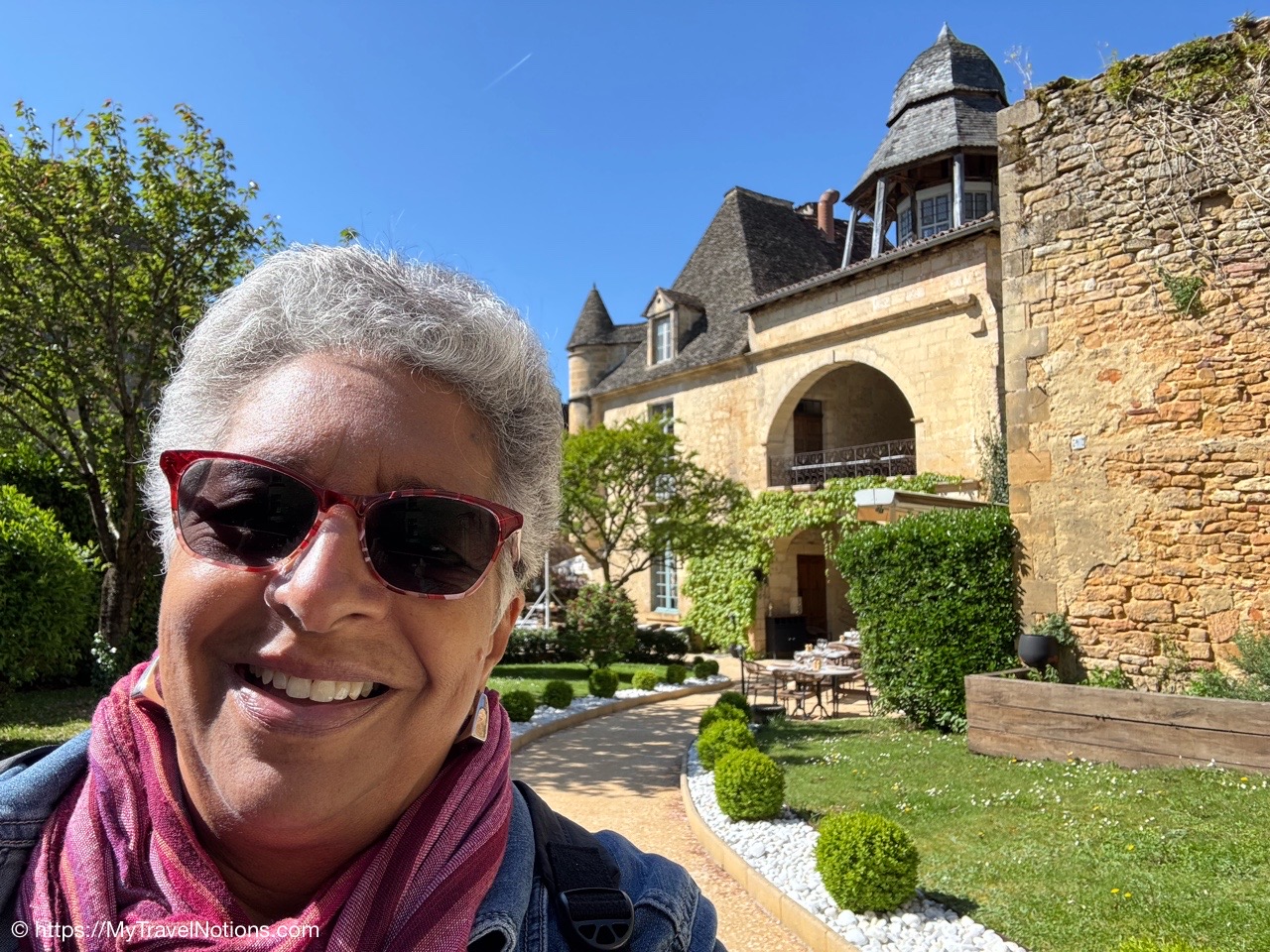
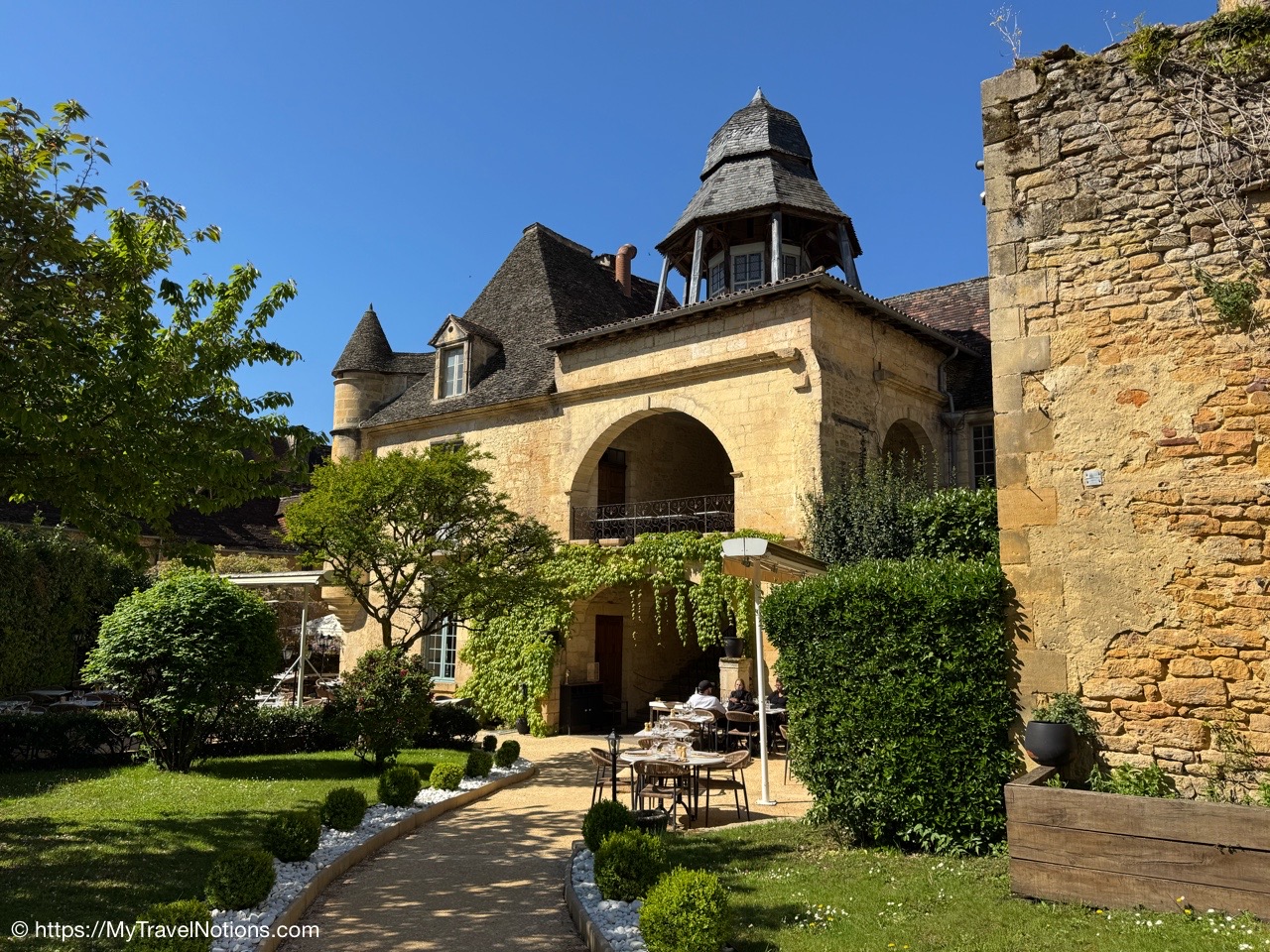
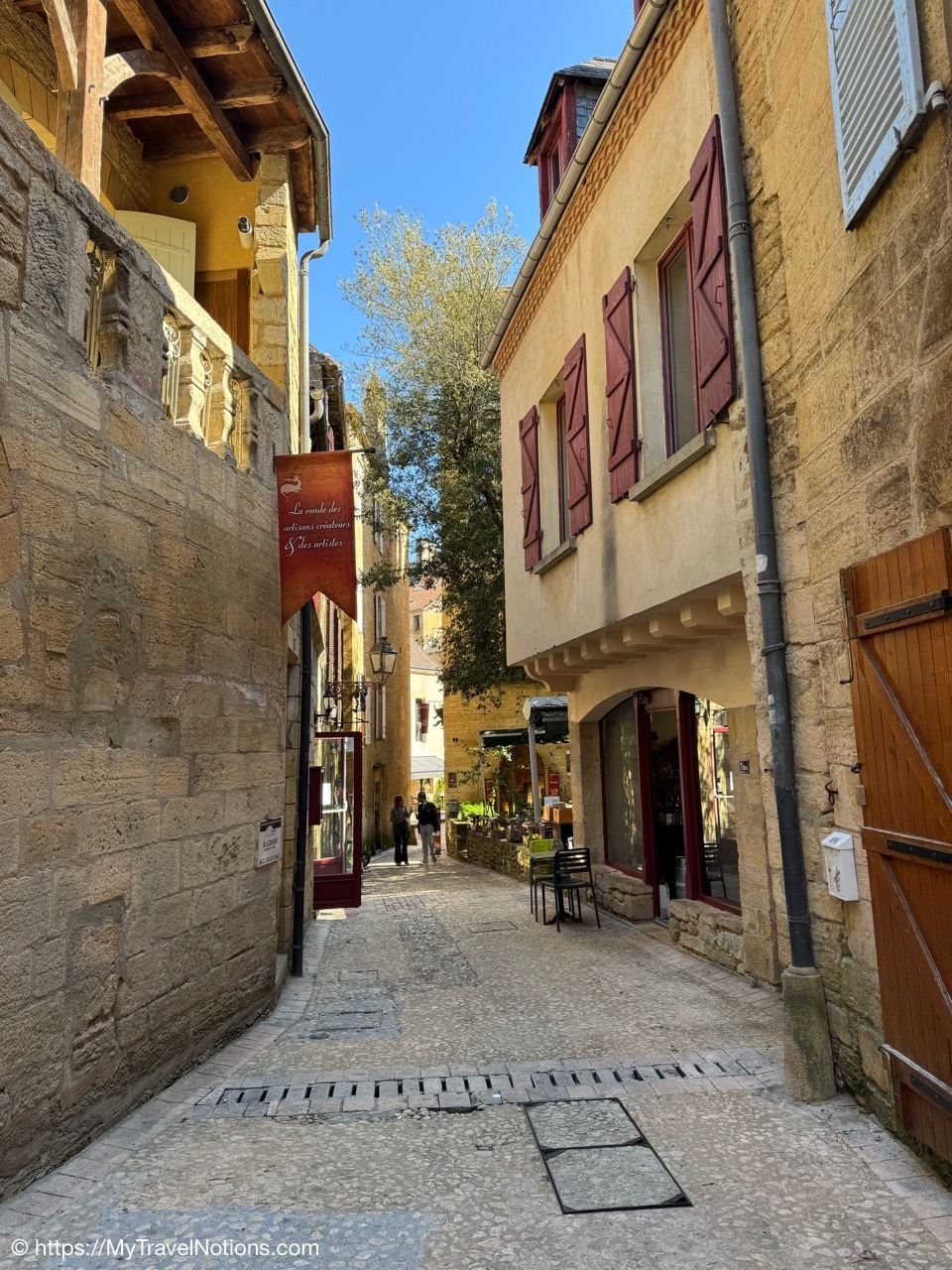
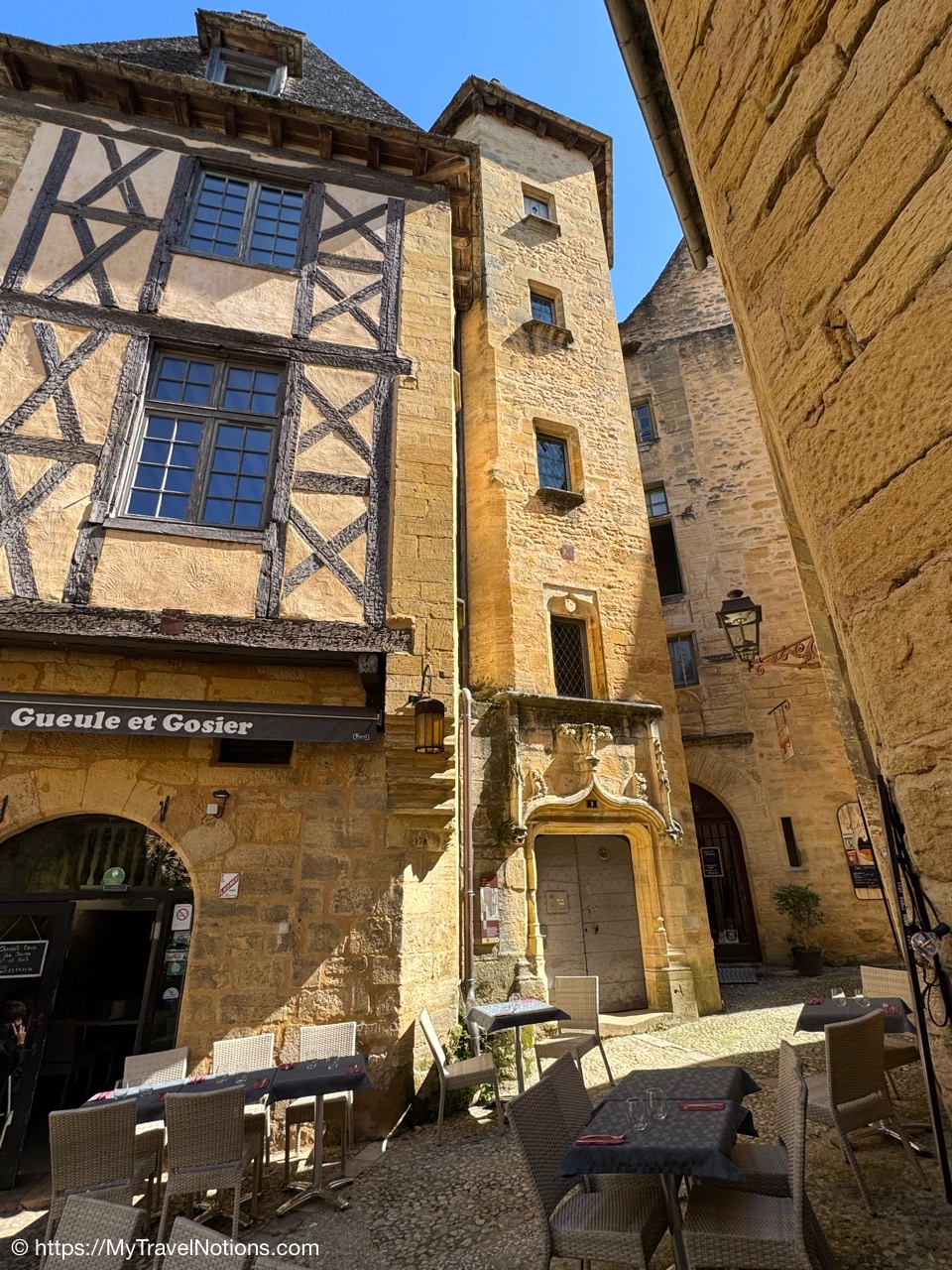
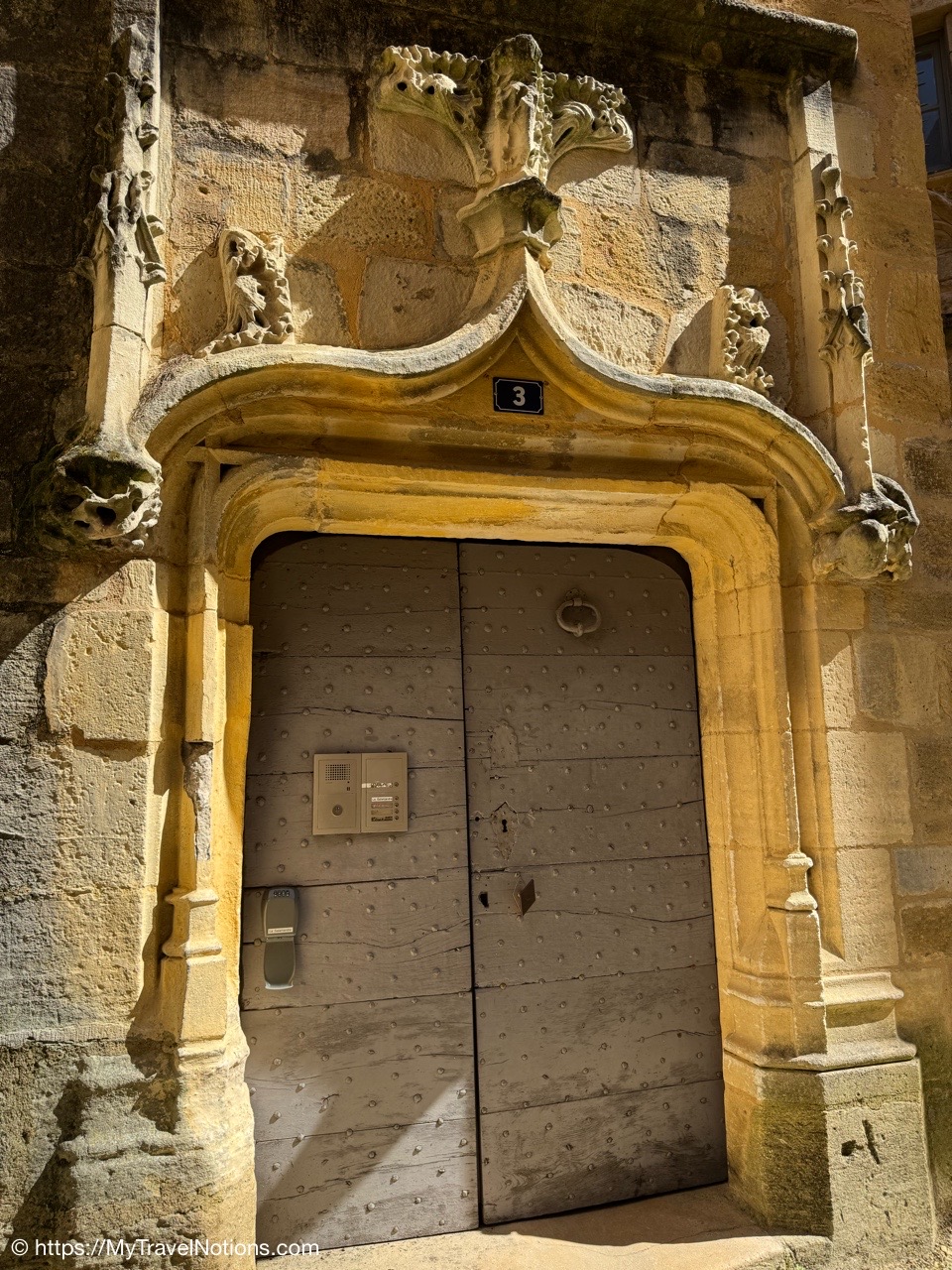
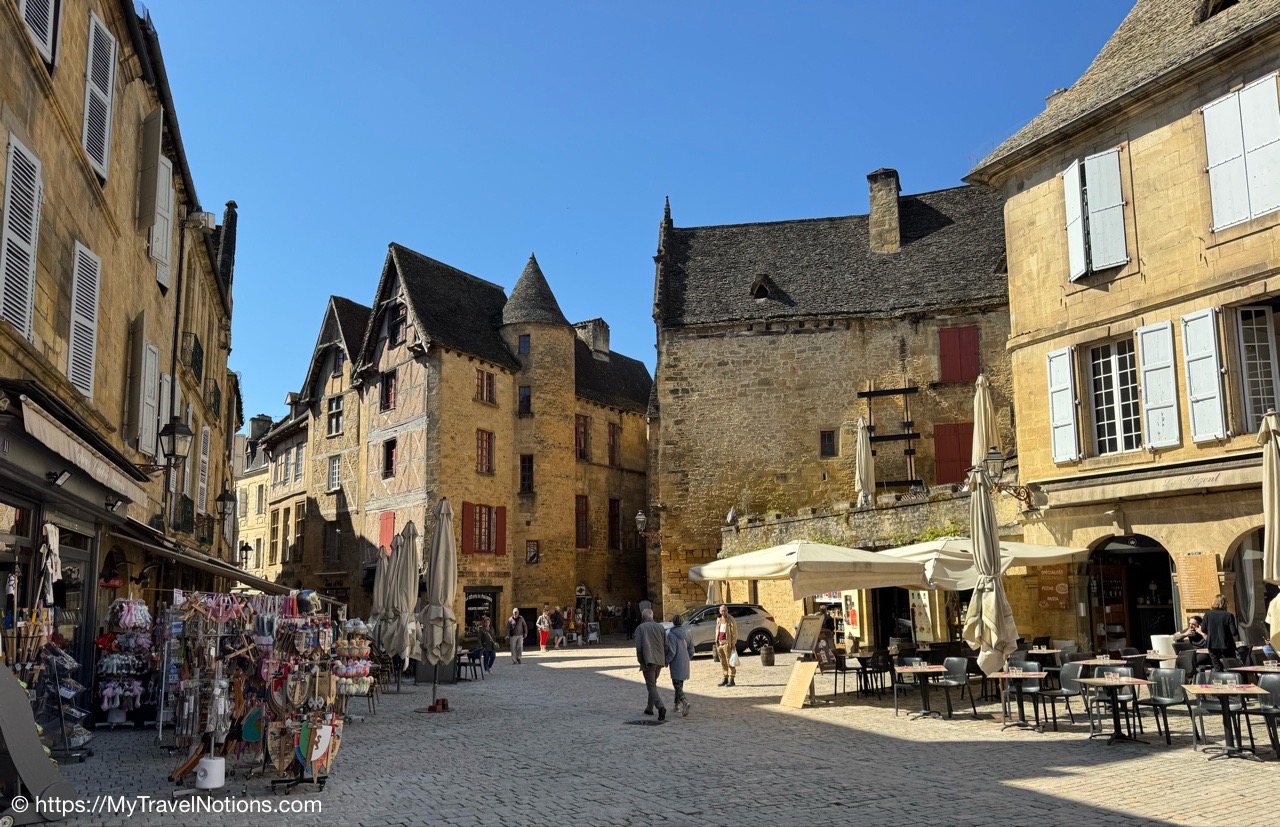
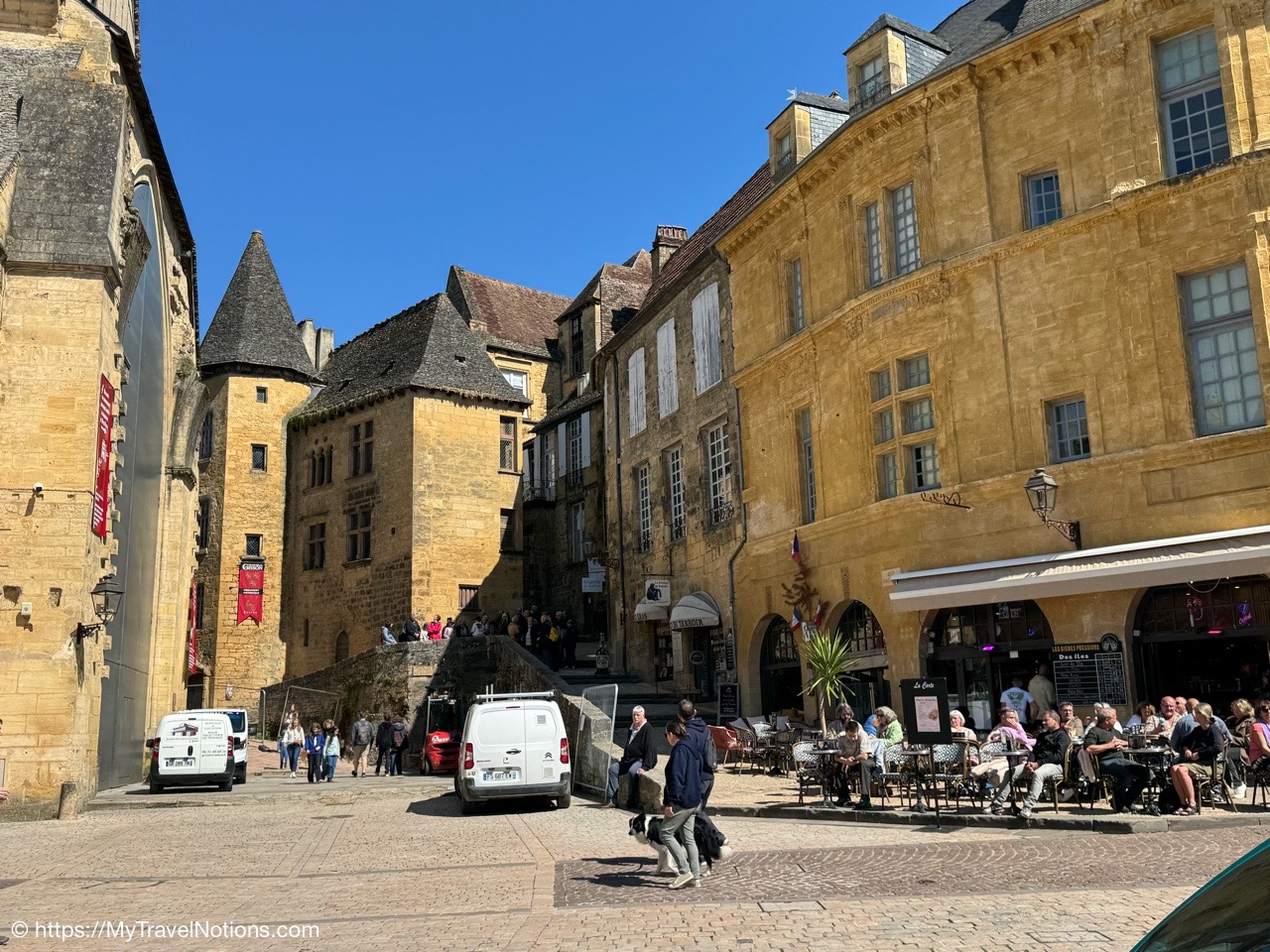
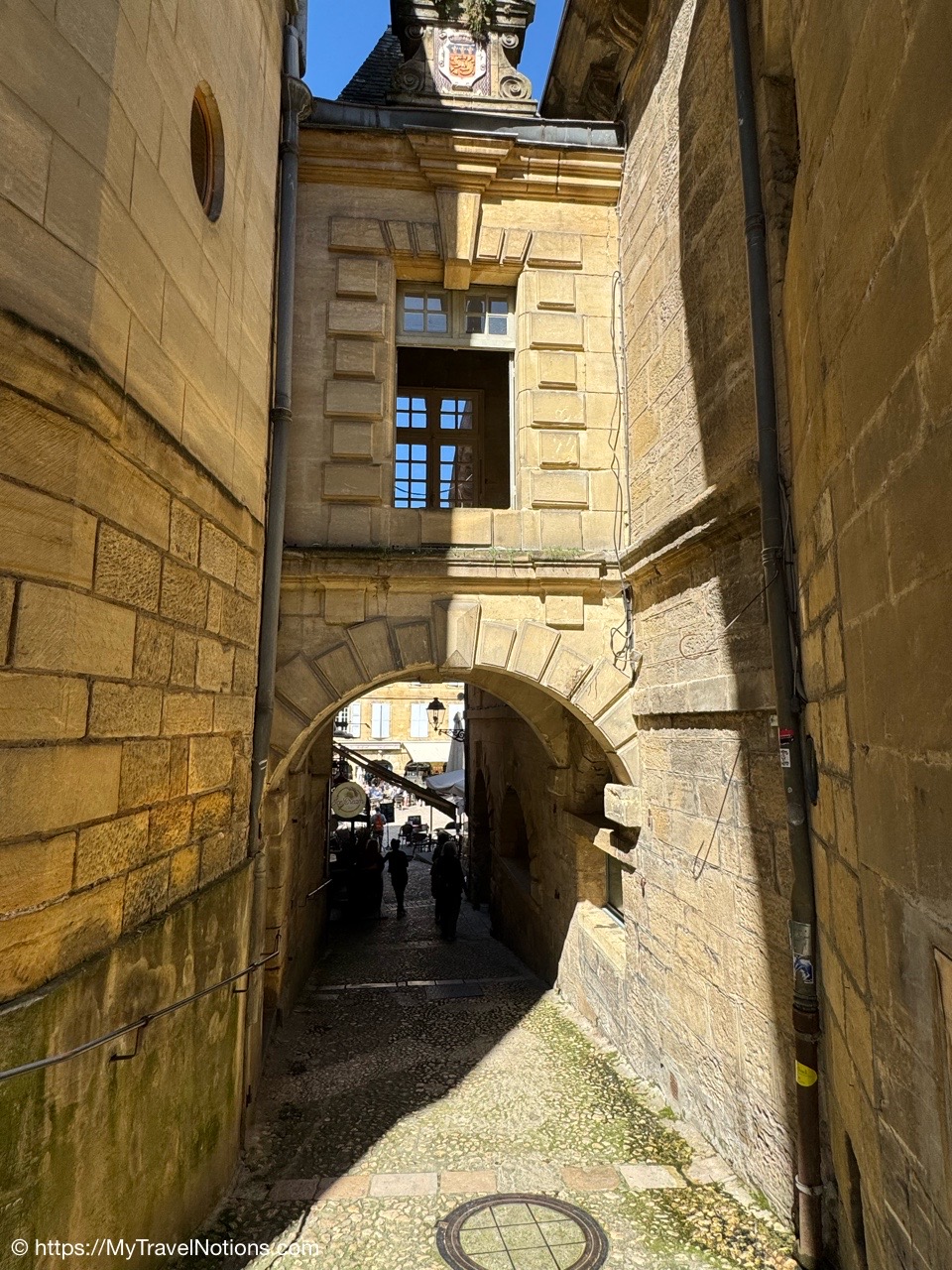
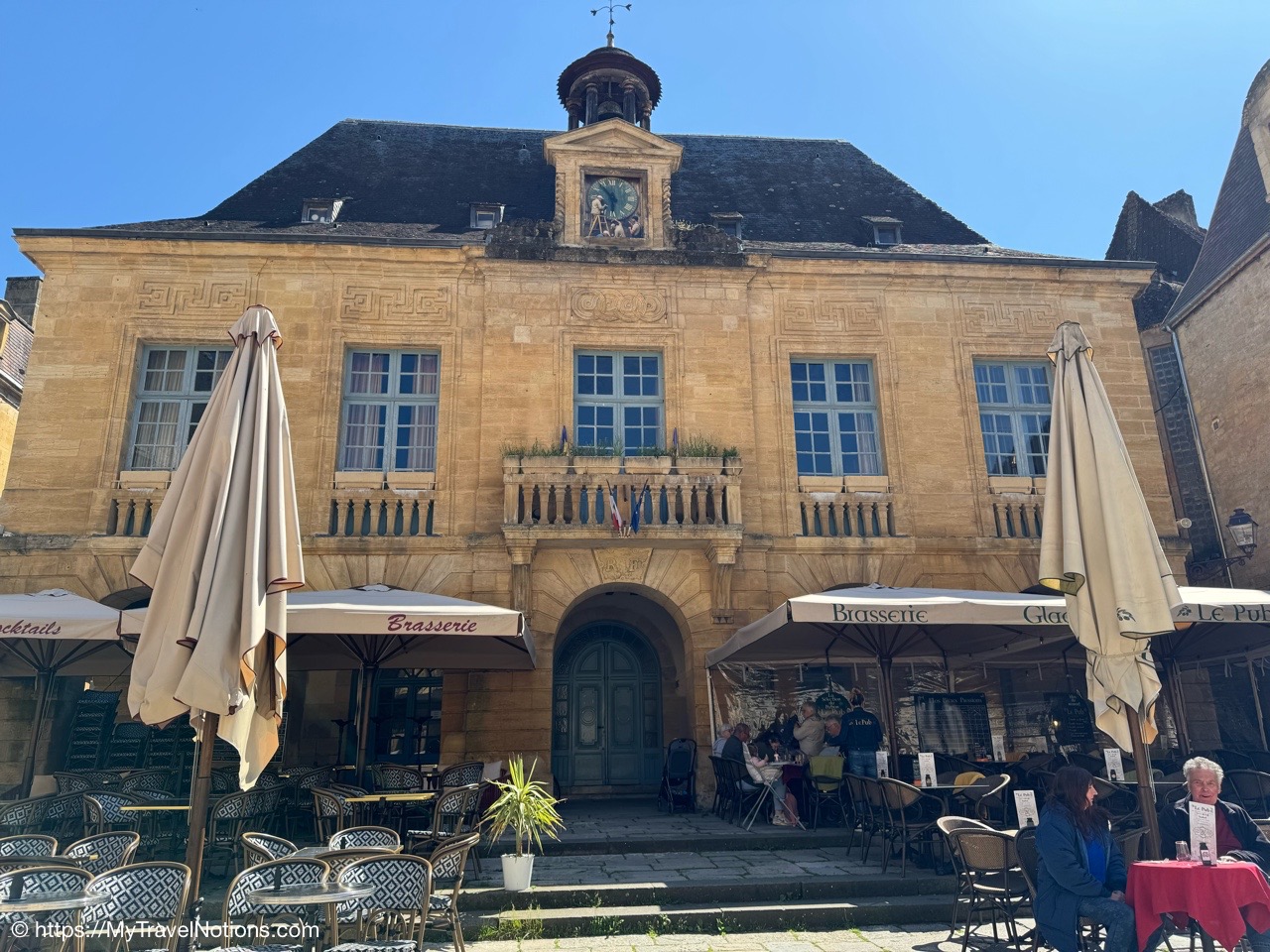
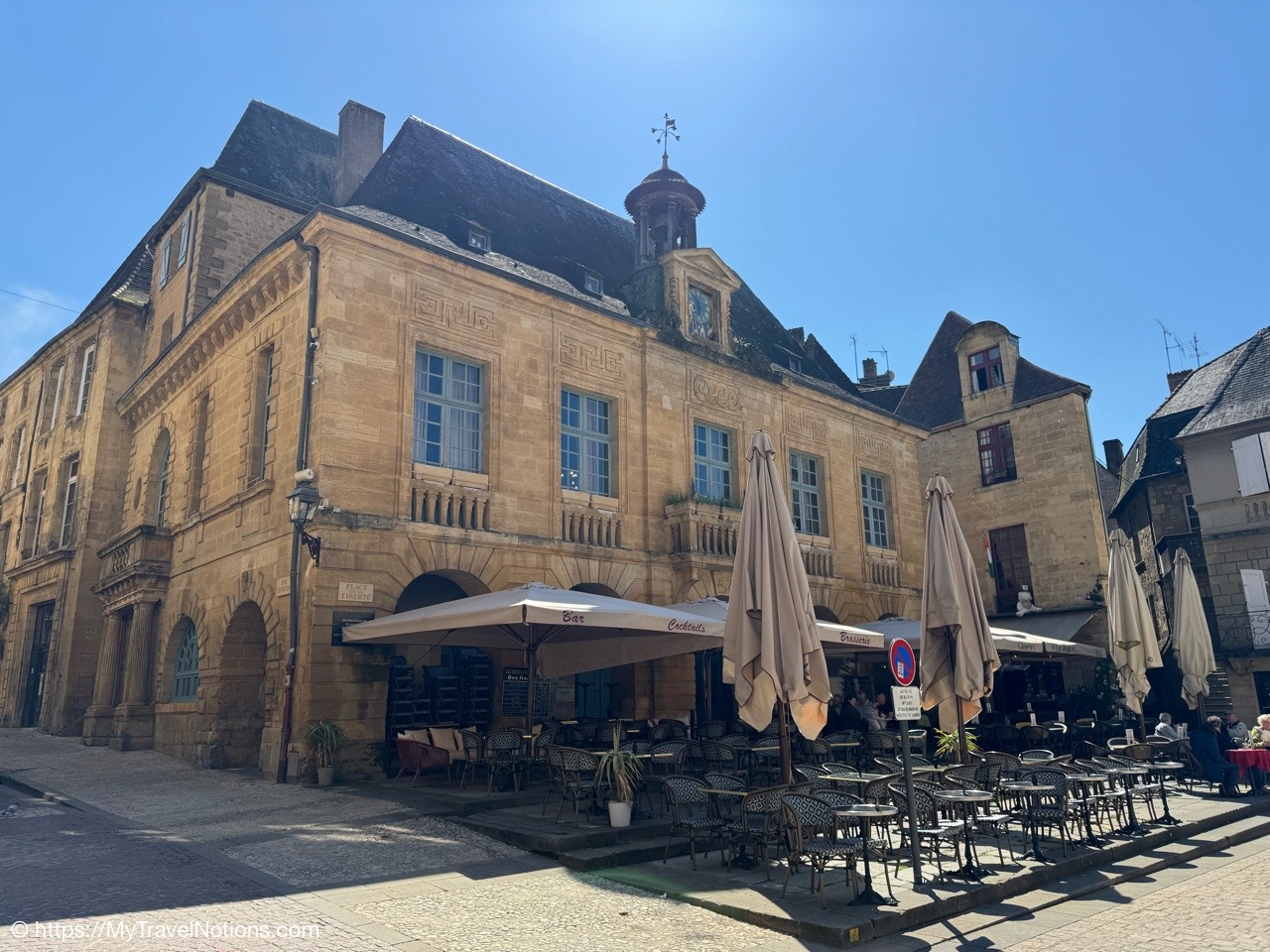
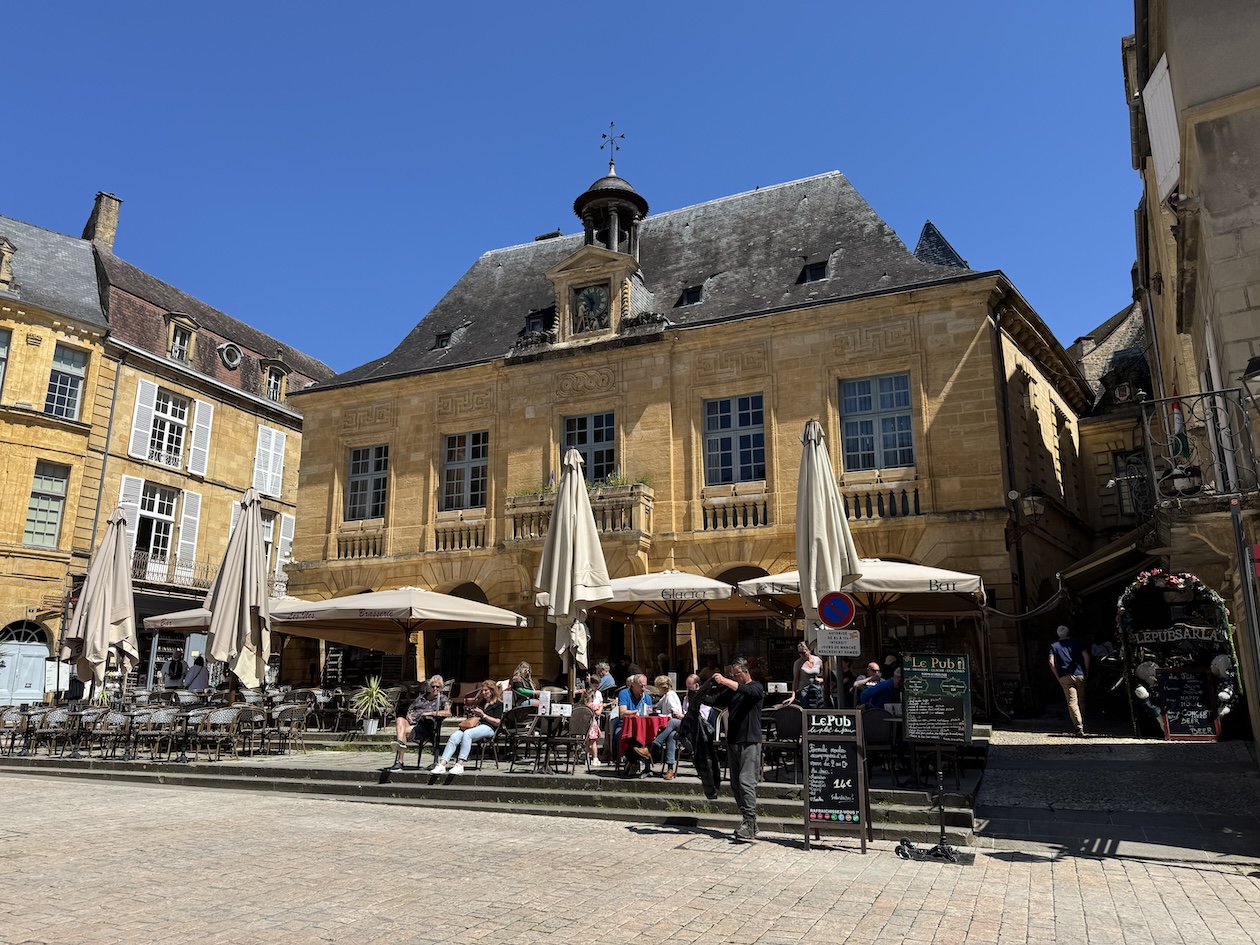
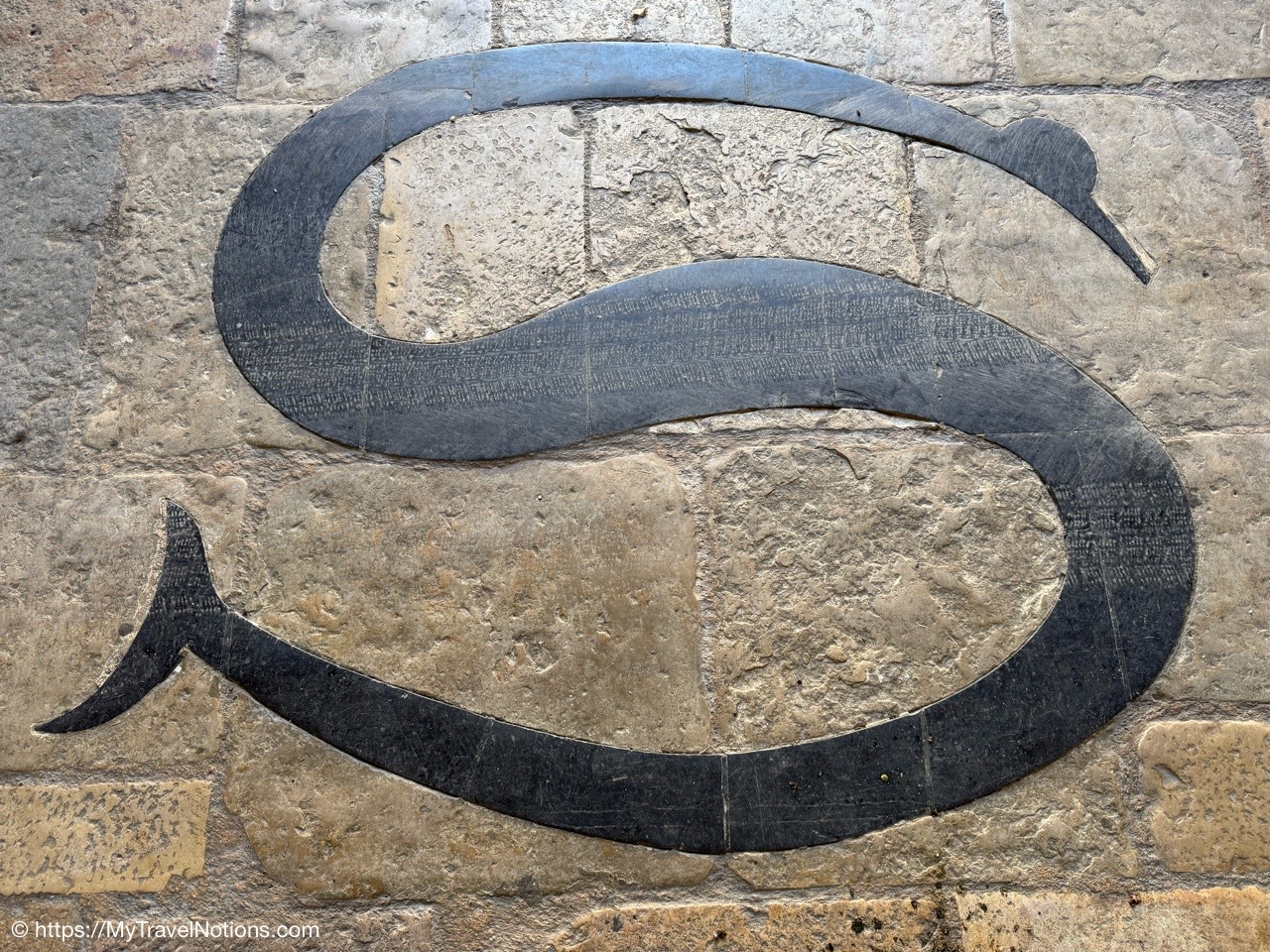
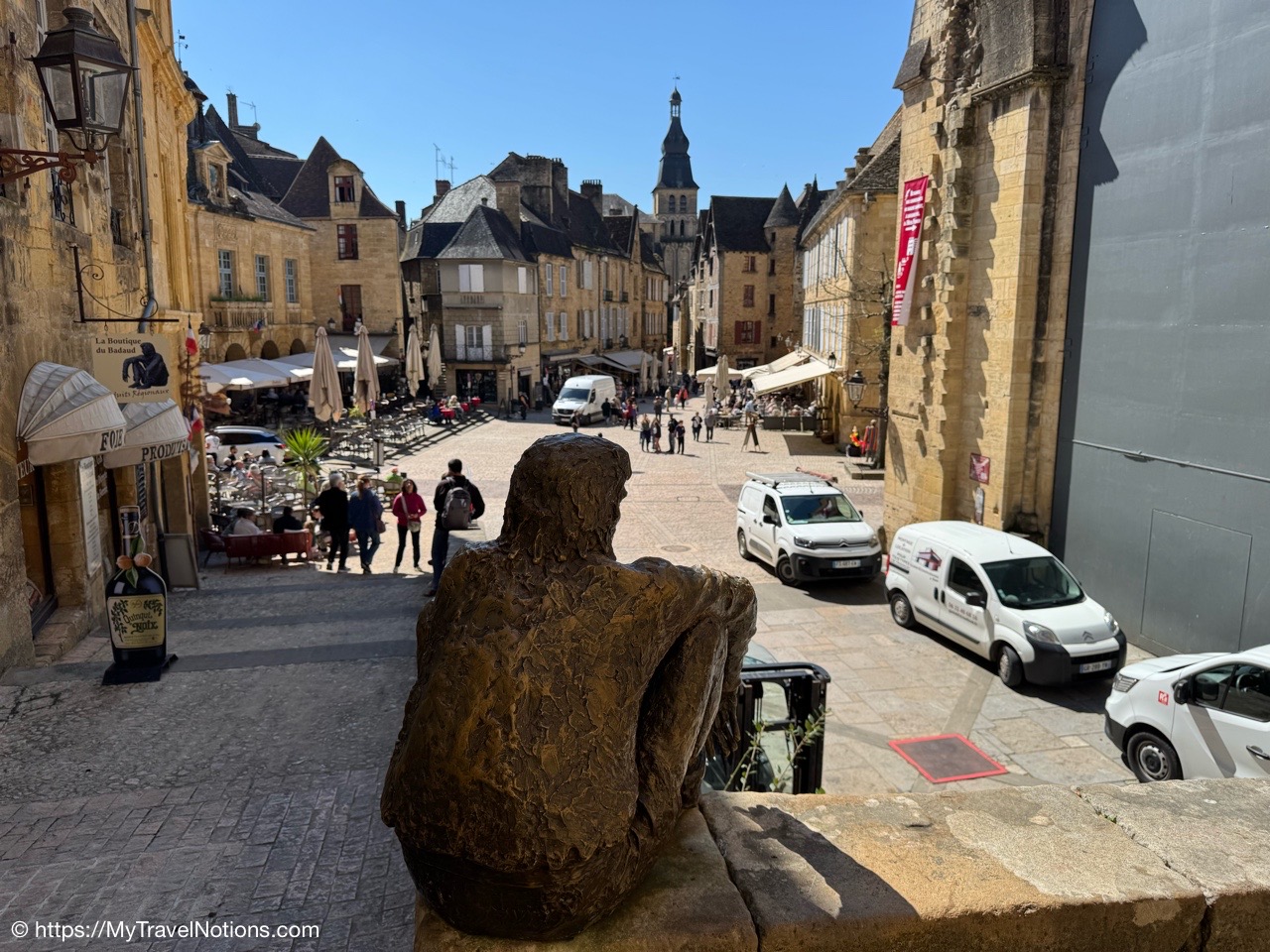
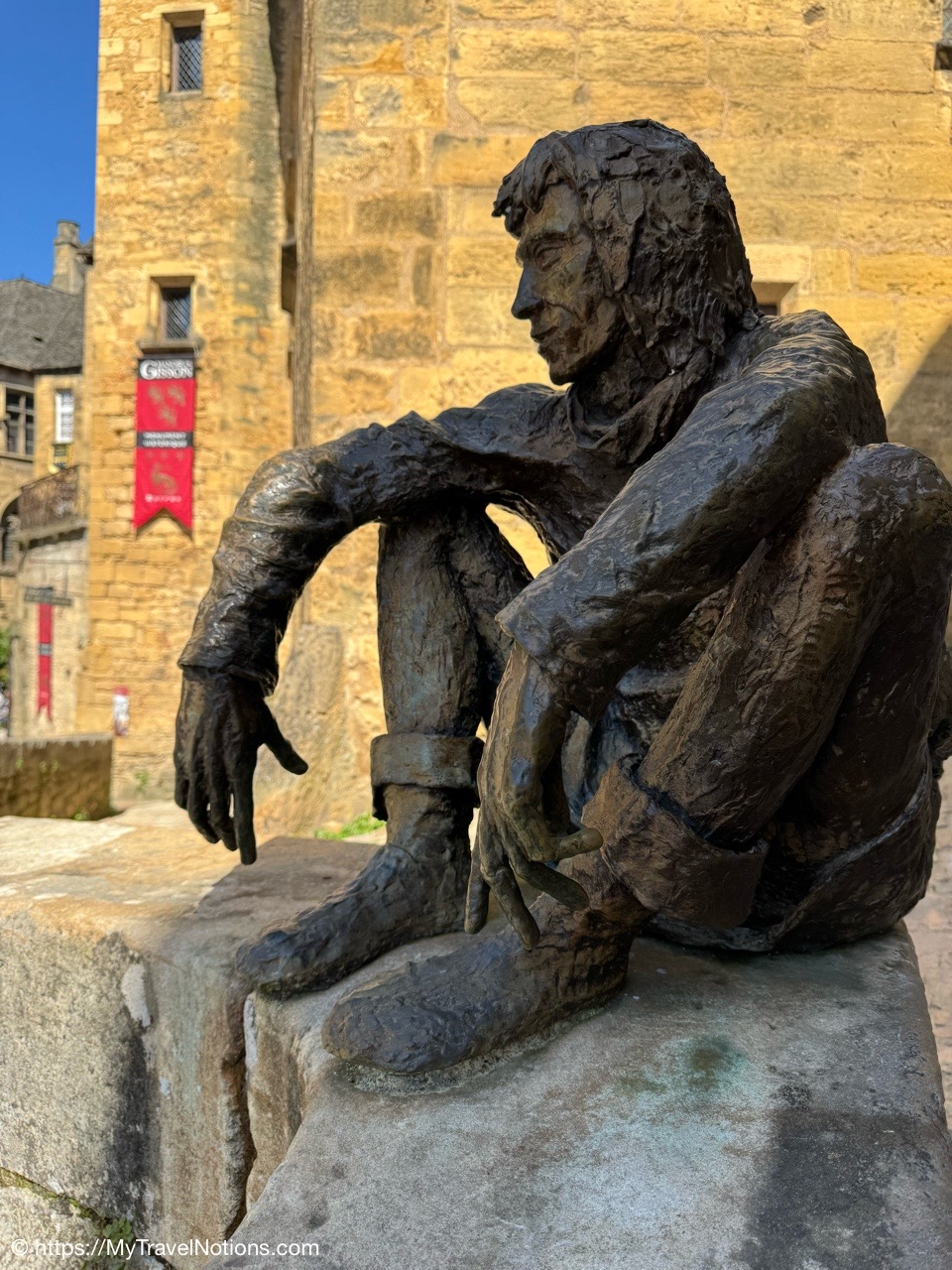
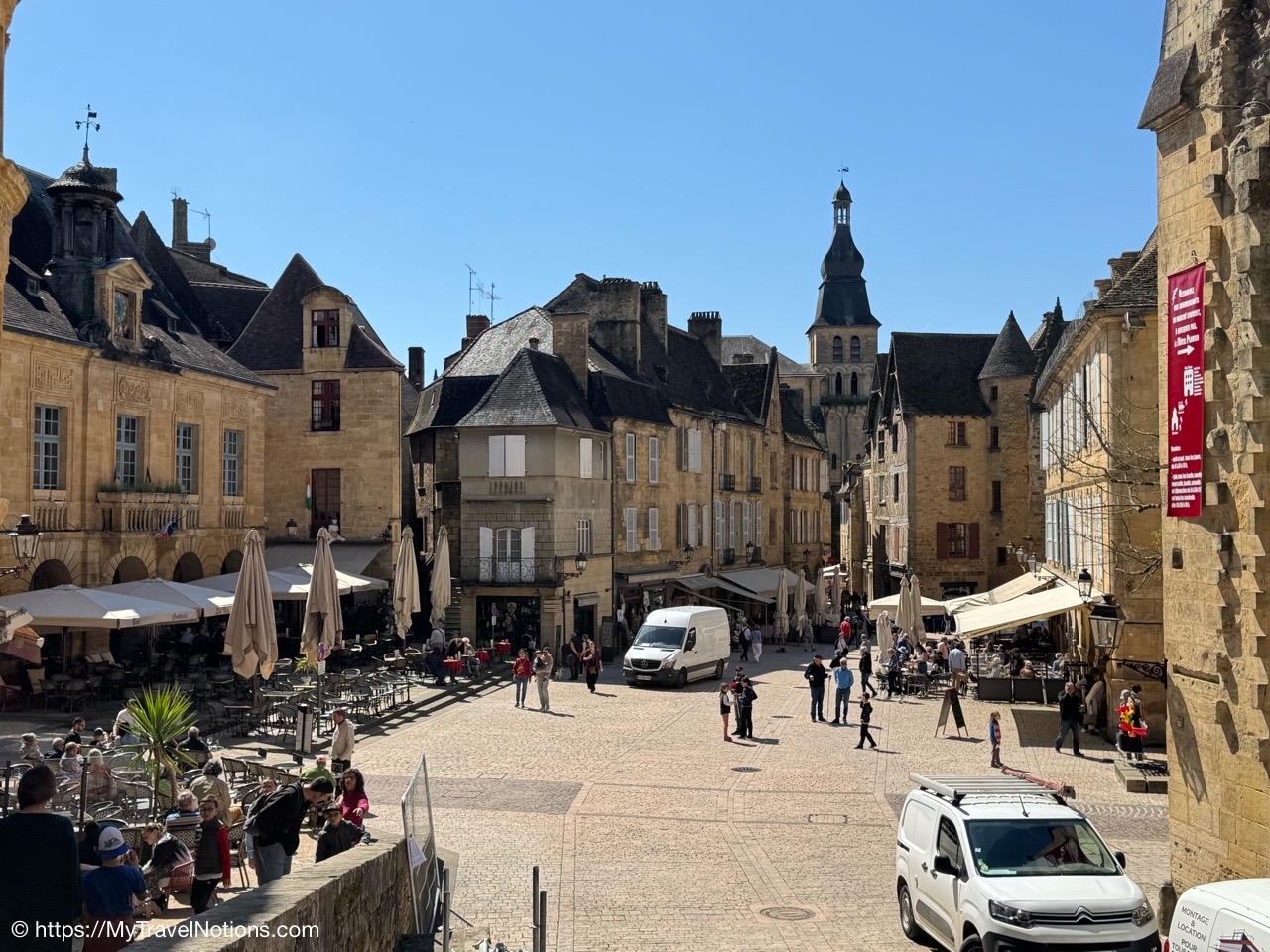
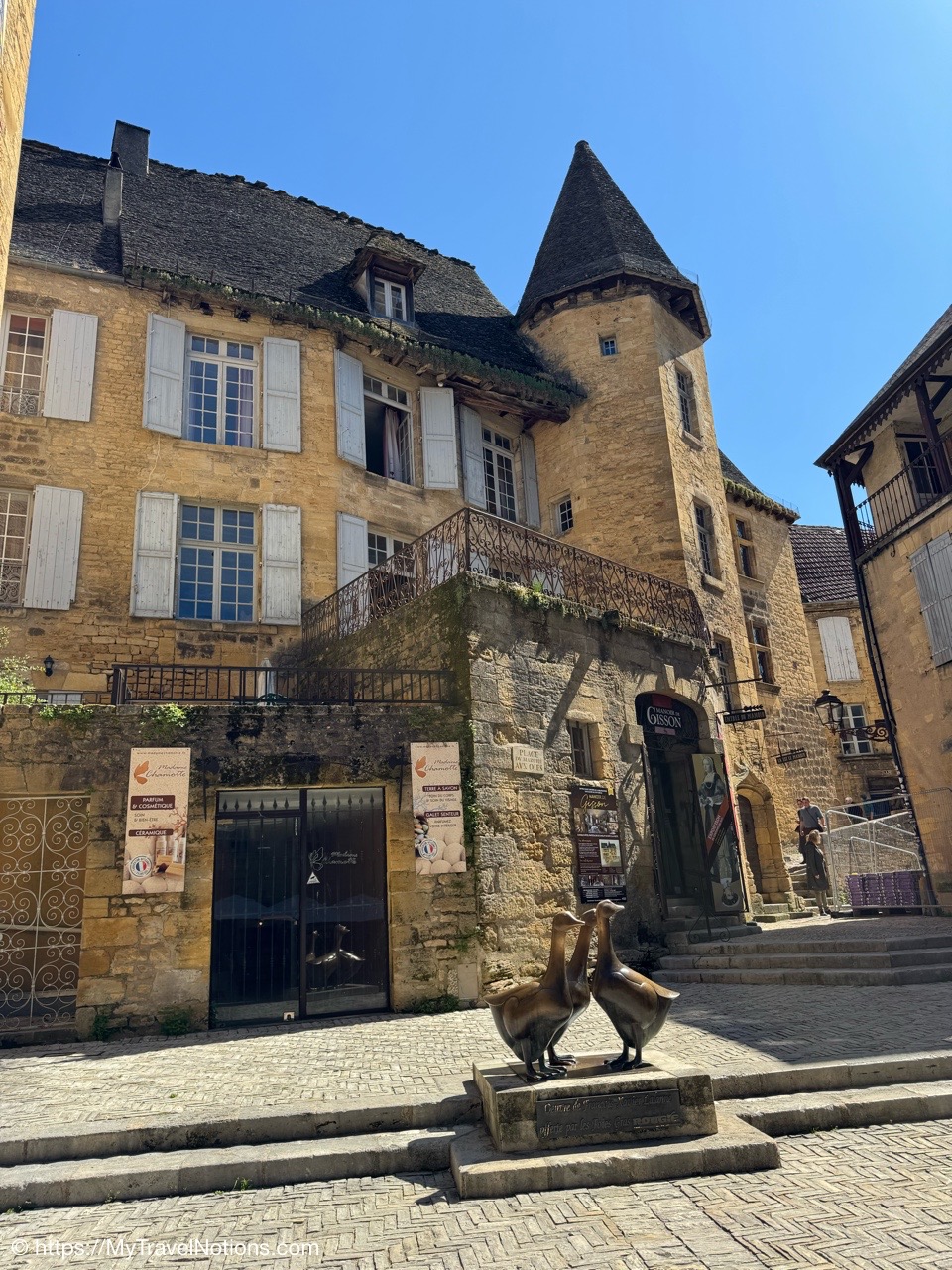
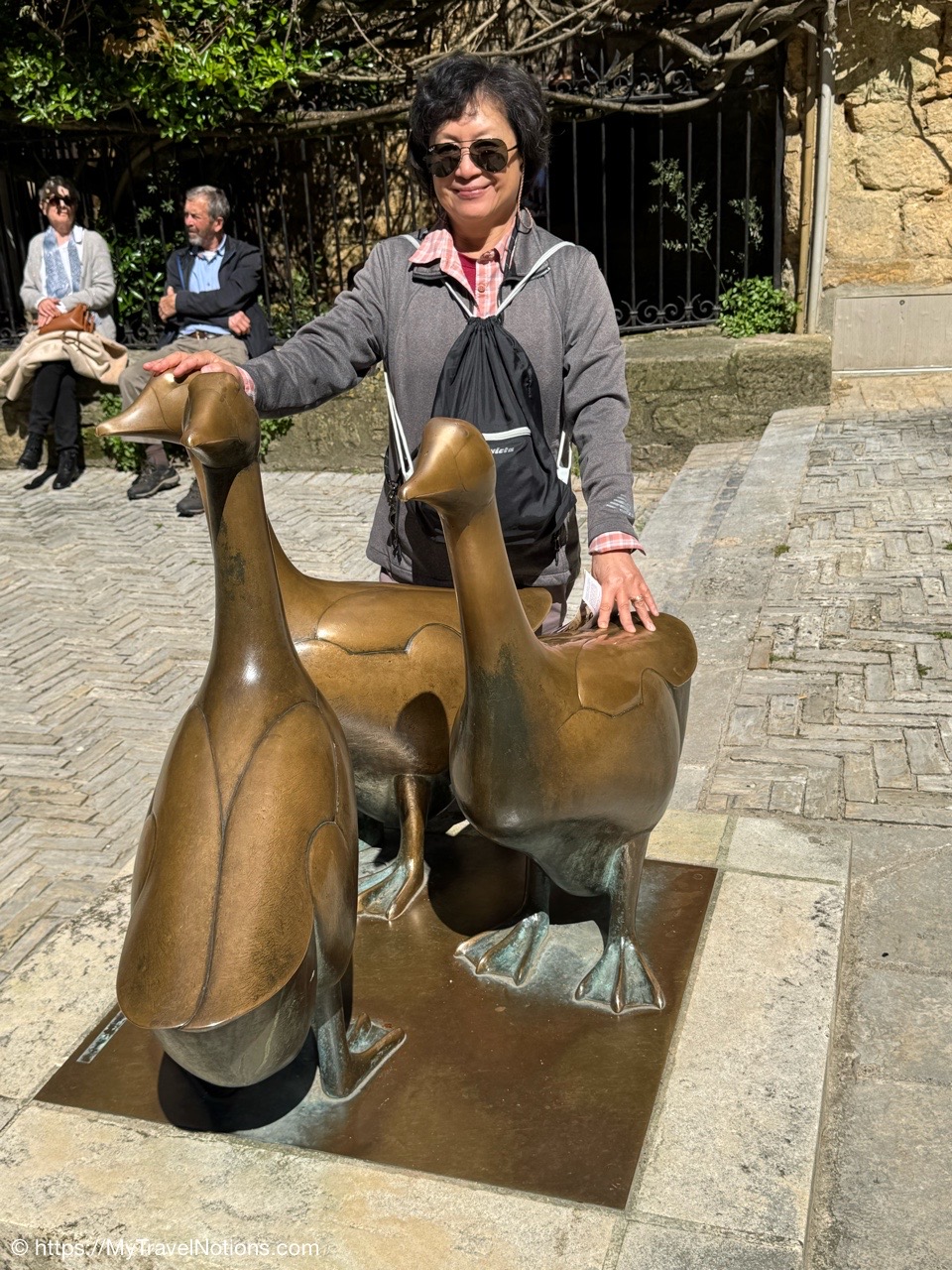
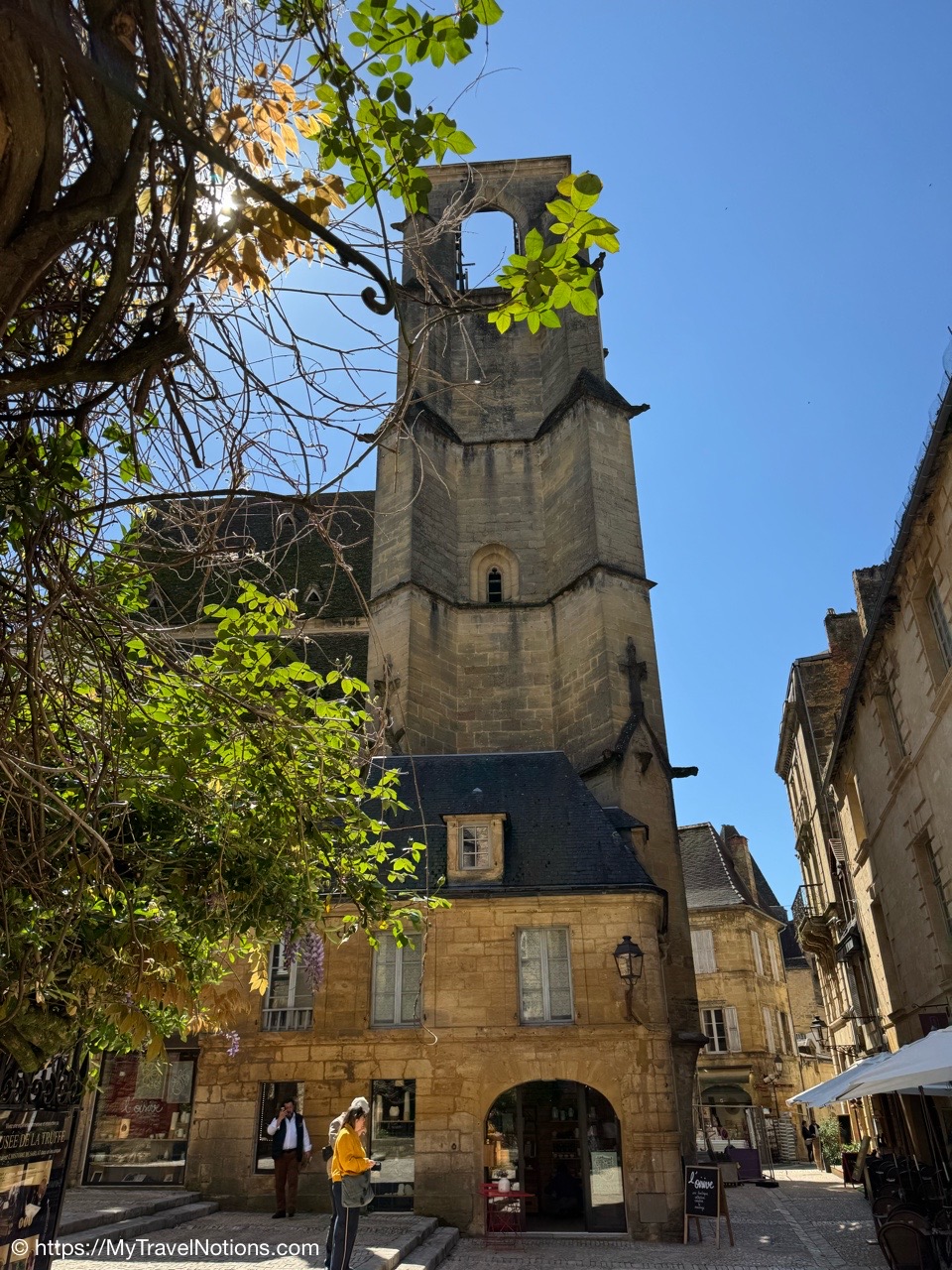
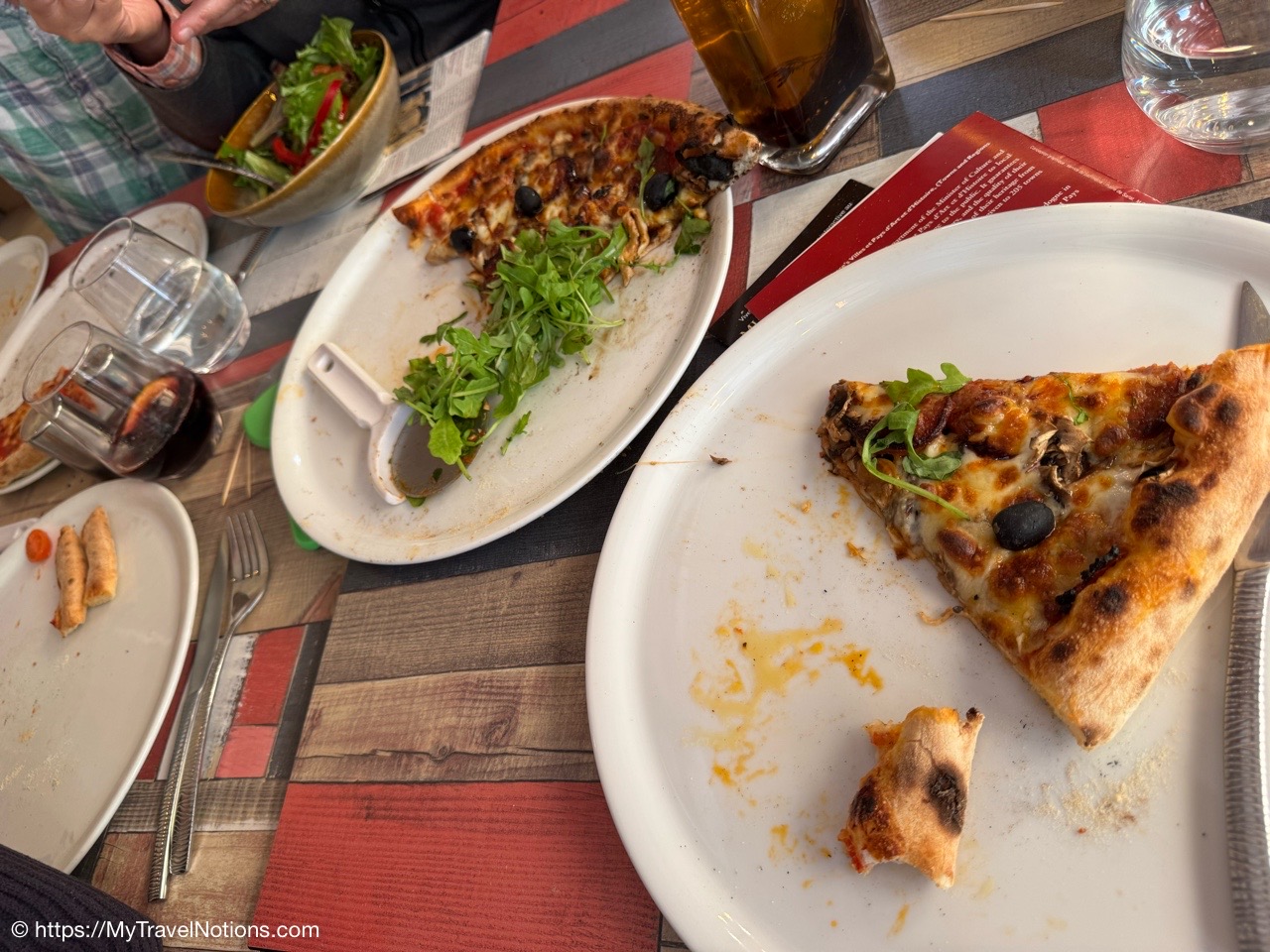
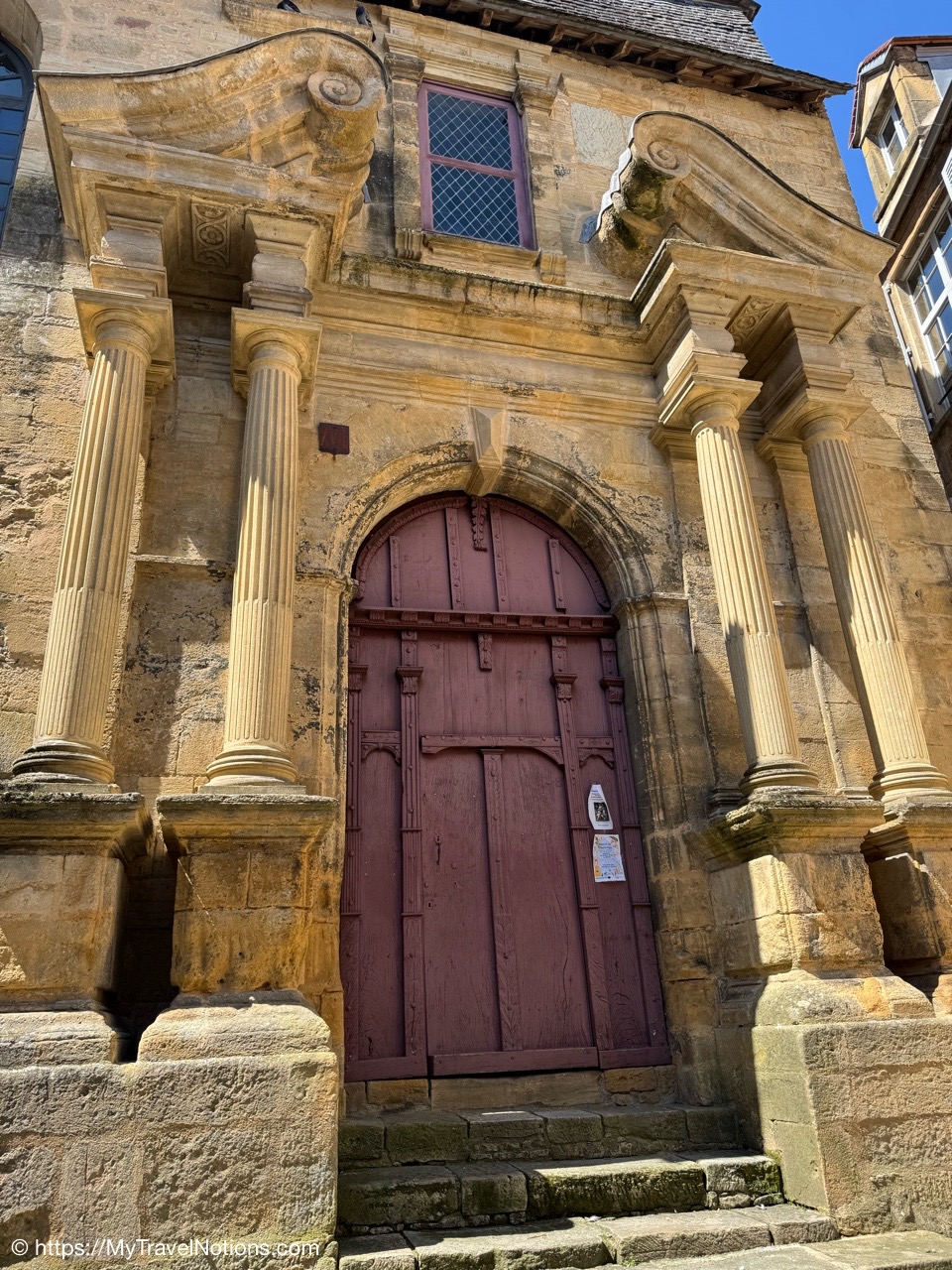
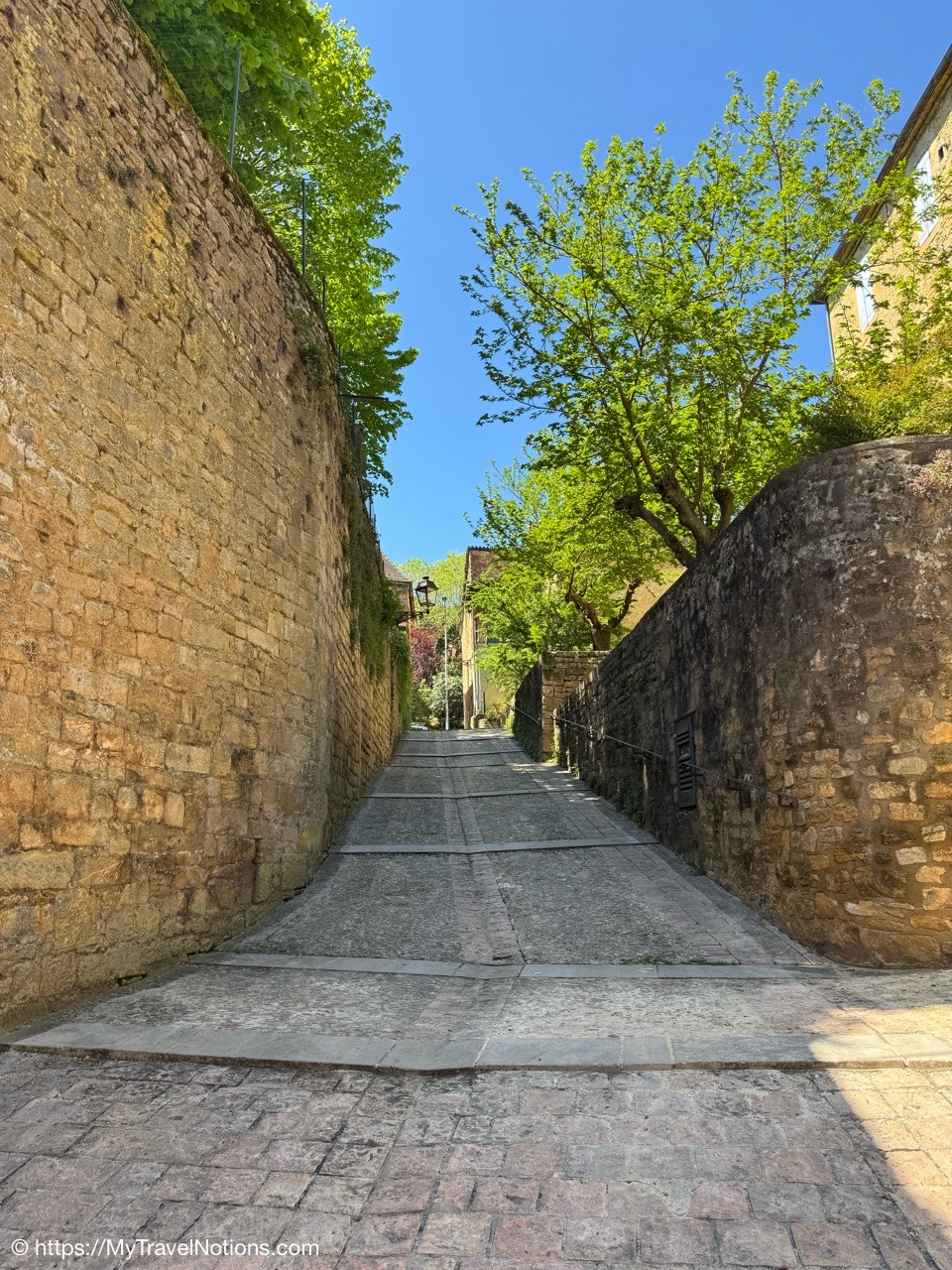
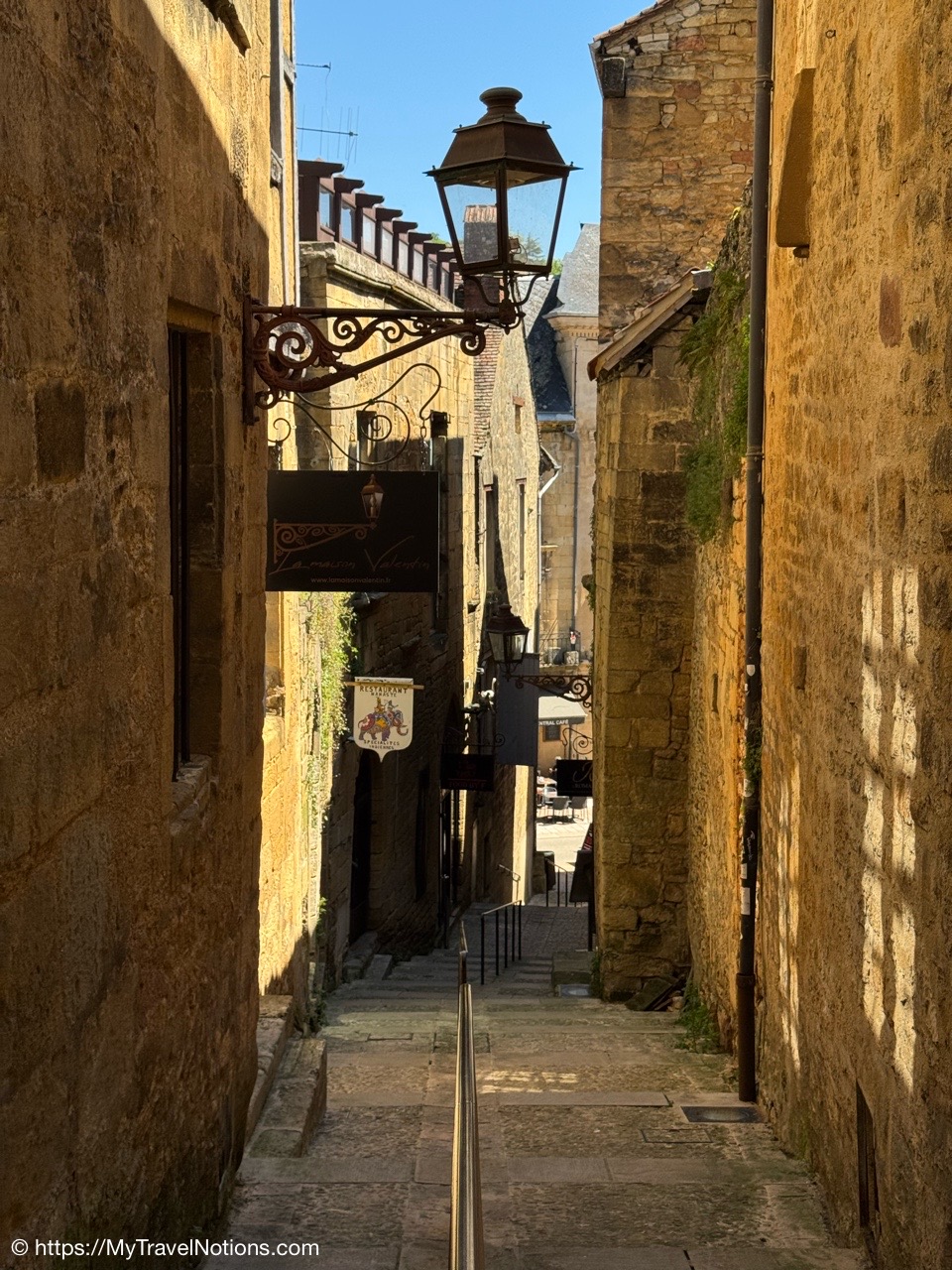
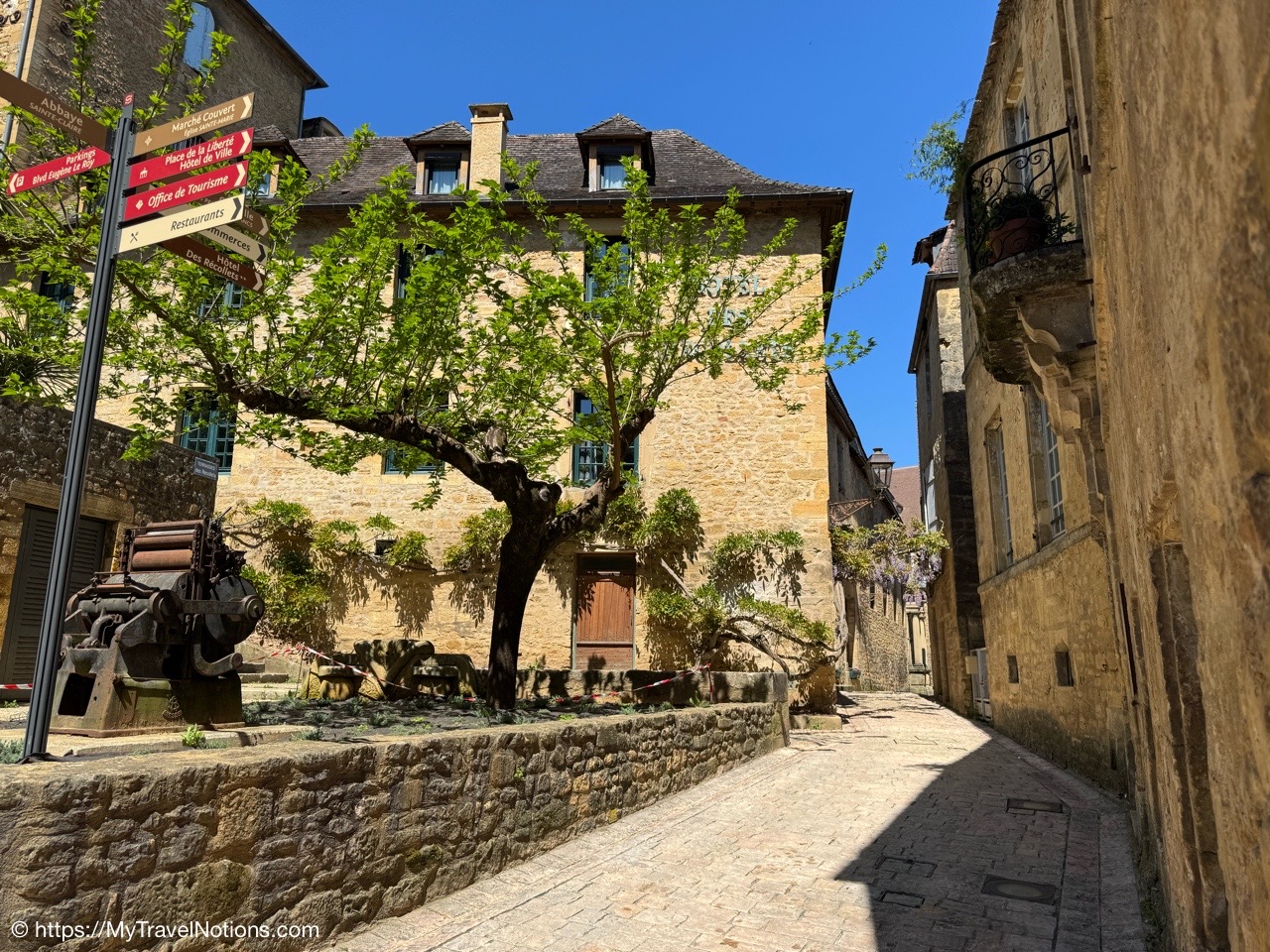
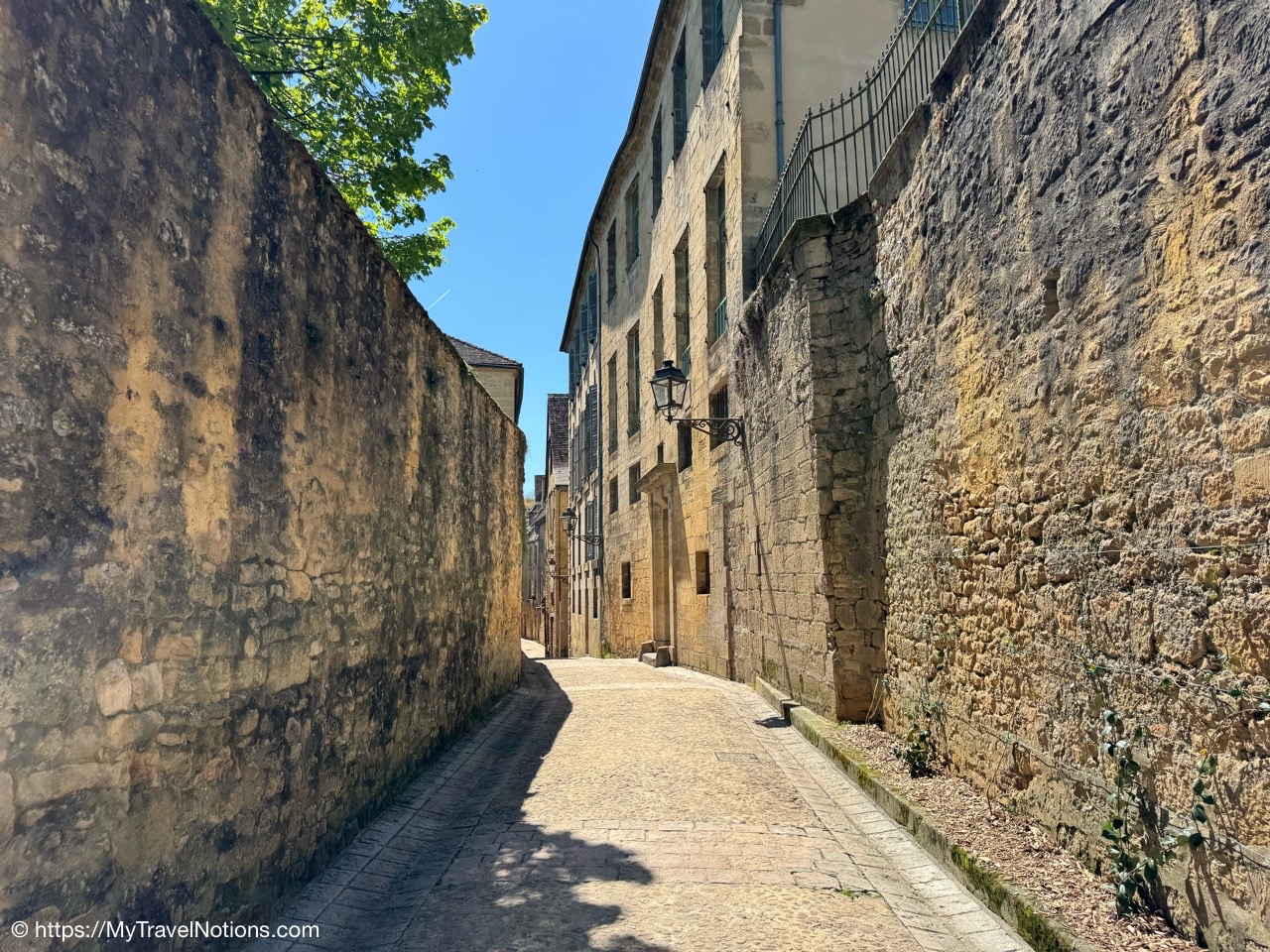
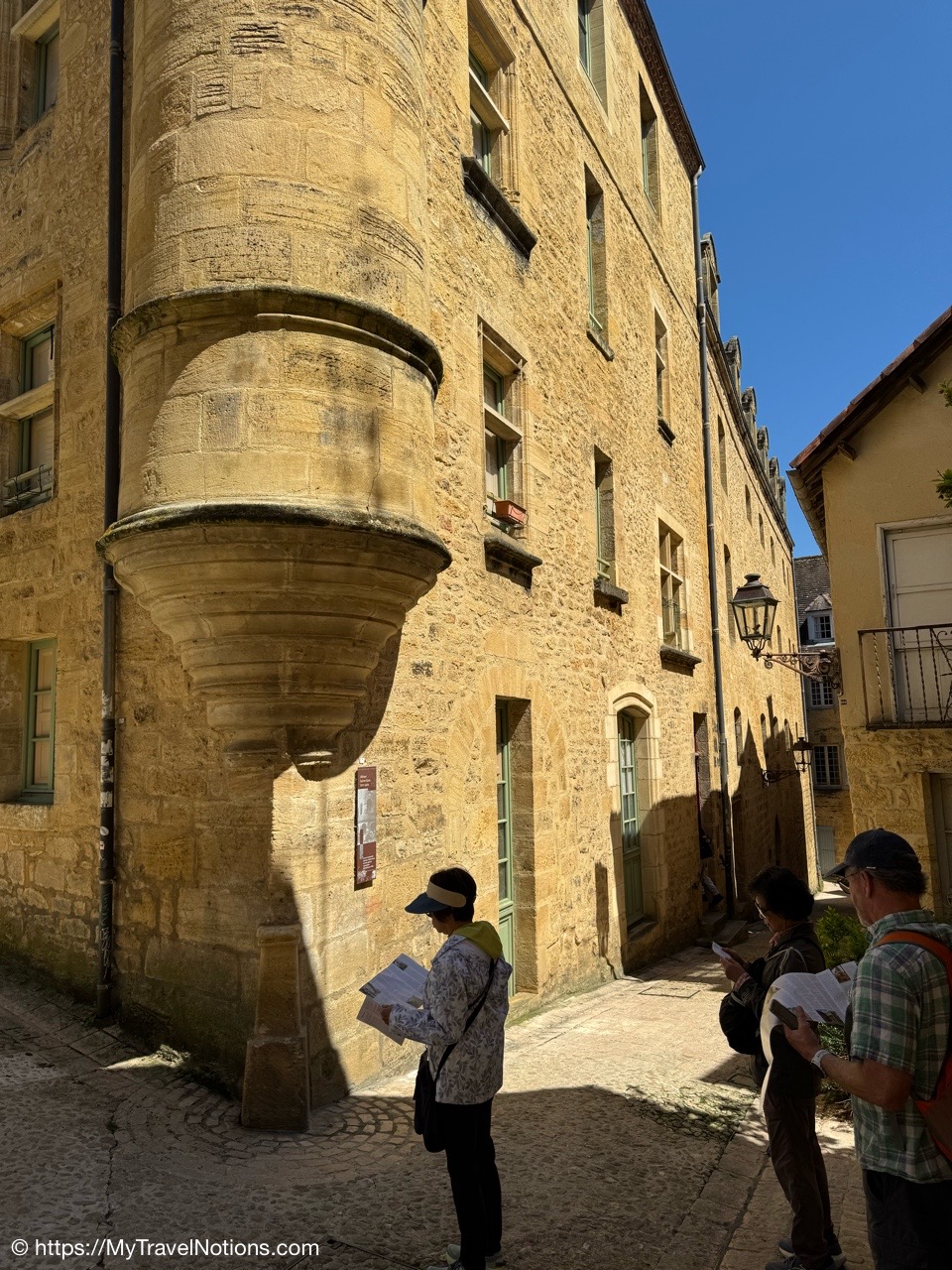
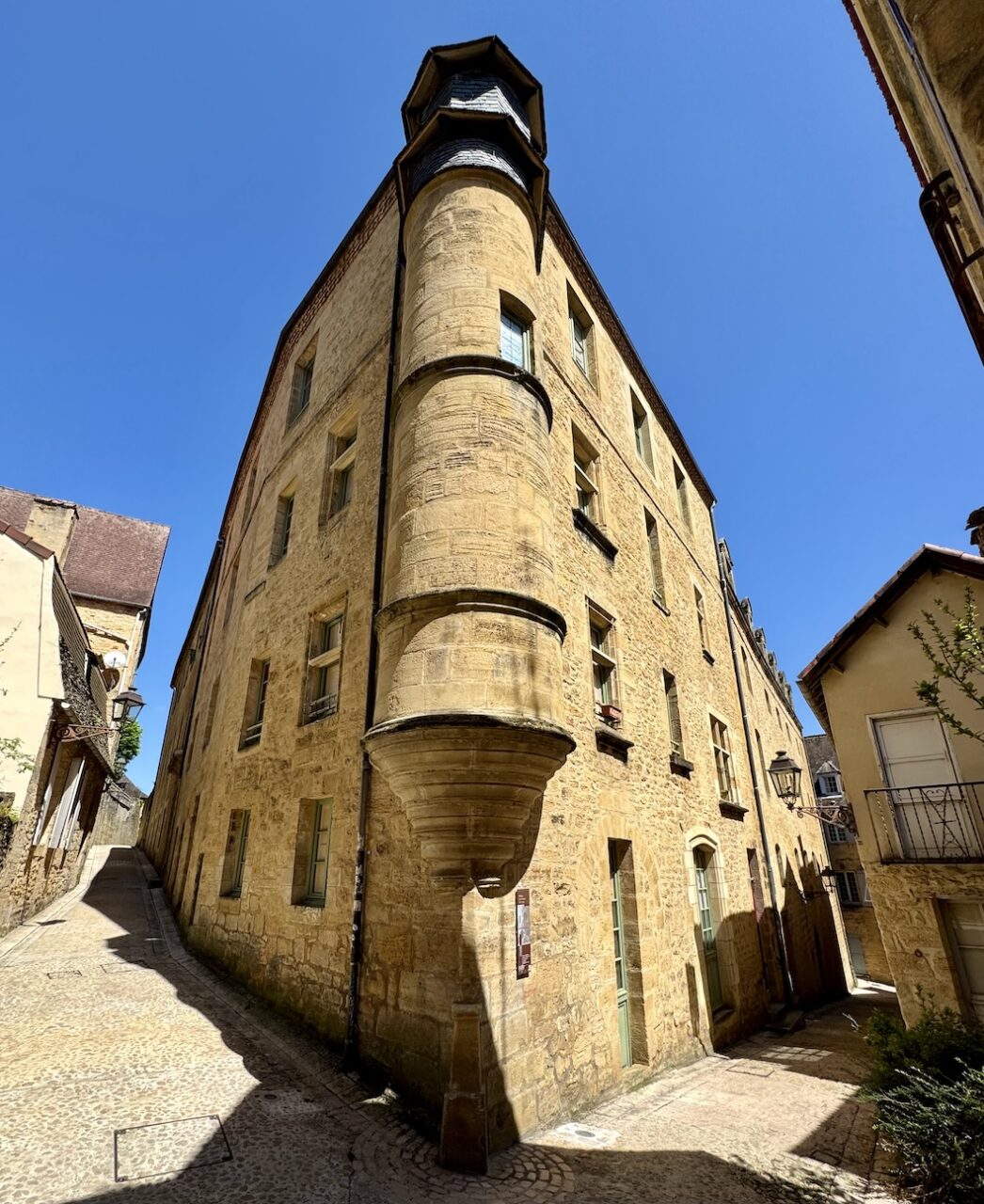
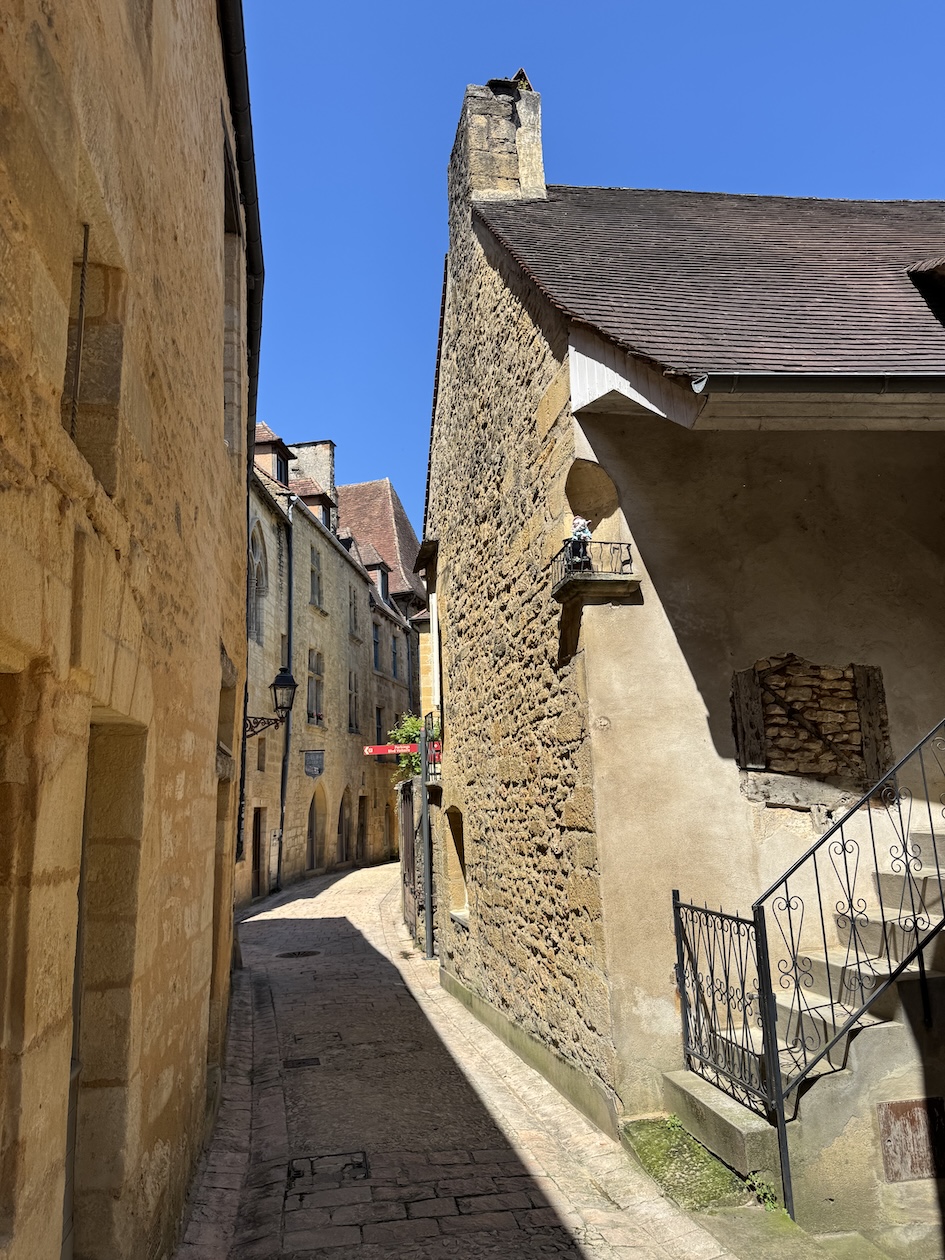
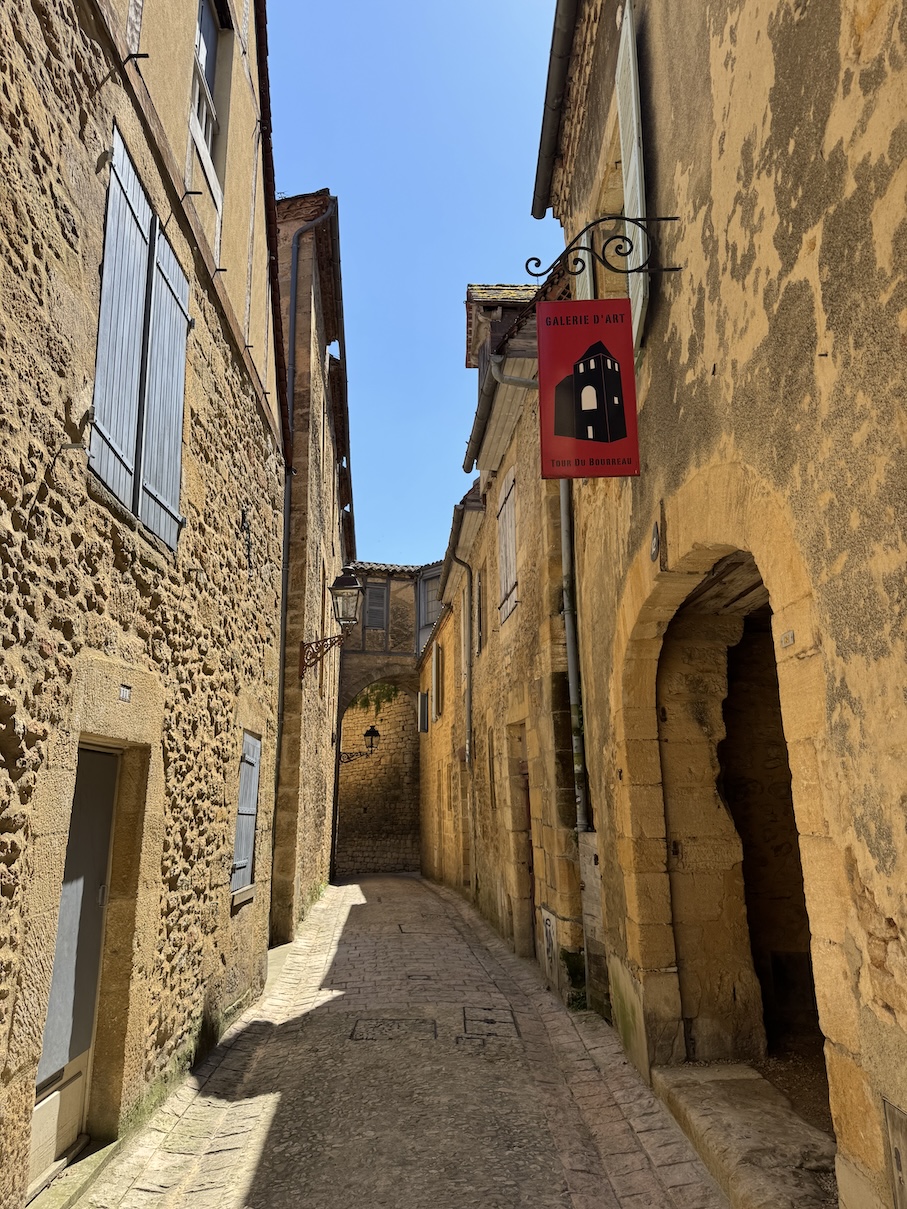
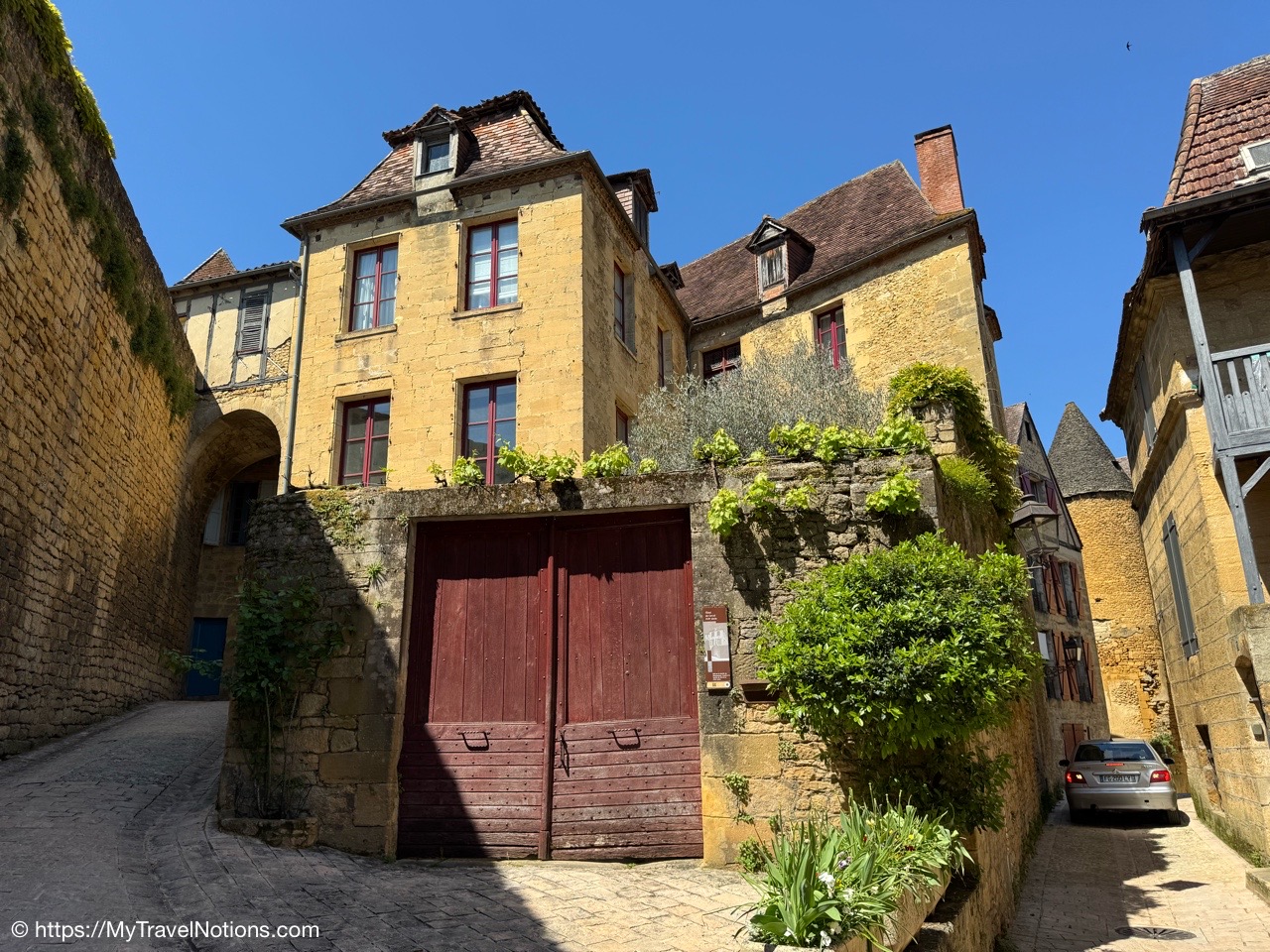
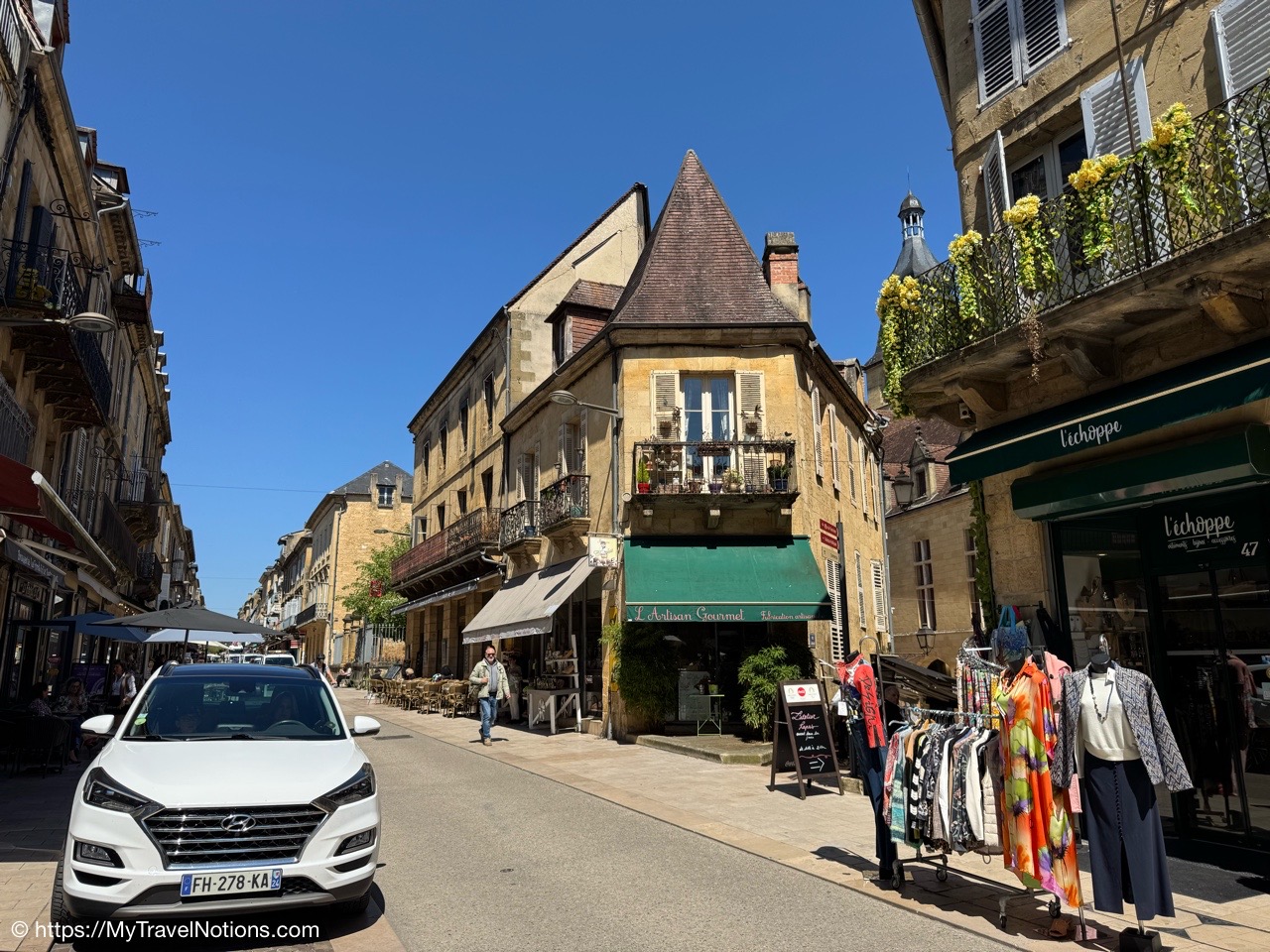
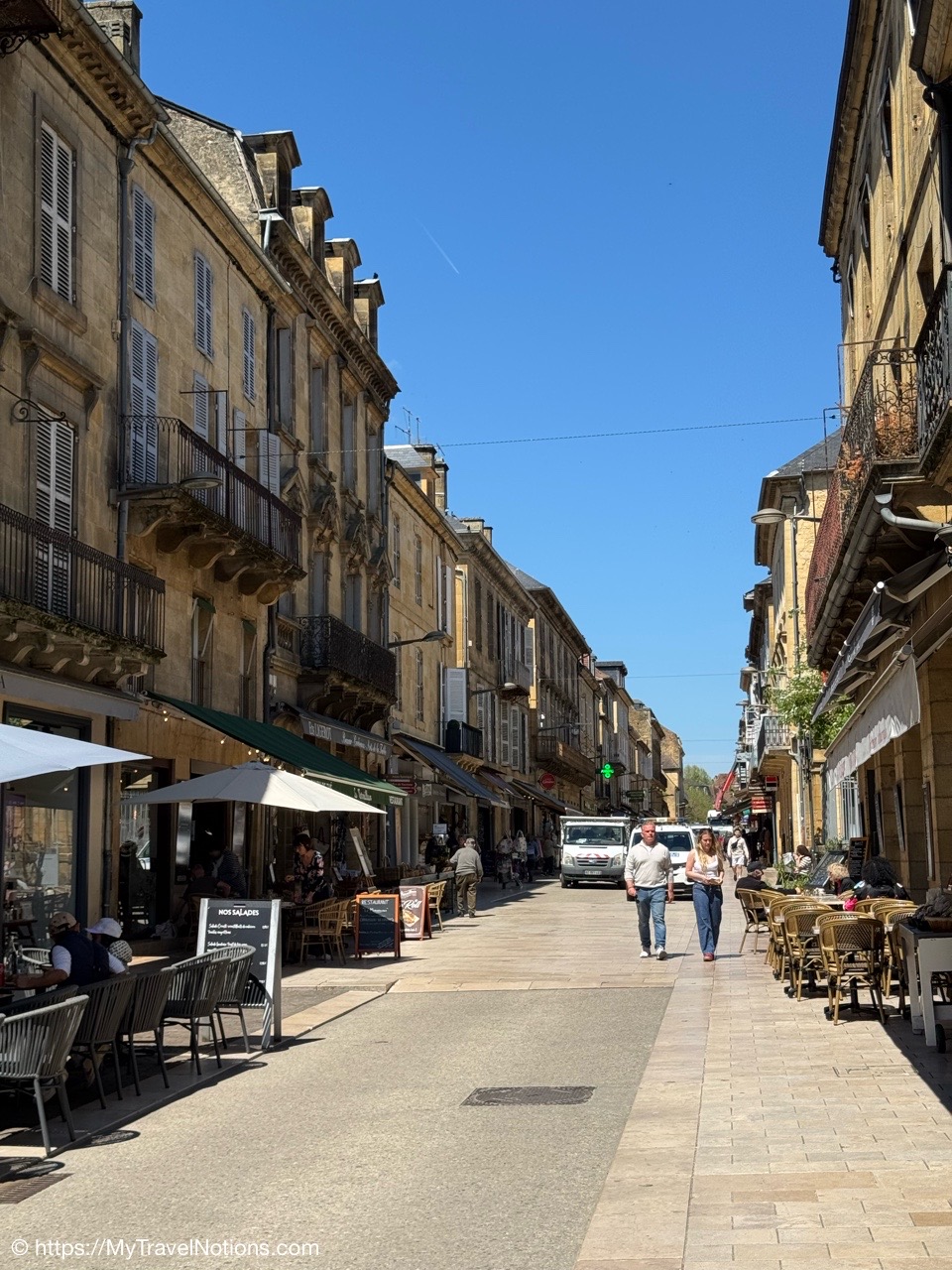
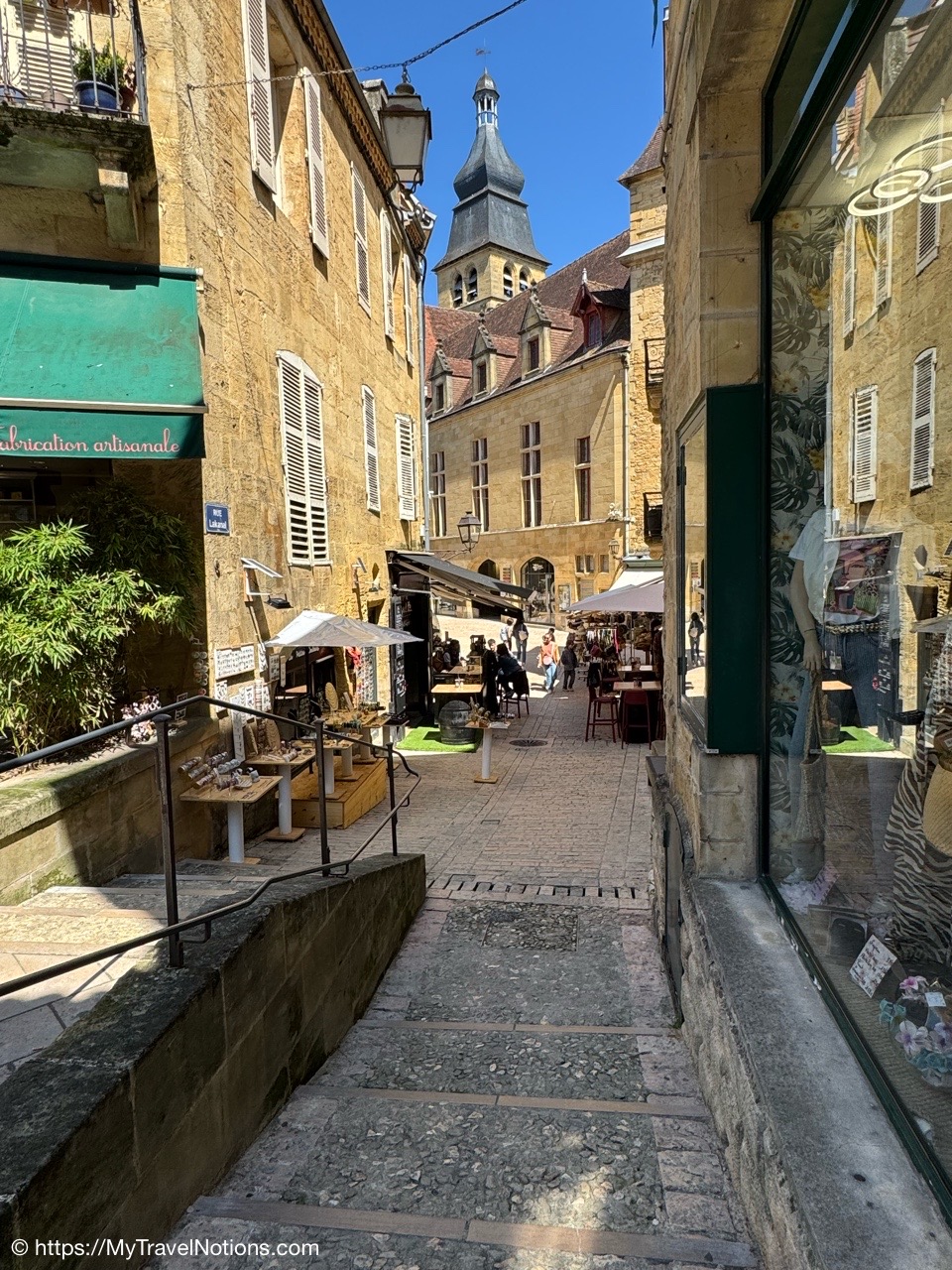
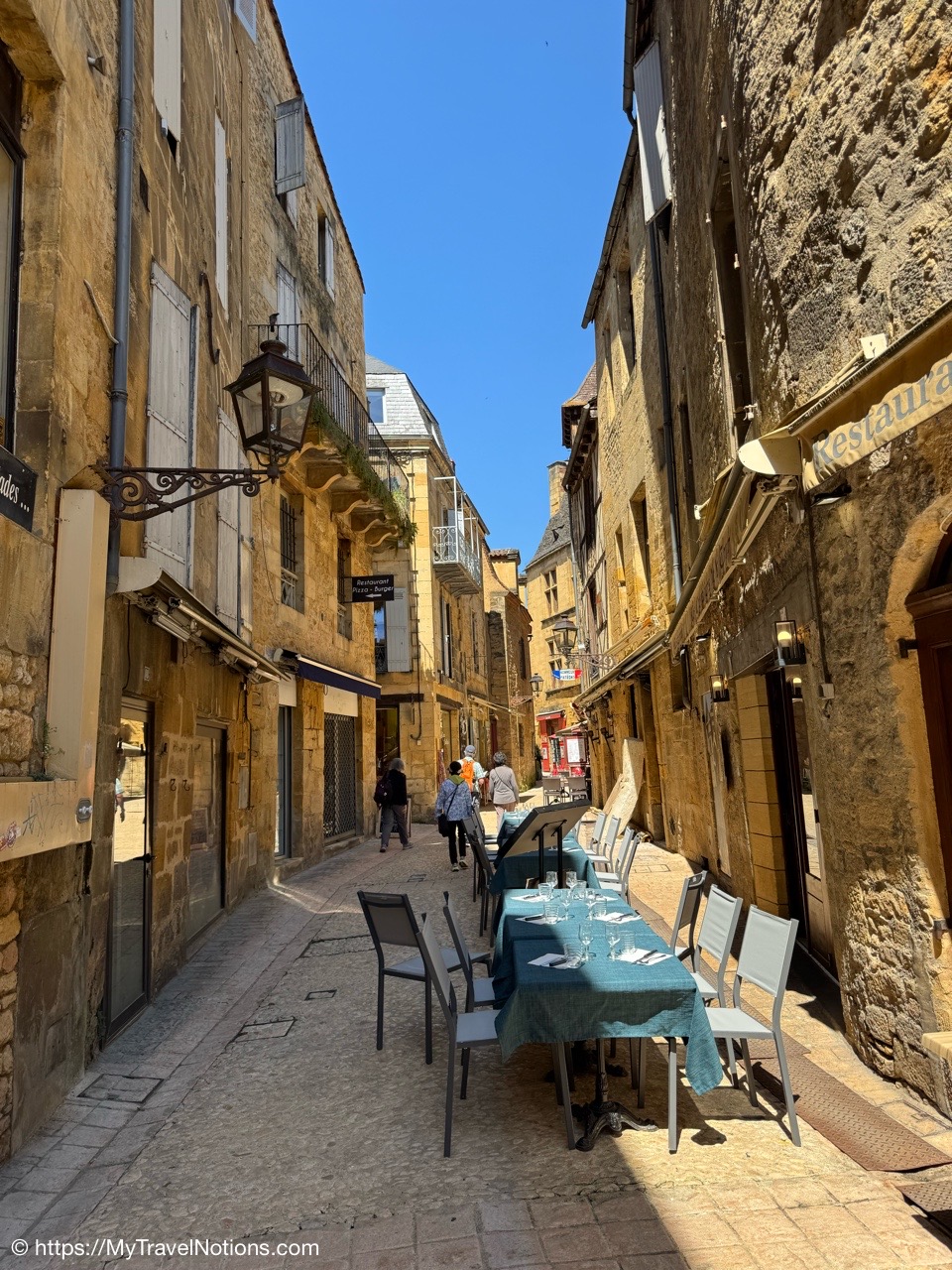
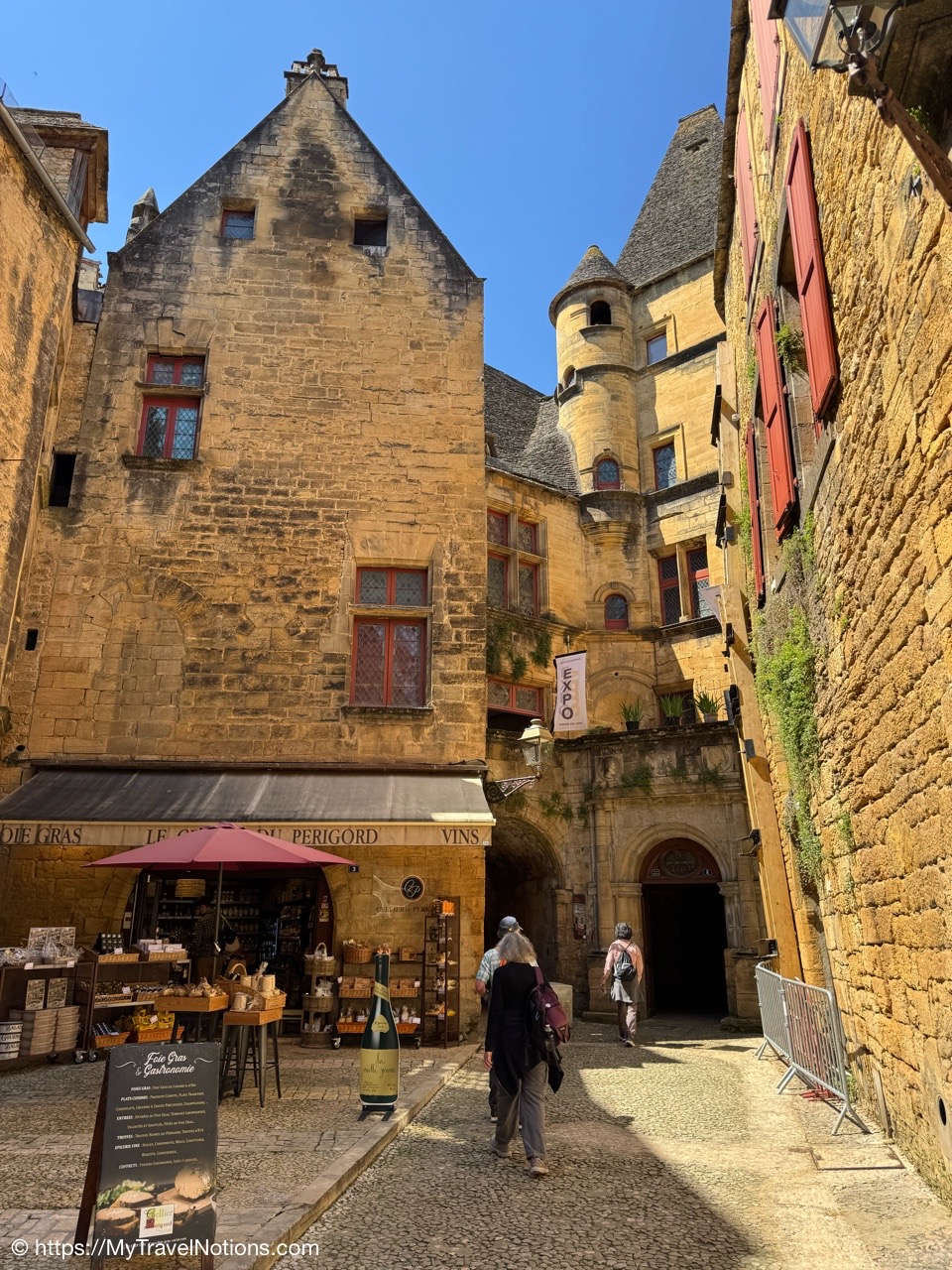
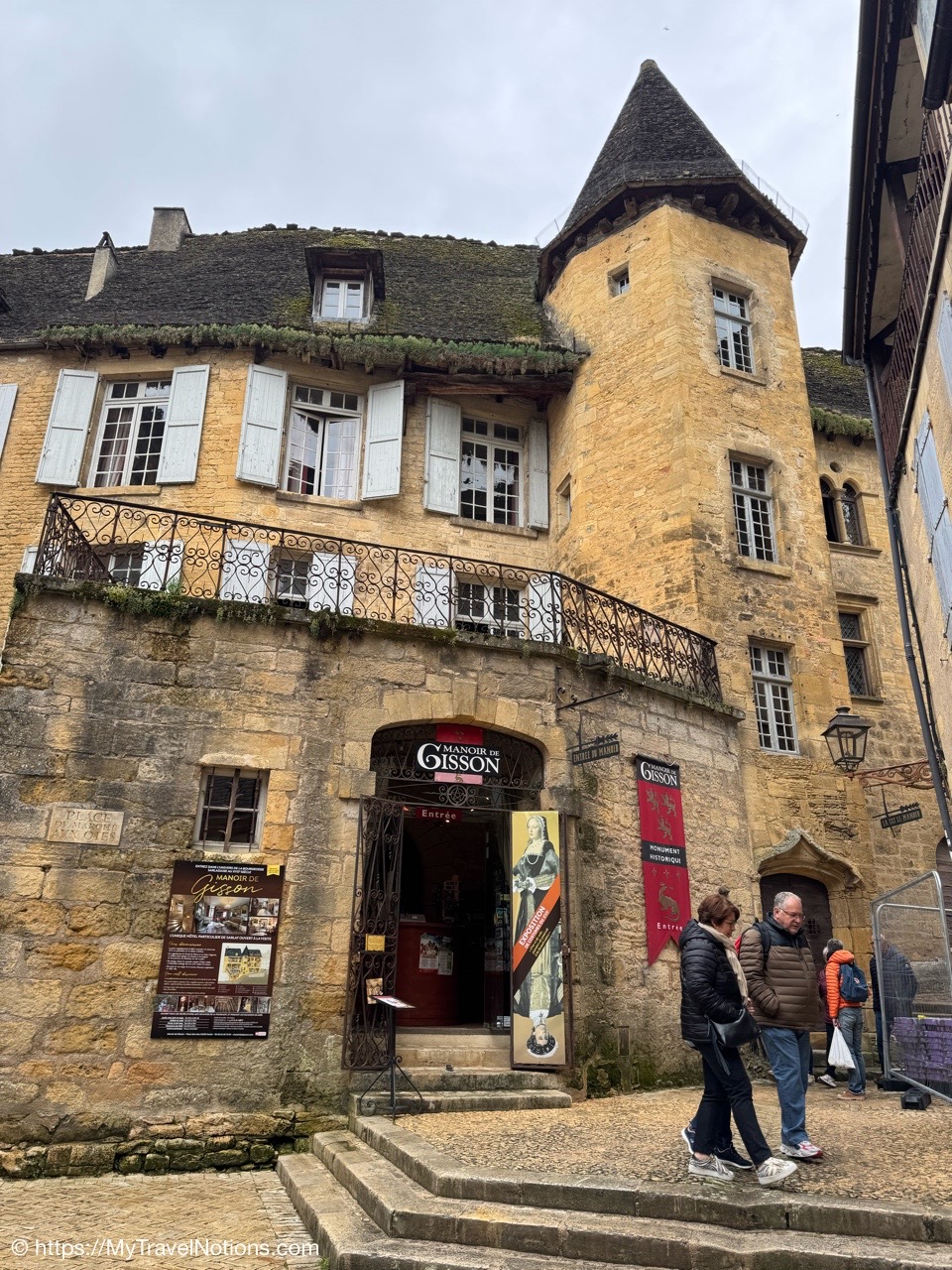
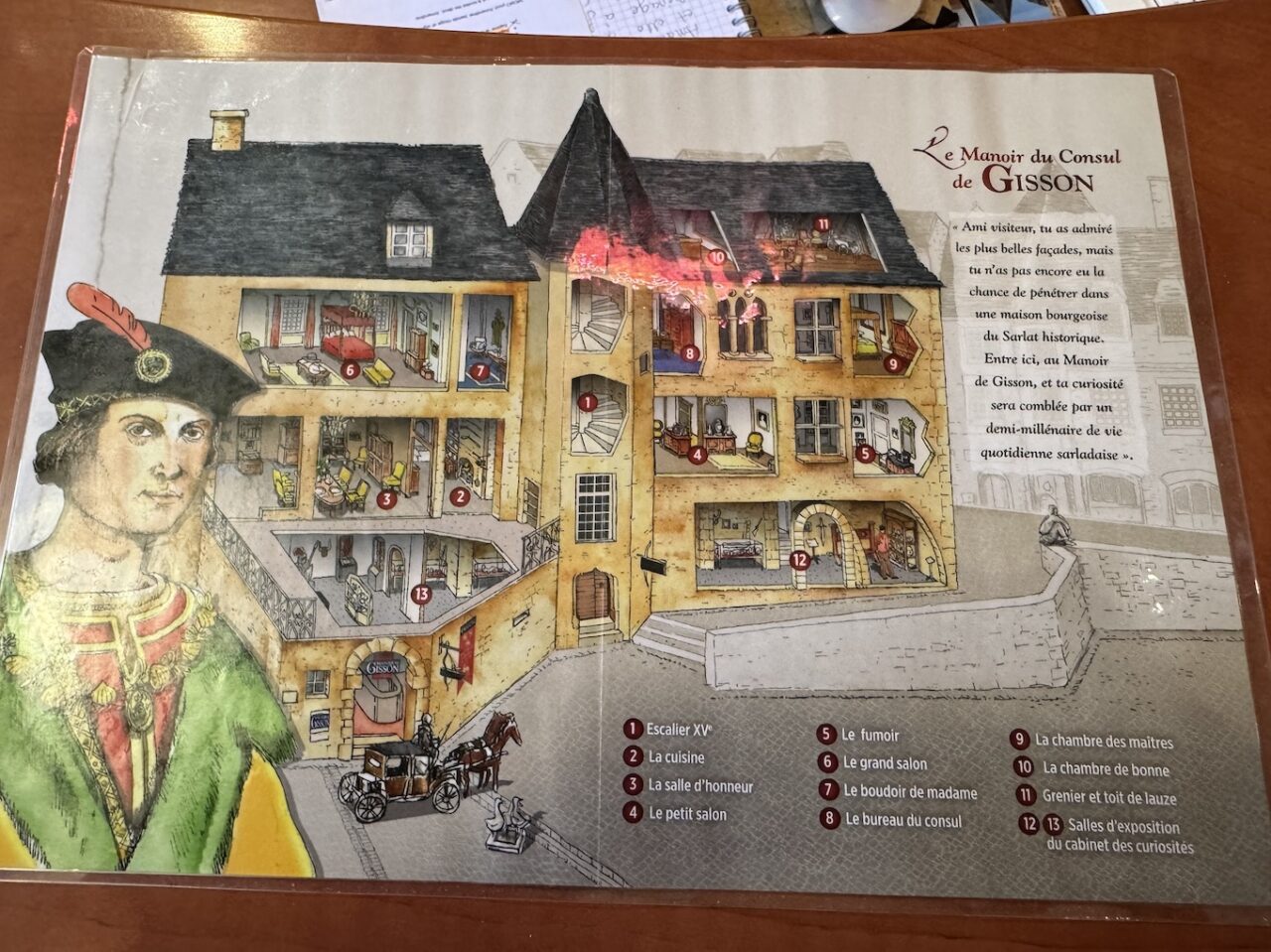
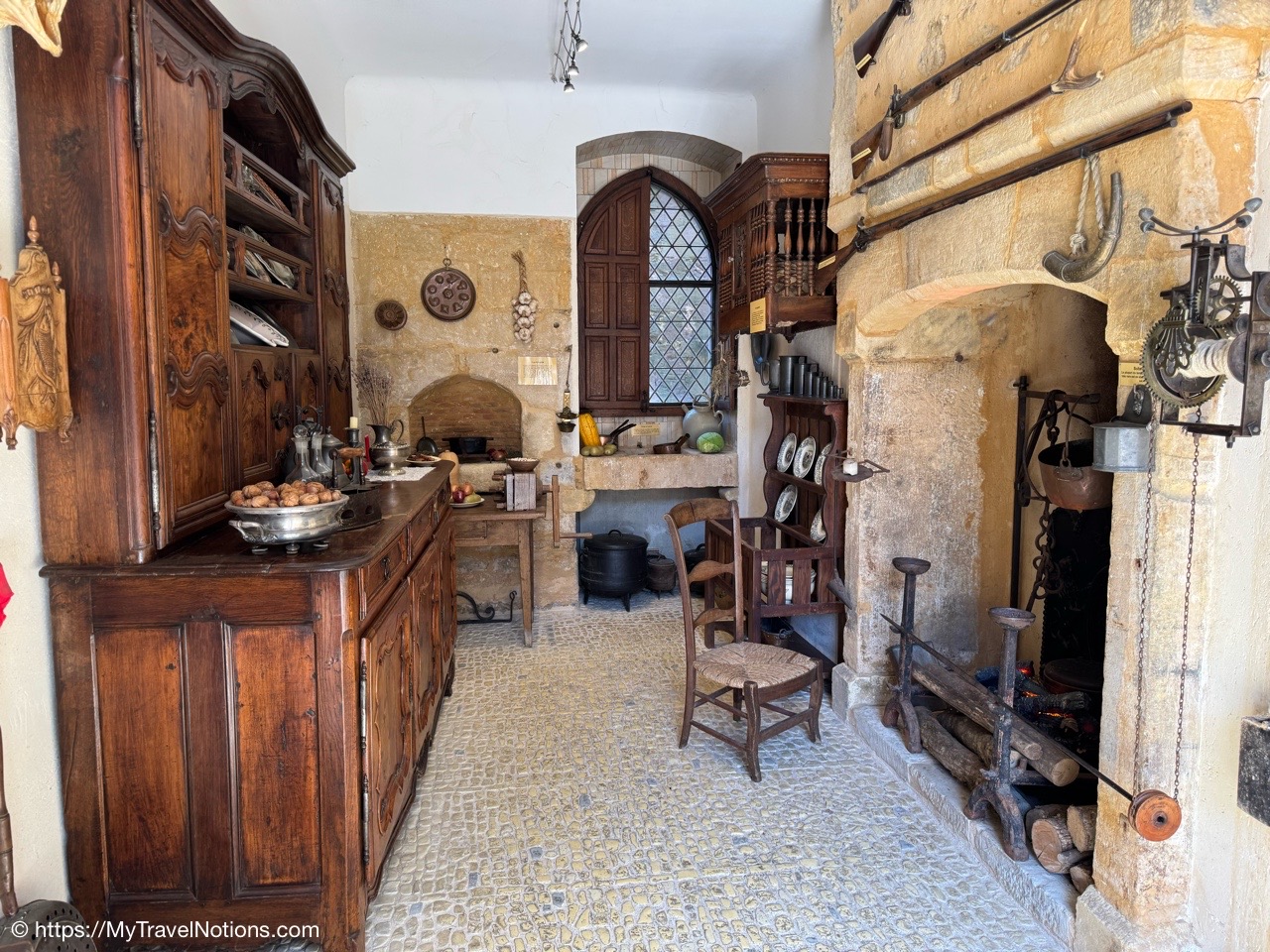
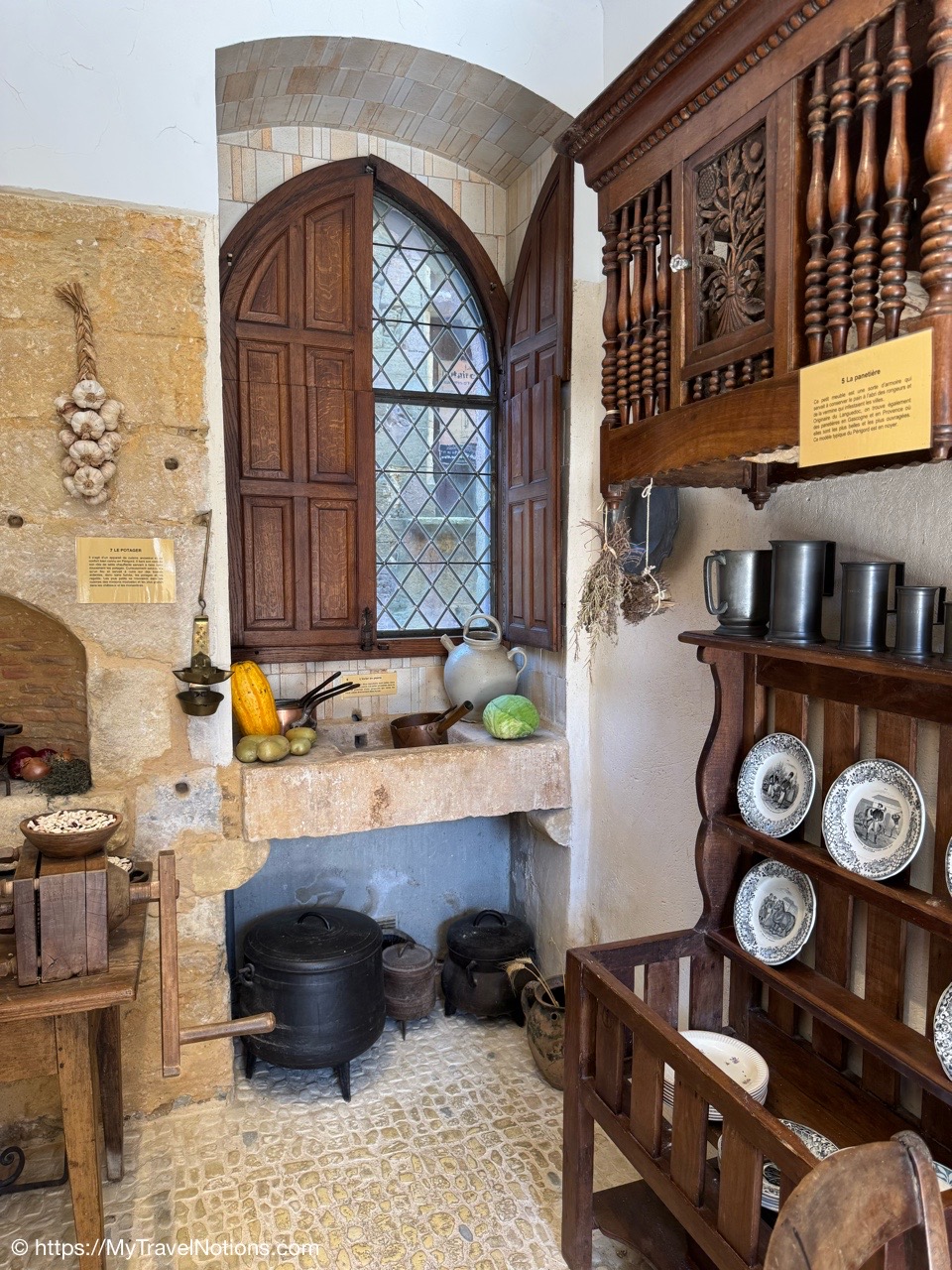
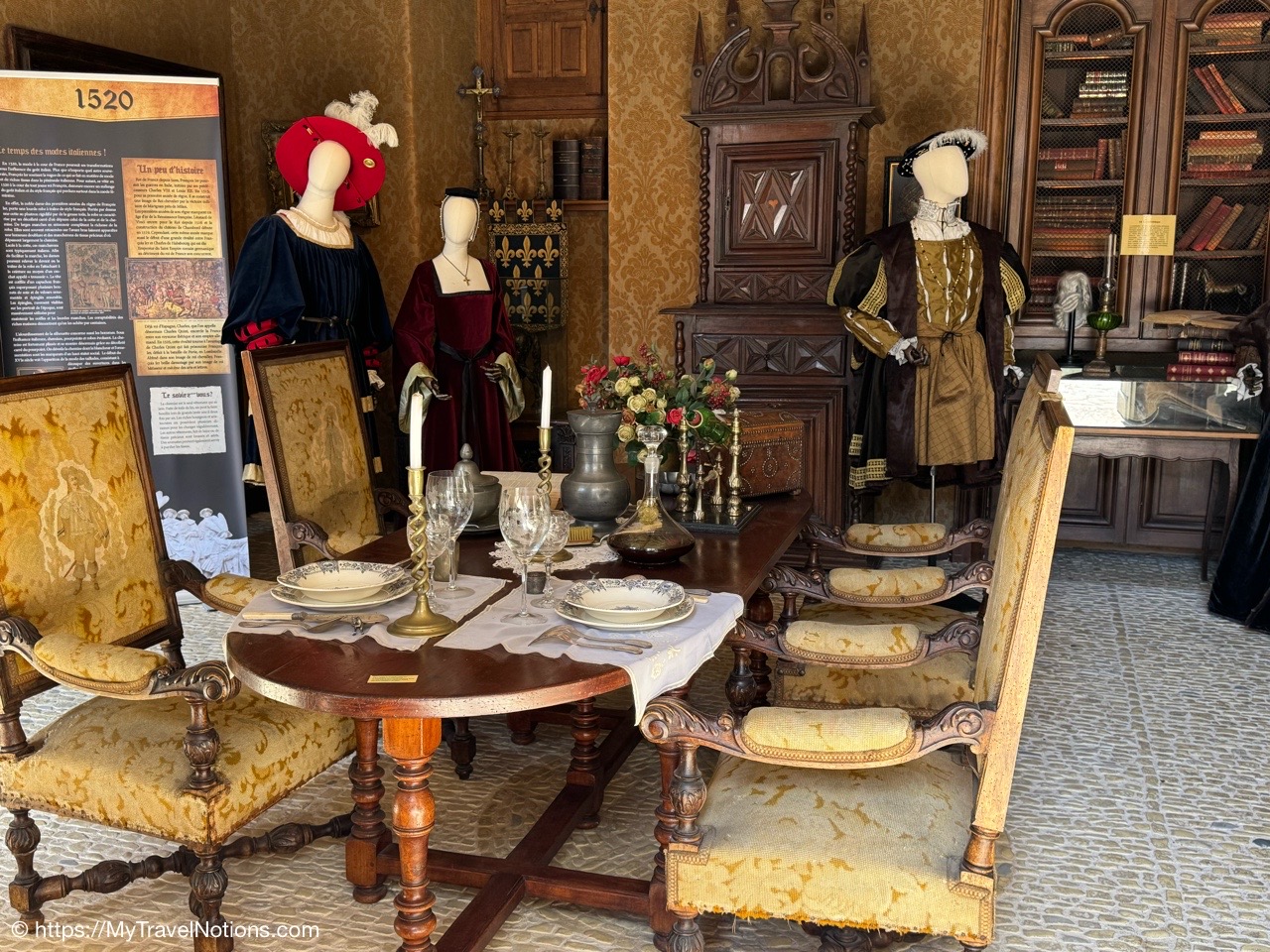
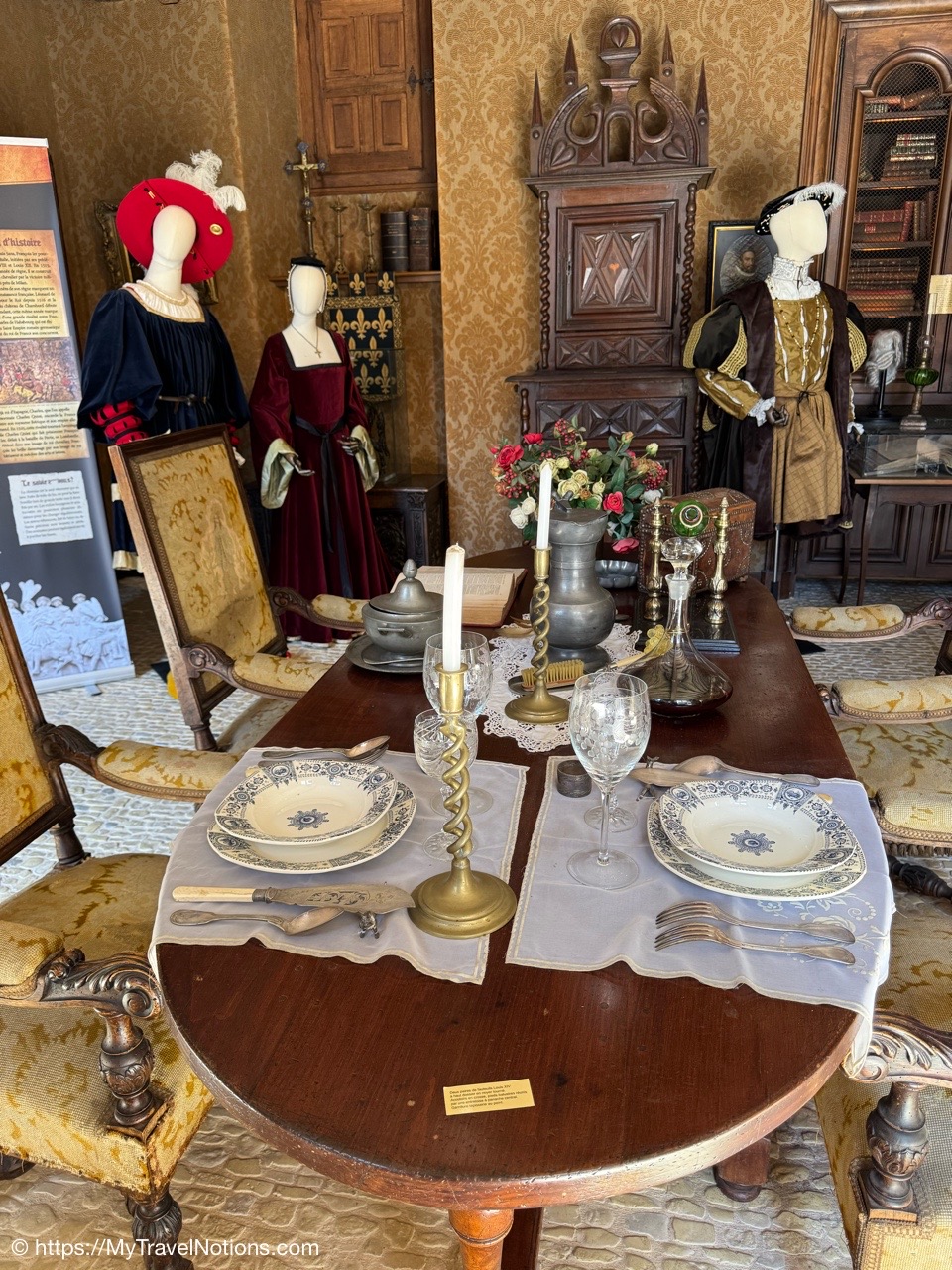
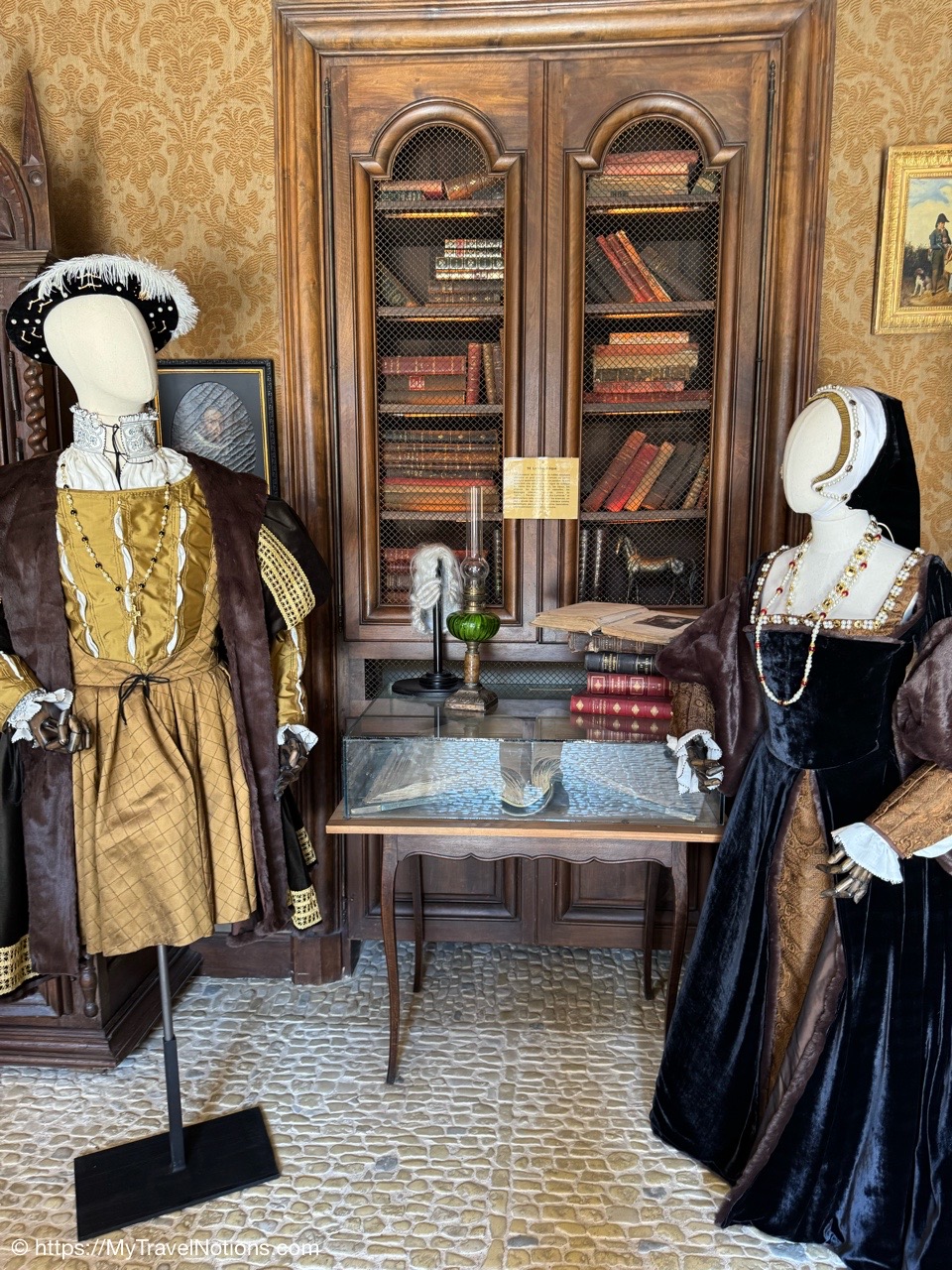
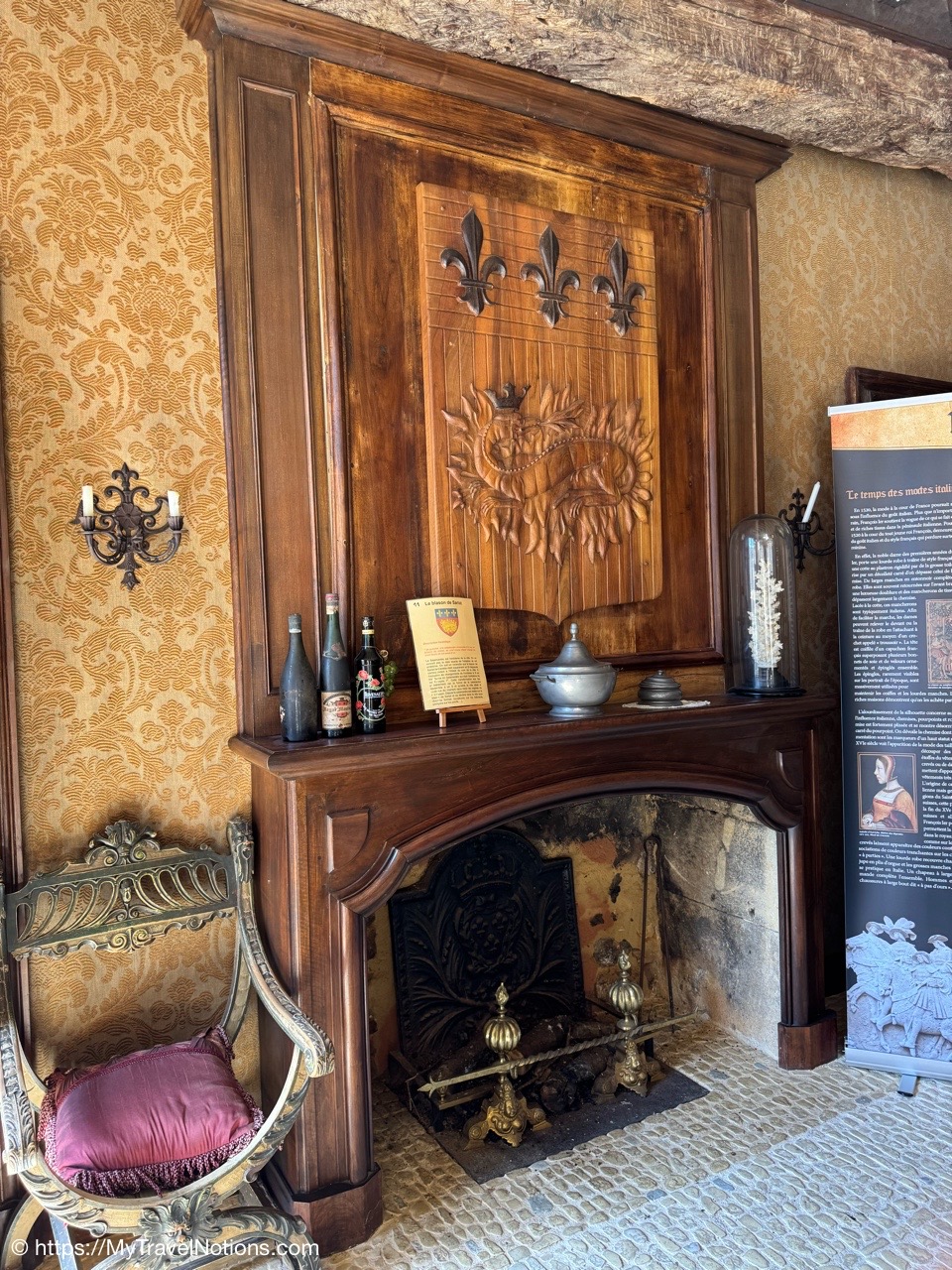
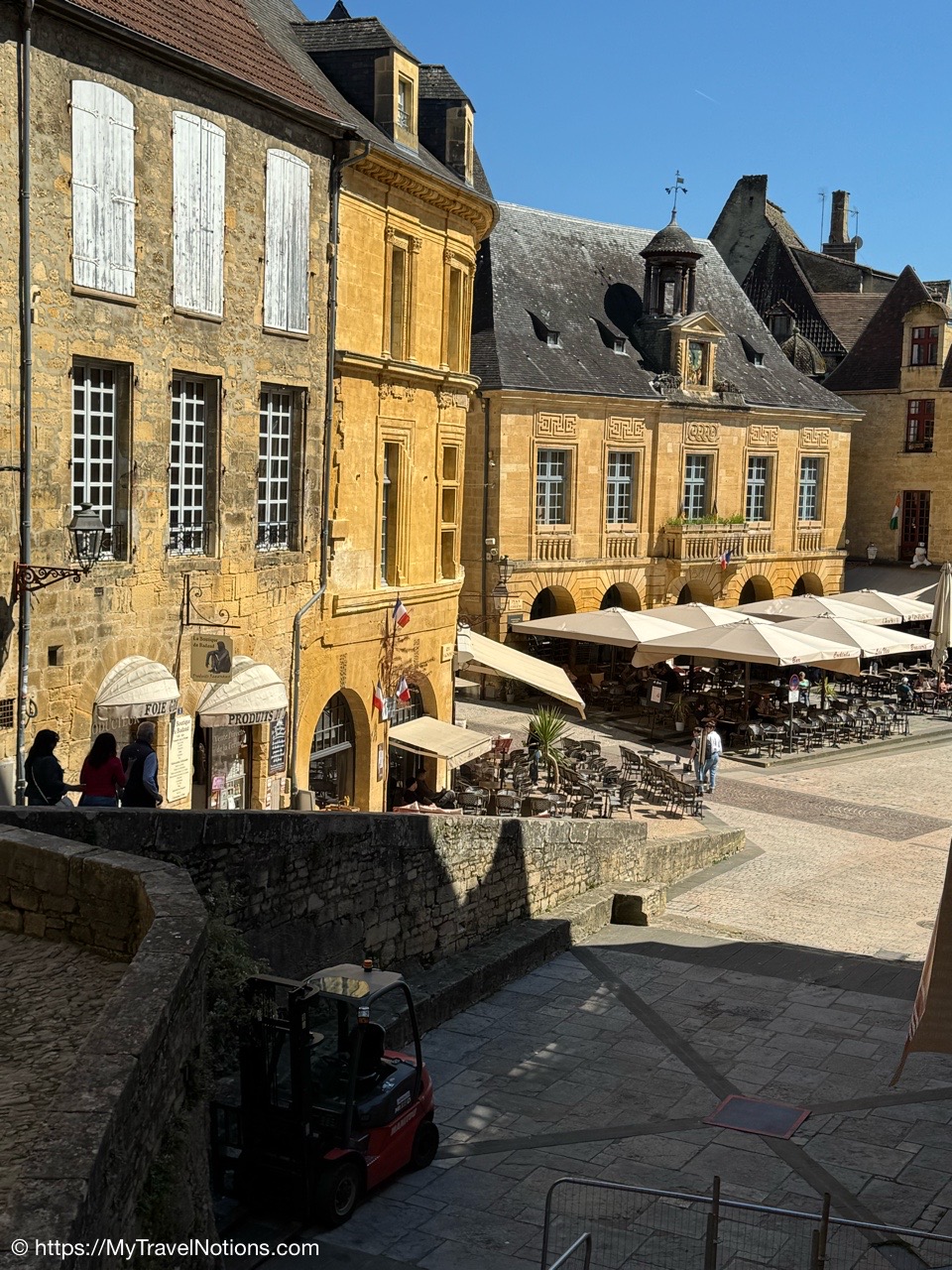
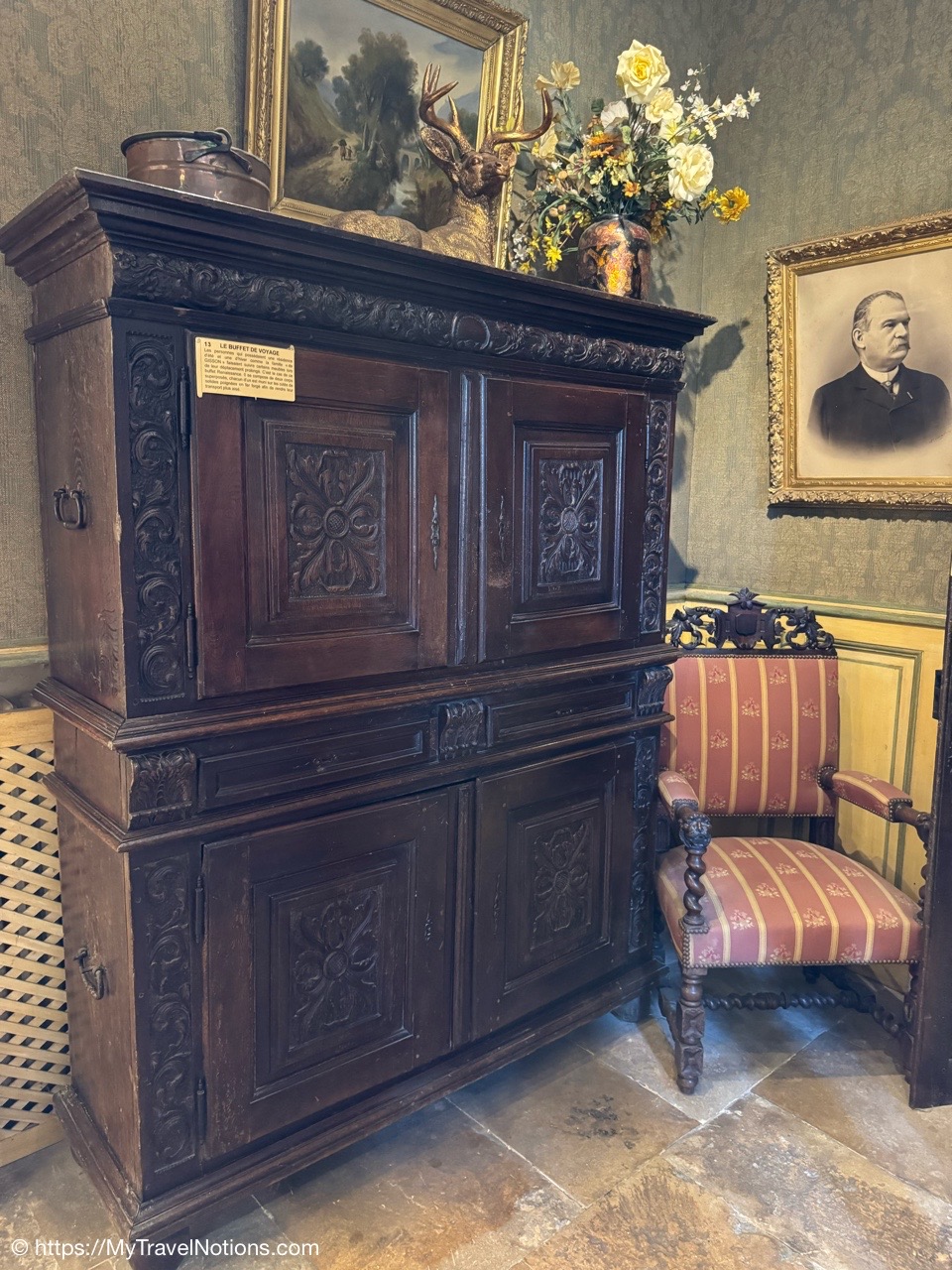
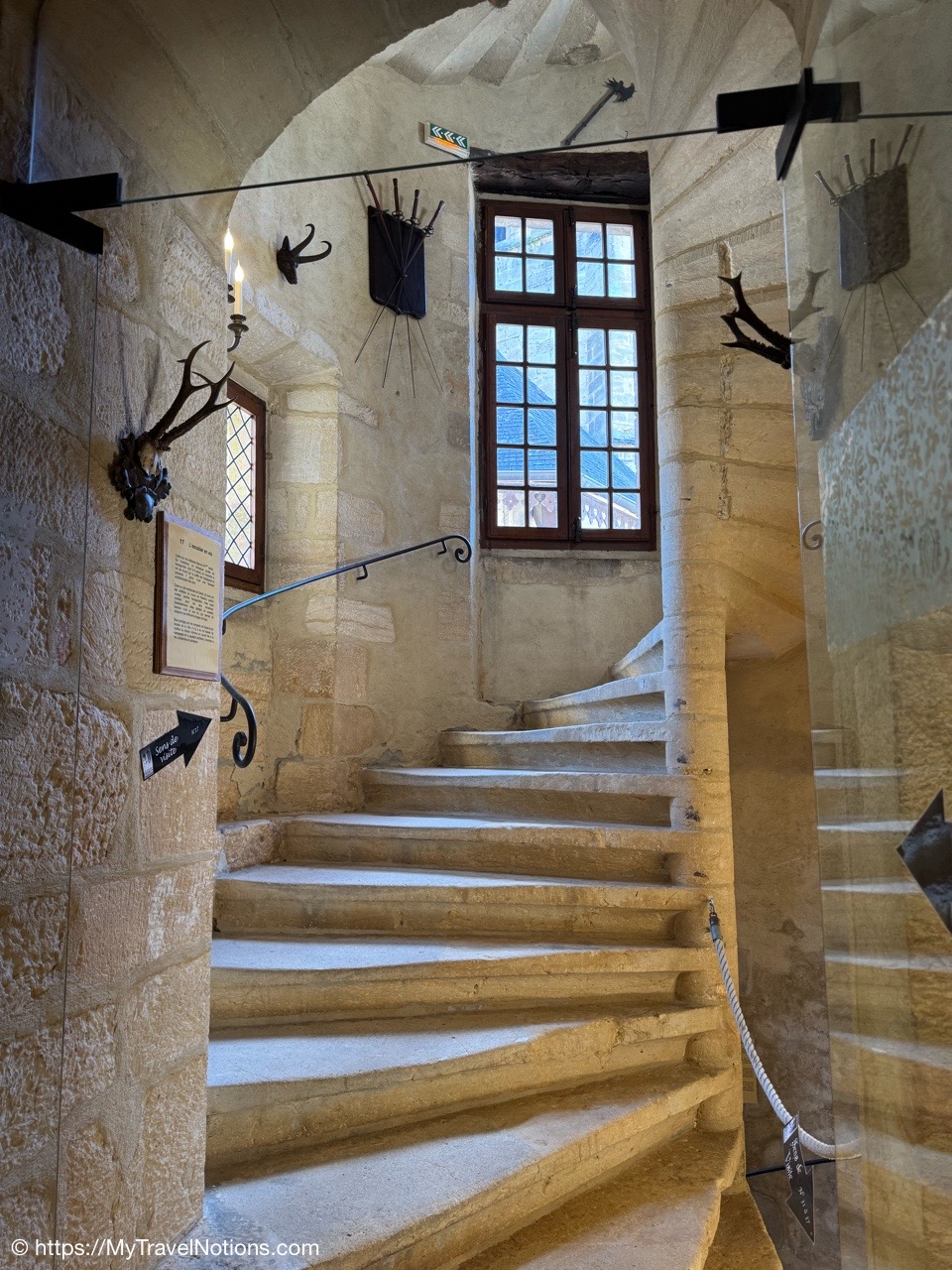
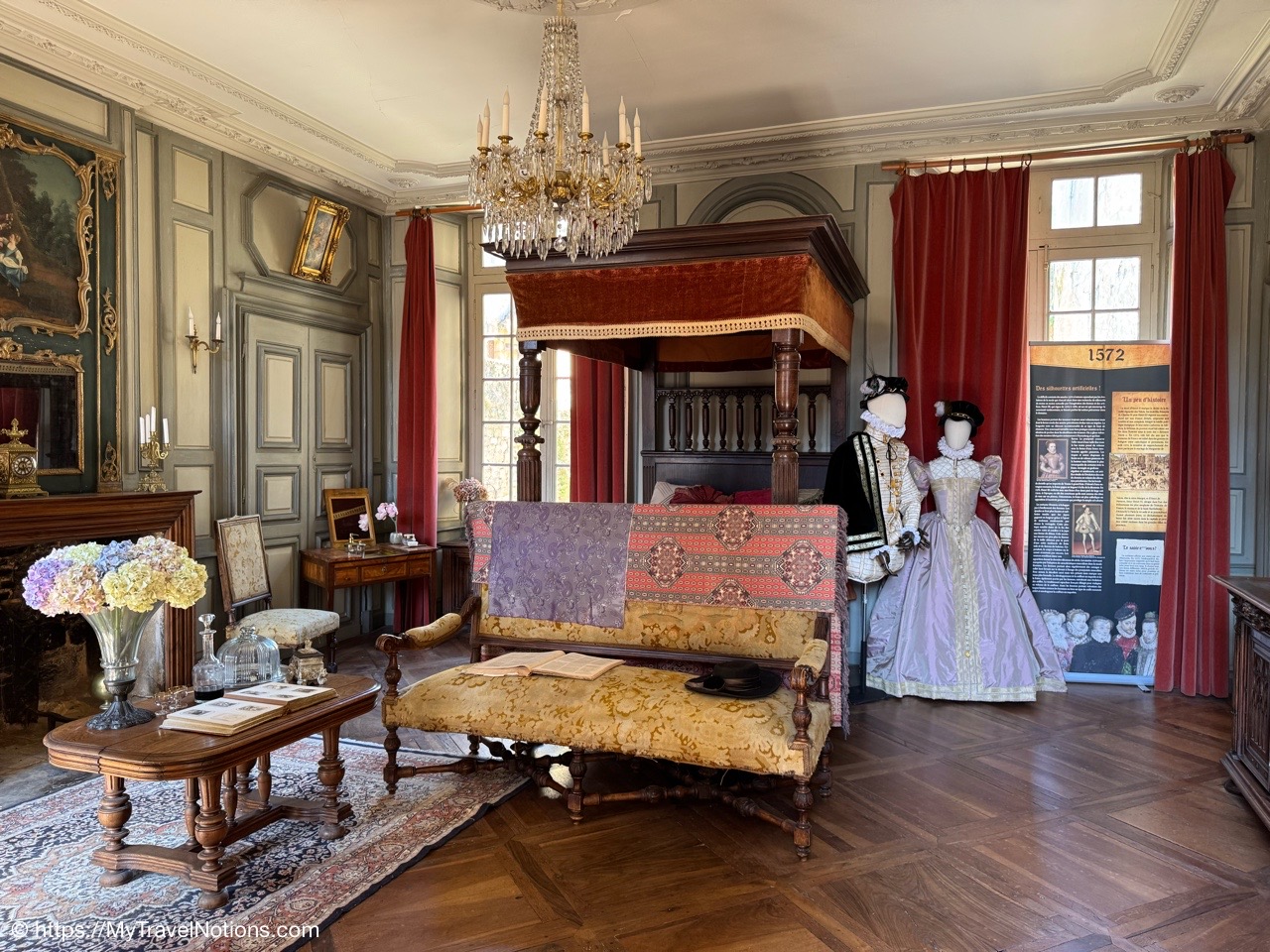
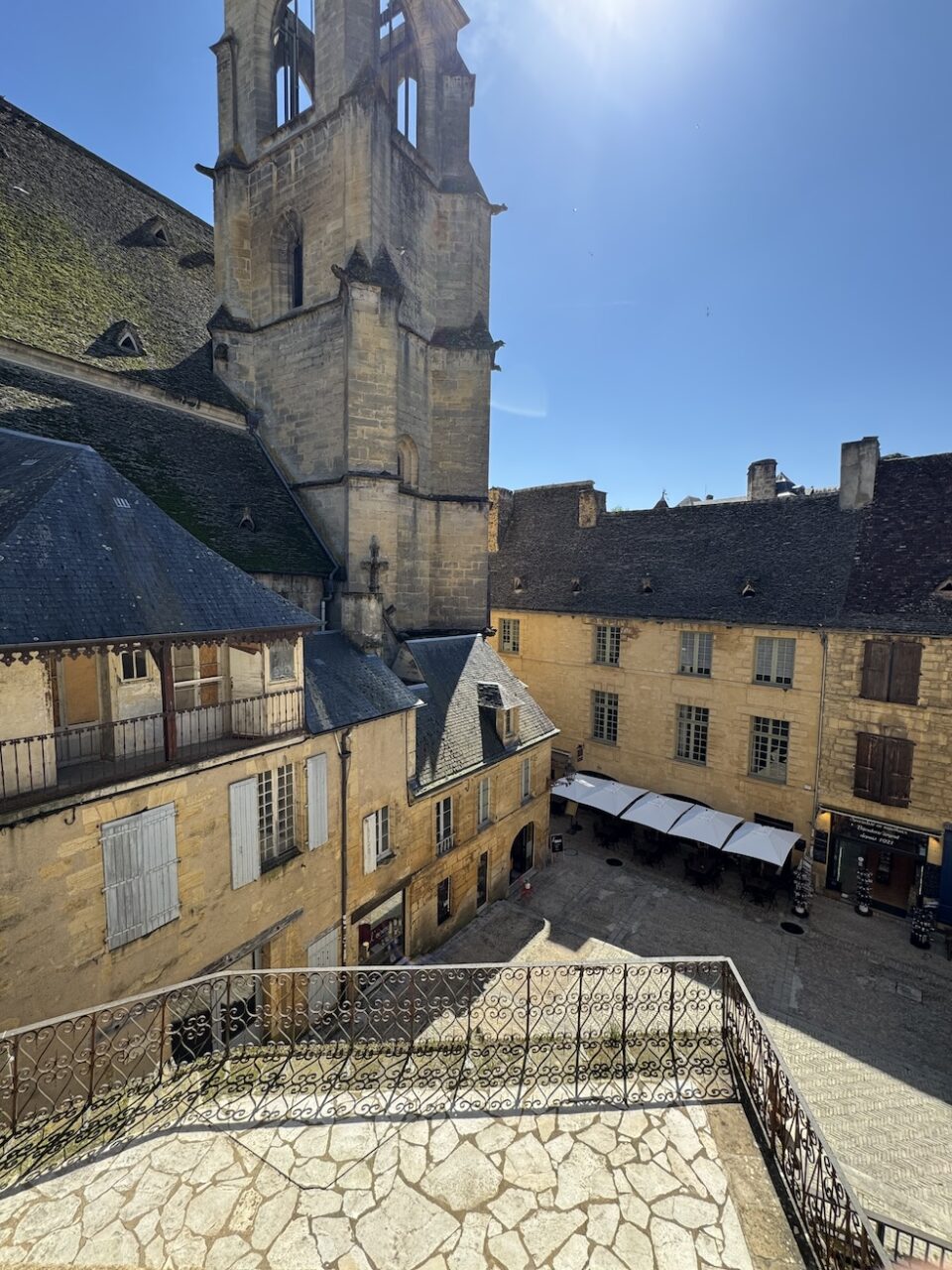
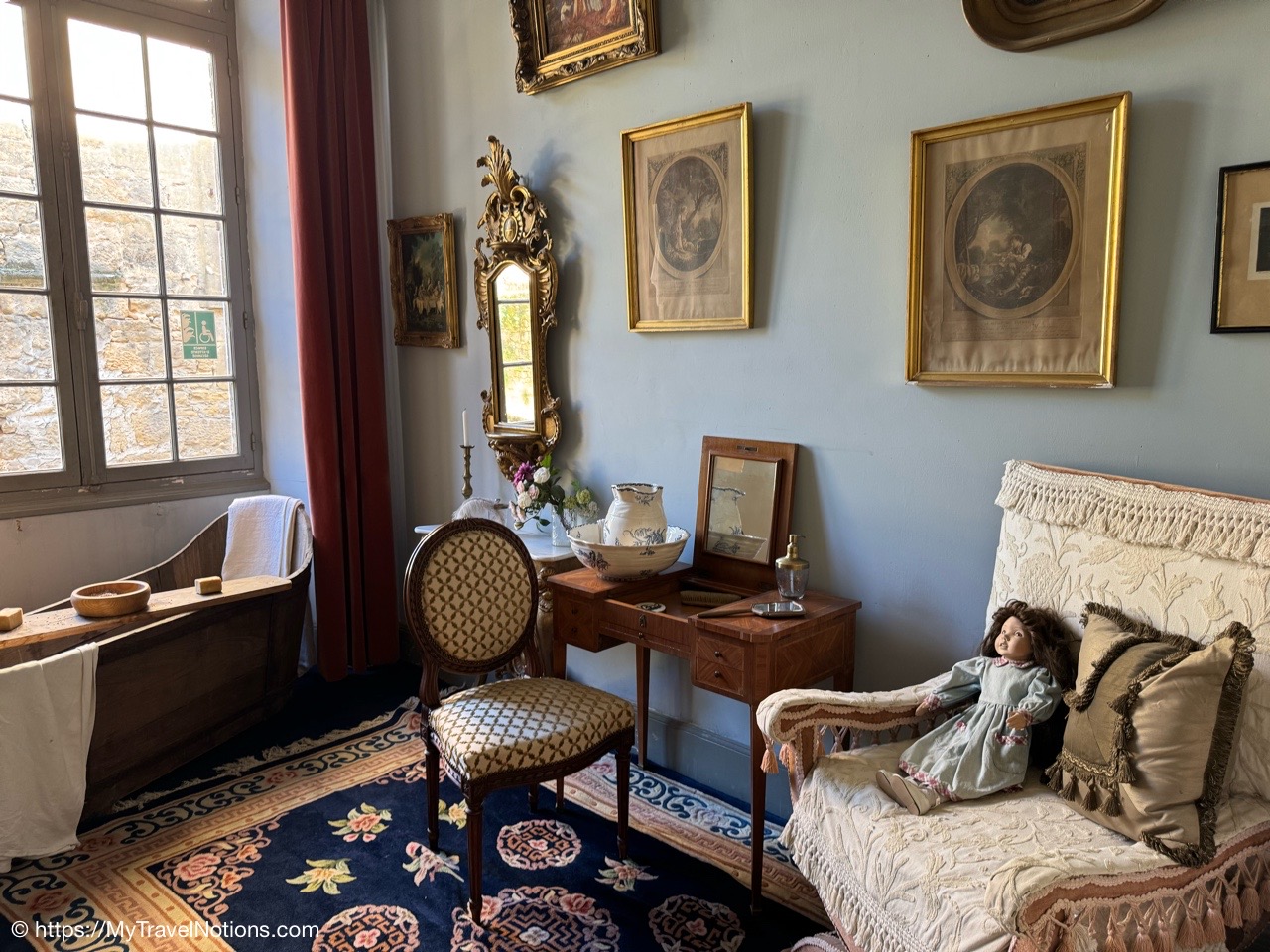
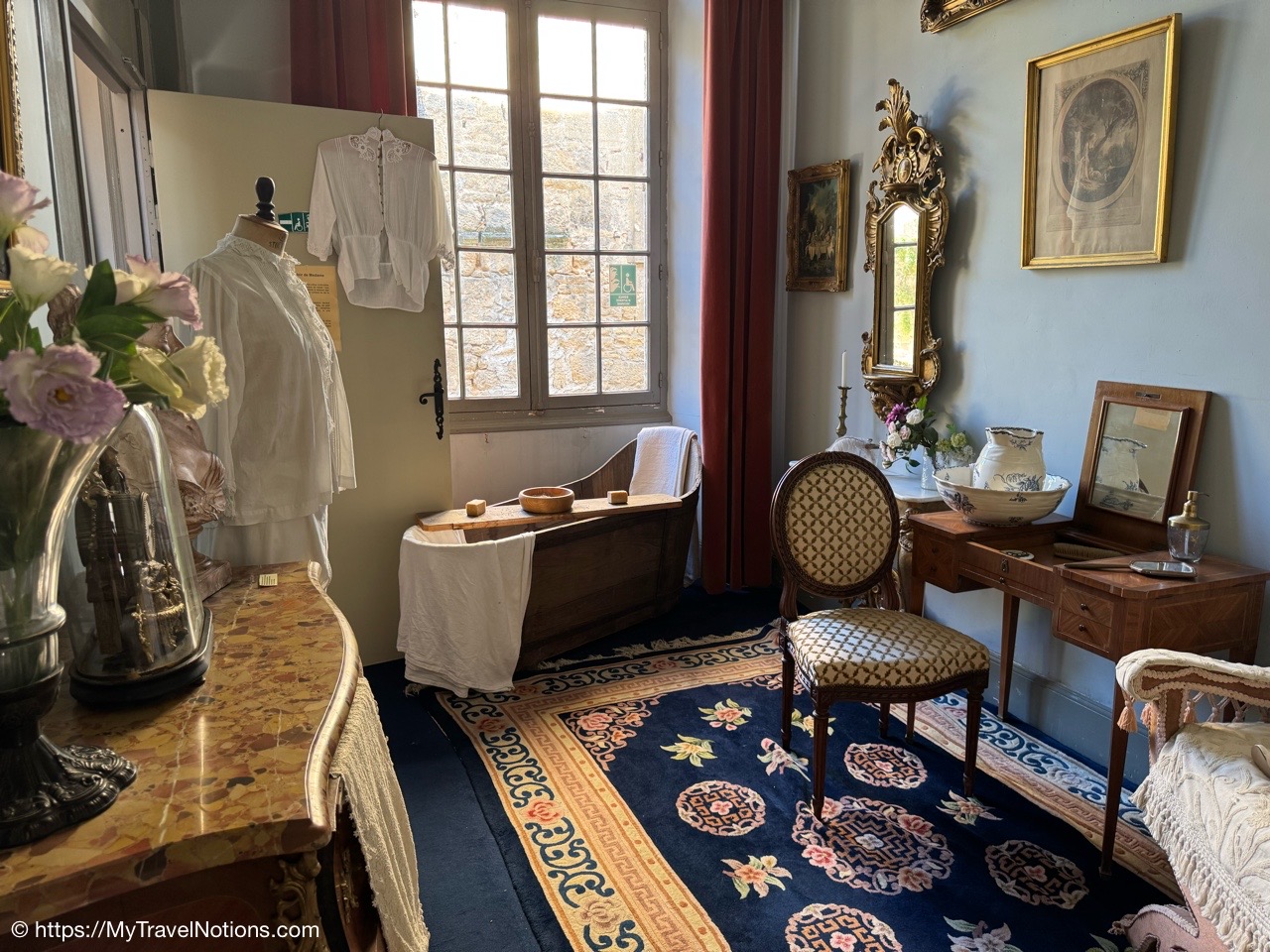
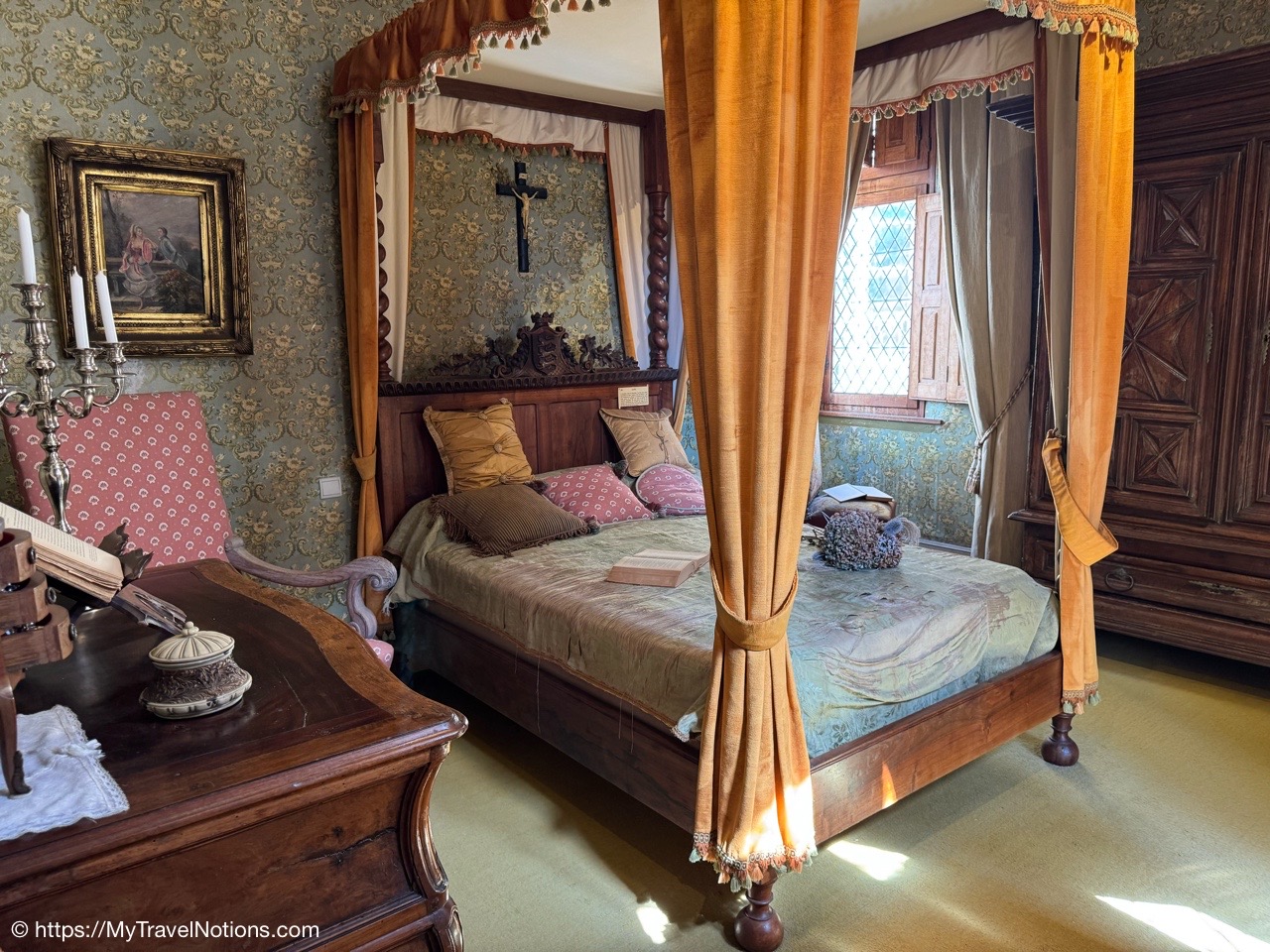
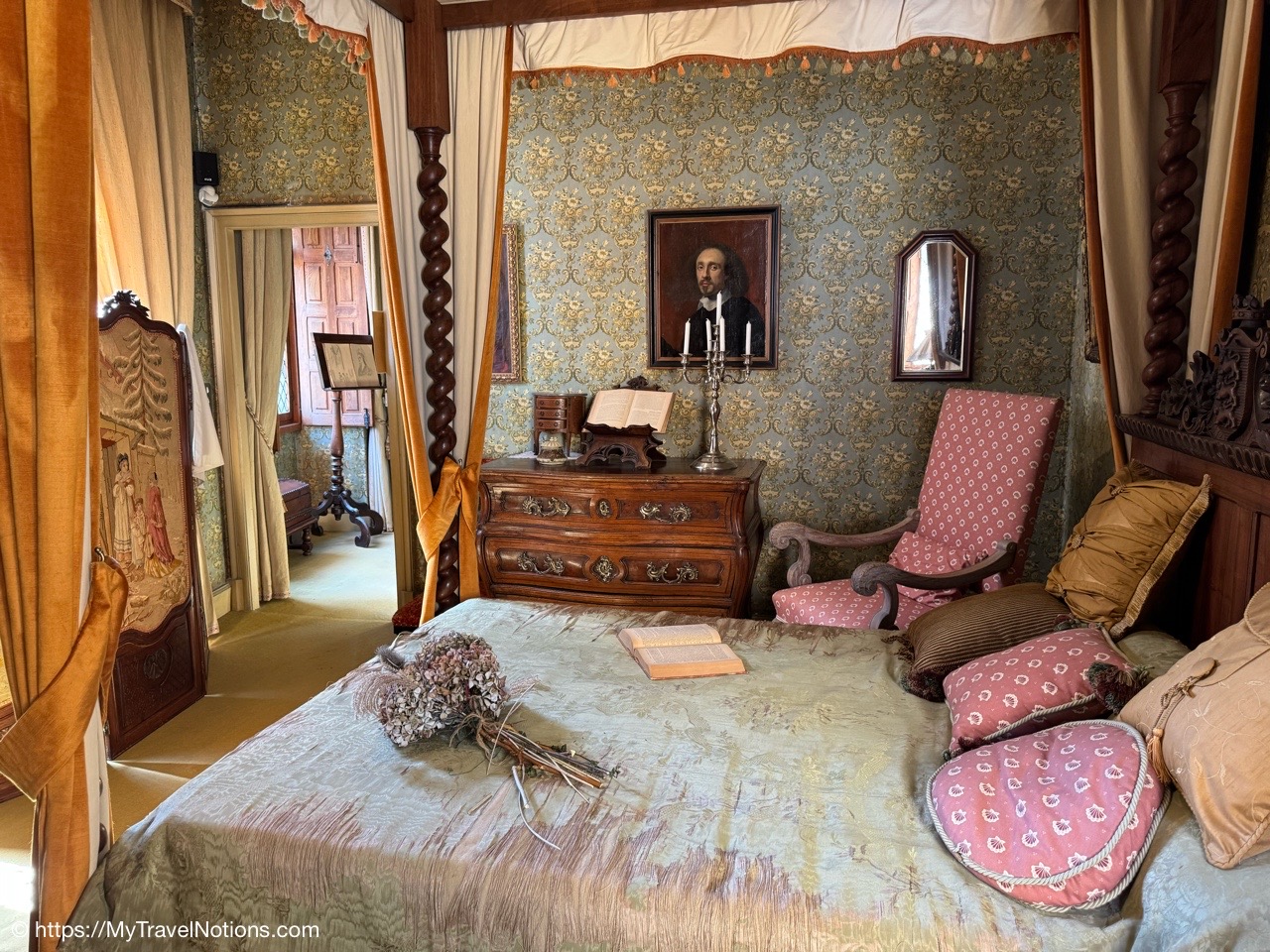
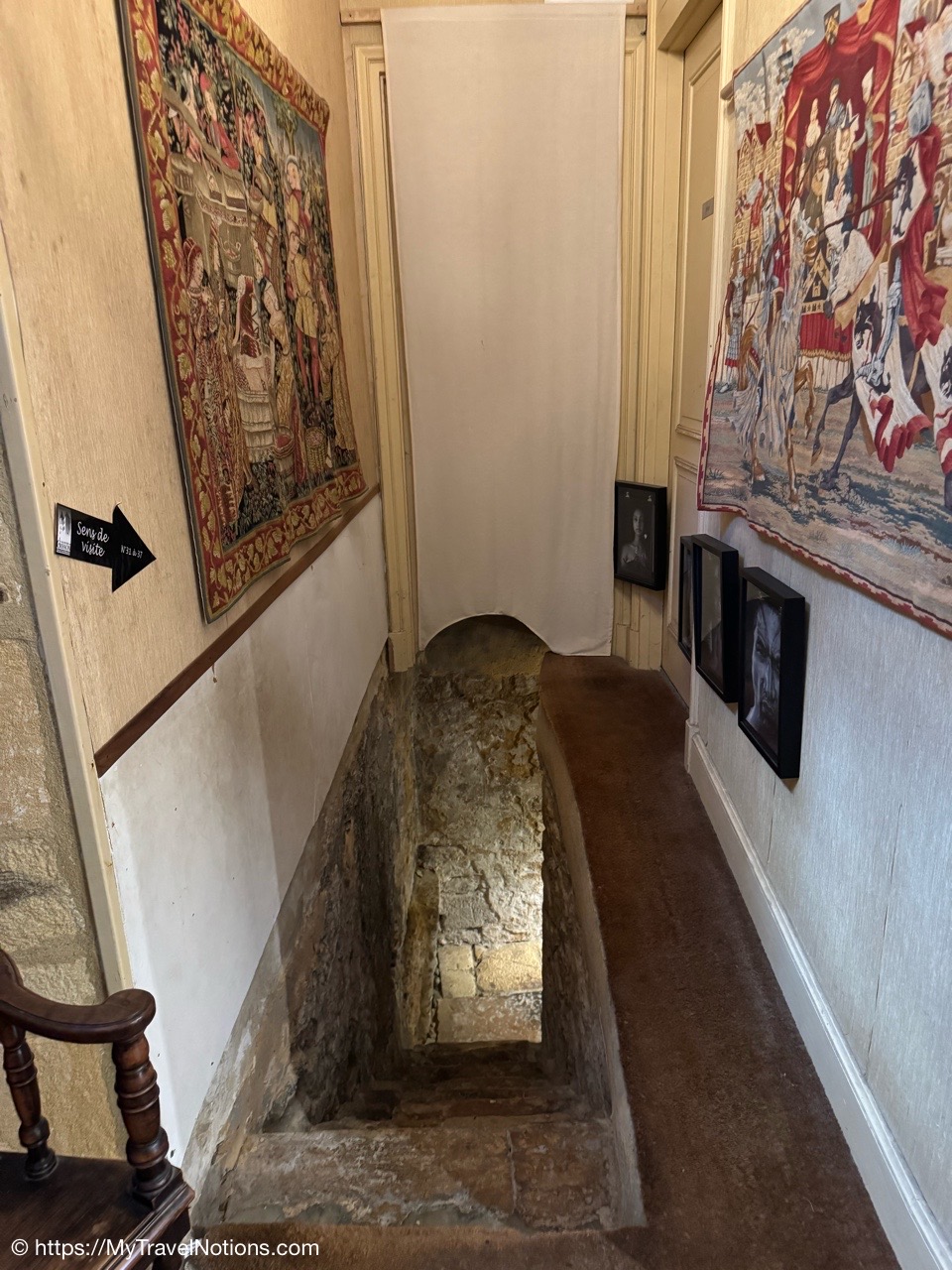
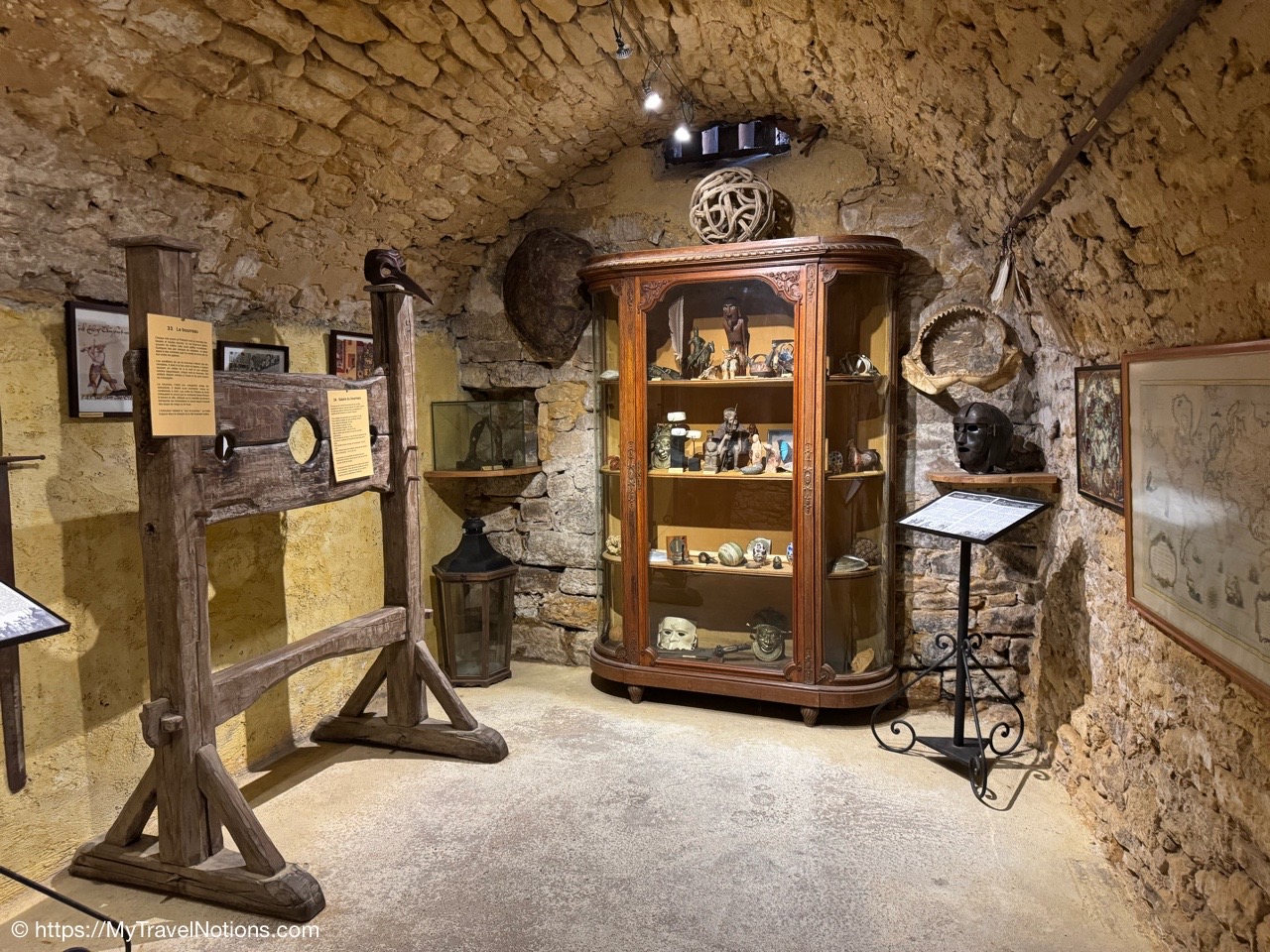
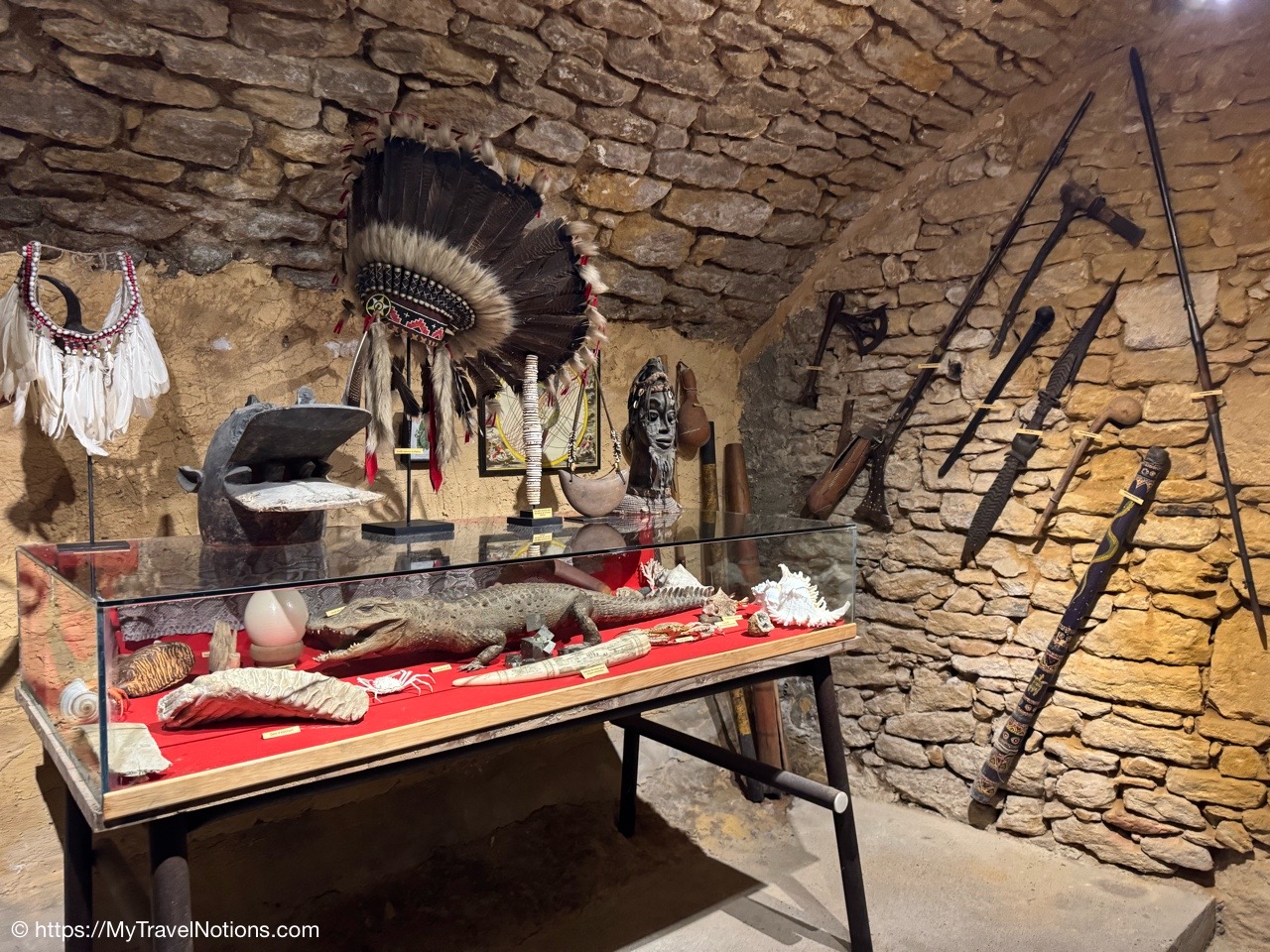
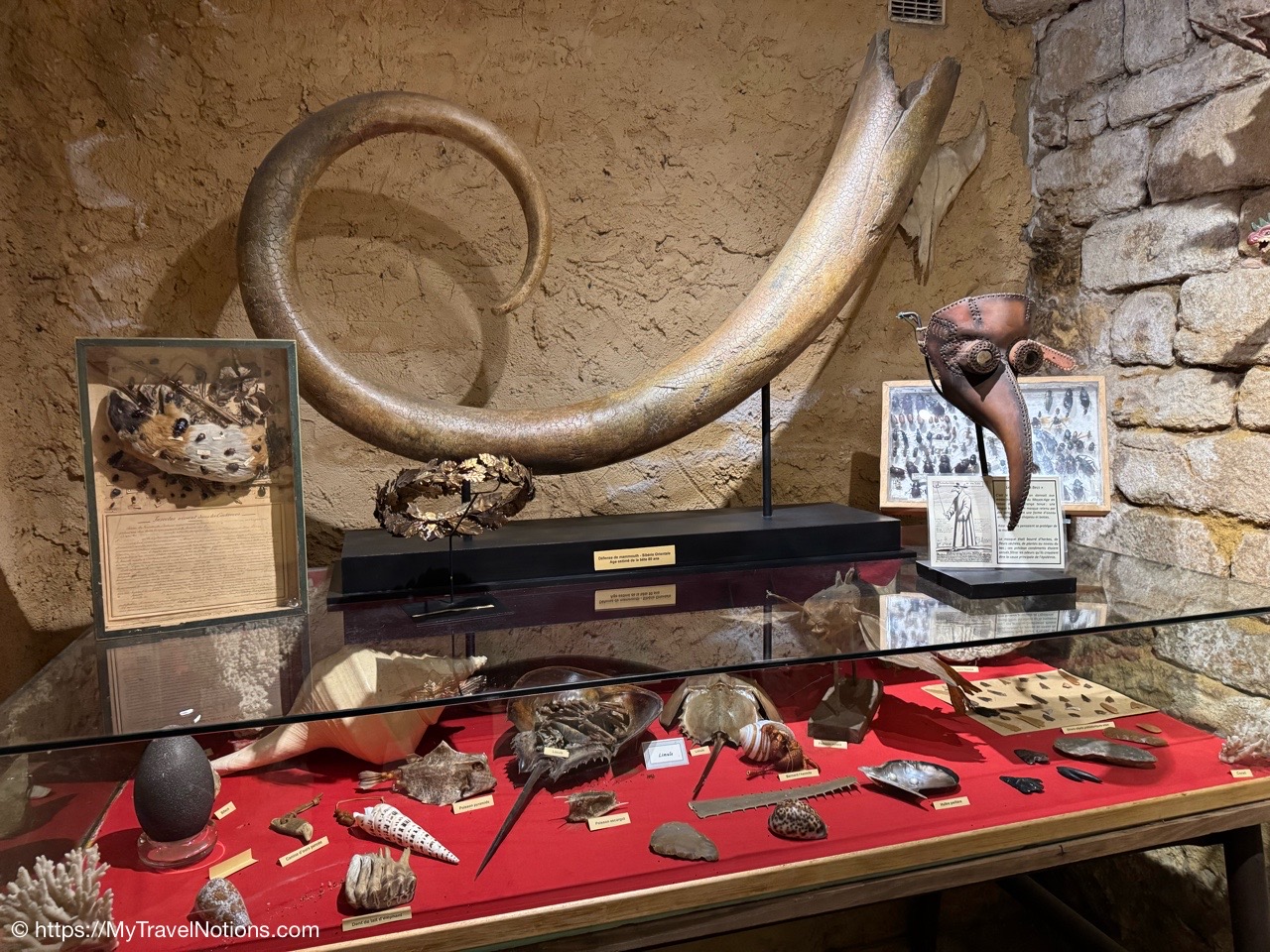
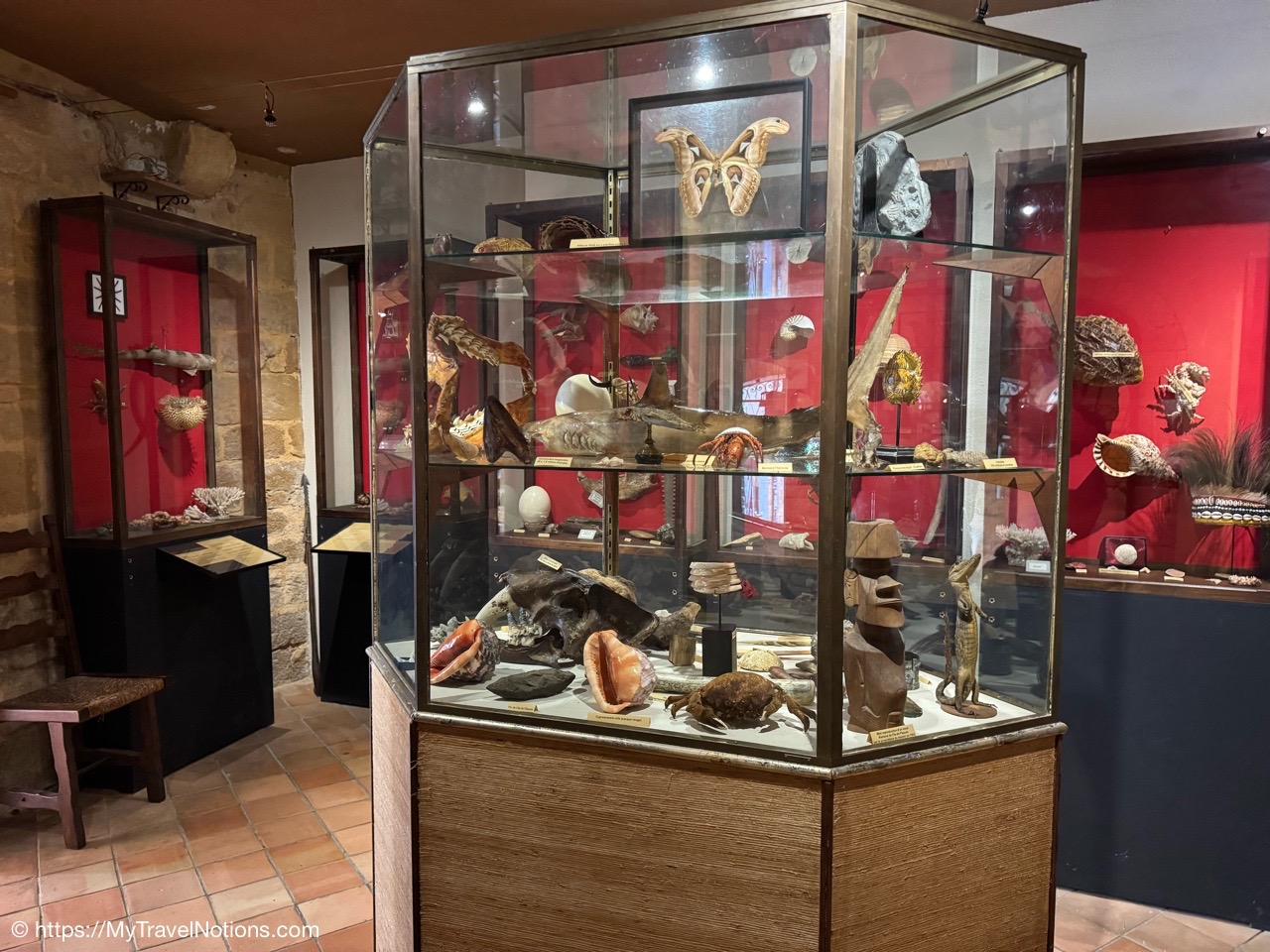
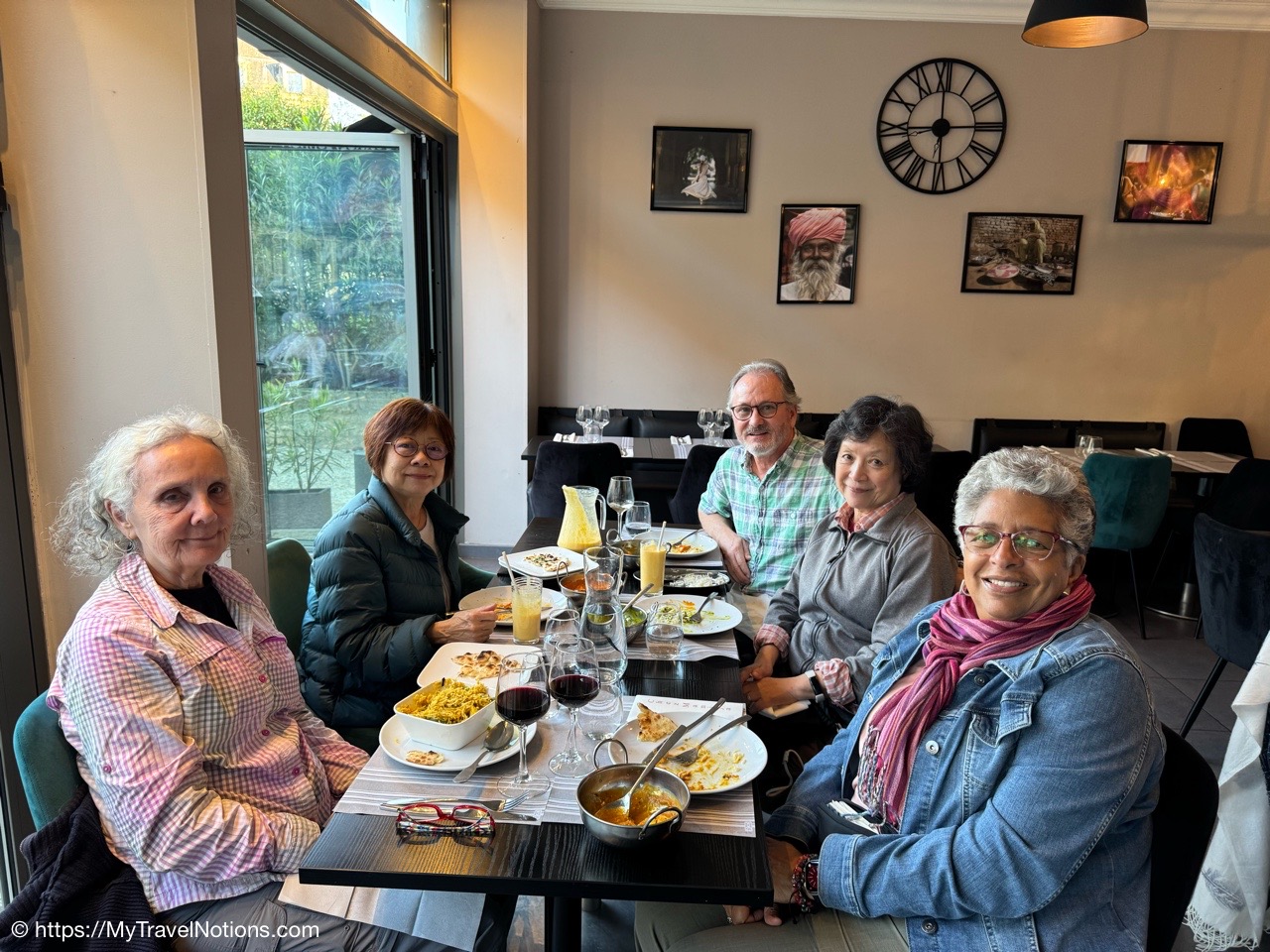
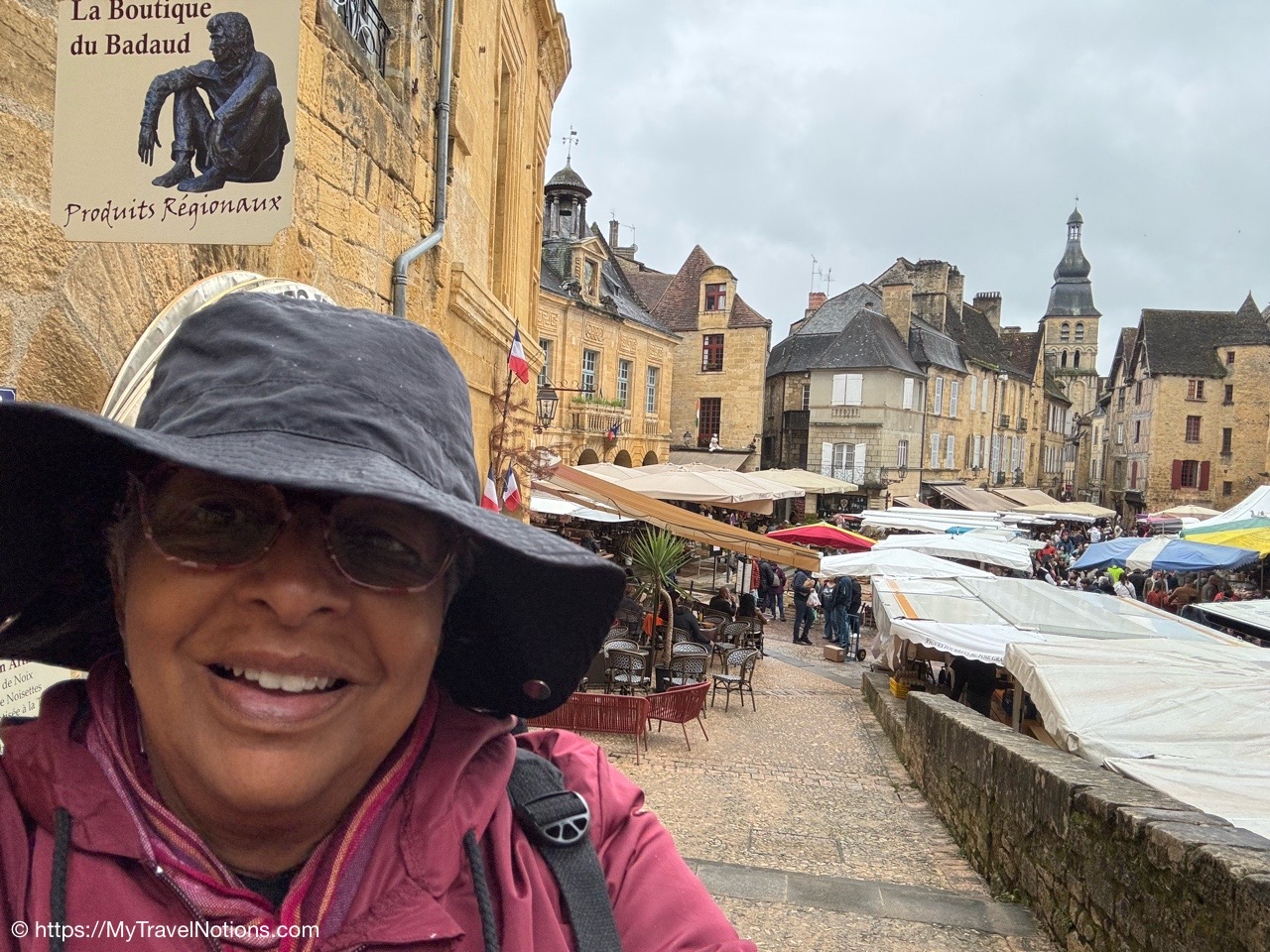
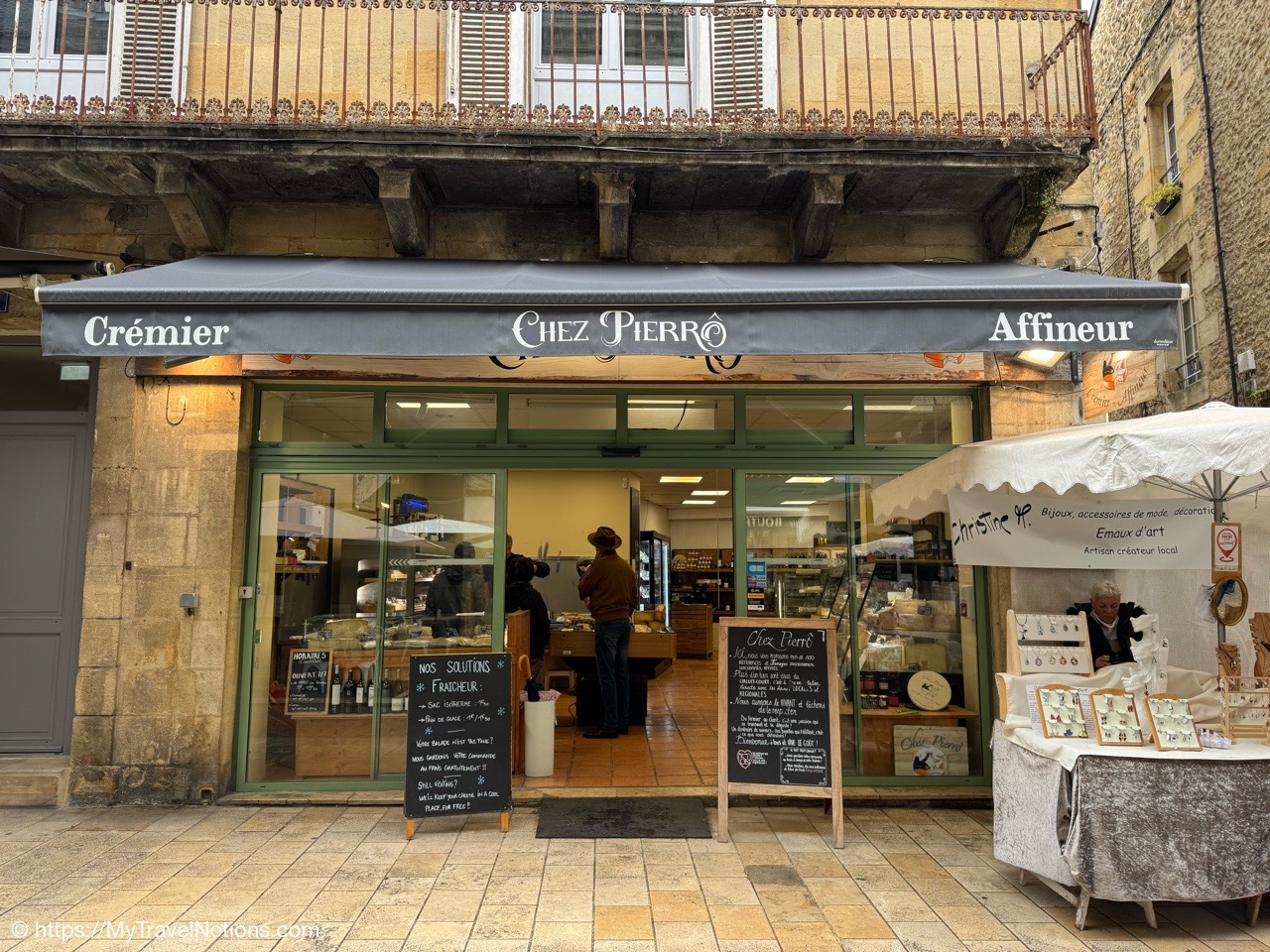
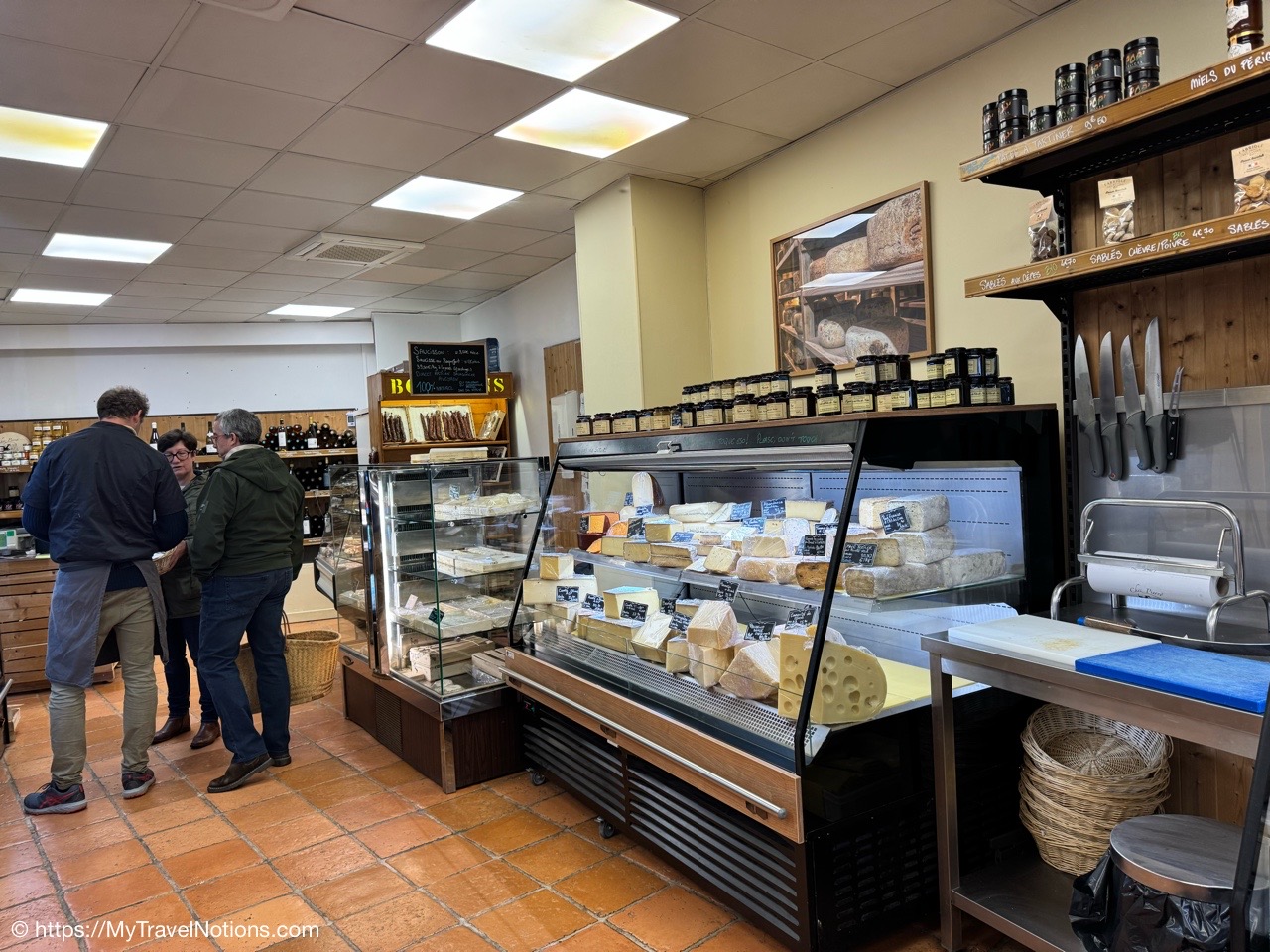
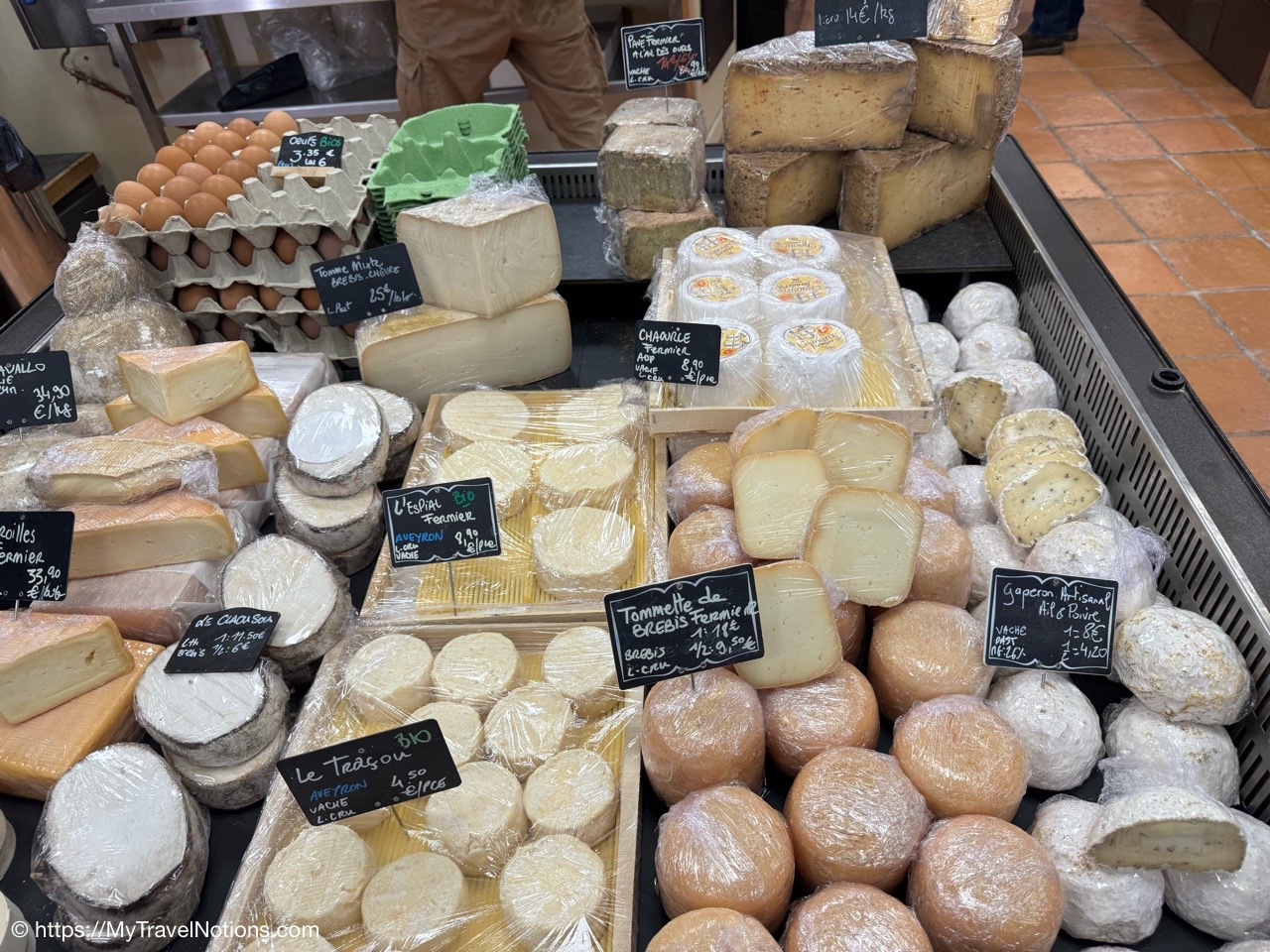
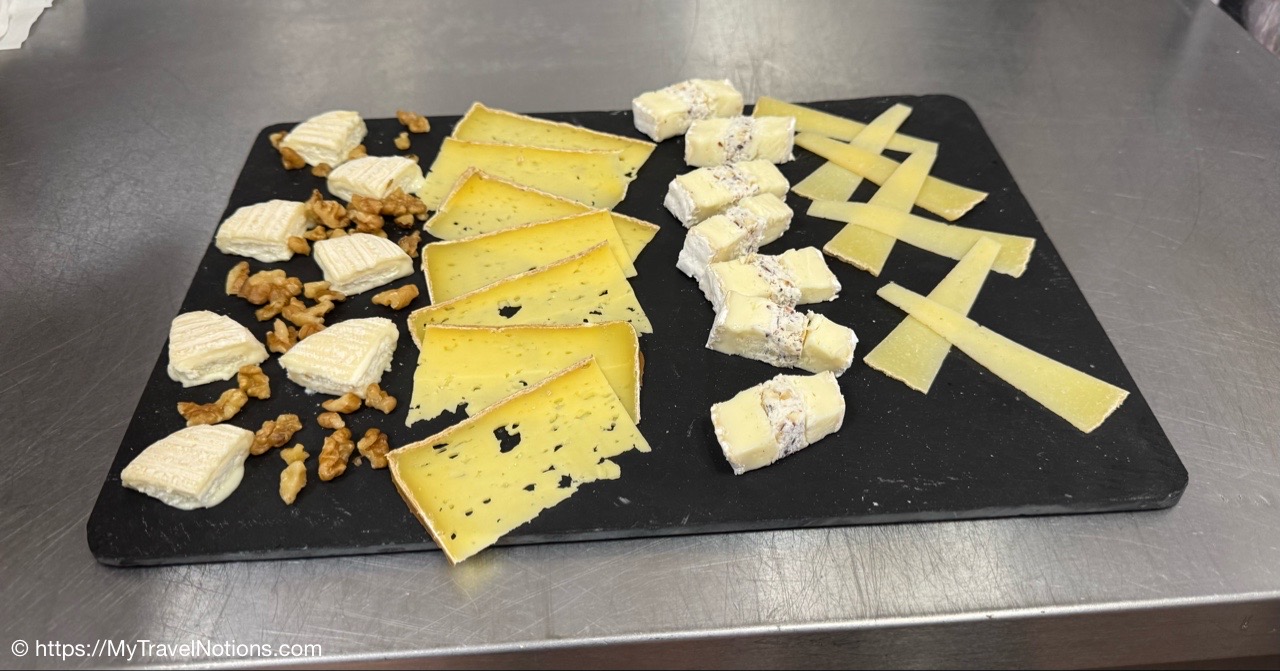
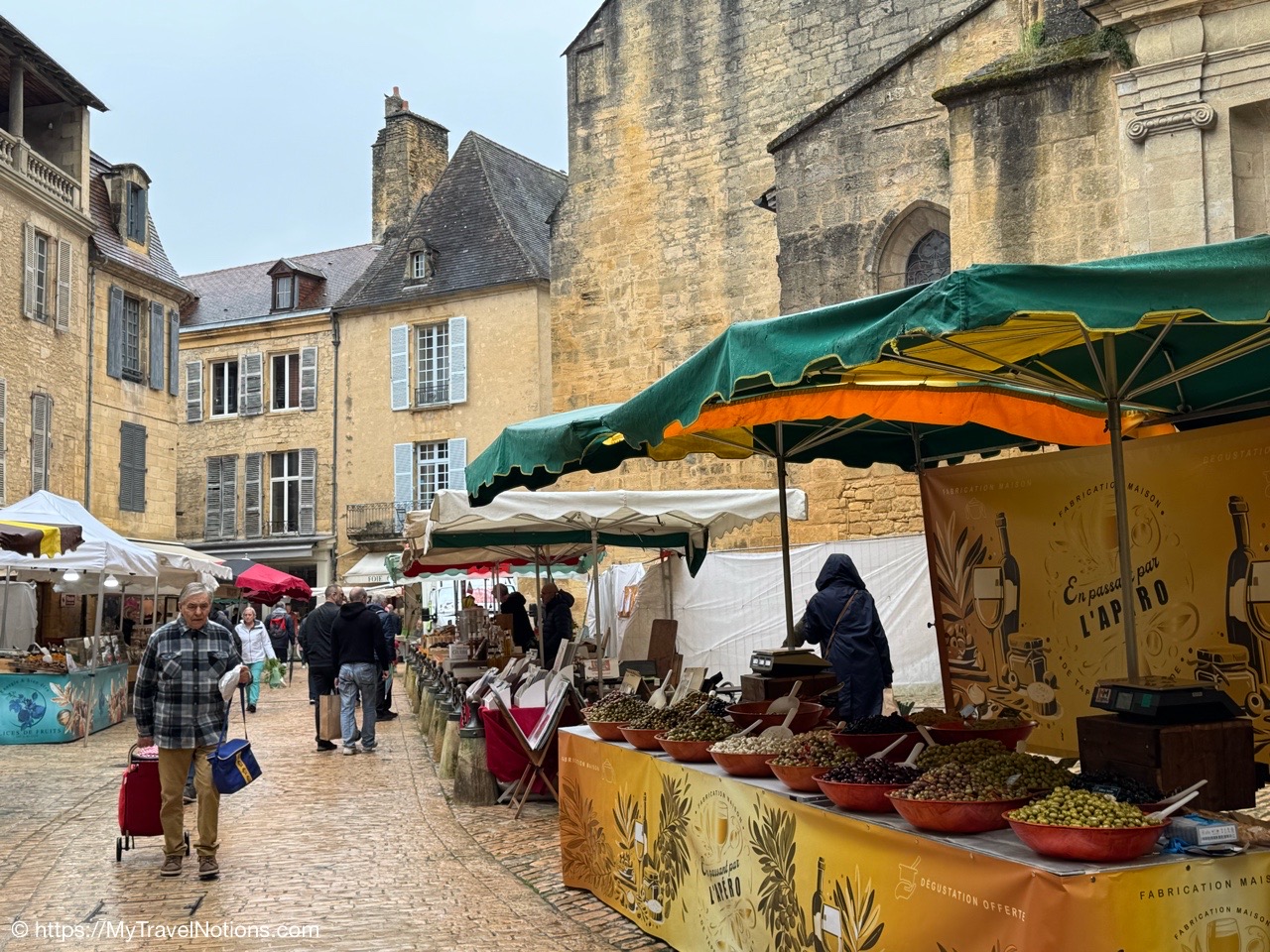
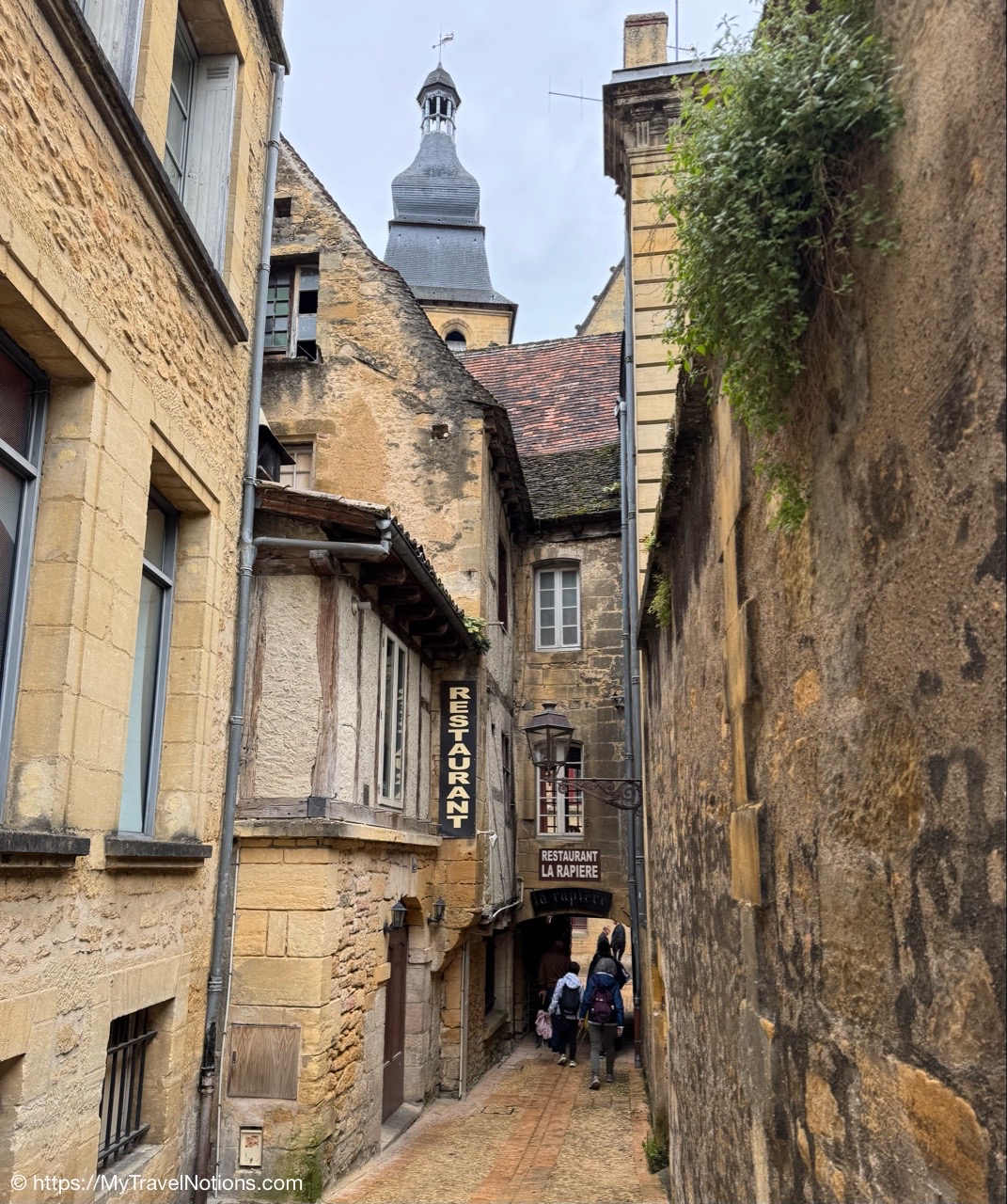
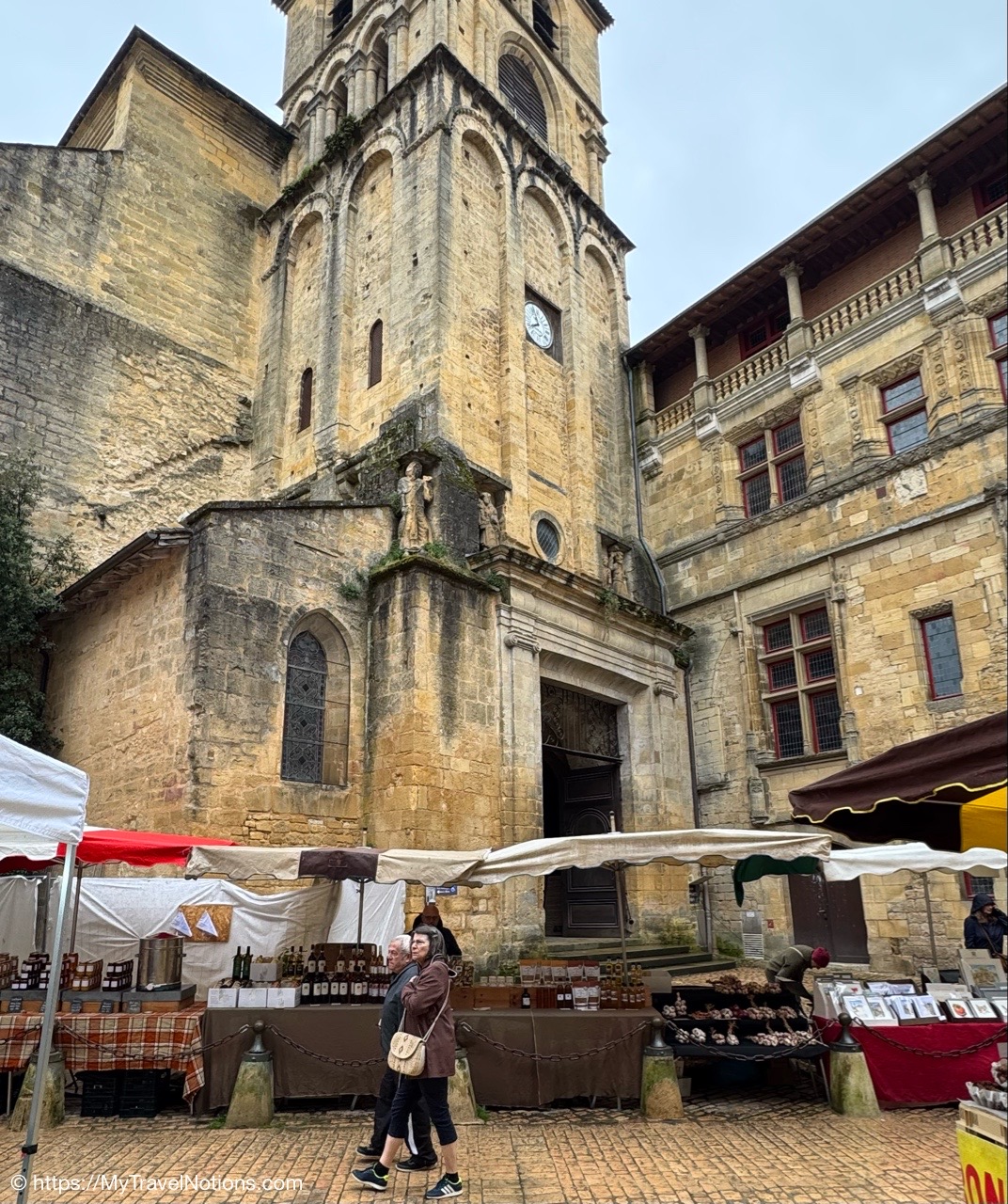
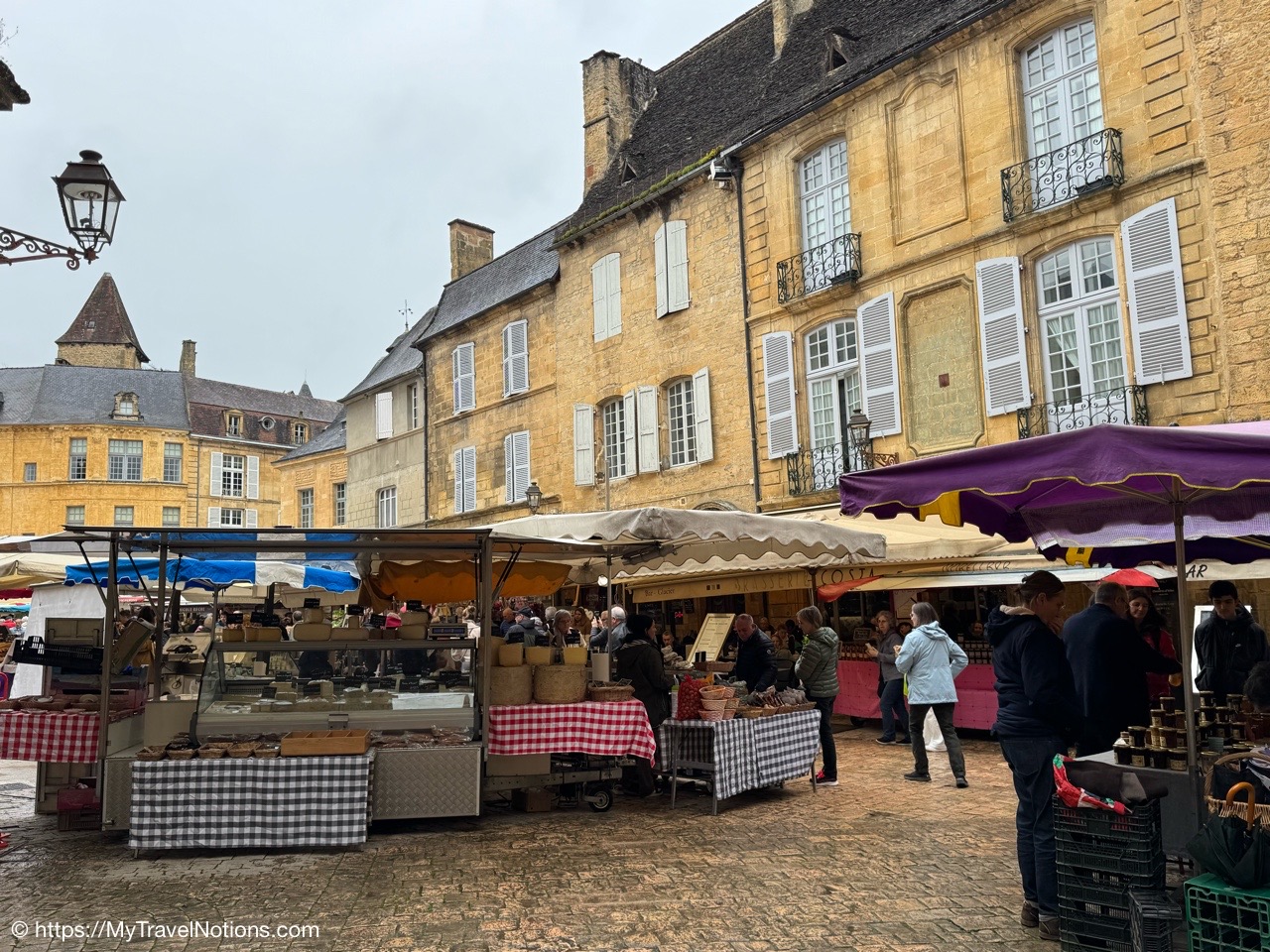
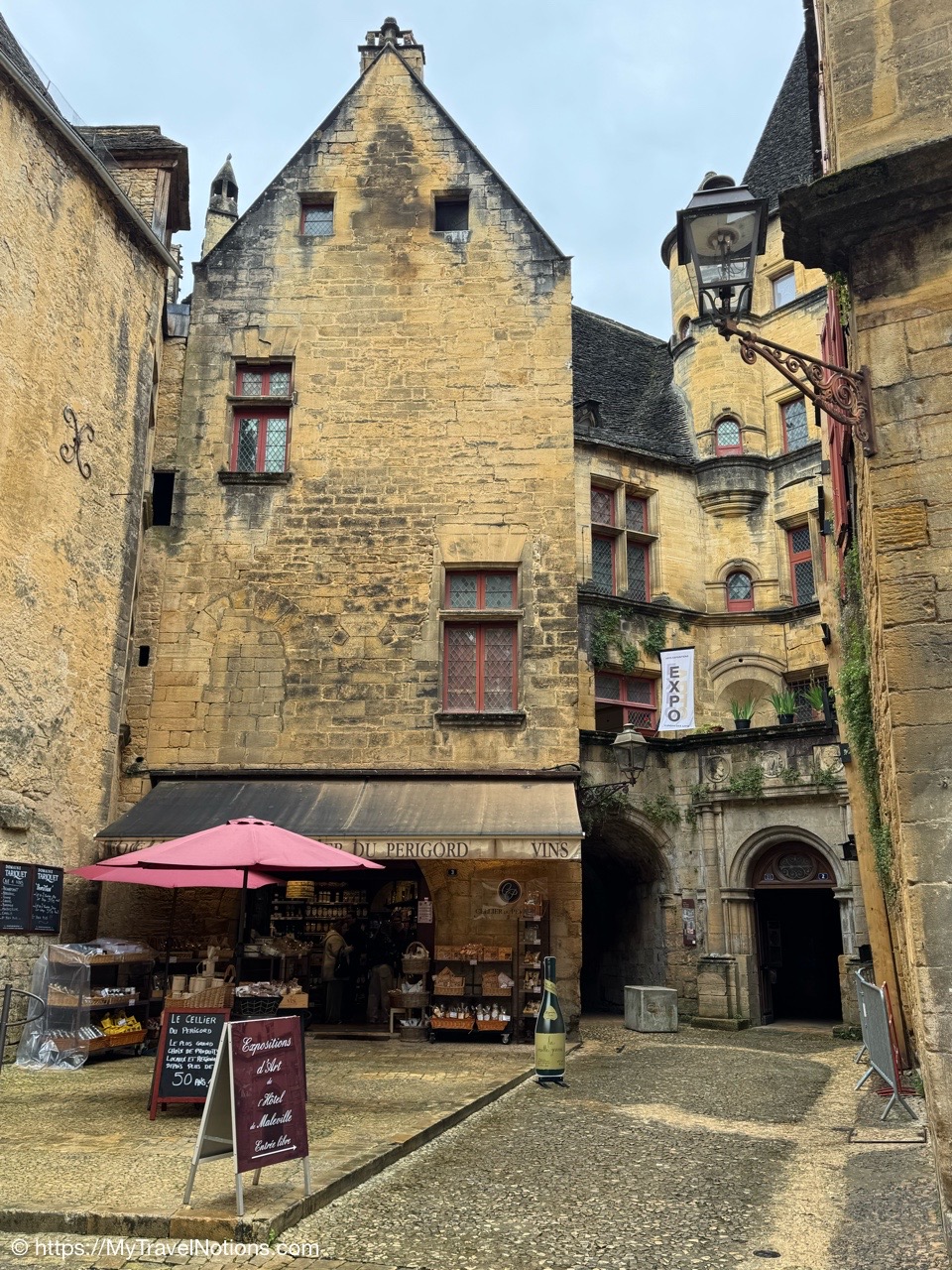
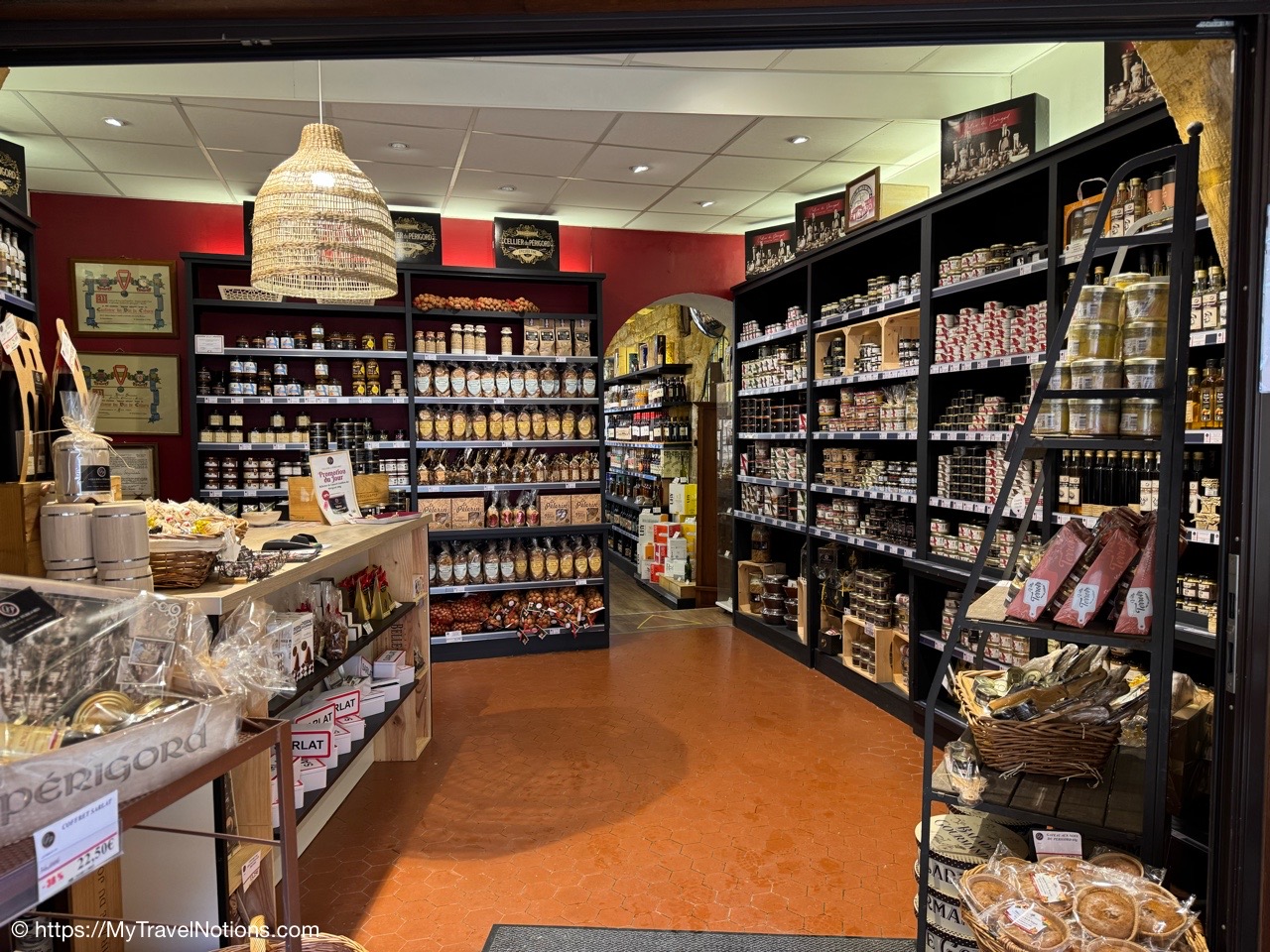
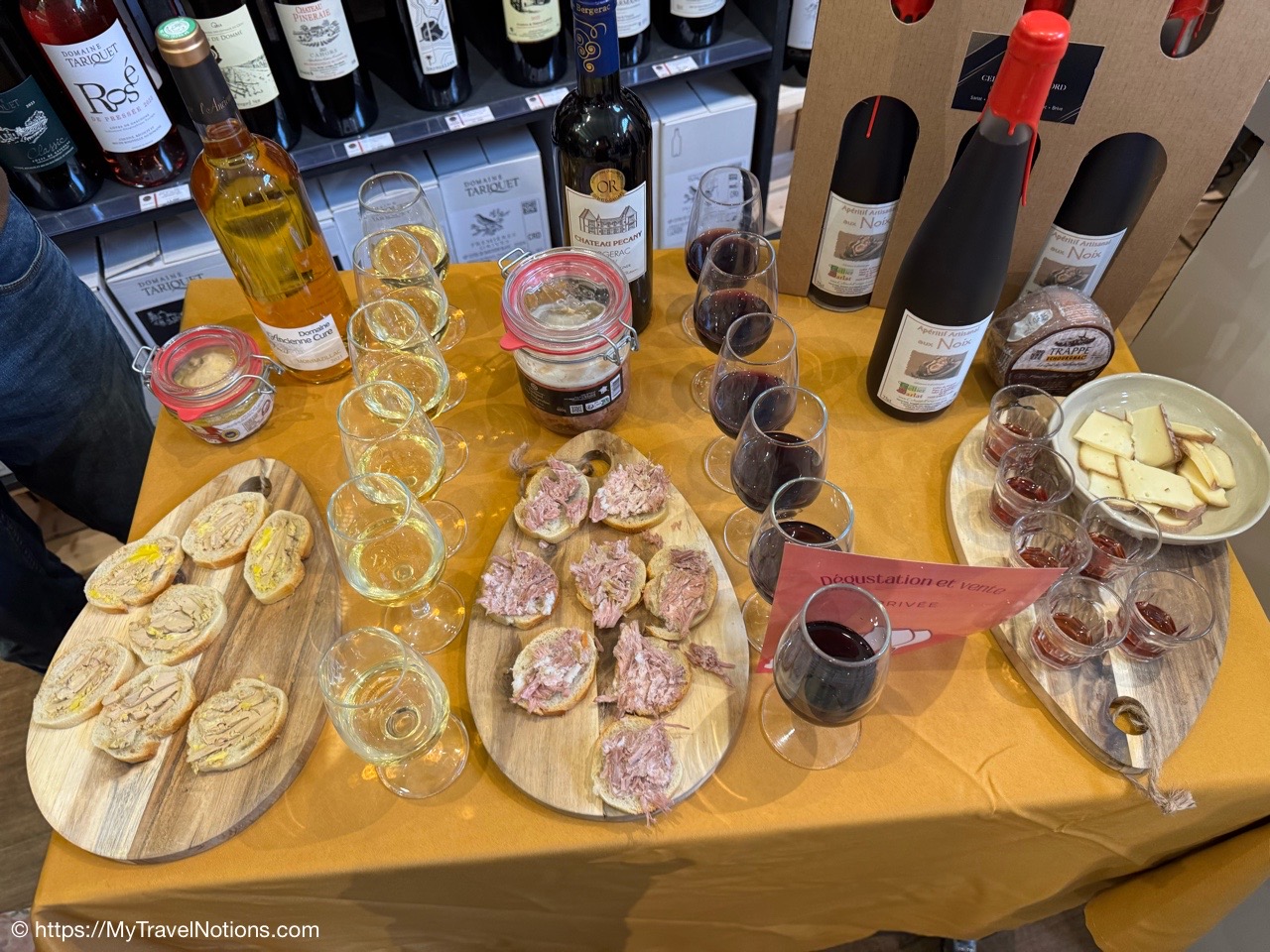
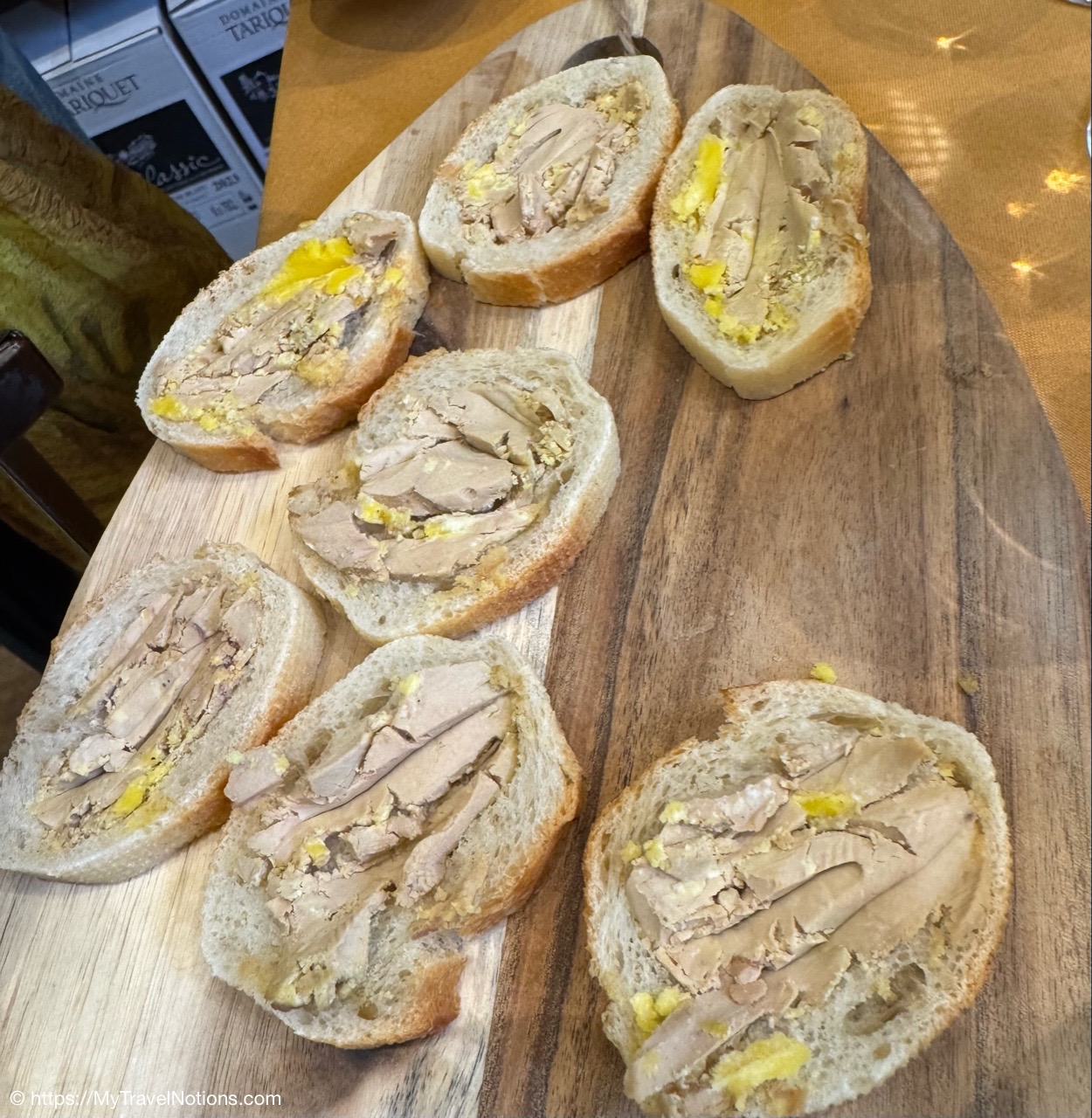
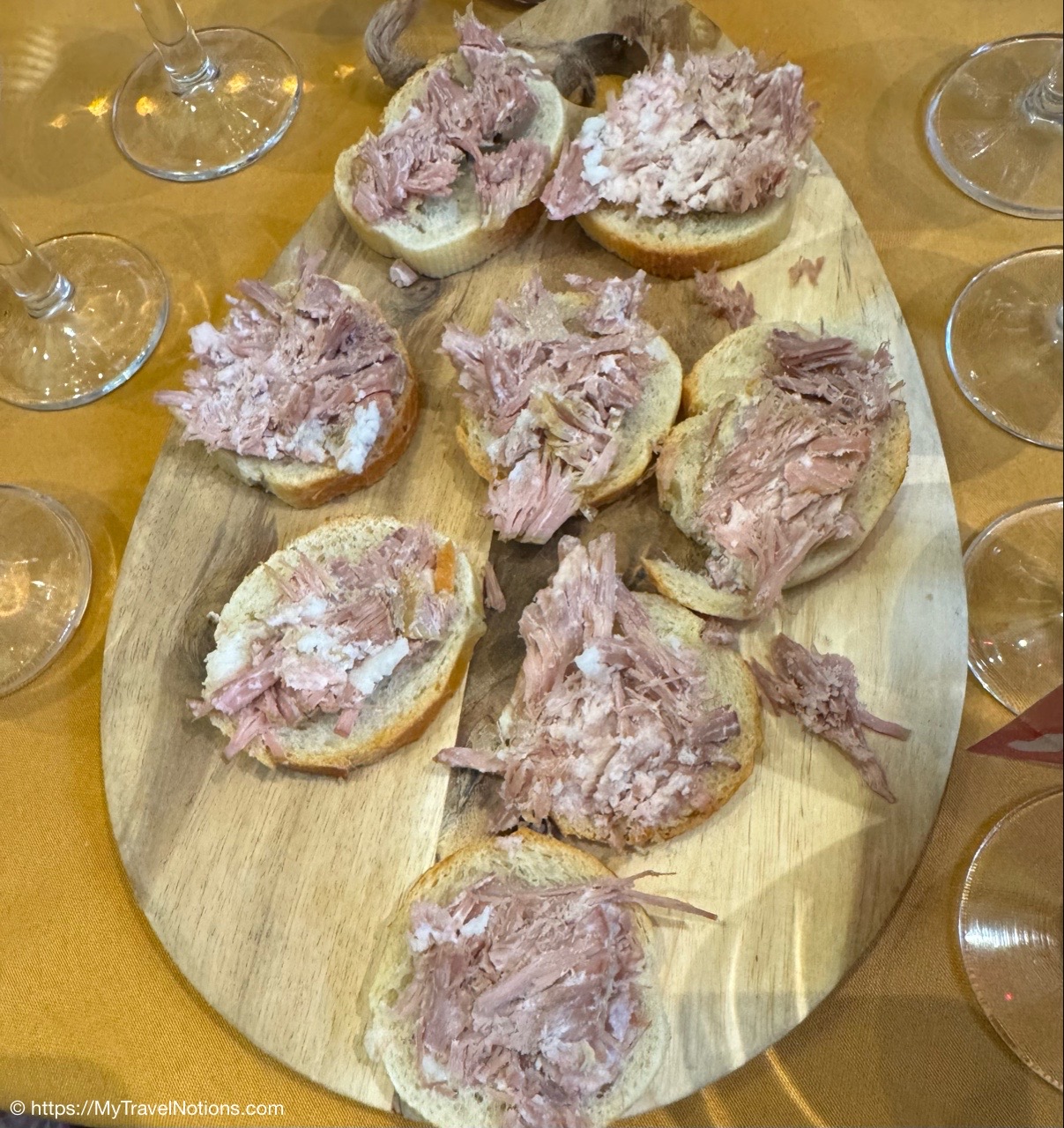
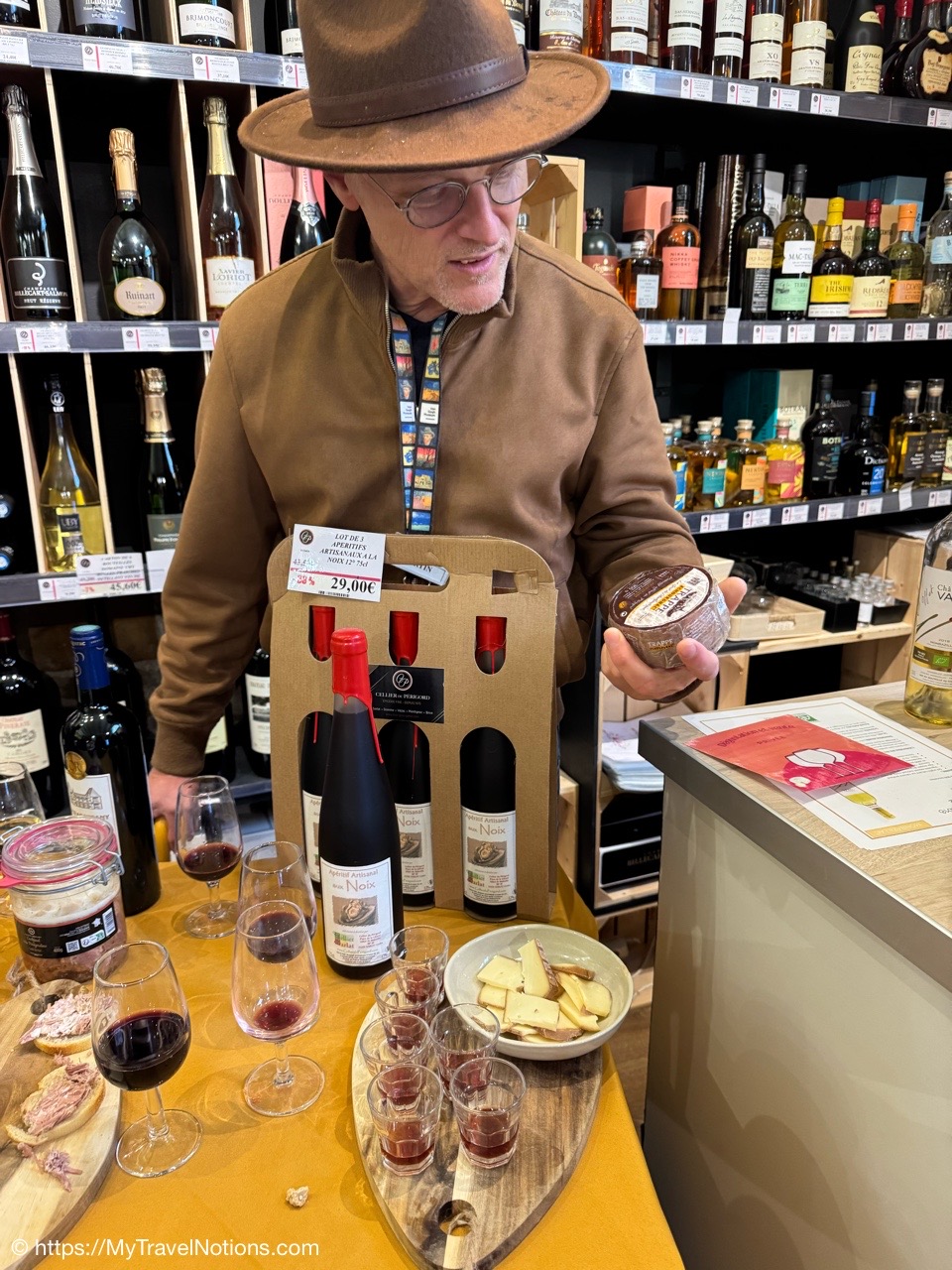
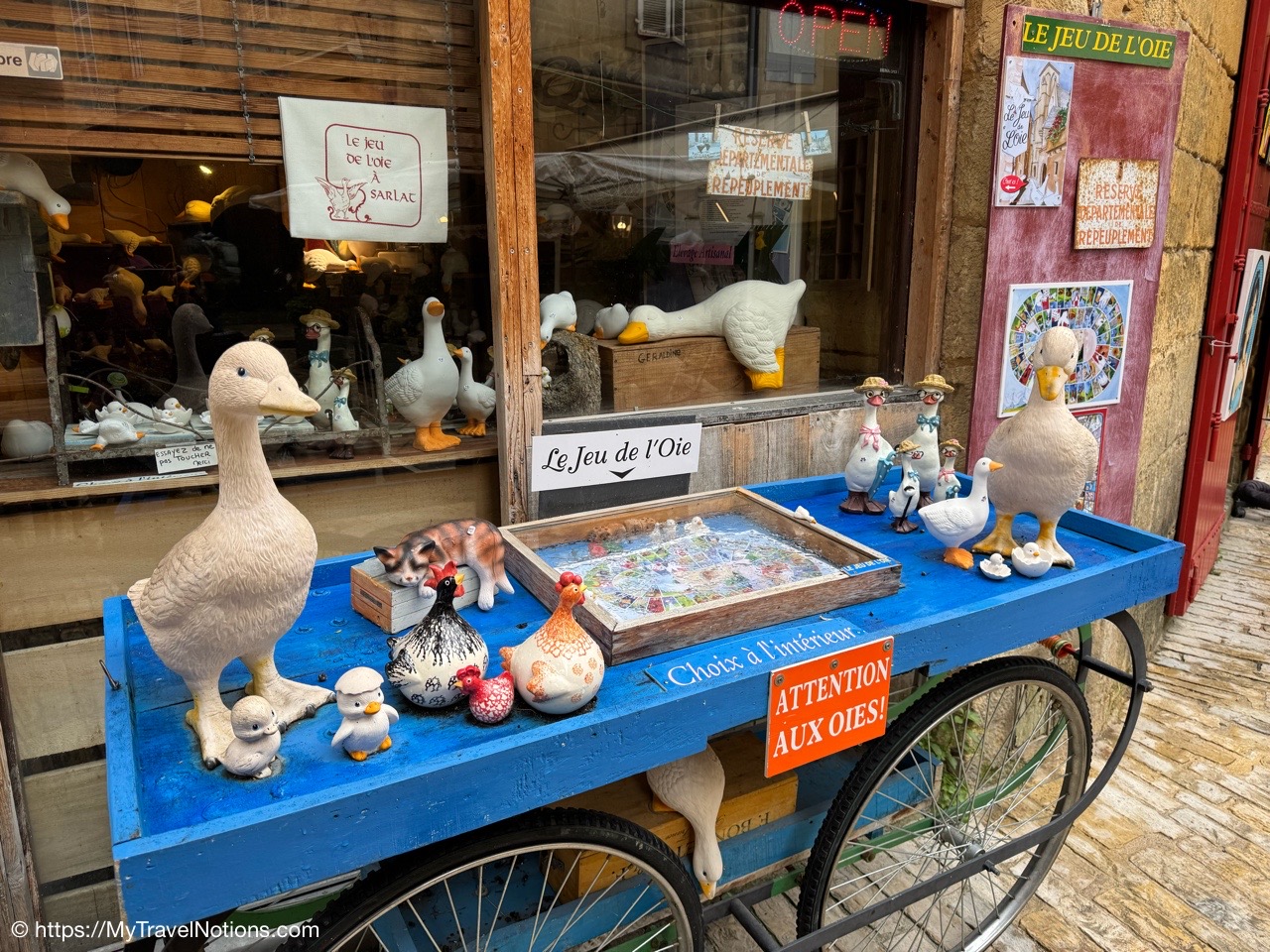
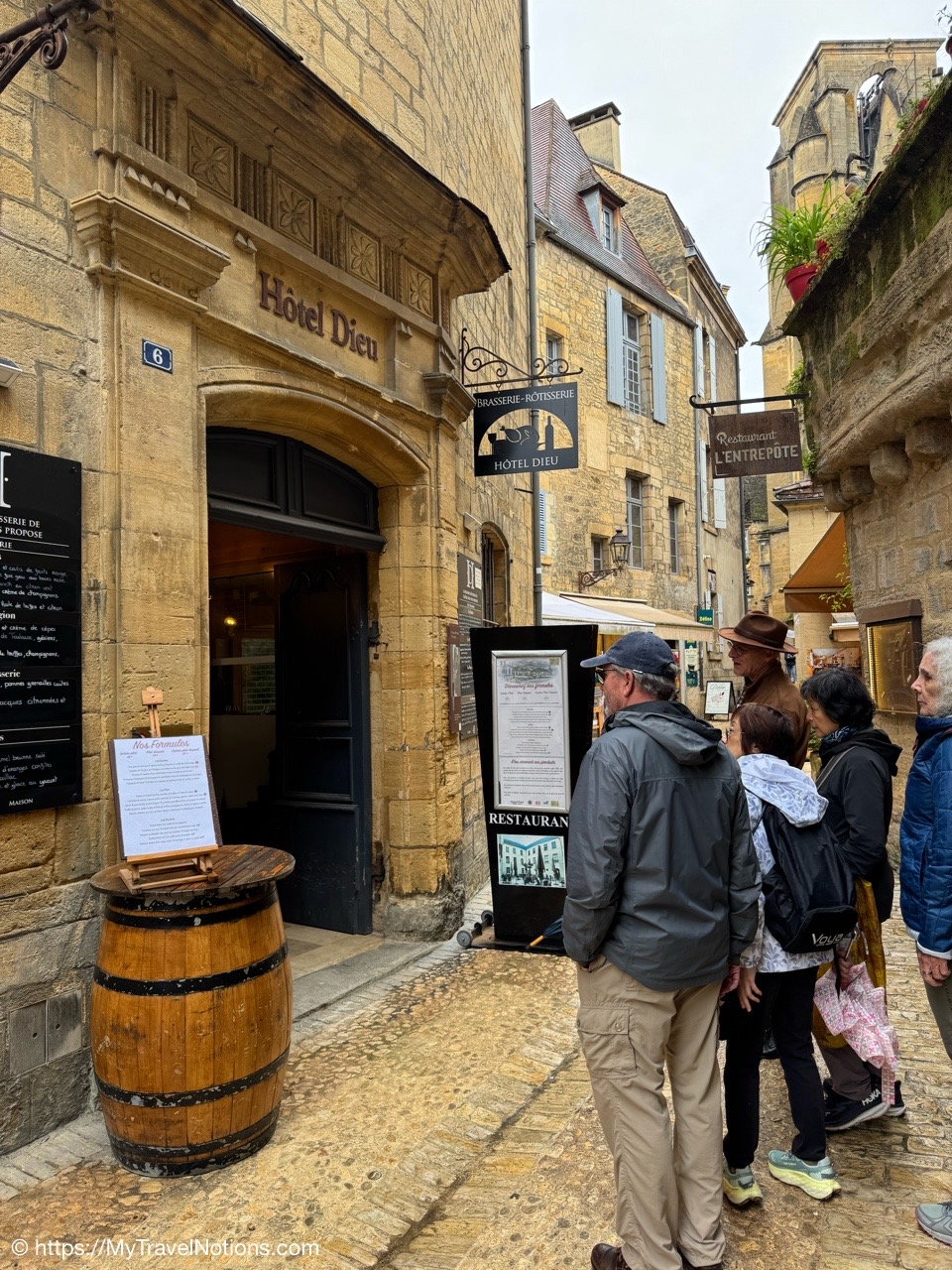
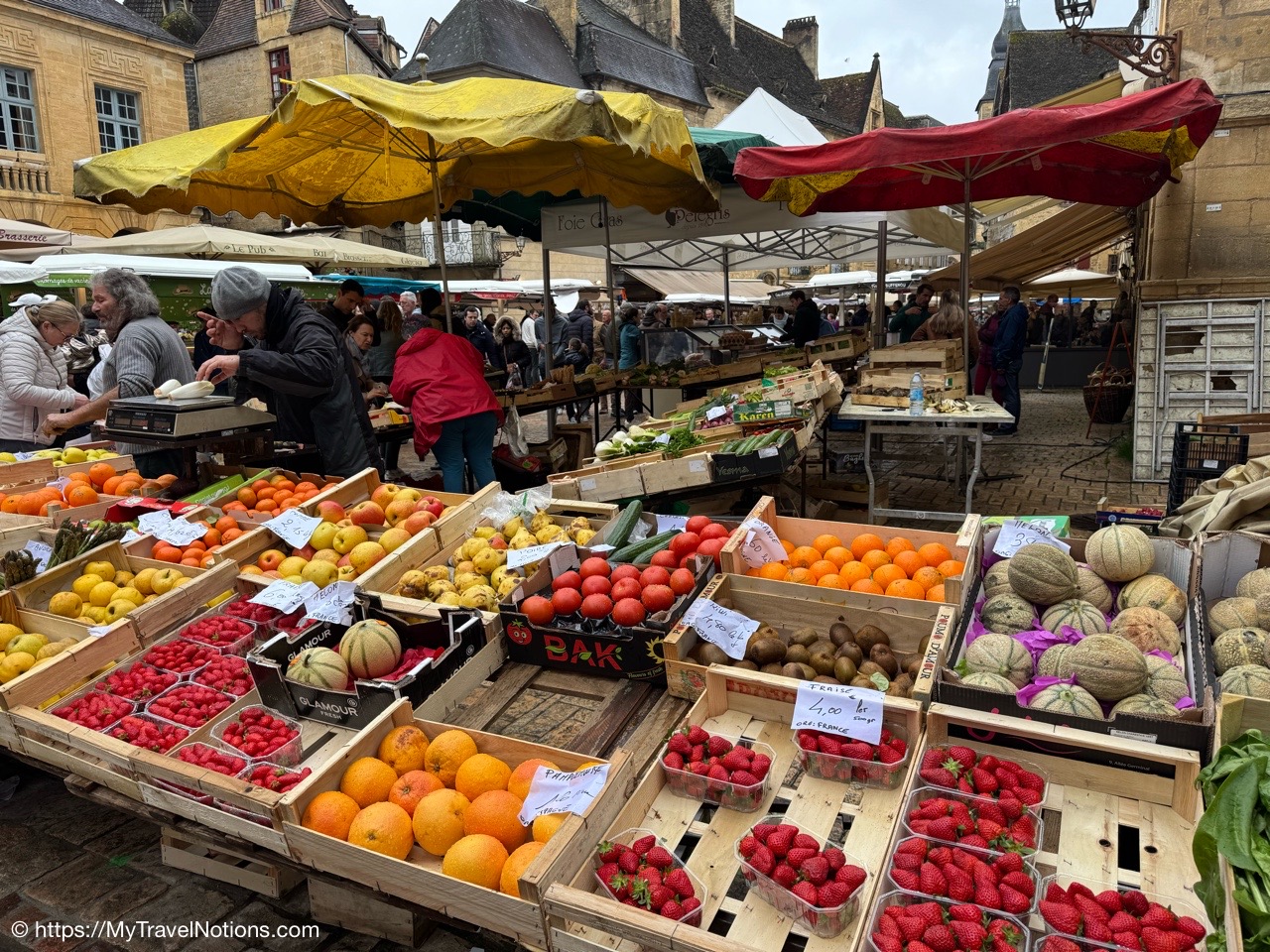
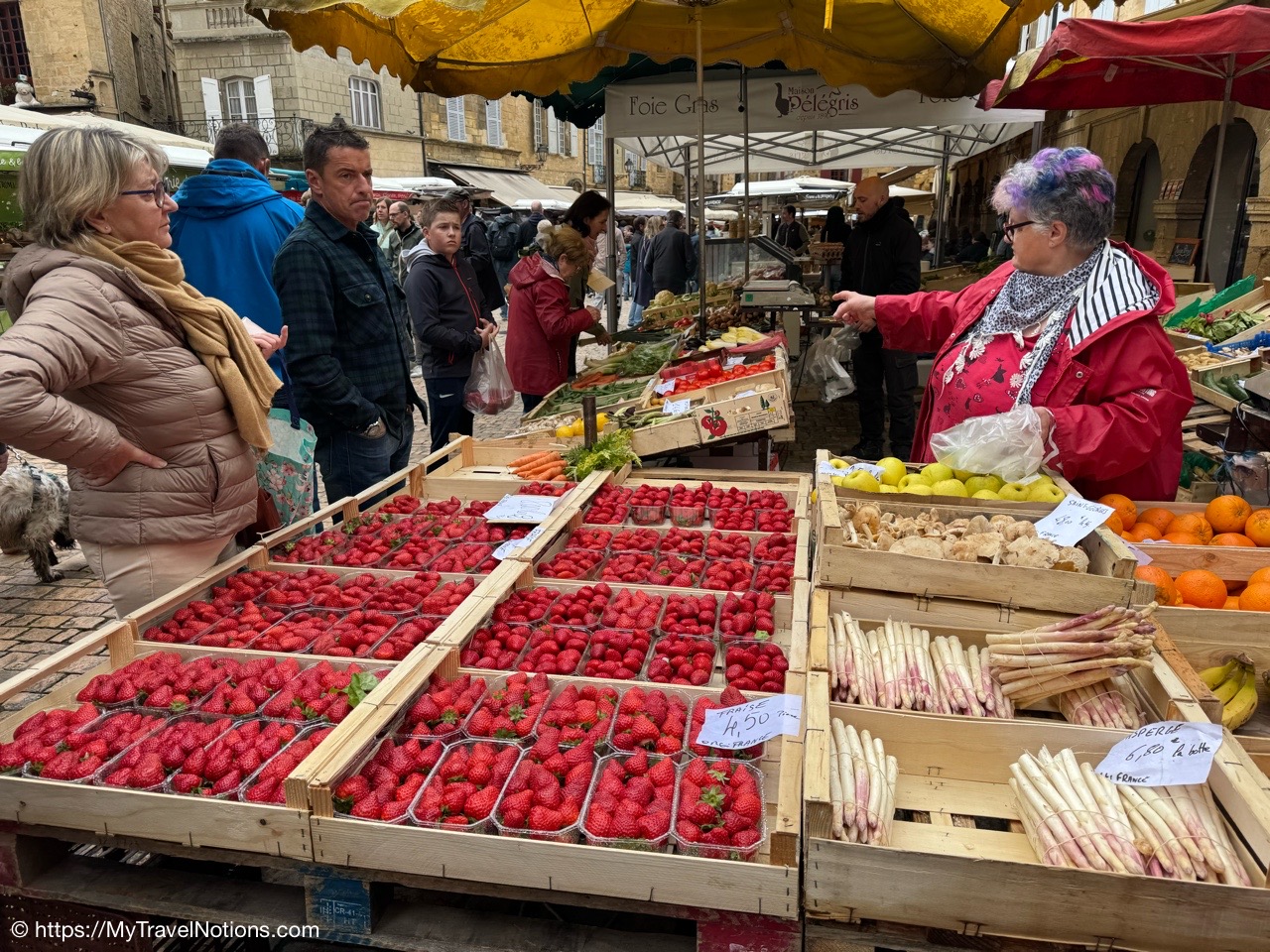
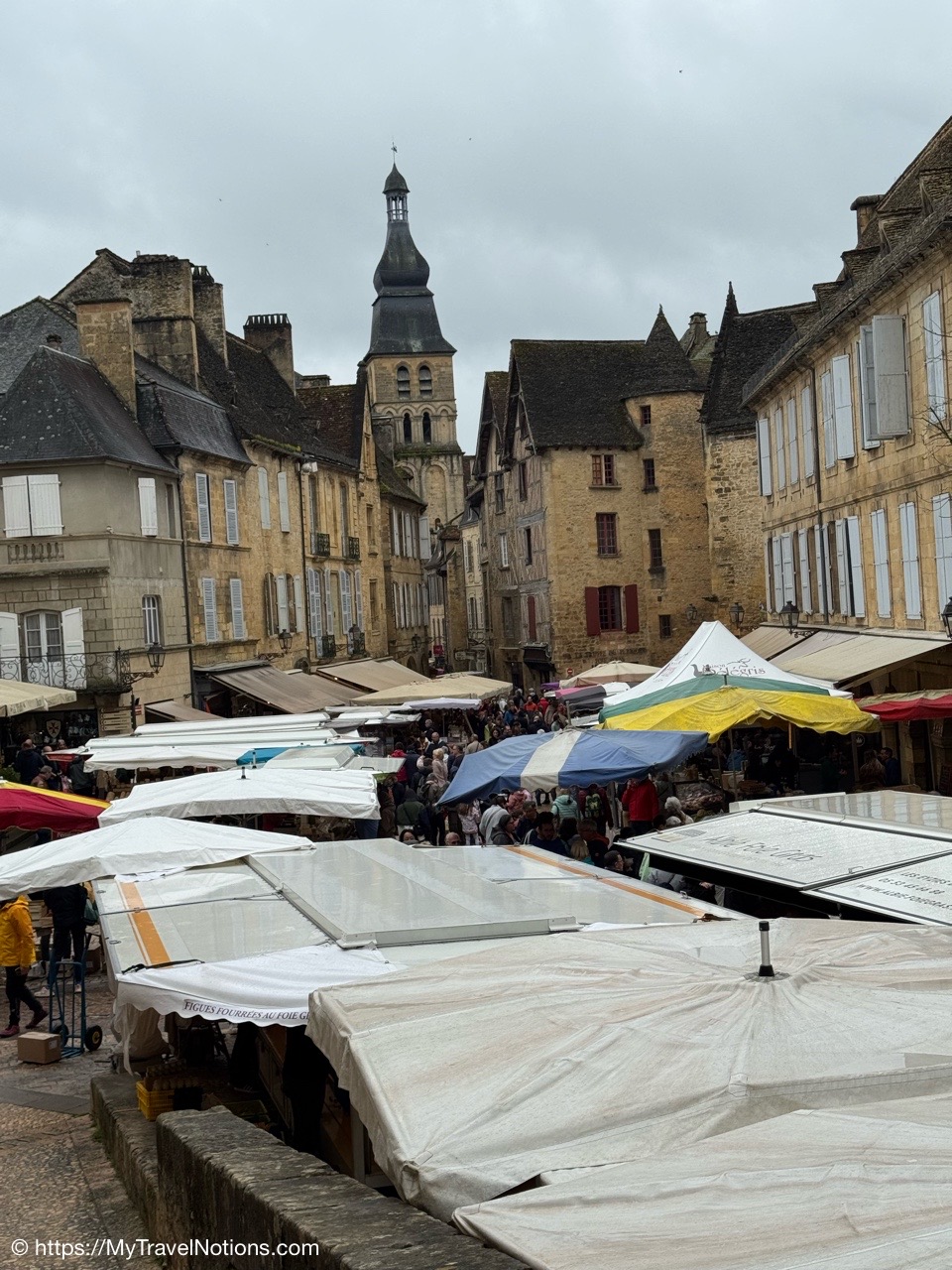
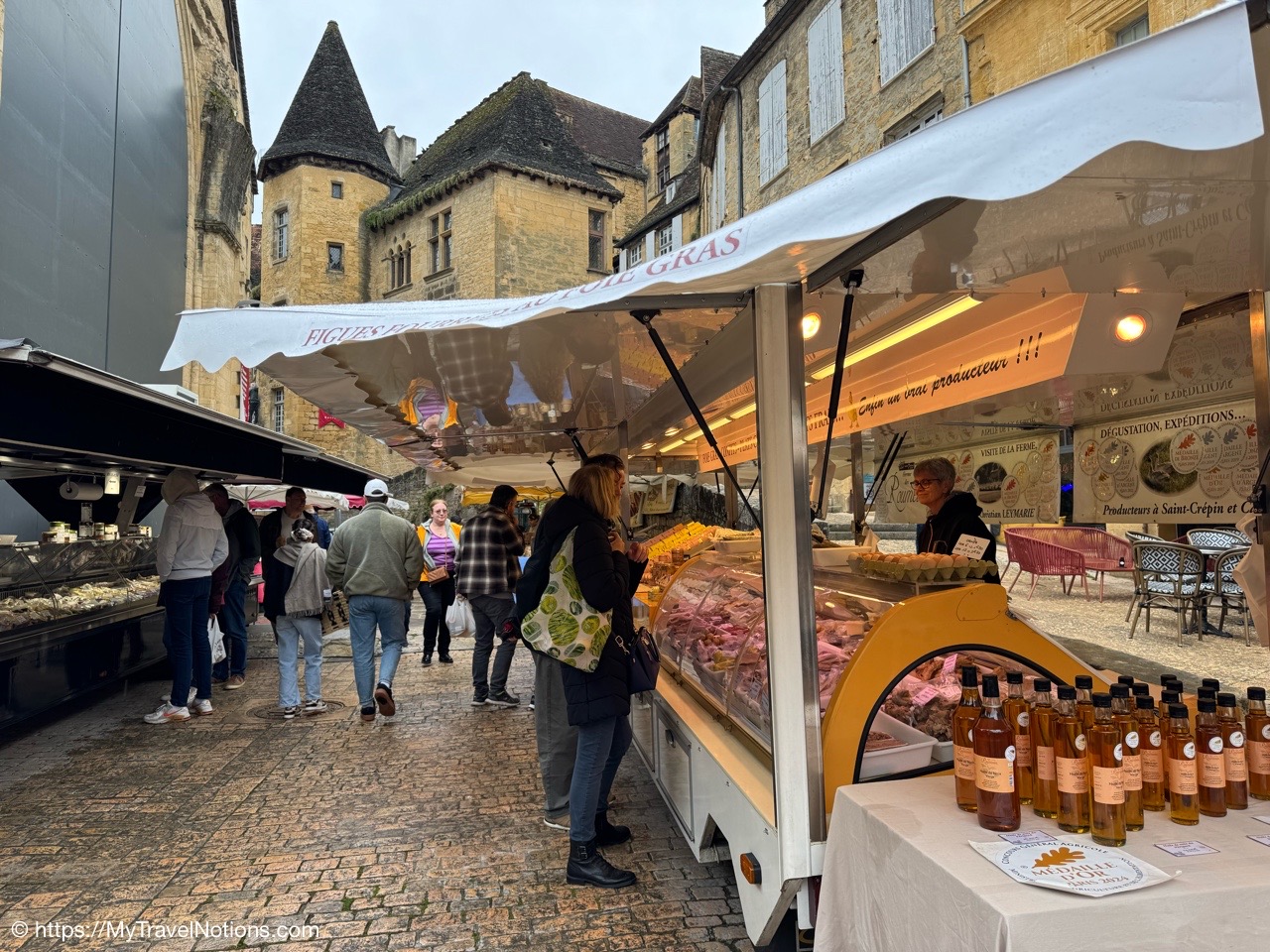
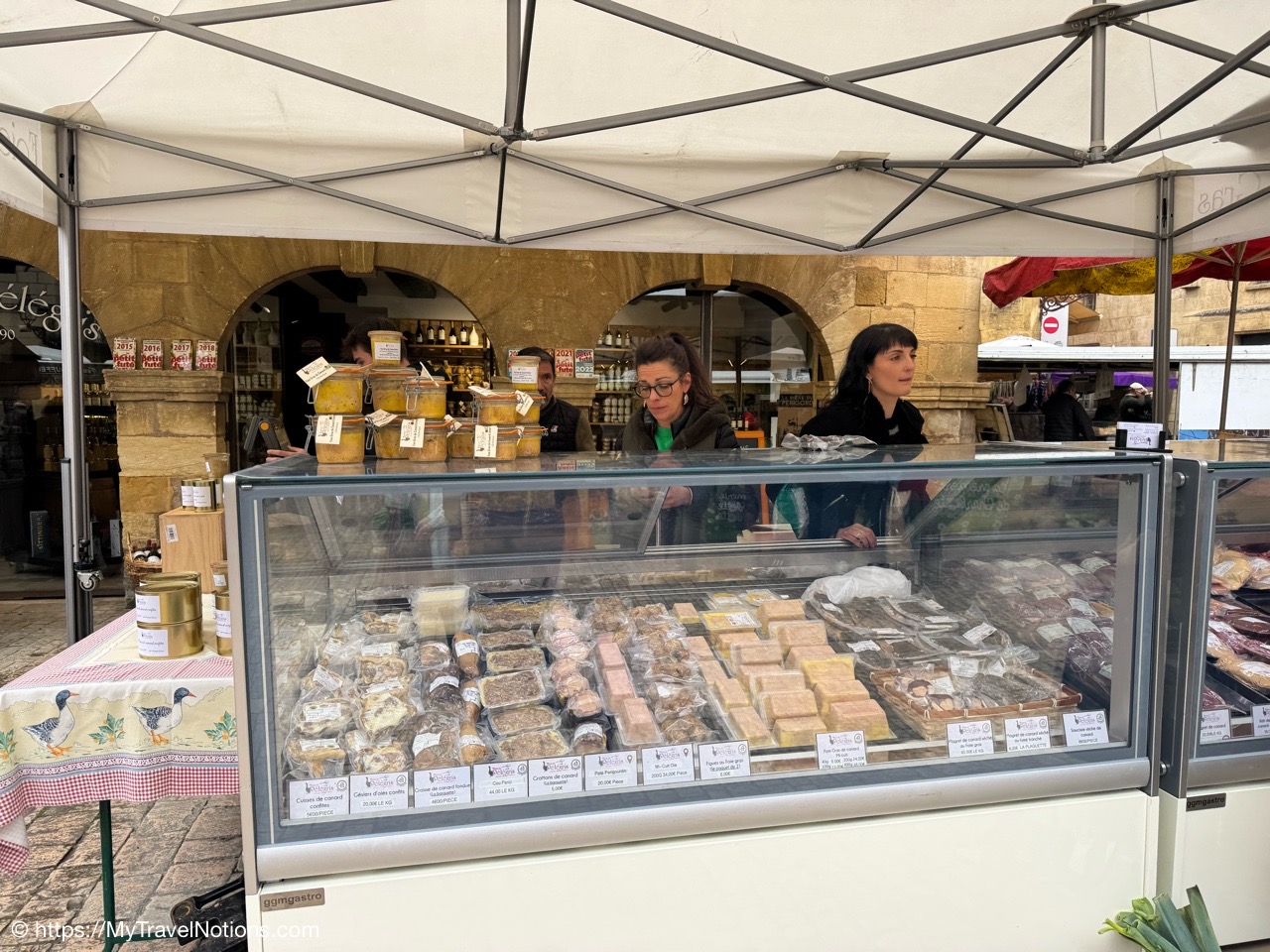
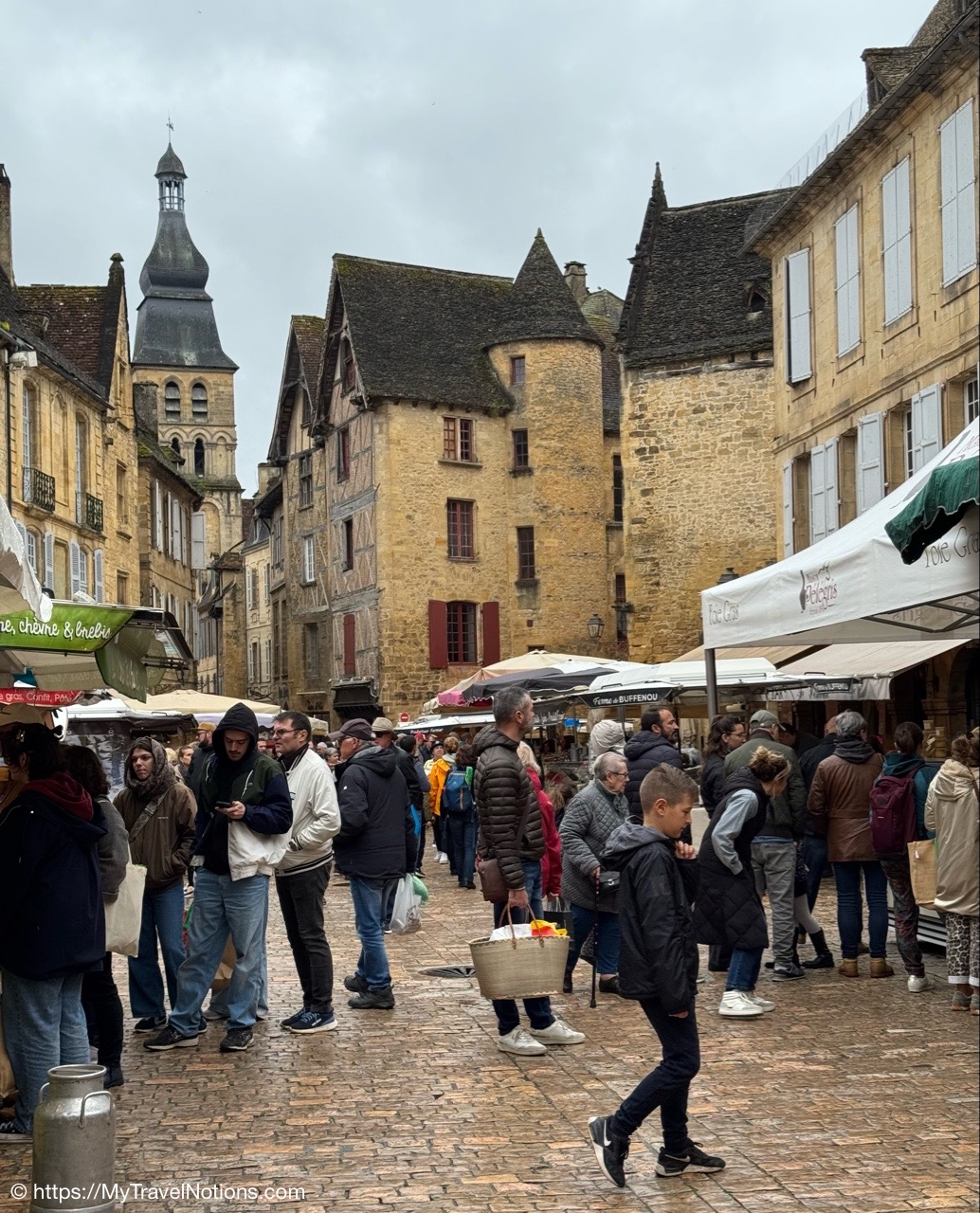
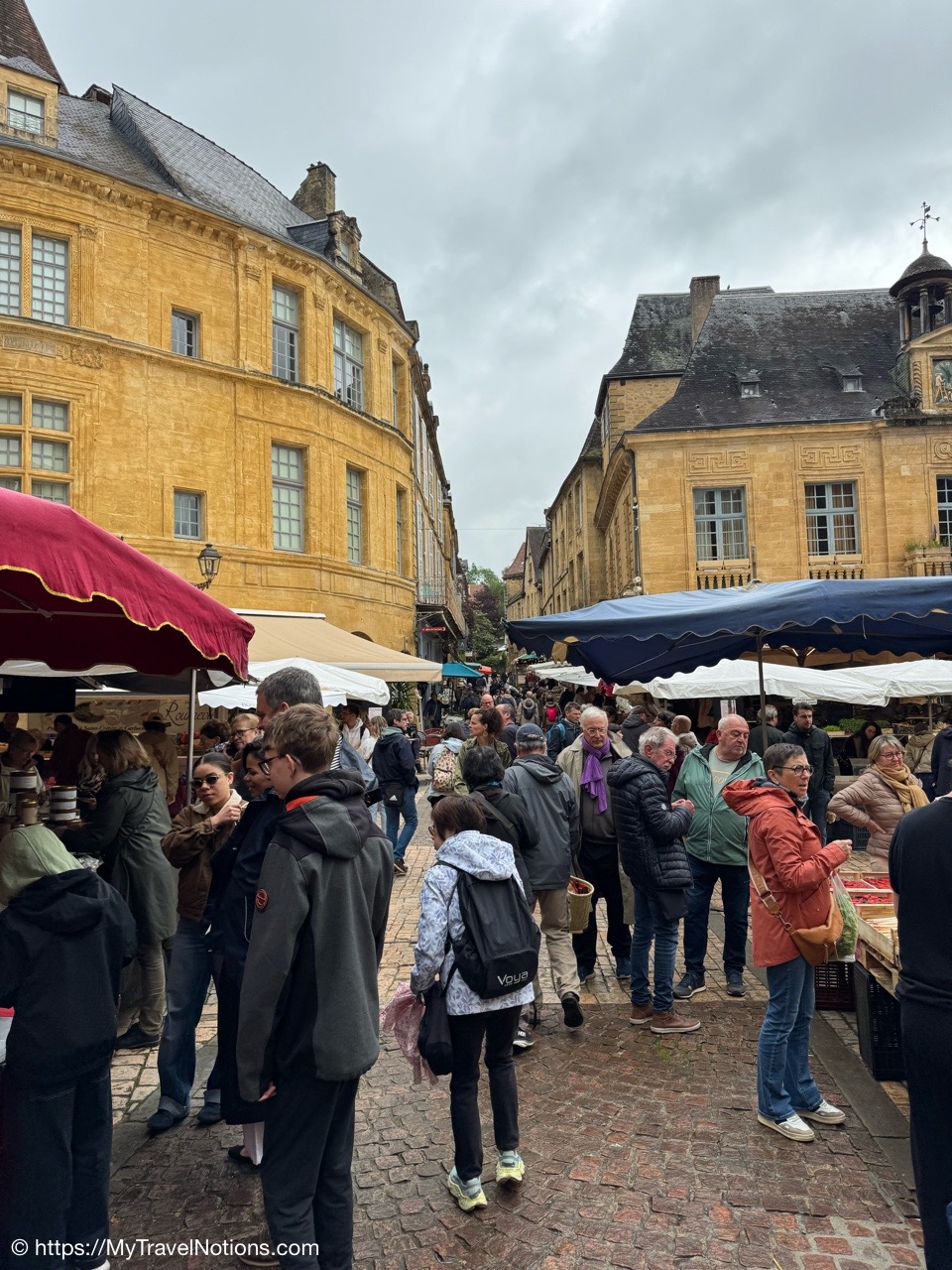
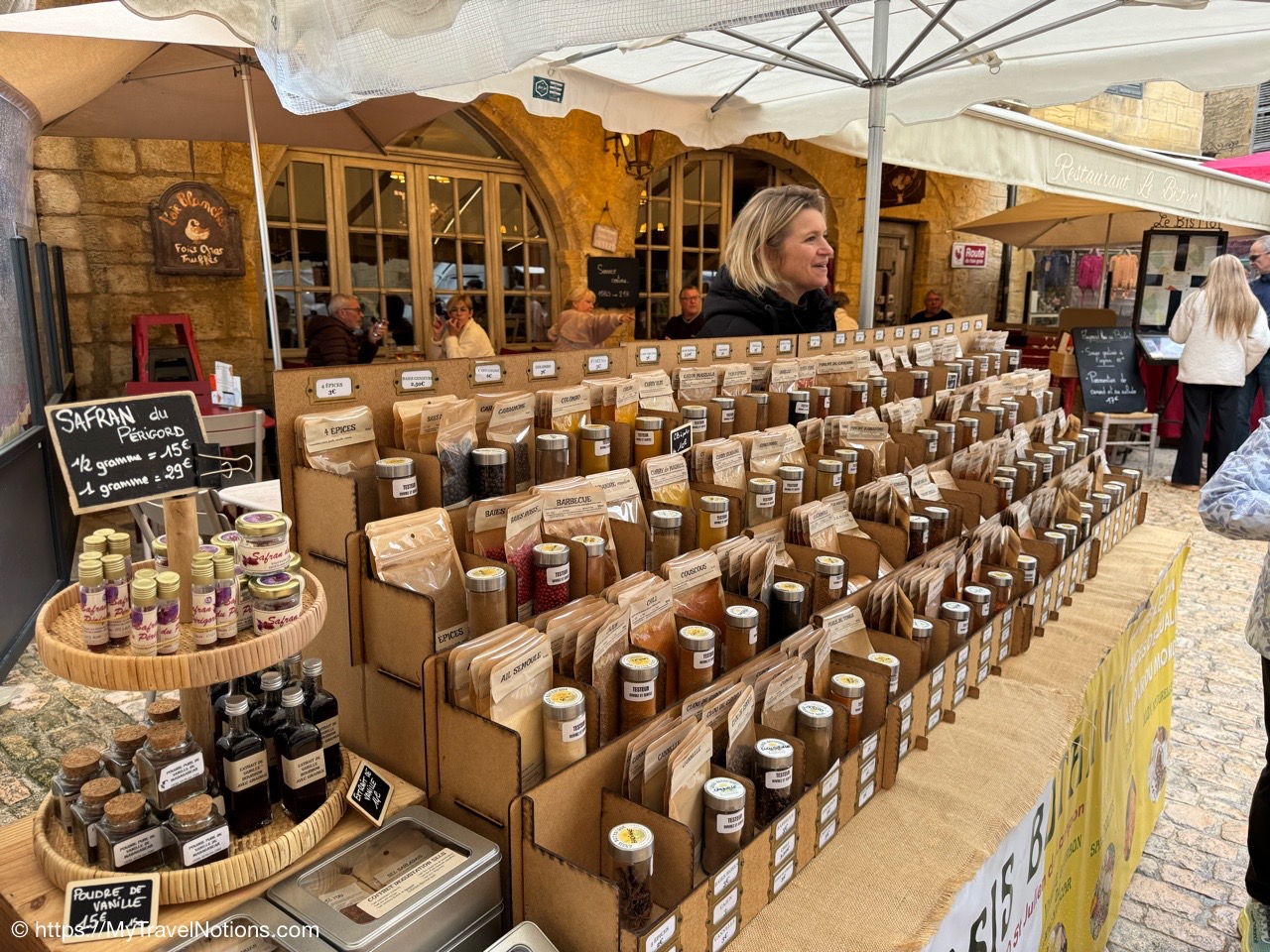
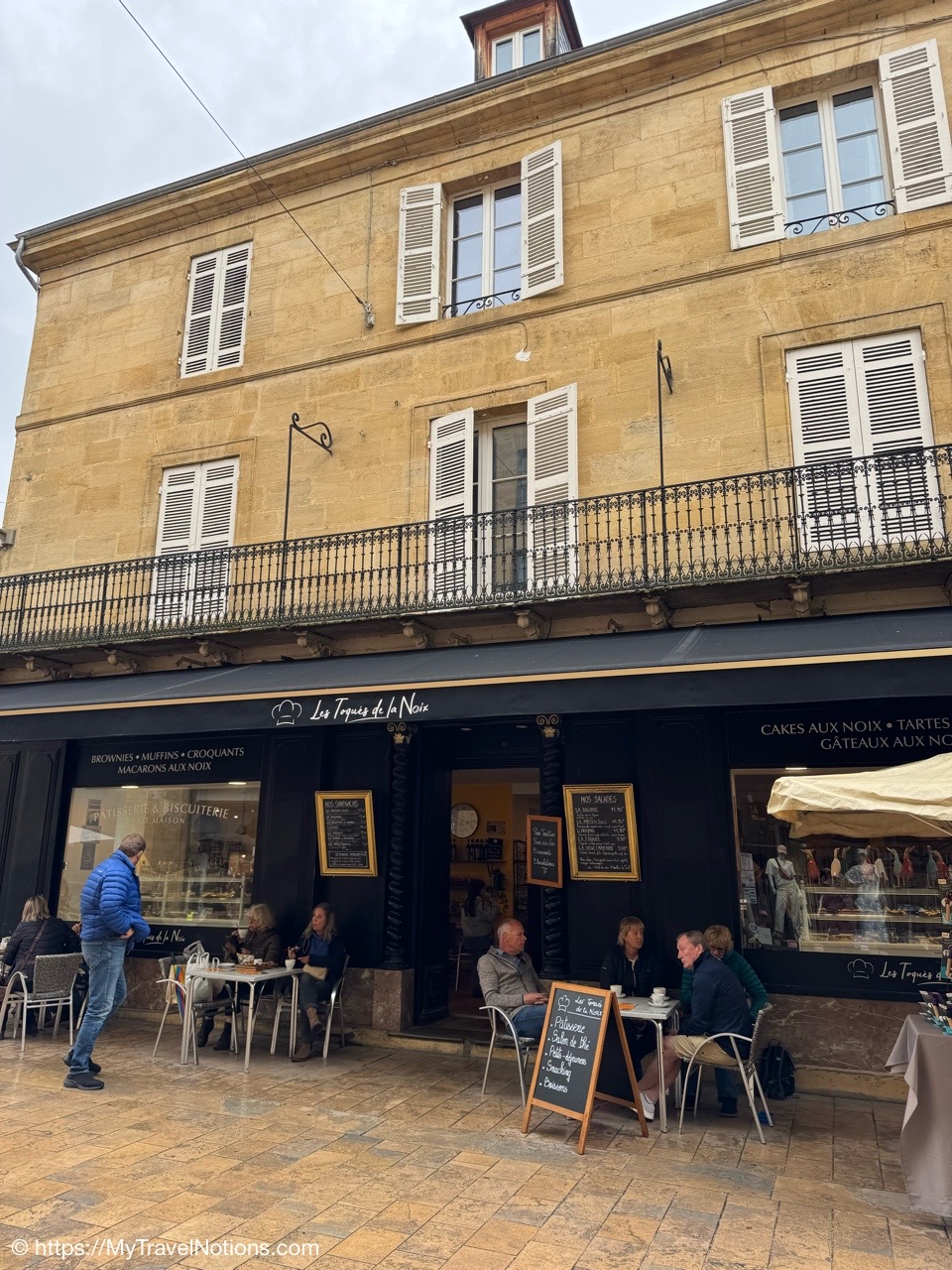
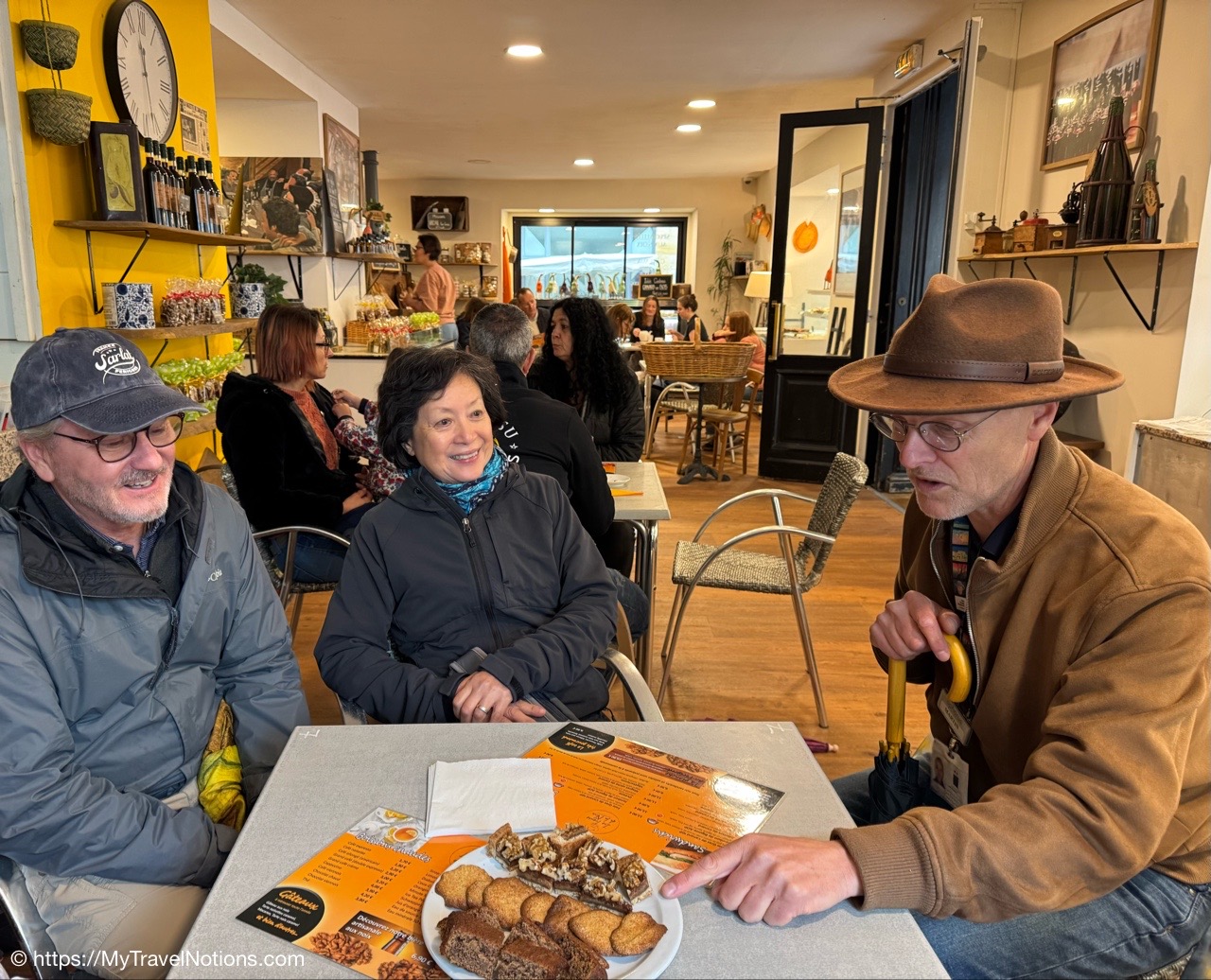
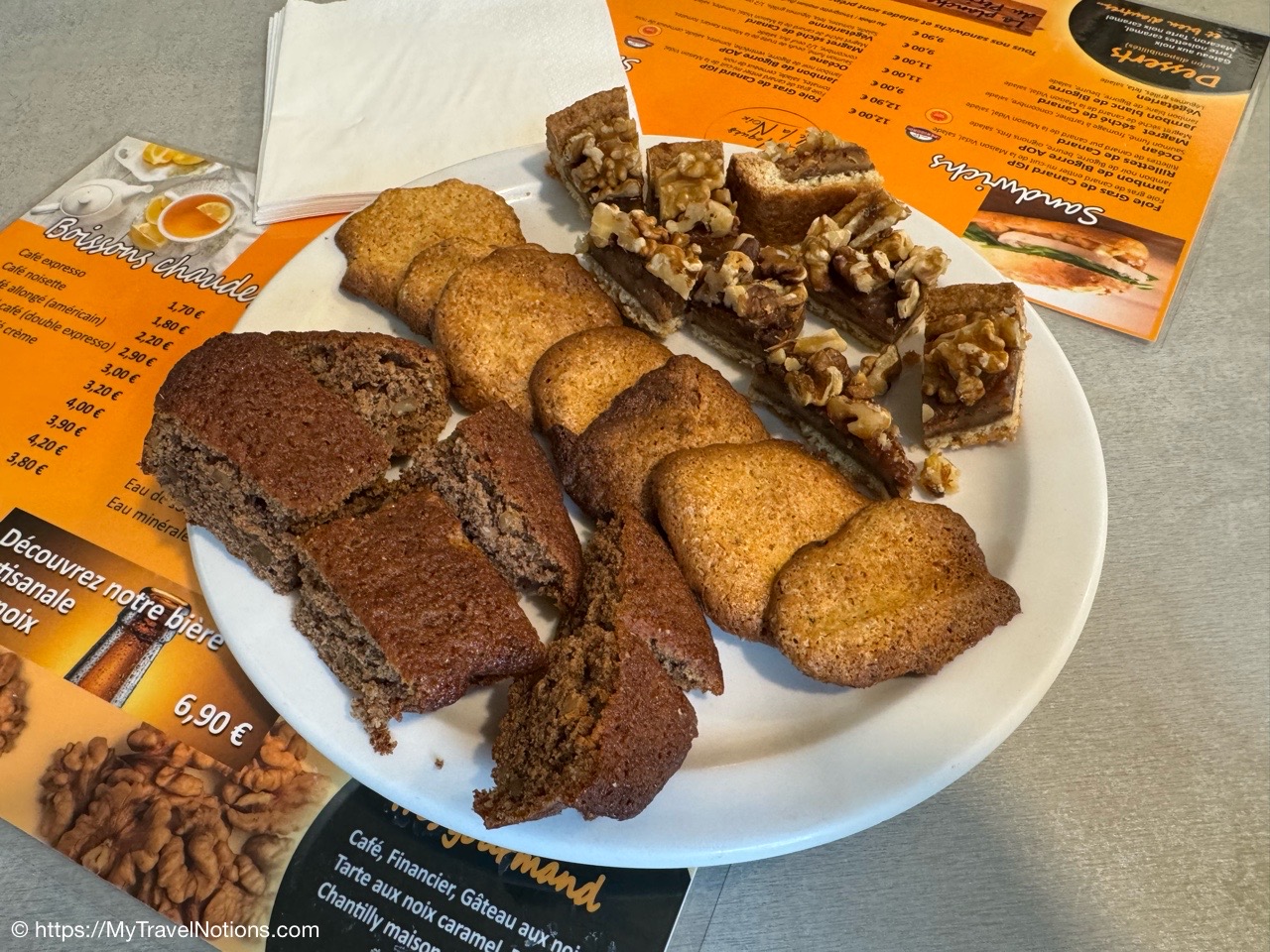
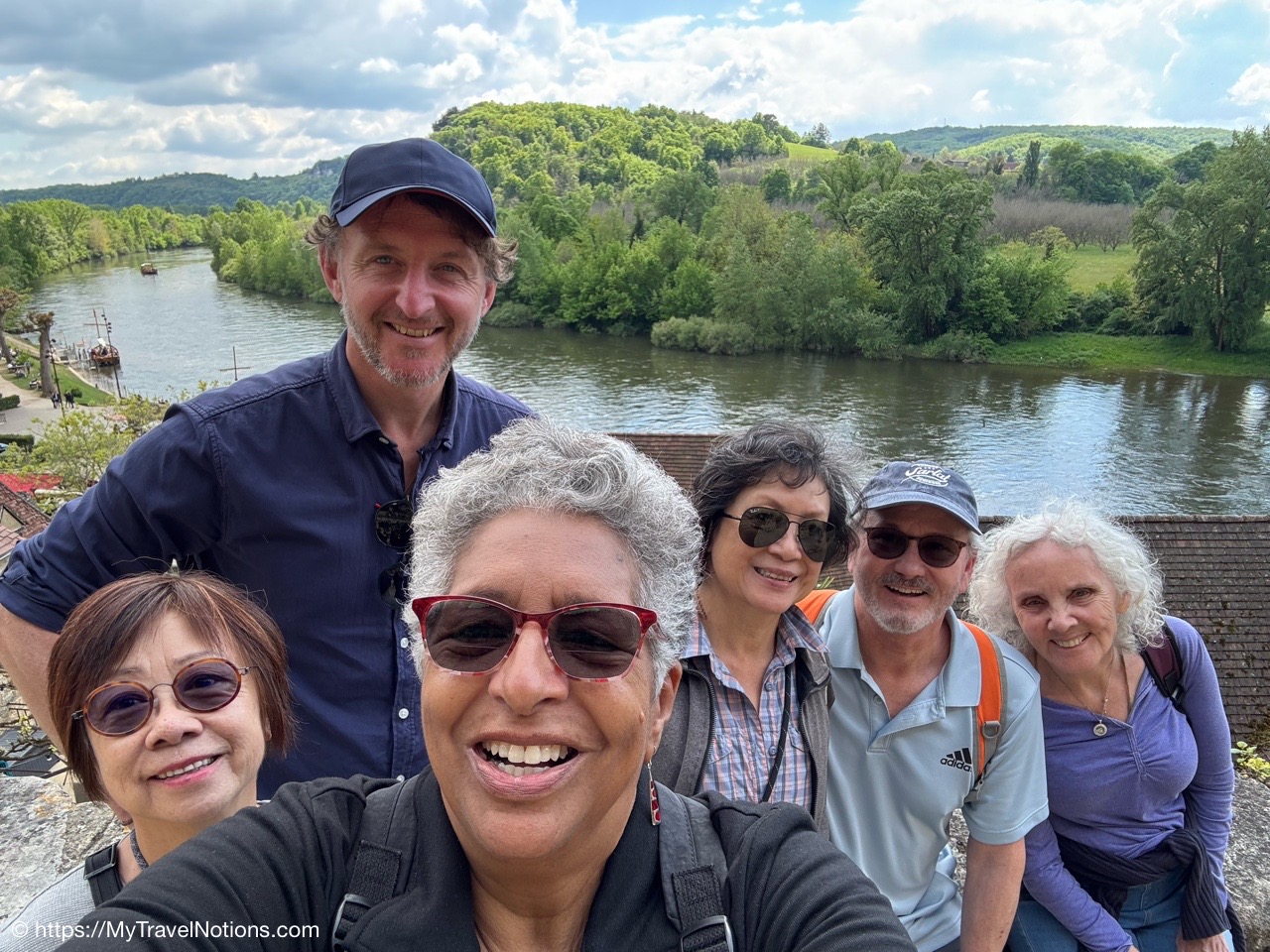
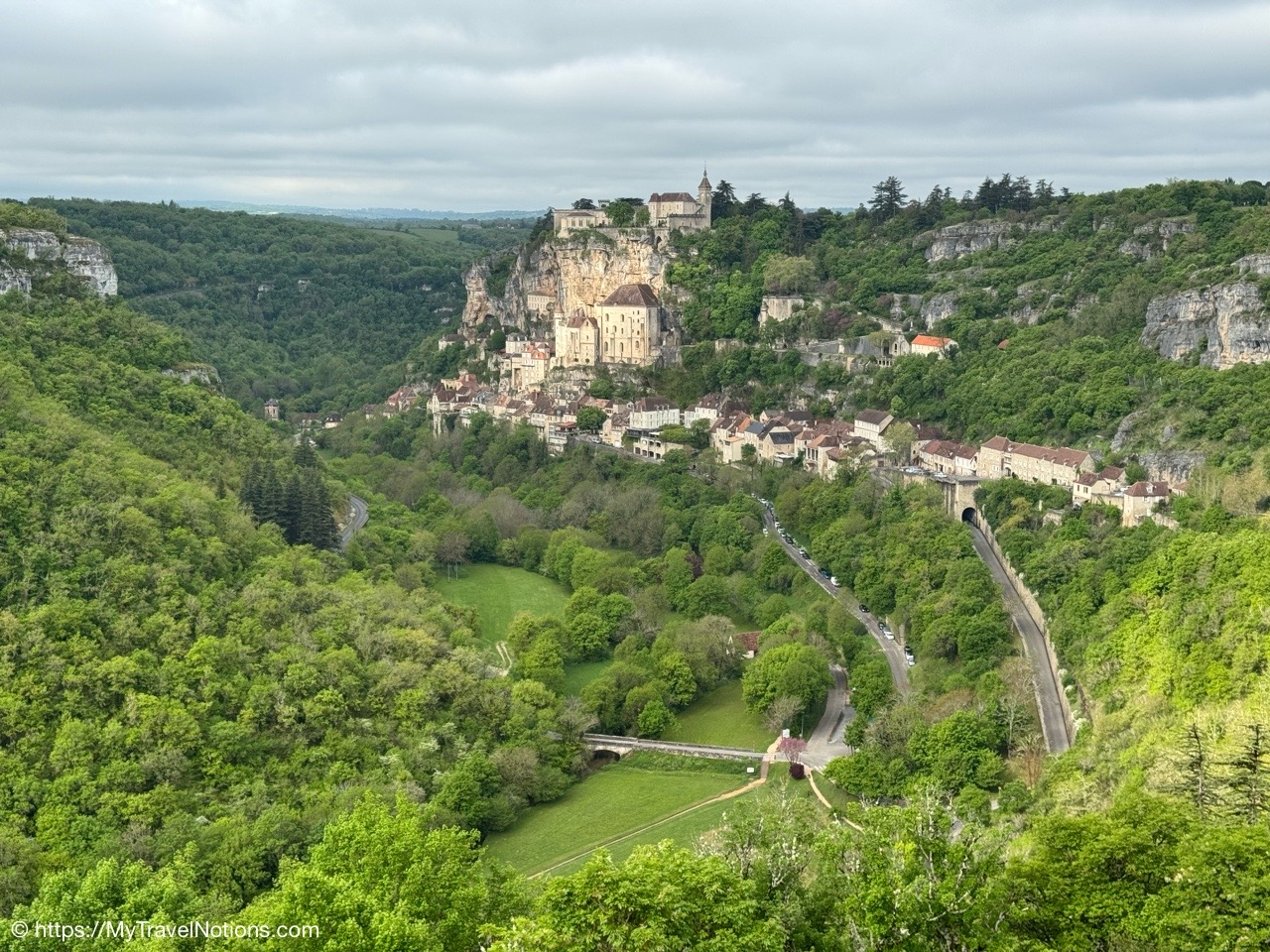
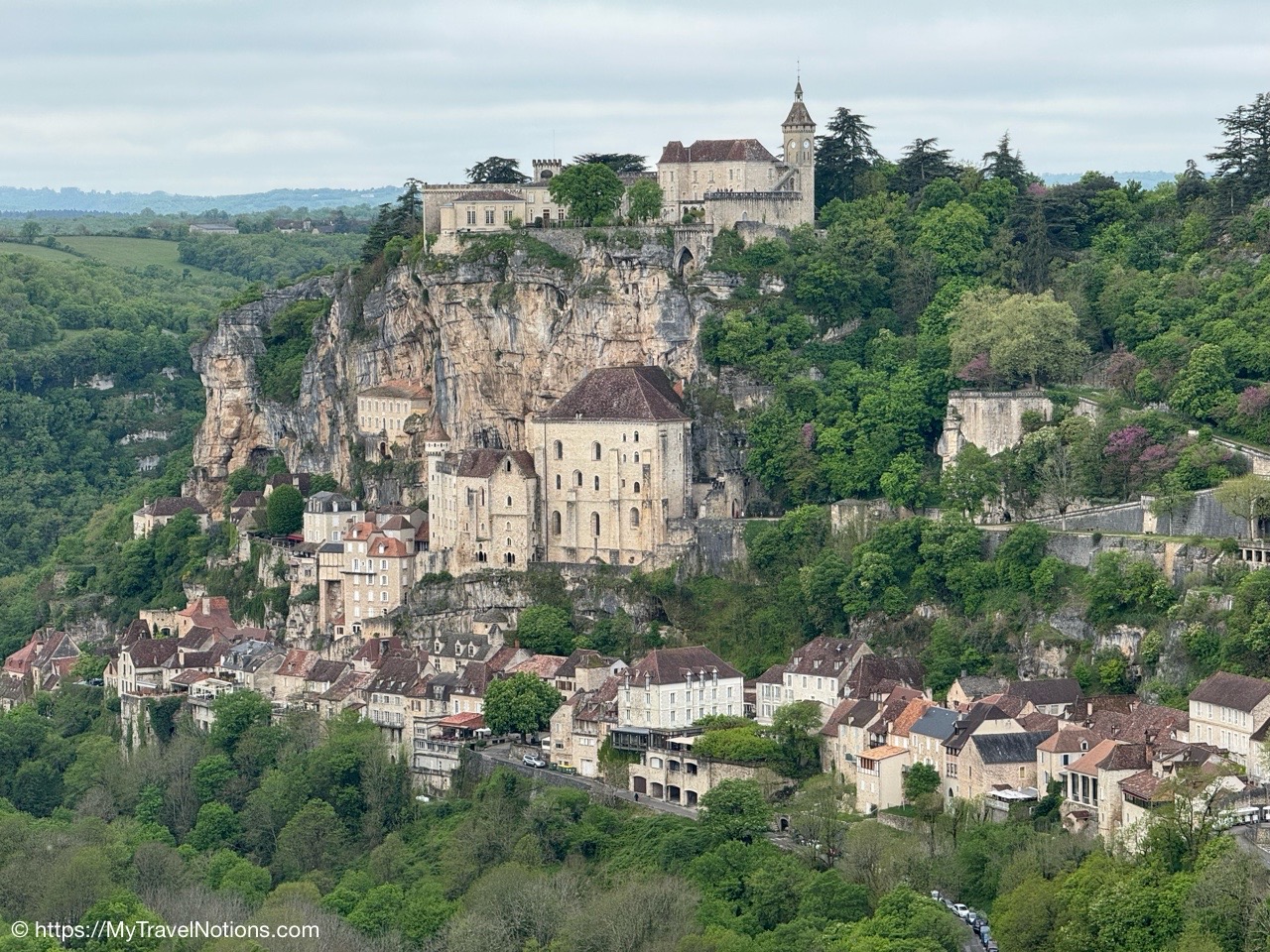
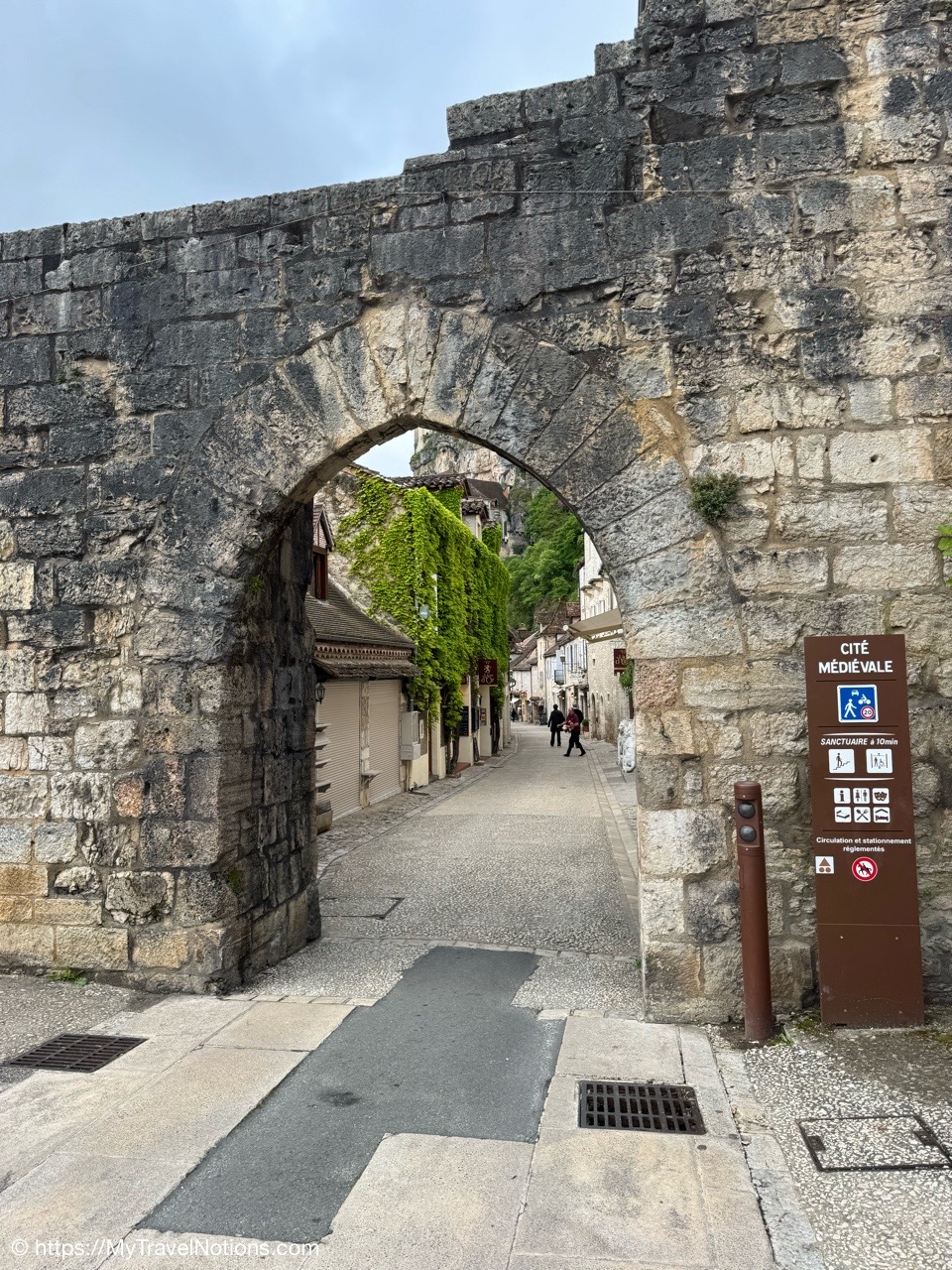
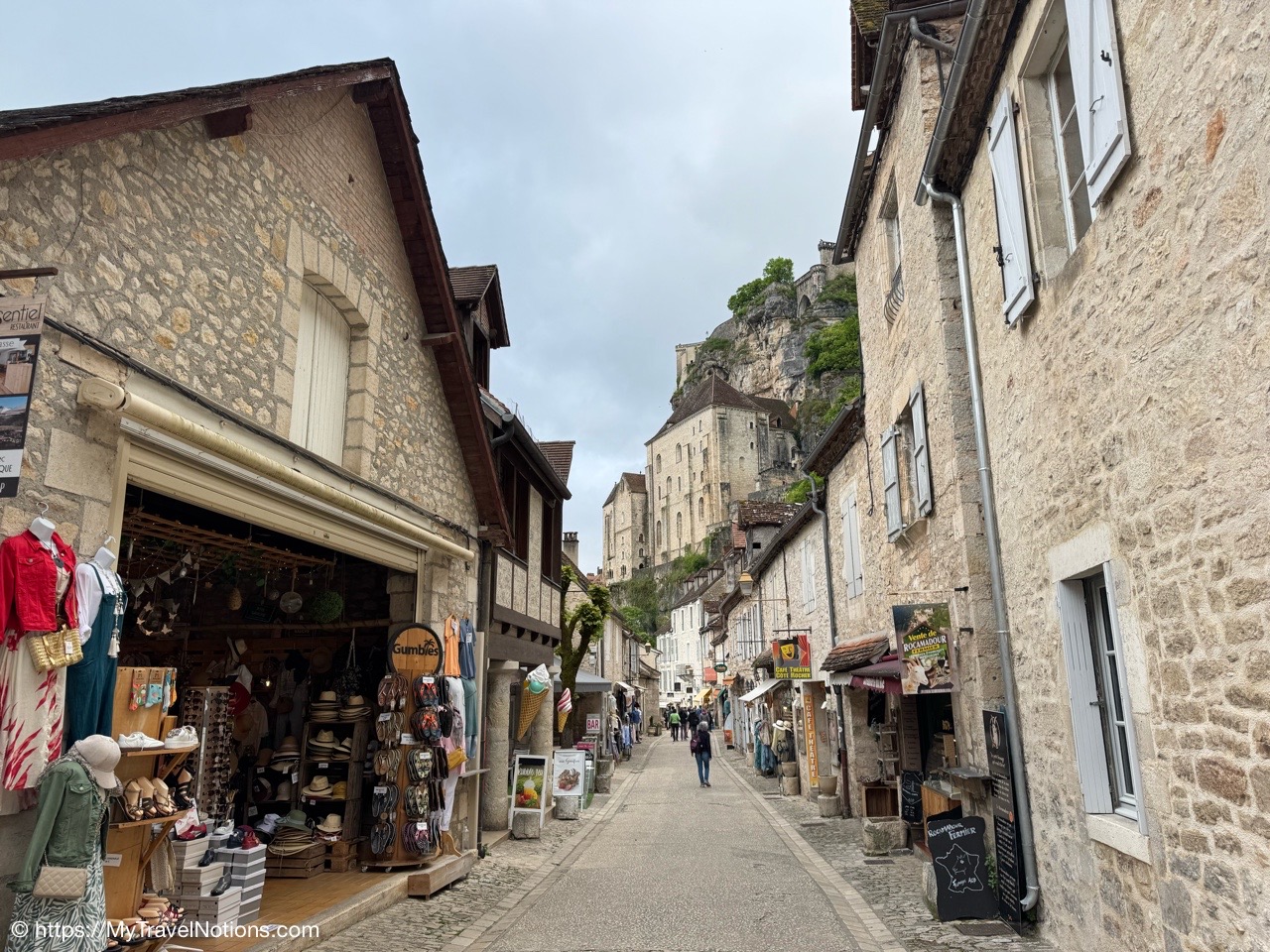
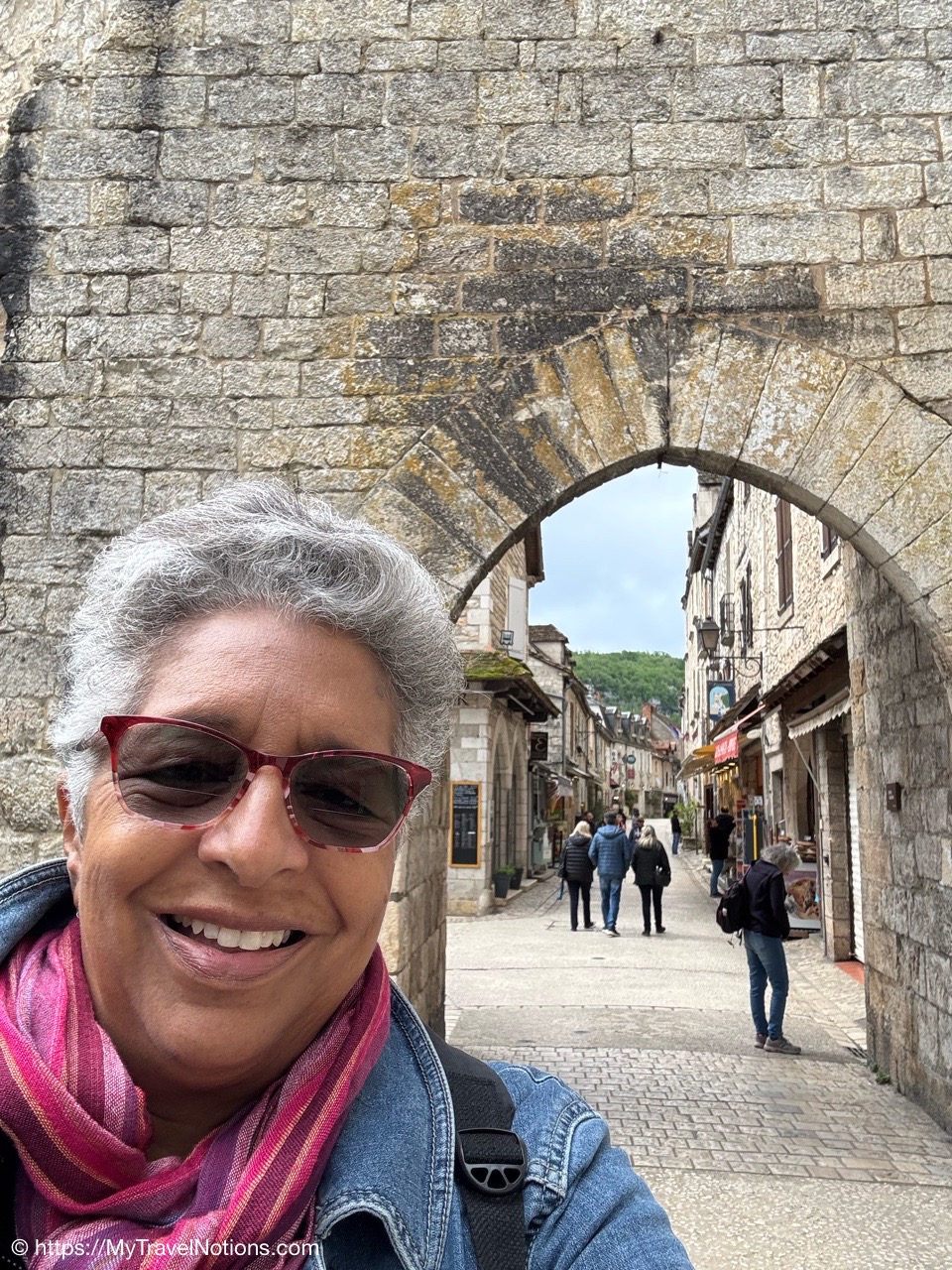
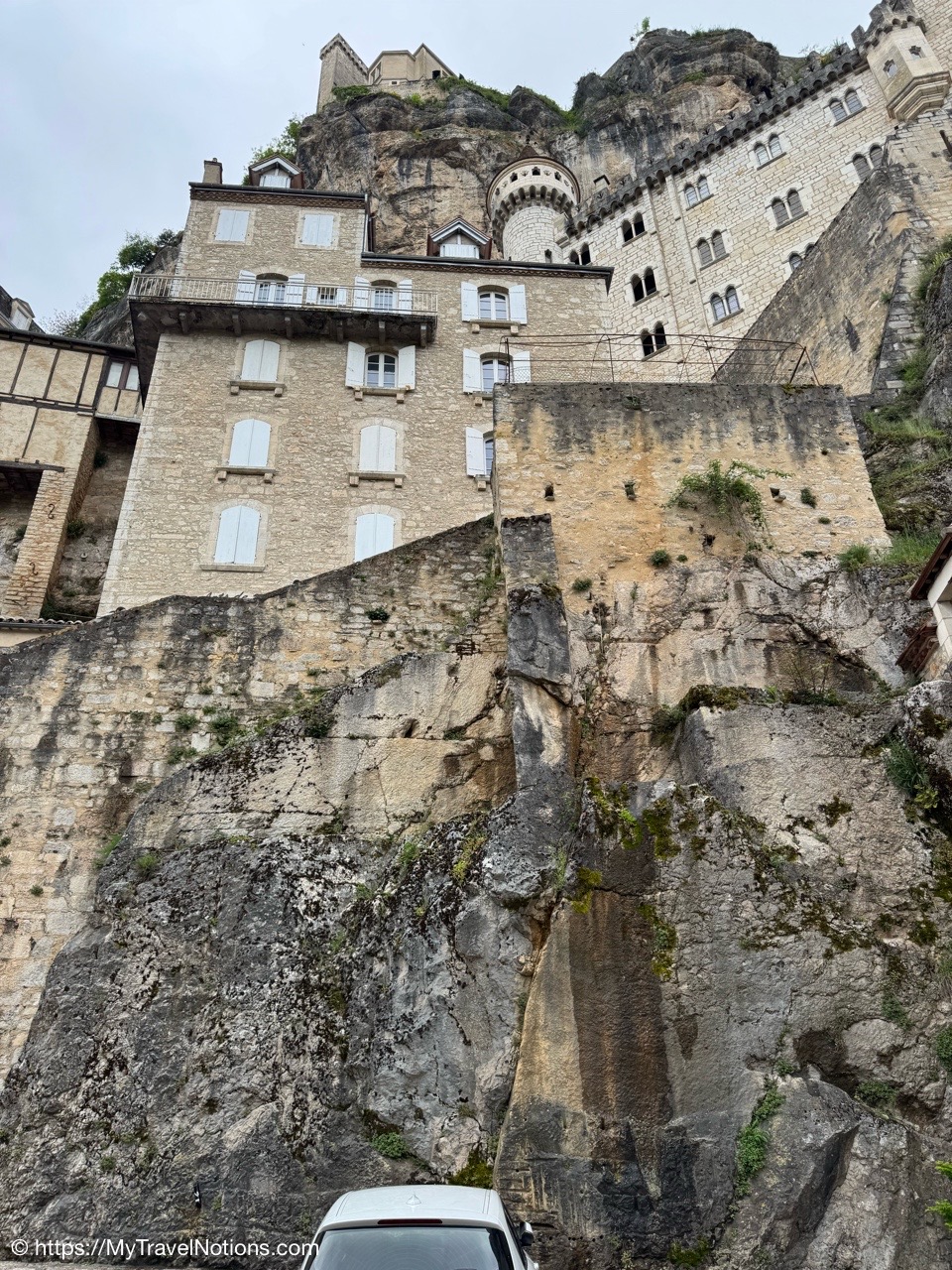
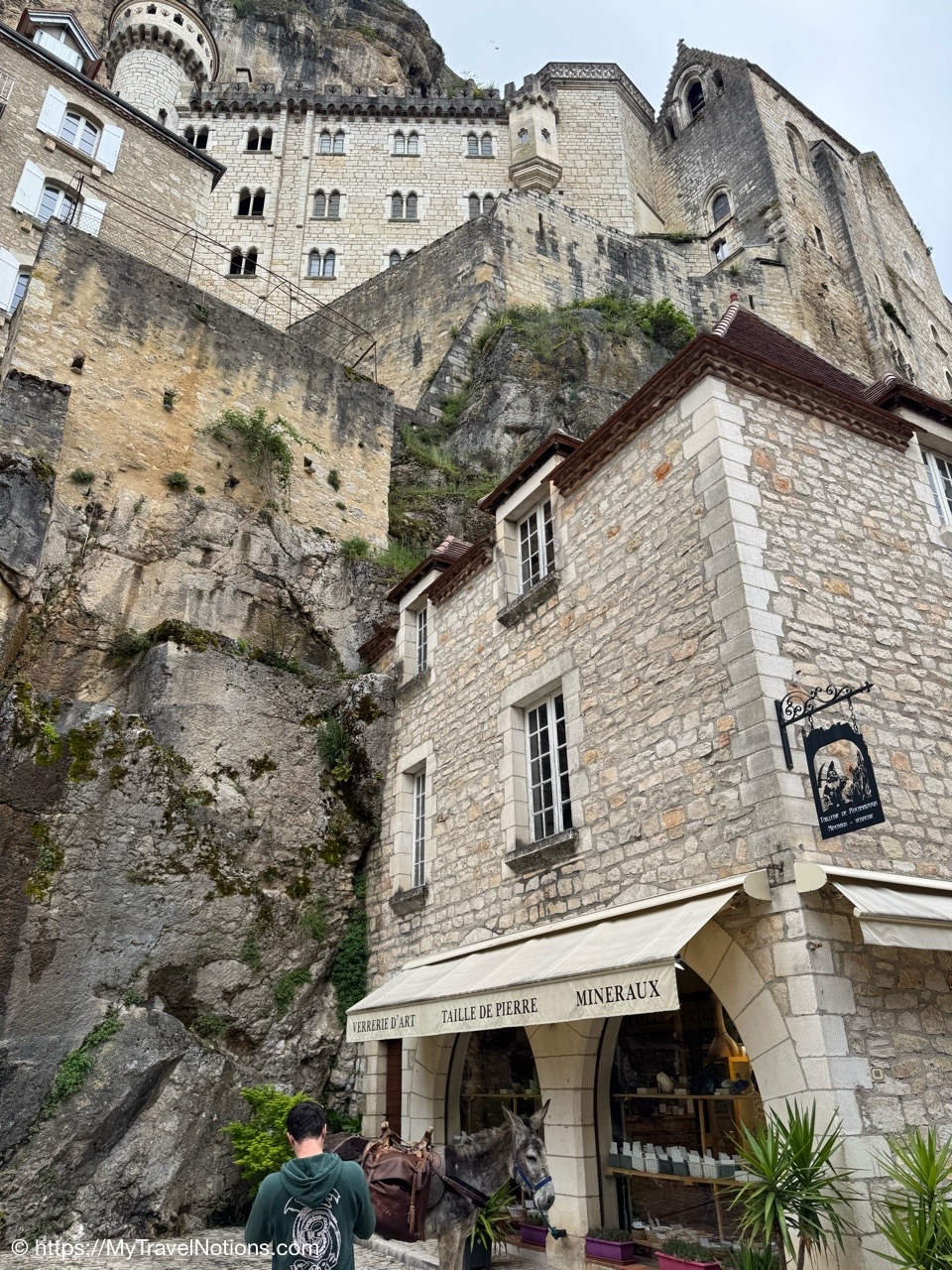
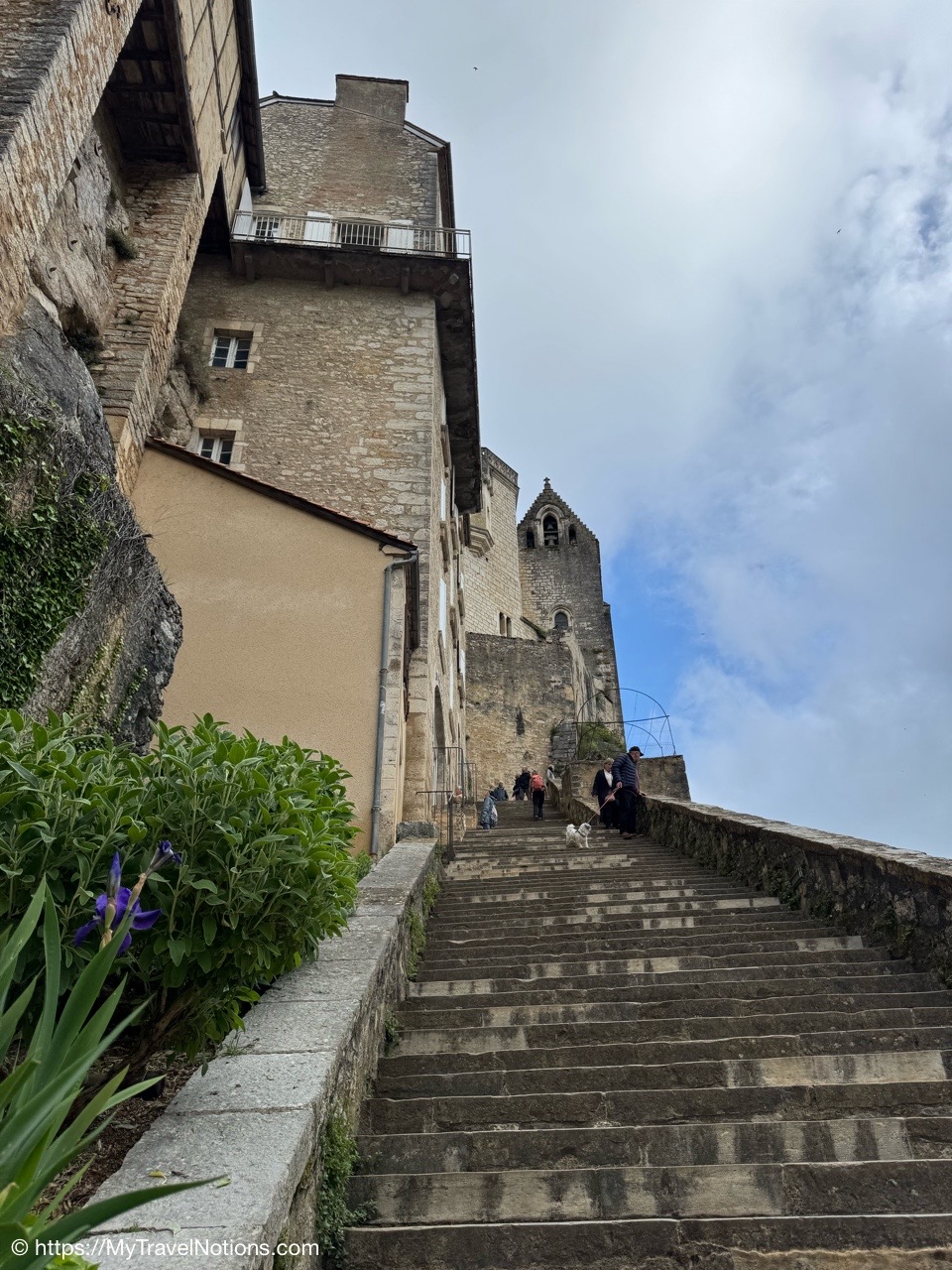
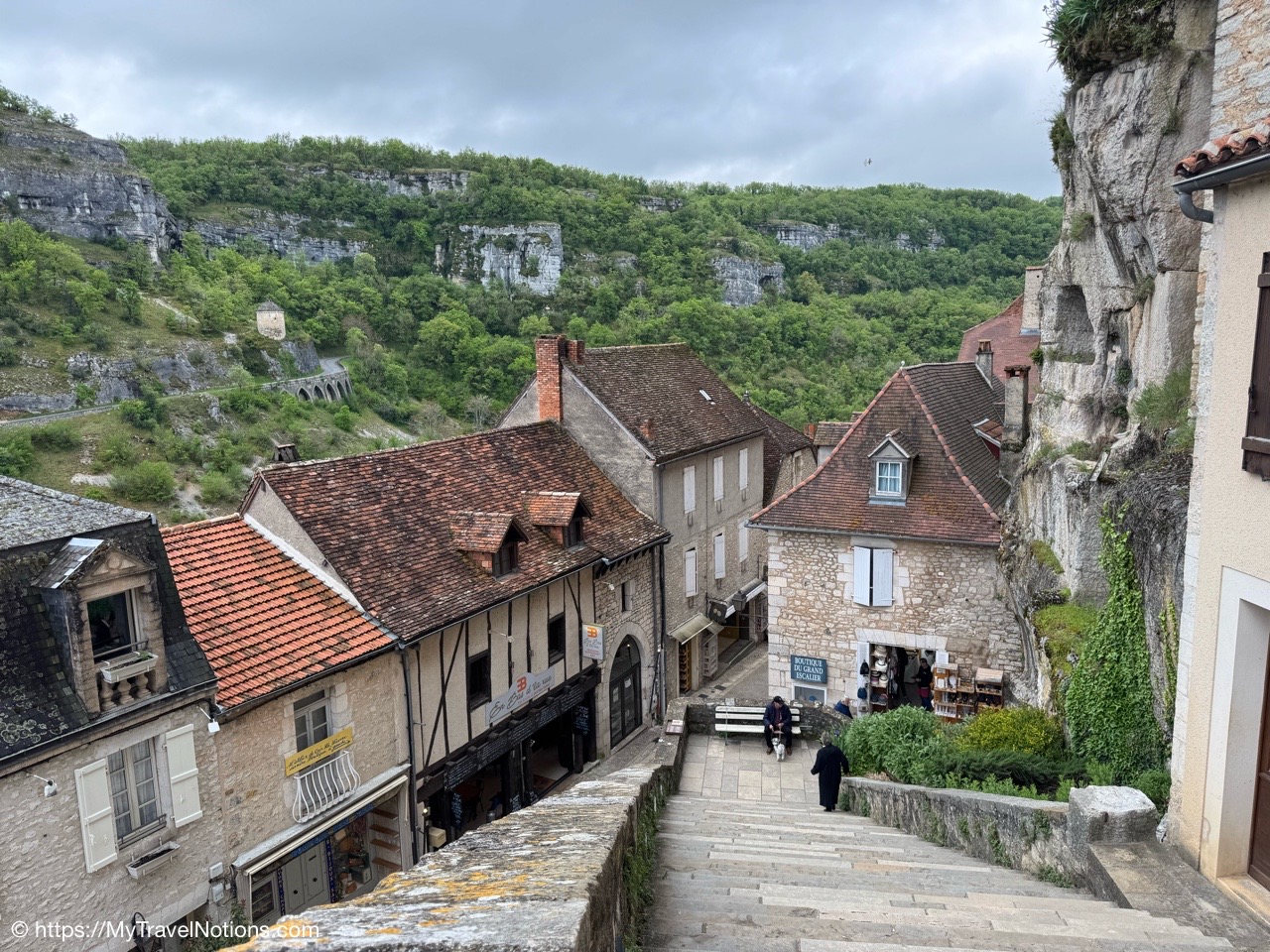
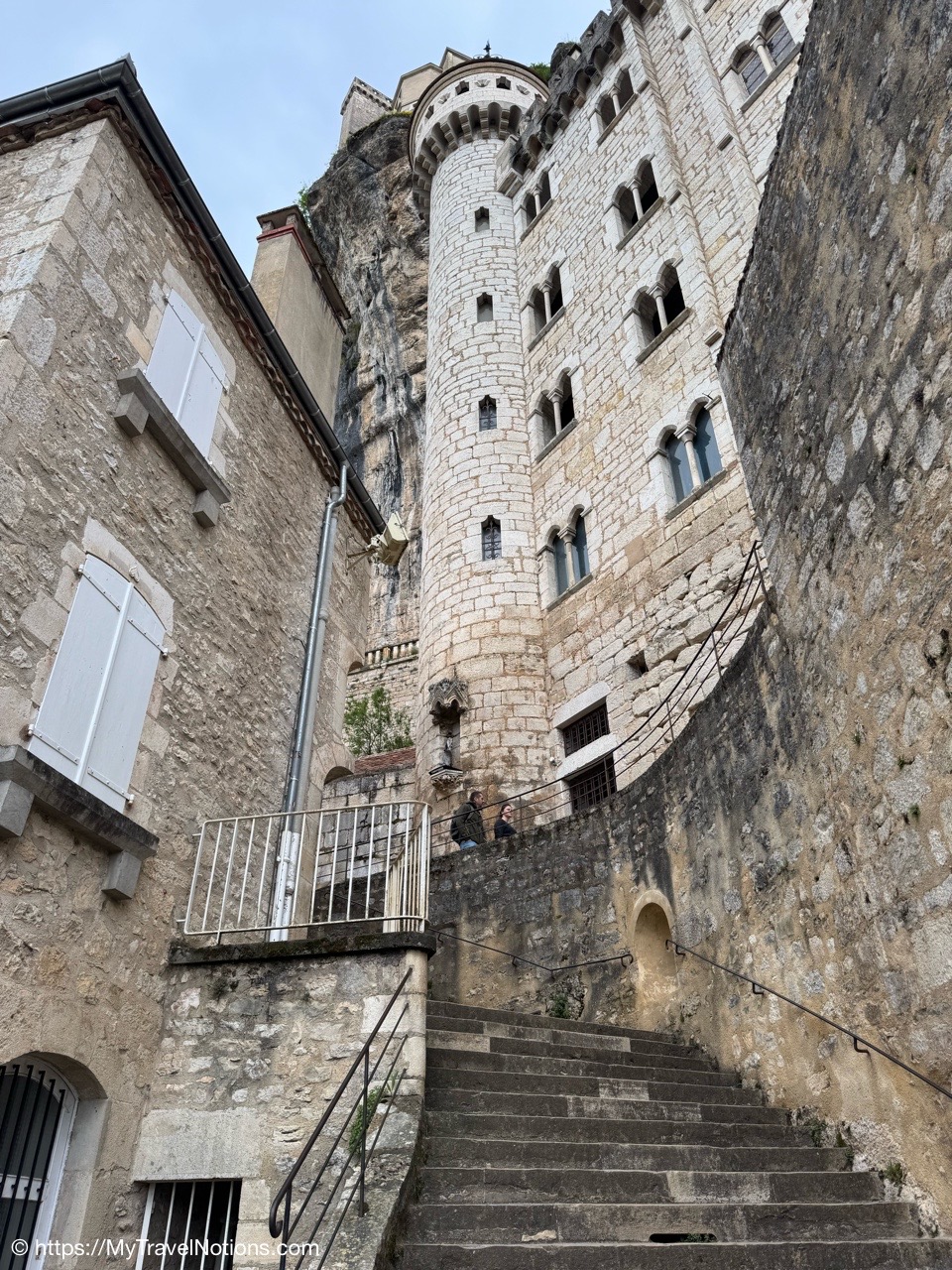
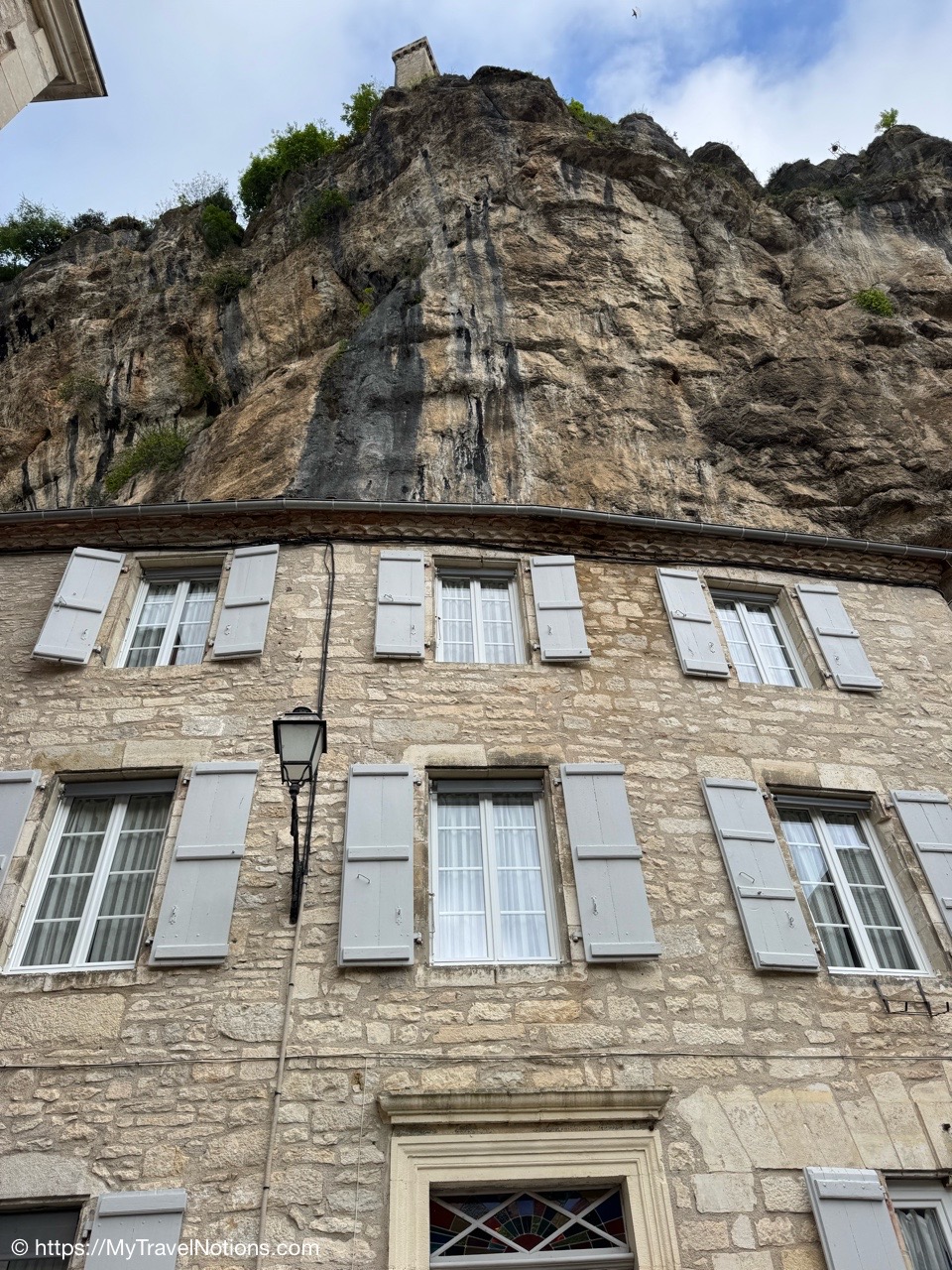
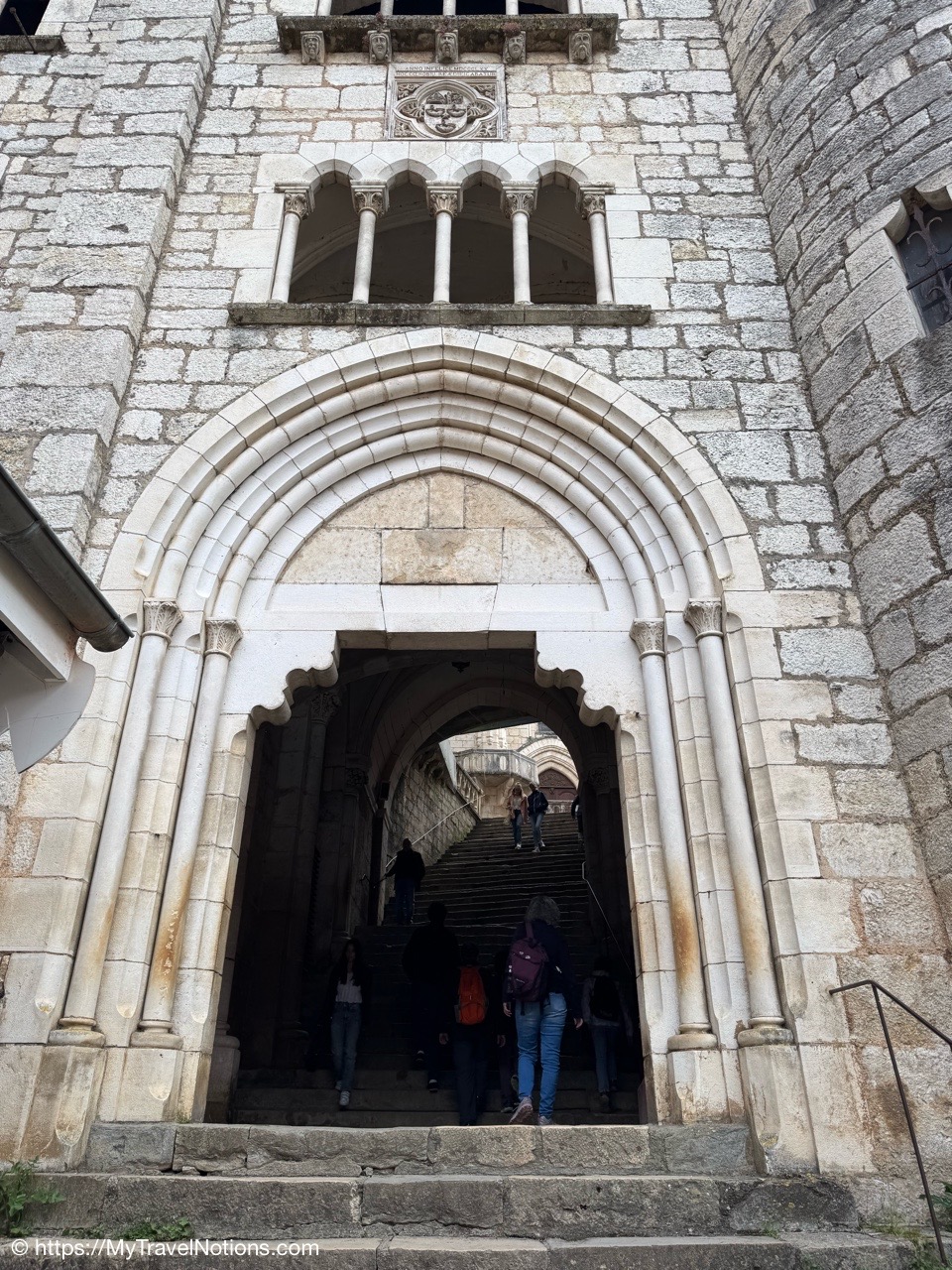
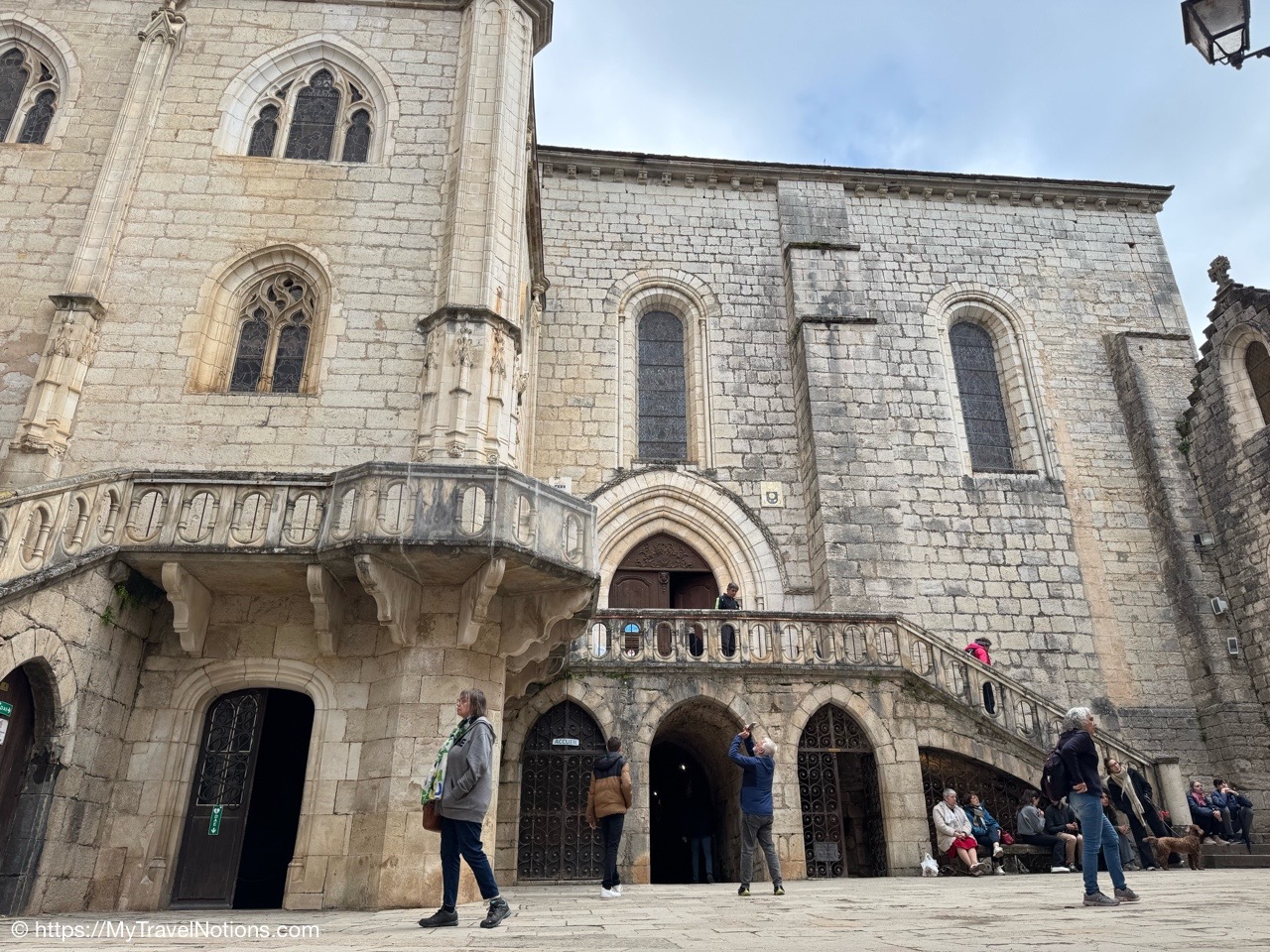
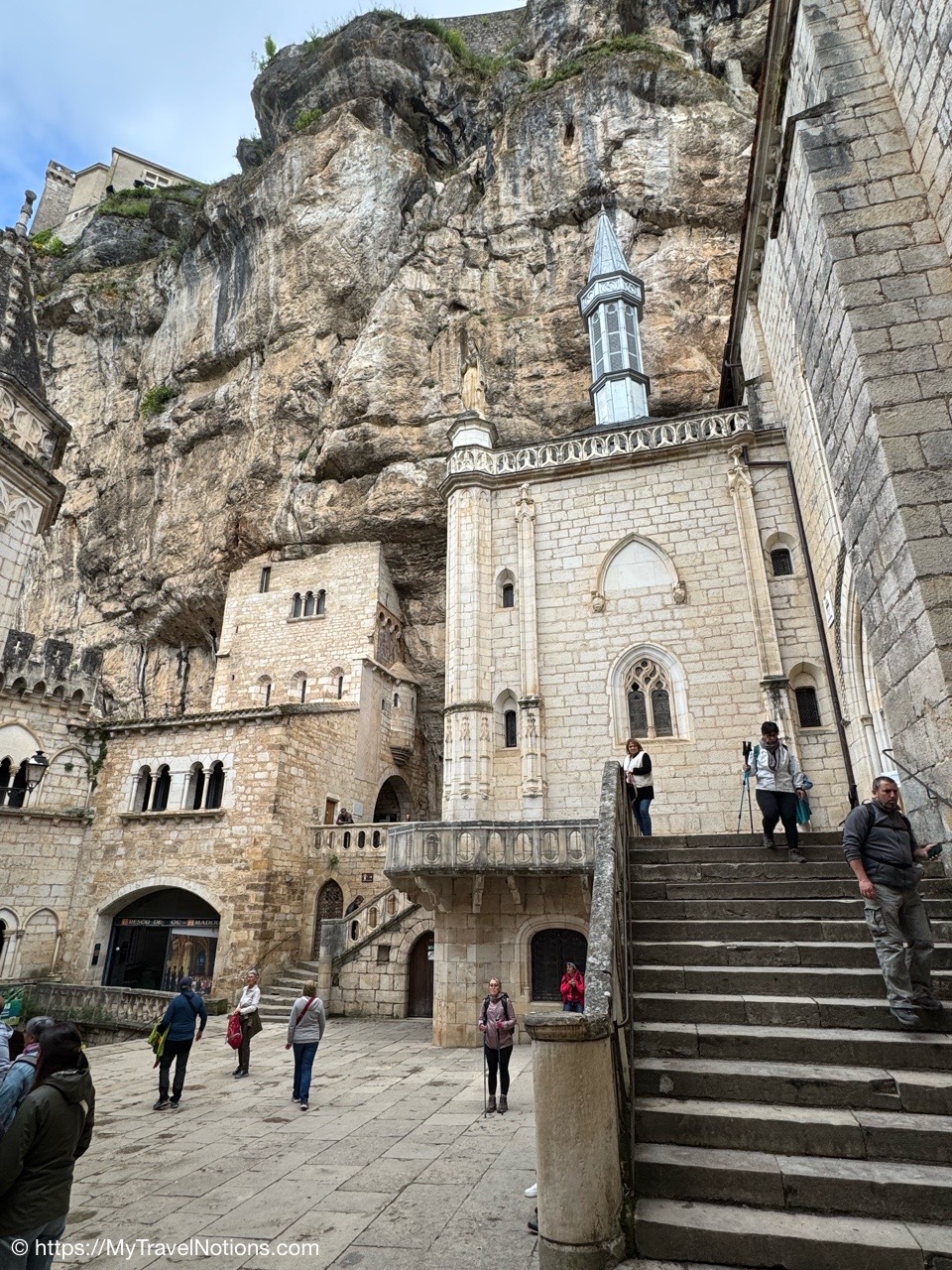
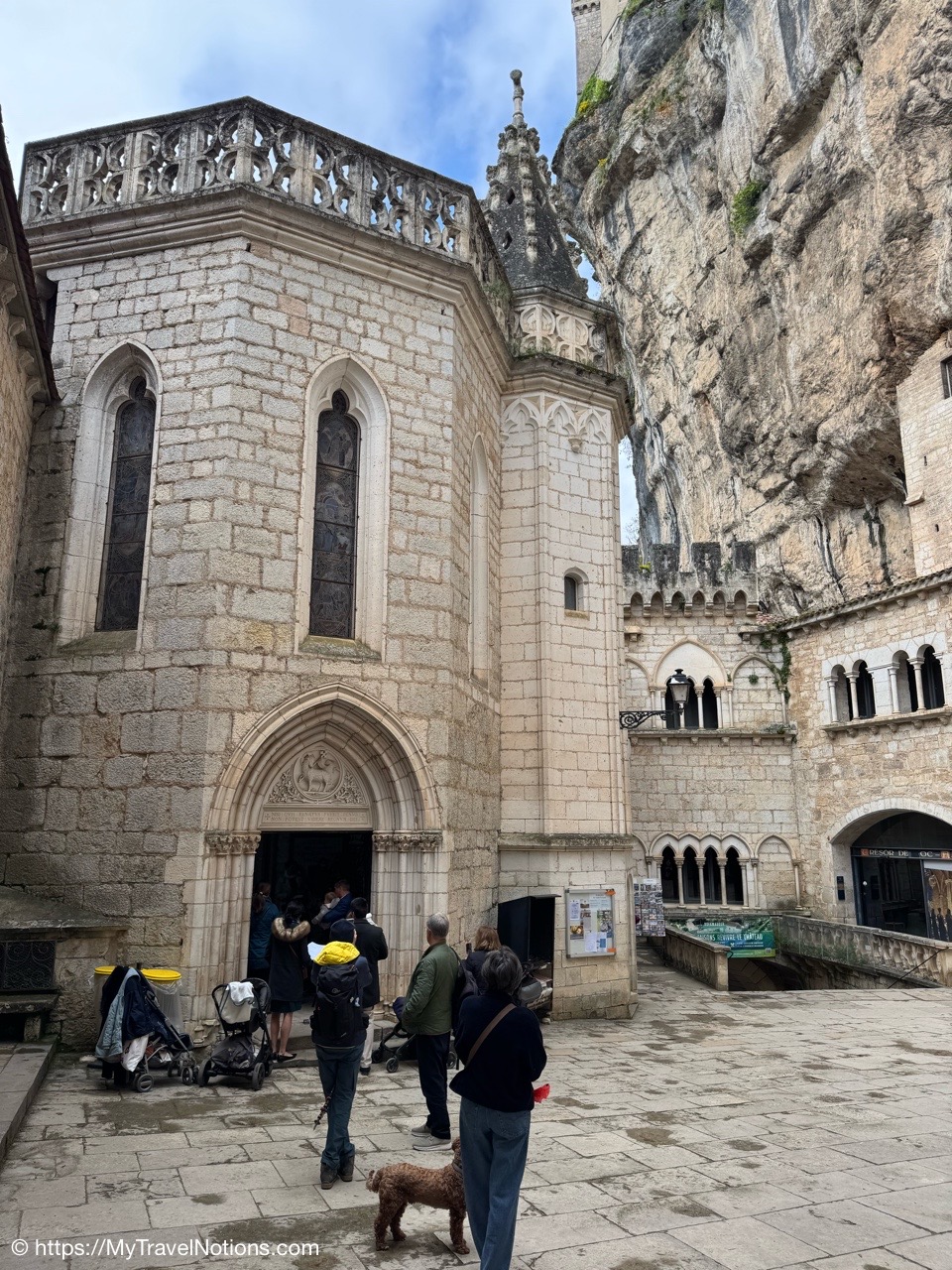
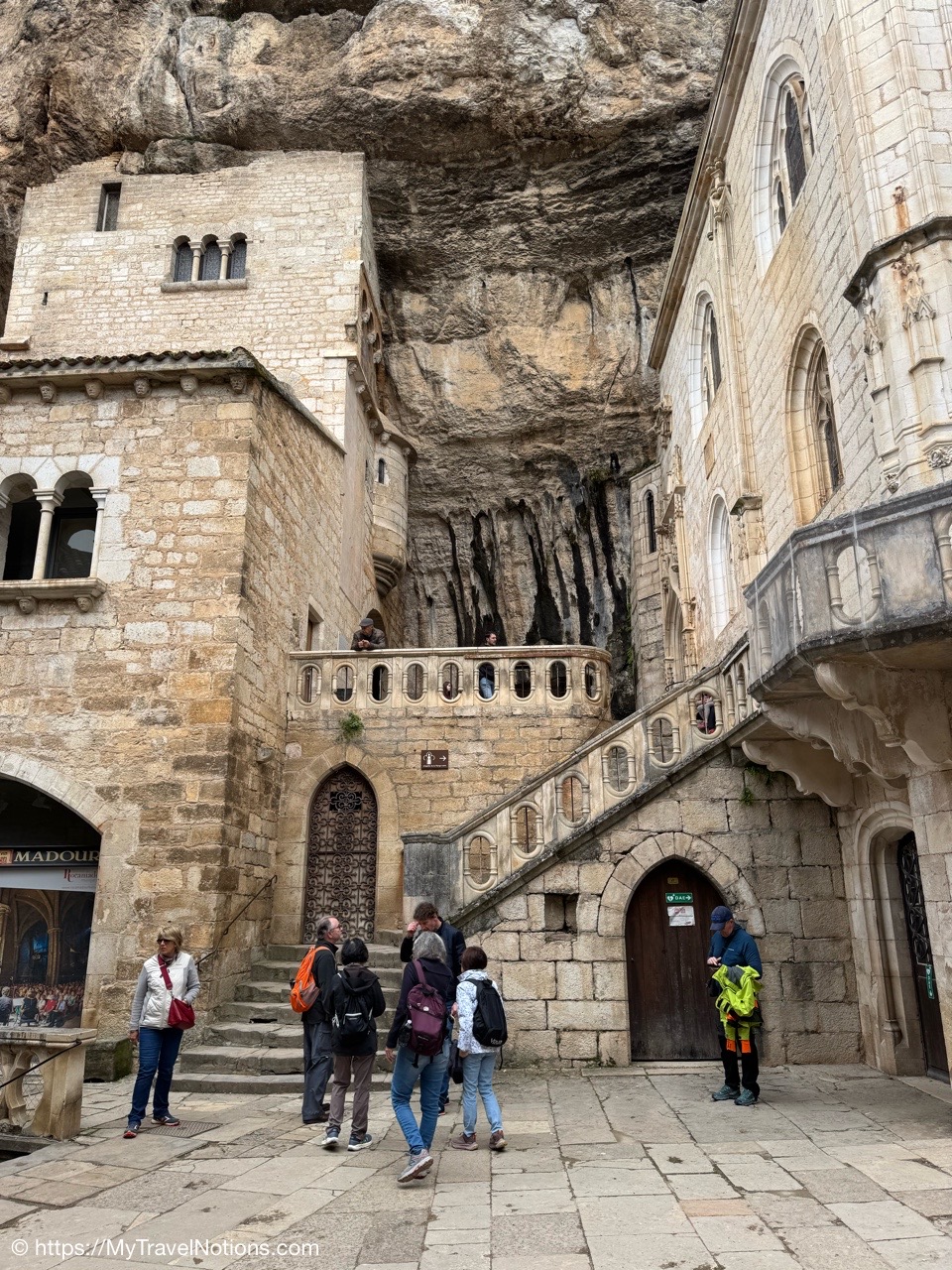
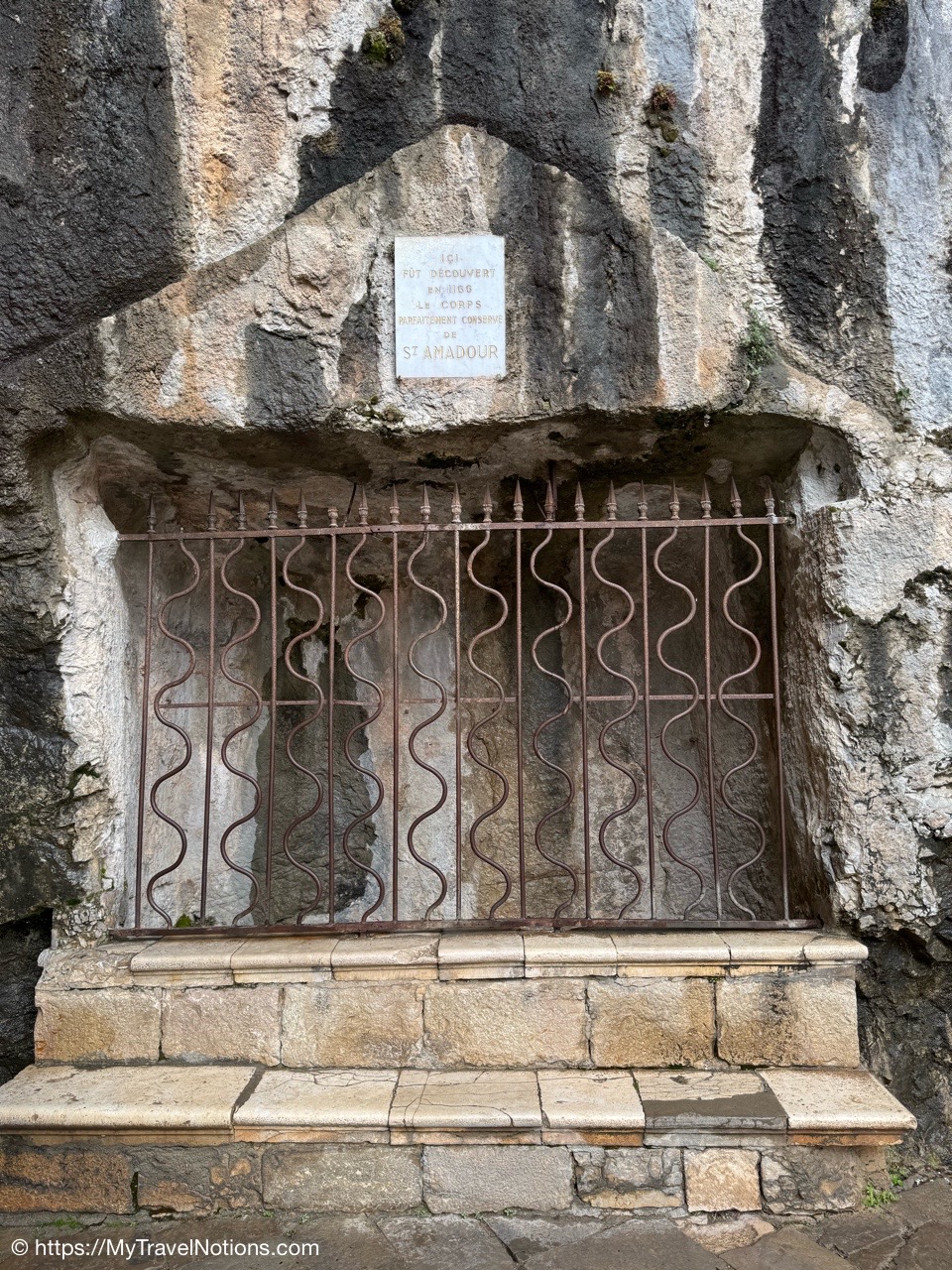
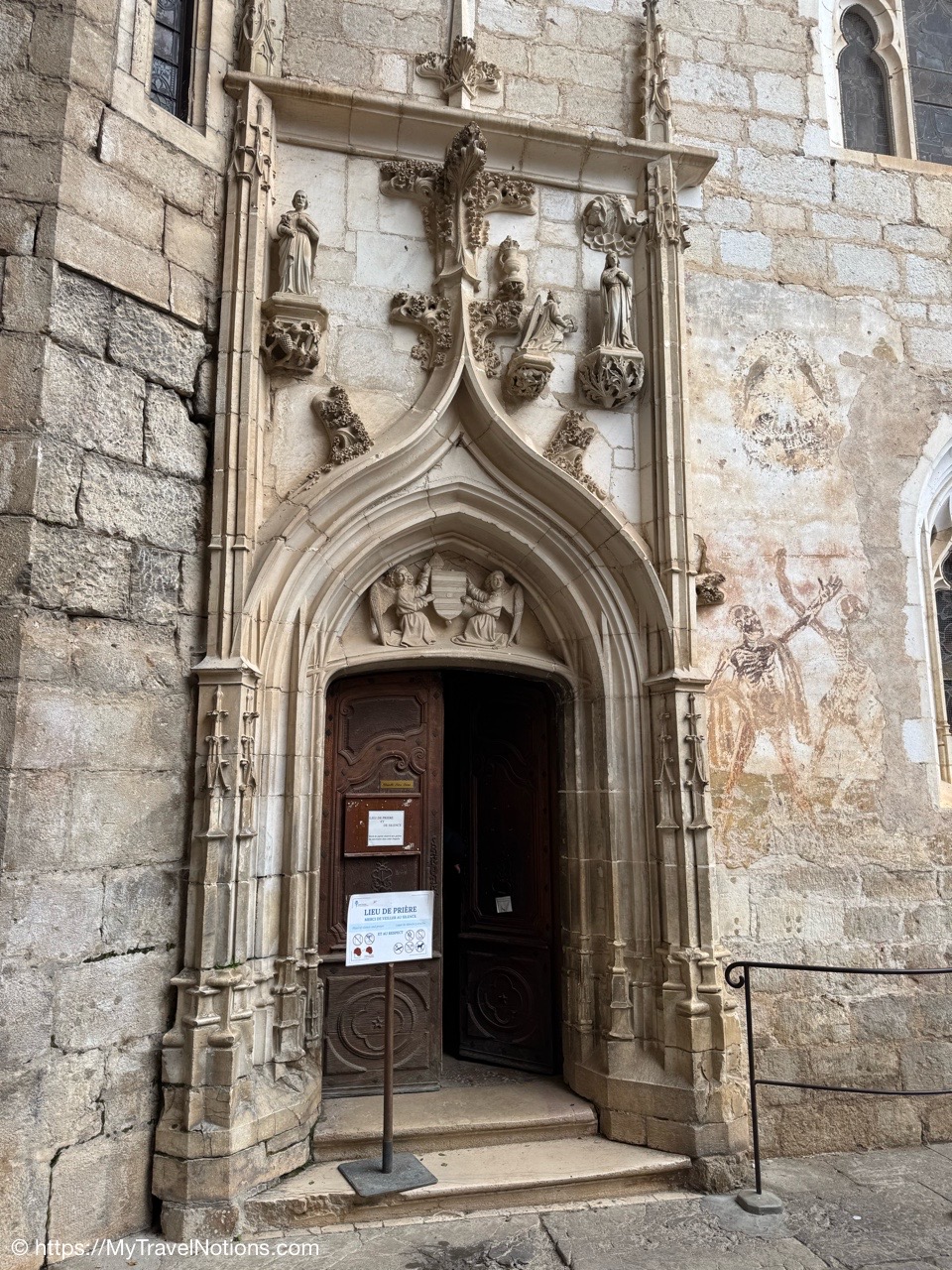
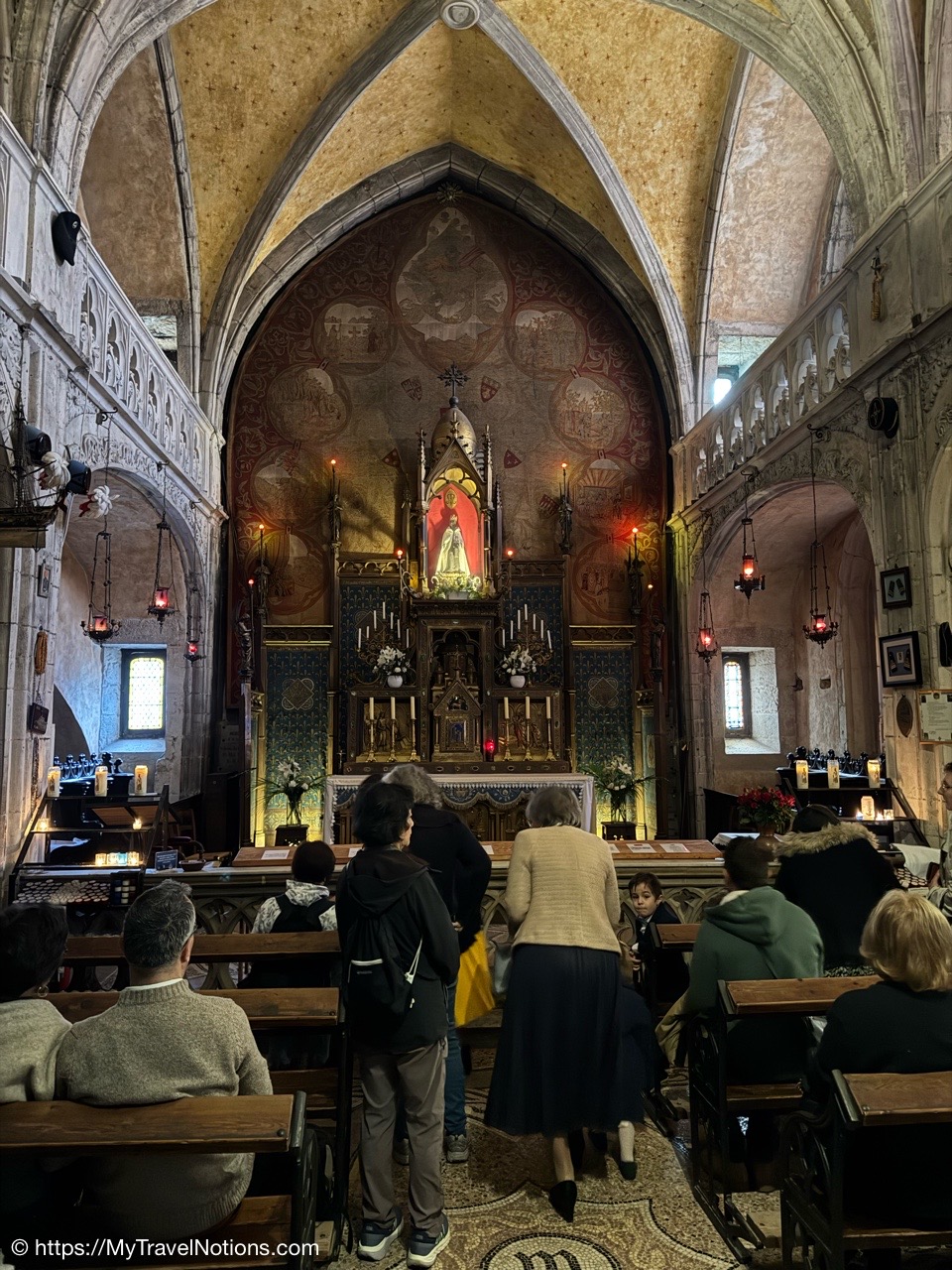
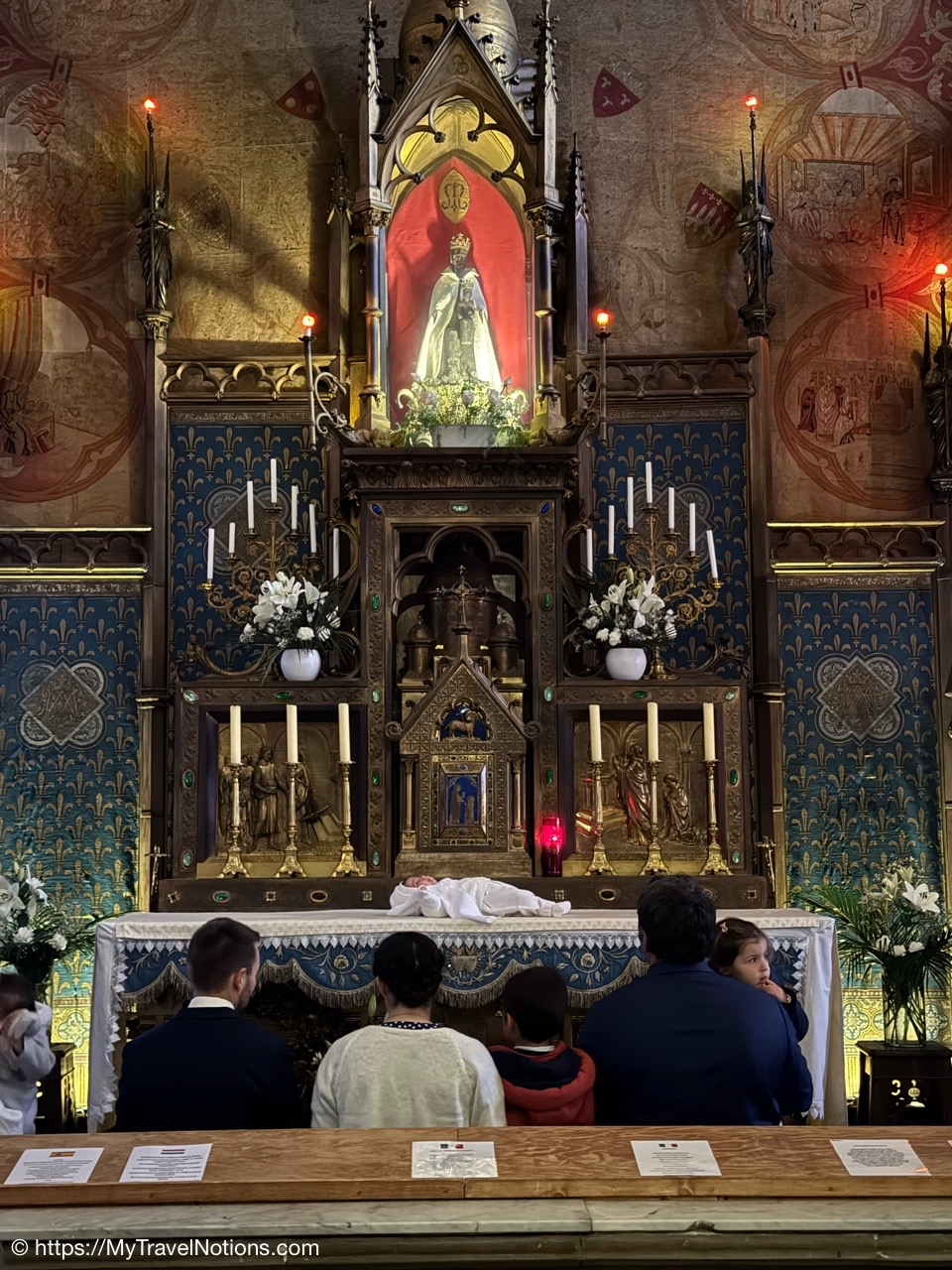
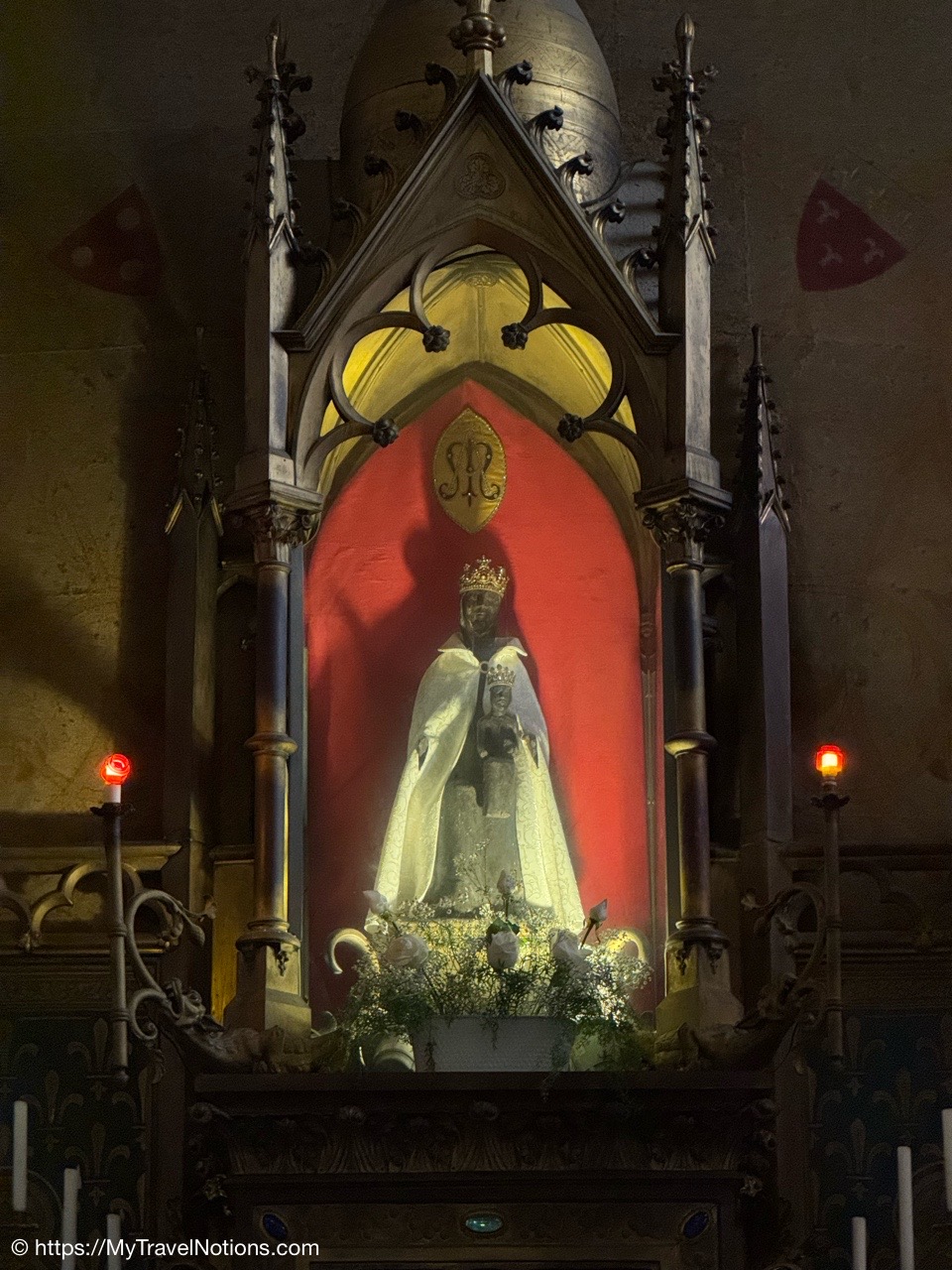
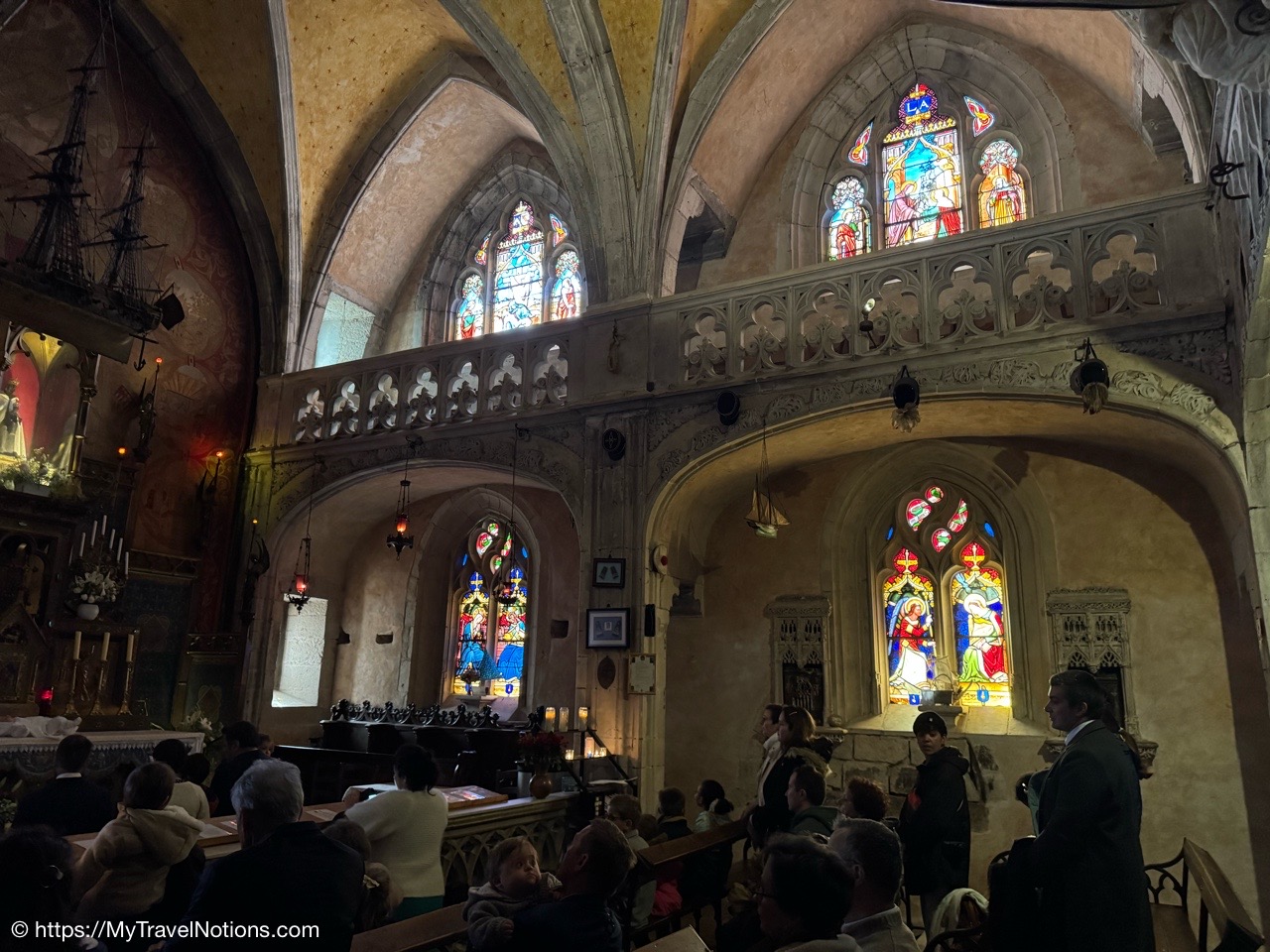
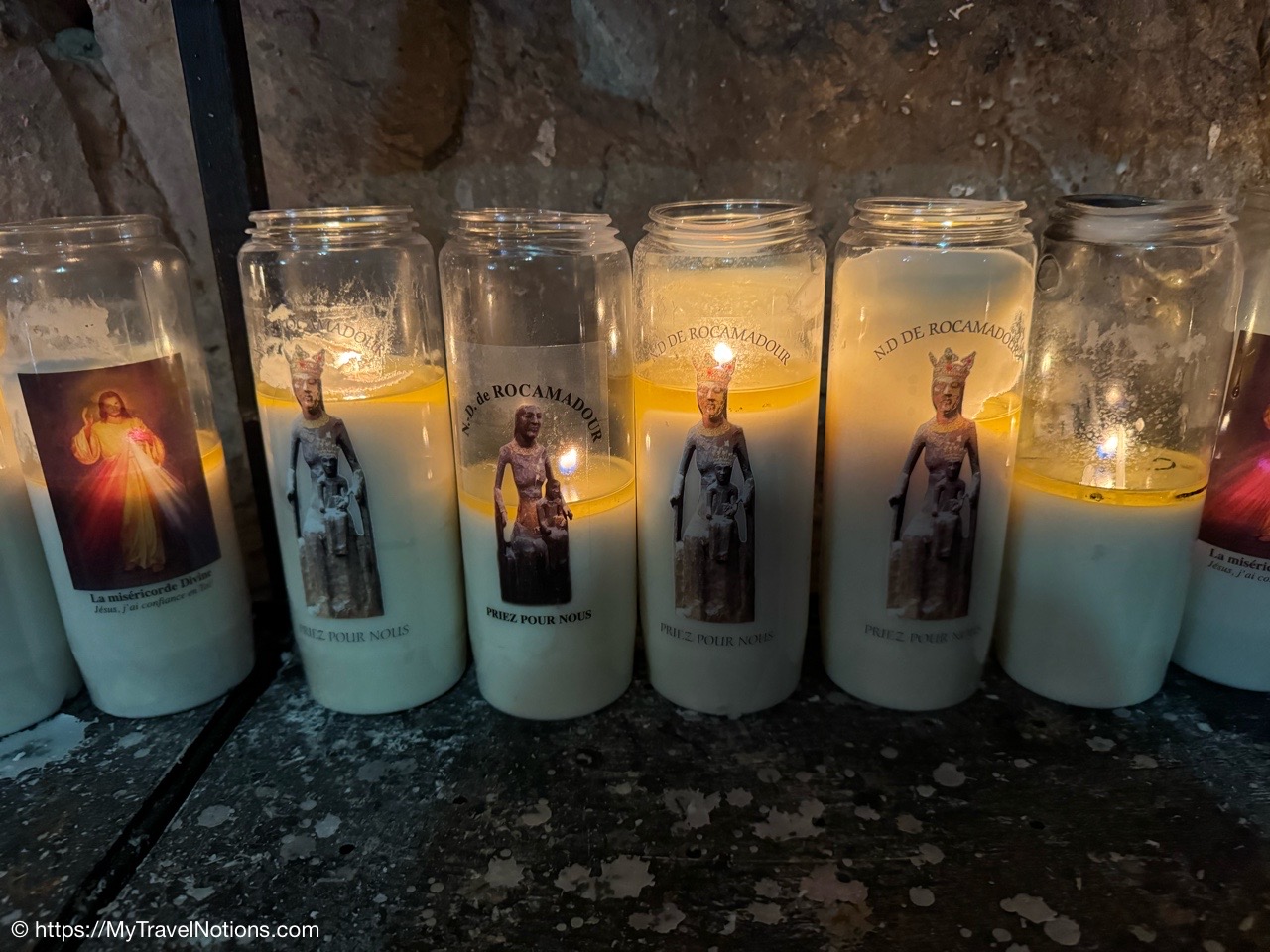
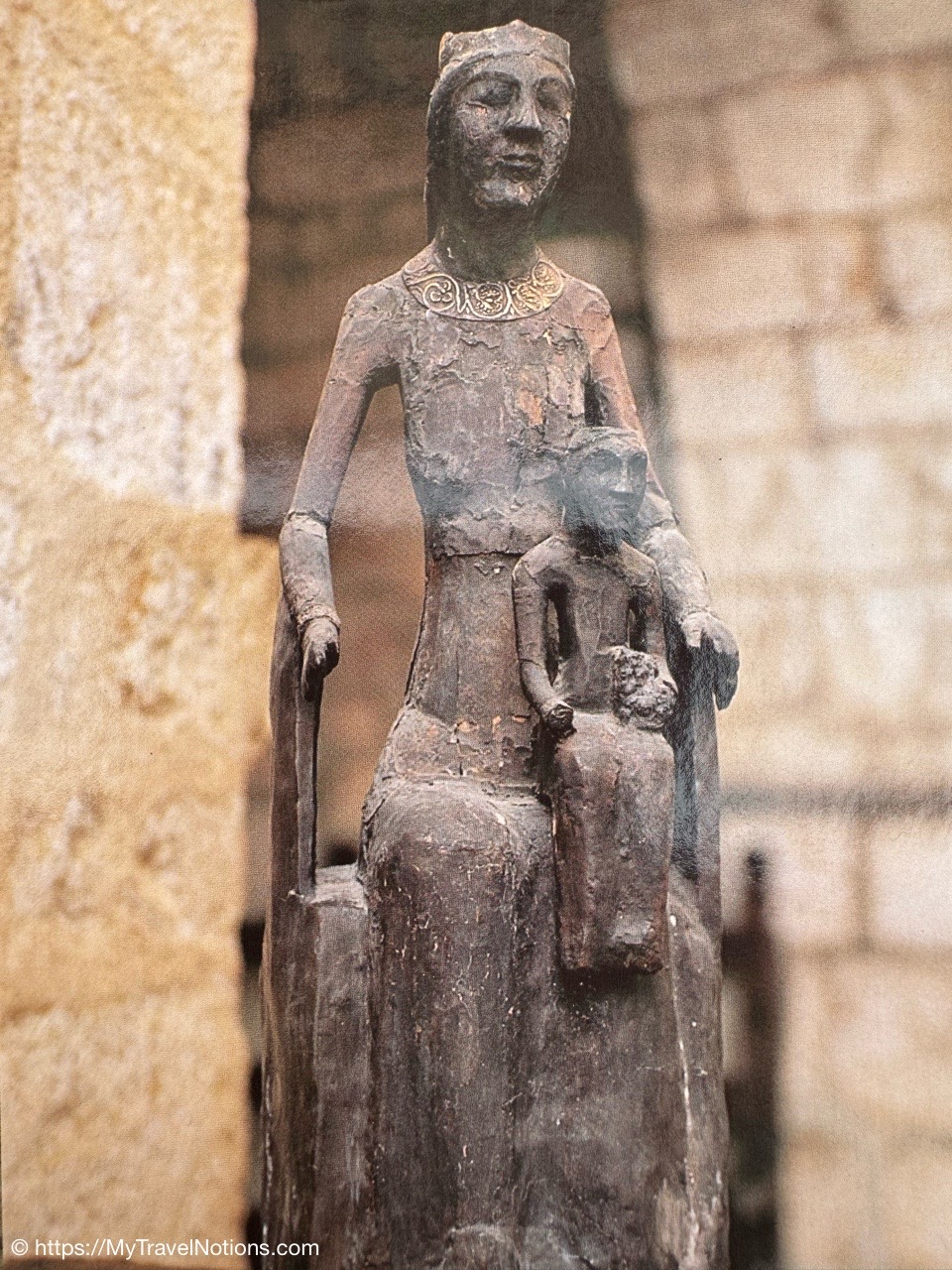
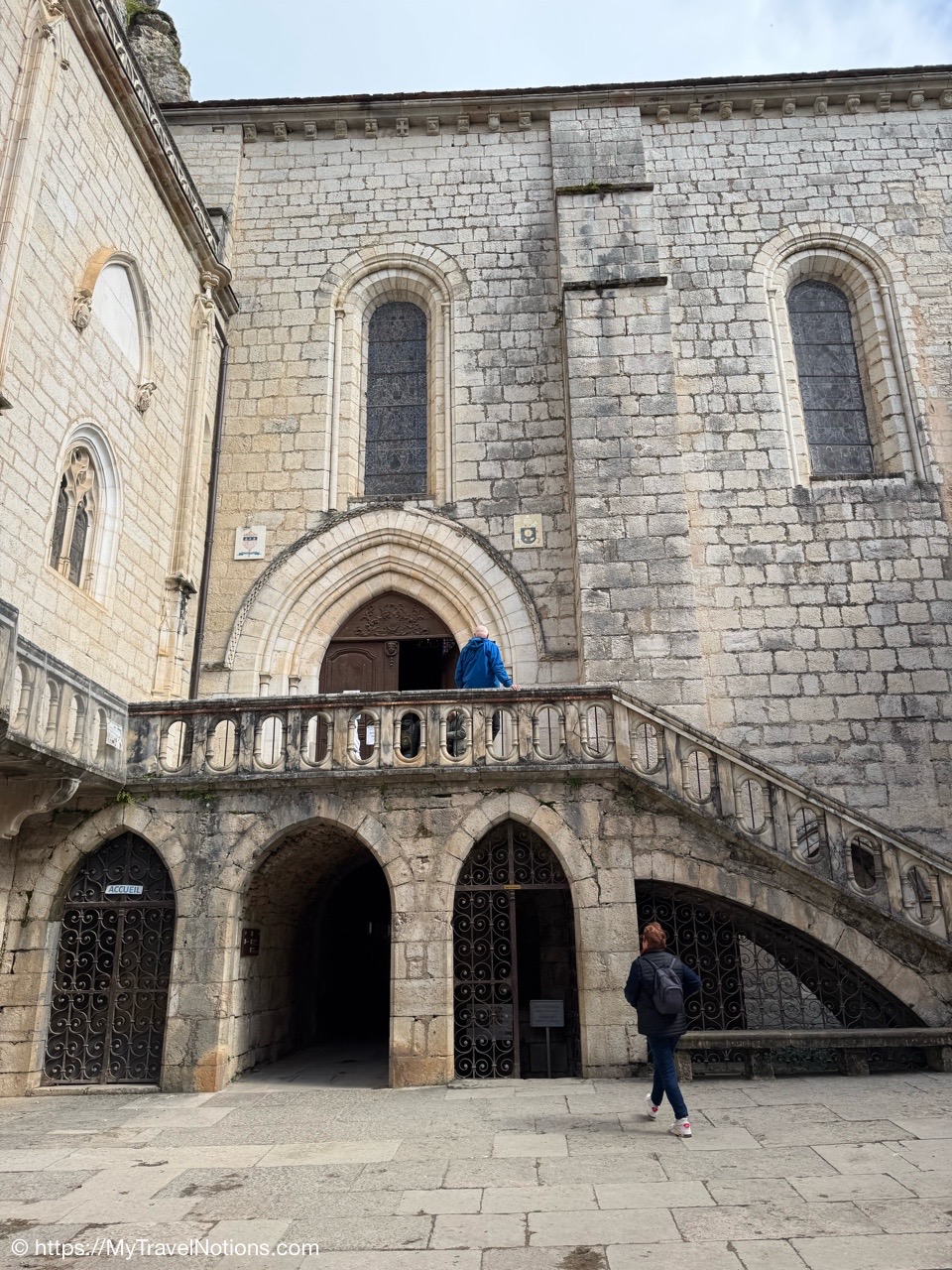
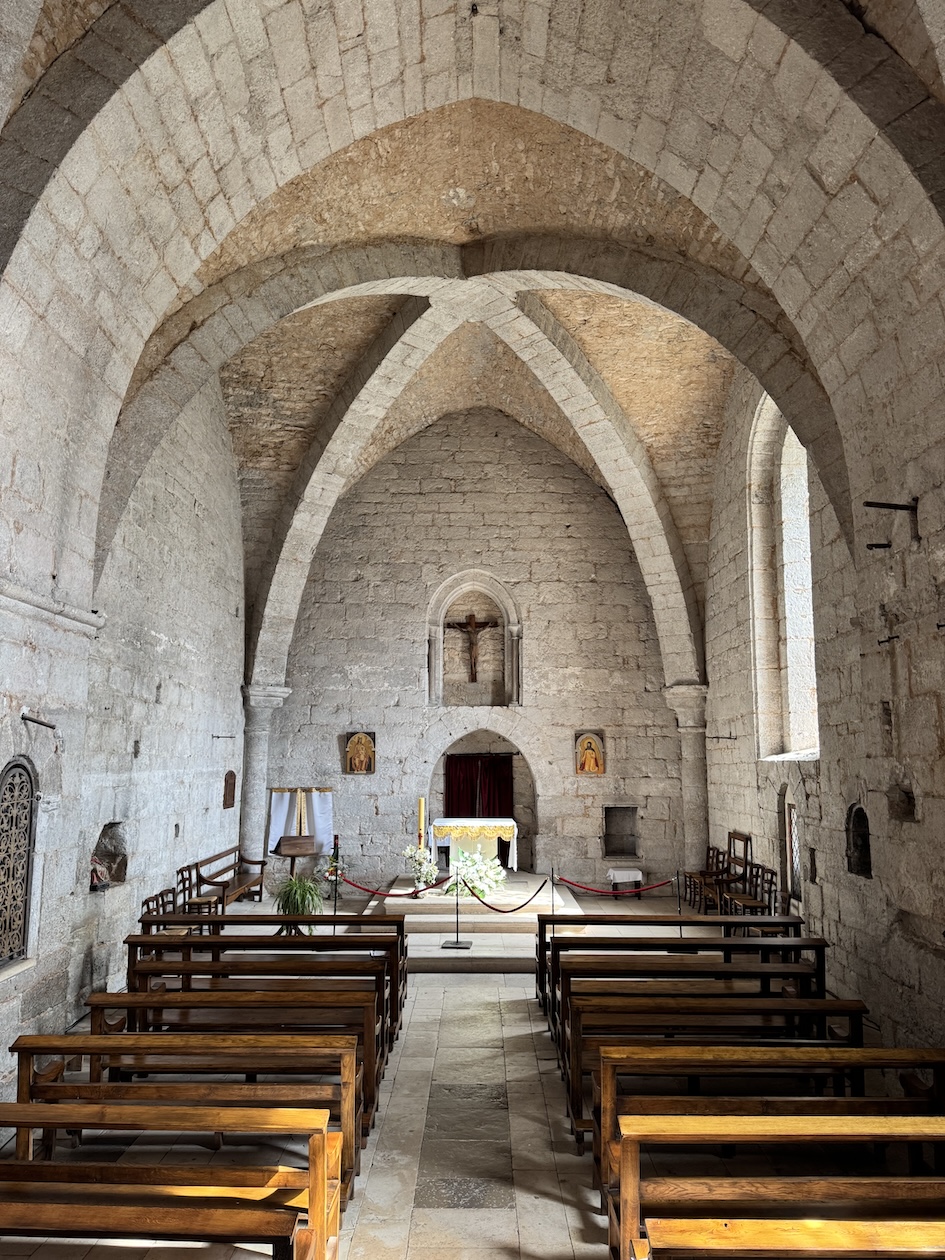
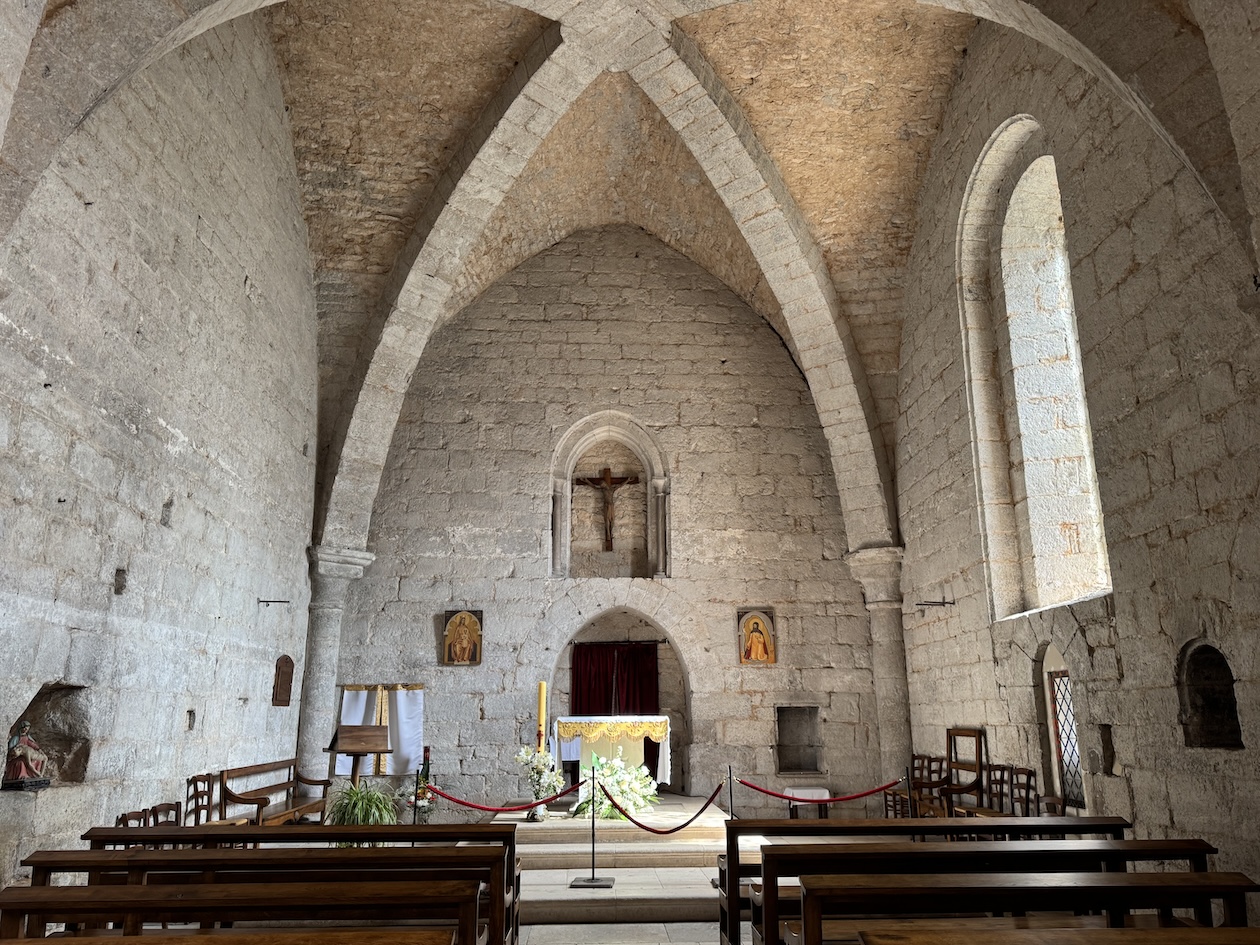
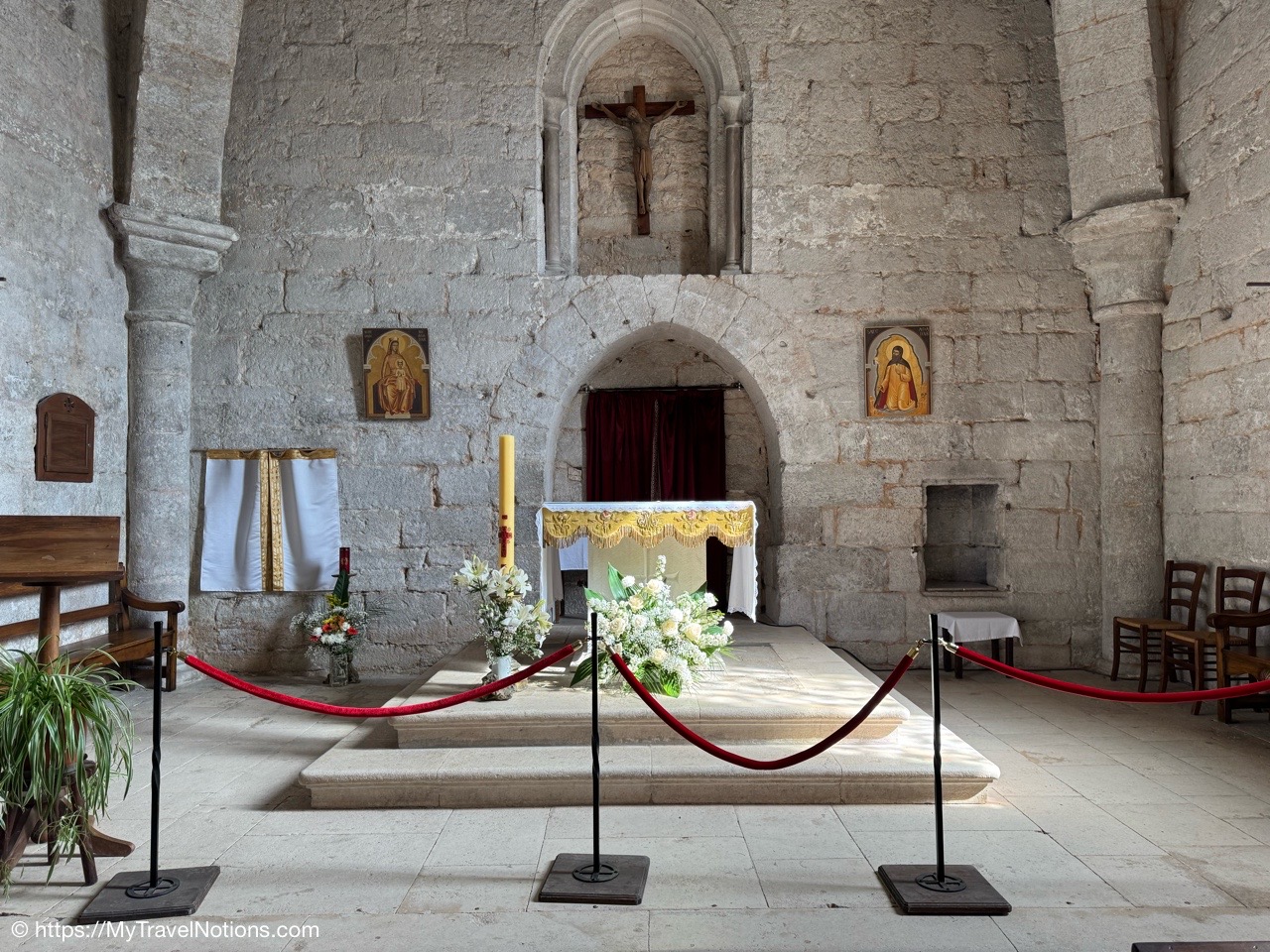
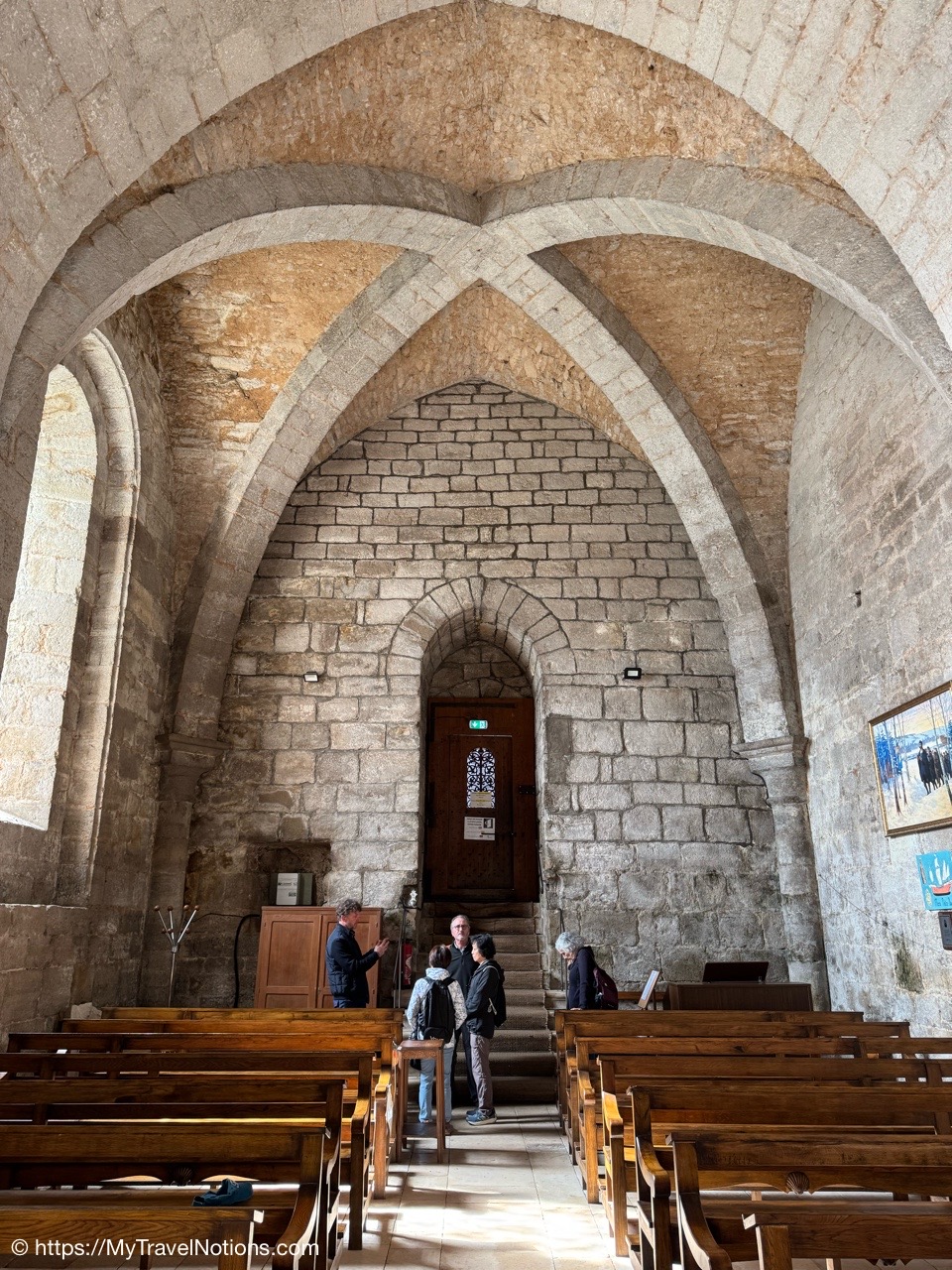
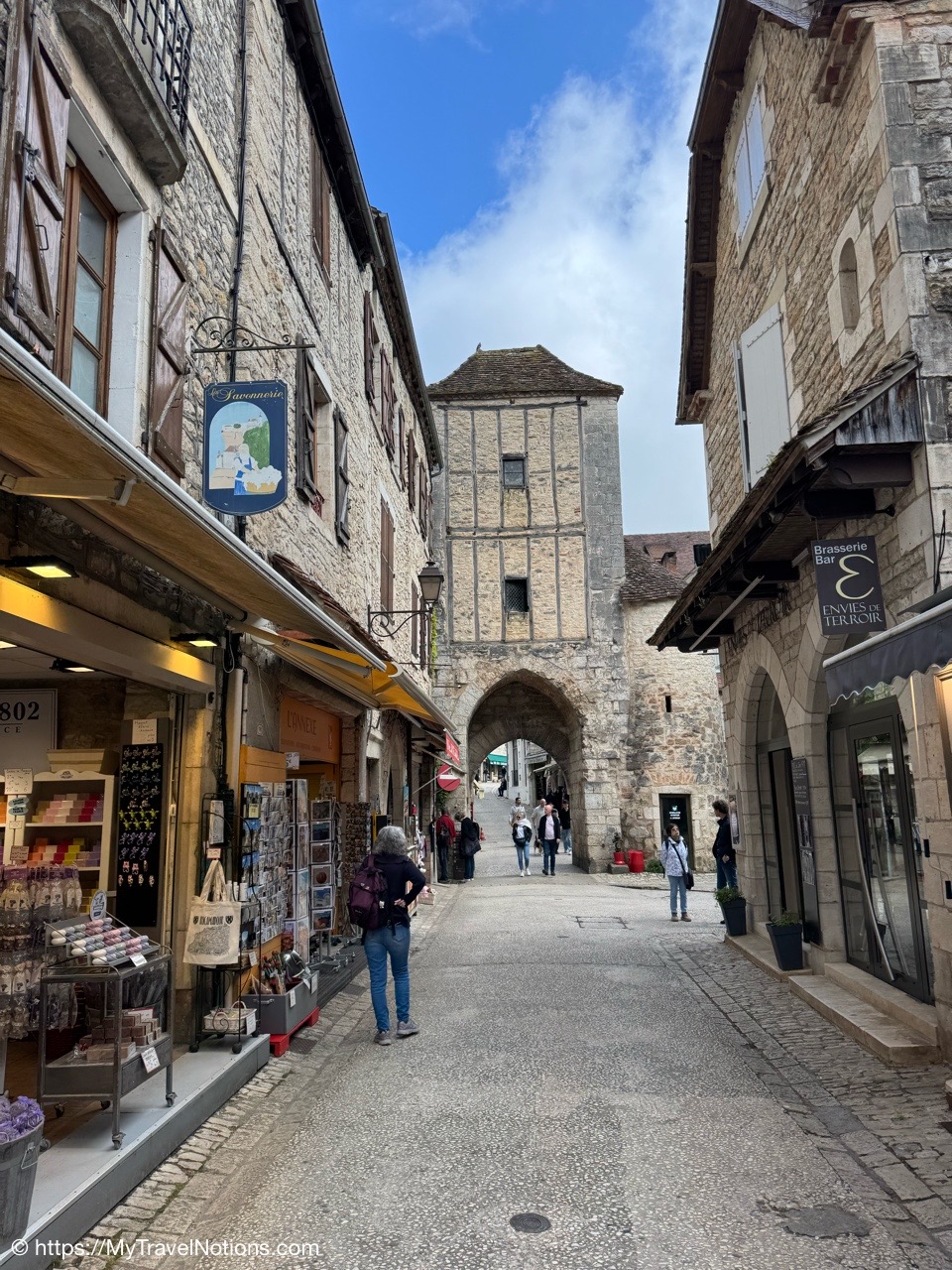
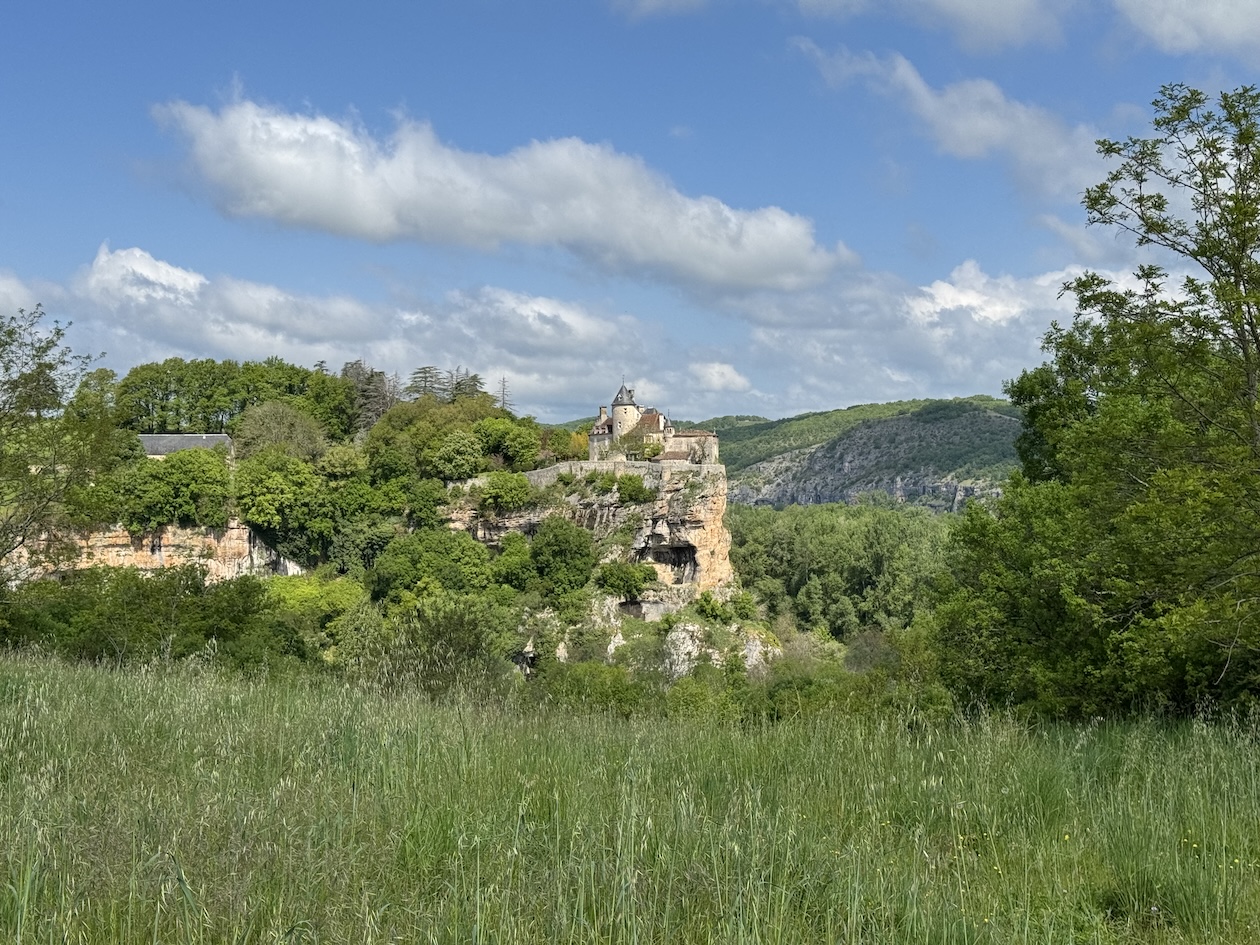
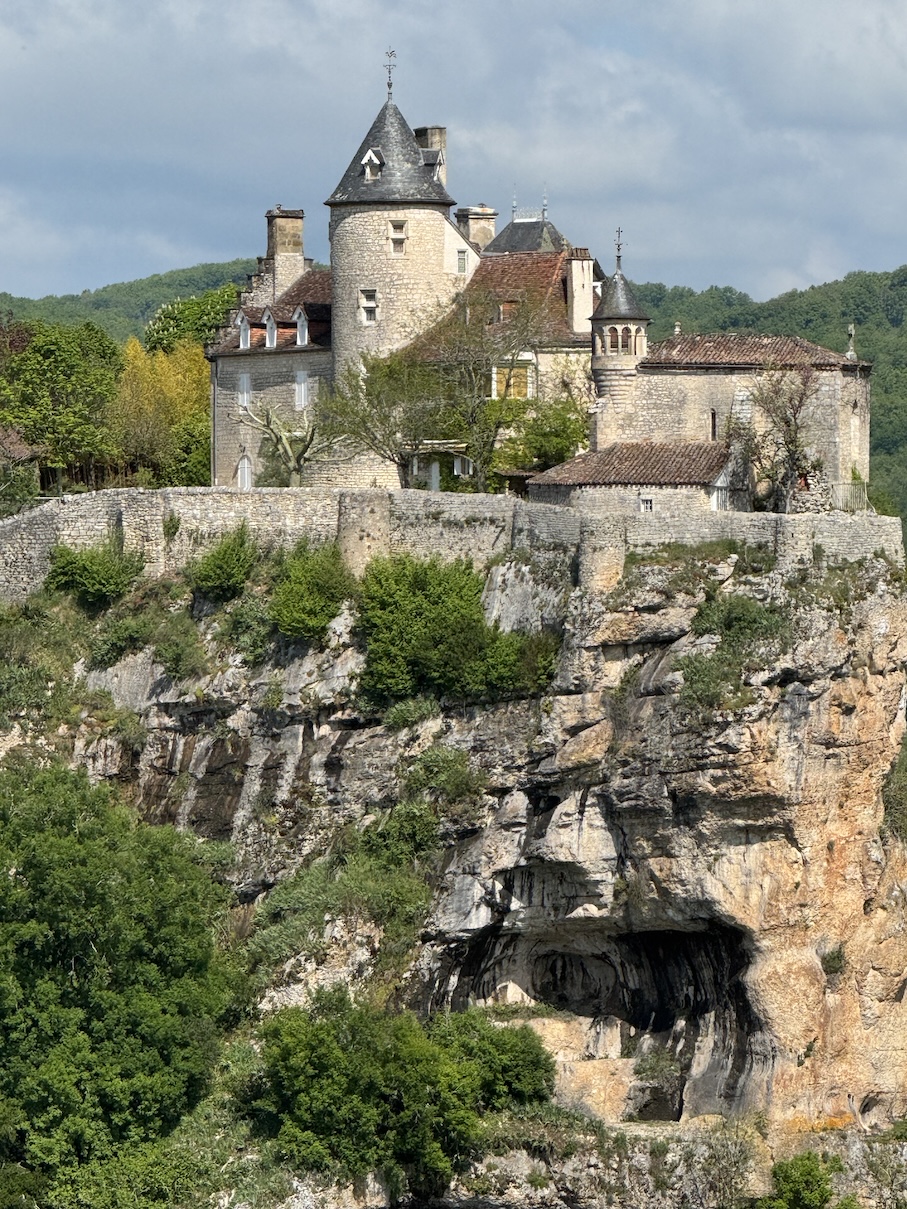
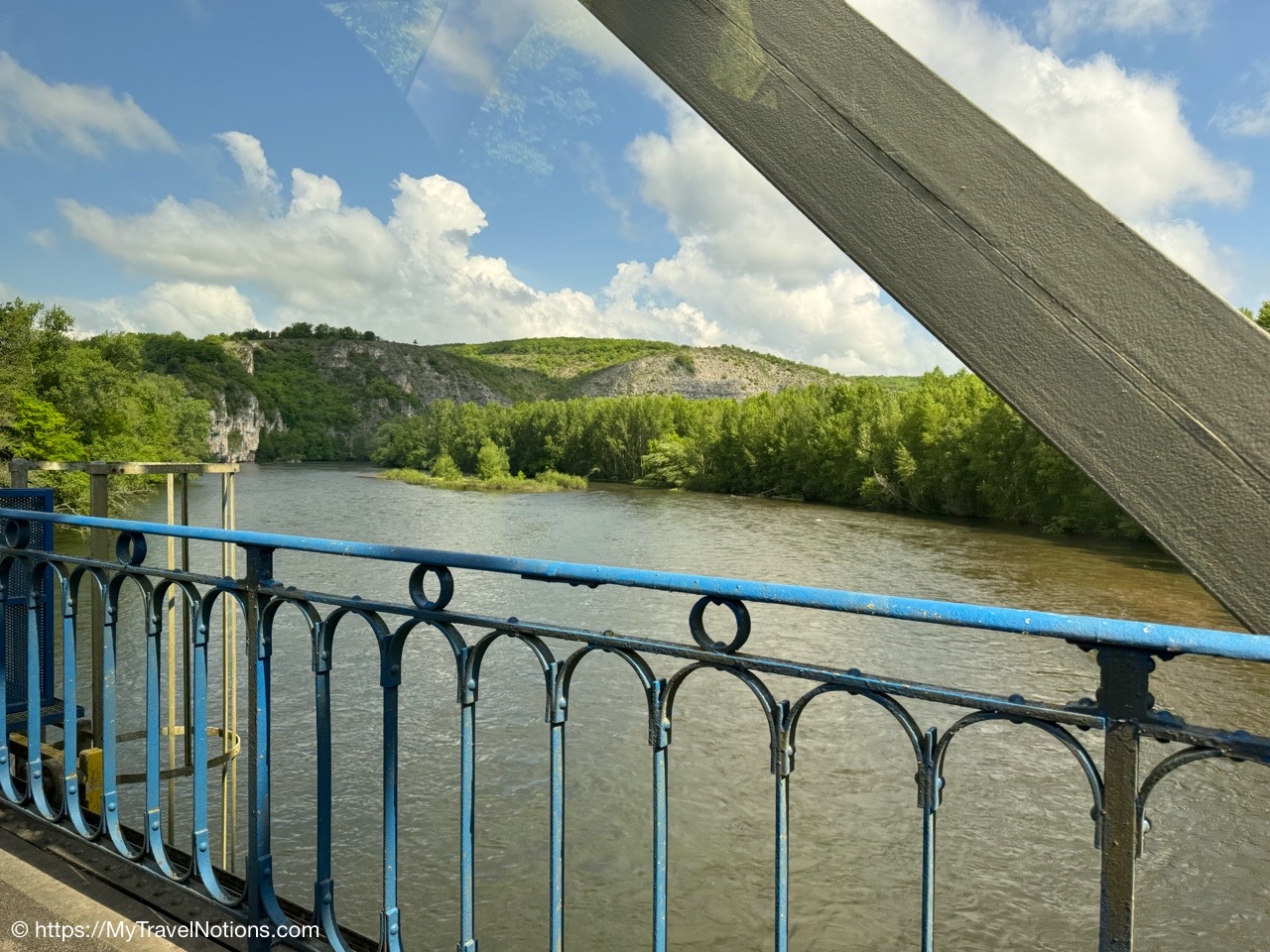
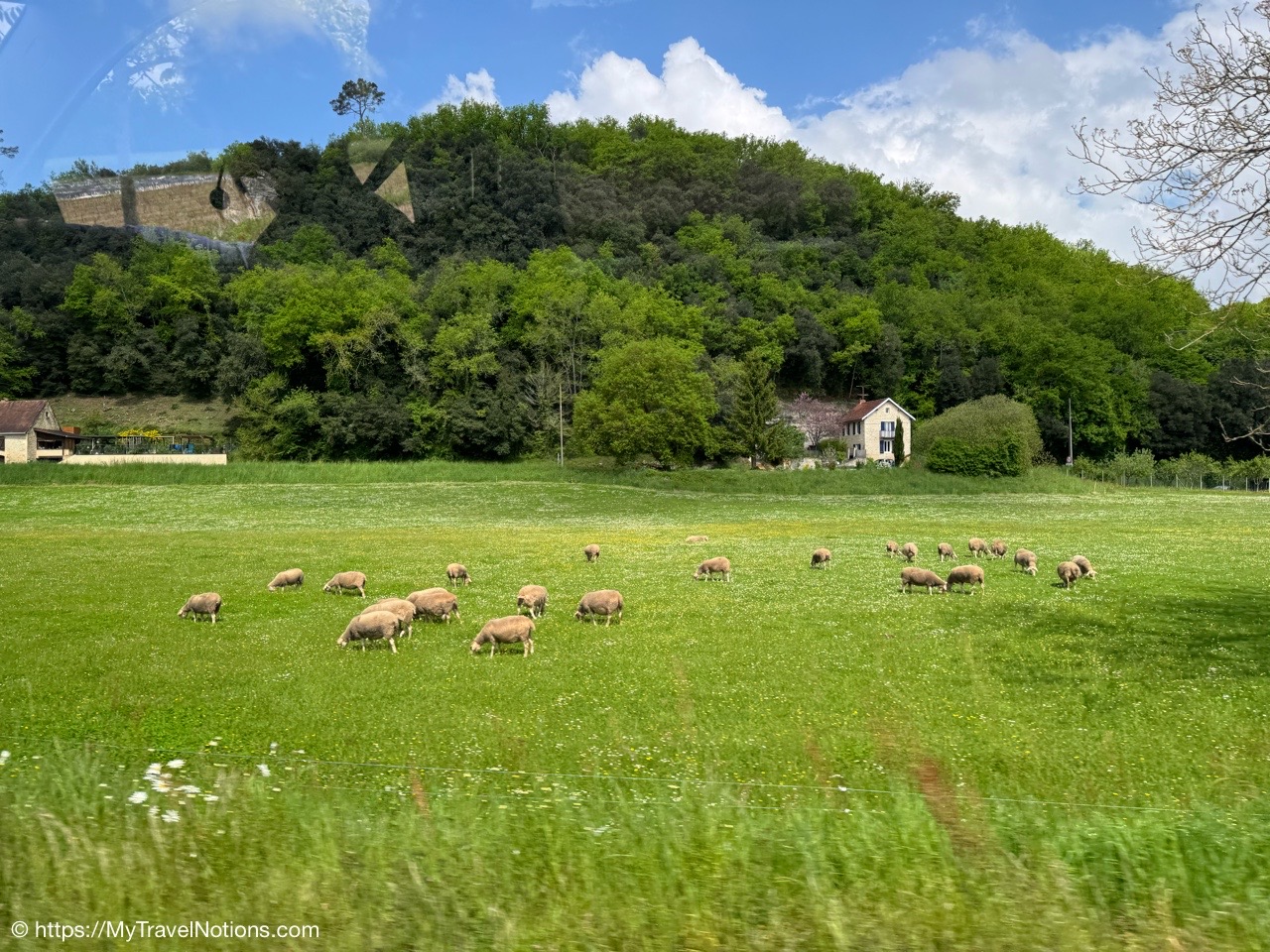
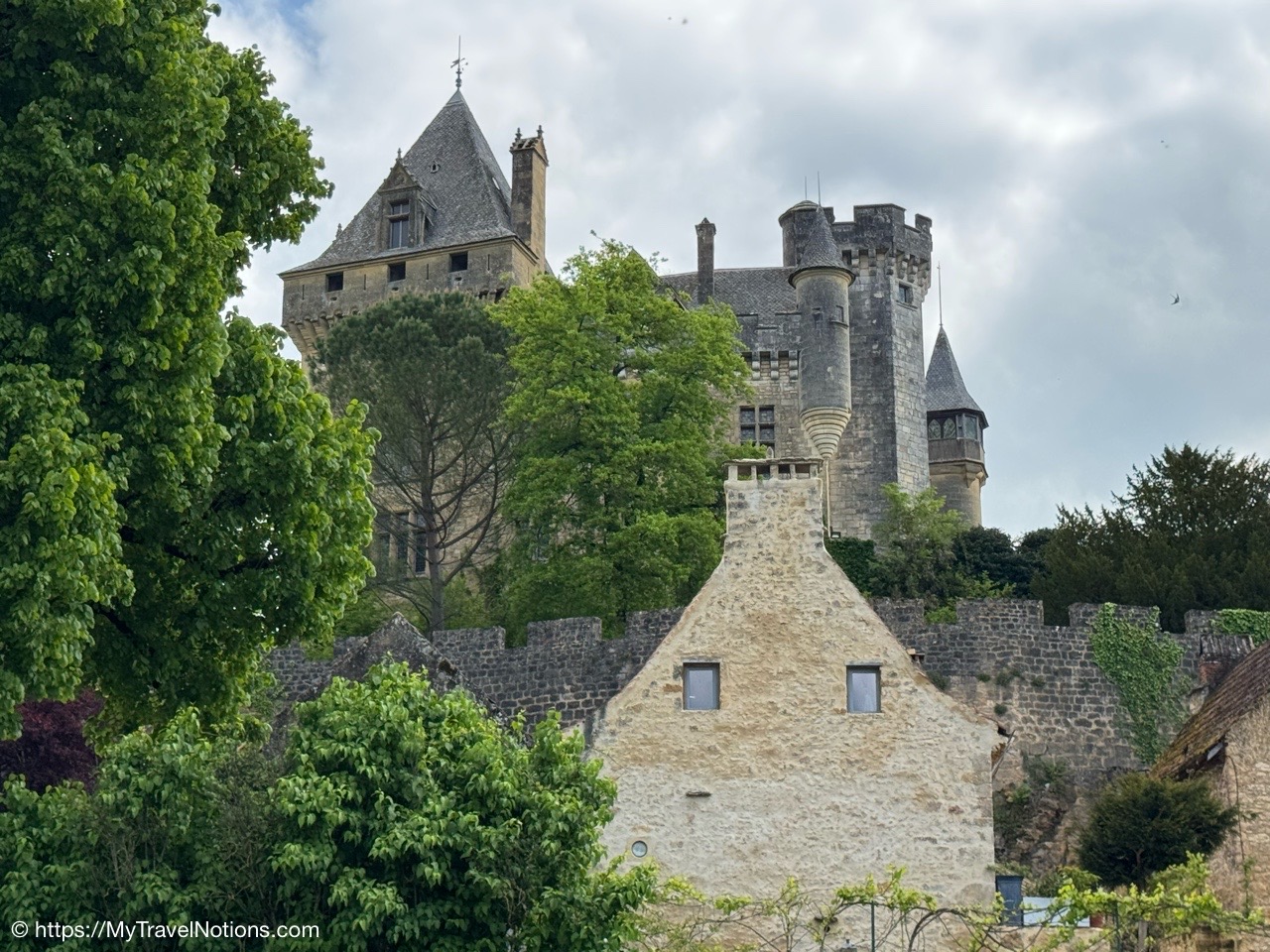
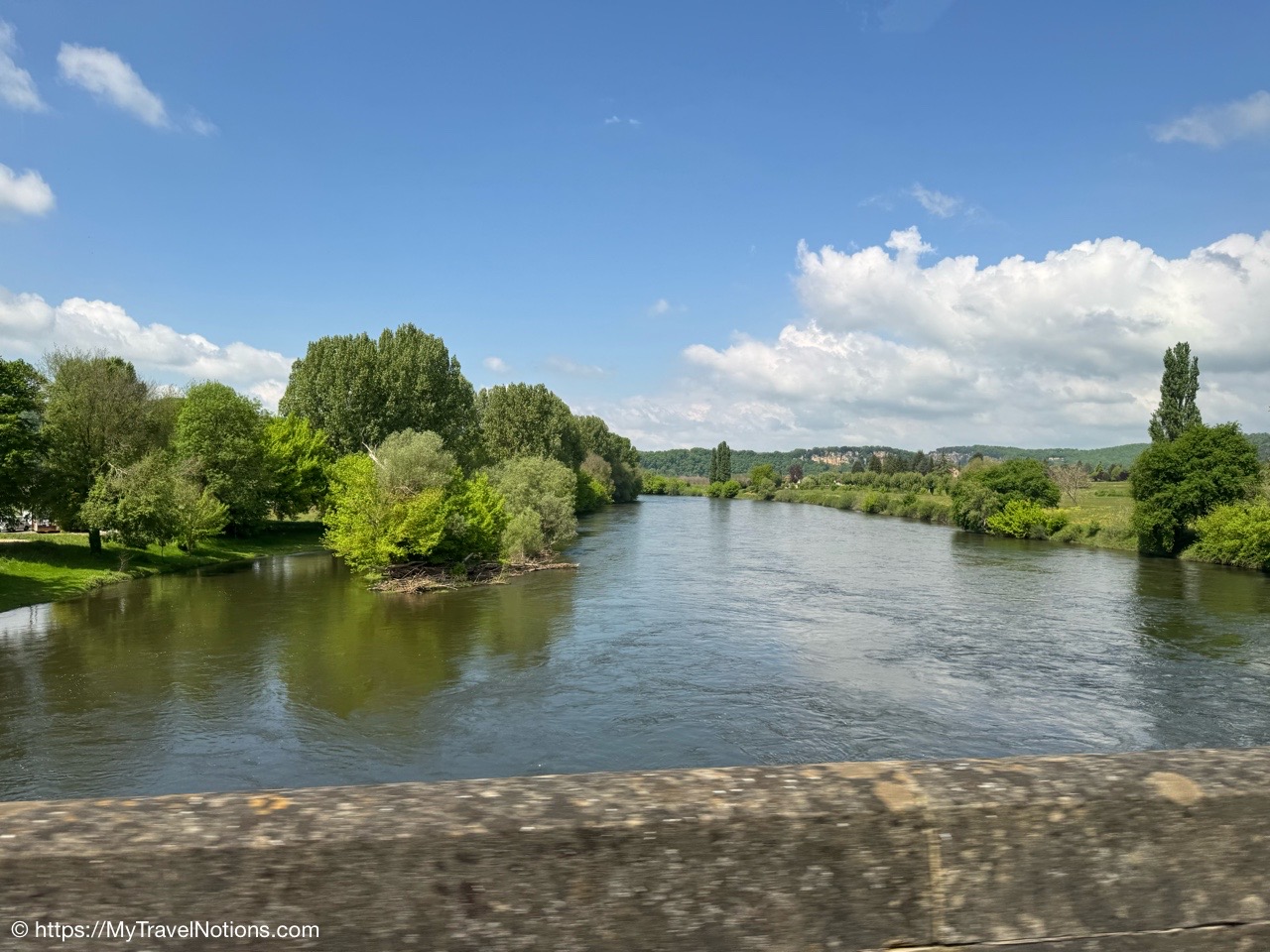
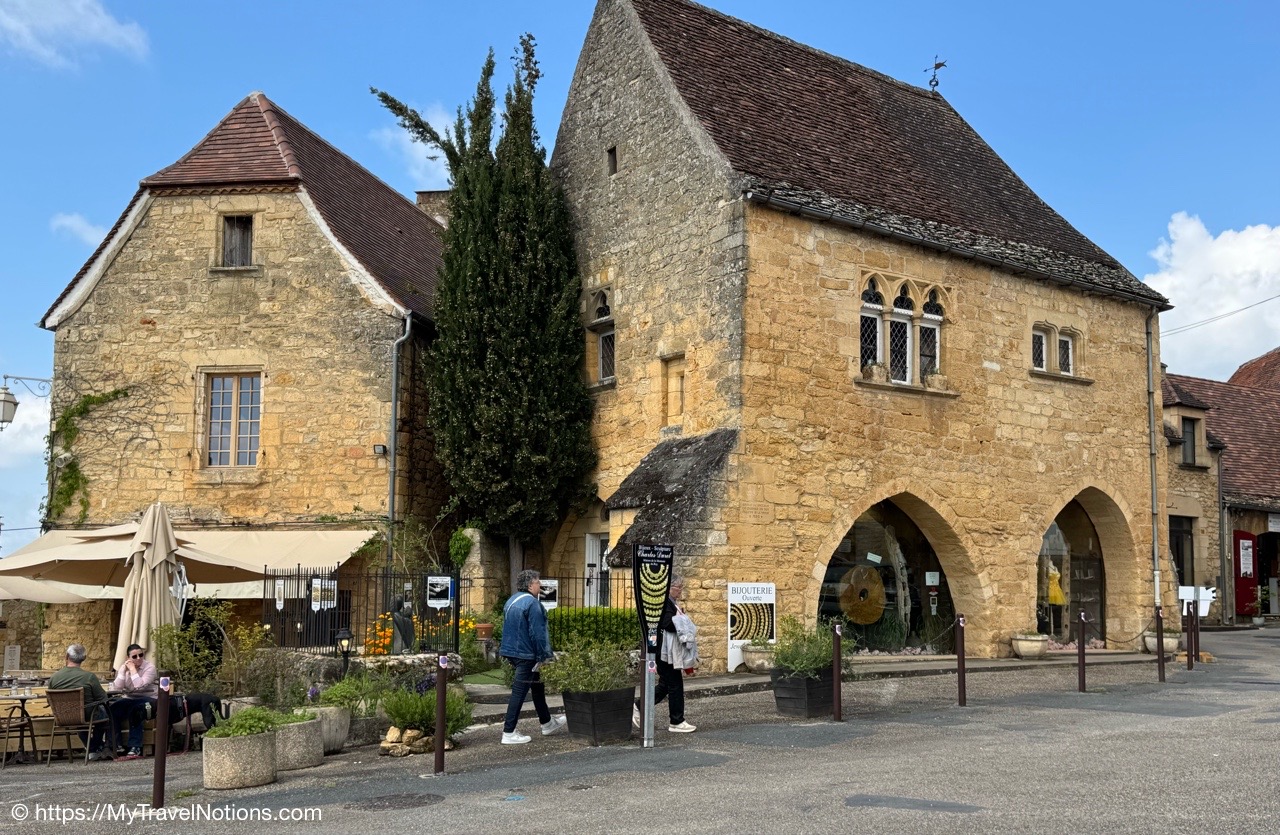
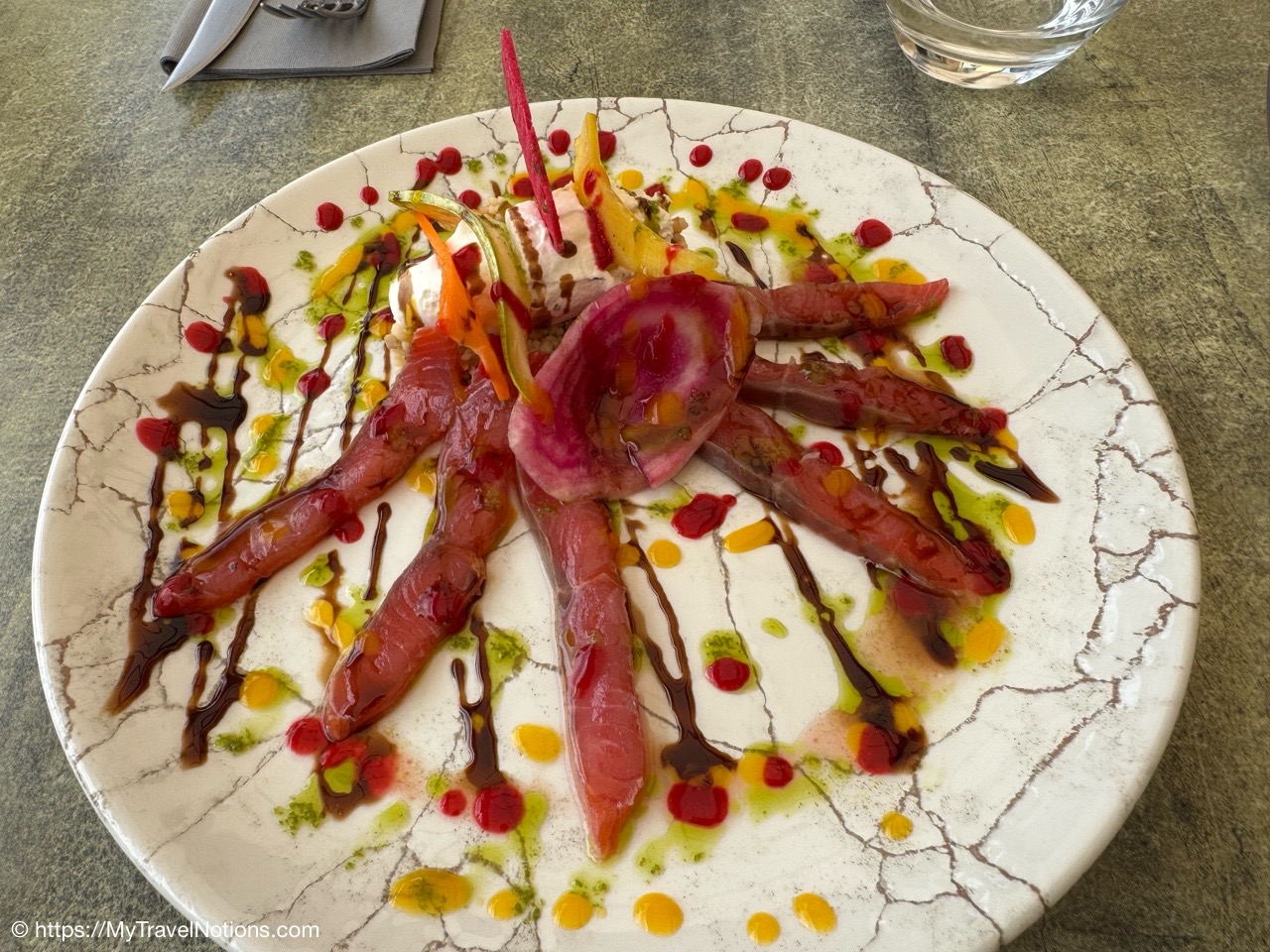
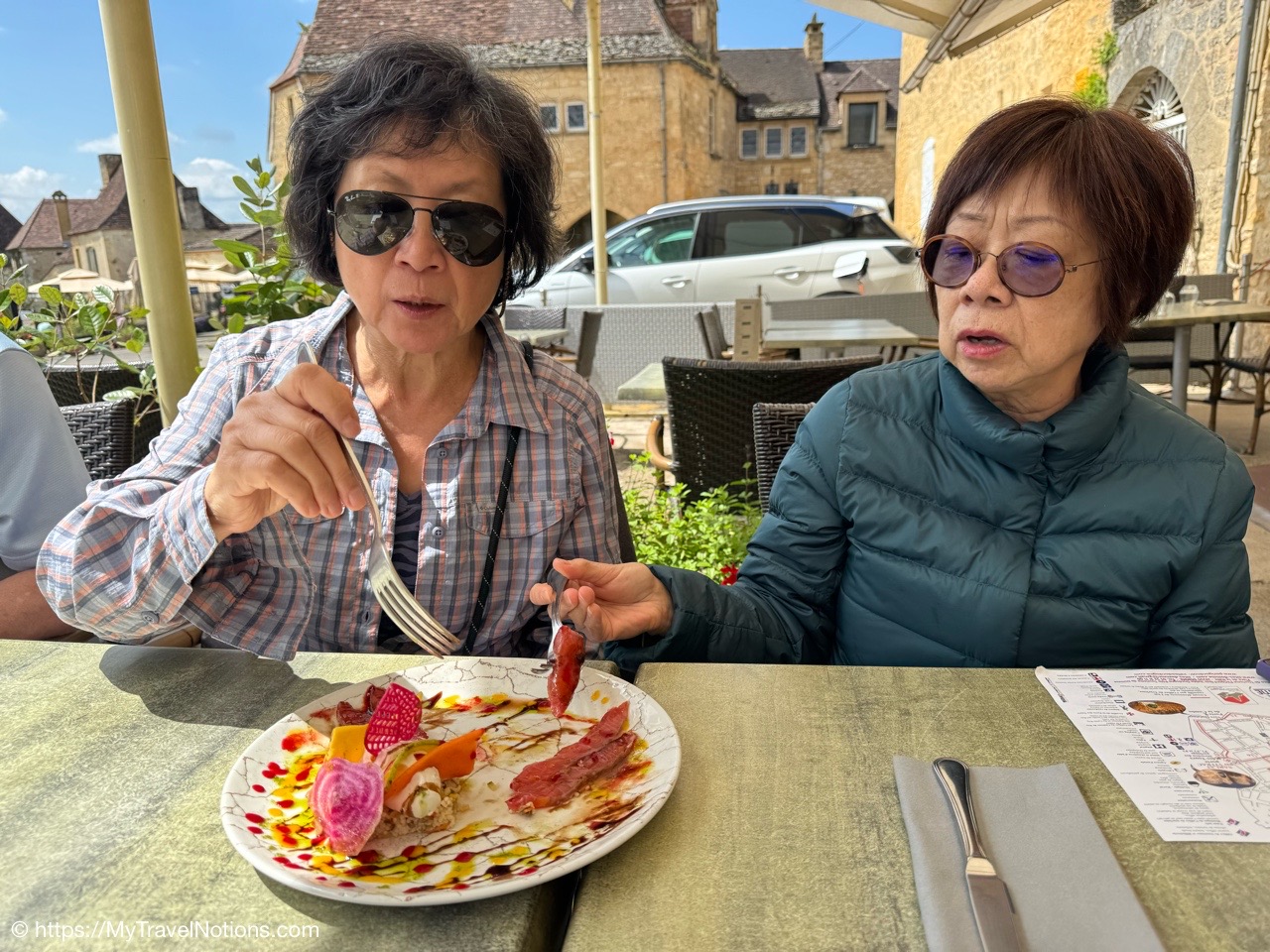
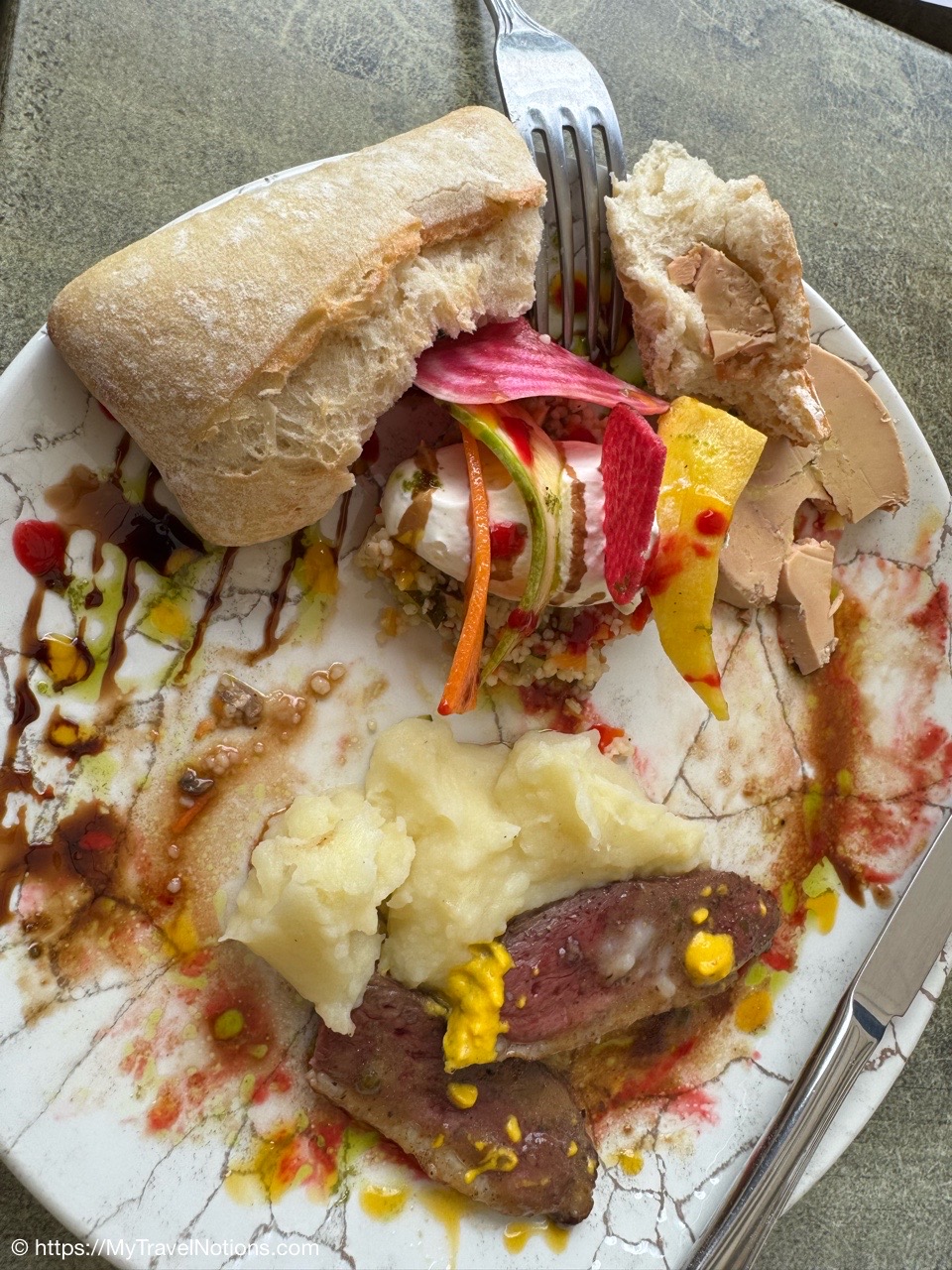
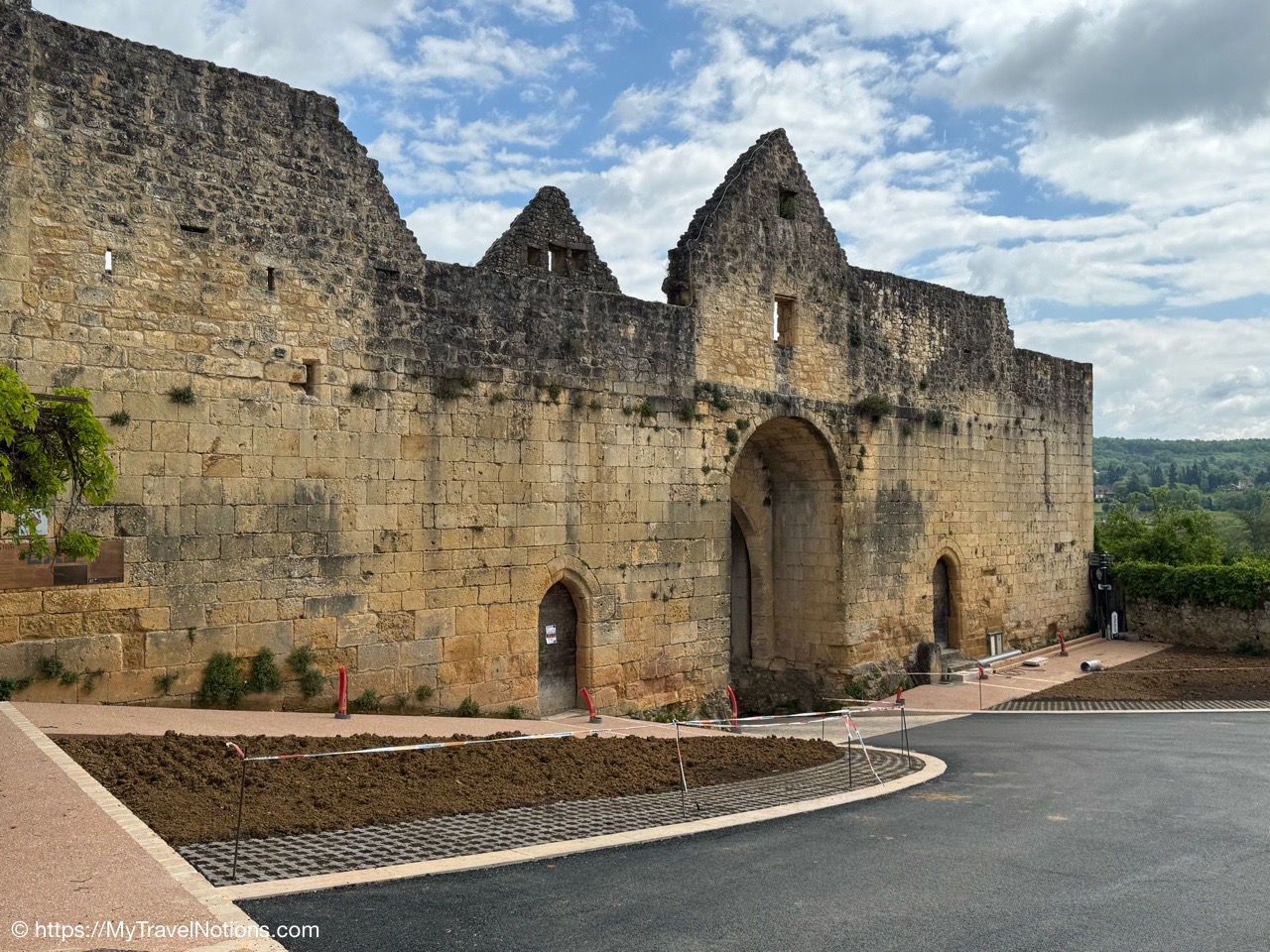
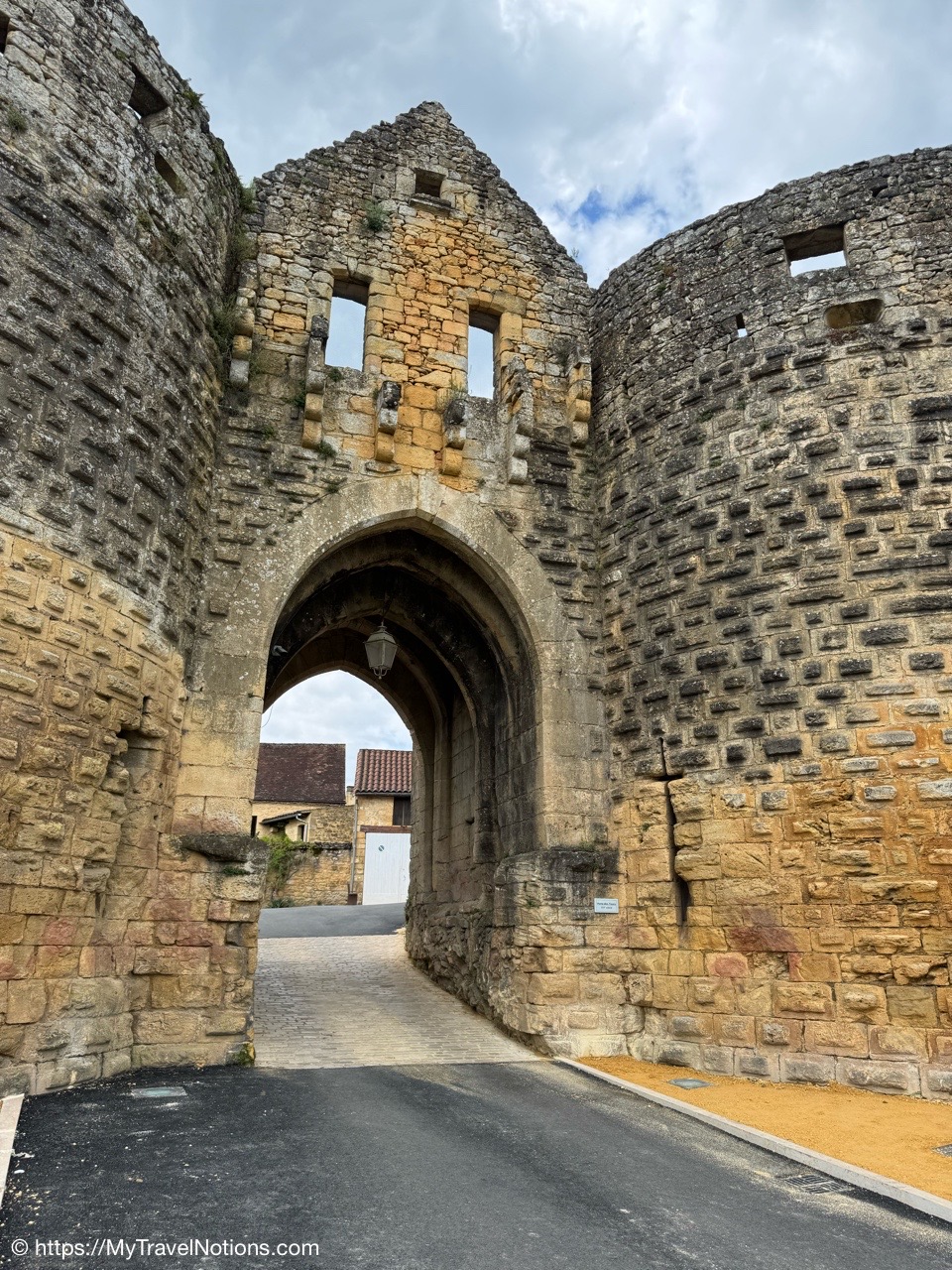
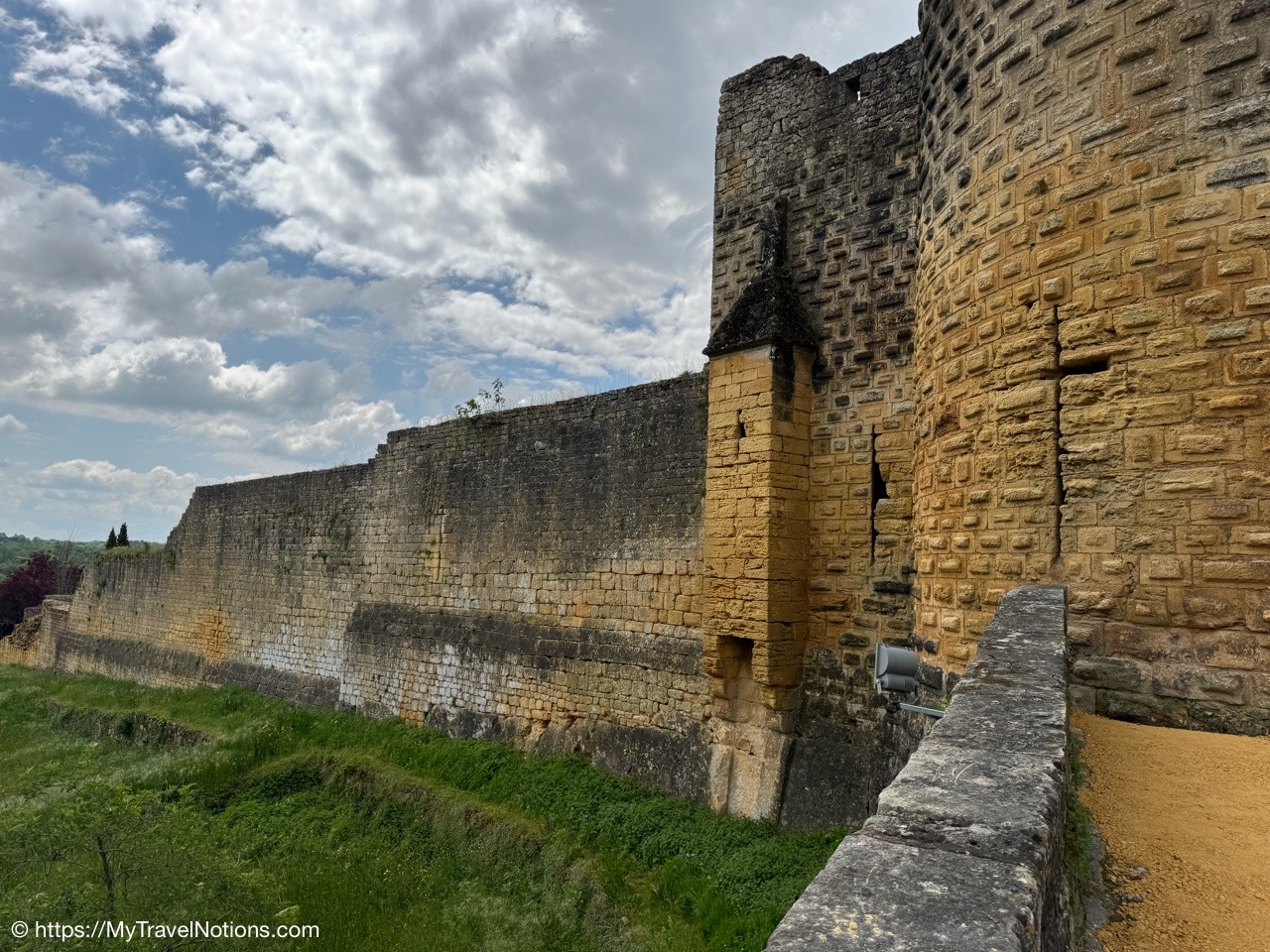
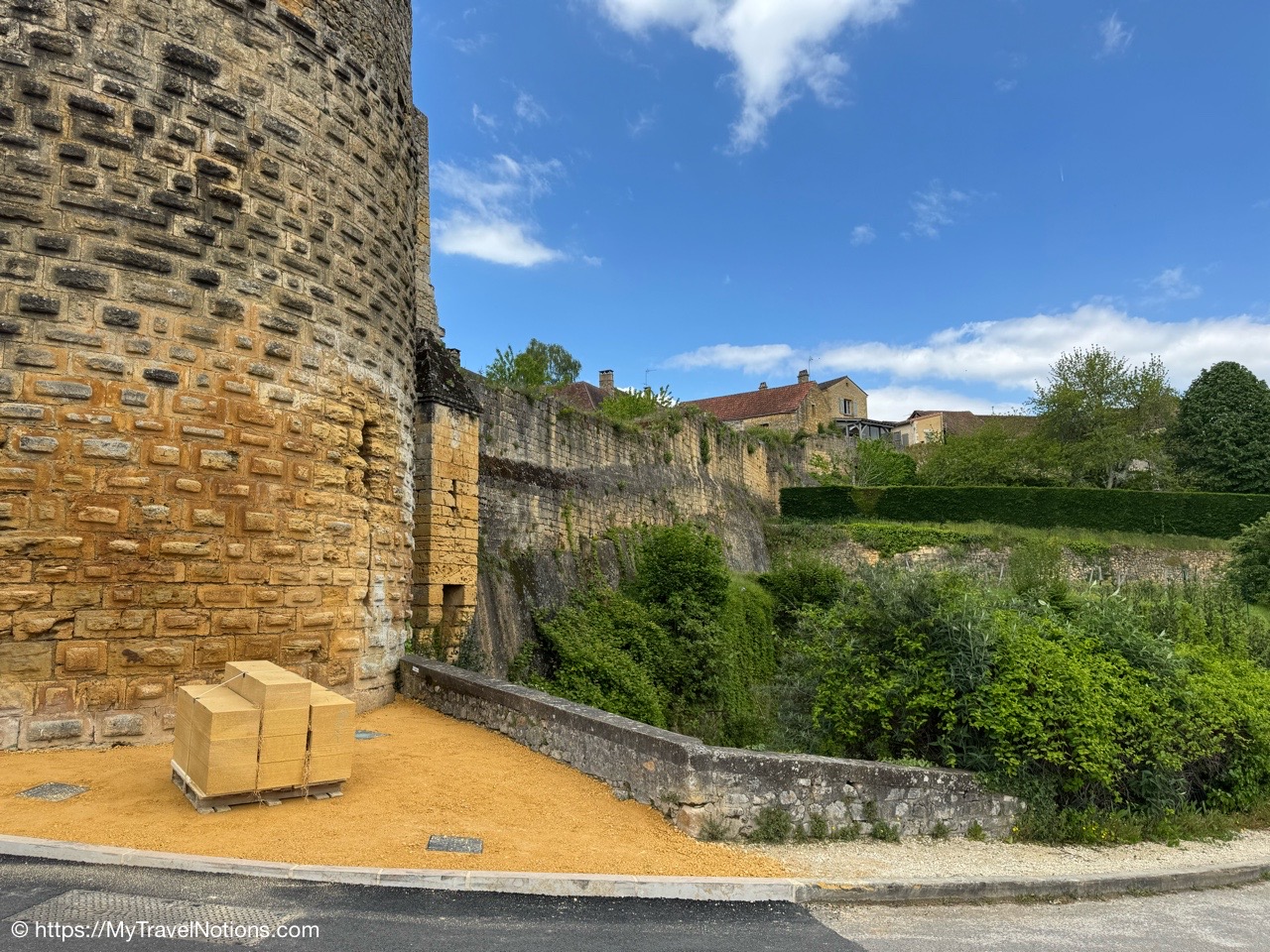
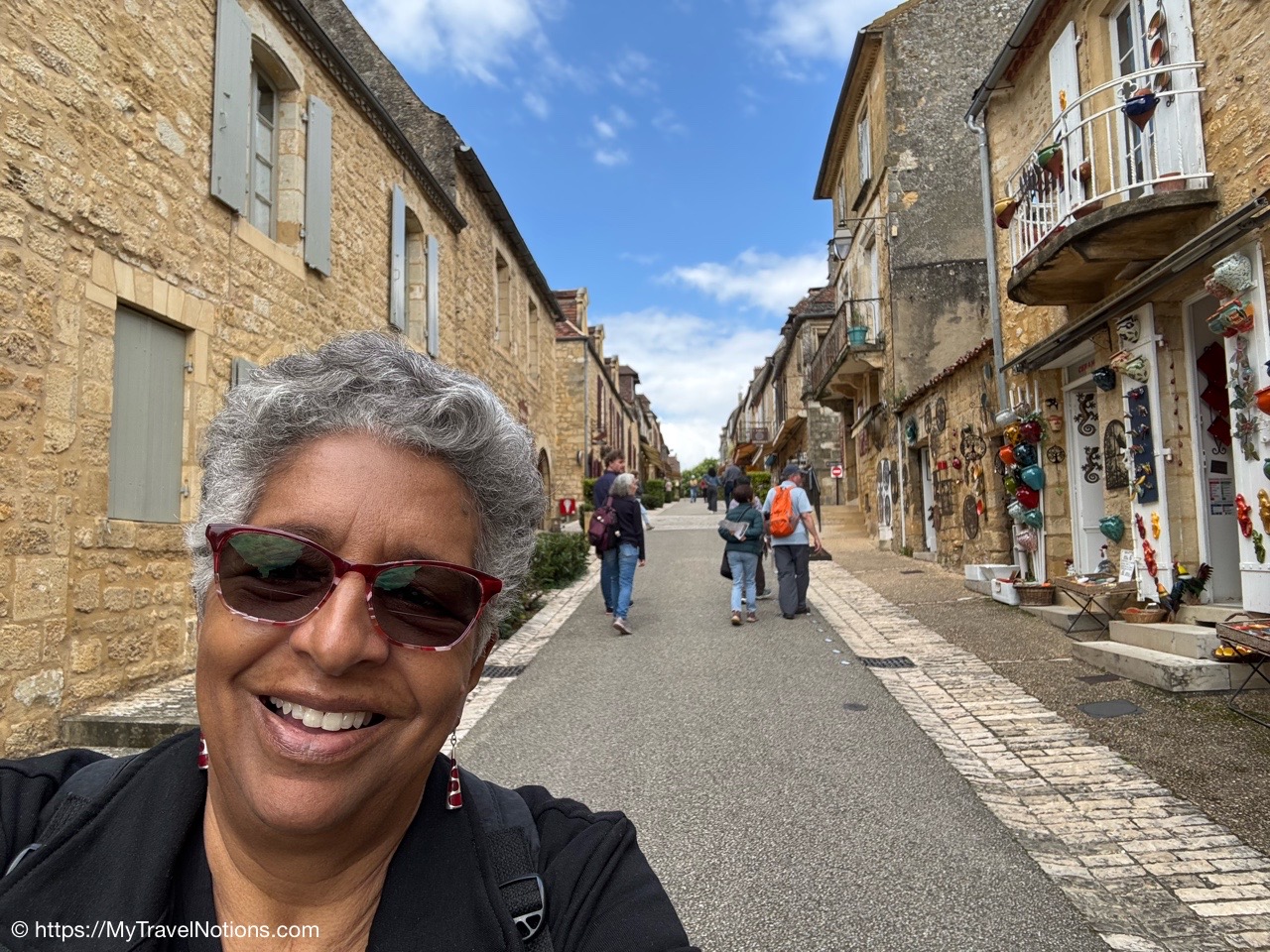
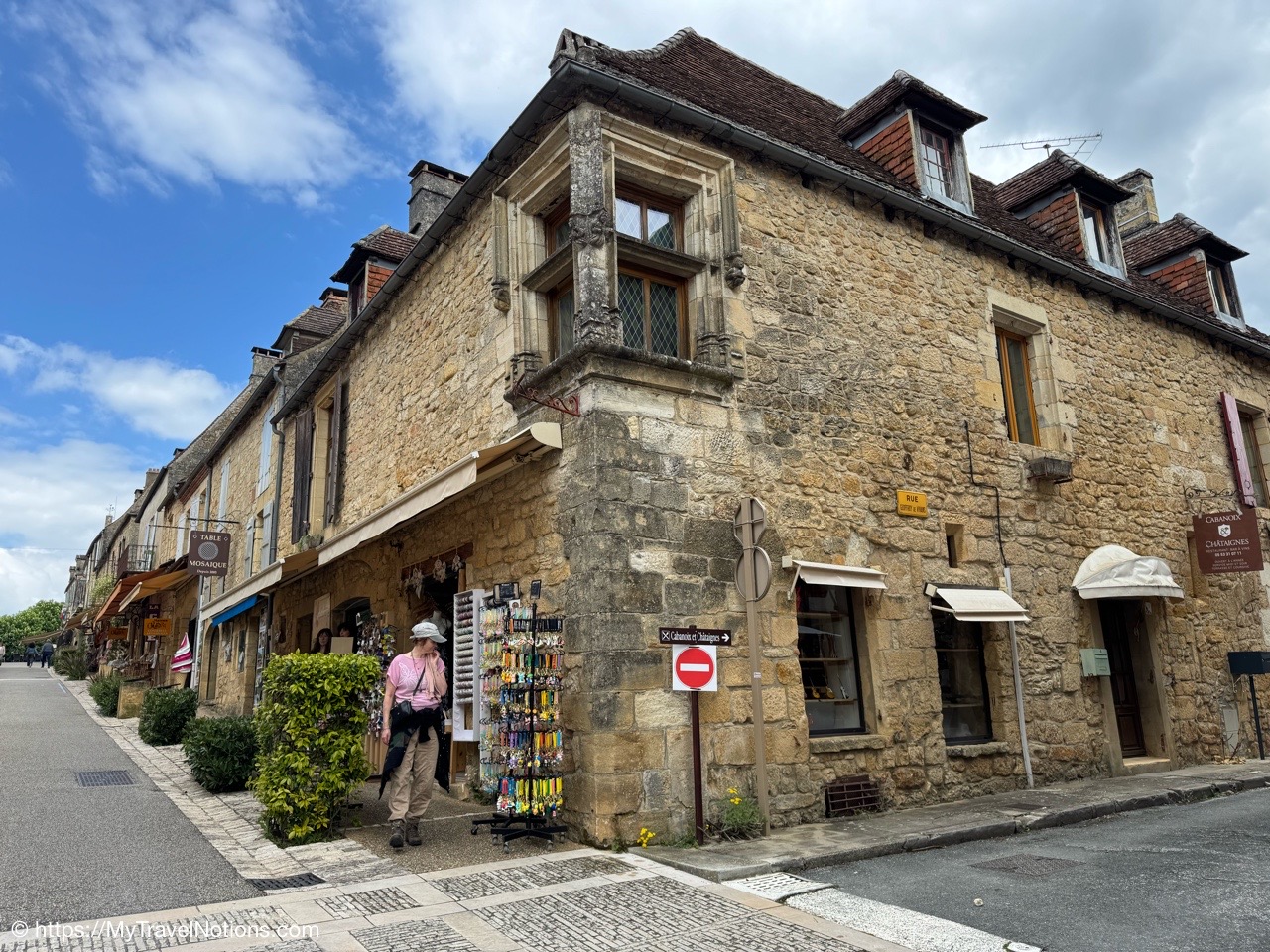
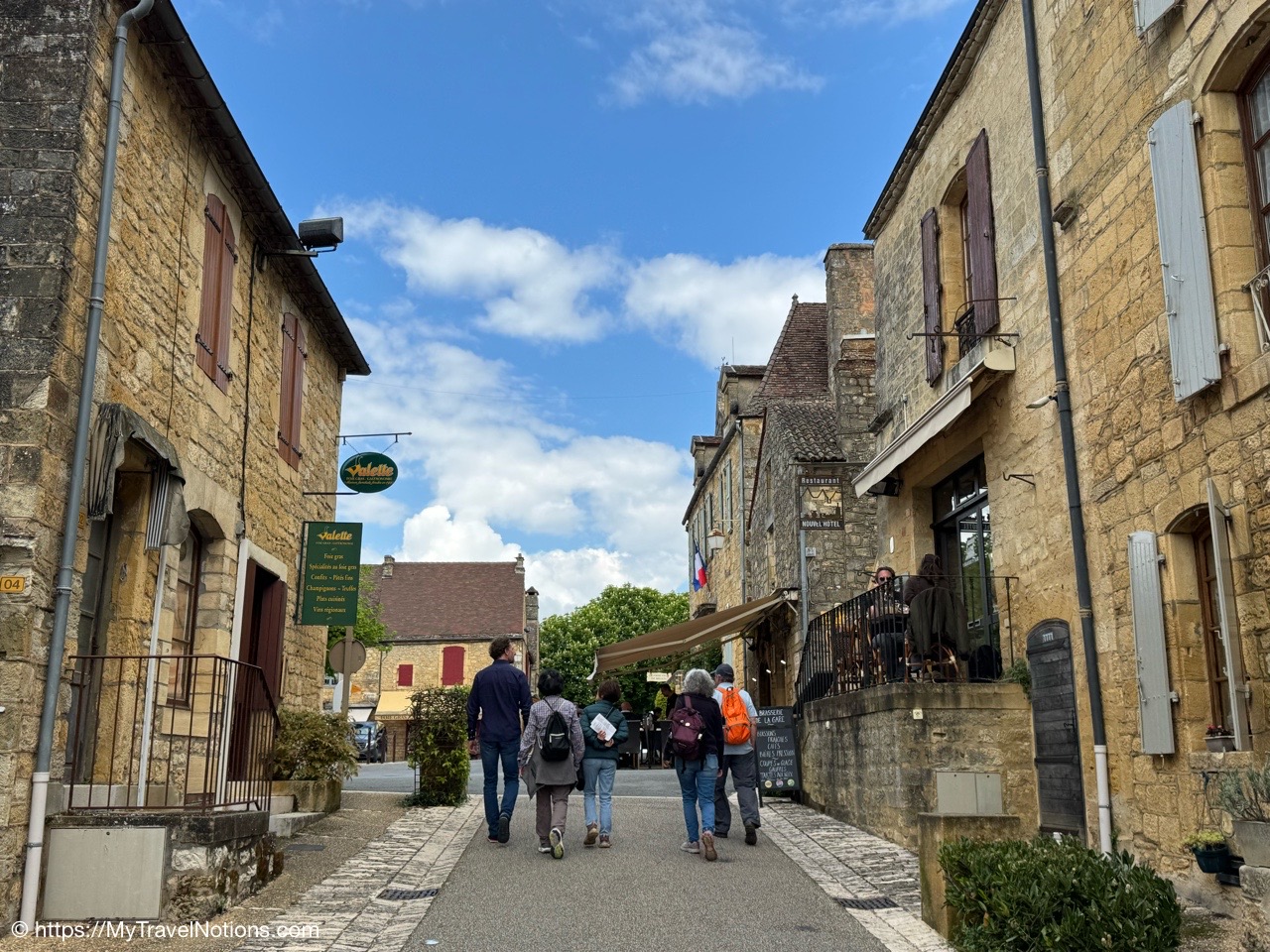
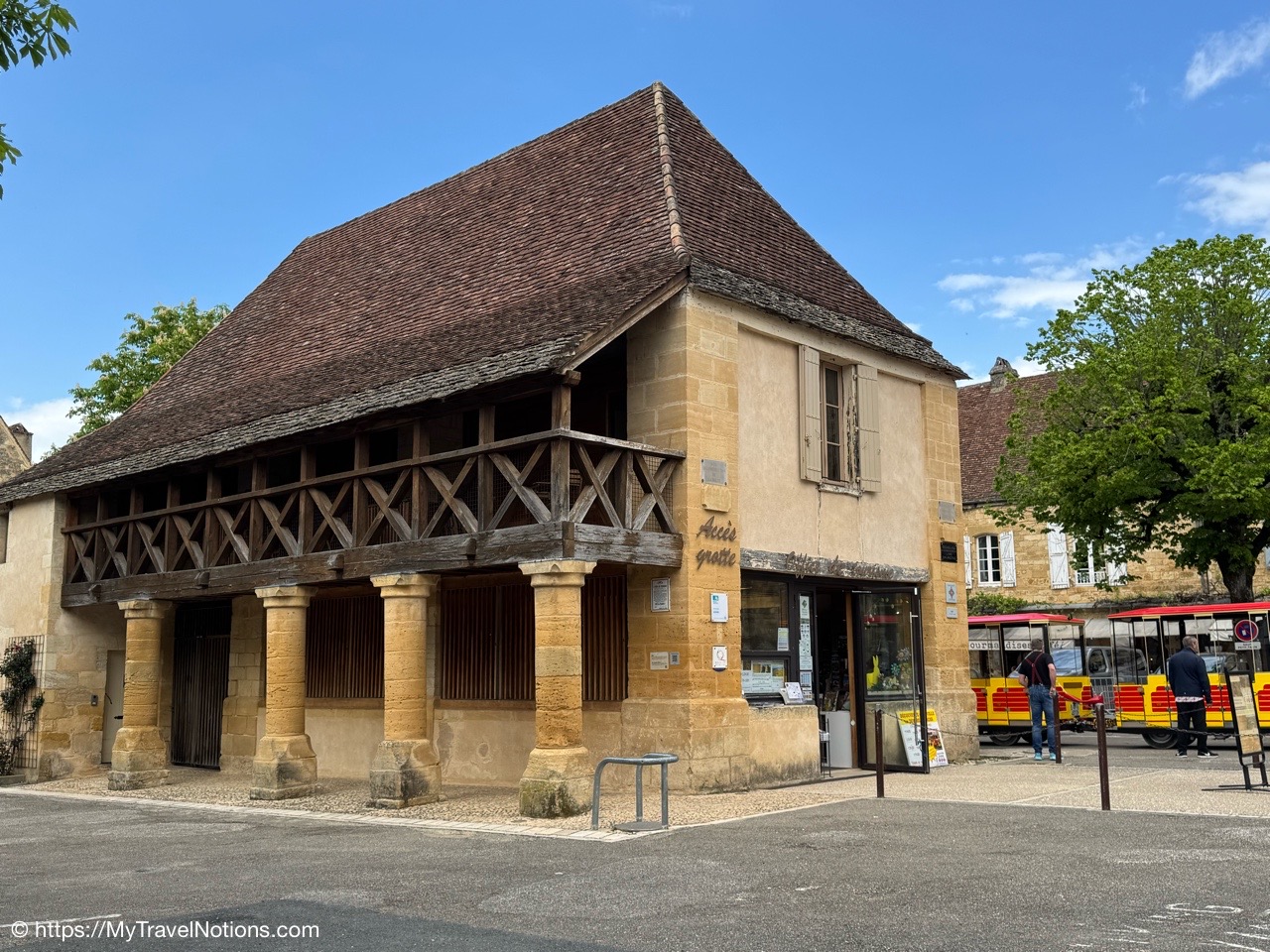
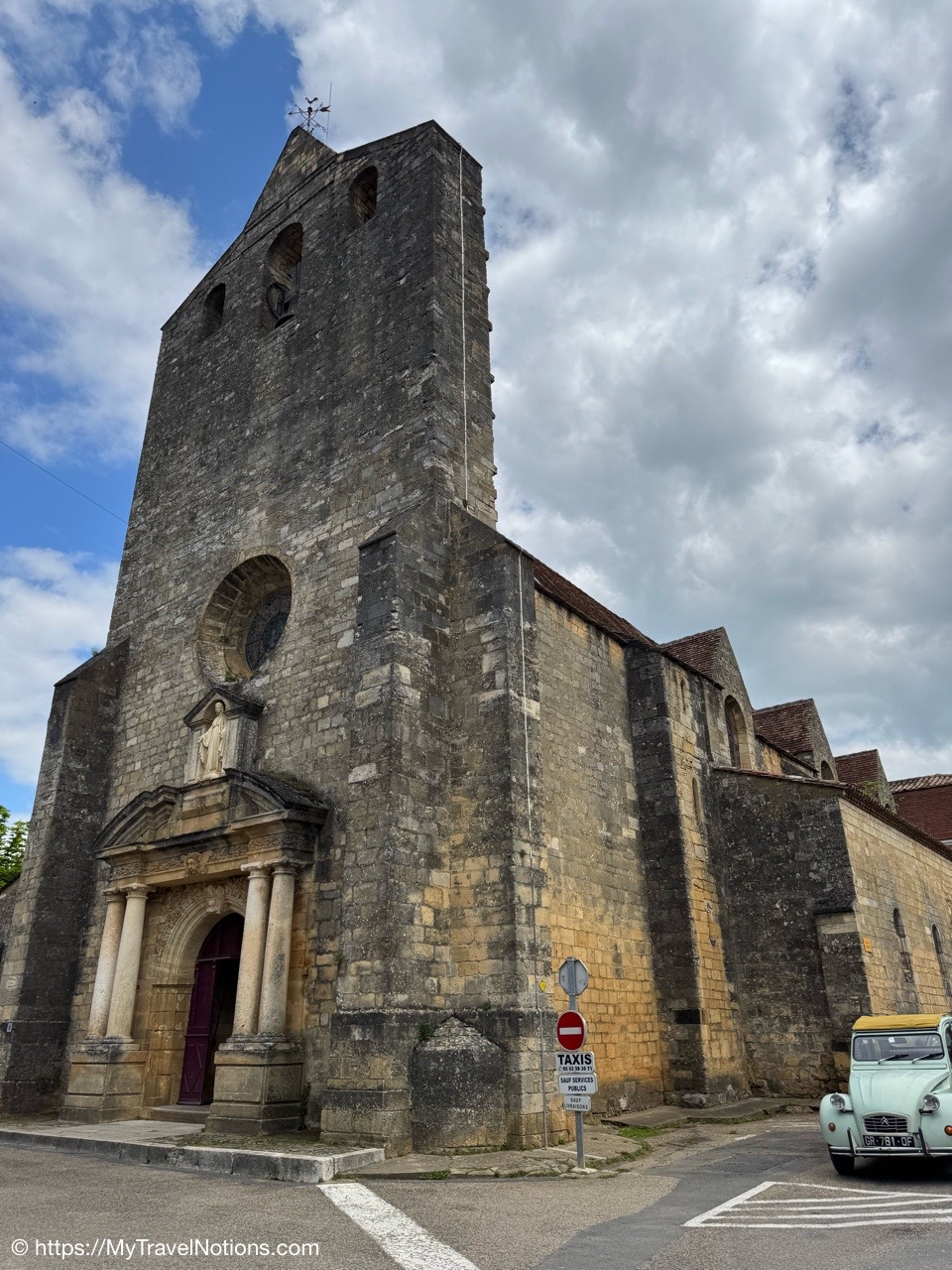
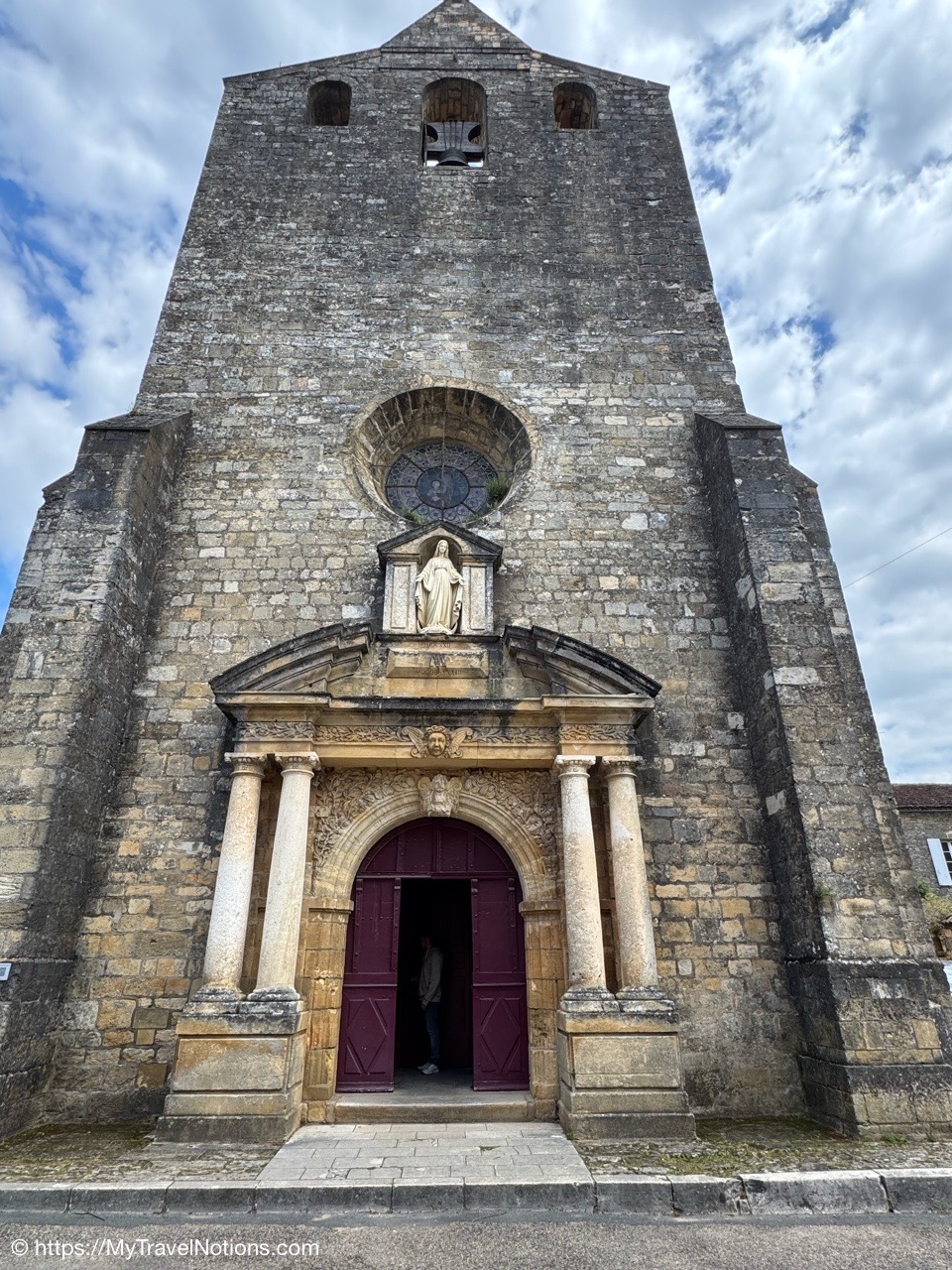
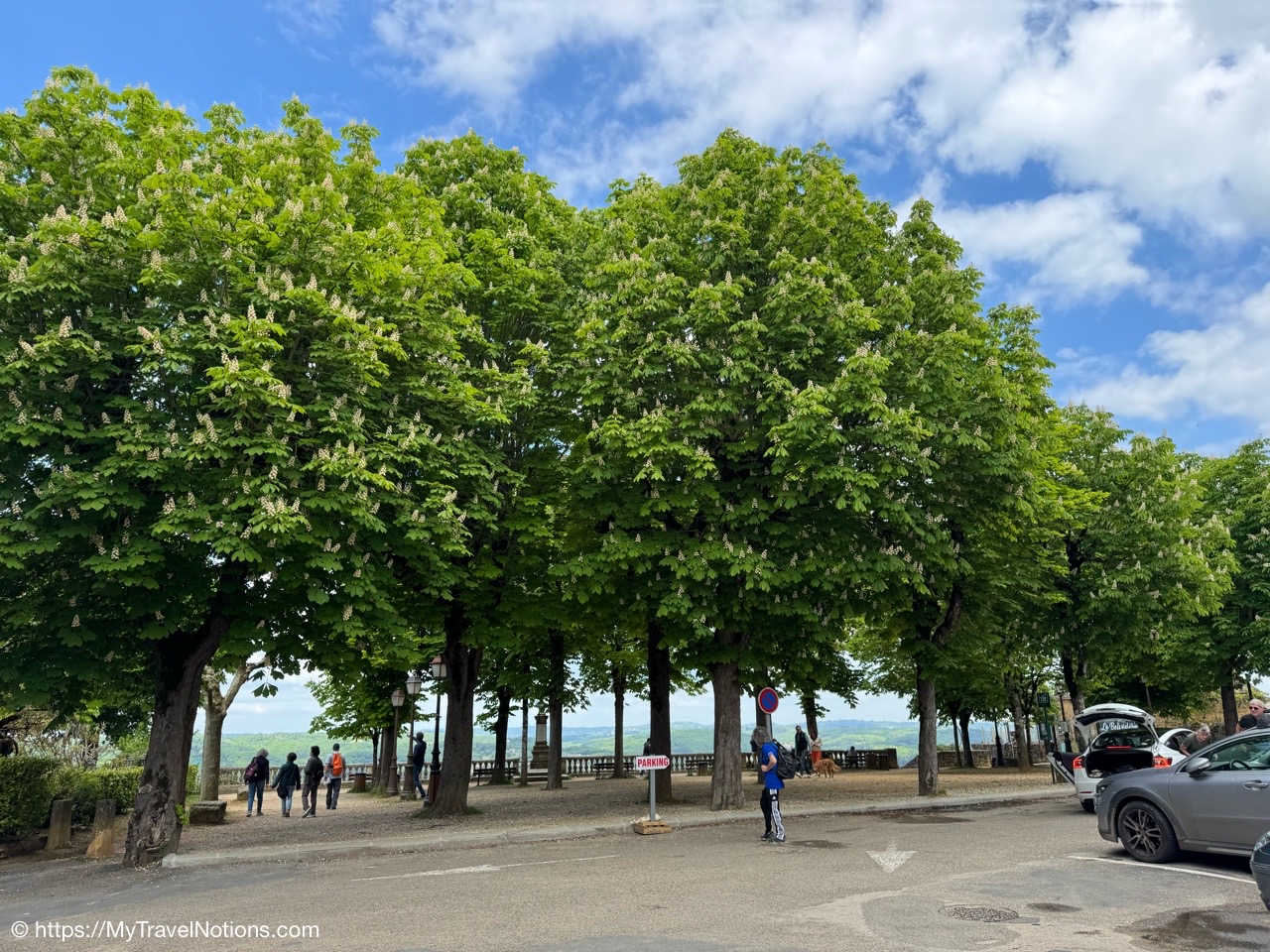
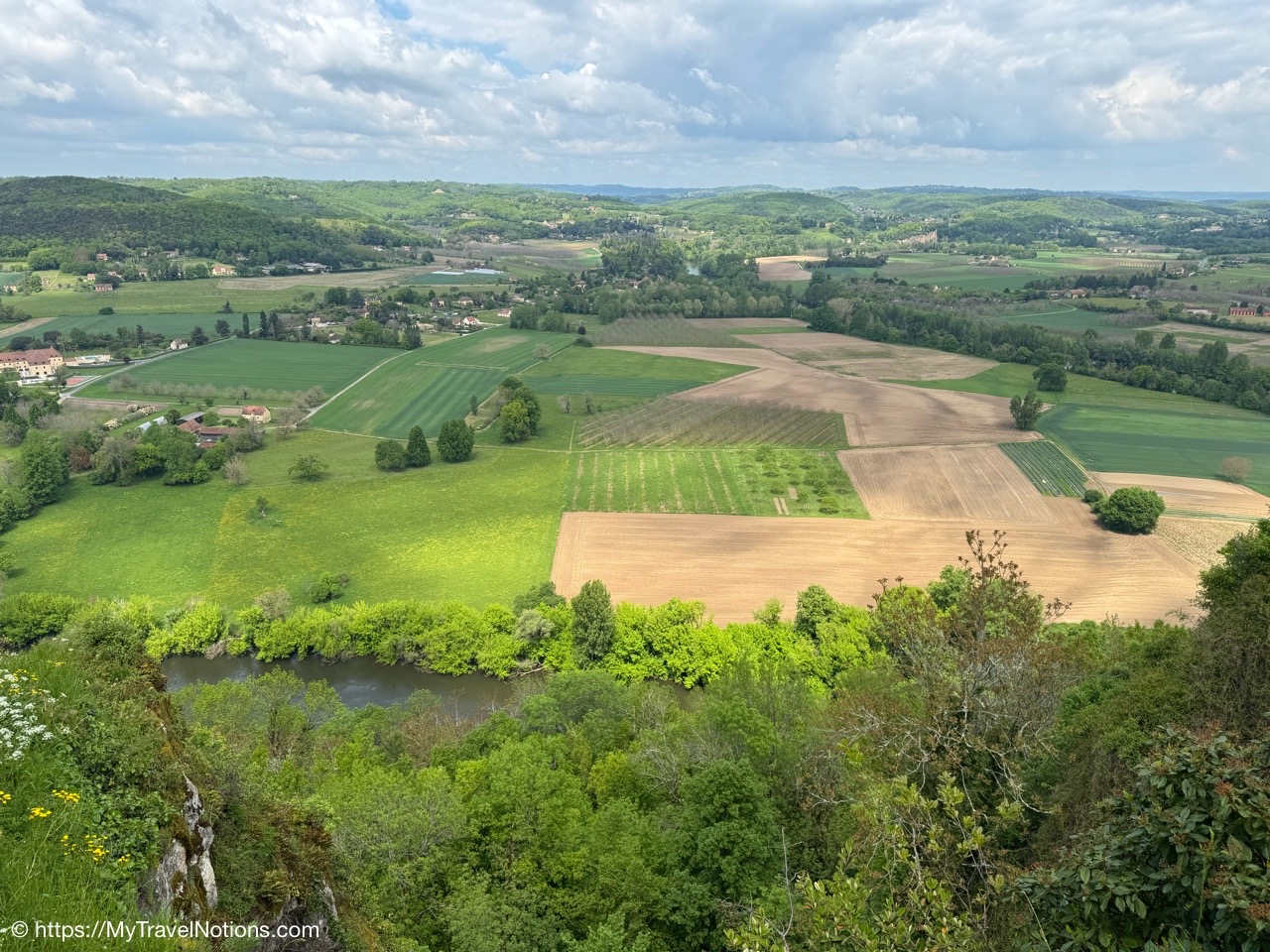
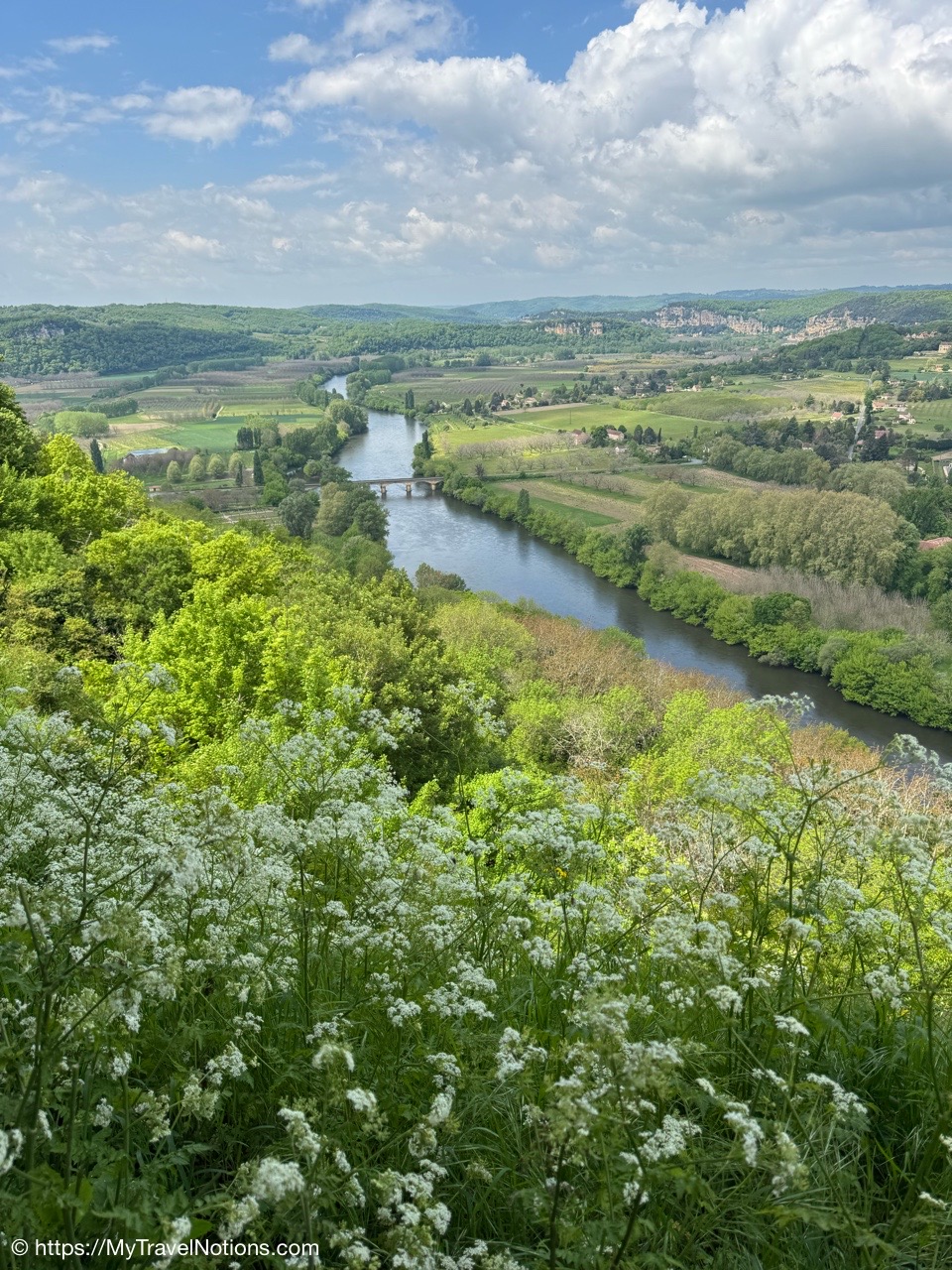
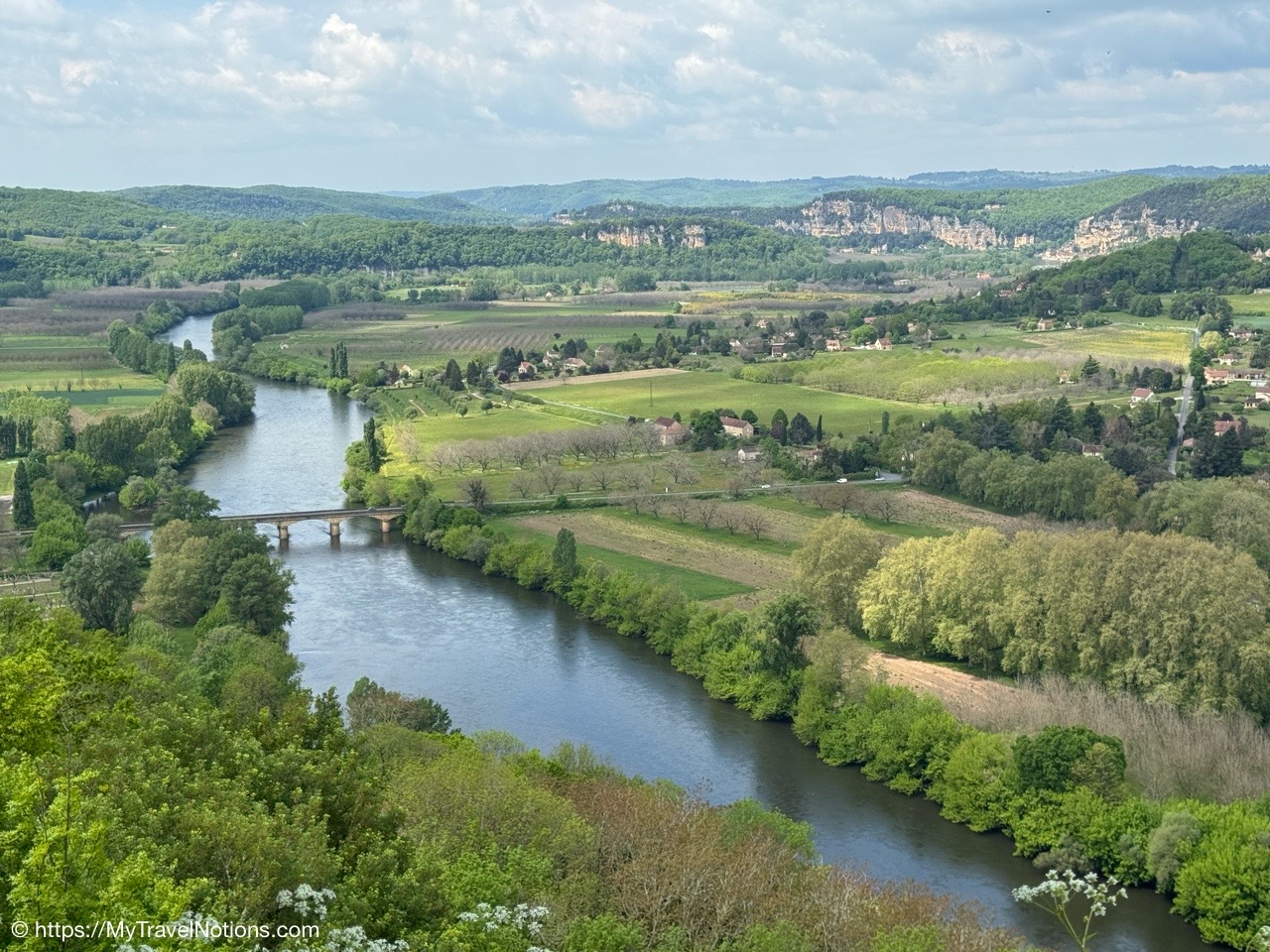
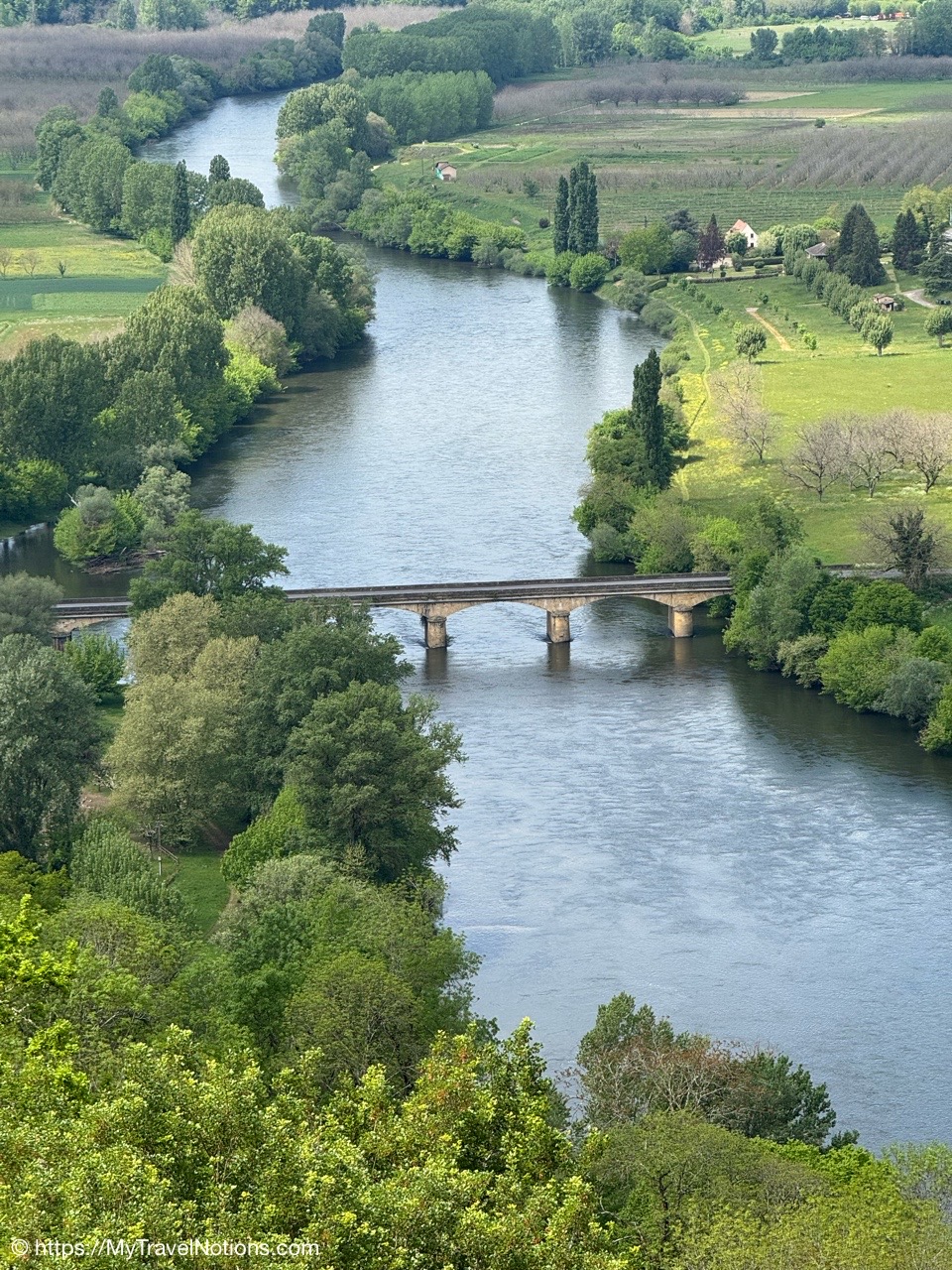
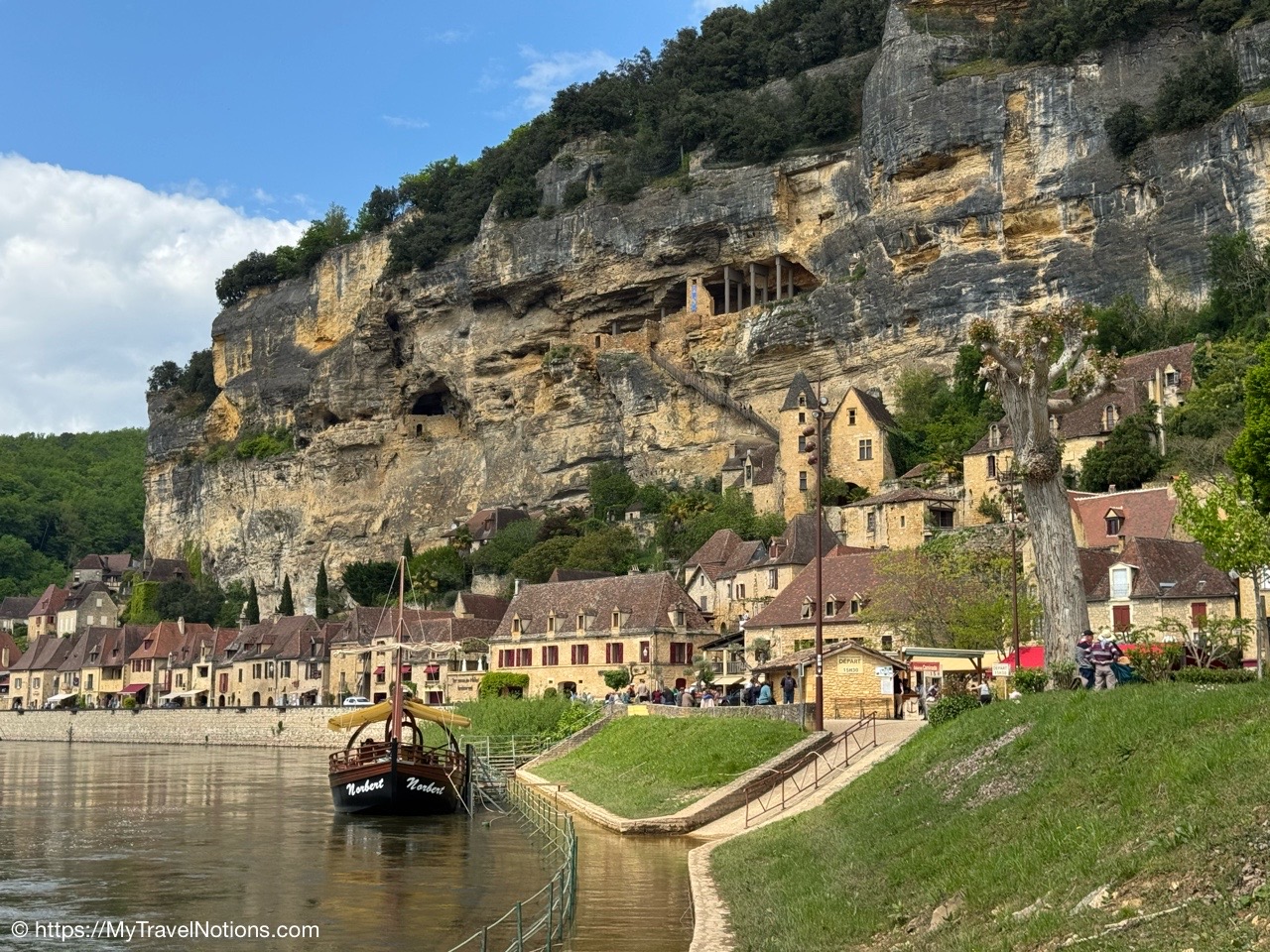
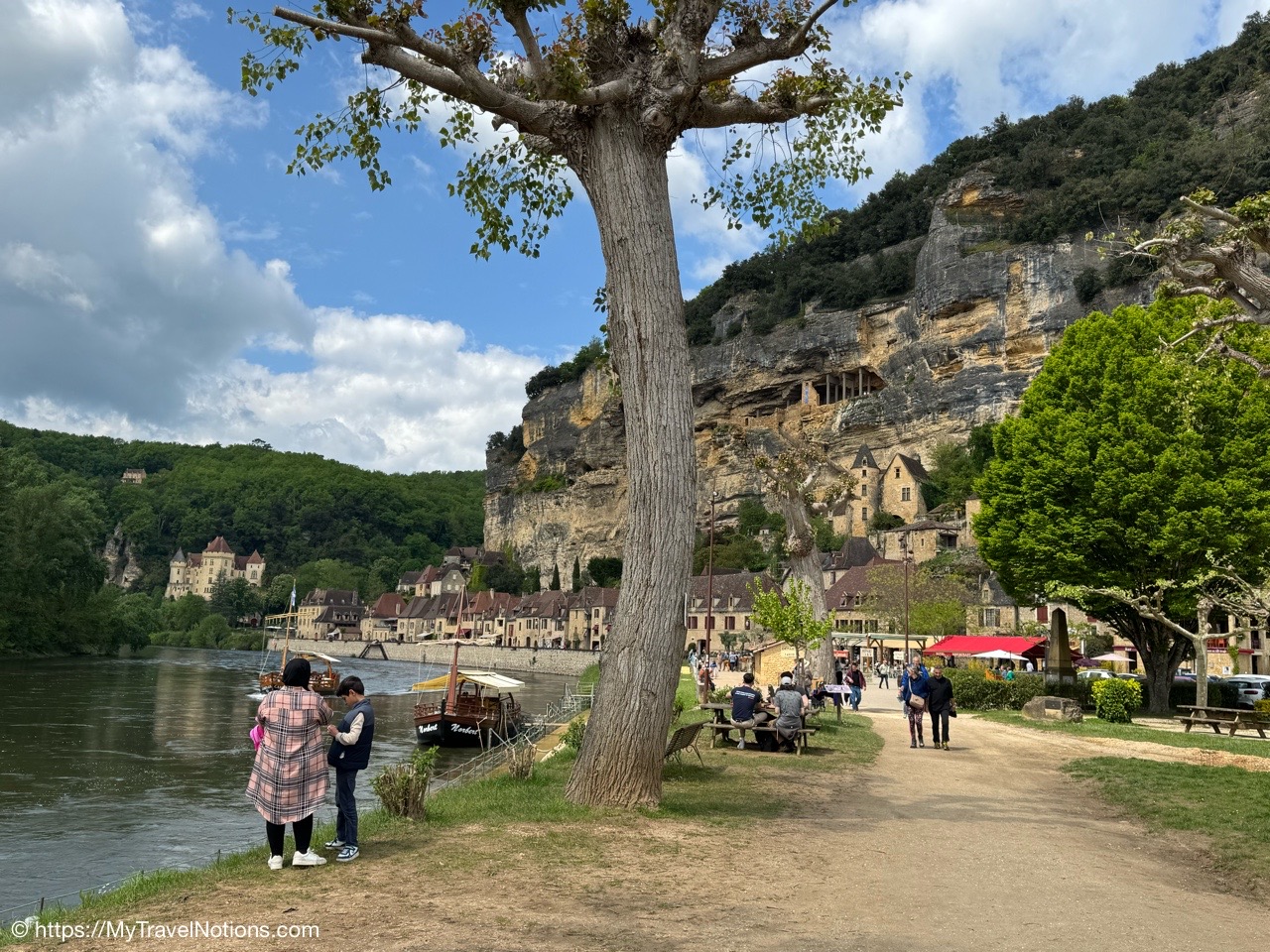
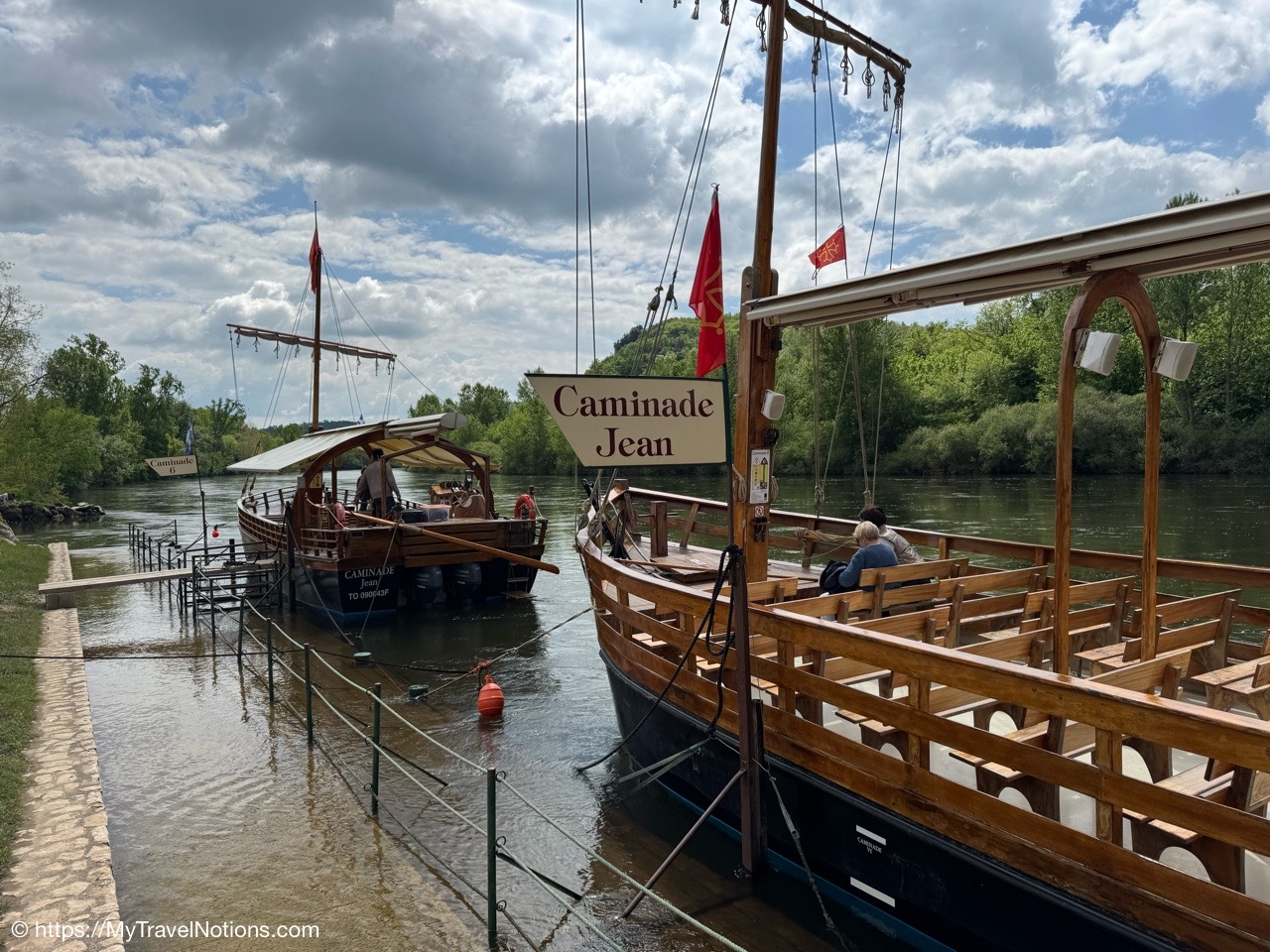
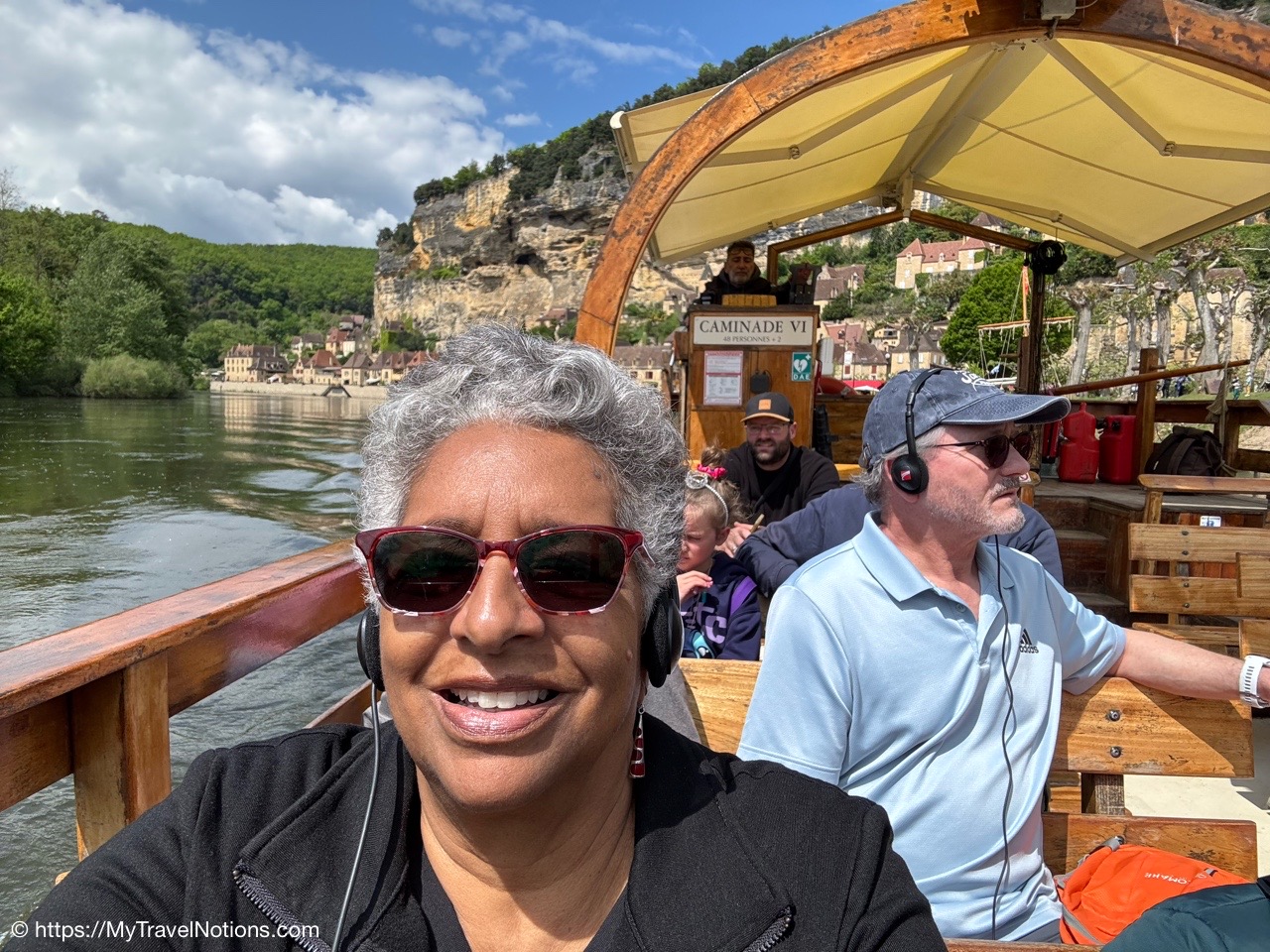
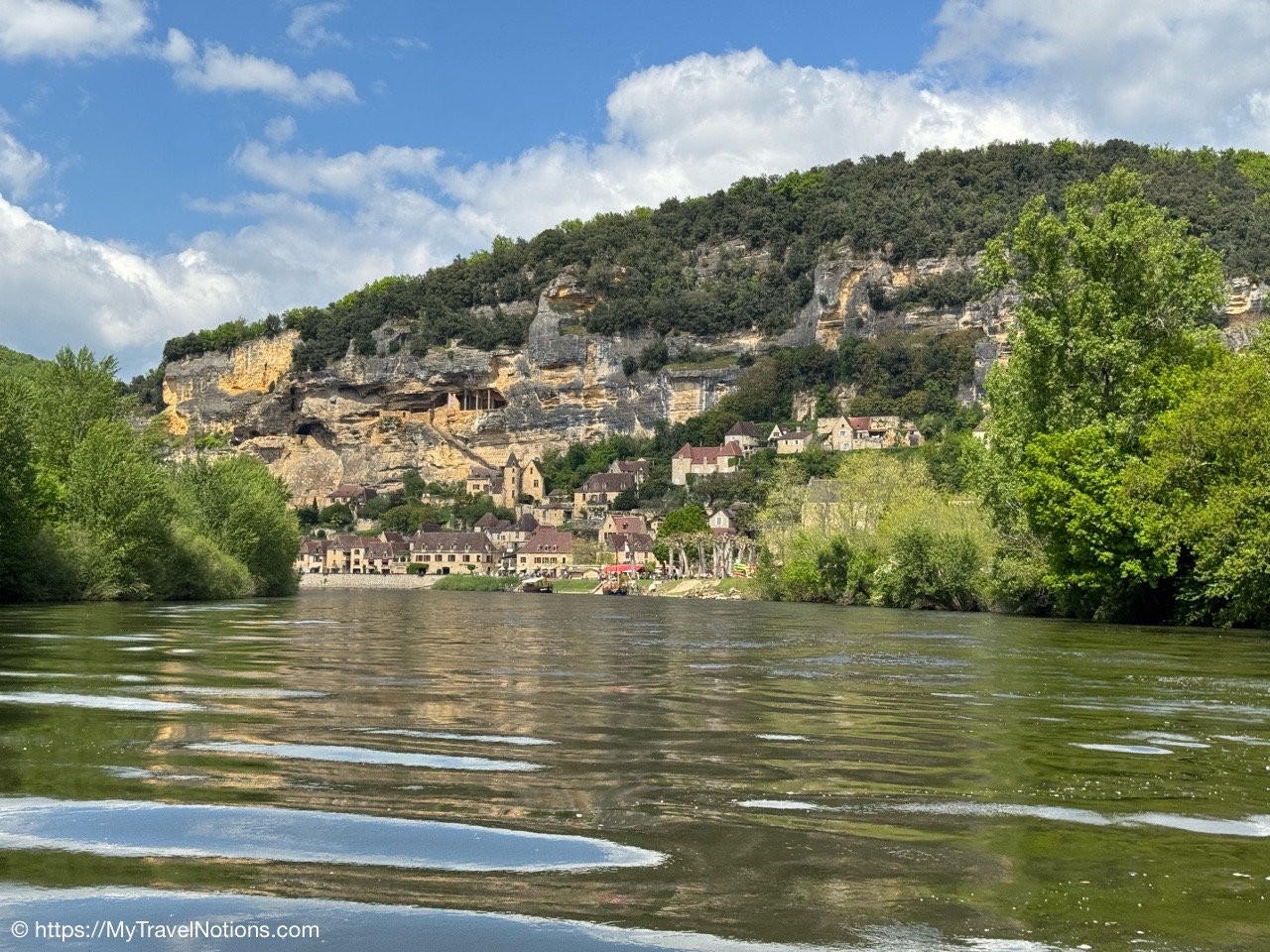
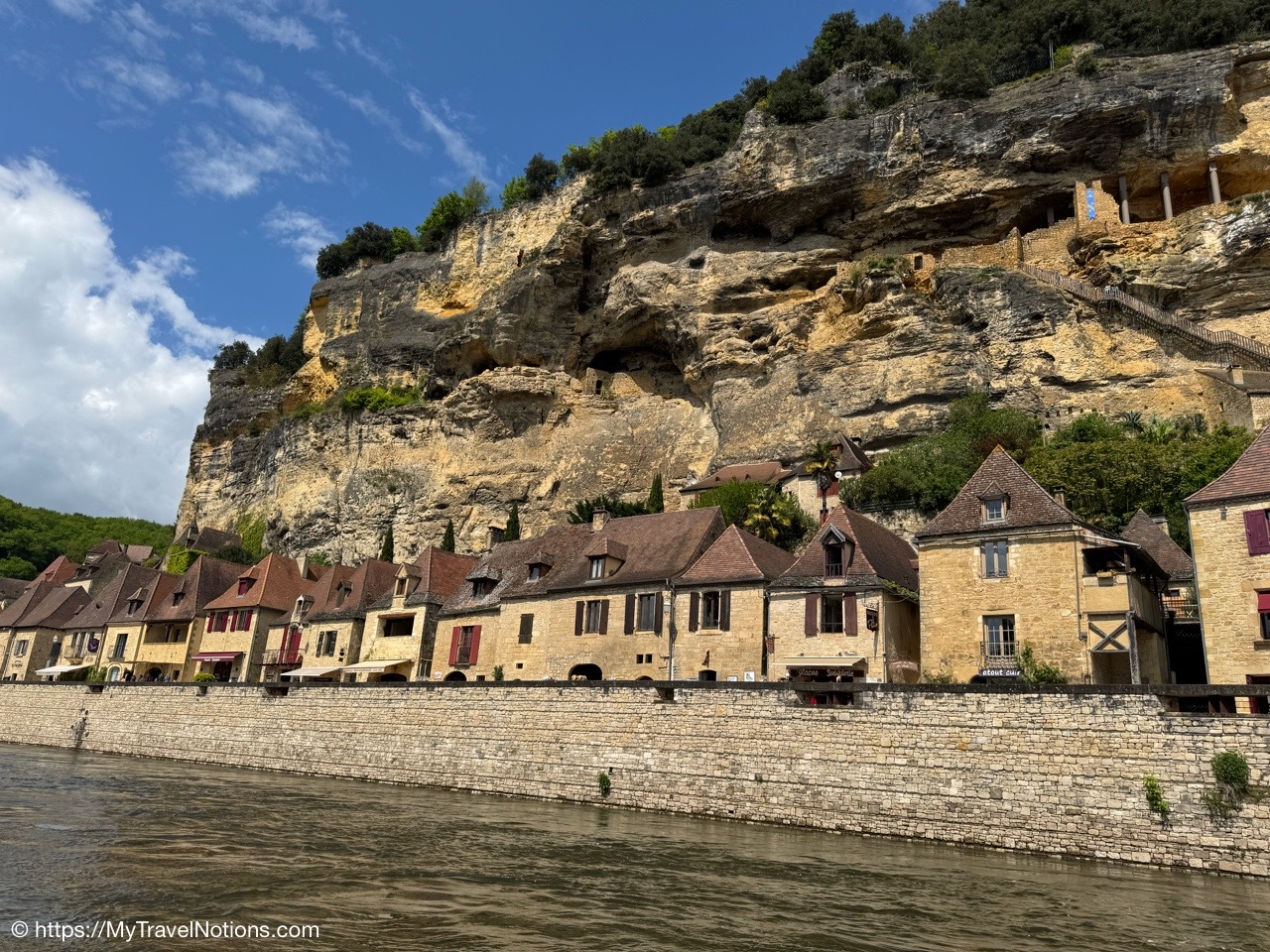
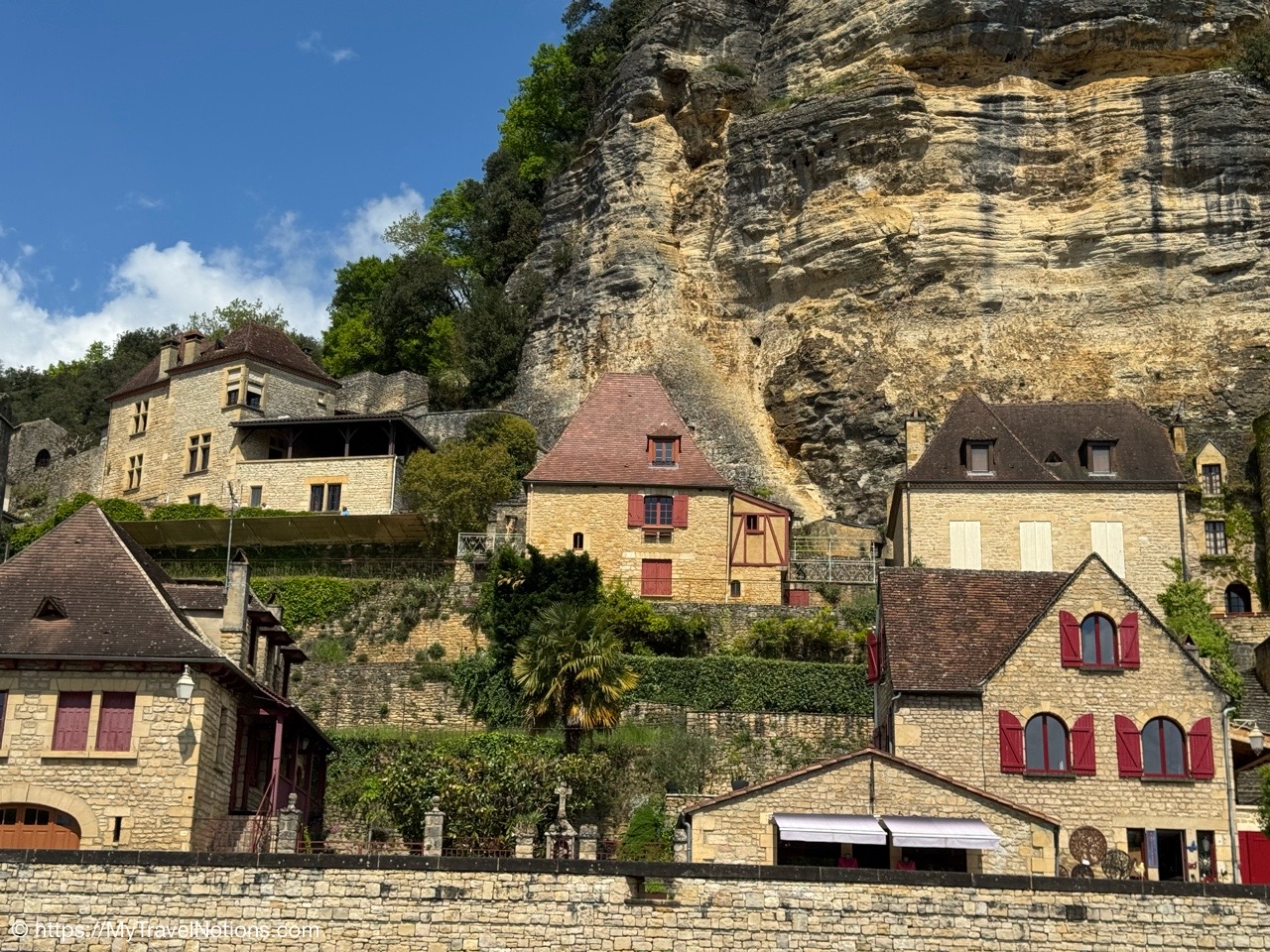
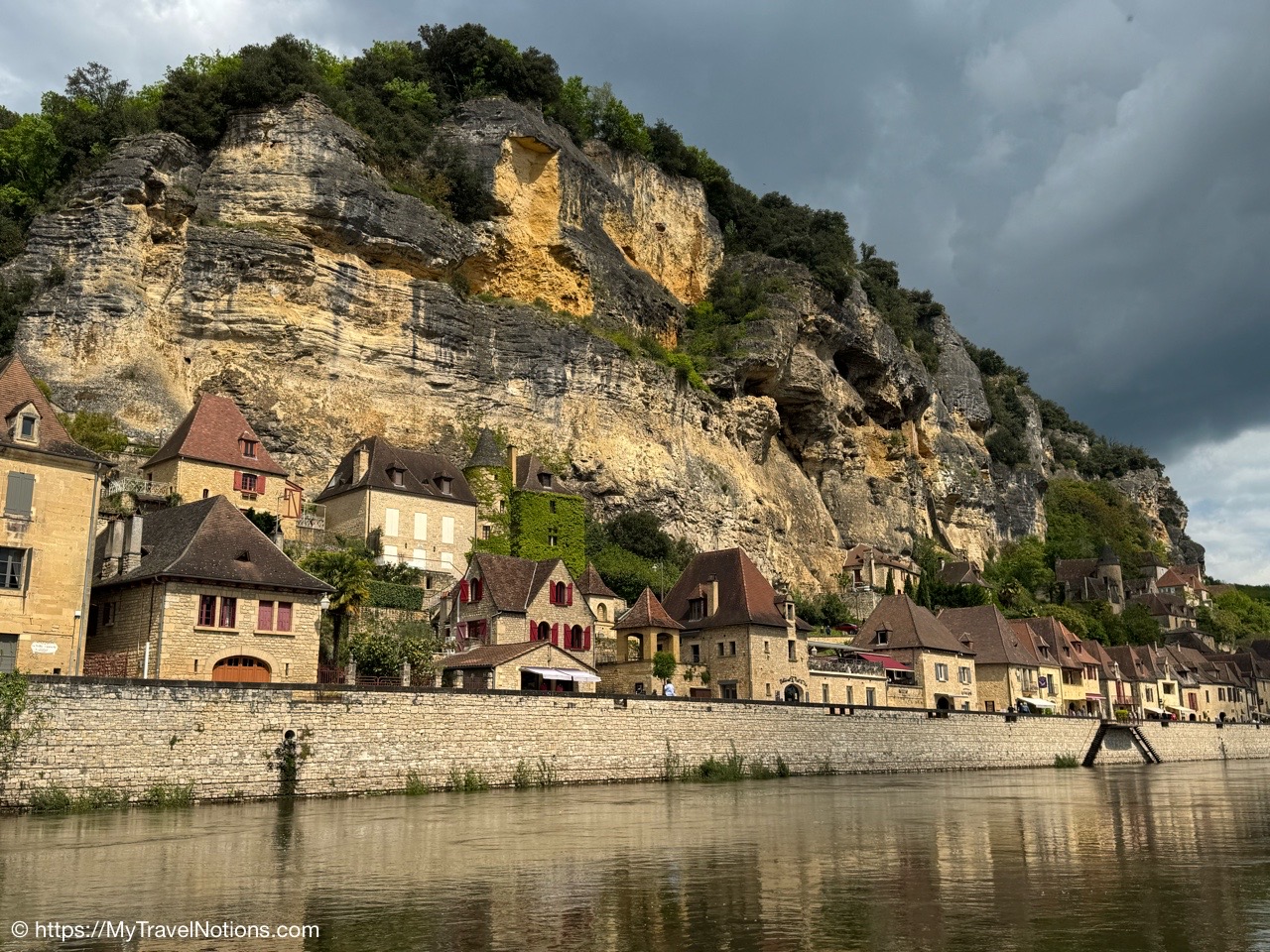
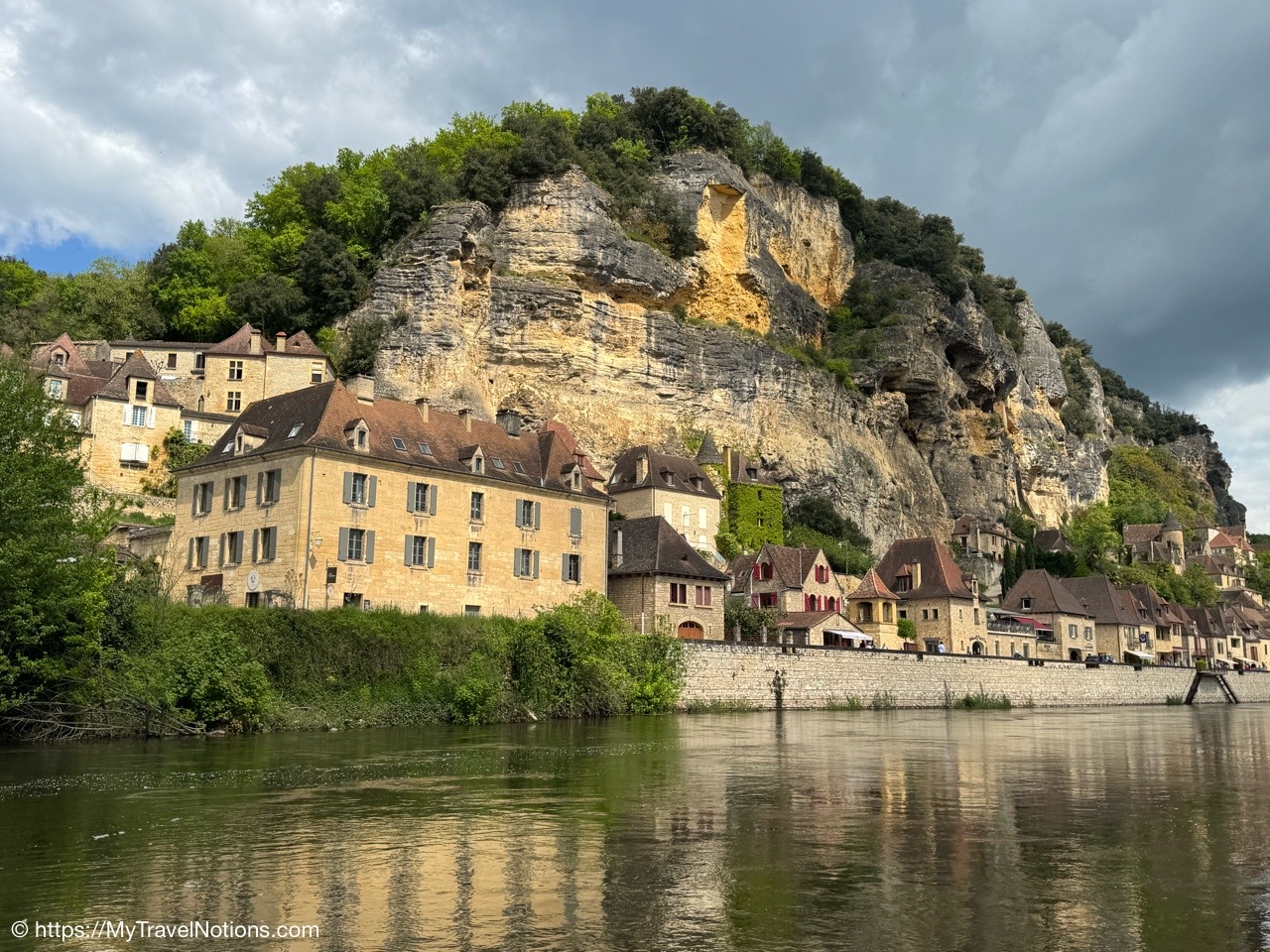
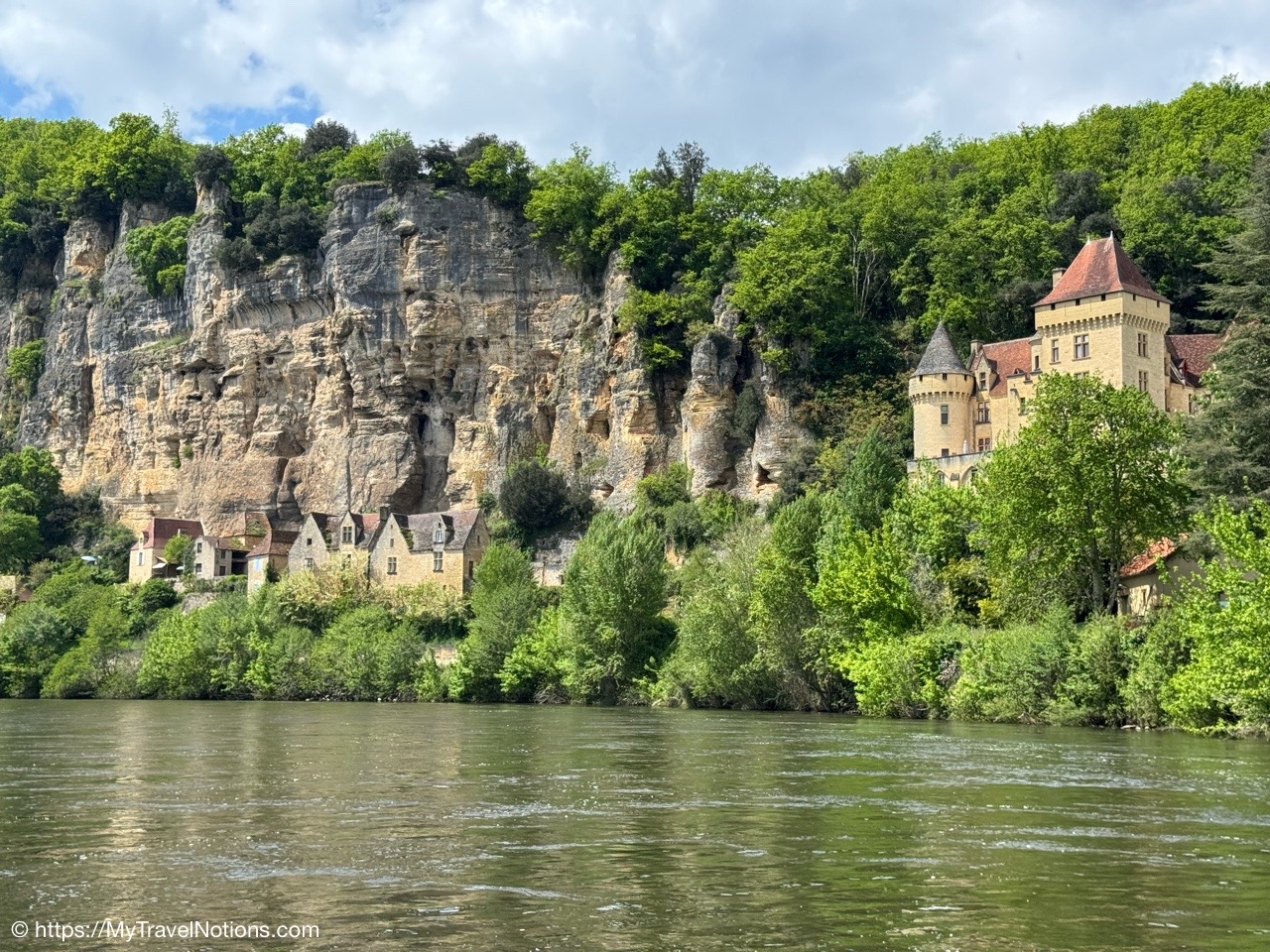
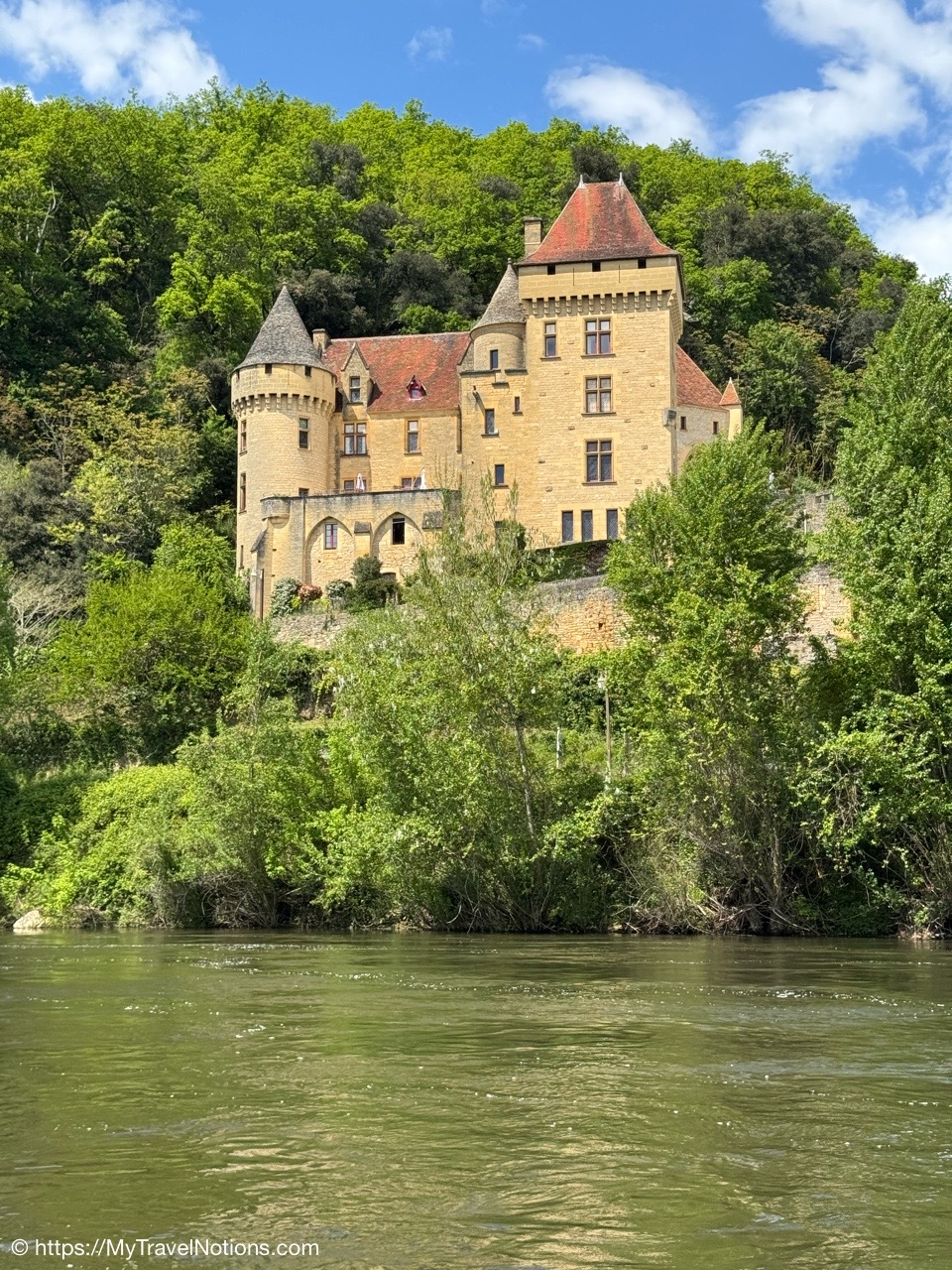
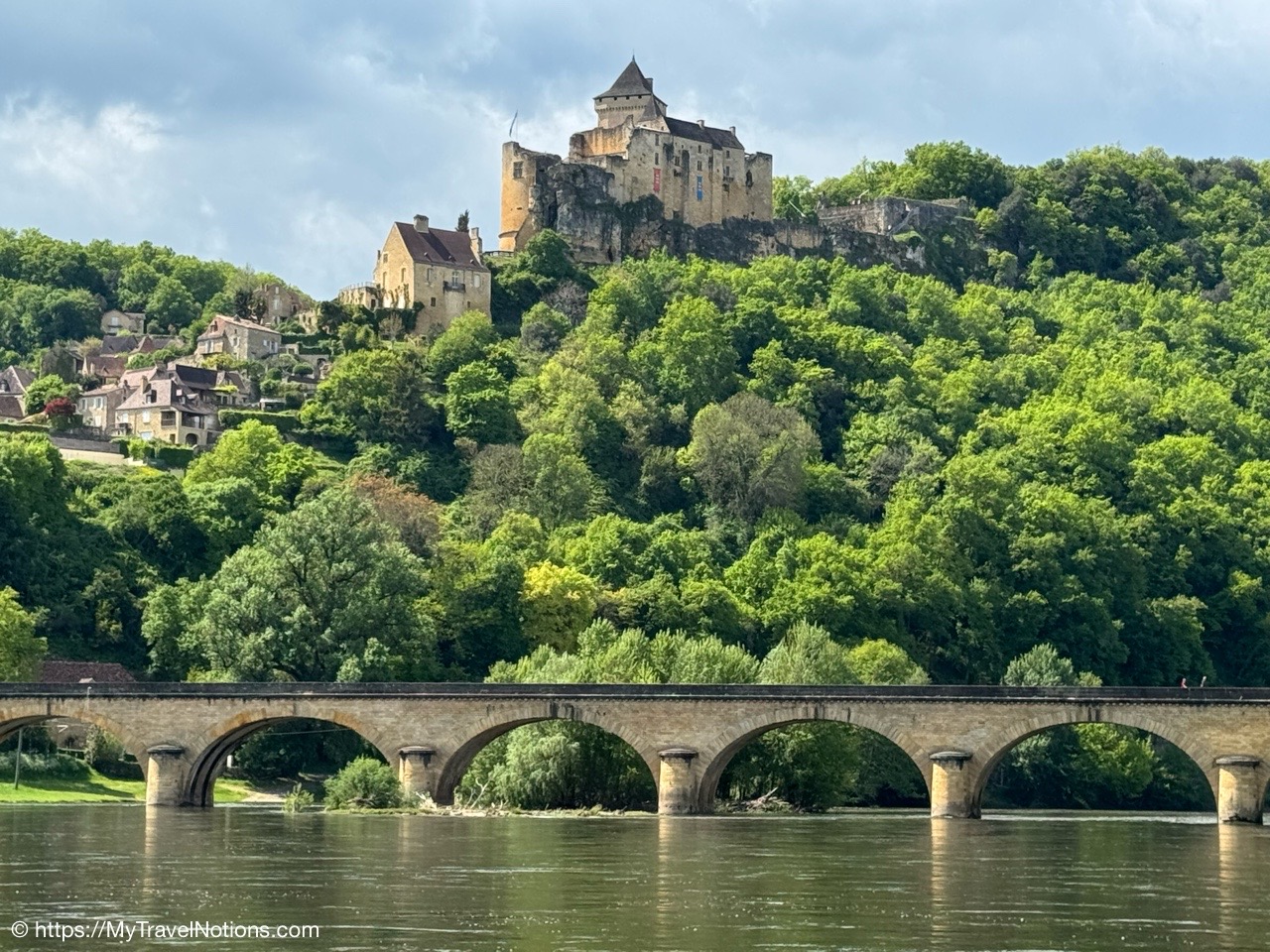
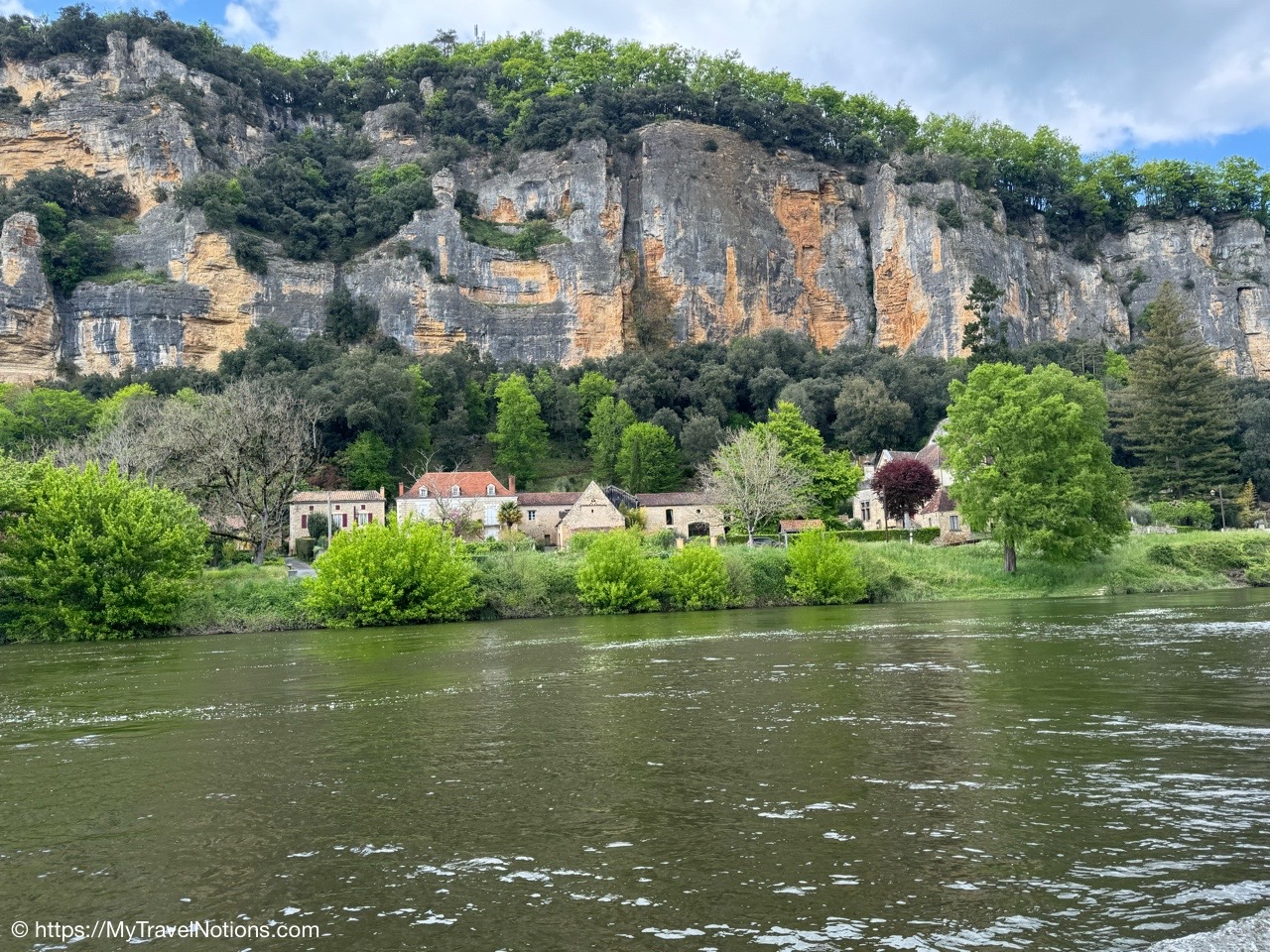
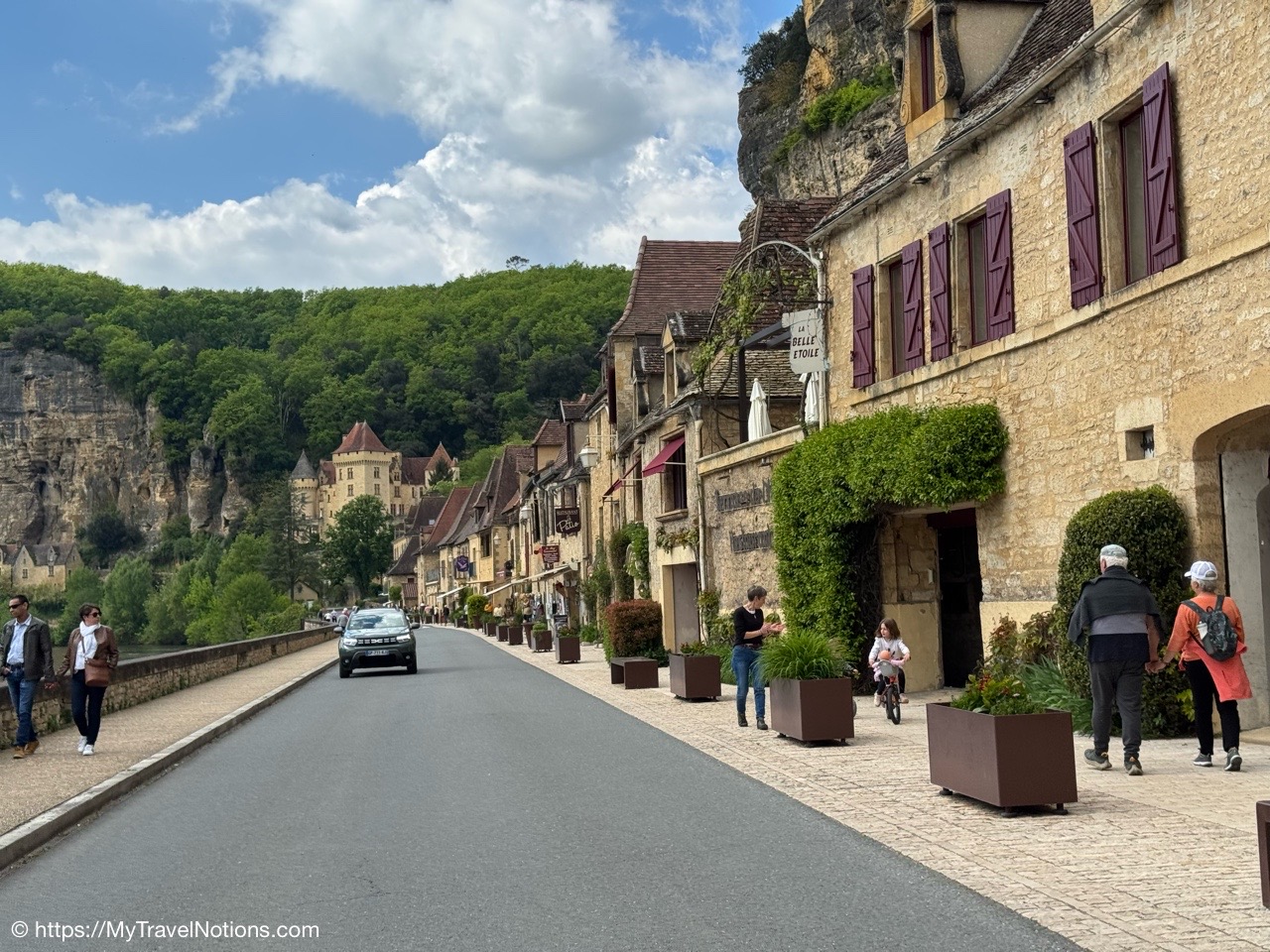
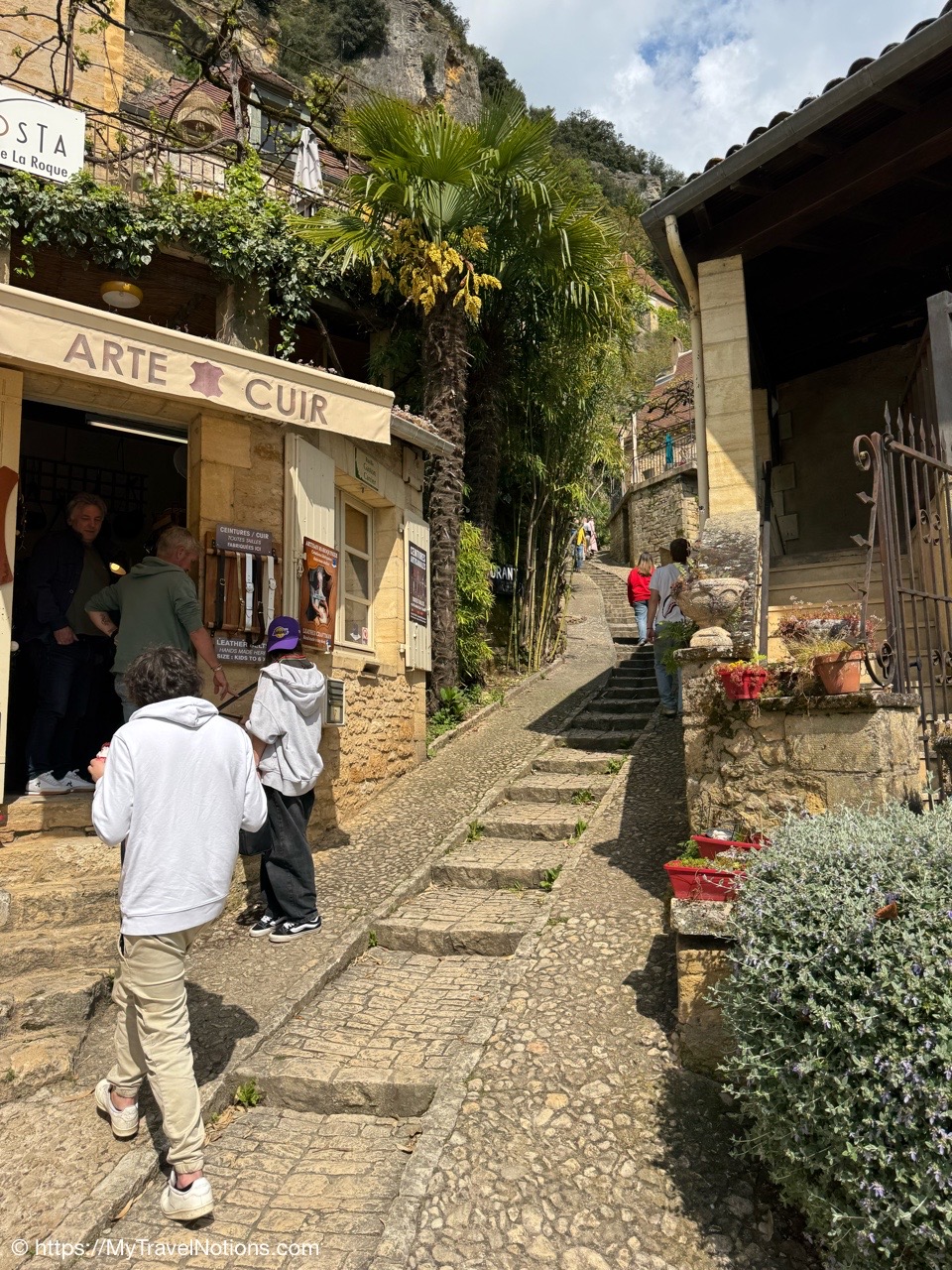
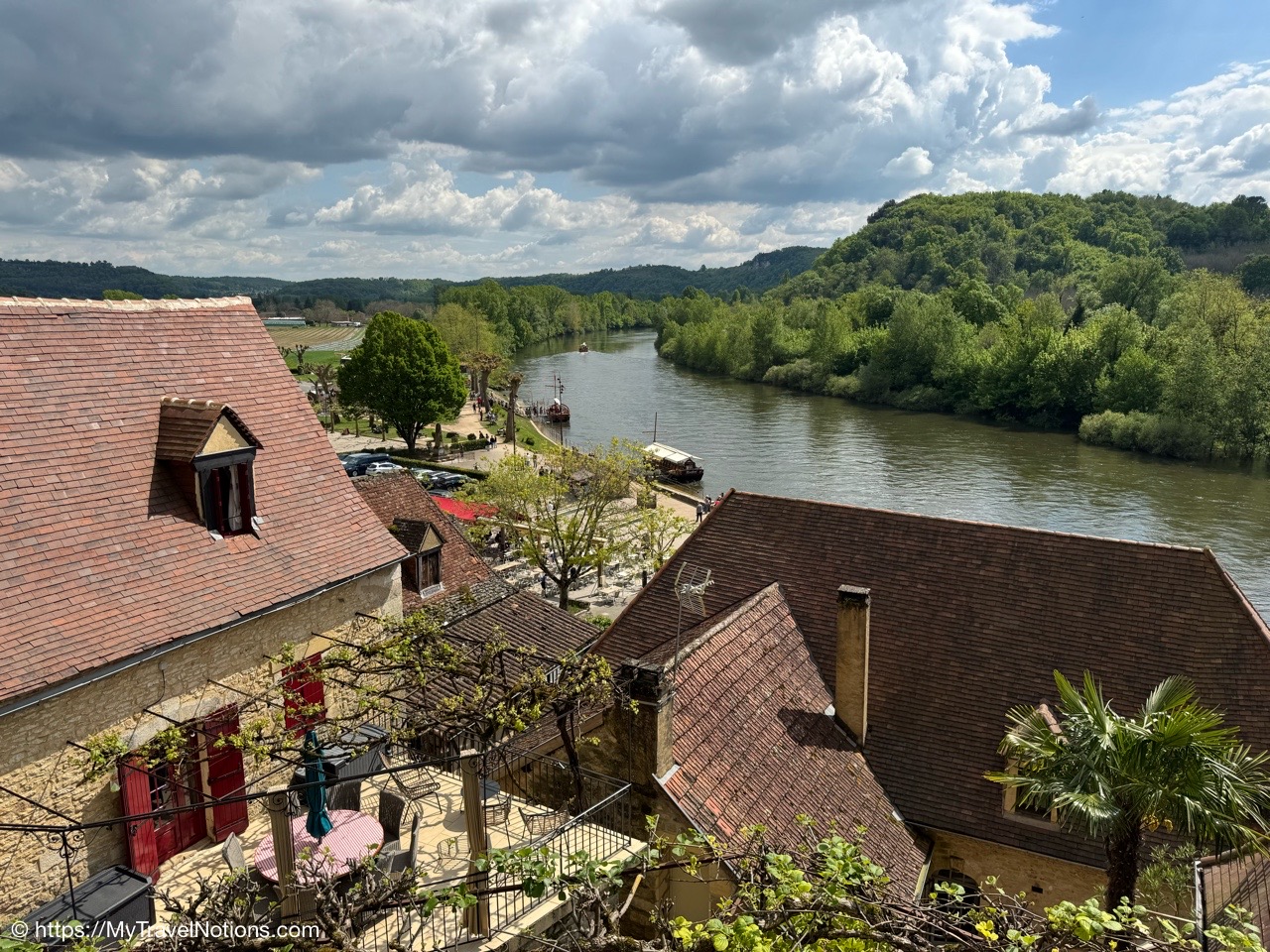
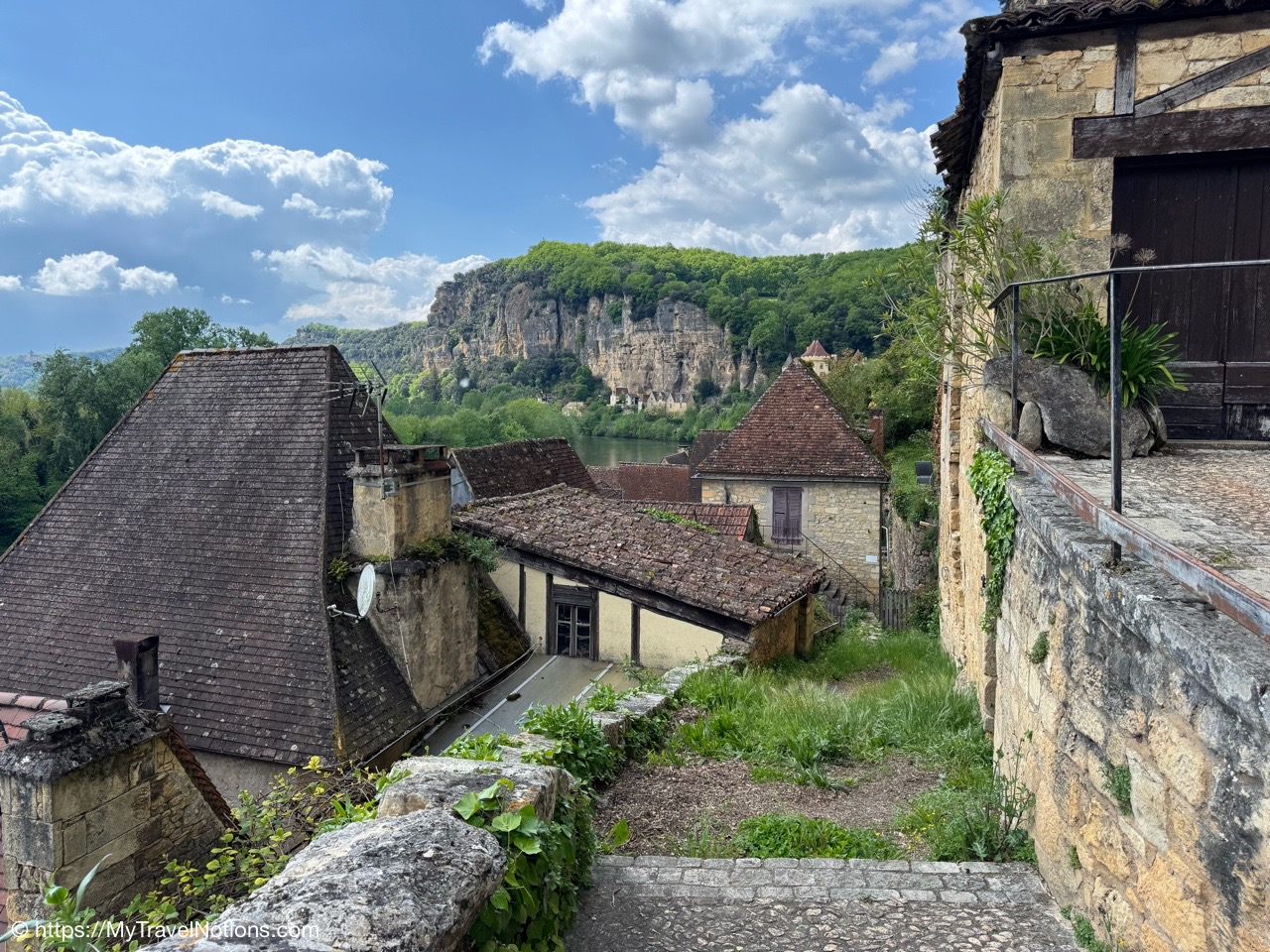
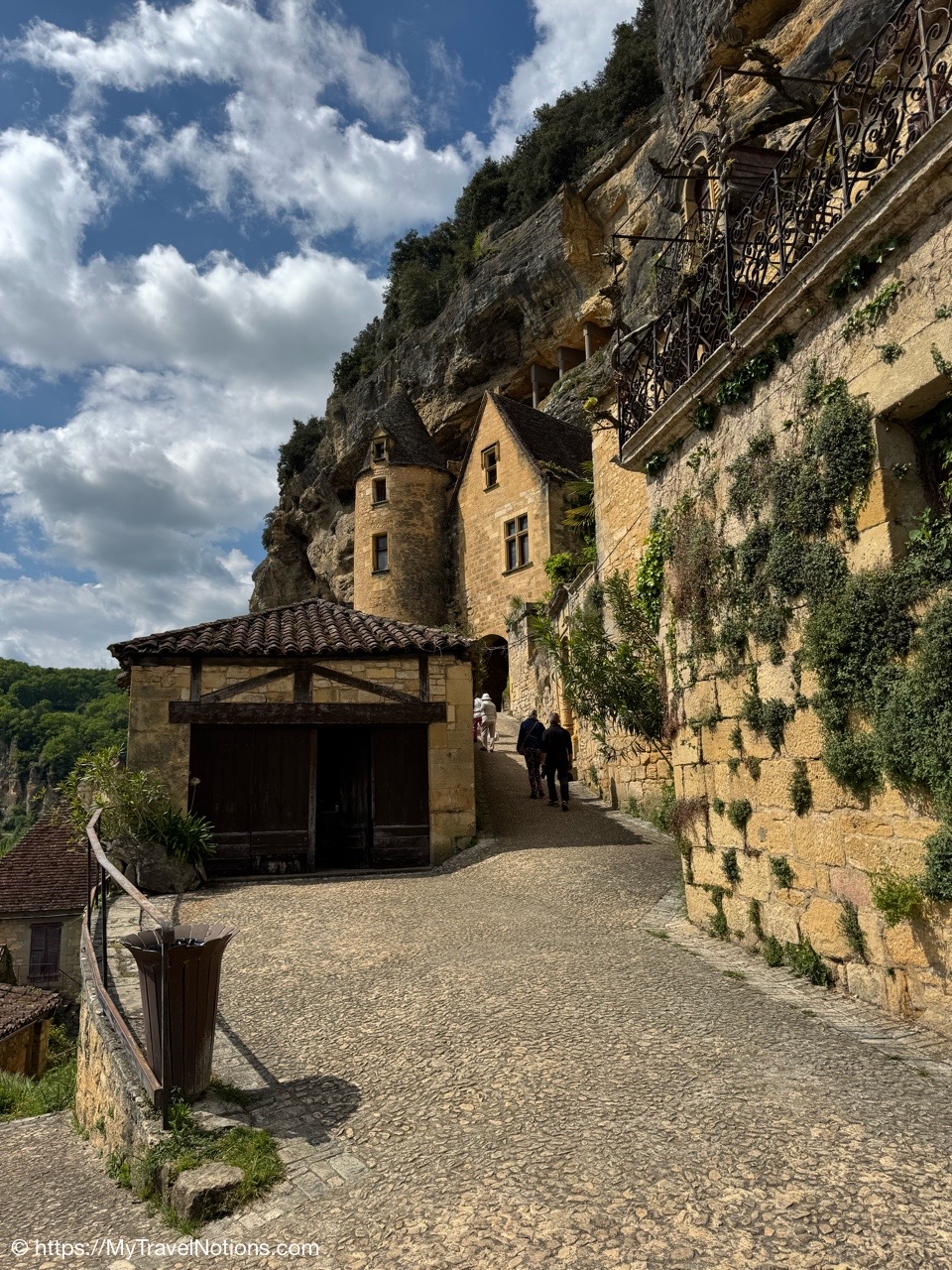
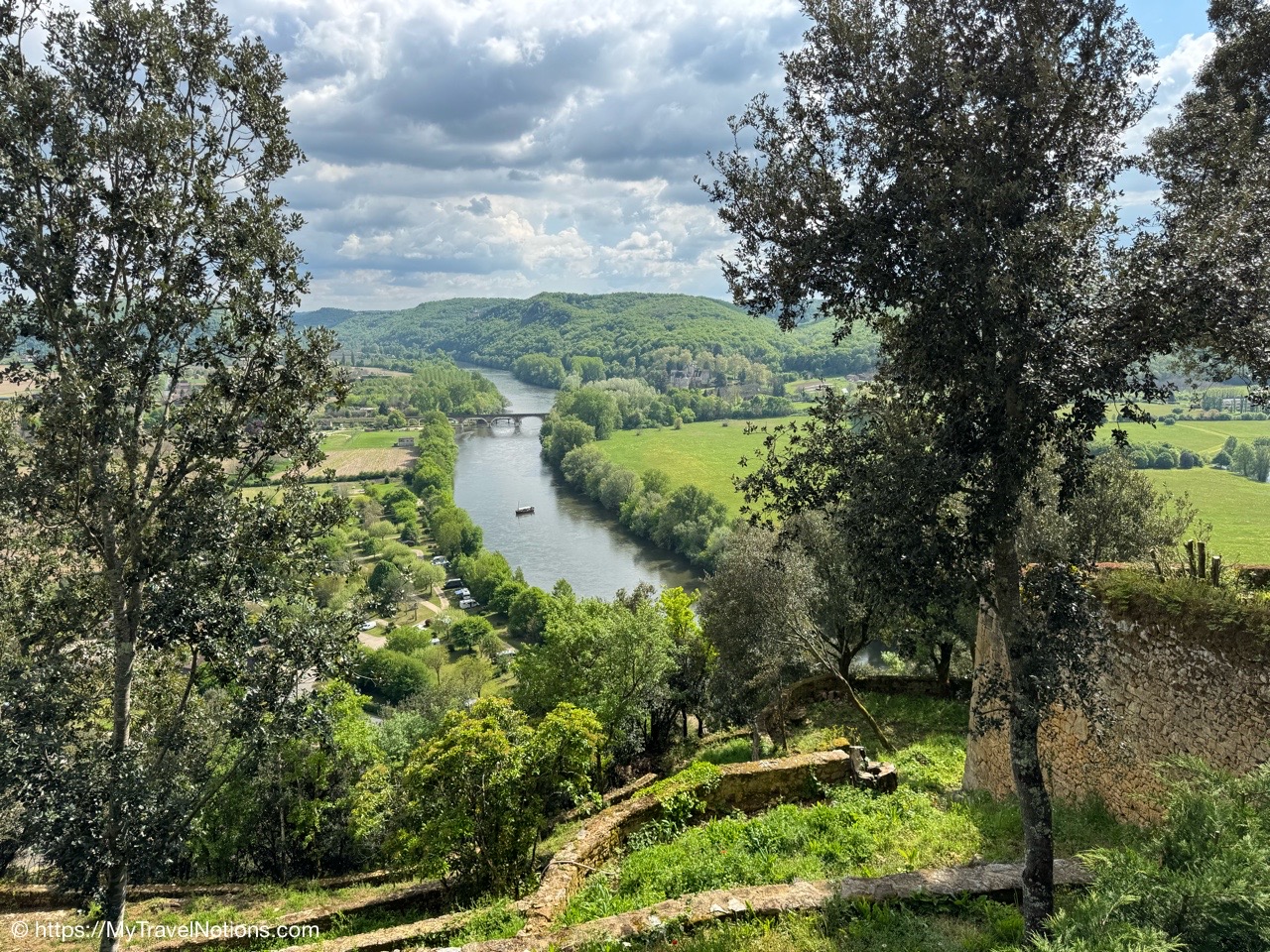
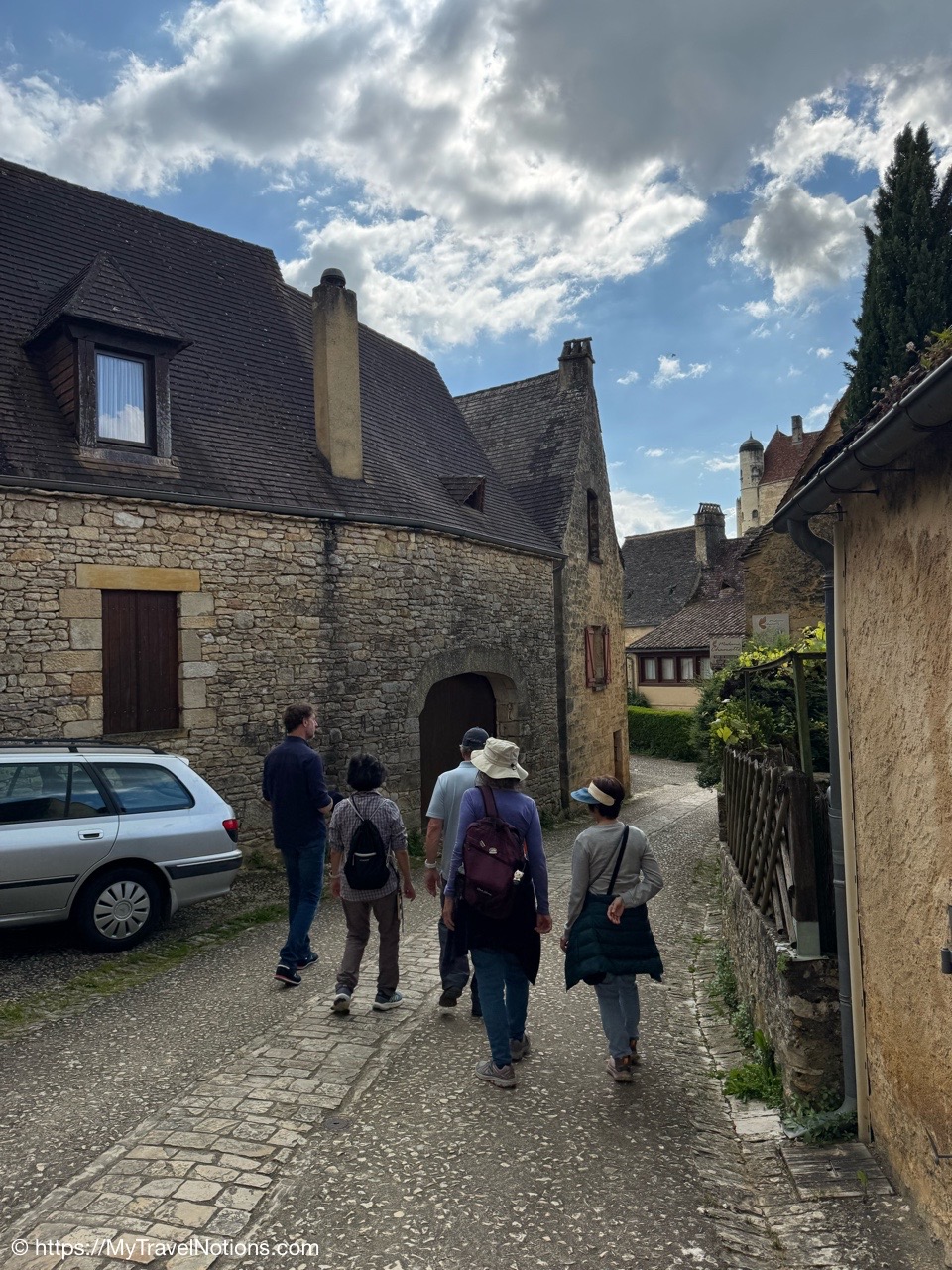
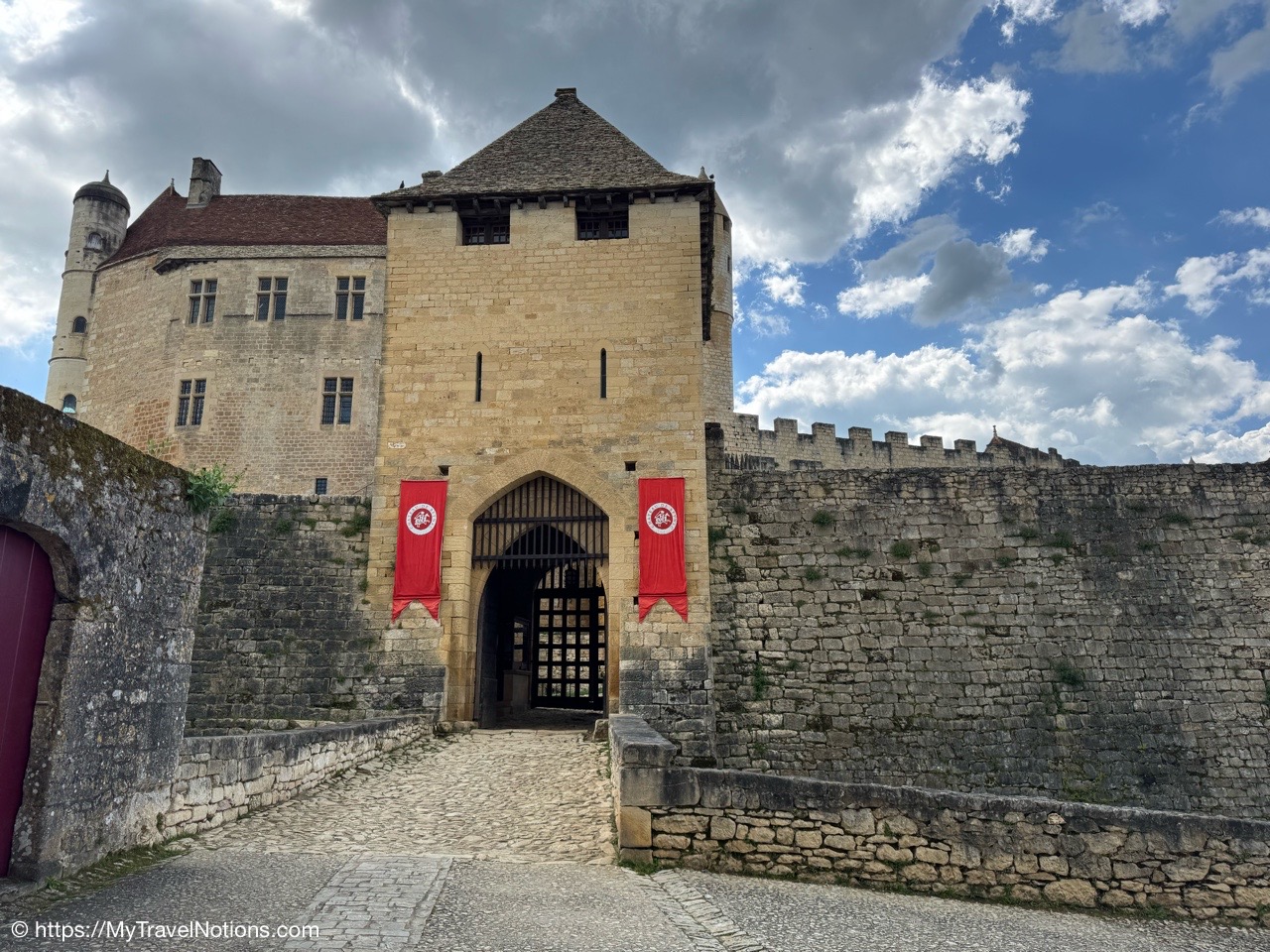
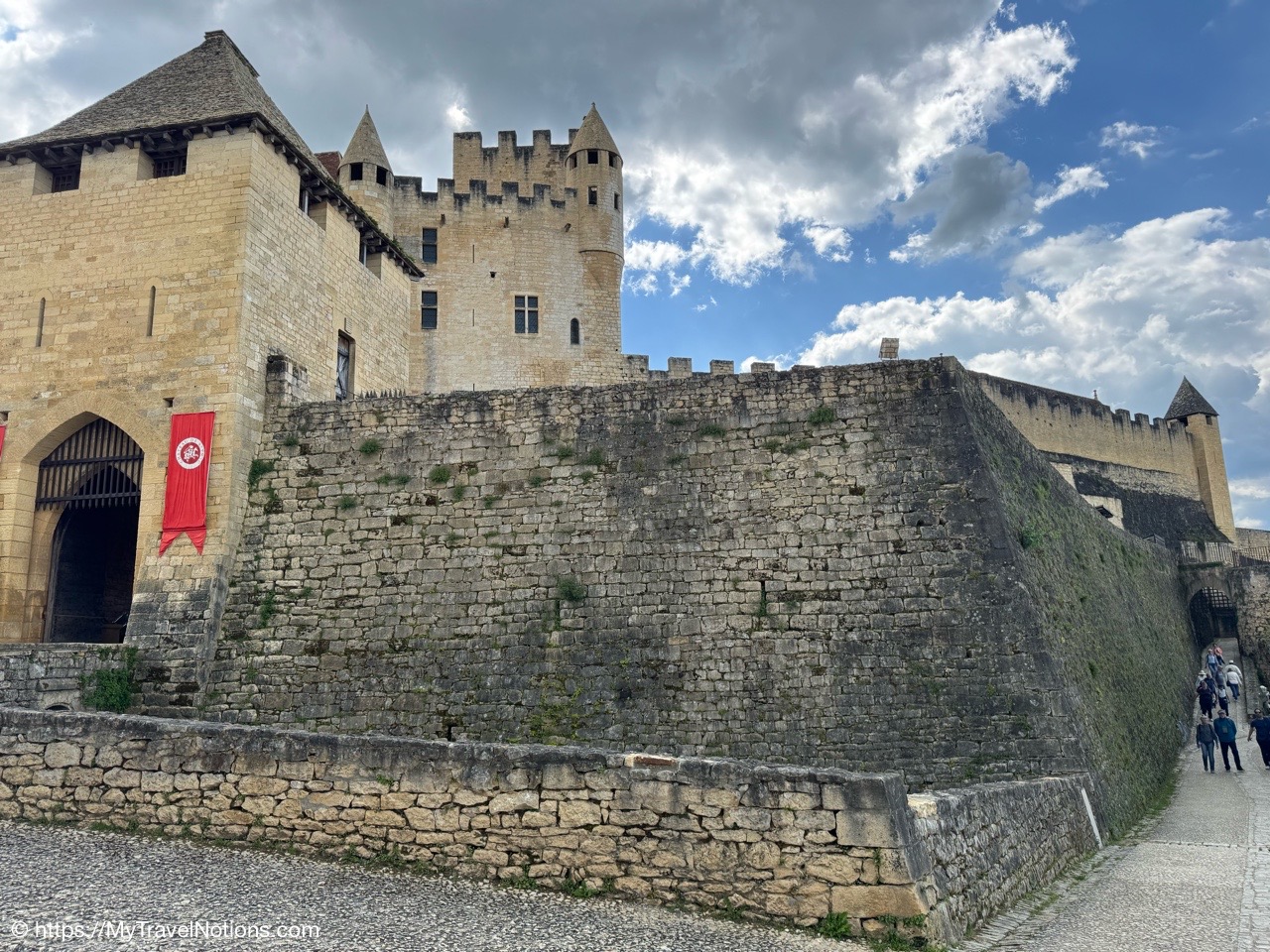
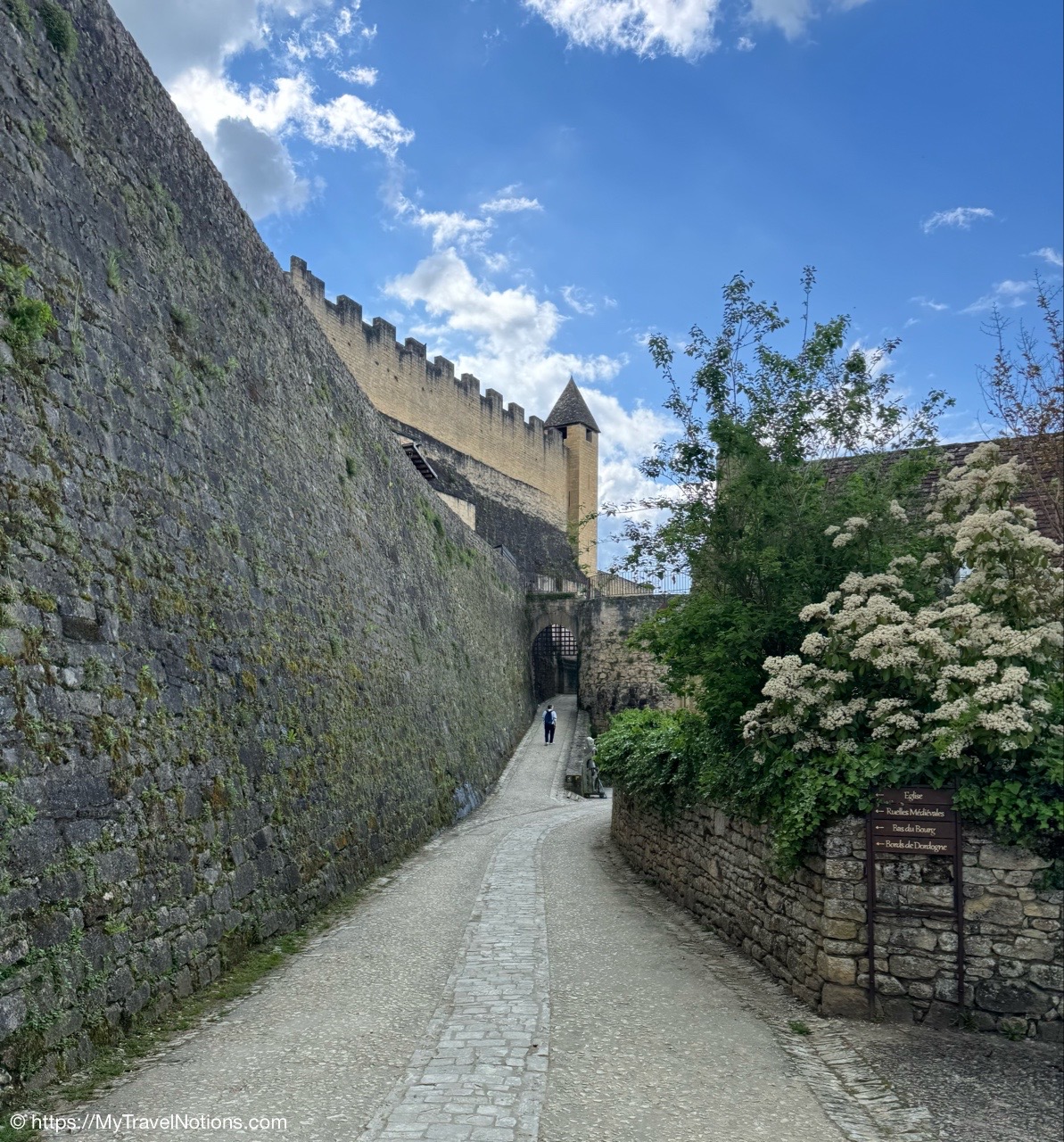
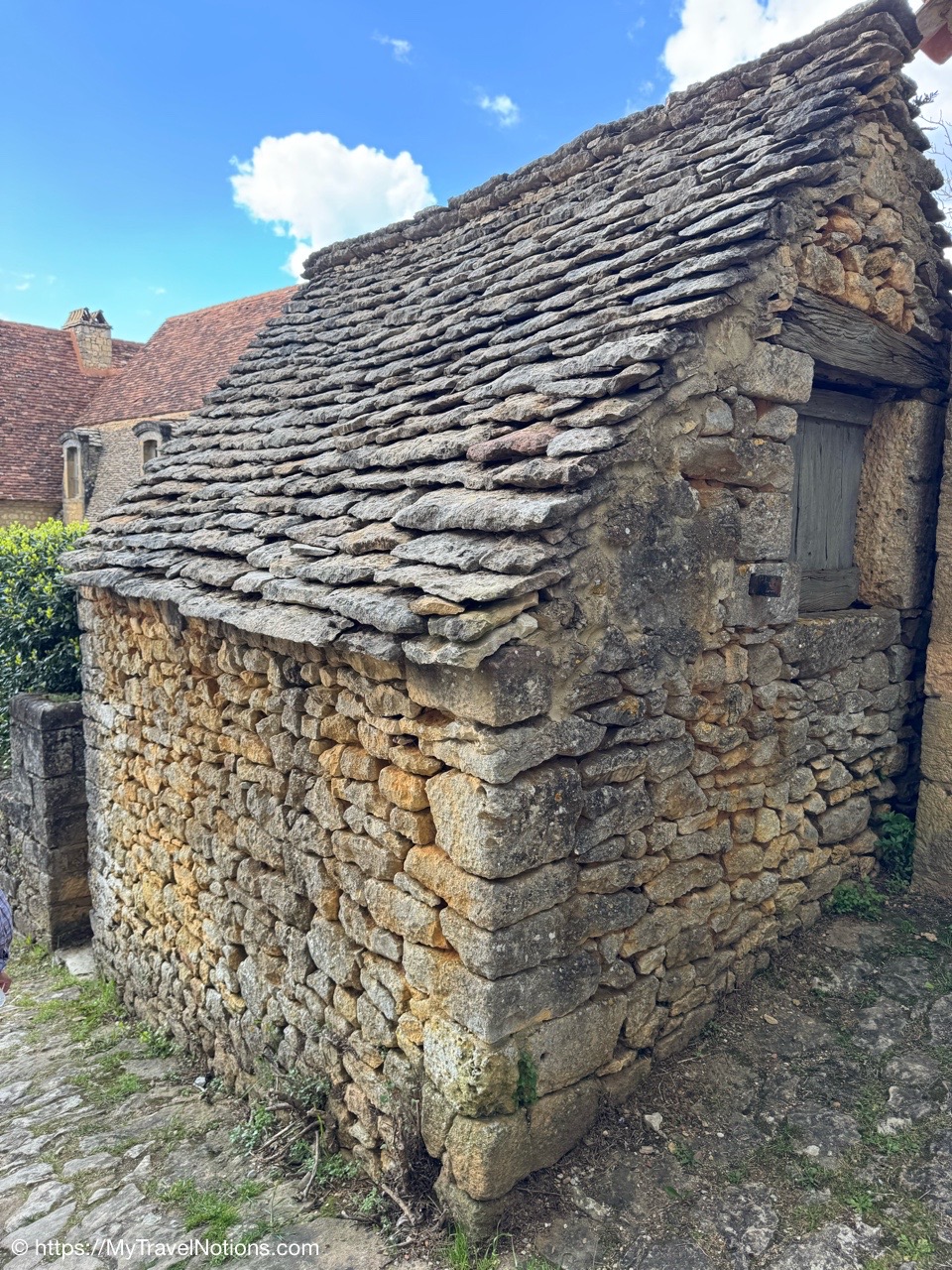
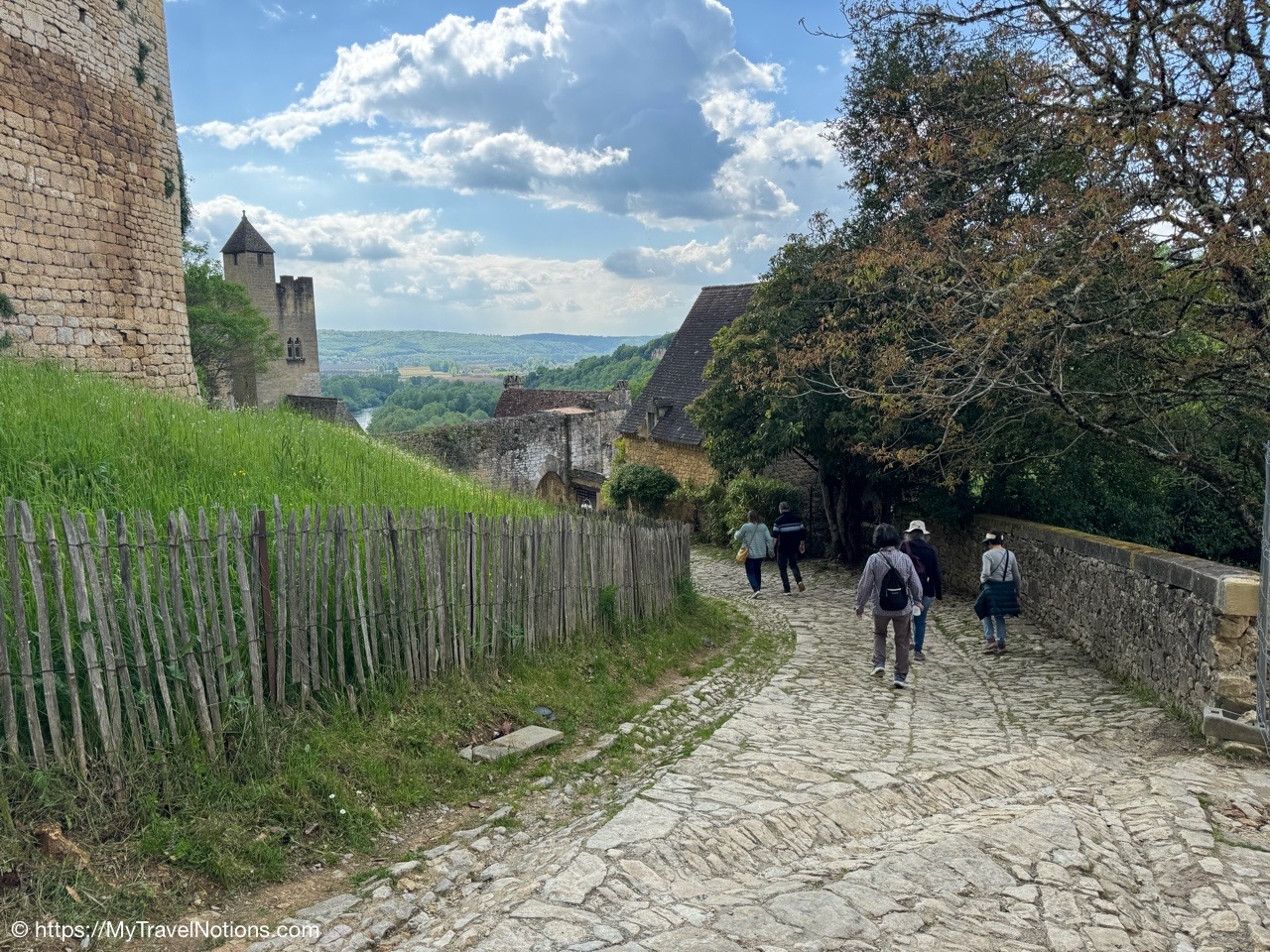
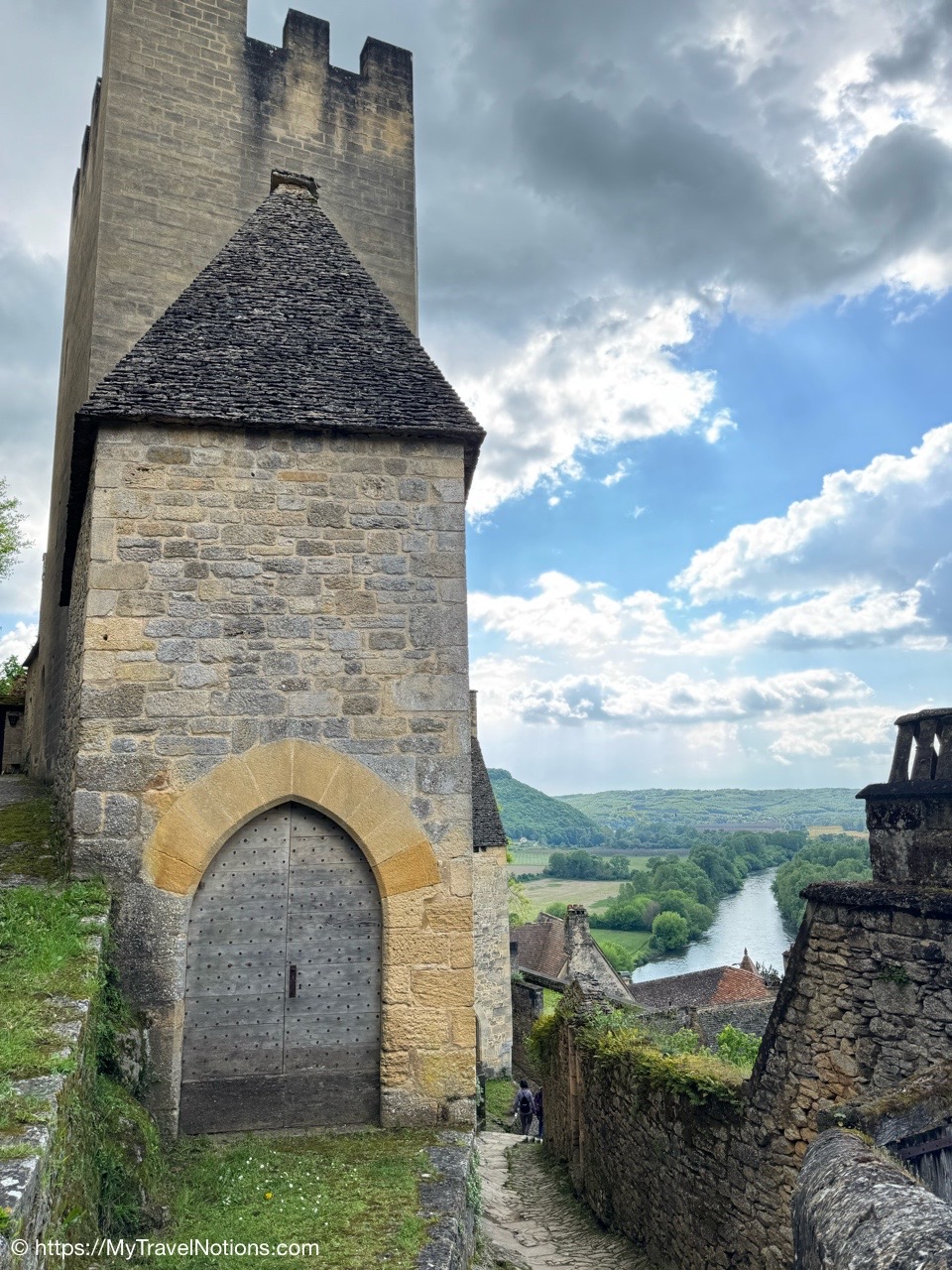
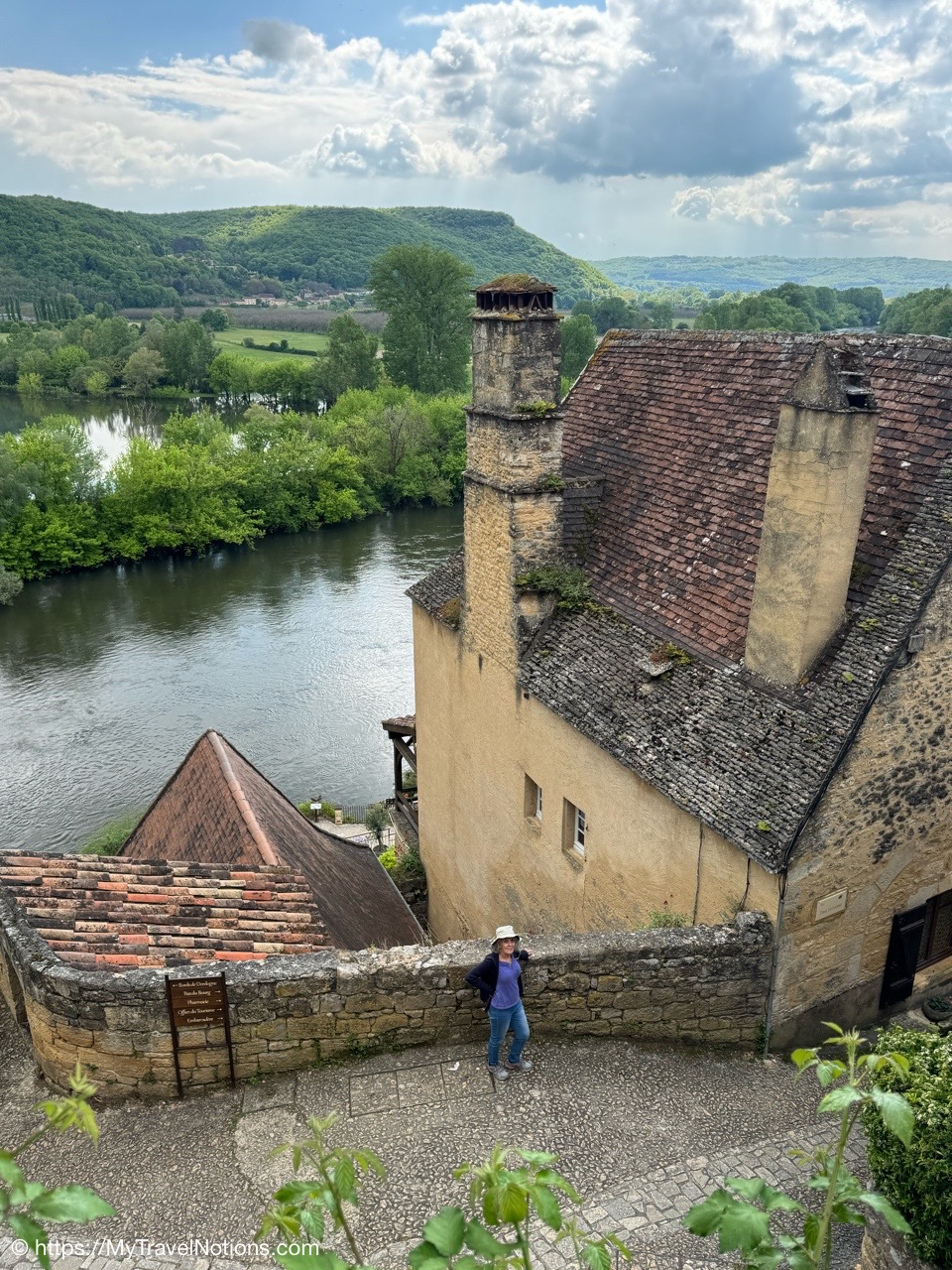
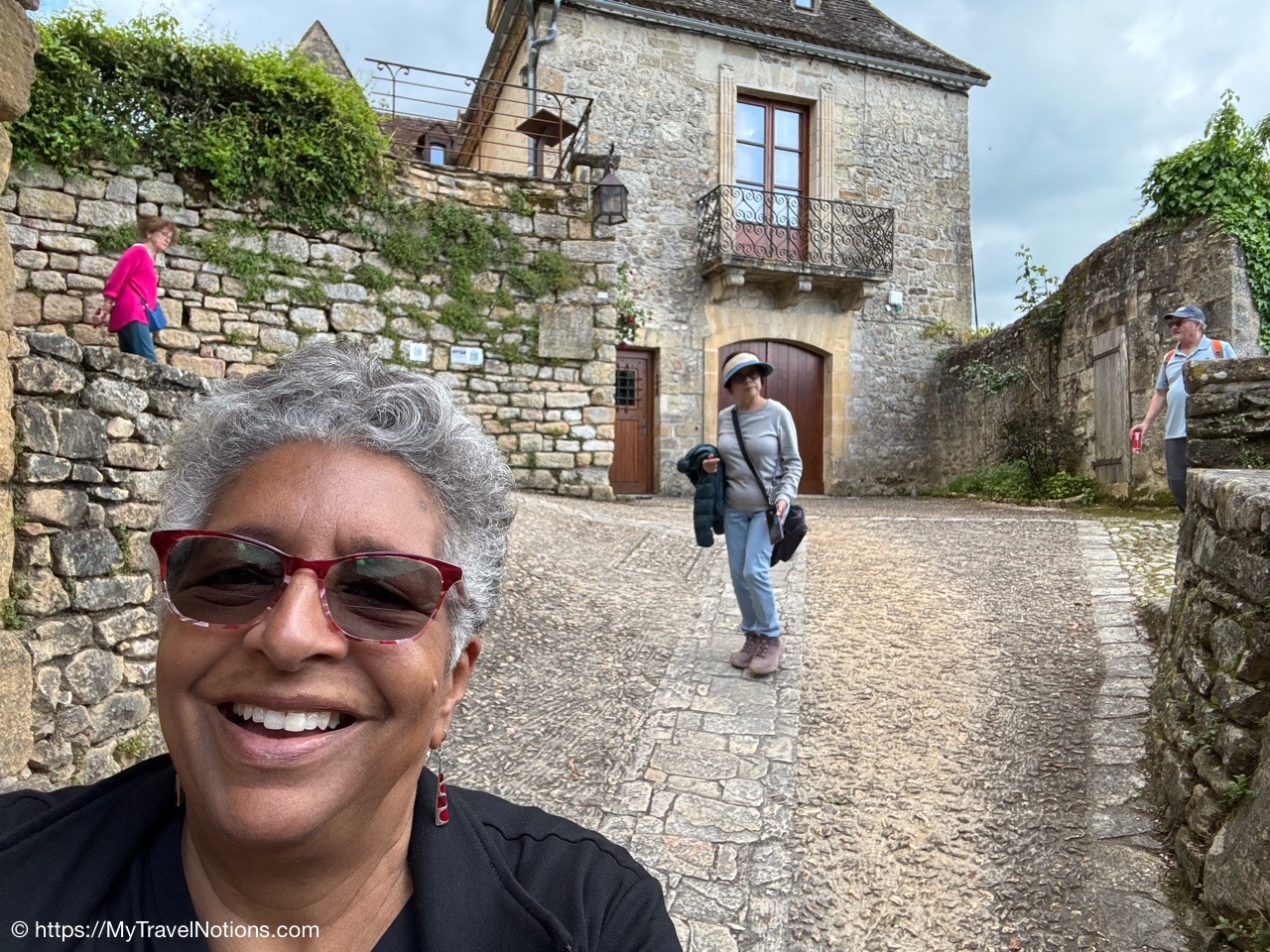
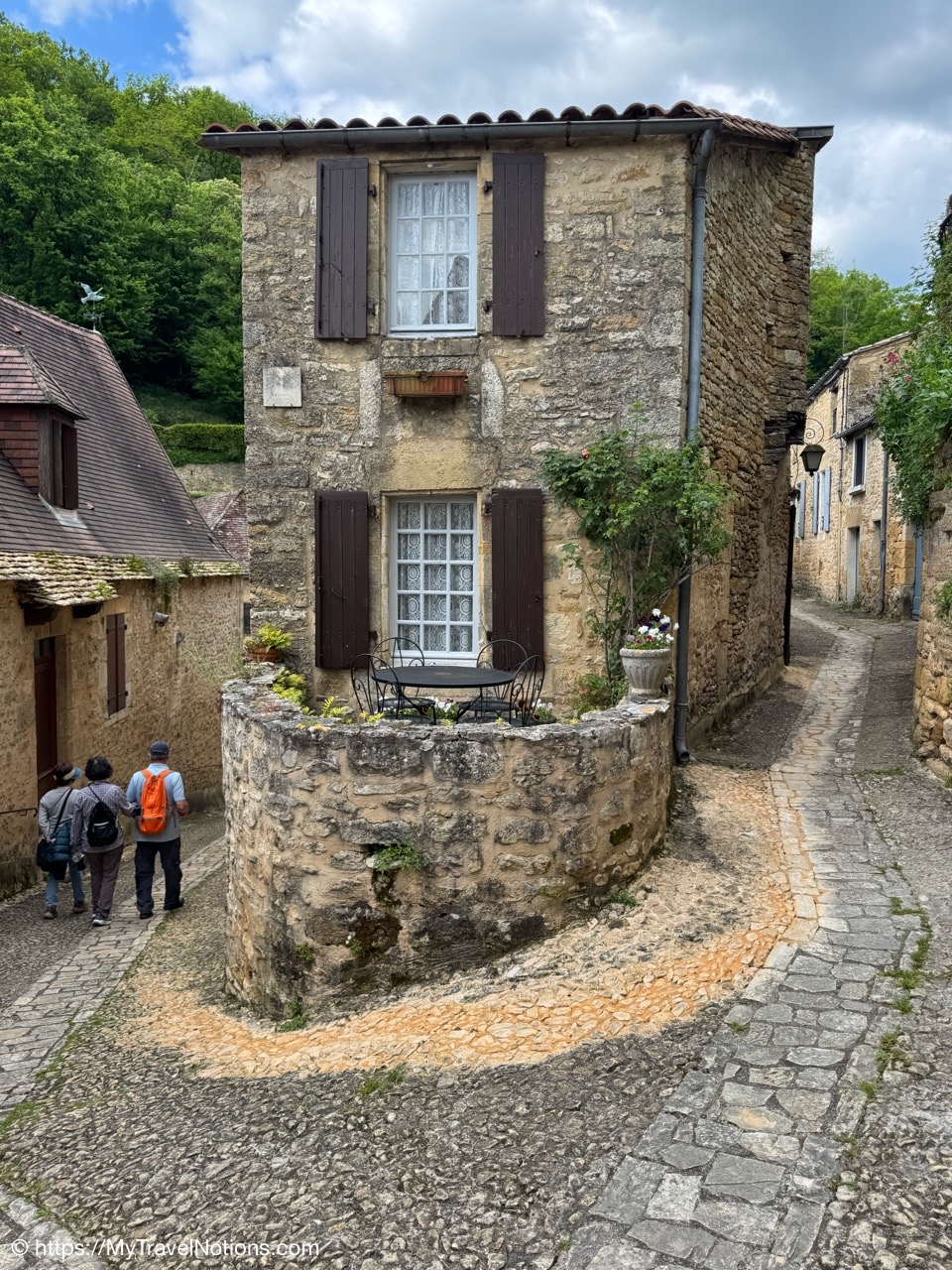
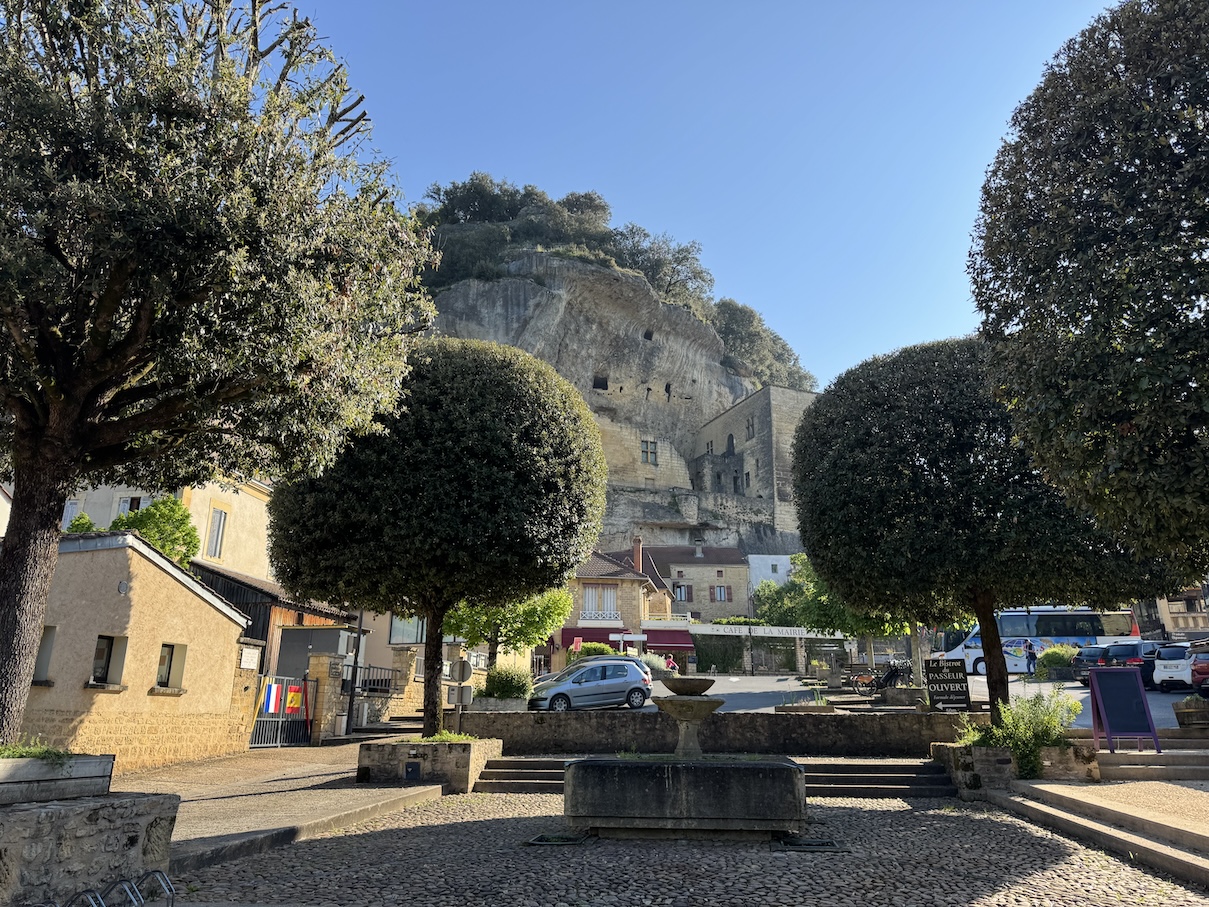
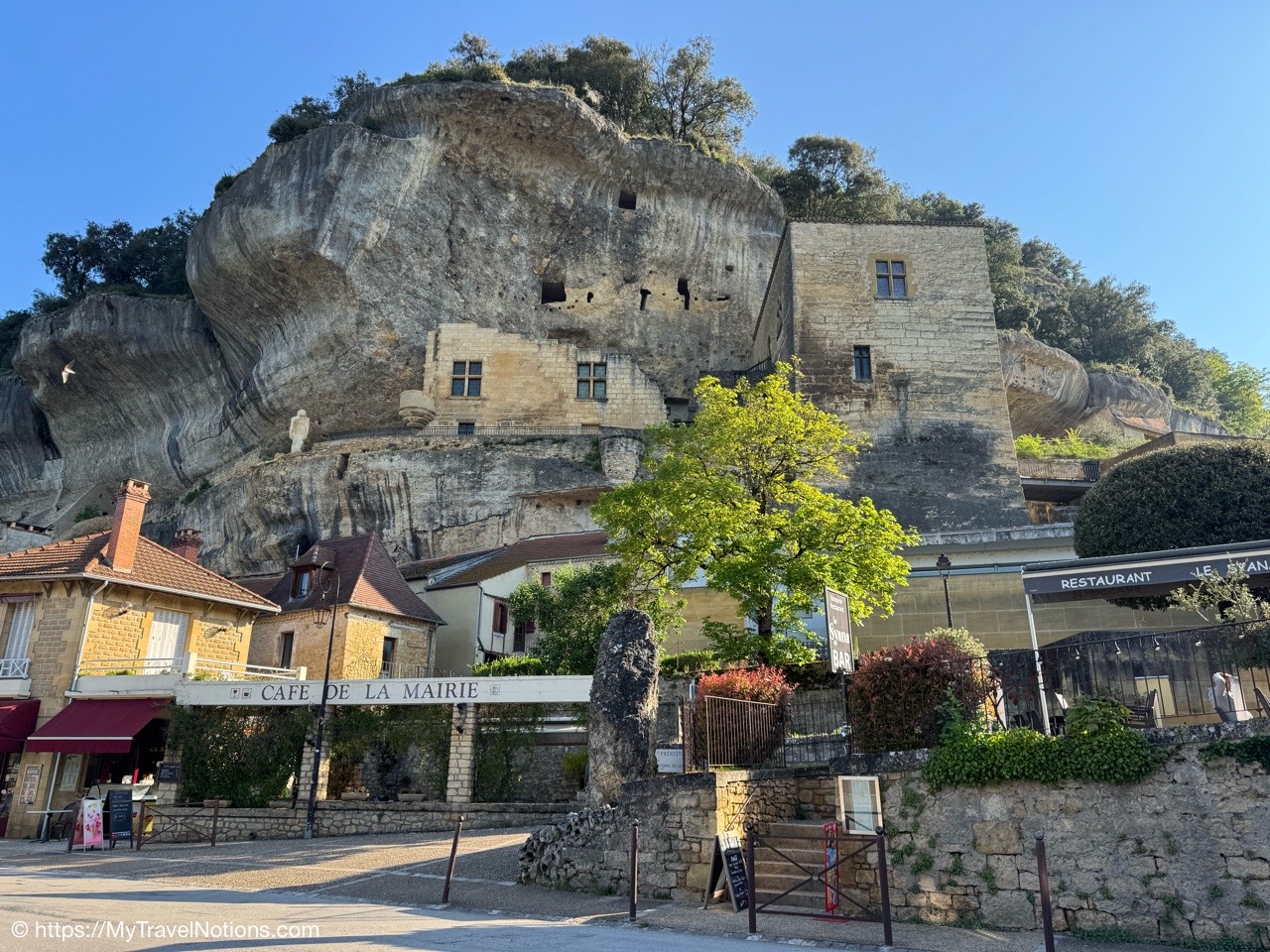
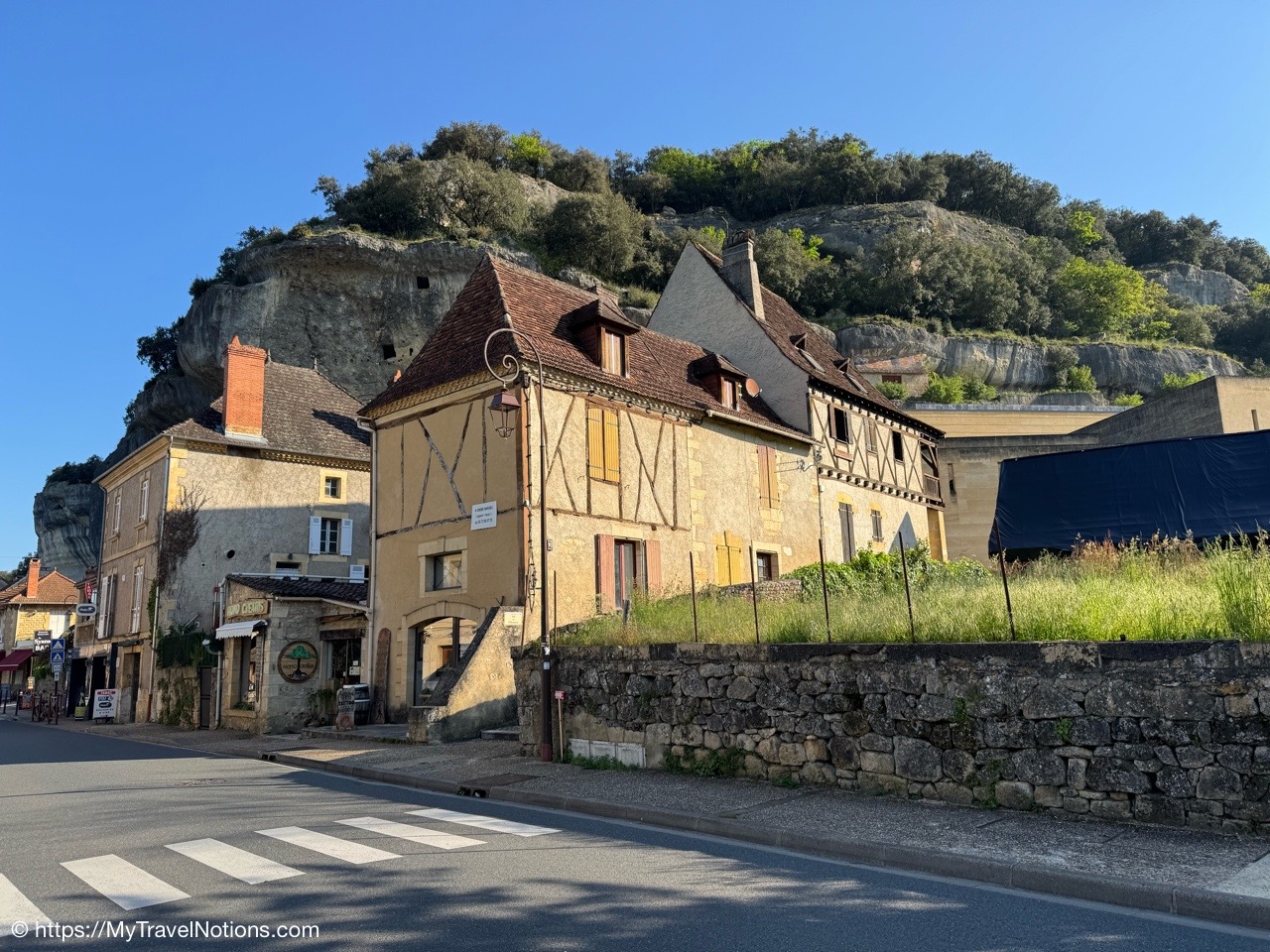
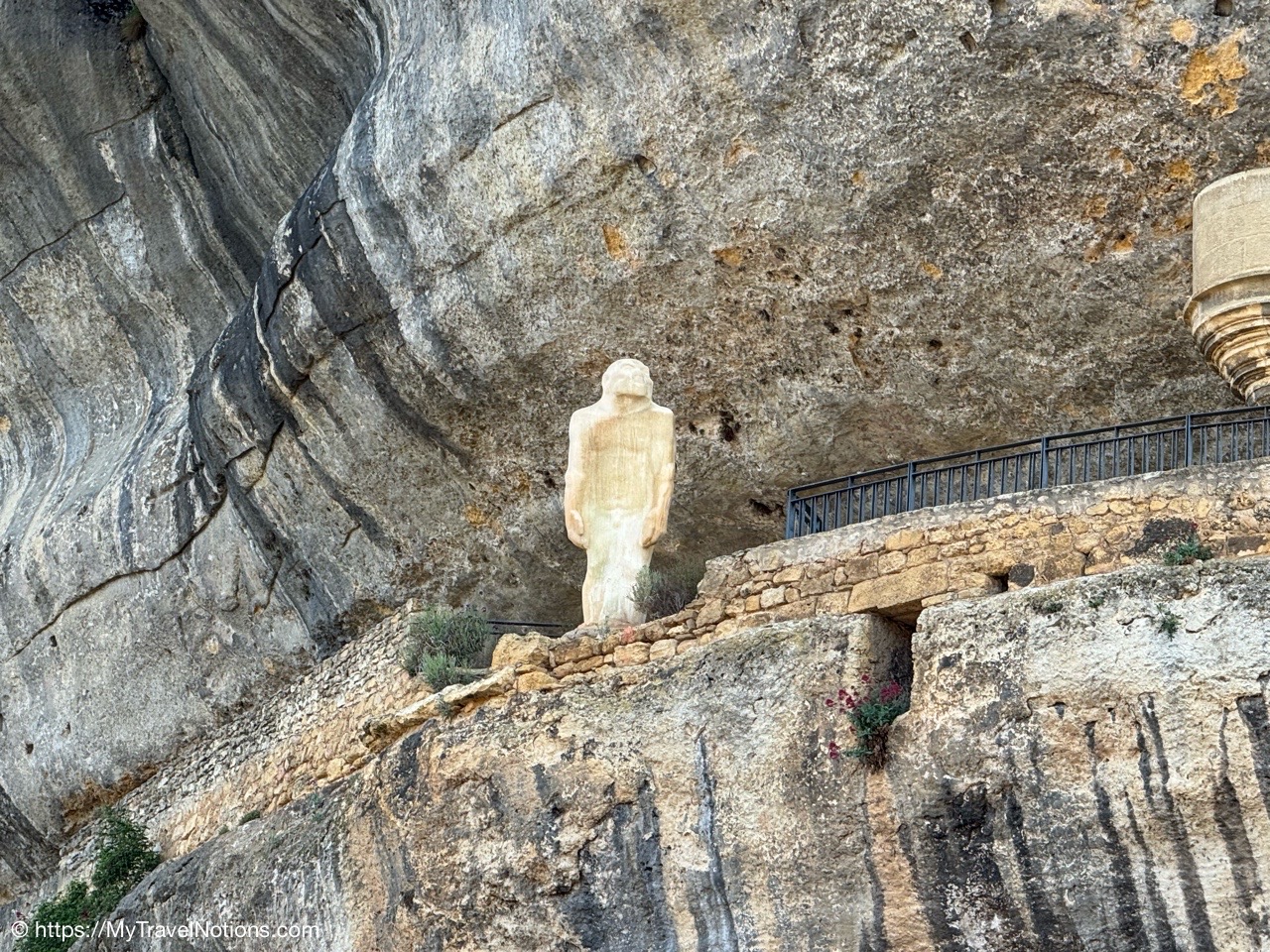
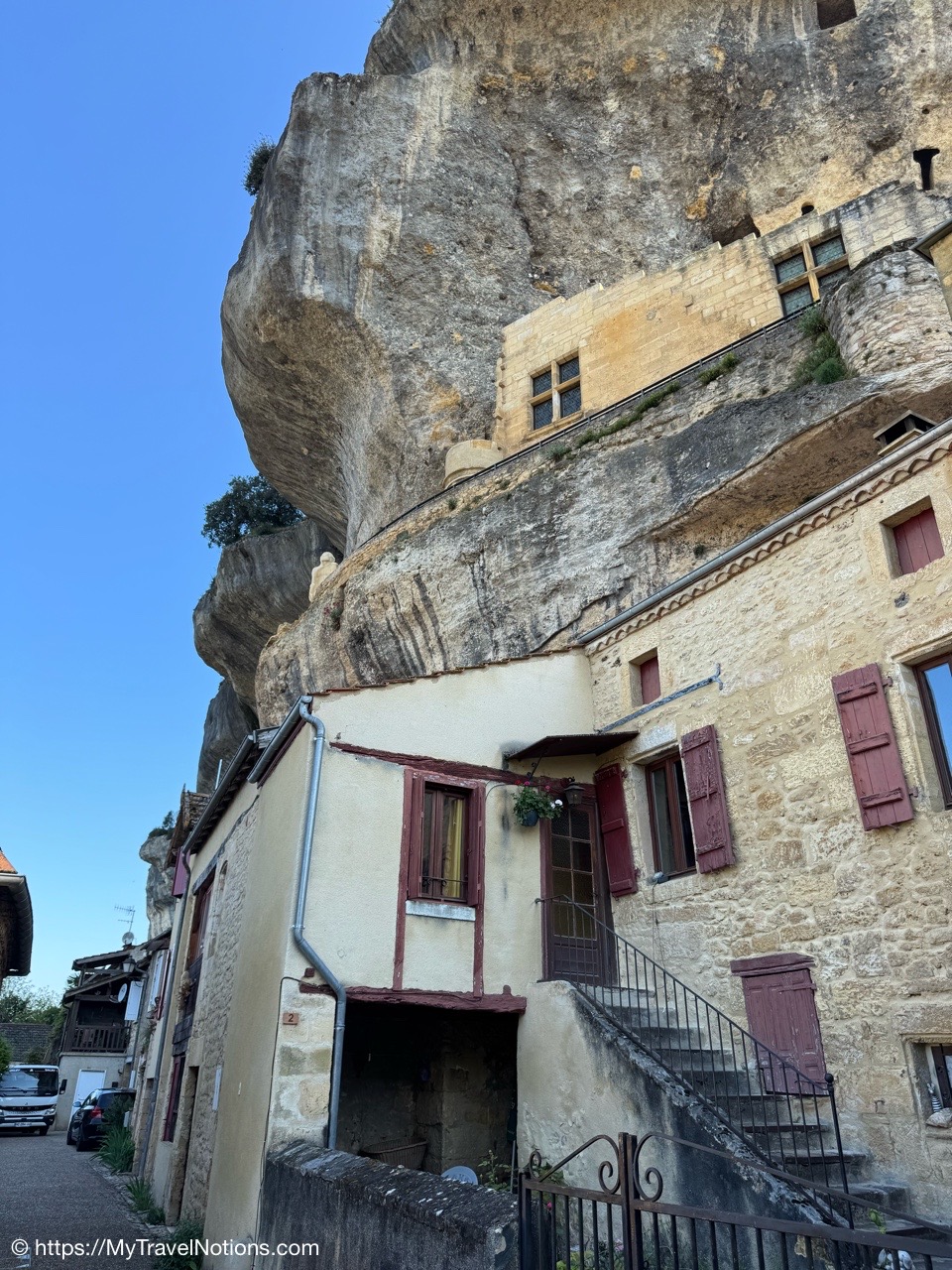
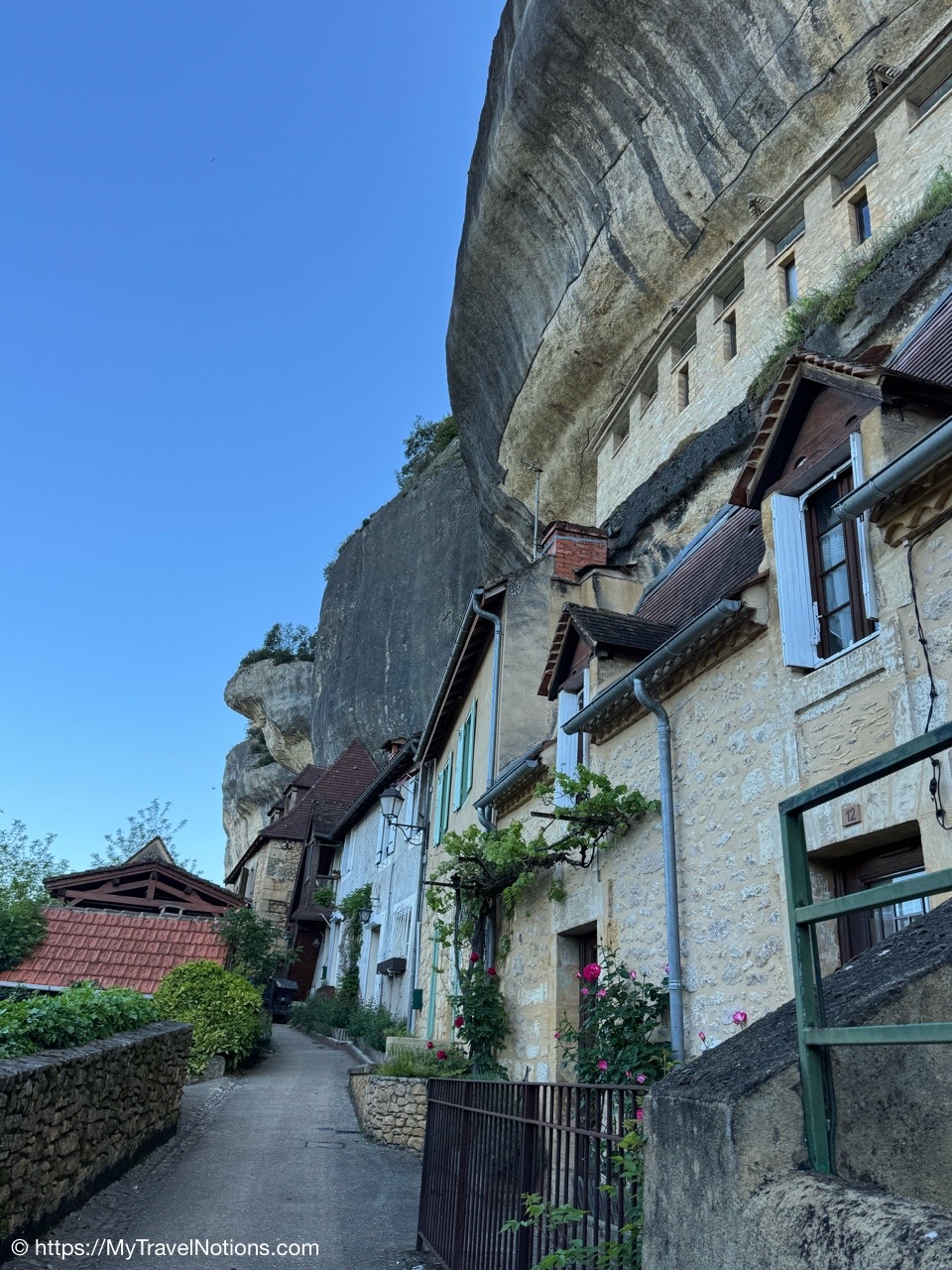
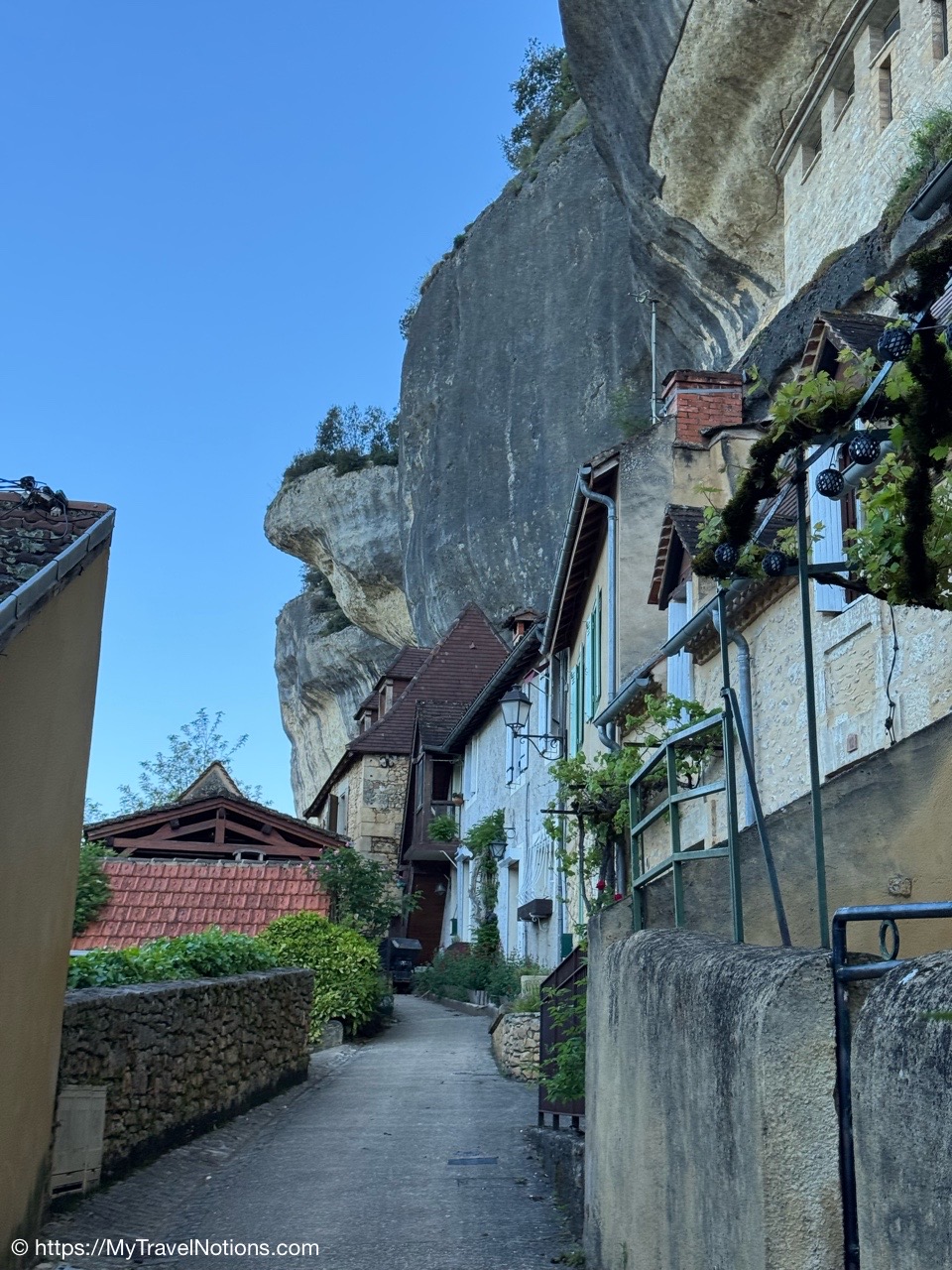
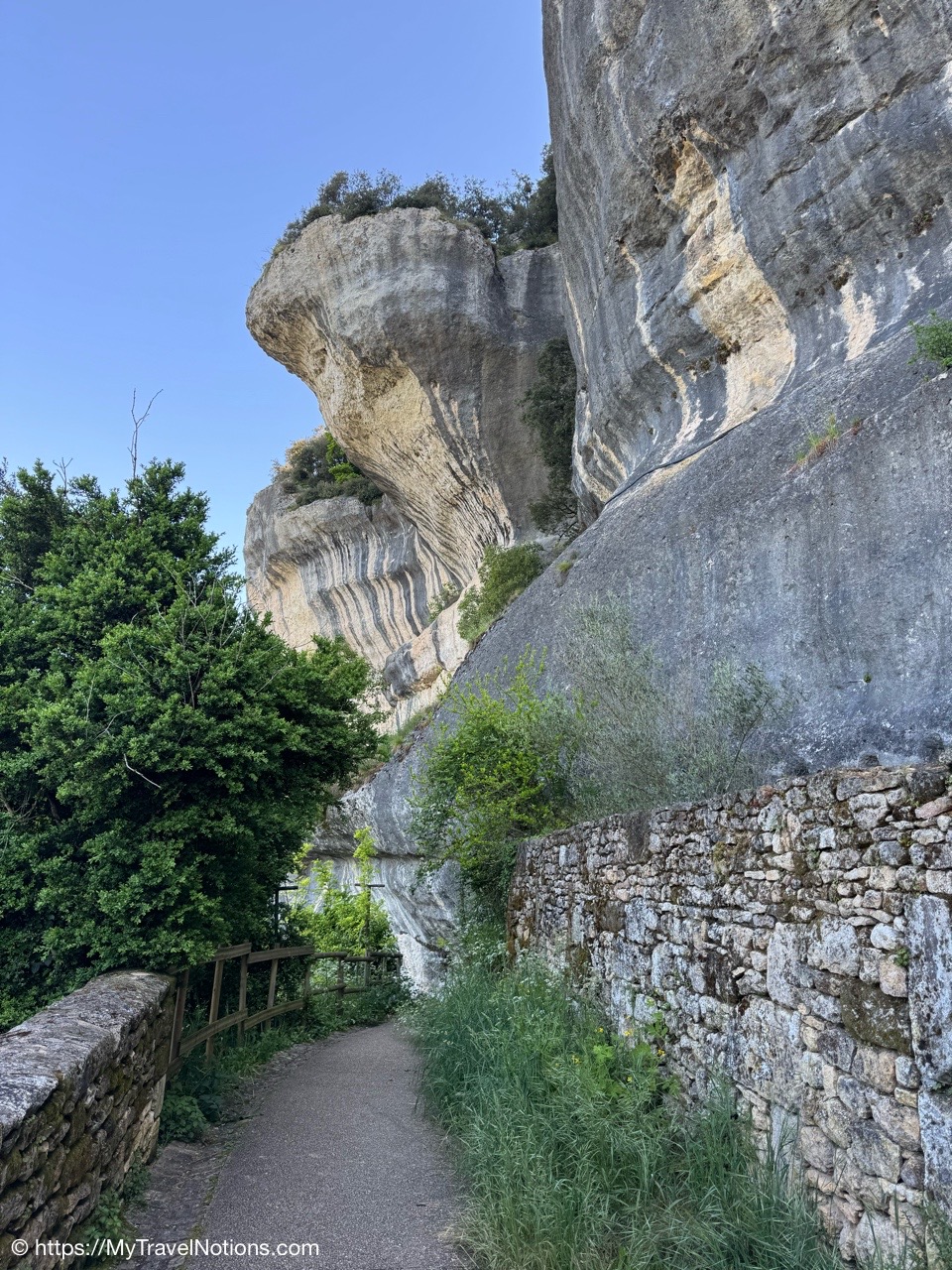
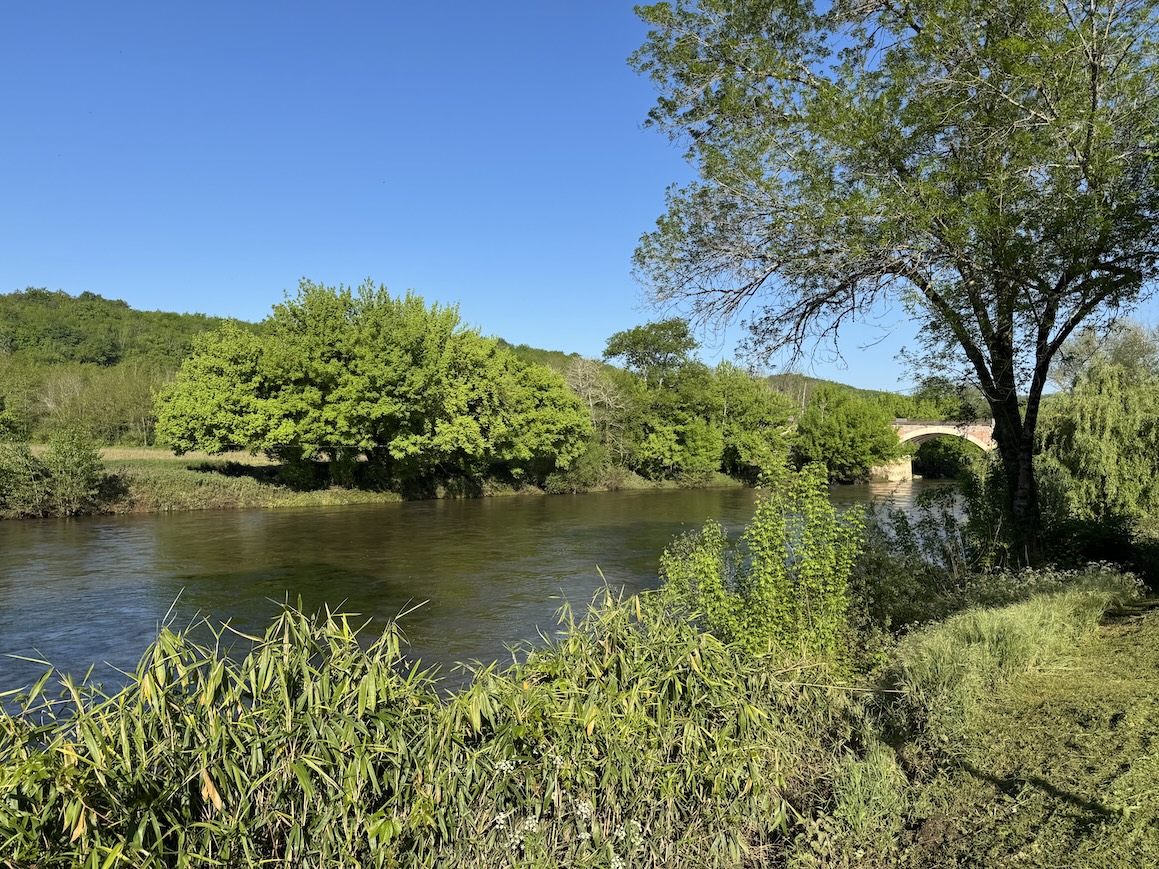
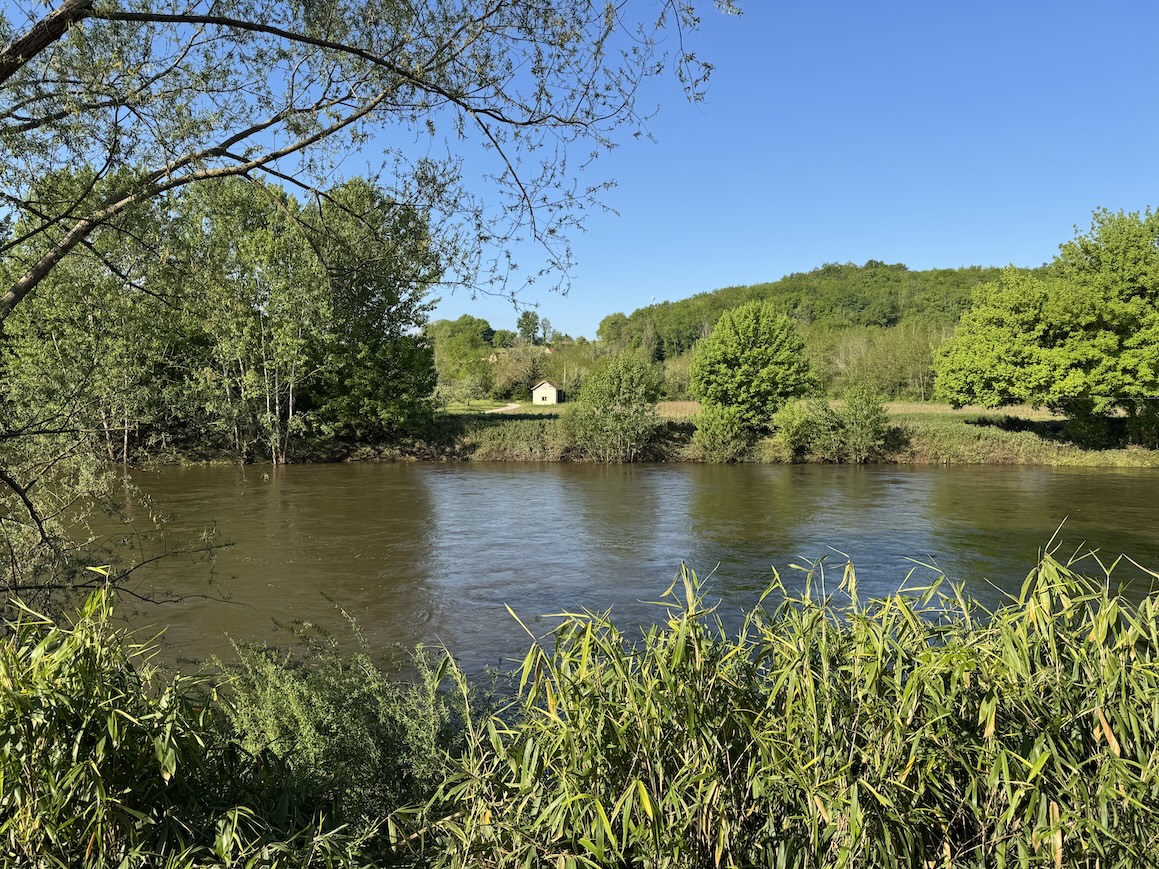
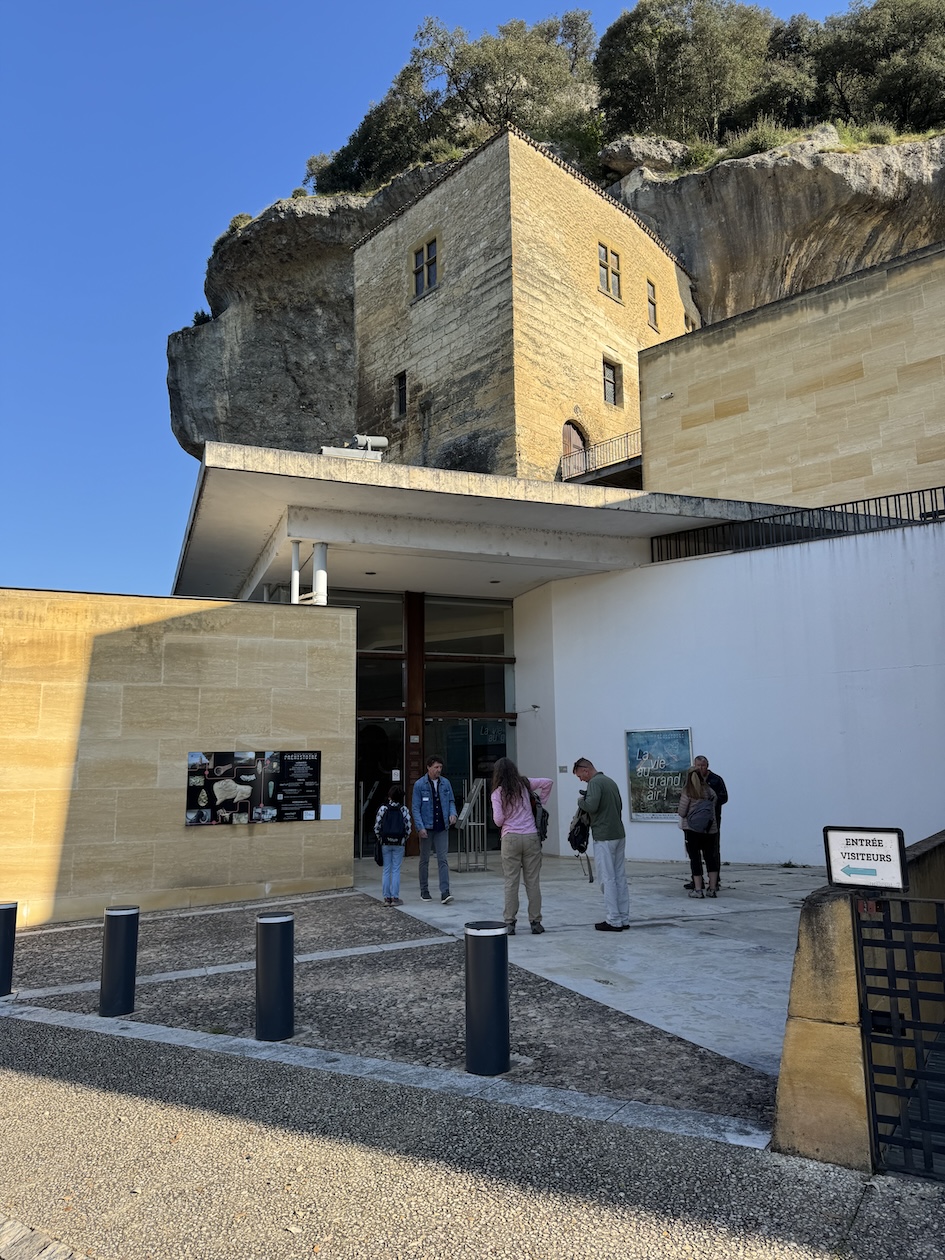
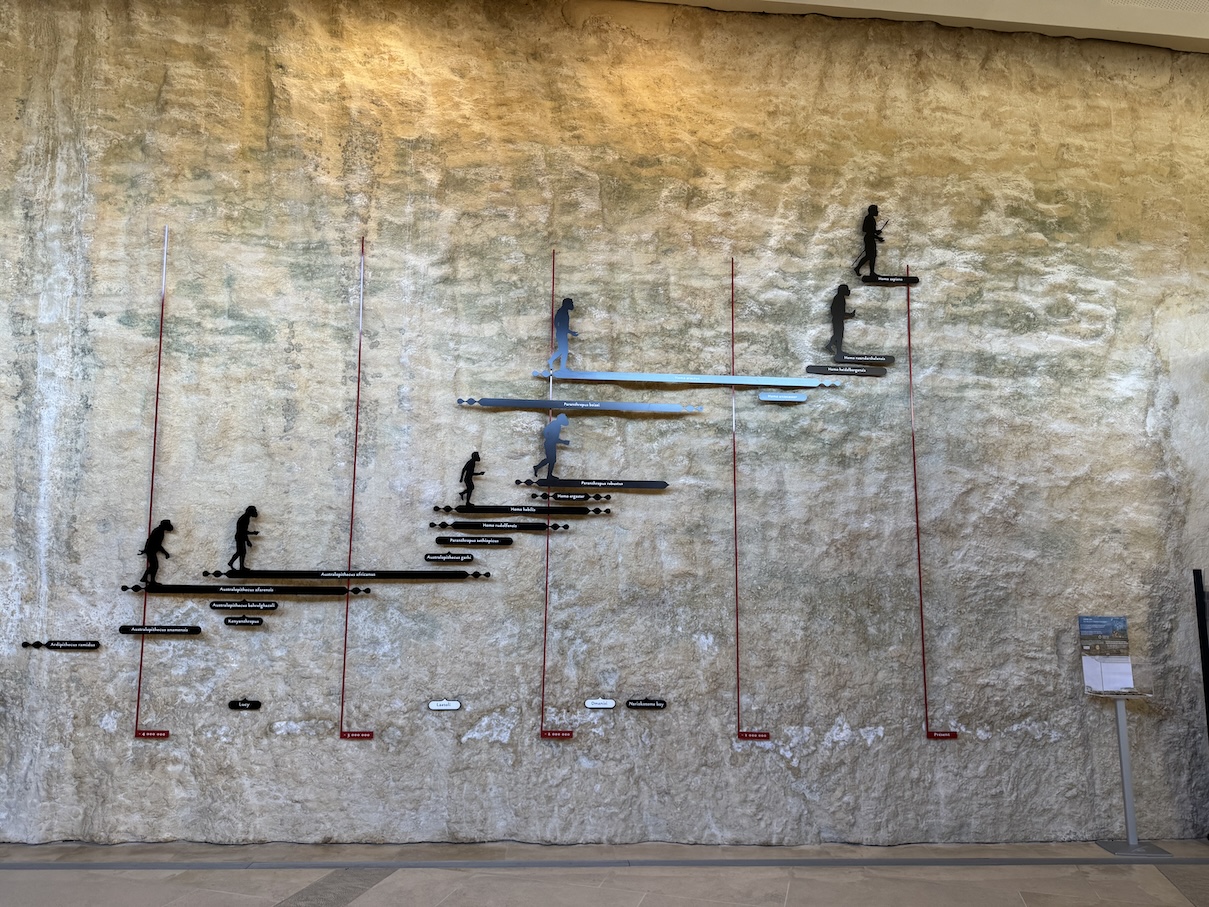
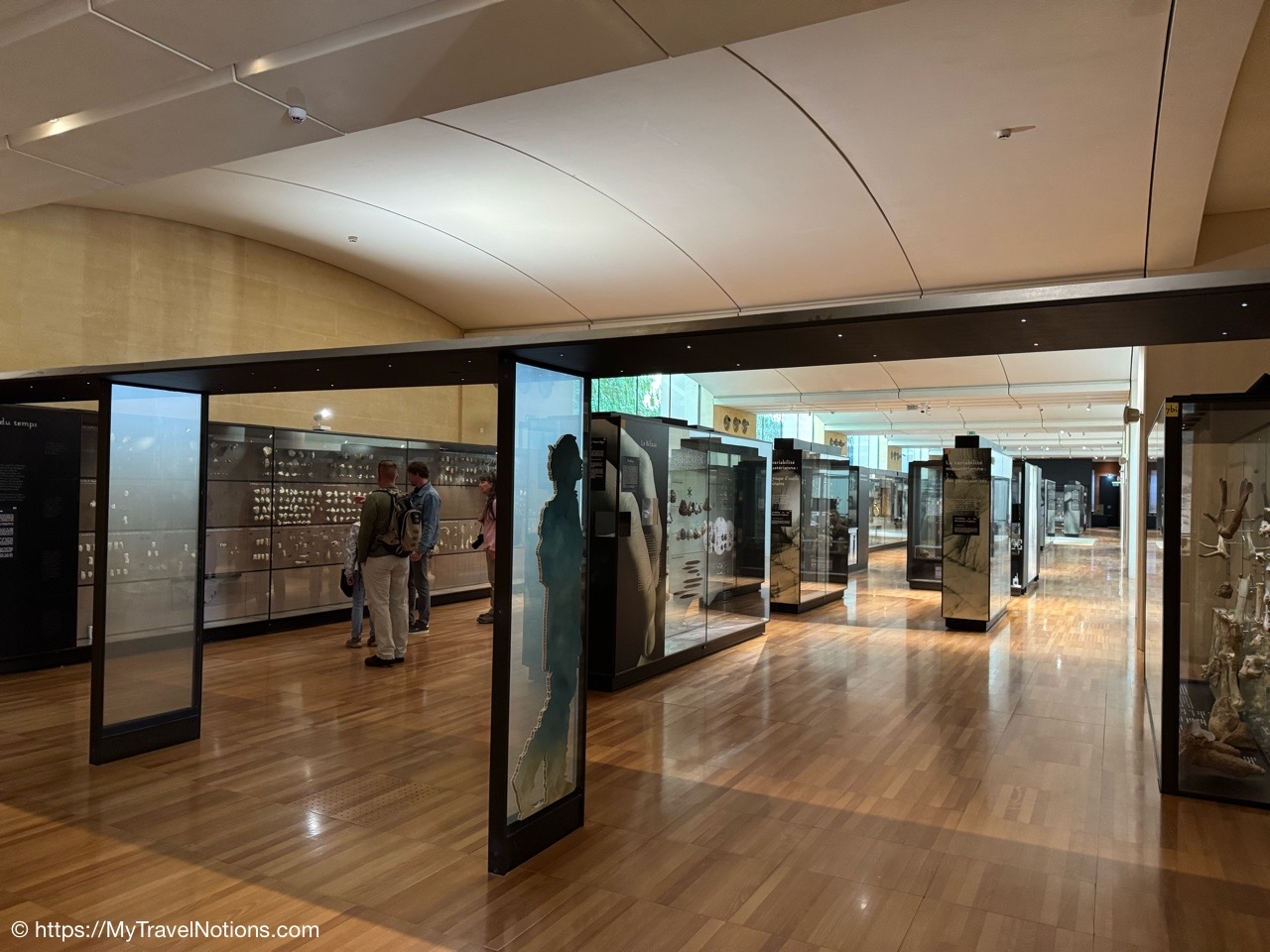
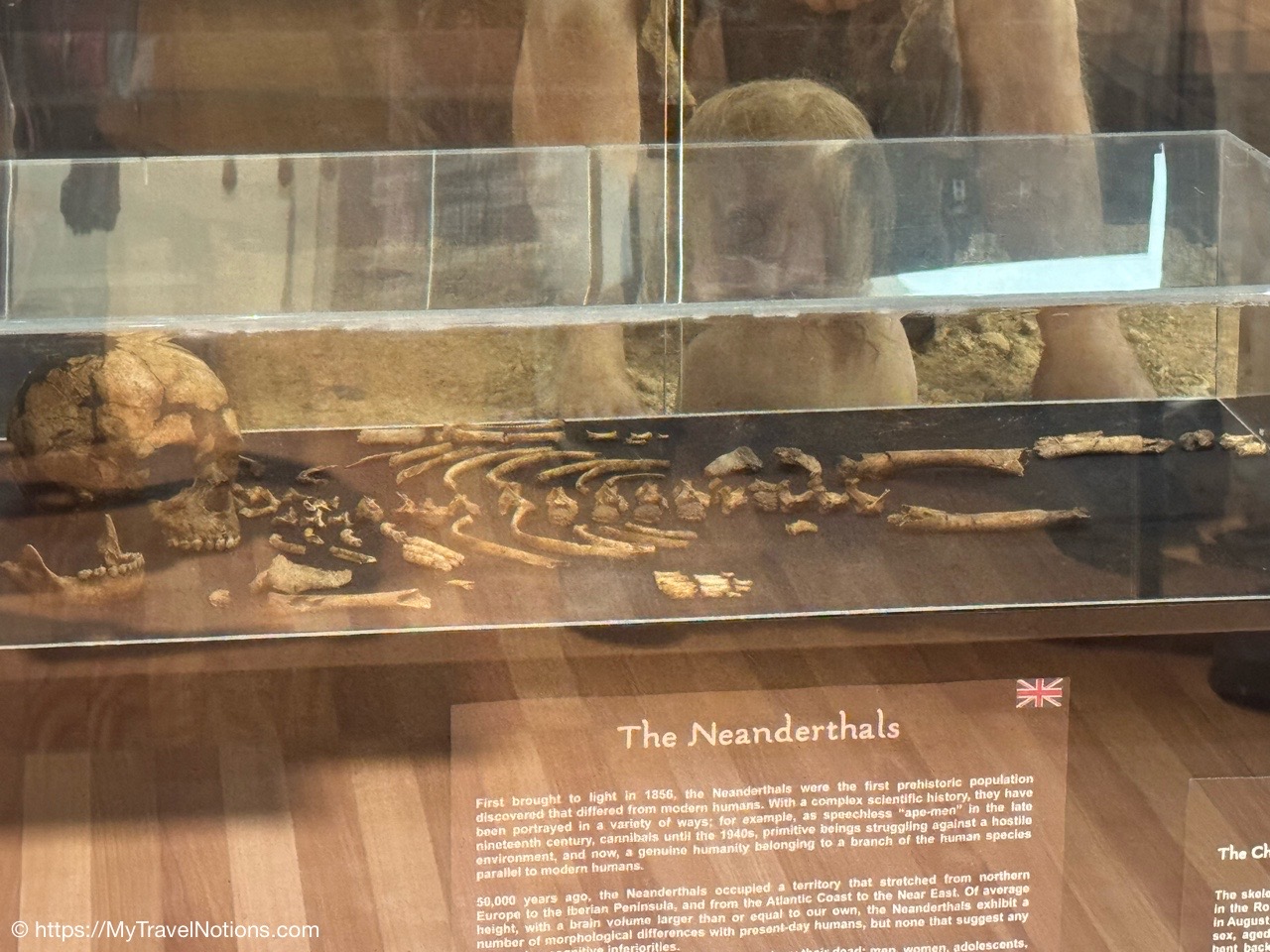
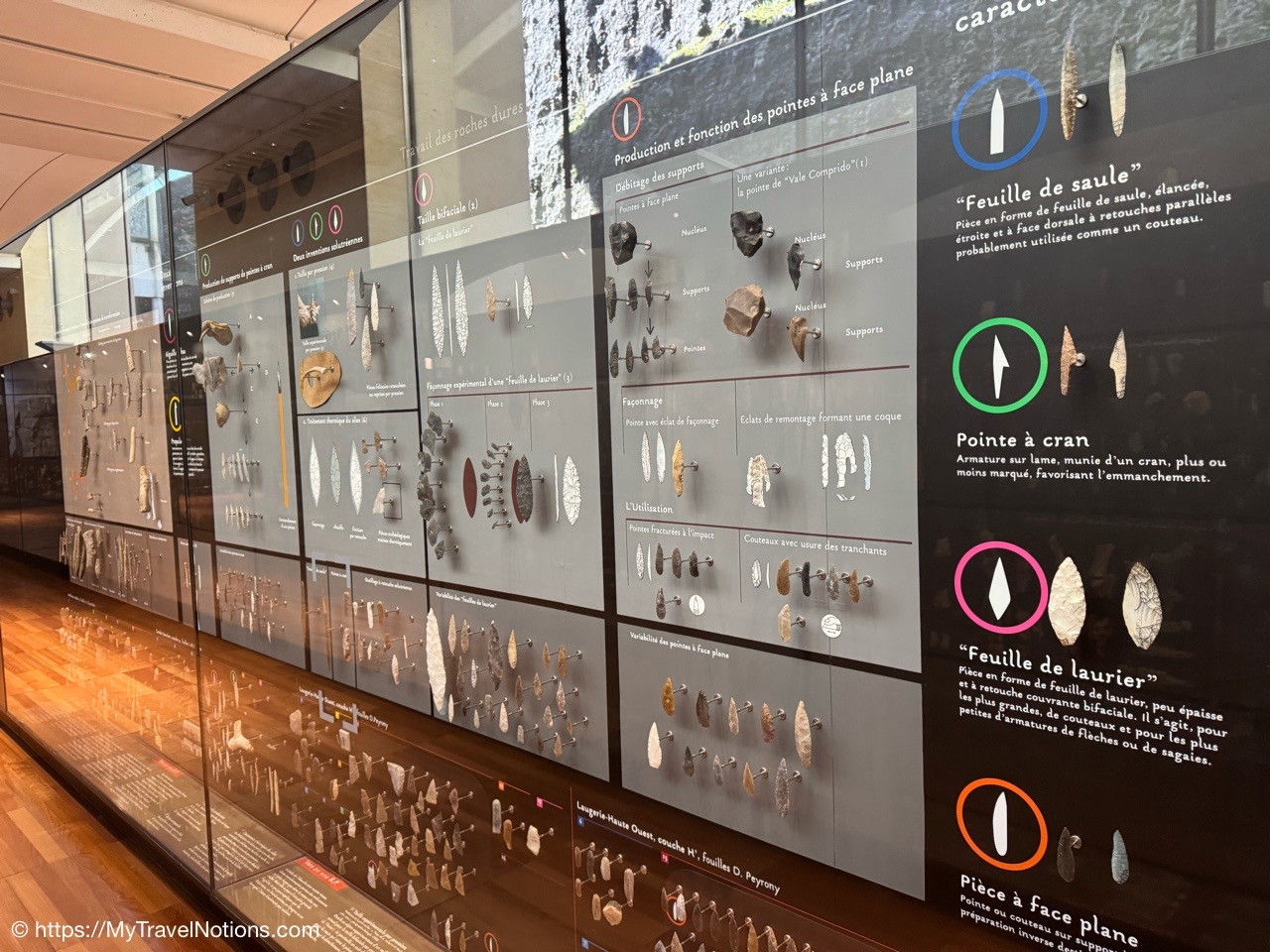
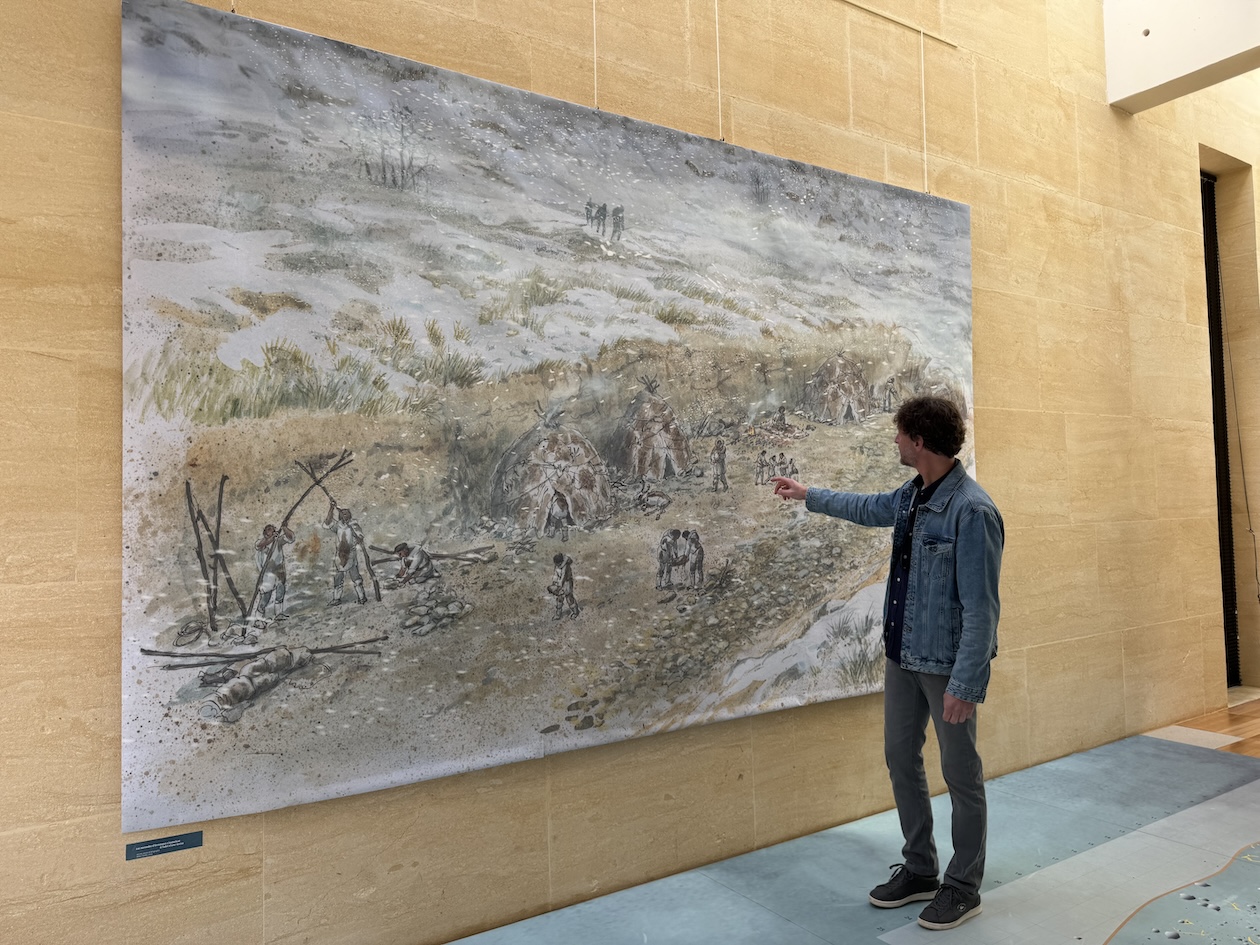
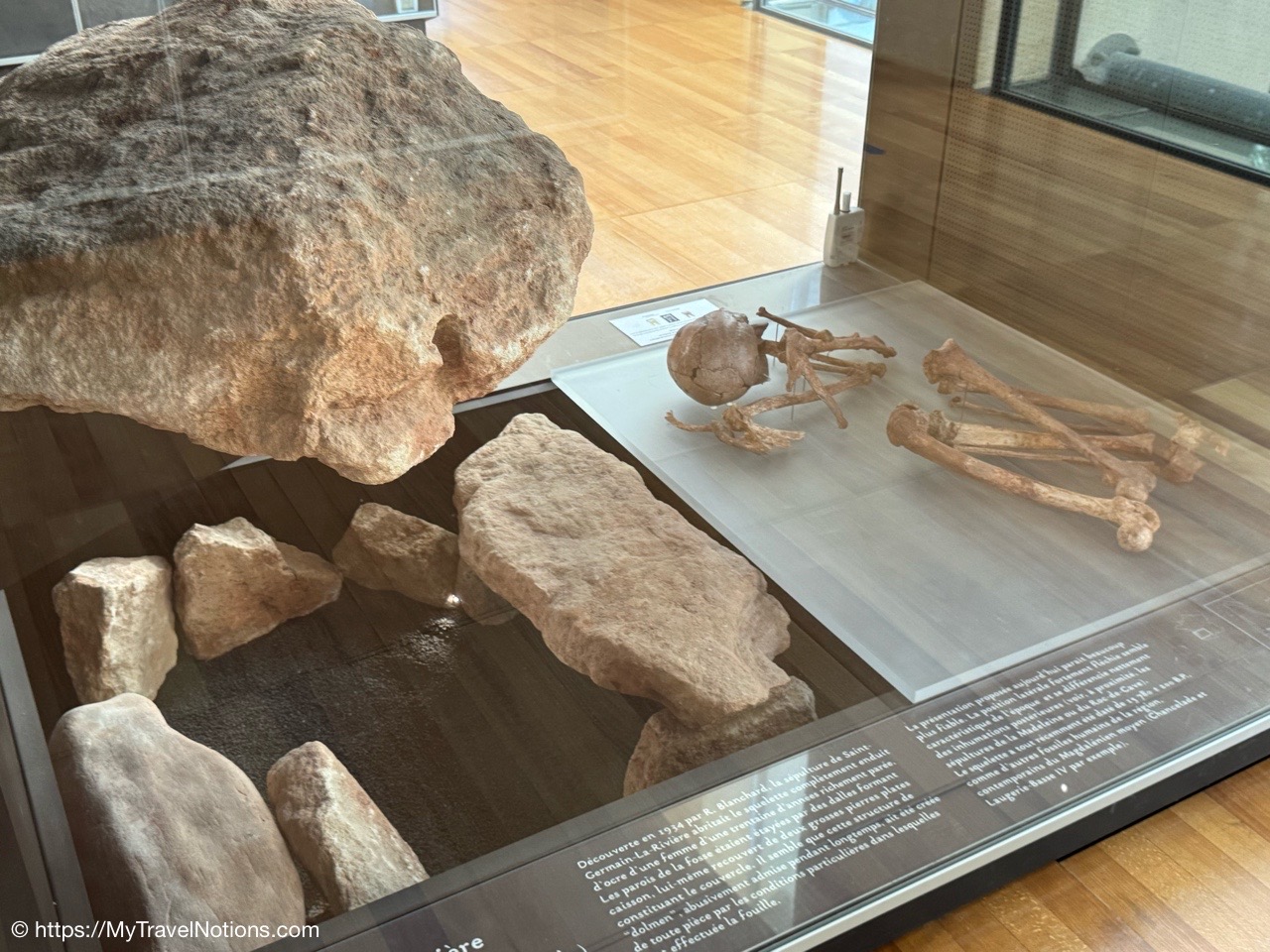
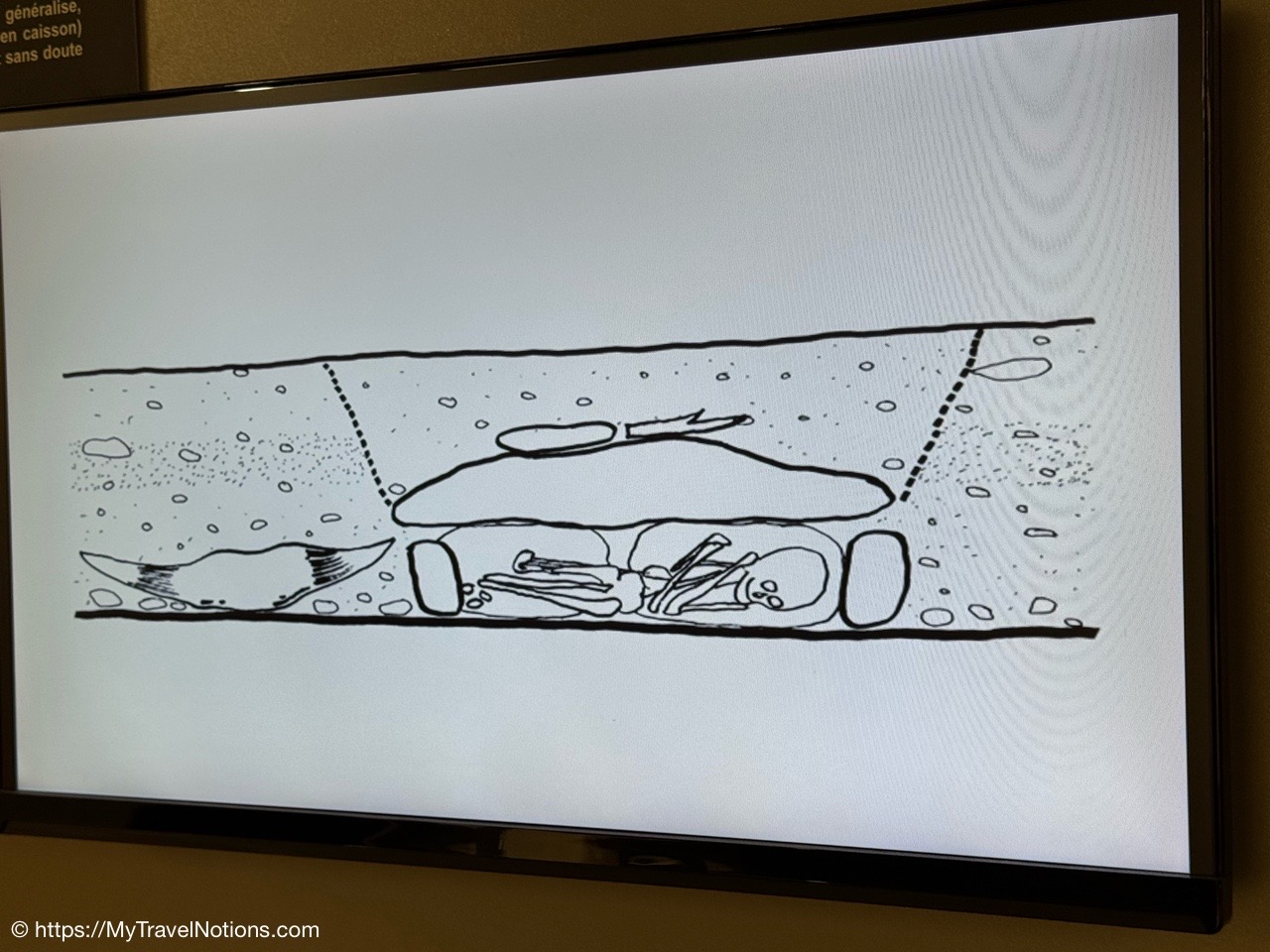
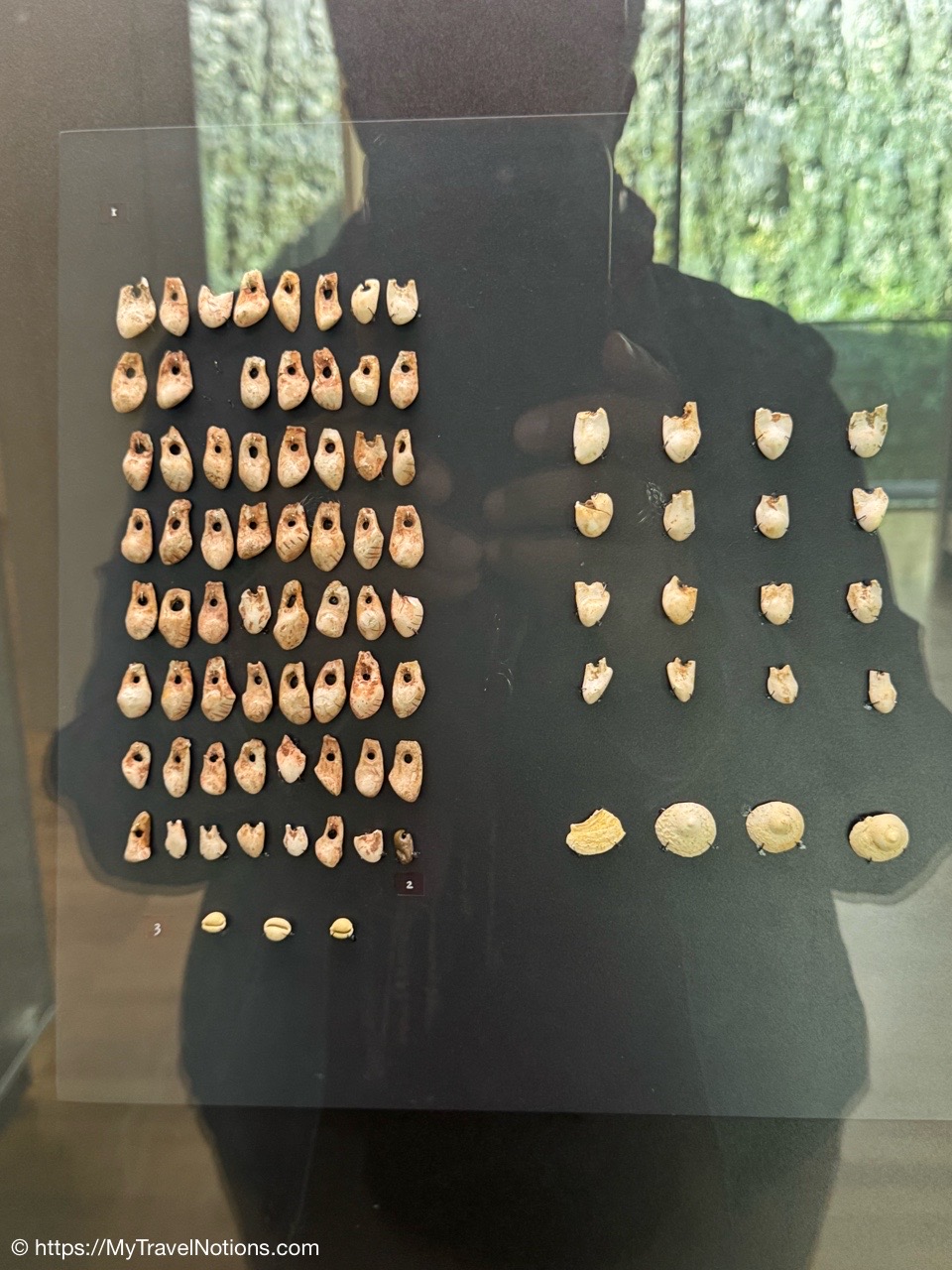
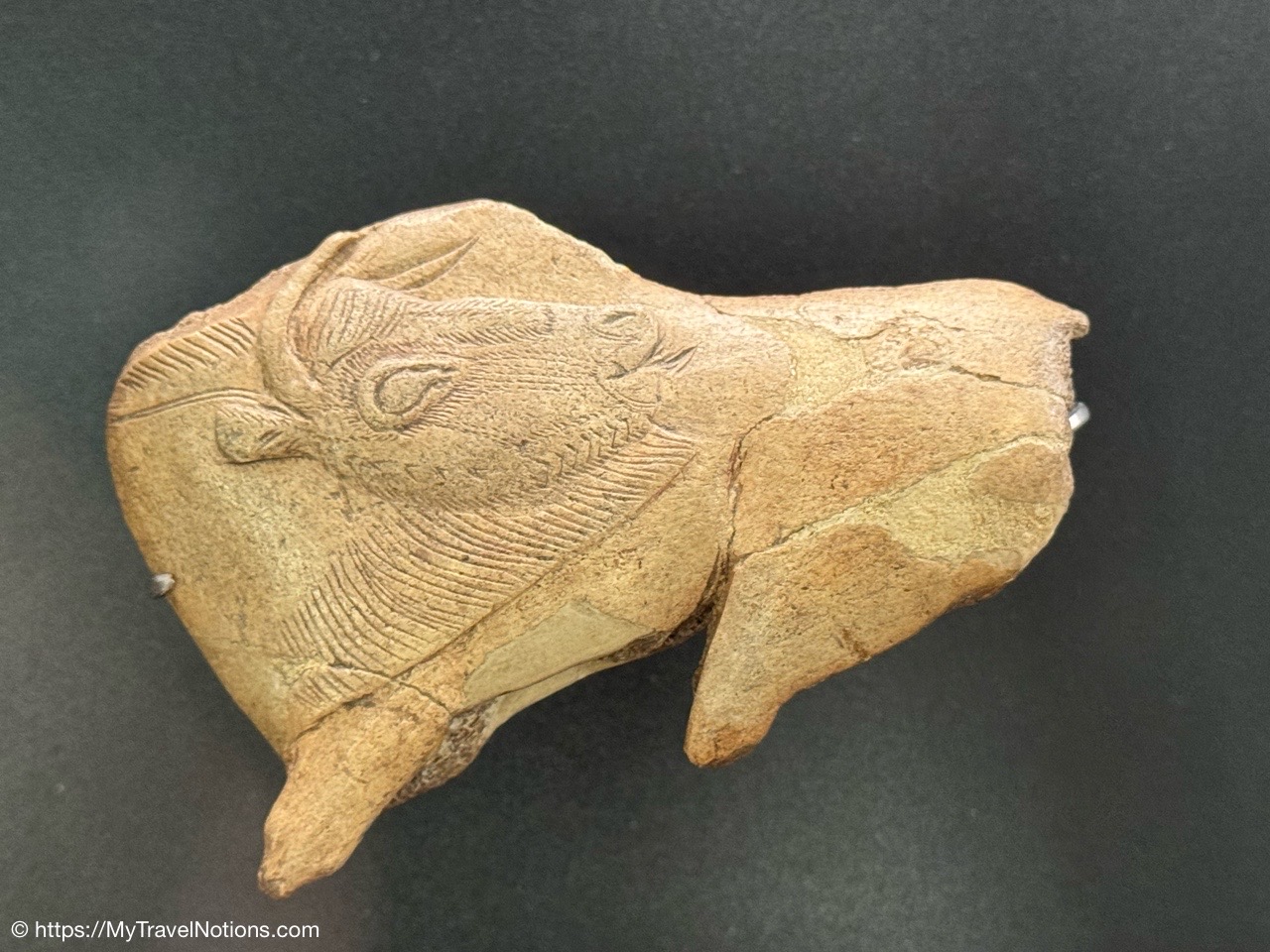
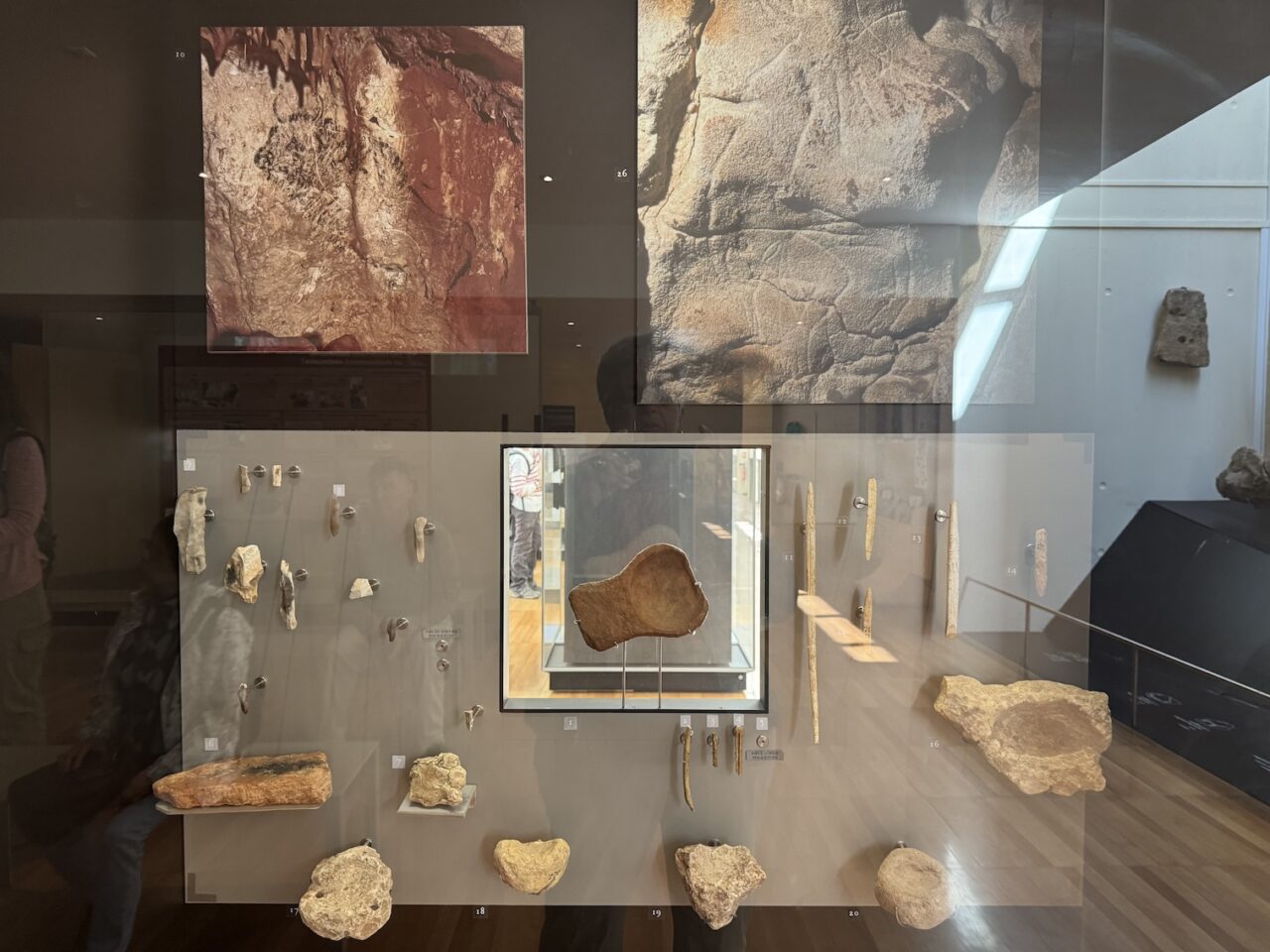
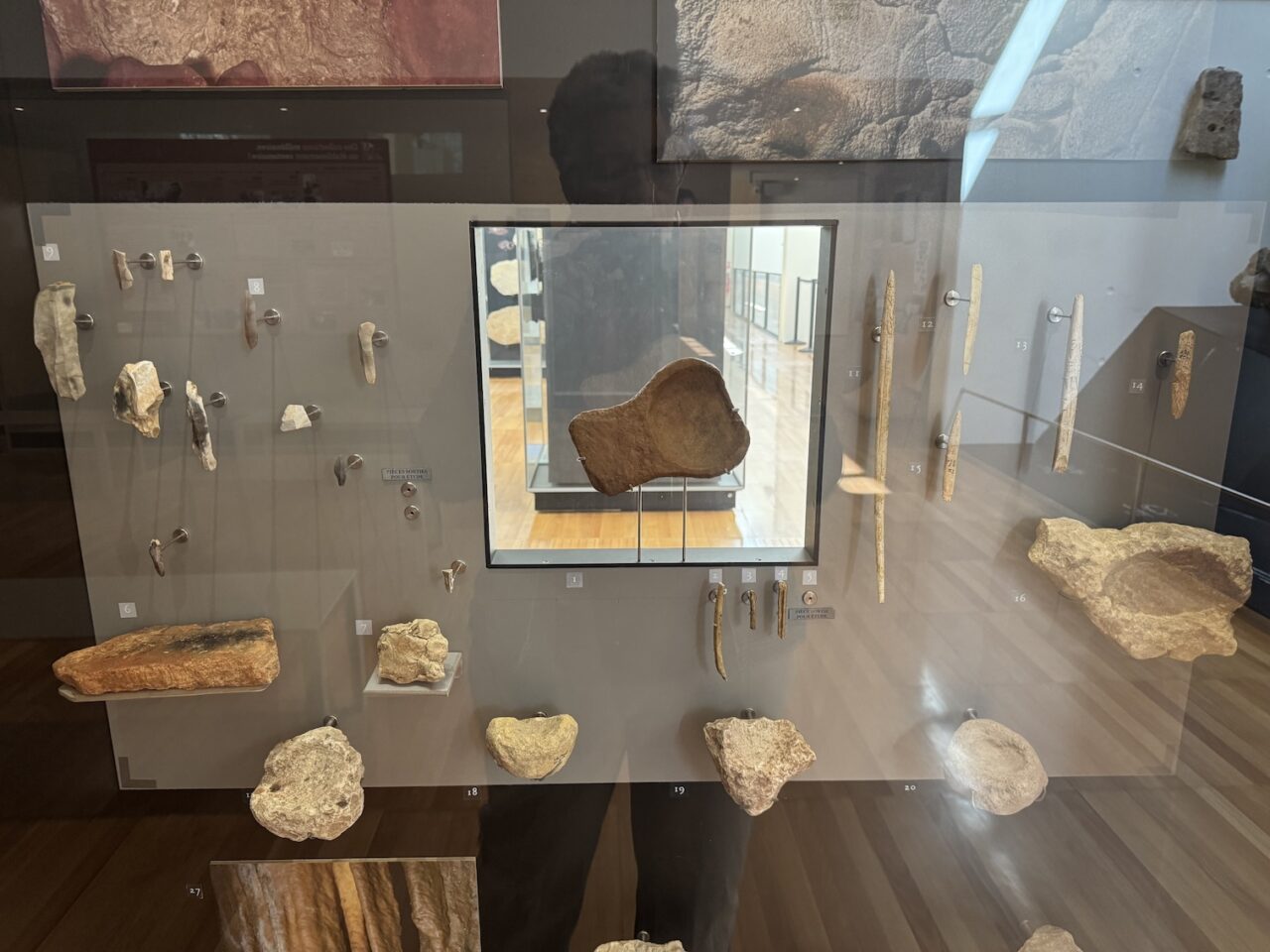
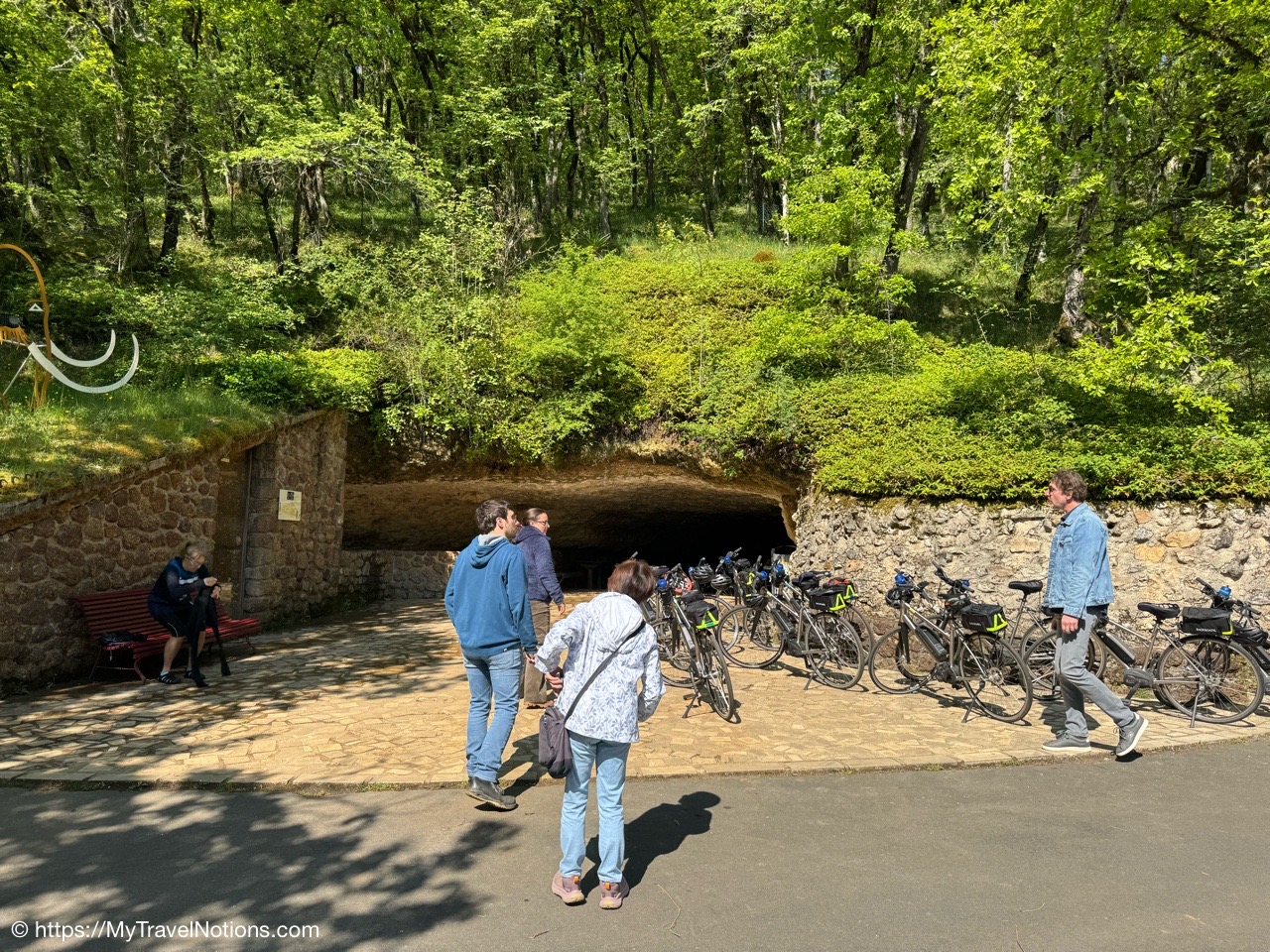
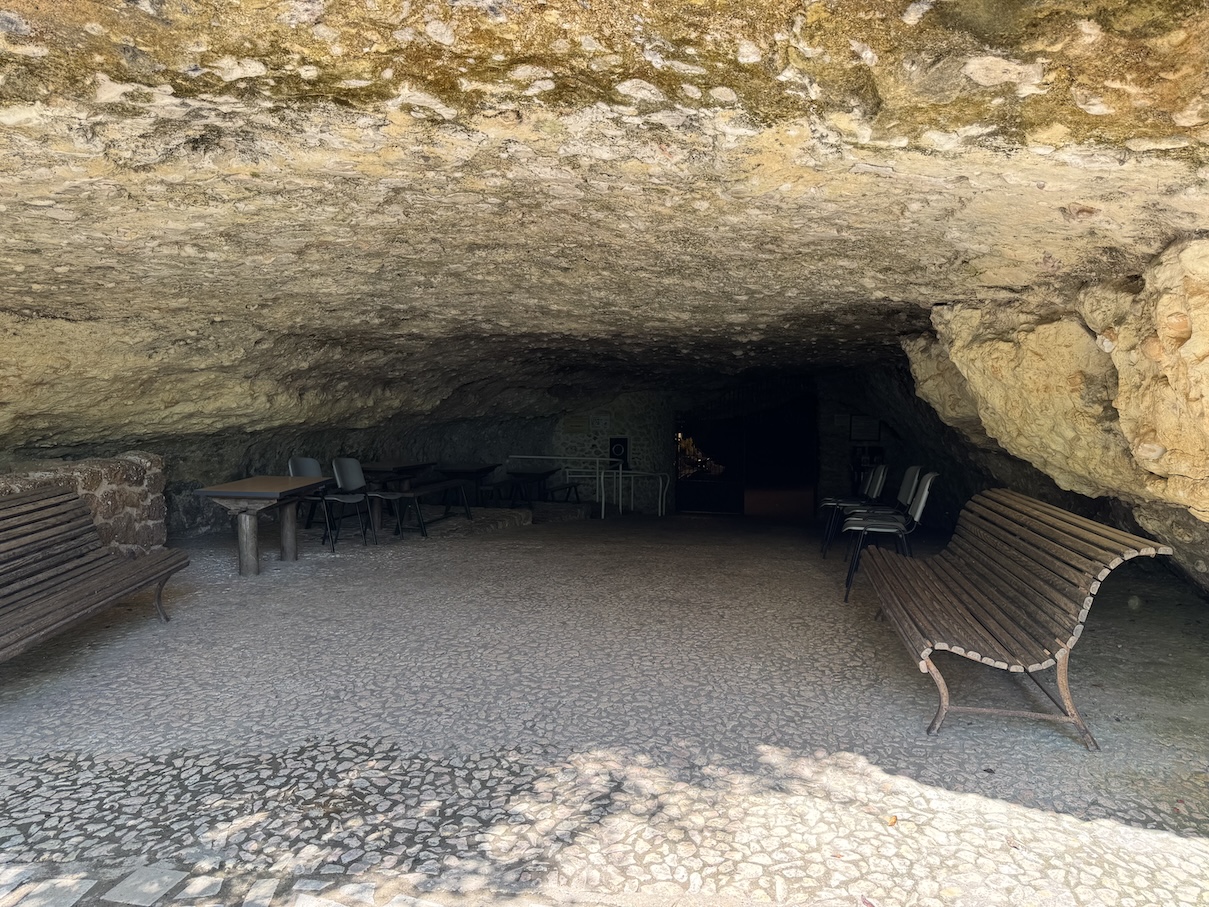
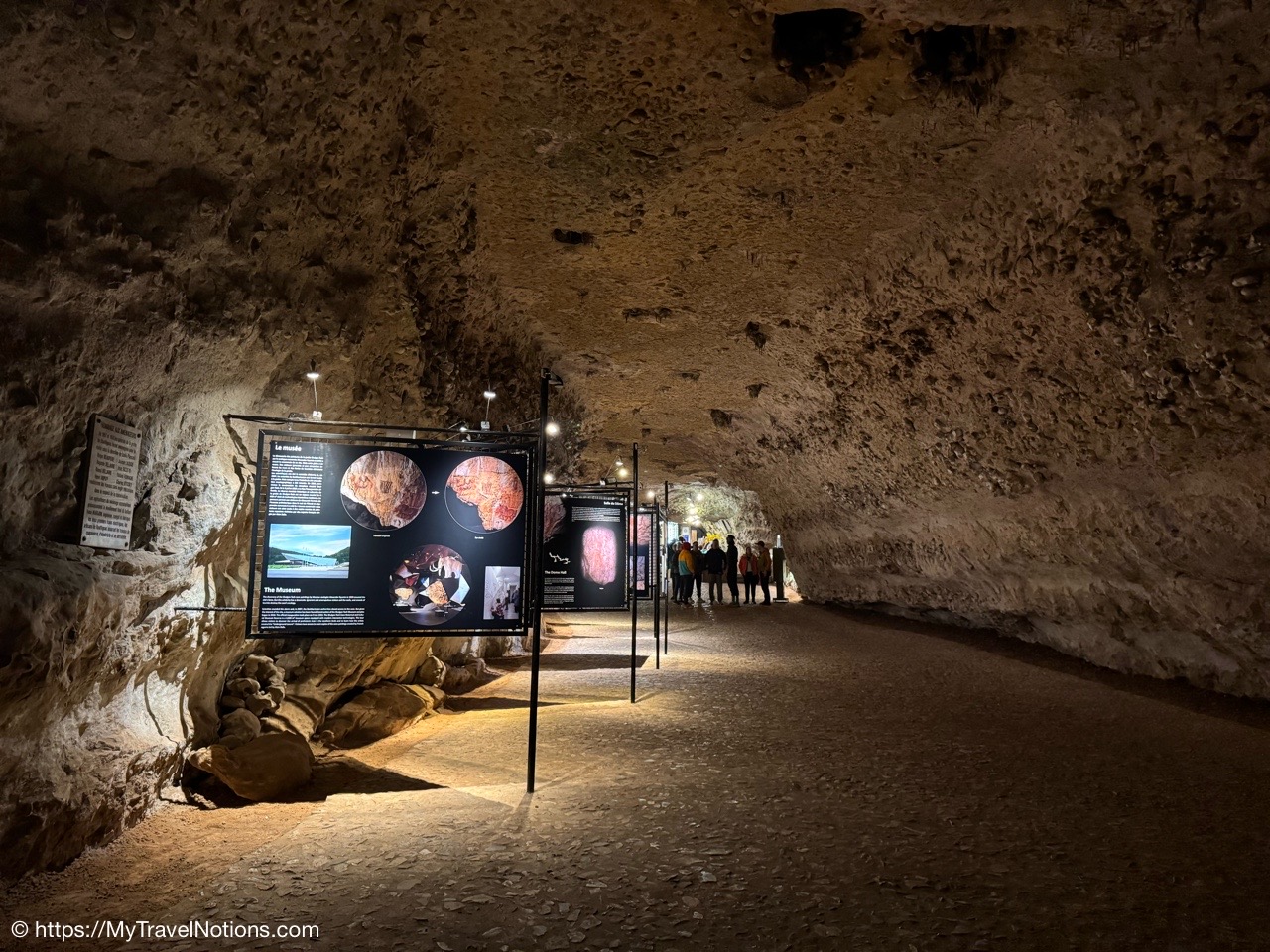
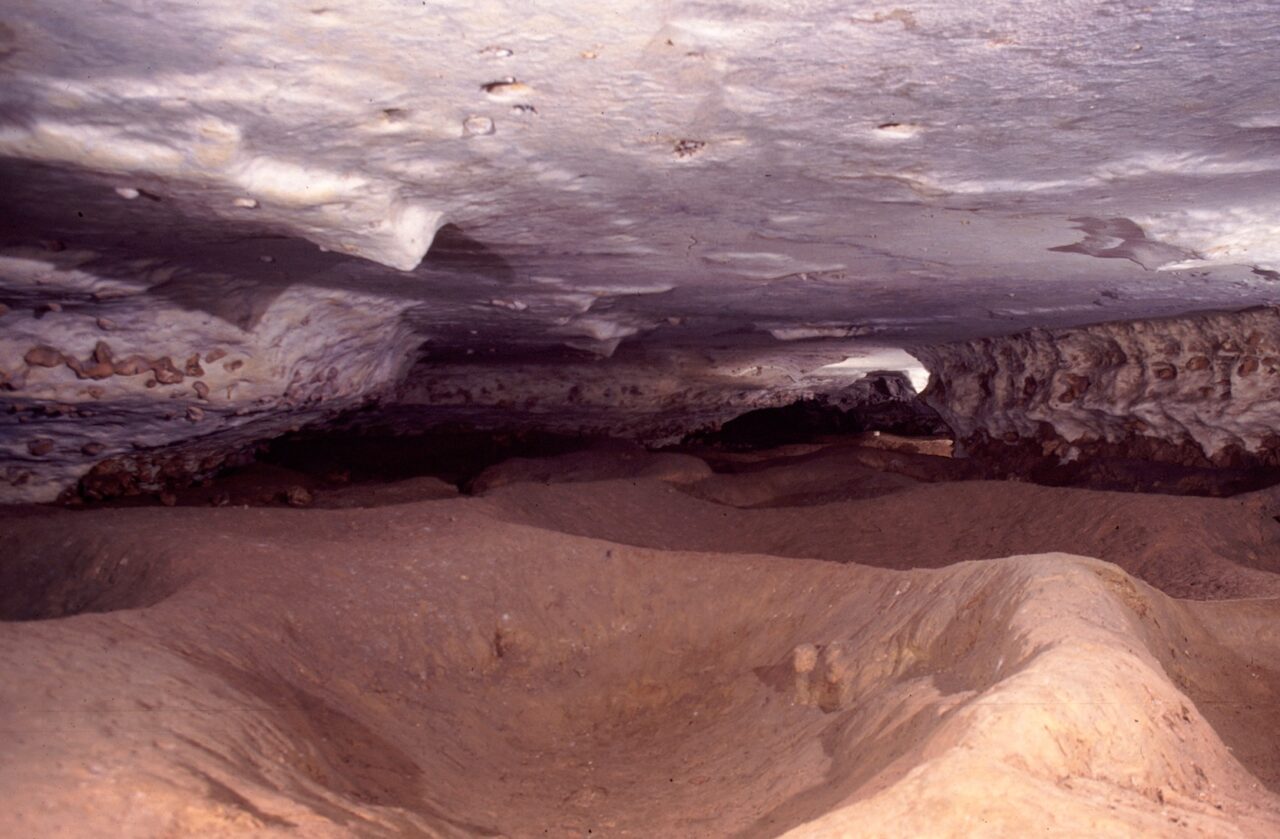
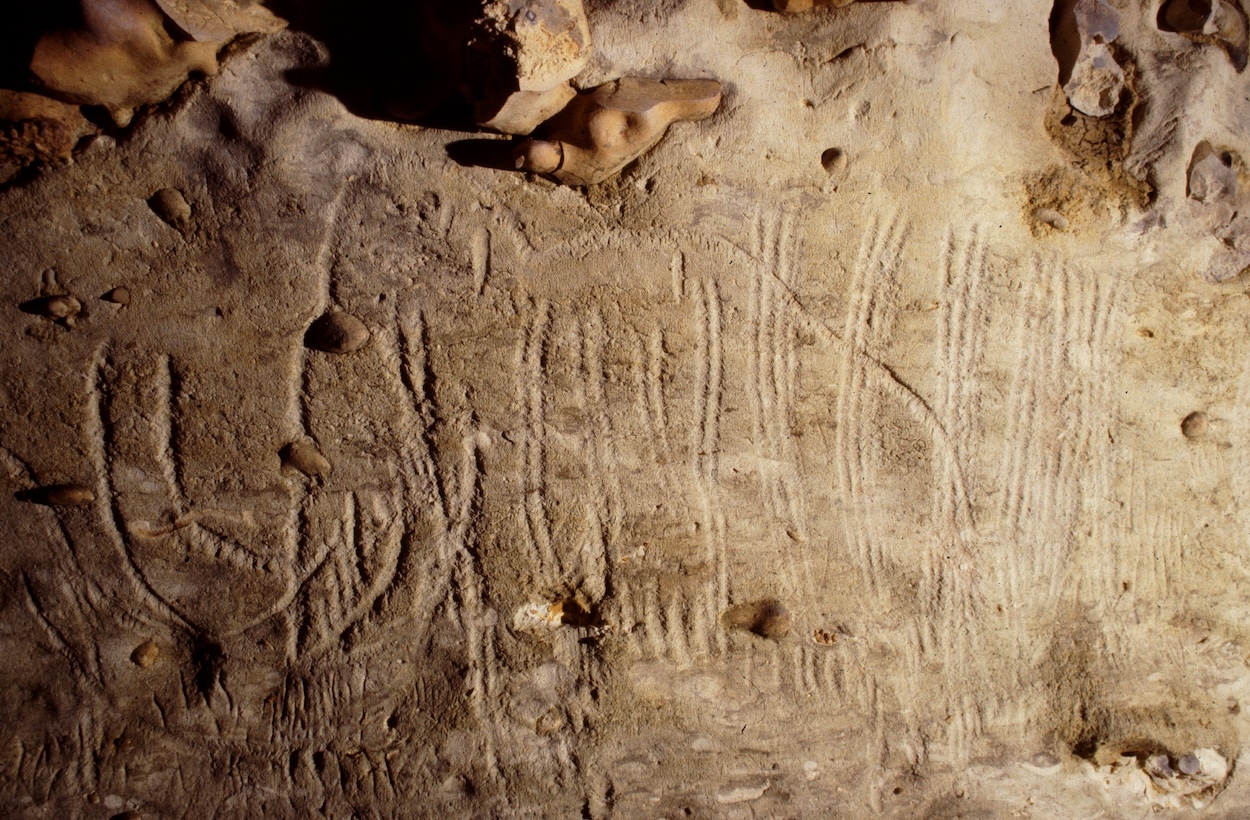
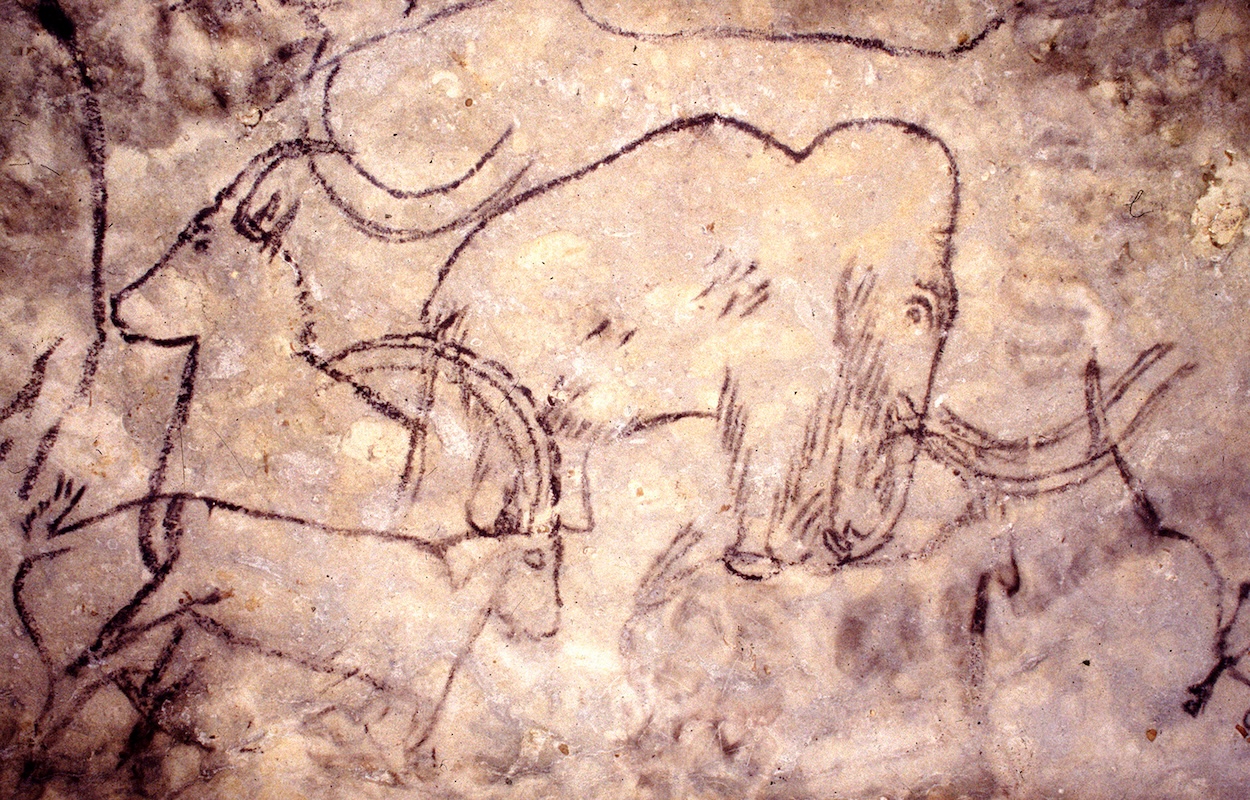
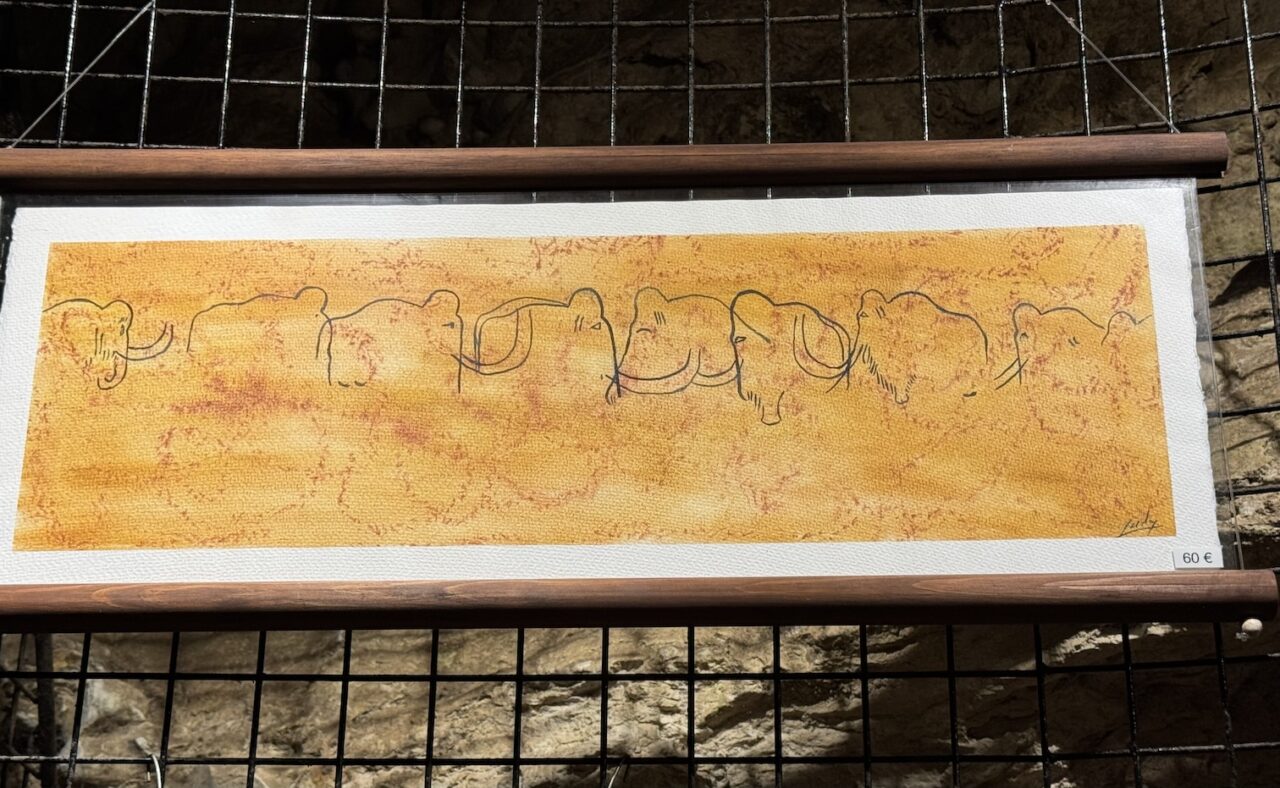
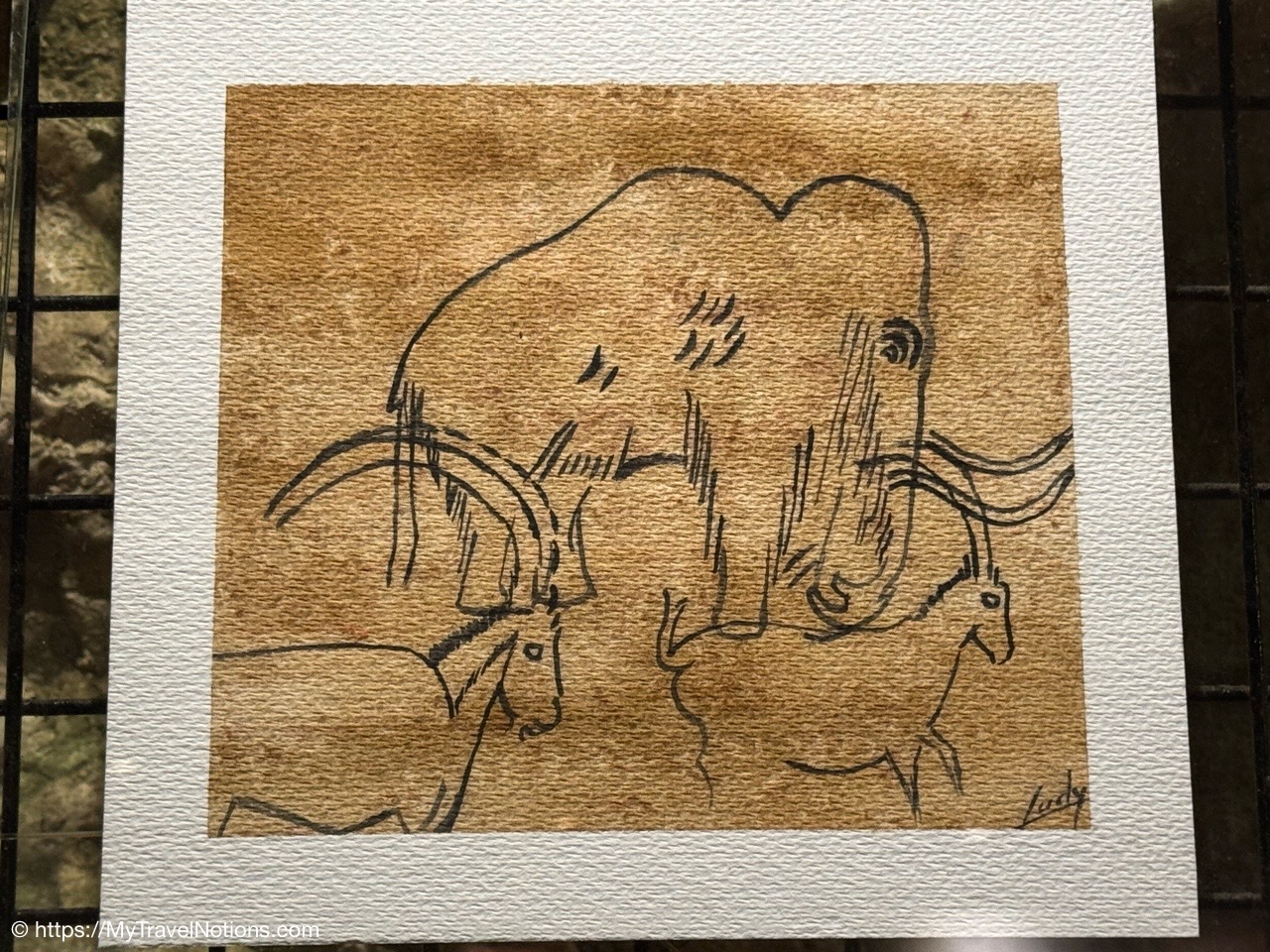
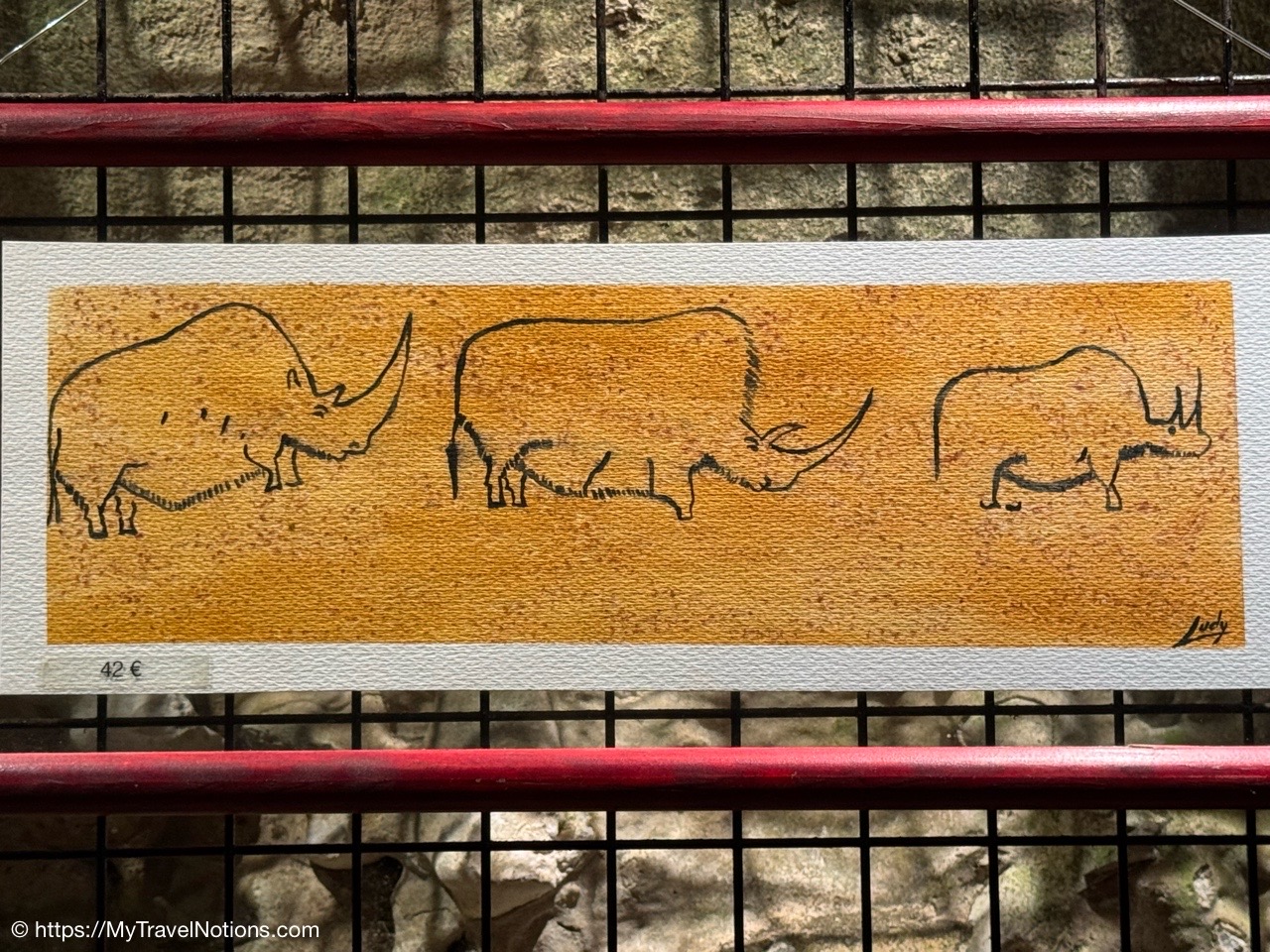
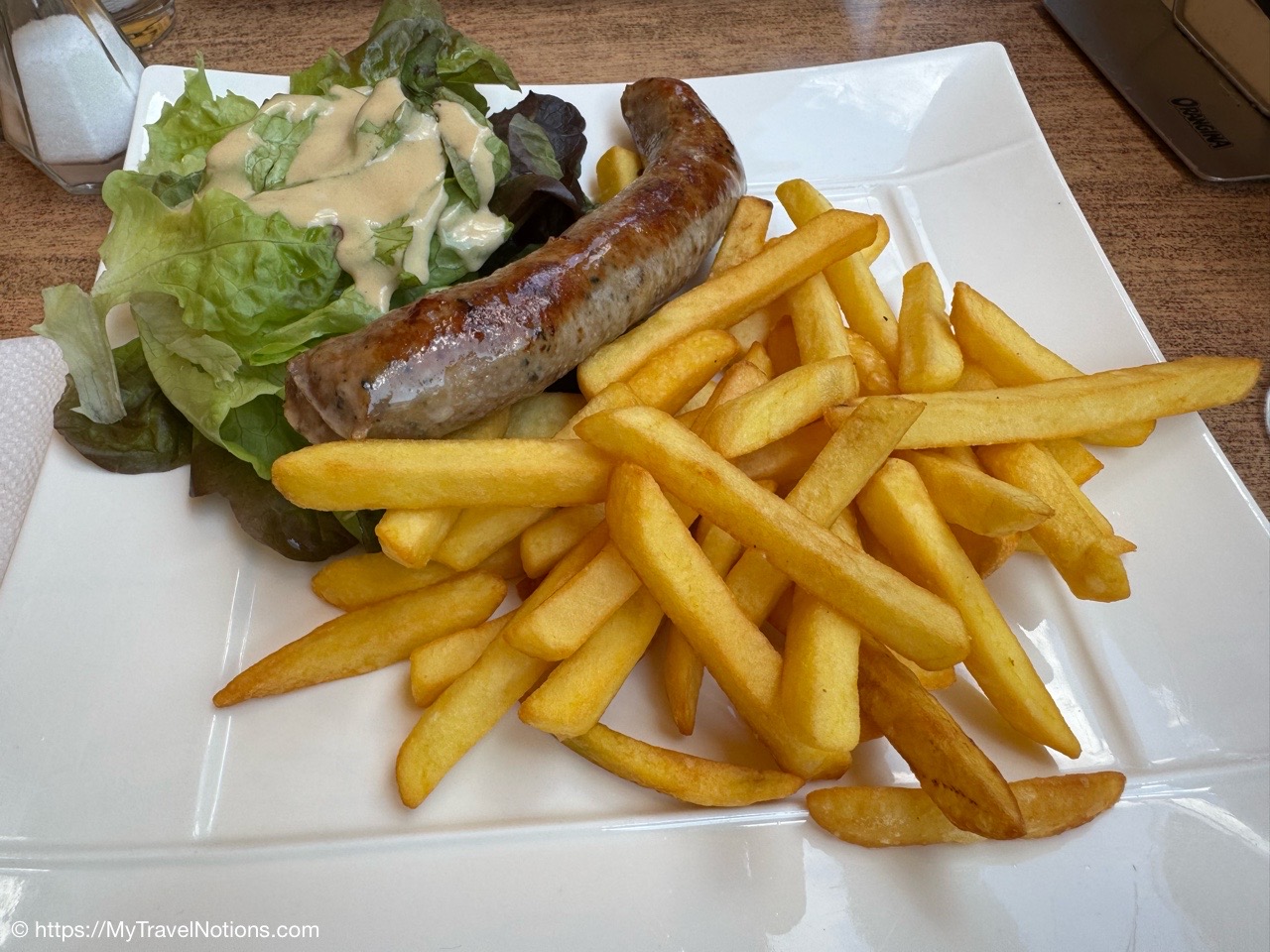
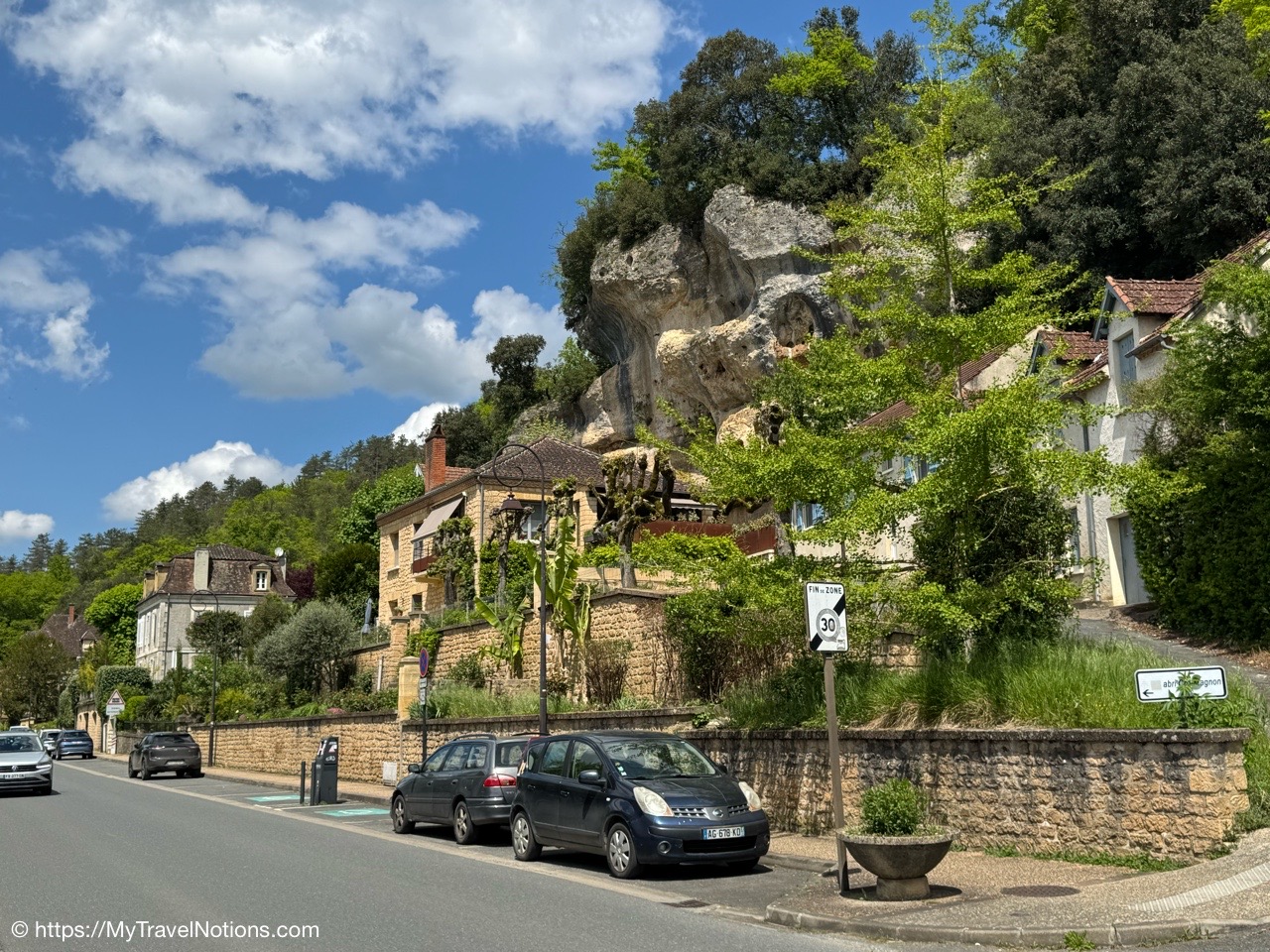
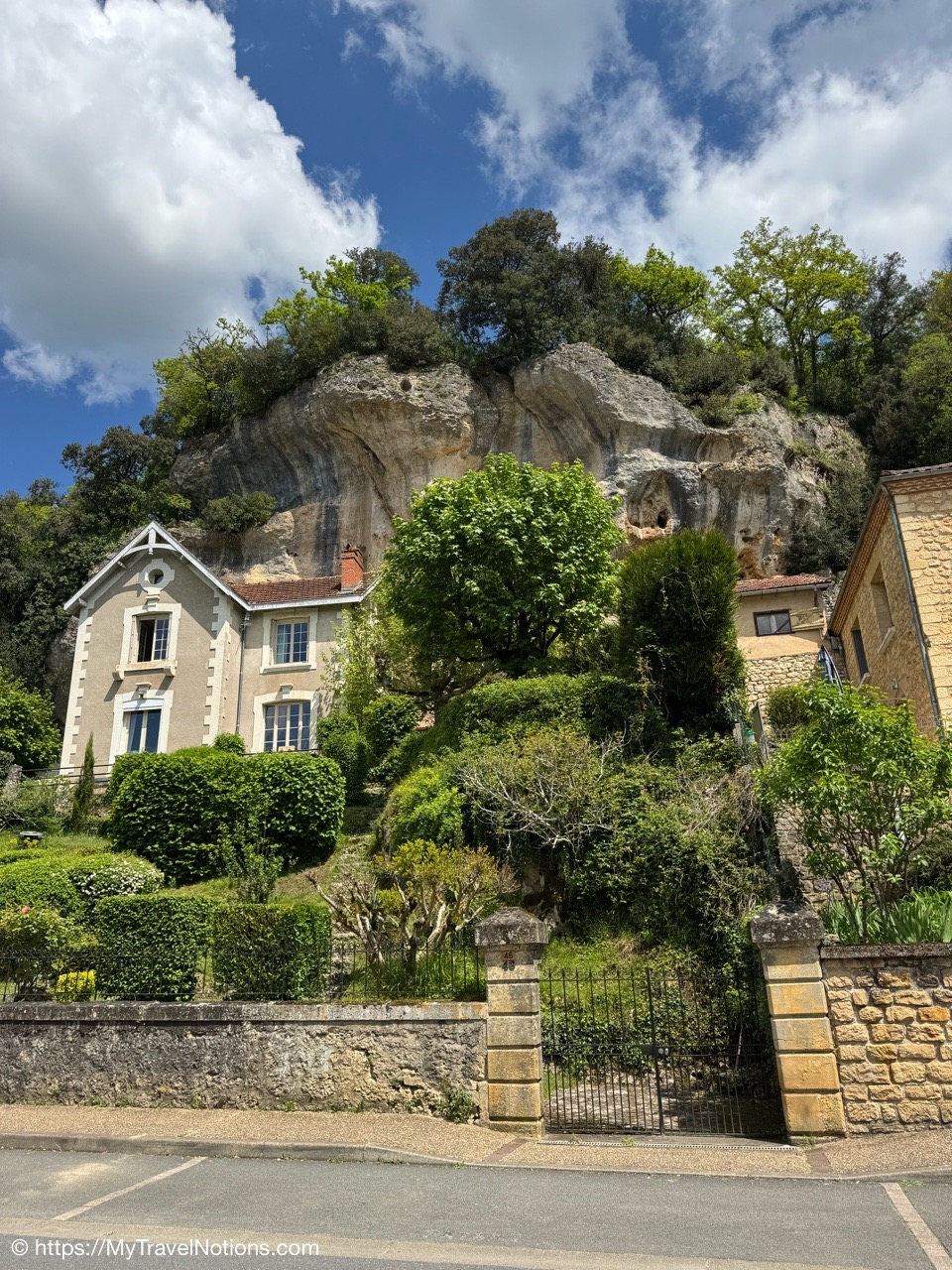
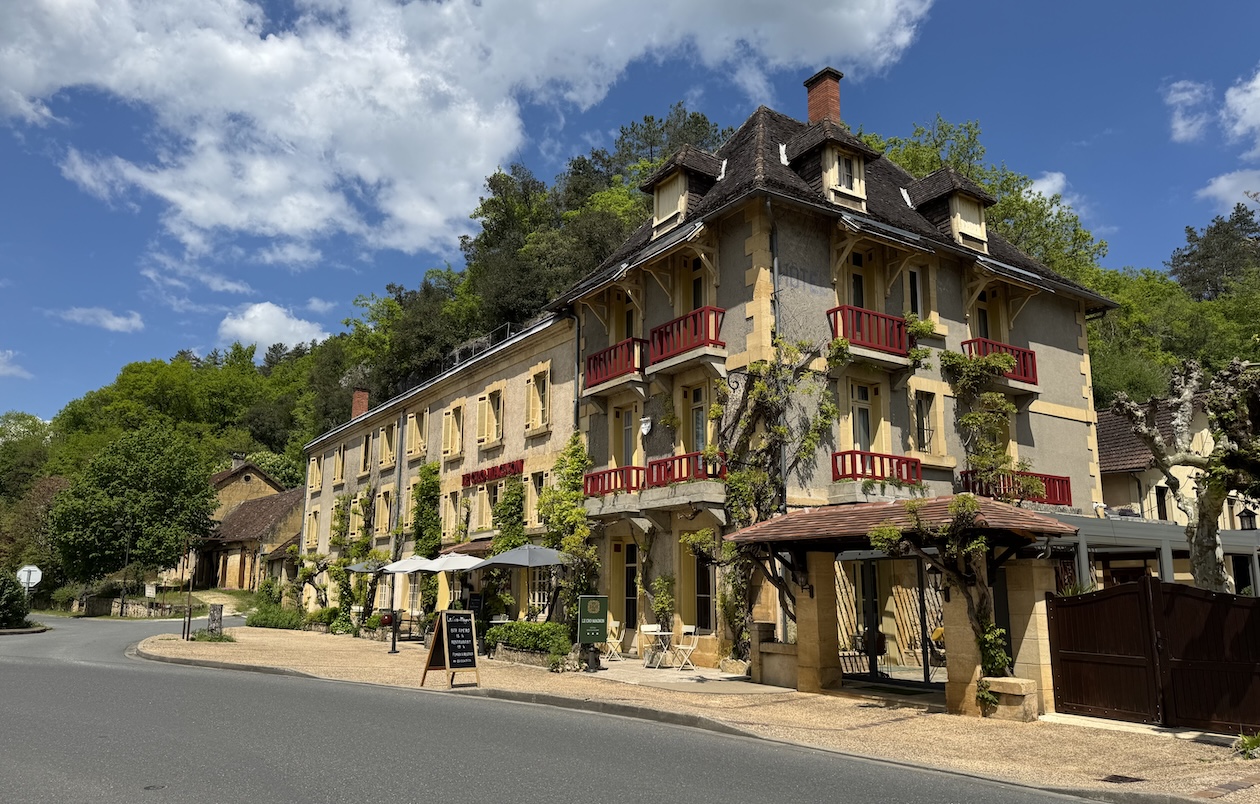
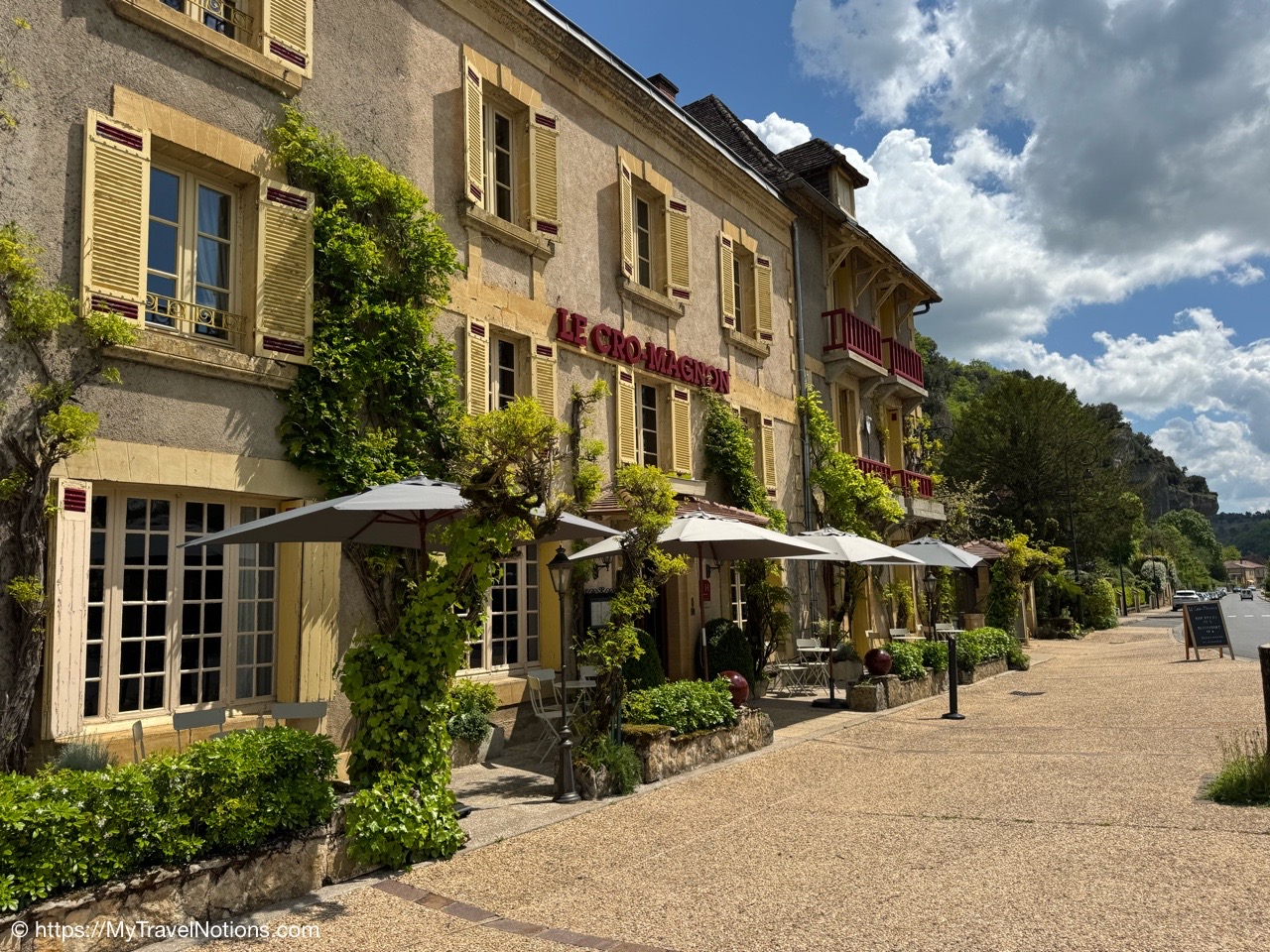
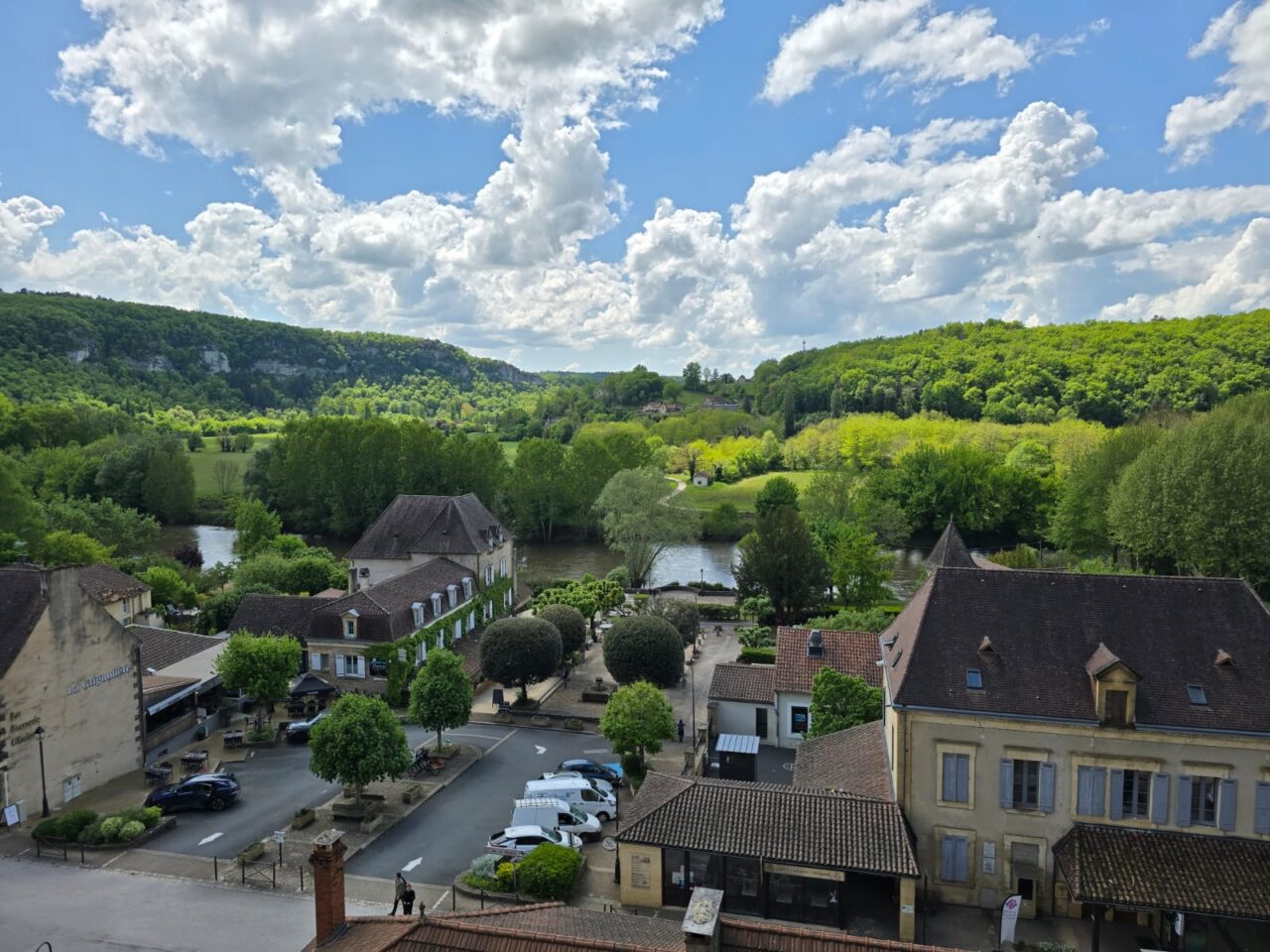
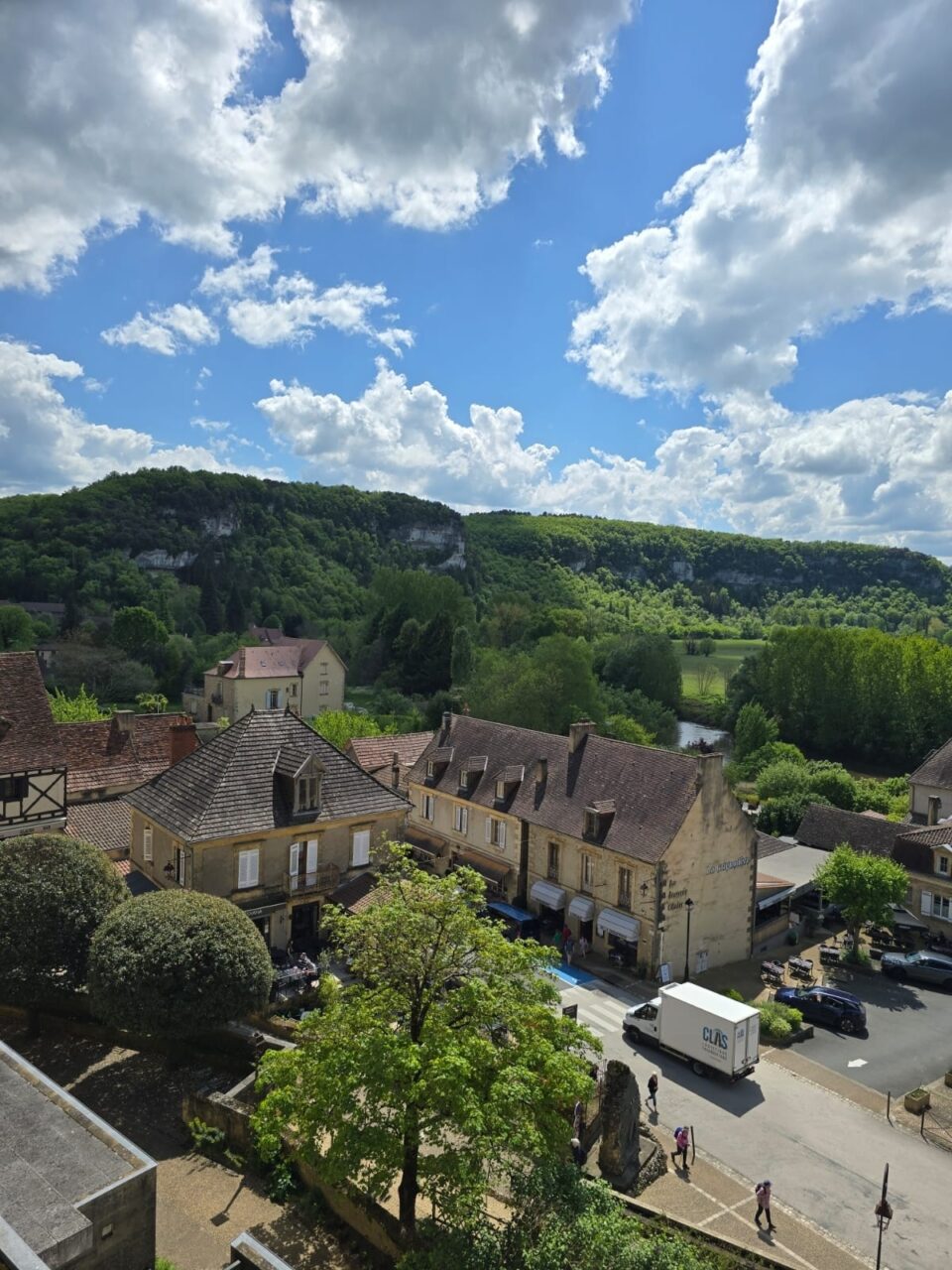
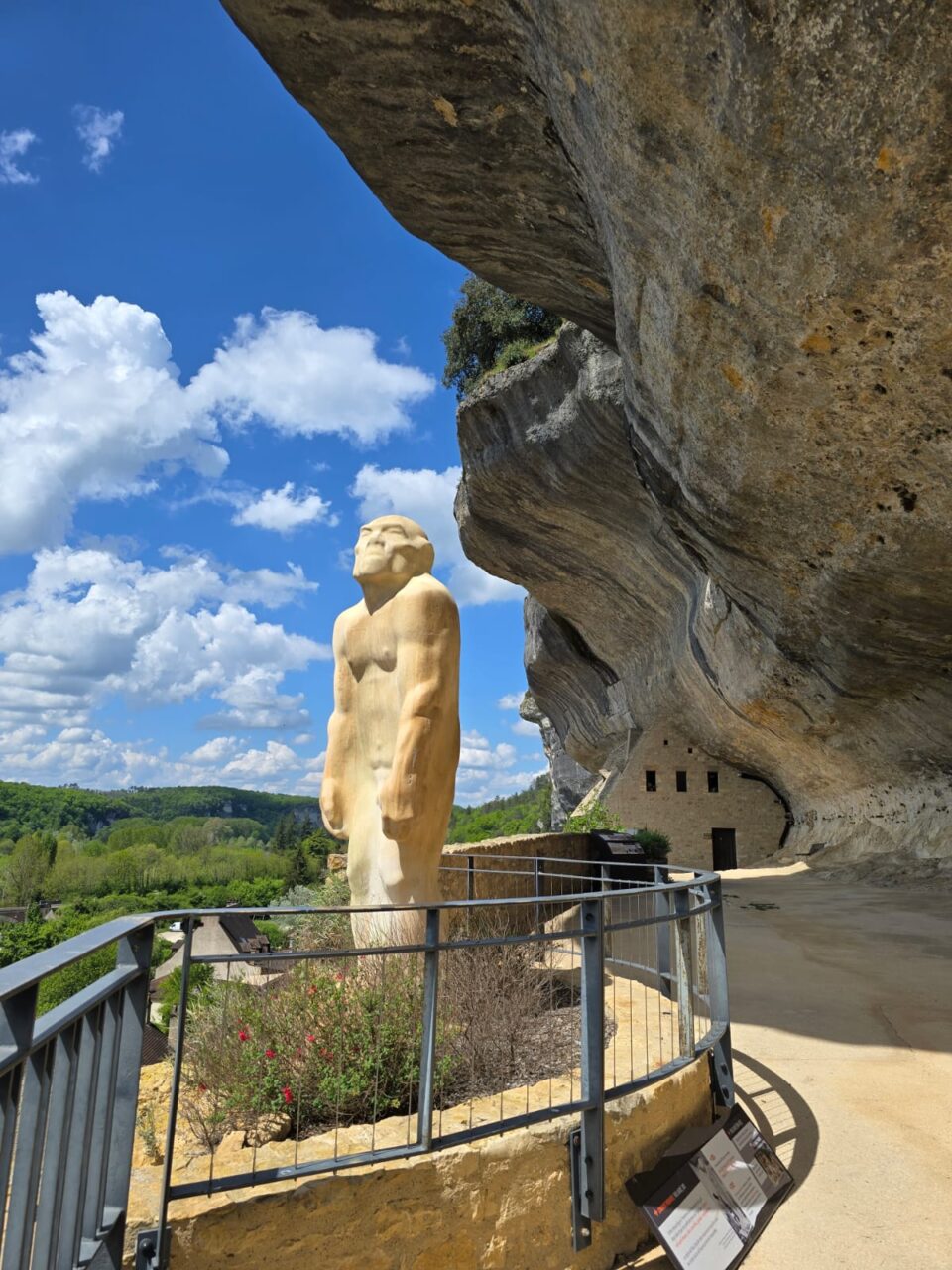
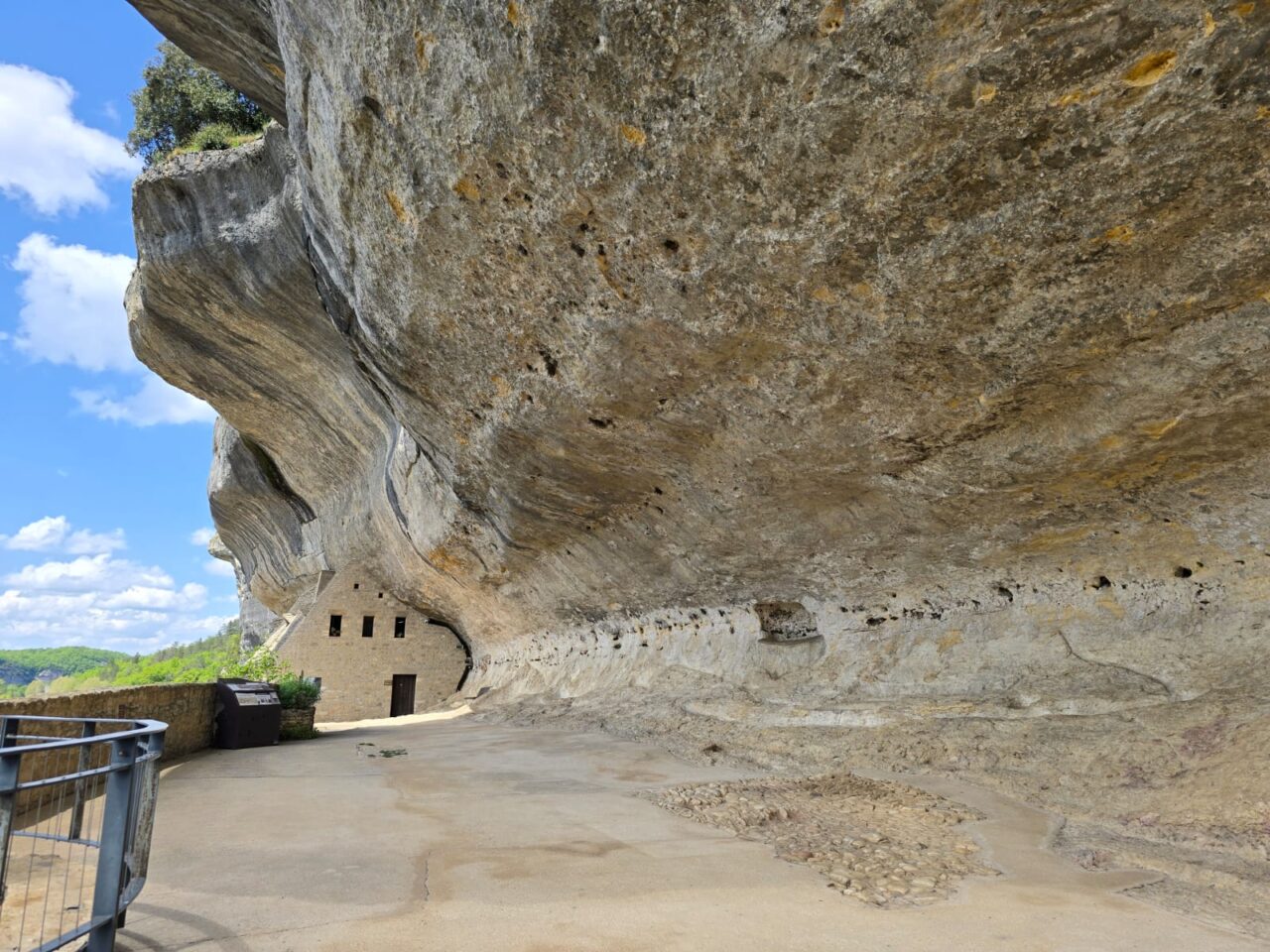
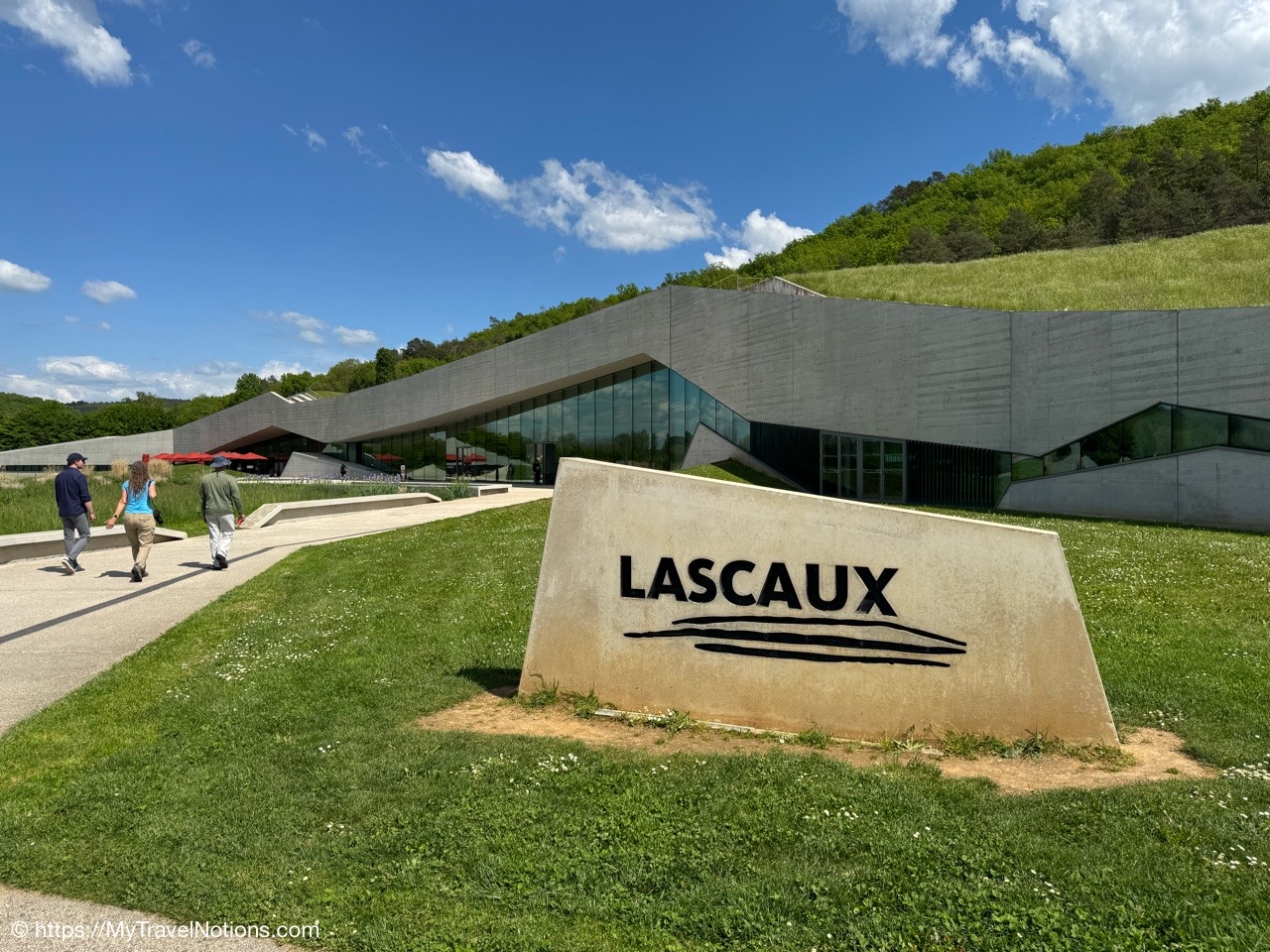
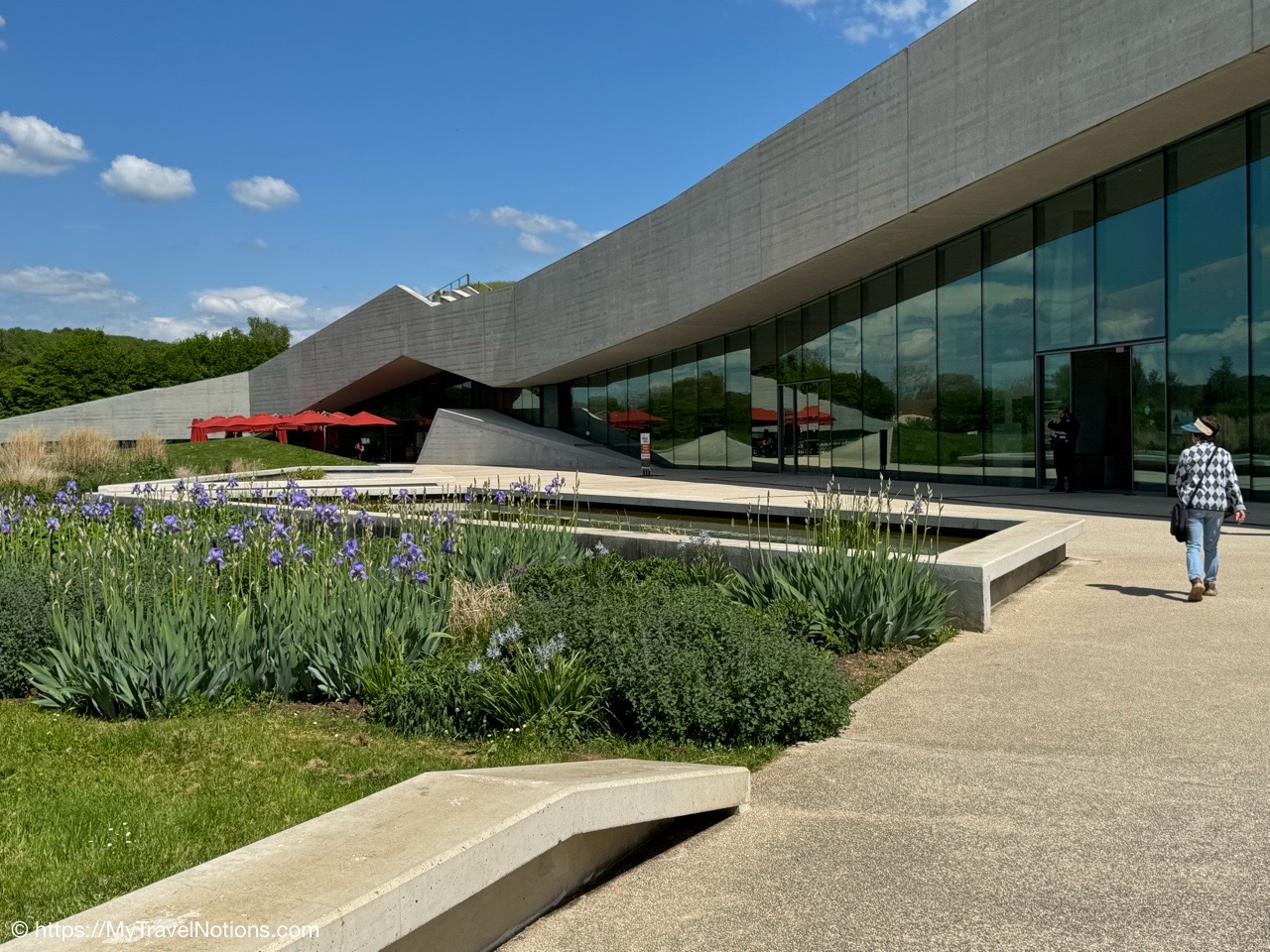
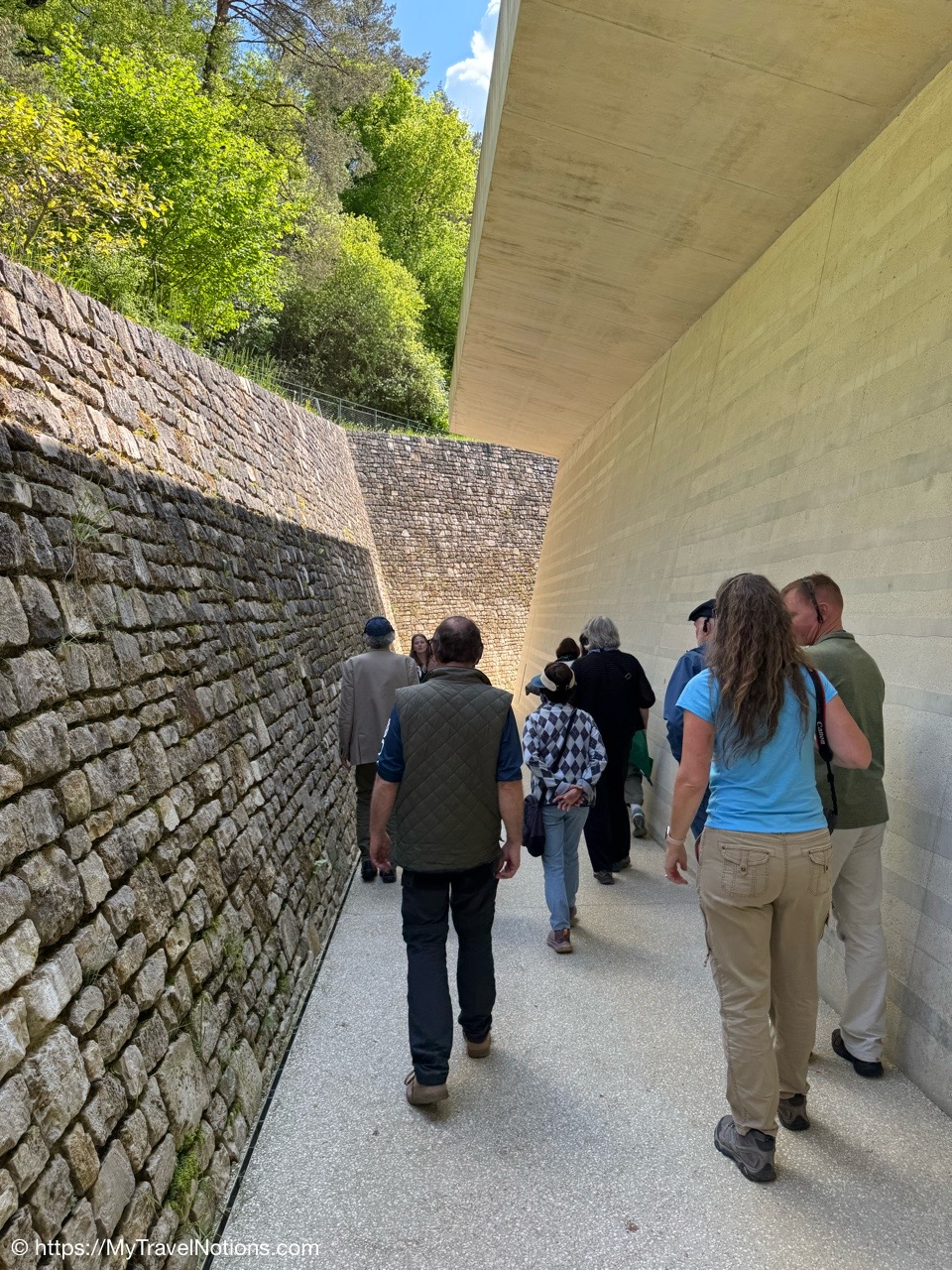
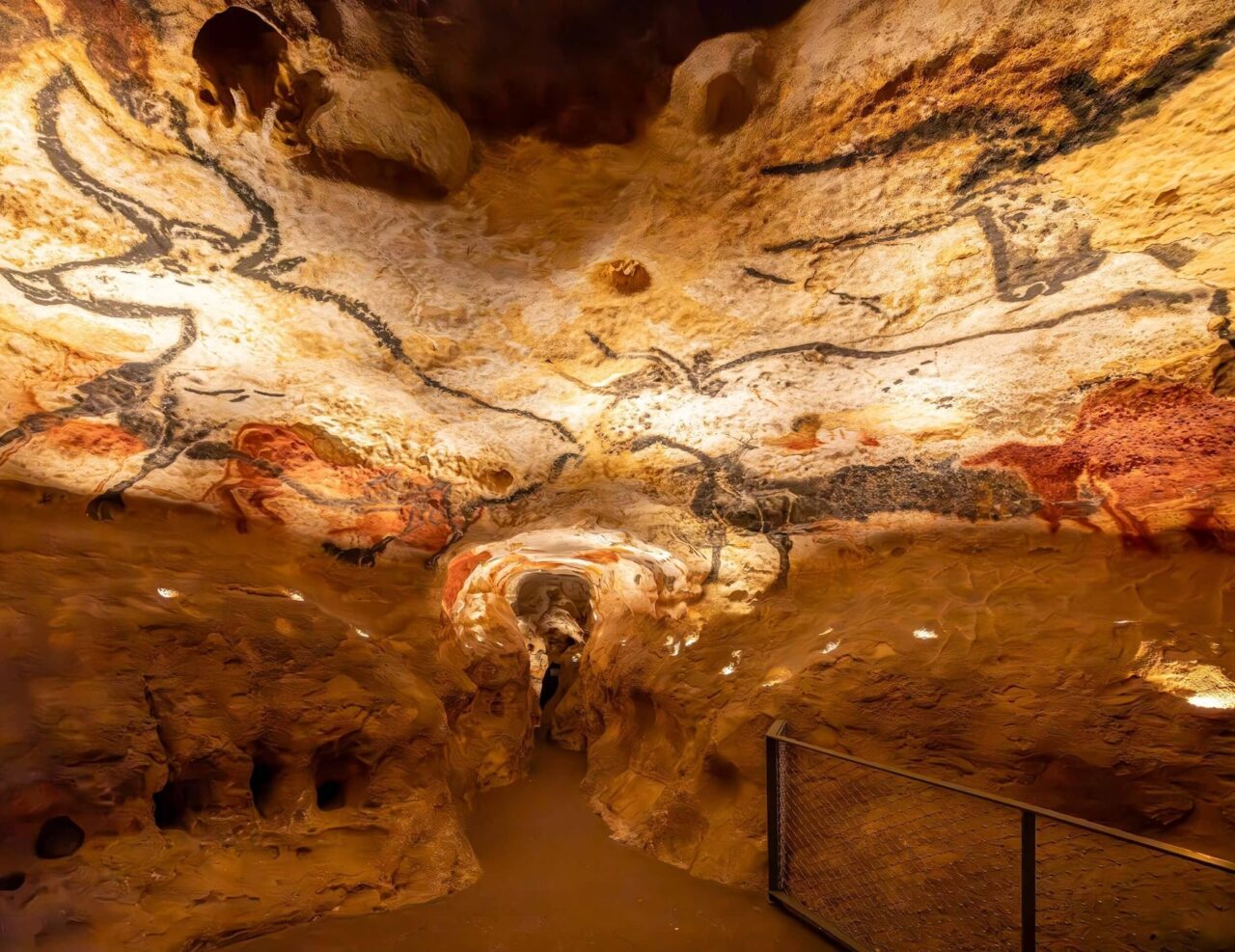
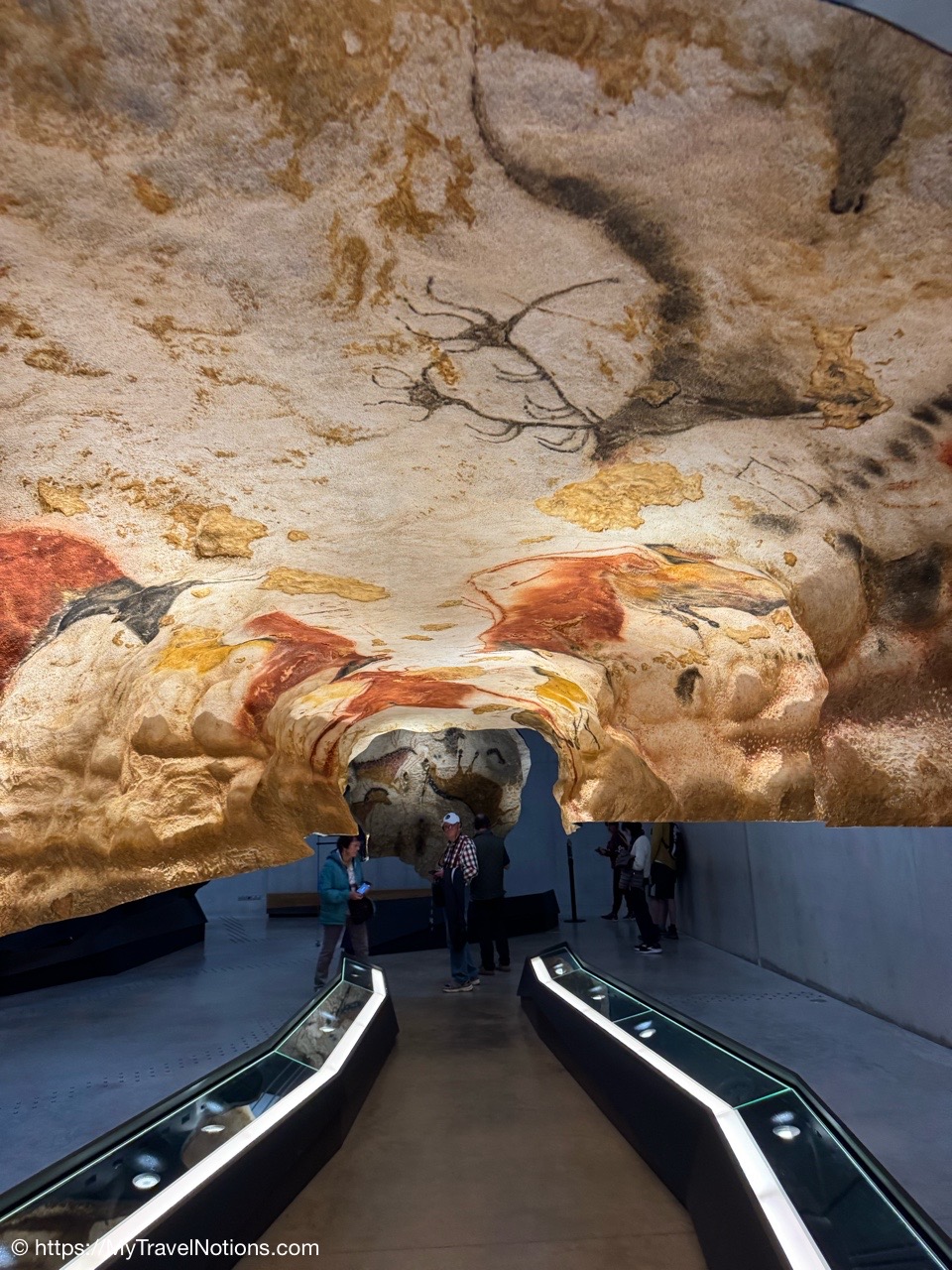
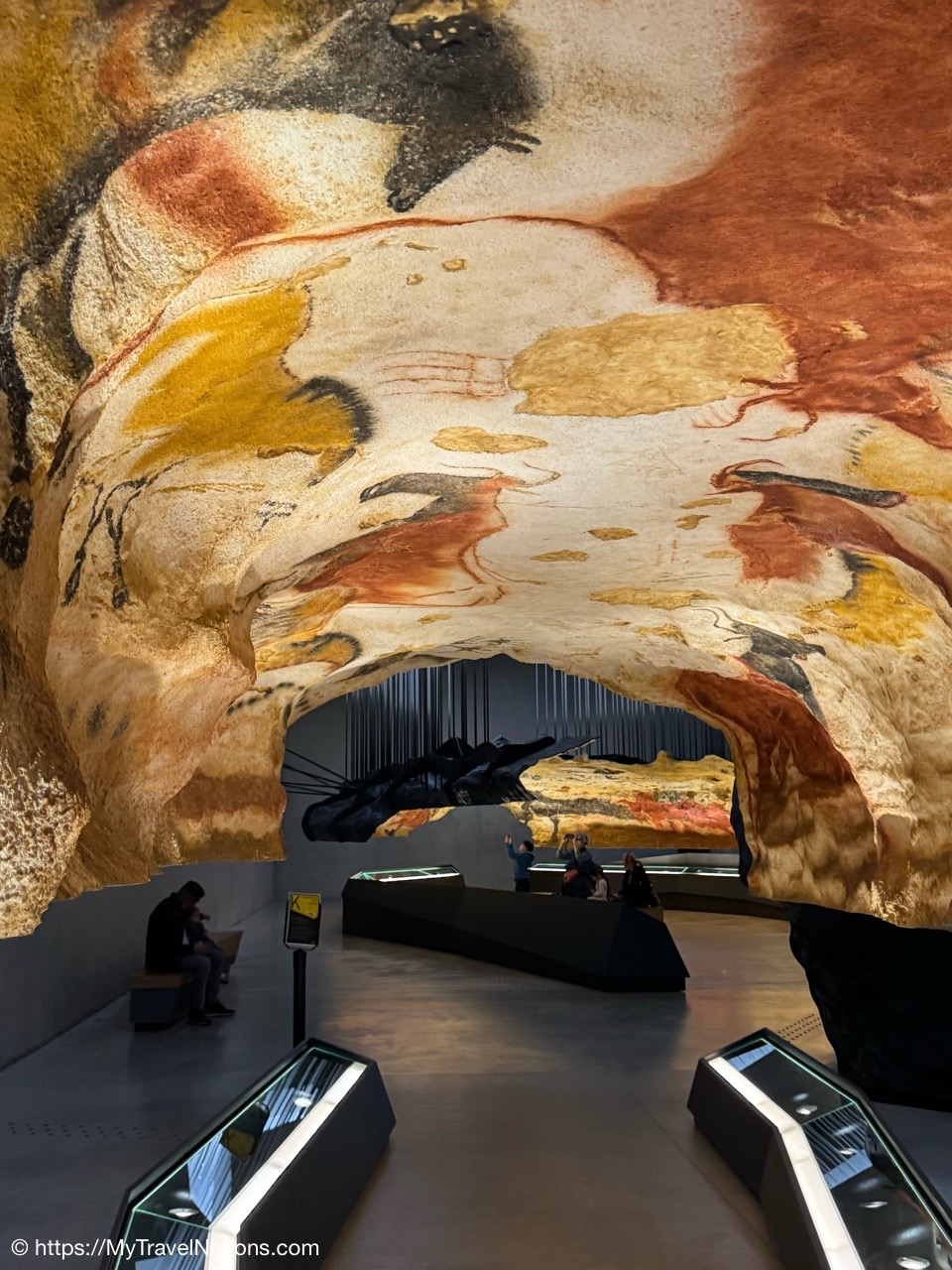
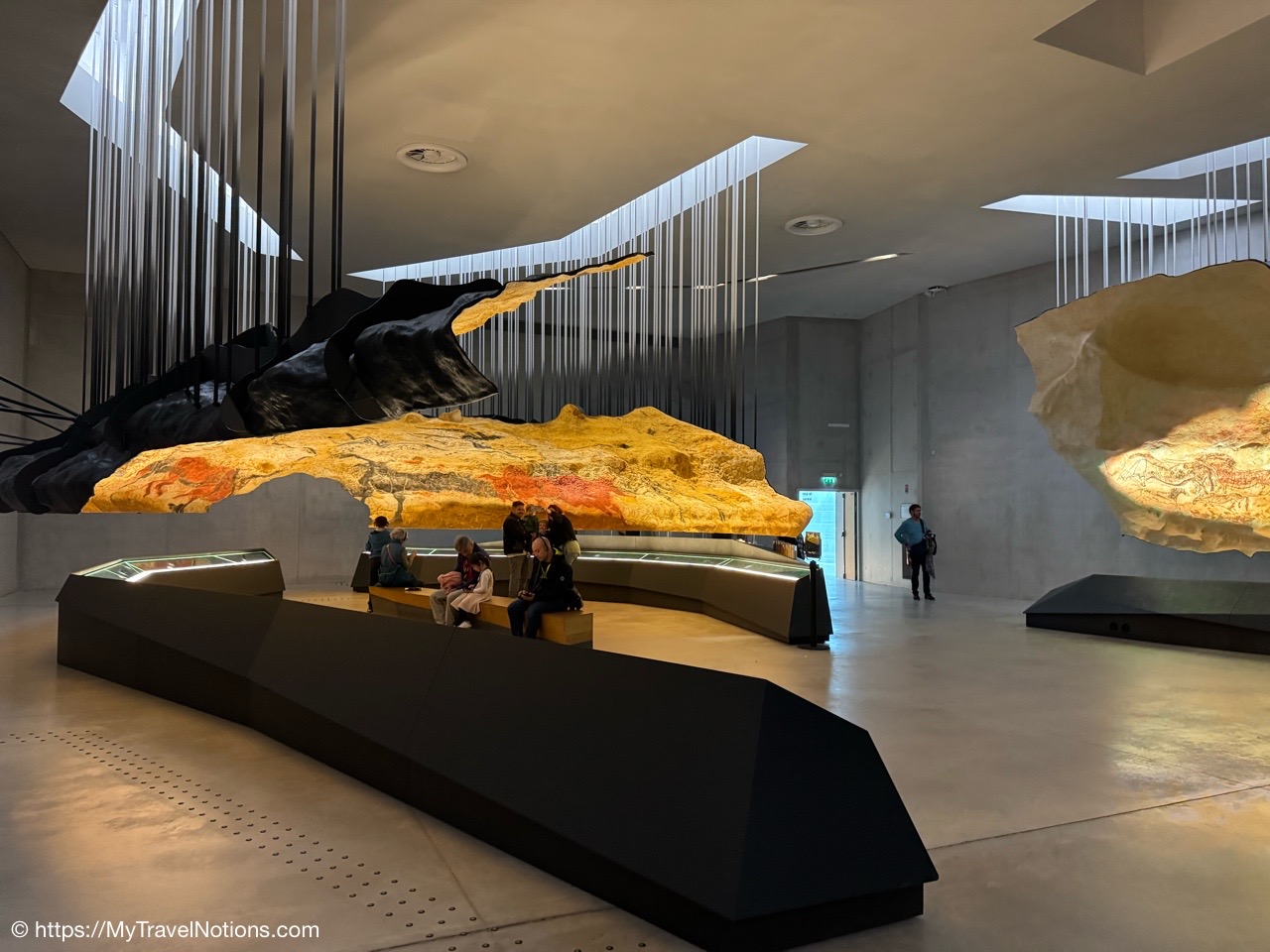
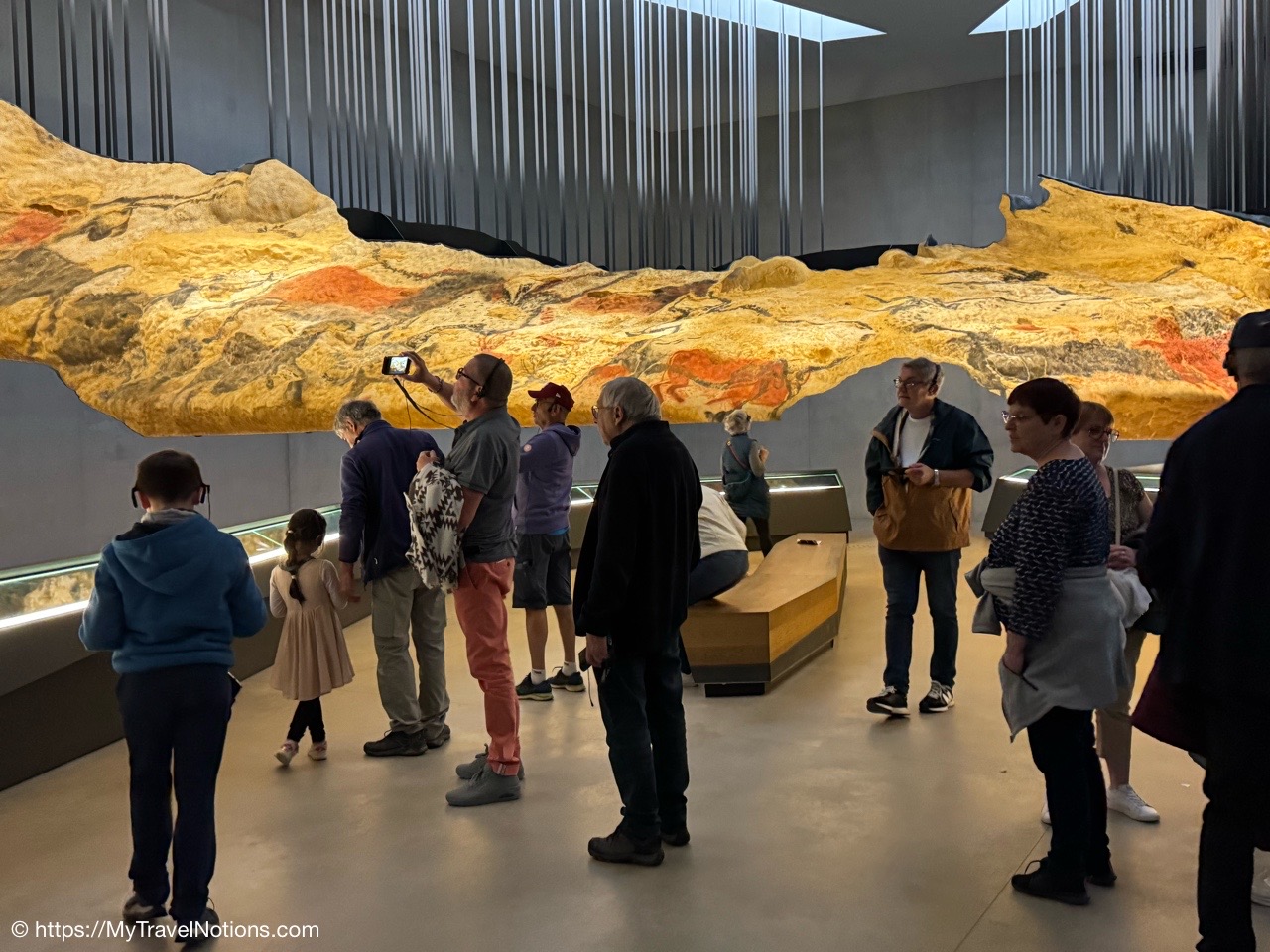
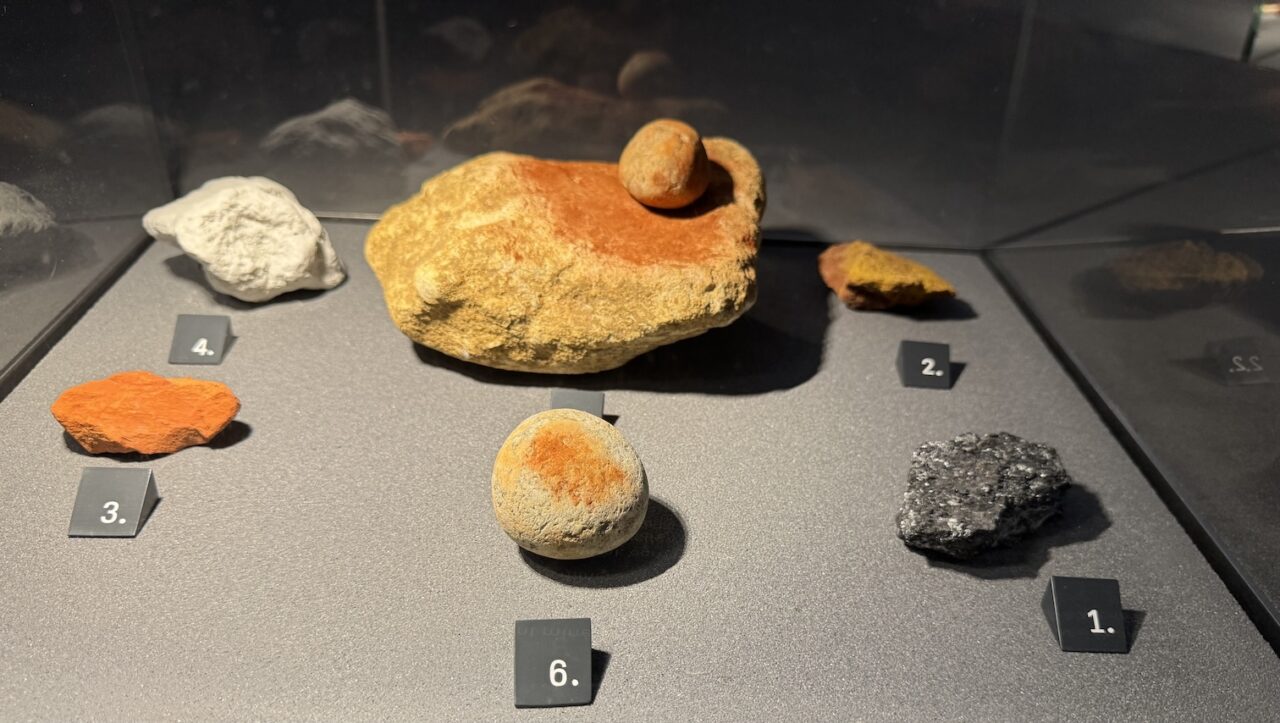
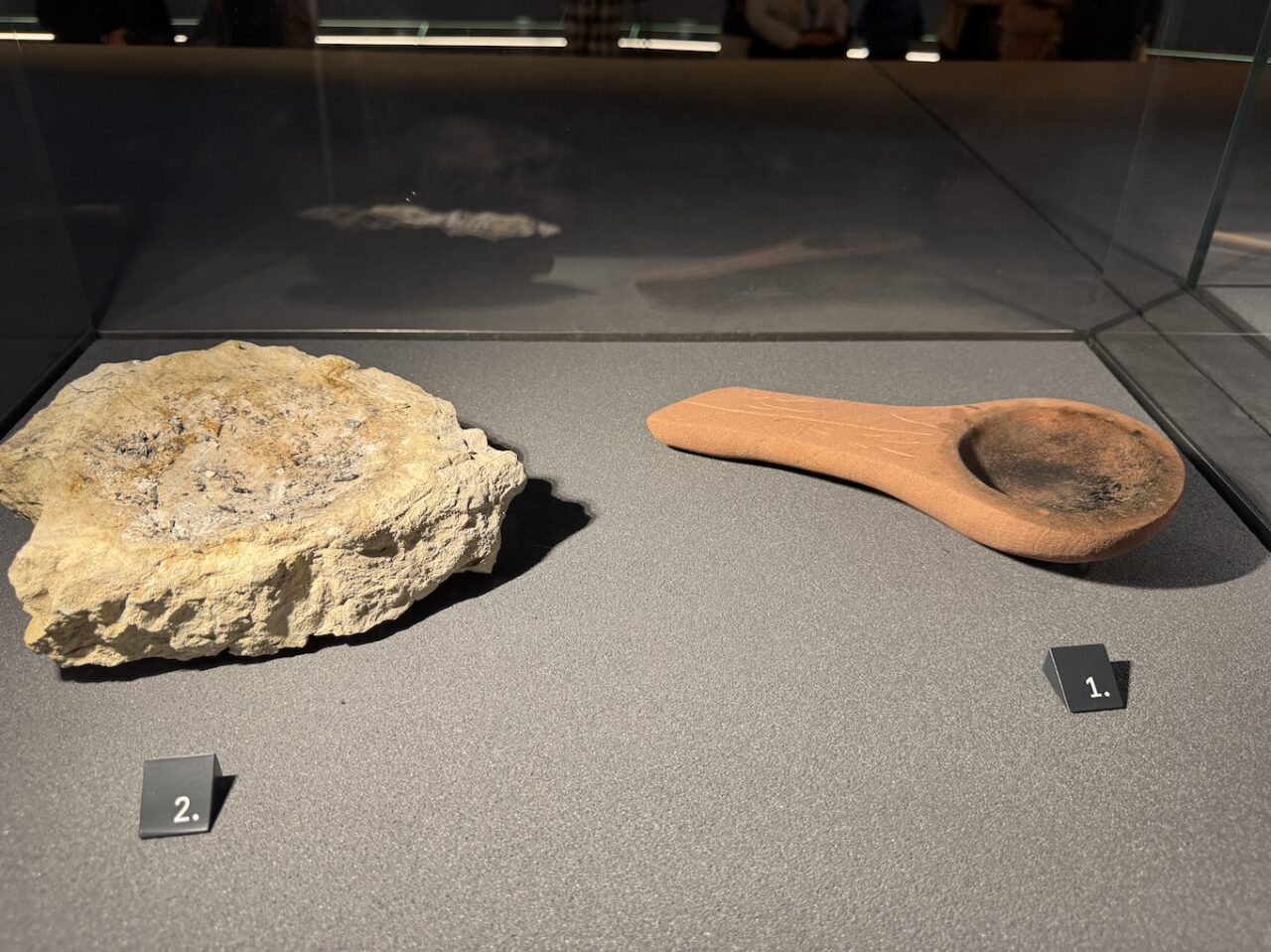
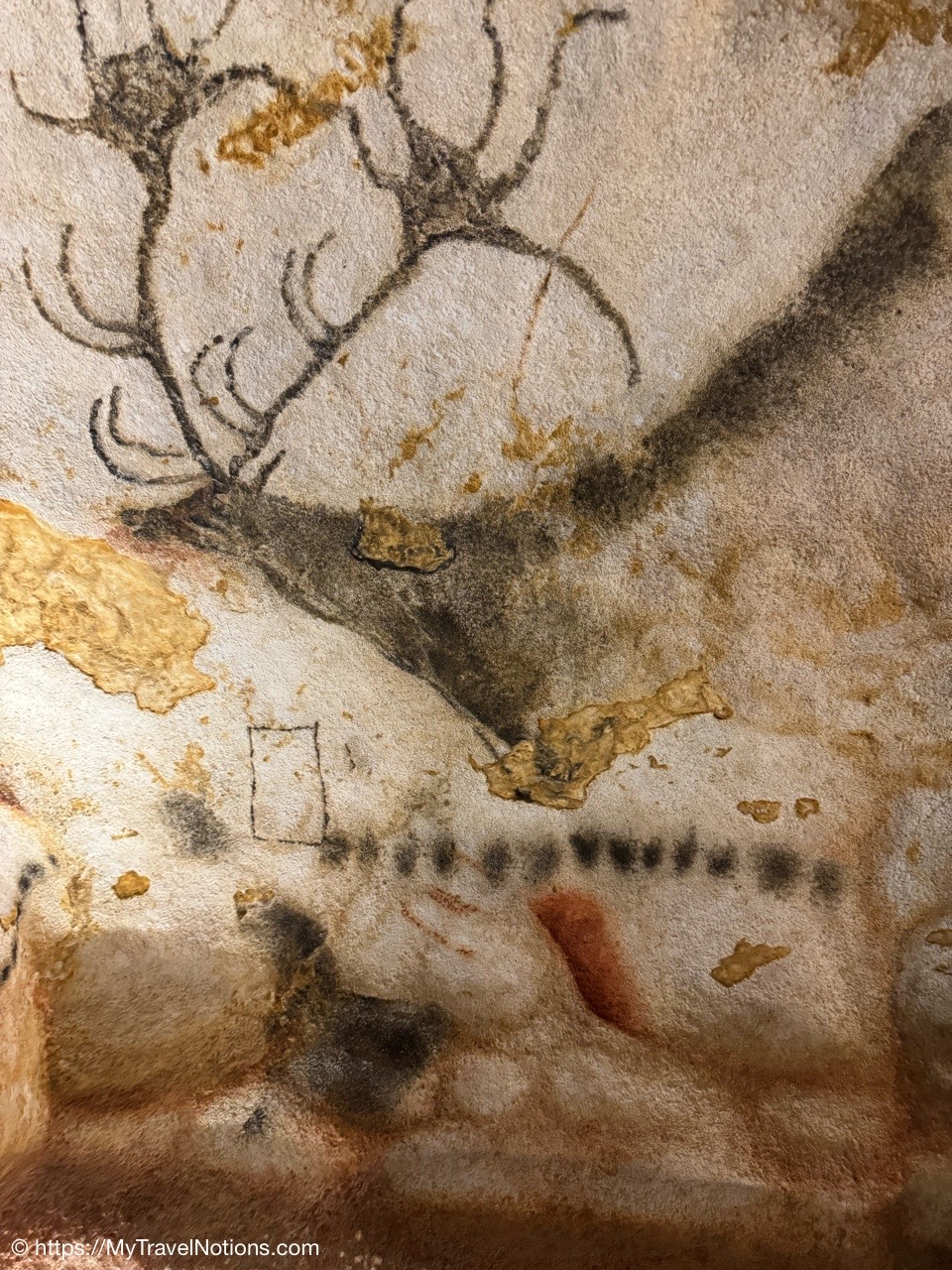
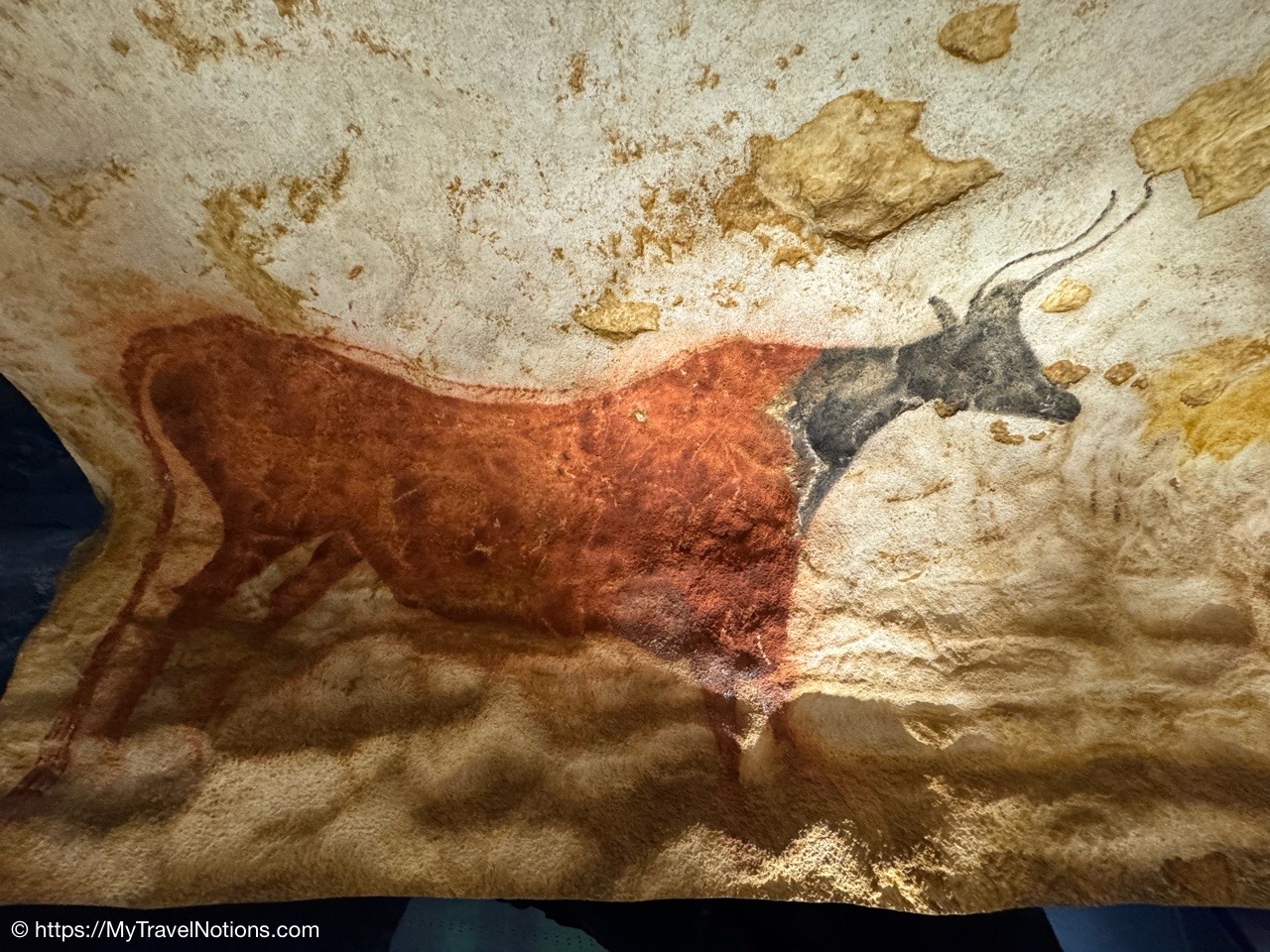
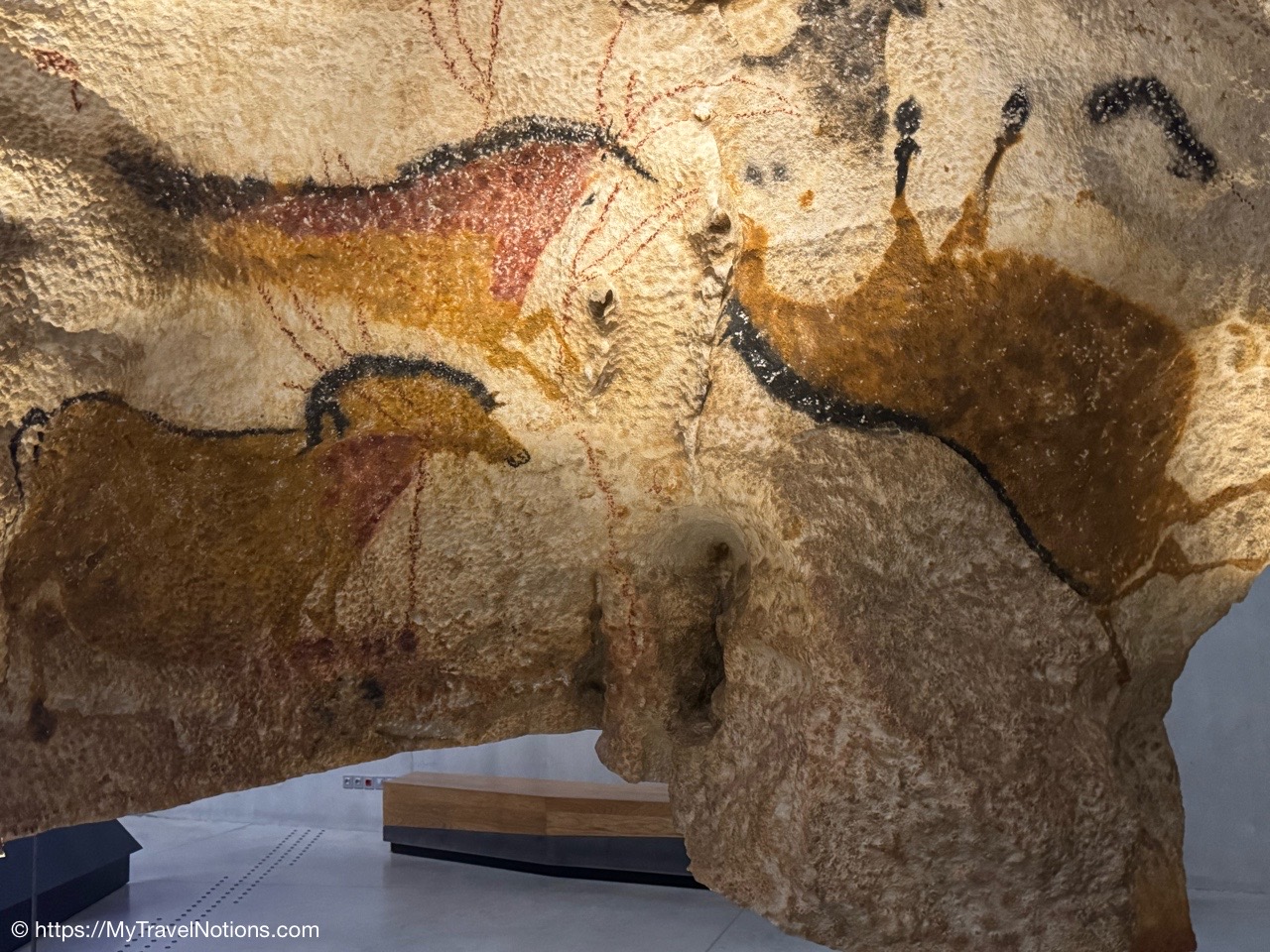
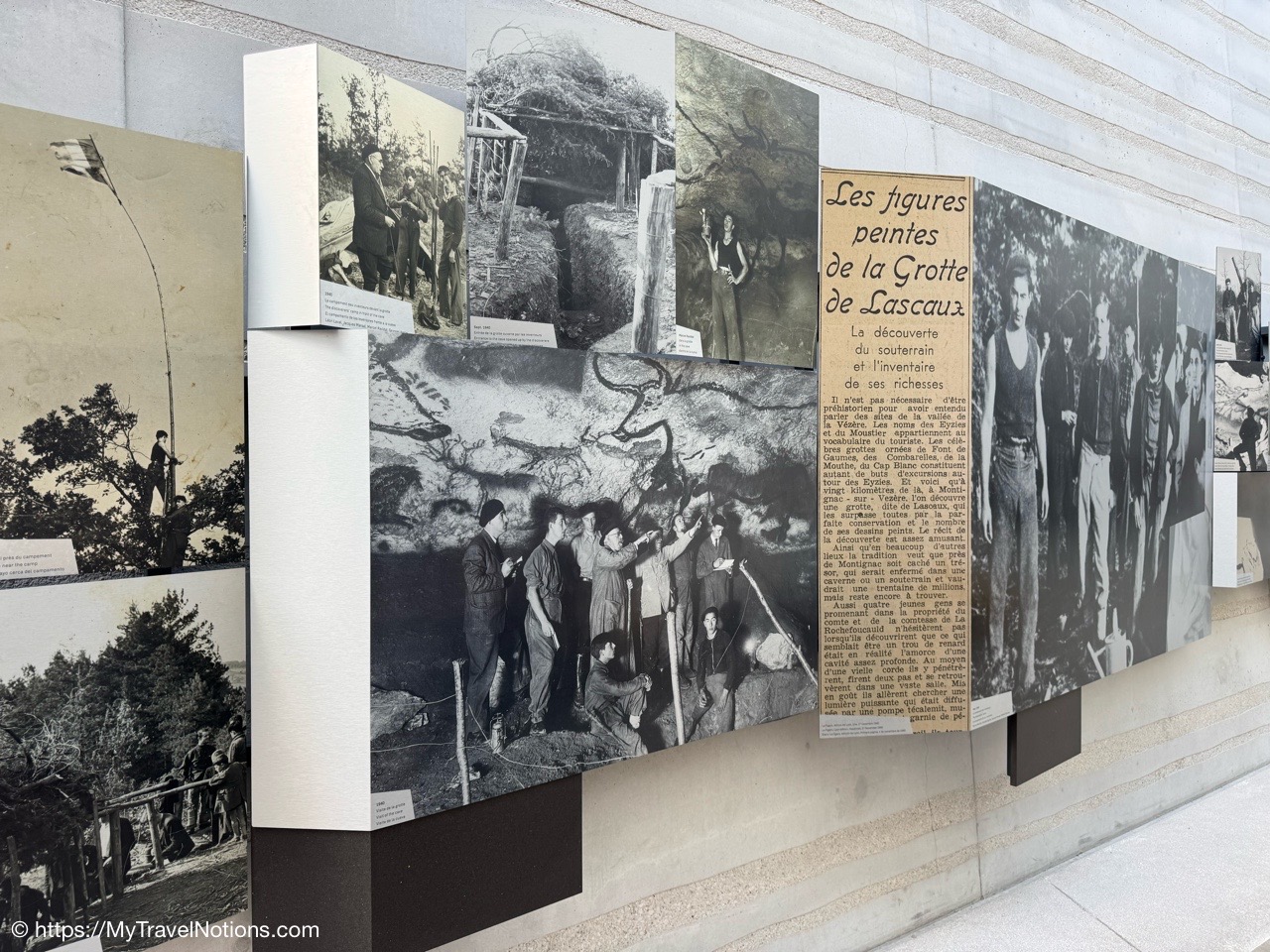
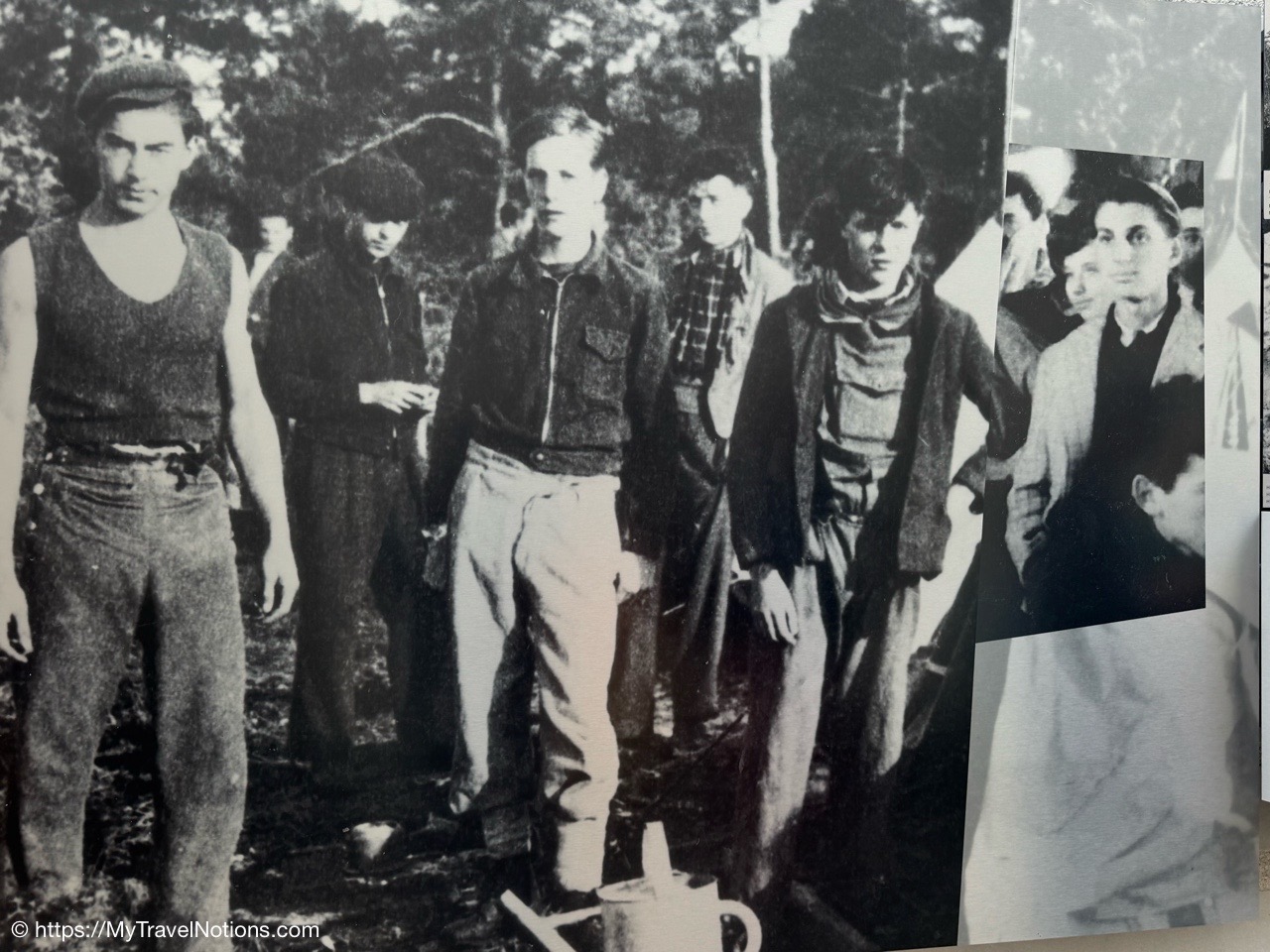
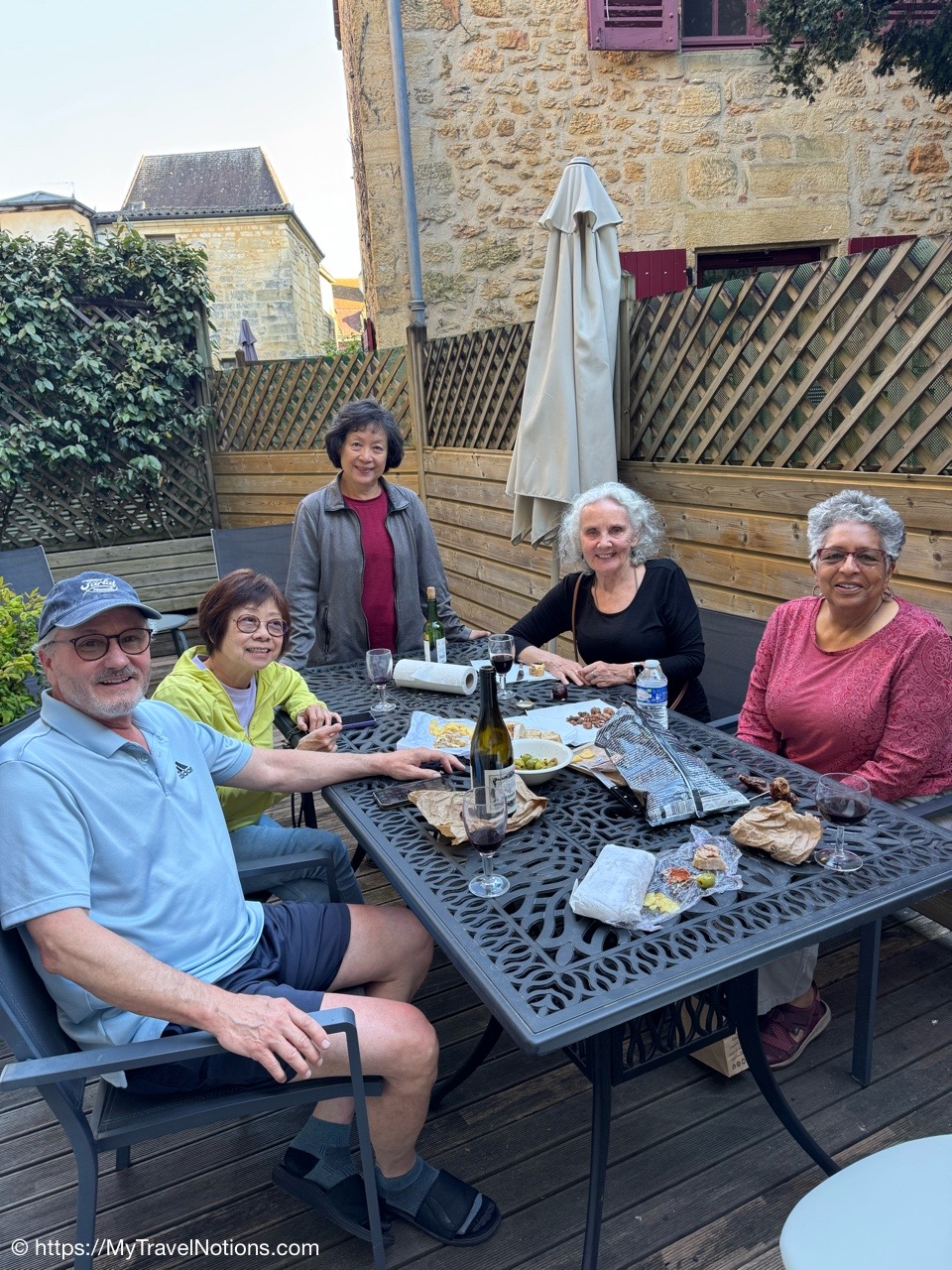

Thank you for reaching out.